
The dining table stands as the heart of the home—a gathering place where families share meals, friends engage in lively conversations, and memories are created over shared experiences. Choosing the right wood table design goes far beyond simple functionality; it’s about selecting a piece that reflects your personal style, complements your interior aesthetic, and serves as a lasting investment in your home’s character. From the raw, organic beauty of live-edge slabs to the refined elegance of traditional mahogany, wood tables offer an extraordinary range of design possibilities that can suit any interior vision.
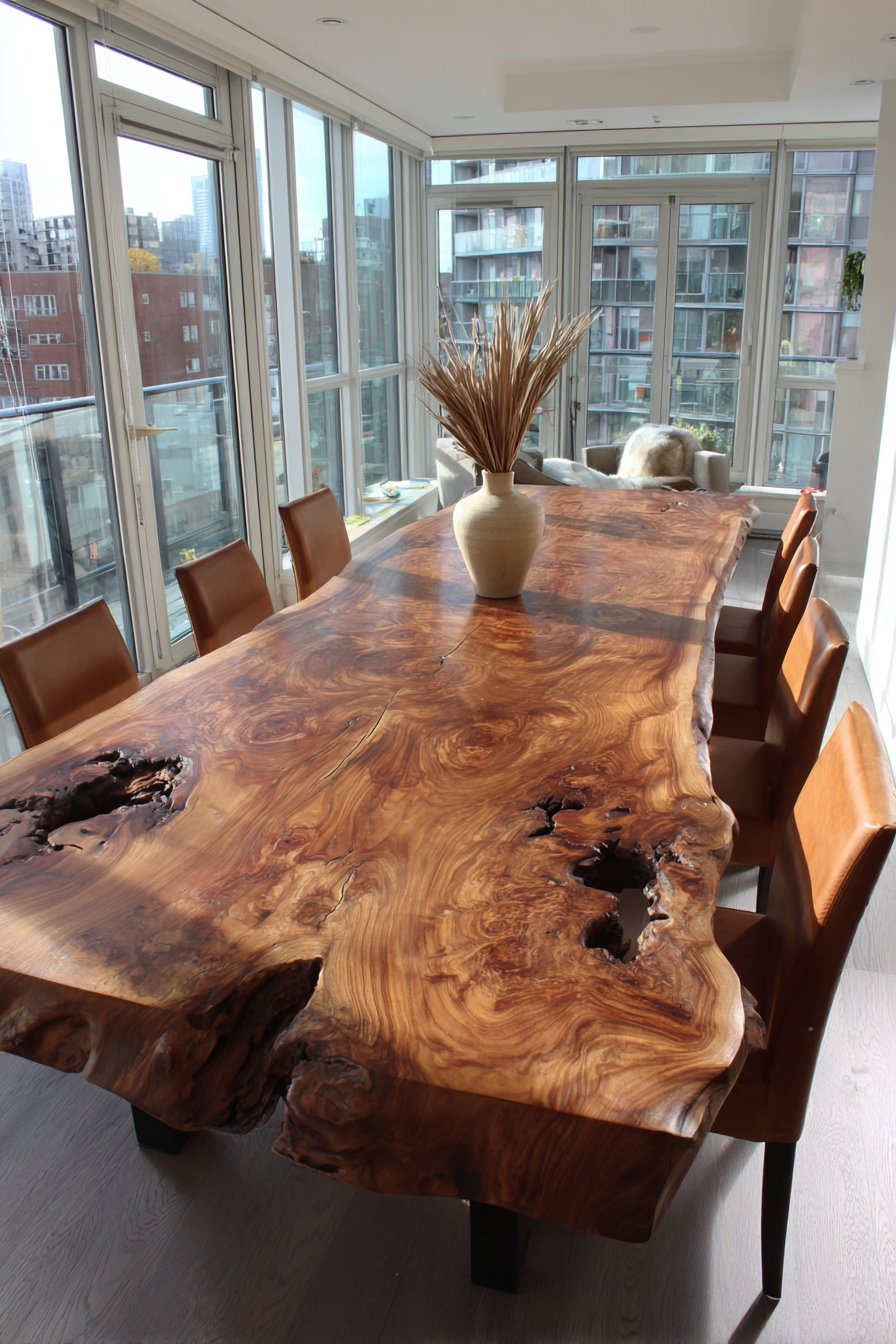
In today’s diverse design landscape, wood table options have expanded dramatically beyond conventional choices. Modern craftsmanship techniques, sustainable reclamation practices, and innovative joinery methods have opened new avenues for creating truly unique dining surfaces. Whether you’re drawn to the weathered patina of farmhouse reclaimed wood, the sleek minimalism of Scandinavian oak, or the artistic drama of resin river tables, there’s a wood table design that perfectly captures your aesthetic sensibility. The natural variations in grain patterns, color tones, and wood species create endless opportunities for customization and personal expression.
This comprehensive guide explores 27 exceptional wood table design ideas that showcase the full spectrum of possibilities available to today’s homeowners. Each design concept demonstrates how different wood types, construction methods, stylistic approaches, and finishing techniques can create distinctive dining experiences. From space-saving solutions for urban apartments to grand statement pieces for formal dining rooms, these designs illustrate how the right table can anchor your interior design while providing decades of functional beauty and enduring value.
1. Rustic Farmhouse Reclaimed Barn Wood
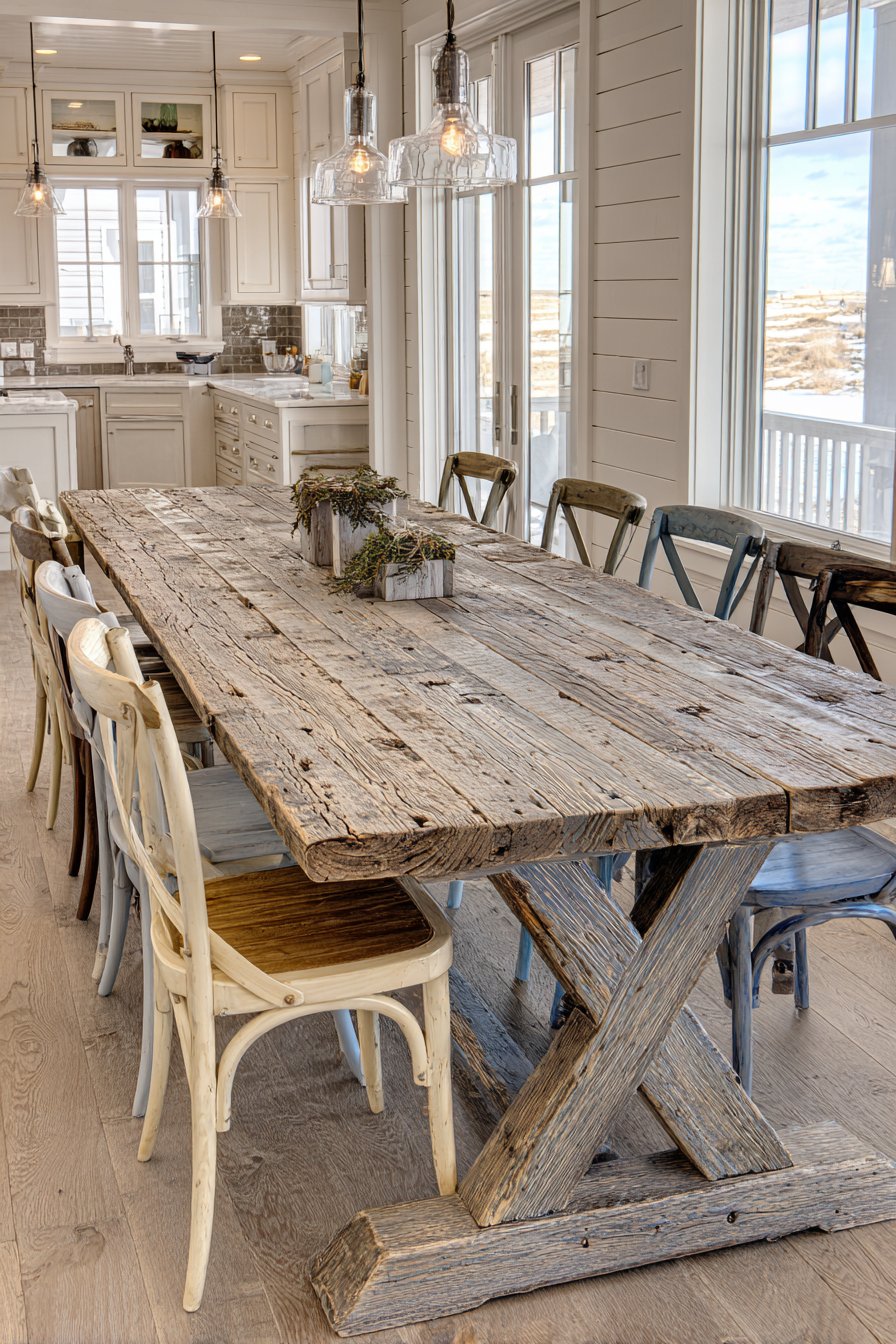
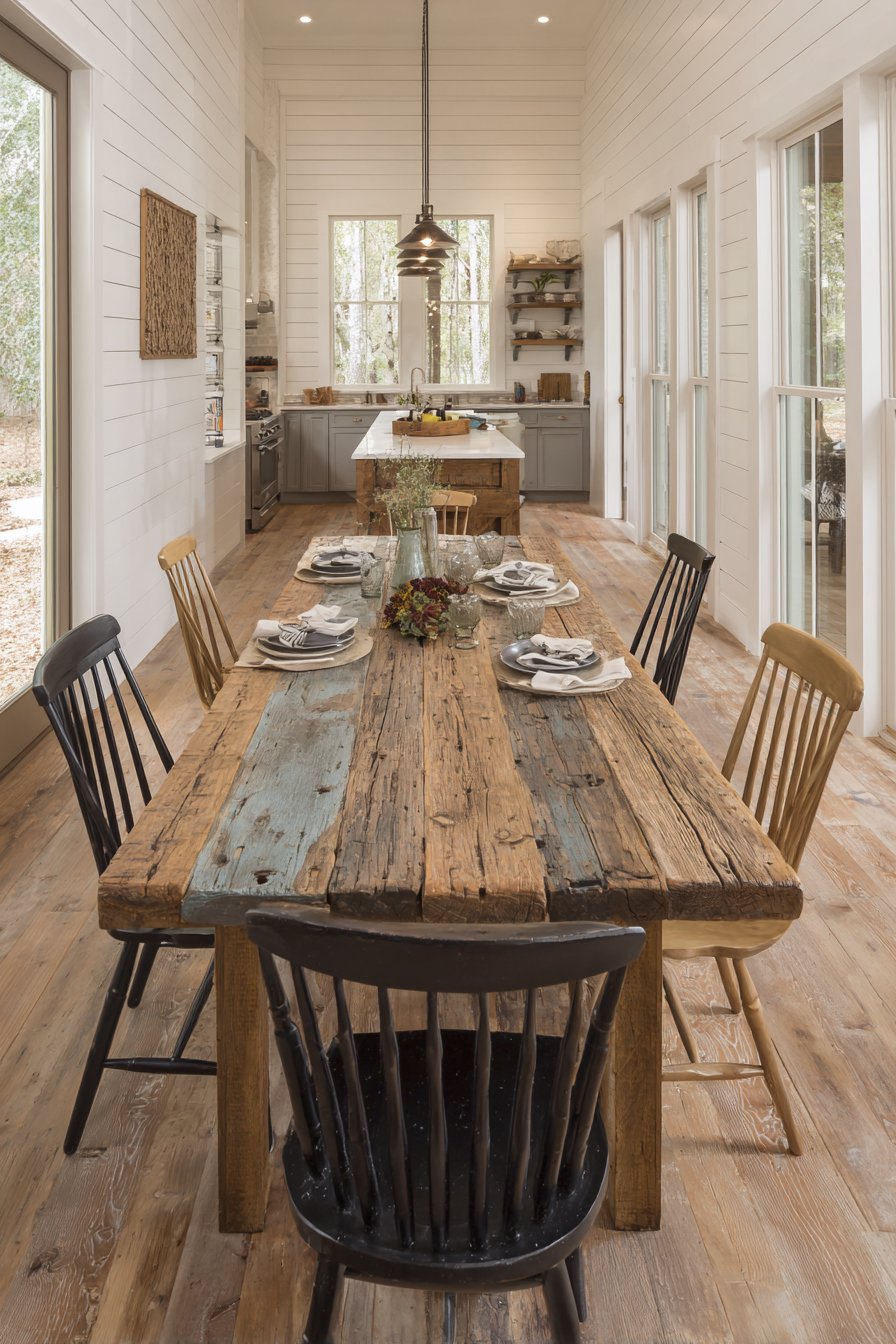
Step into a dining space where history lives in every weathered plank of a reclaimed barn wood table. This rectangular masterpiece seats eight comfortably, its surface telling countless stories through visible knots, natural grain variations, and the authentic patina that only decades of exposure can create. The wood’s natural gray and brown tones blend seamlessly, enhanced by a protective matte finish that preserves its character while ensuring durability for daily use. Positioned against white shiplap walls in a bright kitchen dining area, the table creates a striking contrast that highlights its rustic authenticity.
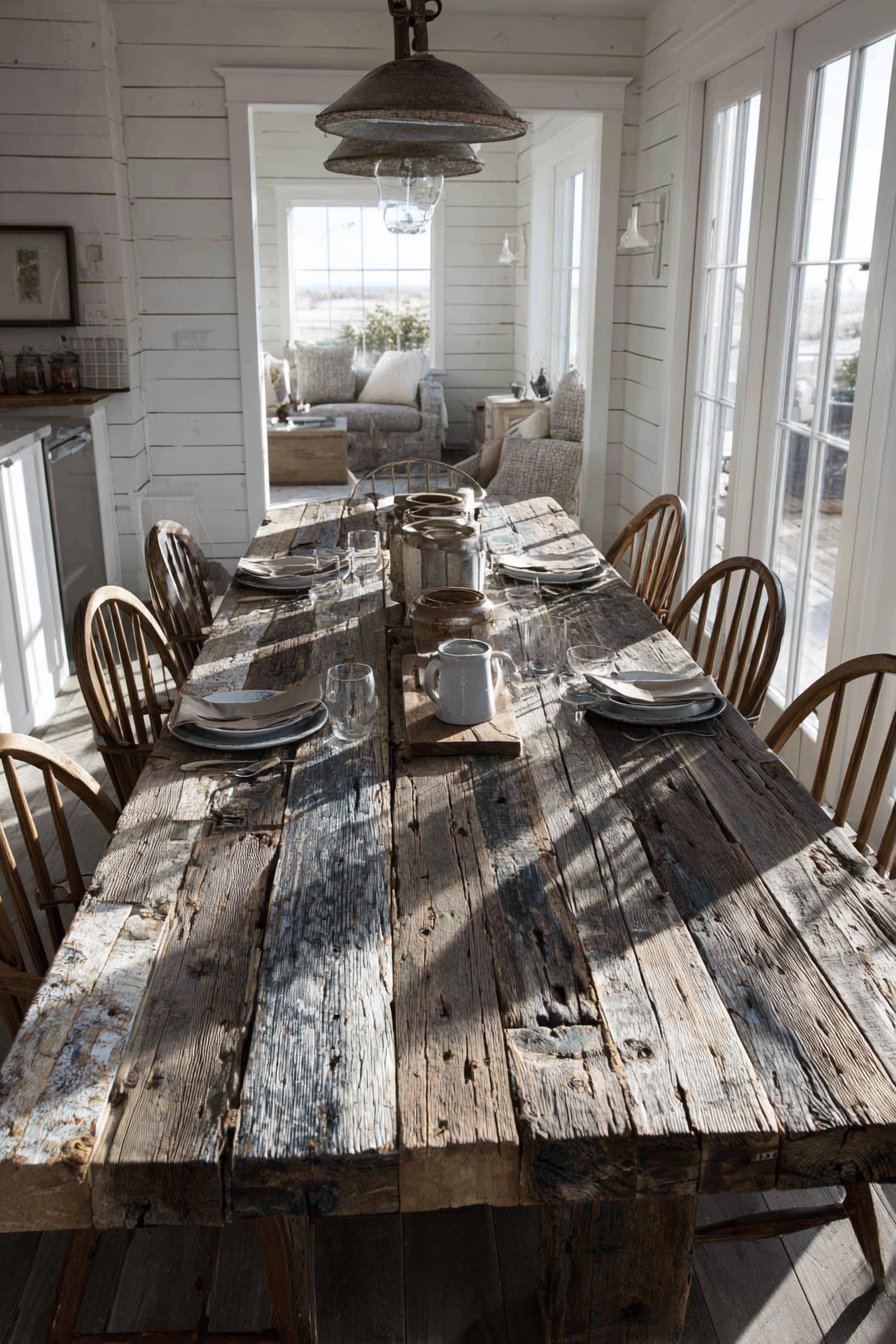
The surrounding Windsor-style chairs in mixed finishes complement rather than match the table, embracing the farmhouse aesthetic’s appreciation for collected, lived-in charm. Overhead pendant lighting casts warm illumination across the surface, accentuating the dimensional qualities of the weathered wood and creating inviting shadows that emphasize its texture. Large windows flood the space with natural daylight, making the dining area feel open and welcoming while showcasing the wood’s genuine character marks—evidence of its previous life and sustainable repurposing.
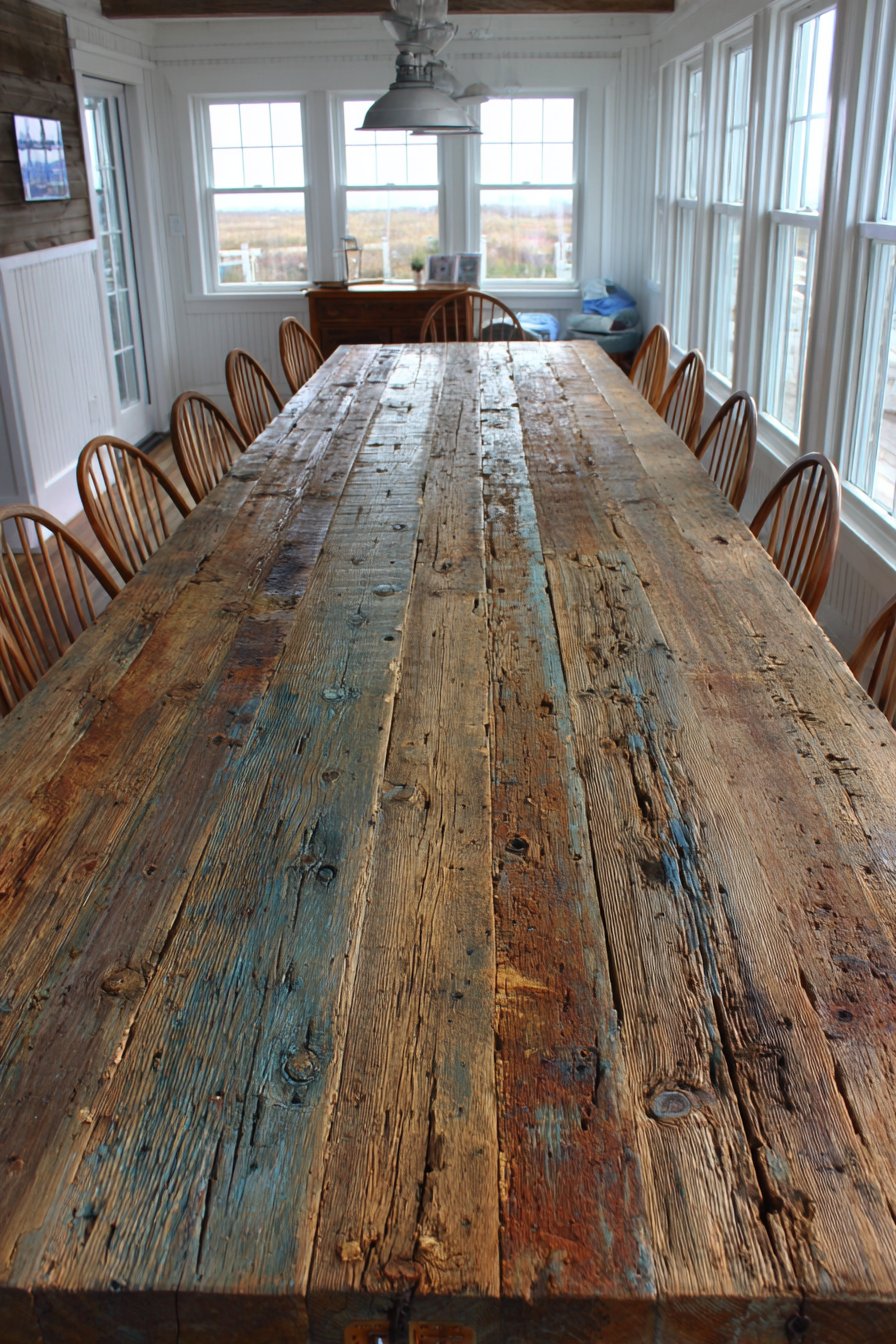
This design celebrates imperfection as beauty, where saw marks, nail holes, and color inconsistencies aren’t flaws but features that distinguish reclaimed wood from new construction. The substantial presence of barn wood brings architectural weight to the room, grounding the space with a sense of permanence and connection to agricultural heritage. Every meal at this table feels like a celebration of craftsmanship, sustainability, and the enduring appeal of materials with authentic stories to tell.
Key Design Tips: Source reclaimed barn wood from reputable suppliers who can verify origin and proper treatment. Apply food-safe sealants that protect without obscuring the wood’s natural character. Mix chair styles and finishes to enhance the collected farmhouse aesthetic. Install statement lighting above the table to create a focal point and provide task illumination. Maintain the wood with regular dusting and occasional conditioning to preserve its patina. Consider the table’s substantial weight when planning placement and ensure adequate floor support.
2. Modern Minimalist Light Oak Elegance
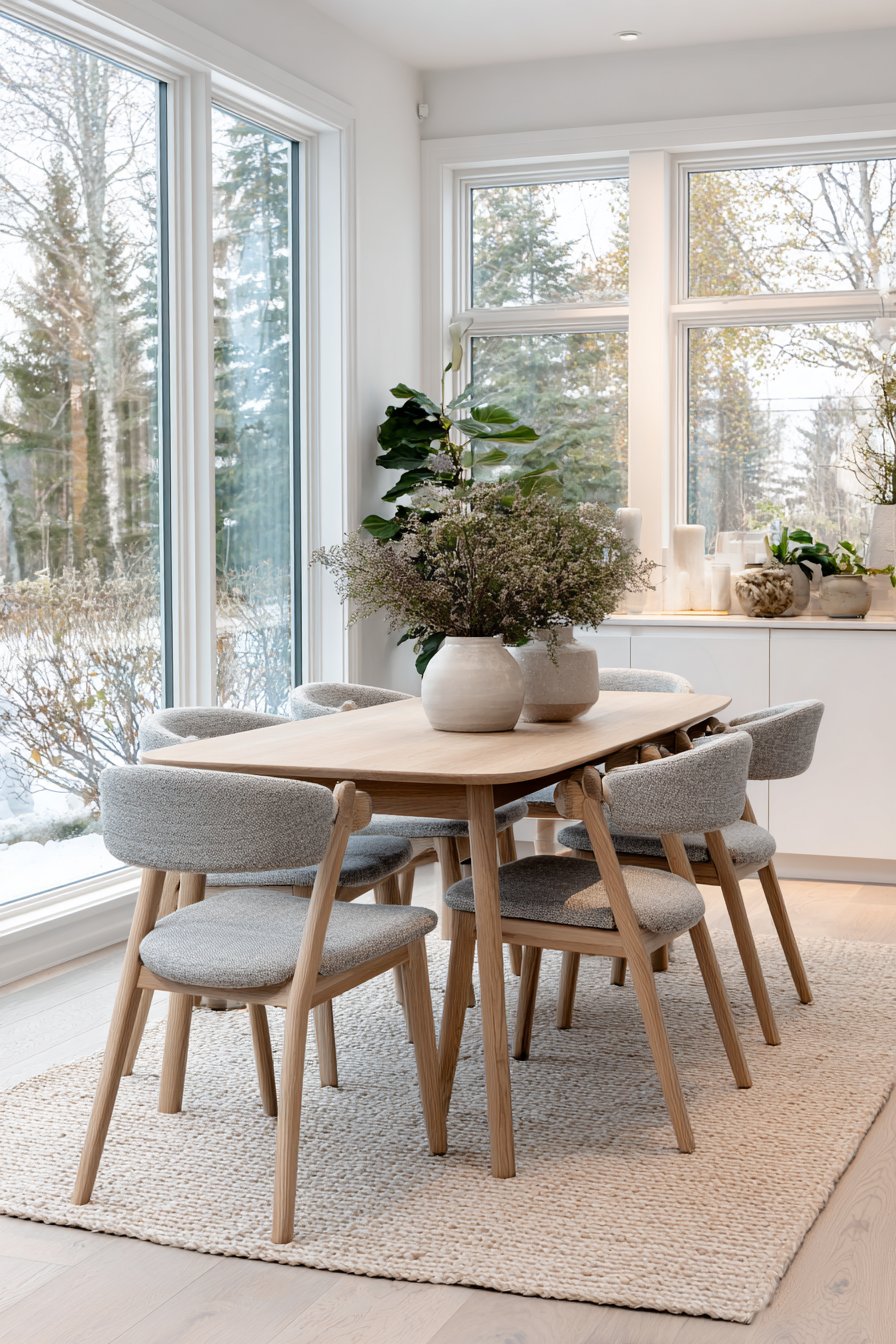
Clean lines and understated sophistication define this modern minimalist wood table design crafted from light oak. The rectangular dining surface features smooth edges and a satin finish that highlights the wood’s subtle grain without overwhelming the senses. Simple tapered legs provide structural support while maintaining the design’s commitment to simplicity and restraint. Positioned on a neutral jute rug in a Scandinavian-inspired dining room, the table exemplifies the “less is more” philosophy that characterizes contemporary minimalist interiors.
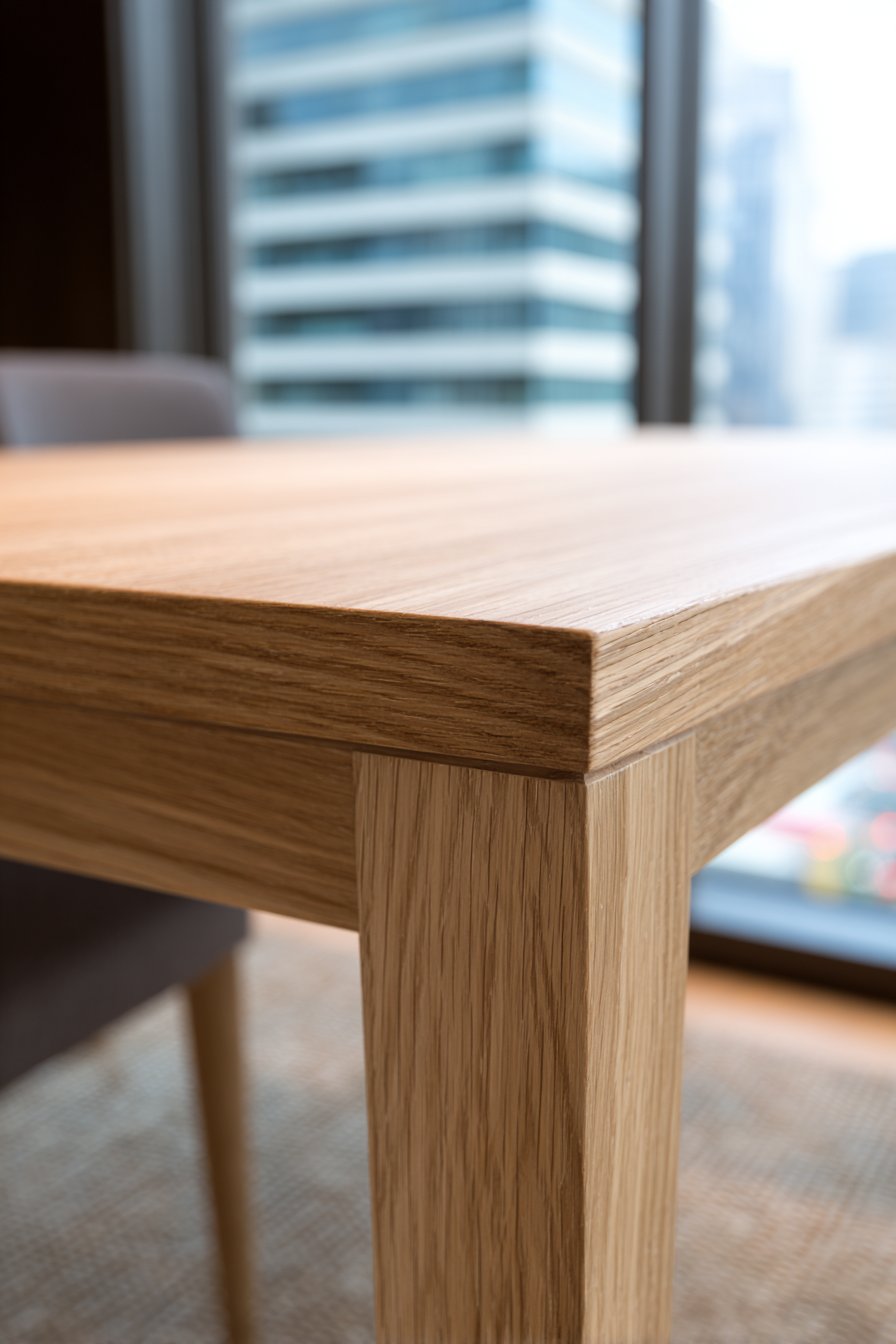
Four upholstered gray linen chairs surround the table, their soft neutral tones creating visual continuity with the overall color palette while providing comfortable seating. The room’s large windows act as natural art, flooding the space with soft diffused light that changes throughout the day, casting gentle shadows and highlighting the oak’s fine grain patterns. This ever-changing natural illumination eliminates the need for excessive decoration, allowing the quality of materials and thoughtful composition to speak for themselves.
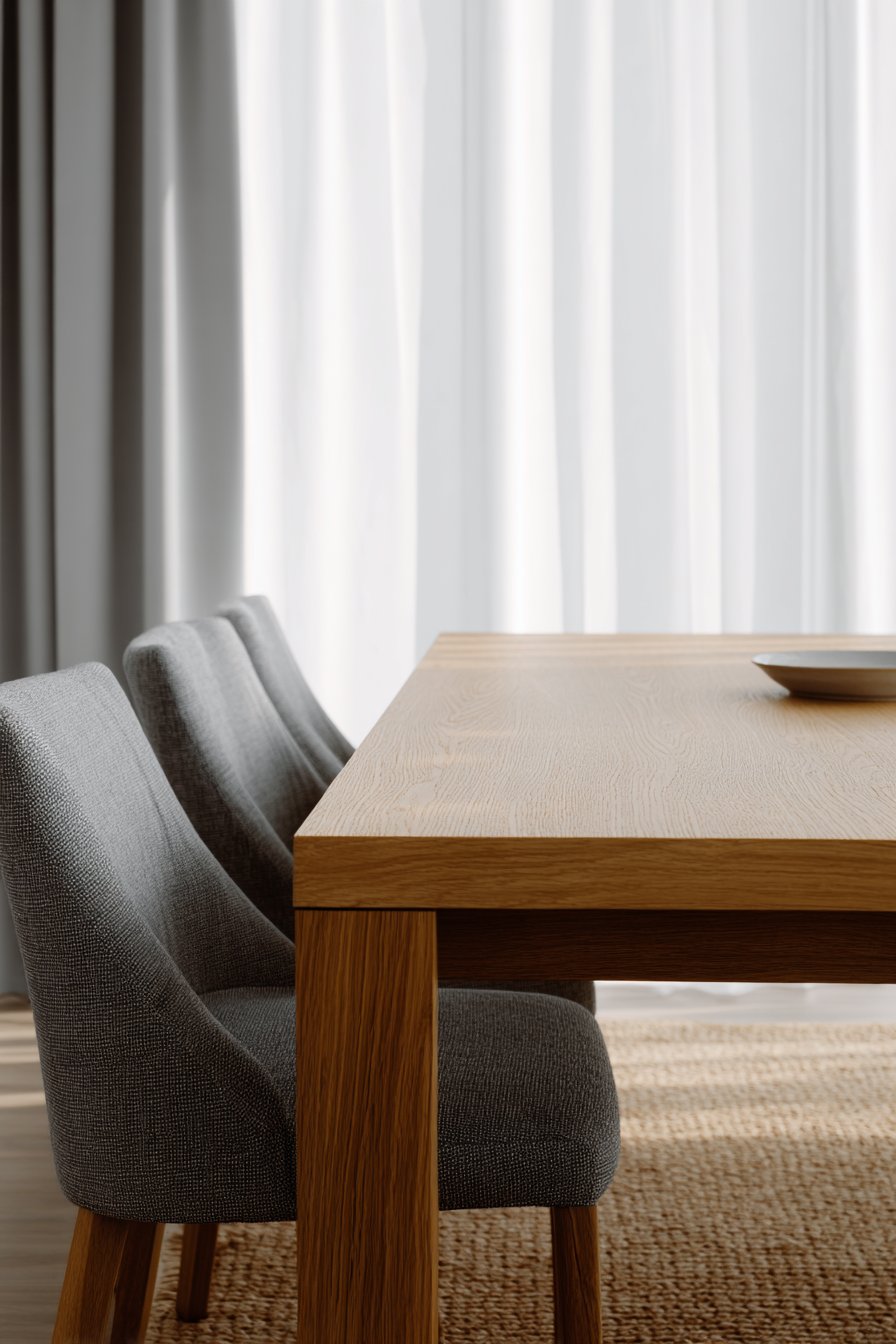
The beauty of this design lies in its restraint and the careful attention to proportion, scale, and material quality. Every element serves a purpose without calling unnecessary attention to itself, creating a serene dining environment that feels both contemporary and timeless. The light oak’s warm blonde tones prevent the minimalist aesthetic from feeling cold or institutional, instead offering a welcoming space that prioritizes clarity, function, and mindful living.
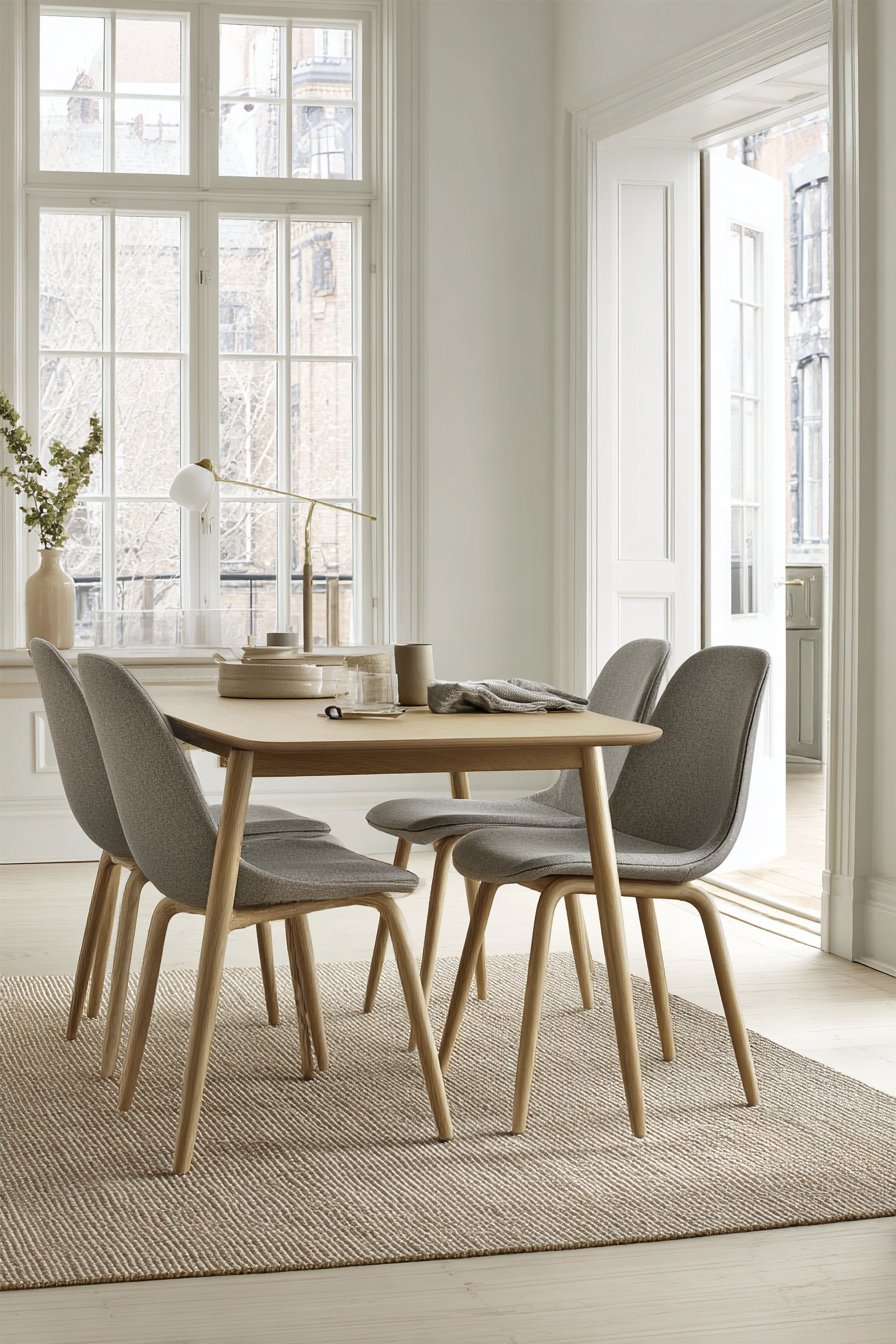
Key Design Tips: Select light oak with consistent grain patterns for a cohesive minimalist look. Choose a satin or matte finish rather than high gloss to maintain understated elegance. Keep the surrounding decor minimal to allow the table’s form and material to remain focal points. Invest in quality upholstered chairs that provide comfort without visual clutter. Maximize natural light sources to enhance the wood’s natural beauty and reduce reliance on artificial lighting. Use a simple jute or wool rug to define the dining zone without competing with the table’s simplicity.
3. Compact Round Cherry Wood Pedestal
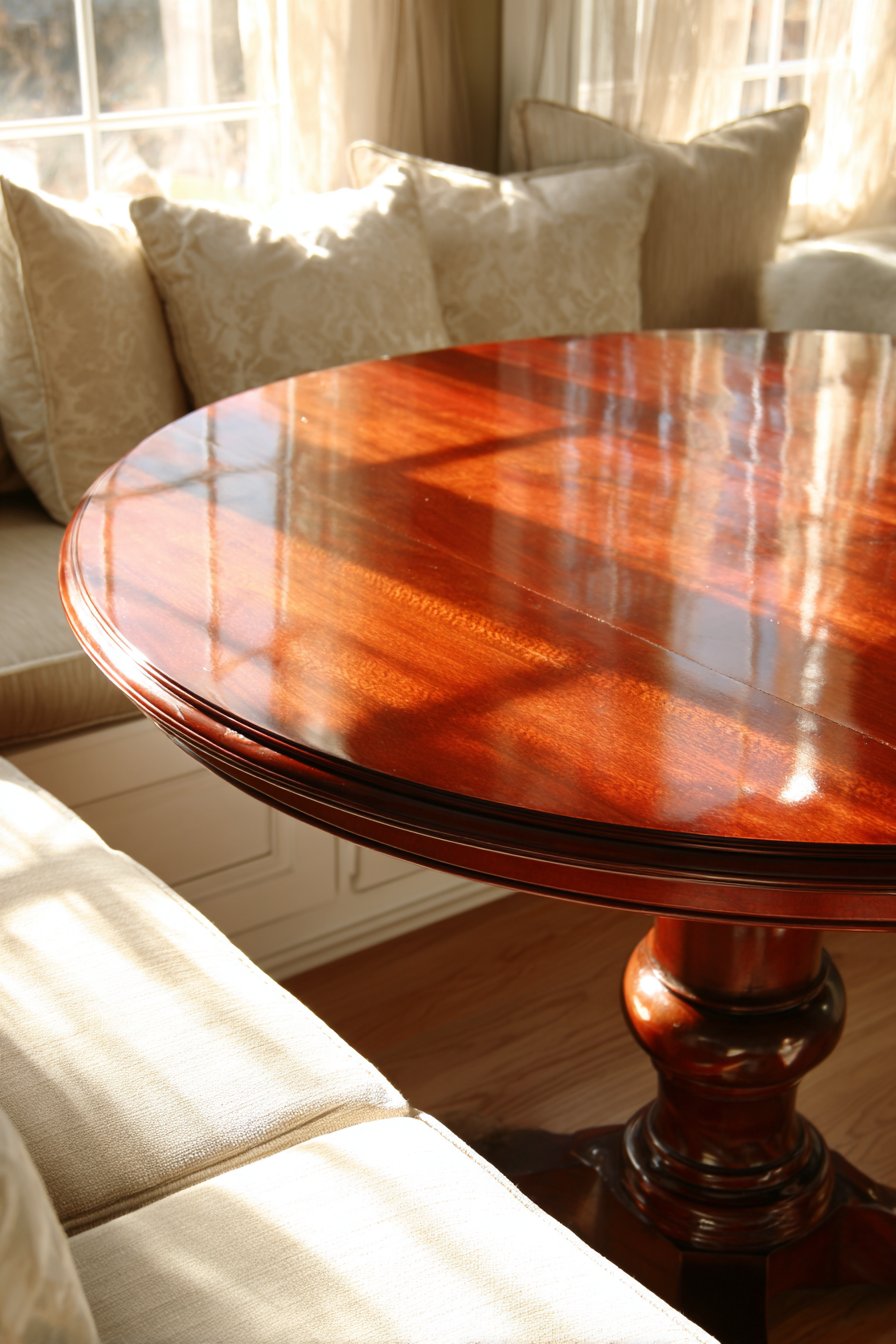
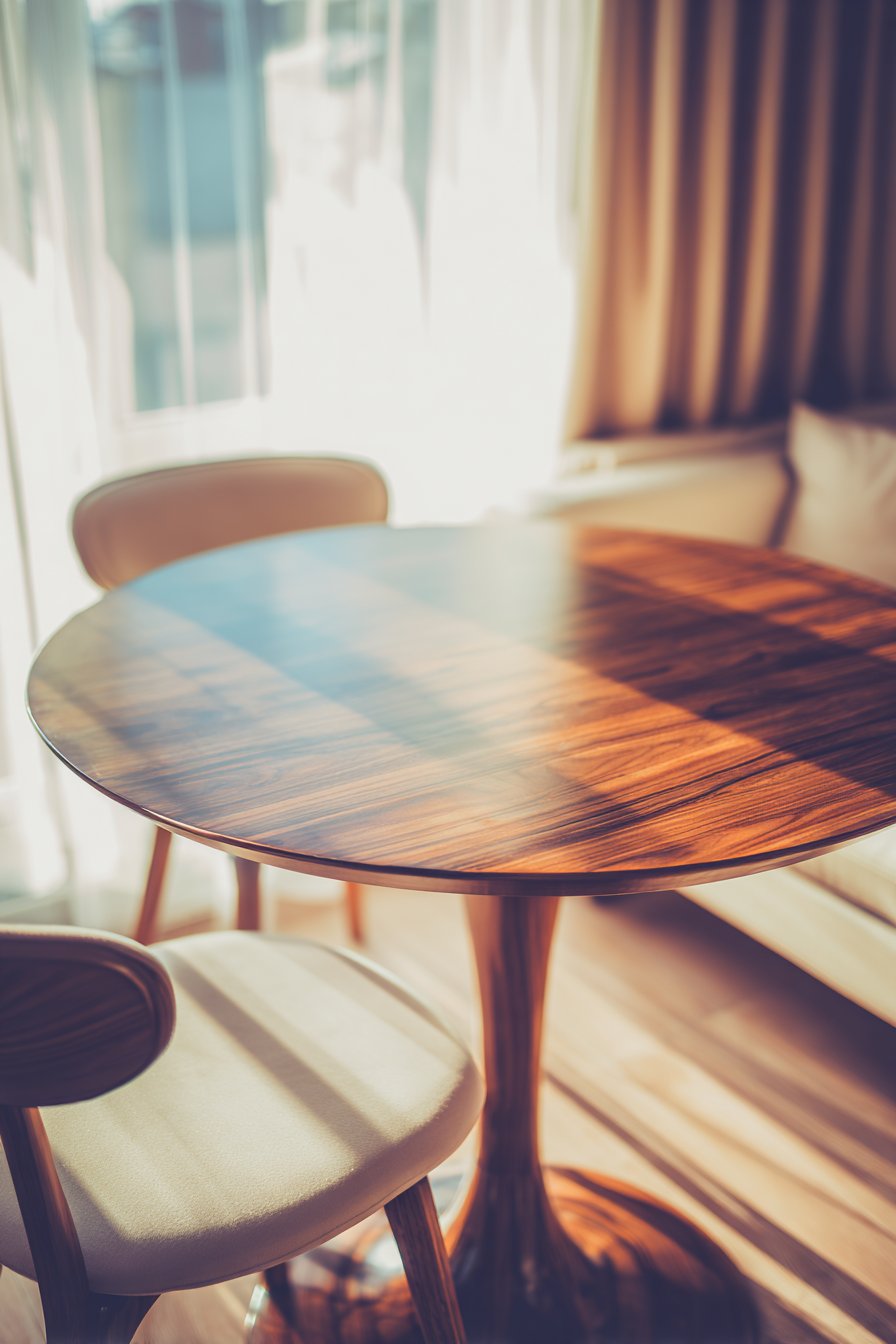
Space efficiency meets timeless elegance in this round pedestal dining table crafted from warm cherry wood. The lustrous finish enhances the wood’s natural reddish-brown tones, creating depth and richness that develops beautifully over time as cherry naturally darkens with age and light exposure. Designed specifically for small spaces, this compact table seats four comfortably in a cozy breakfast nook, where built-in bench seating with cream cushions maximizes every square foot while creating an intimate dining alcove.
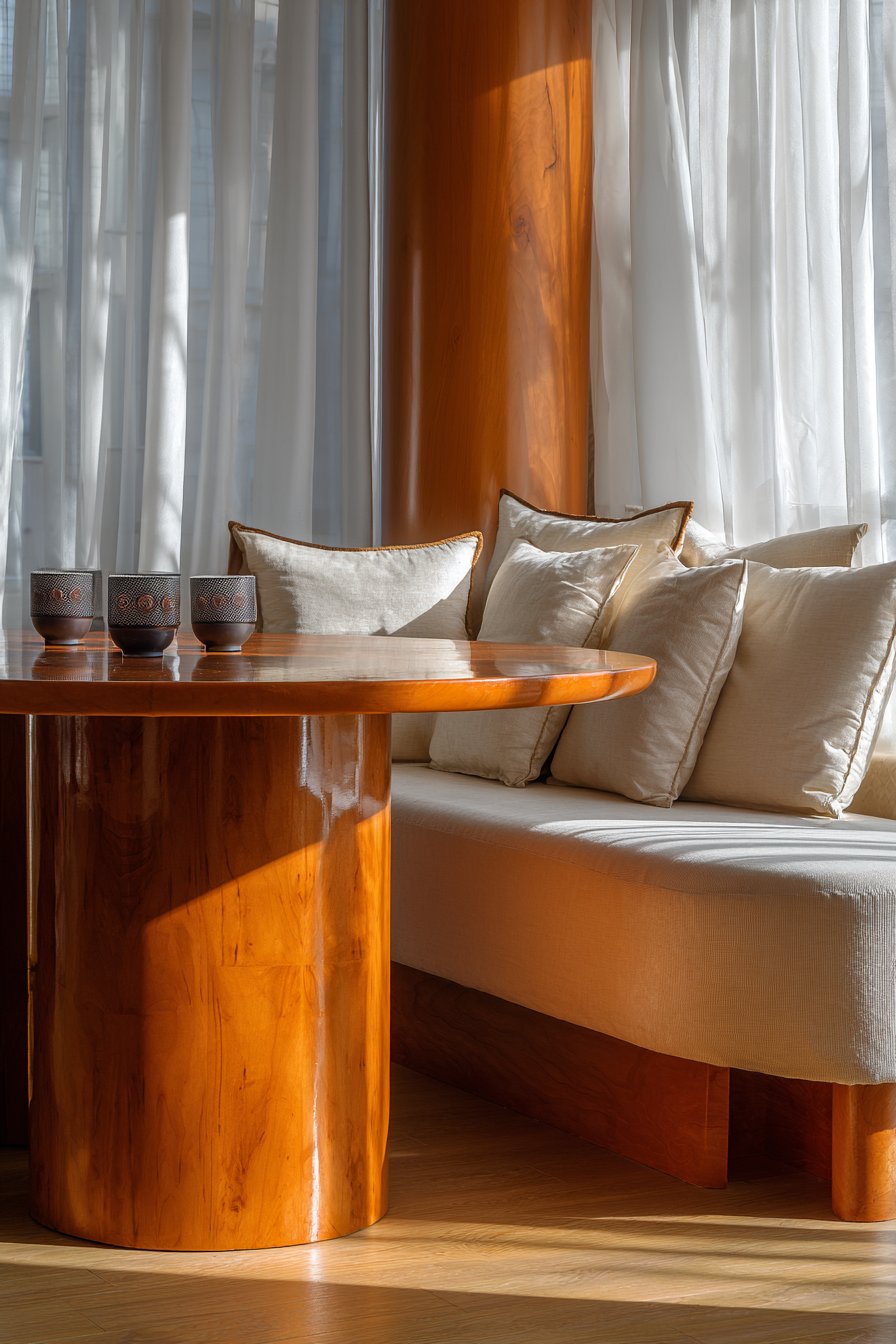
Morning sunlight filtering through sheer curtains creates a luminous quality in the space, casting soft highlights across the polished cherry surface and illuminating the wood’s fine, straight grain. The single pedestal base provides leg room flexibility, allowing diners to sit comfortably without navigating multiple table legs—a practical consideration in smaller dining areas. The table’s circular form encourages conversation and creates a democratic seating arrangement where no position feels more prominent than another.
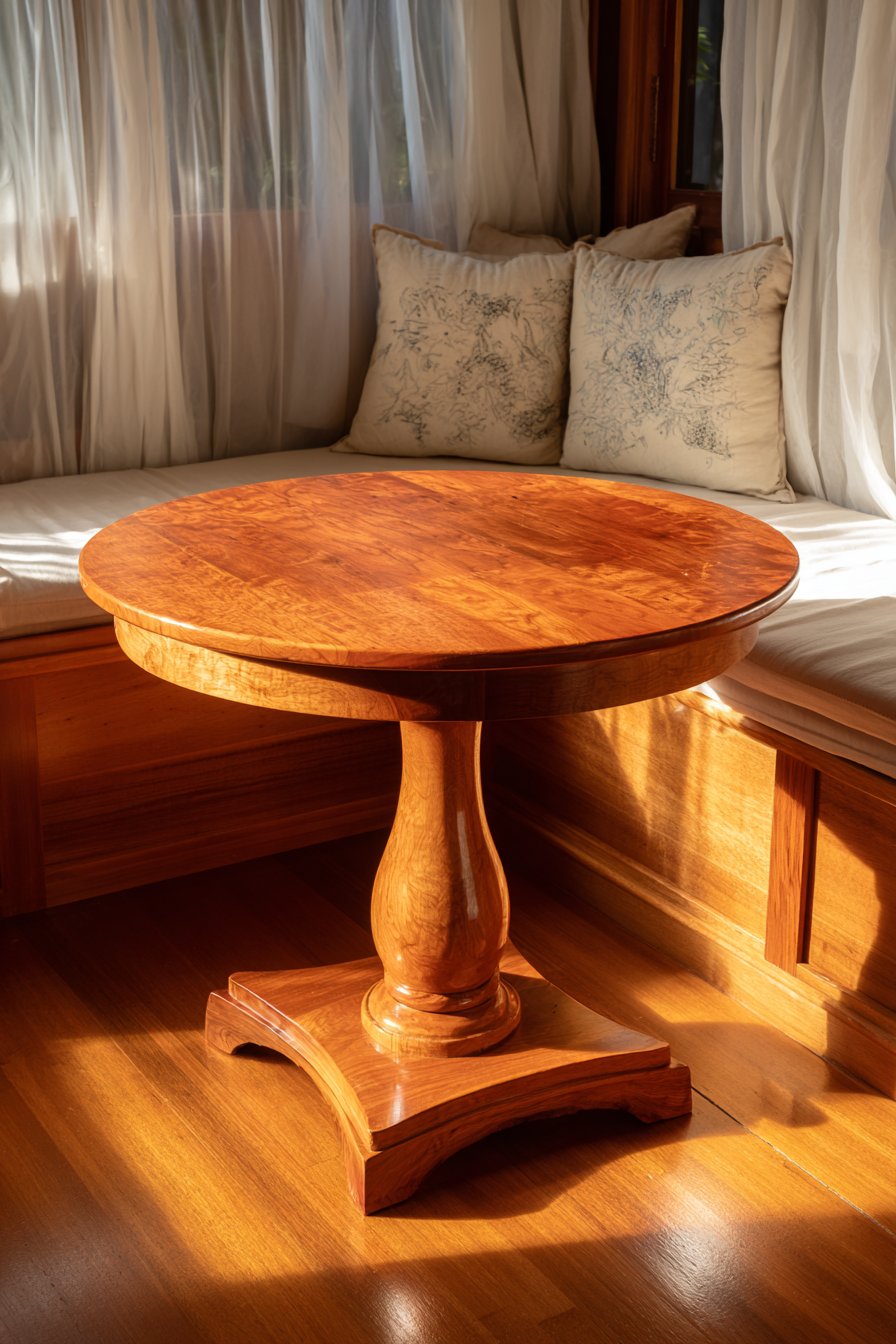
This design proves that limited square footage doesn’t require compromising on material quality or aesthetic appeal. The cherry wood’s inherent warmth and the thoughtful integration with built-in seating transform a potentially challenging small space into a charming dining destination. The table’s modest scale and classic pedestal construction ensure it won’t overwhelm the room while providing a beautiful focal point that anchors the breakfast nook with substance and style.
Key Design Tips: Choose round tables for small spaces to improve traffic flow and maximize seating capacity. Opt for pedestal bases rather than four-leg designs to provide flexible leg room. Select cherry wood for its warm tones and aging characteristics that improve over time. Position the table near natural light sources to showcase the wood’s lustrous finish. Pair with built-in seating or benches to save space and create cohesive custom appearance. Use sheer window treatments to diffuse light while maintaining privacy and softening the overall ambiance.
4. Industrial Loft Reclaimed Wood and Metal
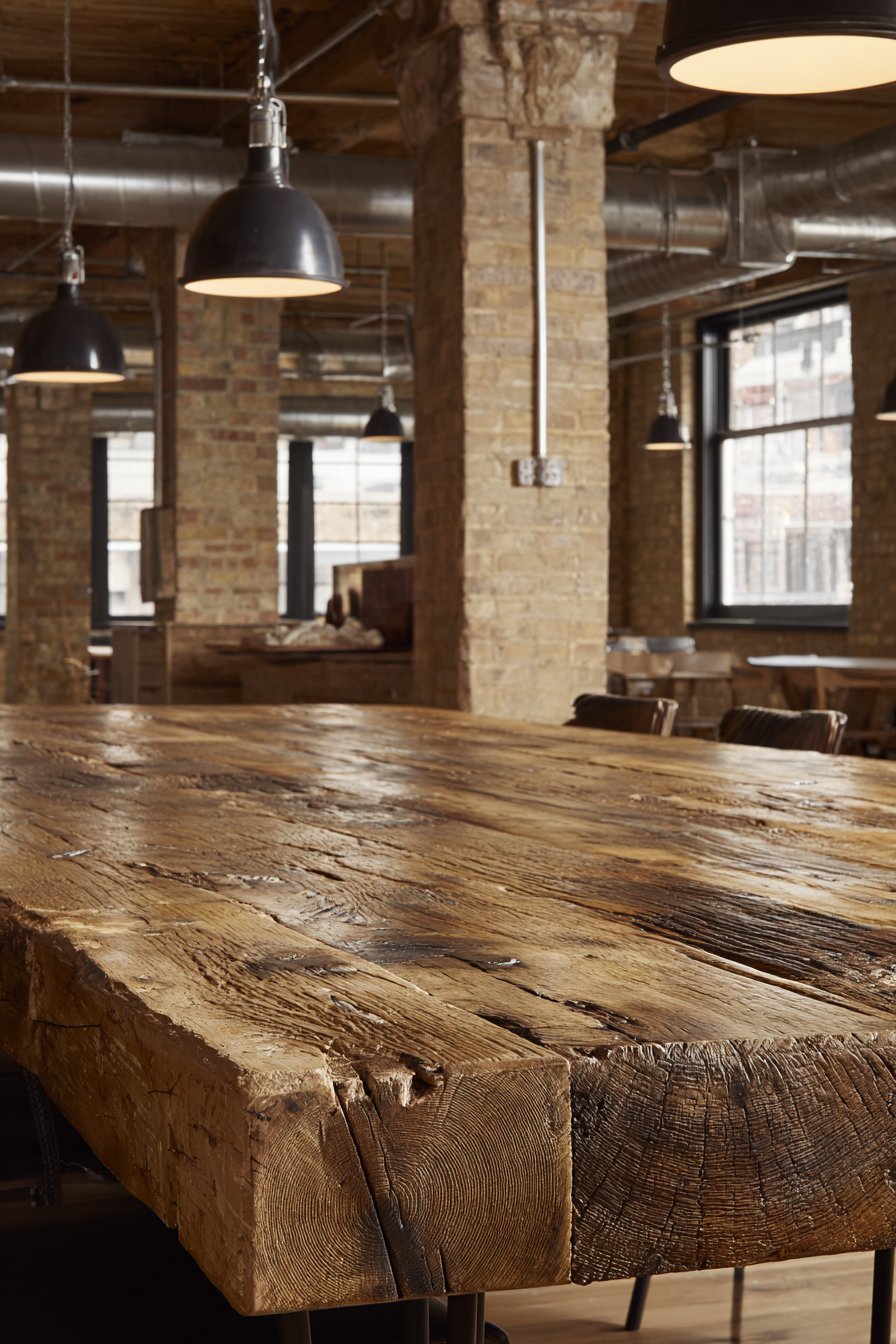
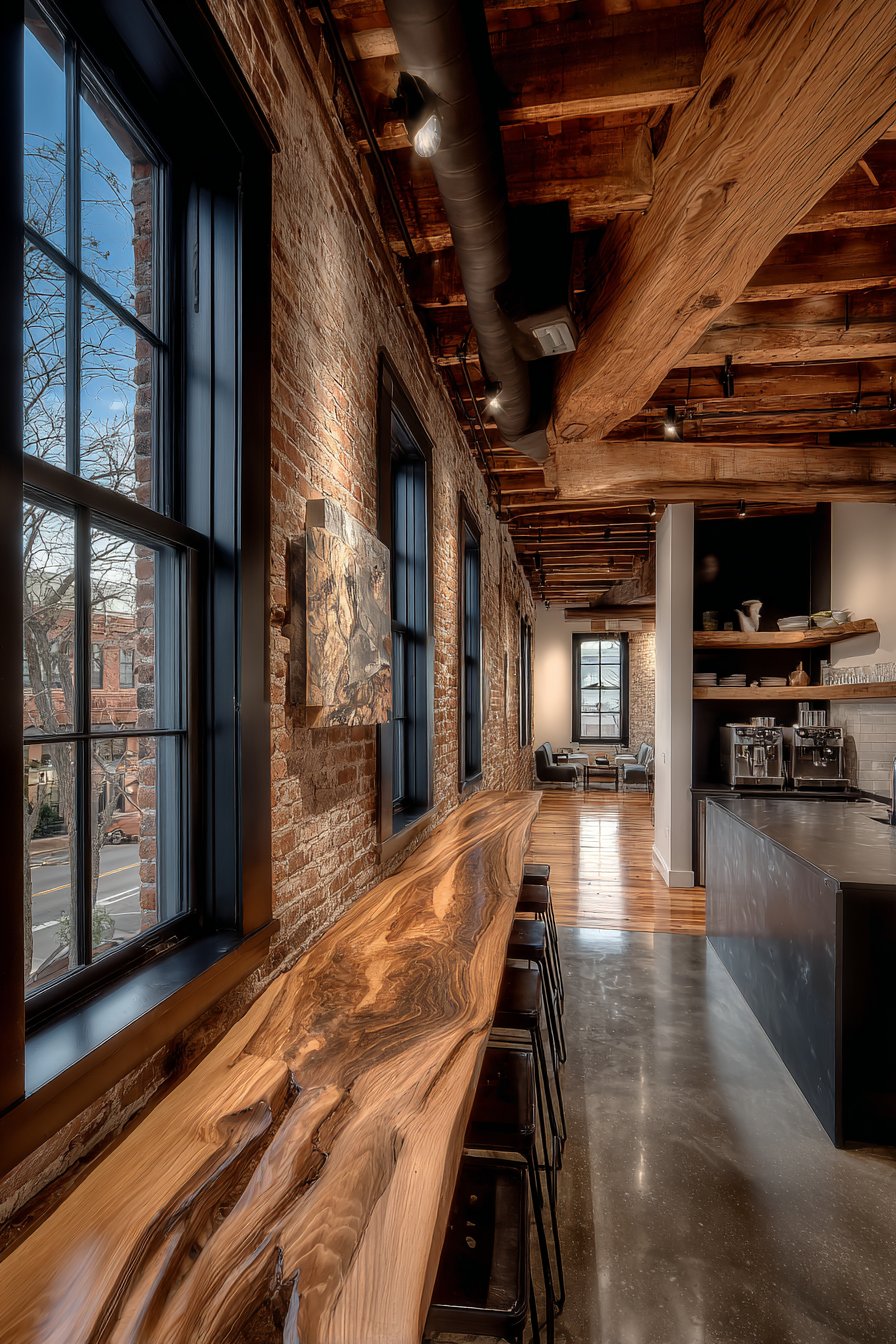
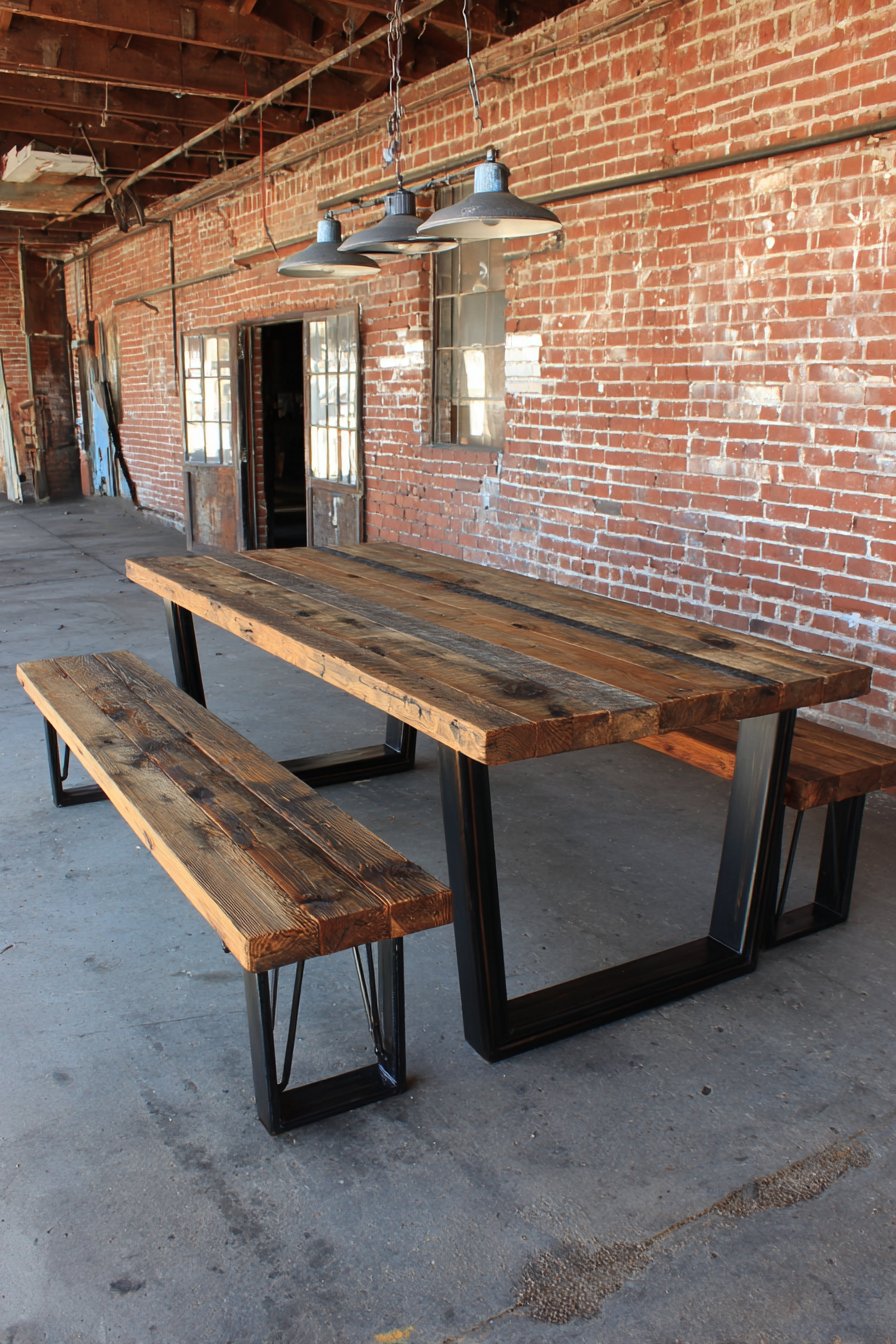
Raw industrial aesthetics meet organic warmth in this striking table design that combines a thick reclaimed wood top with black metal hairpin legs. The wood surface showcases visible saw marks, natural imperfections, and varied tones ranging from honey blonde to deep espresso—authentic characteristics that celebrate the material’s previous life and journey. Set against exposed brick walls and concrete floors in a converted loft apartment, the table bridges the gap between rugged industrial elements and the softness of natural wood grain.
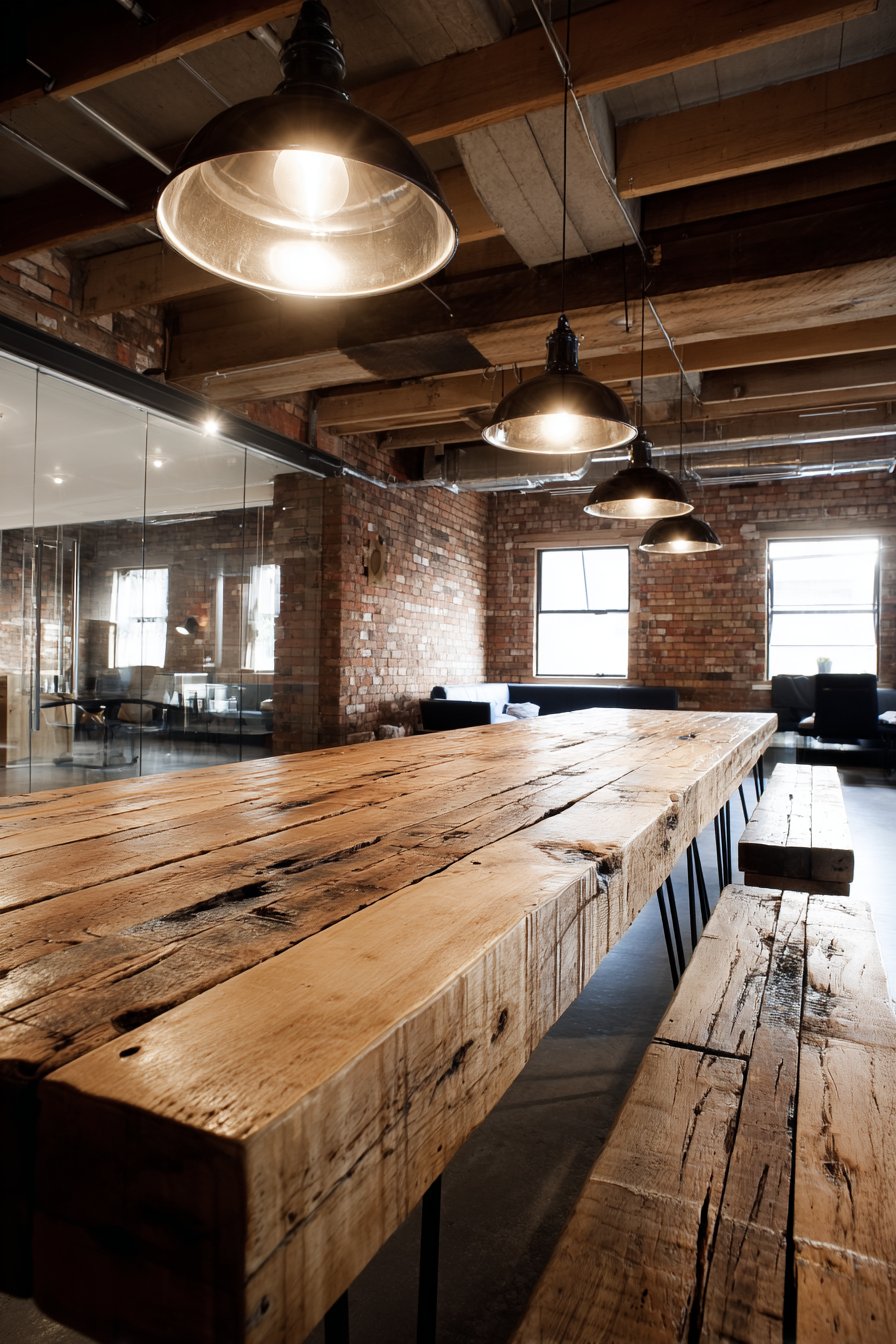
Metal industrial pendant lights hang overhead, their utilitarian design complementing the table’s honest materiality and creating focused task lighting for dining. The hairpin legs provide a distinctly mid-century modern touch that prevents the industrial aesthetic from feeling too heavy or masculine, introducing graceful lines that contrast beautifully with the substantial wood top. This juxtaposition of delicate metal supports and robust wooden surface creates visual interest and demonstrates how contrasting materials can work in harmony.
The beauty of this design lies in its celebration of authenticity and visible craftsmanship. Nothing is hidden or apologized for—the wood’s knots, cracks, and color variations are features to be appreciated, while the welded metal legs showcase their own industrial elegance. This approach resonates with those who value transparency in design, appreciate the beauty of repurposed materials, and seek furniture that tells a story while providing reliable function for contemporary living.
Key Design Tips: Source genuinely reclaimed wood rather than artificially distressed new lumber for authentic character. Choose hairpin legs in matte black powder coat for durability and true industrial aesthetic. Embrace natural imperfections in the wood as design features rather than flaws. Coordinate with other industrial elements like metal lighting and exposed building materials. Apply protective finishes that preserve texture while providing necessary durability for dining surfaces. Consider the weight distribution and ensure metal legs are properly rated for the wood top’s substantial mass.
5. Live-Edge Black Walnut Statement Piece
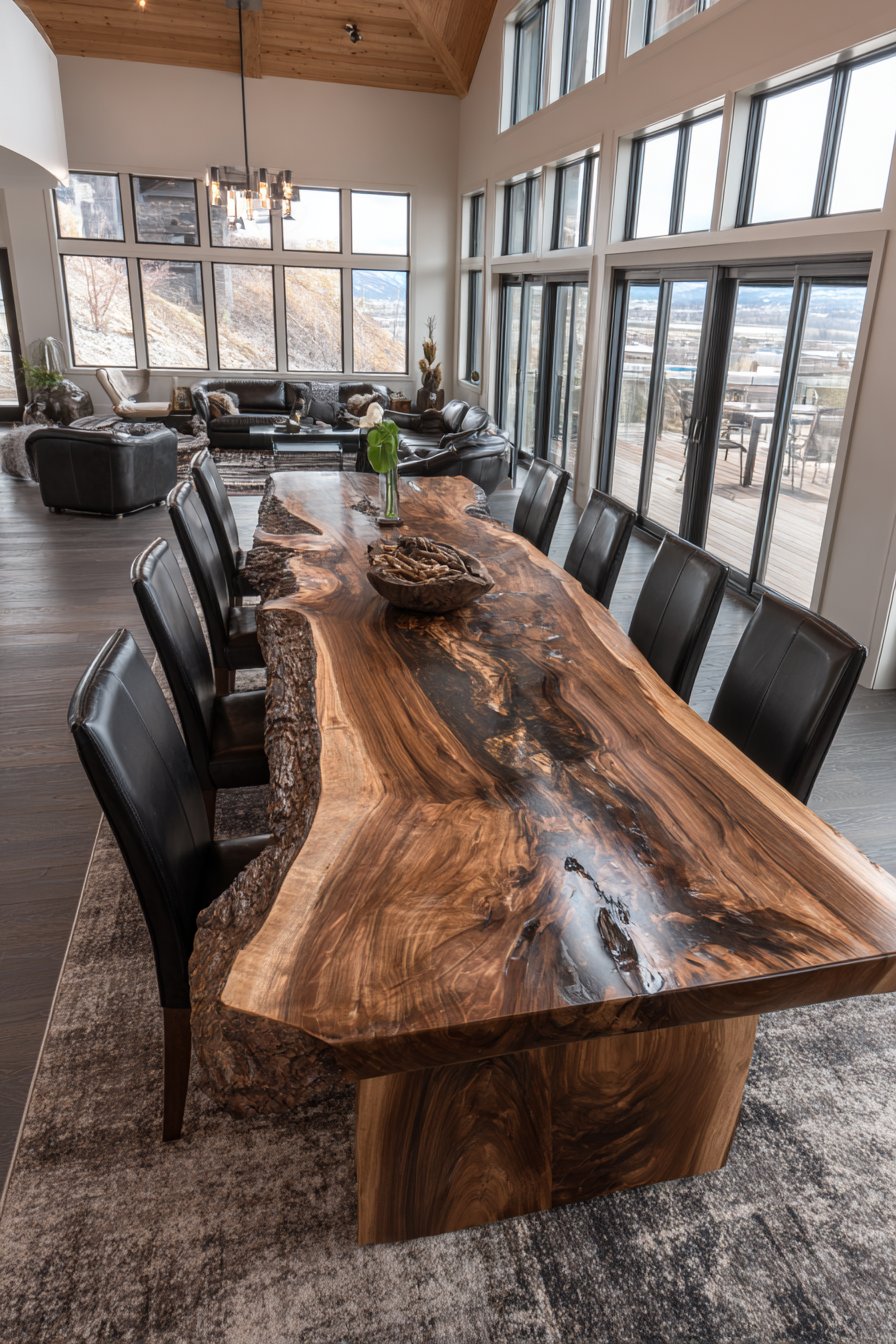
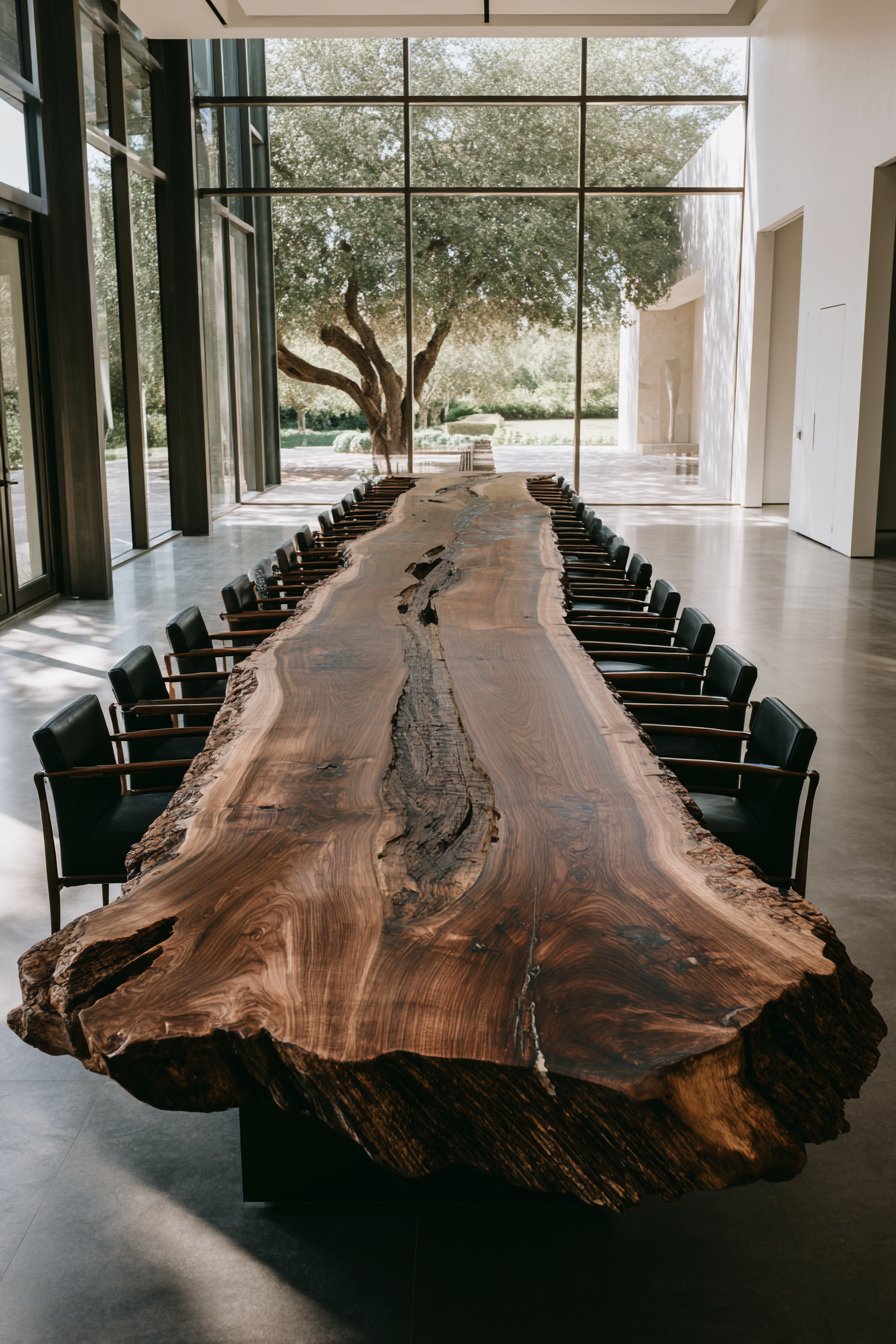
Nature’s artistry takes center stage with this spectacular live-edge black walnut dining table that preserves the natural bark edge on both sides of the slab. Dramatic grain patterns flow across the surface, punctuated by natural cracks thoughtfully filled with clear epoxy that stabilizes the wood while creating striking visual elements. The rich dark brown coloring characteristic of black walnut provides depth and sophistication, creating a table that functions as both dining surface and sculptural artwork within the contemporary home.
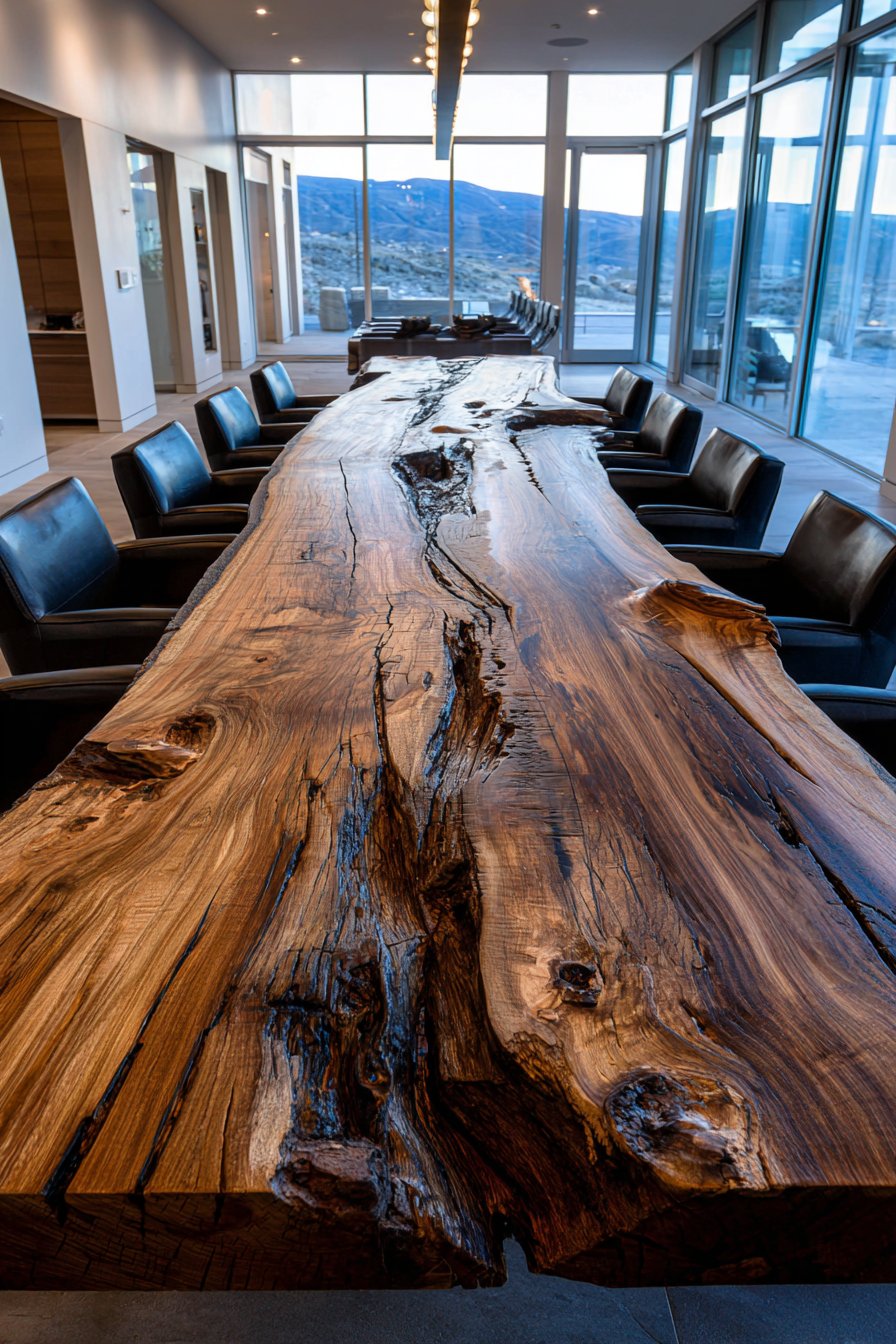
Positioned near floor-to-ceiling windows, the table receives abundant natural light that shifts throughout the day, constantly revealing new details in the wood’s complex grain patterns and highlighting the three-dimensional qualities of the live edges. Simple modern chairs in black leather provide necessary seating without competing visually with the table’s organic drama. The restraint shown in surrounding furnishings allows the walnut slab to command attention as the room’s undisputed focal point.
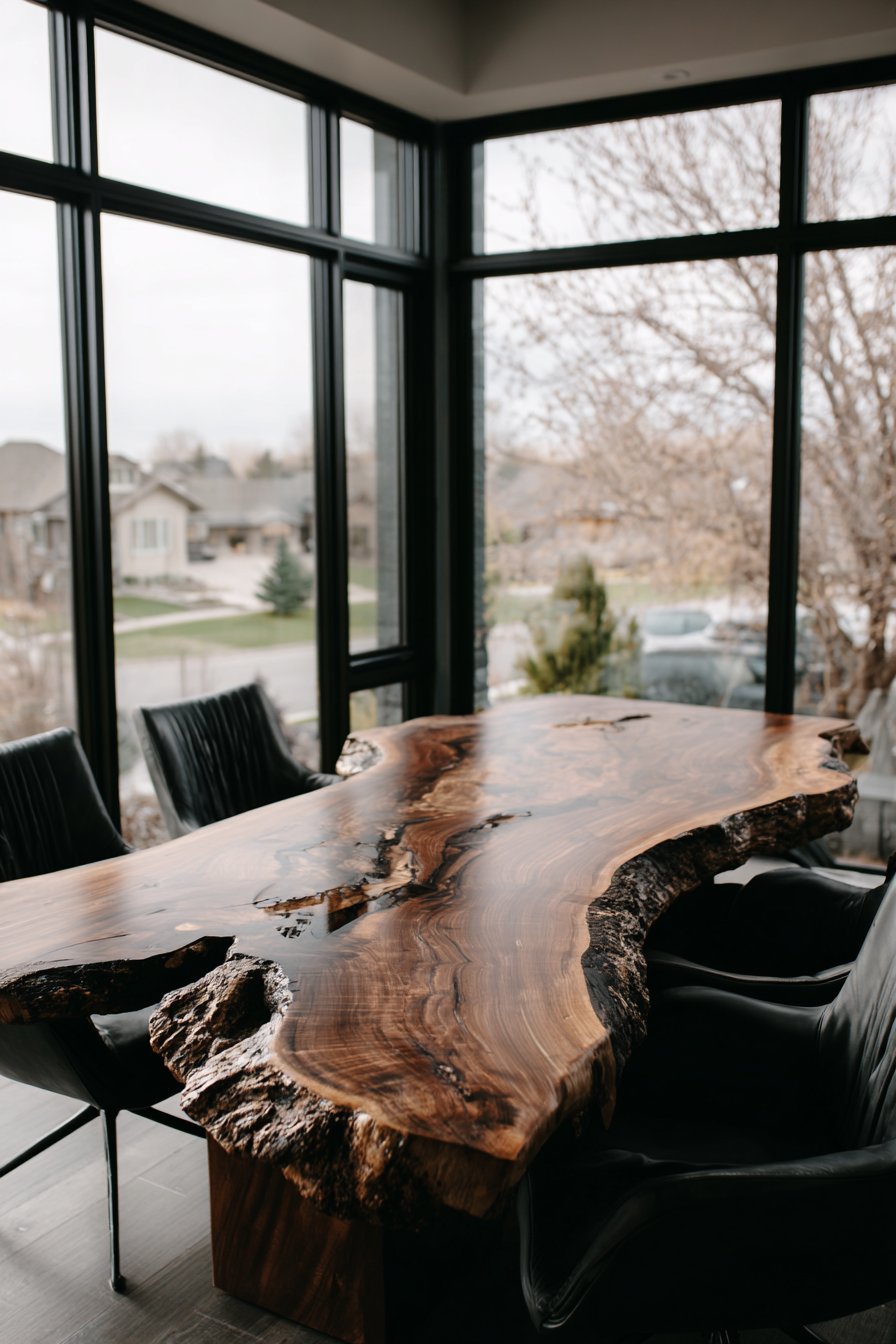
This design represents the ultimate expression of wood’s natural beauty, where human intervention focuses on revealing and preserving rather than reshaping or constraining. Each live-edge table is utterly unique—the specific grain patterns, natural edge contours, and organic imperfections ensure no two pieces can ever be identical. For those who appreciate one-of-a-kind design and the inherent artistry of natural materials, a live-edge walnut table offers an investment piece that grows more beautiful and valuable over time.
Key Design Tips: Work with experienced craftspeople who understand proper slab selection and preparation techniques. Ensure the wood is adequately dried and stabilized before construction to prevent cracking. Use high-quality clear epoxy in natural voids and cracks to preserve structural integrity. Apply finishes that enhance rather than obscure the wood’s natural color and grain. Choose simple, understated seating to allow the table to remain the visual focus. Plan for significant weight—solid walnut slabs are extremely heavy and require substantial base support. Position near natural light to showcase the wood’s dimensional qualities throughout the day.
6. Weathered Teak Outdoor Dining
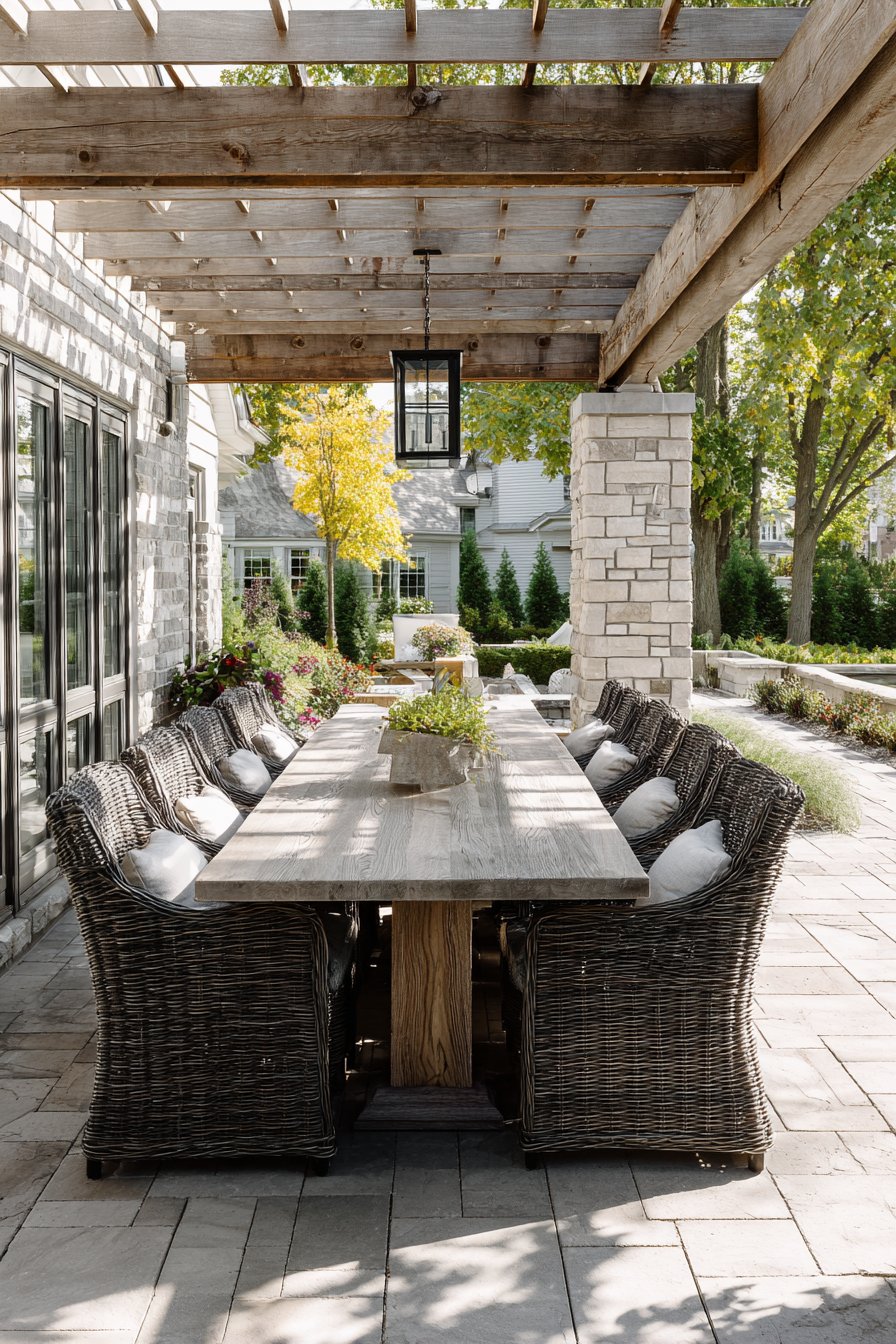
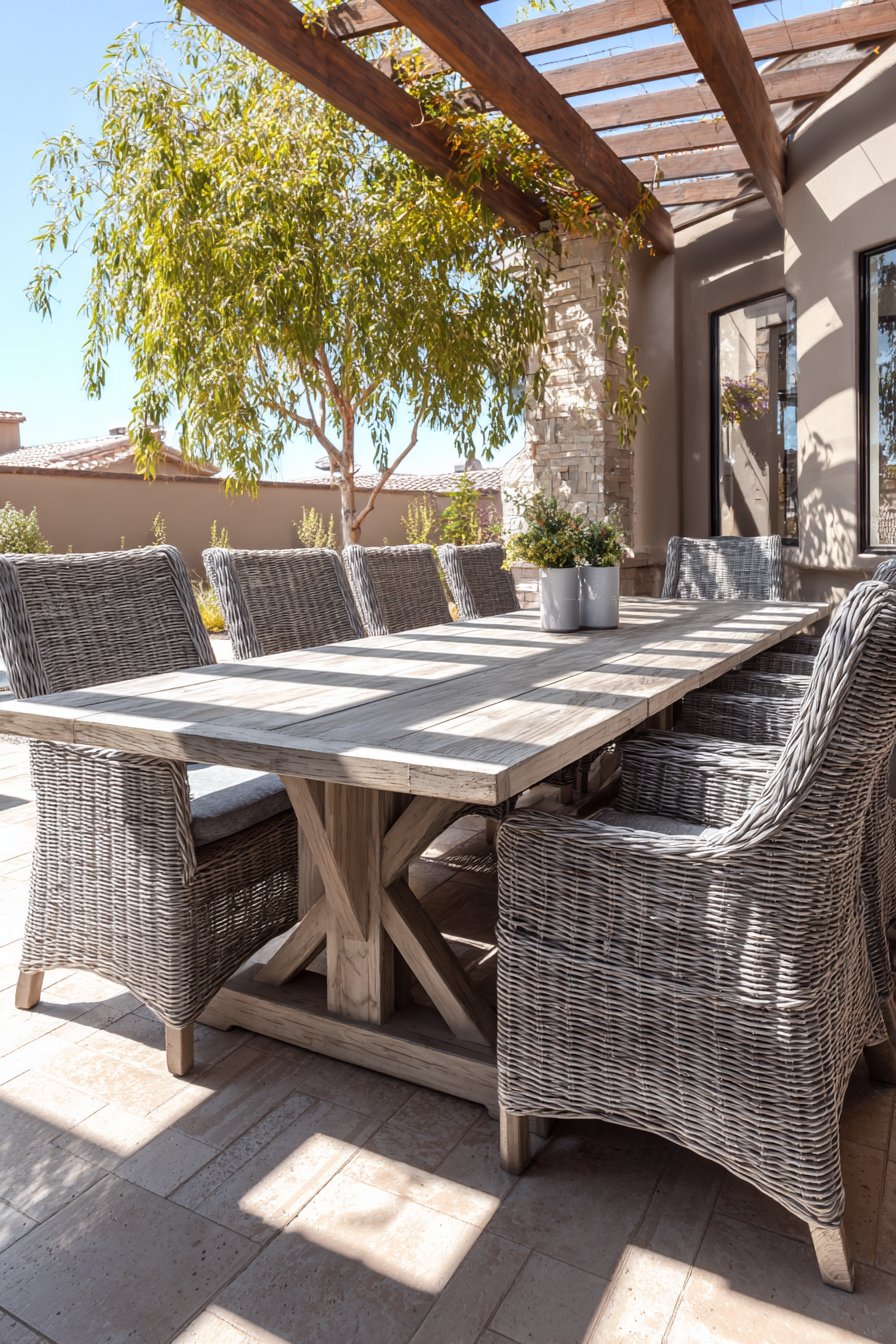
Designed specifically for al fresco entertaining, this weathered teak dining table embraces the natural aging process that occurs when premium hardwood weathers outdoors. The rectangular table seats ten generously, its surface displaying the characteristic silvery-gray patina that develops as teak weathers under sun and rain exposure. Positioned on a covered patio with stone flooring, the table creates an elegant outdoor dining destination that withstands the elements while developing greater character over time.
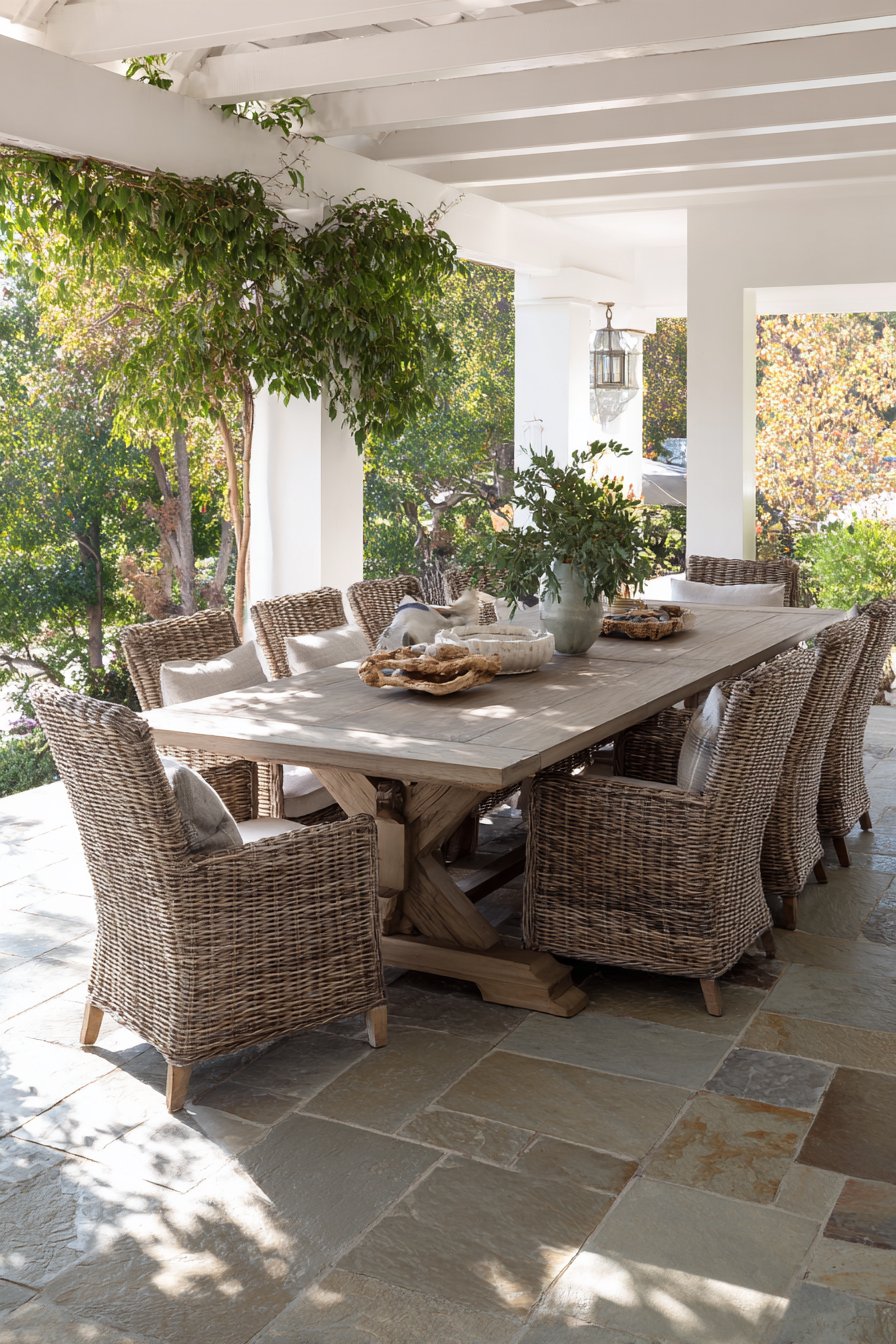
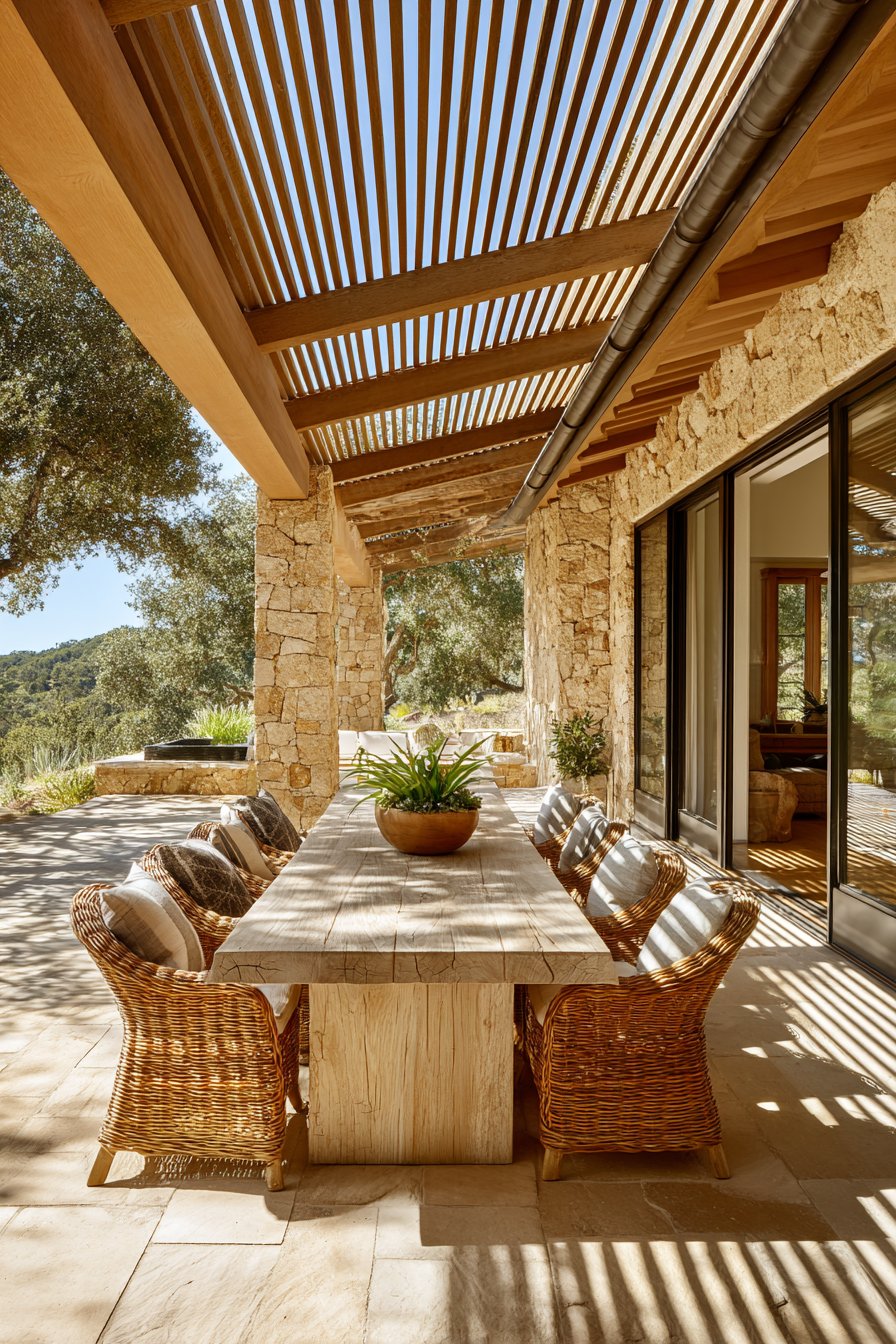
Wicker dining chairs with weather-resistant cushions surround the table, their natural textures complementing the teak’s organic beauty while providing comfortable seating for extended outdoor meals. Overhead, a pergola filters sunlight, creating dappled light patterns that dance across the weathered wood surface throughout the day. This interplay of light and shadow emphasizes the teak’s grain structure and subtle color variations, creating ever-changing visual interest that makes outdoor dining feel like a special occasion.
The genius of this design lies in selecting materials that improve rather than deteriorate with outdoor exposure. High-quality teak contains natural oils that resist rot, insects, and moisture damage, making it ideal for exterior applications. The weathered gray patina isn’t a sign of neglect but rather a badge of authenticity that demonstrates the wood’s genuine outdoor lifestyle. This approach liberates homeowners from constant maintenance concerns, allowing them to simply enjoy their outdoor dining space without anxiety about weather-related damage.
Key Design Tips: Invest in genuine teak from sustainable sources rather than inferior substitutes that won’t weather well. Allow the natural weathering process rather than fighting it with constant refinishing. Provide overhead coverage to protect diners from direct sun while allowing air circulation around the table. Choose complementary weather-resistant materials for seating that share teak’s durability. Consider the table’s weight when planning placement—teak is dense and heavy. Clean periodically with mild soap and water but avoid harsh chemicals that can interfere with natural weathering. Accept that weathered teak will develop surface variations and slight checking as part of its natural aging character.
7. Scandinavian Light Ash Circular Design
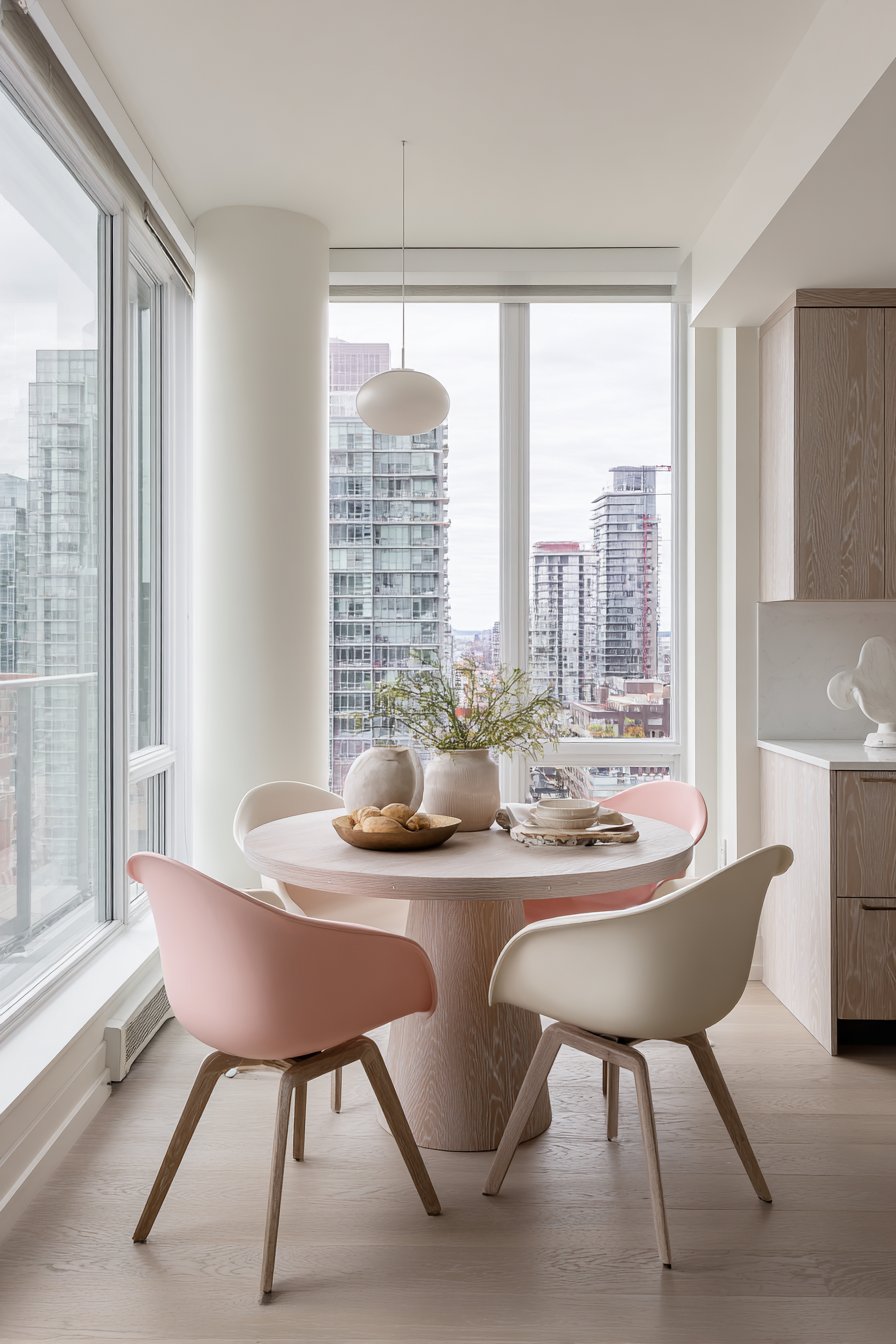
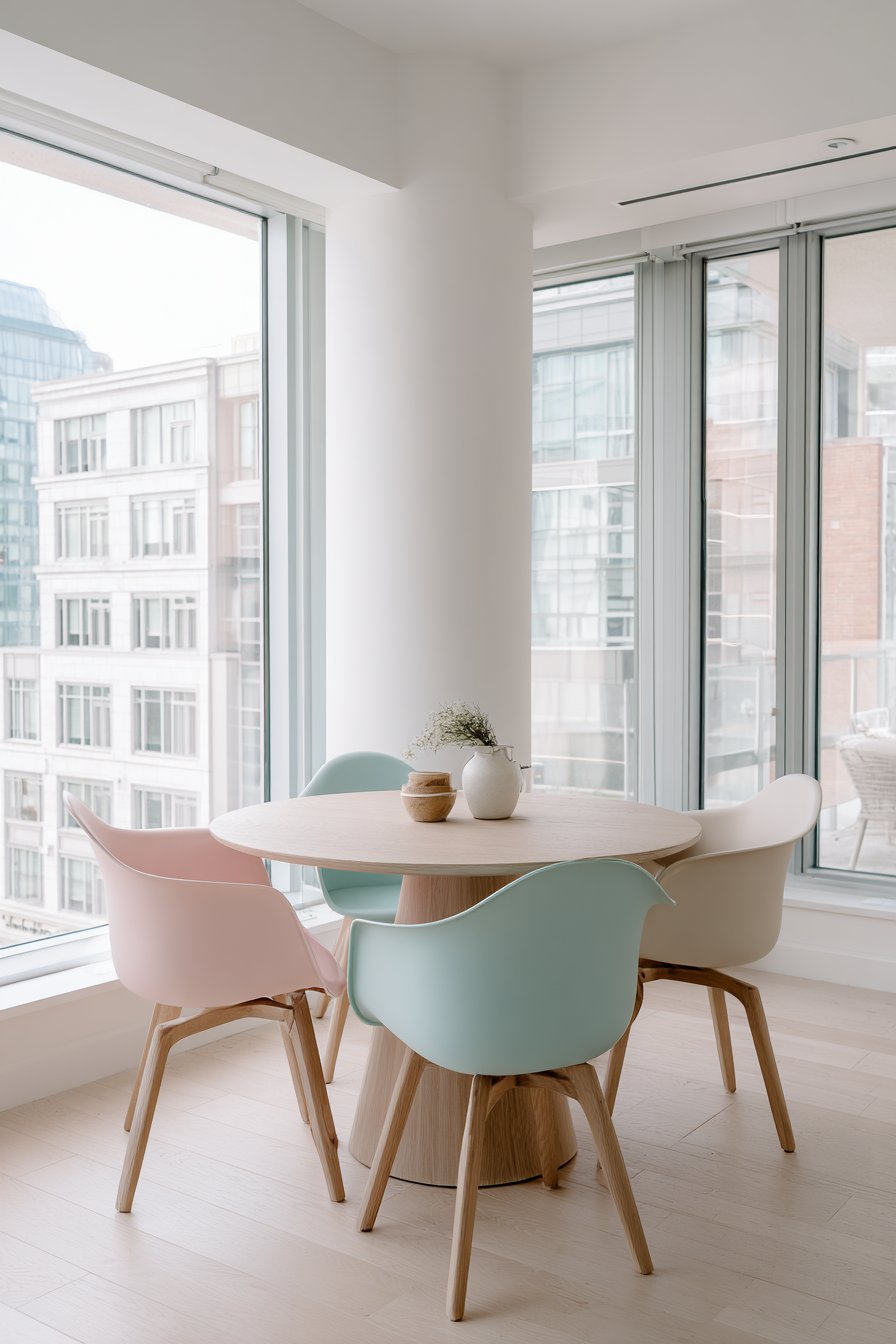
Quintessentially Nordic in its approach, this circular dining table in light ash wood embodies Scandinavian design principles of simplicity, functionality, and connection to nature. The wood’s subtle grain pattern and pale blonde tones create a luminous quality enhanced by natural oil finish that protects while preserving the wood’s organic feel. A single central pedestal base provides clean lines characteristic of Scandinavian aesthetics while offering practical benefits in terms of leg room and visual lightness.
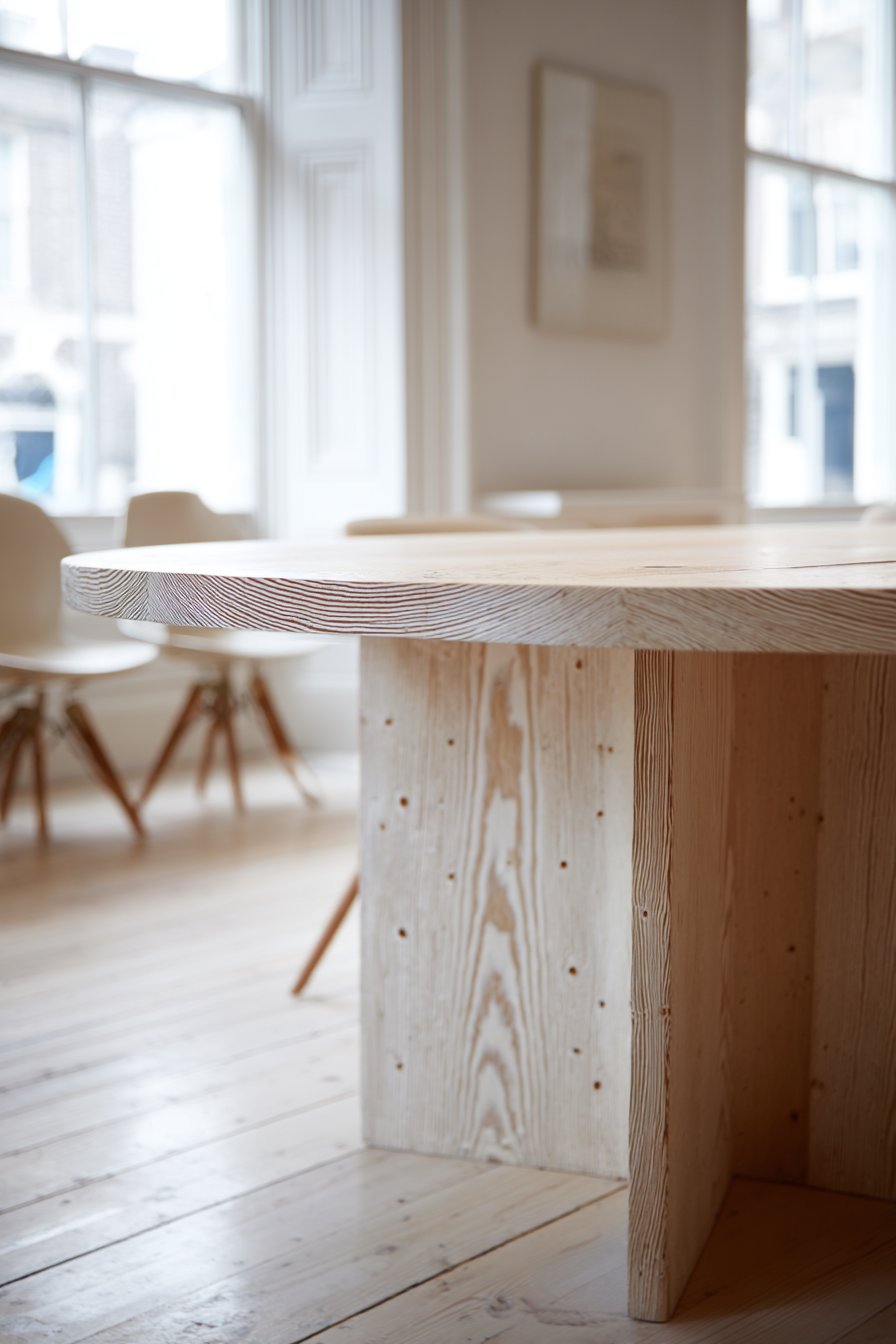
Positioned in a minimalist dining room with white walls and light maple flooring, the table creates a cohesive neutral palette that feels airy and spacious. Four iconic mid-century modern molded plastic chairs in soft pastels—perhaps powder blue, blush pink, sage green, and butter yellow—provide pops of subtle color without overwhelming the serene atmosphere. Large windows flood the space with natural light, a crucial element in Scandinavian interiors where maximizing daylight helps combat long winter darkness.
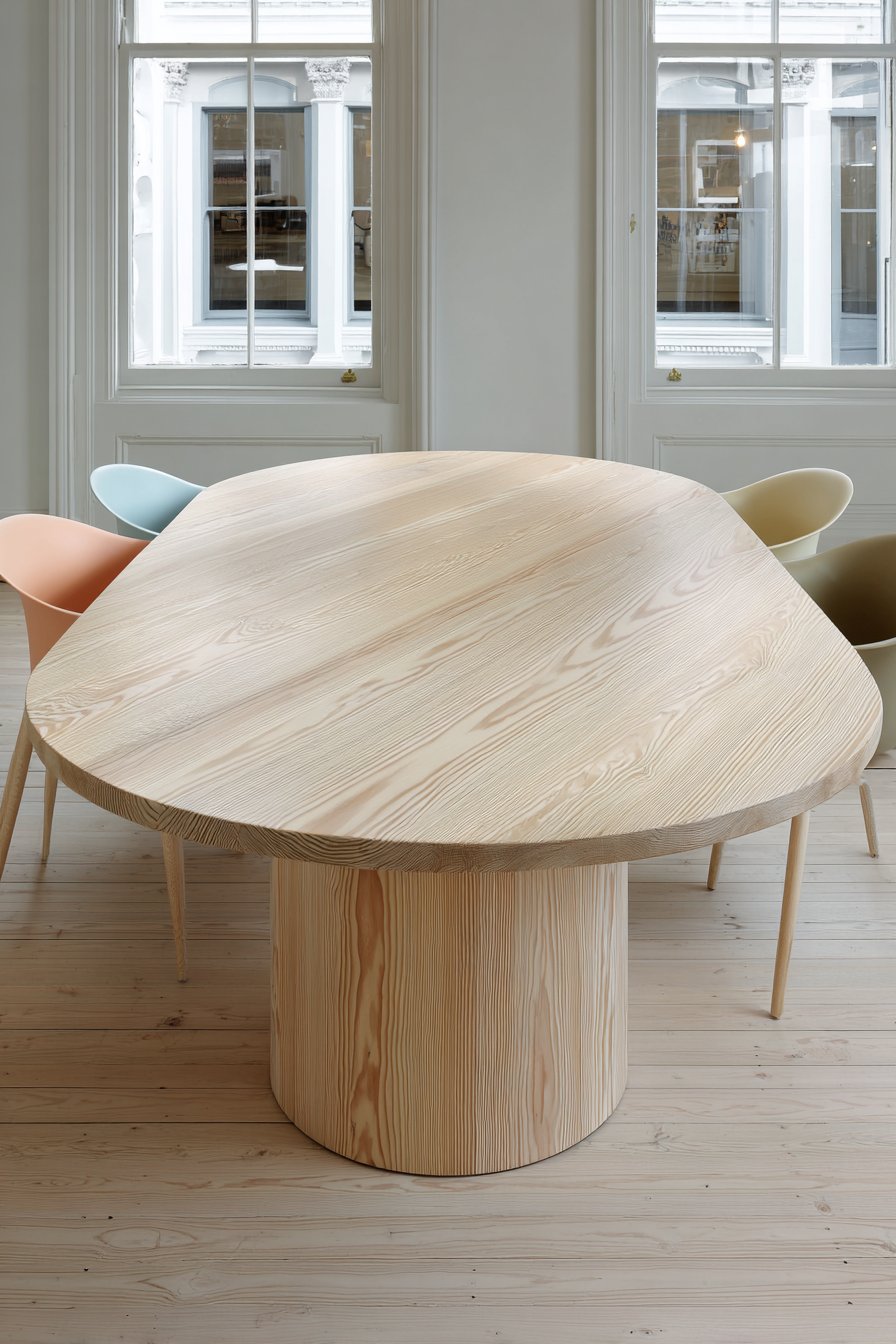
This design demonstrates how restraint and quality materials can create spaces that feel both contemporary and timeless. The light ash wood brings warmth without visual weight, preventing the predominately white room from feeling sterile or cold. Every element serves a clear purpose while contributing to the overall sense of calm and order that characterizes Scandinavian interiors. The result is a dining space that feels welcoming, uncluttered, and perfectly balanced between function and beauty.
Key Design Tips: Select light-toned woods like ash, birch, or maple for authentic Scandinavian aesthetic. Choose natural oil finishes rather than heavy lacquers to preserve wood’s organic character. Maximize natural light through large windows and minimal window treatments. Keep color palettes neutral with subtle pastel accents rather than bold hues. Invest in iconic mid-century modern seating that complements rather than matches the table. Maintain clutter-free surfaces to honor minimalist principles. Use a single pedestal base for visual lightness and improved functionality.
8. Figured Maple with Quilted Grain
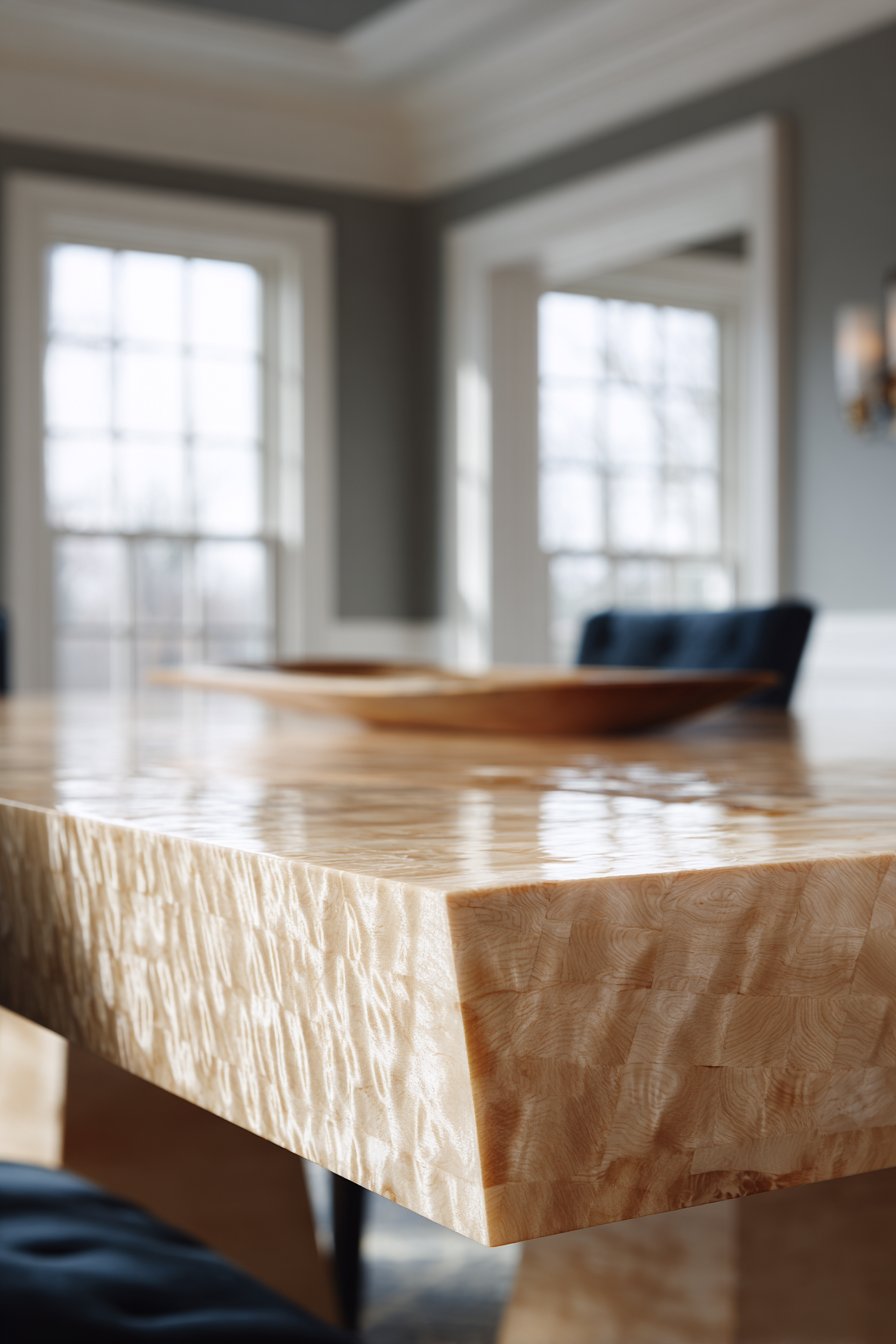
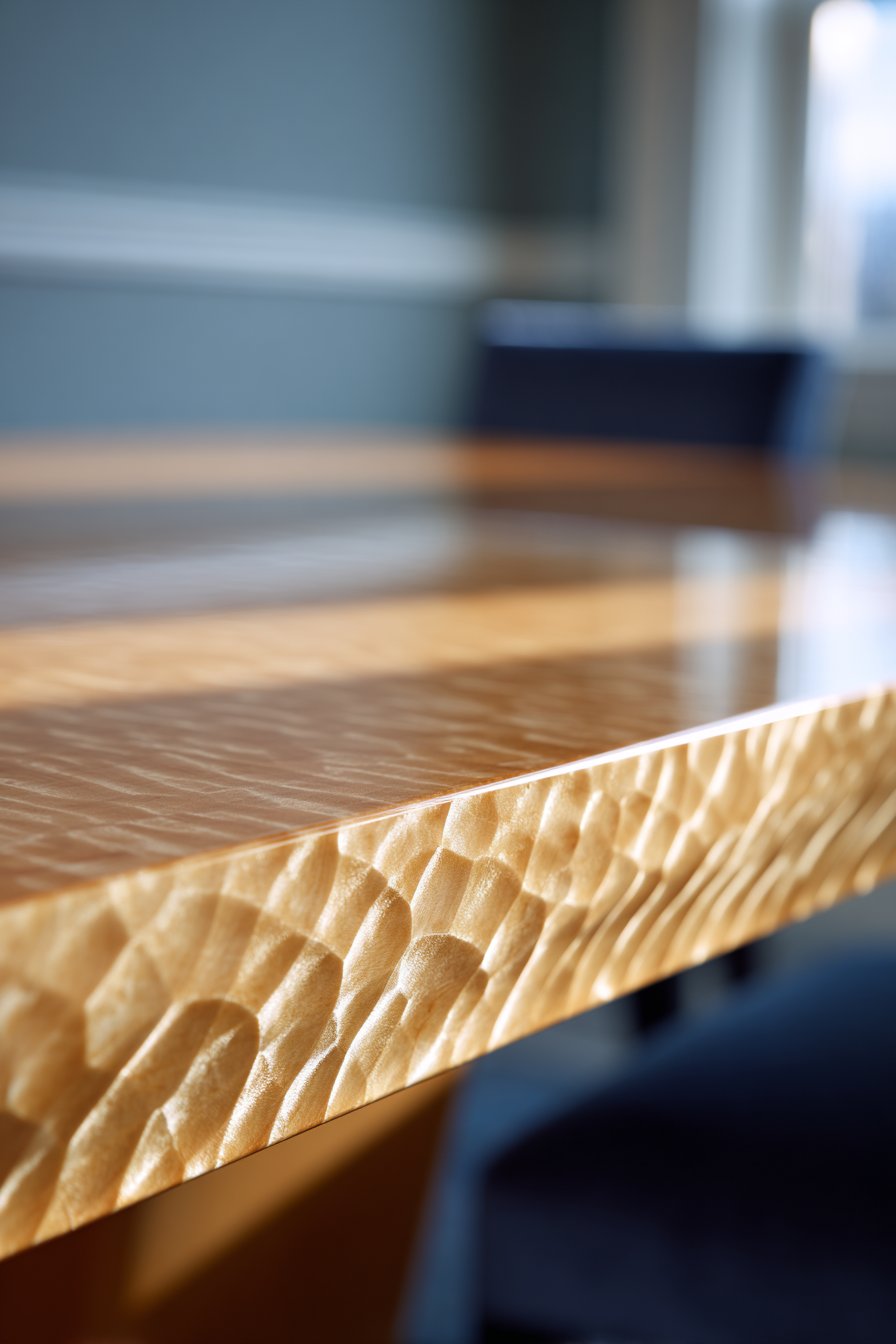
Extraordinary wood figure elevates this dining table beyond mere furniture into the realm of functional art. The figured maple top displays distinctive quilted grain patterns that create natural shimmer effects as light moves across the surface—a chatoyant quality that makes the wood appear almost three-dimensional. A clear lacquer finish enhances these optical properties without obscuring the wood’s natural character, allowing the quilted figure to perform its visual magic throughout the day as lighting conditions change.
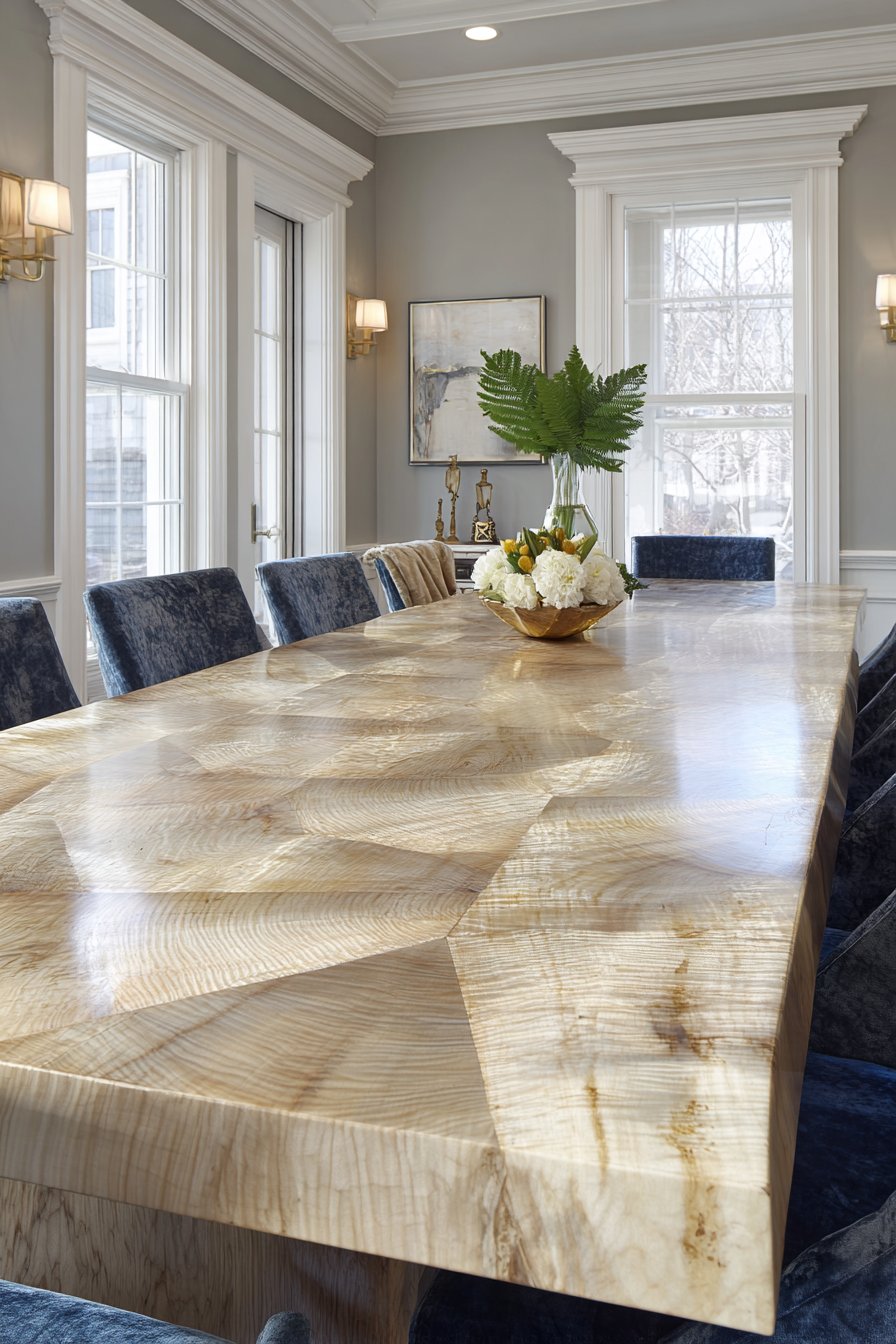
Placed in a formal dining room with elegant crown molding and soft gray walls, the table commands attention through its exceptional wood figure rather than elaborate ornamentation. Upholstered dining chairs in navy velvet provide rich color contrast while maintaining the room’s sophisticated atmosphere. The restraint shown in surrounding decor allows the figured maple to shine as the room’s centerpiece, demonstrating how remarkable wood grain can eliminate the need for additional decorative elements.
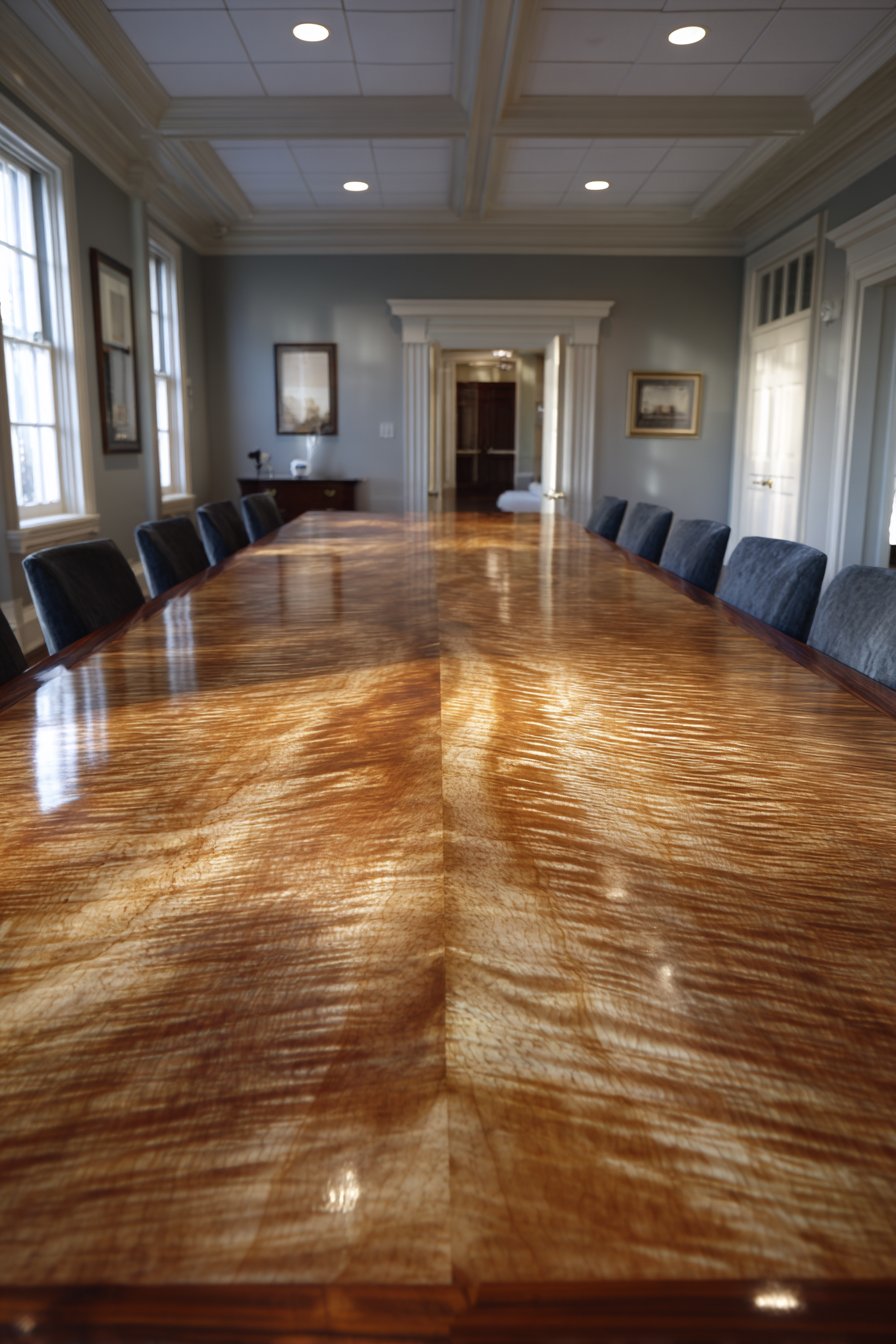
This design appeals to those who appreciate the rarity and beauty of exceptional wood figure. Quilted maple occurs naturally but infrequently, making tables crafted from highly figured wood both valuable and distinctive. The investment in premium figured wood pays dividends through decades of visual interest—unlike painted or veneered surfaces that can feel dated, extraordinary wood grain maintains timeless appeal that transcends changing design trends.
Key Design Tips: Source figured maple from reputable suppliers who can verify wood quality and origin. Apply clear finishes that enhance chatoyance without yellowing or obscuring grain patterns. Position the table where natural and artificial light can showcase the figure from multiple angles. Choose simple, elegant seating that complements without competing with the wood’s visual drama. Consider professional finishing to achieve optimal clarity and depth in the lacquer application. Protect the surface with quality placemats and trivets to preserve the finish. Understand that highly figured wood commands premium pricing but offers unique beauty unavailable in plain-sawn lumber.
9. Rustic Oak Family Farmhouse Table
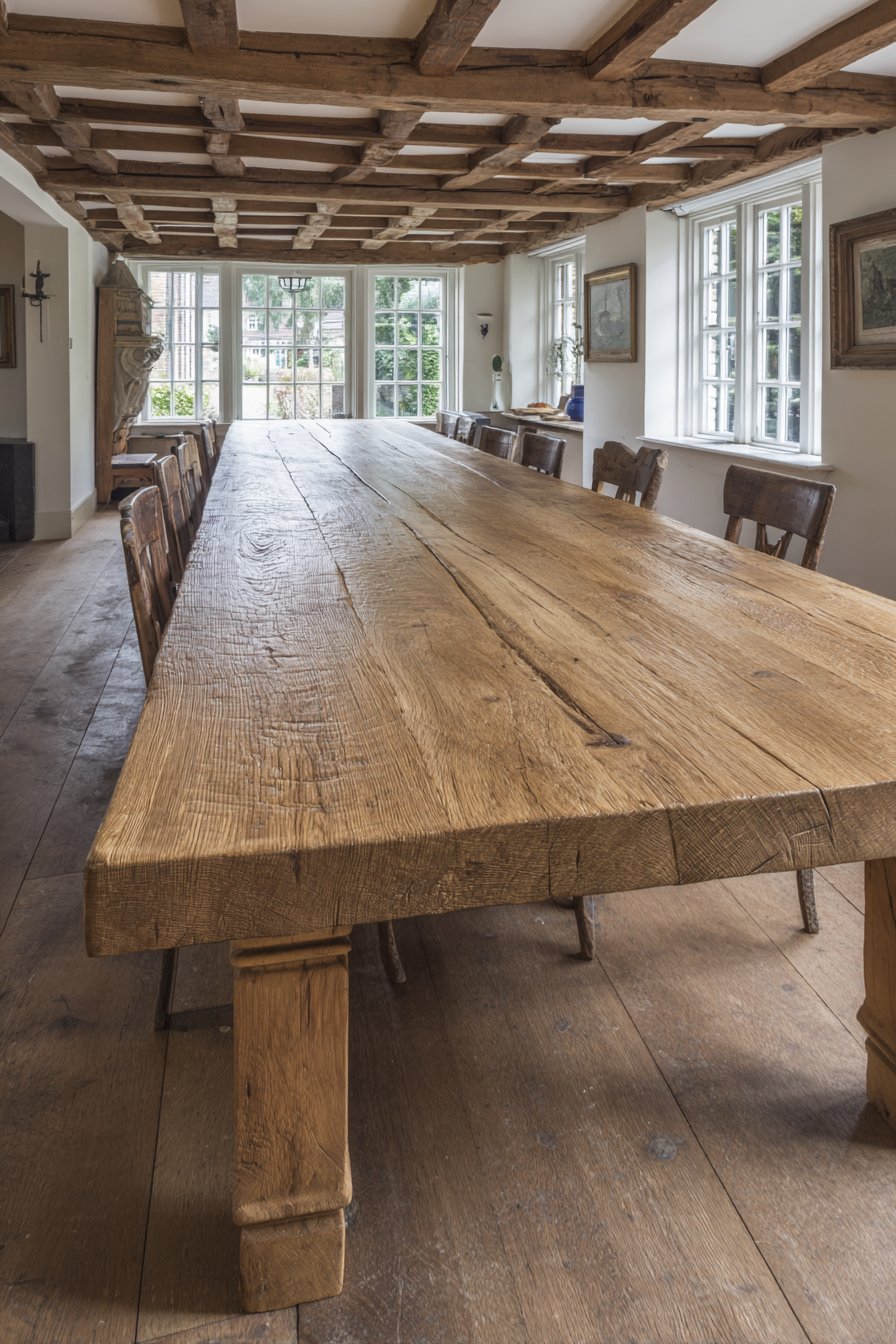
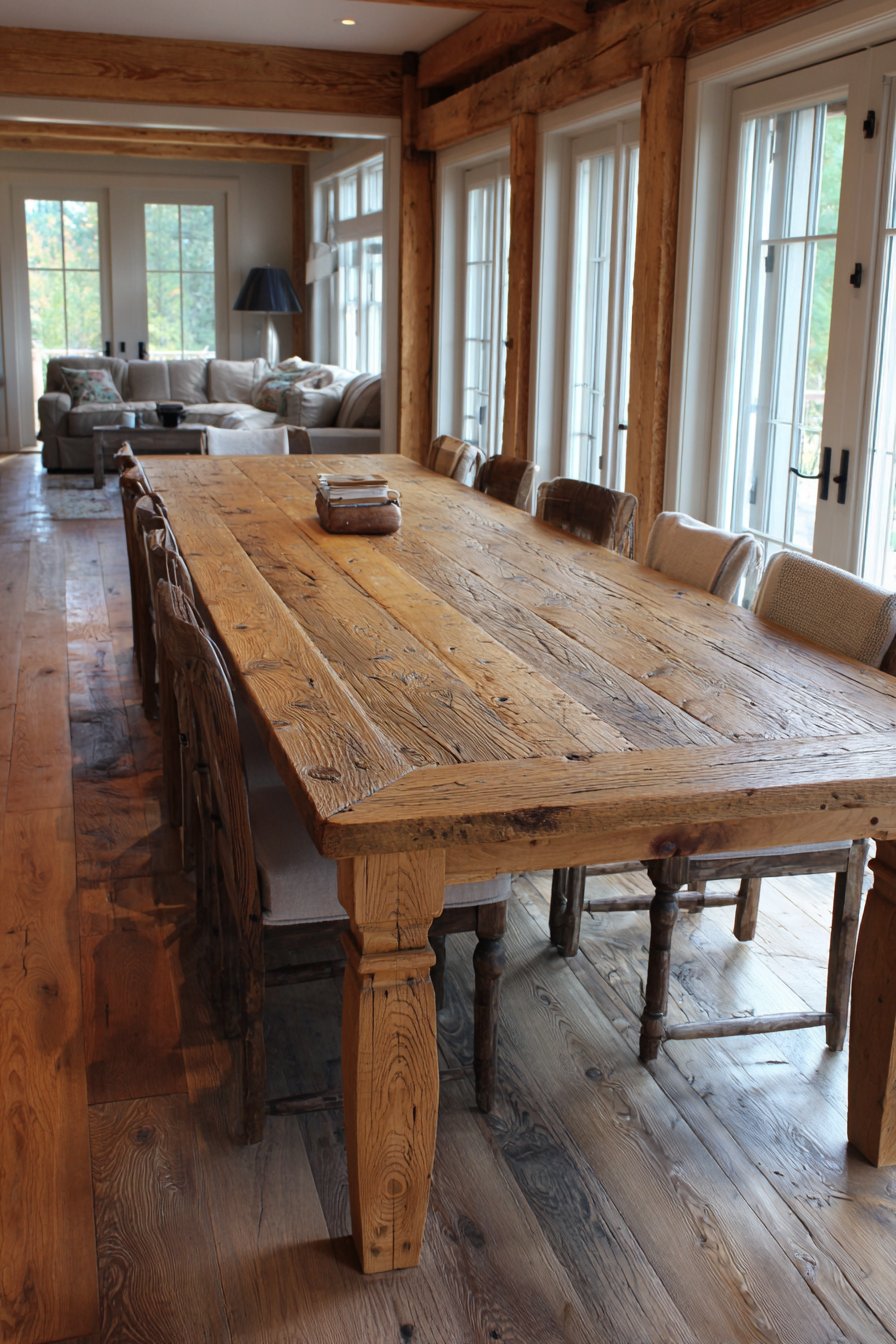
Generosity defines this massive oak farmhouse table designed specifically for large family gatherings. Seating twelve when fully extended, the hand-planed surface showcases subtle texture and tool marks that celebrate traditional craftsmanship techniques. Thick turned legs provide substantial visual weight appropriate to the table’s scale, while the natural medium-brown finish allows the oak’s characteristic grain patterns to show through clearly. Positioned in a spacious country kitchen with exposed beam ceiling and multiple large windows, the table creates a welcoming gathering place that anchors the room.
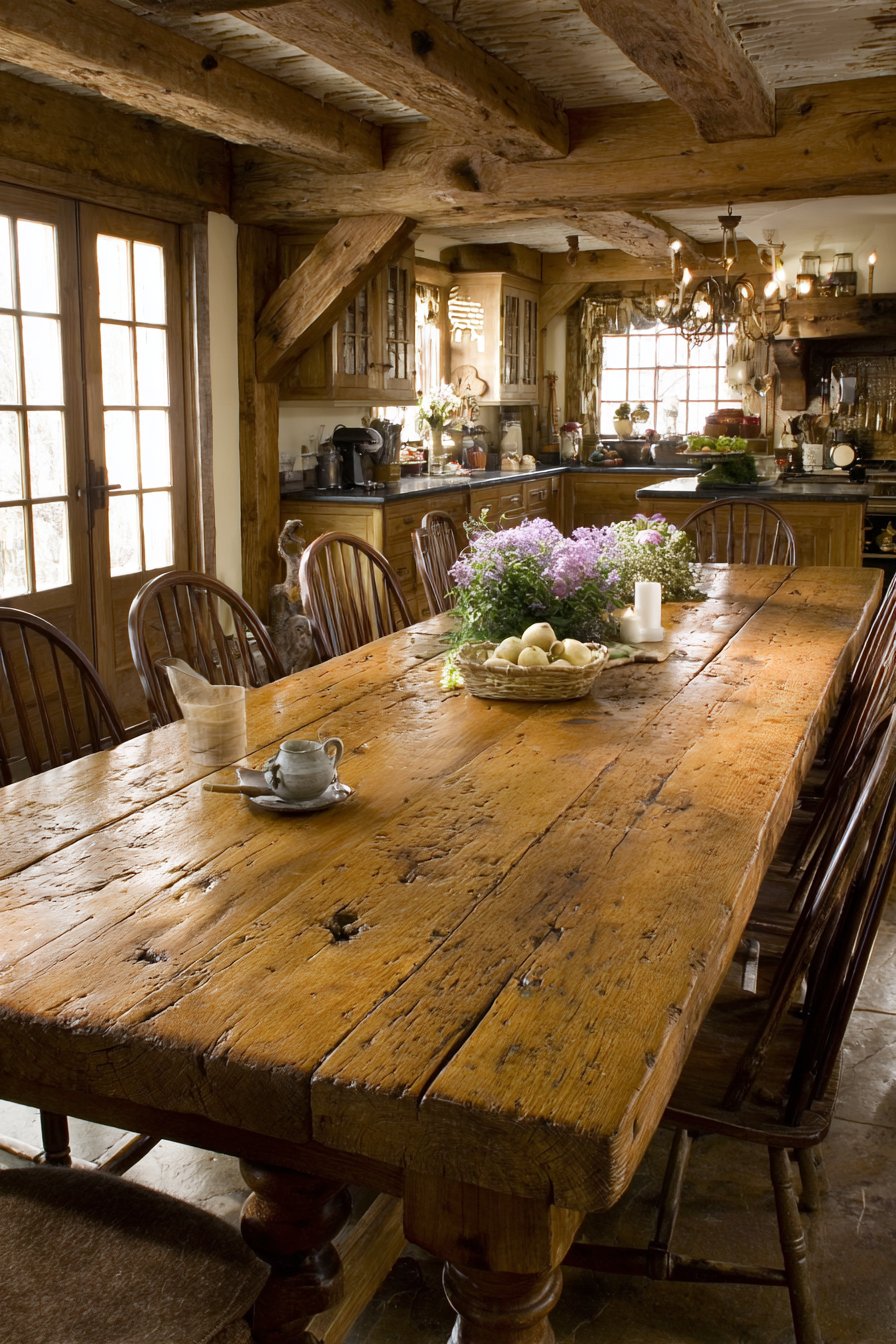
Mismatched vintage wooden chairs collected over time surround the table, each piece contributing its own history and character to the overall composition. This eclectic seating arrangement embodies the farmhouse aesthetic’s appreciation for authenticity over coordination, creating visual interest while accommodating various body types and seating preferences. Natural daylight streaming through generous windows illuminates the oak’s grain variations and highlights the hand-planed surface texture that distinguishes this table from machine-processed alternatives.
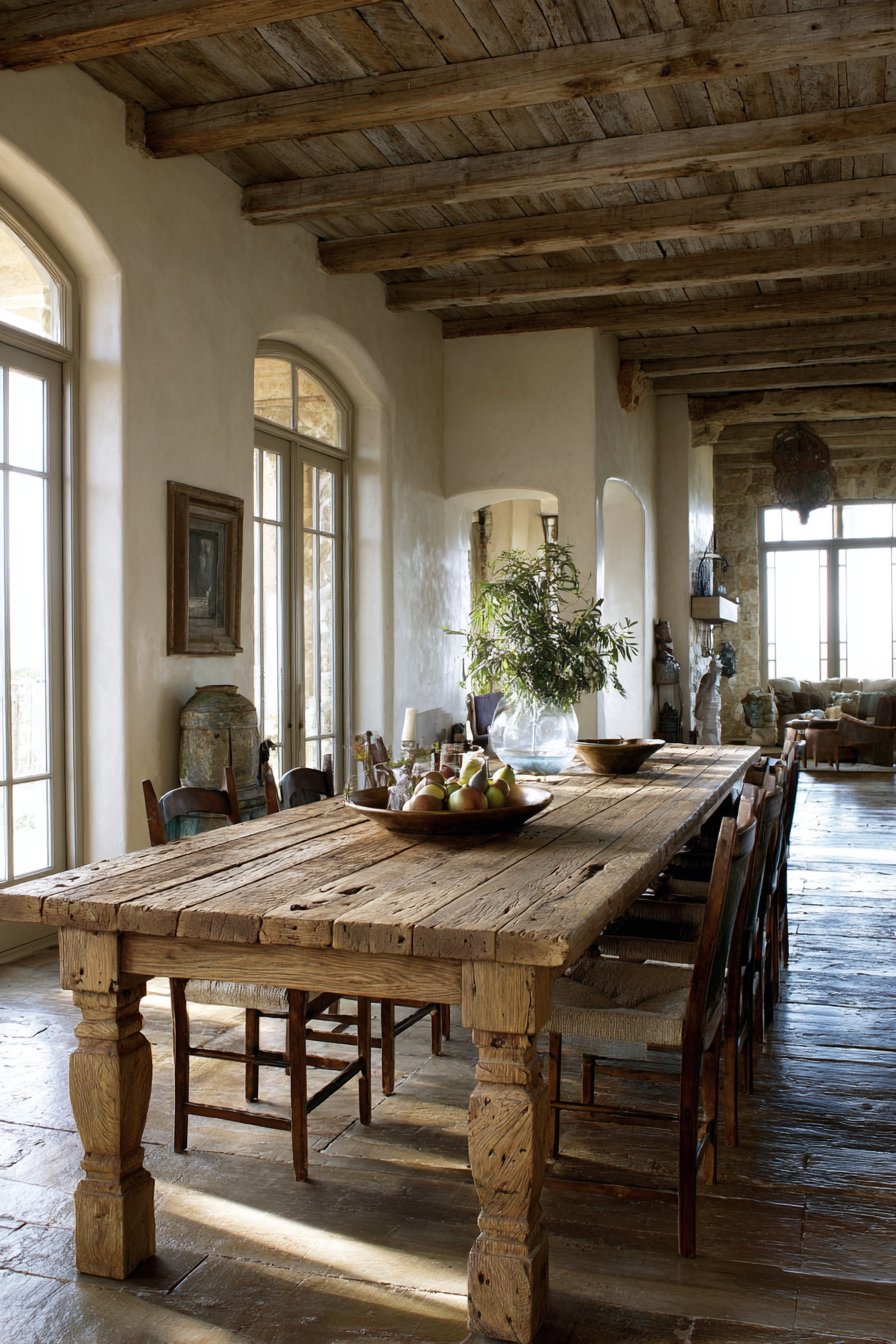
The beauty of this design lies in its honest materiality and generous proportions that accommodate the chaos and joy of large family meals. The substantial oak construction ensures the table will serve multiple generations, developing richer patina and accumulating its own history of family gatherings, holiday celebrations, and everyday meals. This is furniture with staying power—built to last and designed to become more beautiful and meaningful with each passing year.
Key Design Tips: Choose solid oak throughout rather than veneer for longevity and authentic character. Embrace hand-planing marks and slight irregularities as evidence of craftsmanship. Select turned leg designs with substantial diameter to support large table proportions visually and structurally. Mix chair styles deliberately rather than trying to find matching sets. Ensure adequate floor space around the table—allow minimum 36 inches clearance on all sides for comfortable circulation. Apply durable finishes that can withstand heavy family use while remaining easy to maintain. Consider extension mechanisms if you need flexibility between everyday use and large gatherings.
10. Contemporary Mahogany Waterfall Edge
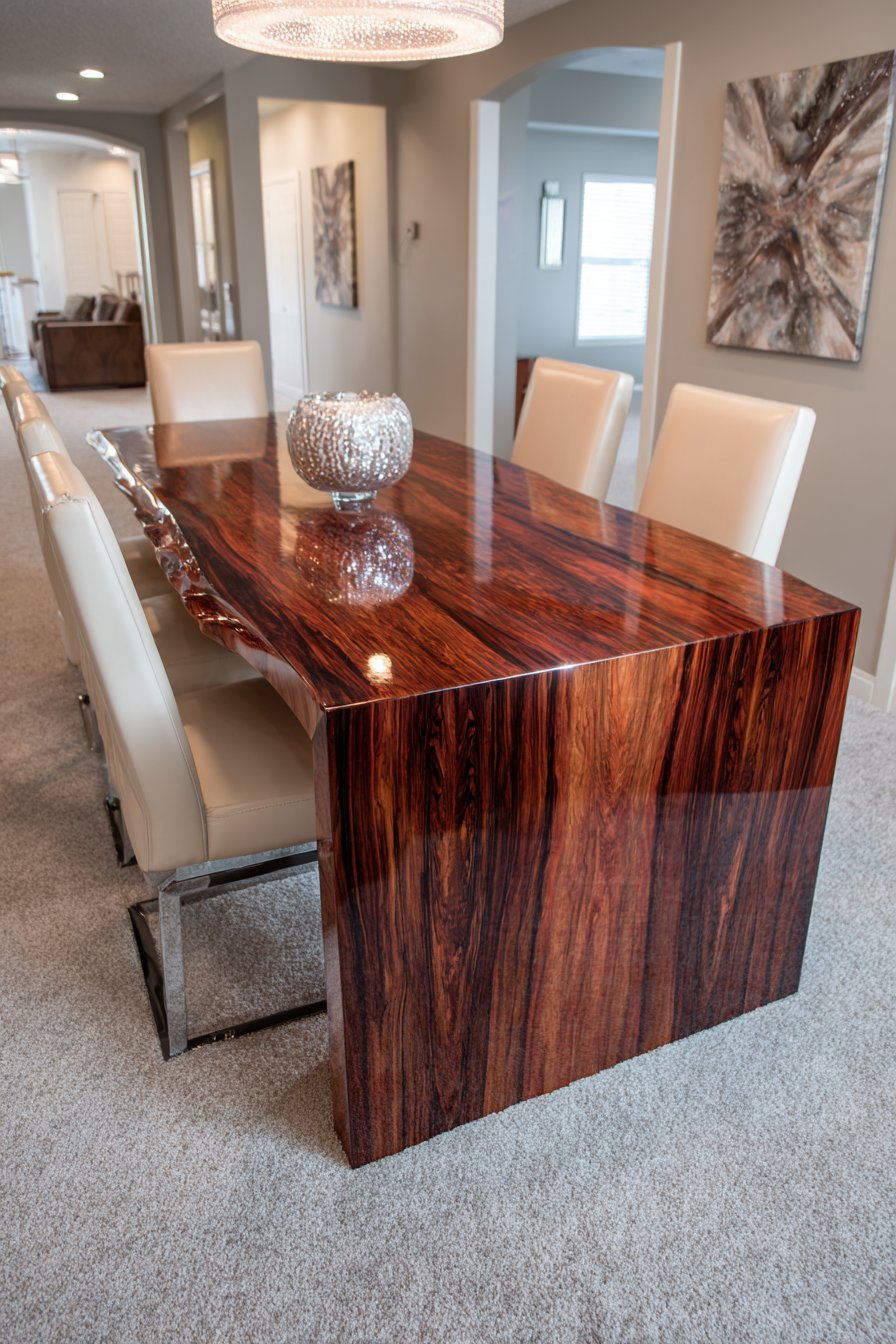
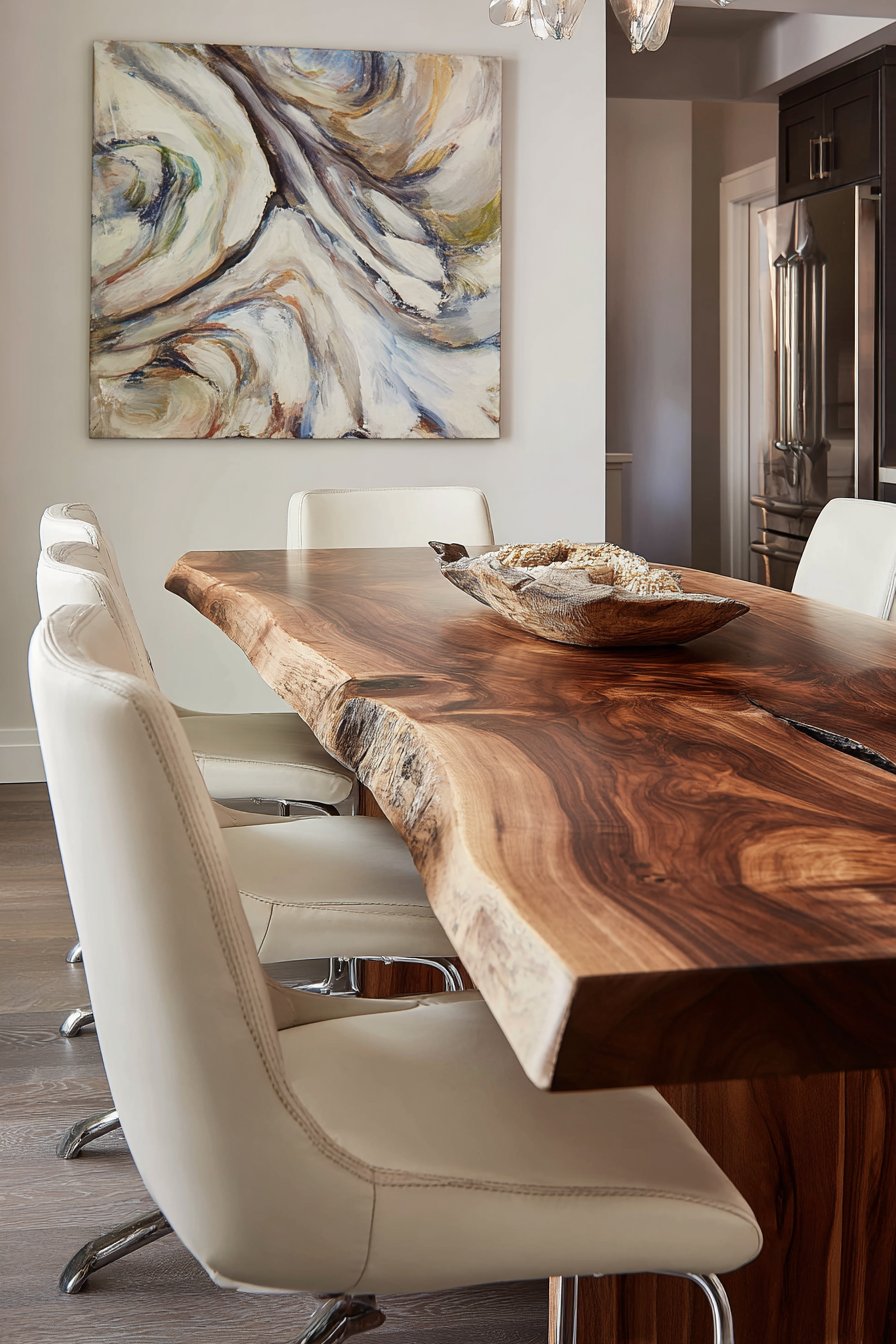
Seamless construction and rich wood tones combine in this contemporary dining table featuring waterfall edge detail where mahogany grain flows continuously from top surface down the sides. This continuous grain pattern creates visual drama while showcasing advanced woodworking skills required to match grain direction around corners. The high-gloss finish reflects ambient light, adding dimension and creating subtle reflections that change as diners move around the table. Deep reddish-brown mahogany tones bring warmth and sophistication to the modern dining room.
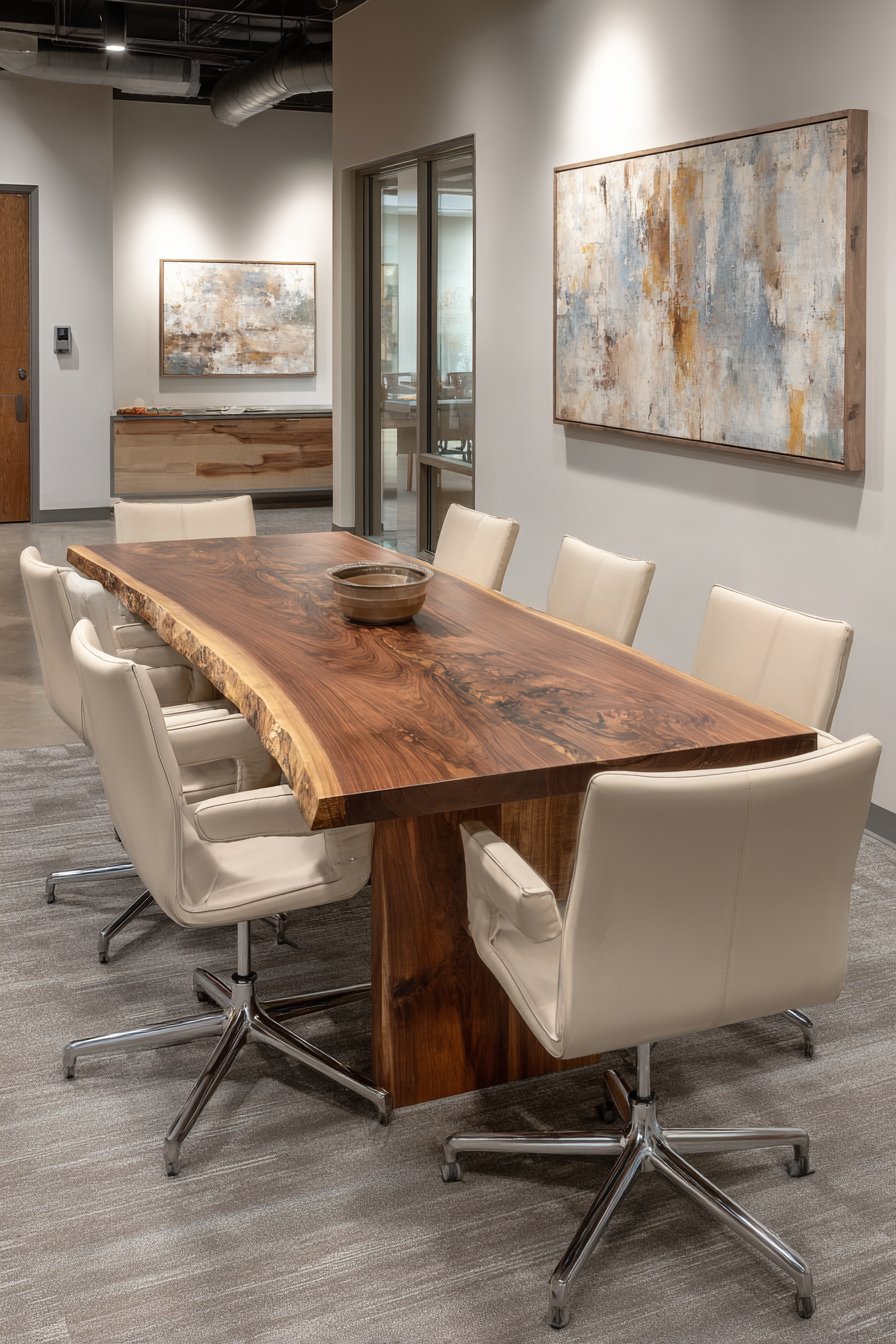
Six cream leather chairs with chrome bases surround the table, their sleek modern design complementing the table’s contemporary aesthetic while providing comfortable upholstered seating. Neutral wall colors and carefully selected abstract art create a gallery-like atmosphere that allows the mahogany’s natural beauty to command attention. The balance between glossy wood, soft leather, and reflective chrome creates textural variety that prevents the streamlined design from feeling cold or overly minimalist.
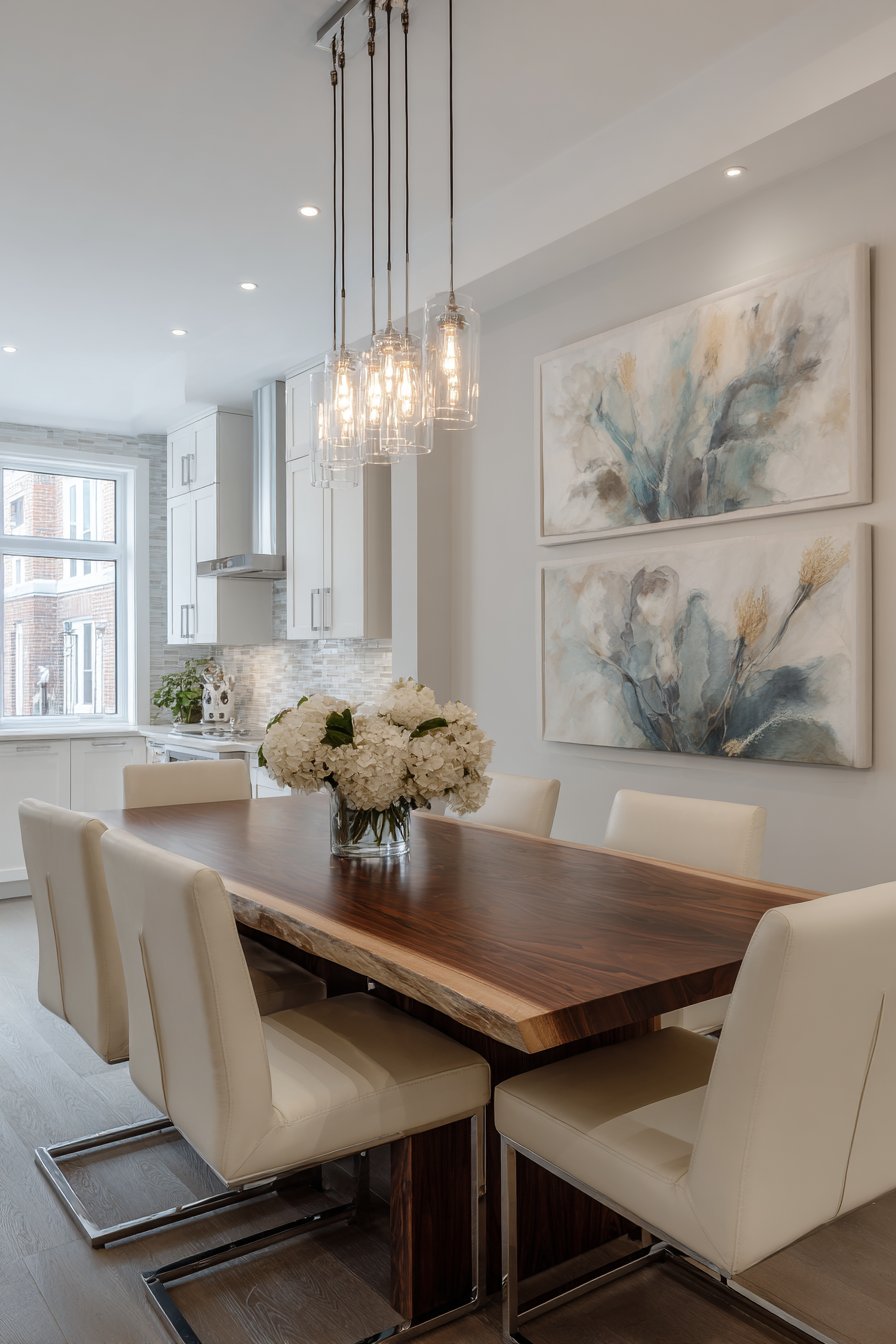
This design demonstrates how traditional materials like mahogany can be transformed through contemporary construction techniques and finishing approaches. The waterfall edge represents skilled craftsmanship where wood selection, grain matching, and precise joinery combine to create seamless visual flow. For those who appreciate both fine wood and modern design sensibilities, this table offers the best of both worlds—timeless material rendered in thoroughly contemporary form.
Key Design Tips: Source book-matched mahogany with consistent color and grain for seamless waterfall effect. Work with experienced craftspeople who have demonstrated skill in waterfall edge construction. Apply high-quality polyurethane or lacquer finishes in multiple thin coats for optimal clarity and depth. Choose modern chairs with clean lines that complement rather than compete with the table’s bold design. Protect the glossy finish from scratches with placemats and careful maintenance. Position lighting to showcase reflections and highlights on the polished surface. Budget appropriately—waterfall edge construction requires premium materials and advanced skills, commanding higher pricing than standard table designs.
11. Compact Maple Drop-Leaf Space Saver
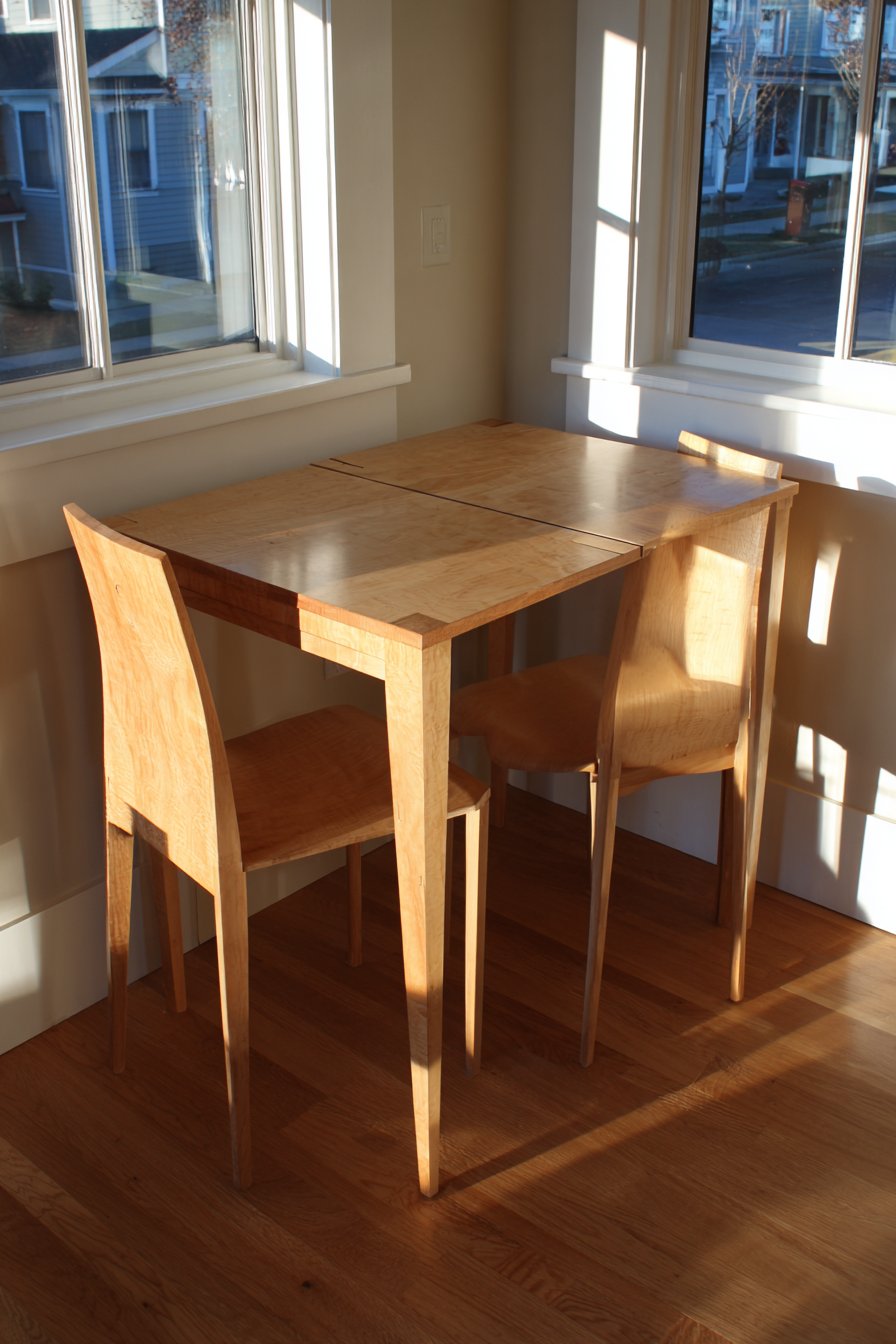
Urban living demands furniture that adapts to spatial constraints, and this drop-leaf dining table in warm maple delivers exceptional versatility. When both leaves are folded down, the table functions as a slim console requiring minimal floor space. Raised, it expands to seat six comfortably, transforming from space-efficient storage piece to functional dining surface in seconds. The maple’s warm tones and fine, even grain create visual warmth while maintaining the clean aesthetic appropriate for modern compact living.
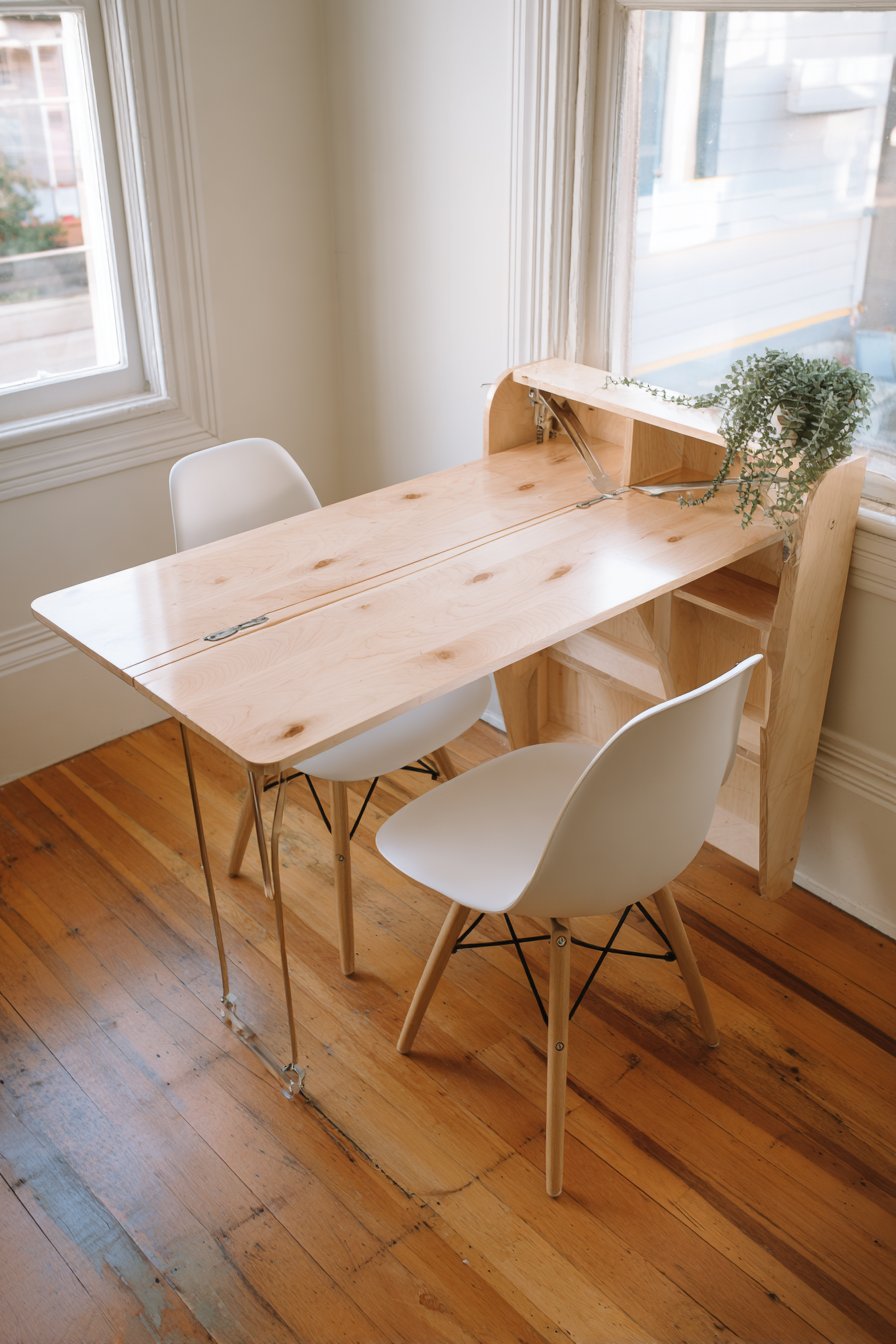
Positioned in a small apartment dining area with white walls and hardwood floors that complement the maple’s natural color, the table demonstrates how thoughtful furniture selection can maximize limited square footage. Two modern chairs tuck neatly underneath when not in use, further reducing the table’s footprint during non-dining hours. The flexibility this design offers proves invaluable in urban apartments where rooms must serve multiple functions and every square foot counts.
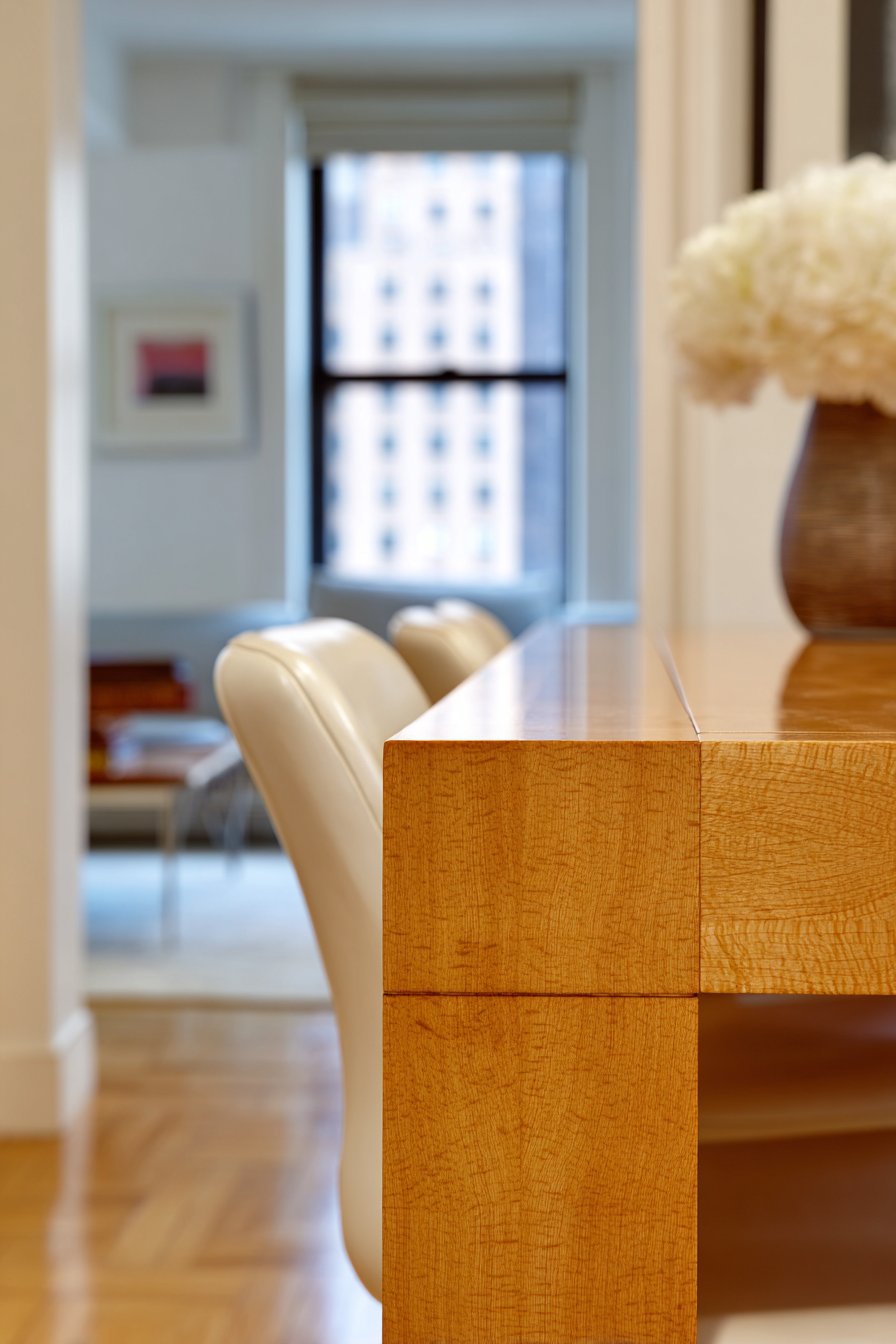
This design prioritizes function without sacrificing aesthetic appeal. The drop-leaf mechanism represents centuries-old furniture engineering that remains relevant because it elegantly solves the space challenge. Quality construction ensures smooth operation and stability whether one, both, or neither leaf is raised. For apartment dwellers, small home owners, or anyone seeking flexible dining solutions, this maple drop-leaf table offers practical elegance that adapts to changing needs throughout the day.
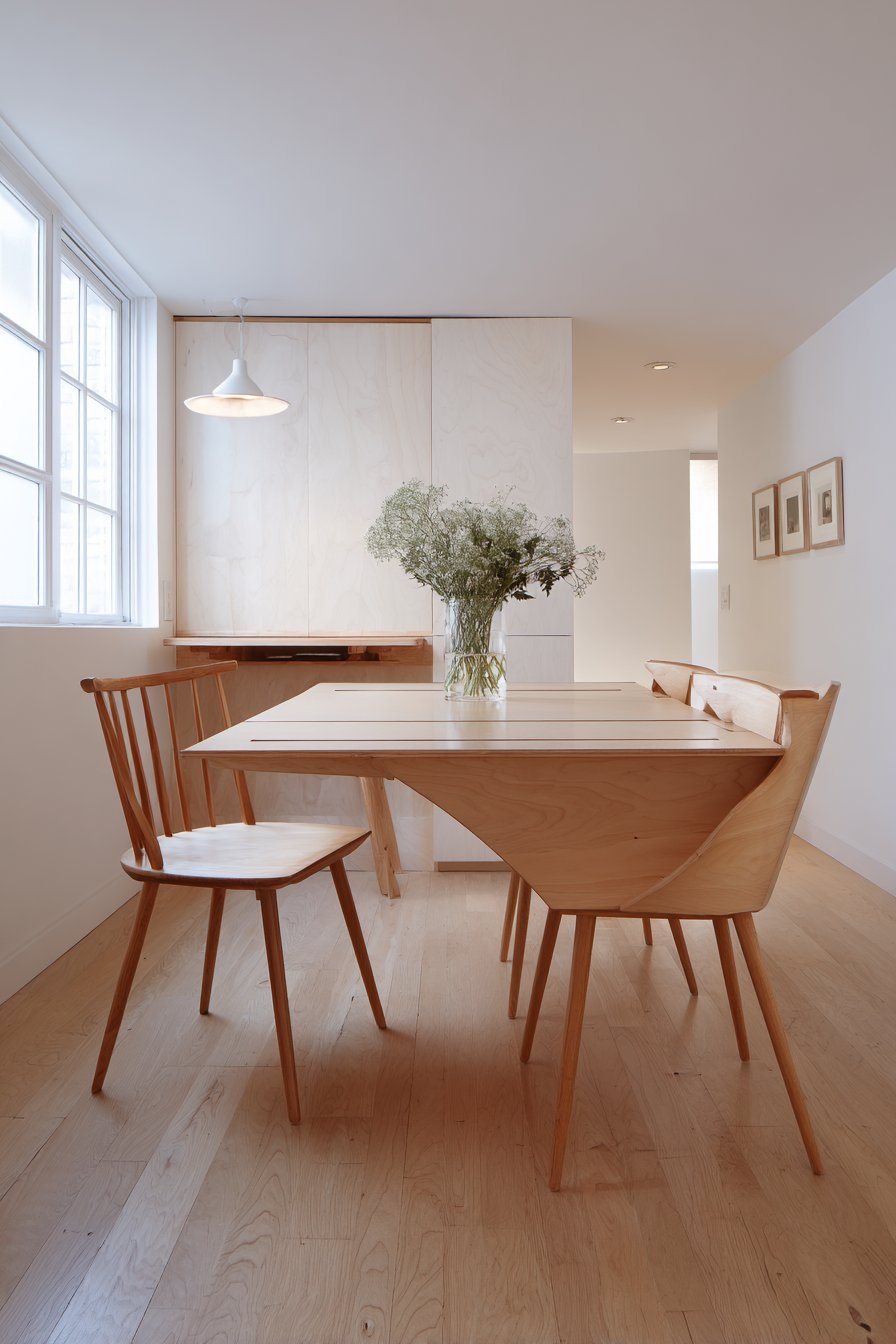
Key Design Tips: Invest in quality hardware that operates smoothly and locks securely in raised position. Choose stable hardwoods like maple that resist warping and maintain dimensional stability. Ensure leaves are properly supported with swing-out brackets or gate-leg mechanisms. Select chairs that nest completely under the table when leaves are down. Consider wood tones that coordinate with existing flooring for visual continuity. Test the expansion mechanism thoroughly before purchasing to ensure smooth operation. Maintain hinges and hardware with periodic lubrication to ensure continued smooth function.
12. Mid-Century Modern Walnut Boat Shape
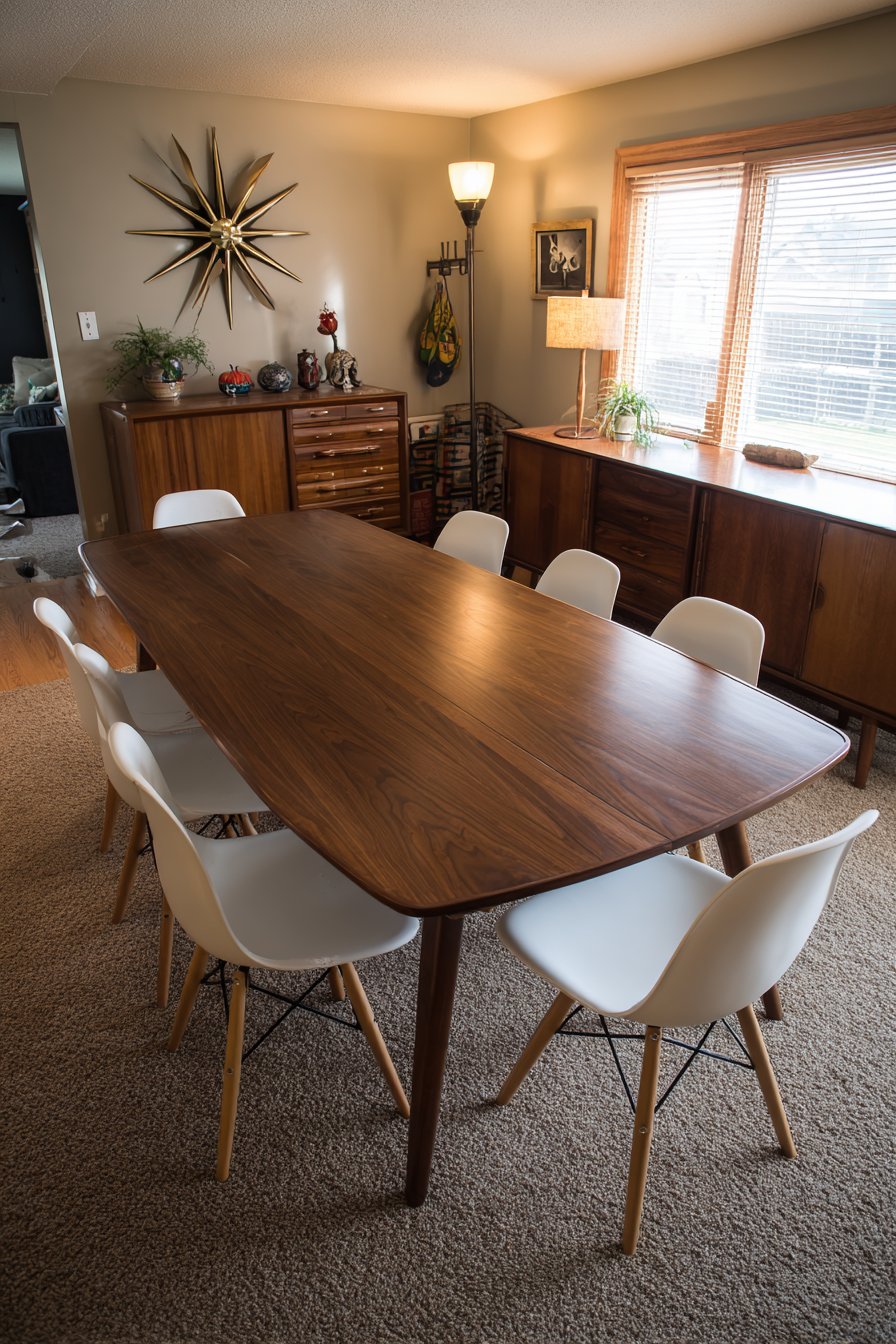
Time-travel to the golden age of design with this iconic boat-shaped dining table in walnut featuring the tapered angled legs characteristic of mid-century modern furniture. The walnut’s straight grain and warm chocolate tones receive enhancement from Danish oil finish—a traditional treatment that penetrates the wood to provide protection while preserving natural feel and appearance. Placed in a retro-inspired dining room complete with period-appropriate credenza and starburst clock, the table serves as centerpiece in a carefully curated mid-century interior.
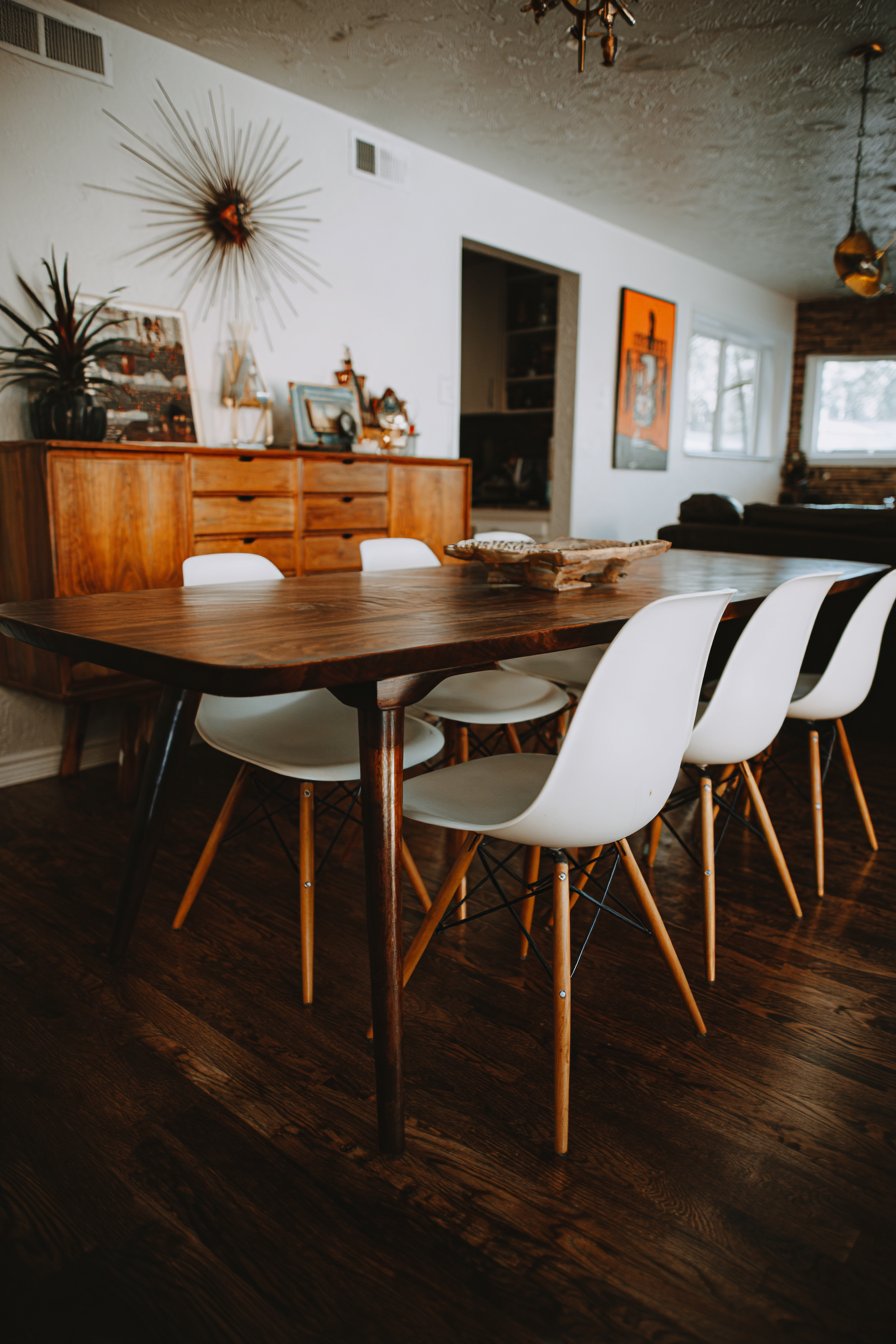
Original Eames-style molded plywood chairs complete the authentic vintage aesthetic, their sculptural forms complementing the table’s streamlined design language. The boat shape—wider in the center and narrower at the ends—creates visual interest while providing practical advantages in terms of traffic flow around the table. Natural lighting illuminates the walnut’s rich coloring and reveals the subtle grain variations that make each board unique.
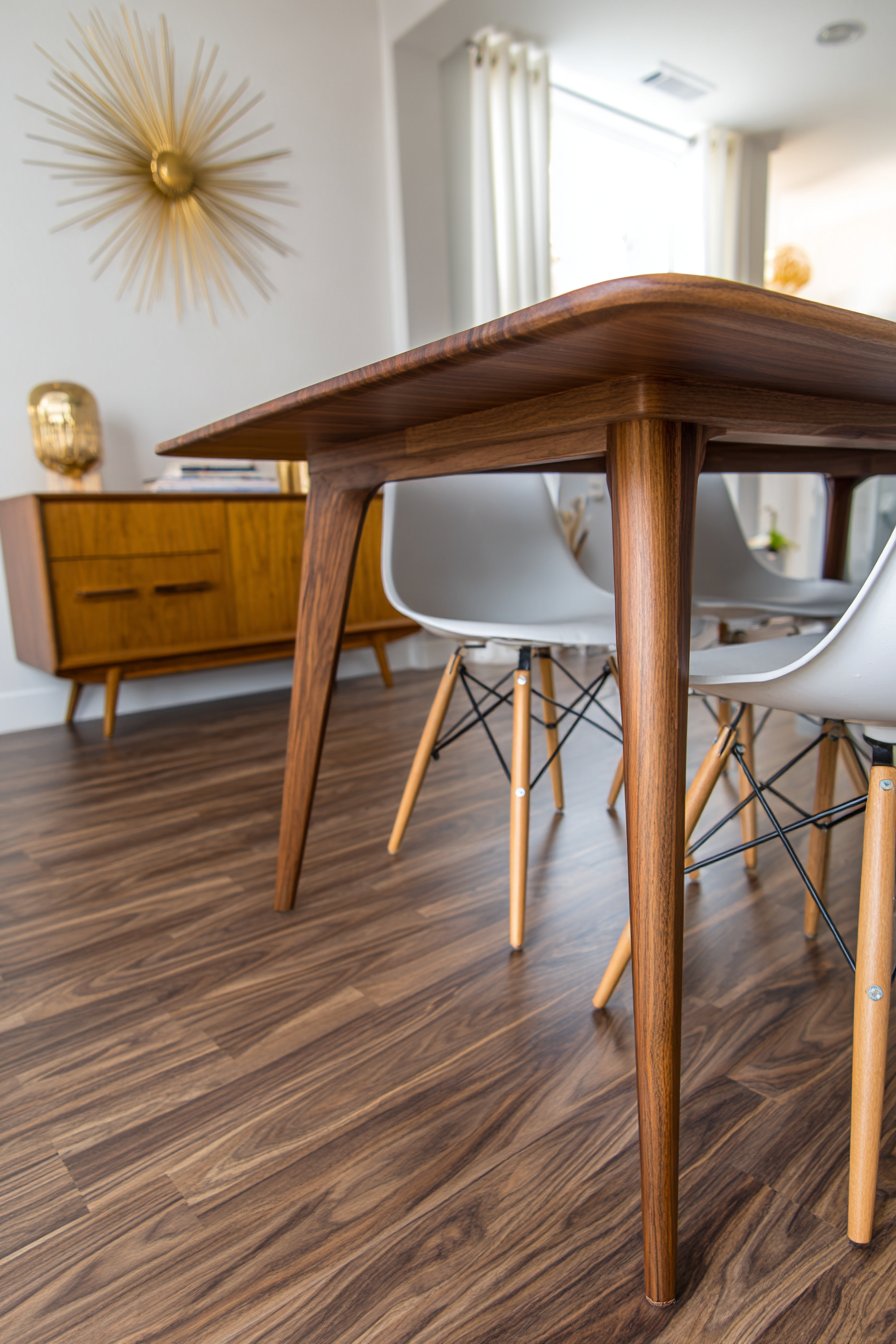
This design celebrates a specific moment in design history when American designers revolutionized furniture through new materials, production techniques, and aesthetic approaches. The clean lines, organic forms, and honest materials that defined mid-century modern furniture continue resonating today because these principles create timeless rather than trendy designs. Owning an authentic or faithfully reproduced mid-century table connects you to design heritage while providing functional beauty for contemporary living.
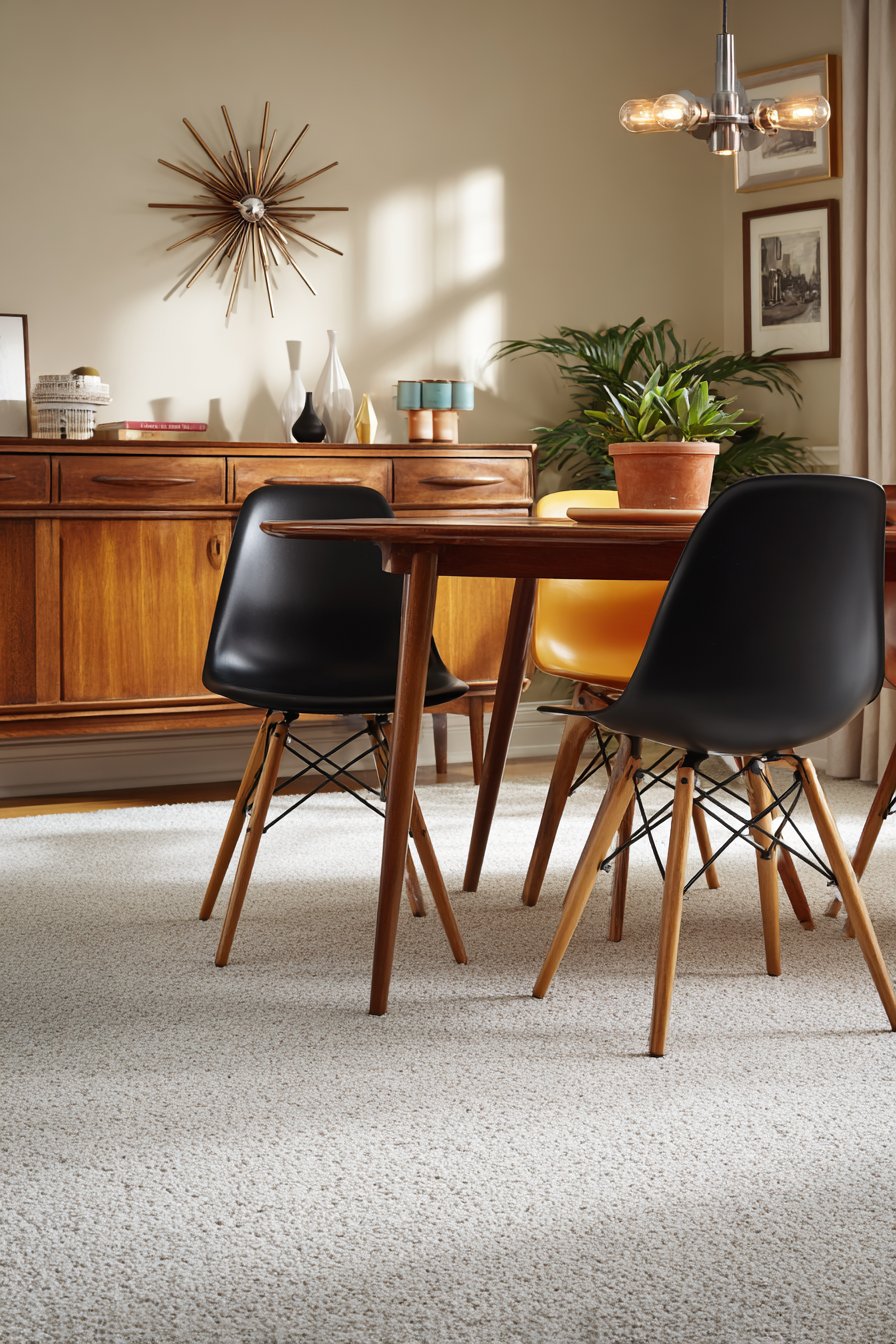
Key Design Tips: Source genuine vintage pieces or high-quality reproductions from makers who understand mid-century design principles. Choose walnut for authentic period appearance and lasting beauty. Apply Danish oil or similar penetrating finishes rather than surface-film finishes. Coordinate with period-appropriate seating like Eames, Saarinen, or Wegner designs. Include other mid-century elements like credenzas, lighting, and accessories to create cohesive aesthetic. Understand that authentic vintage pieces command premium prices but offer investment value. Maintain oiled finishes with periodic reapplication to preserve wood’s natural appearance and protection.
13. Reclaimed Pine Trestle with Patina
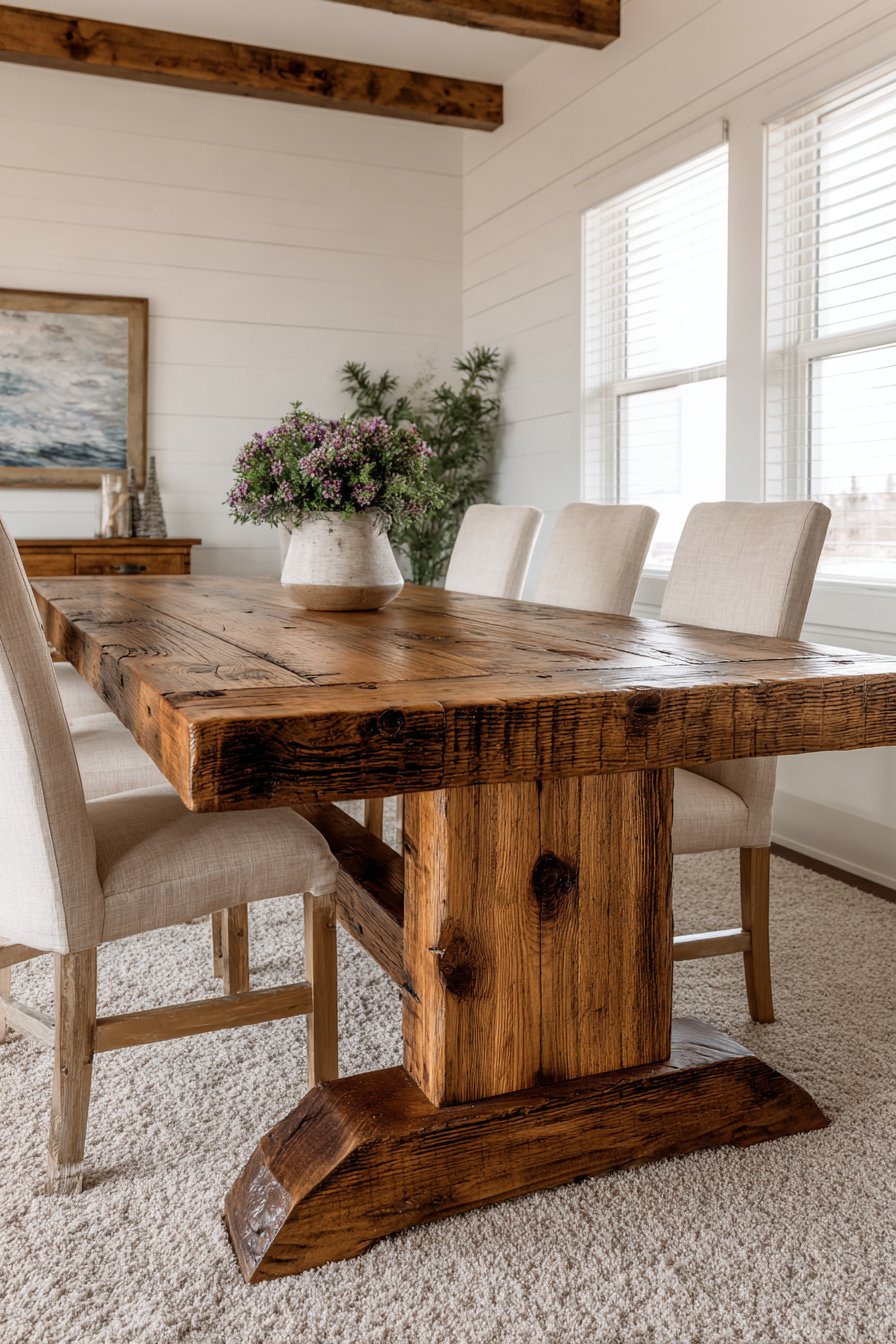
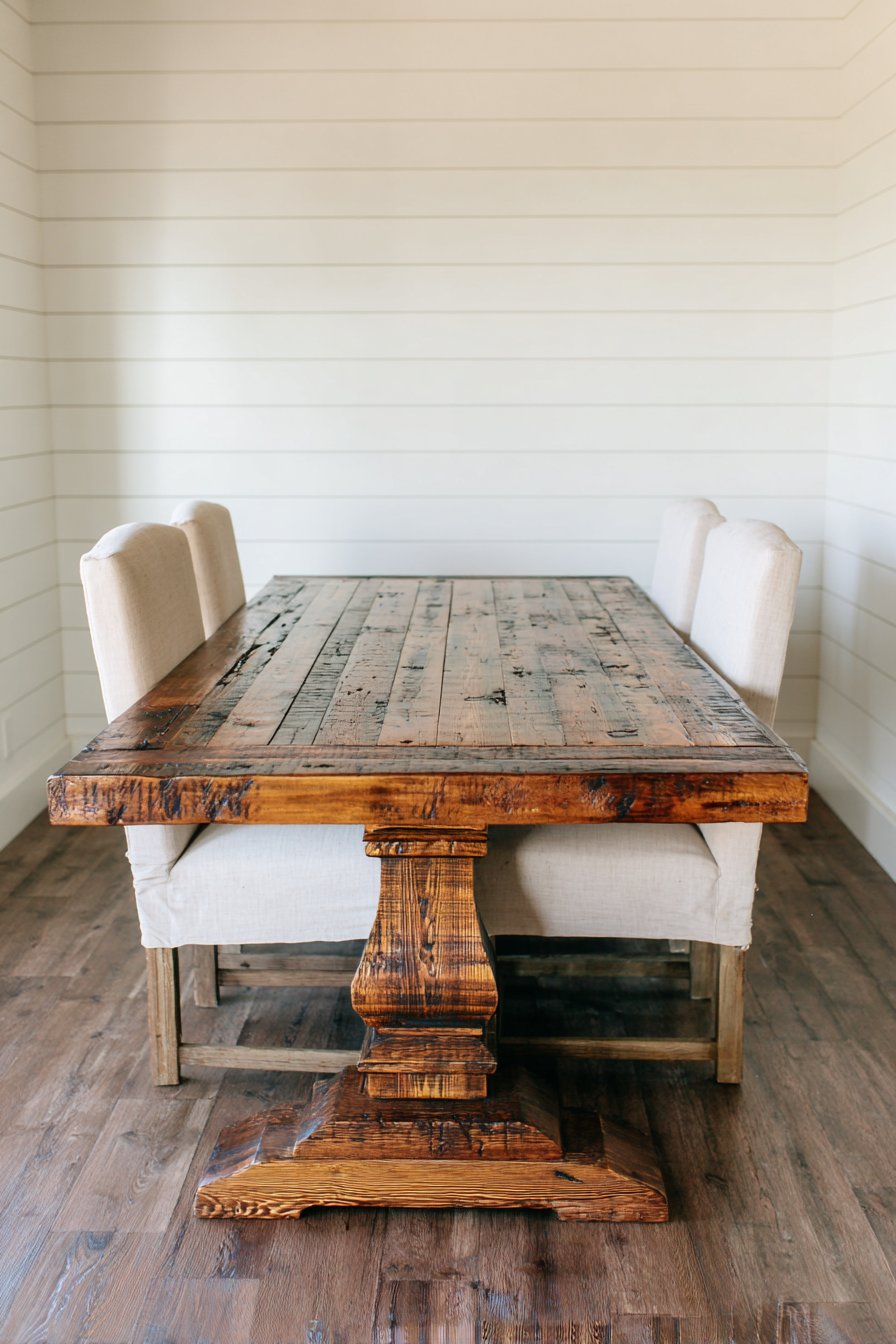
Authentic wear patterns and visible history distinguish this trestle-style dining table crafted from reclaimed pine. Nail holes, weathered surfaces, and genuine patina tell stories of the wood’s previous life, creating character that cannot be artificially replicated. The chunky trestle base provides visual weight and structural stability while nodding to traditional furniture construction methods used for centuries. Varied honey and amber tones across the surface create natural color interest that shifts depending on lighting conditions and viewing angles.
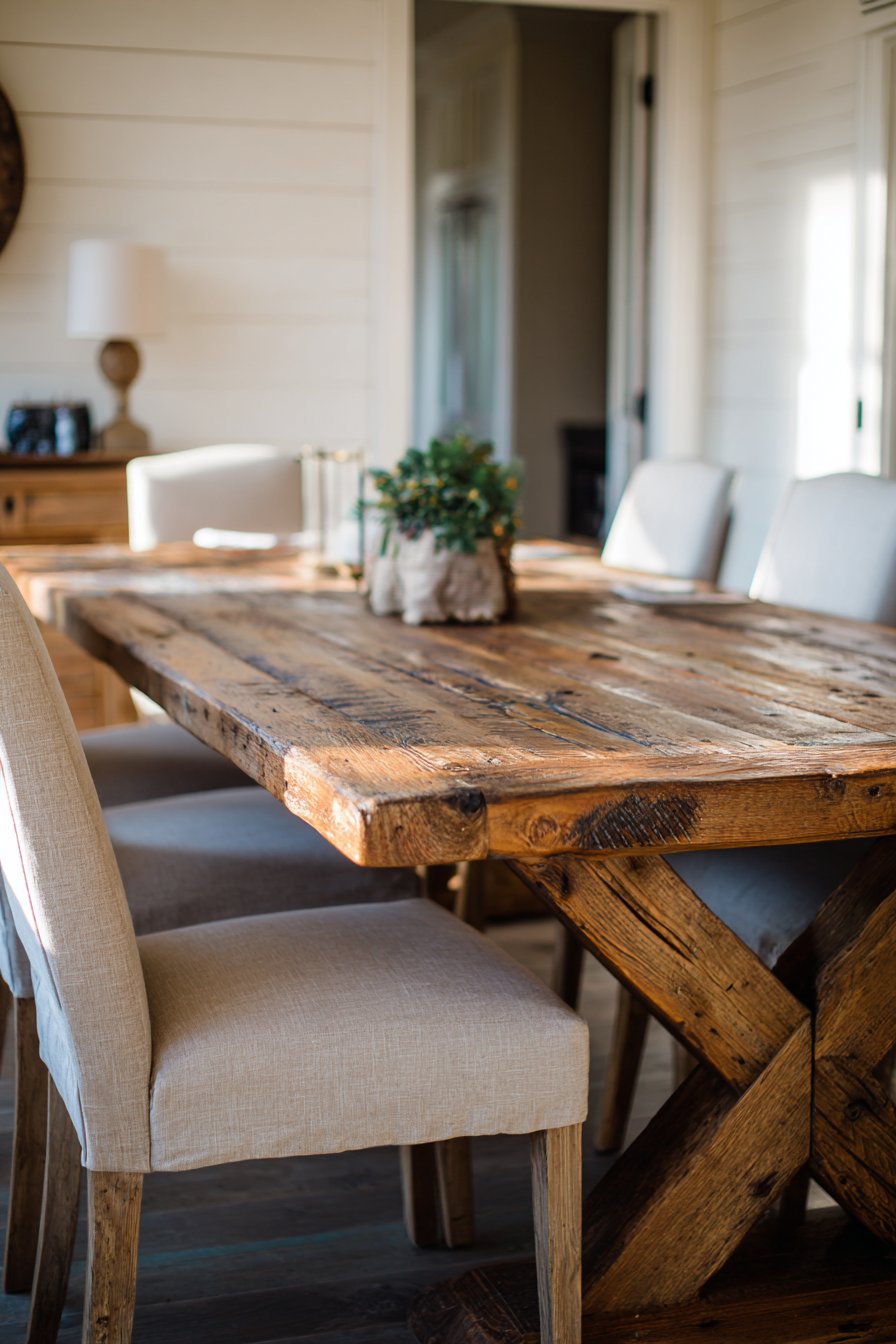
Simple linen-upholstered chairs in neutral tones surround the table, their understated elegance allowing the reclaimed wood to remain the visual focus. Positioned against a shiplap accent wall in a casual dining space, the table creates a relaxed atmosphere appropriate for everyday family meals and informal gatherings. Soft natural light emphasizes the wood’s genuine patina and character marks, celebrating imperfection as authentic beauty rather than damage requiring repair or concealment.
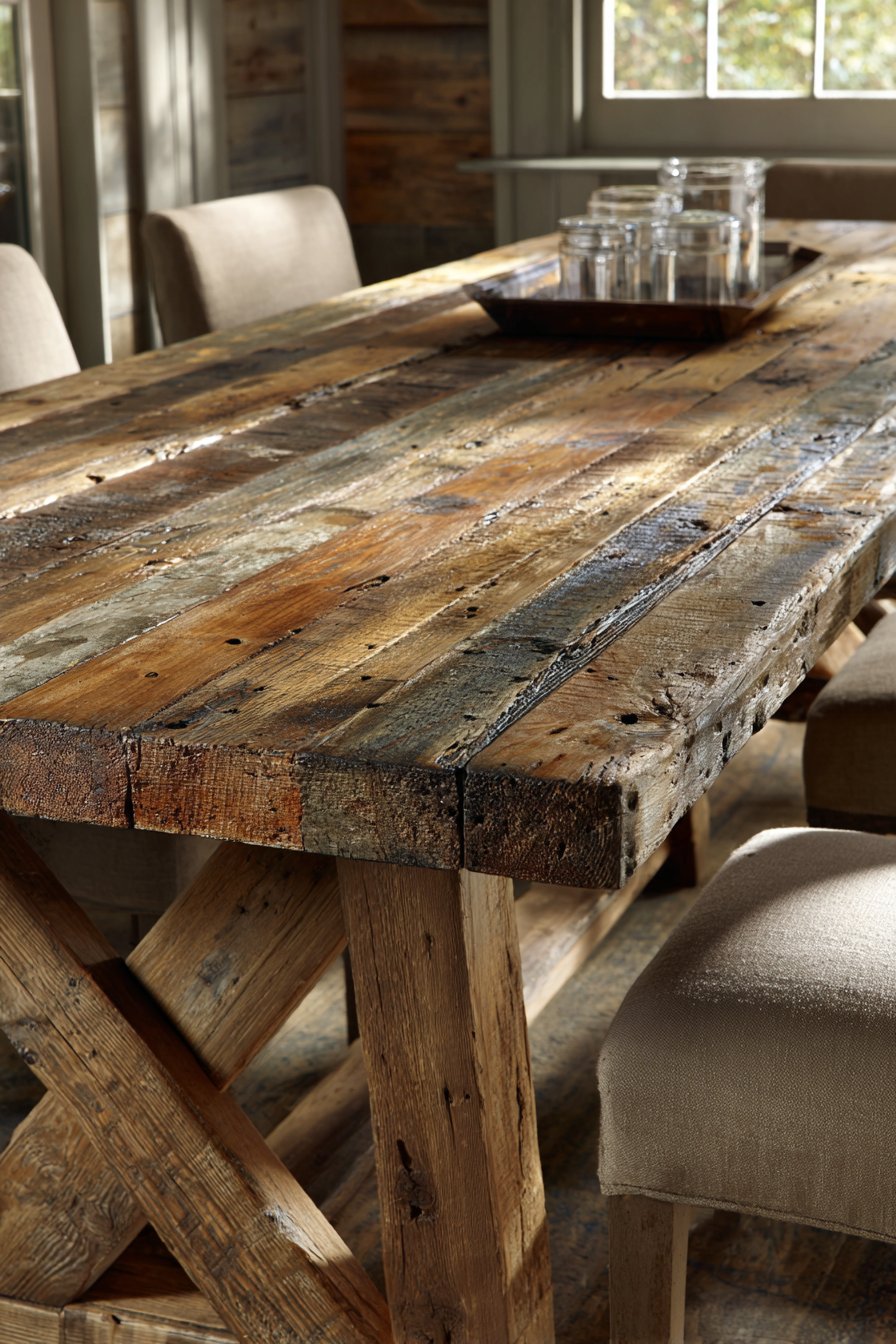
This design resonates with those who value sustainability, authenticity, and materials with genuine stories. Reclaimed pine offers environmental benefits through material reuse while providing aesthetic qualities impossible to achieve with new wood. The trestle construction ensures stability and longevity, promising this table will serve for decades while continuing to develop character. Each meal becomes a connection to the past and investment in sustainable future.
Key Design Tips: Verify reclamation source and ensure proper treatment for indoor furniture use. Embrace nail holes and weathering as authentic features rather than defects. Choose trestle base designs with adequate stability for the top’s dimensions and weight. Apply food-safe finishes that protect without obscuring patina. Keep surrounding elements simple to allow reclaimed wood to command attention. Understand that reclaimed lumber may have slight warping or irregularities from previous use. Clean gently with appropriate products that won’t damage aged patina. Appreciate that each piece is unique and variations should be expected and celebrated.
14. Burl Wood Artistic Statement
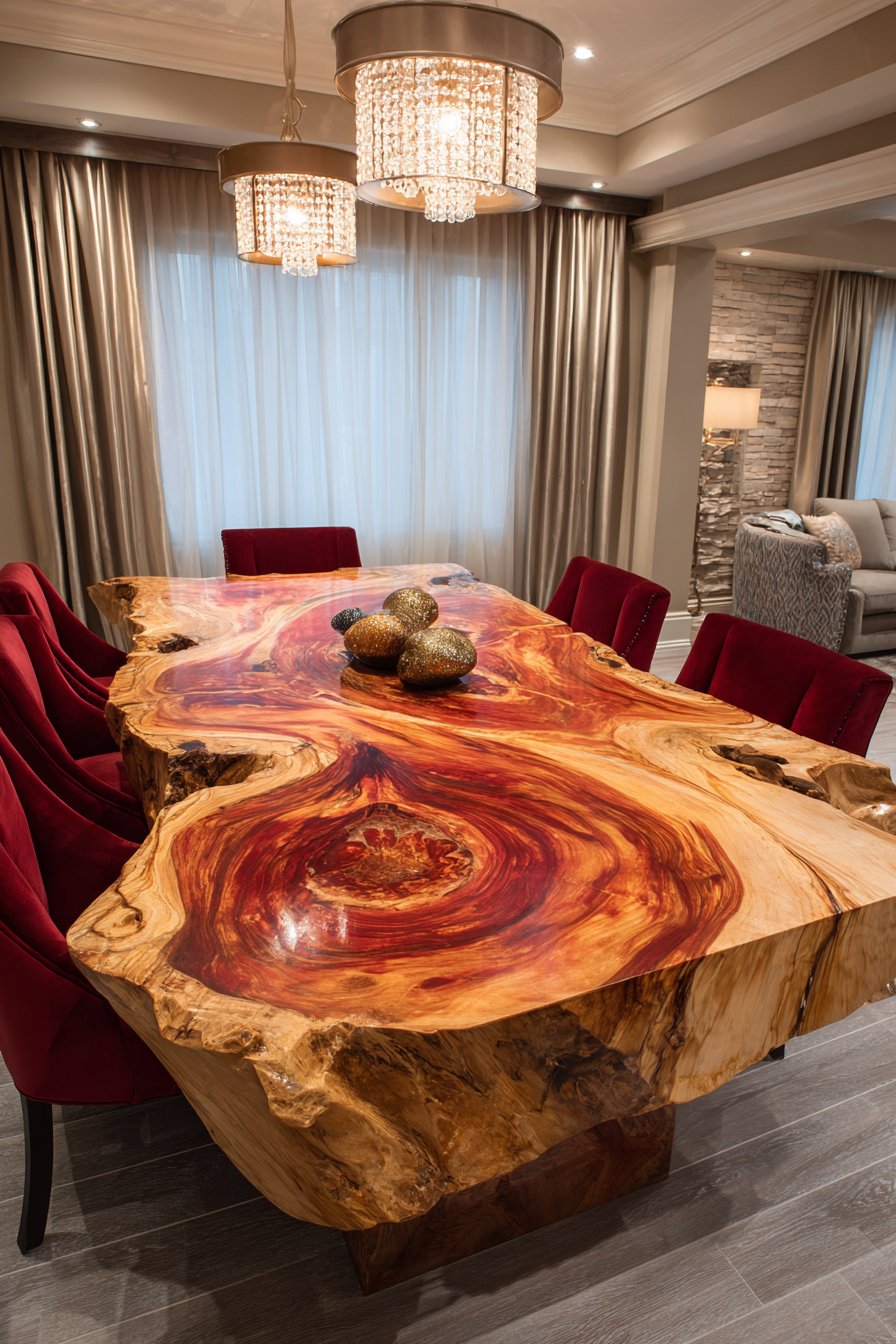
Extraordinary grain patterns elevate this burl wood dining table into functional sculpture. The highly figured wood displays swirling patterns and natural imperfections created by abnormal tree growth, producing artistic effects impossible to achieve through human intervention. Rich golden and reddish tones under polished finish create depth and visual complexity that rewards close examination. Set on a modern pedestal base in an upscale dining room with designer lighting, the table commands attention as both utilitarian object and art piece.
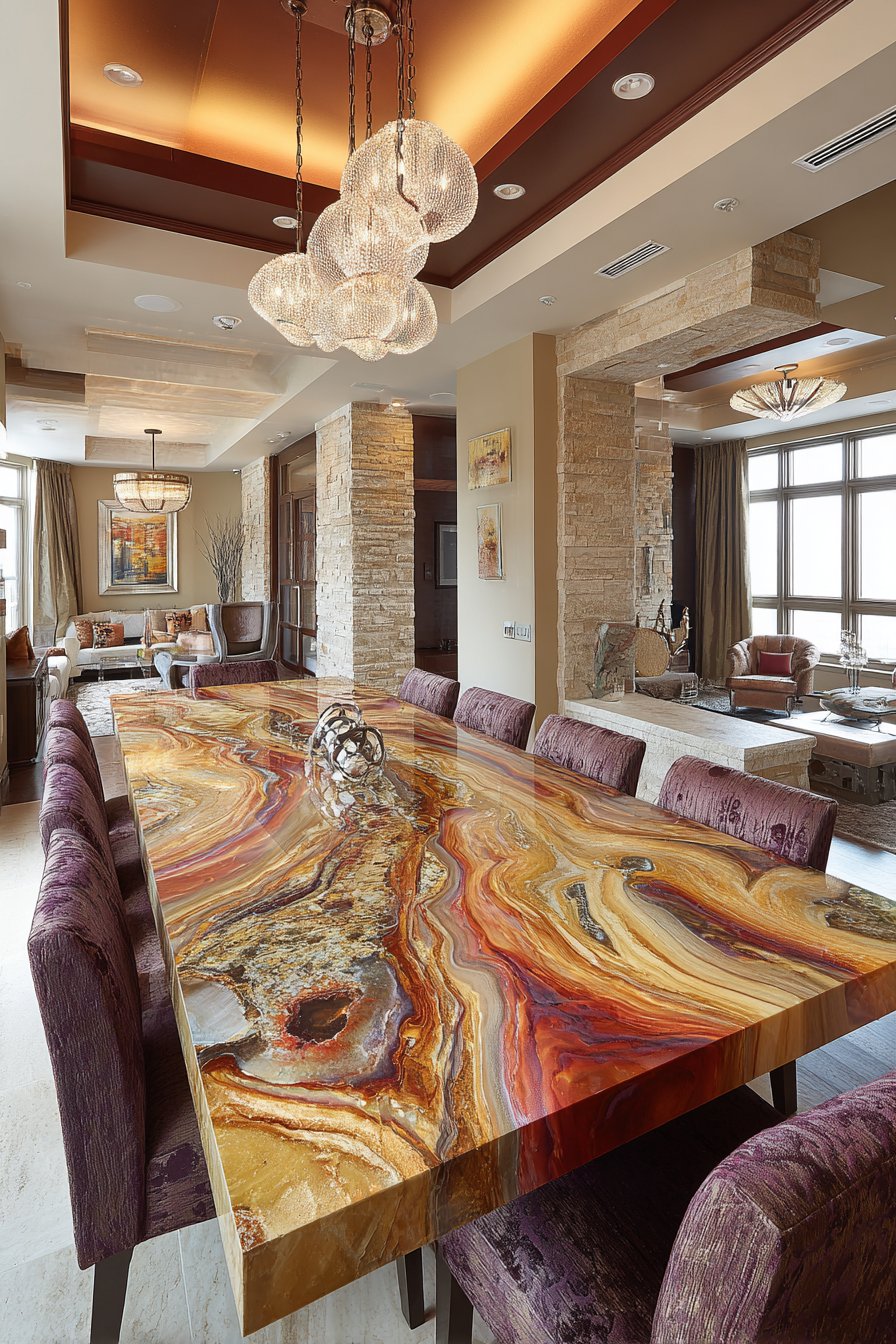
Velvet upholstered chairs in jewel tones surround the table, their luxurious texture and rich colors complementing the burl’s natural drama without competing for visual dominance. Strategic lighting from above and around the table reveals different aspects of the swirling grain patterns depending on viewing angle and time of day. The three-dimensional quality of burl wood creates mesmerizing visual effects as light plays across the undulating surface.
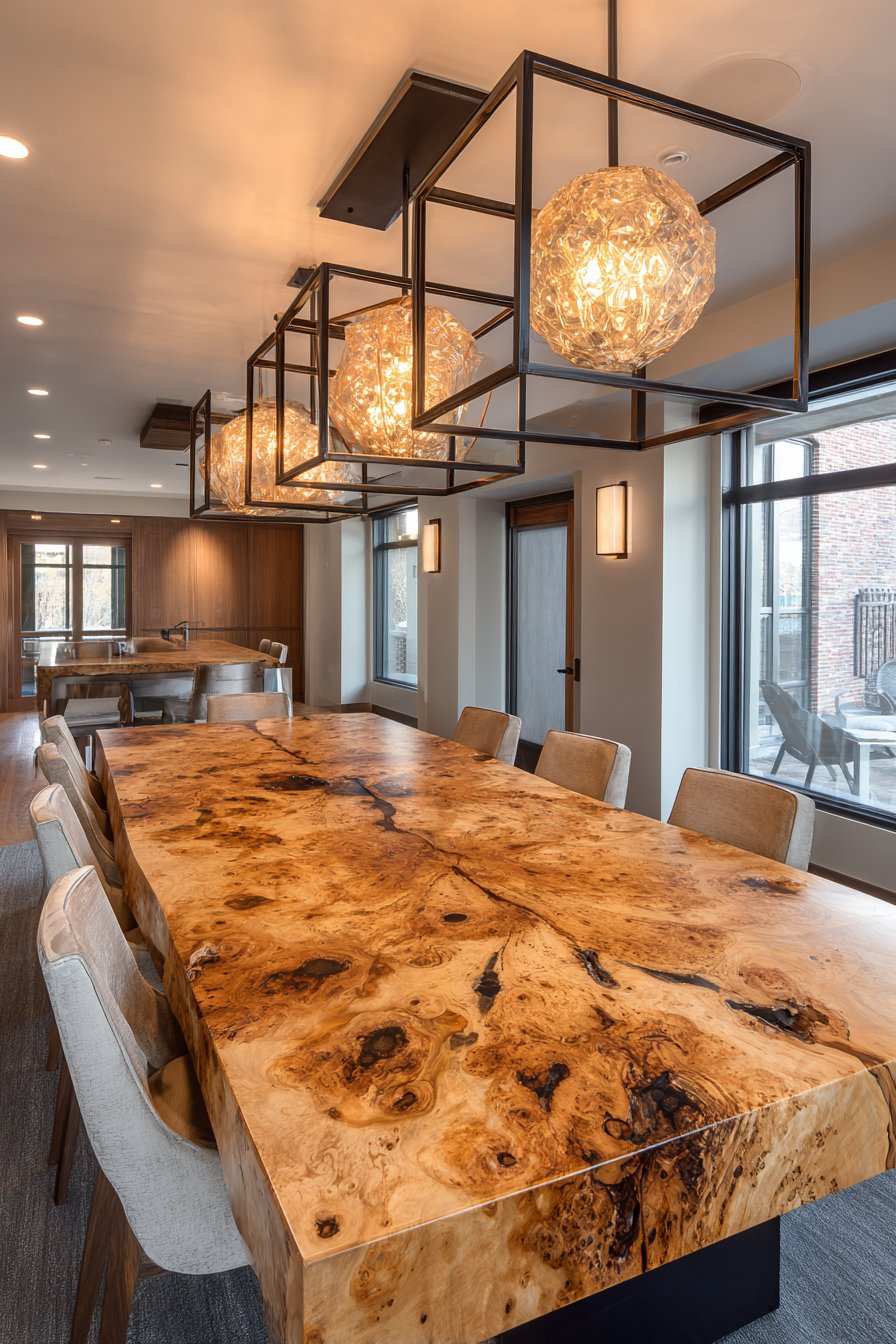
This design targets collectors and design enthusiasts who appreciate rare materials and exceptional craftsmanship. Burl wood occurs infrequently in nature and requires specialized skills to process and finish properly. The investment in a burl wood table purchases uniqueness—no other table will display identical grain patterns. For those seeking dining furniture that transcends typical categories and enters the realm of functional art, burl wood offers incomparable visual drama and long-term value appreciation.
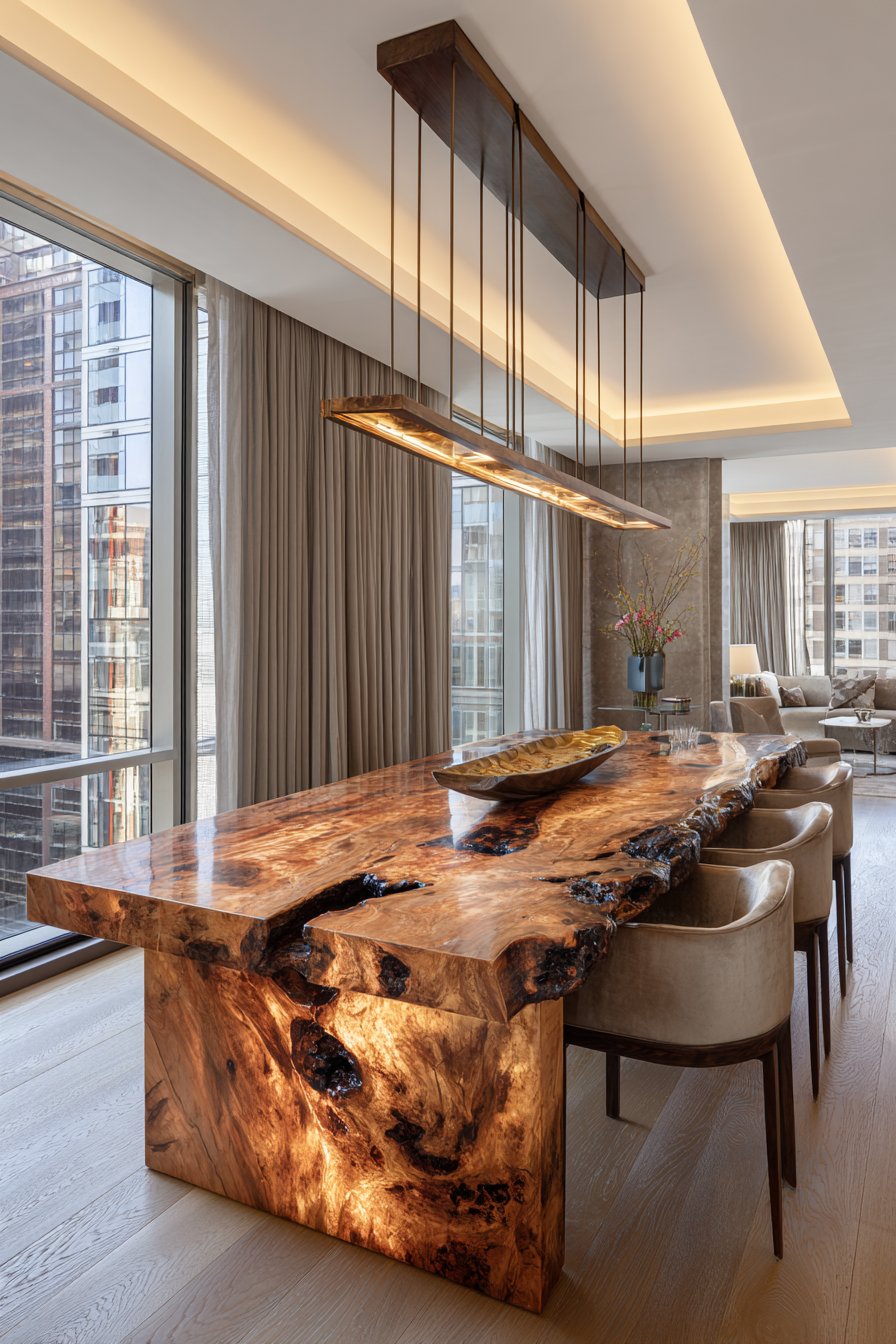
Key Design Tips: Work with specialists experienced in burl wood’s unique challenges and opportunities. Expect premium pricing due to rarity and processing difficulty. Apply clear finishes that enhance figure without obscuring patterns. Plan lighting carefully to showcase the wood’s three-dimensional qualities. Choose luxurious seating appropriate to the table’s special status. Protect the surface carefully—burl wood contains irregular grain that can be more fragile than straight-grained wood. Consider professional installation due to weight and value. Understand that burl patterns vary dramatically—see the actual wood before committing to ensure it matches your aesthetic preferences.
15. Coastal Bleached Oak
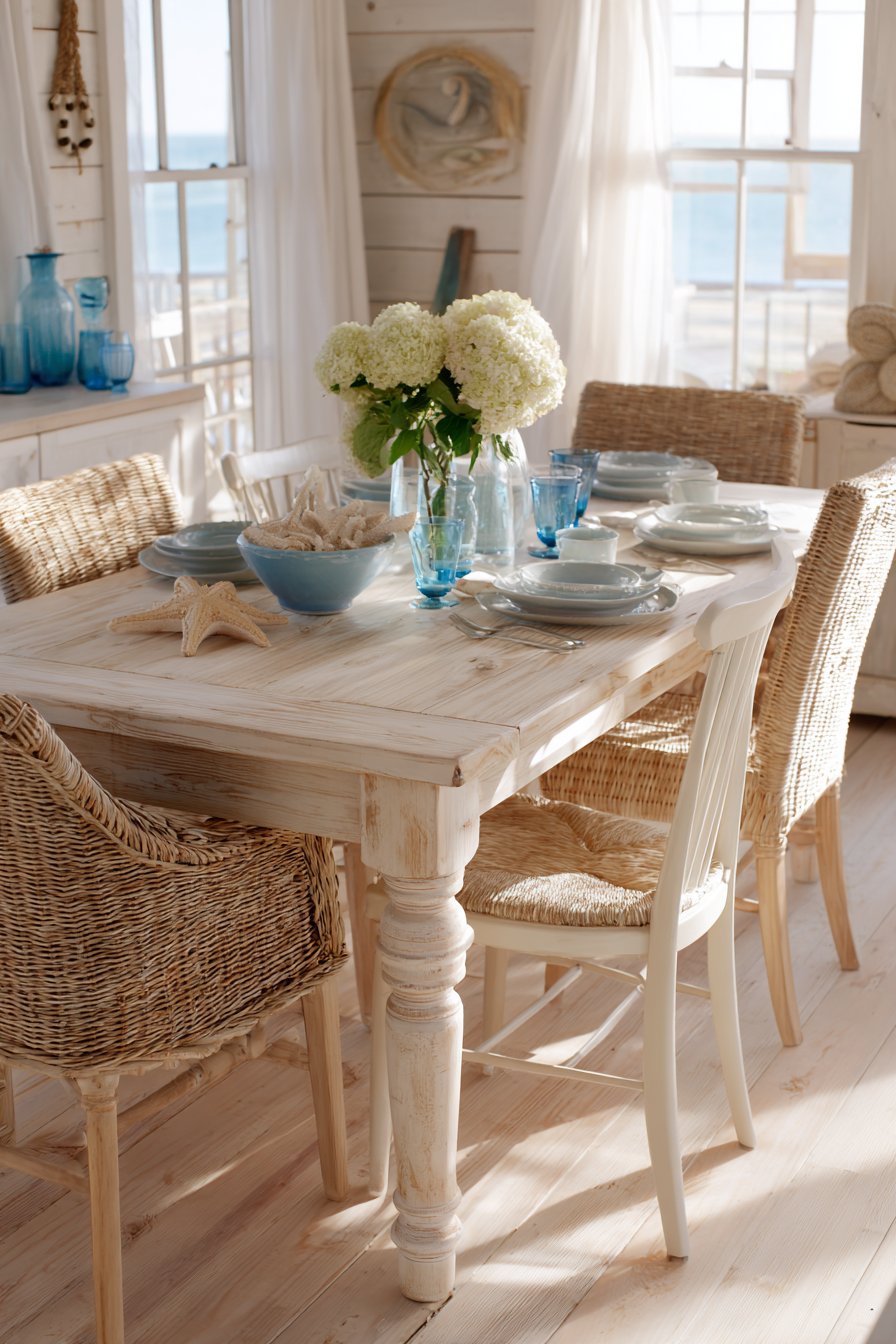
Sun-bleached aesthetics define this coastal-inspired dining table crafted from oak treated to achieve soft whitewashed appearance. The deliberate lightening process preserves visible grain while creating pale tones reminiscent of driftwood weathered by sand, salt, and sun. Simple turned legs and rectangular form keep the design accessible and unpretentious, perfectly suited to casual coastal living. Positioned in a beach house dining room with white beadboard walls and blue accents, the table anchors a relaxed interior that celebrates seaside simplicity.
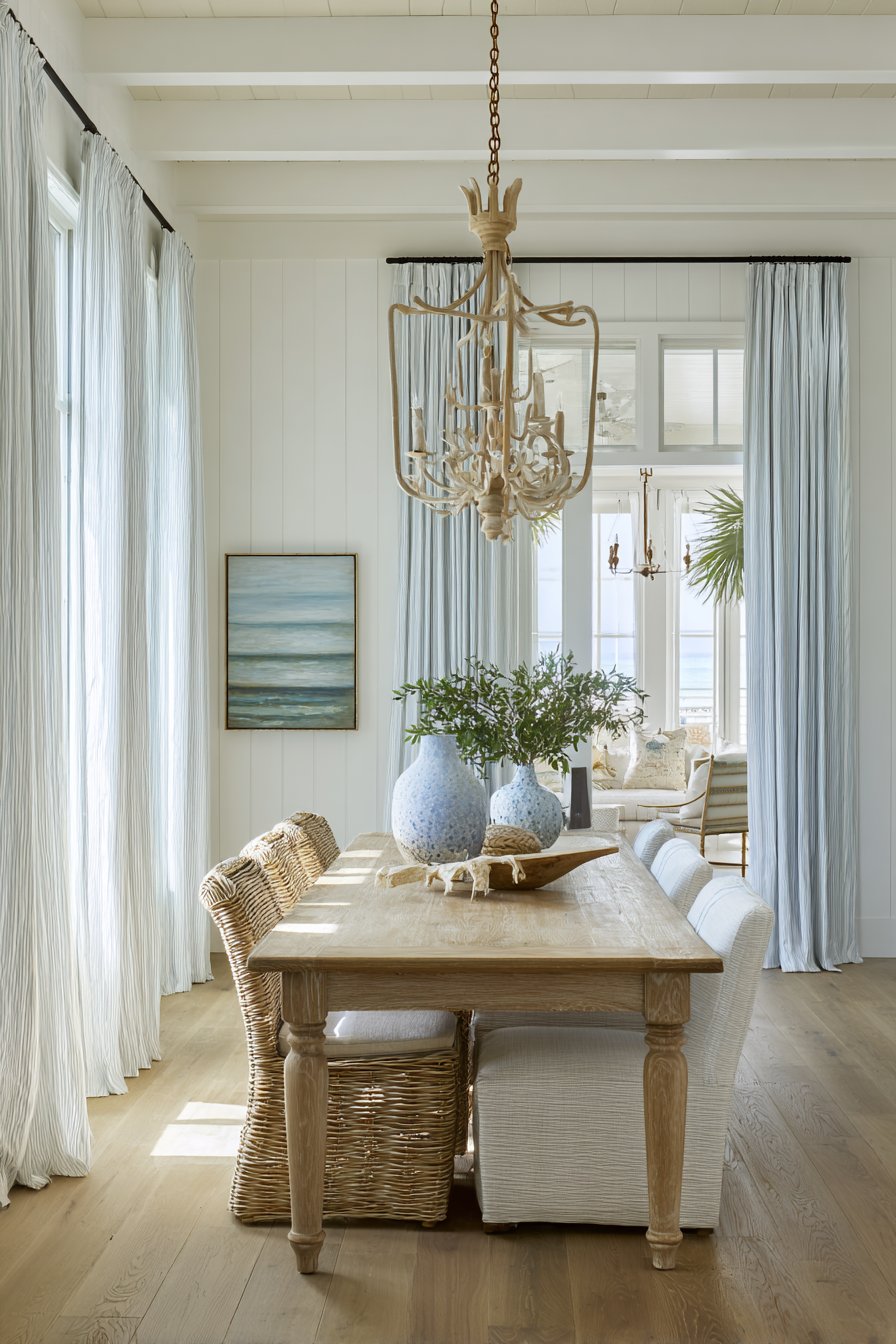
Natural fiber chairs and nautical decor elements complete the coastal theme without veering into kitschy territory. Bright natural light through sheer curtains floods the space, highlighting the oak’s pale bleached tones and creating an airy atmosphere that feels perpetually summer-ready. The deliberate color treatment creates visual continuity with sand, shells, and weathered coastal materials visible through nearby windows.
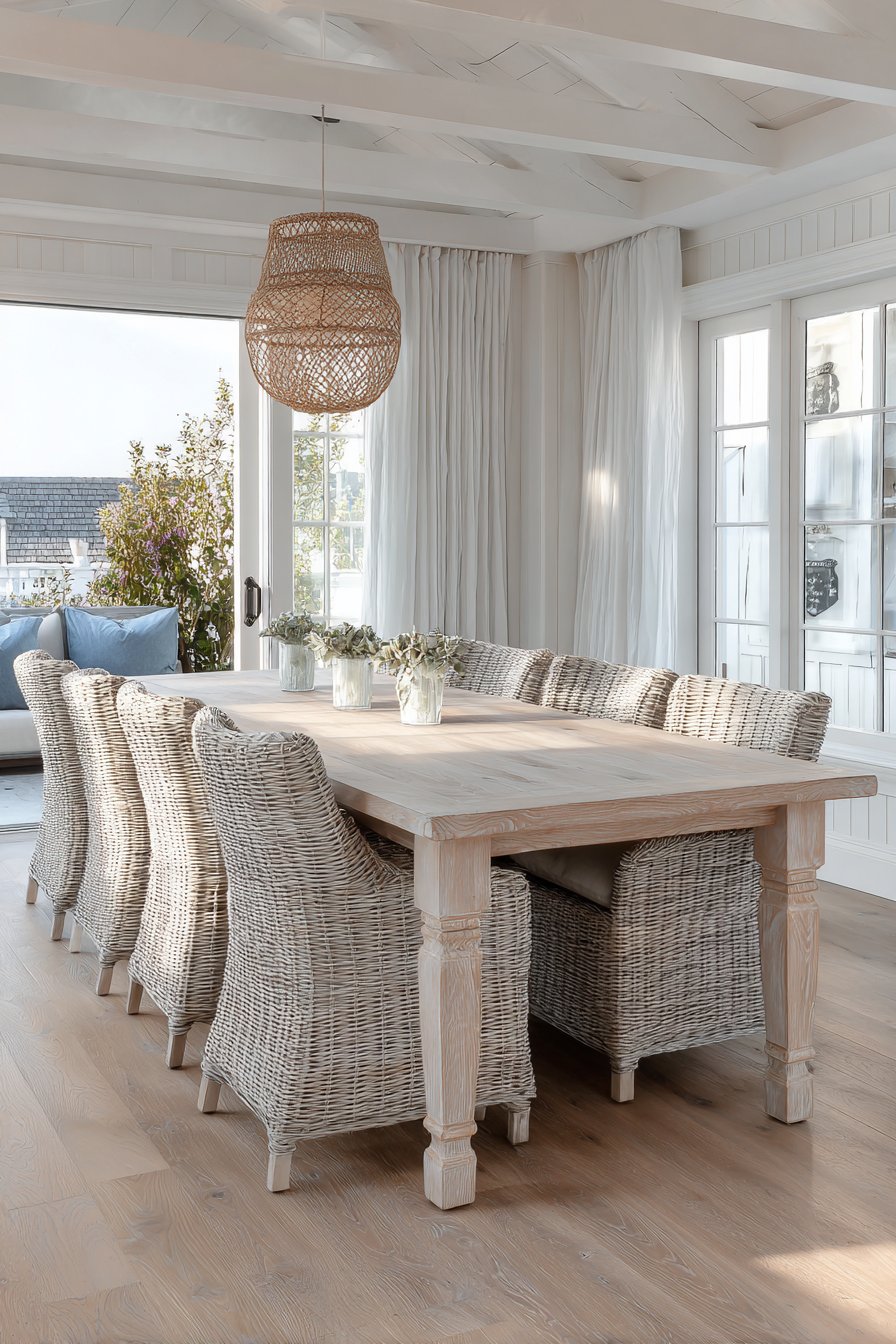
This design captures the essence of coastal living—relaxed, light-filled, and connected to natural surroundings. The bleaching process transforms oak from its natural medium tones to pale neutrals that expand visual space and reflect abundant light. For beach house owners or those seeking to bring coastal aesthetic to inland homes, this bleached oak table offers authentic seaside style that feels perpetually vacation-ready while providing durable dining surface for daily use.
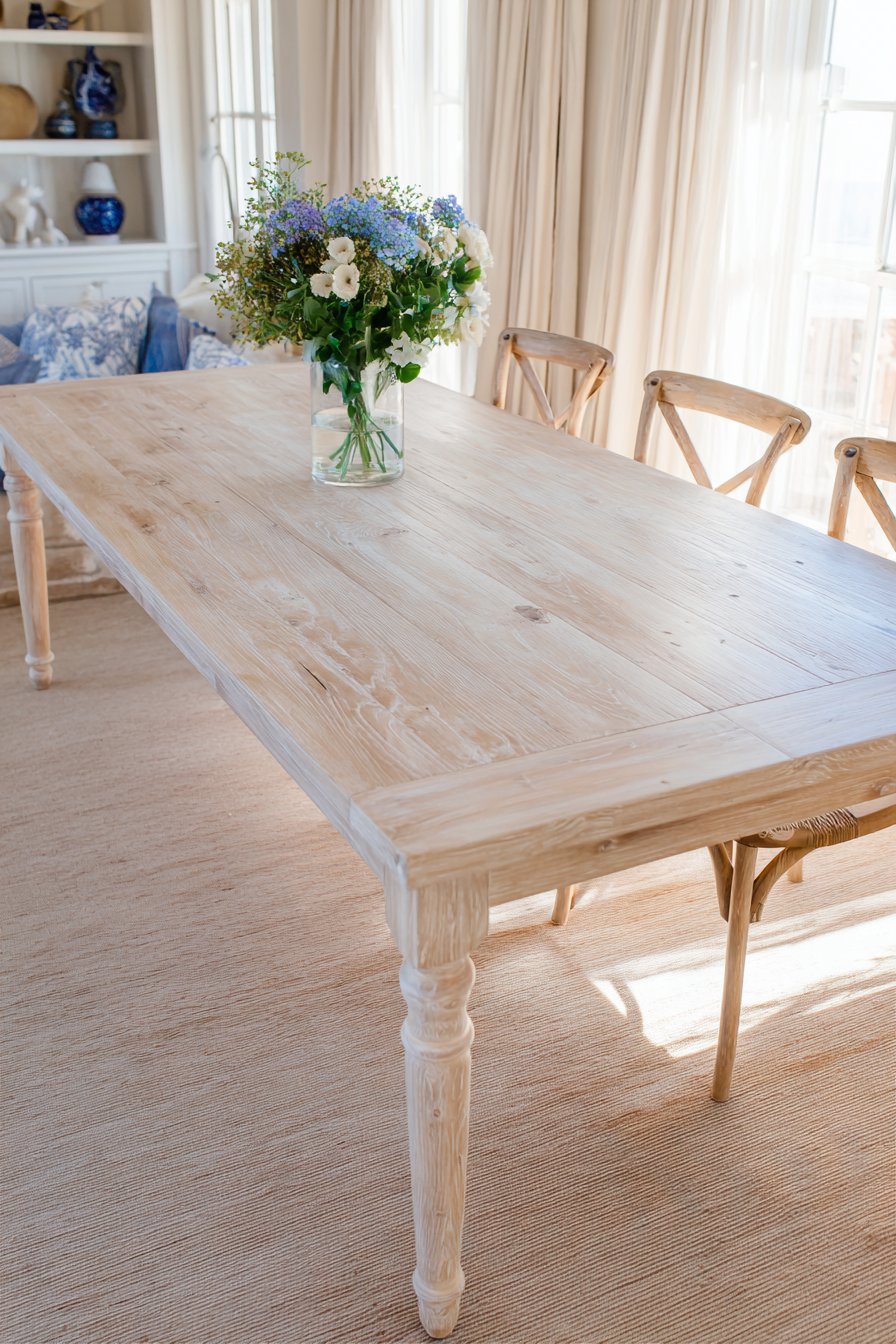
Key Design Tips: Choose professional bleaching or pickling treatments rather than attempting DIY approaches on valuable wood. Ensure treatments penetrate adequately while preserving wood’s structural integrity. Pair with white, cream, and soft blue tones for authentic coastal palette. Maximize natural light to enhance the bleached wood’s pale tones. Select simple furniture forms rather than ornate designs for true coastal aesthetic. Protect bleached surfaces with appropriate finishes that prevent yellowing. Incorporate natural fiber textiles and accessories for layered coastal texture. Accept that bleached wood shows marks more readily than darker tones and plan maintenance accordingly.
16. Modern Farmhouse Mixed Hardwood Plank
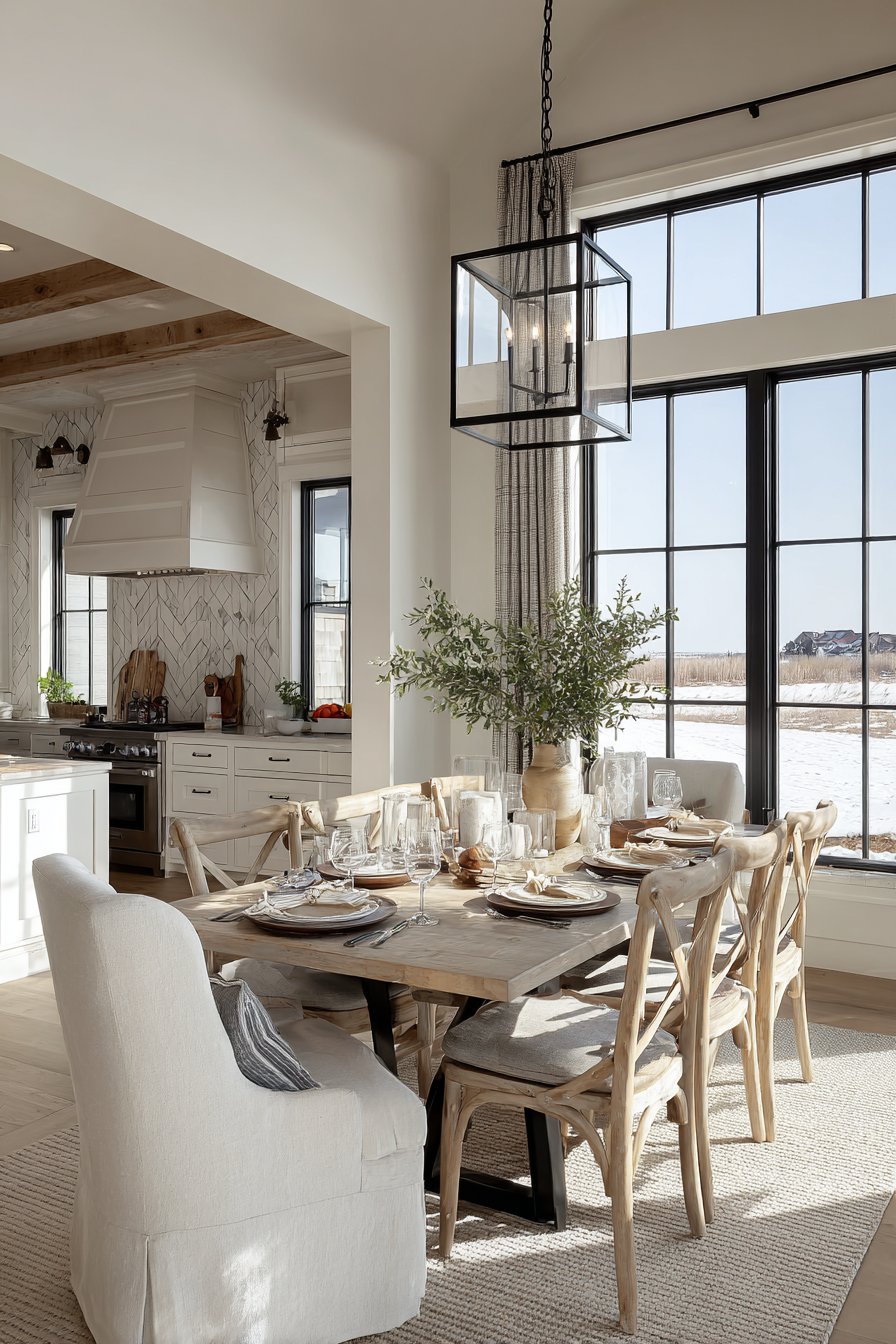
Contemporary meets rustic in this modern farmhouse table featuring planked top constructed from mixed hardwoods. Varied grain patterns and subtle color differences between boards create visual interest and artisanal character while maintaining overall cohesion. The matte black metal frame base provides industrial contrast that prevents the farmhouse aesthetic from feeling too traditional or dated. Seating eight in a renovated barn kitchen with white cabinetry and industrial lighting, the table bridges past and present in comfortable balance.
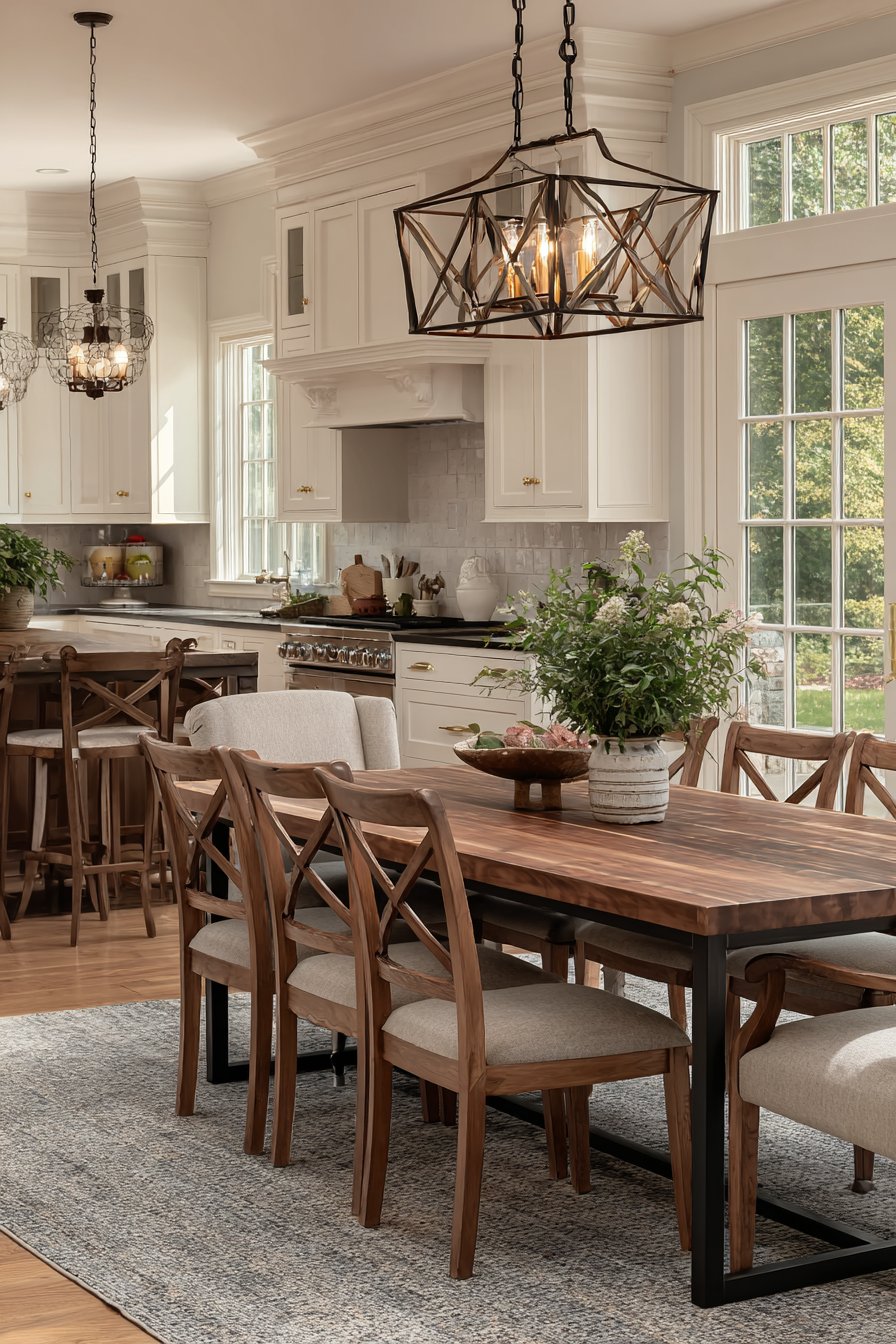
Cross-back chairs in natural wood finish surround the table, their traditional form rendered in simple execution that feels current rather than overly rustic. The mix of wood tones in the table top coordinates beautifully with varied wood finishes throughout the kitchen, creating layered texture without pattern clash. Professional photography captures how balanced exposure and proper lighting showcase the plank details and mixed wood character while maintaining overall design cohesion.
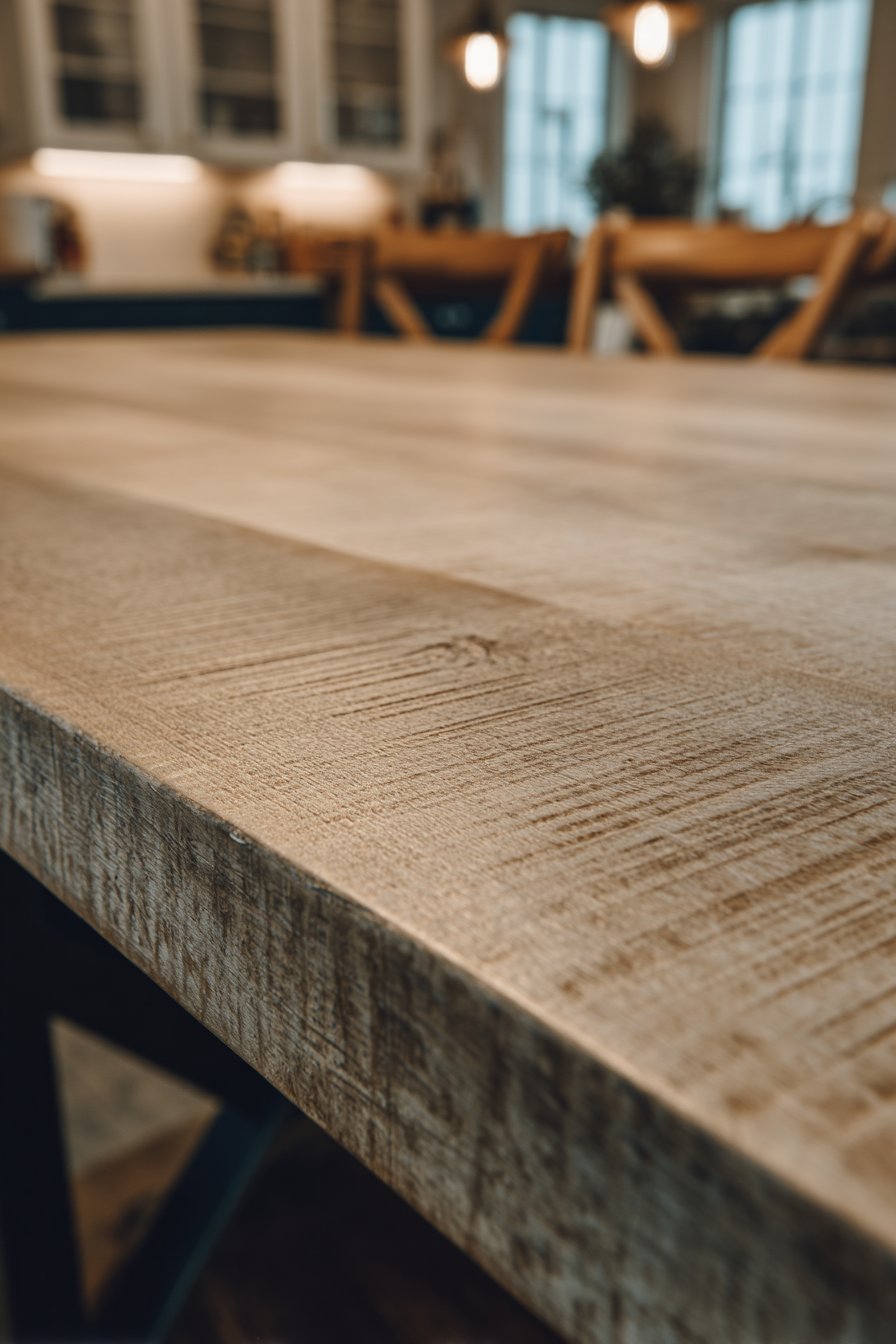
This design exemplifies the modern farmhouse movement that dominates contemporary American interiors. By combining traditional elements like planked wood with industrial materials like metal framing, the aesthetic feels both grounded in heritage and appropriate for current lifestyles. The mixed hardwood approach allows flexibility in wood sourcing while creating built-in character through intentional variation rather than perfect matching.
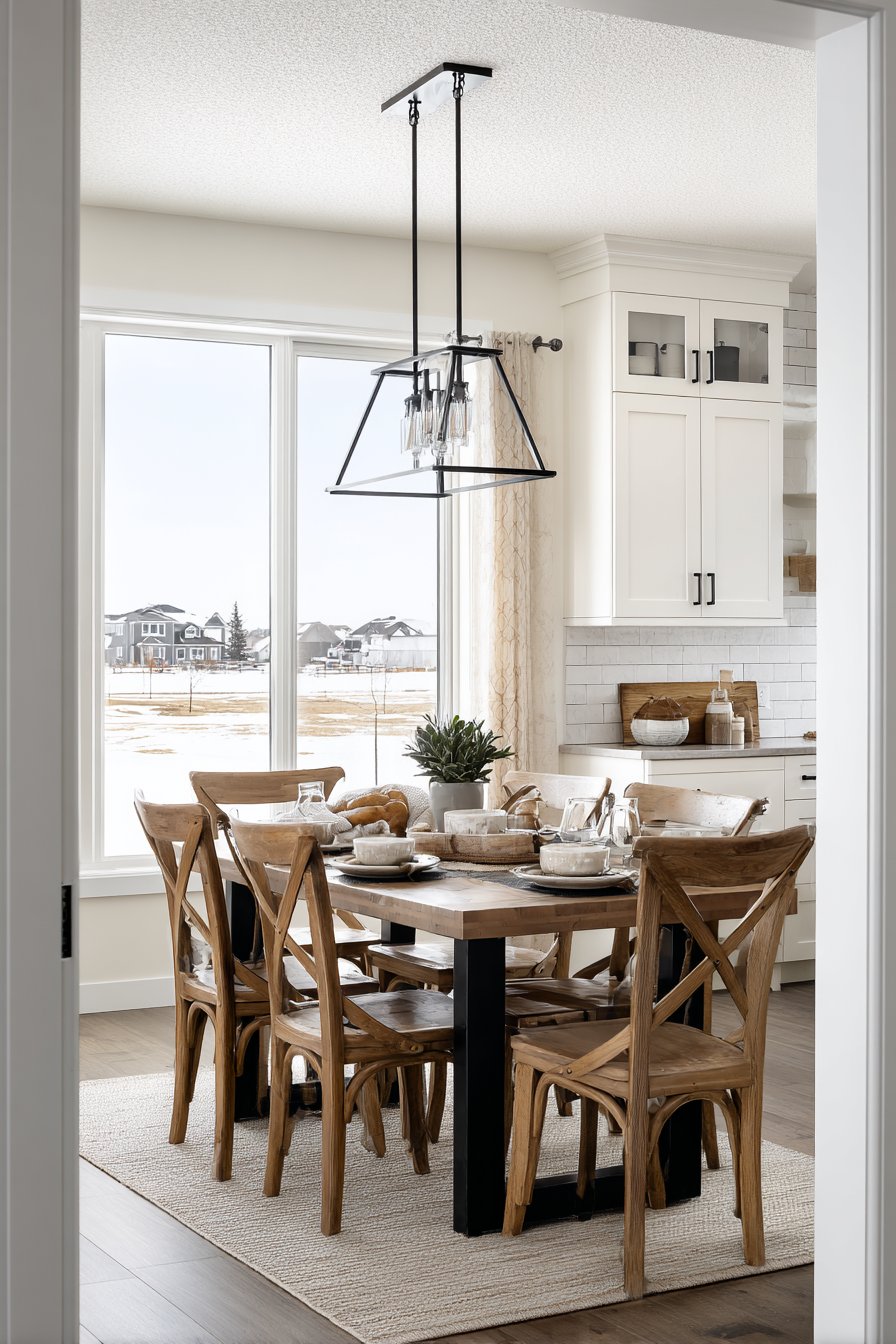
Key Design Tips: Select hardwood species with compatible grain patterns and color ranges for cohesive appearance. Embrace subtle variations rather than forcing exact color matching. Choose matte black metal in substantial gauge appropriate to support wood top weight. Balance traditional wood elements with contemporary touches like metal, glass, or modern lighting. Apply consistent finish across all planks despite wood species variations. Install with quality fastening systems that allow for wood movement across seasons. Consider the weight of mixed hardwood and metal construction when planning placement and floor load capacity.
17. Traditional Mahogany Extension Table
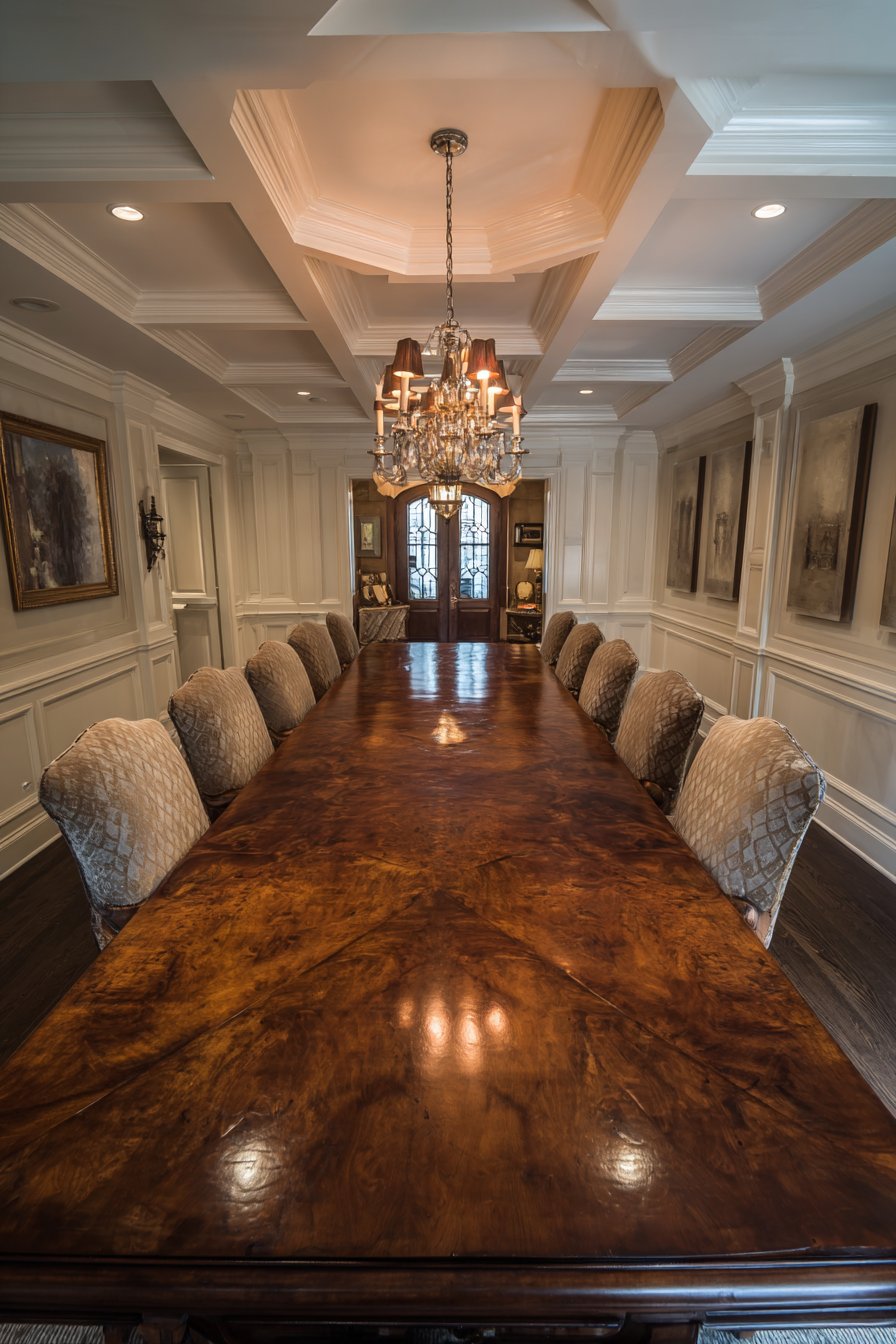
Formal elegance defines this traditional mahogany extension dining table featuring classic cabriole legs and hand-rubbed finish that develops natural patina over decades of use. Hidden leaf storage allows the table to accommodate intimate dinners or formal parties without visible mechanical complexity when collapsed. Positioned in a traditional dining room with wainscoting and crystal chandelier overhead, the table represents timeless formal dining aesthetic that never goes out of style.
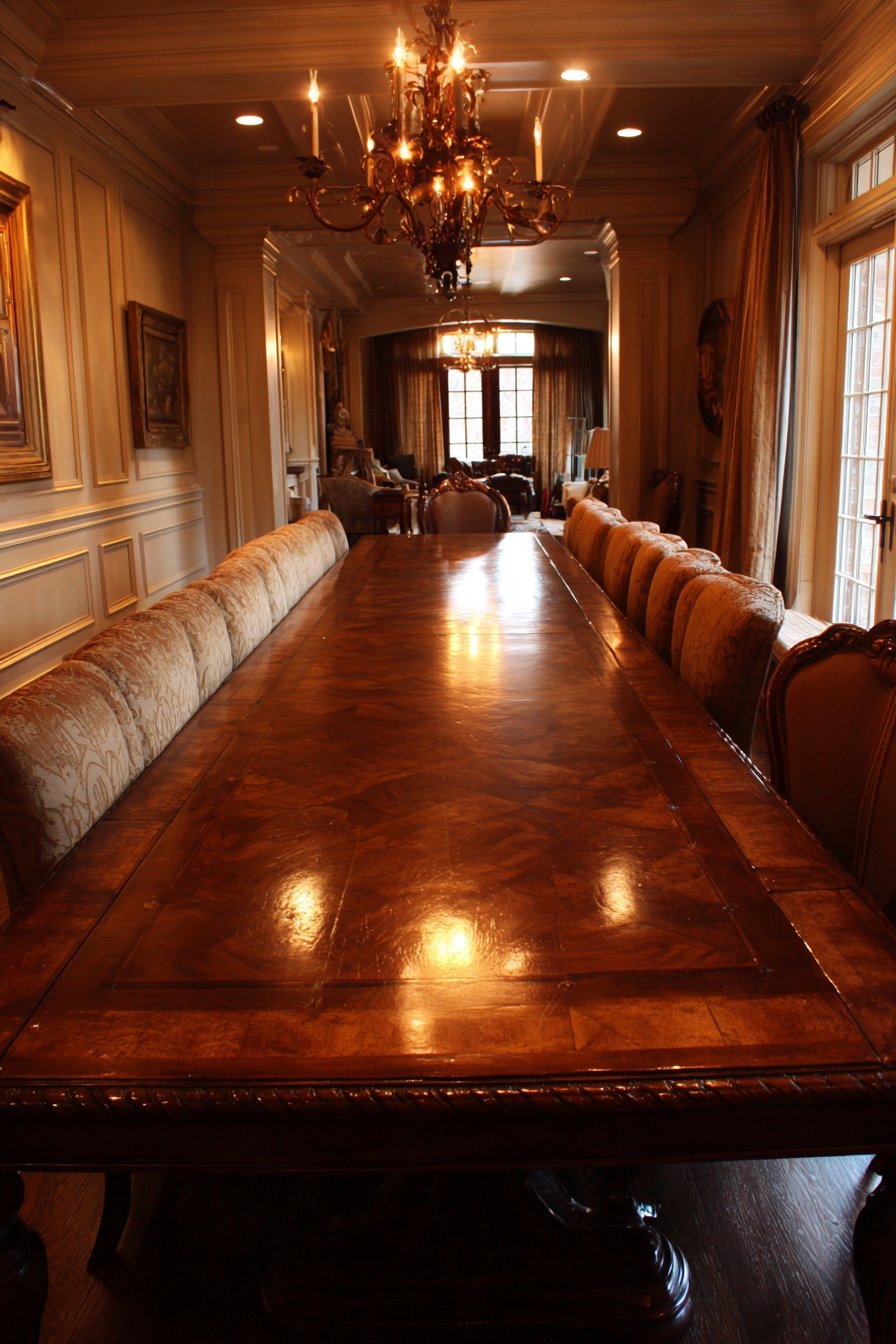
Upholstered wing-back chairs provide formal seating befitting the table’s elegant presence while ensuring guest comfort during extended meals. Soft ambient lighting creates warm reflections on the polished mahogany surface, highlighting the wood’s deep lustrous tones and fine grain. The hand-rubbed finish technique produces depth and warmth impossible to achieve with spray-applied modern finishes, creating tactile and visual richness that improves with careful maintenance over time.
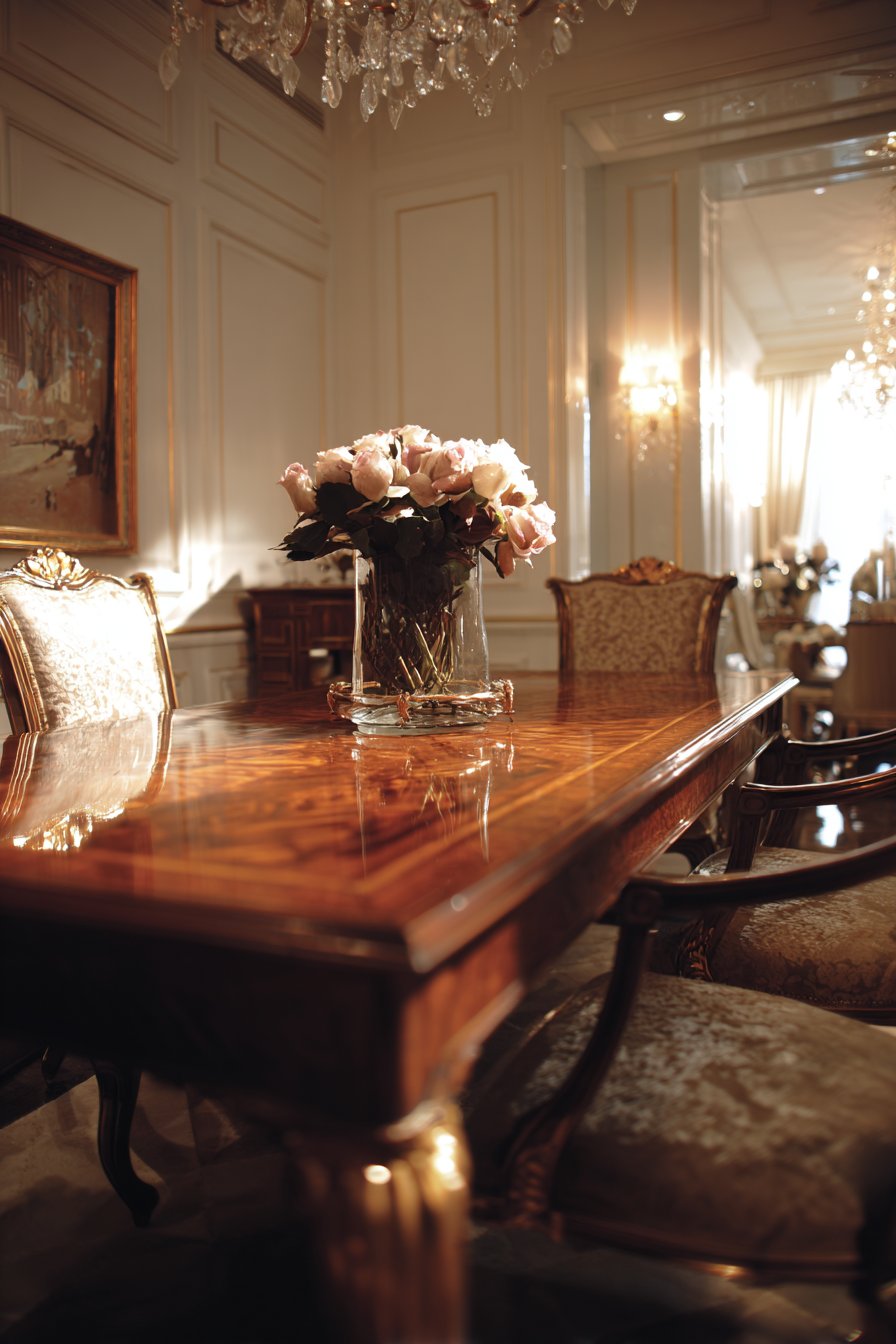
This design appeals to those who value tradition, formal entertaining, and furniture as long-term investment. Quality mahogany construction and traditional craftsmanship ensure this table will serve multiple generations, becoming family heirloom rather than disposable furniture. The extension capability provides flexibility between everyday use and special occasions, while the classic styling ensures the piece never feels dated or inappropriate regardless of changing design trends.
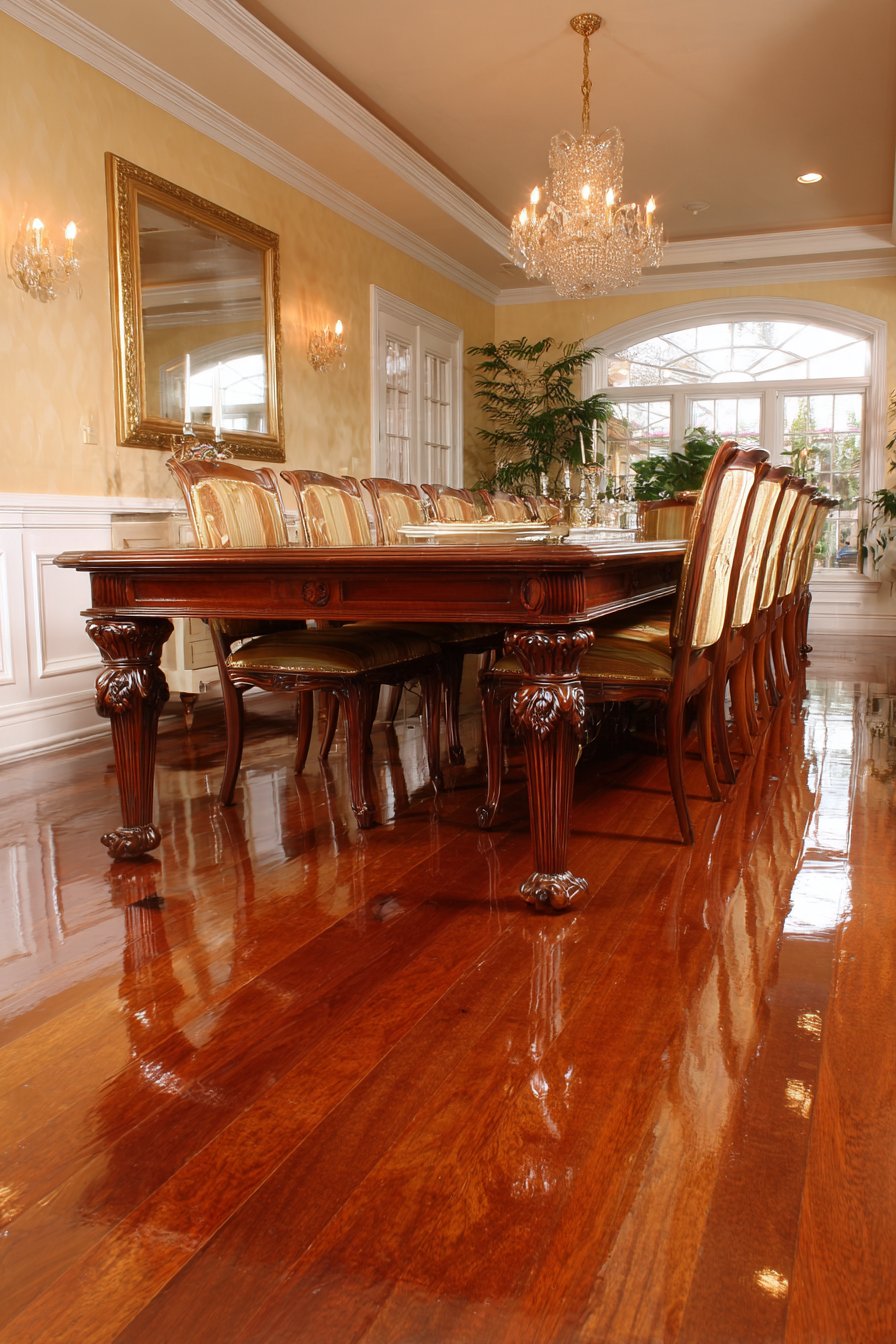
Key Design Tips: Invest in solid mahogany construction rather than veneer for longevity and refinishing capability. Choose hand-rubbed finishes applied by experienced craftspeople for optimal depth and character. Ensure extension mechanism operates smoothly and locks securely in both collapsed and extended positions. Select formal upholstered seating appropriate to the table’s traditional aesthetic. Budget for quality—traditional mahogany construction and hand-finishing command premium pricing. Maintain hand-rubbed finishes with appropriate products that enhance rather than damage the patina. Store extension leaves properly when not in use to prevent warping. Consider professional refinishing every few decades to restore finish while preserving patina.
18. Japanese-Inspired Low Elm Table
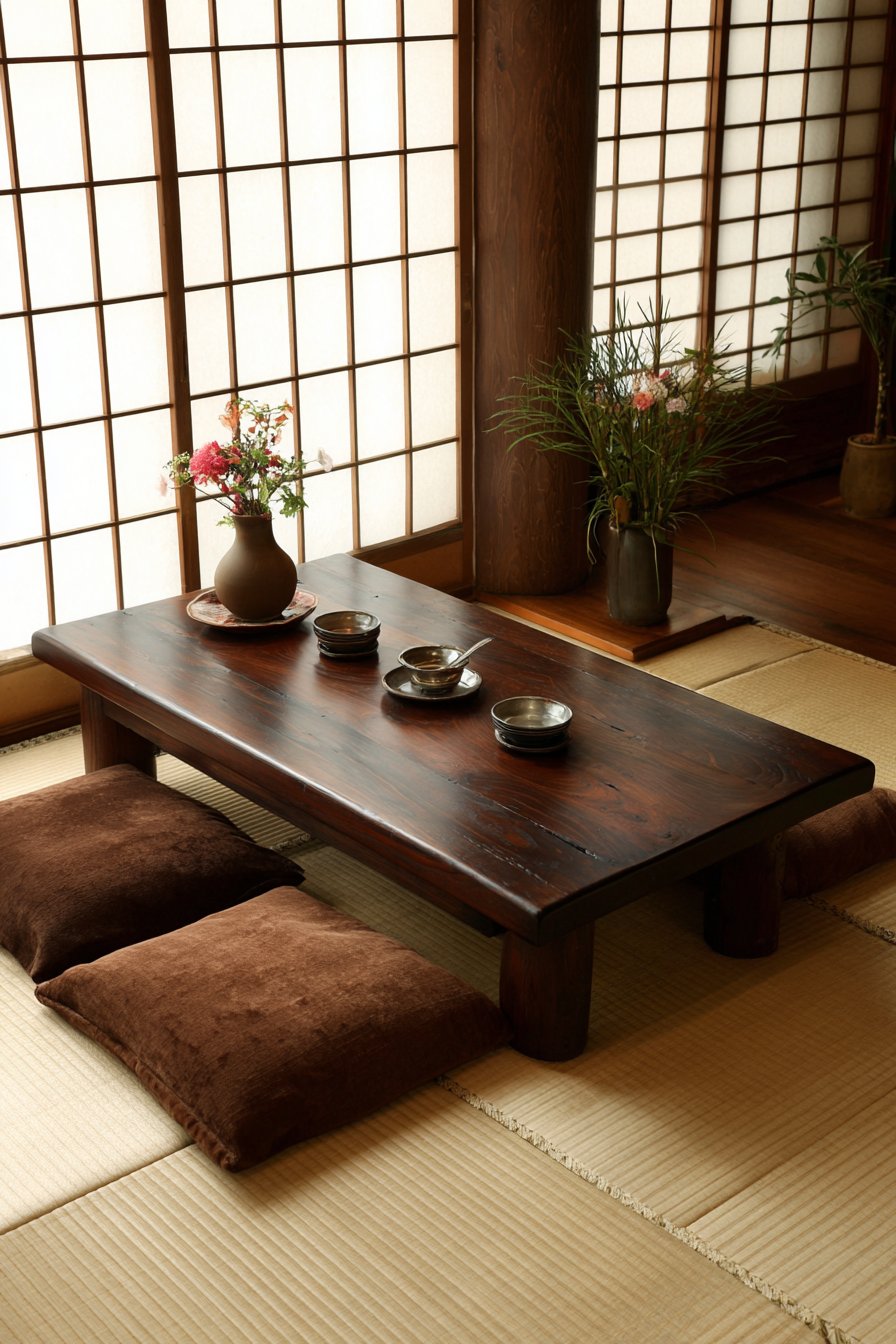
Zen minimalism influences this low dining table crafted from dark-stained elm with clean lines and subtle Asian aesthetic. The table sits close to the floor with short legs, creating intimate dining experience when surrounded by floor cushions rather than chairs. Positioned in a zen-like dining space with tatami-style flooring, the table encourages mindful eating and present-moment awareness through its deliberate break from Western dining conventions. A simple flower arrangement in ceramic vase provides the only decoration needed.
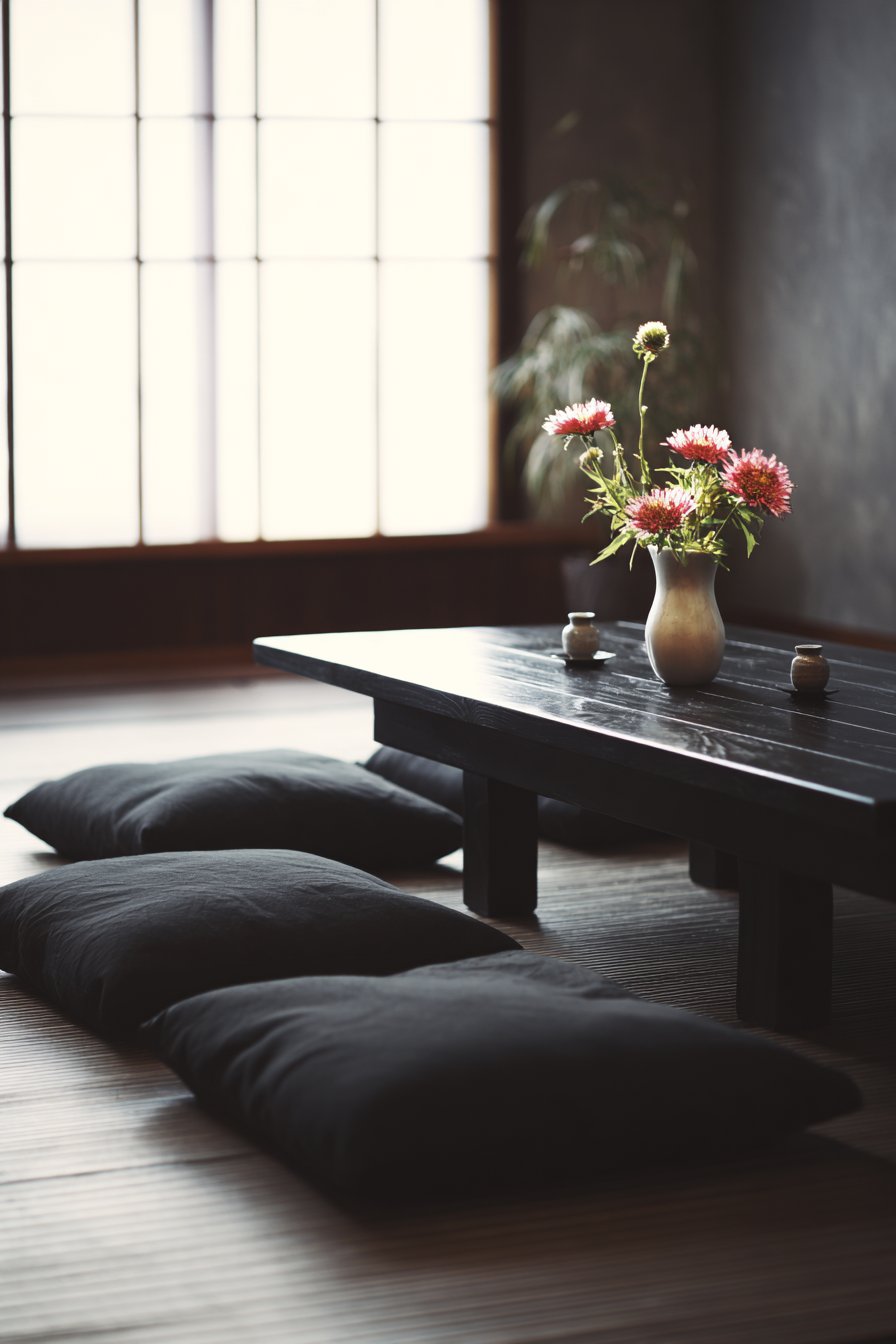
Natural light filtered through shoji-screen windows creates soft diffused illumination without harsh shadows or glare. The dark elm stain creates smooth, lustrous surface that invites touch while maintaining visual warmth despite low saturation color. The table’s minimalist form—devoid of ornamentation or unnecessary detail—embodies Japanese aesthetic principles of simplicity, naturalness, and subtle perfection through restraint.
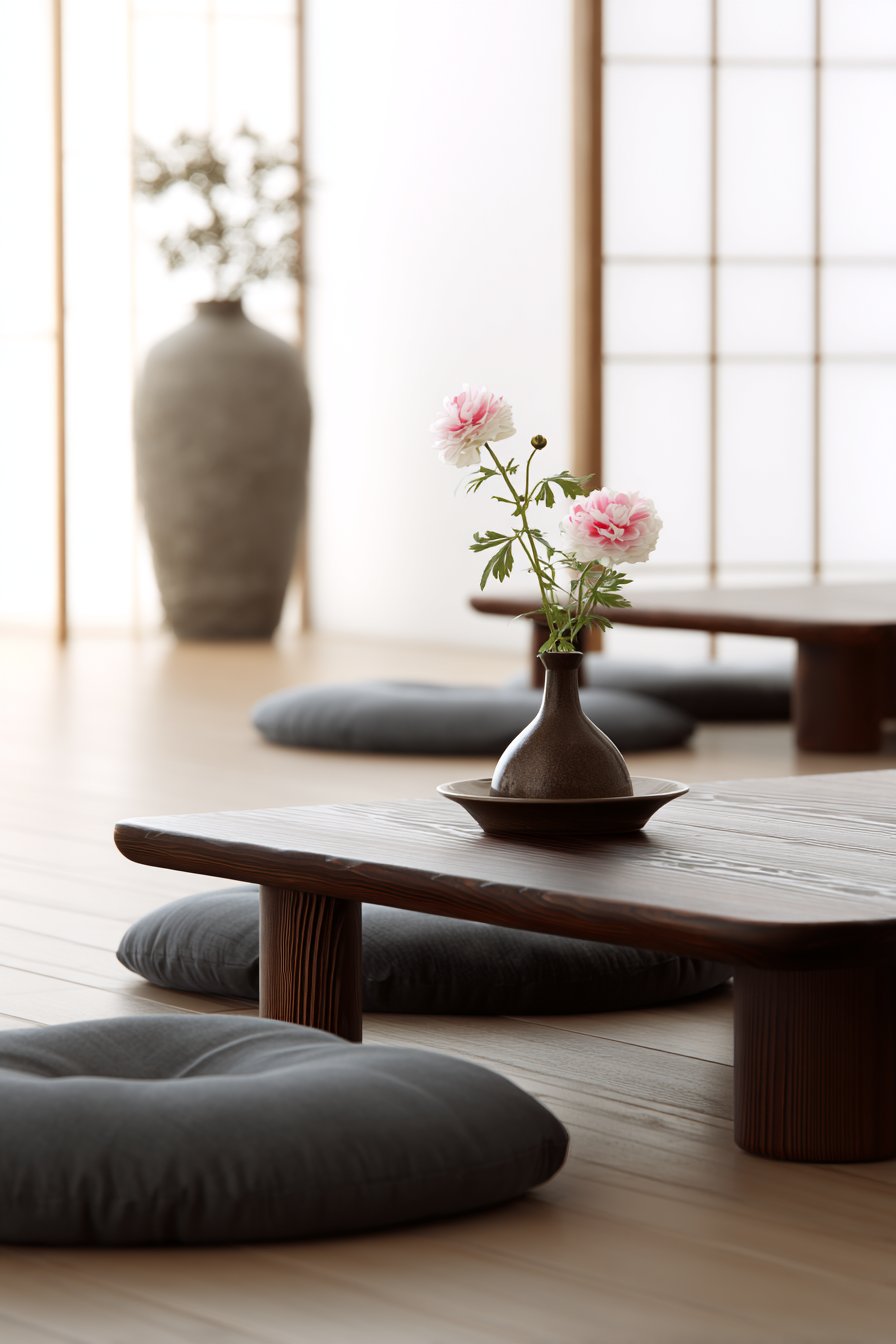
This design offers Western homeowners access to Japanese dining traditions that emphasize floor-level living and connection to earth. The low table creates different spatial relationships and bodily experiences than conventional dining, slowing the pace and increasing awareness. For those drawn to meditation, mindfulness, or Japanese culture, this table provides daily practice opportunity through ordinary act of dining.
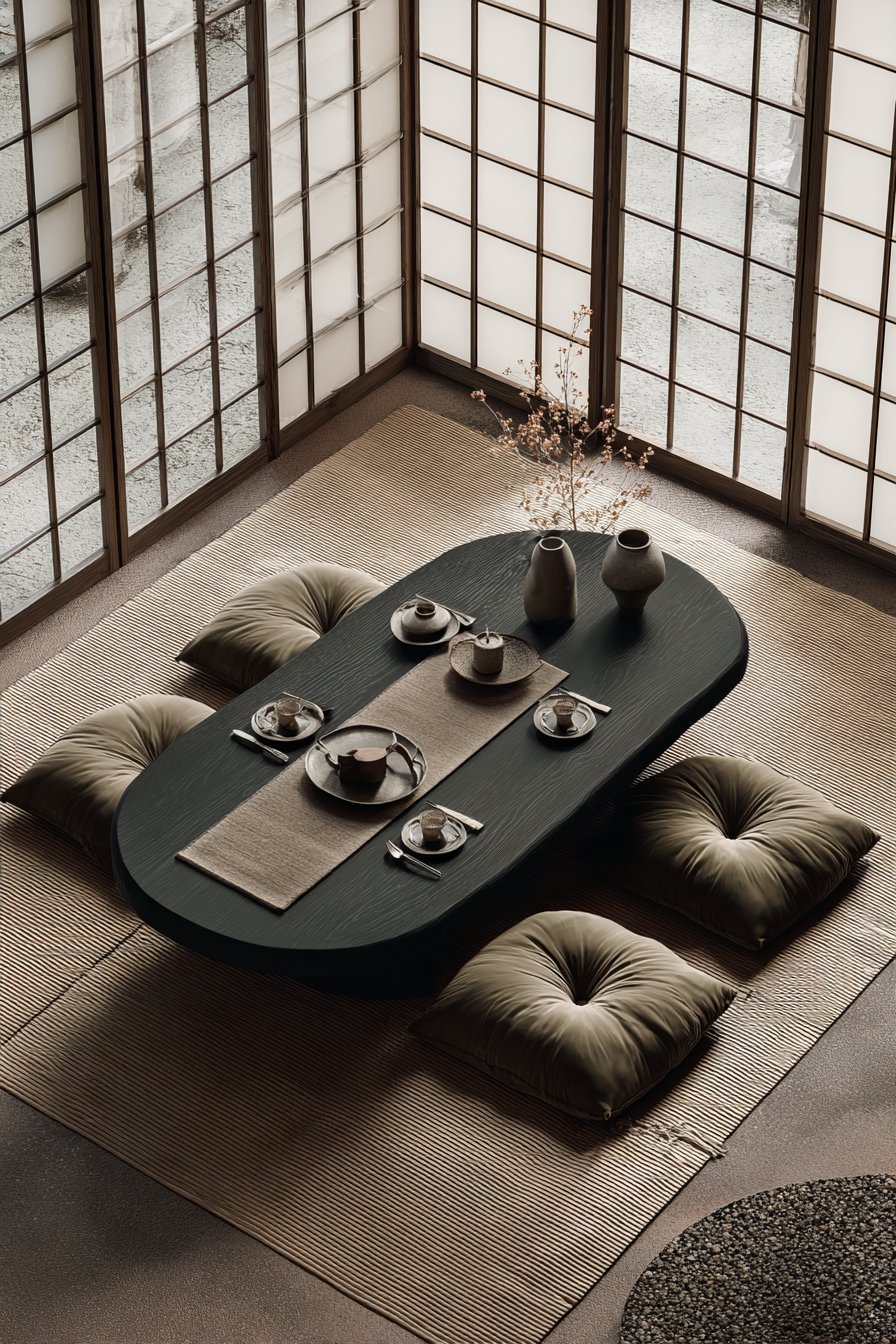
Key Design Tips: Select dense hardwoods like elm that can support weight despite low profile. Apply dark stains that enhance wood grain while creating desired color depth. Provide comfortable floor cushions specifically designed for extended floor sitting. Incorporate Japanese aesthetic elements like shoji screens, tatami, and minimal decoration. Ensure adequate legroom despite low profile—test comfort before committing. Consider cultural context and avoid superficial appropriation of Japanese design elements. Maintain dark finishes with appropriate products that preserve color and sheen. Accept that floor-level dining requires physical flexibility and may not suit all ages or abilities.
19. Eclectic Multicolored Reclaimed Patchwork
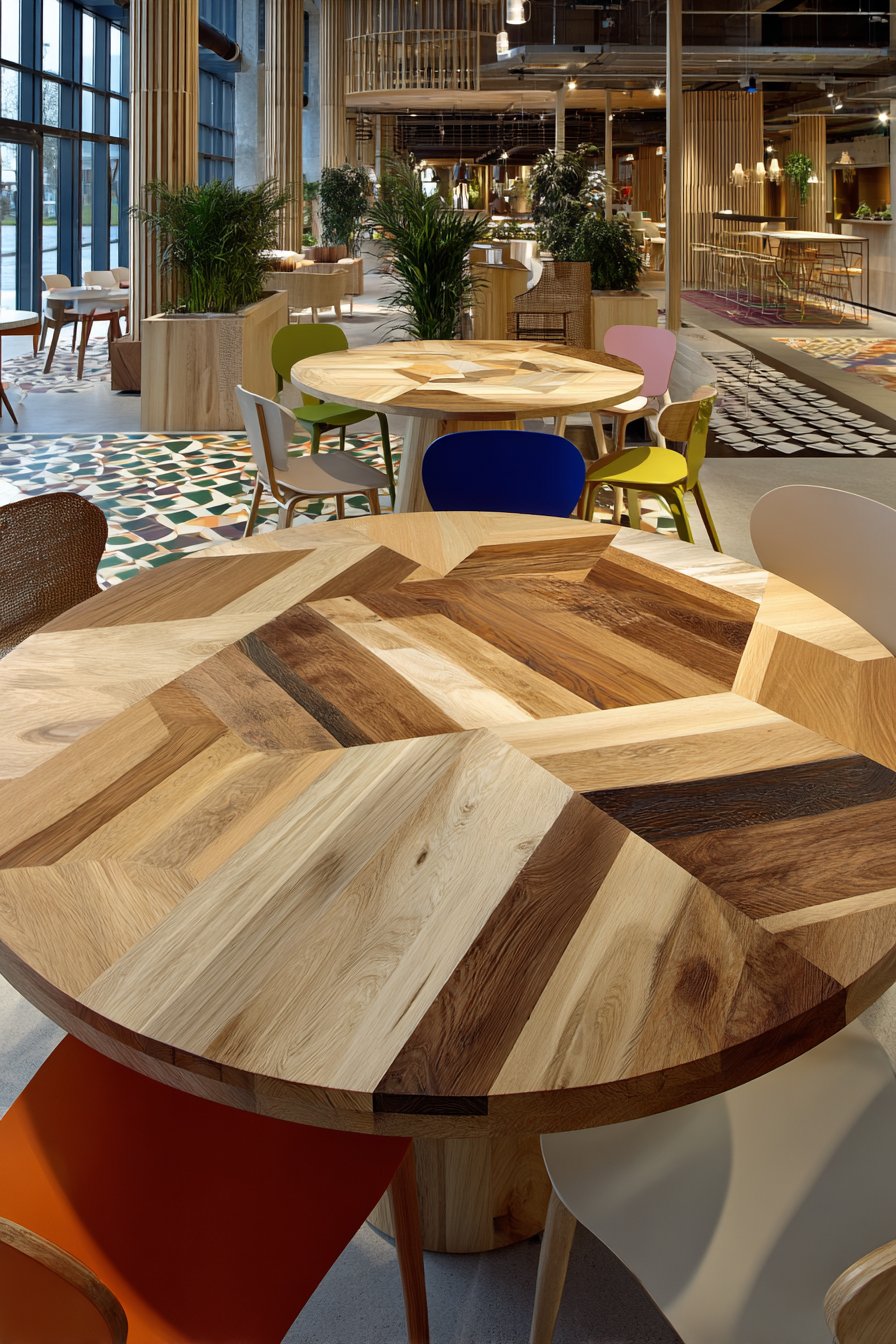
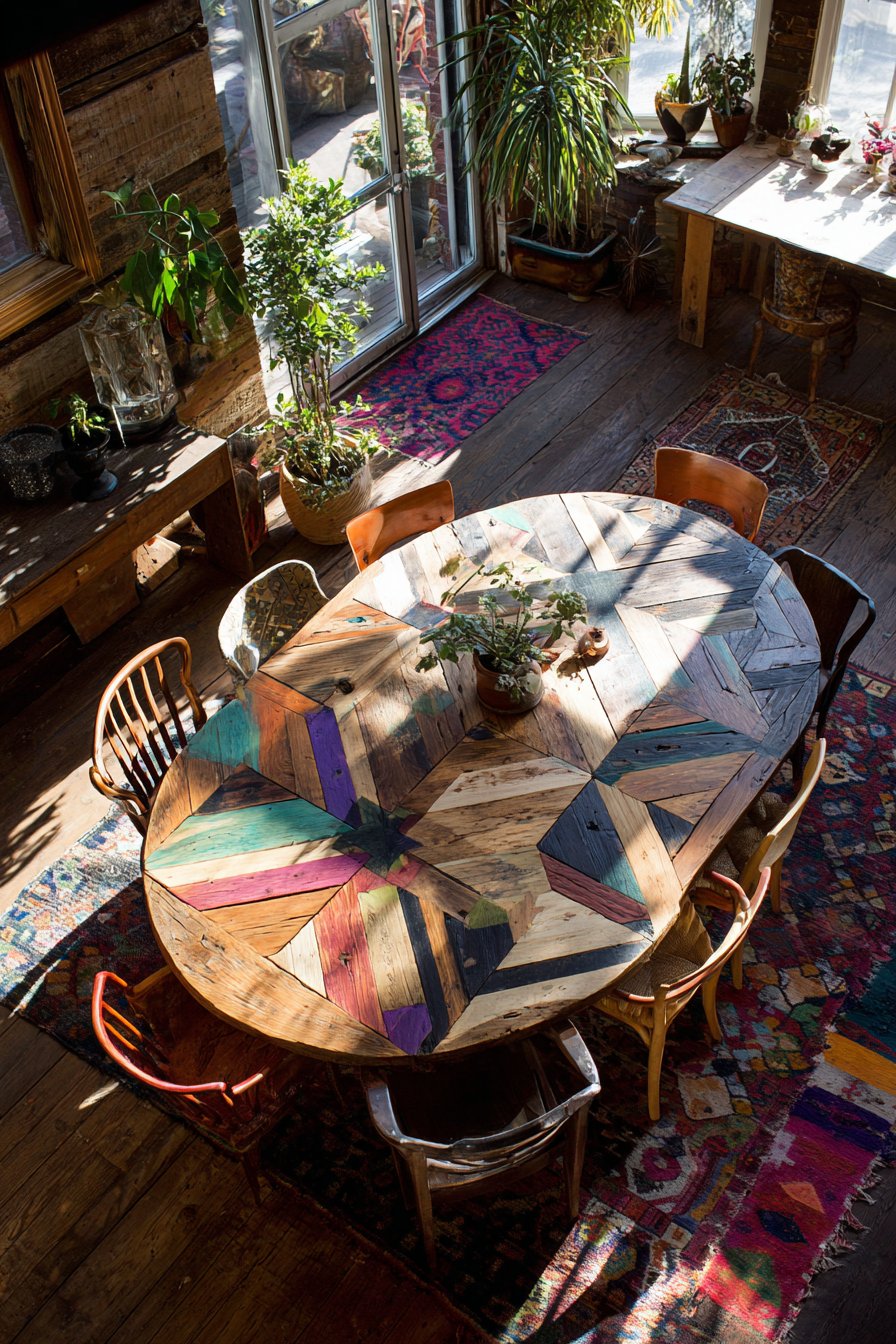
Artistic vision guides this round dining table constructed from multicolored reclaimed wood pieces arranged in geometric pattern. Each section showcases different wood species, creating patchwork effect with varied grains and tones spanning from light maple through medium cherry to dark walnut. Set in a bohemian dining space filled with colorful textiles, plants, and global accessories, the table celebrates diversity, creativity, and the beauty of deliberate eclecticism. Mismatched chairs enhance the collected, personal aesthetic.
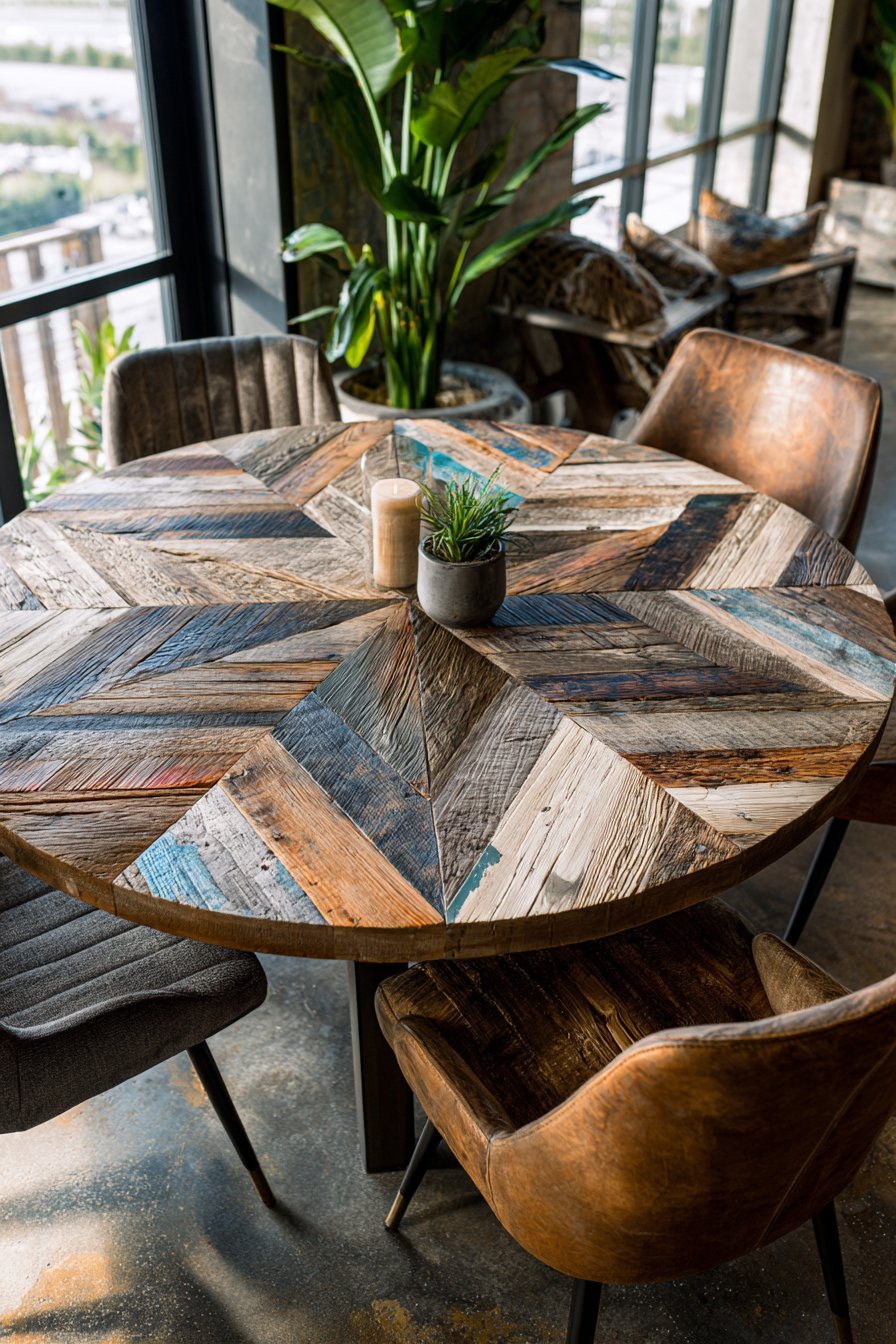
Wide-angle photography captures how natural light plays across different wood tones and grain patterns, creating ever-changing visual effects throughout the day. The geometric arrangement provides structure and intentionality that distinguishes this from random scrap-wood assemblage. Each wood species contributes its unique character while participating in unified whole greater than individual parts.
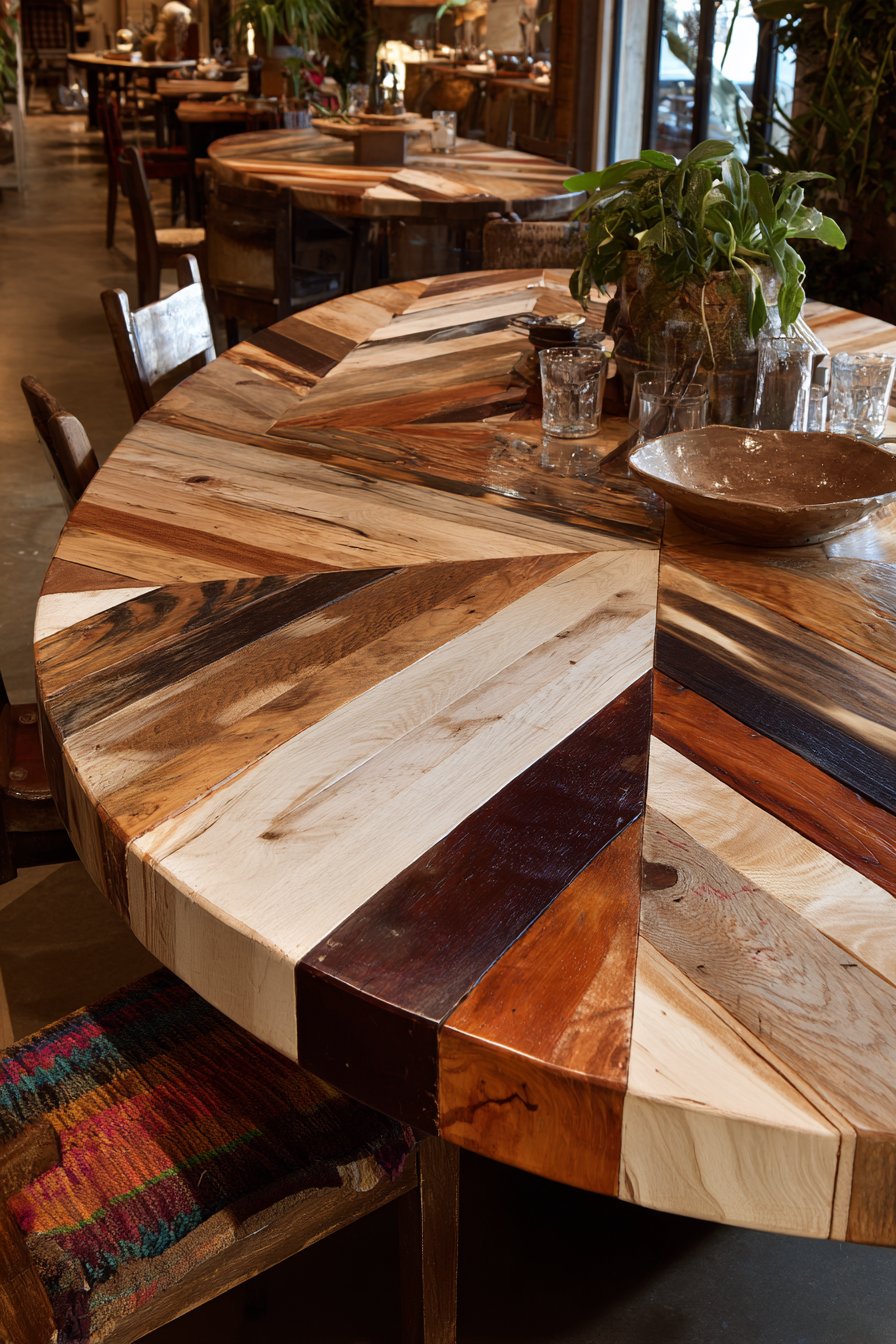
This design speaks to creative spirits who reject conformity and value personal expression over design rules. The patchwork approach transforms humble reclaimed lumber into artistic statement while honoring sustainable material reuse. Each meal becomes experience in visual richness and textural variety impossible to achieve with single-species construction. For those who see their homes as canvases for self-expression, this table offers bold centerpiece that celebrates individuality.
Key Design Tips: Plan geometric patterns carefully before construction to ensure balanced color and grain distribution. Select reclaimed wood species with adequate hardness for dining surface durability. Ensure all pieces receive consistent thickness planing for smooth surface. Apply unified finish across all species despite color variations. Embrace the eclectic aesthetic throughout surrounding decor rather than limiting to table alone. Work with skilled craftspeople who can execute complex geometric joinery accurately. Protect the surface carefully as different wood species have varying scratch resistance. Accept that dramatic visual impact may not suit minimalist or traditional interiors.
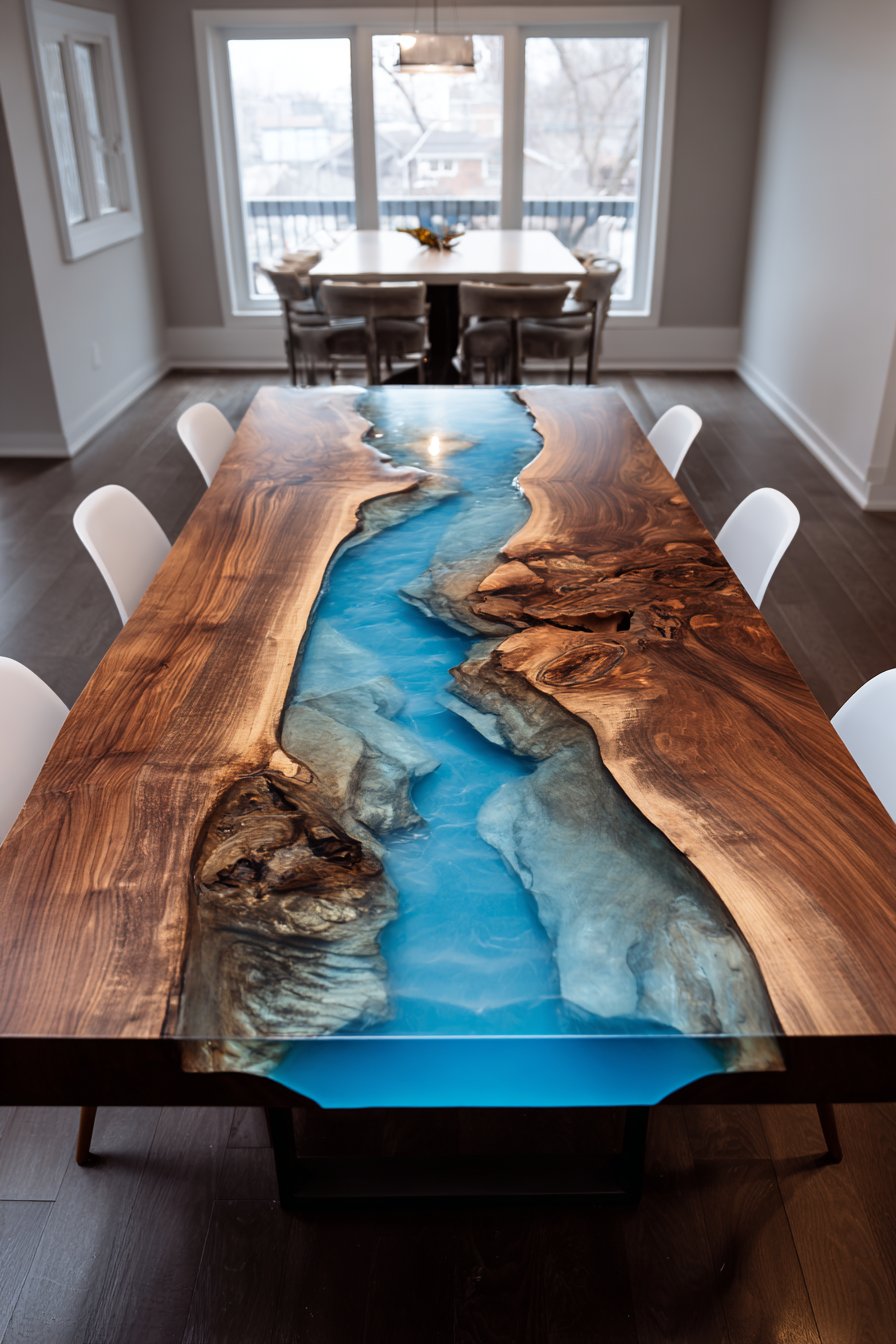
20. River Table with Blue Epoxy Resin
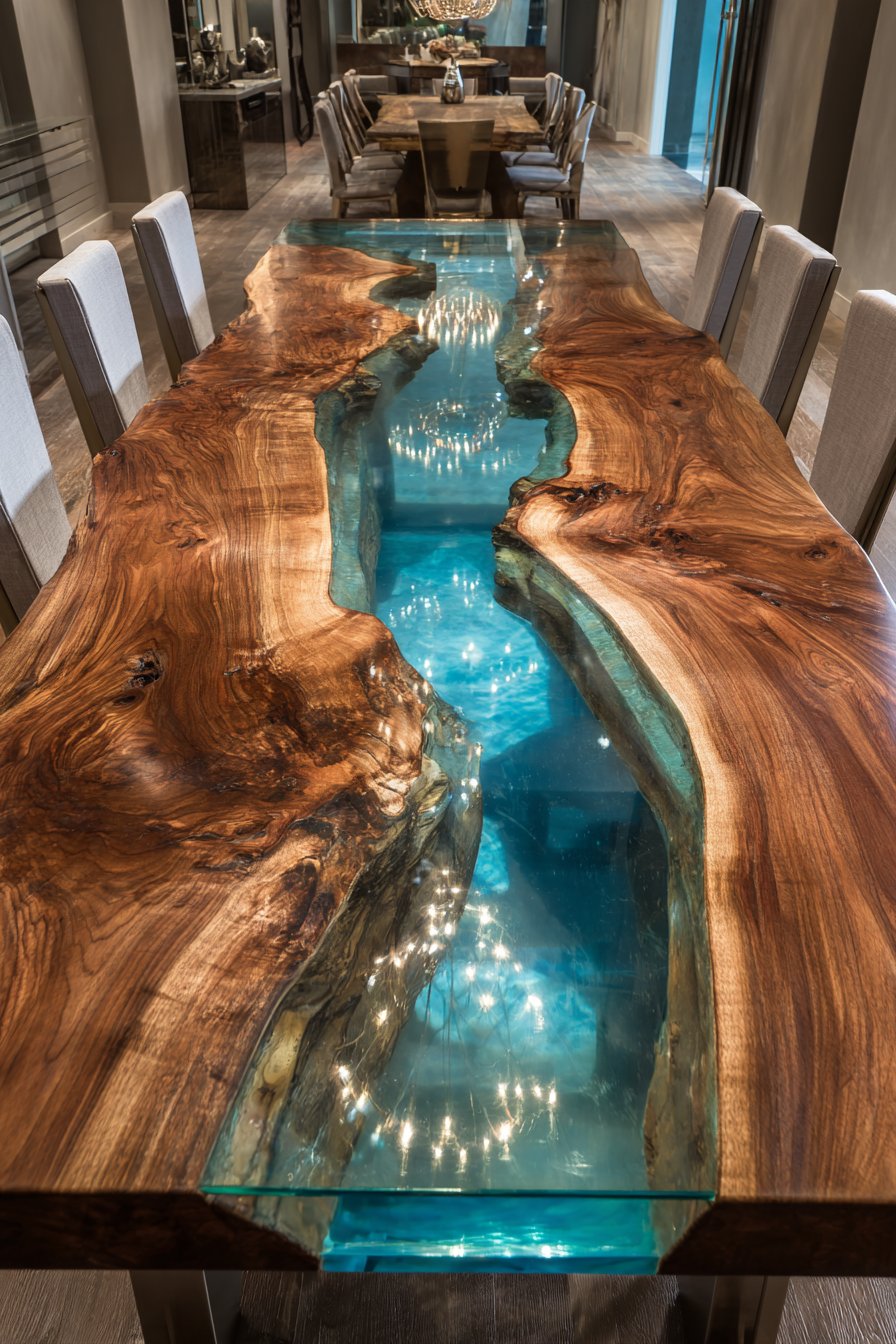
Artistic innovation meets natural beauty in this river table concept where live-edge walnut slabs are split and rejoined with translucent blue epoxy resin creating the illusion of flowing water through wood. The organic edges and rich brown walnut provide dramatic contrast with azure resin that catches and refracts light like actual water. Positioned as statement piece in contemporary dining room, the table functions as both furniture and conversation-starting artwork. Modern metal chairs provide seating without competing with the table’s visual drama.
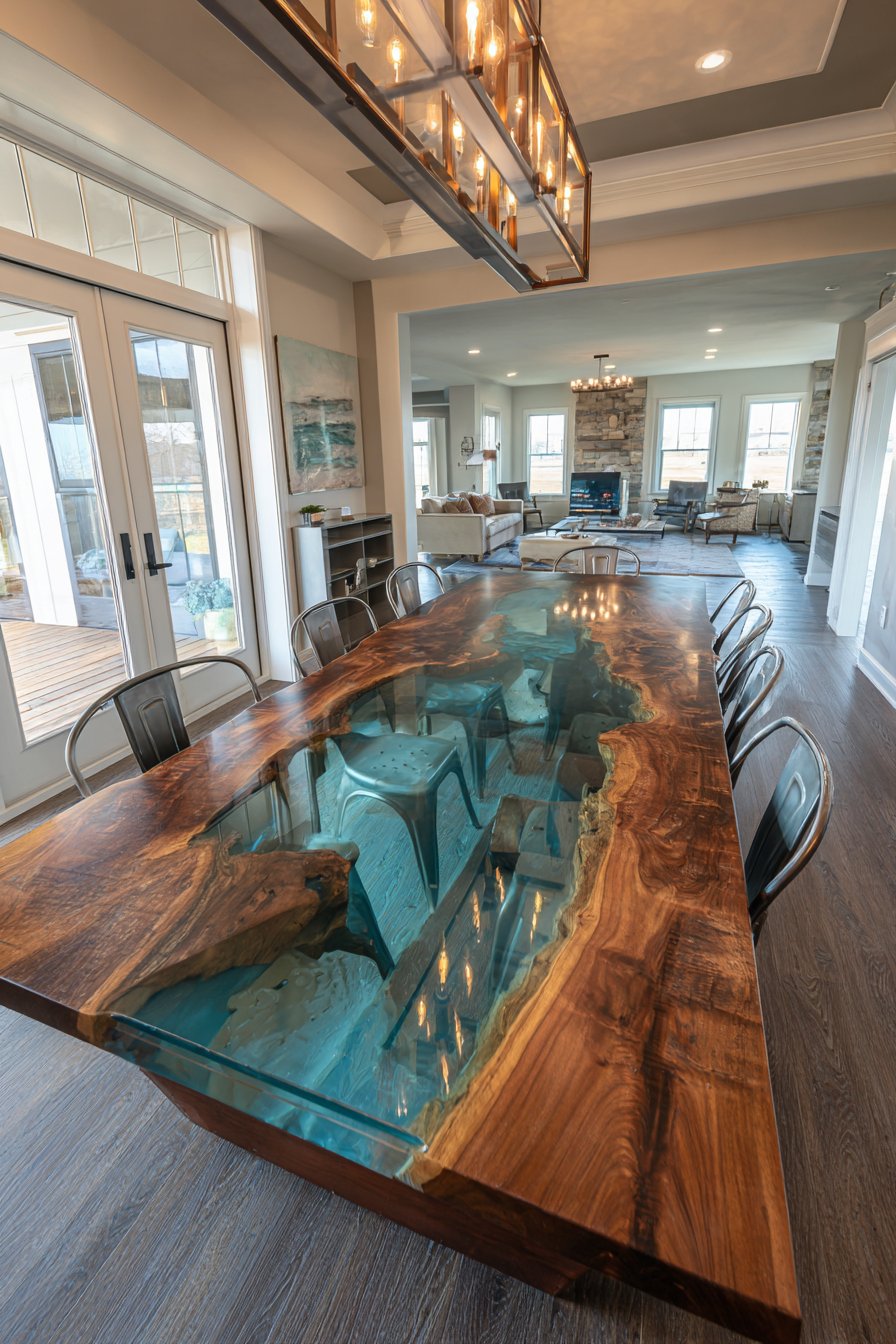
Precise lighting highlights both the walnut’s natural grain and the resin’s depth and clarity, revealing different aspects depending on viewing angle. The epoxy’s translucent quality creates three-dimensional effects as light penetrates the surface, while the live edges preserve the tree’s original contours and natural imperfections. This fusion of organic wood and modern material represents contemporary craftsmanship at its most innovative.
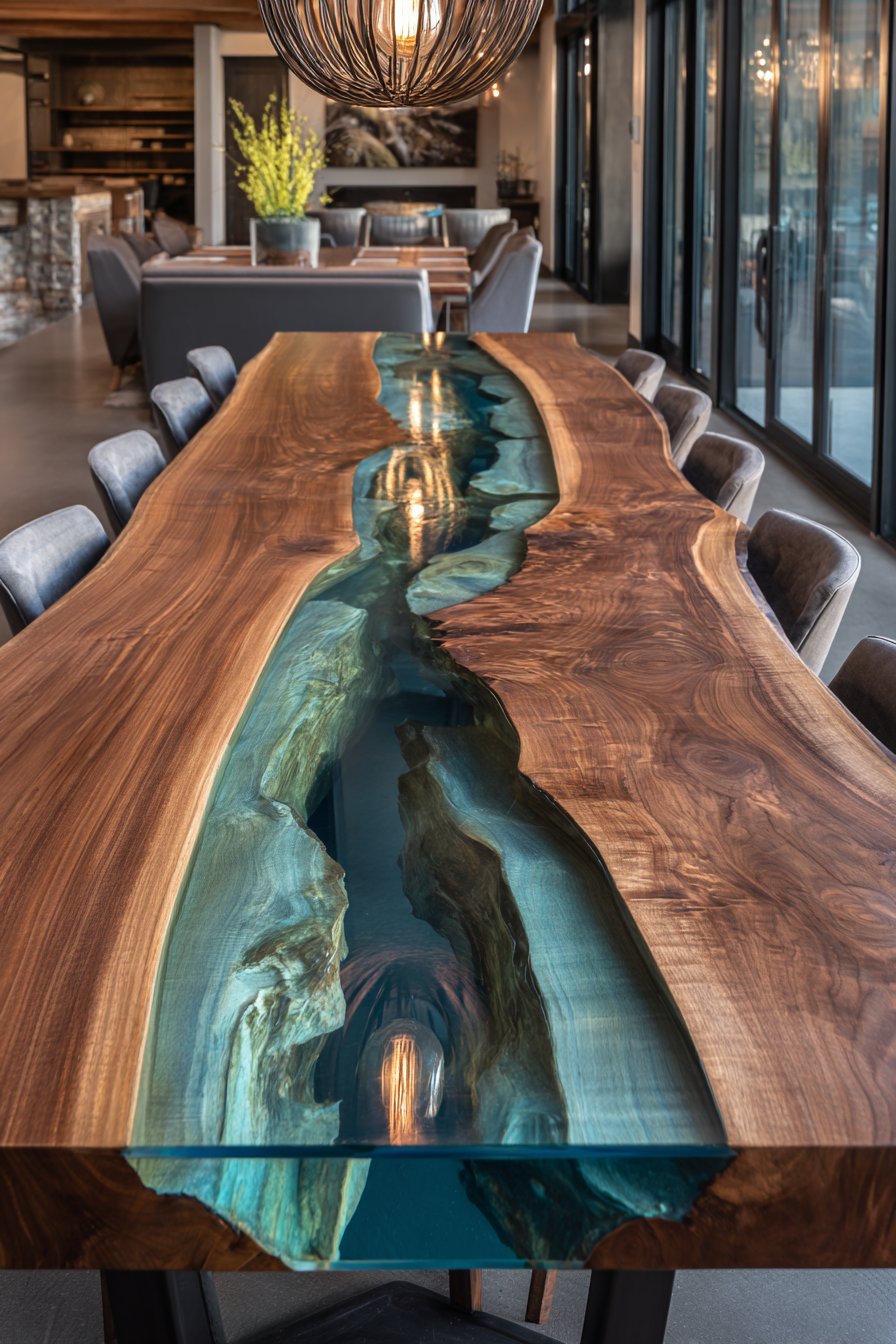
This design targets those who appreciate contemporary art, value uniqueness, and seek furniture that makes bold statements. The river table concept represents relatively recent innovation in woodworking, combining traditional live-edge techniques with modern epoxy technology. Each table is completely unique based on the specific wood slabs and resin color chosen, ensuring one-of-a-kind status that justifies investment pricing.
Key Design Tips: Work with experienced craftspeople skilled in both live-edge work and epoxy application. Select high-quality epoxy specifically formulated for furniture applications with UV resistance. Choose wood slabs with interesting grain and edge contours for maximum visual impact. Plan resin color carefully—blues and greens create water effects while clear showcases wood beneath. Ensure proper curing and finishing to prevent yellowing or surface imperfections. Budget significantly—river tables require premium materials and advanced skills. Protect the surface from heat and scratches as epoxy can be more vulnerable than wood. Consider lighting placement to showcase both wood and resin elements effectively.
21. Traditional Golden Oak Pedestal
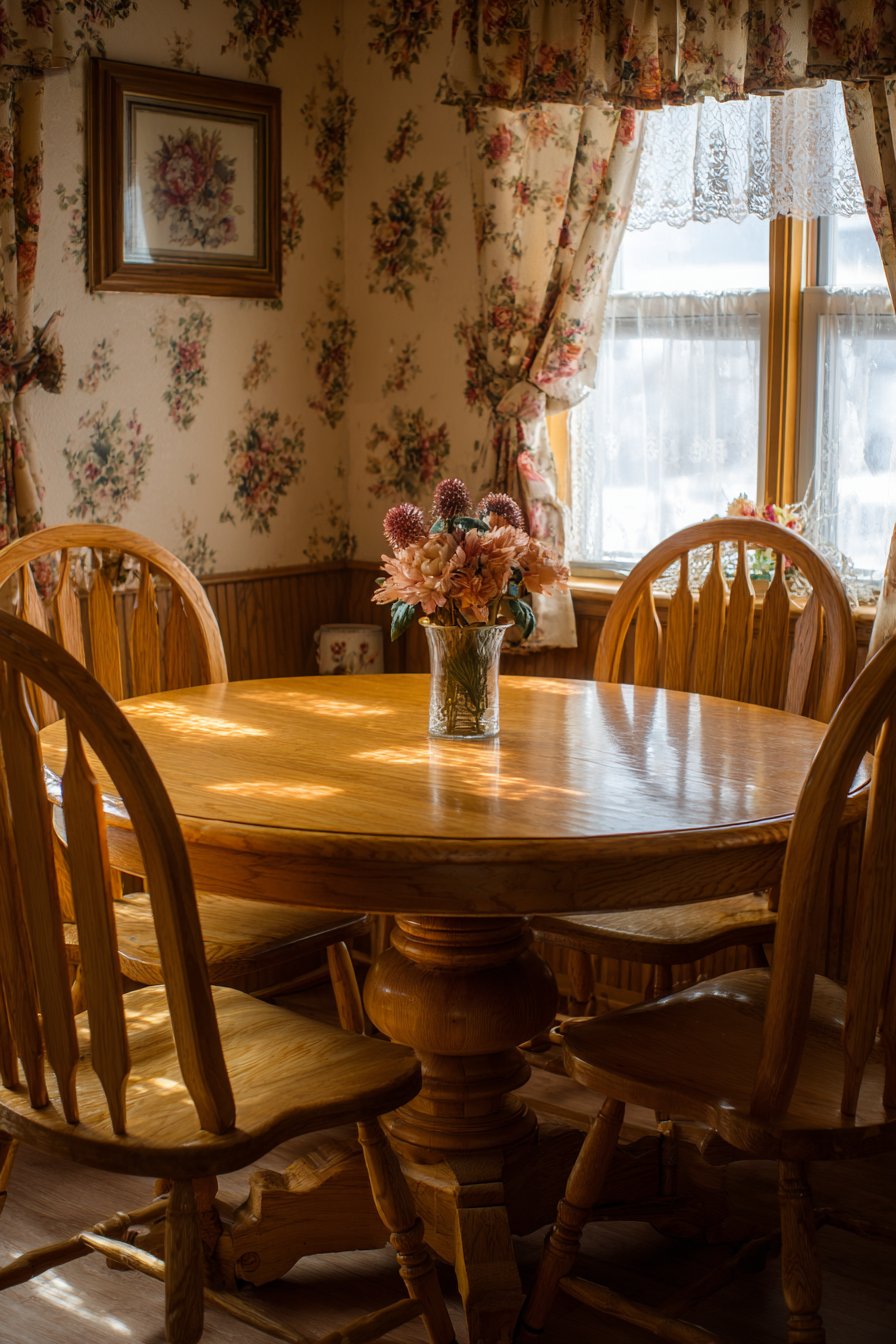
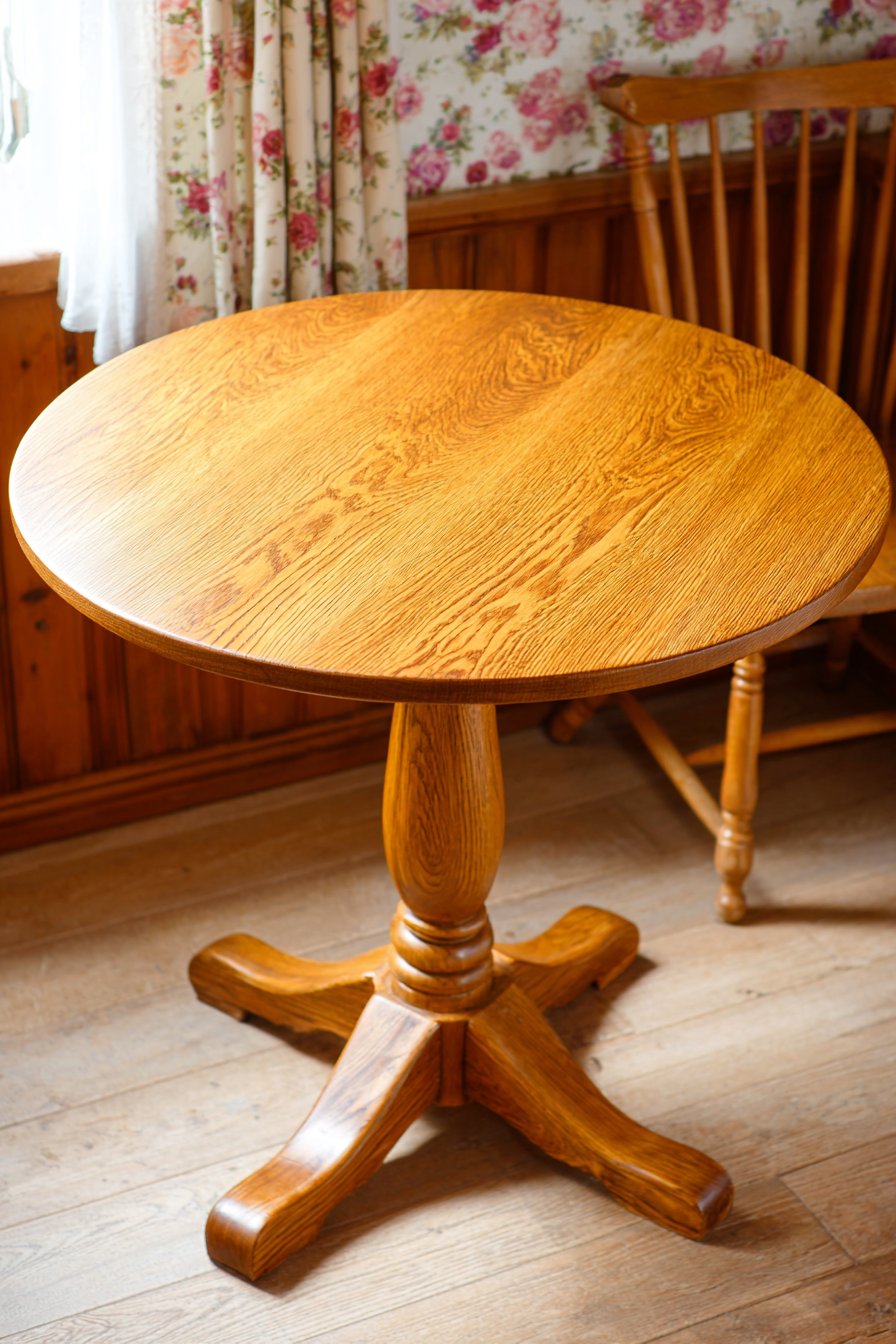
Country charm radiates from this pedestal dining table in golden oak featuring classic turned column base and claw feet. The round top displays cathedral grain pattern—dramatic grain formations that resemble architectural arches—enhanced by warm honey coloring and satin varnish. Placed in cottage-style dining room with floral wallpaper and lace curtains, the table anchors a nostalgic interior celebrating traditional country aesthetics. Windsor chairs in matching oak finish create coordinated appearance appropriate to the traditional styling.
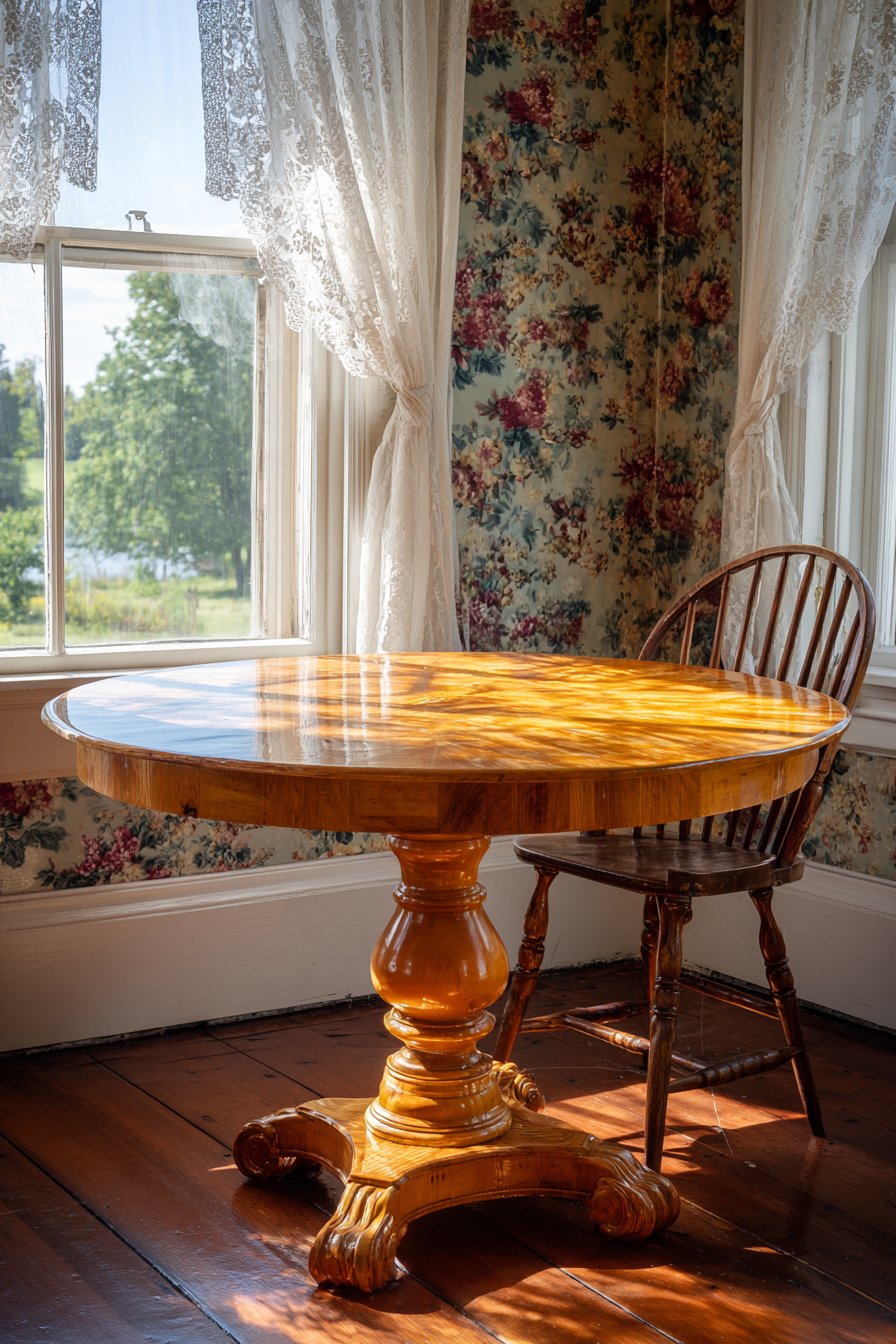
Natural window light creates soft highlights on the wood surface while lace curtains filter harsh glare, creating romantic diffused atmosphere. The pedestal base’s ornate turning work and claw feet demonstrate traditional woodworking skills increasingly rare in contemporary furniture manufacturing. Cathedral grain’s natural drama provides visual interest without requiring additional ornamentation or decoration.
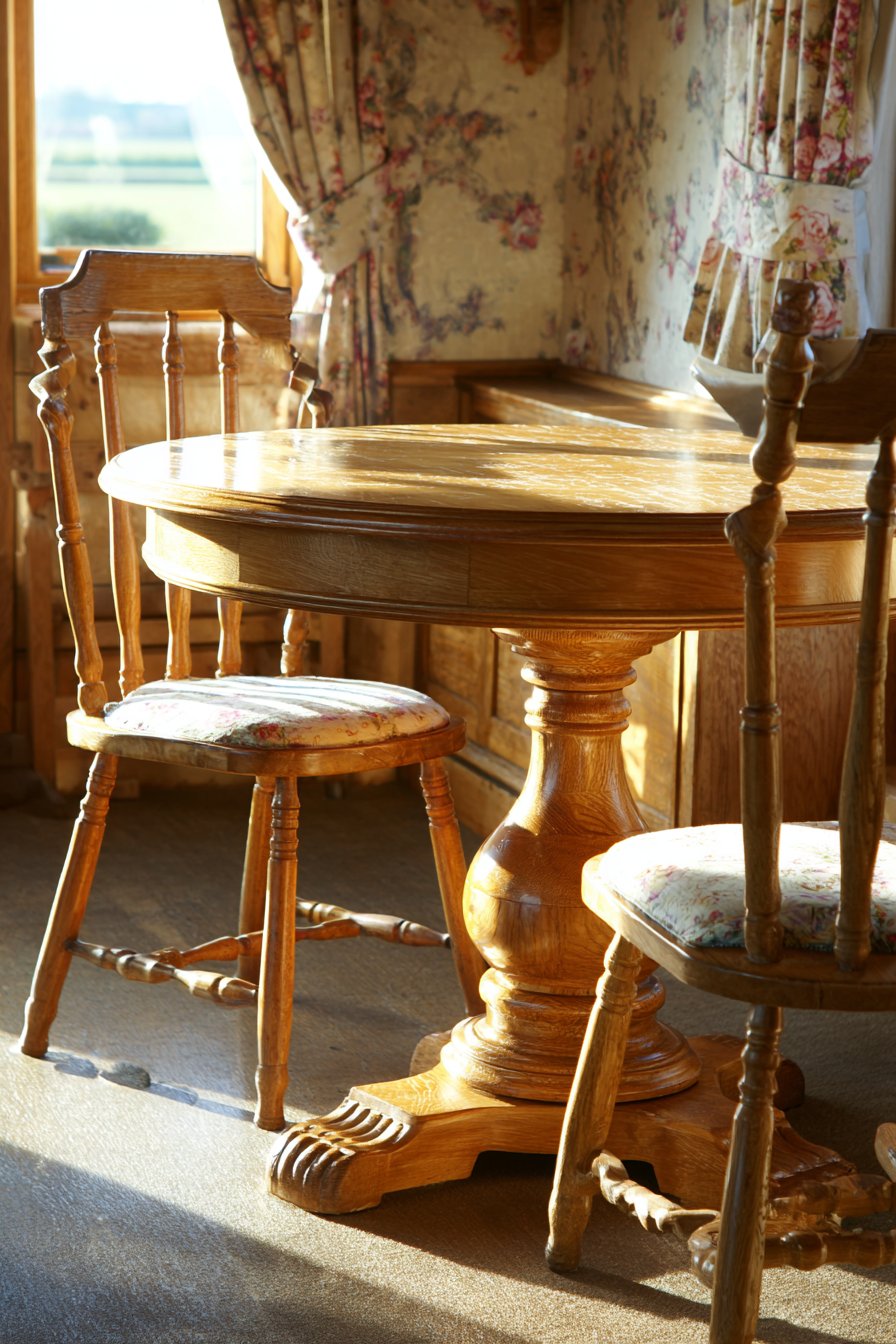
This design appeals to those who value traditional aesthetics, craftsmanship heritage, and the cozy comfort of country cottage interiors. The golden oak’s warm tones and traditional form create welcoming environment that feels immediately familiar and comfortable. For those furnishing country homes, cottages, or traditional interiors, this table offers authentic period styling backed by solid construction that ensures decades of service.
Key Design Tips: Choose solid oak with prominent cathedral grain for authentic traditional appearance. Select pedestal bases with substantial column diameter for visual and structural stability. Coordinate chair finishes with table for traditional matched-set aesthetic. Apply satin varnish rather than high gloss for appropriate period appearance. Incorporate other traditional elements like floral patterns, lace, and vintage accessories. Maintain varnished surfaces with appropriate cleaners that don’t damage finish. Consider the pedestal base diameter to ensure adequate leg room for comfortable seating. Accept that traditional styling may not suit contemporary or minimalist interiors.
22. Butterfly Joint Craft Table
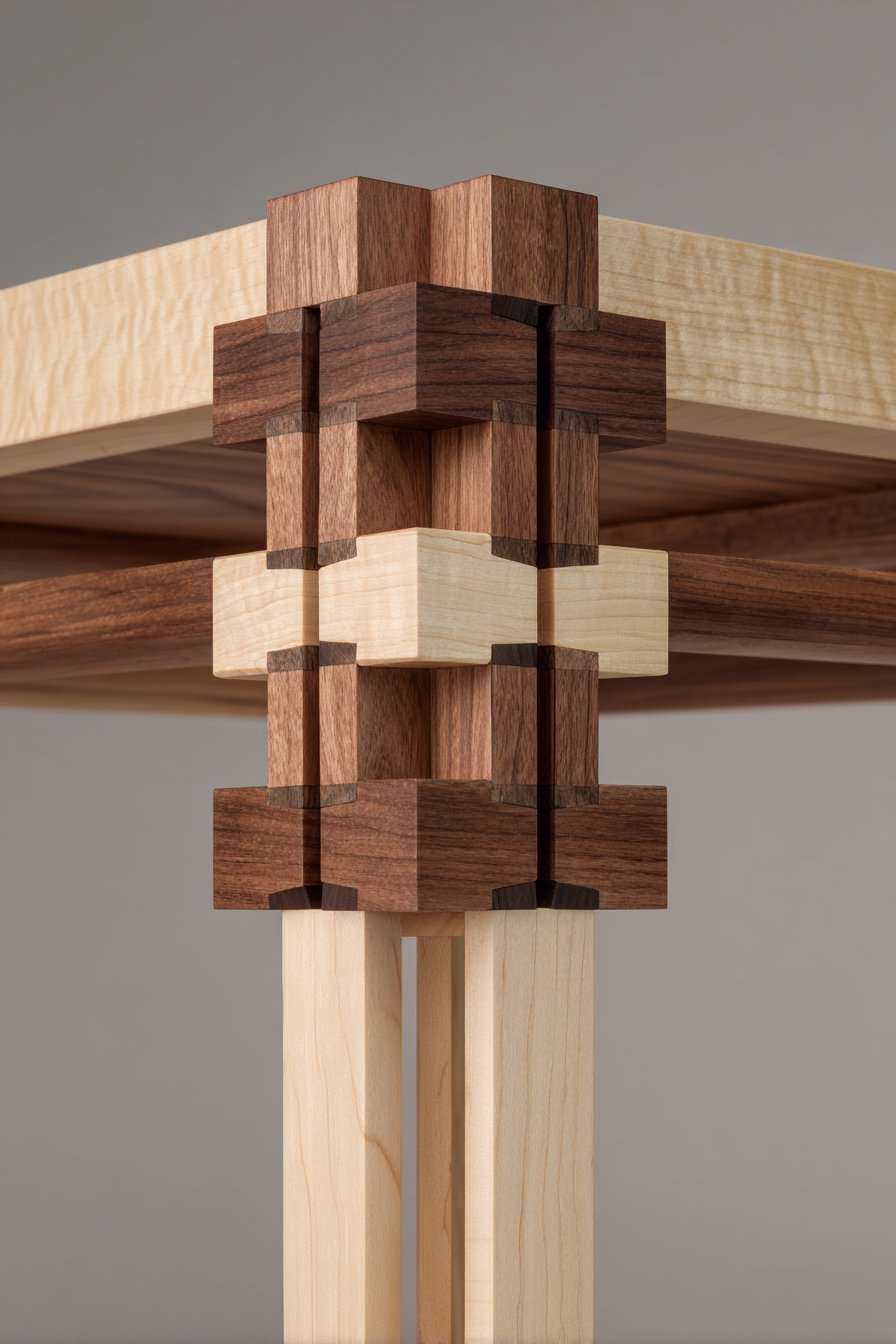
Woodworking artistry becomes decorative element in this butterfly joint dining table where contrasting dark walnut butterflies span cracks in light maple top. The joinery—traditionally used to stabilize cracks and prevent further splitting—transforms functional necessity into intentional design feature that showcases craftsmanship. The modern table sits comfortably in craftsman-style home where appreciation for handmade details and visible joinery aligns with Arts and Crafts movement principles. Simple modern chairs avoid distracting from the joinery’s visual impact.
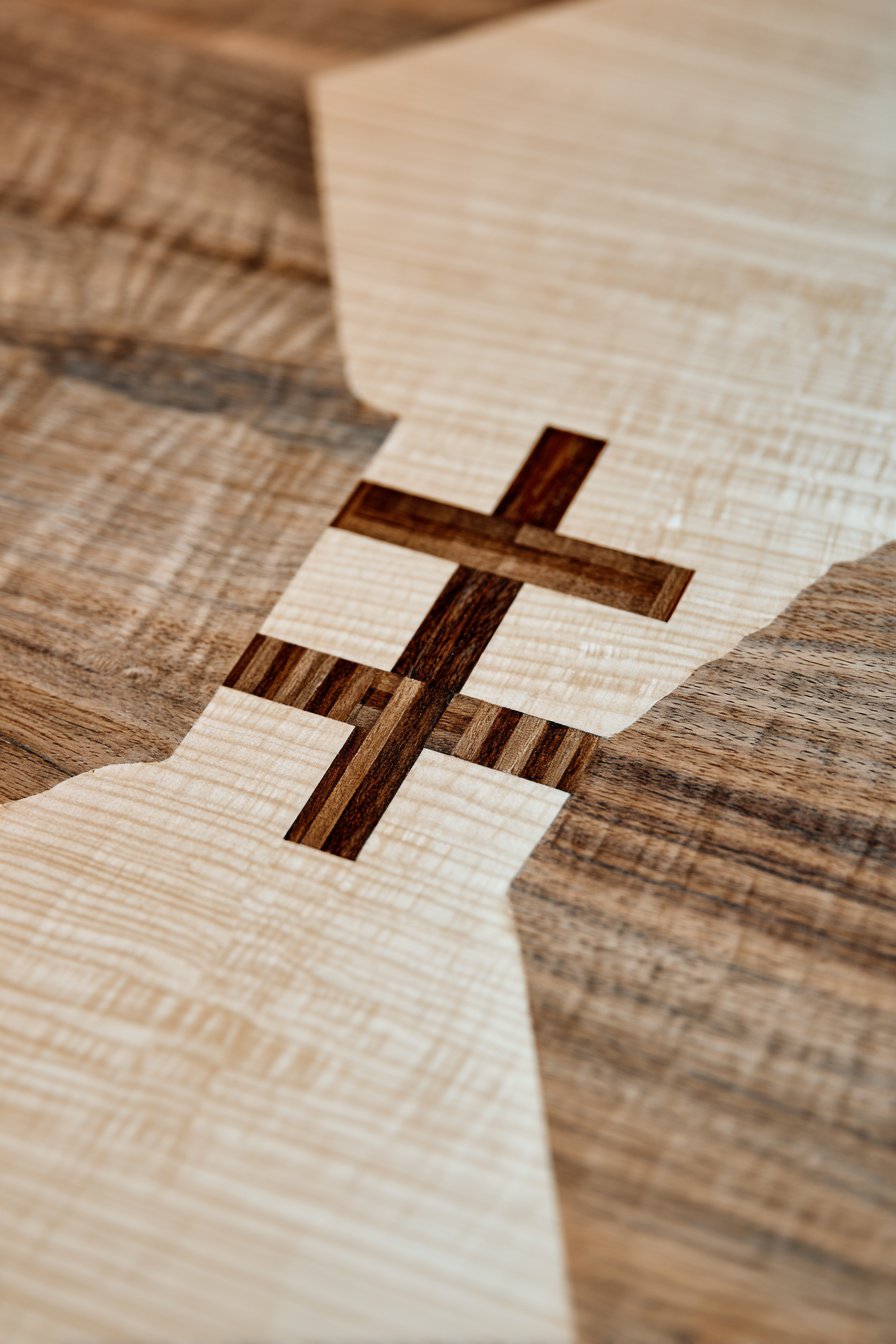
Detail-focused photography highlights the precision butterfly joints and the striking contrast between walnut and maple. Each butterfly represents skilled hand work—cutting the joint, shaping the contrasting wood, and fitting with precision that ensures both structural integrity and visual appeal. The visible joinery creates conversation piece while demonstrating transparency about construction methods and honest use of materials.
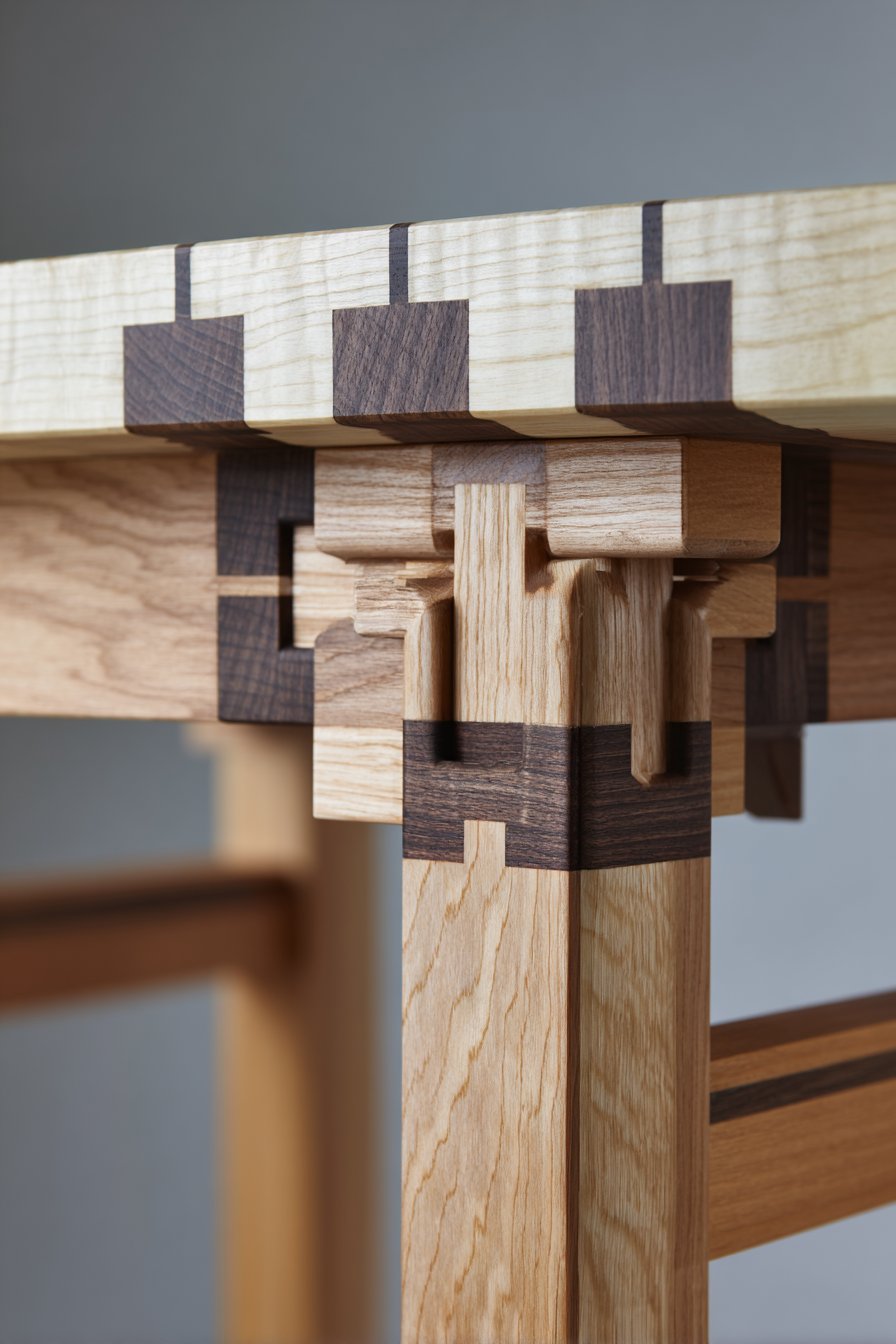
This design resonates with those who appreciate fine woodworking, value visible craftsmanship, and understand furniture as expression of human skill rather than mass production. The butterfly joints represent joining technique used for centuries, connecting contemporary owners to long woodworking tradition. Each joint serves practical purpose while creating artistic element, embodying the principle that function and beauty need not be separate.
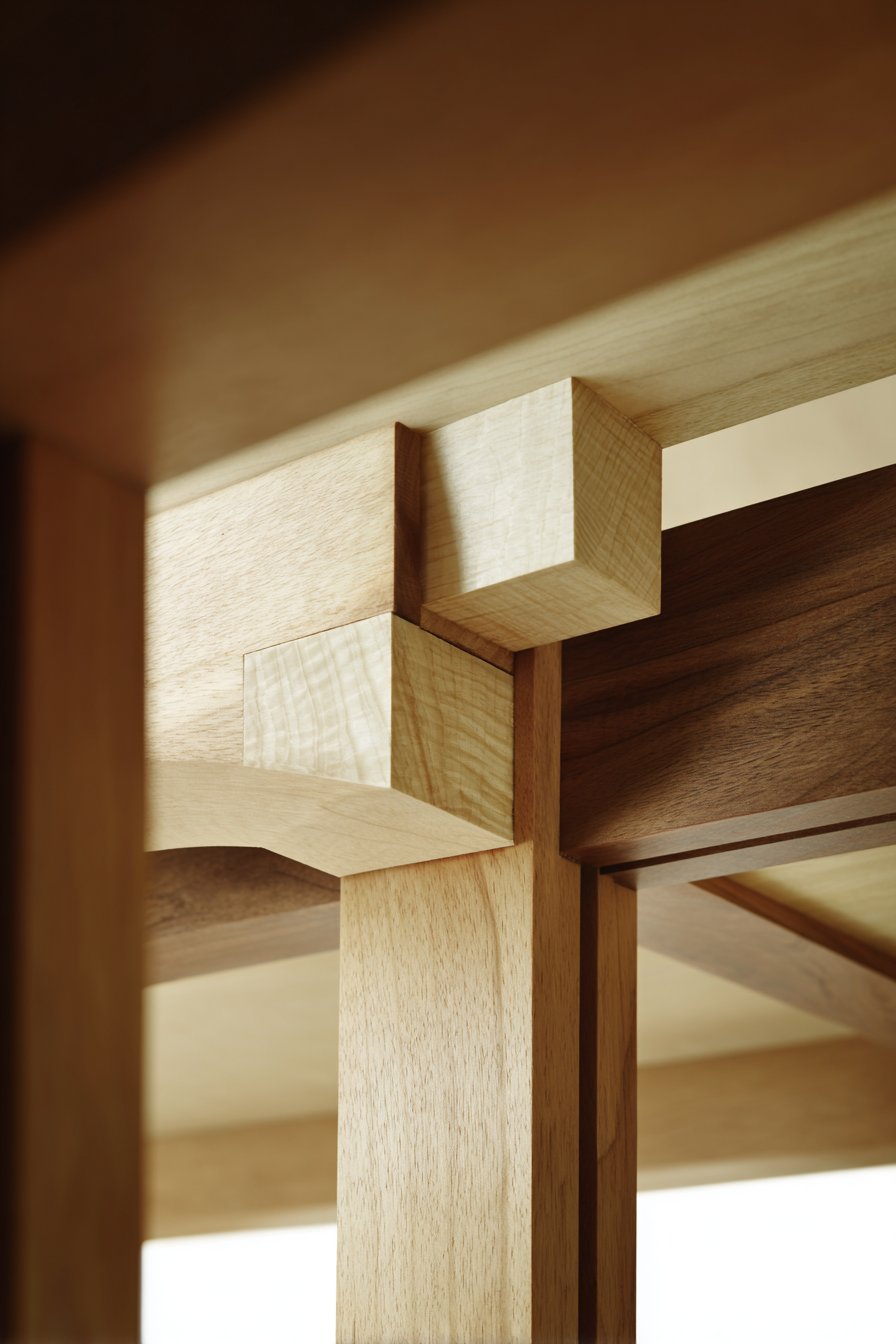
Key Design Tips: Work with skilled woodworkers who can execute precise butterfly joint cutting and fitting. Choose strongly contrasting wood species to maximize visual impact of butterflies. Position joints strategically across natural cracks or create intentional gaps for decorative application. Ensure proper wood stabilization before adding butterflies to prevent further movement. Apply consistent finish across both wood species despite color differences. Celebrate visible joinery rather than hiding construction methods. Protect the surface to preserve both structural and aesthetic integrity of the joints. Consider the table as investment in craftsmanship that appreciates value over time.
23. Counter-Height Rustic Hickory
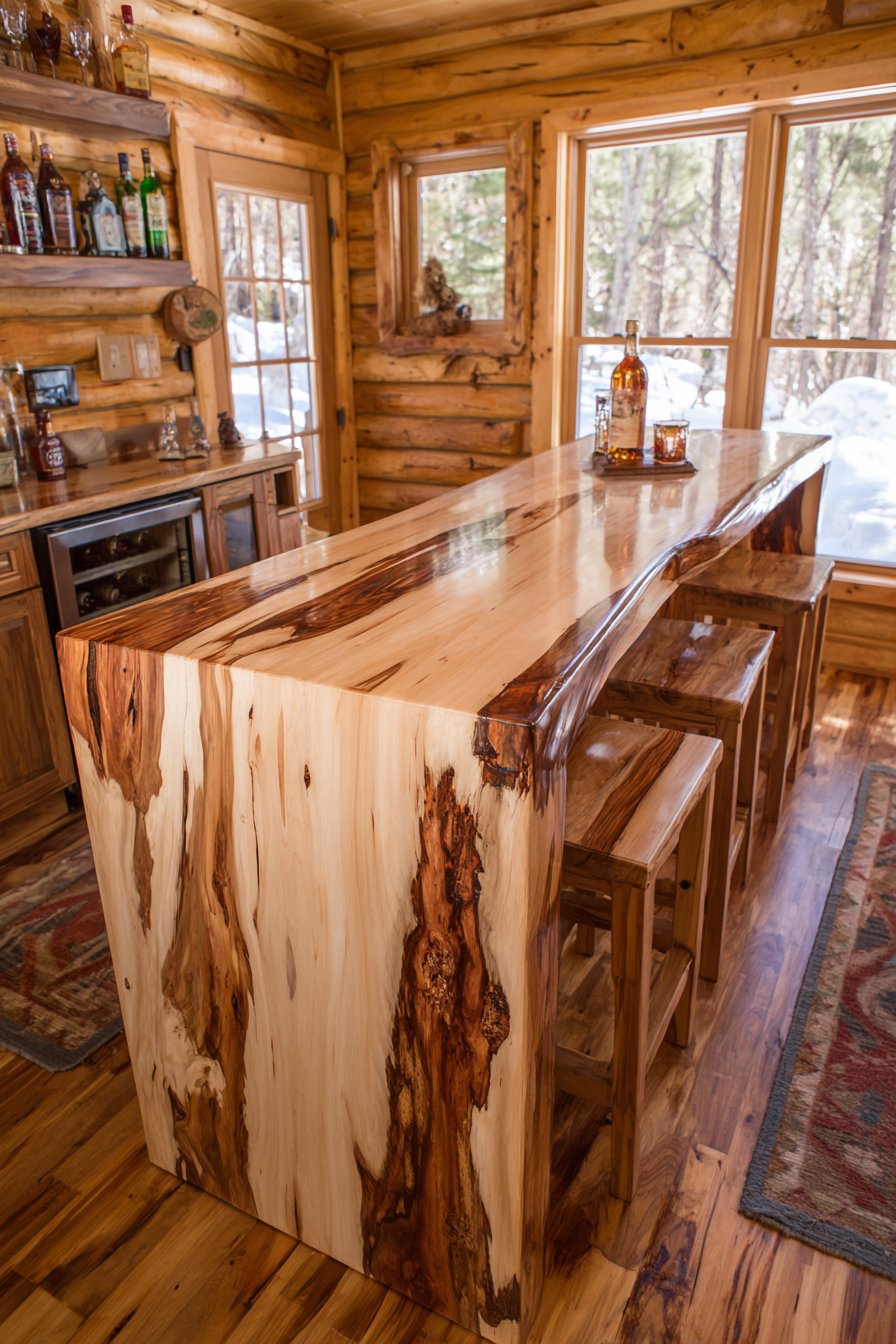
Casual entertaining defines this counter-height dining table in rustic hickory showcasing dramatic natural color variation. Creamy sapwood and rich brown heartwood create striking two-toned appearance unique to hickory species. The tall table pairs with backless stools for casual dining in open-concept kitchen, creating social space that encourages interaction during meal preparation. Natural light from kitchen windows highlights hickory’s distinctive color contrasts and irregular grain patterns.
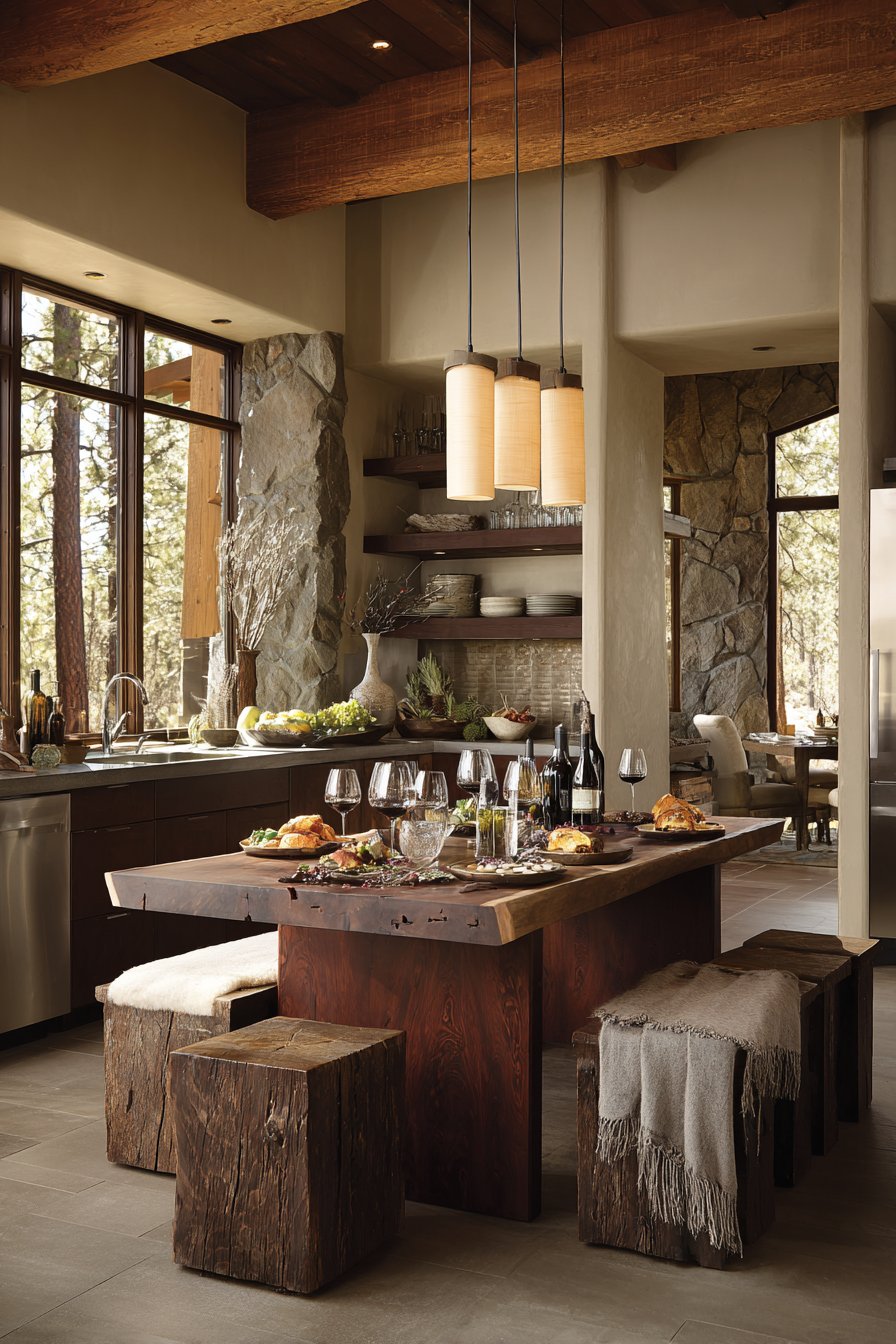
The counter height positions diners at comfortable elevation for conversation with those working in adjacent kitchen, blurring boundaries between cooking and dining activities. Hickory’s hardness and density ensure durability appropriate for high-traffic kitchen dining, while the natural color variation creates visual movement and organic interest impossible to achieve with artificially stained or painted surfaces. The wood’s honest, unfussy character matches the casual entertaining approach.
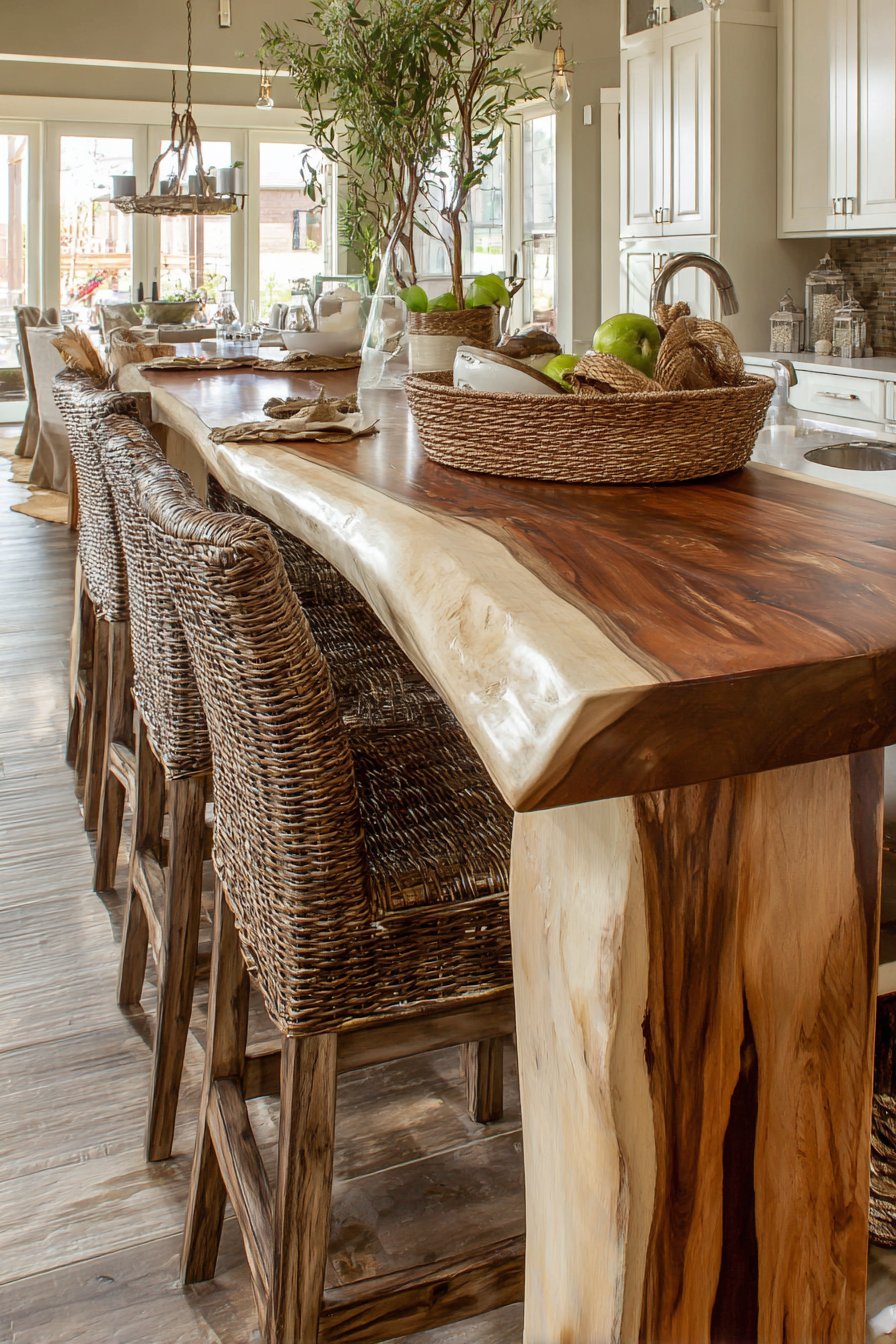
This design suits those who value open, social kitchen environments where cooking and eating flow together naturally. The counter height and backless seating create informal atmosphere that encourages lingering conversations and spontaneous gatherings. Hickory’s dramatic natural coloring provides built-in character that requires no artificial enhancement, celebrating wood’s inherent beauty.
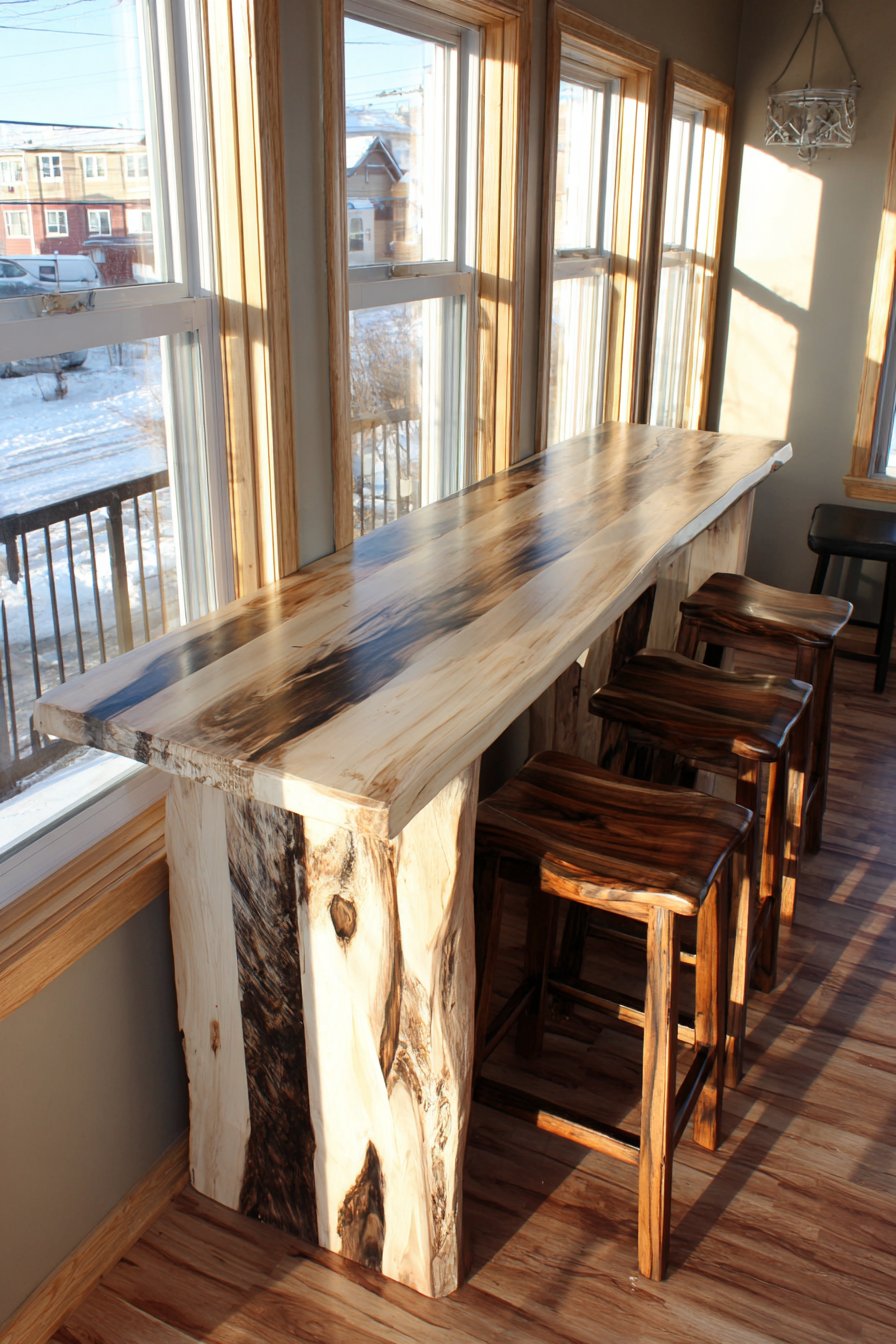
Key Design Tips: Select hickory specifically for its dramatic sapwood-heartwood contrast. Choose counter height (36 inches) for proper proportion with kitchen counters and bar seating. Pair with backless stools that tuck completely under table when not in use. Apply clear finishes that showcase rather than obscure hickory’s natural color variation. Position in open-concept spaces where counter height facilitates kitchen-dining interaction. Ensure proper support for counter-height construction which experiences different stress patterns than standard dining tables. Embrace the two-toned appearance rather than attempting to achieve color uniformity. Maintain with appropriate products that preserve the natural color contrast.
24. Quarter-Sawn White Oak Parsons
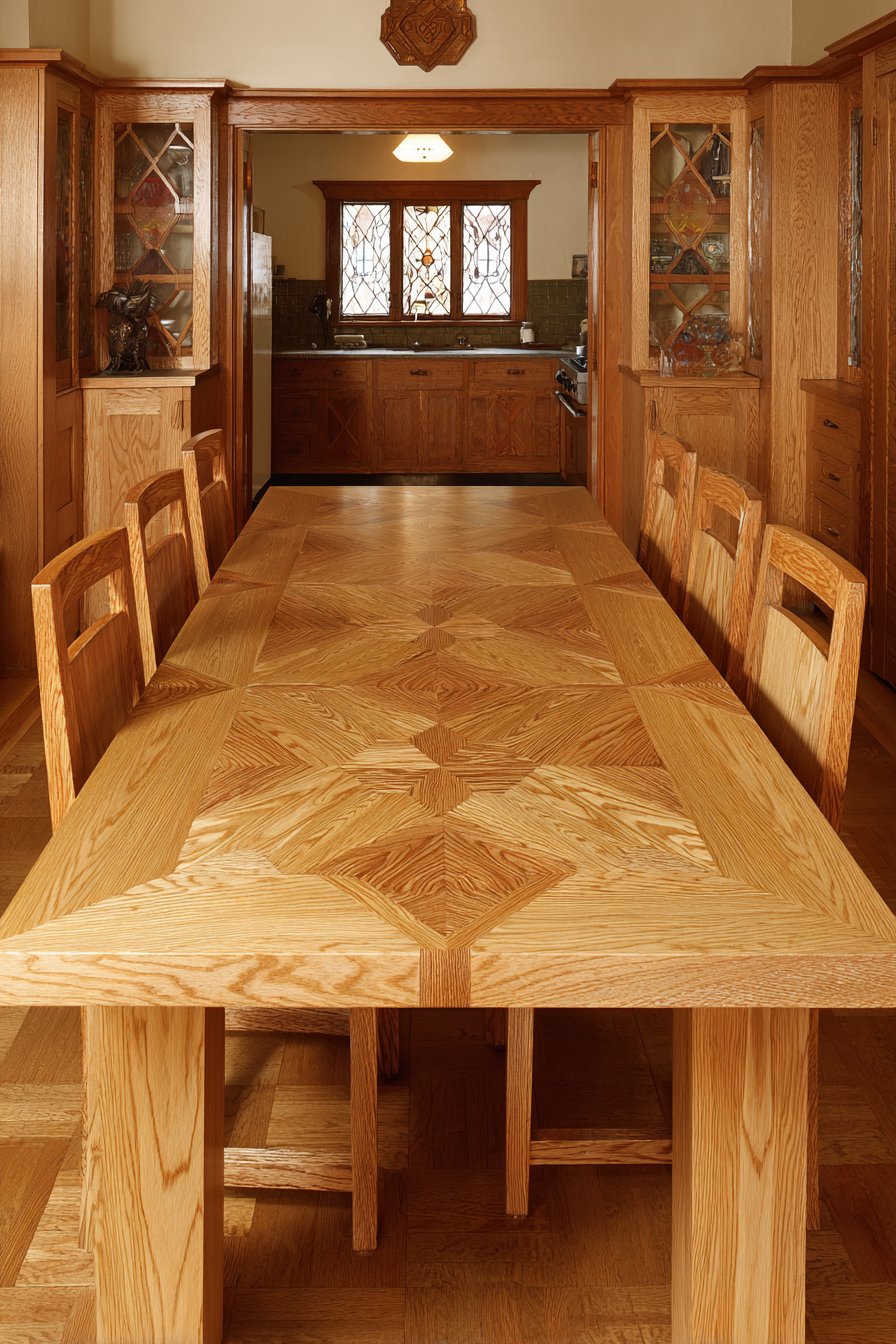
Arts and Crafts principles guide this parsons-style dining table in quarter-sawn white oak featuring distinctive ray fleck figure creating tiger-stripe patterns. The table features thick geometric legs and minimal ornamentation, letting wood character provide all necessary visual interest. Positioned in craftsman bungalow dining room with built-in cabinetry in matching oak, the table embodies Arts and Crafts movement ideals of honest materials, visible grain, and form following function. Period-appropriate chairs complete the historically informed interior.
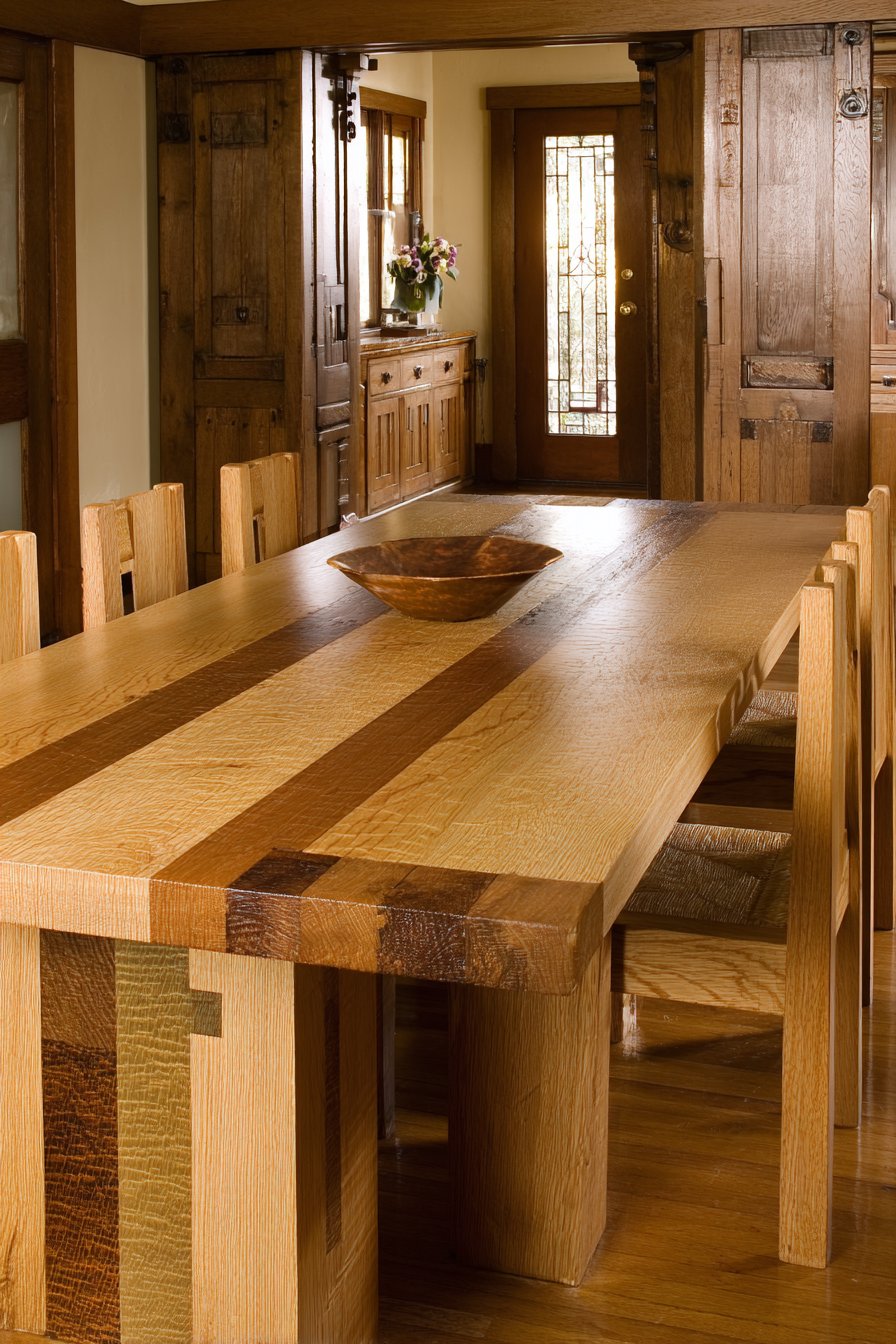
Quarter-sawing—a lumber cutting method that produces straight grain and prominent ray flecks—creates the distinctive figure that Arts and Crafts designers prized for its beauty and stability. The medullary rays appear as lighter flecks across the wood surface, creating subtle shimmer effect particularly prominent in white oak. The parsons form’s geometric simplicity and substantial proportions embody movement principles of straightforward construction and rejection of unnecessary ornamentation.
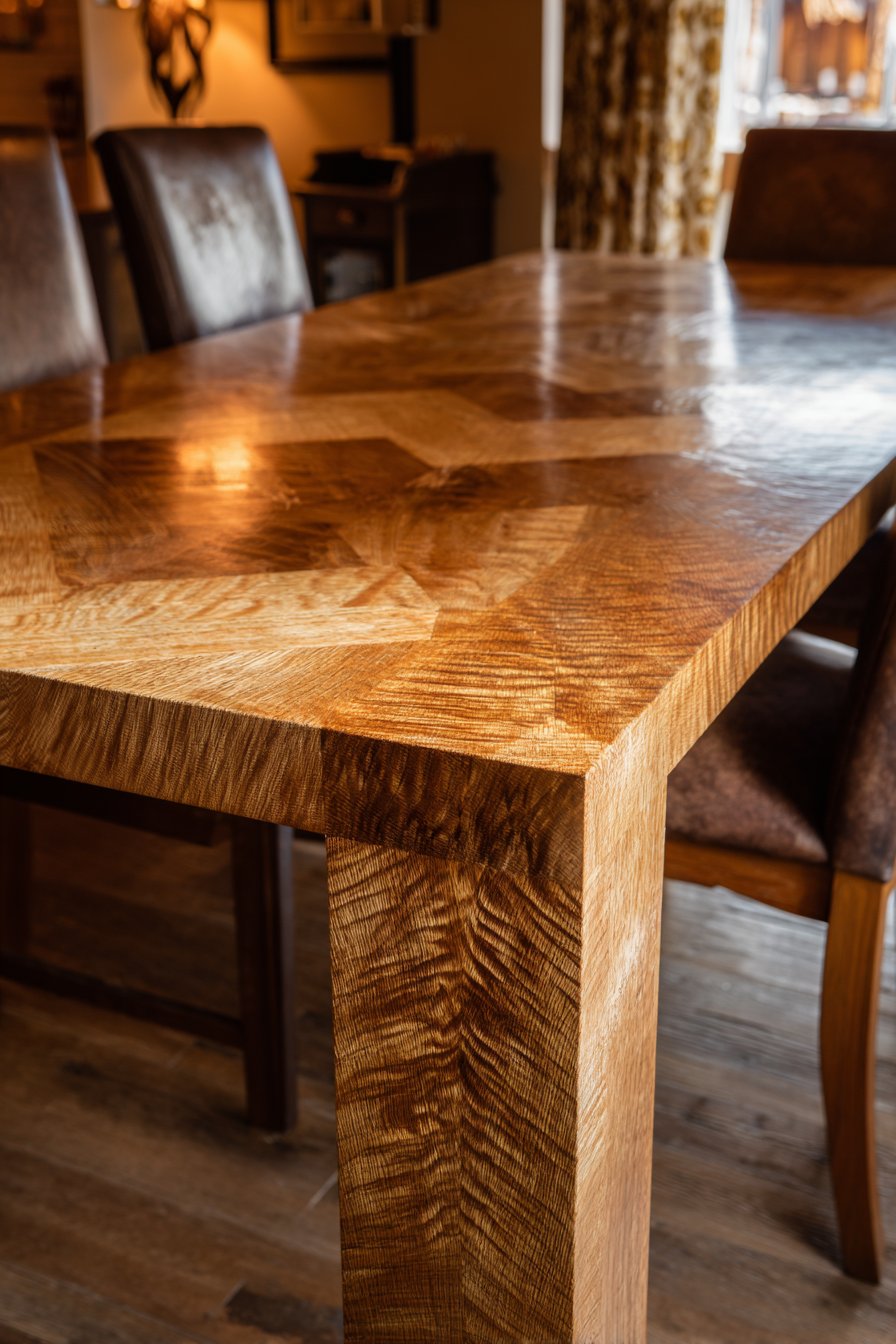
This design appeals to craftsman home owners and those who appreciate the Arts and Crafts movement’s design philosophy. Quarter-sawn oak represents premium lumber grade with superior stability and distinctive appearance worth the additional cost. The table’s honest construction and prominent grain figure create enduring beauty that aligns with movement founder’s vision of democratic good design accessible beyond the wealthy elite.
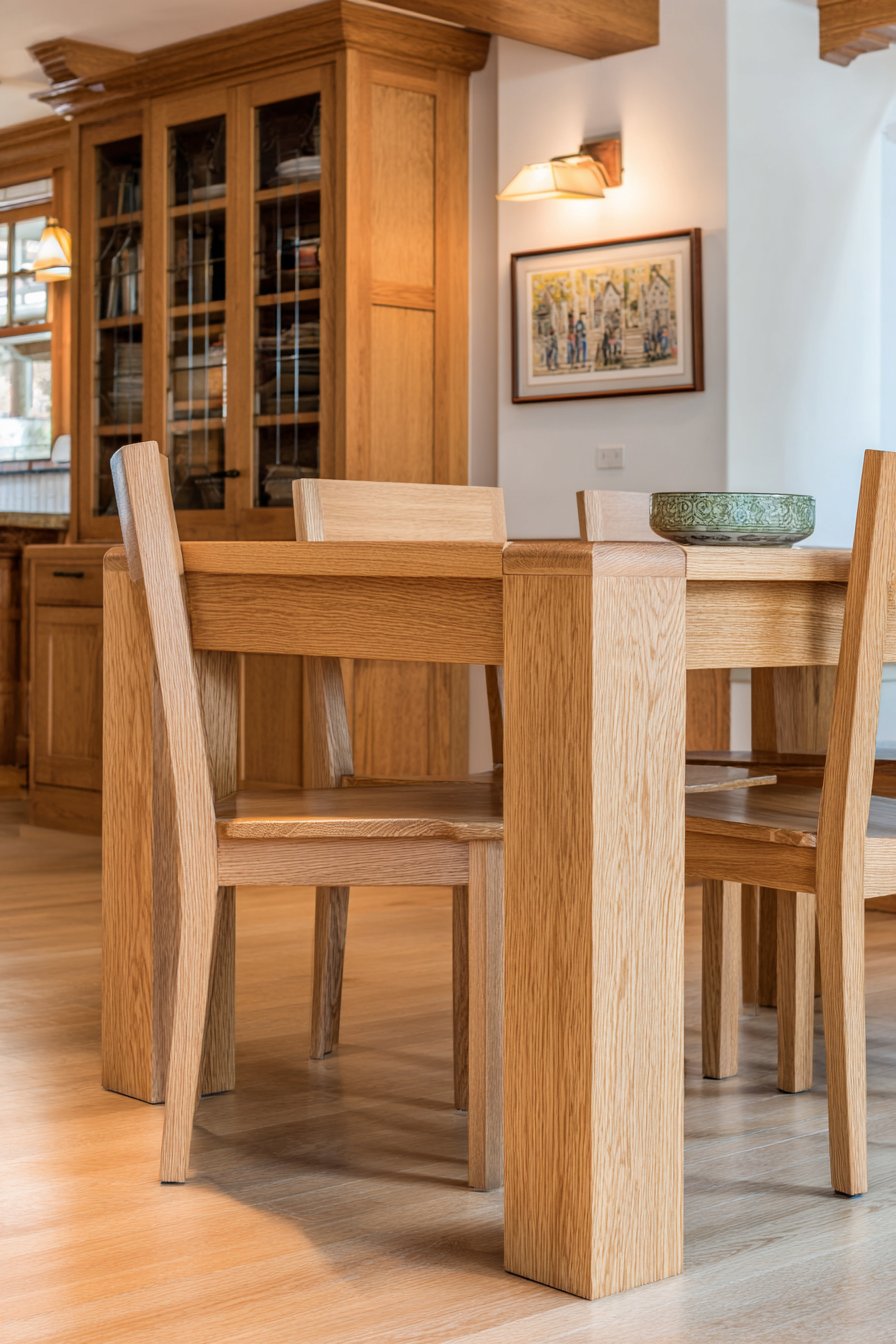
Key Design Tips: Specify quarter-sawn rather than plain-sawn oak for authentic ray fleck figure. Choose parsons or other geometric forms appropriate to Arts and Crafts aesthetic. Match wood species and finish with built-in cabinetry if present in craftsman-era homes. Apply finishes that enhance rather than obscure ray fleck figure. Coordinate with period-appropriate lighting, hardware, and accessories. Invest in quality—quarter-sawn oak commands premium pricing but offers superior characteristics. Maintain oiled or varnished surfaces with appropriate period-sensitive products. Appreciate that authentic Arts and Crafts styling suits specific architectural contexts best.
25. Mediterranean Monastery Chestnut Refectory
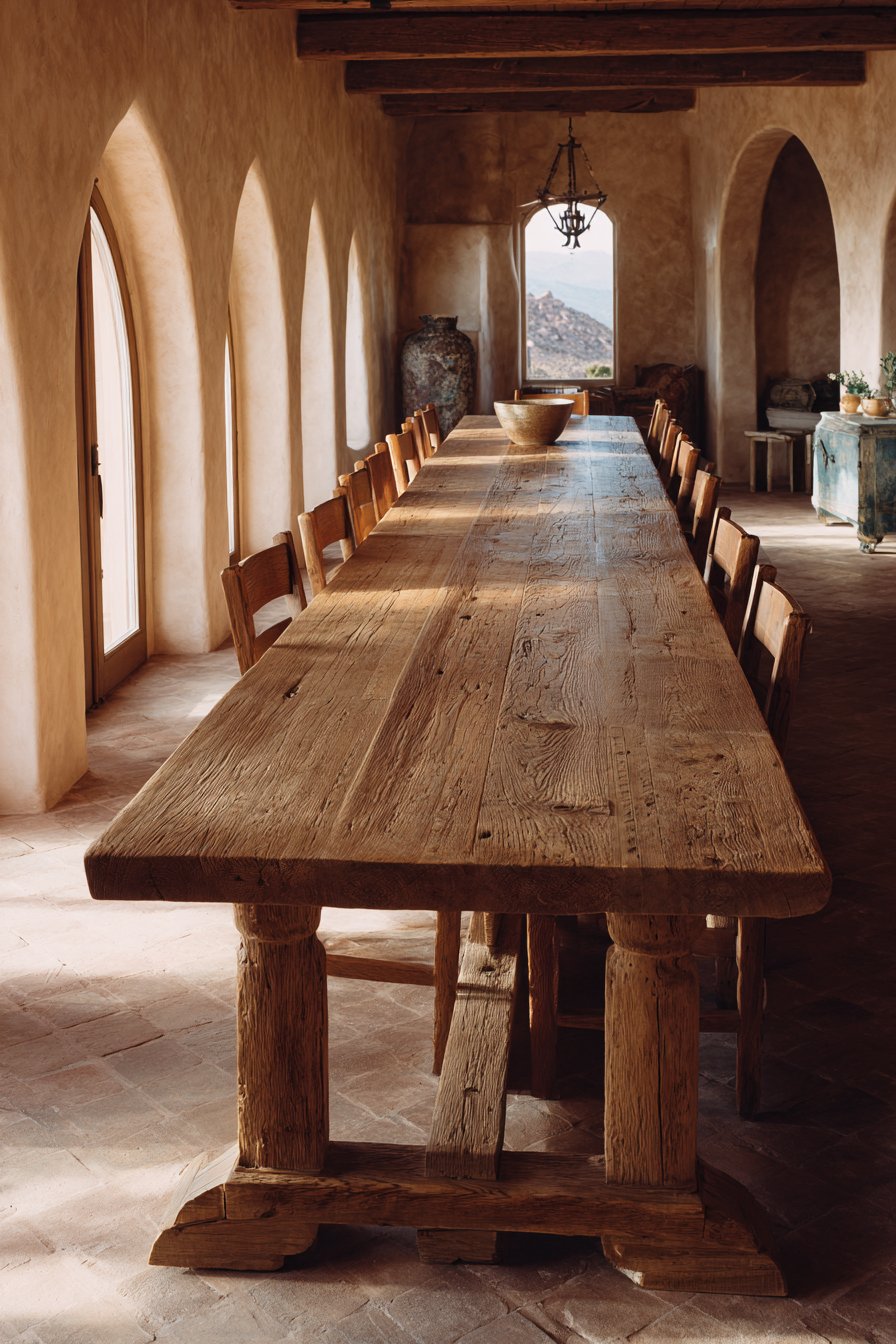
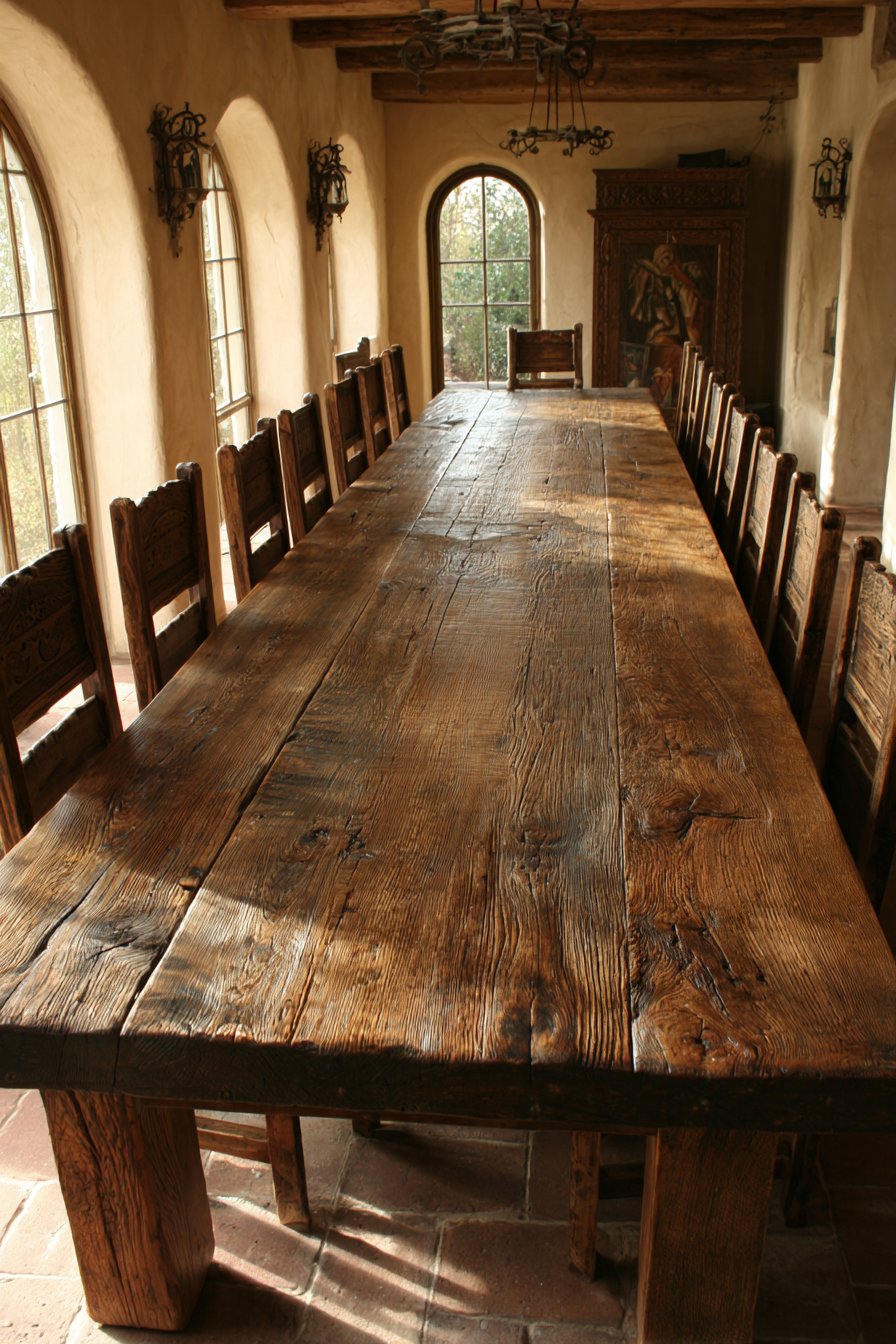
Old-world charm permeates this refectory-style monastery table in solid chestnut displaying aged appearance with worn edges, subtle dents, and rich medium-brown patina suggesting centuries of use. The long narrow table seats ten comfortably, its sturdy stretcher base evoking furniture constructed for religious communities where durability trumped delicacy. Placed in Mediterranean-inspired dining room with stucco walls and terracotta floors, the table creates atmospheric setting that transports diners to European cloister or Italian villa.
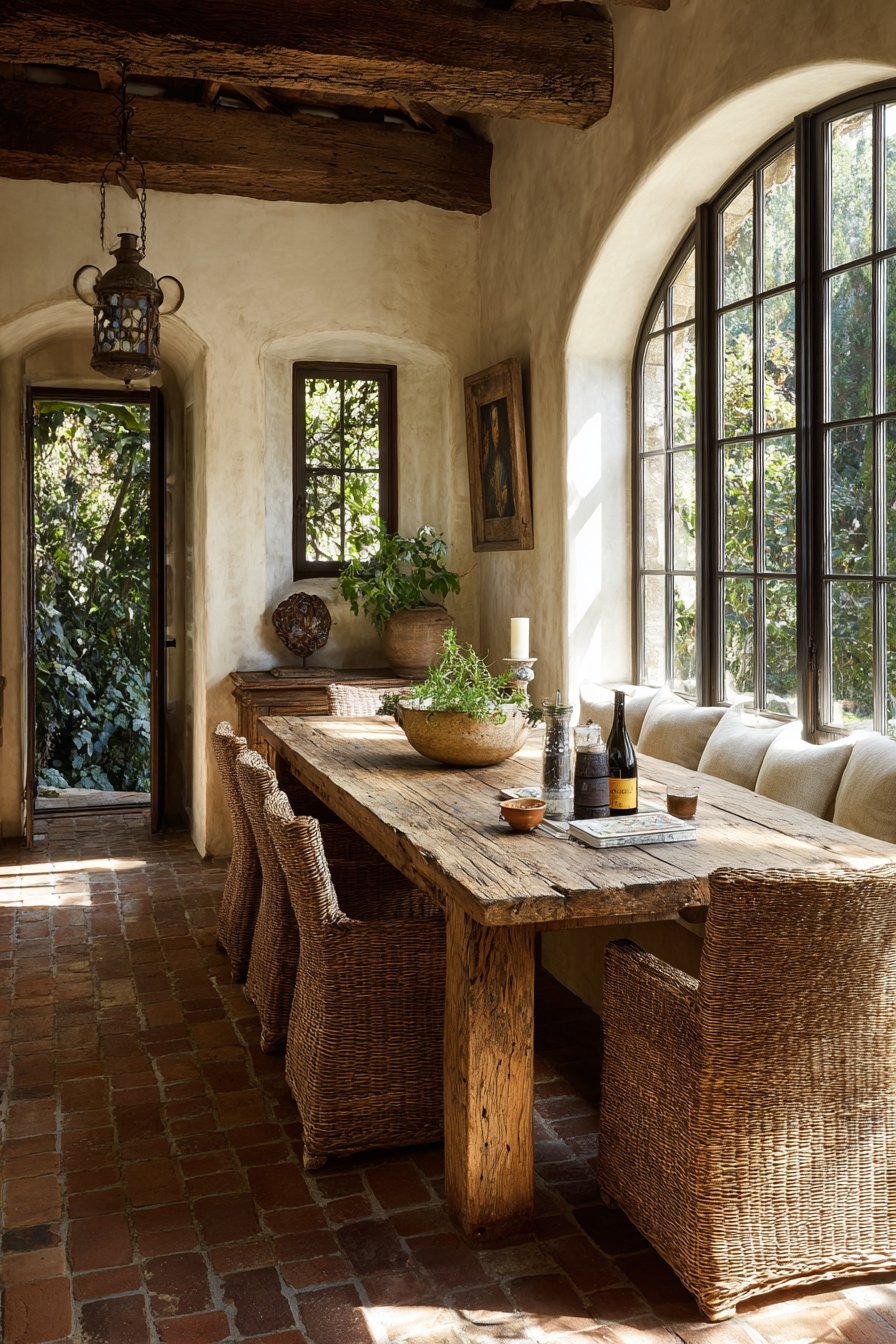
Simple rush-seated chairs line both sides, their humble construction appropriate to the monastery aesthetic while providing necessary seating. Warm afternoon light streams through arched windows, highlighting the chestnut’s honest wear and authentic character accumulated through generations of use. The worn edges and subtle surface imperfections aren’t damage but evidence of the table’s journey through time and service to countless meals and gatherings.
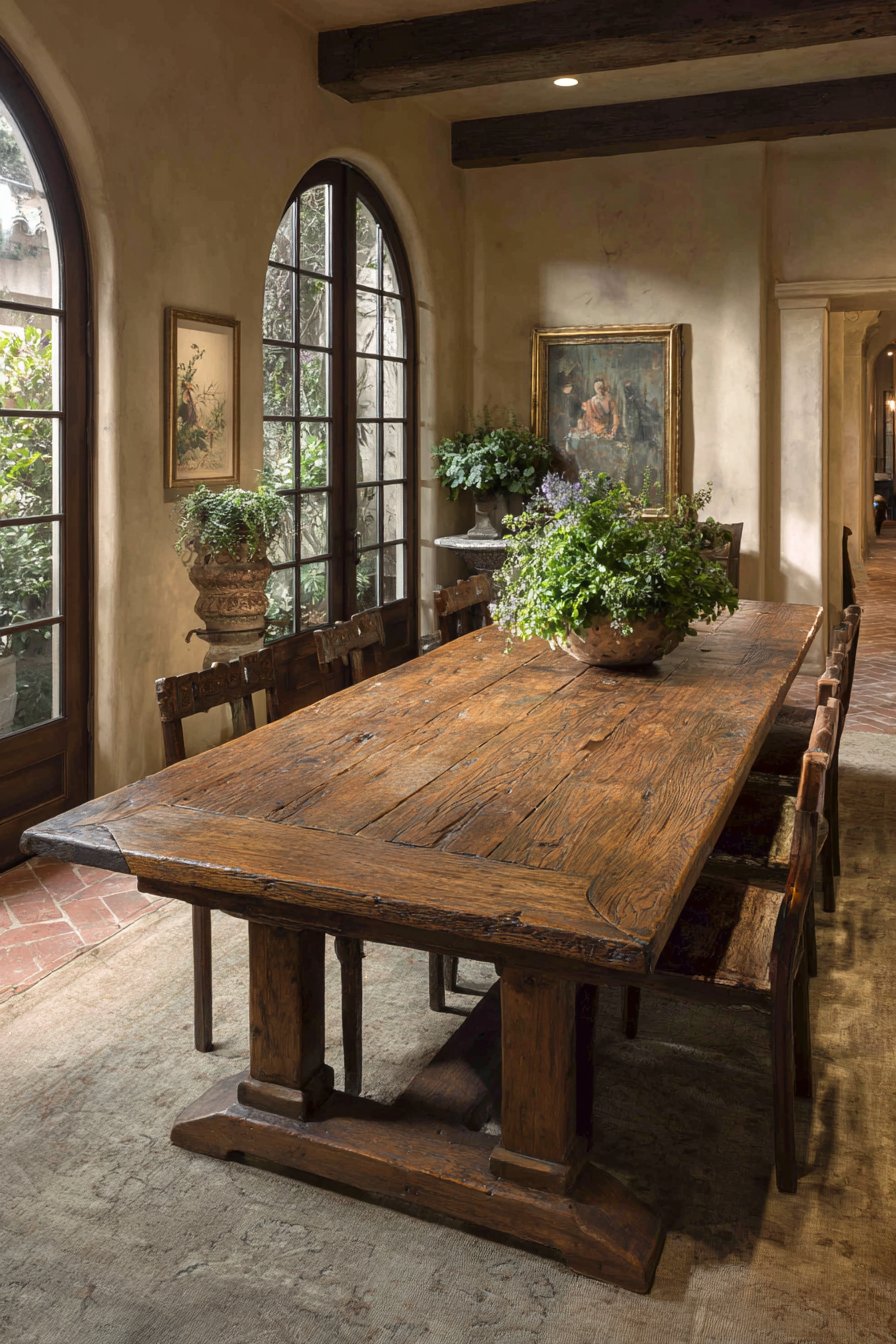
This design speaks to those who value historical connection, appreciate aged materials, and seek furniture with soul and story. While contemporary monastery tables are reproductions rather than actual antiques, quality examples capture authentic spirit through appropriate wood selection, construction methods, and finishing techniques that suggest rather than falsify age. The result is table that feels immediately familiar and comfortable, as though it has always been part of the home.
Key Design Tips: Choose chestnut or similar species with warm tones and aging characteristics appropriate to Mediterranean aesthetic. Apply finishing techniques that suggest age without falsifying antique status. Select refectory proportions—long and relatively narrow—for authentic monastery table form. Pair with simple rush or ladder-back seating appropriate to humble monastery origins. Incorporate Mediterranean architectural elements like stucco, terracotta, and arched openings. Accept and celebrate wear patterns as contributing to authentic aged appearance. Maintain with gentle cleaning that preserves patina rather than restoring to new condition. Understand that authentic monastery aesthetic suits specific architectural and decorative contexts best.
26. Convertible Beech Multi-Function Design
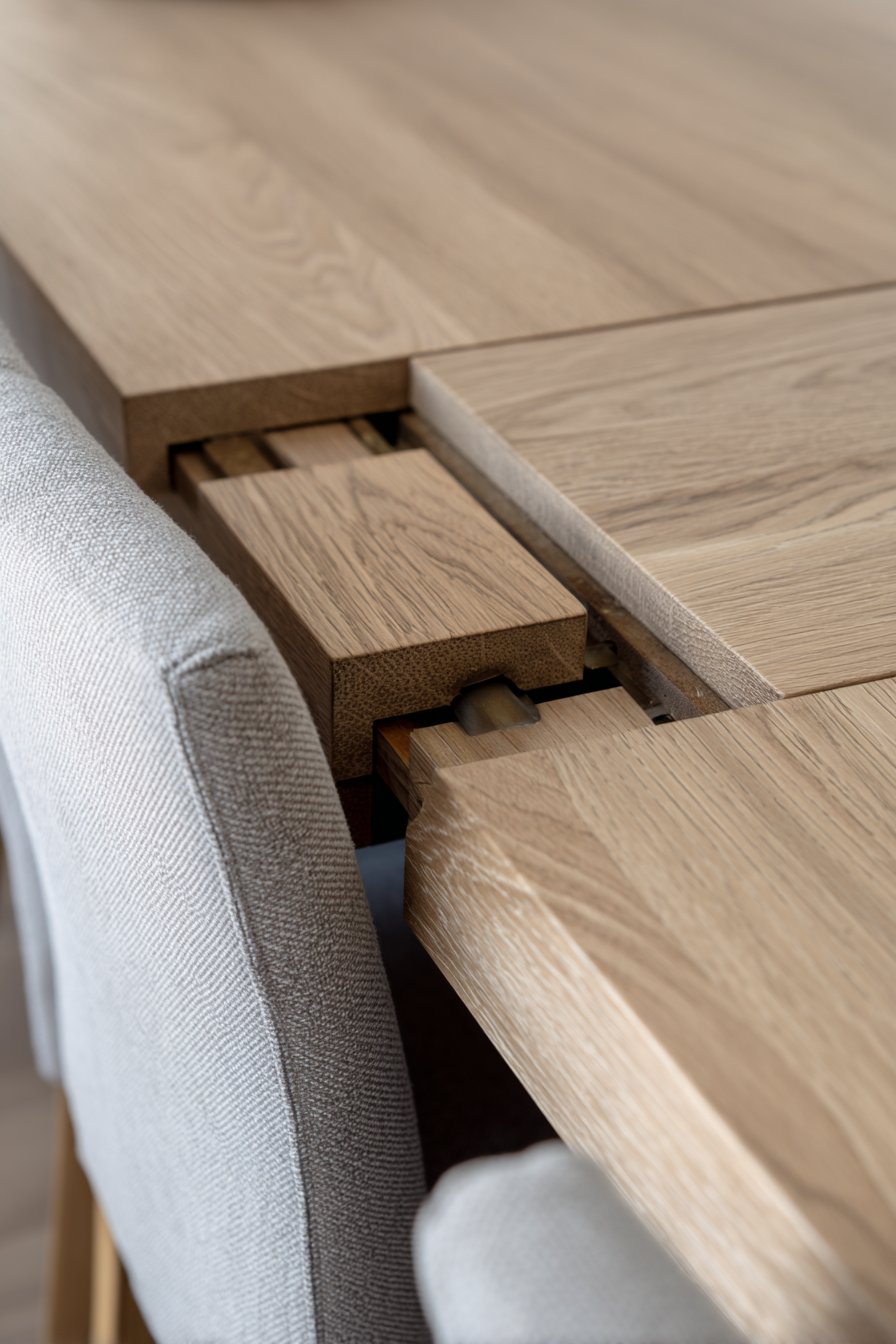
Flexible modern living demands adaptable furniture, and this convertible dining table in smooth beech delivers exceptional versatility. Hidden extension mechanism allows transformation from intimate four-person size to accommodate eight guests, all while maintaining clean modern aesthetic that conceals mechanical complexity. Set in flexible living-dining area with contemporary furnishings, the table demonstrates how thoughtful design solves spatial challenges without compromising style. Sleek upholstered chairs in neutral tones complement the light beech wood.
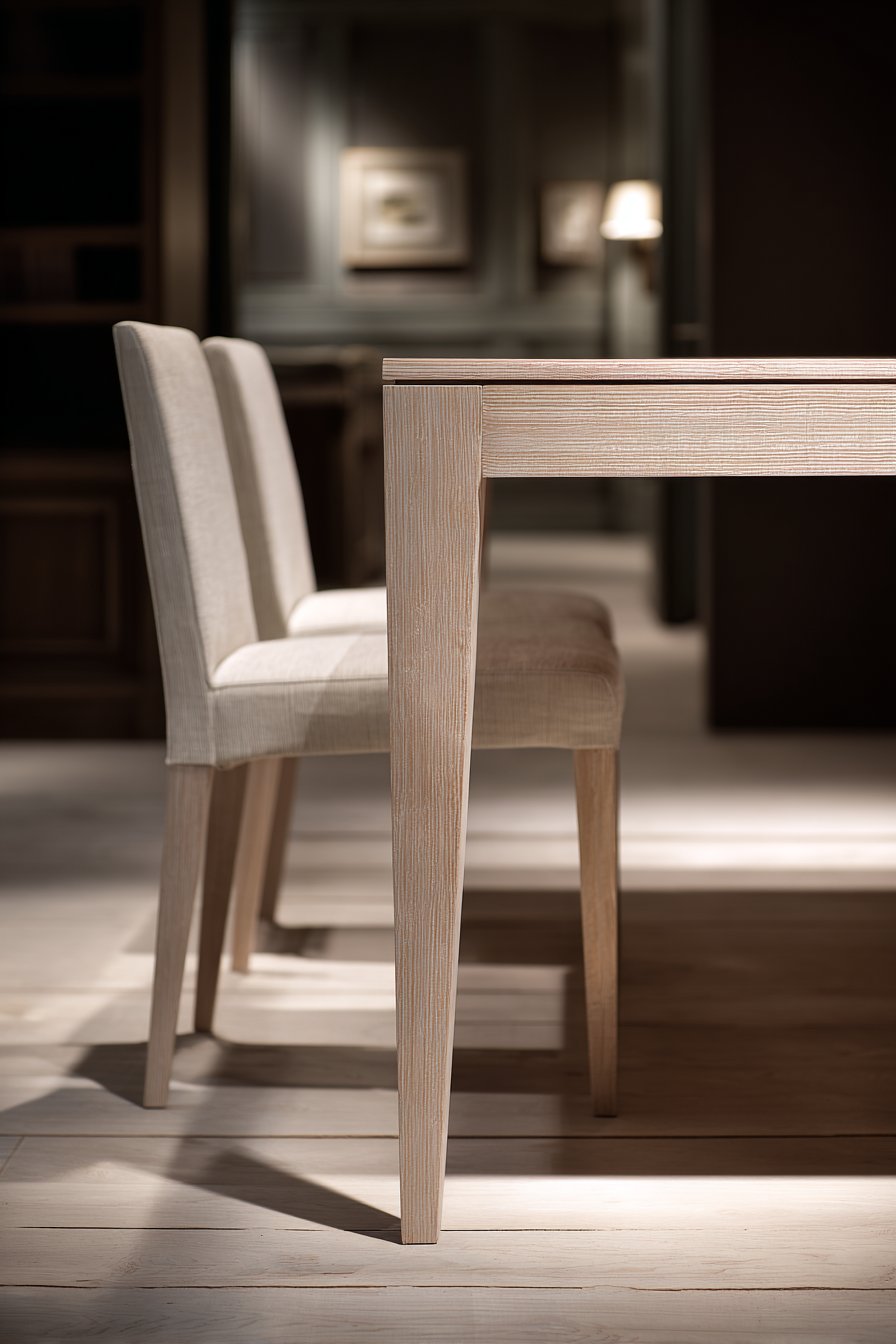
Professional photography captures both the table’s elegant simplicity in compact form and its practical versatility when extended. The beech’s fine, even texture and pale neutral tones create visual lightness appropriate for multi-purpose spaces where furniture must adapt to changing needs throughout the day. The smooth surface and clean lines maintain sophisticated appearance whether serving as desk, dining table, or entertaining surface.
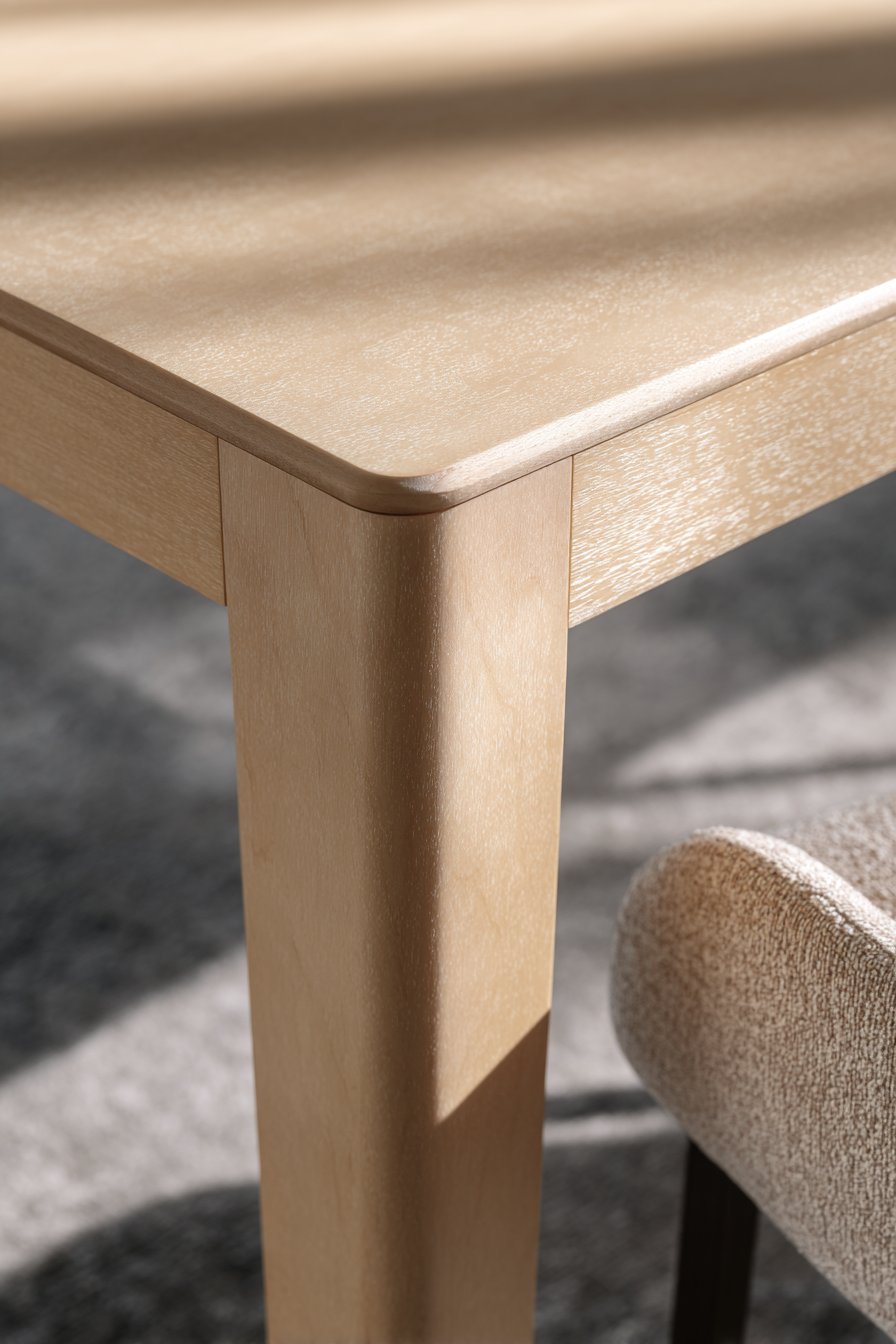
This design suits urban dwellers, small home owners, and anyone requiring maximum flexibility from their furniture investments. The convertible mechanism represents engineering and design collaboration that balances form, function, and user experience. Quality execution ensures smooth operation and stability in both configurations, making transformation effortless rather than challenging ordeal.
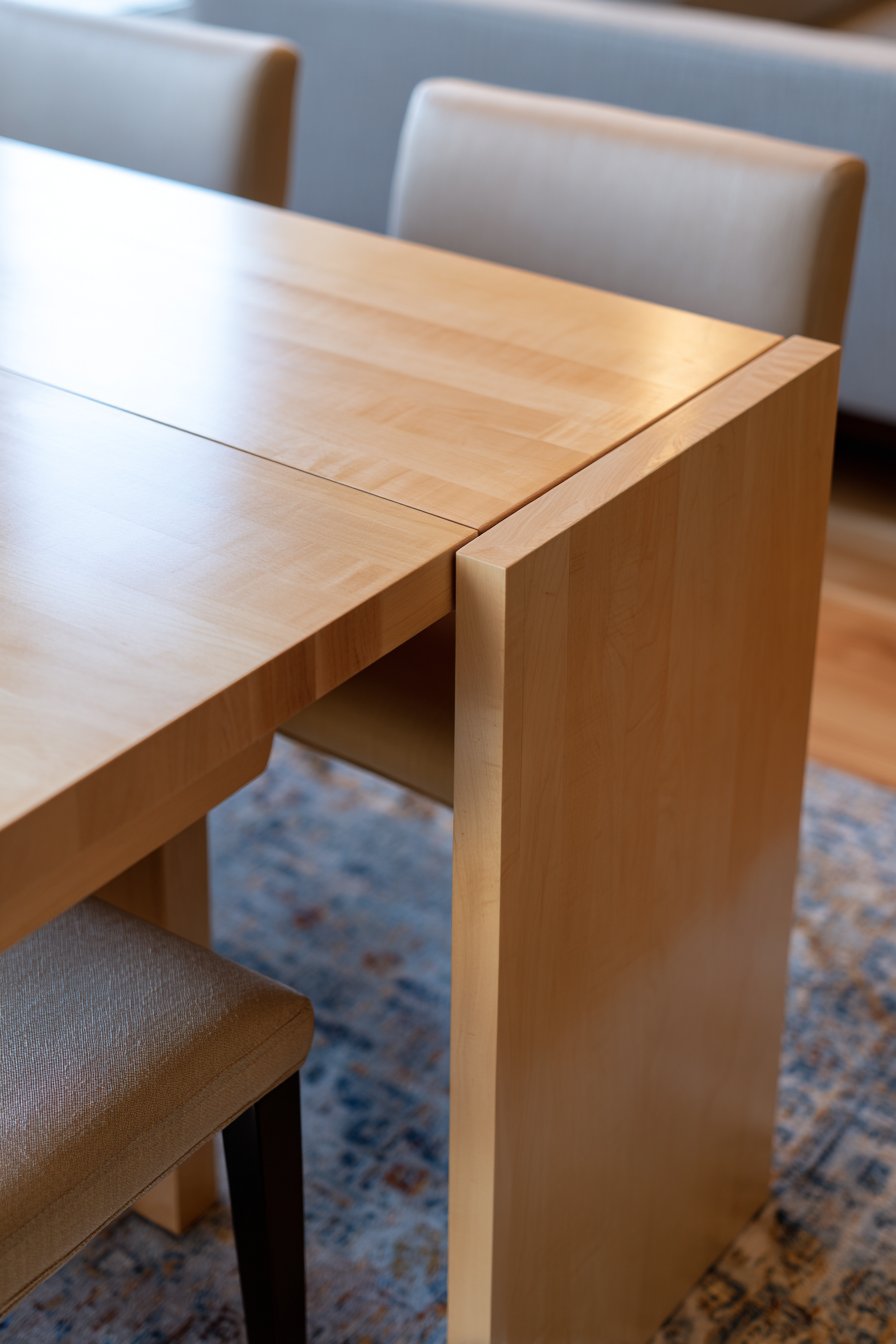
Key Design Tips: Invest in quality extension mechanisms from reputable manufacturers with proven reliability. Choose beech for its fine texture, light color, and dimensional stability. Test operation thoroughly before purchase to ensure smooth, intuitive function. Select chairs that work aesthetically with both compact and extended table configurations. Apply durable finishes appropriate to multi-purpose use including potential non-dining activities. Ensure adequate storage for extension leaves when not in use if applicable to mechanism type. Maintain moving parts with periodic lubrication and inspection. Consider weight and ease of operation—extension shouldn’t require excessive strength or create injury risk.
27. Artisan Spalted Maple Natural Art
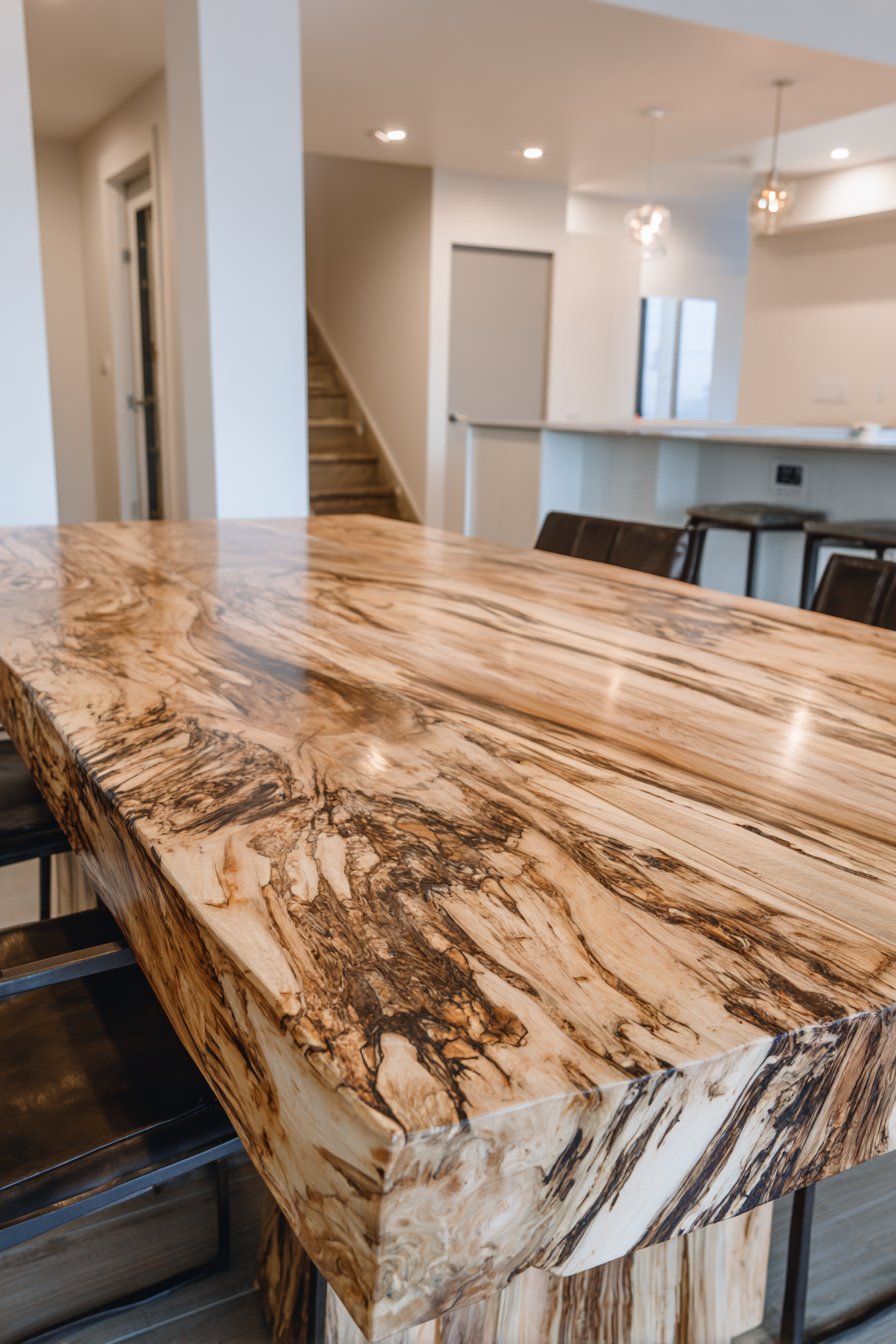
Nature’s artistic intervention creates this extraordinary dining table in spalted maple featuring black line patterns from fungal growth creating abstract organic artwork within the wood itself. Each board displays unique spalting patterns making the table genuinely one-of-a-kind, impossible to replicate or reproduce. The contemporary table sits in gallery-like dining space with white walls that function as neutral backdrop, allowing the wood to command complete attention as functional sculpture. Minimalist black metal chairs frame the artistic table without visual competition.
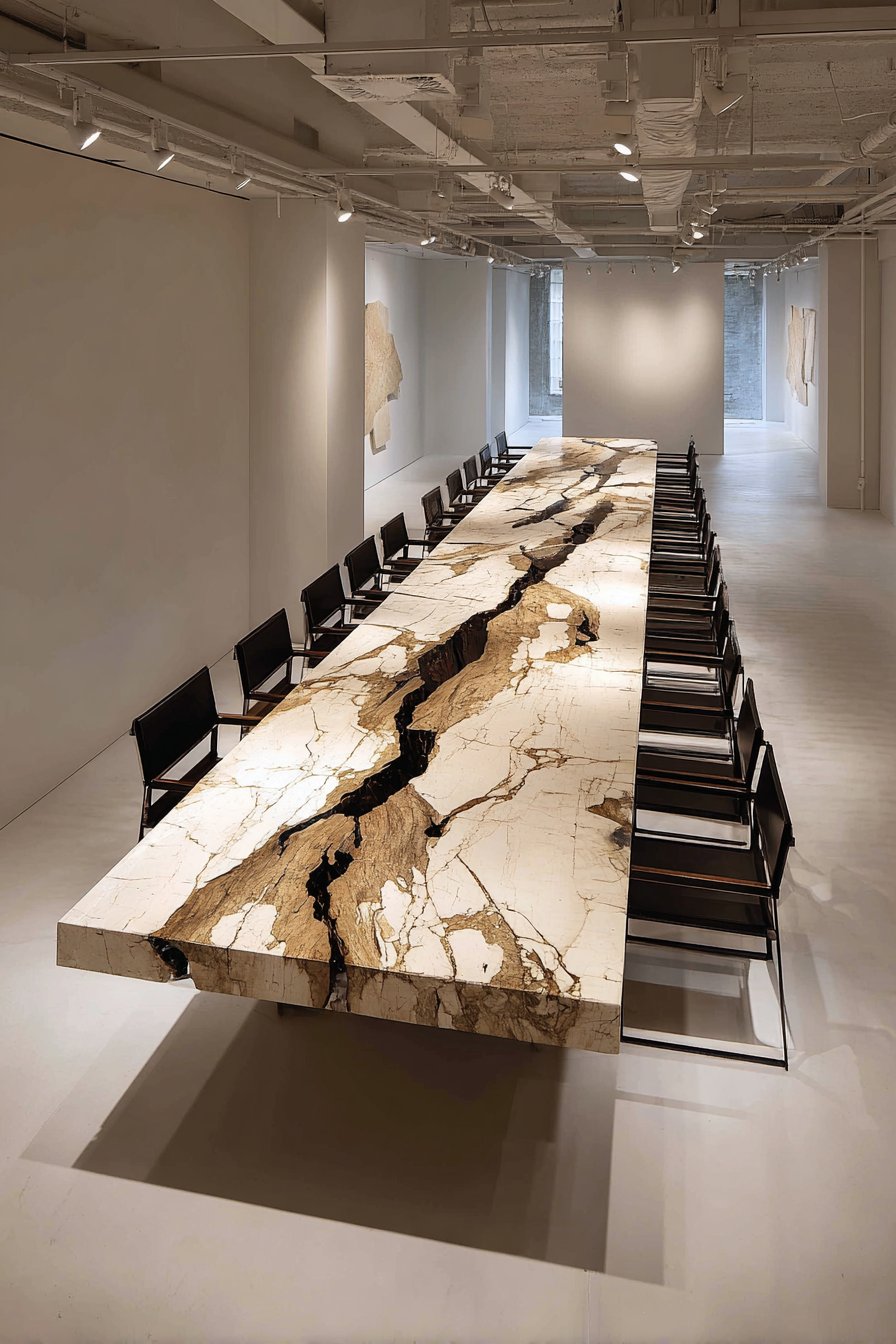
Careful lighting highlights the spalting’s intricate patterns and reveals the wood’s cream and tan background tones that provide canvas for the black zone lines. The spalting occurs naturally when specific fungi colonize wood, creating the distinctive black demarcation lines that wood artists and collectors prize for unique beauty. Professional stabilization and finishing preserve the spalting while ensuring structural integrity and durability for dining use.
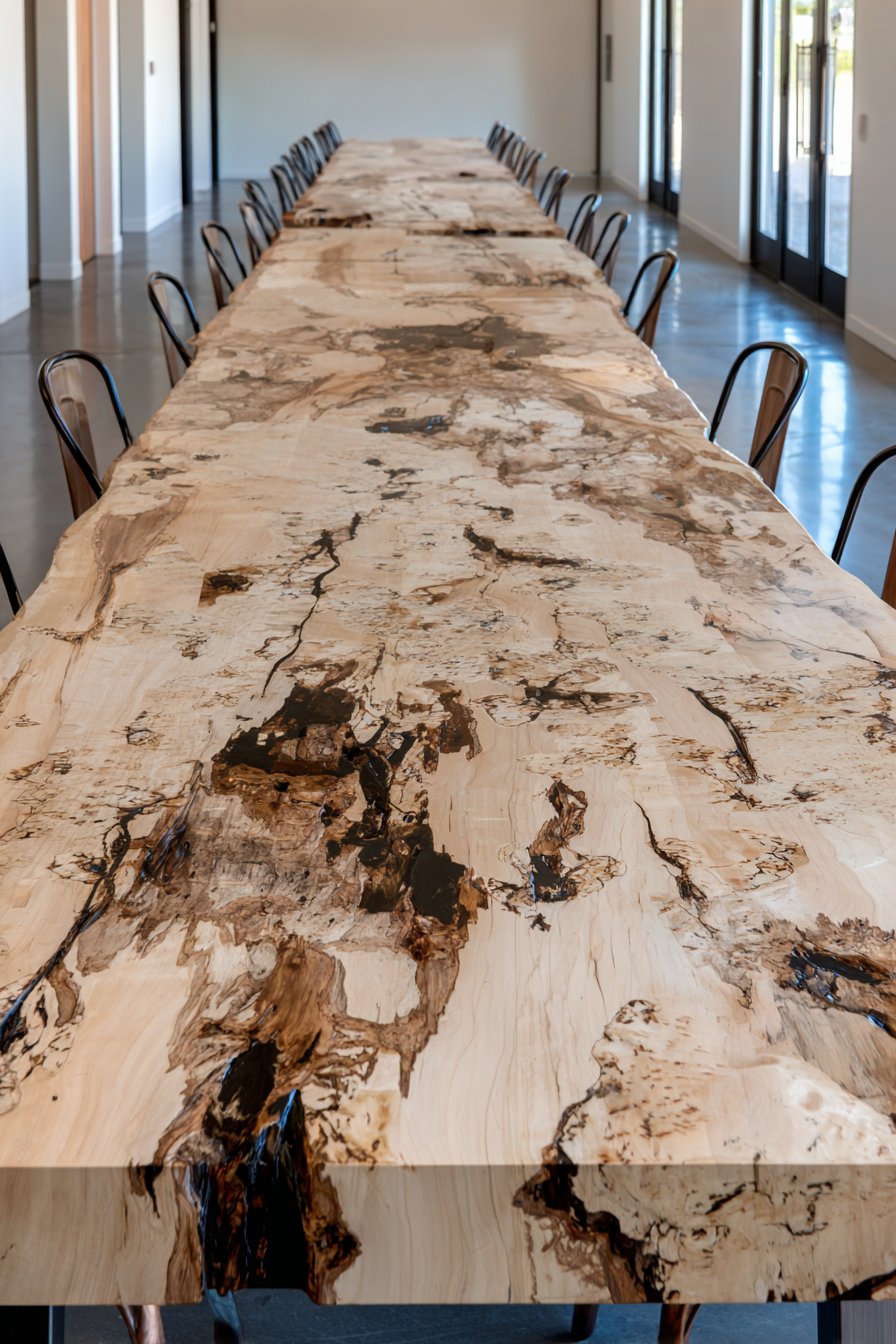
This design targets art collectors, design enthusiasts, and those who view furniture as investment in functional art rather than mere utility. Spalted wood represents natural phenomenon beyond human control—the artist’s role involves recognizing beautiful spalting, properly stabilizing the wood, and showcasing patterns through thoughtful construction and finishing. The result is dining table that transcends typical furniture categories and enters realm of collectible functional art.
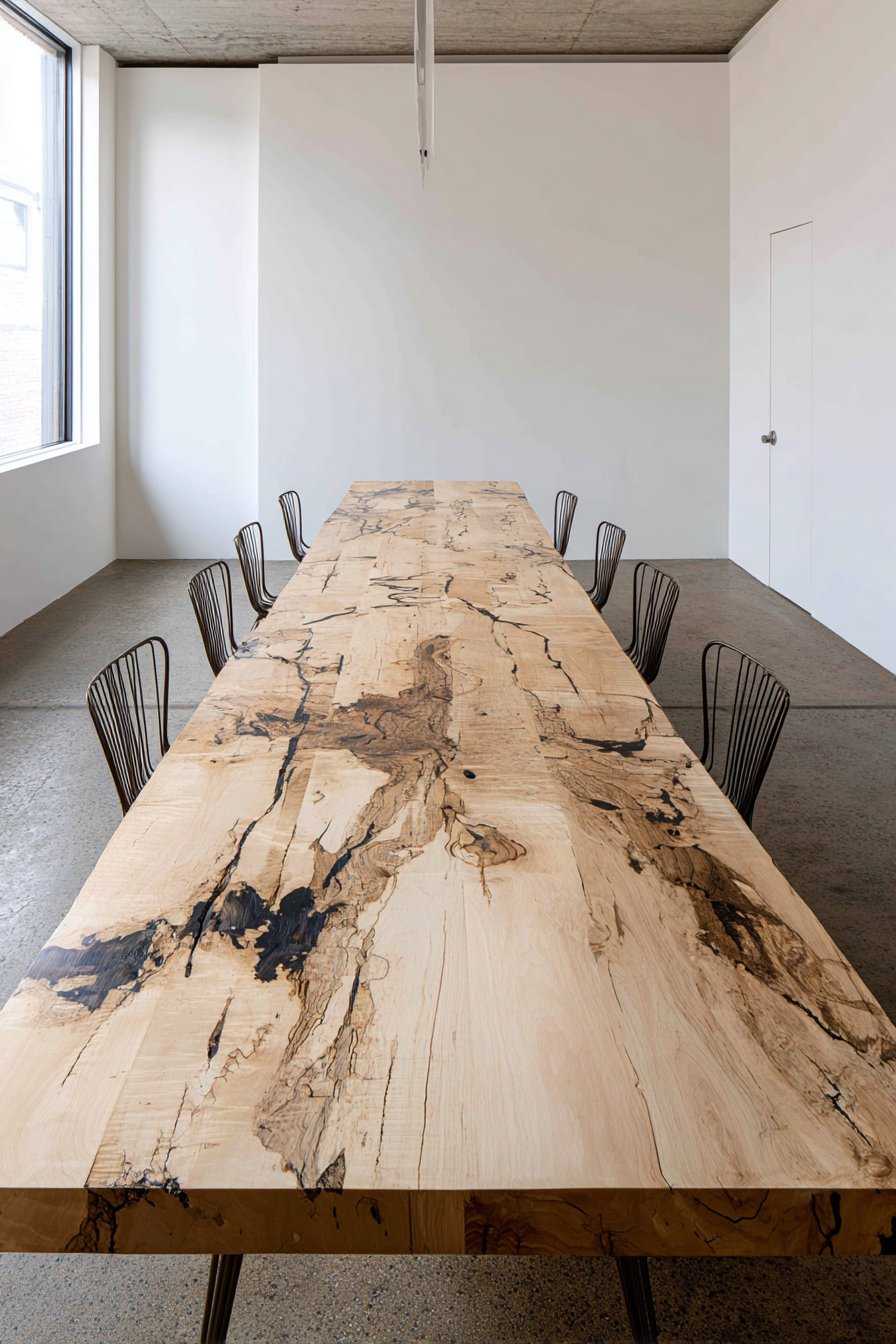
Key Design Tips: Source spalted wood from knowledgeable suppliers who understand proper stabilization requirements. Ensure adequate wood stabilization with epoxy or other hardeners to prevent continued decay. Work with craftspeople experienced in spalted wood’s unique challenges and characteristics. Apply clear finishes that showcase patterns without yellowing or obscuring detail. Design simple, minimal surrounding elements to allow spalted wood to remain focal point. Plan museum-quality lighting to showcase the patterns as artwork deserves. Protect the surface carefully—spalted wood can be more fragile than sound lumber. Budget accordingly—premium spalted wood and specialized processing command significant pricing. Appreciate that each spalted piece is utterly unique and patterns cannot be specified or controlled.
Why These Wood Table Designs Represent the Best Options
These 27 wood table design ideas represent the pinnacle of what’s achievable in dining furniture today, spanning from rustic farmhouse authenticity to contemporary artistic innovation. Each design demonstrates mastery of specific aesthetic approaches while honoring the inherent beauty of wood as primary material. The collection proves that wood tables remain relevant and desirable across all design styles, from traditional to ultra-modern, because wood’s natural warmth, grain patterns, and tactile qualities create connections impossible with manufactured materials.
The best wood table designs share several critical characteristics regardless of style. First, they prioritize genuine materials over imitations—solid wood construction rather than veneer or laminate, authentic finishes that enhance rather than obscure grain, and honest joinery that contributes to rather than detracts from appearance. Second, exceptional tables demonstrate appropriate scale and proportion for their intended spaces and uses, whether that means compact drop-leaf versatility for apartment living or generous farmhouse dimensions for large family gatherings. Third, quality construction ensures longevity that transforms tables from disposable furniture into multigenerational investments that improve with age and use.
The variety of wood species represented in these designs illustrates how different woods serve different aesthetic and functional purposes. Reclaimed barn wood and weathered teak bring authentic patina and sustainable material reuse. Light oak and ash create Scandinavian minimalist aesthetics through pale tones and subtle grain. Rich mahogany and walnut provide traditional elegance and contemporary drama through deep colors and prominent figure. Figured maple and spalted wood transform dining tables into functional art through extraordinary natural patterns. This diversity ensures appropriate wood choices exist for every design vision, budget level, and functional requirement.
Contemporary wood table design increasingly emphasizes uniqueness and personalization rather than mass-produced uniformity. Live-edge tables, river tables with epoxy inlays, and spalted wood pieces celebrate one-of-a-kind characteristics that ensure no two tables are identical. This movement toward individuality reflects broader cultural shifts away from conformity and toward personal expression. Meanwhile, traditional designs maintain their appeal through timeless proportions, proven construction methods, and the comfort of familiar forms that transcend temporary trends. The best approach depends entirely on personal preferences, existing interior aesthetics, and how homeowners want their dining spaces to feel and function.
Sustainability considerations increasingly influence wood table selection as consumers recognize furniture’s environmental impact. Reclaimed wood options reduce demand for newly harvested timber while preserving materials with history and character. Sustainably harvested hardwoods from certified sources ensure responsible forestry practices. Durable construction that enables repair, refinishing, and multigenerational use prevents furniture from entering waste streams. These environmental considerations align perfectly with wood’s natural appeal and long-term value proposition, creating win-win scenarios where ecological responsibility enhances rather than conflicts with aesthetic and functional goals.
The finishing techniques applied to wood tables dramatically affect both appearance and durability. Natural oil finishes penetrate wood fibers to provide protection while preserving tactile connection to the material and allowing easy repair and maintenance. Hand-rubbed finishes create depth and warmth through multiple applications and careful buffing. High-gloss lacquers reflect light and create contemporary aesthetics while requiring careful maintenance to prevent visible damage. Matte and satin finishes balance protection with understated appearance appropriate for casual or rustic styles. Understanding finishing options and their implications helps homeowners select tables that not only look appropriate initially but maintain their beauty through years of use.
Investment considerations should guide wood table purchases since quality pieces represent significant expenditures that should deliver value through extended lifespans. Factors affecting long-term value include wood species selection, construction quality, joinery methods, finishing techniques, and design timelessness versus trendiness. Tables constructed with solid hardwood, traditional joinery, quality finishes, and classic proportions typically maintain value better than pieces using shortcuts or following temporary trends. The ability to refinish solid wood tables provides insurance against wear and damage, allowing restoration to original beauty after decades of use—an impossibility with veneer or laminate alternatives.
Practical considerations beyond aesthetics influence wood table success in real homes. Size must accommodate intended users comfortably while fitting available space with adequate clearance for circulation. Height should match seating for ergonomic comfort during meals. Extension mechanisms need smooth operation and secure locking for tables requiring flexibility. Wood species selection affects scratch resistance, moisture tolerance, and maintenance requirements. Surface finishes determine resistance to heat, water, and daily wear. Matching wood table selection to actual lifestyle needs and usage patterns ensures satisfaction beyond initial aesthetic appeal.
The emotional and psychological impacts of wood tables deserve recognition alongside practical and aesthetic considerations. Wood’s natural warmth creates welcoming environments that synthetic materials cannot replicate. Visible grain patterns and color variations provide visual interest that prevents monotony while remaining calming rather than overwhelming. The knowledge that a table is constructed from genuine wood—a material that once grew as a living tree—creates connections to nature and natural processes increasingly rare in modern urban life. These intangible qualities contribute to homes that feel nurturing, authentic, and psychologically comfortable.
Professional design expertise proves invaluable when selecting wood tables for specific interiors. Interior designers understand how wood tones interact with wall colors, flooring, and existing furnishings. They recognize which table scales work in given rooms and can identify proportion issues before purchase. Designers access trade resources and custom makers unavailable to retail consumers, expanding options beyond showroom inventory. Their experience prevents costly mistakes while potentially discovering perfect solutions homeowners might never identify independently. The investment in design consultation often pays dividends through better outcomes and avoided errors.
The social dimensions of dining tables shouldn’t be overlooked when evaluating designs. Round and oval shapes encourage conversation by creating democratic seating without head positions. Rectangular tables accommodate more guests in linear space while potentially creating hierarchical seating dynamics. Expandable designs provide flexibility for both intimate family meals and larger gatherings. Counter-height tables blur boundaries between cooking and eating, facilitating interaction during meal preparation. Understanding how table configuration affects social dynamics helps create dining spaces that support desired interaction patterns and hospitality goals.
Maintenance requirements vary significantly across wood table designs and should influence selection for homeowners with specific time and interest constraints. Oiled finishes require periodic reapplication but allow easy damage repair. Lacquered surfaces need careful cleaning but resist staining and water damage better. Reclaimed wood with existing patina accepts new wear gracefully while pristine surfaces show every mark. Light woods display stains more prominently than dark species. Understanding maintenance implications before purchase prevents frustration when real-world use doesn’t match expectations or care requirements exceed available time and interest.
Conclusion
The 27 wood table designs explored in this comprehensive guide demonstrate the extraordinary versatility, enduring appeal, and timeless beauty of wood as primary dining furniture material. From rustic reclaimed barn wood celebrating sustainable material reuse to artisan spalted maple functioning as collectible functional art, these designs prove that wood tables remain relevant across all design aesthetics, budget levels, and functional requirements. The natural warmth, distinctive grain patterns, and inherent connection to living materials create dining experiences that synthetic alternatives simply cannot replicate.
Selecting the ideal wood table for your home involves balancing aesthetic preferences, practical requirements, budget considerations, and long-term value expectations. Consider how the table’s style aligns with existing interior design, whether its scale suits available space and intended users, and how its construction quality supports your expectations for longevity and durability. Evaluate wood species for both appearance and practical characteristics like hardness, grain prominence, and color. Understand finishing options and their implications for maintenance, protection, and visual effect. These thoughtful considerations ensure your investment delivers satisfaction through decades of daily use.
The enduring popularity of wood dining tables across centuries and cultures testifies to wood’s unique ability to create gathering spaces that feel welcoming, authentic, and psychologically nurturing. Whether you ultimately choose traditional mahogany elegance, contemporary live-edge drama, space-saving drop-leaf versatility, or sustainable reclaimed character, your wood table will serve as more than furniture—it becomes the heart of your home where meals are shared, conversations flow, and memories accumulate across years and generations. Embrace the opportunity to select a table that reflects your personal style, supports your lifestyle needs, and provides lasting beauty that improves rather than diminishes with time and use.
