
The bathroom has evolved far beyond its utilitarian origins to become a personal sanctuary where we begin and end each day. In our increasingly hectic lives, the bathroom serves as a private retreat—a space where we can unwind, rejuvenate, and prepare ourselves for whatever lies ahead. The key to transforming this essential room into a true haven lies in creating warmth, not just through temperature, but through thoughtful design choices that envelop you in comfort the moment you step inside. Warm bathroom ideas encompass a rich palette of colors, textures, and materials that work together to create an atmosphere of welcoming serenity.
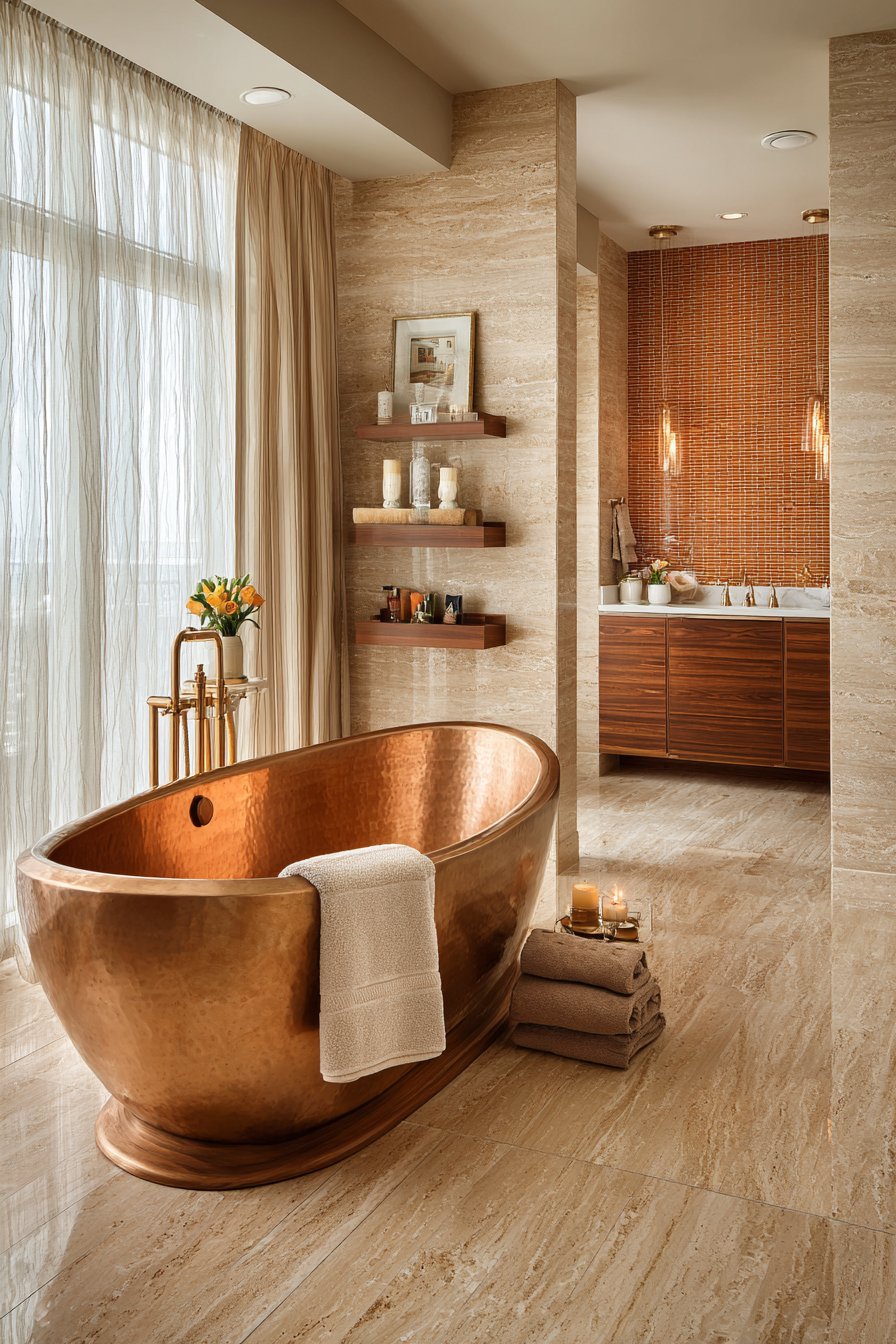
Creating a warm bathroom goes beyond simply choosing beige tiles or adding a few candles. It’s about understanding how light interacts with surfaces, how natural materials bring organic comfort, and how every element—from the hardware on your cabinets to the towels folded on your shelves—contributes to an overall sense of coziness. Whether you’re working with a spacious master bathroom or a compact powder room, the principles of warm design can be adapted to suit any space, transforming even the most basic bathroom into a luxurious retreat that feels like a five-star spa.
This comprehensive guide explores twenty-three distinctive warm bathroom ideas, each offering a unique approach to creating comfort and style. From the rich patina of copper fixtures to the golden glow of honey-toned marble, from the earthy appeal of reclaimed wood to the soft embrace of heated floors, these designs demonstrate how diverse elements can be combined to achieve that perfect balance of functionality and warmth. Whether you’re planning a complete renovation or simply looking to refresh your existing space, these ideas will inspire you to create a bathroom that not only serves your practical needs but also nourishes your soul with its inviting warmth.
1. Honey-Toned Marble Elegance with Copper Accents
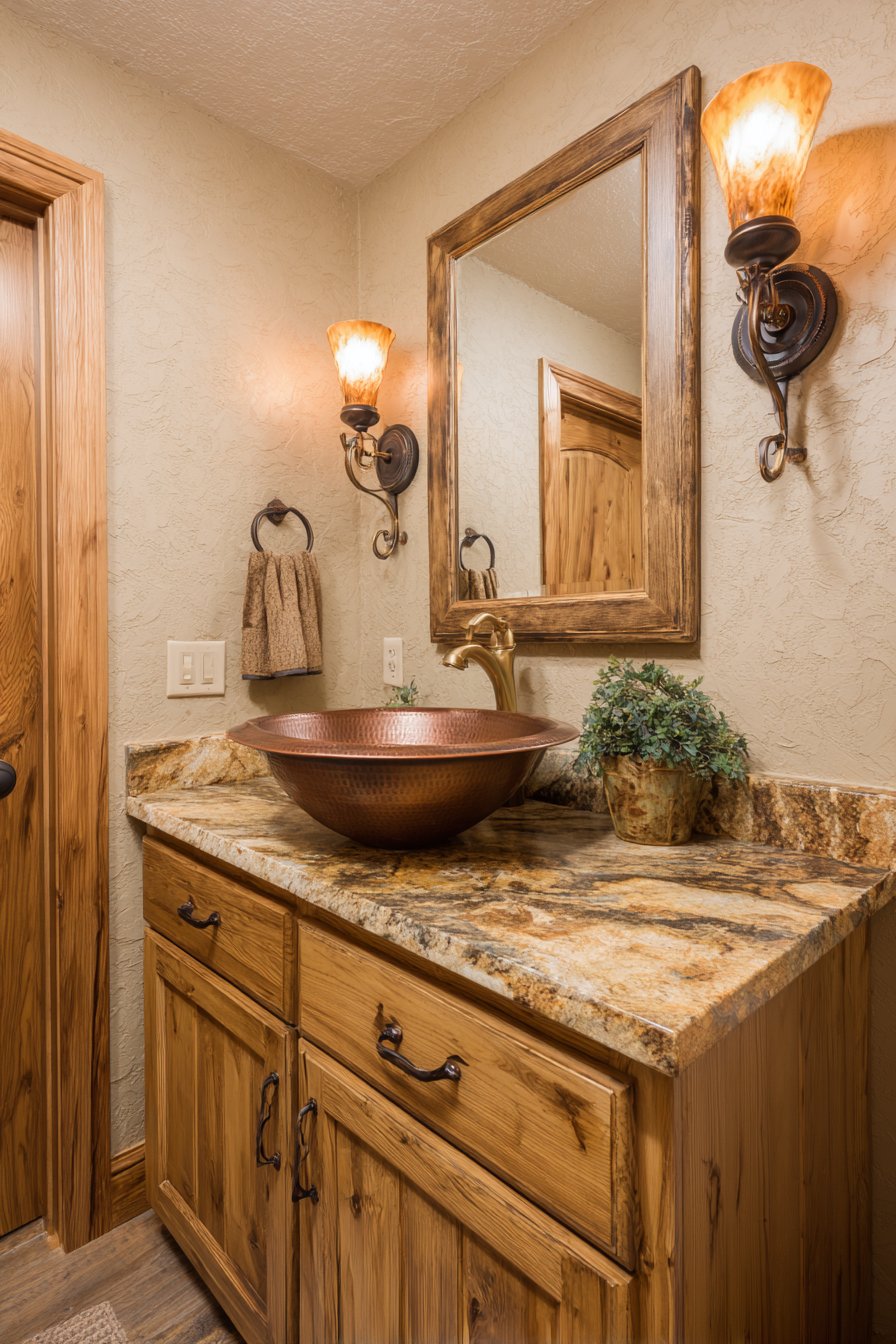
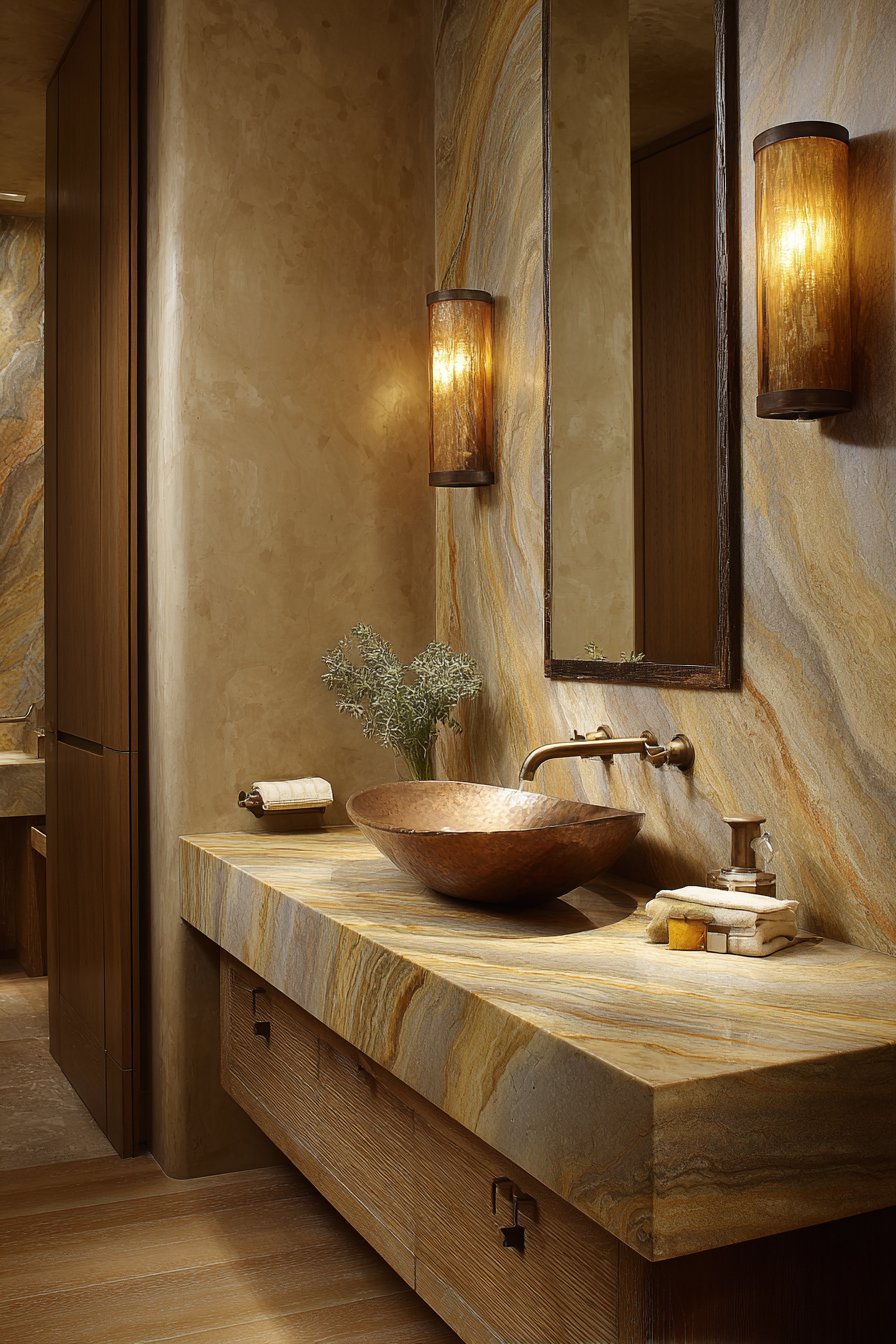
The marriage of honey-colored marble countertops with a vessel sink in warm copper finish creates an instantly inviting focal point that sets the tone for the entire bathroom. This design approach celebrates the beauty of natural stone, with its inherent variations and subtle veining that catches and reflects light in endlessly fascinating ways. The floating vanity in natural oak provides a foundation that feels both contemporary and timeless, with the visible wood grain adding organic texture that softens the more refined marble surface above.
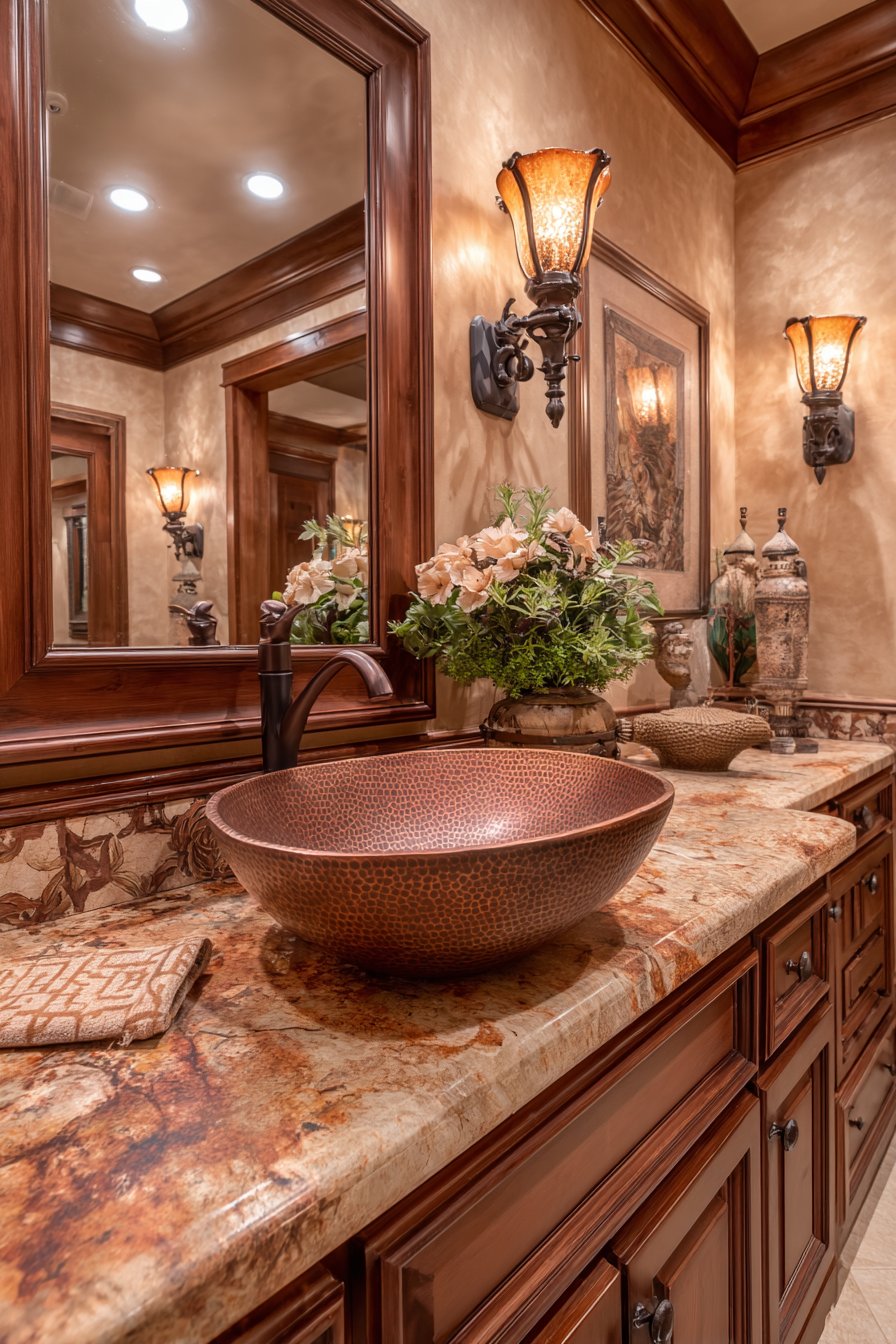
The brass drawer pulls serve as jewelry for the cabinetry, their warm metallic gleam creating visual interest and tactile pleasure with every use. These small details matter significantly in bathroom design, as they’re elements we interact with daily, and their quality and appearance contribute substantially to our overall experience of the space. The ambient wall sconces fitted with amber glass shades cast a soft, flattering glow that transforms the bathroom into an intimate sanctuary, particularly effective during evening routines when harsher lighting would feel jarring and unwelcome.
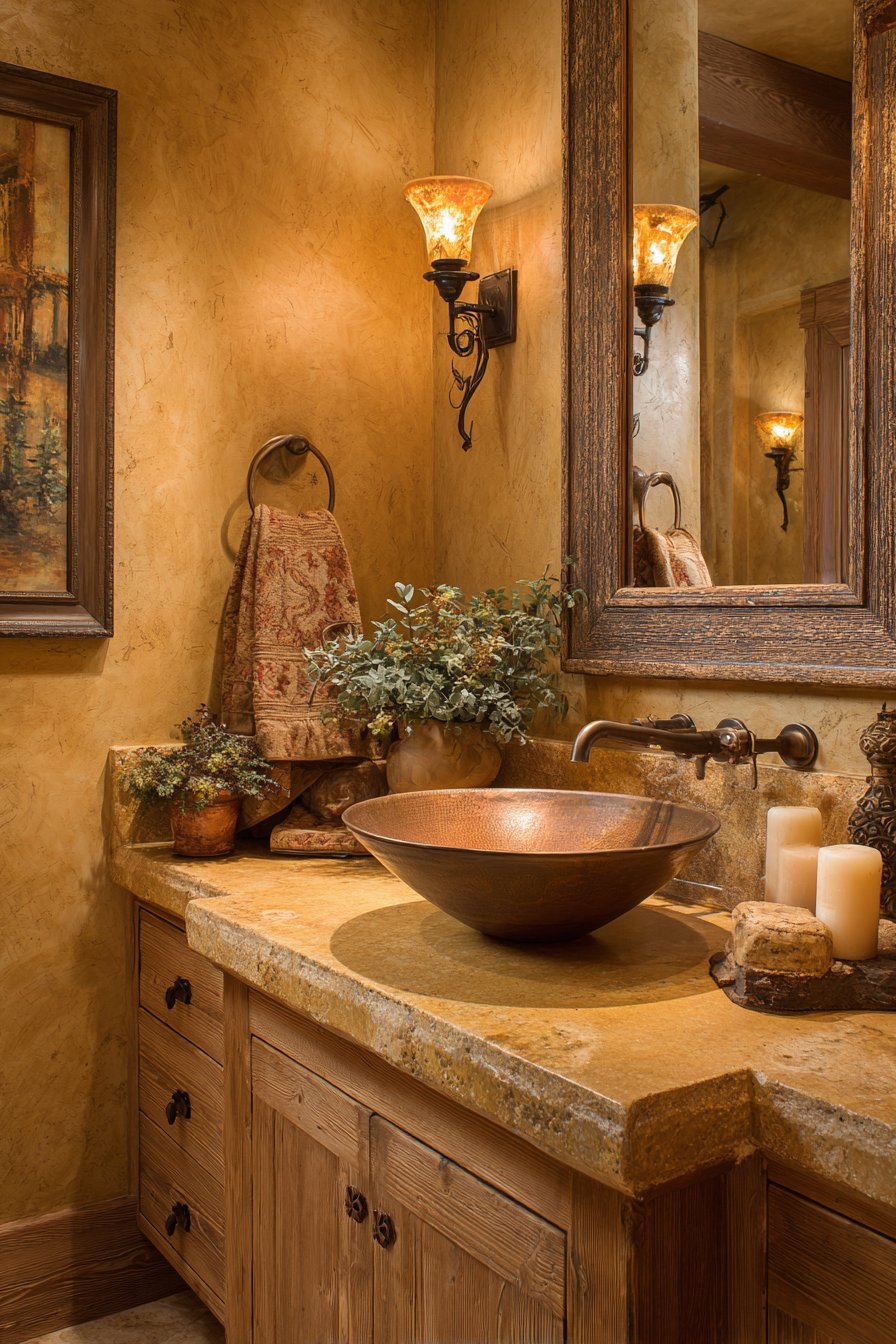
The textured beige walls create depth and dimension without overwhelming the senses, providing a neutral backdrop that allows the warmer elements to shine. This layering of warm tones—from the golden marble to the copper sink, from the oak vanity to the brass hardware—creates a cohesive palette that feels carefully curated yet effortlessly natural. The overall effect is one of understated luxury, where quality materials and thoughtful design combine to create a space that feels both special and livable.
Key Design Tips:
- Select marble with warm undertones rather than cool grays to maintain the cozy atmosphere
- Position sconces at eye level on either side of the mirror for the most flattering task lighting
- Choose a vessel sink in copper that will develop a natural patina over time, adding character
- Use a penetrating sealer on natural oak to protect against moisture while maintaining the wood’s natural appearance
- Layer different textures within the same warm color family to create visual interest without contrast
2. Earthy Travertine Shower Sanctuary with Heated Floors
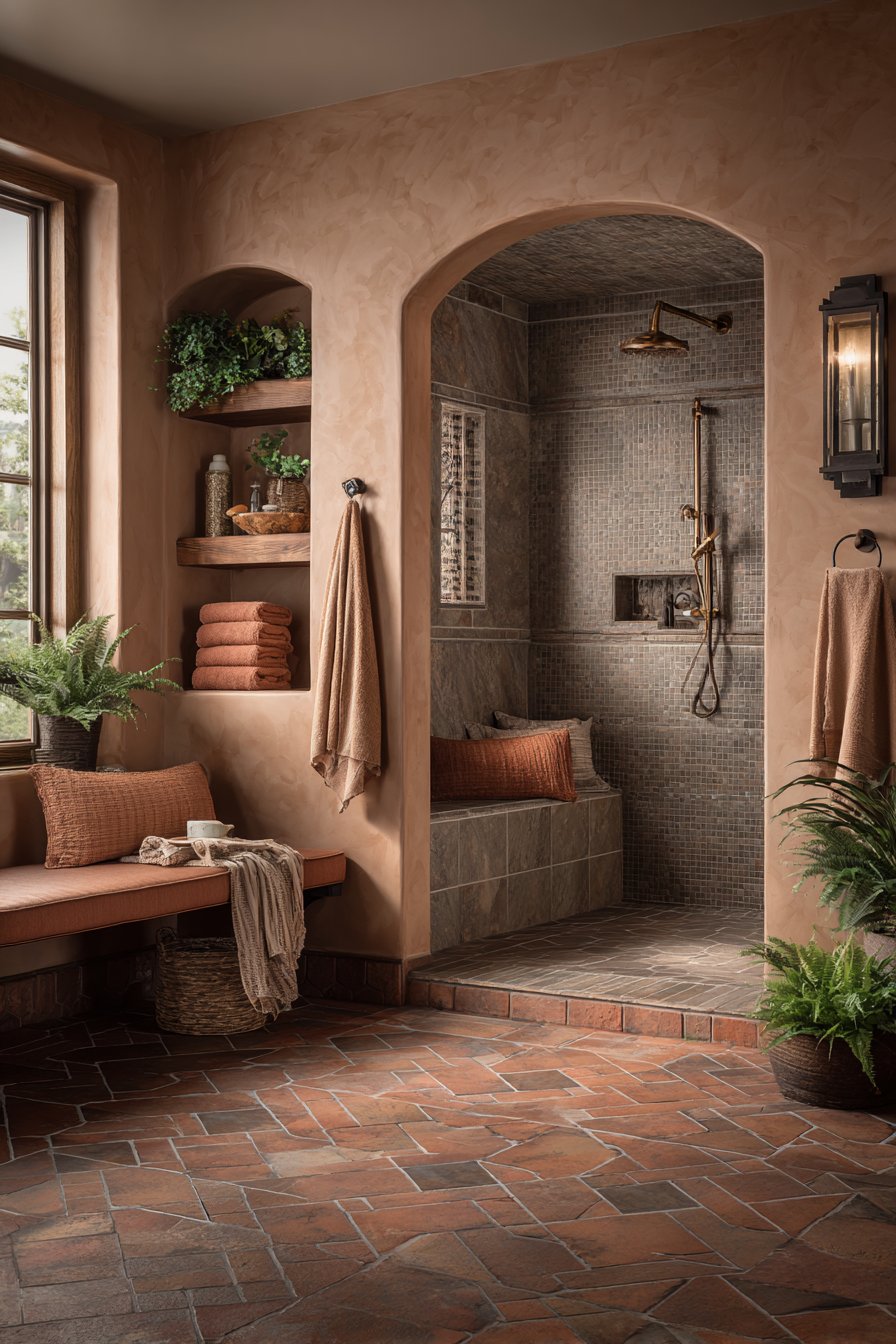
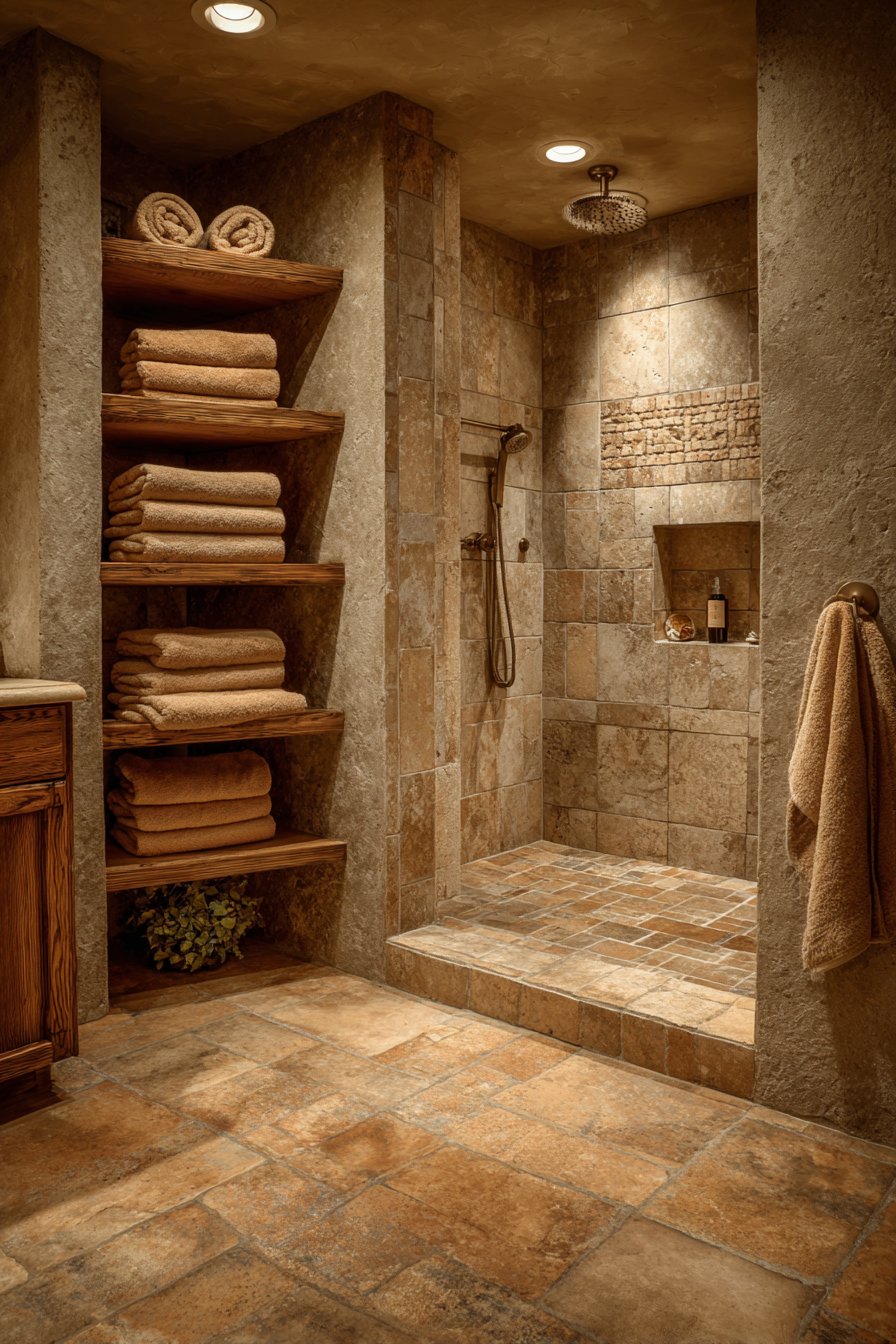
The foundation of warmth begins quite literally from the ground up with heated terra cotta floor tiles that provide both physical and visual comfort. These rustic-finished tiles bring an earthy, Mediterranean quality to the space, their warm clay tones evoking sun-baked landscapes and ancient architecture. The radiant heating system beneath ensures that stepping out of the shower is never an unpleasant shock, maintaining that cocoon of warmth that defines the best bathroom experiences.
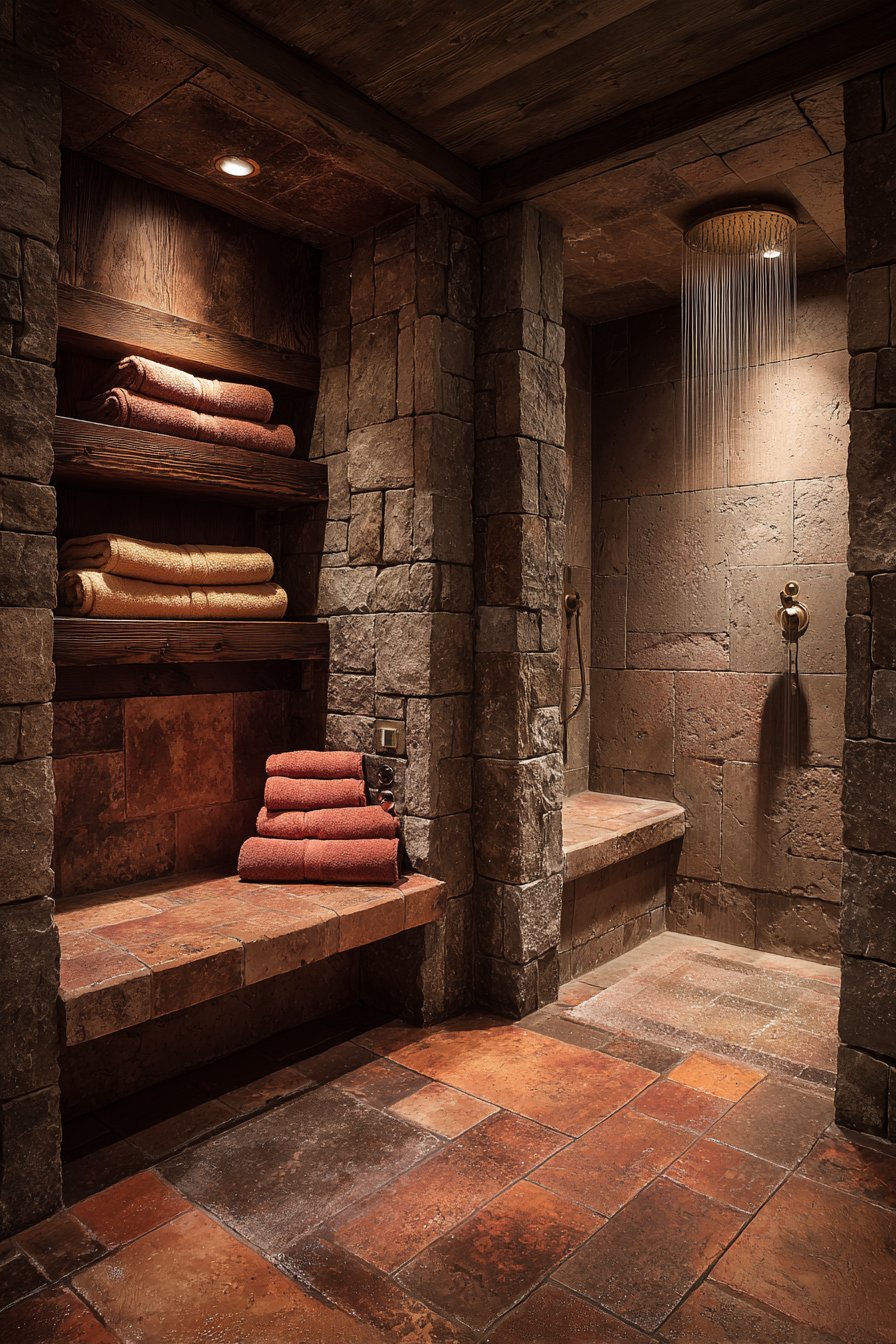
The walk-in shower becomes the centerpiece of this design, with walls clad in warm travertine stone that showcases nature’s artistry through natural color variations, pitting, and organic patterns. This natural stone has been used in bathrooms for thousands of years, from Roman baths to modern spas, precisely because it embodies warmth and luxury while being incredibly practical for wet environments. The rainfall showerhead in brushed gold creates a spa-like experience, with water cascading down like a gentle summer rain while the metallic finish adds another layer of warmth to the overall design.
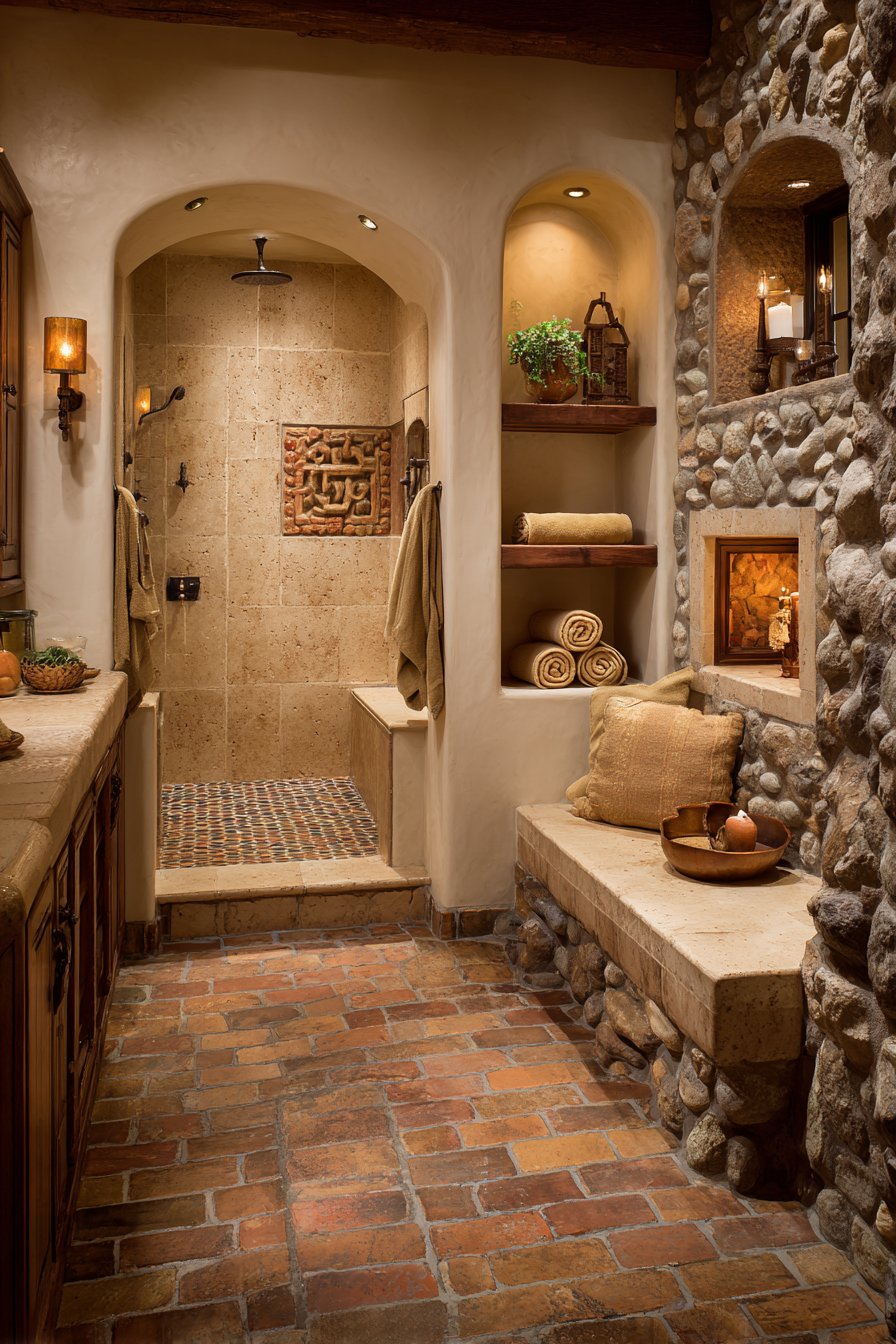
Recessed lighting with warm color temperature is crucial in this design, as it enhances the golden tones within the travertine and terra cotta while creating pools of light that feel intimate rather than clinical. The wooden accent shelving provides practical storage for rolled towels in cream and caramel tones, adding another organic element that softens the stone surfaces. These shelves also create opportunities for styling with natural accessories—perhaps a wooden bowl holding artisan soaps or a small potted plant that thrives in the humid environment.
Key Design Tips:
- Choose travertine with filled holes for shower walls to prevent water penetration while maintaining the stone’s character
- Install programmable thermostats for radiant floor heating to ensure optimal temperature when you need it
- Use a sealer specifically designed for natural stone in wet areas to protect against staining and moisture damage
- Select brushed gold fixtures rather than polished to minimize water spots and fingerprints
- Consider the grout color carefully—a warm beige or tan will blend seamlessly while white might create unwanted contrast
3. Rich Cherry Wood Vanity with Quartzite Sophistication
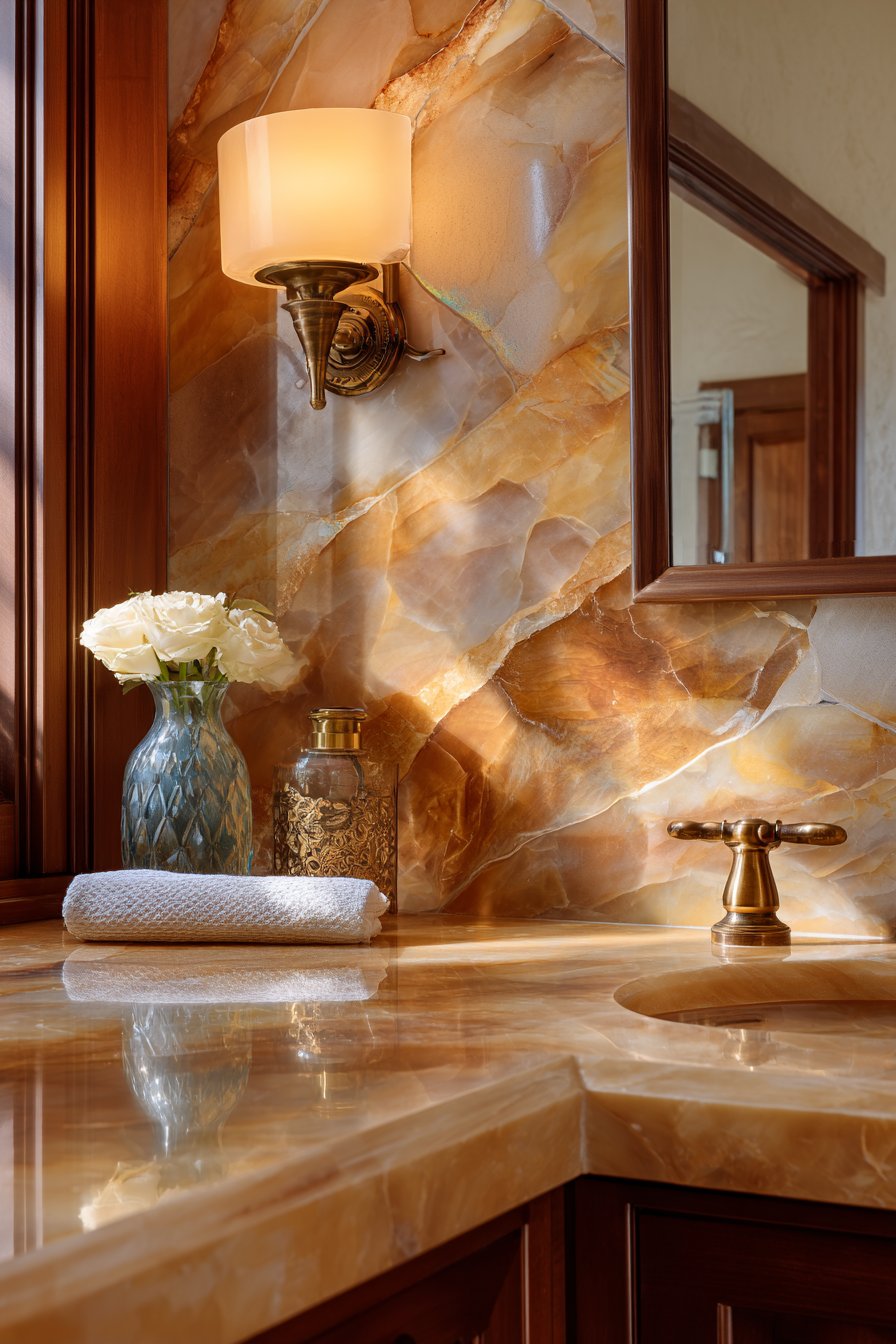
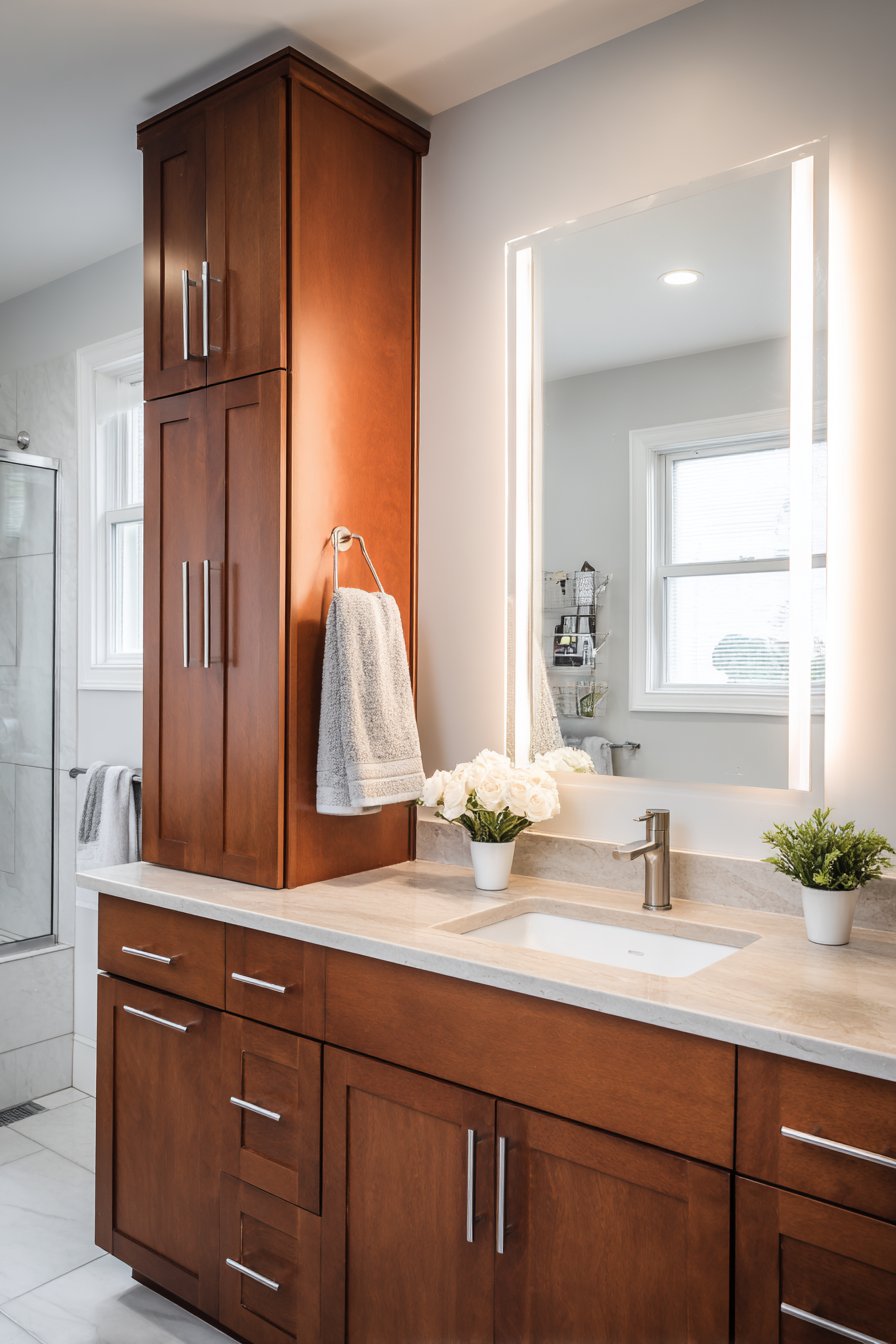
This design elevates the bathroom vanity from functional necessity to furniture-quality statement piece, with custom cabinetry in rich cherry wood that brings warmth and depth to the space. The soft-close mechanisms speak to quality and attention to detail, ensuring that every interaction with the cabinetry is smooth and silent—a small luxury that improves daily life in meaningful ways. Cherry wood possesses a unique quality where it deepens and enriches in color over time when exposed to light, meaning your bathroom will actually become more beautiful with age.
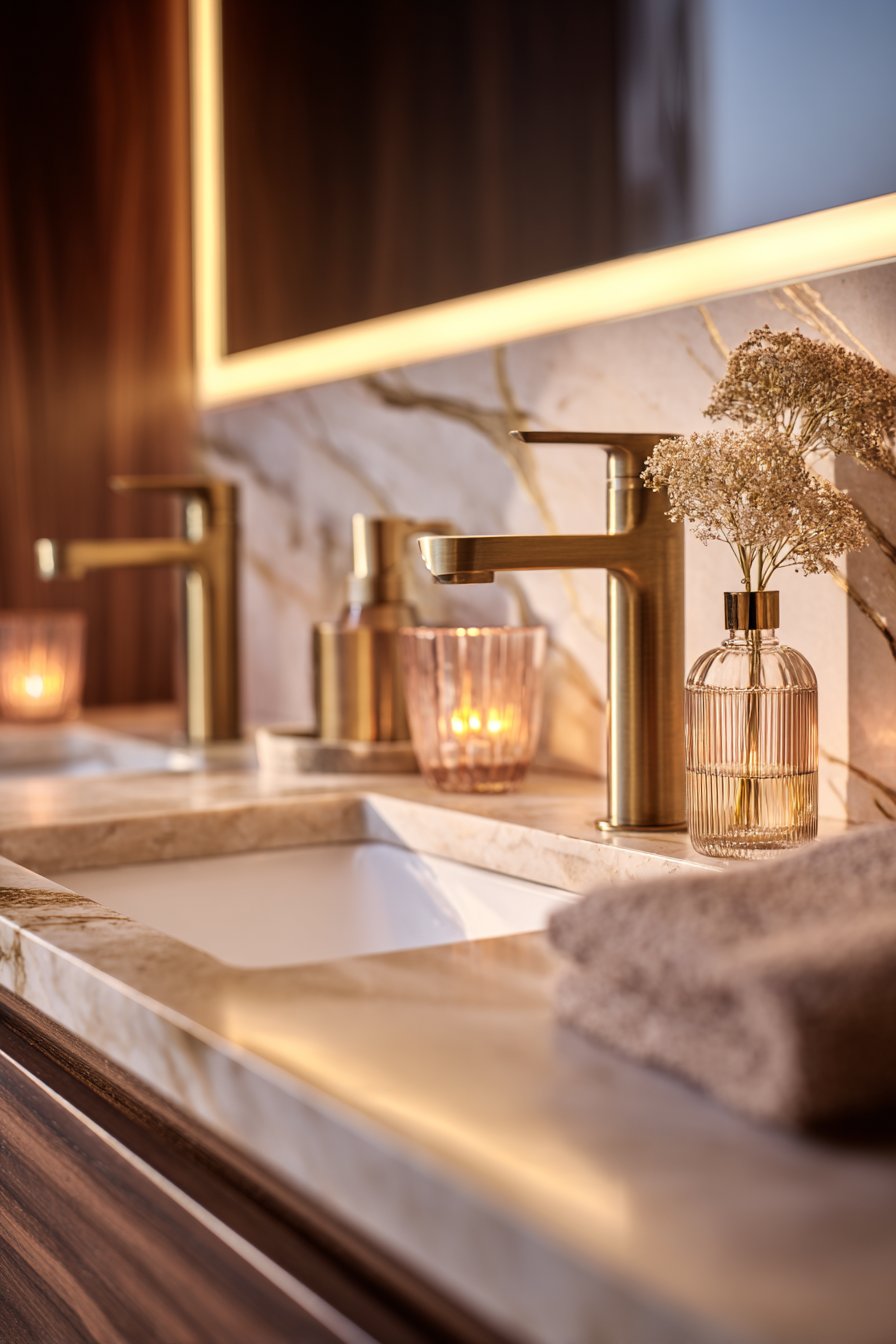
The warm beige quartzite countertop displays subtle gold veining that picks up the warm tones in the cherry cabinetry while providing a durable, low-maintenance surface ideal for bathroom use. Quartzite offers the beauty of natural stone with enhanced durability, resisting scratching, staining, and etching better than marble while maintaining that luxurious appearance. Wall-mounted faucets in antique brass create a sophisticated look while freeing up counter space and making cleaning easier—a perfect blend of form and function.
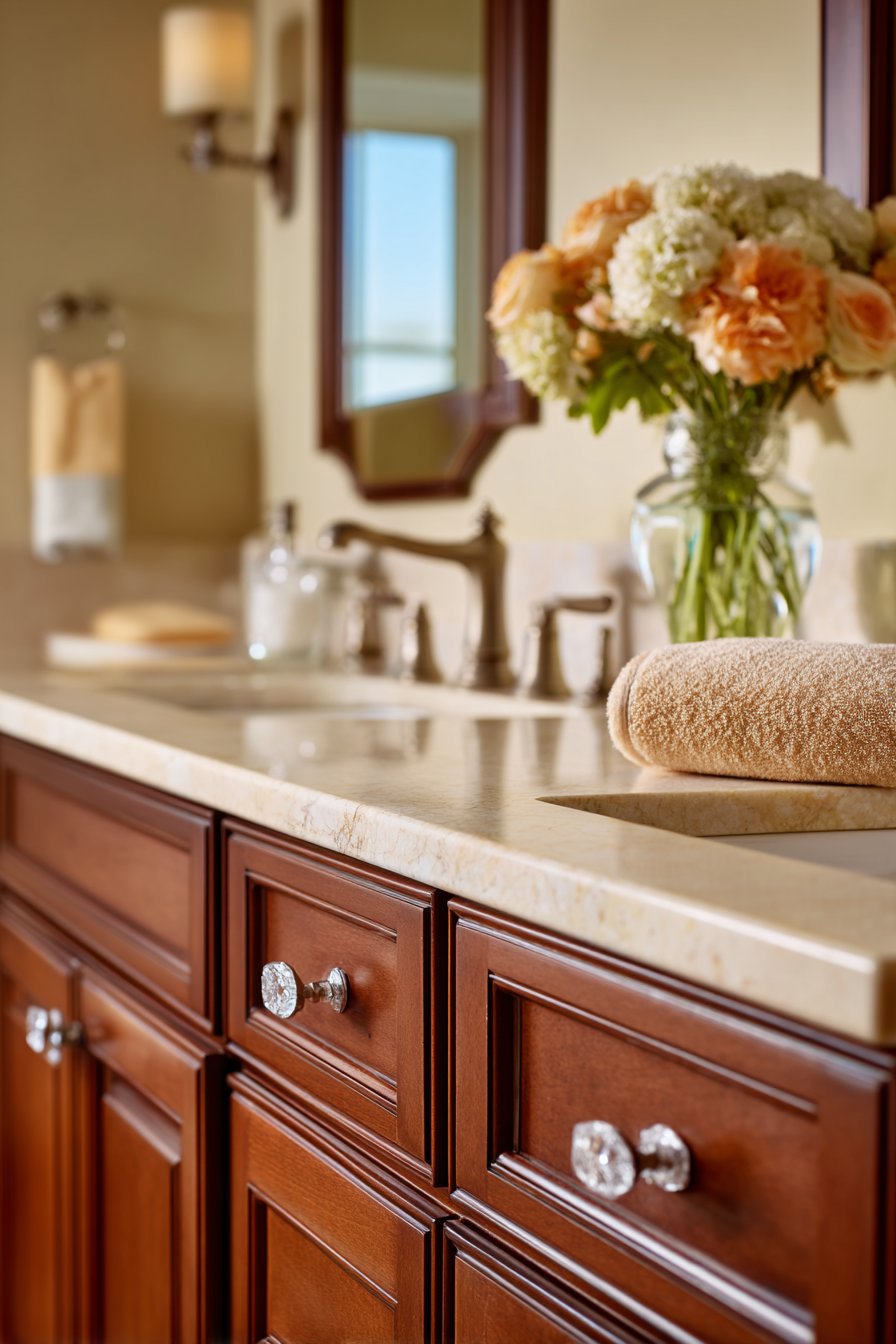
The backlit mirror with warm LED lighting serves multiple purposes in this design, providing essential task lighting for grooming while creating a soft glow that enhances the warm atmosphere. This type of lighting is particularly flattering, eliminating harsh shadows while adding a spa-like quality to the space. The integration of the lighting into the mirror itself maintains clean lines and contemporary styling while supporting the overall warm aesthetic through both the quality and color temperature of the light.
Key Design Tips:
- Apply UV-protective finishes to cherry wood cabinetry to slow the natural darkening process if you prefer the lighter color
- Choose quartzite slabs in person rather than from samples to see the full range of veining and color variation
- Install wall-mounted faucets at the proper height—typically 8 to 12 inches above the sink rim
- Use dimmable LED lighting in mirrors to adjust brightness for different times of day and tasks
- Ensure adequate ventilation to protect wood cabinetry from moisture damage in the humid bathroom environment
4. Organized Warmth: Built-In Linen Storage Sanctuary
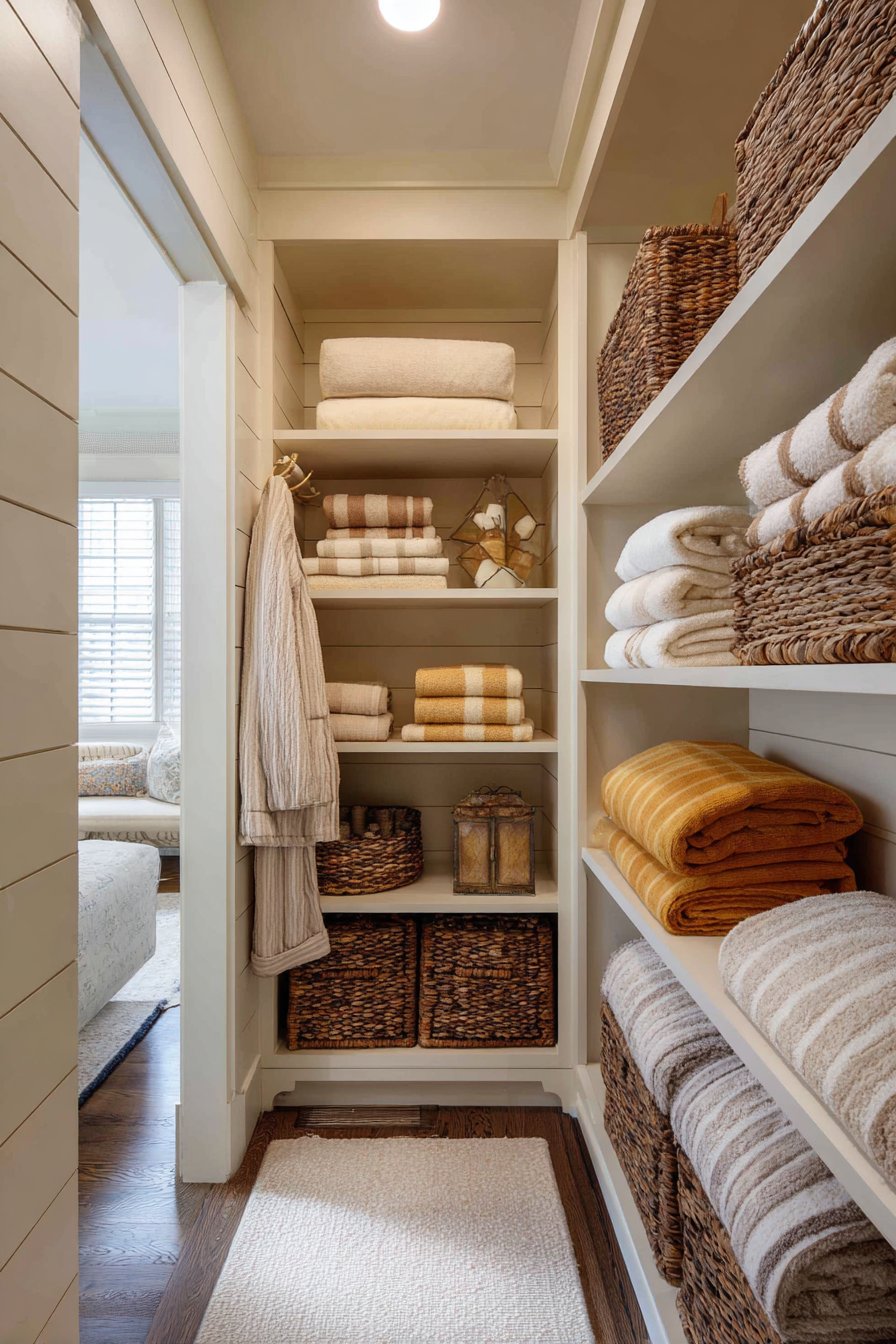
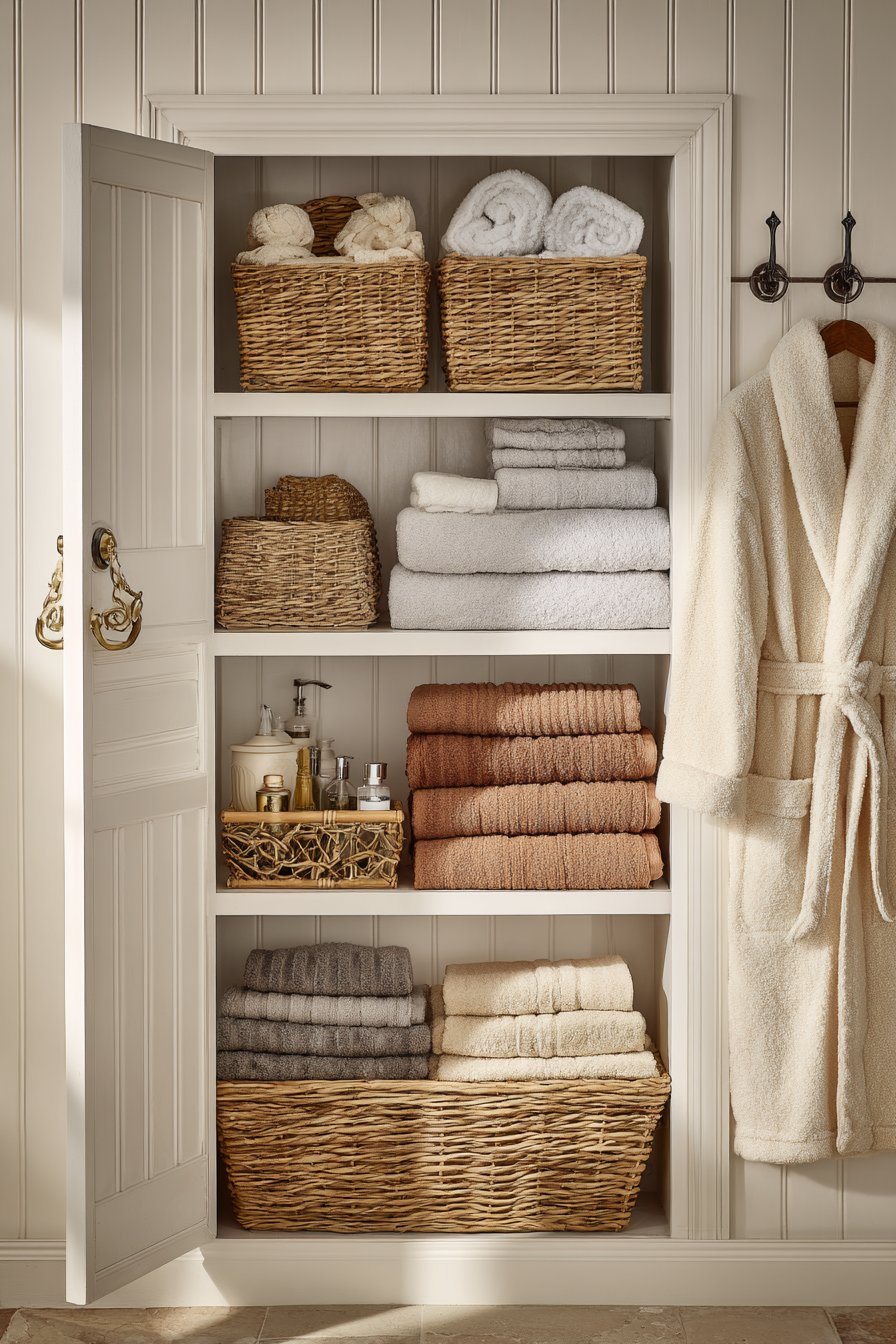
Storage solutions in bathrooms often feel like afterthoughts, but this design demonstrates how practical organization can be a beautiful design element that contributes significantly to the room’s warmth. The built-in linen closet featuring tongue-and-groove paneling in warm white with honey undertones creates architectural interest while providing essential storage. This type of paneling adds texture and depth to what might otherwise be a flat, boring wall, turning functional storage into a design feature worthy of attention.
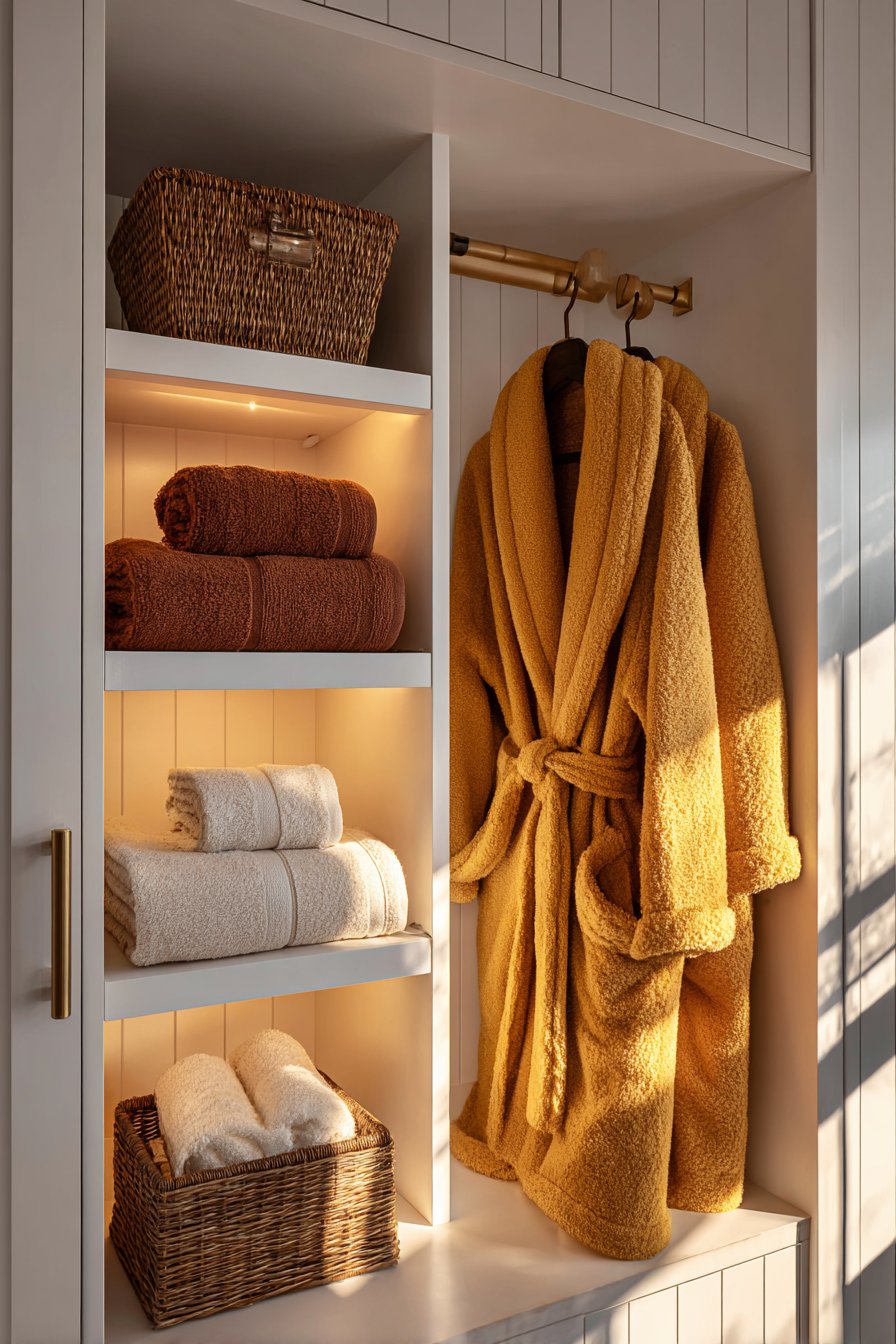
Open shelving within the closet displays woven baskets in natural rattan alongside neatly folded towels in rust and cream colors, creating a visually pleasing composition that’s both practical and beautiful. The transparency of open storage encourages organization and makes items easy to locate, while the warm materials and colors ensure the display enhances rather than detracts from the bathroom’s aesthetic. Brass hooks mounted on the side or front of the storage unit hold plush robes, adding convenience while contributing another warm metallic accent to the design.
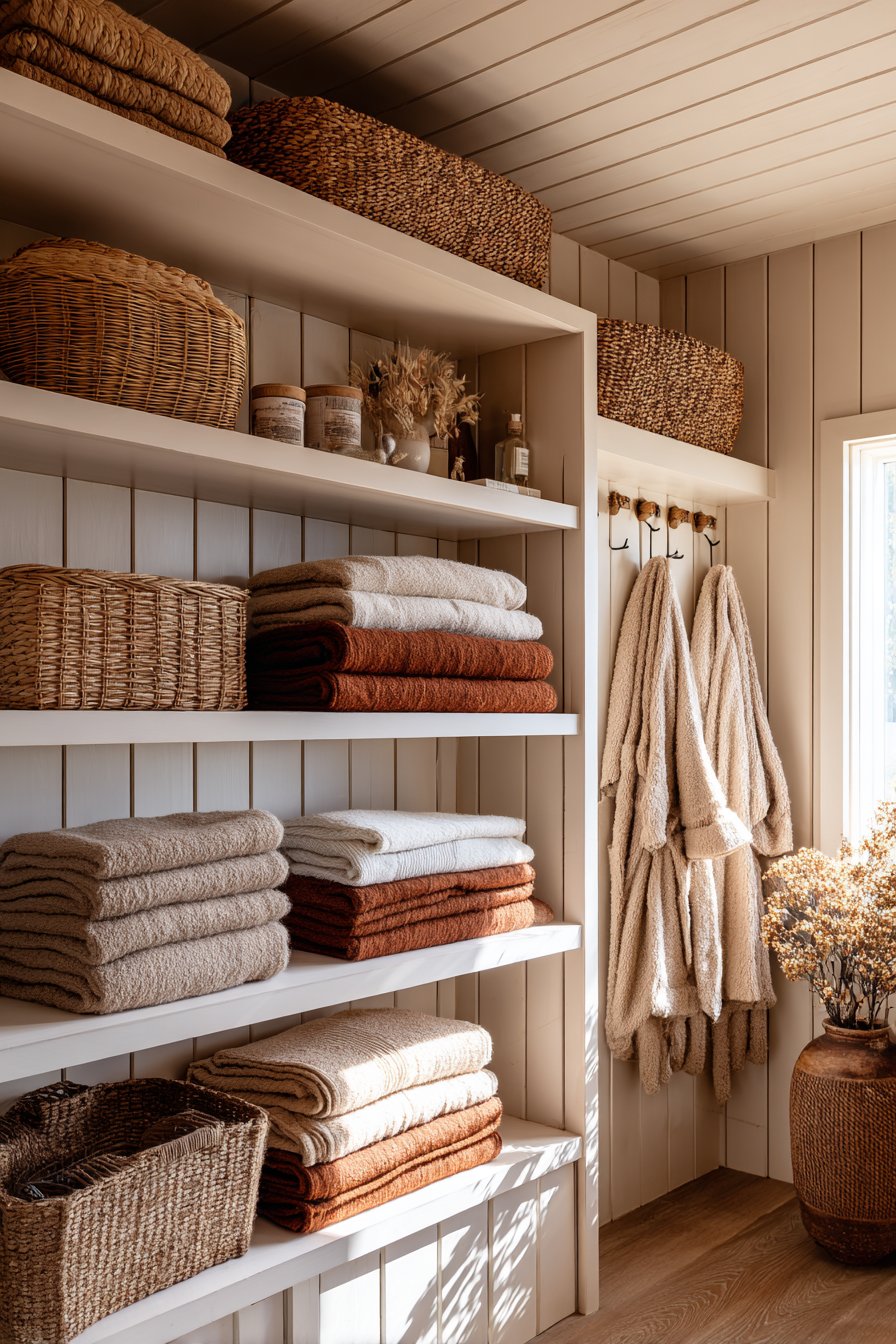
Warm recessed lighting illuminates the organized space, making it easy to find what you need while highlighting the beautiful textures and colors of the carefully arranged contents. This attention to lighting within storage areas is often overlooked but makes a significant difference in both functionality and ambiance. The overall effect is one of calm organization, where everything has its place and the act of retrieving fresh towels or finding your favorite robe becomes a small pleasure rather than a frustrating search.
Key Design Tips:
- Install tongue-and-groove paneling vertically to create the illusion of higher ceilings in the storage area
- Use felt-lined woven baskets to protect delicate fabrics and prevent snags
- Organize towels by color within the warm palette to create visual harmony
- Install motion-sensor lighting in closets to ensure illumination without fumbling for switches with full hands
- Leave some open space on shelves rather than filling every inch—the breathing room contributes to a sense of calm
5. Taupe and Cream Mosaic Shower Retreat
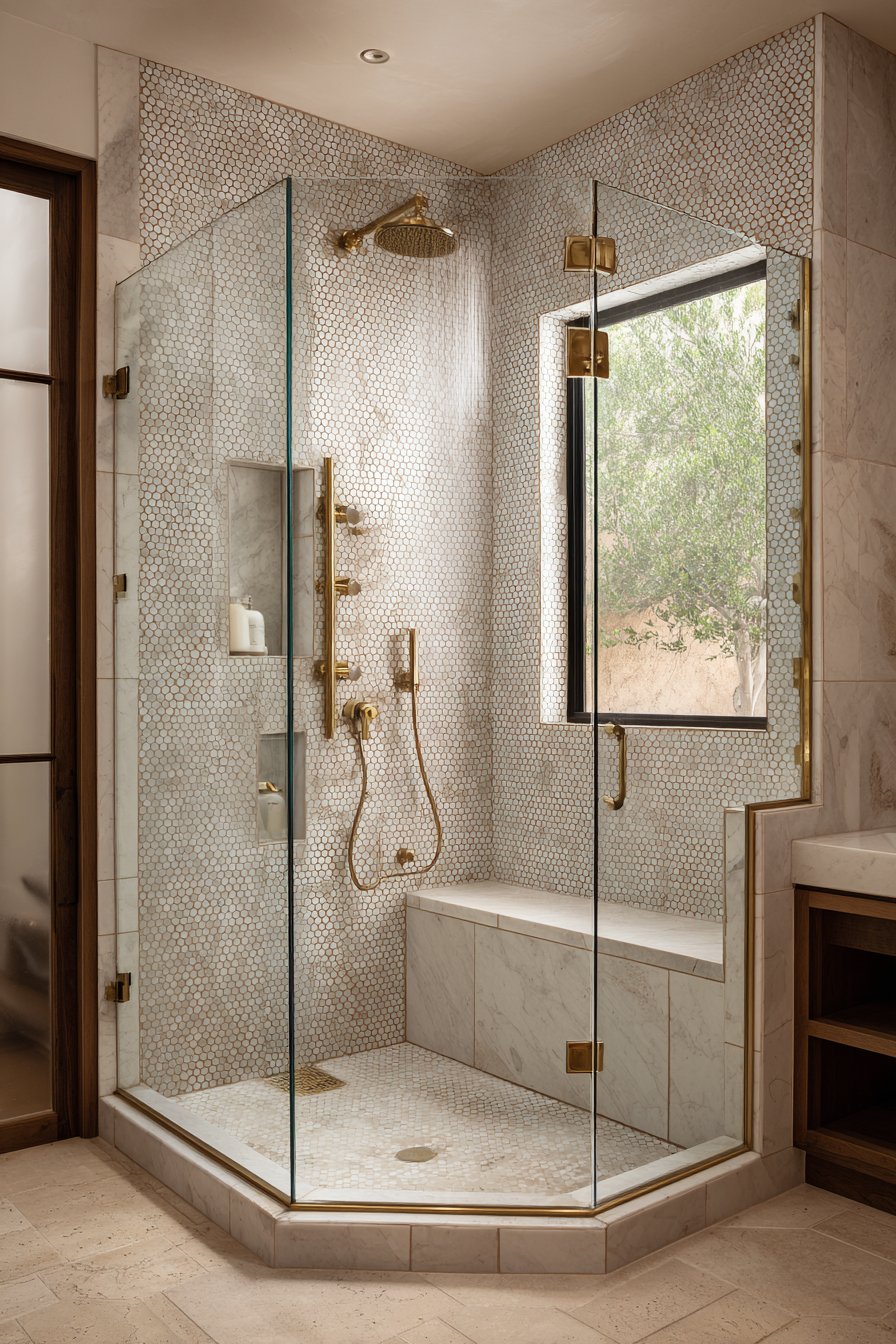
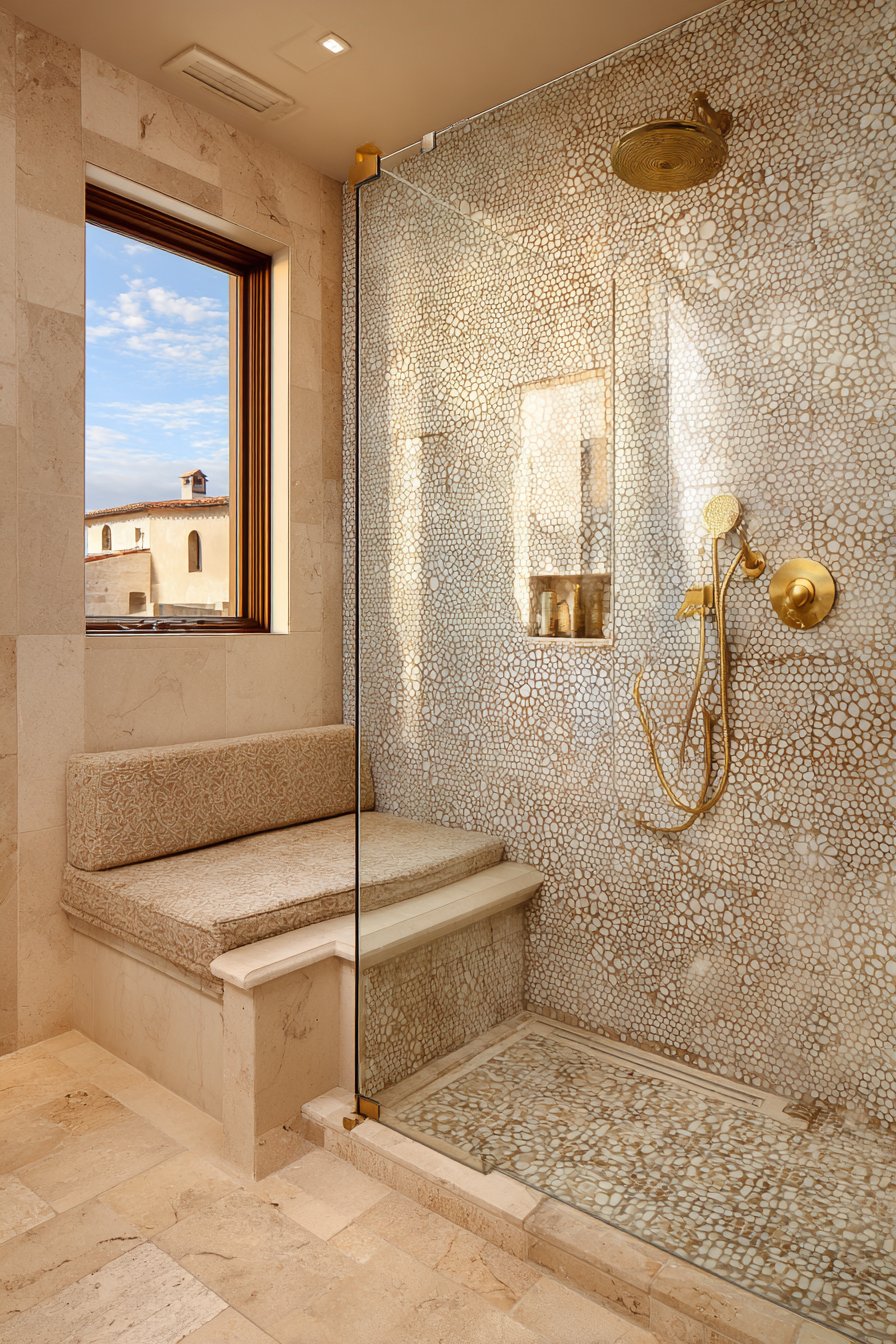
The shower enclosure becomes a jewel box in this design, with frameless glass revealing walls clad in small-format tiles arranged in a warm taupe and cream mosaic pattern. The beauty of mosaic tiles lies in their ability to create visual interest and texture while maintaining a cohesive color scheme, with the interplay of the two warm neutrals adding depth without contrast. The small scale of the tiles also provides excellent slip resistance on the shower floor, making this design choice as practical as it is beautiful.
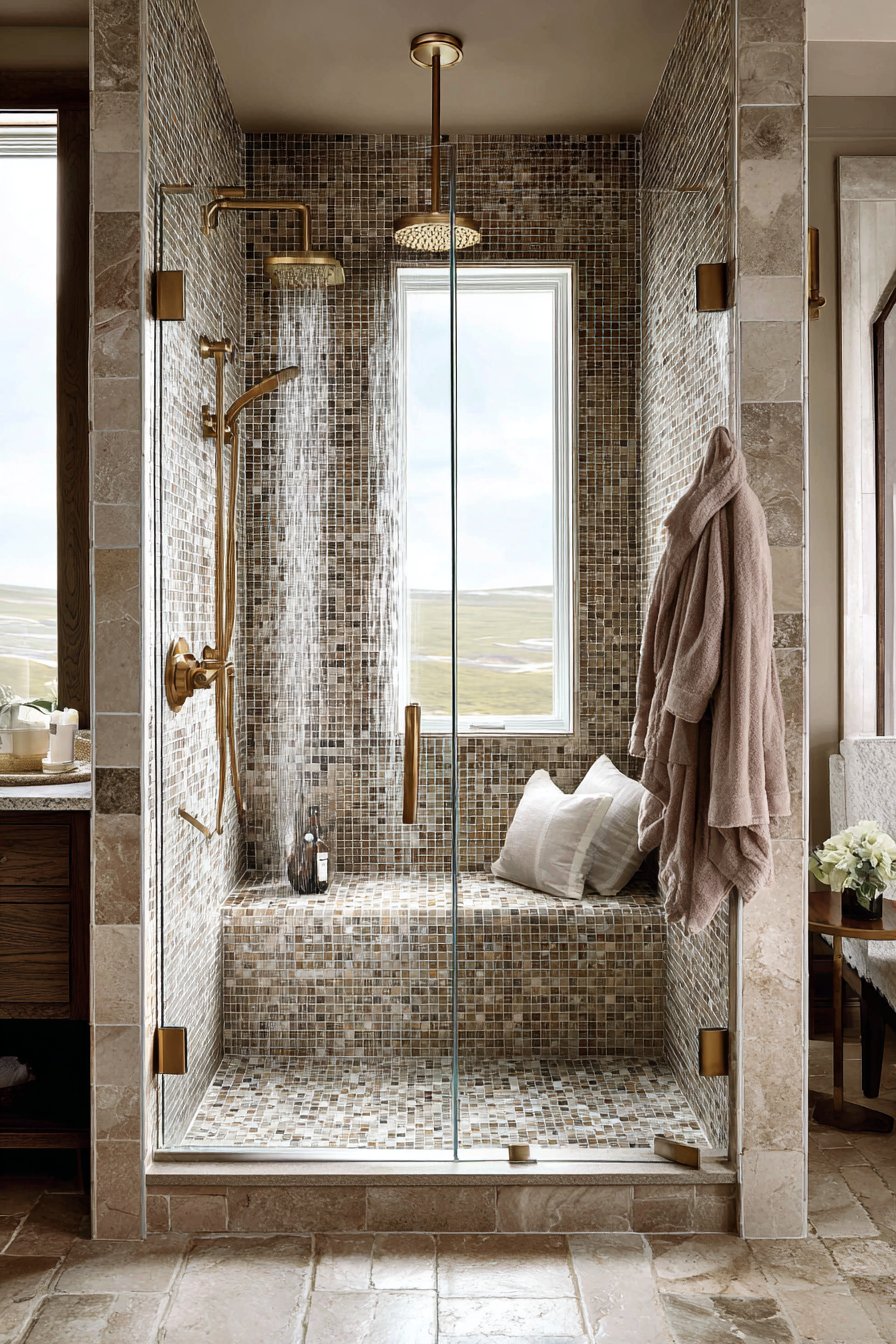
The built-in corner bench in matching stone provides practical seating for shaving legs, relaxing under the water stream, or simply creating a more spa-like experience. This type of integrated seating eliminates the need for unstable plastic stools while seamlessly blending into the overall design. The bench surface should be slightly sloped toward the drain to prevent water pooling, and its warm stone surface—particularly if equipped with radiant heating—provides a comfortable perch even in cooler months.
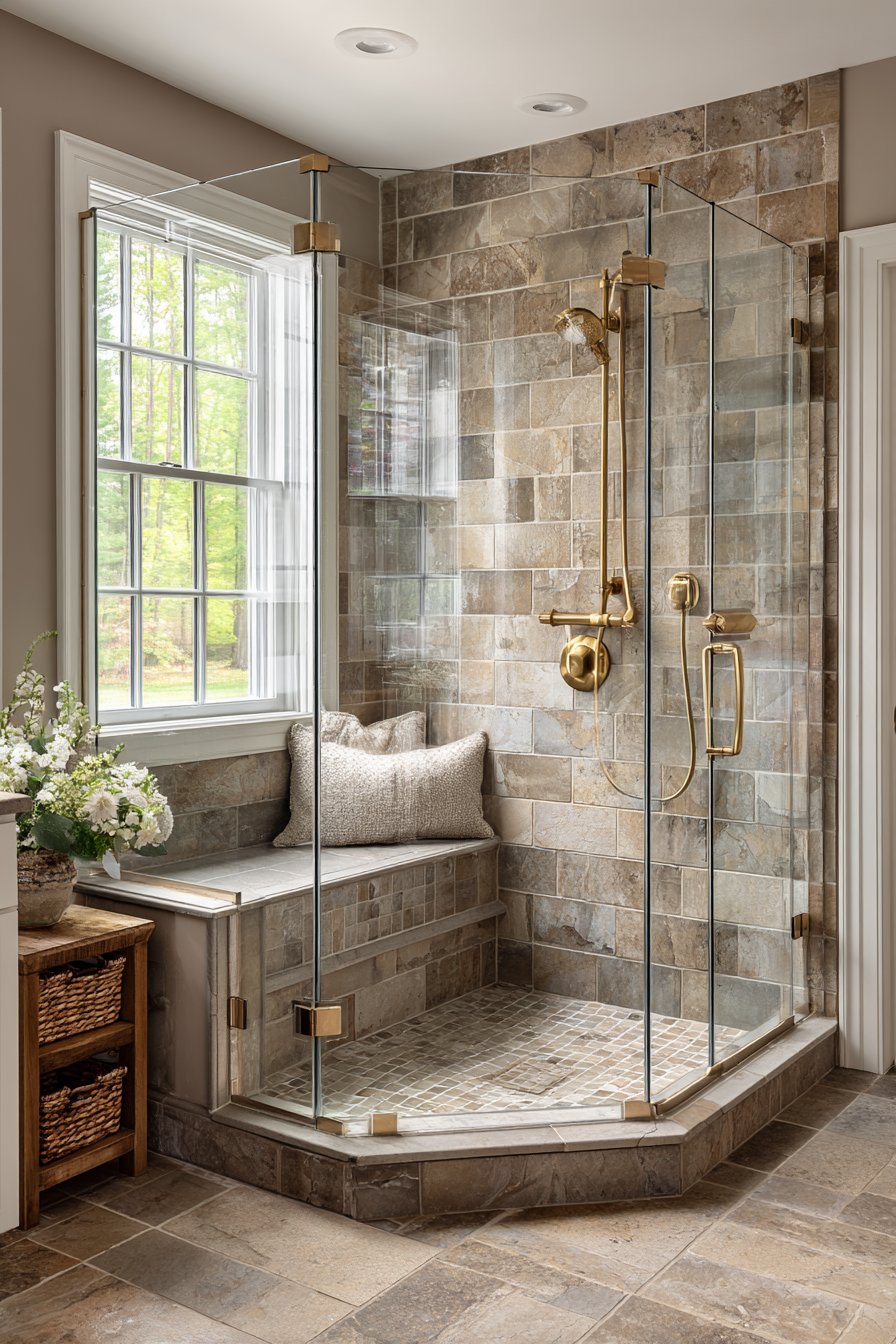
Brushed gold shower fixtures and handheld wand complete the setup with warmth and functionality, the handheld feature adding versatility for everything from washing hair to cleaning the shower itself. Natural light from a privacy window creates soft highlights on wet surfaces, making the water droplets sparkle like crystals while the warm tones in the tile absorb and reflect the light in beautiful ways. The presence of natural light in the shower transforms it from a purely functional space to one where you might linger, enjoying the play of light and water.
Key Design Tips:
- Use a mosaic pattern with varied tones rather than uniform tiles to create organic visual interest
- Ensure the shower bench is 17-19 inches high for comfortable seating
- Choose a handheld shower wand with multiple spray patterns for maximum versatility
- Install a privacy window with frosted or textured glass that allows light while maintaining privacy
- Use a high-quality silicone caulk in a warm tone to maintain seamless waterproofing
6. Clawfoot Tub Romance with Oak Flooring
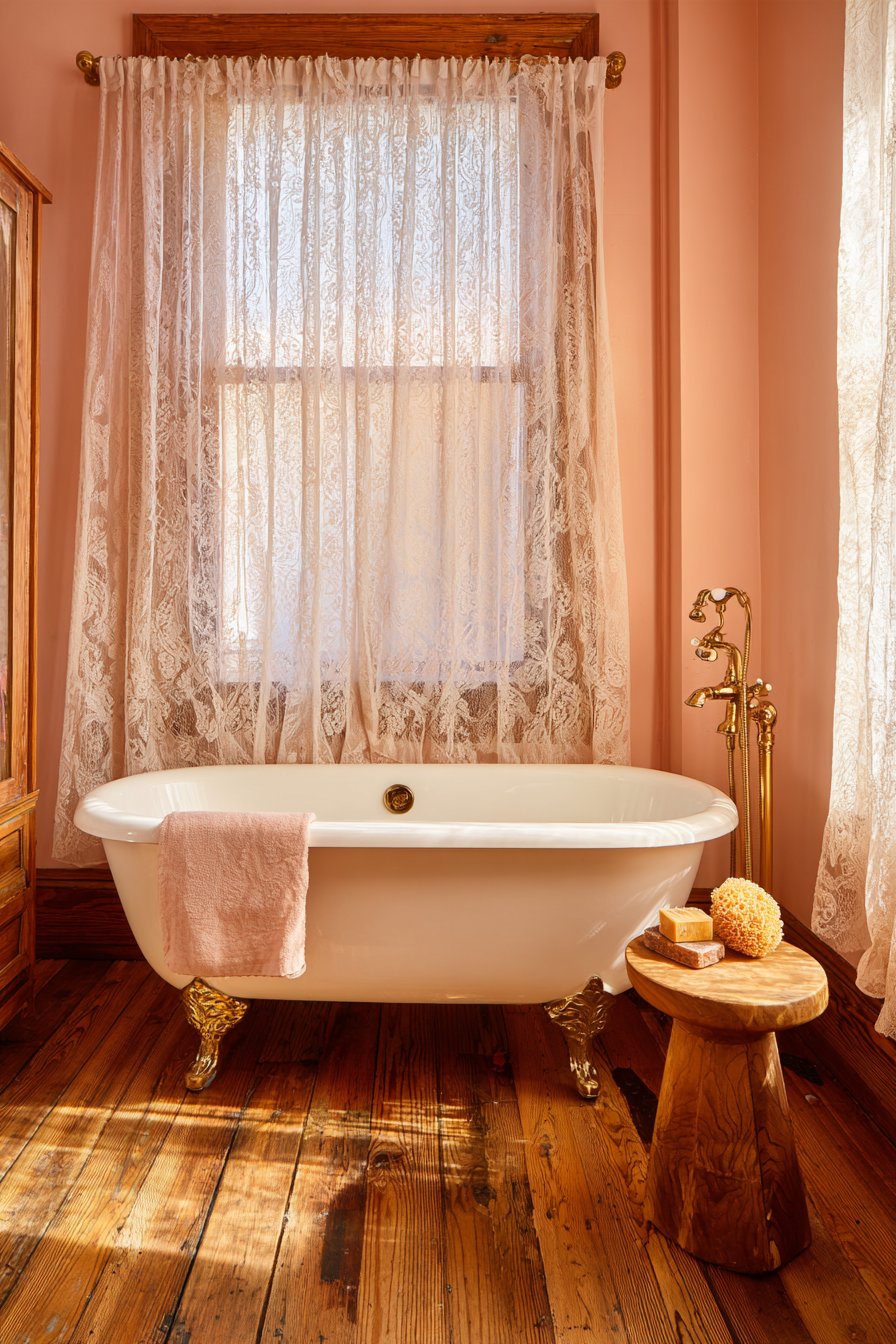
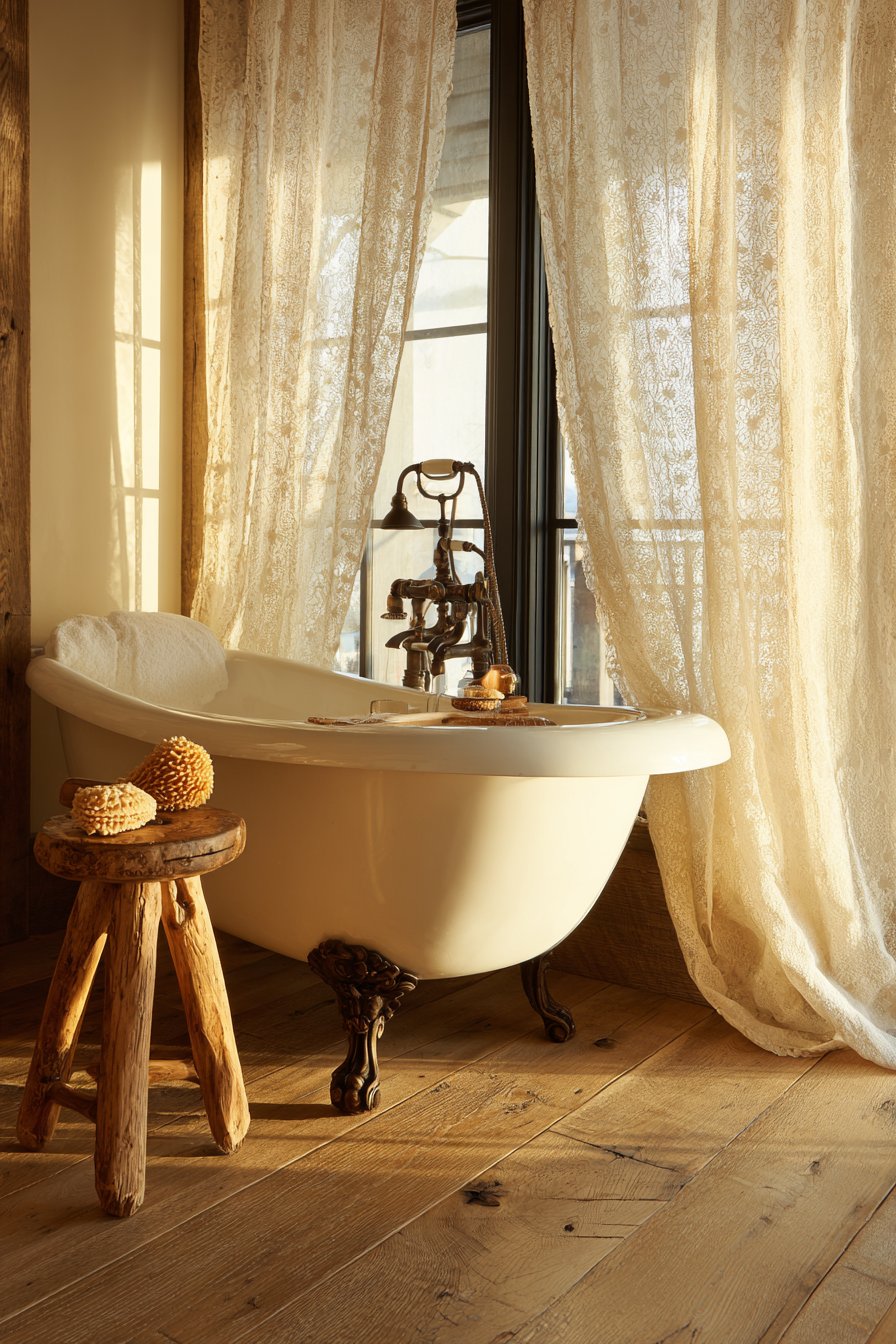
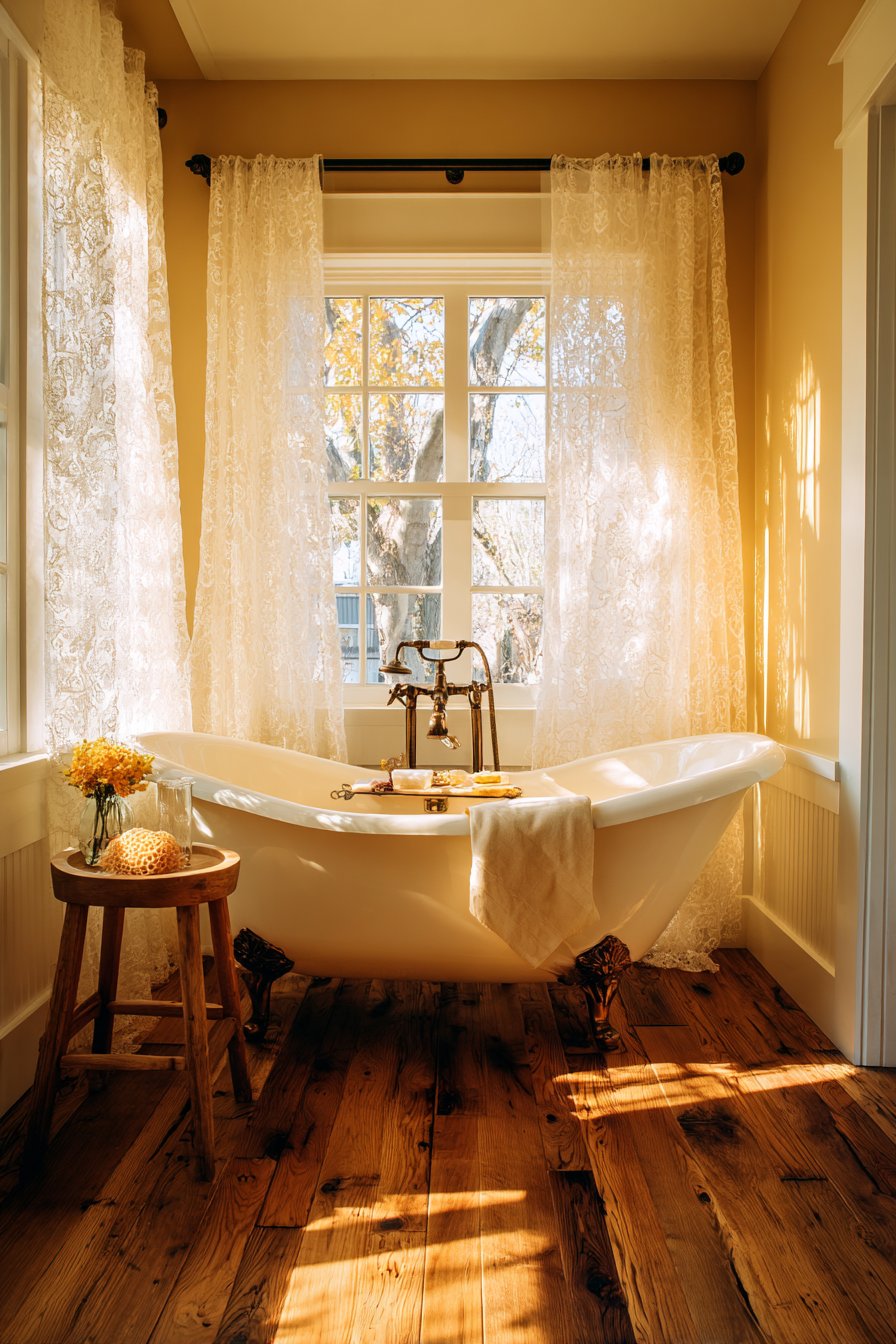
There’s something inherently romantic about a clawfoot tub, and when refinished in warm white and positioned on wide-plank oak flooring with natural oil finish, it becomes the undeniable centerpiece of the bathroom. The freestanding tub filler in oil-rubbed bronze adds vintage charm while providing the practical benefit of filling the tub without requiring wall-mounted fixtures. This configuration offers flexibility in tub placement, allowing you to position it near a window or in the center of the room as a true sculptural element.
The walls painted in soft apricot create an enveloping warmth that feels like a gentle embrace, particularly during evening baths when the setting sun or candlelight enhances the peachy glow. This bold yet soft color choice demonstrates that warm bathrooms need not be limited to safe beiges and whites—carefully chosen colors can dramatically increase the sense of coziness while still feeling sophisticated and intentional. The key is selecting colors with warm undertones that have been slightly grayed or softened to avoid appearing juvenile or overwhelming.
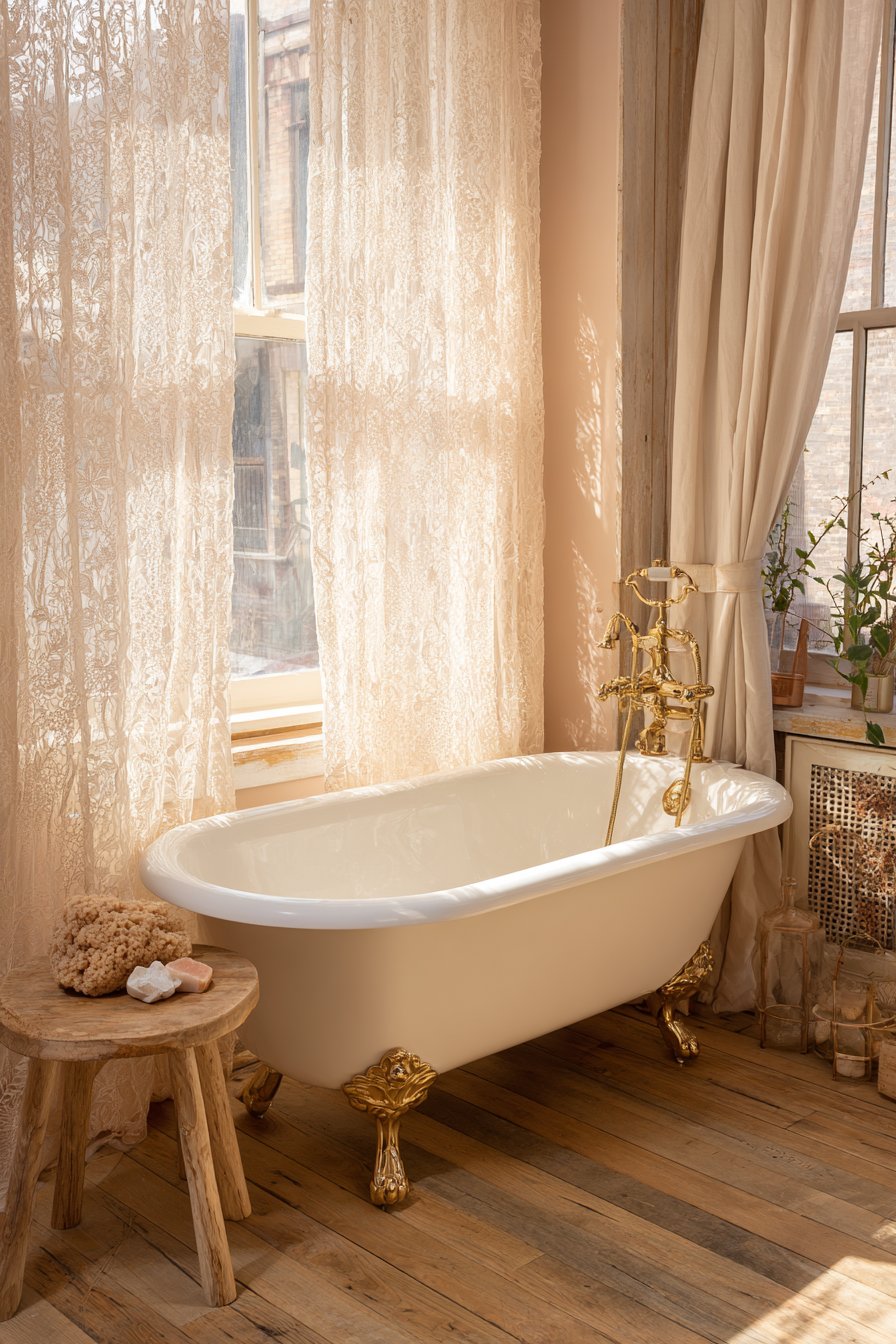
A small wooden stool holds artisan soaps and a natural sea sponge, adding both functionality and styling opportunity to the tub area. These carefully chosen accessories enhance the vintage spa atmosphere while remaining entirely practical. The wide-plank oak flooring, treated with a natural oil finish rather than polyurethane, develops a beautiful patina over time and can be spot-repaired if damaged, making it an excellent long-term choice for bathroom flooring despite common misconceptions about wood in wet spaces.
Key Design Tips:
- Seal oak flooring with a penetrating oil designed for wet environments, reapplying annually
- Position clawfoot tubs at least 12 inches from walls for cleaning access and visual impact
- Choose an apricot paint with gray undertones for sophistication rather than bright peachy tones
- Use a tub filler with a hand shower attachment for added functionality
- Place a vintage rug or bath mat beside the tub for comfort and to protect flooring from standing water
7. Compact Warmth: Small Space Walnut Vanity Design
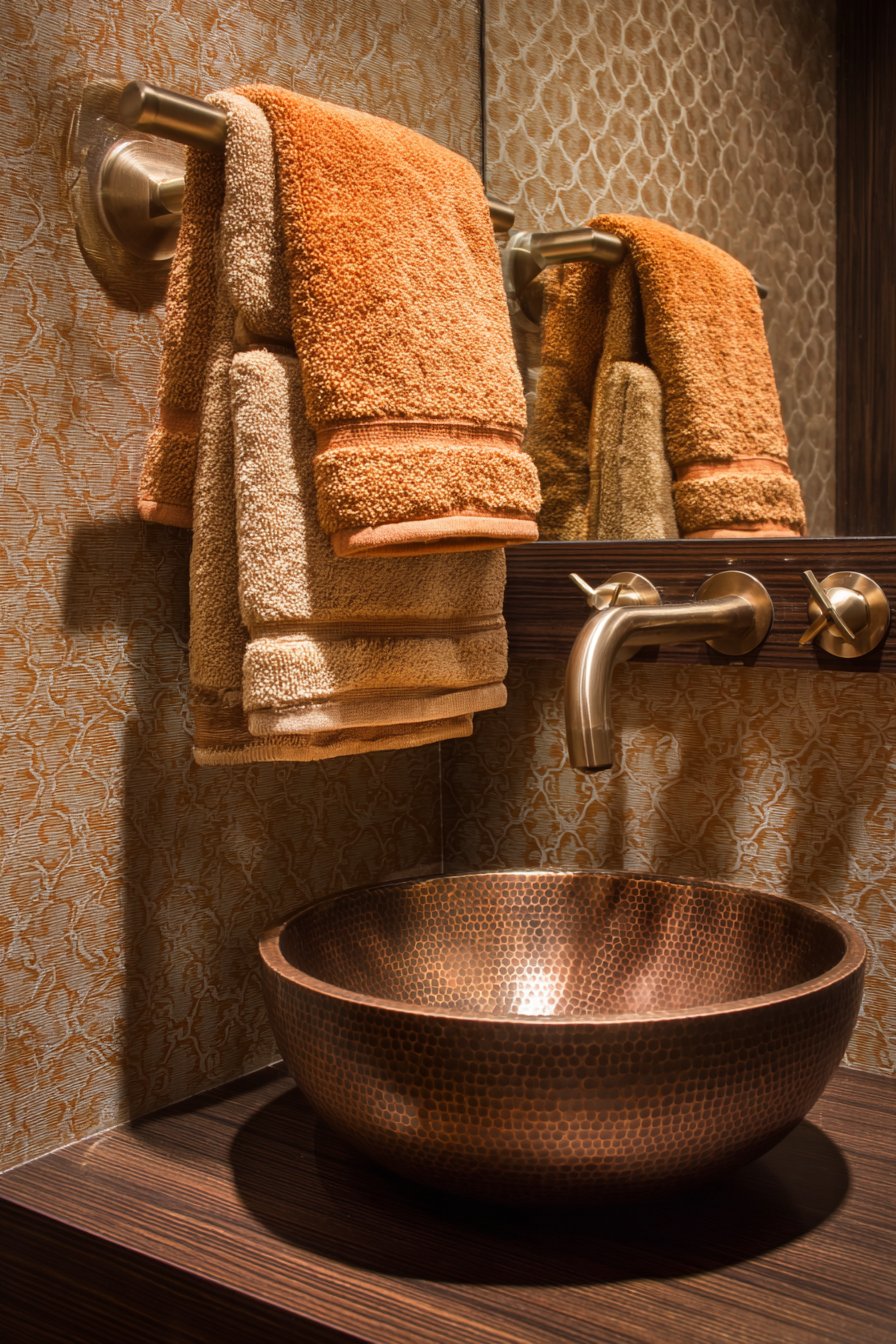
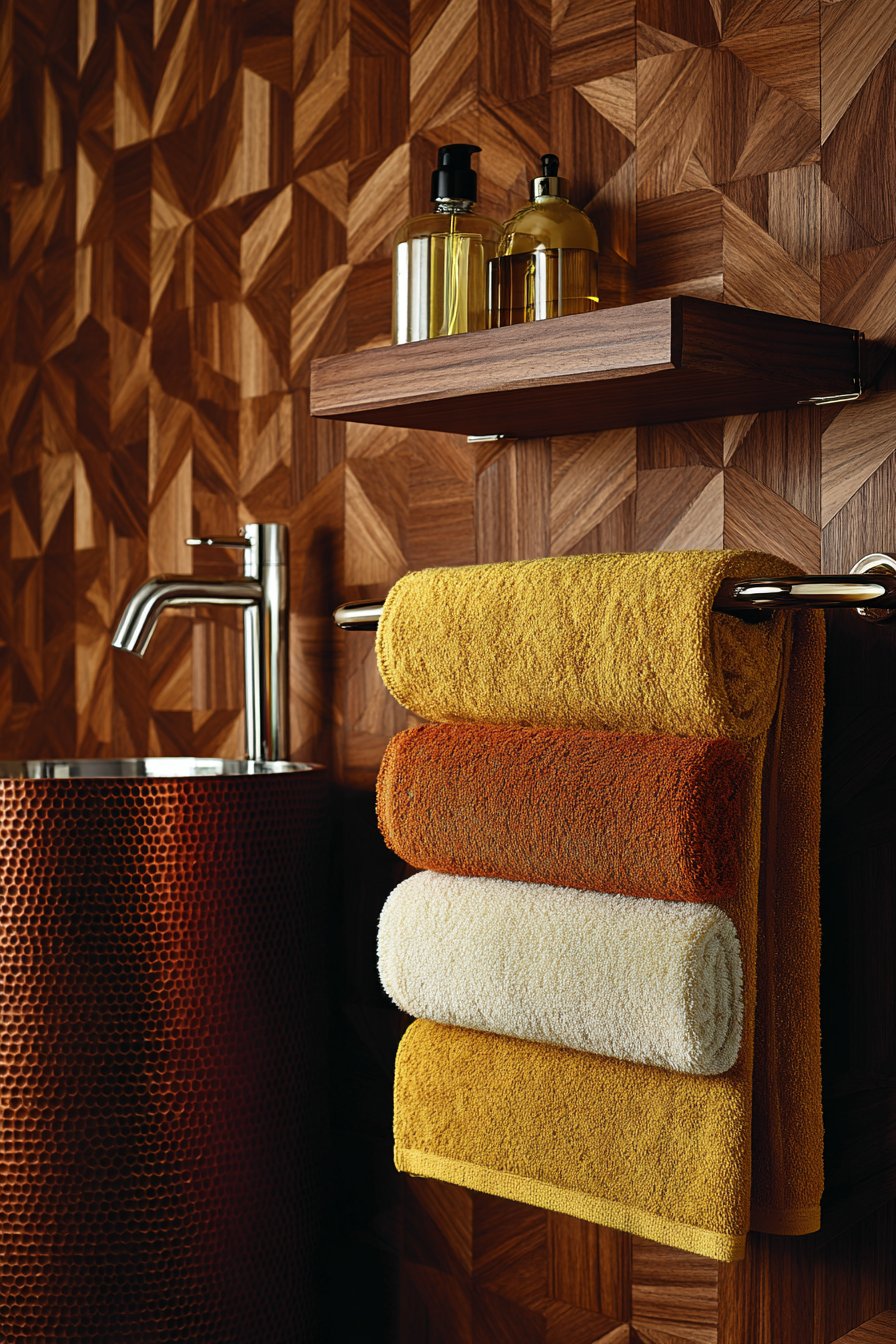
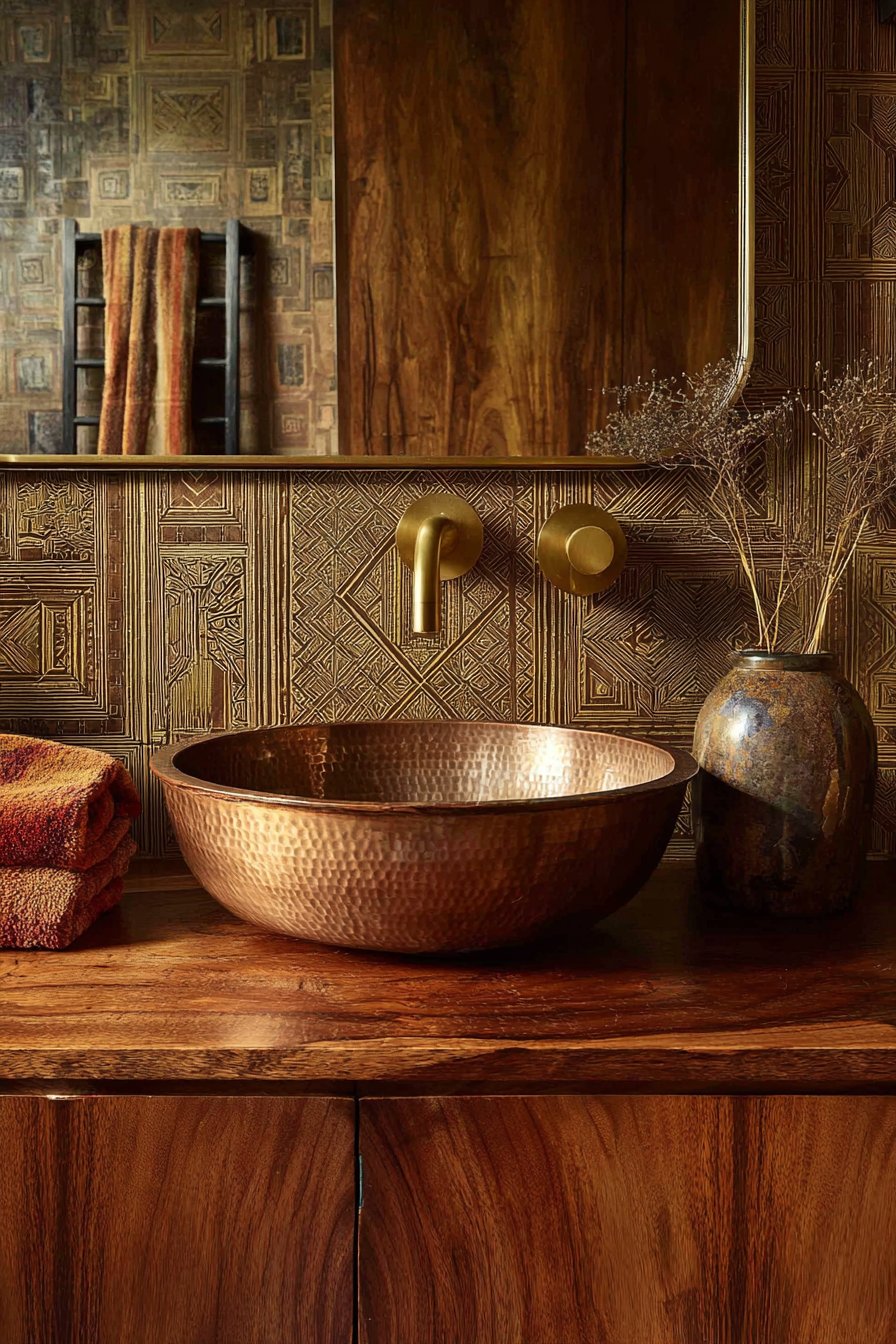
Small bathrooms present unique challenges, but this design proves that compact spaces can be just as warm and luxurious as larger rooms through careful material selection and strategic design choices. The wall-mounted vanity in warm walnut veneer provides essential storage without making the room feel cramped, as the floating design allows floor space to remain visible, creating an illusion of greater square footage. The rich, chocolatey tones of walnut bring immediate warmth and sophistication to even the most modest powder room.
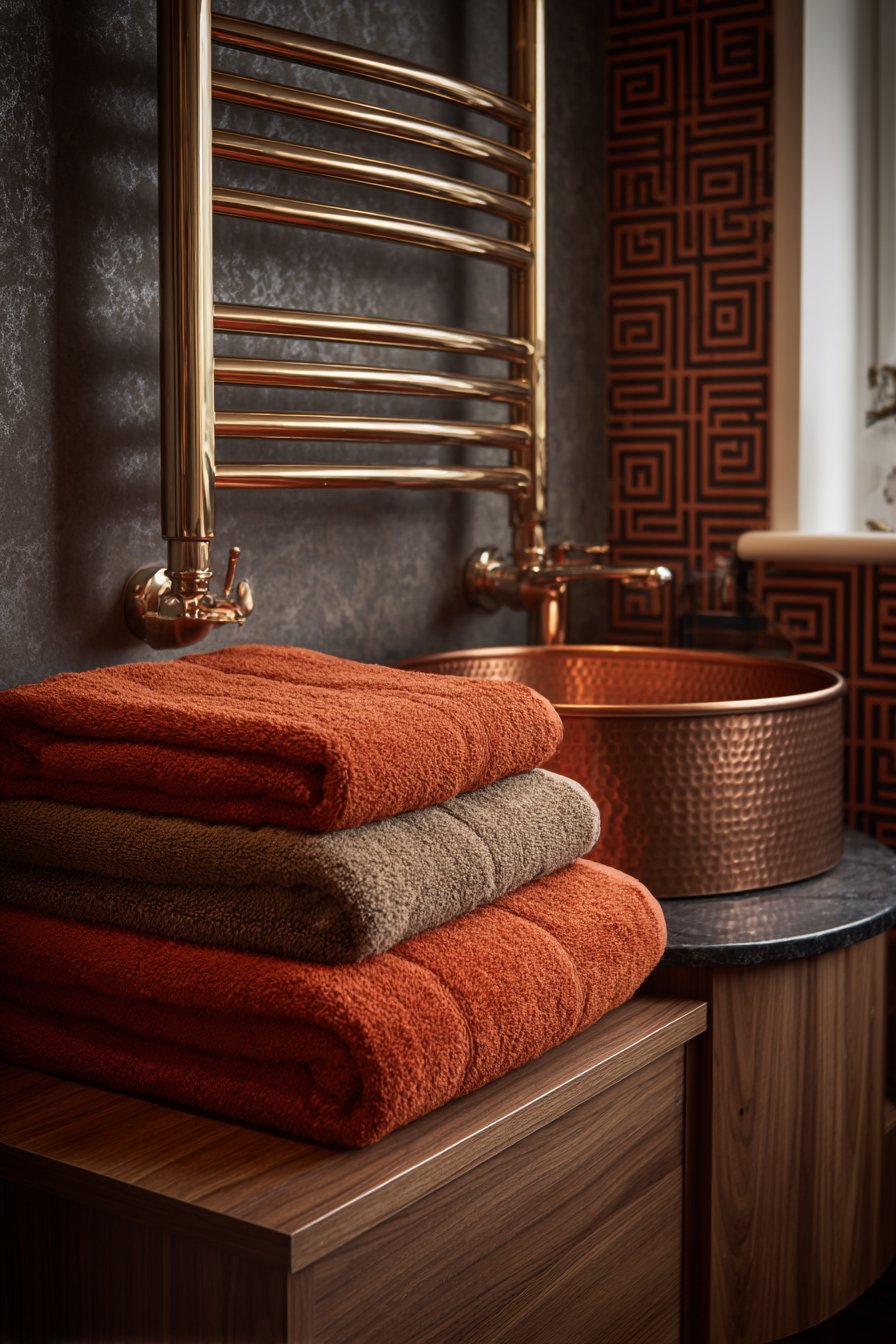
The circular vessel sink in hammered copper becomes a stunning focal point that draws the eye and provides a talking point without requiring much space. The hammered texture catches light beautifully, creating ever-changing patterns throughout the day as natural light moves through the room. Copper also possesses natural antimicrobial properties, making it an excellent choice for bathroom applications beyond its obvious aesthetic appeal. The heated towel rack in brushed gold holds plush towels in burnt orange and cream, adding both luxury and practicality to the small space.
Textured wallpaper in a warm geometric pattern adds visual interest and personality without overwhelming the small room, provided you choose a pattern with appropriate scale. In small bathrooms, wallpaper can actually make the space feel more finished and intentional than painted walls, particularly when you select patterns with warm colors and organic geometries that complement rather than compete with the other elements. The key is ensuring adequate ventilation to prevent moisture damage to the paper over time.
Key Design Tips:
- Mount wall-hung vanities 32-34 inches from the floor for comfortable use while maximizing the floating effect
- Choose vessel sinks carefully in small bathrooms—too large and they can overwhelm the vanity
- Install heated towel racks on a timer to ensure they’re warm when you need them without wasting energy
- Use removable wallpaper in high-moisture bathrooms for easier replacement if needed
- Incorporate a large mirror to reflect light and make the small space feel more expansive
8. Natural Light Haven: Bamboo Shade Window Treatment
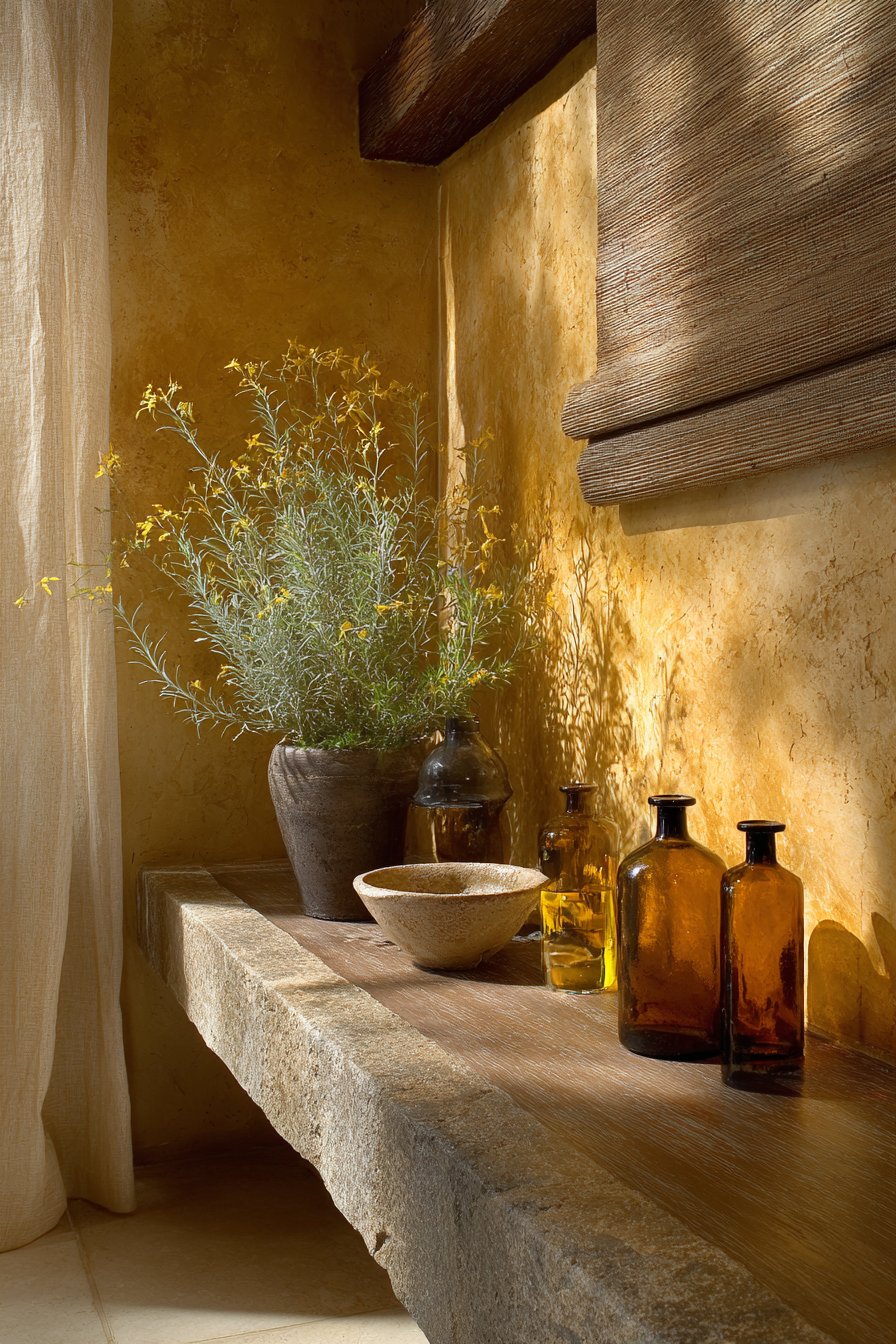
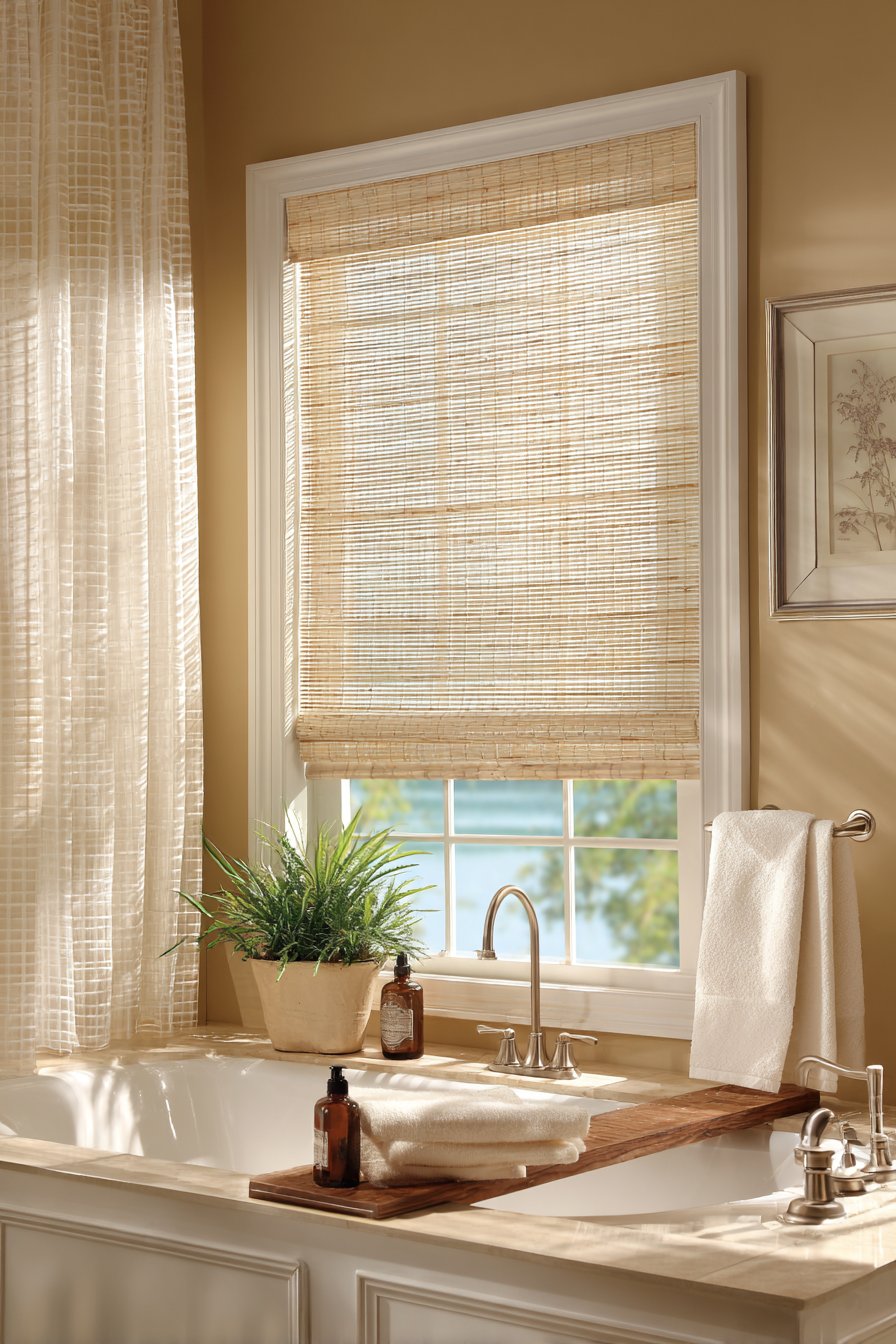
Windows in bathrooms present a unique design challenge, requiring privacy while still allowing natural light to enhance the space. This design solves that problem beautifully with natural bamboo Roman shades that filter sunlight into warm golden rays, creating an instant atmosphere of natural serenity. The woven texture of the bamboo adds organic visual interest while the natural honey tones of the material contribute to the warm color palette throughout the room.
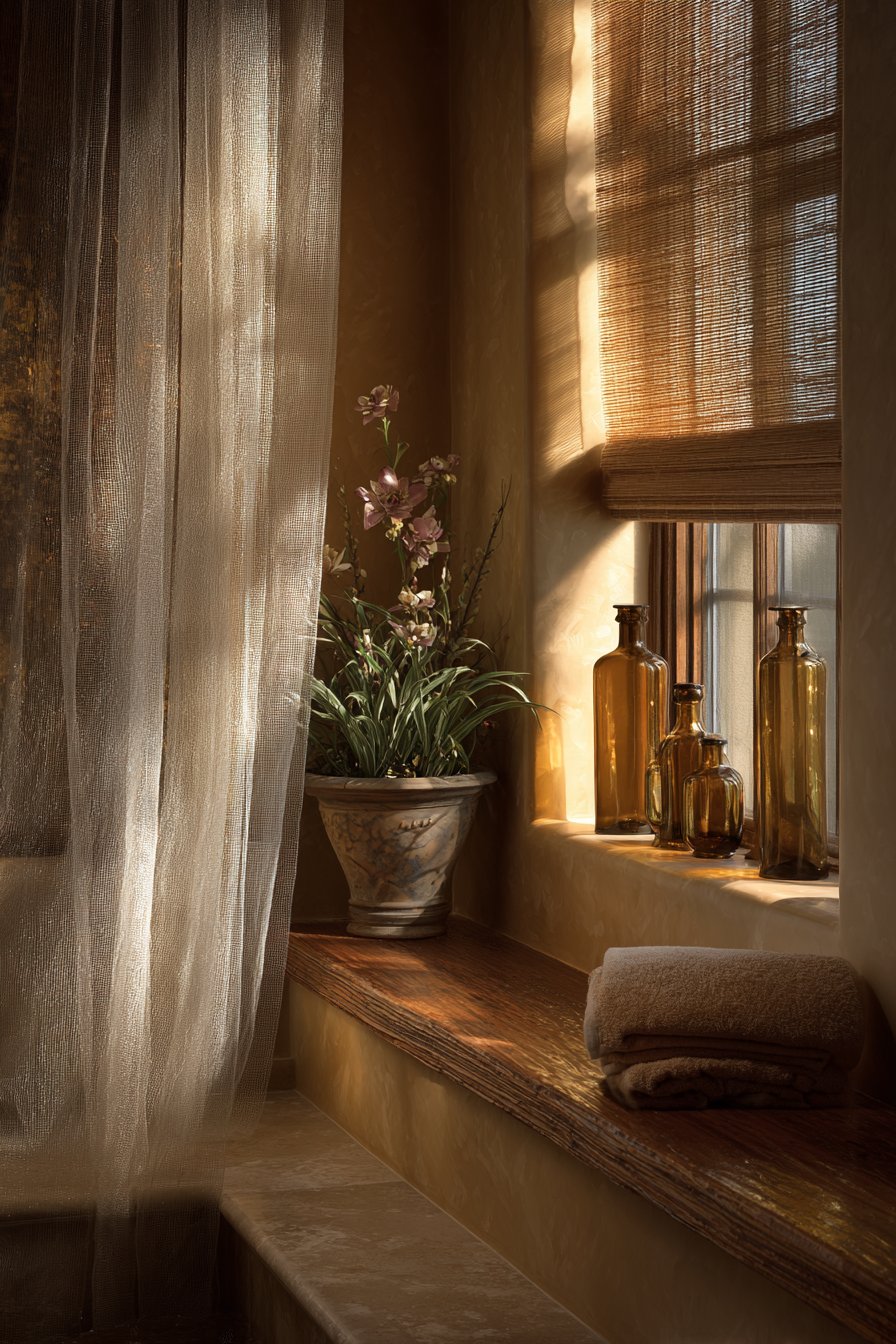
The window sill in sealed teak displays potted plants and amber glass bottles, transforming a typically underutilized space into a styling opportunity that enhances both the warmth and the natural feel of the room. Plants in bathrooms thrive due to the humidity, while their presence brings life and color that complements the warm design. The amber glass bottles might hold bath oils, salts, or simply serve as decorative elements, their translucent color glowing beautifully when backlit by afternoon sun.
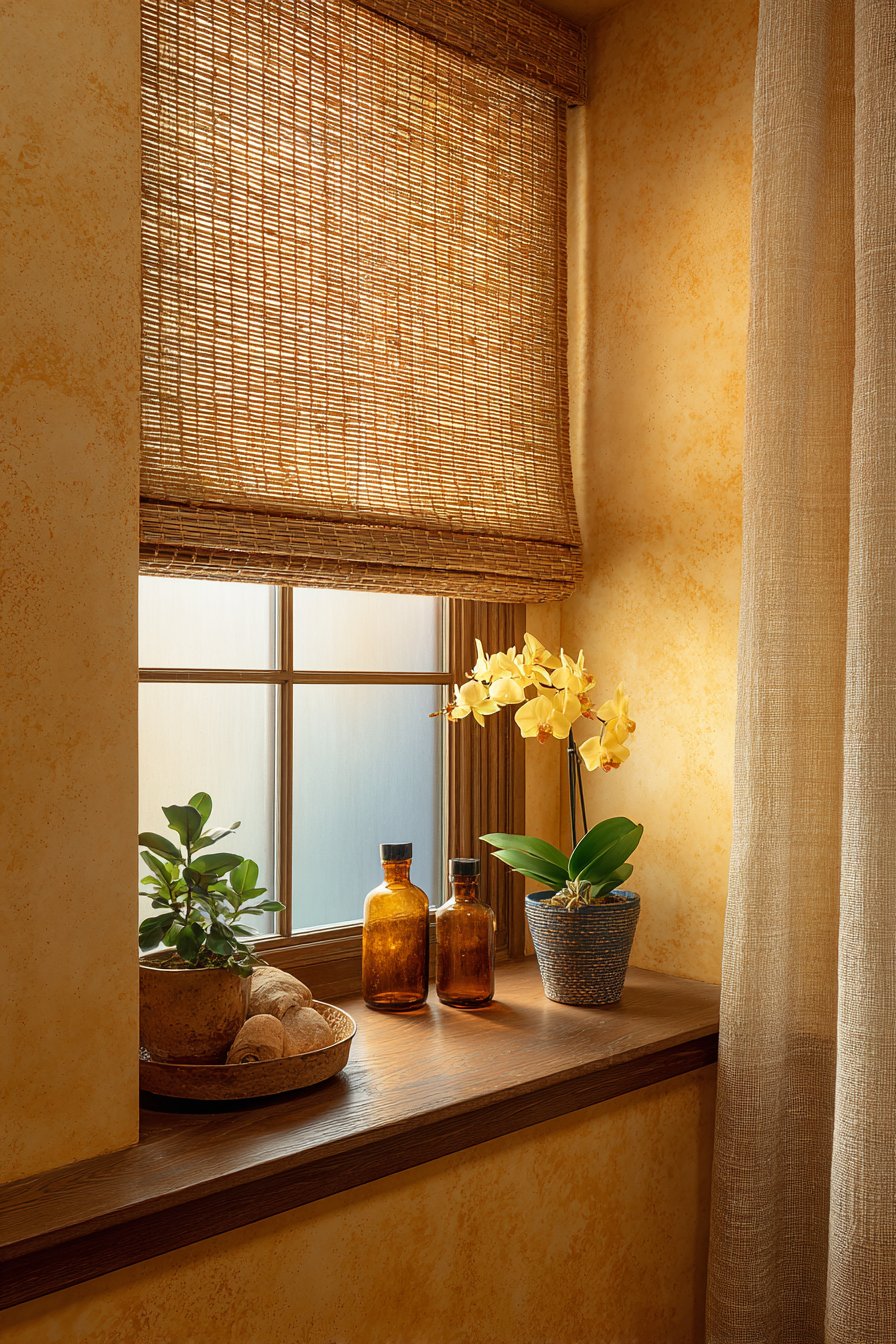
Surrounding walls in warm buff color complement the natural materials without competing for attention, creating a harmonious backdrop that allows the window area to shine. The addition of a sheer linen privacy curtain adds softness and another layer of light filtration, creating a flexible system where you can adjust privacy and light levels according to your needs. The layering of the bamboo shade with the linen curtain also adds visual depth and texture, making the window treatment itself a design feature worth attention.
Key Design Tips:
- Choose bamboo shades with a cordless or continuous cord loop system for safer, cleaner operation
- Seal wood window sills with marine-grade sealant to protect against moisture damage
- Select plants that thrive in humidity and indirect light, such as ferns, pothos, or orchids
- Use museum wax or similar products to secure decorative bottles and prevent them from toppling
- Install window treatments outside the window frame when possible to make windows appear larger
9. Reclaimed Wood Accent Wall Statement
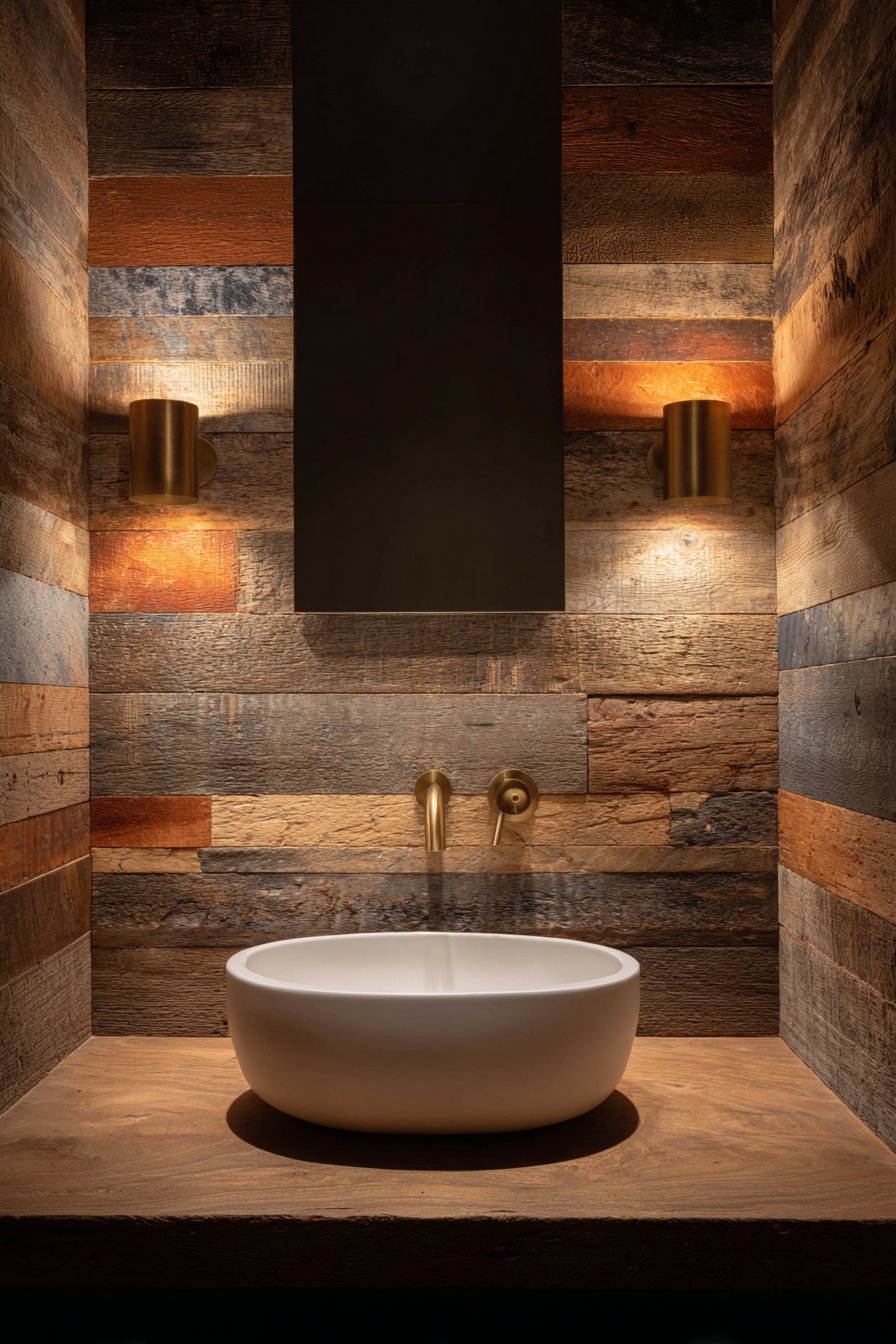
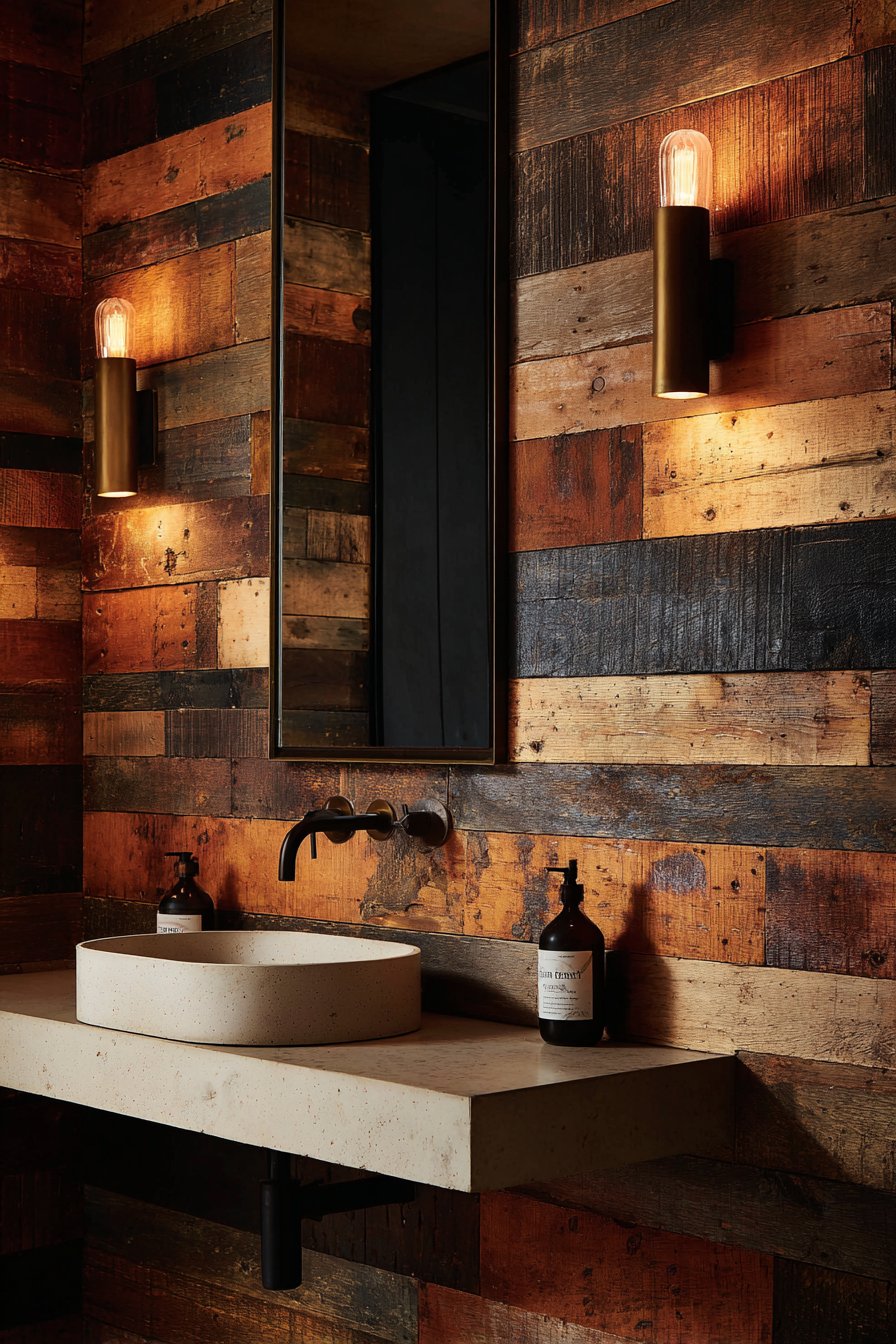
An accent wall can transform a bathroom from ordinary to extraordinary, and when that wall features reclaimed wood planks in varied warm tones from honey to deep amber, the impact is nothing short of stunning. The horizontal installation of the planks creates a sense of width, making the bathroom feel more expansive while the varied tones within the wood tell stories of age and previous lives. Each plank’s unique character—knots, nail holes, color variations—contributes to an overall tapestry of texture that machine-made materials simply cannot replicate.
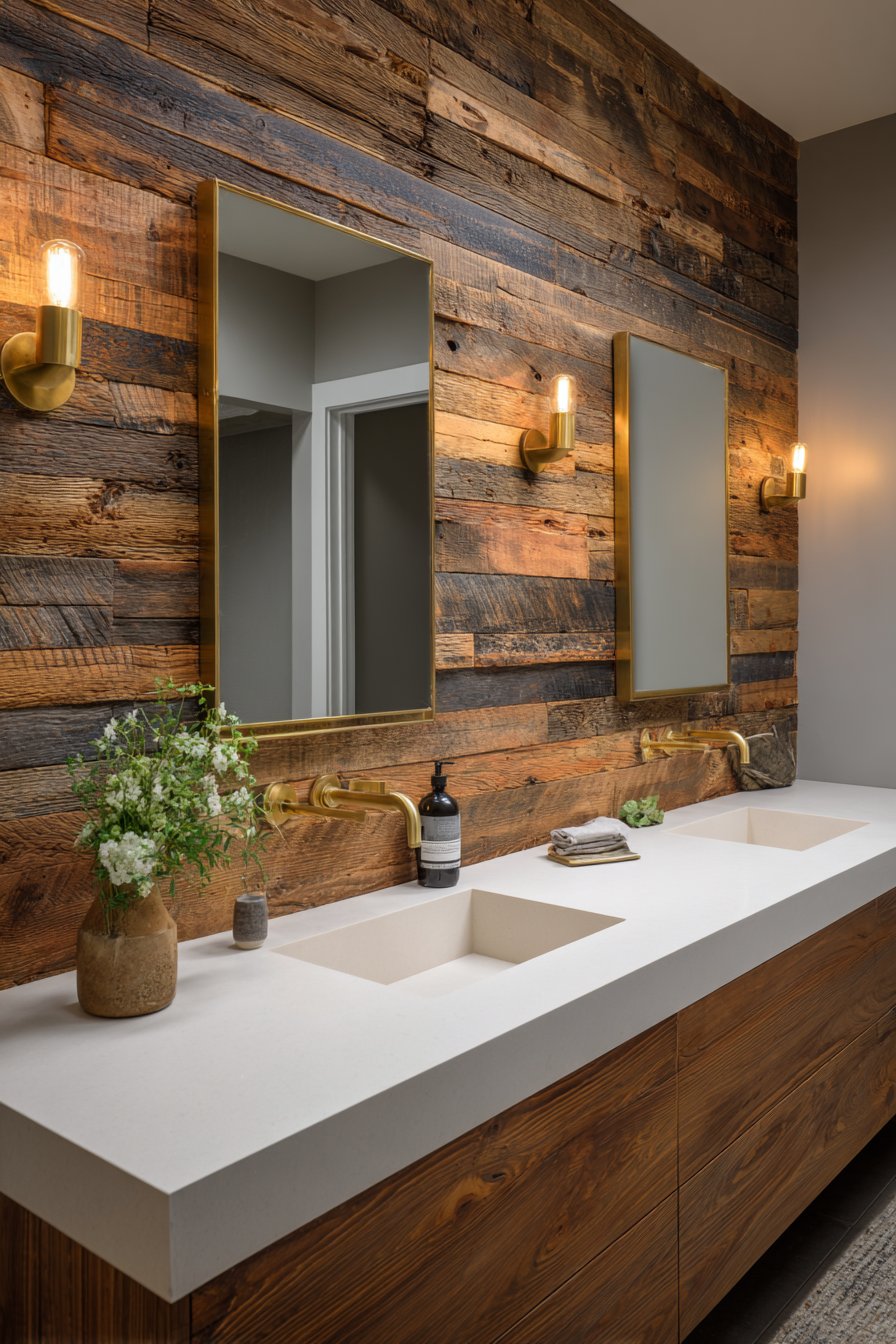
This dramatic wall backs a modern floating vanity in matte white, creating a beautiful juxtaposition between the rustic, organic wood and the clean contemporary lines of the vanity. This type of contrast prevents the design from feeling one-note or predictable while allowing each element to be appreciated for its distinct qualities. The white vanity also provides a visual rest between the rich wood wall and other warm elements in the room, preventing the space from feeling too heavy or dark.
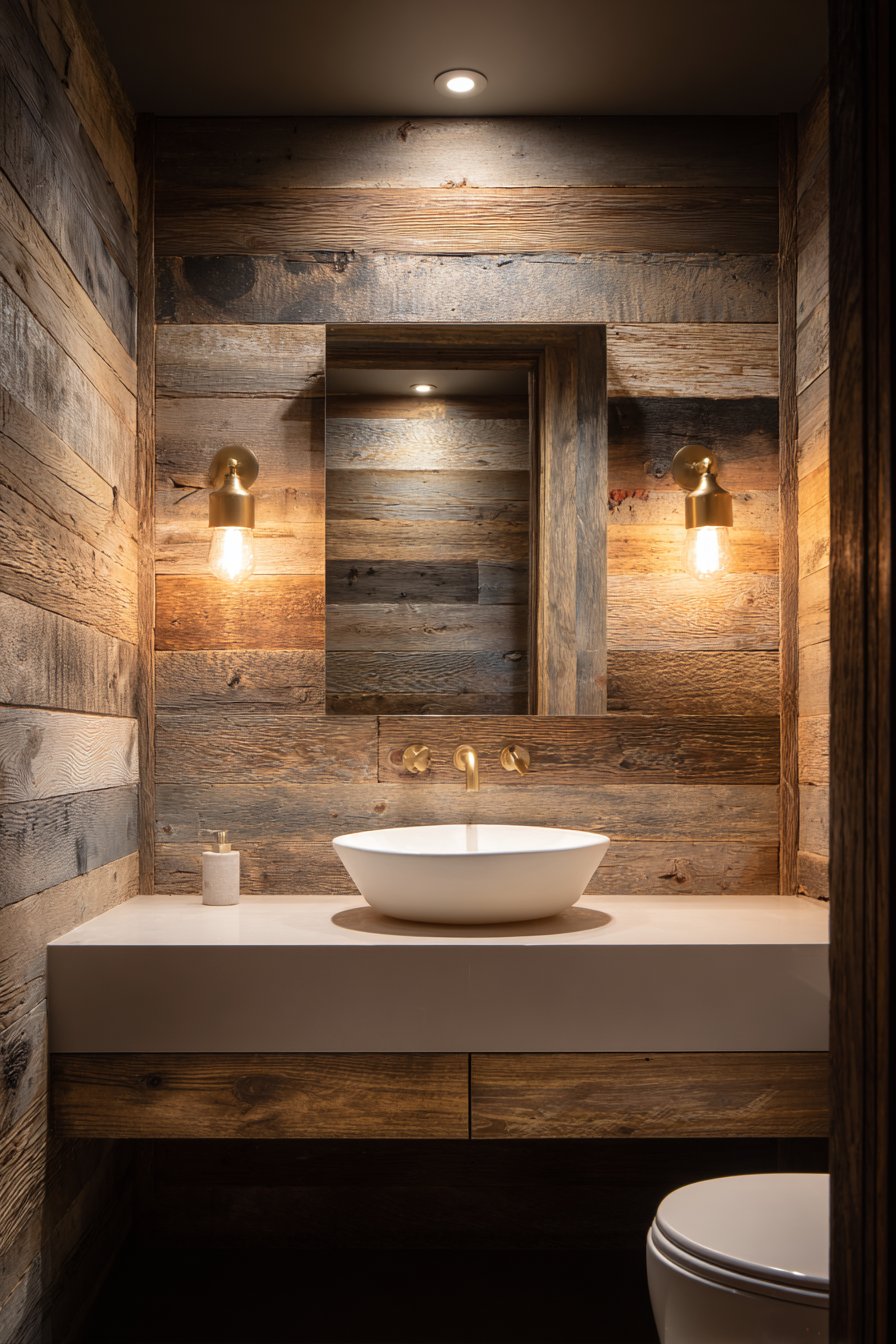
Brass sconces mounted directly on the wood wall cast warm pools of light that emphasize the texture and grain patterns, making the wall come alive with shadows and highlights. The placement of these sconces requires careful planning during installation, as you must locate studs within the old wood for secure mounting, but the result is worth the extra effort. The overall effect creates a focal point that draws attention the moment you enter the bathroom while providing a warm, organic backdrop for daily routines.
Key Design Tips:
- Seal reclaimed wood with a clear, moisture-resistant finish to protect against bathroom humidity
- Install a moisture barrier behind the wood planks to protect the wall structure
- Ensure electrical work is completed before wood installation to avoid having to cut into the finished wall
- Mix plank widths within the same color family for more authentic, collected appearance
- Leave a small gap at the ceiling and floor to allow for wood expansion in humid conditions
10. Seamless Sandstone Sanctuary
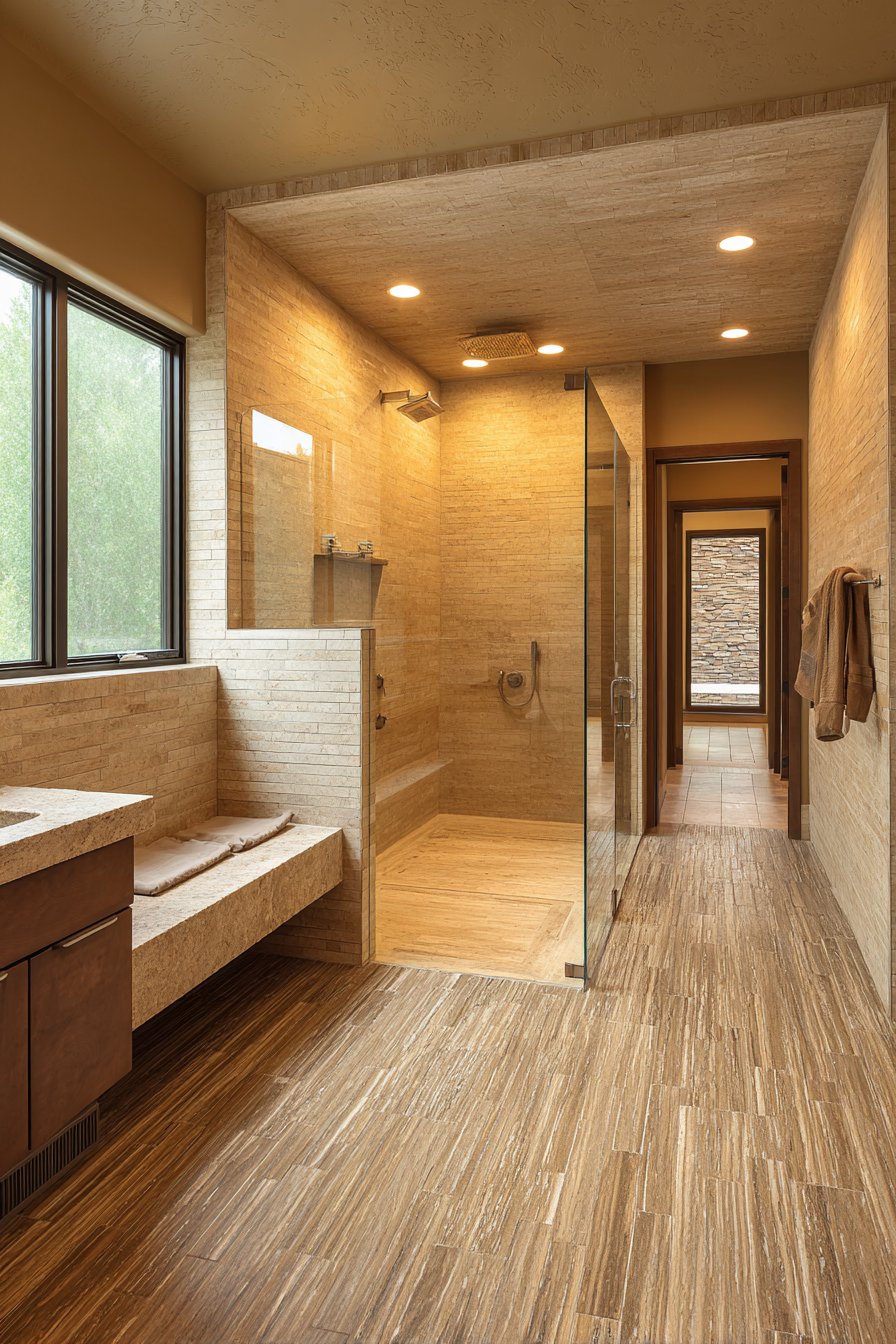
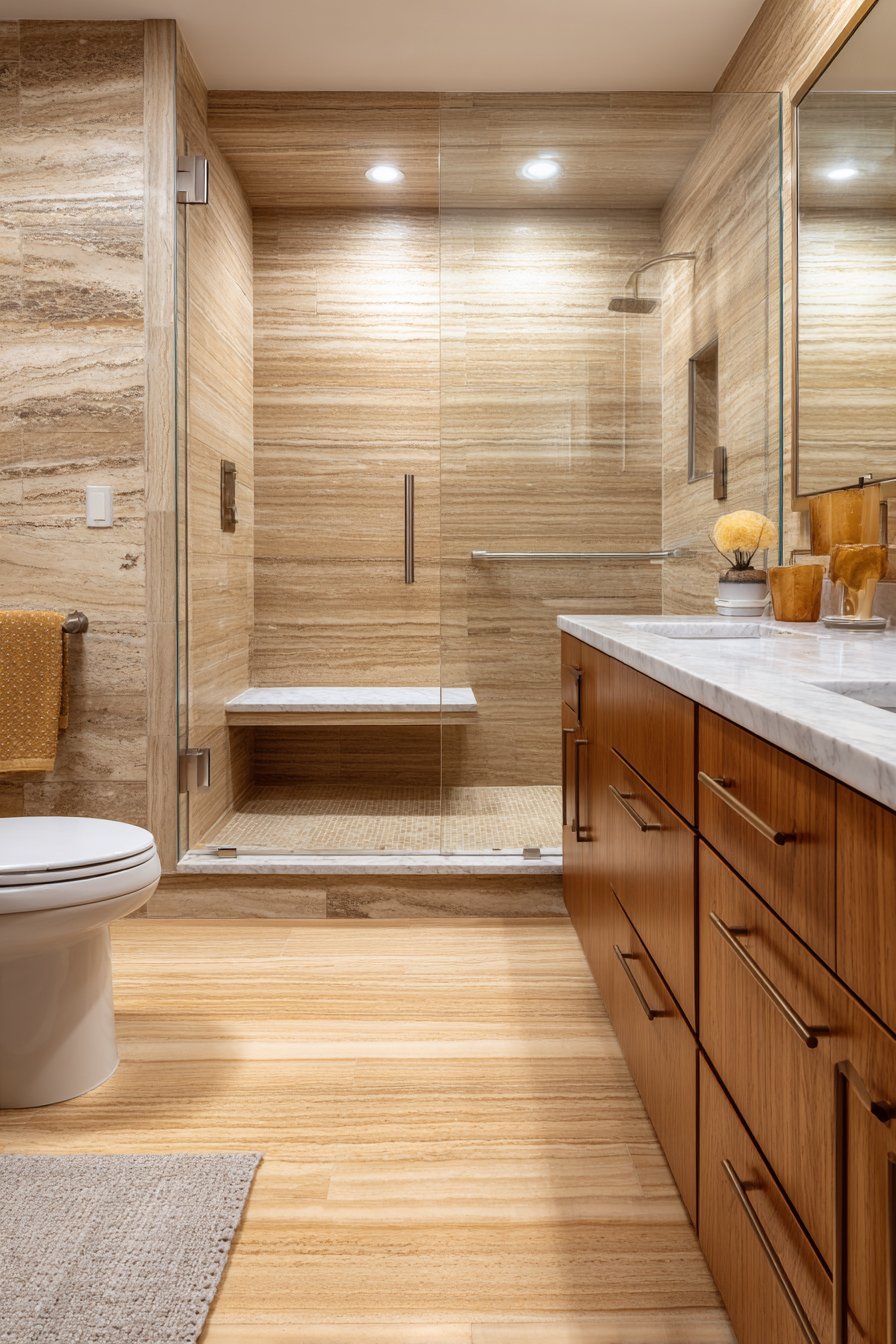
Sometimes the most powerful designs are those that embrace simplicity and restraint, allowing a single material to create a complete, enveloping experience. This bathroom showcases large-format porcelain tiles in warm sandstone texture on both walls and floor, creating a seamless, continuous flow that wraps you in warmth from every angle. The lack of contrasting materials or colors might seem monotonous in theory, but in practice, the subtle variations within the sandstone texture provide all the visual interest needed.
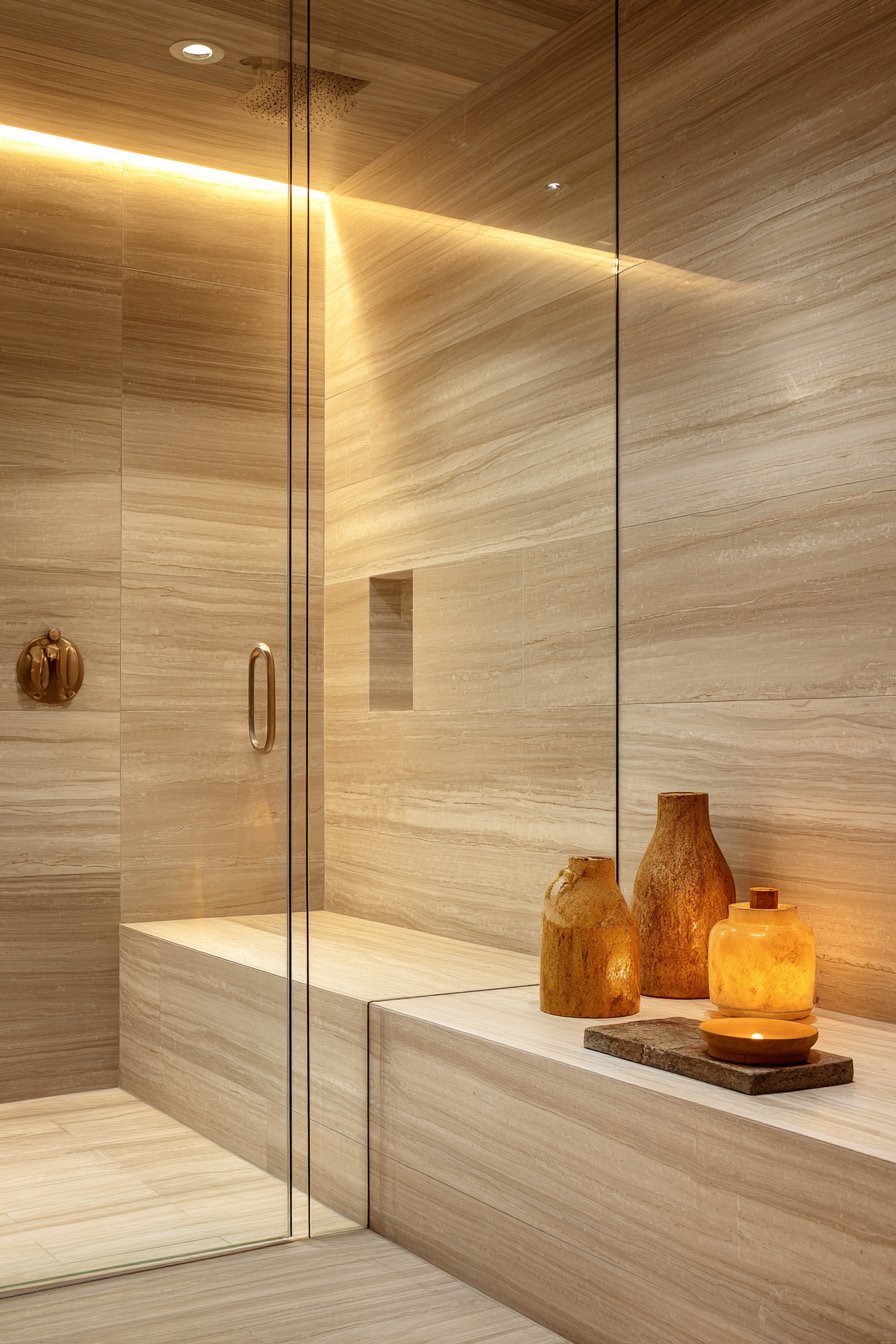
The glass-enclosed shower features a linear drain that maintains the clean lines and seamless aesthetic, with fixtures in warm brushed nickel that complement the sandstone tones without competing for attention. Linear drains offer practical advantages beyond aesthetics, allowing for a completely level shower floor without the need for a traditional center drain and surrounding slope. This makes the shower more accessible while creating a sleeker, more spa-like appearance.
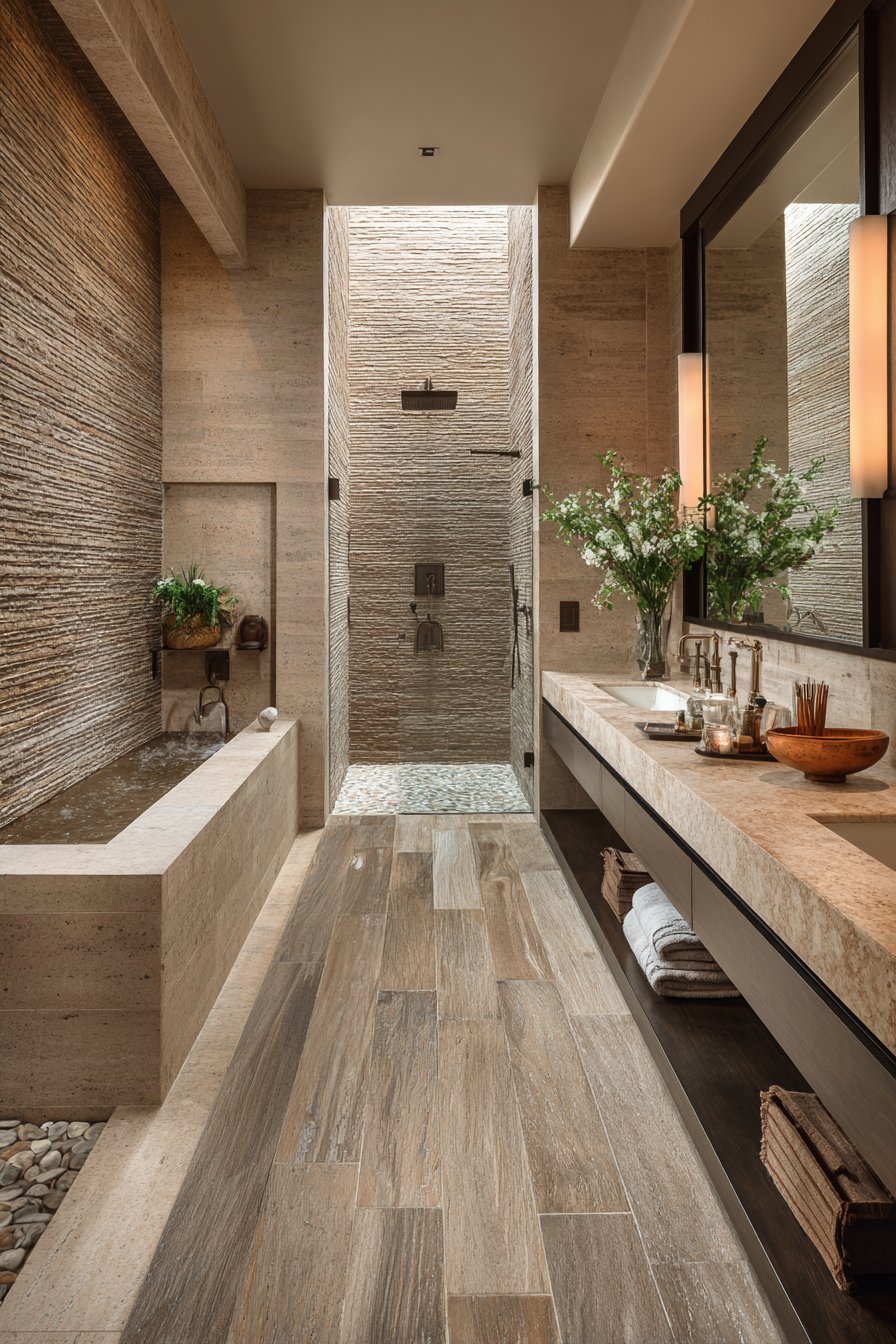
Natural stone accessories in amber and honey tones complete the look, with items like soap dishes, toothbrush holders, or decorative bowls adding functional beauty without disrupting the cohesive color story. The monochromatic approach requires careful attention to lighting, as variations in light quality and intensity become the primary source of visual variety. Both natural light from windows and carefully positioned artificial lighting create shadows and highlights that reveal the texture in the tiles, preventing the space from feeling flat despite its uniform color.
Key Design Tips:
- Use large-format tiles (24×48 or larger) to minimize grout lines and enhance the seamless appearance
- Choose tiles with slight texture rather than high-gloss finishes to prevent slipping in wet areas
- Install a linear drain slightly off-center rather than centered for better water flow
- Use LED strip lighting under floating vanities or in niches to add dimensional light
- Keep grout lines minimal and in a matching color to maintain the flowing, monolithic effect
11. Layered Luxury: Chandelier Lighting Scheme
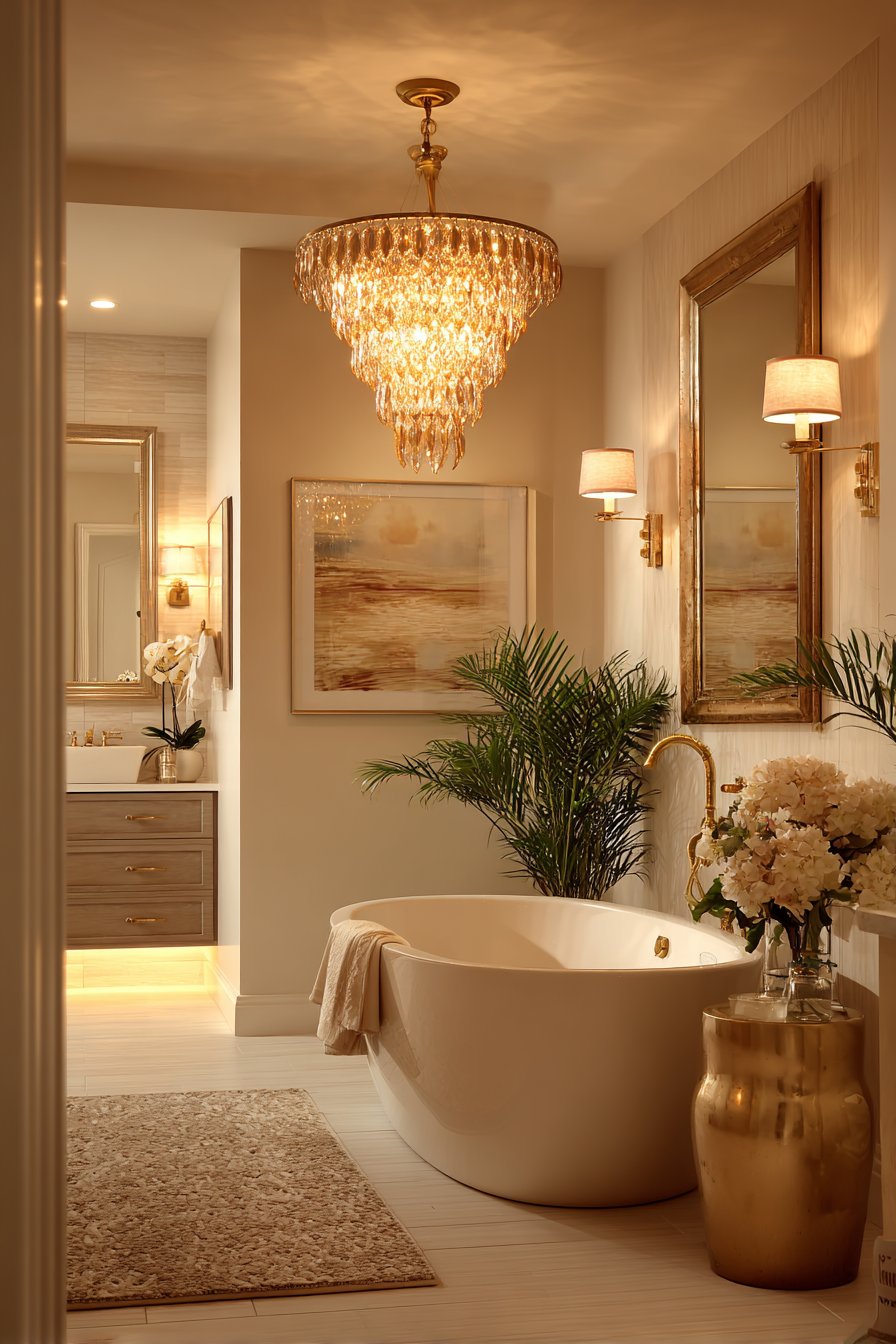
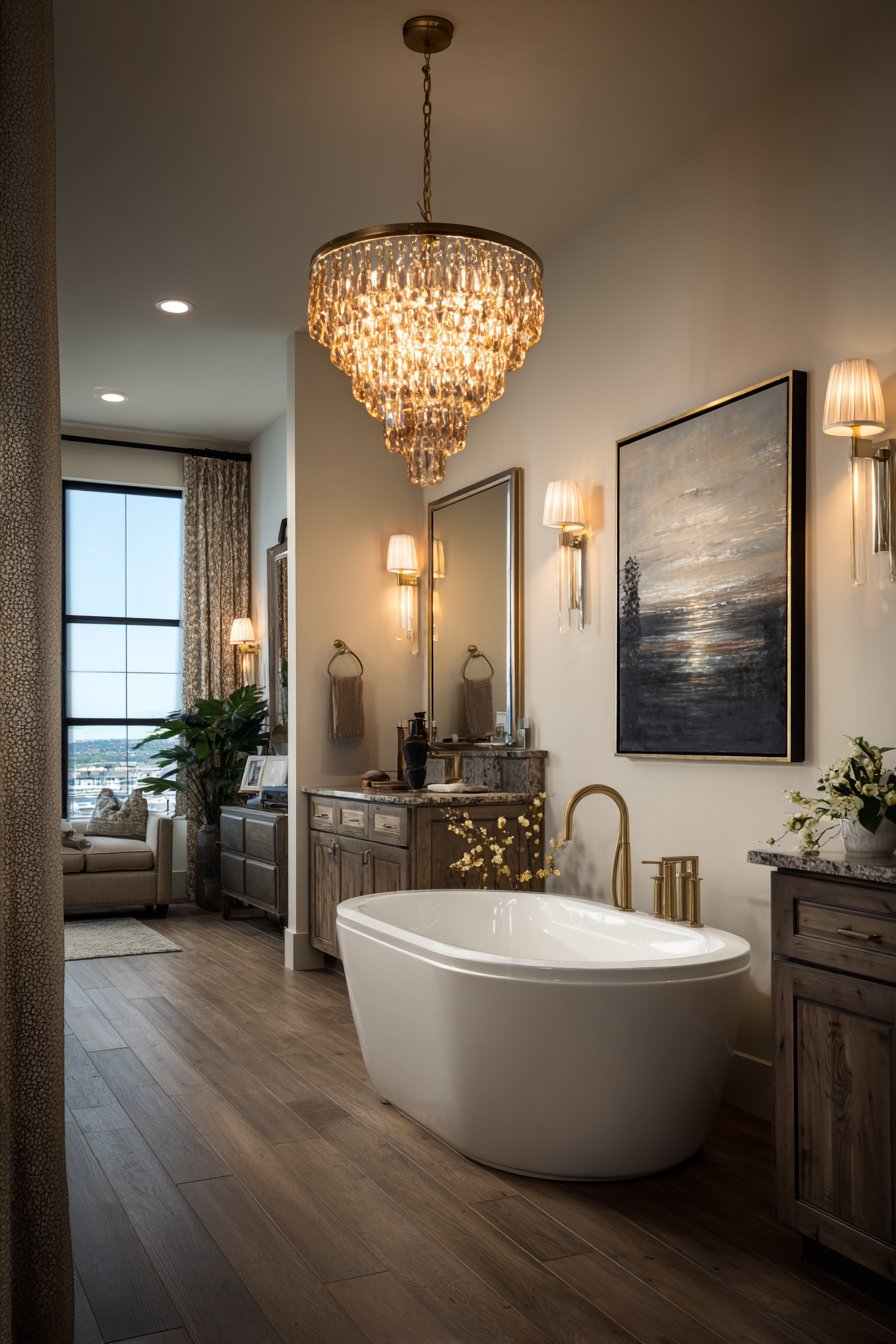
Lighting makes or breaks bathroom design, and this scheme demonstrates how multiple light sources at different levels can create a truly luxurious atmosphere. The statement chandelier with amber crystal droplets and brass frame above the freestanding tub serves as jewelry for the room, its ornate beauty creating a focal point that elevates the space from purely functional to genuinely special. The amber crystals filter and warm the light, casting golden reflections throughout the space that dance and shimmer when the crystals catch air currents.
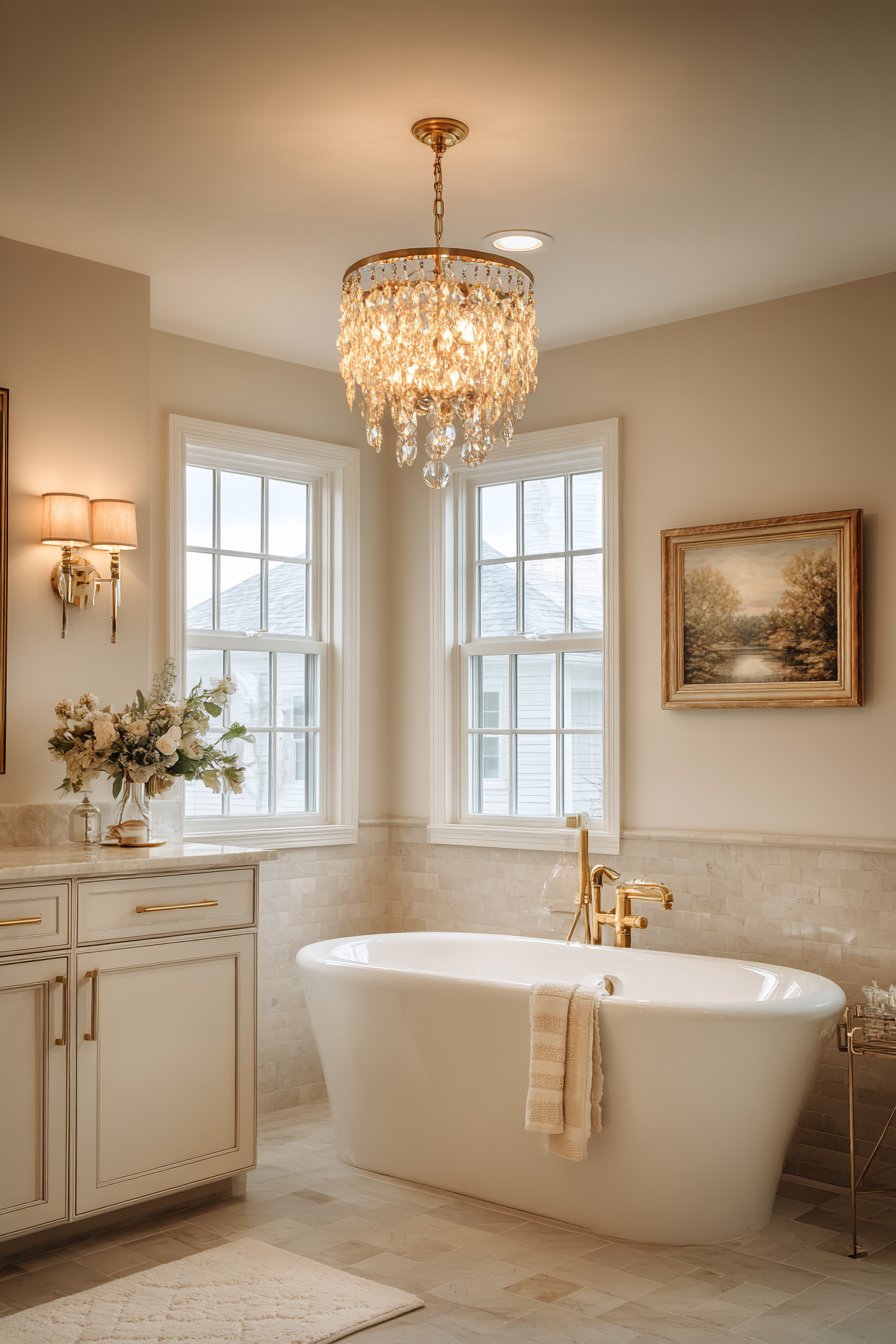
Wall sconces with fabric shades in warm cream provide task lighting at the vanity, their softer, diffused light flattering to skin tones while creating a warm glow that makes morning and evening grooming rituals more pleasant. The fabric shades are key here—they soften and warm the light in ways that glass or exposed bulbs cannot, creating a more intimate atmosphere. Dimmable recessed lights with warm color temperature create adjustable ambiance throughout the room, allowing you to customize the lighting for different times of day and different moods.
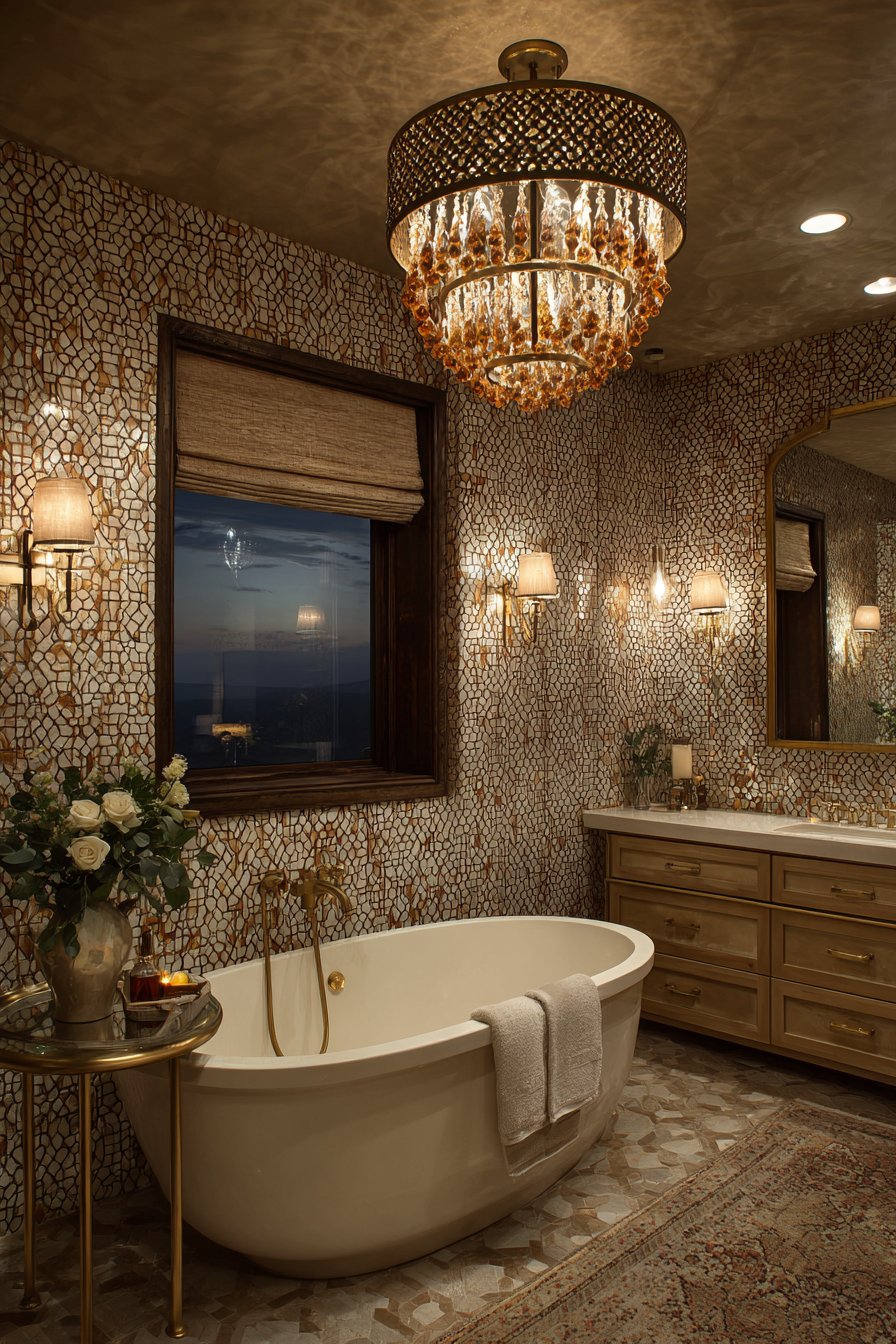
The ability to layer and adjust lighting transforms a bathroom from a single-purpose room to a space that can adapt to your needs. Bright, energizing light for morning routines; soft, relaxing light for evening baths; focused task lighting for specific grooming needs—all become possible through this thoughtful multi-layered approach. The warm color temperatures across all light sources ensure that no matter which lights are on, the overall atmosphere remains cozy and inviting.
Key Design Tips:
- Install all lighting on dimmer switches for maximum flexibility
- Choose LED bulbs in 2700K color temperature for the warmest, most flattering light
- Position vanity sconces 36-40 inches apart and 60-65 inches from the floor for optimal task lighting
- Ensure chandeliers above tubs are rated for damp locations and installed at proper heights to avoid head bumping
- Use multiple switches at the bathroom entry to control different lighting zones independently
12. Reflective Warmth: Oversized Round Mirror Feature
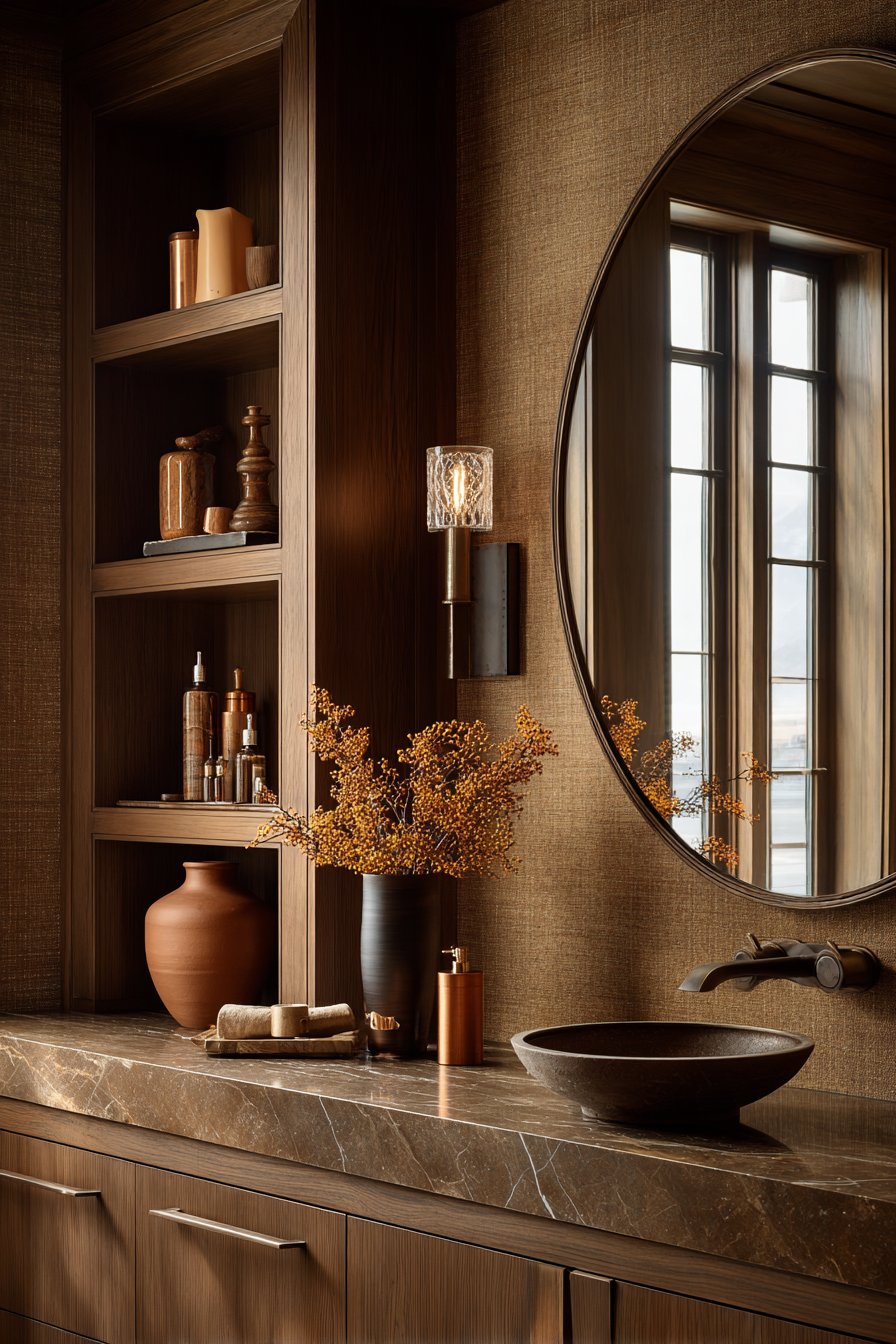
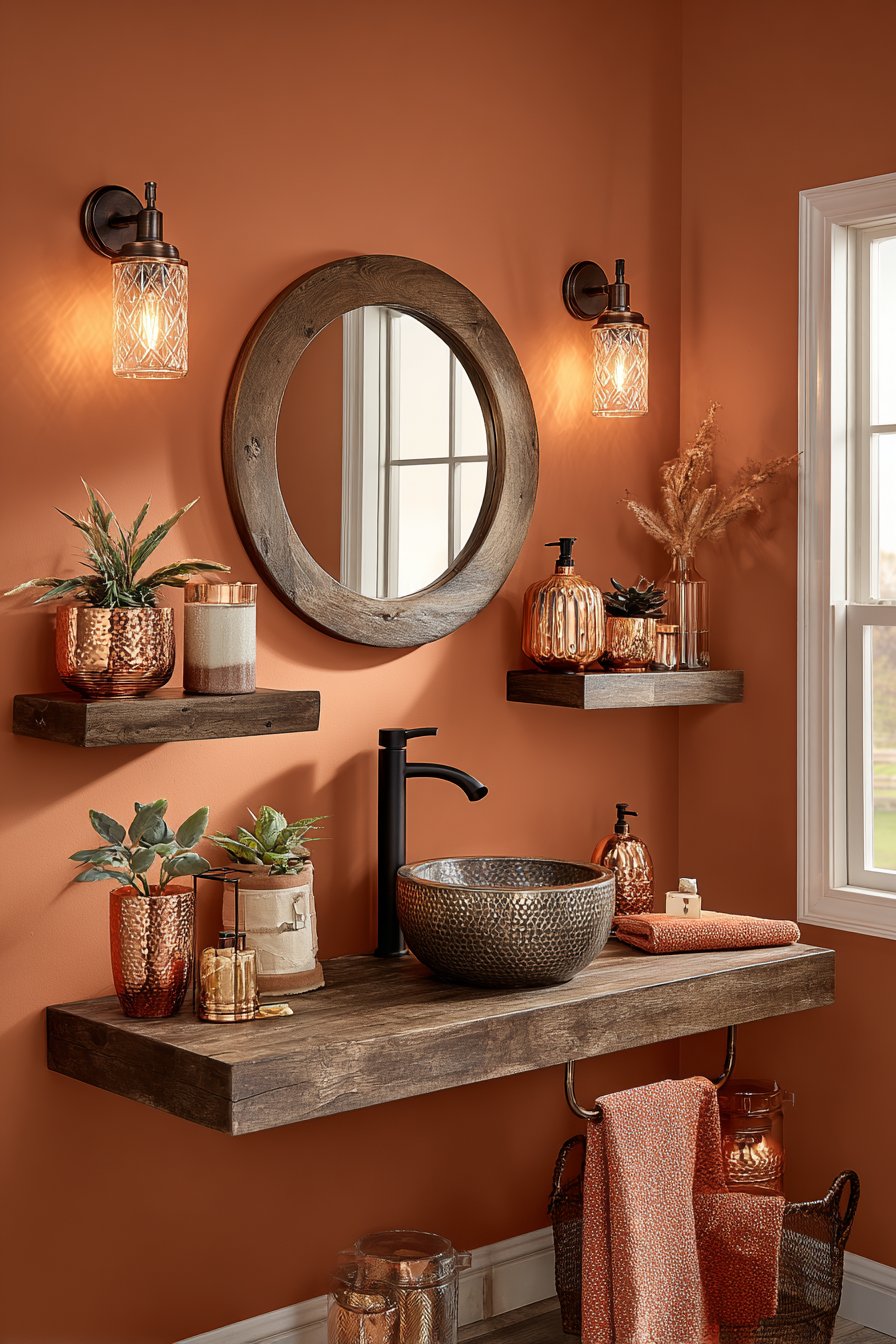
Mirrors serve practical purposes in bathrooms, but this design elevates the mirror to a true design feature through its oversized scale and stunning wooden frame. The chunky frame stained in warm caramel tone becomes a substantial architectural element that grounds the vanity area while bringing significant warmth to the space. The round shape softens the typically angular bathroom environment, creating a focal point that draws the eye without the harshness of rectangular edges.
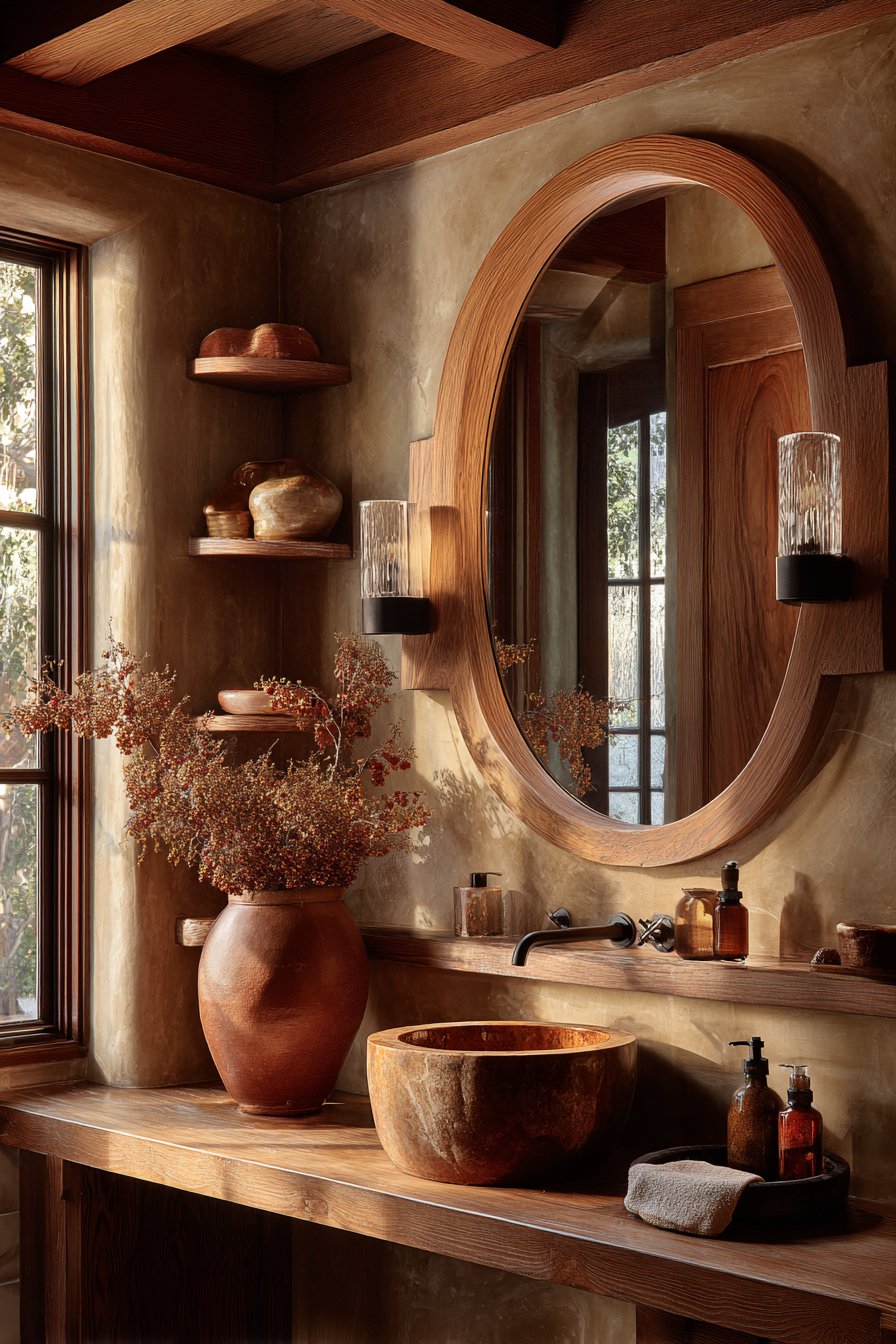
The strategic positioning allows the mirror to reflect warm light from a nearby window and sconces with seeded glass shades, effectively multiplying the light sources and creating a brighter, more open feeling. Seeded glass contains small bubbles that catch and diffract light, creating a more interesting, dimensional glow than clear glass while still providing adequate illumination. The interplay between the mirror’s reflections and these unique light fixtures creates an ever-changing display throughout the day as natural light levels shift.
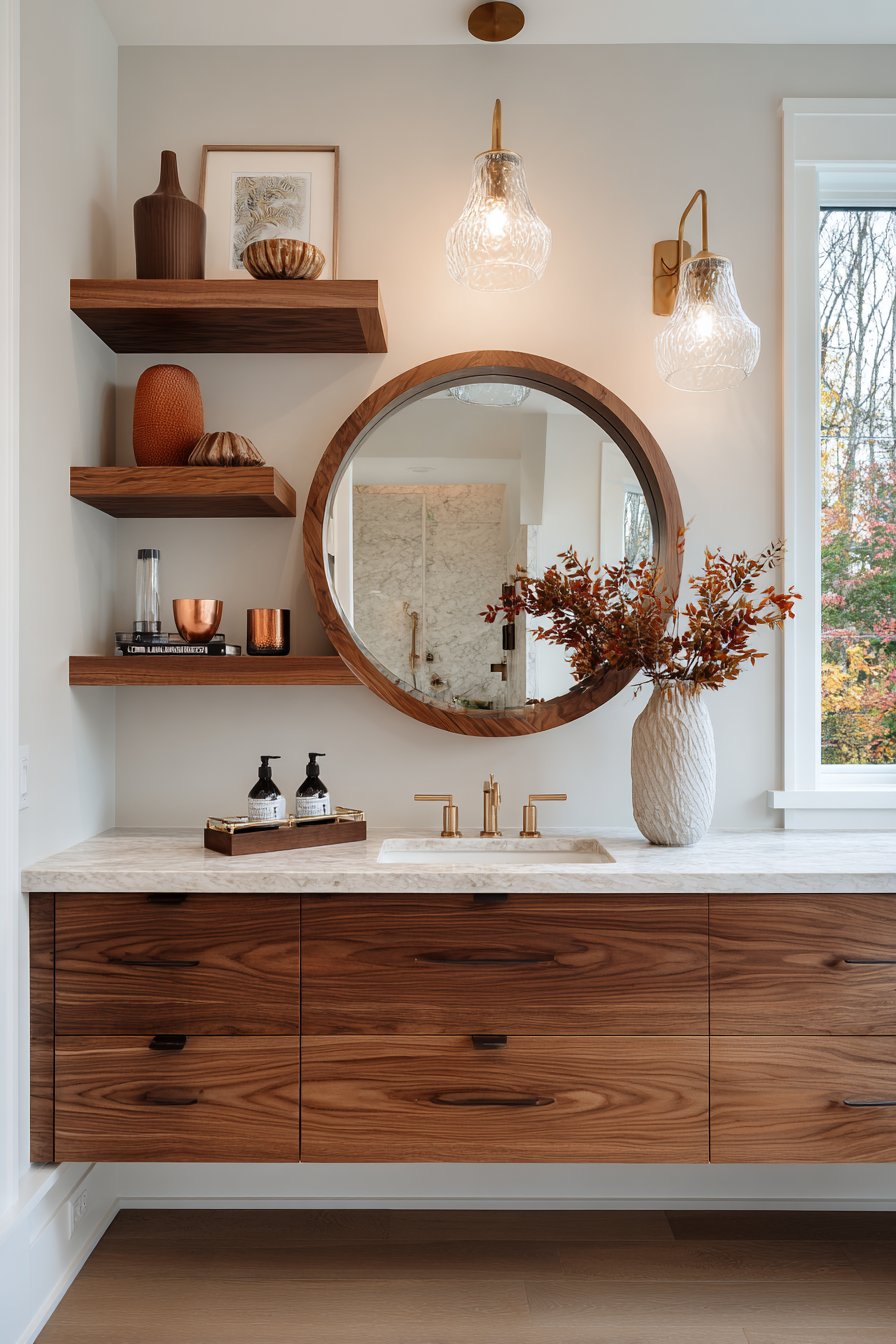
Floating shelves on either side in matching wood hold decorative items in copper, gold, and terracotta—perhaps a copper cup holding makeup brushes, a gold tray with perfume bottles, or terracotta planters with succulents. These carefully curated accessories continue the warm color story while providing practical storage for frequently used items. The symmetry of the shelves flanking the mirror creates a sense of balance and intentionality that makes the entire vanity area feel custom-designed rather than simply assembled from random pieces.
Key Design Tips:
- Choose a mirror diameter at least 70-80% of the vanity width for proper proportions
- Mount round mirrors so the center point is at average eye level (approximately 60-65 inches from floor)
- Match floating shelf wood tone and finish to the mirror frame for a cohesive custom look
- Style shelves with odd numbers of items (3 or 5) for more pleasing visual composition
- Clean seeded glass fixtures regularly as the texture can trap dust and diminish light output
13. Warm Color Palette Masterclass
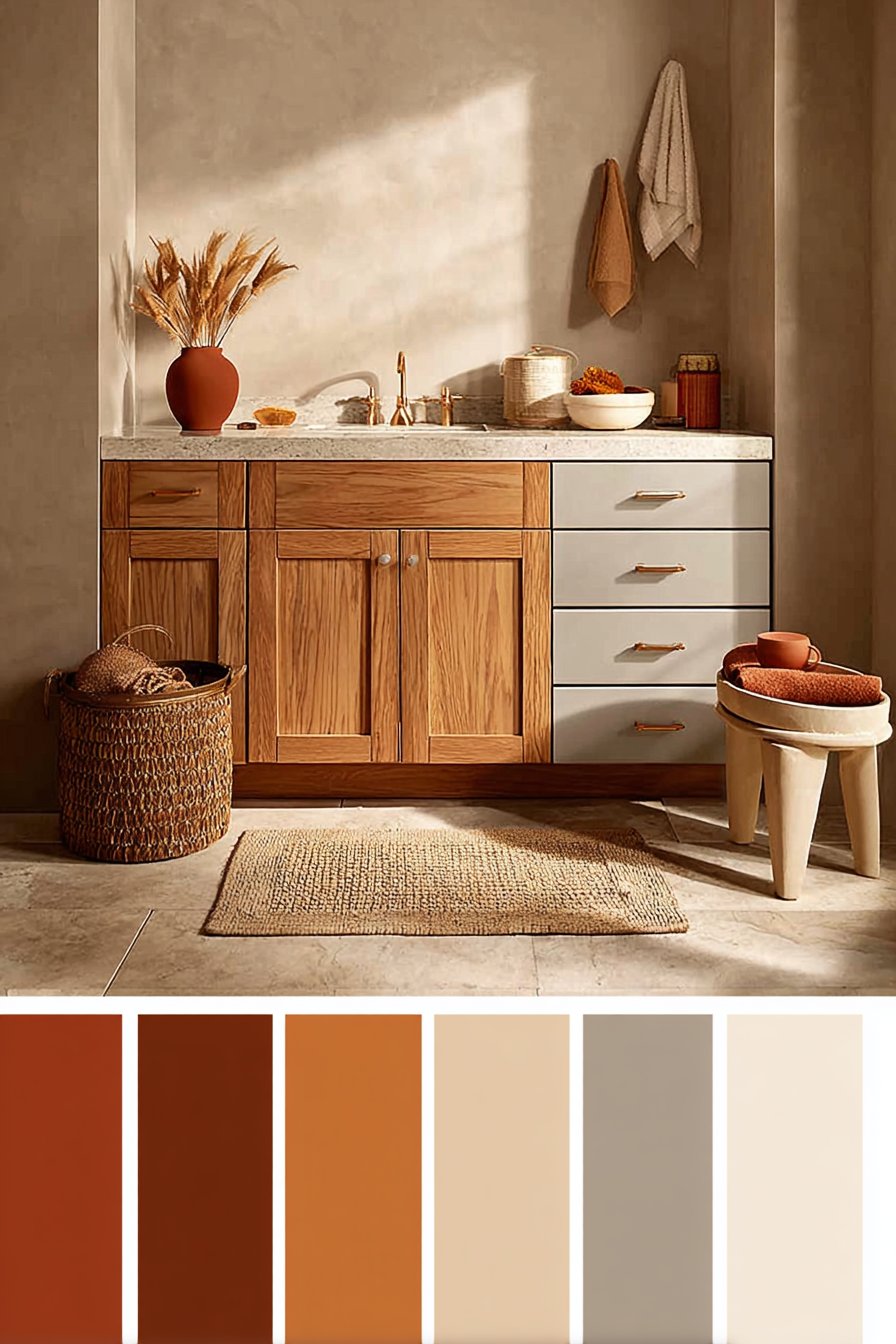
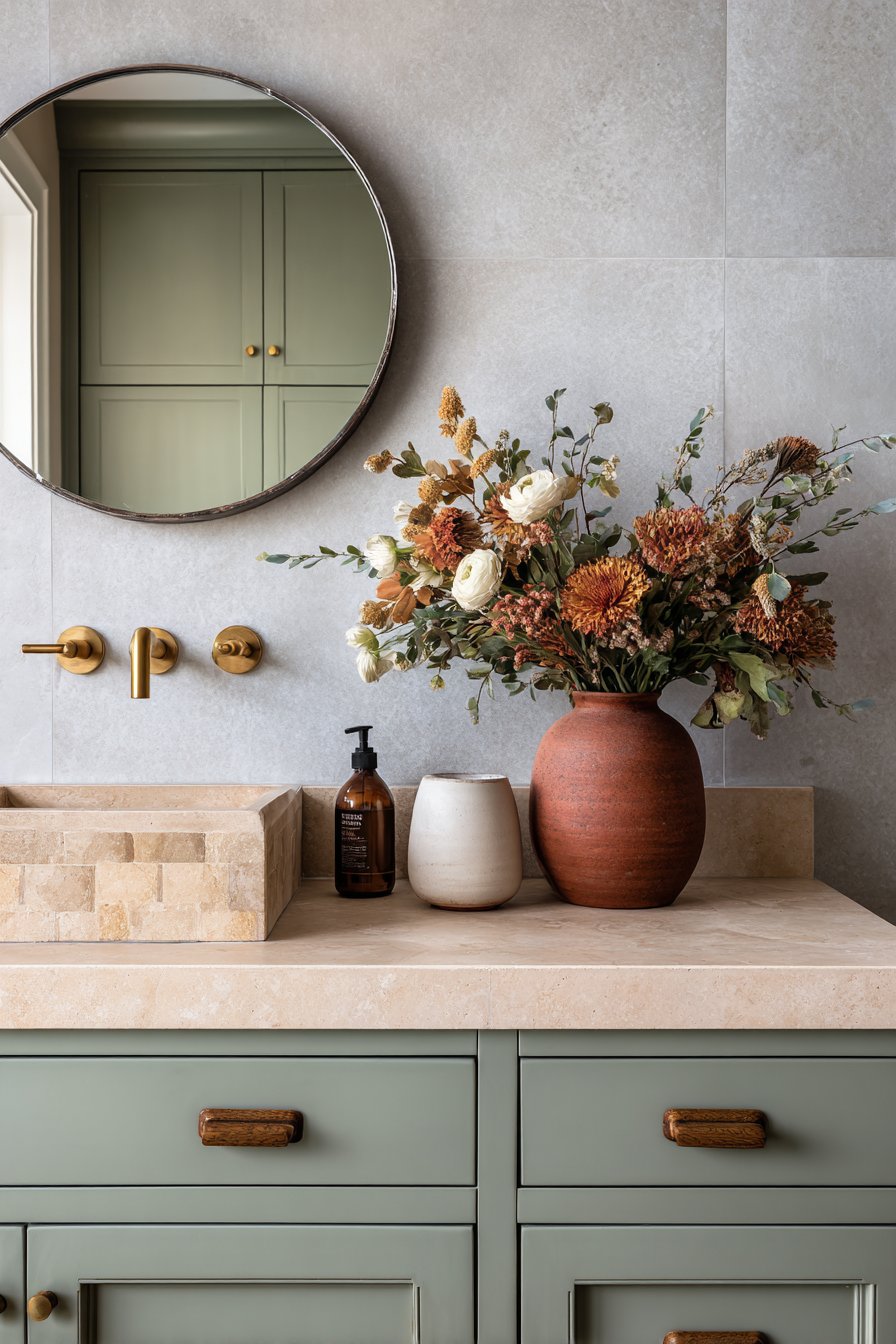
Understanding color theory transforms good design into great design, and this bathroom serves as a masterclass in creating warmth through thoughtful color relationships. The walls in warm greige—a sophisticated blend of gray and beige—provide a neutral foundation with subtle texture that adds depth without pattern. This achievable through techniques like Venetian plaster or even carefully selected paint finishes that catch light at different angles, creating organic variation across the wall surface.
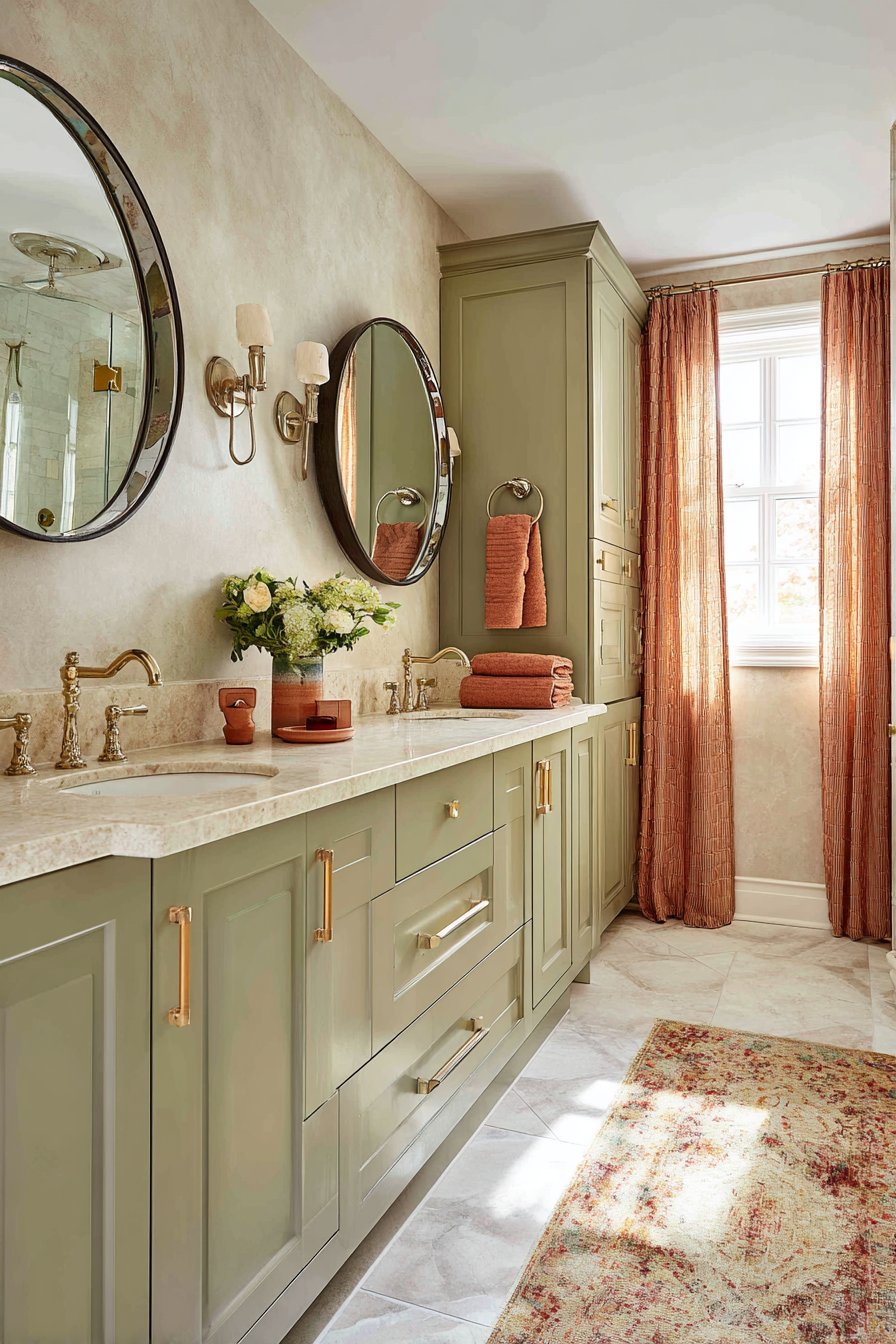
The cabinetry in soft sage with warm undertones might seem like an unexpected choice, but sage with golden or brown undertones rather than cool blue undertones harmonizes beautifully with warm color schemes. This brings a touch of color without disrupting the warm atmosphere, adding personality while remaining sophisticated and livable. The countertops in buttery limestone complete the palette with their creamy yellow tones, while brass hardware and fixtures provide metallic accents that tie everything together with golden warmth.
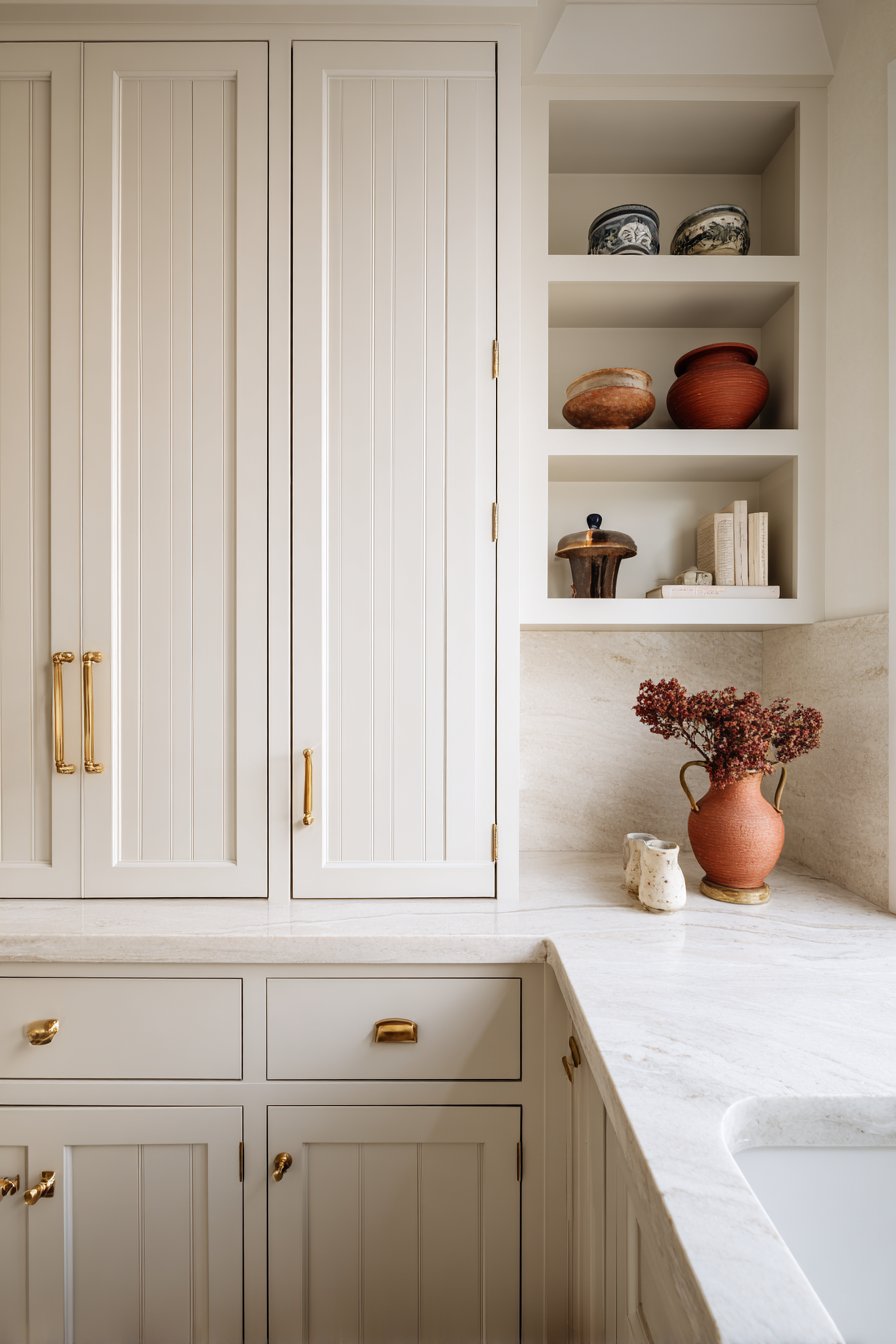
Accessories in rust, terracotta, and cream colors strategically placed throughout the space reinforce the warm palette while adding pops of slightly deeper color that create visual interest and prevent the scheme from feeling washed out. These might include towels, bath mats, storage baskets, or decorative objects—each carefully chosen for both function and color contribution. The result is a bathroom where every element works together in harmony, creating an immersive experience of warmth from floor to ceiling.
Key Design Tips:
- Test paint colors in the actual bathroom space at different times of day before committing
- Choose warm-toned grays and greens by ensuring they have brown or yellow undertones rather than blue
- Use the 60-30-10 rule: 60% dominant color (greige walls), 30% secondary color (sage cabinets), 10% accent color (rust accessories)
- Introduce texture within monochromatic areas to prevent flatness
- Update accessories seasonally within the warm palette to keep the space feeling fresh without major changes
14. Textile Luxury: Layered Bath Linens Display
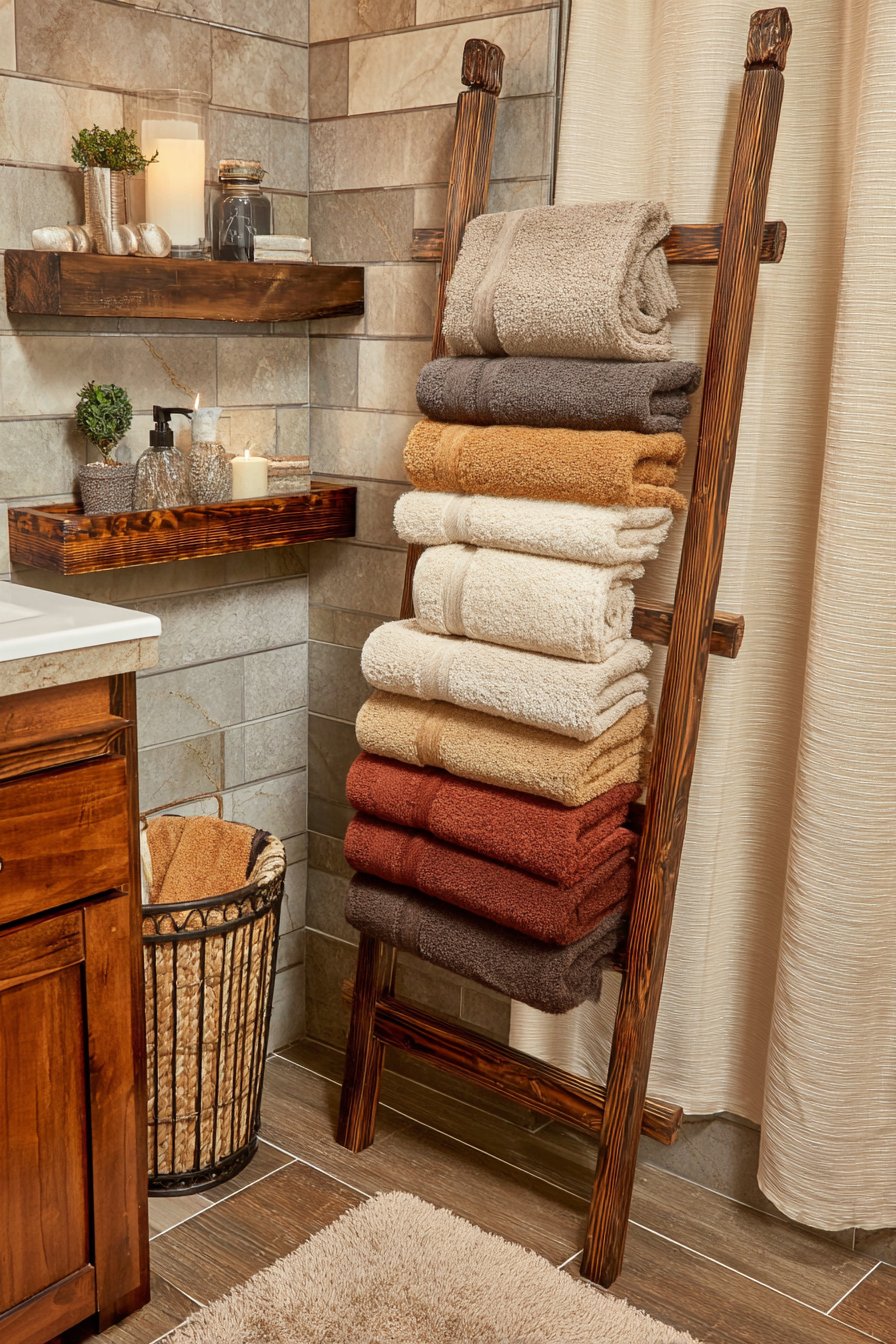
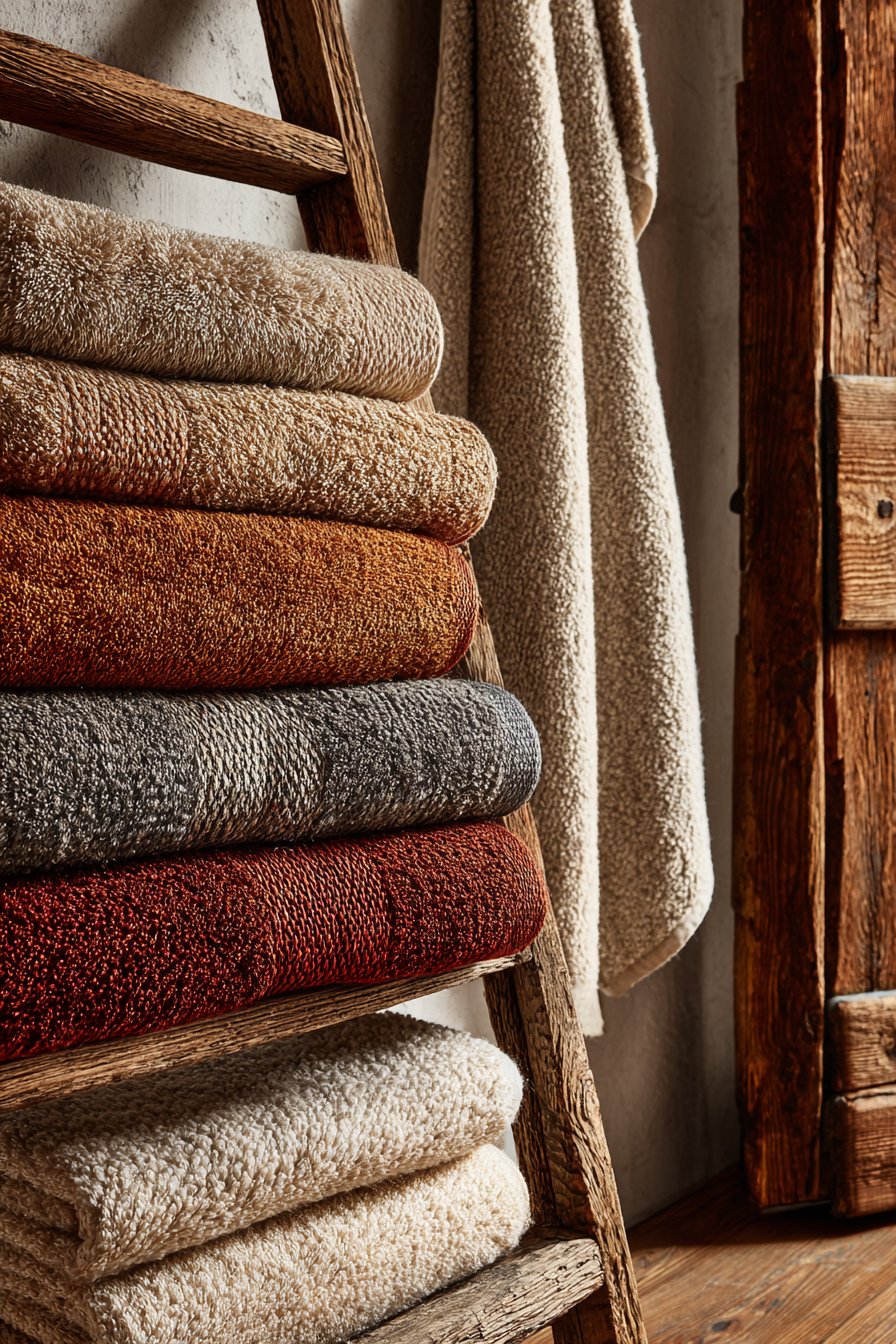
Textiles bring softness and comfort to the hard surfaces that dominate bathroom design, and this display elevates towels from purely functional items to design elements worthy of attention. The freestanding wooden ladder rack in warm pine provides casual, cottage-style storage that feels more like furniture than utilitarian towel bar. The ladder’s lean against the wall creates interesting angular lines while its open construction prevents the space from feeling cluttered despite the volume of textiles on display.
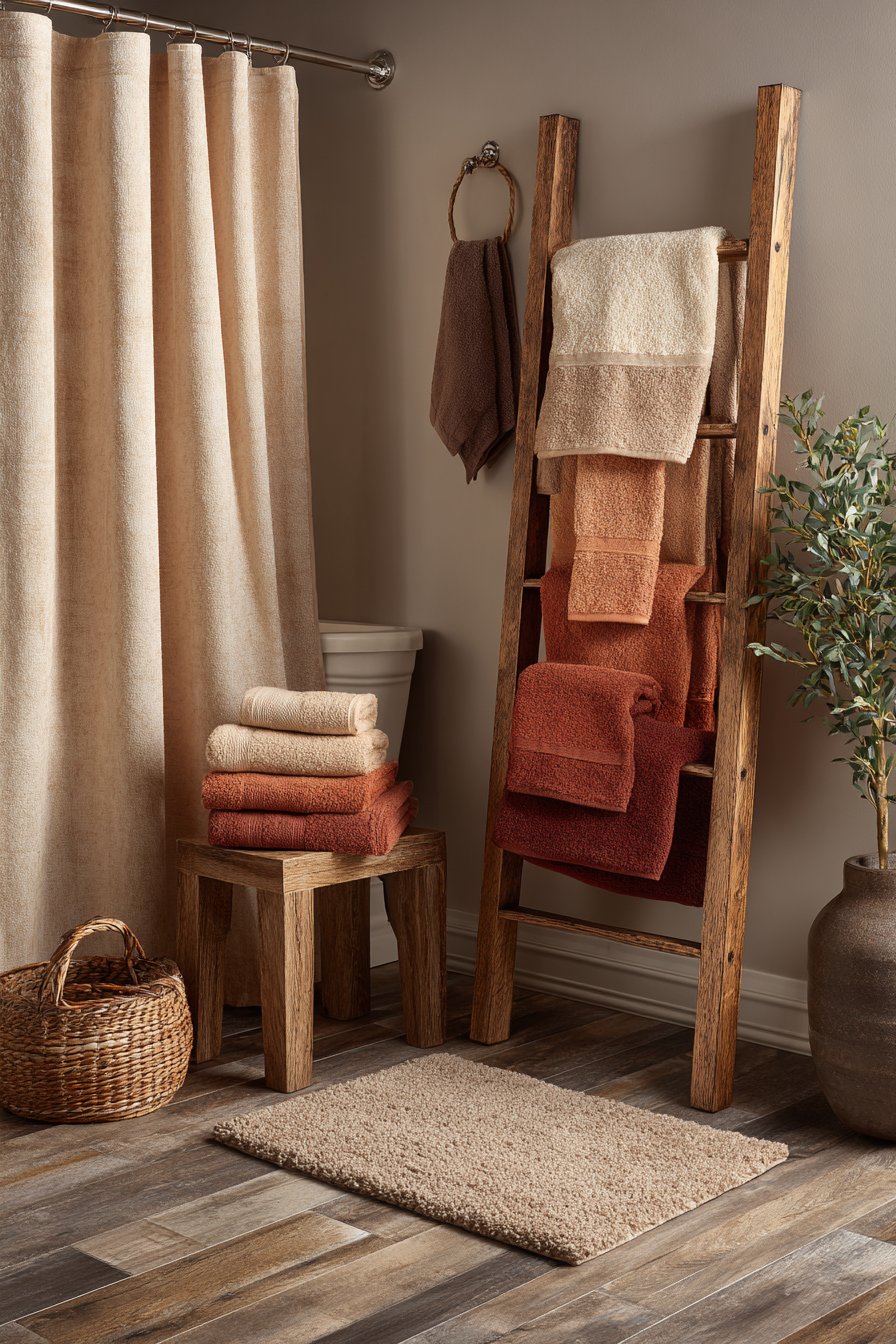
The oversized bath towels in gradated warm tones from cream to deep rust create a beautiful ombre effect when arranged thoughtfully on the ladder rungs, turning the practical storage into an artistic installation. These plush, high-quality towels—the kind with substantial weight and deep pile—feel luxurious to use while looking beautiful on display. The gradient arrangement creates visual flow that draws the eye while the varied warm tones add depth and interest.
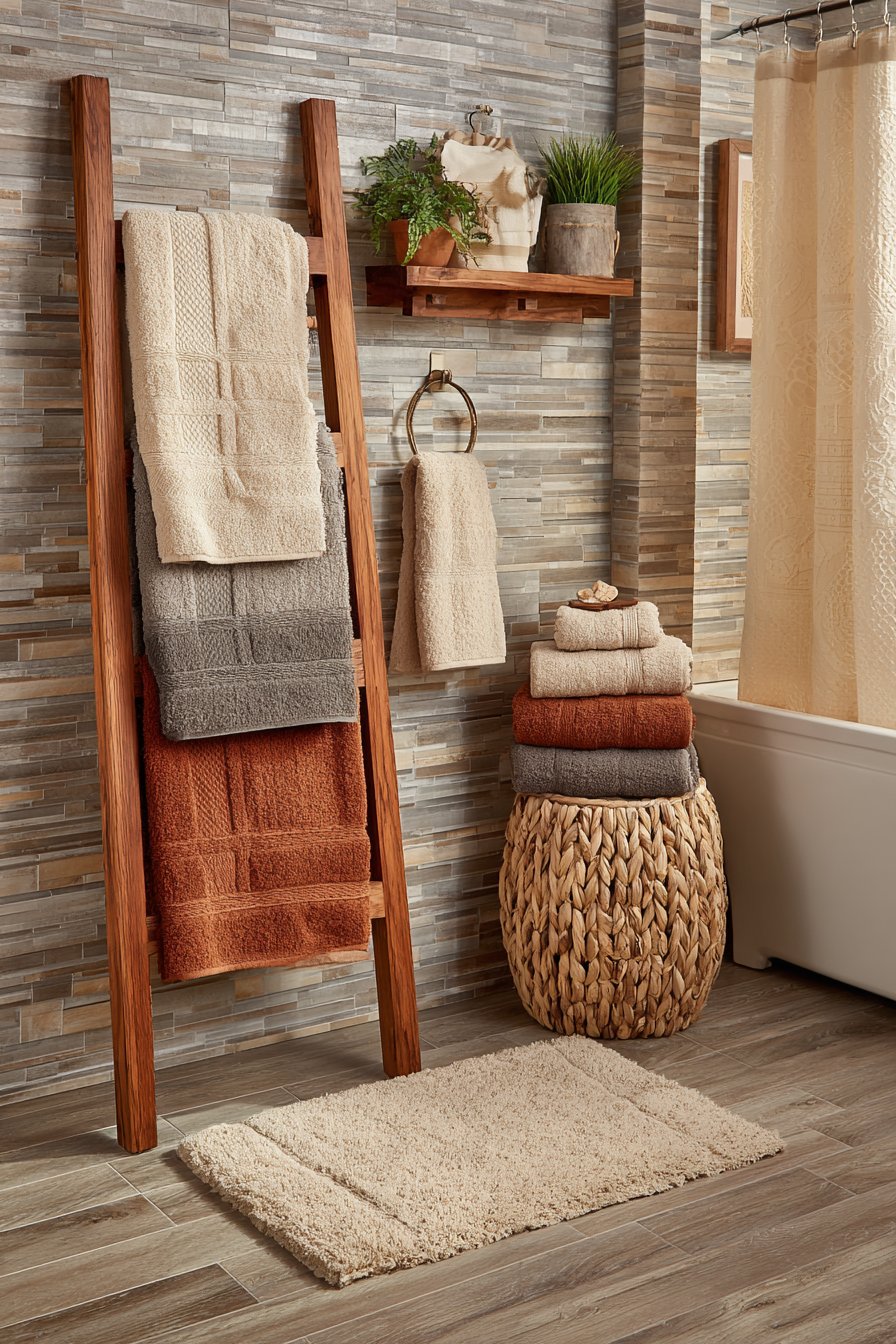
The plush bath mat in natural wool sits on heated porcelain wood-look tiles, providing cushioning and warmth underfoot while contributing more textile texture to the space. The linen shower curtain in warm oatmeal color adds softness to the shower area, its natural fiber and neutral tone allowing it to blend seamlessly with the overall warm scheme. The cumulative effect of these layered textiles—towels, mat, curtain—softens the bathroom’s hard surfaces while significantly contributing to the sense of warmth and comfort.
Key Design Tips:
- Choose towels with a high GSM (grams per square meter) rating—600-900 GSM for luxury feel
- Wash new towels before displaying to remove sizing and achieve full fluffiness
- Rotate towels between ladder display and actual use to prevent fading and wear
- Choose natural fiber bath mats for better absorbency and longer life than synthetic options
- Layer a smaller decorative rug over the bath mat for additional color and texture
15. Illuminated Niche: Backlit Shower Storage
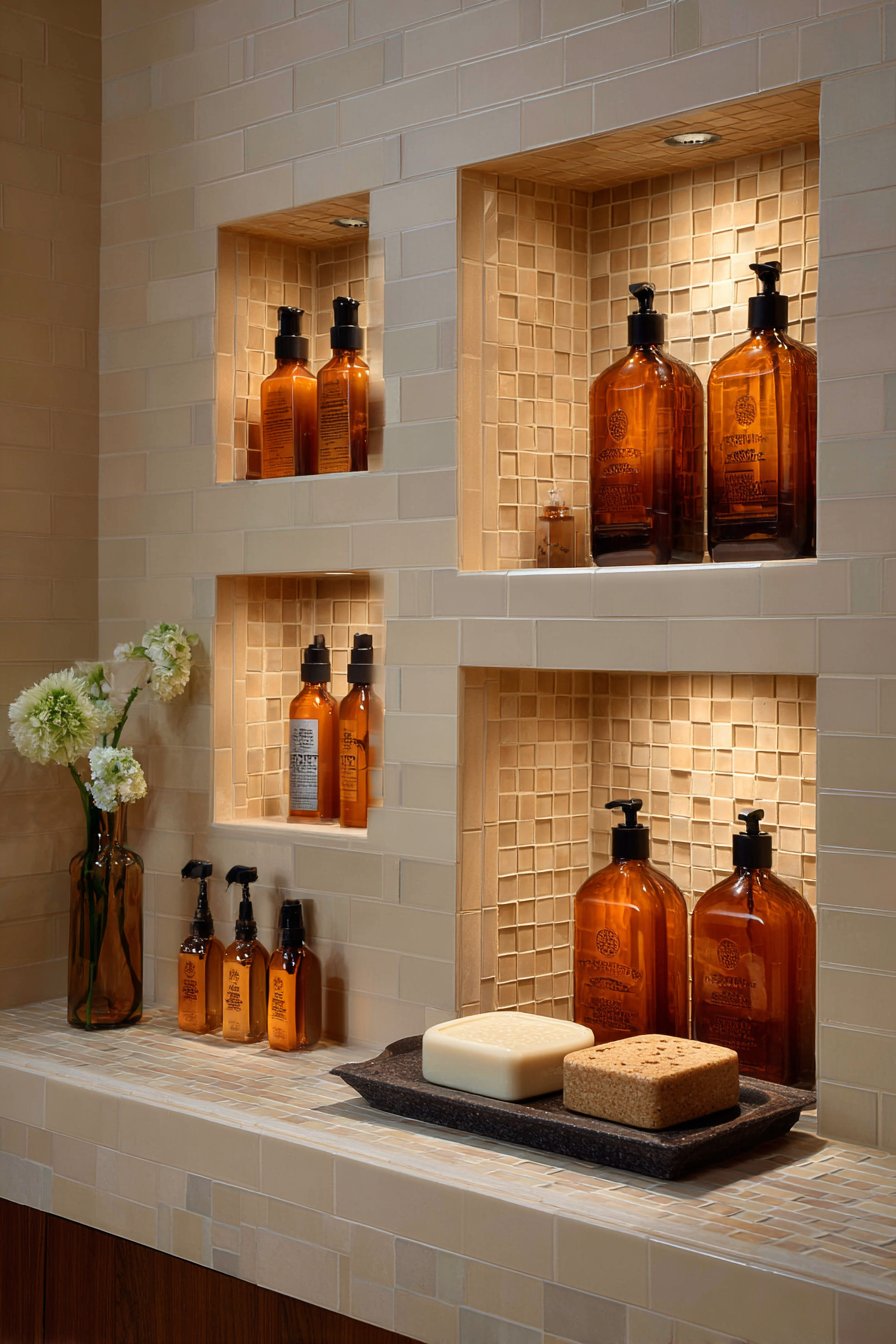
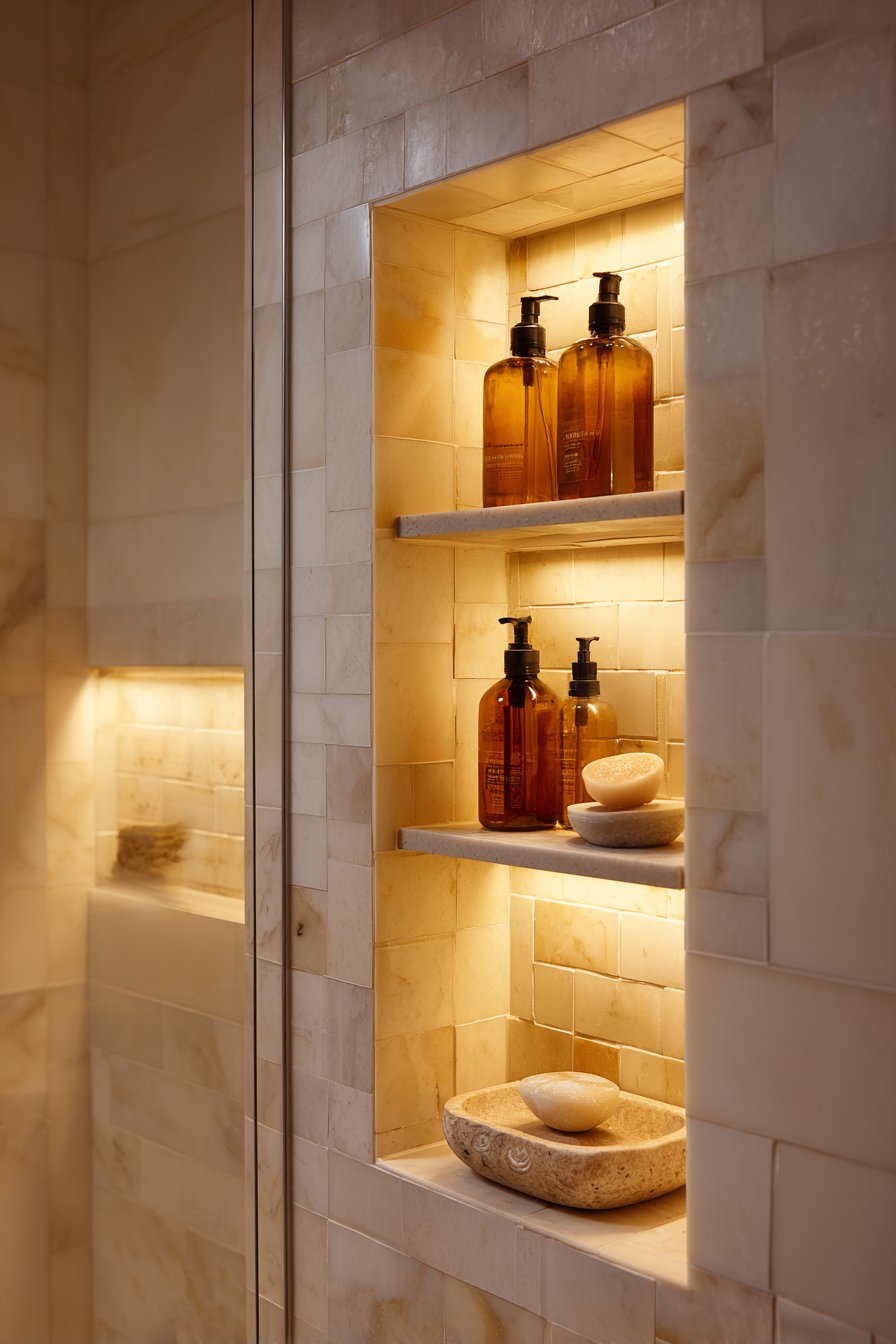
Built-in storage within showers often feels like an afterthought, but this design transforms the practical shower niche into a glowing design feature through integrated lighting. The shelving carved into shower walls and backlit with warm LED strips creates a soft glow that’s both functional and atmospheric, making it easy to locate products while adding a spa-like ambiance to the shower experience. The warm LED color ensures the light contributes to the overall cozy atmosphere rather than feeling clinical or cold.
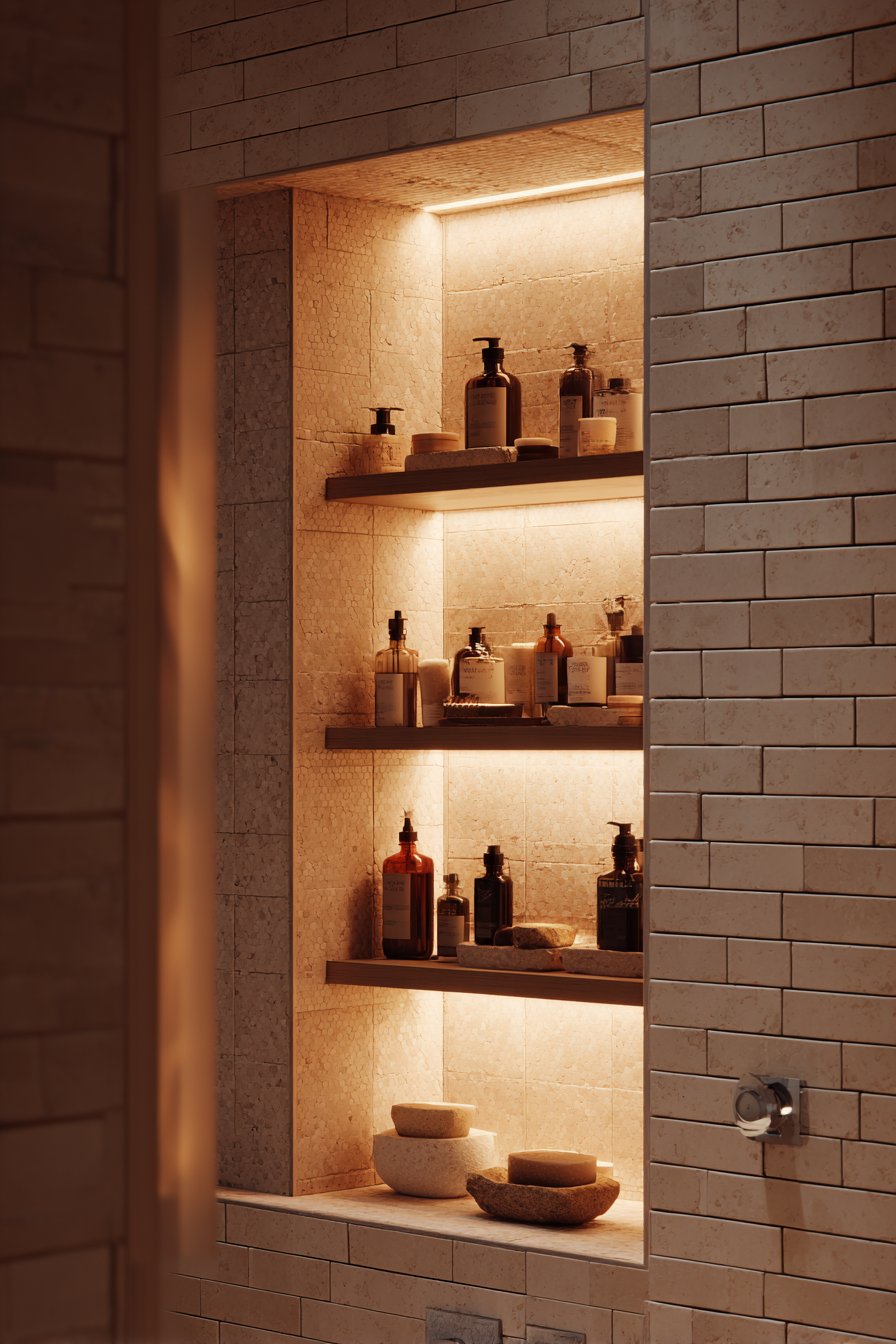
The display of high-end bath products in amber glass bottles becomes intentional styling within the illuminated niche, with the bottles’ warm color glowing beautifully when backlit. Natural stone soap dishes—perhaps in honey onyx or travertine—provide places to rest bar soaps while contributing to the natural, warm material palette. The surrounding tiles in warm cream subway pattern create clean lines that frame the niche without competing for attention, their classic format ensuring the design remains timeless despite the contemporary lighting approach.
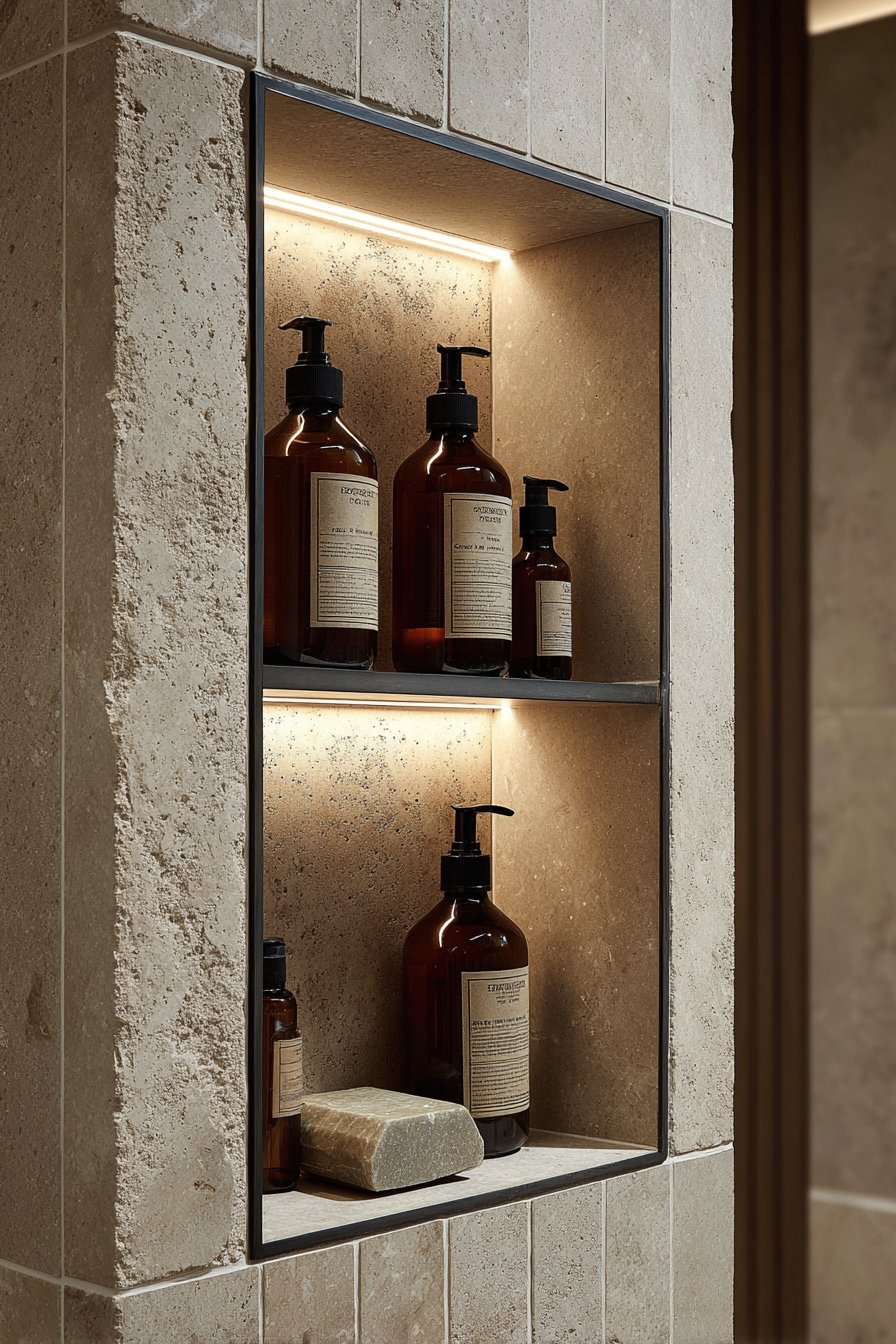
This integration of lighting and storage demonstrates how addressing practical needs with creativity and attention to detail can enhance rather than compromise design quality. The backlit niche provides perfect task lighting for showers while creating visual interest and warmth, proving that functional elements need not be boring or purely utilitarian. The glow from within the wall creates depth and mystery while highlighting the beautiful products and materials on display.
Key Design Tips:
- Use waterproof LED strips specifically rated for shower use to prevent electrical issues
- Connect LED strips to a dimmer for adjustable brightness levels
- Size niches at 12-16 inches wide and 6-8 inches deep for adequate storage without protruding
- Slope niche floors slightly toward the shower to prevent water pooling
- Use matching grout color for niche and surrounding tiles for a seamless, built-in appearance
16. His and Hers: Double Vanity Warmth
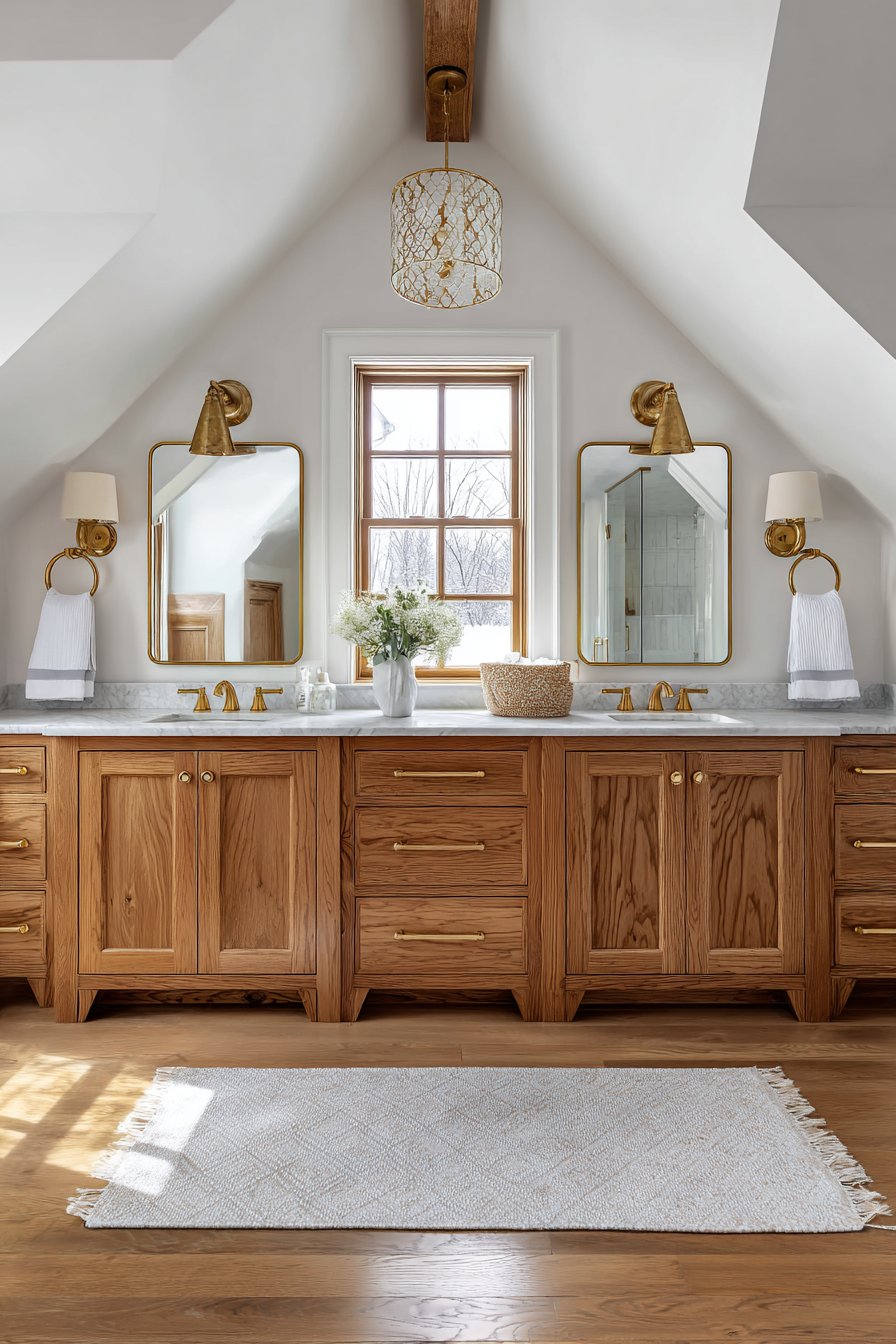
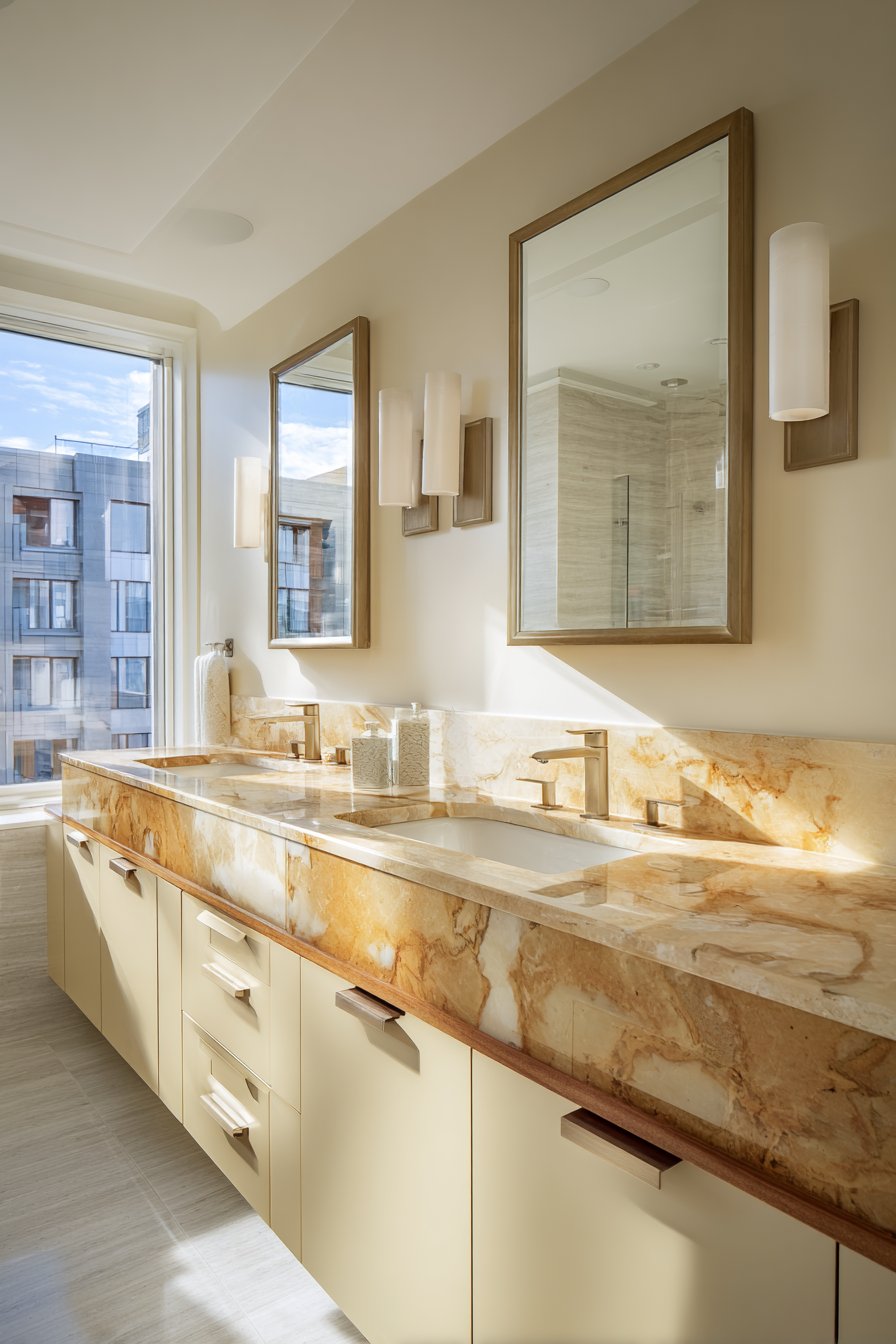
Shared bathrooms require design solutions that accommodate two users while maintaining aesthetic cohesion, and this double vanity setup masterfully balances individual needs with unified design. The continuous warm quartzite countertop with golden movement spans the length of the vanity, providing each user with ample space while the uninterrupted surface creates visual flow and luxury. The two undermount sinks—positioned with adequate space between them—offer independence and reduce morning traffic jams, making shared routines more harmonious.
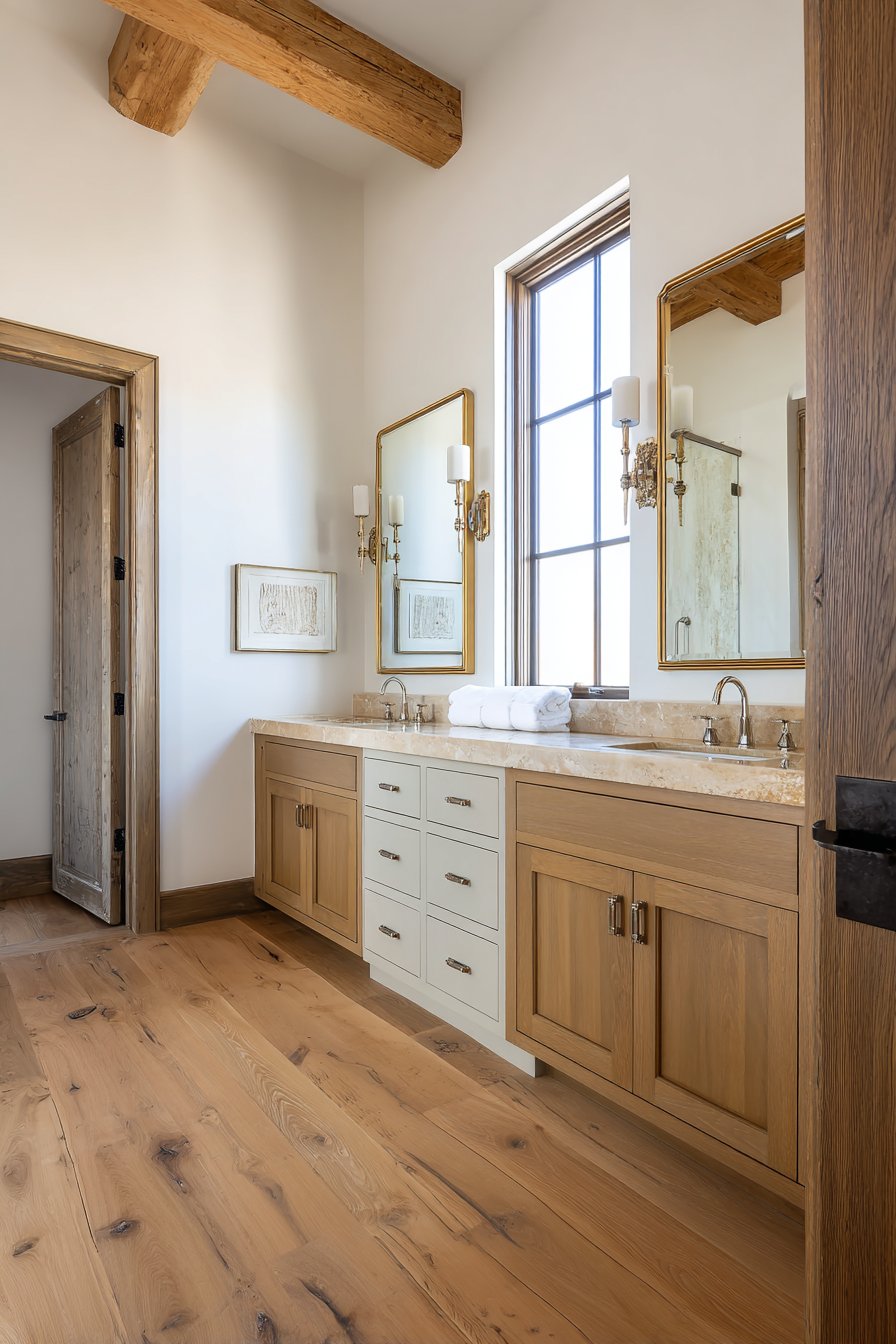
Twin mirrors with individual sconce lighting in aged brass frame each sink area, providing personalized lighting while maintaining symmetry and balance. This dual-mirror approach is often superior to a single large mirror because it allows each person to adjust their own lighting without affecting the other, and the aged brass finish adds warmth and character that new brass lacks. The shared storage base features thoughtful two-tone design combining warm oak upper drawers with cream lower cabinets, creating visual interest while maximizing storage through the varying drawer and cabinet configurations.
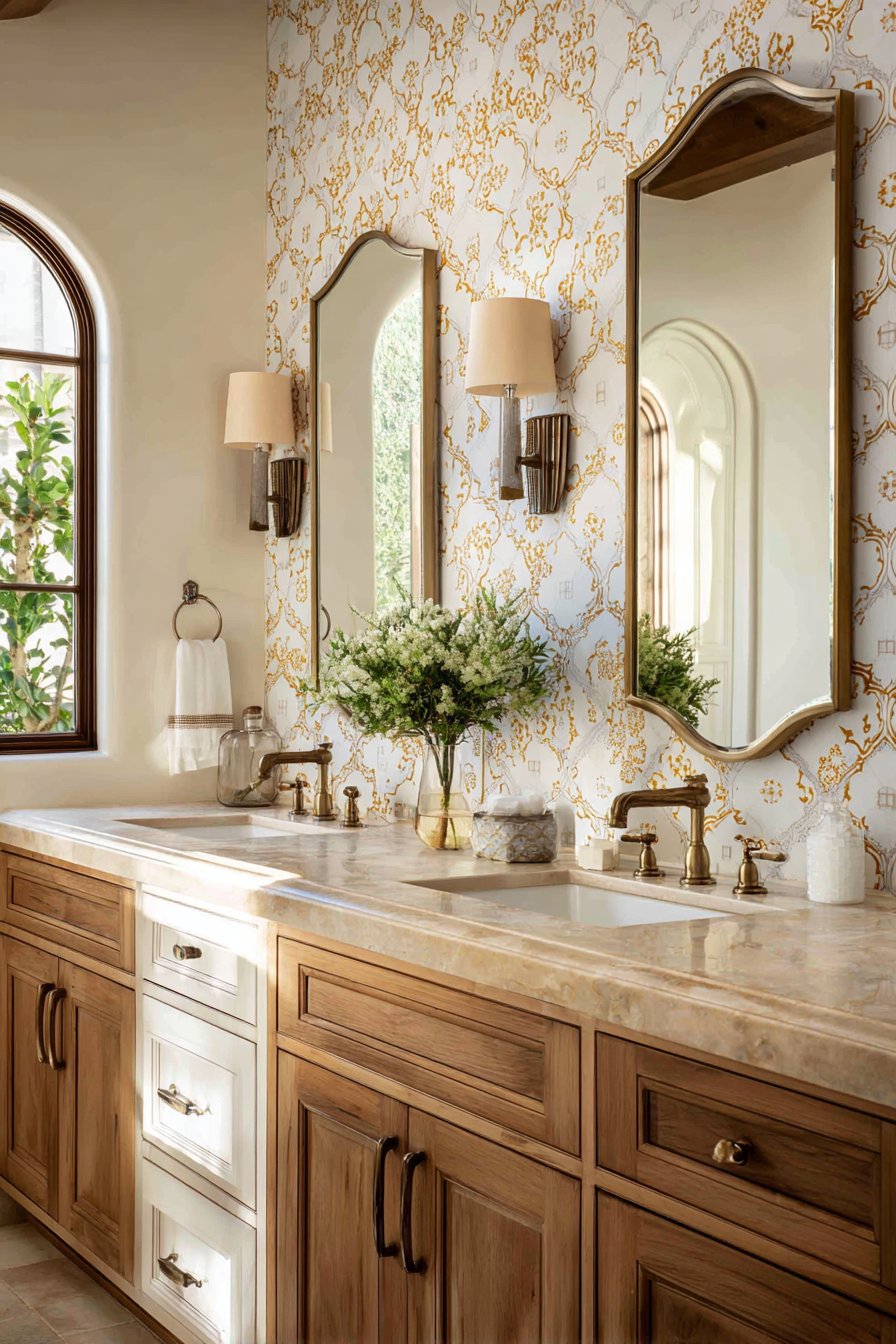
The symmetrical layout bathed in natural morning light creates a sense of order and calm that’s essential for shared spaces, where two people’s different routines and needs must coexist peacefully. The warm materials and colors ensure the space feels inviting rather than institutional despite its larger scale, with the golden light streaming through windows picking up the warm tones in the quartzite and oak, making the entire vanity area glow with welcoming warmth during those critical morning hours.
Key Design Tips:
- Space sinks at least 30 inches apart (center to center) for comfortable shared use
- Provide a minimum of 36 inches of counter space per person for toiletries and grooming items
- Install individual electrical outlets between the sinks for personal grooming tools
- Use soft-close drawer glides throughout to reduce noise and extend hardware life
- Consider dividing storage evenly or customizing drawer interiors to suit each person’s specific needs
17. Foundation of Warmth: Luxury Vinyl Plank Flooring
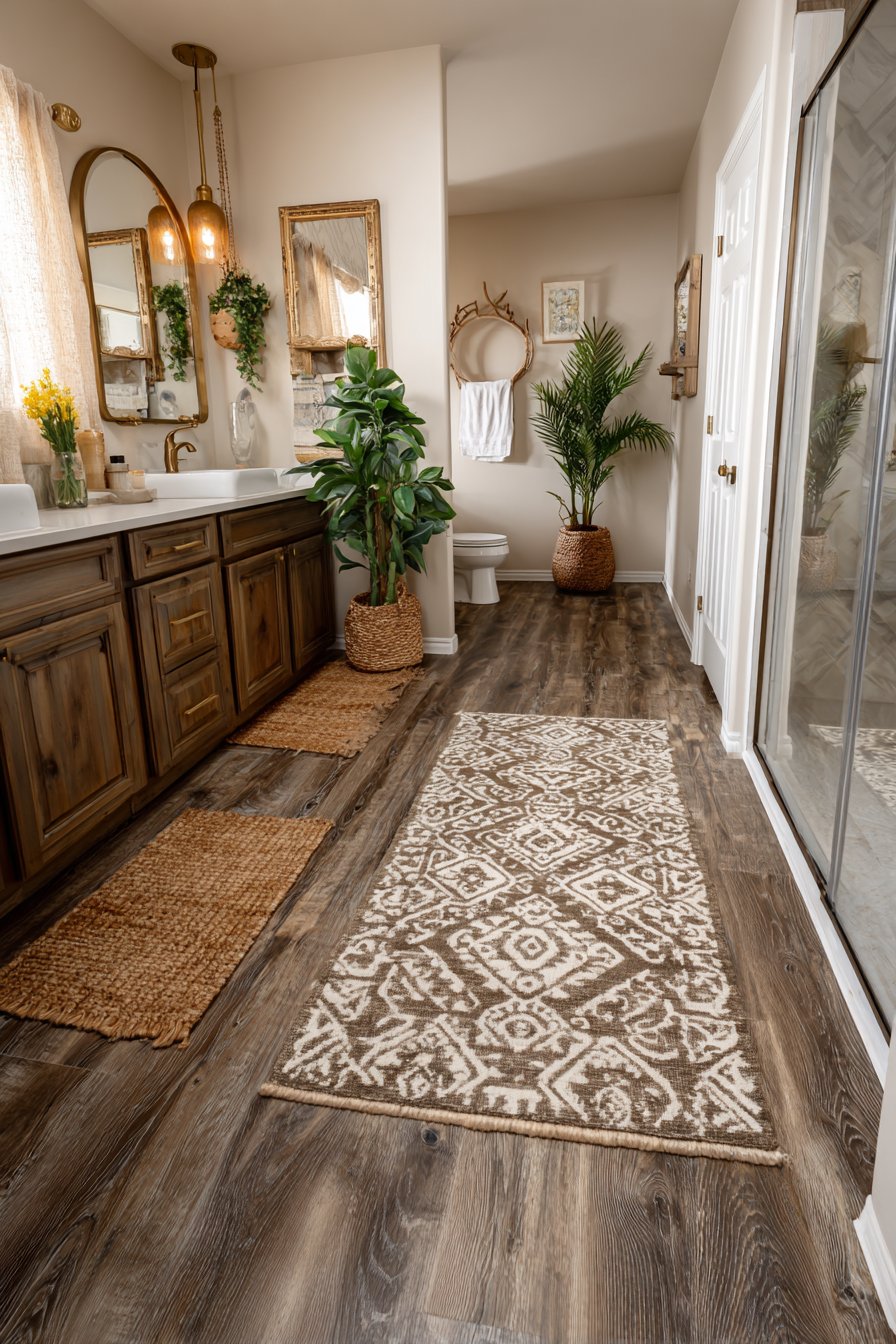
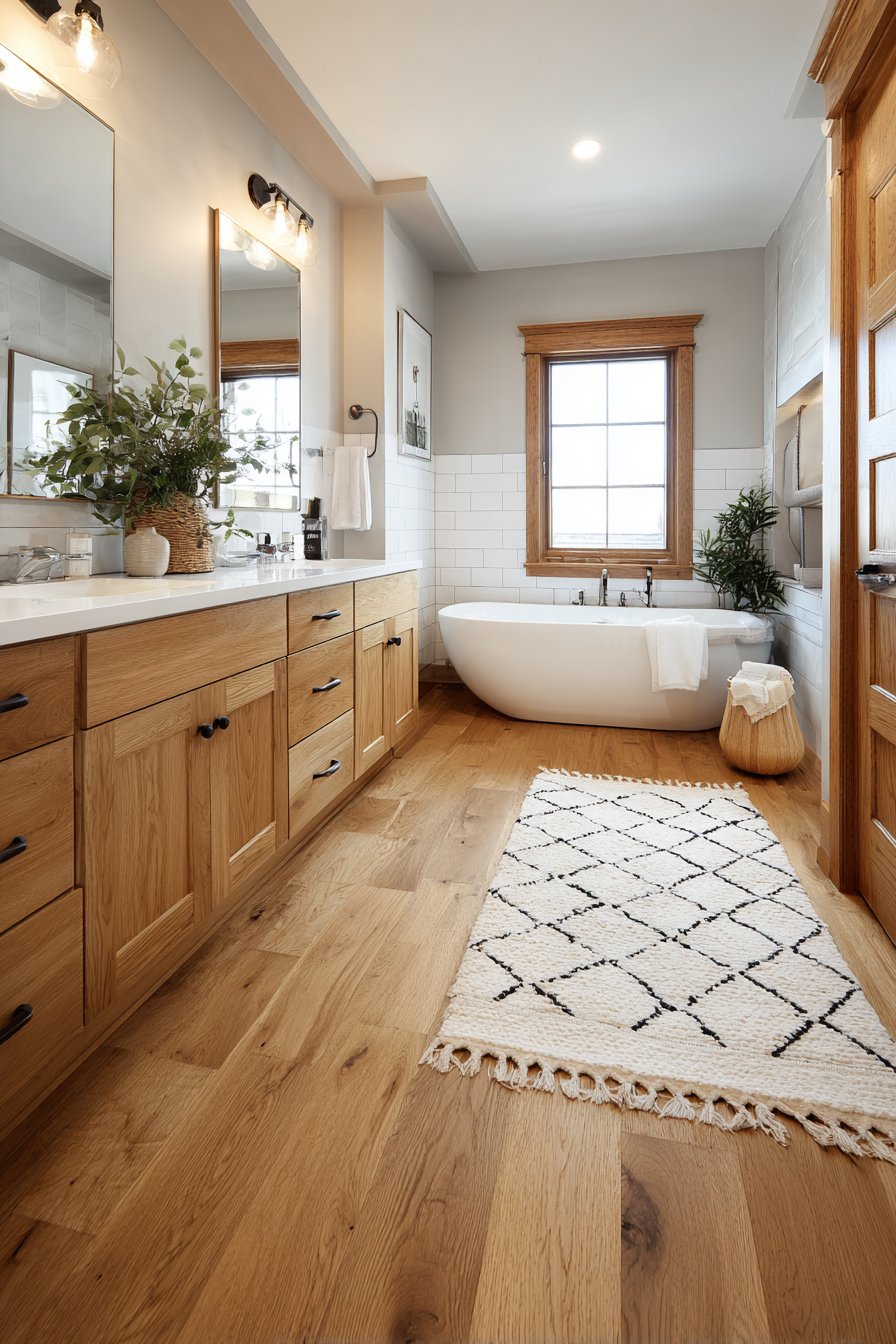
Often overlooked in favor of flashier design elements, flooring serves as the literal foundation of bathroom warmth, and this design demonstrates how the right flooring choice can transform the entire space. Radiant heated luxury vinyl planks in authentic warm oak appearance with hand-scraped texture detail provide the beauty of real hardwood with enhanced water resistance and the incredible comfort of built-in heating. The technology behind radiant heating has advanced dramatically, making it more affordable and easier to install than ever before.
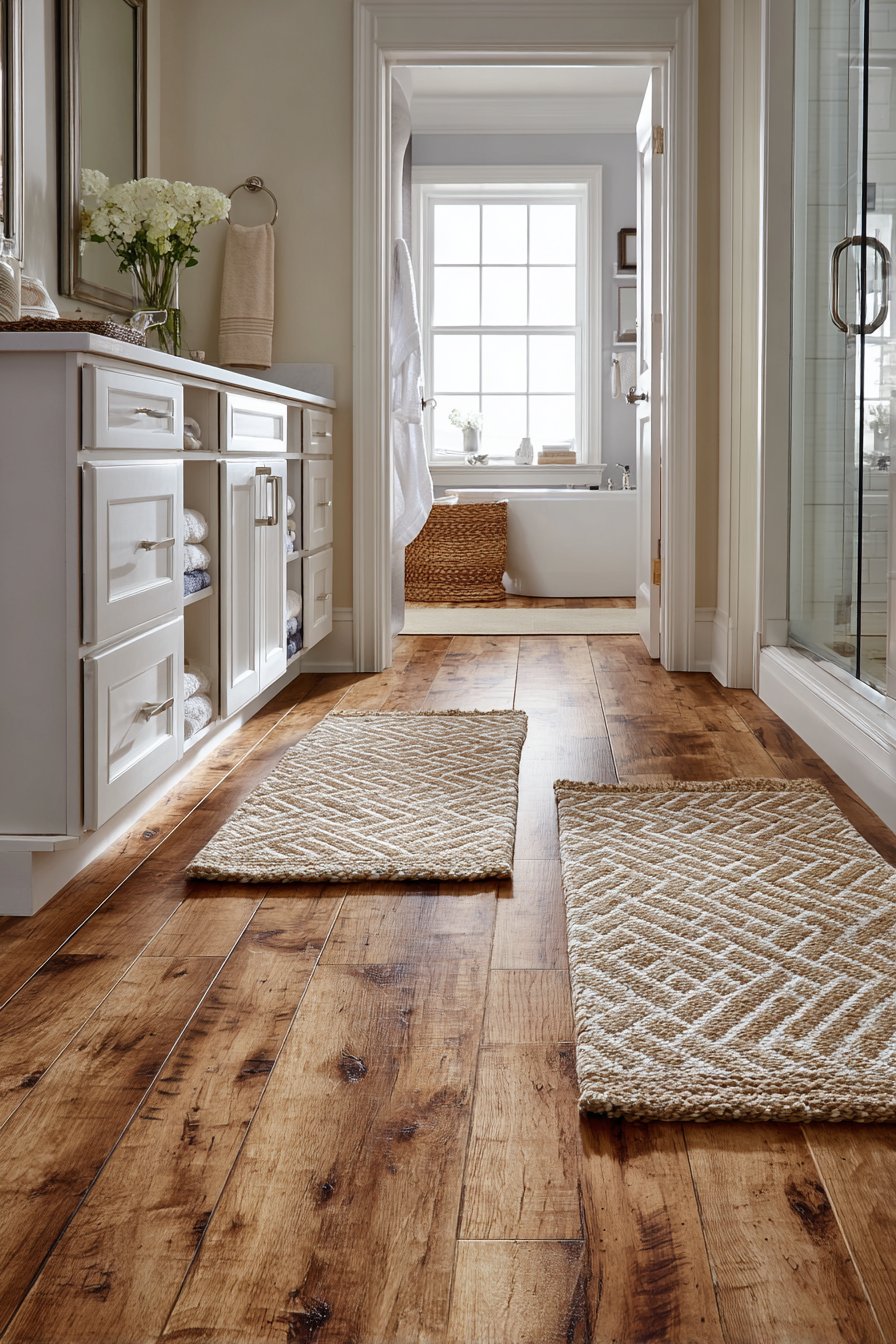
The flooring extends seamlessly from the main bathroom into the water closet area, creating visual continuity that makes both spaces feel more expansive than they would with different flooring materials. This continuous flow is particularly important in bathrooms where different flooring materials can make the space feel choppy and disconnected. Area rugs in natural jute with warm geometric patterns add comfort at key locations—beside the tub, in front of the shower, at the vanity—while their natural fiber and neutral pattern complement rather than compete with the flooring.
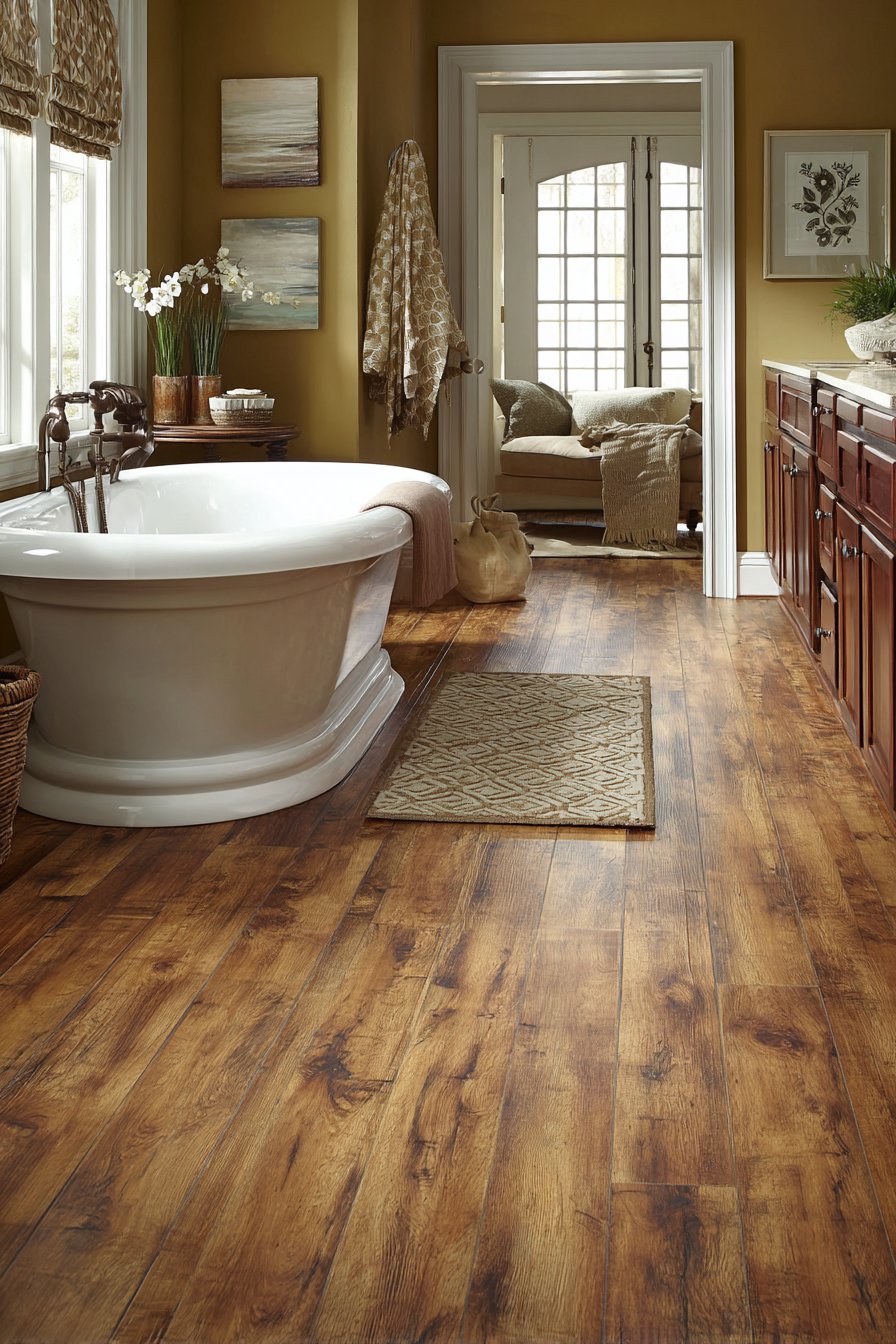
The low-angle photography perspective highlights the beautiful flooring and demonstrates how it grounds the entire warm color scheme of the bathroom, serving as a canvas upon which all other design elements rest. The hand-scraped texture adds authenticity and character while providing subtle slip resistance, and the warm oak tone with its honey and amber variations creates a natural warmth that radiates throughout the space. Combined with the radiant heating, stepping onto this floor on a cold morning becomes a small luxury that improves daily life in meaningful ways.
Key Design Tips:
- Choose luxury vinyl planks rated for wet areas with robust waterproof cores
- Install radiant heating mats specifically designed for LVP to avoid heat damage
- Acclimate luxury vinyl to room temperature for 48 hours before installation
- Use furniture pads under all standing furniture to prevent indentations in vinyl
- Clean regularly with manufacturer-recommended products to maintain the finish and appearance
18. Botanical Bliss: Plant Corner Sanctuary
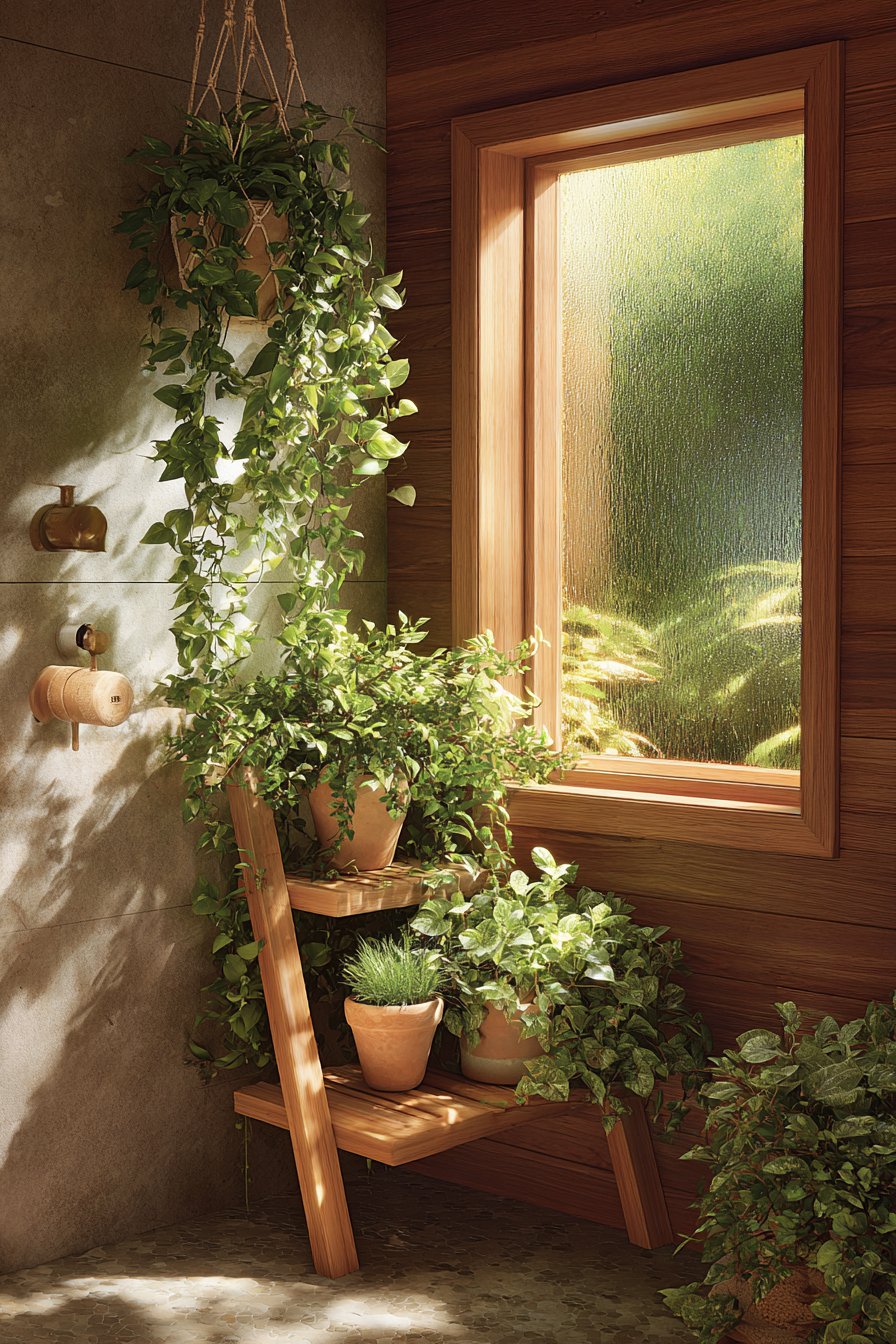
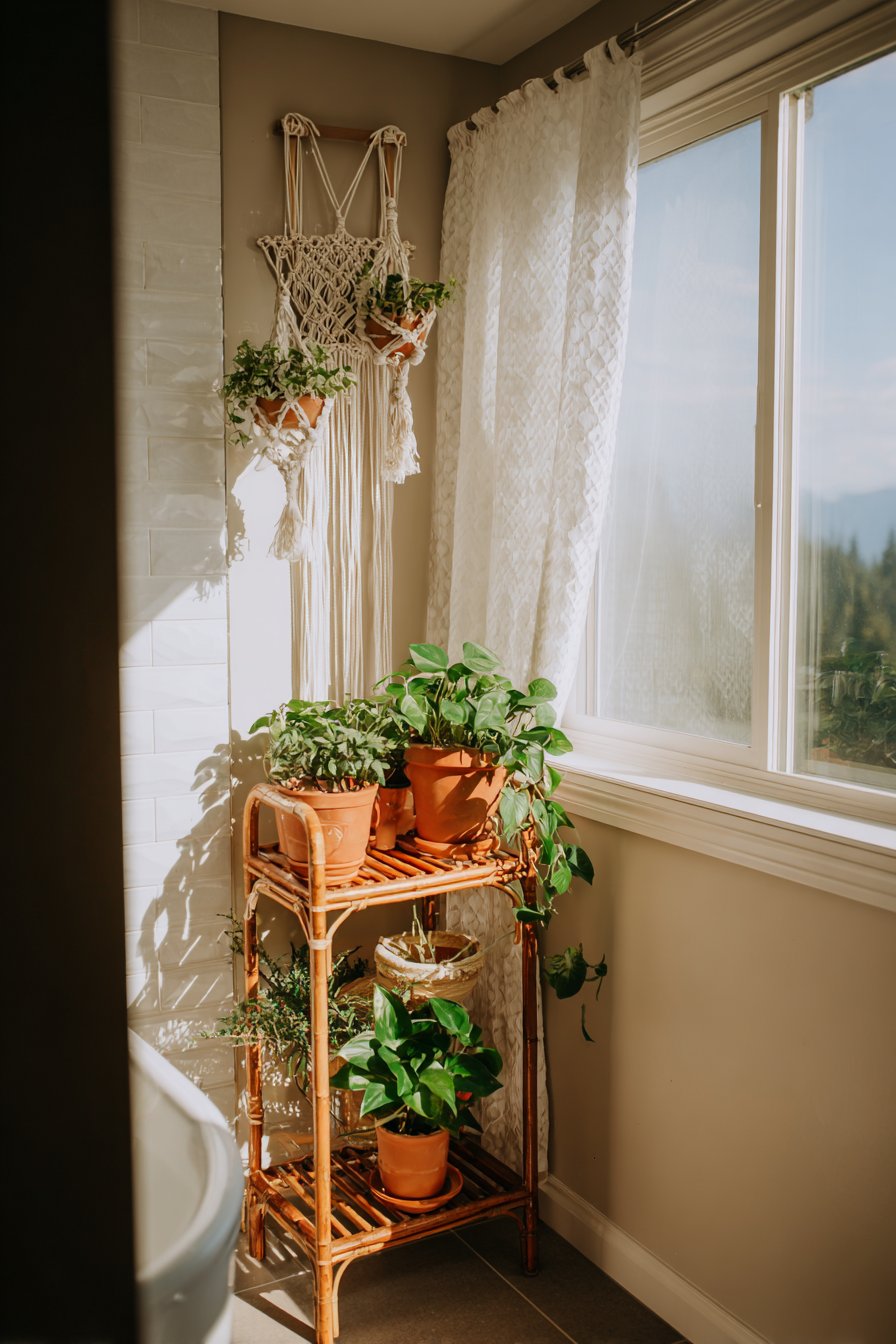
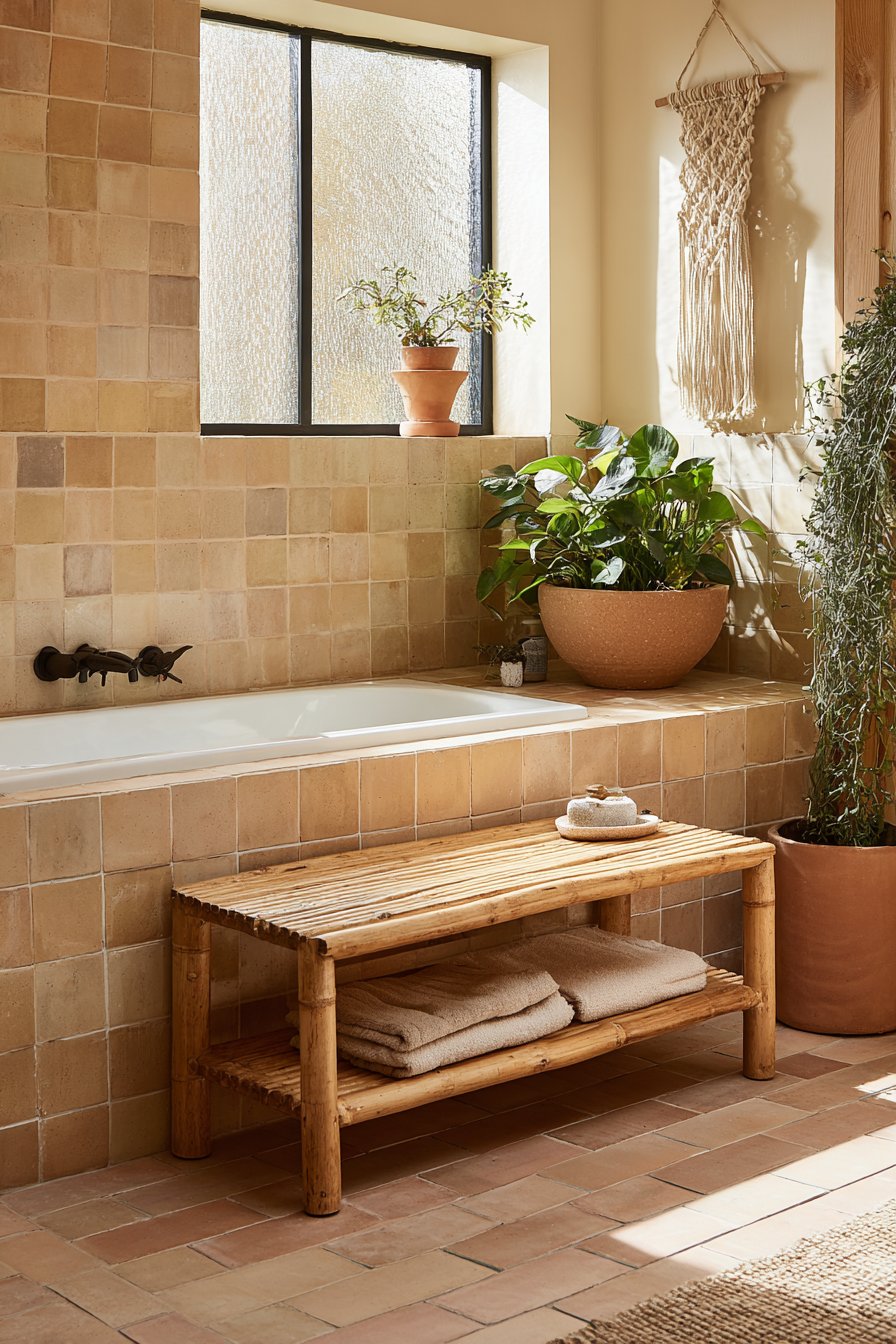
Plants and bathrooms form a natural partnership, with the humidity from showers and baths creating ideal conditions for many tropical and humidity-loving species. This plant corner design creates a mini greenhouse effect, with a collection of carefully chosen plants on a tiered bamboo stand near a frosted window where they receive adequate light while maintaining bathroom privacy. The bamboo stand itself contributes to the warm aesthetic with its natural honey tones and organic material, while its tiered design allows for multiple plants at different heights.
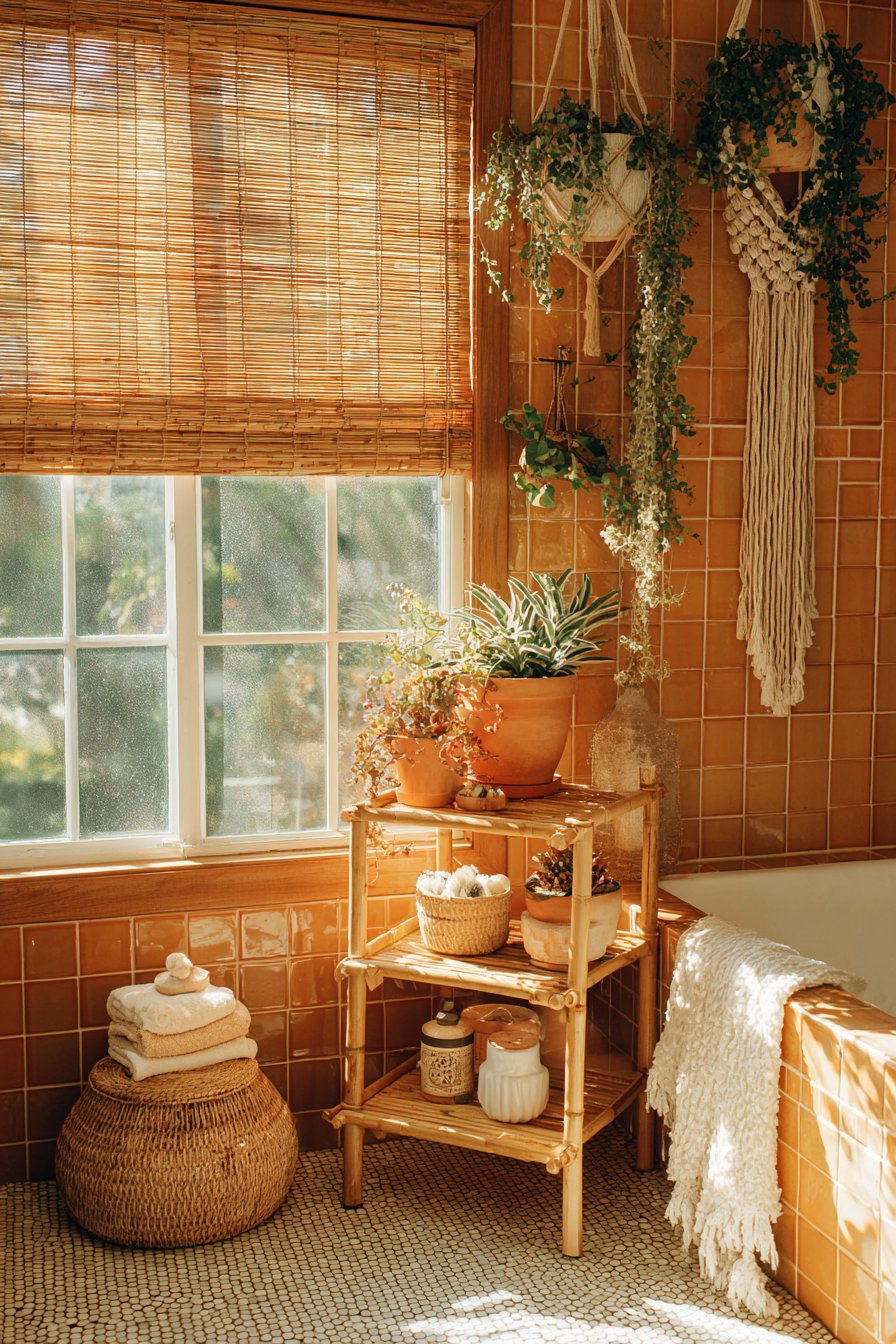
Macramé hangers in natural cotton suspend trailing pothos from ceiling hooks, their cascading vines adding vertical interest and movement to the space while their heart-shaped leaves bring organic curves that soften the bathroom’s angular architecture. Terra cotta pots in various warm clay tones complement the botanical display while providing the breathability that many plants prefer, allowing excess moisture to evaporate through the pot walls. The unglazed terra cotta ages beautifully, developing white mineral deposits and patina that add to the organic, collected feel.
Warm natural light filters through the frosted window, creating dappled shadows that move throughout the day as the sun tracks across the sky, bringing the outside world into the bathroom in a gentle, privacy-protected way. The close-up interior photography captures how living greenery enhances the organic warmth and creates a spa-like, nature-connected atmosphere that transforms daily routines into moments of zen. The presence of thriving plants also improves air quality and creates a sense of vitality that elevates the bathroom beyond its purely functional purpose.
Key Design Tips:
- Choose plants suited to bathroom conditions: high humidity, indirect light, temperature fluctuations
- Rotate plants periodically to ensure even growth and prevent them from leaning toward light sources
- Use pot feet or saucers under terra cotta pots to protect surfaces from water stains
- Install ceiling hooks into studs rather than just drywall to safely support hanging planters
- Group plants with similar care requirements together for easier maintenance routines
19. Cohesive Hardware: Antique Brass Throughout
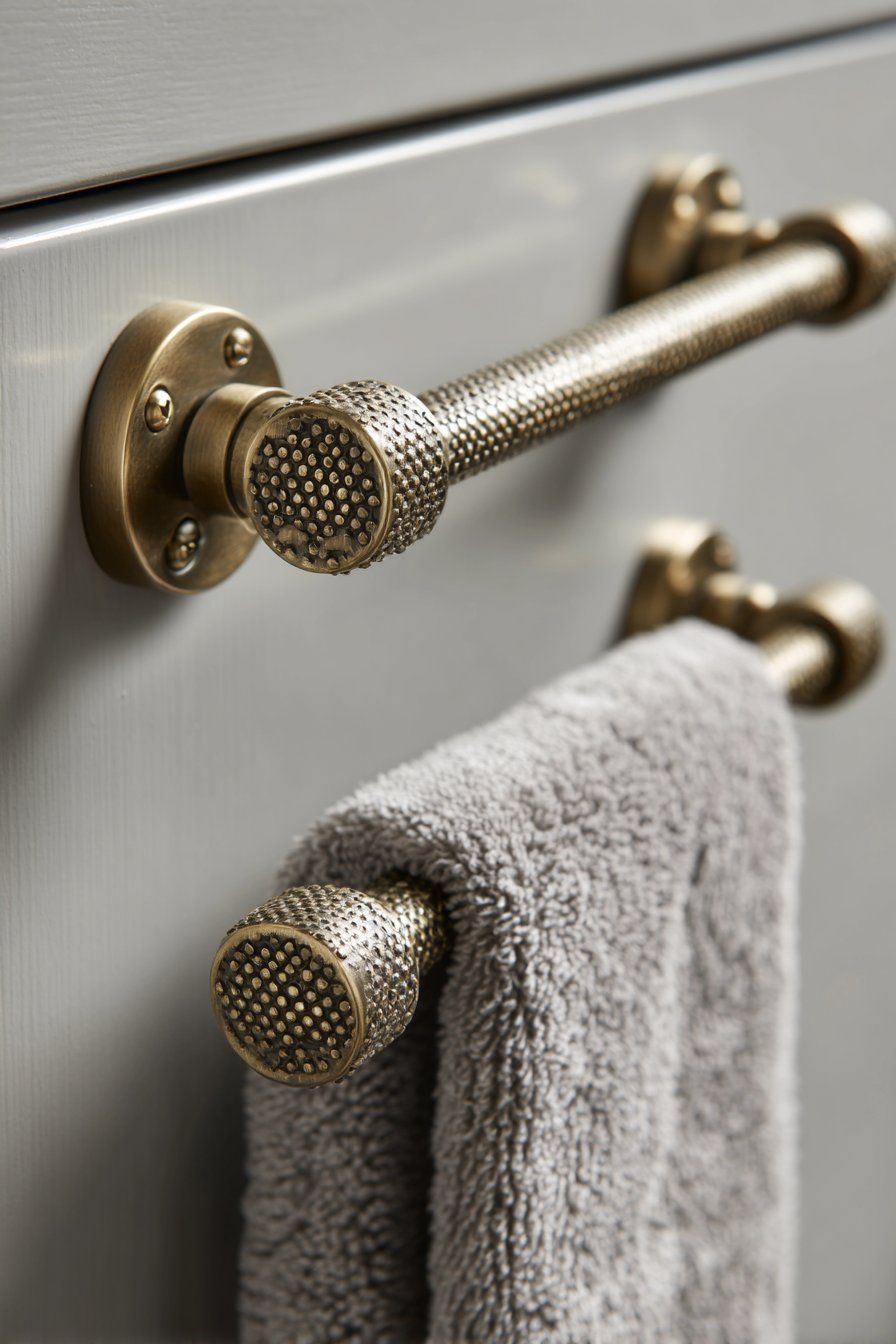
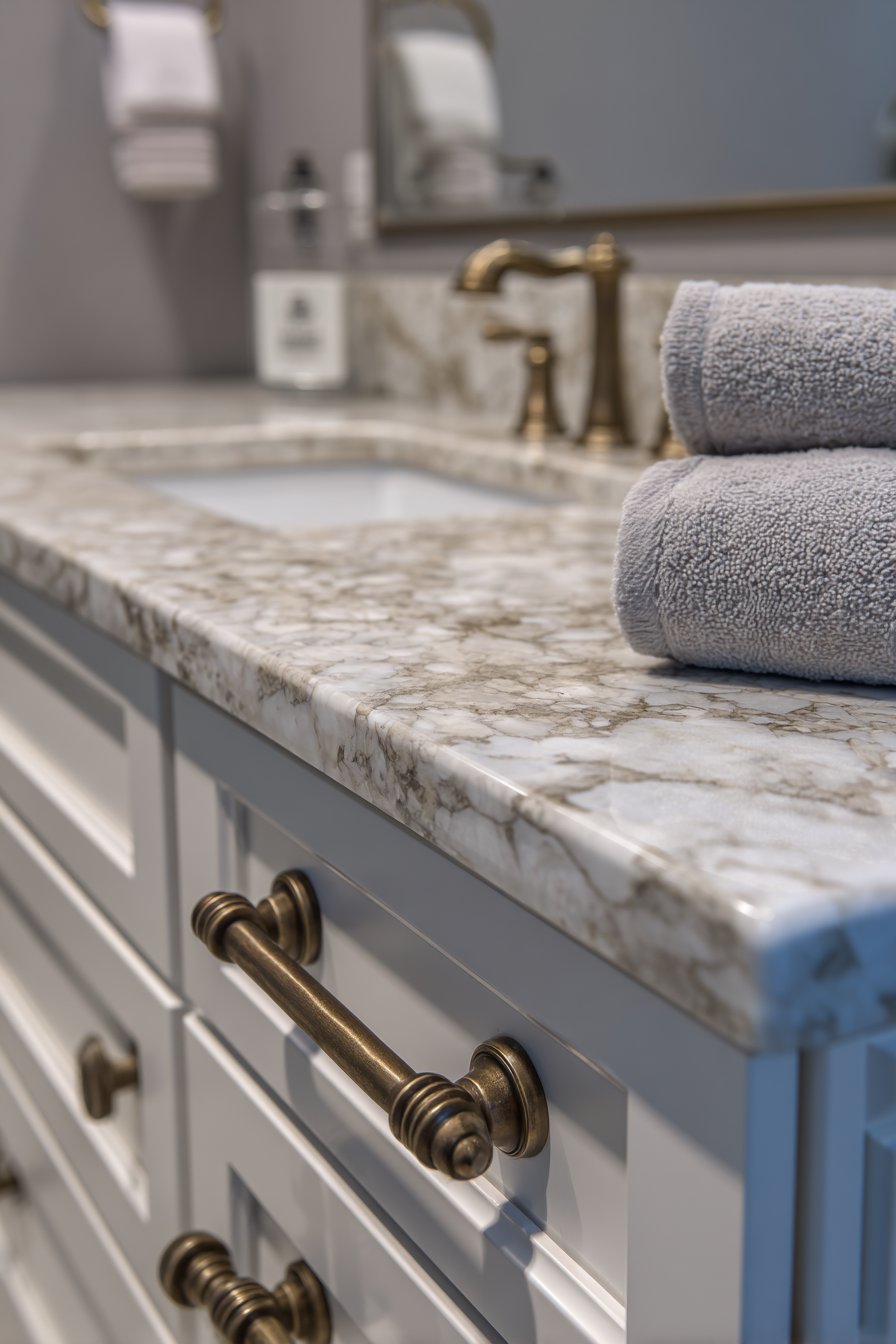
While hardware might seem like a minor detail, this design proves that consistent, high-quality hardware selections significantly impact the overall cohesion and sophistication of bathroom design. The antique brass finish with slight patina appears on every metallic element throughout the space—cabinet pulls, towel bars, toilet paper holder, robe hooks—creating a unified design language that feels intentional and curated. The warmth of the brass brings golden tones that enhance all the other warm elements in the room.
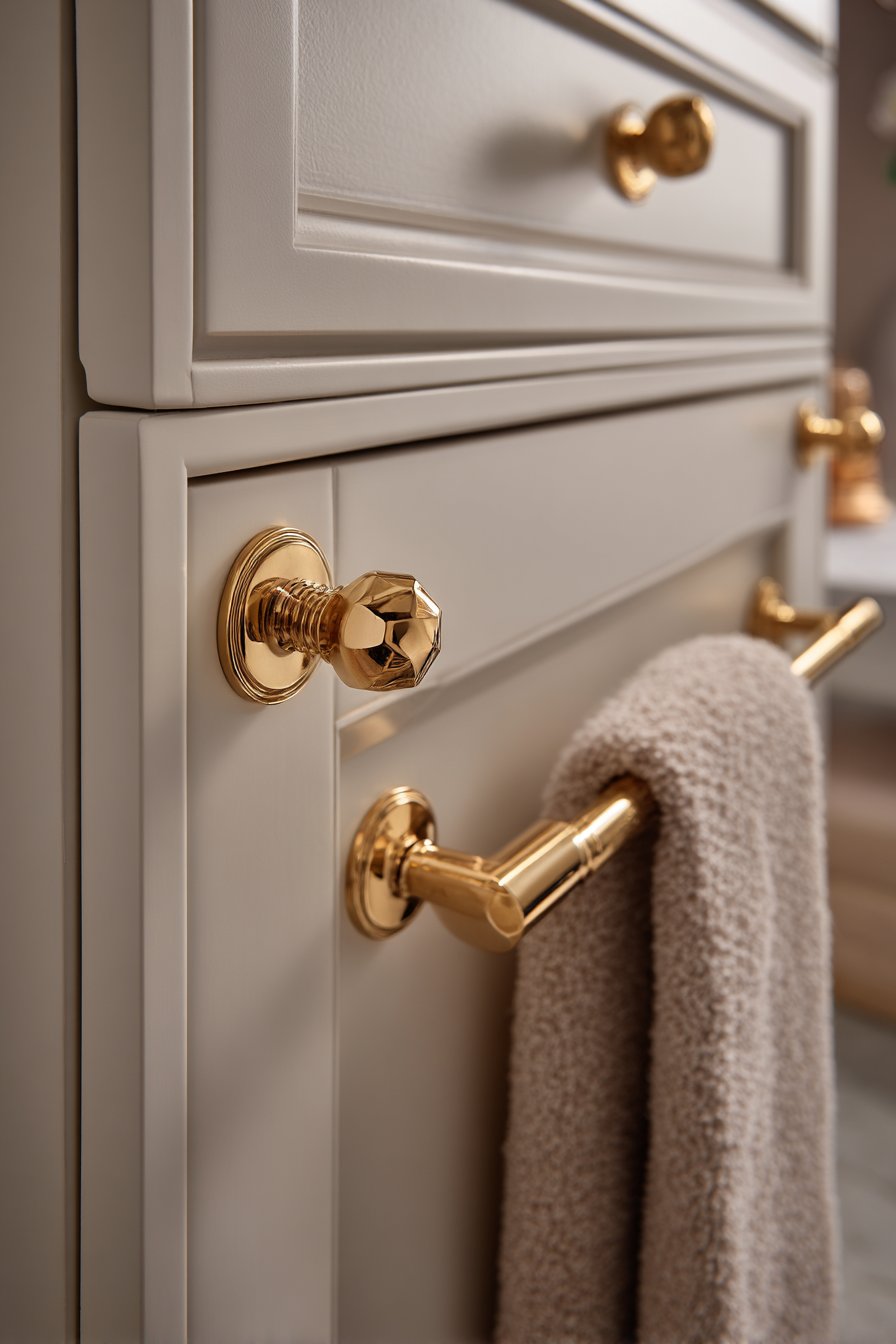
These carefully chosen elements pop beautifully against warm white shaker-style cabinetry and soft grey-beige walls, creating just enough contrast to be interesting without feeling stark or jarring. The shaker style, with its clean lines and simple recessed panels, provides a timeless backdrop that allows the beautiful hardware to shine without competing for attention. The antique finish is particularly practical in bathrooms, as it shows fewer fingerprints and water spots than polished brass while offering more character than standard brushed finishes.
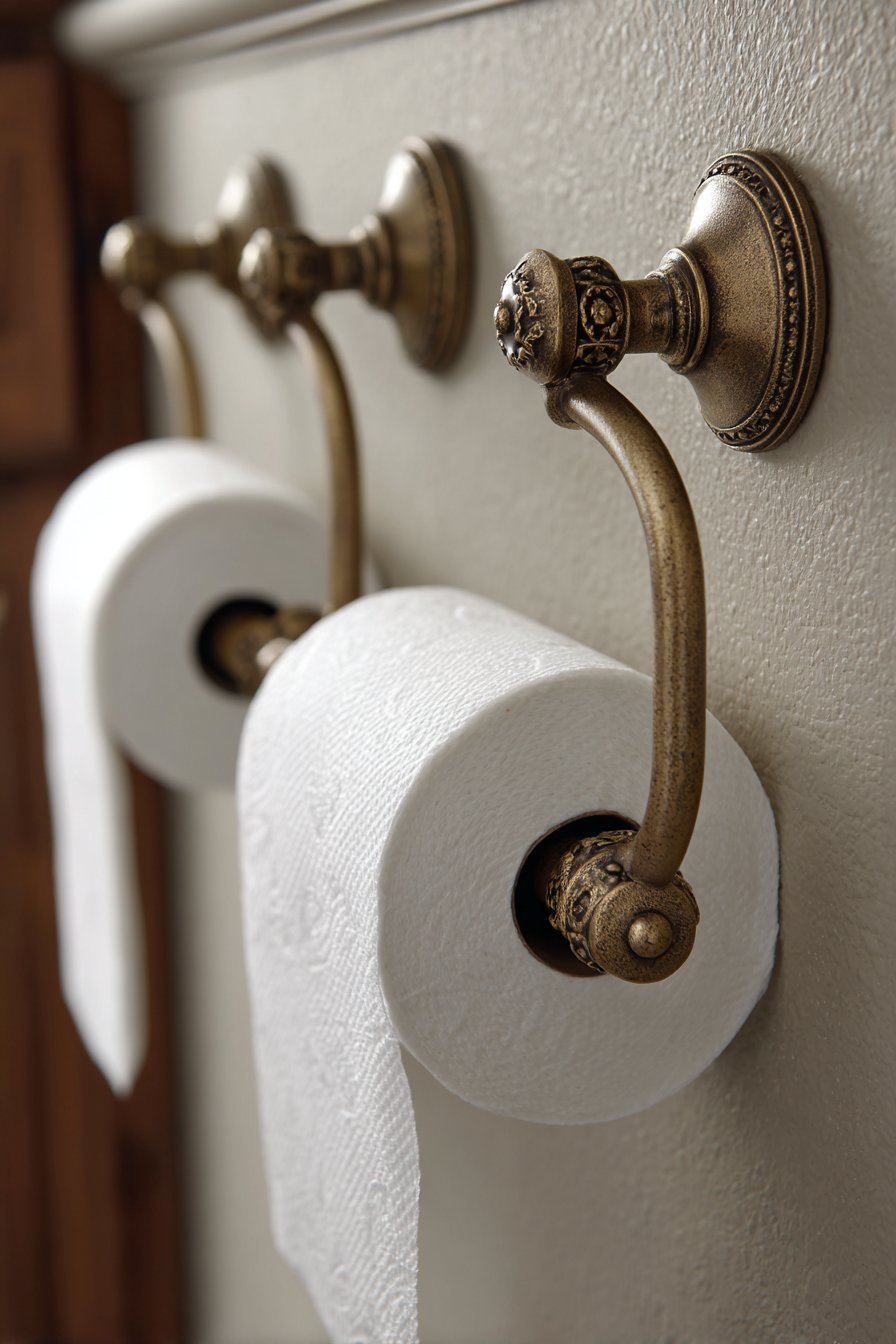
The detail-focused interior photography captures how this cohesive design through consistent warm metallic accents elevates the entire bathroom aesthetic from acceptable to exceptional. When every piece of hardware is carefully selected and coordinated, the bathroom feels custom-designed rather than simply assembled from random parts. This attention to detail demonstrates respect for the space and creates an environment where even the smallest interactions—opening a drawer, hanging a towel—become subtly more pleasant.
Key Design Tips:
- Purchase all hardware from the same manufacturer and finish line to ensure perfect color matching
- Choose unlacquered brass if you want it to develop authentic patina over time
- Install cabinet hardware consistently (same height, same distance from edges) for professional appearance
- Use a template when installing multiple similar pieces to ensure perfect alignment
- Clean antique brass with gentle soap and water only—harsh chemicals can damage the finish
20. Personal Gallery: Botanical Print Collection
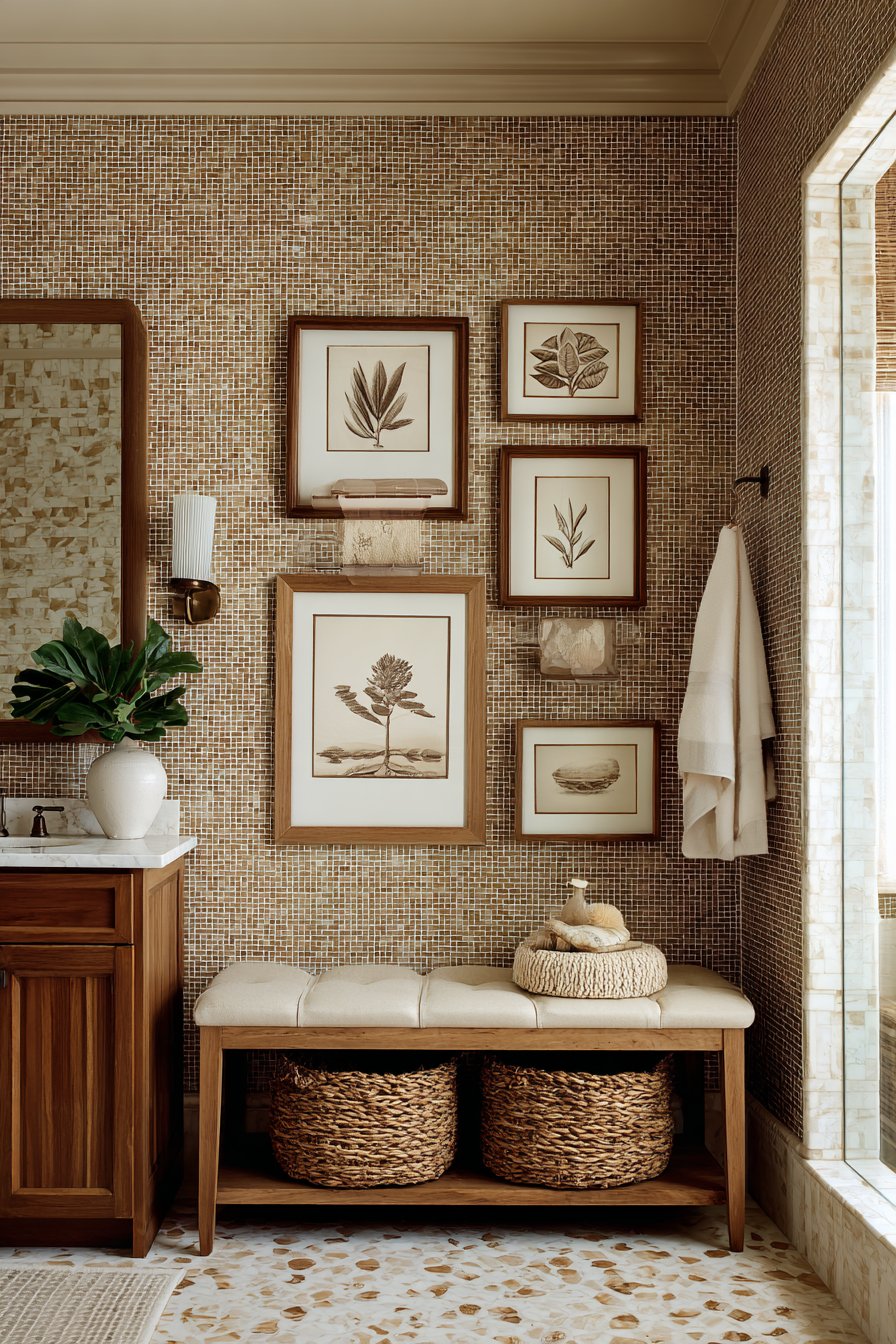
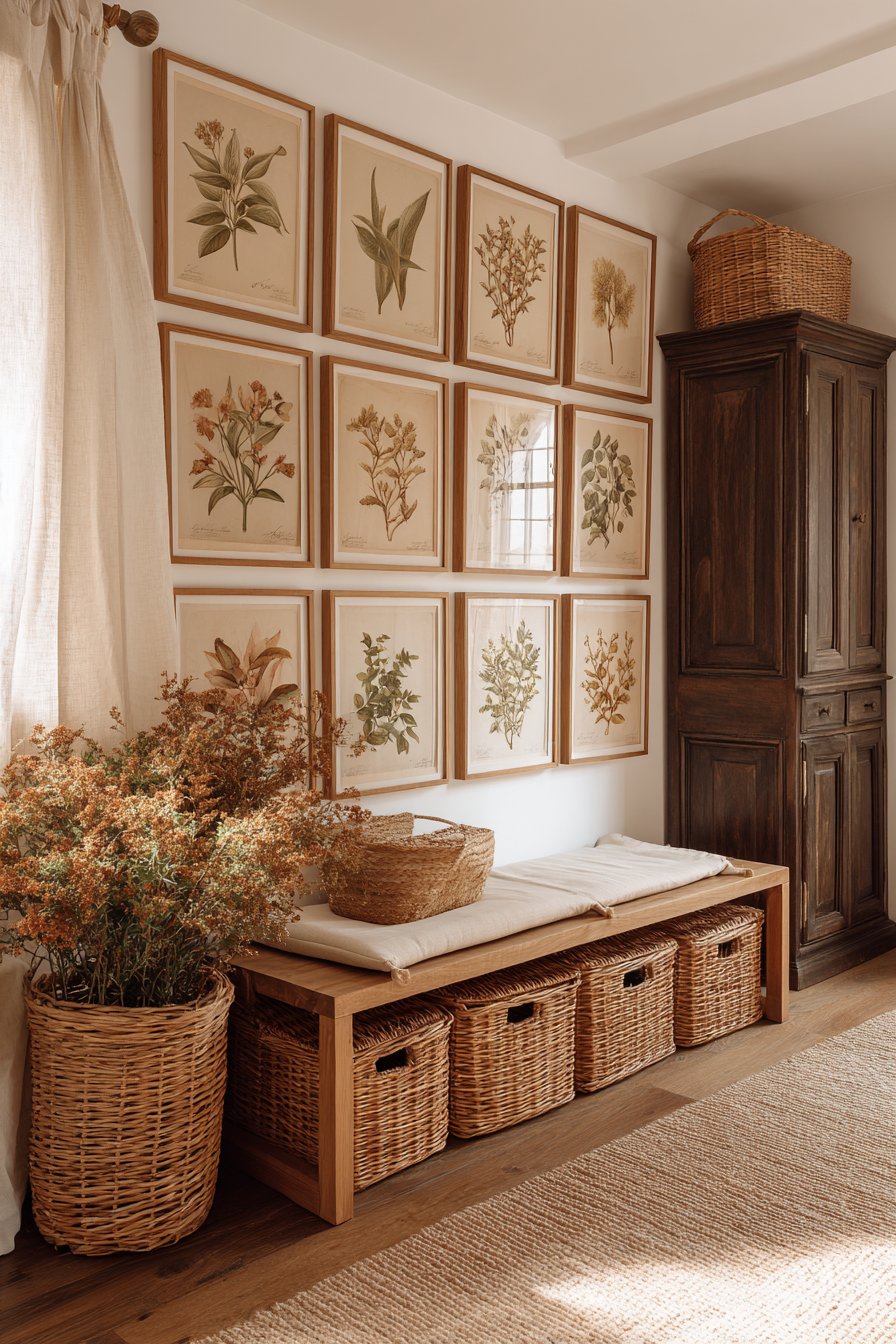
Artwork in bathrooms is often overlooked or relegated to generic prints, but this design demonstrates how a carefully curated gallery wall can bring personality and warmth while transforming the bathroom into a true extension of the home’s overall design narrative. The collection of botanical prints in warm sepia tones within natural wood frames of varying sizes creates visual interest through both the subject matter and the varied frame arrangements. The botanical subjects connect to the natural, organic theme that underlies so much warm design.
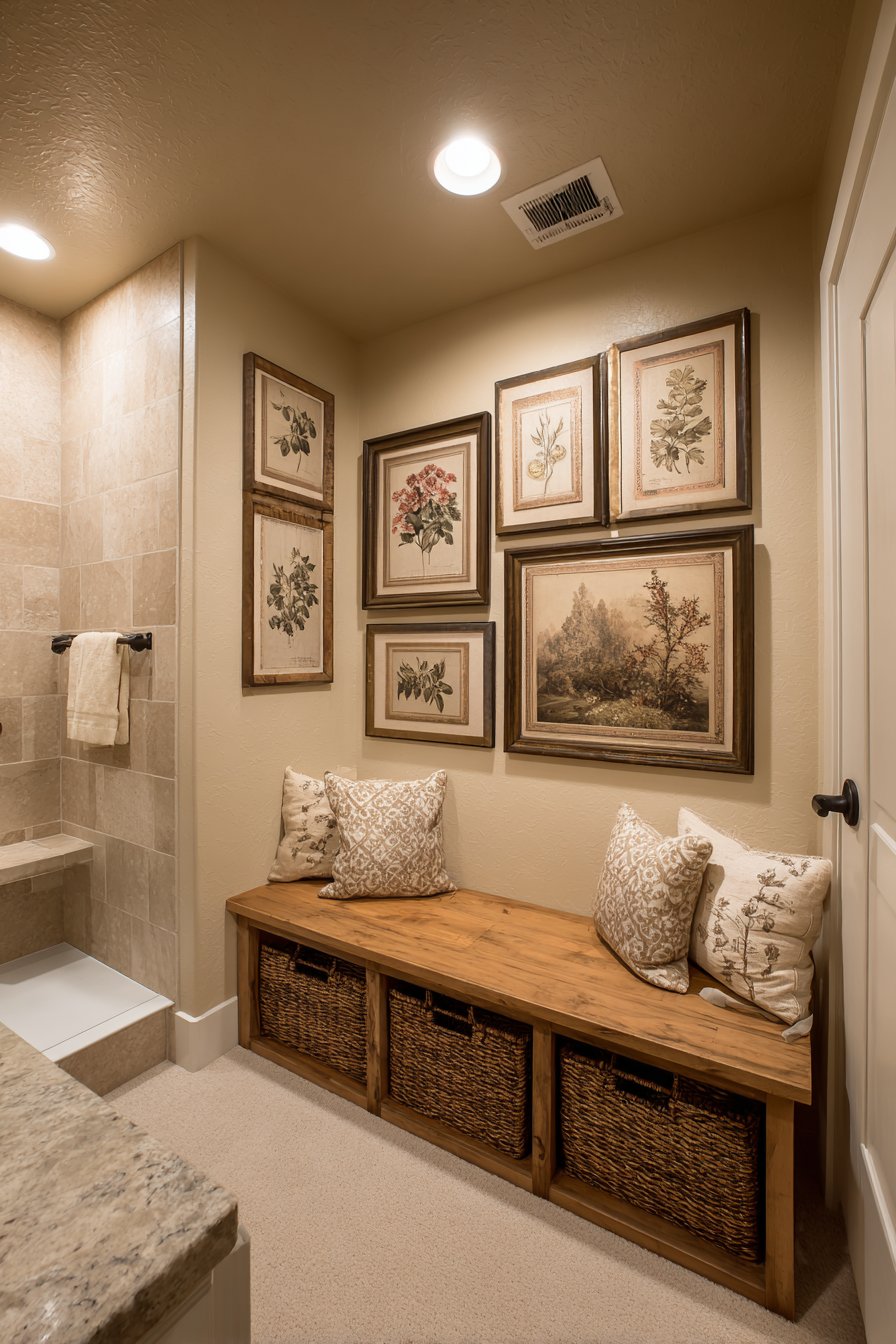
The gallery wall hangs above a low storage bench in warm teak with woven basket storage underneath, creating a functional yet beautiful vignette that serves multiple purposes. The bench provides seating for putting on shoes or a place to set items while preparing for the day, while the baskets offer attractive storage for extra towels, toilet paper, or personal items. The warm teak brings another layer of natural wood tone that harmonizes with the picture frames and contributes to the overall warmth.
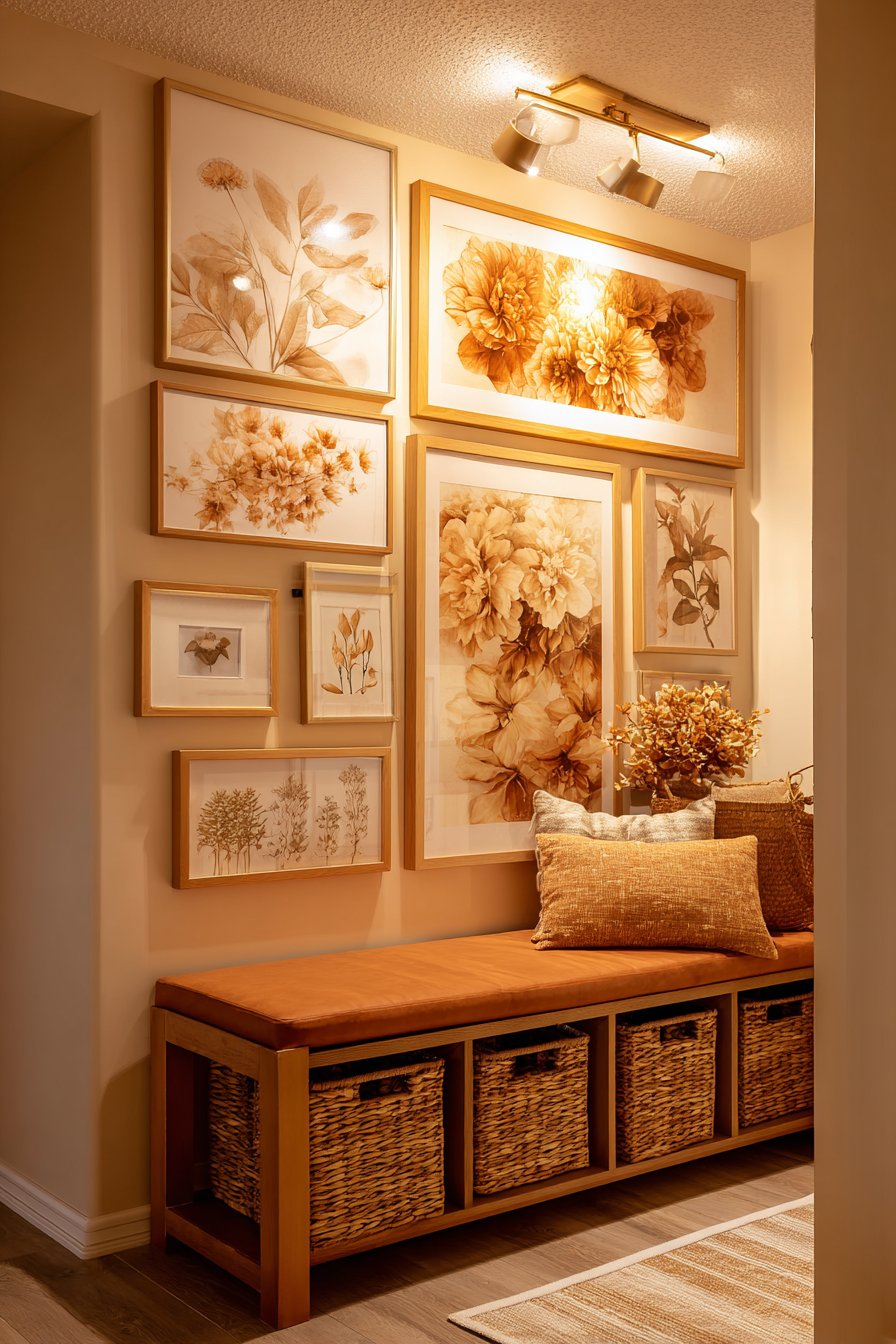
Warm overhead lighting positioned to highlight the curated display without creating glare on the glass-covered prints makes the gallery wall a true focal point worthy of attention. This type of lighting requires careful planning—angle the fixtures to illuminate the artwork rather than creating hot spots or reflections. The result shows how personal touches and warm art selections transform a bathroom from a purely utilitarian space into an extension of the home’s overall warm, inviting design narrative where your personality and interests are expressed in every room.
Key Design Tips:
- Use museum-quality frames with UV-protective glass to prevent prints from fading in bathroom humidity
- Seal any wood frames with moisture-resistant finish before hanging in bathrooms
- Lay out the entire gallery wall arrangement on the floor before hanging to perfect the composition
- Use proper picture hanging hardware rated for the weight of framed art
- Include personal or meaningful botanical subjects rather than generic prints for authentic warmth
21. Integrated Spa: Cedar Sauna Bench
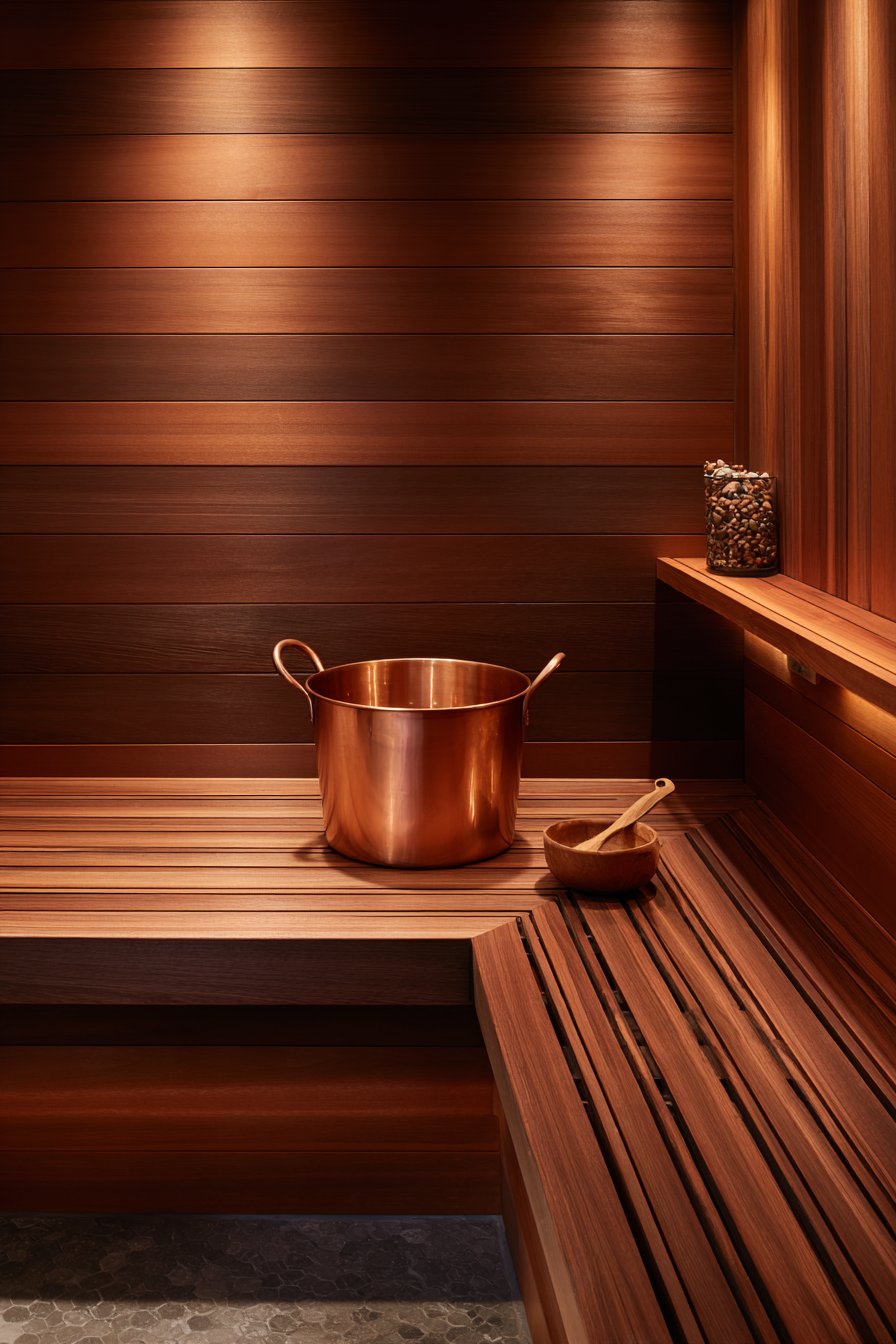
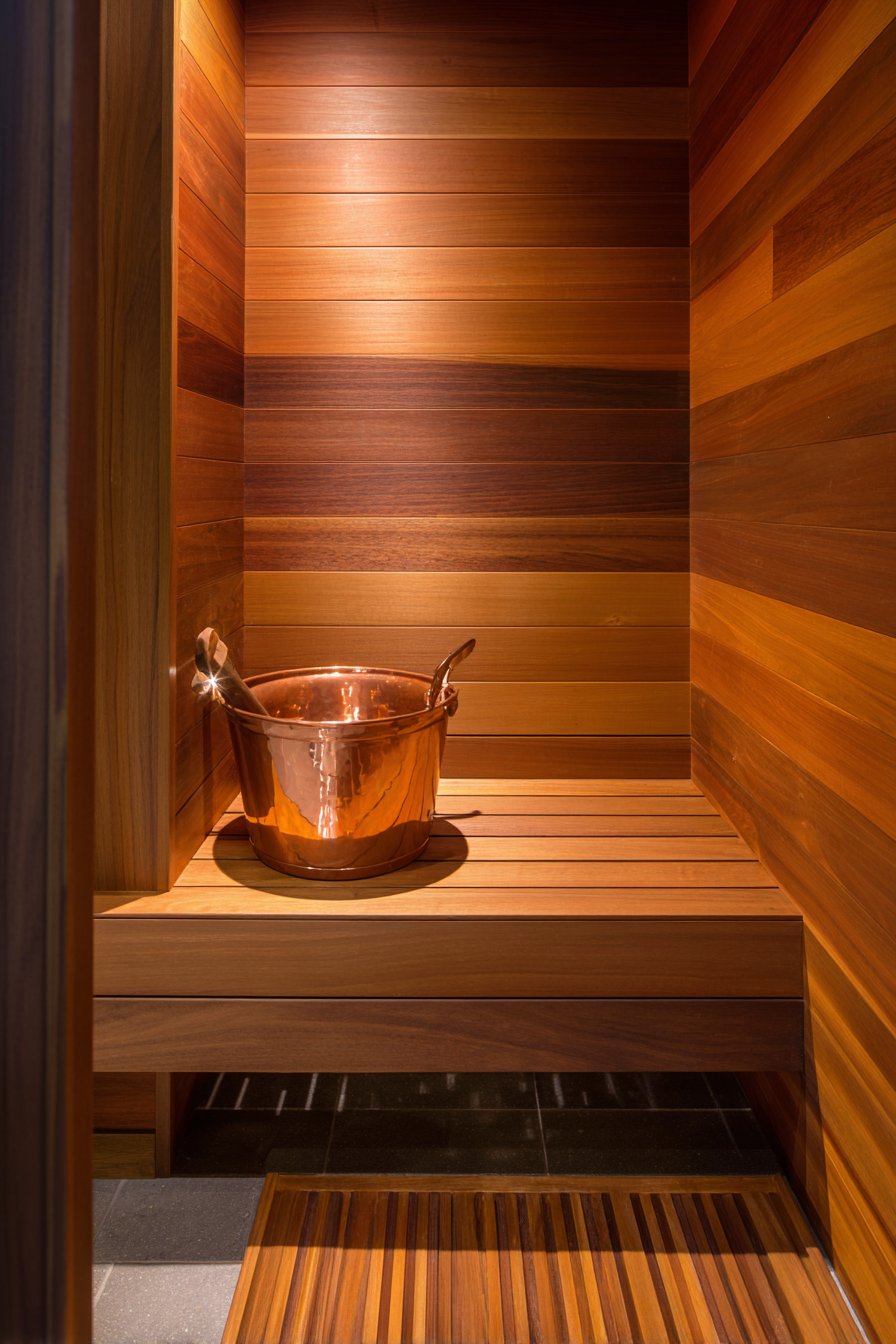
Taking warm bathroom ideas to their ultimate conclusion, this design incorporates a built-in cedar wood sauna bench, bringing the spa experience directly into your home. The slatted design allows for proper drainage while the warm cedar wood—chosen specifically for its aromatic properties and resistance to warping in humid conditions—creates a beautiful, functional feature. When heated, the cedar releases its signature scent, adding aromatherapy to the thermal therapy of the sauna experience.
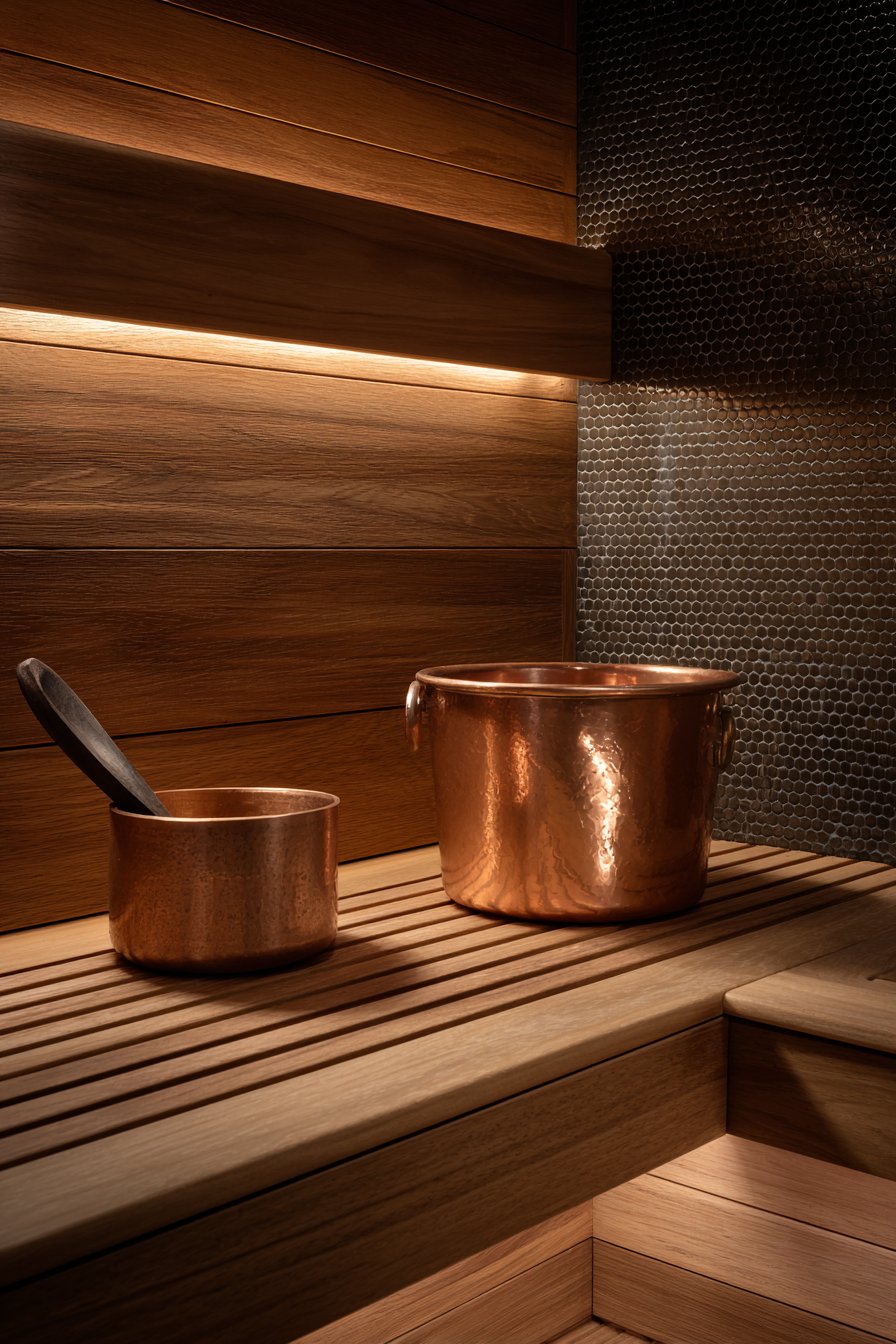
The walls in this section use warm cedar planking that releases aromatic warmth when heated, creating an immersive sensory experience that engages smell as well as touch and sight. The natural insulation properties of wood make it comfortable to sit on even in high heat, unlike tile or stone which would become uncomfortably hot. A copper bucket and ladle sit ready for traditional sauna use, where water splashed on hot stones creates the steam that defines the sauna experience, while their warm metallic beauty makes them beautiful objects even when not in use.
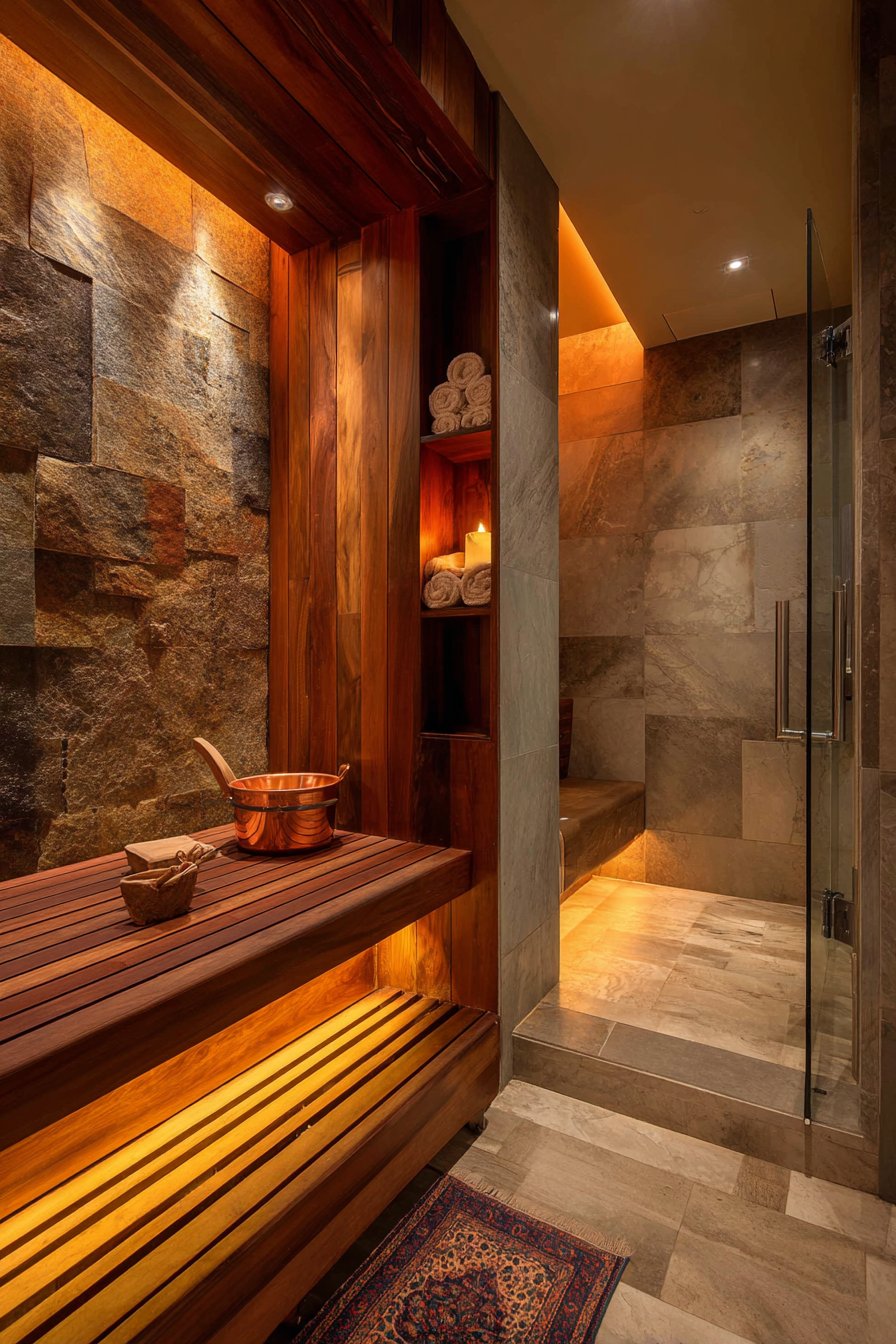
Dimmable warm lighting creates an amber glow that enhances the meditative quality of the sauna experience, allowing you to adjust the atmosphere from bright and energizing to soft and contemplative depending on your mood and the time of day. Professional interior photography capturing the steam, wood grain details, and luxurious warmth of this integrated spa feature demonstrates the ultimate expression of warmth in bathroom design—not just visual and aesthetic warmth, but literal, enveloping heat that relaxes muscles and soothes the spirit.
Key Design Tips:
- Ensure proper ventilation and moisture barriers behind cedar planking to prevent mold
- Install benches at two heights (18 and 36 inches) for different temperature preferences
- Use stainless steel hardware throughout the sauna area to prevent rust
- Include a dedicated sauna heater sized appropriately for the space cubic footage
- Maintain cedar by light sanding annually to refresh the surface and restore aroma
22. Artisanal Detail: Handmade Ceramic Backsplash
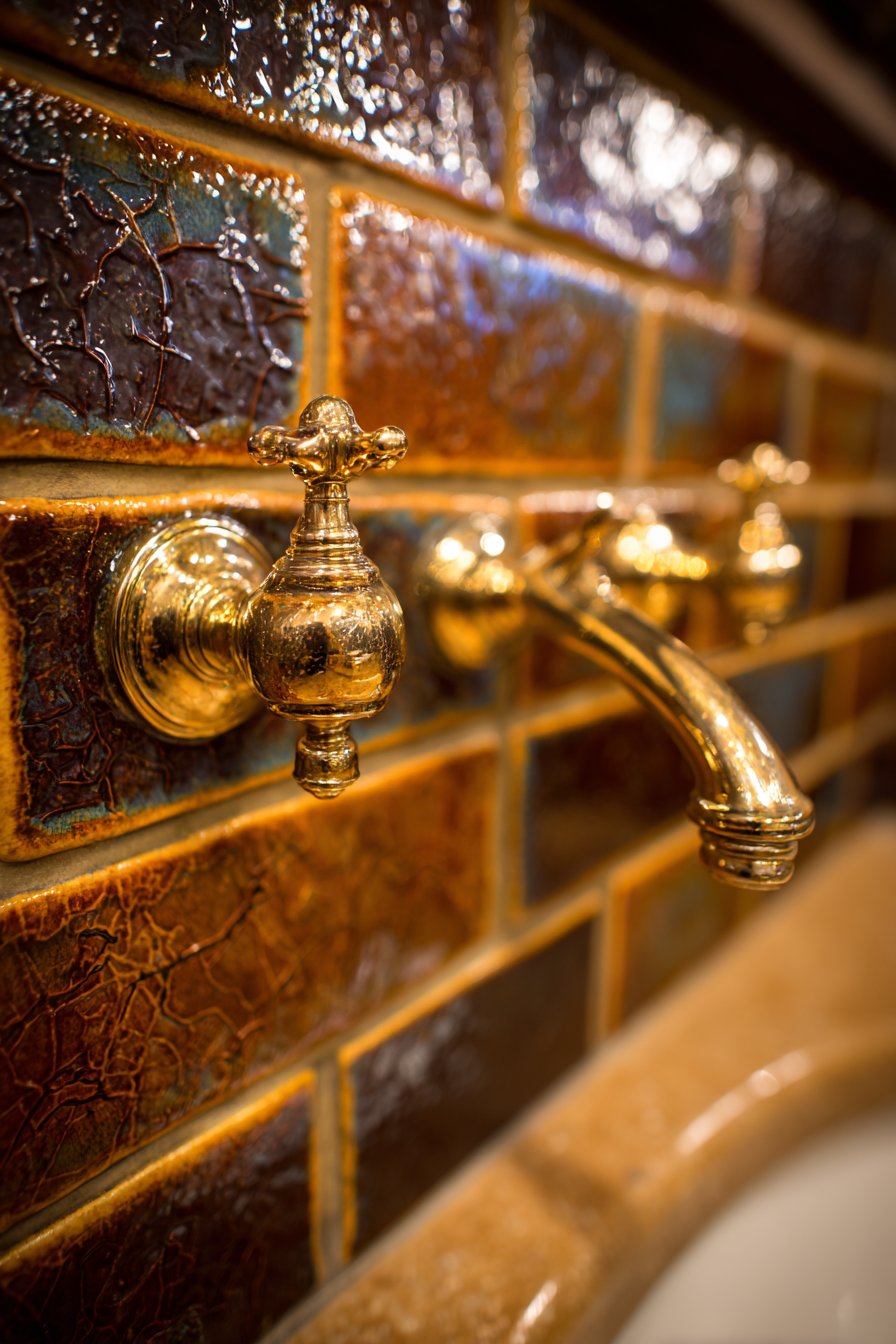
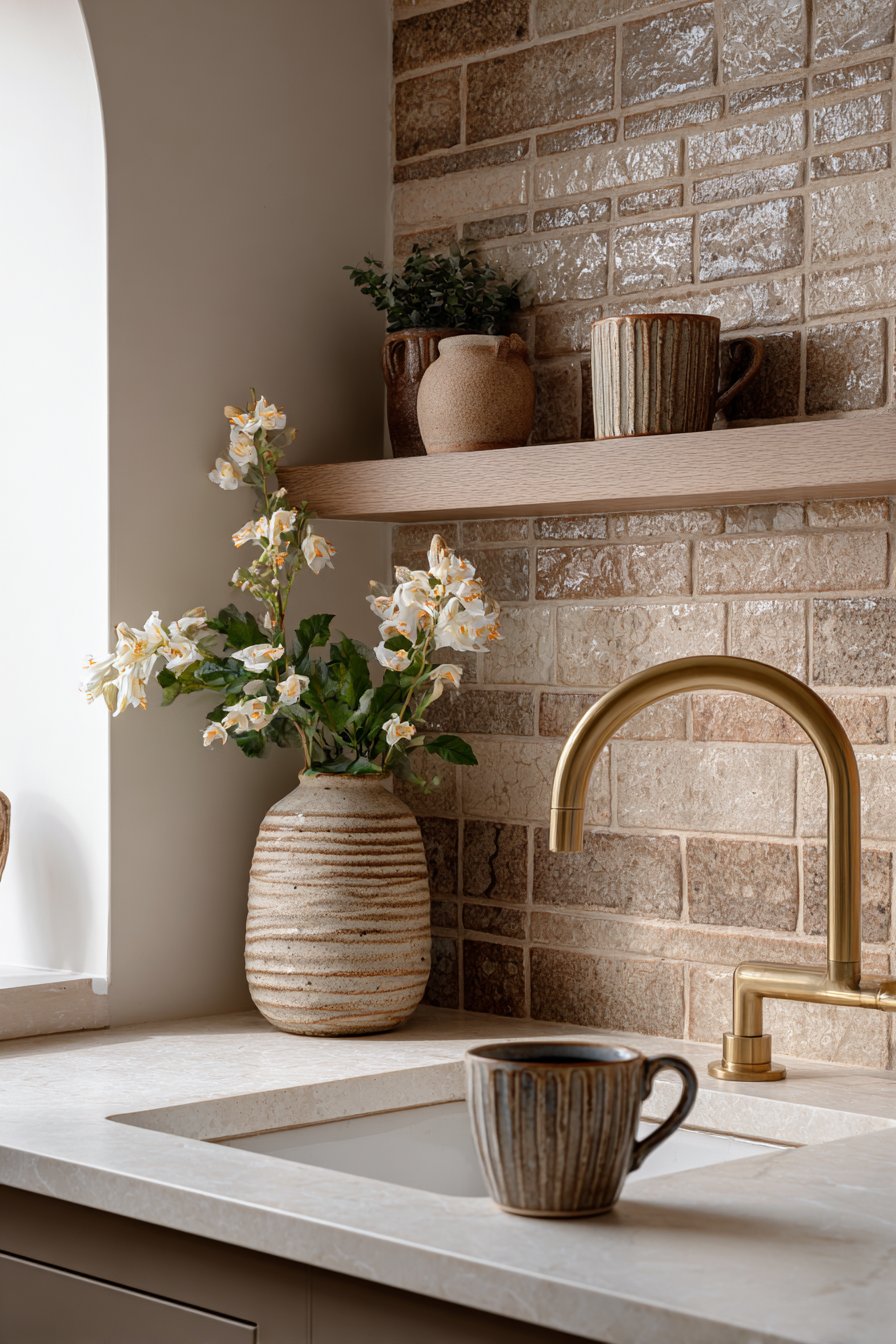
In an age of mass production, handmade elements bring soul and character that machine-made materials simply cannot replicate, and this backsplash design celebrates artisanal craftsmanship. The handmade ceramic tiles in warm honey glaze with subtle crackle finish showcase the human touch in their slight variations—no two tiles exactly alike, each bearing the marks of the maker’s hands. The warm honey color glows from within, the glaze having depth and complexity that comes from traditional firing methods rather than uniform factory production.
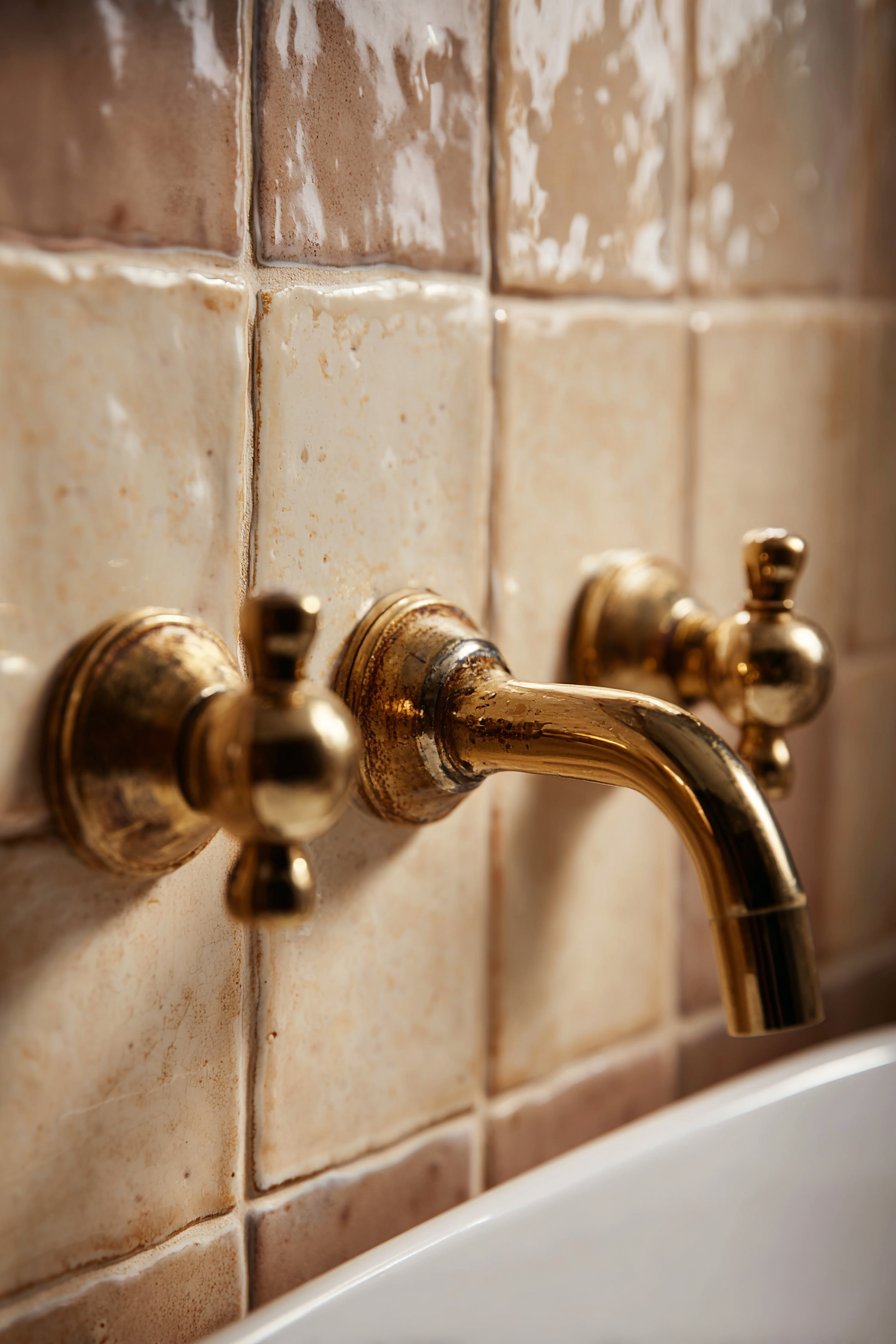
The backsplash extends to ceiling height behind the vanity, creating a warm focal wall that becomes the bathroom’s primary design statement. This bold choice of taking the tile all the way up transforms what could be a small accent into an immersive feature that wraps you in warmth and artistic beauty. The gold-finished faucet and accessories complement the golden undertones in the tile glaze, creating a cohesive metallic story that ties the entire vanity area together.
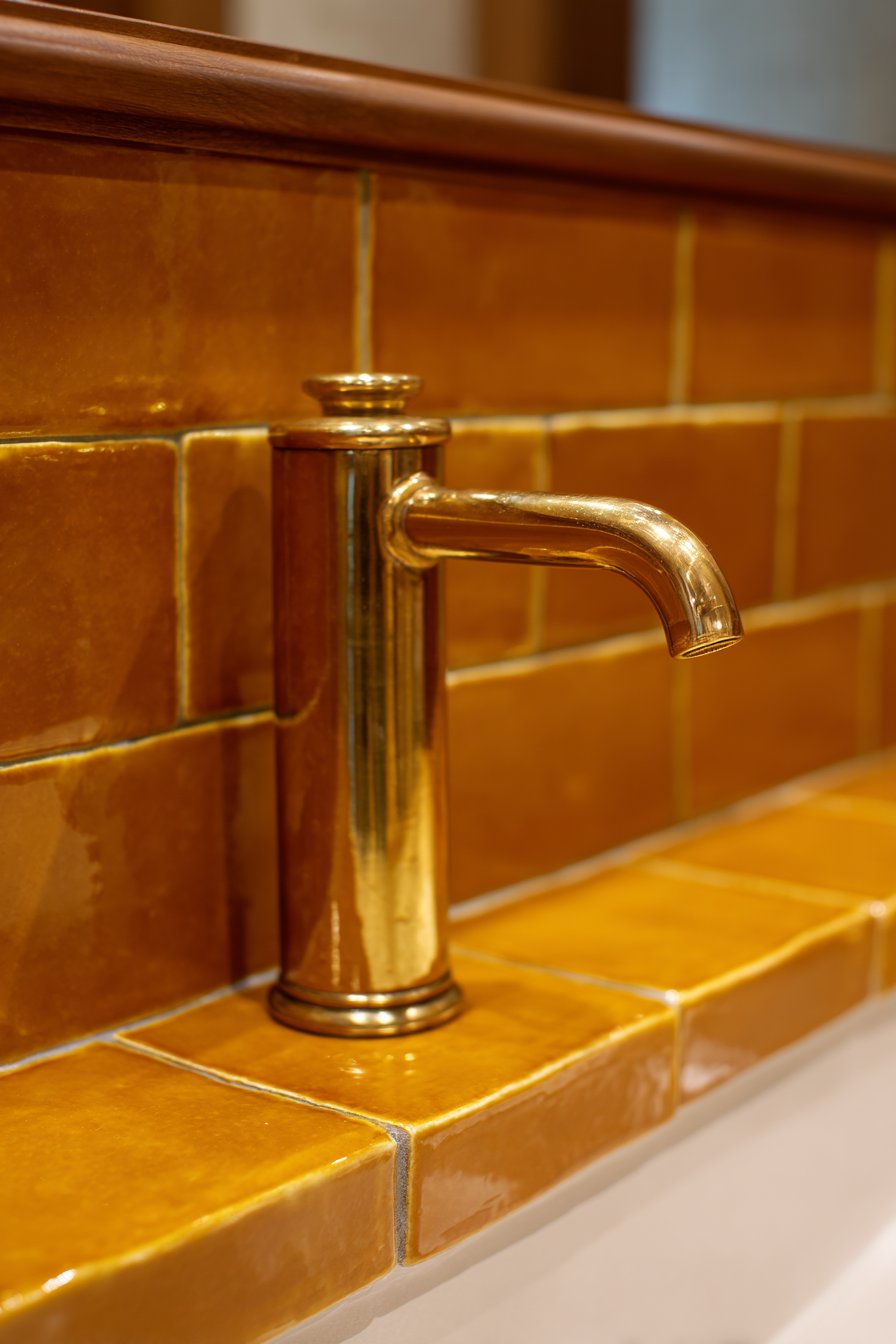
Close-up interior photography emphasizes the handcrafted quality and glaze depth, revealing how each tile catches light differently due to the variations in glaze thickness and application. These artisanal elements contribute to the bathroom’s warm, personalized character in ways that perfectly uniform tile never could. The slight imperfections aren’t flaws but rather signatures of human creation, bringing authenticity and soul that transforms the bathroom from a room to a personal sanctuary.
Key Design Tips:
- Order 15-20% extra handmade tile to account for variation and potential future repairs
- Mix tiles from different boxes during installation to distribute color and shape variations evenly
- Use slightly wider grout lines (3/16 inch) to accommodate handmade tile irregularities
- Seal handmade ceramic tile especially thoroughly as artisanal glazes may be more porous
- Embrace the variations as features rather than flaws—this is the beauty of handmade materials
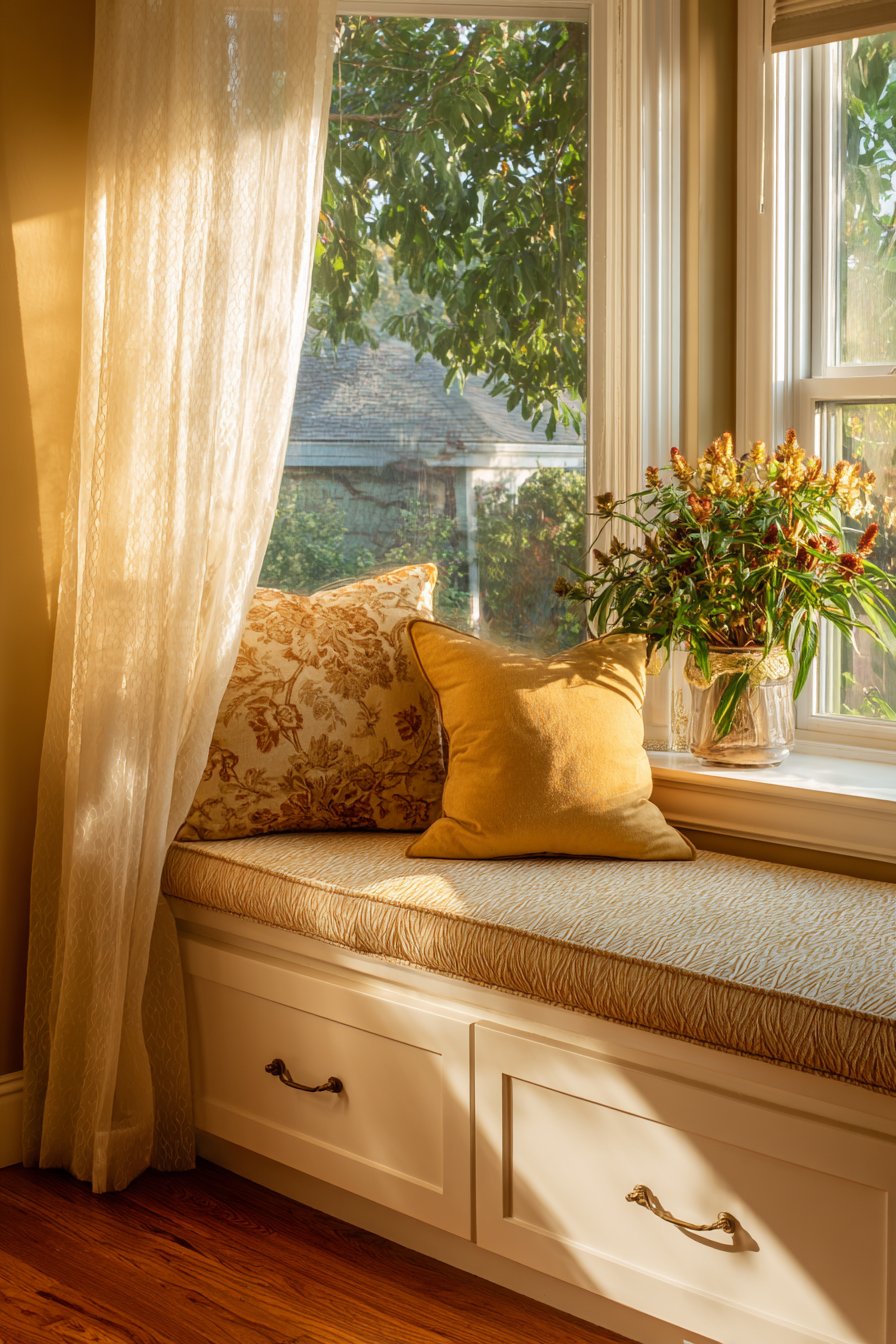
23. Cozy Reading Nook: Window Seat Integration
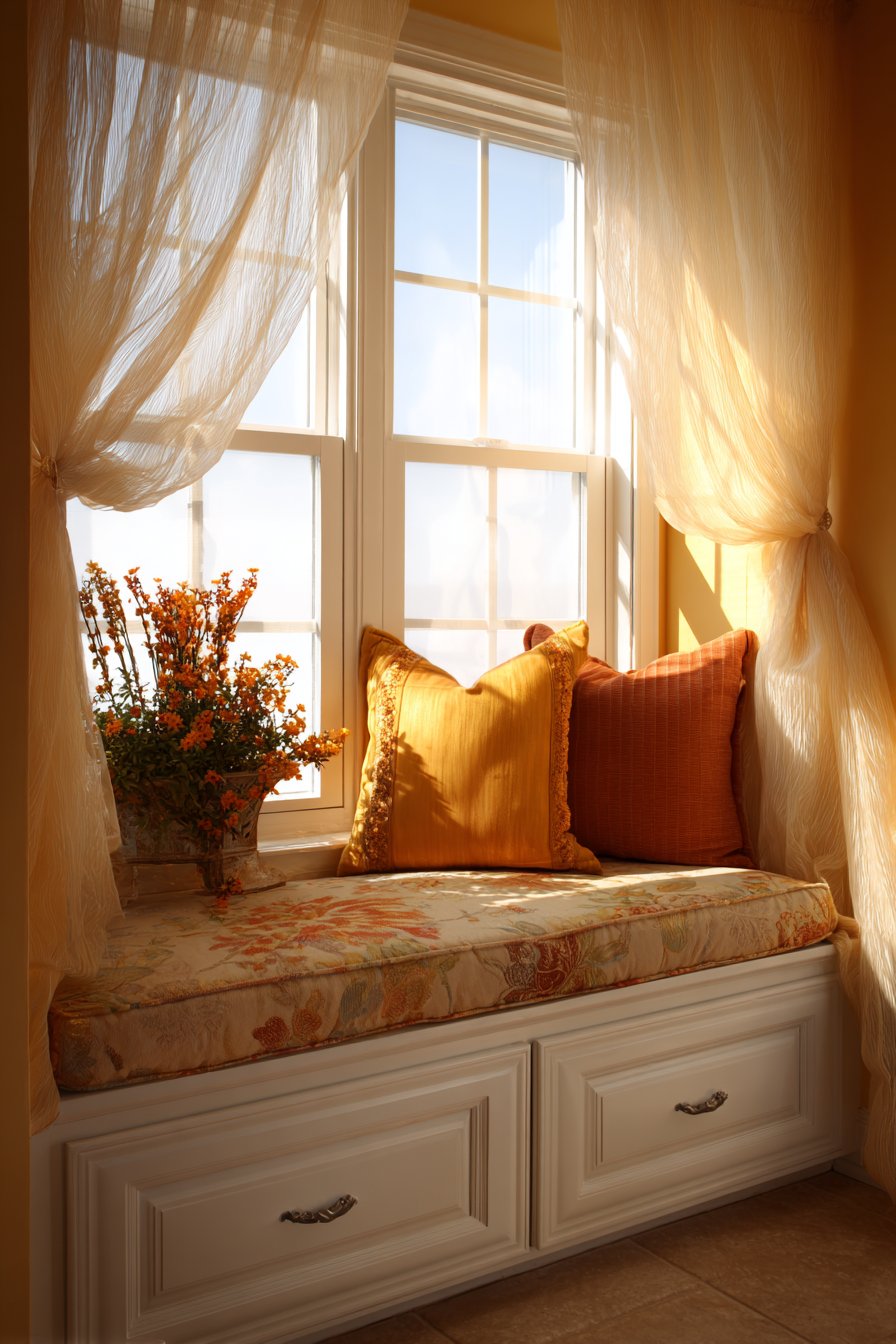
This final design demonstrates that warm bathroom ideas extend beyond typical fixtures and finishes to create truly livable, comfortable spaces where you might actually want to linger. The cushioned bench built into a sunny window alcove transforms otherwise unused space into a cozy reading nook—imagine relaxing with a magazine while your bath fills or enjoying your morning coffee before starting your routine. The storage drawers beneath in warm maple wood provide practical organization for extra linens or seasonal items while the beautiful wood grain brings another layer of natural warmth.
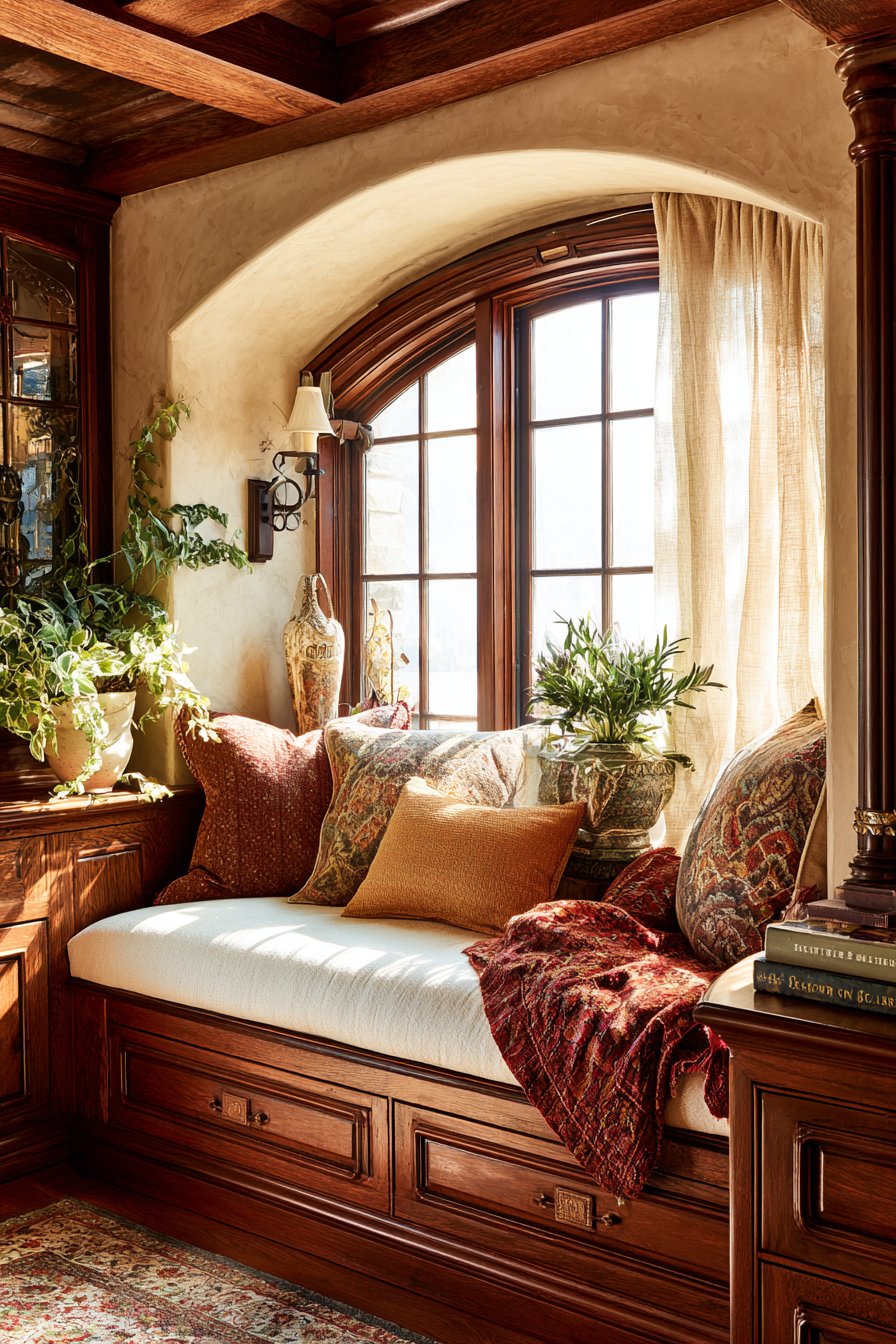
The seat cushion and throw pillows use fabrics in warm cinnamon, saffron, and cream colors, their rich hues and soft textures inviting you to sit and stay awhile. These textiles can be easily changed seasonally to refresh the look while maintaining the warm palette—perhaps deeper, richer colors for winter and lighter, brighter versions of warm tones for summer. Sheer curtains diffuse natural light, creating a golden ambiance that makes the alcove glow during sunny afternoons while providing privacy when needed.
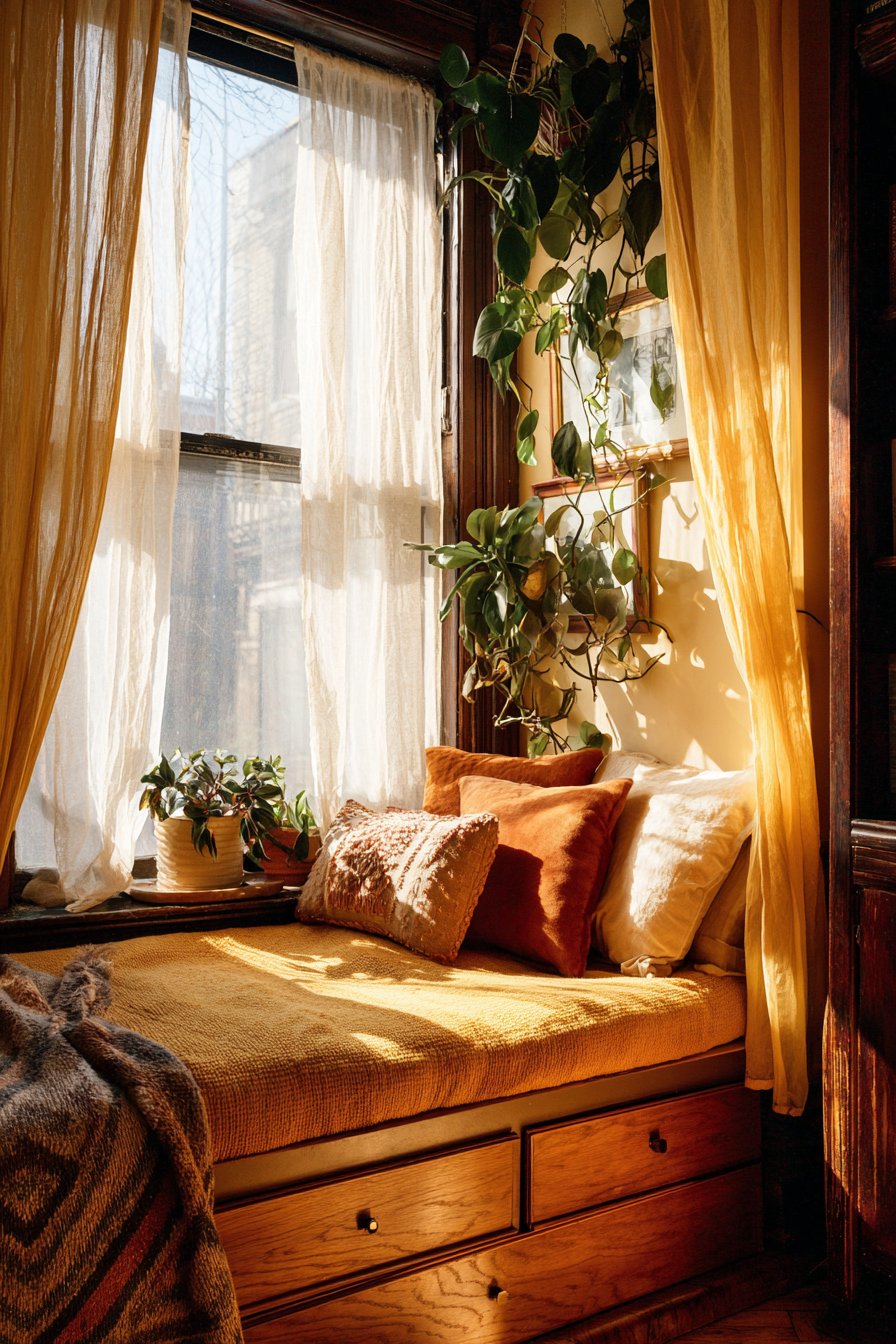
Plants on the windowsill thrive in the warmth and natural light, bringing life and vitality to the cozy corner while contributing to the spa-like atmosphere. Interior photography capturing this reading nook bathed in afternoon sunlight demonstrates how warm bathroom ideas extend beyond typical fixtures to create truly livable, comfortable spaces where the bathroom becomes a retreat rather than just a functional room. This thoughtful approach to maximizing every square foot while maintaining comfort and warmth represents the ultimate achievement in bathroom design.
Key Design Tips:
- Build window seats 17-19 inches high and 18-24 inches deep for comfortable seating
- Include ventilation in closed storage beneath cushions to prevent moisture and mildew
- Choose outdoor-rated fabrics for cushions and pillows for better moisture and stain resistance
- Install dimmable reading lights on either side of the window for evening use
- Add a small side table or wall-mounted shelf to hold drinks, books, or personal items within reach
Why These Warm Bathroom Ideas Create the Perfect Sanctuary
The twenty-three warm bathroom ideas presented in this comprehensive guide represent far more than simple design suggestions—they embody a philosophy of creating spaces that nurture both body and spirit. Each design demonstrates how thoughtful material selection, careful color coordination, strategic lighting placement, and attention to both practical needs and aesthetic beauty can transform the bathroom from a purely functional space into a personal sanctuary that enhances daily life in meaningful ways.
The emphasis on warmth throughout these designs addresses a fundamental human need for comfort and coziness, particularly important in bathrooms where we often begin and end each day. Whether achieved through the rich tones of honey marble and copper, the organic beauty of reclaimed wood and natural stone, the physical warmth of radiant heated floors and towel racks, or the soft glow of carefully layered lighting, each design offers multiple pathways to creating that essential sense of welcoming comfort.
Natural materials feature prominently throughout these designs, reflecting the growing understanding that organic materials—wood, stone, natural fibers, plants—contribute to our wellbeing in ways that synthetic alternatives cannot match. The warm tones inherent in materials like walnut, cherry, oak, travertine, quartzite, copper, and brass provide not just visual warmth but also tactile pleasure and connection to the natural world that grounds and centers us even in the midst of our busy modern lives.
The attention to lighting in these designs cannot be overstated, as proper illumination transforms good design into exceptional design while directly impacting how we experience the space. Warm color temperature LED lighting, layered light sources including ambient, task, and accent lighting, dimmable controls for adjustability, and the integration of natural light wherever possible—these lighting considerations ensure that the warm atmosphere is maintained throughout the day and across different uses of the space.
Storage solutions woven throughout these designs prove that organization and beauty need not be mutually exclusive. From built-in linen closets with tongue-and-groove paneling to illuminated shower niches, from floating shelves flanking mirrors to woven baskets on open shelving, these practical elements contribute to the warm aesthetic while ensuring the bathroom remains functional and clutter-free. When storage is beautiful and well-designed, maintaining organization becomes easier and more pleasant.
The integration of spa-like features—from clawfoot tubs positioned for bathing luxury to built-in cedar sauna benches, from rainfall showerheads to heated floors and towel racks—elevates these bathrooms beyond basic functionality to create genuine retreat spaces. In our stress-filled world, having a private sanctuary where you can truly relax and recharge becomes not a luxury but a necessity for maintaining physical and mental wellbeing.
Color theory and material science underpin all these successful designs, with warm undertones carefully considered in every paint color, tile selection, wood tone, and fabric choice. The sophisticated use of warm greiges, soft apricots, honey tones, terracotta accents, and golden metallics creates cohesive palettes that feel both curated and natural. Understanding how colors work together and how they’re affected by lighting ensures that the warmth is consistent and enveloping rather than patchy or accidental.
The emphasis on quality materials and thoughtful craftsmanship throughout these designs reflects the understanding that bathrooms must withstand daily use in challenging conditions—high humidity, temperature fluctuations, constant water exposure. Choosing durable, moisture-resistant materials appropriate for bathroom conditions while maintaining aesthetic warmth ensures these beautiful designs remain beautiful for years to come, making them true long-term investments in your home and wellbeing.
Personal expression and individual style find room even within the warm aesthetic framework, from the vintage romance of clawfoot tubs and oil-rubbed bronze fixtures to the contemporary elegance of frameless glass showers and floating vanities, from the rustic appeal of reclaimed wood to the refined luxury of marble and quartzite. Warm bathroom design accommodates diverse styles and preferences while maintaining that essential quality of coziness and comfort that defines the category.
The functional improvements in these designs—double vanities for shared bathrooms, wall-mounted faucets for easier cleaning, heated floors for physical comfort, adequate storage for organization, proper ventilation for moisture control—demonstrate that beautiful design need not sacrifice practicality. Indeed, the best designs seamlessly integrate form and function, where aesthetic choices also serve practical purposes and practical elements are designed to be beautiful.
Small space solutions featured in several of these designs prove that warmth and luxury aren’t reserved for large bathrooms. Compact spaces can be just as warm and inviting through careful material selection, strategic color use, wall-mounted fixtures that maximize floor space, and clever storage solutions that prevent clutter. The principles of warm design scale beautifully to accommodate any bathroom size or configuration.
The integration of plants and natural elements throughout many of these designs brings life and vitality while connecting the bathroom to nature and the changing seasons. Plants improve air quality, add organic color and texture, and create a sense of caring and cultivation that makes the space feel more personal and alive. The bathroom’s naturally humid environment makes it ideal for many popular houseplants, creating a mutually beneficial relationship.
Textile layering demonstrated in these designs—plush towels, soft bath mats, linen curtains, cushioned window seats—brings essential softness to balance the hard surfaces that dominate bathroom architecture. These textiles add color, pattern, texture, and comfort while providing opportunities to refresh and update the space seasonally or as tastes evolve without requiring major renovation.
Hardware consistency and quality across all these designs reinforces the importance of these details in creating cohesive, polished spaces. When every cabinet pull, towel bar, faucet, and light fixture is carefully selected and coordinated in warm metallic finishes like brass, bronze, or brushed gold, the cumulative effect elevates the entire bathroom aesthetic and demonstrates attention to detail that guests and users notice and appreciate.
The varied approaches to achieving warmth—from predominantly neutral palettes accented with warm metallics to bolder uses of color like soft apricot walls, from monochromatic stone sanctuaries to rich wood-heavy designs—demonstrate that warm bathroom design offers tremendous flexibility and room for personal interpretation while maintaining that essential quality of coziness that makes these spaces so inviting and comfortable.
Conclusion
Creating a warm bathroom sanctuary represents an investment in daily comfort, personal wellbeing, and long-term home value that pays dividends every single day. The twenty-three designs explored in this comprehensive guide demonstrate the remarkable variety of approaches available for achieving warmth in bathroom design, from subtle sophistication to bold statements, from compact efficiency to spacious luxury, from contemporary minimalism to vintage charm.
The key principles that unite all these successful warm bathroom designs—thoughtful material selection favoring natural elements, warm color palettes with golden undertones, layered lighting with warm color temperatures, quality craftsmanship, attention to both form and function—provide a reliable framework for creating your own warm bathroom sanctuary. Whether you’re planning a complete renovation or seeking to refresh your existing bathroom, these principles can guide your decisions toward creating a space that truly feels like a retreat.
Remember that creating warmth doesn’t require expensive materials or extensive renovation. Simple changes like swapping out cool-toned elements for warm alternatives, adding wood accents, upgrading lighting to warmer color temperatures, incorporating warm textiles, and introducing plants can significantly shift the atmosphere. However, for those embarking on full renovations, the comprehensive approaches detailed in these designs offer roadmaps for creating truly exceptional bathrooms that combine beauty, comfort, and functionality.
The bathroom’s role in our daily lives—as the space where we prepare to face the world and where we retreat to wash away the day’s stresses—makes it worthy of the design attention these ideas represent. When your bathroom feels warm, comfortable, and beautiful, those necessary daily routines transform into moments of genuine pleasure and self-care. The few extra minutes spent in a truly comfortable bathroom can set the tone for your entire day or provide the peaceful transition into restful evening.
As you consider implementing these warm bathroom ideas in your own home, think beyond simple aesthetics to consider how the space makes you feel. The best bathroom design engages all the senses—the sight of beautiful materials and warm colors, the touch of heated floors and plush towels, the smell of cedar wood or fresh plants, even the sound of water from a rainfall showerhead or the quiet click of quality soft-close drawers. Creating this multi-sensory experience of warmth and comfort represents the ultimate achievement in bathroom design.
Don’t be afraid to experiment with these ideas, adapting them to suit your personal style, practical needs, and budget constraints. The fundamental principles of warm design—natural materials, warm colors, proper lighting, quality craftsmanship—remain constant whether you’re working with a modest budget or unlimited resources. Start with the changes that will make the biggest impact for your investment, whether that’s new lighting, fresh paint in warm tones, quality towels and textiles, or that one special material like a reclaimed wood accent wall that will transform the entire space.
Finally, remember that your bathroom is a deeply personal space, and the most successful design will be one that reflects your own definition of warmth and comfort while meeting your practical needs. Use these twenty-three designs as inspiration and starting points, not rigid templates. Mix and match elements that speak to you, adapt ideas to suit your specific space and circumstances, and trust your instincts about what will make you happy to use every single day. The goal isn’t to create a magazine-perfect bathroom but rather to create your perfect bathroom—a warm, comfortable sanctuary that enhances your daily life and brings a touch of luxury to even the most ordinary moments.
