
Wall shelving represents one of the most versatile and impactful design elements in modern interior design. More than mere storage solutions, thoughtfully designed wall shelves serve as architectural features that define spaces, showcase personality, and maximize functionality. Whether you’re working with a sprawling suburban home or a compact urban apartment, the right shelving can transform blank walls into dynamic focal points while solving practical storage challenges. The beauty of wall shelving lies in its adaptability—from rustic reclaimed wood to sleek minimalist designs, there’s a shelving solution for every aesthetic preference and functional need.
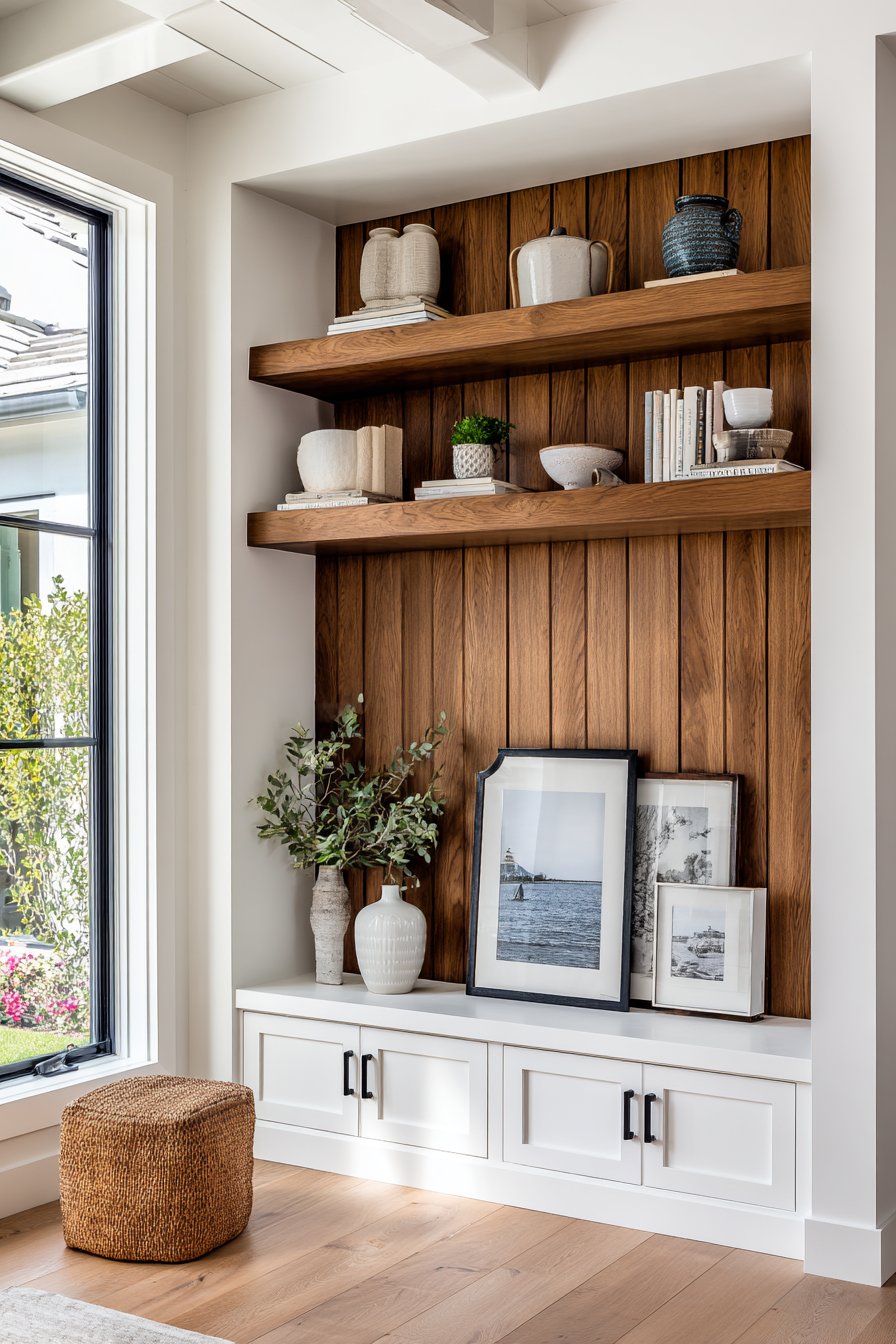
In today’s design landscape, wall shelving has evolved far beyond basic utility. Contemporary homeowners recognize that these installations offer opportunities to curate collections, display cherished objects, and create visual interest through strategic placement and styling. The interplay of materials, textures, and arrangements can dramatically alter a room’s character, making shelving choices as important as furniture selection. Open shelving invites the eye to travel across carefully arranged vignettes, while built-in systems provide seamless integration with architectural elements.
This comprehensive guide explores twenty-five distinctive wall shelving ideas, each offering unique approaches to storage and display. From industrial loft aesthetics to coastal cottage charm, from minimalist floating shelves to elaborate built-in libraries, these concepts demonstrate the remarkable versatility of wall-mounted storage. Whether you’re seeking inspiration for a complete room makeover or simply looking to enhance a single wall, these ideas will help you discover the perfect shelving solution that balances form, function, and personal style.
1. Modern Minimalist Floating Shelves
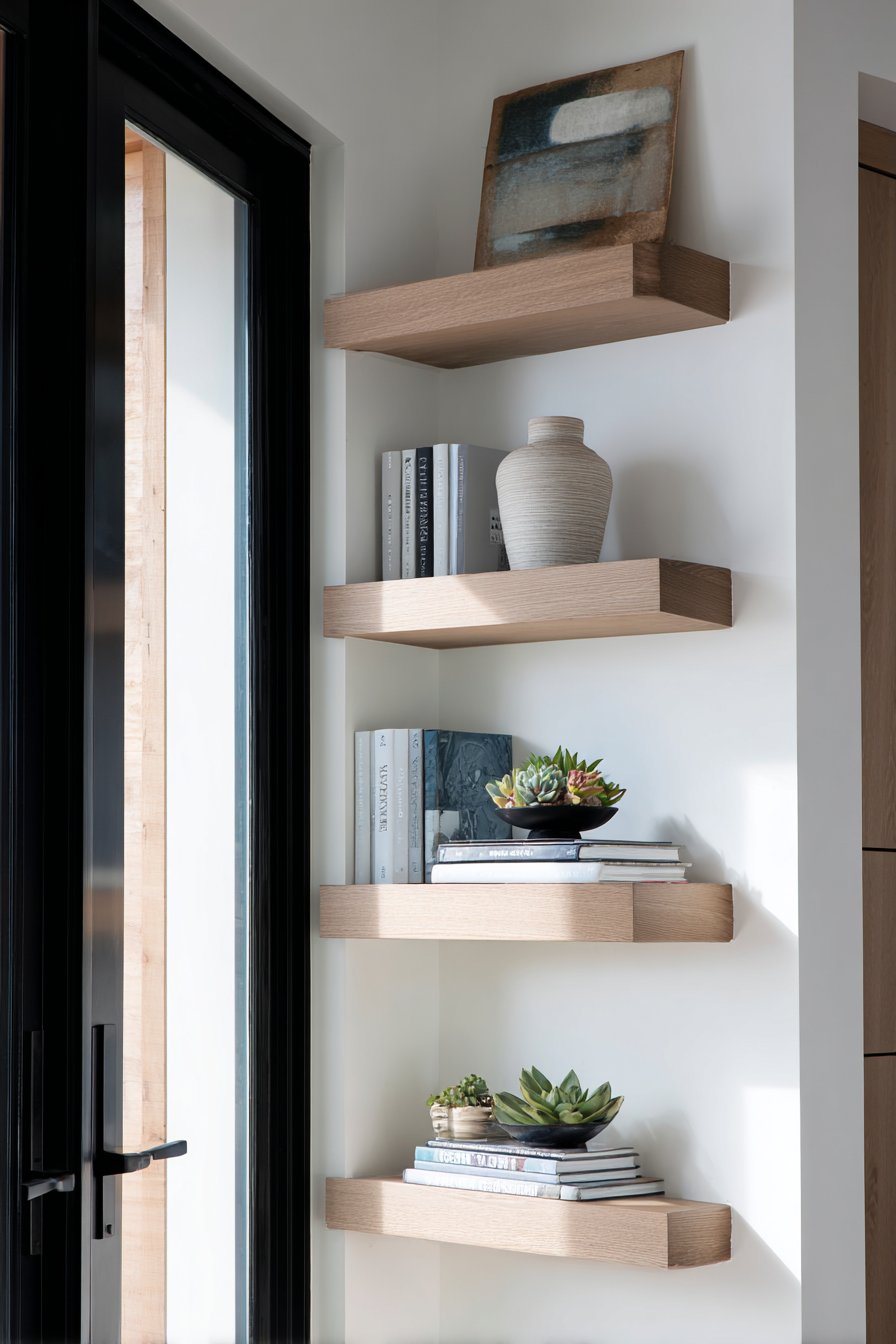
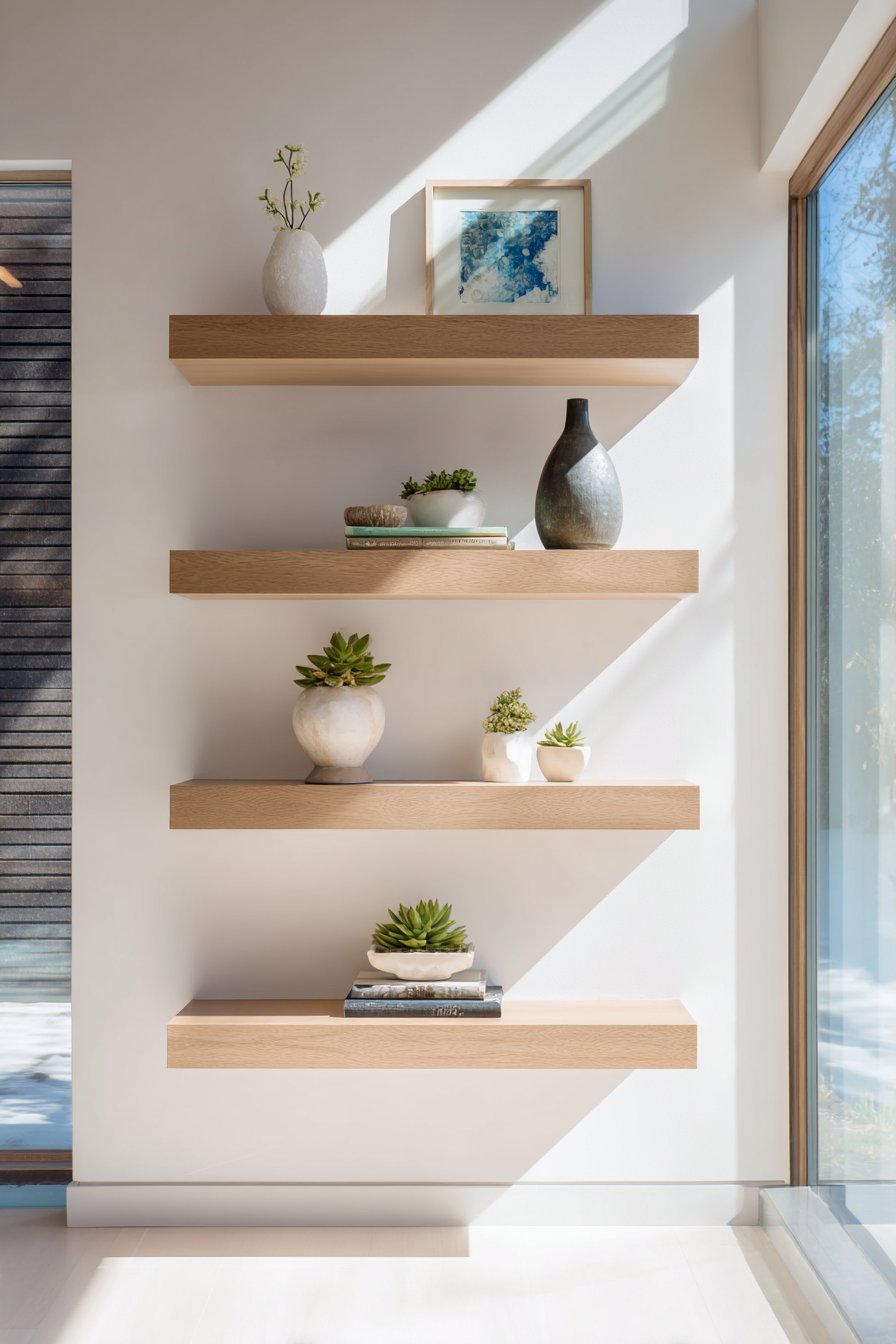
The epitome of contemporary design, modern minimalist floating shelves bring understated elegance to any living space through their clean lines and seamless integration. Crafted from light oak with invisible mounting hardware, these shelves appear to defy gravity, creating an airy, uncluttered aesthetic that defines minimalist philosophy. The beauty lies in the negative space—the deliberate restraint in both structure and styling that allows each displayed object to breathe and command attention. Against a crisp white wall, three sleek floating shelves arranged in an asymmetrical pattern create visual interest while maintaining perfect balance.
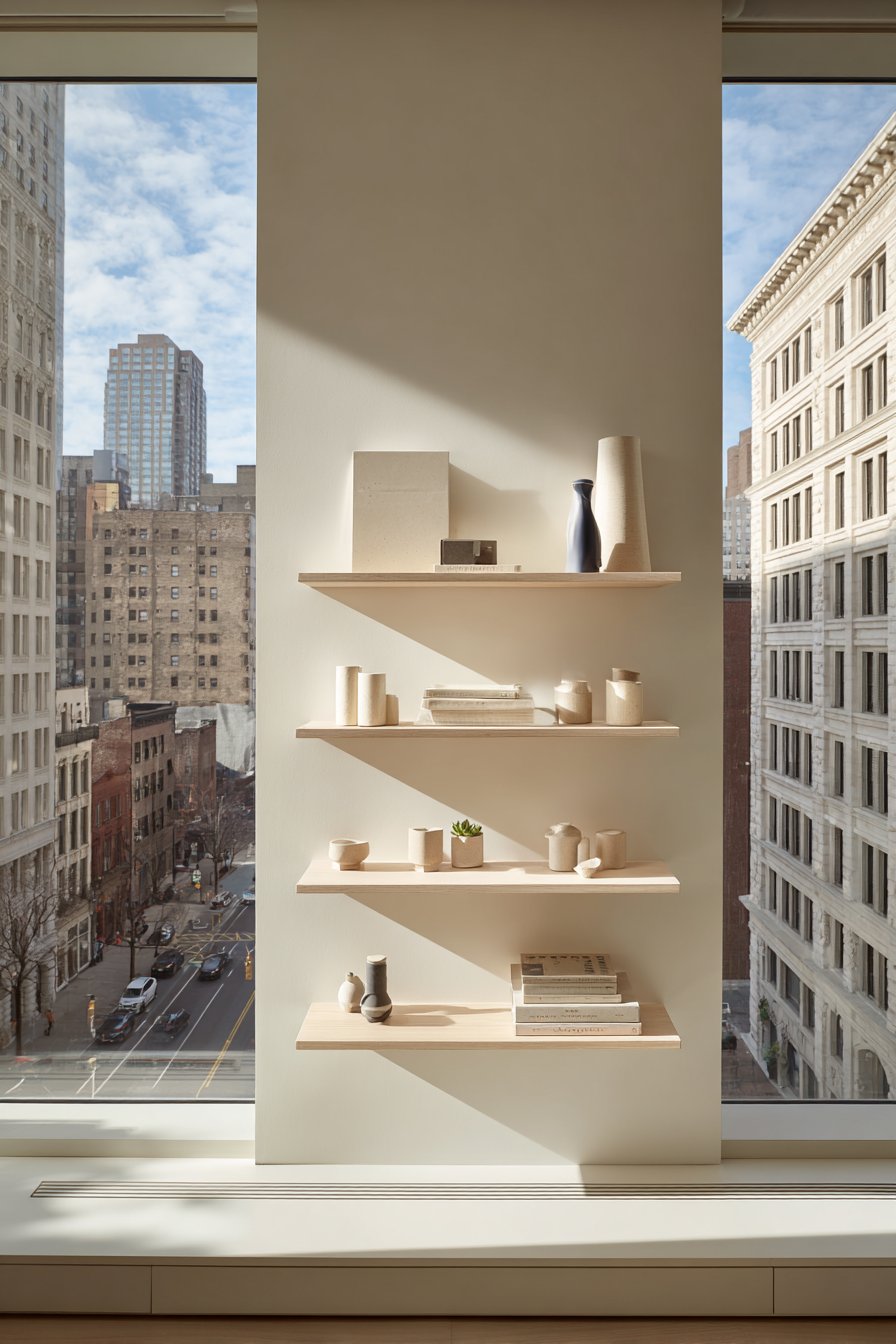
The styling of minimalist shelving requires careful curation and intentional restraint. Each object displayed serves a purpose, whether functional or aesthetic, with careful attention paid to spacing and proportion. Ceramic vases in neutral tones, carefully selected art books with beautiful spines, and small succulent plants create a composition that feels effortless yet deliberate. The natural morning light streaming through adjacent windows becomes an active design element, creating soft highlights that accentuate the wood grain texture and cast gentle shadows that add depth without disruption.
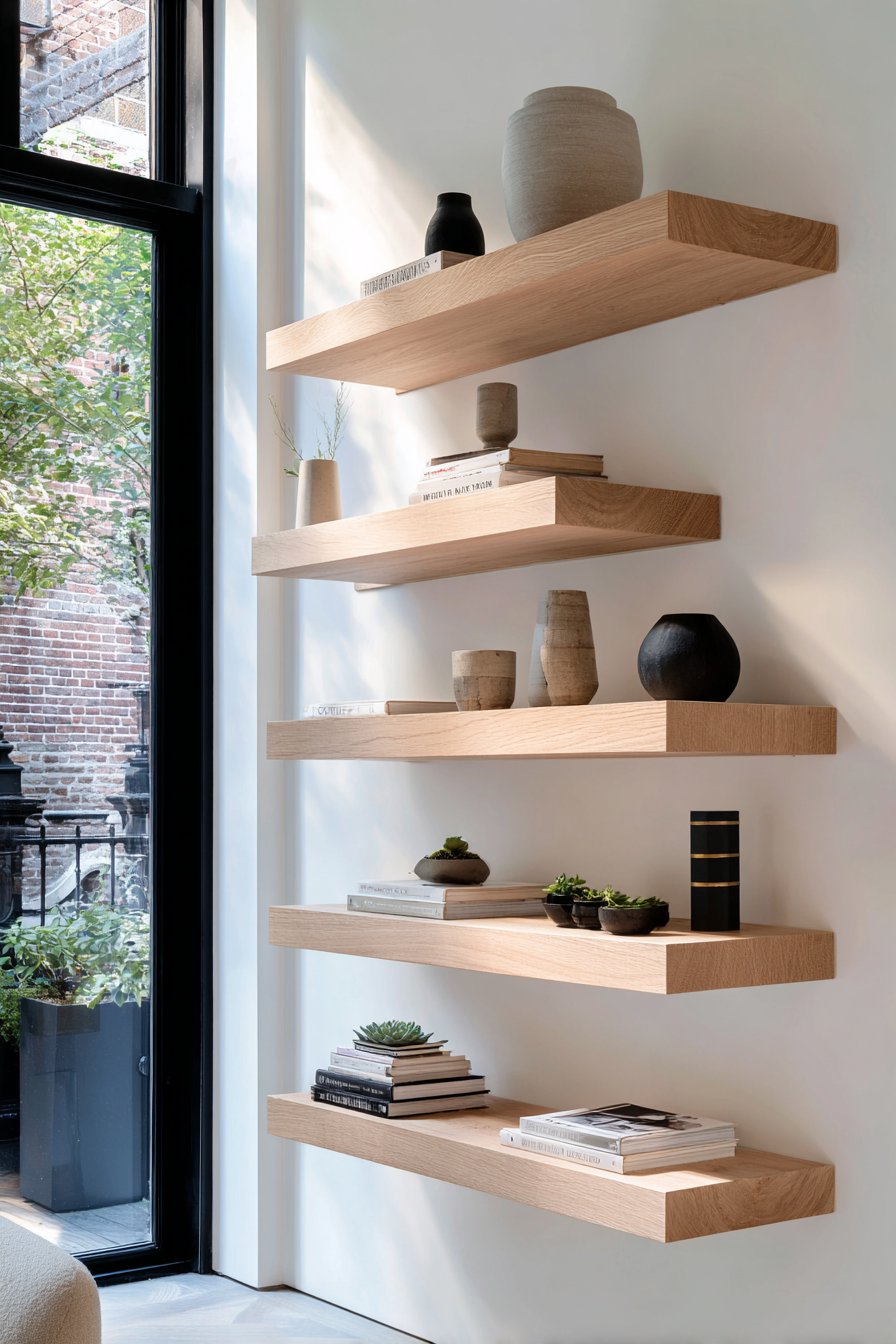
Material selection proves crucial in achieving authentic minimalist aesthetics. Light oak offers warmth without heaviness, its subtle grain providing just enough texture to prevent sterility. The invisible mounting system eliminates visual clutter, allowing the shelf itself to become a floating plane that seems to emerge organically from the wall. This technical precision creates the magic of minimalist design—the appearance of simplicity that requires exceptional attention to detail and craftsmanship.
Key Design Tips:
- Select light-colored woods like oak, ash, or maple to maintain airiness and prevent visual weight
- Limit displayed items to 3-5 carefully chosen objects per shelf to preserve the minimalist aesthetic
- Ensure asymmetrical arrangements follow the rule of thirds for pleasing visual balance
- Invest in professional installation for invisible mounting systems to achieve the floating effect
- Style with intentional negative space, allowing at least 40% of each shelf to remain empty
- Choose objects with clean lines and simple forms that complement rather than compete with the shelving
2. Rustic Farmhouse Kitchen Display
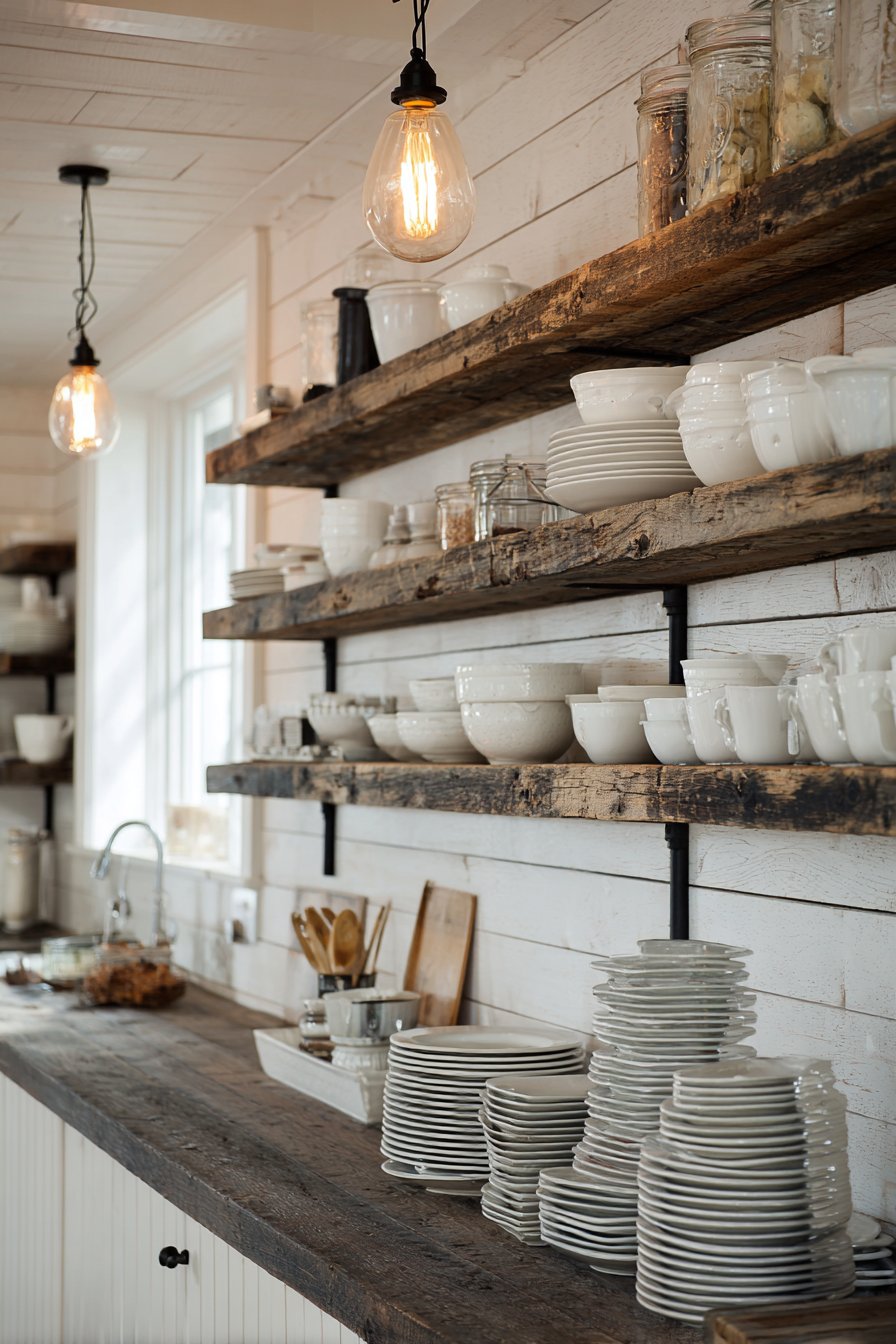
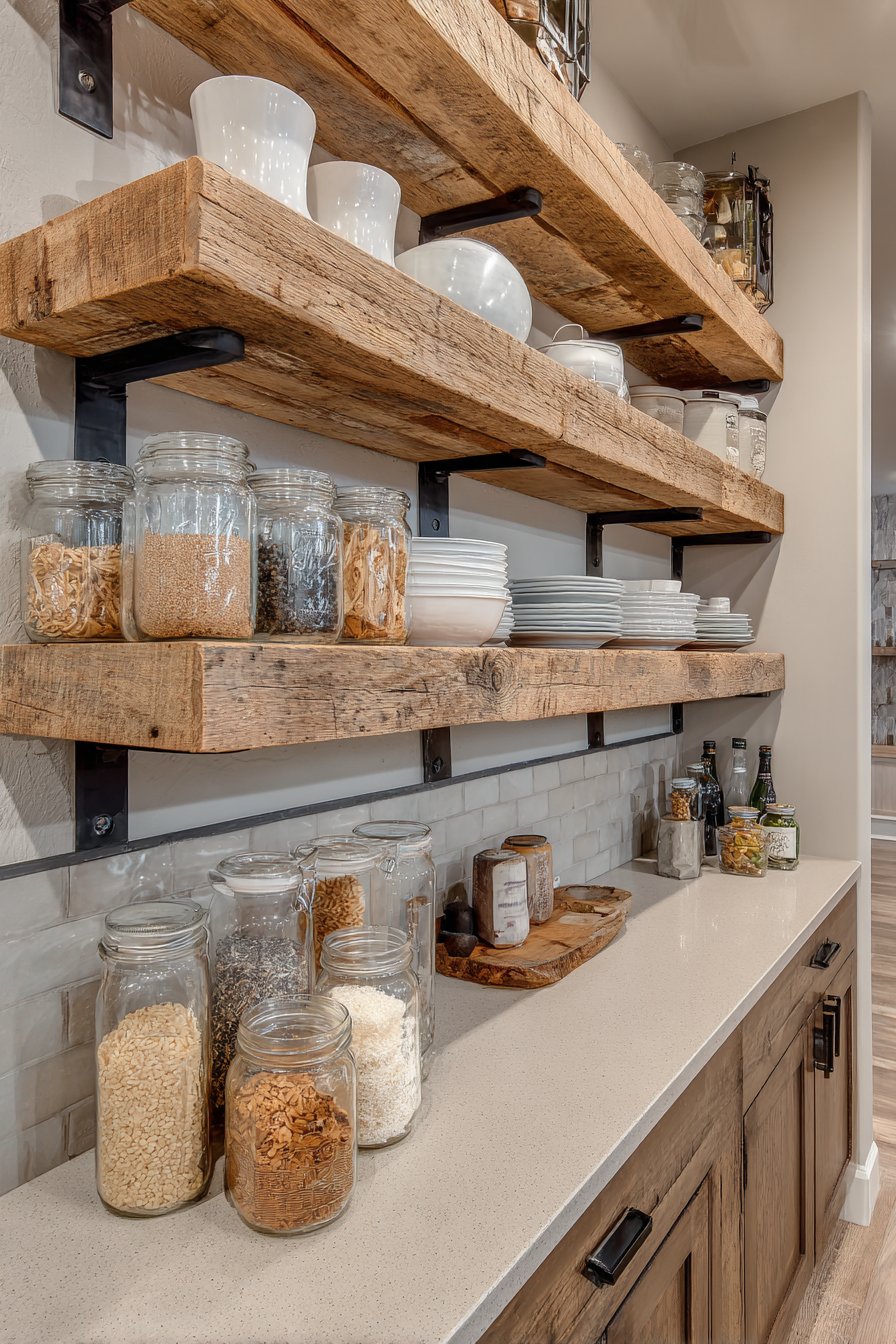
Reclaimed barn wood planks mounted on black iron pipe brackets bring authentic farmhouse character to modern kitchens, creating a bridge between rustic heritage and contemporary functionality. This open shelving approach transforms kitchen storage into an artful display, where practical necessities become decorative elements. The weathered texture of reclaimed wood tells stories of previous lives, each knot and grain pattern adding character impossible to replicate with new materials. Against a classic shiplap backsplash, these shelves create a layered texture story that defines farmhouse aesthetic.
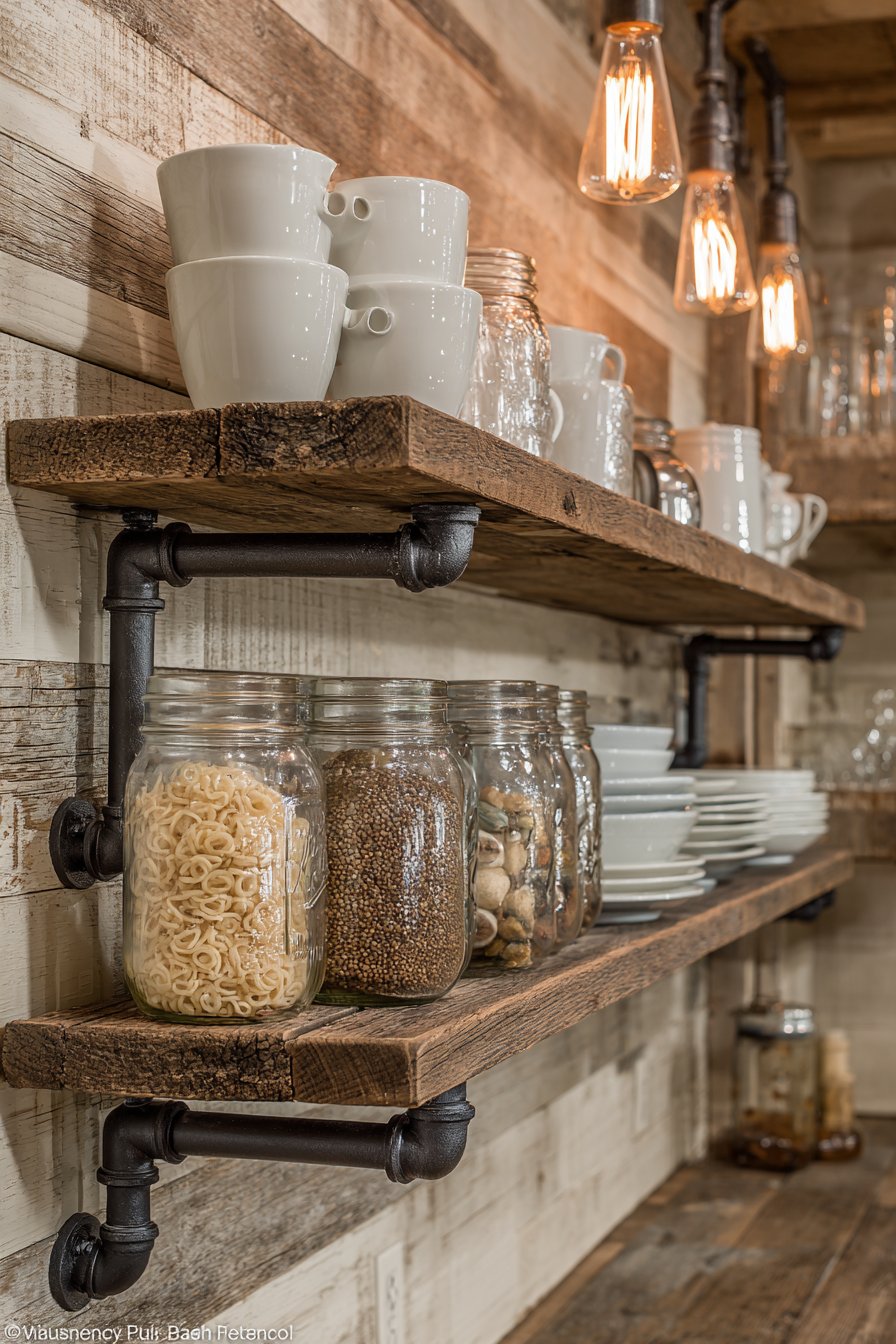
The practical beauty of farmhouse kitchen shelving lies in its accessibility and honest display of daily-use items. White ceramic dishware arranged in neat stacks becomes sculptural when viewed against the dark wood, while mason jars filled with pantry staples—flour, sugar, coffee beans—add both functionality and visual interest. Vintage enamelware pieces scattered among modern necessities create the collected-over-time aesthetic that distinguishes authentic farmhouse style from staged imitations. The black iron pipe brackets provide industrial strength while adding masculine contrast to softer decorative elements.
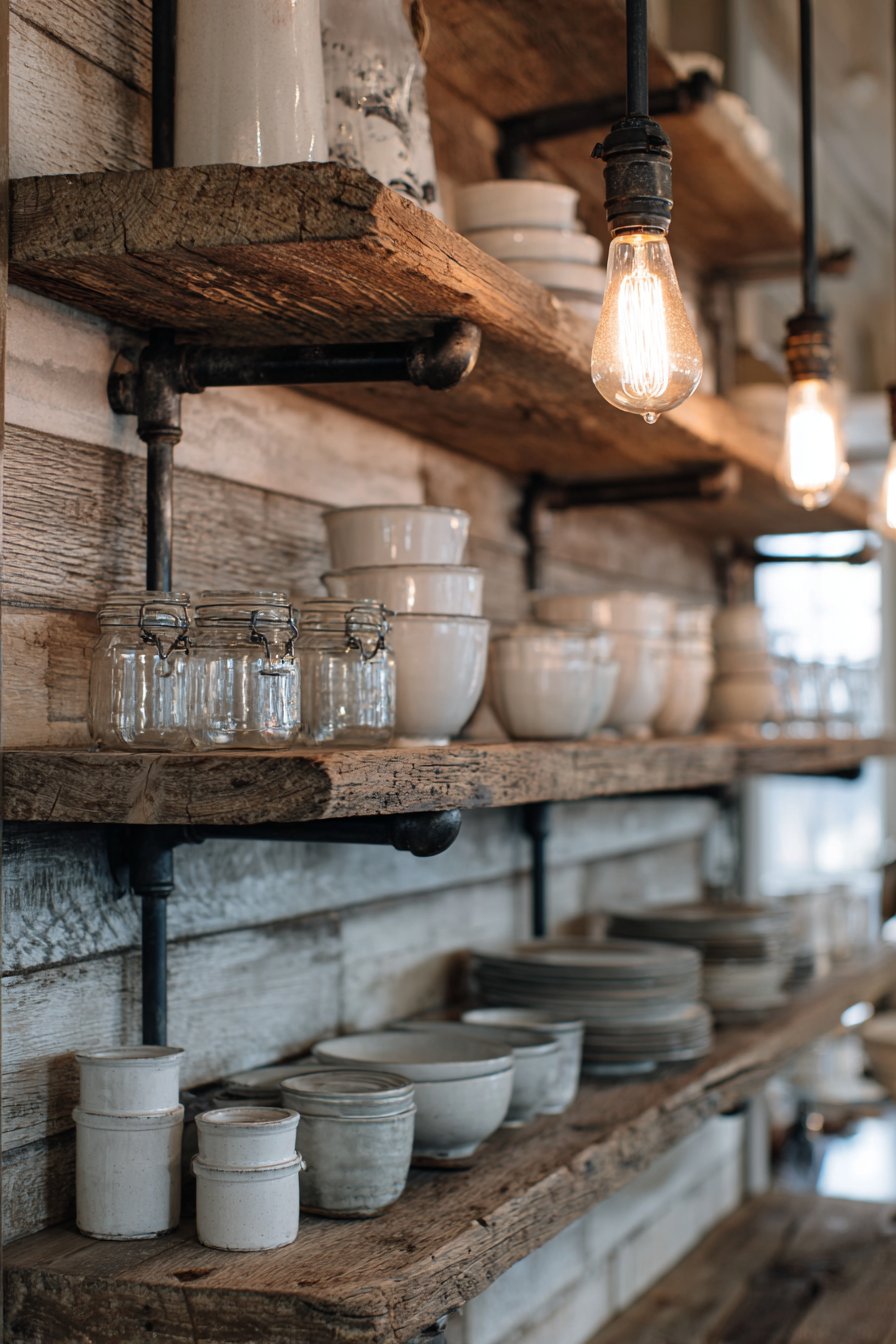
Lighting plays a transformative role in elevating this utilitarian storage to design feature status. Warm Edison bulb fixtures overhead cast a gentle glow that highlights the weathered wood texture, creating dramatic shadows in the grain patterns while illuminating the white dishware with soft radiance. This interplay of light and shadow enhances the dimensional quality of the display, making the shelving system a focal point that draws the eye and anchors the kitchen’s design narrative.
Key Design Tips:
- Source authentic reclaimed wood from salvage yards or specialty suppliers for genuine character and sustainability
- Choose iron pipe brackets rated for substantial weight, as kitchen items can be surprisingly heavy
- Maintain a cohesive color palette in displayed items—whites, creams, and naturals work best for farmhouse aesthetic
- Arrange items by frequency of use, placing everyday pieces at comfortable reaching height
- Incorporate varying heights and sizes to create visual rhythm across the shelving display
- Seal reclaimed wood properly to protect against kitchen moisture and grease while preserving patina
- Leave some sections of shelving less densely packed to prevent overwhelming visual clutter
3. Industrial Home Office Storage
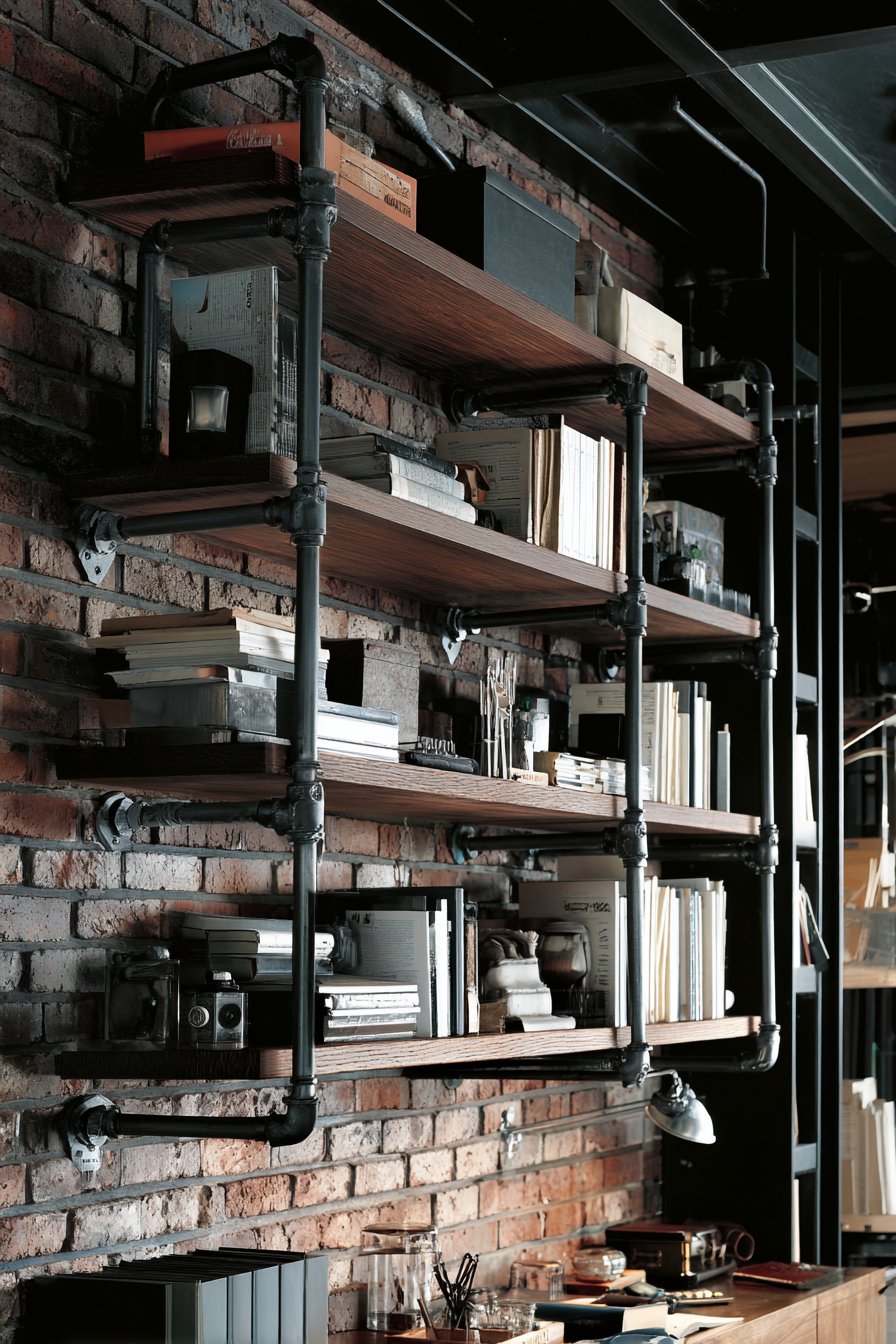
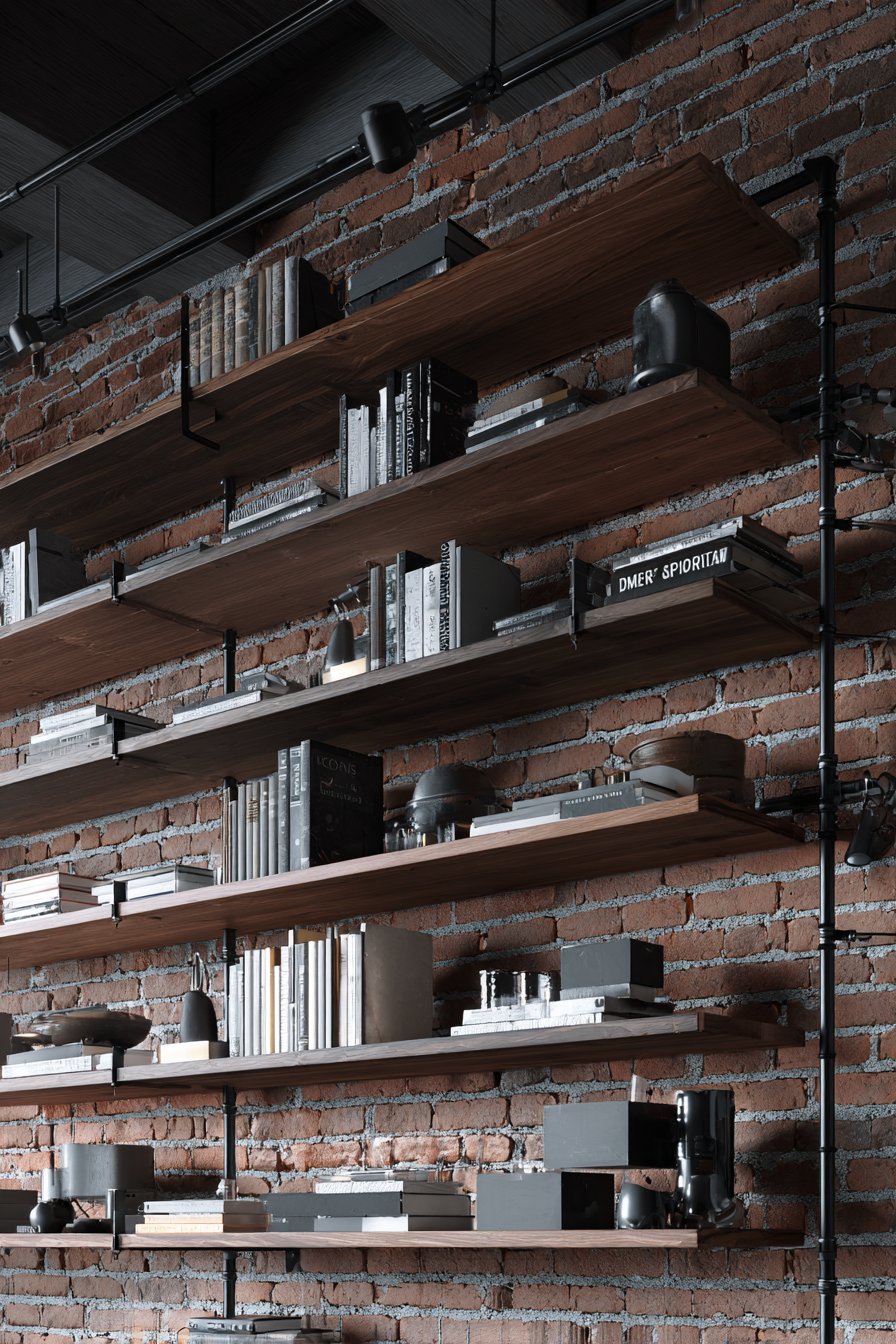
Heavy-duty metal and wood shelving units bring raw, utilitarian beauty to home office spaces, combining robust functionality with sophisticated industrial aesthetics. Deep walnut shelves supported by matte black steel frames create a substantial presence that anchors the workspace while providing ample storage for books, office supplies, and decorative elements. The visible bolt connections and honest construction methods celebrate engineering as artistry, refusing to hide the mechanics that make the system work. Against an exposed brick wall, this shelving becomes part of a larger industrial narrative.
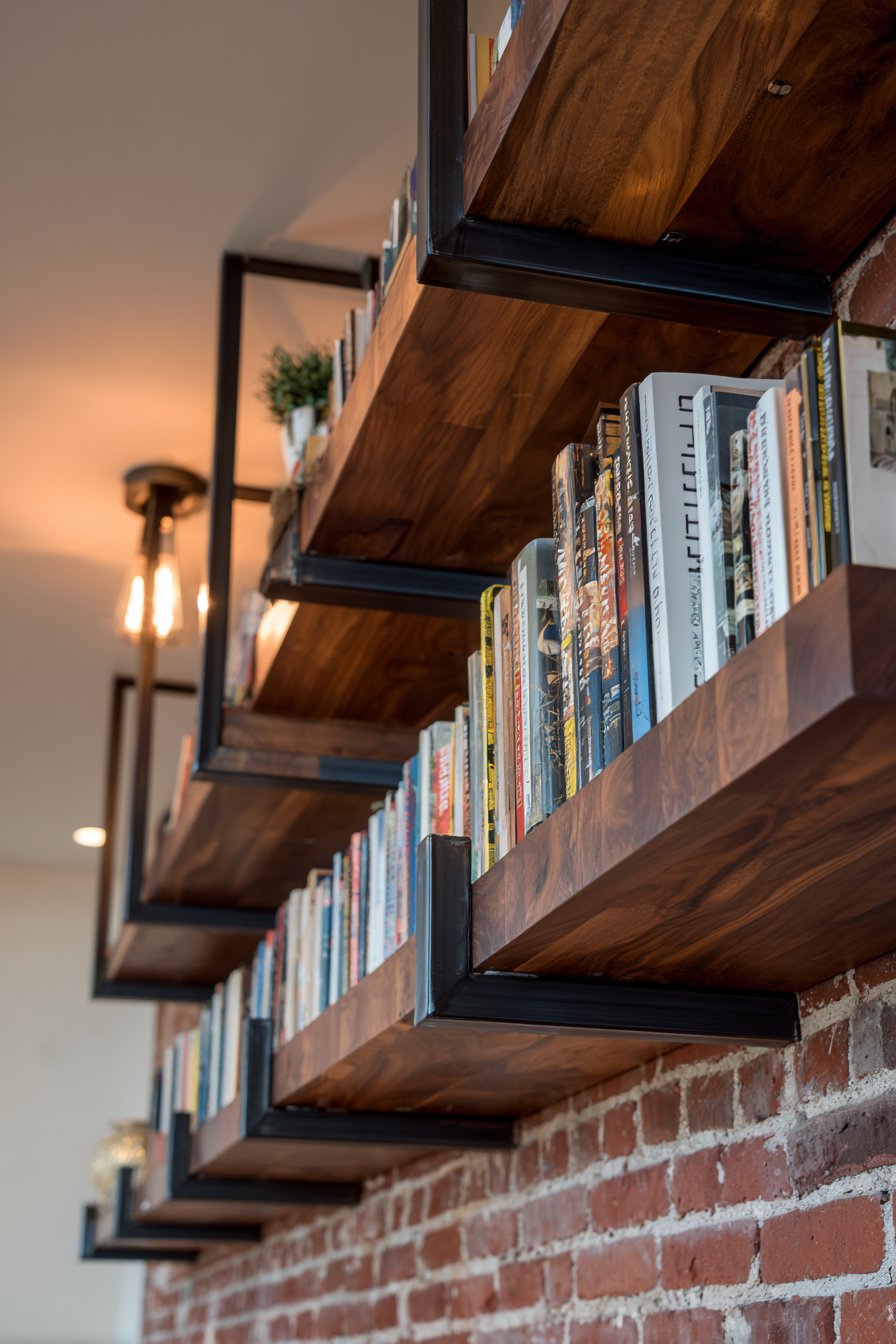
The dark richness of walnut wood provides warmth that prevents industrial design from feeling cold or austere. The natural color variations in the wood grain create visual interest that softens the geometric precision of the steel framework. This marriage of organic and manufactured materials exemplifies industrial design philosophy—the thoughtful combination of disparate elements into cohesive systems. The sturdy construction speaks to longevity and quality, suggesting workspace that will endure decades of use without compromise.
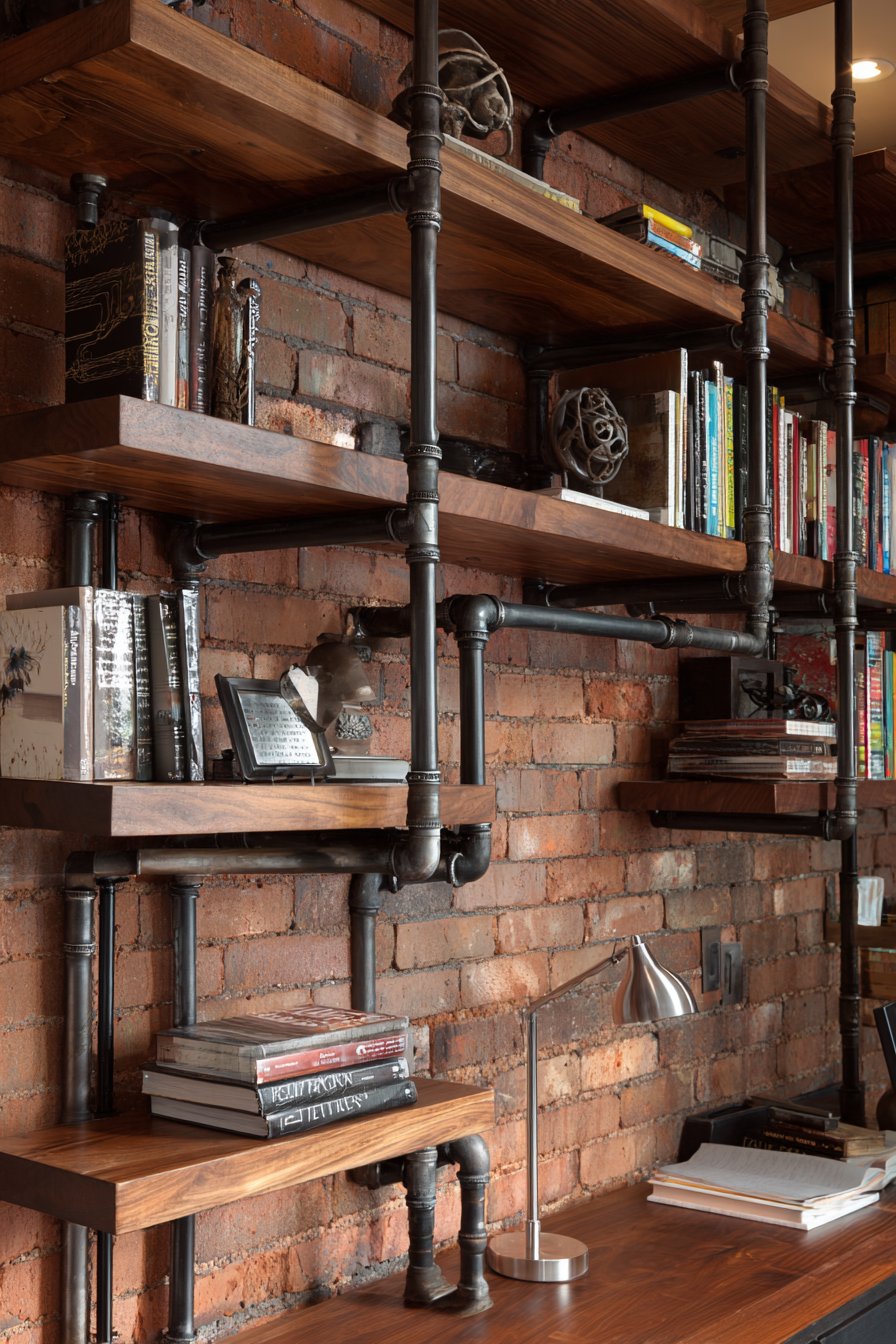
Functionality drives every aspect of industrial shelving design, with form following function in the purest architectural sense. The deep shelf depth accommodates oversized art books and reference materials, while the open framework ensures easy access from multiple angles. Task lighting integrated into the workspace illuminates the shelving display, highlighting textures and creating dramatic shadows that emphasize the three-dimensional quality of the installation. The result is storage that works as hard as it looks good.
Key Design Tips:
- Select metal finishes like matte black or gunmetal that won’t show fingerprints or wear
- Ensure shelving depth matches your storage needs—12-14 inches works well for most office applications
- Arrange items with heavier, larger pieces on lower shelves for visual stability and practical safety
- Incorporate file boxes, magazine holders, and desktop organizers in complementary materials
- Leave visible bolt heads and construction details exposed rather than trying to conceal them
- Balance the masculine industrial aesthetic with plants, artwork, or personal items for warmth
- Consider modular systems that can be reconfigured as office needs evolve
4. Scandinavian Bedroom Serenity
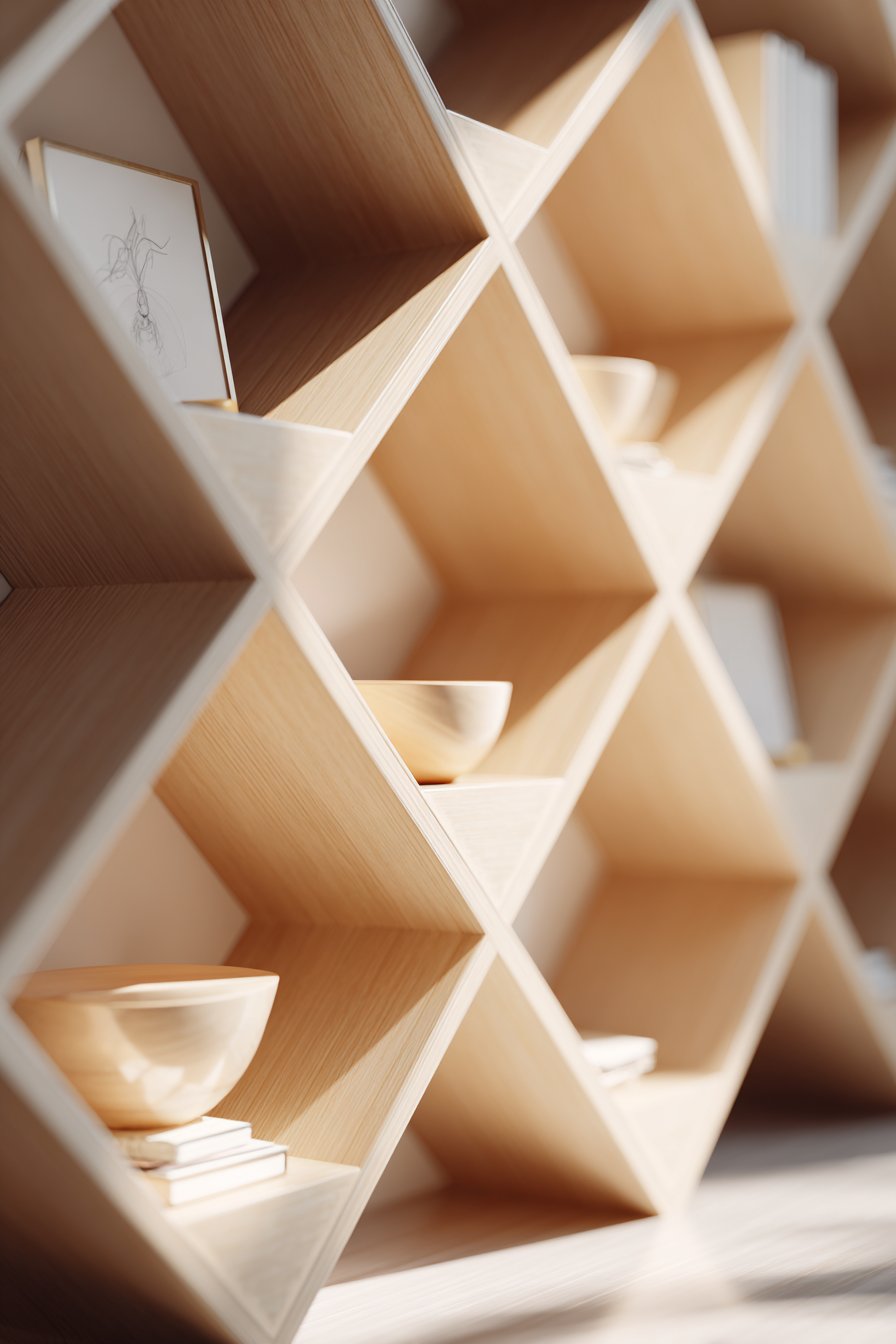
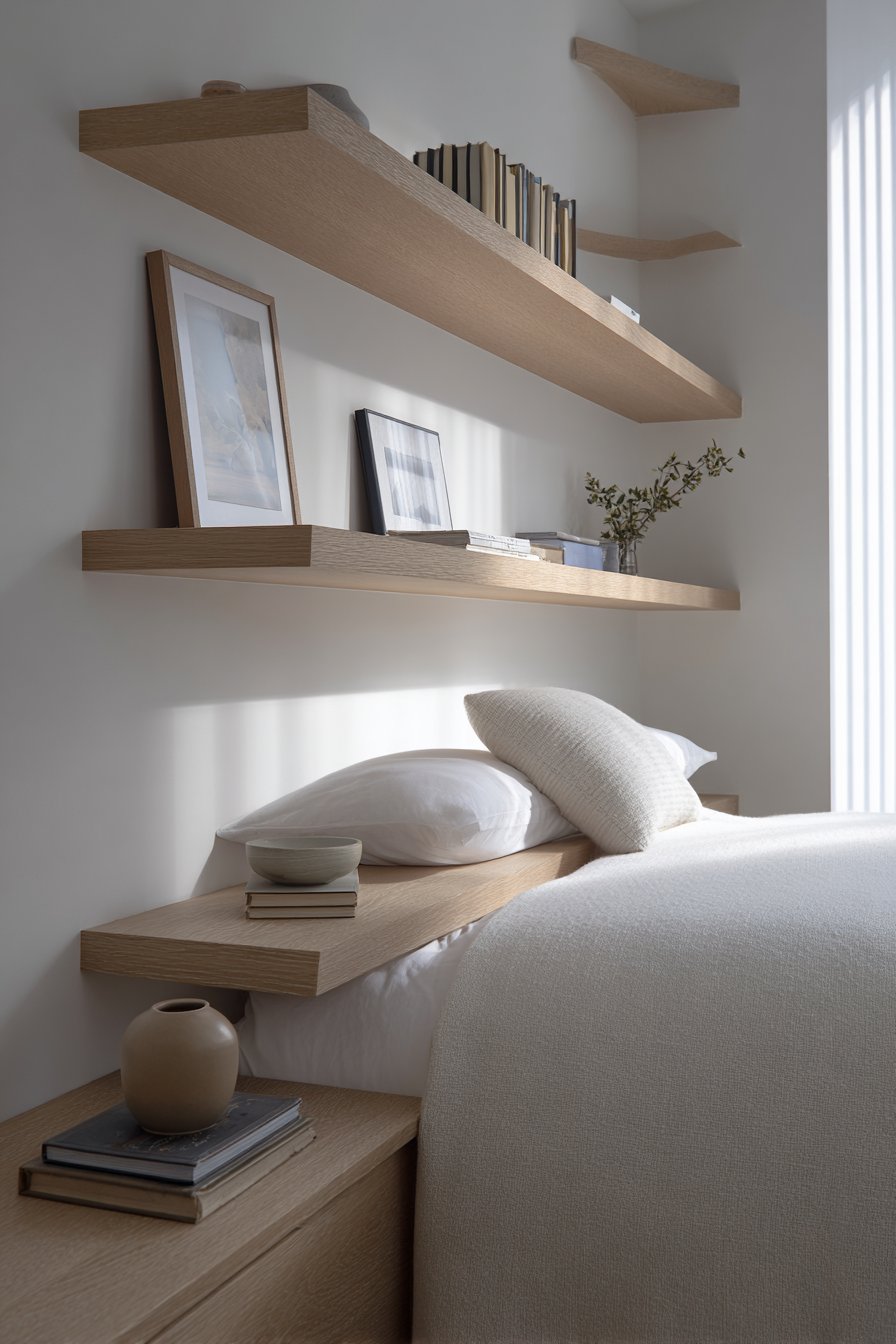
Pale ash wood floating shelves arranged in geometric patterns embody the Nordic design principles of simplicity, functionality, and connection to nature. The light wood tones characteristic of Scandinavian interiors create an atmosphere of airiness and calm, perfect for bedroom environments focused on rest and restoration. These shelves become architectural elements rather than mere storage, their geometric arrangement creating visual interest through pattern rather than ornamentation. The minimal decor displayed—small framed prints, a single ceramic bowl, carefully chosen books—reflects the Scandinavian concept of lagom, or “just the right amount.”
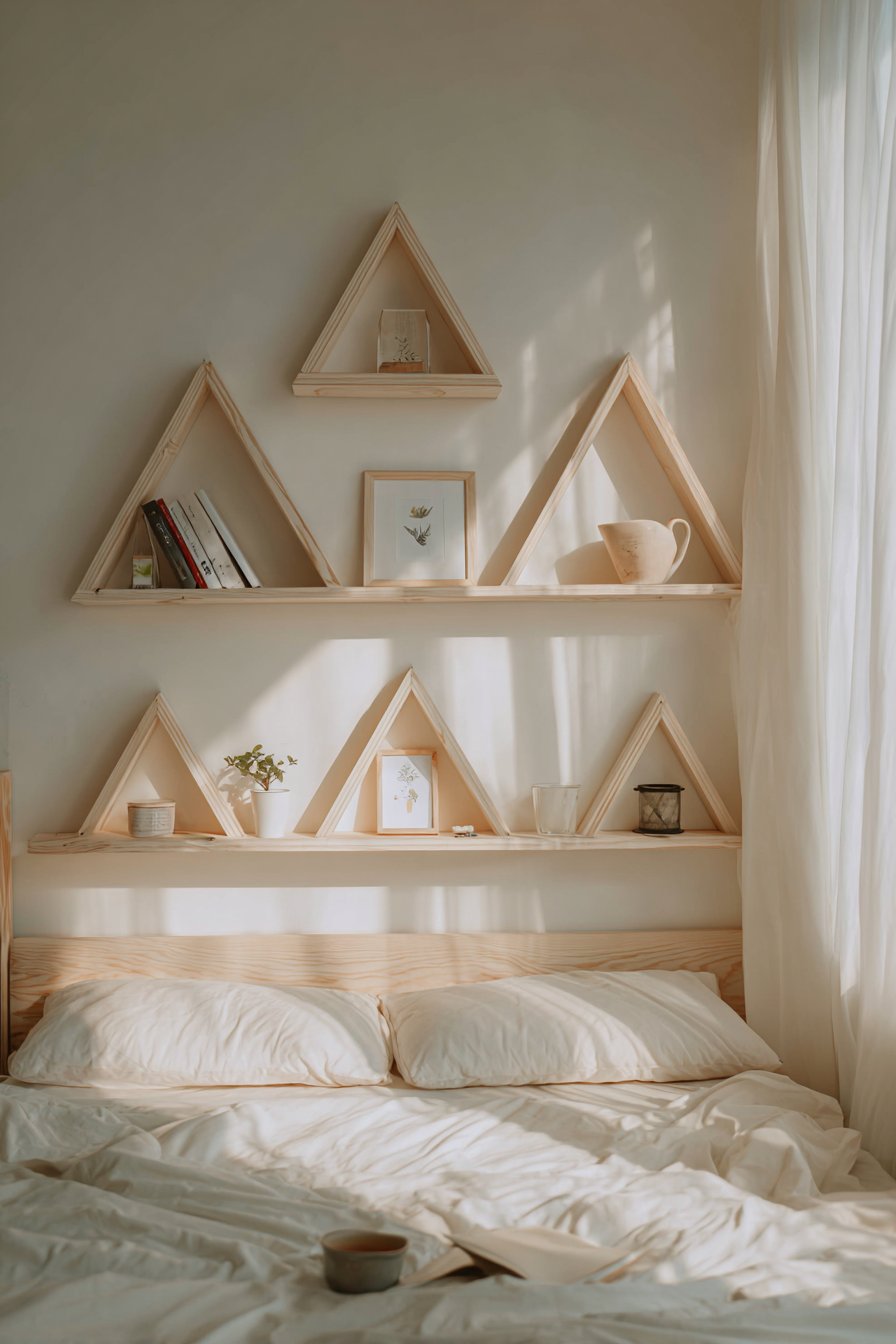
Soft diffused natural light, essential to Nordic design philosophy, plays across the pale ash surfaces, emphasizing the gentle wood grain while creating subtle shadows that add depth without drama. This quality of light transforms throughout the day, making the shelving a dynamic element that changes with the sun’s movement. The geometric pattern creates rhythm and movement while maintaining the tranquil atmosphere crucial to bedroom design. Each shelf serves a purpose, whether practical storage or display platform, with nothing included merely for decoration.
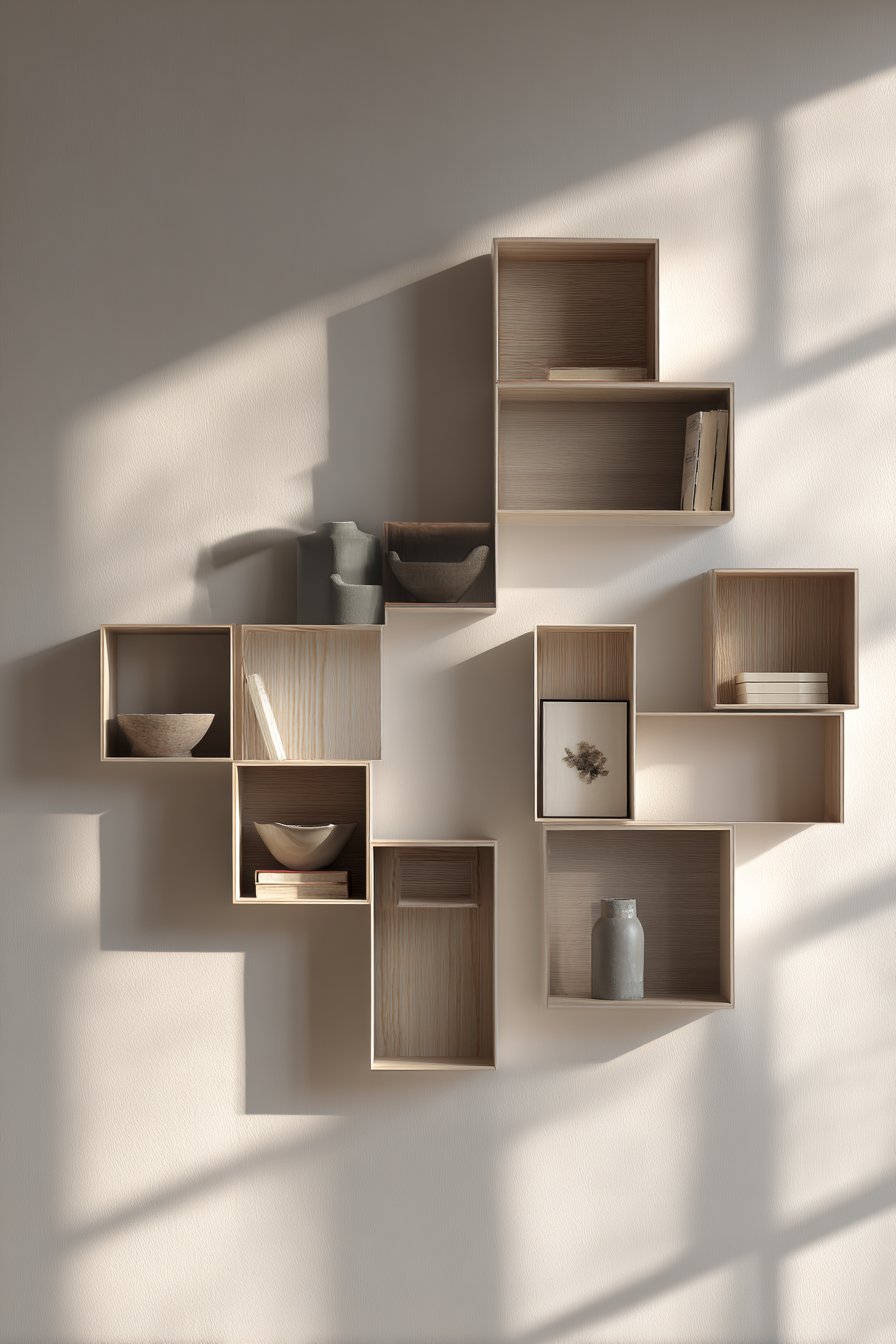
The restraint evident in Scandinavian shelving design creates spaces that feel serene rather than sparse, curated rather than cluttered. The pale ash wood maintains visual continuity with other natural materials typically found in Nordic interiors—light oak floors, linen textiles, wool throws. This material harmony creates cohesive environments that feel effortlessly elegant. The functional beauty exemplifies Scandinavian design’s core belief that everyday objects can and should possess aesthetic value.
Key Design Tips:
- Choose pale woods like ash, birch, or pine that reflect light and maintain brightness
- Arrange shelves in odd numbers (3, 5, 7) for more dynamic visual compositions
- Limit color palette to whites, grays, and natural wood tones with occasional black accents
- Display items that serve dual purposes whenever possible—beautiful storage boxes, decorative vessels with practical use
- Incorporate natural elements like small plants, stones, or driftwood to maintain connection to nature
- Keep styling minimal, allowing significant negative space around each displayed object
- Ensure shelving proportions match room scale—delicate shelves for intimate spaces, more substantial for larger rooms
5. Corner Bathroom Space Saver
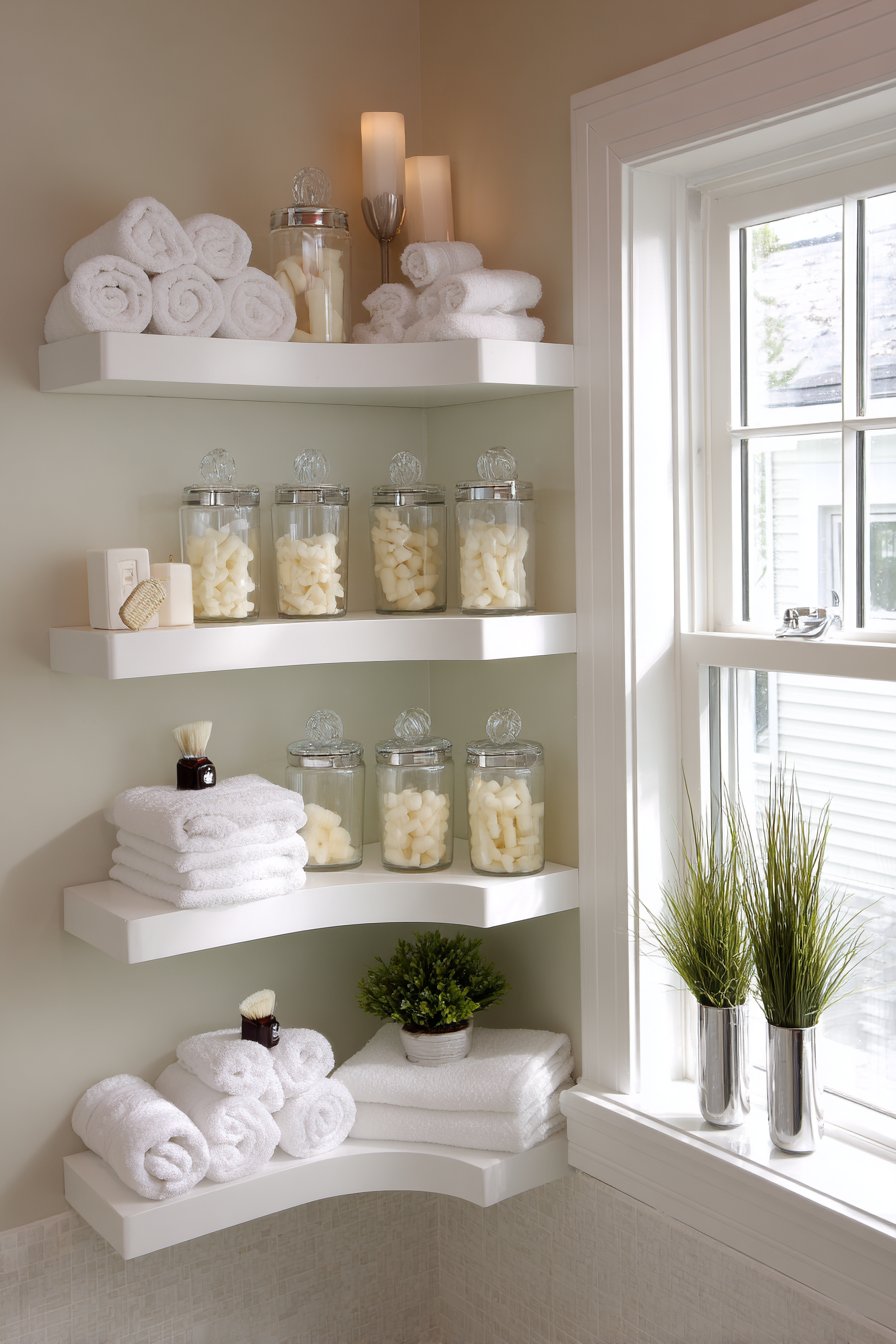
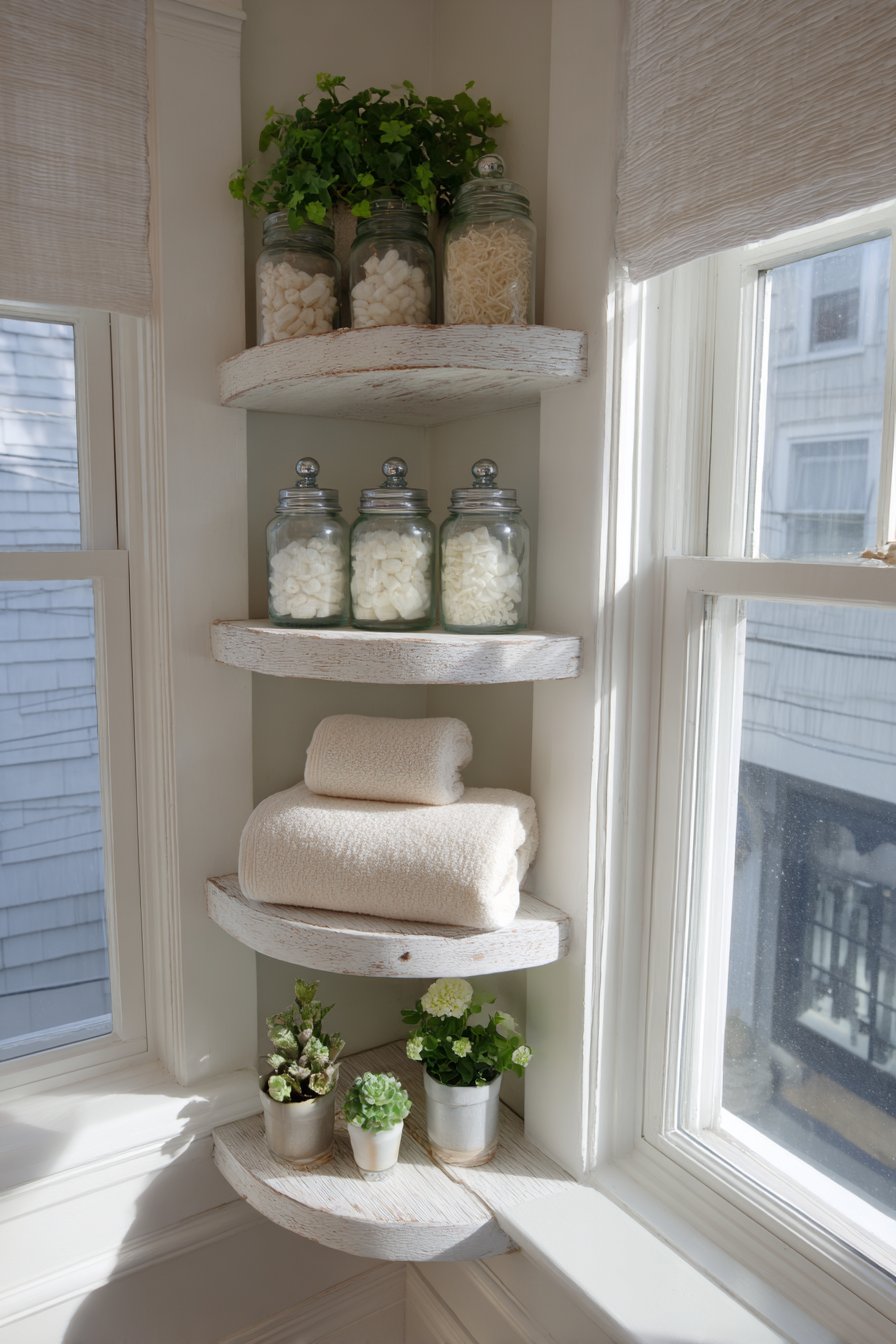
Corner wall shelving maximizes often-neglected vertical space in bathrooms, transforming awkward angles into functional storage while maintaining aesthetic appeal. White-painted wooden shelves with curved edges create a soft, approachable look that contrasts with the angular nature of corner installation. Mounted in vertical arrangement, these shelves climb the corner from waist height to near ceiling, providing impressive storage capacity within a minimal footprint. The chrome mounting brackets add subtle decorative interest while ensuring sturdy support for bathroom essentials.
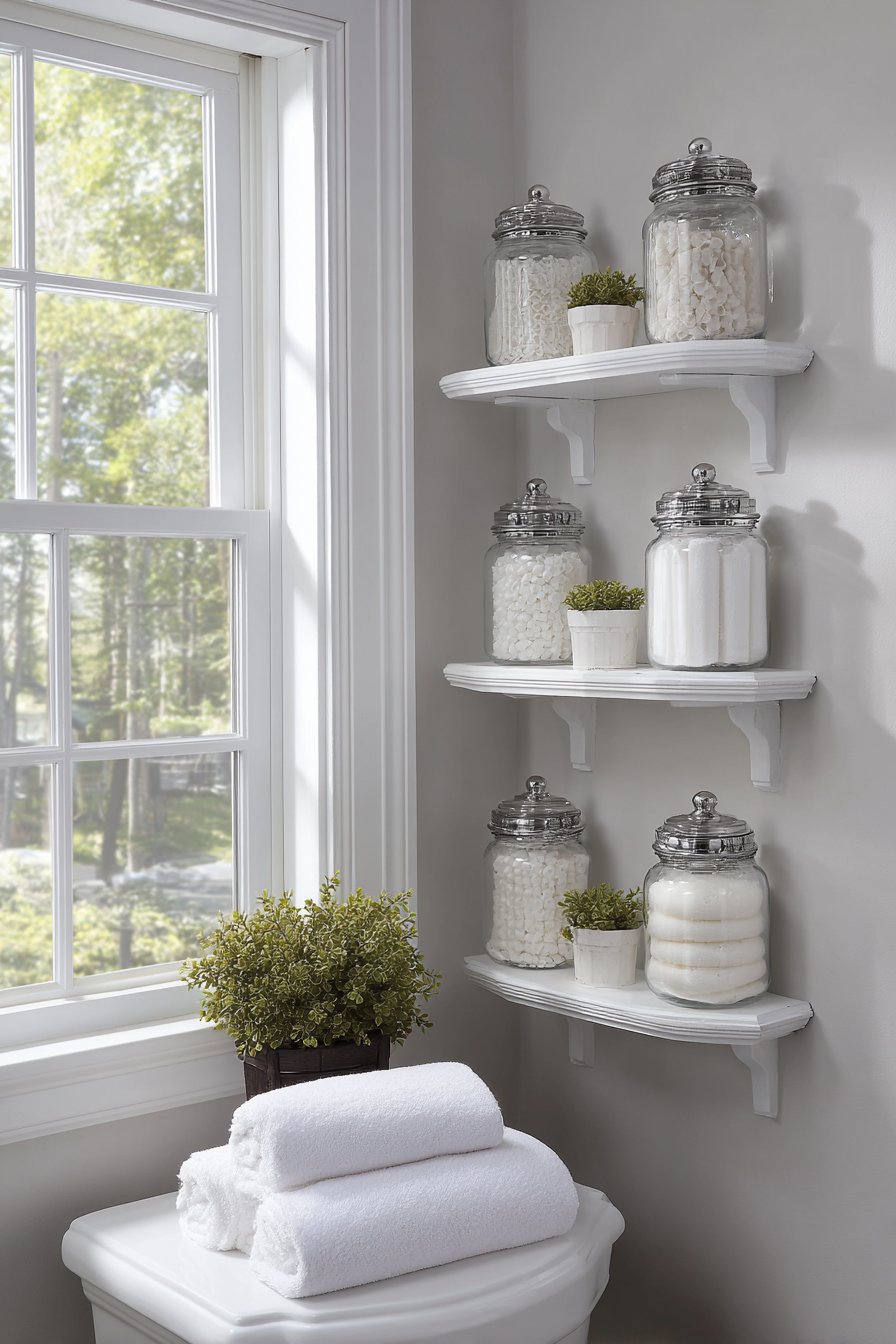
The practical organization enabled by corner shelving addresses common bathroom challenges—limited counter space, insufficient towel storage, and the need to keep frequently used items within easy reach. Neatly rolled towels in coordinating colors create visual harmony while remaining immediately accessible. Glass apothecary jars filled with cotton balls, bath salts, and other essentials add both functionality and vintage-inspired charm. Small potted plants introduce organic elements that soften the utilitarian bathroom environment while thriving in the typically humid conditions.
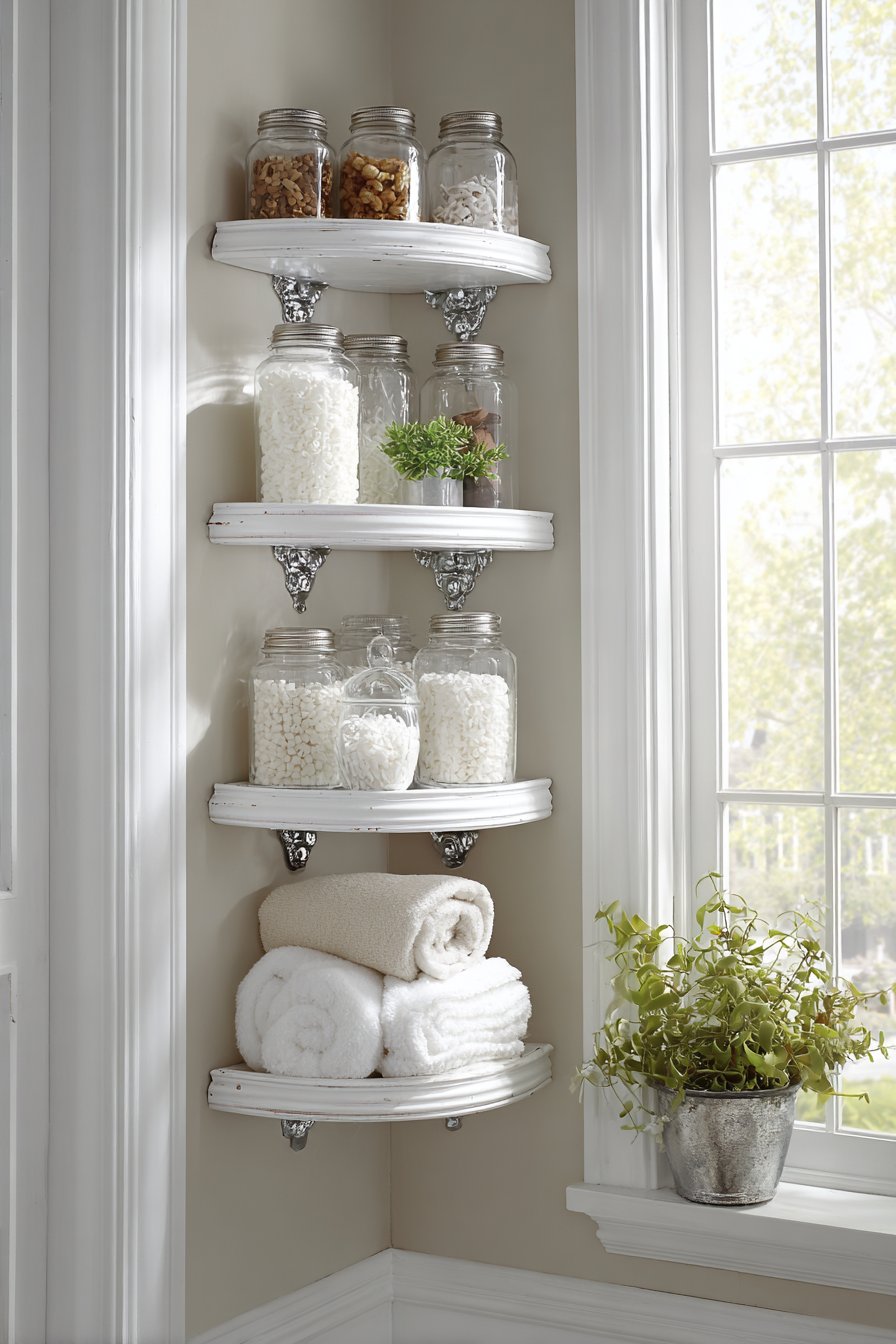
Natural window light filtering across the corner installation highlights the three-dimensional quality of the arrangement, creating depth and preventing the corner from feeling like dead space. The white paint reflects light, maintaining brightness in what might otherwise become a shadowy corner. The curved shelf edges prevent sharp corners that could cause injury in tight bathroom quarters while contributing to the overall softness of the design. This thoughtful approach to problem-solving exemplifies how good design addresses both aesthetic and practical concerns simultaneously.
Key Design Tips:
- Measure corner angles carefully, as few walls meet at perfect 90-degree angles
- Install lowest shelf at comfortable reaching height (typically 36-42 inches from floor)
- Choose water-resistant finishes and materials rated for bathroom humidity levels
- Limit each shelf to 2-3 categories of items to prevent cluttered appearance
- Use matching containers, baskets, or jars to create visual cohesion across shelves
- Ensure adequate spacing between shelves (12-15 inches) to accommodate folded towels
- Consider installing small LED lights on undersides of shelves for enhanced functionality
6. Bohemian Eclectic Display
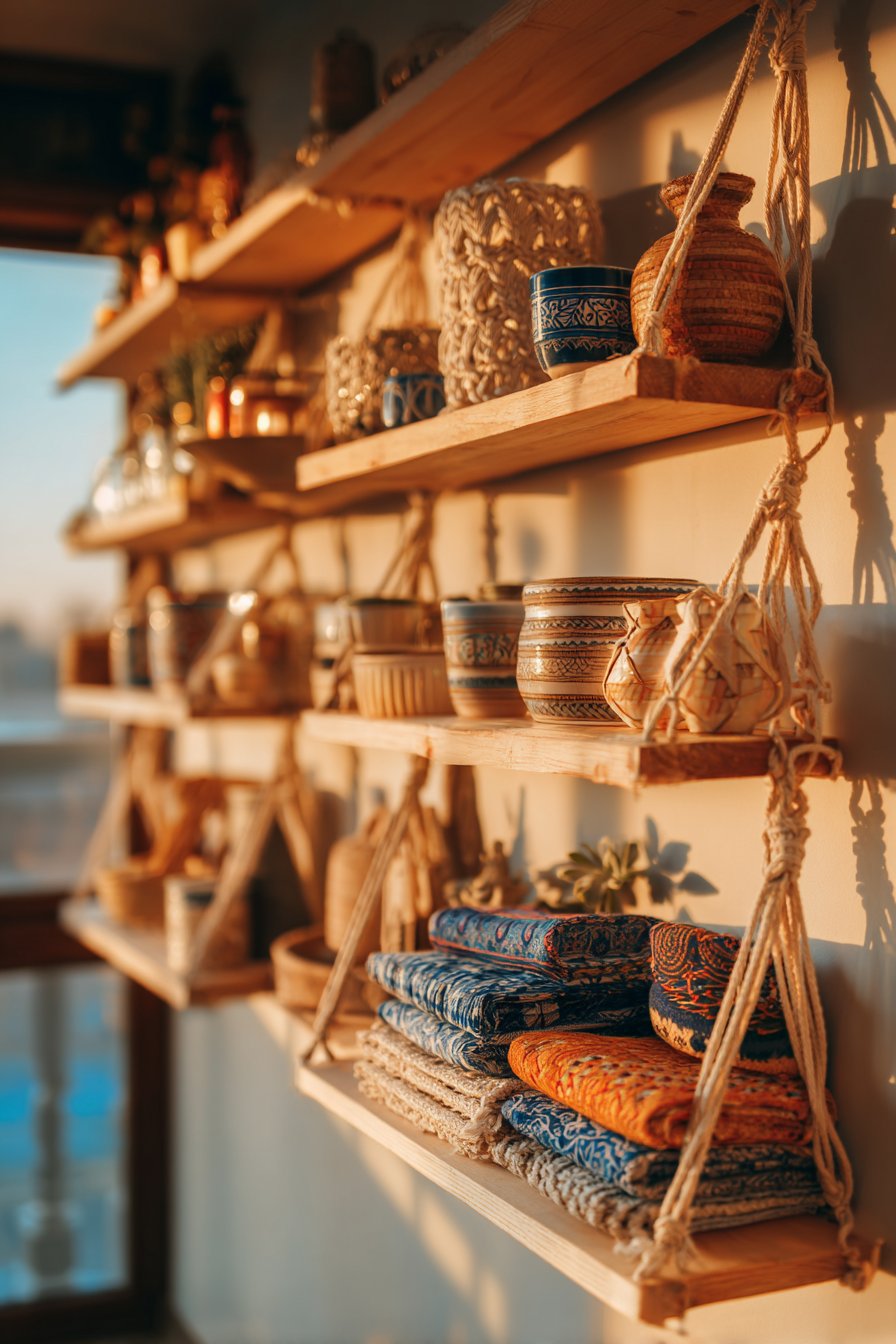
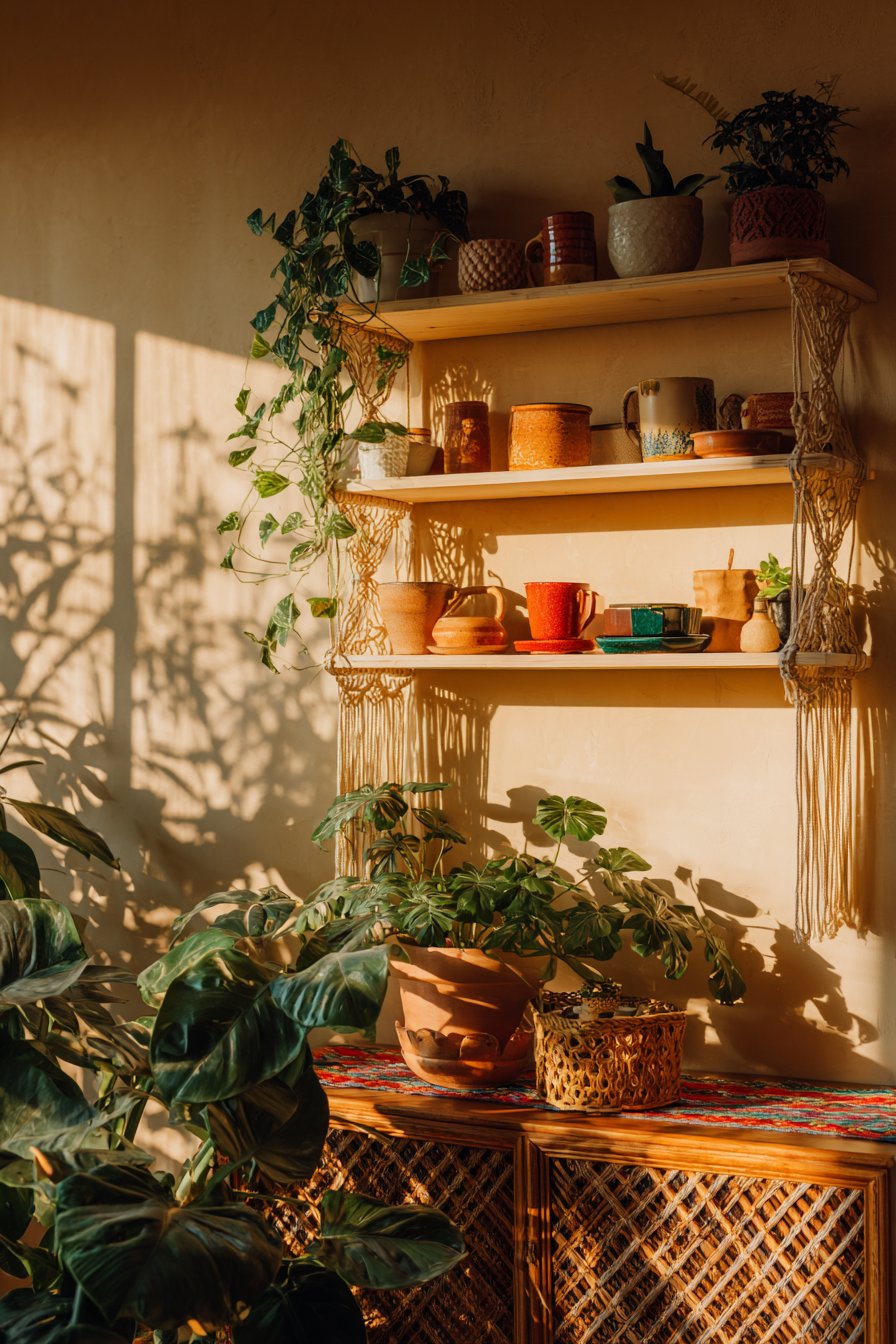
Macramé hanging shelves and natural rope-suspended wooden platforms create the layered, collected aesthetic that defines bohemian interior design. This free-spirited approach to wall shelving celebrates handcrafted details, natural materials, and the artful display of treasured objects gathered over time. The combination of different shelving types—woven macramé holders, rope-suspended platforms, traditional mounted shelves—creates visual richness and textural complexity impossible to achieve with uniform systems. Against textured walls, these varied elements build depth and personality.
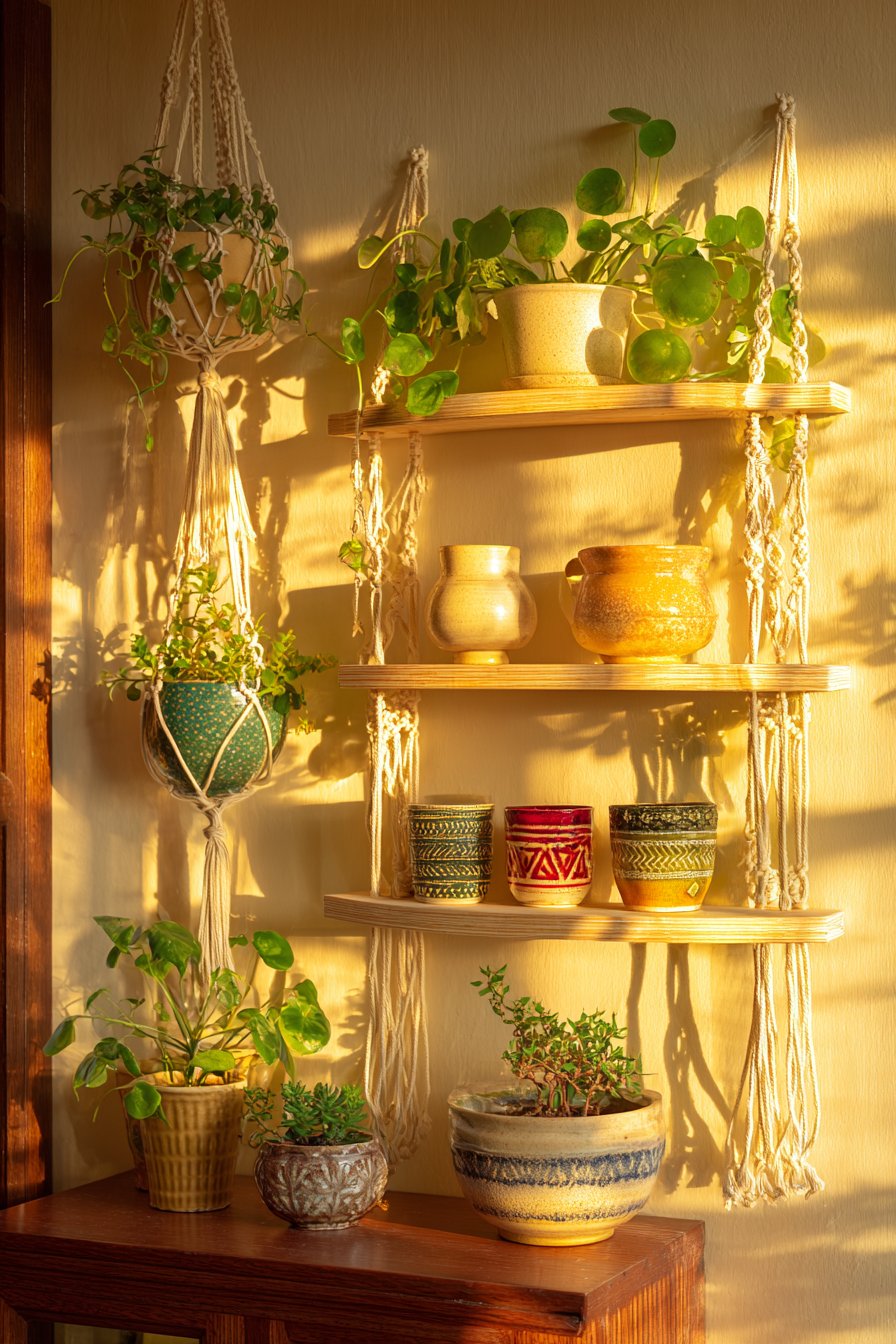
The styling of bohemian shelving embraces abundance and personal expression, with plants cascading from upper shelves, colorful textiles draped artfully, vintage finds mixed with contemporary pieces, and artisan ceramics displayed alongside found objects. This curated chaos requires careful editing to maintain cohesion despite variety—a consistent color palette, repeated materials, or thematic connections unite disparate elements. The result feels personal and collected rather than purchased all at once, telling the story of the inhabitant’s travels, interests, and aesthetic evolution.
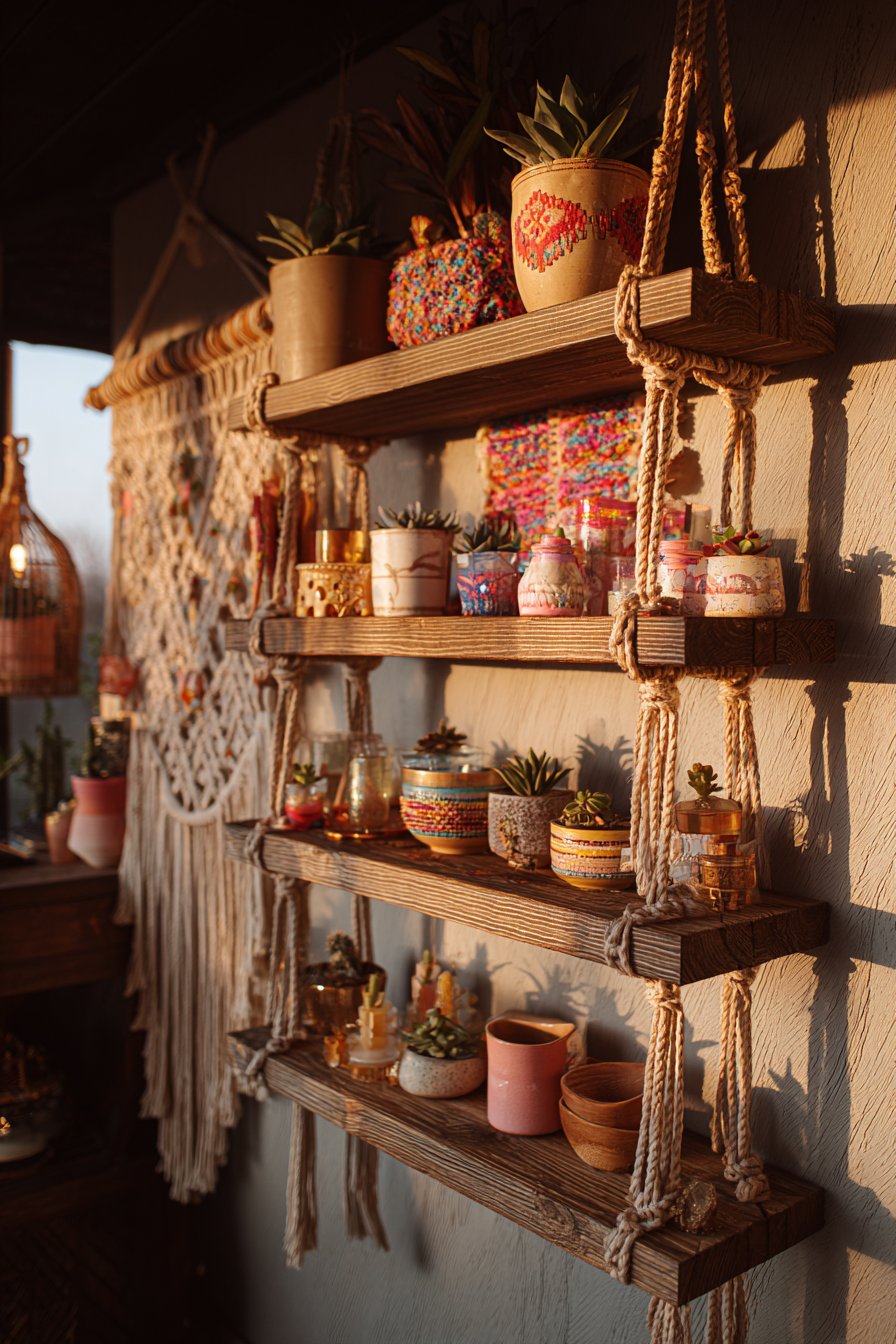
Warm golden hour lighting transforms bohemian shelving into magical displays, with late afternoon sun highlighting varied textures—the intricate knots of macramé, the natural fiber of hemp rope, the grain patterns in reclaimed wood platforms. This quality of light enhances the cozy, inviting atmosphere central to bohemian design philosophy. The plants displayed throughout catch and filter this light, creating living sculptures that change with seasons and growth patterns.
Key Design Tips:
- Mix mounting methods (hanging, floating, bracket-supported) for visual variety and textural interest
- Layer items in front of and beside each other rather than arranging everything in neat rows
- Incorporate plants generously—trailing varieties like pothos and string of pearls work particularly well
- Choose handmade or artisan pieces over mass-produced items whenever possible
- Embrace color, pattern, and texture, but maintain some unifying element (material, color family, theme)
- Include pieces with personal meaning or travel significance to enhance authentic bohemian narrative
- Allow displays to evolve organically over time rather than achieving final completion
7. Contemporary Illuminated Bar Display
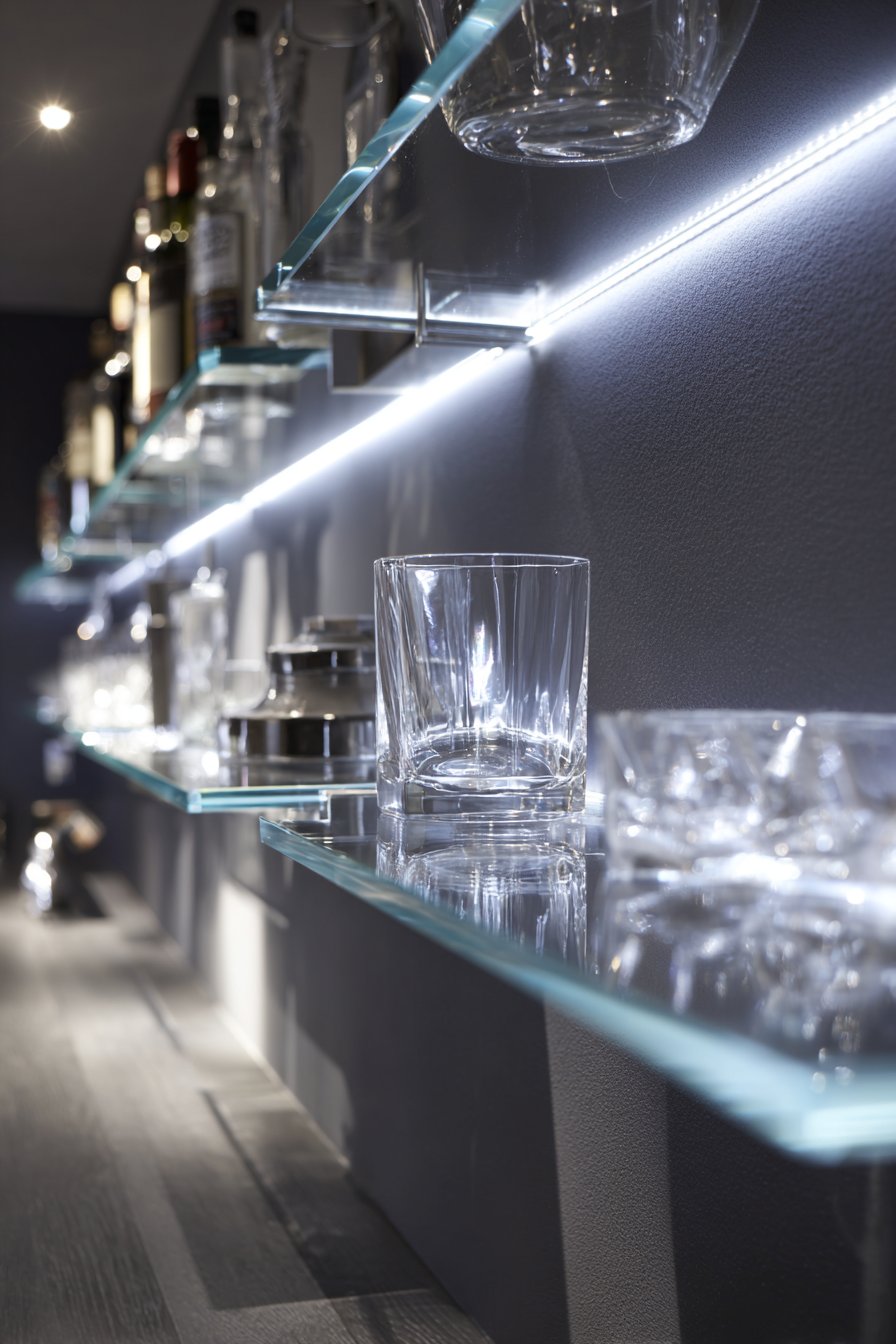
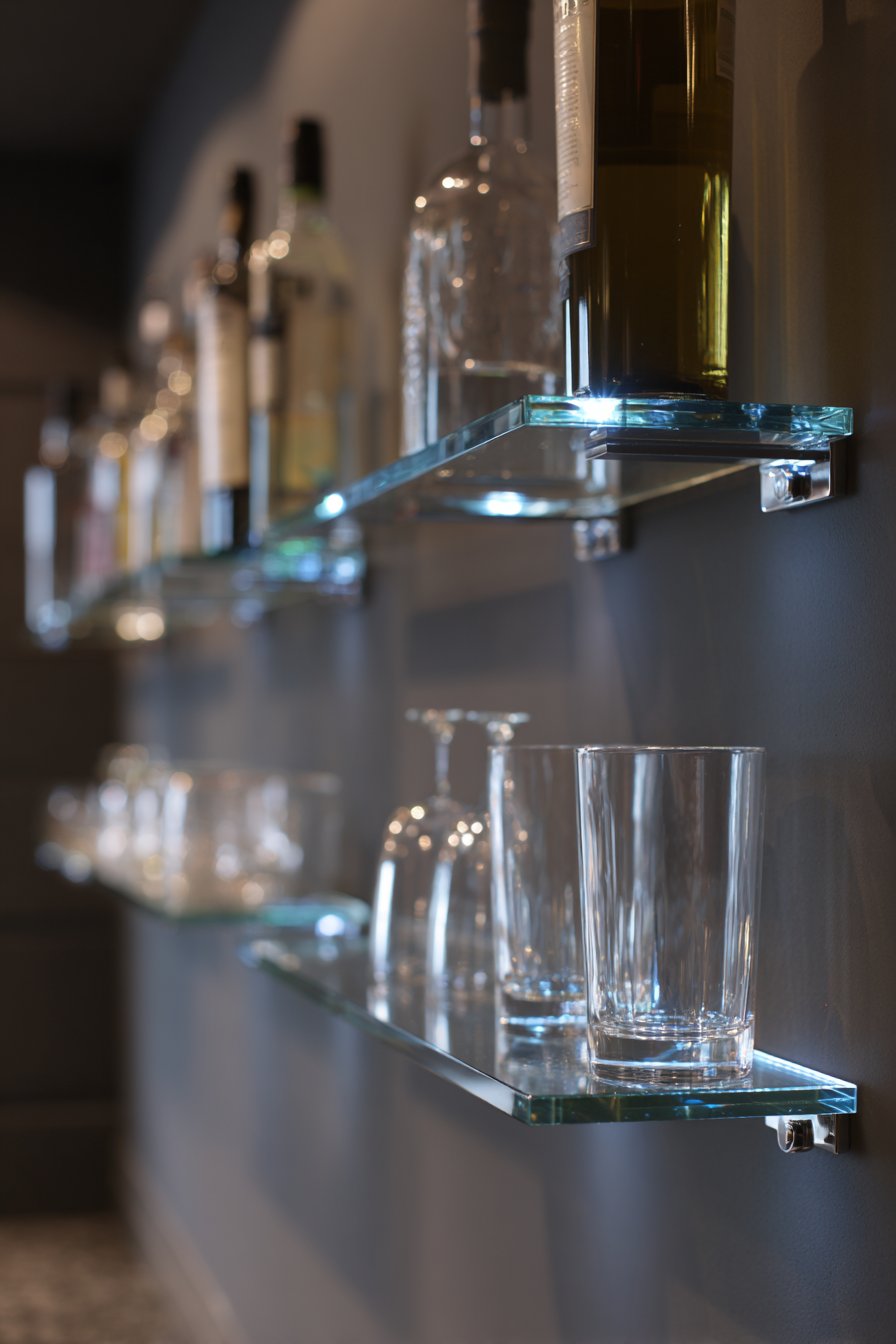
Glass shelving with integrated LED strip lighting creates dramatic, sophisticated display for home bar areas, transforming bottles and glassware into illuminated art pieces. The clear tempered glass shelves mounted on polished chrome brackets virtually disappear, allowing the back-lit effect to take center stage. Against dark gray walls, the illuminated shelving creates striking contrast, the warm glow of LED lighting turning ordinary bottles into jewel-like objects that sparkle and shine. This high-impact design choice elevates home entertaining spaces from functional to luxurious.
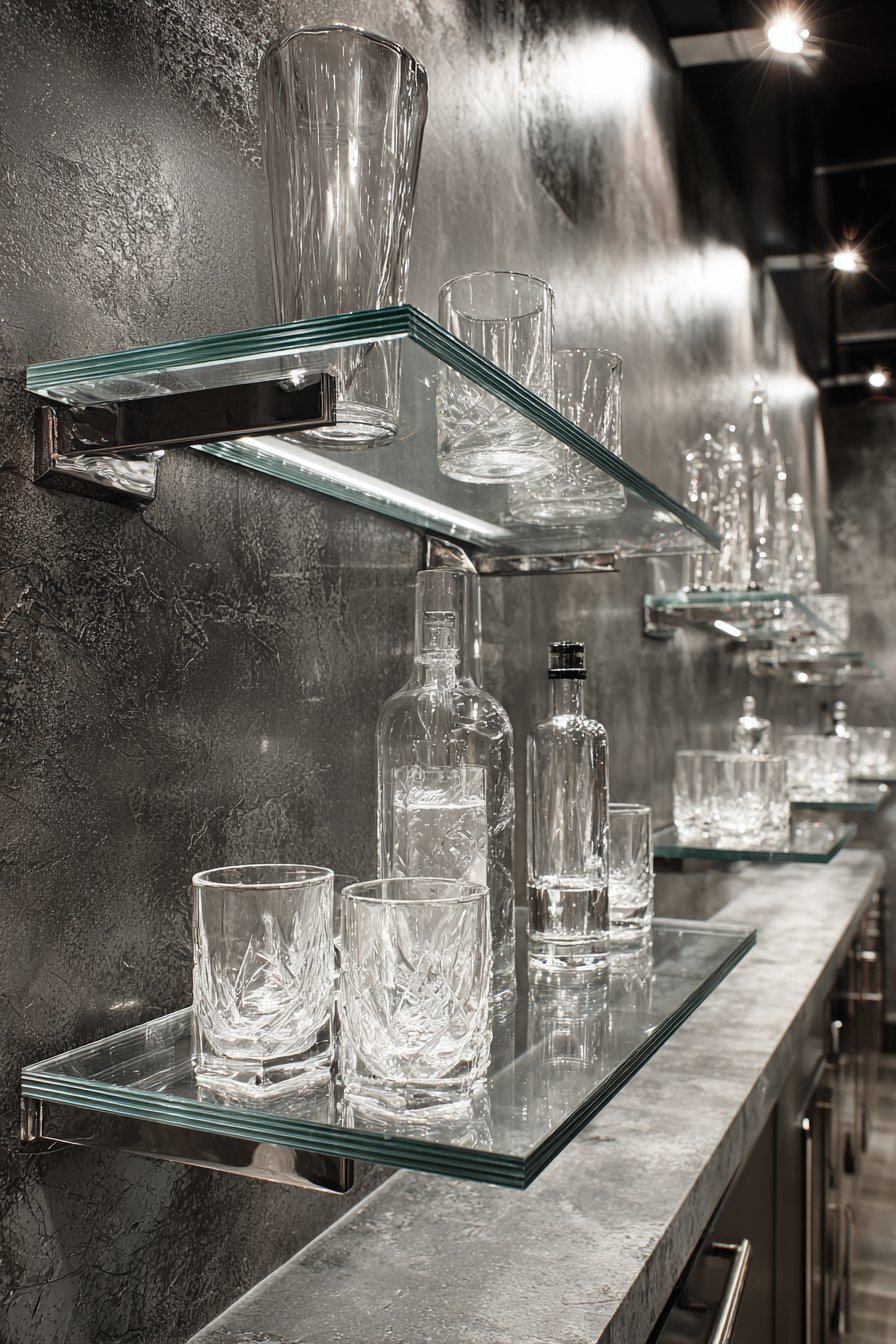
The technical execution of illuminated shelving requires careful planning and professional installation, but the results justify the investment. LED strip lighting mounted along the back edge of each shelf creates even, flattering illumination that highlights the colors and shapes of displayed bottles and glassware. The glass shelves allow light to transmit through multiple levels, creating a cascading glow effect. Chrome brackets catch and reflect this light, adding sparkle and visual interest while maintaining the contemporary aesthetic through clean lines and precision finishes.
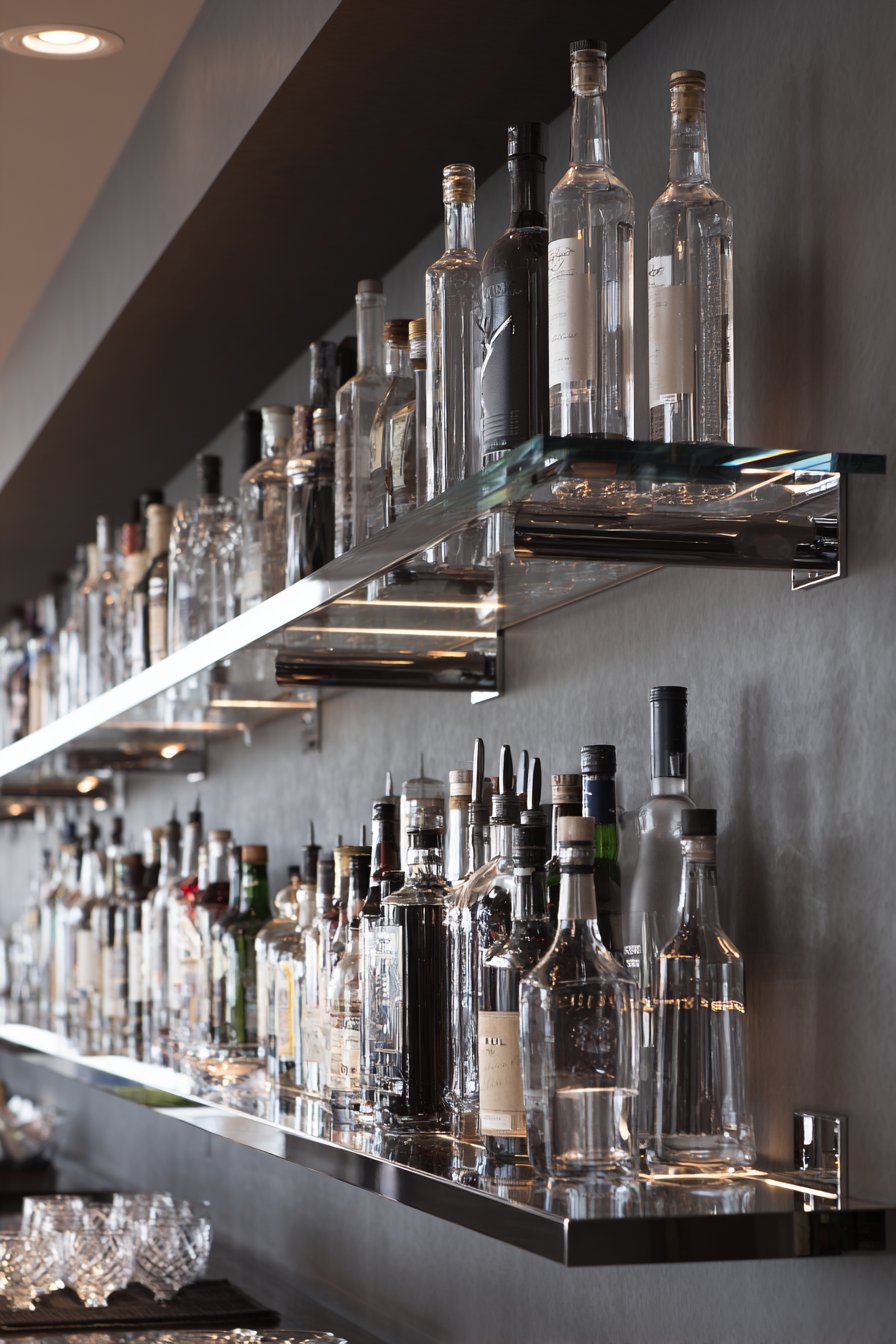
Styling illuminated bar shelving focuses on creating visually pleasing arrangements that maximize the dramatic lighting effects. Premium spirits in beautifully designed bottles become sculptures, their amber, clear, and colored liquids glowing with internal light. Crystal glassware positioned to catch and refract the LED illumination adds sparkle and luxury. The dark gray wall color ensures the illuminated shelving commands attention, creating a focal point that draws guests and conversation.
Key Design Tips:
- Choose warm white LED lighting (2700-3000K) for flattering, inviting glow rather than cool clinical light
- Install dimmer switches to adjust lighting intensity for different occasions and moods
- Select tempered glass shelves rated for weight capacity well beyond expected loads
- Arrange bottles and glasses with consideration for how light transmits through liquids and crystal
- Keep shelving height accessible for actually using displayed items, not just viewing them
- Ensure electrical components are properly rated and professionally installed for safety
- Clean glass shelves regularly as illumination reveals every fingerprint and dust particle
8. Playful Kids Room Organization
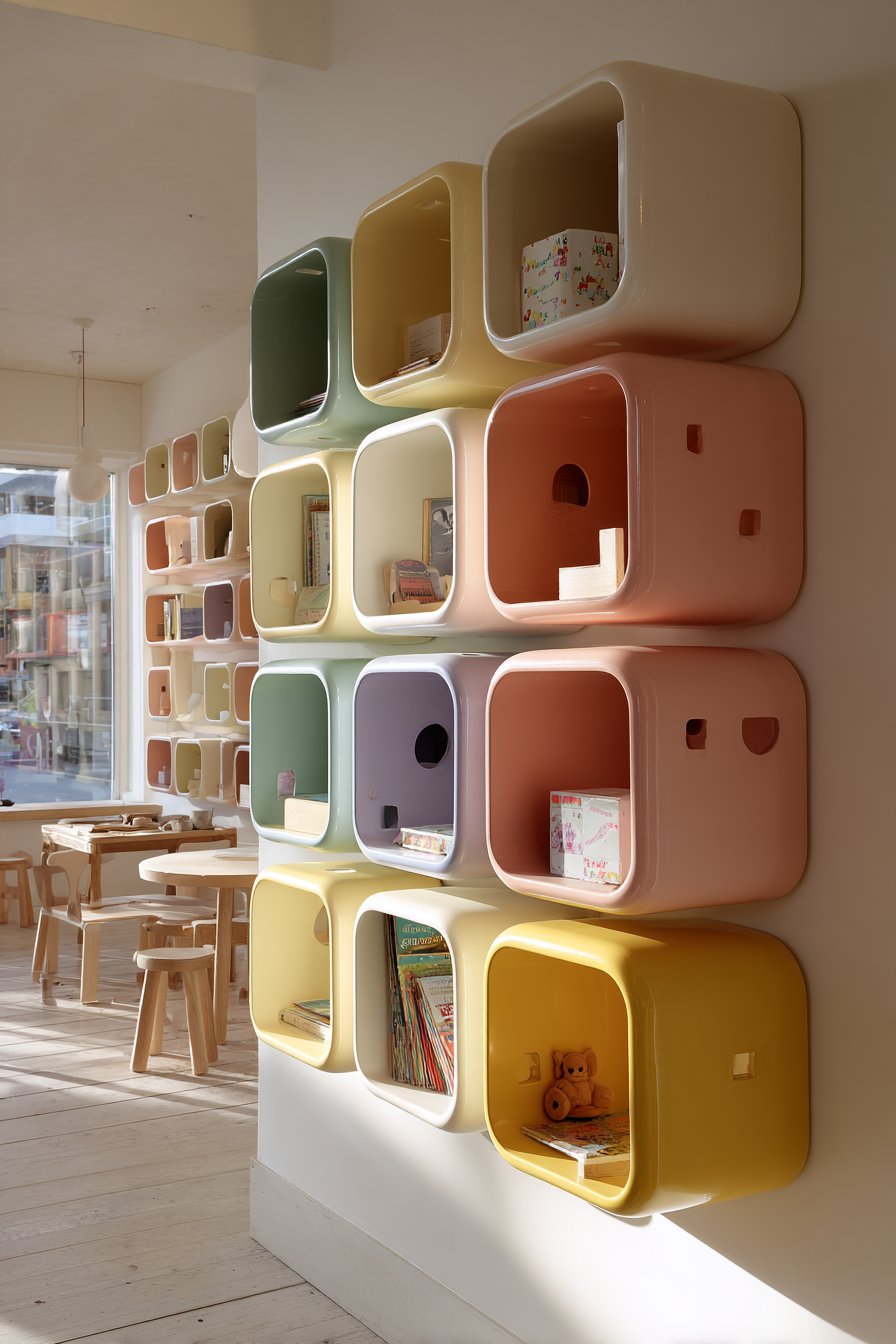
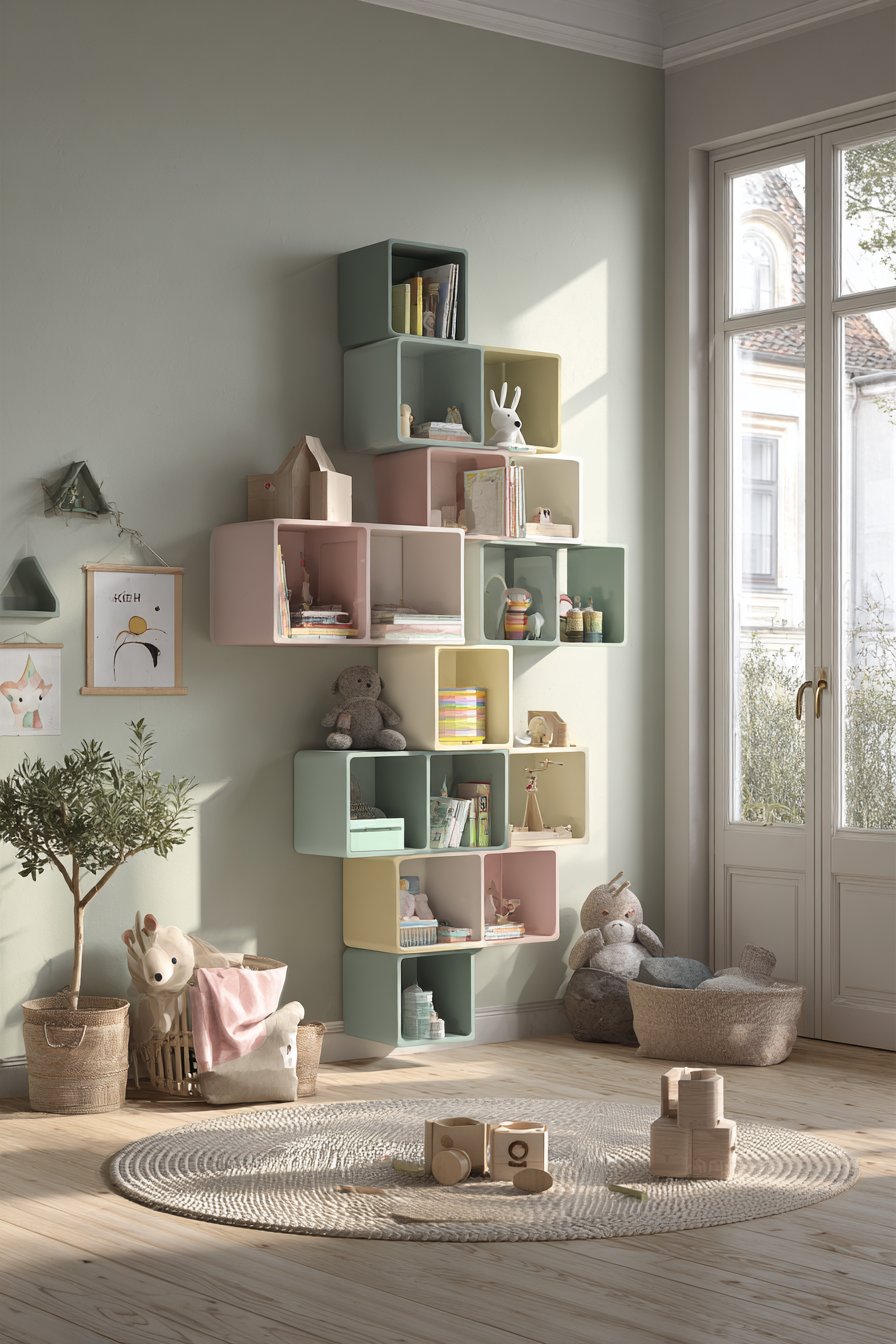
Colorful cube shelving mounted at child-friendly heights transforms toy storage from necessary evil to delightful design feature. Modular shelves in soft pastel colors—mint green, blush pink, and cream—create cheerful organization systems that children can independently access and maintain. The rounded edges prioritize safety without sacrificing style, while the cube format provides versatile storage for everything from building blocks to stuffed animals to art supplies. This approach teaches organizational skills while creating an environment that celebrates childhood imagination and play.
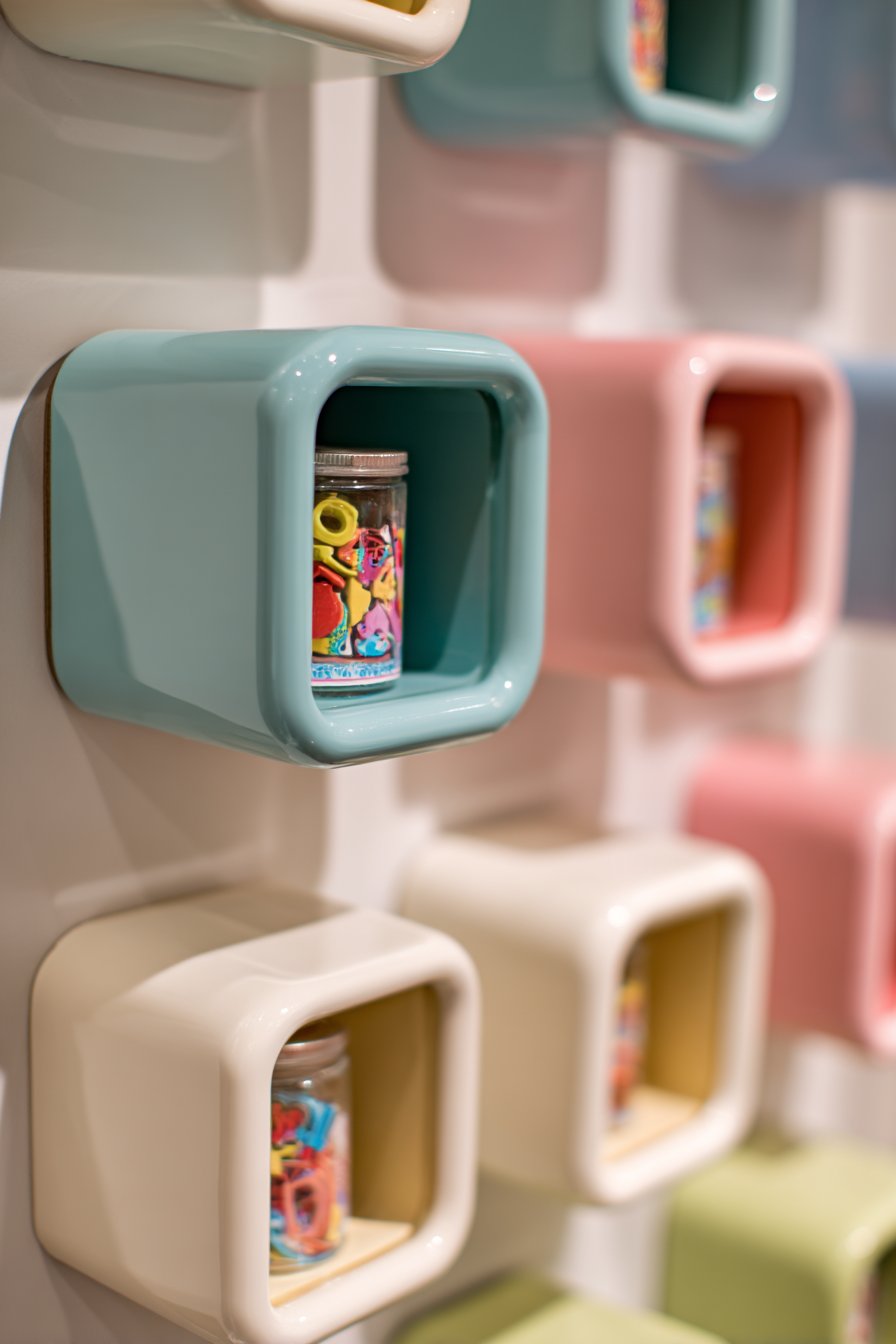
The accessibility of properly mounted kids room shelving empowers children to take ownership of their spaces and belongings. Lower shelves within easy reach encourage independence, while higher shelves can store items requiring adult supervision or less frequently used toys. The colorful nature of the shelving itself becomes part of the room’s decor, reducing need for additional wall art while maintaining visual interest. Clear bins, fabric baskets, and labeled containers nestled within the cubes create systems that make cleanup easier and more appealing to young minds.
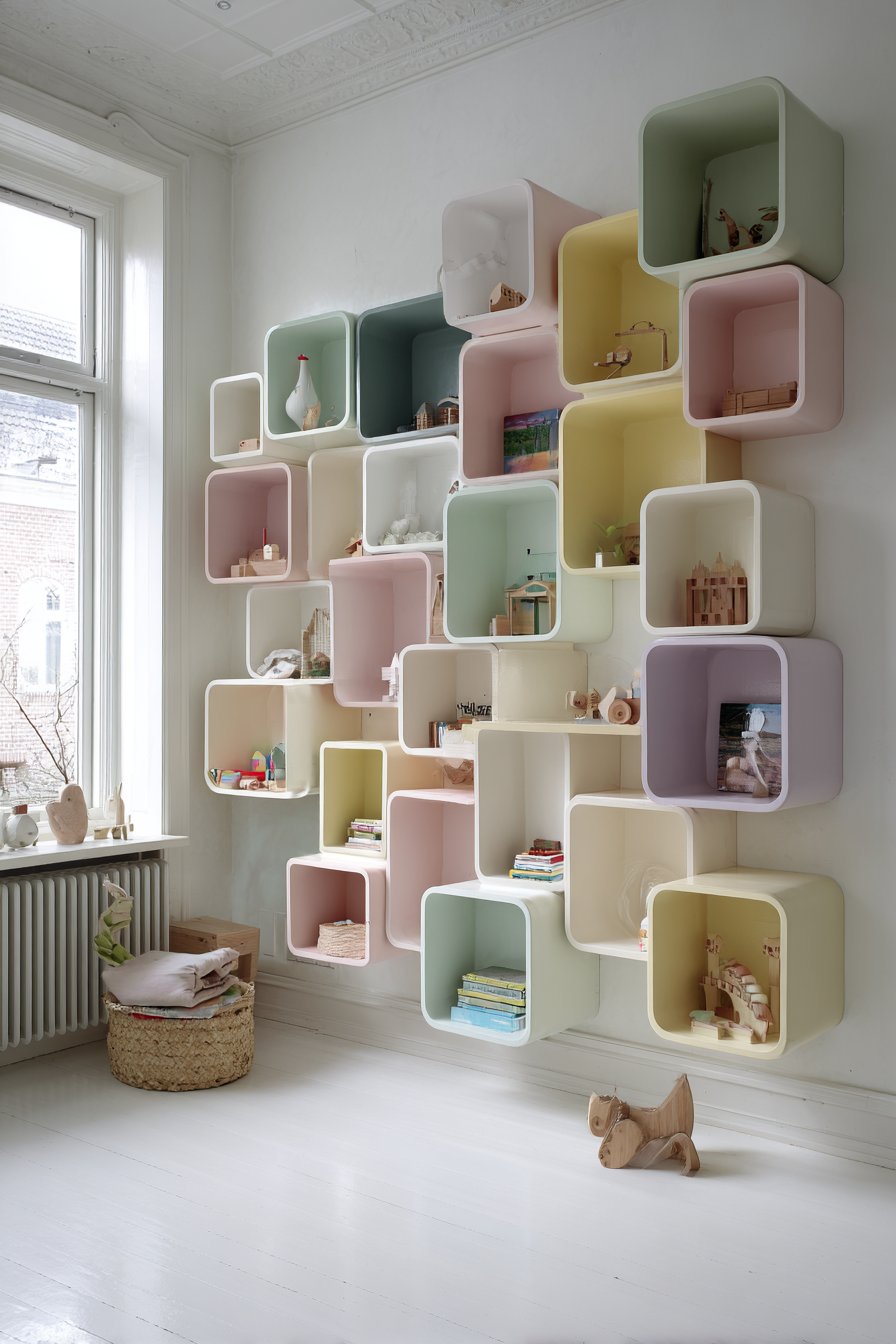
Natural daylight flooding the space highlights the playful functionality of the shelving system, creating an environment that feels bright, cheerful, and conducive to creative play. The pastel colors reflect and diffuse light beautifully, maintaining softness appropriate for rest and quiet time while providing enough visual stimulation for active play periods. This balance between stimulating and calming creates versatile spaces that serve multiple functions throughout the day.
Key Design Tips:
- Mount lower shelves at 24-30 inches from floor for preschool age, adjusting upward for older children
- Choose non-toxic, low-VOC paints and finishes for all furniture in children’s spaces
- Incorporate picture labels or color coding to help young children identify where items belong
- Select washable, durable materials that can withstand inevitable spills and rough handling
- Avoid glass, sharp edges, and tip-prone designs in favor of secured, rounded, child-safe options
- Design storage that can evolve as children grow—modular systems work particularly well
- Include some open storage for displaying favorite toys, books, or collections that boost pride
9. Sleek Entryway Organization
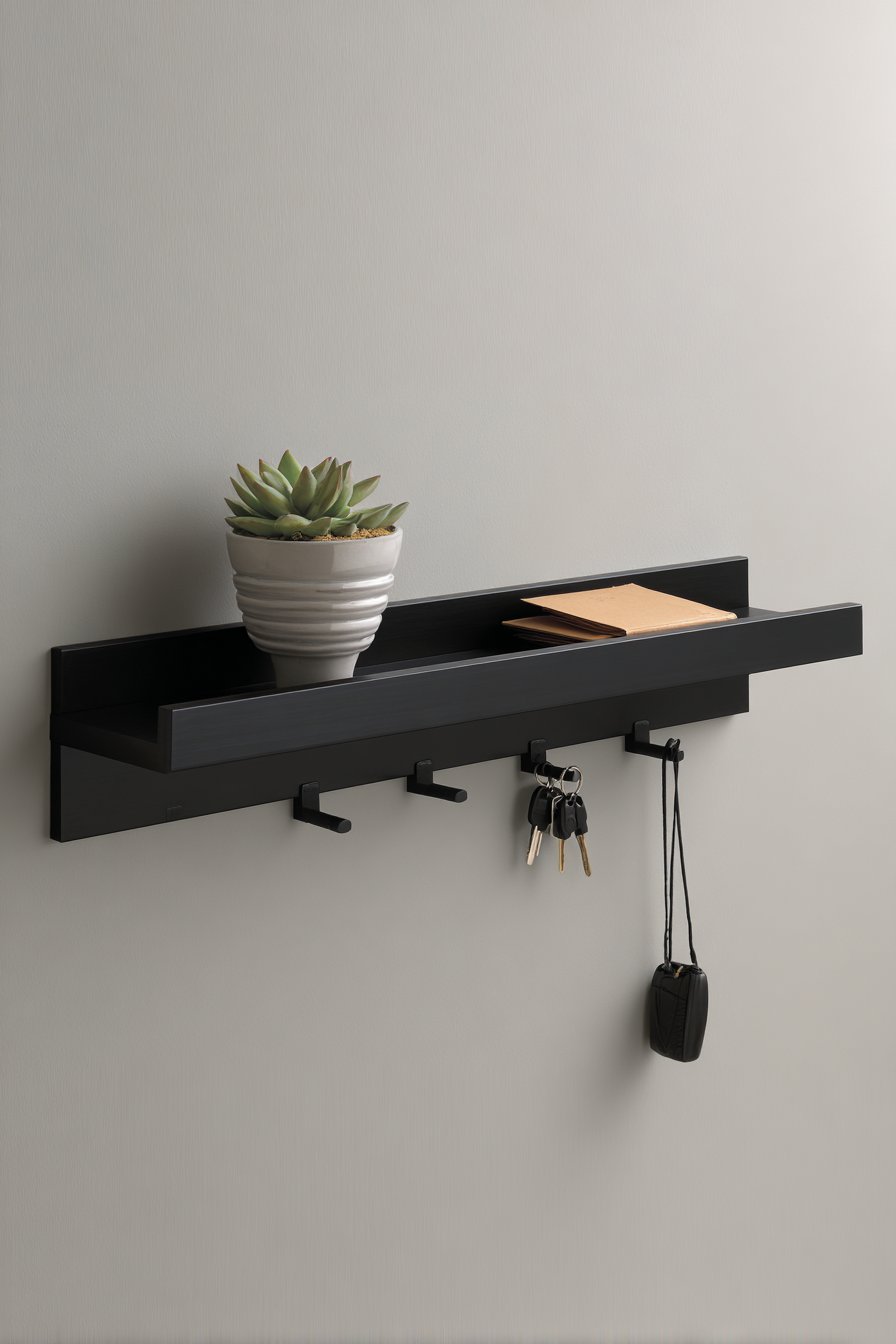
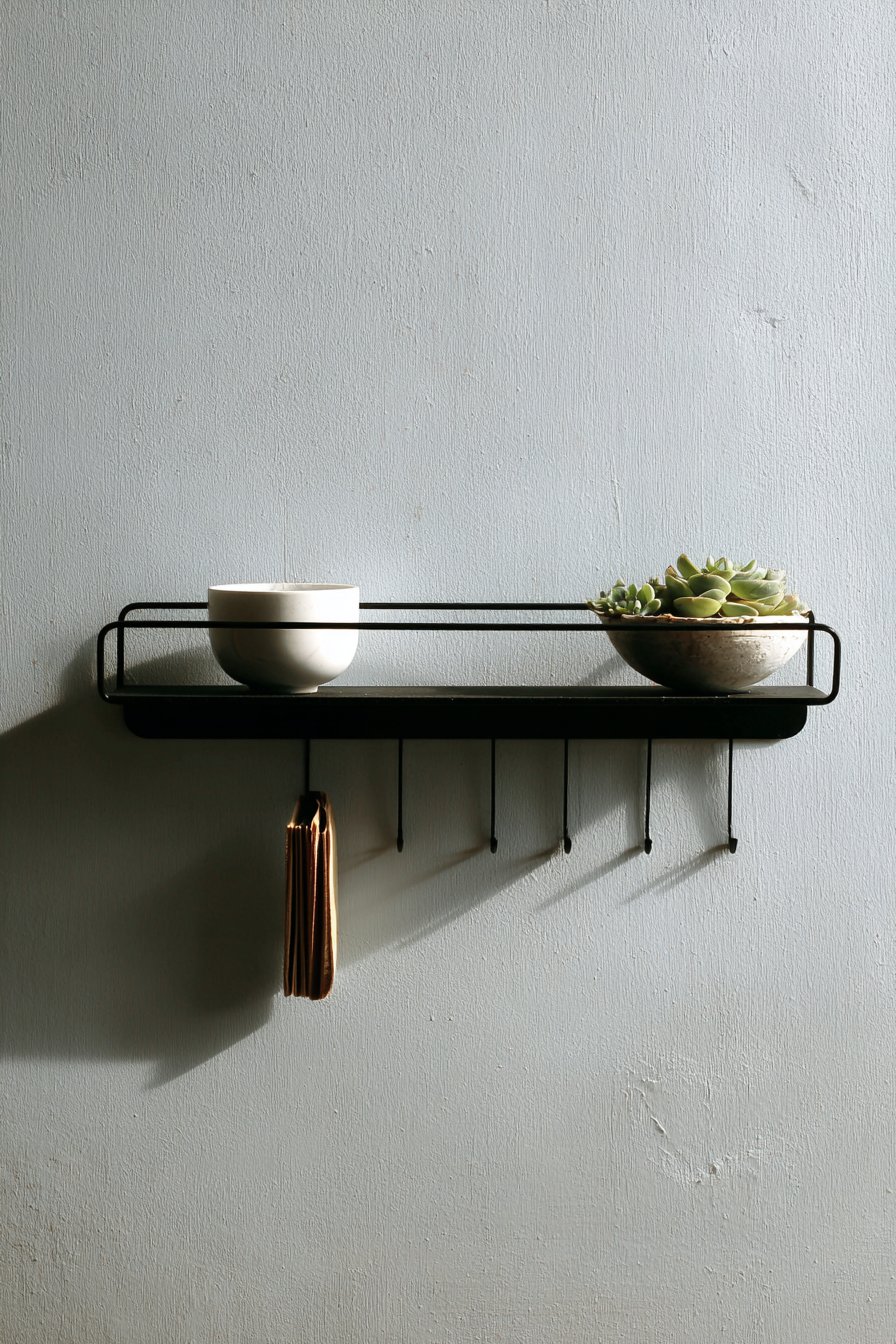
A single long floating shelf in matte black with integrated hooks creates streamlined organization for entryway spaces where first impressions matter. This minimalist approach to entry storage proves that less truly can be more when design is thoughtful and execution precise. The clean horizontal line establishes visual order while providing practical landing space for keys, mail, and small personal items. Integrated hooks underneath serve coats and bags without the visual clutter of separate hook systems, maintaining the sleek aesthetic while solving practical needs.
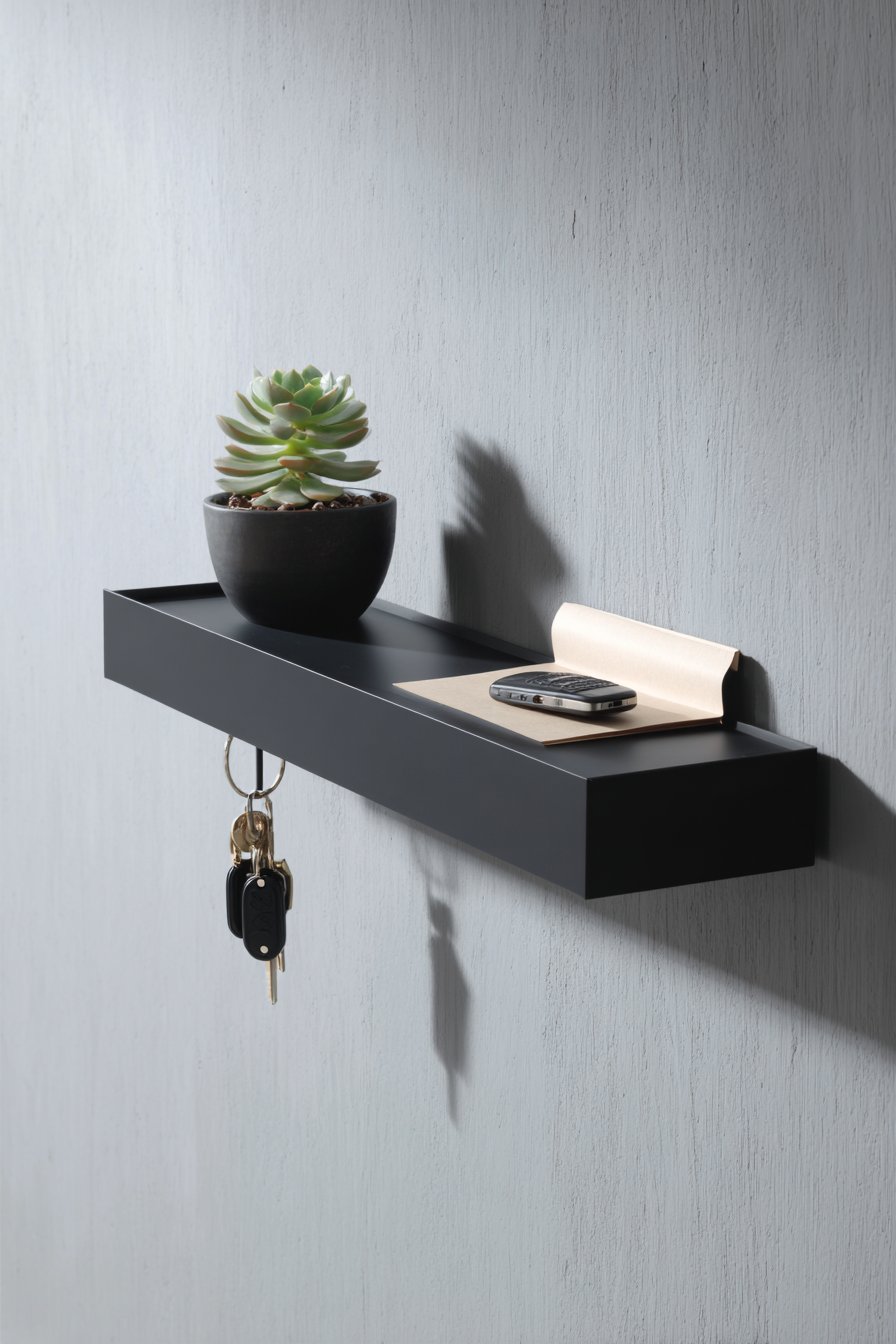
The styling of entryway shelving balances functionality with welcome, creating spaces that feel organized yet inviting. A small succulent in a simple pot adds life without maintenance burden, while a decorative bowl corrals keys and loose change. The shelf surface remains largely clear, preserving the minimalist aesthetic while providing flexible space for packages, outgoing mail, or seasonal decorative touches. The matte black finish creates sophisticated contrast against light gray walls, proving that dramatic color choices work in small doses.
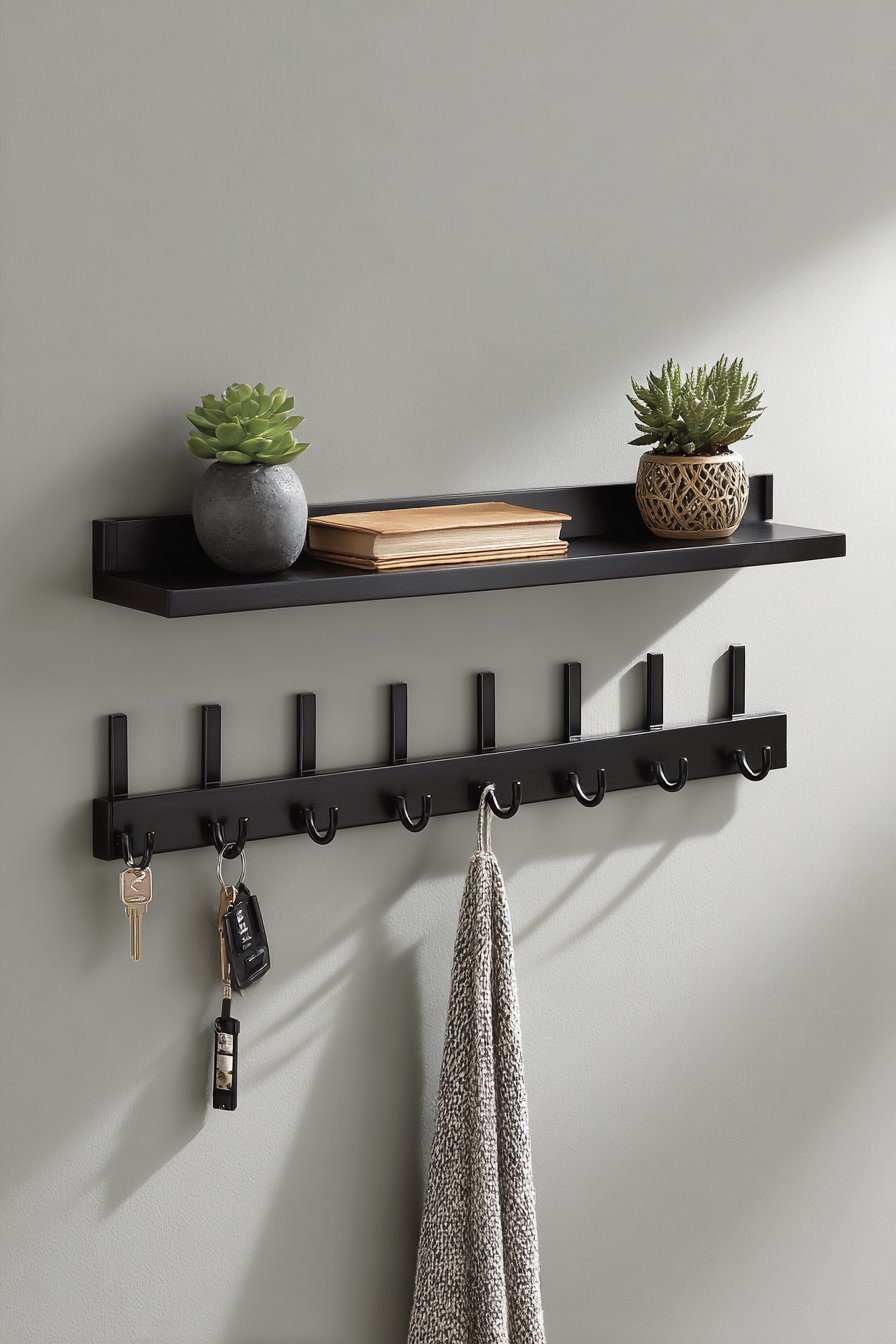
The deliberate simplicity of this shelving solution acknowledges that entryways must function as transition spaces—not quite public, not fully private. The uncluttered design projects organization and intentionality to visitors while providing genuine utility for residents. The horizontal emphasis creates visual width, making narrow entryways feel more spacious. This demonstrates how strategic shelving placement can actually alter perceived room dimensions through visual weight distribution.
Key Design Tips:
- Install at comfortable reaching height (approximately 60-65 inches from floor) for easy access
- Choose shelf depth of 8-10 inches—deep enough for function, shallow enough to avoid protruding into pathways
- Limit displayed items to 3-5 objects maximum to maintain clean, uncluttered appearance
- Ensure integrated hooks support adequate weight for winter coats and heavy bags
- Consider installing small LED puck lights above shelf for enhanced functionality in darker entryways
- Select matte finishes over glossy to minimize showing fingerprints and smudges
- Keep styling neutral and flexible to accommodate seasonal changes or different household needs
10. Traditional Library Elegance
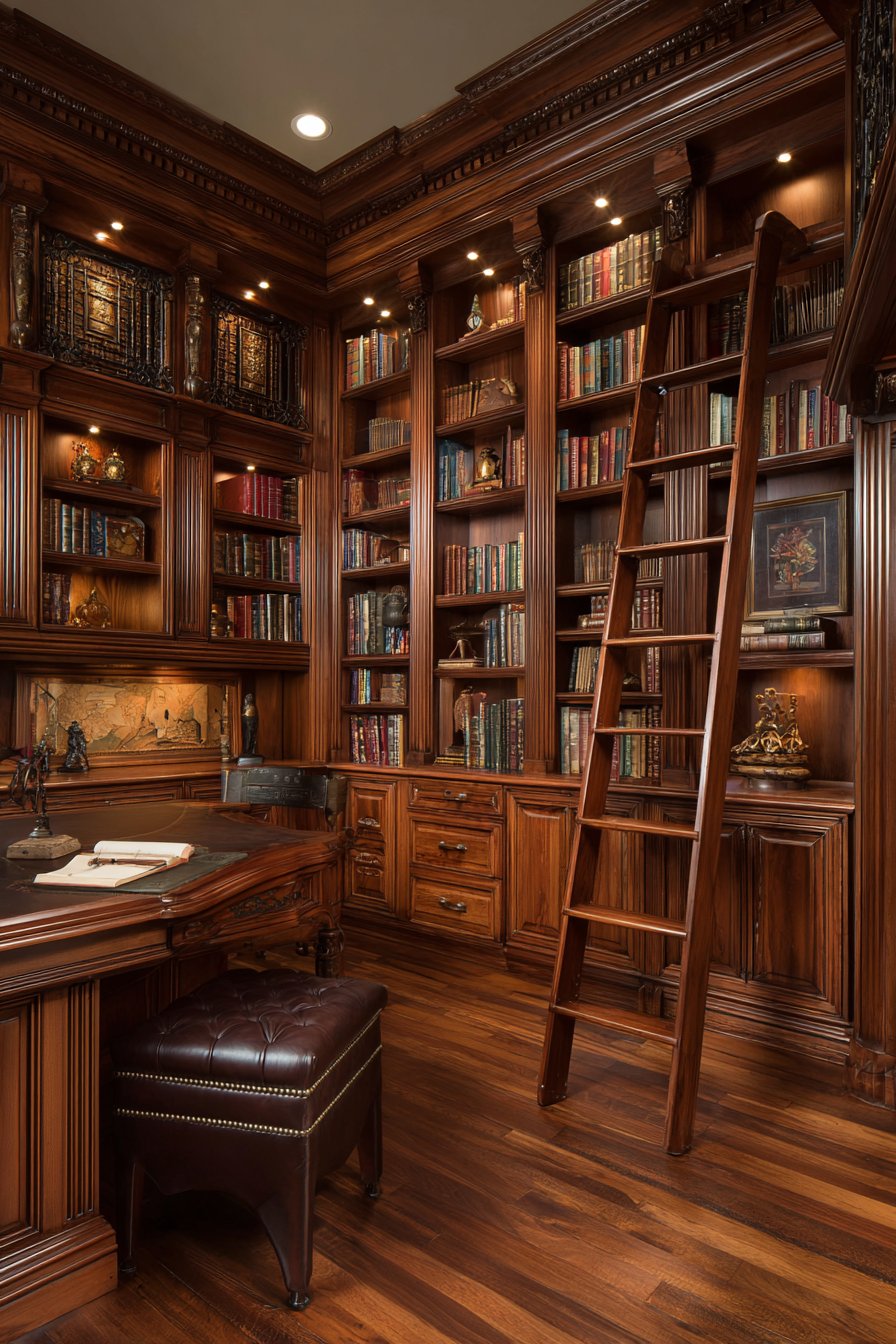
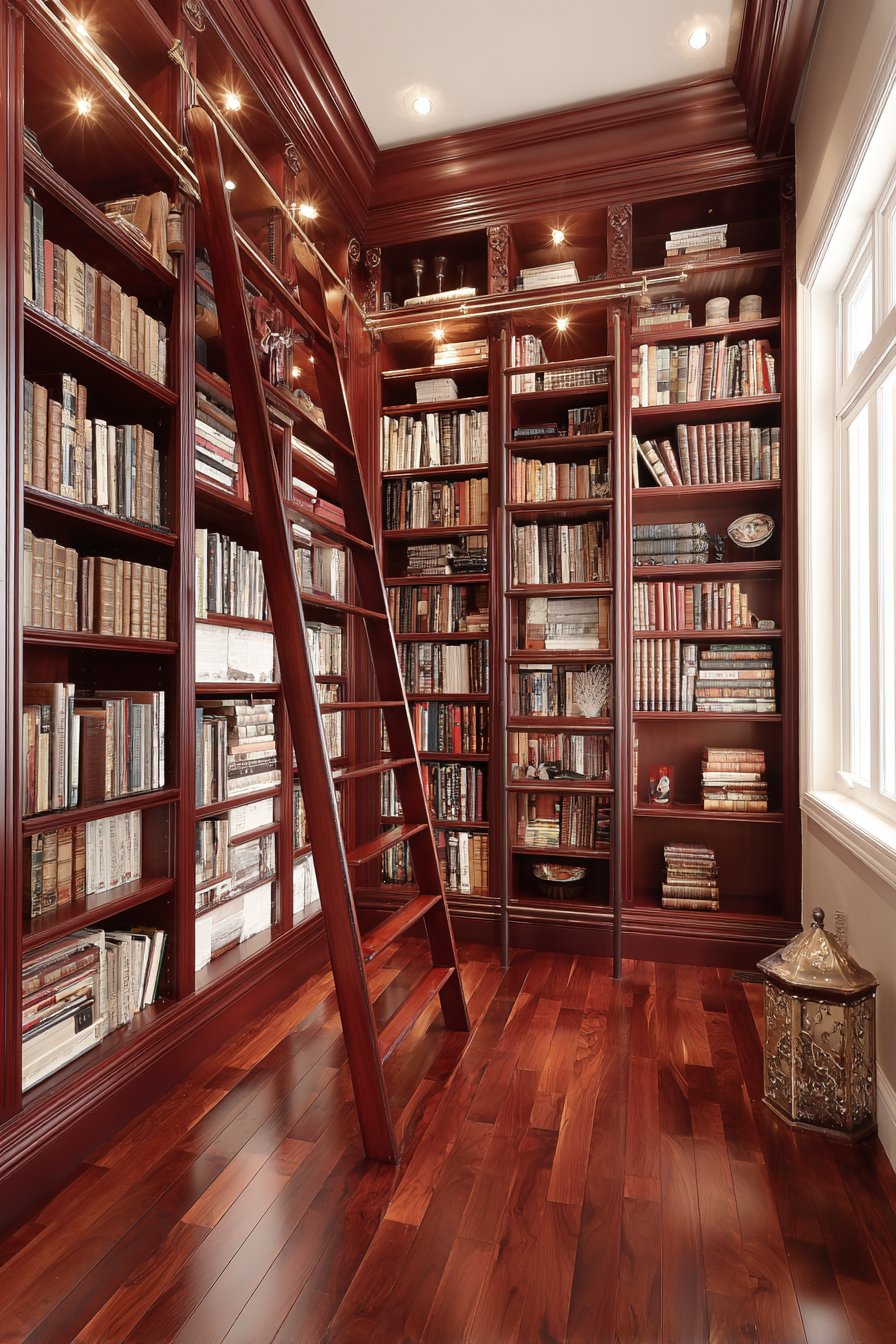
Floor-to-ceiling built-in shelving in rich mahogany wood creates the timeless elegance of traditional home libraries, transforming reading rooms into scholarly sanctuaries. Custom shelving featuring adjustable shelves, crown molding details, and integrated ladder hardware represents investment-level craftsmanship that adds substantial value to homes. The deep, warm tones of mahogany provide gravitas and sophistication, while traditional details like decorative molding and precise joinery celebrate woodworking heritage. This approach to shelving transcends mere storage, creating architectural features that define room character.
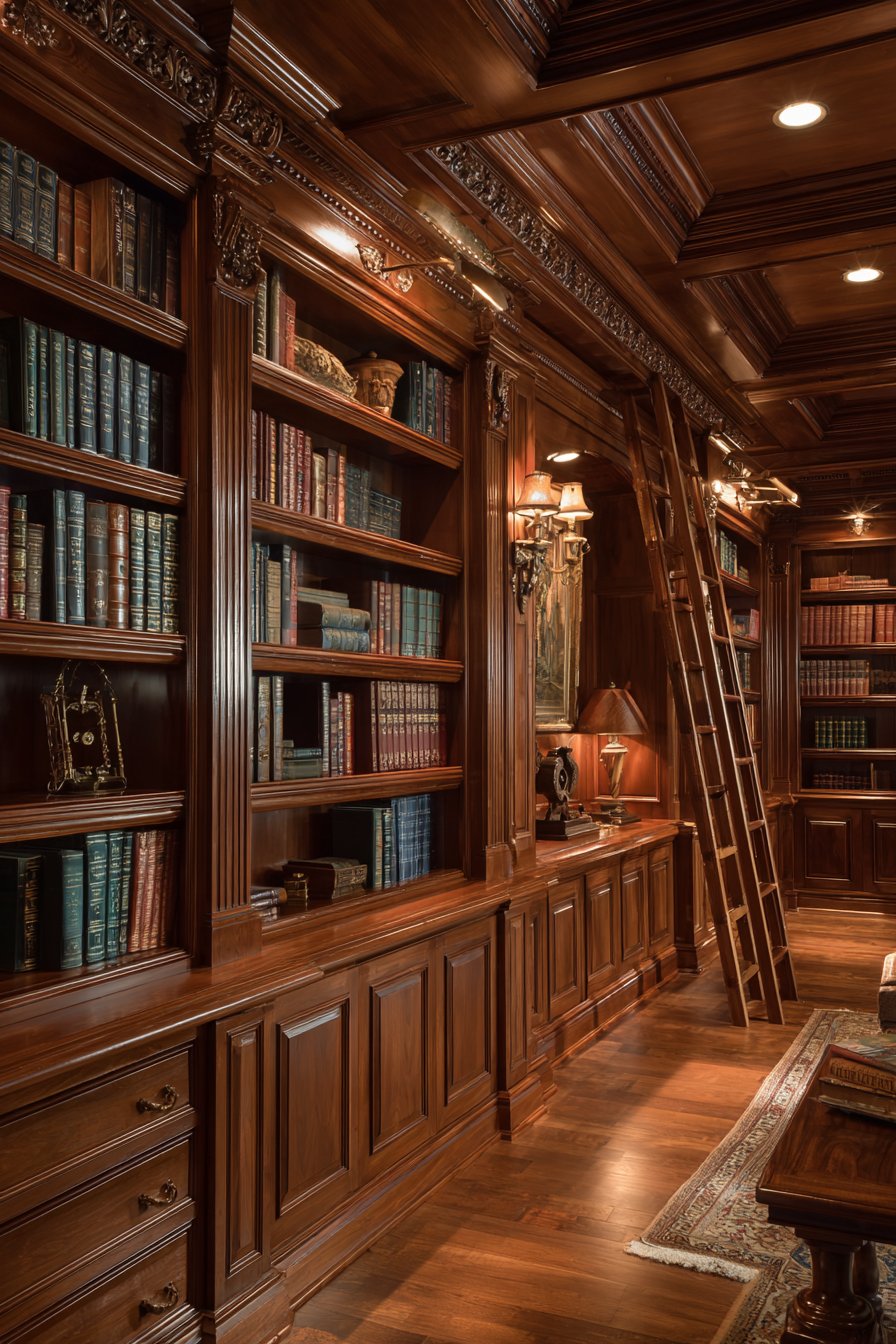
The organization and styling of traditional library shelving follows time-honored principles—books arranged by size and color create pleasing visual rhythm, while decorative bookends and small sculptures provide punctuation and interest. The adjustable shelving accommodates everything from oversized art books to pocket-sized volumes, with flexibility that ensures the system serves practical needs despite its formal appearance. Glass-fronted sections protect valuable first editions while displaying their beautiful spines, creating focal points within the larger shelving wall.
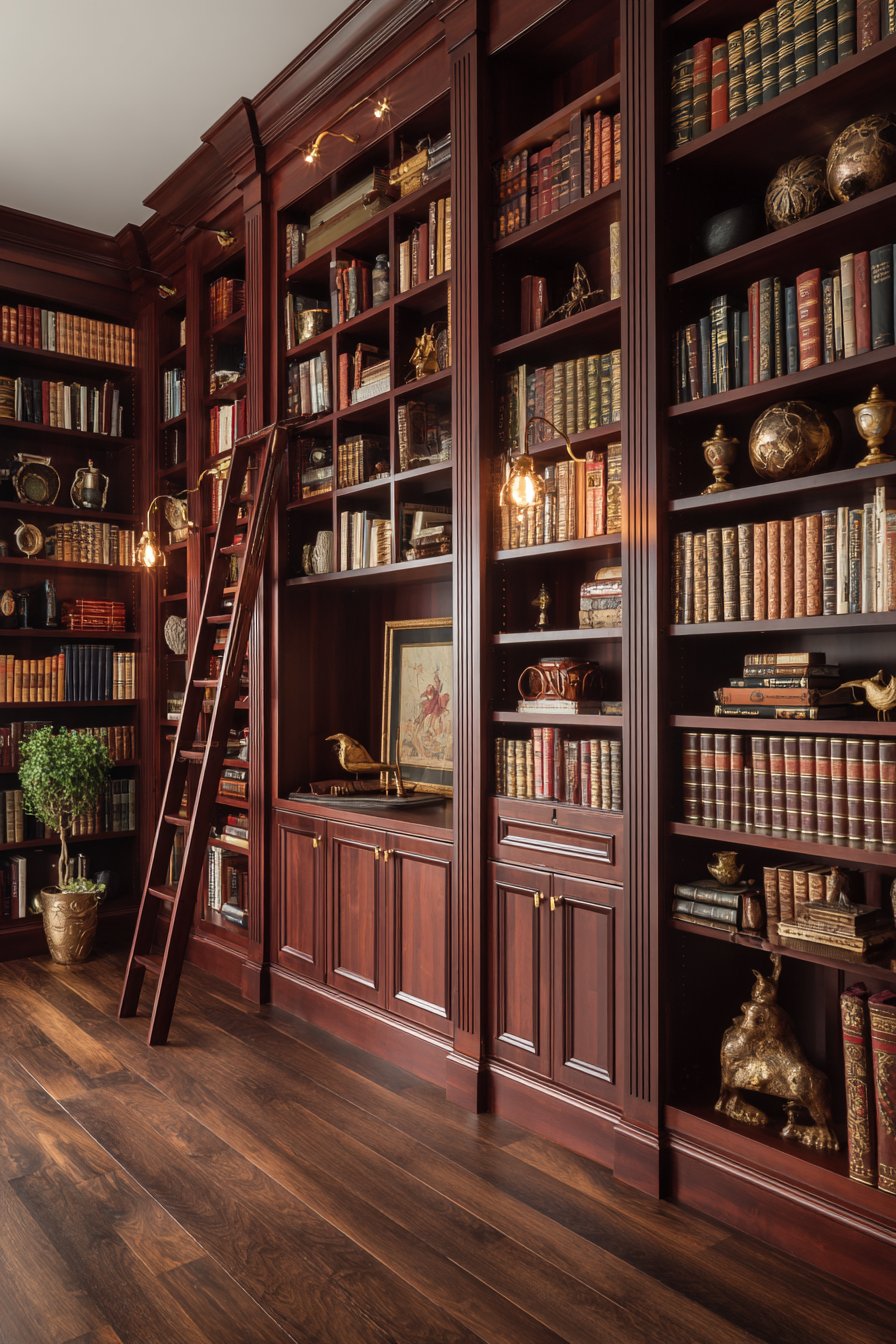
Warm library lighting—typically achieved through combination of ambient fixtures, task lamps, and picture lights—creates the inviting atmosphere essential to spaces designed for reading and contemplation. The lighting highlights the mahogany’s rich grain patterns and deep color while creating the pools of light and shadow that give traditional libraries their distinctive character. The integrated ladder hardware serves both practical and aesthetic functions, allowing access to high shelves while adding visual interest and traditional library authenticity.
Key Design Tips:
- Invest in professional carpenter for custom built-ins to ensure proper fit and quality joinery
- Choose hardwoods like mahogany, cherry, or walnut that deepen and enrich with age
- Incorporate variety in shelf heights to accommodate different book sizes efficiently
- Install lighting on dimmers to adjust ambiance for reading versus ambient illumination
- Consider backing some shelves with fabric or wallpaper to add subtle color and texture
- Leave some shelf space for display objects to prevent monotonous wall-to-wall books
- Ensure proper library ladder attachment points are integrated during construction, not added afterward
11. Open Kitchen Concept
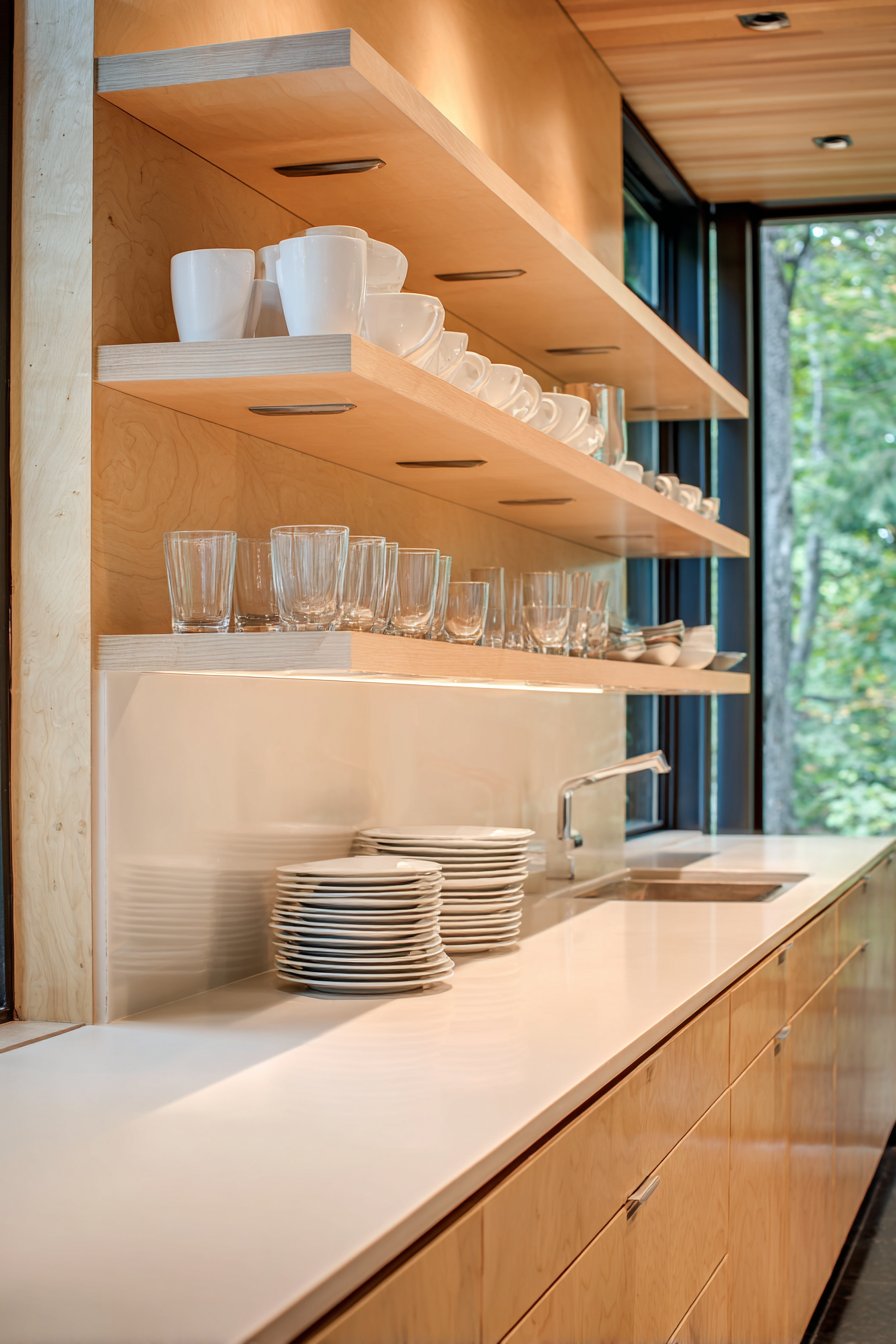
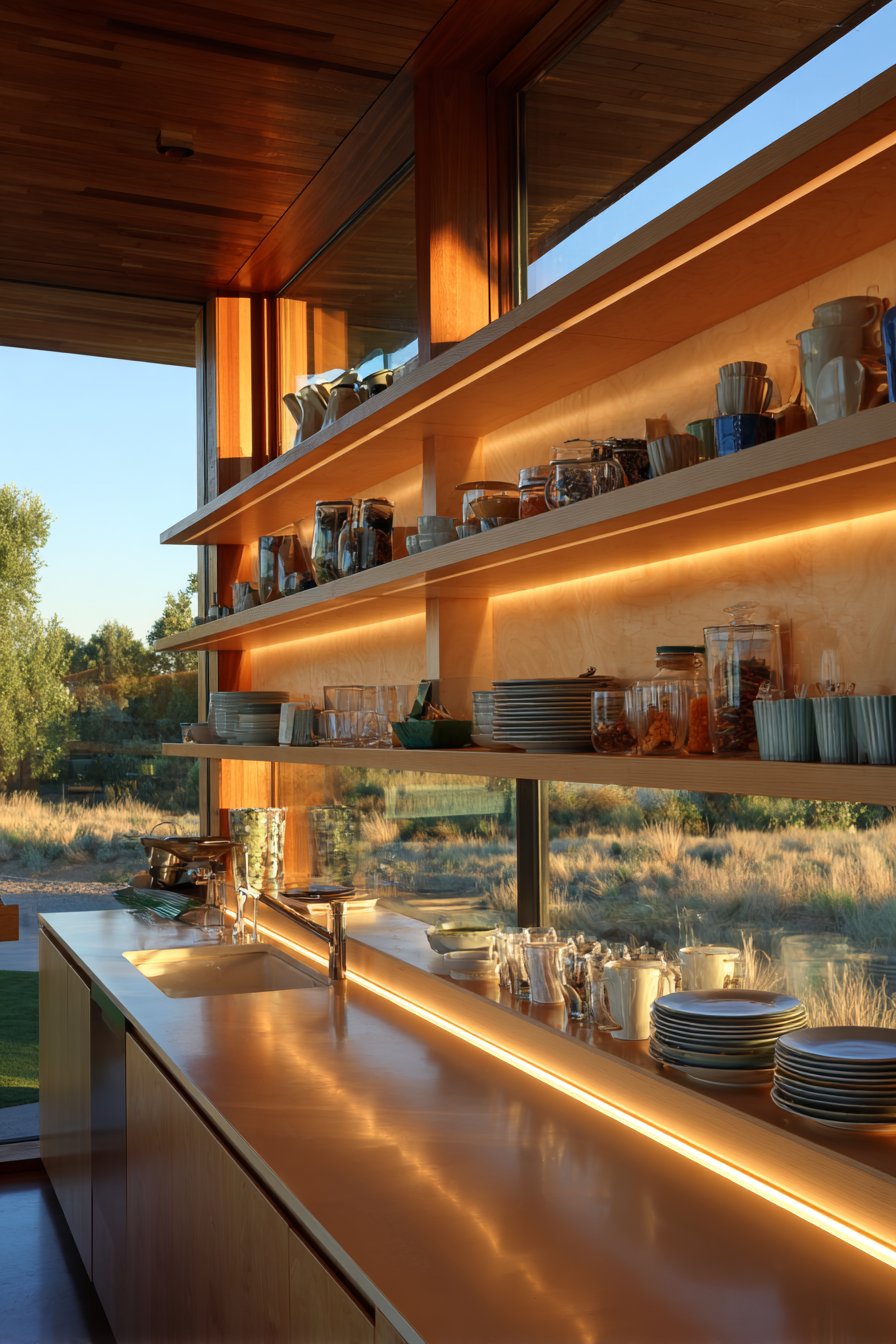
Long horizontal shelves in light maple replacing traditional upper cabinets create the airy, accessible aesthetic that defines open concept kitchen design. Minimal steel bracket supports virtually disappear, allowing the shelving to feel light and unobtrusive while maintaining structural integrity. This approach transforms kitchen storage from hidden necessity to curated display, requiring thoughtful organization and beautiful everyday items. The display of dishes, glassware, and attractive storage containers becomes part of the kitchen’s decor, celebrating rather than hiding the tools of cooking and gathering.
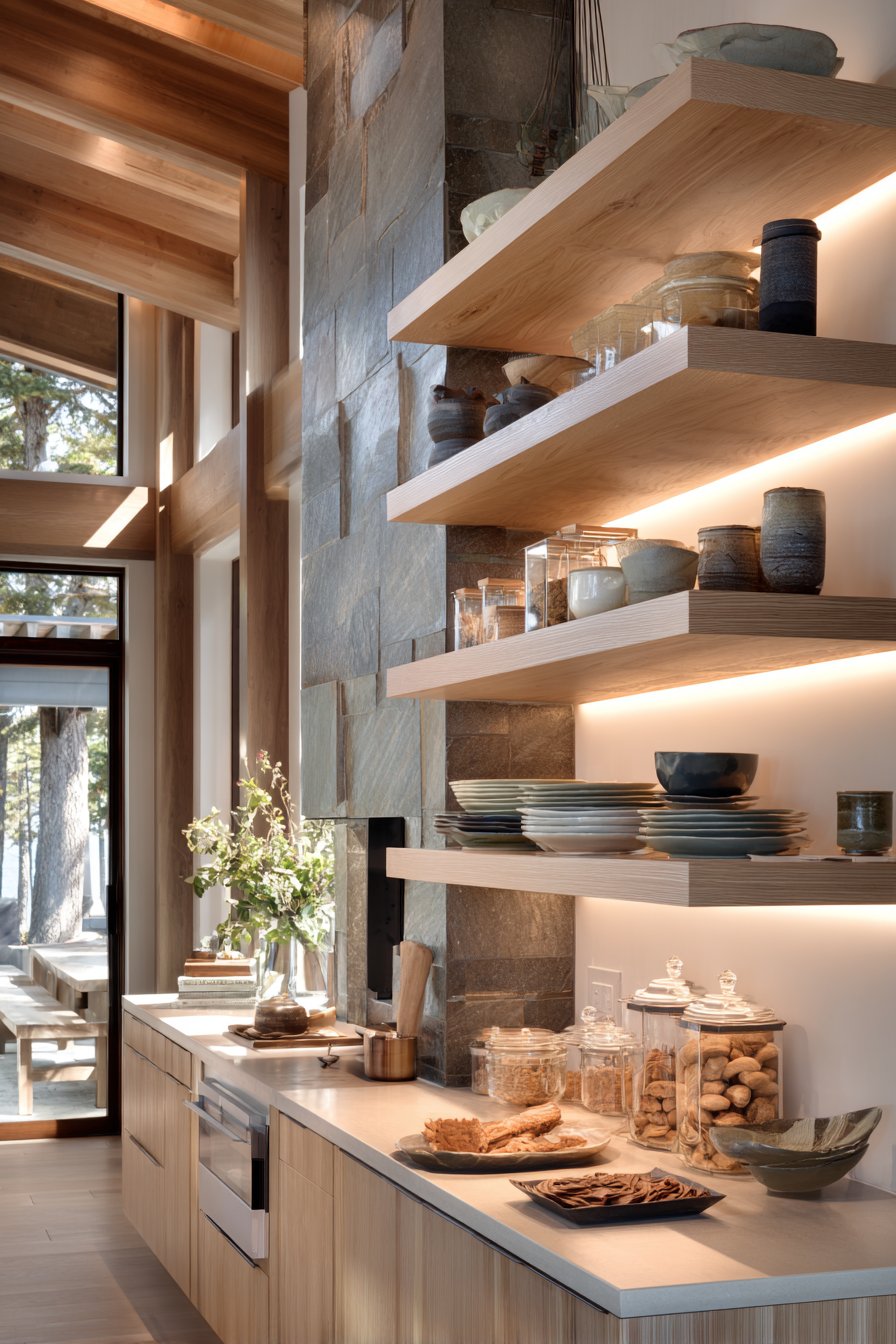
The practical considerations of open kitchen shelving require honest assessment—this storage method demands organization and regular maintenance that closed cabinets forgive. However, the rewards include easier access to frequently used items, forced editing of kitchen clutter, and the visual spaciousness that open shelving provides. Under-cabinet LED lighting illuminates work surfaces while subtly highlighting the shelving display above, creating functional task lighting that also enhances aesthetic appeal. Natural window light plays across organized displays, creating dynamic interplay of light and shadow throughout the day.
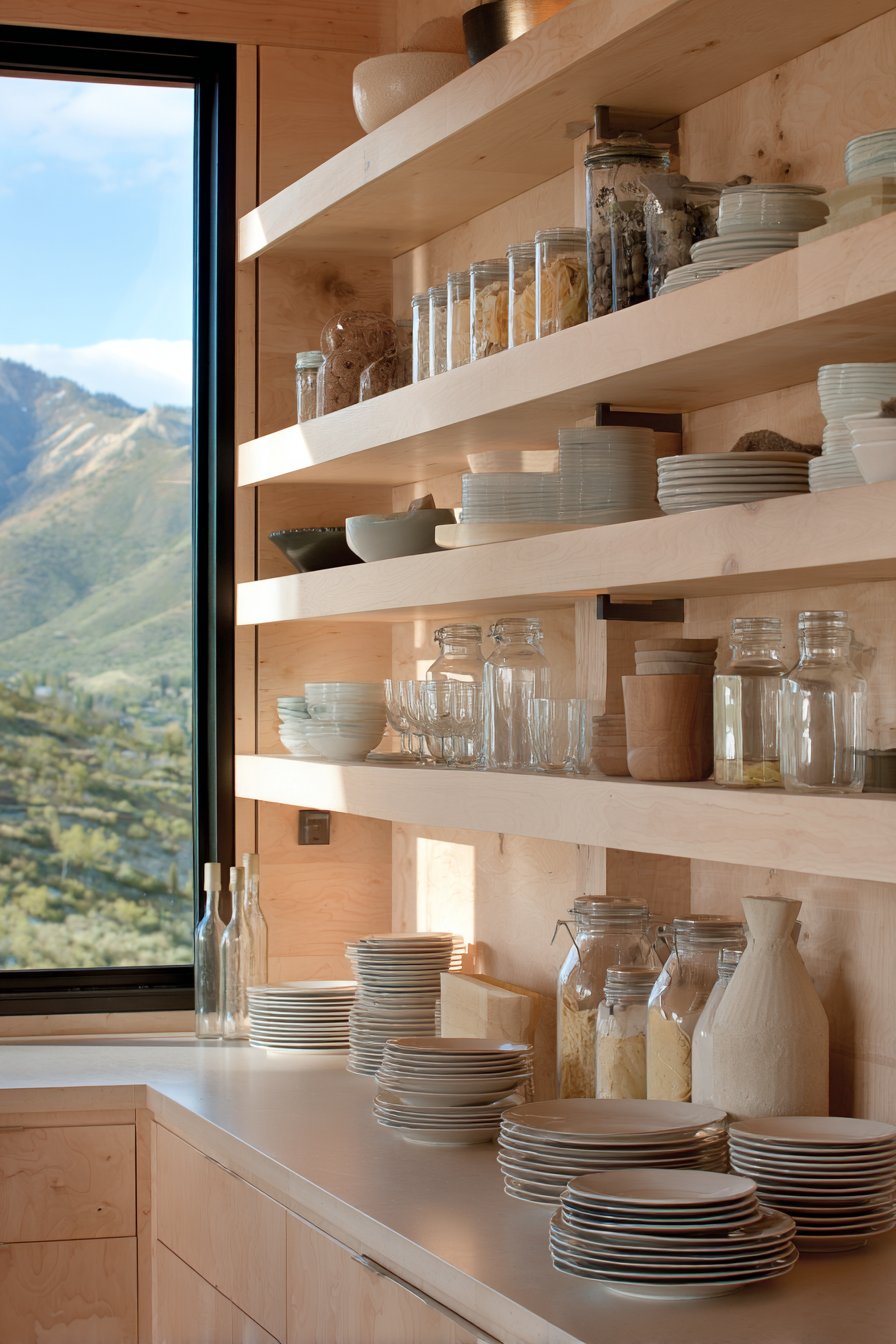
The styling of open kitchen shelving follows restaurant kitchen principles—organization by use frequency, like items grouped together, and sufficient spacing to prevent overcrowding. Everyday dishes within easy reach encourage actual use rather than special-occasion-only restriction. The light maple wood maintains warmth without visual heaviness, complementing both traditional and contemporary kitchen designs. This versatility explains the enduring popularity of natural wood tones in kitchen design.
Key Design Tips:
- Assess honestly whether open shelving suits your cooking style and organizational habits before committing
- Choose dishes and glassware in cohesive color schemes (whites, naturals, or matched sets) for visual harmony
- Install shelving at heights that allow comfortable reaching while accommodating taller items on lower shelves
- Incorporate some closed storage elsewhere in kitchen for less attractive necessities (cleaning supplies, bulk items)
- Plan for dust management—open shelves require more frequent cleaning than closed cabinets
- Use shelf depth of 10-12 inches for dishes and glasses—deeper than needed creates wasted space
- Consider earthquake safety in appropriate regions—secure items or install small lips on shelf fronts
12. Mid-Century Modern Living Room
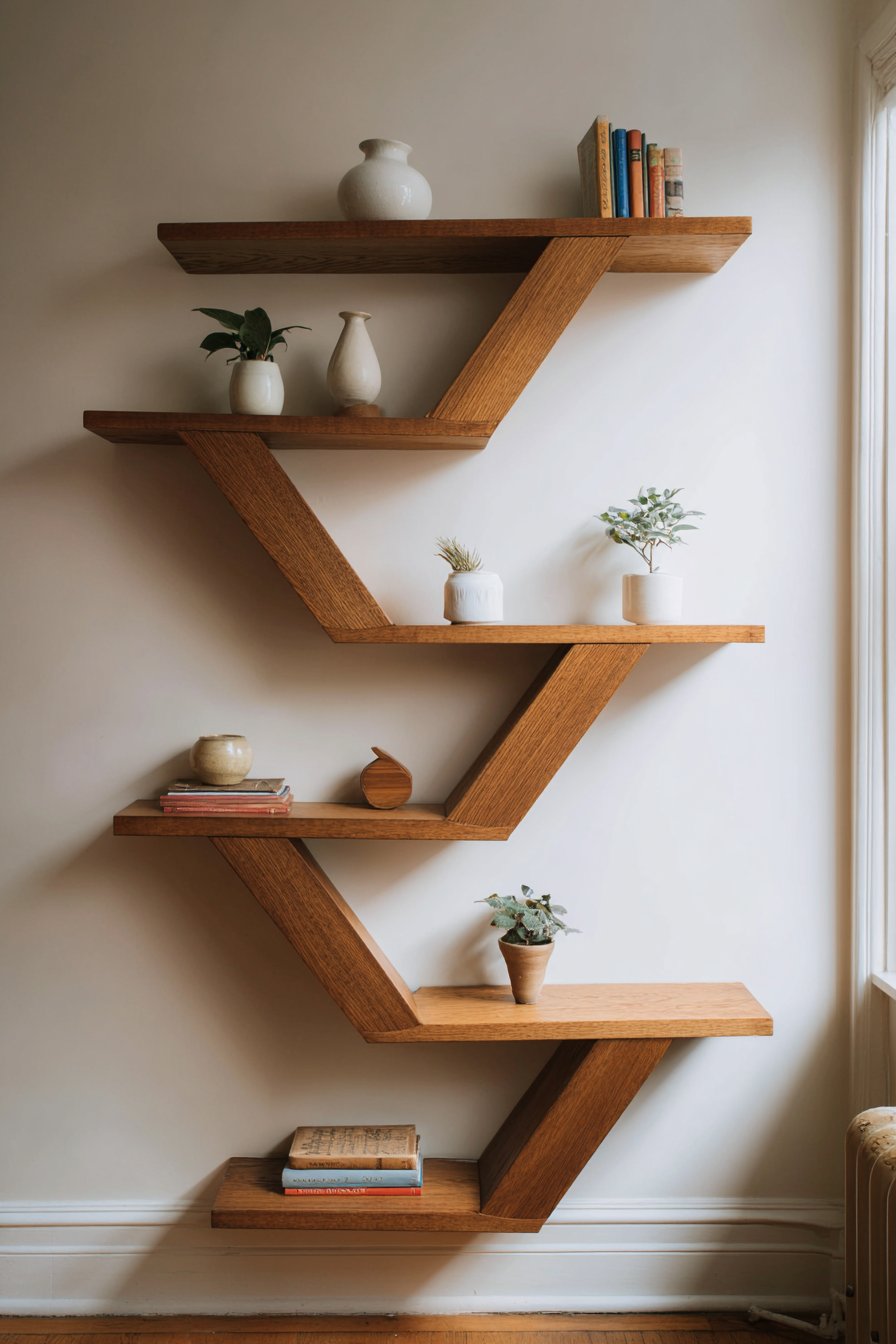
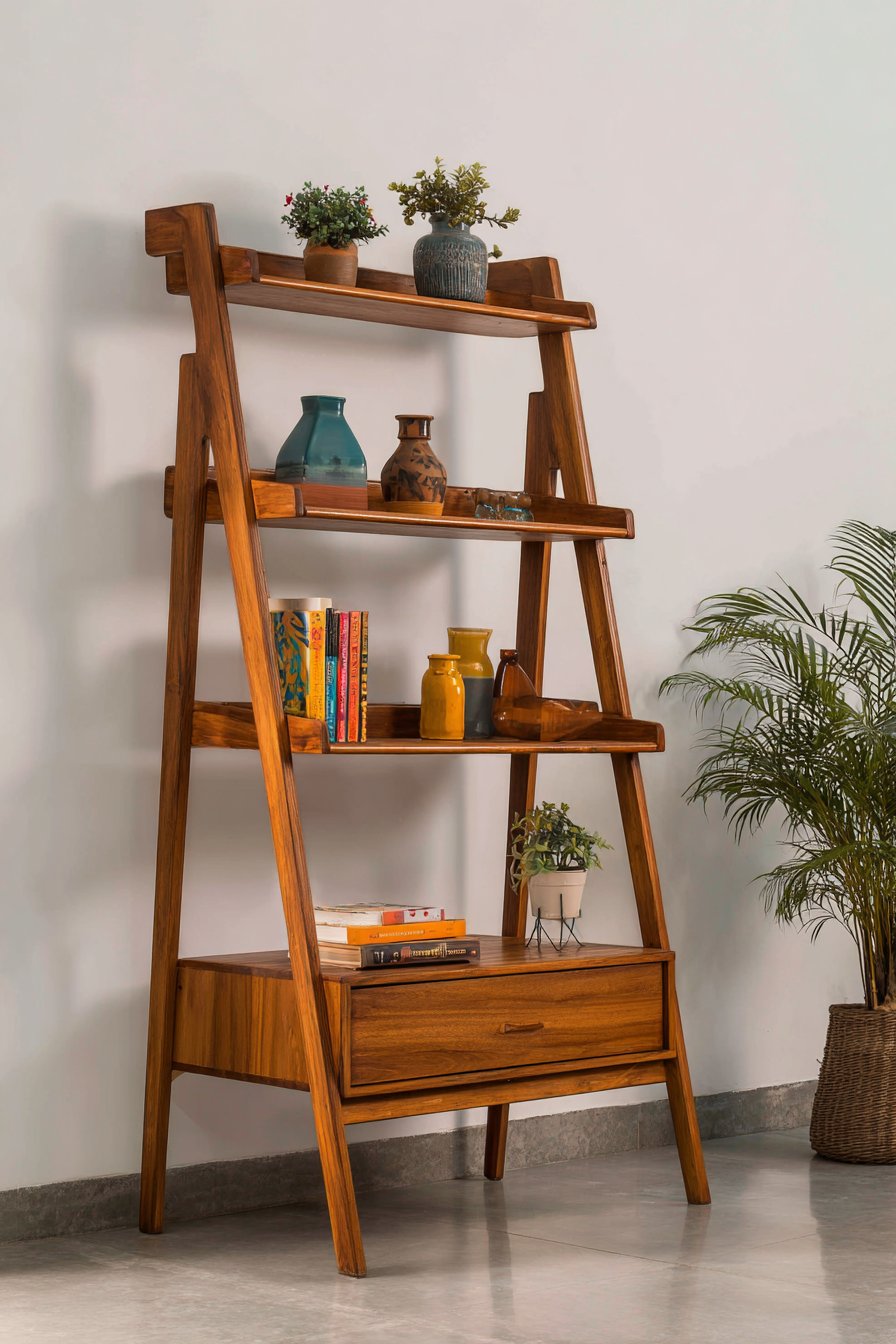
Teak veneer shelving with distinctive angled brackets and asymmetrical arrangement embodies the iconic design principles of mid-century modernism. The warm wood tones characteristic of 1950s and 60s design create inviting warmth while the clean lines and minimal ornamentation reflect the era’s embrace of functionality and honest materials. Asymmetrical arrangement follows mid-century compositional principles that valued dynamic balance over rigid symmetry. The angled brackets become sculptural elements themselves, celebrating the engineering required to support the shelves while adding visual interest through geometry.
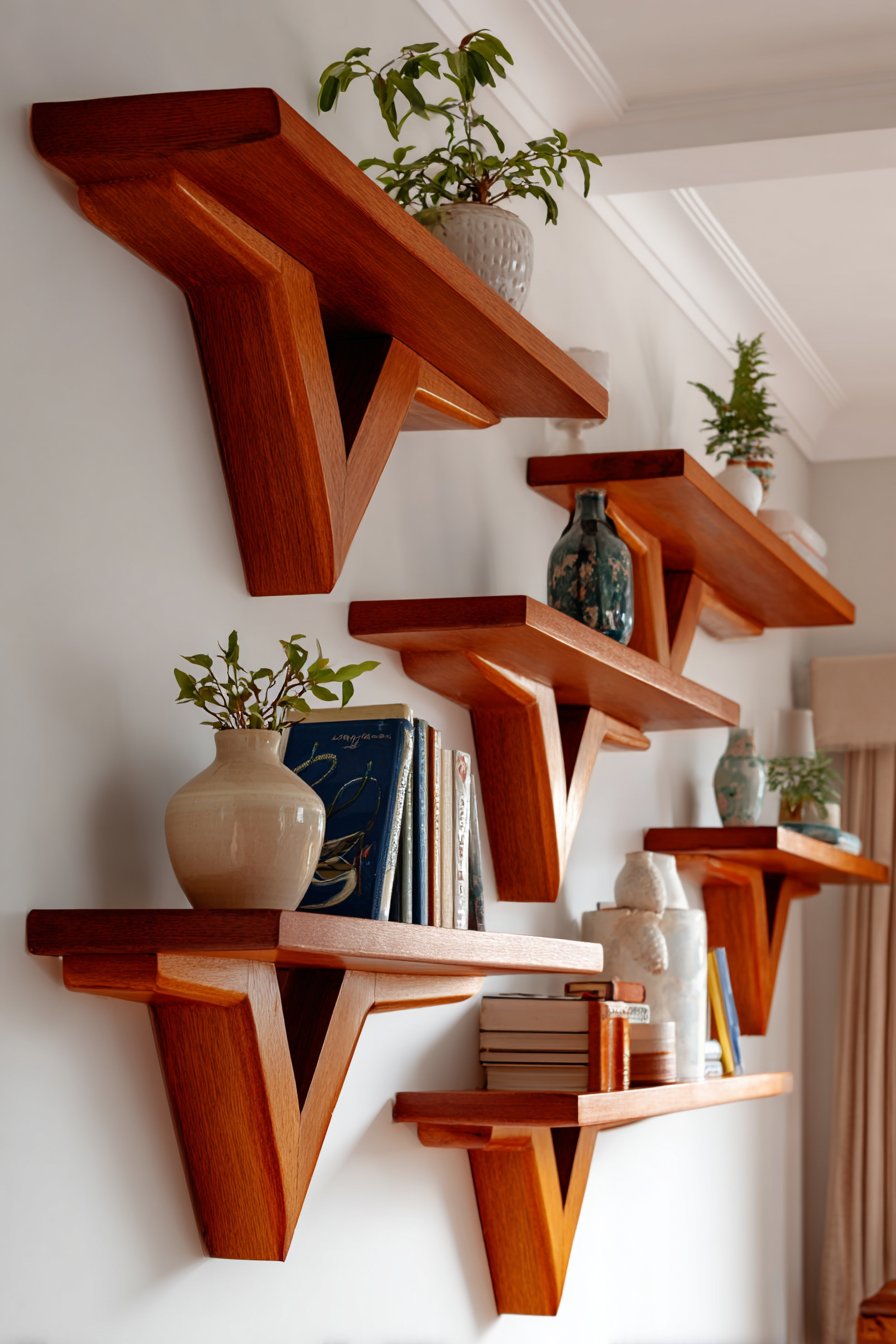
Period-appropriate styling honors mid-century design heritage while maintaining livability for contemporary life. Ceramic vases in organic forms, small plants in simple pots, and vintage books with beautiful graphic covers create vignettes that feel authentically mid-century without becoming museum-like. The warm teak contrasts beautifully against white walls, allowing the wood grain and sculptural brackets to command attention. This restraint in color palette—allowing natural materials to provide warmth rather than relying on paint—typifies mid-century modern philosophy.
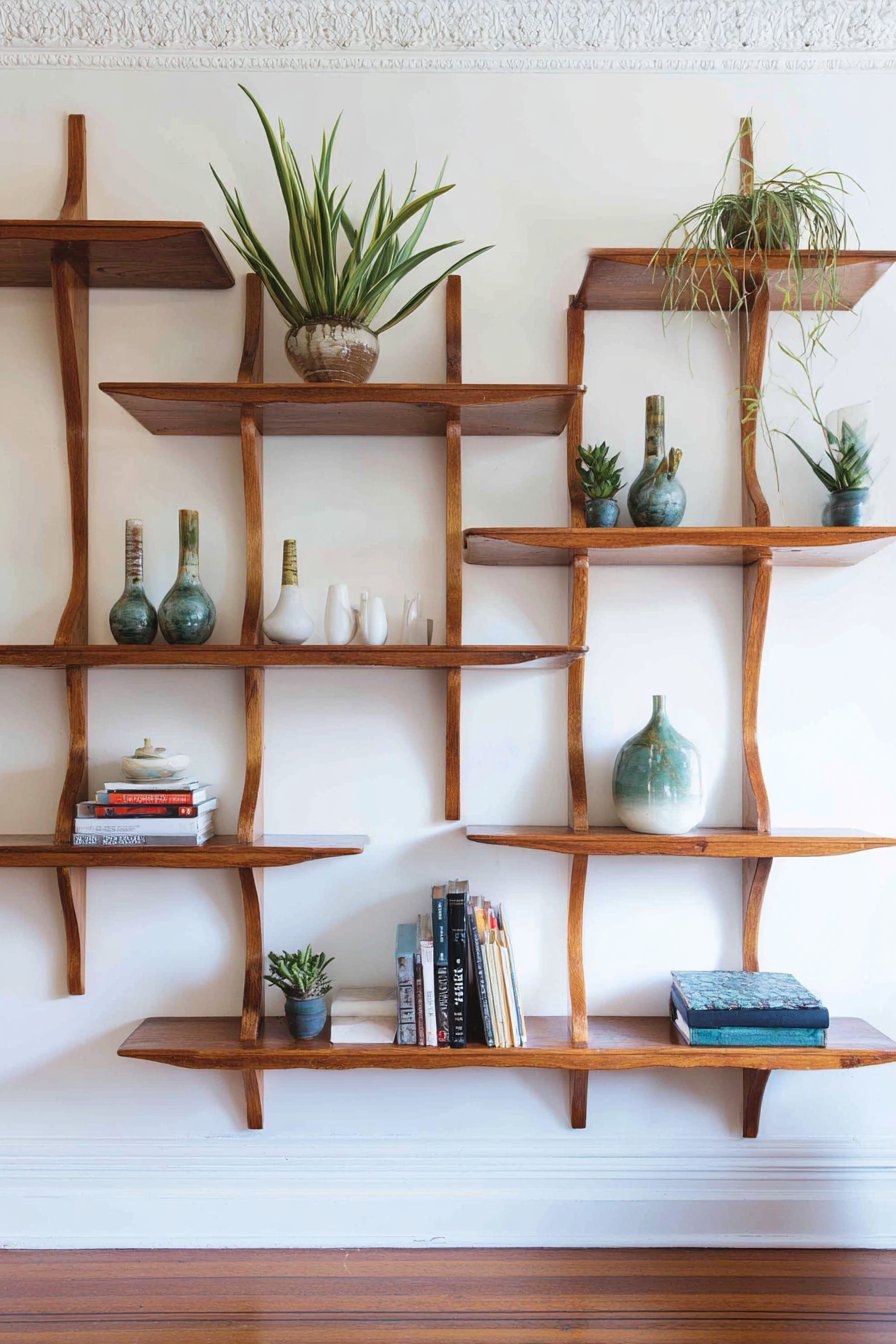
Soft natural lighting emphasizes the warmth of teak while creating shadows that highlight the dimensional quality of angled brackets and asymmetrical arrangement. This interplay of light and form demonstrates how mid-century designers understood that furniture and shelving function as sculpture when thoughtfully designed. The installation becomes art that also serves practical storage needs—the dual functionality that mid-century modernism championed.
Key Design Tips:
- Source authentic mid-century pieces from estate sales or vintage dealers for genuine character and quality
- Choose warm-toned woods like teak, walnut, or rosewood that define the era’s aesthetic
- Embrace asymmetry and dynamic balance rather than rigid symmetry in shelf arrangement
- Display period-appropriate items—ceramics, glassware, and objects that reflect mid-century design sensibility
- Keep styling sparse to highlight individual objects and maintain clean lines
- Pair with other mid-century furnishings to create cohesive environment rather than isolated piece
- Maintain and oil wood regularly to preserve the warm, glowing patina characteristic of well-cared-for teak
13. Coastal Bedroom Retreat
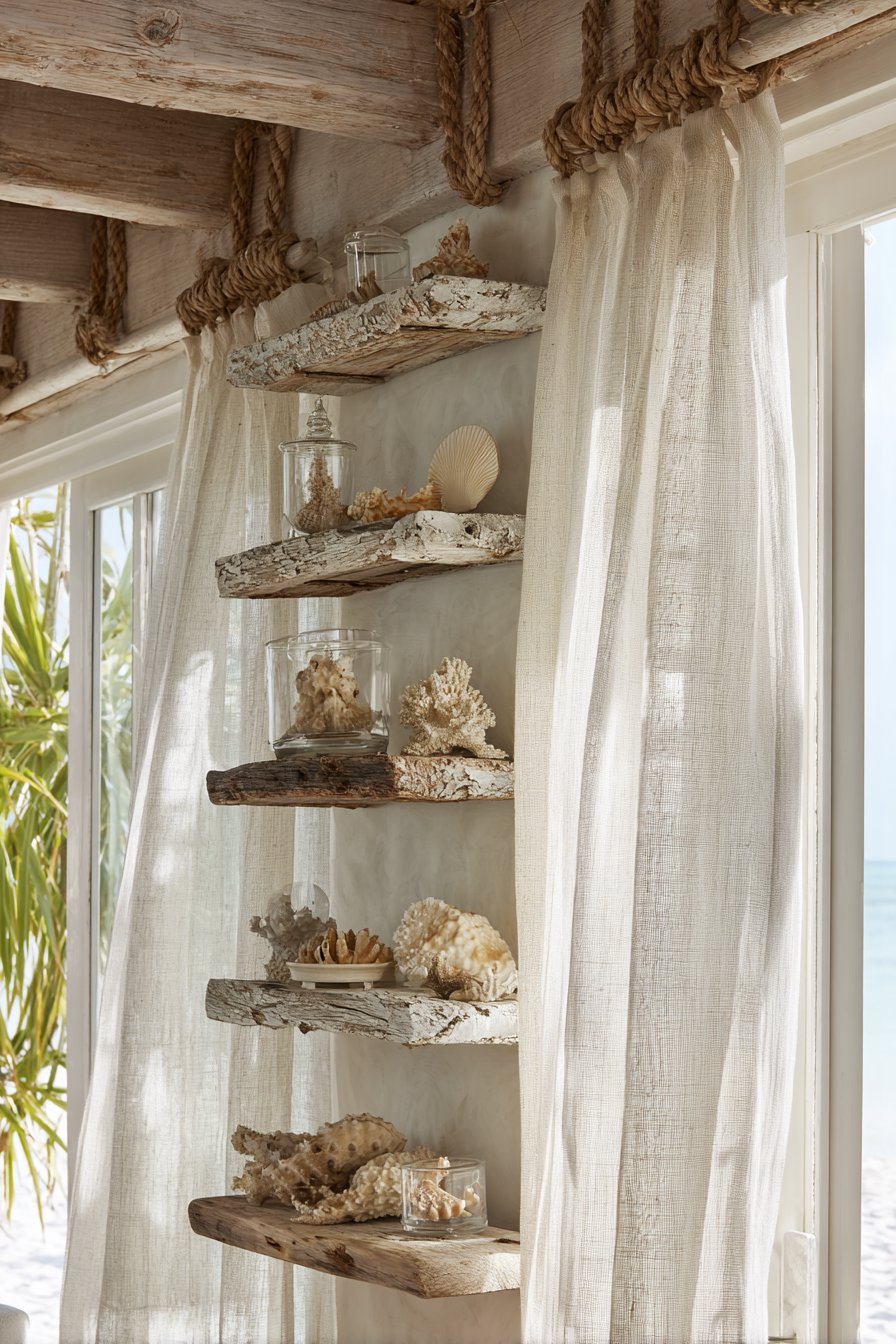
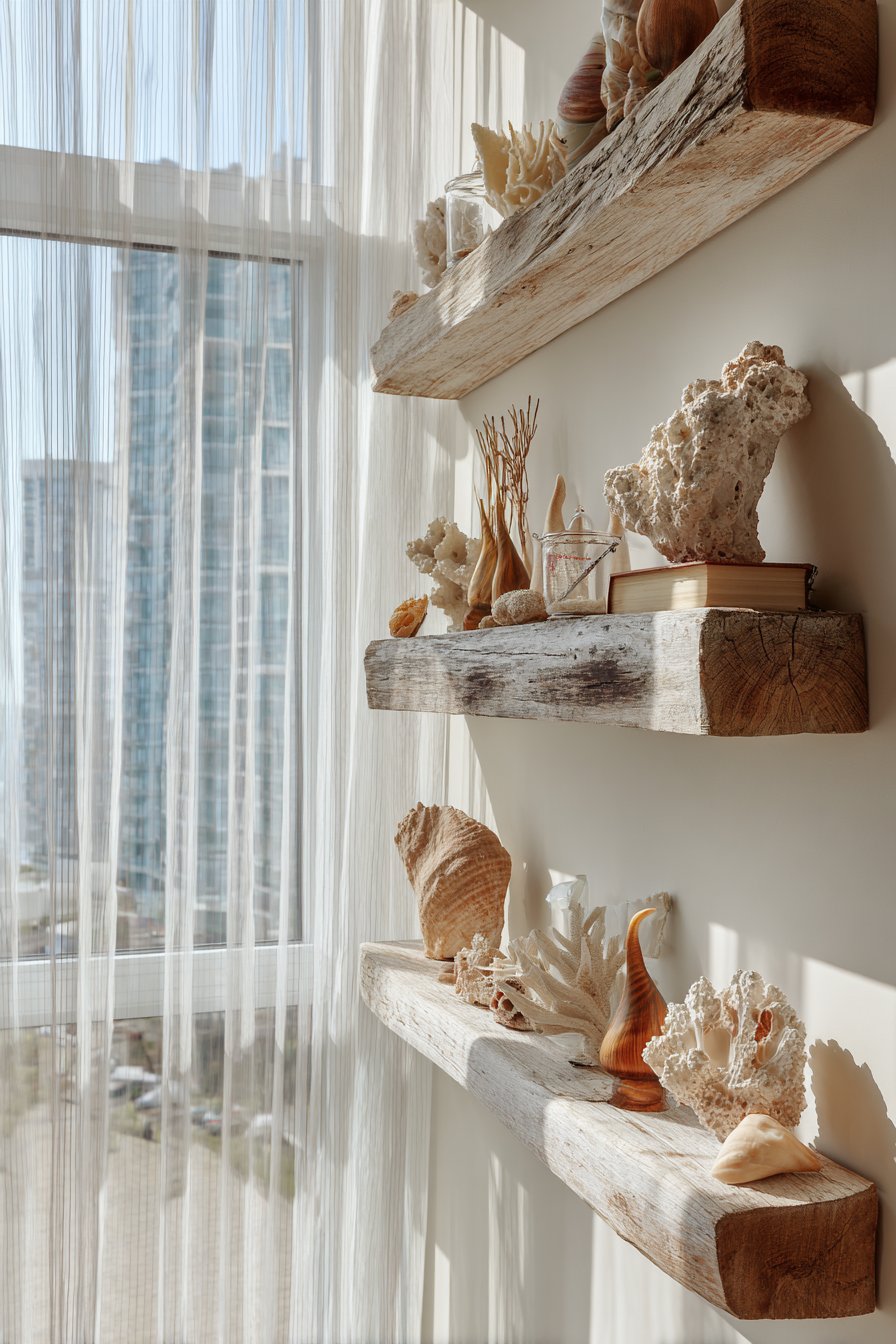
Weathered white-washed wood shelves mounted on rope and driftwood brackets bring beach house casualness to bedroom spaces, creating serene retreats that channel coastal living. The weathered finish suggests salt air and sun exposure, introducing outdoor elements into interior spaces. Natural rope and driftwood brackets celebrate organic materials while providing sturdy support—the combination of rustic materials with deliberate whitewashing creates the relaxed sophistication that distinguishes coastal style from generic beach theme. Against soft blue or sandy neutral walls, this shelving establishes the color palette and design direction for the entire room.
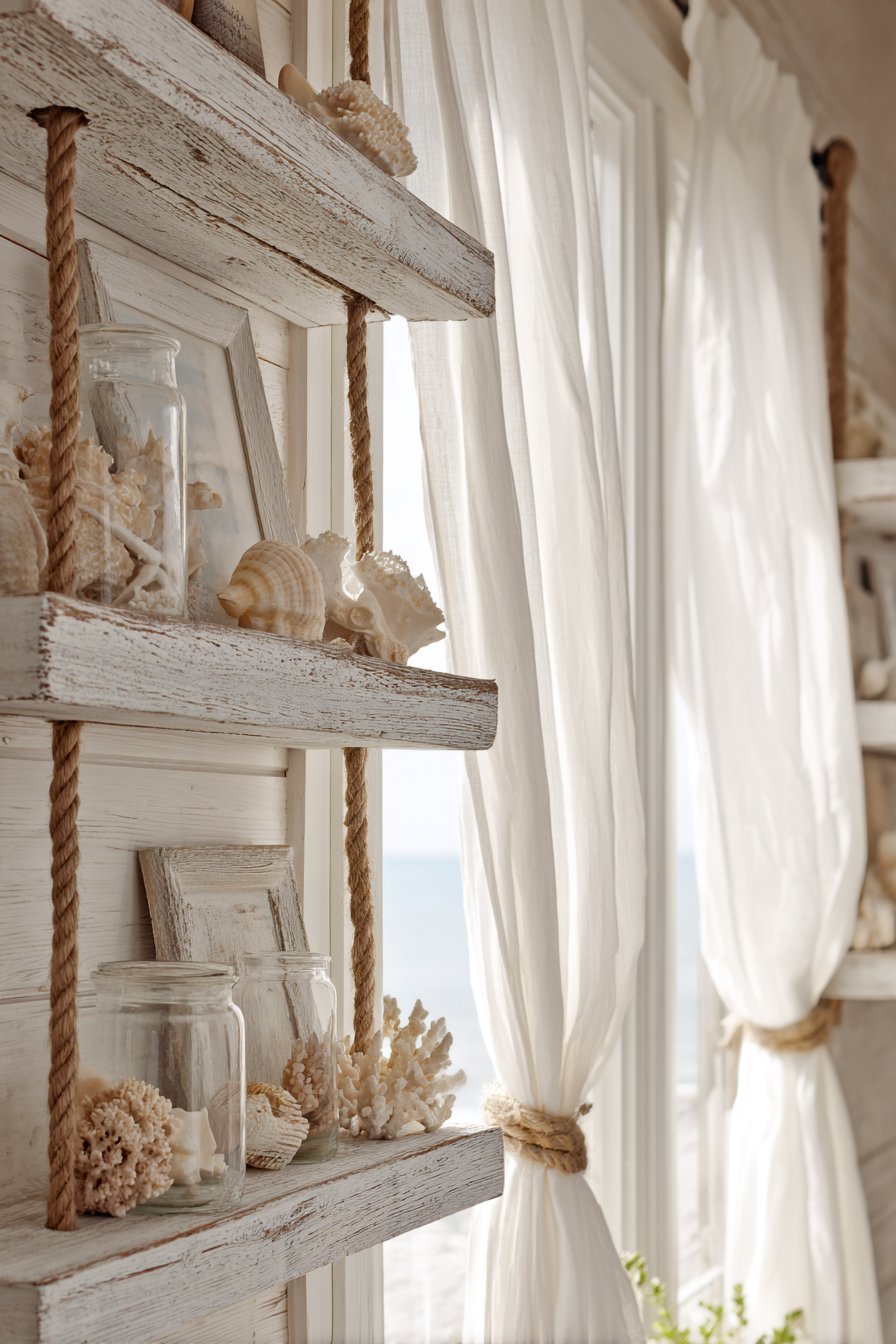
Coastal styling embraces collections from beach walks—shells, coral specimens, sea glass, and smooth stones become curated displays that tell personal stories. Practical storage for books, alarm clocks, and bedside necessities integrates seamlessly with decorative elements. The weathered white finish reflects light beautifully, maintaining the bright, airy quality essential to coastal design. Sheer curtains filtering natural light create the sun-washed effect that makes coastal rooms feel perpetually bathed in morning light, with the white shelving amplifying this brightness.
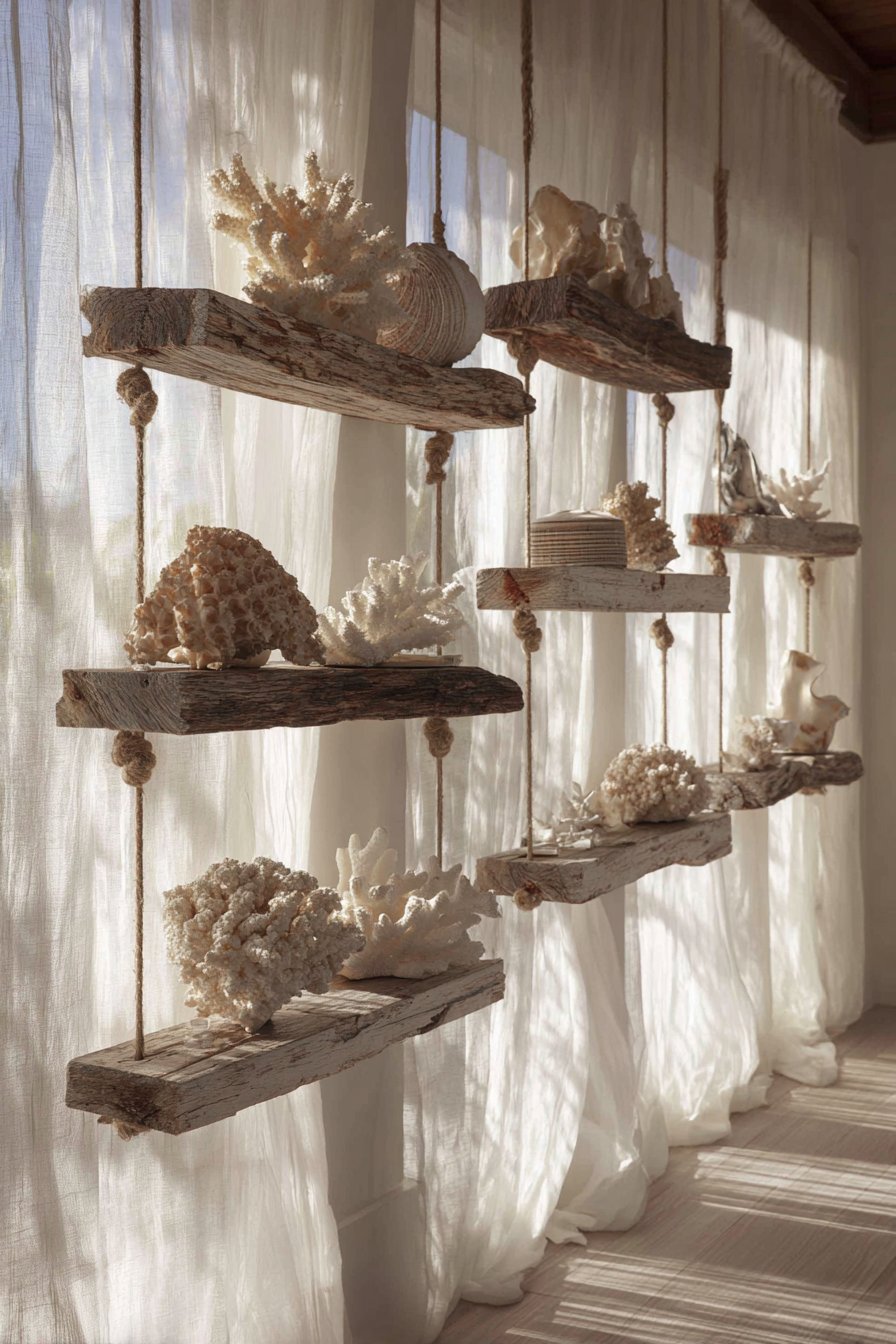
The casual elegance of coastal shelving creates bedrooms that feel like permanent vacation retreats—spaces designed for relaxation and escape from daily stress. The natural materials provide textural interest without requiring pattern or color complexity. This simplicity allows the mind to rest, making coastal bedrooms particularly successful as sleep sanctuaries. The connection to nature through materials and displayed objects reinforces the restorative quality that coastal environments naturally possess.
Key Design Tips:
- Choose rope rated for interior use to prevent deterioration and maintain safety
- Apply whitewash rather than solid paint to allow wood grain to show through for authentic weathered look
- Display natural collected objects in odd-numbered groupings for more organic arrangements
- Incorporate blues, sandy neutrals, and whites in linens and accessories to complete coastal palette
- Select lightweight, breezy fabrics for window treatments to enhance airy feeling
- Avoid overly themed or kitschy beach decor in favor of sophisticated coastal sophistication
- Layer textures—linen, rope, weathered wood, sea glass—to create depth without color complexity
14. Compact Studio Solution
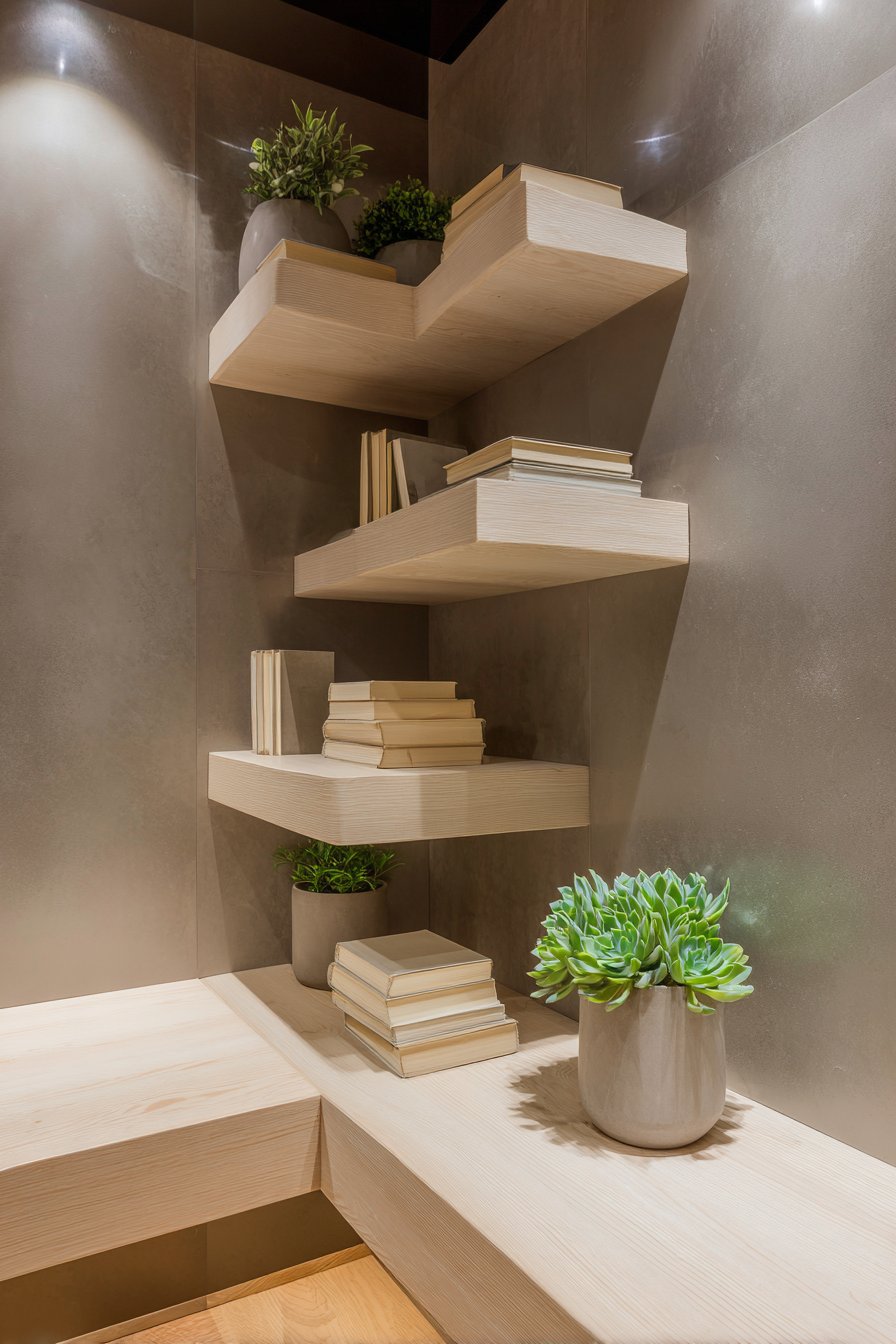
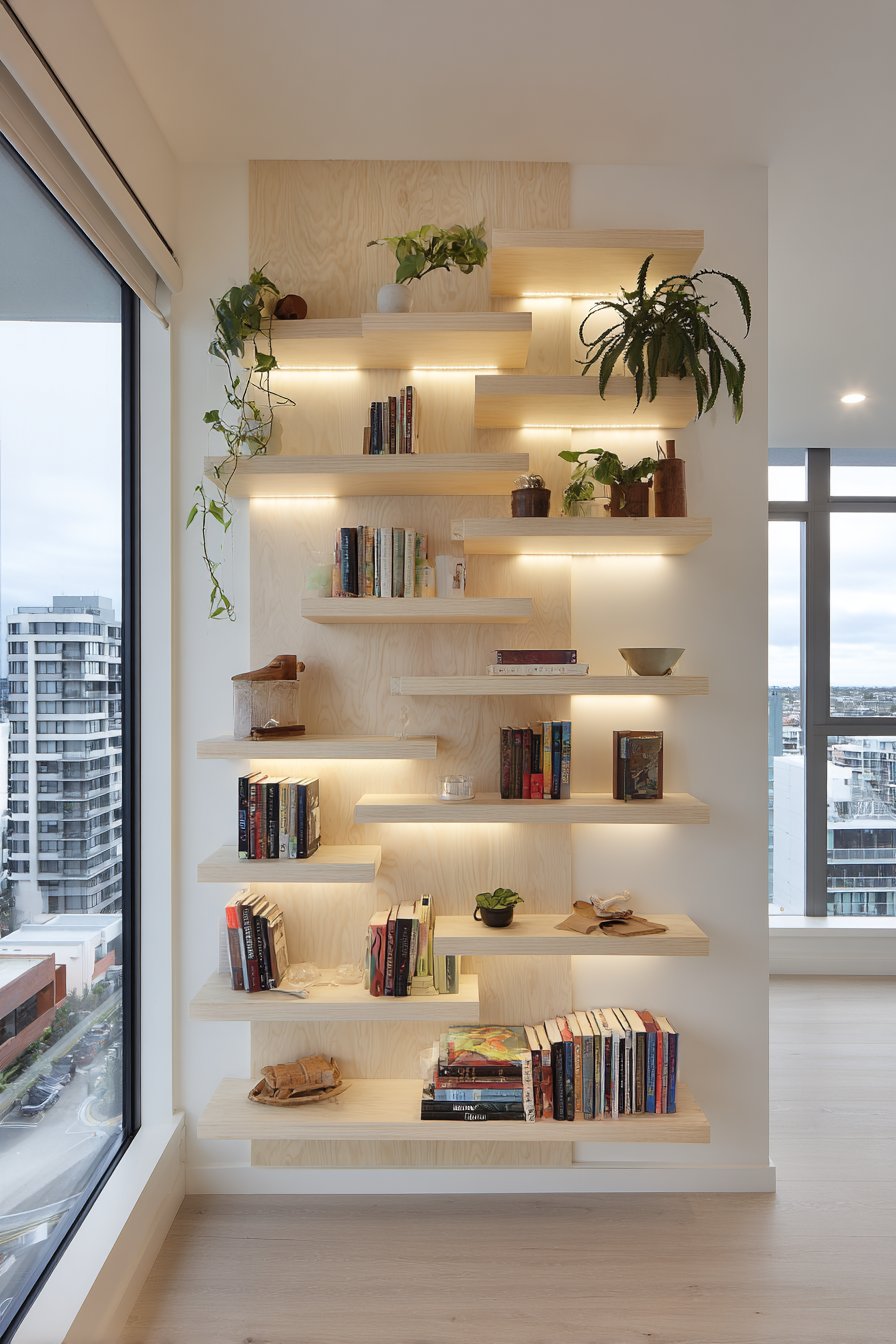
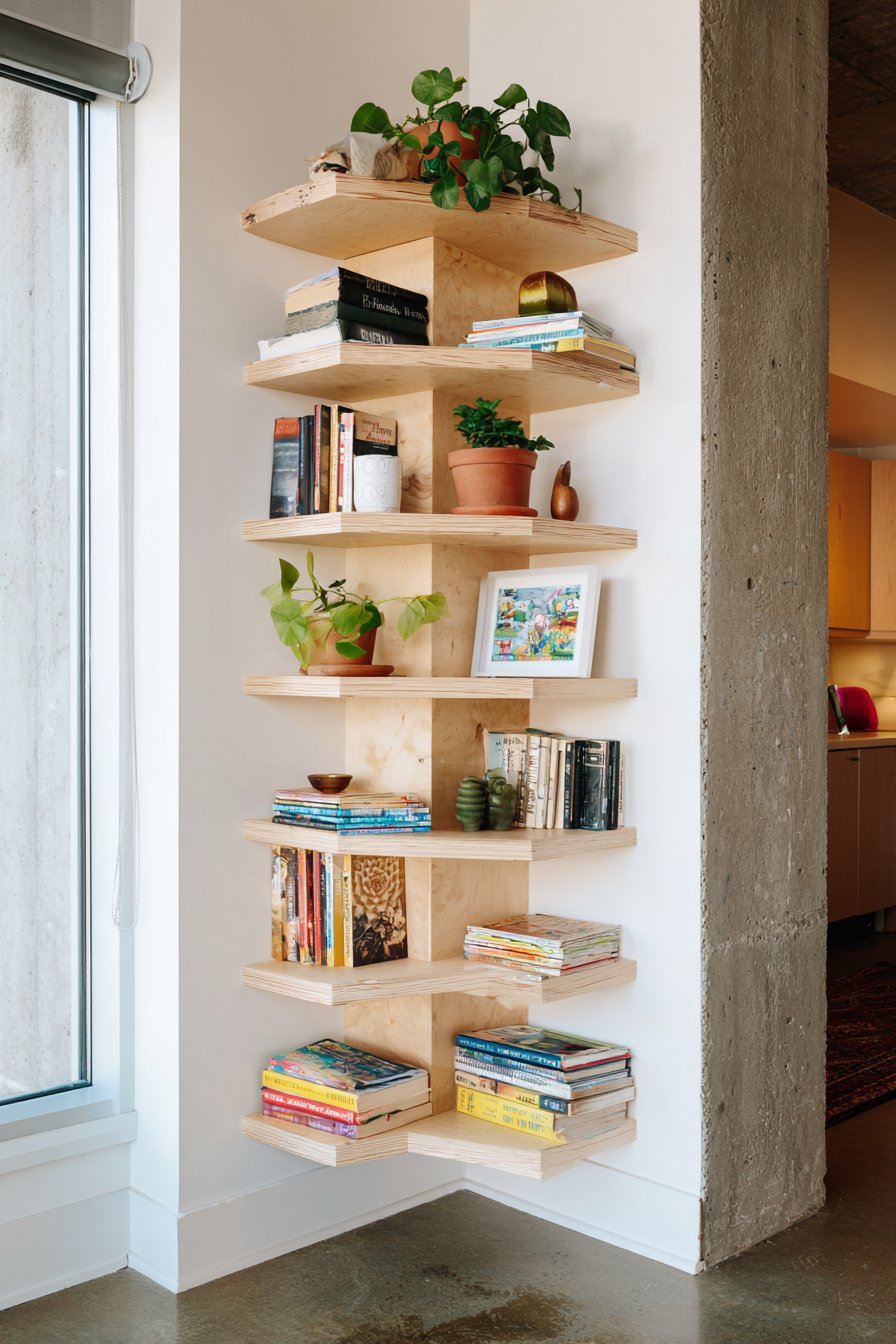
Vertical corner shelving maximizes limited wall space in studio apartments, proving that small spaces can achieve both functionality and style through thoughtful design. Narrow floating shelves in light birch staggered at varying heights create storage capacity without overwhelming compact rooms. The vertical emphasis draws the eye upward, making low-ceilinged studios feel taller and more spacious. The light wood tones maintain brightness crucial in potentially dark studio spaces, while the narrow depth prevents shelving from protruding excessively into precious floor space.
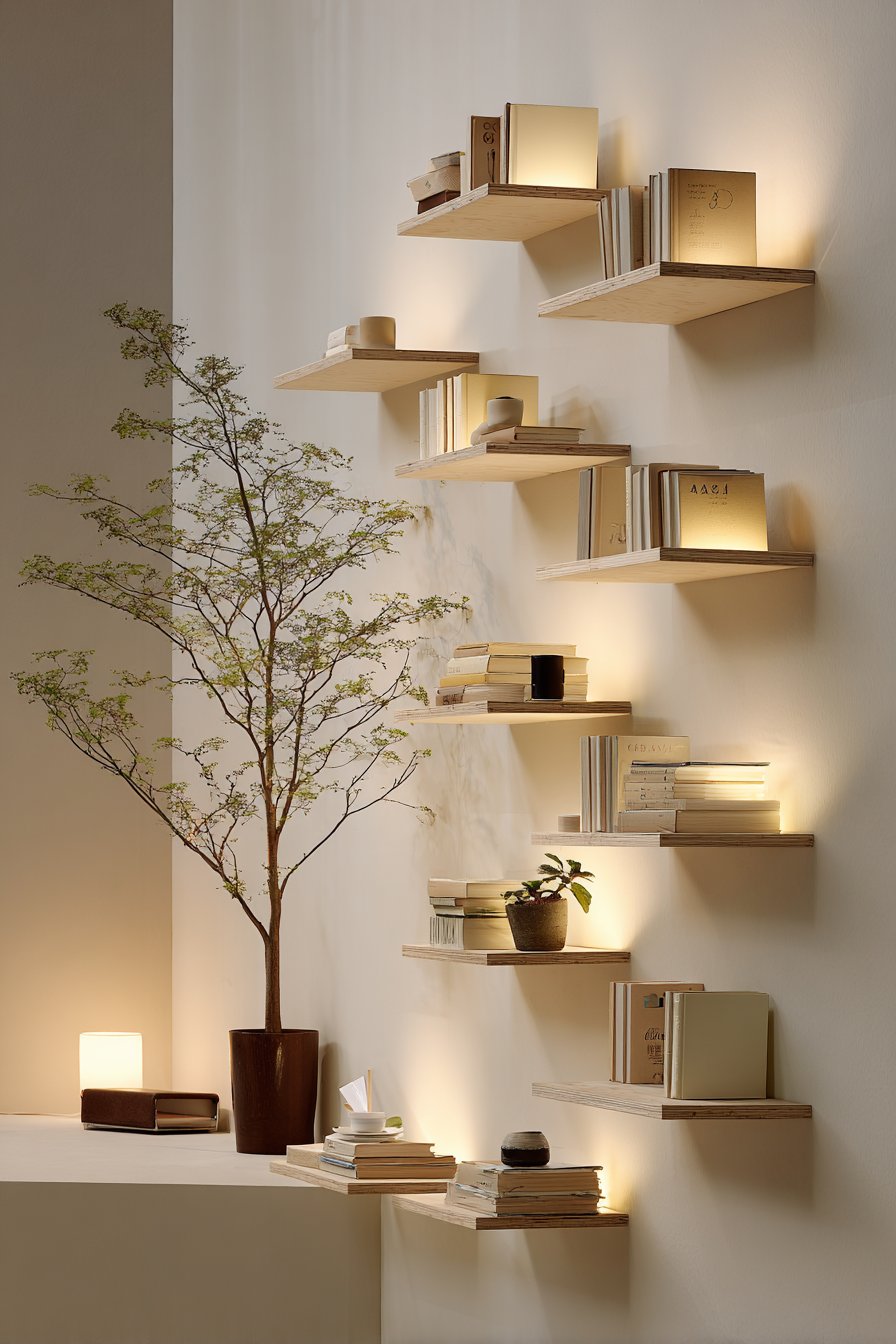
The strategic placement in corners takes advantage of often-wasted space, creating storage opportunities without sacrificing usable floor area. Books arranged spine-out, small plants adding life, and carefully chosen personal items create personality within the constraints of small-space living. The staggered heights create visual rhythm while allowing flexibility in what each shelf accommodates—taller sections for books, shorter spans for small objects. This adaptability proves essential in studios where every inch must work efficiently.
Soft ambient lighting designed for small spaces highlights the shelving without creating harsh shadows that would emphasize spatial limitations. The light birch reflects available light, contributing to the overall brightness that makes small spaces feel larger. The floating installation maintains clean floor lines, preventing the visual clutter that makes small rooms feel cramped. This demonstrates how thoughtful shelving design can actually enhance perceived spaciousness rather than diminishing it.
Key Design Tips:
- Measure corners carefully and use every inch of vertical space from comfortable reaching height to ceiling
- Choose shelf depths of 6-8 inches to provide storage without excessive protrusion into room
- Install highest shelf at height that allows safe access with small step stool
- Maintain light color palette in both shelving and displayed items to maximize brightness
- Use wall-mounting techniques that distribute weight across multiple studs for safety
- Edit displayed items regularly to prevent overcrowding that defeats the space-saving purpose
- Consider incorporating small LED strip lights on undersides to enhance functionality without floor lamps
15. Dynamic Gallery Display
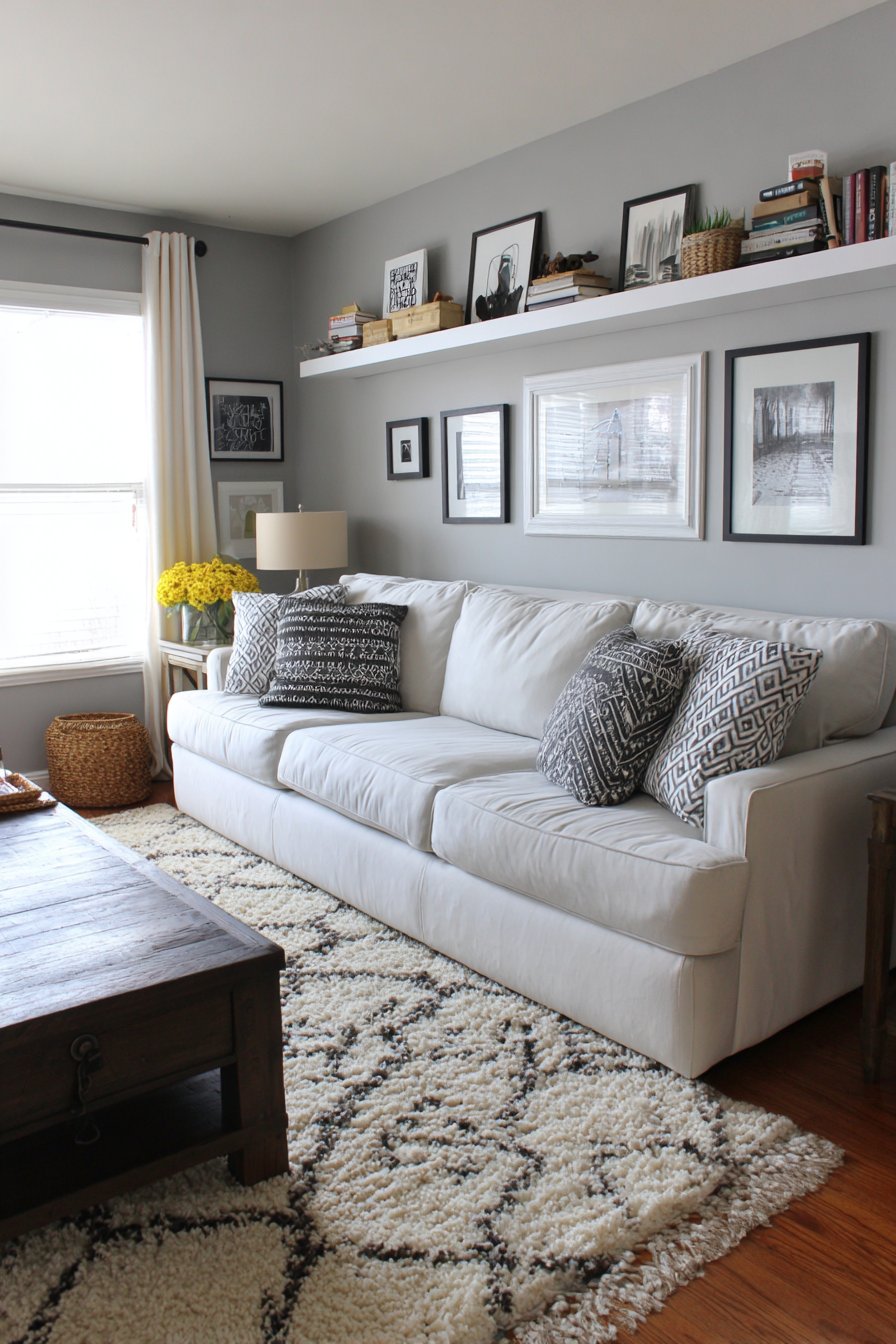
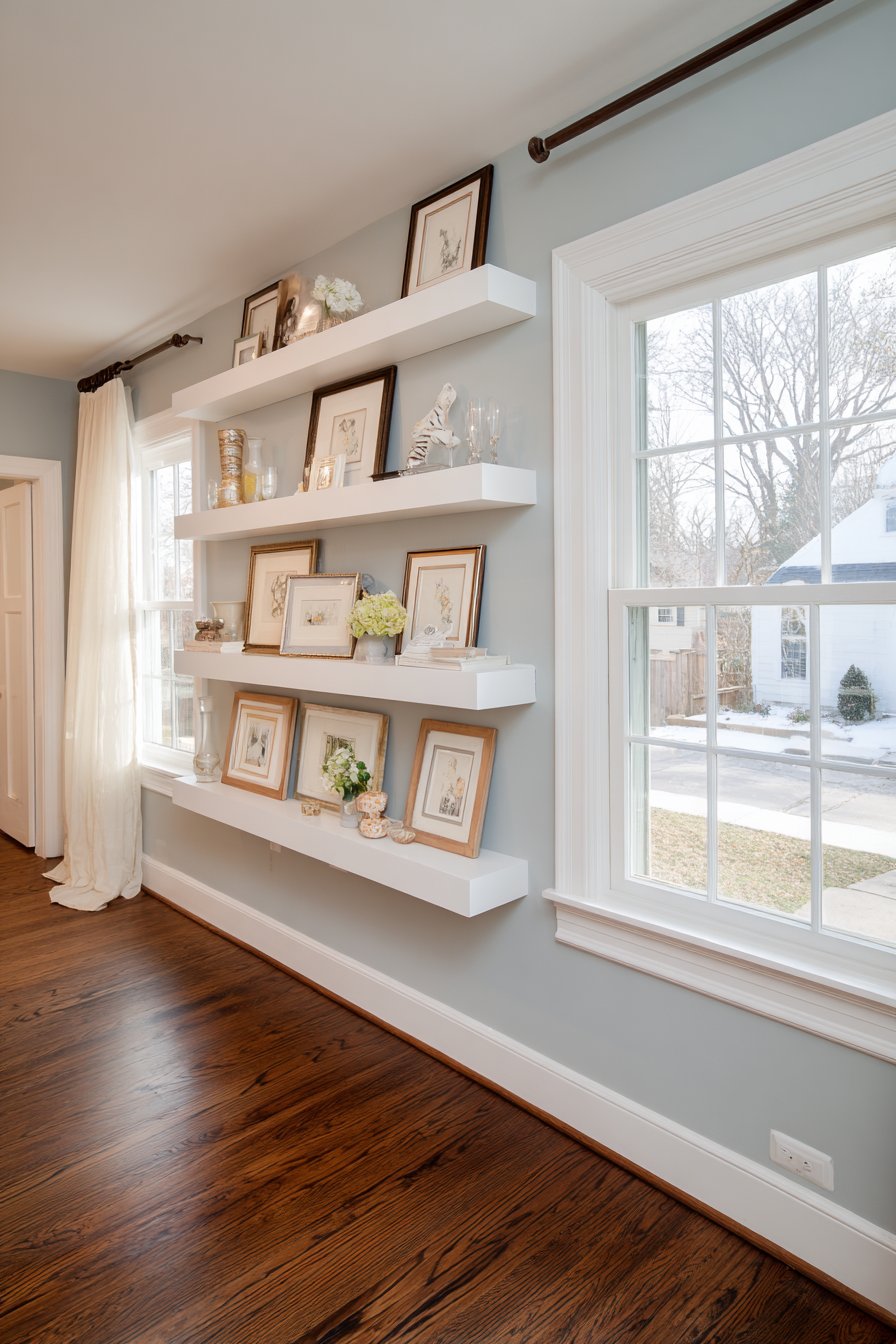
Picture ledges and floating shelves combine to create flexible gallery walls that allow constant curation and rearrangement. This approach addresses the commitment anxiety many feel about permanently hanging artwork—ledges allow frames to lean casually, making rotation effortless and damage-free. White-painted shelves of varying lengths create dynamic compositions against soft gray walls, with the ability to layer frames in front of each other adding depth impossible with traditional hanging methods. Small decorative objects interspersed among frames create three-dimensional galleries that engage viewers from multiple distances.
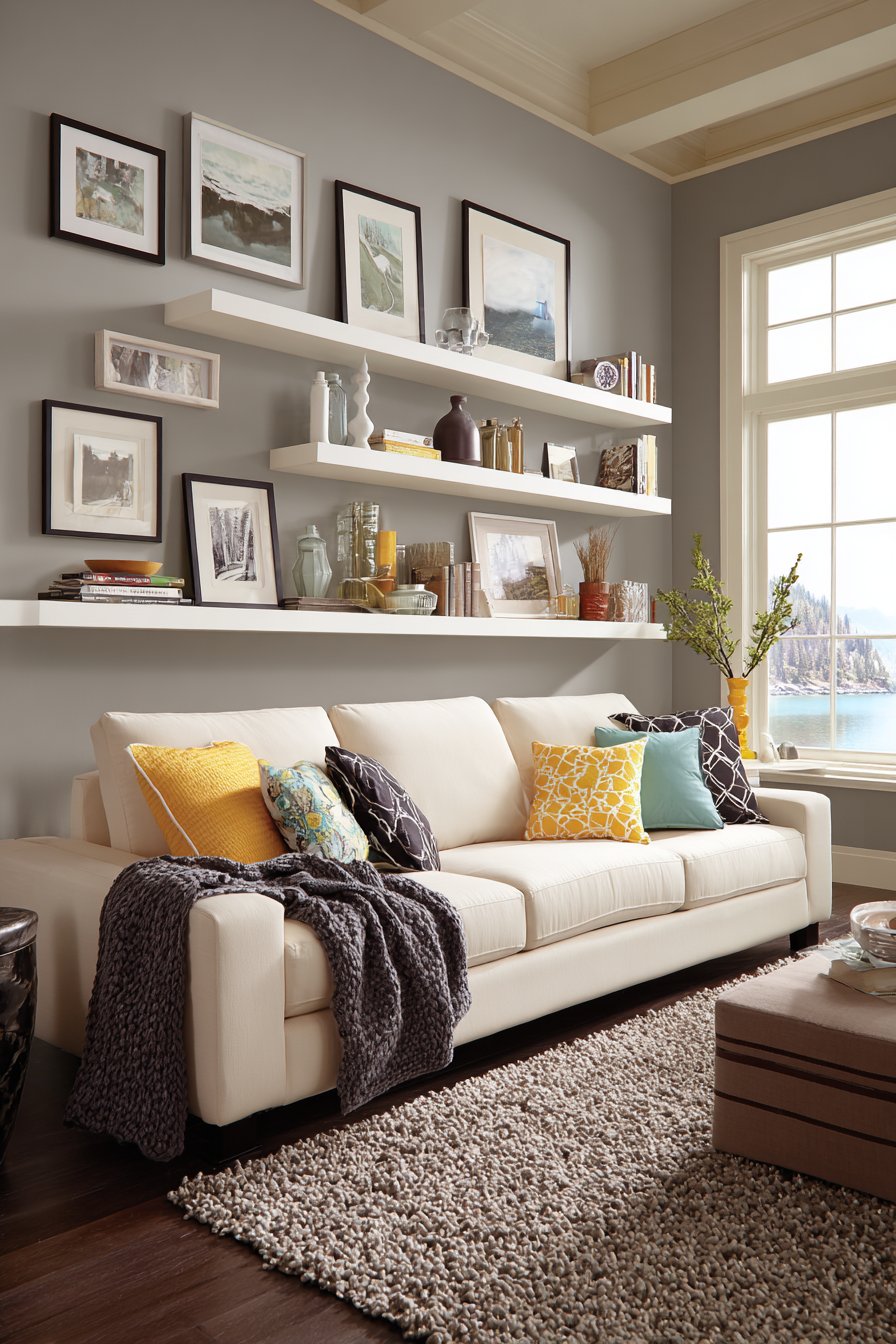
The flexibility of ledge-based gallery walls encourages seasonal rotations, highlighting different collections at different times. Family photos can share space with fine art prints, children’s artwork can rotate as new pieces come home from school, and collections can grow organically without requiring new nail holes. The varying shelf lengths create interesting compositional possibilities—longer shelves anchor the arrangement while shorter sections add rhythm and movement. Against gray walls, white shelves provide crisp contrast while maintaining neutral enough to allow artwork to command attention.
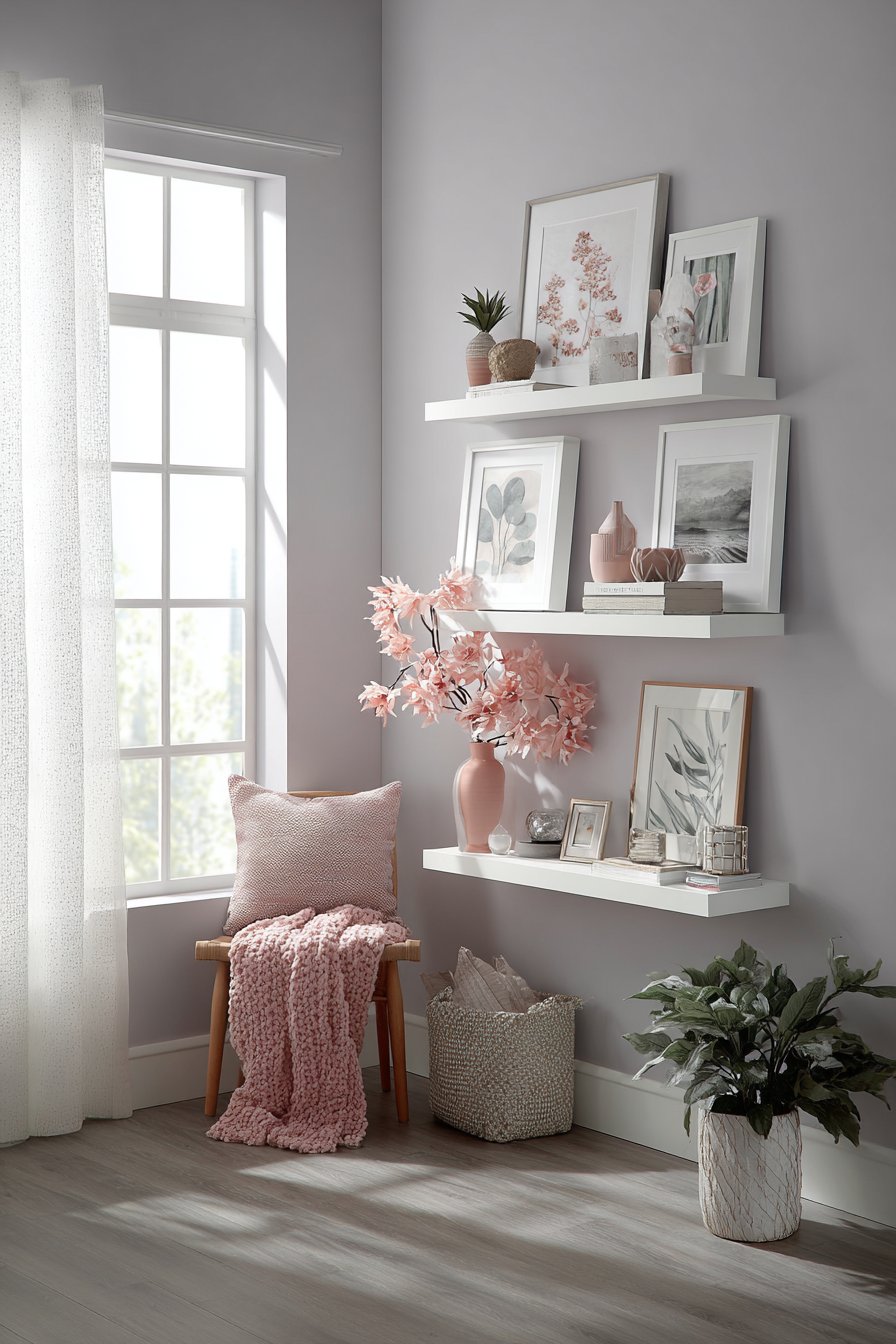
Natural daylight from nearby windows provides even illumination that changes throughout the day, making the gallery wall a dynamic element that transforms with light quality. The layered arrangement creates subtle shadows that add dimension and depth, making flat walls feel architecturally complex. This achieves gallery-quality display without the rigidity or commitment of traditional hanging systems, making art accessible and changeable for everyday living.
Key Design Tips:
- Install picture ledges with 3-4 inch depth to securely hold frames while allowing layering
- Create arrangements using odd numbers of shelves (3, 5, 7) for more dynamic compositions
- Vary shelf lengths to create visual interest—longest typically around 4-6 feet, shortest 2-3 feet
- Maintain consistent spacing between shelves (12-18 inches) for cohesive appearance
- Use museum putty or small felt pads to prevent frames from sliding on ledges
- Edit collections regularly to prevent overcrowding—aim for roughly 60-70% coverage
- Choose frames in complementary colors and styles to maintain cohesion despite varying art subjects
16. Organized Pantry Perfection
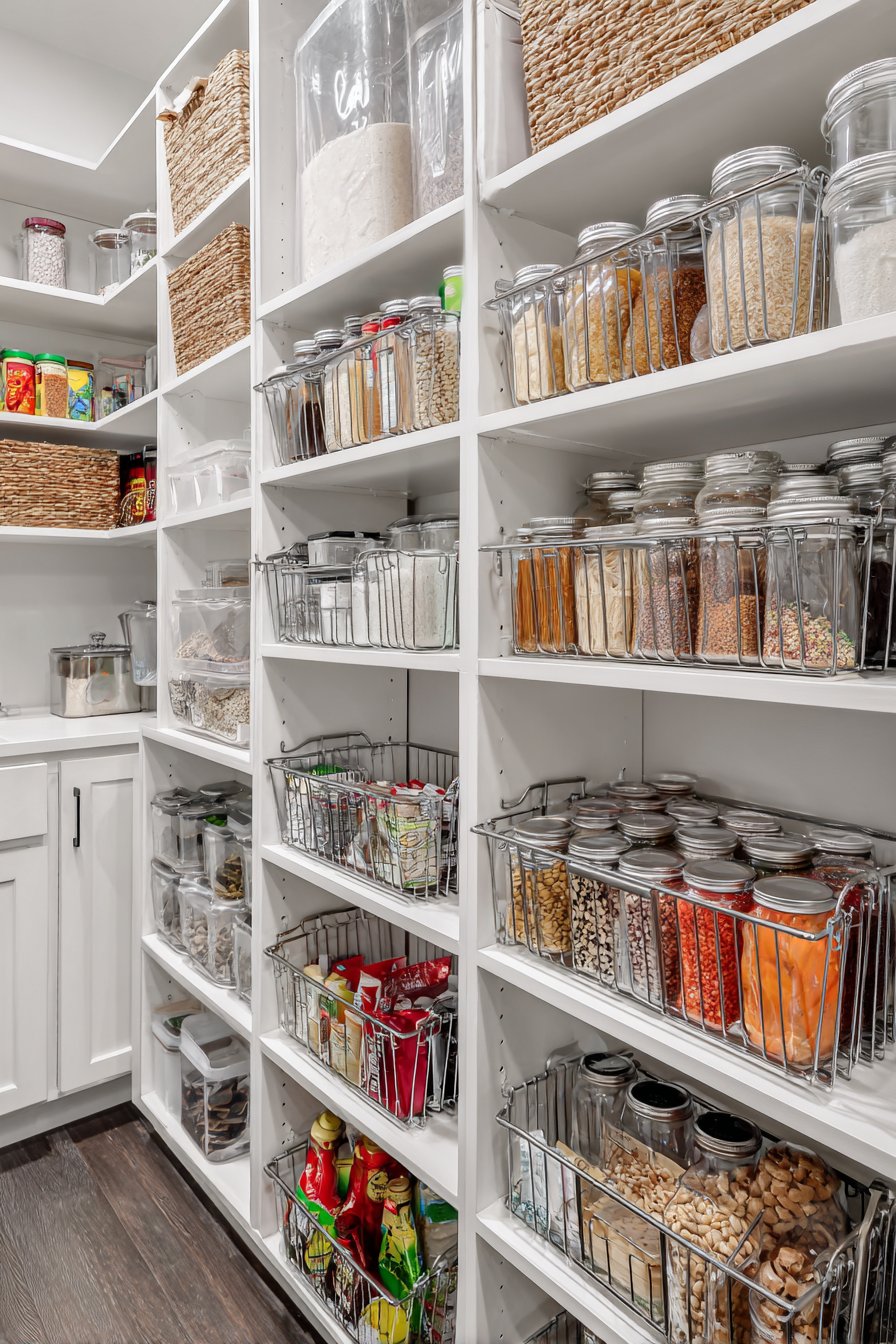
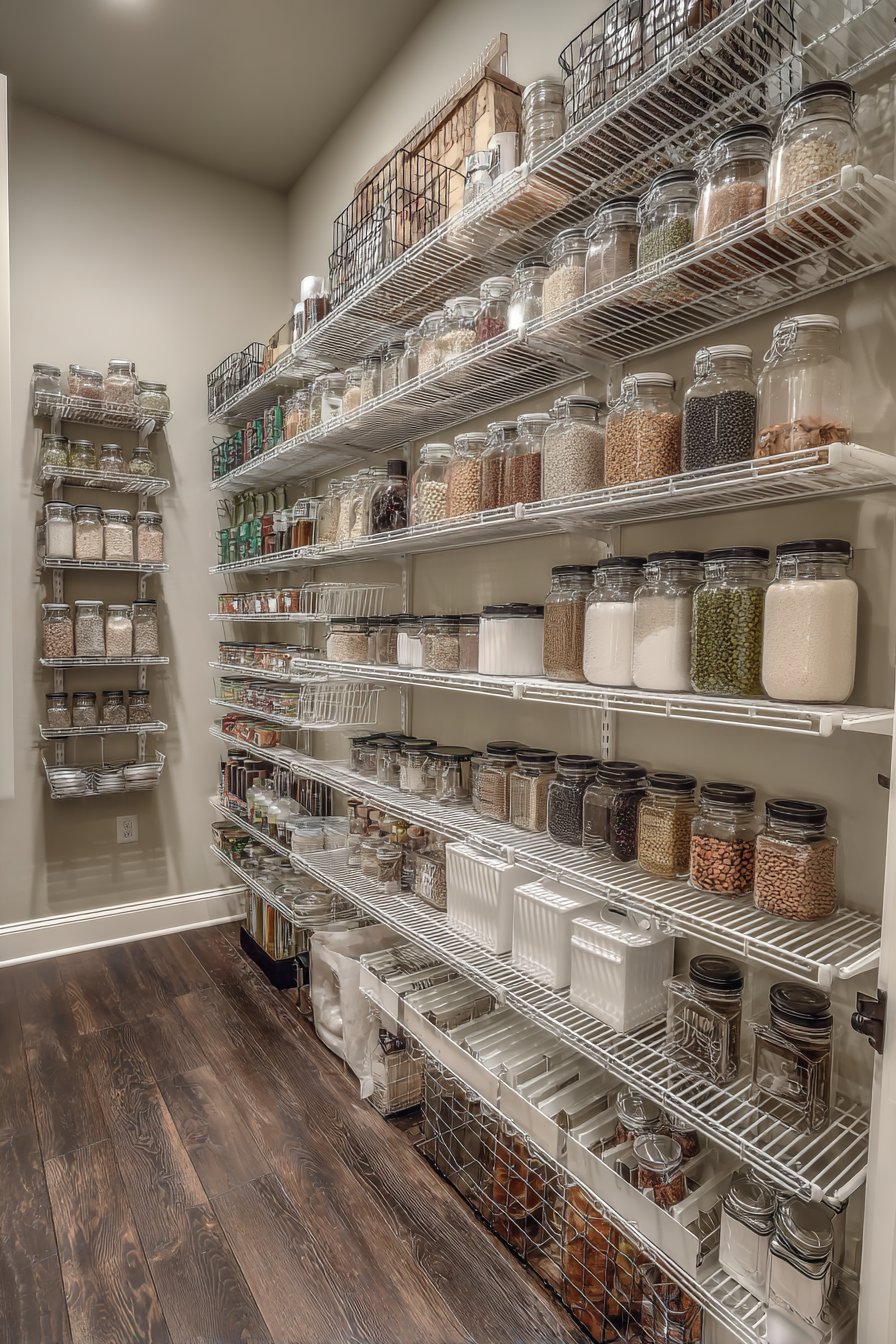
Deep custom-built shelving in white melamine with adjustable heights and pull-out wire baskets transforms pantries into showcases of organization. This comprehensive storage system addresses every pantry challenge—varying product sizes, accessibility of deep shelves, and visibility of stored items. The white finish maximizes light reflection crucial in often-windowless pantries, while adjustable shelving accommodates everything from tall cereal boxes to short spice jars. Pull-out wire baskets bring items stored at back of deep shelves forward for easy access, eliminating the frustration of forgotten purchases.
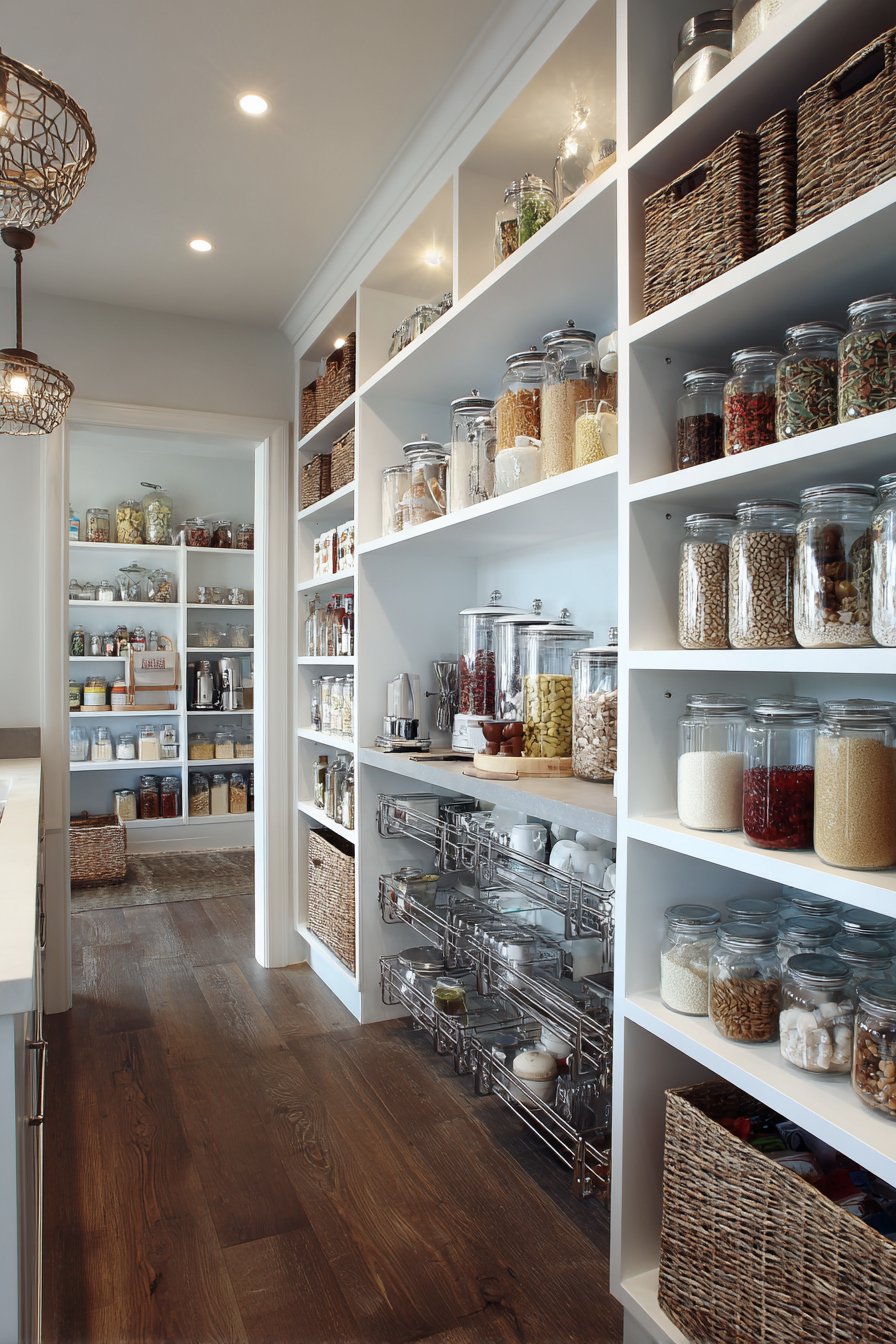
The organization enabled by well-designed pantry shelving extends beyond mere tidiness into genuine kitchen efficiency. Labeled glass jars displaying dry ingredients—pasta, rice, beans, flour—create visual uniformity while allowing instant inventory assessment. Canned goods arranged with labels forward, baking supplies grouped together, and snacks designated to specific zones make meal preparation faster and grocery shopping more efficient. The system reduces food waste by making all items visible and accessible, preventing the “lost in the back” syndrome that leads to expired products.
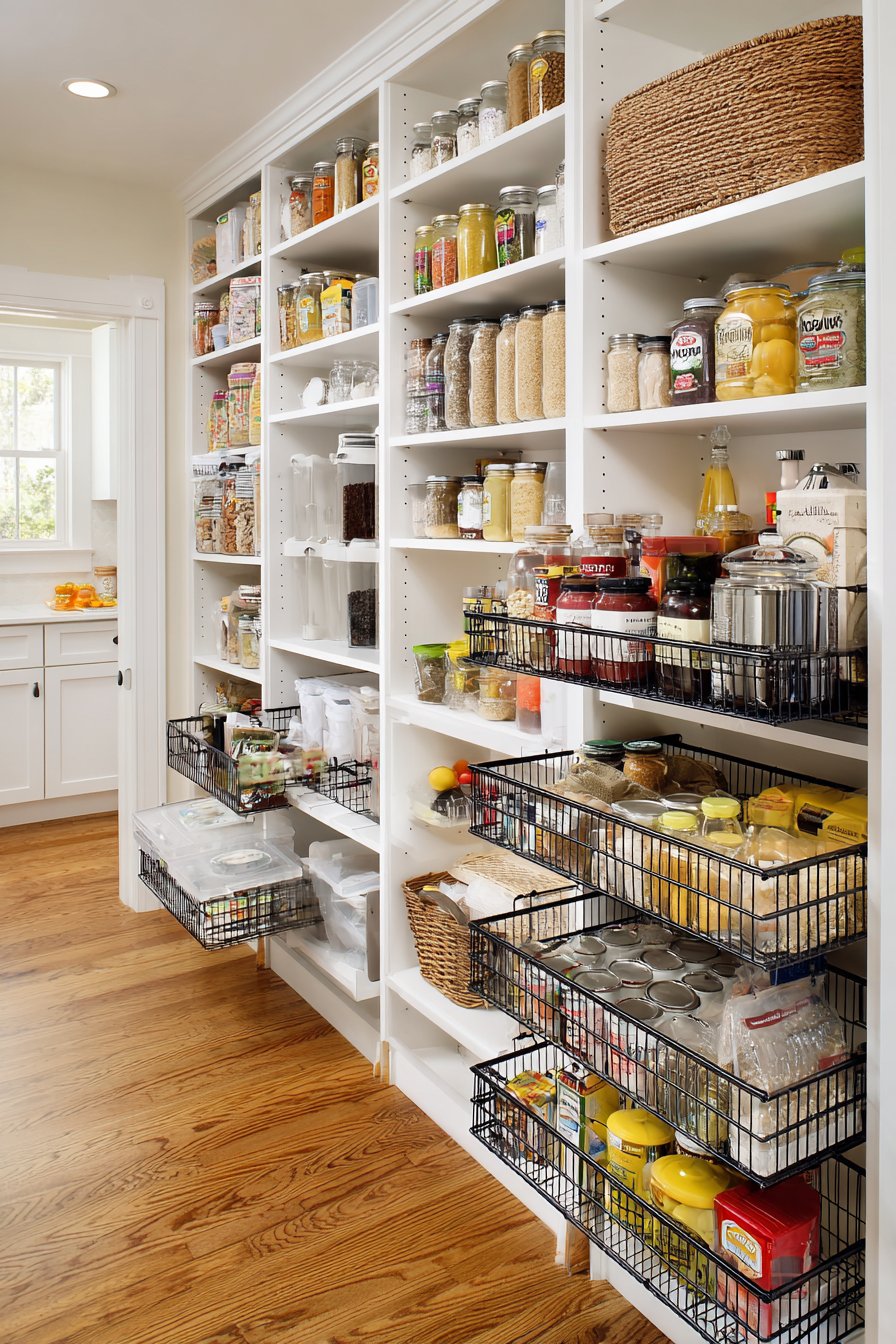
Overhead LED lighting ensures every corner remains visible, essential in pantries where proper lighting often gets overlooked. The bright, even illumination reveals every item clearly, making quick ingredient location possible even in rushed meal prep moments. The white melamine reflects this light throughout the space, creating the bright, clean environment that encourages maintaining organization. This demonstrates how good design supports good habits—when systems work well, they’re easier to maintain.
Key Design Tips:
- Design shelving depth at 16-20 inches to accommodate most pantry items while allowing visibility
- Install adjustable shelving systems to accommodate changing storage needs over time
- Choose materials resistant to moisture and temperature fluctuations typical in pantries
- Incorporate pull-out or rotating mechanisms for corner shelves to maximize accessibility
- Plan adequate spacing (14-18 inches) between shelves to accommodate taller items
- Invest in uniform storage containers to create visual cohesion and stackable efficiency
- Install toe-kick lighting or motion-sensor lights for hands-free illumination when entering with groceries
17. Sweet Nursery Storage
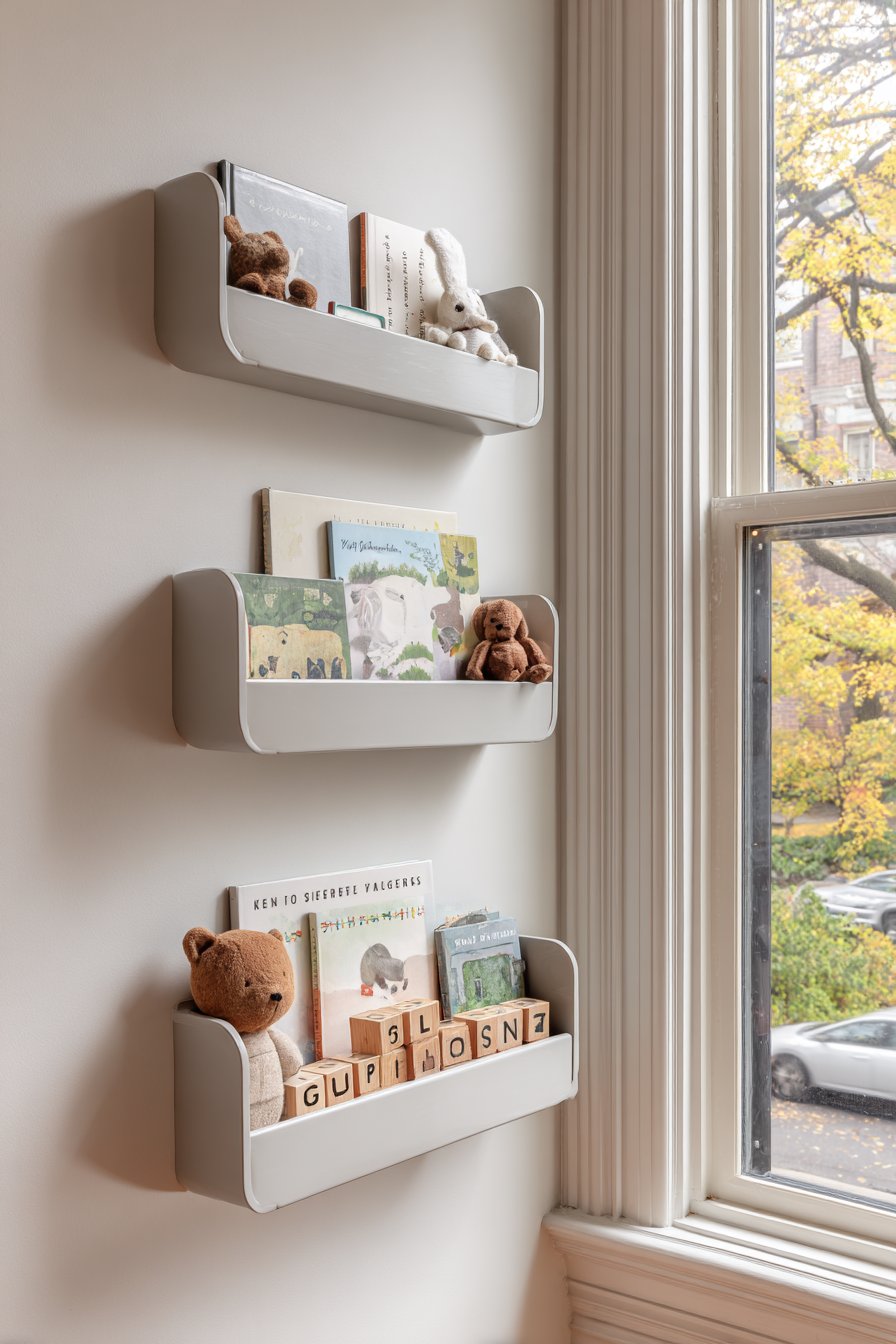
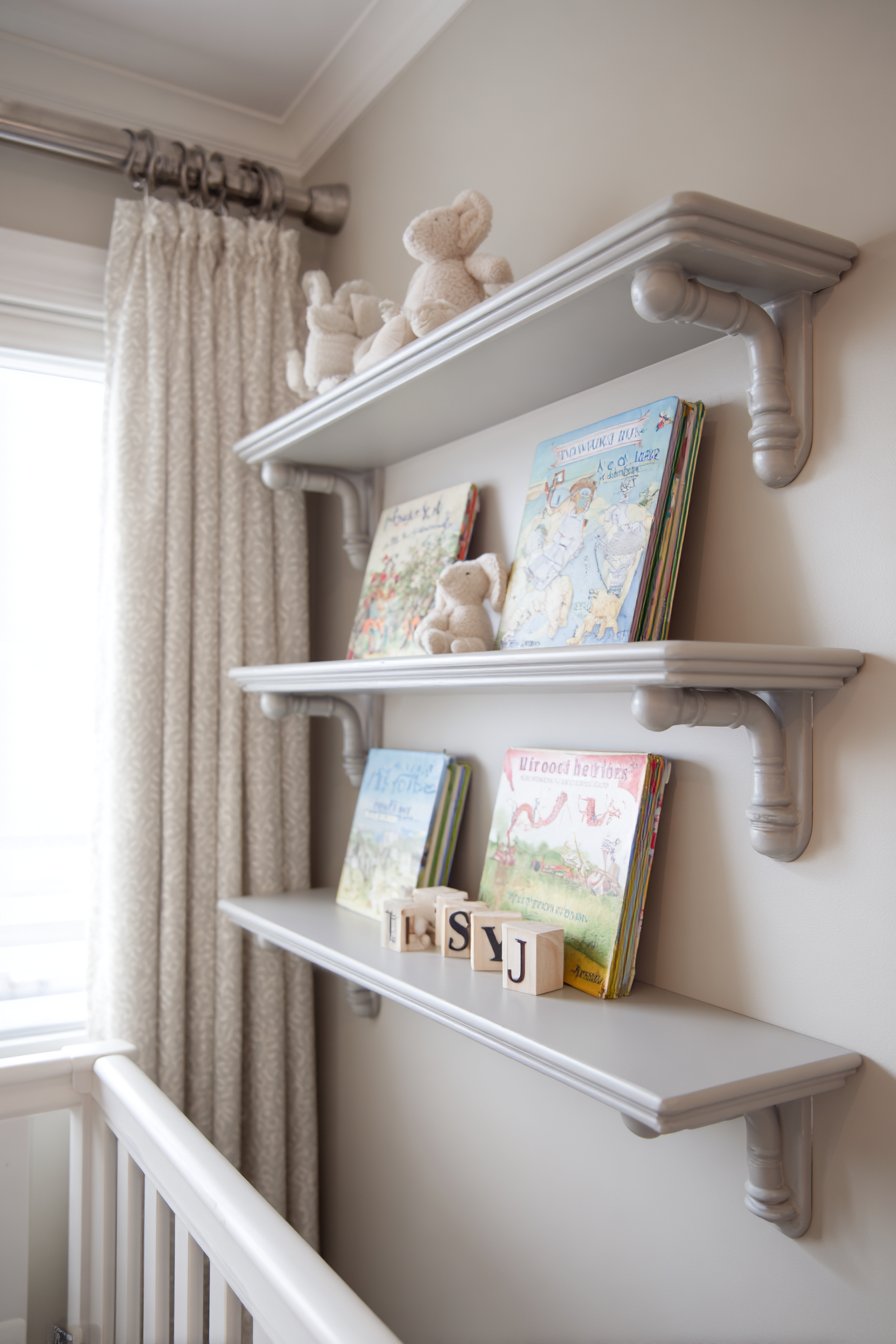
Soft gray painted wooden shelves with rounded edges create gentle, safe storage in nursery spaces designed for newest family members. The rounded edges prioritize safety without sacrificing style, while secure mounting at appropriate heights ensures stability crucial in rooms with curious toddlers. Books displayed with covers facing forward transform literature into art, encouraging reading while creating cheerful wall displays. Small stuffed animals, decorative letter blocks, and other cherished items share shelf space, creating a display that grows with the child.
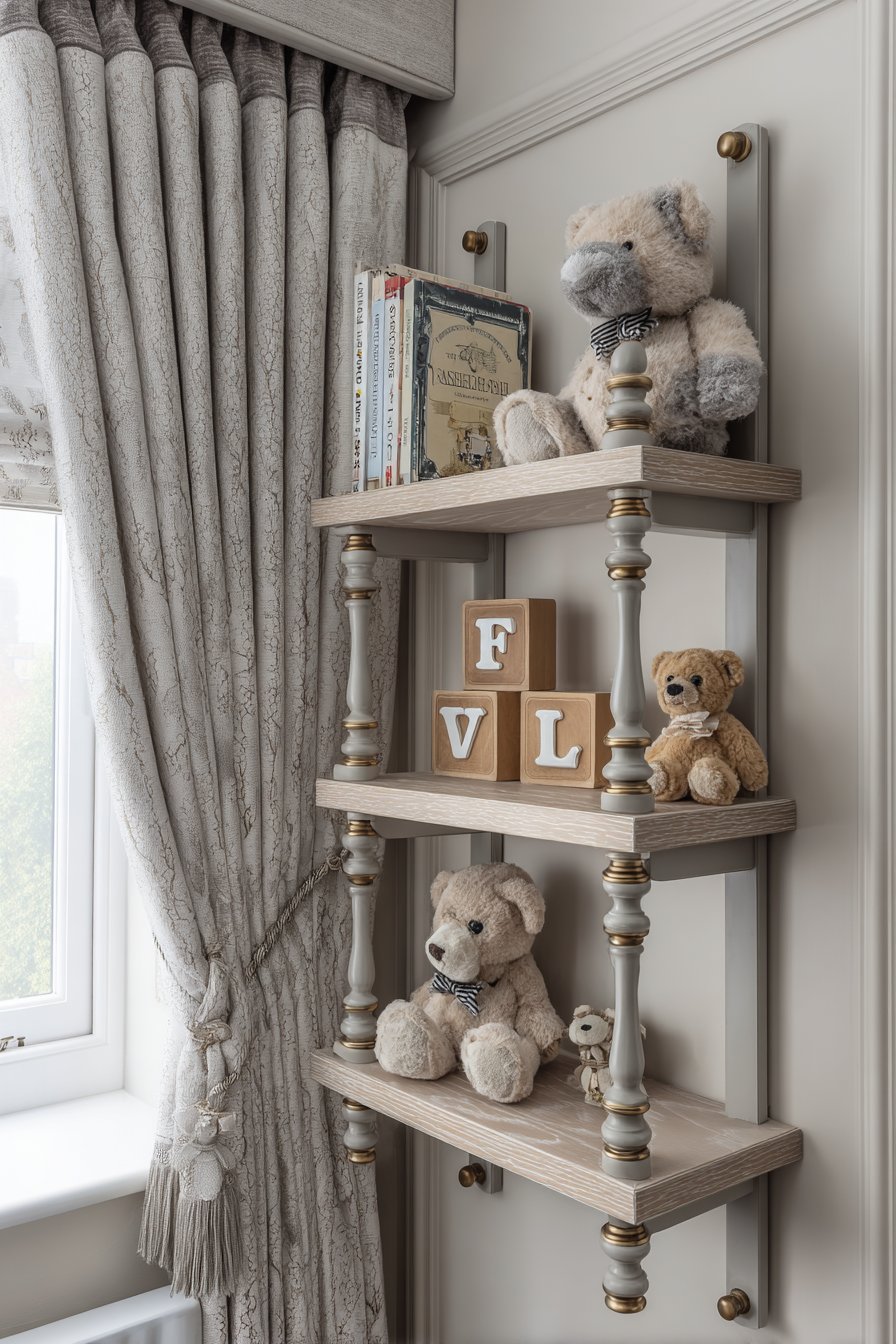
The color choice of soft gray provides neutral foundation that works with any nursery color scheme while maintaining calming qualities important in spaces designed for sleep and quiet time. The painted finish allows for customization—choosing specific gray tones that complement wall colors and existing furnishings. The forward-facing book display makes selections easy for young children developing reading habits, while maintaining attractive displays that enhance rather than clutter the nursery aesthetic.
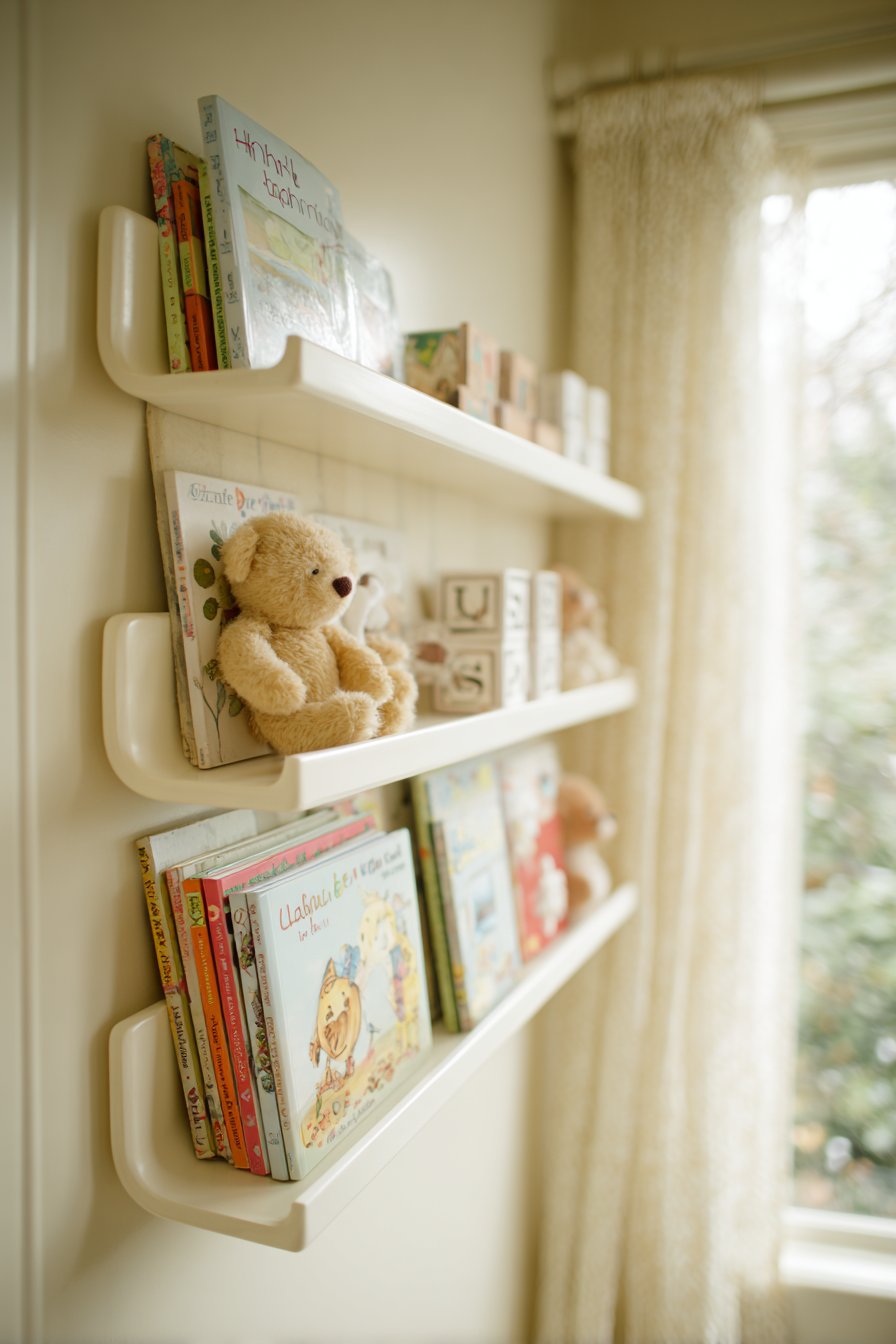
Gentle natural light filtering through window treatments creates the soft, diffused illumination appropriate for nursery environments. The thoughtful safety features—rounded edges, secure mounting, appropriate heights—demonstrate how good design considers the specific needs of end users at every life stage. This shelving will evolve with the child, eventually holding chapter books, art supplies, and treasured collections as toddlers become school-age children.
Key Design Tips:
- Mount shelving securely to wall studs, not just drywall, to prevent tip-over hazards
- Install at heights toddlers can see but not reach (40-50 inches) to prevent climbing
- Choose low-VOC, non-toxic paints rated safe for children’s environments
- Incorporate small lips or ledges on forward-facing book shelves to prevent books sliding off
- Keep color palette soft and calming—grays, whites, pastels—to support restful sleep environment
- Ensure all edges are smooth and rounded with no sharp corners or splinters
- Plan for evolution—select designs that can transition from nursery to big-kid room
18. Utilitarian Garage Workshop
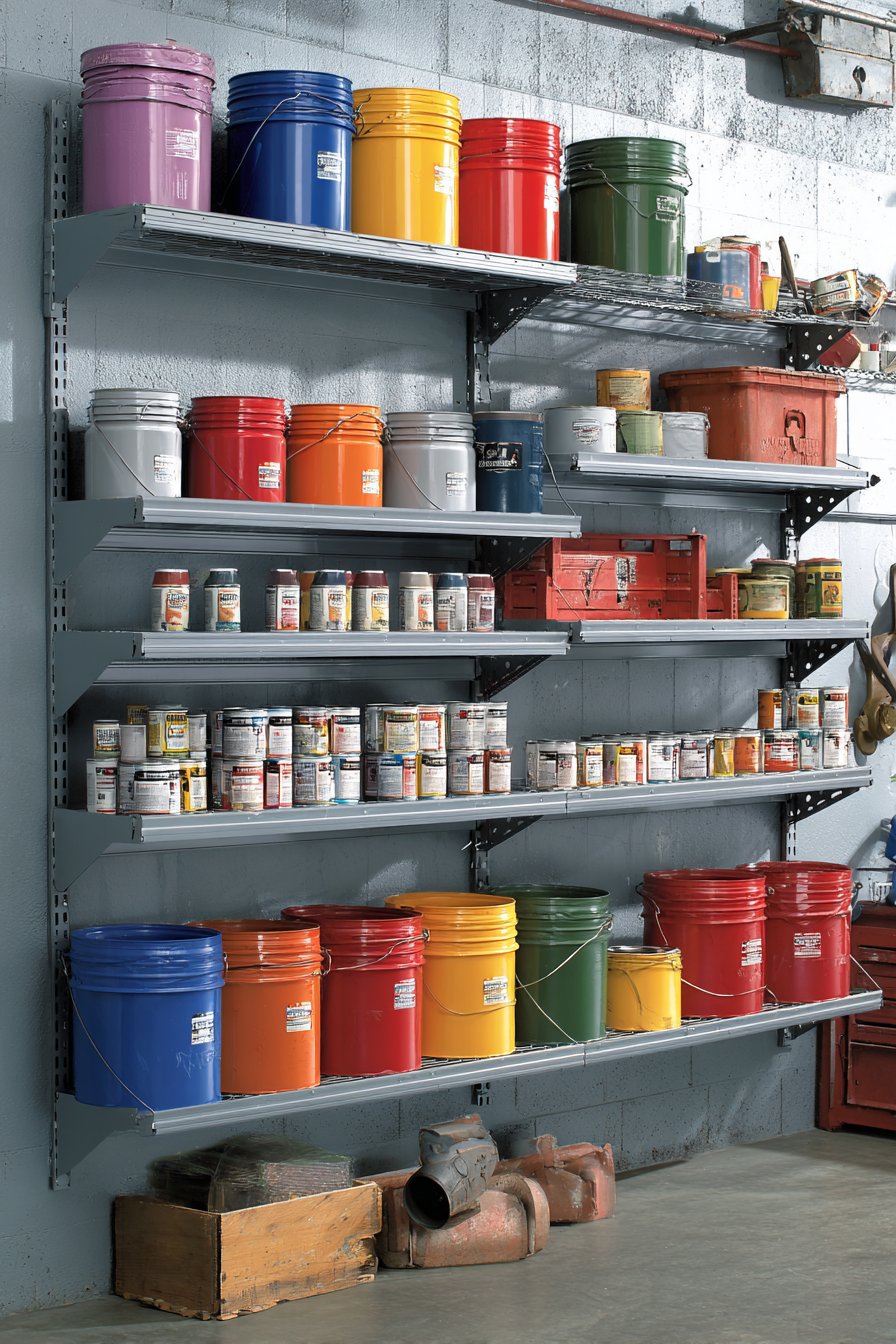
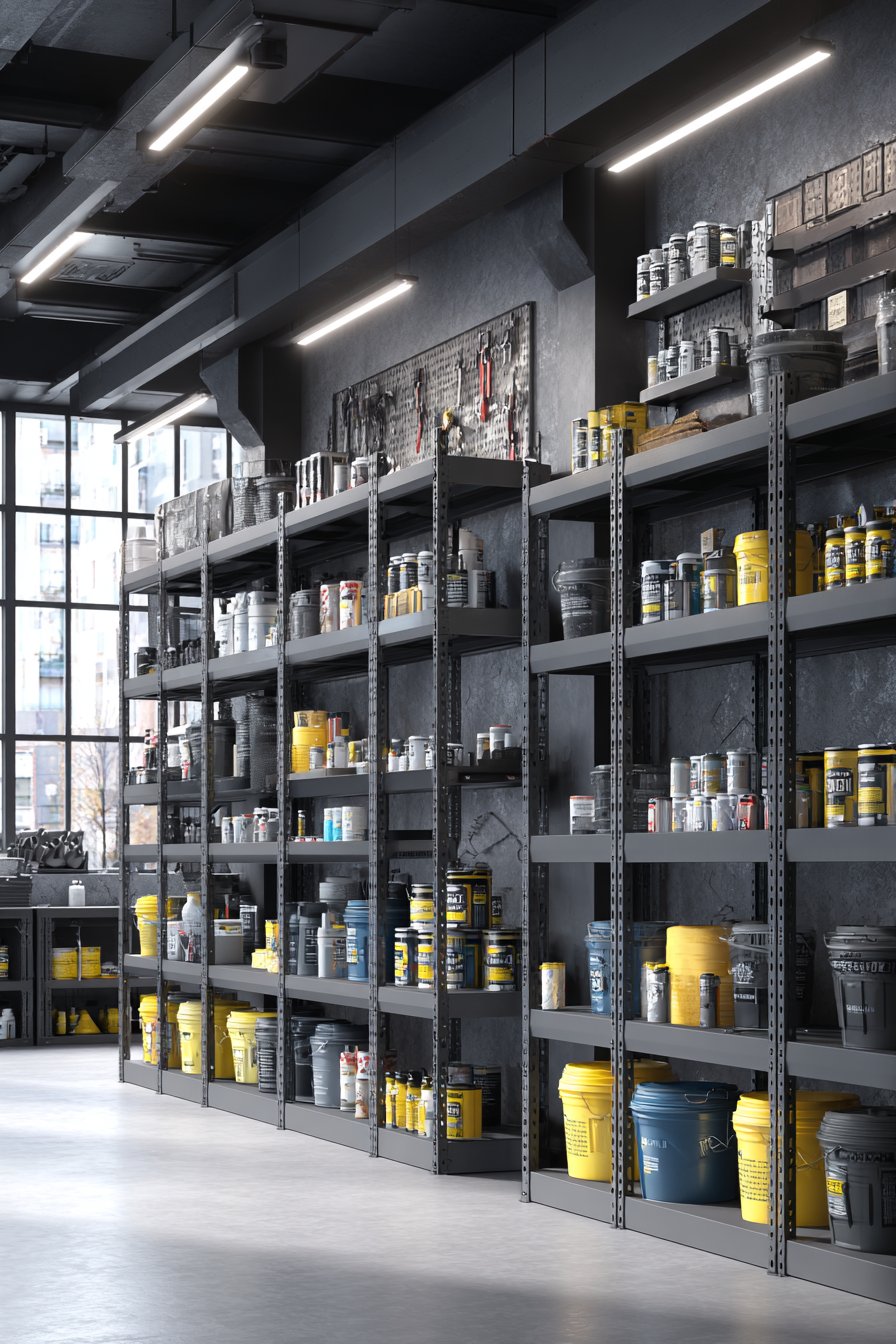
Heavy-duty metal shelving in industrial gray finish brings organization to garage workshops, proving that functional spaces deserve thoughtful design consideration. The robust construction features reinforced brackets capable of supporting substantial weight—power tools, paint cans, equipment storage bins—without sagging or instability. The industrial gray finish conceals inevitable dirt and grease better than lighter colors while maintaining professional appearance. Open shelving design allows quick visual inventory and easy access from multiple angles, essential in active workshop environments.
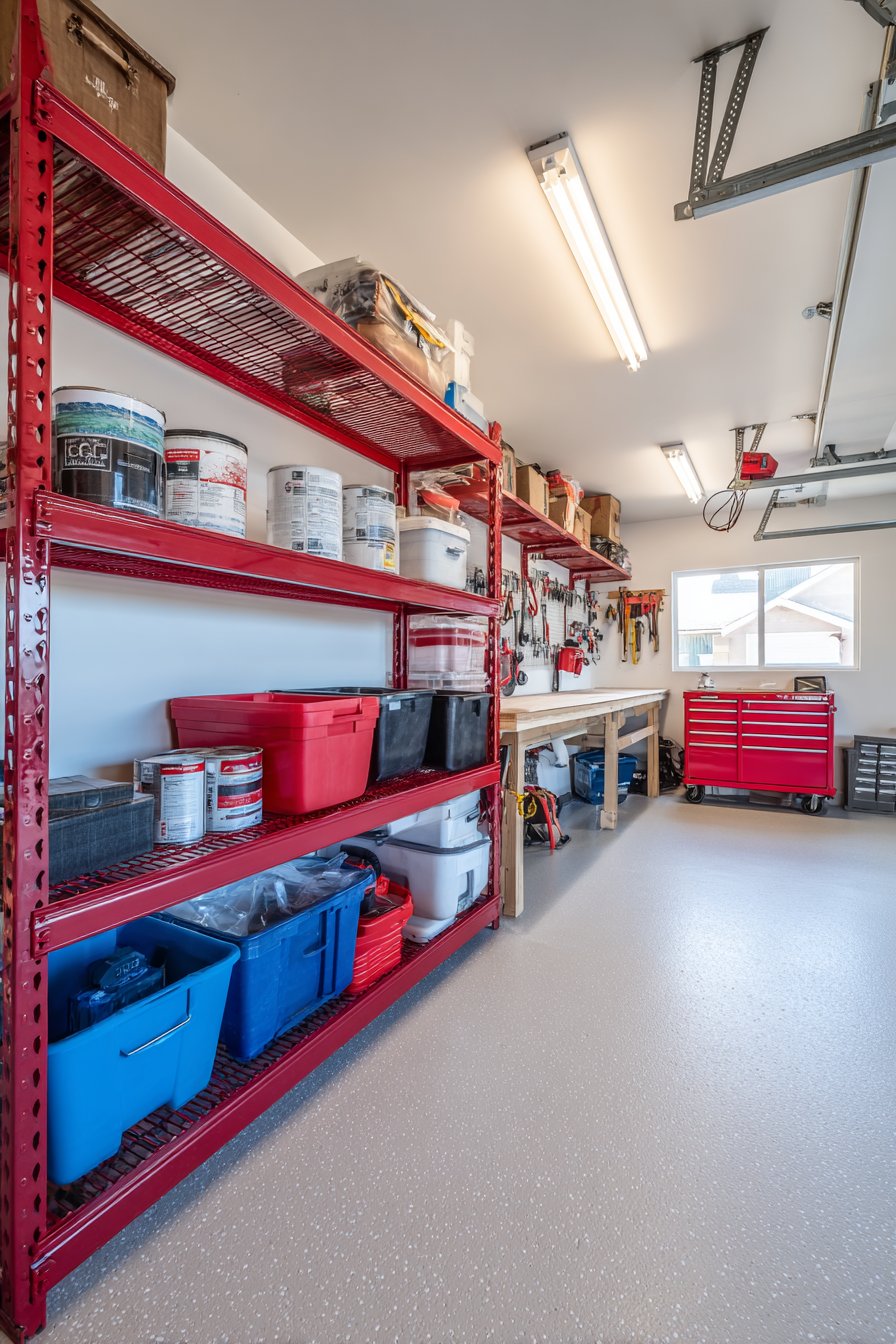
The organization enabled by proper garage shelving transforms chaotic spaces into efficient workshops where tools and materials have designated homes. Fluorescent lighting ensures bright working conditions essential for detailed projects and safe tool use. The vertical storage maximizes floor space, leaving room for workbenches, vehicles, and movement. Clear plastic bins labeled with contents, pegboard sections for frequently used tools, and dedicated zones for different project types create systems that support productivity and safety.
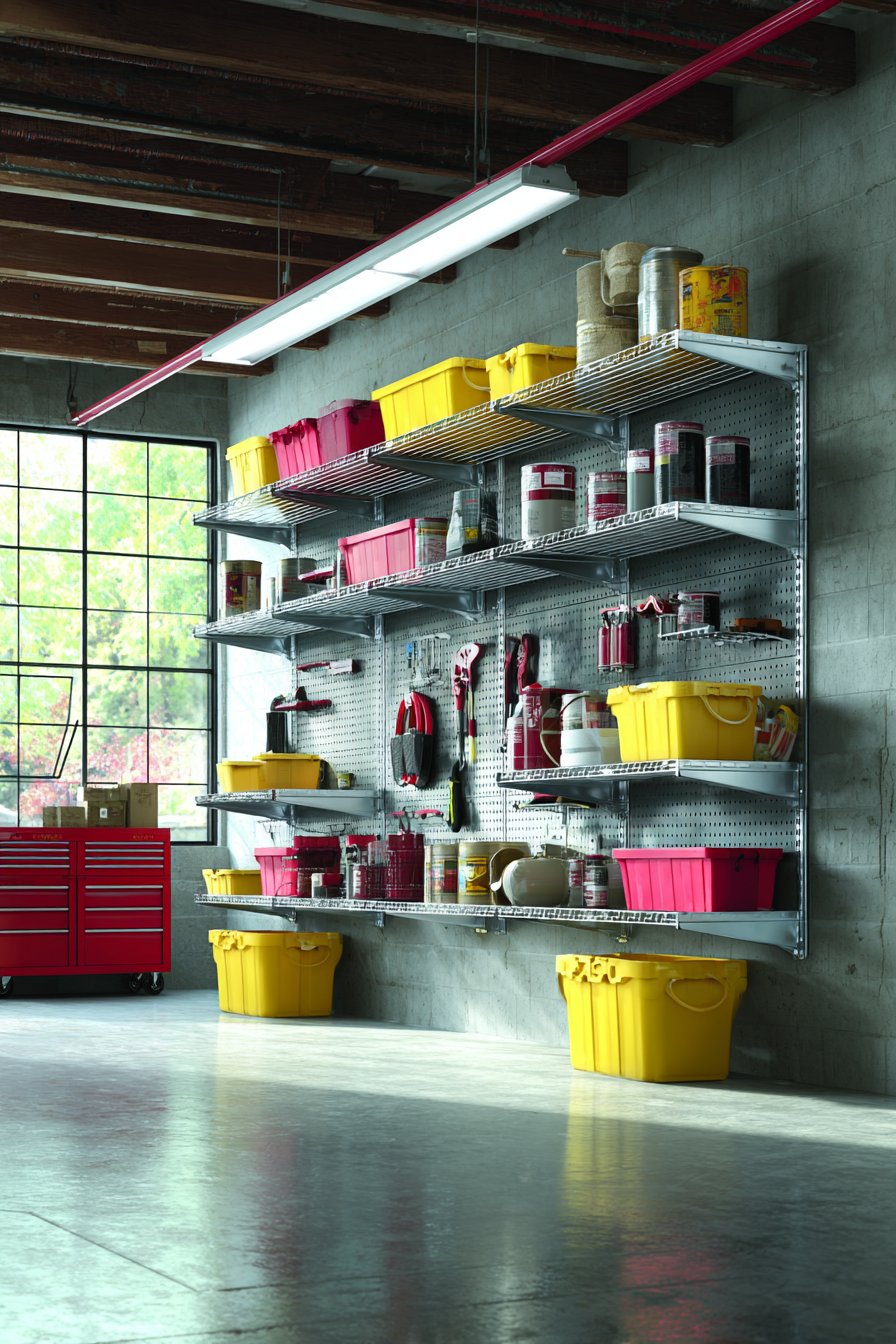
The durability of industrial-grade shelving withstands the harsh conditions typical in garages—temperature fluctuations, humidity variations, and the inevitable impacts and scrapes of active use. This represents investment in long-term organization rather than temporary solutions that fail under real-world conditions. The shelving becomes infrastructure supporting hobbies, home maintenance, and projects that require dedicated space and organized supplies.
Key Design Tips:
- Choose shelving rated for minimum 200 pounds per shelf for typical garage storage needs
- Install at comfortable working heights—lower shelves for heavy items, upper for lightweight storage
- Secure shelving to wall studs and concrete floors where possible for maximum stability
- Incorporate adjustable shelving to accommodate items of varying heights over time
- Create zones for different categories—automotive, gardening, seasonal decorations, sporting equipment
- Use clear bins and label everything for quick identification and inventory management
- Ensure adequate lighting and maintain clear aisles for safe movement with tools and materials
19. Elegant Dining Room Display
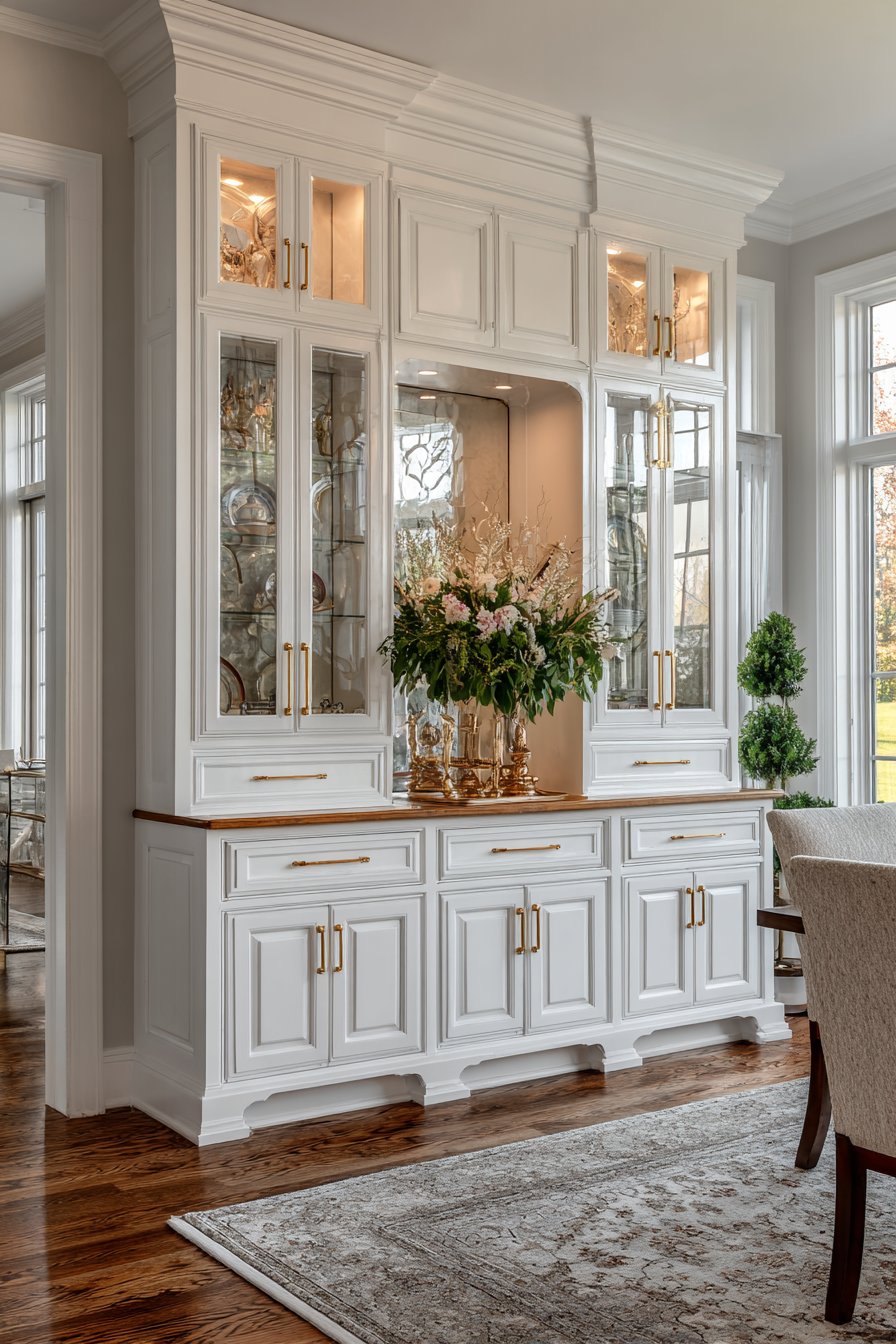
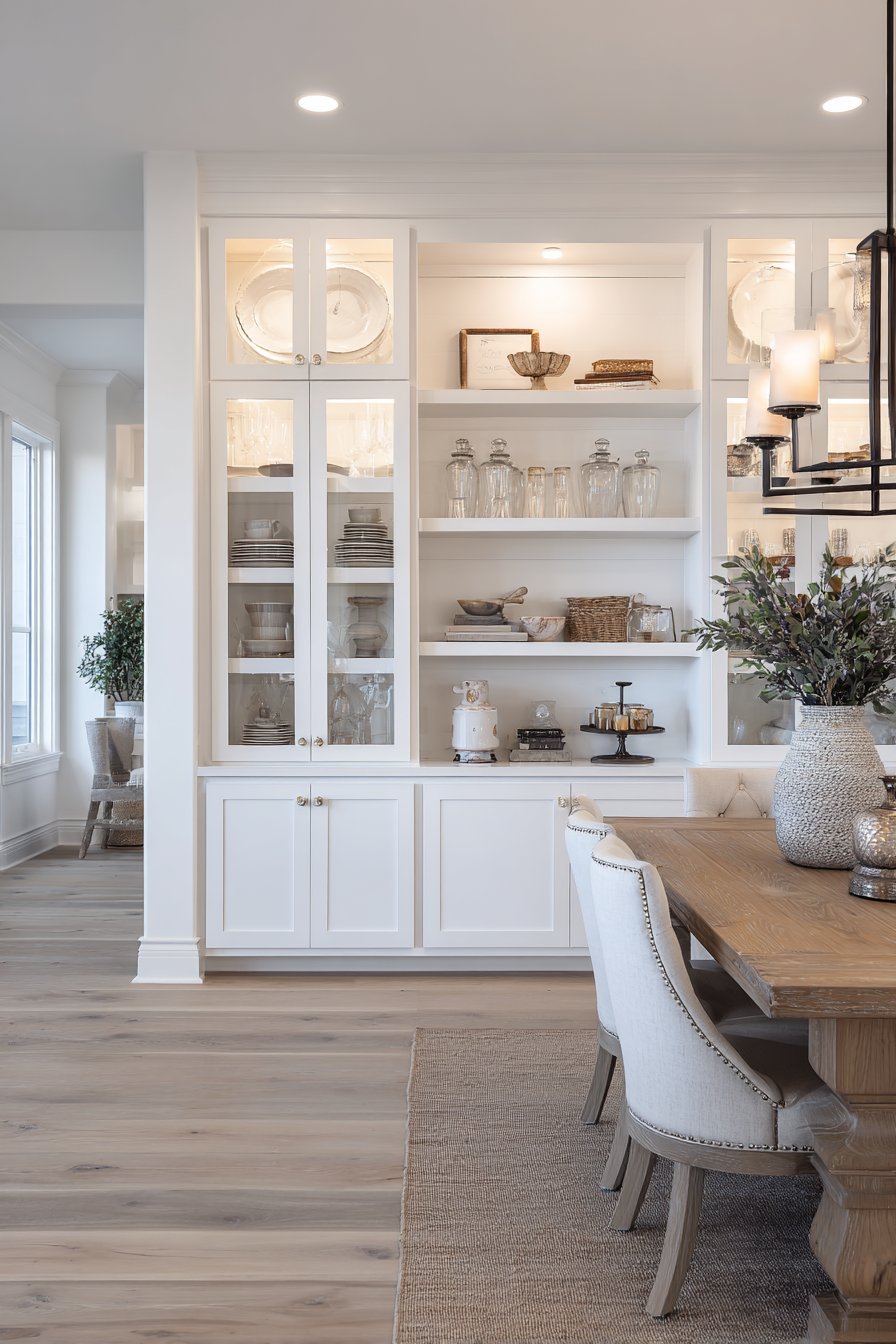
Built-in china cabinet-style shelving with glass doors on upper sections combines the display benefits of open shelving with the protection of closed storage. The white-painted interior backing creates bright, gallery-like setting that makes displayed china and glassware stand out dramatically. Natural oak shelving provides warmth and traditional elegance while glass doors protect precious items from dust and damage. Lower open shelves offer accessible storage for serving pieces and everyday items, creating balanced combination of formal and functional.
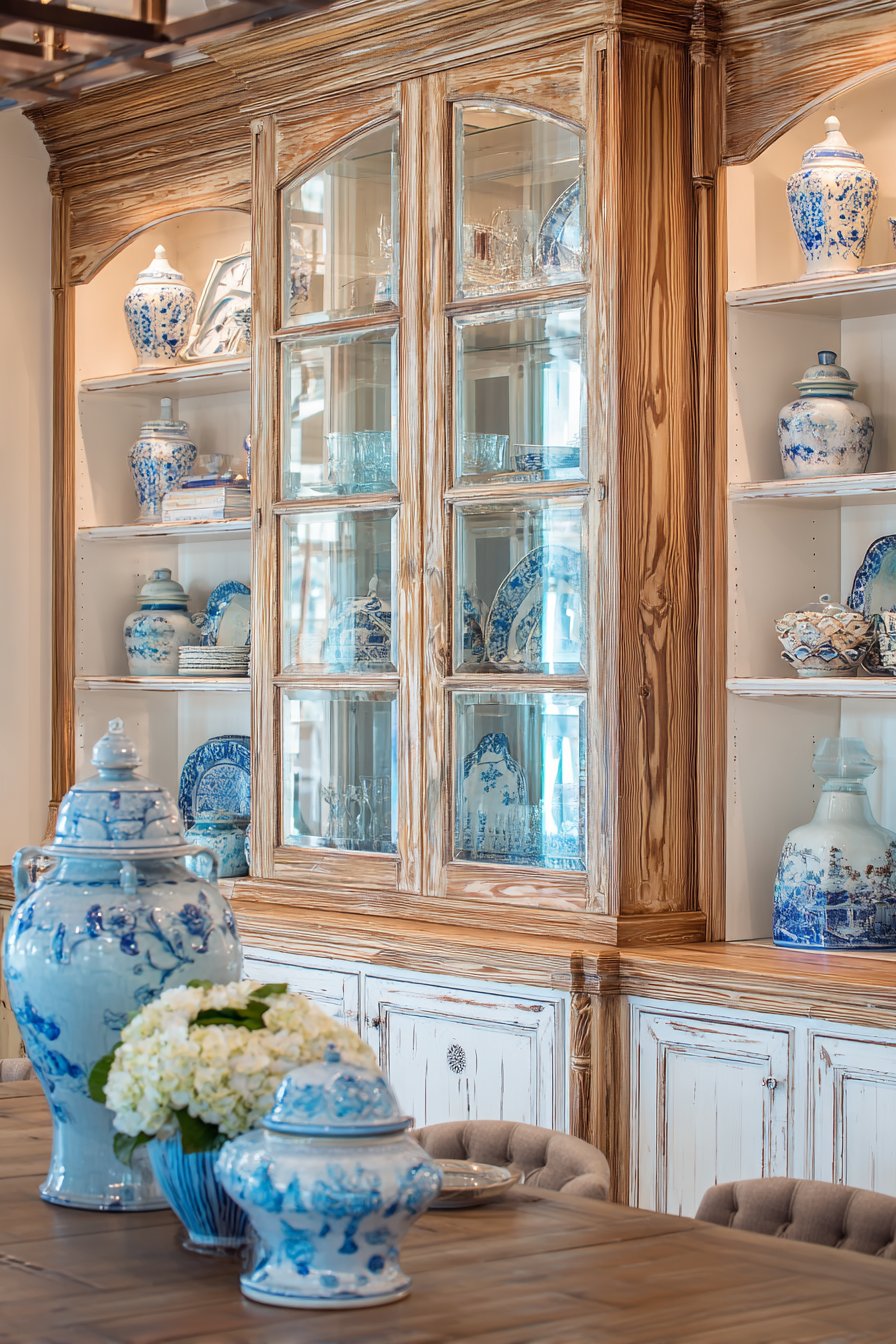
Integrated cabinet lighting illuminates displayed collections, transforming everyday dishes into museum-quality displays. The light highlights cut crystal patterns, fine china details, and the craftsmanship of heirloom pieces. This lighting turns the built-in into a focal point that anchors dining room design, worthy of displaying family treasures passed through generations. Natural room lighting during daytime provides different quality, with sunlight creating sparkle and highlighting details that artificial light alone might miss.
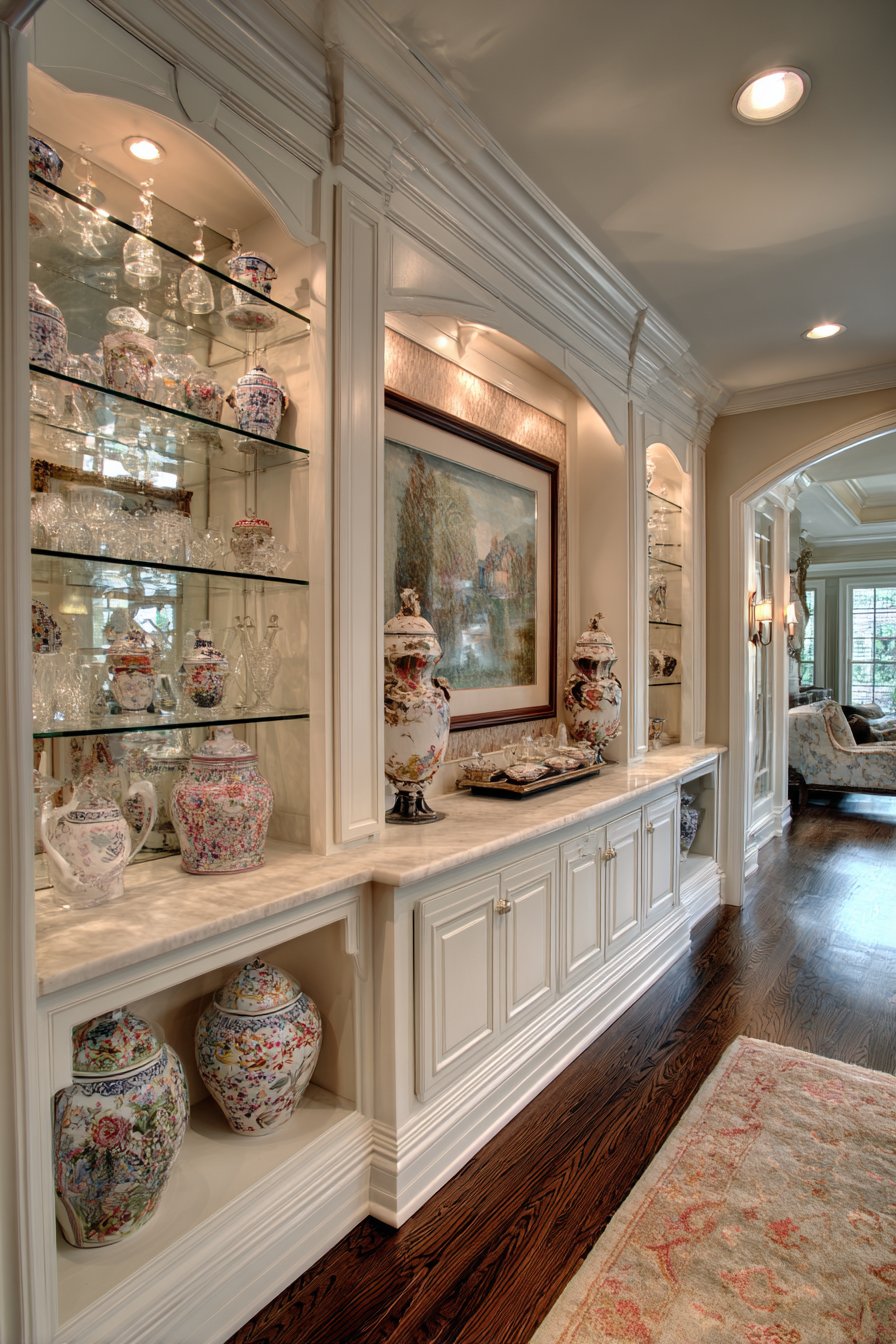
The traditional styling with crown molding details and quality joinery reflects investment in craftsmanship that adds lasting value to homes. This type of built-in becomes architectural feature rather than furniture, often cited as selling point when homes change hands. The combination of protected storage and open display accommodates both special occasion items and everyday necessities, making the system genuinely functional rather than merely decorative.
Key Design Tips:
- Include glass doors with soft-close hinges to prevent slamming that could damage displayed items
- Install interior lighting on separate switch from room lighting for display flexibility
- Design shelf spacing to accommodate varying plate and serving piece sizes
- Consider felt or cork shelf liners to protect fine china from scratches
- Incorporate open lower shelves for items used more frequently, keeping precious pieces safely behind glass
- Choose glass that minimizes distortion for clearest view of displayed items
- Plan drawer sections for flatware and linens to consolidate dining storage in single location
20. Vertical Bathroom Efficiency
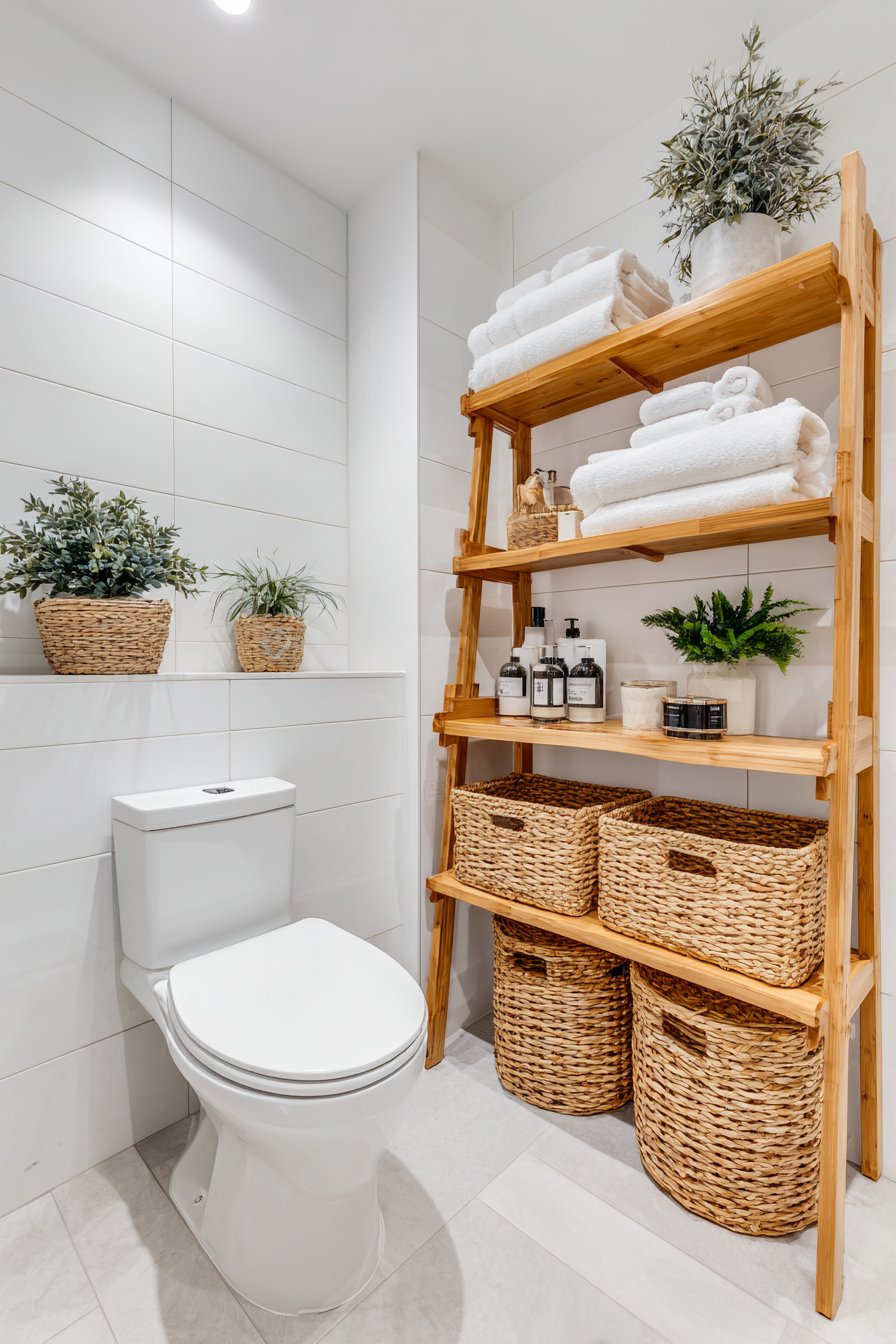
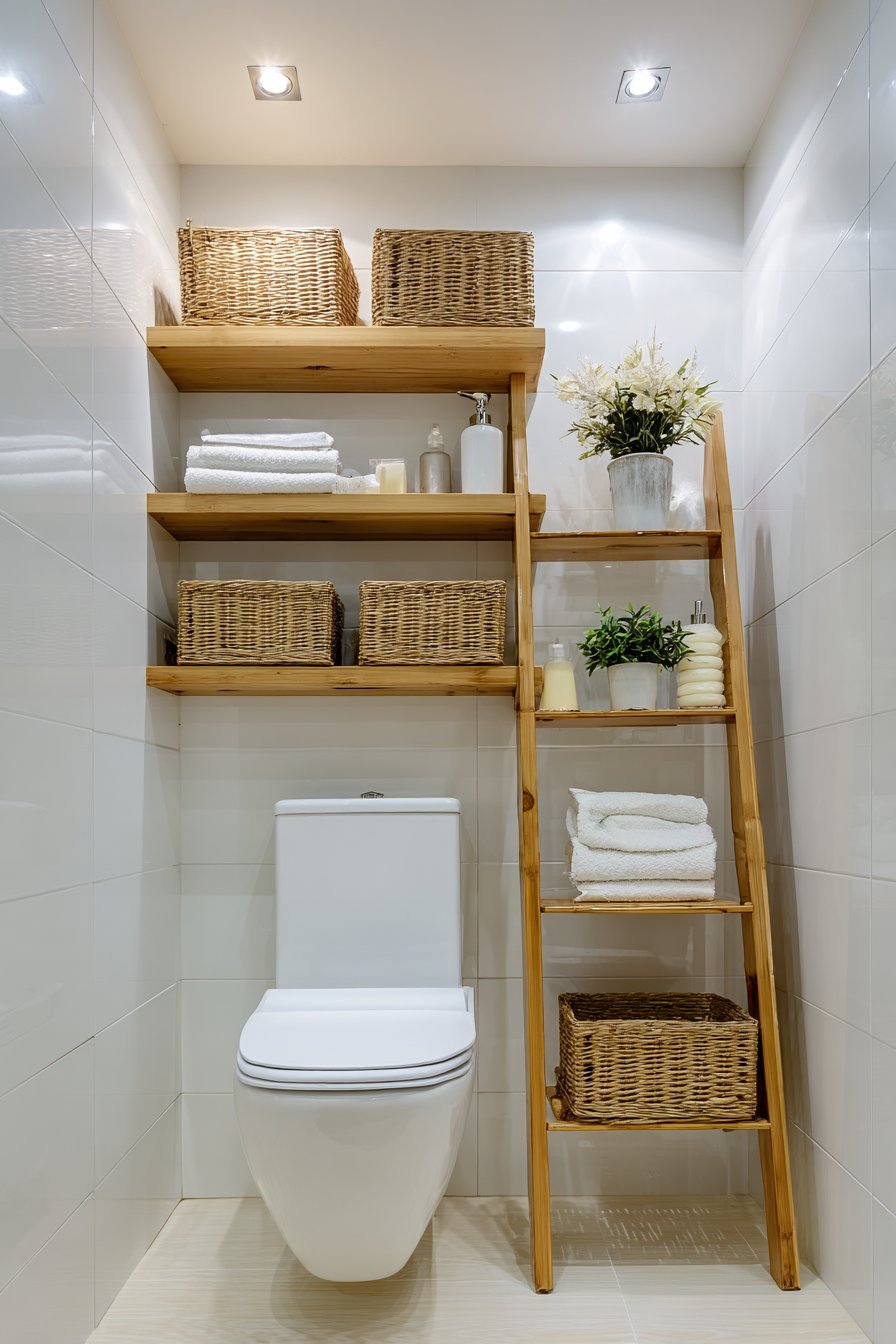
Ladder-style shelving leaning against the wall above the toilet maximizes often-wasted vertical space in bathrooms. The three-tier bamboo unit provides substantial storage within minimal footprint, perfect for small bathrooms where every inch counts. The lean-against design requires no mounting hardware, making it ideal for renters or those hesitant about drilling into tile. The natural bamboo finish adds warmth to typically cool bathroom color schemes while providing water-resistant material appropriate for humid conditions.
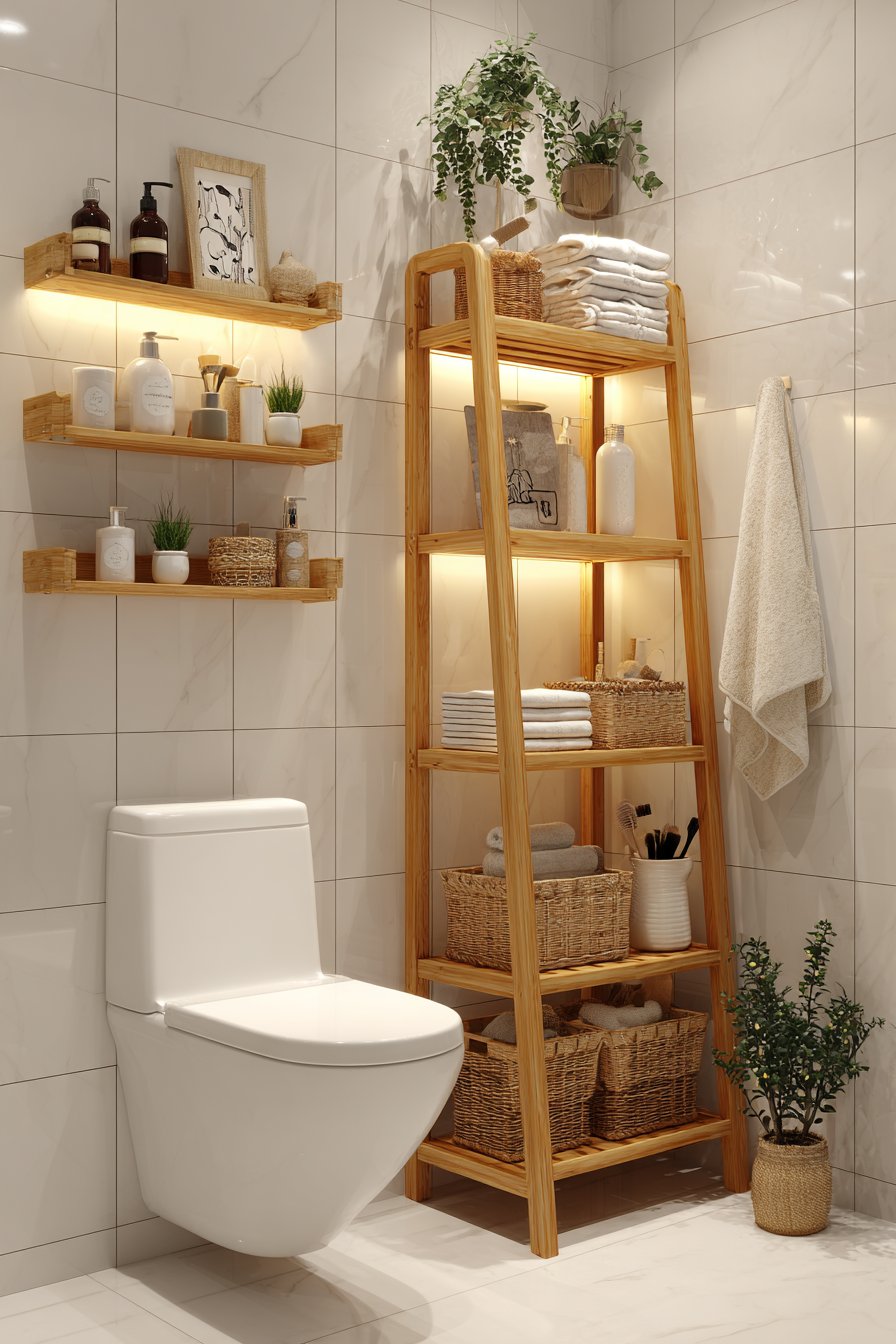
Neatly folded towels in coordinating colors create spa-like displays on middle and upper tiers, while toiletries in matching baskets maintain organization on lower shelves. Small plants appropriate for bathroom conditions—pothos, ferns, air plants—add living elements that thrive in humidity while softening the utilitarian bathroom environment. The vertical emphasis draws eyes upward, making bathrooms feel taller and more spacious than dimensions suggest.
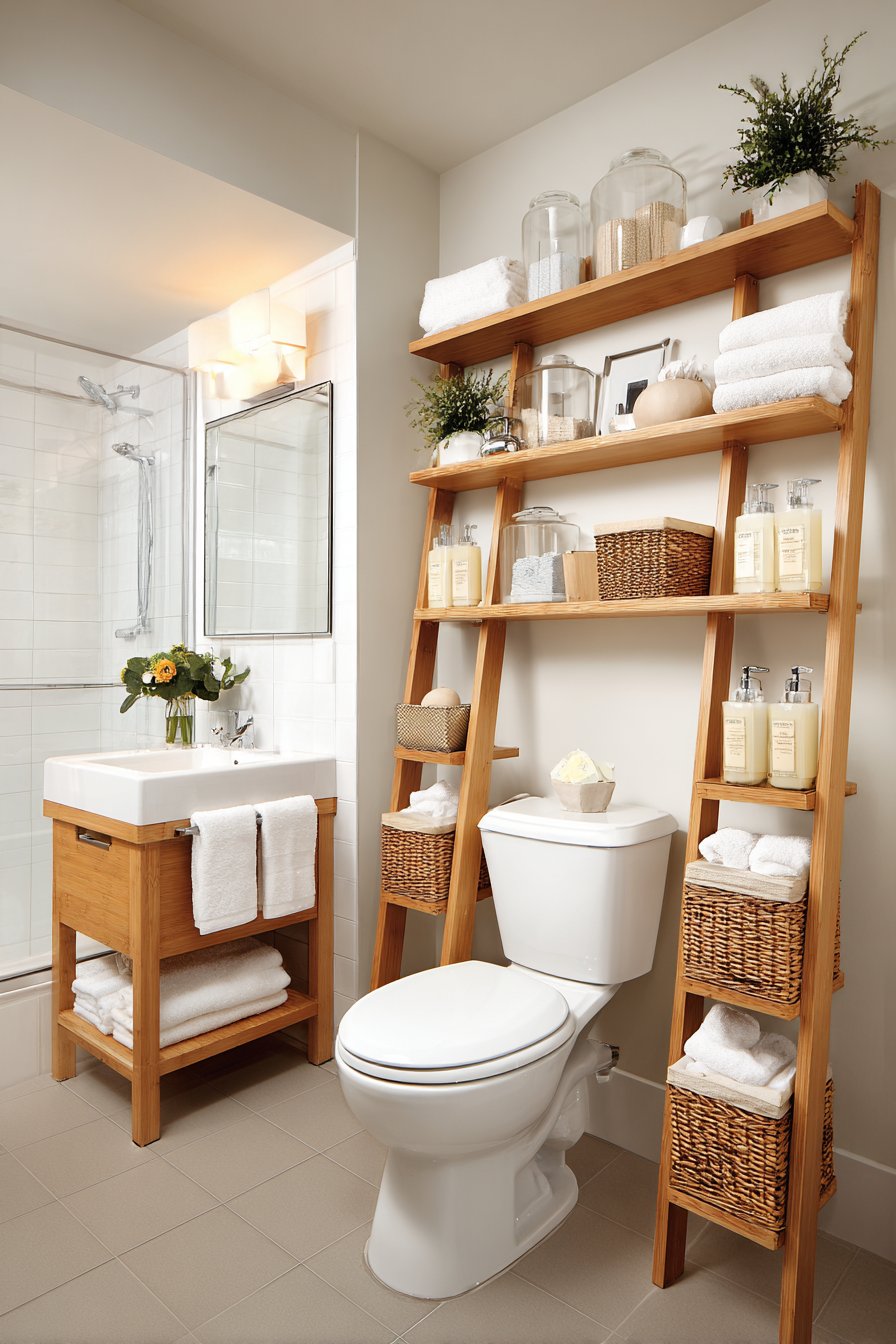
The combination of soft overhead lighting and natural light creates balanced exposure that makes the storage both functional and attractive. The bamboo’s natural grain patterns and honey tones warm the space while the lean-against stability ensures safety despite the no-drill installation. This solution proves that small bathrooms can achieve both style and storage through creative use of vertical space.
Key Design Tips:
- Ensure adequate clearance between toilet and leaning shelving for comfortable use
- Choose water-resistant materials like bamboo, teak, or sealed wood for bathroom conditions
- Limit each shelf to 2-3 items to prevent overcrowding on narrow ladder-style shelves
- Use non-slip pads under bottom of ladder to prevent sliding on tile floors
- Store only lightweight items on upper shelves to maintain safe center of gravity
- Coordinate towel colors and basket styles for cohesive appearance
- Clean bamboo regularly with appropriate products to prevent water damage and maintain appearance
21. Home Gym Organization
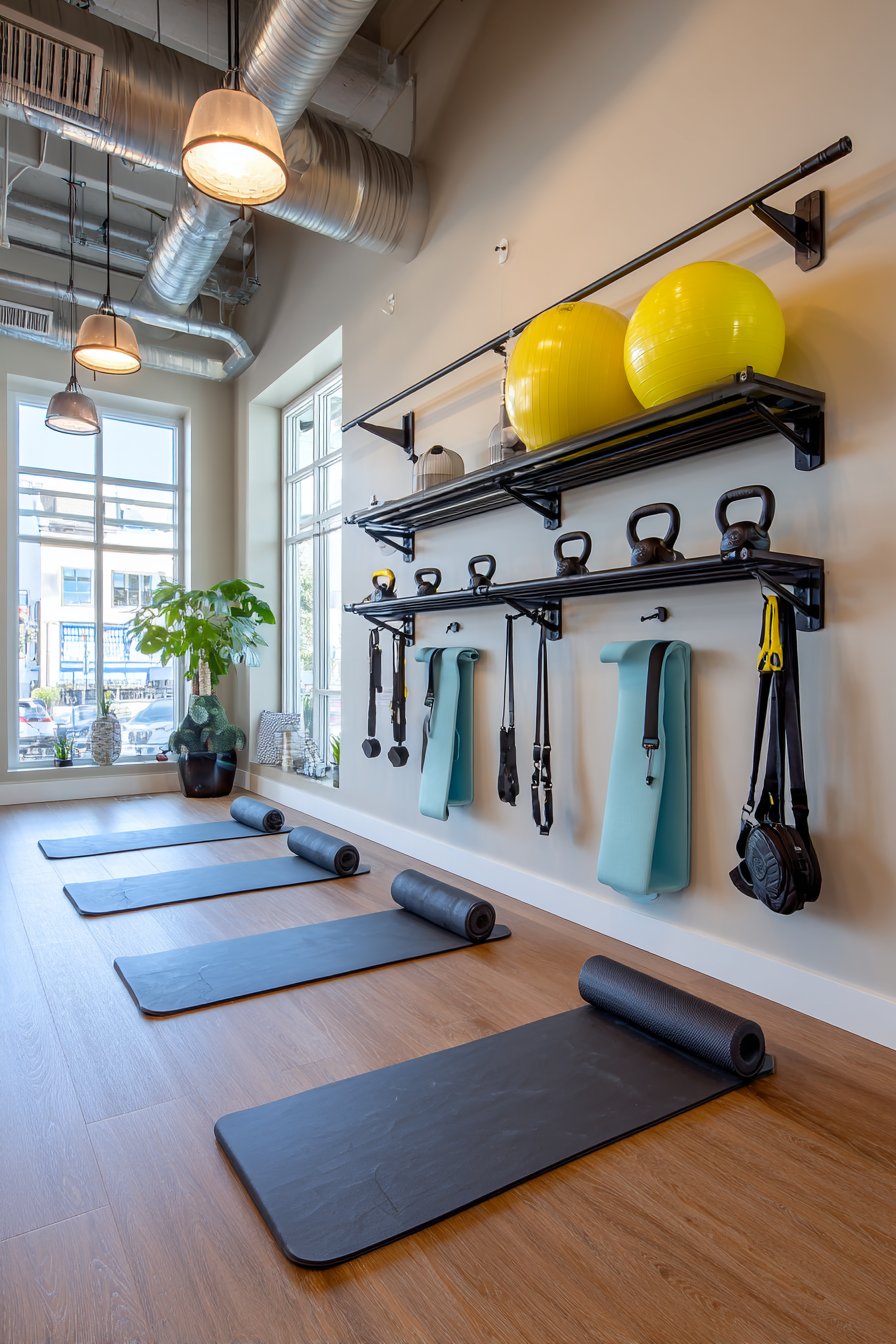
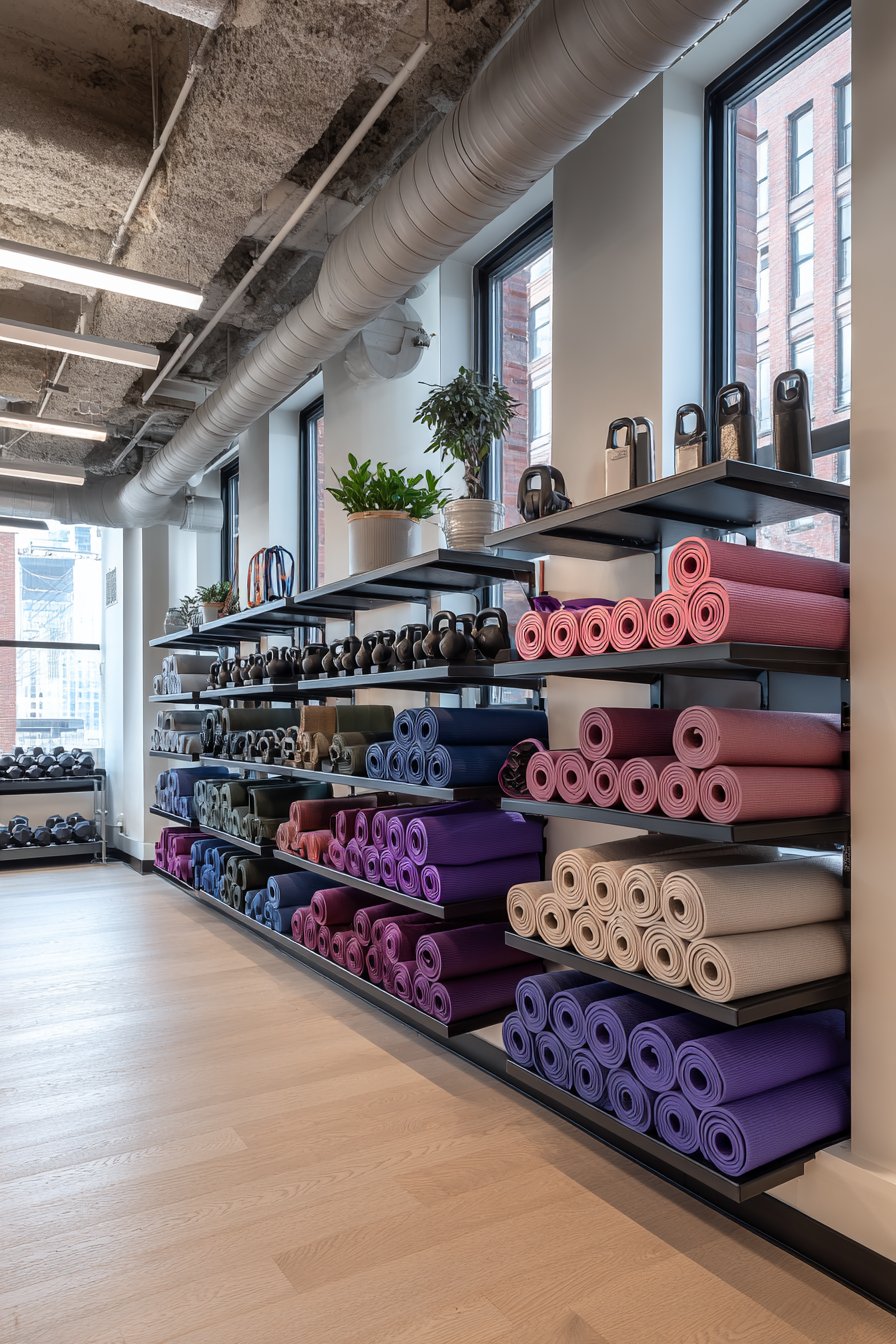
Wall-mounted shelf and peg systems in matte black metal bring industrial organization to home gym spaces. The combination of shelving and pegs creates versatile storage accommodating widely varying equipment—yoga mats rolled and secured on pegs, resistance bands coiled in designated sections, dumbbells arranged by weight on sturdy shelves. The matte black finish creates masculine, serious aesthetic appropriate for workout spaces while hiding the fingerprints and wear inevitable in active-use environments.
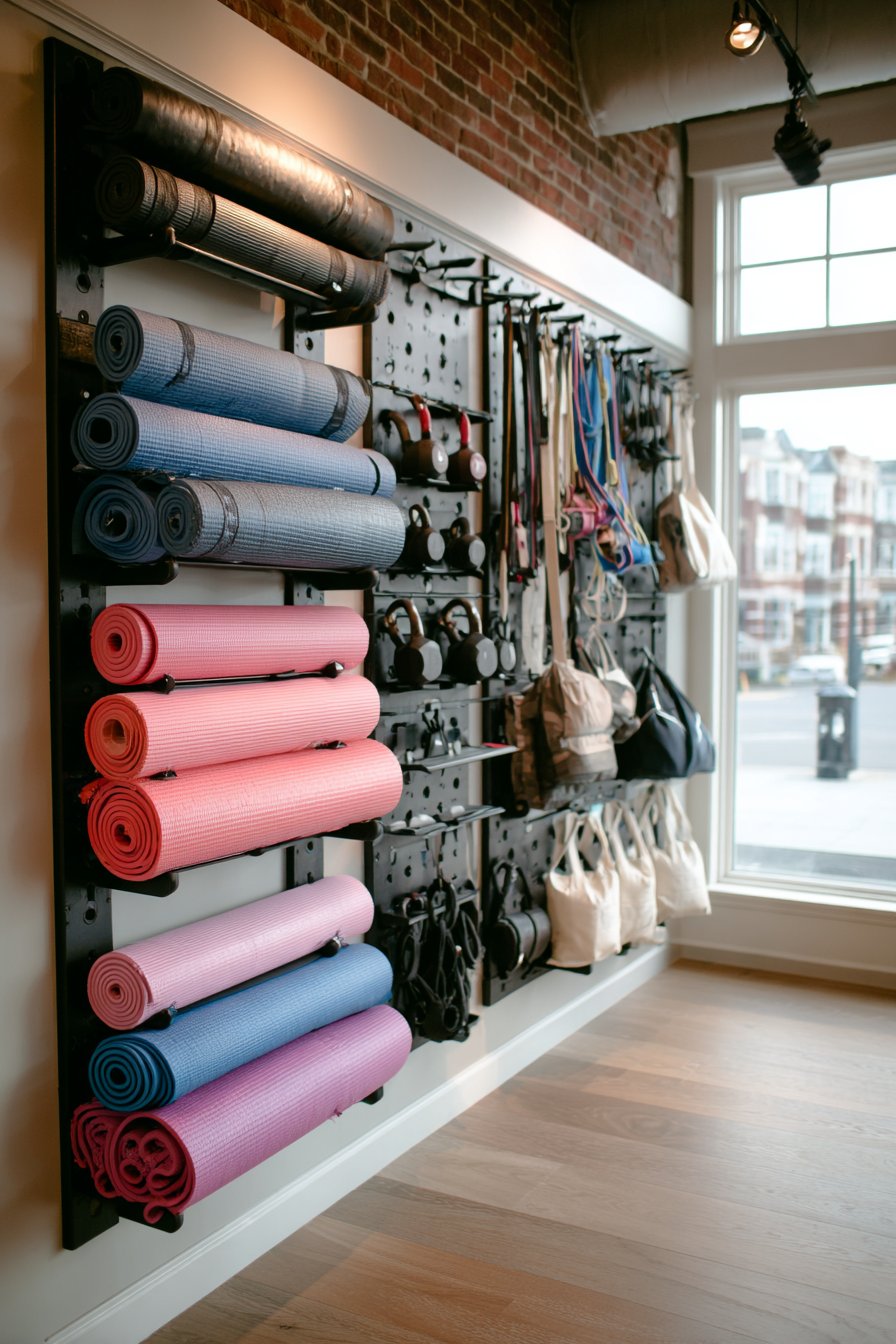
The open design allows equipment to air-dry after use, important for maintaining hygiene in home gyms. The organization encourages consistent equipment return to designated spots, making workout preparation faster and maintaining clear floor space for exercises. The industrial-strength construction withstands heavy weights and frequent use without sagging or loosening—essential for safety in spaces with heavy objects overhead.
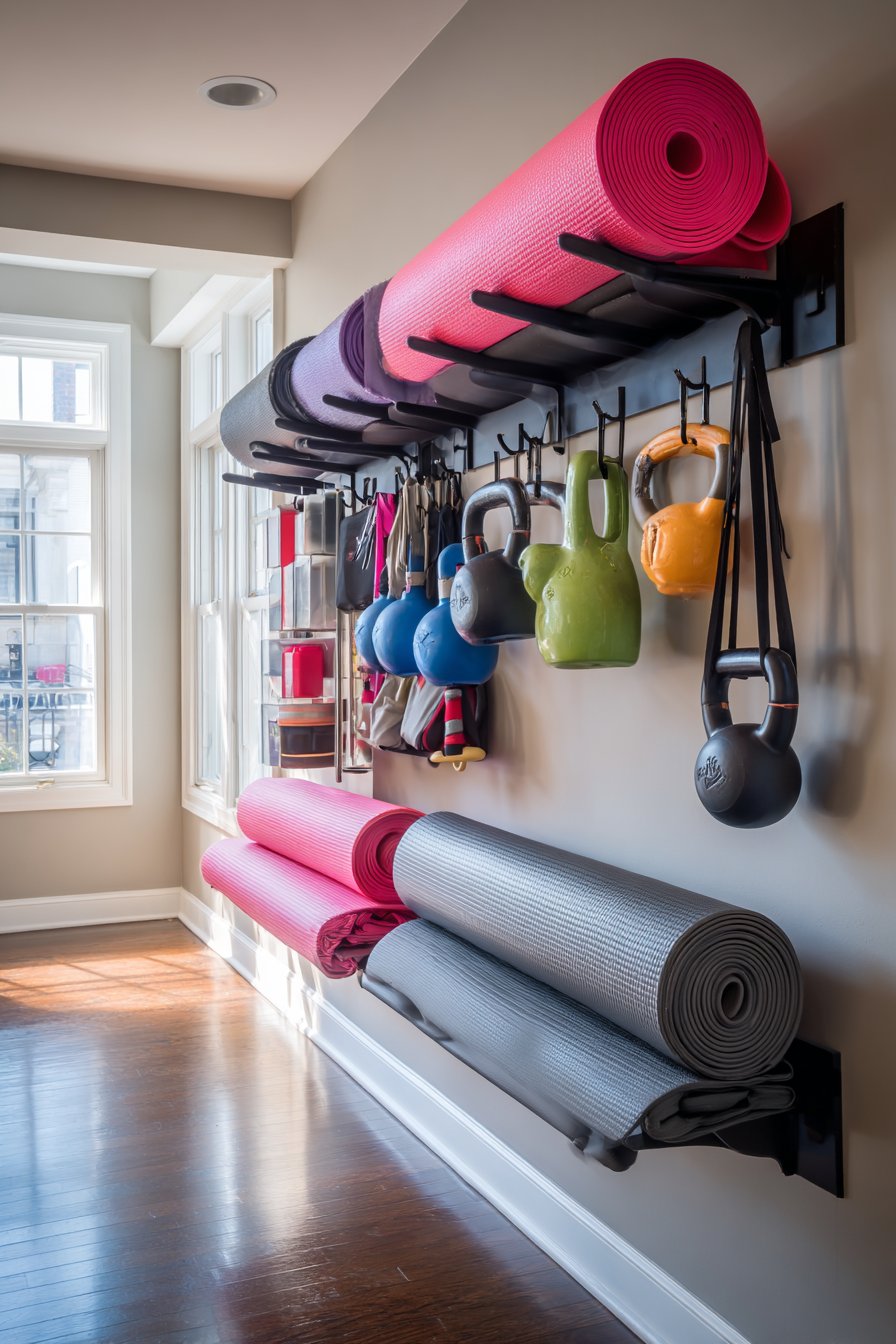
Bright natural light from windows combined with overhead lighting creates the well-lit environment important for safe exercise form and energizing atmosphere. The organized appearance motivates regular use—clean, organized spaces invite activity while cluttered ones discourage it. The black shelving provides neutral backdrop that works with any gym equipment colors or flooring choices.
Key Design Tips:
- Install shelving securely to studs with appropriate weight-bearing hardware rated for heavy loads
- Create dedicated spots for each equipment type to encourage consistent organization
- Mount at heights allowing easy access while maintaining safety clearances for exercises
- Choose matte finishes that won’t show sweat marks or fingerprints as readily as glossy options
- Incorporate pegboard sections for maximum flexibility in hanging various equipment types
- Ensure adequate spacing between shelves for easy removal of stored items
- Consider installing mirror sections between shelving to serve dual purposes without sacrificing wall space
22. Craft Room Creativity Hub
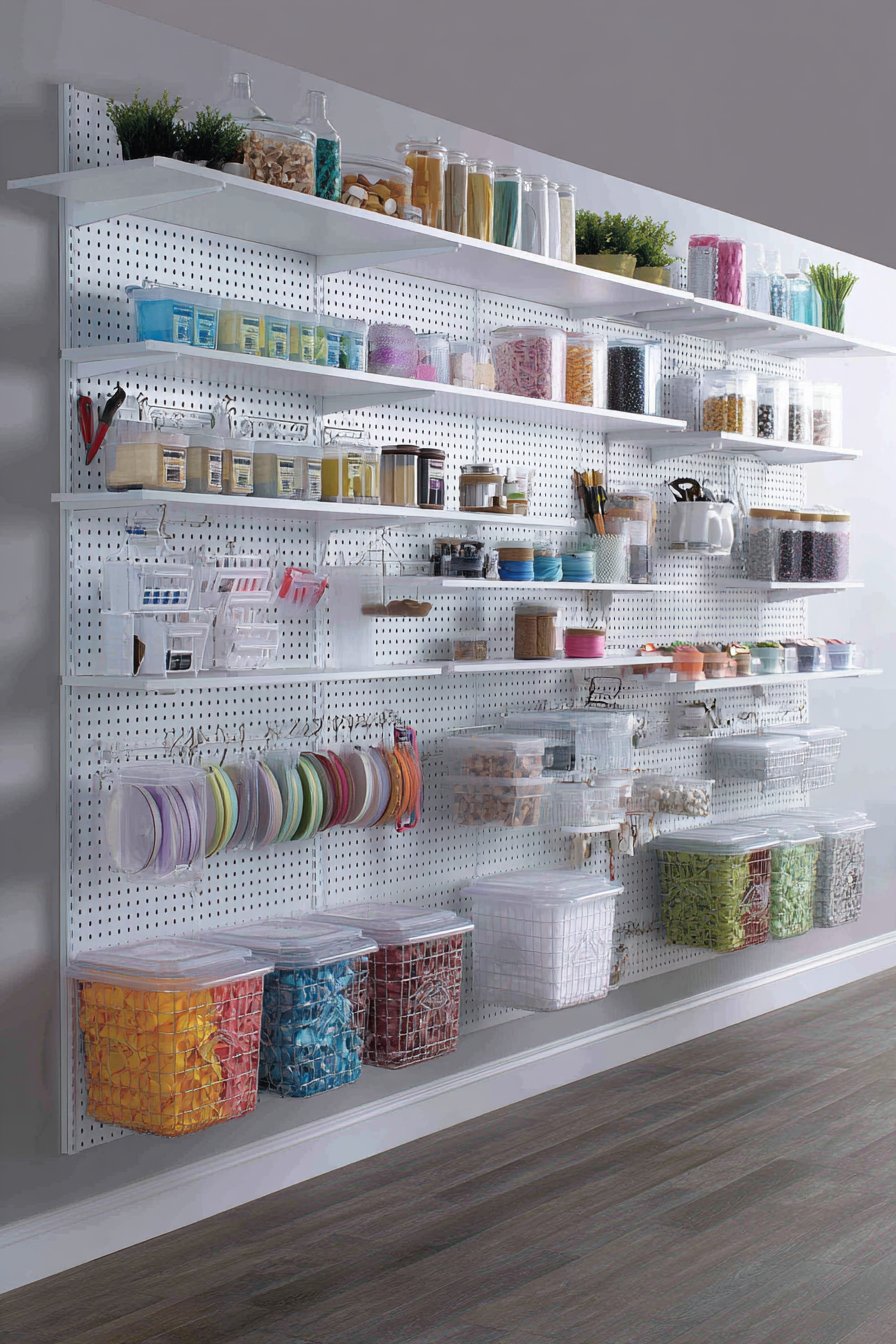
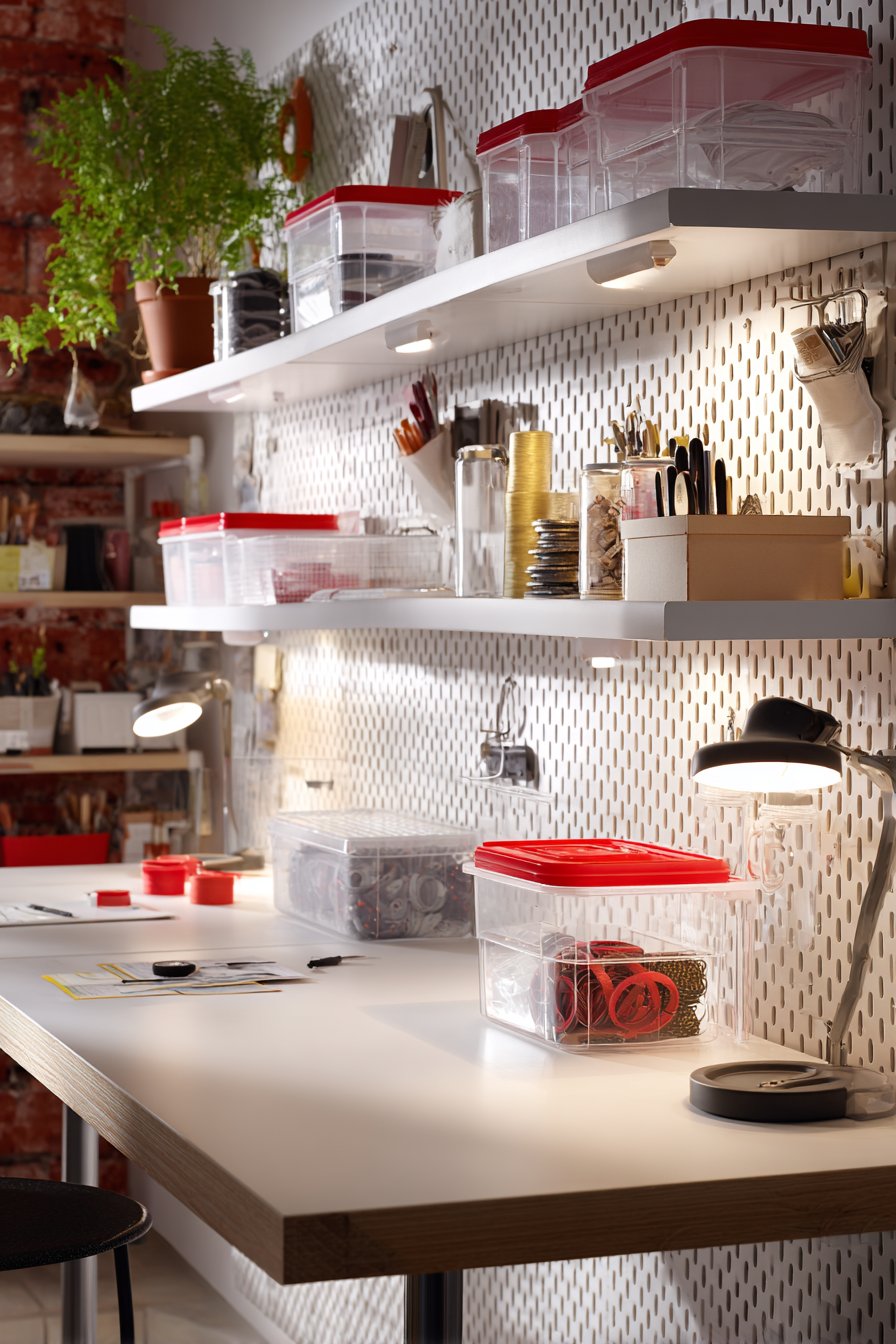
Comprehensive pegboard and shelf combinations in crisp white create ultimate craft room organization. The modular system combines shallow shelves for storage containers, pegboard sections for hanging tools, and small bins for sorted supplies. This flexibility accommodates the diverse storage needs of crafting—everything from fabric bolts to ribbons to small hardware requiring organization. Clear containers maintain visual cohesion while allowing instant visibility of contents, essential for creative work requiring specific materials.
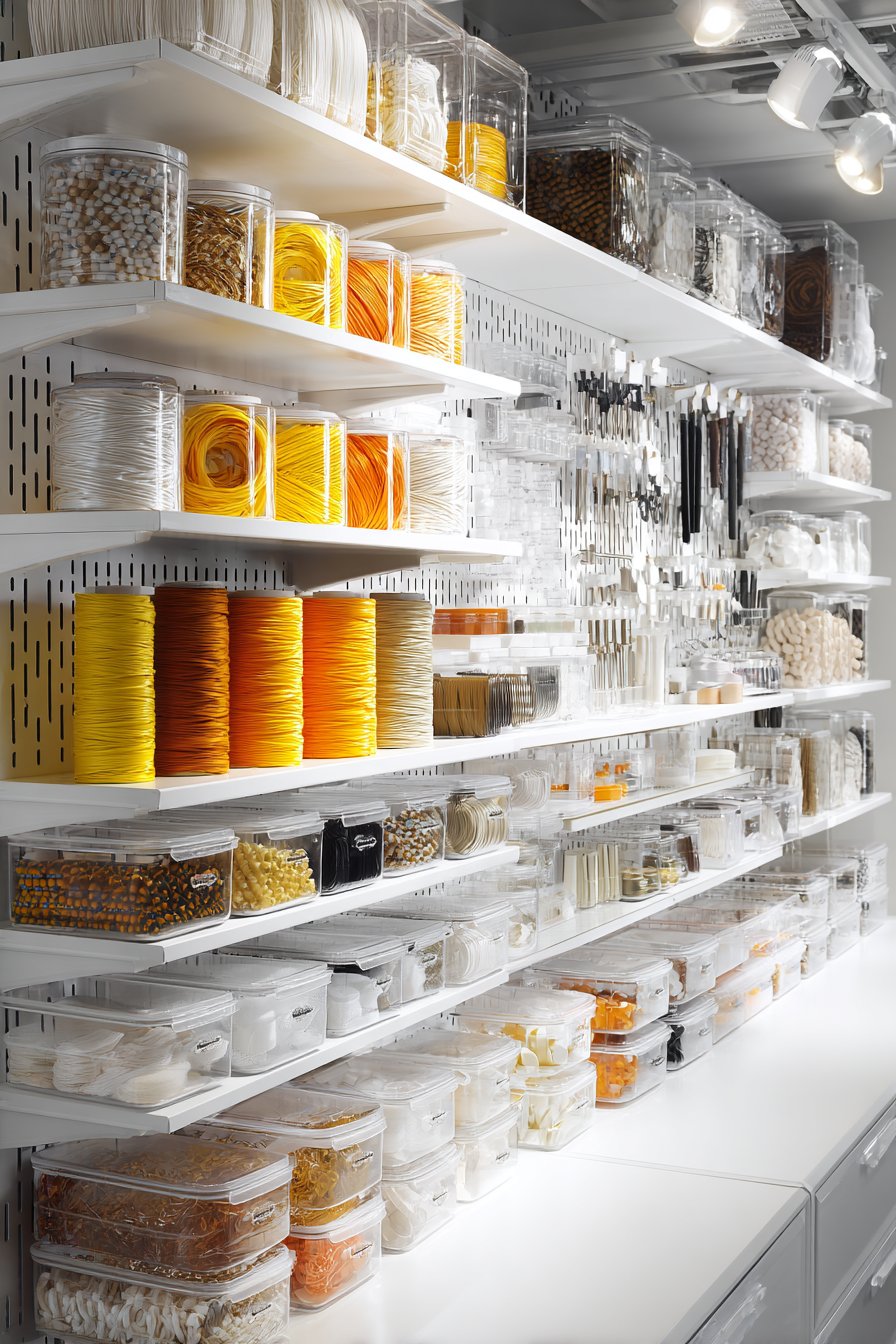
The white finish creates bright, clean environment that showcases colorful craft supplies rather than competing with them. The organized visibility inspires creativity—seeing materials sparks project ideas while knowing exactly where everything lives reduces project startup friction. Small hooks hold scissors, rotary cutters, and ribbon rolls for instant access. Shallow shelves prevent deep storage where items get lost and forgotten.
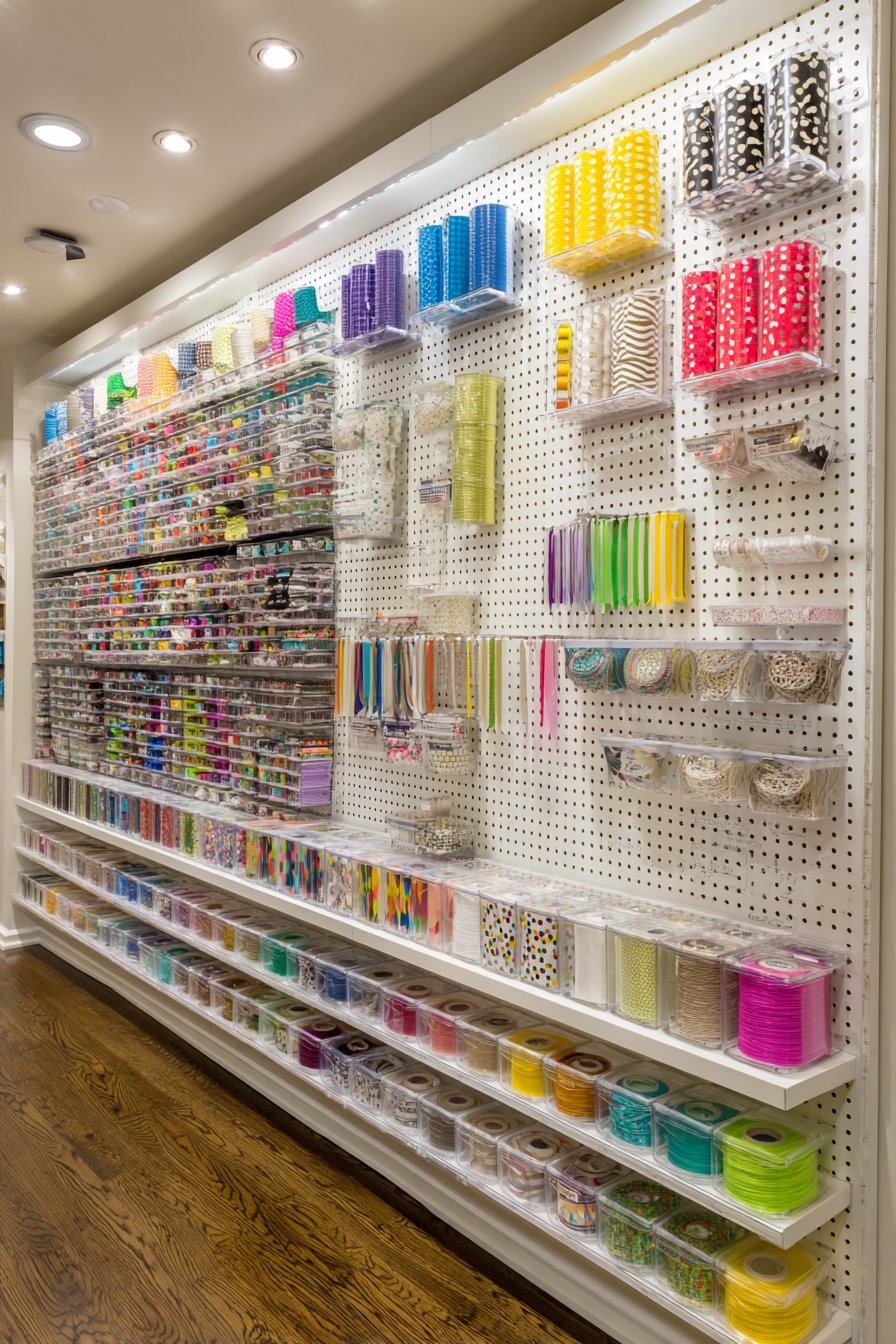
Bright task lighting ensures excellent visibility for detailed craft work, crucial for activities requiring precision and color accuracy. The modular nature allows system evolution as crafting interests change—pegboard can be reconfigured, shelves added or removed, bins relocated. This adaptability makes the investment worthwhile across years and changing hobbies.
Key Design Tips:
- Install pegboard over as much wall space as practical for maximum flexibility
- Use consistently sized bins and containers for visual cohesion and stackable efficiency
- Create zones by craft type—sewing area, paper crafts section, painting supplies, etc.
- Label everything clearly with contents and location codes for easy returns
- Incorporate pull-out work surface if possible to maximize functional workspace
- Choose white or light neutral colors to maintain brightness and showcase colorful supplies
- Plan adequate electrical outlets for lighting, heat tools, sewing machines, and other equipment
23. Symmetrical Bedroom Elegance
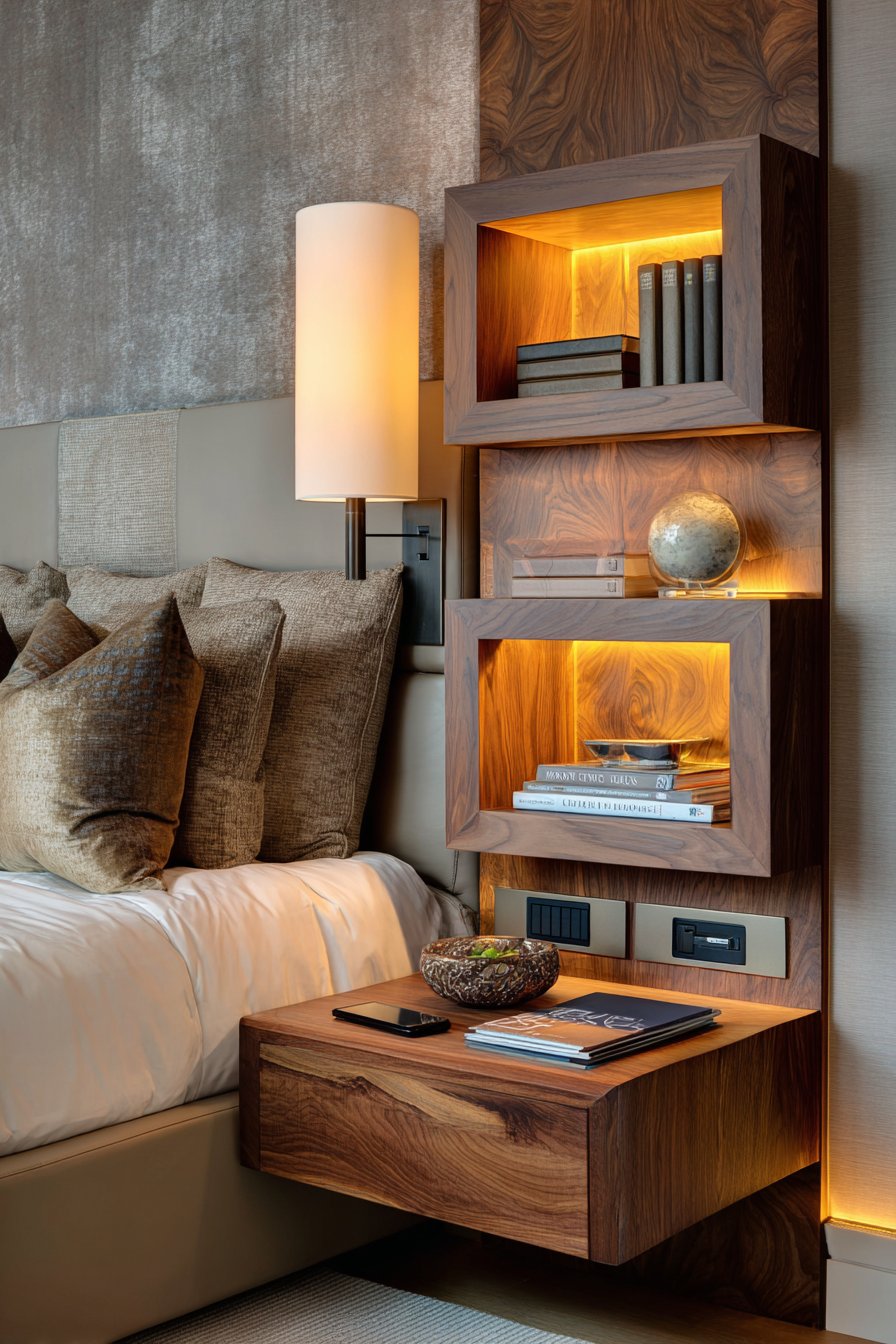
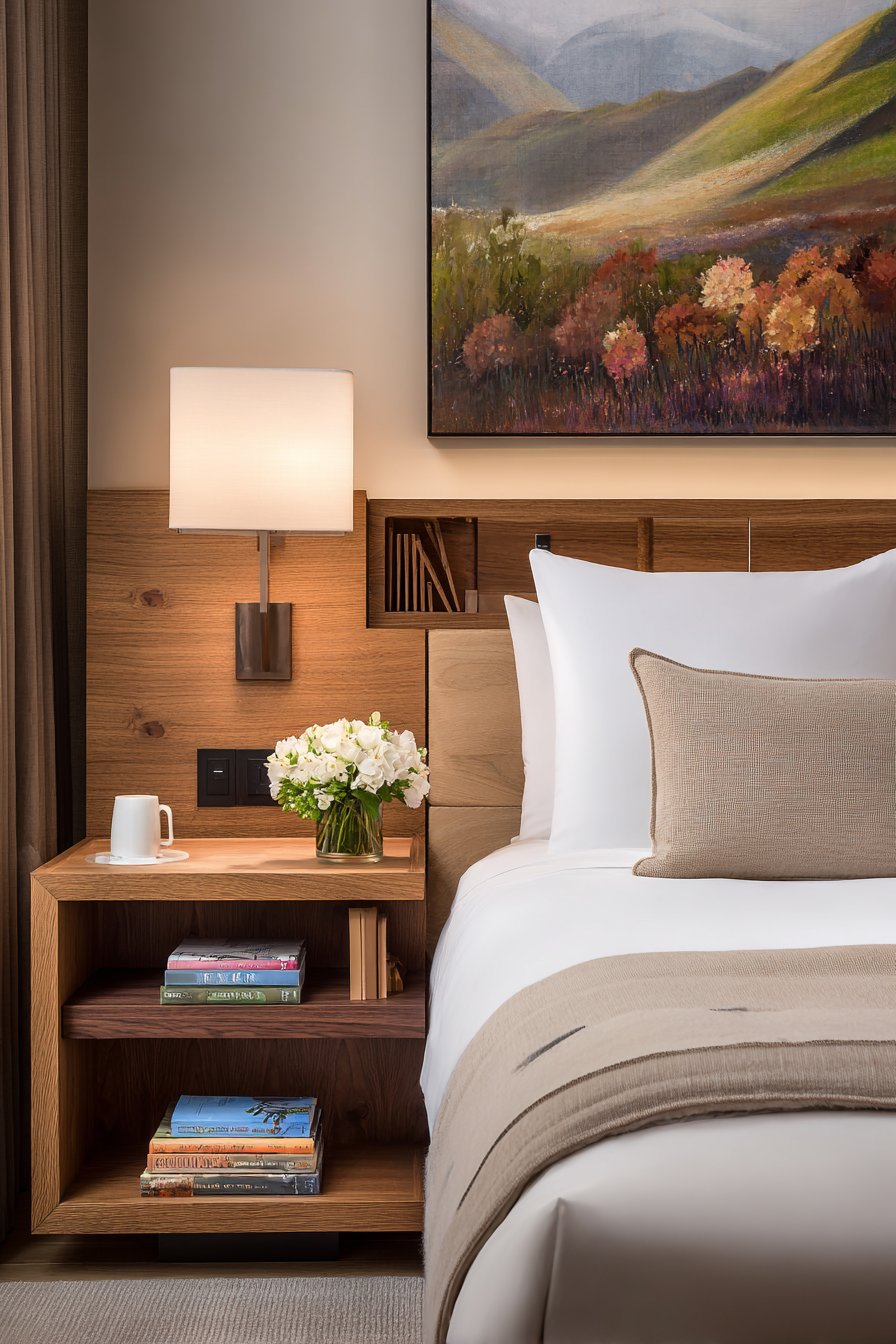
Matching floating nightstand shelves flanking the bed in warm walnut create symmetrical elegance while incorporating modern functionality. The built-in USB charging stations hidden within maintain clean contemporary lines while addressing modern bedside needs. This dual-purpose design eliminates bedside clutter of charging cables while providing surface space for essential items—lamps, books, water glasses, personal items. The symmetry creates visual calm appropriate for sleep environments while the warm walnut adds richness and sophistication.
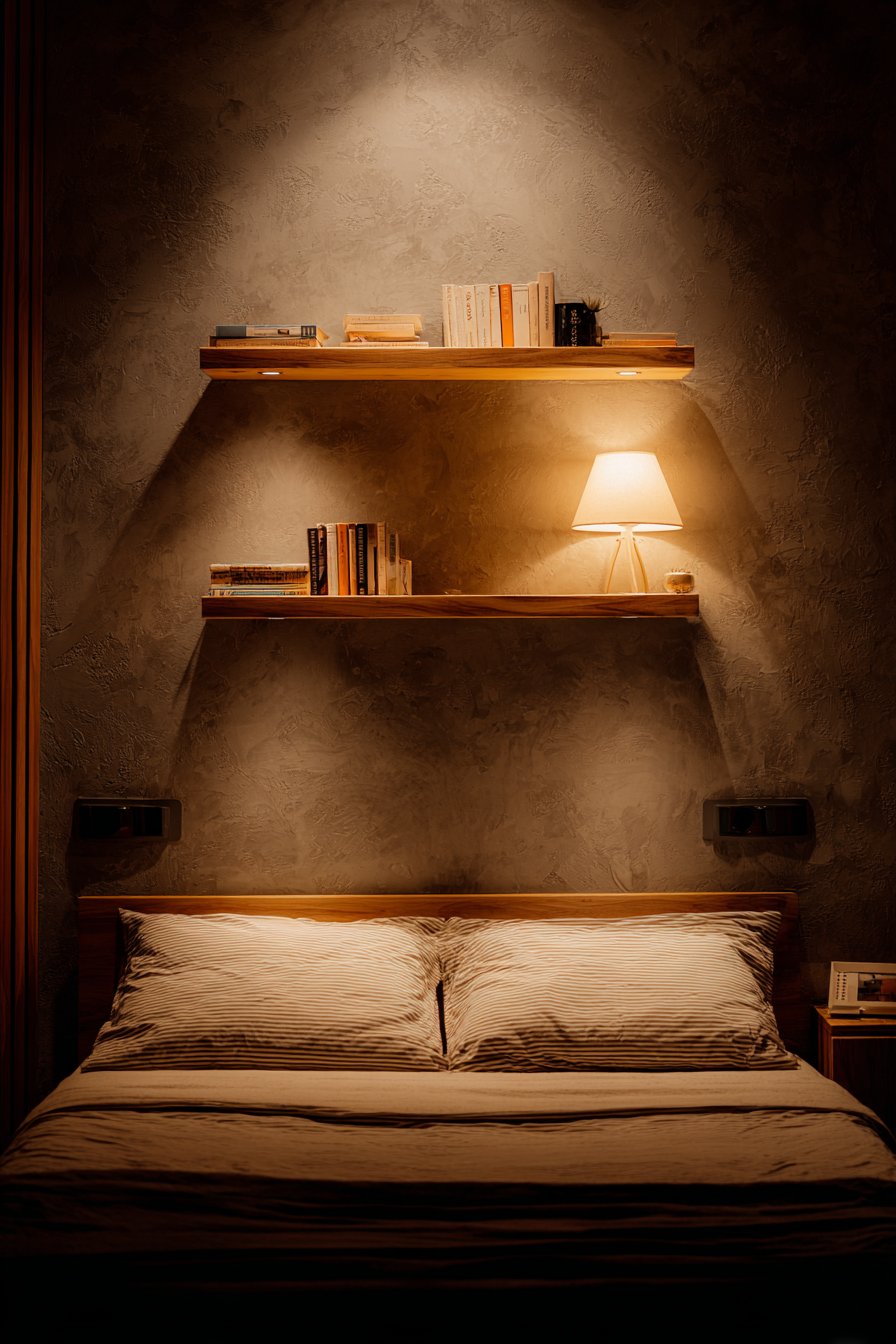
The floating installation maintains clean floor lines important in bedrooms where visual calm supports restful sleep. The walnut grain patterns add natural texture and warmth without requiring additional decorative elements. Warm bedside lighting creates intimate zones for reading or winding down, with the wood grain catching and reflecting this light beautifully. The integrated charging capability represents thoughtful design that anticipates actual use patterns rather than merely aesthetic considerations.
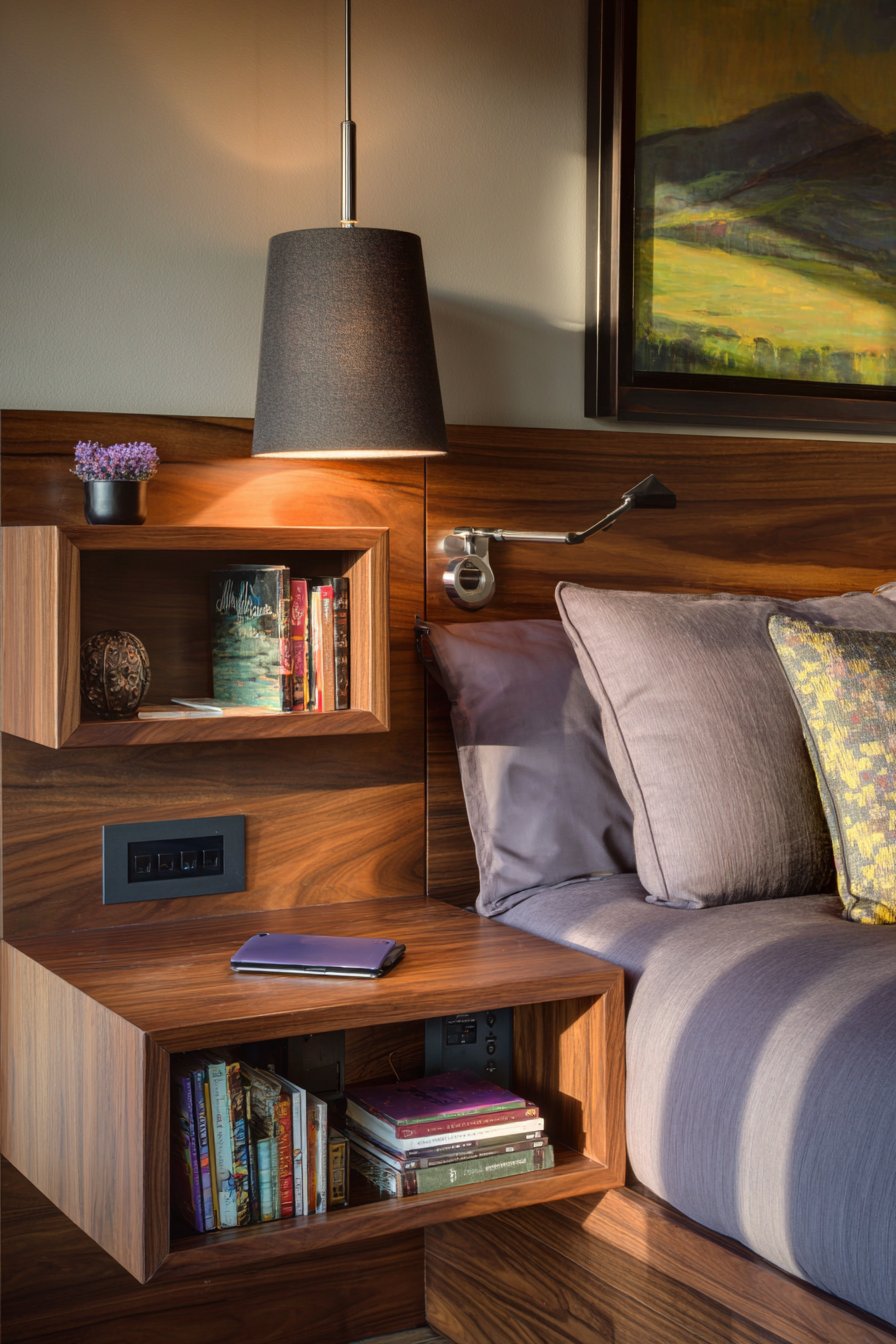
The elimination of traditional nightstands frees floor space, making bedrooms feel larger and easier to clean. The wall-mounted shelves provide identical storage and function without the visual weight of furniture. This contemporary approach to bedside storage suits modern lifestyles where phone charging represents essential nighttime function.
Key Design Tips:
- Install at heights allowing comfortable reaching from bed (typically 24-28 inches from mattress top)
- Ensure adequate depth (10-12 inches) for table lamps and other bedside necessities
- Plan electrical installation during construction or renovation for cleanest appearance
- Choose wood finishes that coordinate with other bedroom furniture and flooring
- Incorporate subtle LED uplighting on shelf undersides for nighttime ambient lighting
- Ensure symmetrical installation with careful measuring and leveling
- Consider adding small drawer sections for items better kept out of sight
24. Efficient Laundry Room Storage
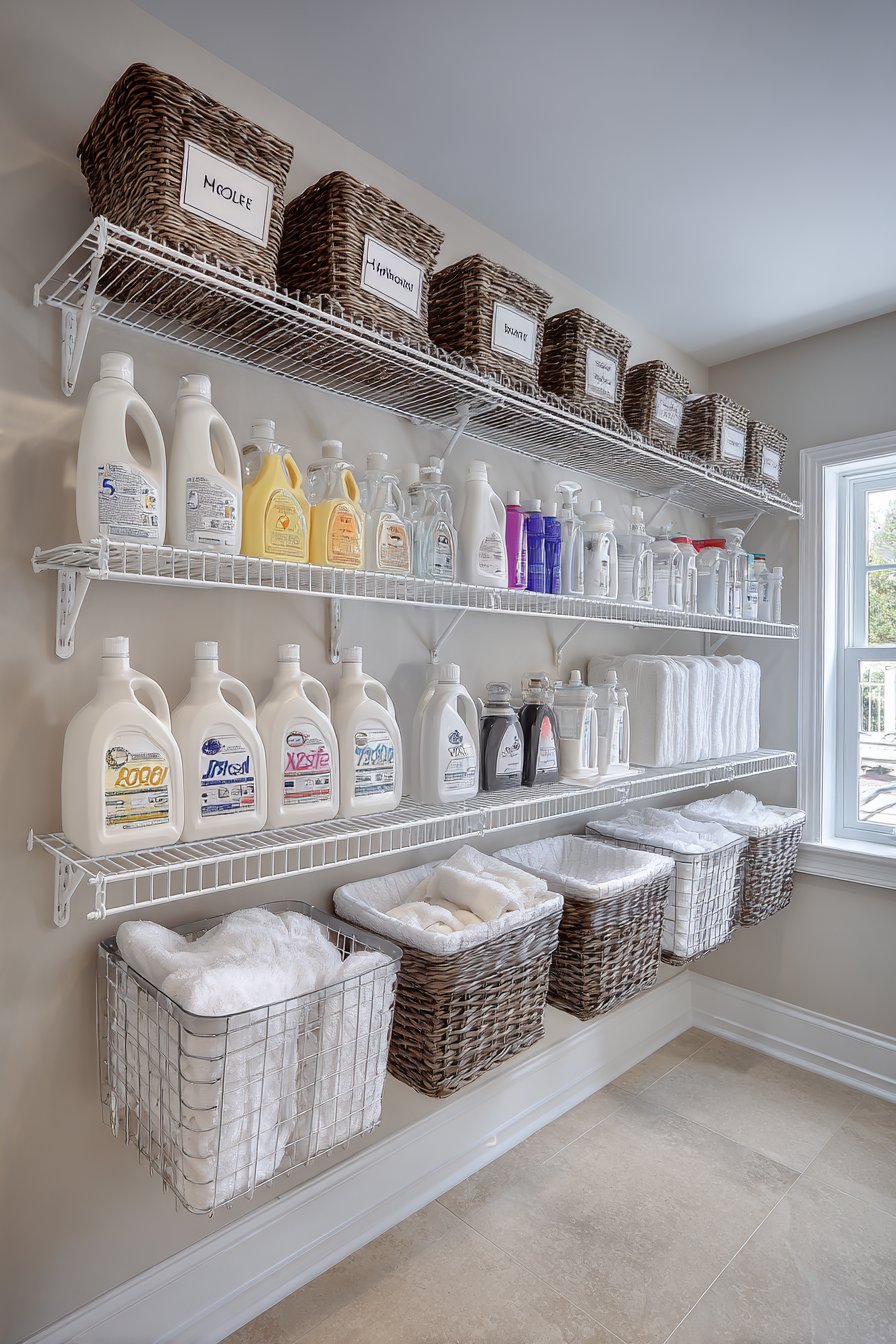
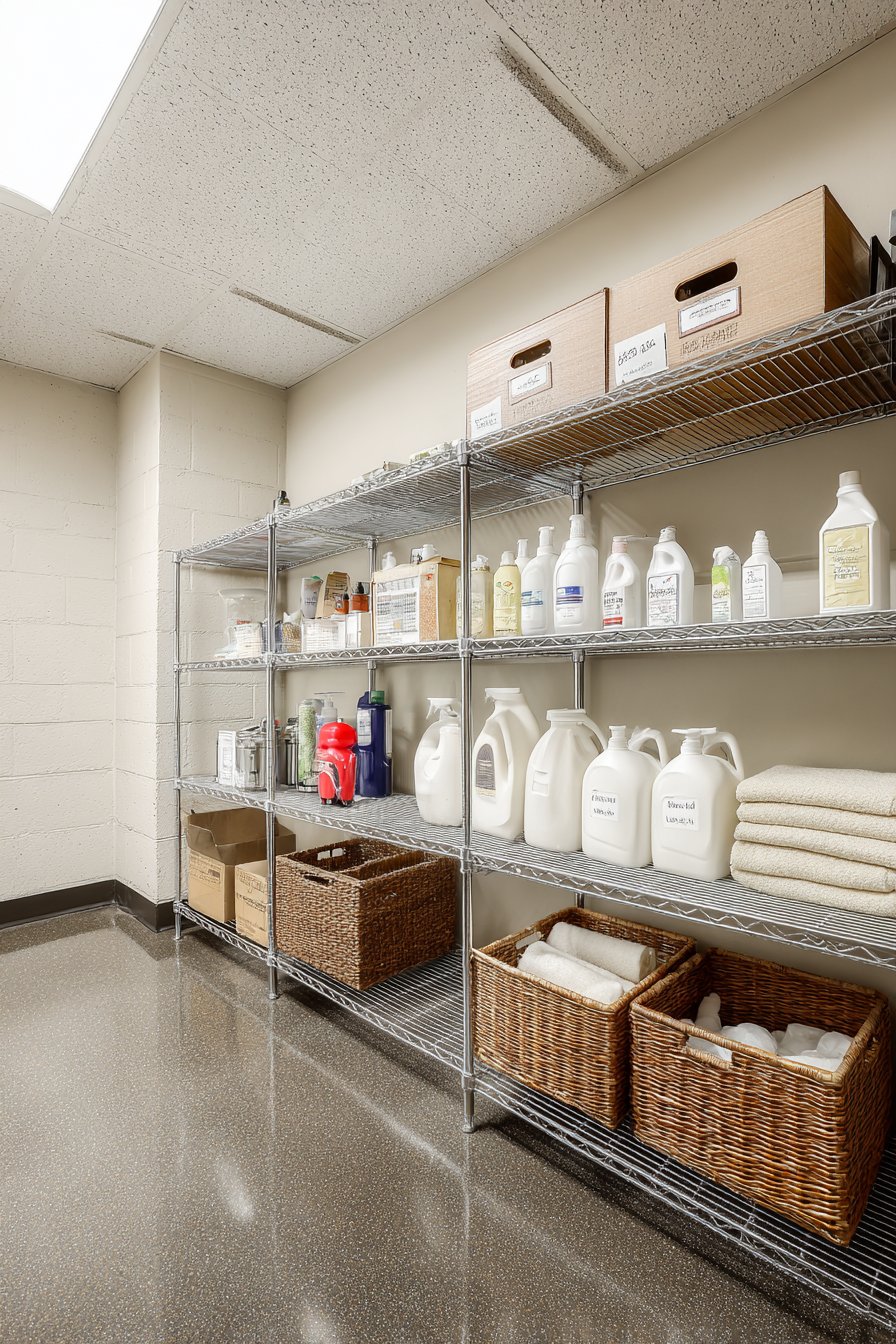
Deep wire shelving in white epoxy coating provides ventilated storage perfect for laundry room applications. The open wire construction allows air circulation around cleaning supplies, prevents moisture buildup under folded linens, and makes spills easy to spot and clean. Adjustable shelving accommodates varying product sizes from large detergent bottles to small stain treatment sticks. The white epoxy coating resists rust and maintains bright appearance despite humid laundry room conditions.
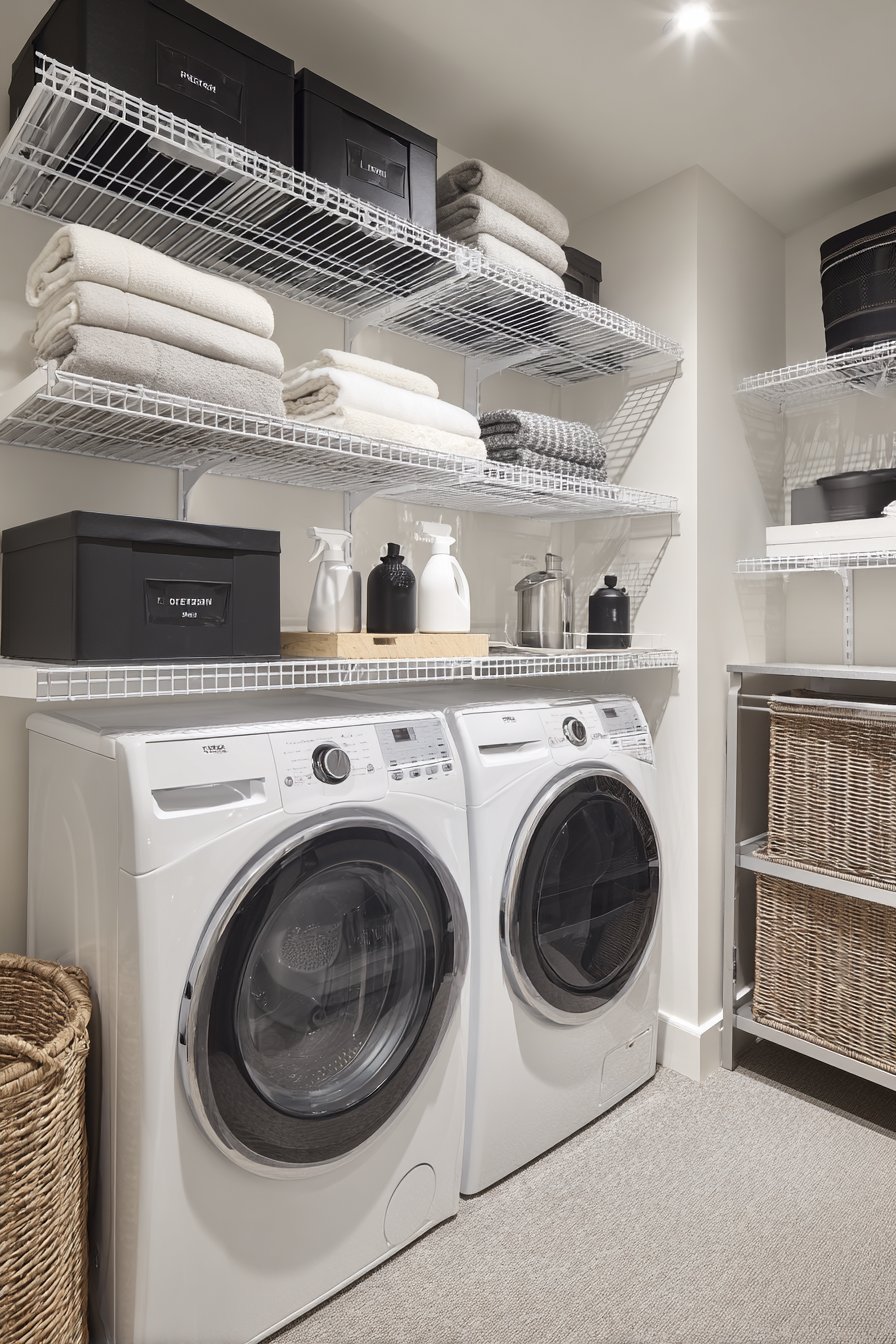
The practical organization includes labeled bins for sorting—one for rags, another for donation items, a third for mending projects. Clear containers allow instant identification of contents while maintaining visual order. The deep shelves accommodate bulk purchases and storage of seasonal items, making the laundry room work harder as general household storage. The vertical maximization leaves floor space for sorting hampers and folding surfaces.
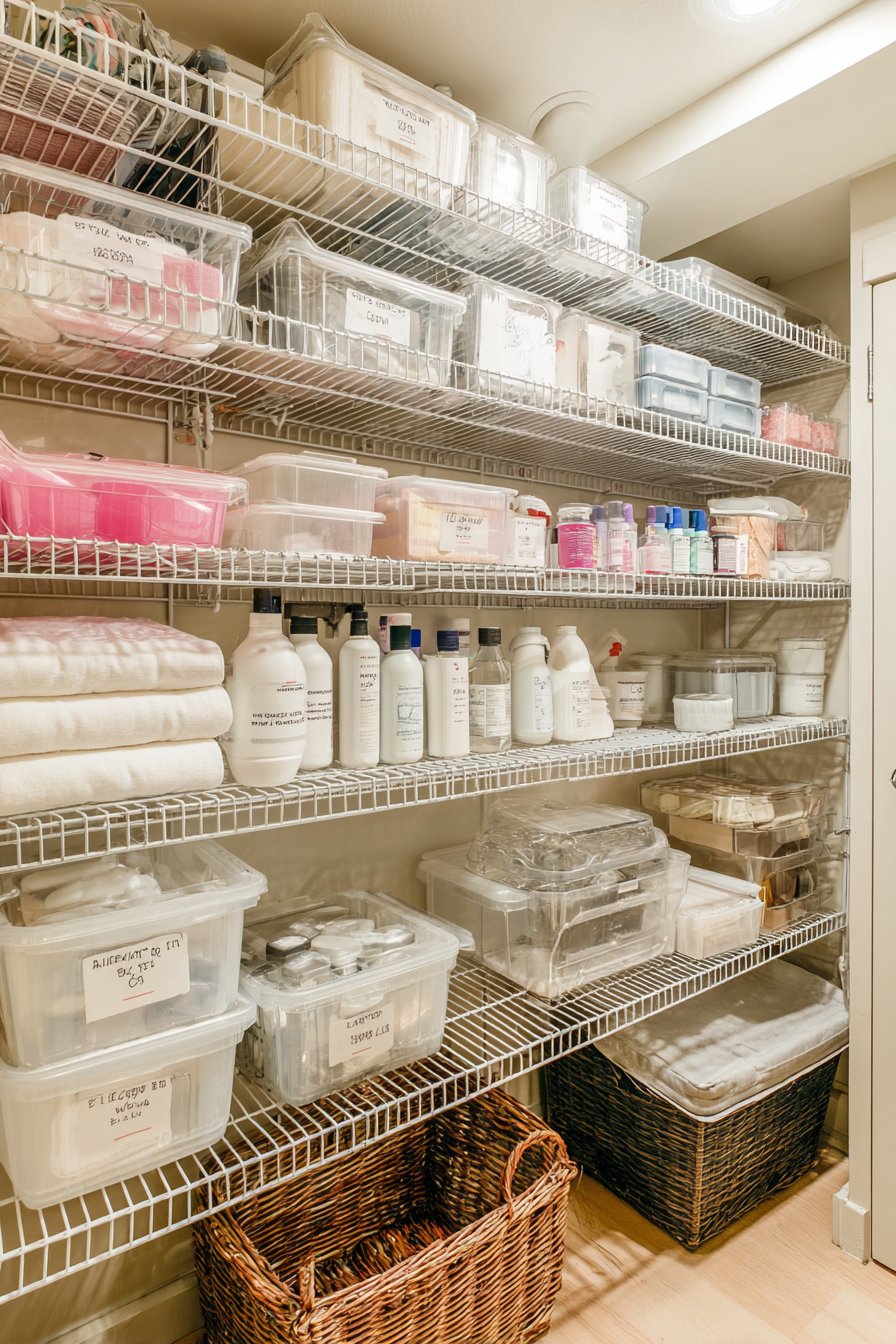
Bright overhead lighting ensures adequate illumination for the detailed work of stain treatment and garment inspection. The ventilated shelving prevents the musty smells that can develop in closed storage in humid conditions. The adjustability means the system grows with changing household needs—young families need different storage than empty nesters.
Key Design Tips:
- Choose wire shelving with close enough spacing to prevent small items falling through
- Install at heights allowing easy access to frequently used items while storing occasional-use items higher
- Use shelf liners under folded textiles to prevent wire pattern impressions
- Incorporate pull-out baskets or bins for sorting dirty laundry by color or fabric type
- Ensure adequate depth (16-20 inches) for detergent bottles and cleaning supply storage
- Plan dedicated zones—supplies, cleaning items, folding/ironing equipment, household storage
- Consider installing one solid shelf for folding surface if space allows
25. Integrated Living Room Alcove
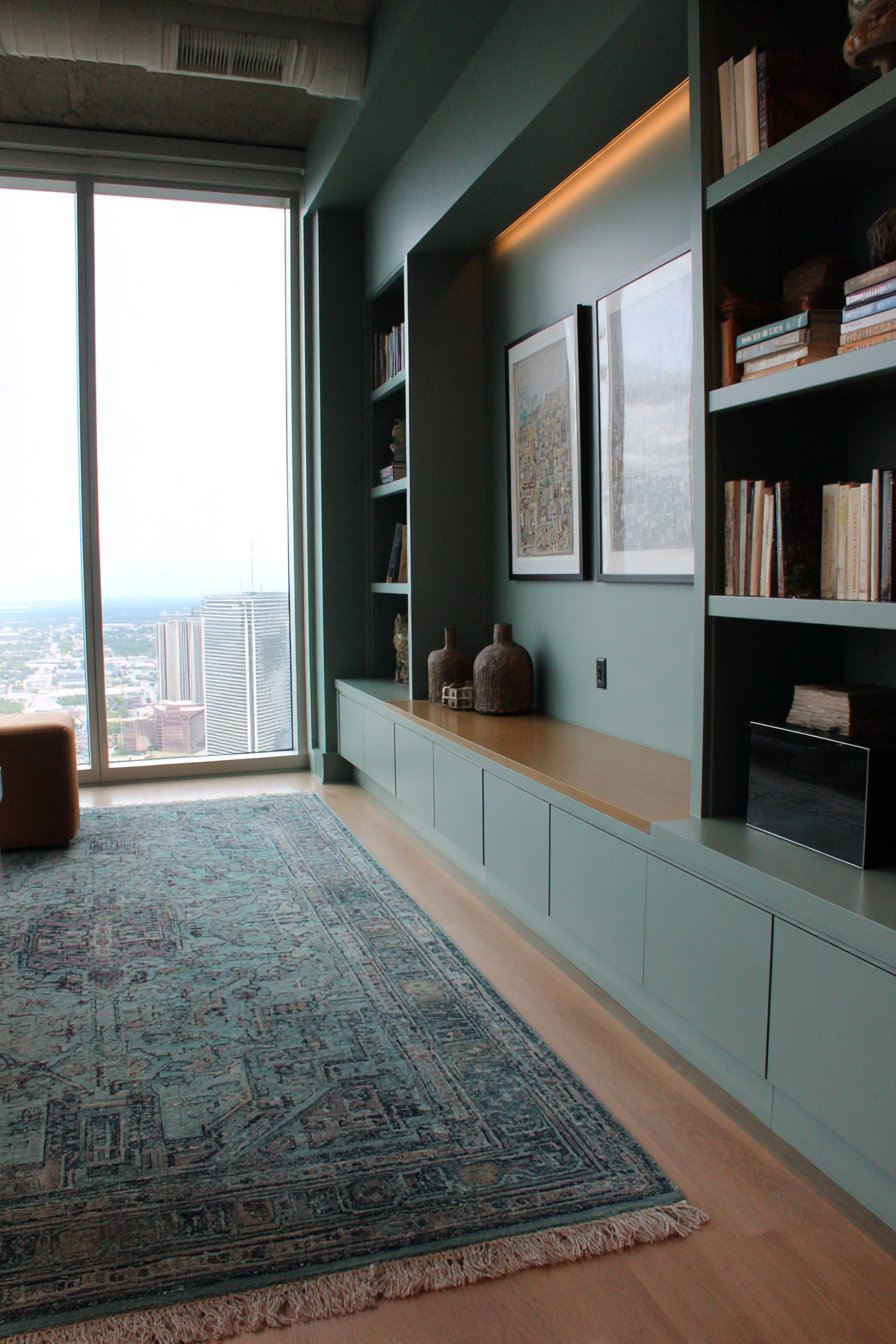
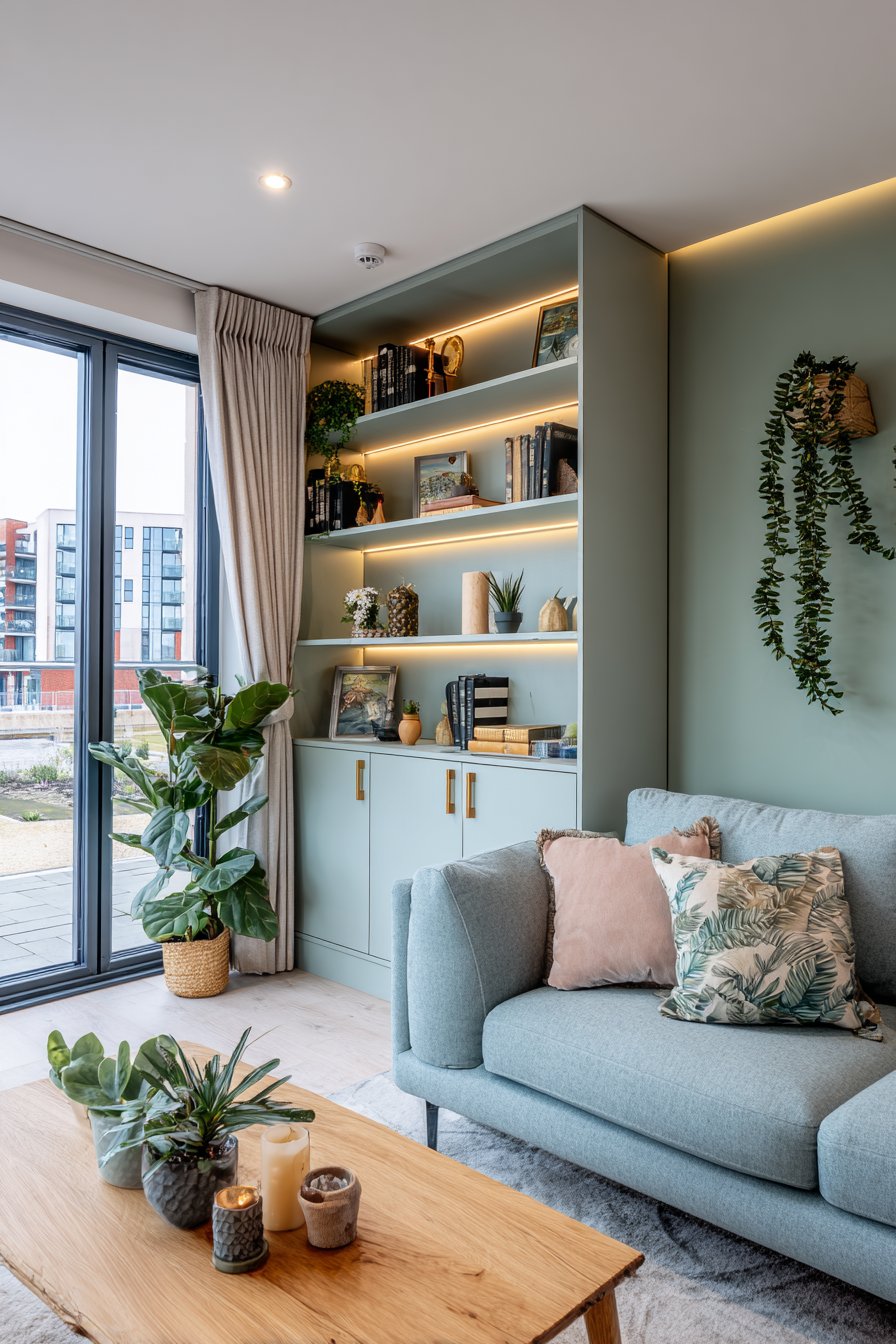
Floor-to-ceiling built-in shelving painted in soft sage green creates seamless integration with accent walls, transforming alcoves into custom storage features. The matched paint treatment makes the shelving appear architectural rather than added afterward, creating cohesive design that feels intentional and permanent. Custom shelving with varied shelf heights accommodates diverse storage—tall sections for oversized books, medium heights for decorative objects, specific niches for media components. Integrated LED strip lighting along back edges creates subtle glow that highlights displayed items while adding ambiance.
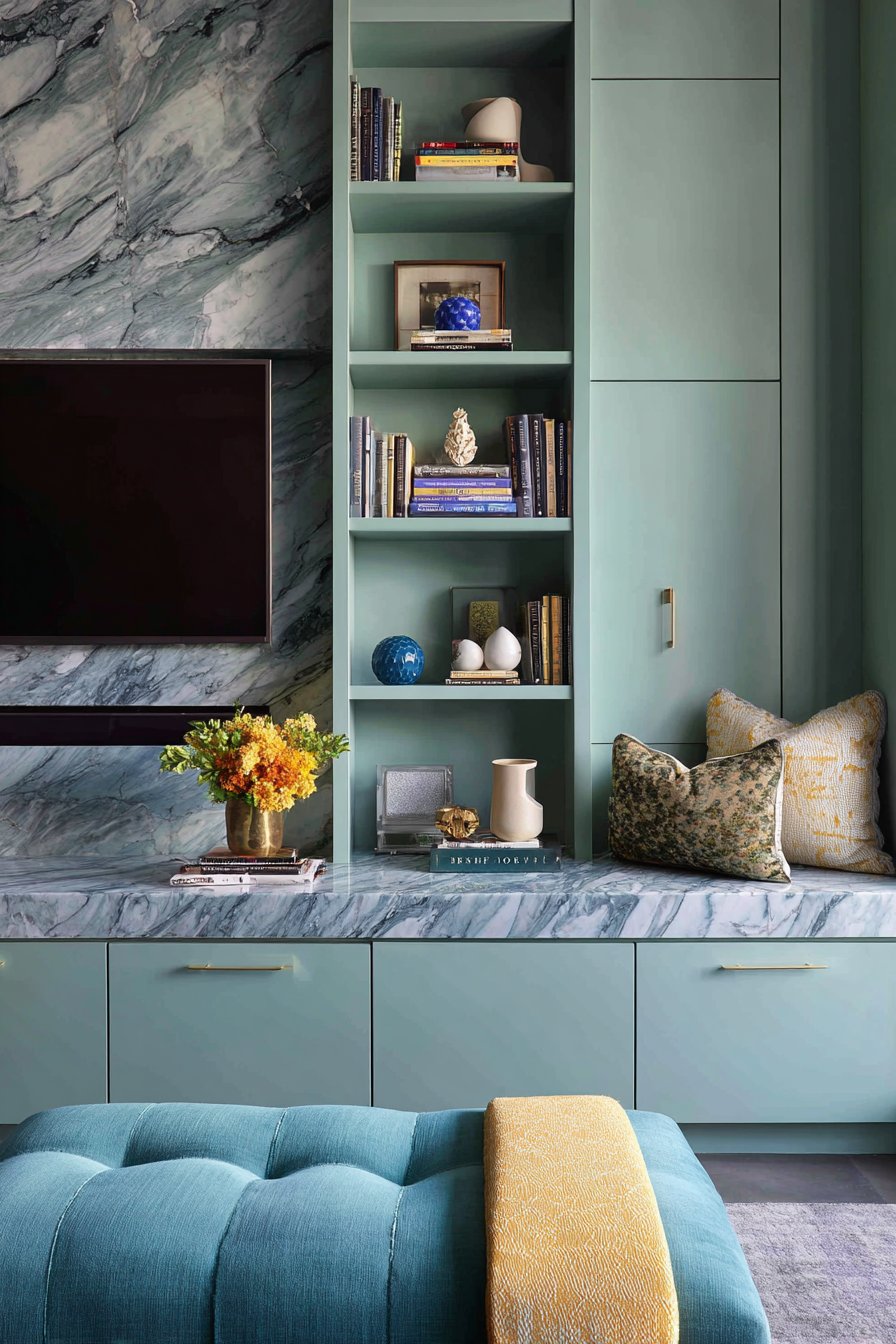
The sage green color choice brings color into the space through functional elements rather than requiring commitment to painted furniture or large decor pieces. The calming, natural hue works across seasons and design trends, providing longevity uncommon with bolder color choices. The floor-to-ceiling installation maximizes storage capacity while creating the architectural presence that transforms ordinary alcoves into standout features.
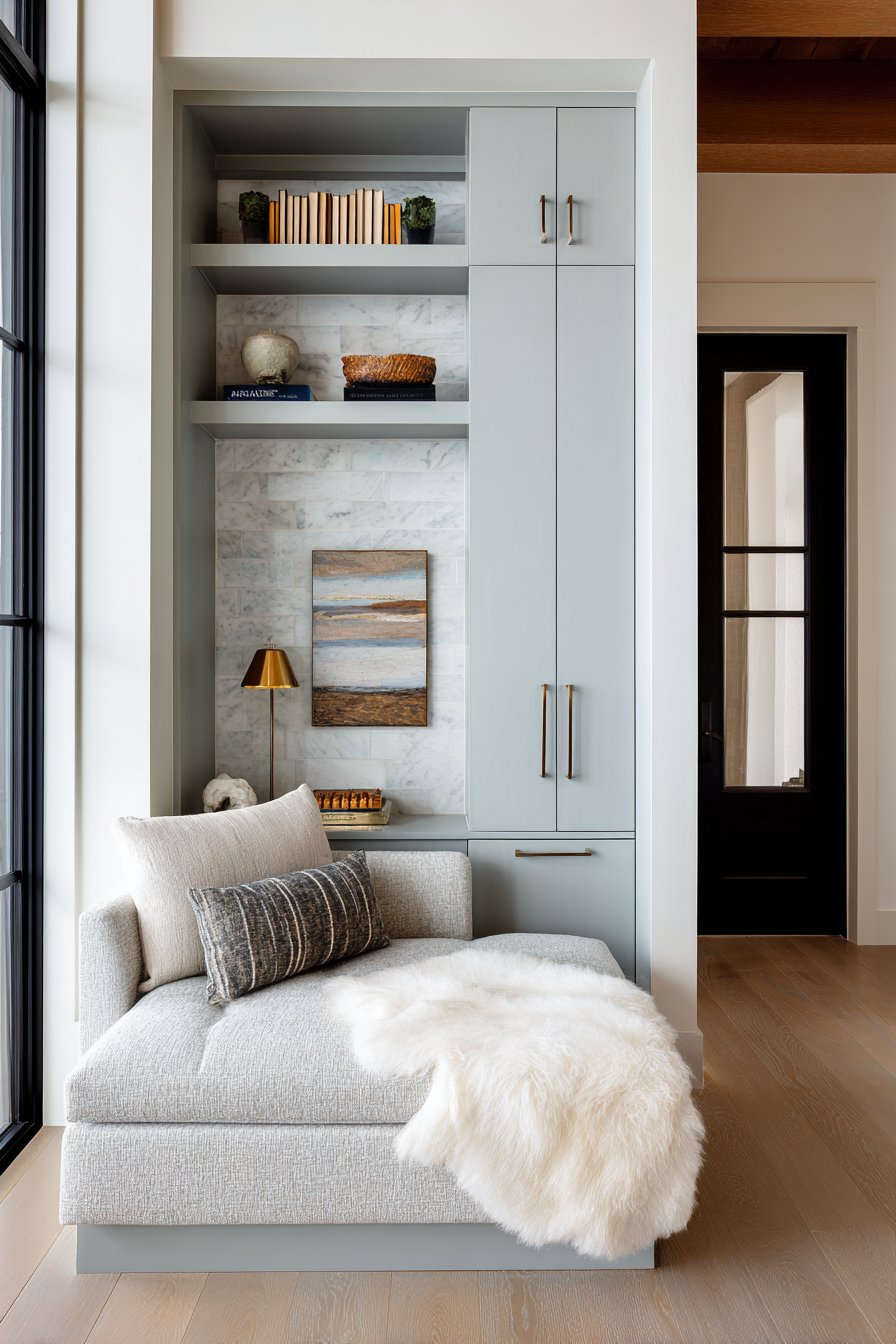
The combination of natural daylight and integrated LED lighting creates dynamic display that changes throughout the day. Morning light highlights certain objects while evening artificial light creates different shadows and emphasis. The professional installation with seamless joinery and precise paint application represents investment-level finish that substantially increases perceived room value.
Key Design Tips:
- Paint shelving and backing in same color for seamless built-in appearance
- Vary shelf heights based on items to be stored rather than uniform spacing
- Install LED lighting early in construction for clean, hidden installation
- Create media component niches with cable management solutions planned during design
- Consider including some closed storage with doors for less attractive necessities
- Choose paint colors with gray undertones for sophisticated appearance that ages well
- Plan professional installation to ensure seamless appearance and structural soundness
Why These Wall Shelving Ideas Work
These twenty-five wall shelving concepts represent more than storage solutions—they demonstrate fundamental design principles applied across diverse spaces and aesthetic preferences. The effectiveness of each approach stems from careful consideration of multiple factors working in harmony: material selection appropriate to environment, installation methods suitable to application, styling that enhances rather than overwhelms, and lighting that transforms functional storage into design features.
Material choices ground successful shelving design in authenticity and appropriateness. Reclaimed wood brings history and character to farmhouse kitchens, while sleek floating oak maintains minimalist integrity in contemporary spaces. Bamboo’s water resistance makes it ideal for bathroom applications, just as industrial-grade metal suits garage workshops. Understanding material properties—not just aesthetic qualities—ensures shelving performs as well as it appears, maintaining integrity through years of use rather than deteriorating prematurely.
The integration of storage with lifestyle needs separates exceptional shelving from merely adequate solutions. Kids’ room shelving at child-accessible heights teaches organizational skills while the same principle applied to pantry design ensures frequently used items remain easily reachable. Home gym storage that allows equipment to air-dry addresses hygiene alongside organization, while illuminated bar shelving creates entertaining focal points beyond basic bottle storage. This marriage of form and function elevates shelving from necessary evil to design asset.
Color selection and finish quality significantly impact how shelving contributes to overall room design. White shelving disappears against white walls, allowing displayed items to command attention, while dark walnut creates dramatic contrast that makes shelving itself the focal point. Matte finishes hide fingerprints in active-use areas like entryways and kids’ rooms, while glossy or illuminated options create luxury in formal spaces. Understanding these relationships allows informed choices that enhance rather than compromise design visions.
The strategic use of lighting transforms shelving from utilitarian to spectacular. Under-cabinet lighting illuminates kitchen work surfaces while highlighting open shelving displays. Integrated LED strips in built-ins create museum-quality presentations for treasured collections. Natural light considerations—positioning shelving to maximize or minimize sun exposure depending on displayed items—demonstrates sophistication in spatial planning. This attention to illumination separates professional-quality installations from amateur attempts.
Flexibility and adaptability ensure shelving investments remain valuable through changing needs and preferences. Adjustable shelving systems accommodate growing book collections or evolving decorative tastes. Modular approaches allow reconfiguration as families grow or interests shift. Picture ledges enable gallery wall rotations without additional wall damage. This forward-thinking design approach honors both present needs and future possibilities, creating systems that evolve rather than becoming obsolete.
The relationship between shelving and architectural features determines whether installations feel integrated or added as afterthoughts. Built-ins that match millwork details, shelving that fills alcoves completely, and corner solutions that transform awkward spaces into assets all demonstrate understanding of how storage relates to room architecture. Custom solutions, while more expensive initially, often provide superior long-term value through perfect fit and seamless appearance.
Safety considerations, while less glamorous than aesthetic concerns, prove essential for functional success. Secure mounting prevents tip-over hazards in homes with children. Weight ratings ensure shelving supports intended loads without catastrophic failure. Rounded edges and appropriate heights in nurseries protect curious toddlers. Material selections resistant to bathroom humidity prevent deterioration and potential mold growth. These practical considerations separate responsible design from merely attractive but potentially dangerous installations.
The psychological impact of organized, beautiful storage extends beyond mere aesthetics into quality of life improvements. Craft rooms where supplies remain visible inspire creativity. Pantries with clear organization reduce food waste and simplify meal planning. Home gyms with neat equipment storage encourage consistent workouts. Kids’ rooms with accessible organization systems teach responsibility and independence. This demonstrates that thoughtful shelving design contributes to household function at fundamental levels.
Sustainability considerations increasingly influence material selections and installation methods. Reclaimed wood reduces environmental impact while adding character impossible to achieve with new materials. Modular systems that reconfigure rather than requiring replacement reduce long-term waste. Quality construction and timeless design ensure longevity that cheap, trendy alternatives can’t match. These environmentally conscious choices often align with superior aesthetic outcomes, proving sustainability and beauty need not conflict.
The investment in quality shelving—whether DIY or professionally installed—pays dividends through increased home value, improved functionality, and enhanced daily living quality. Custom built-ins frequently rank among highest-return home improvements. Even simpler installations like floating shelves or ladder units contribute to perceived organization and design sophistication that appeals to buyers and residents alike.
Conclusion
Wall shelving represents one of interior design’s most versatile and impactful elements, capable of transforming spaces from merely functional to genuinely inspiring. The twenty-five ideas explored demonstrate that effective shelving design transcends simple storage, becoming integral to room architecture, style expression, and daily life quality. From the minimalist elegance of floating oak shelves to the traditional grandeur of mahogany libraries, from space-saving studio solutions to elaborate craft room organizations, these concepts prove that thoughtful shelving addresses both practical needs and aesthetic aspirations.
The key to successful shelving implementation lies in honest assessment of actual needs, careful consideration of available space and architectural features, selection of materials appropriate to environment and use, and commitment to quality installation whether DIY or professional. Understanding that shelving serves multiple purposes—storage, display, architectural feature, style expression—allows informed decisions that maximize value and satisfaction.
As you contemplate shelving projects in your own spaces, remember that the best solutions balance multiple factors: functionality with beauty, immediate needs with future flexibility, personal style with timeless design principles, and budget constraints with quality expectations. Don’t hesitate to start small with a single floating shelf or picture ledge, building confidence and skills before tackling more complex installations. Equally, recognize when projects exceed DIY capabilities and warrant professional assistance—custom built-ins and complex systems often justify the investment through superior results and longevity.
Wall shelving offers opportunities to express creativity, solve storage challenges, and enhance living spaces in ways few design elements match. Whether your aesthetic leans minimalist or maximalist, traditional or contemporary, rustic or refined, there exists a shelving solution that will serve your needs while reflecting your personal style. The ideas presented here provide starting points for exploration, adaptation, and inspiration as you transform your own walls from blank canvases into functional works of art.
Embrace the journey of discovering how strategic shelving can revolutionize your spaces, making homes more organized, beautiful, and uniquely yours. The perfect shelving solution awaits—one that balances your practical requirements with aesthetic dreams, creating spaces you’ll love living in for years to come.
