
Wall panels have emerged as one of the most versatile and impactful design elements in contemporary interior design, offering homeowners an accessible way to add architectural interest, texture, and sophistication to any room. Whether you’re looking to create a dramatic focal point, improve acoustics, add warmth through natural materials, or simply elevate the overall aesthetic of your space, wall panels provide endless possibilities for creative expression. From sleek modern installations to rustic reclaimed wood treatments, these architectural features can completely transform the character of a room while serving both functional and decorative purposes.
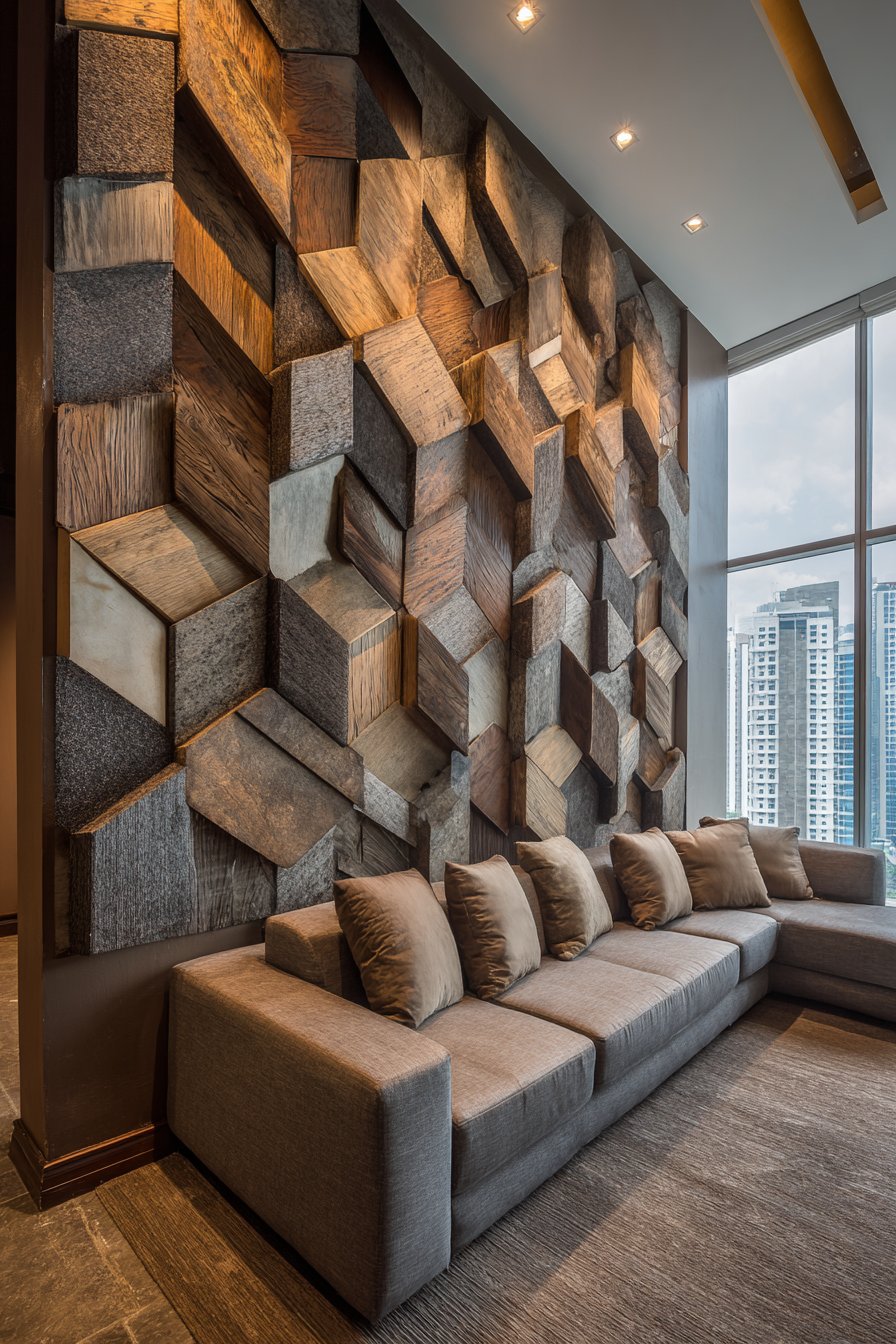
The beauty of wall panel ideas lies in their remarkable adaptability across various design styles and room types. They can introduce dimension to flat surfaces, create visual boundaries in open-plan spaces, conceal imperfections, and even provide practical benefits like sound absorption and insulation. Modern manufacturing techniques and materials have made wall panels more accessible than ever, with options ranging from affordable DIY-friendly solutions to luxurious custom installations. Whether you’re drawn to the timeless elegance of traditional wainscoting, the clean lines of contemporary slatted designs, or the organic warmth of natural wood, there’s a wall panel solution perfectly suited to your vision and budget.
In this comprehensive guide, we’ll explore twenty-three distinctive wall panel ideas that showcase the remarkable range of styles, materials, and applications available to today’s homeowners. Each design demonstrates how thoughtful panel selection and installation can enhance different rooms throughout your home, from bedrooms and living rooms to bathrooms and functional spaces like mudrooms and home offices. You’ll discover practical insights into material choices, installation techniques, lighting considerations, and styling approaches that will help you successfully incorporate wall panels into your own interior design projects.
1. Modern Geometric Bedroom Elegance
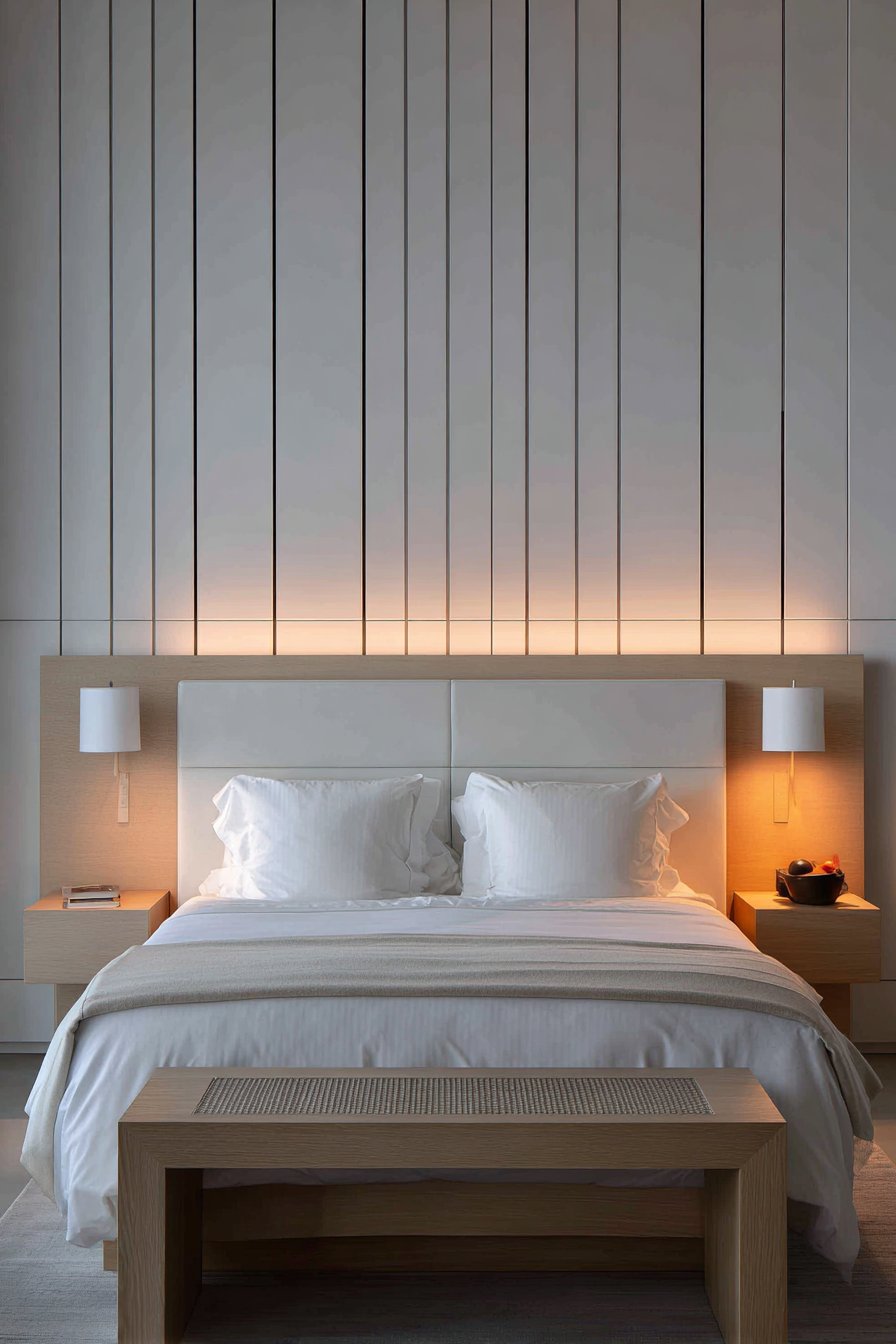
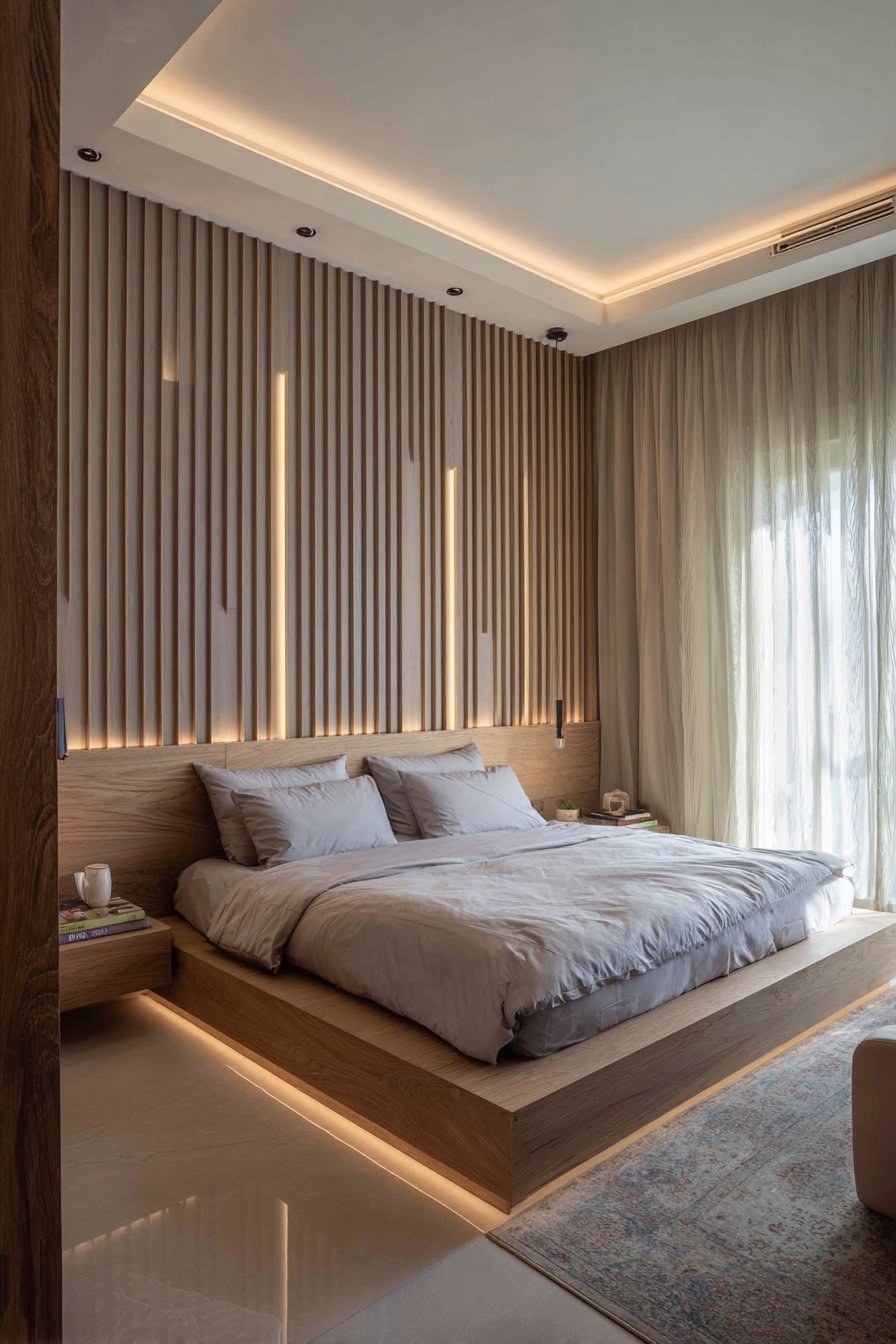
The sophisticated application of vertical wall panels in soft gray tones creates an instantly elevated bedroom atmosphere that combines contemporary design with timeless appeal. This approach utilizes MDF panels with subtle linear grooves, spaced evenly to introduce dimension without overwhelming the sensory experience of the space. The panels serve as a stunning architectural headboard wall, eliminating the need for traditional furniture while creating a seamless, built-in aesthetic that maximizes both visual impact and spatial efficiency. Natural oak floating nightstands positioned on either side maintain the clean, uncluttered lines while introducing organic warmth that balances the engineered precision of the panels.
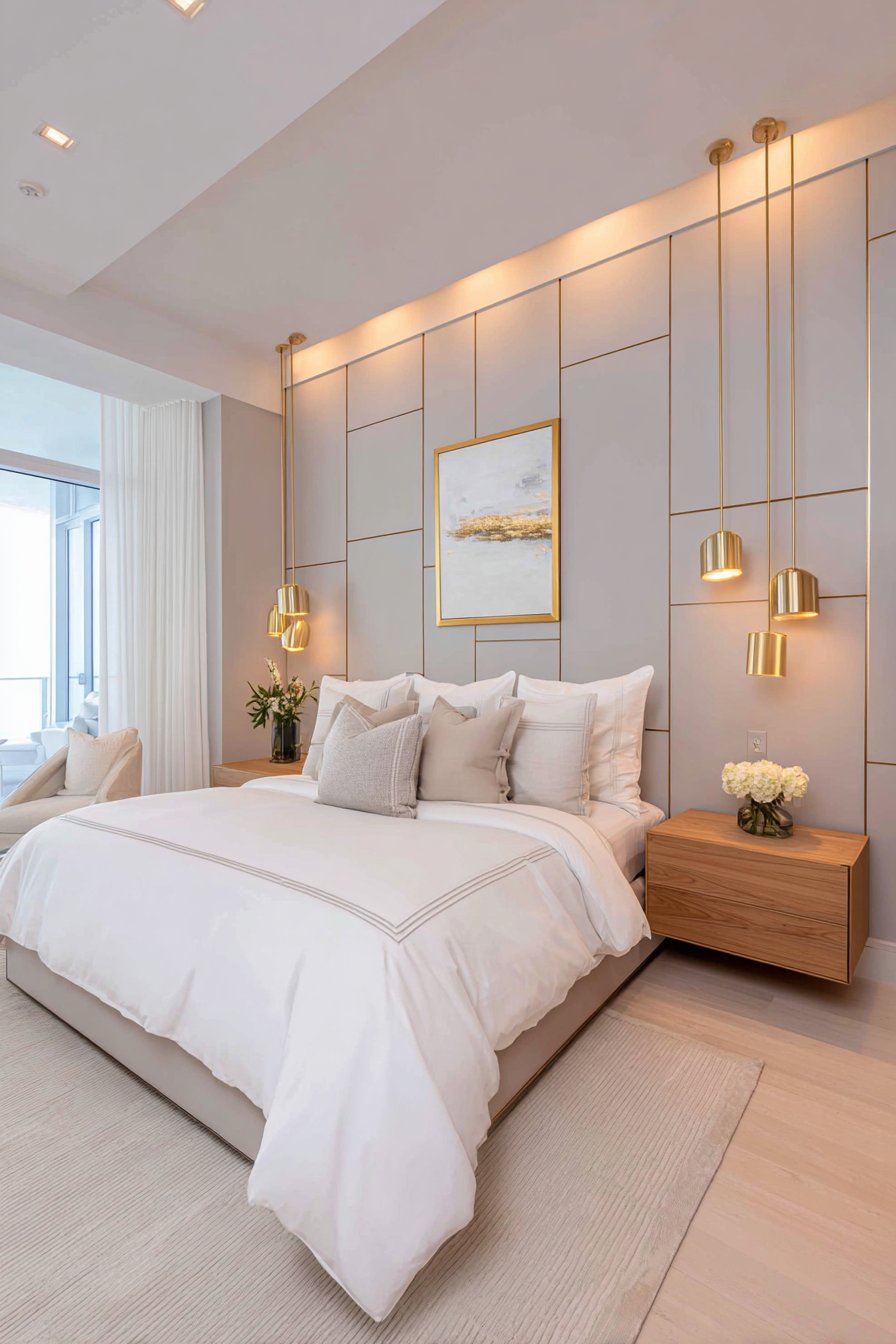
The genius of this design lies in its integration of ambient lighting directly into the panel grooves, creating a soft, ethereal glow that transforms the wall into a functional light feature. This approach eliminates the need for bulky bedside lamps while providing customizable illumination perfect for reading or creating a relaxing evening ambiance. The linear shadows cast by the grooves add depth and visual interest that changes throughout the day as natural light shifts, ensuring the wall remains dynamic and engaging rather than static.
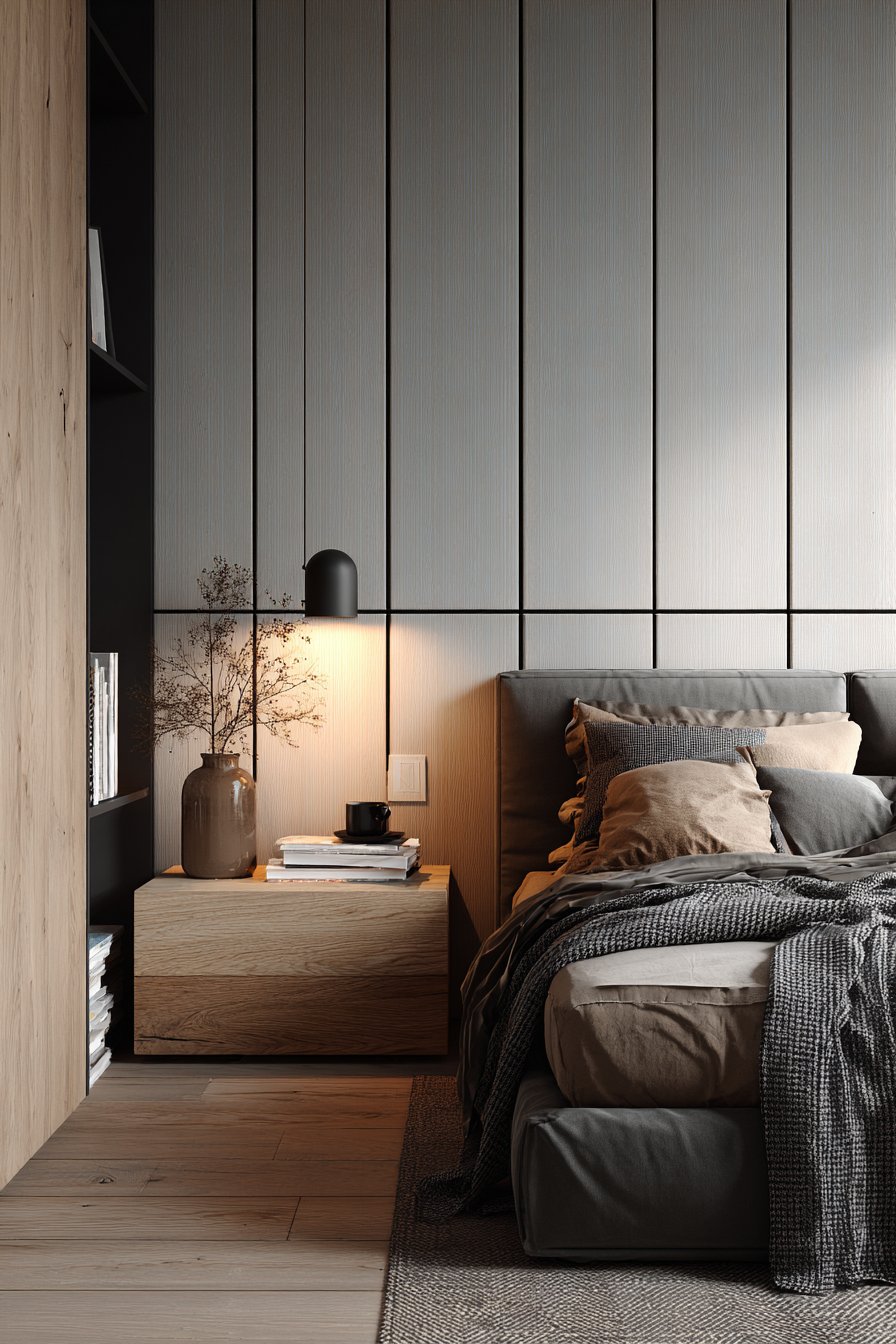
Material selection proves crucial in this design concept, as MDF offers the smooth, consistent surface necessary for achieving clean, modern lines while remaining budget-friendly compared to solid wood alternatives. The gray tone selection demonstrates sophisticated color theory, providing enough contrast to define the feature wall while maintaining a serene, restful atmosphere essential for bedroom spaces. The subtle texture variations across the panel surface catch and reflect light differently throughout the day, preventing the monochromatic scheme from appearing flat or uninspiring.
Key Design Tips:
- Install panels with precise measurements to ensure grooves align perfectly for a professional finish
- Choose integrated LED strips with dimming capabilities for maximum lighting flexibility
- Extend panels to the ceiling to create the illusion of greater height
- Select a gray tone that complements existing textiles and flooring for cohesive design
- Consider adding sound-dampening backing material behind panels for improved bedroom acoustics
2. Scandinavian Shiplap Dining Warmth
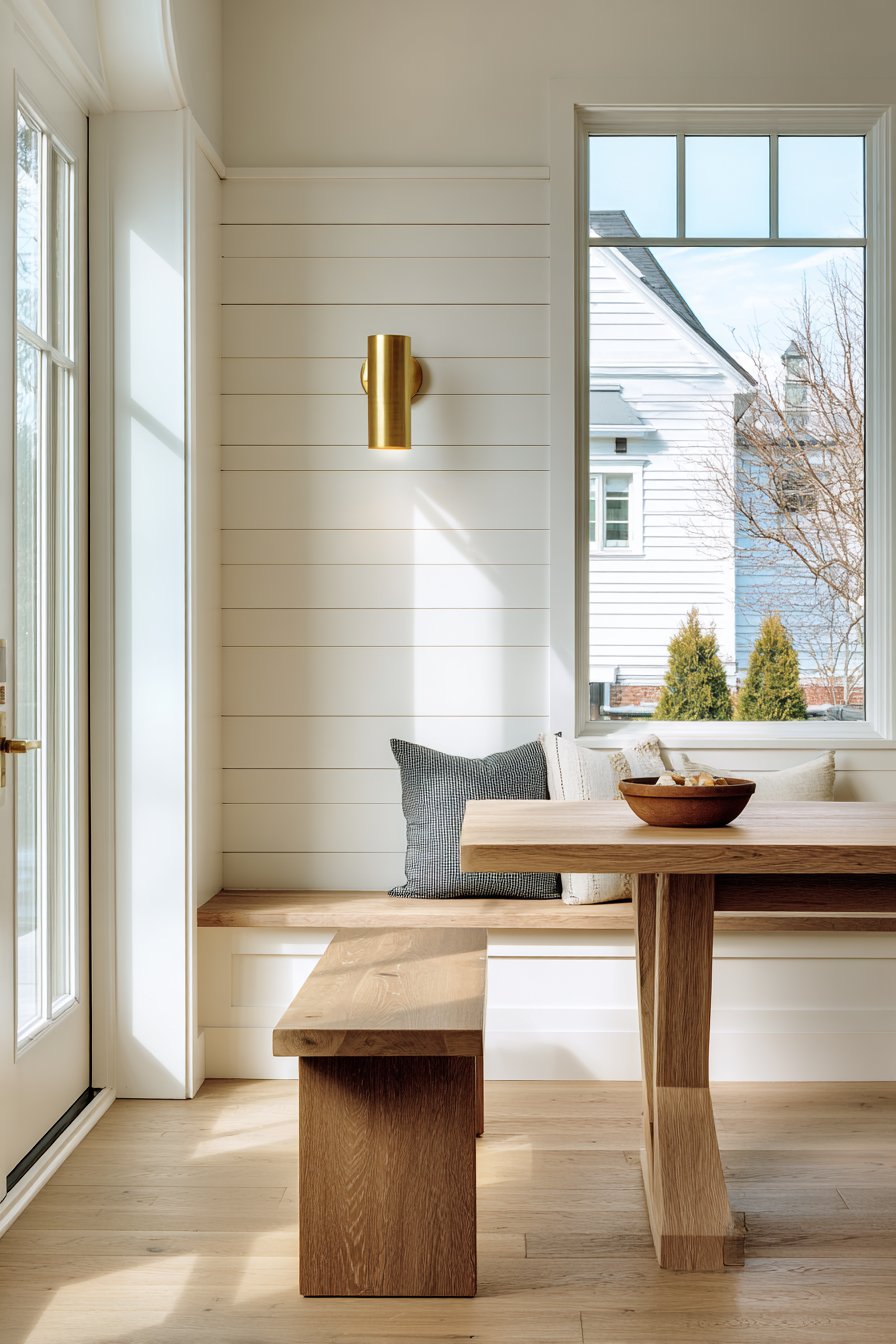
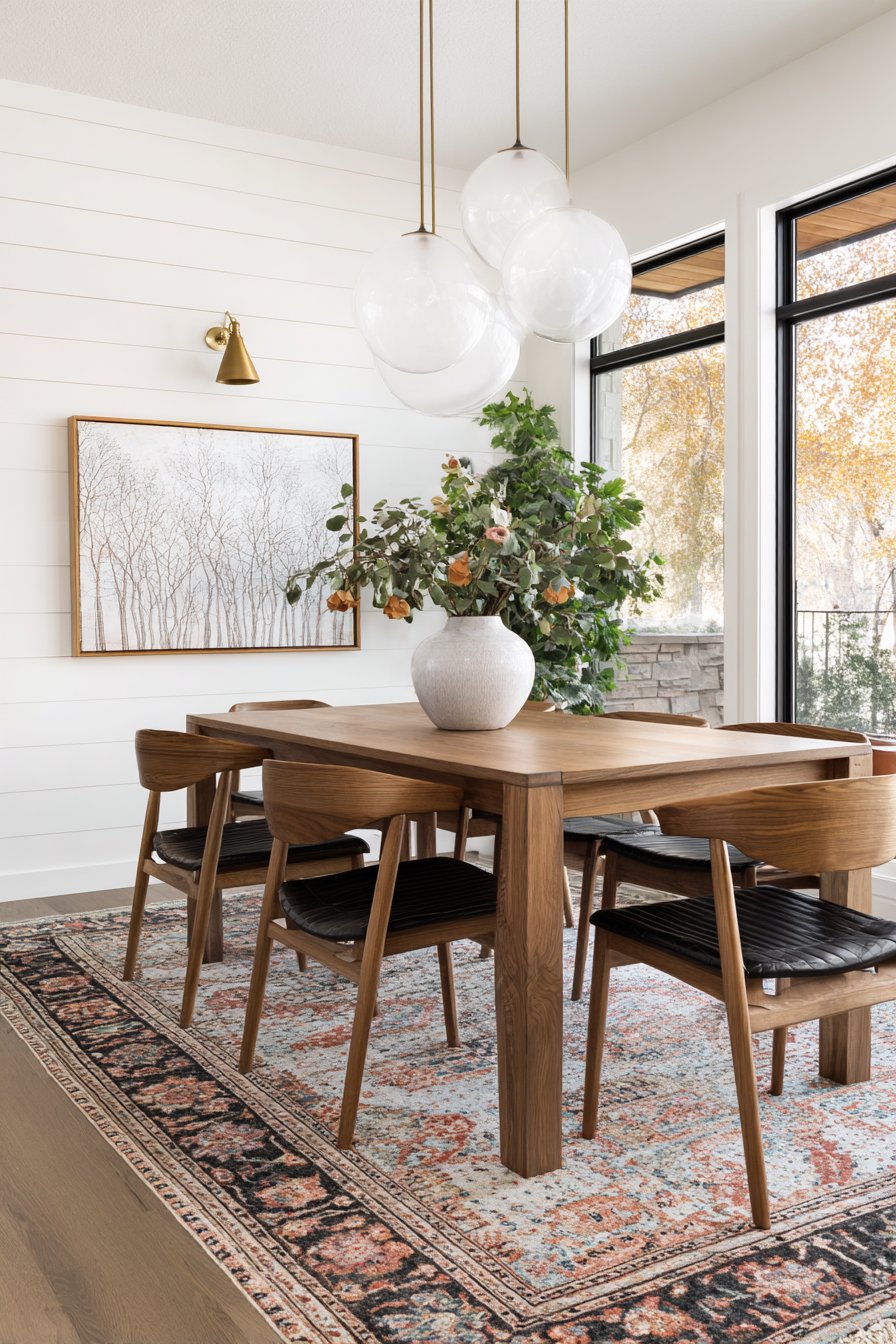
Horizontal shiplap wall panels painted in warm white with visible wood grain create an inviting dining room backdrop that embodies the essence of Scandinavian design philosophy—functional simplicity paired with natural beauty. This installation extends from floor to ceiling on a strategic accent wall, providing architectural definition while maintaining the light, airy quality central to Nordic aesthetics. The visible wood grain showing through the paint adds organic texture and visual interest, preventing the white surface from appearing too clinical or sterile while celebrating the natural material beneath.
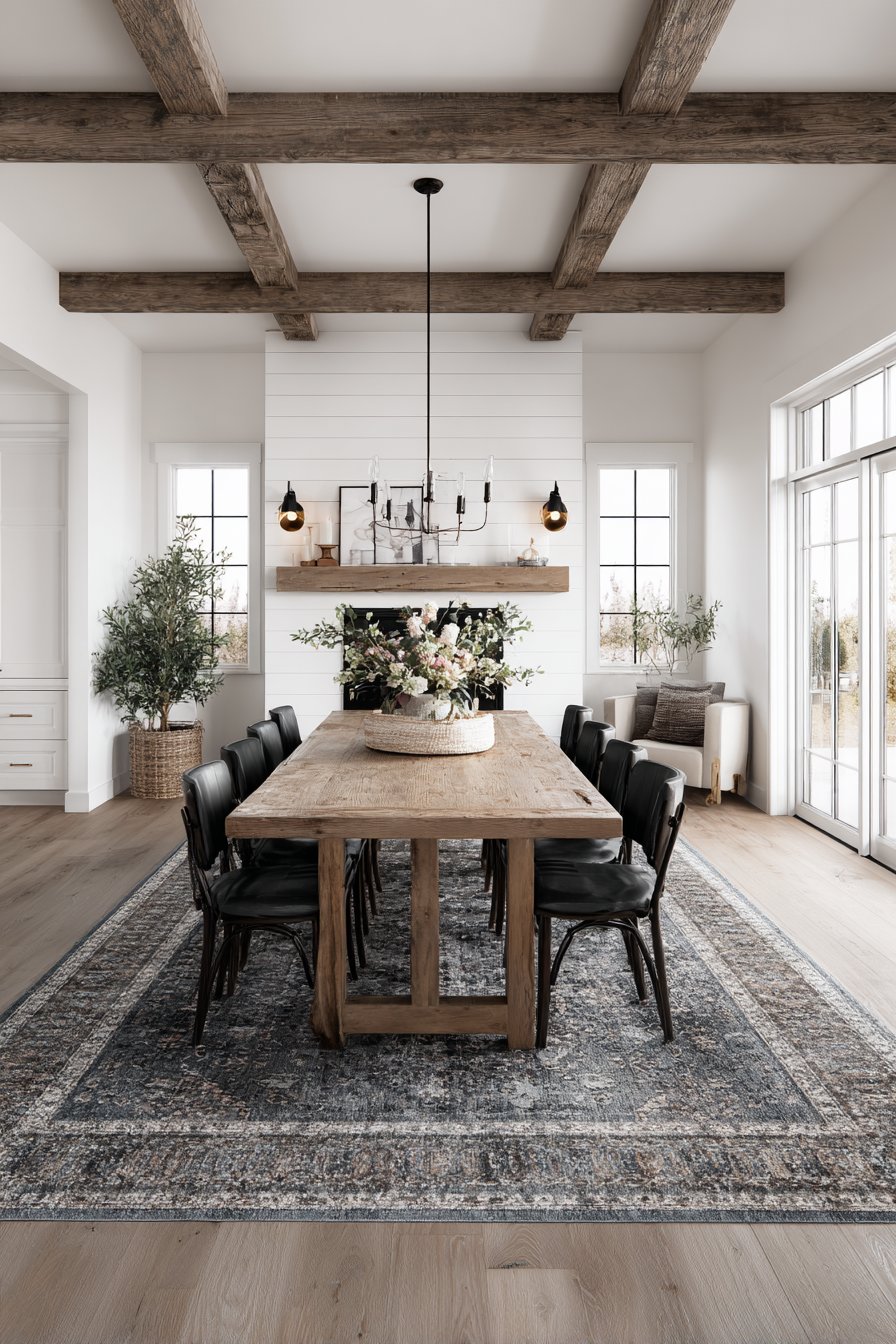
The practical beauty of shiplap lies in its installation method, where each board slightly overlaps the next, creating subtle shadow lines that add depth and dimension to what might otherwise be a flat wall surface. This traditional technique, historically used for exterior cladding, translates beautifully to interior applications, bringing a sense of craftsmanship and authenticity that resonates with contemporary desires for genuine materials and honest construction methods. The warm white finish reflects natural daylight from adjacent windows, amplifying the sense of spaciousness while creating a bright, welcoming environment ideal for gathering and conversation.
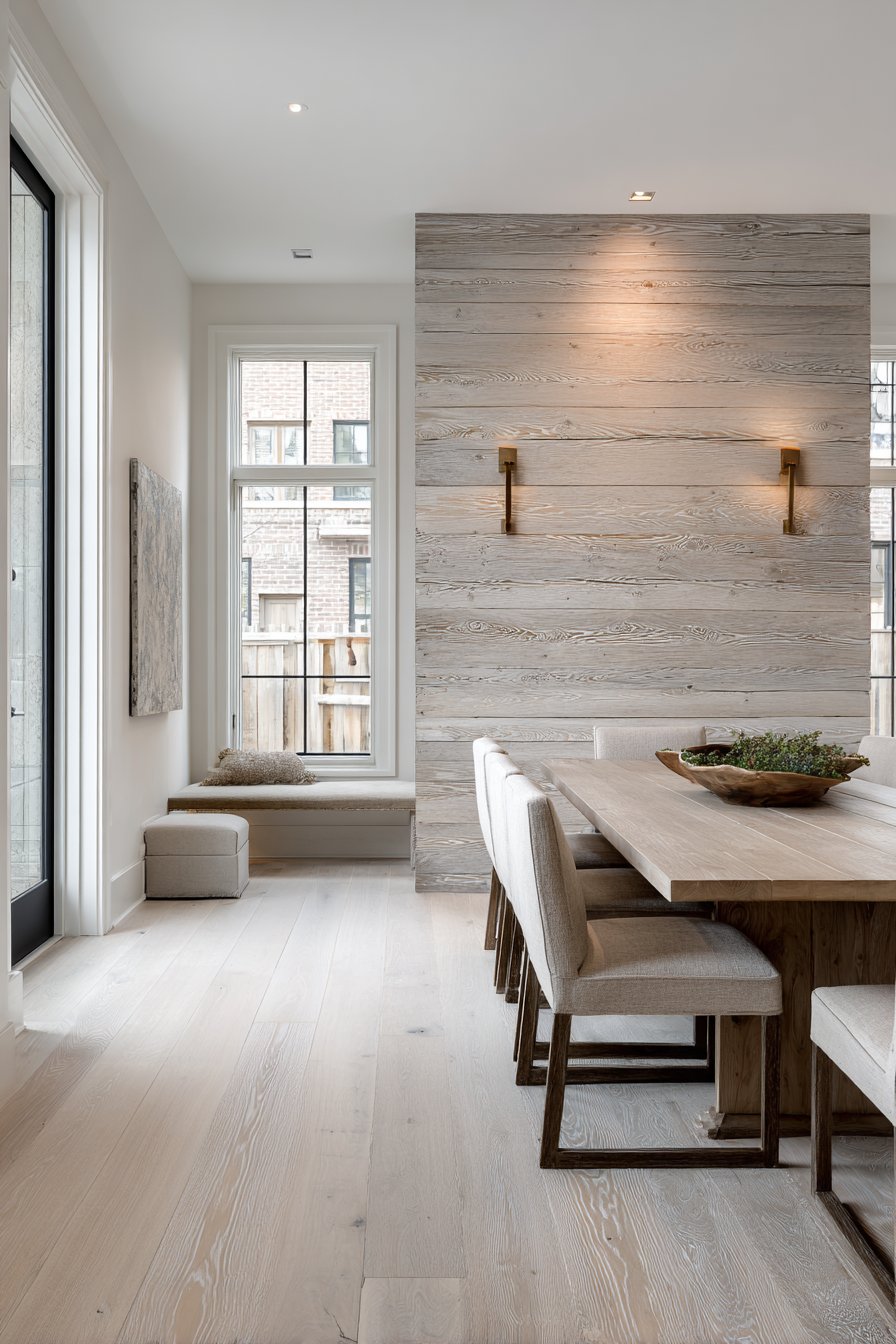
Brass sconces mounted directly on the panels provide both functional task lighting for dining and decorative accent that introduces metallic warmth against the soft white background. This thoughtful lighting strategy ensures the dining area remains well-illuminated during evening meals while the brass finish adds a touch of refined elegance that prevents the Scandinavian simplicity from appearing too spare. The simple wooden dining table positioned before this paneled wall completes the cohesive aesthetic, demonstrating how wall treatments can anchor and unify an entire room’s design concept.
Key Design Tips:
- Apply thin coats of paint to allow wood grain to remain subtly visible
- Install shiplap with consistent reveal spacing for professional appearance
- Position sconces at eye level when seated to avoid glare during dining
- Choose brass fixtures with warm undertones to complement wood elements
- Sand panels lightly between paint coats for smooth, refined finish
3. Contemporary Home Office Sophistication
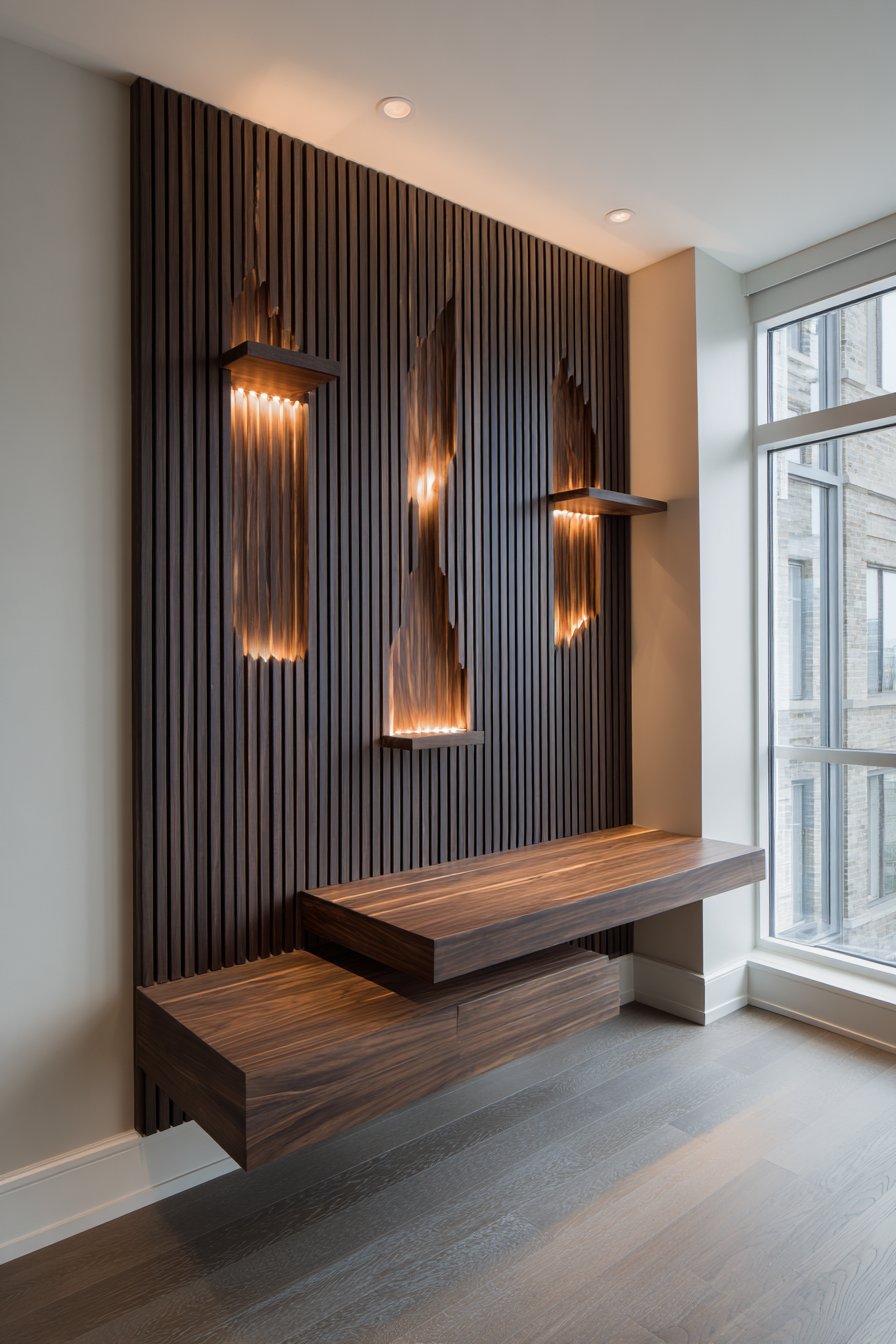
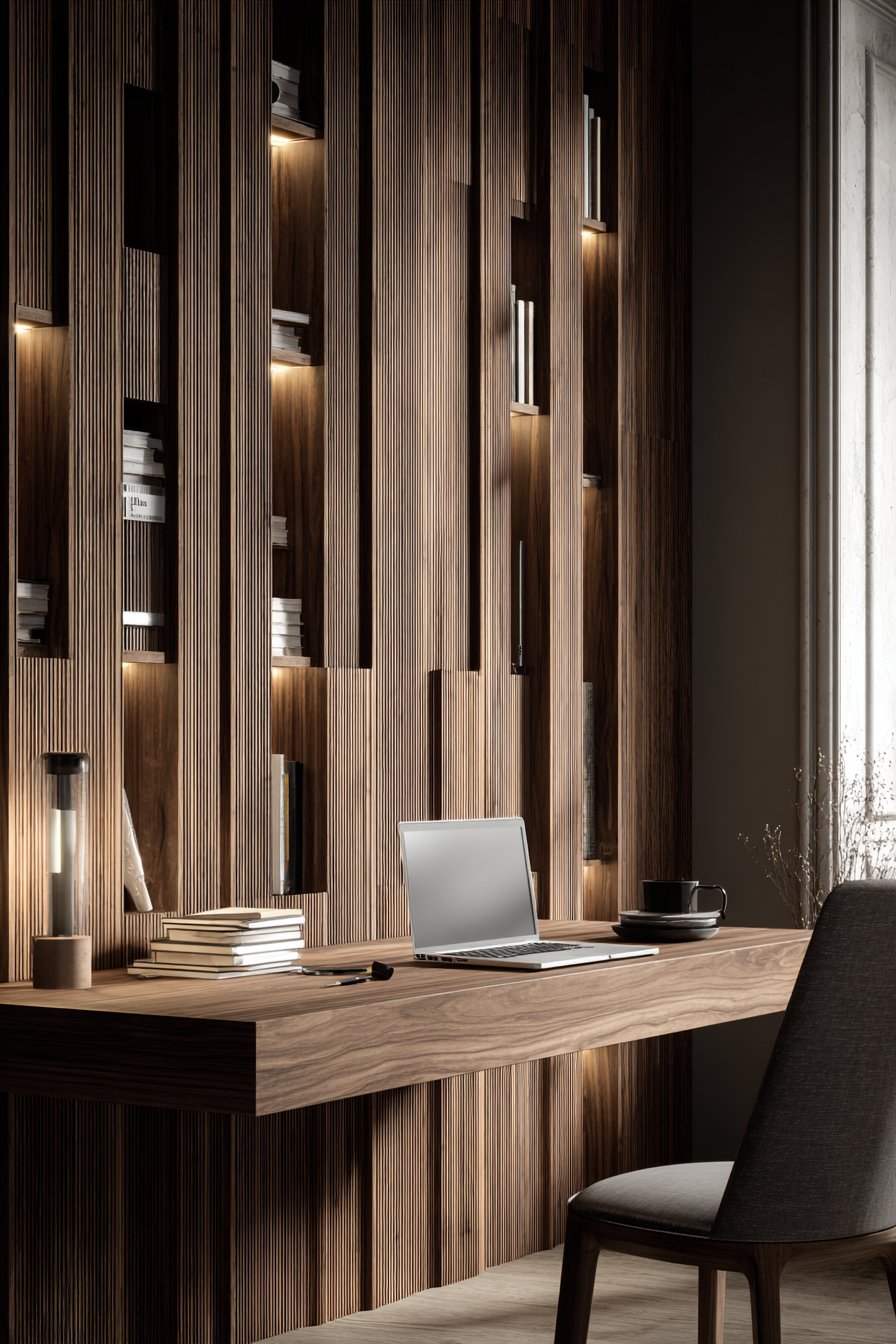
Dark walnut wood slats arranged vertically with deliberate gaps create a striking modern accent wall that transforms a functional home office into an inspiring workspace. This contemporary slatted design showcases the natural beauty of walnut’s rich, chocolate-brown tones and distinctive grain patterns while the spacing between slats introduces rhythm and movement that energizes the space. The vertical orientation emphasizes ceiling height, making the room feel more spacious and grand—a psychological benefit particularly valuable in home offices where maintaining motivation and focus proves essential.
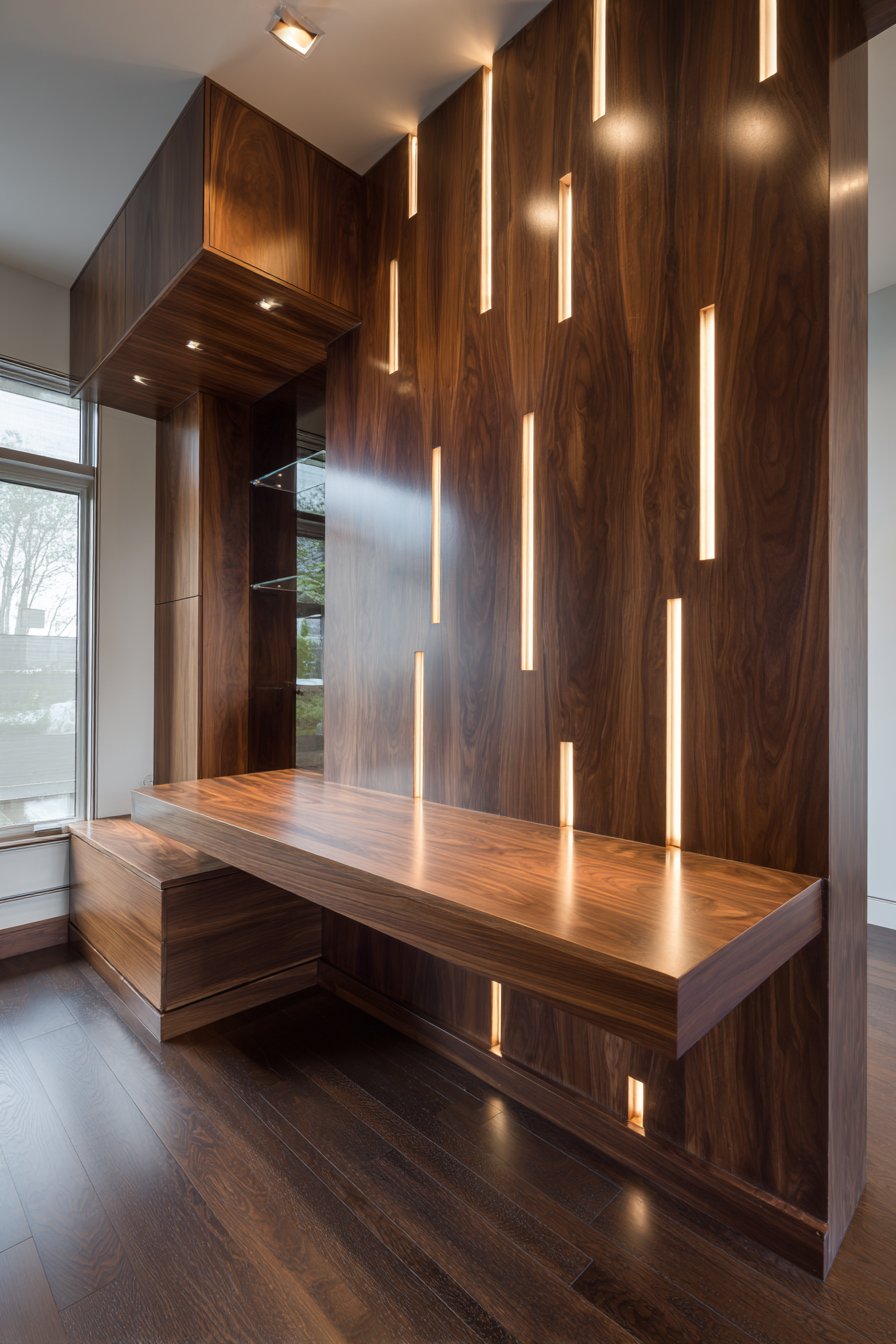
The innovative integration of hidden LED strip lighting between the slats elevates this wall panel idea from purely decorative to dramatically atmospheric. This backlighting creates a sophisticated glow that emanates from within the wall structure itself, highlighting the dimensional quality of the installation while providing ambient illumination that reduces eye strain during evening work sessions. The interplay between the solid walnut slats and the illuminated gaps creates a captivating visual rhythm that serves as an elegant focal point without becoming distracting during concentrated work.
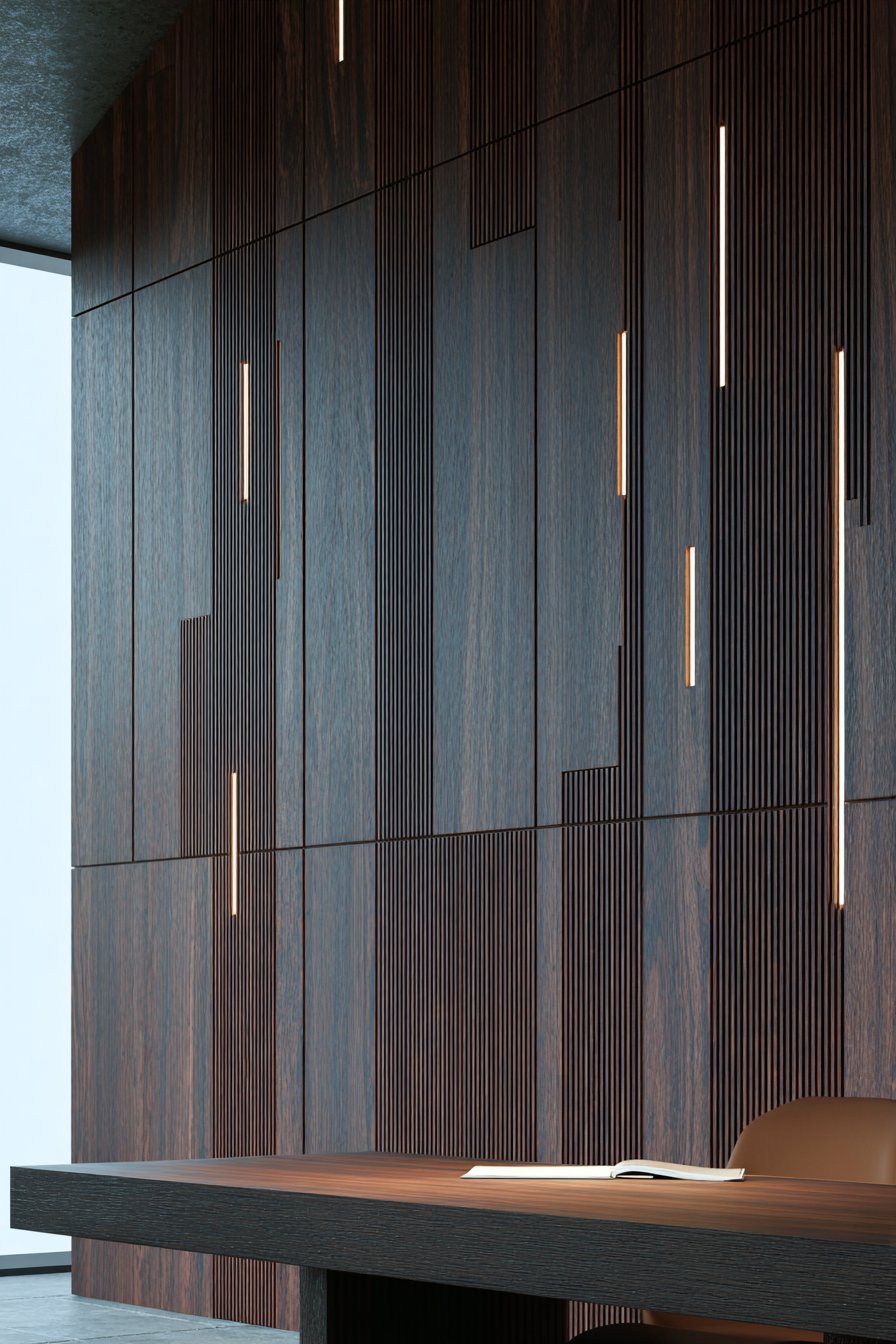
A sleek floating desk in complementary wood tones extends from this paneled wall, creating a cohesive design narrative where workspace and architecture merge seamlessly. This integration demonstrates thoughtful space planning, as the desk appears to emerge organically from the wall treatment rather than sitting as a separate furniture piece. Natural lighting from a nearby window provides essential task illumination during daytime hours, while the varied light sources—natural, ambient LED, and task lighting—ensure the space remains functional and comfortable throughout different times of day and work activities.
Key Design Tips:
- Space slats consistently using a jig or spacer for professional results
- Install LED strips on waterproof backing to facilitate cleaning
- Choose walnut with consistent grain patterns for unified appearance
- Ensure adequate ventilation behind panels to prevent moisture issues
- Wire lighting to dimmer switches for adjustable ambient control
4. Luxurious Marble-Look Bathroom Retreat
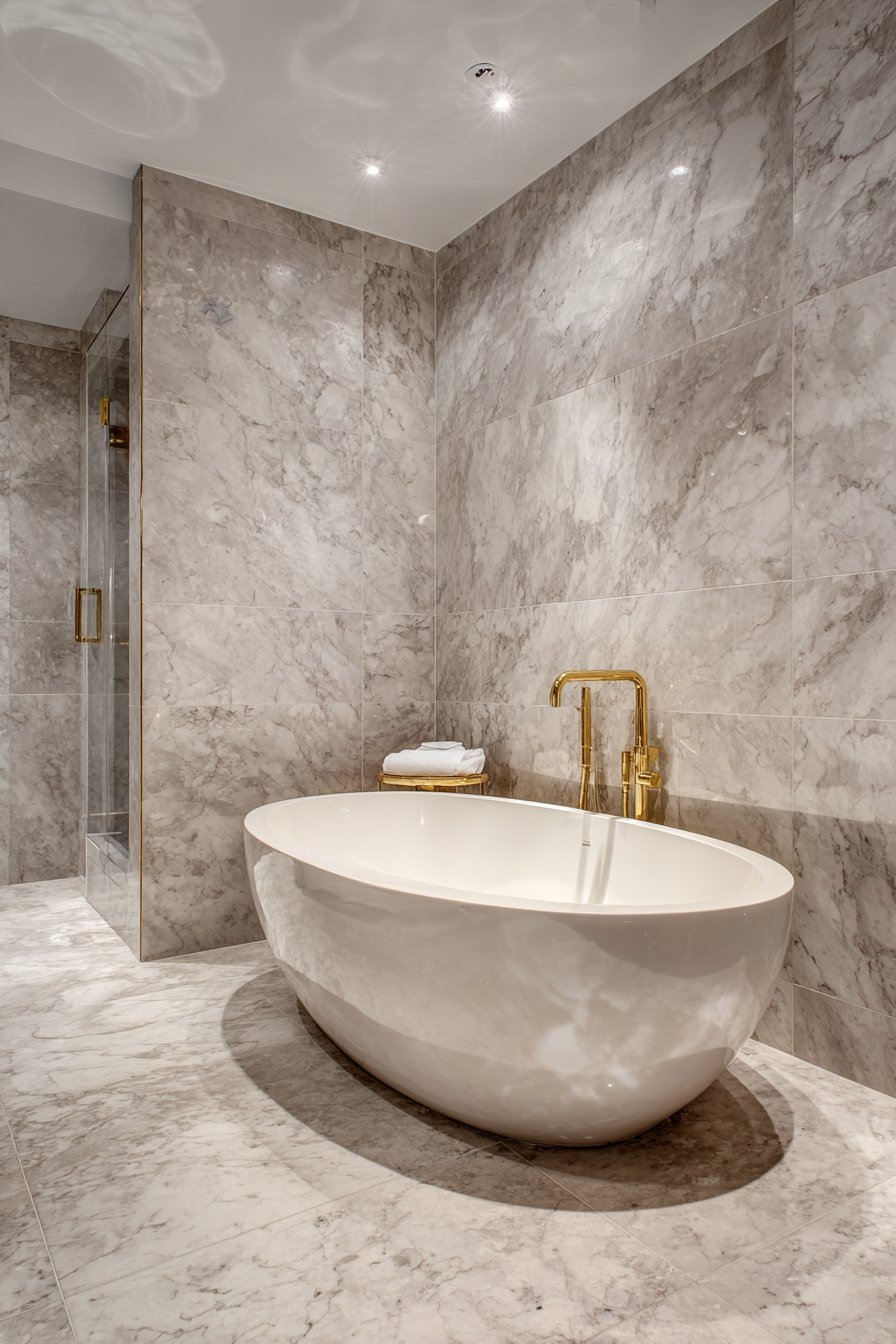
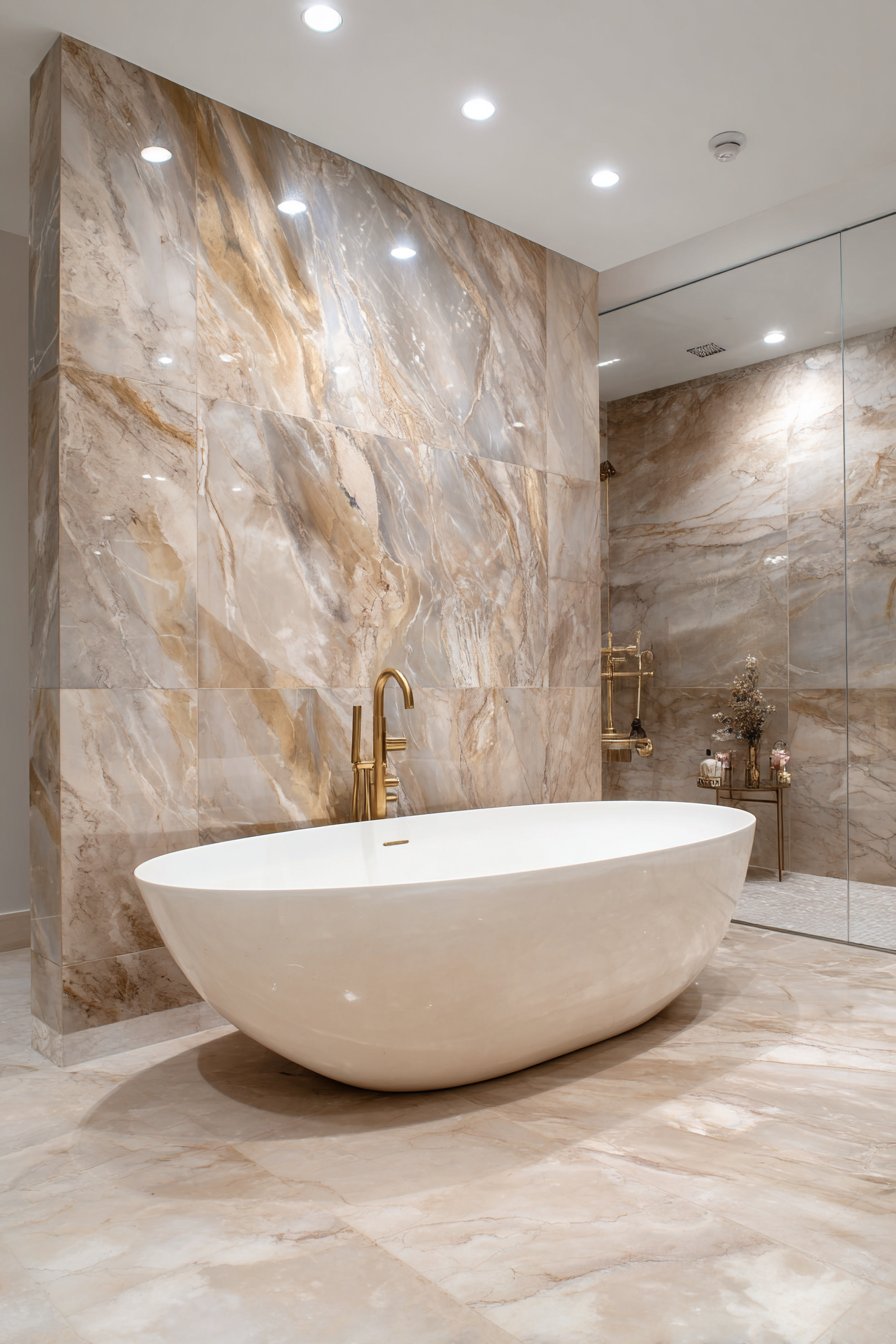
Marble-look wall panels in soft gray and white veining bring timeless luxury to the bathroom while offering practical advantages over genuine stone. These waterproof PVC panels installed around a freestanding soaking tub deliver the visual magnificence of natural marble without the maintenance concerns, sealing requirements, or price point associated with authentic stone. The sophisticated veining patterns replicate the organic beauty of Carrara or Calacatta marble, creating an elegant backdrop that elevates the bathing experience into a spa-like ritual of relaxation and self-care.
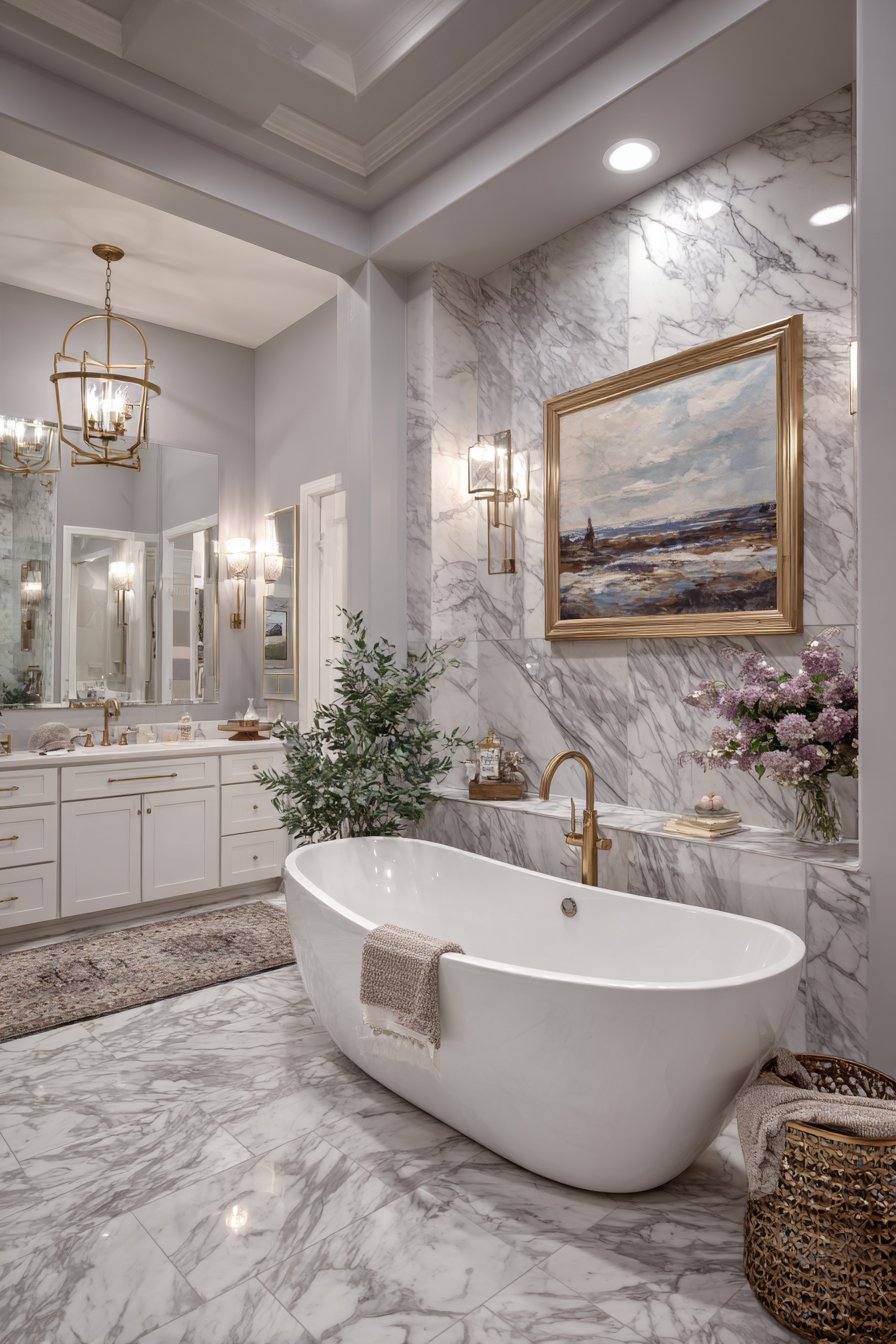
The strategic installation around the freestanding tub creates a defined bathing zone that draws attention to this sculptural fixture while protecting walls from water exposure. Modern PVC panel technology has advanced significantly, now offering realistic surface textures that mimic the cool, smooth feel of polished stone while remaining warmer to the touch and more forgiving on impact. The soft gray and white coloration provides a neutral foundation that accommodates various fixture finishes and accessory colors, offering design flexibility as tastes evolve over time.
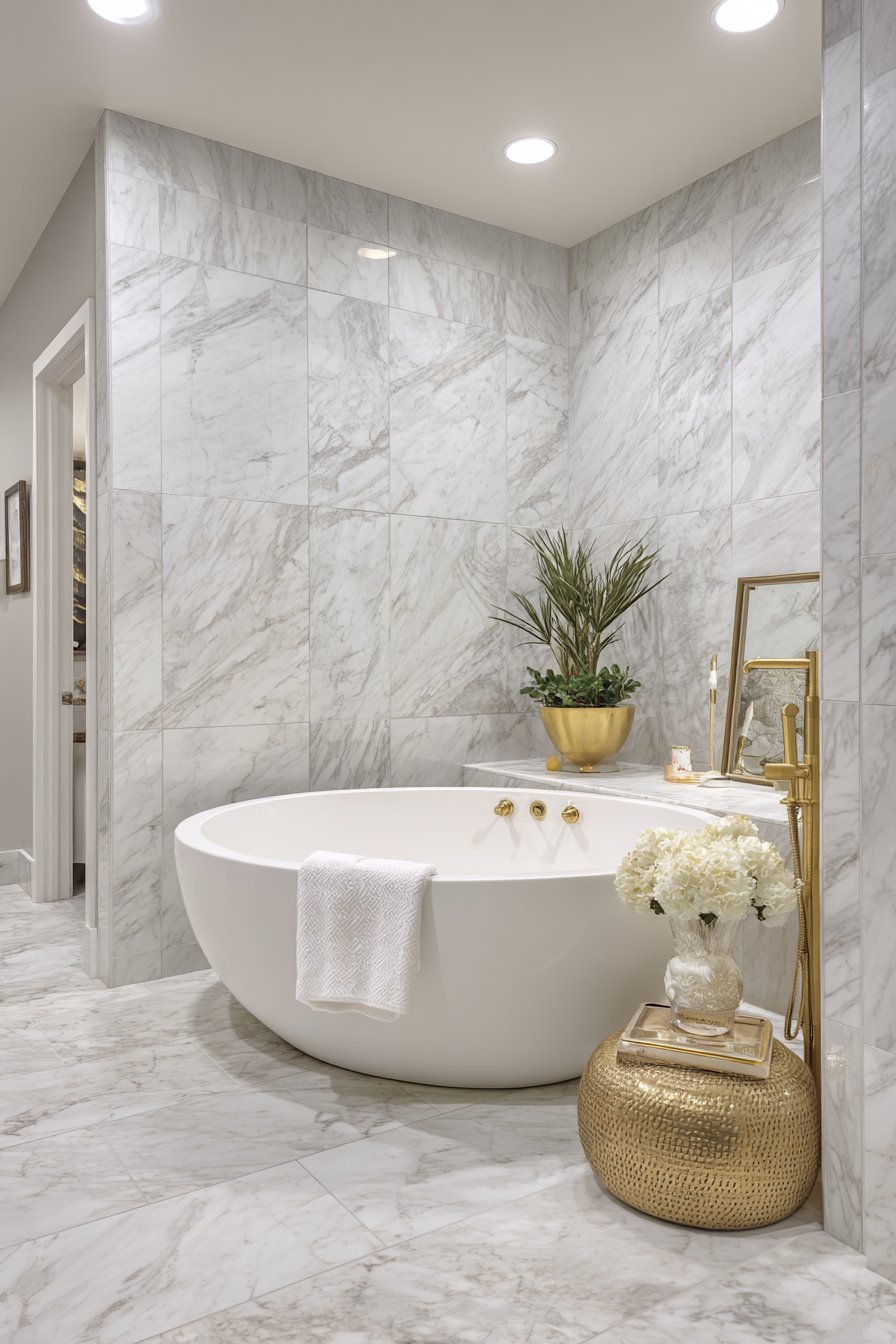
Brushed gold fixtures complement the elegant stone appearance with warmth and glamour, creating a luxurious aesthetic that feels both contemporary and classic. The metallic warmth contrasts beautifully against the cool marble tones, preventing the space from feeling too austere or clinical. Recessed lighting positioned strategically above creates subtle highlights on the veined surface, emphasizing the dimensional quality of the pattern while ensuring adequate illumination for safe bathing. This lighting approach mimics how natural light would interact with genuine marble, enhancing the authentic appearance of the panel installation.
Key Design Tips:
- Select panels with realistic vein patterns that flow naturally across seams
- Install with waterproof adhesive and seal all joints completely
- Choose brushed rather than polished metal finishes to prevent water spotting
- Clean panels with non-abrasive cleaners to maintain realistic stone appearance
- Consider heating elements behind panels for added luxury and comfort
5. Acoustic Fabric Reading Nook Comfort
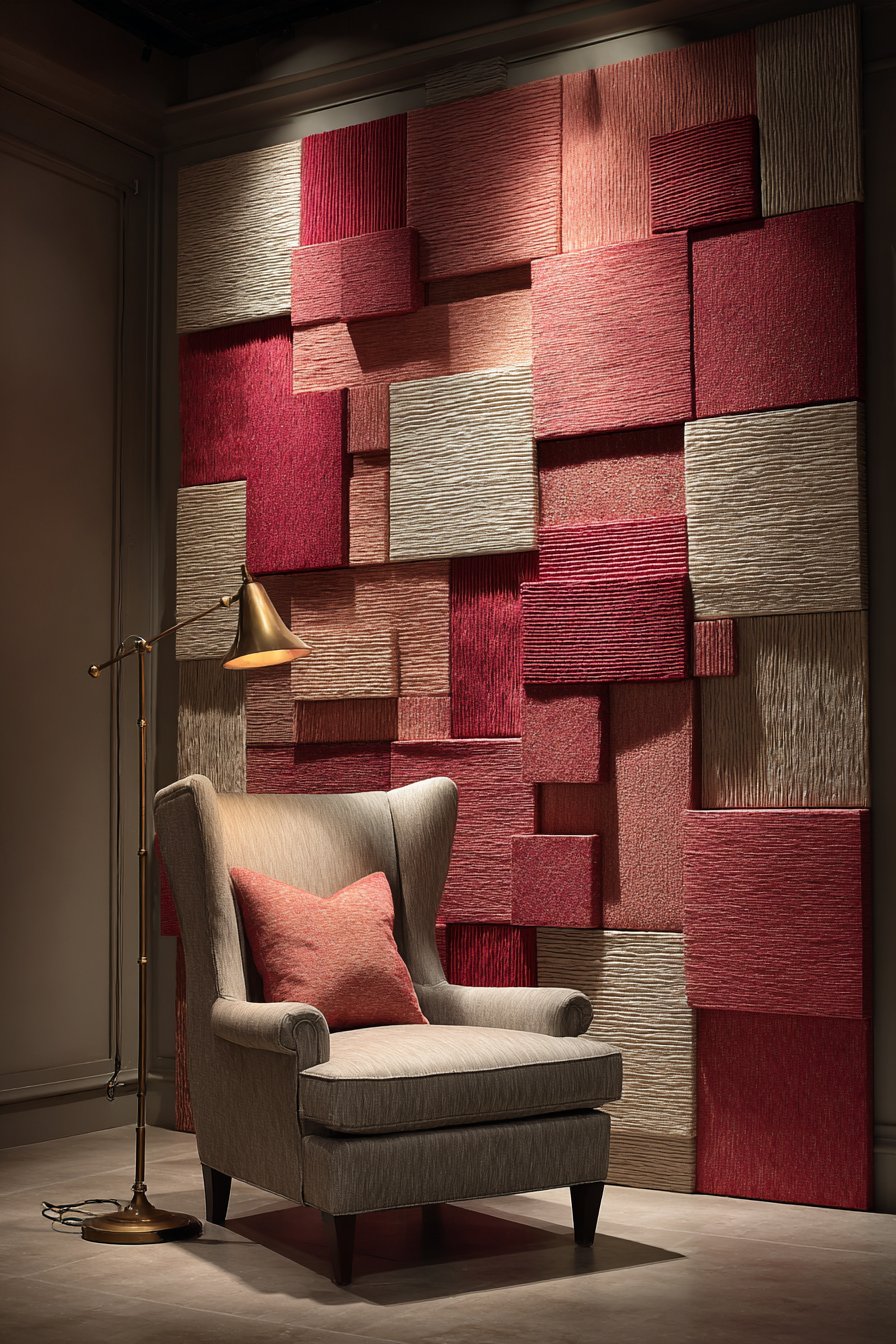
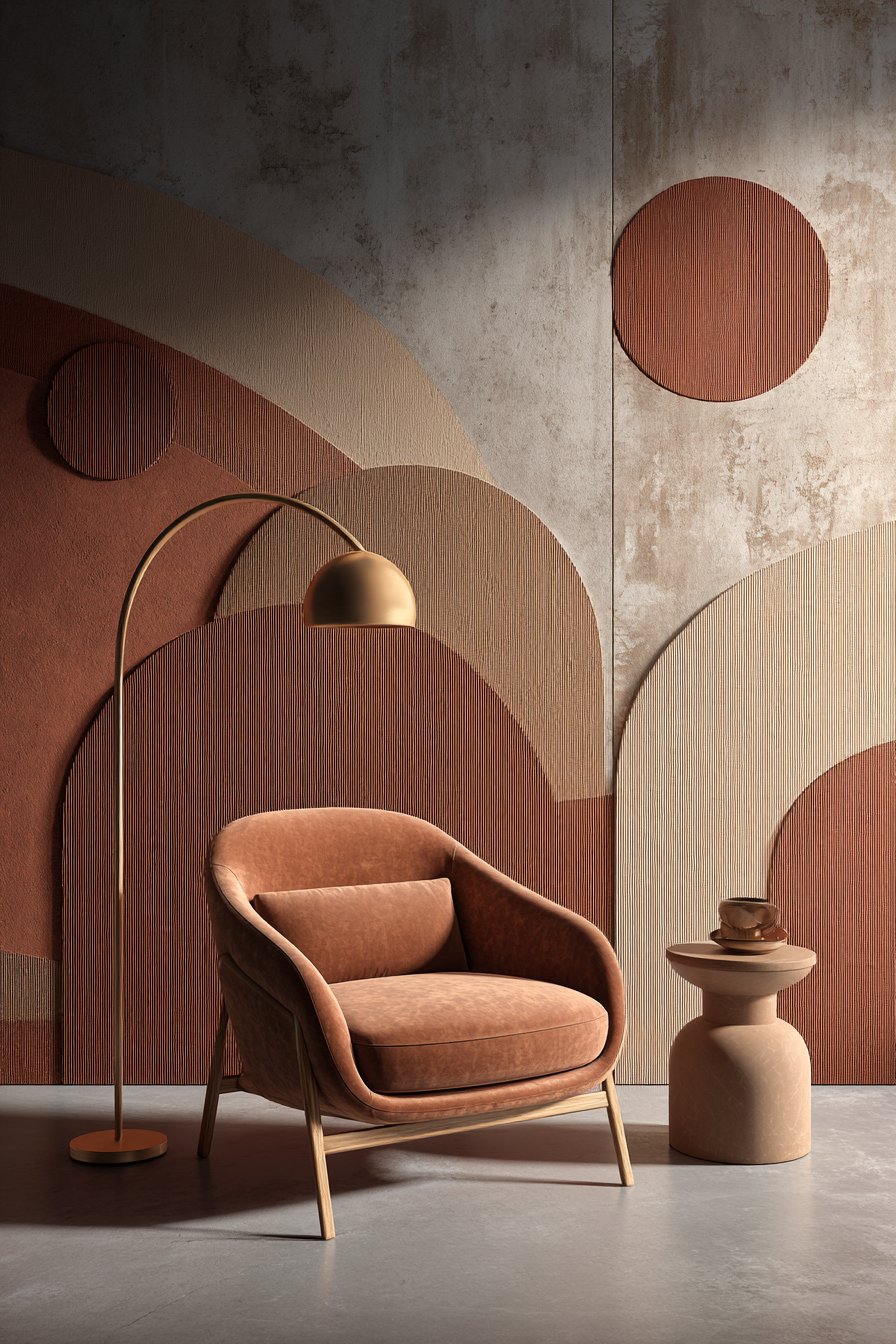
Fabric-wrapped acoustic wall panels in warm terracotta and cream tones arranged in an asymmetric pattern create a cozy reading nook that addresses both aesthetic and functional considerations. These soft, textured panels provide essential sound absorption, reducing echo and ambient noise to create a quiet sanctuary perfect for concentrated reading and relaxation. The warm color palette evokes earthy, natural environments that psychologically promote calm and focus, while the varied arrangement prevents visual monotony and adds artistic interest to what might otherwise be a utilitarian sound treatment.
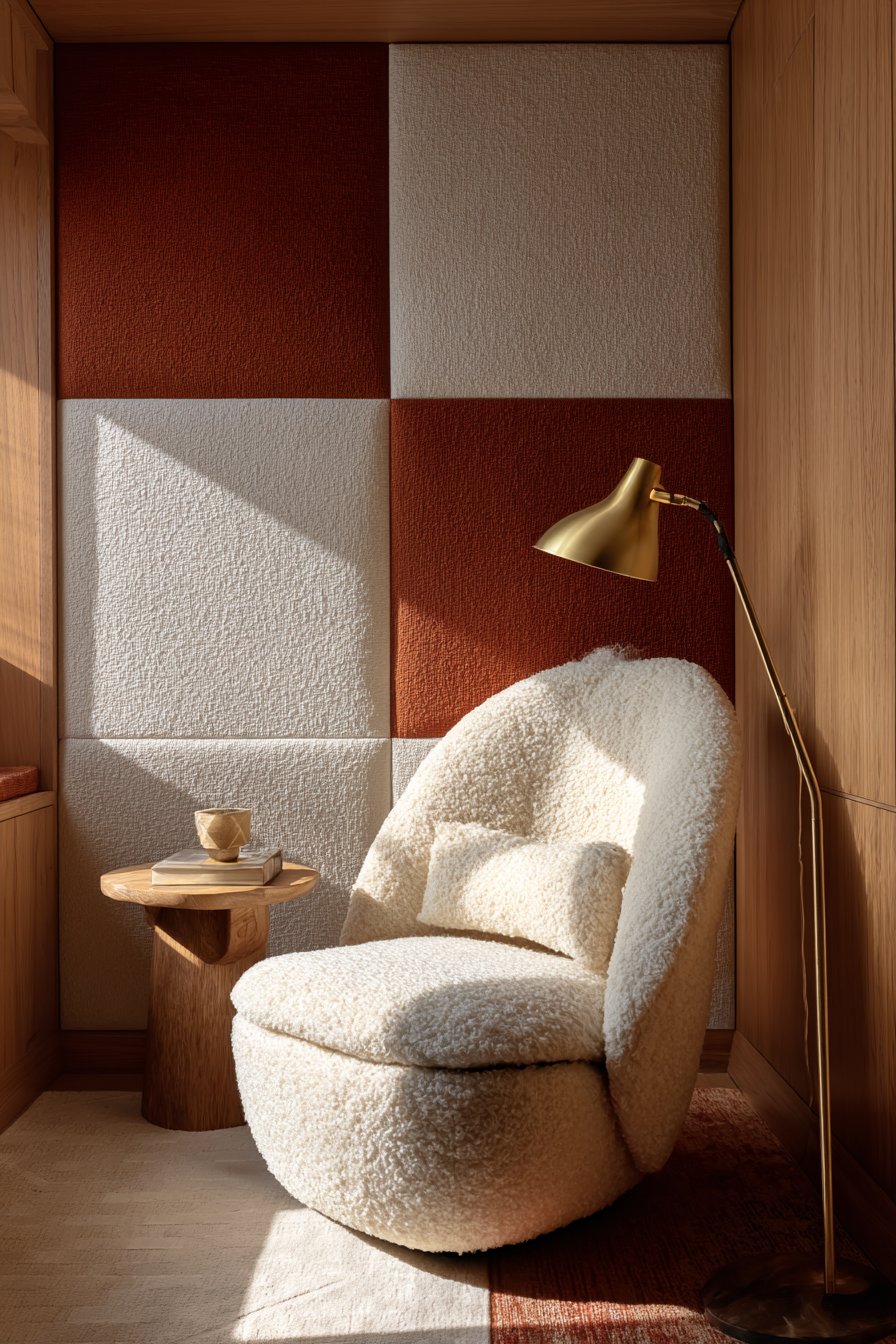
The tactile quality of fabric-wrapped panels introduces sensory richness that hard surface materials cannot match, creating a space that feels inherently welcoming and comfortable. The terracotta tones bring warmth and grounding energy, while cream accents lighten the overall scheme and prevent the space from feeling too enclosed or cave-like. This color combination demonstrates sophisticated understanding of how warm neutrals can create intimacy without sacrificing brightness, maintaining a balanced environment conducive to extended reading sessions without eye strain or fatigue.
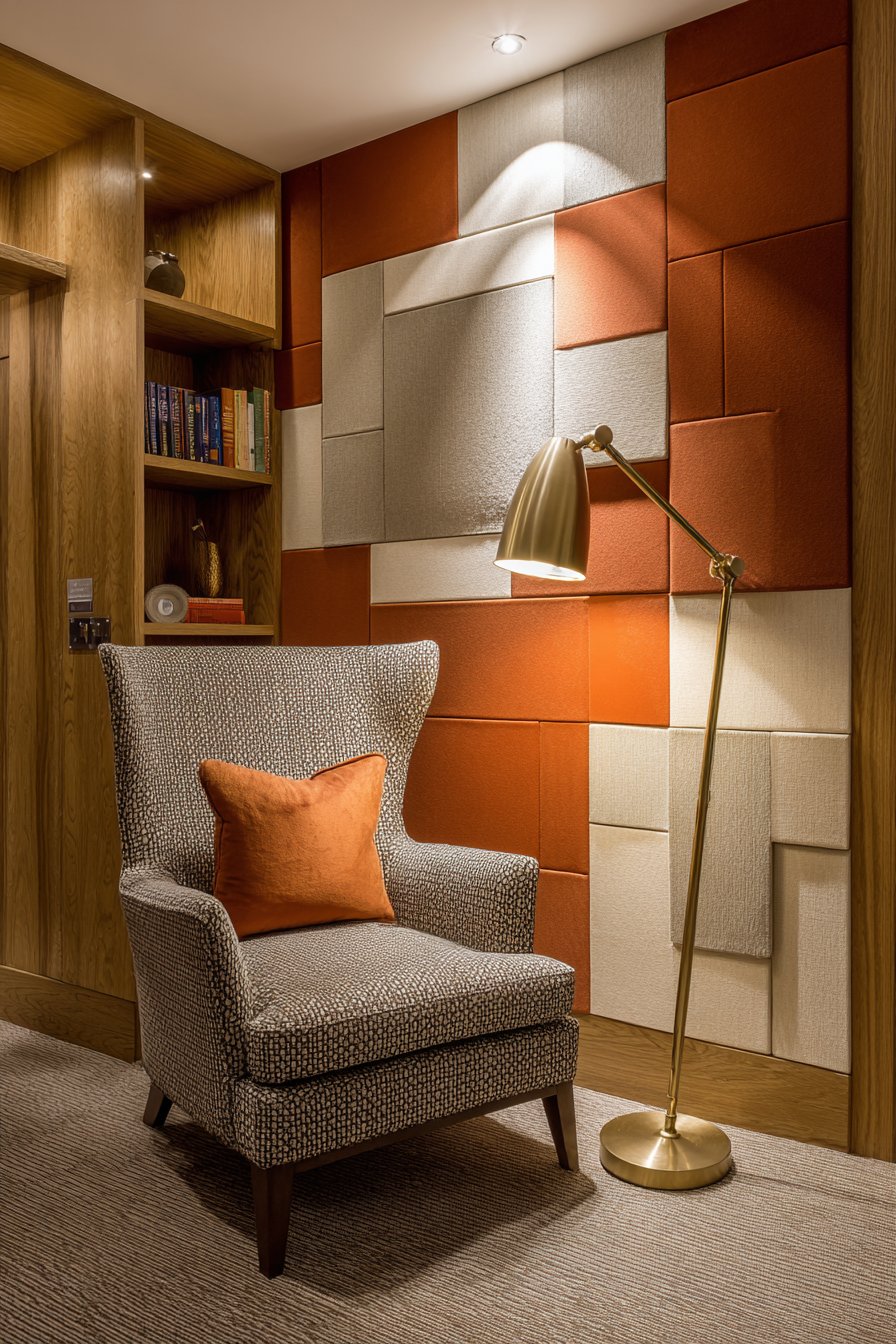
A comfortable upholstered chair positioned before these panels creates the functional heart of the reading nook, while a brass floor lamp provides necessary task lighting that highlights the panels’ tactile quality. The asymmetric arrangement of panels in different sizes creates visual movement and artistic expression, transforming a practical acoustic solution into a genuine design feature. Natural shadows cast by the dimensional panel edges add depth and interest that changes with shifting daylight, ensuring the space remains visually engaging throughout the day.
Key Design Tips:
- Select acoustic-grade core materials rated for noise reduction
- Arrange panels in odd numbers for more dynamic visual composition
- Choose fabric colors that complement existing upholstery and textiles
- Position thickest panels at primary reflection points for maximum acoustic benefit
- Maintain consistent spacing between panels for cohesive appearance
6. Minimalist Black Stripe Entryway Drama
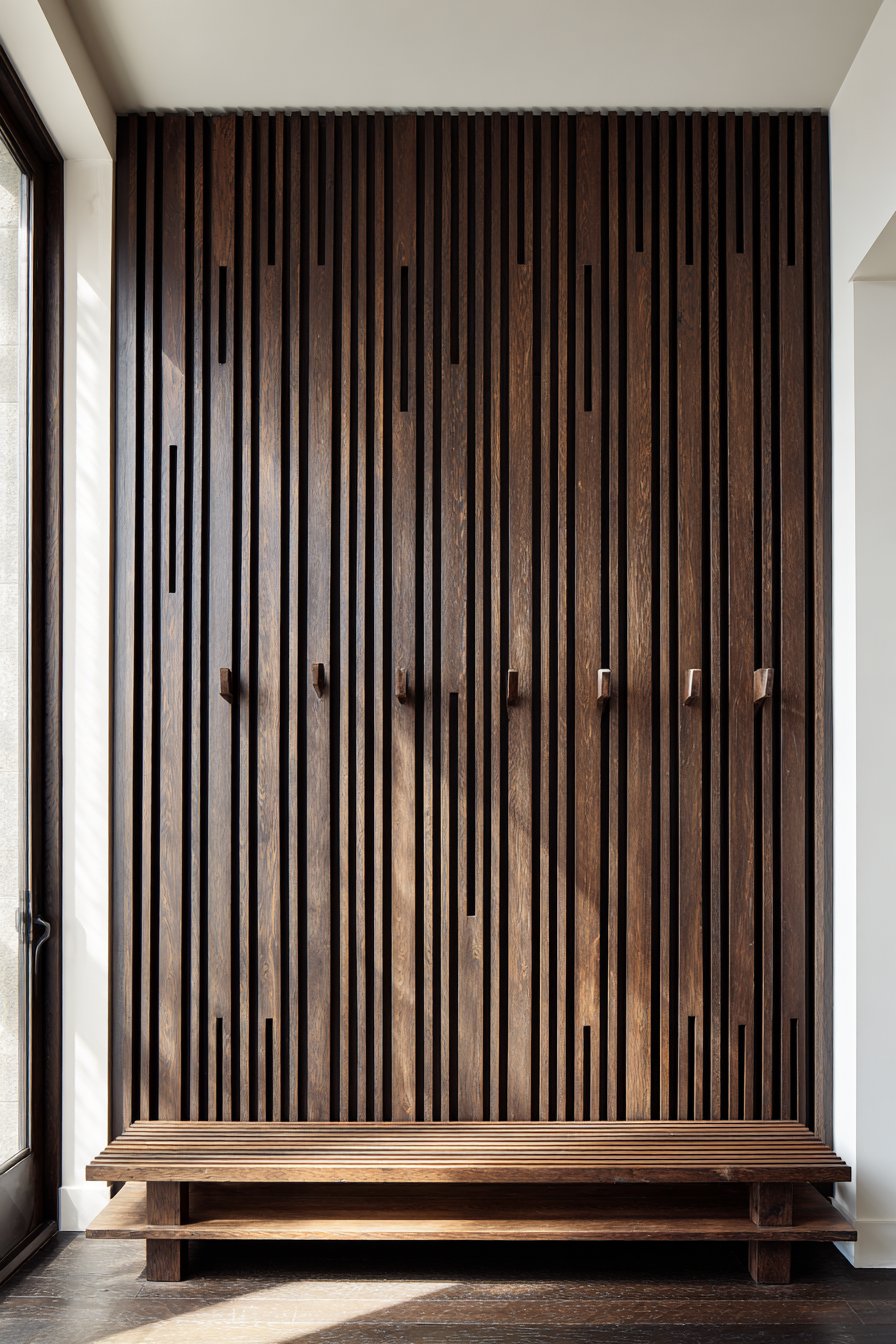
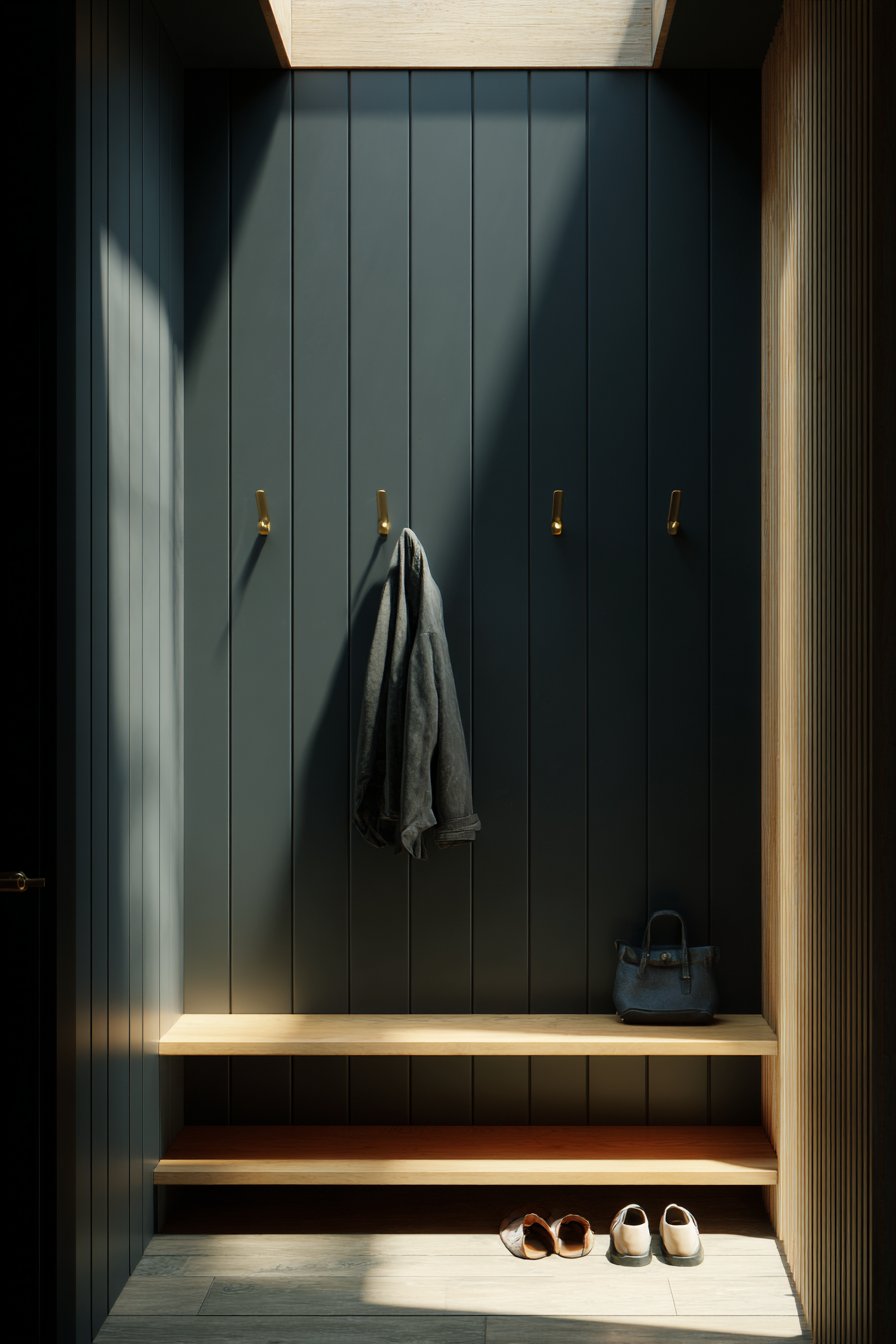
Sleek wall panels in matte black painted wood create a dramatic vertical stripe pattern that makes a powerful first impression in the entryway. This minimalist approach utilizes precise spacing and alternating widths—mixing wider and narrower panels—to establish visual rhythm that guides the eye upward while adding sophisticated dimension to what might otherwise be a utilitarian transition space. The bold black finish provides striking contrast in typically small, light-starved entryways, embracing rather than fighting the limited natural light while creating definitive architectural character.
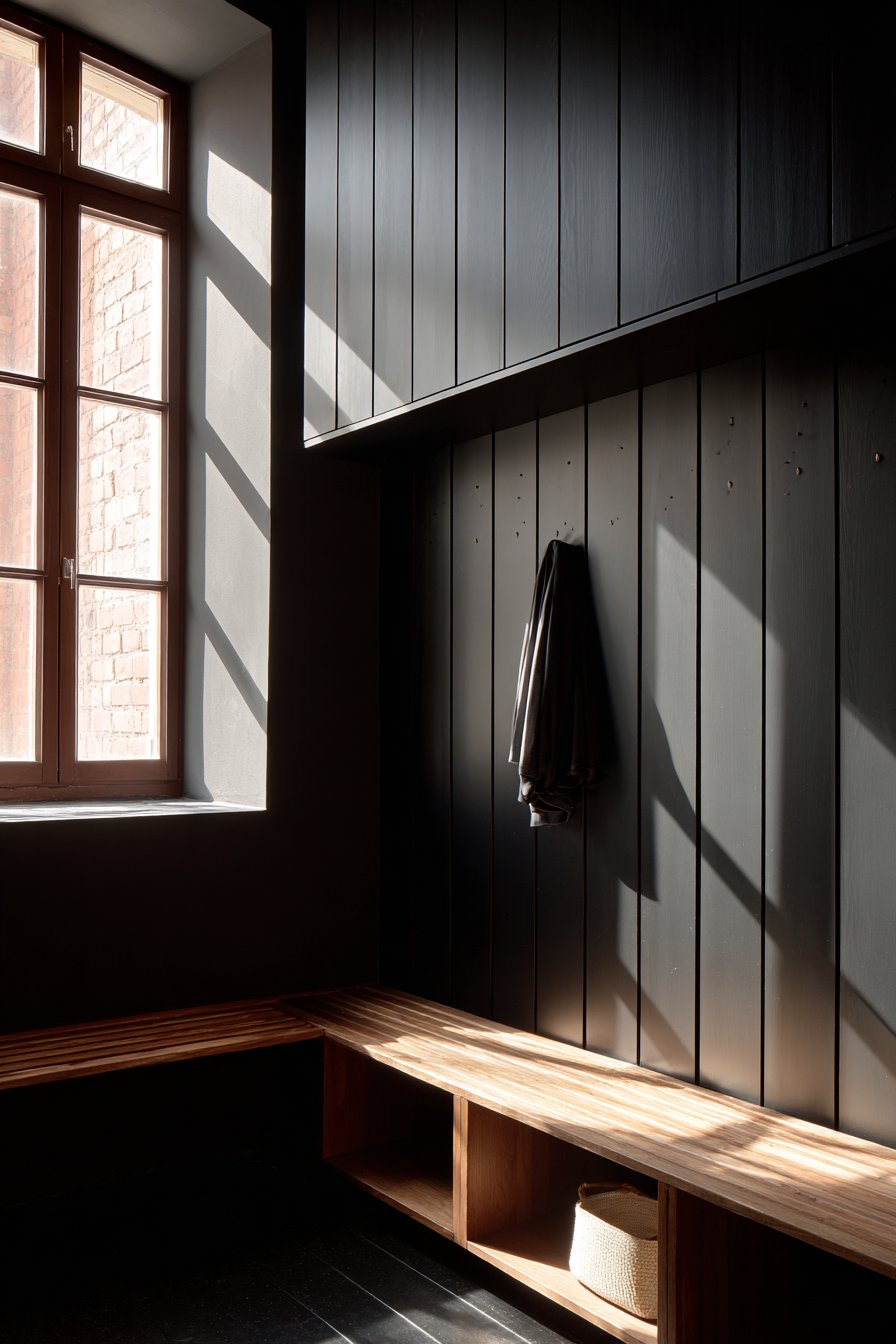
The vertical orientation of these panels serves multiple strategic purposes: it emphasizes ceiling height, making the entry feel more spacious and grand; it creates a slimming visual effect that suits narrow hallways; and it establishes a strong vertical line that directs attention upward rather than dwelling on the typically compressed floor area of entry spaces. The matte finish prevents glare and fingerprints while lending a contemporary, sophisticated appearance that feels current without being trendy. This finish choice demonstrates understanding of high-traffic areas where durability and maintenance ease prove as important as aesthetics.
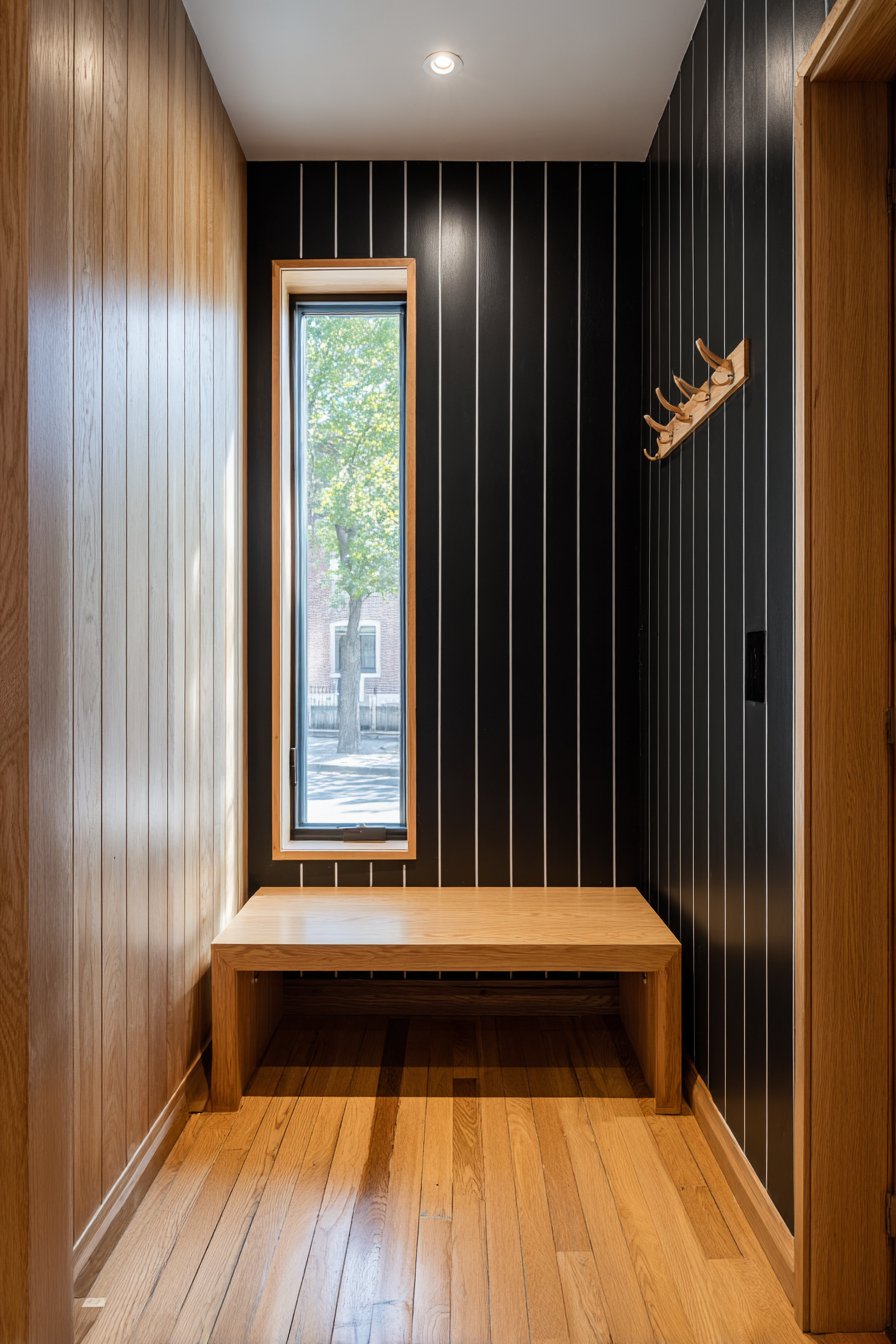
Integration of a simple wooden bench and hooks creates functional storage that works seamlessly with the paneled backdrop rather than competing against it. The bench provides practical seating for removing shoes while offering additional storage potential, while wall-mounted hooks transform the paneled surface into a functional mudroom system. Natural lighting from a transom window above creates interesting shadow play across the textured surface, animating the space throughout the day as light angles shift. This interplay between light and shadow prevents the bold black treatment from feeling oppressive or too dark.
Key Design Tips:
- Prime panels thoroughly before applying matte black paint to ensure even coverage
- Use a spacing jig during installation to maintain consistent gaps
- Select durable, scuff-resistant paint formulated for high-traffic areas
- Position hooks at varying heights to accommodate different family members
- Consider adding narrow LED strips in gaps for subtle evening illumination
7. Rustic Reclaimed Wood Character Wall
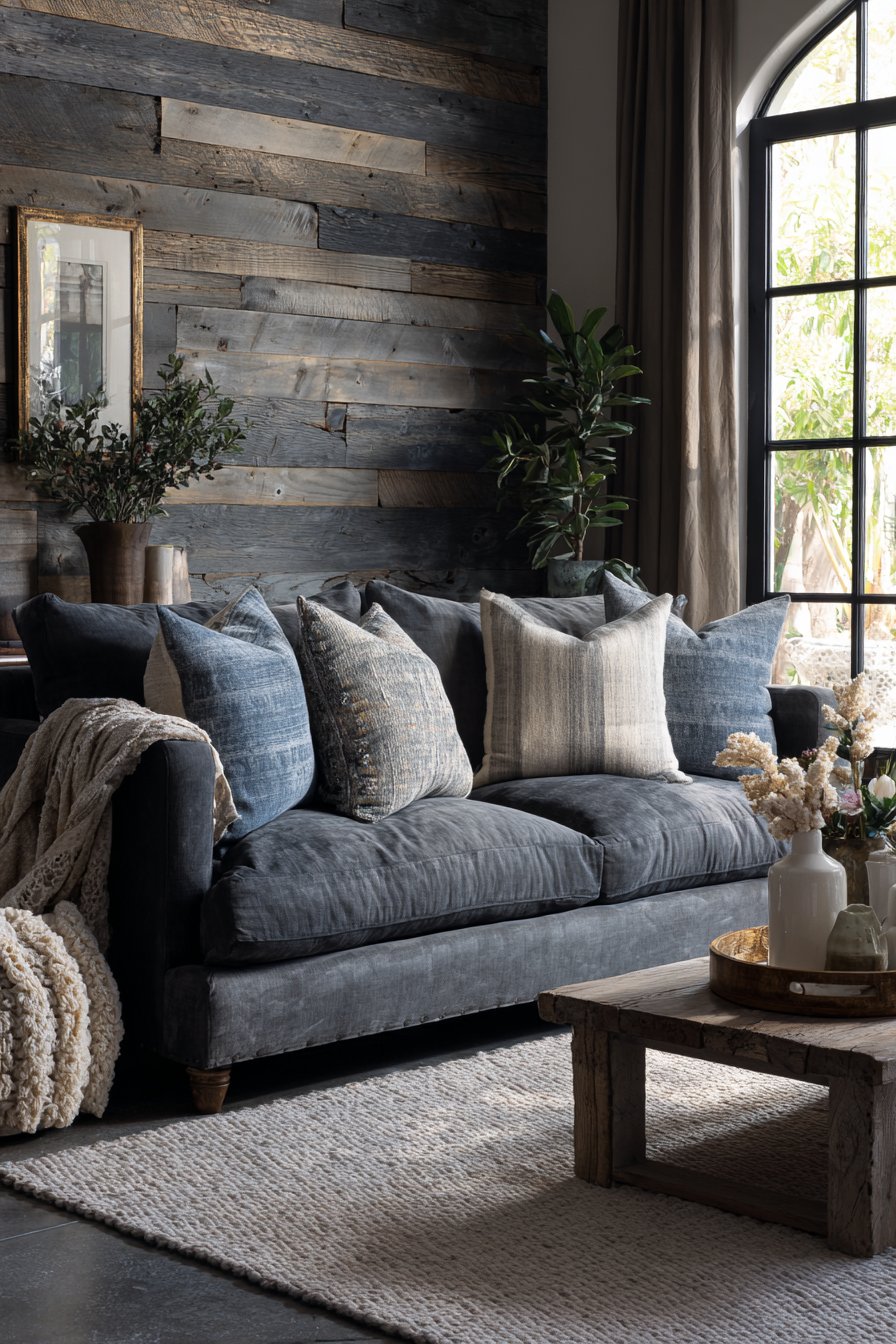
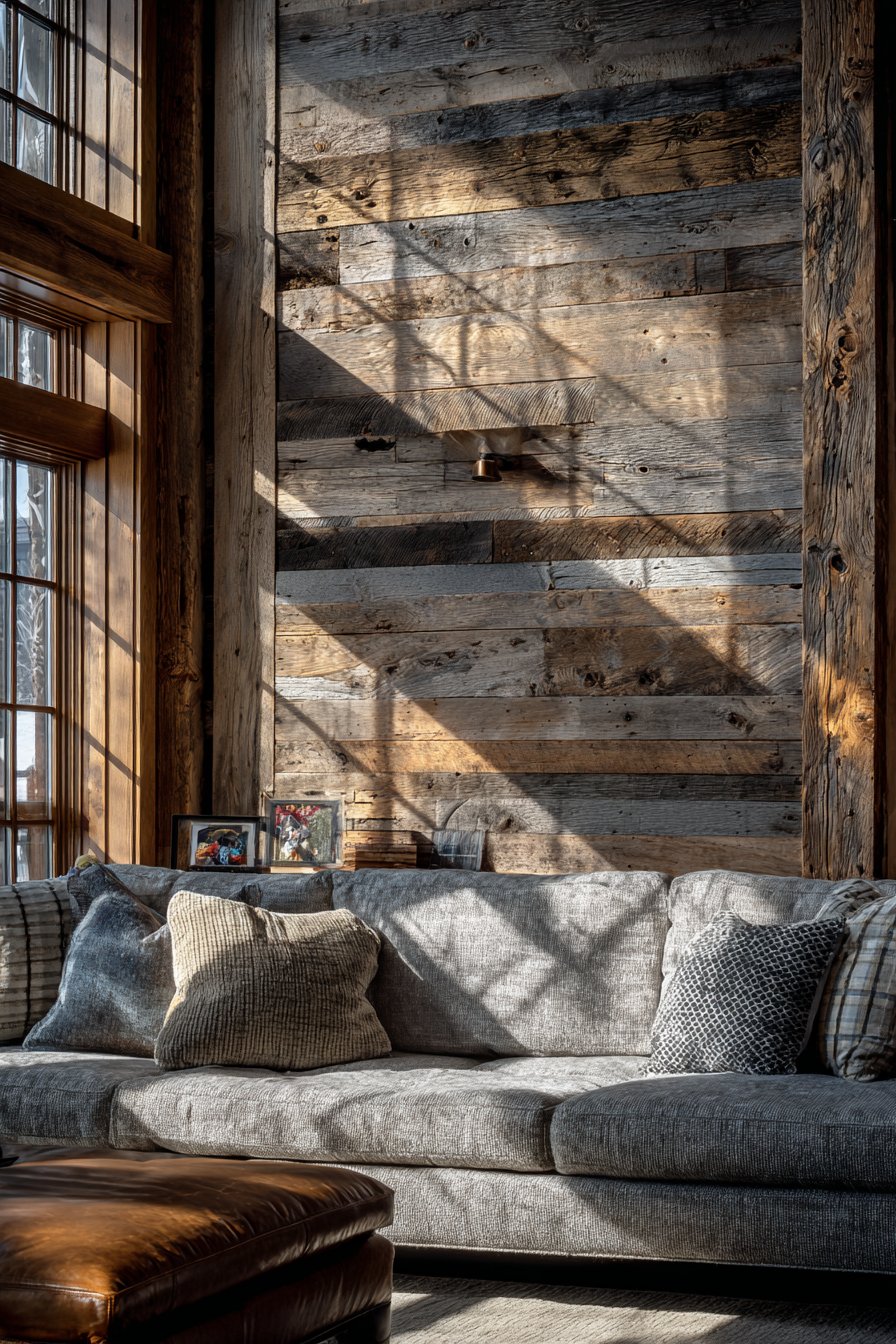
Reclaimed barn wood planks featuring varied widths and natural weathered gray tones create an authentic farmhouse accent wall that tells a story through its material history. Each panel showcases genuine aging with visible knots, nail holes, and gentle patina developed over decades of previous use, introducing character and uniqueness impossible to replicate with new materials. This installation covers a full accent wall behind a comfortable linen sofa, creating a stunning focal point that anchors the living room while celebrating sustainable design practices and the beauty of materials with history.
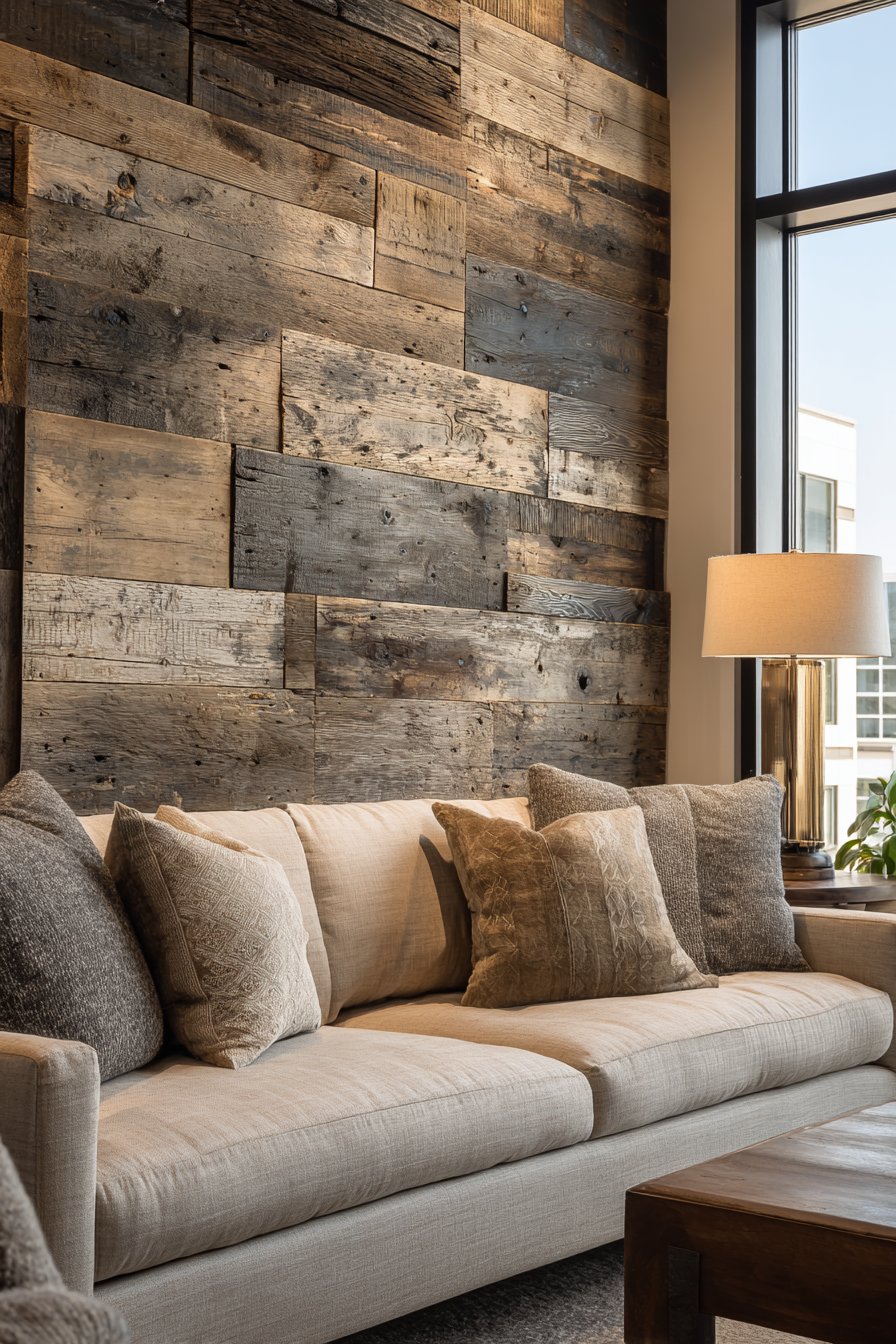
The varied plank widths contribute visual interest and organic irregularity that reflects the authentic, hand-hewn quality of historical construction. Unlike perfectly uniform modern materials, these reclaimed pieces embrace imperfection and variation, creating a textural landscape that invites closer inspection and provides endless small details to discover. The naturally weathered gray tones range from silvery ash to deeper charcoal, creating depth and dimension without requiring any artificial staining or finishing. This organic color variation ensures the wall never appears flat or monotonous, as the eye continuously discovers new details and tonal shifts.
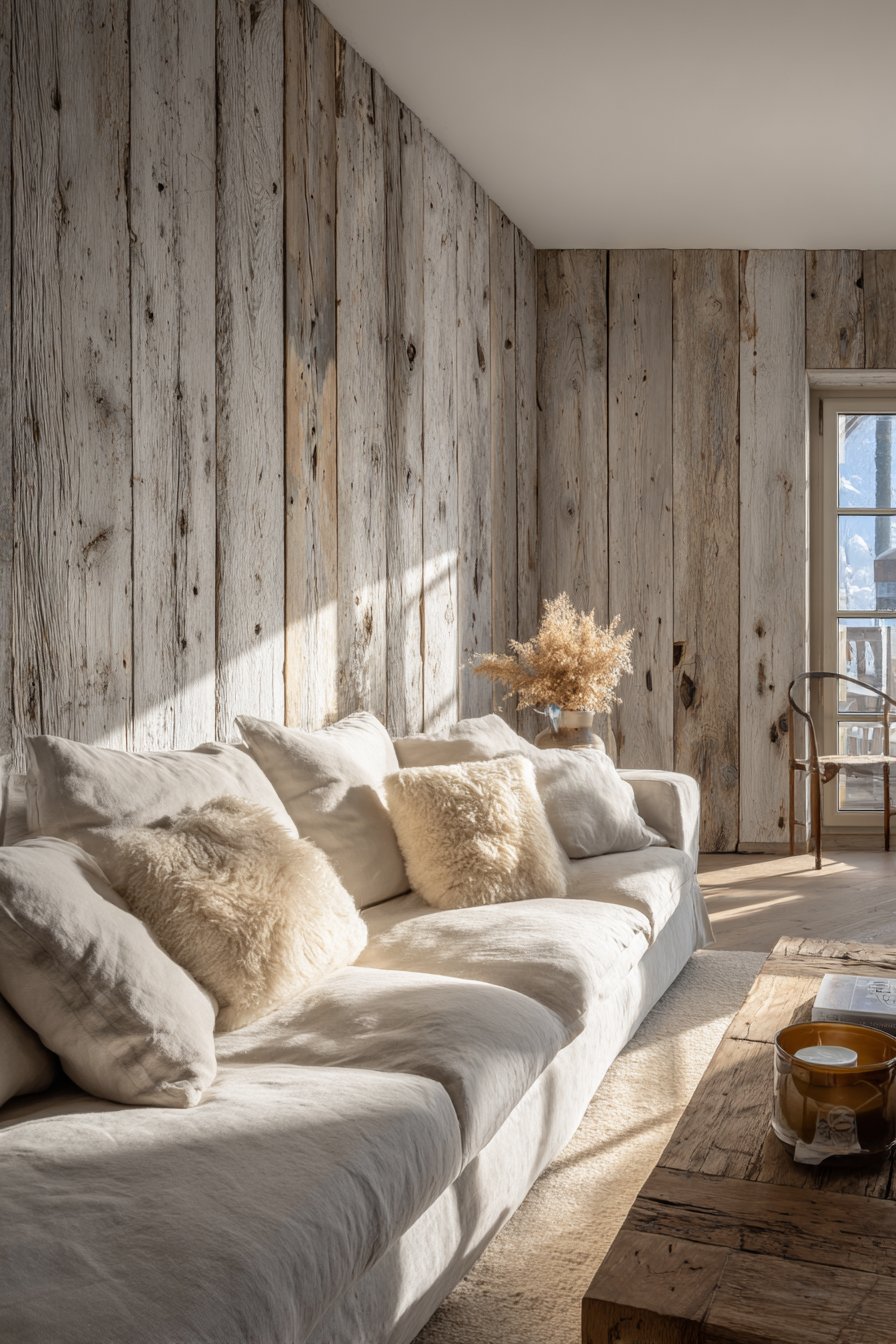
Soft golden hour lighting streaming through nearby windows brings the reclaimed wood to life, emphasizing grain patterns, highlighting surface texture, and creating warm, welcoming shadows that shift throughout the day. This natural illumination demonstrates how thoughtful window placement in relation to feature walls can eliminate the need for complex artificial lighting schemes while creating ever-changing visual interest. The horizontal installation creates visual width in the room while the varied plank lengths establish a random, organic pattern that feels discovered rather than designed.
Key Design Tips:
- Source reclaimed wood from reputable suppliers who clean and treat materials properly
- Install vapor barrier behind panels to prevent moisture issues
- Embrace imperfections and variations as design features rather than flaws
- Seal wood with clear matte finish to preserve patina while allowing cleaning
- Stagger plank lengths randomly to avoid repetitive patterns
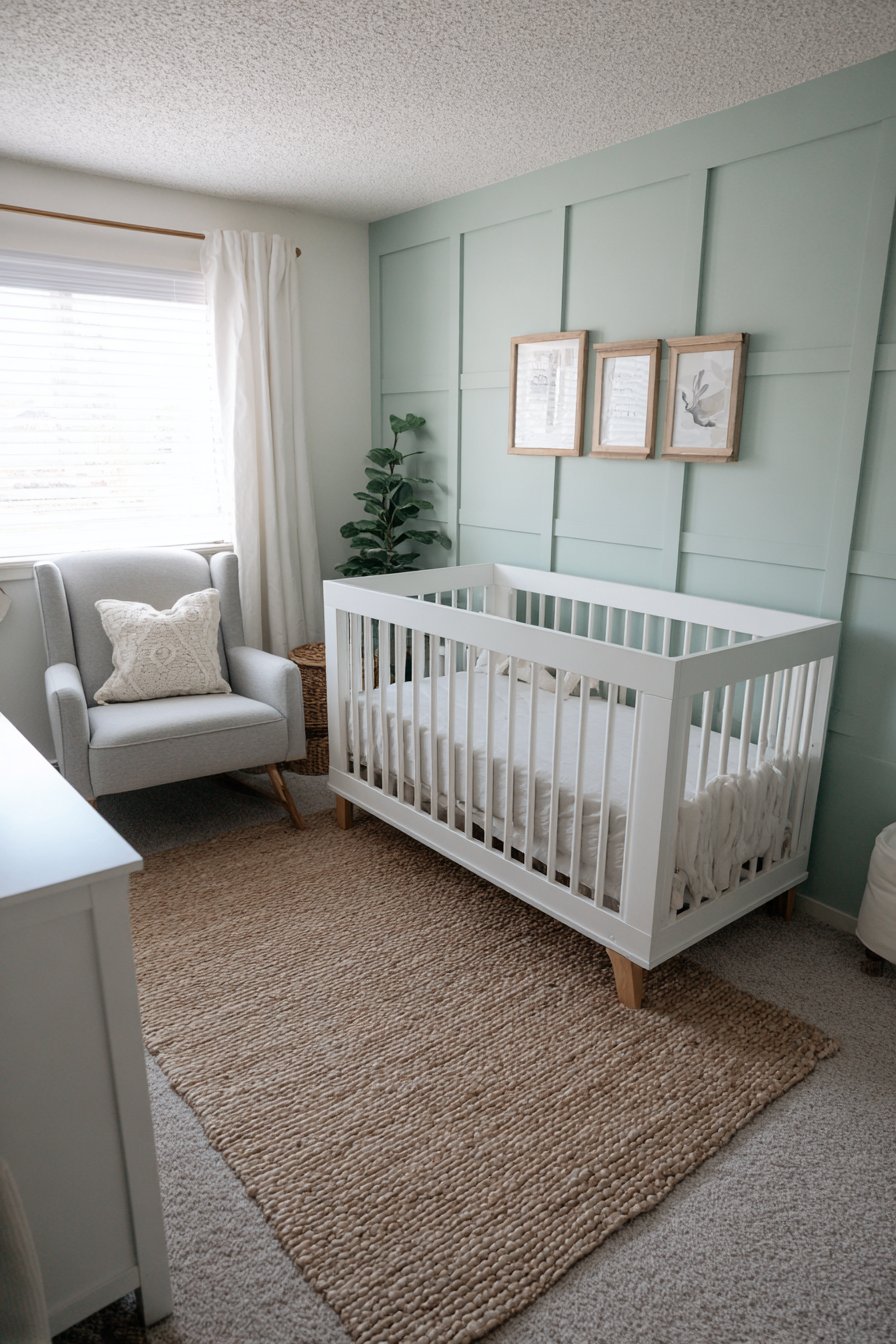
8. Gentle Sage Green Nursery Serenity
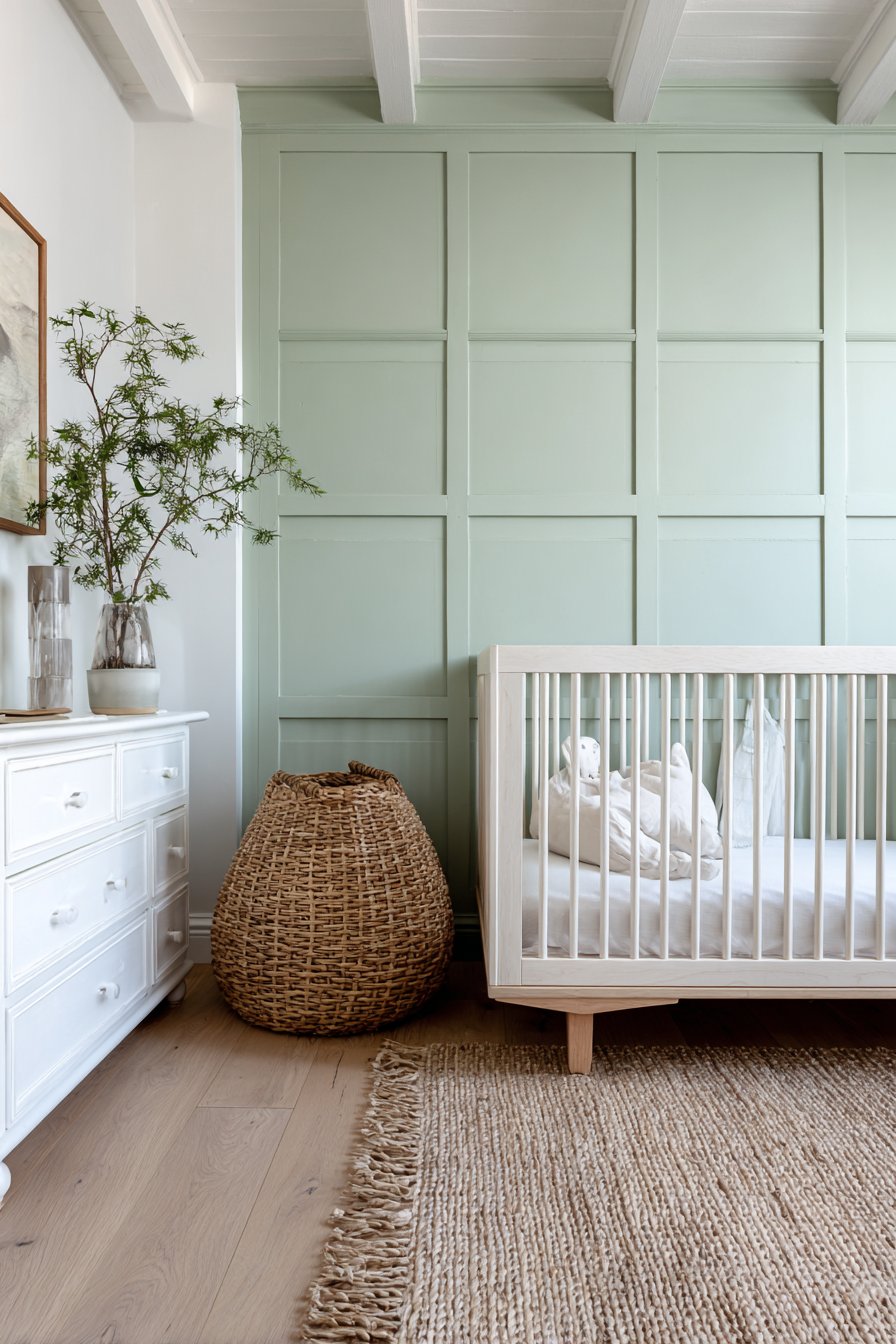
Wall panels with rounded corner details in soft sage green create a safe, soothing nursery environment where every design decision prioritizes both aesthetics and child safety. The simple board-and-batten style features wider spacing appropriate for the room scale, preventing the treatment from overwhelming the smaller proportions typical of nursery spaces. The rounded corners eliminate sharp edges that could pose safety concerns, demonstrating thoughtful adaptation of traditional paneling techniques to suit the specific requirements of spaces designed for young children.
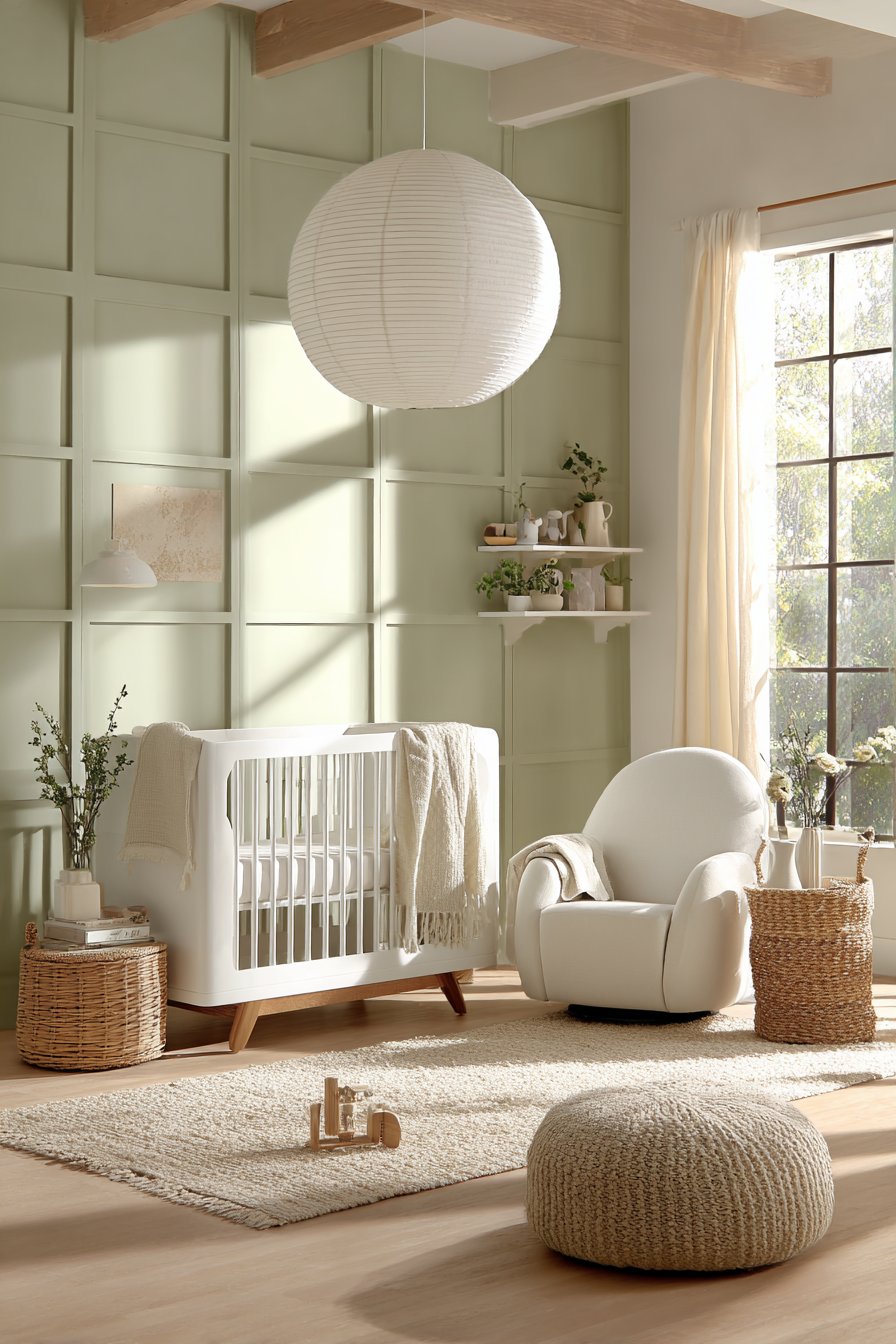
The sage green color selection draws from nature’s most calming palette, evoking growth, renewal, and tranquility—qualities that support healthy sleep patterns and create a peaceful environment for both infant and caregivers. This sophisticated neutral works equally well for any gender while providing enough color saturation to feel intentional and designed rather than merely safe or bland. The soft tone reflects natural light beautifully without creating glare, maintaining consistent visual comfort throughout varying light conditions from bright morning sunlight to dim evening feeding sessions.
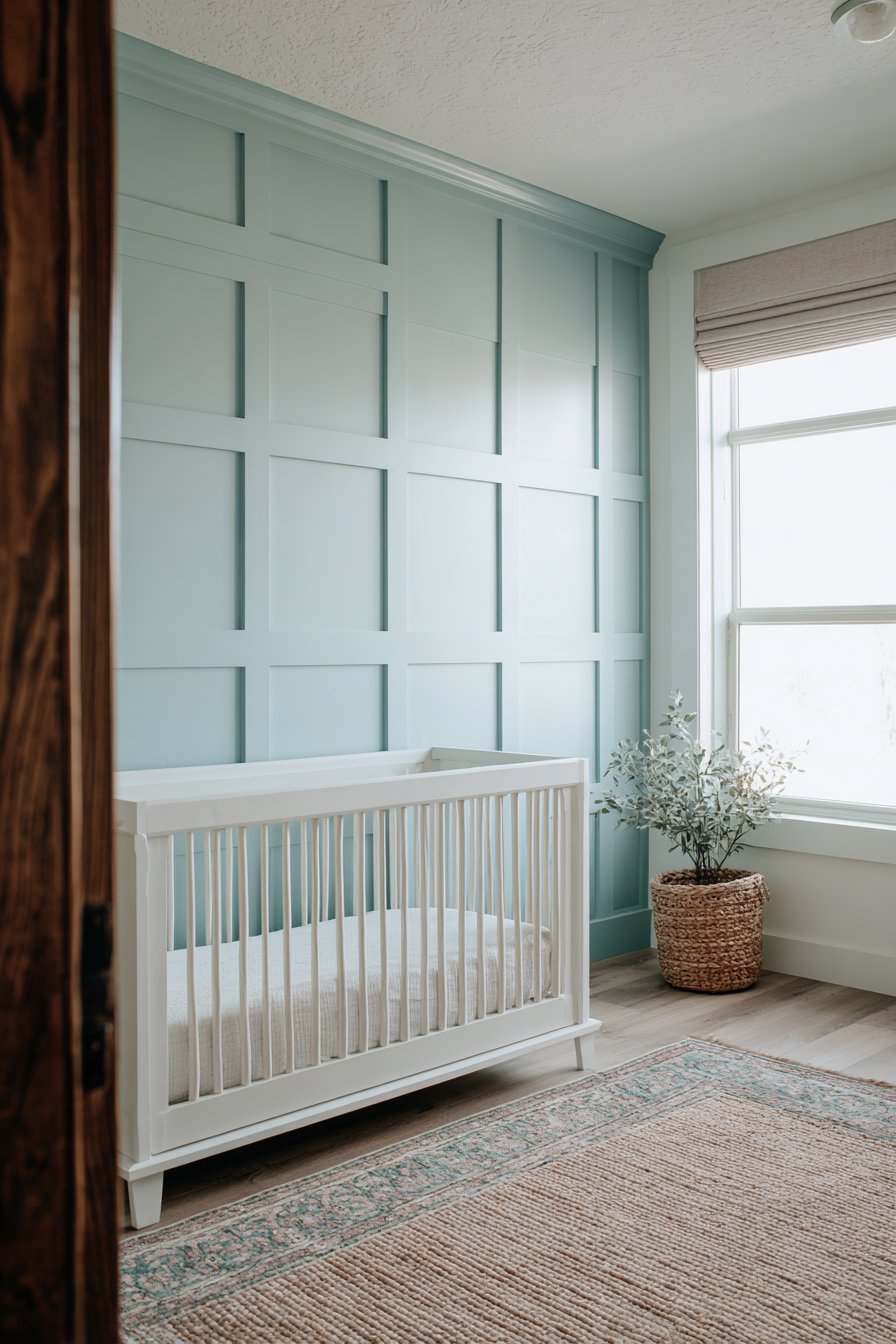
White furniture provides crisp contrast against the sage panels while maintaining the overall light, airy quality essential for nursery spaces. A natural fiber rug adds organic texture underfoot while contributing sound absorption that helps maintain the quiet atmosphere crucial for infant sleep. Diffused natural lighting creates a peaceful ambiance while the panel installation adds subtle architectural interest that grows with the child, transitioning successfully from nursery to toddler room and beyond without requiring complete redesign.
Key Design Tips:
- Use low-VOC paints and finishes to ensure air quality safety
- Install panels with child-safe adhesives and secure mounting
- Choose washable paint finish for easy cleaning of inevitable marks
- Space battens wider than traditional applications to suit room proportions
- Extend panels to chair rail height only to avoid overwhelming small space
9. Industrial Basement Recreation Authenticity
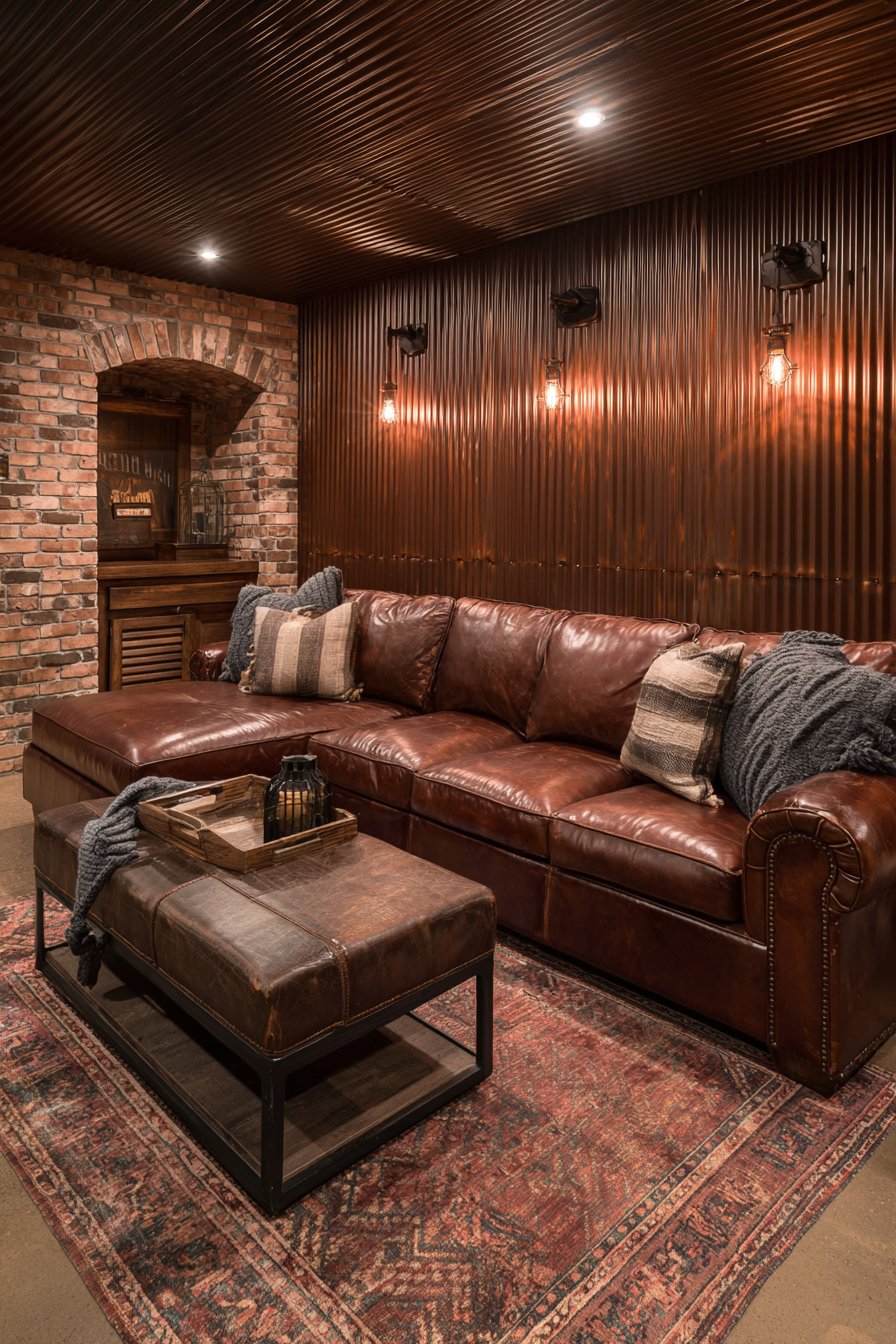
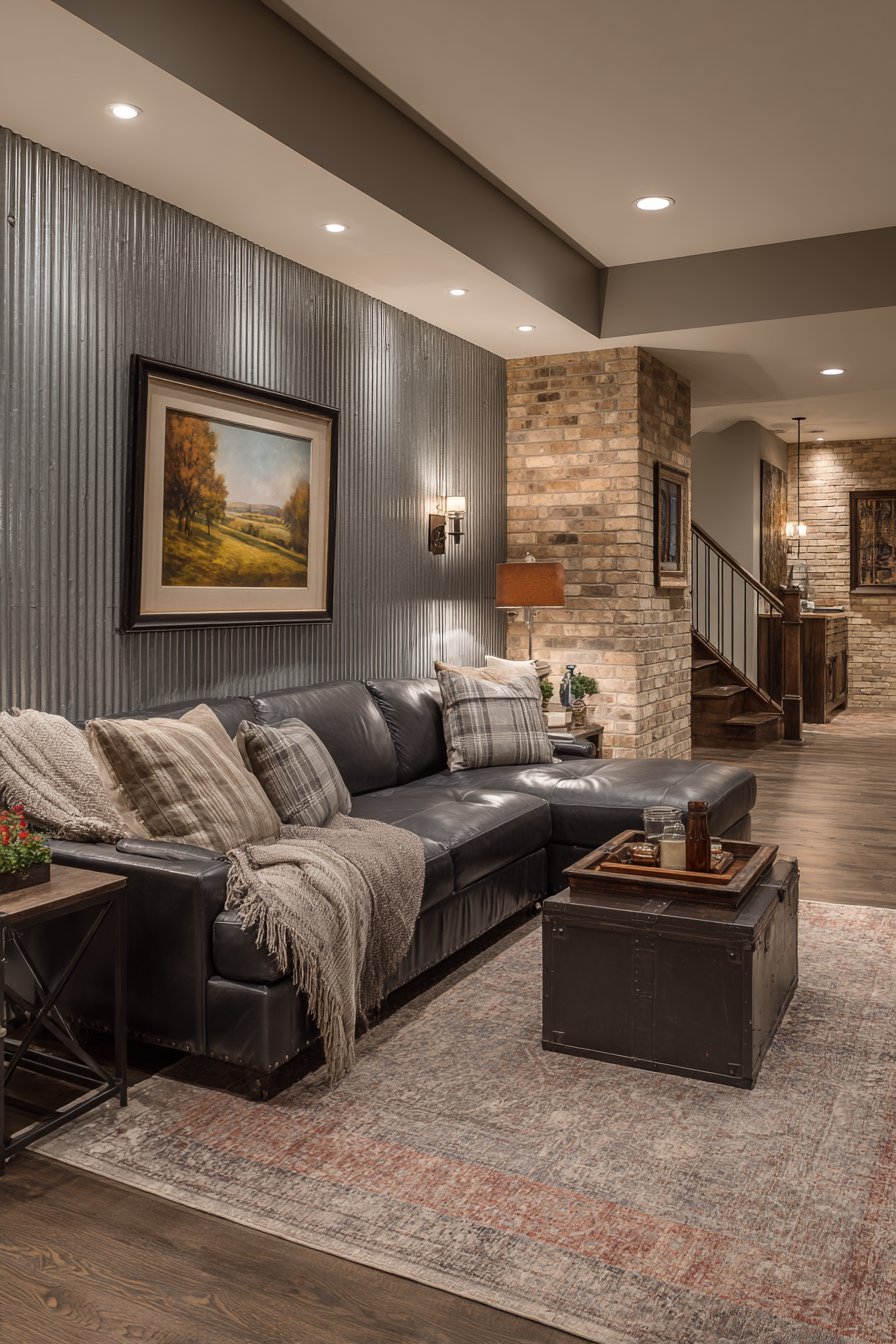
Corrugated metal wall panels with authentic rust patina finish bring industrial character to a basement recreation room, creating an urban loft aesthetic in an unexpected underground space. These panels, carefully sealed for interior use, showcase genuine weathered metal texture complete with oxidation patterns and color variations that cannot be convincingly replicated through artificial finishing techniques. The corrugated profile adds significant dimensional interest and creates distinctive shadow lines that emphasize the material’s industrial origins while providing textural contrast against smoother surfaces in the room.
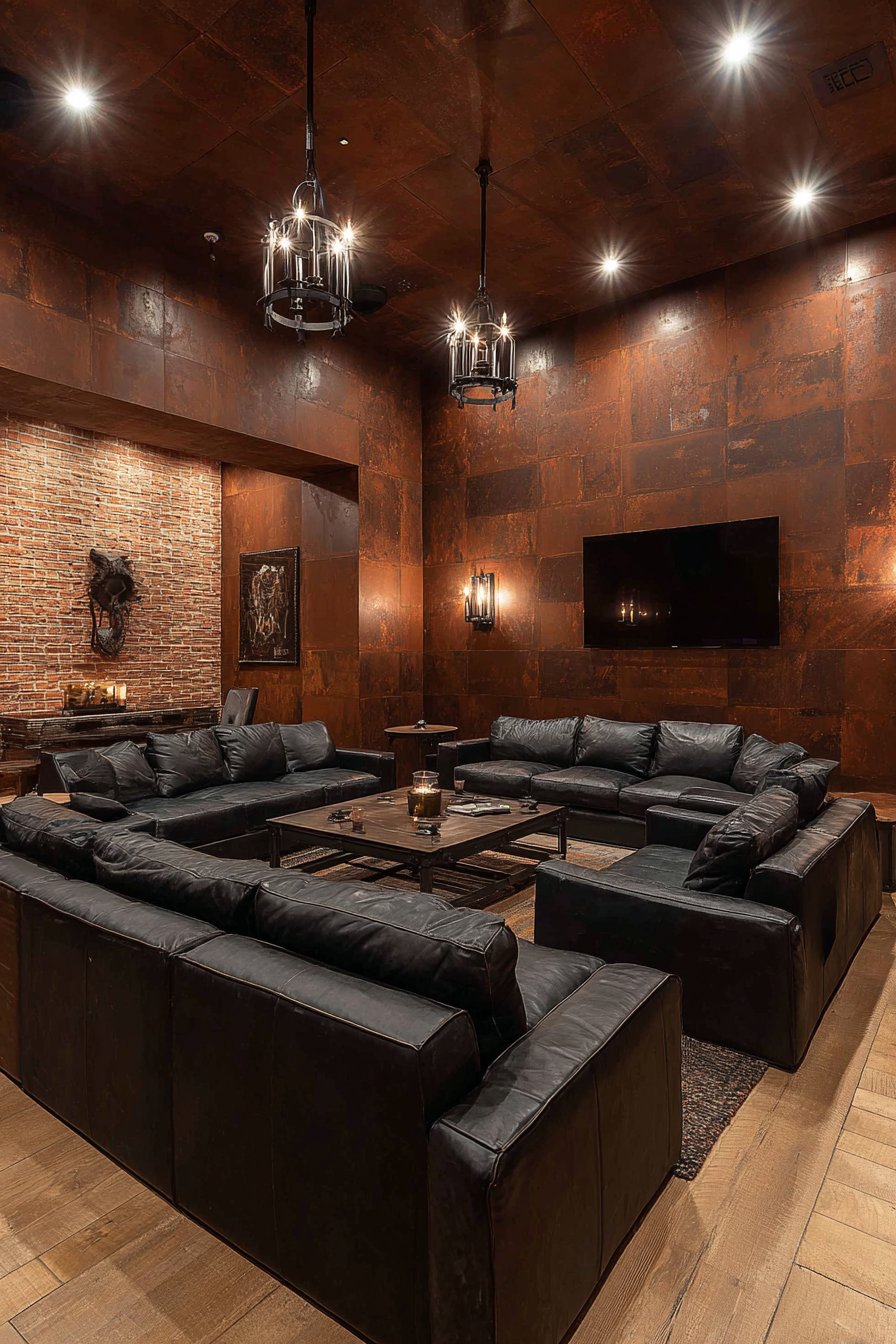
This bold material choice demonstrates confidence in embracing raw, honest materials that celebrate their utilitarian origins rather than disguising them. The rust patina ranges from warm amber tones to deeper burnt sienna, creating an organic color palette that introduces unexpected warmth despite the industrial material choice. When combined with exposed brick on adjacent walls, the metal panels create a cohesive industrial narrative that feels authentic and intentional rather than applied as superficial styling. The combination of materials tells a story about adaptive reuse and finding beauty in functional industrial elements.
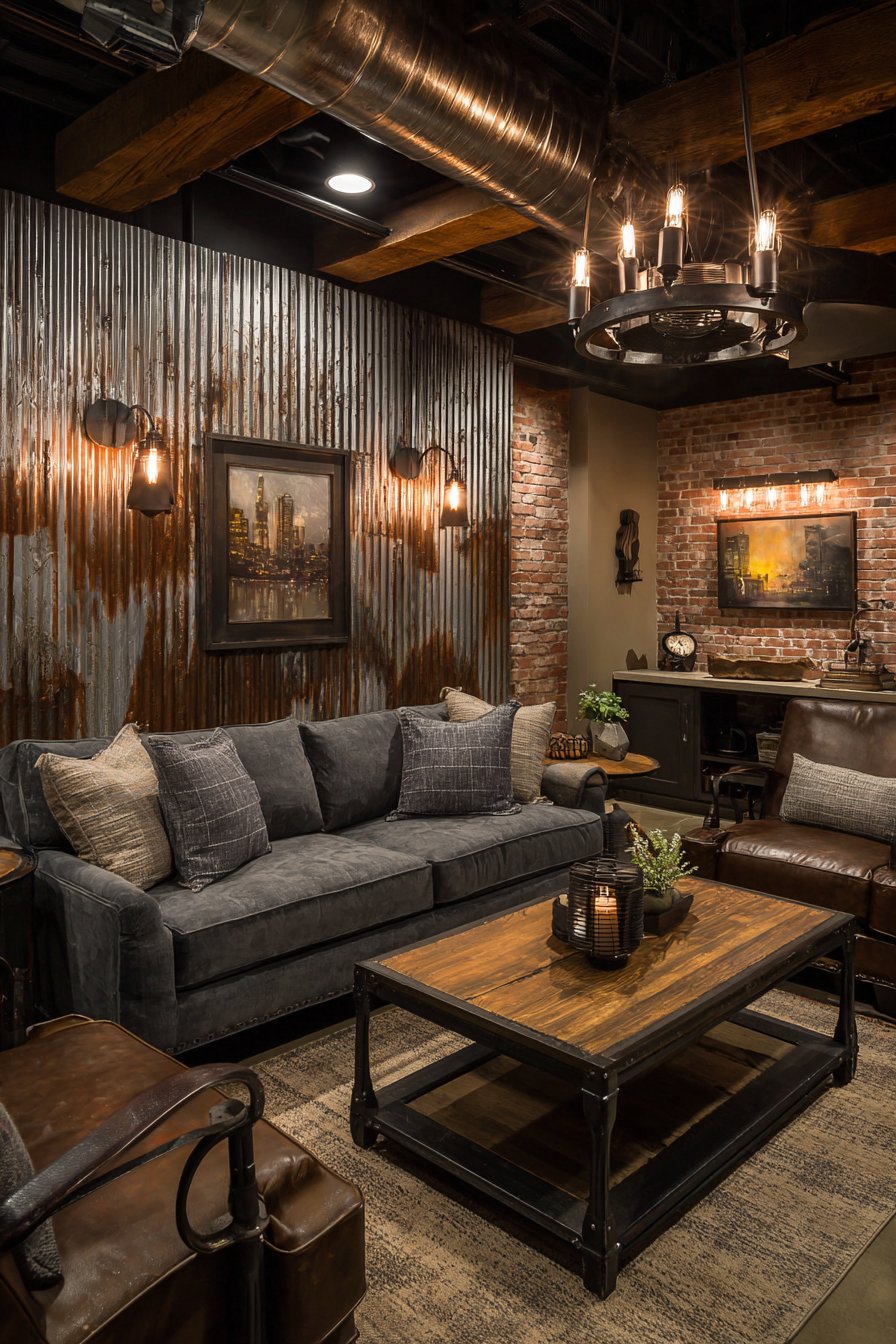
Black metal-framed furniture and vintage industrial lighting complete the aesthetic, creating a recreation space that feels like a discovered urban loft rather than a suburban basement. Warm tungsten lighting highlights the metallic texture and dimensional ridges, creating dramatic shadows that emphasize the panels’ three-dimensional quality. This lighting choice proves essential, as it brings out the warmth in the rust tones while creating the intimate, atmospheric quality perfect for relaxation and entertainment.
Key Design Tips:
- Seal metal panels with clear protective coating to prevent further oxidation
- Install over moisture barrier to protect against basement humidity
- Choose authentic weathered metal rather than printed reproductions
- Balance industrial elements with softer textures in furniture and textiles
- Ensure proper ventilation to prevent condensation behind panels
10. Velvet Tufted Bedroom Luxury
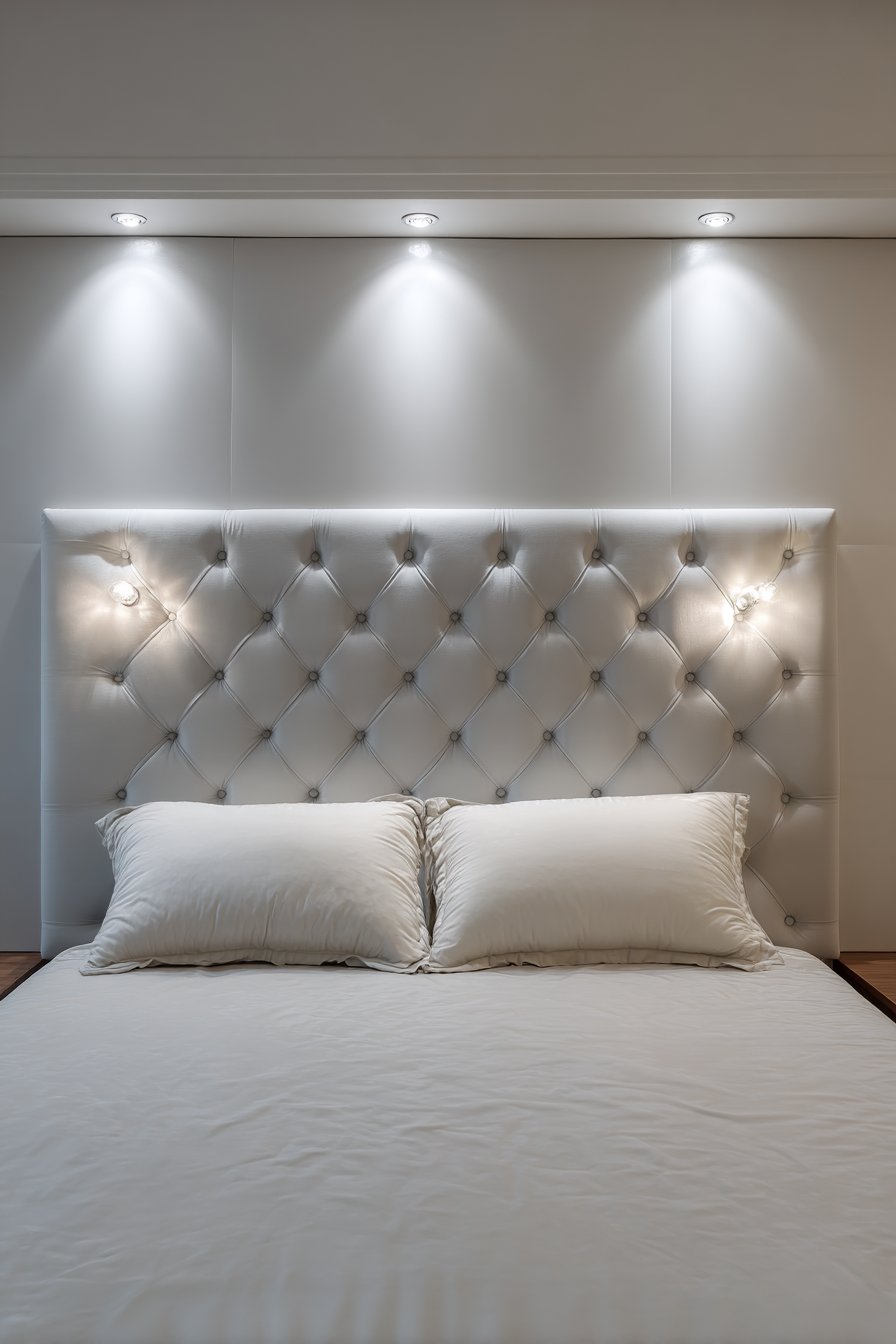
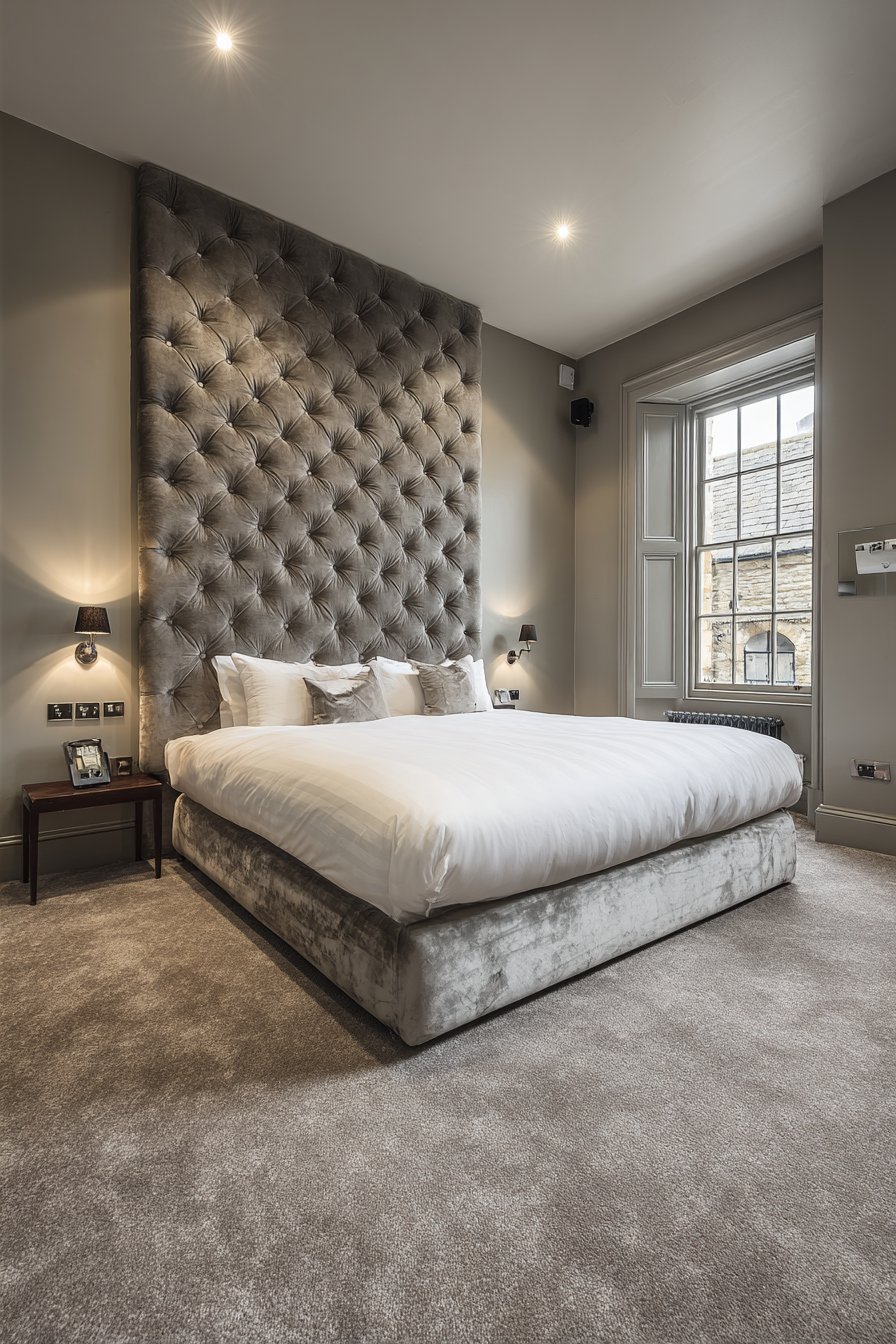
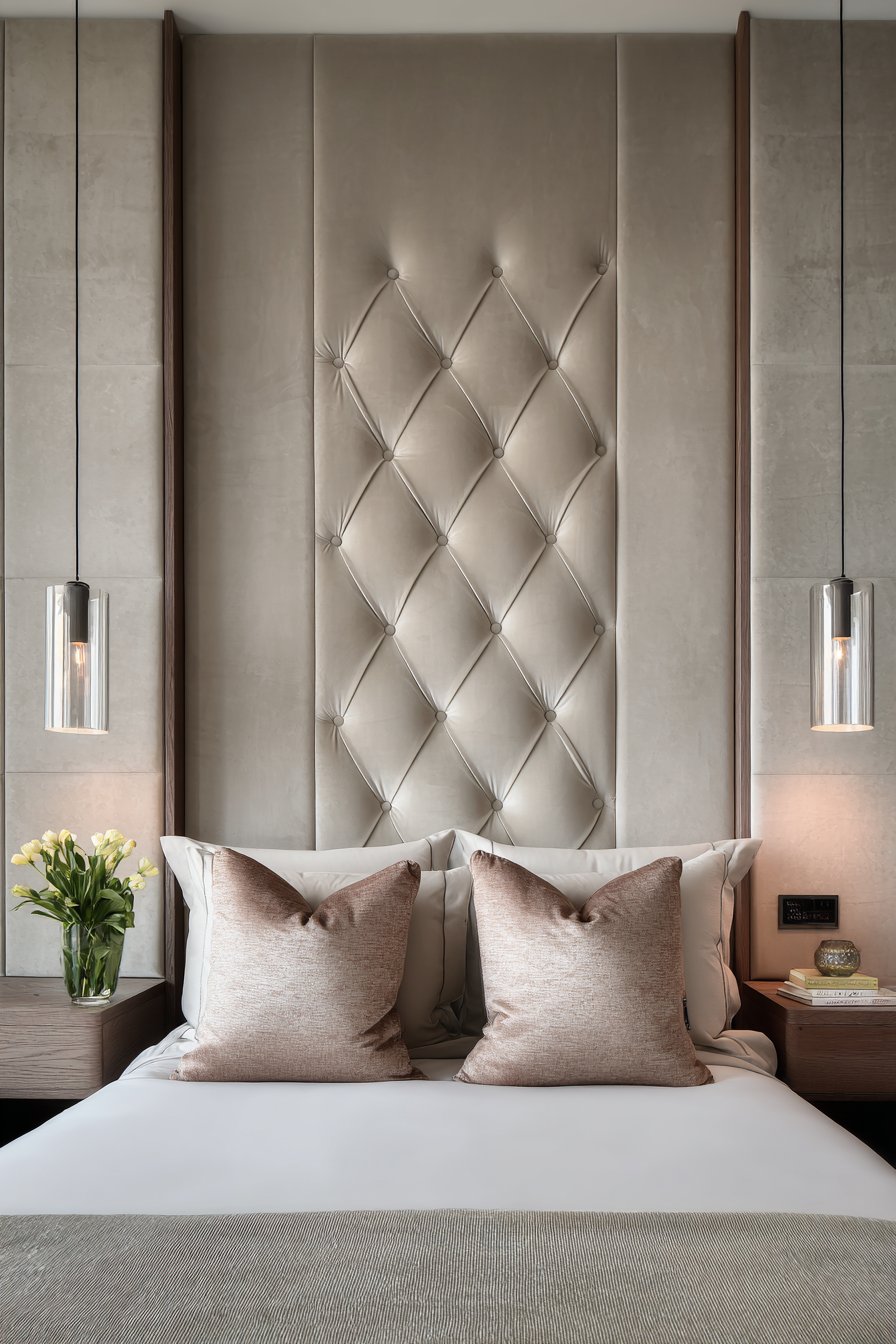
Padded upholstered wall panels in soft gray velvet fabric create an elegant tufted headboard wall that extends to the ceiling, introducing sumptuous luxury and tactile richness that transforms the bedroom into a sophisticated retreat. The button detailing arranged in a diamond pattern adds dimensional interest and classic elegance while the extended height creates dramatic architectural impact that makes the ceiling feel higher and the room more grand. This installation approach eliminates the need for traditional headboard furniture while creating a custom, built-in appearance that feels permanent and intentional.
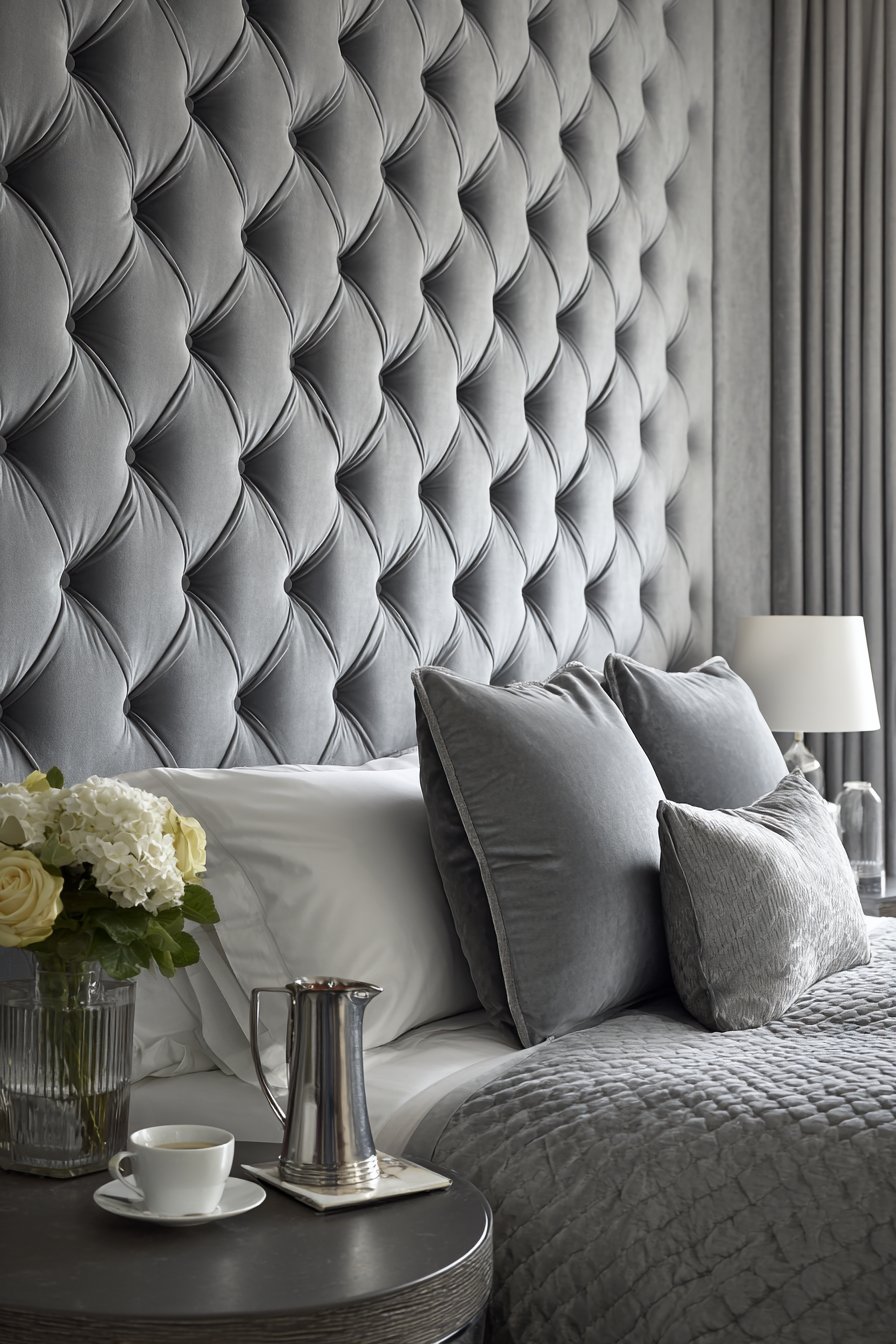
The velvet fabric choice introduces multiple layers of sensory luxury—visual depth through the material’s light-catching pile, tactile softness when touched, and sound-dampening properties that improve room acoustics and create a quieter, more peaceful sleep environment. The soft gray coloration provides sophisticated neutrality that accommodates various bedding colors and styles while maintaining a serene, restful atmosphere essential for bedroom spaces. The subtle color variation across the velvet’s nap creates visual interest as light hits the surface from different angles throughout the day.
Integrated reading lights flanking the bed create functional task lighting while emphasizing the luxurious quality of the upholstered surface. These fixtures create soft pools of light on the plush fabric, highlighting texture and creating intimate zones perfect for evening reading without illuminating the entire room. The combination of upholstered panels and integrated lighting eliminates furniture clutter while providing all necessary bedroom functions in a seamlessly integrated architectural treatment.
Key Design Tips:
- Install panels over sound-dampening backing for improved acoustics
- Choose velvet with durable backing suitable for vertical applications
- Plan button placement carefully to ensure symmetrical diamond pattern
- Treat fabric with stain-resistant protection suitable for upholstery
- Wire lighting before panel installation for clean, integrated appearance
11. Coastal Whitewashed Wood Airiness
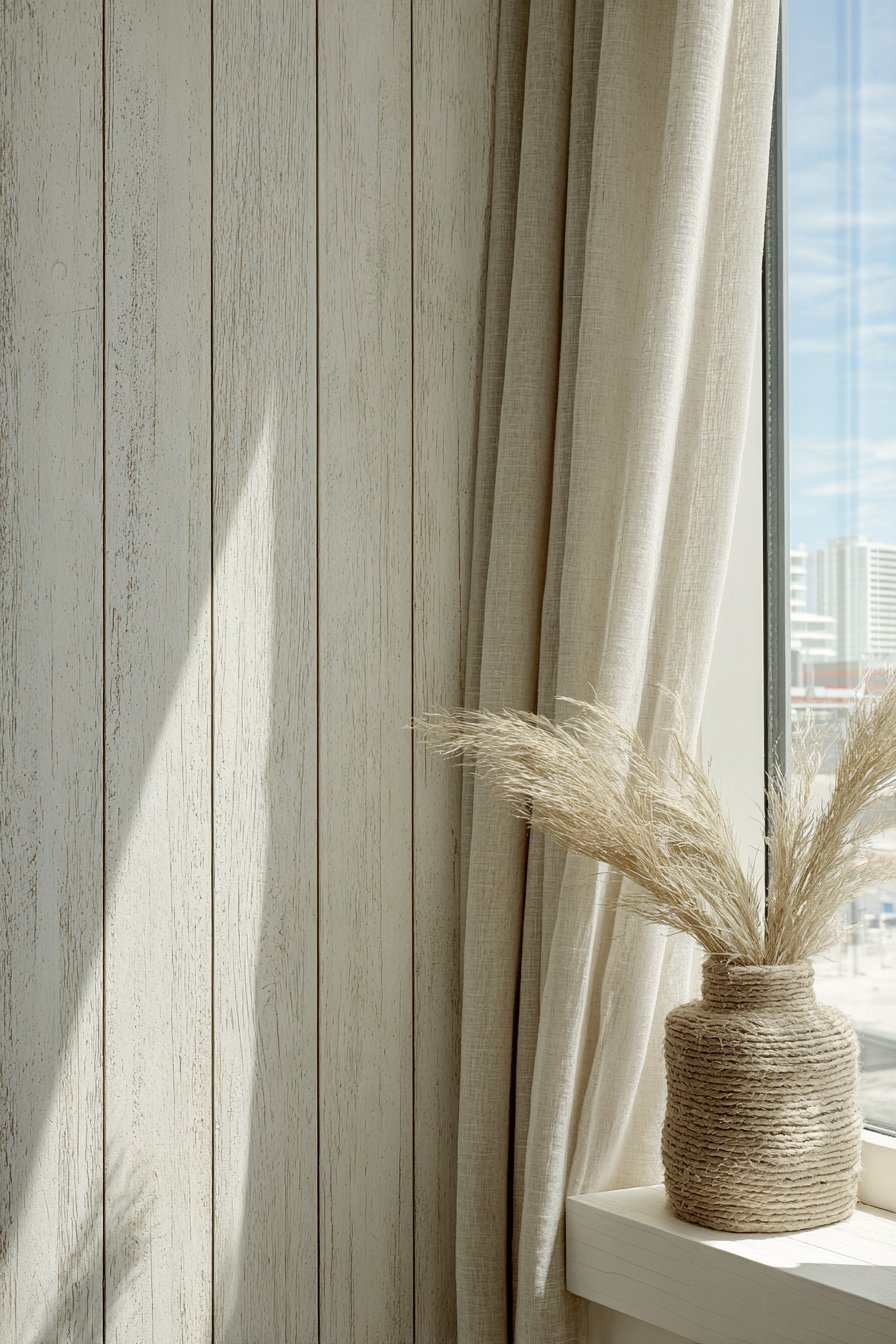
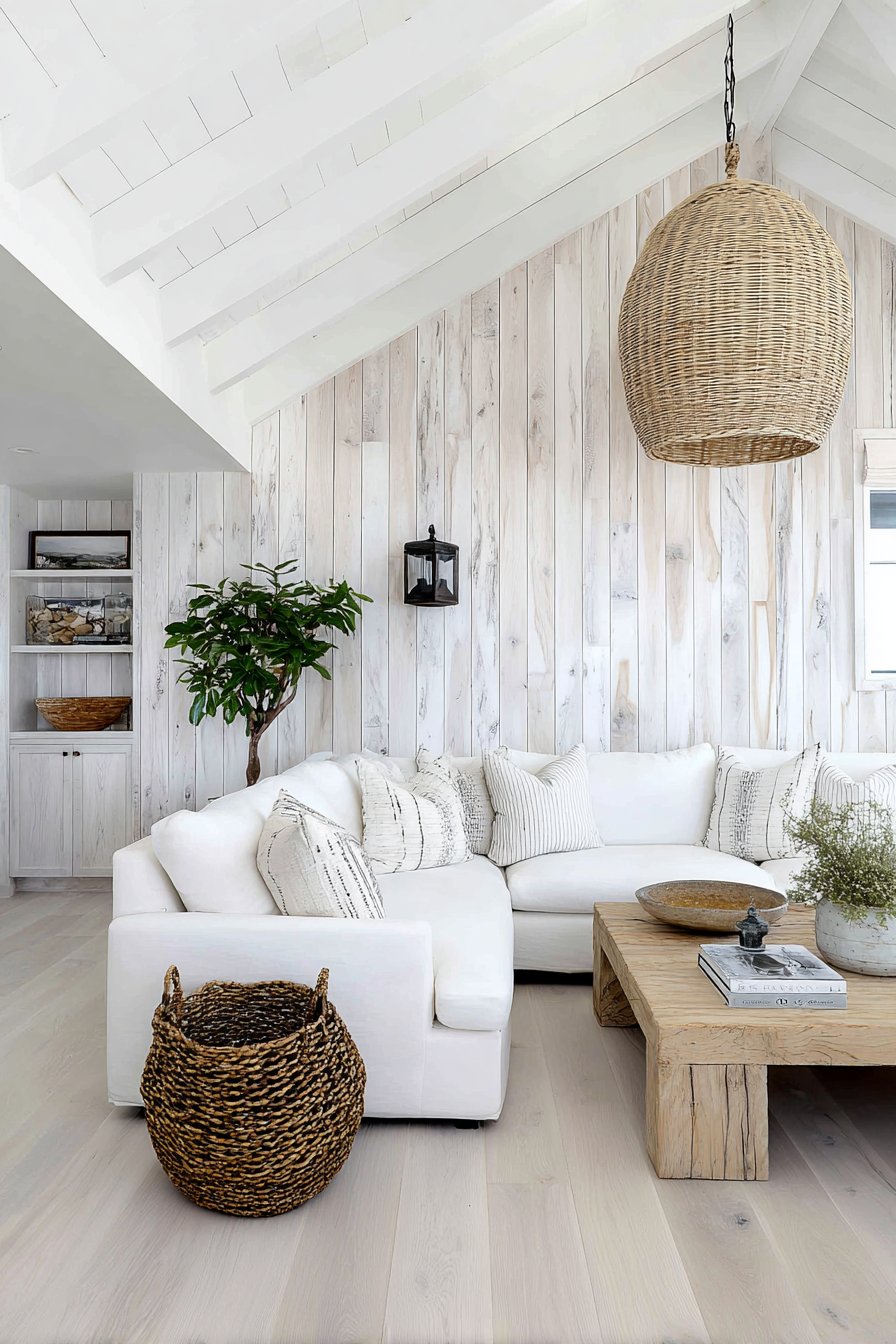
Whitewashed tongue-and-groove wall panels with visible wood grain and subtle texture variations create a coastal-inspired living room that captures the breezy, relaxed atmosphere of beachside living. The vertical installation emphasizes ceiling height while the light finish reflects natural daylight, creating an airy, spacious feeling that makes the room feel larger and more open. The whitewashing technique allows the natural wood grain to show through, adding organic texture and preventing the white surface from appearing too flat or sterile while celebrating the beauty of natural materials.
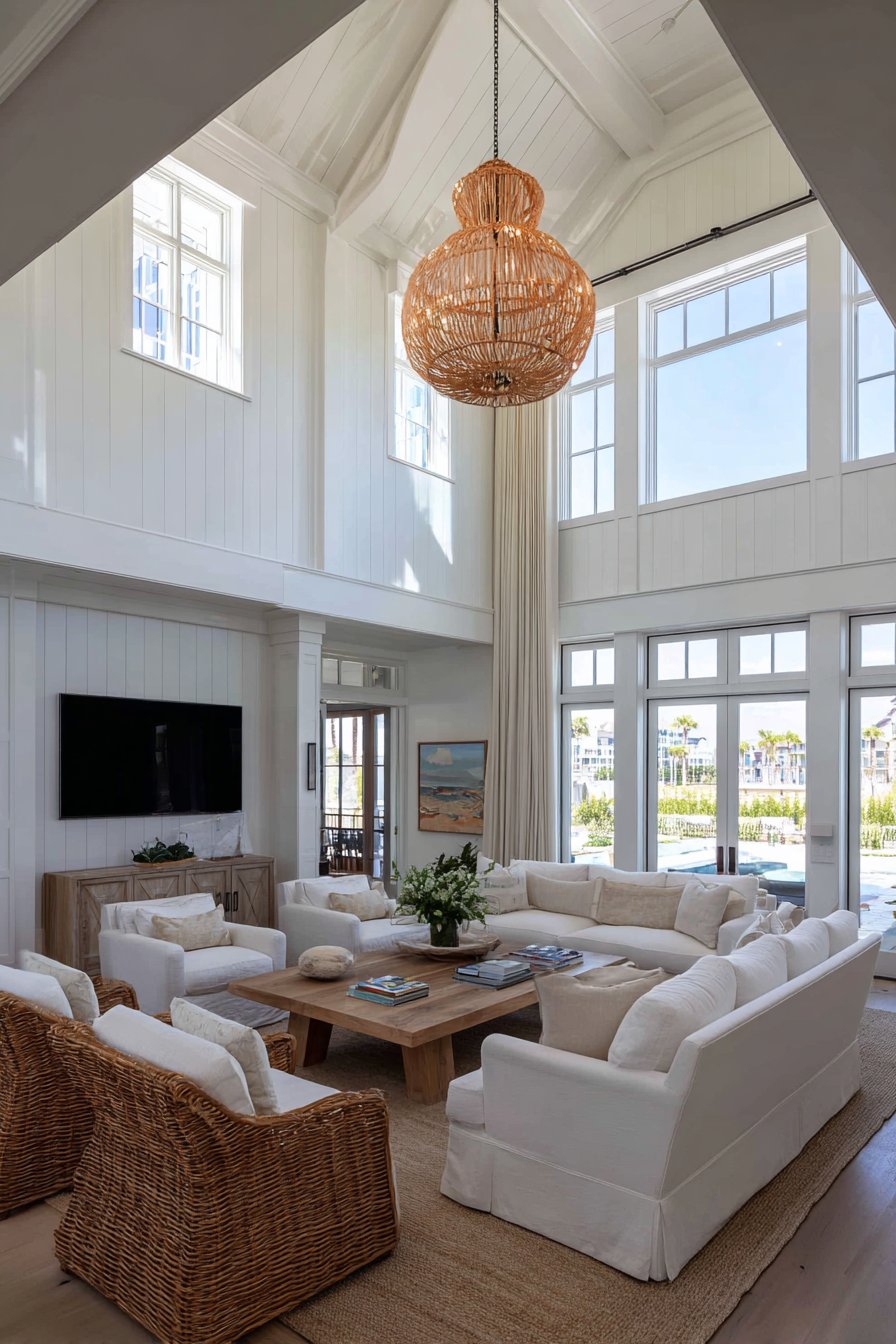
Tongue-and-groove installation creates a seamless appearance with barely visible seams, establishing a unified backdrop that provides architectural interest without competing with furniture and accessories. This traditional joining method ensures panels fit together tightly, preventing gaps that could collect dust while creating the clean, finished appearance appropriate for coastal design aesthetics. The subtle texture variations across different boards introduce visual interest at close inspection while reading as a cohesive, unified surface from normal viewing distances.
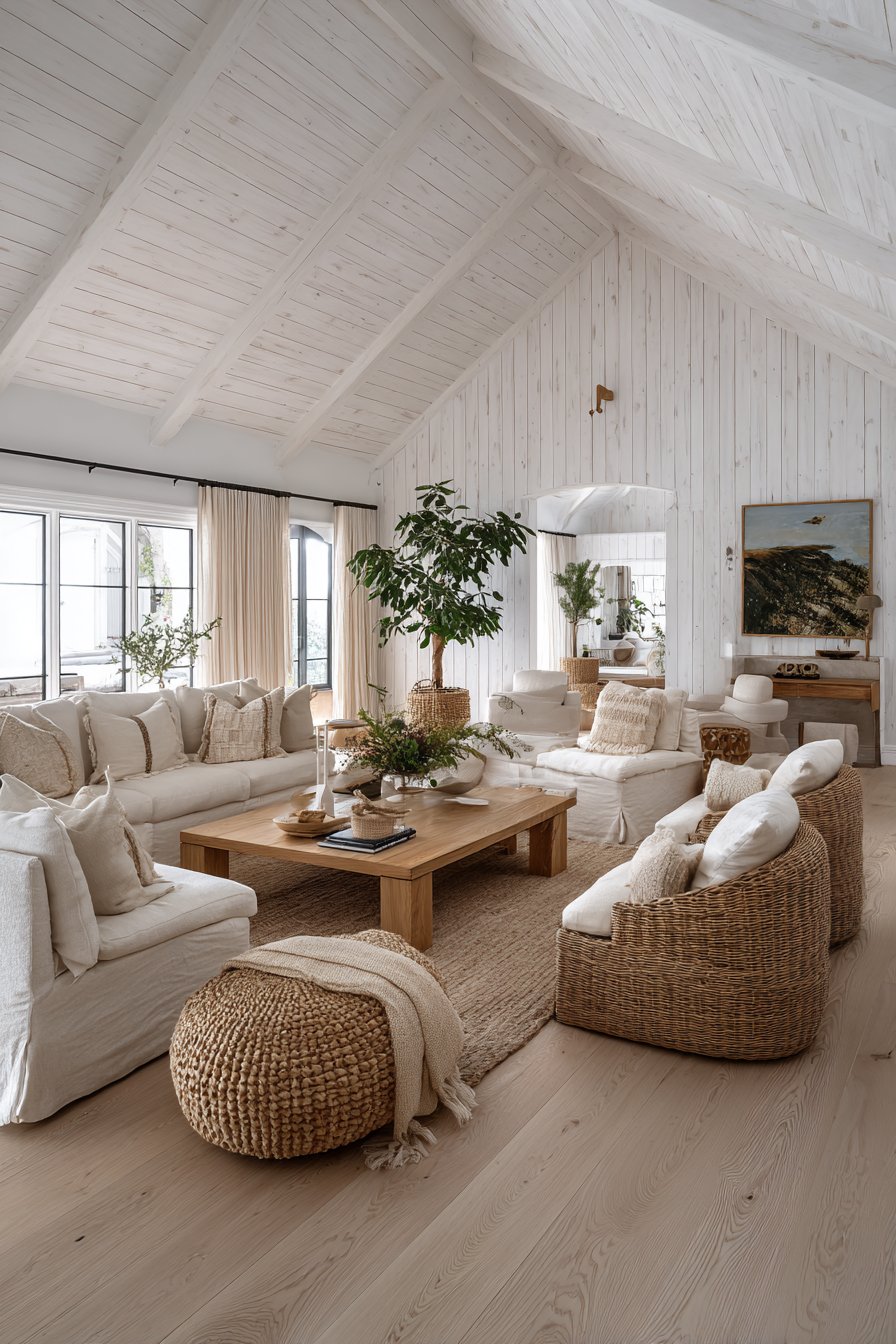
Natural linen draperies and woven accessories complement the beach house aesthetic, creating layers of natural texture that reinforce the coastal theme while maintaining the light, casual quality central to this design approach. Abundant natural daylight streaming through windows reflects beautifully off the whitewashed panels, creating a bright, optimistic environment that captures the essence of coastal living regardless of actual proximity to the ocean. The overall effect creates a permanent vacation feeling that makes the living room an inviting retreat from daily stresses.
Key Design Tips:
- Apply whitewash in thin layers to control grain visibility
- Sand between coats for smooth, refined finish
- Install starting from most visible wall area for best appearance
- Select pine or cedar for authentic coastal wood species
- Seal with matte finish to preserve whitewash while enabling cleaning
12. Modern Vertical Stack Kitchen Tiles
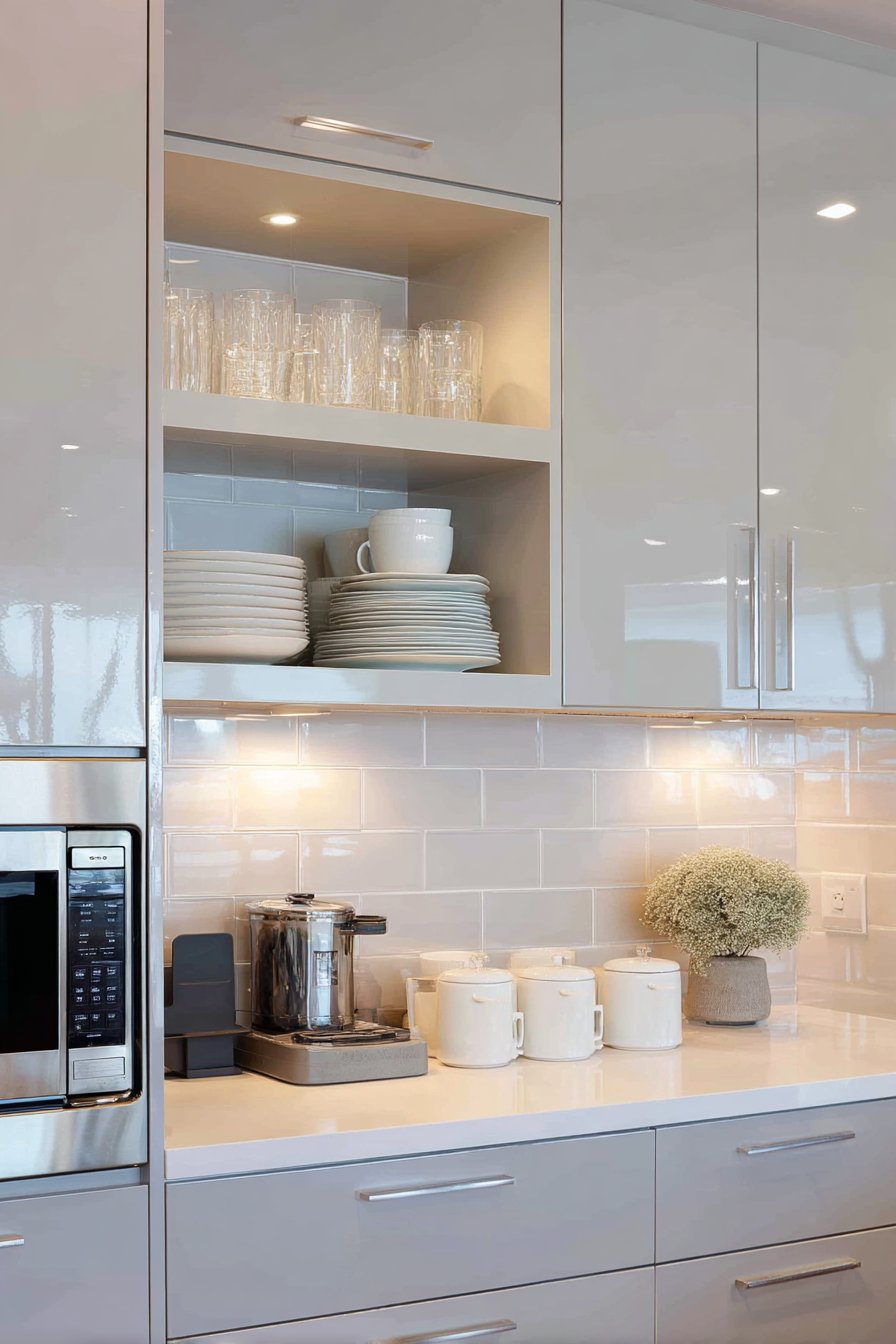
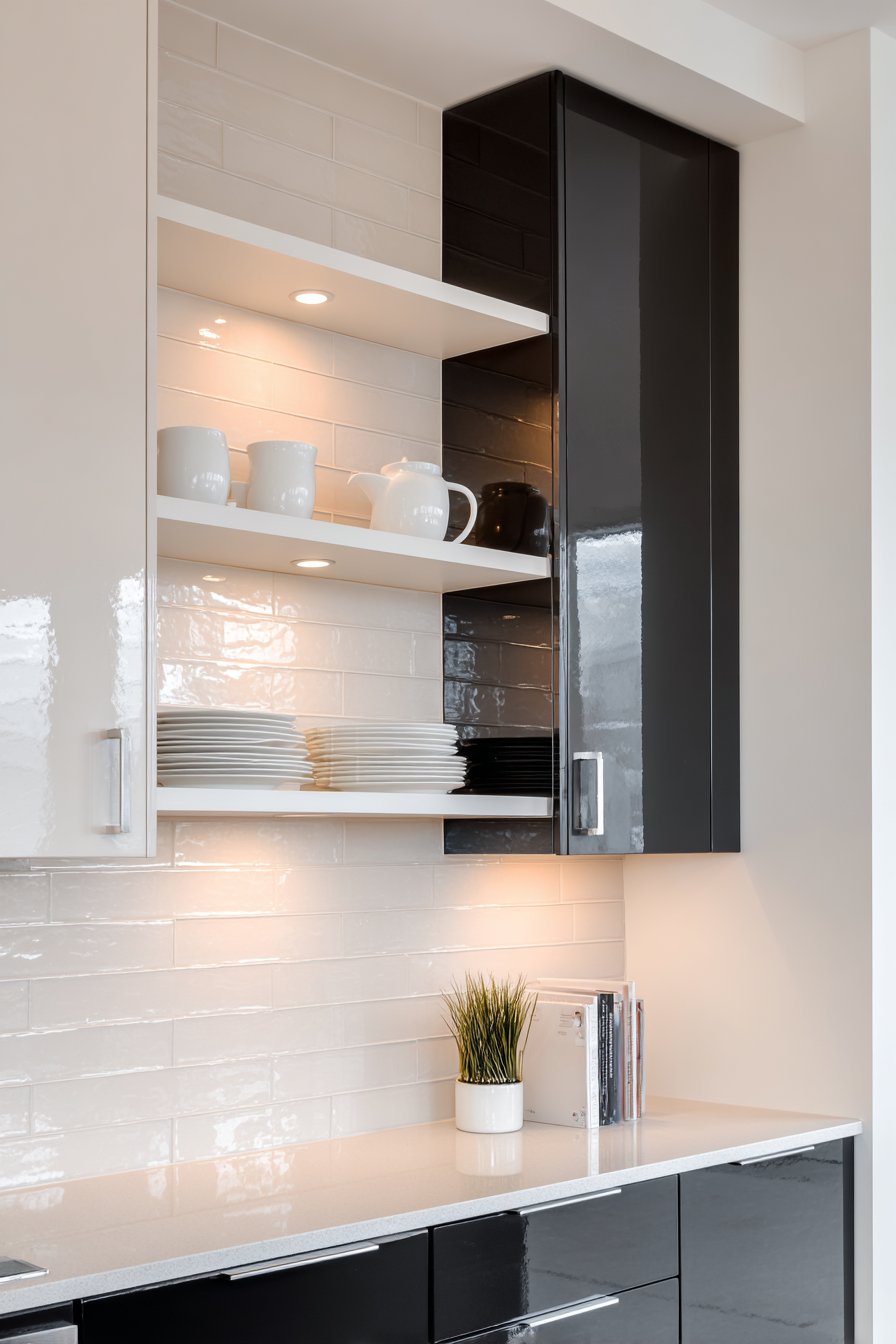
Sleek subway tile wall panels installed in a contemporary vertical stack pattern create a fresh kitchen backsplash that reinterprets a classic material through modern installation technique. Unlike traditional brick-pattern subway tile, this vertical orientation creates strong upward movement that emphasizes ceiling height while establishing a more contemporary, tailored appearance. The glossy white ceramic provides easy-clean surfaces essential in kitchen environments while the reflective quality bounces light throughout the space, making the kitchen feel brighter and more spacious.
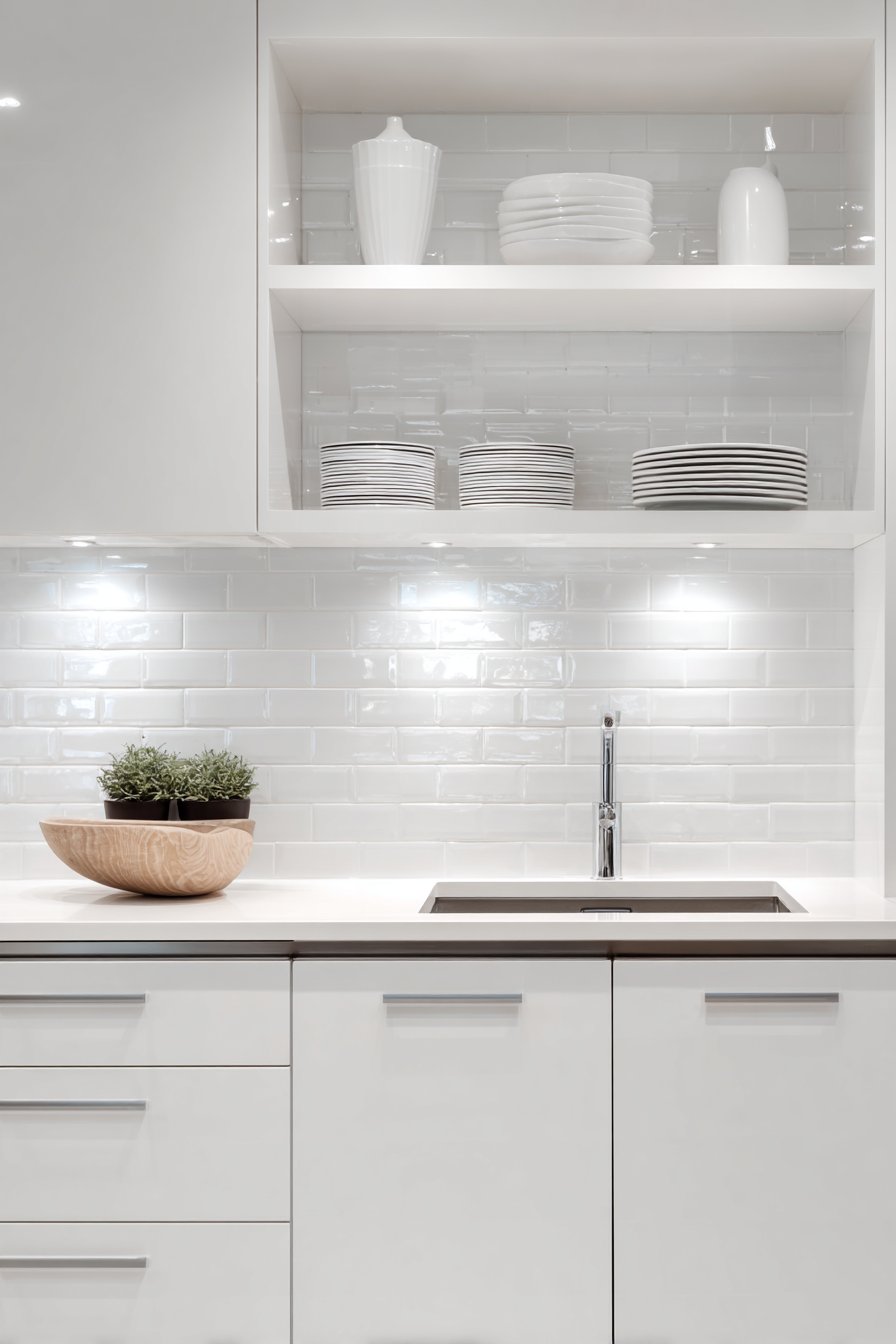
The vertical stack pattern demonstrates how installation method can completely transform familiar materials, creating contemporary impact from time-tested tiles through thoughtful arrangement alone. This approach reduces visual busyness compared to traditional offset patterns, creating a calmer backdrop that allows the kitchen’s other design elements—cabinetry, countertops, appliances—to take center stage. The consistent vertical grout lines create graphic precision that suits modern aesthetics while the simple white tiles ensure the backsplash remains timeless rather than trendy.
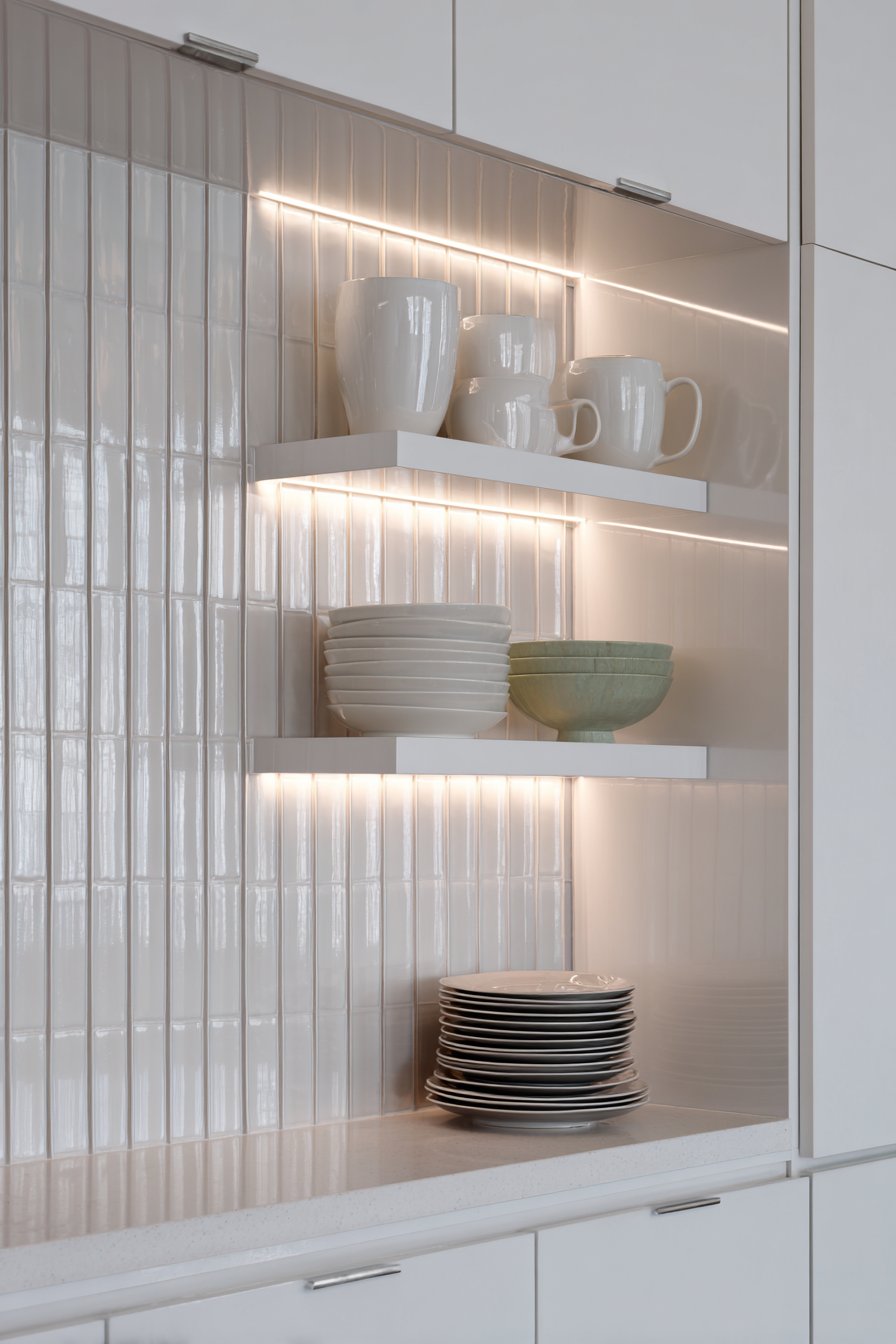
Open shelving displaying minimalist dishware transforms the tiled wall into both functional storage and aesthetic display, with the clean white tile providing perfect backdrop for curated kitchen items. Under-cabinet lighting creates gentle highlights on the smooth, glossy tile surface, emphasizing the dimensional quality of individual tiles while providing essential task lighting for food preparation. This lighting strategy ensures the backsplash contributes to kitchen functionality while maintaining its decorative impact throughout different times of day and usage patterns.
Key Design Tips:
- Use tile spacers during installation to ensure consistent grout lines
- Select bright white grout to maintain clean, unified appearance
- Install tiles perfectly level to ensure vertical alignment reads correctly
- Clean glossy tiles regularly to prevent buildup that dulls finish
- Consider larger subway tiles for more contemporary scale
13. Traditional Gray Wainscoting Grace
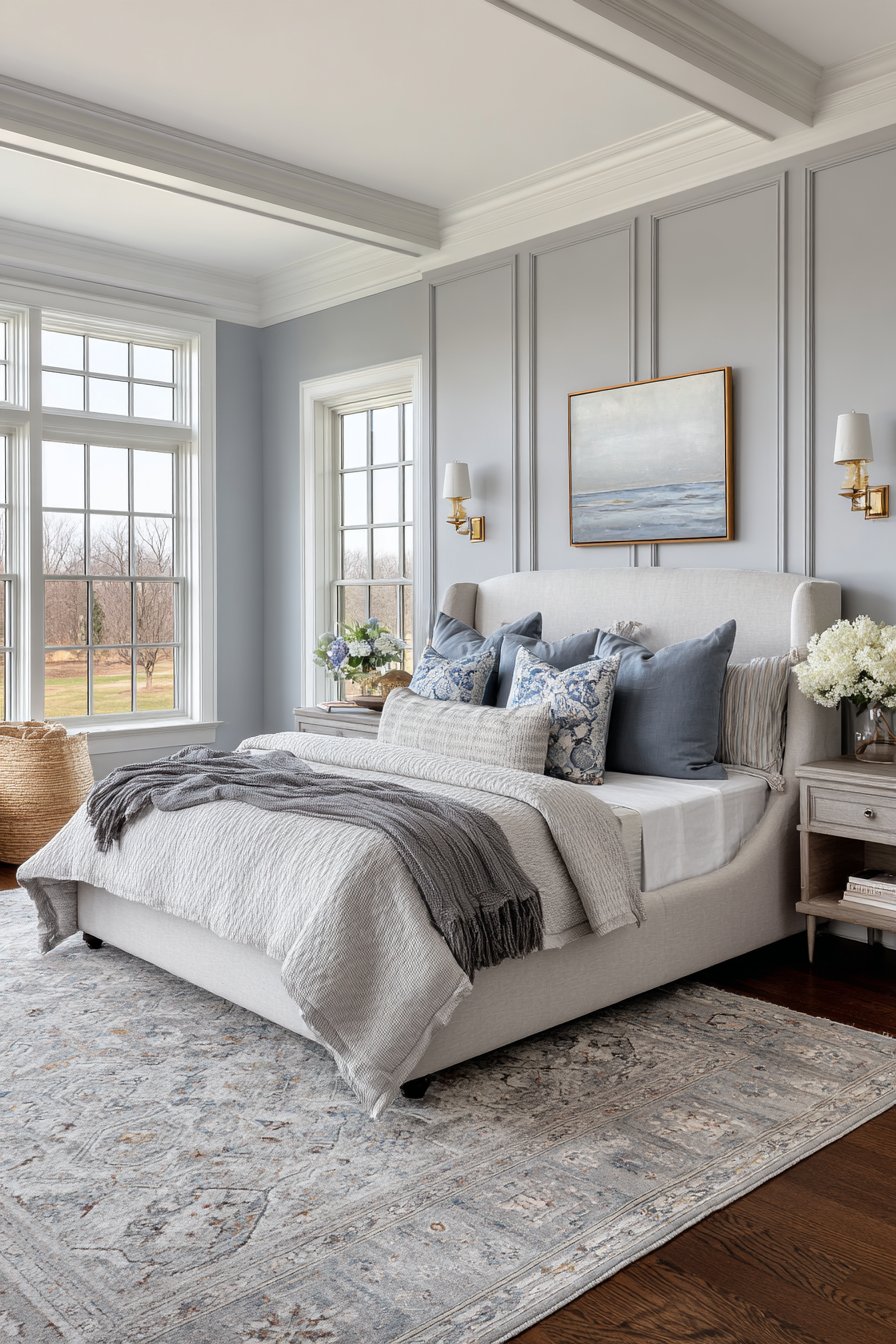
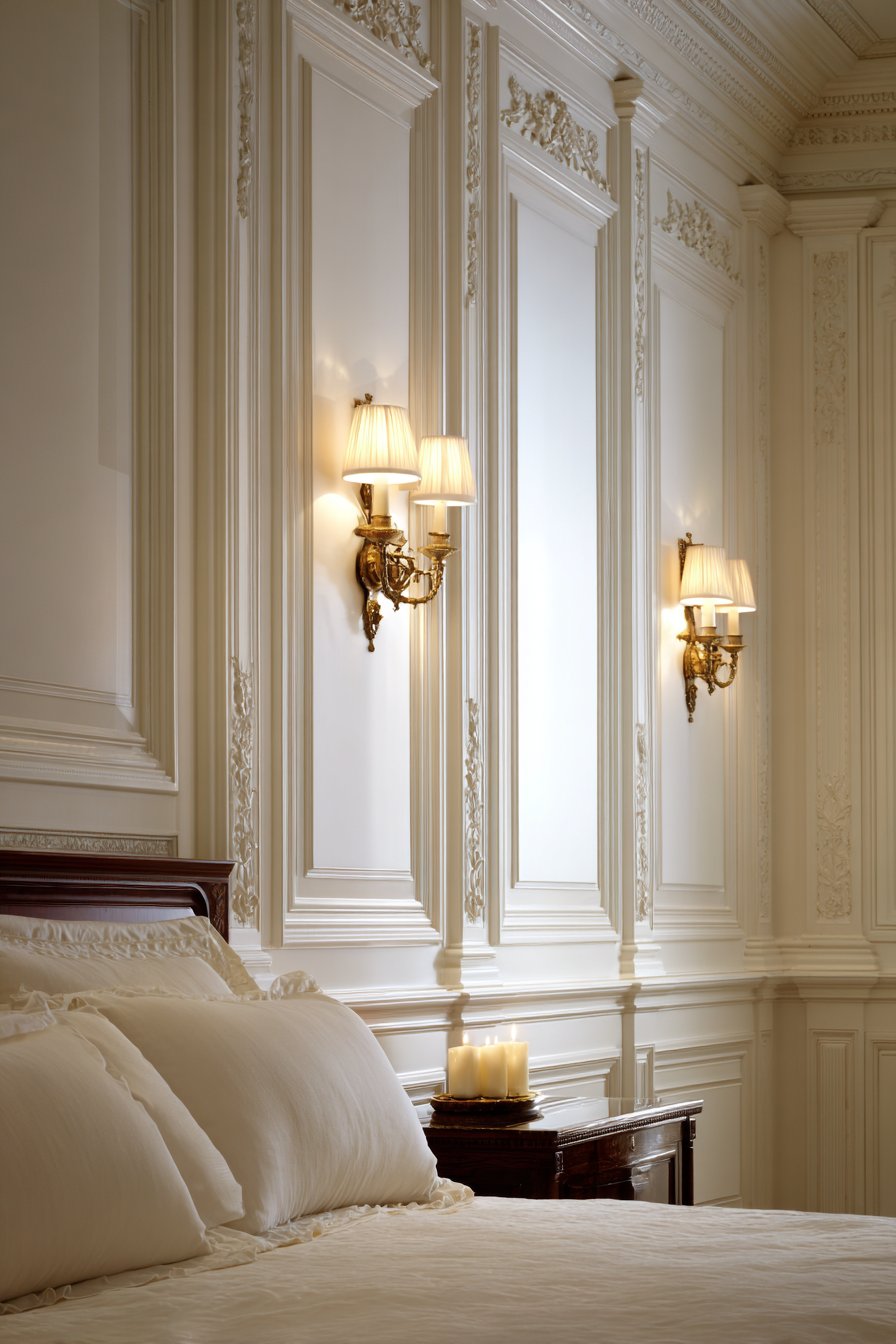
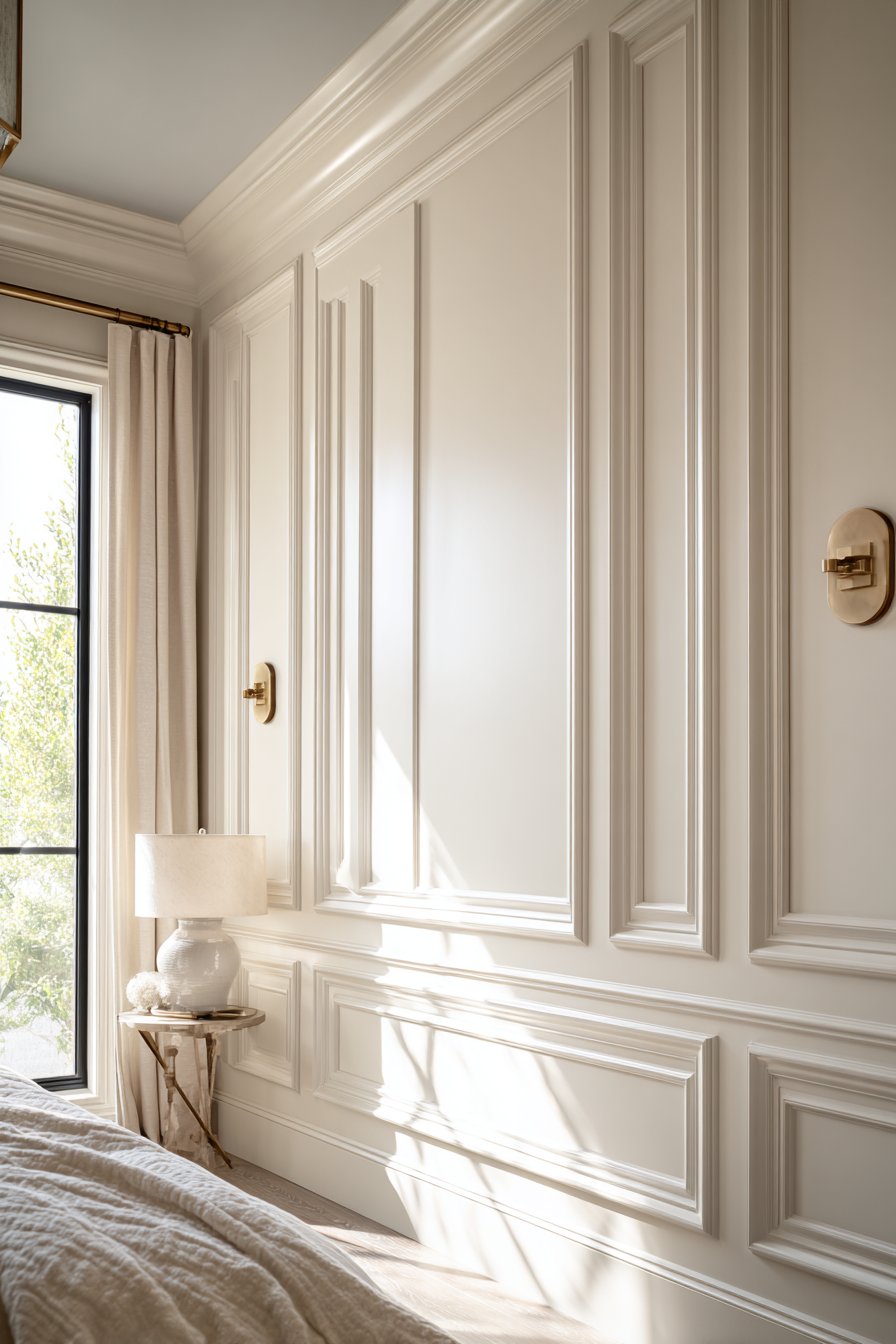
Classic raised panel wainscoting painted in soft dove gray creates timeless bedroom elegance that demonstrates how traditional architectural details remain relevant in contemporary homes. Extending approximately one-third up the wall height, this installation respects classical proportions while the routed panel details and chair rail molding add refined craftsmanship that elevates the entire room. The soft gray coloration updates traditional white wainscoting with contemporary sophistication while maintaining the versatility and light-reflective qualities that make wainscoting such an enduring design choice.
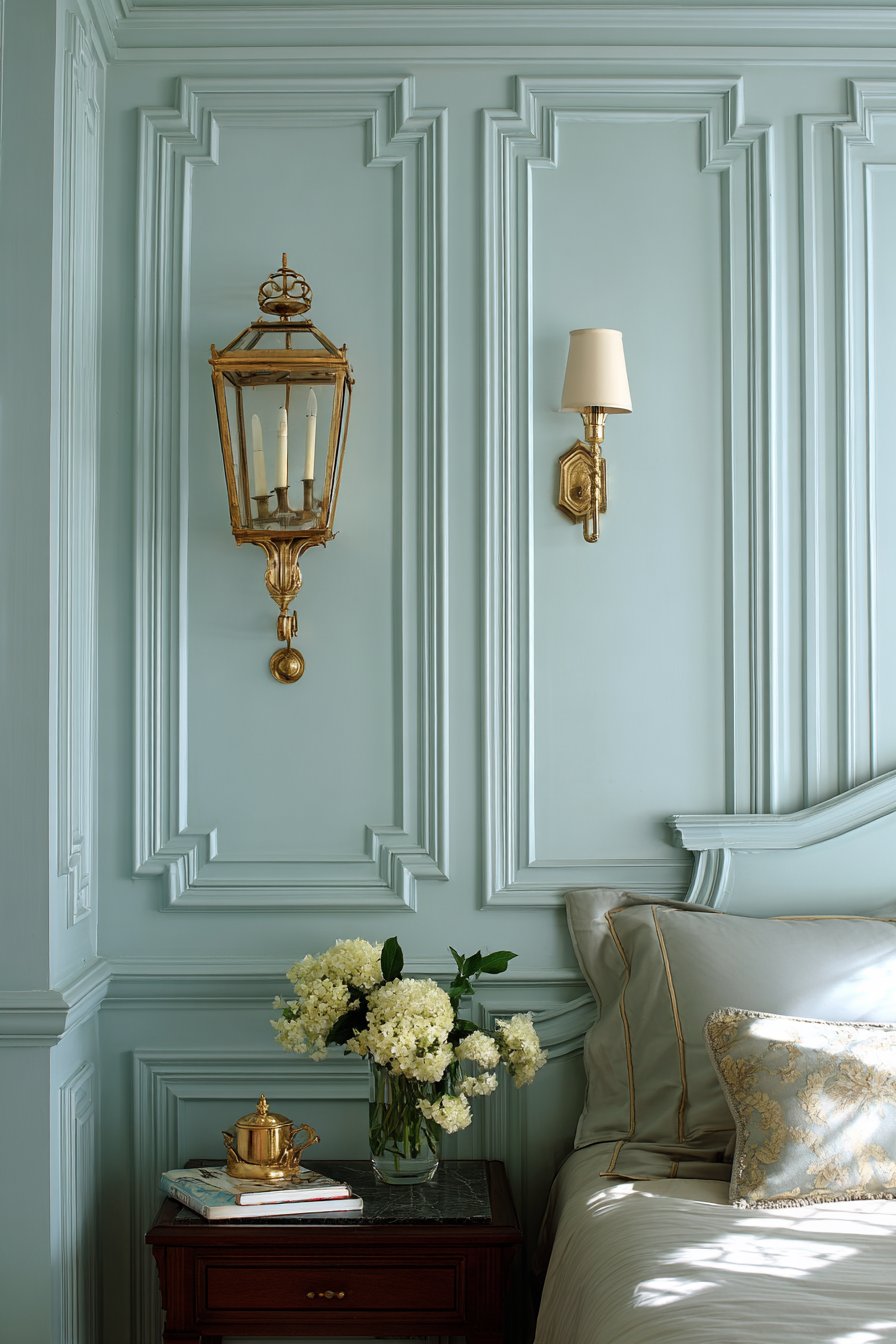
The raised panel design introduces dimensional interest through shadow play created by the routed edges and recessed centers of each panel. This subtle three-dimensionality adds architectural character that flat walls cannot achieve, creating the sense that the room has historical depth and thoughtful construction rather than basic builder-grade finishes. The chair rail molding provides visual definition between the wainscoting and upper wall treatment while offering practical protection against furniture damage—a functional benefit that originally inspired wainscoting’s development.
Pale blue walls above the gray wainscoting create gentle color contrast that defines the wall’s upper and lower zones while maintaining an overall serene, cohesive color story. Antique brass wall sconces mounted on the wainscoting panels provide ambient lighting with warm metallic accents that introduce subtle glamour. The natural window light highlighting the millwork craftsmanship emphasizes the quality of installation and the dimensional detailing that makes traditional wainscoting such a valued architectural feature.
Key Design Tips:
- Measure and cut panels precisely to ensure symmetrical layout
- Use pneumatic nail gun for efficient, professional installation
- Fill all nail holes and sand smooth before priming and painting
- Install chair rail at 32-36 inches for classical proportions
- Choose semi-gloss paint for wainscoting to enable easy cleaning
14. Acoustic Media Room Performance Panels
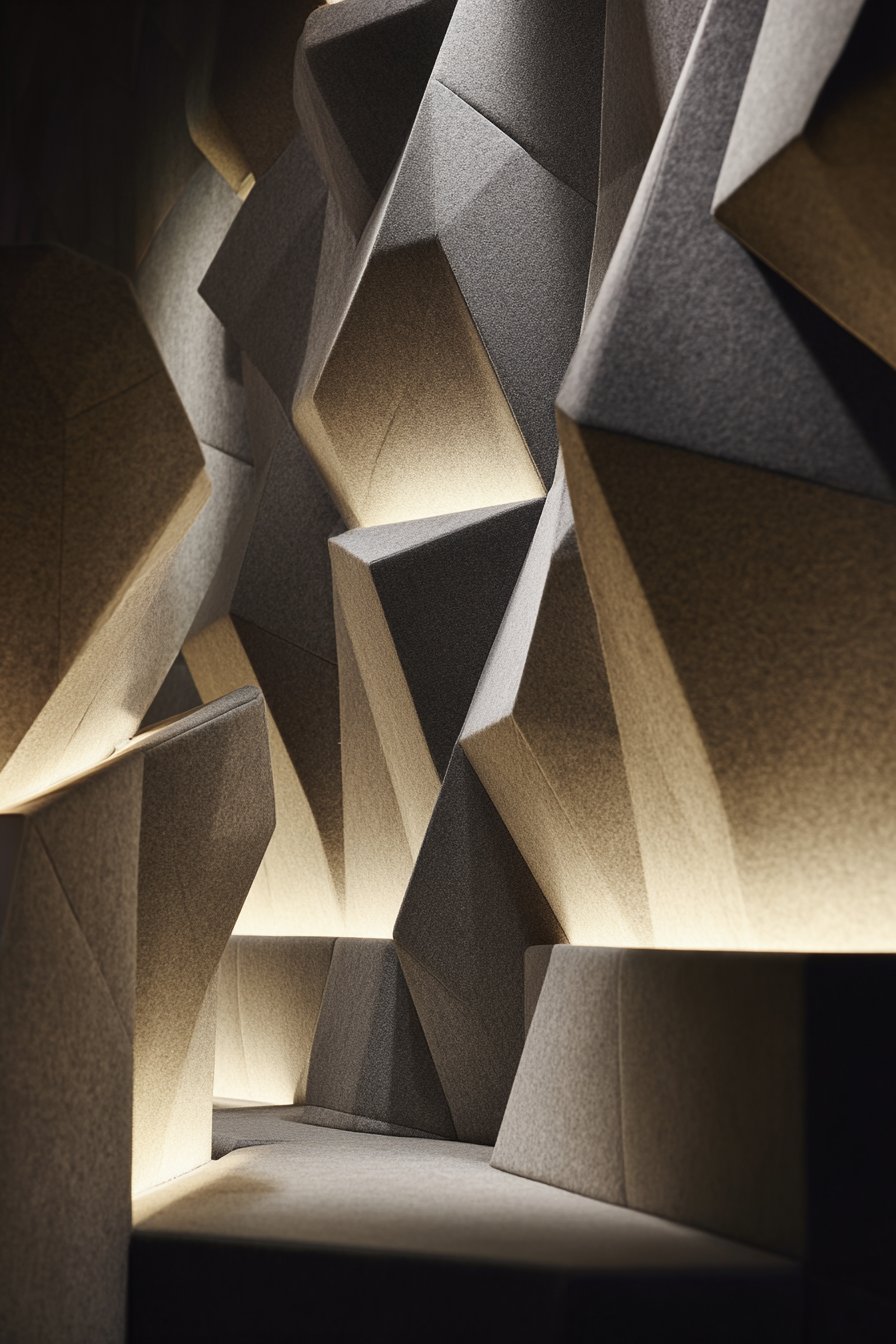
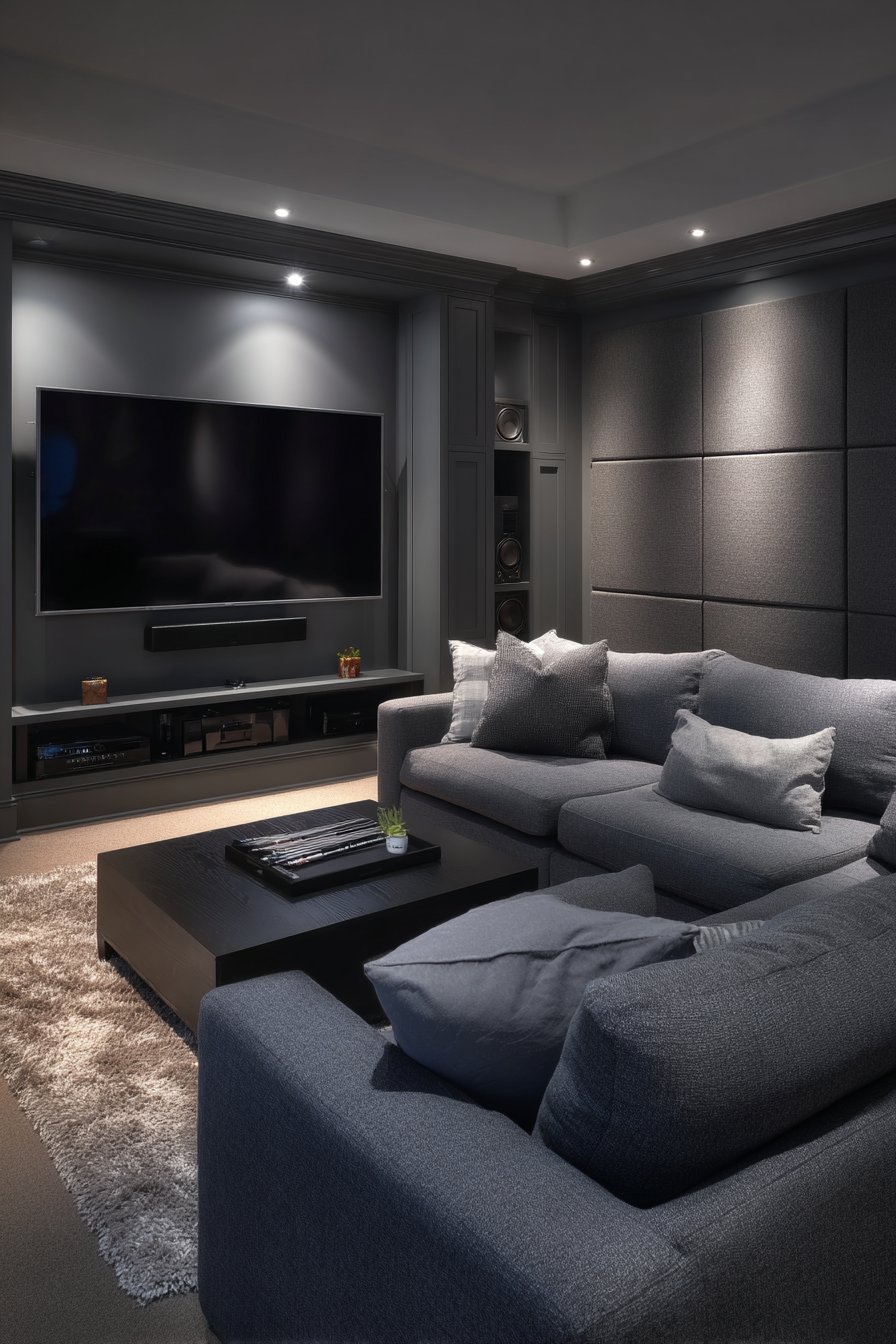
Acoustic wall panels in charcoal gray fabric with integrated geometric relief patterns optimize home theater sound quality while providing sophisticated visual interest. These specialized panels cover the wall behind the entertainment center, combining technical functionality with modern aesthetics to create a media room that performs as well as it looks. The geometric relief patterns serve dual purposes—adding visual texture and interest while the varied surface angles help diffuse sound waves, preventing the harsh reflections that diminish audio quality in home theater applications.
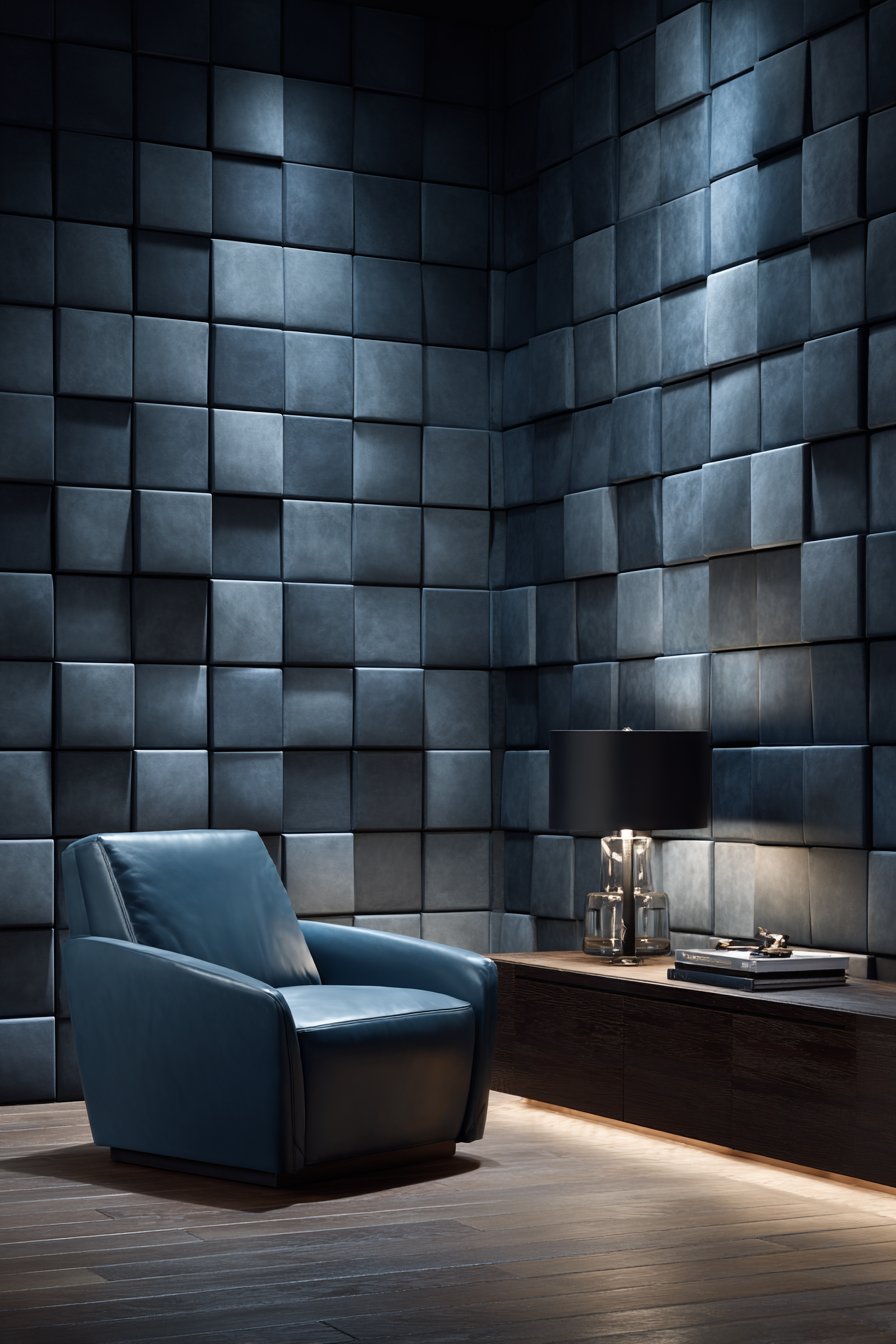
The charcoal gray coloration provides a neutral, recessive backdrop that doesn’t compete visually with the television screen while helping absorb light reflections that could cause glare during viewing. This dark tone demonstrates understanding of how color affects viewing environments, as lighter walls can create distracting reflections and reduce perceived contrast on screen. The fabric surface provides additional acoustic benefits beyond the specialized core material, as textile surfaces naturally absorb more sound energy than hard surfaces like drywall or wood.
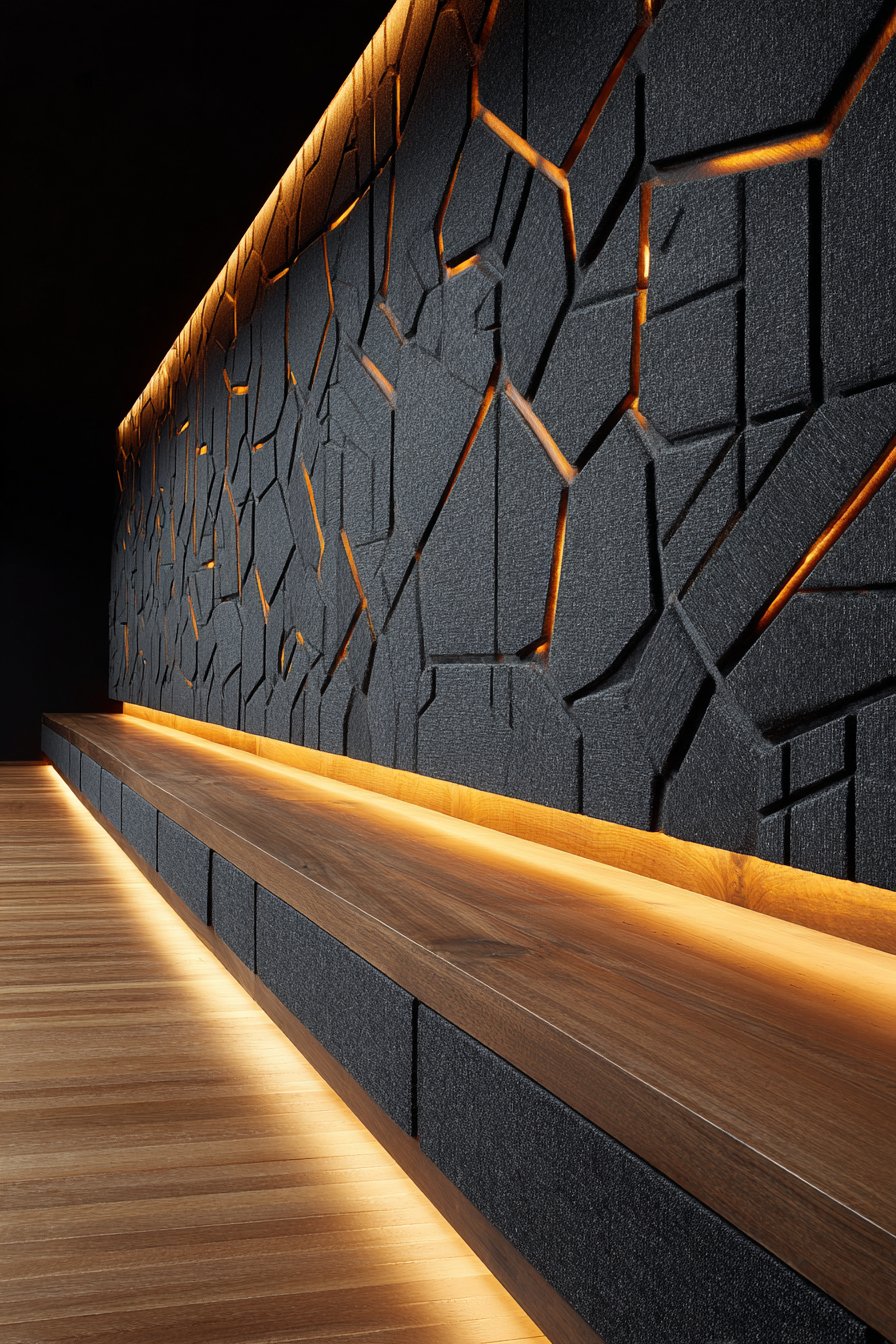
Subtle LED bias lighting around the television creates ambiance while reducing eye strain during extended viewing sessions—a thoughtful detail that enhances both comfort and viewing quality. The acoustic panels minimize sound reflection, creating clearer dialogue and more accurate audio reproduction that transforms casual television watching into genuine home theater experience. This integration of performance and aesthetics demonstrates how wall panel ideas can solve technical challenges while elevating the room’s design quality.
Key Design Tips:
- Position panels at first reflection points for maximum acoustic benefit
- Choose panels with appropriate NRC ratings for room size
- Install panels securely to prevent rattling during high-volume playback
- Coordinate panel color with media equipment for cohesive appearance
- Consider ceiling treatment for complete acoustic control
15. Natural Birch Plywood Simplicity
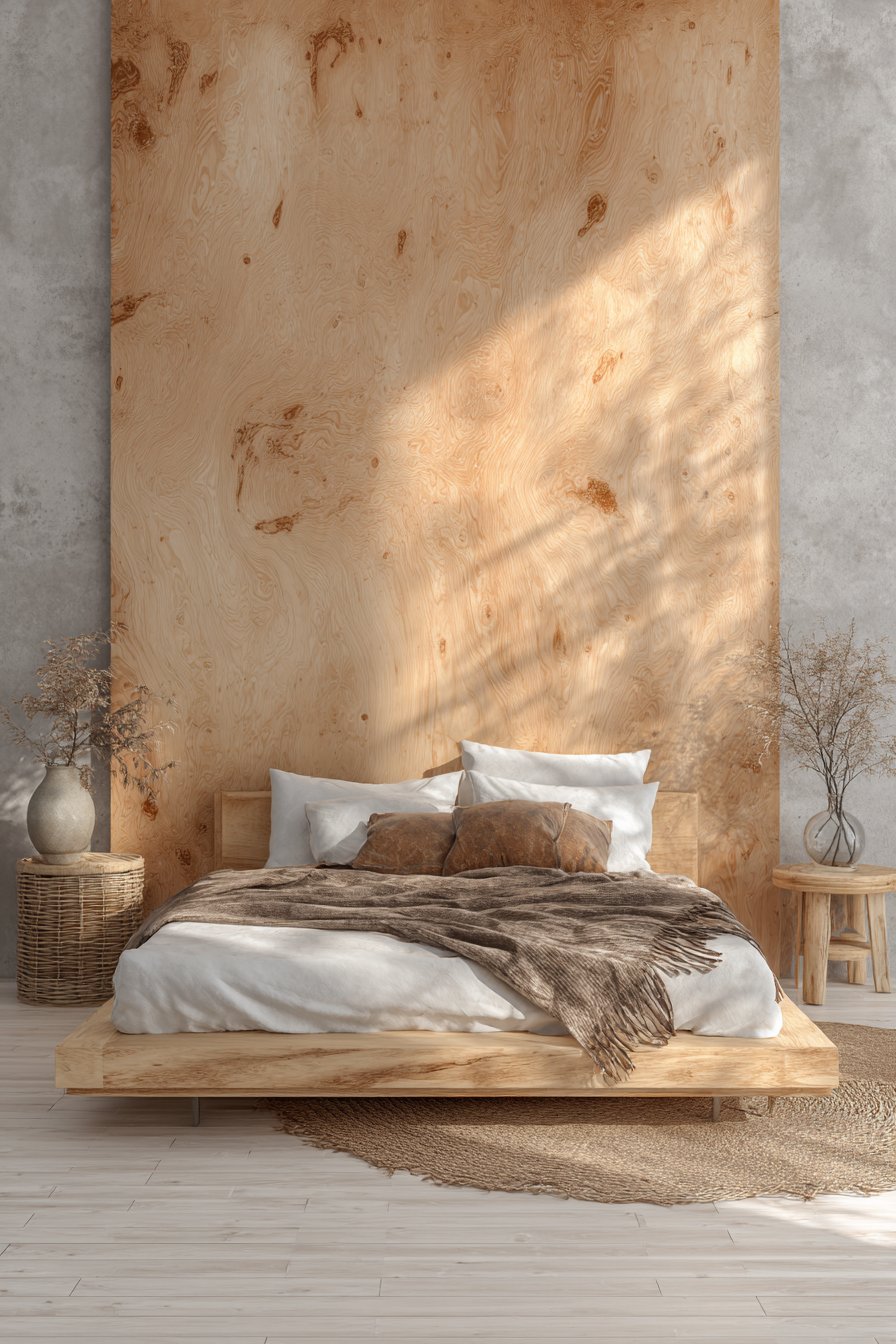
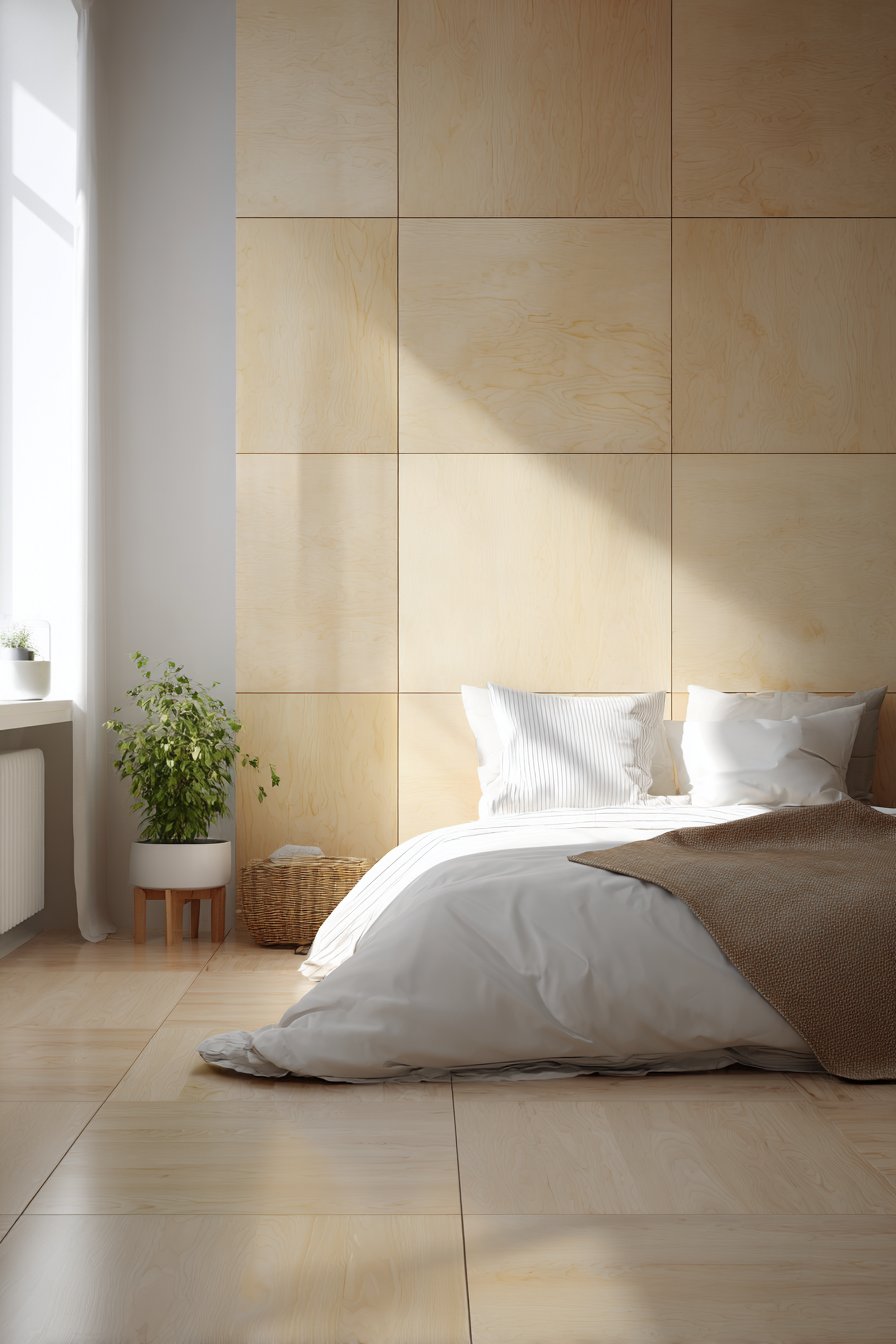
Natural birch plywood wall panels with visible grain patterns and subtle color variations create a Scandinavian-style bedroom that celebrates honest materials and minimal processing. The panels are installed with minimal visible seams in a simple grid pattern, creating a unified surface that showcases the natural beauty of birch’s fine, consistent grain and warm honey tones. This material choice reflects Nordic design values that prioritize natural materials, sustainable practices, and the beauty found in simplicity and restraint.
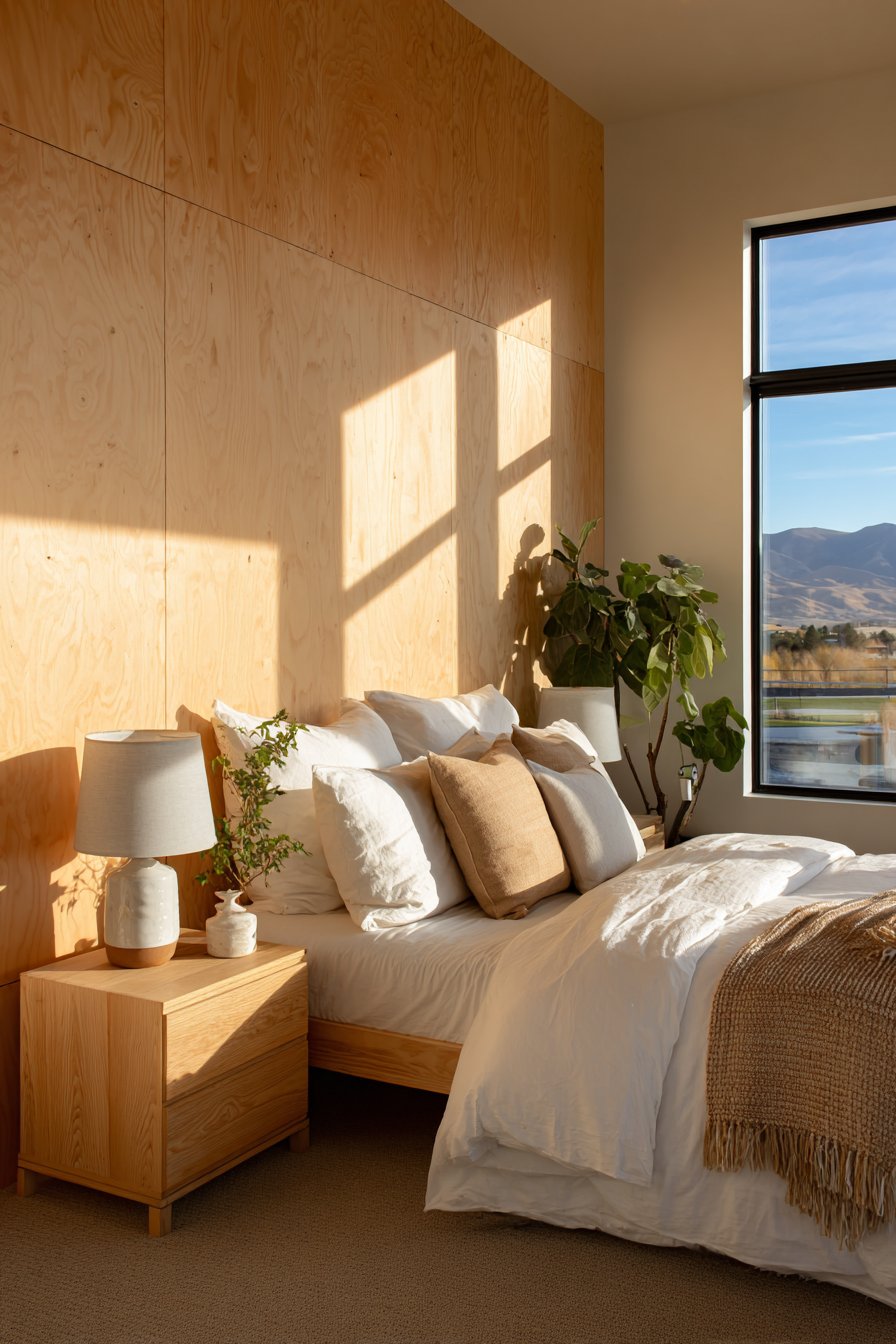
The plywood’s subtle color variations—ranging from pale cream to deeper amber—create organic visual interest that prevents the surface from appearing monotonous while maintaining the calm, unified quality essential for restful bedroom environments. Unlike painted or heavily finished panels, the natural birch requires only clear protective coating that preserves the wood’s authentic appearance while enabling cleaning and protection. This minimal finishing approach allows the material’s inherent beauty to shine while reducing chemical treatments and maintaining healthier indoor air quality.
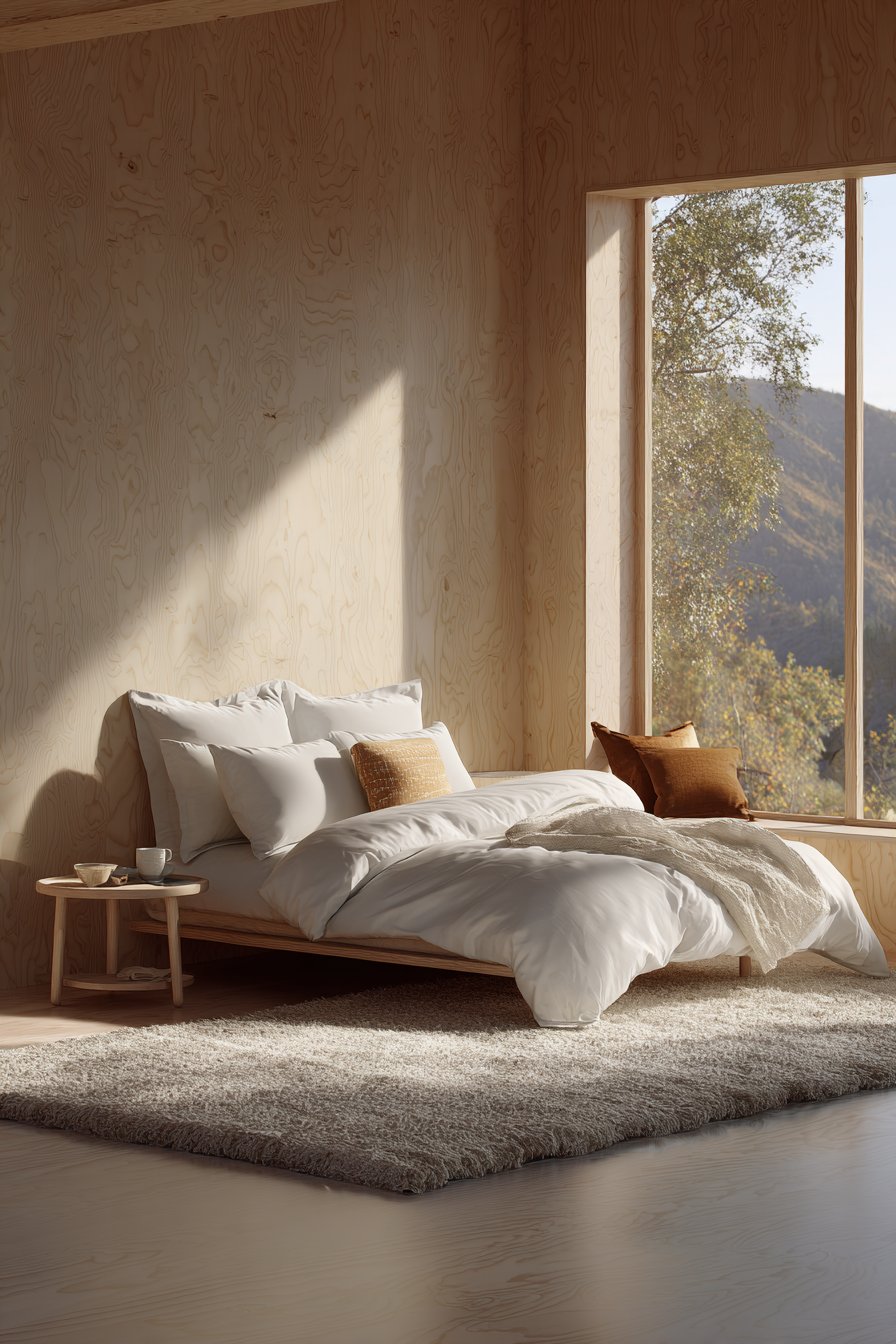
White bedding and light wood furniture maintain the Nordic aesthetic, creating a cohesive design narrative where each element supports the overall philosophy of natural simplicity and functional beauty. Soft morning light from nearby windows emphasizes the warm honey tones and authentic wood character, creating gentle illumination that makes the bedroom feel welcoming and peaceful. The natural material palette creates an inherently calming environment that promotes rest and relaxation without relying on bold colors or complex design gestures.
Key Design Tips:
- Select plywood with consistent grain for unified appearance
- Sand all edges smooth before installation to prevent splinters
- Apply low-VOC clear sealer to protect while maintaining natural appearance
- Plan panel layout to minimize visible seams at eye level
- Use quality plywood without voids or defects for best results
16. Contemporary Concrete-Effect Bathroom Spa
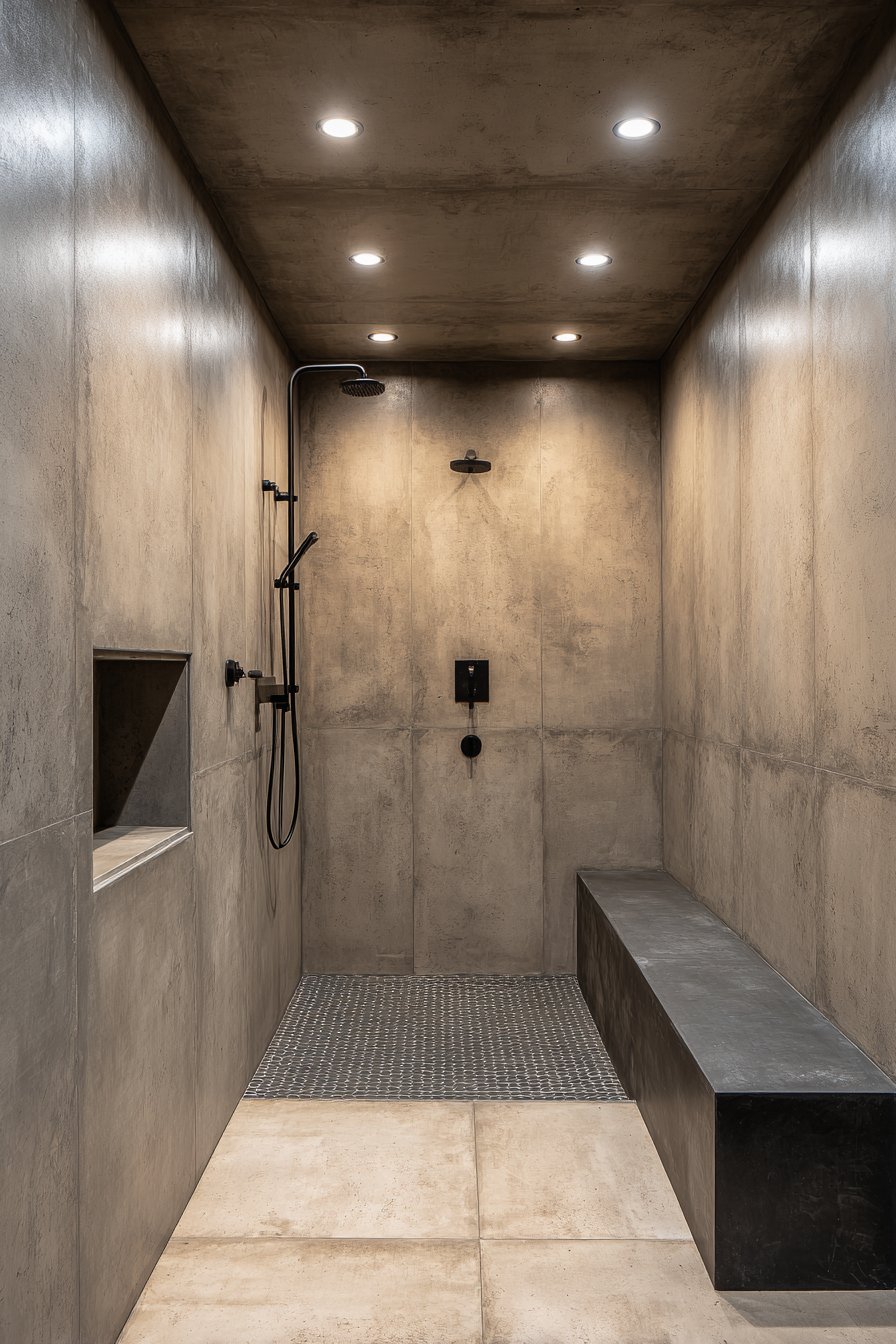
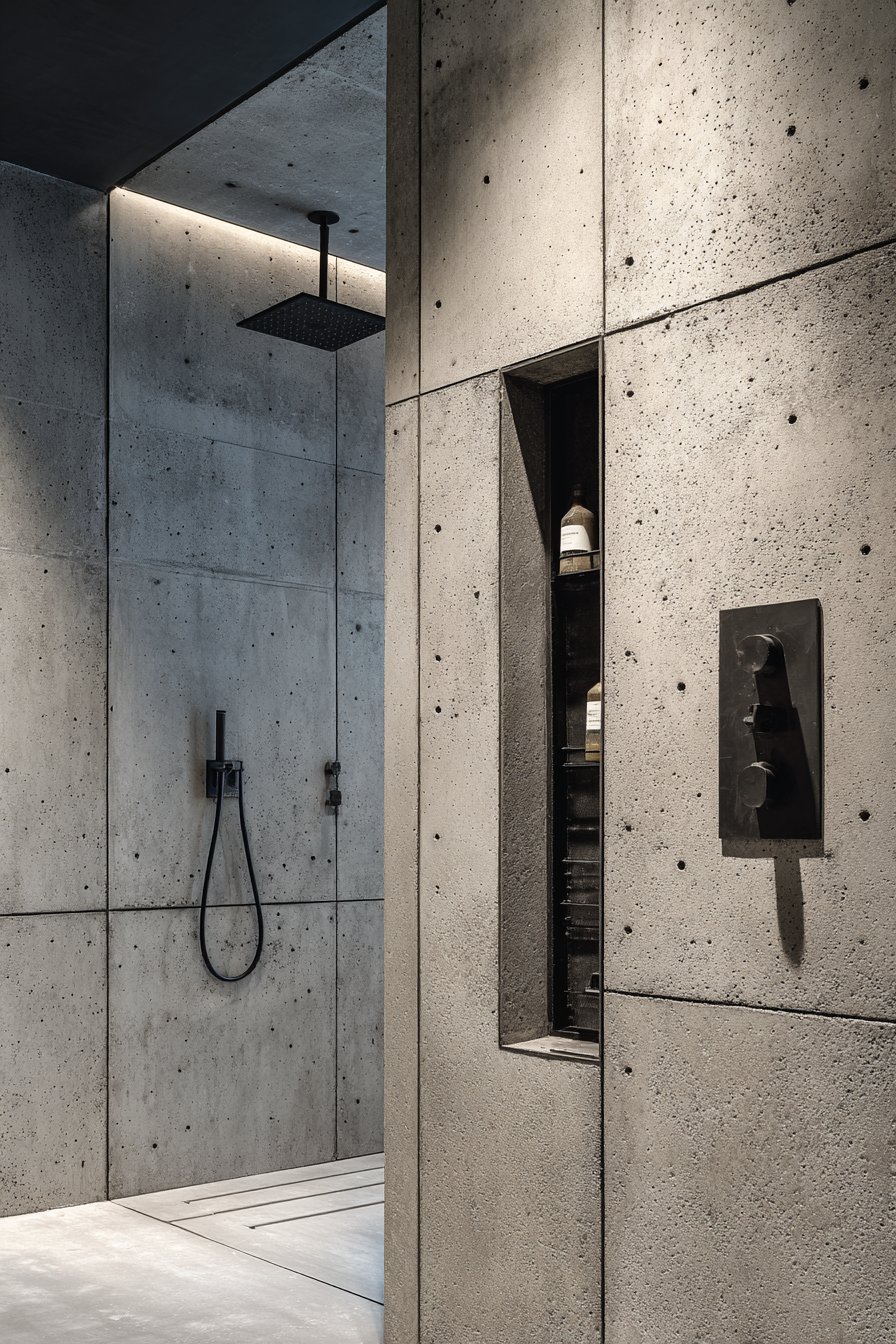
Large-format porcelain wall panels mimicking natural concrete texture in soft gray tones create a spa-like bathroom atmosphere that combines industrial aesthetics with luxurious minimalism. The seamless panels dramatically reduce grout lines compared to standard tile, creating a unified surface that appears more like poured concrete than individual tiles. This installation around the walk-in shower area provides both waterproofing and sophisticated design impact, transforming a utilitarian shower enclosure into a serene bathing retreat.
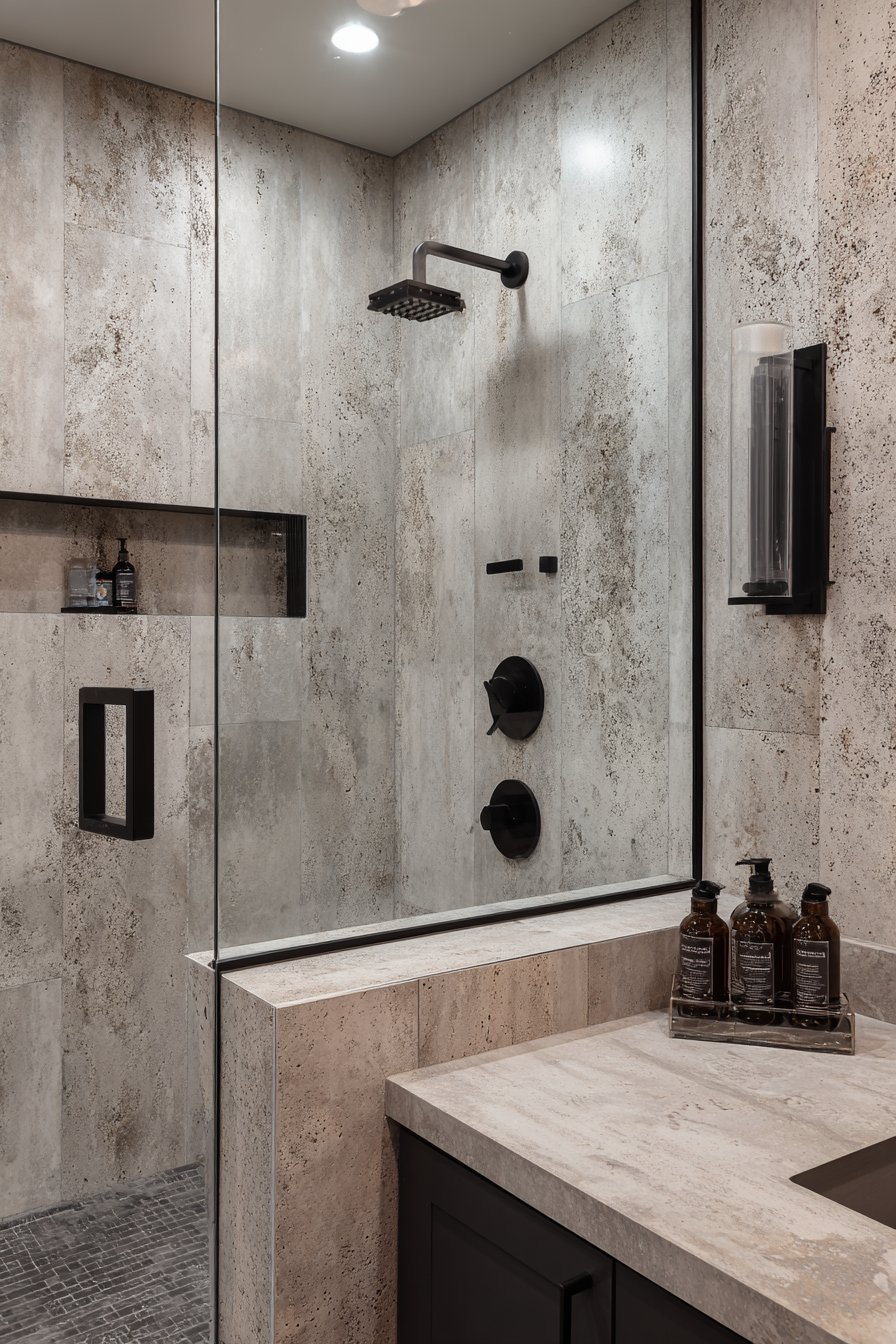
The concrete texture introduces subtle surface variation and organic patterning that prevents the gray surface from appearing flat or lifeless while maintaining the calm, minimal quality essential for spa-inspired design. Modern porcelain technology captures the nuanced color shifts and subtle aggregate appearance of real concrete, providing authentic visual texture without the sealing requirements, cold feel, or maintenance concerns of actual concrete walls. The soft gray coloration creates a neutral foundation that accommodates various fixture finishes and accessory colors while promoting the sense of tranquility central to spa environments.
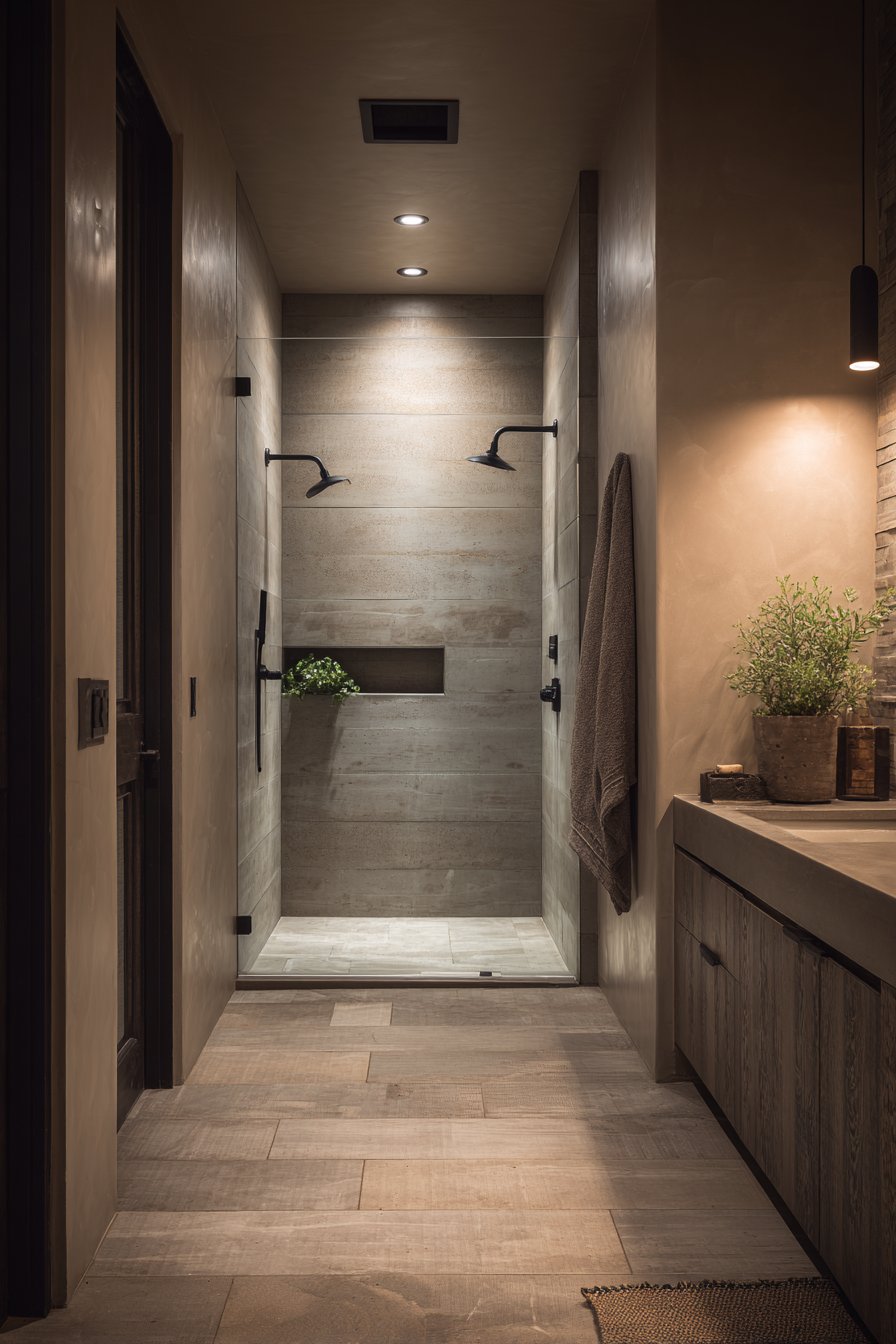
Matte black fixtures and hardware provide striking contrast against the soft gray panels, creating bold graphic impact that defines the modern aesthetic while ensuring functional elements stand out clearly. Recessed ceiling lights create subtle shadows that enhance the textured concrete appearance, adding depth and dimensionality that changes throughout the day. This lighting approach mimics how natural light would interact with genuine concrete surfaces, reinforcing the authentic appearance while providing the even, shadow-free illumination necessary for grooming tasks.
Key Design Tips:
- Select large-format panels to minimize grout lines and seams
- Use thin-set mortar appropriate for large, heavy porcelain panels
- Install waterproof membrane behind panels in shower areas
- Choose rectified edges for tightest possible joints
- Seal grout lines thoroughly to prevent water penetration
17. Bohemian Vintage Tin Tile Artistry
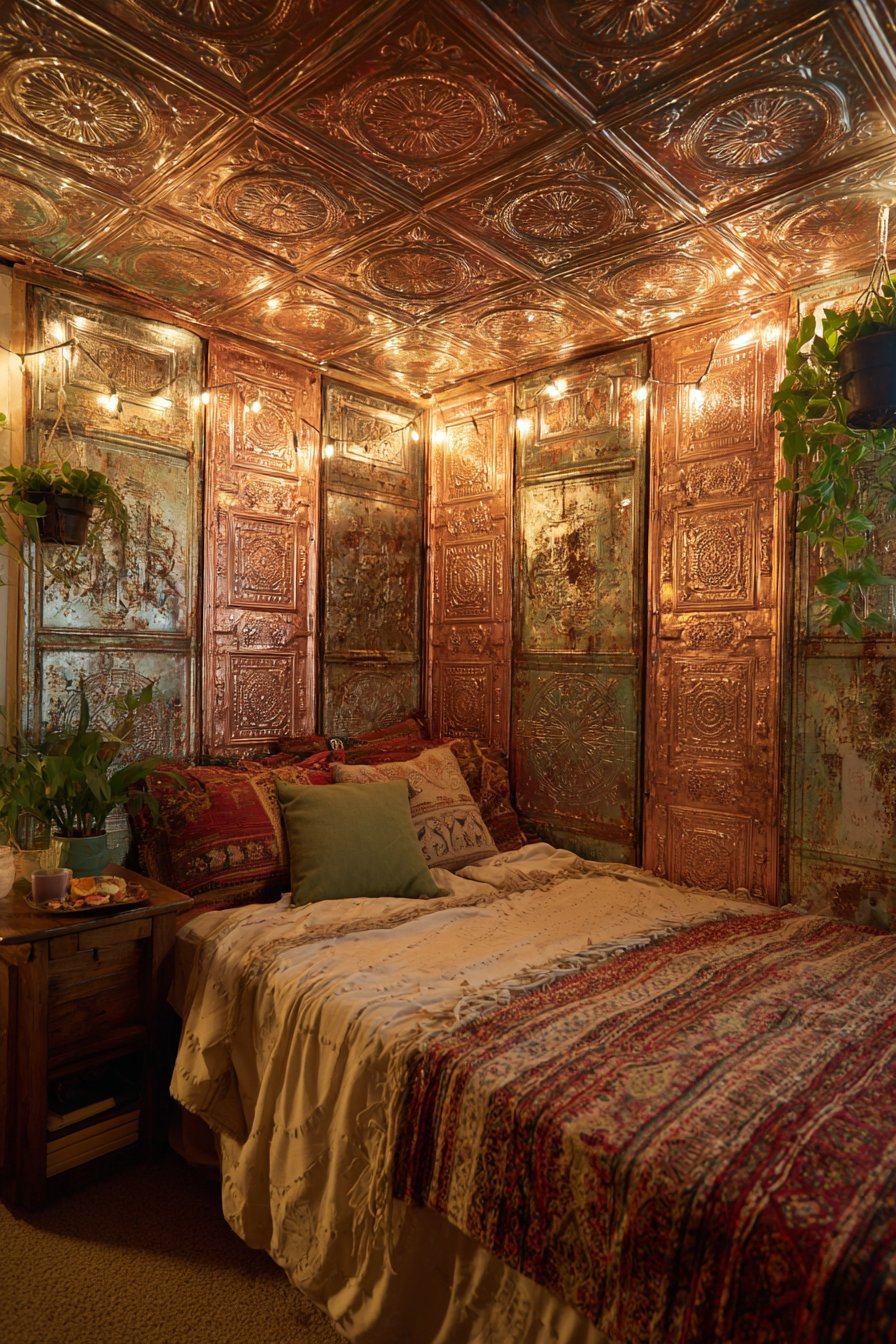
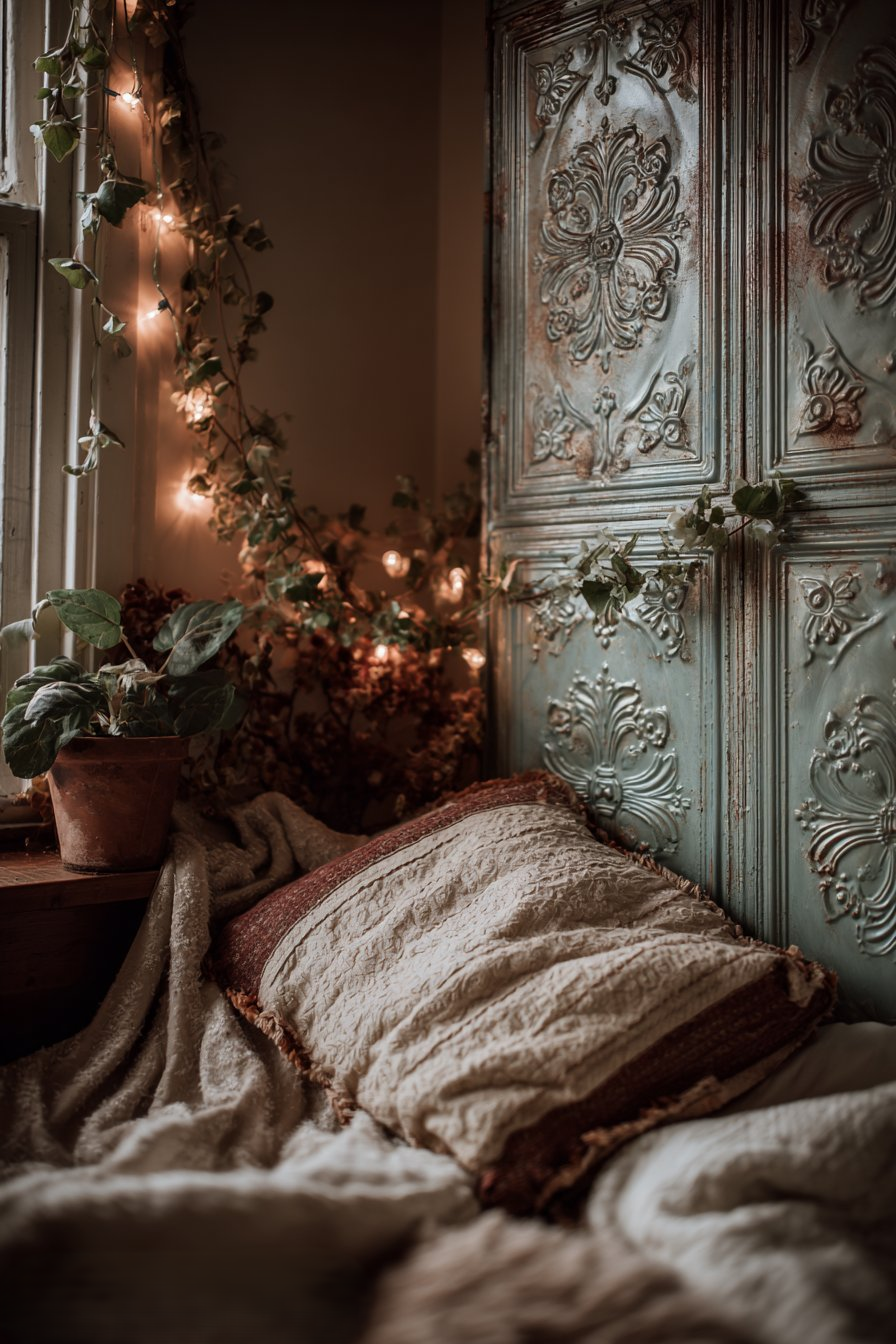
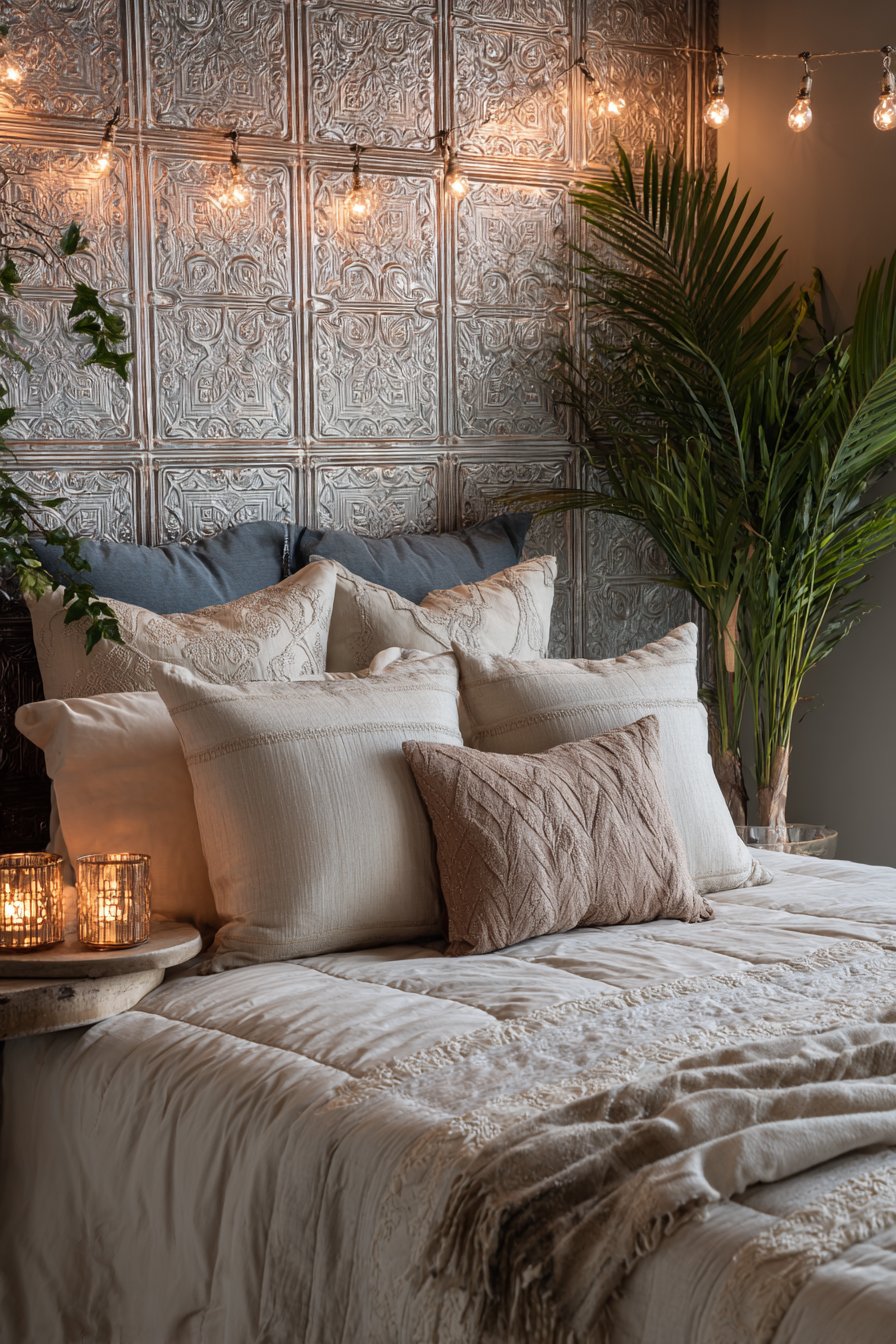
Vintage decorative tin ceiling tiles repurposed as an artistic bedroom accent wall demonstrate creative reuse while introducing eclectic bohemian character. These salvaged panels display intricate embossed patterns with aged patina finish in soft copper and cream tones, creating a focal point rich with history and handcrafted detail. The ornate pressed patterns showcase the decorative metalwork craftsmanship of earlier eras, introducing visual complexity and artistic interest that perfectly suits bohemian design’s embrace of eclecticism, artisanship, and found treasures.
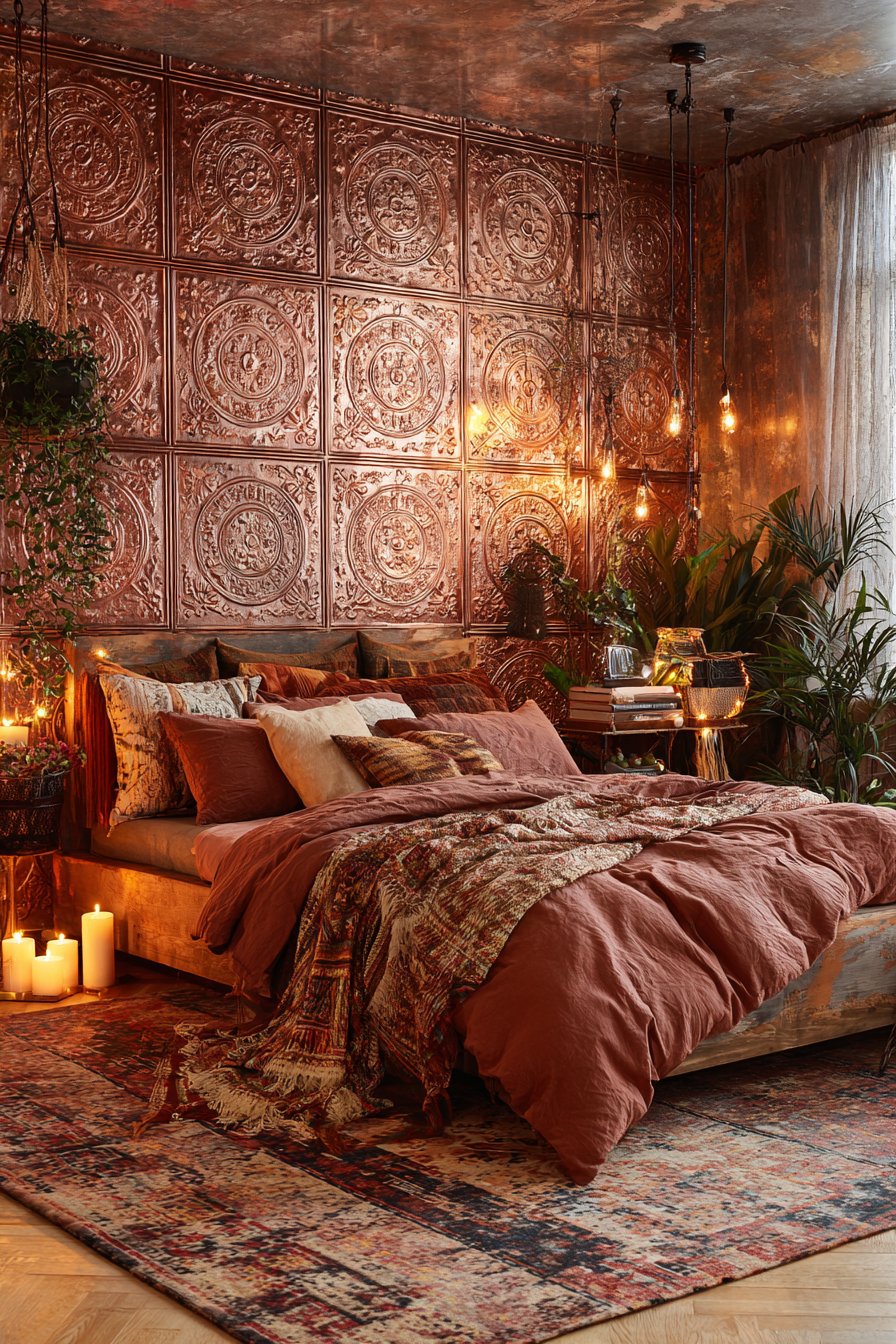
The aged patina finish tells a story of time and use, with color variations and wear patterns that create authentic vintage character impossible to replicate through new manufacturing. The soft copper tones introduce warm metallic elements that catch and reflect light beautifully, creating shimmer and movement as illumination shifts throughout the day. The cream-colored areas provide contrast that makes the embossed patterns stand out clearly while preventing the metallic elements from overwhelming the space with excessive shine.
Layered textiles and abundant plants complement the artistic wall treatment, creating the relaxed, collected-over-time aesthetic central to bohemian design philosophy. Warm ambient lighting from string lights and candles creates gentle highlights on the metallic surface, emphasizing the dimensional embossed patterns while generating the intimate, cozy atmosphere that makes bohemian spaces feel so inviting. This creative wall panel idea transforms salvaged architectural elements into featured artwork, celebrating sustainability and creative reuse while adding genuine historical character to contemporary homes.
Key Design Tips:
- Source vintage tiles from architectural salvage or antique dealers
- Clean gently to preserve authentic patina rather than removing it
- Secure tiles with appropriate adhesive for metal-to-drywall bonding
- Arrange tiles to create interesting pattern combinations and variations
- Seal with clear coating to preserve finish while enabling dusting
18. Dramatic Espresso Oak Slat Wall
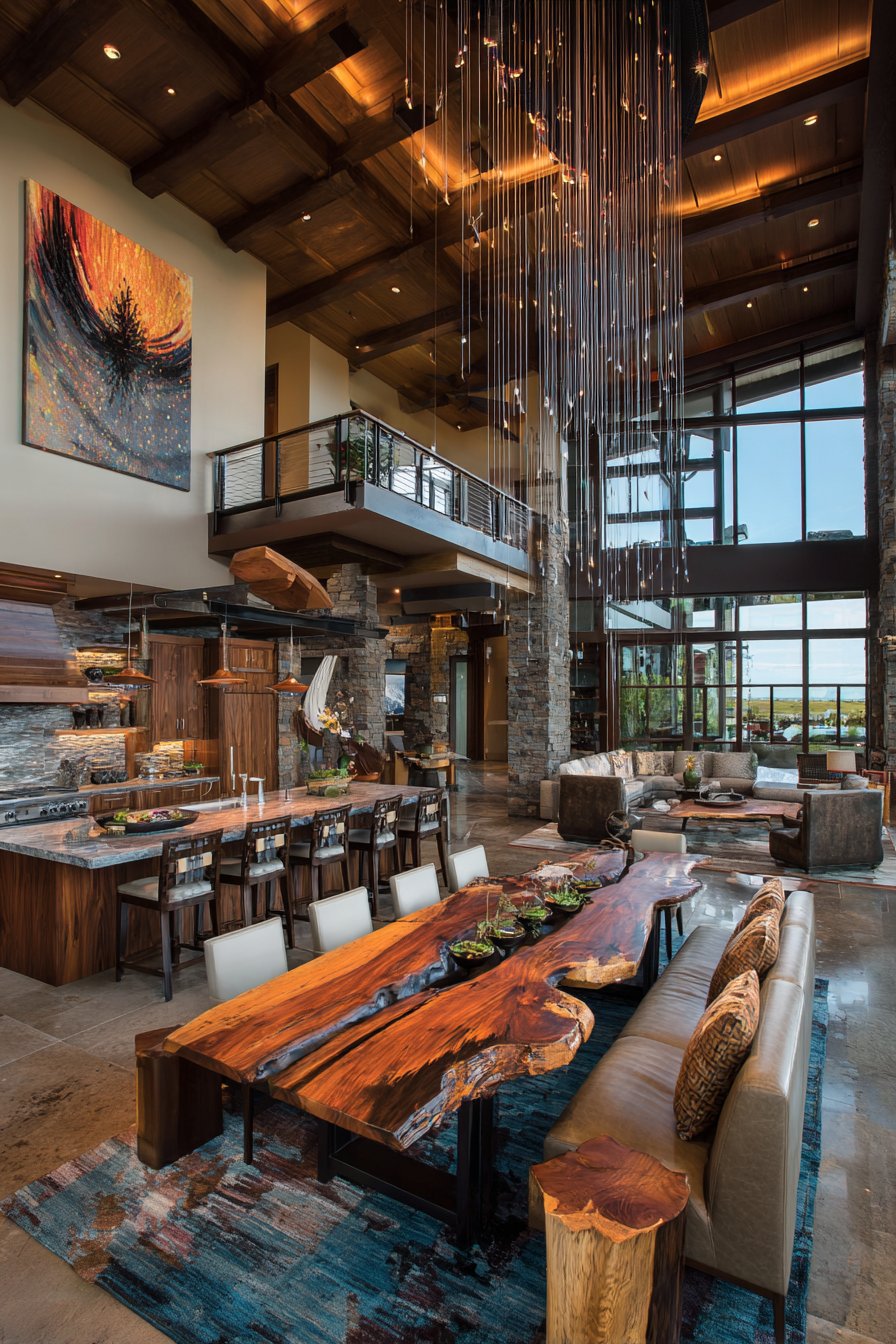
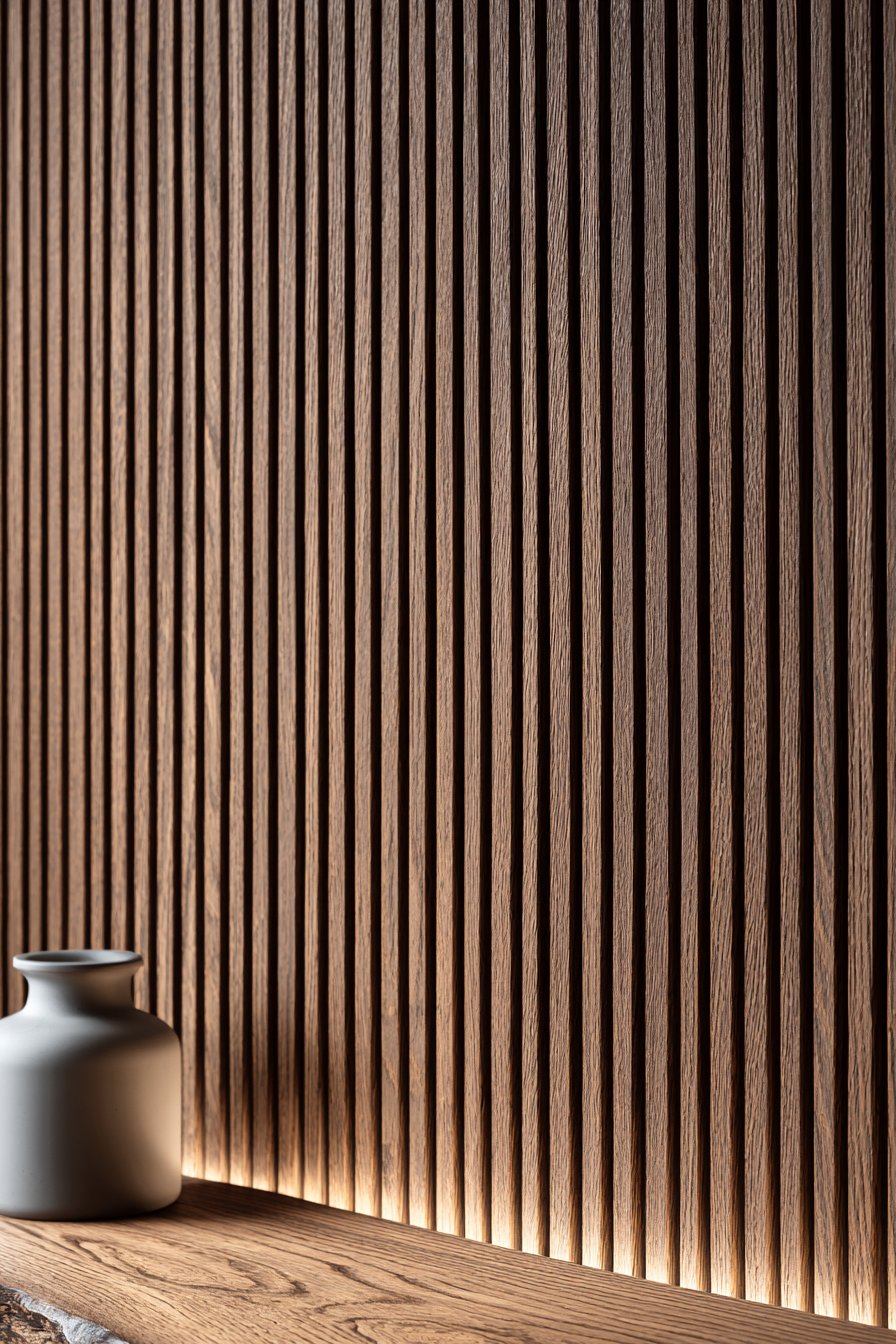
Floor-to-ceiling wall panels in rich espresso-stained oak featuring modern slat design create dramatic architectural impact in a contemporary dining room. The vertical panels with consistent spacing create striking height emphasis while the deep, dark wood finish introduces sophisticated drama and formal elegance appropriate for dining and entertaining. Integrated LED strips installed between slats provide ambient backlighting that creates a ethereal glow, transforming the wall from a static backdrop into a dynamic architectural feature that changes character from day to evening.
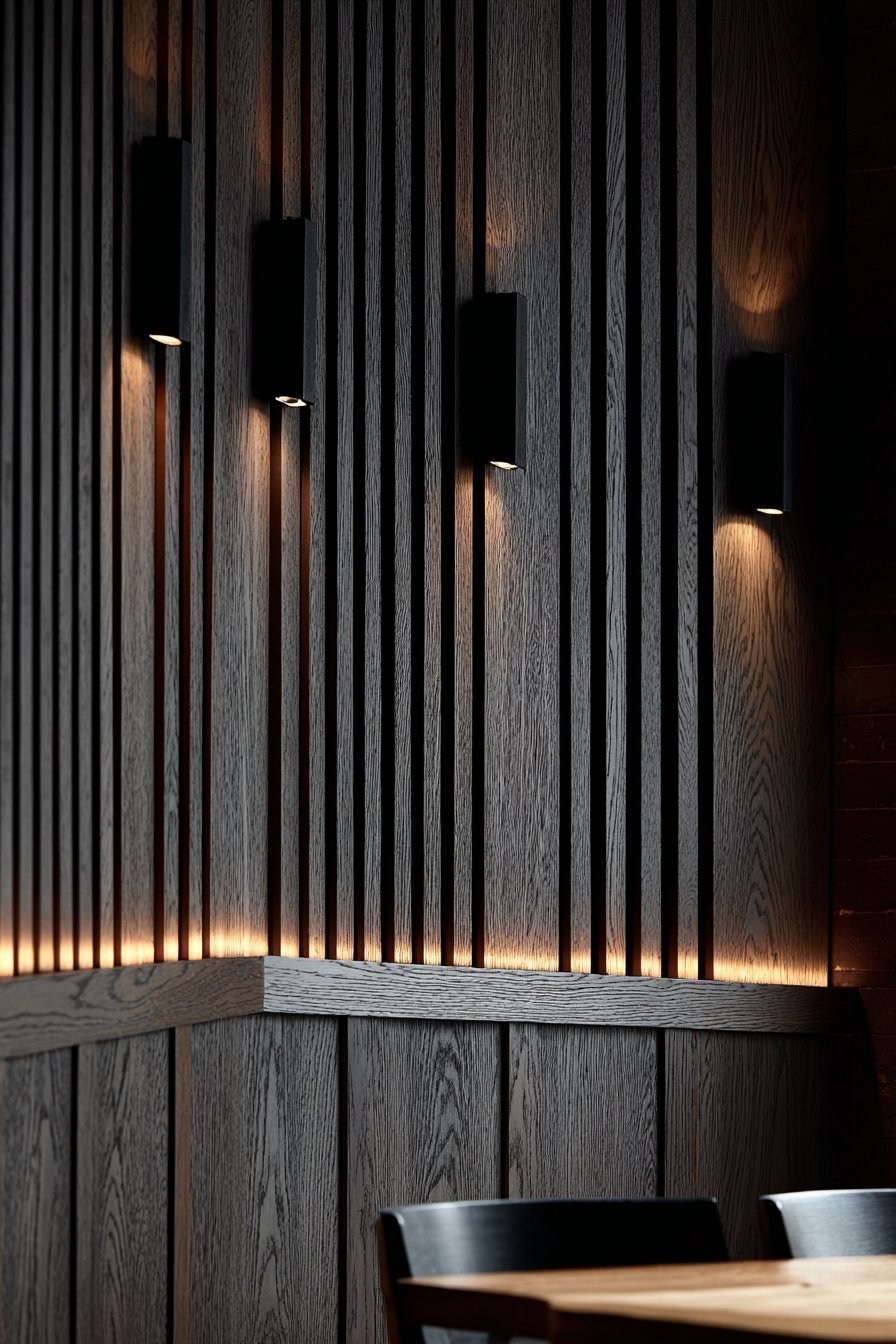
The modern slat design with precise, consistent spacing demonstrates contemporary craftsmanship and attention to detail, creating graphic precision that suits modern aesthetics. The vertical orientation draws the eye upward, making standard ceiling heights feel more impressive while the rhythmic repetition of the slats creates visual movement and energy. The rich espresso stain showcases oak’s beautiful grain patterns while the dark tone adds weight and sophistication that anchors the dining room and creates intimate atmosphere perfect for evening meals and gatherings.
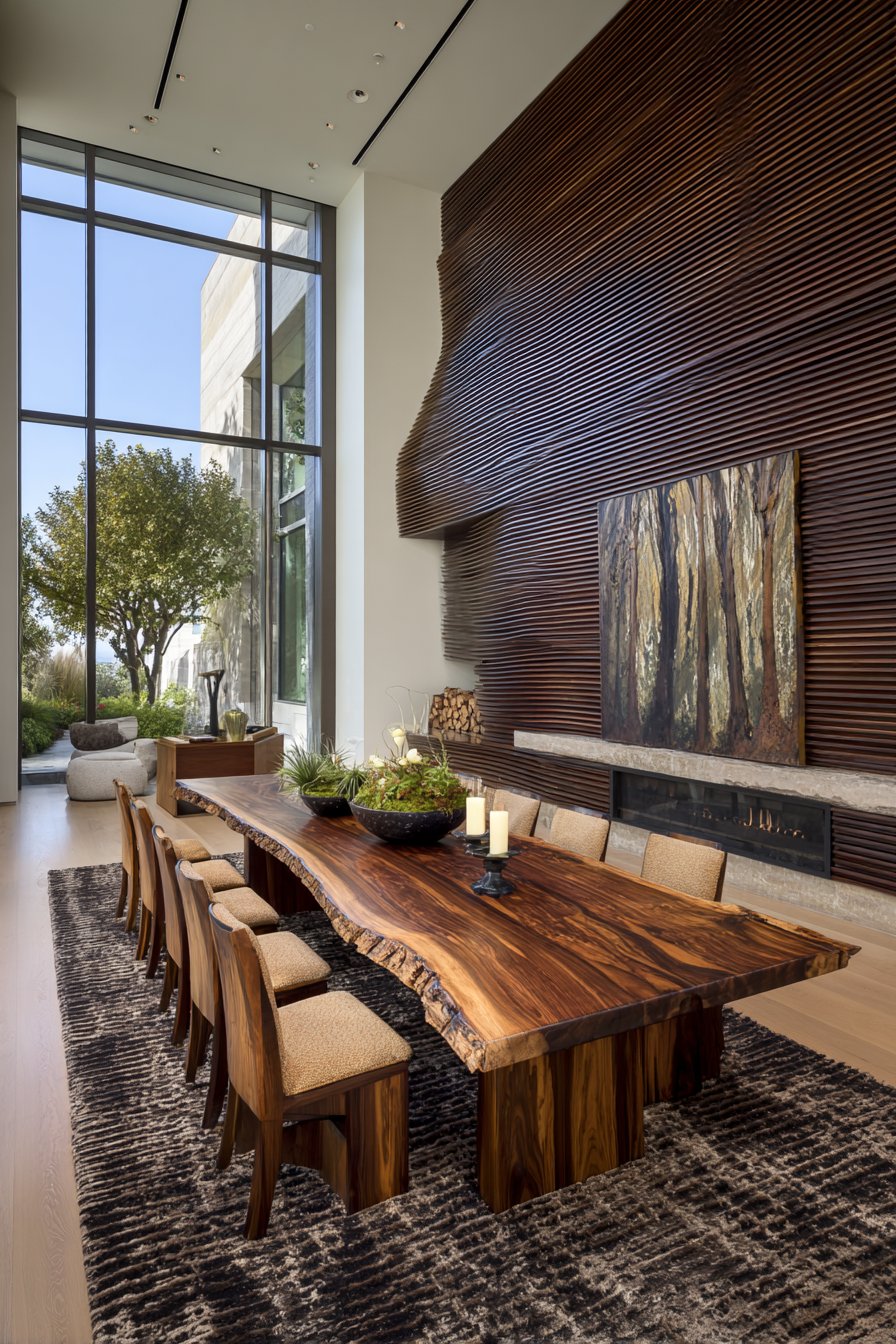
A live-edge dining table positioned before this dramatic wall treatment continues the natural wood narrative while the organic edge provides textural contrast against the precise, linear quality of the slatted panels. The combination creates design tension between organic natural forms and precise modern geometry that makes both elements more interesting. Natural light from windows and the integrated LED backlighting ensure the space adapts successfully to different times of day and occasions, from bright weekend brunches to intimate dinner parties.
Key Design Tips:
- Stain all slats before installation to ensure color consistency
- Use quality LED strips rated for architectural applications
- Install slats with precise spacing using a jig or template
- Wire LED lighting to dimmer for adjustable ambiance control
- Finish installation with clear protective topcoat for durability
19. Traditional Walnut Library Refinement
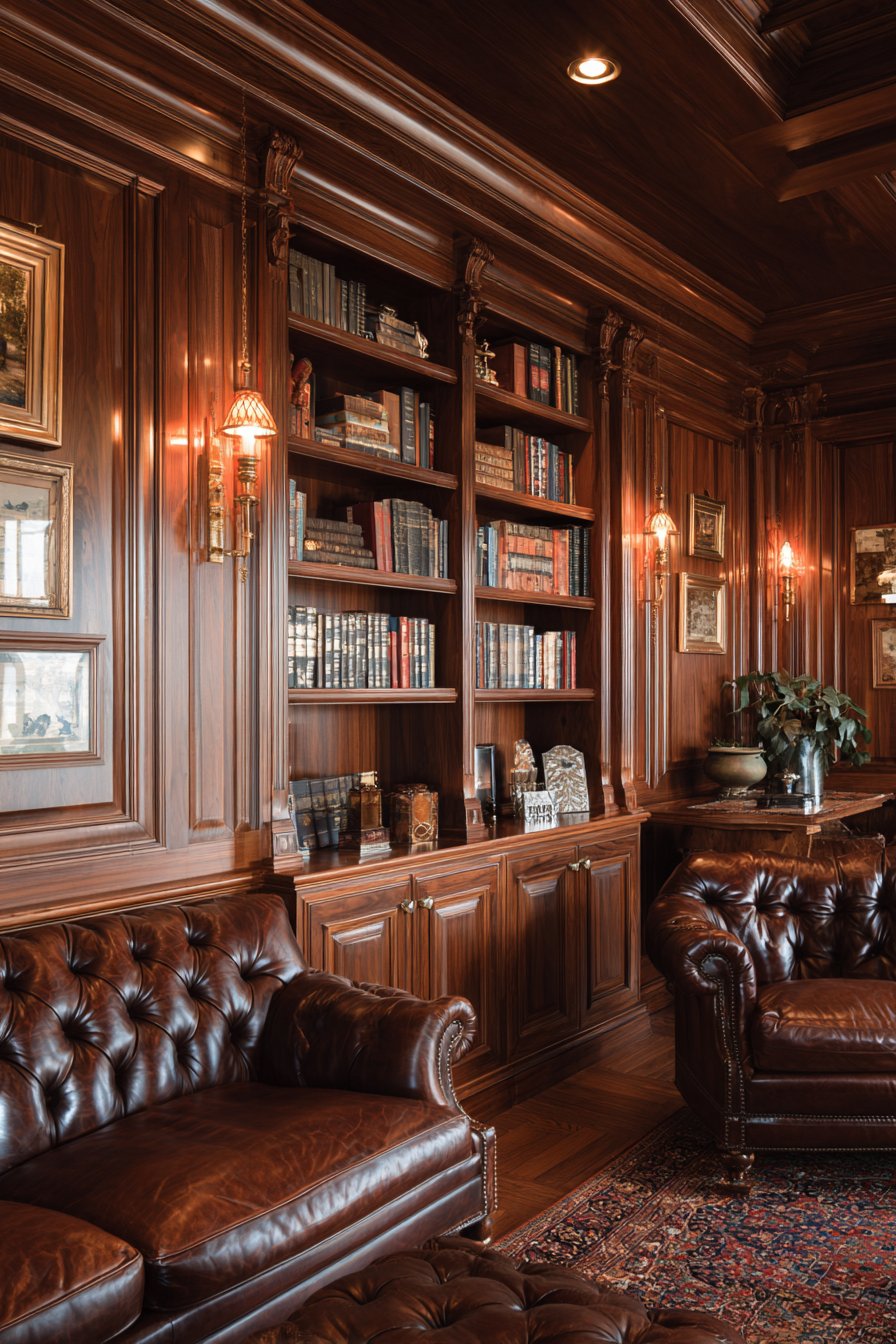
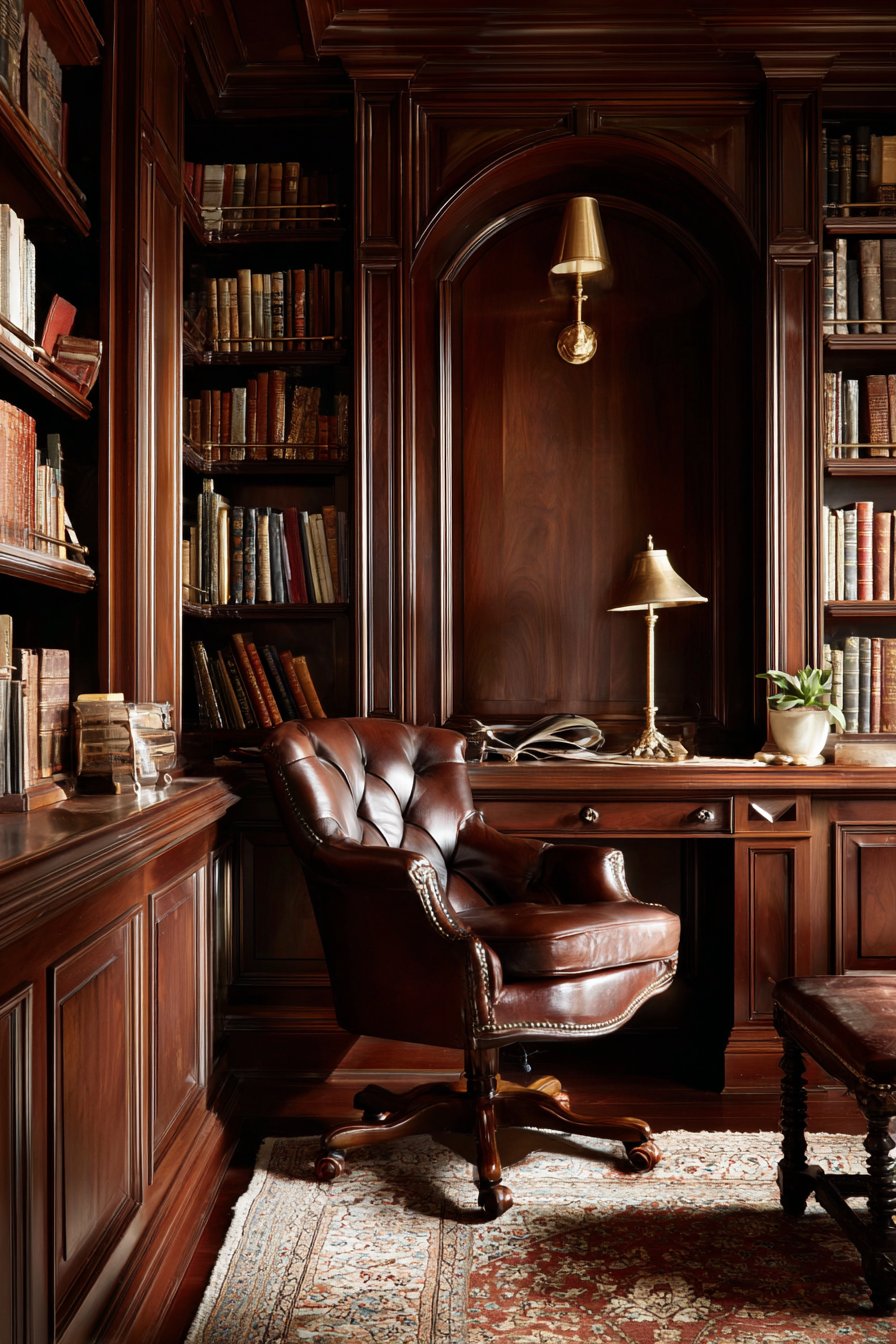
Full-height book-matched walnut wall paneling with raised panels and traditional molding details creates a refined library atmosphere that celebrates classical architectural craftsmanship. The rich walnut showcases nature’s most beautiful cabinet wood through book-matching techniques that create symmetrical grain patterns—a hallmark of high-quality millwork. Built-in shelving integrates seamlessly with the paneled walls, creating floor-to-ceiling book storage that appears architecturally permanent rather than furniture-based, reinforcing the sense of established tradition and scholarly pursuit.
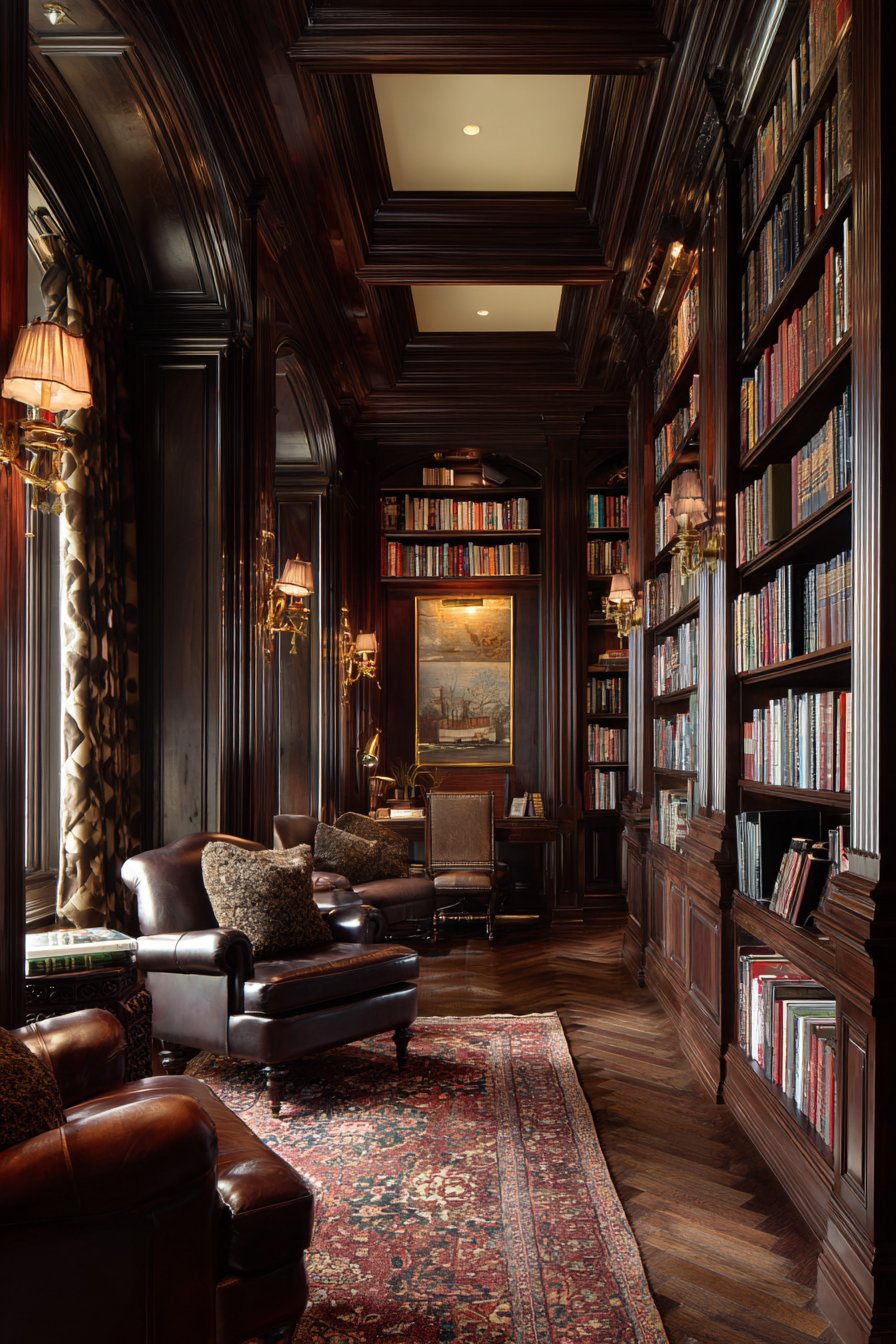
The raised panel design introduces dimensional complexity through multiple layers of molding and recessed centers that create sophisticated shadow play throughout the day. This traditional detailing requires significant craftsmanship and installation skill, representing the kind of quality millwork that distinguishes truly refined interiors. The warm walnut tones create an enveloping, intimate atmosphere perfect for reading and study, while the rich wood finish adds warmth that prevents the formal design from feeling cold or unwelcoming.
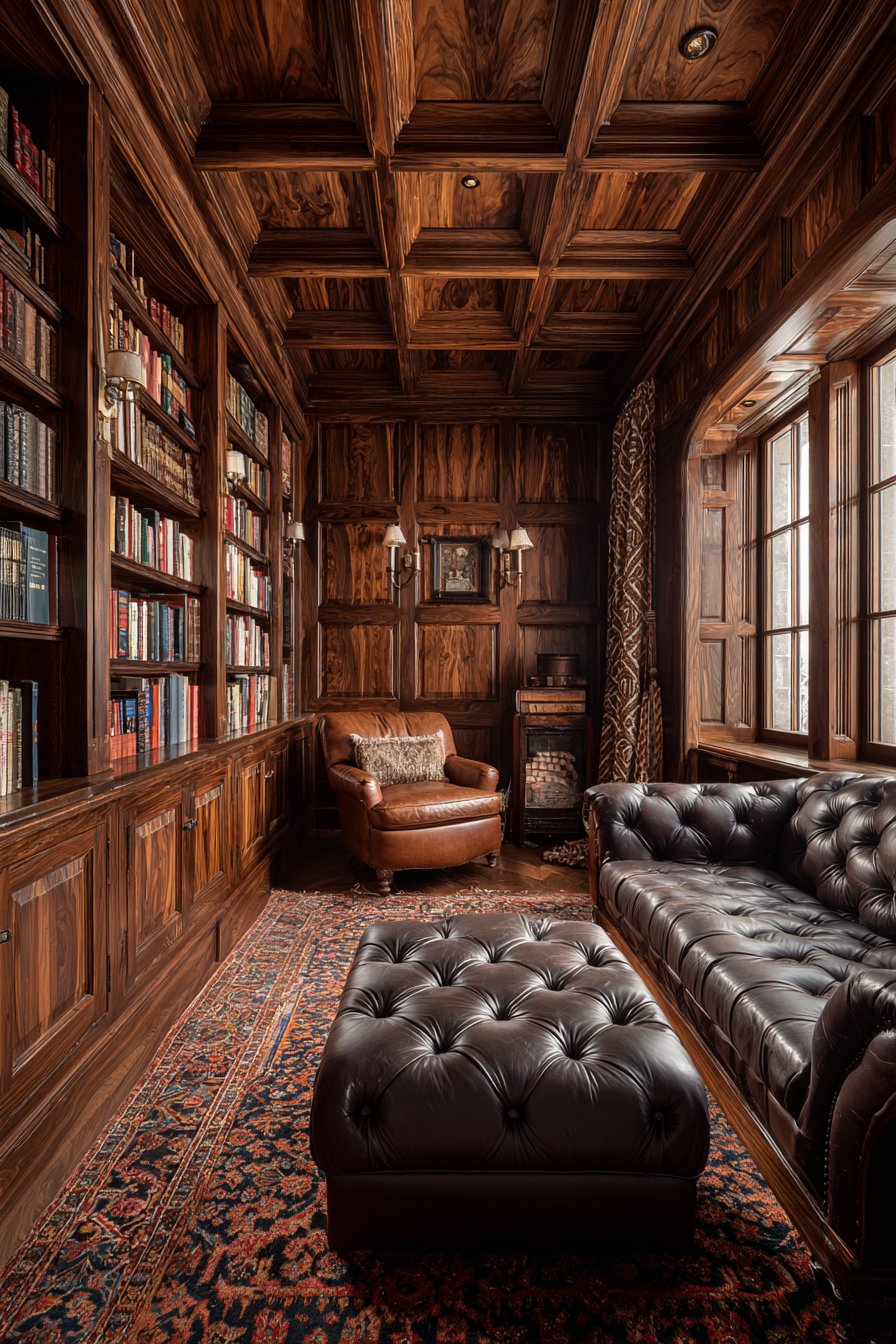
Warm tungsten lighting from brass sconces creates rich highlights on the polished wood surface, emphasizing the depth of color and the beauty of grain patterns while providing functional task lighting for reading. Leather furniture and oriental rug complete the refined aesthetic, creating a library that feels collected and established rather than recently decorated. This comprehensive wood paneling represents a significant investment but creates architectural character and timeless elegance that increases property value while providing daily enjoyment.
Key Design Tips:
- Hire experienced millwork craftsmen for proper installation
- Book-match panels carefully for symmetrical grain patterns
- Apply multiple coats of hand-rubbed finish for depth and luster
- Integrate electrical for sconces during panel installation
- Use quality hardwood throughout rather than veneer over substrate
20. Practical White Beadboard Mudroom
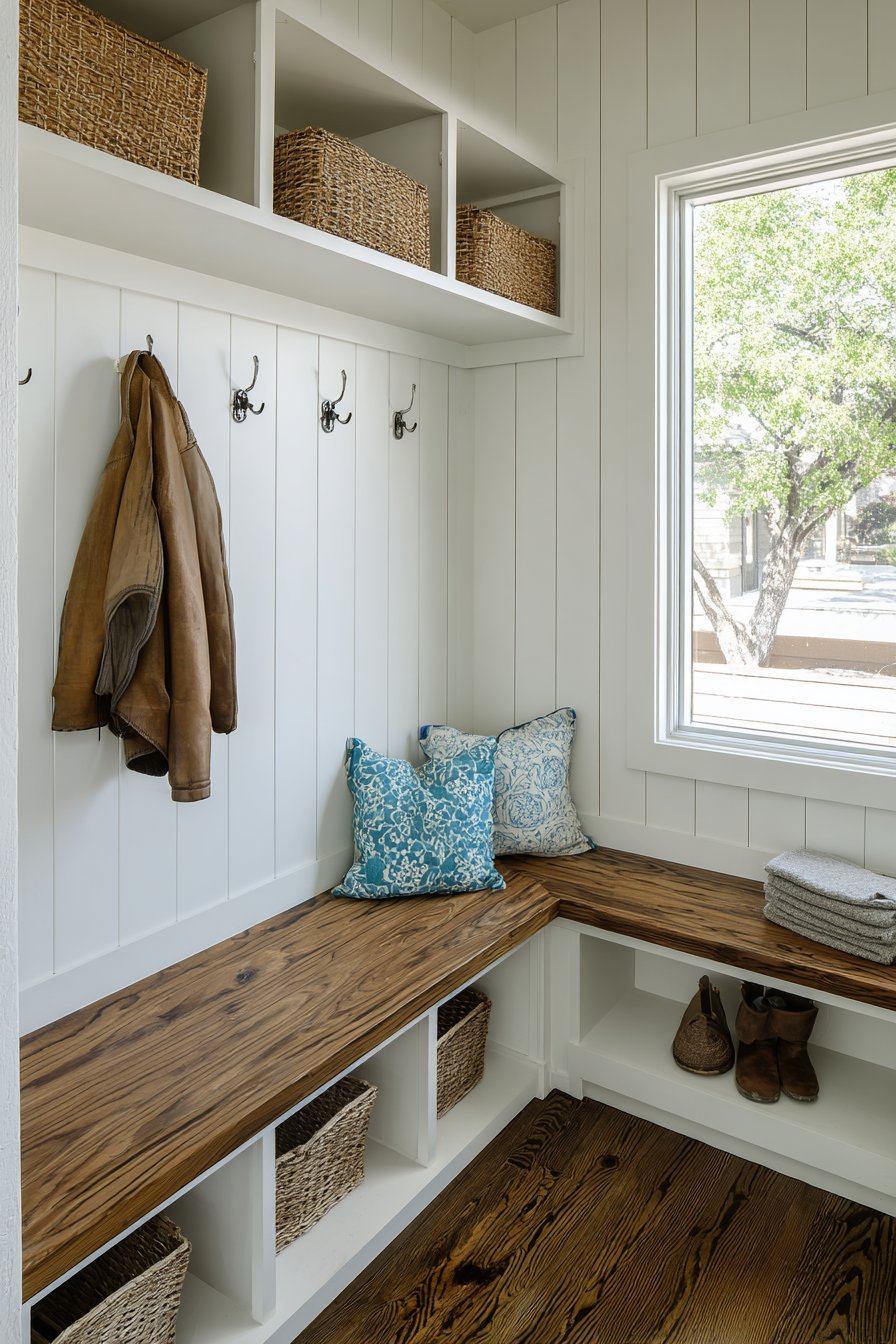
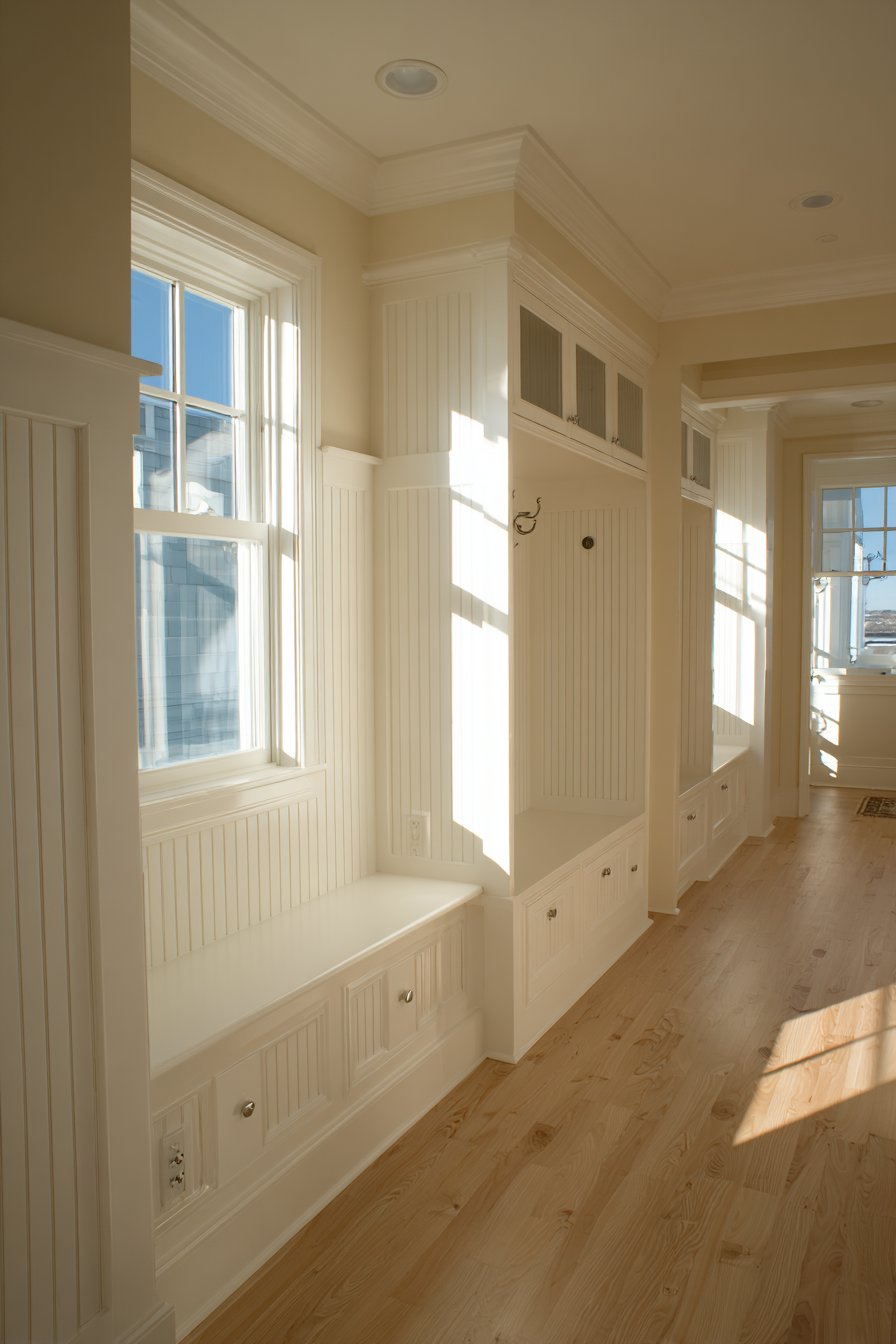
Durable PVC beadboard panels in crisp white create practical mudroom wall protection that combines cottage charm with family-friendly functionality. Extending from floor to dado rail height, these panels provide easy-to-clean surfaces perfect for high-traffic areas where dirt, moisture, and impact damage pose constant challenges. The vertical beaded pattern adds traditional architectural character while the modern PVC material offers superior durability and moisture resistance compared to wood beadboard, making it ideal for mudroom applications where wet coats, dirty boots, and pet paws create demanding conditions.
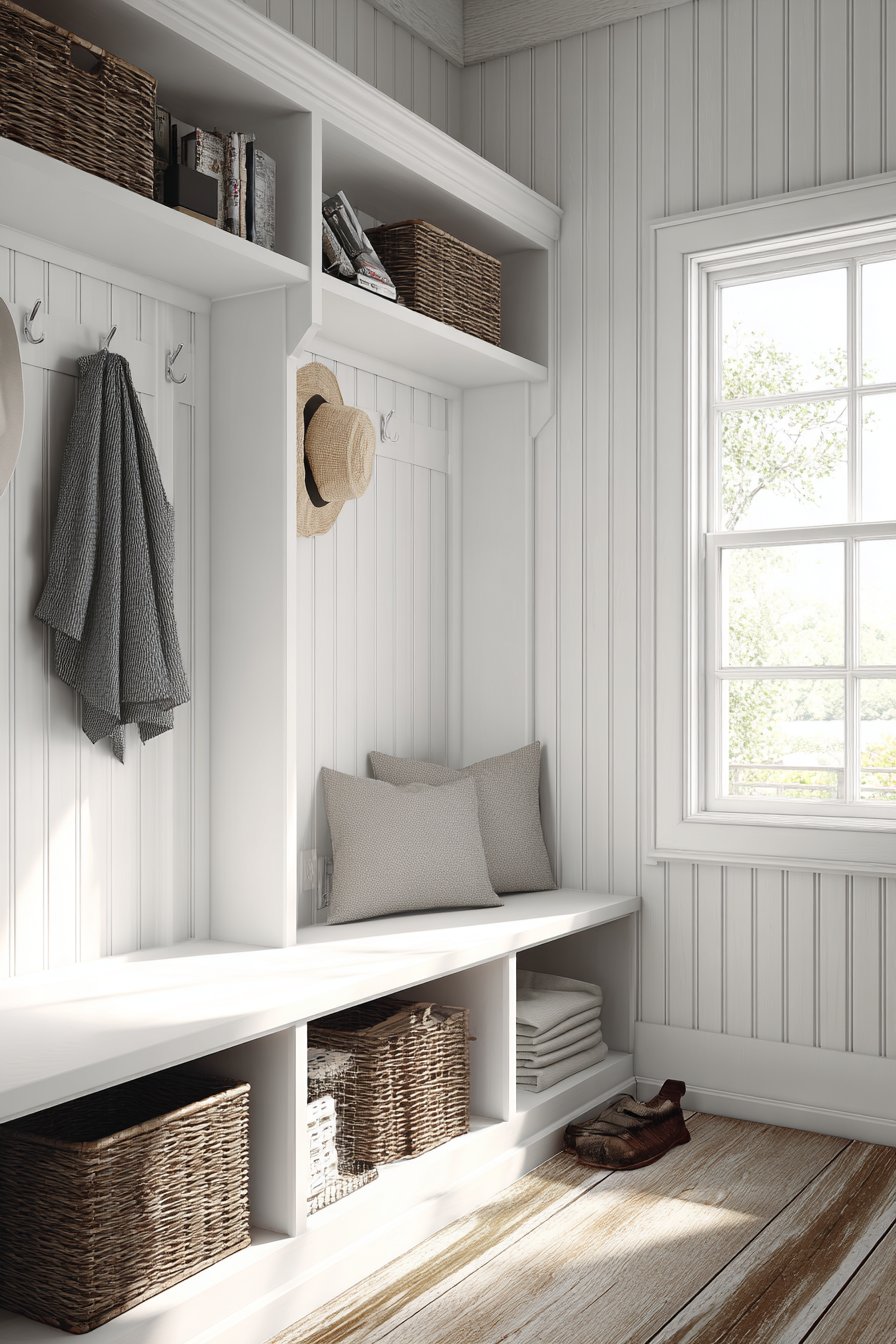
The crisp white finish reflects available light to keep the typically small mudroom space feeling bright and welcoming rather than dark and cave-like. White’s light-reflective quality proves especially valuable in entry areas that often lack natural windows, as it maximizes whatever illumination is available while creating a clean, fresh appearance that counters the inevitable dirt and mess of daily comings and goings. The PVC material wipes clean easily, allowing quick maintenance that keeps the space looking tidy despite constant family use.
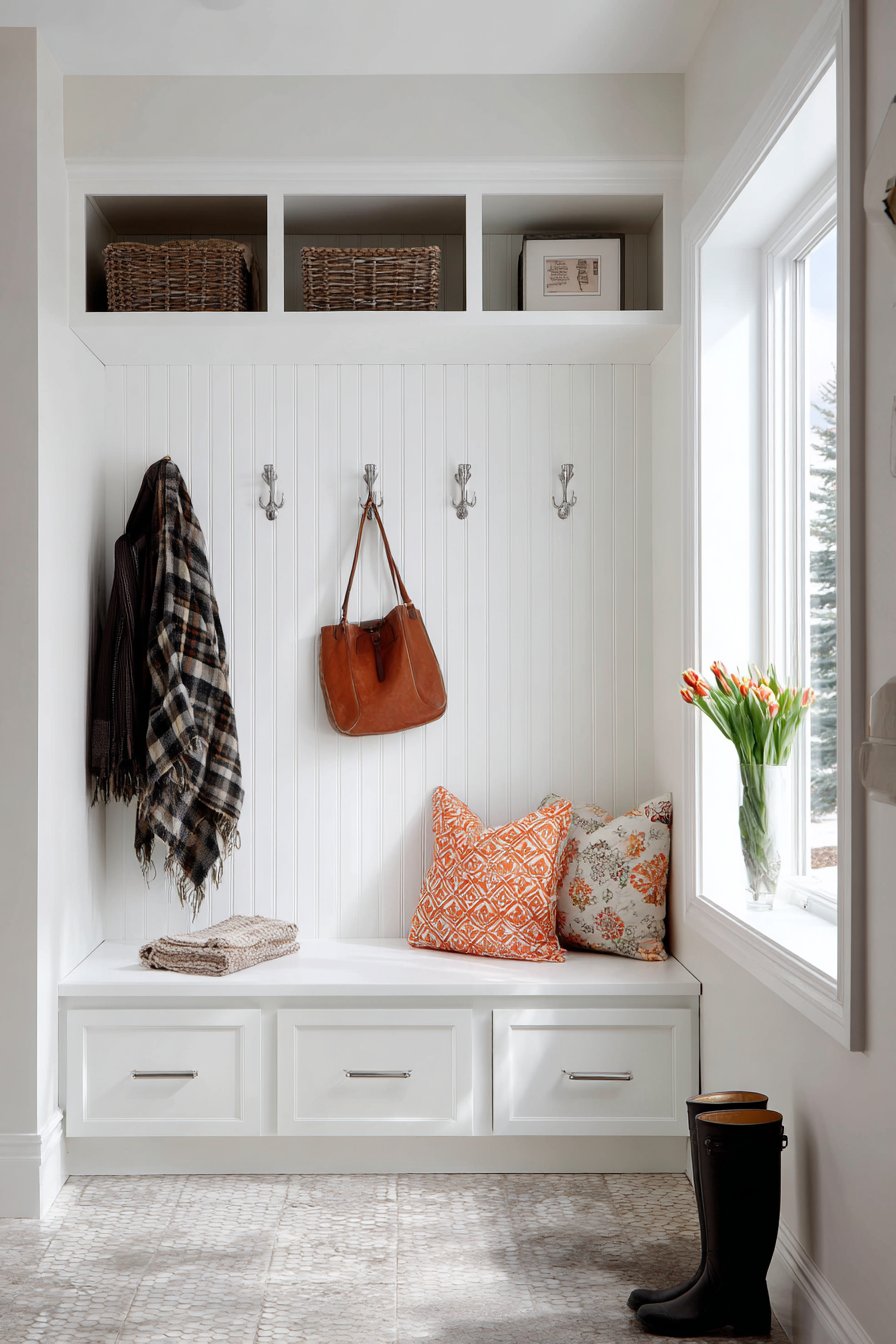
Built-in cubbies and hooks integrate with the paneled wall to create functional storage that serves every family member while maintaining organized appearance. Natural daylight from an adjacent window highlights the clean lines and functional design, emphasizing how practical spaces can incorporate attractive architectural details without sacrificing utility. This installation demonstrates that wall panel ideas can solve real-world problems while adding design value, making everyday family life easier while creating more beautiful homes.
Key Design Tips:
- Cut PVC panels with fine-tooth saw to prevent chipping
- Install with PVC-specific adhesive and stainless fasteners
- Include vapor barrier behind panels in high-moisture areas
- Paint with acrylic paint formulated for plastics if color desired
- Integrate hooks and storage during panel installation for clean appearance
21. Minimalist Gray Ceramic Serenity
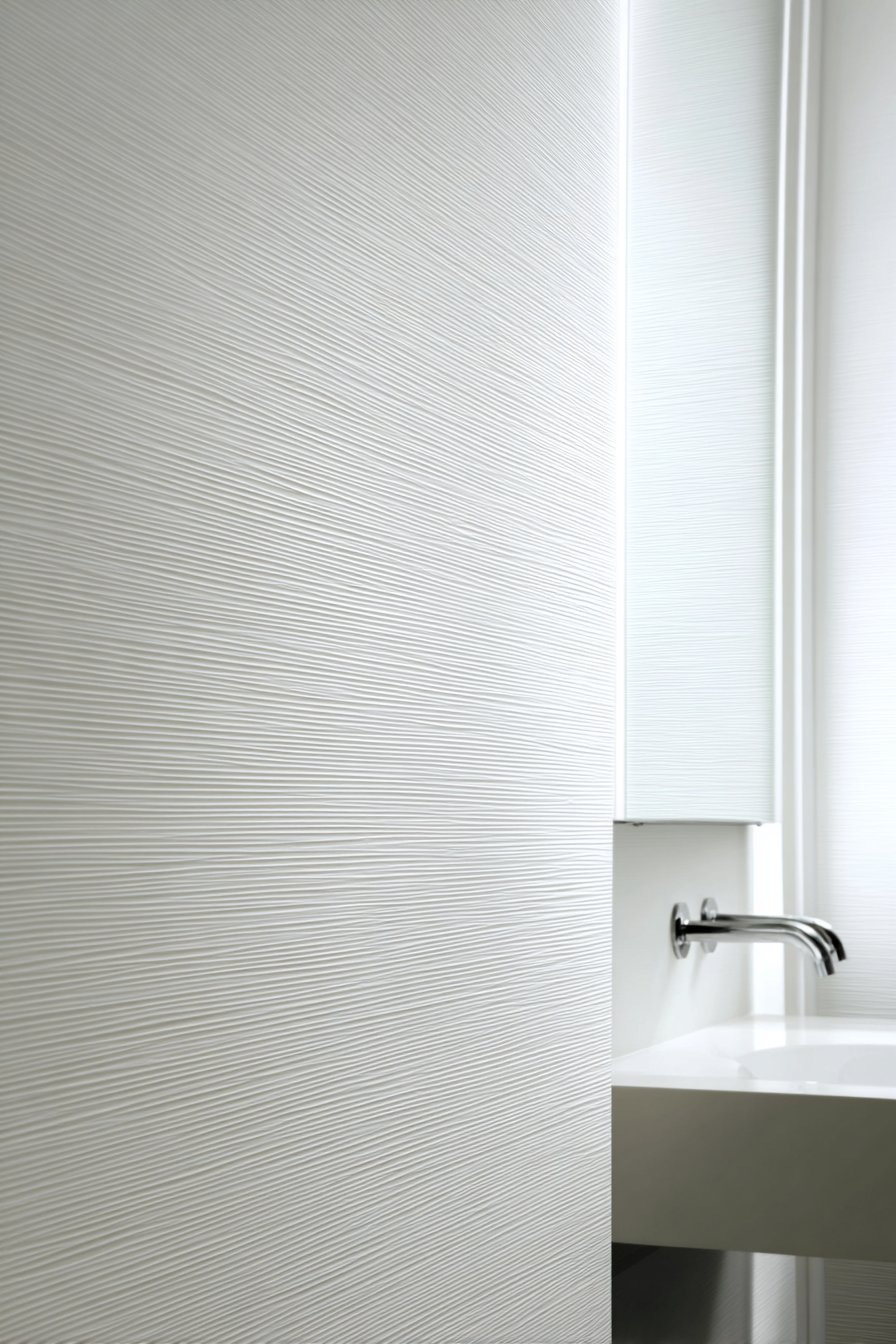
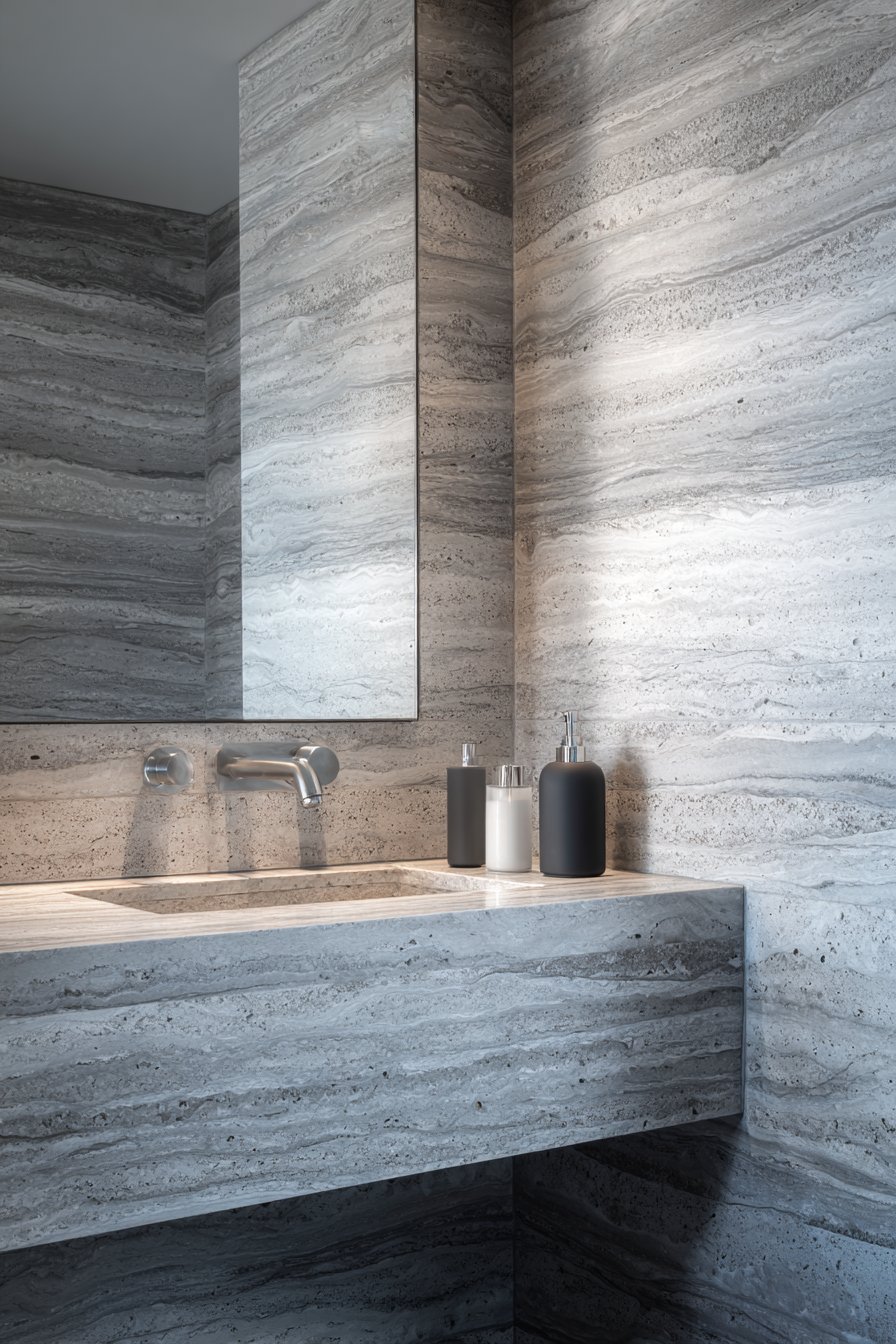
Monochromatic wall panels featuring large-format matte gray ceramic with subtle linear texture create a minimalist bathroom that celebrates restraint and material beauty. The panels create seamless appearance with minimal grout lines around the floating vanity area, establishing the clean, uncluttered aesthetic central to minimalist design philosophy. The large-format tiles reduce visual busyness while the matte finish eliminates glare and creates a soft, sophisticated surface quality that feels modern and refined.
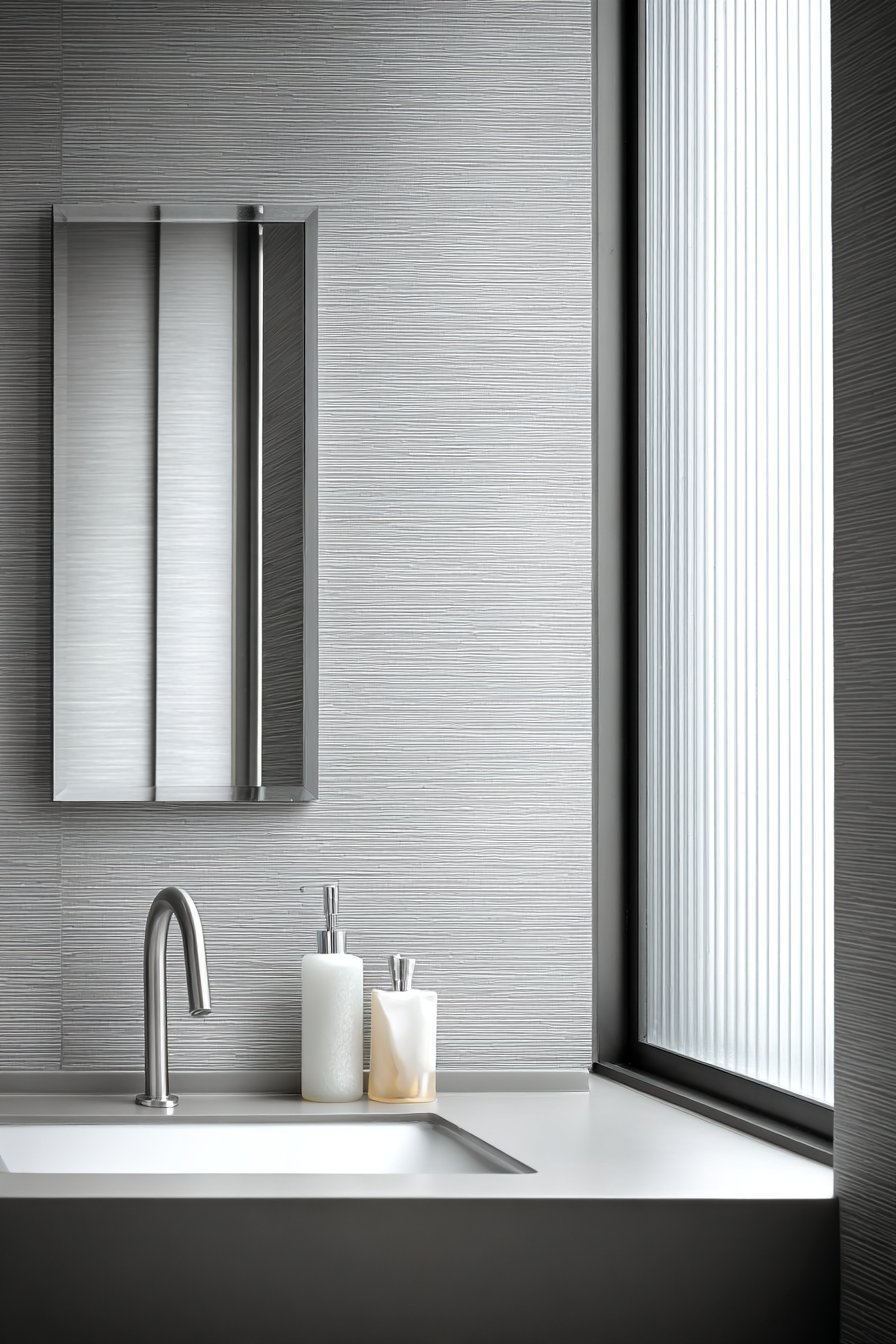
The subtle linear texture adds just enough surface interest to prevent the gray surface from appearing flat while maintaining the calm, unified quality essential for serene bathroom environments. This careful balance between texture and simplicity demonstrates sophisticated design restraint—adding enough detail to create interest without introducing visual complexity that would contradict minimalist principles. The gray coloration provides neutral foundation that accommodates various fixture finishes while creating the tranquil atmosphere that makes bathrooms feel like personal retreats.
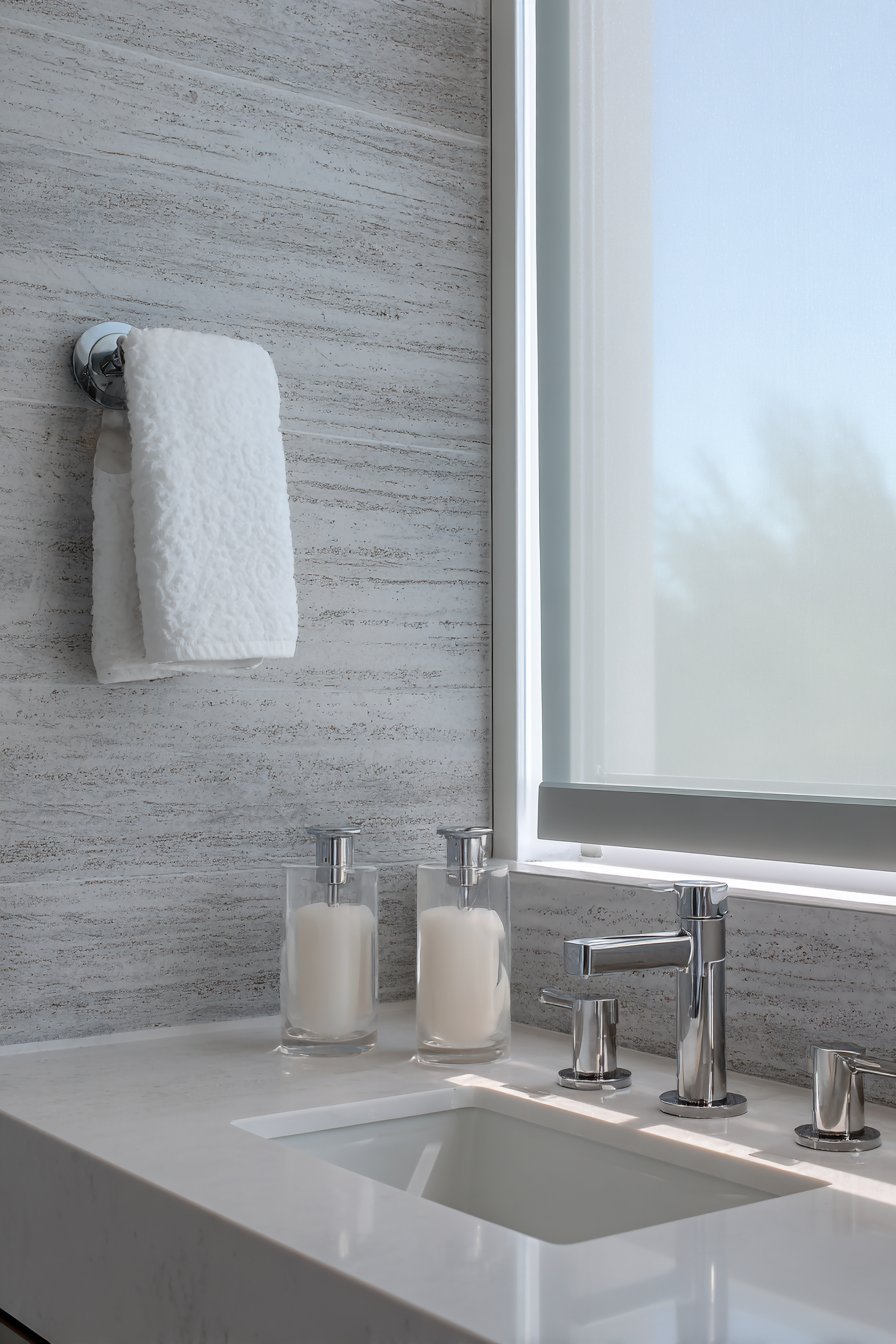
Chrome fixtures and a frameless mirror maintain the clean aesthetic, introducing reflective elements that add light and visual interest without decorative complexity. Soft diffused lighting from a frosted window creates gentle gradients across the textured surface, adding dimensionality through light and shadow rather than color or pattern variation. This lighting approach emphasizes how minimalist design relies on subtle variations in tone, texture, and light rather than bold contrasts or decorative elements to create visual interest.
Key Design Tips:
- Select large-format tiles to minimize grout lines
- Use thin grout lines with gray grout matching tile color
- Install tiles with perfect alignment for clean, geometric appearance
- Choose matte finish to reduce maintenance and prevent water spots
- Limit accessories and decorative elements to maintain minimal aesthetic
22. Urban Loft Reclaimed Horizontal Wood
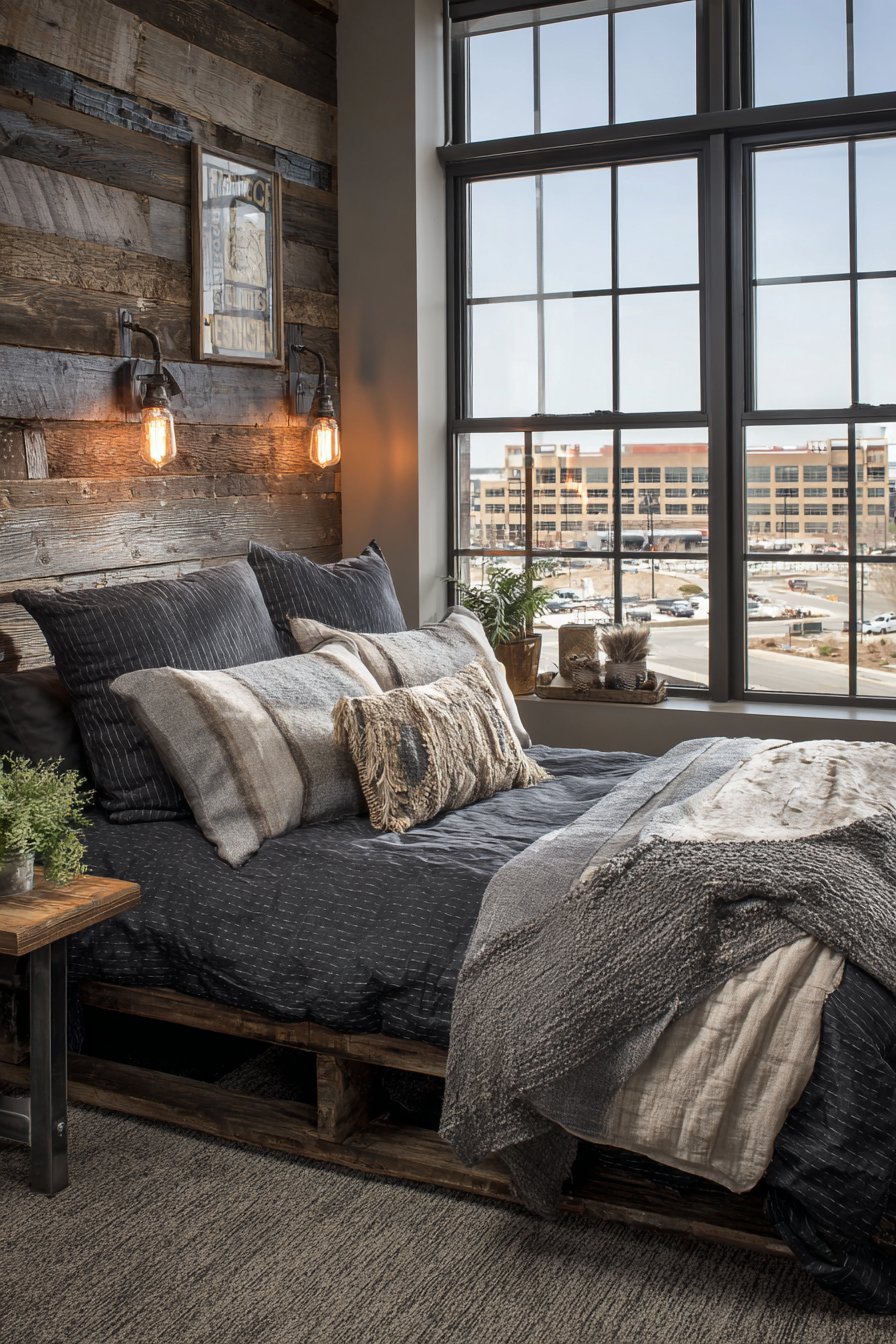
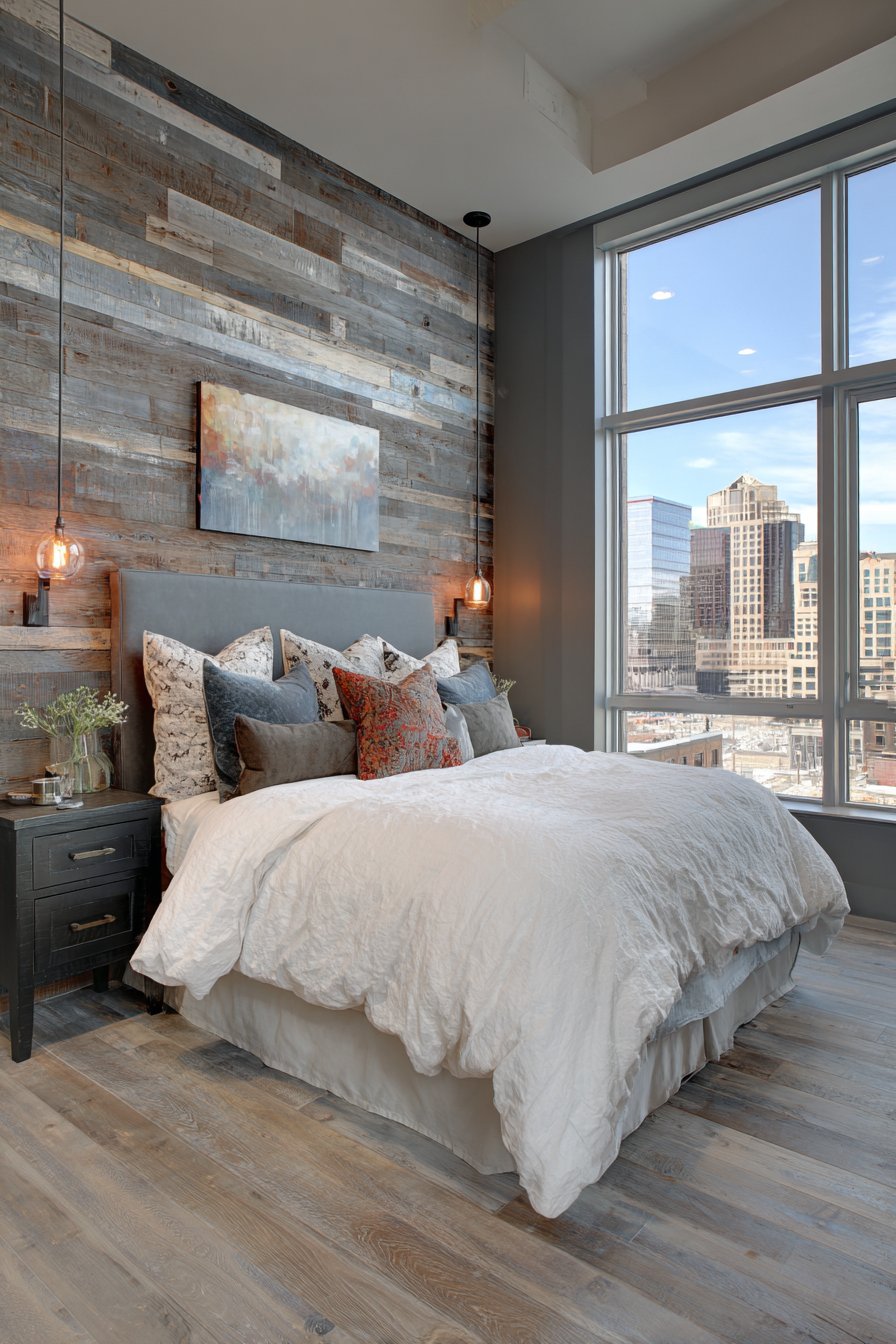
Authentic reclaimed barn wood planks in varied widths with original weathered gray and brown tones create industrial-chic bedroom character perfect for urban loft living. The horizontal installation creates visual width while showcasing the wood’s natural character including knots, nail holes, and authentic wear patterns that tell stories of previous agricultural use. This material choice celebrates sustainability and creative reuse while adding genuine historical character that new materials cannot replicate, regardless of artificial aging techniques.
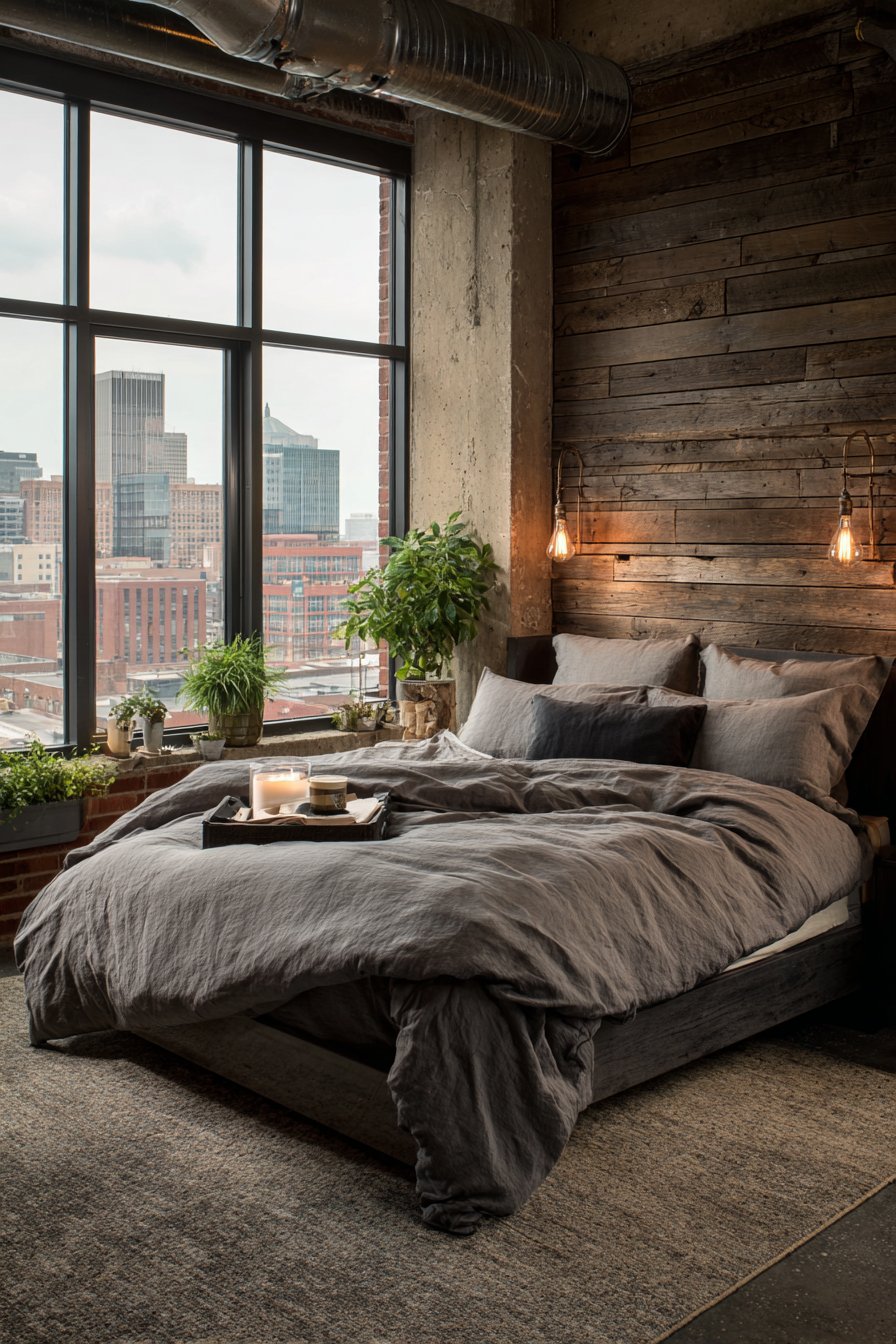
The varied plank widths and lengths create organic irregularity that reflects authentic barn construction rather than manufactured uniformity. This random arrangement ensures each section of the wall tells a slightly different story, with grain patterns, color variations, and weathering marks creating endless visual interest at different scales of observation. The naturally weathered gray and brown tones provide neutral color palette that coordinates with various design styles while the raw wood texture adds warmth and organic character to industrial loft spaces that might otherwise feel cold or austere.
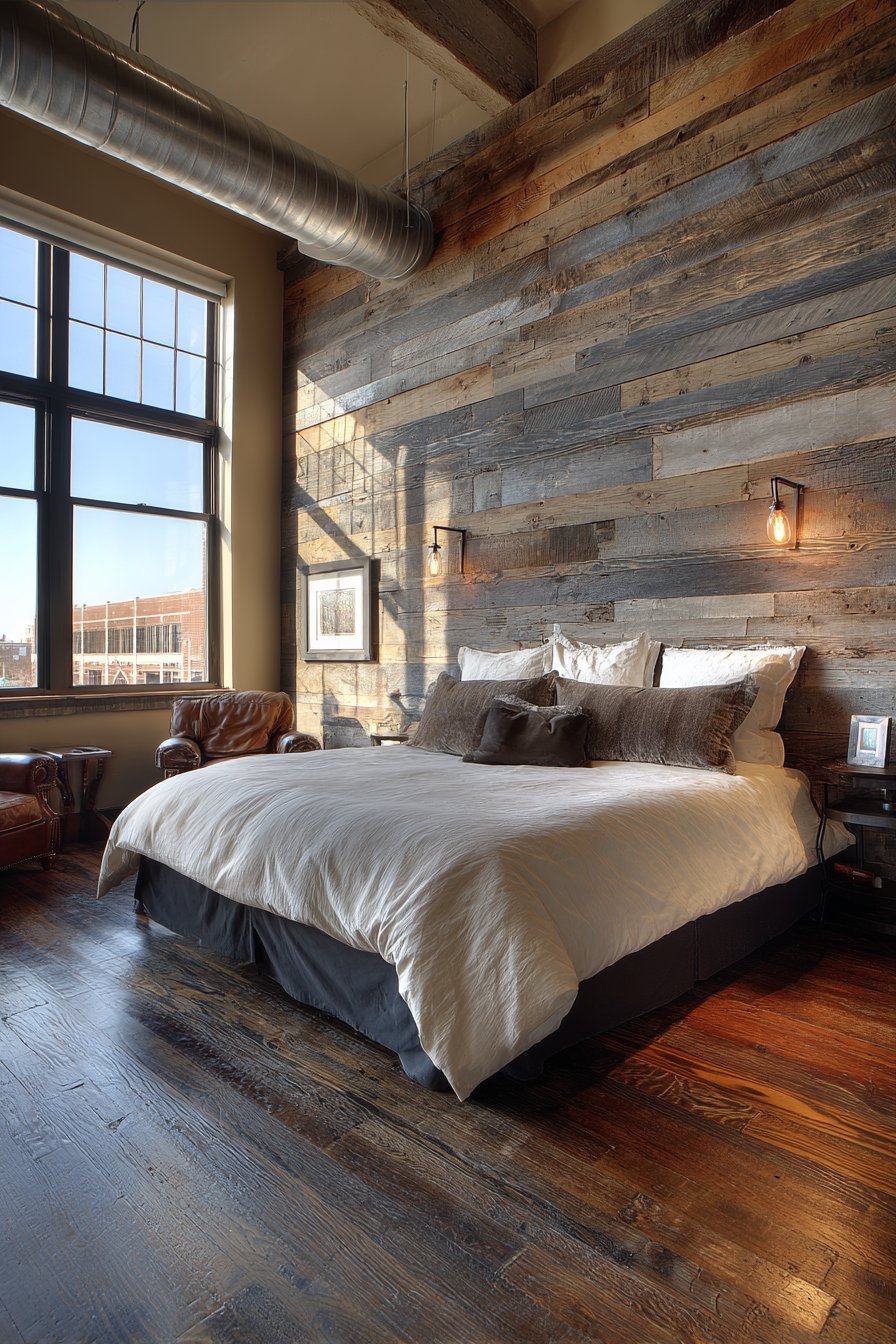
Edison bulb wall sconces provide warm accent lighting that emphasizes the wood’s texture and patina while the vintage-style bulbs reinforce the reclaimed aesthetic. Natural light from tall loft windows floods the space, creating dramatic highlights and shadows across the textured wood surface that change throughout the day. This interplay of natural and artificial light brings the reclaimed material to life, ensuring the wall remains dynamic and engaging rather than static backdrop.
Key Design Tips:
- Source properly cleaned and treated reclaimed wood
- Install moisture barrier before panels in humid climates
- Embrace color and texture variations as design features
- Seal wood with matte finish while preserving authentic patina
- Stagger plank lengths randomly for organic appearance
23. Timeless Picture Frame Molding Elegance
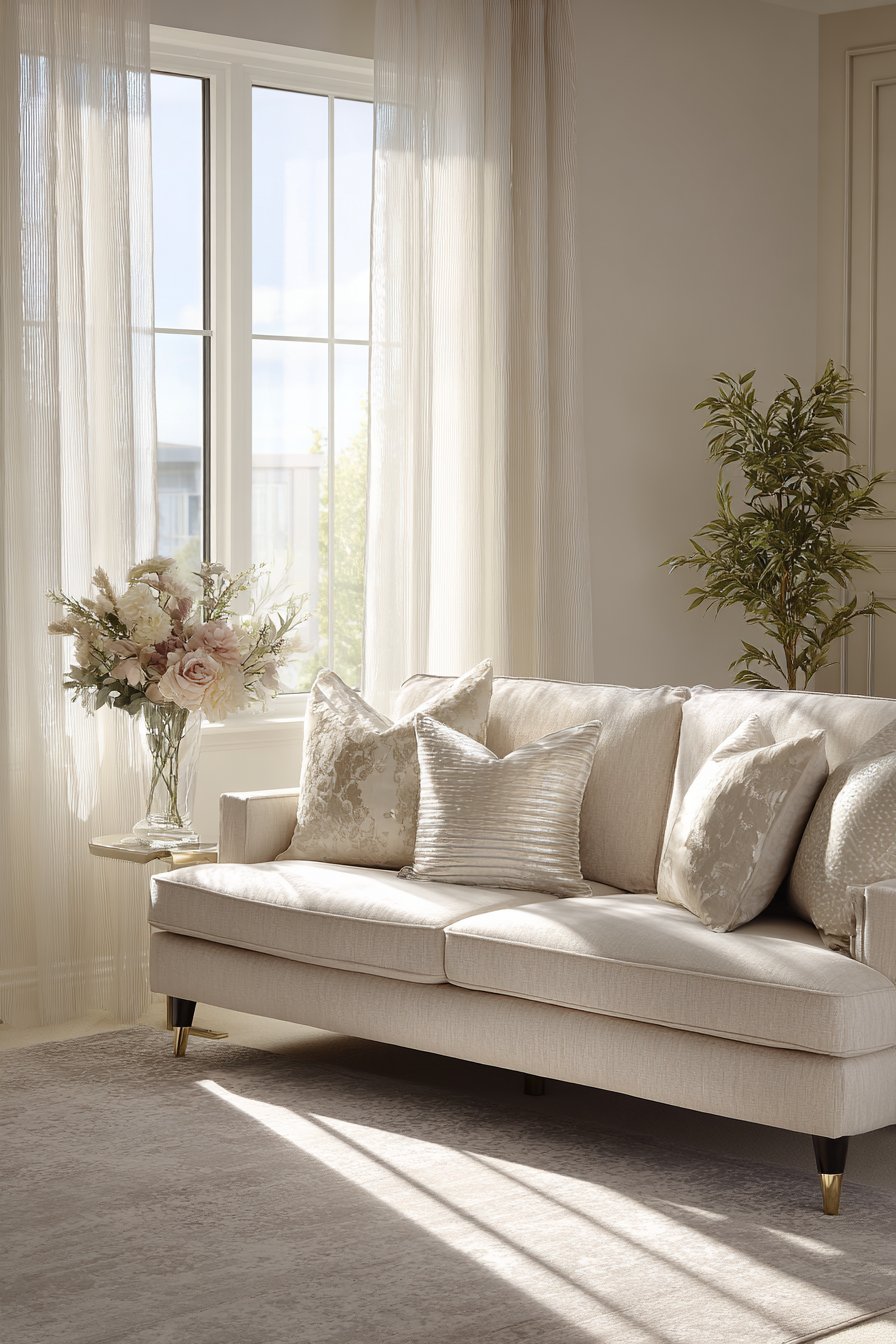
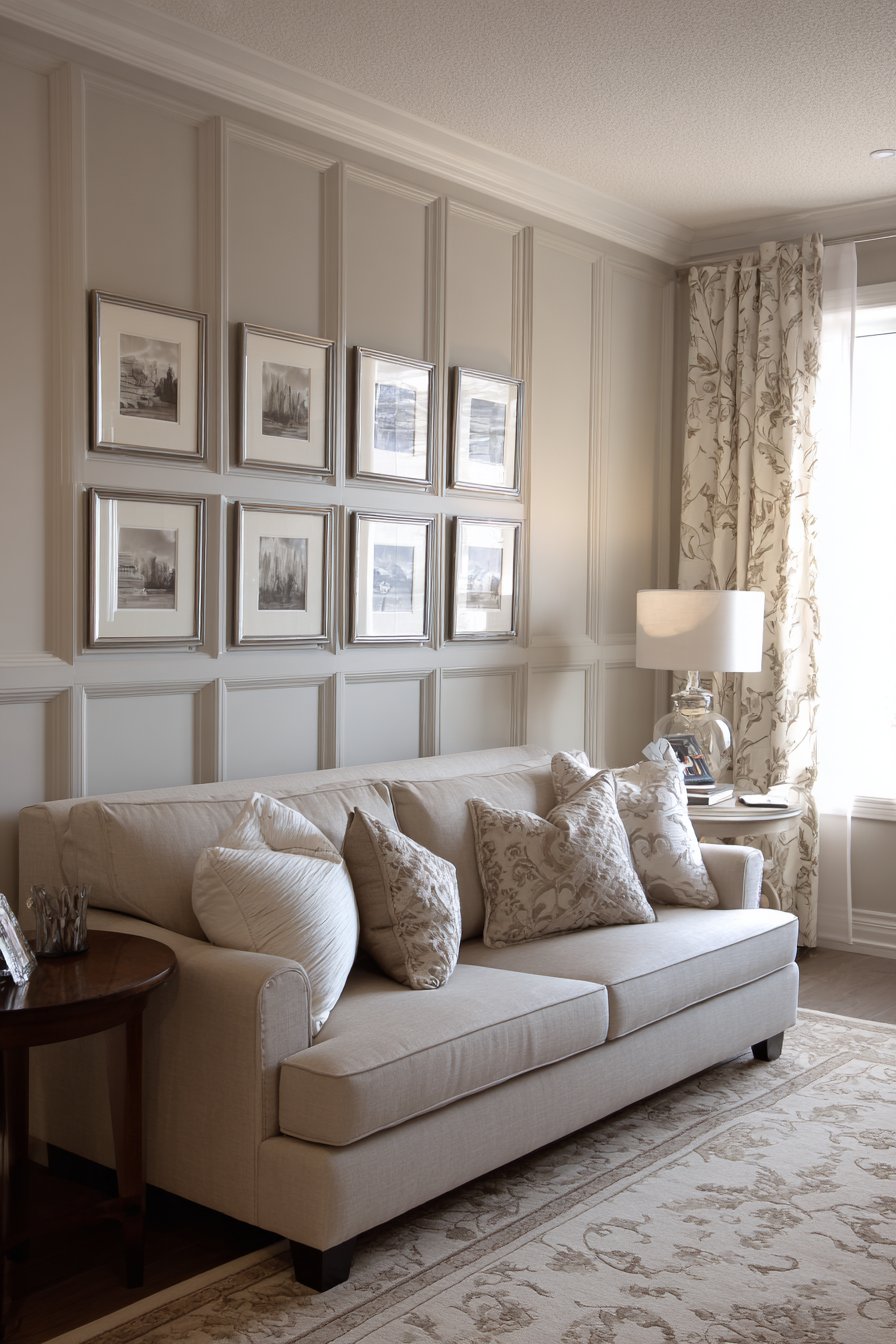
Elegant picture frame wall panels painted in soft greige create subtle architectural detail in a transitional living room that bridges traditional and contemporary design sensibilities. The symmetrical panel arrangement uses simple molding to create rectangular frames in varying sizes, adding dimensional interest through shadow lines and recessed surfaces without ornate detailing. This classic wall treatment demonstrates how traditional architectural elements can be updated through contemporary color choices and simplified detailing to remain relevant in modern homes.
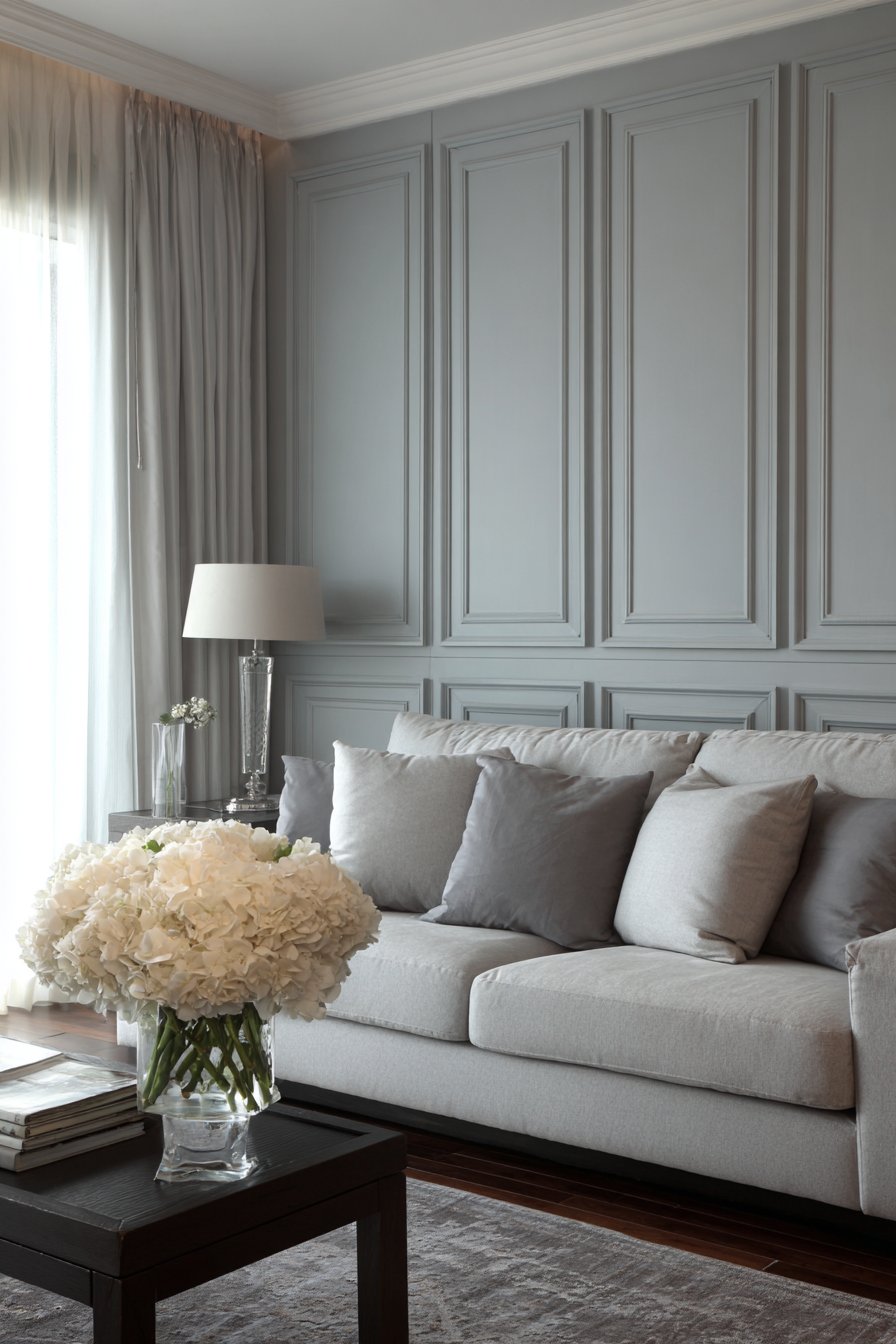
The soft greige coloration updates traditional white picture frame molding with contemporary sophistication while maintaining the versatility and light-reflective qualities that make neutral walls so practical. This warm gray-beige hybrid provides more depth and interest than pure white while remaining neutral enough to accommodate various furniture styles and accessories as tastes evolve. The varying frame sizes create visual rhythm that prevents monotony while the symmetrical arrangement maintains the sense of order and balance central to transitional design.
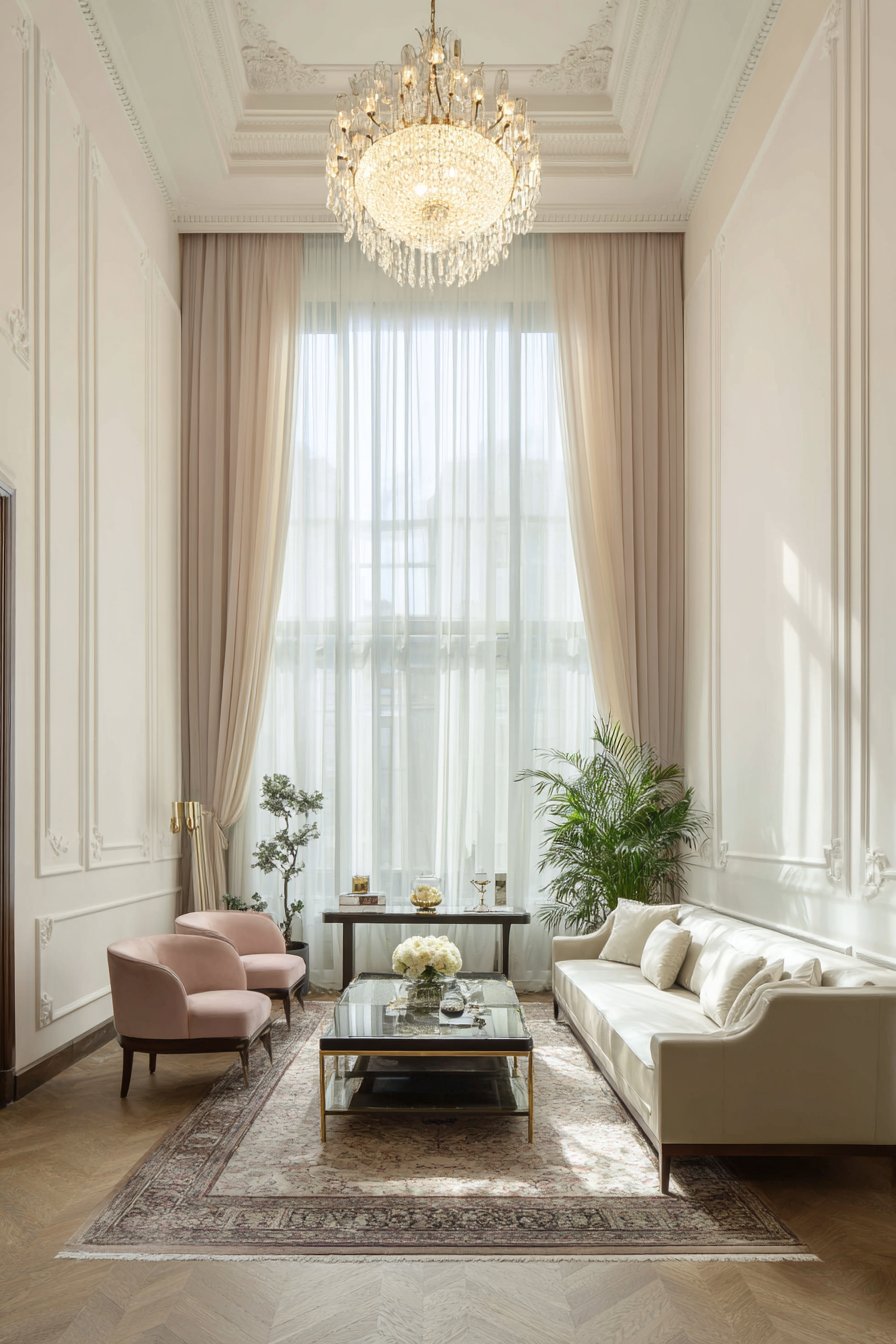
A neutral sofa and traditional area rug complement the classic wall treatment, creating a cohesive room where traditional architectural details meet contemporary simplicity. Soft natural lighting from sheer curtains creates gentle shadows that emphasize the dimensional molding while the picture frame panels add perceived value and architectural character that elevates the entire room. This approach demonstrates how wall panel ideas can introduce traditional elegance without requiring extensive renovation or major construction.
Key Design Tips:
- Plan panel layout to create symmetrical, balanced arrangement
- Use quality molding with clean profiles for professional appearance
- Fill and sand all joints perfectly before painting
- Apply multiple thin paint coats for smooth, even finish
- Position larger panels at visual focal points for best impact
Why These Wall Panel Ideas Represent the Best Design Solutions
The wall panel ideas presented in this comprehensive guide represent the finest approaches to introducing architectural character, texture, and sophistication into residential spaces. These designs excel because they address both aesthetic and functional considerations while remaining achievable for homeowners working with various budgets and skill levels. From the luxurious marble-look bathroom panels that deliver spa elegance without stone maintenance to the practical PVC beadboard mudroom that withstands family life’s demands, each solution demonstrates thoughtful problem-solving paired with design excellence.
The diversity of materials showcased—natural wood, engineered panels, upholstered surfaces, reclaimed materials, and modern composites—ensures that homeowners can find wall panel solutions perfectly suited to their specific needs, aesthetic preferences, and practical requirements. The range from minimalist contemporary designs like the black stripe entryway and gray ceramic bathroom to richly detailed traditional approaches like the walnut library paneling demonstrates how wall panel ideas adapt successfully across all major design styles. This versatility makes wall paneling one of the most effective tools in the interior designer’s arsenal, capable of transforming any space regardless of architectural style or original construction quality.
These wall panel ideas also represent best practices in contemporary sustainable design, with many options featuring reclaimed materials, rapidly renewable resources like bamboo derivatives, and durable manufactured materials that eliminate the need for harvesting old-growth timber. The acoustic fabric panels and specialized media room treatments demonstrate how wall paneling can solve technical challenges like sound control while enhancing visual appeal. The integration of lighting into several designs—from the bedroom panels with groove lighting to the dramatic dining room slat wall with LED backlighting—shows how modern wall panel ideas transcend purely decorative functions to become integrated architectural systems that provide both illumination and aesthetic impact.
The practical installation approaches featured throughout these designs ensure that wall panel ideas remain accessible to homeowners at various skill levels and budget ranges. Simple painted MDF panels with linear grooves offer sophisticated results without requiring advanced carpentry skills, while the PVC beadboard provides cottage charm with modern durability in an easy-to-install material. More ambitious projects like the book-matched walnut library paneling showcase what’s possible when investing in professional craftsmanship, demonstrating the range of options available depending on project scope and budget allocation.
Color theory and material science principles inform every design choice, from the soft sage green nursery panels that promote calm through nature-inspired hues to the charcoal acoustic panels that optimize media room viewing conditions through light-absorbing dark tones. The sophisticated gray bathroom featuring multiple tonal variations demonstrates how monochromatic schemes gain depth and interest through careful material and finish selection. The warm terracotta and cream acoustic panels show how color psychology can transform functional sound treatment into inviting design features that enhance both room performance and occupant wellbeing.
These wall panel ideas also excel in their consideration of scale, proportion, and spatial relationships. The vertical black stripe entryway panels emphasize height in compressed spaces, while horizontal shiplap creates width in dining rooms. The nursery panels feature wider spacing appropriate for smaller room proportions, while the floor-to-ceiling dramatic dining room slats command attention in generous spaces. This thoughtful scaling ensures that wall panel installations enhance rather than overwhelm their respective spaces, maintaining comfortable proportions that feel intentional and professionally designed.
Lighting integration represents another area where these wall panel ideas demonstrate exceptional design thinking. Natural light considerations appear throughout—from the coastal whitewashed panels that reflect abundant daylight to create airy brightness, to the reclaimed wood accent wall positioned to capture golden hour illumination. Artificial lighting strategies range from integrated LED strips that create ambient glow to carefully positioned sconces that highlight texture and cast dimensional shadows. This comprehensive attention to how light interacts with paneled surfaces ensures these installations perform beautifully throughout different times of day and usage patterns.
The functional benefits woven throughout these designs elevate them beyond purely decorative treatments into genuine problem-solving solutions. Acoustic panels address sound control in reading nooks and media rooms. Waterproof materials provide bathroom protection while delivering aesthetic impact. Durable PVC beadboard withstands mudroom abuse while adding architectural charm. Upholstered bedroom panels improve sleep environment acoustics while introducing luxurious texture. These multipurpose benefits demonstrate how the best wall panel ideas deliver value beyond visual appeal, making them worthwhile investments that enhance daily living experience.
Material authenticity and craftsmanship quality distinguish these wall panel ideas from superficial treatments that prioritize appearance over substance. The reclaimed barn wood panels celebrate genuine material history rather than faux aging techniques. The book-matched walnut library showcases traditional millwork expertise. The vertical stack subway tiles demonstrate how thoughtful installation transforms familiar materials into contemporary statements. Even the manufactured materials like marble-look PVC panels and concrete-effect porcelain earn their place through superior performance characteristics and convincing aesthetic execution that delivers authentic appearance without the drawbacks of natural materials in challenging applications.
The transitional quality that allows several of these designs to bridge traditional and contemporary aesthetics makes them particularly valuable for homeowners who appreciate both classical architecture and modern simplicity. The picture frame molding in soft greige updates a traditional treatment through contemporary color. The gray wainscoting brings classic millwork into modern spaces through simplified detailing and updated hues. The Scandinavian shiplap combines cottage tradition with Nordic minimalism. This style flexibility ensures these wall panel ideas remain relevant as design trends evolve, providing lasting value rather than quickly dated appearances.
Conclusion
Wall panel ideas represent one of the most versatile and impactful design strategies available to contemporary homeowners seeking to elevate their living spaces with architectural character, textural richness, and sophisticated detail. The twenty-three designs explored in this comprehensive guide demonstrate the remarkable range of aesthetic expressions, functional benefits, and practical applications that wall paneling offers across every room type and design style. From the serene minimalism of large-format gray ceramic bathroom panels to the dramatic richness of espresso-stained oak dining room slats, these solutions prove that thoughtful wall treatments can completely transform a space’s character while addressing real-world needs like sound absorption, moisture protection, and durability.
The key to successfully implementing wall panel ideas in your own home lies in carefully considering your specific needs, aesthetic preferences, existing architecture, and practical constraints like budget and installation skill level. Begin by identifying what you hope to achieve—whether that’s adding architectural interest to builder-grade spaces, solving acoustic challenges in media rooms, protecting high-traffic areas from damage, or simply creating more beautiful, personalized environments that reflect your design sensibilities. Consider how different materials, colors, patterns, and installation orientations will interact with your room’s proportions, natural lighting conditions, and existing furnishings.
Don’t hesitate to start with smaller, more manageable projects like accent walls in bedrooms or reading nooks before tackling comprehensive installations in larger public spaces. Many of the techniques and materials featured in this guide lend themselves to phased implementation, allowing you to develop skills and confidence while gradually transforming your home. Remember that even simple panel treatments can deliver significant impact when executed with attention to detail, quality materials, and thoughtful design planning.
The investment in wall paneling—whether measured in budget, time, or effort—consistently delivers returns through increased property value, enhanced daily living enjoyment, and the creation of genuinely distinctive spaces that transcend generic builder finishes. As you explore these wall panel ideas and consider how to incorporate them into your own design projects, focus on selecting approaches that align with your authentic preferences rather than chasing trends. The most successful wall panel installations reflect the homeowner’s genuine aesthetic vision while respecting the home’s architectural context and the practical realities of daily life. Armed with the insights, techniques, and inspiration provided in this guide, you’re well-equipped to transform your living spaces with wall panel ideas that deliver both immediate visual impact and lasting design value.
