
The walls of your home are more than mere boundaries that define your living space—they are blank canvases waiting to be transformed into captivating visual stories. In an era where personalization and self-expression have become paramount in interior design, wall displays offer an unparalleled opportunity to showcase your personality, cherished memories, and aesthetic sensibilities. Whether you’re working with a compact apartment or a spacious suburban home, thoughtfully curated wall displays can elevate your interiors from ordinary to extraordinary, creating focal points that draw the eye and spark conversation.
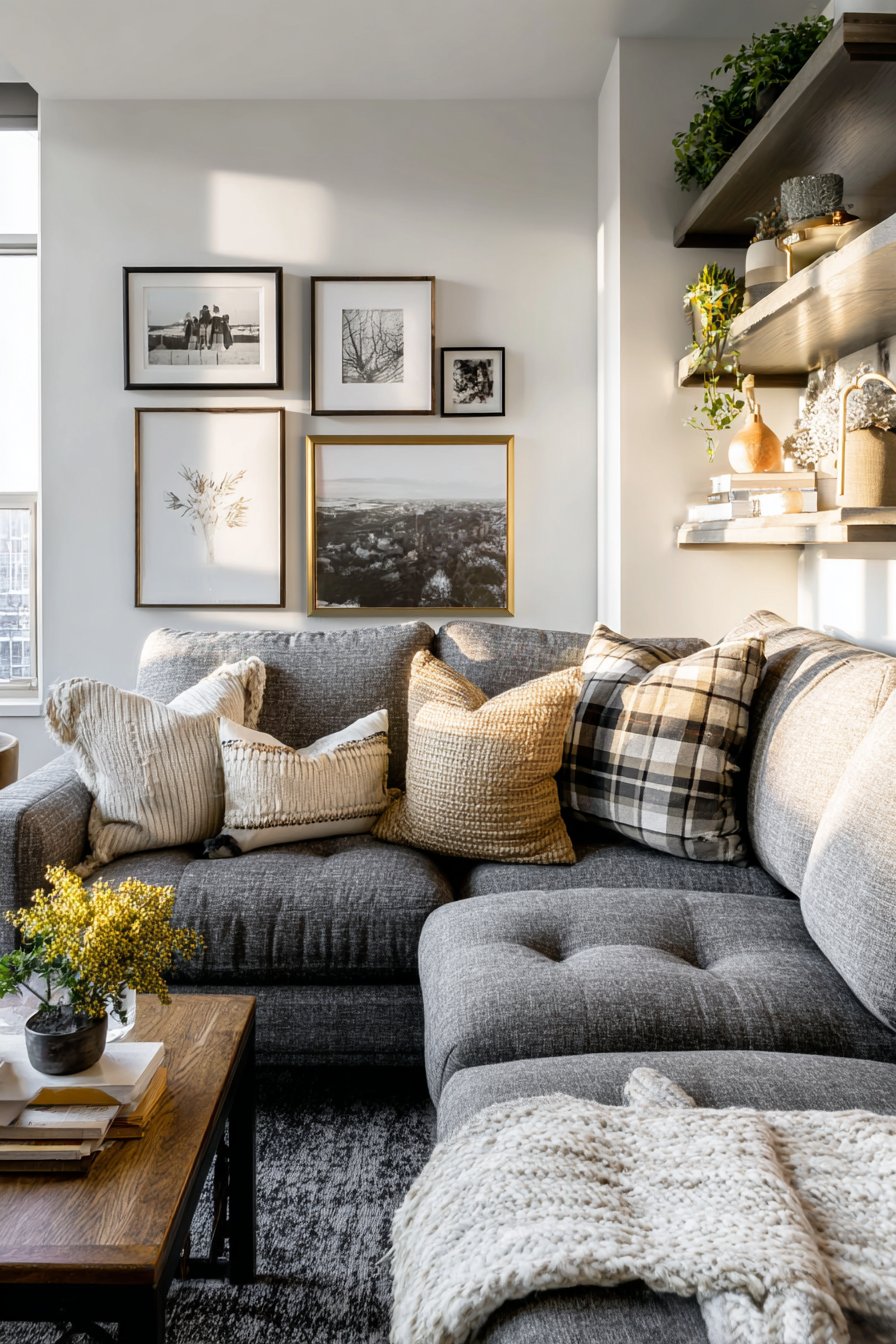
The art of wall display design has evolved dramatically over the years, moving beyond the traditional single-painting approach to embrace diverse, multi-dimensional installations that combine artwork, functional elements, and decorative objects. From minimalist gallery walls featuring carefully selected prints to maximalist salon-style arrangements bursting with eclectic treasures, the possibilities are truly limitless. Each approach carries its own unique charm and serves different functional needs—some displays prioritize aesthetic beauty, while others cleverly combine form and function to maximize both visual appeal and practical utility.
In this comprehensive guide, we’ll explore 25 distinctive wall display ideas that cater to various design styles, spatial constraints, and personal preferences. Whether you’re drawn to the organic warmth of natural materials, the sleek sophistication of modern minimalism, or the collected charm of vintage treasures, you’ll discover inspiration and practical guidance to help you create wall displays that truly reflect who you are and how you live. Let’s embark on this journey to transform your walls into stunning showcases that tell your unique story.
1. Curated Gallery Wall with Mixed Frames
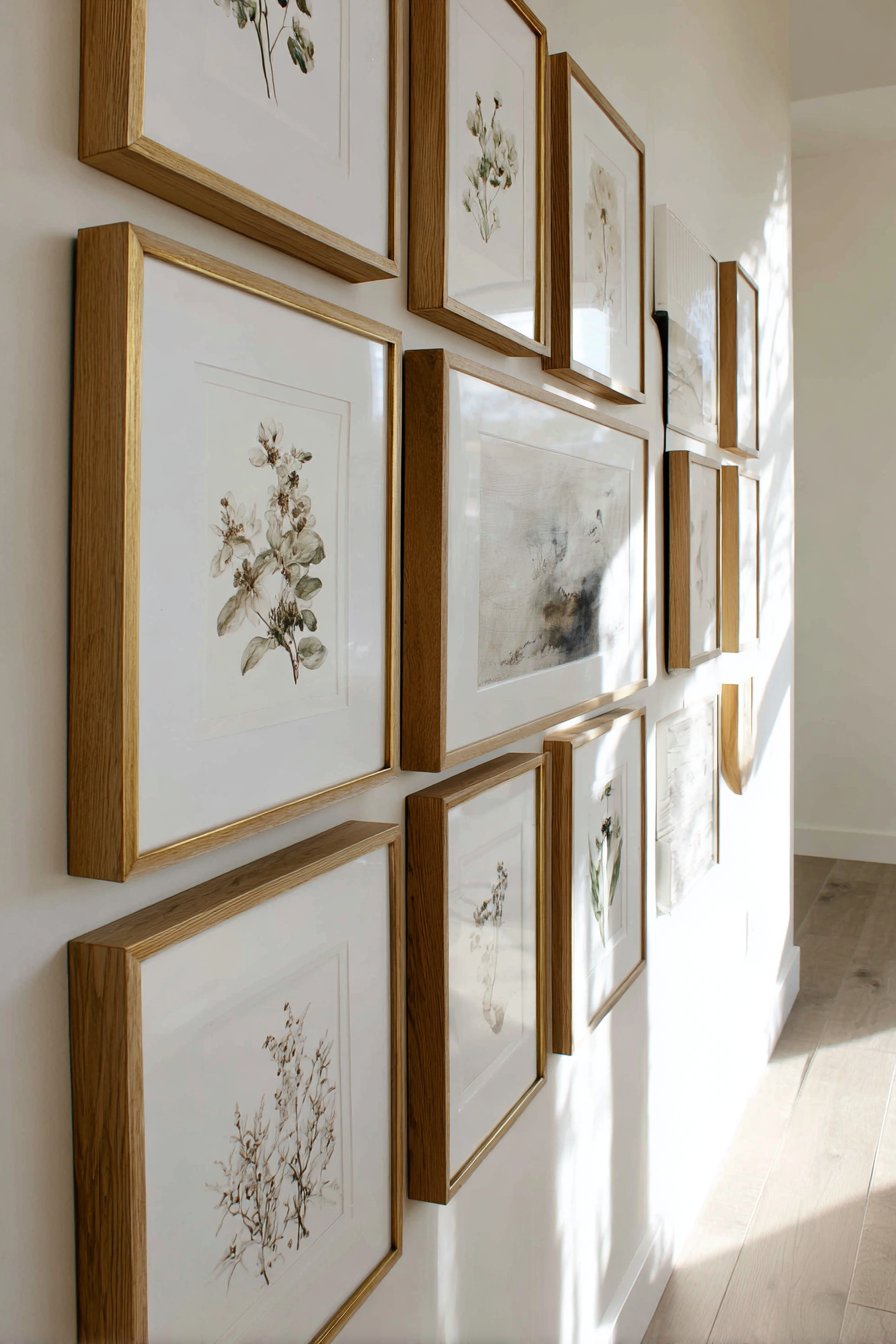
A thoughtfully arranged gallery wall represents one of the most versatile and personally expressive wall display ideas available to homeowners today. This approach centers on combining framed botanical prints and abstract art in varying sizes, creating a dynamic visual composition that maintains cohesion through careful frame selection. The strategic alternation between natural oak, matte black, and warm brass finishes introduces visual rhythm while allowing individual pieces to maintain their unique character. This multi-textured approach to framing adds depth and sophistication that a uniform frame selection simply cannot achieve.
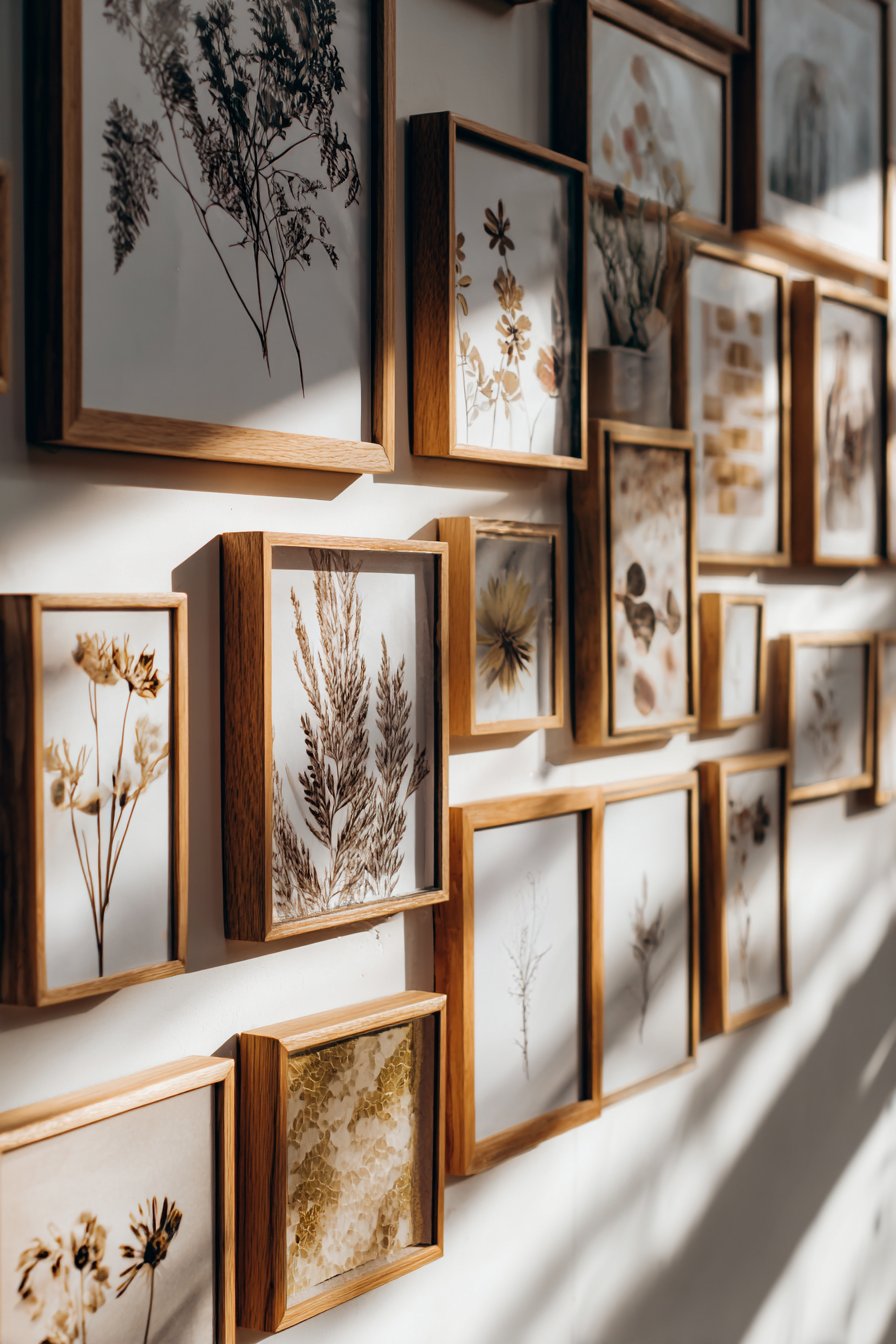
The arrangement follows a loose grid pattern with precise 2-3 inch spacing between frames, striking that perfect balance between structured organization and organic flow. This measured spacing prevents the display from feeling too rigid while maintaining enough order to keep the arrangement from appearing chaotic. The key to success lies in planning the layout before making a single nail hole—laying frames on the floor to experiment with various configurations allows you to visualize the final result and make adjustments without damaging your walls.
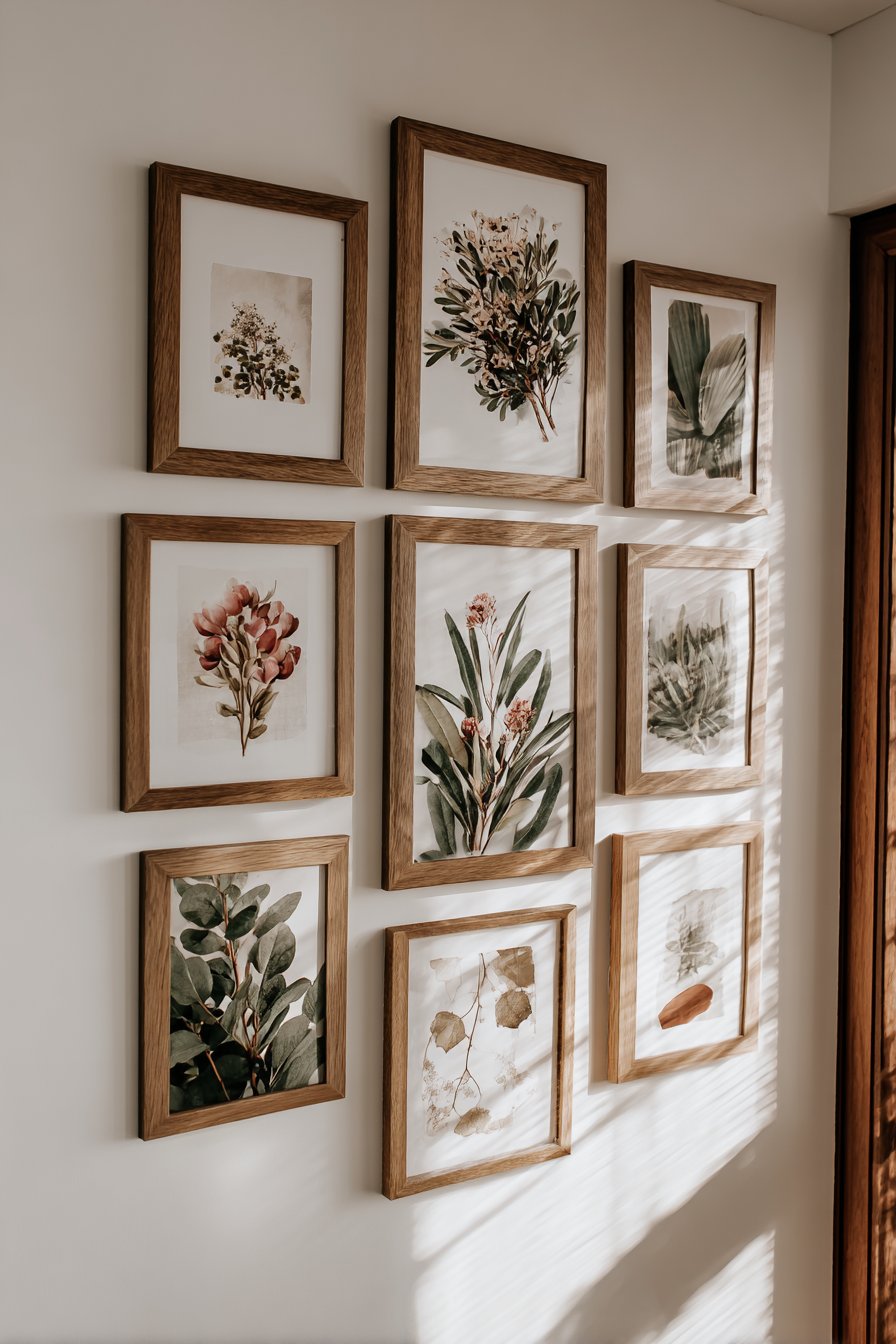
Professional interior photography techniques reveal how natural daylight interacts with different frame materials, creating subtle dimensional shadows that enhance the display’s visual interest. The soft white wall serves as a neutral backdrop that allows the artwork to shine while the varied frame finishes catch and reflect light differently throughout the day. This creates an ever-changing display that looks fresh from morning through evening, as shifting natural light patterns highlight different aspects of the composition.
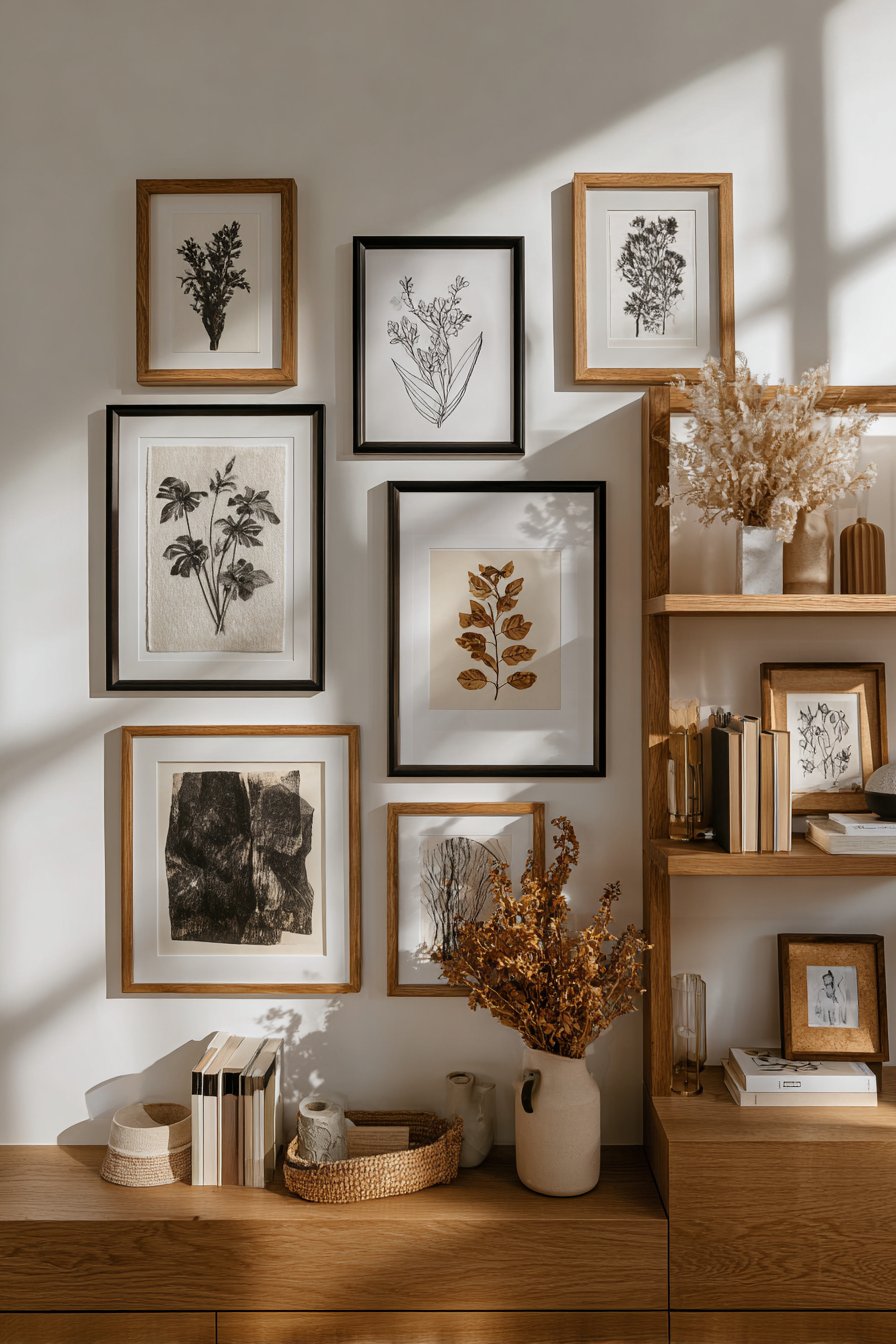
Key Design Tips: Start by selecting a central anchor piece and build outward from there to maintain balance. Maintain consistent spacing between all frames using a measuring tape and level to ensure professional results. Mix frame orientations—portrait and landscape—to add visual variety while keeping similar color palettes within the artwork for cohesion. Consider creating paper templates of each frame size to test arrangements on the wall before committing to hanging hardware.
2. Asymmetrical Floating Shelf Display
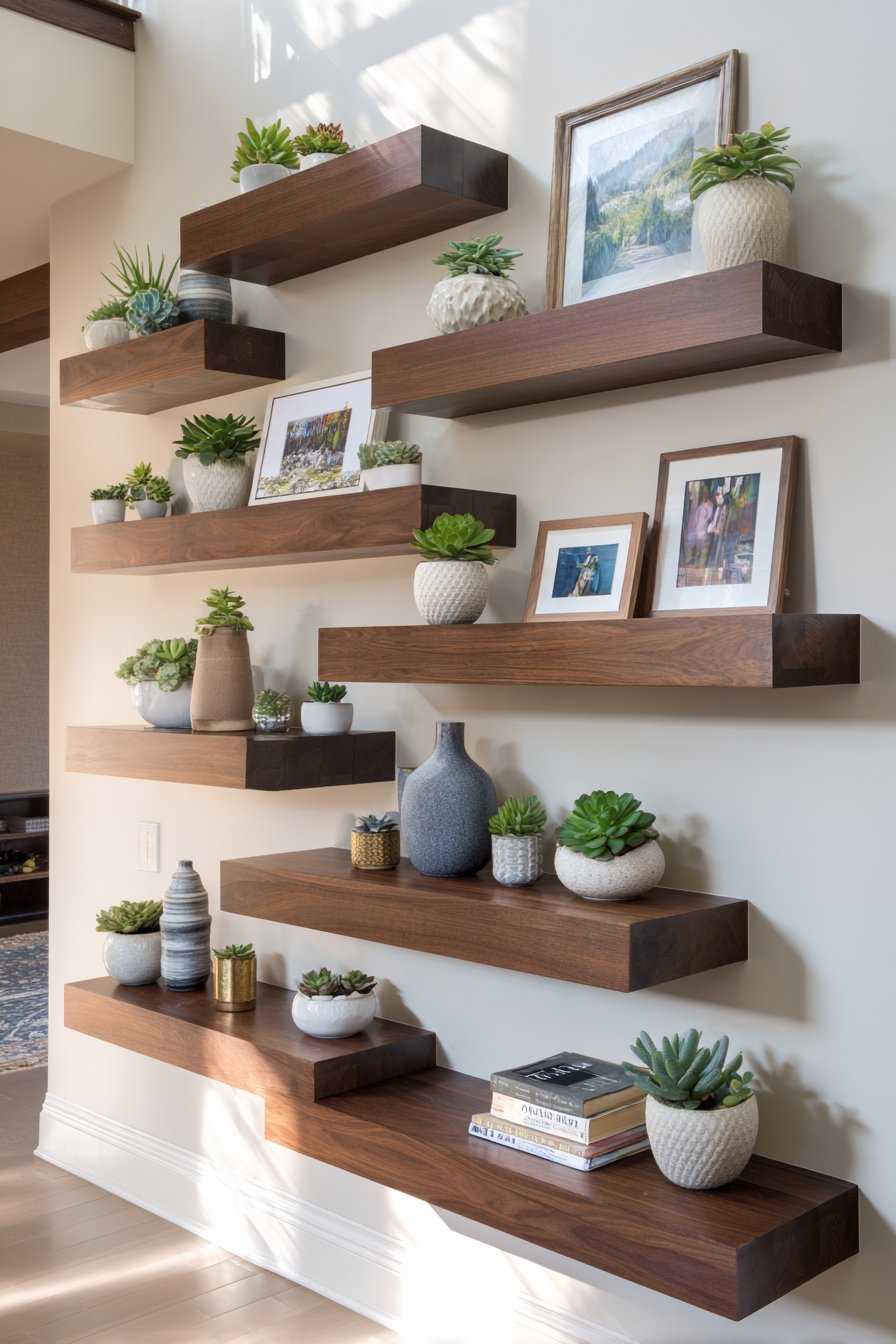
Floating shelves arranged in an asymmetrical staggered pattern offer a sophisticated wall display idea that combines visual interest with practical functionality. Rich walnut finish shelves create warmth against lighter wall colors while their invisible mounting hardware maintains clean, contemporary lines. Each shelf becomes a curated stage for ceramic vases, small potted succulents, vintage books, and framed family photos—a carefully balanced mix of decorative objects and meaningful personal items that tells a story about the homeowner’s interests and experiences.
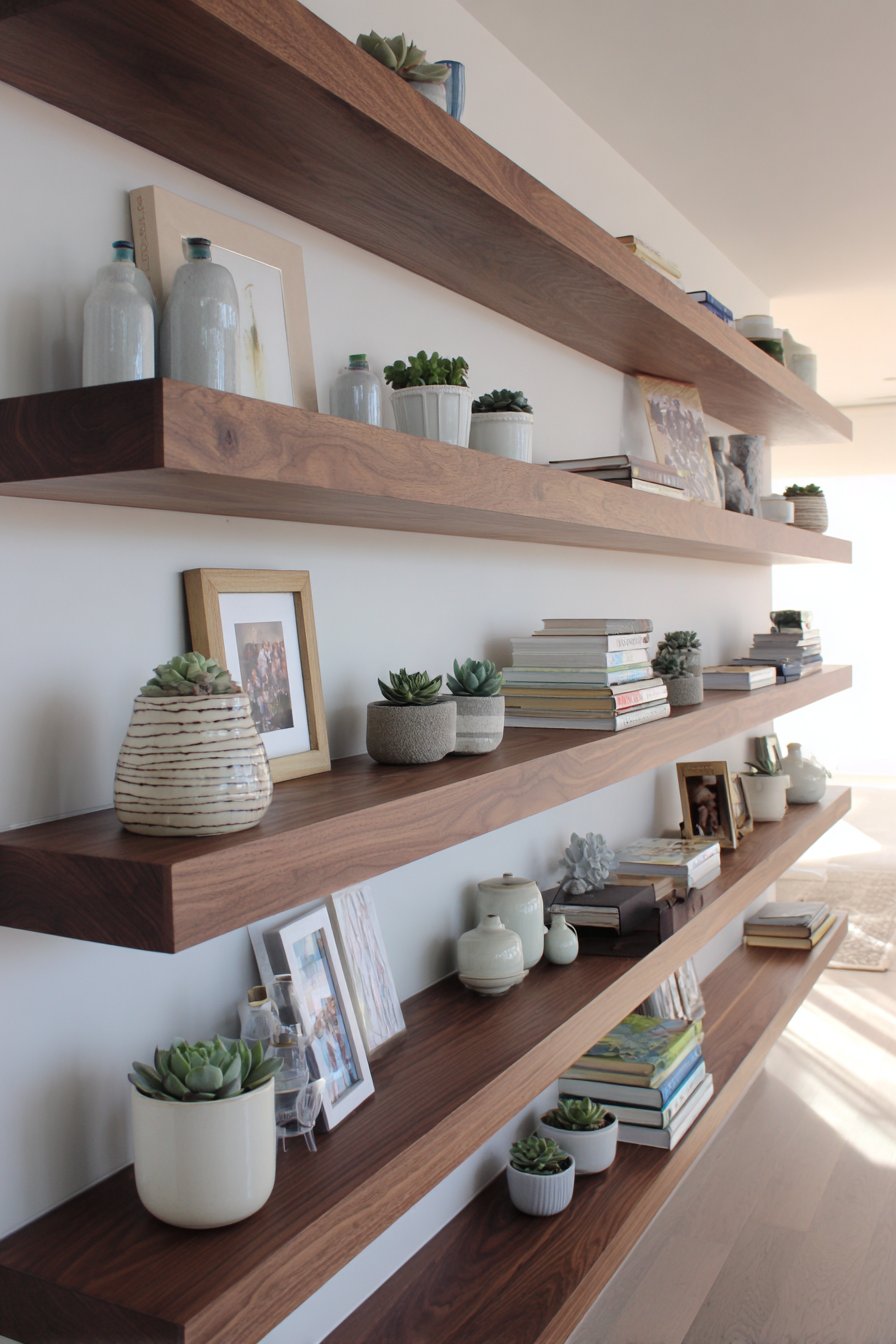
The beauty of this display lies in its flexibility and adaptability. Unlike permanently hung artwork, shelf arrangements can be refreshed seasonally or whenever inspiration strikes, allowing you to rotate collections and keep your space feeling current. The three-dimensional nature of shelf displays adds physical depth to walls, creating shadow play and visual layers that flat artwork cannot achieve. This dimensional quality becomes especially striking when proper lighting—whether natural or artificial—casts subtle shadows that emphasize the arrangement’s depth.
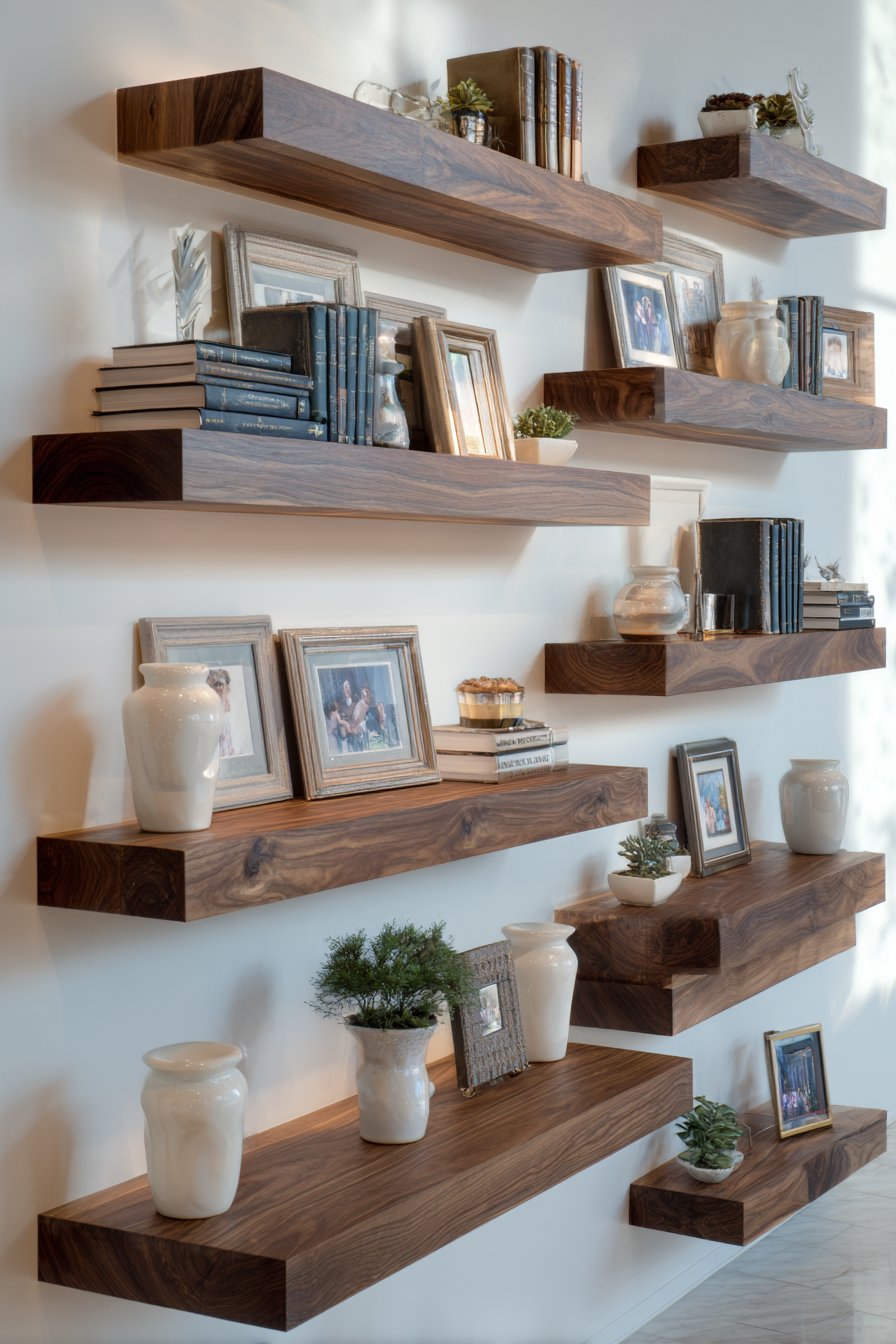
Wide-angle interior design photography captures how thoughtful object placement creates visual flow across the shelves. Varying the heights and sizes of displayed items prevents monotony while strategic groupings of odd-numbered objects (groups of three or five) create more visually pleasing compositions than even-numbered arrangements. The wood grain texture of the walnut shelves adds organic warmth that complements both modern and traditional decor styles, making this approach remarkably versatile across different interior design aesthetics.
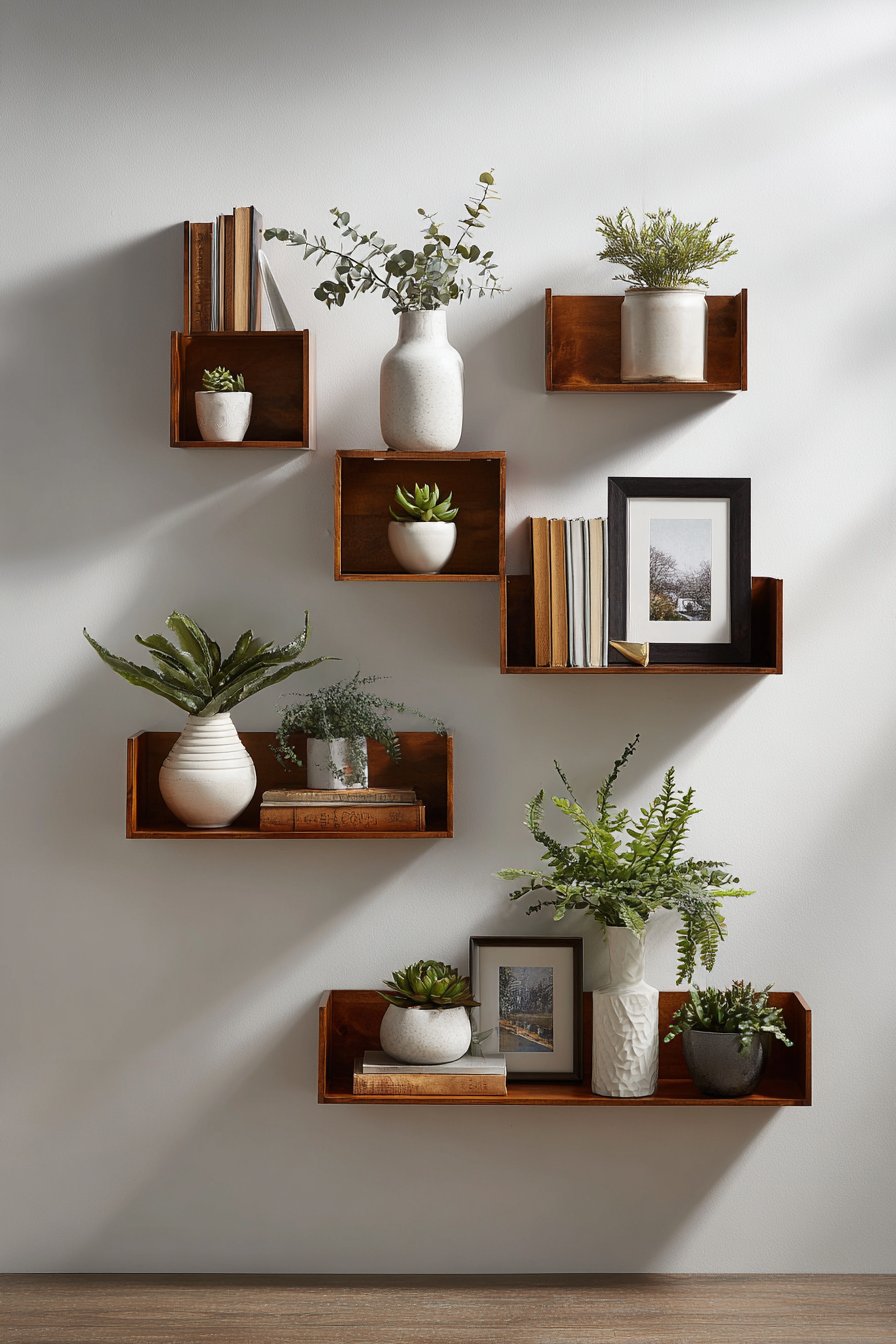
Key Design Tips: Install shelves at varying heights—typically 8-12 inches apart—to accommodate different object sizes and create visual interest. Use the rule of thirds when placing objects on each shelf, leaving some negative space to prevent overcrowding. Incorporate varying textures—smooth ceramics, rough plant containers, leather-bound books—to create tactile variety. Anchor each shelf with a larger statement piece and layer smaller objects around it for balanced composition.
3. Statement Mirror with Symmetrical Sconces
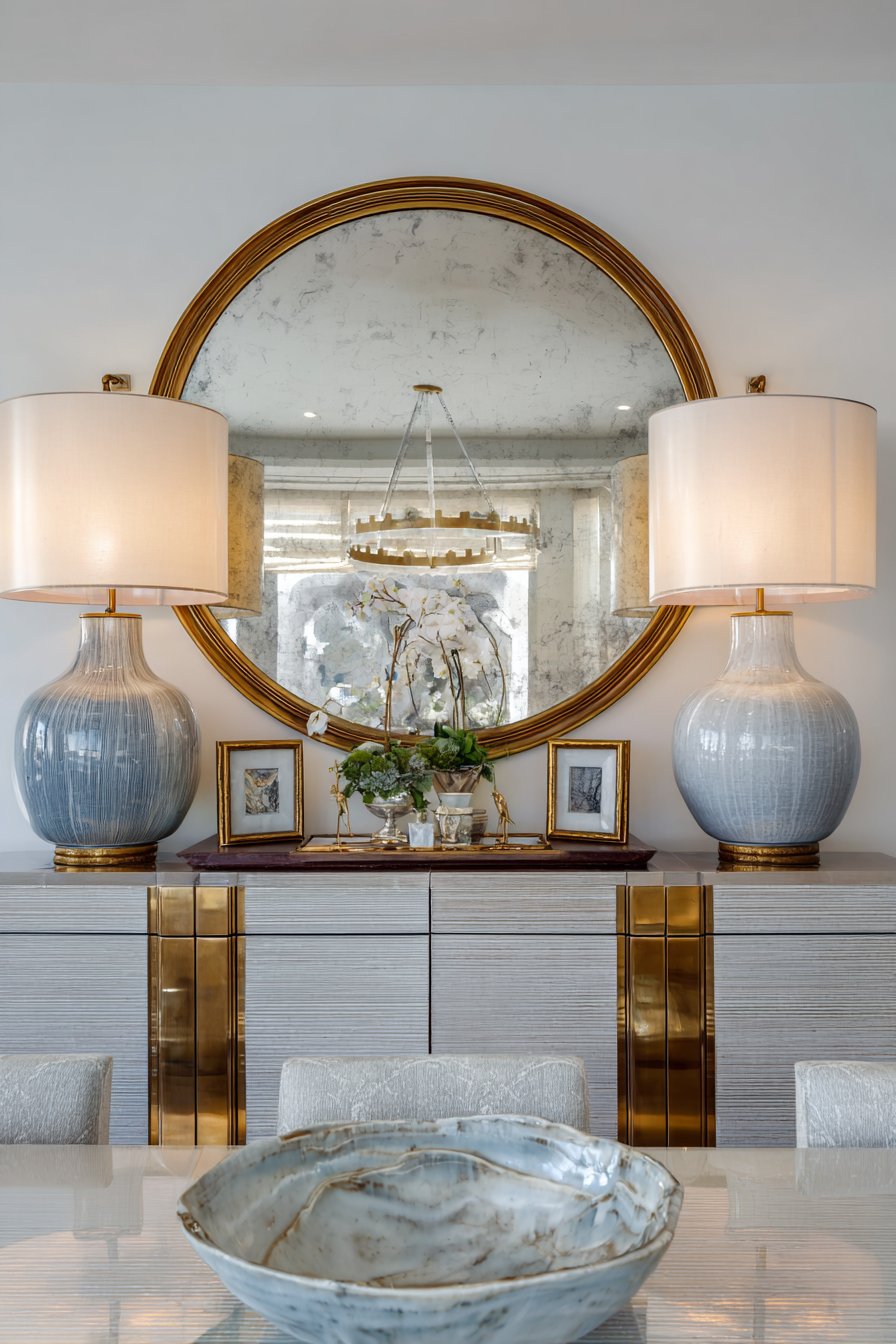
Creating a focal point through a statement mirror flanked by matching wall sconces represents a classic wall display idea that never goes out of style. The oversized round mirror with its brass frame serves as both a decorative element and a functional piece, reflecting light throughout the room while creating the illusion of expanded space. The warm brass finish adds a touch of luxury and sophistication, catching and reflecting light in ways that introduce subtle movement and shimmer to the wall composition.
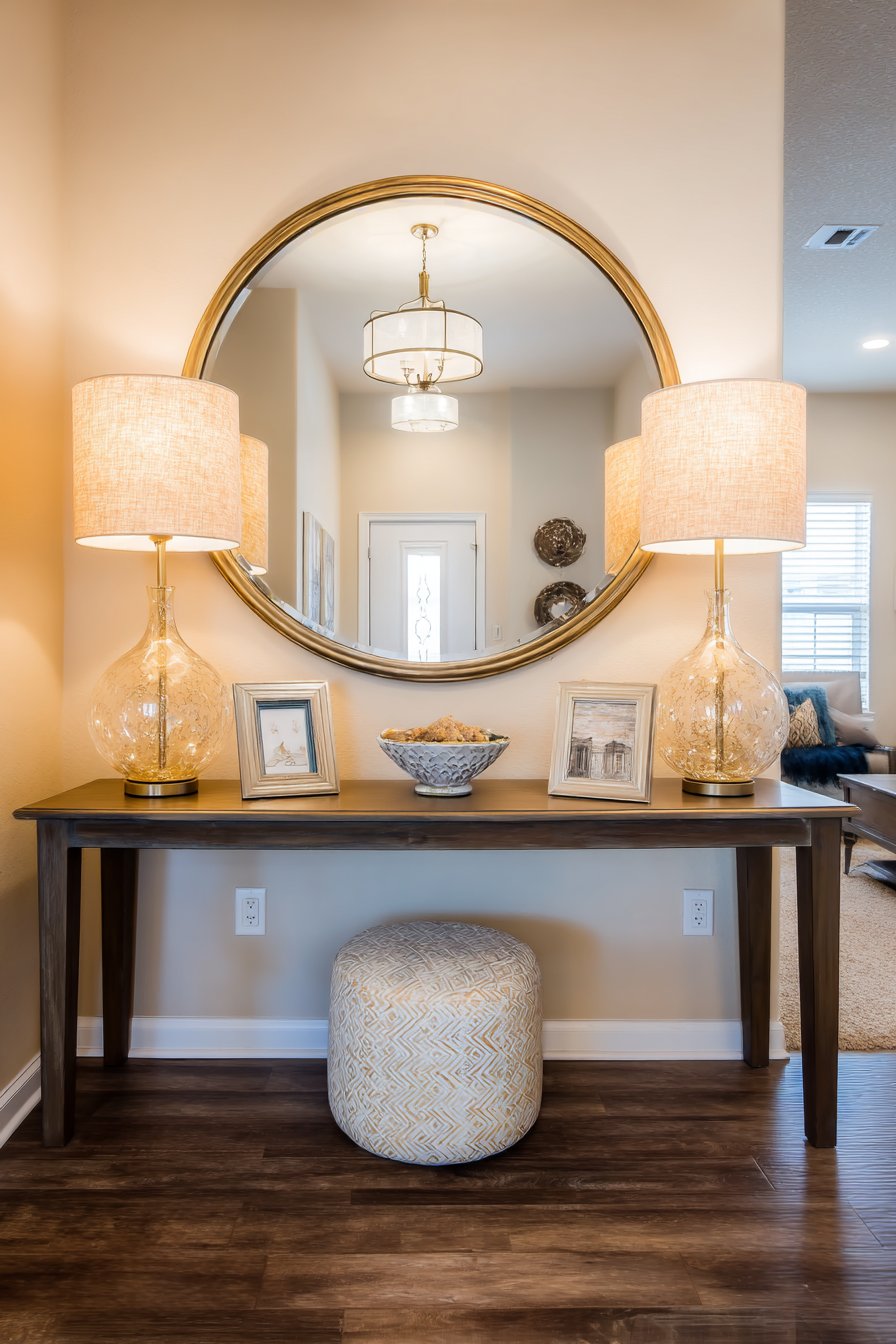
The symmetrical placement of wall sconces with frosted glass shades frames the mirror beautifully while providing layered lighting options that enhance ambiance. This balanced arrangement creates visual harmony that feels both intentional and inviting. Below the mirror, a narrow console table styled with carefully selected decor elements—table lamps, a ceramic bowl, and small framed photographs—grounds the vertical display and provides additional functional surface space. This complete vignette transforms a simple wall into a fully realized design moment.
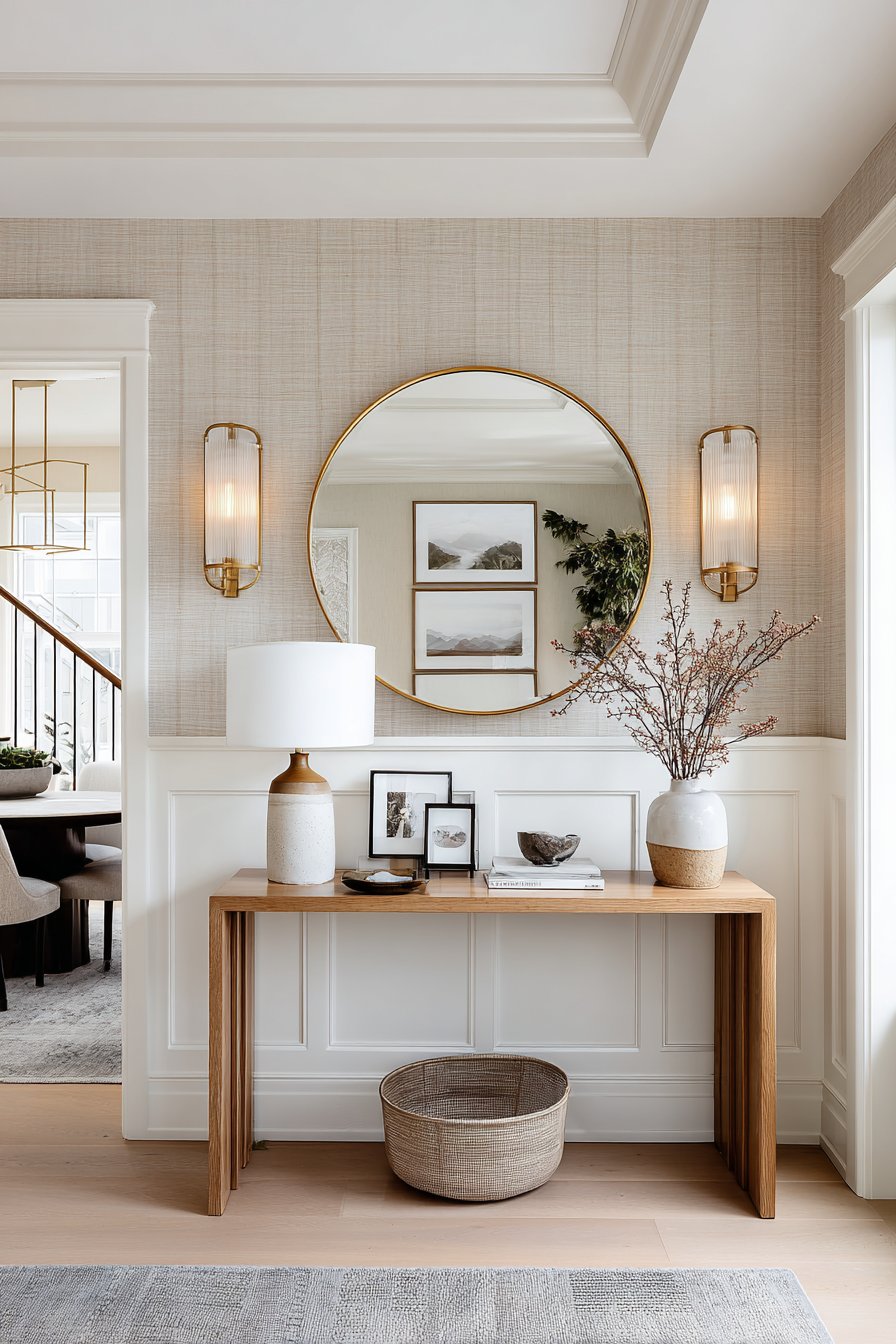
The interplay between natural and artificial lighting in this display creates different moods throughout the day. Morning sunlight might stream through nearby windows to illuminate the arrangement naturally, while evening lighting from the sconces creates an intimate, warm glow perfect for entertaining. The reflective qualities of the mirror and brass finishes multiply this lighting effect, making the space feel brighter and more open than its actual square footage would suggest.
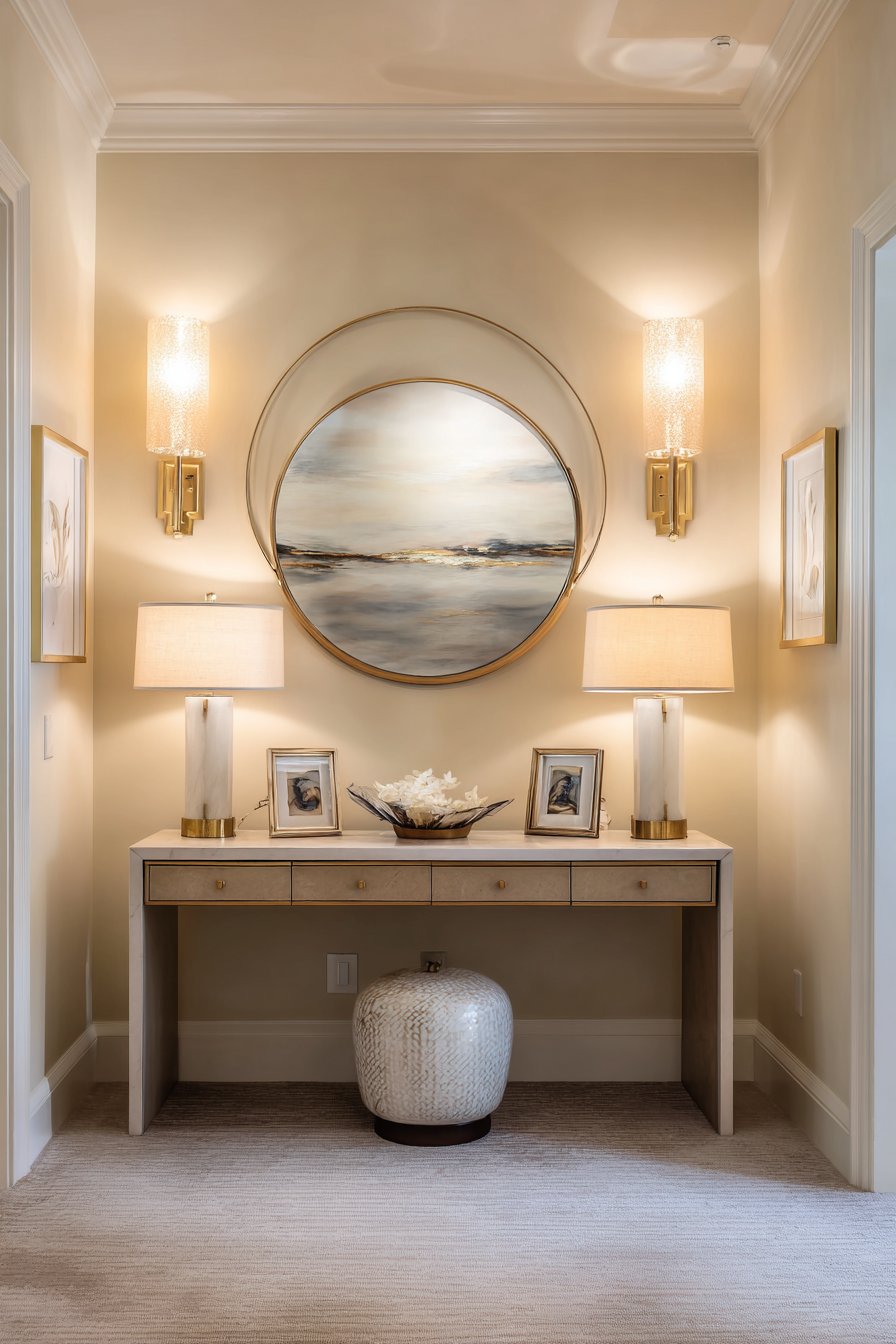
Key Design Tips: Position the mirror at eye level, with its center approximately 57-65 inches from the floor for optimal viewing and reflection. Choose sconces that are proportional to the mirror size—typically one-third to one-half the mirror’s diameter. Ensure sconces are positioned 60-70 inches from the floor for ideal lighting height. Style the console below with varying heights of objects to create visual interest that complements rather than competes with the mirror above.
4. Minimalist Large-Scale Canvas
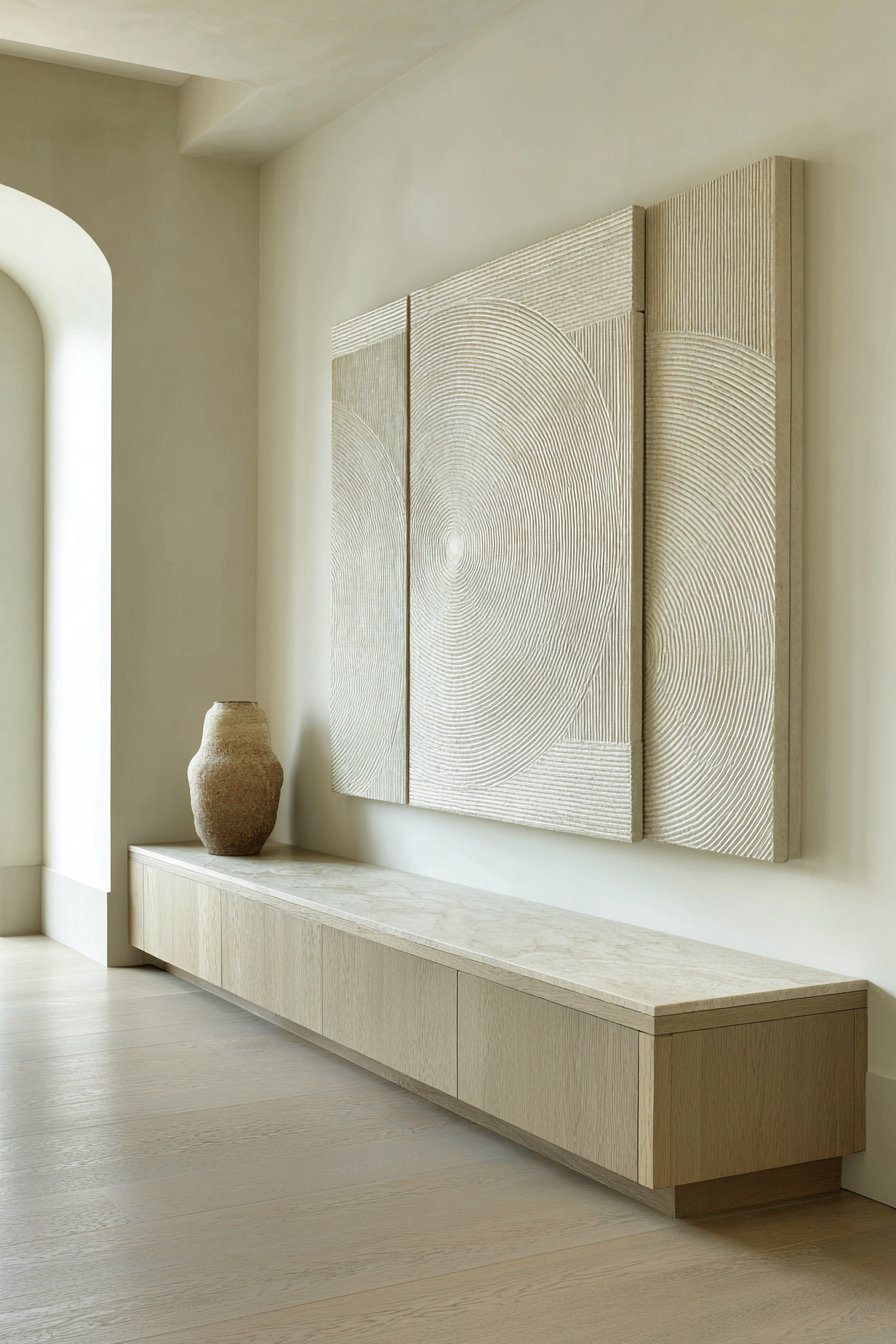
Sometimes the most powerful wall display ideas embrace restraint and simplicity. A single large-scale canvas print featuring abstract geometric art commands attention through its substantial presence rather than through busy complexity. This minimalist approach to wall display celebrates the concept of “less is more,” allowing one carefully selected piece to serve as the room’s artistic statement. The intentional museum-quality spacing from the ceiling creates breathing room that enhances the artwork’s impact rather than crowding it against architectural elements.
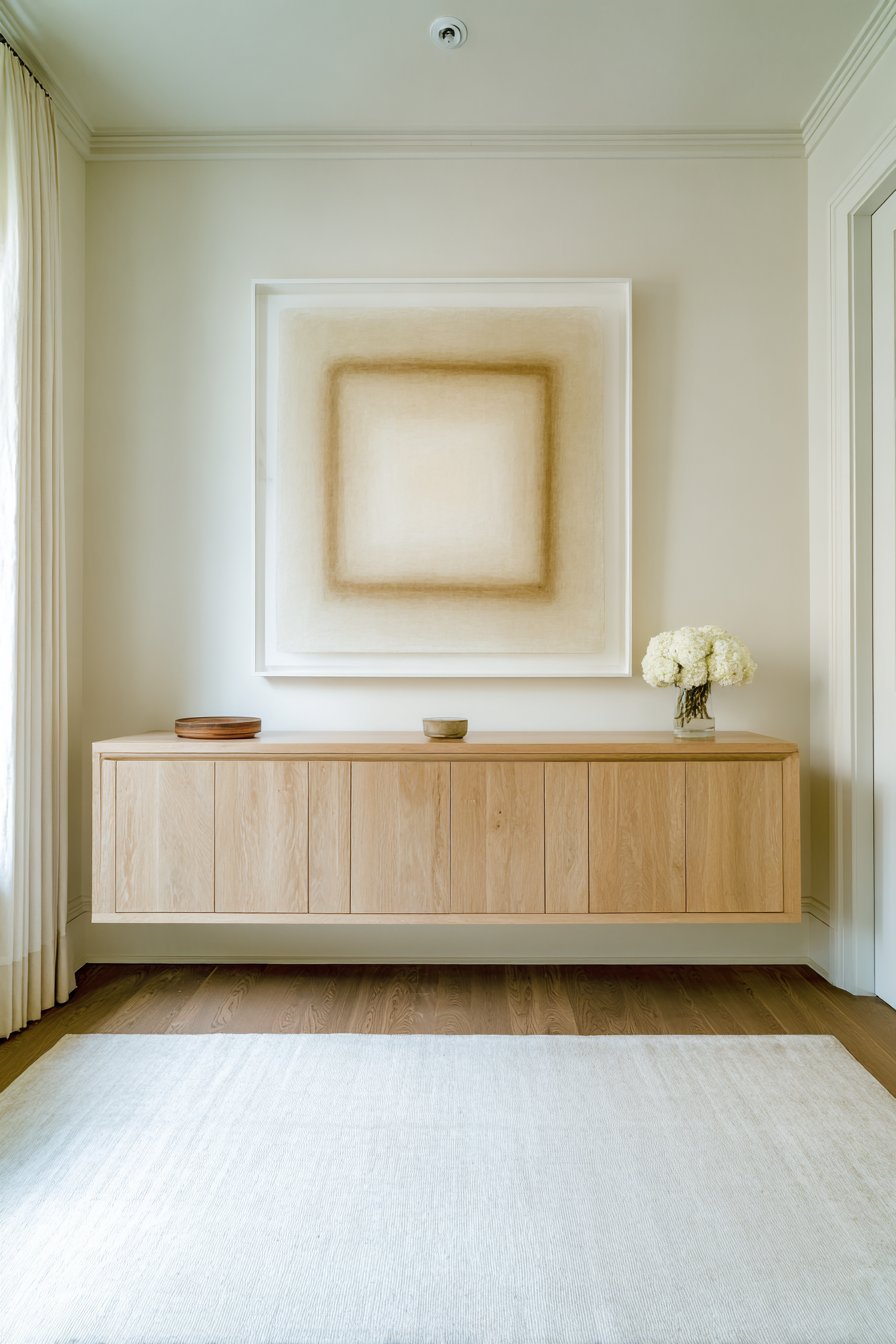
The low-profile media console in light oak beneath the artwork provides a grounding horizontal element that balances the vertical canvas. This pairing creates a complete compositional relationship between the wall display and the room’s furnishings. The simple composition emphasizes quality over quantity, directing focus to the artwork’s details—the texture of the canvas, the subtlety of color transitions, the precision of geometric forms—elements that might be lost in a more cluttered arrangement.
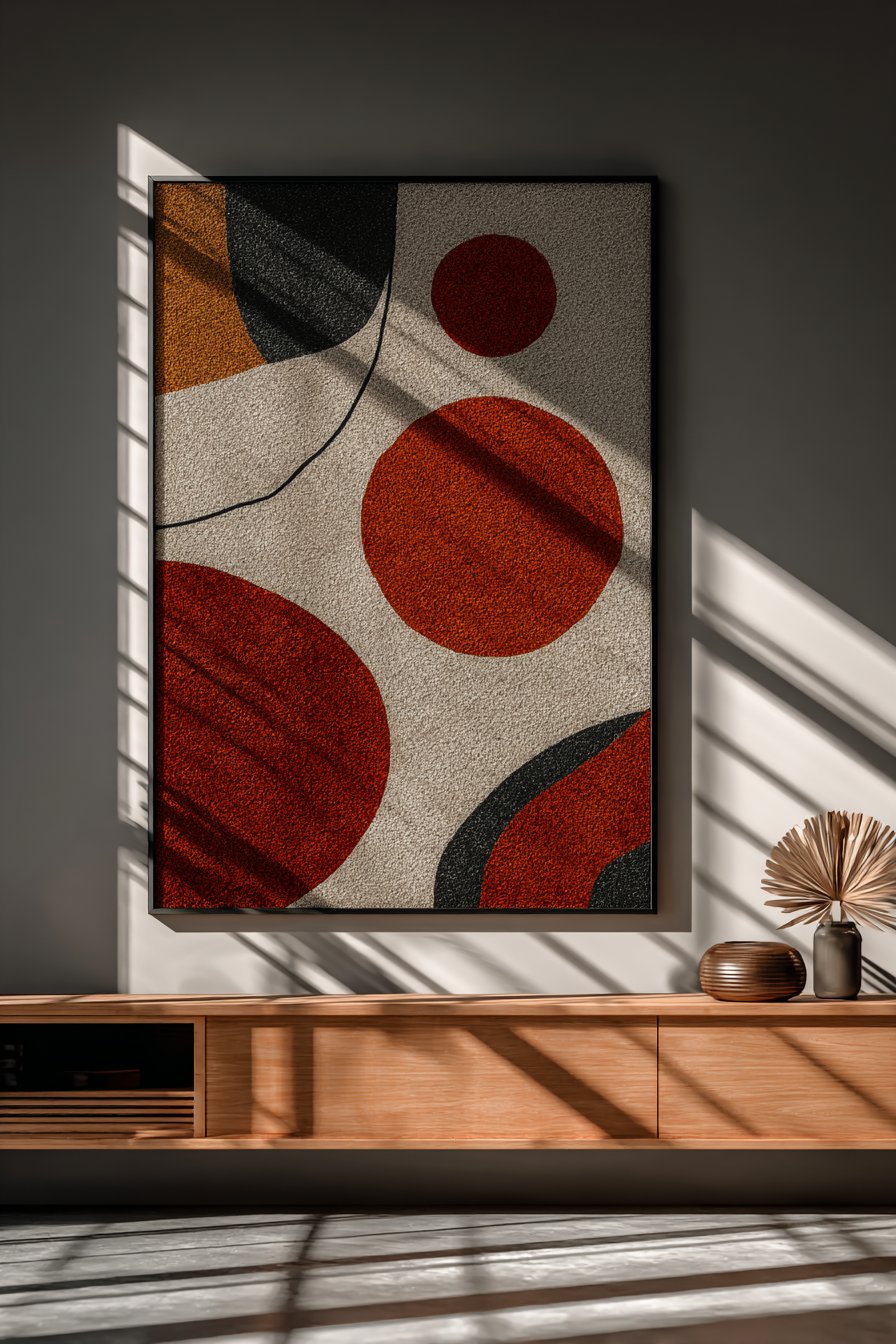
Soft diffused daylight plays across the canvas surface throughout the day, revealing texture and depth that artificial lighting alone cannot achieve. The clean lines and uncluttered approach create a sense of calm and sophistication that works particularly well in modern and contemporary interiors. This display style requires confidence and commitment to simplicity, but when executed well, delivers maximum visual impact with minimal elements.
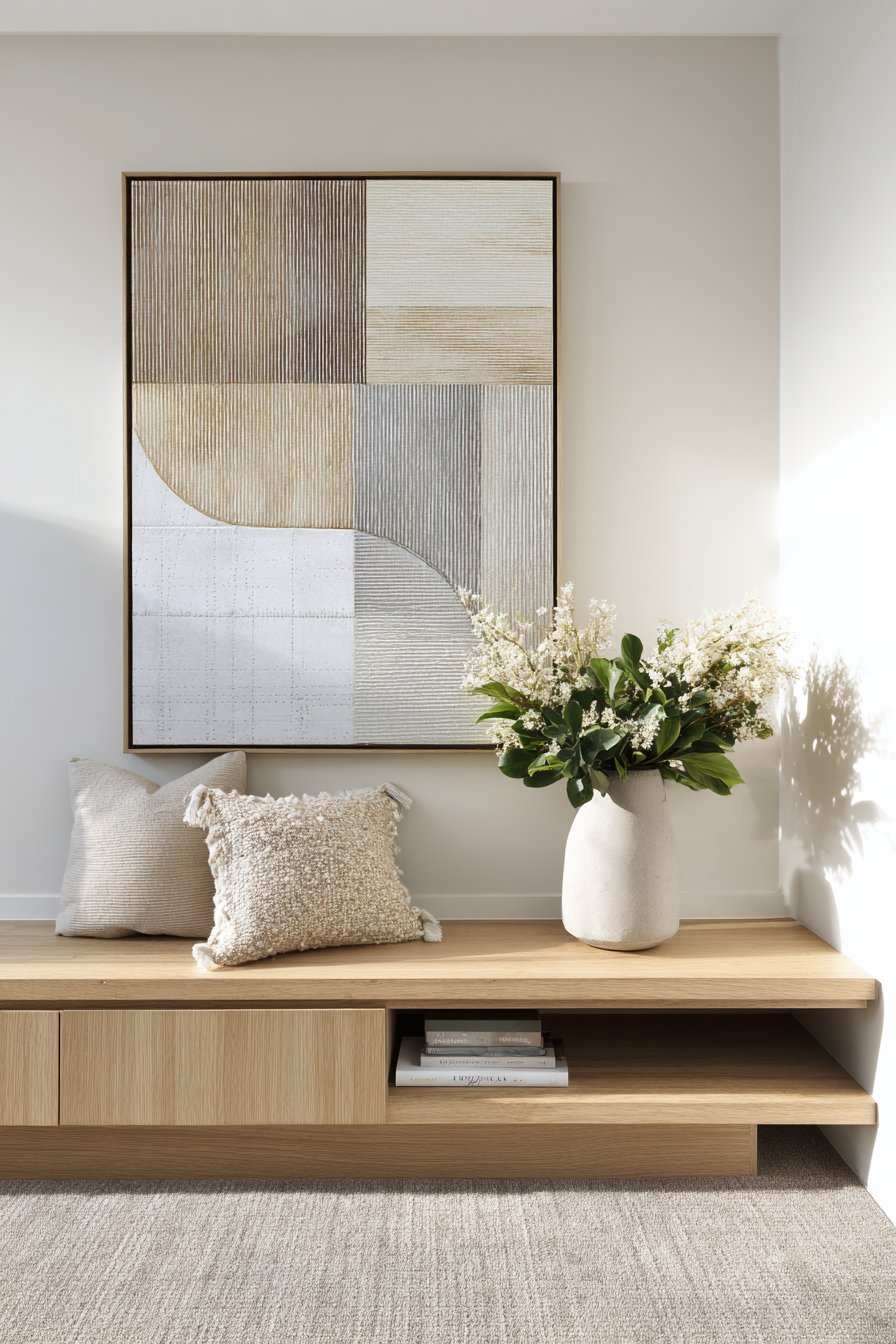
Key Design Tips: Choose artwork that measures approximately two-thirds to three-quarters the width of the furniture below it for proper scale. Leave 6-12 inches of space between the top of the furniture and the bottom of the artwork. Select a piece with colors that complement your existing palette while adding visual interest. Consider the canvas’s texture—hand-painted pieces add more depth than prints, while wrapped edges eliminate the need for framing.
5. Maximalist Salon-Style Arrangement
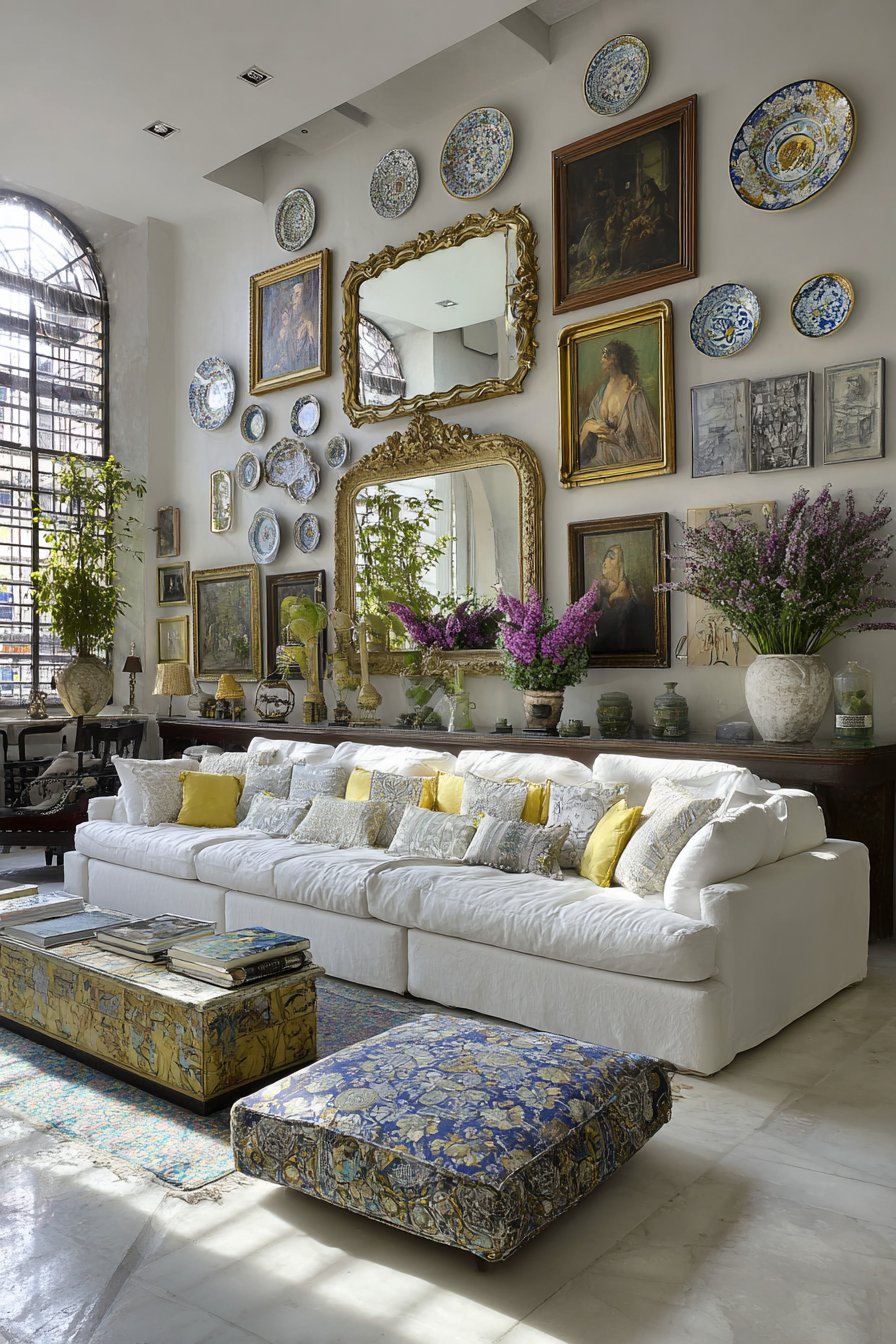
For those who embrace abundance and eclecticism, a salon-style wall display offers the perfect opportunity to create a visually rich, layered arrangement that covers an entire wall from floor to ceiling. This maximalist approach combines vintage oil paintings, modern prints, ornate gilt-framed mirrors, and collected ceramic plates in various sizes to create a densely packed yet thoughtfully curated display. The key to preventing visual chaos lies in maintaining balance through careful color coordination and strategic frame style variation.
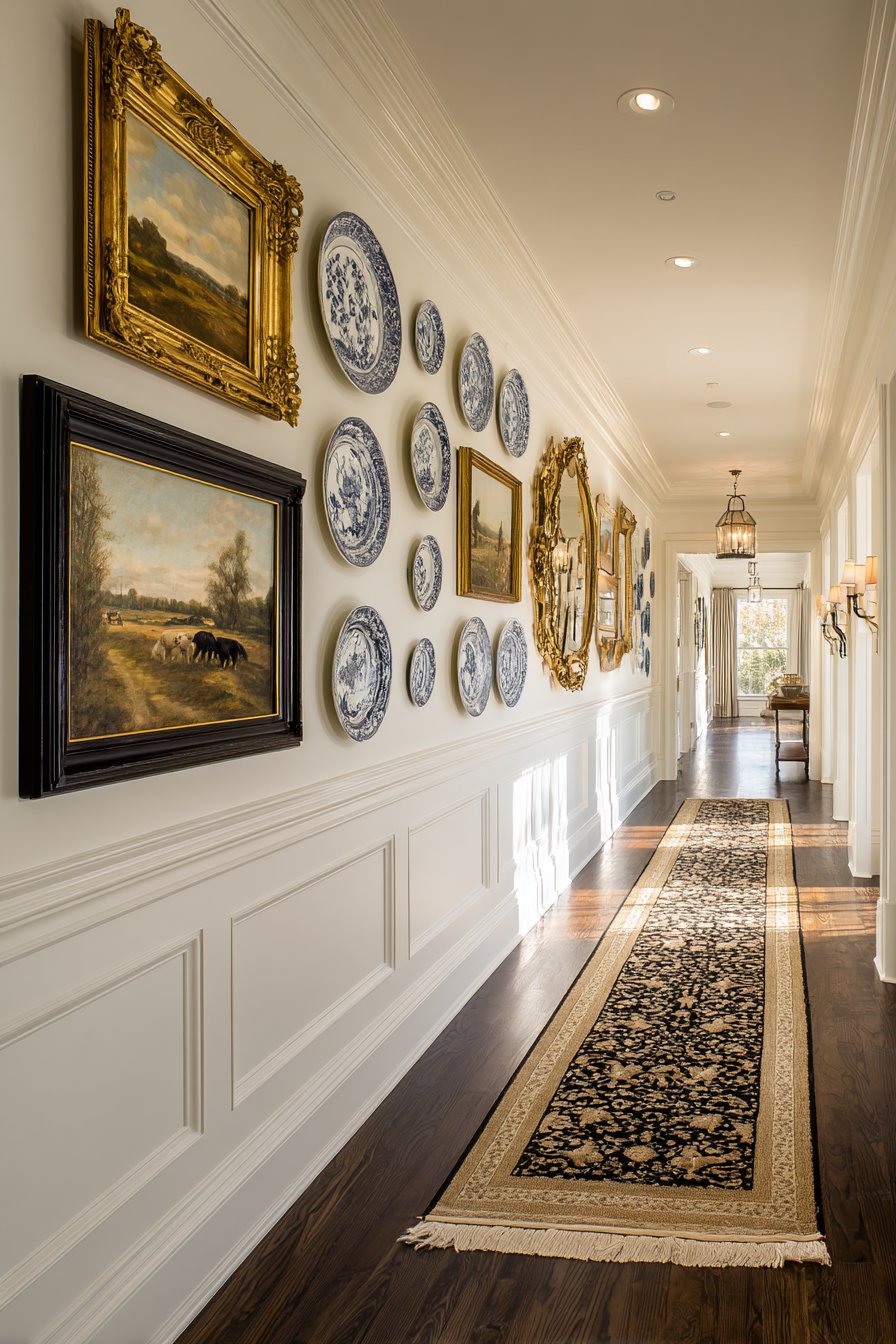
Despite the density of objects, successful salon-style arrangements maintain visual harmony by considering the overall composition as a single work of art rather than a collection of individual pieces. This requires stepping back frequently during installation to assess balance, color distribution, and spacing. The layered arrangement creates incredible depth, with frames occasionally overlapping and objects positioned at varying distances from the wall to create three-dimensional interest that evolves as you move through the space.
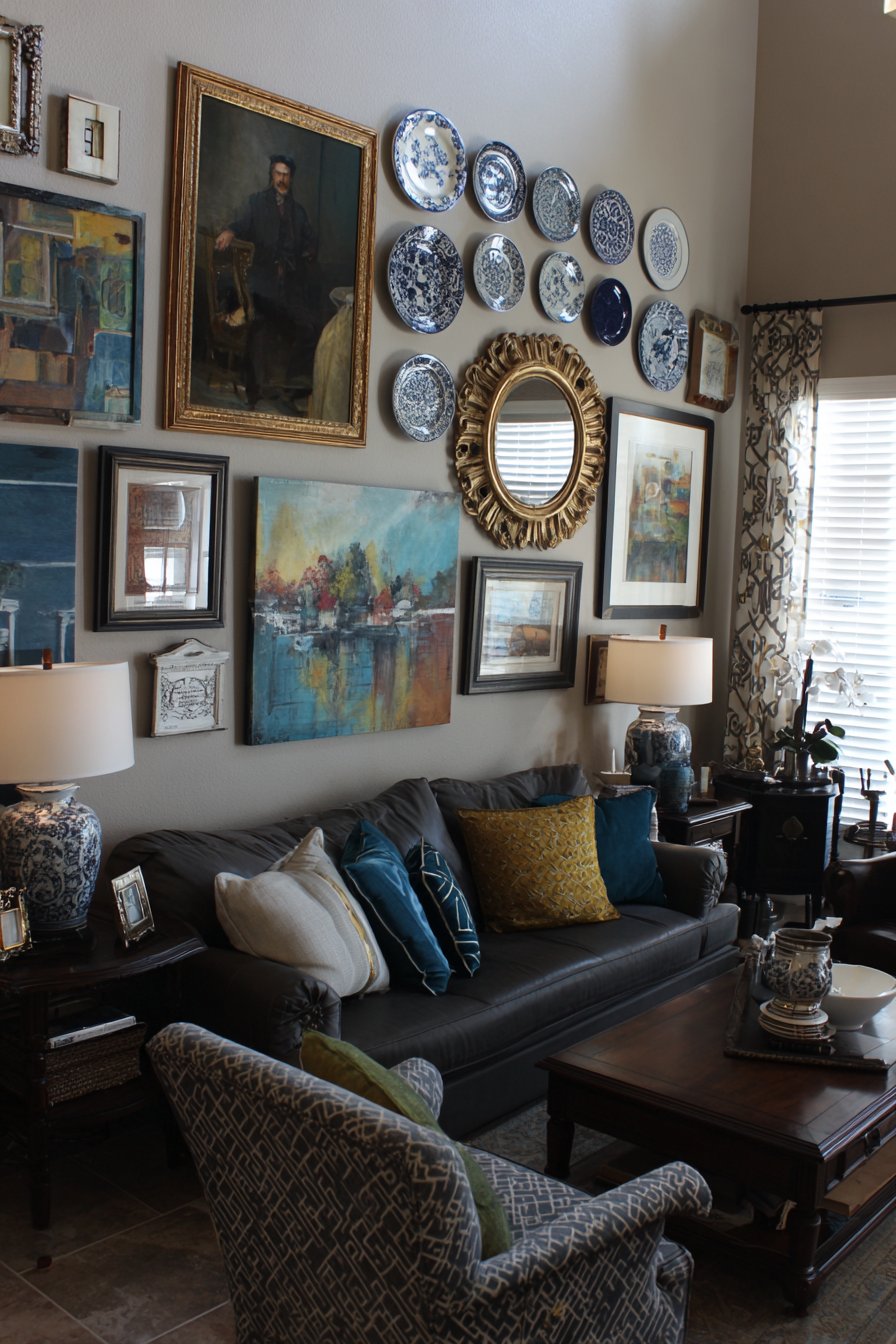
Wide-angle professional interior photography reveals how natural lighting interacts with this complex arrangement, creating shadow patterns and highlighting the varied textures of different frame materials, canvas surfaces, and reflective elements. The maximalist approach works particularly well in spaces with high ceilings or large expanses of blank wall, transforming potentially overwhelming architectural elements into opportunities for dramatic design impact.
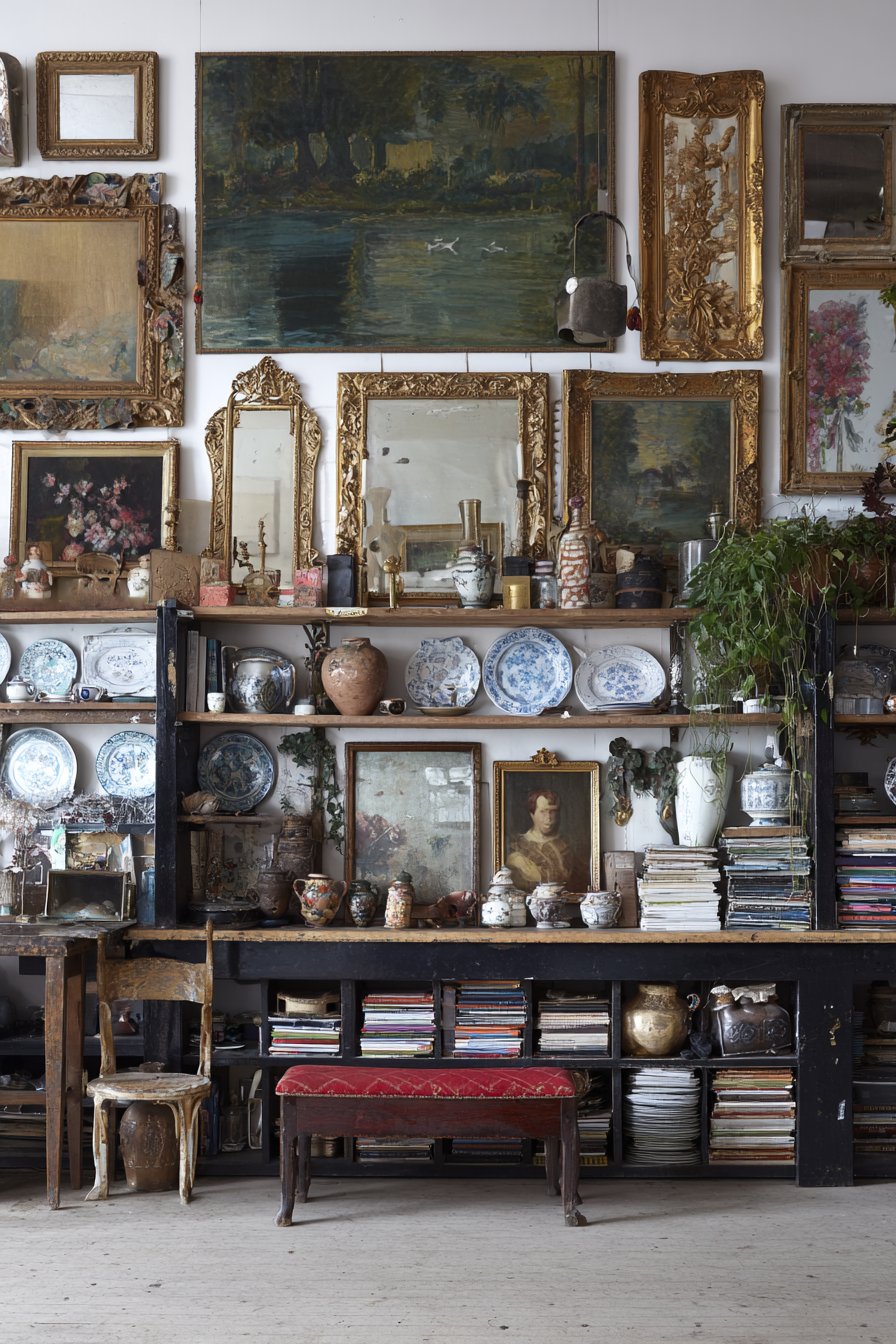
Key Design Tips: Begin by laying out all pieces on the floor to experiment with arrangements before committing to wall placement. Start hanging from the center and work outward to maintain balance. Vary frame styles and finishes while maintaining a cohesive color story—perhaps all warm metallics or all cool tones. Include different types of art—paintings, prints, photographs, three-dimensional objects—to create textural variety. Leave minimal spacing between pieces (1-2 inches) to achieve authentic salon-style density.
6. Living Wall with Vertical Garden Installation
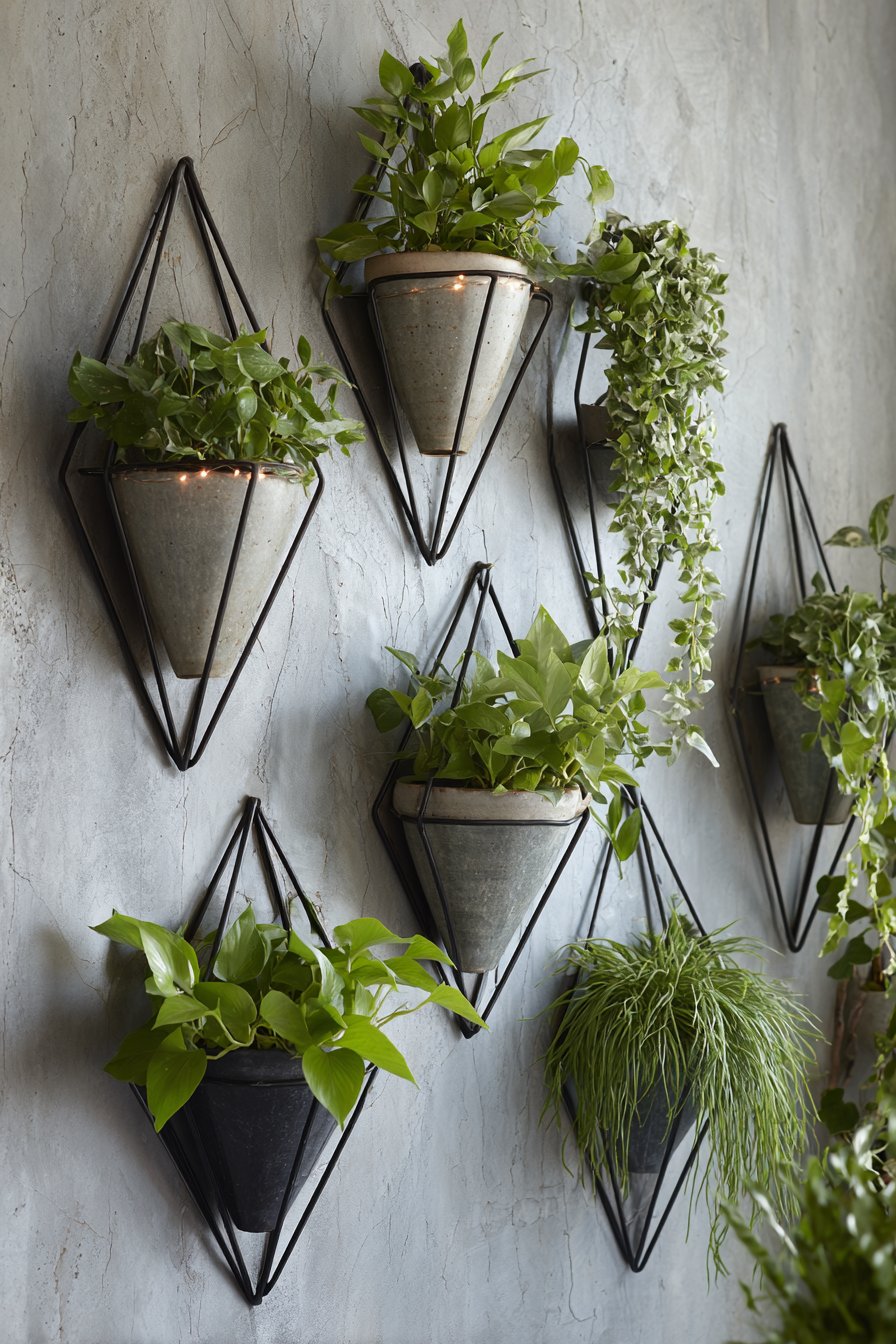
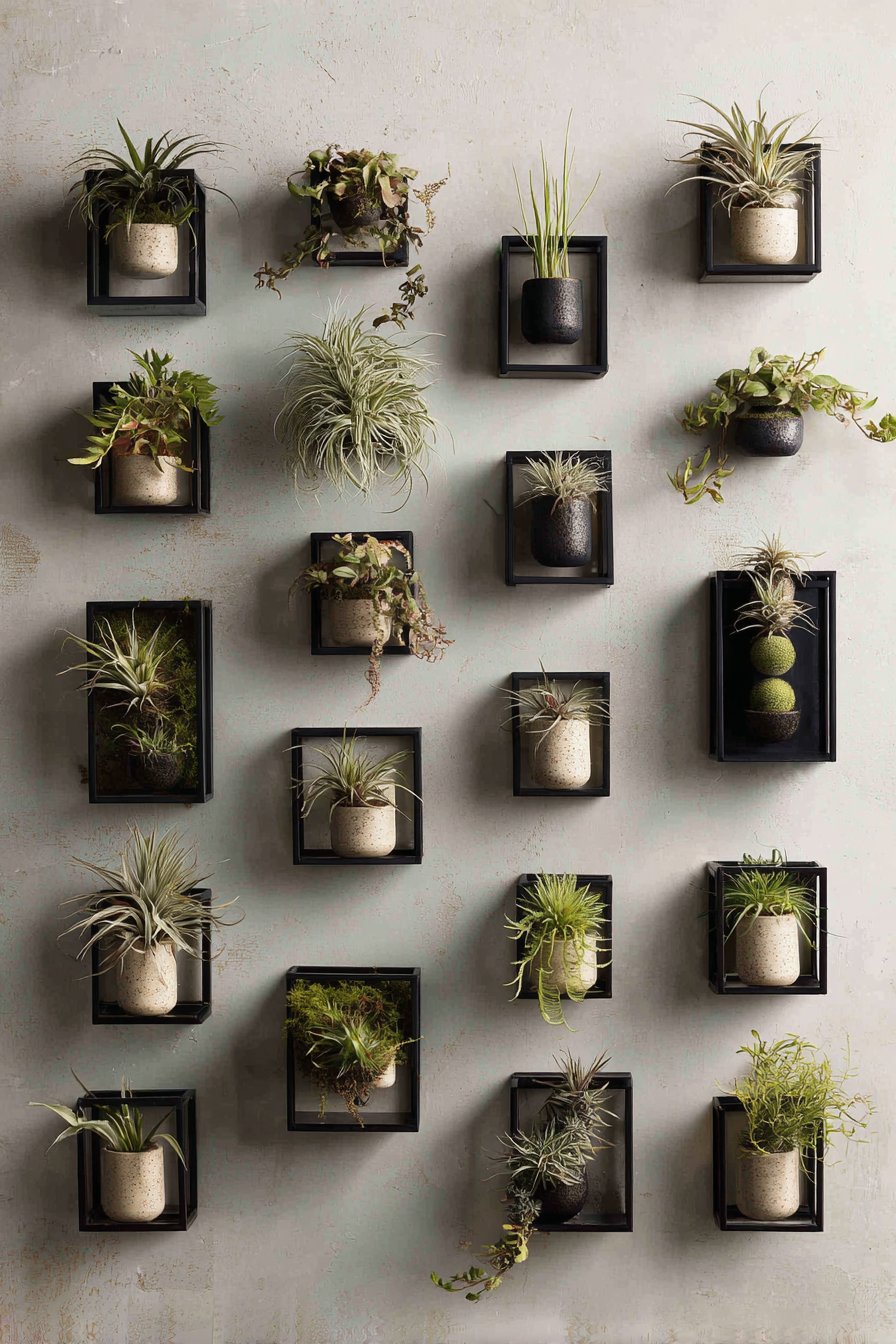
Bringing nature indoors through a vertical garden installation represents one of the most innovative and refreshing wall display ideas for contemporary homes. Mounted planters in geometric metal frames create structured organization for small trailing pothos, ferns, and air plants, transforming a standard wall into living artwork. The alternation between matte black metal holders and natural ceramic pots introduces visual rhythm while the varied plant textures and forms create organic movement and ever-changing beauty.
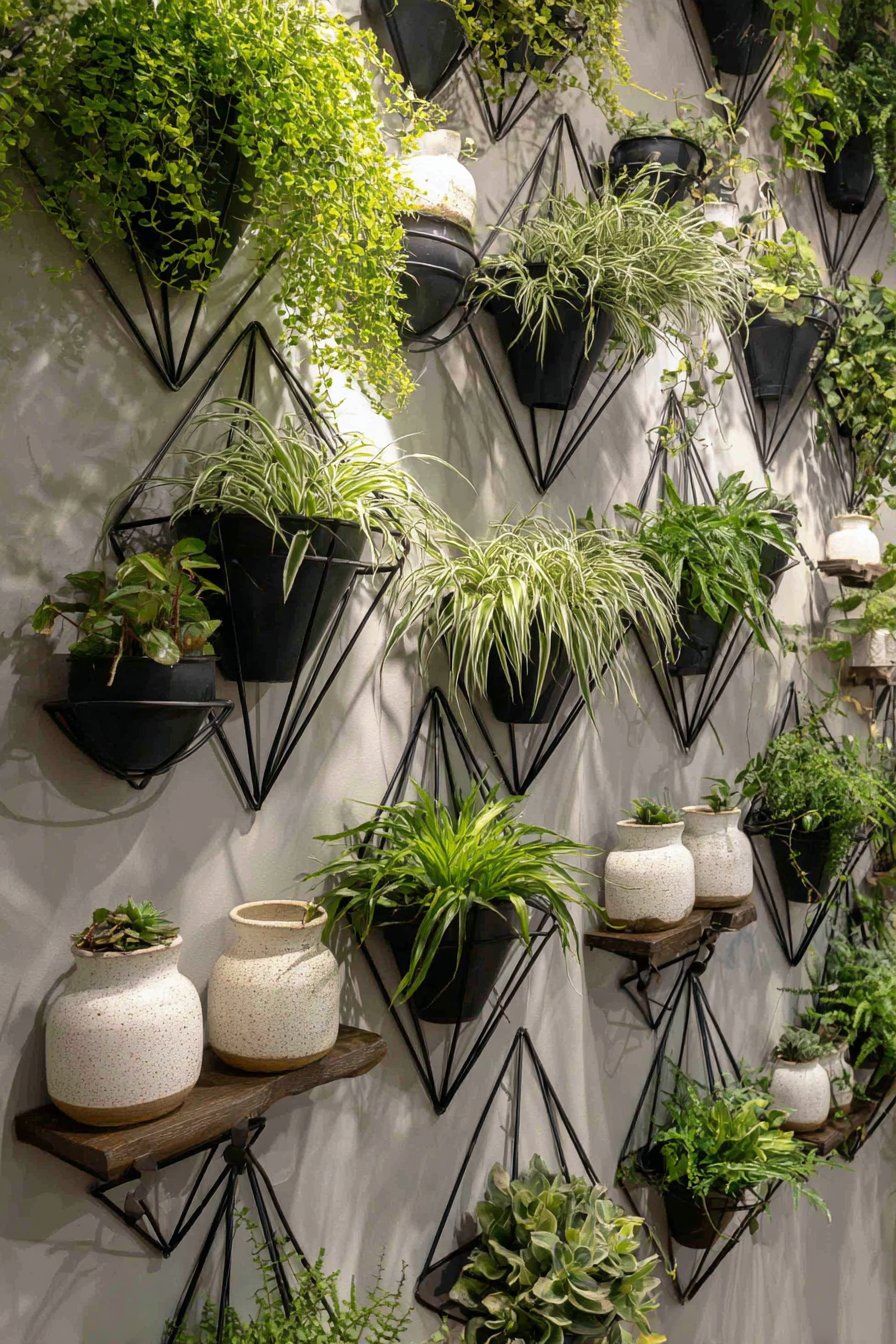
The light gray accent wall serves as the perfect neutral backdrop, allowing the vibrant greens of the foliage to pop while providing subtle contrast to the mounting hardware. Integrated LED strip lighting positioned to highlight plants from below creates dramatic shadow patterns and ensures plants receive adequate supplemental light for healthy growth. This functional element doubles as a design feature, particularly striking during evening hours when the backlit foliage creates an almost ethereal glow.
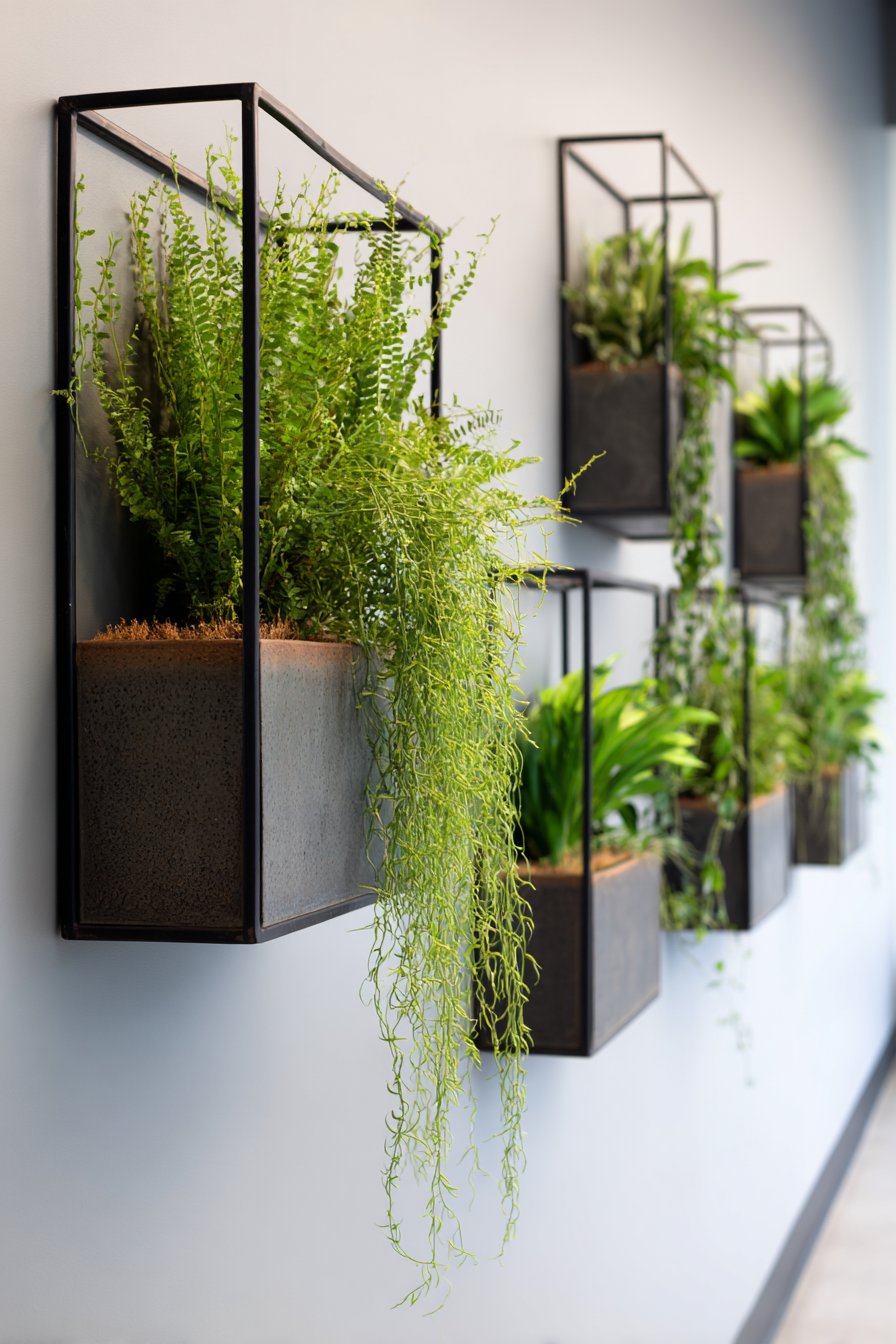
The living wall display offers benefits beyond aesthetics—plants improve indoor air quality, introduce natural humidity, and create a calming biophilic connection to nature within interior spaces. The vertical arrangement maximizes limited floor space while creating significant visual impact, making this approach ideal for apartments or smaller homes where traditional plant displays might consume valuable square footage.
Key Design Tips: Select plants with similar light and water requirements for easier maintenance. Install a drip tray system or ensure planters are properly sealed to protect walls from water damage. Position the living wall near natural light sources or install full-spectrum grow lights for plant health. Start with low-maintenance varieties like pothos, philodendron, and snake plants if you’re new to plant care. Create visual interest by varying plant heights, leaf shapes, and trailing versus upright growth patterns.
7. Modern Box Shelf Trio
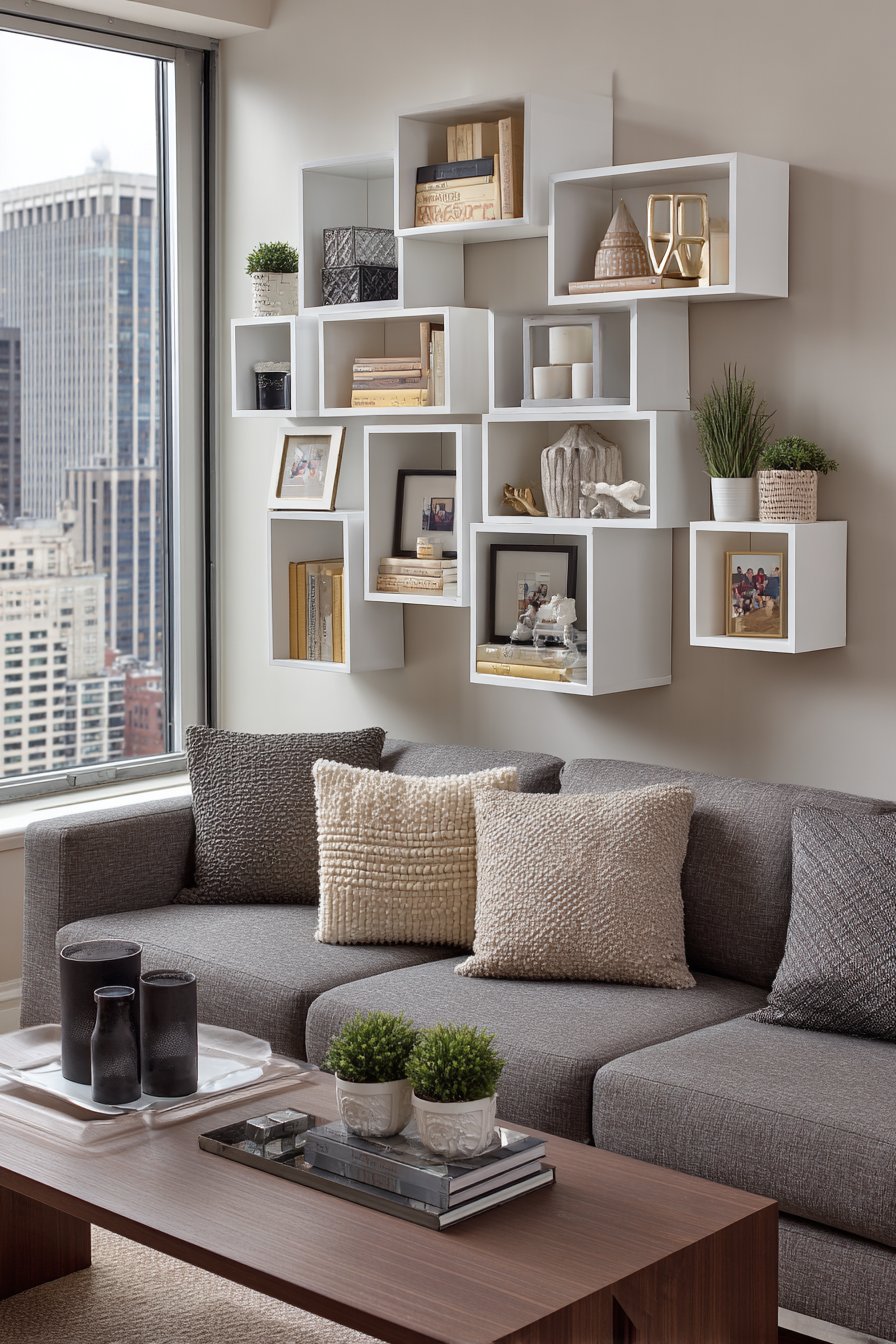
Three matching floating box shelves in matte white create a clean, contemporary wall display that celebrates organization and intentional curation. This horizontal arrangement divides visual space into three distinct zones, each containing a themed collection that tells a different story. The first shelf displays coffee table books arranged by color—a popular design technique that creates visual harmony while making practical reading material easily accessible. The careful color coordination transforms ordinary books into decorative elements that contribute to the room’s overall aesthetic.
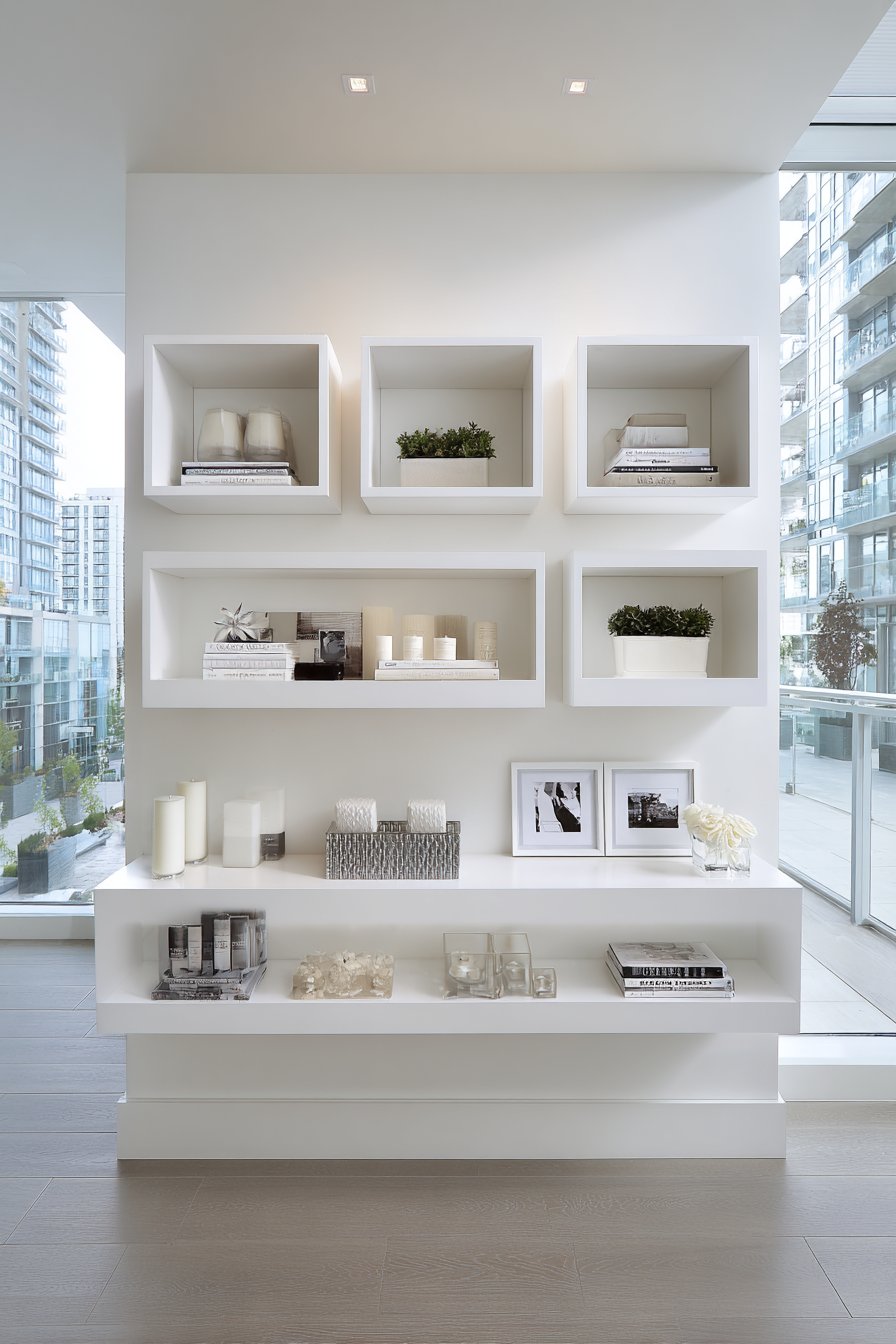
The second shelf showcases small sculptural objects and candles, introducing varying heights and forms that create dimensional interest. These carefully chosen pieces might include abstract ceramic sculptures, geometric brass objects, or handcrafted wooden forms—items selected for their sculptural qualities and how they complement the overall design scheme. The third shelf holds framed photographs and small potted plants, blending personal memories with living elements that bring warmth and vitality to the display.
The symmetrical arrangement creates order and balance that appeals to those who appreciate clean lines and modern aesthetics. Professional photography with natural window light emphasizes the pristine white of the shelves while the curated contents add pops of color and texture. This approach works beautifully in minimalist interiors where every object must earn its place through both beauty and purpose.
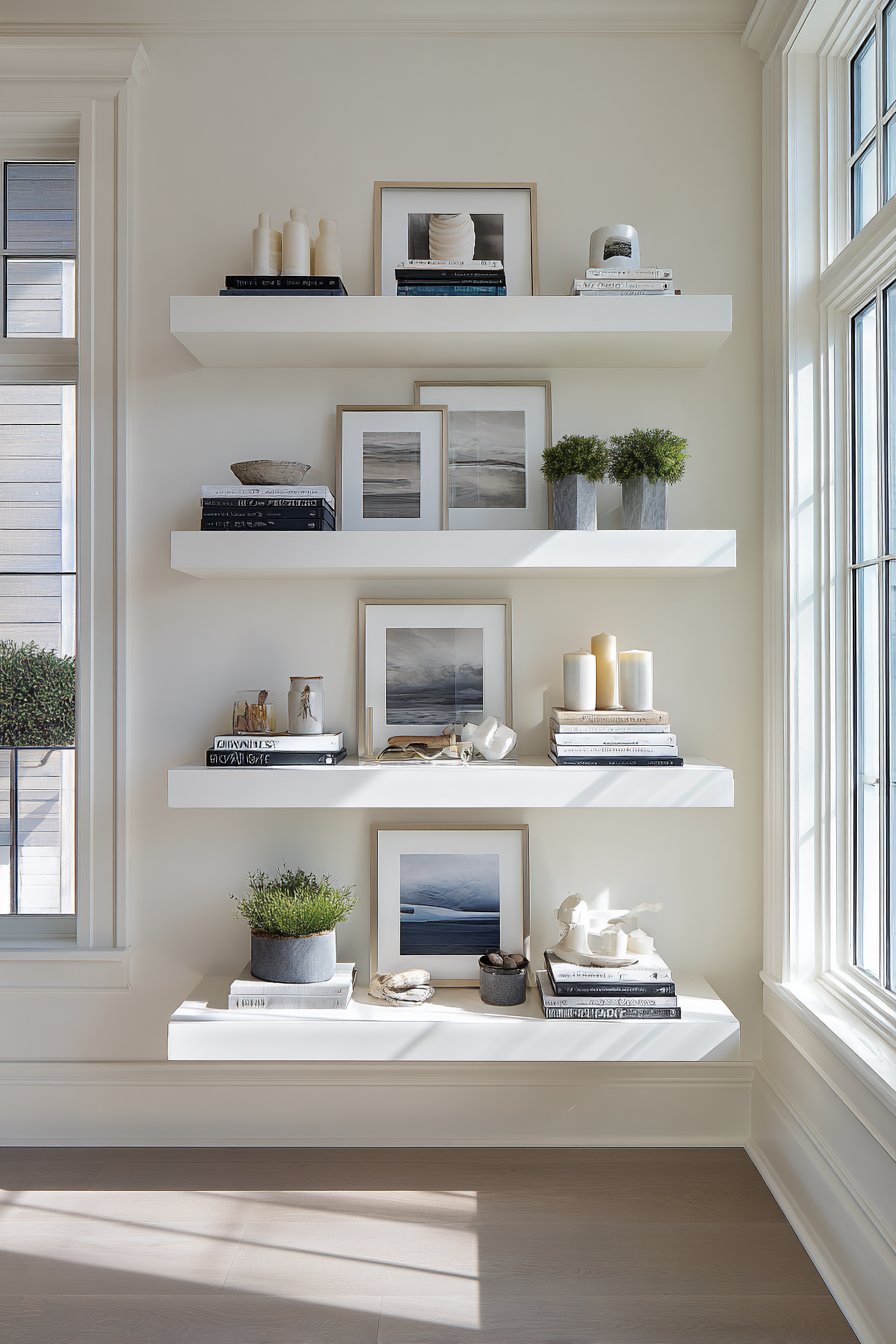
Key Design Tips: Maintain consistent spacing between shelves—typically 12-18 inches depending on the items displayed. Keep each shelf’s contents thematically related but visually varied in height and form. Use odd-numbered groupings of objects (3, 5, or 7 items) for more dynamic compositions. Leave adequate negative space on each shelf—aim to fill only 60-70% of the available surface. Rotate displayed items seasonally to keep the arrangement feeling fresh and current.
8. Functional Pegboard Organization System
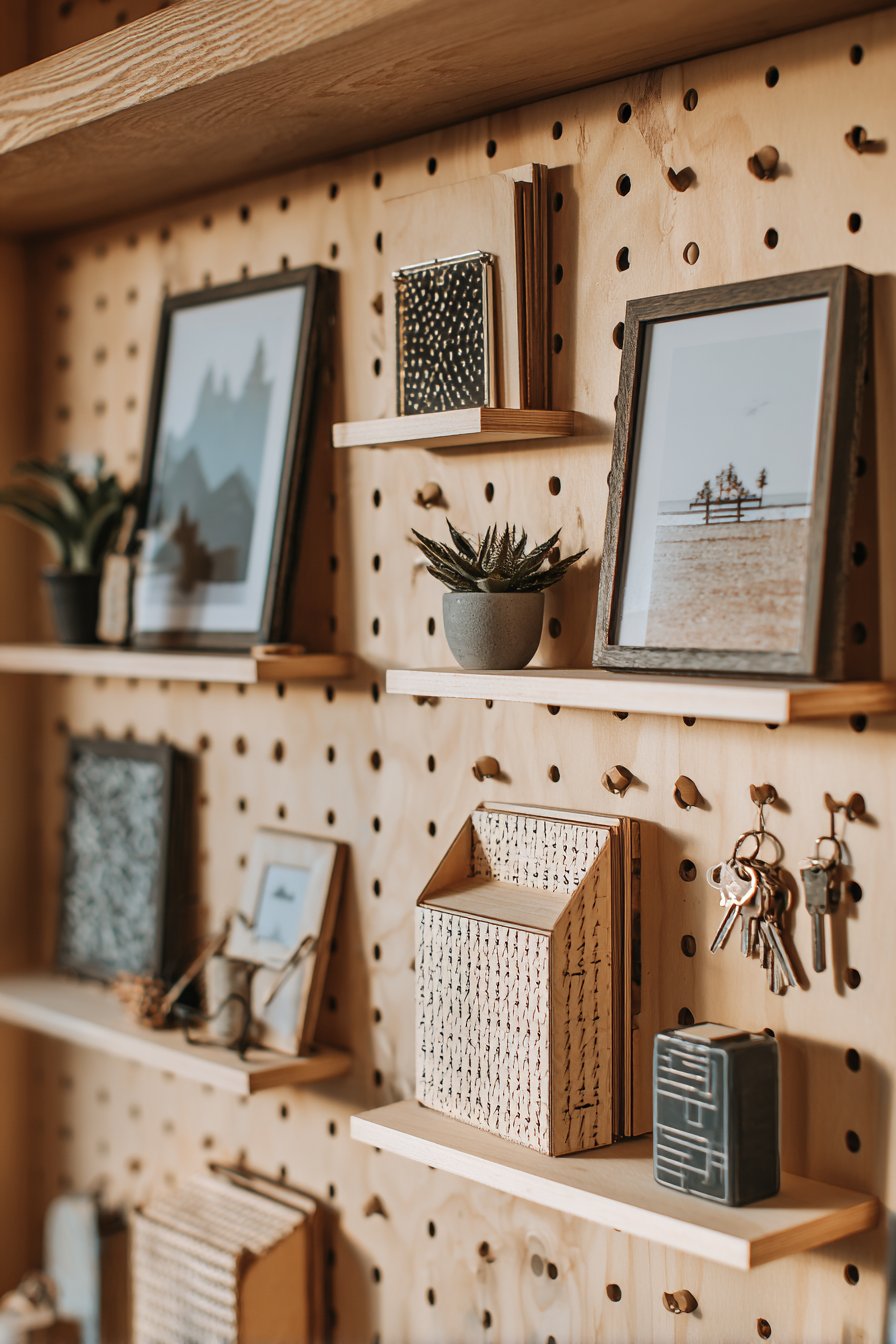
A customizable pegboard system with wooden pegs represents one of the most versatile wall display ideas that seamlessly blends decoration with organization. The natural birch finish brings warmth and organic texture while the modular nature allows for endless reconfiguration based on changing needs and aesthetic preferences. This adaptable display can hold small framed prints, hanging plants in macramé holders, keys on decorative hooks, and small storage baskets—creating a dynamic wall feature that evolves with your lifestyle.
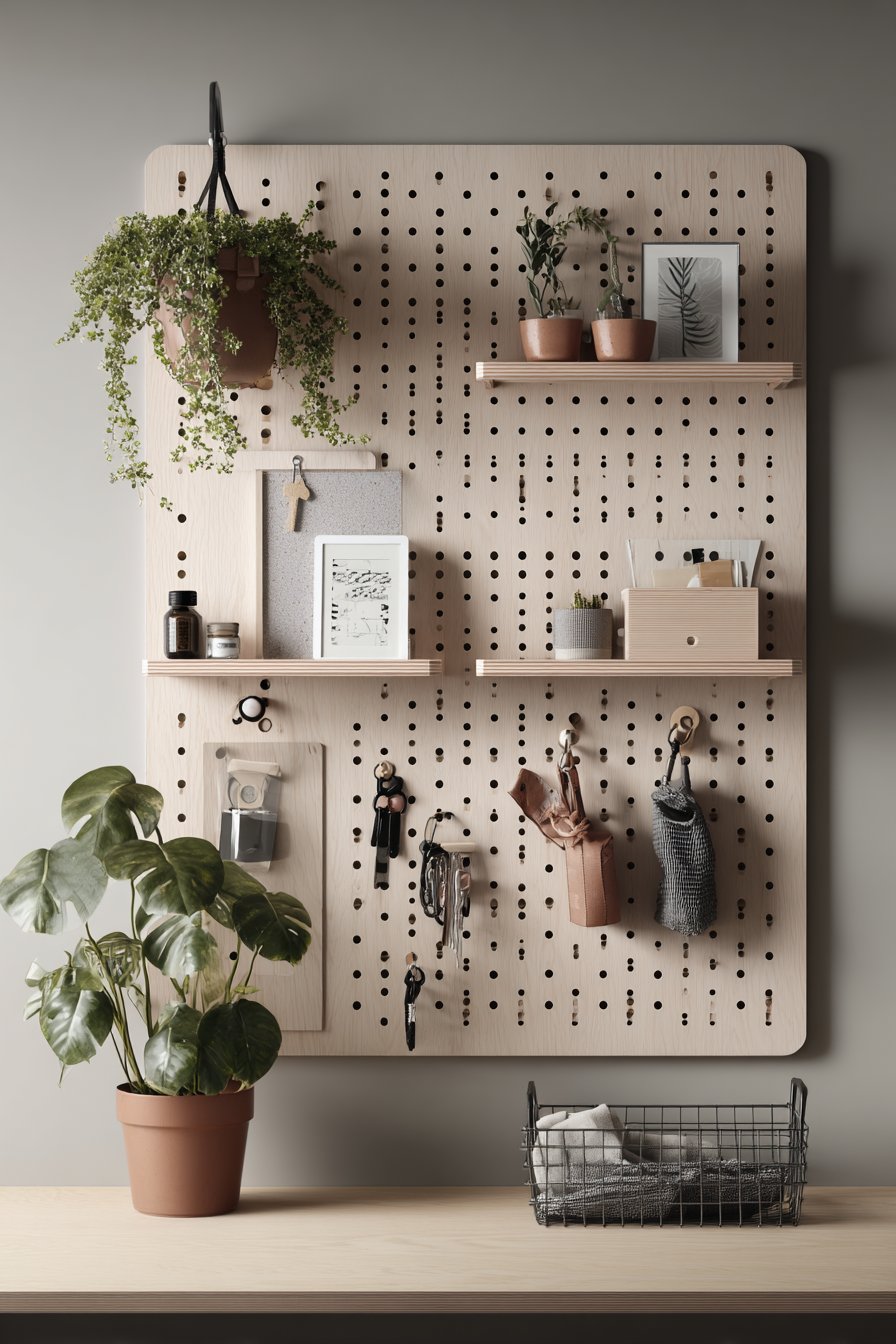
Perfect for home offices, craft rooms, or even kitchens, the pegboard demonstrates how wall displays can be both beautiful and practical. The visible organization system eliminates the visual chaos of cluttered surfaces while keeping frequently used items accessible and easy to locate. The warm wood tones prevent the utilitarian pegboard from feeling too industrial, instead creating a Scandinavian-inspired aesthetic that feels both functional and thoughtfully designed.
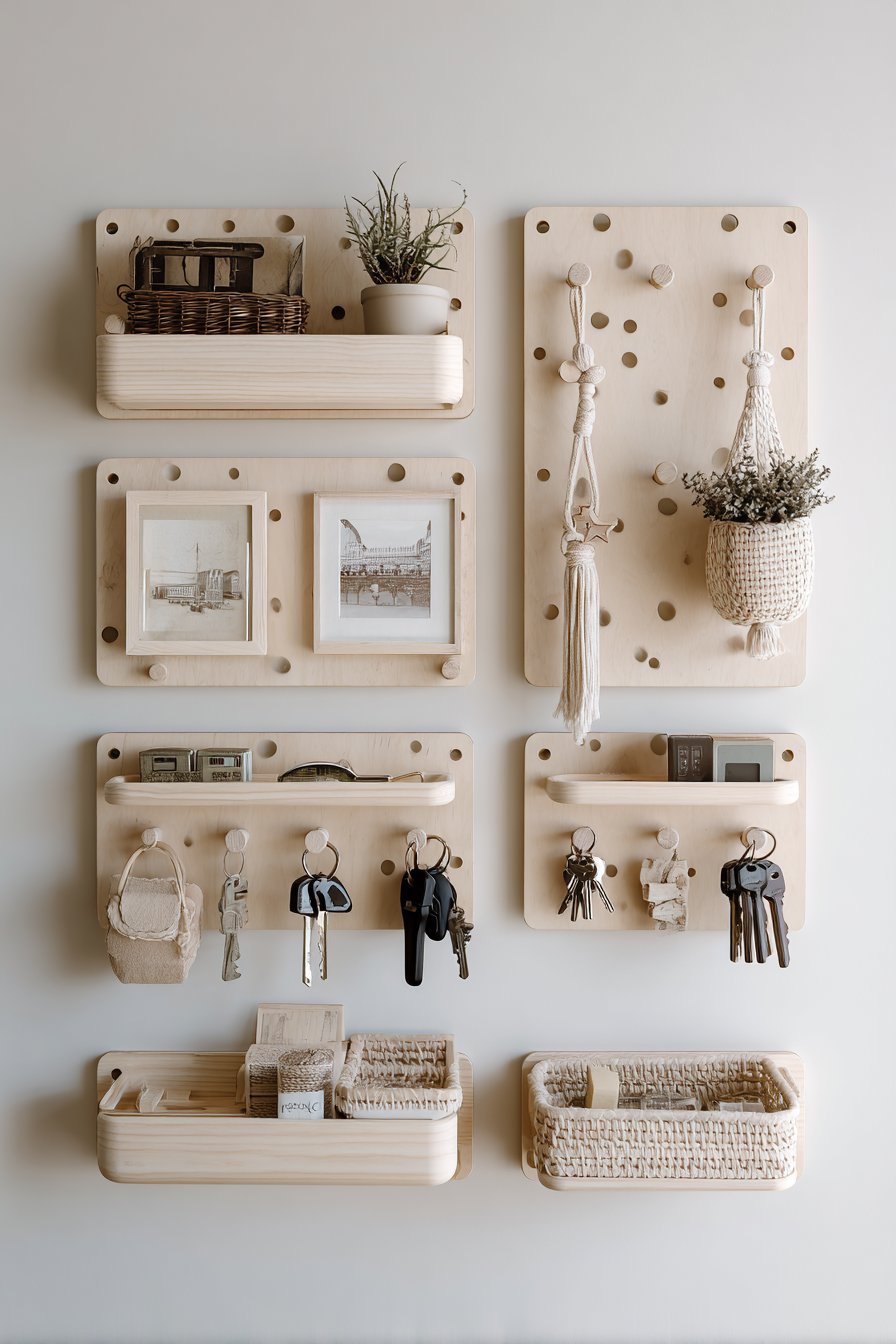
Interior photography capturing the wood grain texture and the practical versatility of the pegboard system reveals how thoughtful lighting—whether soft overhead fixtures or natural side lighting—can highlight the dimensional quality of the arrangement. The interplay between hung objects creates interesting shadow patterns that add depth and visual movement throughout the day.
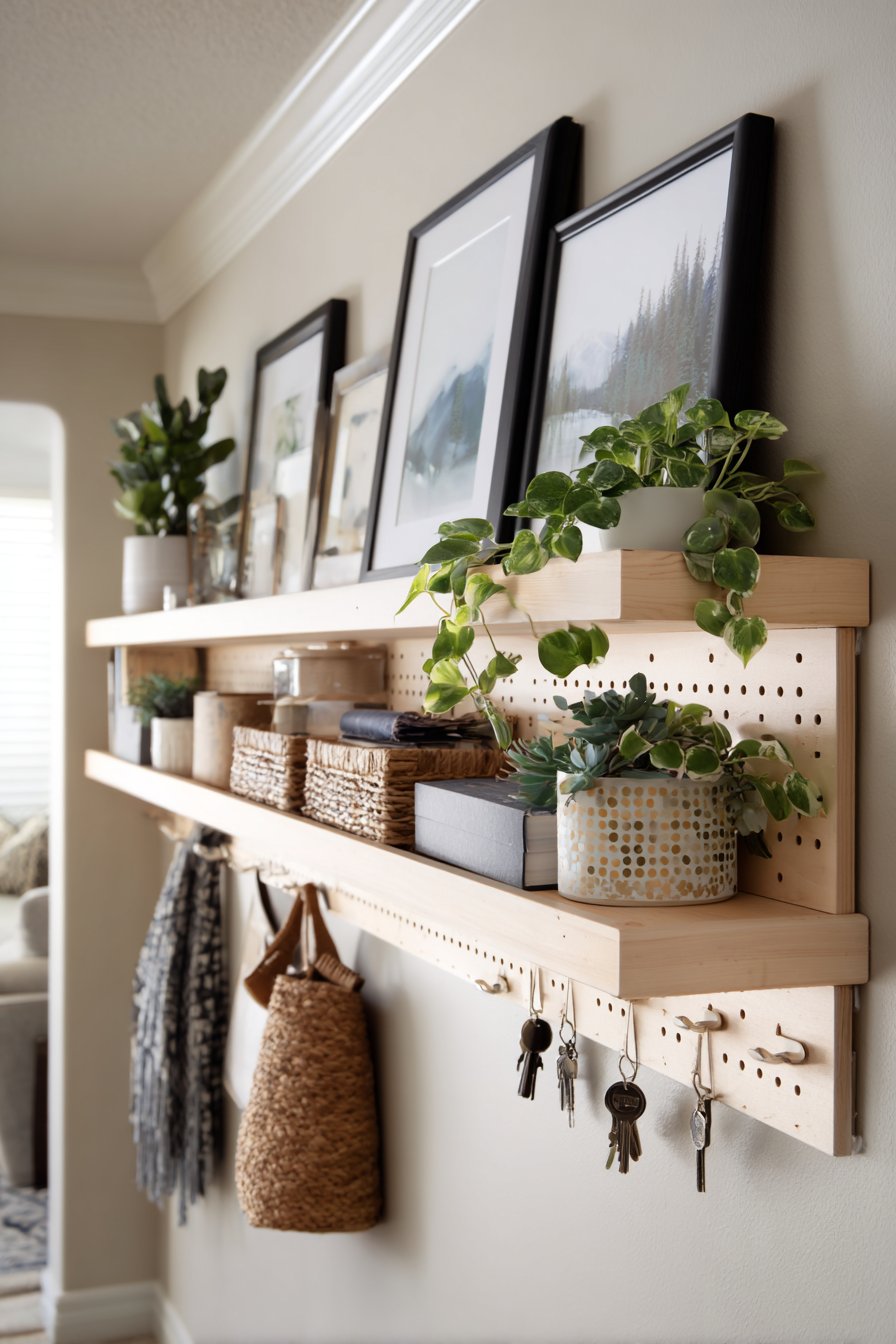
Key Design Tips: Plan the pegboard layout before installation, considering what items you’ll display most frequently. Paint or stain the pegboard to match your decor if the natural finish doesn’t suit your style. Use a variety of peg lengths to accommodate different items and create dimensional variation. Create visual groupings by clustering related items together. Add small plants or artwork to prevent the display from feeling purely utilitarian.
9. Geometric Grid of Photography Prints
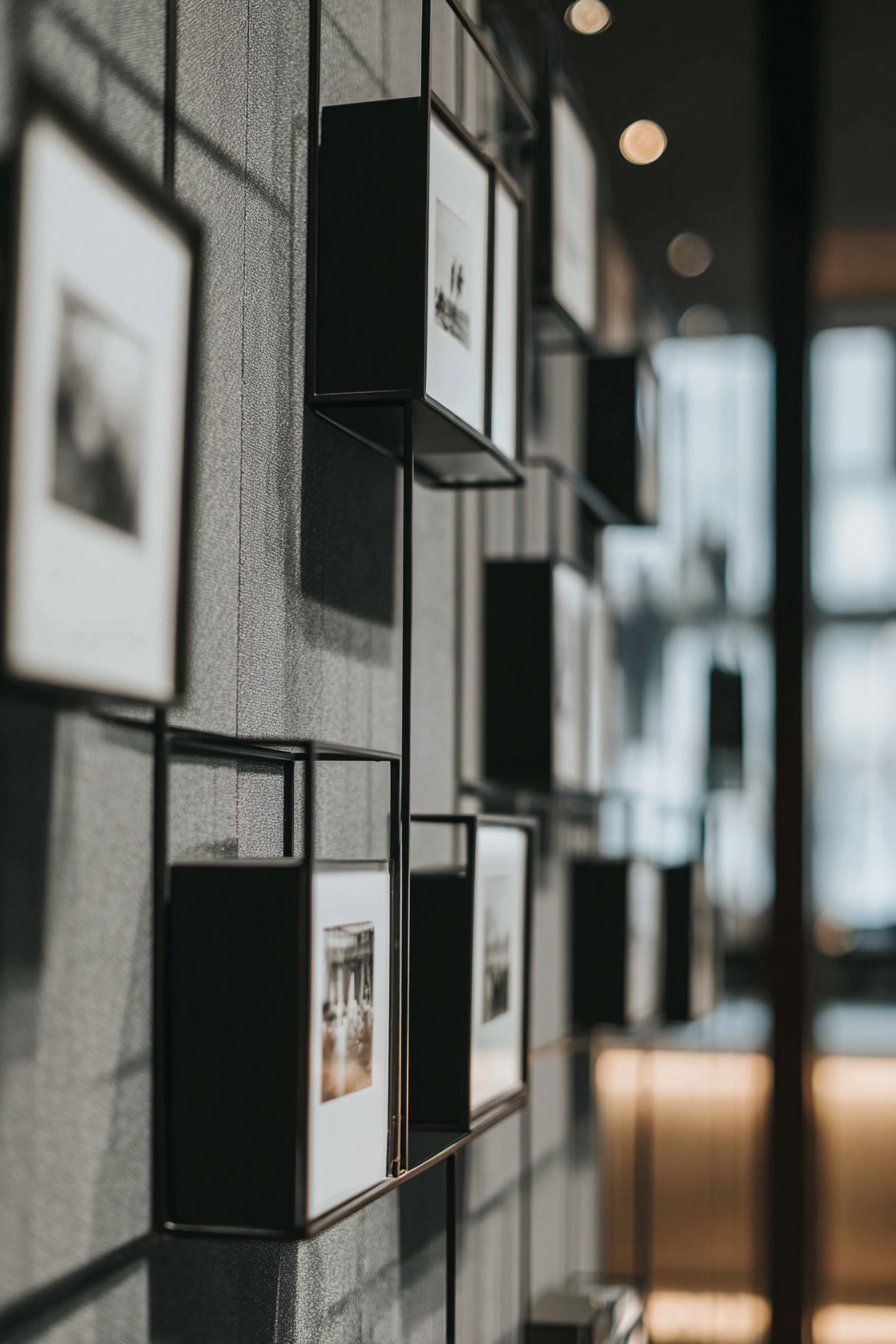
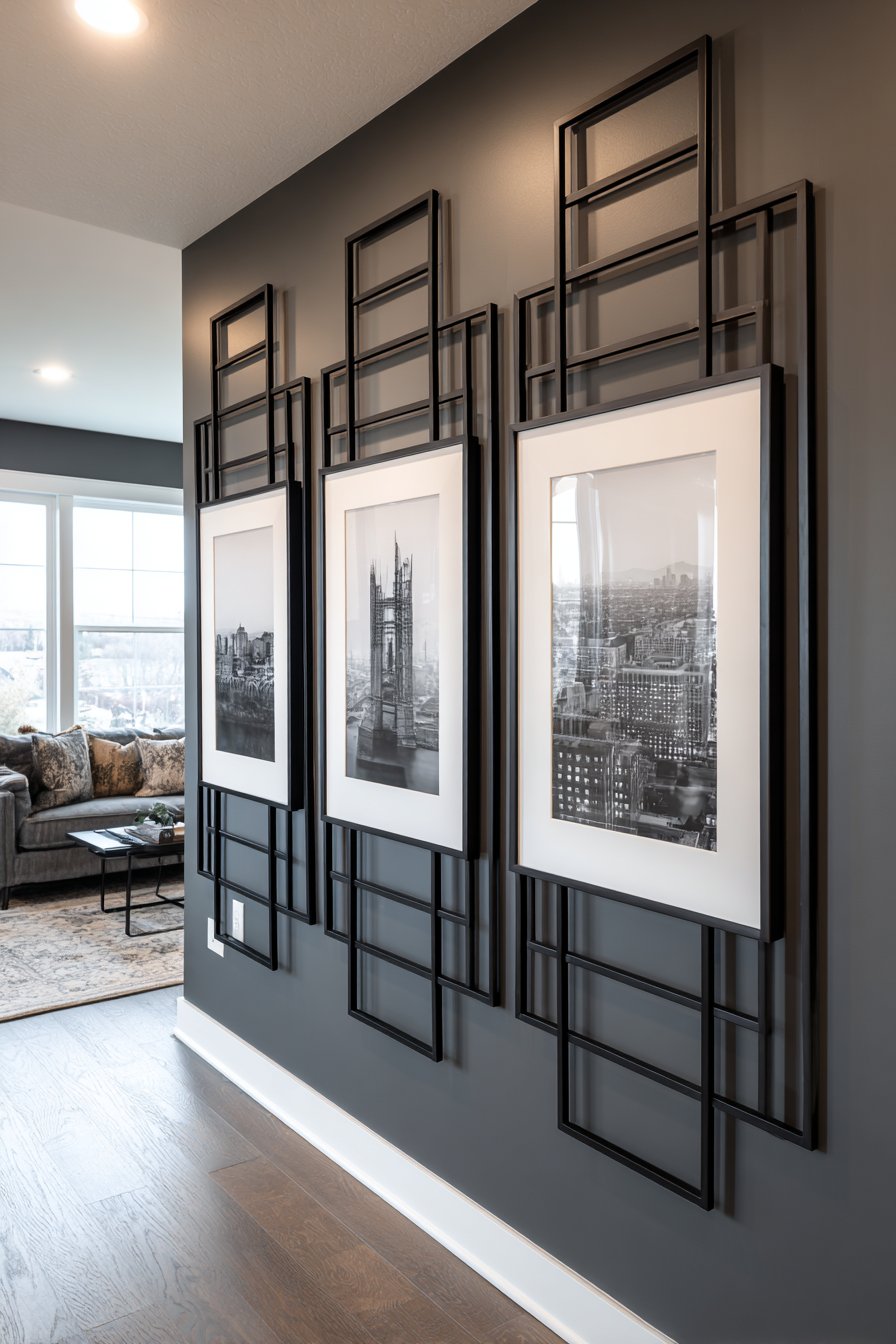
A precise grid of nine identically-sized square frames creates a sophisticated, gallery-like wall display that celebrates the power of geometric order and photographic art. Each slim black metal frame contains coordinating black and white photography prints, creating a cohesive collection that feels intentional and curated. The rigid geometric arrangement against a charcoal gray accent wall produces a modern aesthetic that commands attention through its architectural precision and restraint.
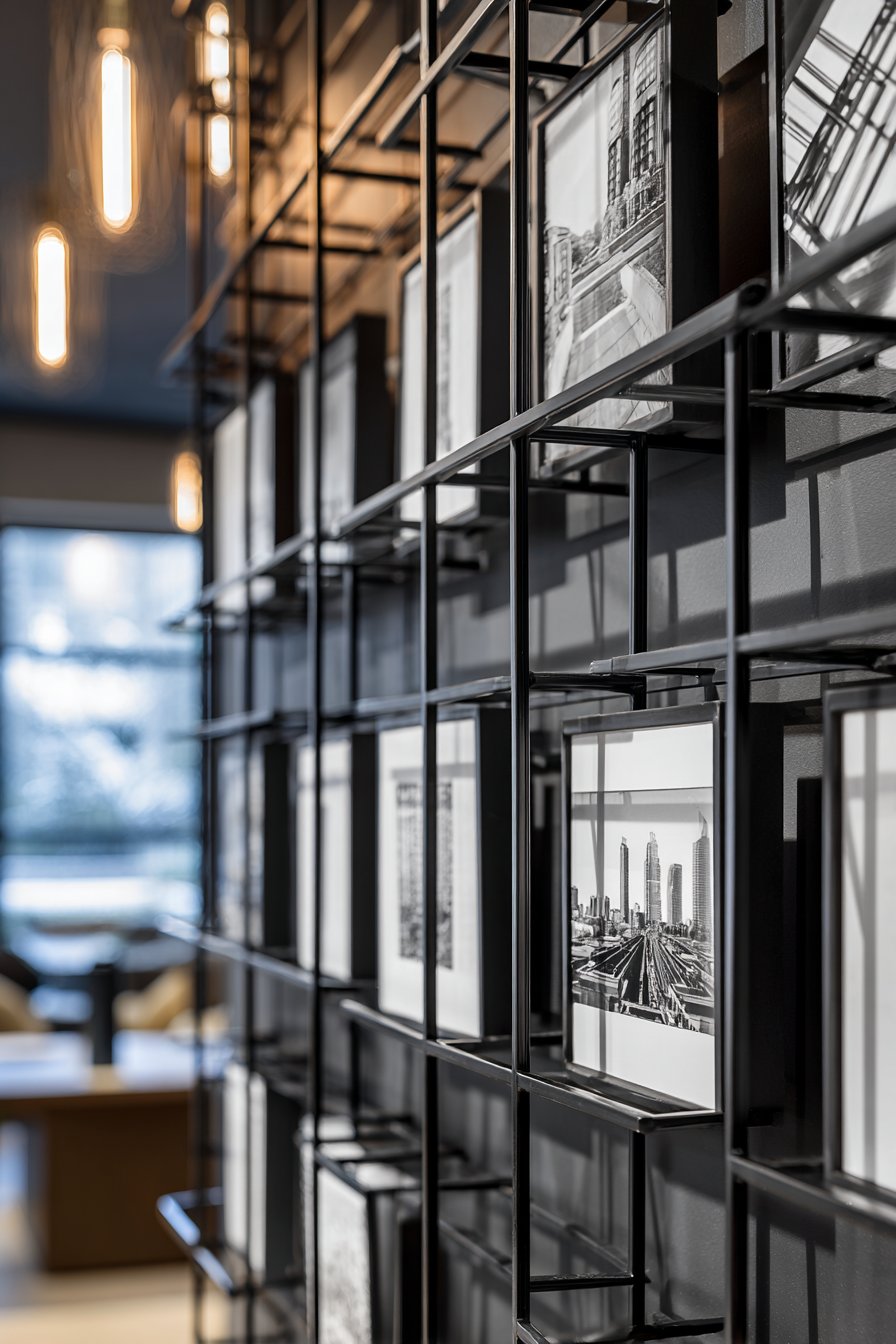
The precise spacing of 4 inches between frames is critical to this display’s success—too close and the individual images lose their impact, too far and the grid loses its cohesive power. This measured approach creates a unified composition where nine separate photographs function as a single artistic statement. The monochromatic color palette of black frames, gray wall, and black and white photographs creates sophisticated simplicity that works beautifully in contemporary interiors.
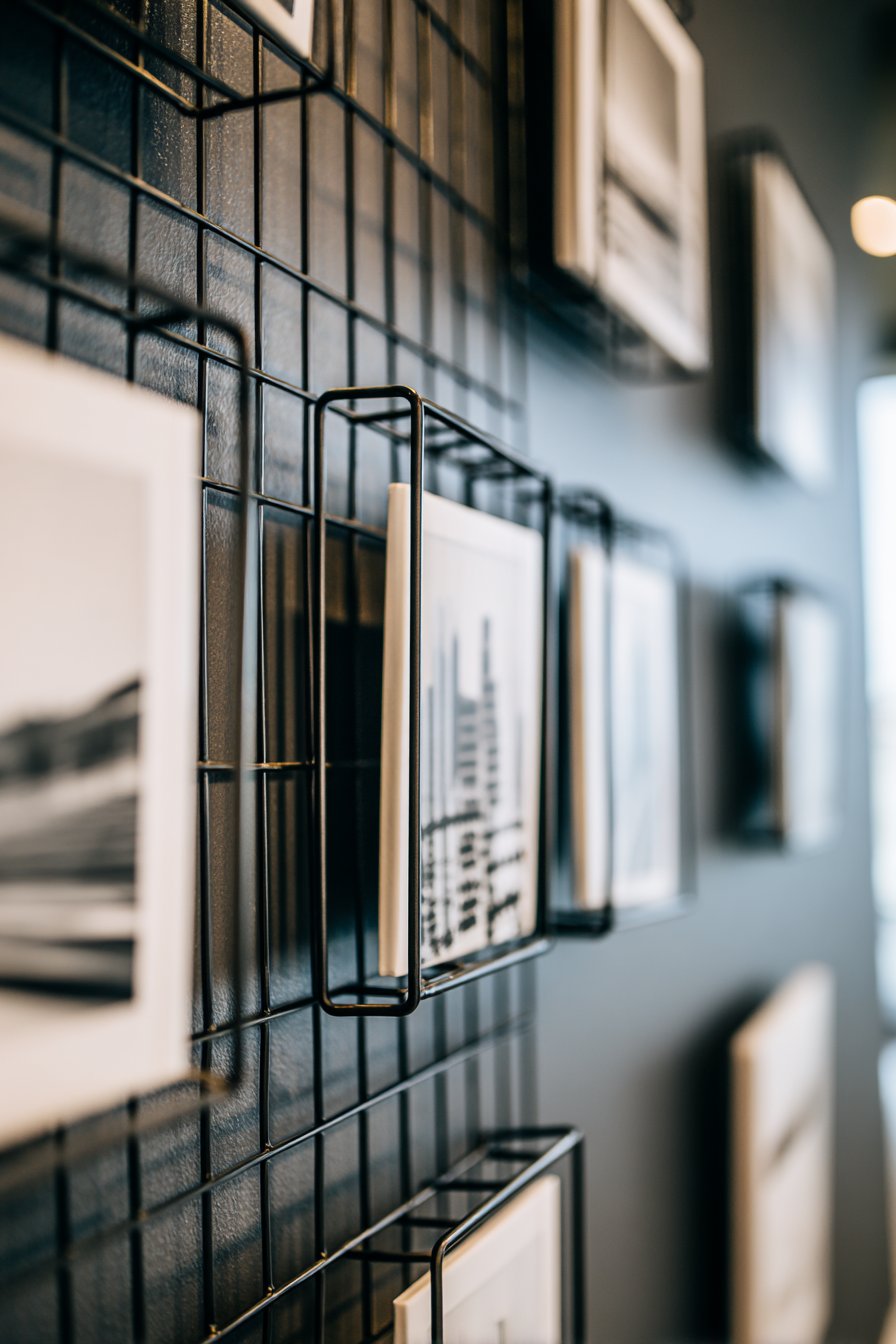
Professional interior design photography with balanced exposure captures how the contrast between black frames and the gray wall creates subtle dimensionality, while natural light creates gentle shadows that enhance the display’s three-dimensional quality. This display style requires commitment to consistency and precision but delivers powerful visual impact that feels both artistic and professional.
Key Design Tips: Use identical frames and mats for true grid consistency. Measure and mark all nail placement points before hanging to ensure perfect alignment. Create a paper template or use a laser level to maintain straight lines. Choose photographs with similar tonal qualities to maintain cohesion across the grid. Consider the viewing distance—grids work best where viewers can step back to appreciate the full composition.
10. Rustic Architectural Salvage Display
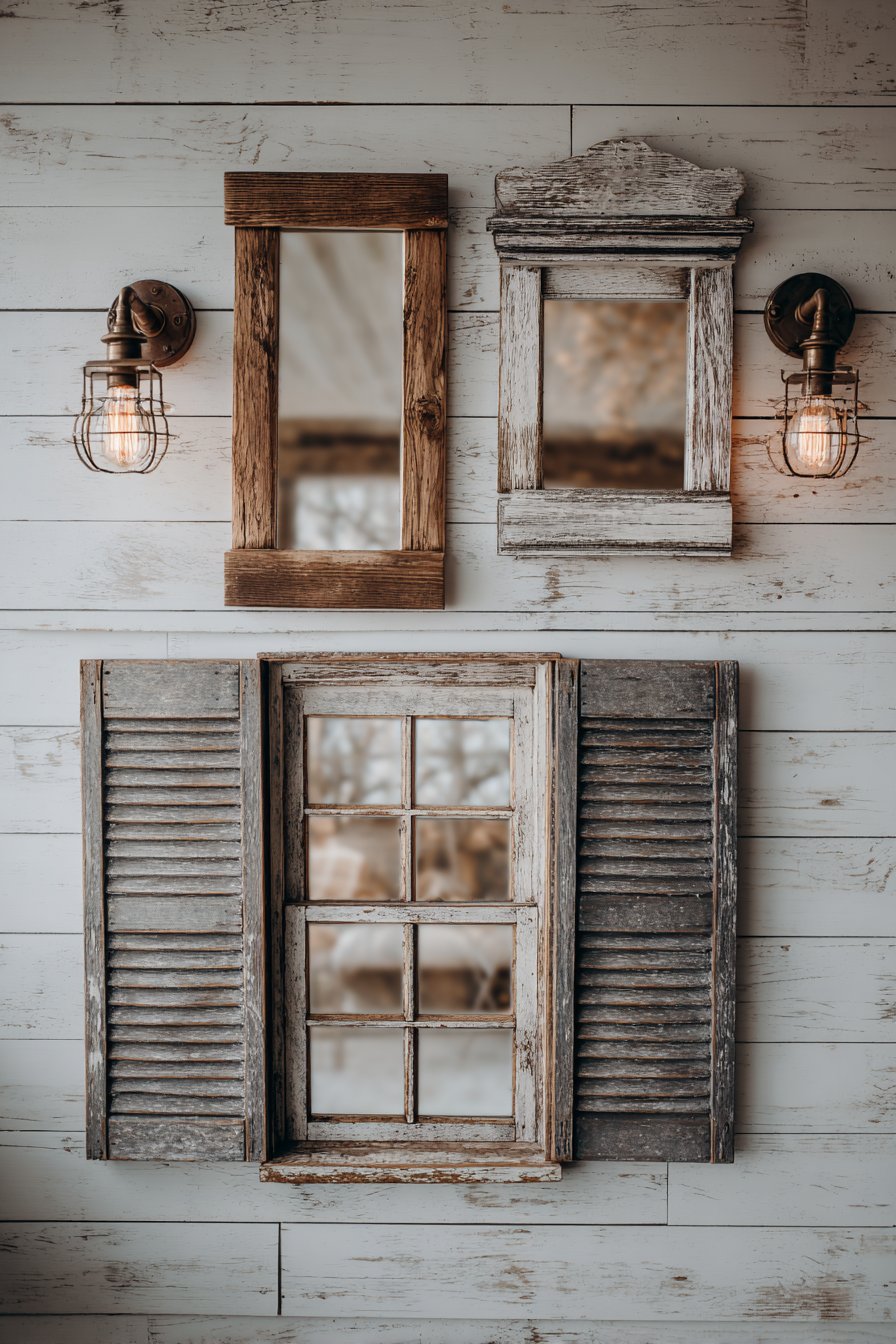
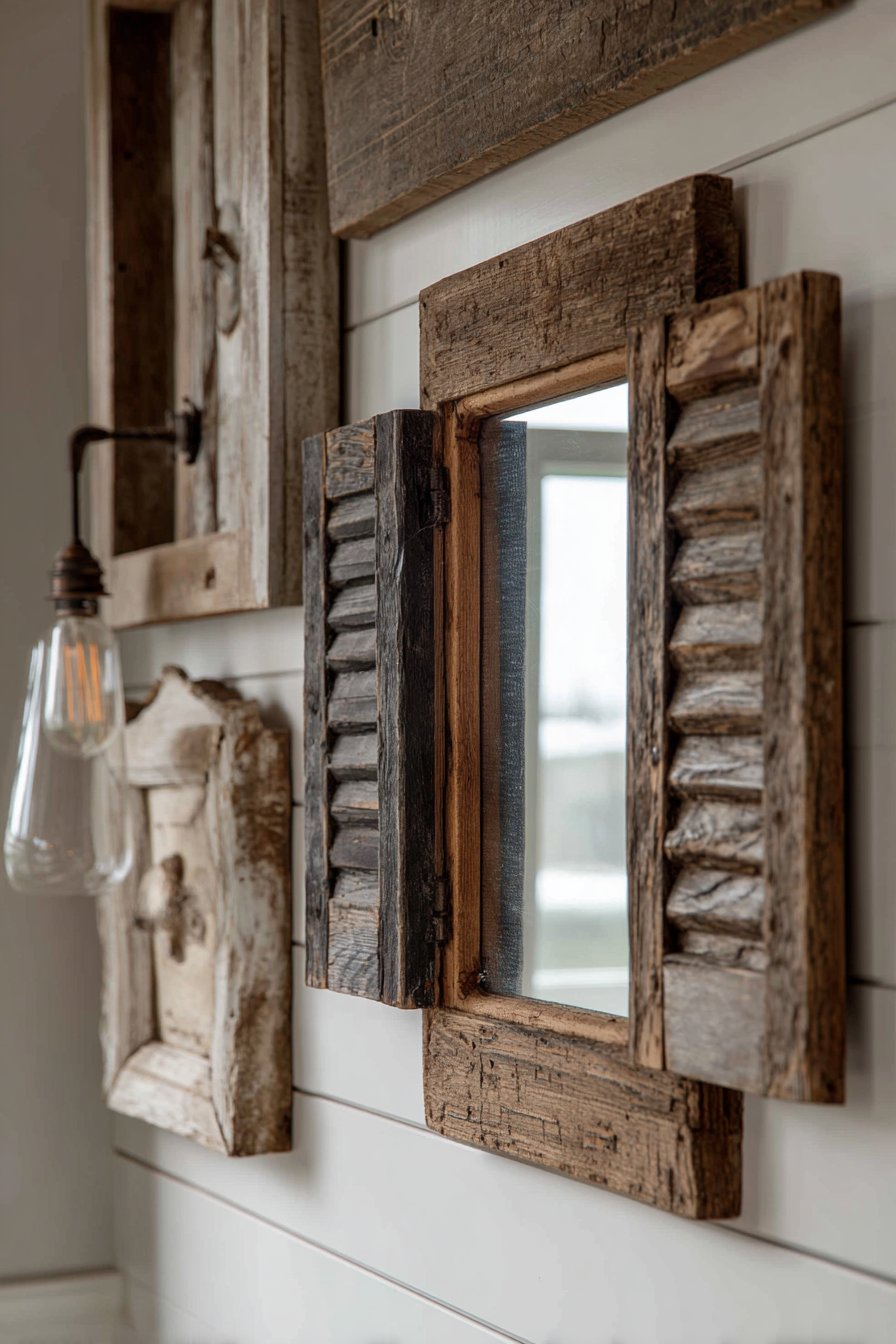
Incorporating antique architectural elements into wall displays creates character-rich arrangements that celebrate history and craftsmanship. A vintage window frame repurposed as a mirror becomes a stunning focal point, its weathered wood and wavy antique glass telling stories of decades past. Flanking this centerpiece, weathered wooden shutters and salvaged decorative molding pieces create a cohesive collection of architectural artifacts that transform a wall into a tribute to bygone eras and traditional building techniques.
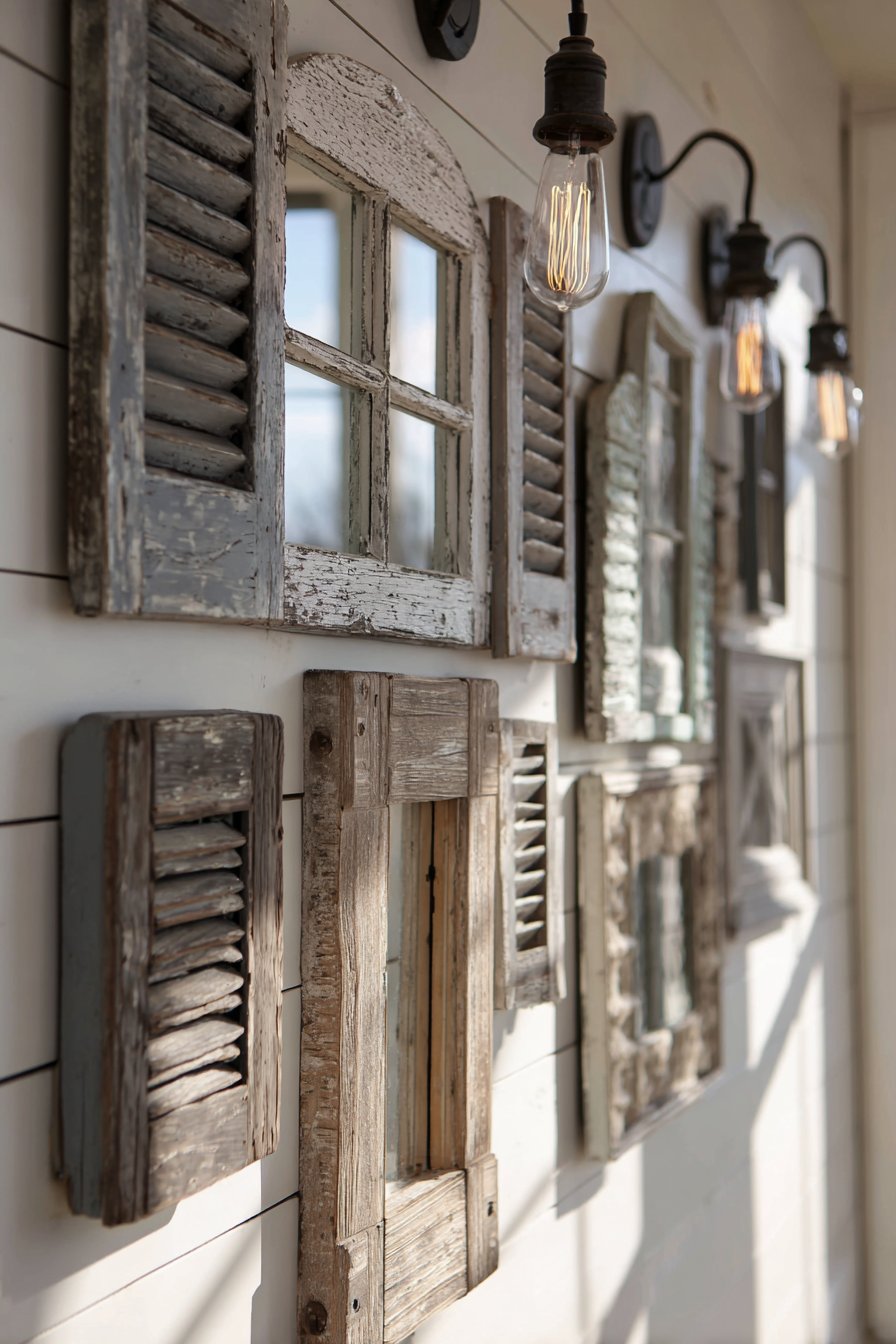
The white shiplap wall provides the perfect backdrop for these rustic elements, its clean horizontal lines creating visual contrast while its traditional material choice complements the vintage aesthetic. Small Edison bulb sconces flanking the window frame add functional lighting with vintage-inspired style, their warm glow enhancing the nostalgic atmosphere while providing practical illumination. This combination of decorative and functional elements demonstrates how effective wall displays serve multiple purposes simultaneously.
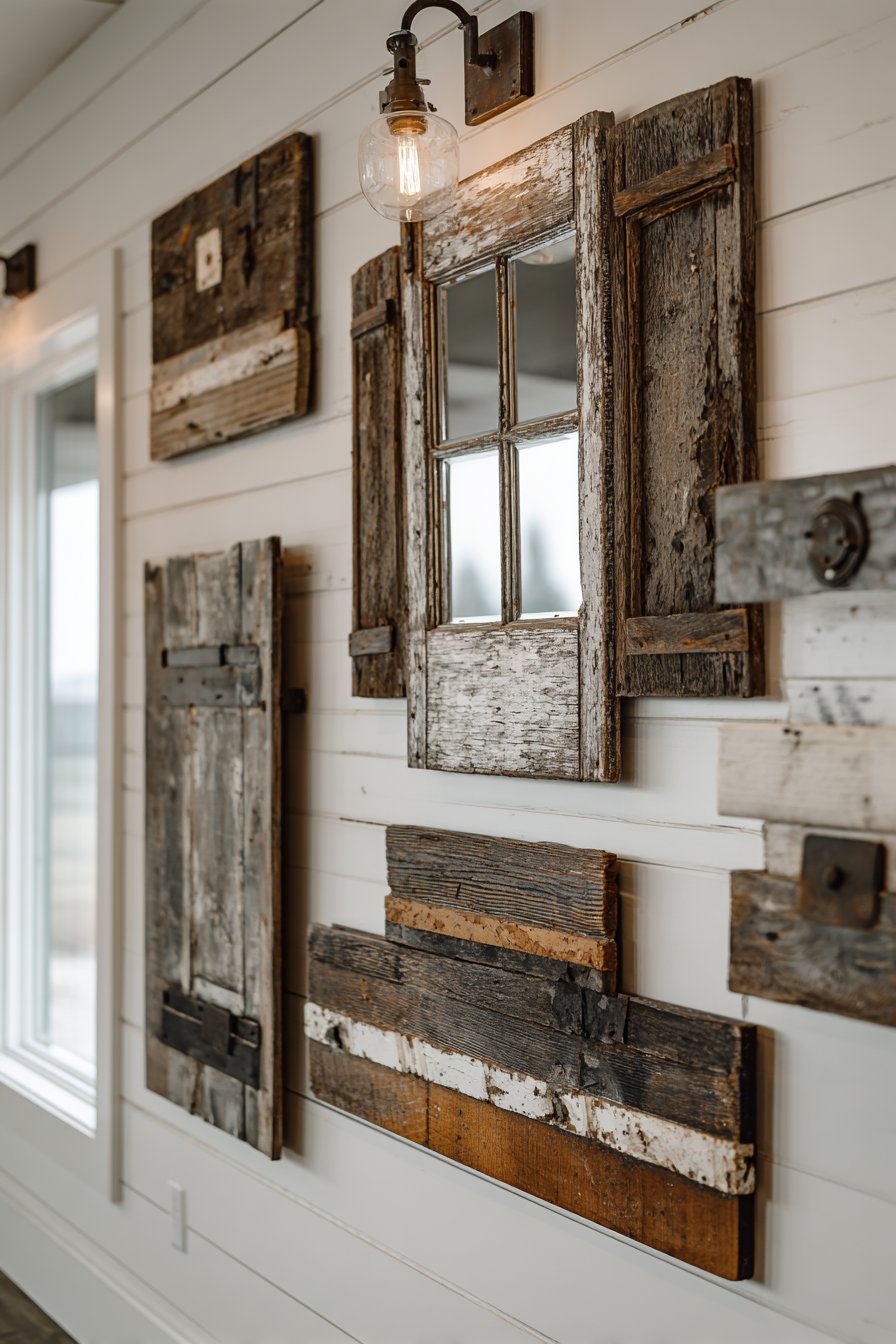
Wide-angle photography captures the authentic texture and patina of reclaimed materials, highlighting the wood’s weathered grain, the gentle distressing of paint finishes, and the character marks that make each salvaged piece unique. Natural daylight emphasizes these textural details while creating soft shadows that add depth to the three-dimensional arrangement of varied architectural elements.
Key Design Tips: Source architectural salvage from demolition yards, antique markets, or specialized salvage retailers. Clean and stabilize vintage pieces before installation—remove loose paint chips and seal weathered wood. Ensure proper anchoring for heavy architectural elements using appropriate wall anchors and studs. Mix scales—pair larger statement pieces with smaller accent elements. Consider the story you’re telling—group salvage pieces from similar eras or architectural styles for cohesion.
11. Textural Woven Basket Collection
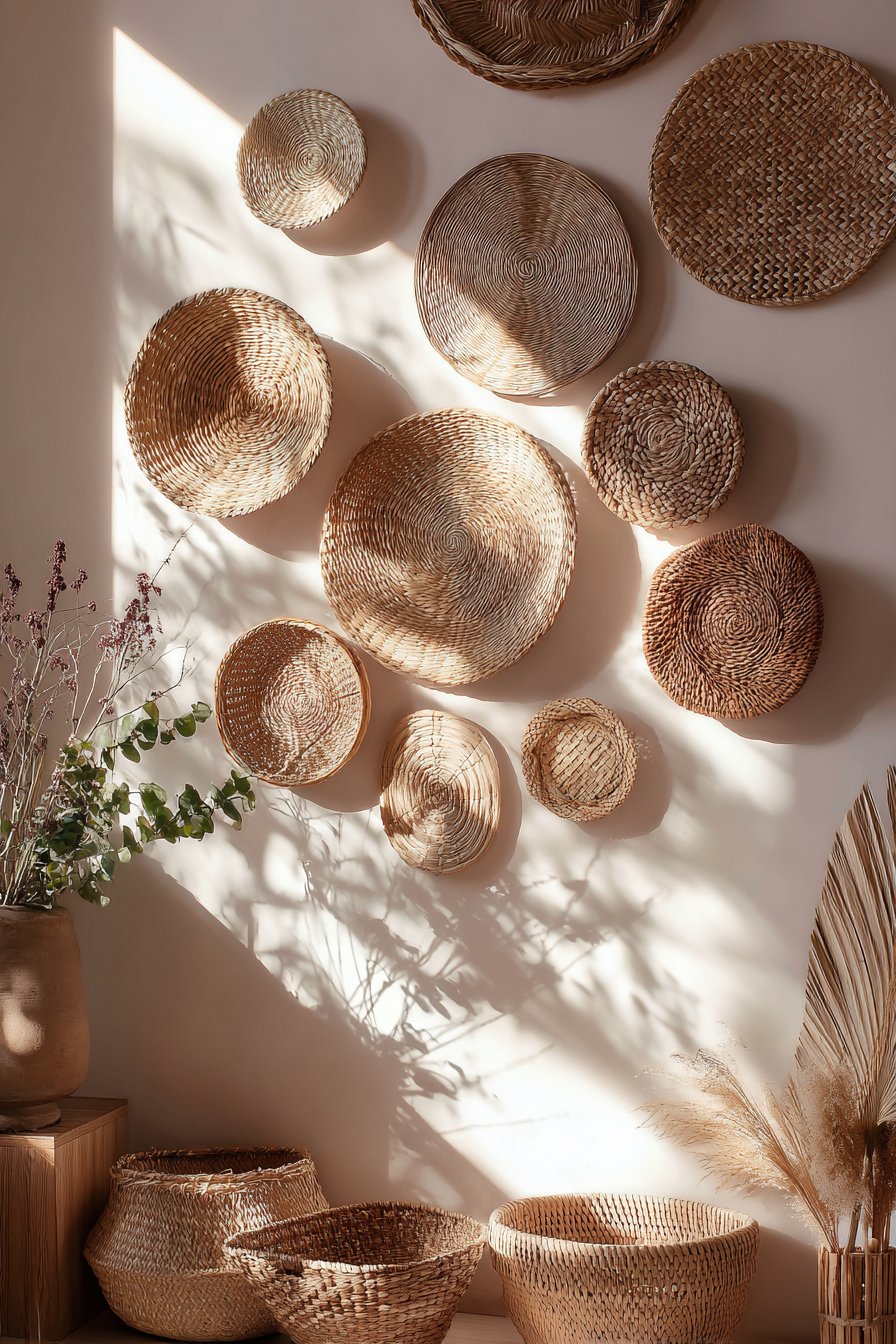
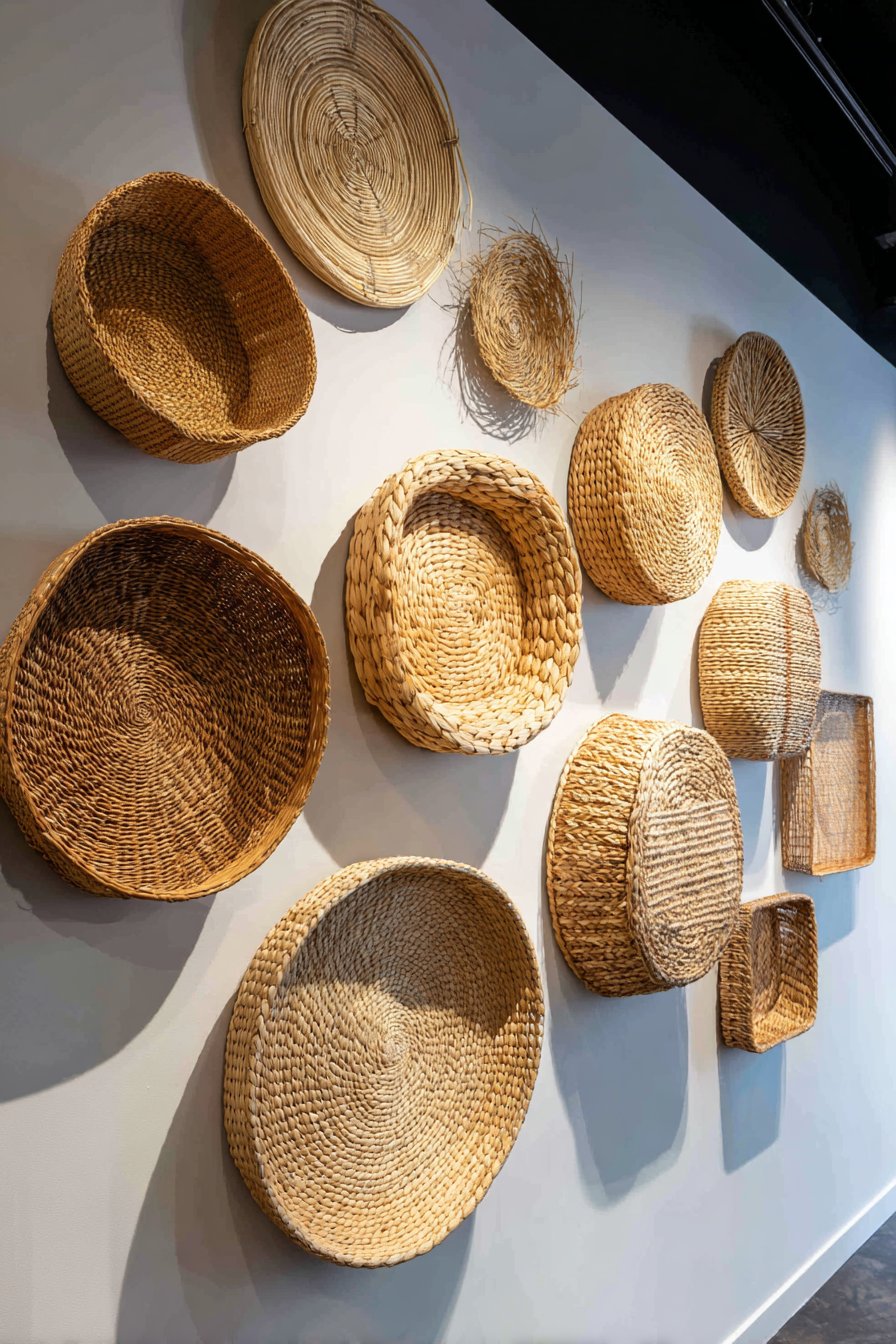
A collection of woven baskets in various sizes, shapes, and natural fiber tones creates one of the most organic and texture-rich wall display ideas available. Round, oval, and fan-shaped designs crafted from seagrass, rattan, and jute introduce bohemian warmth while celebrating traditional craftsmanship and natural materials. The arrangement follows a loose triangular composition with larger pieces anchoring the bottom, creating visual stability while allowing the eye to move upward through progressively smaller elements.
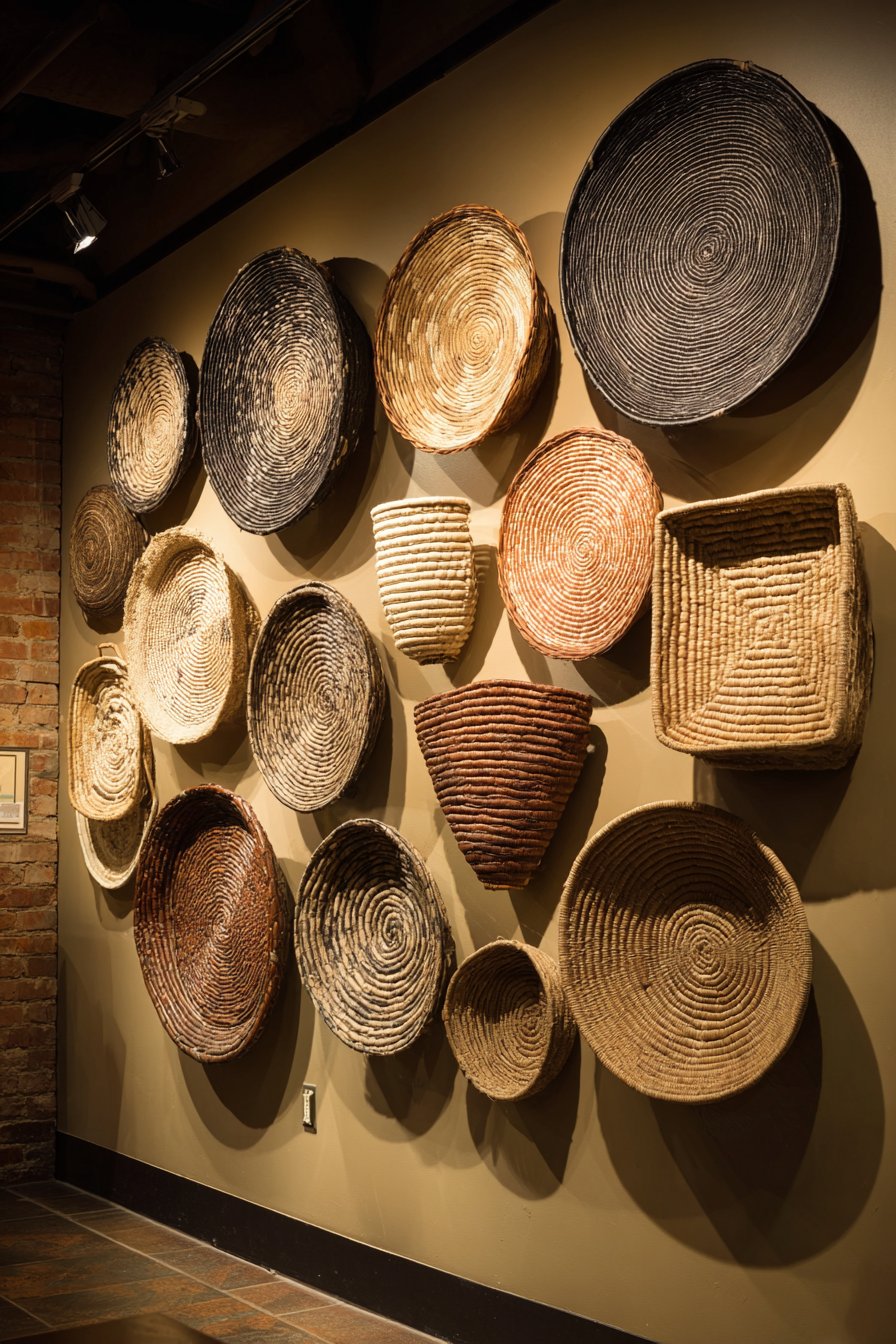
The intricate weave patterns of different basket styles create incredible visual texture—some tight and uniform, others loose and organic—that adds depth and interest to flat wall surfaces. The natural color variations within and between baskets provide subtle tonal shifts that prevent monotony while maintaining cohesive earthiness. This display style brings warmth and global-inspired character to interiors, working beautifully in bohemian, coastal, or eclectic design schemes.
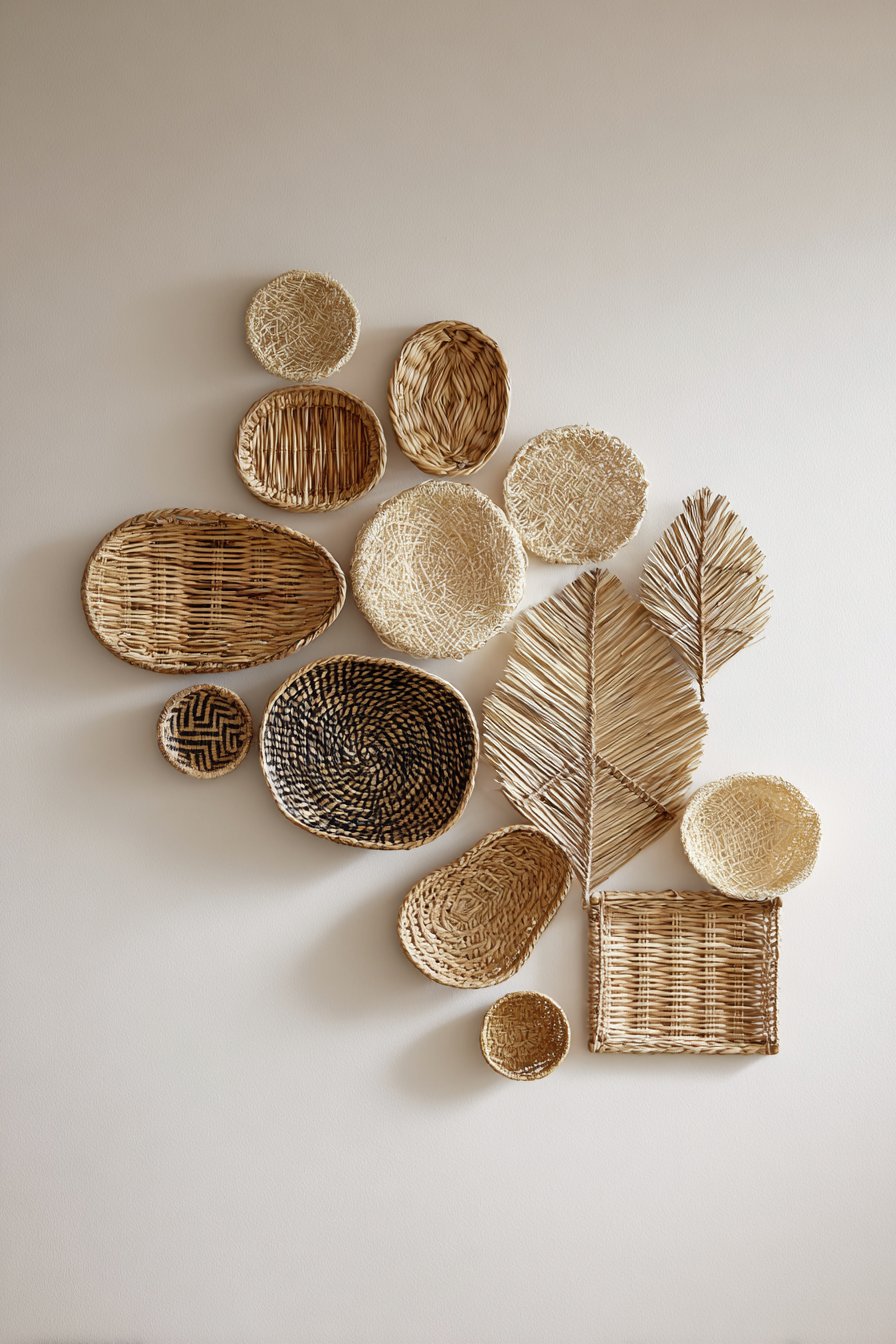
Interior photography showcasing the dimensional texture of the woven fibers reveals how soft diffused lighting creates highlight and shadow across the varied surface patterns. The baskets’ three-dimensional forms cast shadows on the wall behind them, creating layered depth that changes throughout the day as light angles shift. This organic, handcrafted display offers visual softness that contrasts beautifully with harder surfaces like furniture and architectural elements.
Key Design Tips: Vary basket sizes significantly—mix diameters from 8 inches to 24 inches for dynamic scale variation. Combine different weave patterns and fiber types for textural interest. Maintain a cohesive color story by selecting baskets in similar natural tones—all warm browns or all cool grays. Hang baskets using plate hangers or small nails through weave gaps. Arrange on the floor first to test compositions before committing to wall placement.
12. Layered Picture Ledge System
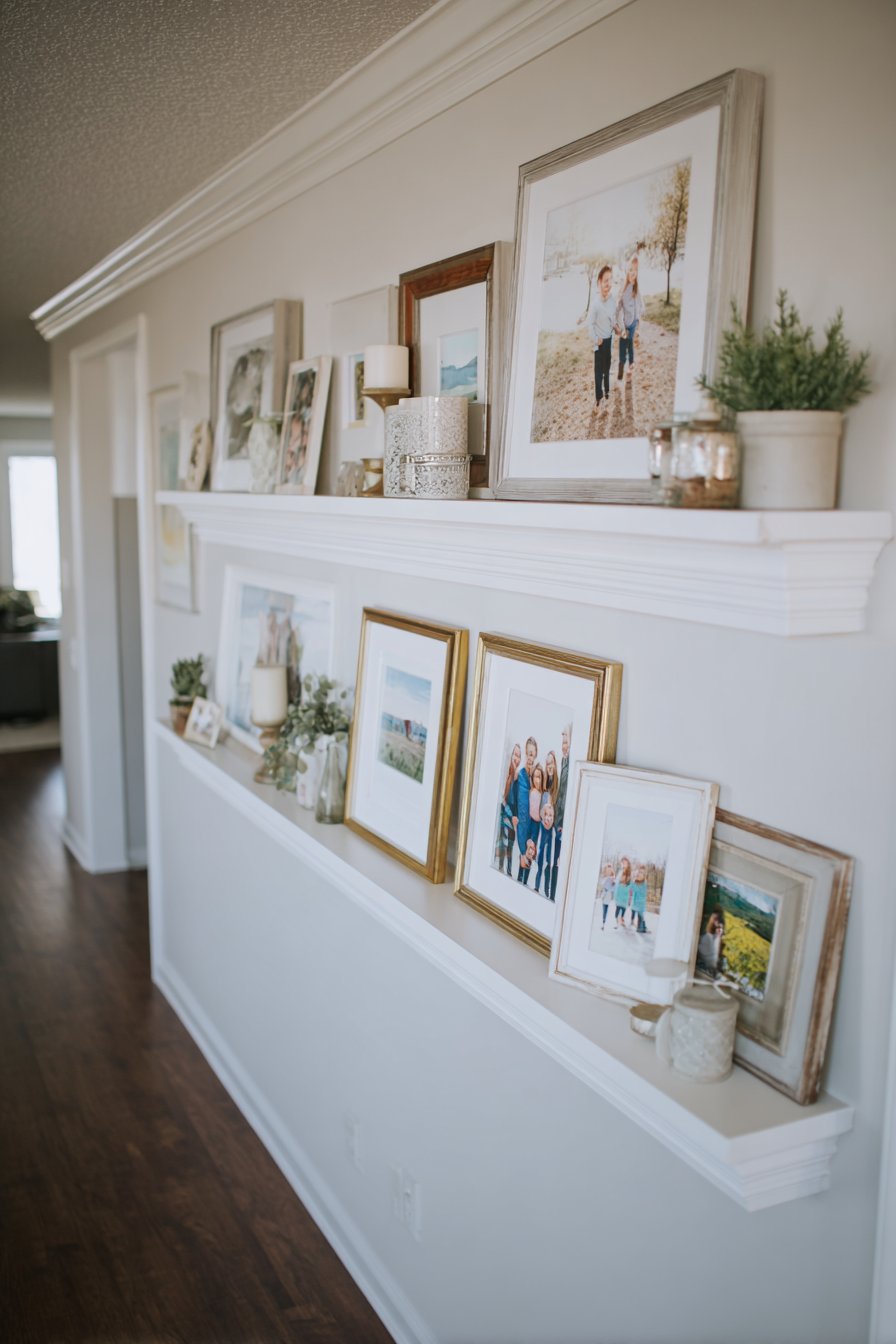
Picture ledges represent one of the most flexible and user-friendly wall display ideas, allowing frames to lean rather than hang for casual, easily changeable arrangements. Three staggered floating shelves create opportunities for layered compositions where frames of varying heights overlap and nestle together, creating depth and dimensional interest impossible to achieve with traditionally hung artwork. This relaxed approach to display encourages experimentation and seasonal refreshing without the commitment and wall damage of multiple hanging systems.
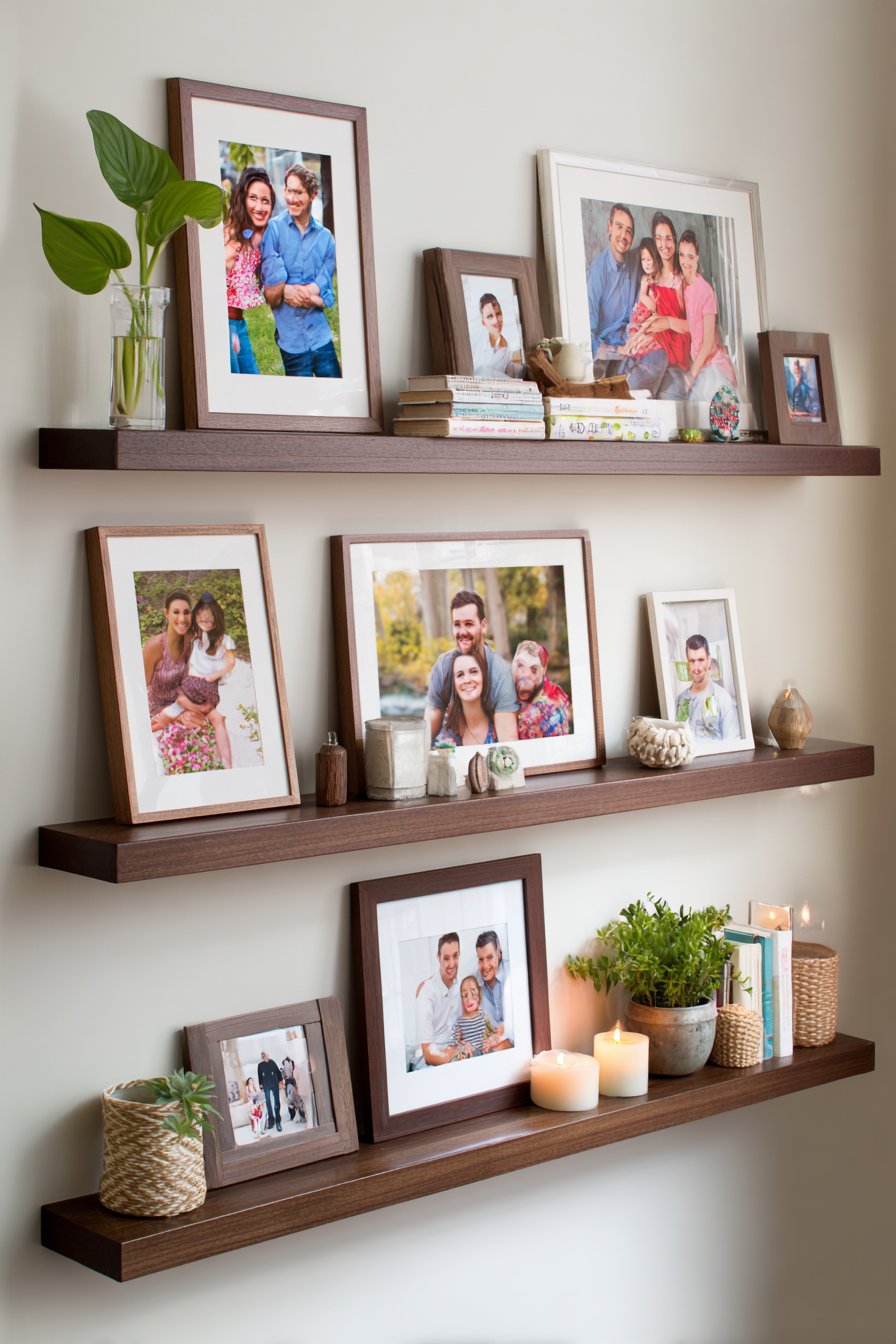
The beauty of ledge systems lies in their versatility—frames, artwork, decorative objects like candles, and small plants can all share space on these shelves, creating rich, varied displays that feel collected over time rather than installed in a single afternoon. Family photos might occupy the front row while small artwork leans behind, and decorative objects nestle among the frames to add three-dimensional interest and prevent the display from feeling flat or one-dimensional.
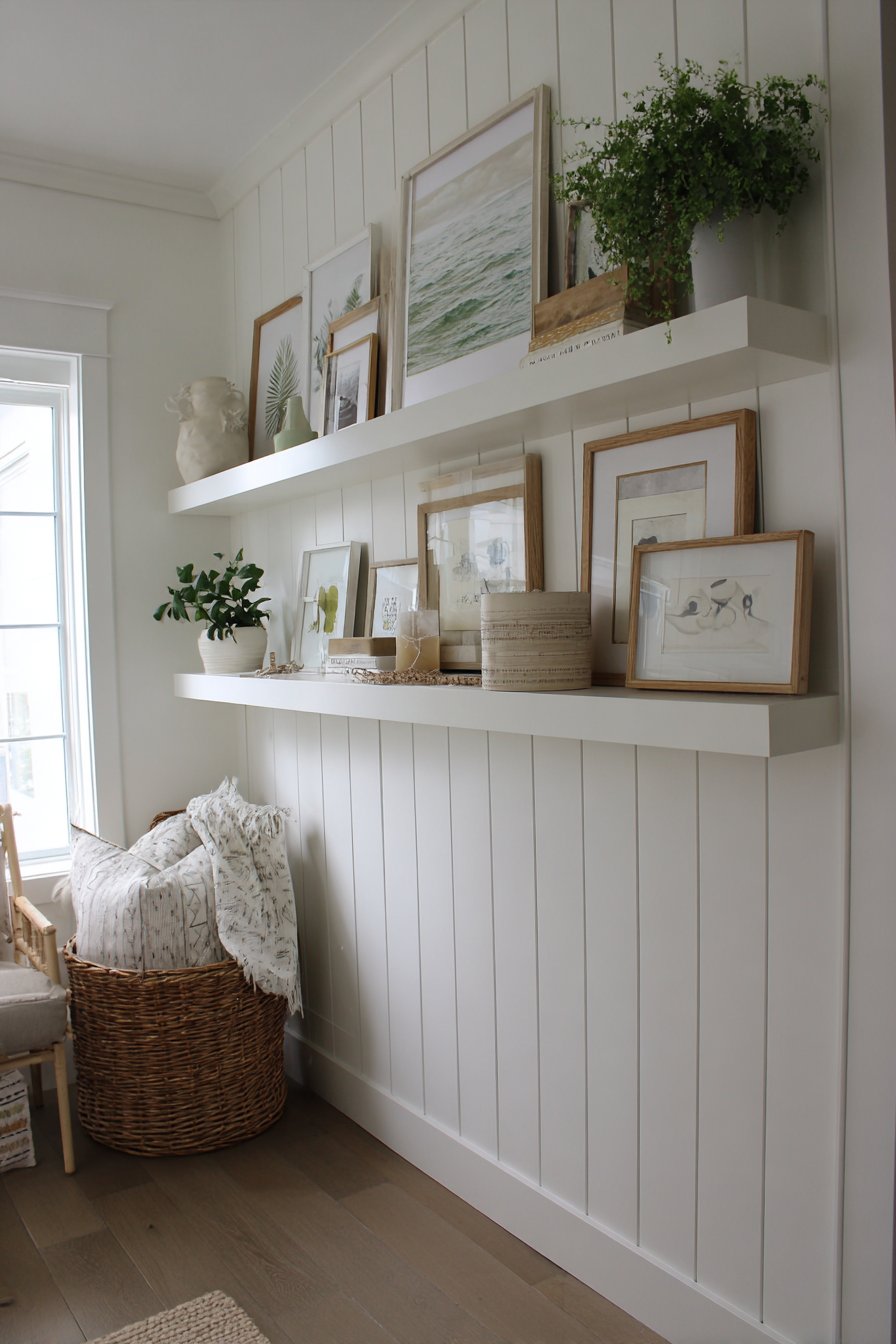
Professional photography capturing the relaxed styling approach reveals how natural lighting creates shadows between layered frames, emphasizing the depth and dimensional quality of the arrangement. The ability to easily refresh and rearrange the display makes this approach ideal for those who enjoy frequently updating their decor or who like to rotate artwork seasonally.
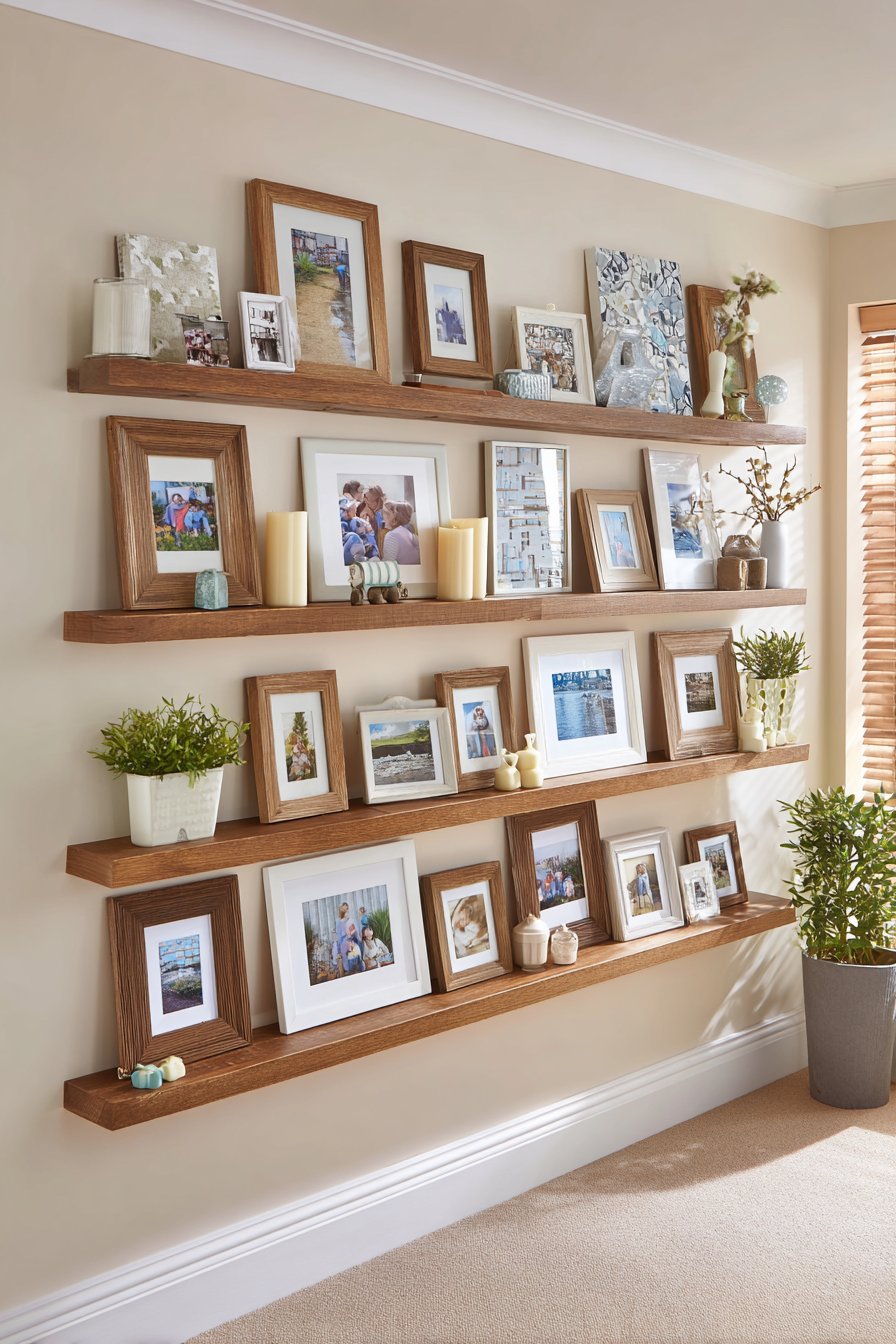
Key Design Tips: Install ledges 8-15 inches apart to accommodate standard frame sizes with some overlap. Mix frame sizes and orientations for visual variety. Layer larger frames in back with smaller ones in front for depth. Include non-frame objects—books, small sculptures, plants—to break up the frames. Leave some breathing room—don’t overcrowd the ledges or the display will feel cluttered rather than curated.
13. Statement Macramé Wall Art
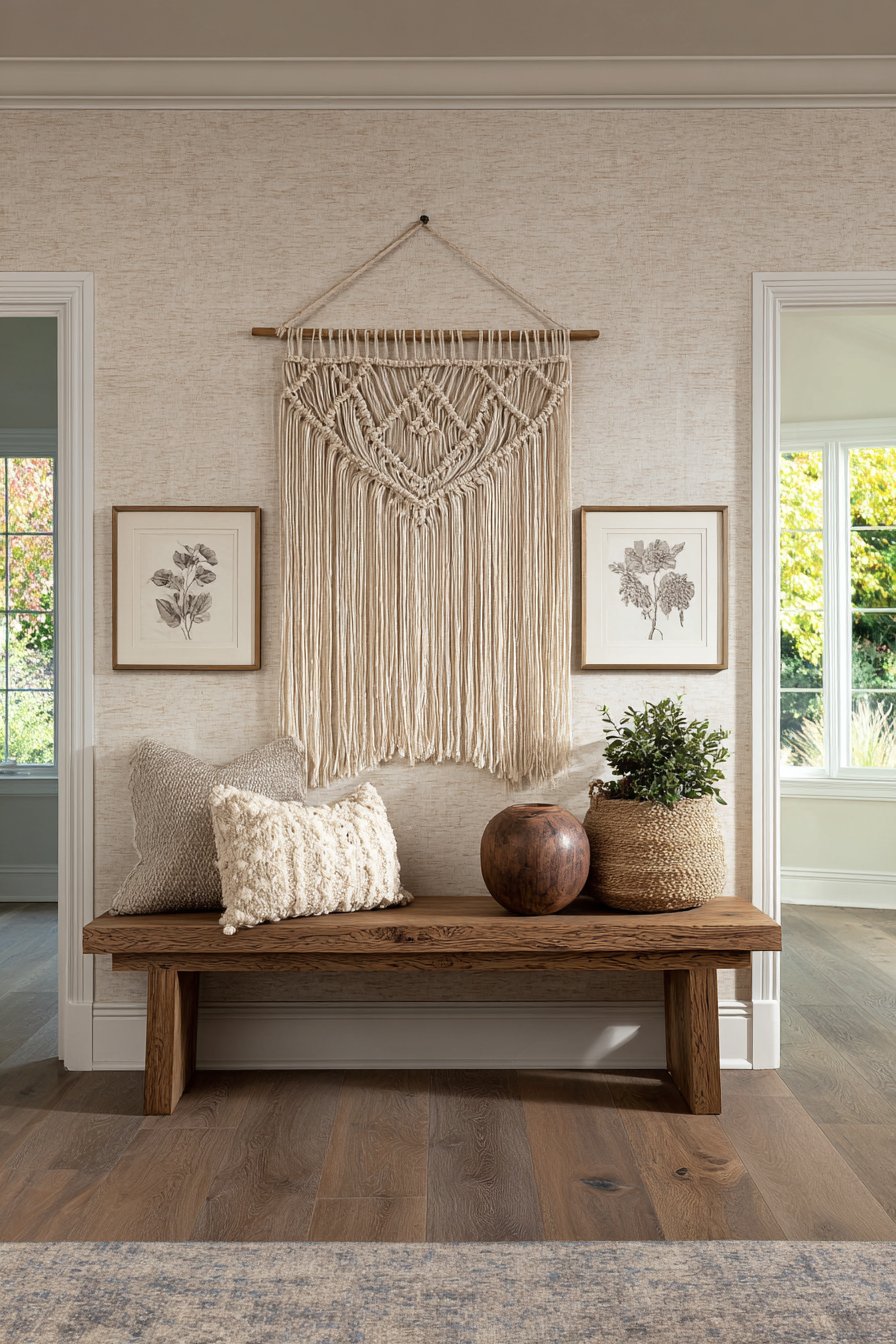
A large statement macramé wall hanging in natural cotton rope serves as a dramatic focal point that introduces organic texture and handcrafted artistry to wall displays. The intricate knotwork patterns and long fringe create movement and visual interest that evolves as air currents gently shift the hanging fibers. This bohemian fiber art piece anchors the display while smaller framed botanical prints arranged symmetrically on either side create balance and prevent the macramé from overwhelming the space.
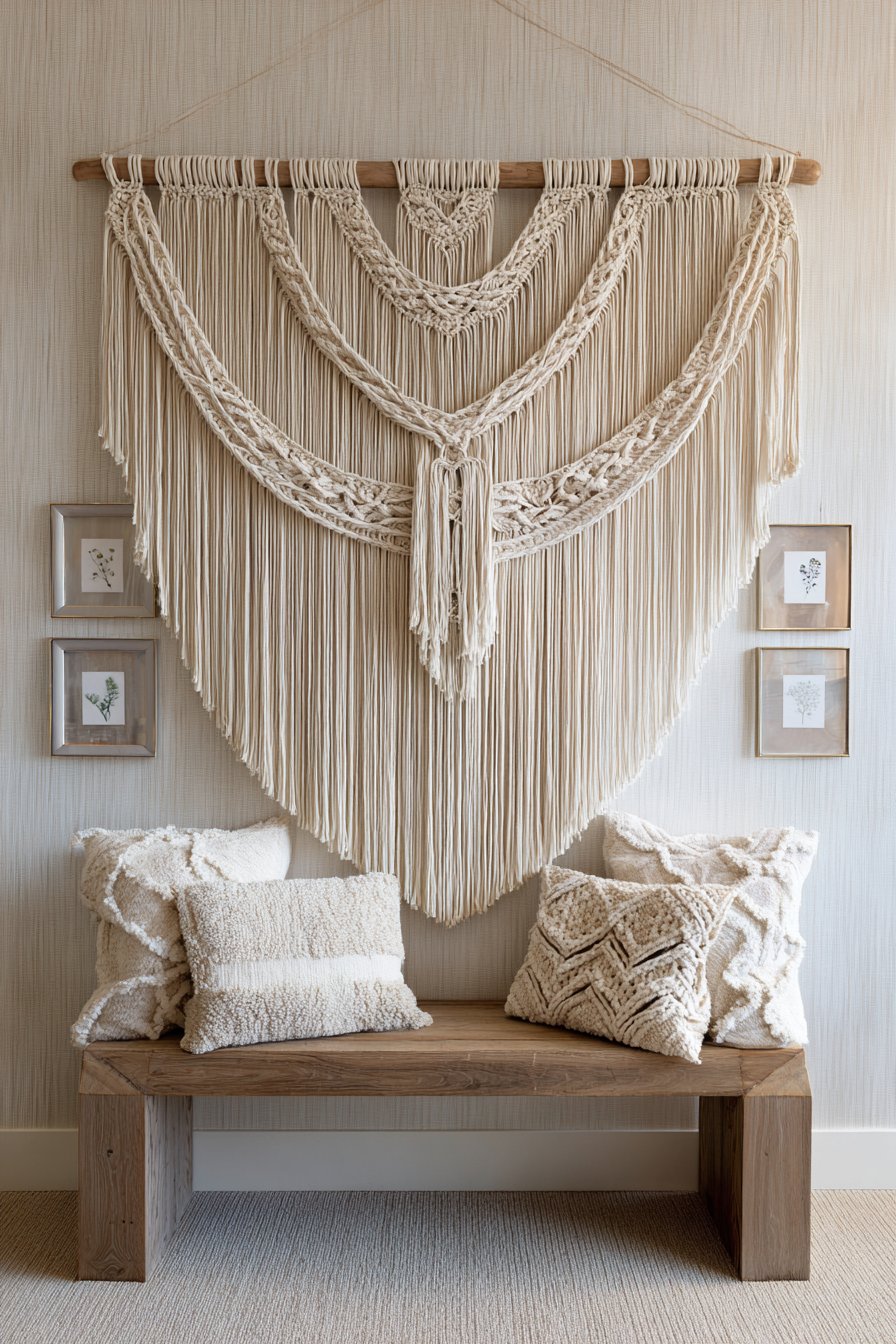
The narrow wooden bench positioned below the wall display completes the vignette, styled with textured throw pillows that echo the organic, layered aesthetic of the macramé above. This complete composition demonstrates how successful wall displays extend beyond the wall itself to include furnishings and accessories that create cohesive design moments. The handcrafted nature of macramé adds warmth and personality that mass-produced artwork cannot achieve.
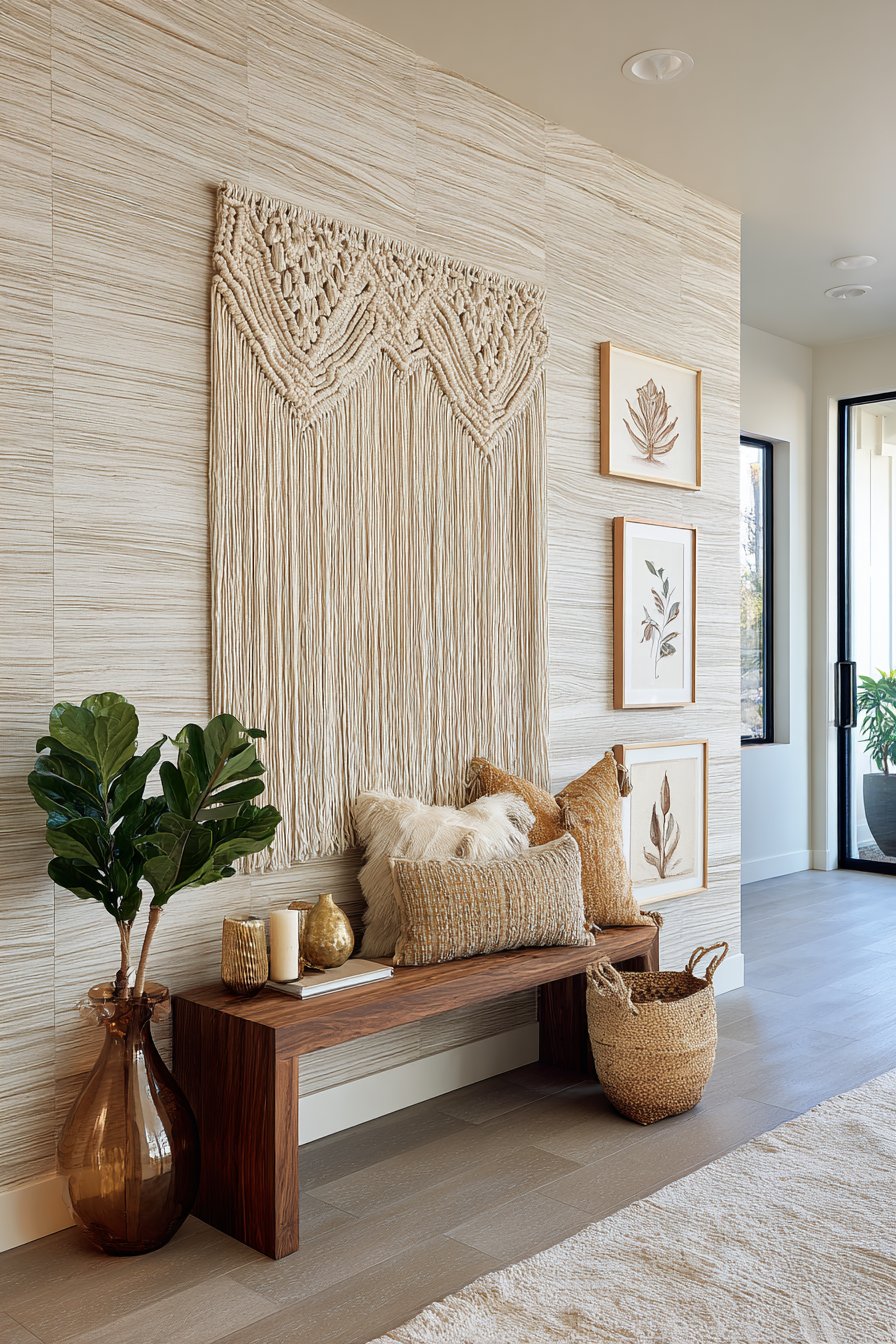
Interior design photography with soft natural light emphasizes the texture and shadow play within the complex knotwork, highlighting the depth and dimensional quality of the piece. Against neutral linen-textured wallpaper, the natural cotton macramé creates subtle tonal contrast while the organic materials create aesthetic harmony. The overall effect feels simultaneously bohemian and sophisticated, demonstrating how traditional crafts can be incorporated into contemporary interiors.
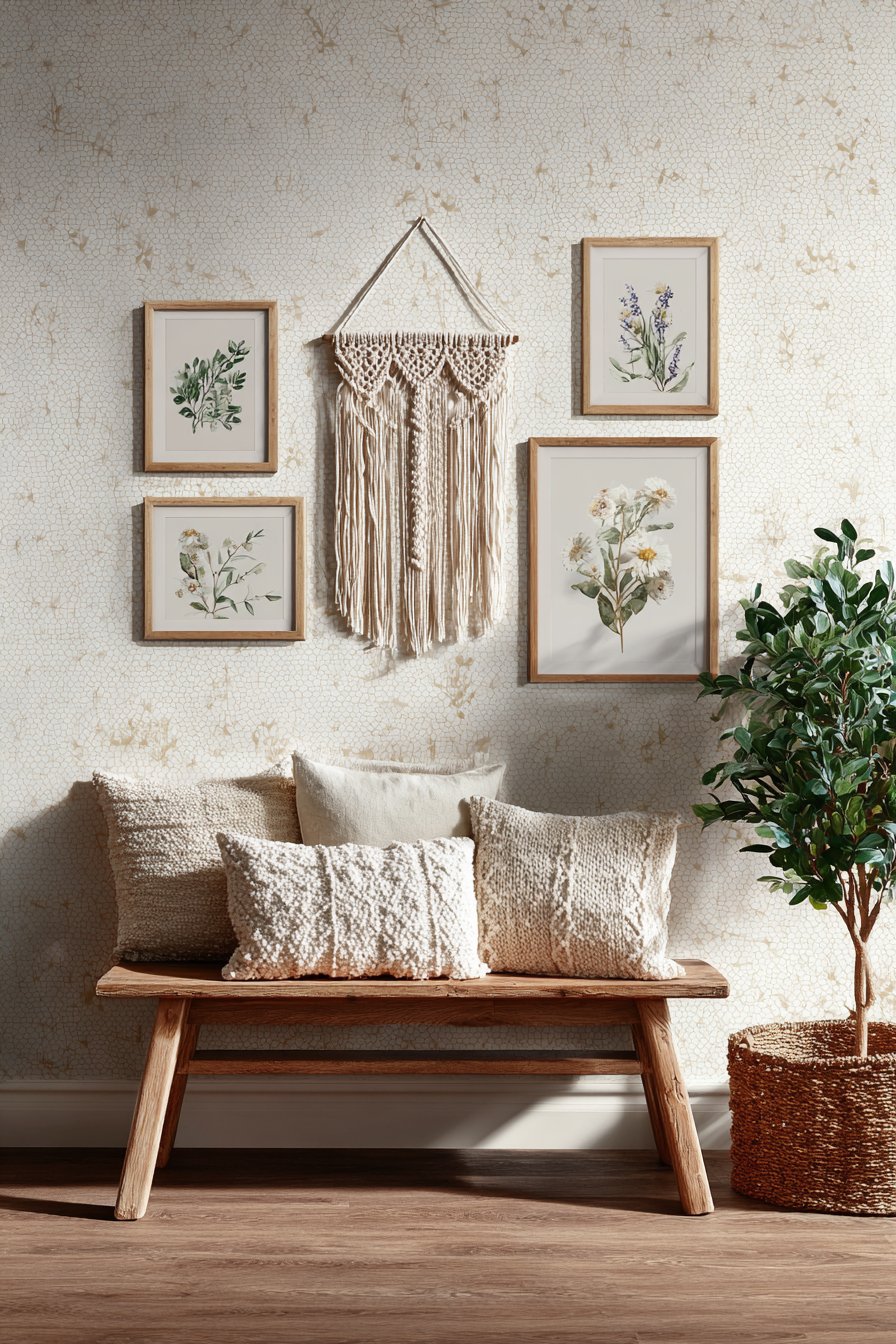
Key Design Tips: Choose macramé size proportional to the wall—pieces should span 50-75% of the wall width for proper scale. Hang macramé from a sturdy wooden dowel or branch for authentic, organic presentation. Position the hanging at eye level with the center of the design approximately 60 inches from the floor. Complement with simple framed botanical prints rather than competing with complex artwork. Consider the macramé’s “weight” in the room—large pieces with heavy fringe feel substantial and may require simpler surrounding decor.
14. Chronological Family Photo Timeline
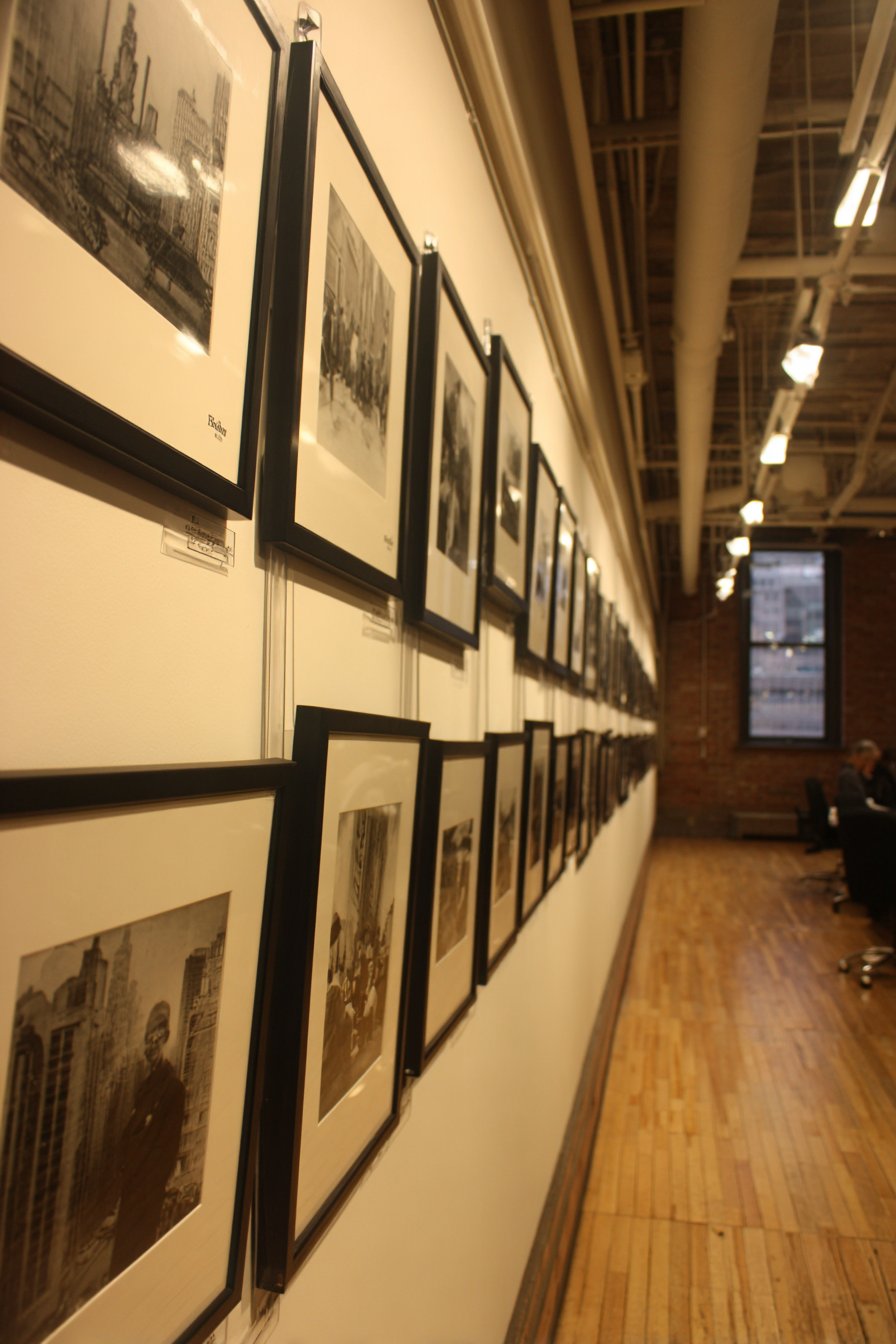
A chronological timeline of framed family photographs creates a narrative wall display that celebrates personal history and cherished memories. Arranged in a horizontal line across the wall, the photographs progress through time, telling a visual story of family growth, milestones, and precious moments. The consistent use of simple black wood frames in identical sizing creates clean continuity that allows the photographs themselves to be the focal point rather than competing frame styles.
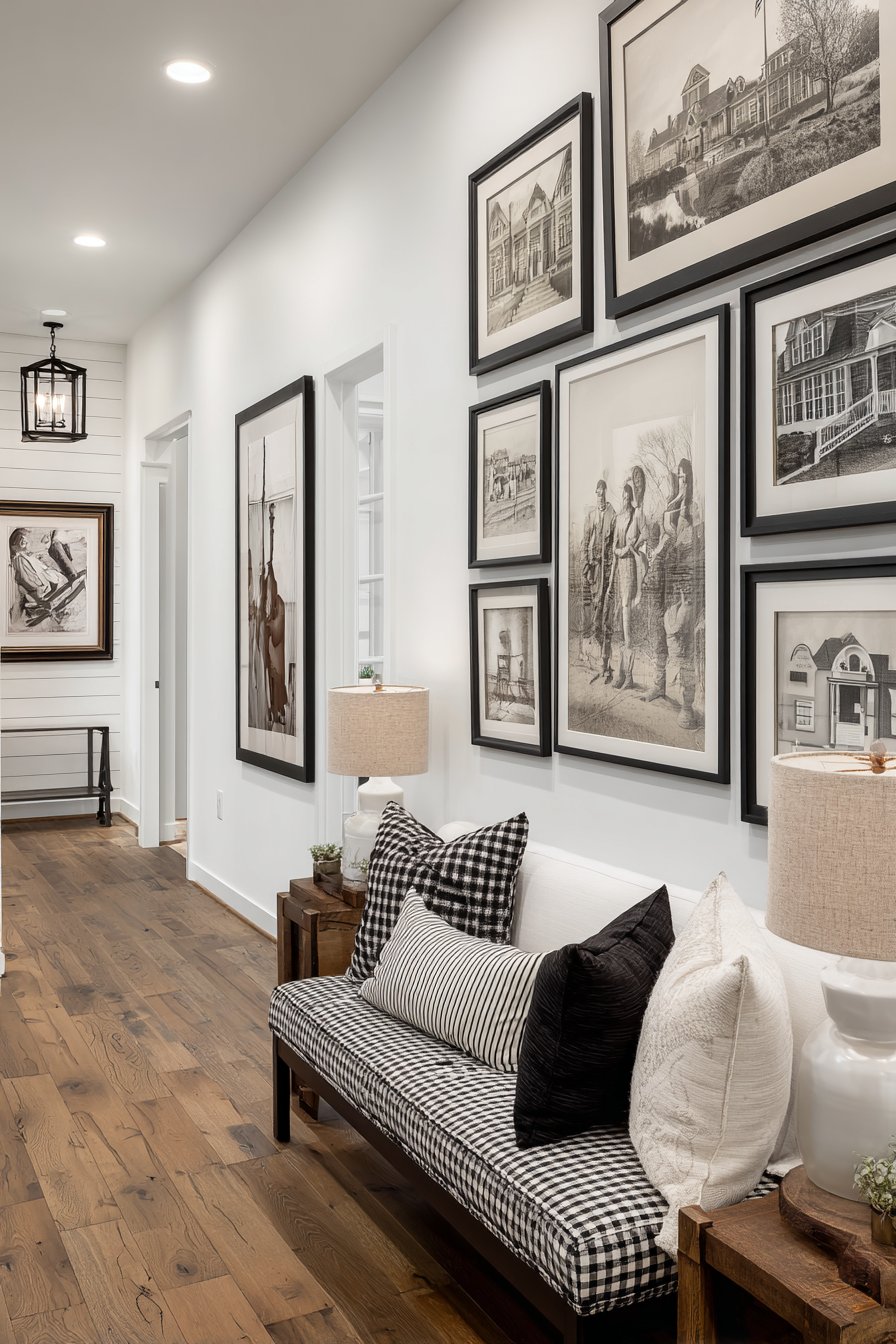
This linear arrangement works particularly well for hallways or above sofas where horizontal wall space is abundant but vertical space may be limited. The timeline format encourages viewers to pause and follow the progression, engaging with the display in a way that scattered arrangements don’t inspire. This intentional sequencing transforms a collection of individual photographs into a cohesive narrative that documents the passage of time and celebrates family bonds.
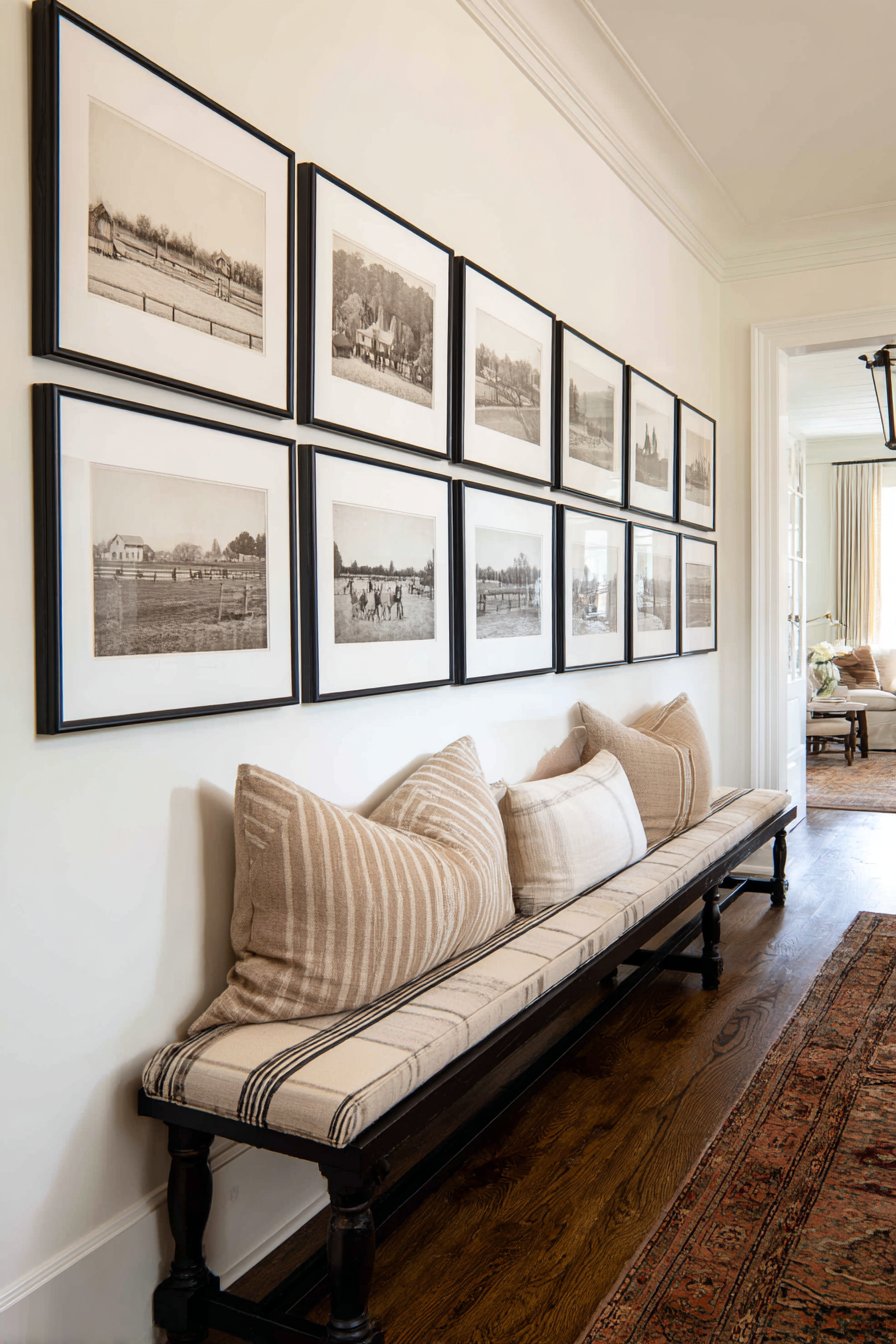
Wide-angle interior photography showing the full timeline reveals how balanced lighting ensures each photograph is clearly visible while maintaining cohesive presentation. The horizontal flow creates calm visual movement that feels organized and intentional rather than chaotic. This display style is particularly meaningful in family homes where documenting growth and celebrating shared experiences are important values.
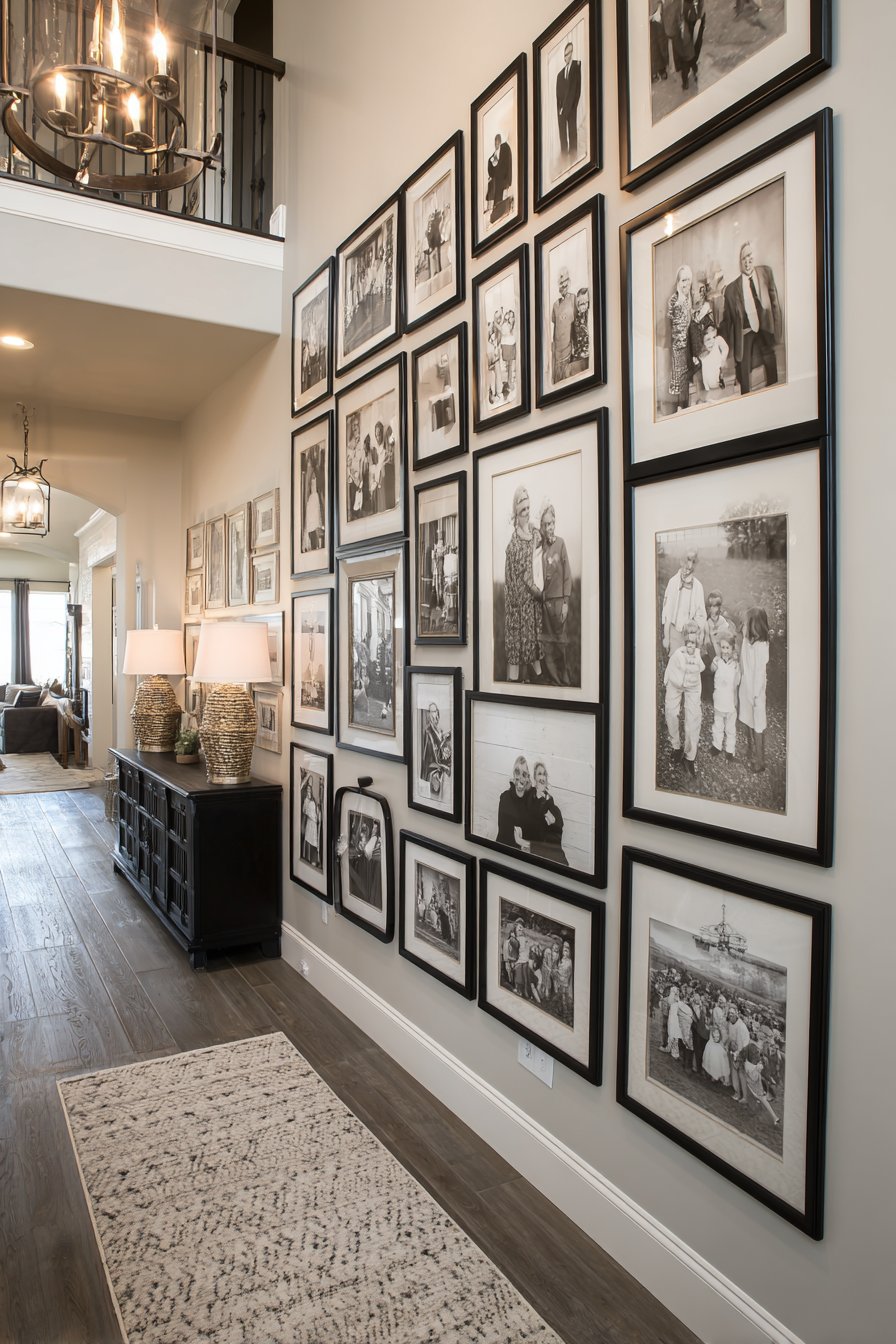
Key Design Tips: Select a consistent frame size for all photographs—8×10 or 11×14 works well for most timelines. Maintain even spacing between frames, typically 4-6 inches, measured from edge to edge. Arrange chronologically from left to right for intuitive viewing. Hang the timeline at consistent height with the center of each frame at 60 inches from the floor. Plan for growth by leaving wall space at the timeline’s end for future additions.
15. Industrial Pipe Shelf Display
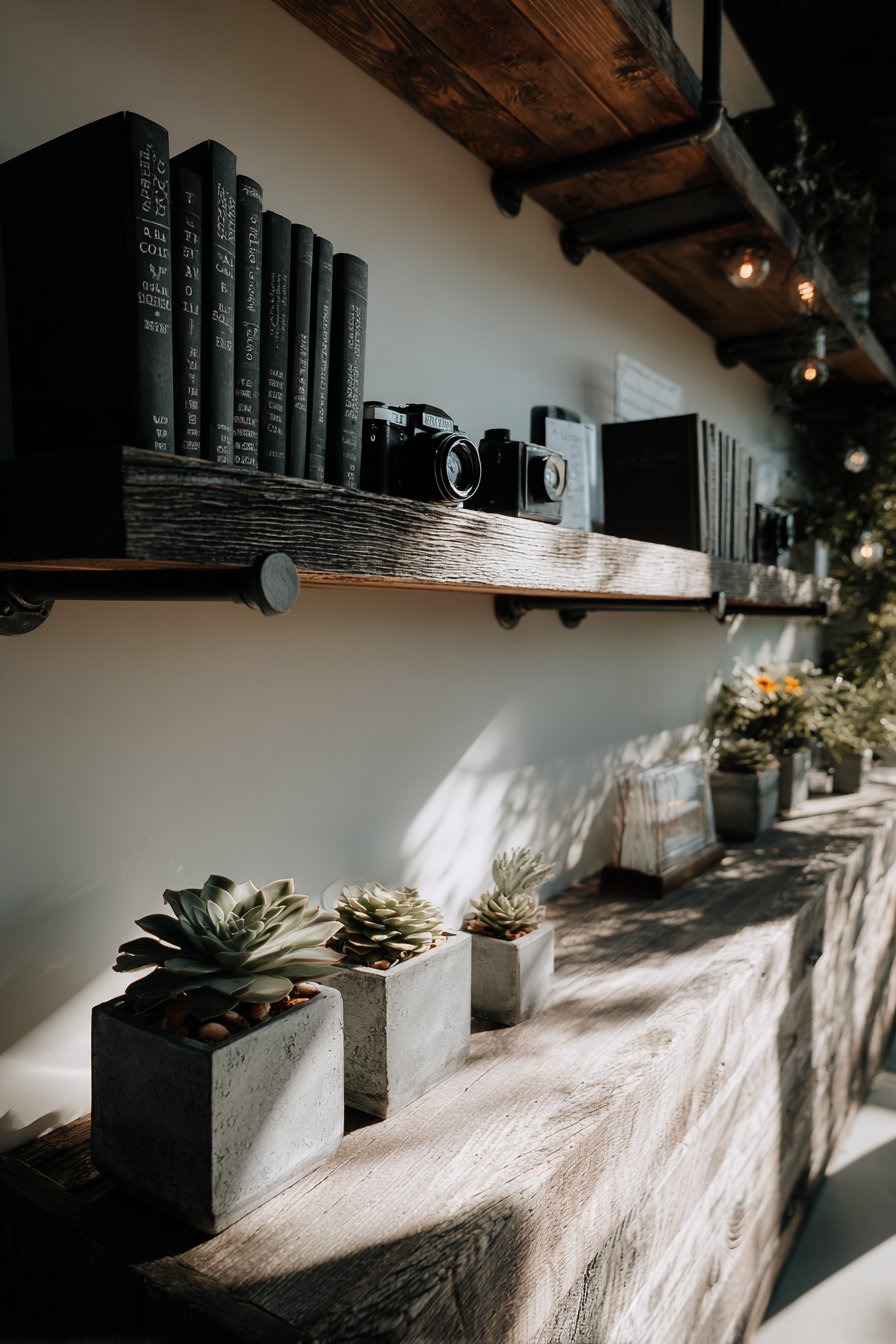
Open metal shelving with industrial pipe brackets represents a wall display idea that celebrates raw materials and utilitarian aesthetics while providing robust functional storage. Black iron pipes support reclaimed wood planks, creating an authentic industrial look that brings edge and character to contemporary and loft-style spaces. The shelves display a curated mix of hardcover books arranged both vertically and horizontally, vintage cameras, small succulents in concrete planters, and Edison bulb string lights woven along the back—a collection that balances decorative appeal with personal interest and functionality.
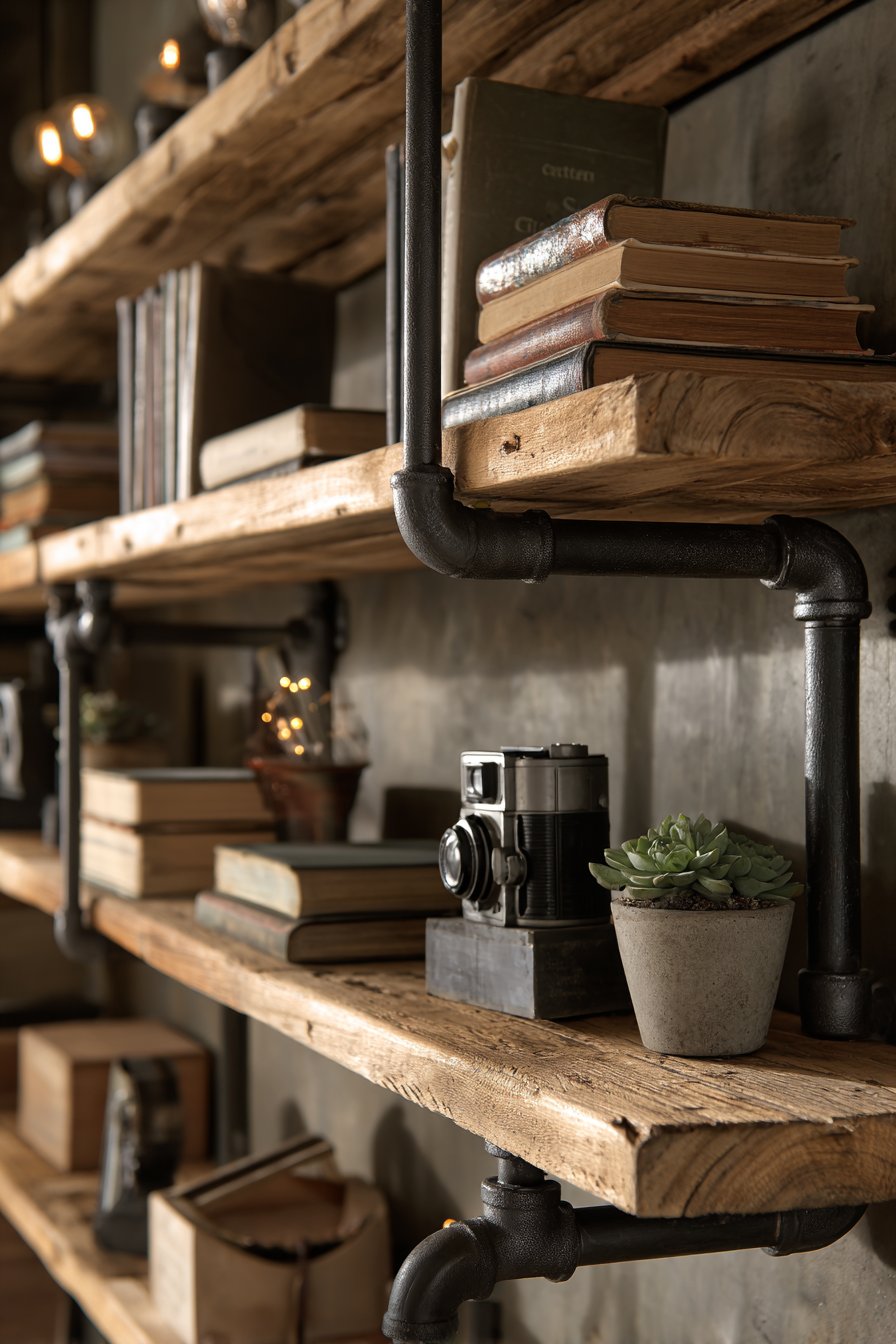
The raw textures of the wood and metal create visual interest through material contrast—smooth iron against rough-hewn wood grain, cold metal against warm organic timber. This textural variation adds depth and authenticity that replicated industrial styles cannot achieve. The display demonstrates how industrial aesthetics can feel warm and inviting rather than cold or austere when balanced with organic elements like plants, wood tones, and warm lighting.
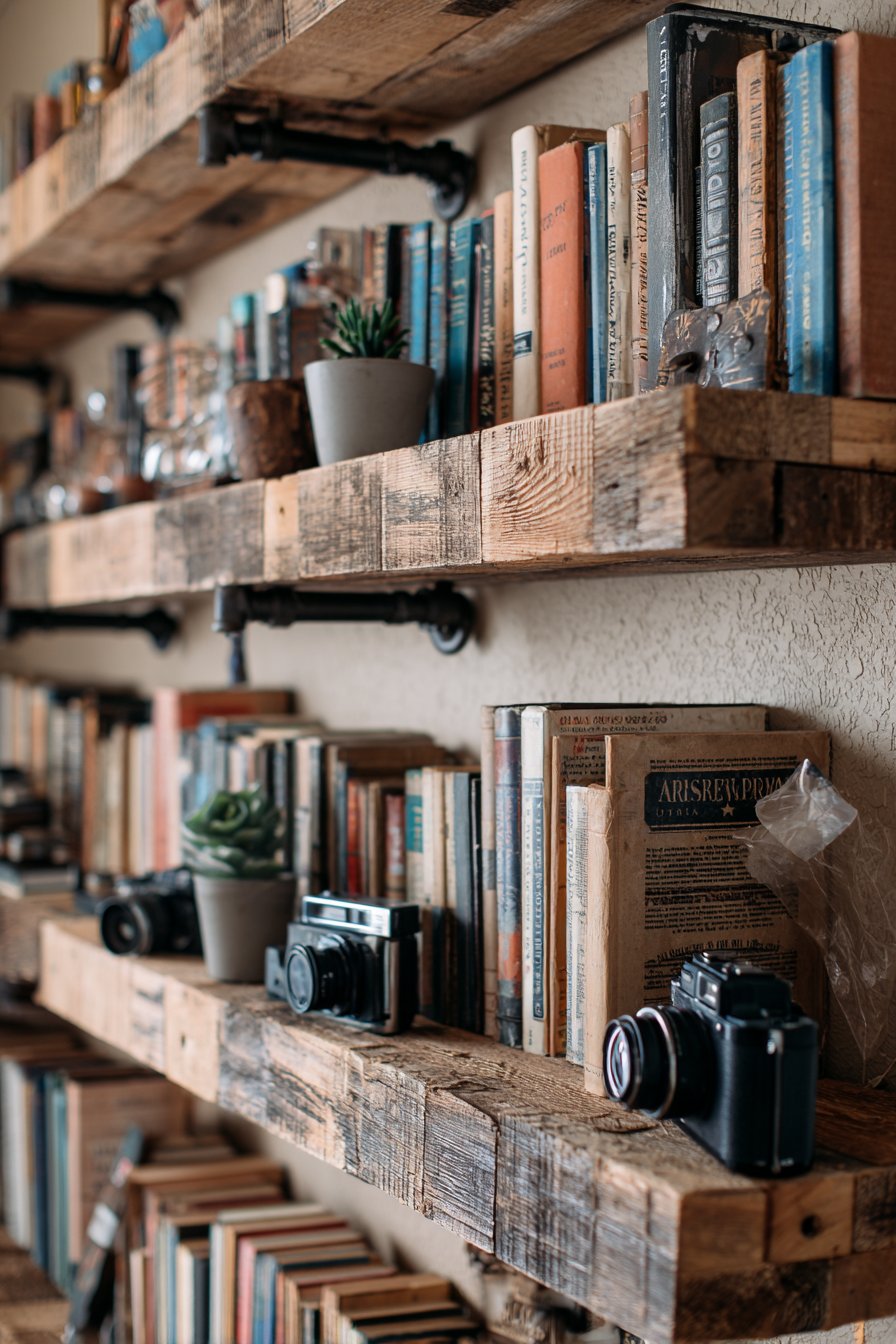
Professional interior photography captures how natural light creates atmospheric shadows that emphasize the industrial aesthetic, highlighting the dimensional quality of the pipe brackets and the grain patterns in the reclaimed wood. The Edison bulb string lights add warm ambient glow during evening hours, transforming the functional storage display into an atmospheric design feature.
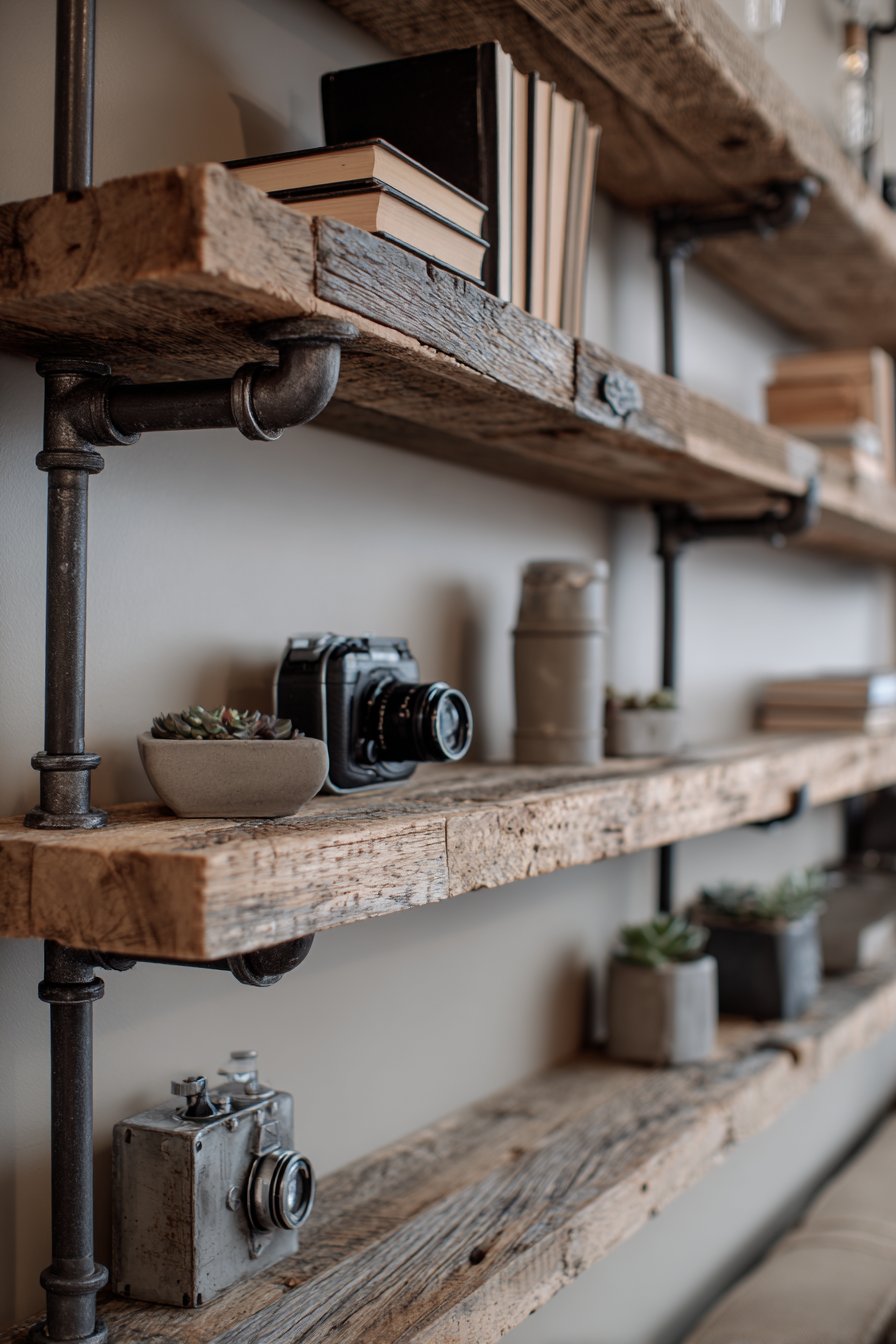
Key Design Tips: Use authentic iron pipe fittings and flanges for true industrial character—avoid faux finishes. Select reclaimed wood with visible grain, knots, and character marks for authentic rustic appeal. Install shelves at varying heights based on the items you’ll display—books need different clearance than plants. Balance the industrial hardness with softer elements like plants, books, and textiles. Ensure proper wall anchoring—pipe shelving is heavy and requires secure mounting to studs.
16. Dimensional Shadow Box Collection
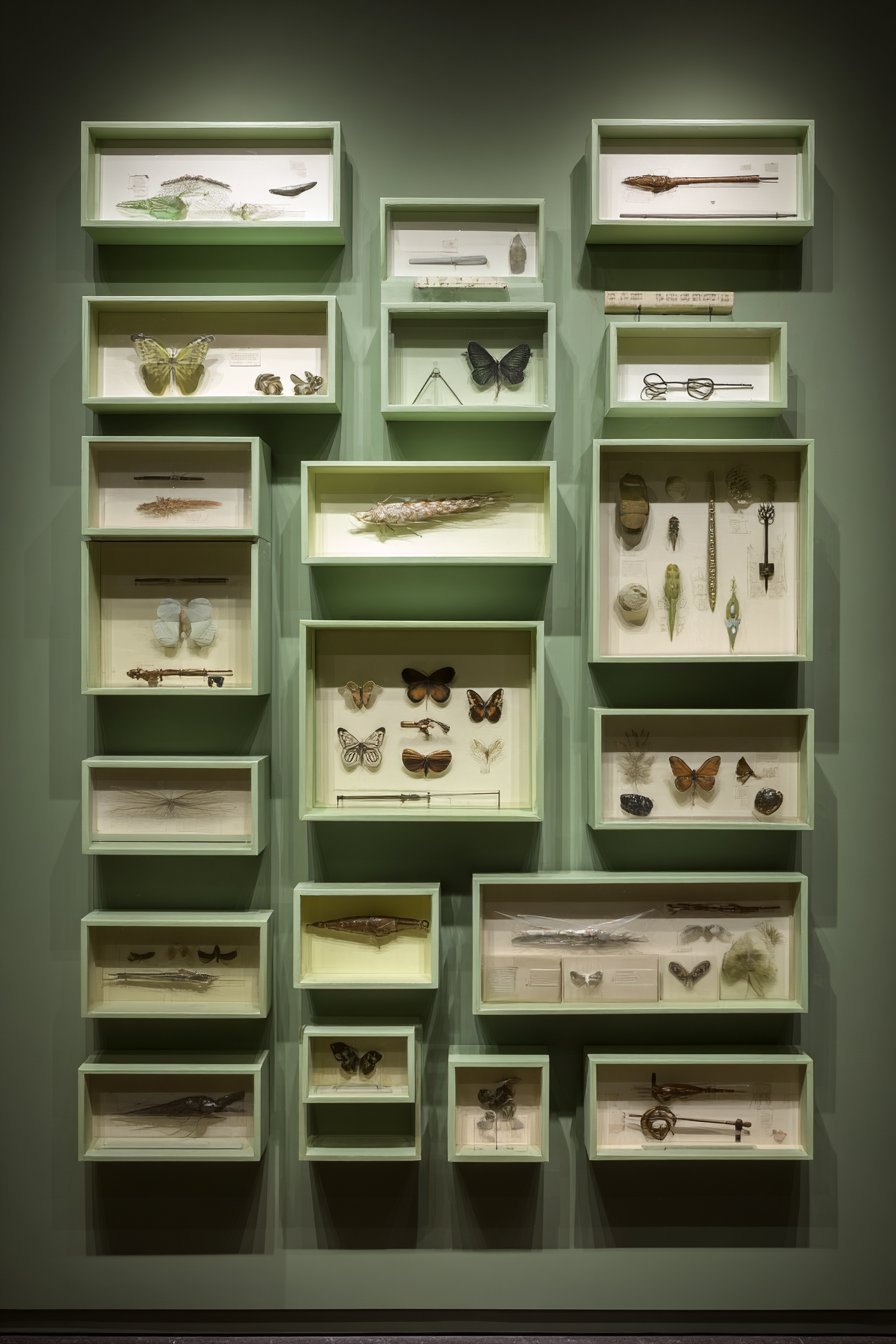
Shadow box frames in varying depths create fascinating three-dimensional wall displays that showcase collections of meaningful objects rather than flat artwork. Each frame becomes a miniature display case containing preserved butterflies, vintage keys, antique spectacles, or small natural specimens—treasured items that tell stories and reveal personal interests and collections. The asymmetric grid pattern on a sage green accent wall creates modern organization while the varying frame depths add physical dimension that catches and plays with light.
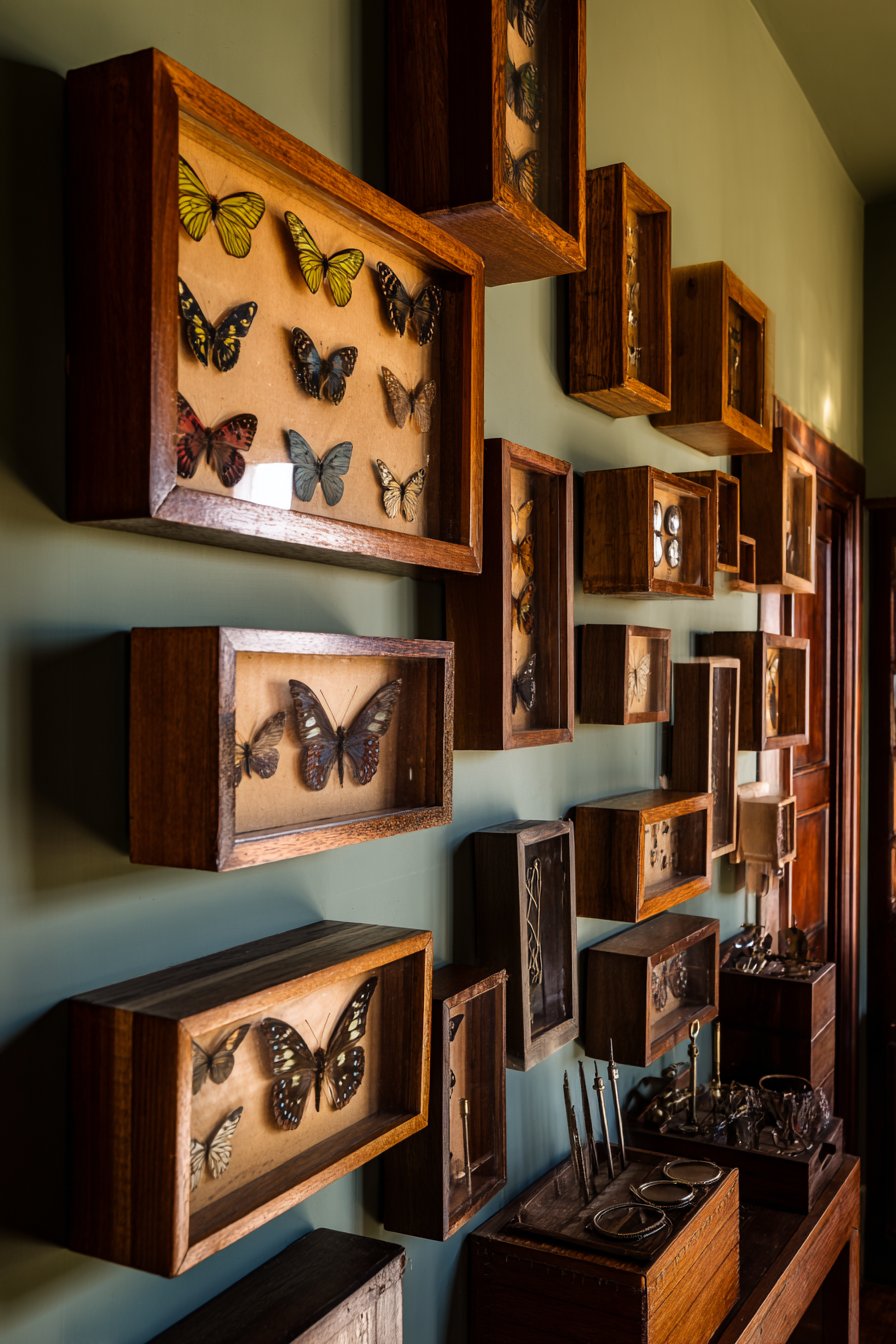
The deep frames create actual physical depth that allows objects to cast shadows within each box, creating layers of visual interest that change throughout the day as lighting angles shift. This dimensional quality transforms the wall display into a dynamic feature that reveals new details depending on viewing angle and time of day. The curiosity cabinet aesthetic appeals to collectors and those who appreciate the tactile and personal nature of three-dimensional objects over two-dimensional artwork.
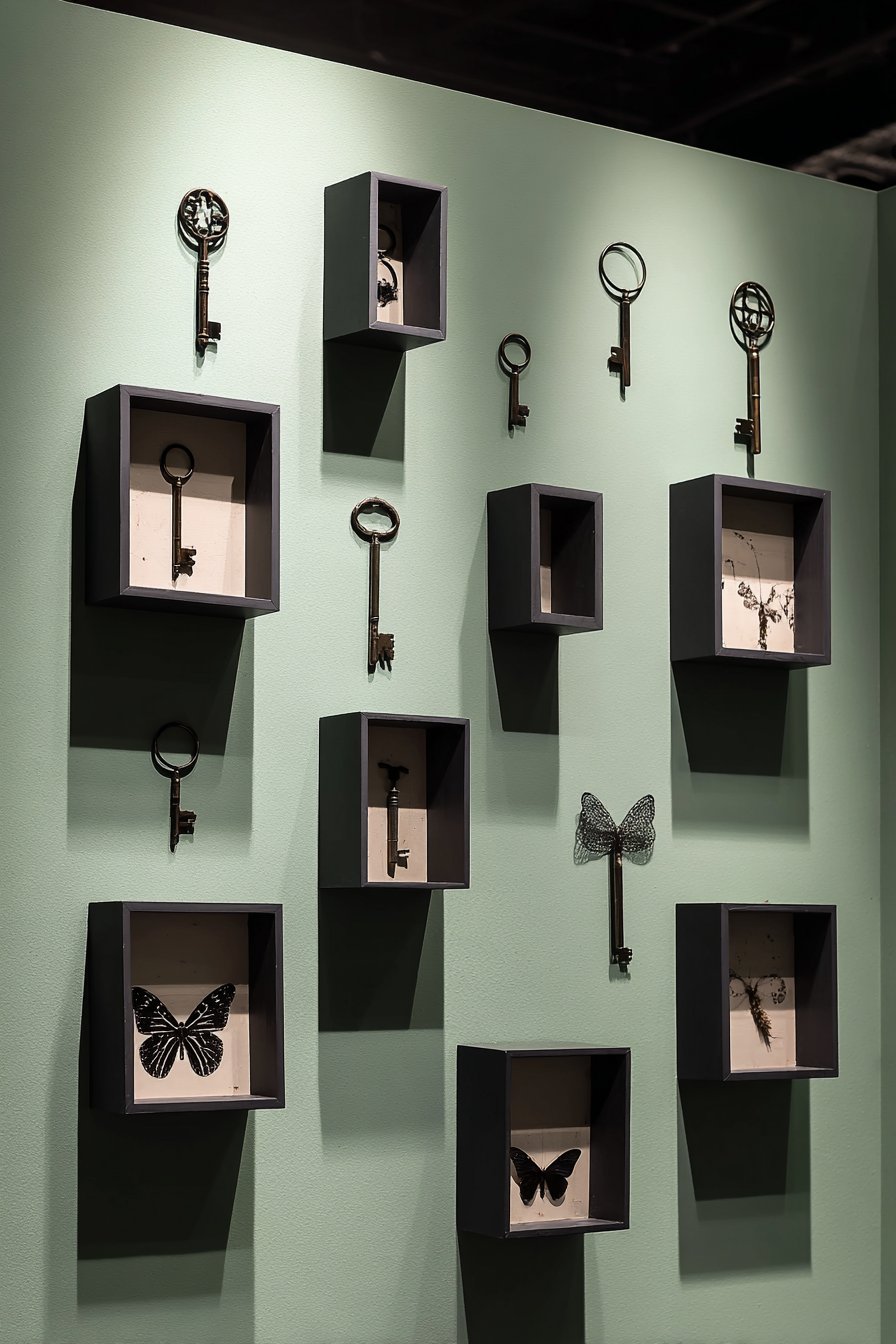
Interior design photography with directional natural lighting emphasizes the shadows within each box, highlighting the dimensional quality and the varied shapes and forms of the displayed objects. The sage green wall provides sophisticated color that enhances the vintage, collected quality of the displayed items while adding subtle visual interest that pure white walls cannot achieve.
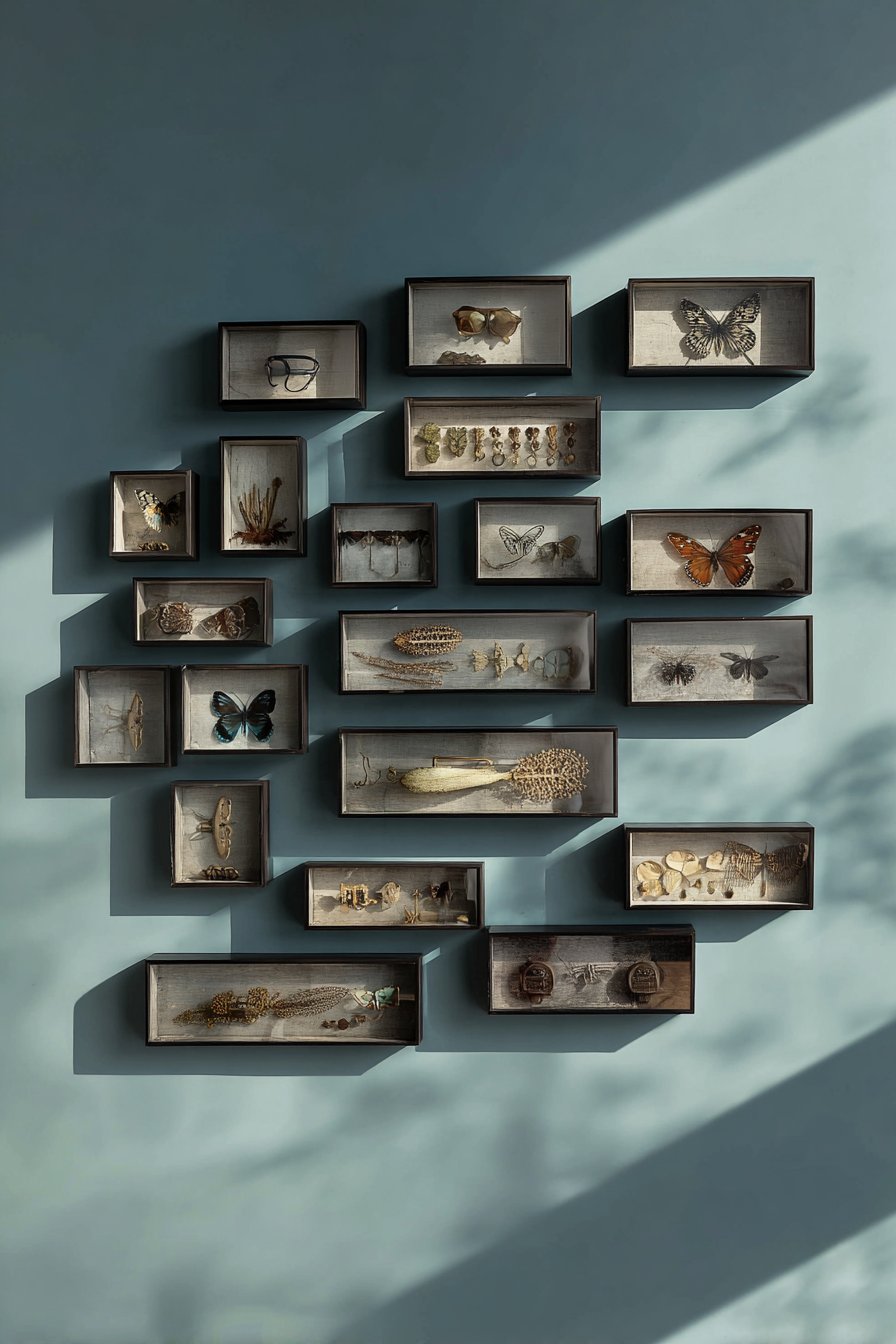
Key Design Tips: Choose shadow box depths based on objects being displayed—2-3 inches deep for flat items like coins or stamps, 4-6 inches for three-dimensional objects. Mount objects securely using pins, adhesive, or fine wire to prevent shifting. Arrange boxes in an asymmetric grid for modern appeal or symmetrically for traditional aesthetics. Consider UV-protective glass for delicate items like butterflies or vintage photographs. Create thematic groupings—all nature specimens in one area, vintage objects in another—for cohesive storytelling.
17. Monochromatic Ceramic Plate Display
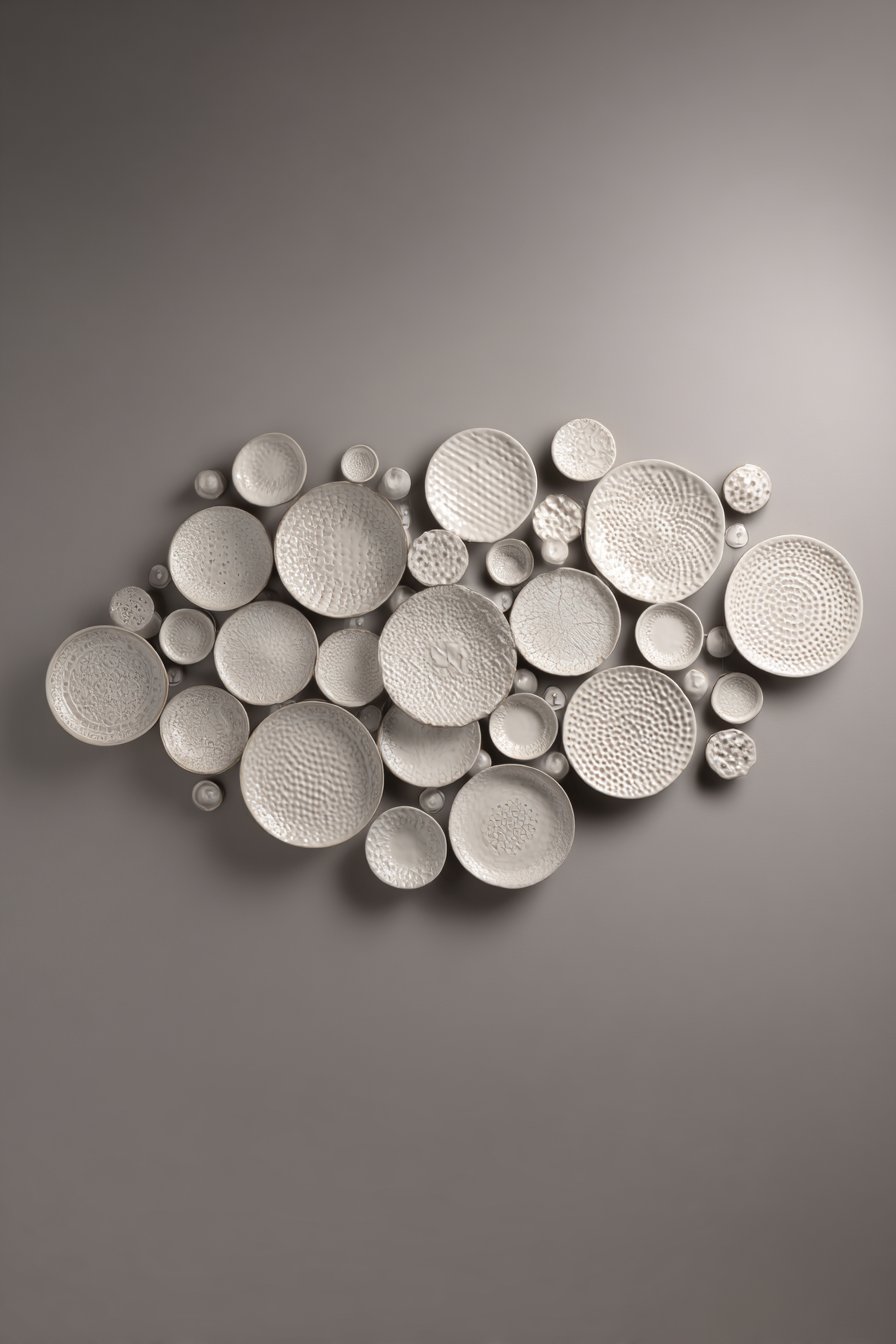
A collection of white ceramic plates in various sizes and subtle patterns creates an understated yet sophisticated wall display that adds visual interest while maintaining tonal restraint. Mounted on a soft gray dining room wall, the plates include dinner plates, salad plates, and decorative serving platters arranged in an organic circular cluster. The invisible disc hangers maintain clean aesthetics by eliminating visible mounting hardware that would distract from the delicate beauty of the ceramics themselves.
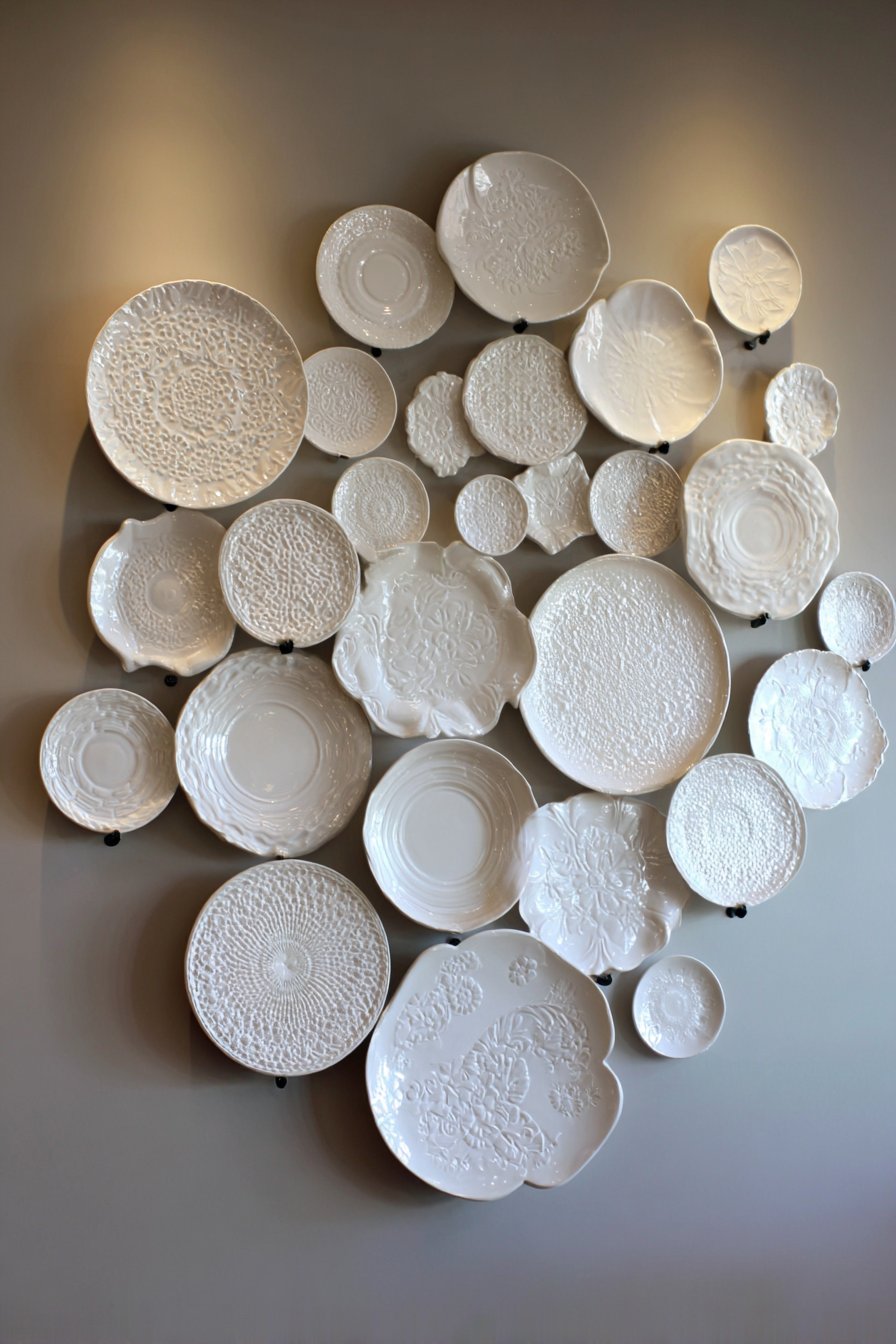
The subtle texture differences and delicate patterns embossed on the white ceramics create visual interest through variation in surface treatments rather than color. Some plates might feature raised dot patterns, others fine line details, and still others smooth glazed finishes—this textural variety creates depth within the monochromatic palette. The display demonstrates how neutral color schemes can avoid blandness through careful attention to texture, pattern, and tonal variation.
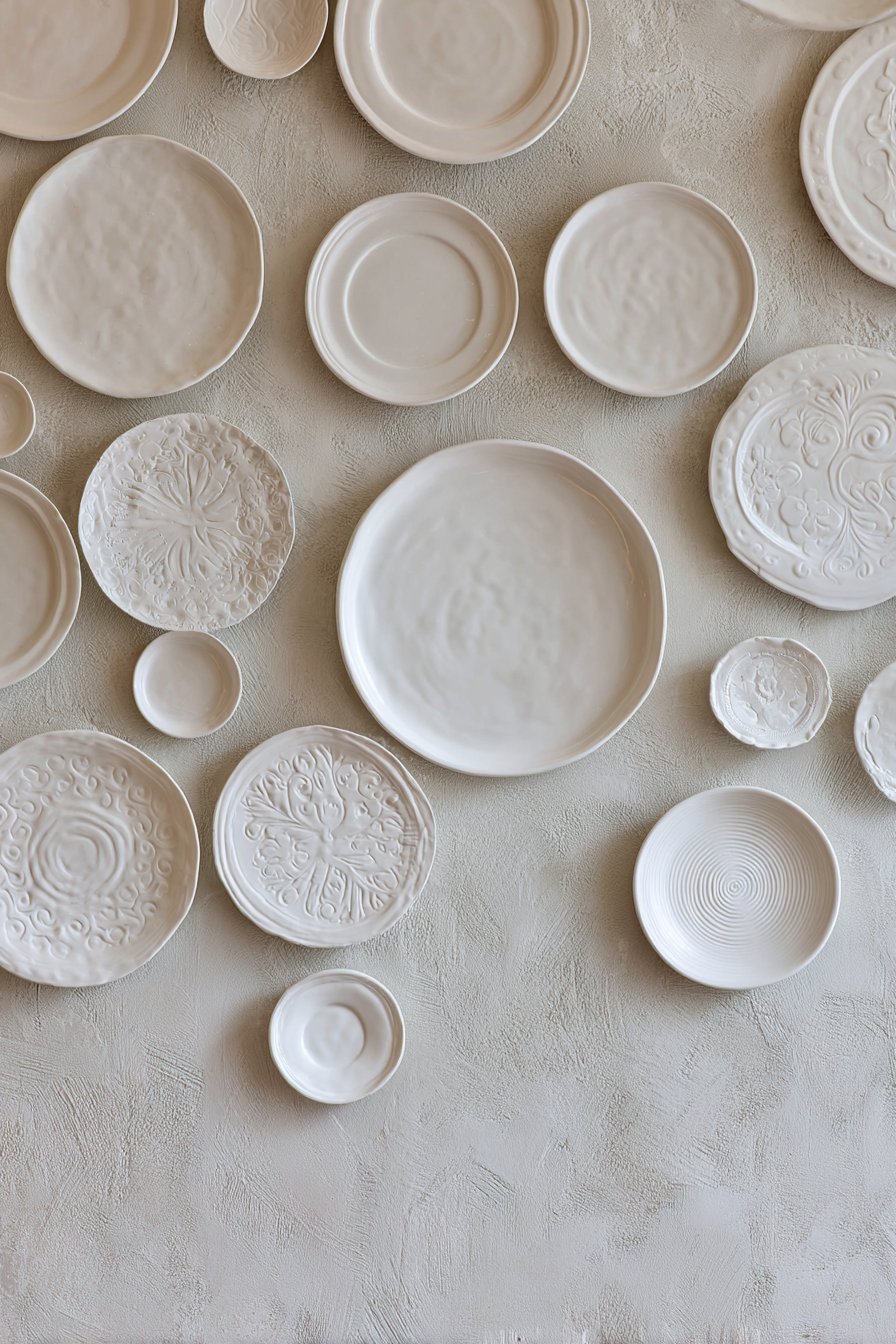
Professional photography with soft natural lighting reveals the subtle shadows cast by embossed patterns and the gentle tonal shifts between pure white, cream, and ivory ceramics. The display adds interest to neutral dining rooms without introducing color that might compete with table settings or other decor elements. This restrained approach feels elegant and timeless, working beautifully in traditional, transitional, and modern interiors alike.
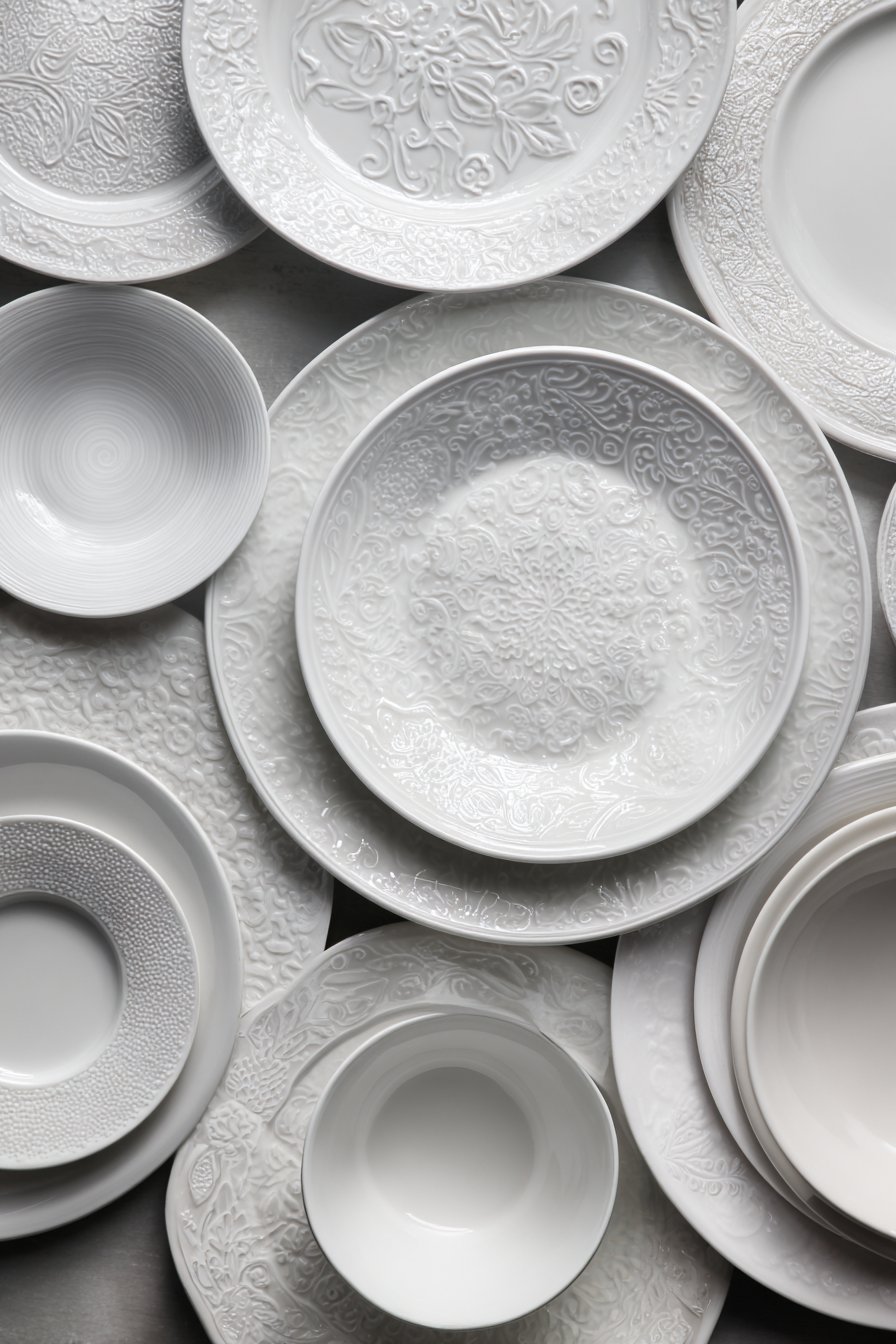
Key Design Tips: Vary plate sizes from 6-inch salad plates to 12-14-inch chargers for dynamic scale variation. Mix plate shapes—combine round dinner plates with scalloped edges or rectangular serving platters. Use invisible plate hangers sized appropriately for each plate’s weight. Arrange on the floor first to test the circular cluster composition. Include plates with varied surface treatments—smooth glazed finishes alongside embossed or textured patterns—for subtle visual interest within the monochromatic scheme.
18. Creative Corkboard Mood Board
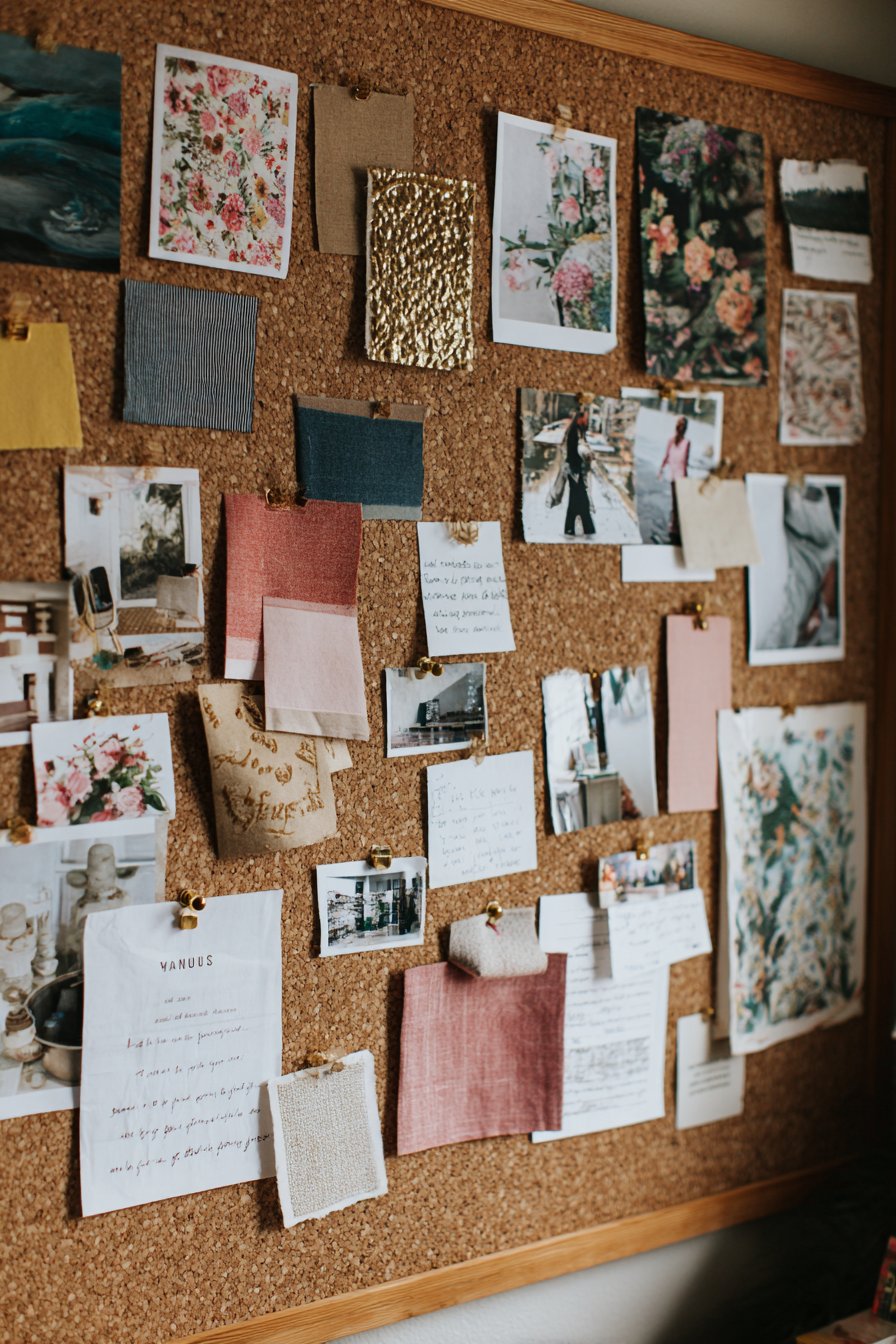
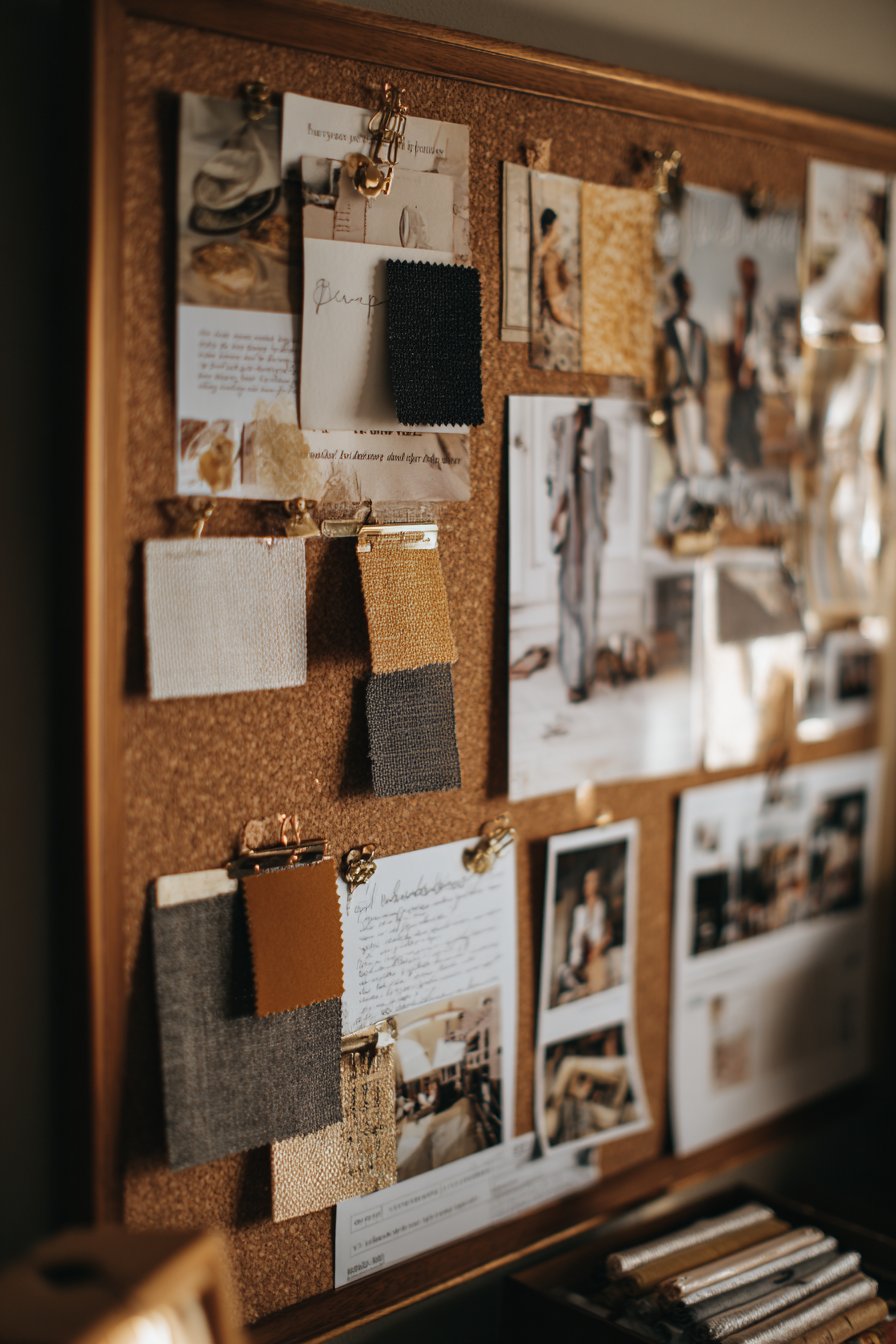
A corkboard panel system covered in natural cork tiles and framed by a simple wooden border creates a functional mood board aesthetic that celebrates creativity and inspiration. The board displays pinned items including fabric swatches, paint chips, magazine clippings, polaroid photos, and handwritten notes—a dynamic, ever-changing collage that reflects current projects, inspiration, and creative thinking. Small brass push pins add metallic accents while serving their practical function of securing items to the cork surface.
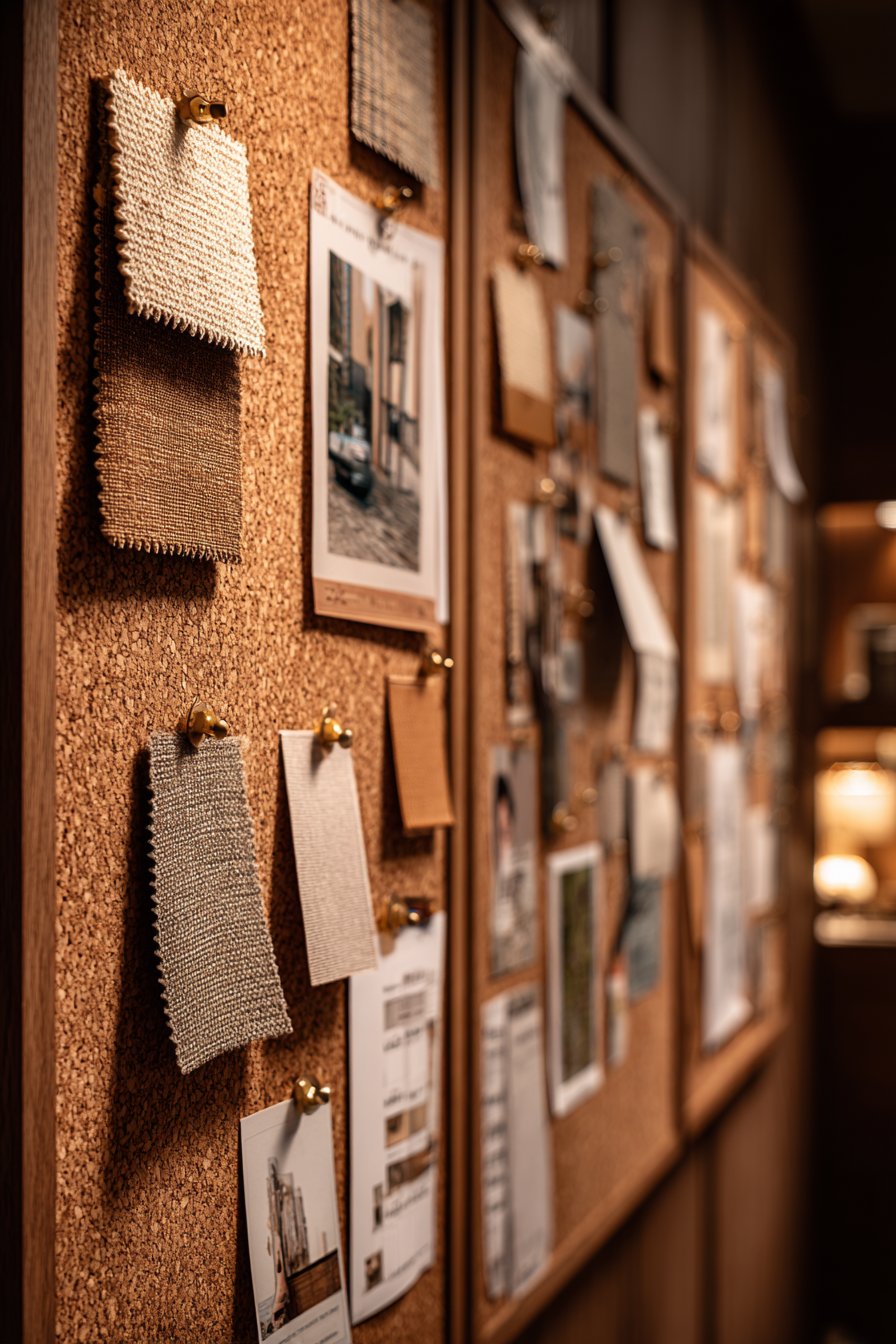
This wall display idea particularly appeals to creative professionals, crafters, designers, and anyone who thinks visually and finds inspiration in curated collections of images and materials. The organic texture of natural cork provides warmth and visual interest even when the board is relatively empty, while the wooden frame creates finished boundaries that prevent the display from feeling haphazard. The changeable nature means the display never becomes stale or outdated—it evolves continuously with your projects and inspirations.
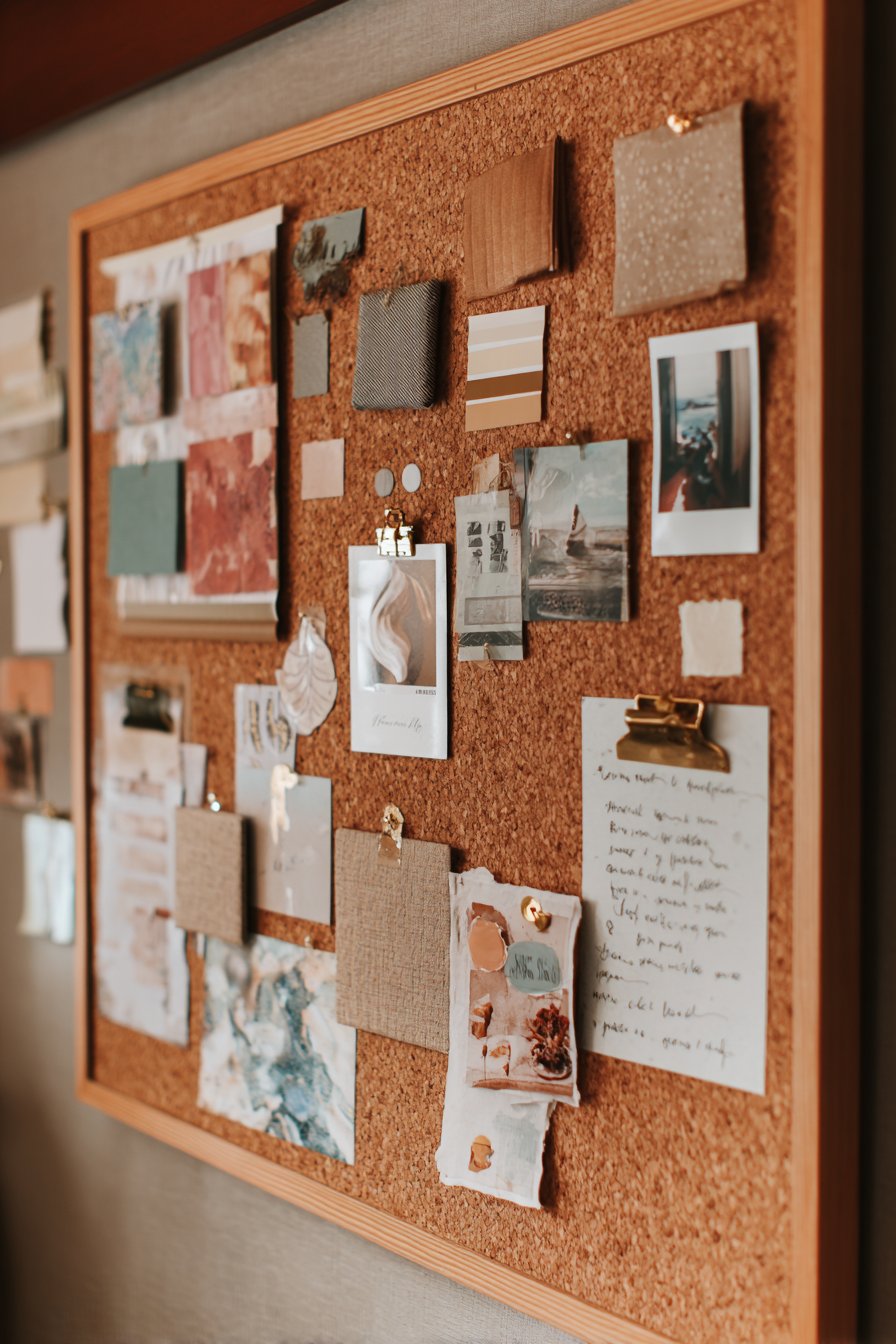
Wide-angle interior photography captures the cork’s organic texture and the creative, layered nature of the pinned materials. Warm overhead lighting suitable for a home office or craft room ensures adequate illumination for working with the board while highlighting the varied textures of cork, paper, fabric, and photographs. The overall aesthetic feels both functional and inspiring, proving that practical organizational tools can also be beautiful design elements.
Key Design Tips: Choose natural cork over synthetic materials for authentic texture and better pin-holding ability. Frame the cork board with simple wood trim in a finish that complements your space. Install in a well-lit area where you’ll see it frequently—near a desk or in a craft room. Curate what you pin—remove outdated items regularly to prevent overwhelming clutter. Use varied pin colors or stick to one metallic finish for cohesion. Consider multiple smaller cork panels rather than one large board for more flexible arrangement options.
19. Botanical Specimen Display
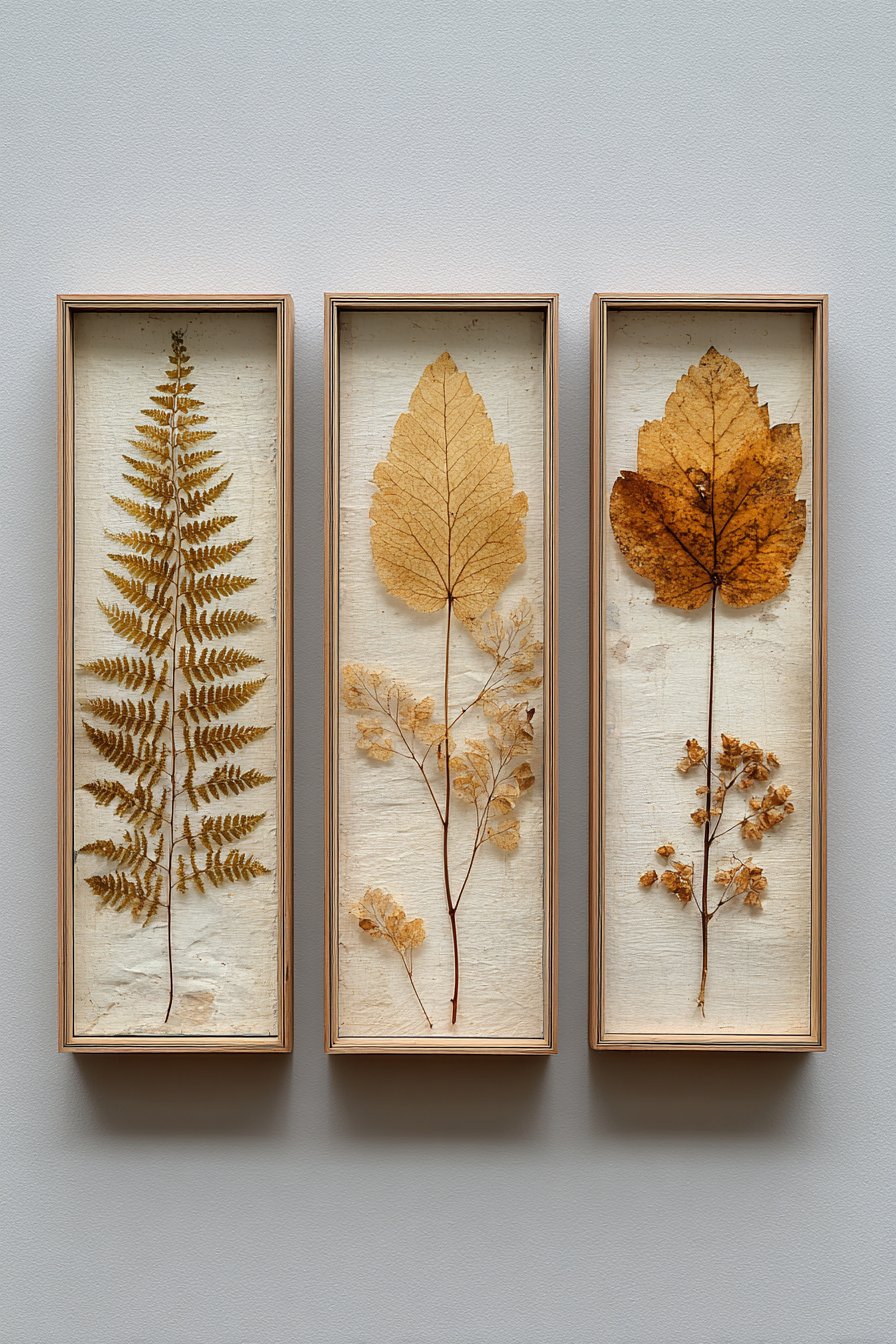
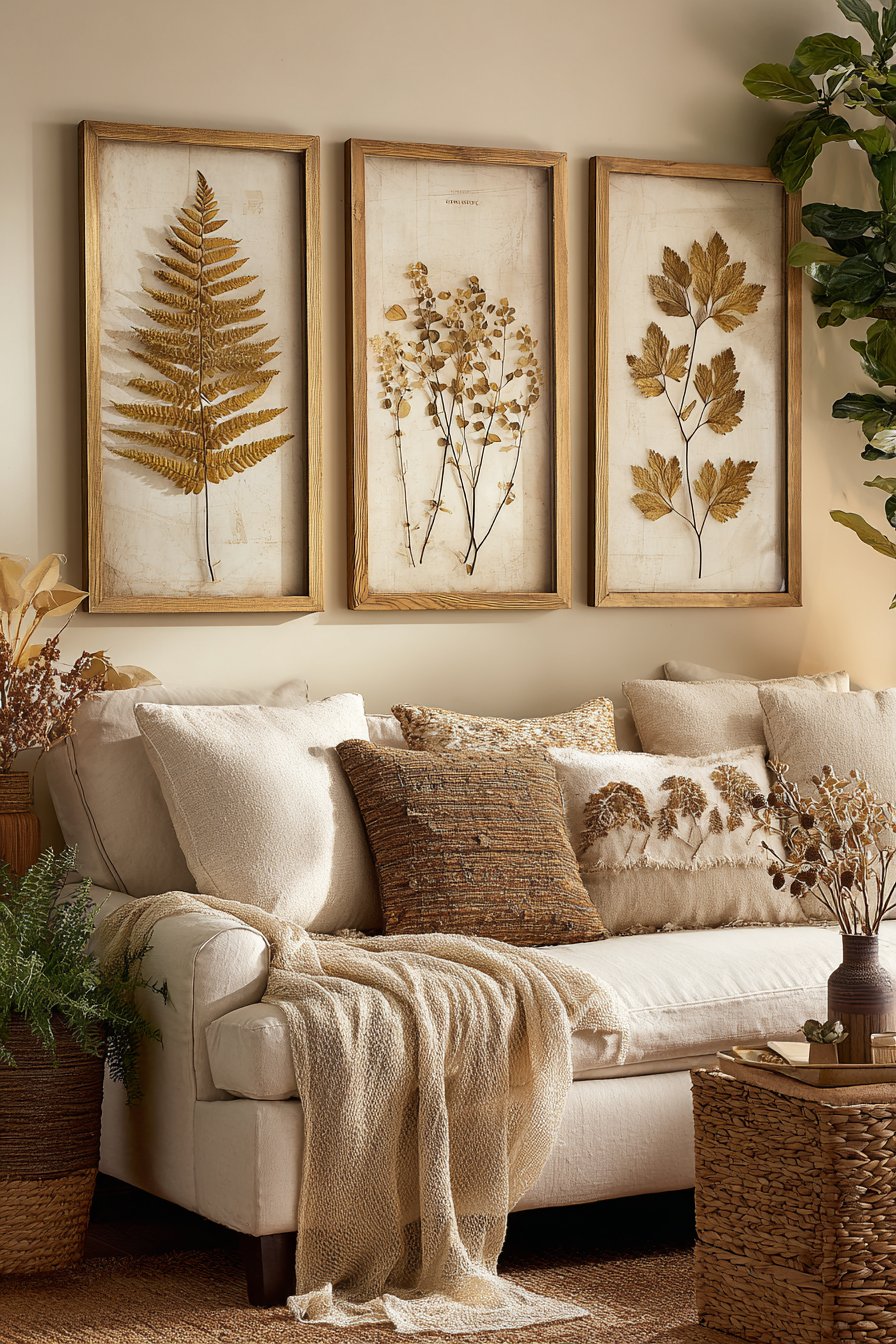
Three oversized framed pressed botanical specimens create an elegant, scientific wall display that celebrates natural beauty through preservation and presentation. Each frame contains large dried leaves, ferns, or flowering branches displayed against cream linen backgrounds, their delicate structures and natural colors preserved for perpetual appreciation. The simple light oak frames with museum-quality matting create gallery-level presentation that honors the specimens’ beauty while the scientific approach adds intellectual interest alongside aesthetic appeal.
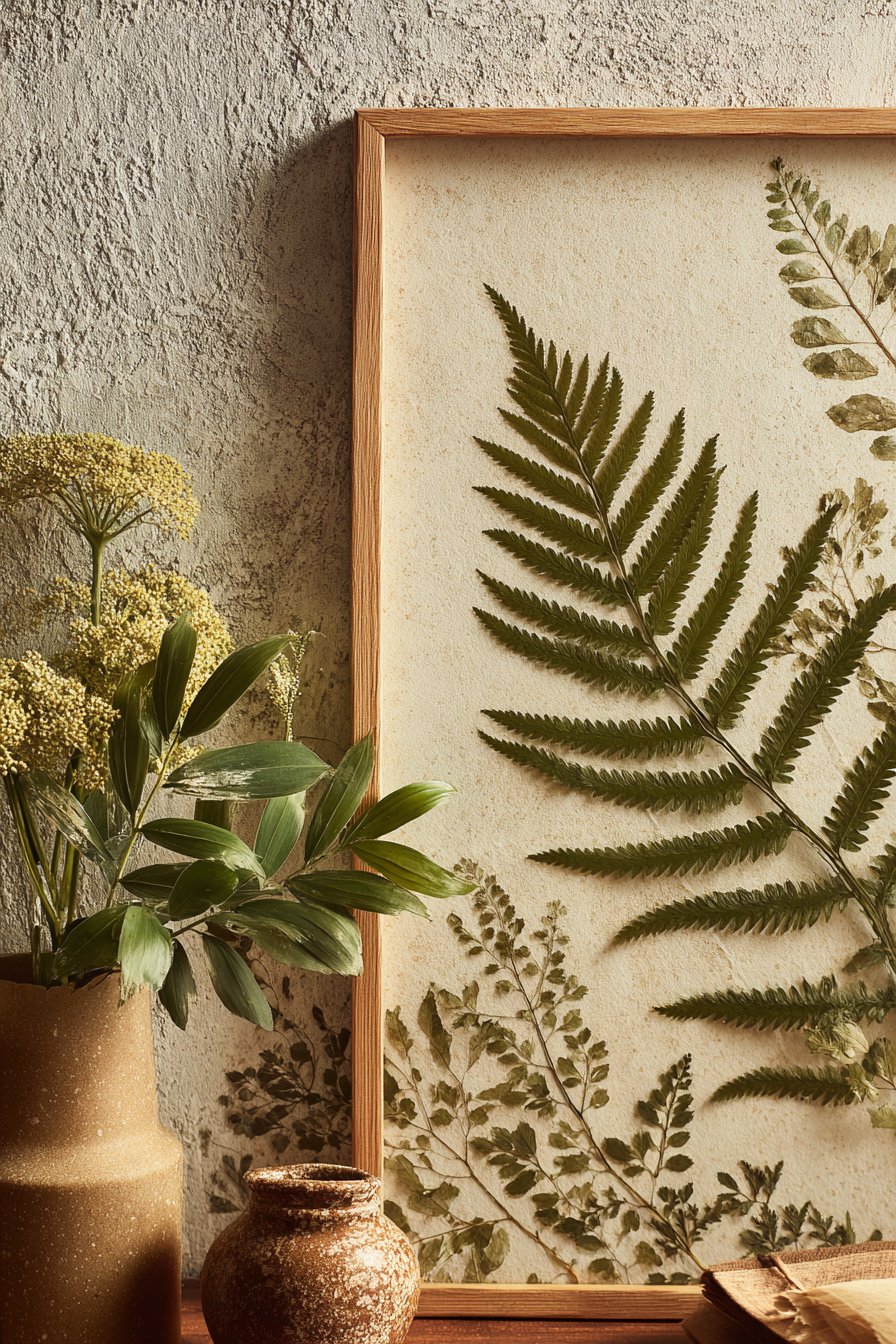
The pressed plant display evokes natural history museums and botanical study, bringing an educational and contemplative quality to interior spaces. This approach particularly appeals to nature lovers, botanists, gardeners, and those who appreciate the intersection of art and science. The vertical arrangement of three frames creates a cohesive column that draws the eye upward while the substantial size of each frame ensures the delicate botanical details remain visible and impactful.
Interior design photography with soft diffused lighting reveals the intricate detail and subtle color variations of the preserved specimens—the varied greens of fern fronds, the delicate structure of flower petals, the intricate vein patterns in leaves. The cream linen backgrounds provide neutral support that allows the botanical forms to stand out clearly while adding subtle textile texture that prevents the scientific display from feeling sterile or cold.
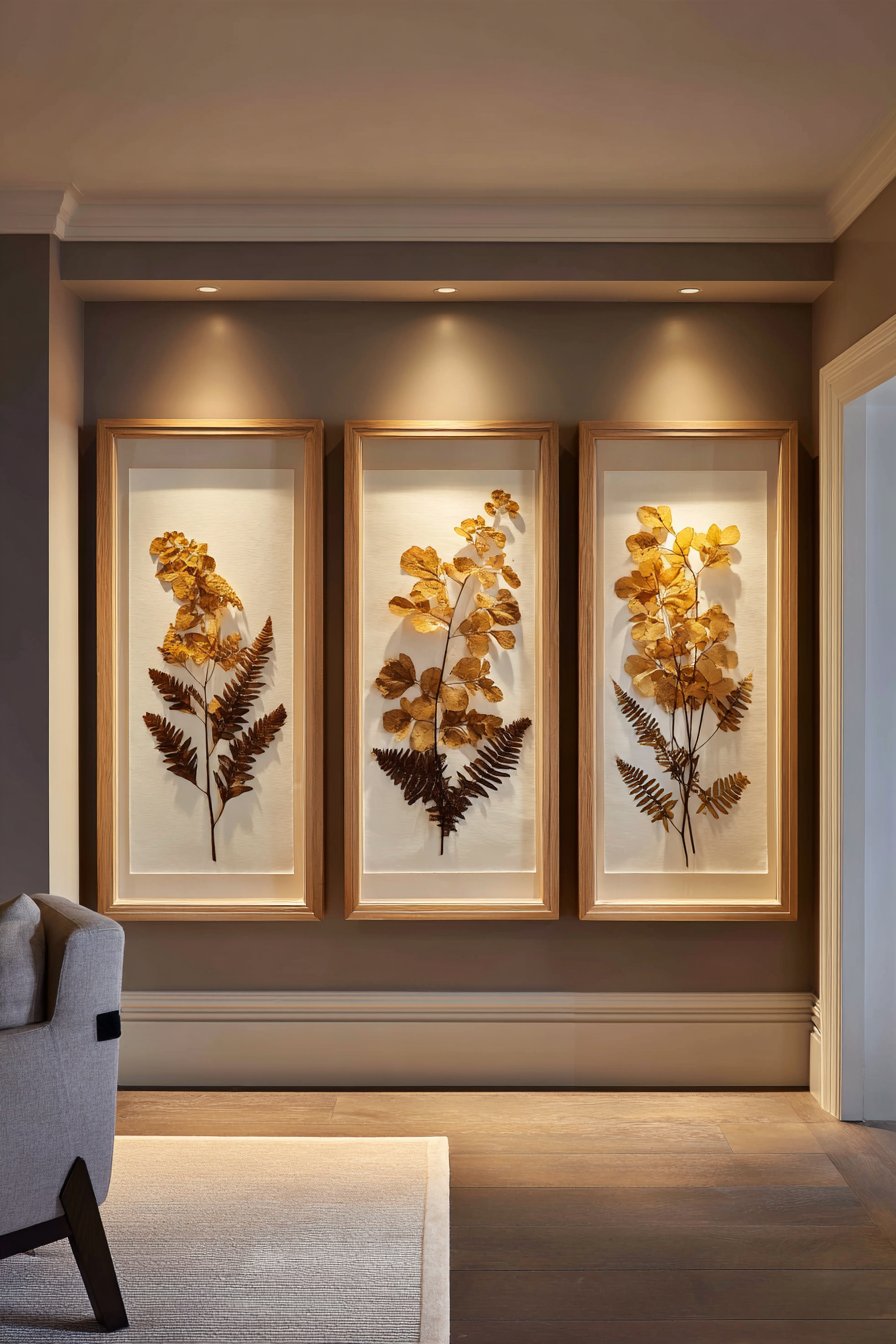
Key Design Tips: Press botanical specimens properly between heavy books or in a flower press for 2-4 weeks before framing. Choose specimens with interesting forms—large leaves with prominent veining, delicate ferns with intricate fronds, or flowering branches with architectural structure. Use acid-free matting and backing to prevent deterioration. Position away from direct sunlight to prevent fading. Create cohesion by selecting specimens from similar plant families or with coordinating colors. Consider labeling specimens with their scientific names for authentic natural history presentation.
20. Versatile Grid Panel System
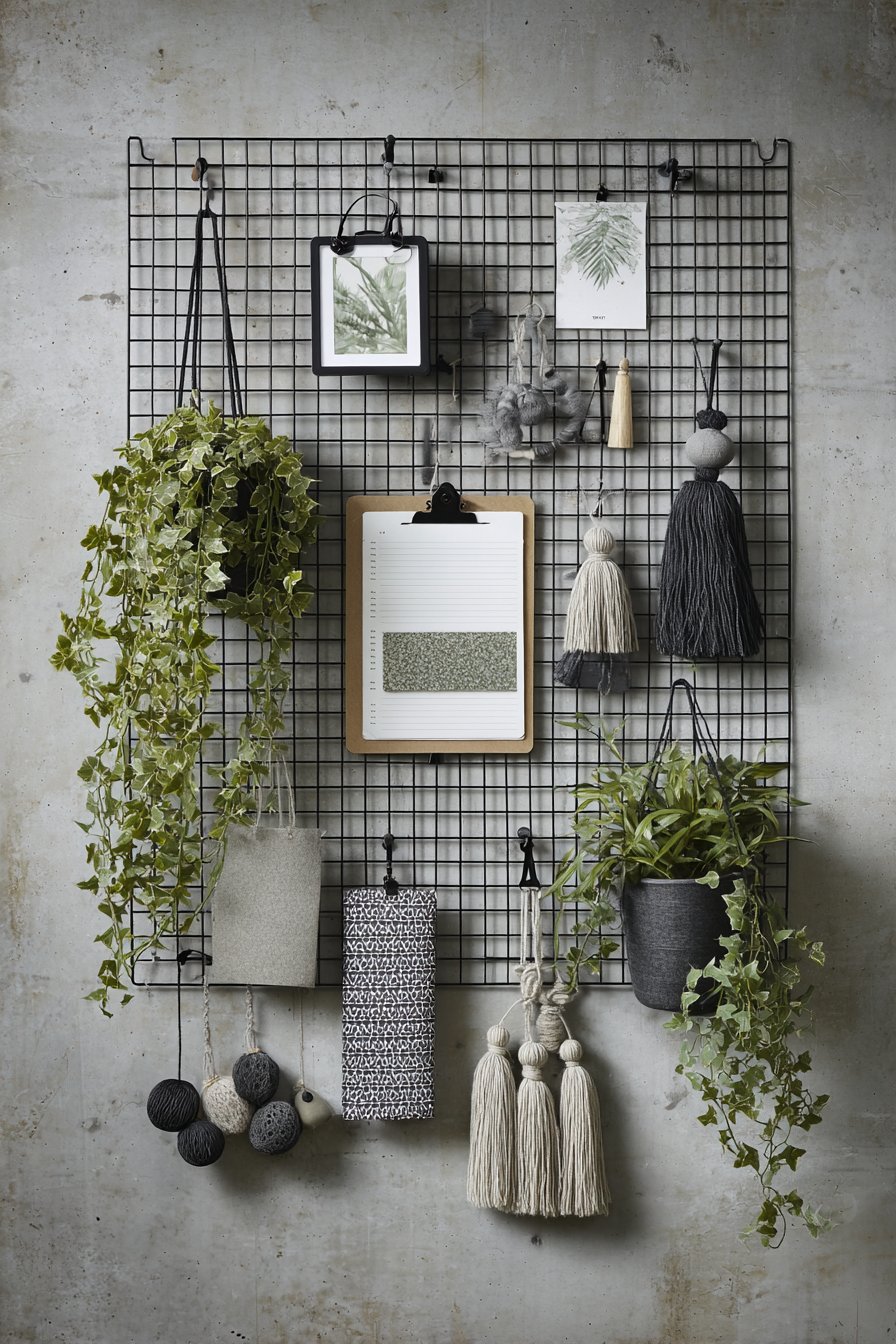
An iron grid panel system mounted to the wall provides maximum flexibility in wall display options, allowing various items to hang using S-hooks and clips for completely changeable arrangements. This industrial-inspired system can accommodate small framed prints, hanging planters with trailing ivy, small mirrors, clipboards with notes, and decorative tassels—virtually anything that can be attached to the grid structure. The functional versatility makes this approach ideal for bedrooms, home offices, or craft spaces where display needs frequently change.
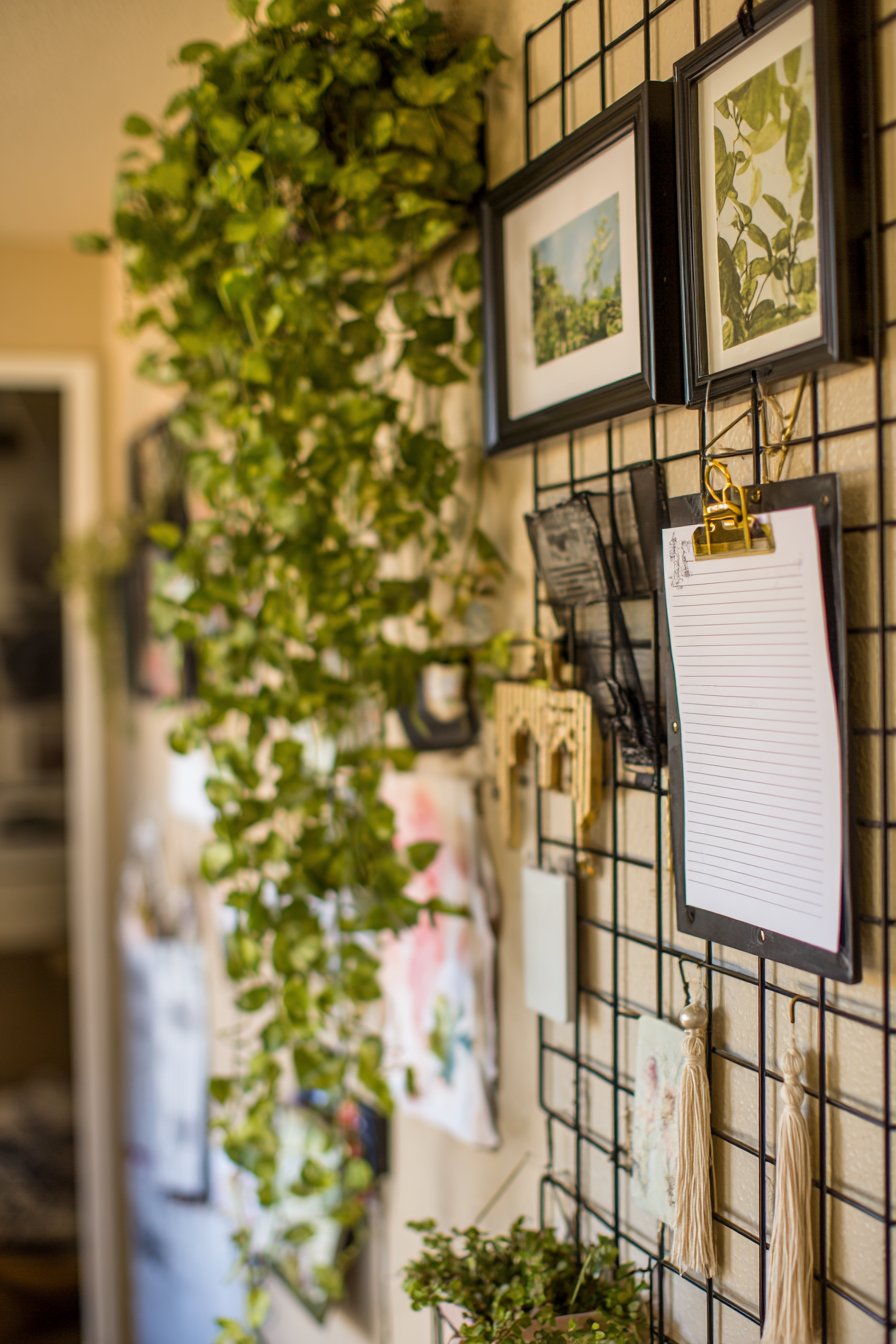
The grid’s simple black structure provides clean organization without overwhelming the displayed items, allowing the objects themselves to be the visual focus. The flexibility means the display can transform from primarily decorative to highly functional depending on current needs—today’s plant display can become tomorrow’s organizational system without any structural changes. This adaptability particularly appeals to renters or those who enjoy frequently refreshing their decor without creating new nail holes.
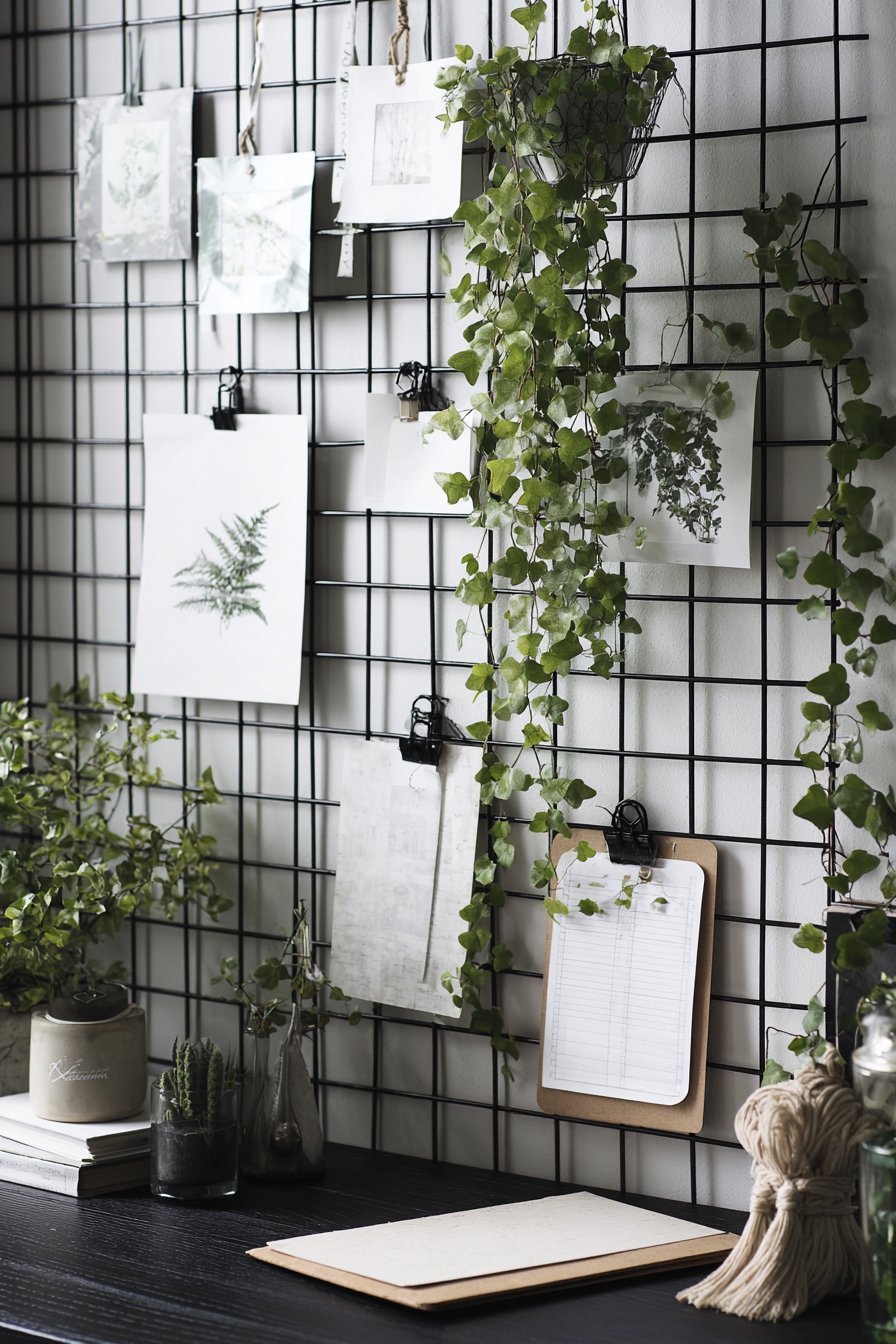
Professional interior photography captures the industrial-meets-functional aesthetic, showing how natural lighting highlights the varied textures and forms of hanging elements against the simple black grid structure. The vertical and horizontal lines of the grid create built-in organization that helps even eclectic collections of items feel intentionally arranged rather than randomly placed.
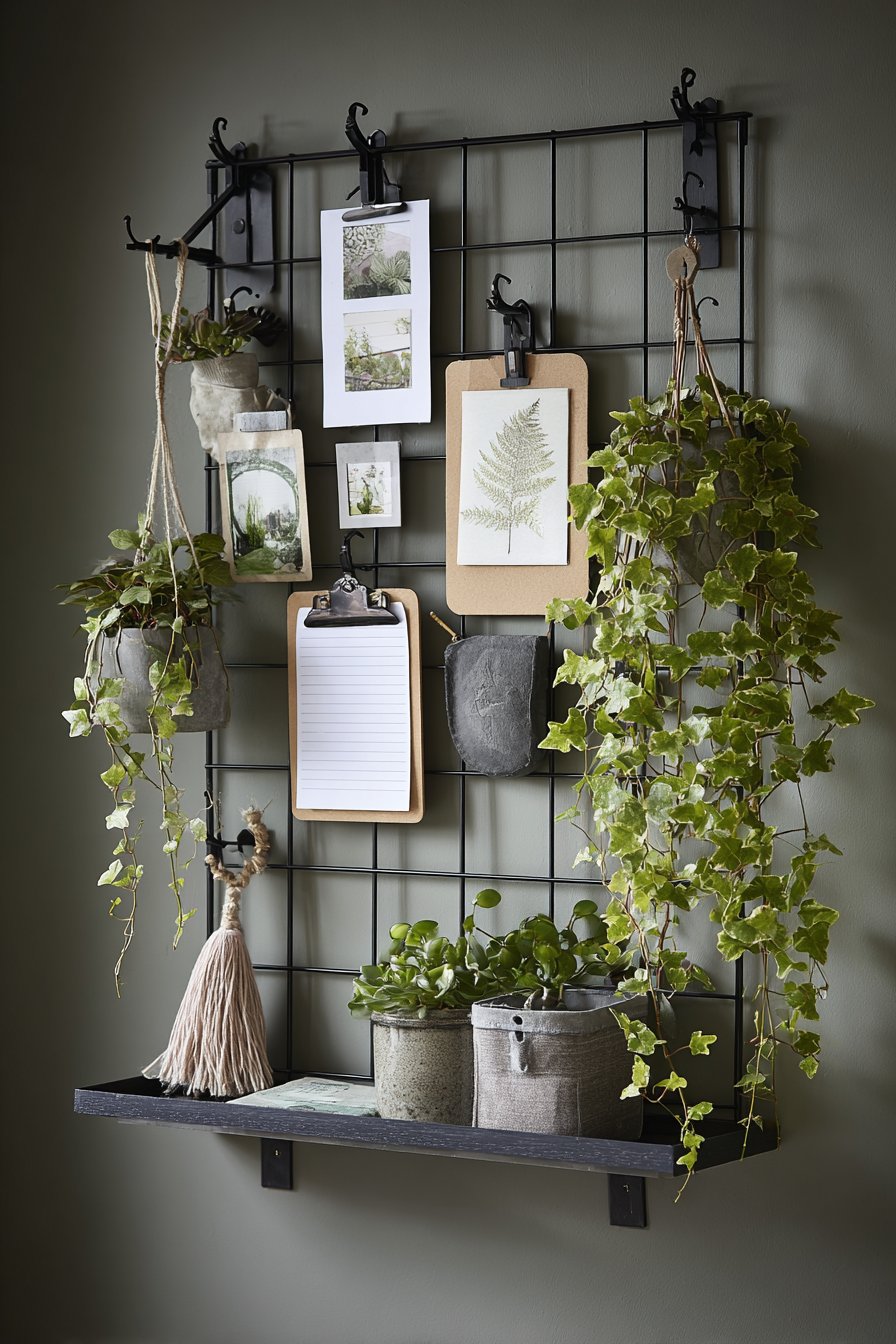
Key Design Tips: Choose grid panel size based on wall dimensions—panels typically range from 17×17 inches to 24×36 inches or larger. Install securely using appropriate wall anchors, as the grid plus all hung items create significant weight. Use S-hooks in various sizes to accommodate different items. Maintain some negative space on the grid—don’t fill every opening or the display becomes cluttered. Rotate displayed items seasonally to keep the arrangement feeling fresh. Consider spray-painting the grid in custom colors to match your decor if black doesn’t suit your style.
21. Vintage Mirror Collection
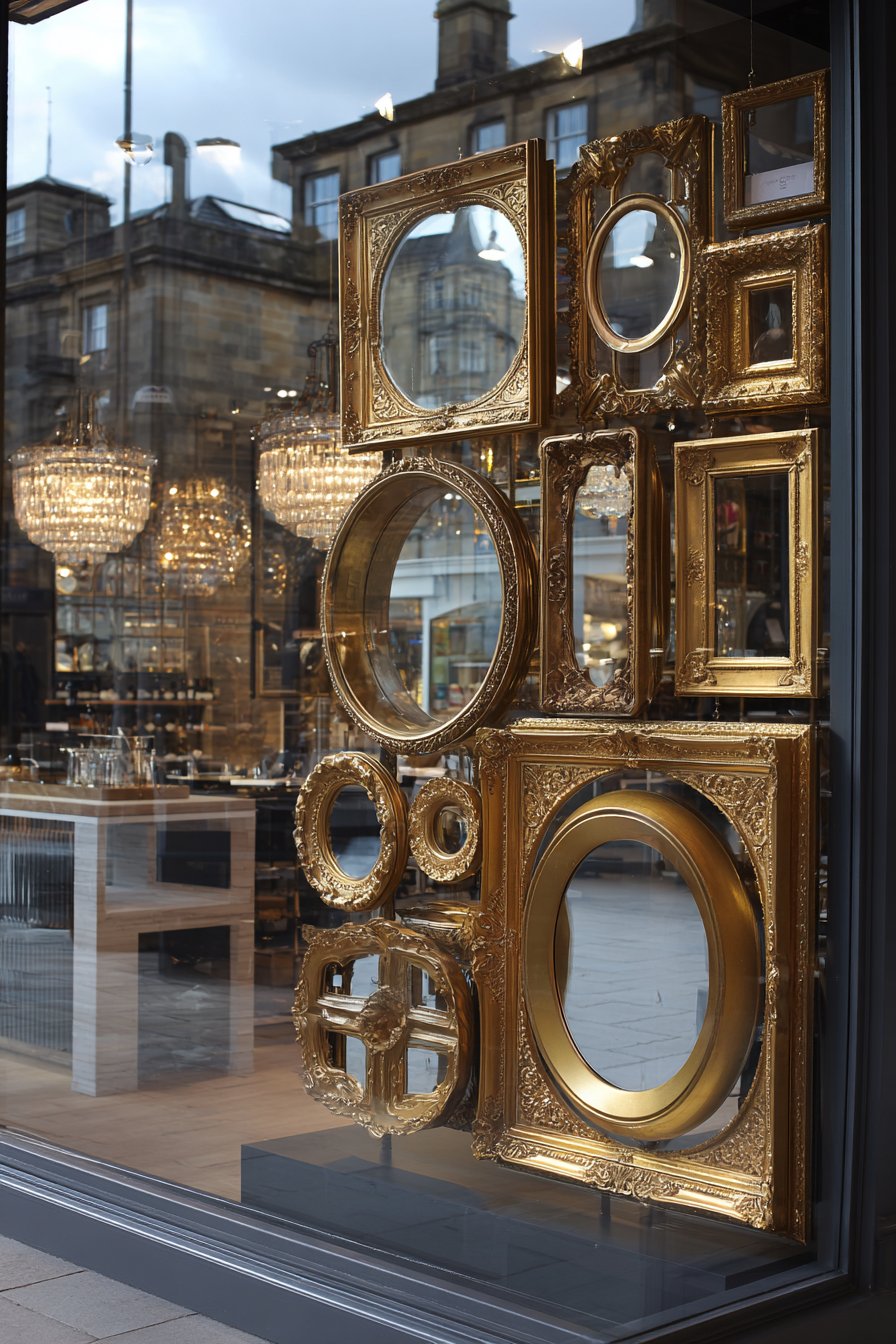
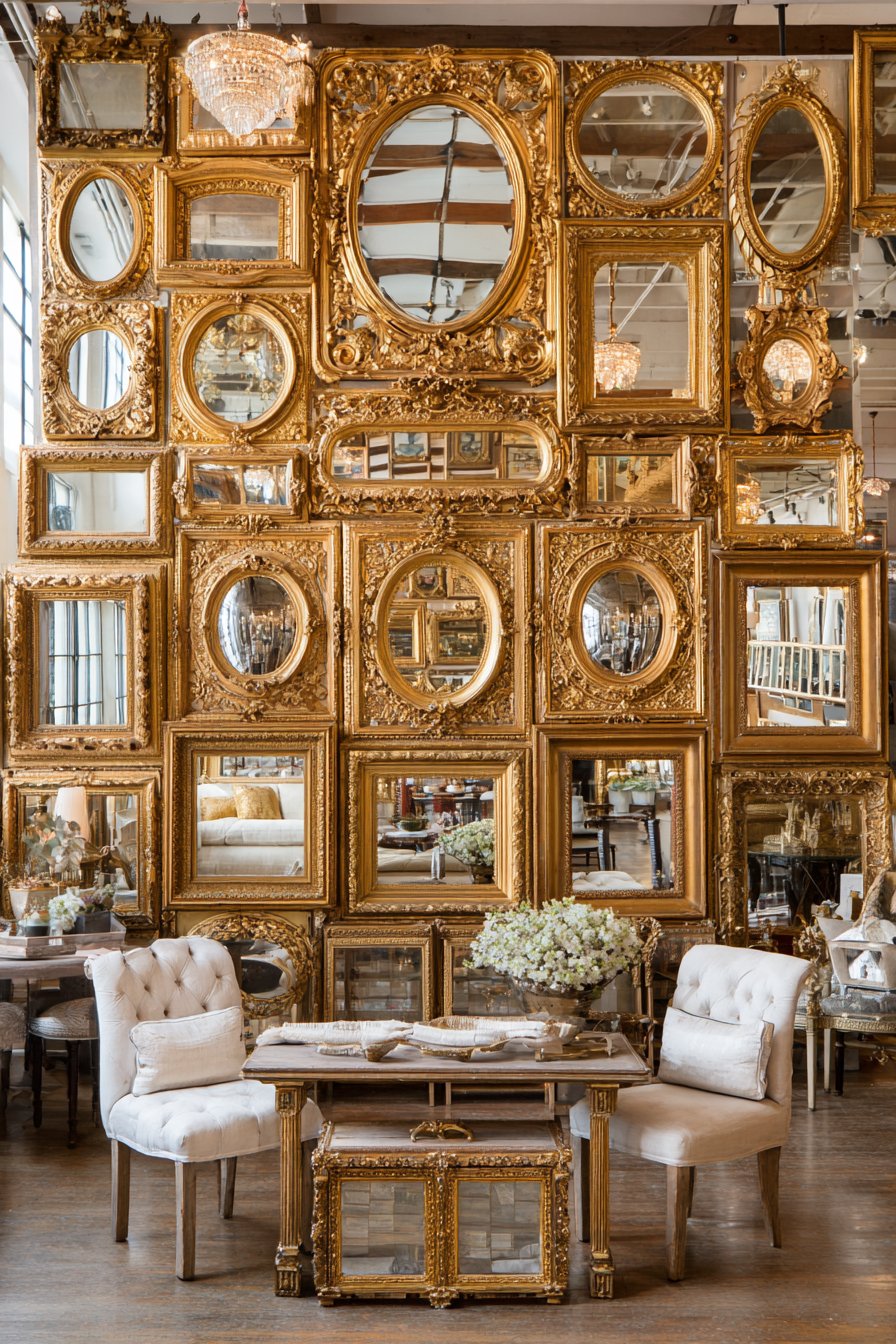
A symmetrical arrangement of vintage mirrors in ornate gold frames creates a glamorous focal point while serving the practical function of reflecting light and making spaces feel larger. The collection includes oval, rectangular, and circular mirrors unified by their gilt finish—though each frame features unique ornamental details that prevent the collection from feeling too matched or monotonous. This display demonstrates how functional items like mirrors can be arranged as decorative wall art while still serving their intended purpose.
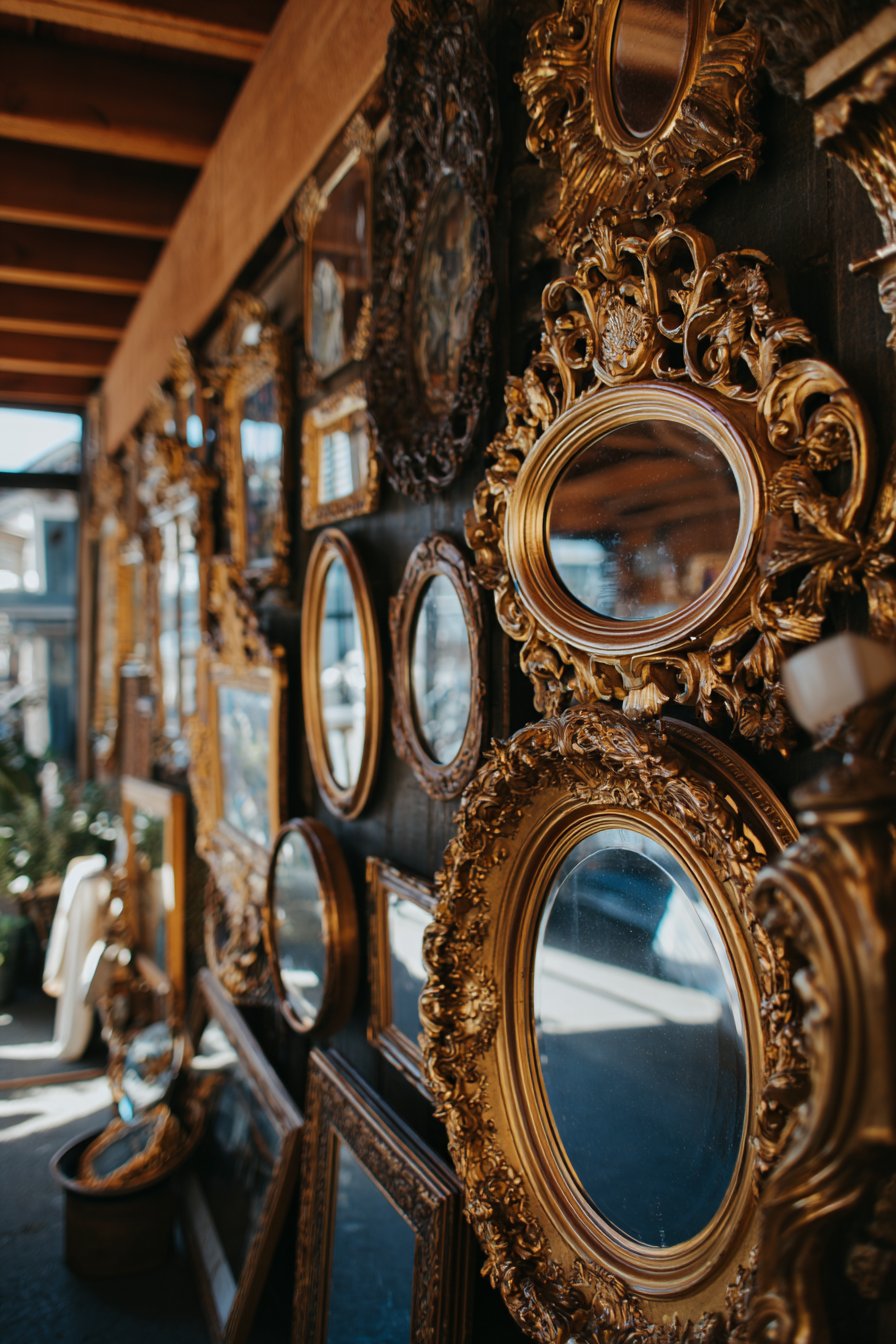
The reflective surfaces create fascinating visual complexity as mirrors bounce light between themselves, creating layered reflections and visual depth that solid artwork cannot achieve. This light-multiplying effect makes the display particularly effective in darker spaces or rooms with limited natural light, as the mirrors capture and reflect whatever light is available. The vintage elegance of antique frames adds character and history, transforming utilitarian mirrors into treasured decorative objects.
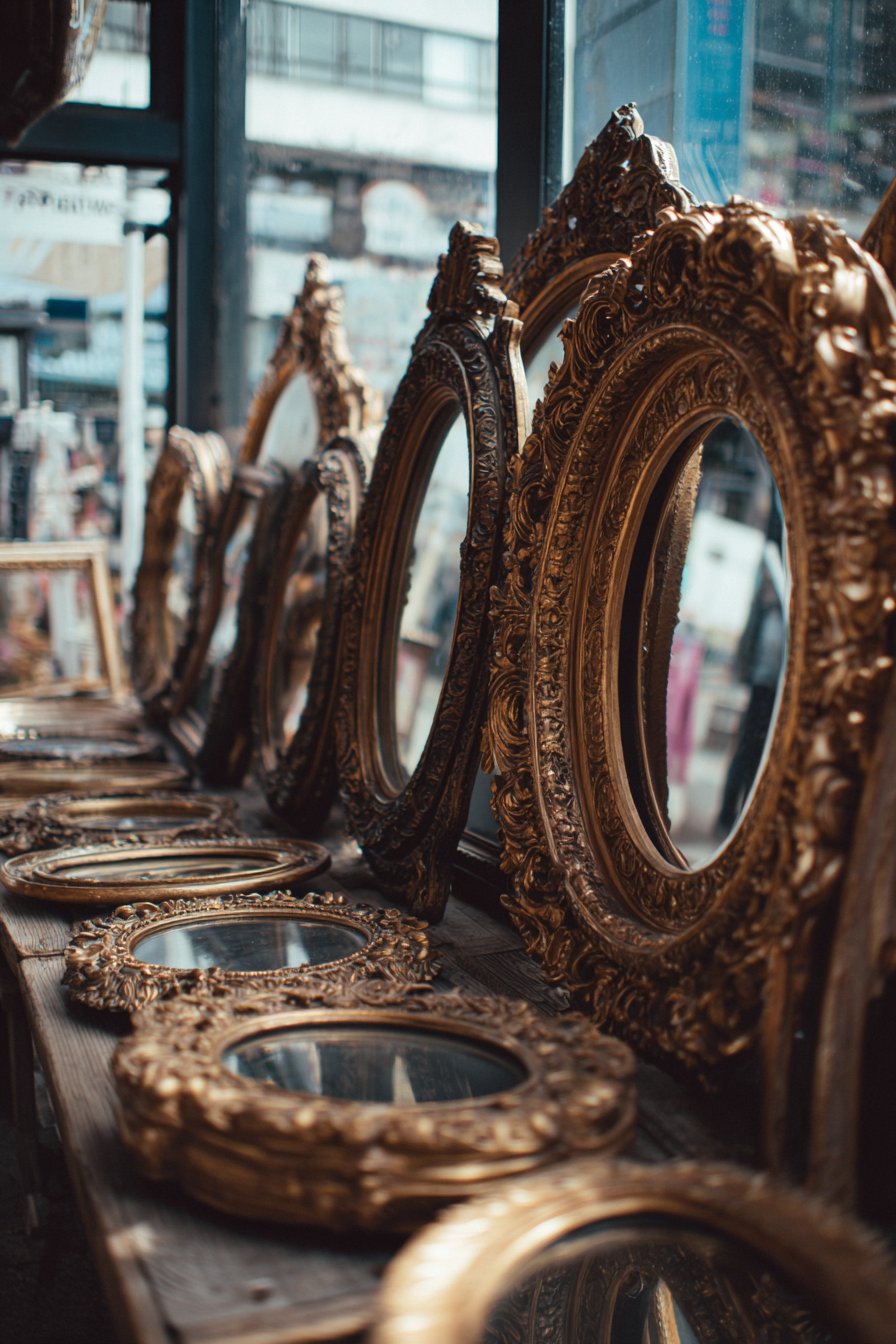
Interior photography with natural window light reveals how the mirrors bounce light between surfaces, creating dynamic visual effects that change throughout the day. The reflective qualities create almost kaleidoscopic interest as viewers move past the display, with shifting angles revealing different reflections and perspectives. The gilt frames catch and reflect light themselves, adding subtle shimmer and luxury to the overall composition.
Key Design Tips: Clean vintage mirrors thoroughly and have any damaged silvering professionally restored if desired. Arrange mirrors on the floor first to test compositions before hanging. Hang the largest mirror first as an anchor point, then position smaller mirrors around it. Use proper mirror-mounting hardware rated for each mirror’s weight. Consider what the mirrors will reflect—position them to capture and reflect beautiful room elements rather than cluttered corners. Maintain consistent gilt tones—either all warm gold or all cool silver—for cohesion.
22. Illuminated Acrylic Display Shelves
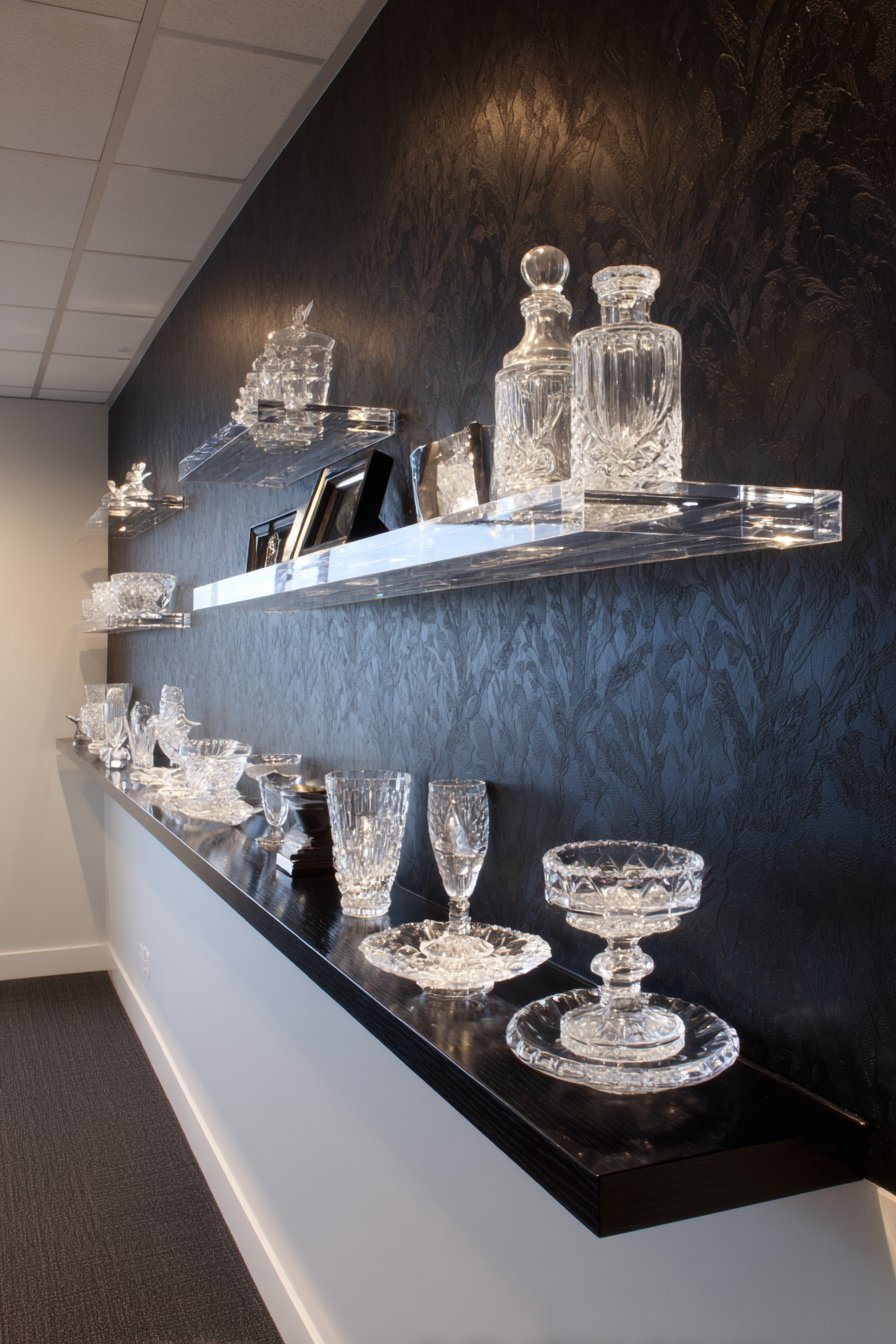
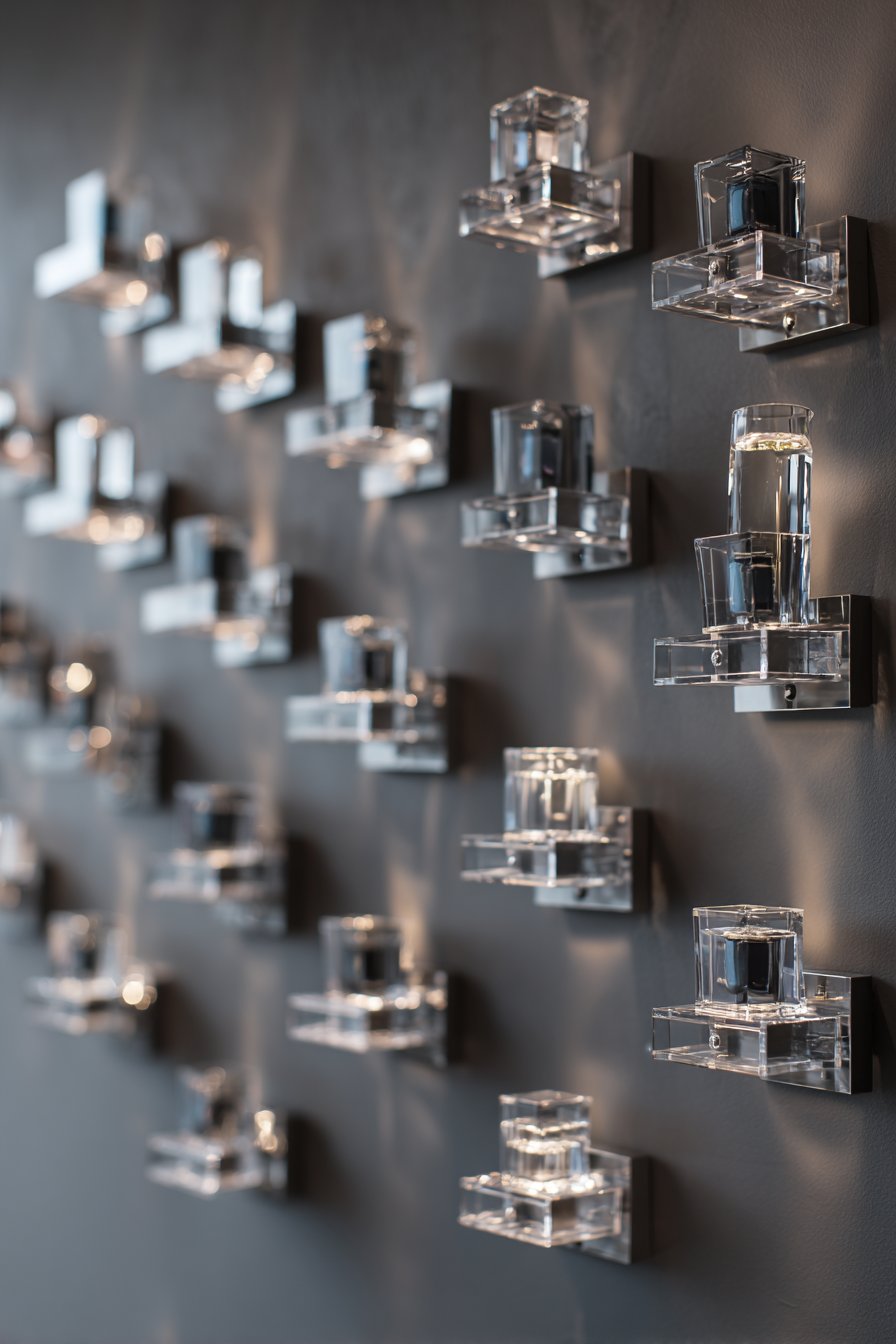
Floating acrylic shelves with integrated LED backlighting represent cutting-edge wall display ideas that combine modern materials with dramatic lighting effects. The transparent shelves appear to float against charcoal walls, their invisible mounting systems creating an almost magical effect where displayed objects seem to hover in space. The integrated LED strips provide soft glow that highlights collectibles, crystals, or glassware while creating atmospheric evening lighting that transforms the display into an illuminated focal point.
The minimalist approach celebrates displayed objects by eliminating visual competition from bulky traditional shelving. Glass and crystal items particularly benefit from backlighting, which causes them to glow and refract light in spectacular ways. This display style works beautifully for collections that deserve special attention—high-end spirits, art glass, crystal specimens, or treasured collectibles that warrant dramatic presentation.
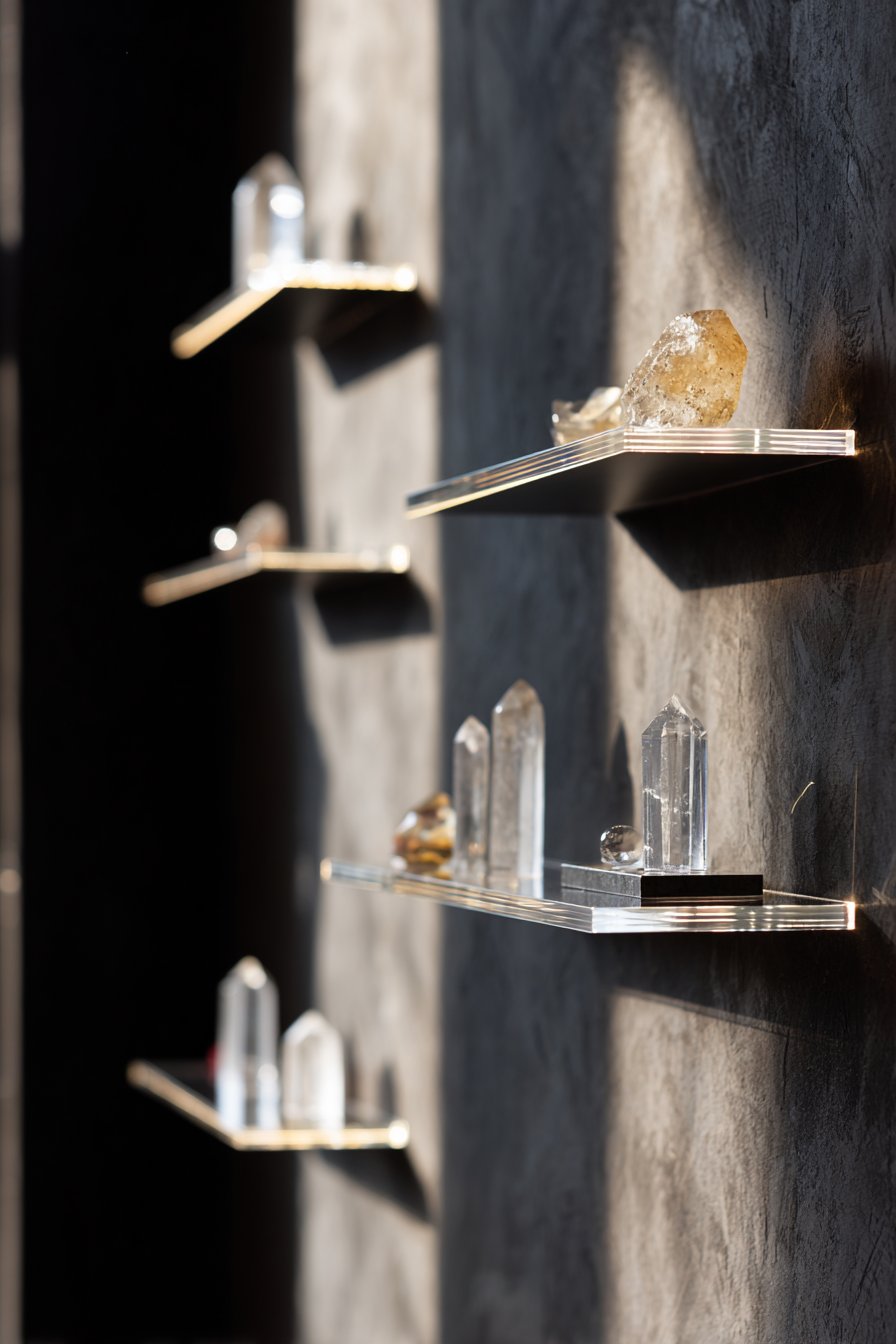
Professional interior photography captures both the LED display lighting and ambient natural light, demonstrating how the illuminated shelves create different moods depending on time of day and lighting conditions. During daylight, the transparent shelves provide minimal visual obstruction, allowing wall color to show through. After dark, the LED lighting creates dramatic focal points that anchor rooms and provide ambient illumination.
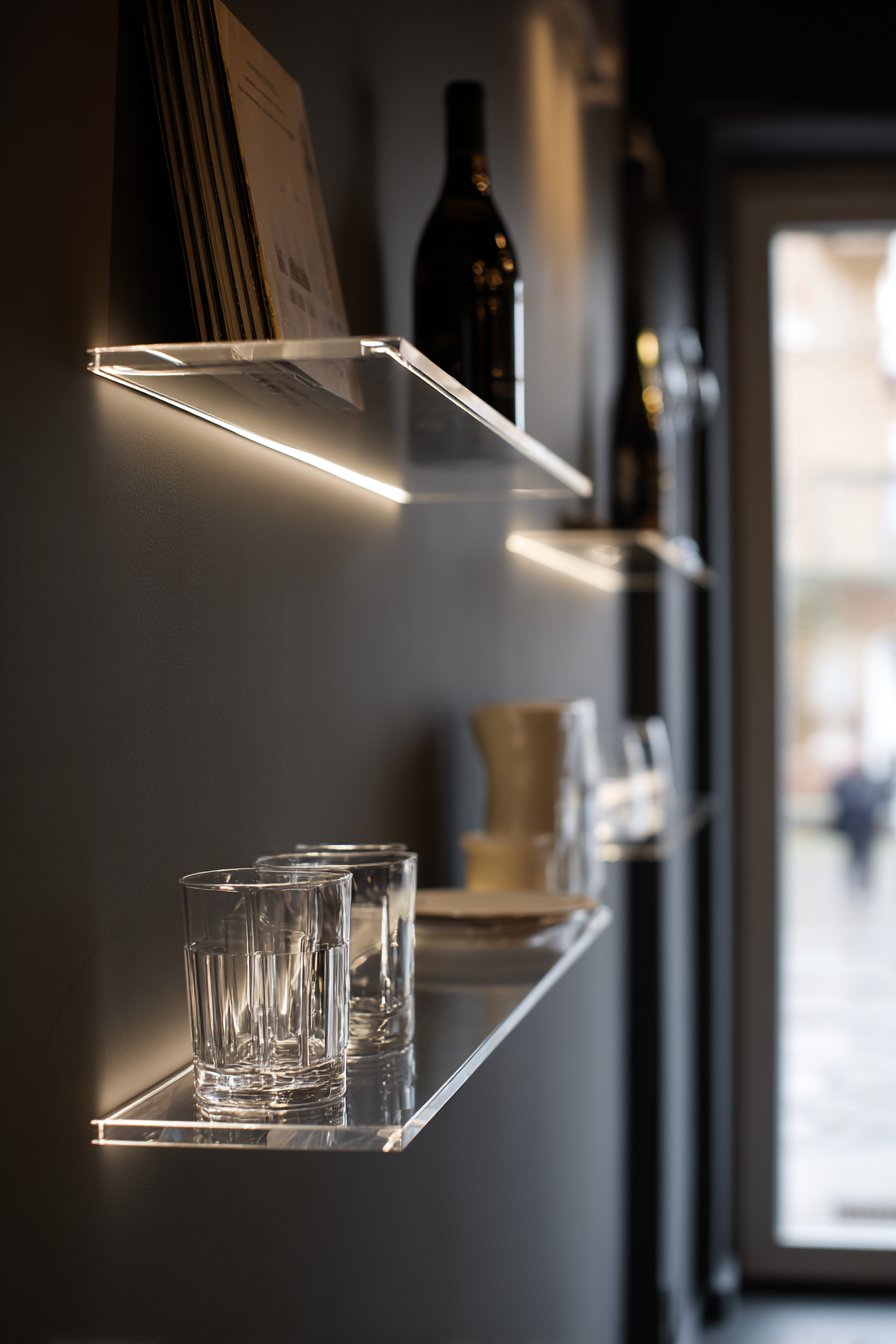
Key Design Tips: Select LED strips with dimmer controls for adjustable lighting intensity. Choose warm white LEDs (2700-3000K) for intimate ambiance or cool white (4000-5000K) for modern, crisp presentation. Install shelves at varying heights to accommodate different object sizes. Clean acrylic regularly with appropriate non-abrasive cleaners to maintain transparency. Display sparingly—too many items will clutter the clean aesthetic. Consider colored LED options for dramatic special effects or holiday displays.
23. Children’s Artwork Gallery
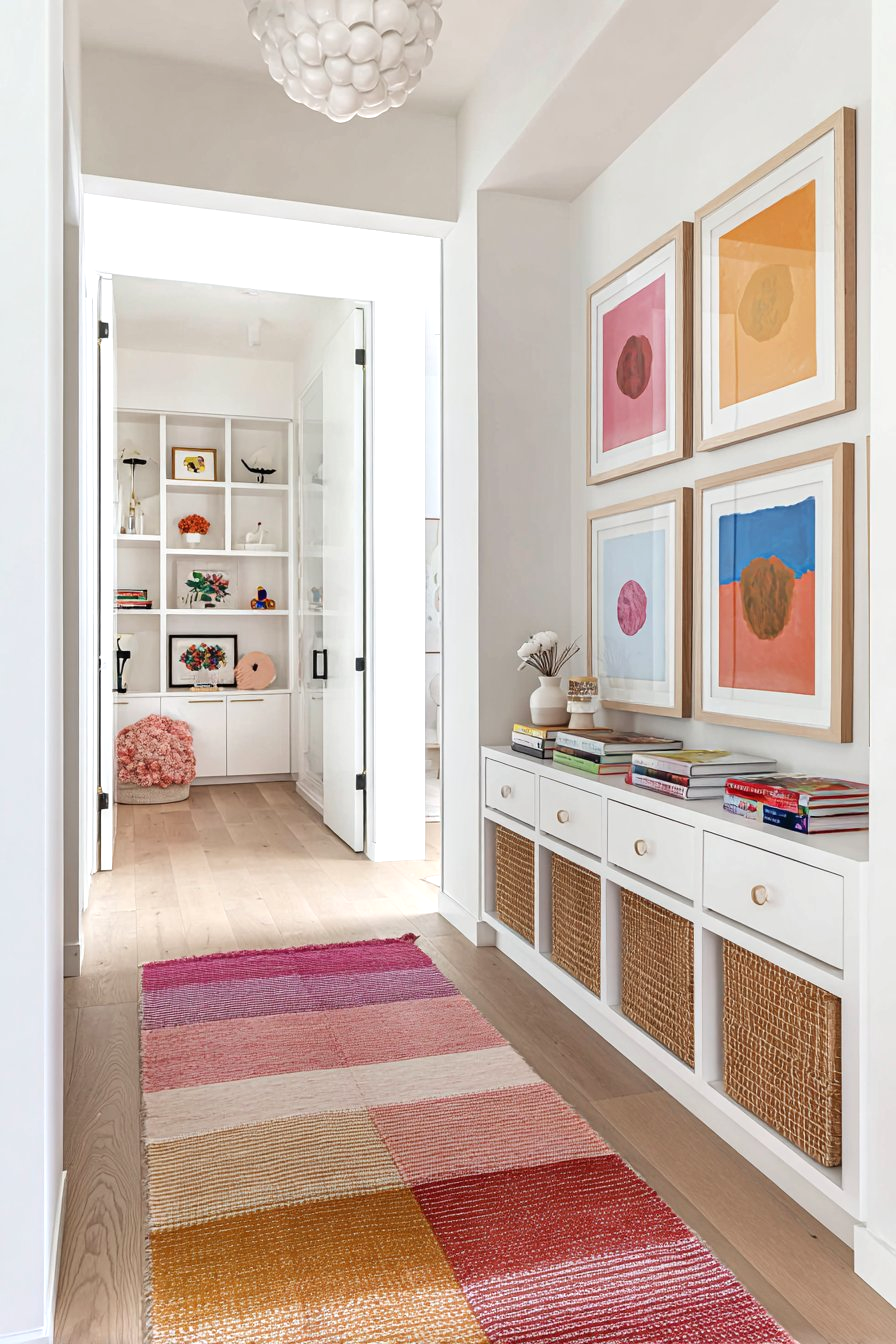
Displaying children’s artwork in matching white frames with colorful mats creates a gallery wall that celebrates kids’ creativity while providing professional presentation that honors their work. The frames elevate crayon drawings, watercolor paintings, and craft projects from refrigerator-door status to legitimate artwork worthy of proper display. Arranged in a grid pattern at child eye-level height in a playroom or bedroom, this display sends the powerful message that children’s creative efforts are valued and appreciated.
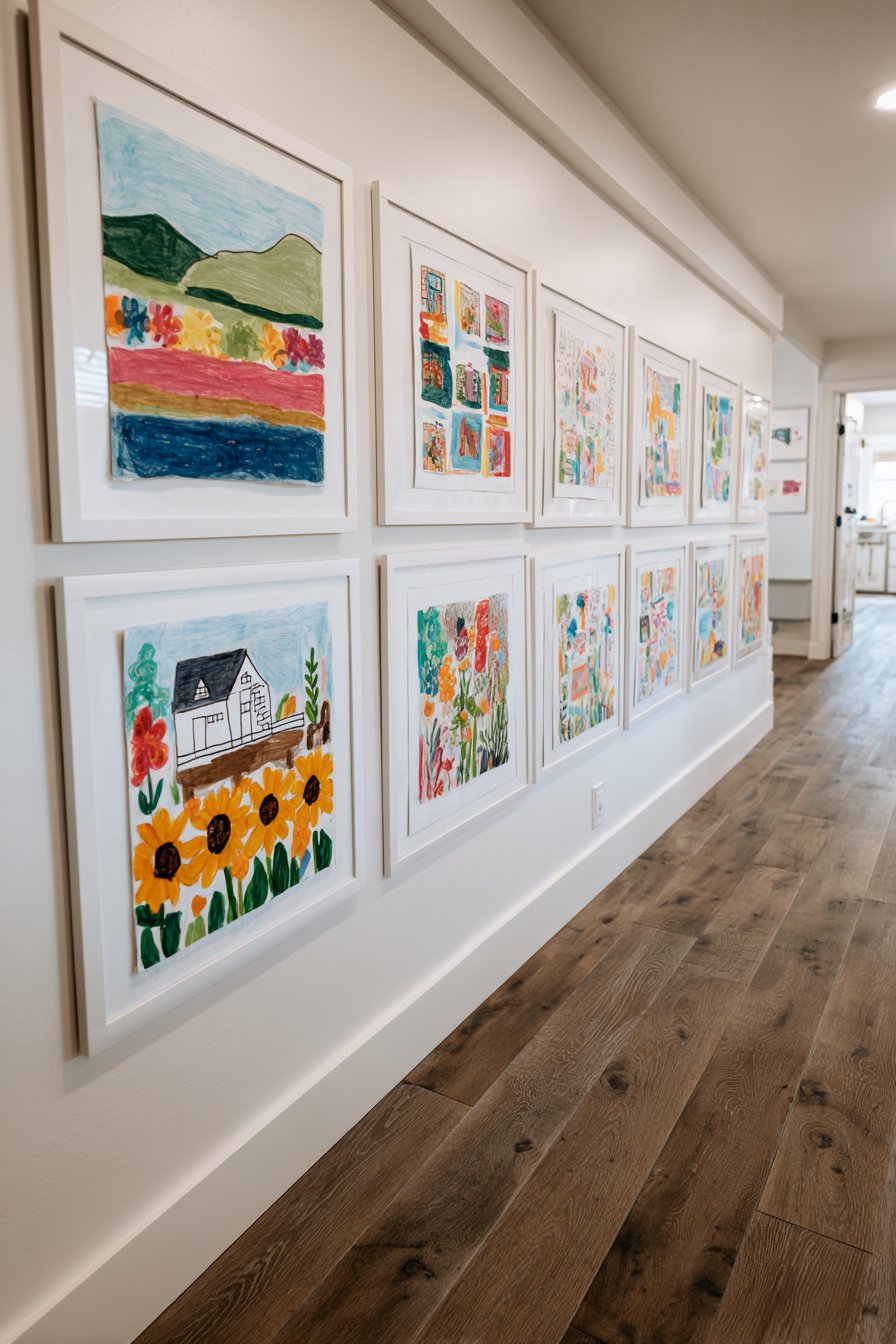
The coordinating white frames create cohesion while the colorful mats—chosen to complement each piece’s dominant colors—add vibrancy and protect artwork from frame contact. This thoughtful presentation teaches children that their work matters and deserves care and attention. The at-child-height installation allows kids to view their own work easily, fostering pride and encouraging continued creative exploration.
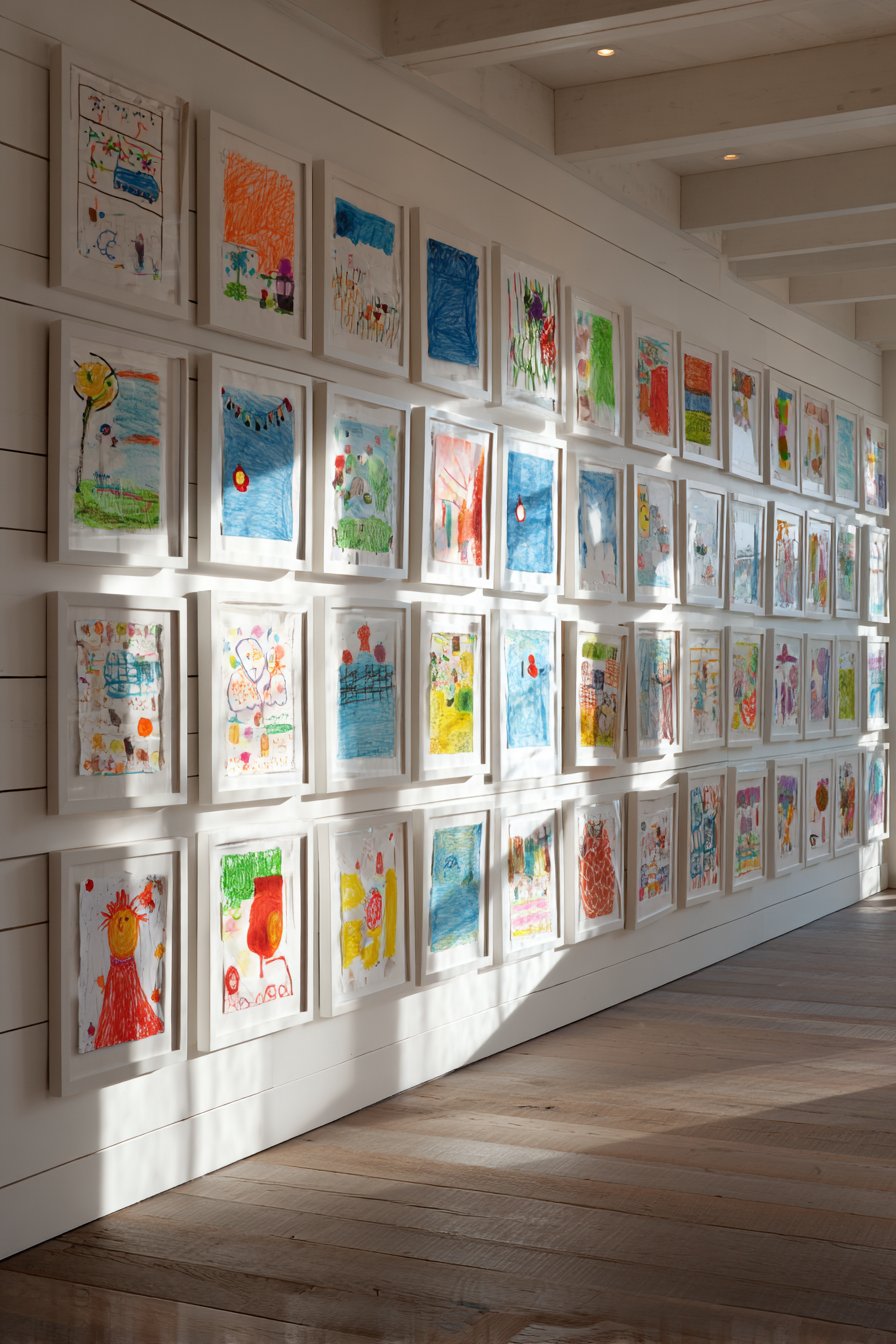
Wide-angle interior photography with bright natural lighting captures the cheerful colors and loving presentation of the children’s creations. The gallery wall becomes a celebration of childhood creativity and family values, demonstrating that meaningful design often comes from personal connection rather than expensive artwork. This display style grows with children—simply swap out pieces as new creations arrive.
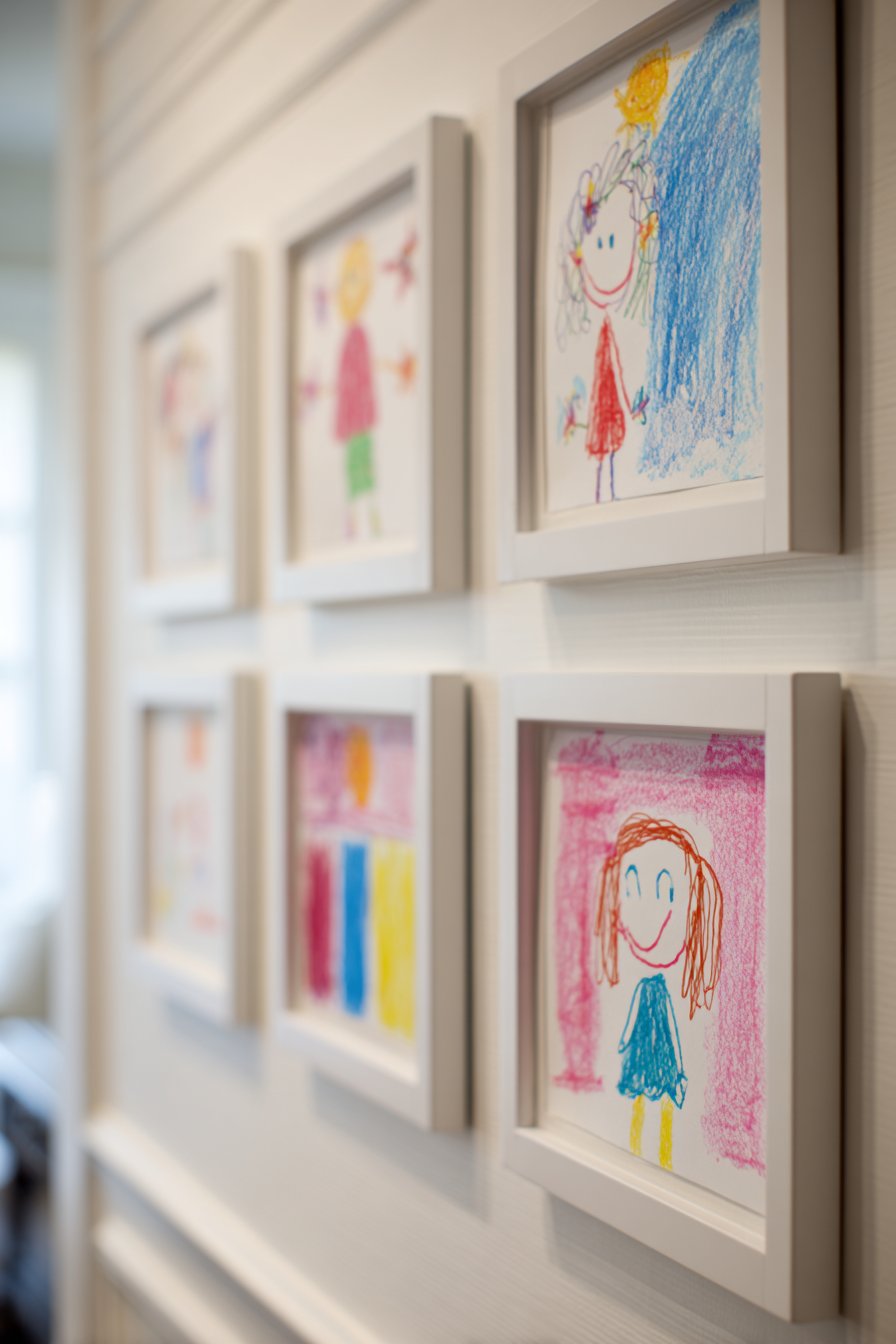
Key Design Tips: Use identical frames in manageable sizes—8×10 or 11×14—for easy artwork swapping. Create removable backing systems that allow quick artwork changes without re-framing. Let children help select which pieces to frame and where to position them. Include the child’s name and date on each piece before framing for future nostalgia. Create a rotation system—display pieces for several months then swap in new work, storing previous displays in portfolio boxes. Consider creating themed collections—all landscapes, all self-portraits—for cohesive mini-galleries.
24. Rainbow Book Spine Display
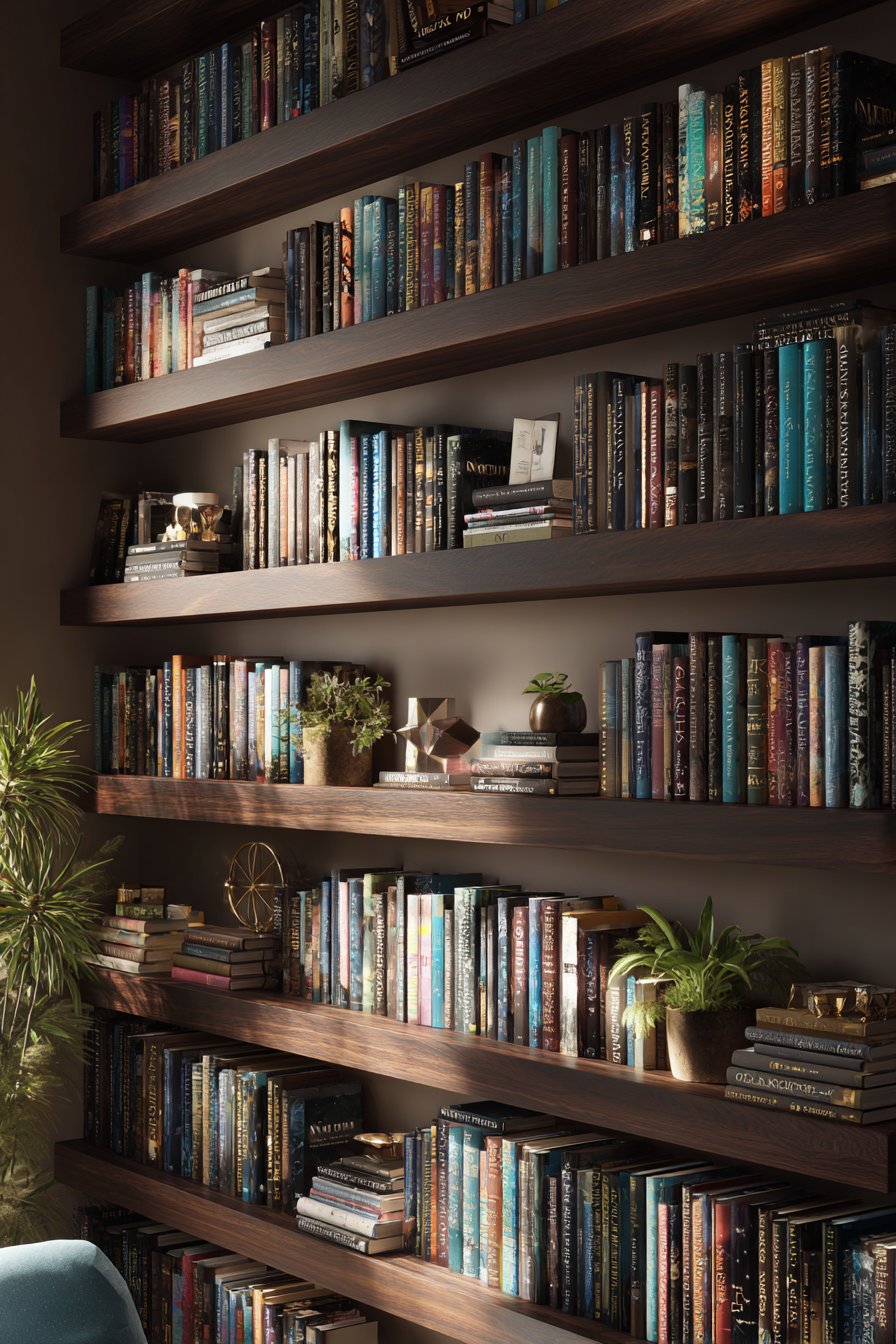
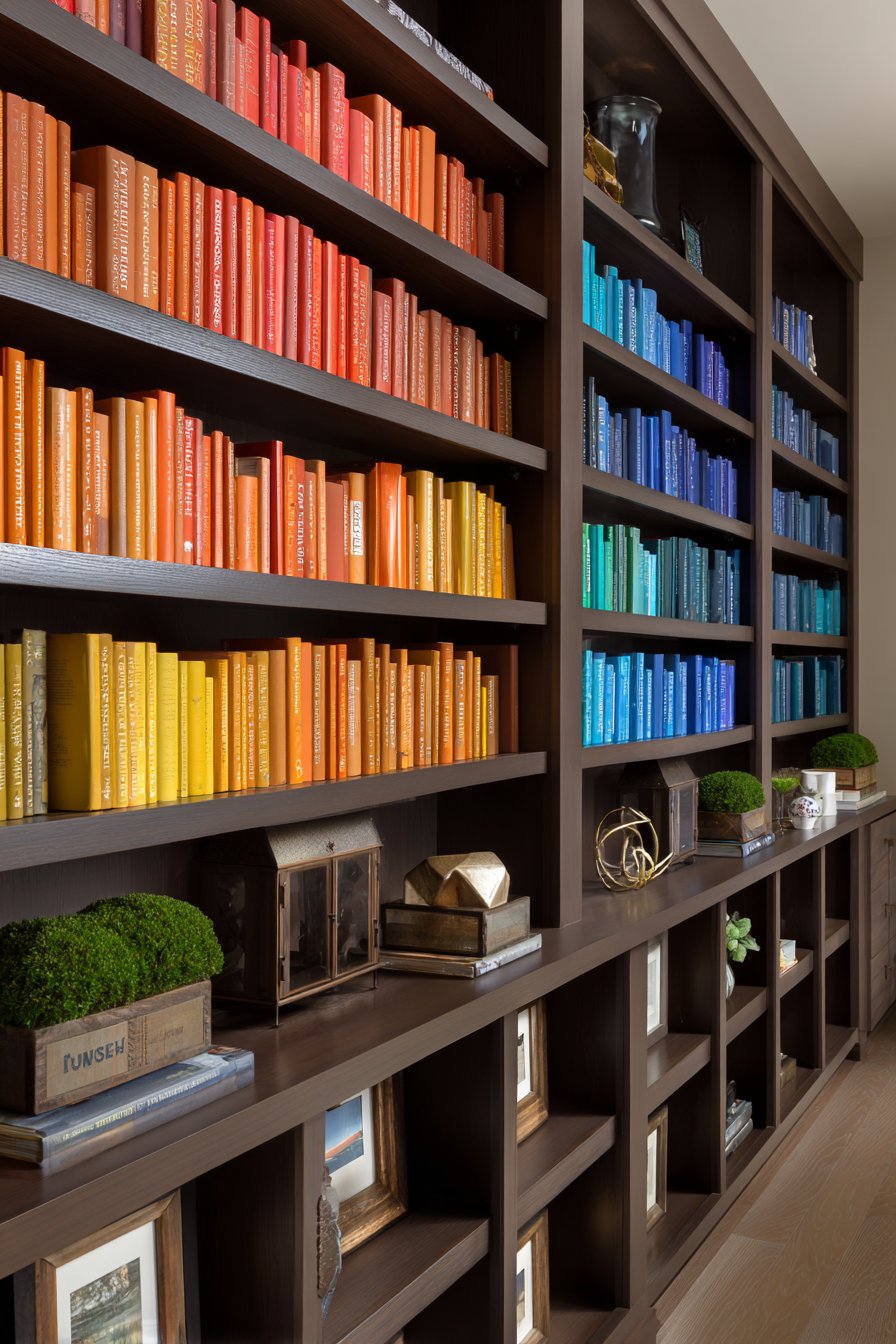
Narrow horizontal floating shelves in ebony-stained wood create linear displays for books arranged with spines facing outward, their titles and colors becoming decorative elements. The shelves span an entire wall in a home library or reading nook, with books organized by color to create a stunning rainbow effect that transforms functional book storage into eye-catching wall art. Small decorative bookends and occasional small plants break up the linear book arrangement, preventing monotony while maintaining the overall color-organized aesthetic.
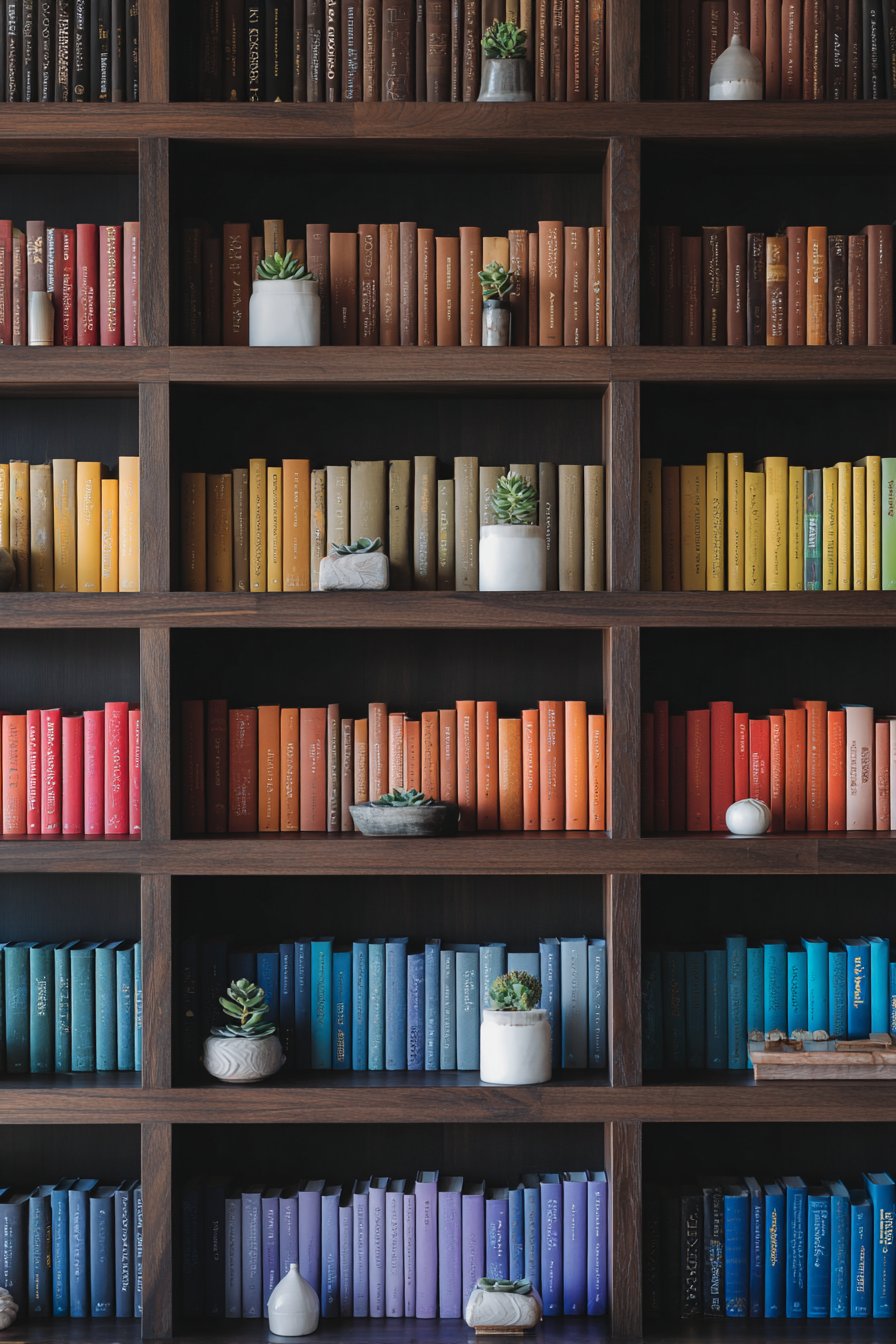
This display style celebrates books as both functional objects and decorative elements, acknowledging that readers often choose books as much for their beautiful covers and spines as for their content. The color organization creates satisfying visual order and makes an undeniable design statement, though some book purists prefer organizational systems based on author or genre. The dramatic visual impact of the rainbow arrangement makes this organizational “sacrifice” worthwhile for many homeowners.
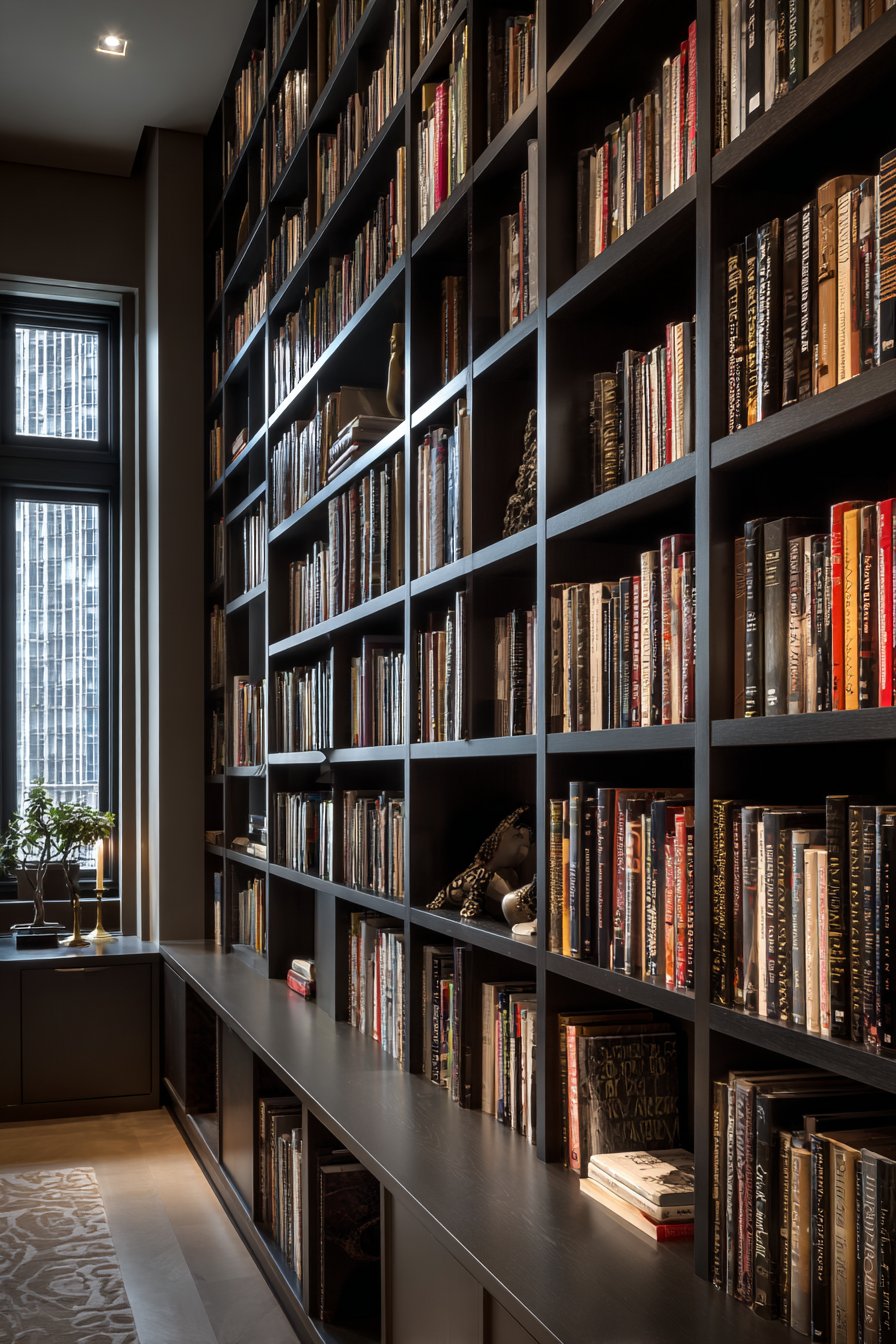
Interior design photography reveals the rich wood tone of the ebony-stained shelves and the satisfying chromatic progression from warm reds through to cool blues and purples. Natural lighting highlights book spine textures—the subtle sheen of dustcovers, the textured cloth of older hardcovers, the varied typography of titles—creating visual interest through both color and texture. The overall effect feels simultaneously intellectual and playful.
Key Design Tips: Install shelves close together—typically 10-12 inches apart—to maximize book storage while creating strong horizontal lines. Organize books by color moving through the rainbow spectrum (red, orange, yellow, green, blue, purple) or reverse rainbow for different effect. Use bookends strategically to break up long runs and prevent sagging. Include some decorative objects or plants to prevent the display from feeling too uniform. Accept that color organization means some series or authors will be separated—decide if visual impact outweighs organizational logic for your needs.
25. Repurposed Ladder Display
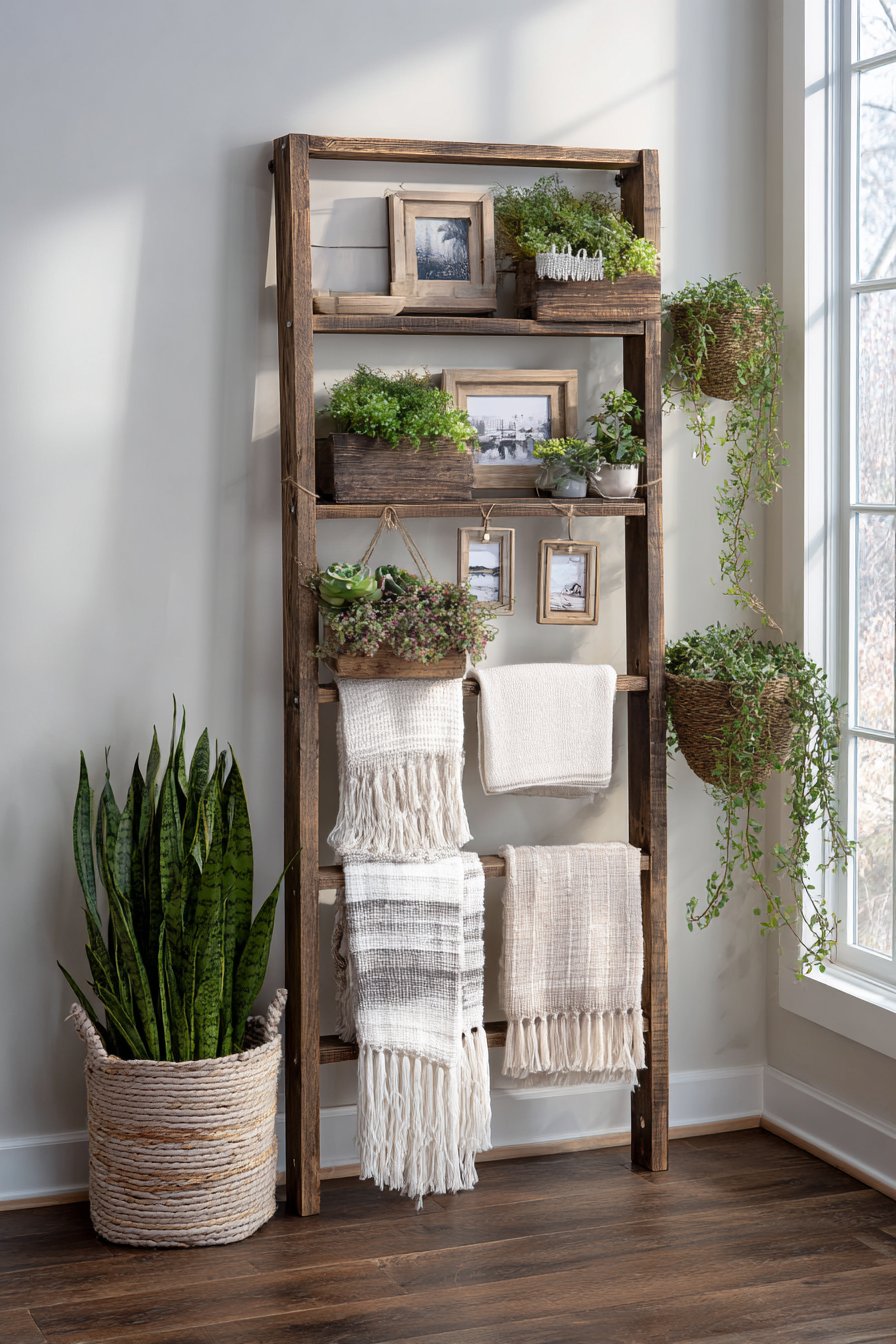
A vintage ladder repurposed as a leaning wall display creates casual, layered styling that combines rustic charm with functional creativity. Each rung serves different display purposes—draped throw blankets on lower rungs, small framed photos attached with twine, hanging planters with cascading greenery, and string lights woven through the structure. The weathered wood ladder adds farmhouse character and vertical interest while providing multiple levels for varied display elements that create visual richness.
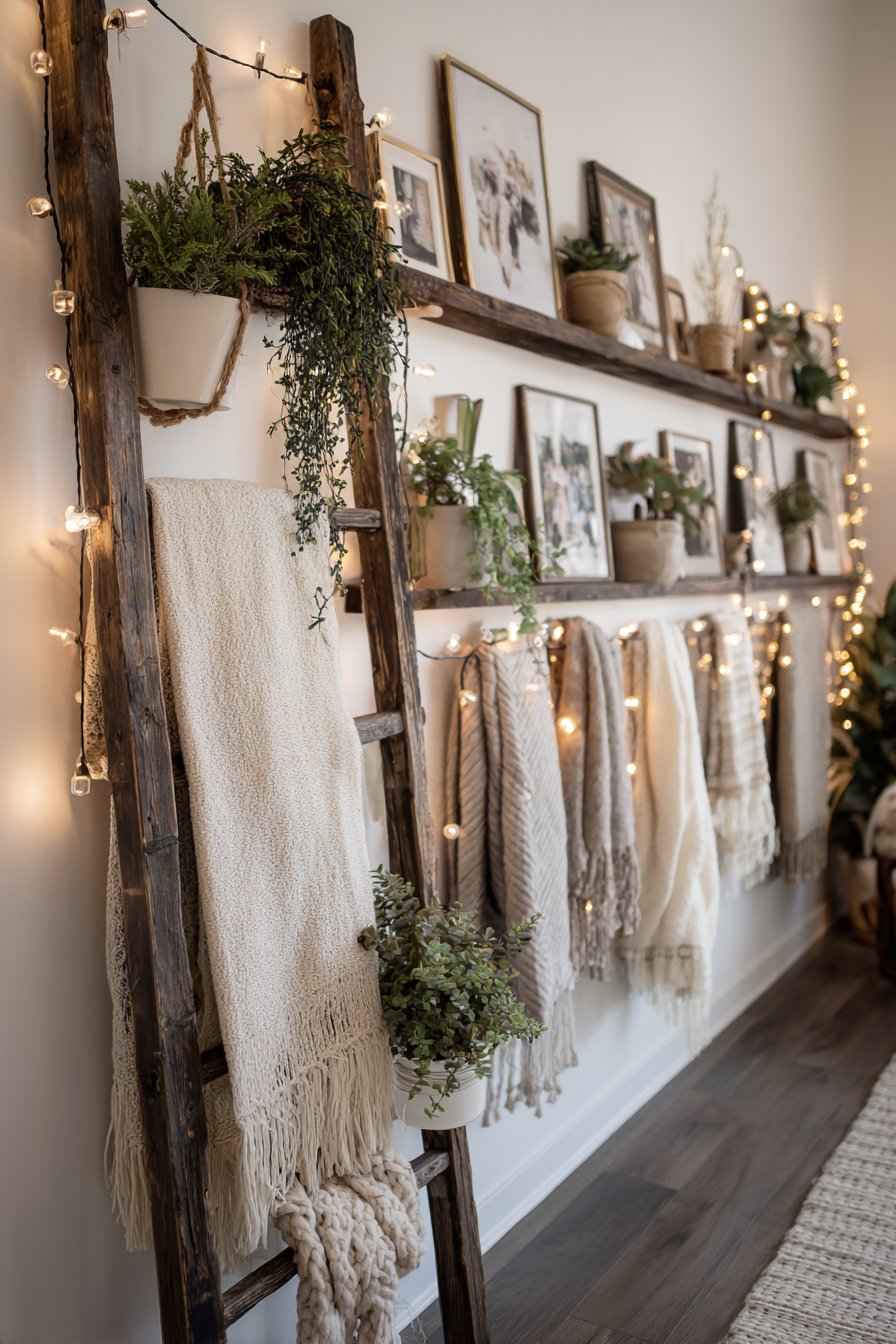
This display idea celebrates creative repurposing and sustainable design, transforming an old functional object into decorative artwork. The casual, leaning position creates relaxed informality that feels welcoming and unpretentious—perfect for family rooms, bedrooms, or casual living spaces. The ladder’s structural form provides built-in organization for what might otherwise feel like a random collection of objects, creating cohesive arrangement through its architectural framework.
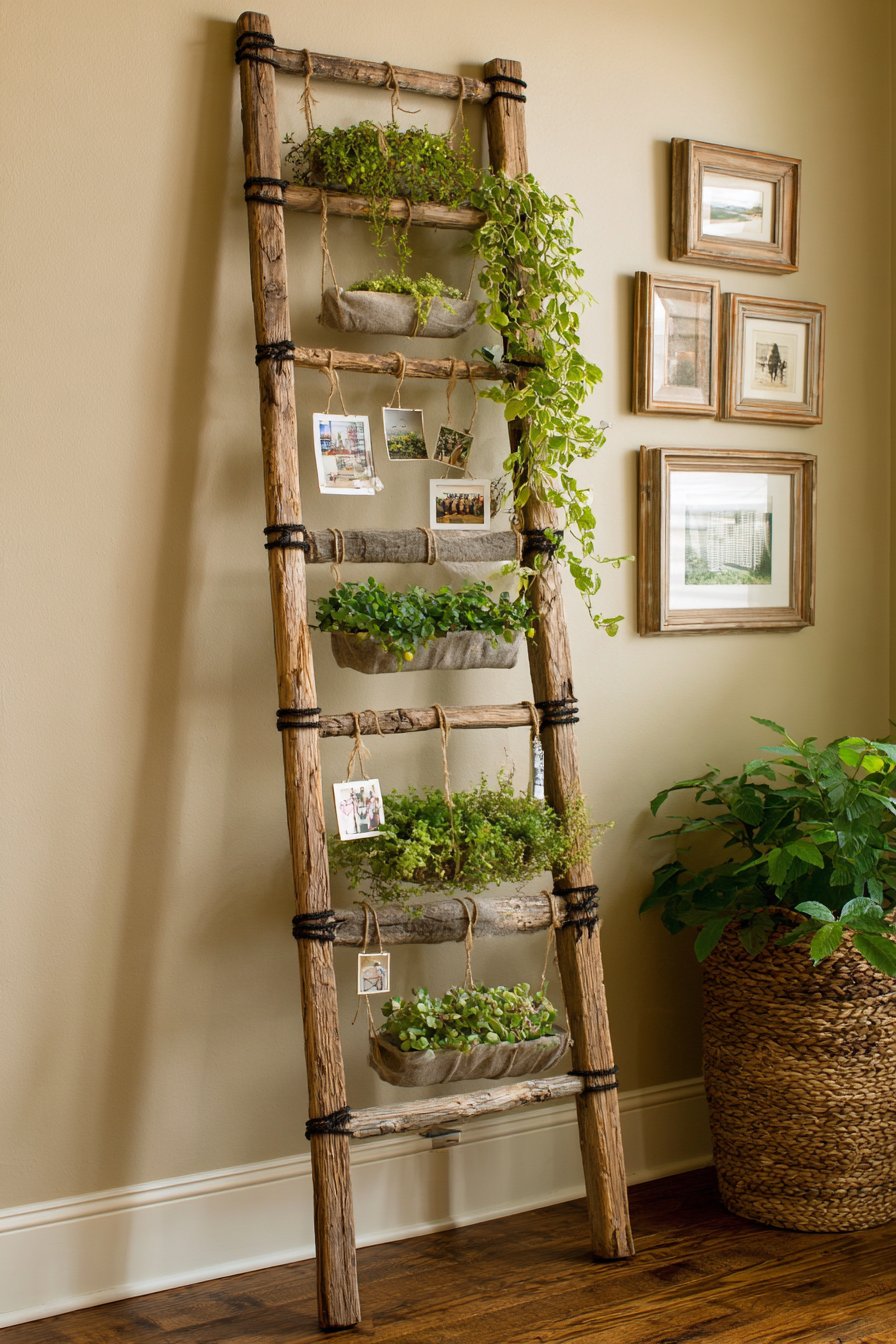
Professional interior photography with soft natural lighting captures the weathered wood texture and the casual, layered styling approach that makes this display both decorative and functional. The varied elements—textiles, photographs, plants, lighting—create textural variety and visual interest across the ladder’s vertical form. The overall effect feels collected and personal rather than designed, though achieving this casual look requires thoughtful curation and arrangement.
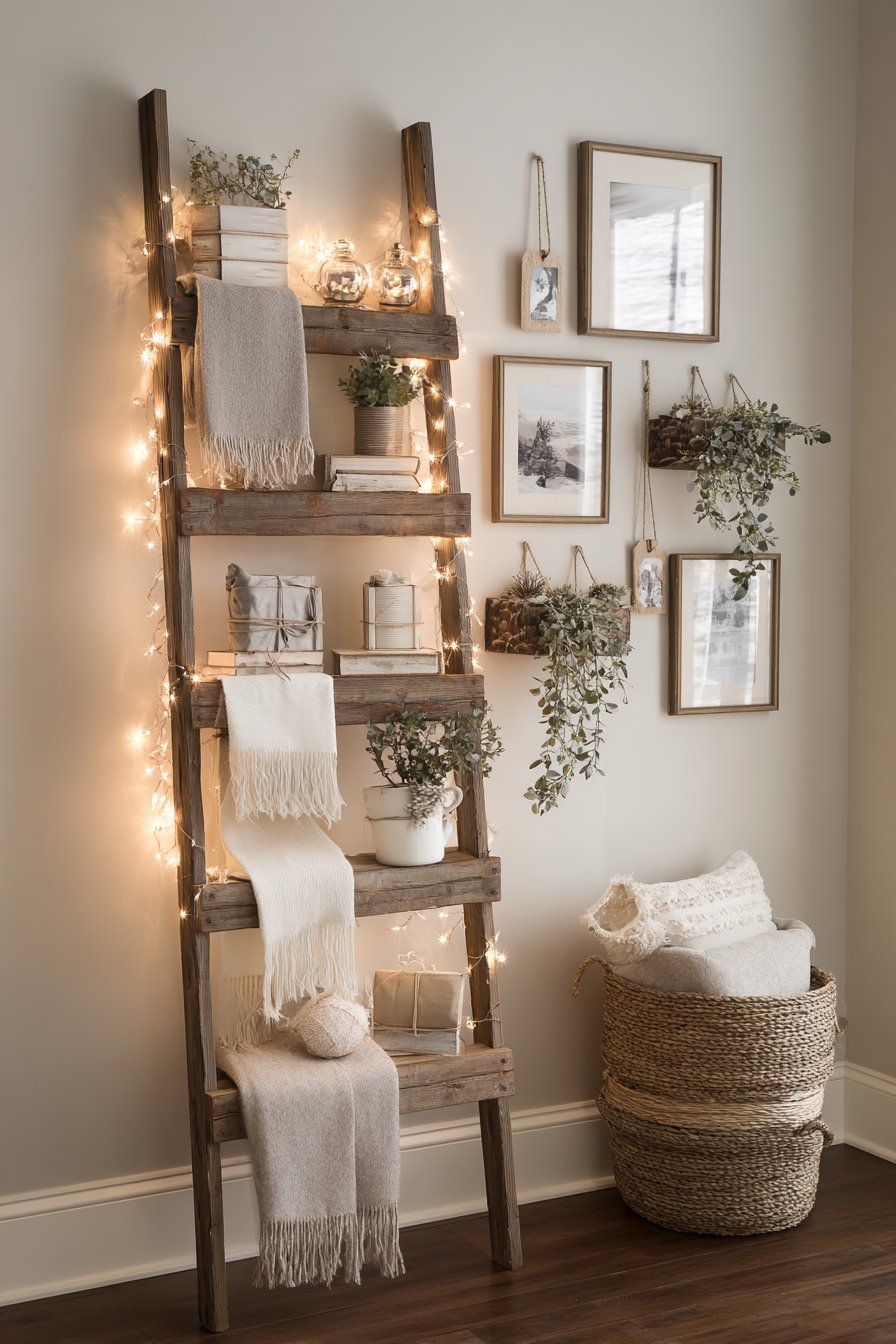
Key Design Tips: Choose sturdy vintage ladders without structural damage that could cause collapse. Secure the ladder top to the wall with discreet brackets or hooks to prevent tipping. Style heaviest items on lower rungs for stability. Vary the types of items displayed across rungs—mix textiles, frames, plants, and lighting for visual variety. Change out displayed items seasonally to keep the display fresh. Consider the ladder’s finish—leave natural weathered patina for authentic farmhouse appeal or paint in custom colors to match your decor.
Why These Wall Display Ideas Work
The 25 wall display ideas presented throughout this article represent diverse approaches to transforming blank walls into meaningful, beautiful, and functional design elements. Each approach succeeds because it addresses fundamental principles of effective interior design: proportion and scale, visual balance, textural variety, purposeful arrangement, and personal expression. Whether you’re drawn to minimalist restraint or maximalist abundance, these wall display concepts provide frameworks for creating arrangements that reflect your unique aesthetic and lifestyle needs.
Wall displays serve multiple important functions beyond mere decoration. They allow homeowners to express personality and values through curated collections, treasured artwork, meaningful photographs, and beloved objects. Gallery walls showcasing family photos celebrate relationships and preserved memories. Botanical displays bring nature indoors and demonstrate environmental appreciation. Vintage architectural salvage displays honor history and sustainable design practices. Each display type communicates something about the homeowner’s priorities, interests, and aesthetic sensibilities, transforming houses into homes that tell personal stories.
The practical benefits of thoughtful wall displays extend beyond aesthetics. Vertical storage solutions maximize limited square footage, particularly important in apartments and smaller homes where floor space is precious. Floating shelves provide accessible storage while maintaining open, airy feelings that bulky furniture cannot achieve. Mirror displays multiply light and create illusions of expanded space in compact rooms. Living walls improve air quality while adding biophilic elements that research shows reduce stress and improve wellbeing. Functional displays like pegboards and corkboards organize daily life while maintaining visual appeal. These dual-purpose approaches demonstrate design excellence—creating beauty while solving practical problems.
The variety of styles represented—from industrial pipe shelving to delicate pressed botanicals, from sleek acrylic illuminated displays to rustic woven baskets—ensures that homeowners across the design spectrum can find inspiration. Contemporary minimalists can appreciate the clean lines of geometric grid arrangements and single large-scale canvases. Traditional design lovers might gravitate toward vintage mirror collections and chronological photo timelines. Bohemian spirits will connect with macramé wall hangings and woven basket displays. This stylistic diversity acknowledges that effective interior design isn’t about following rigid rules but rather about finding approaches that resonate with individual preferences and lifestyle needs.
Material variety plays crucial roles in these successful displays. Natural materials like wood, rattan, jute, cotton, and pressed botanicals introduce organic warmth and textural richness. Metals—brass, black iron, brushed nickel—add architectural structure and visual weight. Glass and acrylic provide transparency and light-reflective qualities. Ceramics offer sculptural forms and glazed surfaces. The interplay between these varied materials creates visual interest and prevents displays from feeling flat or one-dimensional. Successful wall displays typically incorporate multiple material types, creating contrast and complexity that engages viewers and rewards closer examination.
Color theory principles underpin many of these successful displays. Monochromatic schemes like the white ceramic plate collection demonstrate how single-color approaches create sophistication through textural variety rather than chromatic contrast. Analogous color schemes—like the natural tones of woven baskets or the greens of living walls—create harmony through related hues. Complementary contrasts—brass frames against charcoal walls, black and white photography against gray backgrounds—create dramatic visual impact. The rainbow book spine organization celebrates the full color spectrum. Understanding these color relationships helps homeowners create intentional, cohesive displays rather than accidental chaos.
Lighting considerations cannot be overlooked when evaluating why these displays succeed. Natural lighting effects change throughout the day, creating evolving shadows and highlights that keep displays visually dynamic. The gallery wall with mixed frames reveals different textural qualities in morning versus afternoon light. Shadow box displays create dimensional shadows that shift with changing light angles. Illuminated acrylic shelves demonstrate how integrated LED lighting transforms functional displays into atmospheric focal points. Strategic sconce placement provides both functional task lighting and decorative accent lighting. Understanding how different lighting types affect displays helps homeowners position arrangements for maximum impact.
Scale and proportion principles ensure these displays feel balanced rather than awkward within their spaces. Large-scale single canvases suit expansive walls while grid arrangements of smaller frames work well in more confined areas. Vertical arrangements like the ladder display or botanical specimen triptych draw eyes upward, making rooms feel taller. Horizontal arrangements like photo timelines or book spine displays emphasize room width. Understanding these spatial relationships prevents common mistakes like hanging too-small artwork on expansive walls or overwhelming compact spaces with oversized displays.
The personal connection factor separates truly successful wall displays from merely decorative ones. Family photo timelines document personal histories and celebrate relationships. Children’s artwork galleries honor young creativity and build family bonds. Shadow box collections showcase personal interests and treasured objects. Pegboard systems organize items specific to individual hobbies and needs. These personalized approaches create displays that matter to homeowners beyond surface aesthetics, fostering emotional connections that generic decorator artwork cannot provide.
Finally, these wall display ideas succeed because they acknowledge the reality of evolving tastes and changing lifestyles. Picture ledge systems allow easy refreshing without new nail holes. Pegboard displays reconfigure as needs change. Corkboard mood boards evolve with current projects. Grid panel systems accommodate different items using simple hooks. This flexibility recognizes that homes are living spaces that grow and change with their inhabitants rather than static museum displays frozen in time.
Conclusion
Wall displays represent one of the most accessible and impactful ways to transform your home’s interior design without major renovations or significant expense. From gallery walls that celebrate art and photography to functional storage solutions that maximize vertical space, the possibilities for creative wall displays are truly limitless. The 25 ideas explored throughout this article provide frameworks and inspiration, but the most successful displays will always be those that reflect your unique personality, accommodate your practical needs, and evolve alongside your changing tastes and circumstances.
As you consider implementing these wall display ideas in your own home, remember that perfection isn’t the goal—personal expression and functional beauty are what matter most. Start small if you’re hesitant—perhaps a simple trio of floating shelves or a modest gallery wall arrangement. Experiment with layouts before committing to permanent installation. Don’t be afraid to edit and refresh displays as your collections grow and your aesthetic preferences evolve. The beauty of wall displays lies in their flexibility and the opportunity they provide for ongoing creative expression.
Whether you’re drawn to the organized precision of geometric grids, the organic warmth of natural materials, the drama of illuminated displays, or the personal connection of family photo arrangements, there’s a wall display approach that will resonate with your vision for your home. Take inspiration from these ideas, adapt them to suit your specific spaces and needs, and create walls that tell your unique story while providing beauty and function in equal measure. Your walls are waiting to be transformed—let your creativity and personal style shine through.
