
Time is more than just numbers on a dial—it’s an opportunity to make a bold design statement in your home. Wall clocks have evolved far beyond their functional purpose, emerging as essential decorative elements that can anchor a room’s aesthetic, create focal points, and reflect your personal style. Whether you’re drawn to minimalist Scandinavian simplicity, industrial urban edge, or vintage farmhouse charm, the right wall clock can elevate your interior design while serving the practical purpose of keeping you punctual.
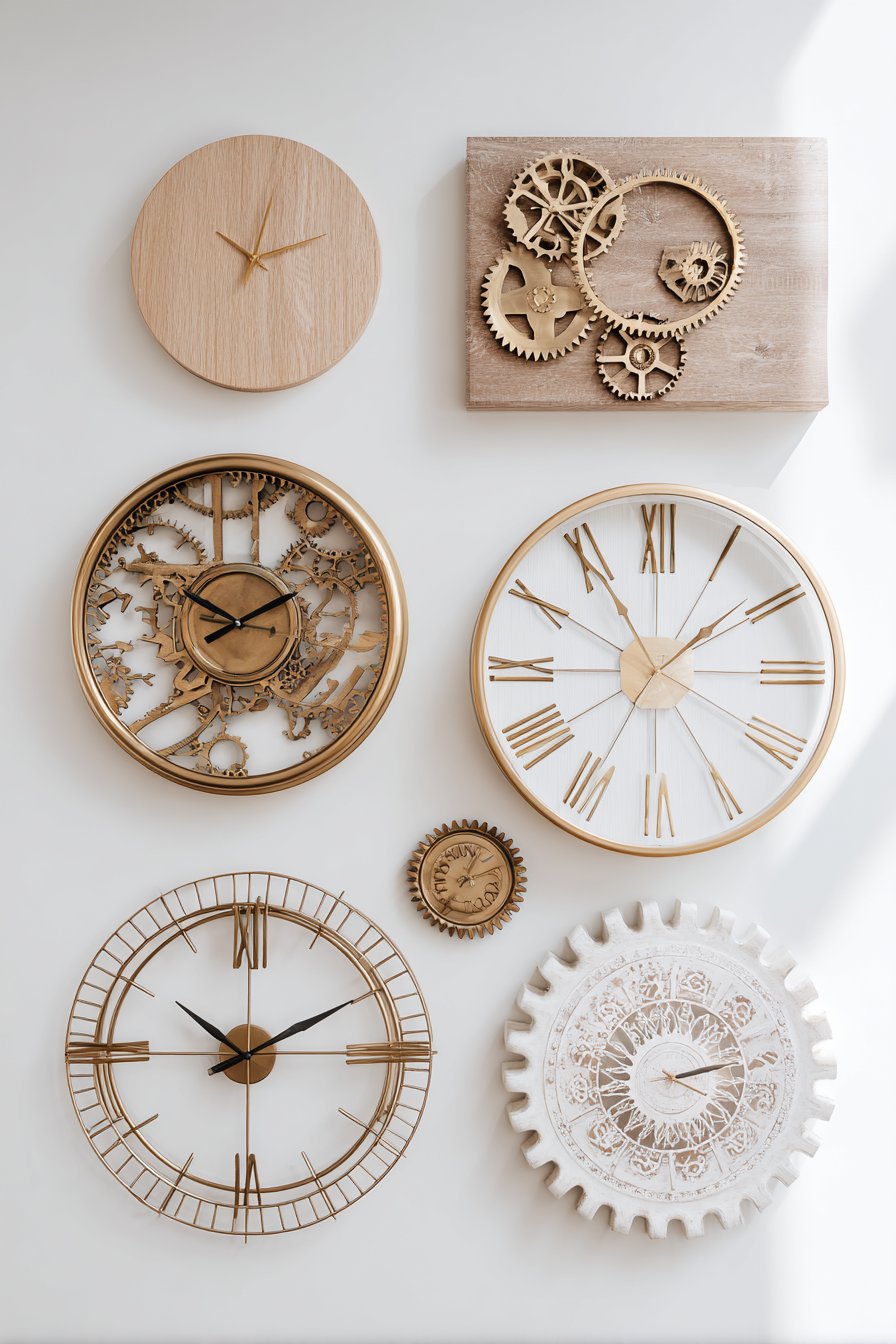
In today’s design landscape, wall clocks offer an incredible diversity of styles, materials, and scales that cater to every taste and space. From oversized statement pieces that command attention in double-height living rooms to delicate artisan-crafted ceramic designs that add subtle sophistication to intimate spaces, these timepieces have become true works of functional art. The beauty of incorporating thoughtful wall clock design into your home lies in the versatility—a well-chosen clock can complement existing decor, introduce new material textures, or serve as the conversation-starting centerpiece that ties an entire room together.
This comprehensive guide explores twenty-one distinctive wall clock design ideas that showcase the remarkable range of possibilities available to homeowners and design enthusiasts. Each concept demonstrates how different materials, finishes, sizes, and styles can transform ordinary walls into curated displays of both beauty and function. Whether you’re furnishing a modern apartment, updating a traditional home, or creating an eclectic personal sanctuary, you’ll discover inspiring approaches to selecting and displaying wall clocks that resonate with your unique aesthetic vision.
1. Minimalist Scandinavian Wooden Wall Clock
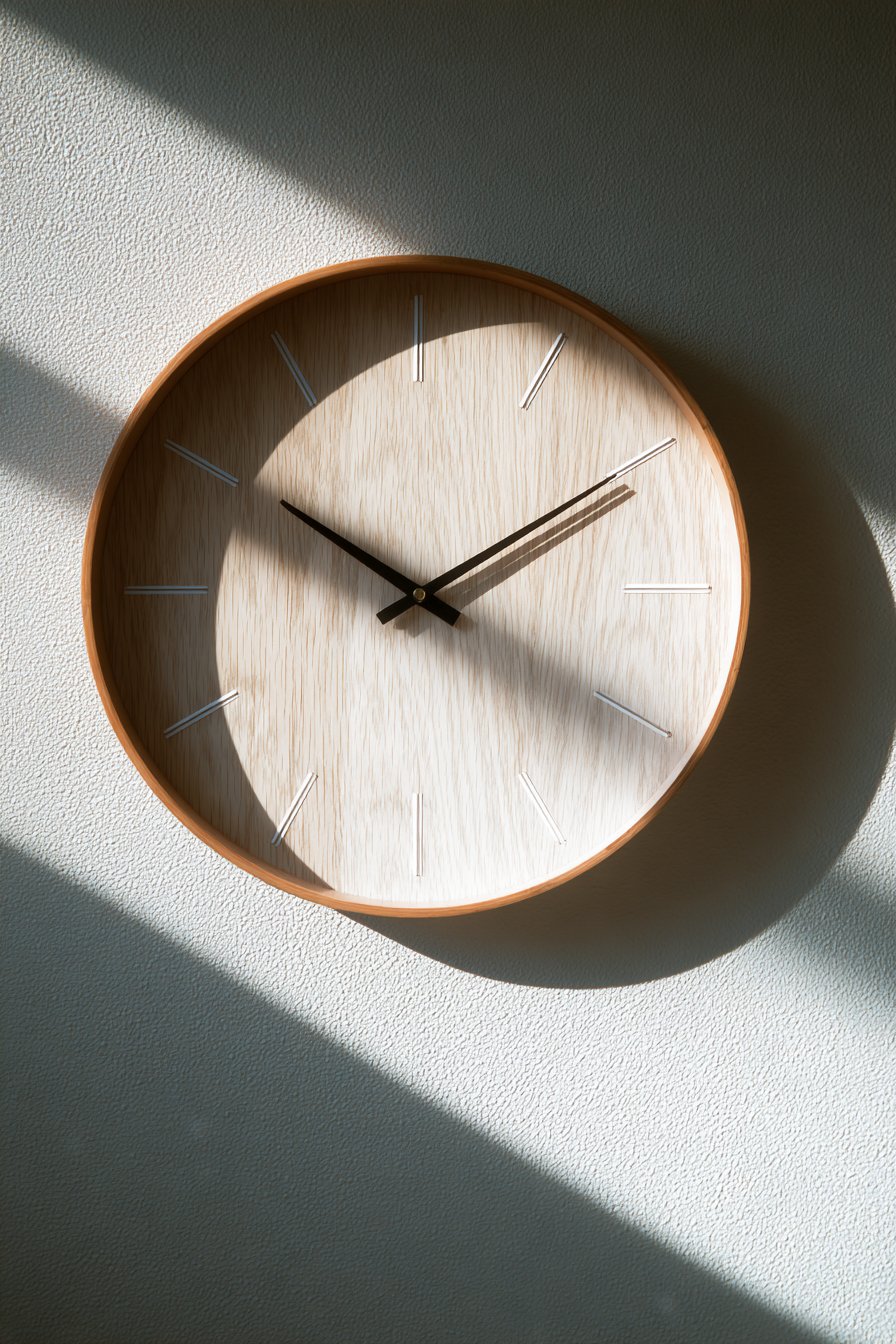
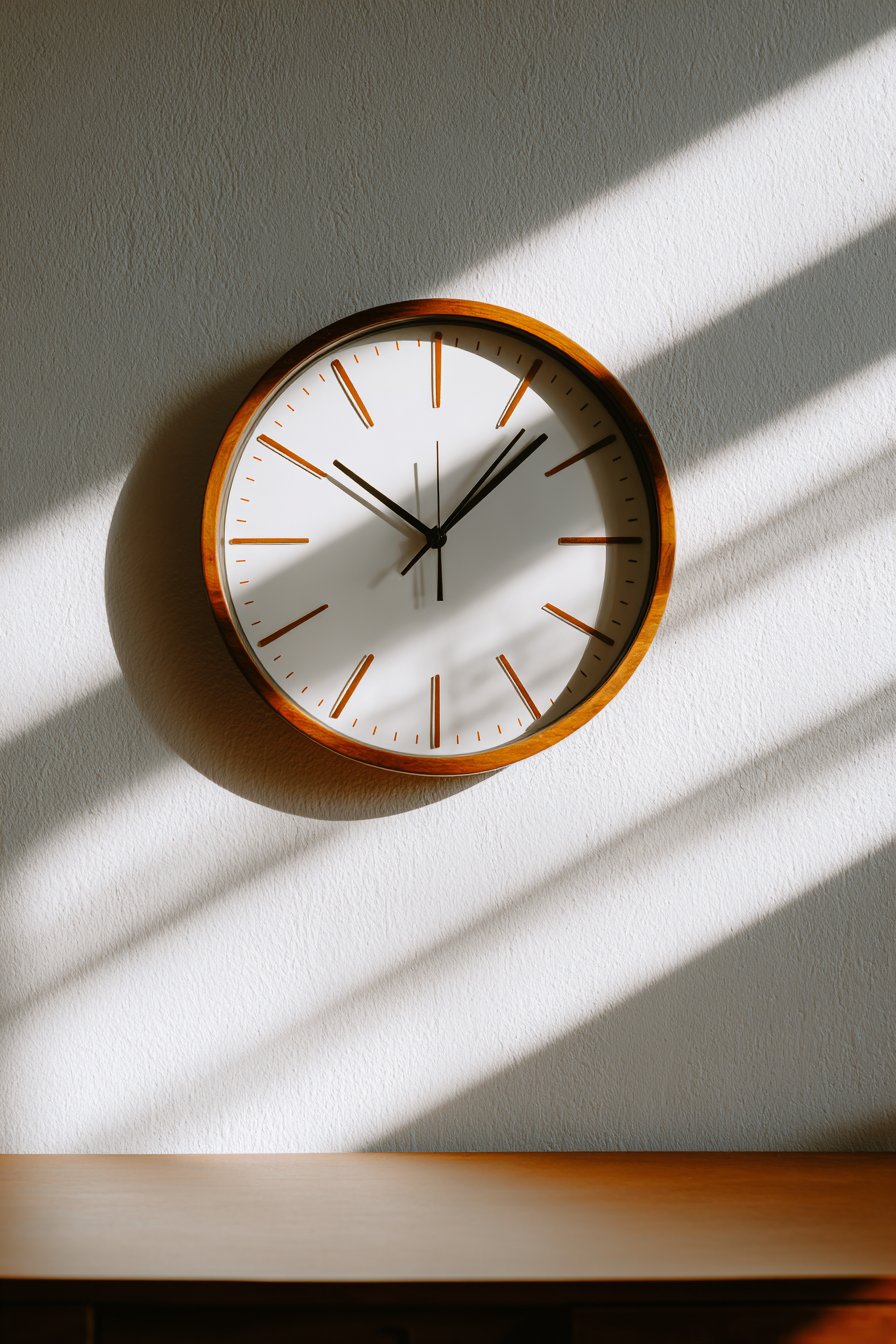
The essence of Scandinavian design philosophy shines brilliantly in this minimalist wooden wall clock, where form follows function with understated elegance. Crafted from light oak with its naturally warm honey tones and subtle grain patterns, this 24-inch diameter timepiece embodies the Nordic appreciation for natural materials and clean lines. The white clock face provides a crisp contrast to the wooden frame, while simple black hands and subtle hour markers maintain the pared-down aesthetic that defines Scandinavian style. This design approach celebrates the beauty of simplicity, proving that sometimes less truly is more.
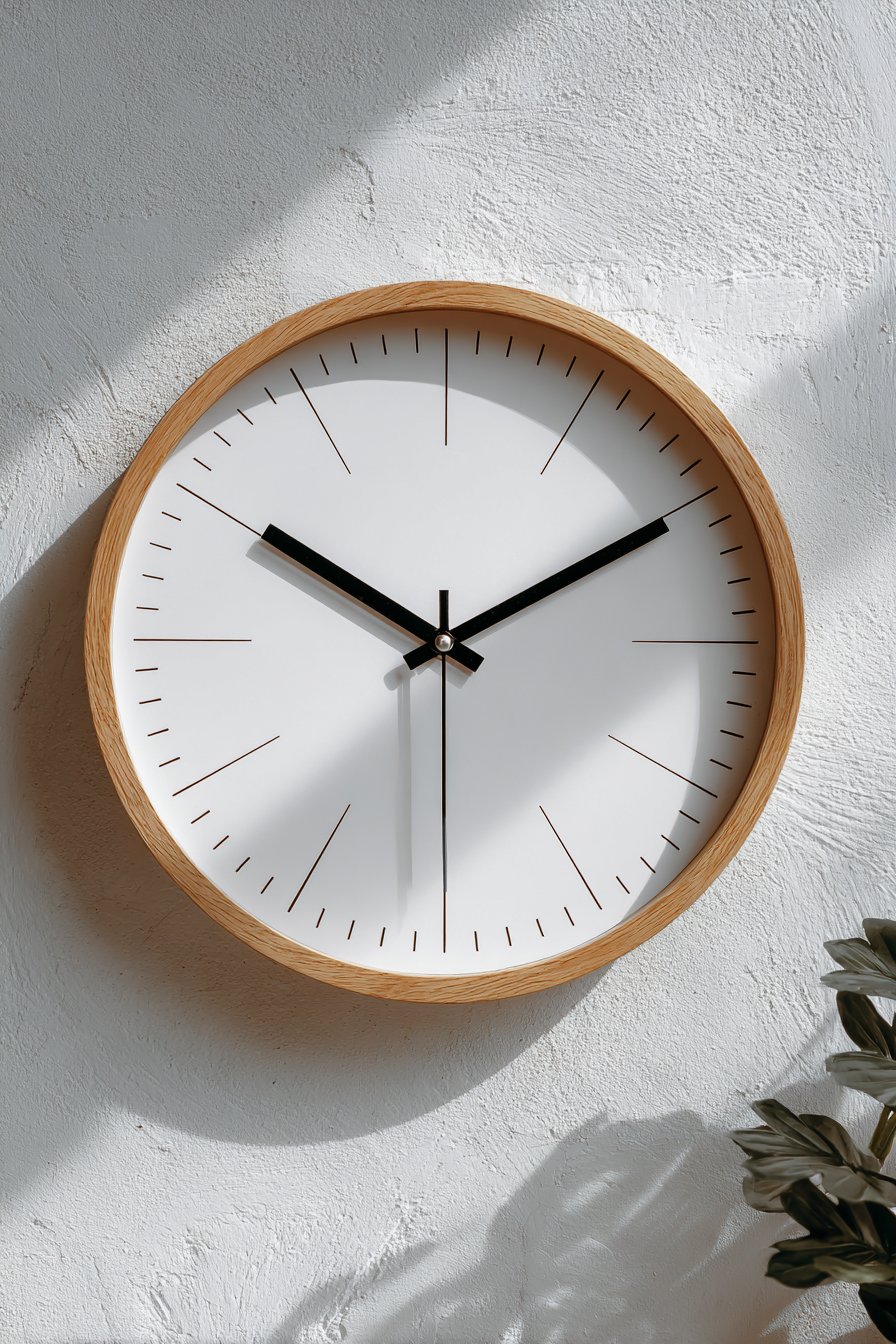
When positioned above a modern console table in a bright living room, this clock becomes more than a timekeeping device—it transforms into an anchor point that grounds the entire space. Natural daylight streaming through nearby windows interacts beautifully with the smooth wood grain, creating gentle highlights and soft shadows that change throughout the day. This dynamic quality brings life to the static object, making it feel organic and connected to the natural world outside. The proportional relationship between the clock and surrounding furniture demonstrates thoughtful spatial planning, ensuring the piece feels neither oversized nor insignificant.
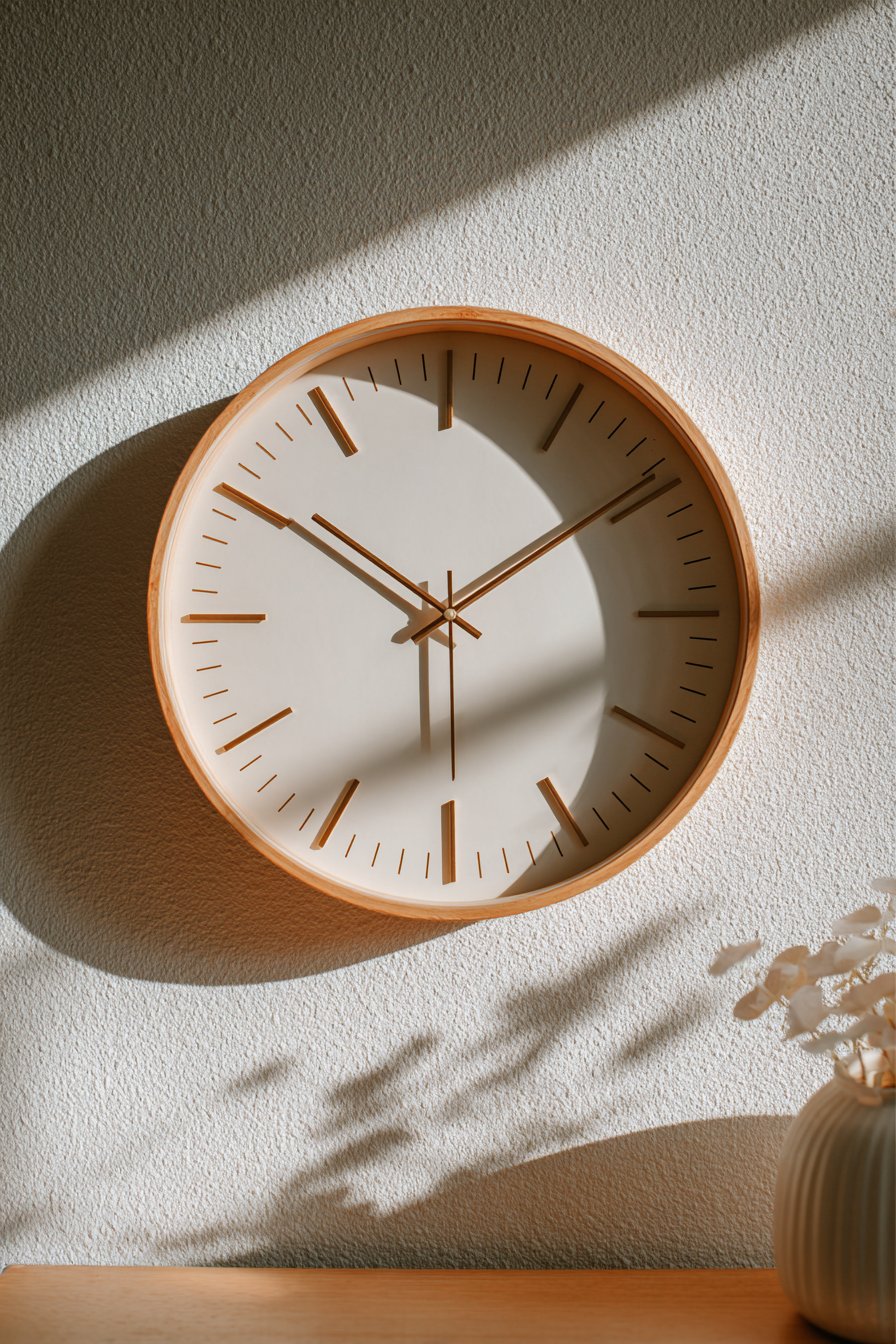
The tactile quality of natural oak brings warmth to contemporary interiors that might otherwise feel cold or sterile. Unlike painted or laminated finishes, genuine wood develops character over time, with subtle color shifts and patina that tell the story of a well-loved home. This particular design’s generous 24-inch diameter makes it substantial enough to serve as a focal point without overwhelming the space, striking that perfect balance that Scandinavian designers pursue with such dedication.
Key Design Tips:
- Choose light-colored woods like oak, ash, or birch to maintain the airy Scandinavian aesthetic
- Position the clock where natural light can highlight the wood grain throughout the day
- Keep surrounding decor minimal to let the clock’s simple beauty take center stage
- Pair with other natural materials like linen, wool, and ceramic for cohesive Nordic styling
- Ensure the clock diameter is proportional to wall space—at least one-third the width of furniture beneath it
2. Industrial Metal Gear Wall Clock
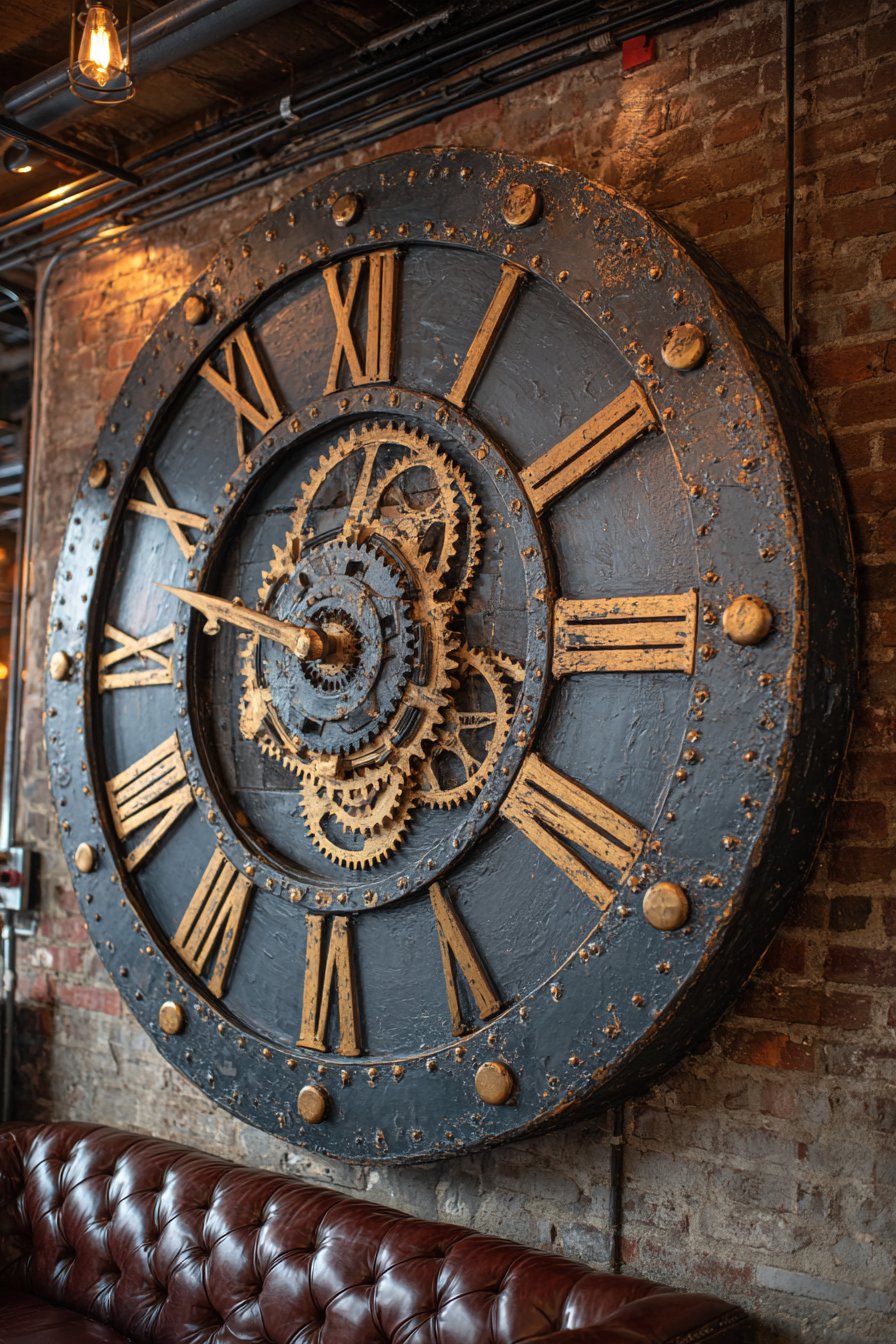
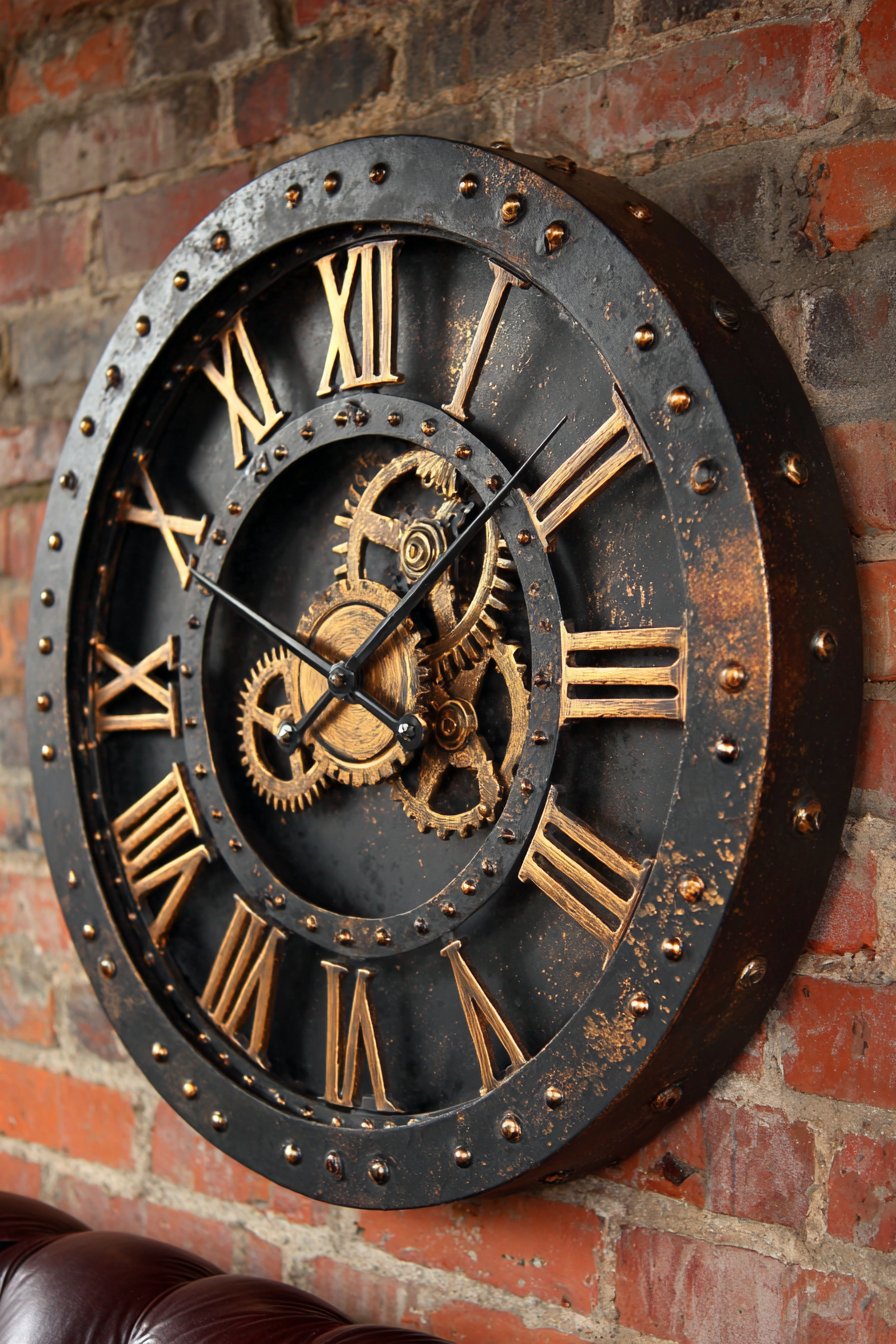
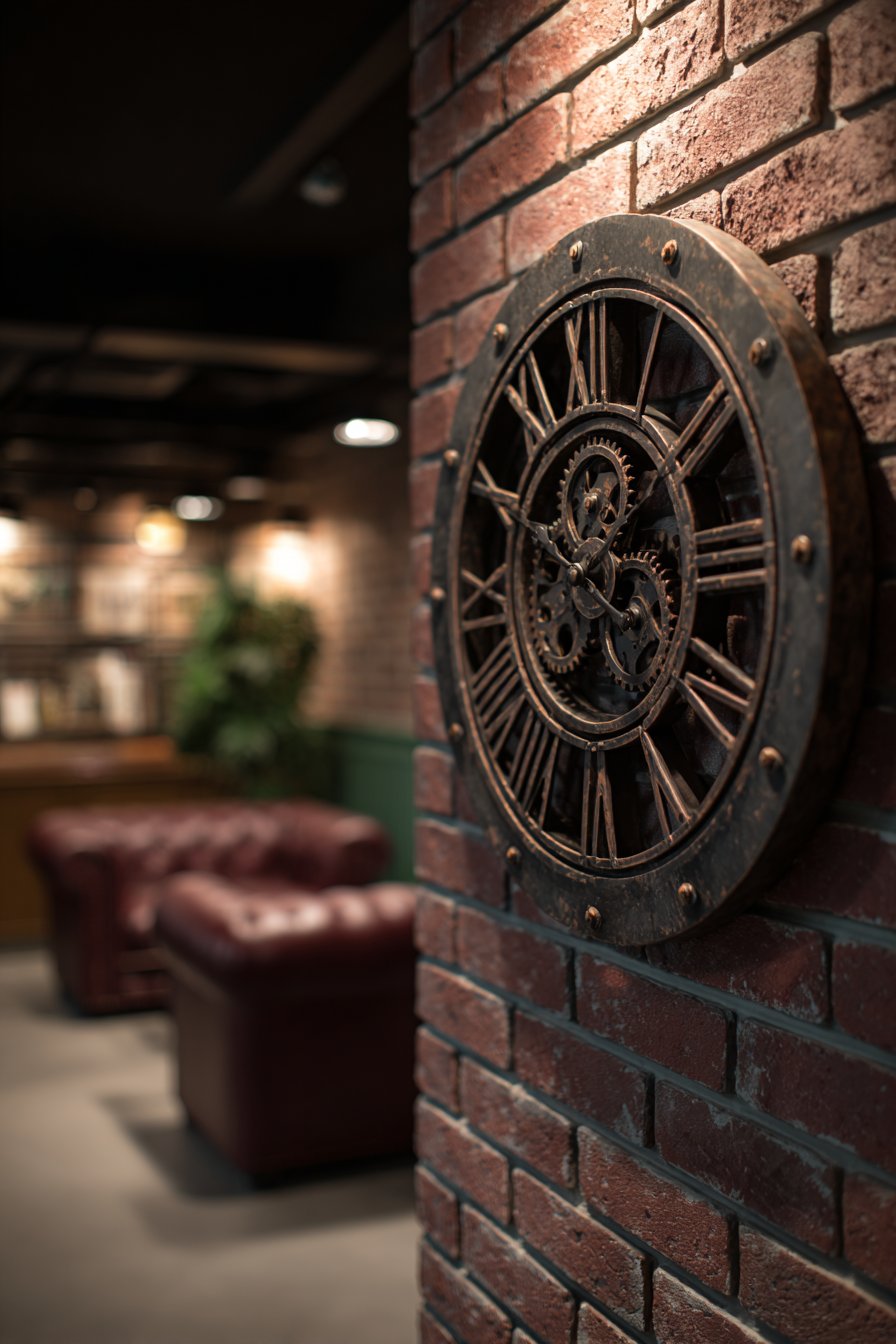
Industrial design celebrates the beauty of raw materials and mechanical honesty, and this oversized metal wall clock exemplifies those principles spectacularly. At 36 inches in diameter, this statement piece commands attention with its exposed gear mechanisms, Roman numerals, and aged bronze finish that suggests decades of imagined history. The distressed black metal frame features visible rivets and deliberately weathered patina, creating an authentic industrial aesthetic that pays homage to factory-era craftsmanship. This isn’t merely a clock—it’s a sculptural celebration of the machine age.
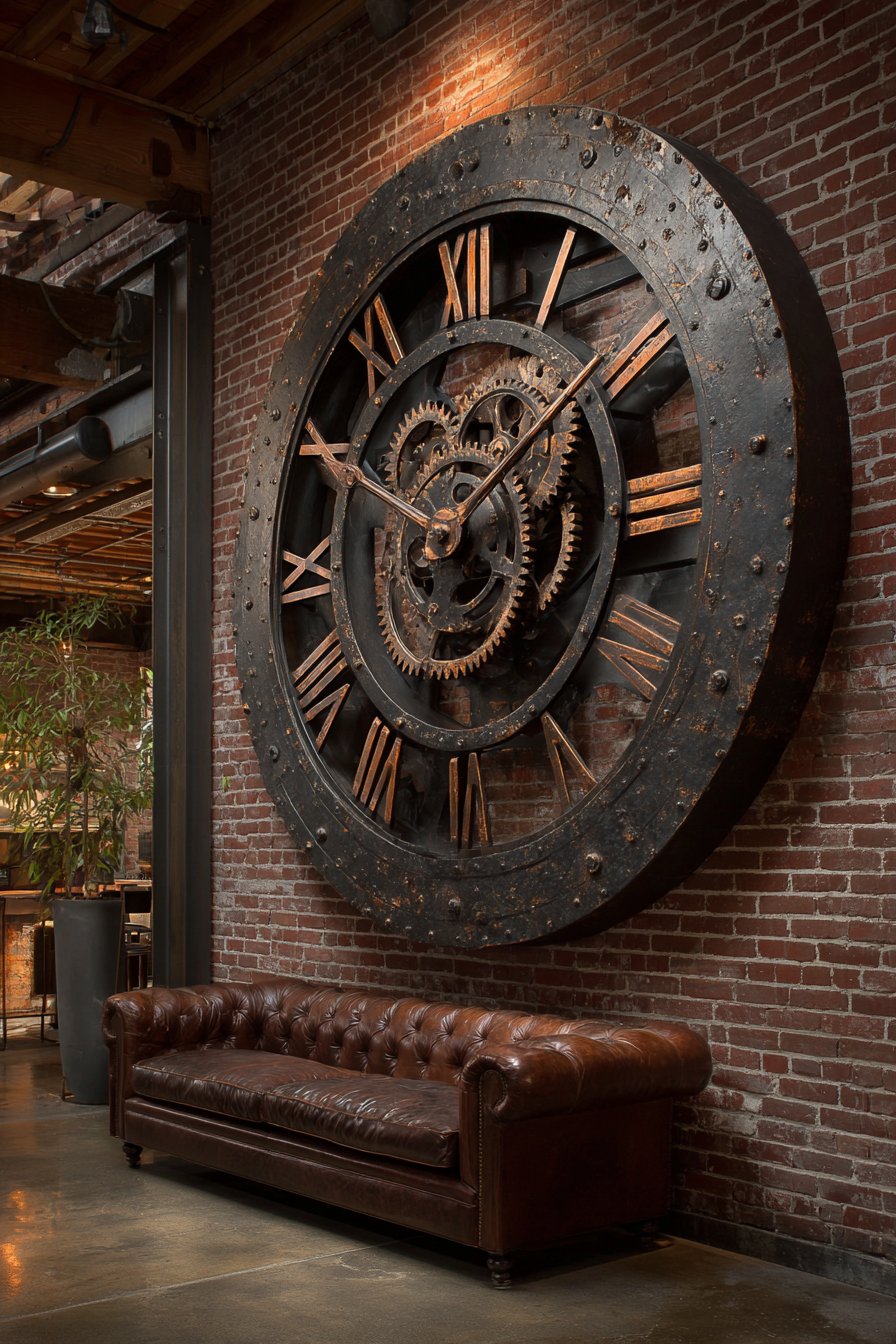
Mounted against an exposed brick wall in a loft apartment, this timepiece finds its perfect context. The rough texture of century-old brick provides an ideal backdrop for the metallic finish, while nearby leather furniture adds layers of complementary textures that enhance the industrial narrative. The visible gears aren’t just decorative elements; they reference the inner workings of actual clock mechanisms, creating visual interest and inviting closer examination. Professional interior photography with warm ambient lighting emphasizes these mechanical details, casting dramatic shadows that heighten the three-dimensional quality of the piece.
The scale of this clock makes it suitable for spaces with high ceilings and generous wall expanses where smaller timepieces would disappear. In converted industrial spaces, renovated warehouses, or modern lofts seeking to honor their architectural heritage, such a substantial clock serves as both functional necessity and artistic tribute. The aged bronze and black metal finishes work particularly well in spaces with exposed ductwork, concrete floors, or steel beam ceilings, creating a cohesive industrial vocabulary throughout the interior.
Key Design Tips:
- Select oversized clocks (30+ inches) for industrial spaces with high ceilings and large wall expanses
- Look for authentic distressed finishes rather than obviously artificial aging
- Position against textured surfaces like brick, concrete, or reclaimed wood for maximum impact
- Incorporate complementary industrial materials like leather, metal, and glass in surrounding decor
- Consider the clock’s visual weight—bold industrial pieces need breathing room to avoid overwhelming the space
3. Modern Geometric Hexagonal Brass Clock
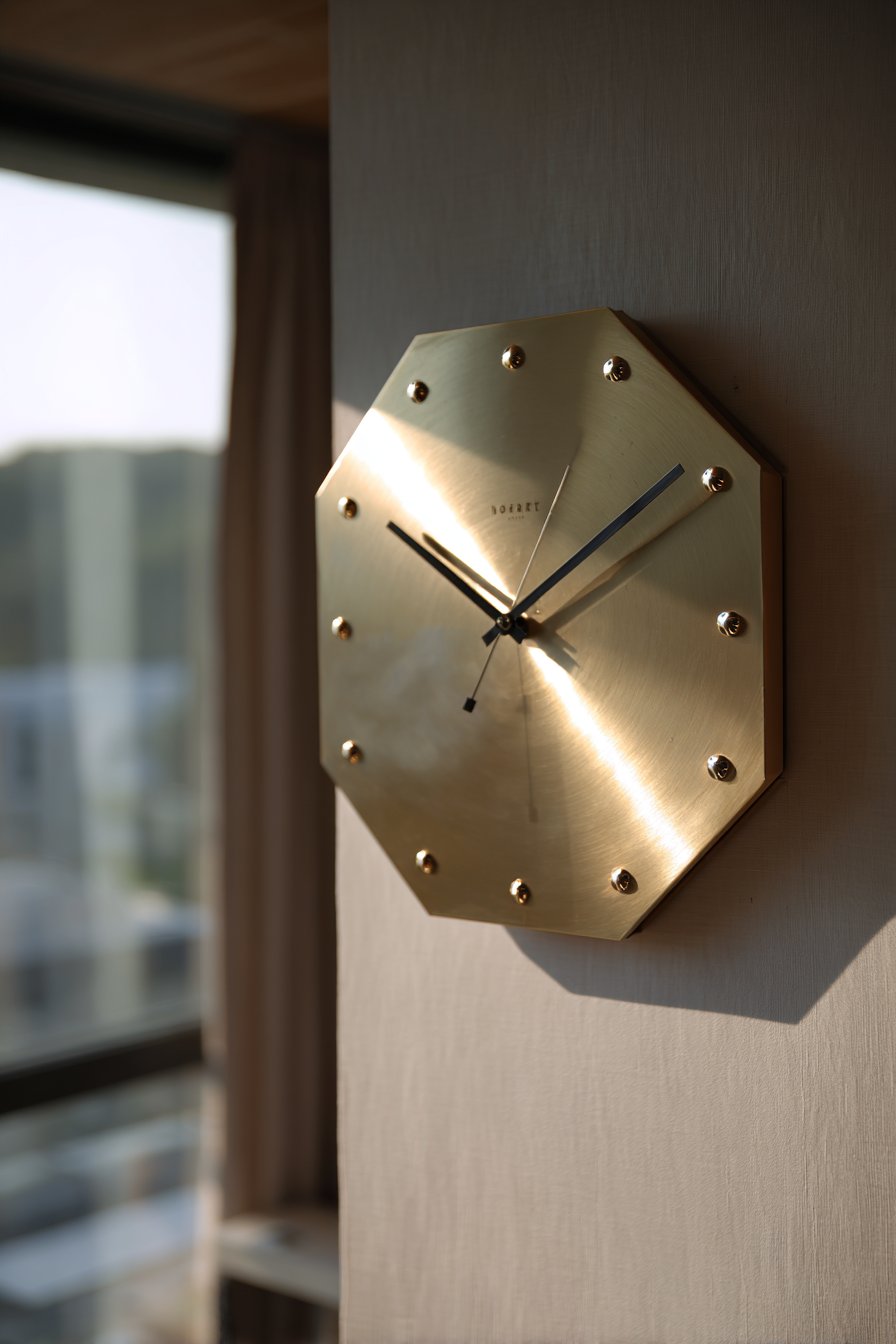
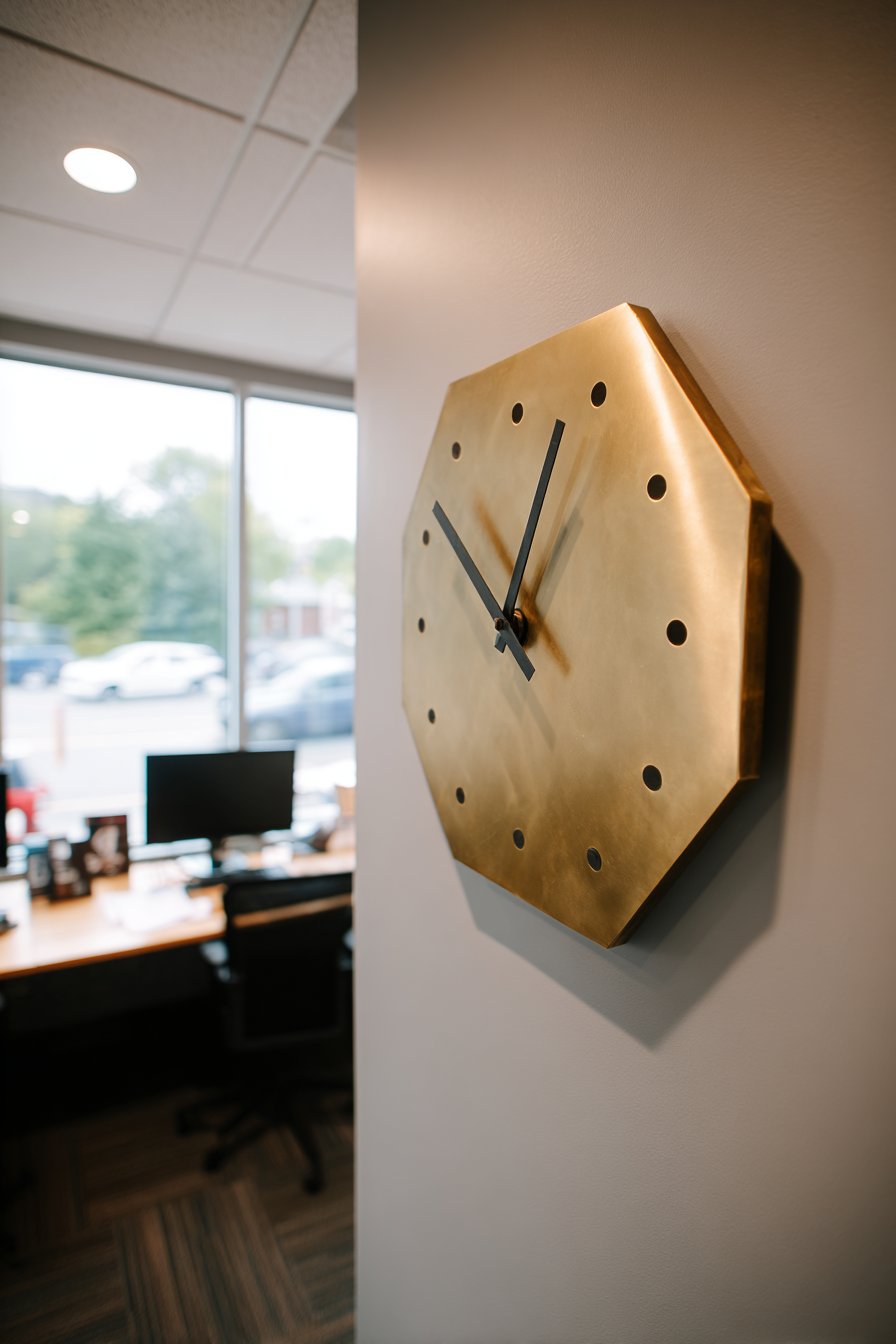
Contemporary design embraces geometric precision and premium materials, as evidenced by this sophisticated hexagonal wall clock crafted from brushed brass. The 18-inch angular timepiece challenges traditional circular clock conventions, introducing unexpected geometry that catches the eye and stimulates visual interest. Brushed brass provides a warm metallic finish that feels luxurious without being ostentatious, while contrasting matte black hands and minimalist dot hour markers maintain modern restraint. This design demonstrates how thoughtful material selection and unconventional shapes can create objects that transcend simple functionality.
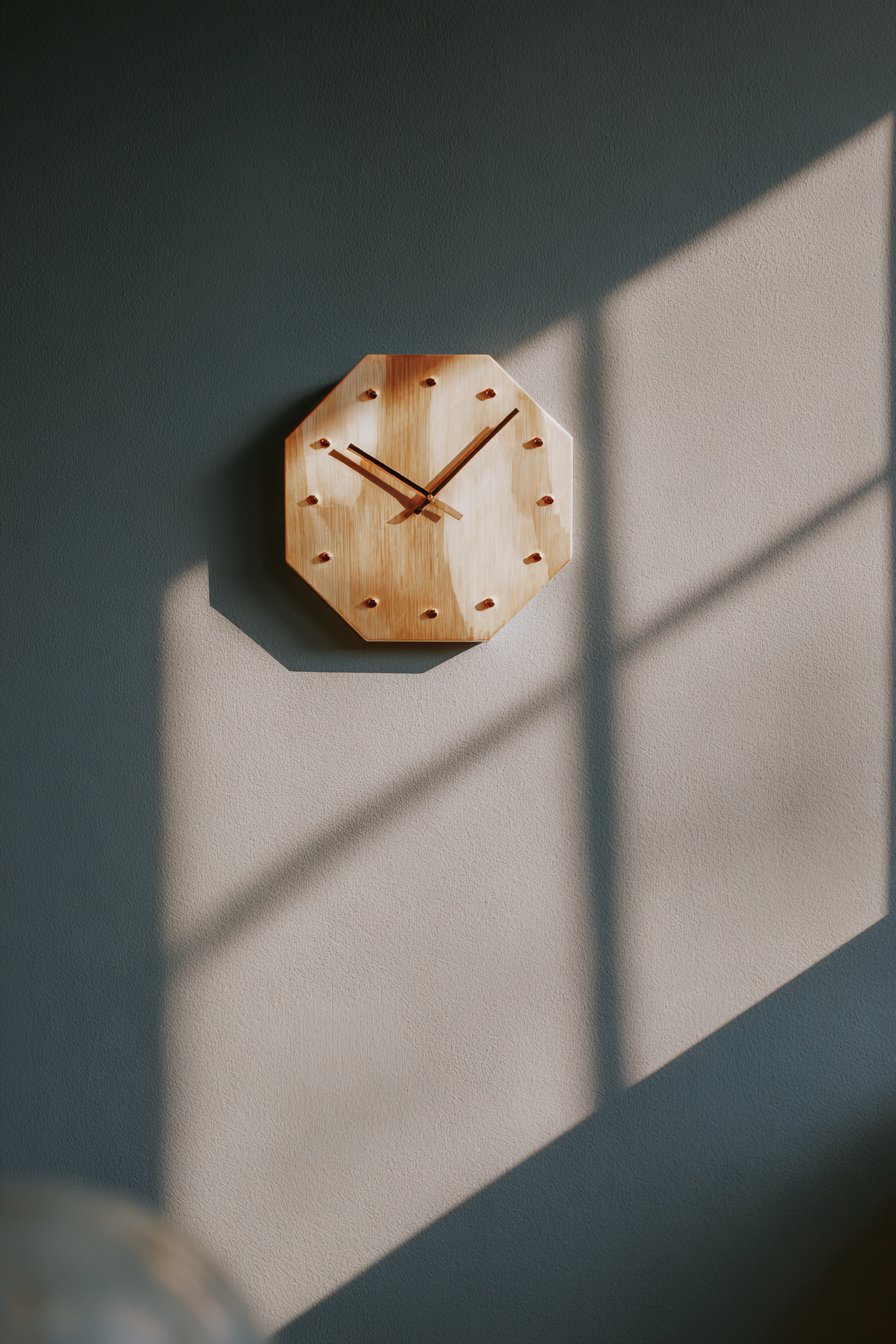
In a sleek home office setting against a soft gray accent wall, this clock becomes a sophisticated focal point that reinforces the professional yet creative atmosphere. Natural light from a nearby window creates ever-changing highlights on the metallic surface, causing the brass to shimmer subtly throughout the day. These light interactions prevent the clock from becoming static decoration, instead making it a dynamic element that responds to environmental conditions. The precise shadows cast by the geometric form add another layer of visual interest, creating patterns on the wall that shift with the sun’s movement.
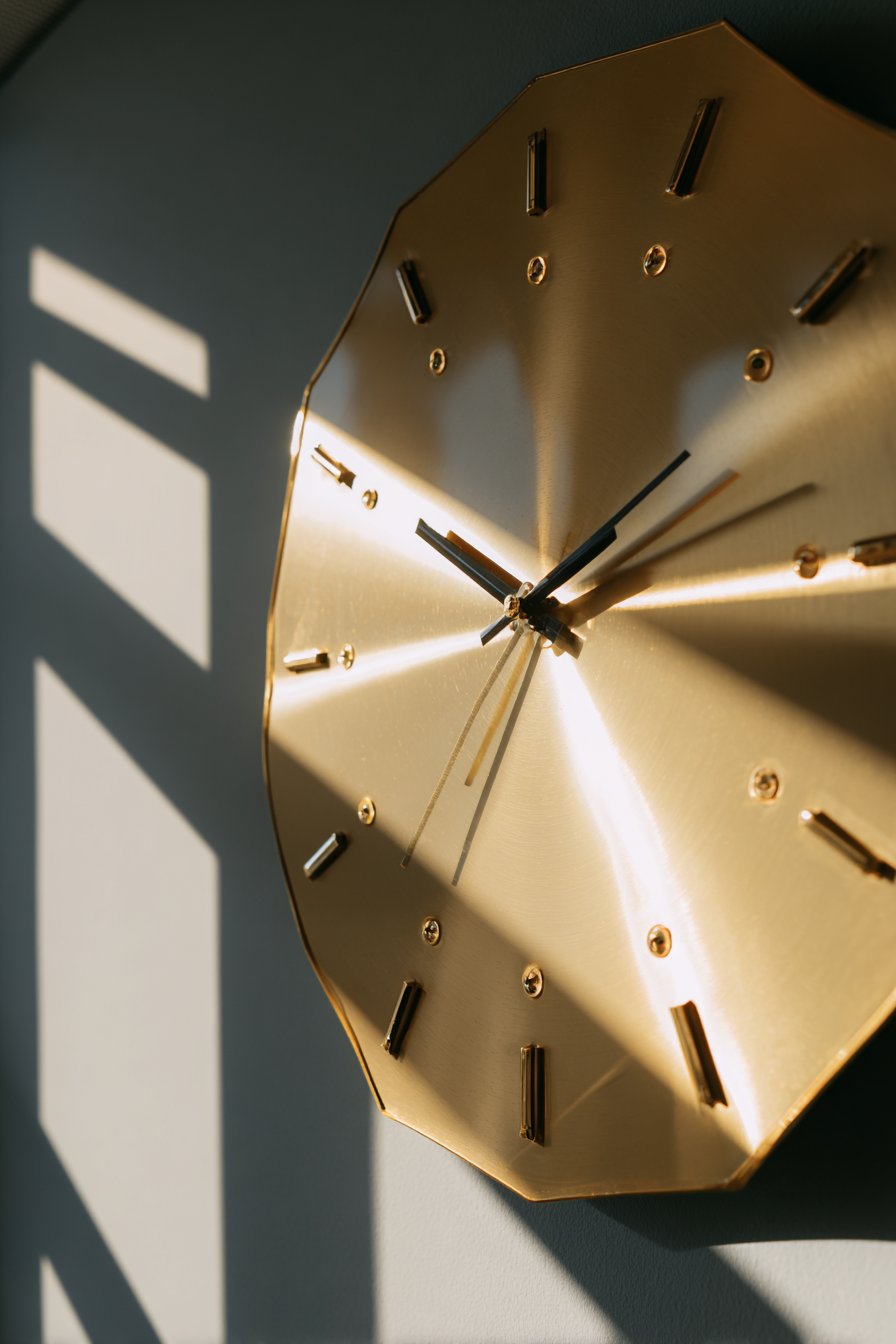
The hexagonal shape introduces an element of mathematical precision that appeals to those who appreciate clean lines and contemporary aesthetics. Unlike traditional round clocks that blend into backgrounds, this angular design asserts its presence while maintaining sophisticated restraint. The brushed brass finish bridges the gap between warm and cool tones, making it versatile enough to complement various color palettes from cool grays to warm beiges and everything between.
Key Design Tips:
- Choose geometric shapes that complement your room’s architectural features and existing decor angles
- Position metallic clocks where they’ll catch natural light for maximum visual impact
- Use contrasting hand colors (like black on brass) to ensure easy time reading
- Balance bold geometric clocks with softer textures like fabric and wood elsewhere in the room
- Consider the finish carefully—brushed metals feel more sophisticated than high-polish alternatives
4. Rustic Farmhouse Distressed White Clock
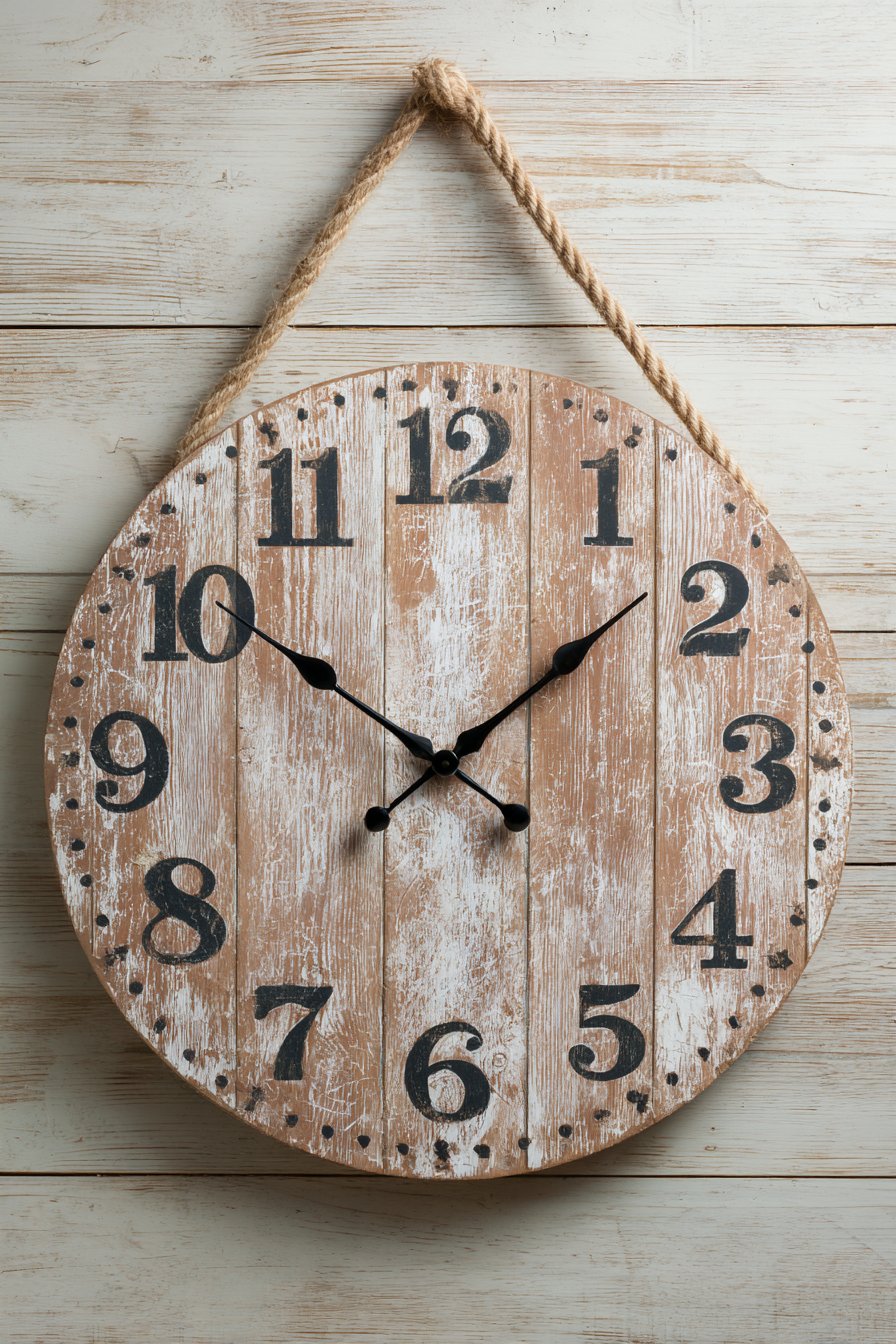
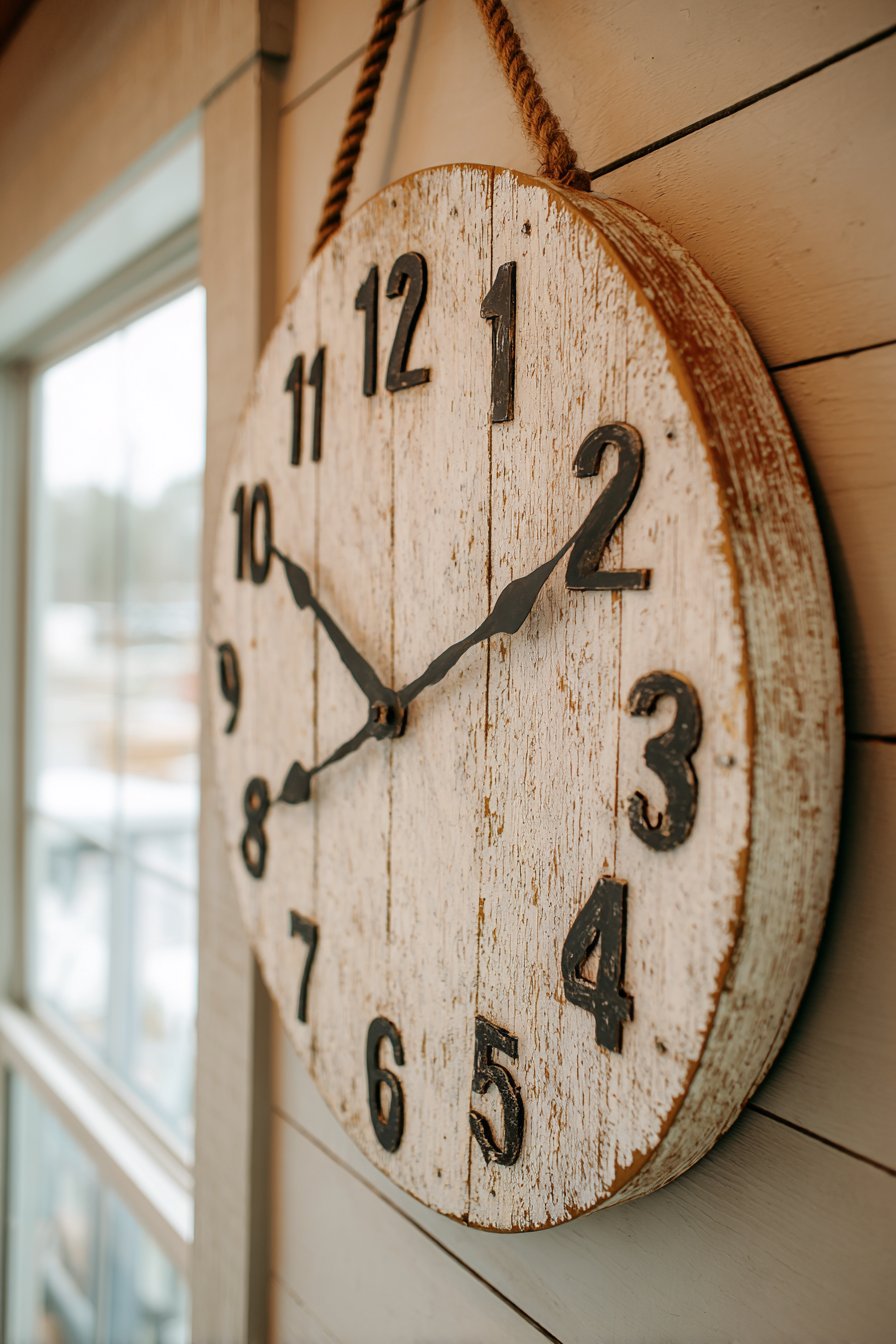
Farmhouse style captures the nostalgia of simpler times while creating spaces that feel welcoming and lived-in, and this rustic wall clock embodies those qualities perfectly. The 30-inch round timepiece features a distressed white-washed finish that suggests years of loving use, with oversized black Arabic numerals that provide both visual impact and easy readability from across the room. A charming rope hanging detail adds authentic farmhouse character, referencing the practical aesthetics of rural living where every element serves both form and function. This design proves that rustic doesn’t mean rough—it means warmly authentic.
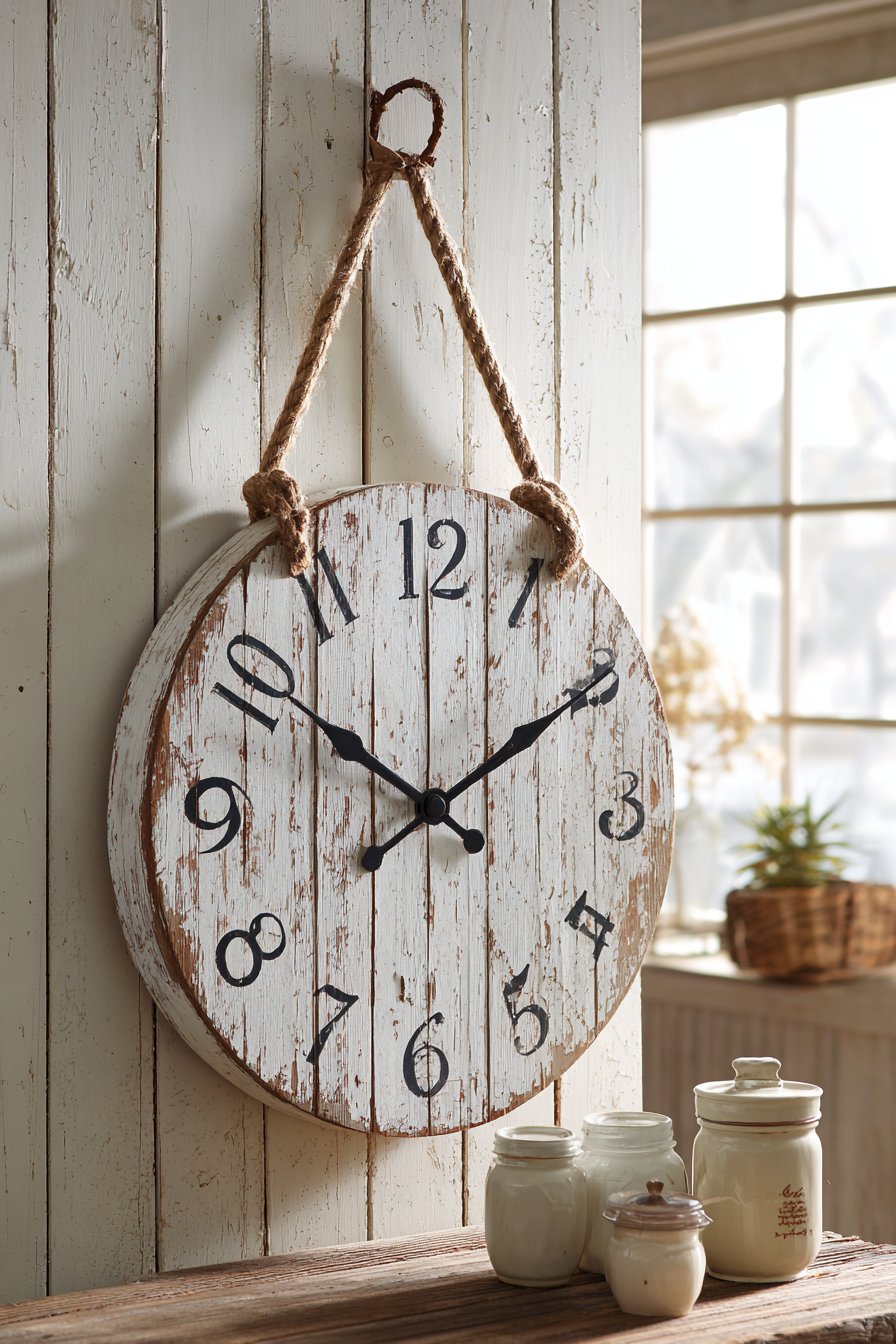
Mounted on shiplap wall paneling in a country-style kitchen, this clock finds its spiritual home. The horizontal lines of the shiplap create a perfect backdrop for the circular form, while soft natural lighting from kitchen windows highlights the weathered wood texture and hand-painted numbers. The distressed finish isn’t artificially perfect; it includes slight variations in the whitewash coverage that expose hints of the underlying wood, creating depth and visual interest. These imperfections aren’t flaws—they’re intentional design elements that communicate warmth and approachability.
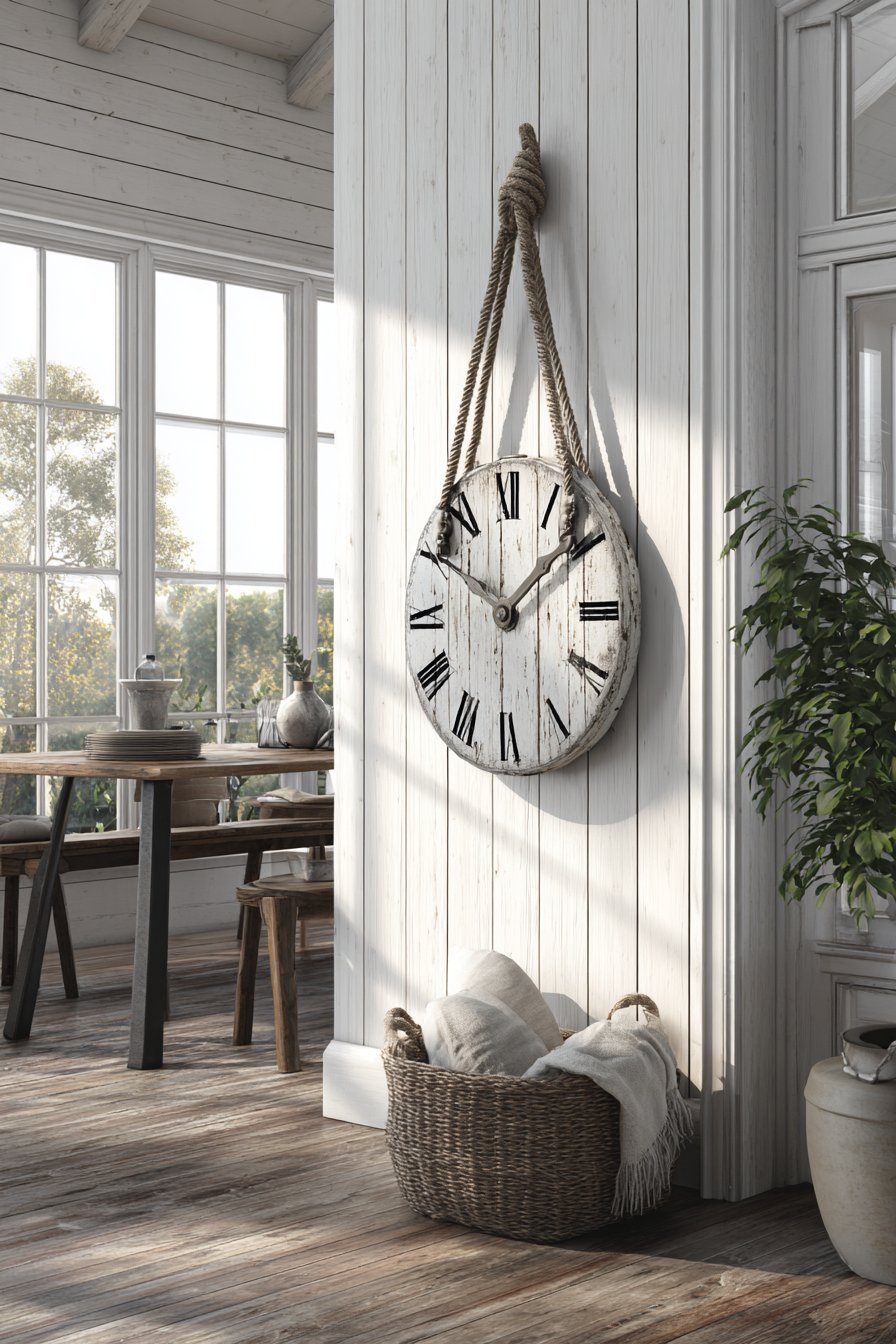
The oversized numerals serve practical and aesthetic purposes simultaneously. In busy kitchen environments where you’re juggling multiple tasks, the ability to quickly glance at the time without searching for tiny markers becomes genuinely valuable. Meanwhile, the bold black numbers against the white background create strong graphic contrast that anchors the design. The rope hanging detail might seem purely decorative, but it actually reinforces the farmhouse narrative by referencing traditional materials and craft techniques that connect us to our agricultural heritage.
Key Design Tips:
- Embrace intentional imperfections like uneven distressing for authentic farmhouse character
- Choose oversized numerals for both style impact and practical readability
- Incorporate natural fiber elements like rope or jute to enhance the rustic narrative
- Position on shiplap, beadboard, or other textured wall treatments for cohesive farmhouse styling
- Balance the clock’s vintage aesthetic with modern comforts to avoid theme-park kitsch
5. Contemporary Black and Rose Gold Clock
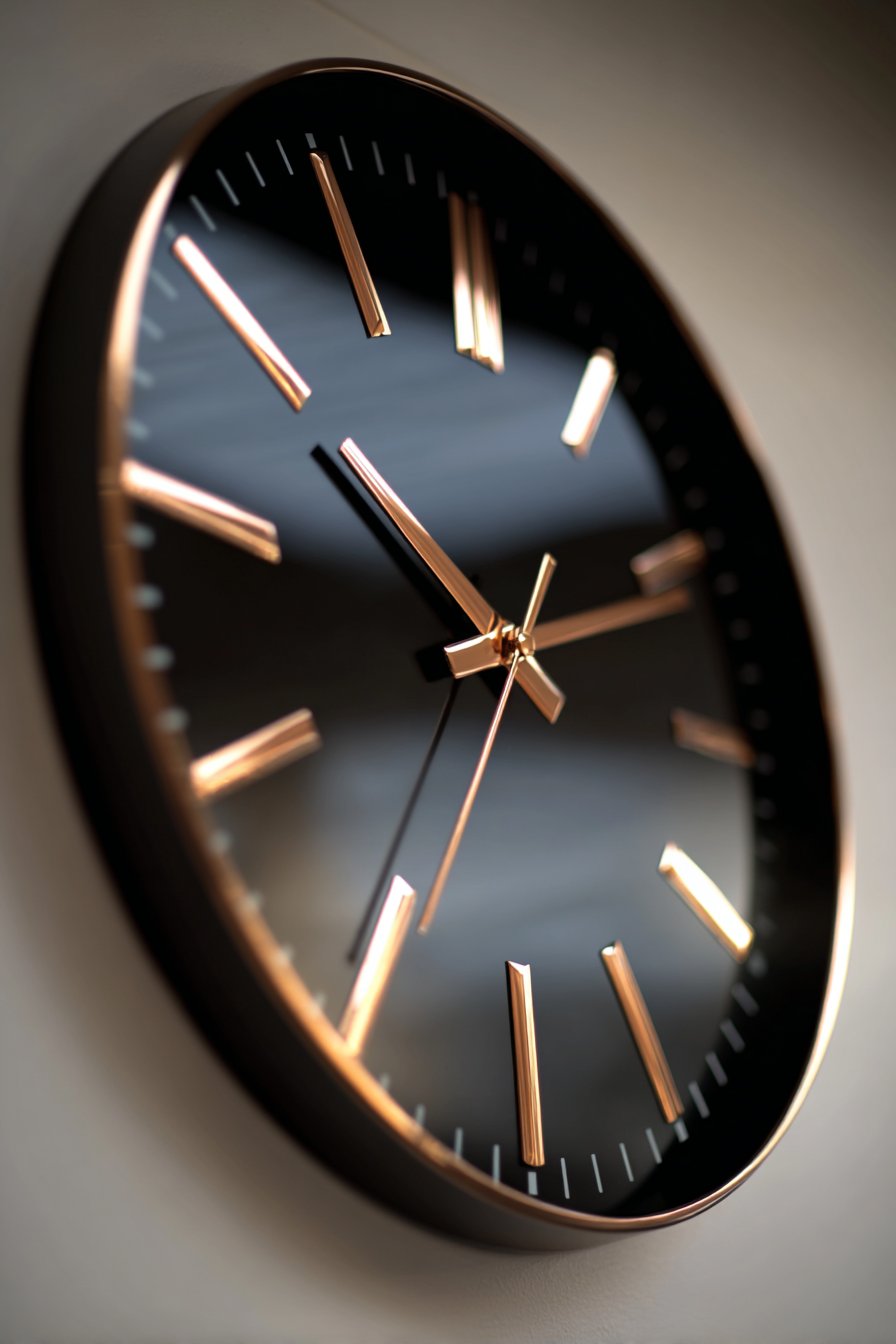
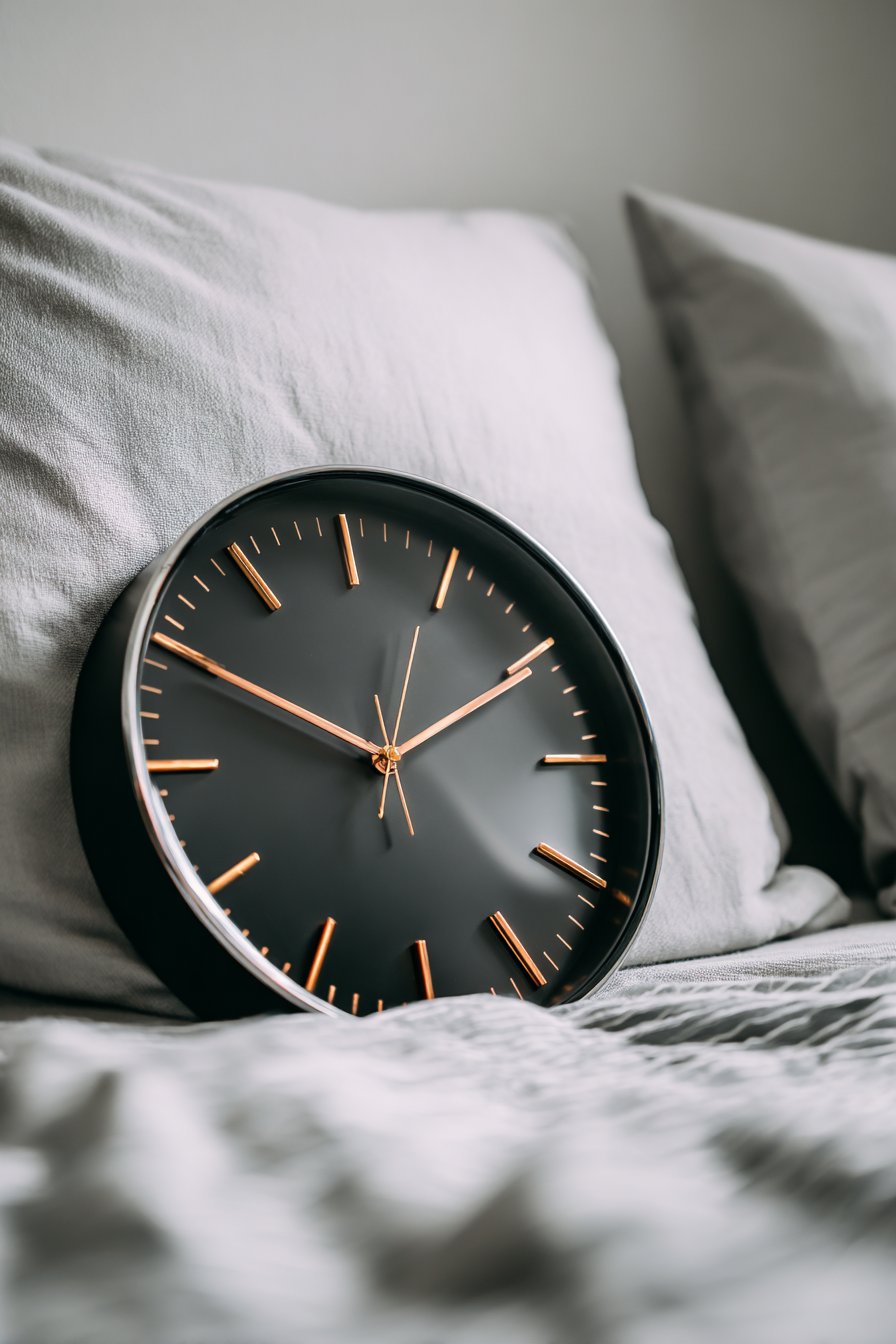
Modern luxury reveals itself in subtle details and unexpected material combinations, as demonstrated by this sleek contemporary wall clock. The 20-inch timepiece features a thin-profile black metal frame that provides structure without visual weight, while rose gold accents on the hands and hour markers introduce warmth and elegance. This color combination has become synonymous with contemporary sophistication, offering a fresh alternative to traditional gold or silver while maintaining timeless appeal. The silent sweep movement ensures the clock’s function never intrudes on the space’s tranquility—a thoughtful detail that separates premium designs from basic alternatives.
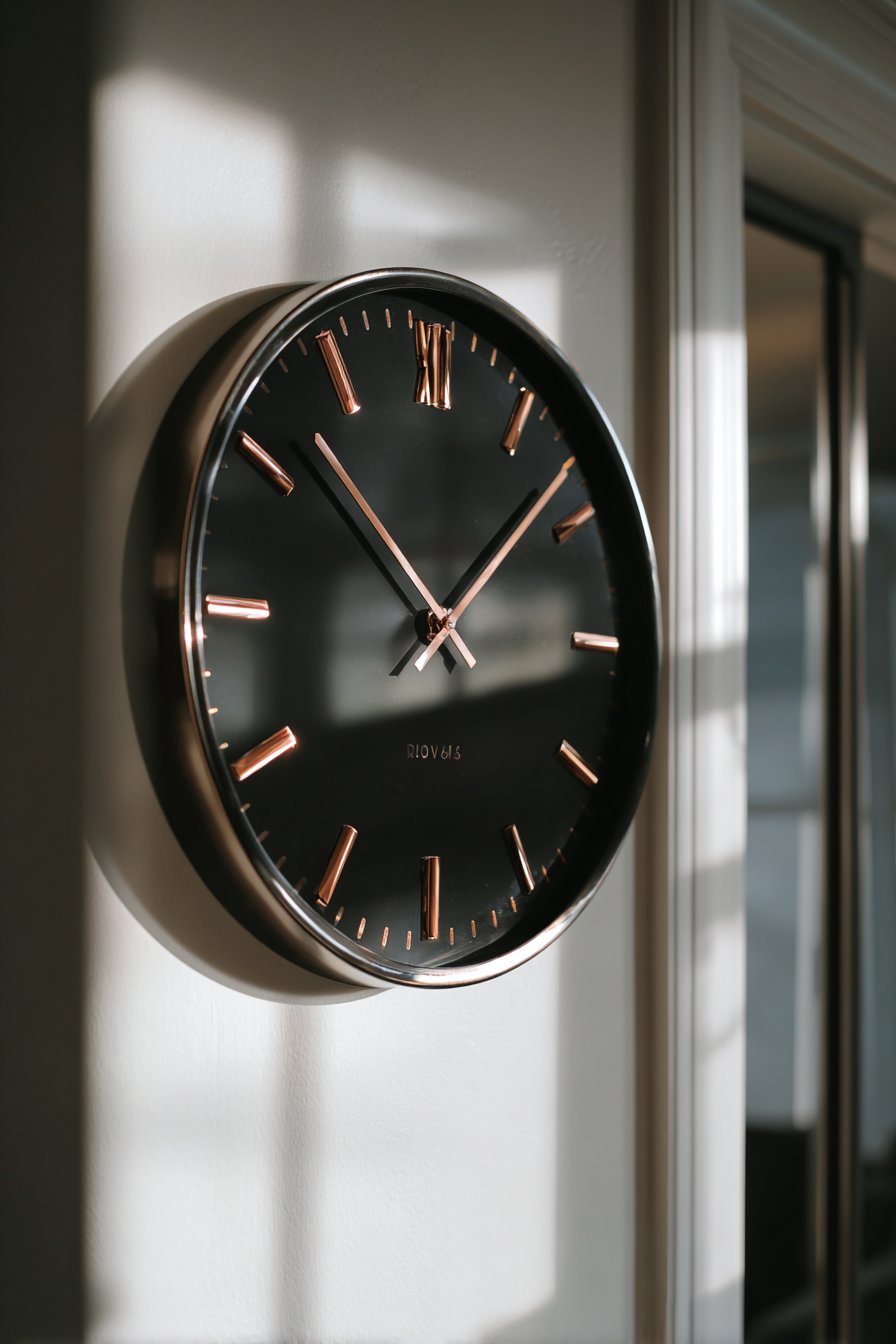
Mounted on a crisp white wall in a modern bedroom setting, this clock demonstrates the power of restrained elegance. Soft morning light creates gentle highlights on the metallic rose gold elements, causing them to glow warmly against the matte black frame. This interplay of finishes—matte versus metallic, black versus rose gold, circular frame versus linear hands—creates visual interest through contrast while maintaining overall harmony. The thin profile ensures the clock doesn’t protrude awkwardly from the wall, instead sitting nearly flush for a streamlined appearance that complements contemporary architectural preferences.
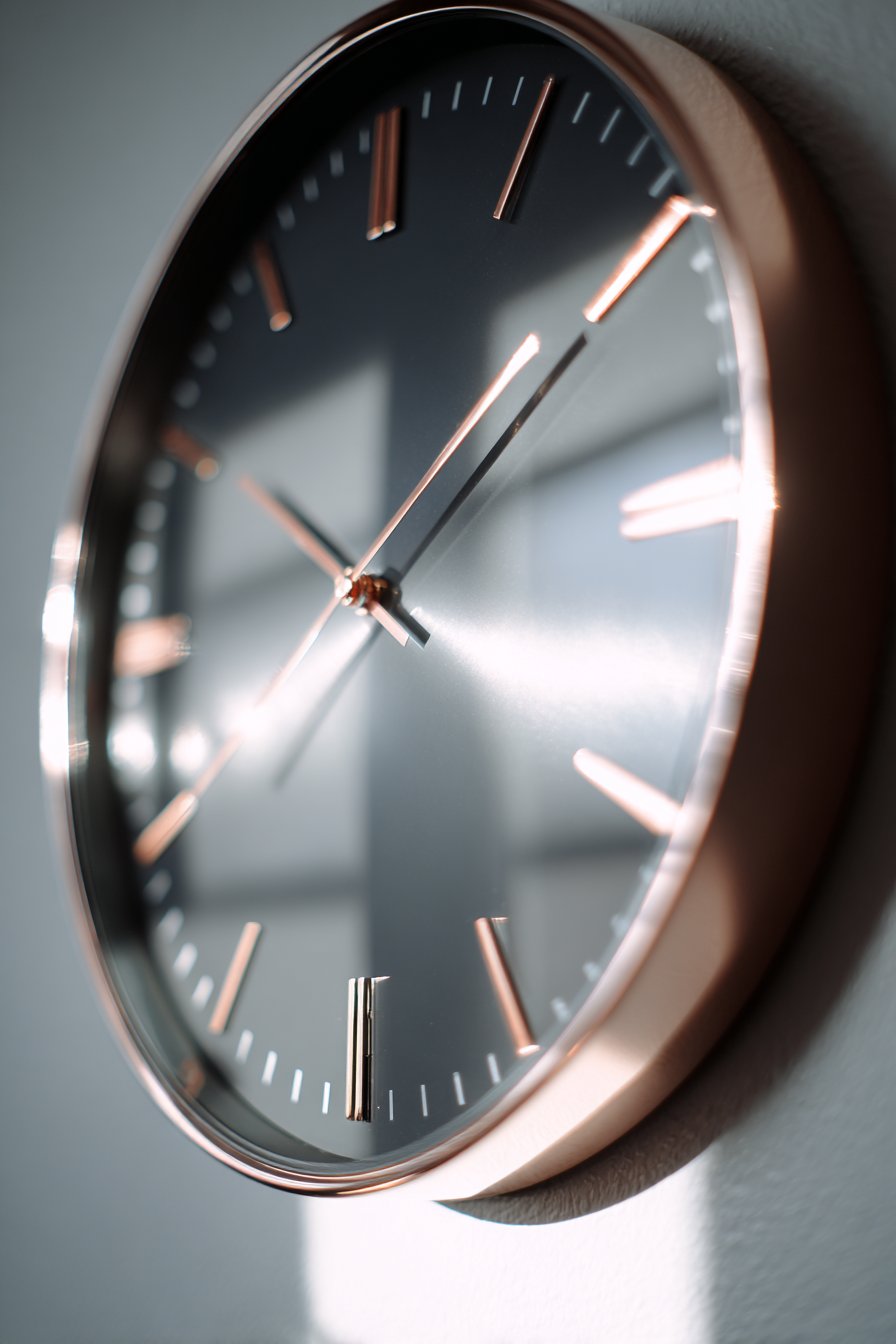
The rose gold accents provide just enough warmth to prevent the black and white color scheme from feeling stark or cold. This careful balance makes the clock suitable for bedrooms where atmosphere matters as much as style. The silent sweep movement becomes particularly important in sleeping spaces, where the traditional tick-tock of clock mechanisms can become surprisingly intrusive during quiet nighttime hours. By eliminating this auditory element, the clock maintains its functional purpose without compromising the room’s peaceful ambiance.
Key Design Tips:
- Specify silent sweep or continuous movement mechanisms for bedroom clocks to avoid ticking sounds
- Balance cool black tones with warm metallic accents like rose gold or brass
- Choose thin-profile designs for contemporary spaces where minimal visual weight is desired
- Position against white or light neutral walls to maximize the impact of metallic details
- Consider the clock’s scale carefully—bedroom clocks should be visible but not dominating
6. Vintage Railway Station Clock
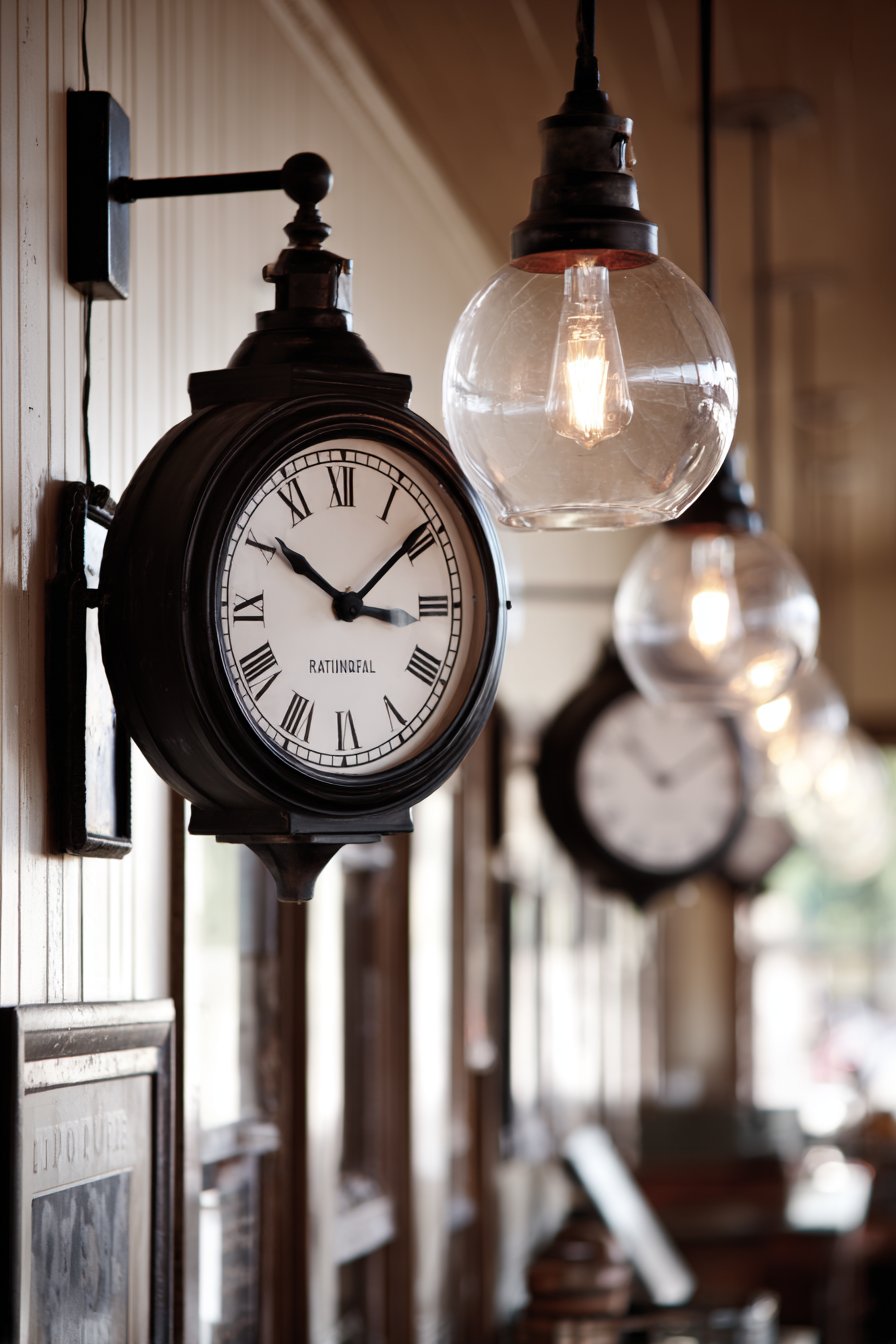
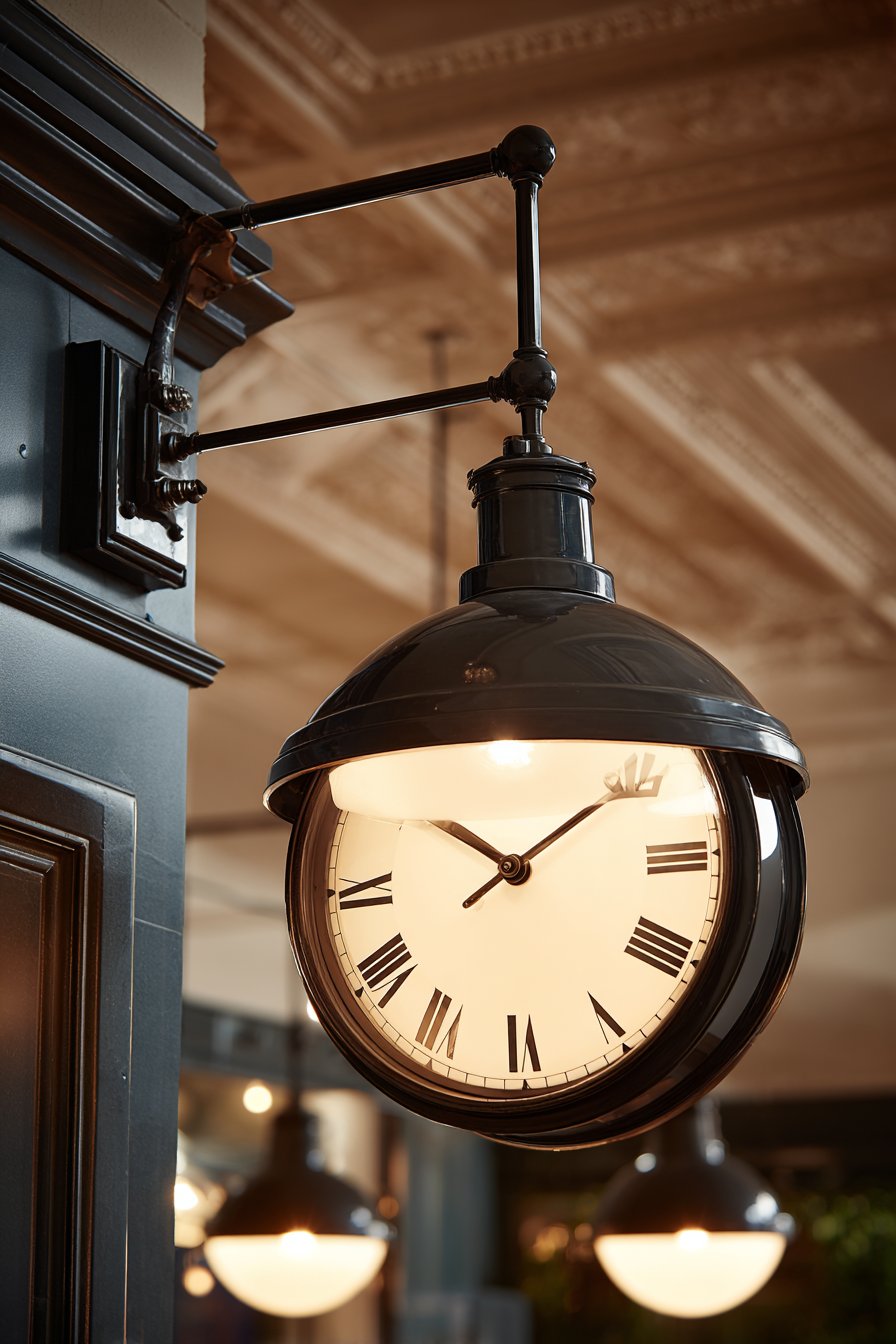
Nostalgia meets functionality in this vintage-inspired railway station clock that recalls the romance of train travel’s golden age. The 28-inch timepiece features a classic black metal frame paired with a pristine white enamel face displaying bold black Roman numerals—the timeless combination favored by European railway stations for maximum visibility. What elevates this design beyond simple reproduction is the double-sided configuration with its decorative wall mounting bracket in aged iron finish, allowing the clock to be viewed from multiple angles. This three-dimensional quality transforms a wall clock into architectural sculpture.
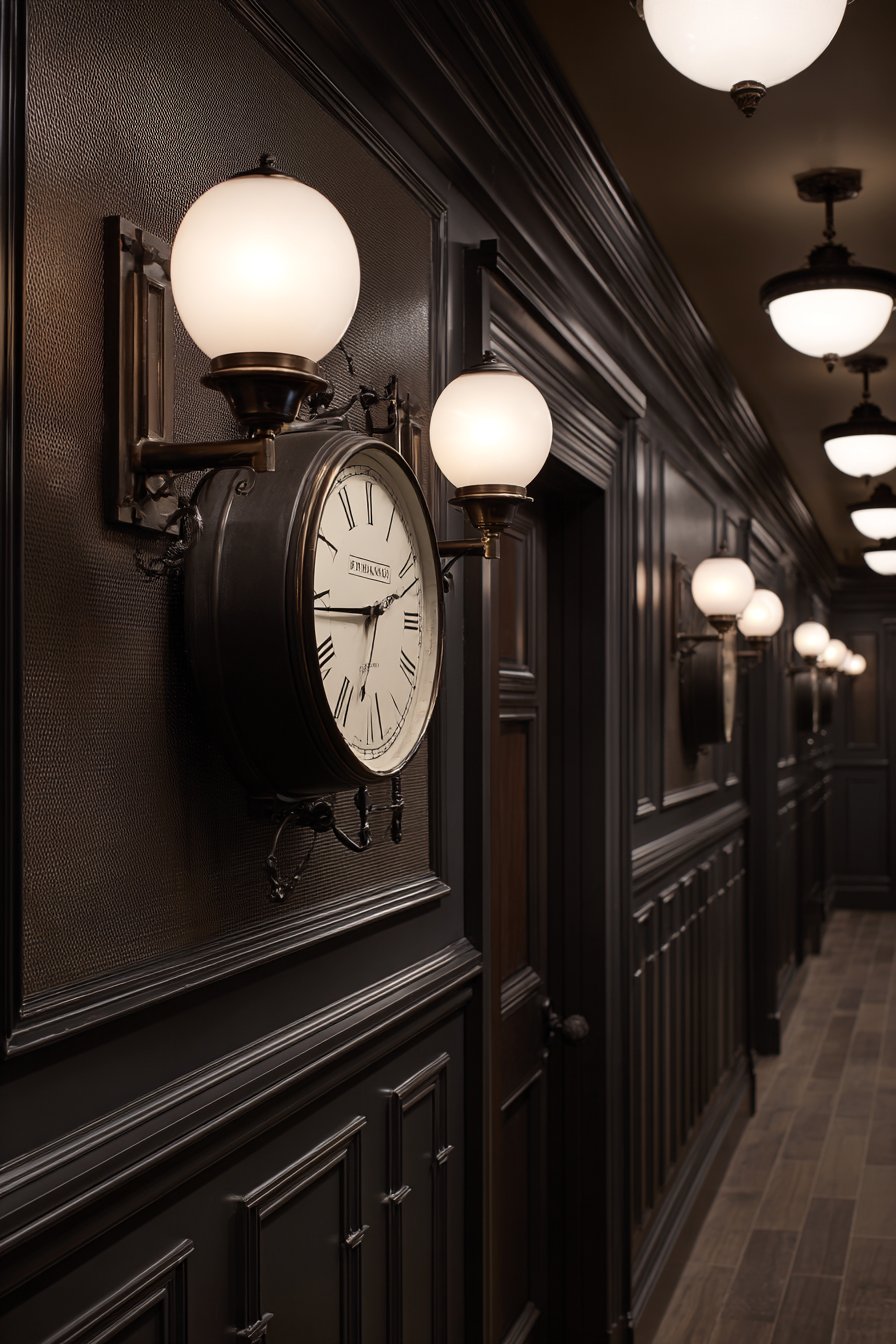
Positioned in an entryway with traditional wainscoting, this clock immediately establishes the home’s aesthetic tone for arriving guests. Warm overhead lighting emphasizes the classic timepiece aesthetic, creating subtle shadows that accentuate the bracket’s ornate details and the dimensional quality of the enamel face. The contrast between crisp white and deep black creates strong visual impact without requiring color, proving that monochromatic schemes can be just as striking as bold hues. The aged iron finish on the mounting bracket suggests authenticity and history, even if the piece itself is newly manufactured.
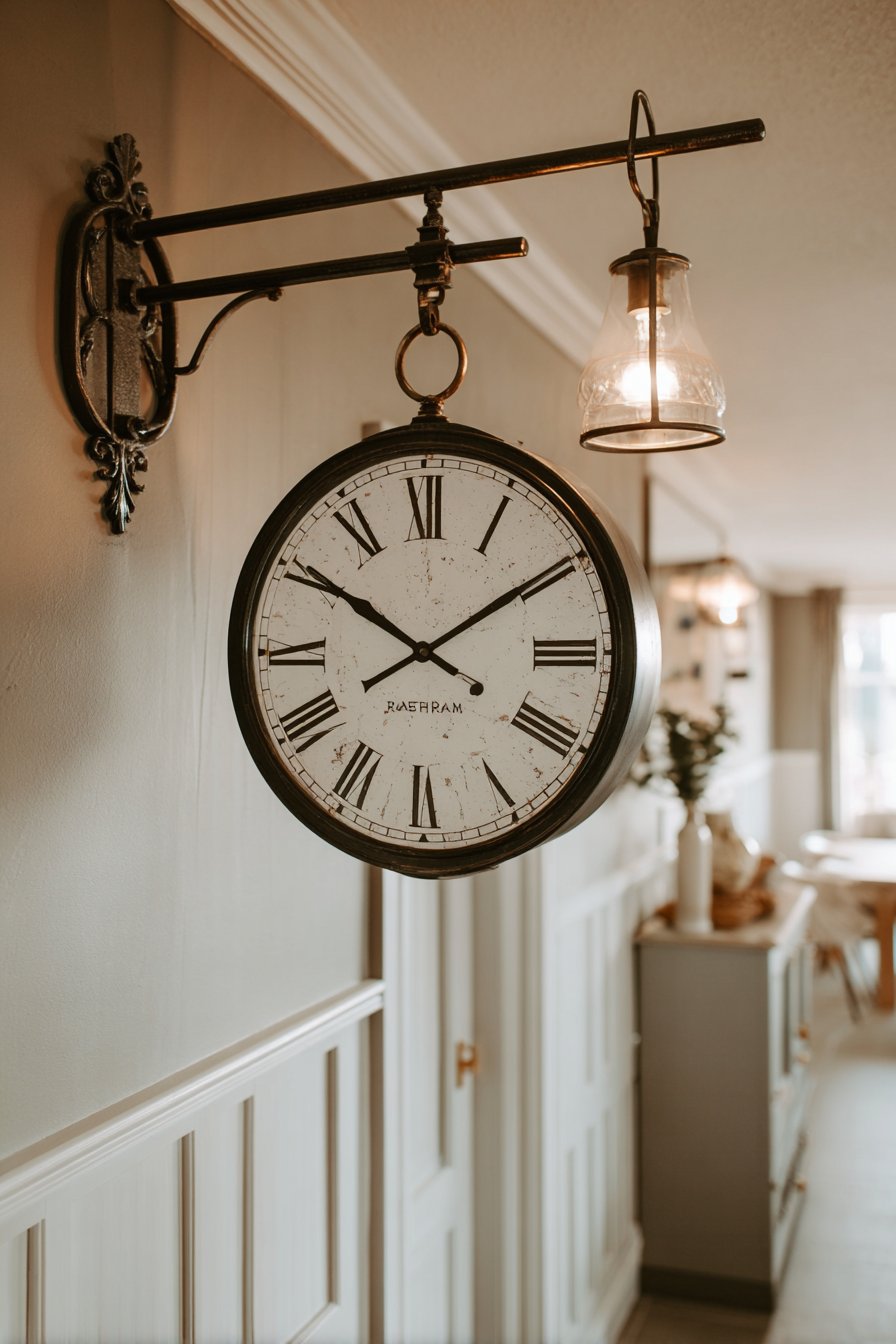
The double-sided feature offers both practical and aesthetic benefits. Practically, it allows time visibility from multiple approach angles in high-traffic entryways. Aesthetically, it creates a more sculptural presence than flat wall-mounted alternatives, casting interesting shadows and creating visual interest from various viewpoints. The Roman numerals aren’t just decorative—they’re deliberately chosen for their formal gravitas and historical associations, reinforcing the vintage railway narrative that makes this clock special.
Key Design Tips:
- Select double-sided clocks for entryways, hallways, or spaces viewed from multiple angles
- Pair vintage-style clocks with period-appropriate architectural details like wainscoting or crown molding
- Use warm lighting to enhance aged metal finishes and create welcoming ambiance
- Choose Roman numerals for formal spaces and Arabic numbers for casual areas
- Ensure mounting brackets are proportional to clock size for balanced visual weight
7. Abstract Artistic Mixed-Metal Clock
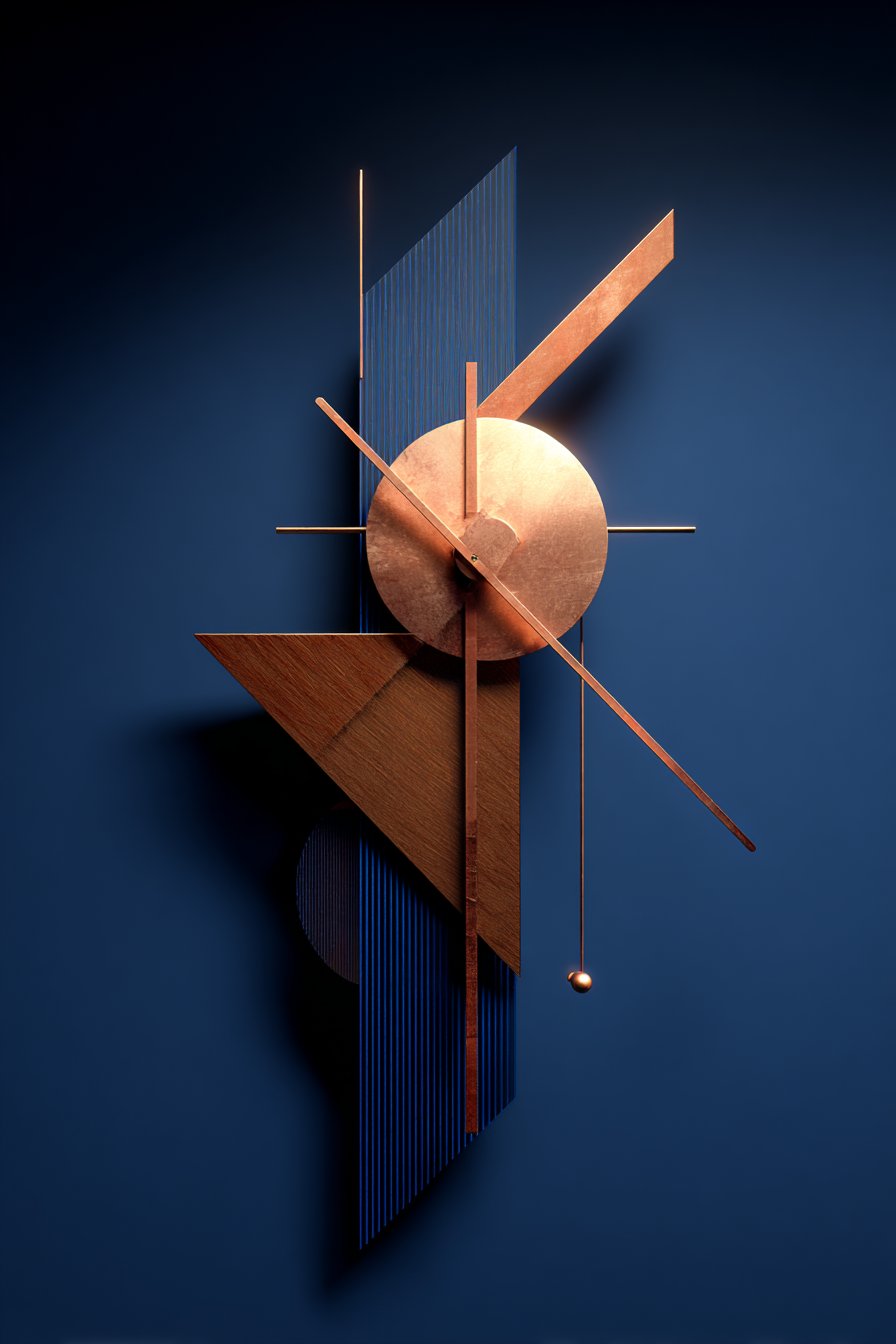
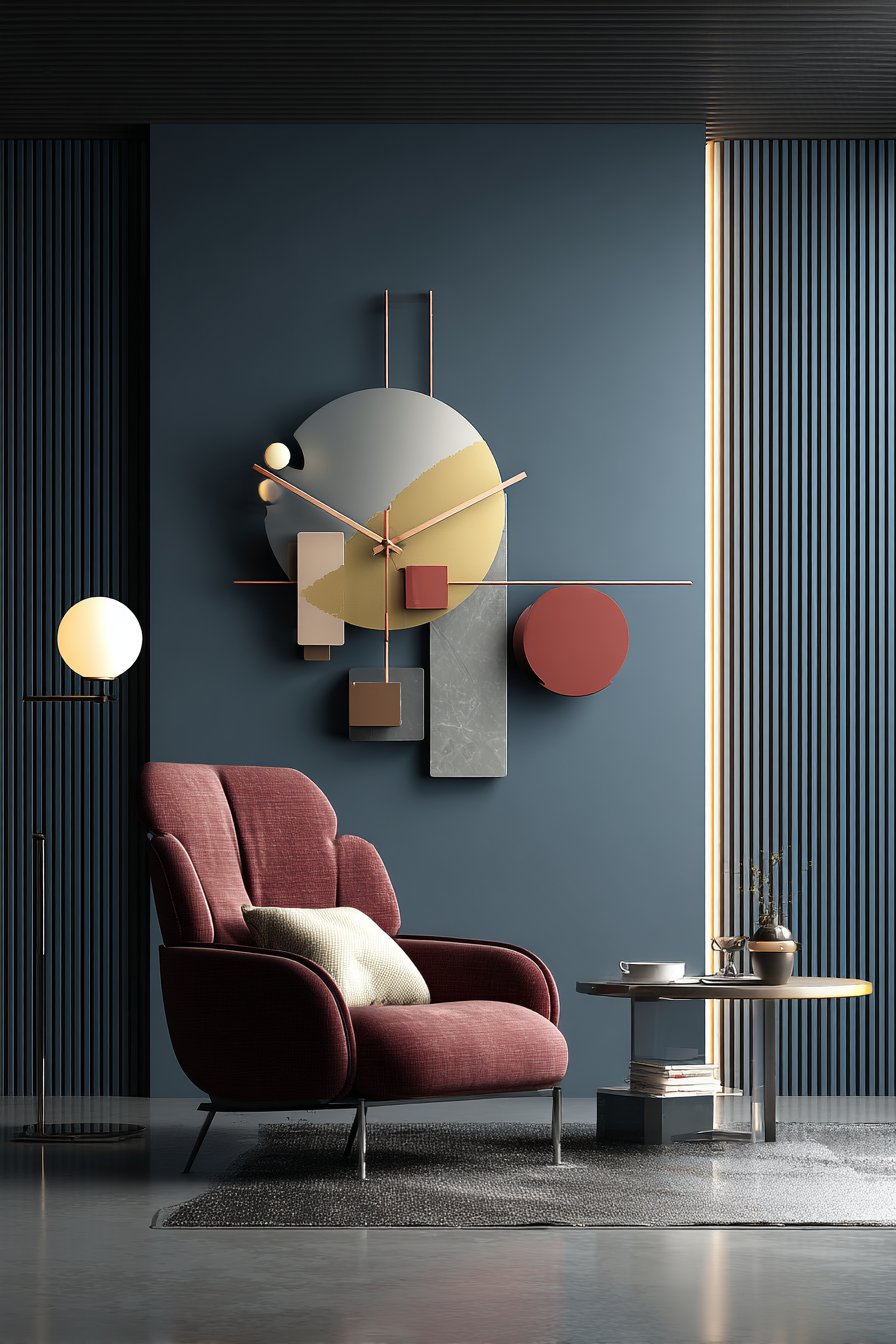
Contemporary art and functional design merge spectacularly in this modern abstract wall clock that challenges conventional timepiece aesthetics. The 22-inch creation features asymmetrical geometric shapes crafted from mixed metals including copper, brass, and stainless steel, creating a composition that’s as much sculpture as clock. The floating elements and off-center clock mechanism defy traditional symmetry, introducing dynamic visual tension that engages the eye and invites contemplation. This isn’t a clock you simply glance at—it’s one that rewards closer examination and appreciation.
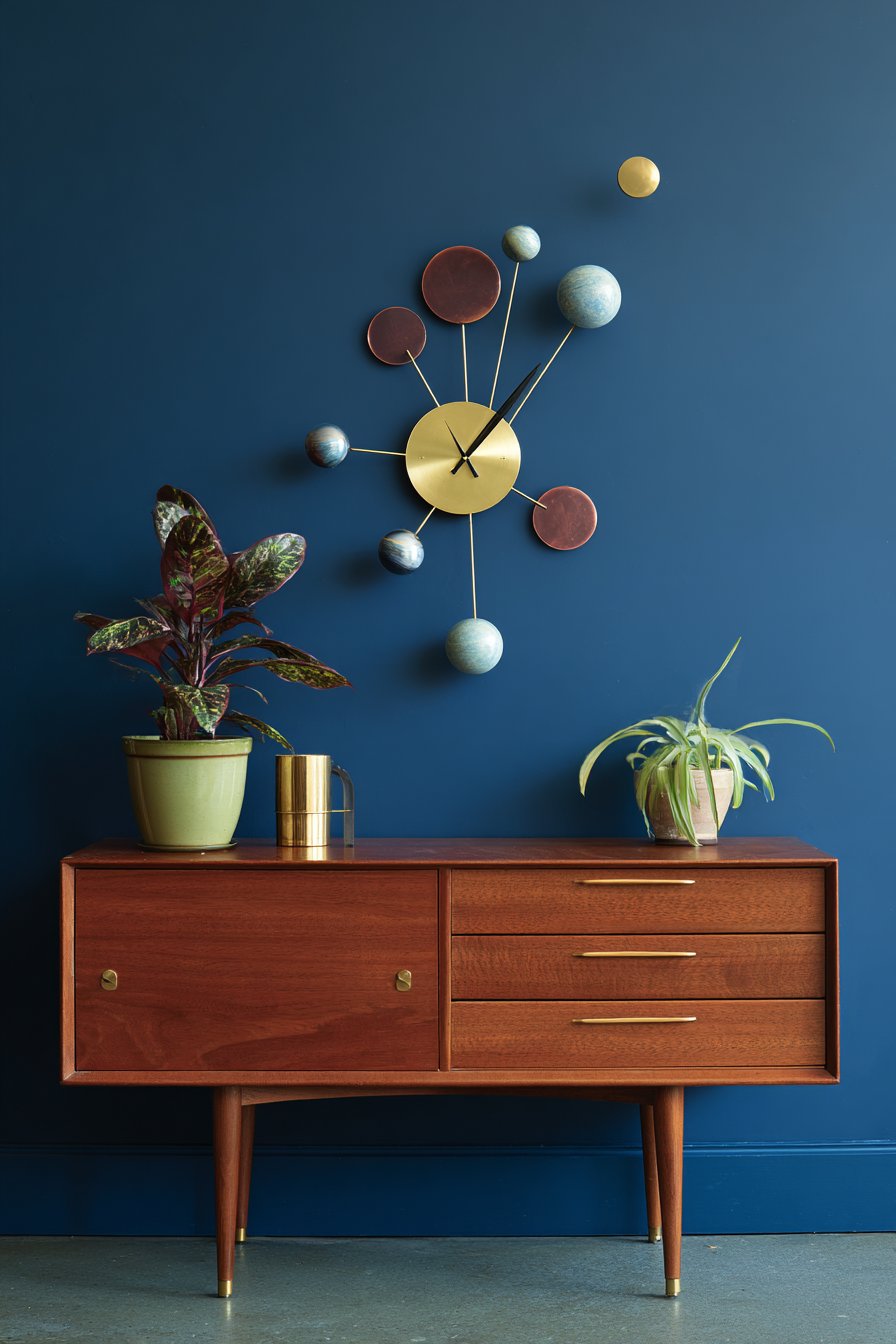
Mounted on a deep navy blue feature wall in a contemporary living space, this artistic timepiece becomes a conversation-starting focal point. The dark background makes the varied metal finishes truly pop, with each material contributing its unique color and reflective quality. Copper introduces warm reddish tones, brass adds golden highlights, and stainless steel provides cool silvery contrast—together creating a sophisticated metallic palette. Professional photography with dramatic lighting highlights these sculptural qualities, casting complex shadows that add another layer of visual interest to the three-dimensional composition.
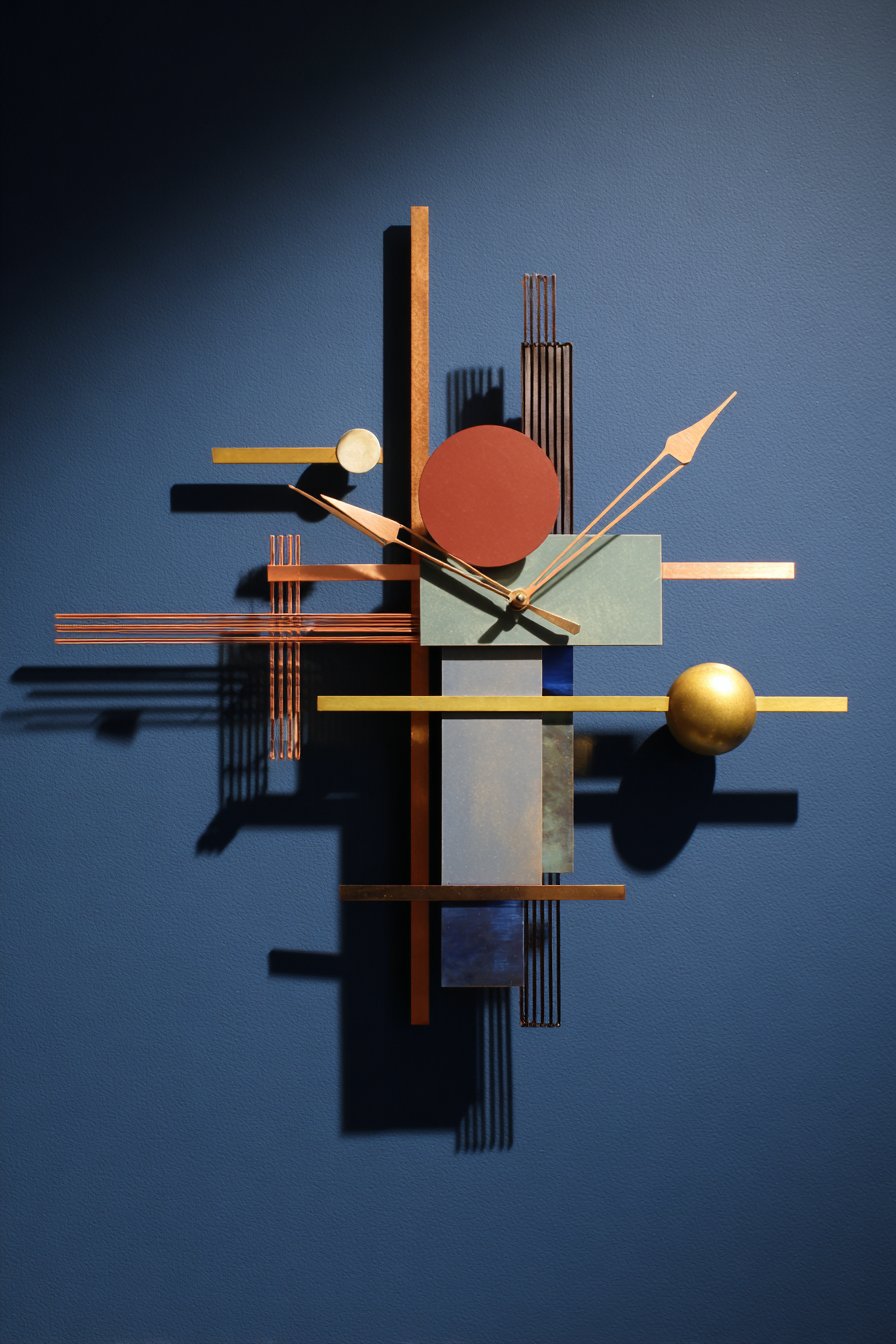
The asymmetrical design reflects contemporary art’s embrace of unconventional balance and unexpected relationships between forms. Rather than the predictable circular arrangement of traditional clocks, this piece distributes visual weight in surprising ways that feel fresh and modern. The off-center mechanism placement might initially seem impractical, but it actually reinforces the artistic nature of the design, reminding viewers that this object exists at the intersection of art and utility. Mid-century modern furniture nearby complements the clock’s artistic ambitions while grounding the space in approachable comfort.
Key Design Tips:
- Choose abstract designs for contemporary spaces that embrace artistic expression
- Position against solid, preferably dark-colored walls to maximize metallic impact
- Mix metal finishes thoughtfully—limit to 2-3 types to avoid visual chaos
- Balance asymmetrical clocks with more structured furniture arrangements
- Consider the clock as functional art that deserves prominent placement and proper lighting
8. Minimalist Concrete and Wood Clock
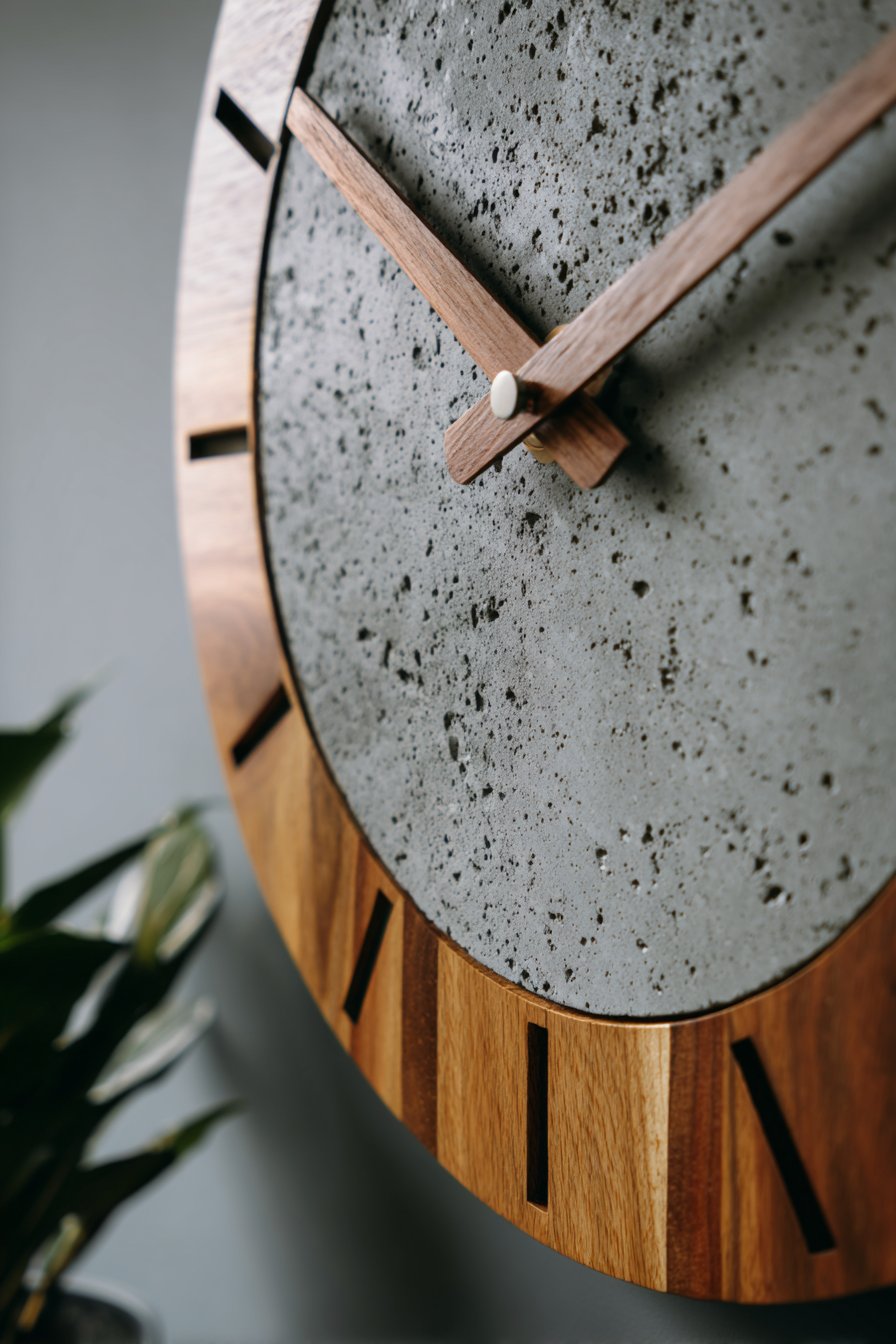
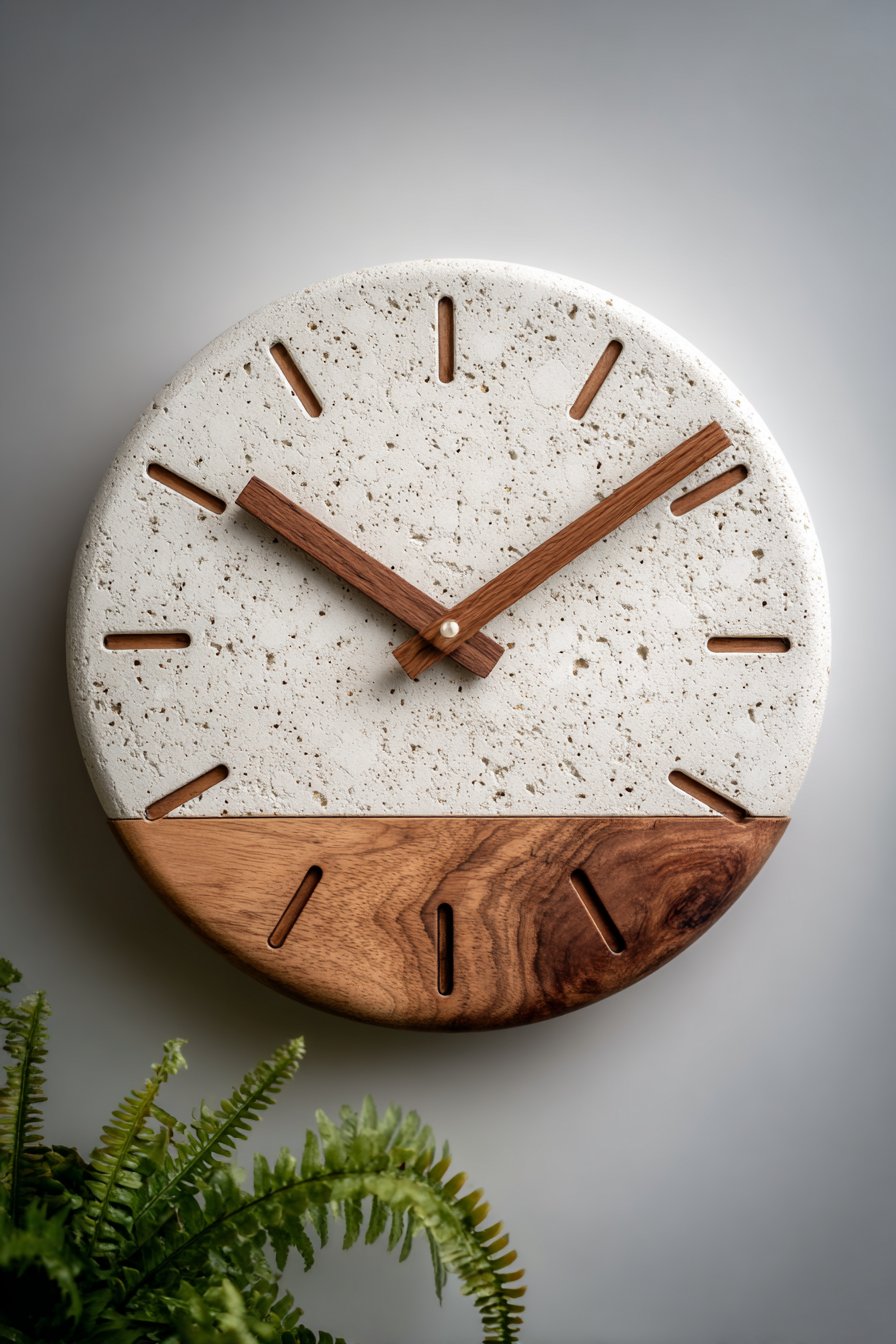
Industrial meets organic in this minimalist wall clock that celebrates material honesty through unexpected combinations. The 16-inch timepiece features a raw concrete clock face showcasing exposed aggregate texture paired with natural walnut wood hands—a juxtaposition that shouldn’t work but absolutely does. The concrete’s rough, manufactured texture contrasts beautifully with the smooth, organic wood grain, creating tactile interest that transcends the visual. This industrial-modern hybrid demonstrates how contemporary design increasingly values material authenticity over applied finishes or superficial decoration.
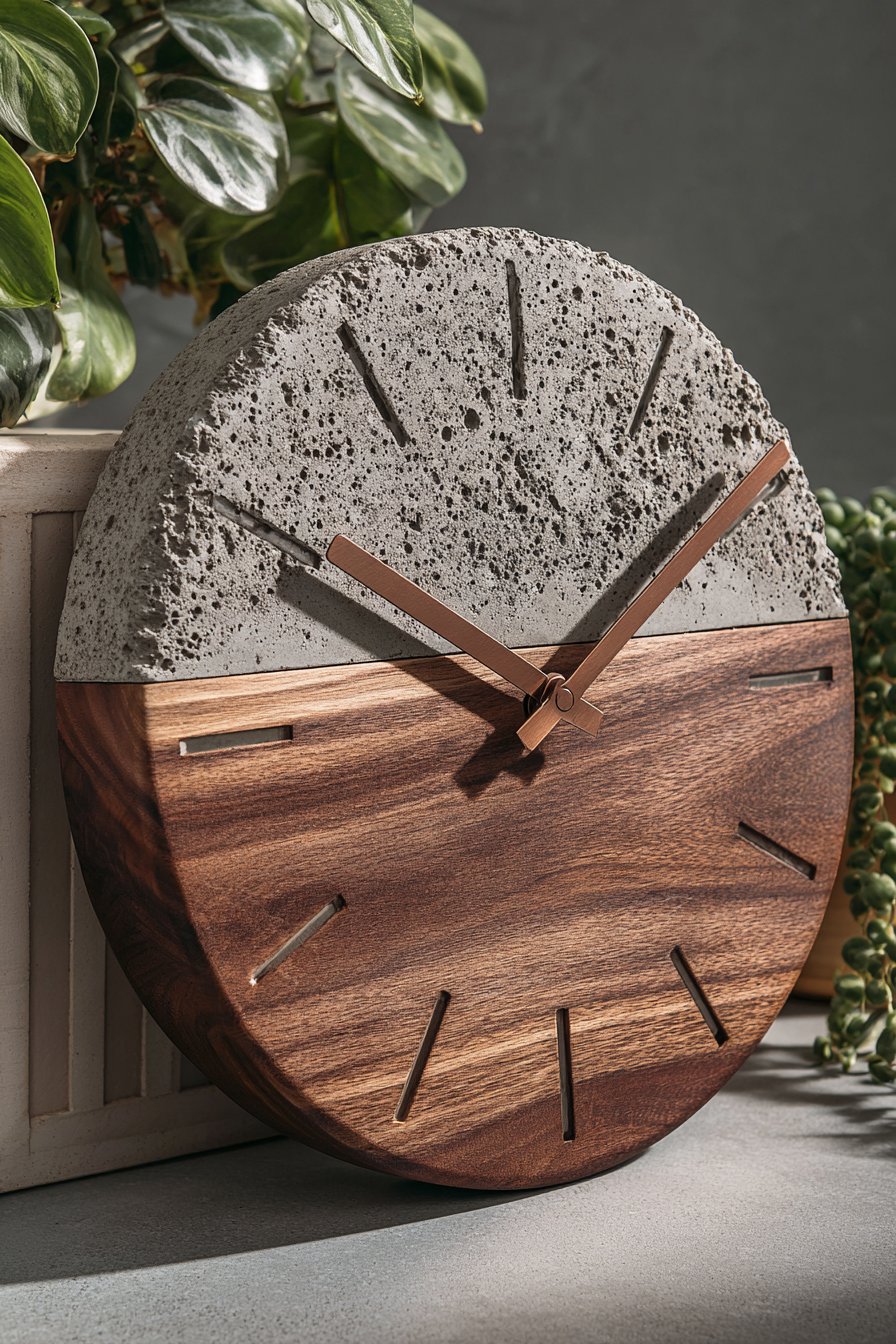
Hanging in a Scandinavian-style workspace against a light gray wall with greenery nearby, this clock embodies the contemporary preference for natural materials and honest construction. Natural diffused lighting emphasizes the tactile contrasts between rough concrete and smooth wood, creating subtle shadows in the aggregate texture while highlighting the walnut’s linear grain patterns. The neutral gray of concrete and warm brown of walnut wood create a naturally harmonious color palette that requires no additional embellishment. Nearby plants introduce living organic elements that complement the natural wood while softening the industrial edge of the concrete.
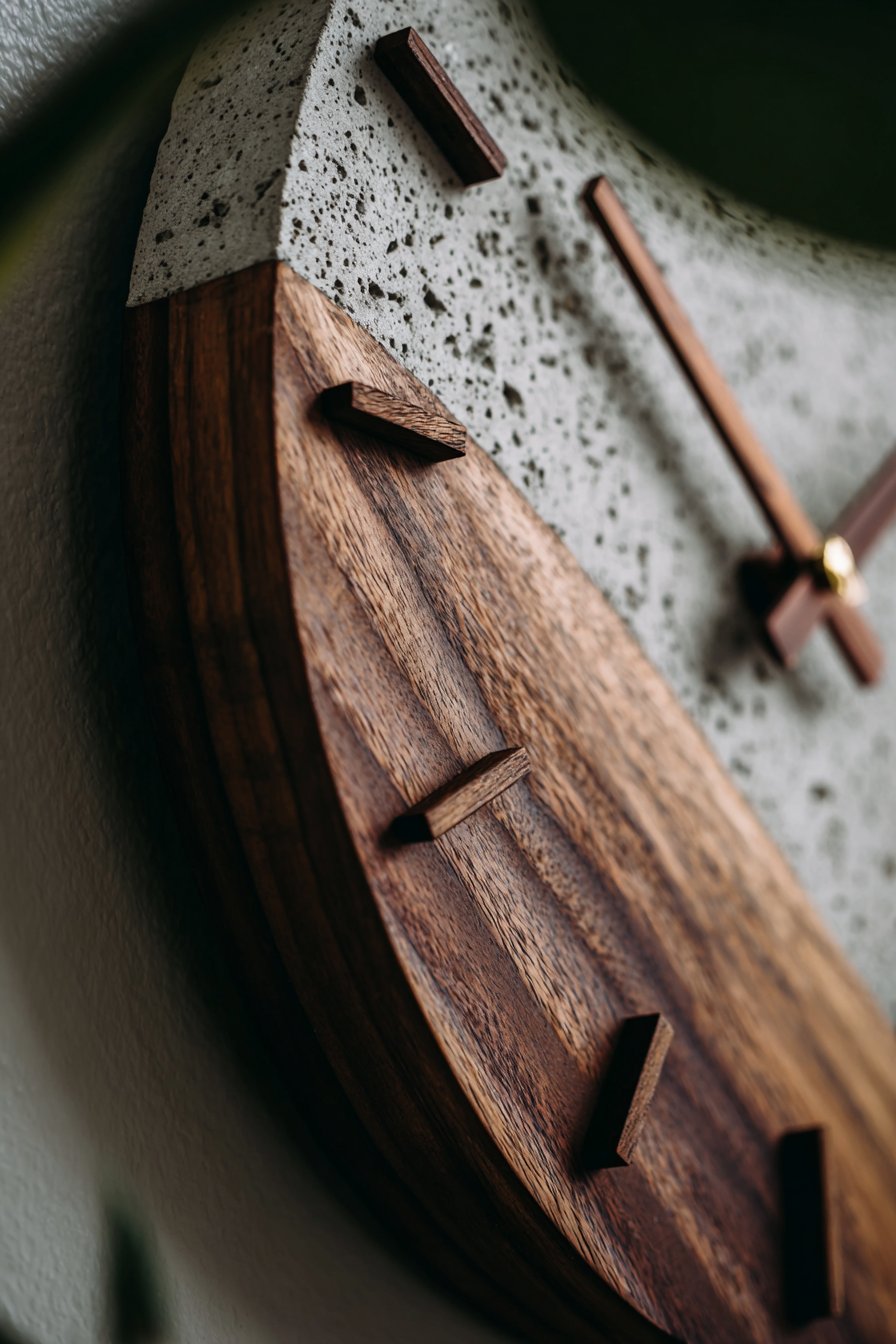
The exposed aggregate texture in the concrete isn’t a flaw—it’s a deliberate design choice that celebrates the material’s authentic nature. Rather than hiding concrete’s composite structure, this clock reveals it, making visible the small stones and sand particles that give concrete its strength. The walnut wood hands introduce warmth and organic curves into a composition dominated by the circular concrete’s geometric form. This marriage of materials represents the broader contemporary design movement toward authenticity, craftsmanship, and material appreciation.
Key Design Tips:
- Embrace material contrasts like concrete and wood for contemporary industrial aesthetics
- Choose handcrafted or small-batch clocks to ensure authentic material quality
- Position near plants or natural elements to soften industrial materials
- Use neutral wall colors that allow material textures to take center stage
- Consider the clock’s tactile qualities, not just visual appearance—texture matters
9. Gallery Wall Clock Collection
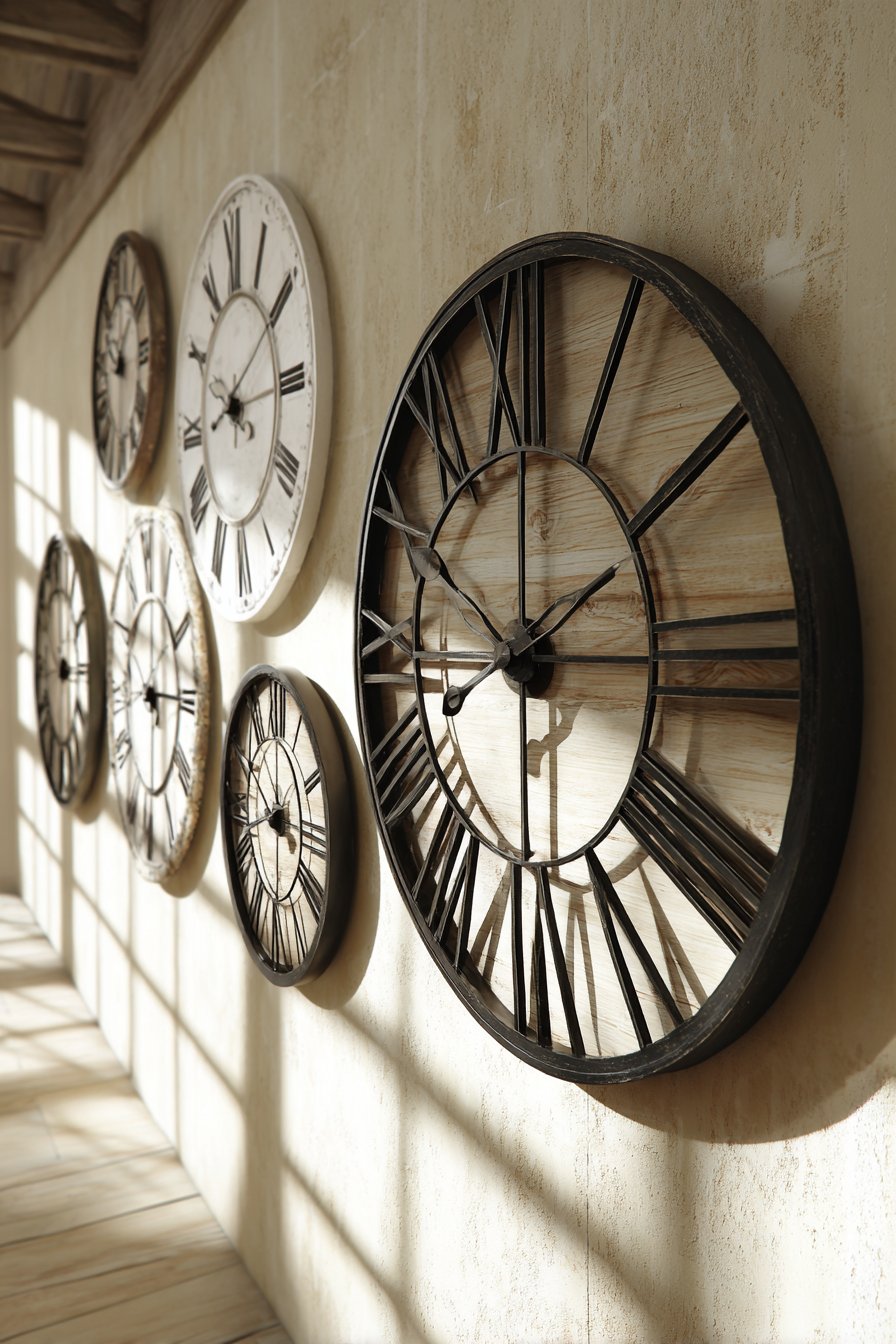
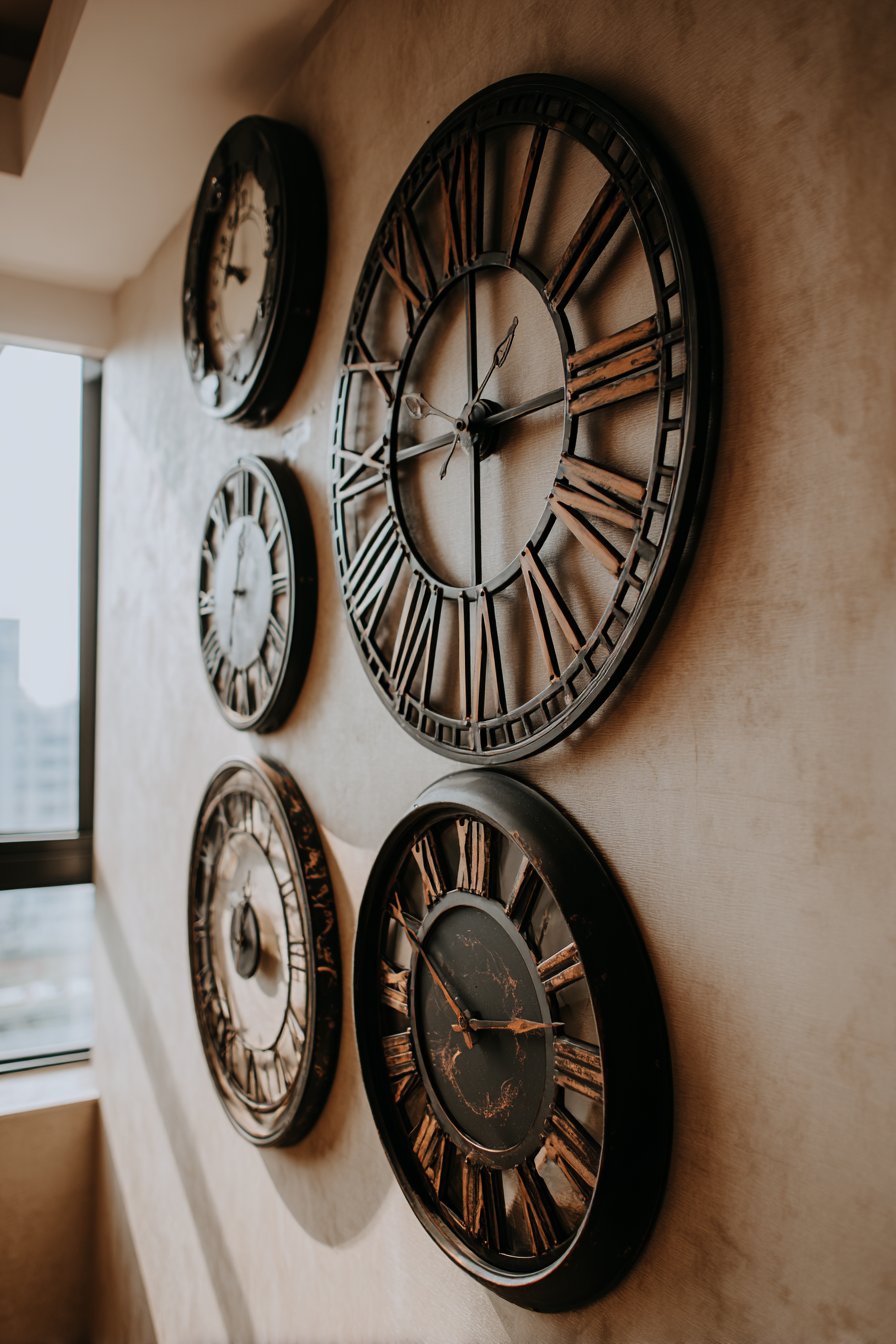
The gallery wall concept extends beyond framed art to embrace functional objects, as demonstrated by this creative arrangement combining five coordinating wall clocks in varying sizes from 8 to 20 inches. Each clock features complementary black, white, and natural wood finishes that create visual cohesion while individual design variations maintain interest. This artistic clock collection transforms timekeeping into a dynamic focal point that’s far more engaging than a single large clock could ever be. The arrangement demonstrates how multiples of similar objects can create impact greater than the sum of their parts.
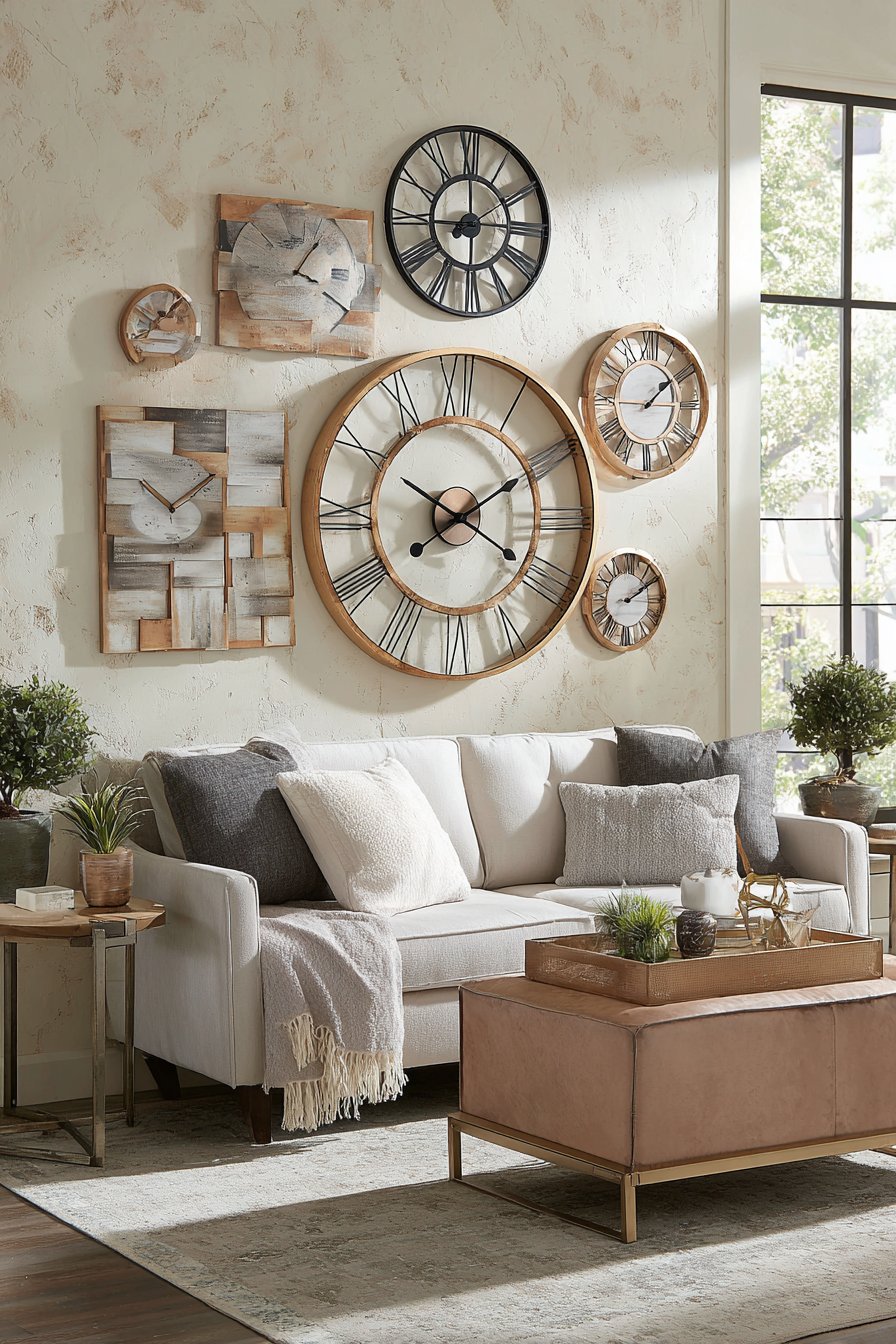
Creating a dynamic focal point on a textured cream wall in an eclectic living room, this gallery approach introduces rhythm and movement to what might otherwise be static decoration. Soft natural lighting from windows highlights the varied frames and creates interesting overlapping shadows that change throughout the day. The different sizes create hierarchical visual interest, with the largest clock serving as an anchor while smaller pieces orbit around it like satellites. This astronomical metaphor isn’t accidental—thoughtful gallery walls create their own gravitational systems that draw the eye in predictable patterns.
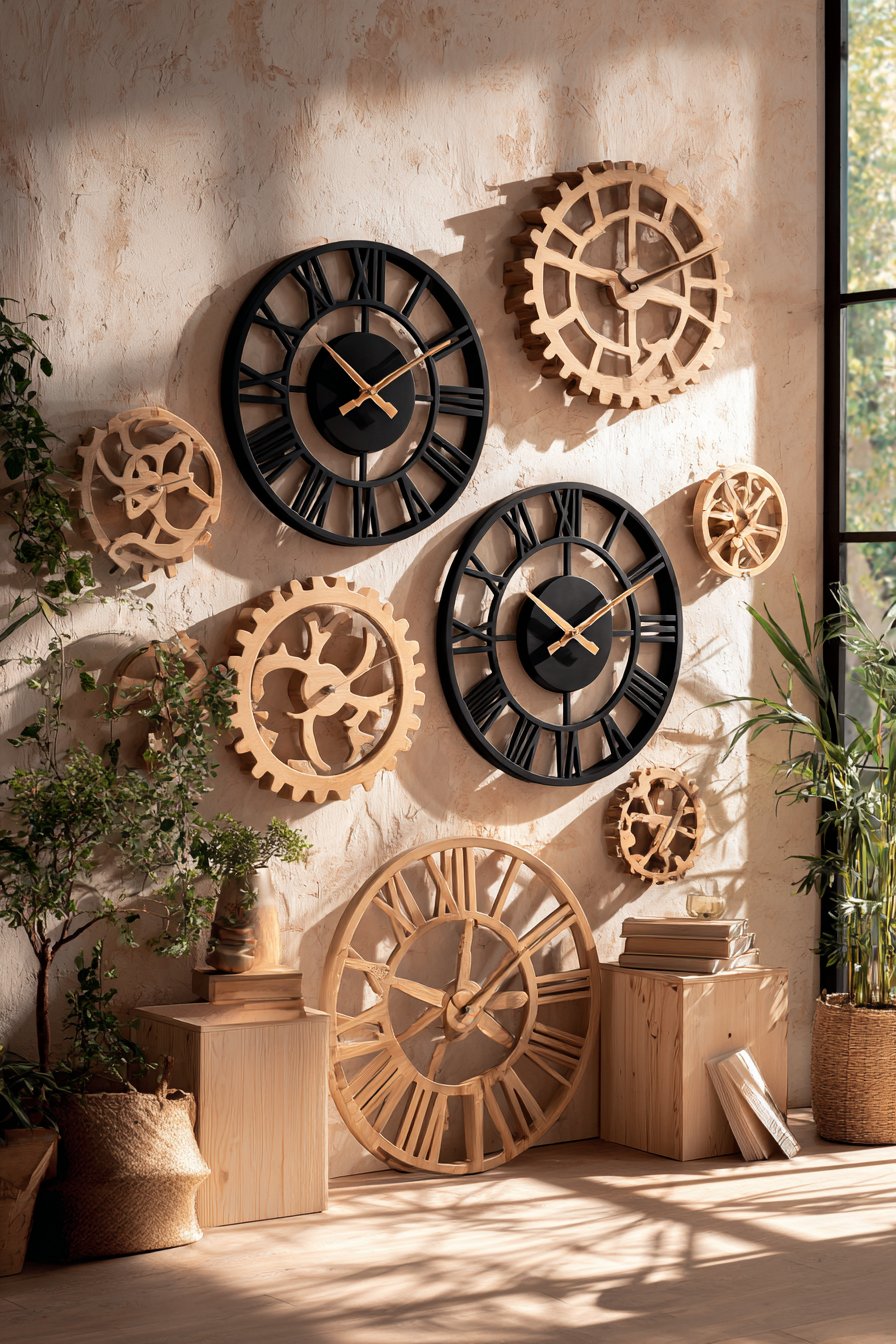
The beauty of the gallery wall approach lies in its flexibility and personal expression. Unlike matchy-matchy sets that feel corporate or impersonal, curated collections tell stories about the collector’s taste and adventures. The varying sizes prevent monotony while the consistent color palette—black, white, and natural wood—maintains visual harmony. This balance between variety and cohesion represents sophisticated design thinking that understands how to create interest without chaos.
Key Design Tips:
- Start with an anchor piece (largest clock) and arrange smaller pieces around it
- Maintain color palette consistency (3 colors maximum) while varying sizes and styles
- Lay out the arrangement on the floor before committing to wall placement
- Use odd numbers of clocks (3, 5, or 7) for more dynamic compositions
- Ensure adequate spacing between clocks—they should relate to each other without crowding
- Consider the overall gallery shape (rectangular, square, or organic cloud formation)
10. Elegant Marble and Gold Clock
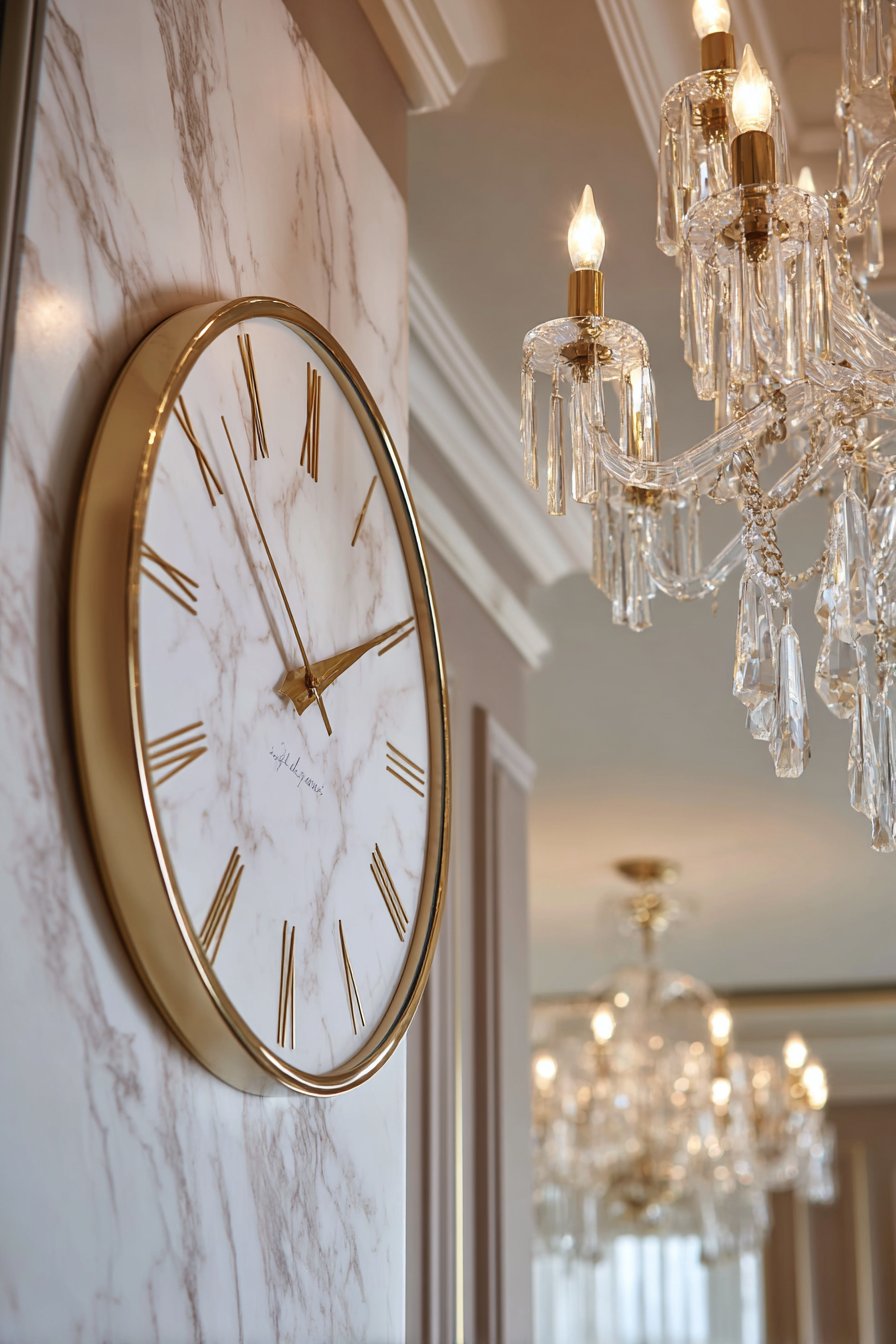
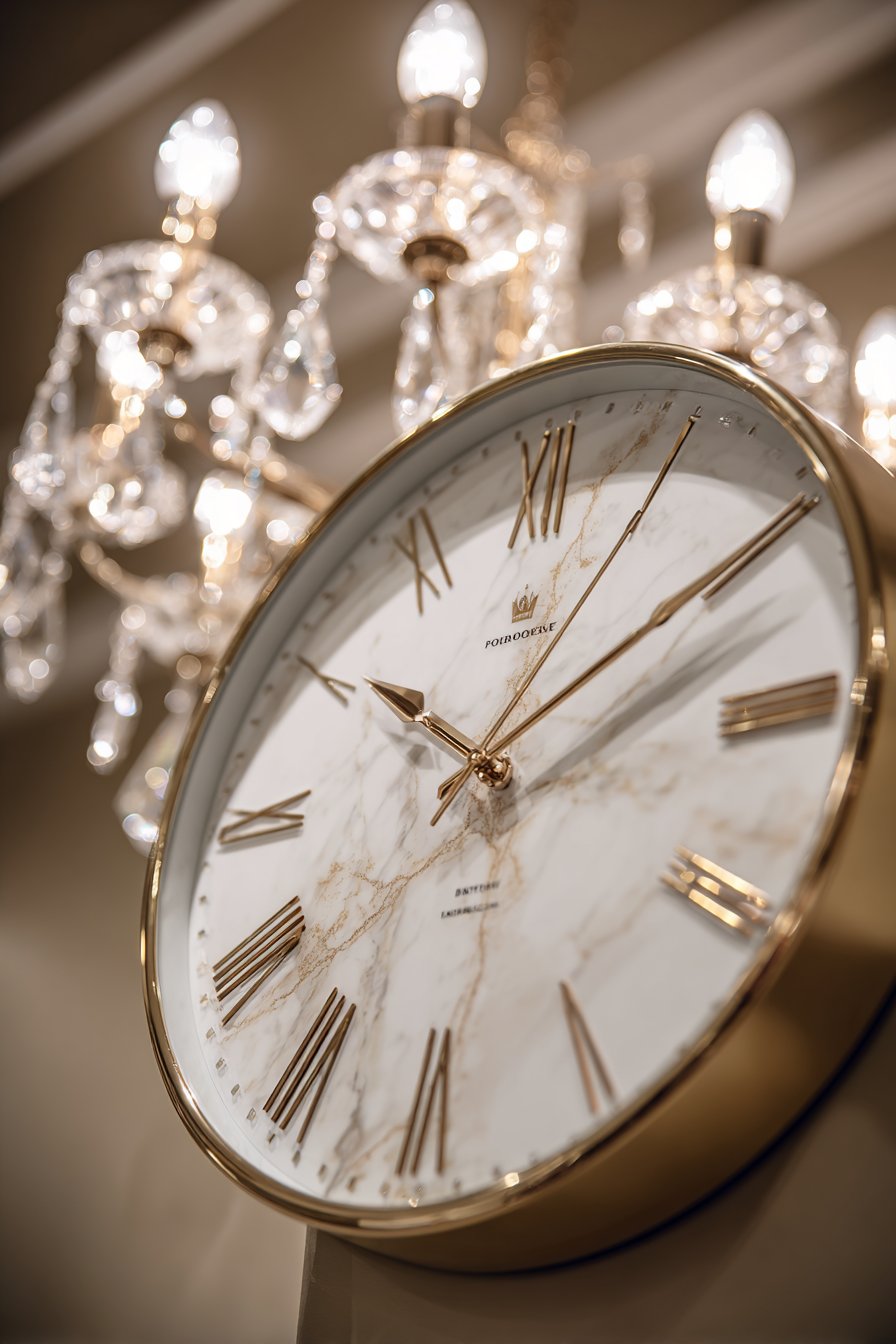
Luxury reveals itself through premium materials and refined execution, as evidenced by this elegant wall clock featuring white Carrara marble and gold leaf details. The 18-inch timepiece showcases a genuine marble clock face with distinctive gray veining that makes each piece unique—no two marble clocks are identical, ensuring exclusivity. Delicate gold leaf hour markers and matching gold hands introduce warmth and precious metal elegance without overwhelming the marble’s natural beauty. A thin brass frame provides definition while maintaining the design’s overall delicacy and sophistication.
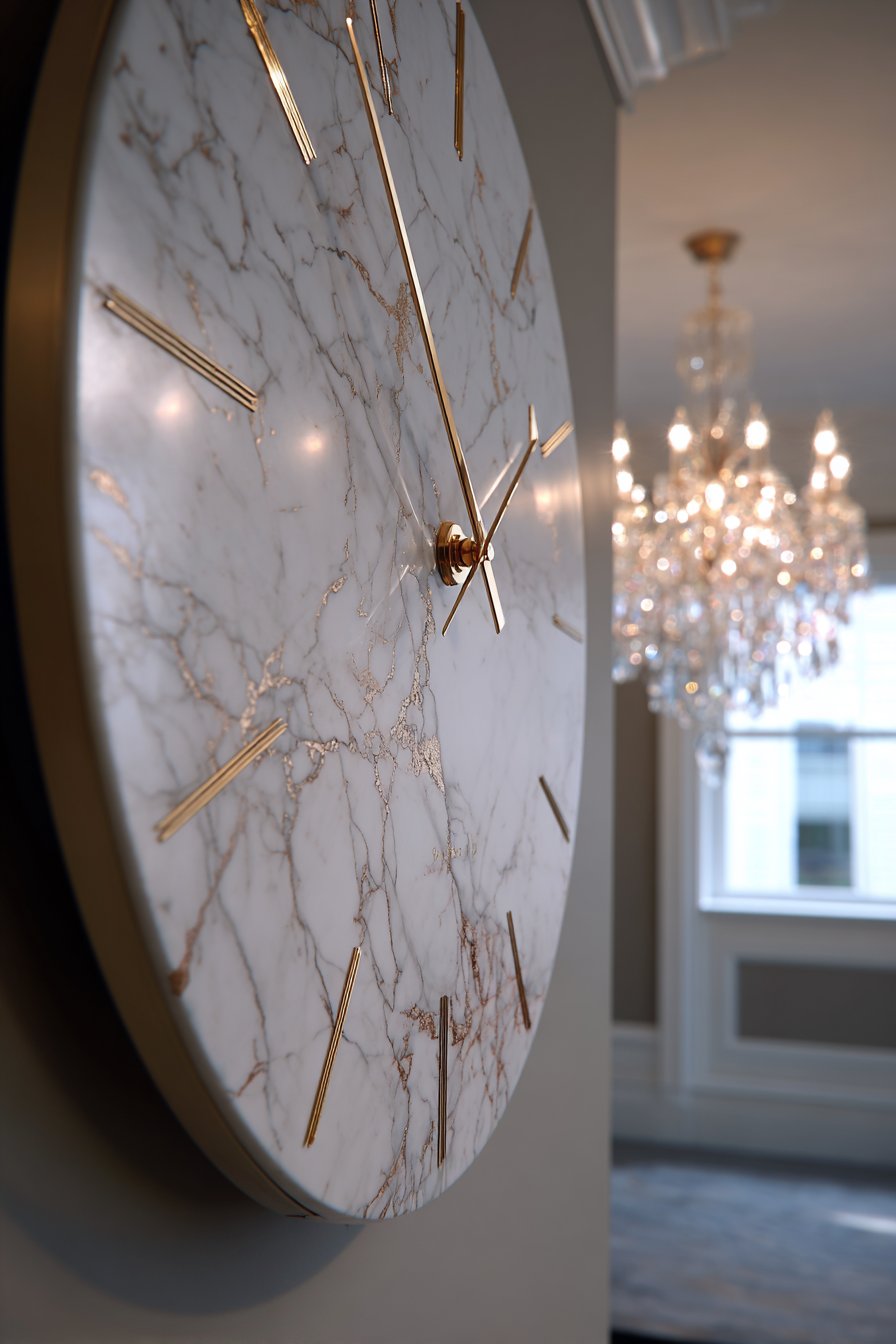
Mounted in a sophisticated dining room against soft taupe walls, this luxury timepiece elevates the entire space. Crystal chandelier lighting creates subtle highlights on the marble veining and gold accents, causing the metallic elements to shimmer gently during evening meals. The interplay between natural stone and precious metal creates a timeless combination associated with classical architecture and enduring elegance. The taupe wall color provides a neutral backdrop that allows the marble’s subtle gray veining and gold’s warm tones to truly shine without competing backgrounds.
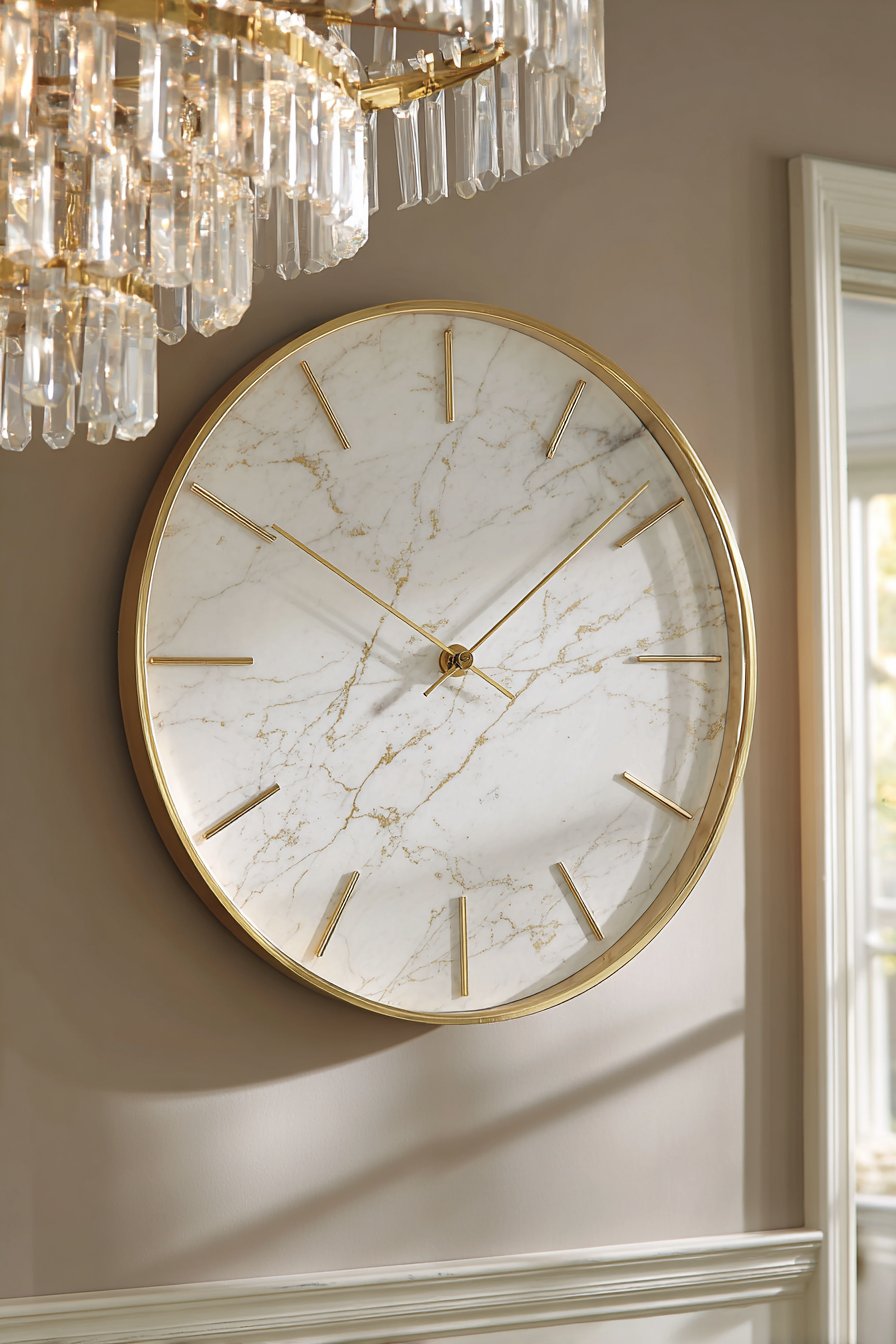
Carrara marble has been prized since ancient Roman times for its pure white color, subtle veining, and fine grain—using it for a clock face demonstrates commitment to premium materials and lasting quality. The gold leaf application requires skilled craftsmanship, as genuine gold leaf is extraordinarily thin and delicate to work with. These labor-intensive details justify the investment, creating a timepiece that feels more like jewelry for your walls than simple home goods. In formal dining rooms where entertaining matters and first impressions count, such luxurious touches communicate refined taste and attention to quality.
Key Design Tips:
- Invest in genuine marble rather than printed imitations for authentic luxury appeal
- Position where ambient lighting can highlight marble veining and metallic accents
- Pair with other refined materials like crystal, silk, and polished wood
- Choose neutral wall colors that showcase rather than compete with marble’s natural beauty
- Consider the clock as a long-term investment piece worthy of premium placement
11. Modern LED Illuminated Clock
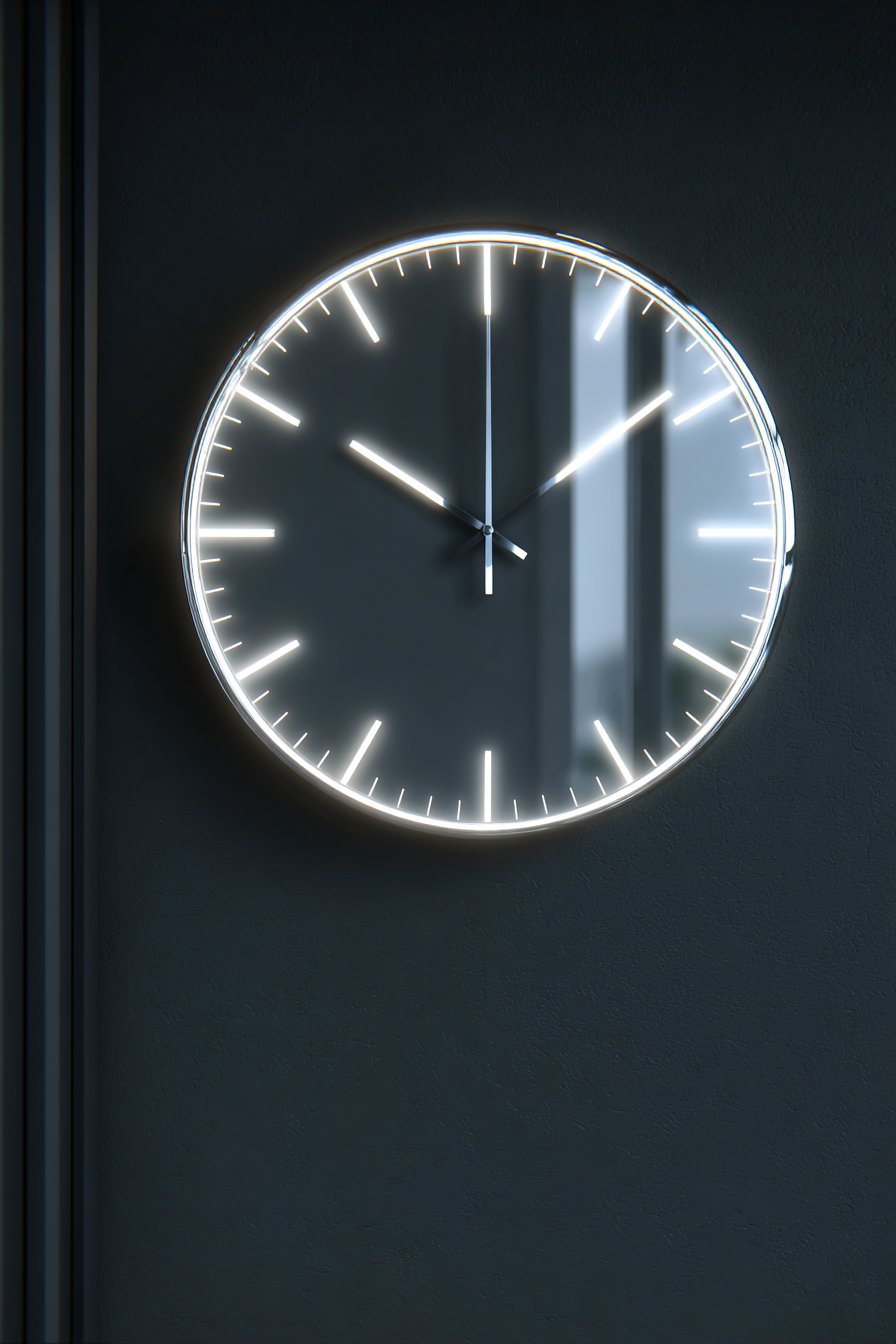
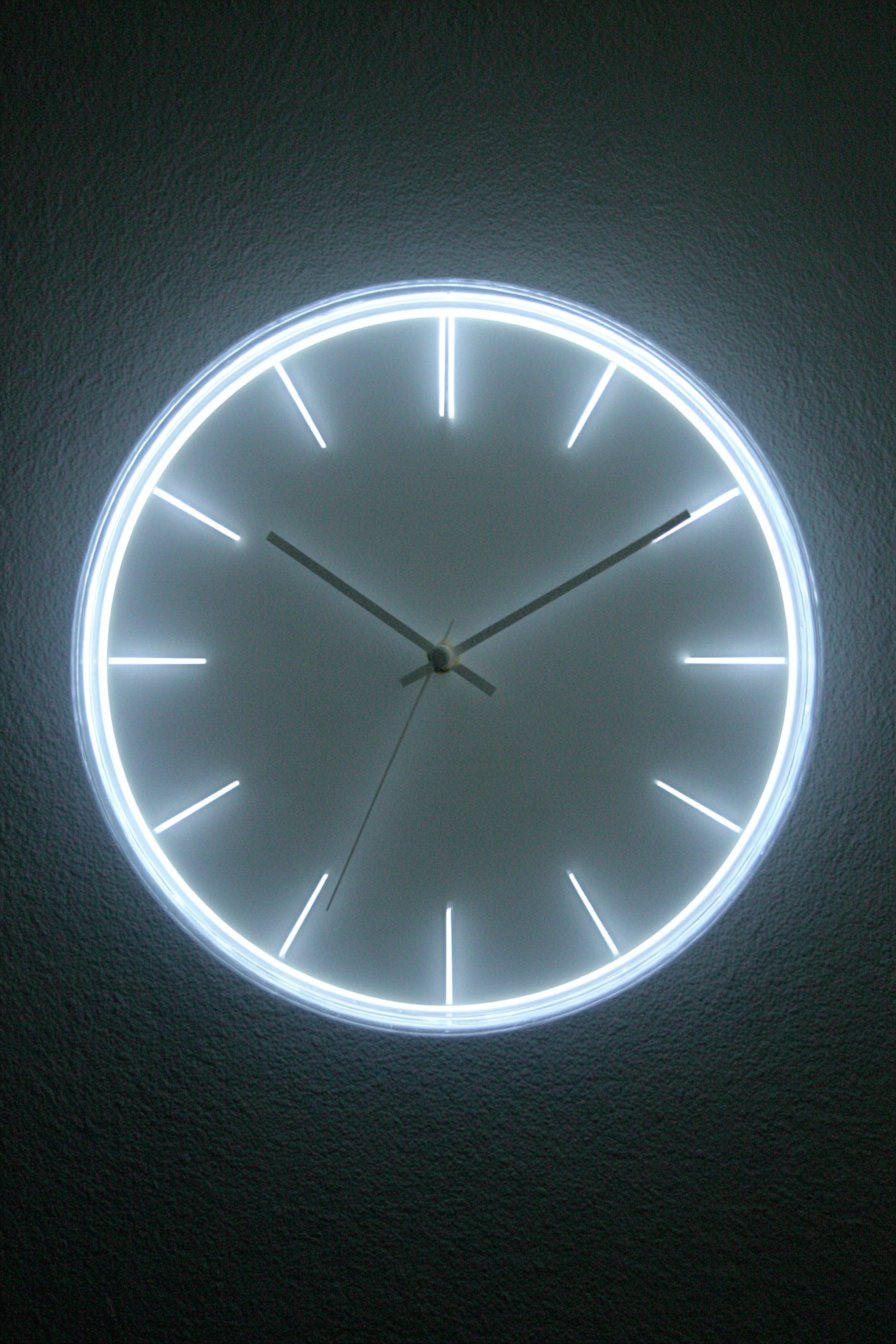
Technology and design converge in this modern LED illuminated wall clock that serves dual purposes as timepiece and ambient lighting. The 14-inch contemporary design features a white acrylic face with built-in backlighting that creates a soft, even glow effect around the clock’s perimeter. Minimalist silver hands and markers maintain clean aesthetics while ensuring readability in both daylight and darkness. This innovative approach transforms a functional necessity into atmospheric lighting that enhances the bedroom environment long after sunset.
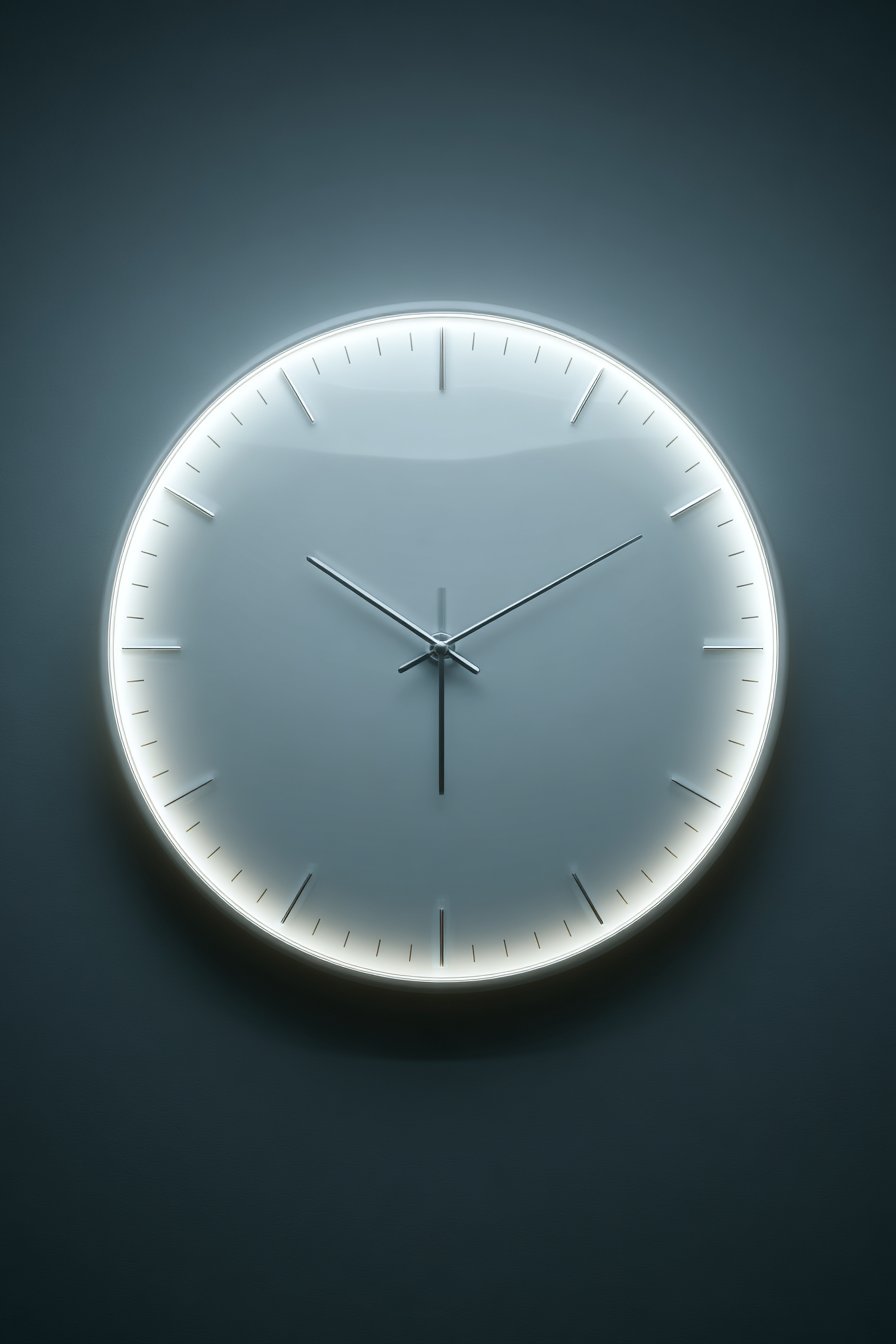
Positioned on a dark charcoal wall in a modern bedroom, the gentle illumination serves as both practical timepiece and subtle nightlight. In dimmed evening lighting conditions, the LED backglow becomes especially effective, casting a soft halo that’s bright enough for time-checking but gentle enough not to disturb sleep. Interior photography captures this luminous quality, demonstrating how the clock appears during different lighting conditions throughout the day. The contrast between dark wall and illuminated clock face creates dramatic visual impact that draws the eye without harsh brightness.
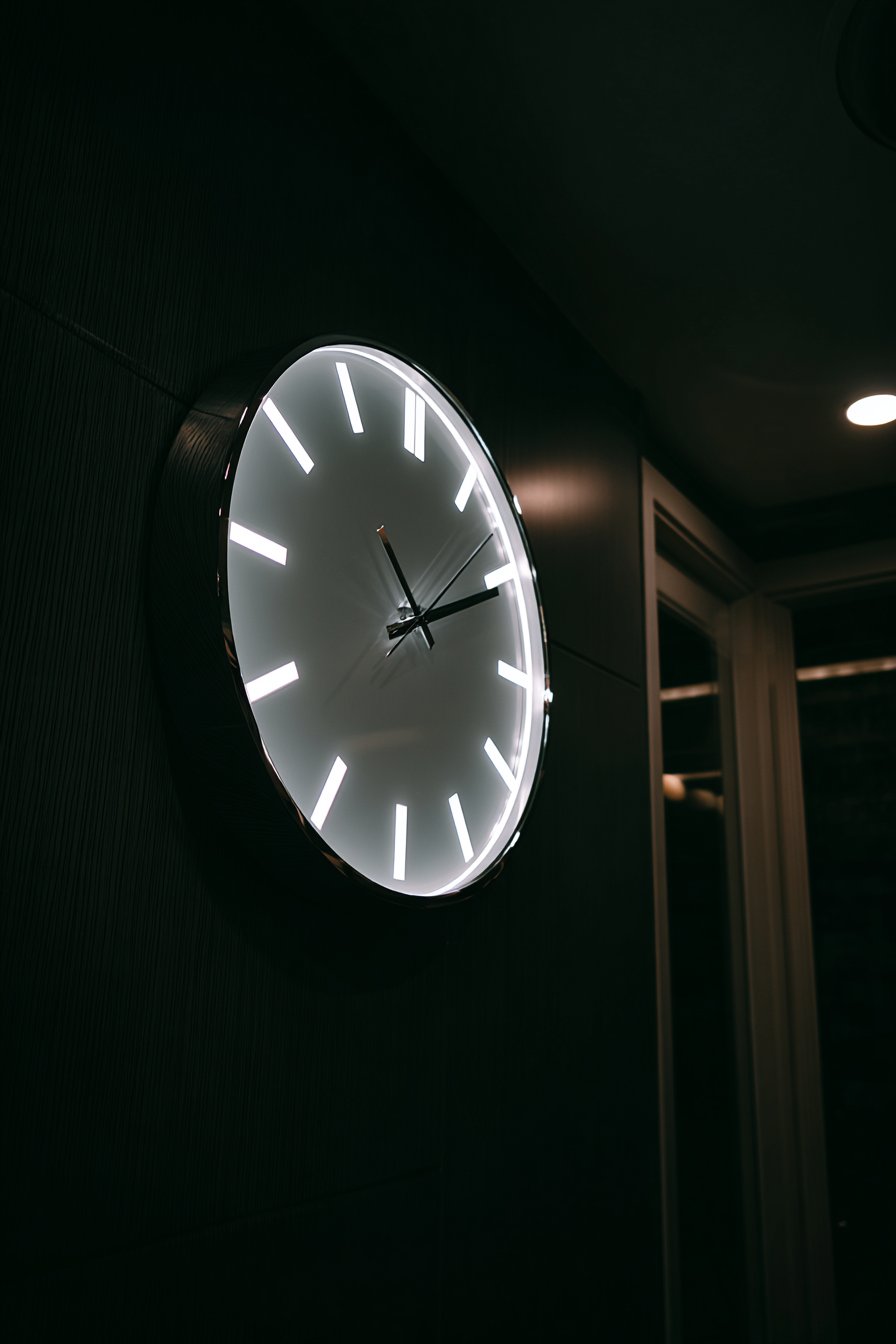
The LED technology offers practical advantages beyond aesthetics. Unlike traditional nightlights that can be too bright or incorrectly positioned, the clock’s integrated illumination places soft light exactly where it’s needed. The energy-efficient LEDs consume minimal electricity, making continuous operation economically feasible. The white acrylic face diffuses the LED light evenly, preventing hot spots or uneven illumination that would compromise both aesthetics and functionality. This thoughtful integration of technology and design represents the future of functional home accessories.
Key Design Tips:
- Choose warm white LED color temperatures (2700-3000K) for bedroom applications
- Position on darker walls to maximize the impact of the illuminated glow
- Verify that brightness is adjustable or appropriately calibrated for nighttime use
- Consider the clock’s appearance both illuminated and in daylight conditions
- Ensure LED quality—cheap LEDs can flicker or produce unpleasant color casts
12. Mid-Century Modern Sunburst Clock
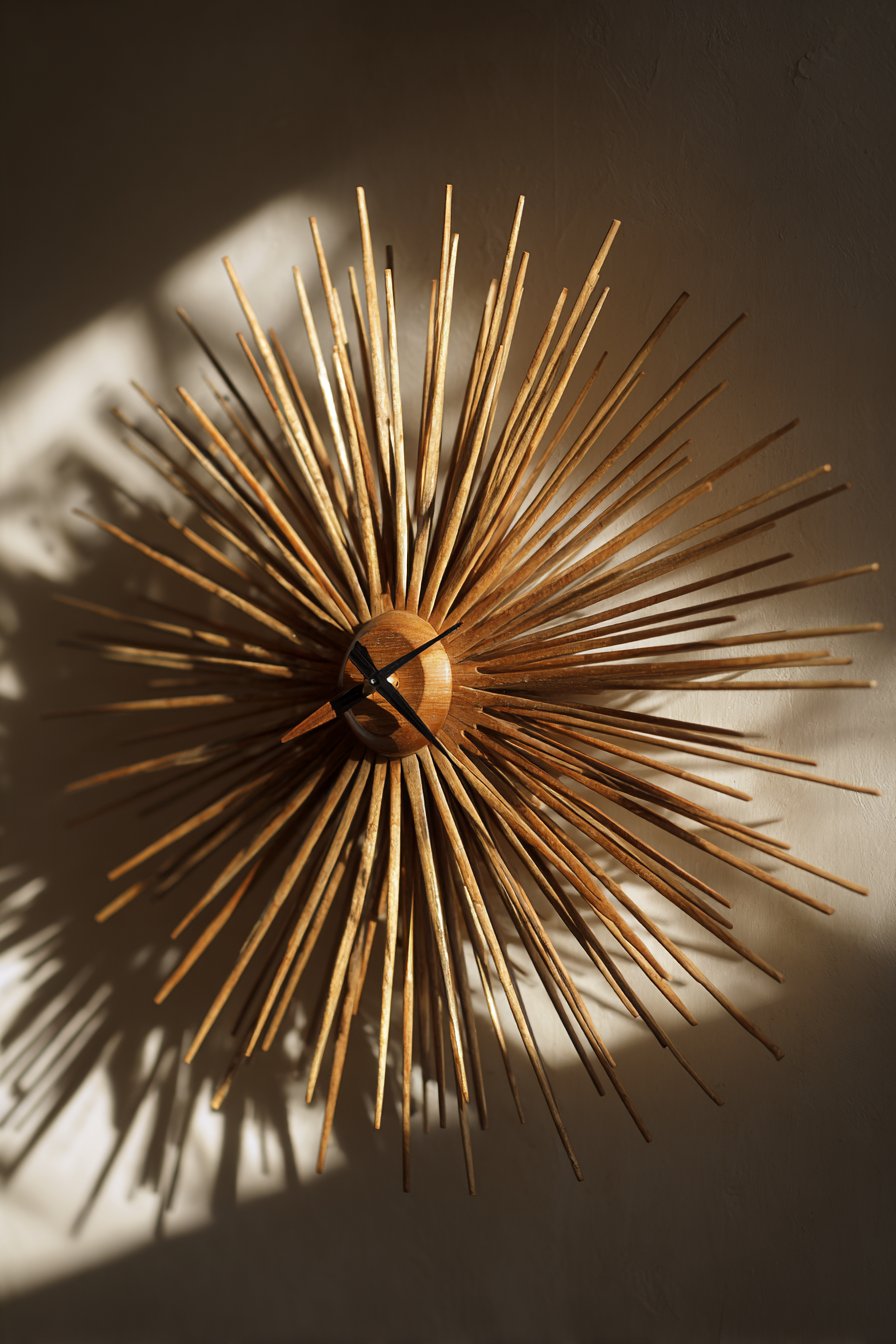
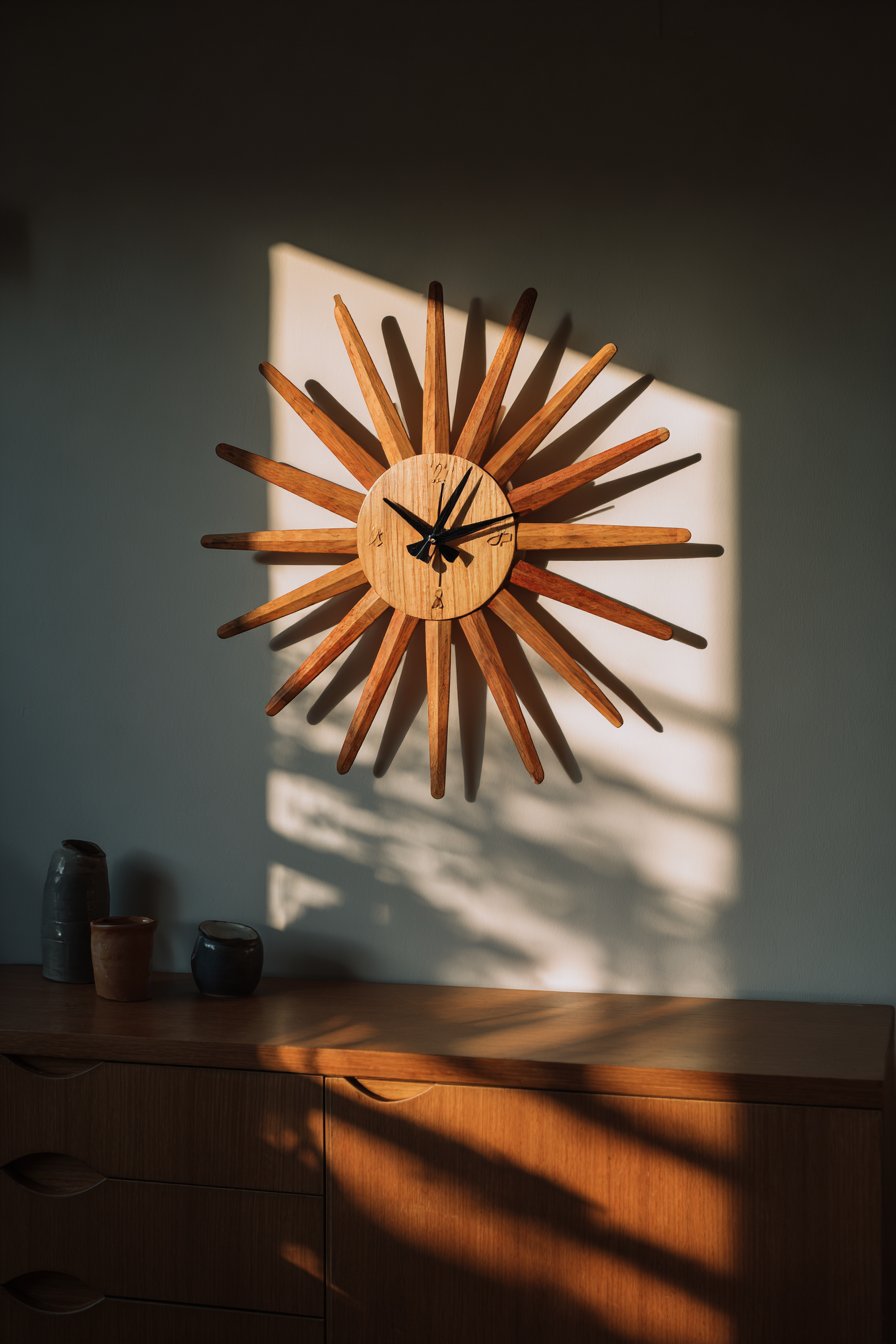
The 1950s and 60s design renaissance produced iconic forms that remain influential today, and this handcrafted wooden sunburst wall clock exemplifies mid-century modern excellence. The 24-inch statement piece features radiating wooden spokes in natural teak finish extending from a central clock mechanism—a starburst design that became synonymous with the era’s optimistic, forward-looking aesthetic. Simple wooden hands maintain period-appropriate restraint, allowing the sculptural spoke arrangement to take center stage. This isn’t reproduction furniture—it’s a tribute to a design movement that still feels remarkably fresh and relevant.
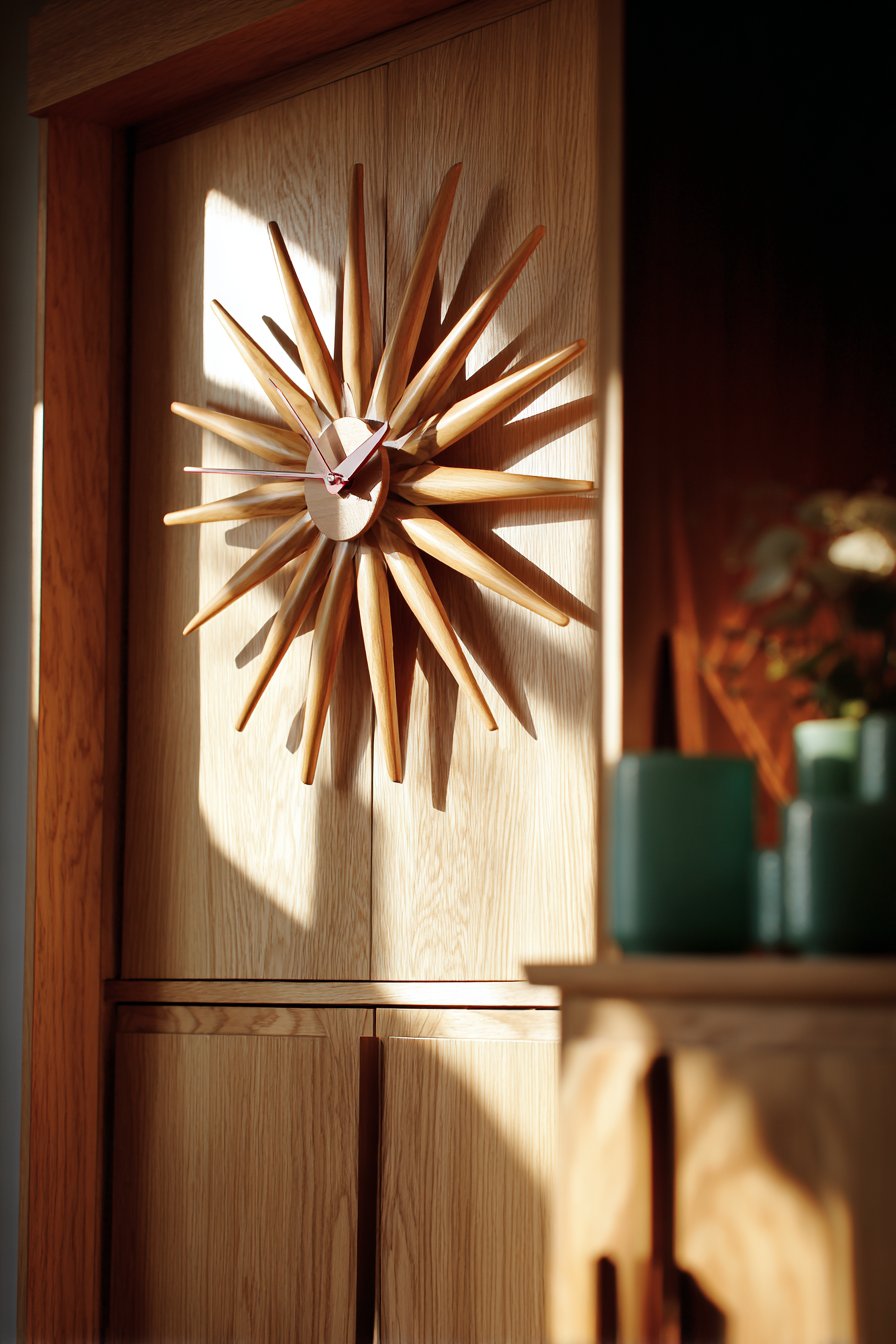
Hanging above a credenza in a retro-inspired living room with period-appropriate furniture, this clock anchors the space’s vintage narrative. Natural daylight emphasizes the wood grain variations across the radiating spokes, with each piece of teak displaying unique character and color nuance. The sculptural starburst design creates dramatic shadows on the wall behind, adding another dimension of visual interest that changes with light conditions and viewing angles. Professional interior photography highlights the iconic mid-century aesthetic, capturing the clock’s sculptural qualities and crafted details.
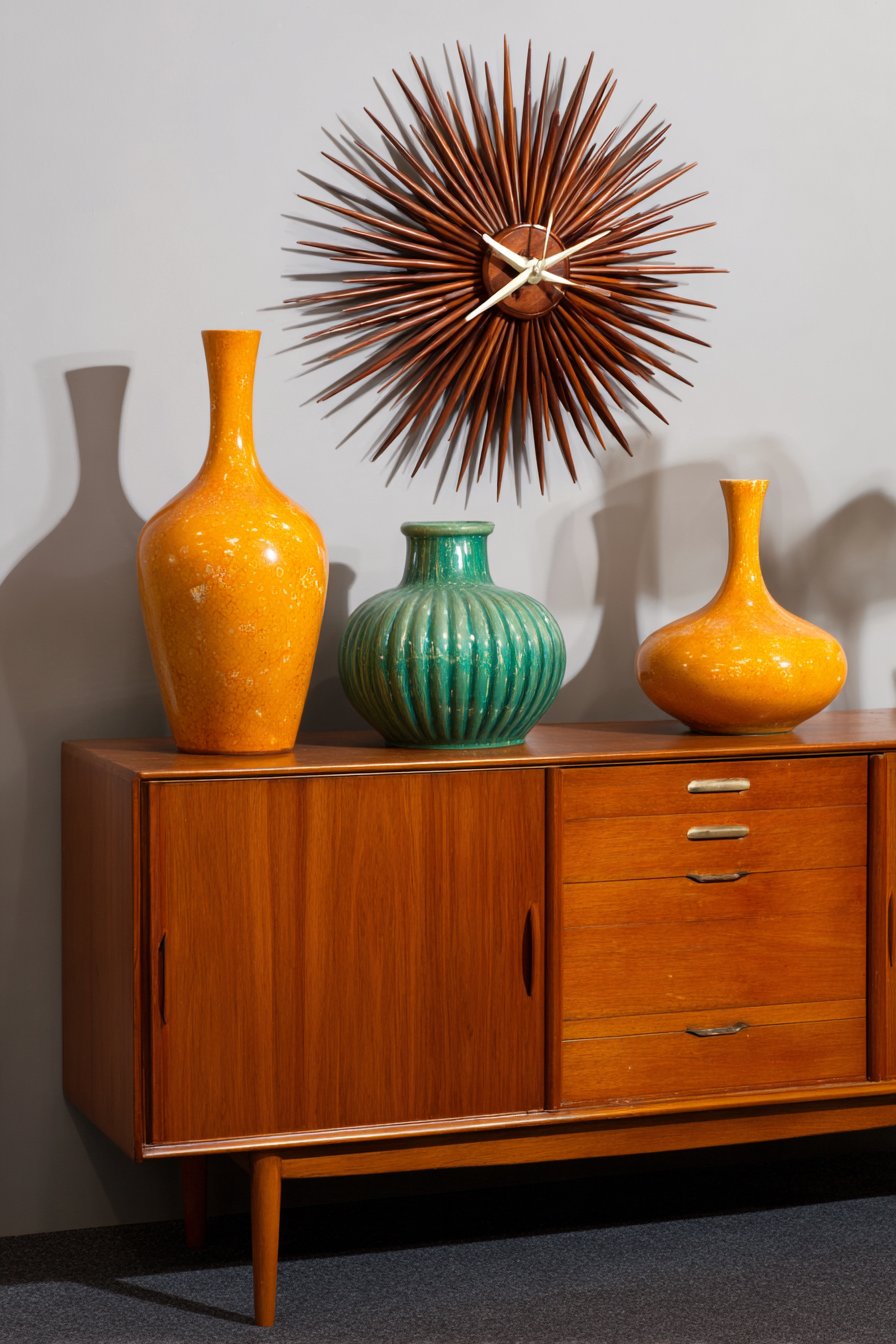
The sunburst form represents the mid-century modern movement’s embrace of atomic-age imagery, geometric precision, and optimistic symbolism. The radiating spokes suggest expanding energy and forward momentum—fitting symbolism for an era characterized by rapid technological advancement and social change. Teak wood was the premium material of choice for mid-century designers, prized for its rich color, beautiful grain, and excellent durability. Using authentic teak rather than cheaper alternatives demonstrates commitment to period accuracy and material quality.
Key Design Tips:
- Choose authentic teak or walnut for genuine mid-century character
- Position against solid-colored walls to prevent busy backgrounds from competing with spoke details
- Pair with other mid-century pieces like Eames chairs, Nelson benches, or Danish modern credenzas
- Ensure adequate wall space—sunburst clocks need breathing room to display their full sculptural impact
- Consider the spoke arrangement carefully—quality pieces have evenly-spaced, well-proportioned elements
13. Smart Digital-Analog Hybrid Clock
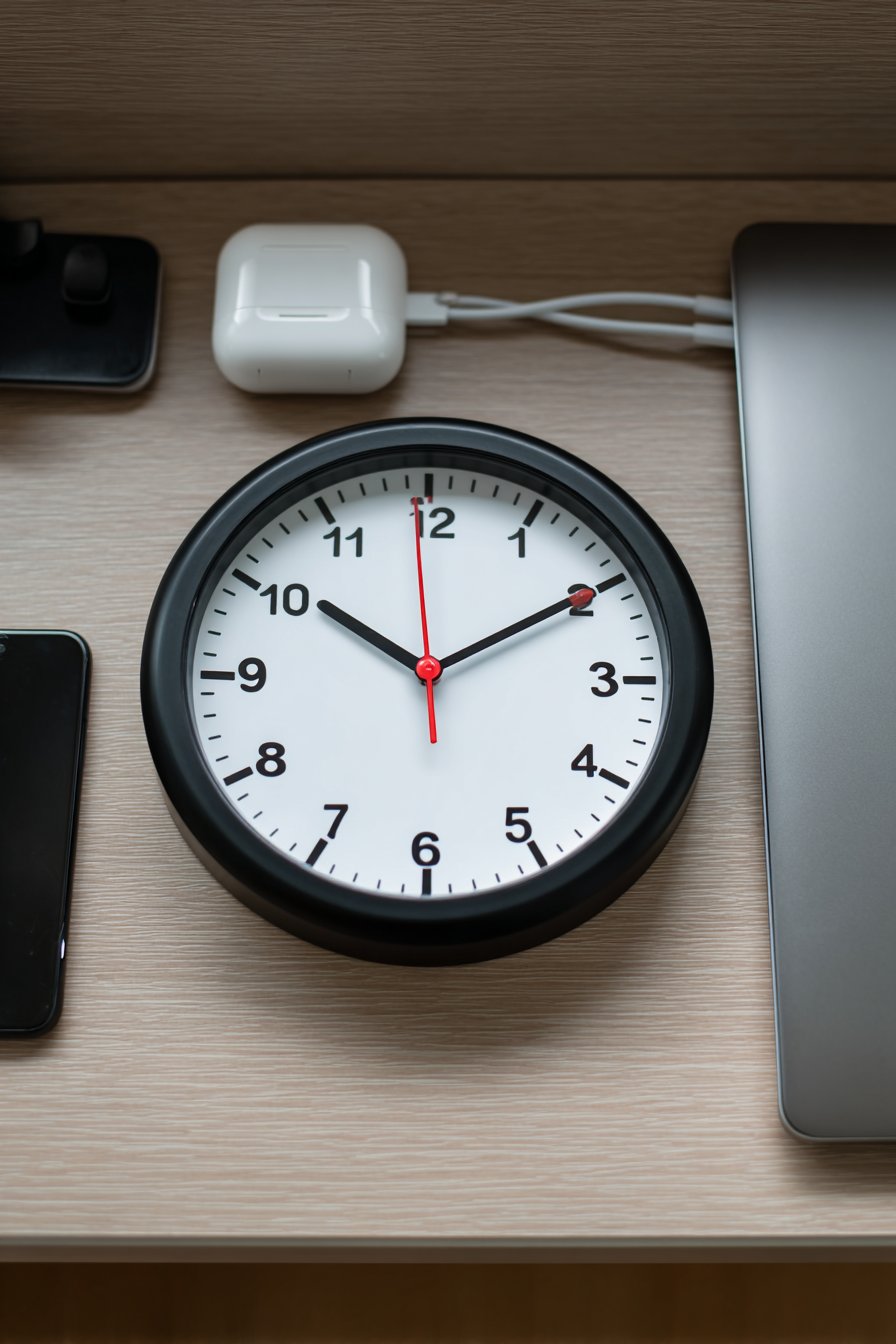
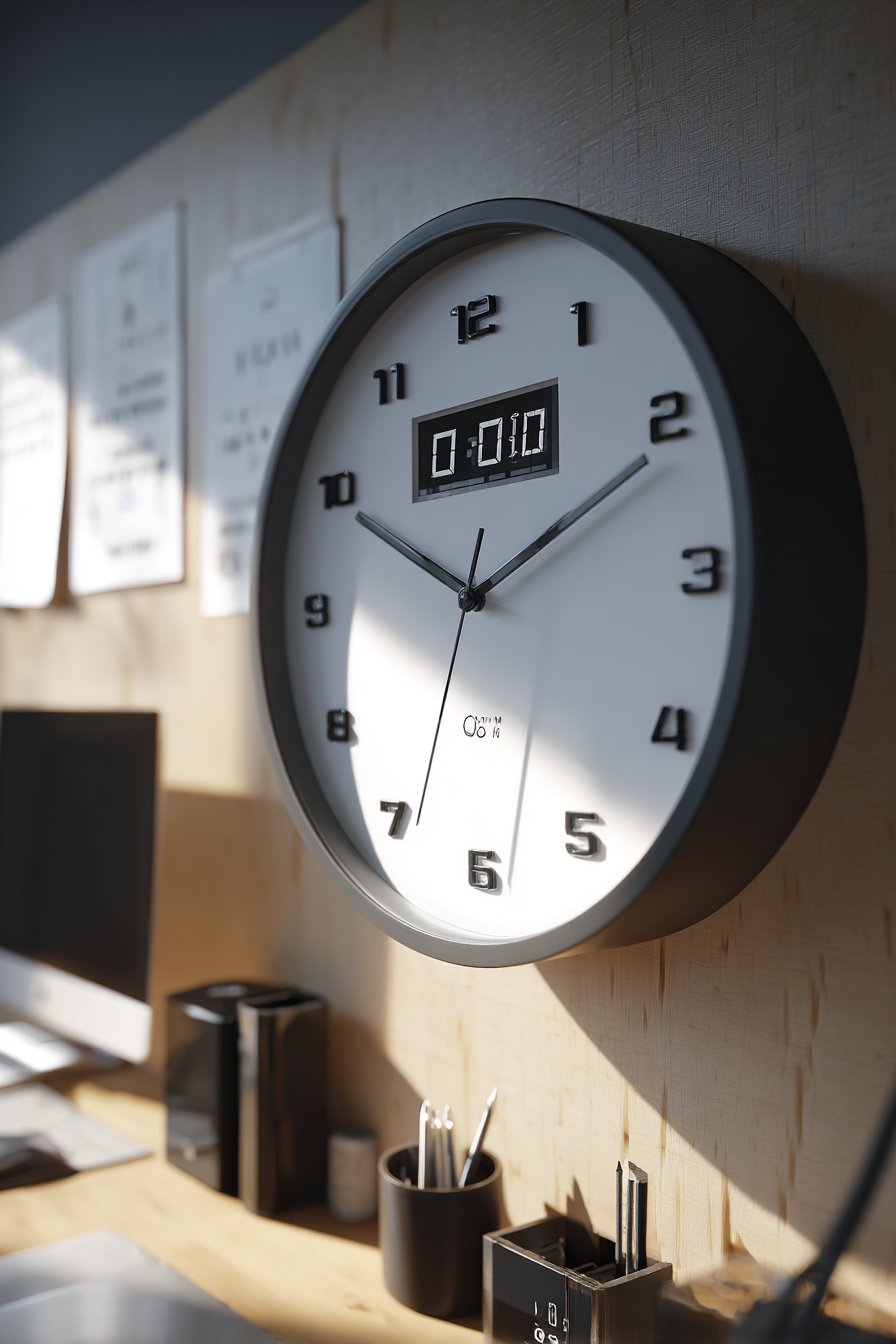
Contemporary life demands multi-functional solutions, and this sleek digital-analog hybrid wall clock answers that call by combining traditional analog display with modern digital information. The 12-inch smart design features a minimalist LCD display showing date and temperature alongside classic analog clock hands, creating a comprehensive time and environmental information hub. The matte black frame with white face maintains clean modern aesthetics that won’t clash with varied decor styles. This hybrid approach acknowledges that while analog displays offer visual elegance, digital precision sometimes proves necessary.
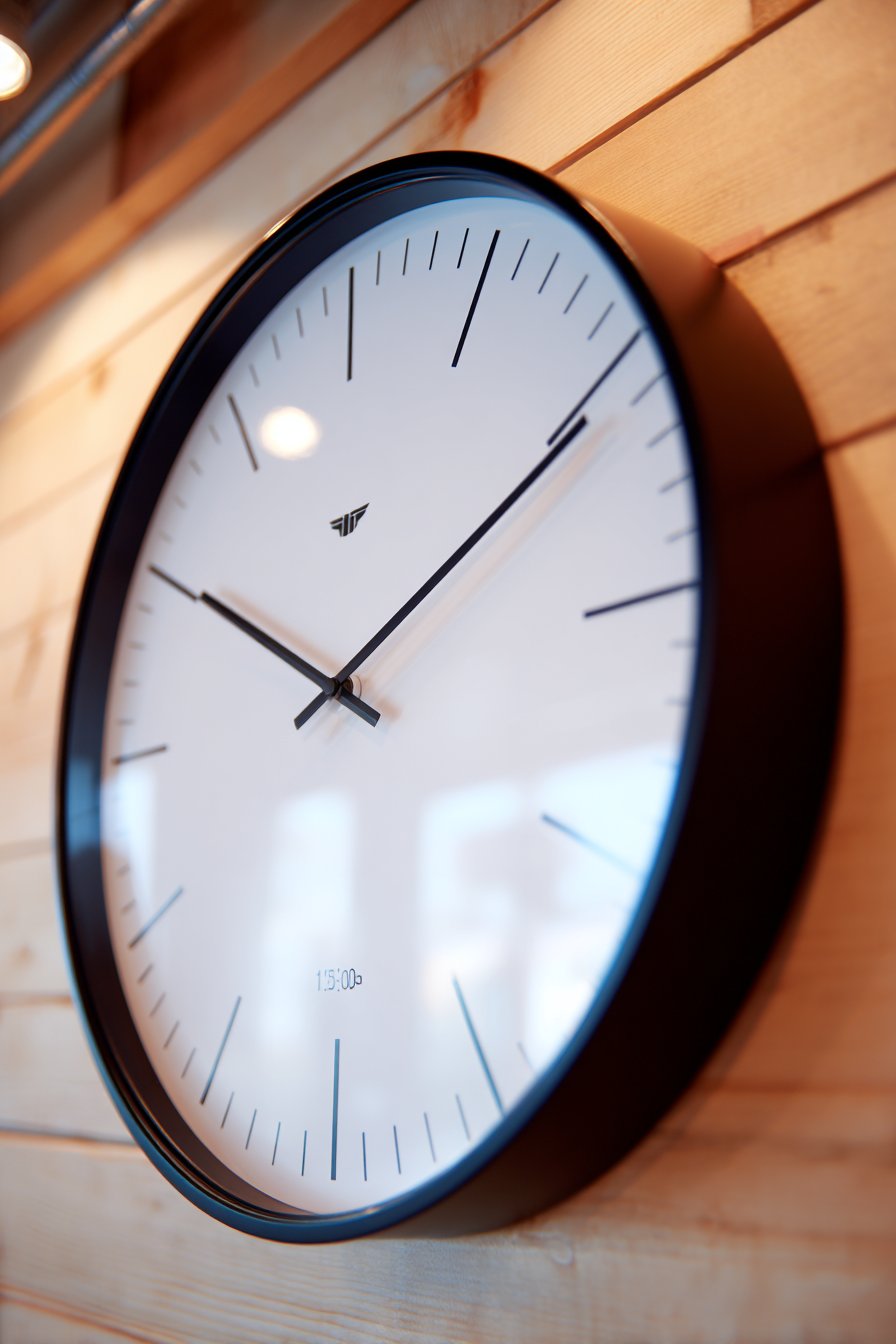
Mounted in a contemporary home office on a light wood accent wall surrounded by modern tech accessories, this multi-purpose clock fits seamlessly into productivity-focused environments. Balanced interior lighting showcases the functional design elements without creating screen glare on the LCD display. The combination of analog and digital appeals to different cognitive preferences—some people read analog clocks more intuitively, while others prefer digital precision. By offering both simultaneously, the clock accommodates all users without compromise.
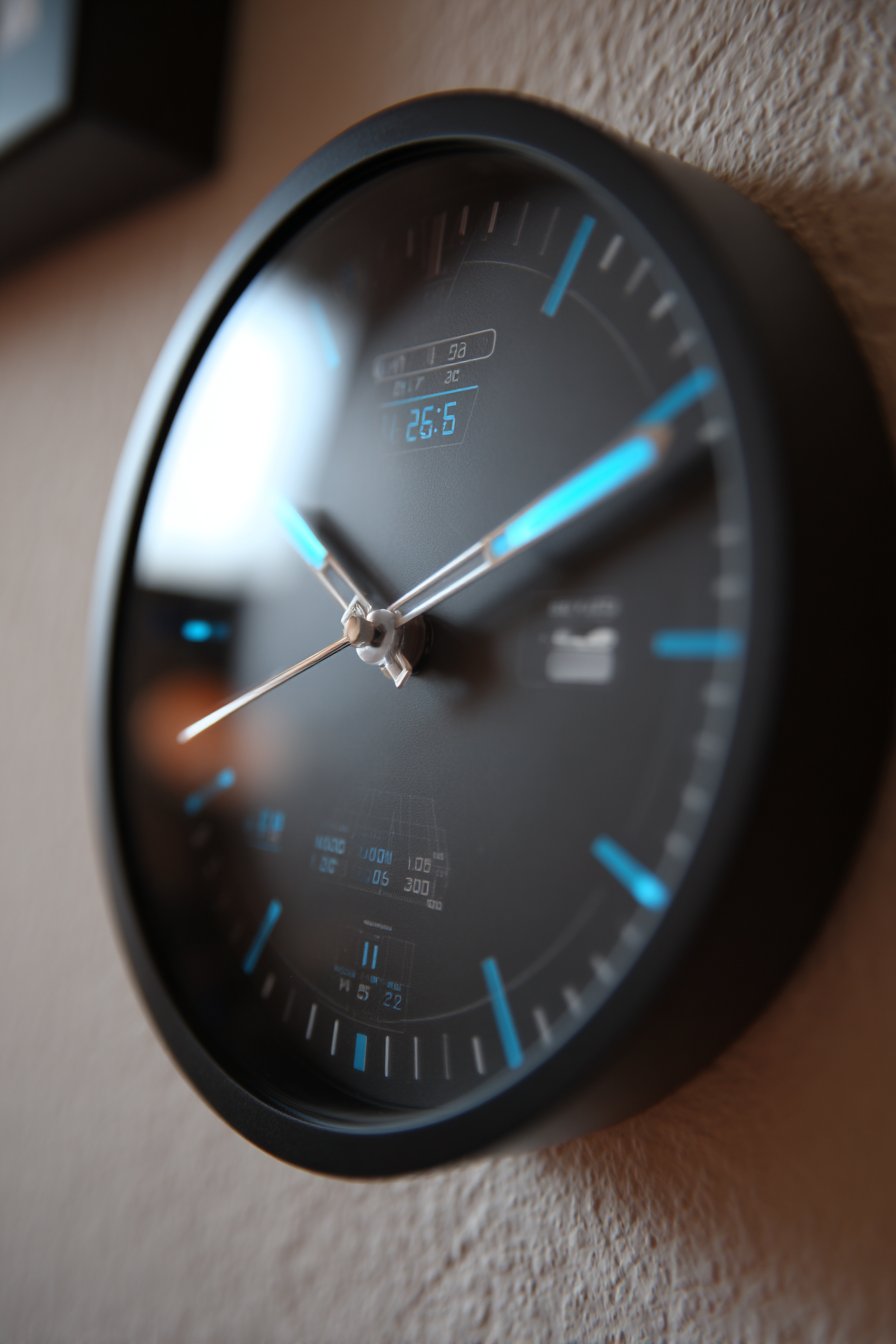
The additional information displays—date and temperature—eliminate the need for separate devices, creating a single reference point for multiple environmental factors. In home offices where efficiency and information access matter, such consolidation reduces visual clutter while increasing utility. The clean modern aesthetic ensures the technology doesn’t overwhelm the design, instead integrating smoothly into contemporary workspaces. The light wood accent wall provides warmth that prevents the tech-forward clock from feeling cold or sterile.
Key Design Tips:
- Choose hybrid clocks for task-oriented spaces like offices where information access matters
- Ensure LCD displays have adjustable brightness to prevent eyestrain or distraction
- Position where natural light won’t create screen glare during peak work hours
- Select matte finishes to minimize reflections and maintain professional appearance
- Verify that digital displays are readable from typical viewing distances in your space
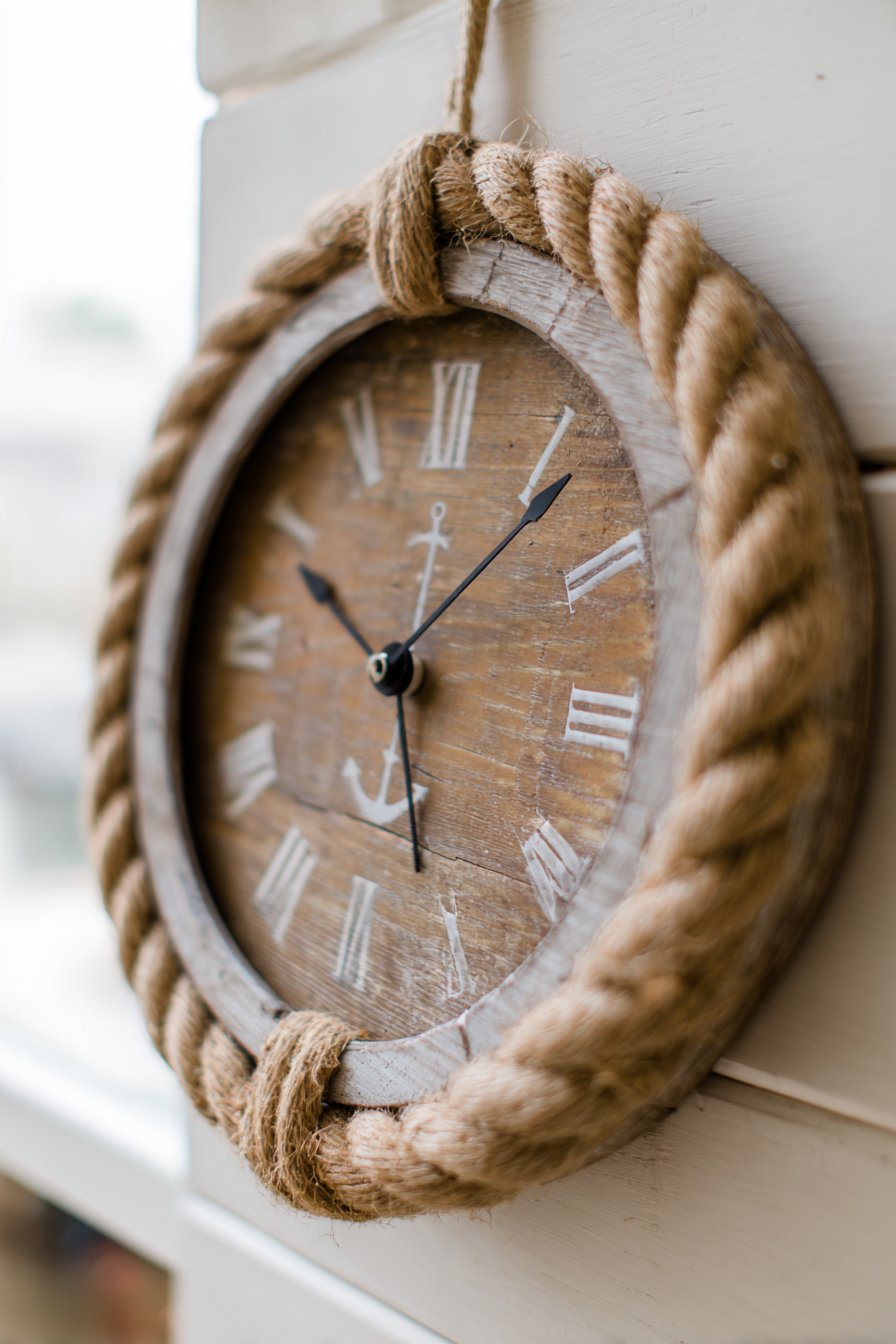
14. Coastal Rope-Wrapped Clock
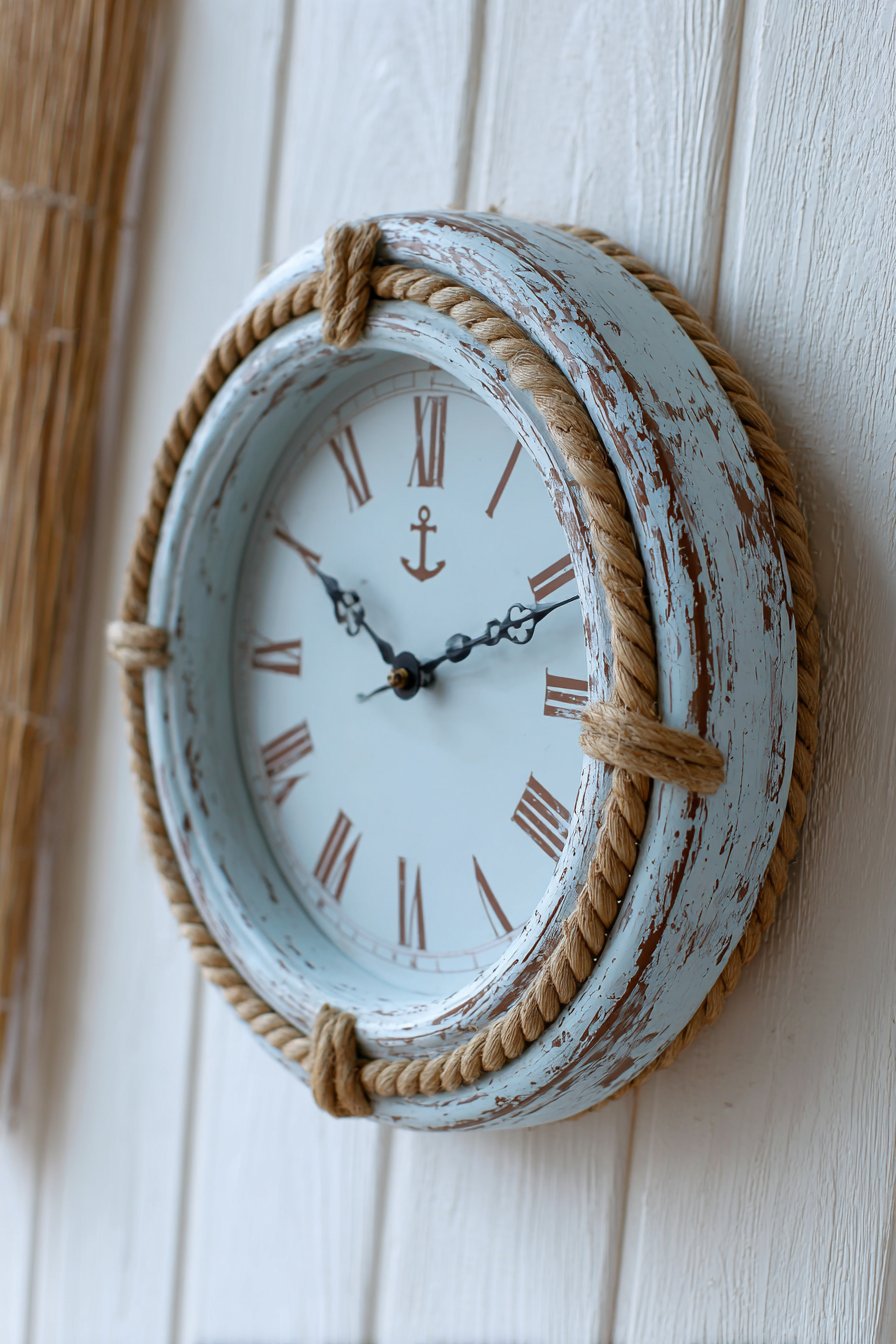
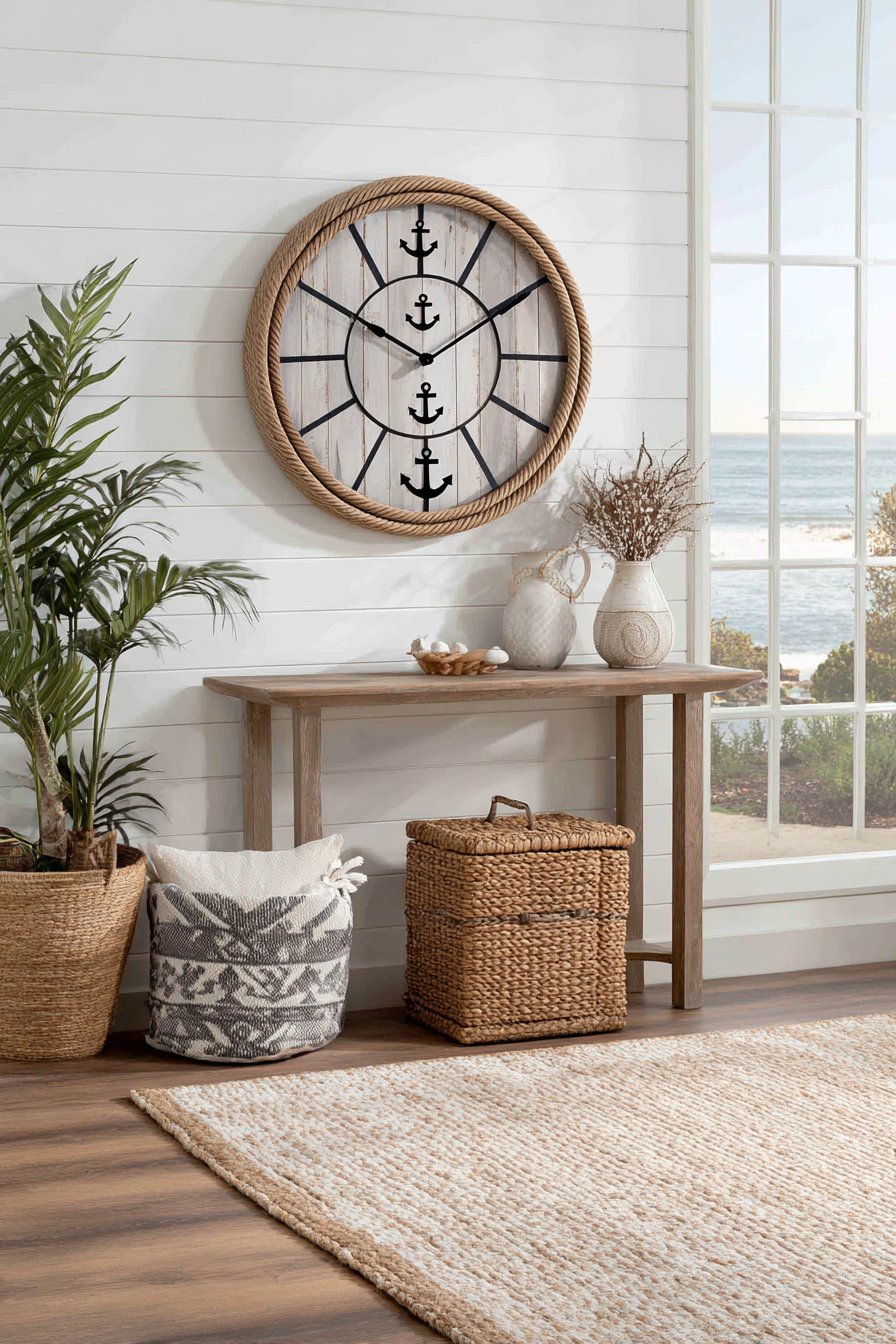
Beach house style captures vacation ease and natural textures, perfectly embodied in this coastal-themed rope-wrapped wall clock. The 20-inch timepiece features weathered wood frame with nautical rope detailing around the circumference—texture that invites touch and immediately communicates seaside inspiration. The clock face includes simple black hands and subtle anchor motifs at cardinal positions, reinforcing the maritime theme without becoming overly literal. This design demonstrates how themed decor can remain sophisticated when executed with restraint and quality materials.
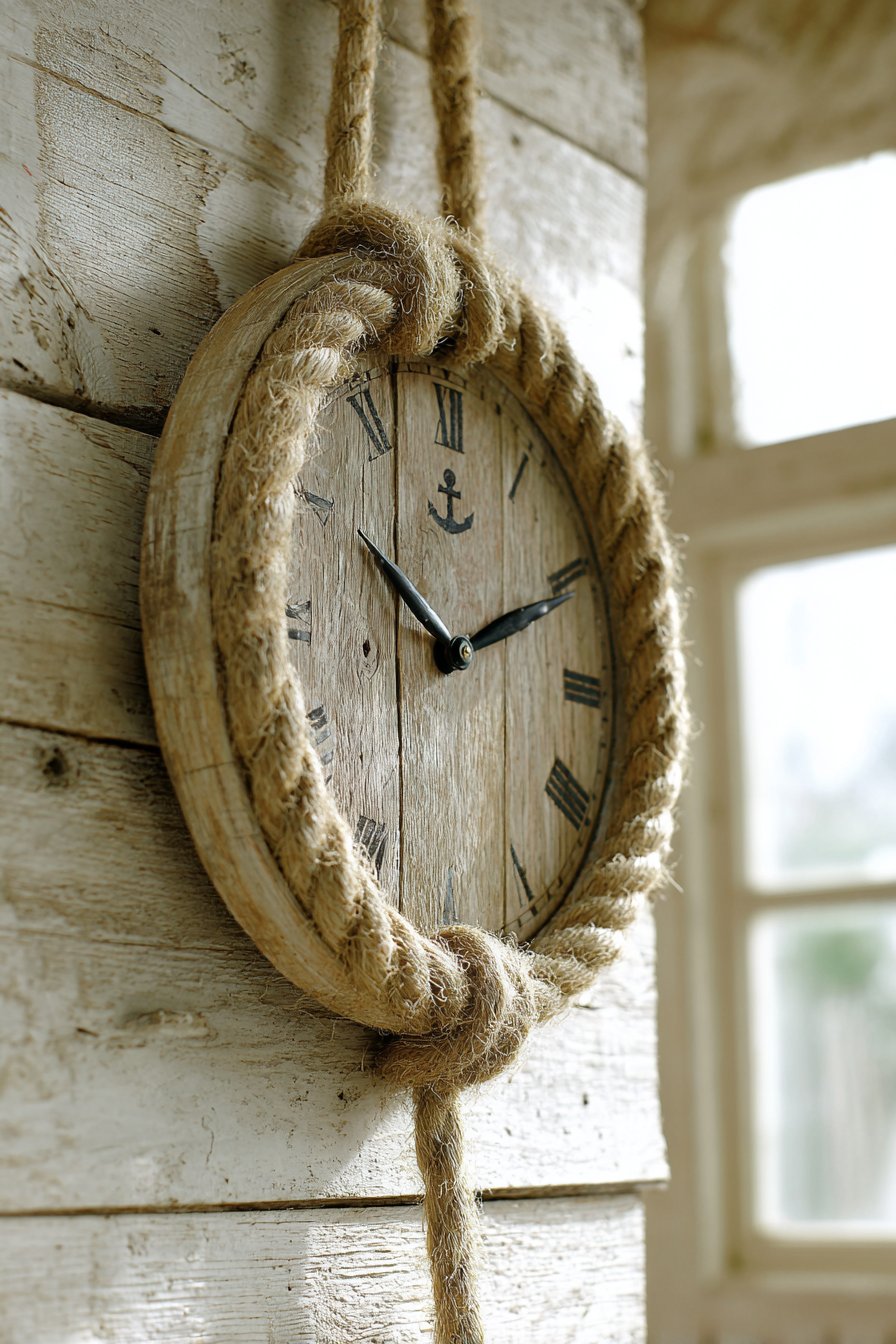
Displayed on white shiplap walls in a beach house living room with natural fiber textures nearby, this clock finds its perfect environmental context. Soft natural lighting from ocean-view windows highlights the texture of the rope and distressed wood finish, creating subtle shadows in the rope’s twisted fibers. The white shiplap provides the quintessential coastal backdrop, its horizontal lines creating visual rhythm that complements the clock’s circular form. Natural fiber textures in surrounding decor—perhaps jute rugs, linen upholstery, or woven baskets—create material harmony that reinforces the coastal narrative.
The weathered wood finish suggests pieces found in beachcombing adventures or salvaged from old boats—romantic narratives that enhance the clock’s appeal beyond pure aesthetics. The rope wrapping serves both decorative and structural purposes, concealing frame edges while adding substantial tactile interest. Unlike printed or painted rope imitations, genuine rope applications create authentic texture that ages beautifully over time. The anchor motifs remain subtle enough to avoid kitsch while clearly communicating the clock’s coastal inspiration.
Key Design Tips:
- Use genuine natural rope rather than synthetic alternatives for authentic coastal character
- Pair with weathered or distressed wood finishes to reinforce beach-found aesthetic
- Position in spaces with natural light to highlight rope texture and wood grain
- Limit nautical motifs to avoid theme-park excess—subtle references work best
- Incorporate complementary natural fibers like jute, sisal, and linen throughout the space
15. Oversized Statement Clock
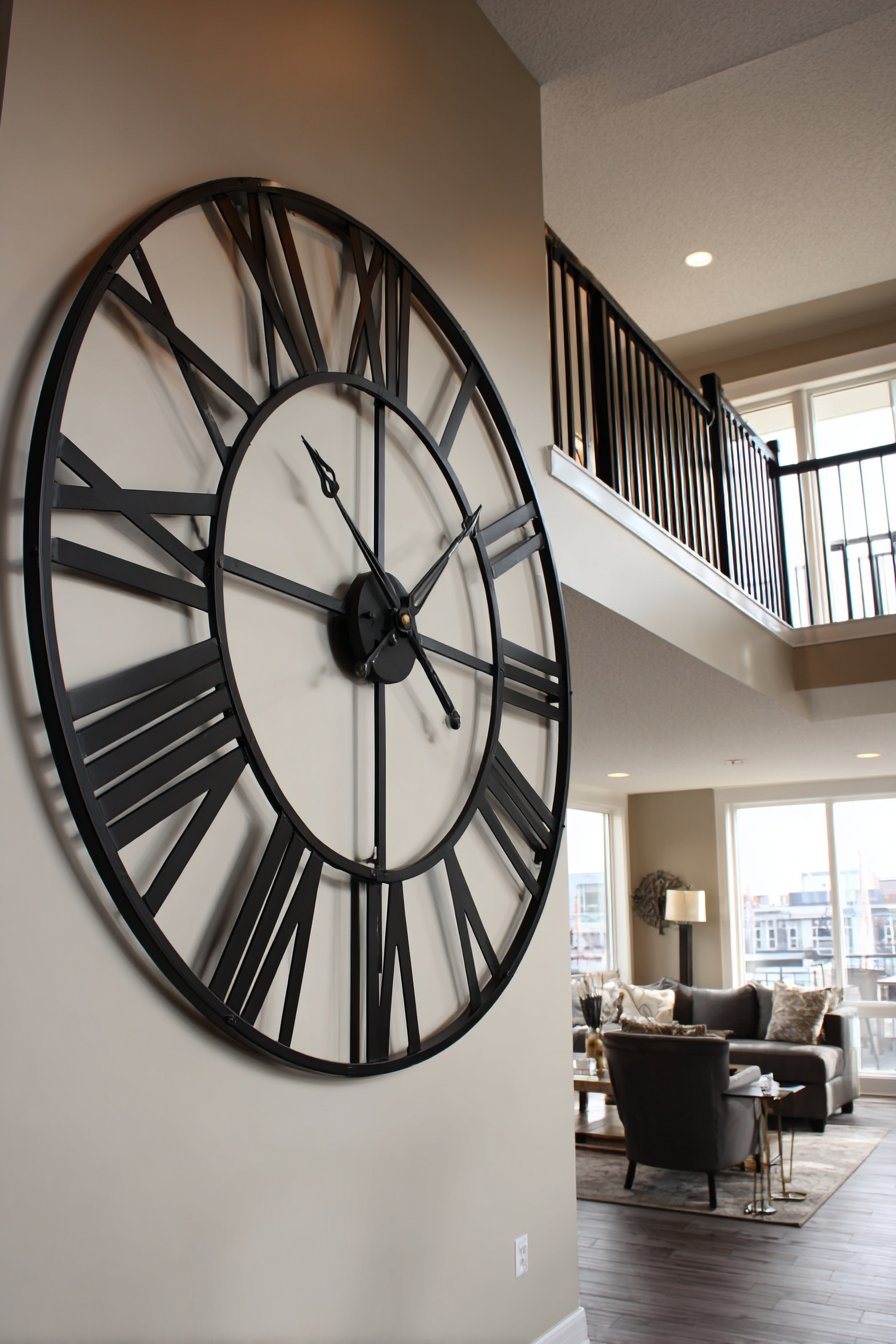
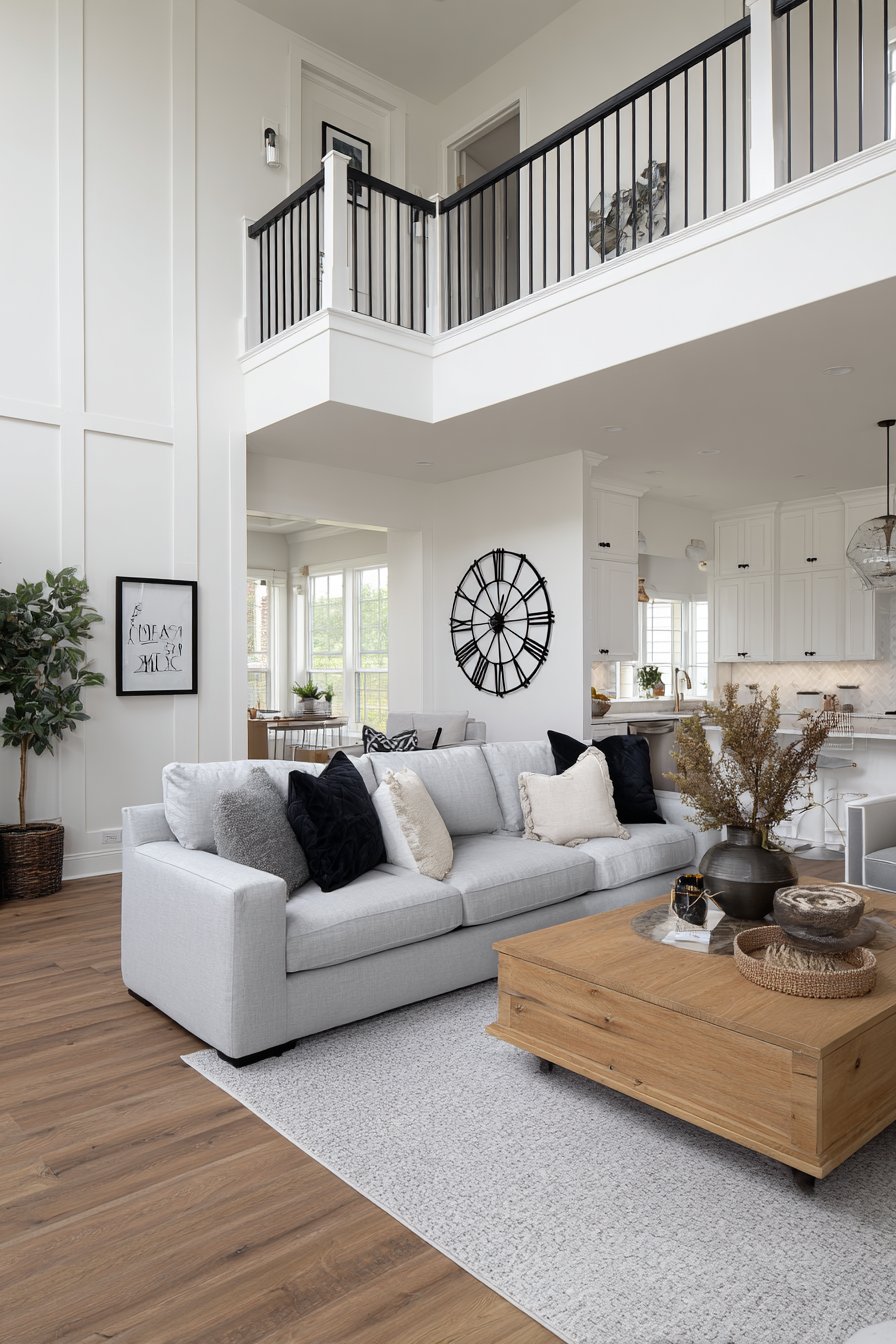
Scale creates drama, as proven by this extra-large statement wall clock with its impressive 48-inch diameter. The oversized metal numbers in matte black finish are mounted directly on the white wall without a traditional clock face, creating an open-frame skeleton design that feels both substantial and surprisingly light. The visible clock mechanism and industrial-style hands become sculptural elements rather than purely functional components. This dramatic approach transforms timekeeping into architectural feature, suitable for spaces with the square footage and ceiling height to accommodate such bold gestures.
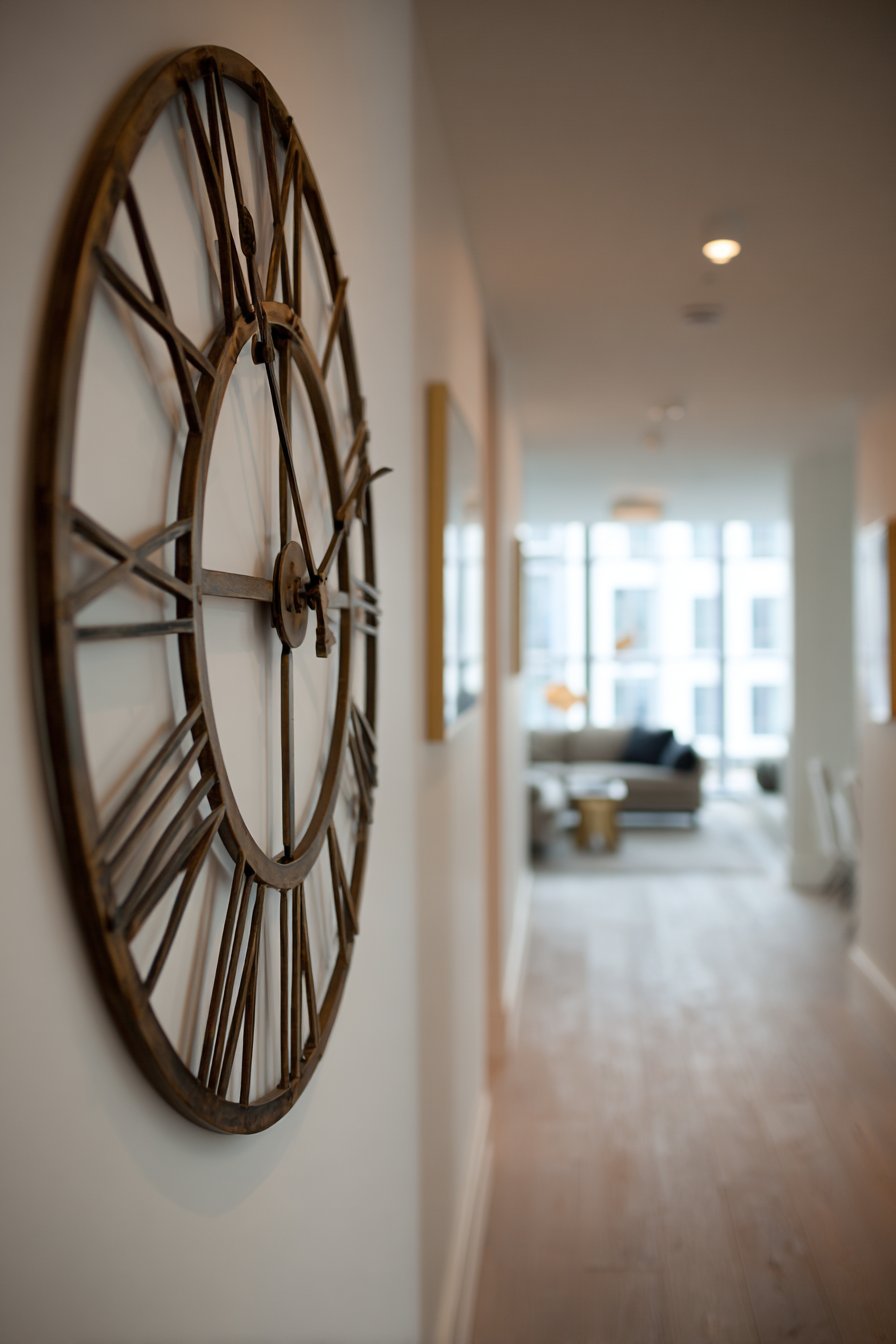
Positioned as a dramatic focal point in a double-height living room with modern furniture, this clock commands attention without overwhelming the generous space. Professional architectural photography captures the impressive scale and contemporary industrial design, demonstrating how the clock relates to room proportions and surrounding elements. The open design prevents the clock from appearing too heavy despite its enormous size—if it were a solid 48-inch disk, it might overwhelm the wall. Instead, the number-only approach creates visual interest while maintaining breathability.
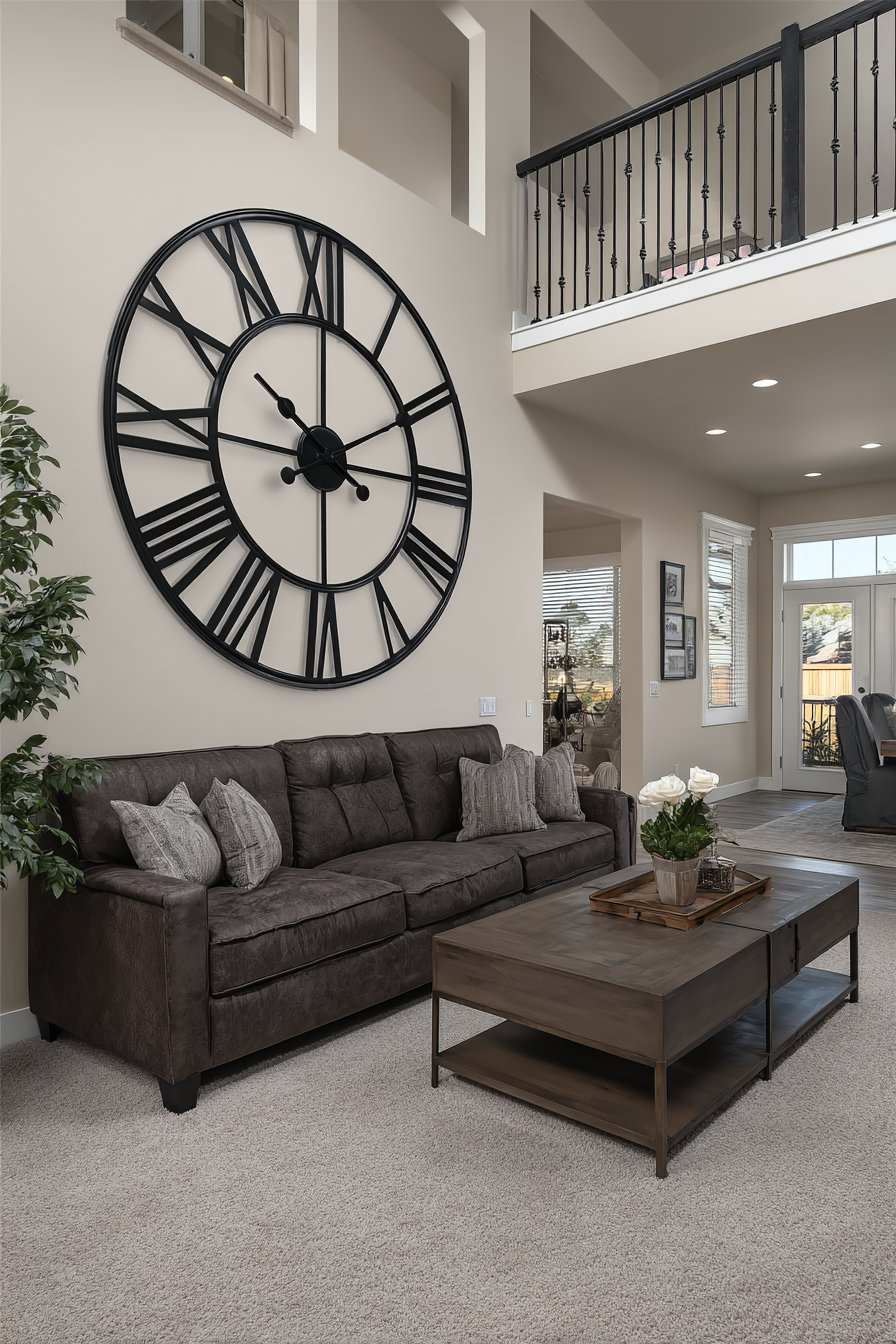
The decision to mount numbers directly on the wall rather than on a clock face represents contemporary design’s preference for minimal interventions and honest expression. This approach requires precise installation, as each number must be positioned exactly to maintain proper spacing and alignment. The visible mechanism celebrates rather than hides the clock’s functional components, embracing industrial design’s philosophy of honest construction. In double-height spaces where standard-sized clocks would disappear, such oversized pieces provide necessary visual weight and presence.
Key Design Tips:
- Reserve 40+ inch clocks for spaces with high ceilings (10 feet minimum) and large walls
- Choose open-frame or skeleton designs to prevent oversized clocks from feeling too heavy
- Ensure professional installation—proper alignment is critical at this scale
- Use the clock as the room’s primary focal point; don’t compete with other large art pieces
- Measure carefully—oversized clocks look very different on walls than in product photos
- Consider viewing distances—you need adequate space to step back and appreciate the full scale
16. Vintage French Bistro Clock
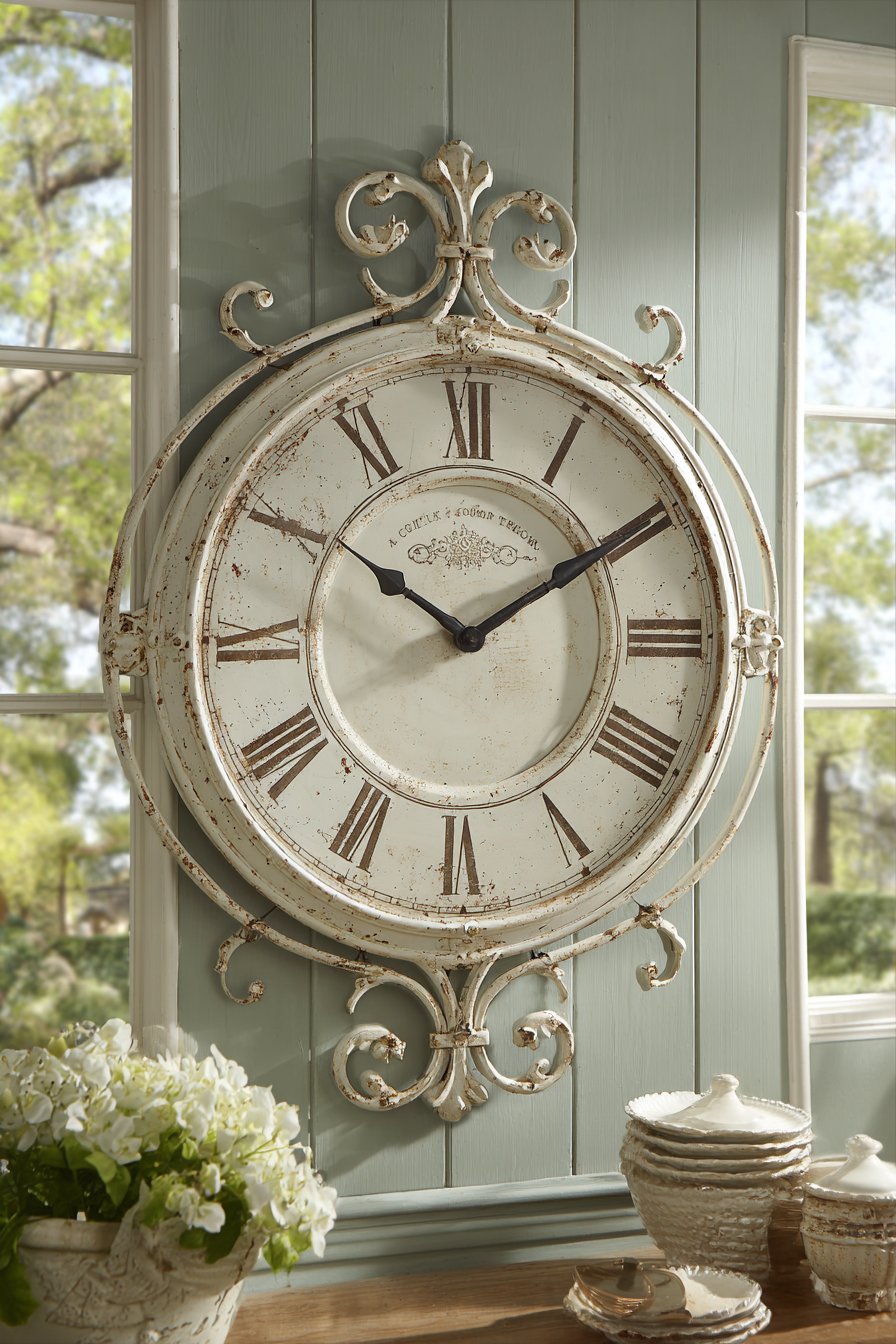
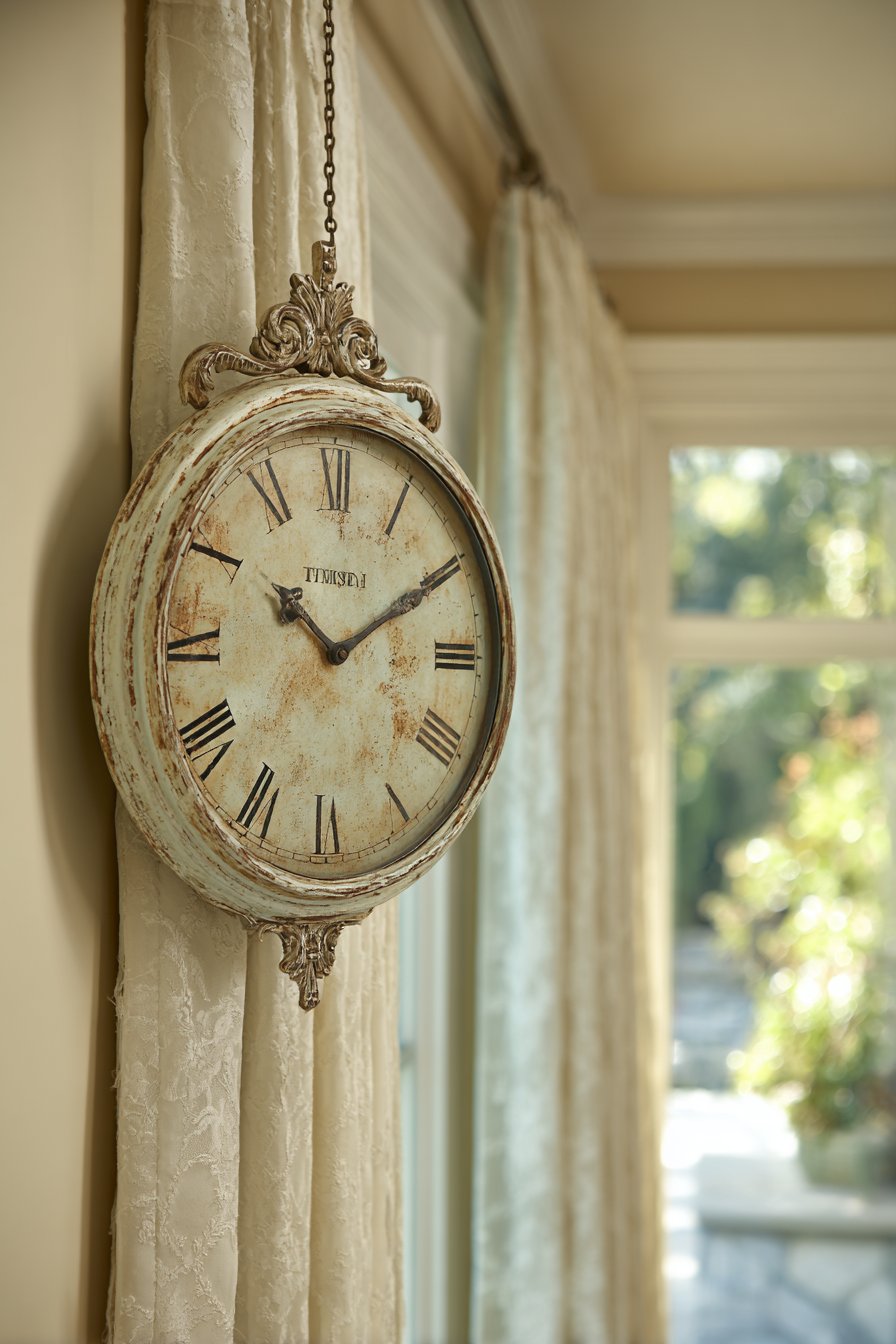
European cafe culture inspires this vintage French bistro-style wall clock that transports viewers to sidewalk cafes along Parisian boulevards. The 22-inch timepiece features distressed cream-colored metal frame with faded Roman numerals on an aged parchment-style face—finishes that suggest decades of service timing coffee breaks and lunch rushes. Ornate scroll details on the frame add romantic flourishes characteristic of French decorative arts. This shabby chic aesthetic celebrates imperfection and age as desirable qualities rather than flaws.
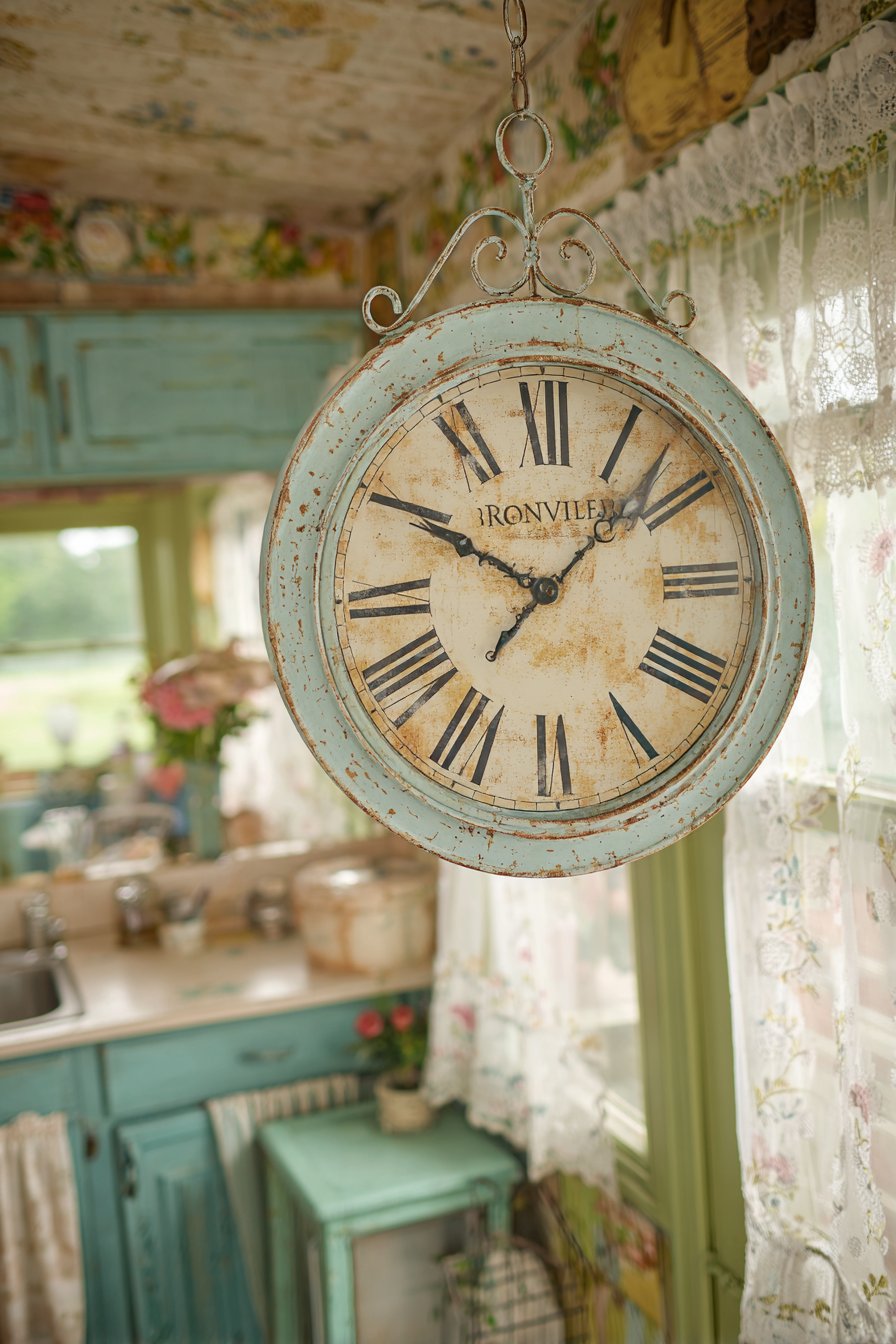
Hanging in a Provence-inspired kitchen with soft sage green cabinets and natural light streaming through lace curtains, this clock becomes the jewel in a carefully curated European-inspired setting. Interior photography emphasizes the romantic vintage aesthetic and weathered charm, capturing how soft light plays across the distressed finish. The cream color coordinates beautifully with sage green cabinetry while the Roman numerals add formal elegance to a kitchen setting. Lace curtains filter sunlight, creating the soft, diffused illumination characteristic of French interiors.
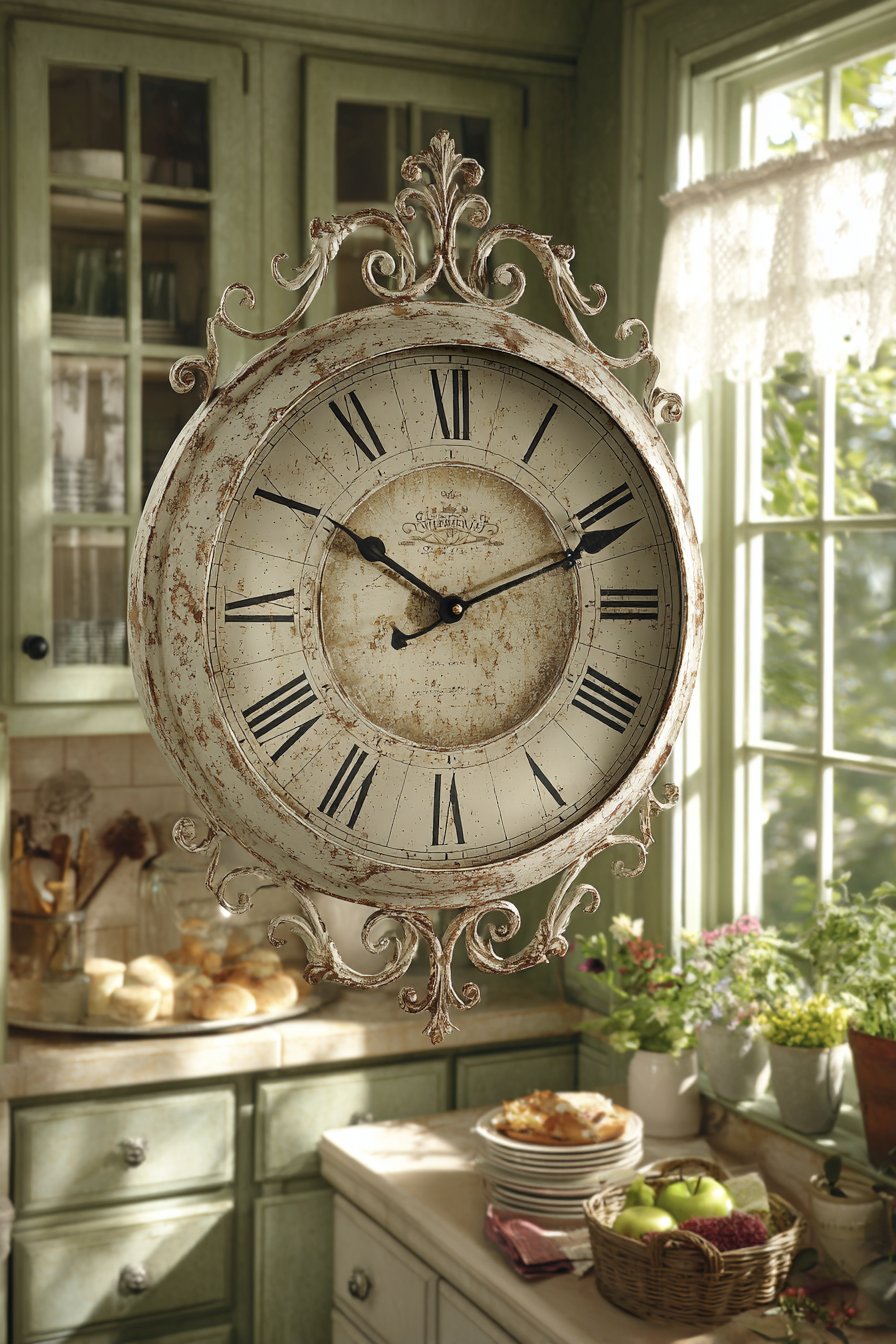
The distressed finish tells imaginary stories of the clock’s fictional history—perhaps it hung in a Lyon bakery or a Marseille train station before finding its way to your kitchen. While likely manufactured recently, quality distressing techniques create convincing age that adds character and narrative depth. The ornate scroll details reference French rococo and baroque traditions, bringing historical decorative language into contemporary homes. In kitchens where European cafe ambiance enhances daily cooking and dining experiences, such authentic-feeling vintage pieces create desired atmosphere.
Key Design Tips:
- Seek out quality distressing that looks authentically aged rather than artificially damaged
- Pair with soft, muted colors like sage green, dusty blue, or cream for French country aesthetics
- Use lace, toile, or other traditional French textiles to reinforce the bistro narrative
- Position where soft, diffused light enhances the aged appearance
- Balance ornate details with simpler surrounding elements to avoid visual overload
17. Transparent Acrylic Modern Clock
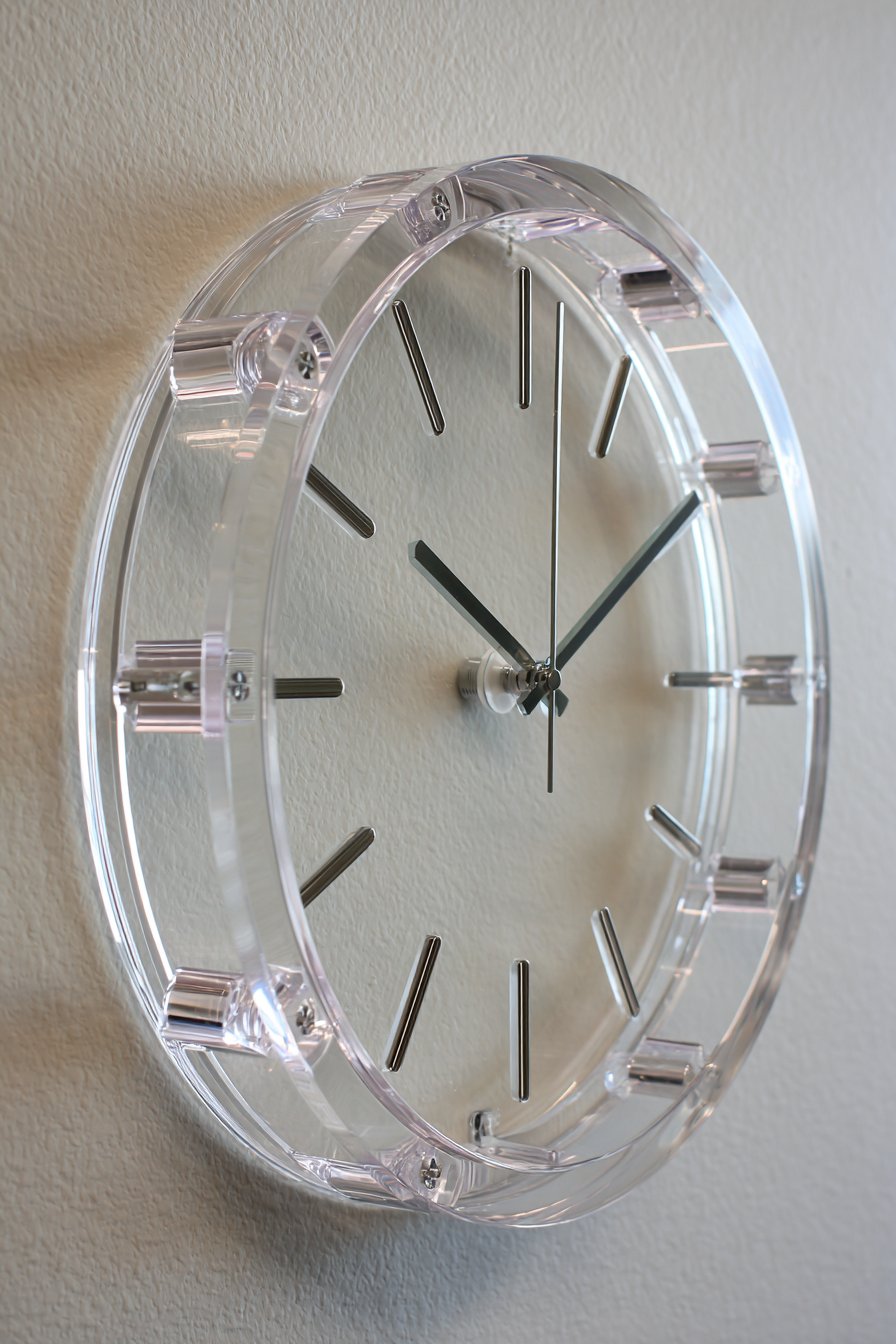
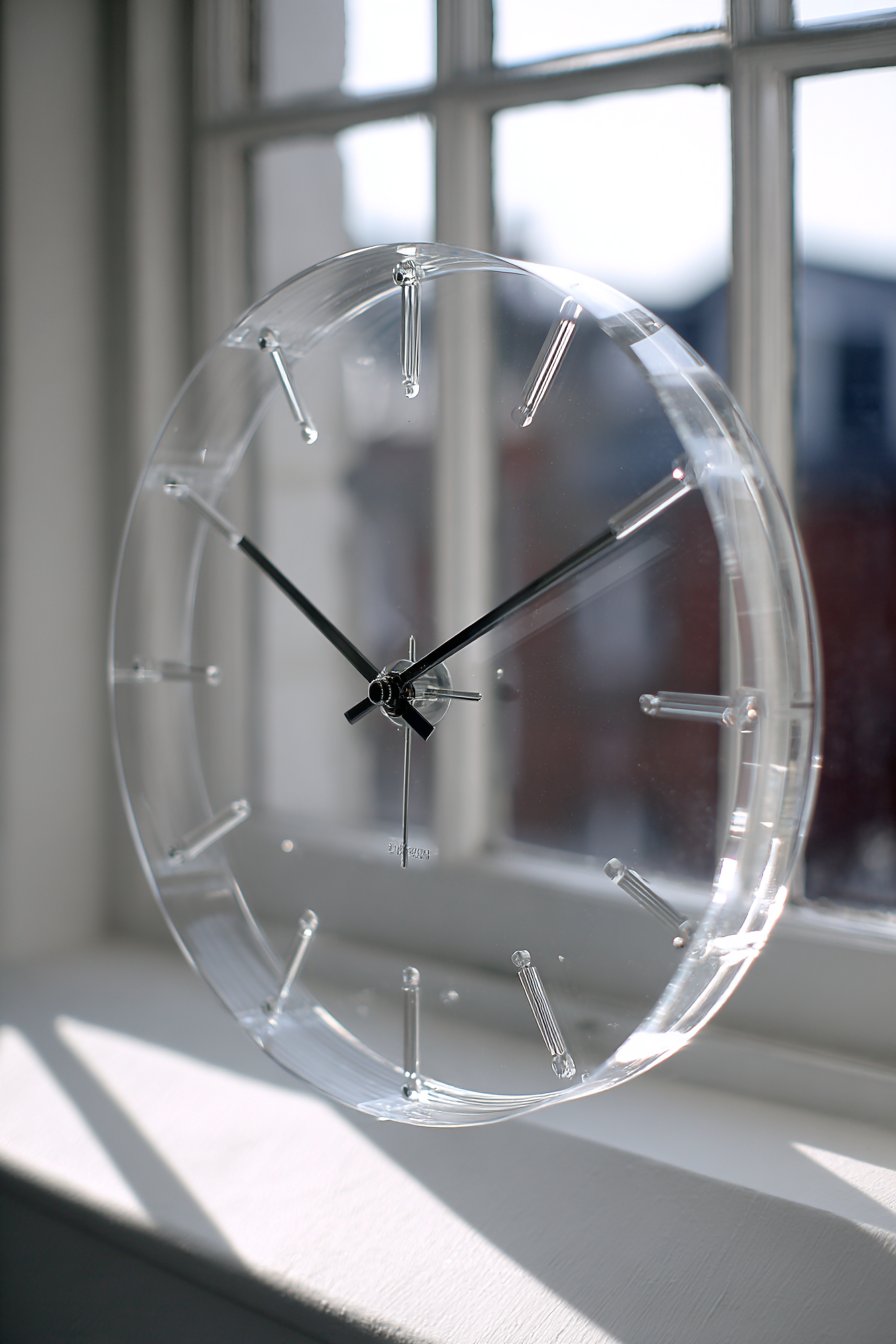
Innovation in materials opens new design possibilities, demonstrated by this modern acrylic transparent wall clock that seems to float on the wall. The 16-inch contemporary piece features clear acrylic construction with metallic silver internal mechanisms visible through the material, creating an x-ray effect that reveals rather than conceals the clock’s functional components. Minimalist hands and subtle hour dots maintain clean aesthetics while the transparent construction creates visual lightness. This see-through design brings an almost magical quality to a typically solid object.
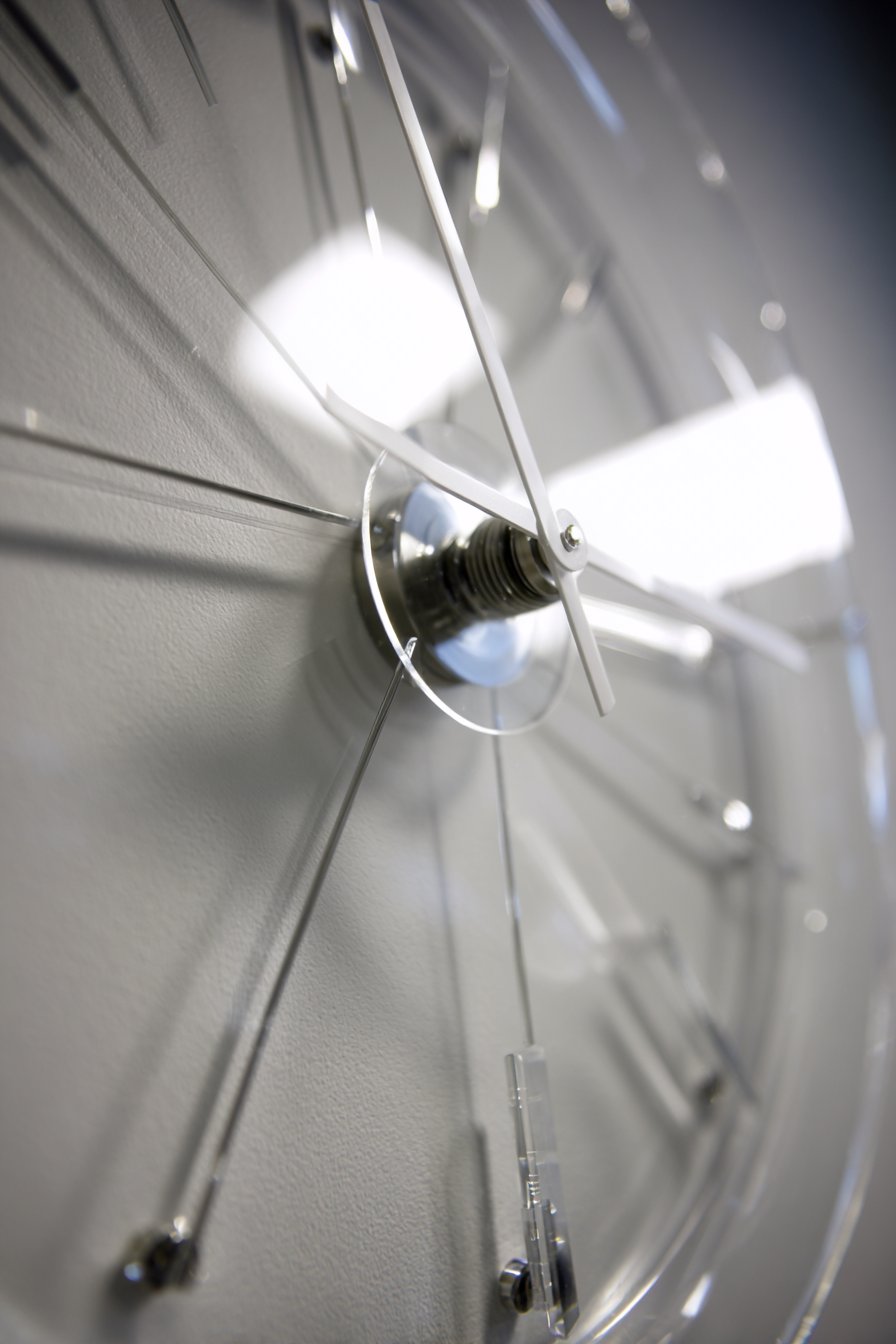
Mounted on a white wall in a minimalist apartment, the transparent clock creates visual interest without adding visual weight—a crucial distinction in spaces where airiness and openness matter. Professional photography with backlighting highlights the transparent qualities and innovative design, demonstrating how light passes through the acrylic and interacts with the visible mechanisms. The clock’s ability to let wall color show through makes it remarkably versatile, as it adapts to different backgrounds while maintaining its distinctive character.
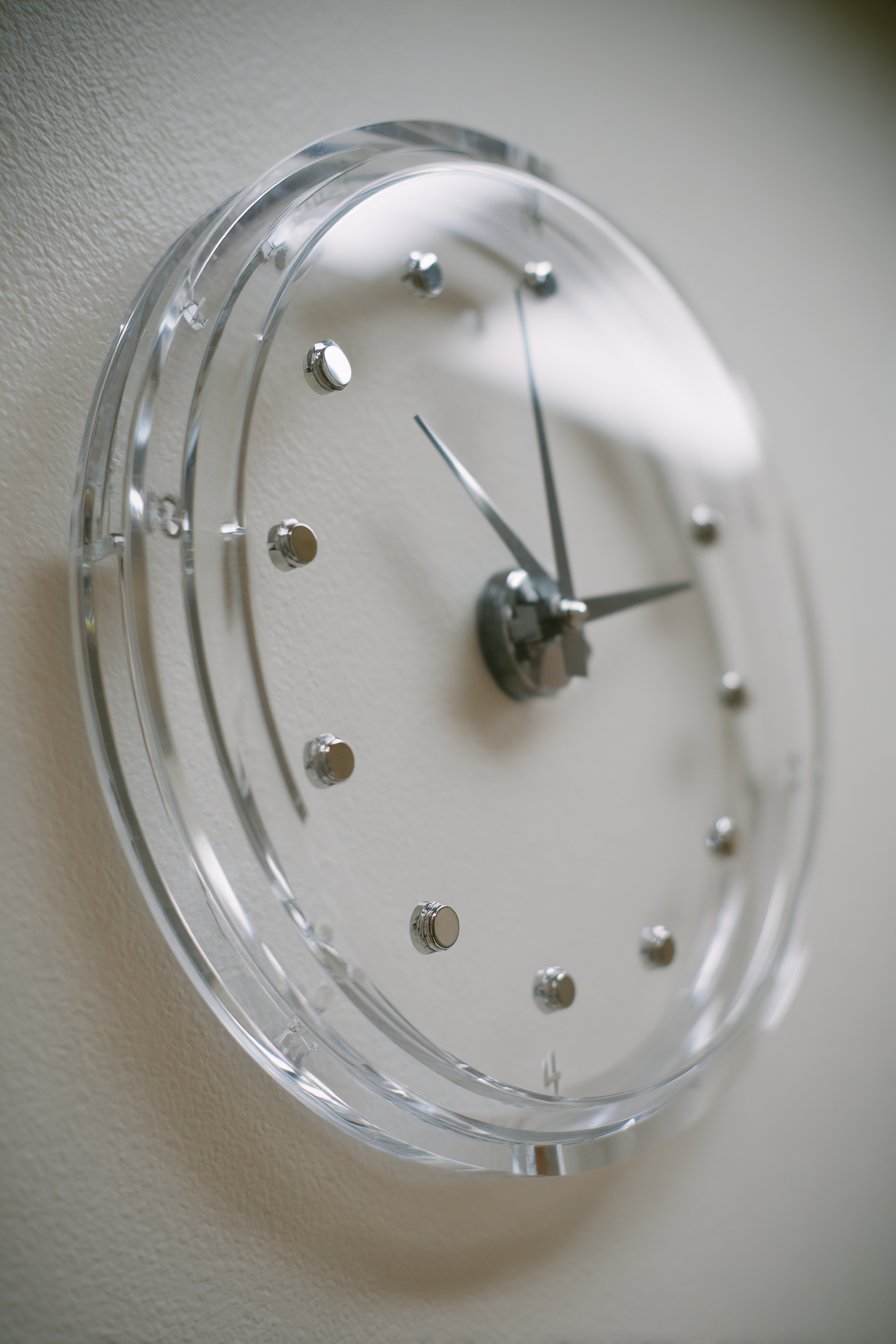
The visible mechanisms serve both aesthetic and educational purposes, allowing viewers to understand how the clock functions while appreciating the precision engineering involved. Unlike traditional clocks where gears and movements hide behind opaque faces, this transparent approach celebrates mechanical beauty. The acrylic material offers practical advantages too—it’s lighter than glass, more resistant to shattering, and can be precisely molded into complex forms. In minimalist spaces where every object must justify its presence, such innovative designs offer both function and conversation-worthy visual interest.
Key Design Tips:
- Position transparent clocks where they can be backlit (near windows or light sources) for maximum effect
- Choose white or light-colored walls to prevent busy backgrounds from showing through
- Ensure mechanisms are clean and well-maintained since they’re always visible
- Consider the clock from multiple angles—transparent designs look different as you move around them
- Pair with other modern materials like stainless steel, glass, and polished concrete
18. Handmade Ceramic Artisan Clock
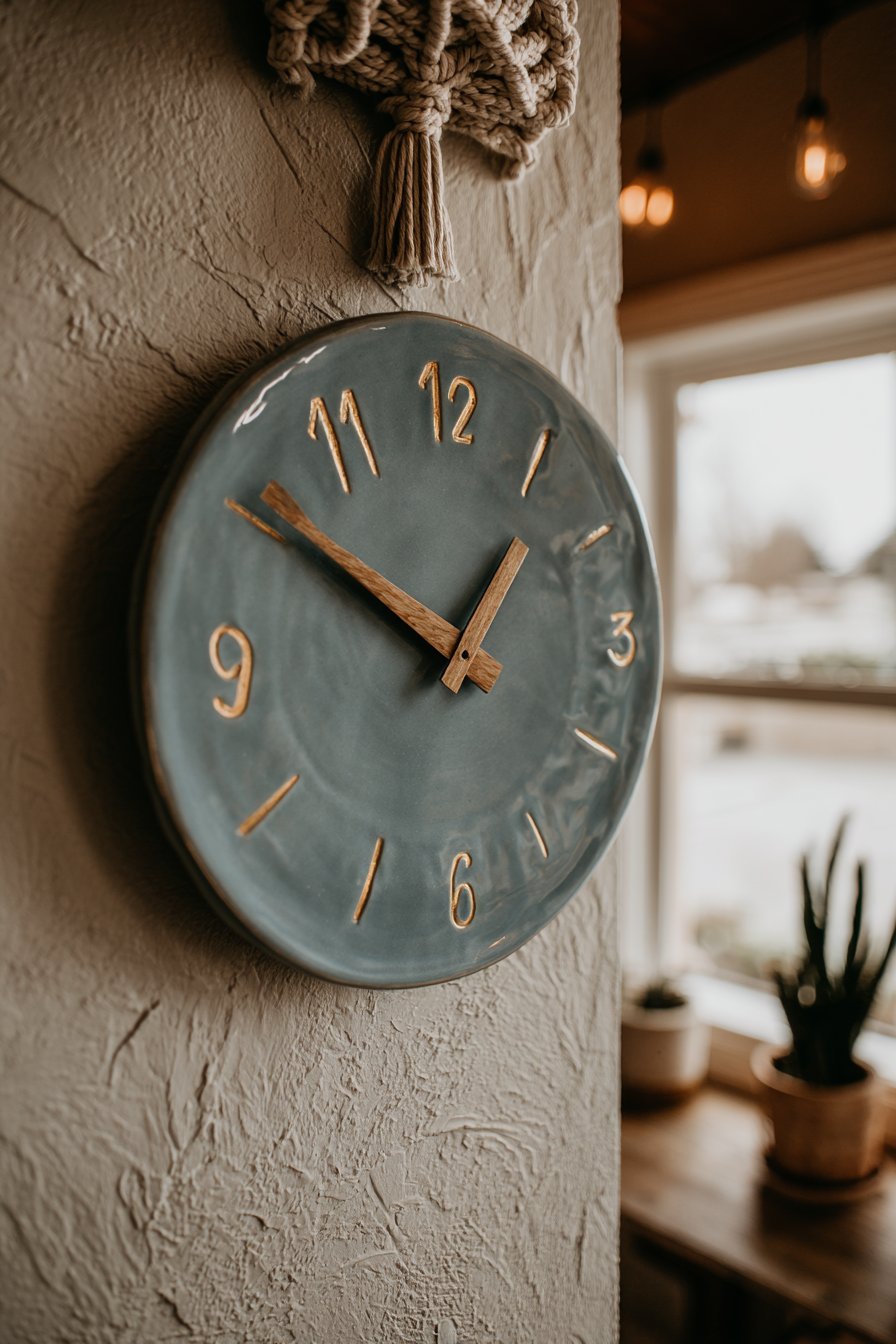
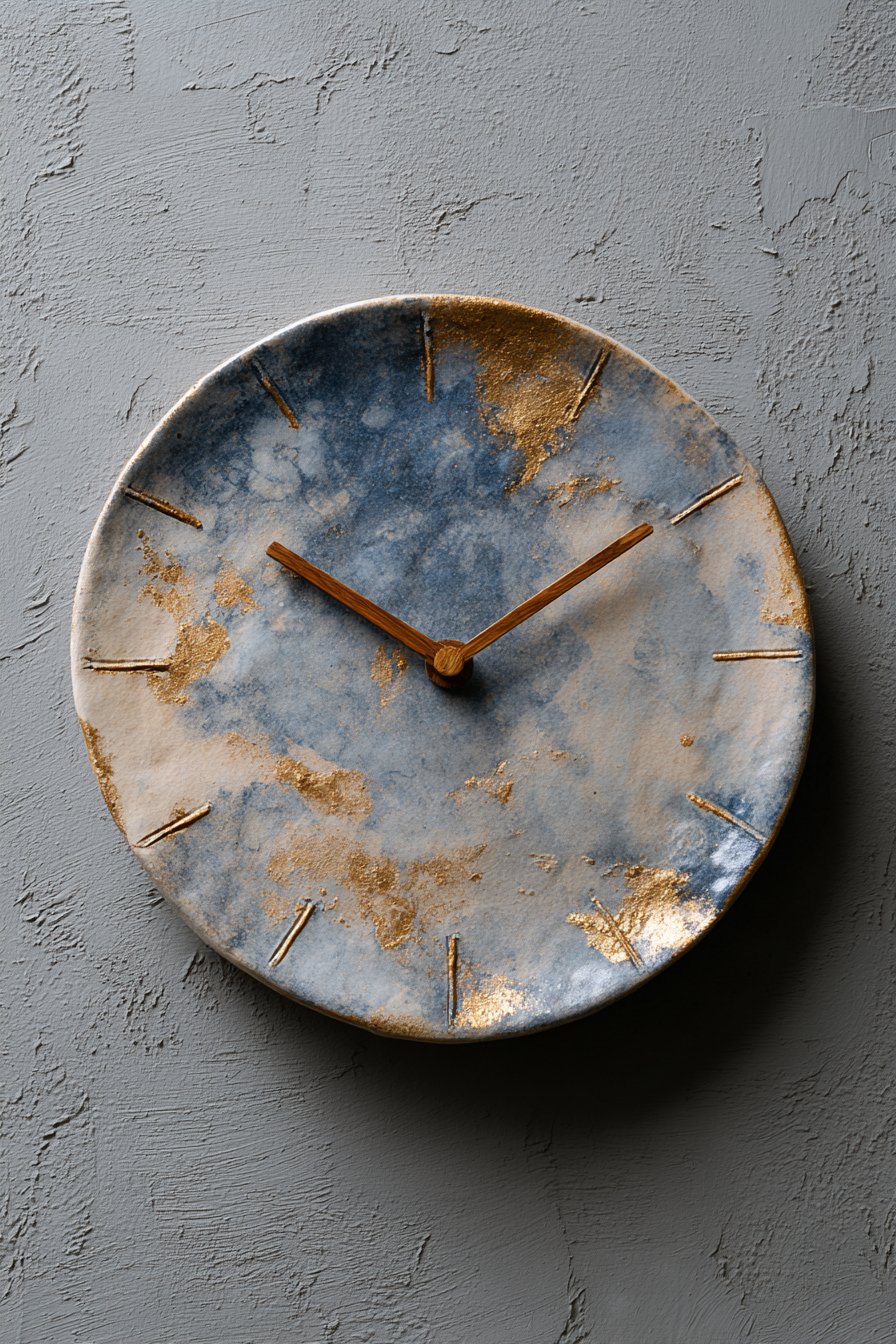
The contemporary craft movement celebrates handmade objects with visible maker’s marks, and this artisan-crafted ceramic wall clock exemplifies that appreciation for human touch. The 14-inch unique piece features stoneware face in soft gray-blue glaze with hand-painted gold accent marks—surface treatments that could only be created by skilled hands. Natural wood hands complement the ceramic face while subtle variations in the glaze finish ensure no two pieces are identical. This individuality represents craft’s essential appeal in our mass-produced world.
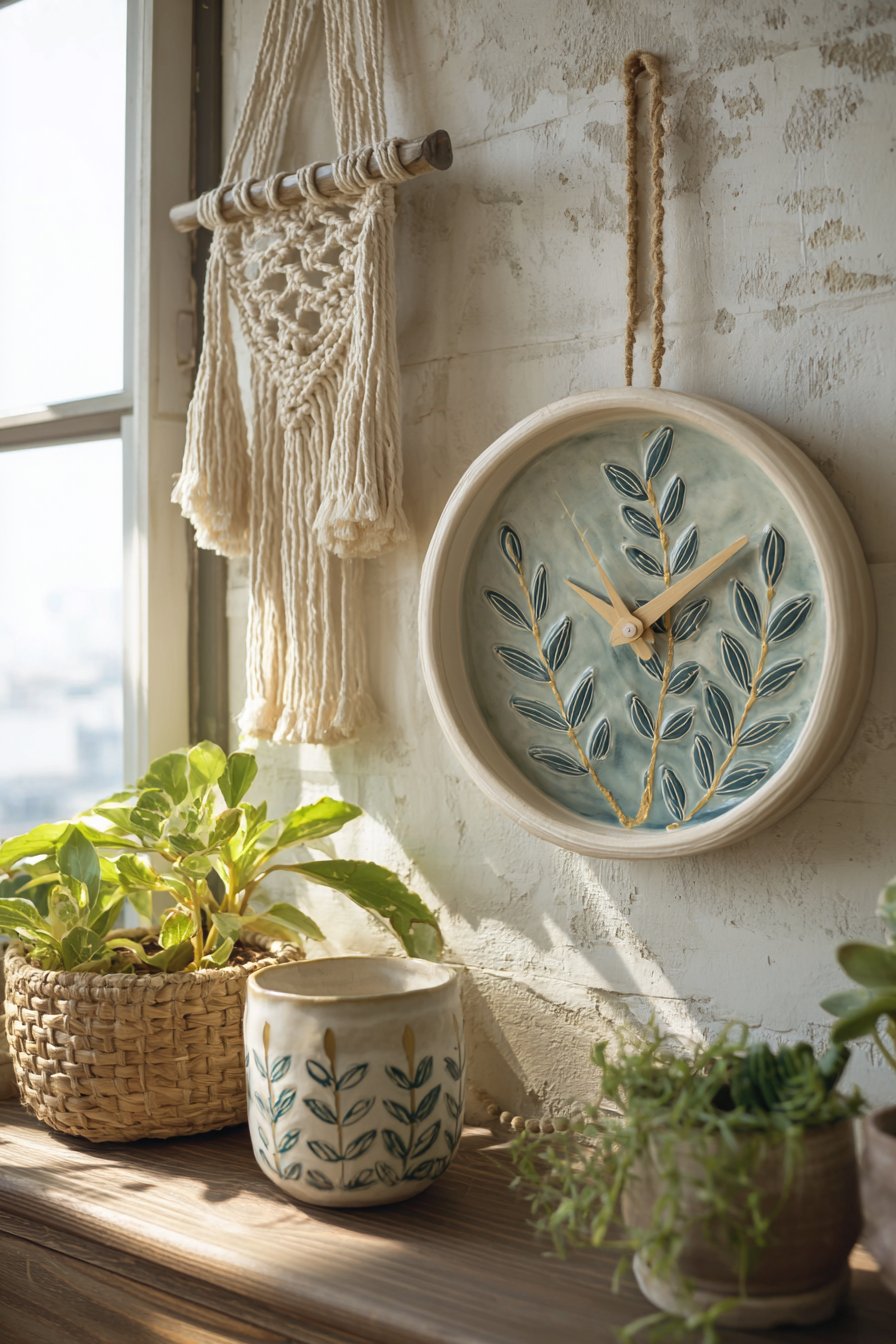
Positioned in a bohemian-style bedroom on a textured wall with macramé and plants nearby, this handcrafted clock reinforces the space’s artisanal narrative. Natural window light emphasizes the ceramic texture and artistic details, highlighting how glaze pools slightly thicker in recessed areas while flowing thinner on raised surfaces. These variations aren’t defects—they’re evidence of handcraft and the ceramic firing process that makes each piece unique. The soft gray-blue glaze creates calming color that enhances bedroom tranquility while gold accents add precious metal elegance.
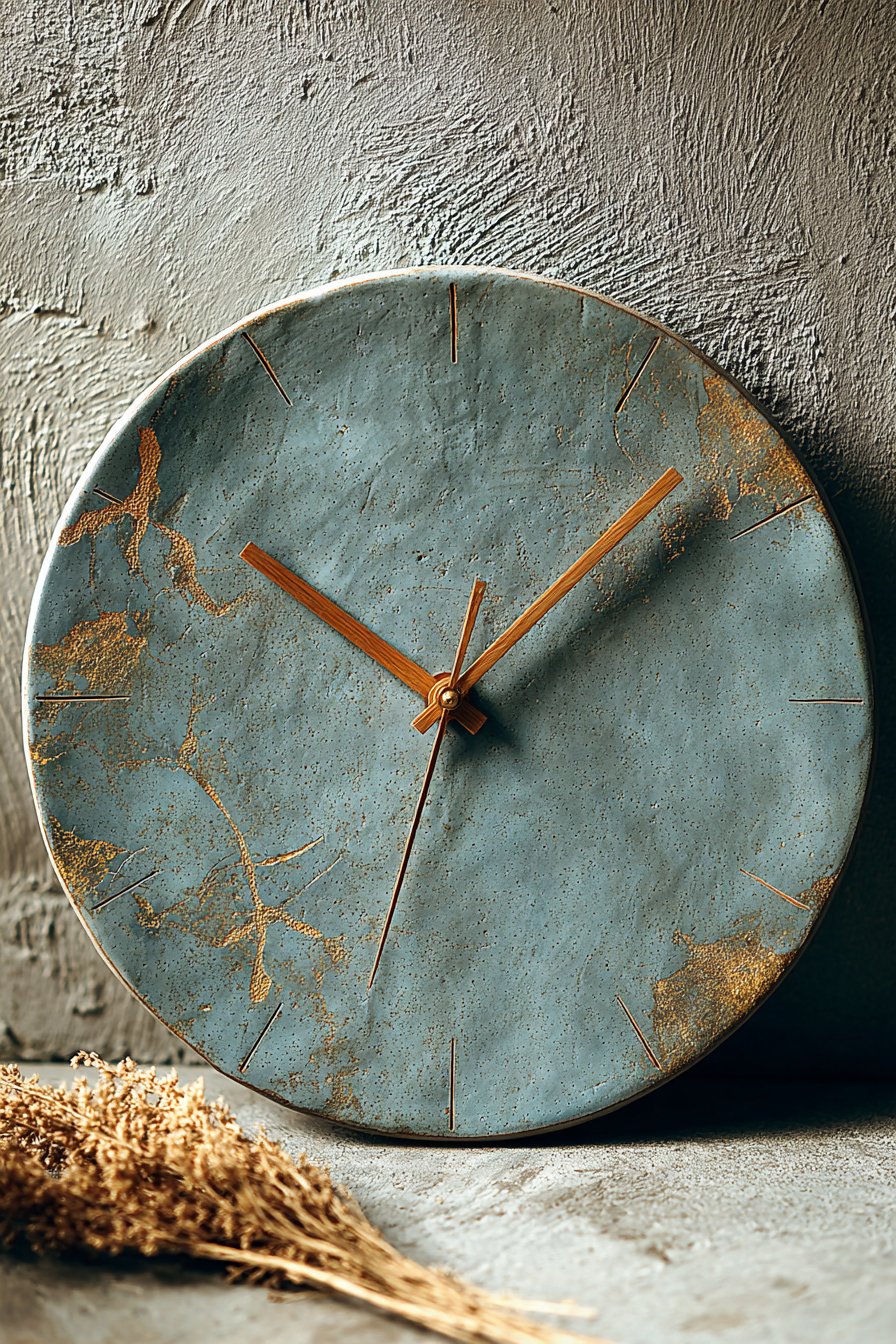
The ceramic material connects the clock to ancient pottery traditions while the contemporary glazing and minimalist form feel decidedly modern. Stoneware clay bodies offer durability and substantial weight that communicates quality. The hand-painted gold accents require steady hand and artistic eye, as metallic lusters behave differently than regular glazes during firing. Natural wood hands introduce organic warmth that complements the earthy ceramic. In bohemian spaces celebrating handcraft, natural materials, and artistic expression, such unique pieces become treasured objects rather than mere accessories.
Key Design Tips:
- Seek out individual artist-makers rather than mass-produced “handmade-style” clocks
- Appreciate glaze variations as marks of authenticity rather than imperfections
- Pair with other handcrafted elements like macramé, woven textiles, and artisan ceramics
- Position where natural light can highlight ceramic surface texture and glaze depth
- Choose colors that promote desired mood—blues and greens for calm, warm tones for energy
19. Retro Flip Clock Design
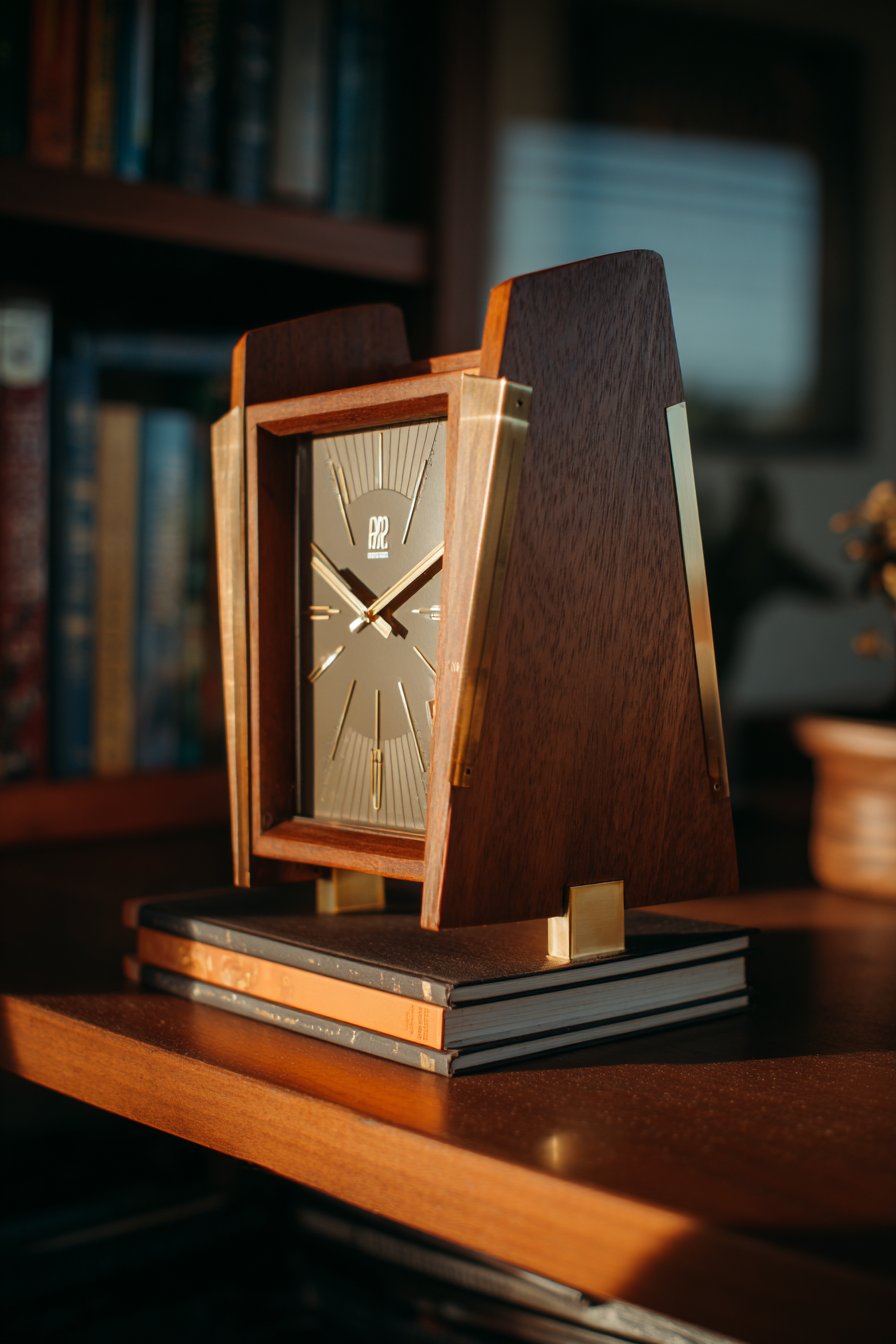
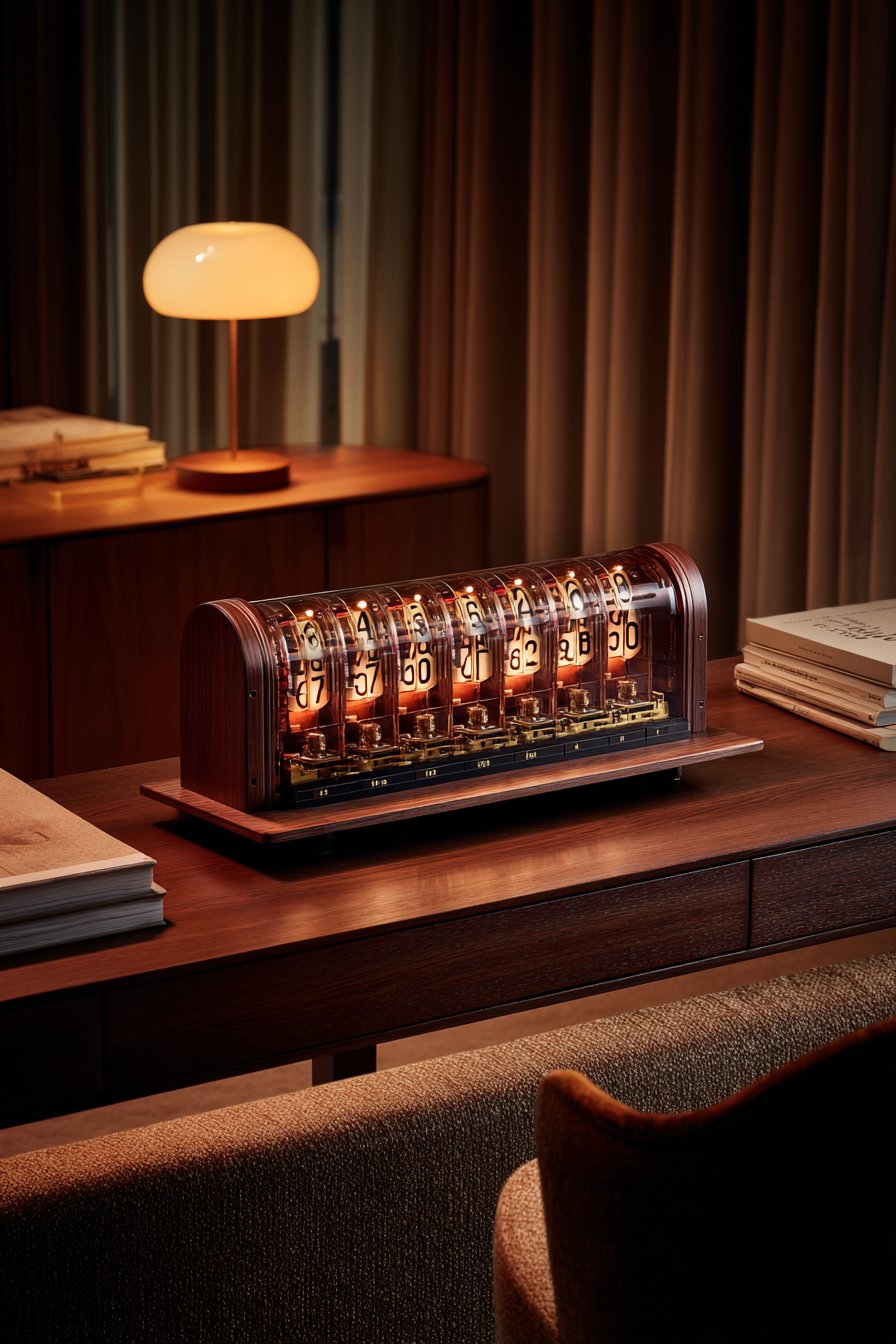
Nostalgia for analog technology finds expression in this retro flip clock design with large numerical cards that flip to display changing time. The vintage-inspired housing features walnut wood finish and brass accents that reference 1960s and 70s design aesthetics when flip clocks represented cutting-edge timekeeping technology. The 10-inch tall mechanical timepiece can sit on a floating shelf or be wall-mounted, offering installation flexibility. The satisfying mechanical flip sound becomes part of the clock’s charm, audibly marking time’s passage.
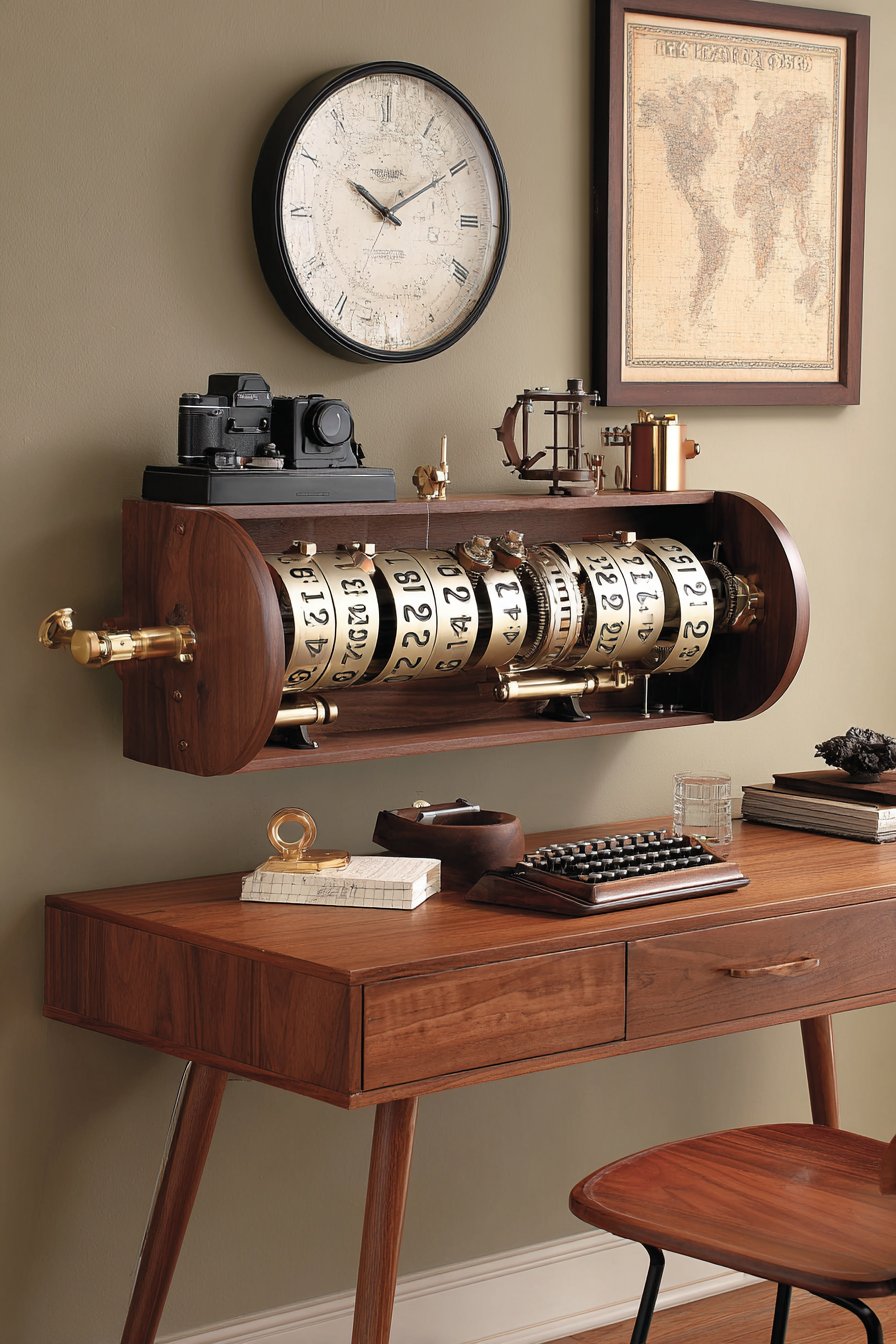
Displayed in a mid-century modern study with period furniture and warm task lighting, this flip clock reinforces the space’s vintage character. Warm lighting highlights the nostalgic design and functional movement, casting subtle shadows that emphasize the three-dimensional flip cards. The walnut wood finish connects to mid-century modern furniture traditions while brass accents add premium material touches. The flip mechanism creates gentle movement every minute, providing subtle animation that draws occasional glances without demanding constant attention.
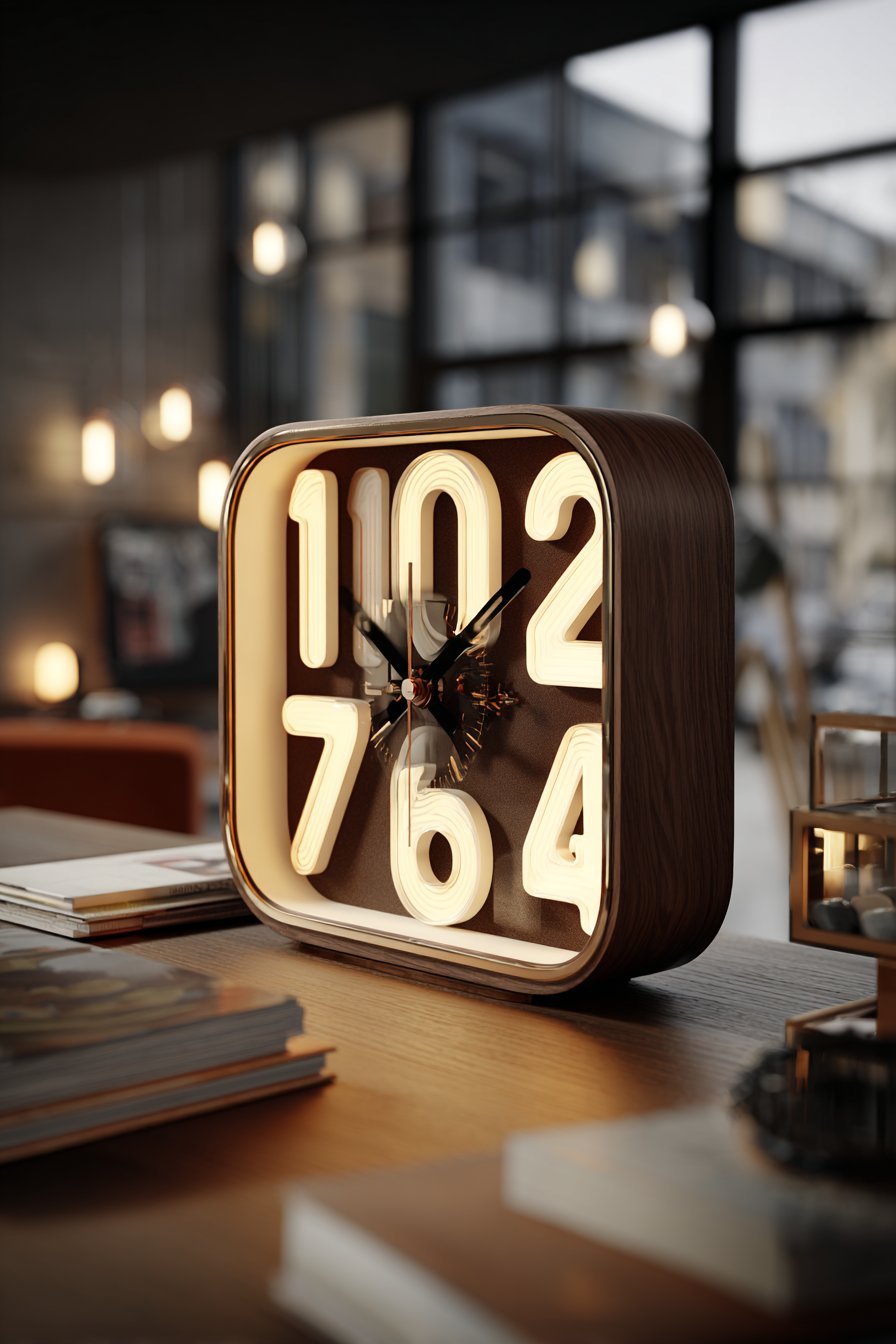
The flip card display offers unique advantages over traditional clock faces. The large numbers provide excellent readability from various distances and angles. The mechanical flip action has satisfying tactile and auditory qualities that digital displays cannot replicate. There’s something deeply appealing about analog mechanical processes in our increasingly digital world—the flip clock reminds us that technology can be both functional and charming. In retro-inspired spaces, such period-appropriate accessories complete the temporal narrative.
Key Design Tips:
- Choose quality flip mechanisms that operate reliably for years
- Position where the gentle flip sound won’t disturb sleeping or focused work
- Pair with other mid-century modern pieces in walnut, teak, or rosewood
- Ensure the display is positioned at comfortable viewing height (eye level when seated)
- Appreciate the mechanical movement as feature rather than distraction
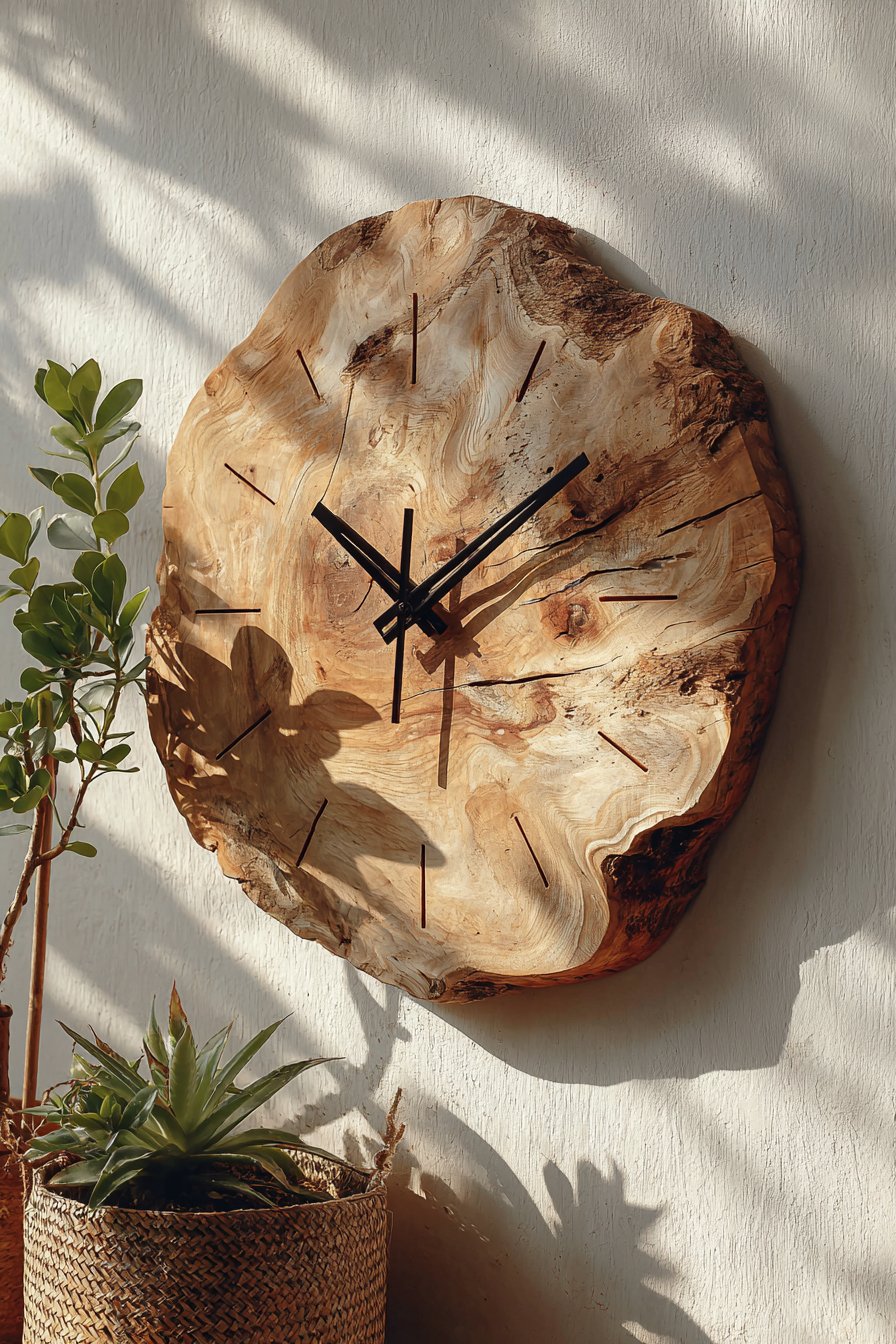
20. Live-Edge Wood Natural Clock
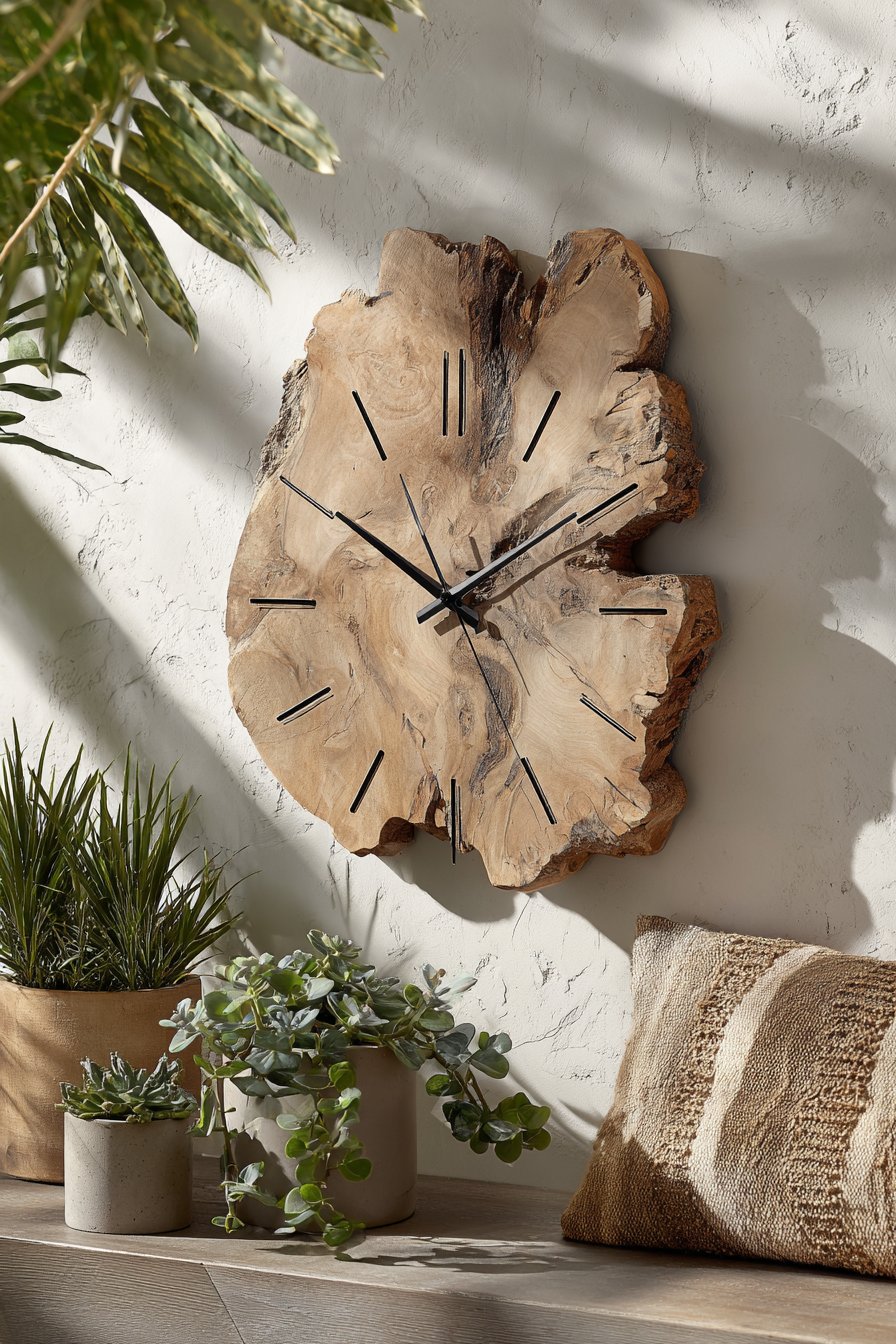
Organic design celebrates nature’s irregular beauty, perfectly demonstrated by this wall clock crafted from a live-edge wood slice with bark intact. The 18-inch rustic timepiece showcases natural wood grain patterns and the organic, irregular shape that no manufactured product could replicate. Simple black metal hands centered on the irregular wood face provide necessary contrast for time reading while maintaining design restraint. This nature-inspired approach brings the forest directly into your home, celebrating wood’s inherent beauty rather than forcing it into standardized forms.
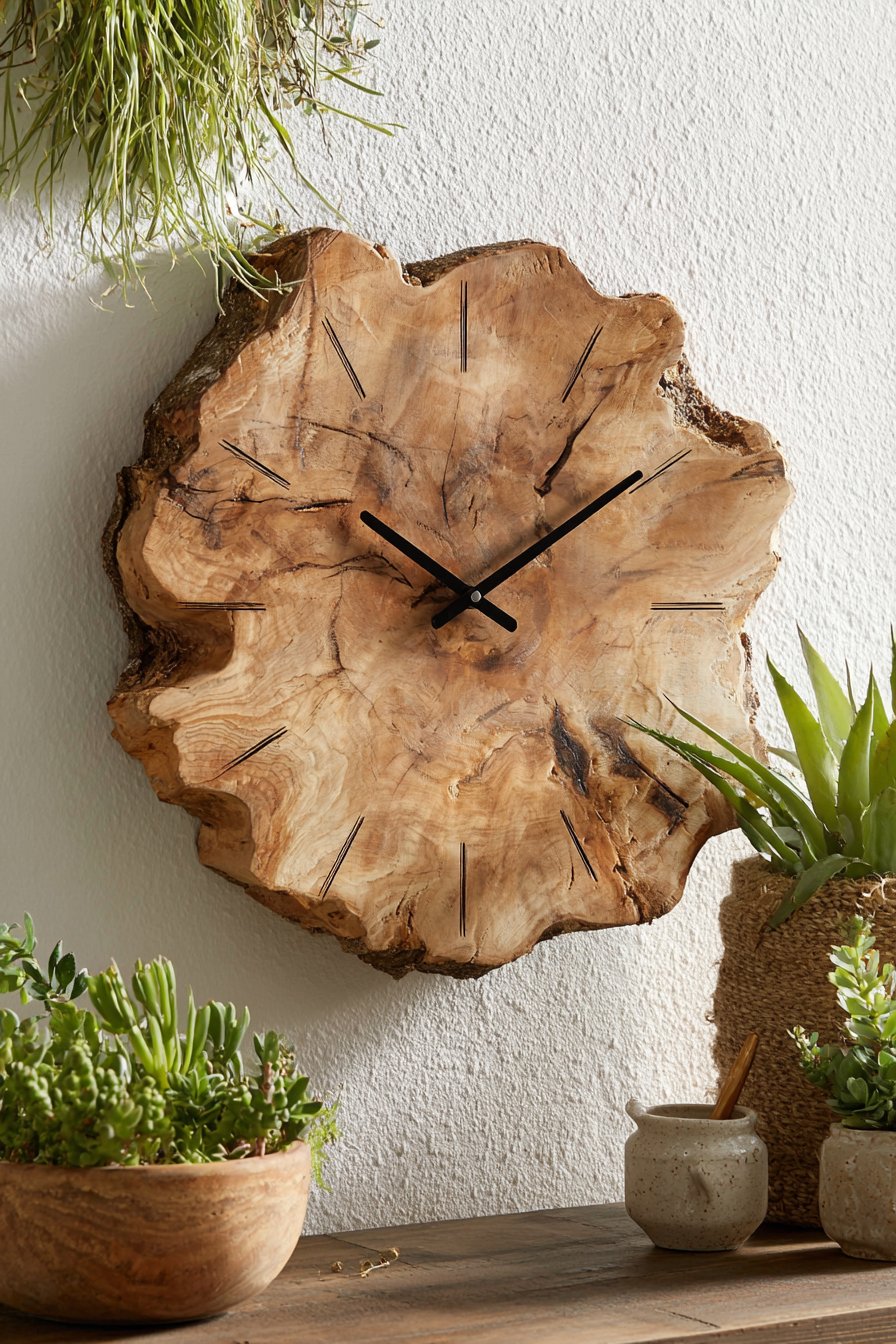
Mounted on white walls in a modern farmhouse setting with potted plants and natural textures nearby, this clock creates a stunning focal point. Soft natural lighting emphasizes the unique wood characteristics and organic aesthetic, highlighting grain patterns, natural color variations, and the textural contrast between smooth wood surface and rough bark edge. Each live-edge clock is genuinely one-of-a-kind since no two tree cross-sections share identical shape or grain pattern. The white wall provides clean backdrop that allows the wood’s natural beauty to shine without visual competition.
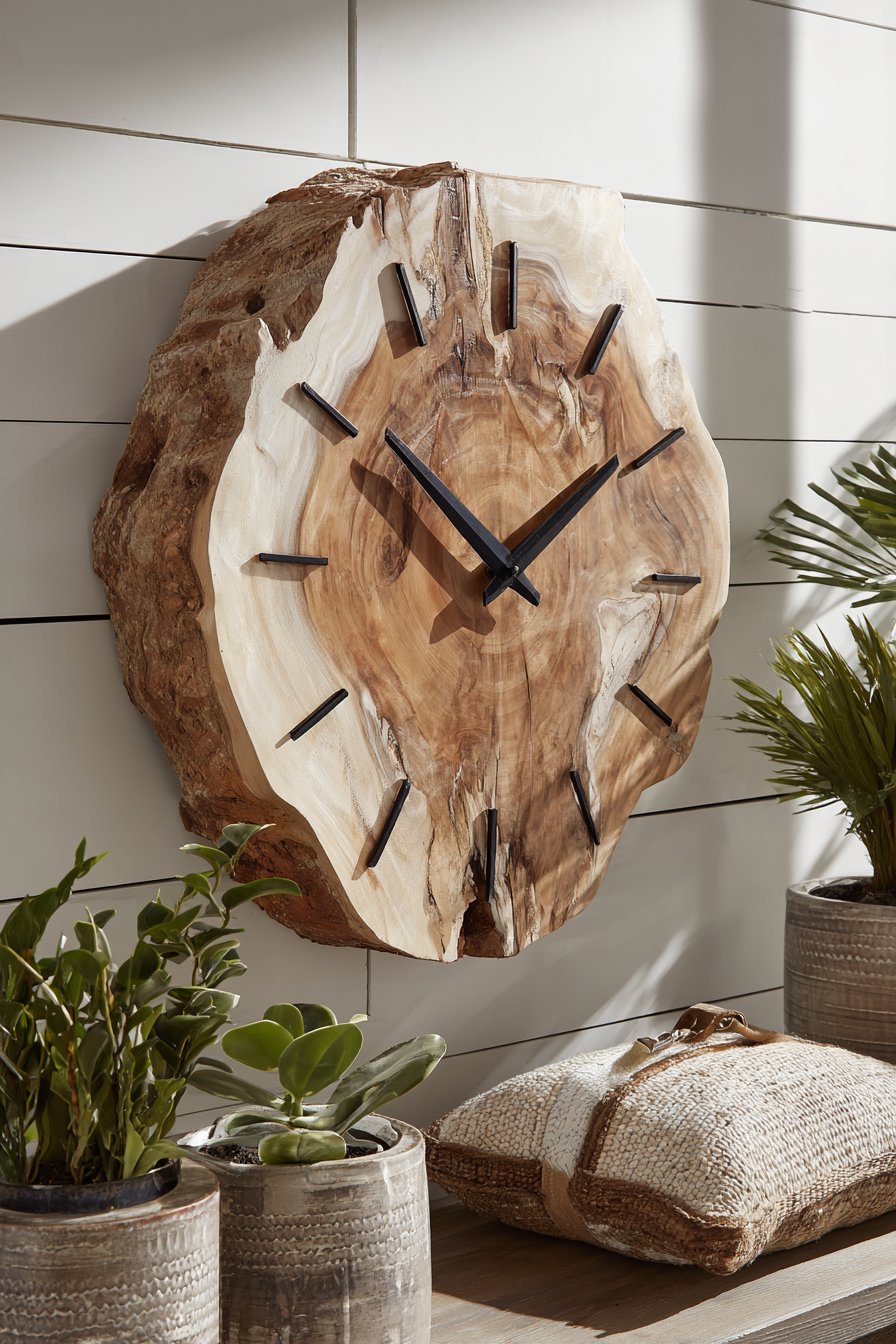
The bark inclusion adds crucial authenticity and textural interest. Rather than trimming away these “imperfect” edges, the design celebrates them as evidence of the wood’s natural origin. The irregular shape means the clock won’t conform to standard dimensional specifications—it might be roughly 18 inches at the widest point but narrower elsewhere. This organic variability feels refreshing in a world of mass-produced precision. In modern farmhouse settings that blend rustic materials with contemporary simplicity, such natural elements provide essential warmth and character.
Key Design Tips:
- Accept and celebrate irregular shapes rather than seeking perfect circles
- Choose sustainably harvested wood from reputable sources
- Position against simple, light-colored walls to showcase natural wood beauty
- Incorporate other natural elements like plants, stone, and fiber to create material harmony
- Understand that natural wood changes subtly with age—consider this evolution a feature
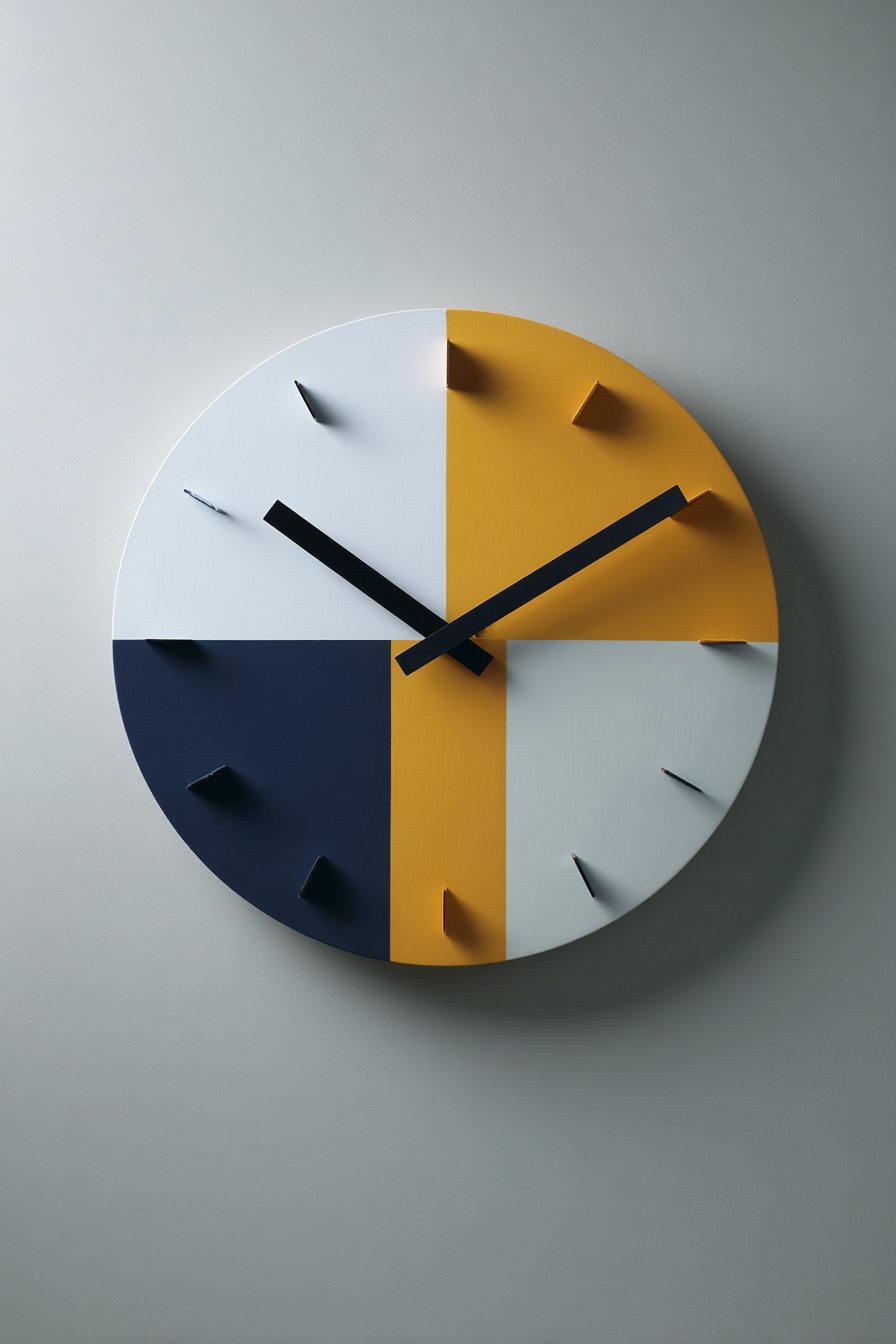
21. Bold Graphic Memphis-Style Clock
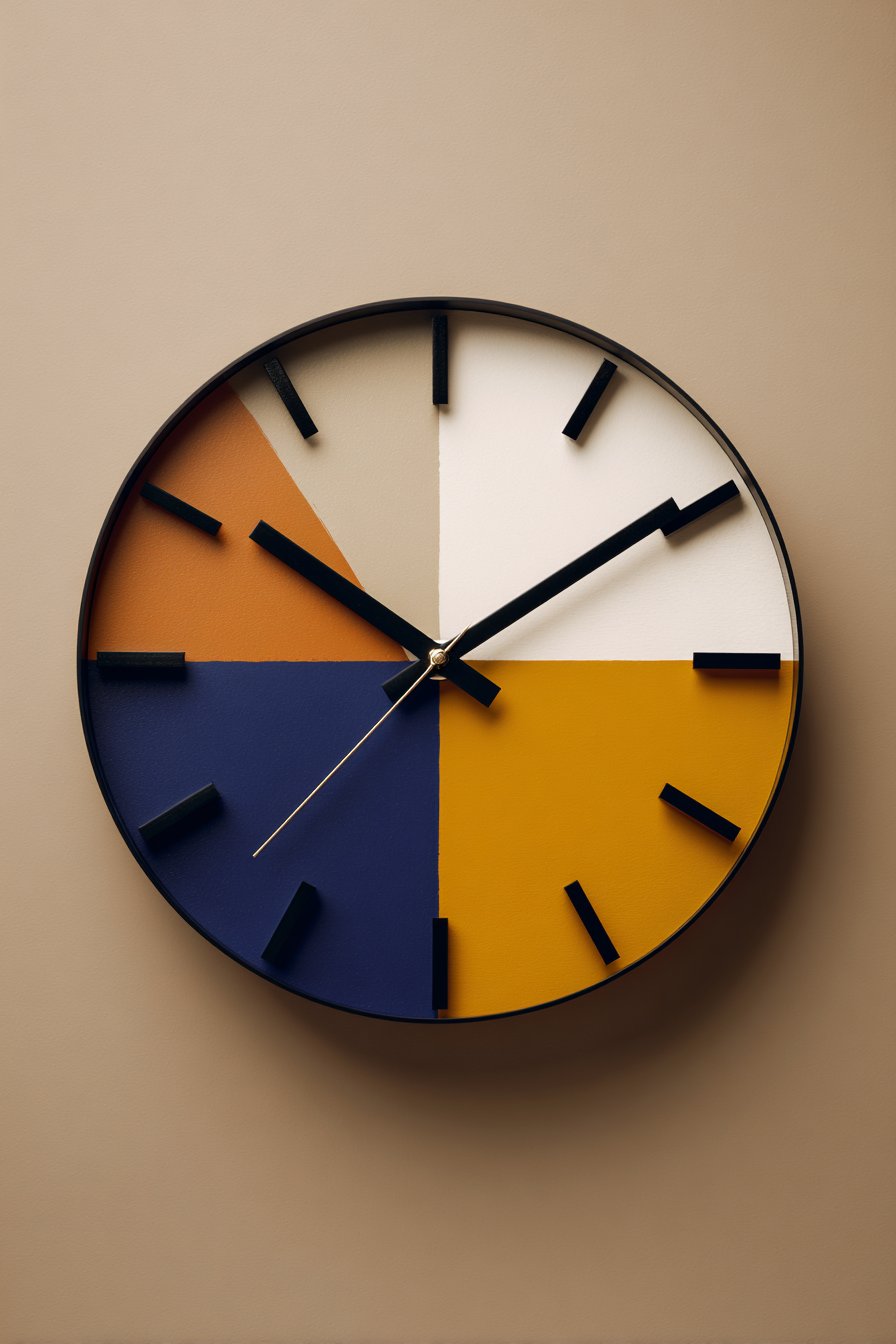
Postmodern design celebrates color, pattern, and playful geometry, all brilliantly expressed in this bold graphic wall clock with Memphis-style aesthetic. The 20-inch statement piece features color-blocked geometric sections in navy blue, mustard yellow, and white creating energetic visual composition. Chunky black hands and simplified hour markers maintain readability while contributing to the graphic design language. This postmodern approach rejects minimalism’s restraint in favor of exuberant expression and visual excitement.
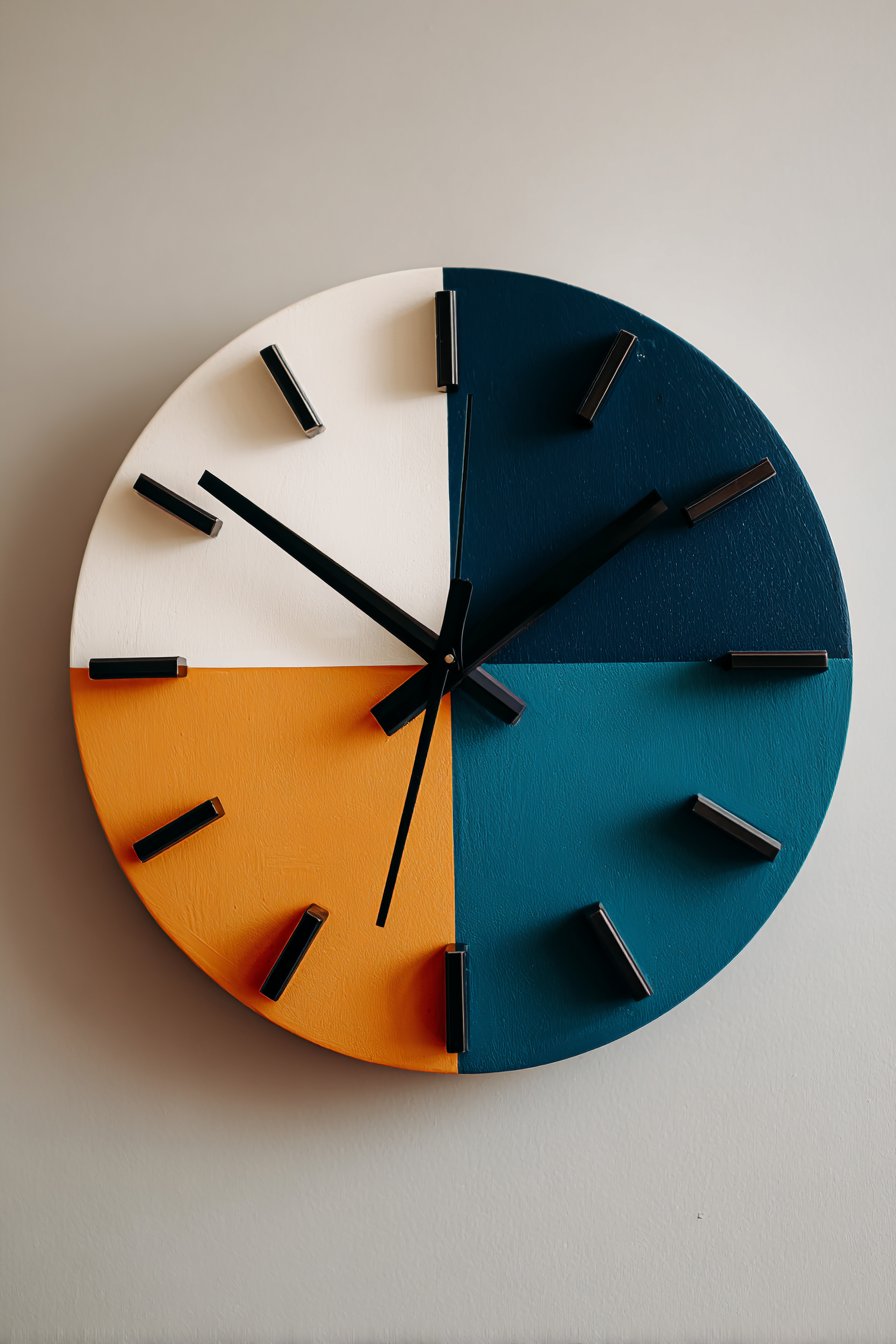
Positioned on a neutral wall in an eclectic living space with contemporary art and vibrant accent pieces, this clock becomes an artwork in its own right. Professional interior photography with even lighting captures the playful color combinations and graphic design elements, demonstrating how the clock contributes to the room’s overall creative energy. The bold color blocking creates strong visual impact from across the room while the geometric composition rewards closer examination. Navy blue provides visual weight and sophistication, mustard yellow adds warmth and energy, and white creates breathing room and contrast.
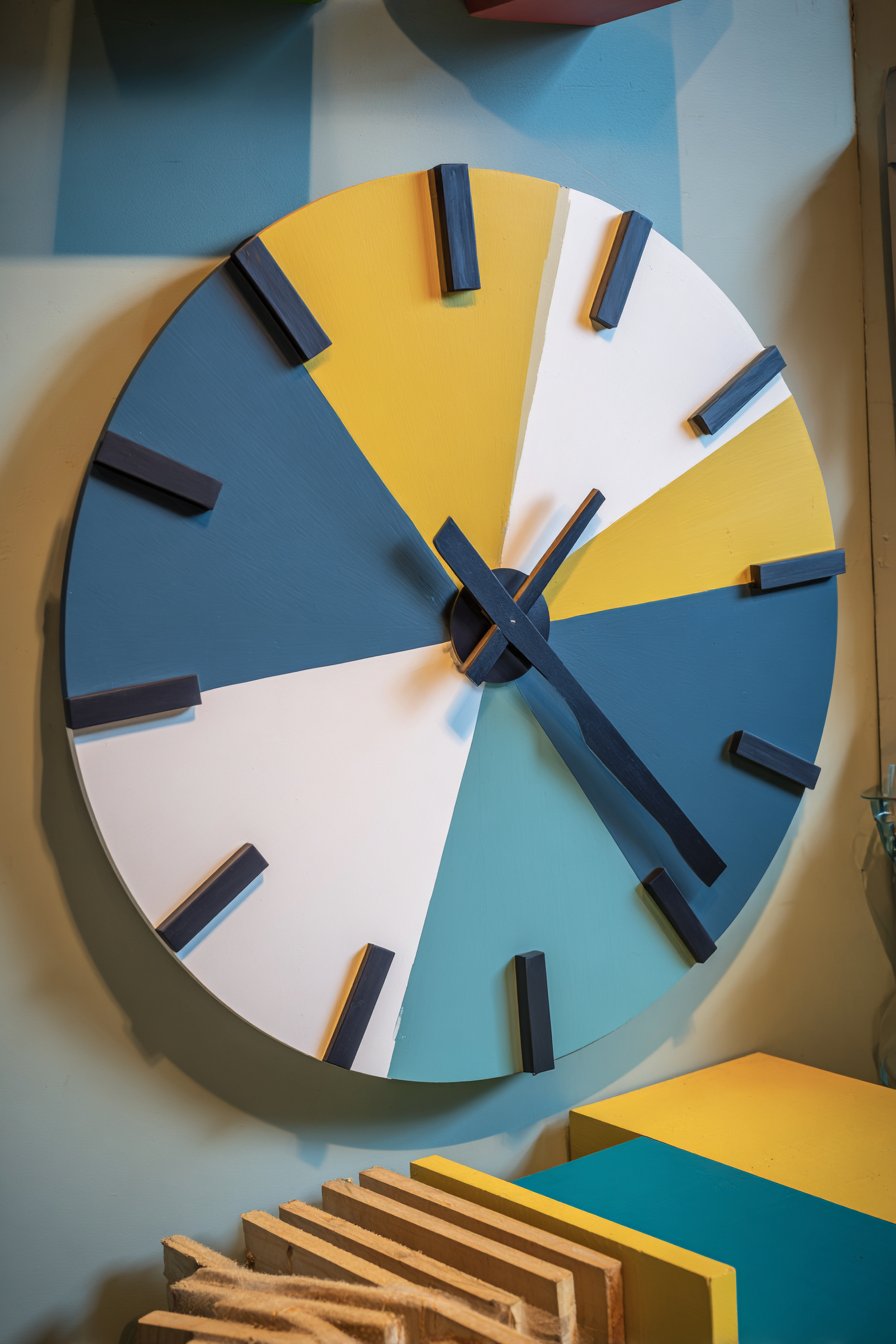
The Memphis design movement of the 1980s rejected both modernist austerity and traditional ornamentation in favor of bold colors, geometric forms, and playful combinations. This clock references those principles while adapting them for contemporary interiors. The chunky hands aren’t accidental—they’re deliberately oversized to match the bold graphic aesthetic. In eclectic spaces that embrace color, pattern, and creative expression, such confident designs provide necessary energy and personality.
Key Design Tips:
- Embrace bold color combinations rather than safe neutrals for Memphis-style impact
- Balance graphic clocks with some neutral elements to prevent visual overwhelm
- Position as focal point where the bold design can take center stage
- Pair with other postmodern or eclectic pieces rather than traditional decor
- Ensure color choices coordinate with (but don’t necessarily match) existing palette
- Appreciate playfulness as legitimate design value, not childishness
Conclusion
Wall clocks have evolved far beyond simple timekeeping devices to become essential design elements that can define a room’s character, establish focal points, and express personal style. From the serene simplicity of Scandinavian wooden designs to the bold graphic energy of Memphis-style color blocking, from the industrial authenticity of exposed gear mechanisms to the organic beauty of live-edge wood slices, the diversity of wall clock designs offers something for every aesthetic preference and interior style.
The key to selecting the perfect wall clock lies in understanding how it will function within your specific space. Consider the room’s proportions—oversized clocks command attention in double-height spaces while more modest sizes suit intimate rooms. Think about existing materials and finishes—does your space call for the warmth of natural wood, the cool sophistication of metallic finishes, or the unexpected elegance of marble and gold? Evaluate your lifestyle needs—bedrooms benefit from silent movements, offices may appreciate hybrid digital-analog displays, and high-traffic areas might welcome illuminated designs for nighttime visibility.
Most importantly, choose a clock that resonates with your personal aesthetic vision and brings you genuine pleasure every time you glance at it. Whether you’re drawn to vintage romance, contemporary innovation, rustic authenticity, or artistic expression, there’s a wall clock design that will not only tell you the time but will also tell your story. Let these twenty-one ideas inspire you to see wall clocks not as mere accessories but as opportunities to enhance your living spaces with functional beauty that stands the test of time.
