
The art of curating a vintage gallery wall represents one of the most personally expressive and visually captivating ways to transform any room in your home. Unlike modern minimalist approaches that favor sparse decoration, vintage gallery walls celebrate the beauty of collected treasures, family heirlooms, and carefully sourced antique finds. These carefully composed arrangements tell stories—of travels taken, generations past, and aesthetic sensibilities that transcend fleeting trends. A thoughtfully designed vintage gallery wall becomes more than mere decoration; it evolves into a conversation piece, a family archive, and a testament to your appreciation for timeless beauty and craftsmanship.
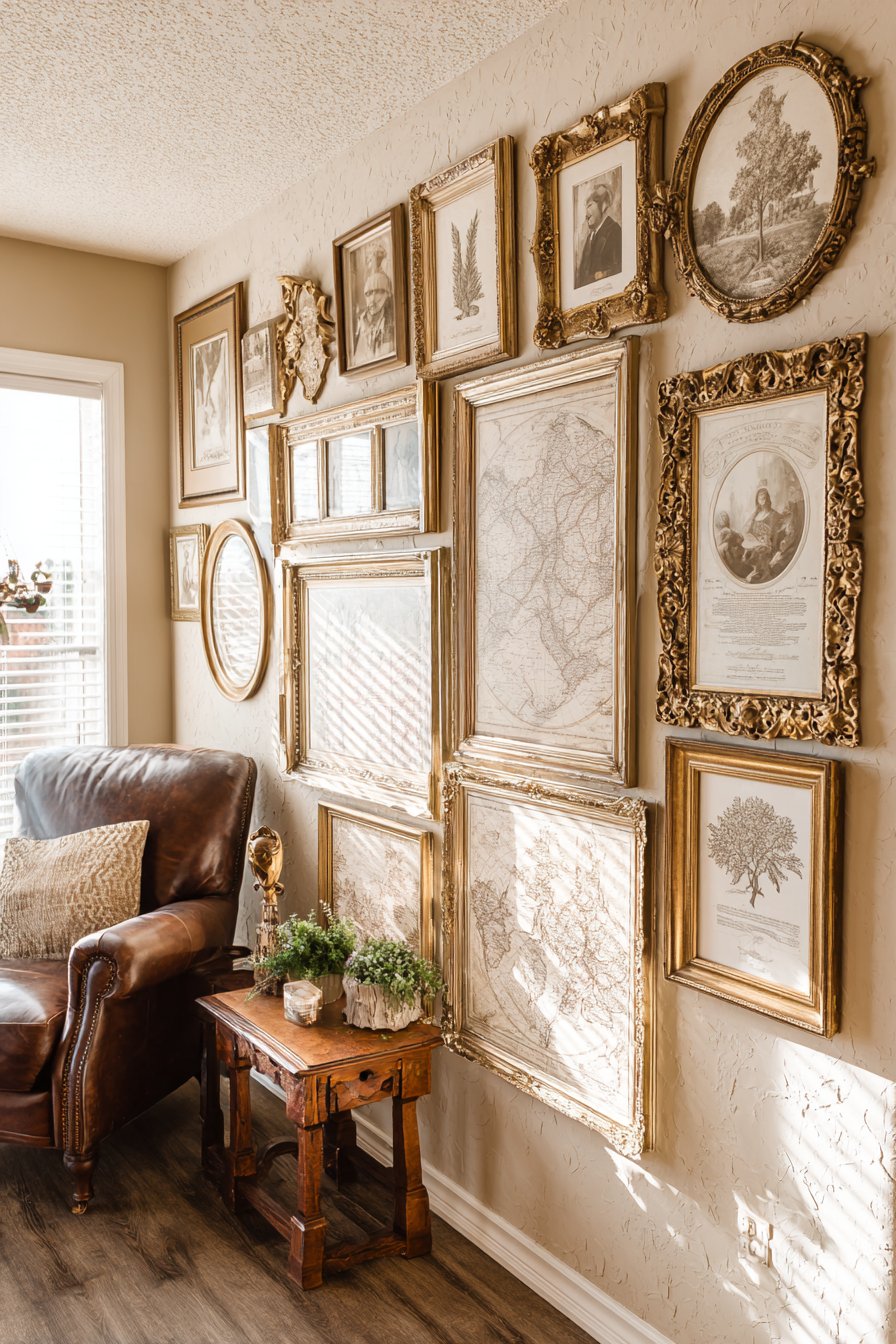
Creating the perfect vintage gallery wall requires a delicate balance between artistic vision and practical execution. The interplay of frame styles, artwork selections, and spatial arrangements can dramatically affect the ambiance of your space. Whether you’re drawn to ornate gilded frames reminiscent of European salons, weathered wooden frames that evoke farmhouse charm, or eclectic collections that showcase your bohemian spirit, the possibilities are virtually limitless. Each approach offers unique opportunities to infuse character, warmth, and historical depth into modern living spaces.
In this comprehensive guide, we’ll explore twenty-one distinctive vintage gallery wall concepts that span a diverse range of aesthetics—from formal Victorian elegance to casual cottage charm, from industrial edge to romantic femininity. Each design demonstrates how carefully selected frames, thoughtfully chosen artwork, and strategic placement can transform ordinary walls into extraordinary focal points. Whether you’re furnishing a cozy reading nook, a grand hallway, or an intimate dining room, you’ll discover inspiration and practical guidance for creating your own vintage gallery wall masterpiece.
1. Asymmetrical Elegance with Ornate Gilded Frames
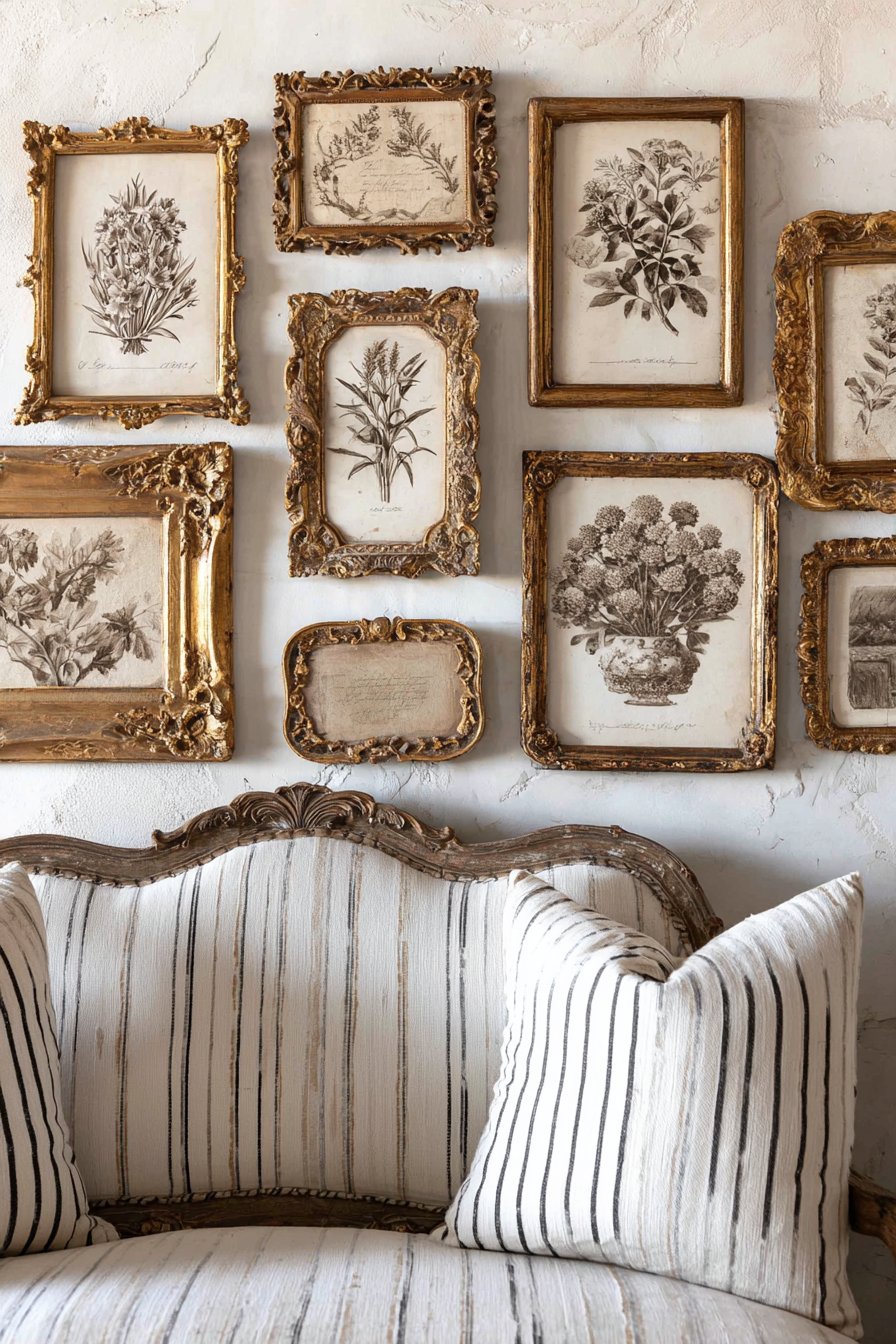
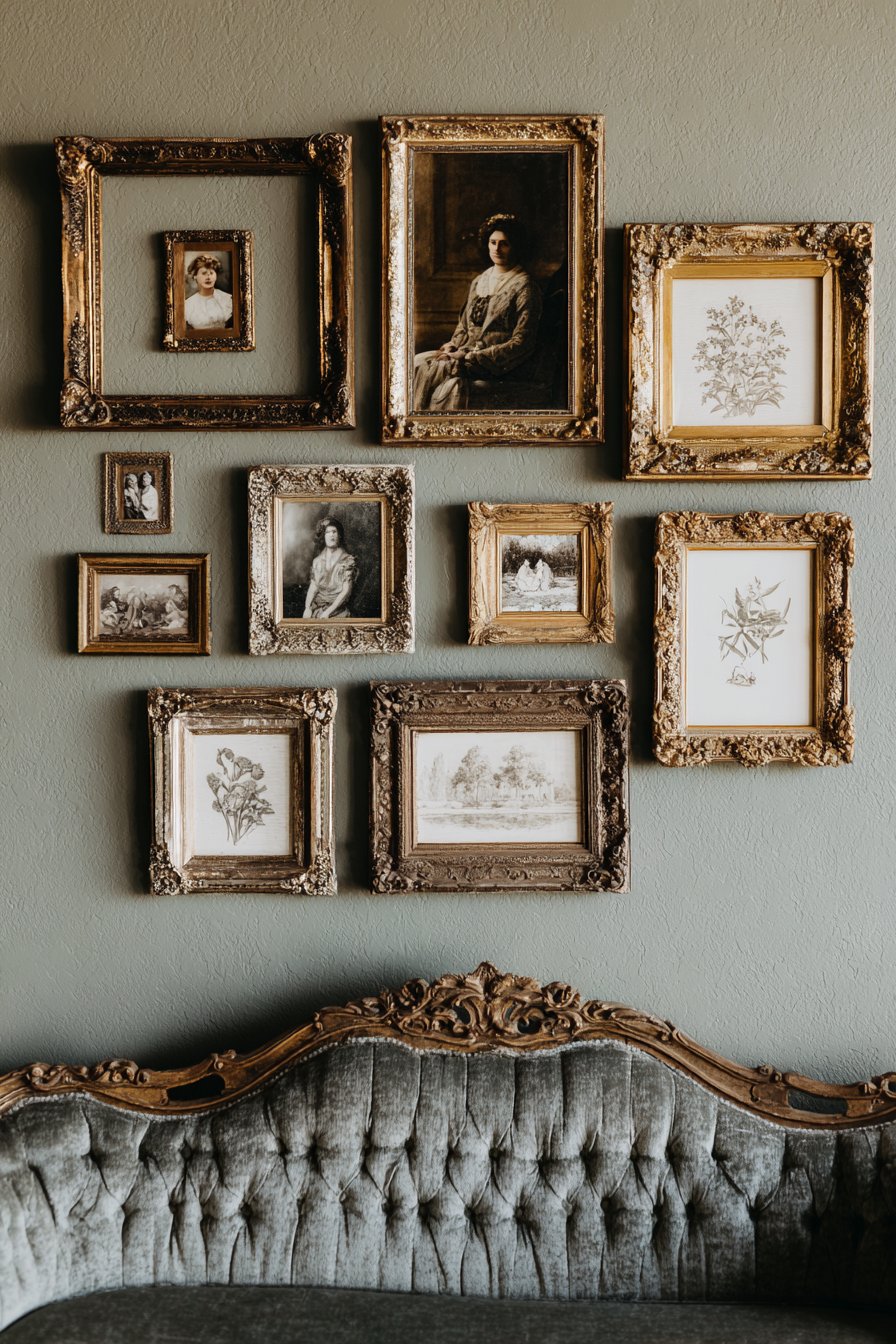
Step into a room where an asymmetrical arrangement of ornate gilded frames creates a stunning focal point against a soft sage green wall. This vintage gallery wall exemplifies the salon-style hanging tradition, where frames of varying sizes are arranged in an organic, balanced composition that feels both intentional and effortlessly collected over time. The sepia-toned family portraits and botanical prints within the frames add layers of historical intrigue, while the authentic patina on the gold frames speaks to generations of careful preservation.
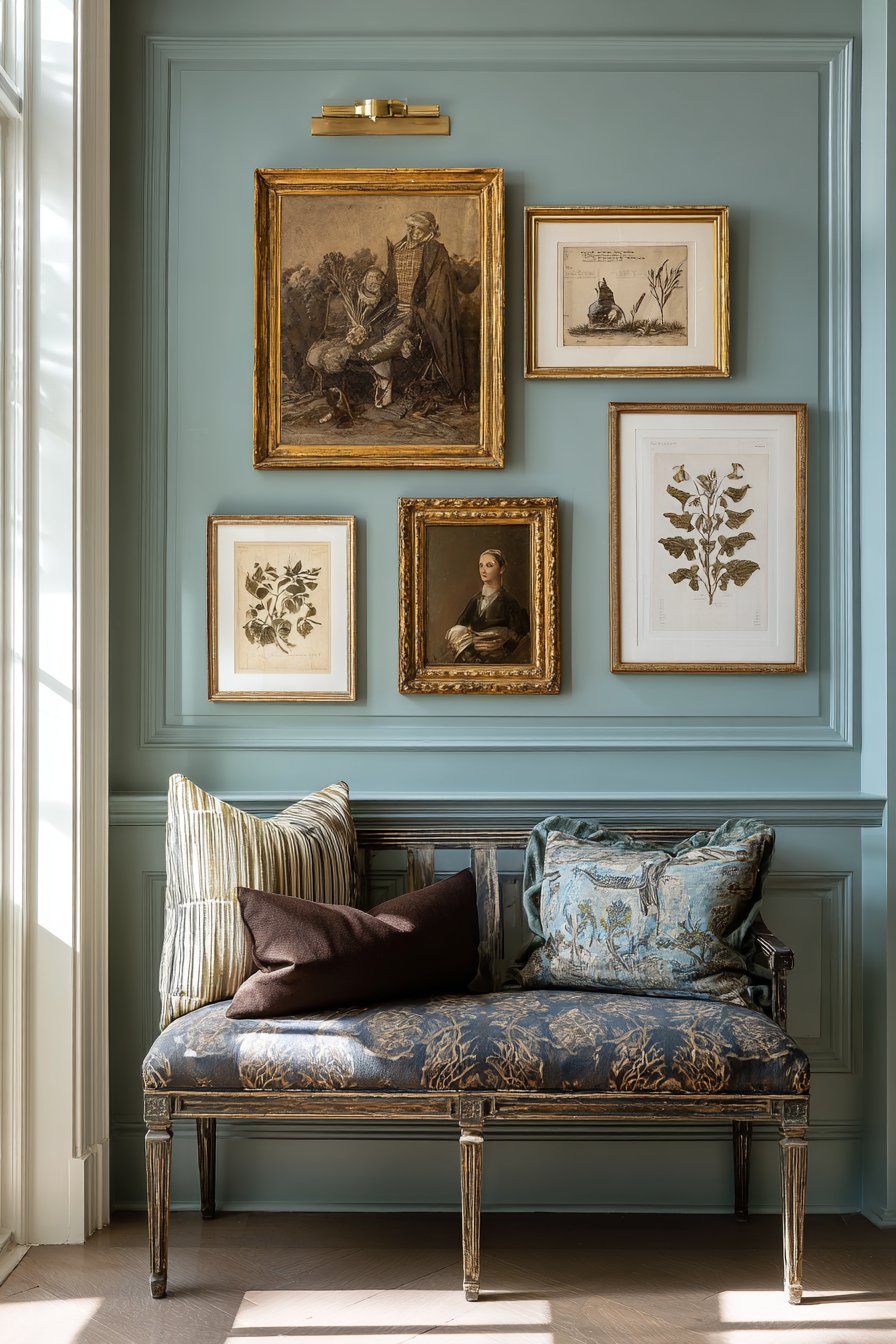
The magic of this design lies in its ability to combine formal elegance with approachable warmth. The Victorian-style settee positioned below the gallery wall serves both functional and aesthetic purposes, creating a intimate vignette that invites guests to pause and admire the collection. Natural daylight streaming through nearby windows creates subtle highlights on the metallic frame details, causing the gilded surfaces to shimmer and shift throughout the day, bringing dynamic visual interest to the space.
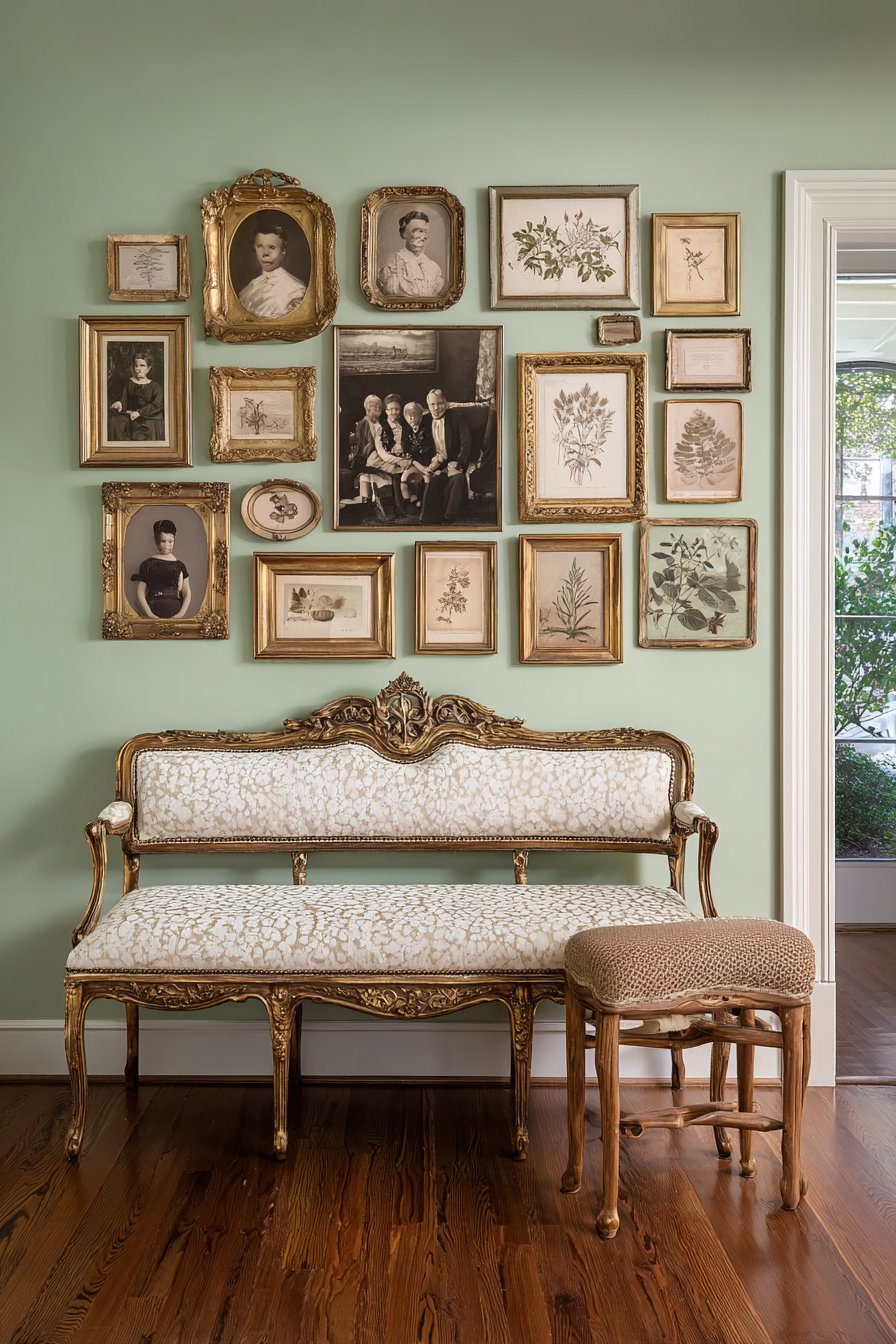
The textures in this arrangement work harmoniously to create depth and richness. The smooth glass protecting vintage prints contrasts beautifully with the raised ornamental details of the frames, while the soft sage green wall color provides a serene backdrop that allows the golden tones to truly shine. This color combination—sage and gold—represents a classic pairing that has remained popular in interior design for centuries because of its inherent sophistication and natural harmony.
Key Design Tips:
- Start with your largest frame as an anchor piece and build the arrangement outward from there
- Maintain consistent spacing between frames (typically 2-3 inches) for visual cohesion
- Mix portrait and landscape orientations to create dynamic visual flow
- Choose artwork with similar color palettes or themes to unify diverse frame styles
- Position the arrangement so the center point is at eye level (approximately 57-60 inches from the floor)
2. Eclectic Black and White Photography Collection
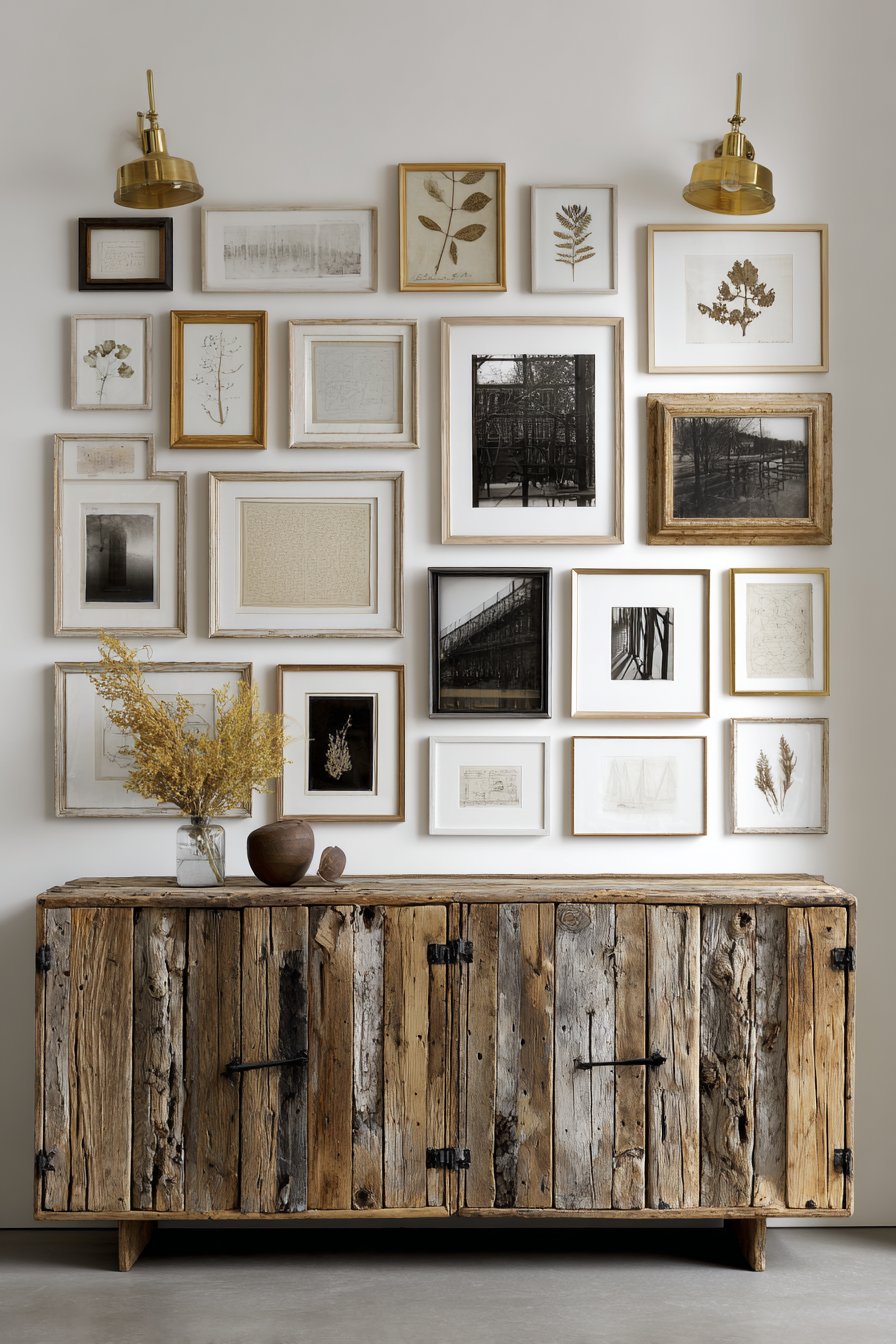
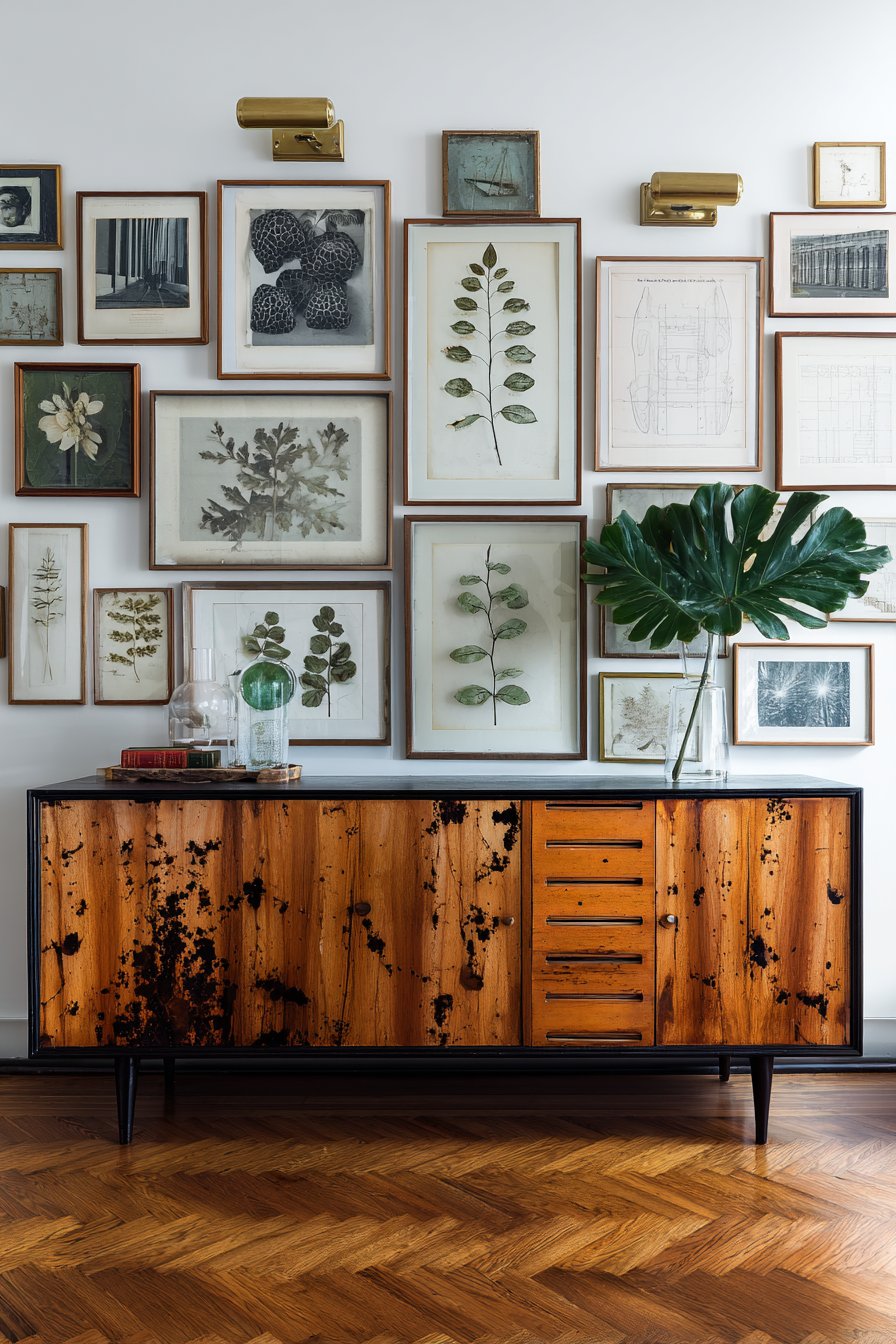
Above a sleek mid-century credenza, a curated vintage gallery wall showcases the timeless appeal of black and white photography housed in mismatched antique wooden frames. The deliberate imperfection of chipped paint and natural weathering on these frames adds authenticity and character that cannot be replicated by new reproductions. Each frame tells its own story through visible age marks, creating a layered narrative that complements the nostalgic quality of the monochrome imagery.
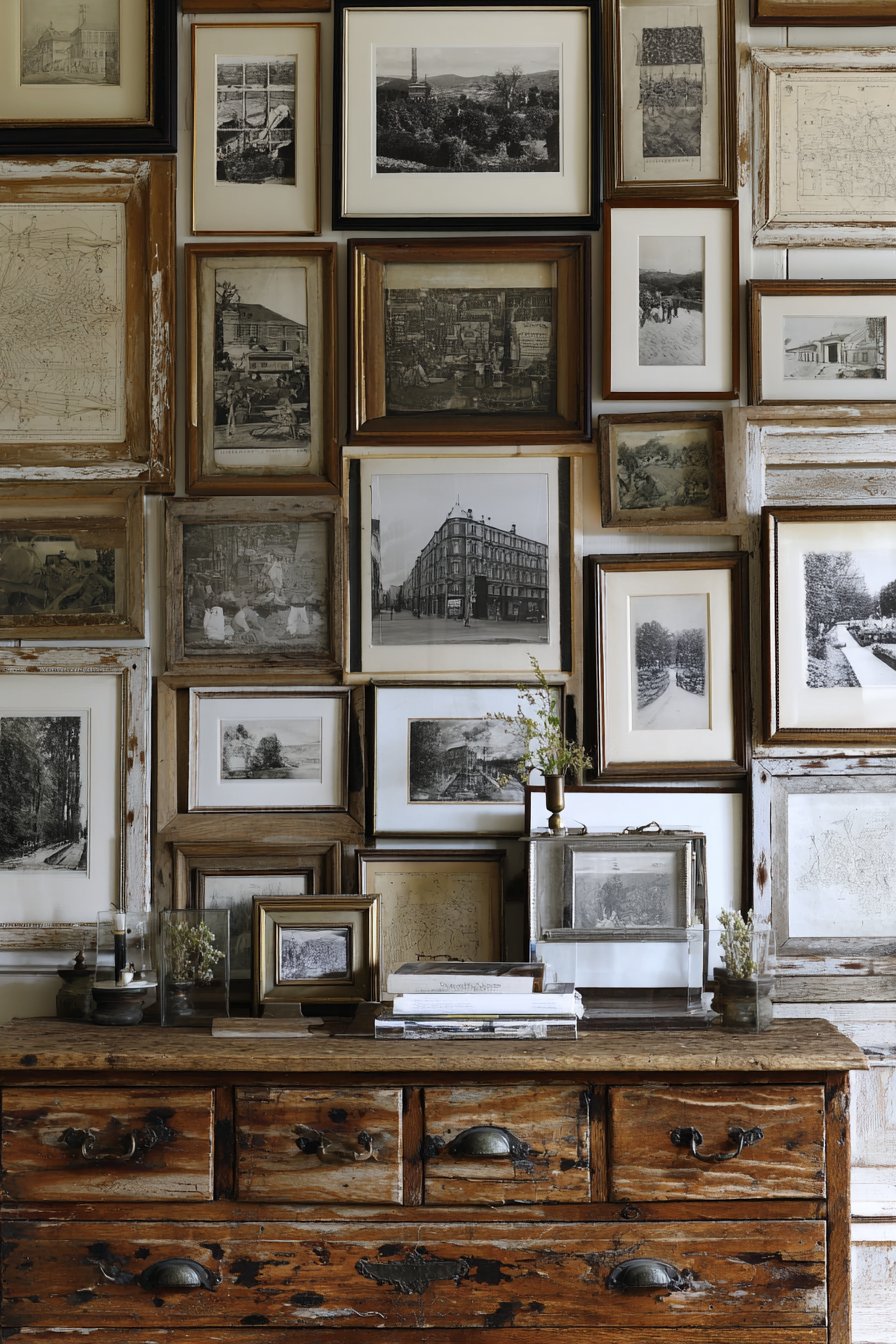
The inclusion of vintage brass picture lights elevates this gallery wall from casual collection to museum-quality display. These carefully positioned lights illuminate select pieces, creating focal points within the overall arrangement and adding a professional, gallery-like atmosphere to the space. Old architectural drawings and pressed botanical specimens under glass introduce variety in subject matter while maintaining the cohesive black and white color scheme that unifies the entire composition.
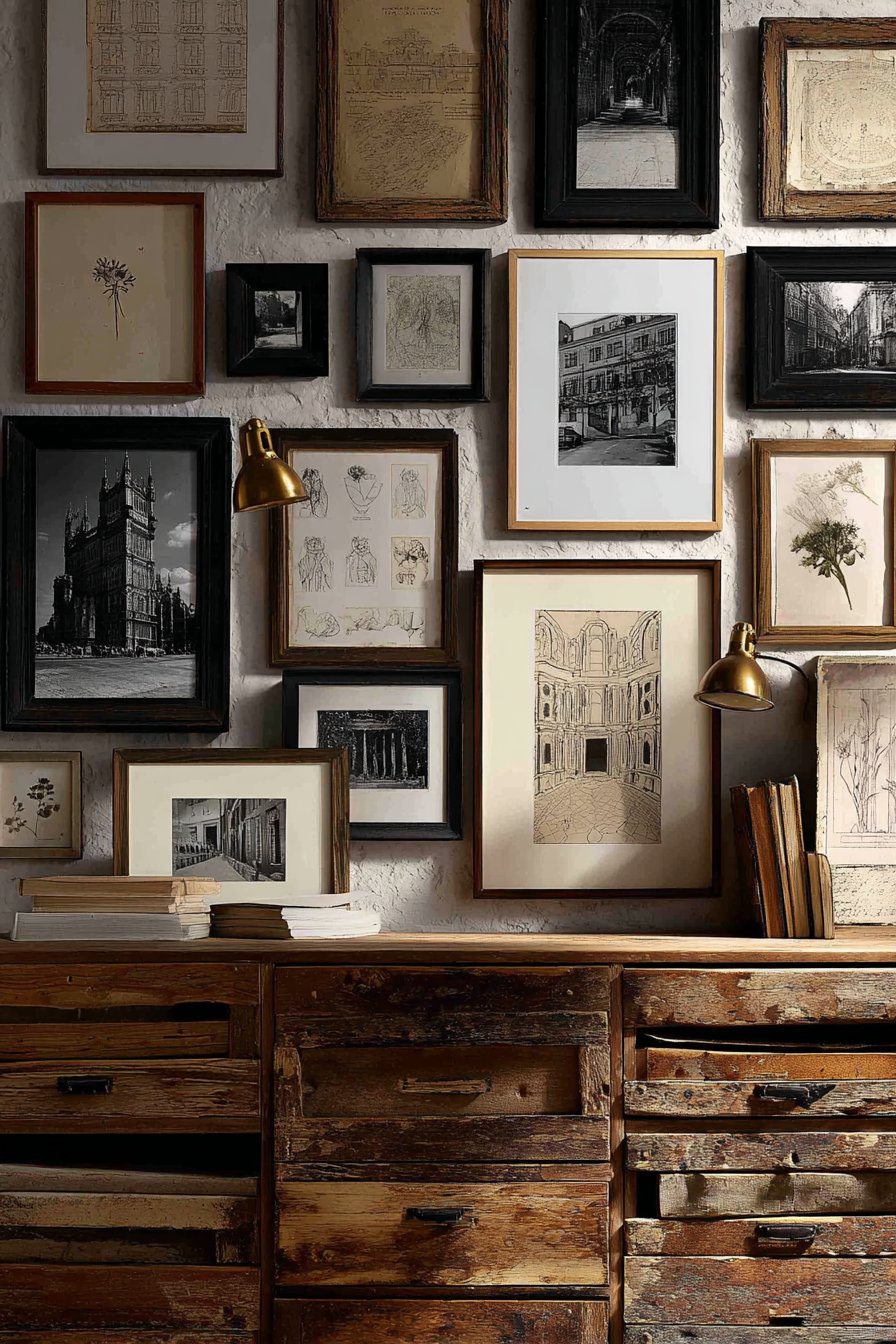
This approach to vintage gallery walls works particularly well in spaces with modern or contemporary furnishings, as demonstrated by the mid-century credenza below. The contrast between sleek modern lines and rustic vintage frames creates visual tension that keeps the eye engaged and prevents the space from feeling too matchy or contrived. The eclectic mix of frame styles and finishes prevents the arrangement from appearing too formal or precious.
Key Design Tips:
- Stick to a monochromatic color scheme in artwork to allow diverse frame styles to coexist harmoniously
- Install picture lights on a dimmer switch to adjust ambiance and highlight specific pieces
- Include varied subject matter (portraits, landscapes, abstracts, documents) to maintain visual interest
- Use acid-free matting and UV-protective glass to preserve vintage photographs and prints
- Allow some frames to show authentic wear rather than artificially distressing new frames
3. Victorian Salon-Style Layered Composition
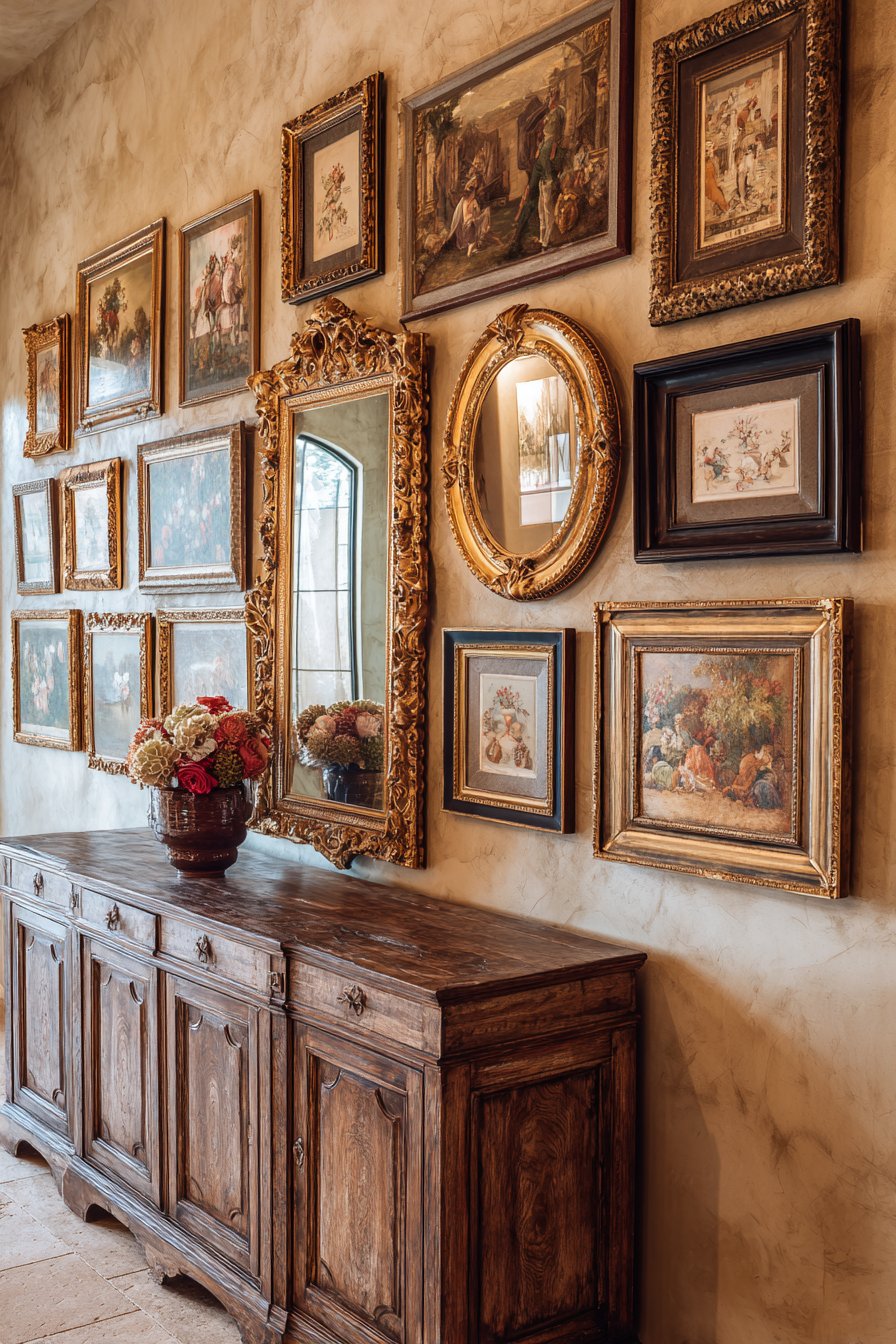
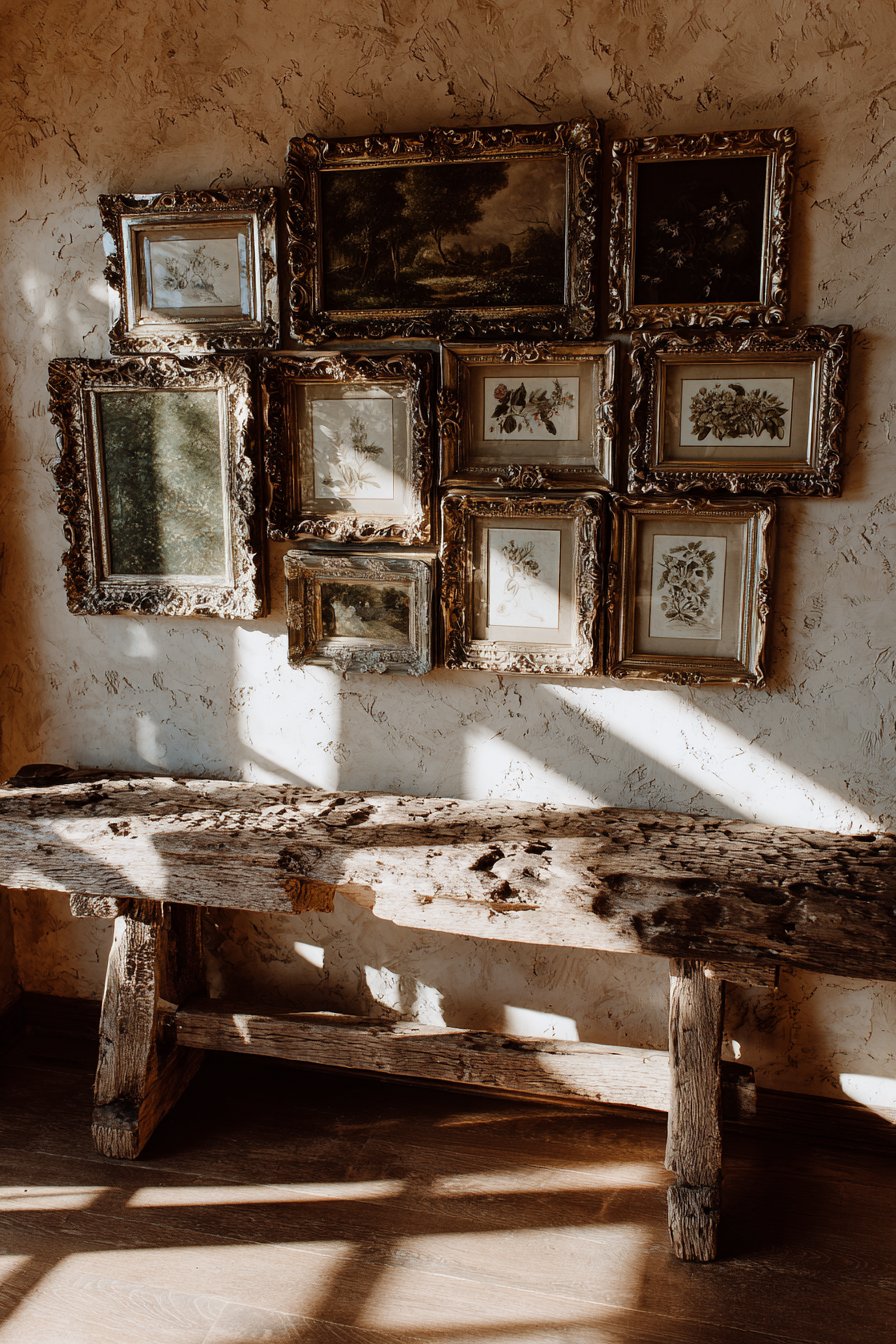
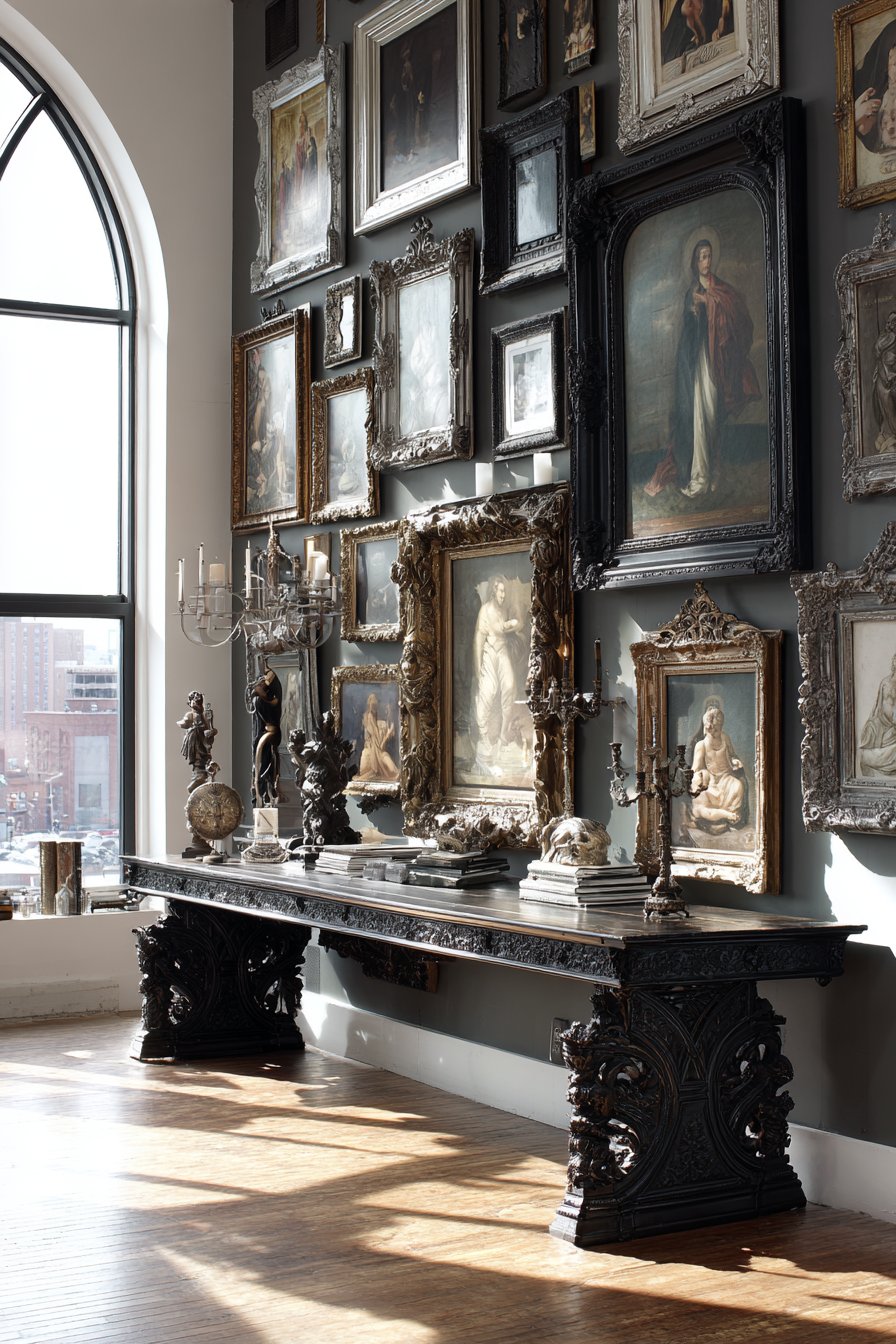
The grandeur of a salon-style vintage gallery wall arrangement comes alive through ornate Victorian frames in tarnished silver and aged brass finishes. This maximalist approach to wall decoration harks back to 19th-century European traditions where art collectors displayed their treasures in dense, floor-to-ceiling arrangements that demonstrated both wealth and cultural sophistication. The collection includes vintage oil paintings, antique mirrors with foxed glass, and aged botanical illustrations, each piece contributing to the overall narrative of refined taste and historical appreciation.
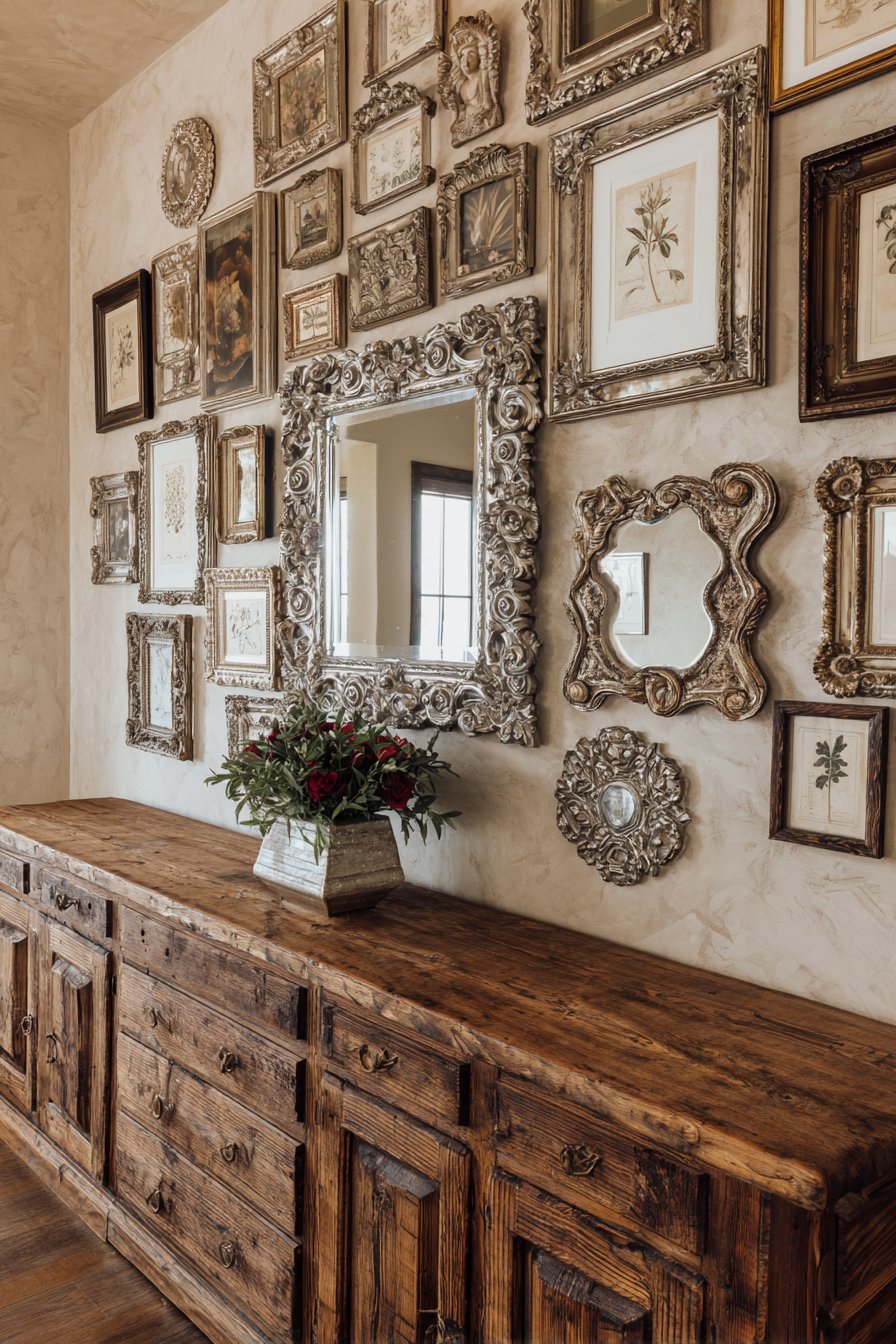
Positioned above a rustic wooden console table with authentic wear patterns, this gallery wall creates a fascinating juxtaposition between formal Victorian elegance and casual rustic charm. The console table’s weathered surface and visible grain patterns ground the ornate frames above, preventing the arrangement from feeling too precious or museum-like. This combination demonstrates how vintage elements from different periods and styles can coexist beautifully when united by common threads of authenticity and age.
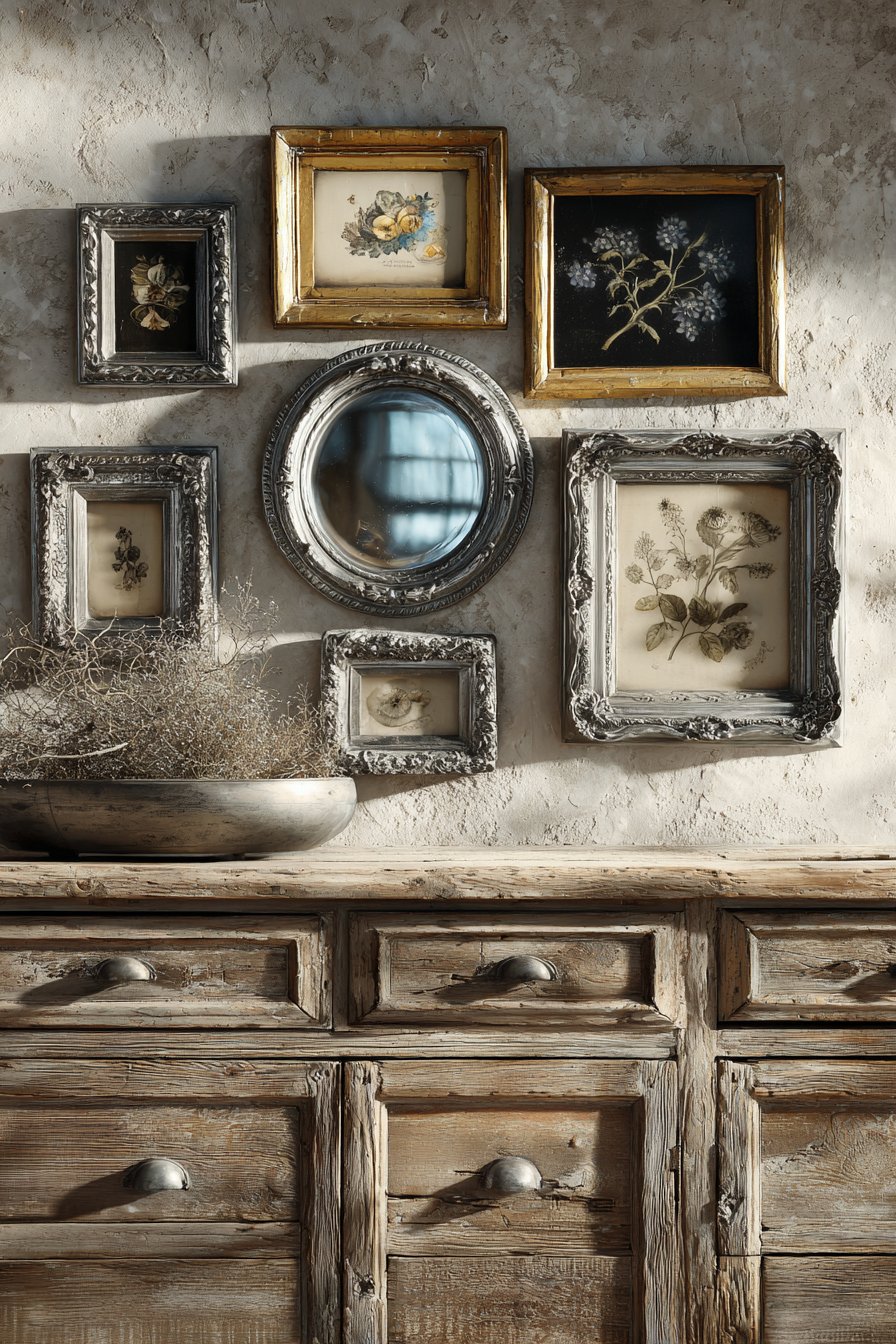
Professional interior photography techniques reveal how natural lighting creates depth through layered shadows on the textured plaster wall. The interplay of light and shadow across the dimensional frames adds sculptural quality to the arrangement, transforming what could be a flat wall display into a three-dimensional artistic installation. The varying depths of the frames—some projecting several inches from the wall—create a topographical effect that changes appearance as you move through the space.
Key Design Tips:
- Cover 60-75% of the wall space for an authentic salon-style density
- Mix frame depths to create dimensional interest and shadow play
- Include at least one mirror to reflect light and visually expand the space
- Balance heavy ornate frames with simpler pieces to prevent visual overwhelm
- Start hanging from the center and work outward to maintain balance as you build the arrangement
4. Symmetrical Baroque Formality
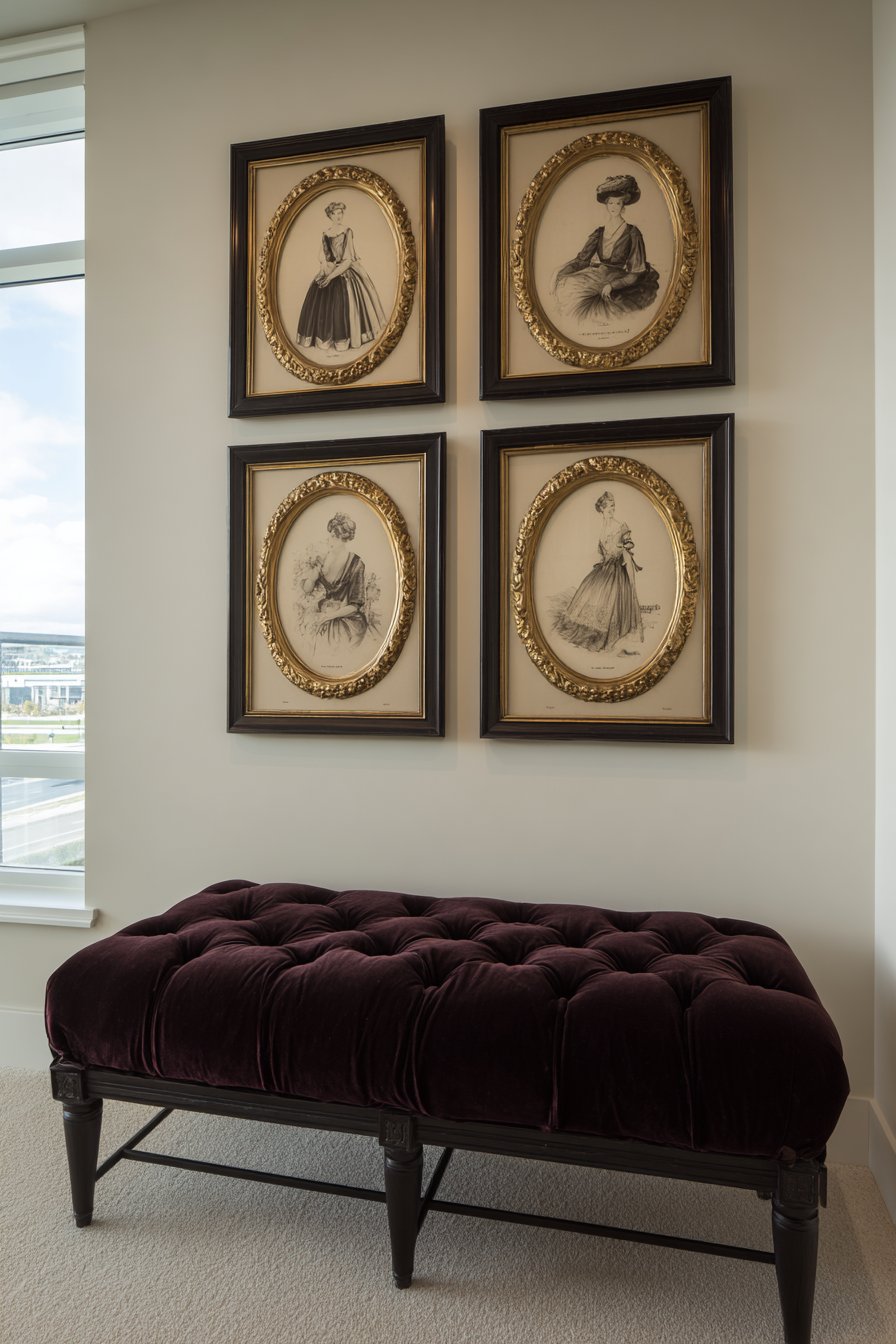
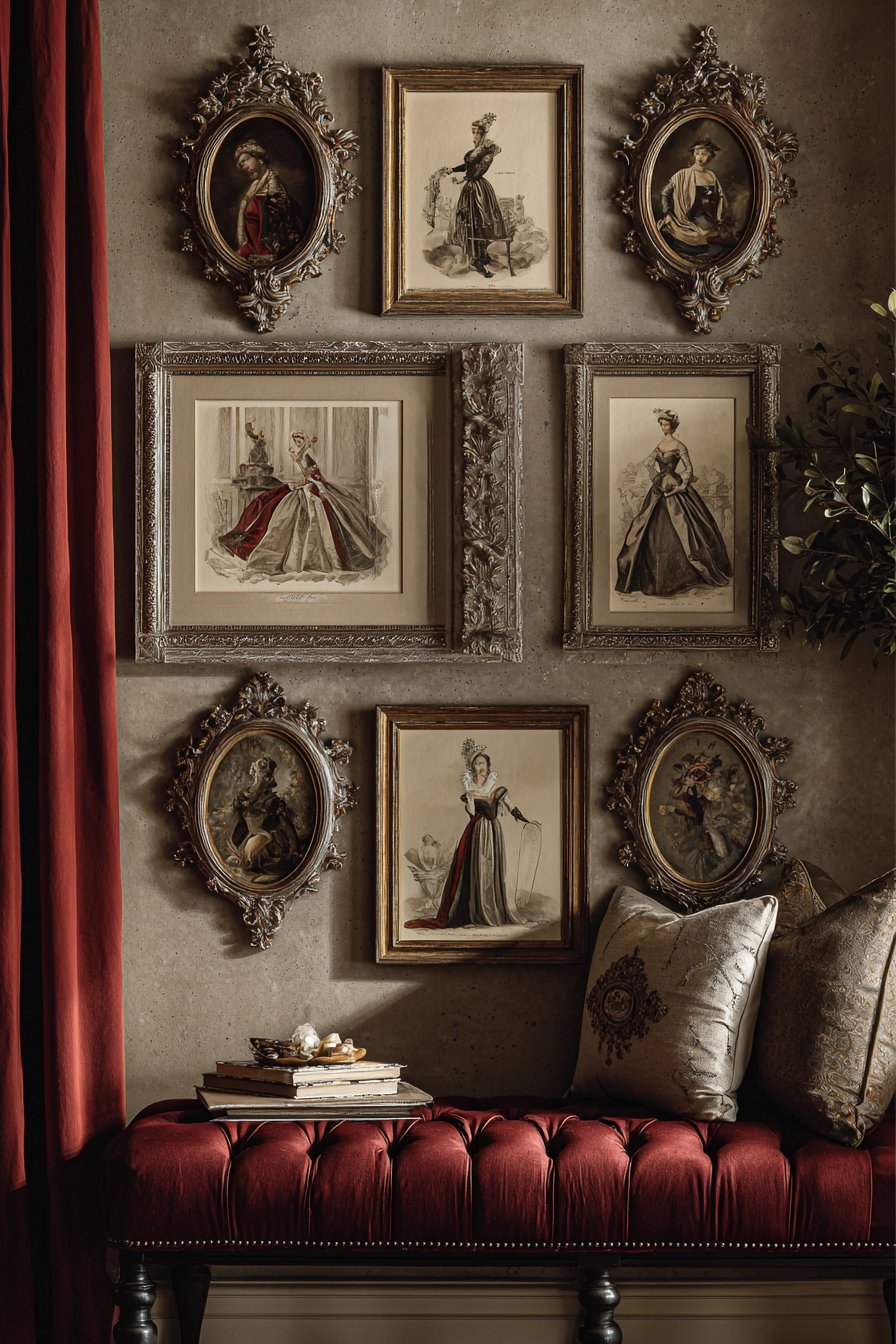
For those who appreciate classical order and traditional design principles, a symmetrical vintage gallery wall featuring matching antique oval frames with baroque detailing offers timeless sophistication. The aged gold leaf finish on these frames catches and reflects light in ways that modern reproductions simply cannot achieve, creating a subtle luminosity that adds warmth to the space. Vintage fashion illustrations and classical portrait prints in muted sepia tones maintain the historical aesthetic while providing fascinating glimpses into period costume and cultural norms.
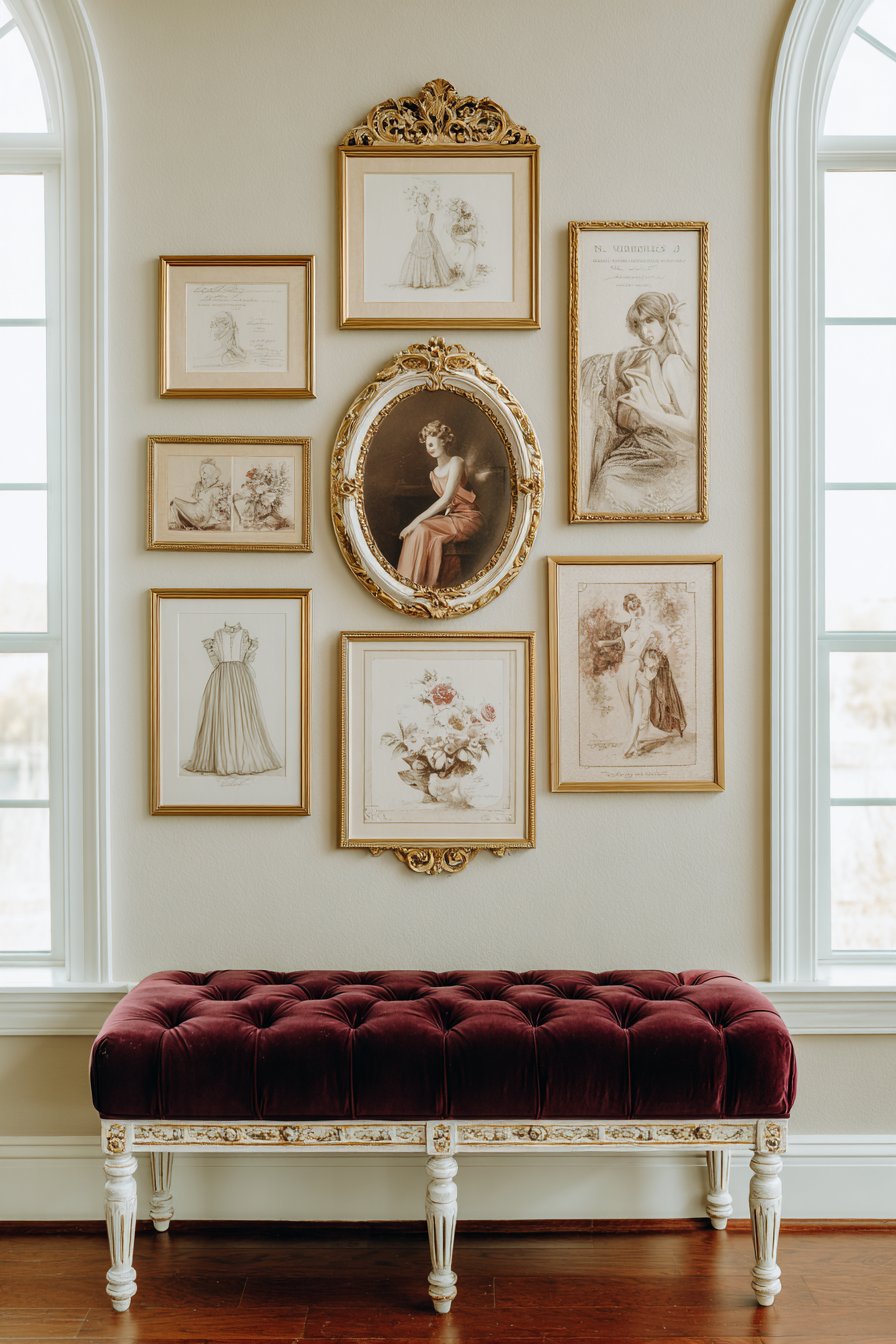
Centered precisely above a tufted velvet bench in deep burgundy, this arrangement demonstrates how symmetry creates a sense of calm and intentionality in interior spaces. The formal balance appeals to those who find comfort in order and classical design principles. The burgundy velvet provides rich color contrast against the gold frames while echoing the luxurious materials and jewel tones popular during the baroque period.
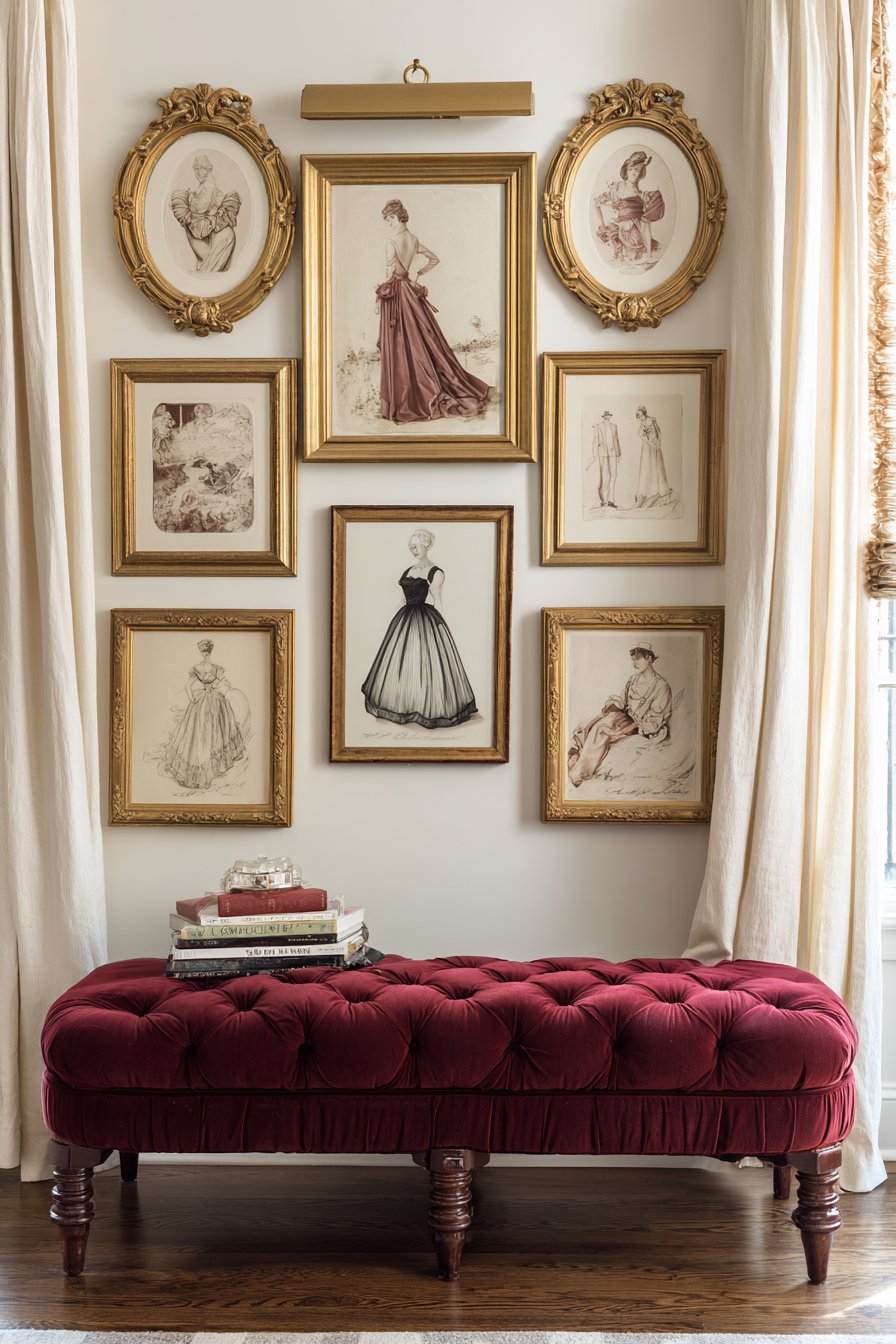
Soft diffused lighting from a nearby window creates an even glow across the carefully balanced composition, eliminating harsh shadows that might disrupt the serene symmetry. This type of natural, indirect lighting is ideal for vintage gallery walls as it prevents fading of delicate antique prints while showcasing the frames’ ornate details without creating glare on protective glass surfaces.
Key Design Tips:
- Use a laser level and measuring tape to ensure perfect alignment in symmetrical arrangements
- Choose identical or nearly identical frames for the most formal, traditional look
- Center the arrangement on architectural features like fireplaces or doorways when possible
- Maintain equal spacing between all frames for visual harmony
- Select artwork with similar orientations, sizes, and subject matter for maximum symmetry
5. Cozy Reading Nook with Literary Treasures
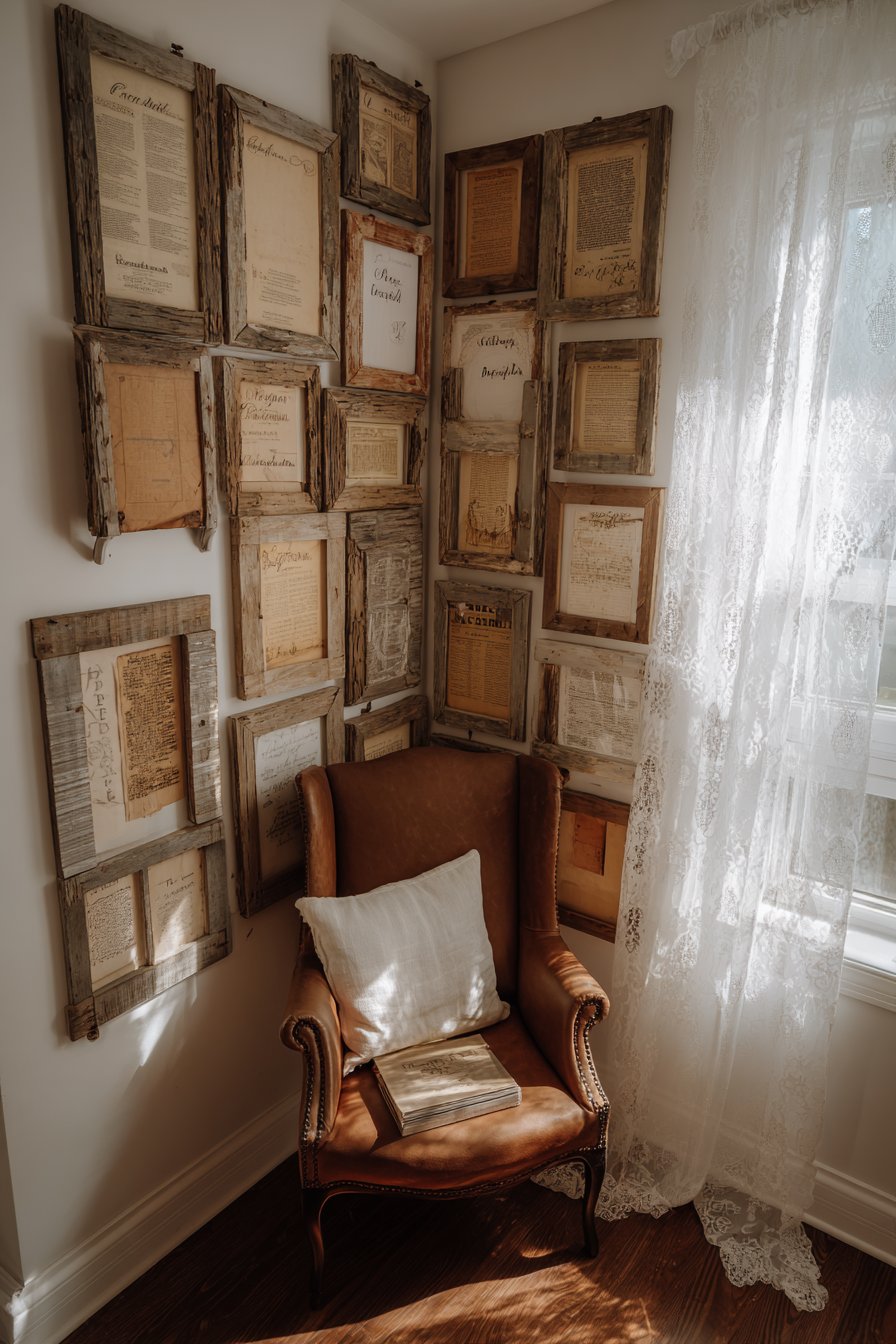
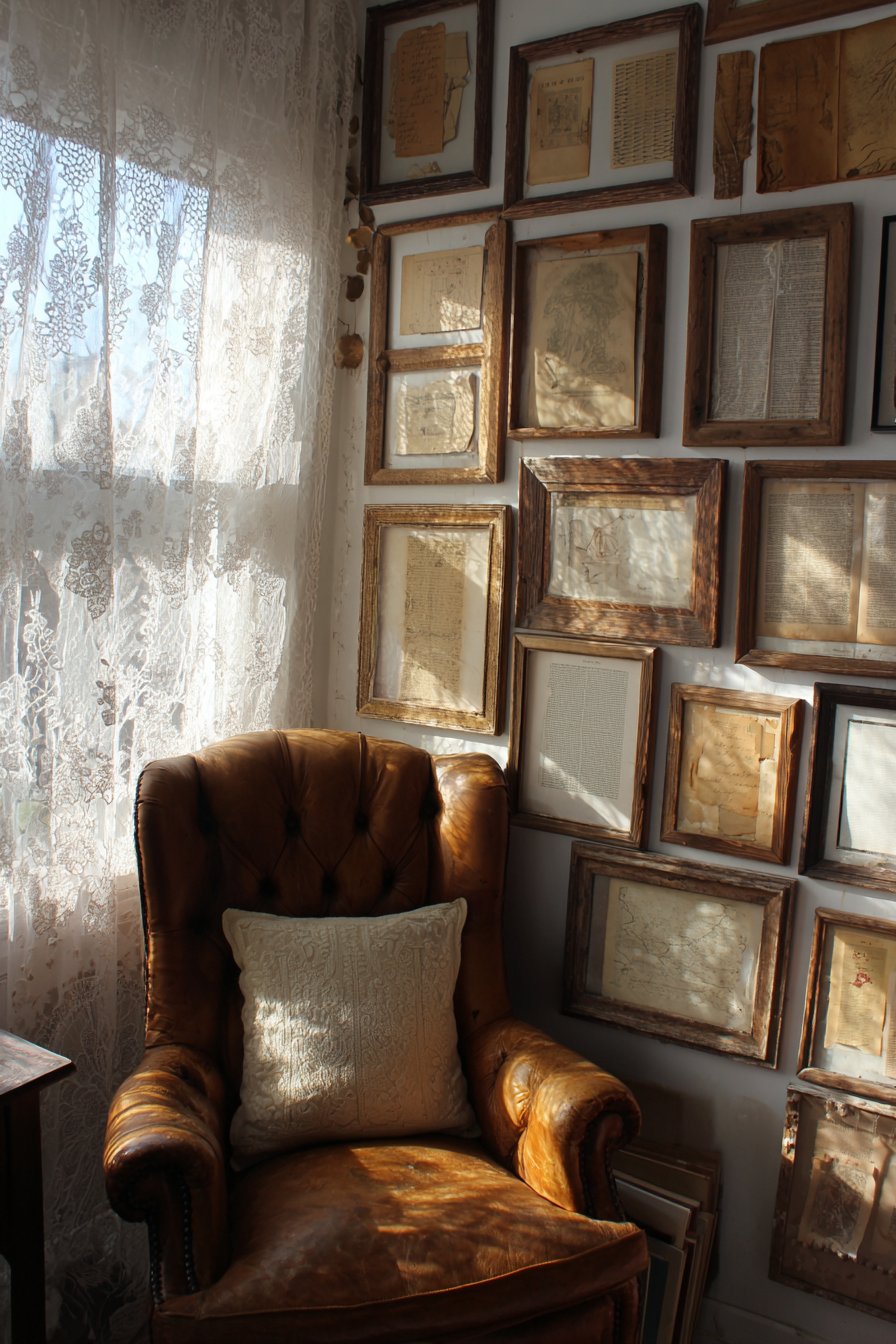
A vertical arrangement of weathered wooden frames creates an intimate vintage gallery wall perfectly suited for a cozy reading nook. The frames contain vintage book covers, antique postcards, and yellowed manuscript pages—literary ephemera that celebrates the written word and appeals to bibliophiles and literature lovers. The natural wood grain visible through distressed finishes adds organic warmth that complements the intellectual nature of the displayed materials.
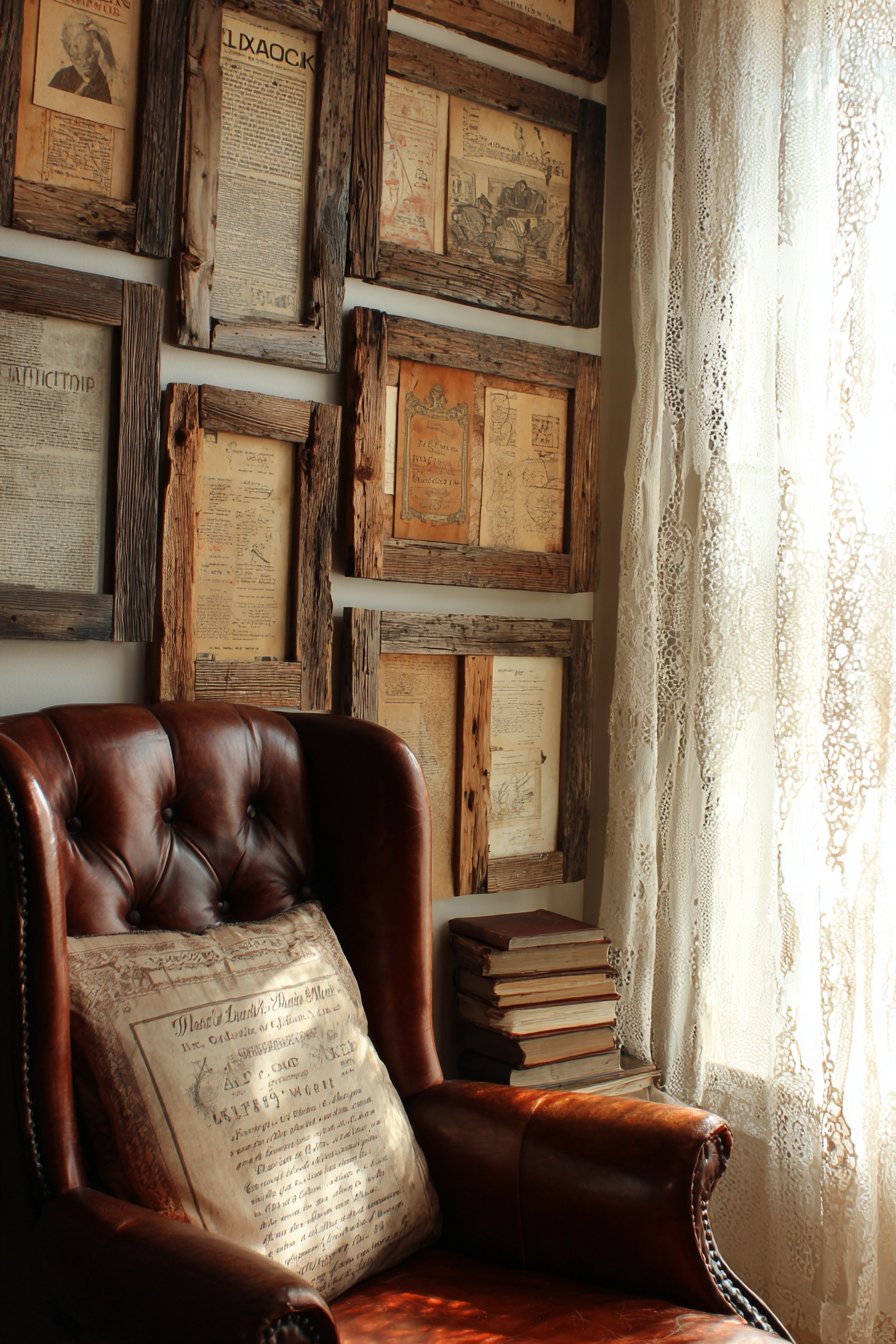
The wingback chair upholstered in worn leather positioned below this gallery wall creates an irresistible invitation to curl up with a good book. This thoughtful furniture placement transforms a simple wall display into a complete destination within the room—a dedicated space for quiet contemplation and literary escape. The patina on the leather chair mirrors the aged quality of the frames and documents, creating material harmony throughout the vignette.
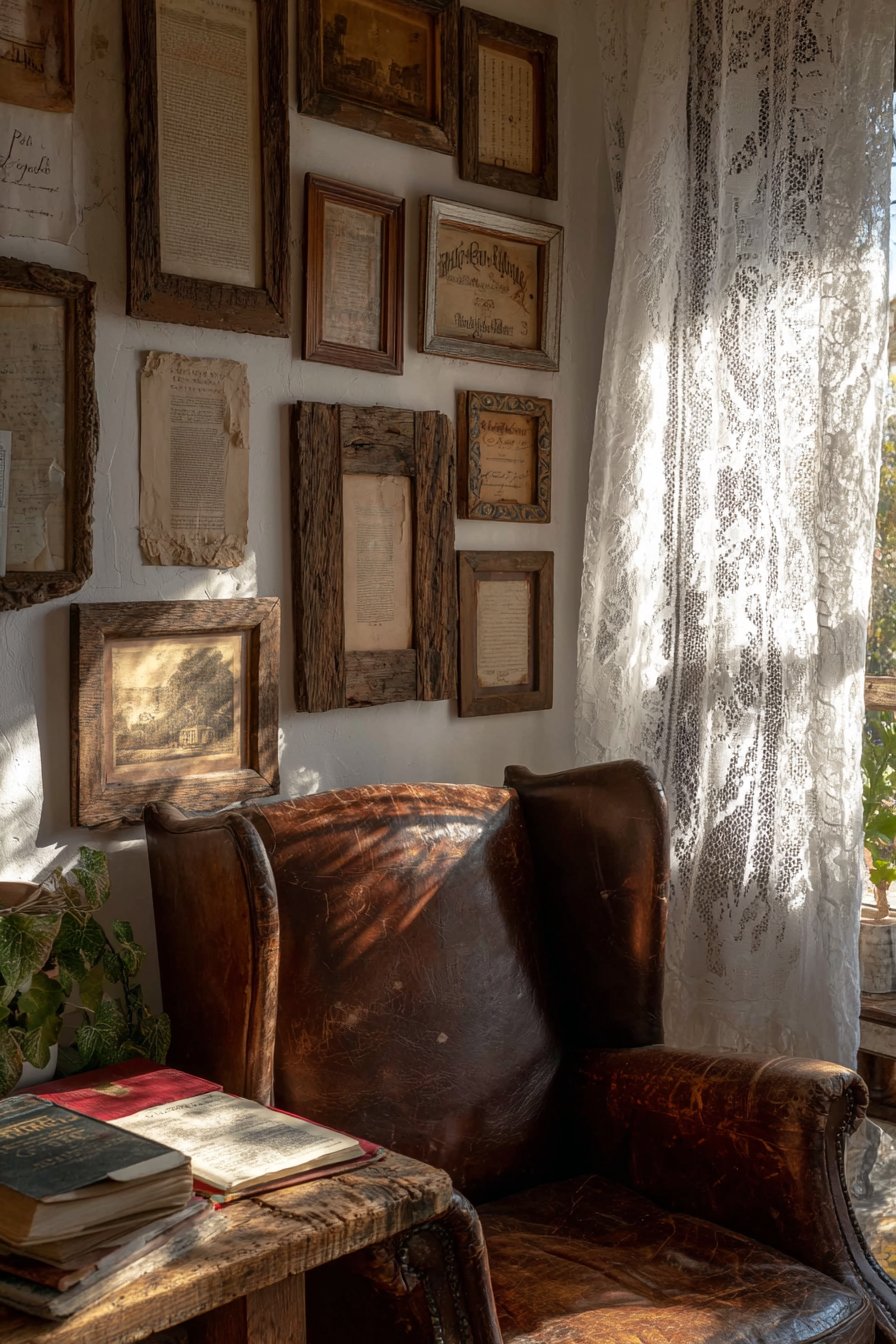
Natural morning light filtering through lace curtains creates delicate patterns on the cream-colored wall, adding another layer of vintage charm to the space. This type of soft, filtered natural light is ideal for reading while also protecting delicate antique papers from harmful UV rays. The intimate scale of this arrangement—designed to be appreciated from a seated position rather than across a large room—allows for the inclusion of smaller, more detailed pieces that reward close examination.
Key Design Tips:
- Scale your arrangement to the viewing distance—smaller pieces work well in intimate spaces
- Frame delicate ephemera between UV-protective glass and acid-free backing to prevent deterioration
- Arrange frames vertically in narrow spaces to draw the eye upward and create height
- Include pieces with personal significance to make the space feel truly yours
- Position reading lights to illuminate both the gallery wall and seating area effectively
6. Museum-Quality Renaissance Grandeur
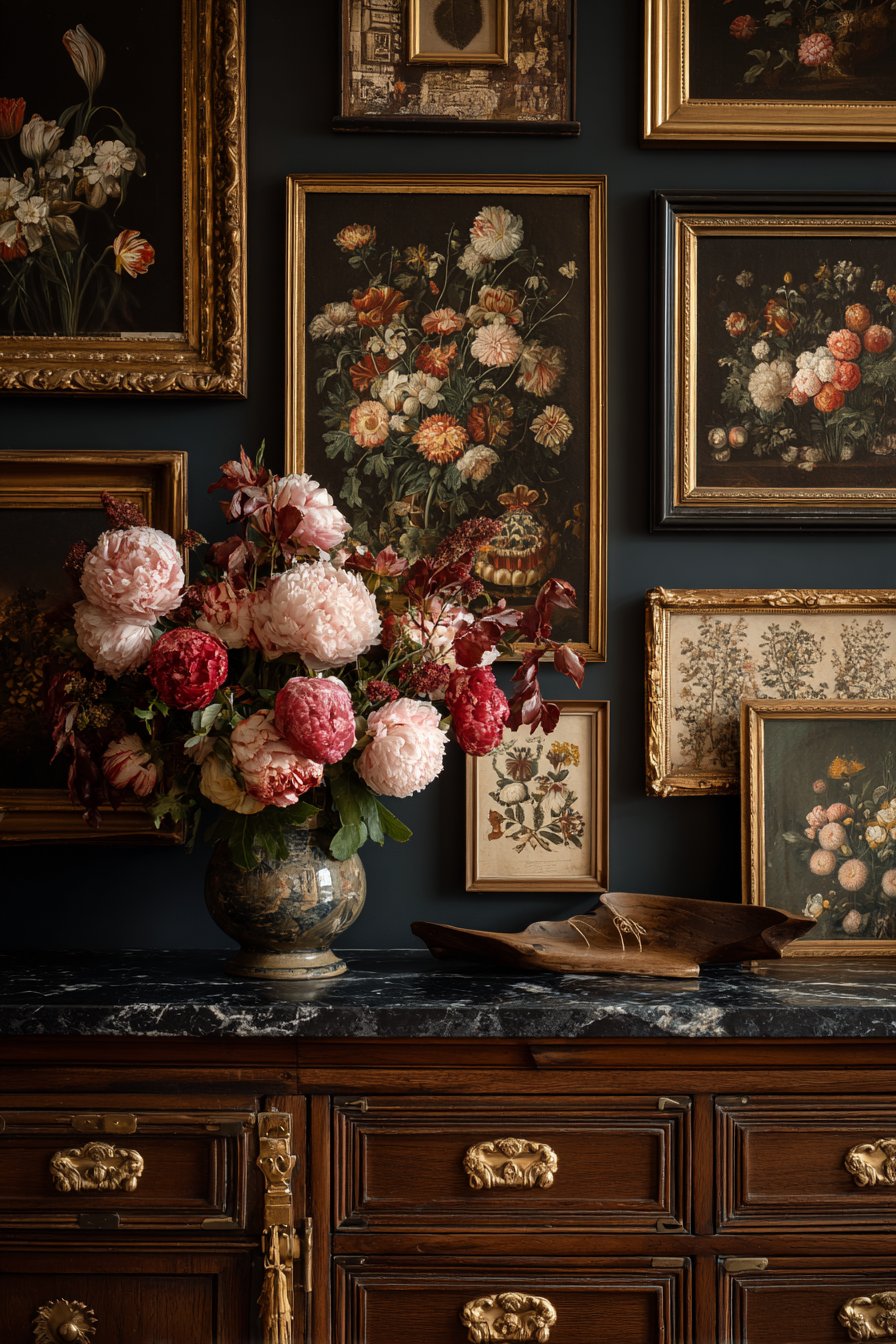
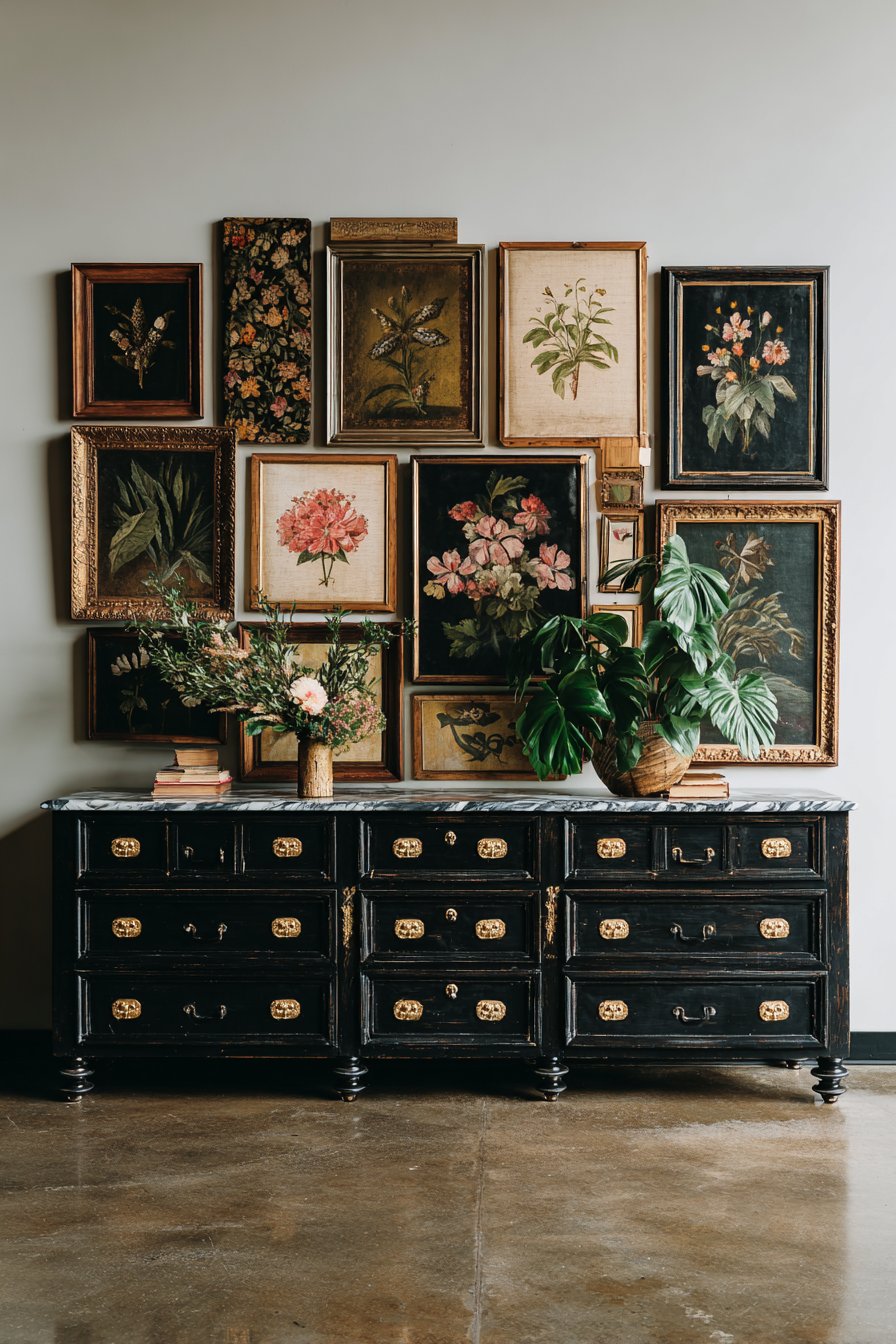
Dramatic oversized antique frames with ornate carved details and distressed gold finishes command attention in this museum-quality vintage gallery wall display. The substantial scale of these frames—some measuring three feet or more in height—creates immediate visual impact and lends gravitas to the space. Reproduction Renaissance paintings, vintage botanical studies, and aged tapestry fragments fill these impressive frames, creating a collection worthy of a private gallery or historic estate.
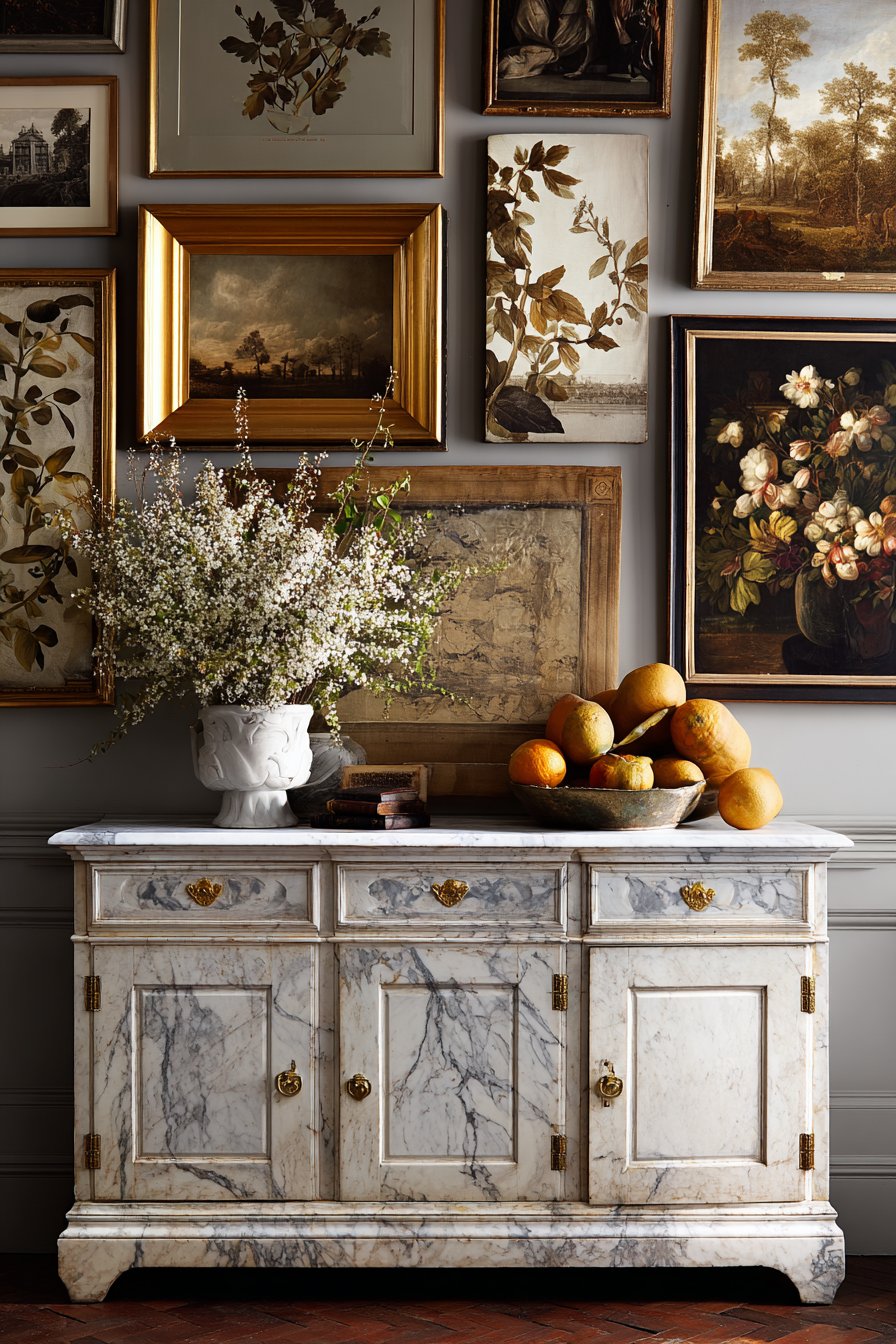
Arranged above a marble-topped antique sideboard with brass hardware showing natural patina, this display demonstrates how vintage furniture and artwork can elevate each other when thoughtfully paired. The marble surface echoes the classical elegance of Renaissance art, while the brass hardware connects to the golden frame finishes, creating subtle visual links throughout the composition. The sideboard also provides practical storage while serving as a display surface for complementary decorative objects.
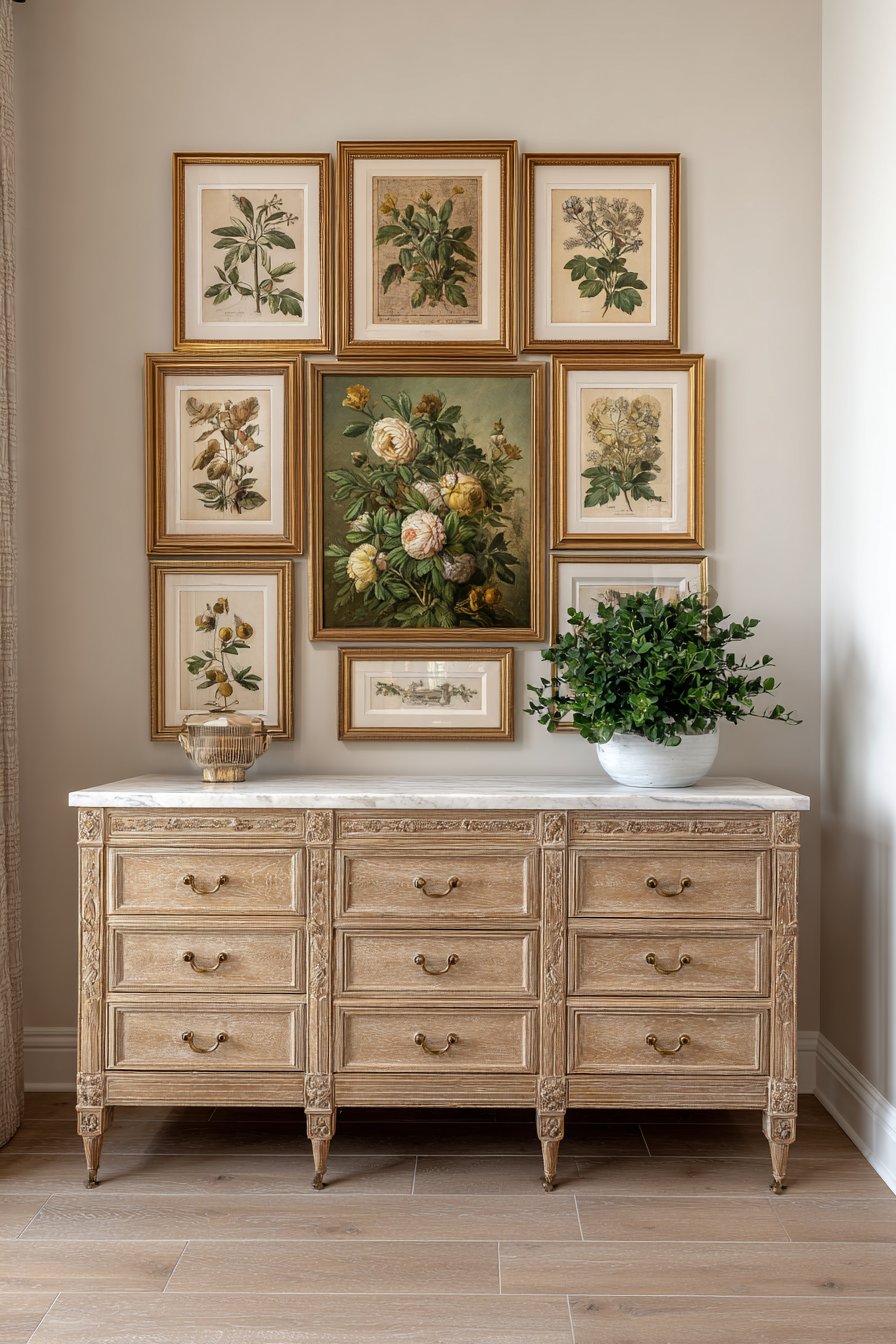
Professional interior photography techniques with soft gallery lighting emphasize the museum-quality presentation and rich textures of aged materials. The lighting strategy here is crucial—too bright and the arrangement feels harsh and institutional; too dim and the intricate frame carvings and artwork details disappear. The ideal approach uses layered lighting with ambient illumination supplemented by focused accent lights on key pieces.
Key Design Tips:
- Invest in substantial hanging hardware rated for heavy antique frames (many weigh 20+ pounds)
- Maintain generous spacing around large frames so they can be appreciated individually
- Limit the number of oversized pieces to prevent visual competition and overwhelm
- Balance ornate frames with simpler surrounding décor to let the gallery wall remain the focal point
- Consider professional installation for valuable antique frames to ensure proper support and protection
7. Linear Horizontal Narrative Flow
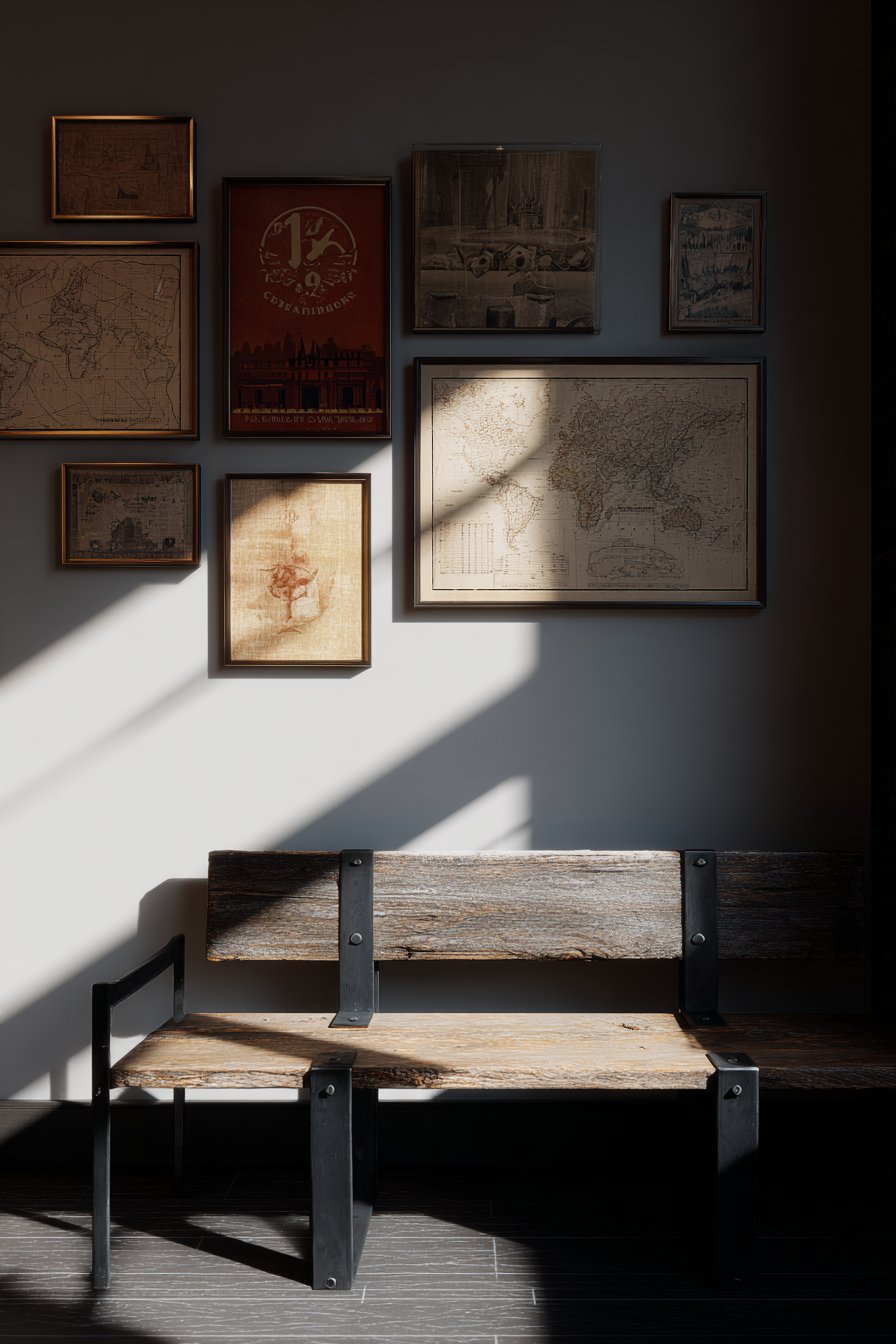
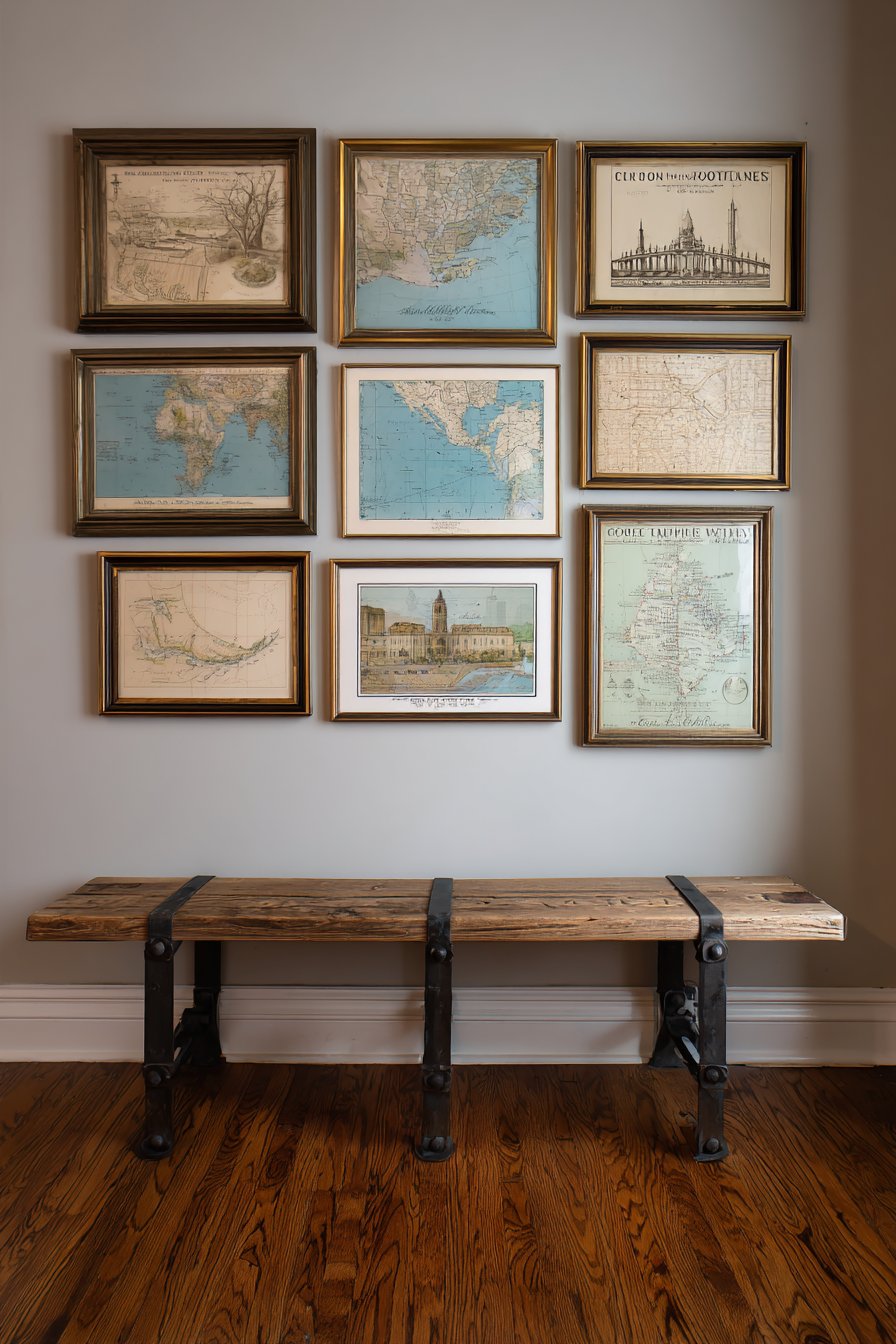
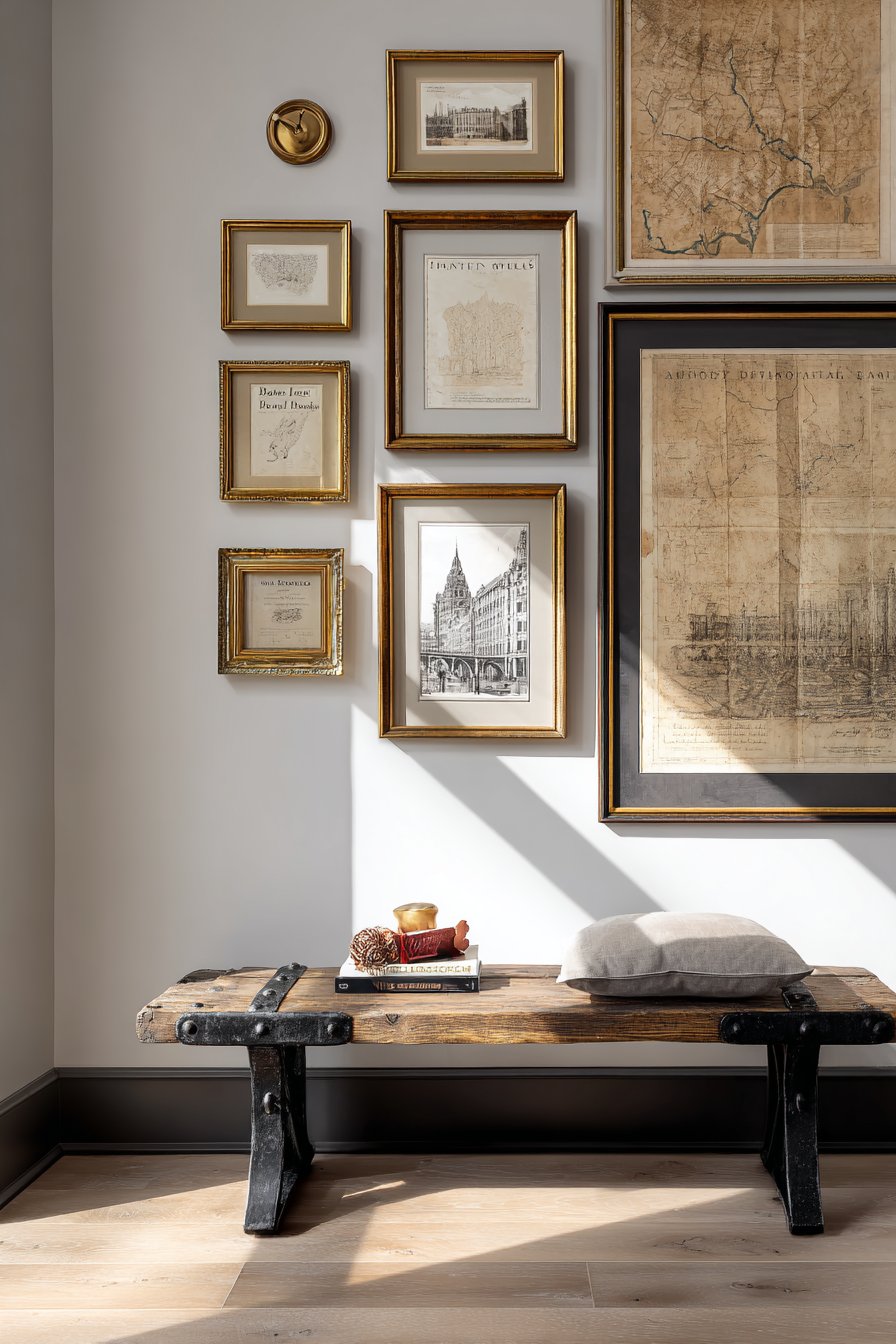
A linear horizontal arrangement of matching antique frames in weathered black lacquer with gilded inner edges creates a sophisticated vintage gallery wall with strong horizontal visual flow. This arrangement style works exceptionally well in hallways, above long sofas, or in any space where you want to emphasize width and create movement along a wall plane. Vintage travel posters with authentic aging, antique maps with hand-colored details, and sepia architectural renderings provide subject matter that invites examination and sparks conversation about places and times past.
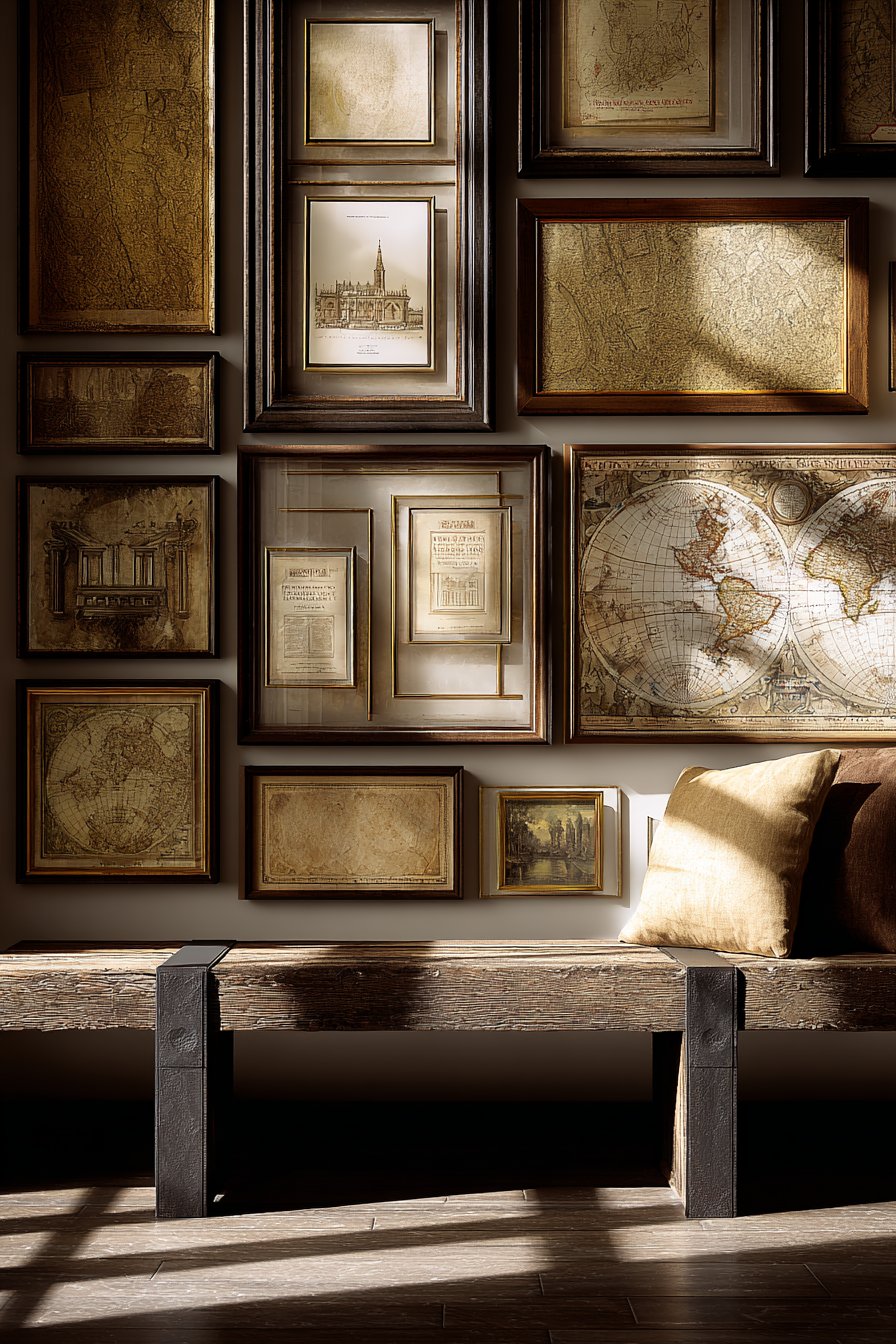
Positioned above a reclaimed wood bench with metal industrial brackets, this gallery wall demonstrates how mixed materials and styles can coexist when united by cohesive color palettes and intentional design choices. The industrial metal brackets provide contemporary edge that prevents the vintage elements from feeling too nostalgic or dated, while the reclaimed wood connects to the historical nature of the framed materials.
Interior design photography with natural side lighting creates dimensional shadows that emphasize the frame depth and vintage paper textures. This directional lighting adds drama and highlights the physicality of the frames—the way they project from the wall, the raised decorative elements, and the subtle imperfections that mark them as authentic antiques rather than mass-produced reproductions.
Key Design Tips:
- Hang frames in a straight line using the top or bottom edges as your alignment guide
- Maintain consistent spacing between frames for a clean, intentional look
- Choose frames of similar size and style for horizontal arrangements to emphasize unity
- Use a long level or chalk line to ensure perfect horizontal alignment across long spans
- Consider how the arrangement will be viewed from different points in the room
8. Eclectic Grid of Curiosities
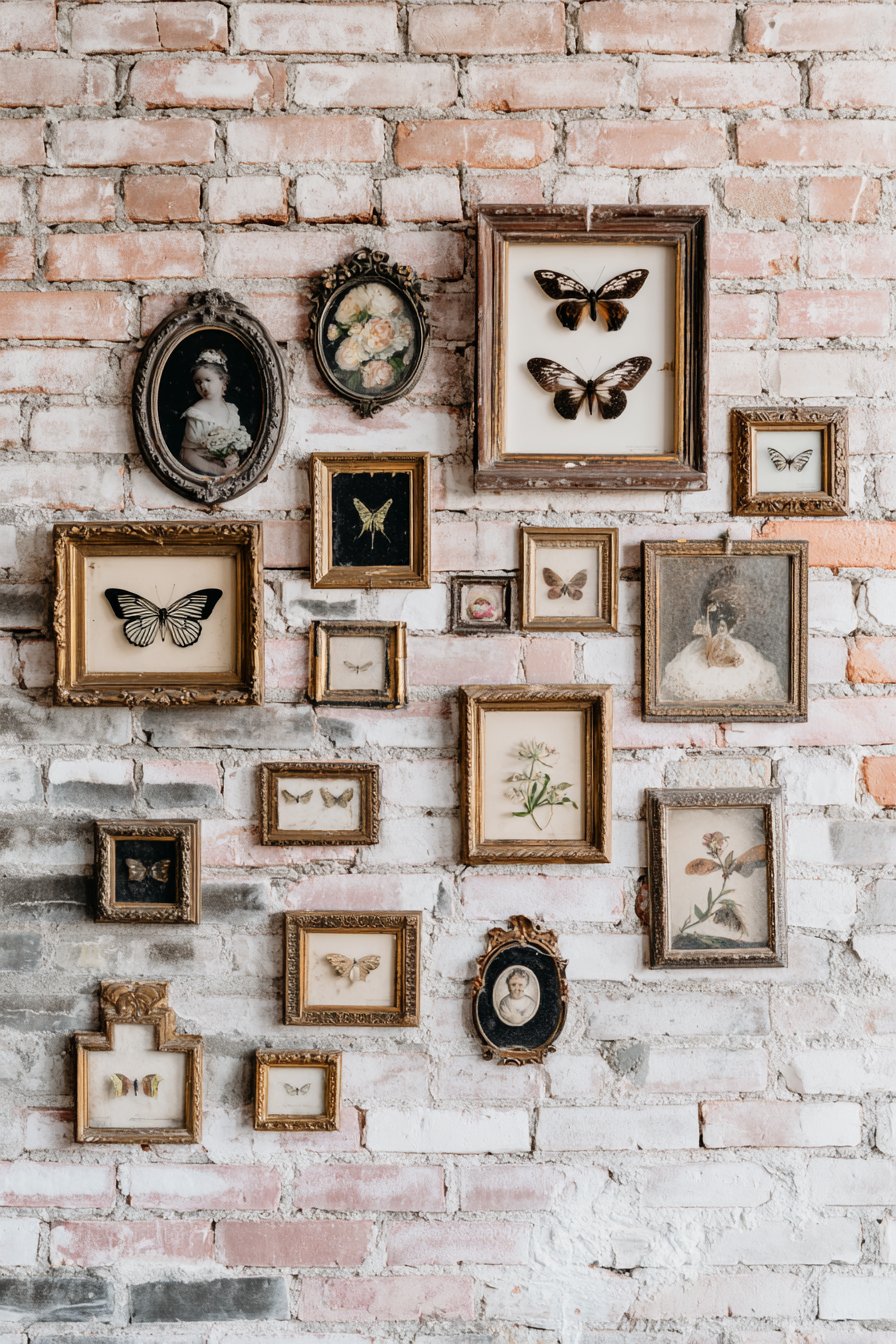
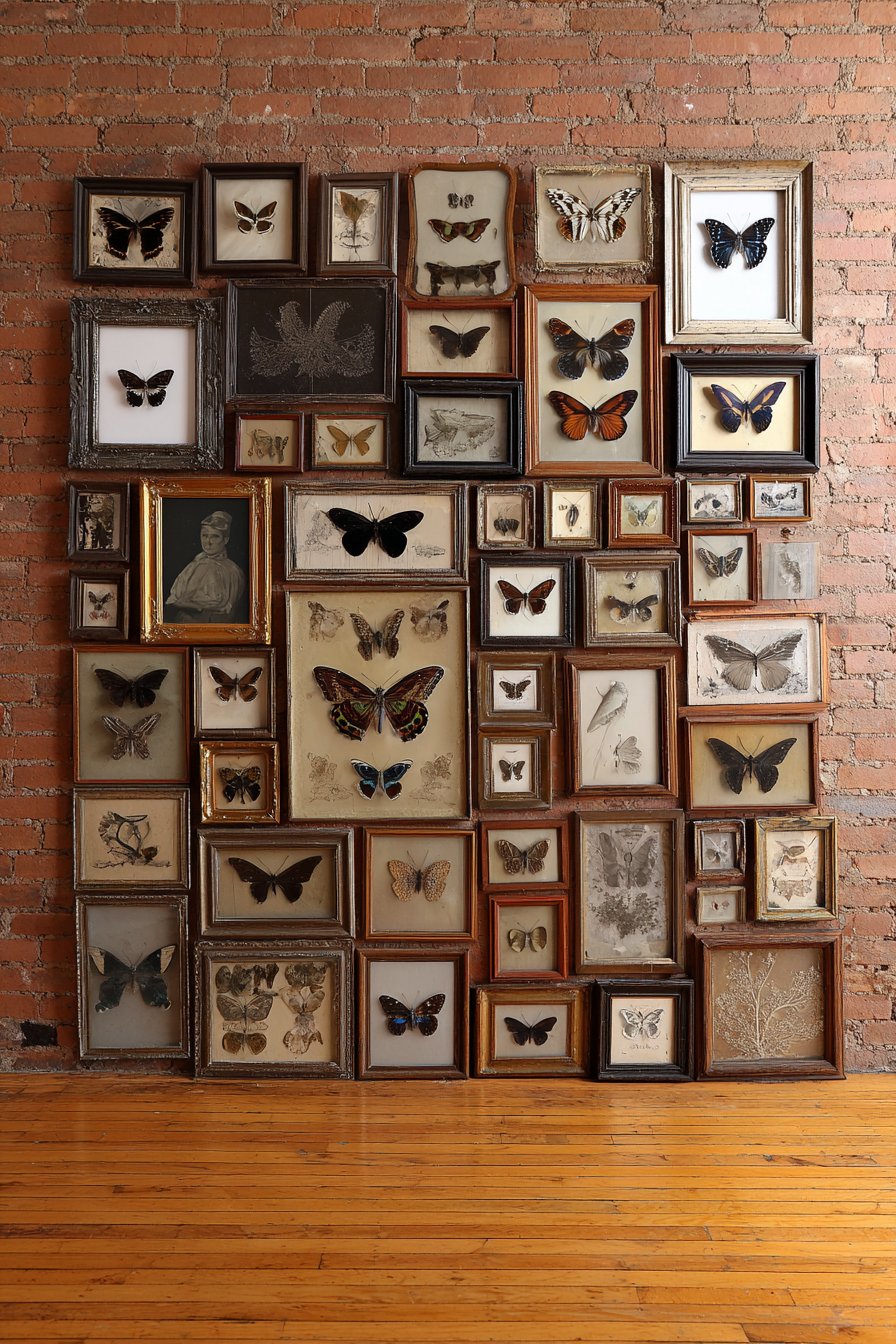
An eclectic grid arrangement of small to medium antique frames in mixed metals—tarnished silver, aged copper, and oxidized brass—creates a vintage gallery wall that resembles a cabinet of curiosities. The frames contain vintage butterfly specimens, pressed flowers under glass, antique cameos, and miniature portraits, each piece representing a tiny world of historical intrigue and natural beauty. Set against exposed brick painted in soft white, this arrangement balances the delicate scale of the framed objects with the rough, textured backdrop.
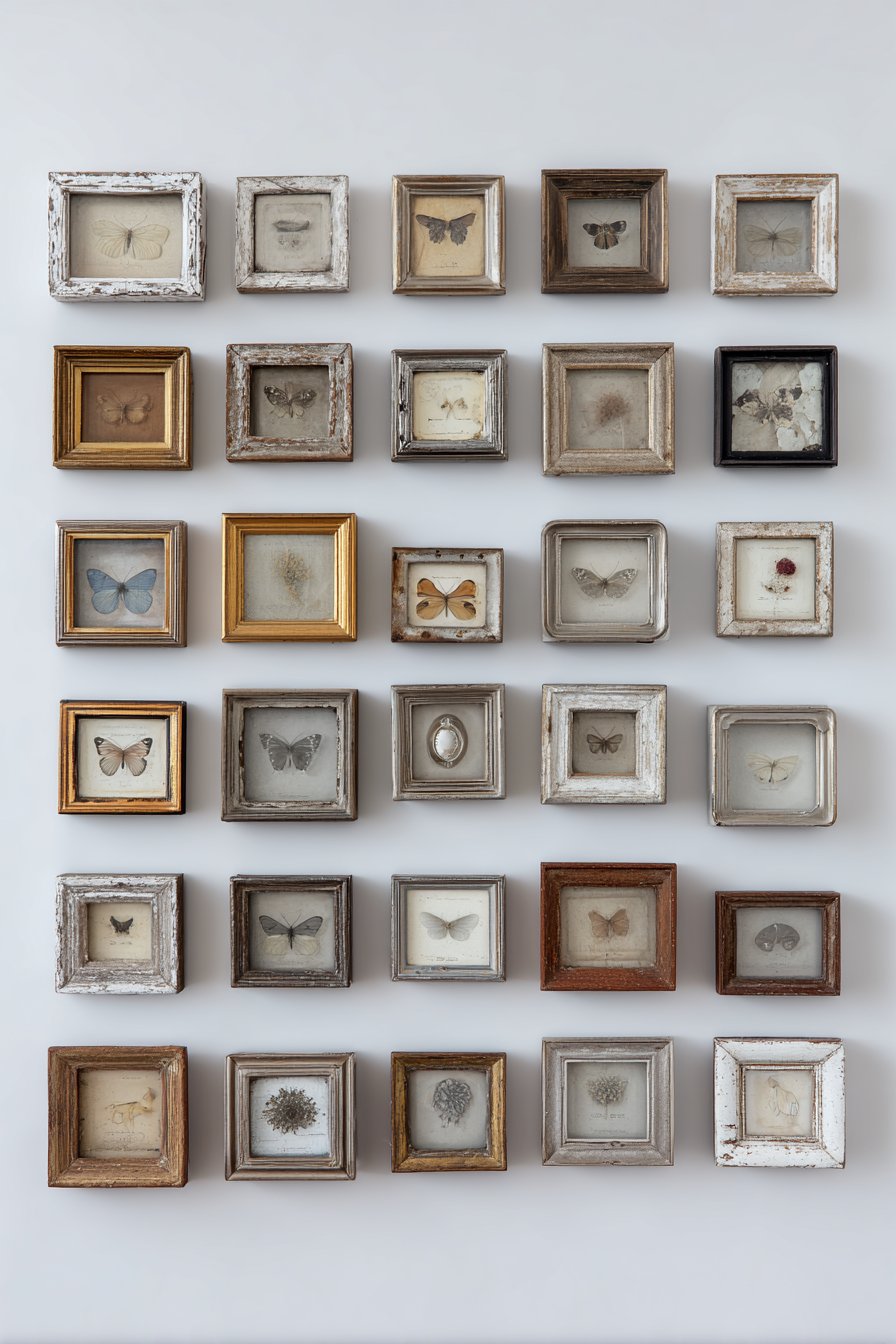
The grid format brings order to what could otherwise feel chaotic given the variety of frame materials and subject matters. By imposing this geometric structure, the arrangement achieves a contemporary sensibility while maintaining vintage authenticity in the individual components. This demonstrates an important principle in vintage gallery wall design: structure and consistency in arrangement can allow for maximum freedom and eclecticism in the elements themselves.
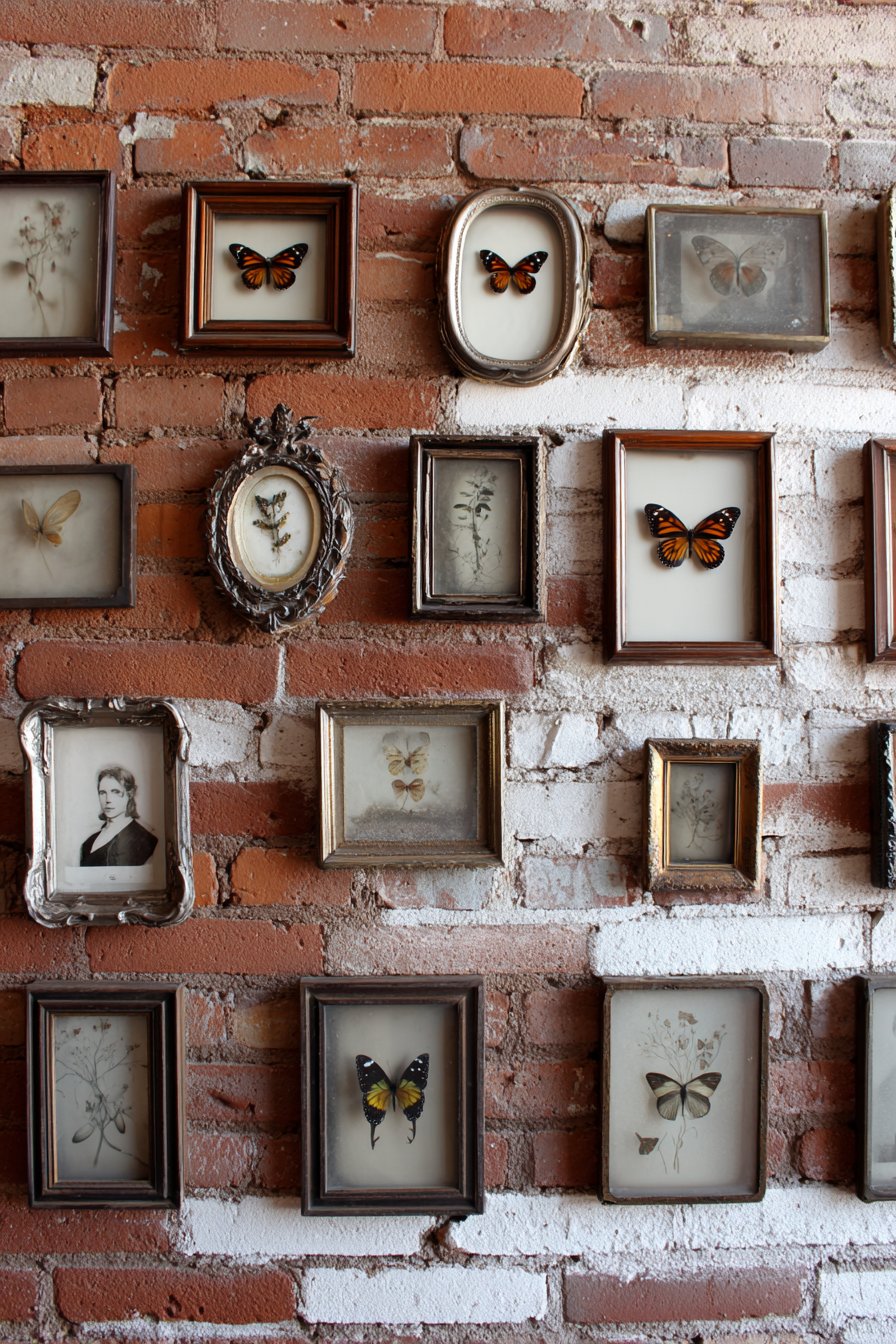
Balanced interior photography highlights the delicate details and authentic aging of each piece in this carefully curated collection. The brick wall background provides textural interest and architectural character while the white paint brightens the space and allows the metallic frames to stand out distinctly. Each frame becomes a individual specimen worthy of close examination, yet the overall effect remains cohesive and intentional.
Key Design Tips:
- Use templates to plan grid arrangements before committing to nail holes
- Maintain consistent horizontal and vertical spacing for the cleanest grid effect
- Group similar objects (all nature specimens, all portraits, etc.) within sections of the grid
- Mount three-dimensional objects in shadow boxes with adequate depth
- Protect delicate specimens from direct sunlight which can cause fading and deterioration
9. Hallway Gallery Progression
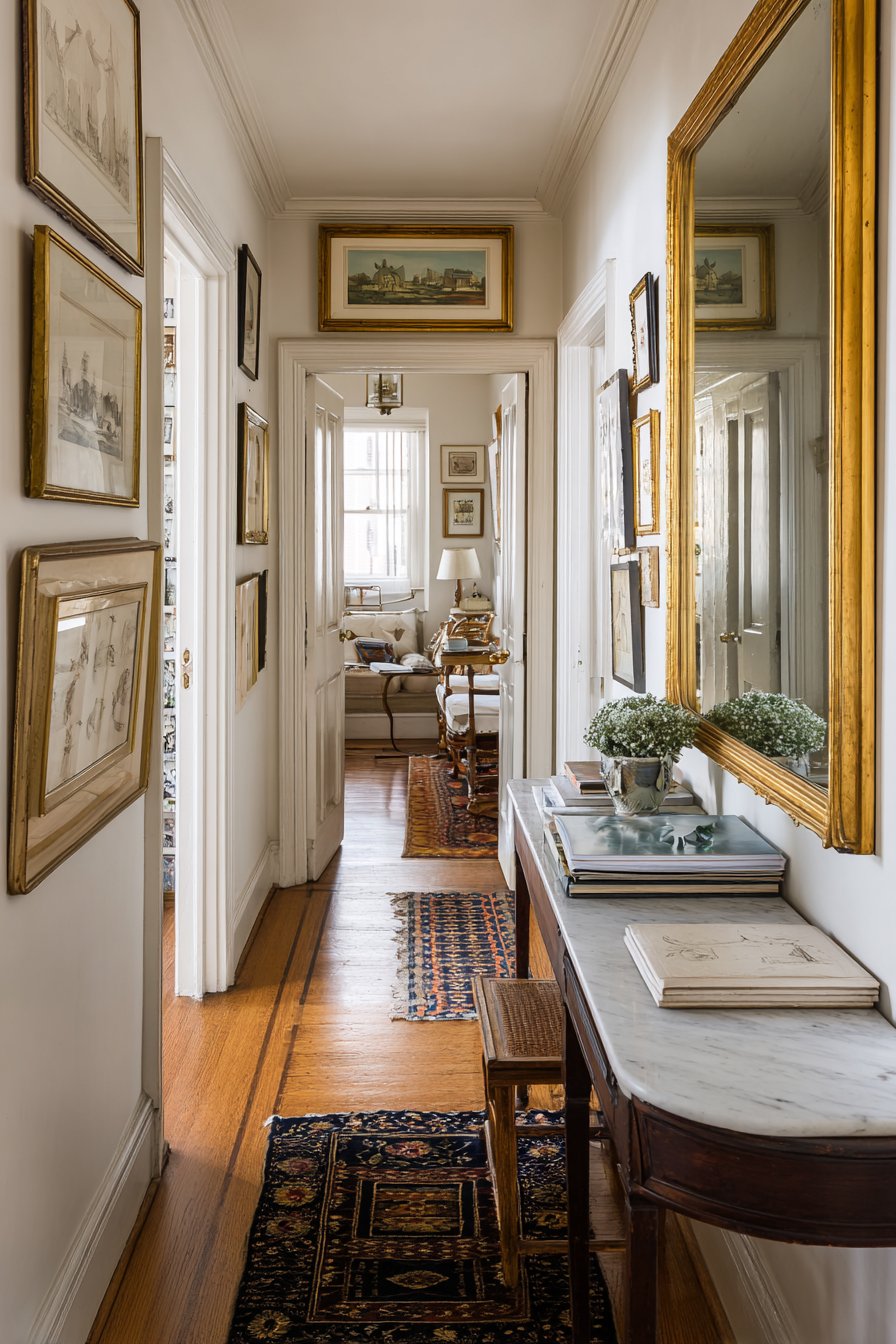
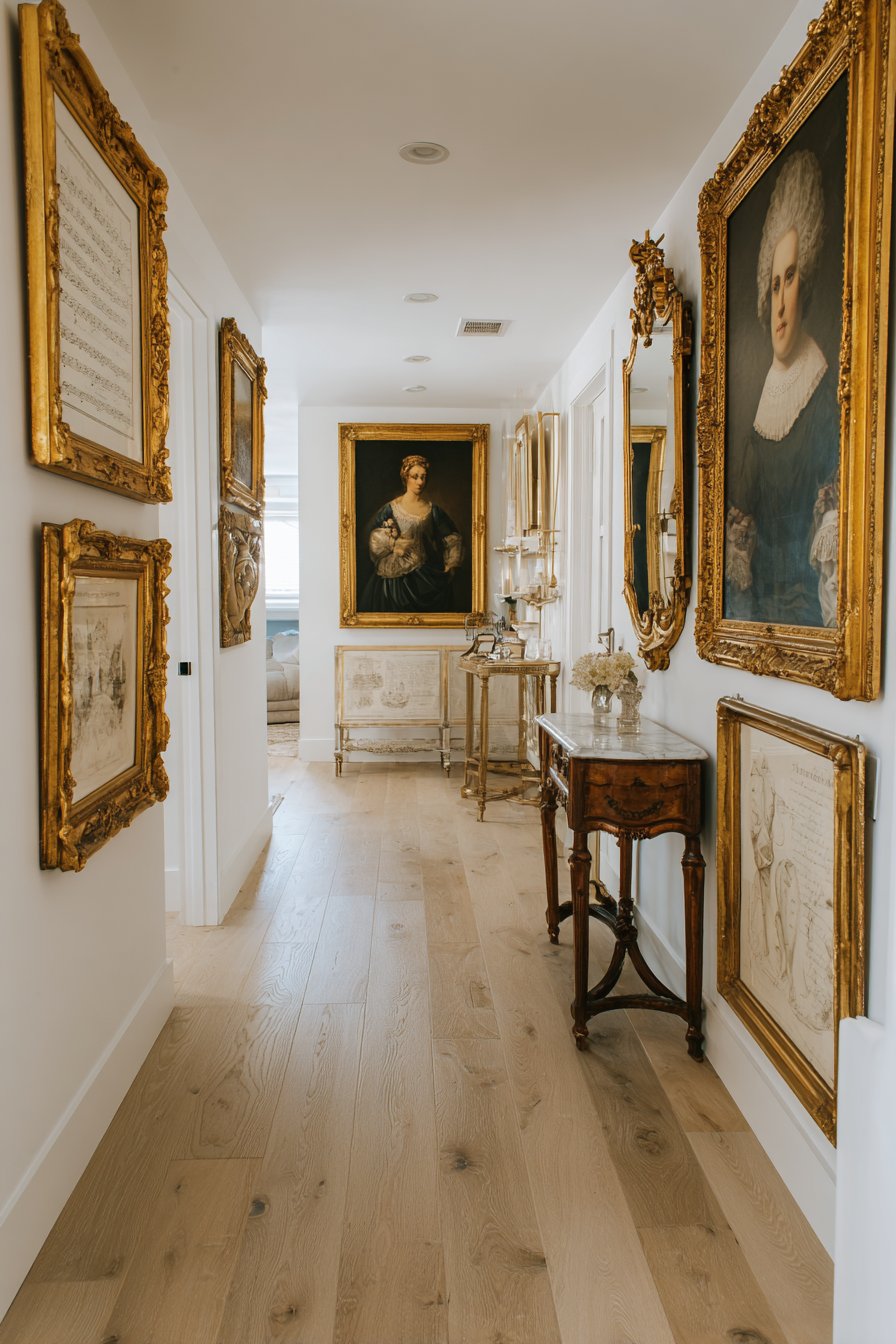
In a hallway setting, a gallery-style progression of ornate gilded frames in graduated sizes creates a vintage gallery wall that guides movement through the space while providing visual interest along the journey. The arrangement includes vintage fashion plates, antique sheet music under glass, yellowed family photographs, and classical art reproductions—a diverse collection united by gilded frames and historical subject matter. A narrow antique console table with marble top sits below, providing a resting point for keys, mail, or decorative objects without impeding traffic flow.
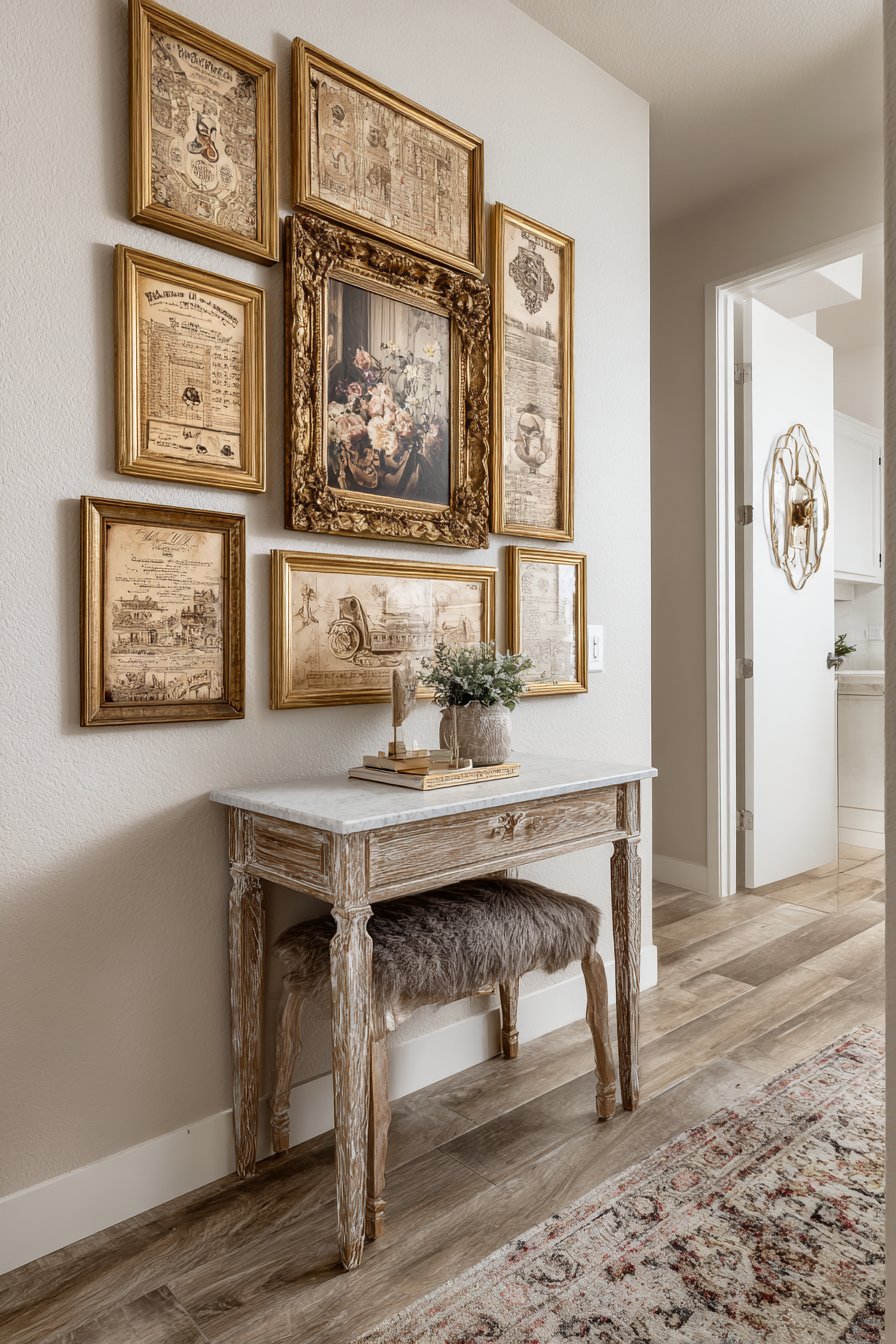
The graduated sizing creates natural rhythm and movement, with larger frames anchoring key points and smaller frames filling spaces between. This approach to arrangement takes advantage of the hallway’s linear nature, creating a visual narrative that unfolds as you walk past. Natural corridor lighting creates gentle highlights on the gold leaf details, with light from doorways and windows at either end providing illumination that changes throughout the day.
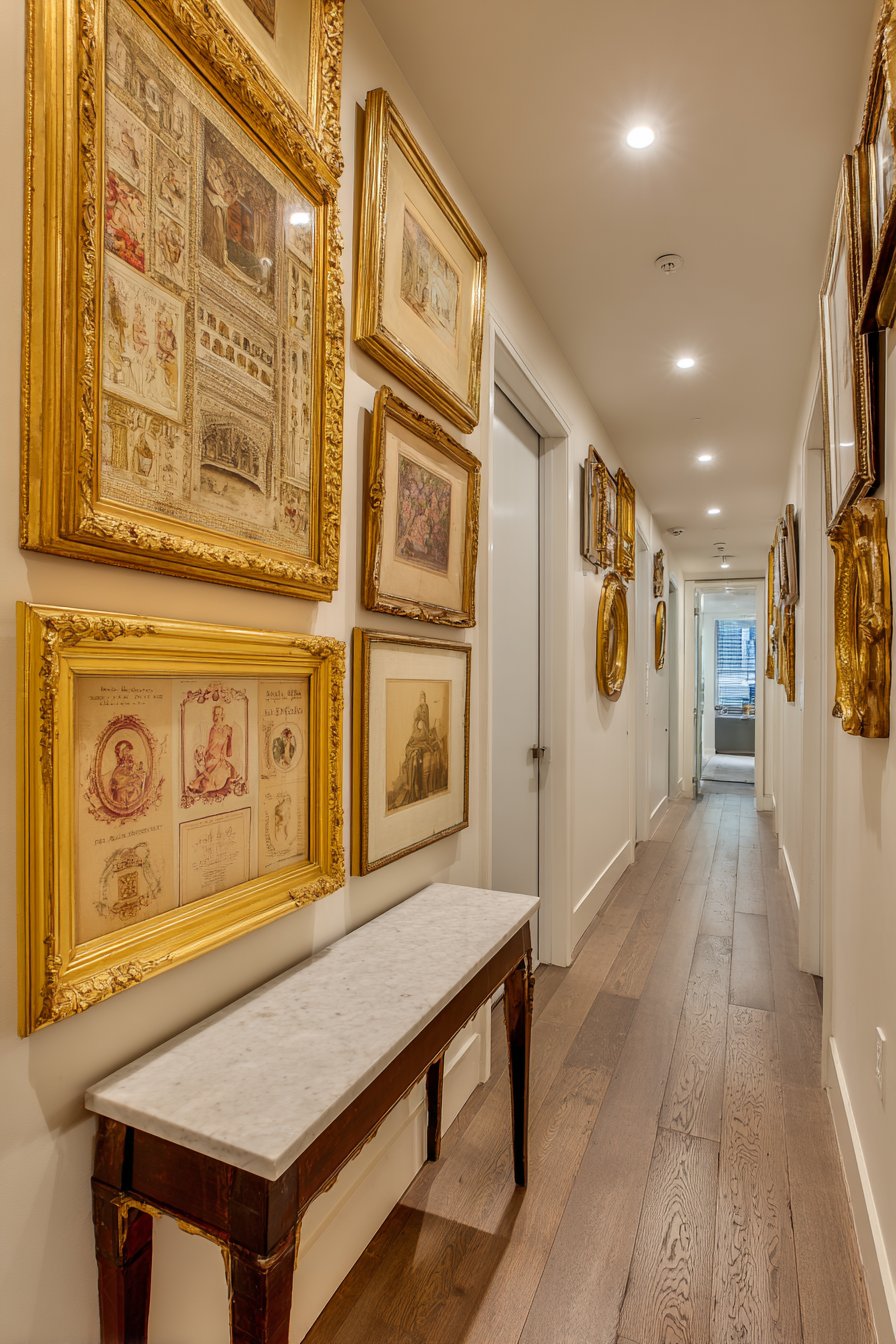
Professional wide-angle photography captures the flow and progression of this vintage narrative, showing how the arrangement works as a unified whole rather than disconnected individual pieces. The hallway context presents unique challenges—narrower viewing distances, varied lighting conditions, and the need to maintain visual interest across an extended span—but when successfully executed, creates one of the most impactful applications of vintage gallery wall design.
Key Design Tips:
- Plan the arrangement to be viewed from both directions in hallways
- Hang frames slightly lower in hallways where viewing distance is closer
- Use the architectural features (doorways, windows) as natural breaking points in your arrangement
- Include lighting at regular intervals to illuminate the collection evenly
- Avoid protruding frames in narrow hallways where they might be bumped or damaged
10. Farmhouse Charm with Chippy Paint
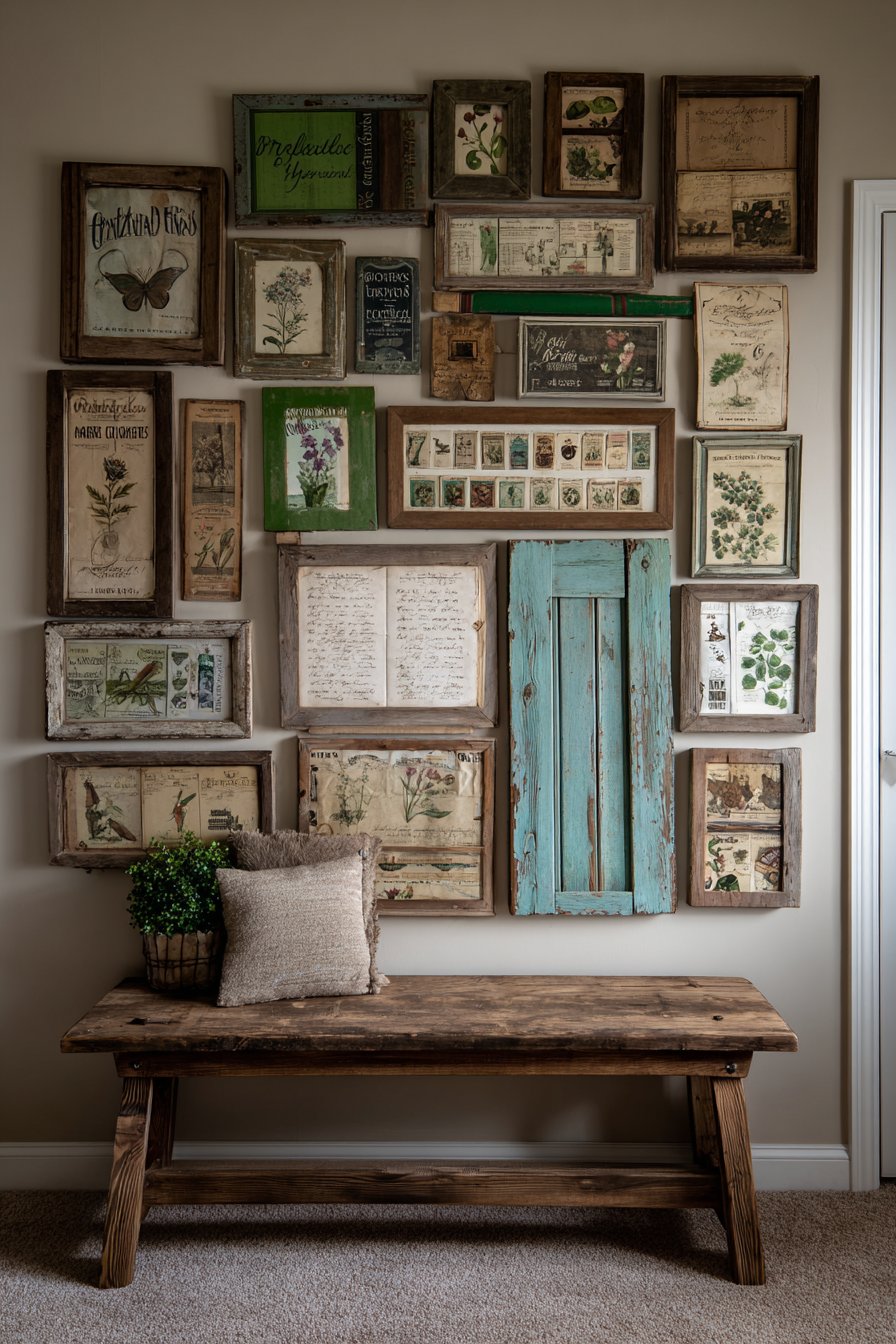
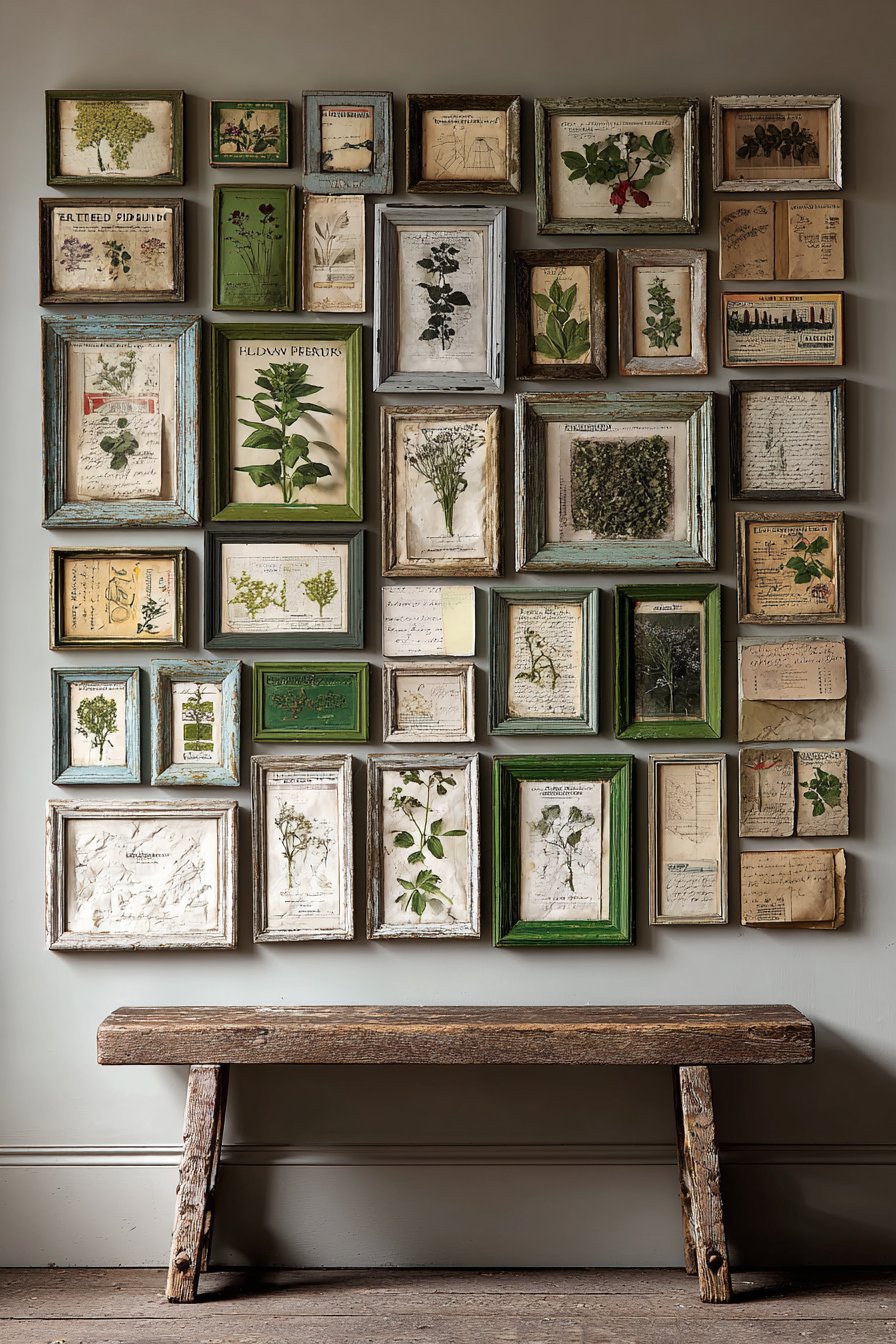
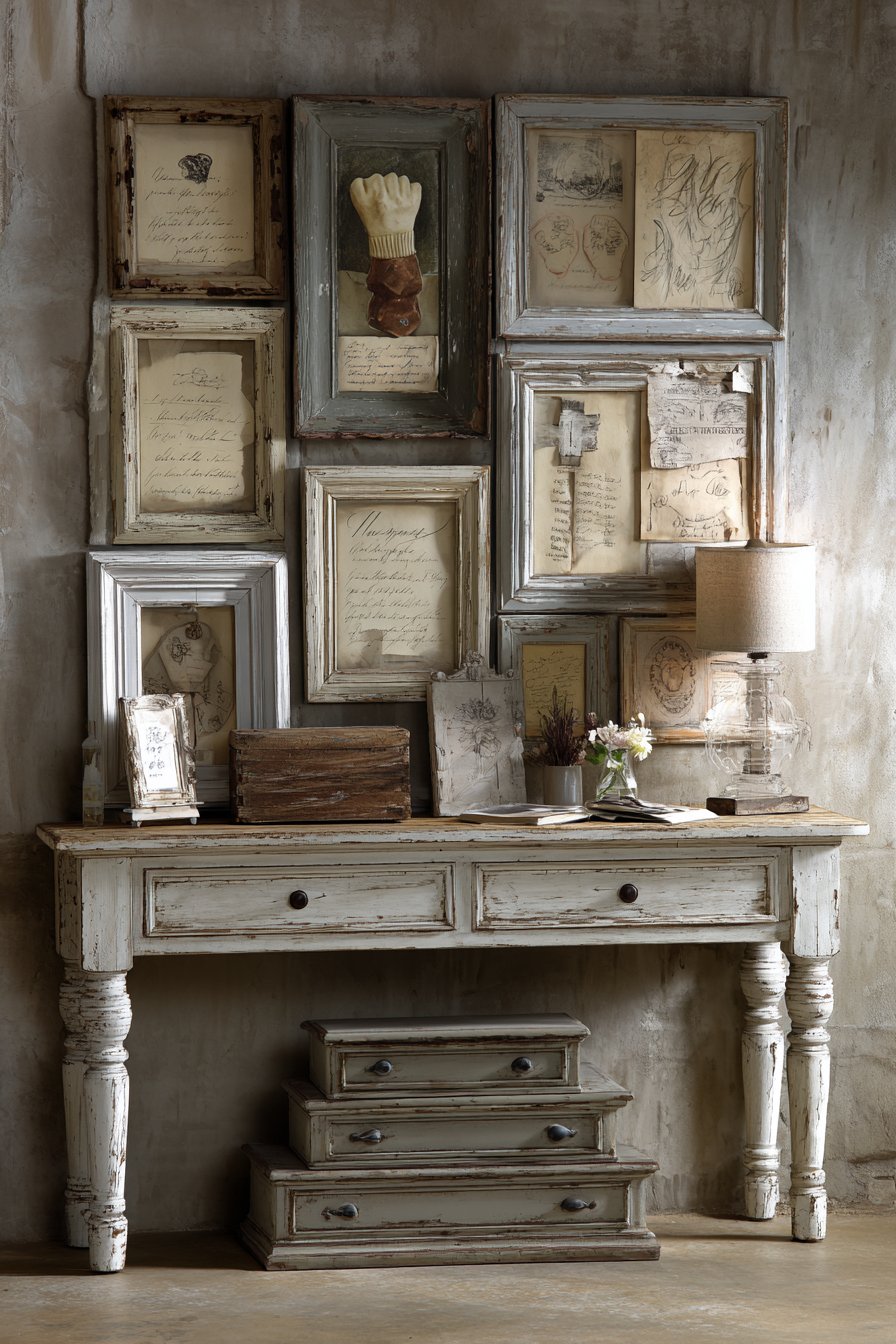
Mismatched antique wooden frames with original paint in faded blues, greens, and creams create a vintage gallery wall celebration of farmhouse and cottage aesthetics. The authentic chippy distressing—where paint naturally flakes away to reveal layers of color and raw wood beneath—provides textural interest that cannot be convincingly replicated through artificial aging techniques. The collection displays vintage seed packets, antique advertising prints, botanical watercolors, and aged handwritten letters, creating a rustic yet refined composition.
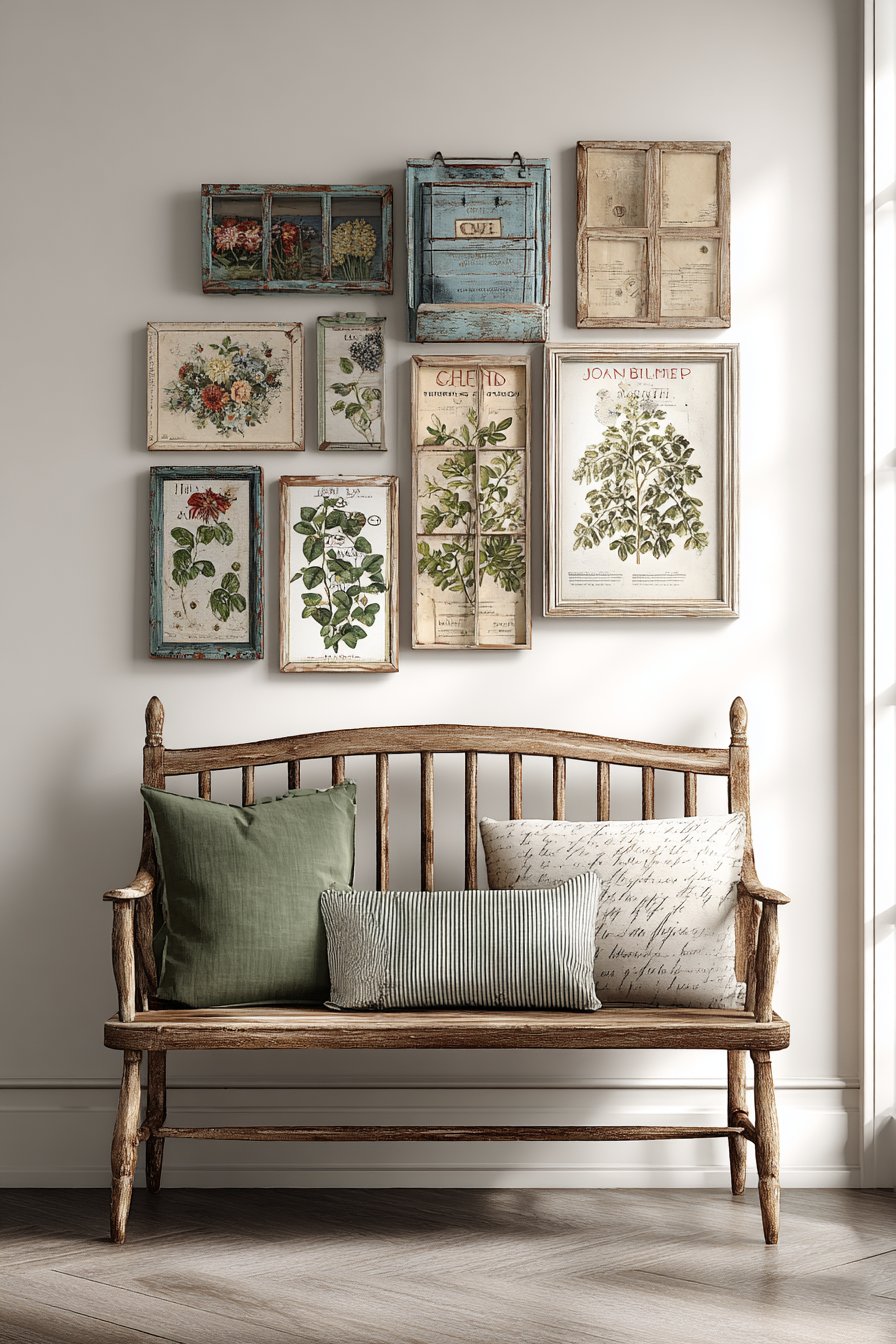
Arranged above a farmhouse-style wooden bench with simple turned legs, this gallery wall embodies the unpretentious elegance that makes farmhouse style so enduringly popular. The bench’s honest construction and visible wood grain complement the frames’ rustic finishes, while providing functional seating in entryways, bedrooms, or dining spaces. Soft natural lighting emphasizes the subtle color variations and weathered textures, revealing the history embedded in every paint chip and surface imperfection.
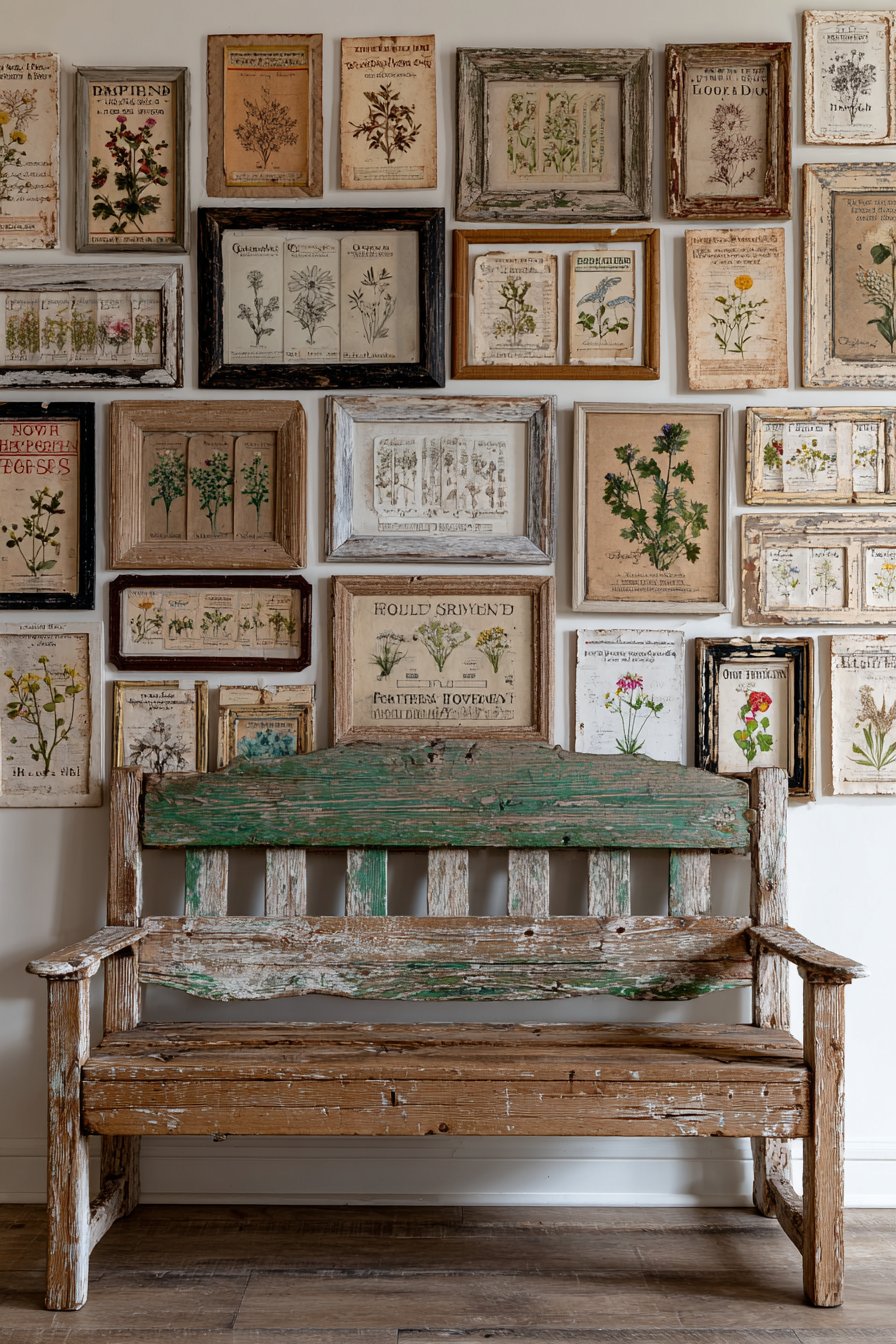
Interior photography focused on the charming imperfections and rustic vintage appeal shows that beauty exists in authenticity rather than perfection. Each frame’s unique patina tells a story of use and age, making the collection feel genuinely collected over time rather than purchased all at once from a home décor store. This authenticity is what separates truly compelling vintage gallery walls from those that merely mimic the aesthetic.
Key Design Tips:
- Seek out frames at estate sales, antique shops, and flea markets for authentic vintage finishes
- Embrace imperfections rather than trying to restore frames to pristine condition
- Unify diverse frame colors by maintaining similar value ranges (all pastels, all muted tones)
- Include handwritten elements for personal, intimate appeal
- Balance colorful frames with neutral artwork or vice versa to prevent visual chaos
11. Gothic Revival Drama
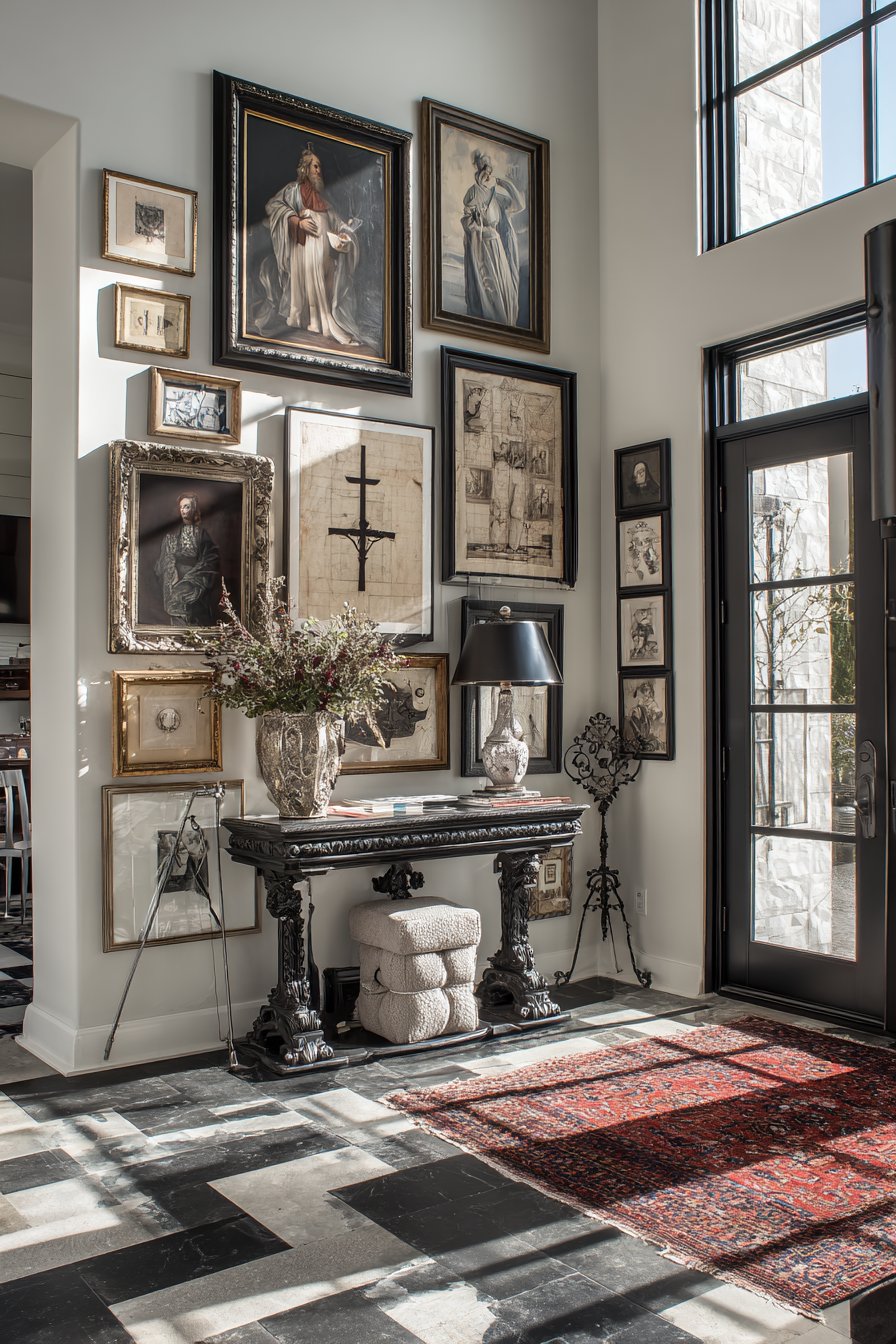
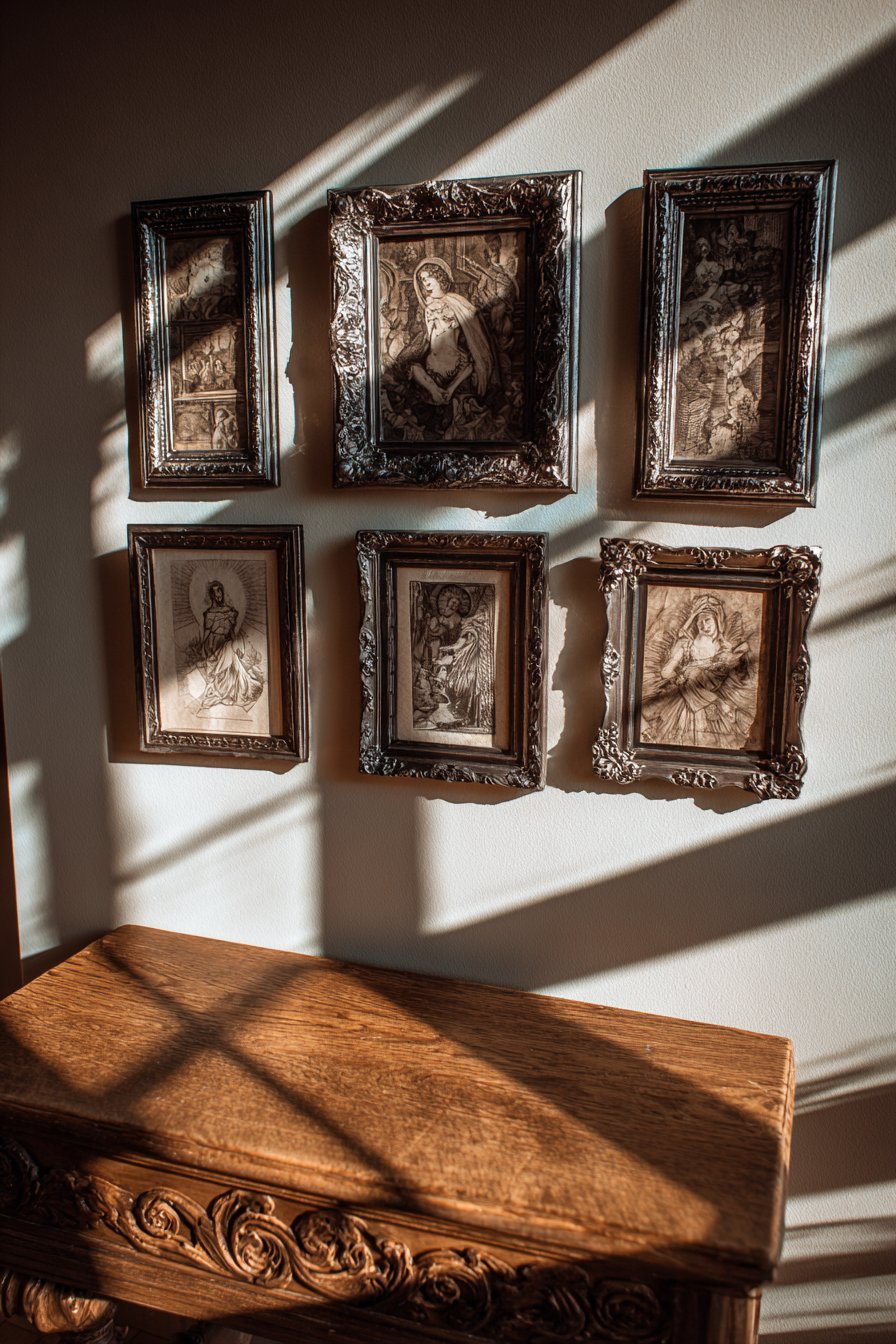
An asymmetrical arrangement of ornate baroque frames in heavily tarnished silver and blackened bronze creates a vintage gallery wall with dramatic Gothic Revival sensibilities. The frames contain vintage religious iconography, classical mythology prints, aged velvet-matted portraits, and antique hand-colored engravings—subject matter that leans into the mysterious, spiritual, and classical themes associated with Gothic aesthetics. Positioned above a Gothic revival hall table with carved details, this arrangement creates a cohesive vignette that transports viewers to another era.
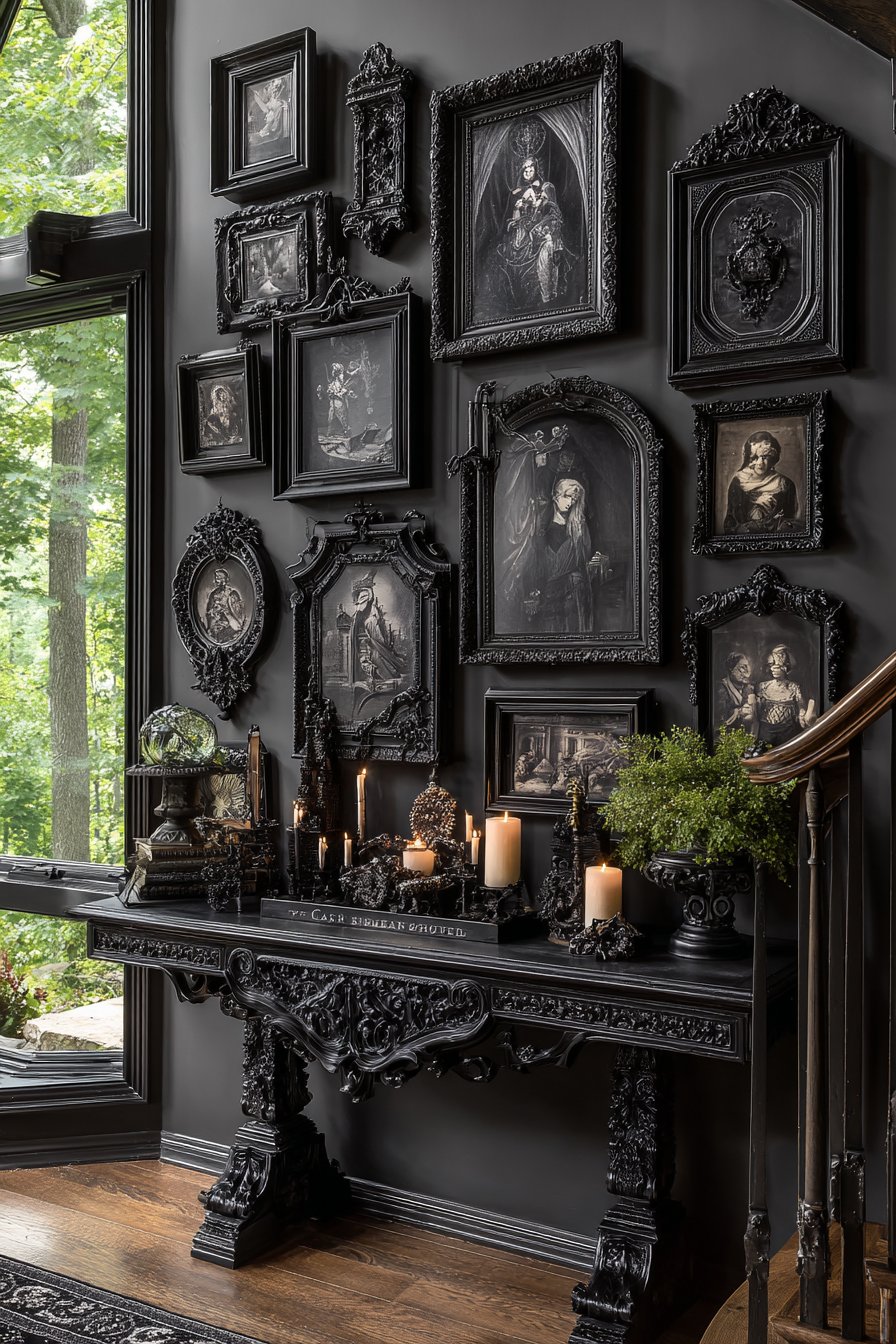
The dramatic natural lighting from tall windows creates strong shadows that emphasize the sculptural quality of the ornate frames. These deep shadows and highlights add theatrical dimension, causing the frames to appear almost three-dimensional against the wall. The play of light across tarnished metal surfaces creates subtle variations in tone and reflectivity that change throughout the day, ensuring the arrangement never looks quite the same twice.
The inclusion of velvet matting in deep jewel tones adds luxurious texture and rich color that complements the ornate frames while protecting the delicate antique prints. Velvet was a popular choice for matting in the Victorian era, and its use here adds period-appropriate authenticity while providing practical benefits—the soft surface helps cushion artwork and prevents it from shifting within the frame.
Key Design Tips:
- Embrace dark, moody aesthetics by choosing frames with patina rather than bright, shiny finishes
- Include architectural or religious imagery for authentic Gothic Revival character
- Use deep-colored matting to add richness and protect light-colored prints from frame contact
- Position the arrangement where dramatic natural light can create shadow play
- Balance ornate frames with substantial furniture pieces that match their visual weight
12. Jewel-Toned Maximalist Treasure
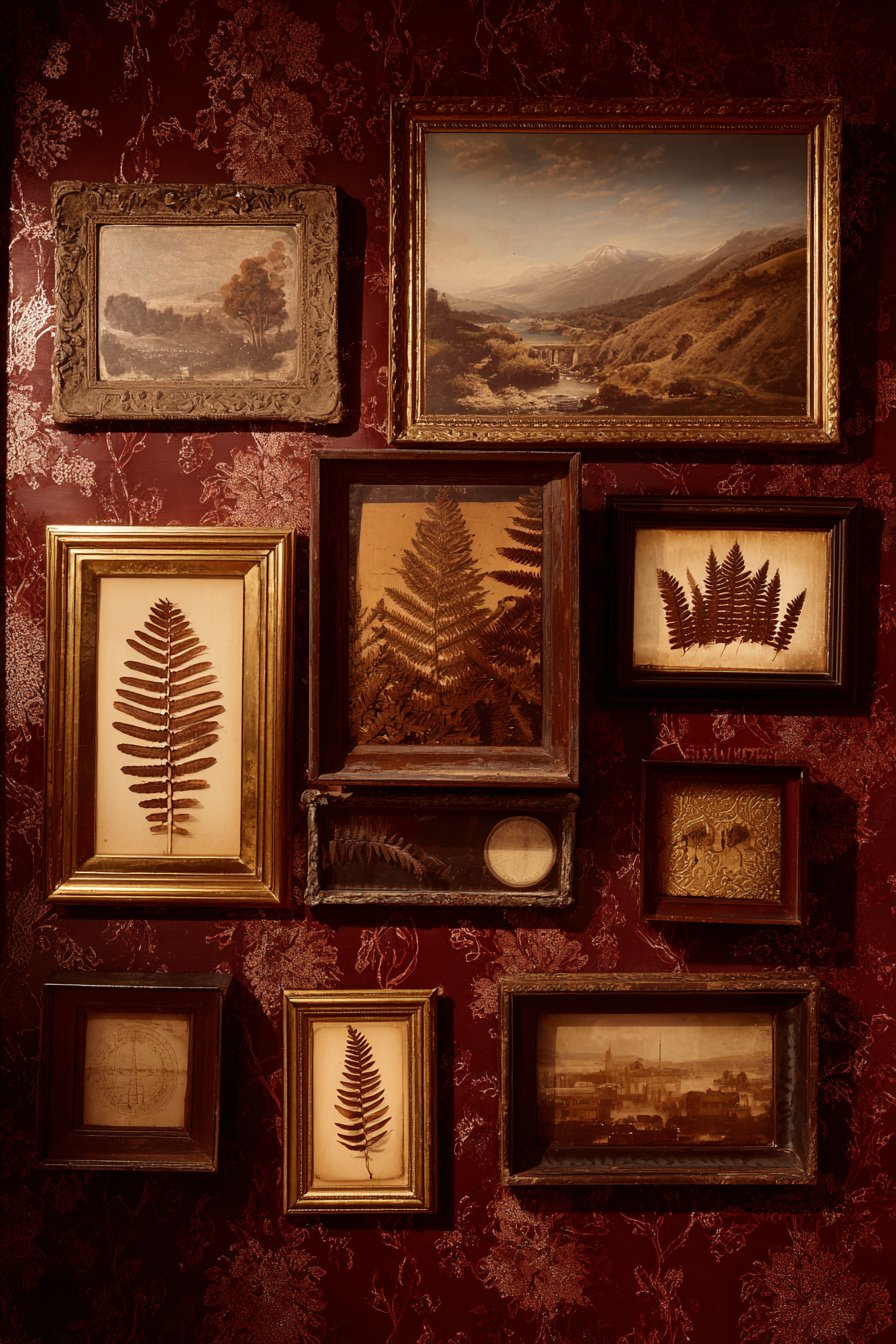
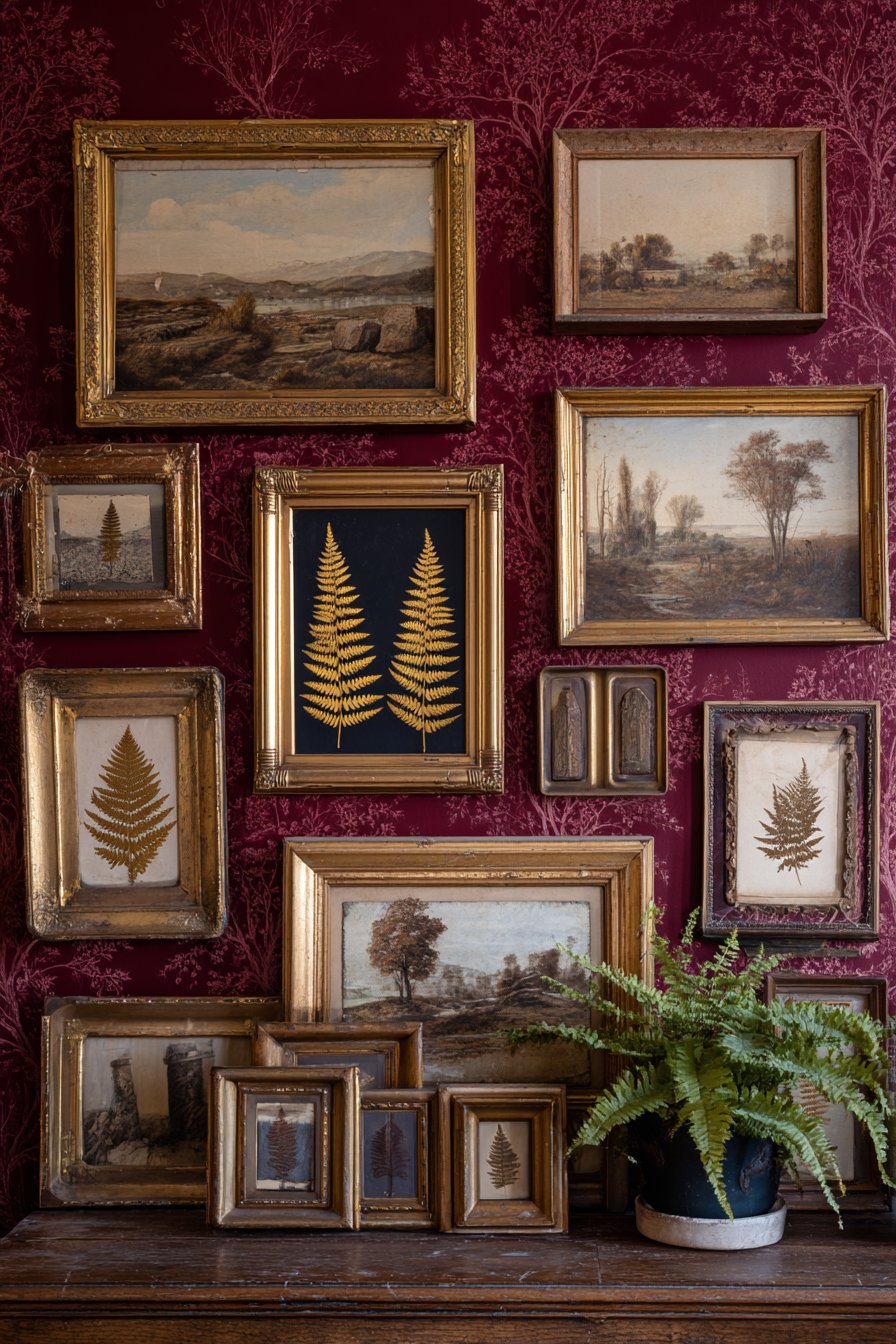
A salon-style dense arrangement of various antique frames in warm gold tones creates a vintage gallery wall of maximalist splendor against deep burgundy damask wallpaper. The frames showcase different levels of patina and age, from nearly pristine gilding to heavily tarnished surfaces where the base metal shows through. This variation in aging creates depth and visual interest even before considering the artwork itself—vintage oil landscape paintings, sepia-toned daguerreotypes in cases, pressed fern specimens, and antique mirror fragments.
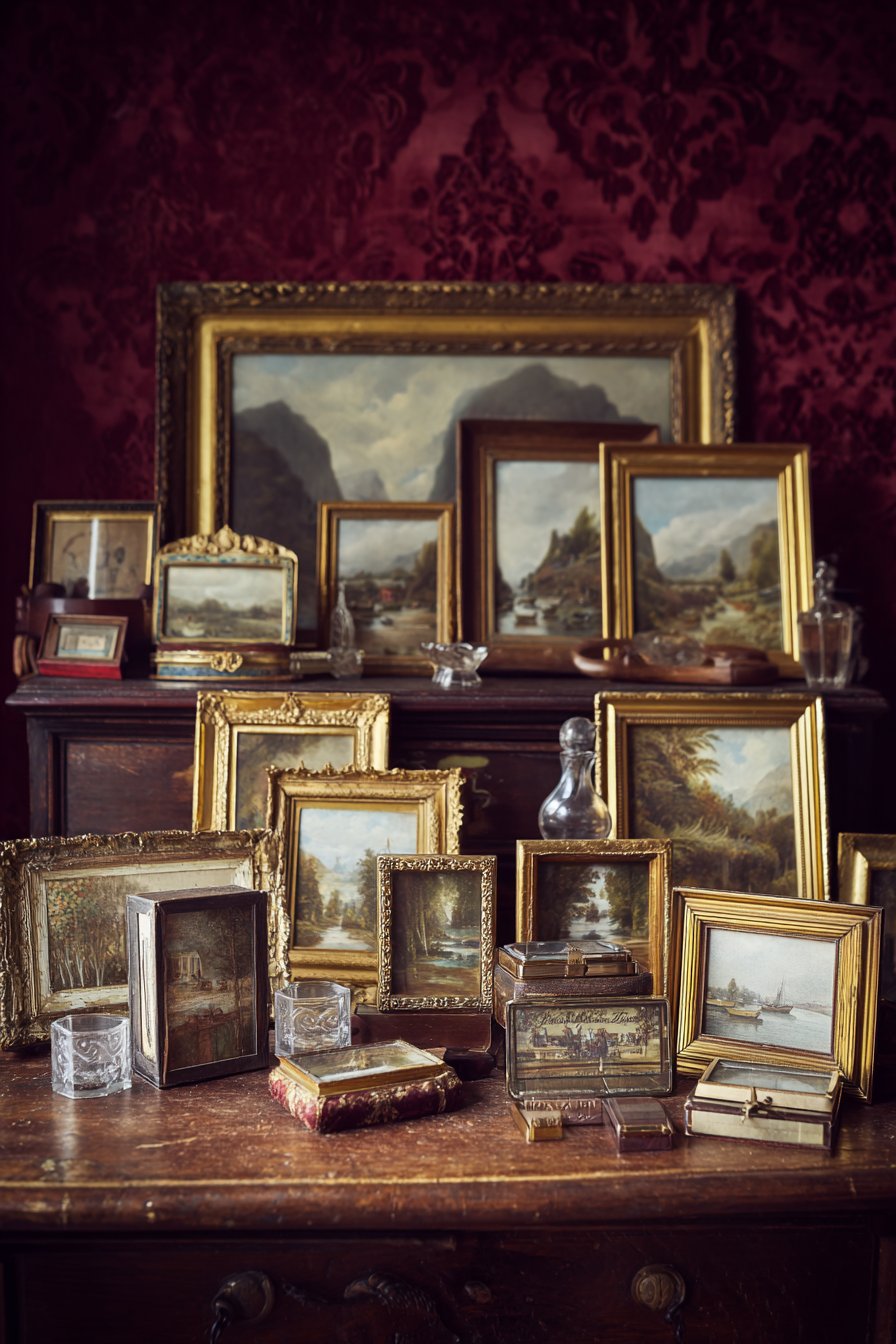
The deep burgundy damask wallpaper provides a sumptuous backdrop that elevates the entire arrangement from impressive to truly magnificent. The traditional pattern in the wallpaper adds another layer of vintage authenticity while the rich color makes the golden frames appear even more luminous by contrast. This bold background choice demonstrates confidence in design execution and commitment to creating an immersive vintage aesthetic.
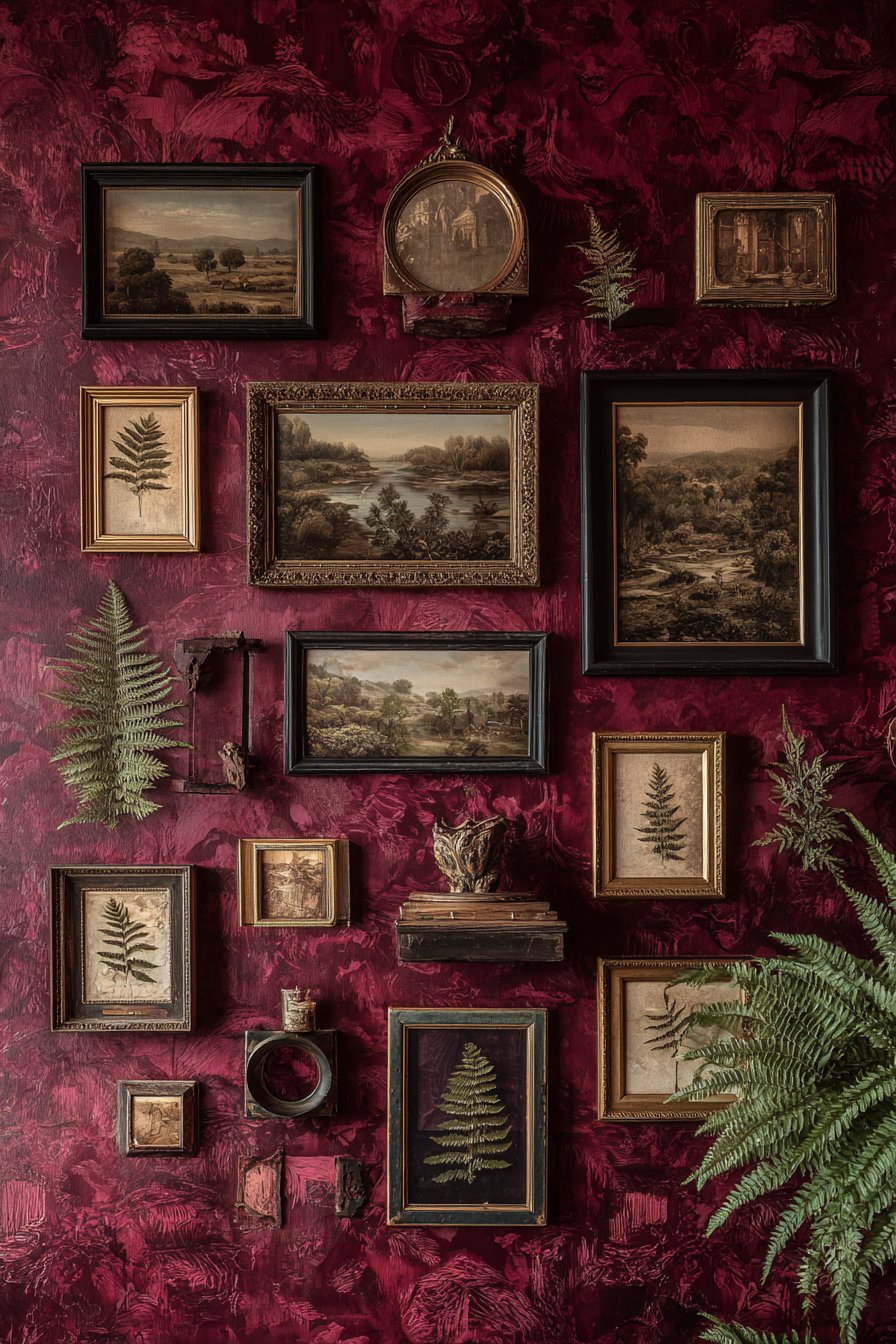
Professional interior photography with soft ambient lighting highlights the richness of the layered vintage aesthetic and metallic frame variations. The lighting strategy here must balance illuminating the frames adequately while not creating glare on the multiple glass surfaces or washing out the nuanced colors in the wallpaper. Layered lighting with ambient illumination supplemented by carefully positioned accent lights achieves this delicate balance.
Key Design Tips:
- Consider wallpaper or bold paint colors as backdrops for gold frames to maximize drama
- Include varying levels of frame patina for authentic collected-over-time appearance
- Mix two-dimensional art with three-dimensional objects in shadow boxes for variety
- Use more frames than you think you need for true salon-style density
- Step back frequently while arranging to ensure balanced visual weight distribution
13. Shabby Chic Vertical Tower
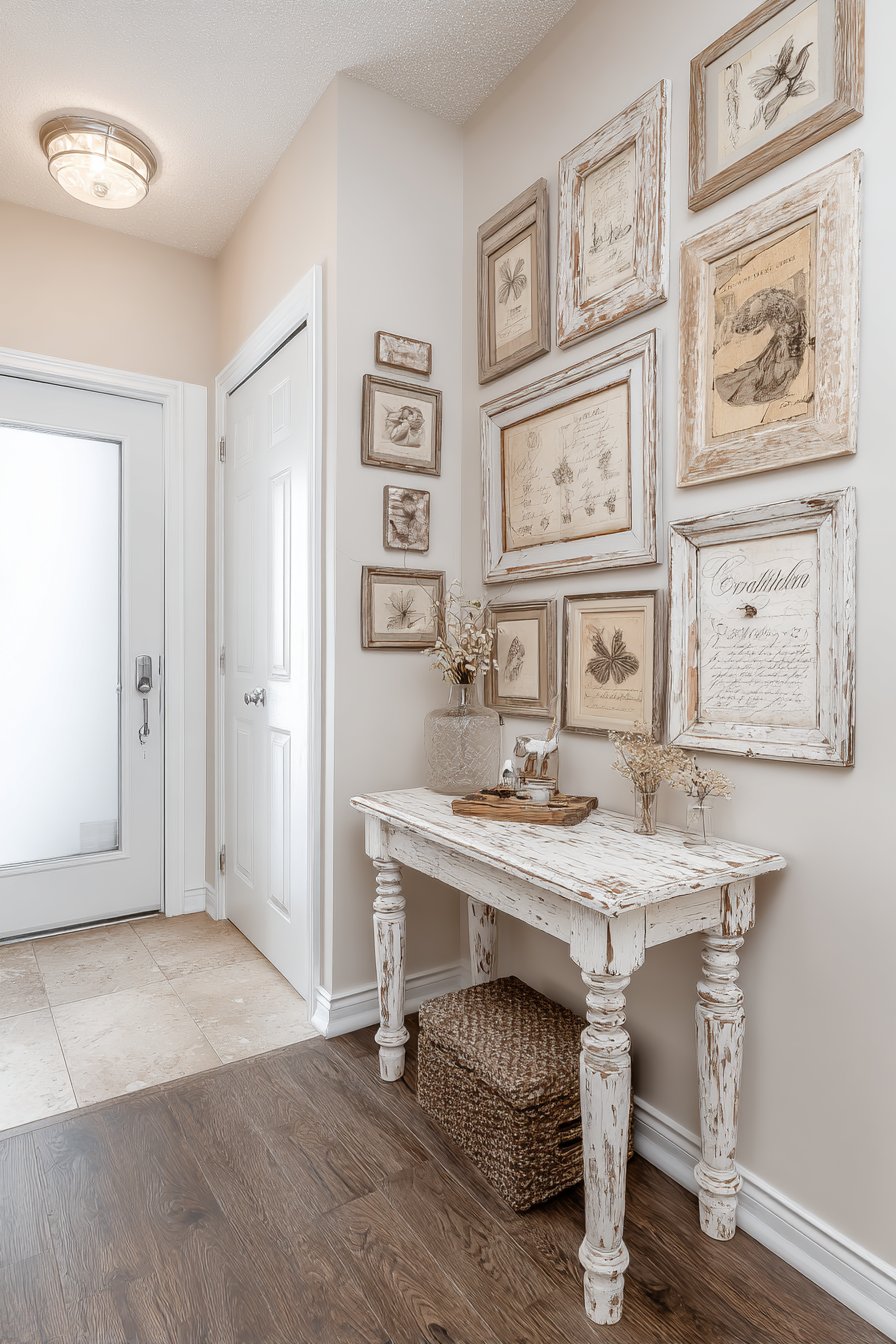
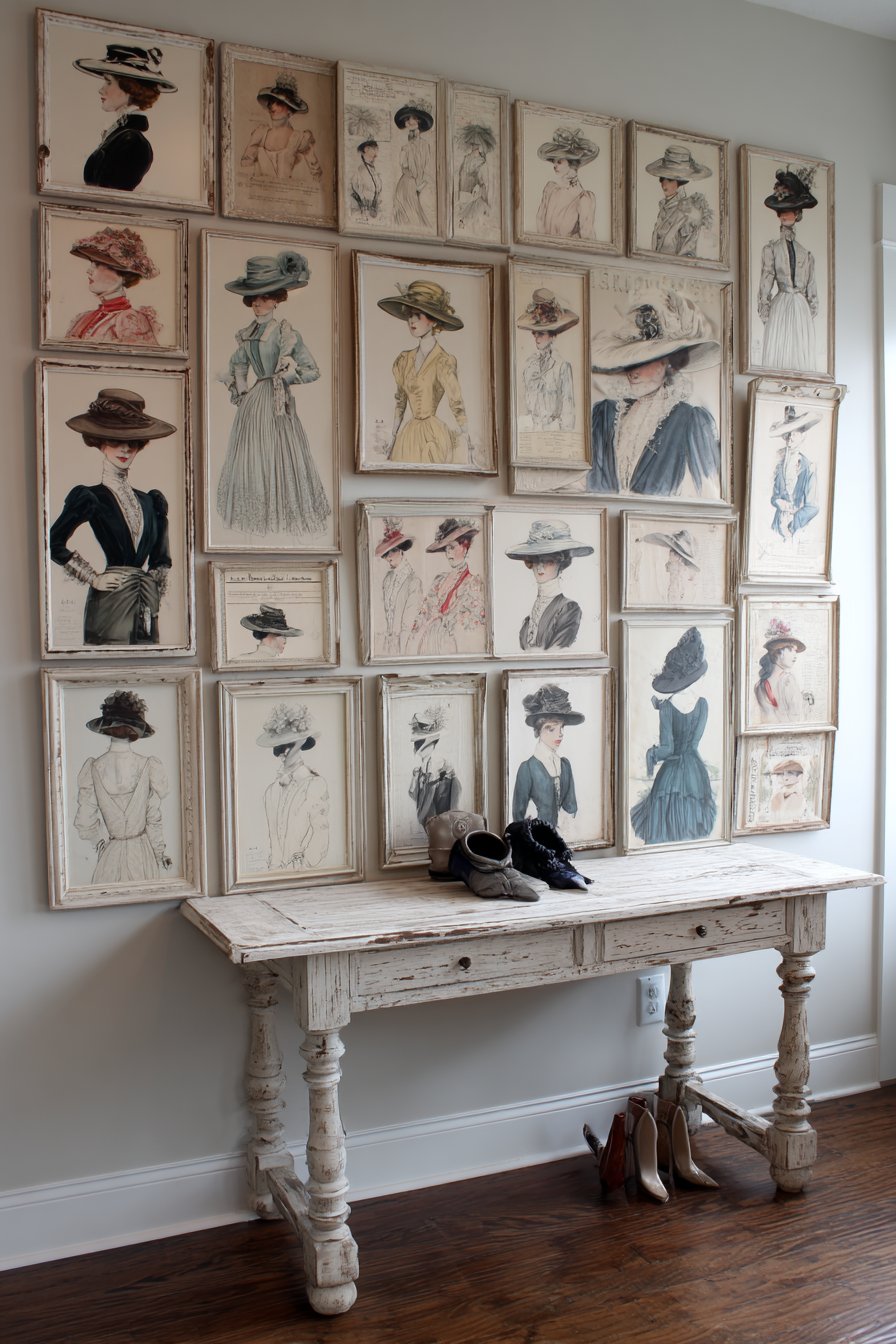
In an entryway, a vertical tower arrangement of stacked antique frames in weathered white and cream painted wood creates a vintage gallery wall with cottage charm and shabby chic appeal. The frames display vintage hat prints, antique glove advertisements, Victorian calling cards, and aged fashion illustrations—ephemera that speaks to personal grooming, social customs, and the genteel rituals of earlier eras. A distressed painted console table with turned legs sits below, providing a surface for keys, mail, and a welcoming vase of fresh flowers.
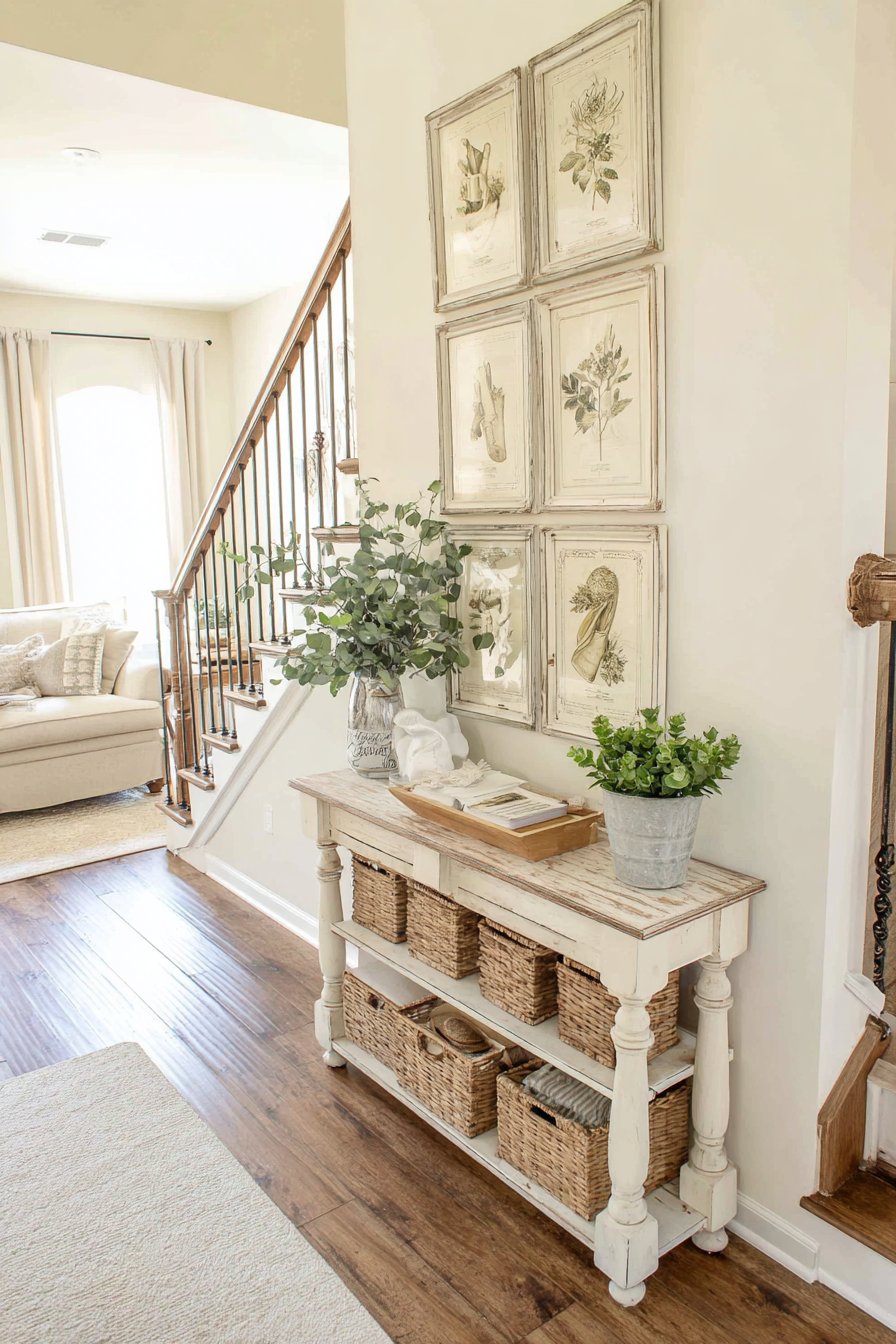
The vertical stacking creates height and draws the eye upward, making the entryway feel more spacious despite potentially limited square footage. This arrangement strategy works particularly well in narrow spaces where horizontal expansion isn’t possible. The weathered white frames create a light, airy feeling appropriate for entries where you want to establish a welcoming, fresh atmosphere from the moment guests arrive.
Natural entryway lighting—typically from sidelights, transom windows, or nearby rooms—creates welcoming warmth while emphasizing the shabby chic vintage charm and authentic paint wear. The distressed finishes on both frames and console table suggest a relaxed, comfortable home where perfection isn’t required and lived-in character is celebrated. This approachable aesthetic makes guests feel immediately at ease.
Key Design Tips:
- Hang frames in a straight vertical line using the center points as your alignment guide
- Choose frames with similar finishes but varying sizes for visual interest within unity
- Include subject matter appropriate to the room’s function (welcoming themes for entryways)
- Keep the lowest frame at least 8-10 inches above furniture to prevent a cramped feeling
- Use the vertical arrangement to make rooms with low ceilings feel taller
14. Cabinet of Curiosities Shadow Boxes
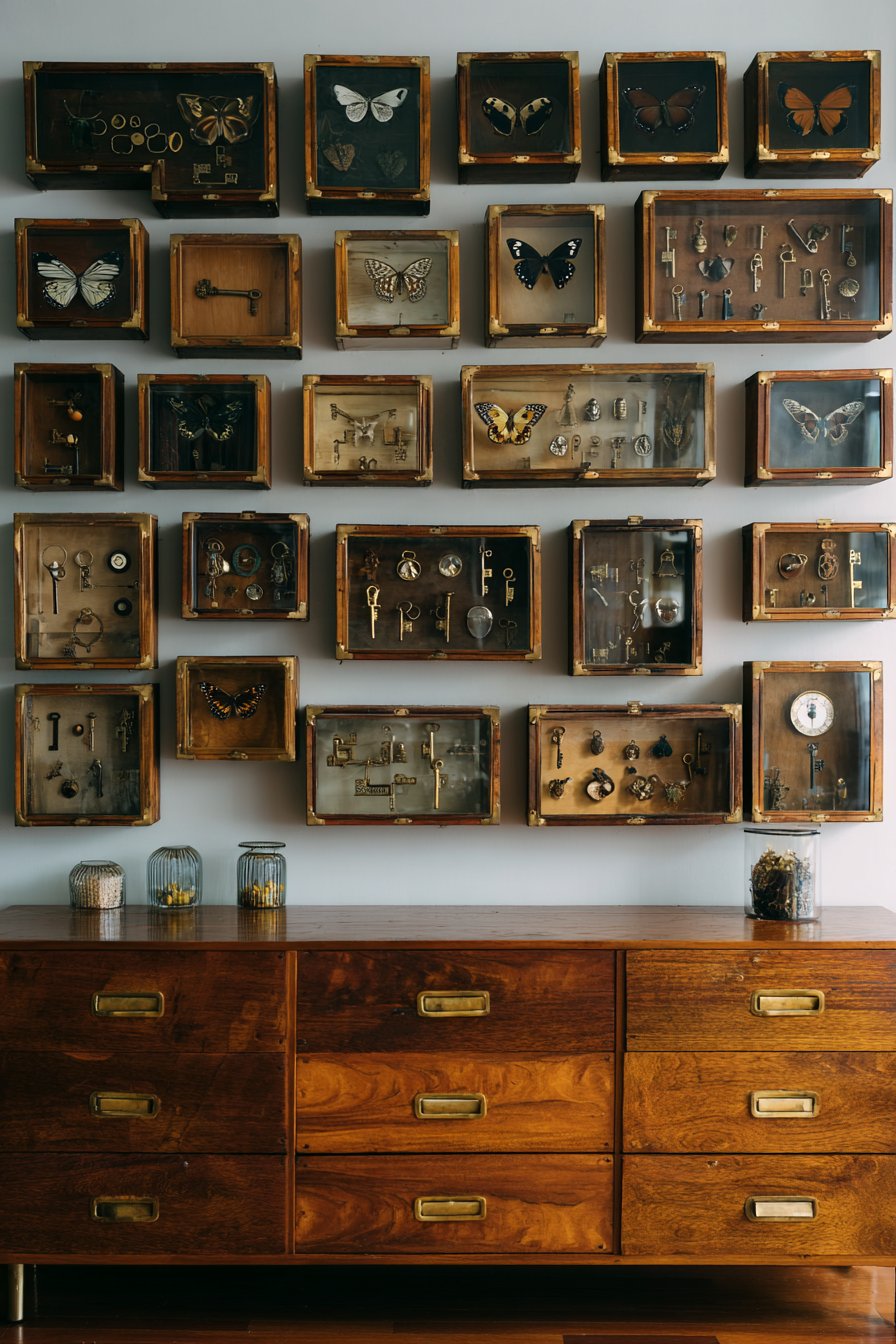
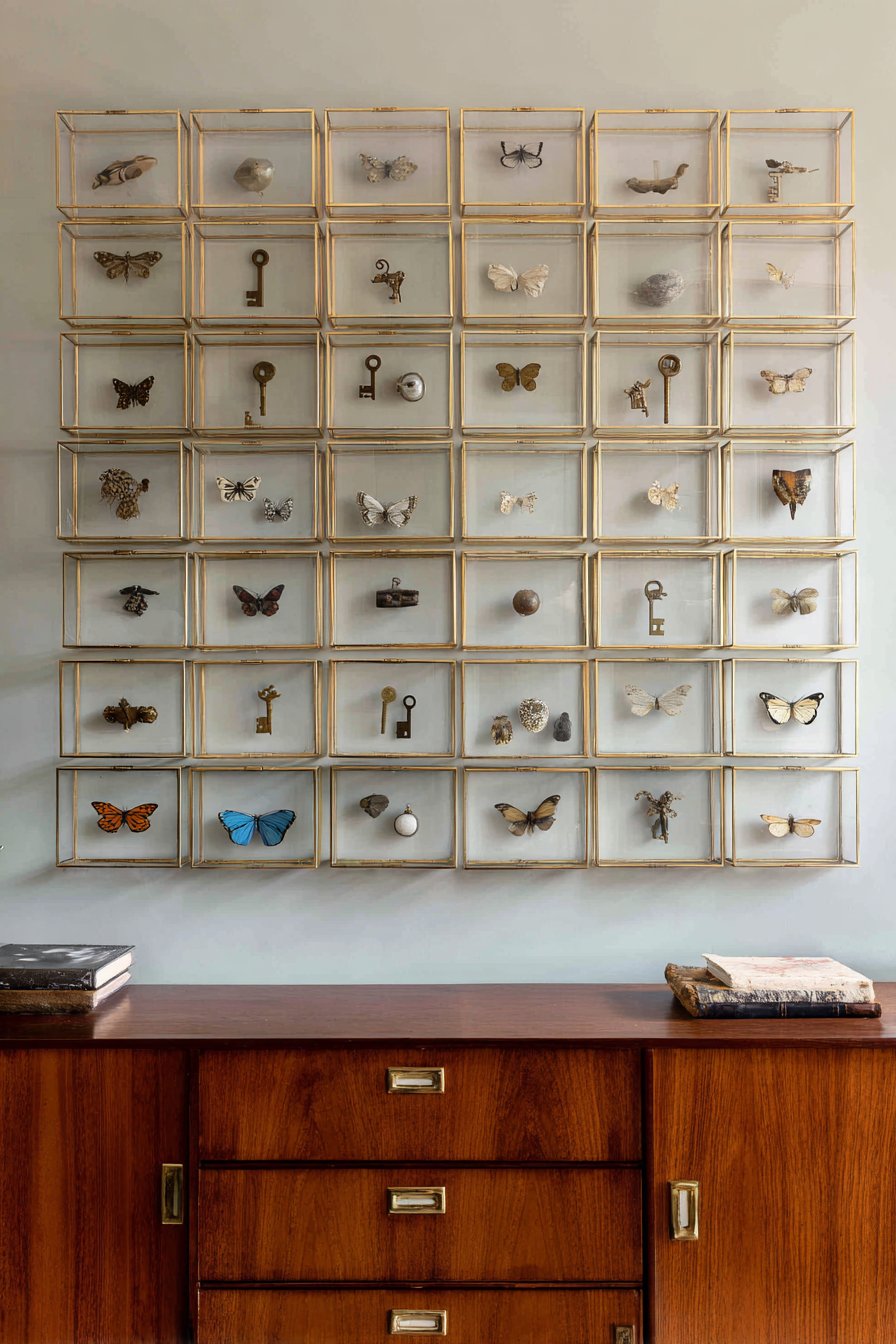
Matching antique shadow box frames with aged brass corners and glass fronts create a vintage gallery wall that functions as a three-dimensional cabinet of curiosities. The boxes contain carefully curated vintage collections—antique keys, Victorian jewelry, vintage buttons, taxidermy butterflies, and pocket watch parts—each box becoming a miniature museum display. Arranged in a grid pattern above a mid-century modern credenza, this approach demonstrates how vintage collecting instincts can be displayed in a contemporary context.
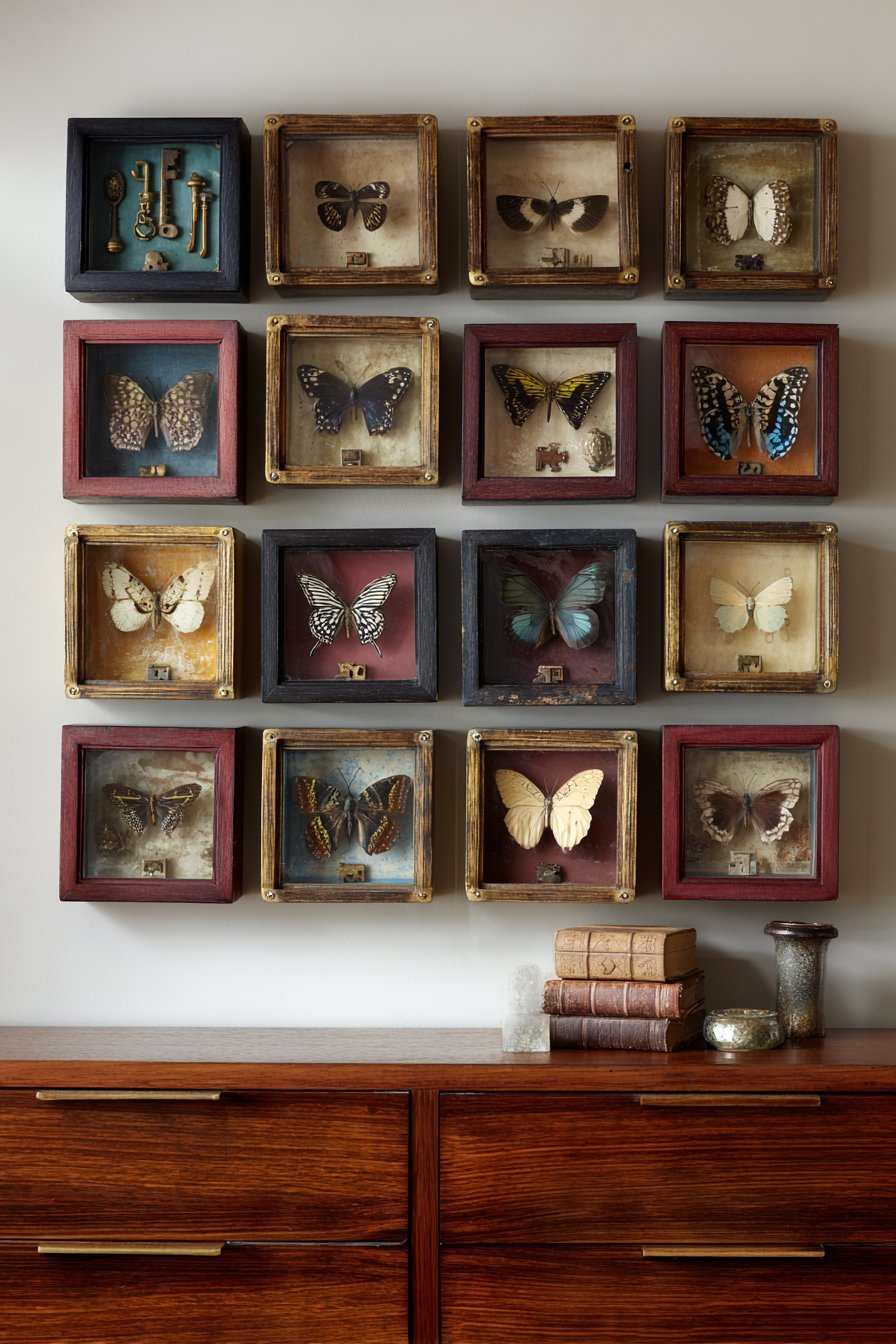
The grid arrangement brings order and contemporary sensibility to what might otherwise feel cluttered given the density of small objects within each shadow box. This structured presentation allows viewers to appreciate each box individually while understanding them as part of a larger collection. The varying depths of the shadow boxes—some quite deep to accommodate pocket watches, others shallow for buttons—create subtle dimensional variation within the uniform grid.
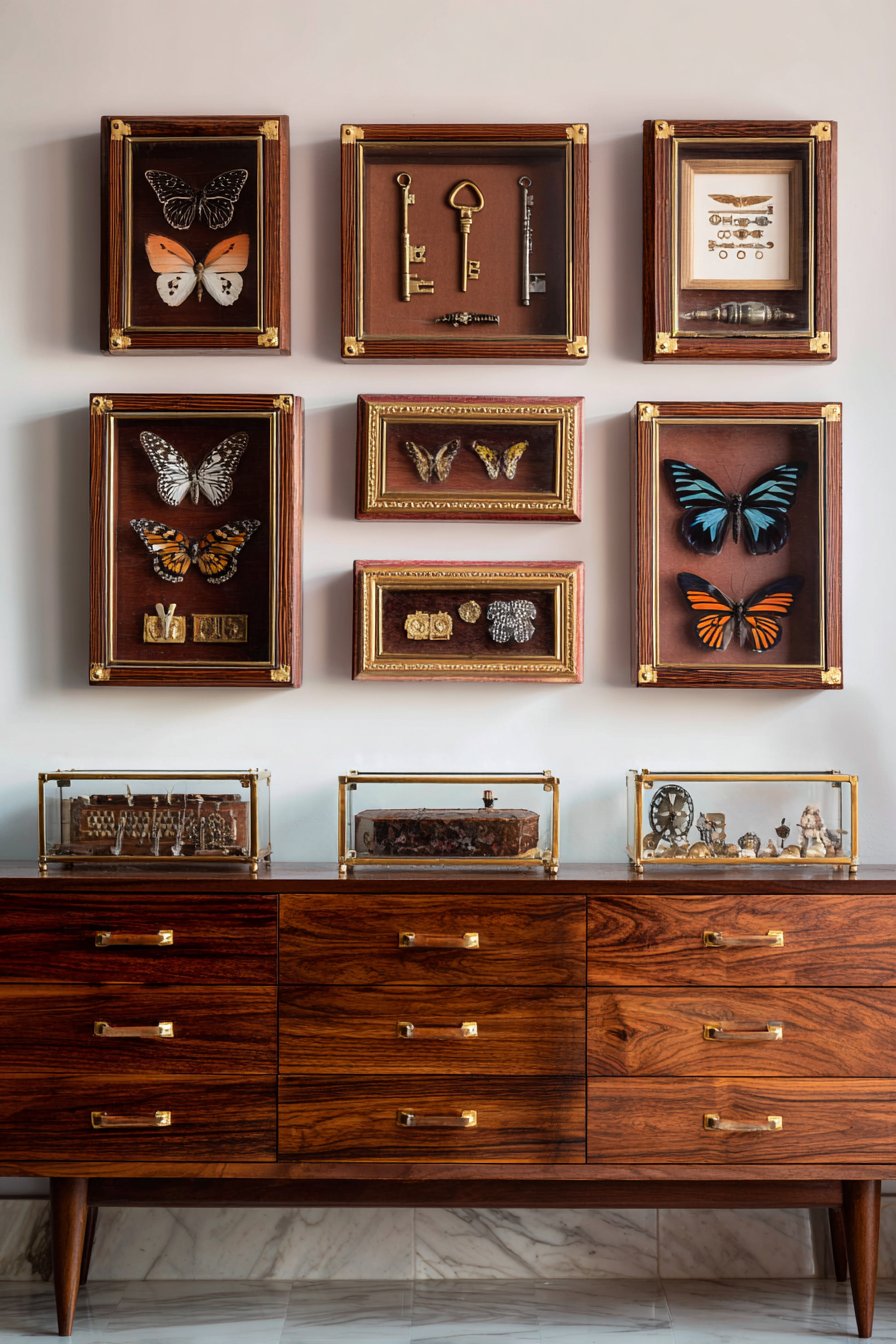
Interior design photography with careful lighting minimizes glass reflection while showcasing the dimensional artifacts and authentic patina on metal objects. Achieving this requires angling lights to avoid direct reflection while still providing enough illumination to see into the depth of the boxes. The result allows viewers to examine the fascinating details of each collected object without distracting glare.
Key Design Tips:
- Use shadow boxes with adequate depth for three-dimensional objects (typically 1.5-3 inches)
- Mount objects securely using conservation-grade materials that won’t damage antiques
- Group similar objects within individual boxes rather than mixing categories
- Maintain the grid structure rigidly for maximum contemporary/vintage contrast
- Position lighting at 30-45 degree angles to minimize glare on glass surfaces
15. Romantic Feminine Nostalgia
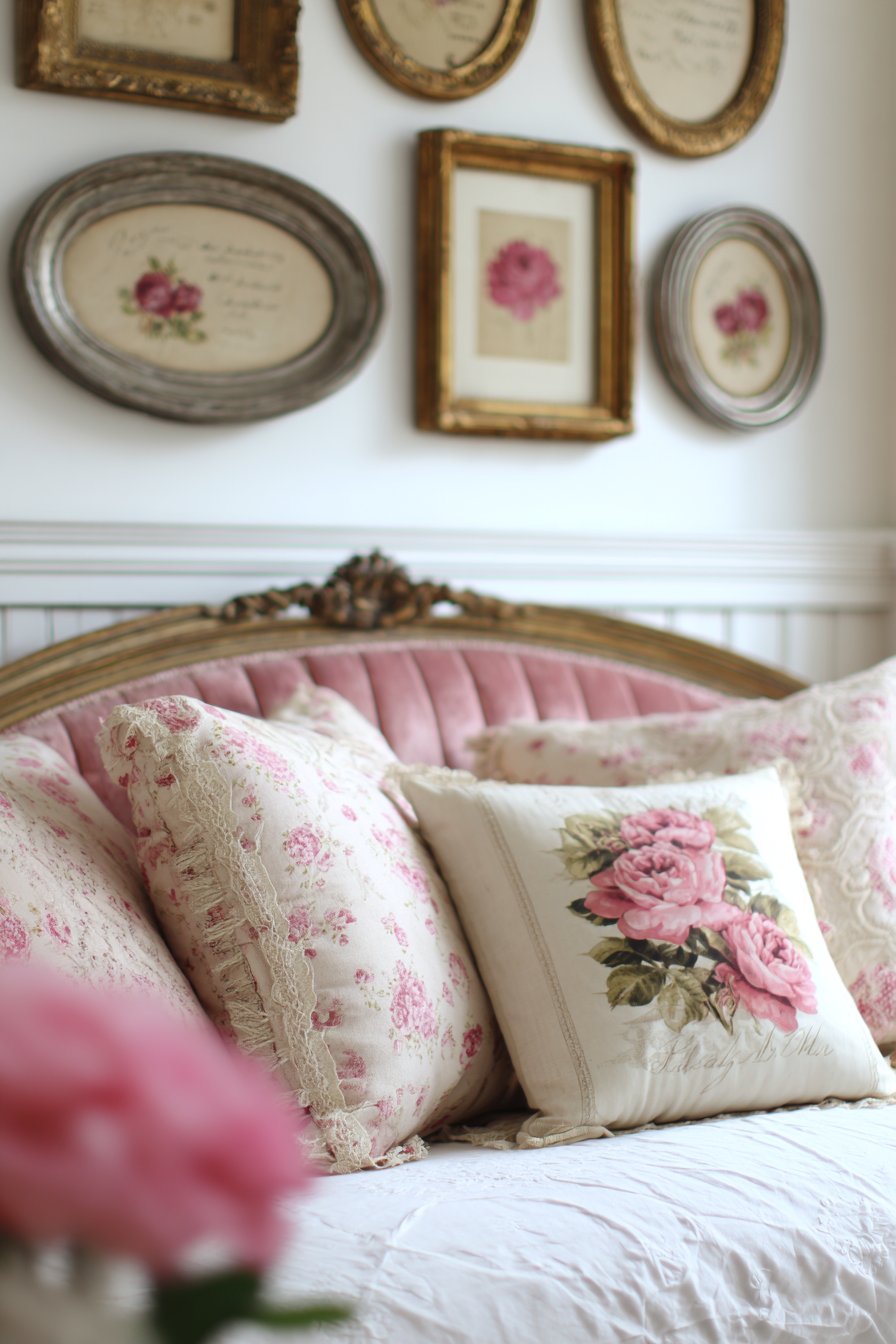
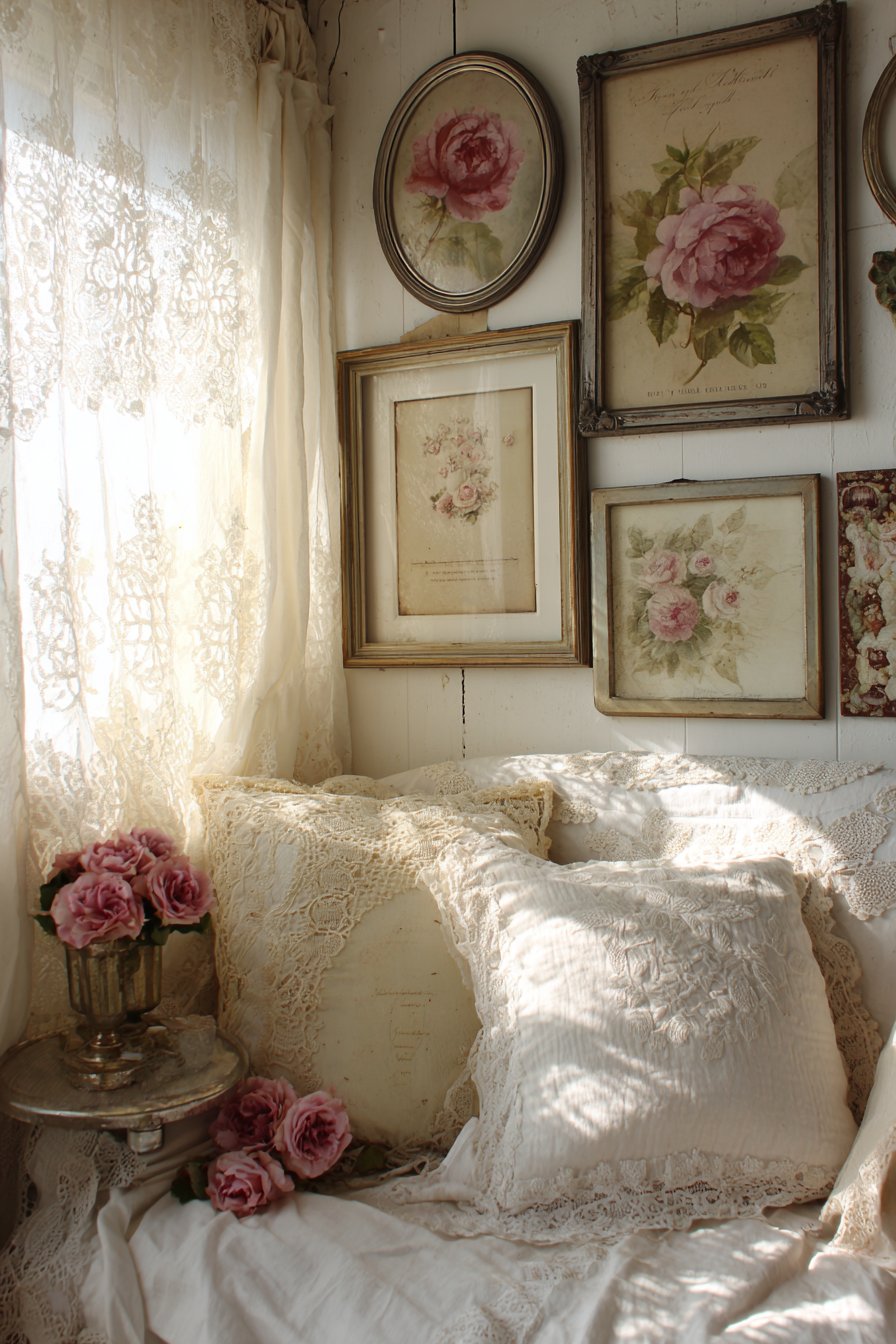
An arrangement of oval and round antique frames in tarnished silver plate and aged brass creates a vintage gallery wall of romantic, feminine sensibility. The frames display vintage lace doilies mounted on silk, antique perfume labels, pressed roses, Victorian valentines, and sepia bridal portraits—subject matter that celebrates beauty, romance, and the sentimental traditions of courtship and marriage. Positioned above a French provincial settee with worn velvet upholstery, this vignette creates a dreamy retreat perfect for bedrooms or sitting rooms.
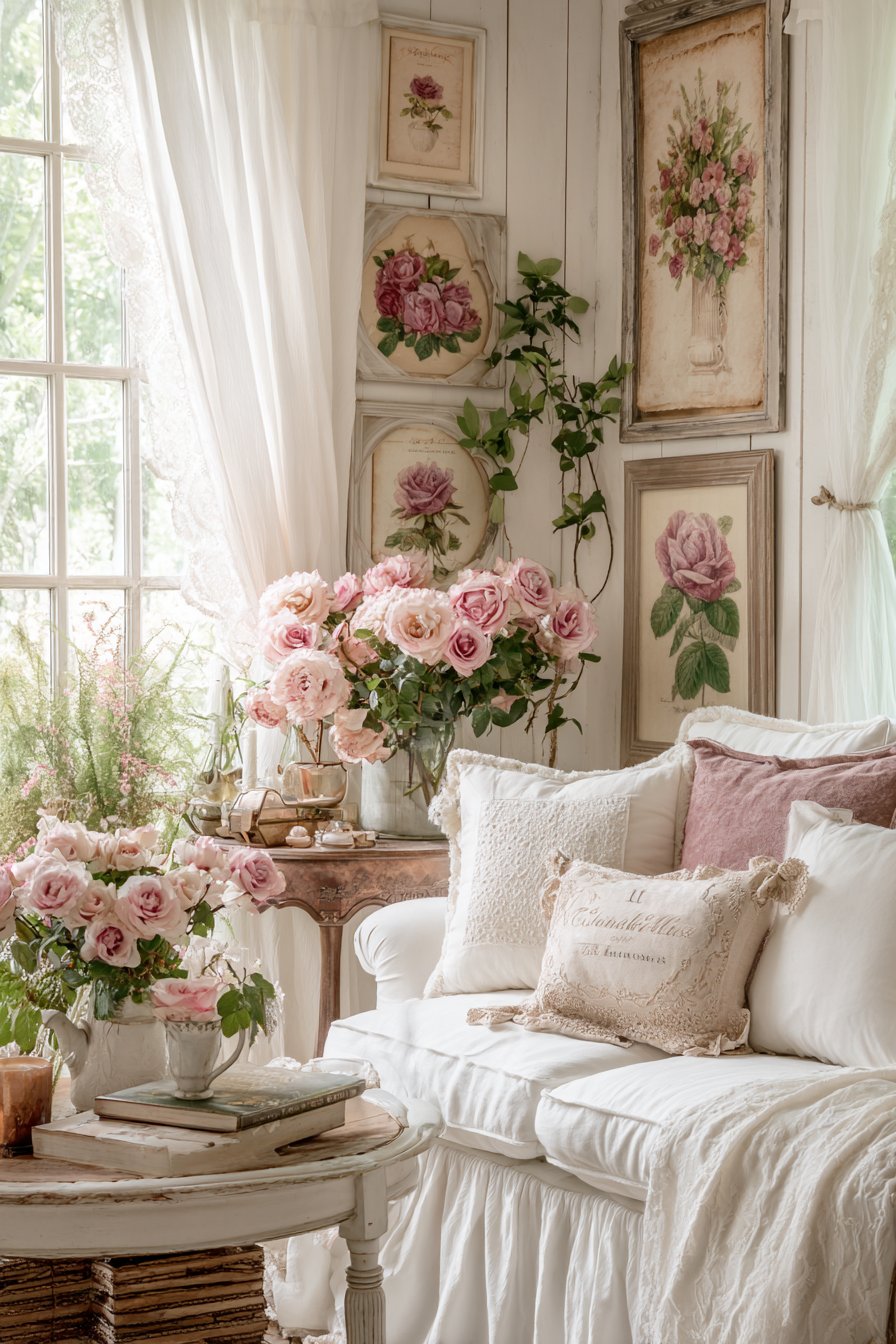
The soft diffused natural light creates an atmospheric quality that enhances the delicate textures and feminine vintage aesthetic. Light filtering through sheer curtains or ambient room lighting works better here than harsh directional light, which would disrupt the romantic mood. The gentle illumination makes the silk backing visible through delicate lace, highlights the preserved petals of pressed flowers, and catches the metallic threads in antique valentines.
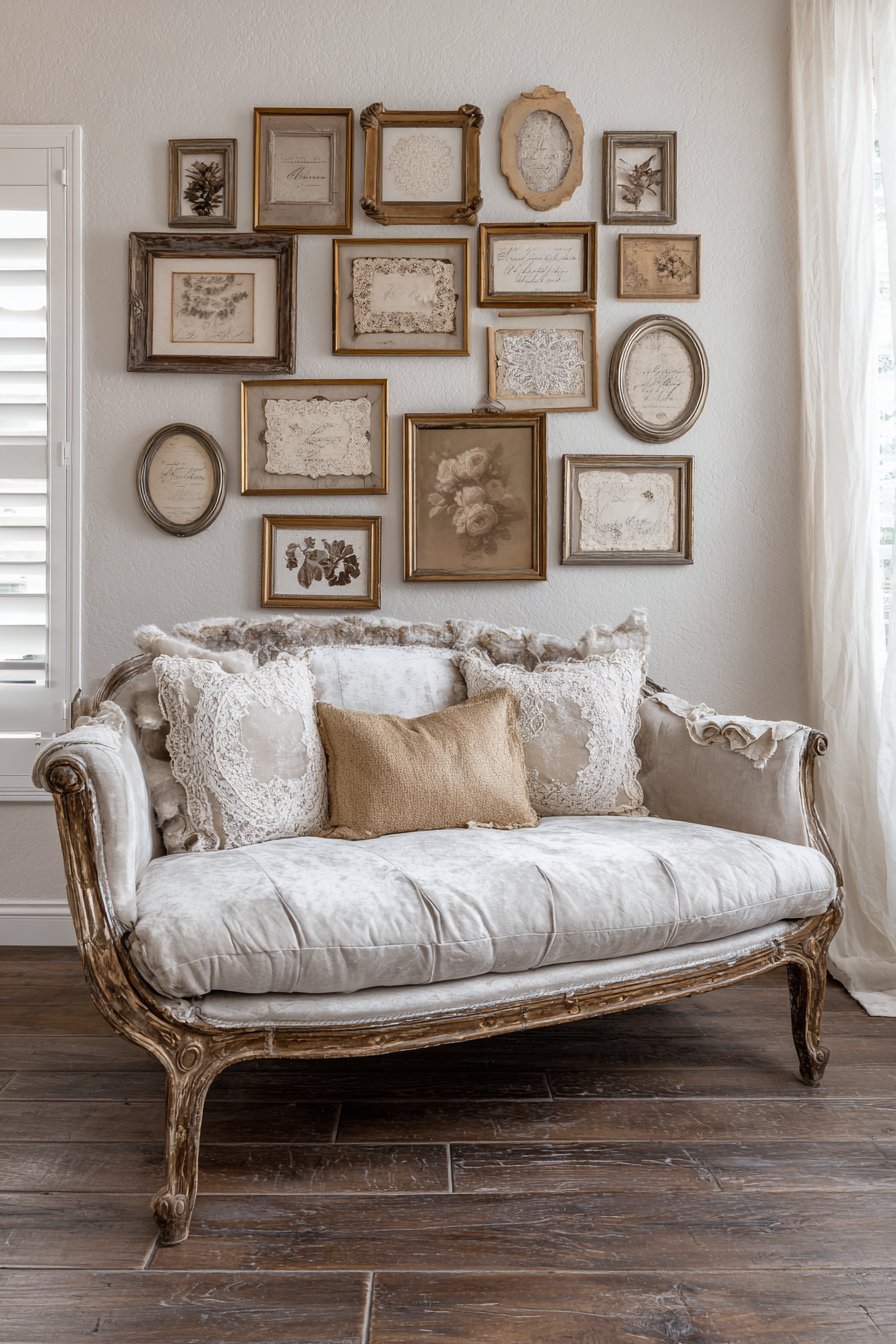
The tarnished silver and aged brass frames provide metallic shimmer without the harsh brightness of polished metals. This subtle luminosity adds elegance while maintaining the soft, romantic character of the overall composition. The worn velvet on the settee echoes the textile elements in the framed pieces, creating material connections throughout the vignette.
Key Design Tips:
- Choose curved frames (ovals, circles) for softer, more feminine aesthetic
- Mount delicate textiles between glass to protect them while allowing visibility
- Include fresh or dried flowers to connect the vintage pieces to the present
- Use soft, diffused lighting to maintain romantic atmosphere
- Select furniture with curved lines and soft fabrics to complement the frames
16. Industrial Metal and Rivets
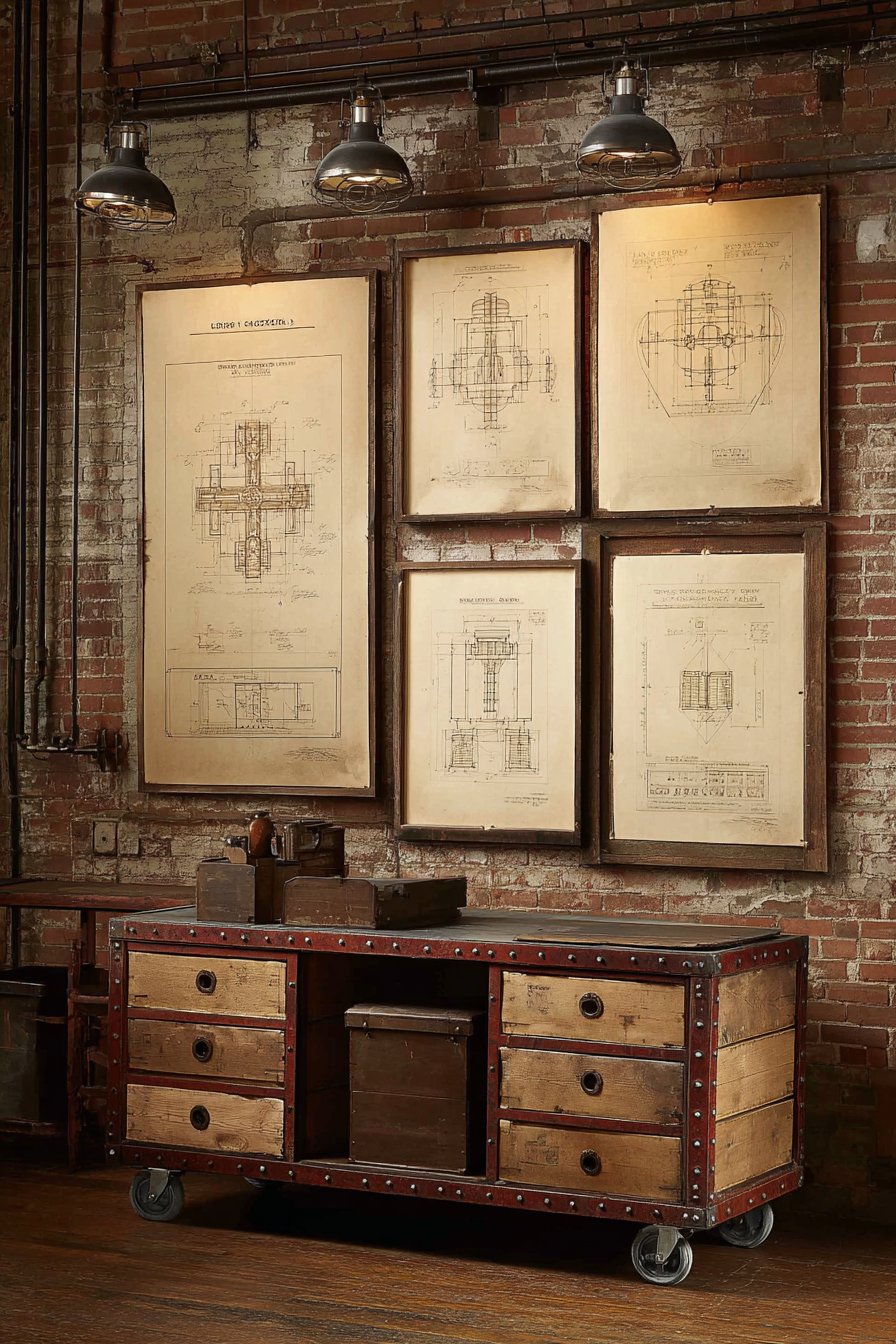
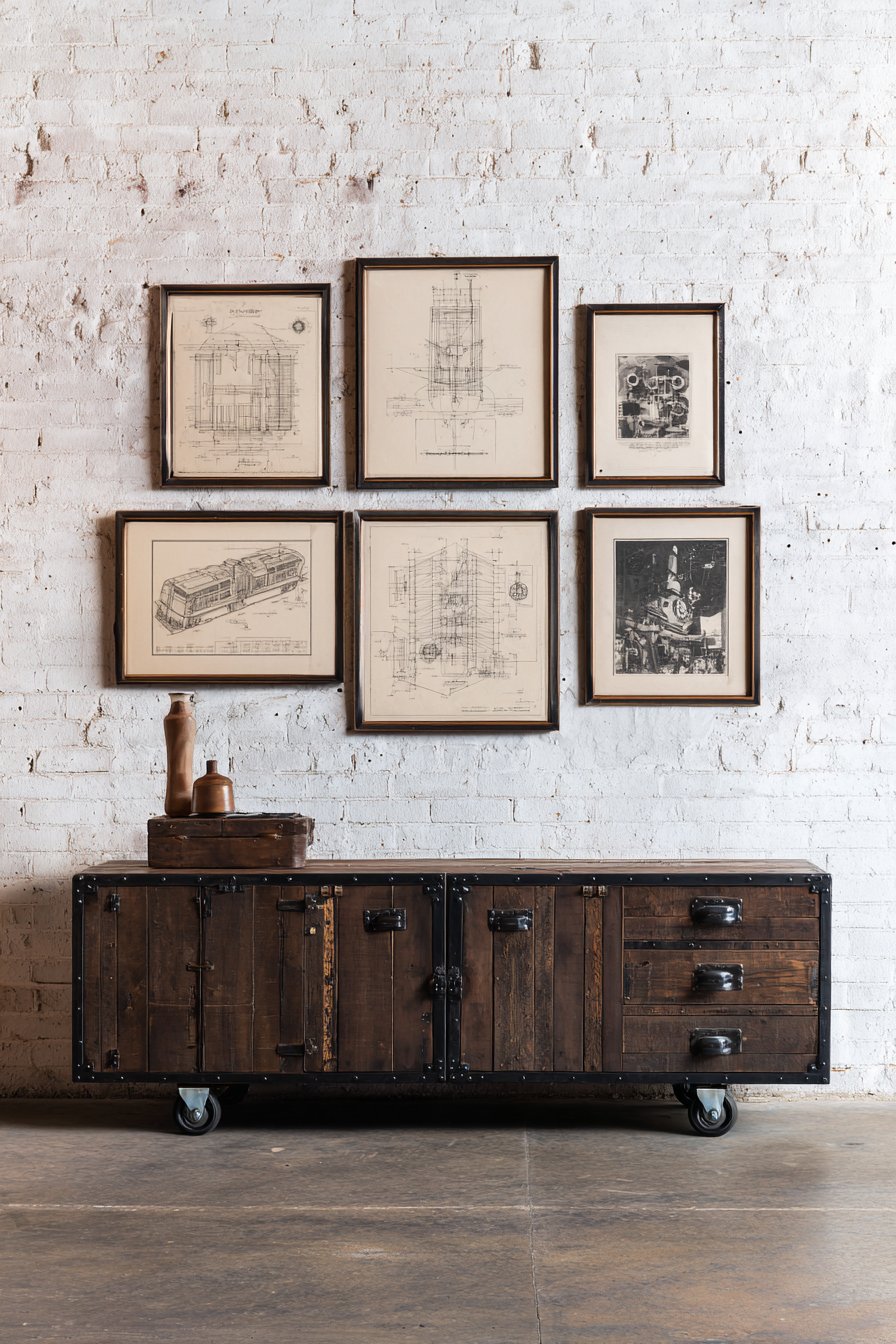
Industrial-style antique frames with metal corners and visible rivets in oxidized bronze and weathered steel create a vintage gallery wall with masculine, utilitarian character. The collection includes vintage factory blueprints, antique tool diagrams, aged patent drawings, and sepia workshop photographs—imagery that celebrates craft, engineering, and the industrial heritage of American manufacturing. Arranged above a reclaimed factory cart repurposed as a media console, this display brings authentic industrial vintage character to loft apartments, home offices, or workshops.
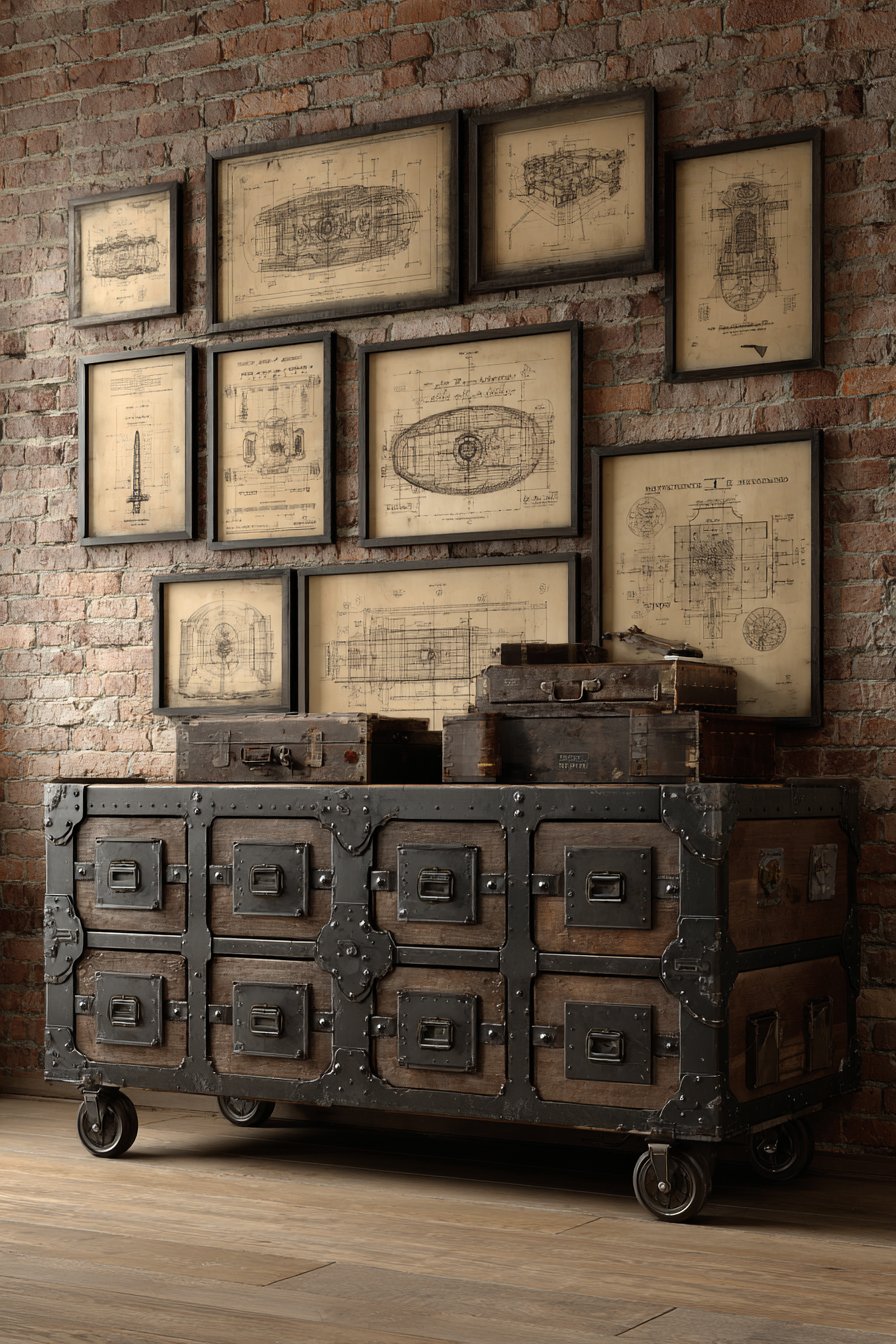
The metal frame construction and visible hardware celebrate honest materials and straightforward construction rather than ornamental decoration. Rivets, corner brackets, and metal edges become design features rather than structural necessities hidden beneath gilding or paint. This material honesty reflects core industrial design principles and creates visual coherence with the technical drawings and factory imagery within the frames.
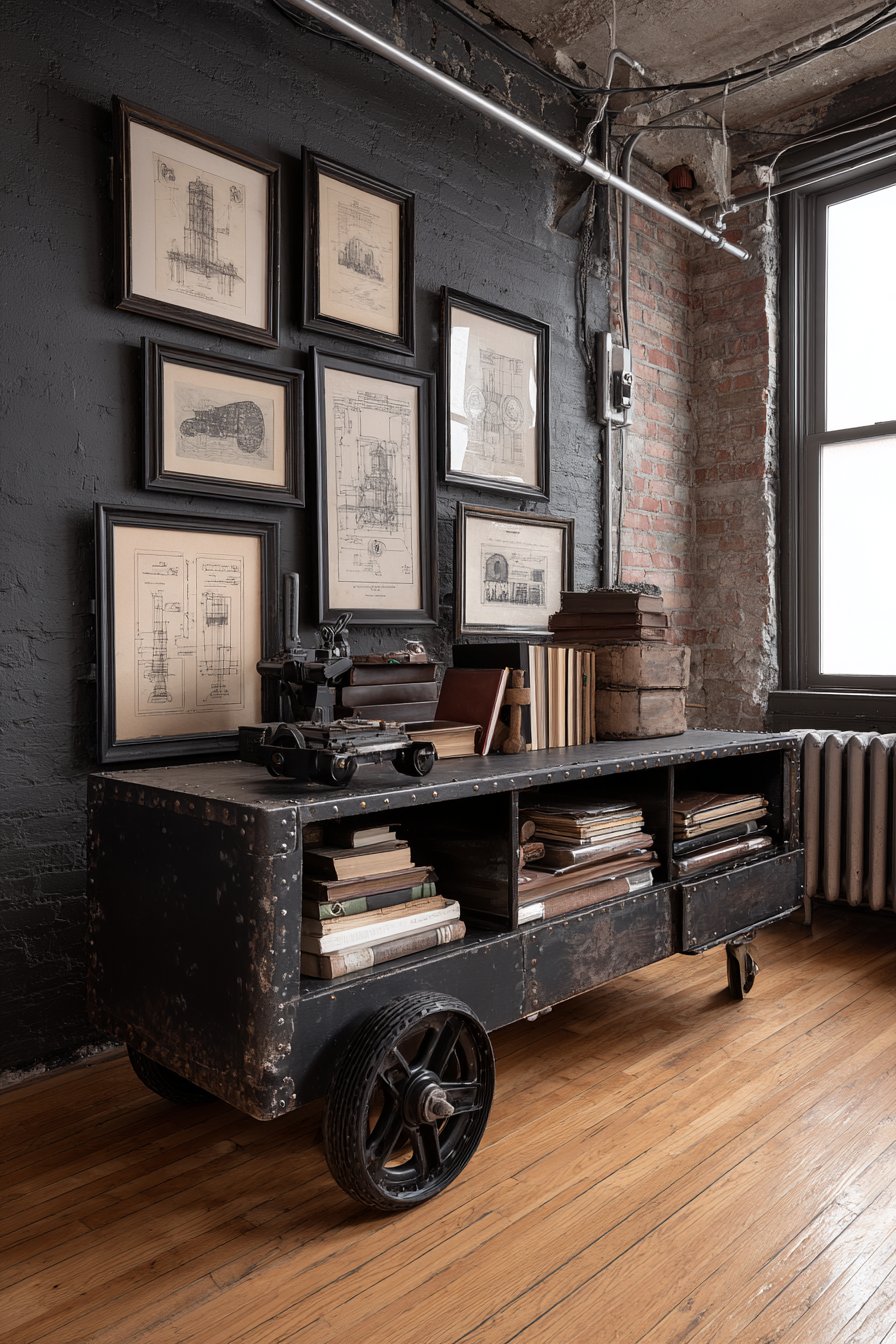
Natural warehouse-style lighting with visible brick wall texture enhances the authentic industrial vintage character. High ceilings, large windows, and exposed architectural elements provide ideal context for this aesthetic, though the style can be successfully adapted to conventional spaces through careful attention to materials and finishes. Professional photography emphasizing material honesty shows how industrial vintage differs from more decorative approaches.
Key Design Tips:
- Seek out frames with visible construction details rather than decorated surfaces
- Include technical drawings, blueprints, and diagrams for authentic industrial subject matter
- Pair with industrial furniture made from metal, wood, and other raw materials
- Embrace oxidation and patina on metal frames rather than polishing to shine
- Use exposed hardware and visible hanging systems as design features rather than hiding them
17. Literary Scholar’s Library
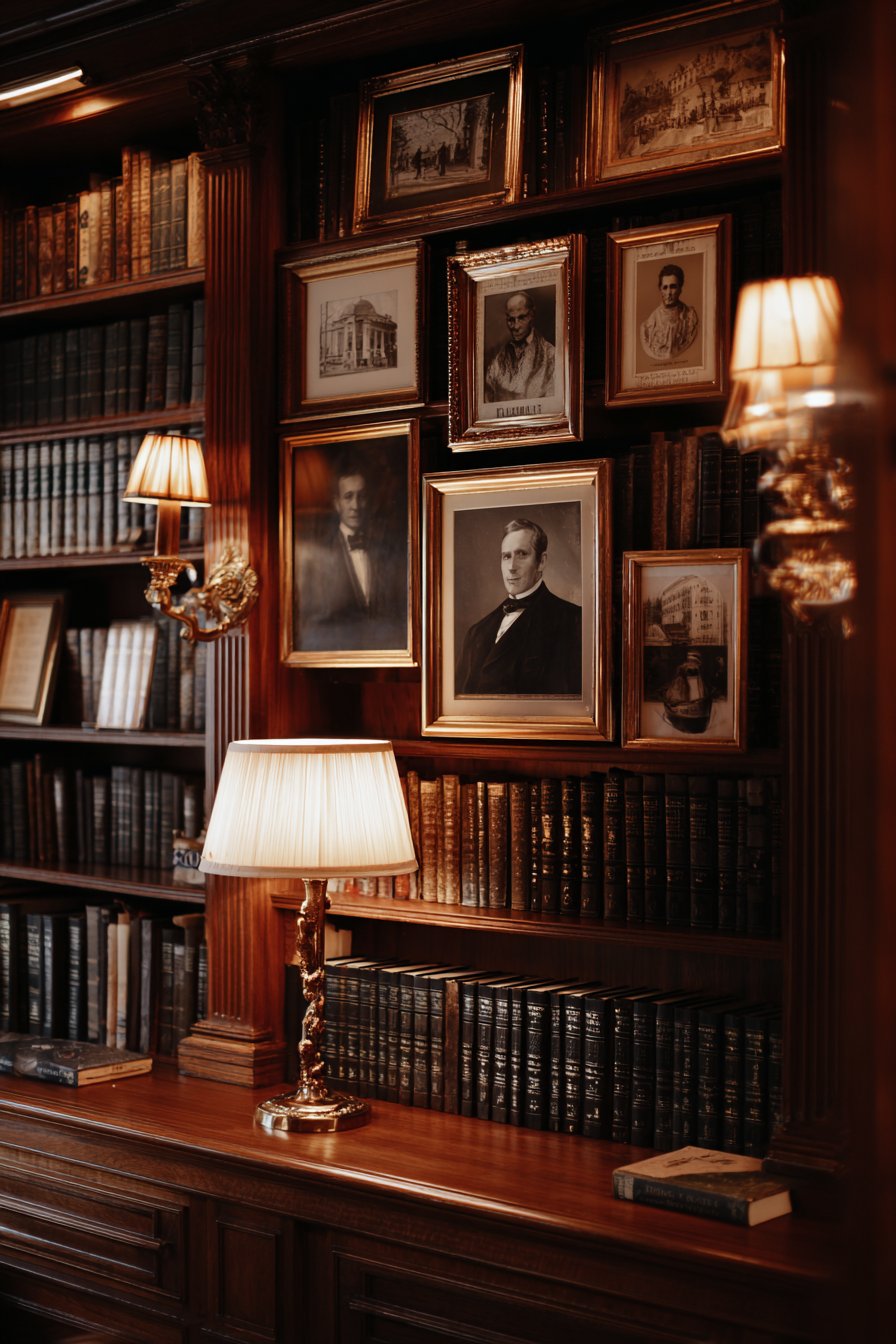
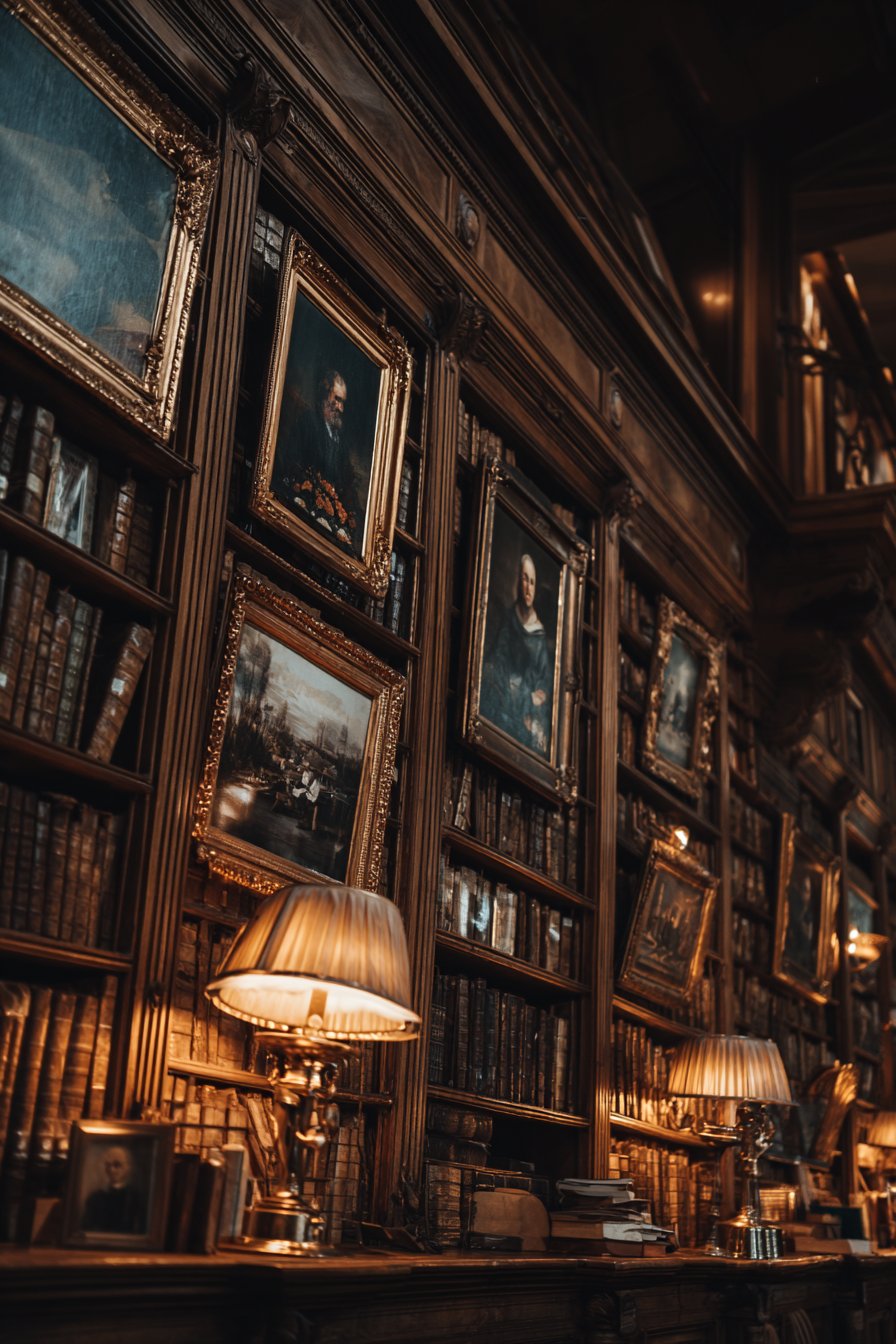
In a library setting, ornate carved wooden frames in dark walnut and mahogany with gold accents create a vintage gallery wall that celebrates literary history and scholarly pursuits. The frames display vintage book plate illustrations, antique library cards, aged manuscript pages, classical author portraits, and vintage bookshop advertisements—imagery directly connected to books, reading, and the life of the mind. Positioned above built-in wooden bookshelves, this arrangement creates immersive atmosphere for dedicated readers and book collectors.
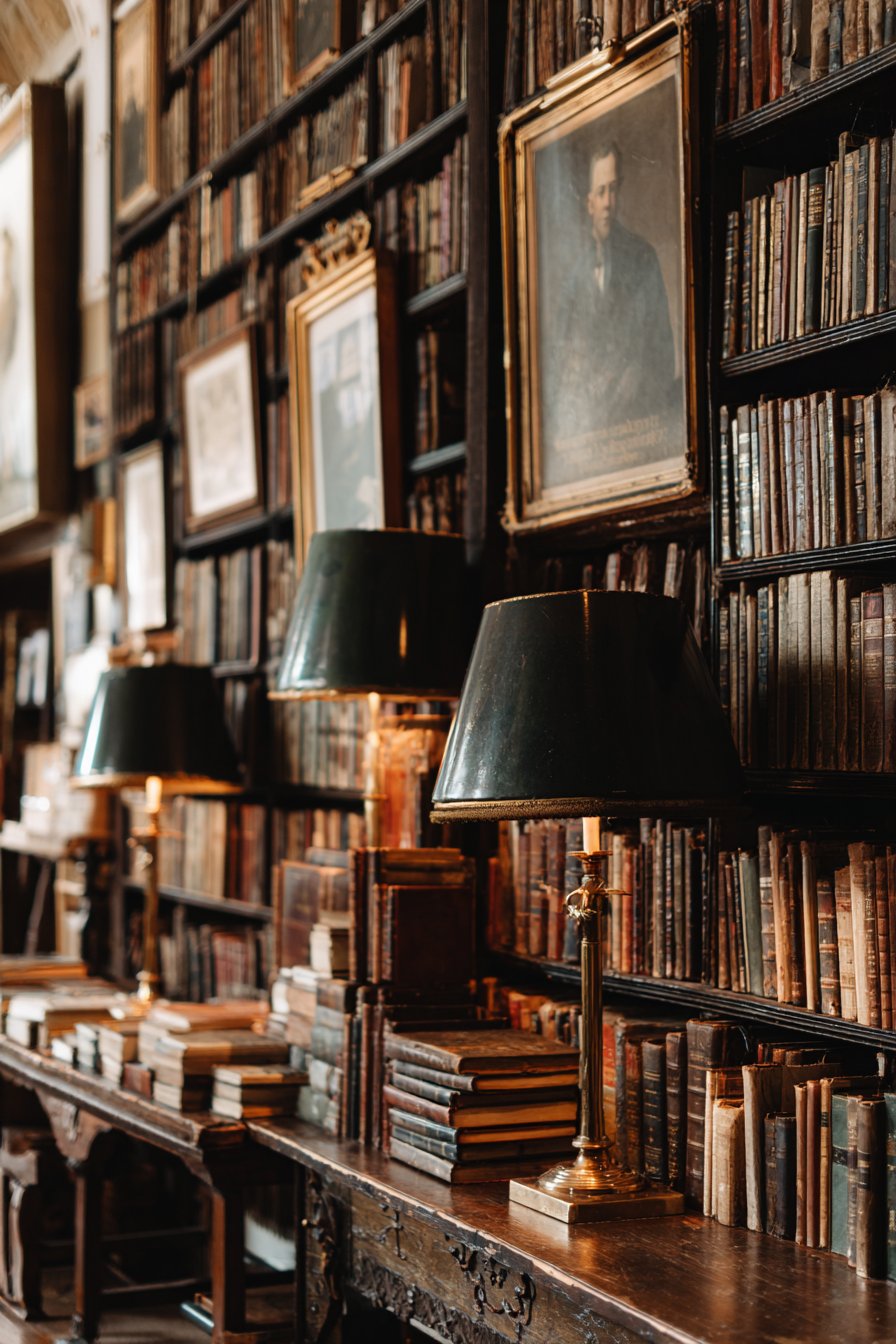
The warm ambient lighting from brass picture lamps creates an intimate scholarly atmosphere while highlighting the rich wood tones and literary vintage theme. These adjustable lamps—often found in traditional libraries and reading rooms—provide focused illumination ideal for viewing artwork while contributing to the overall ambiance. The warm glow of brass fixtures complements the golden accents in the frames and enhances the mahogany and walnut wood tones.
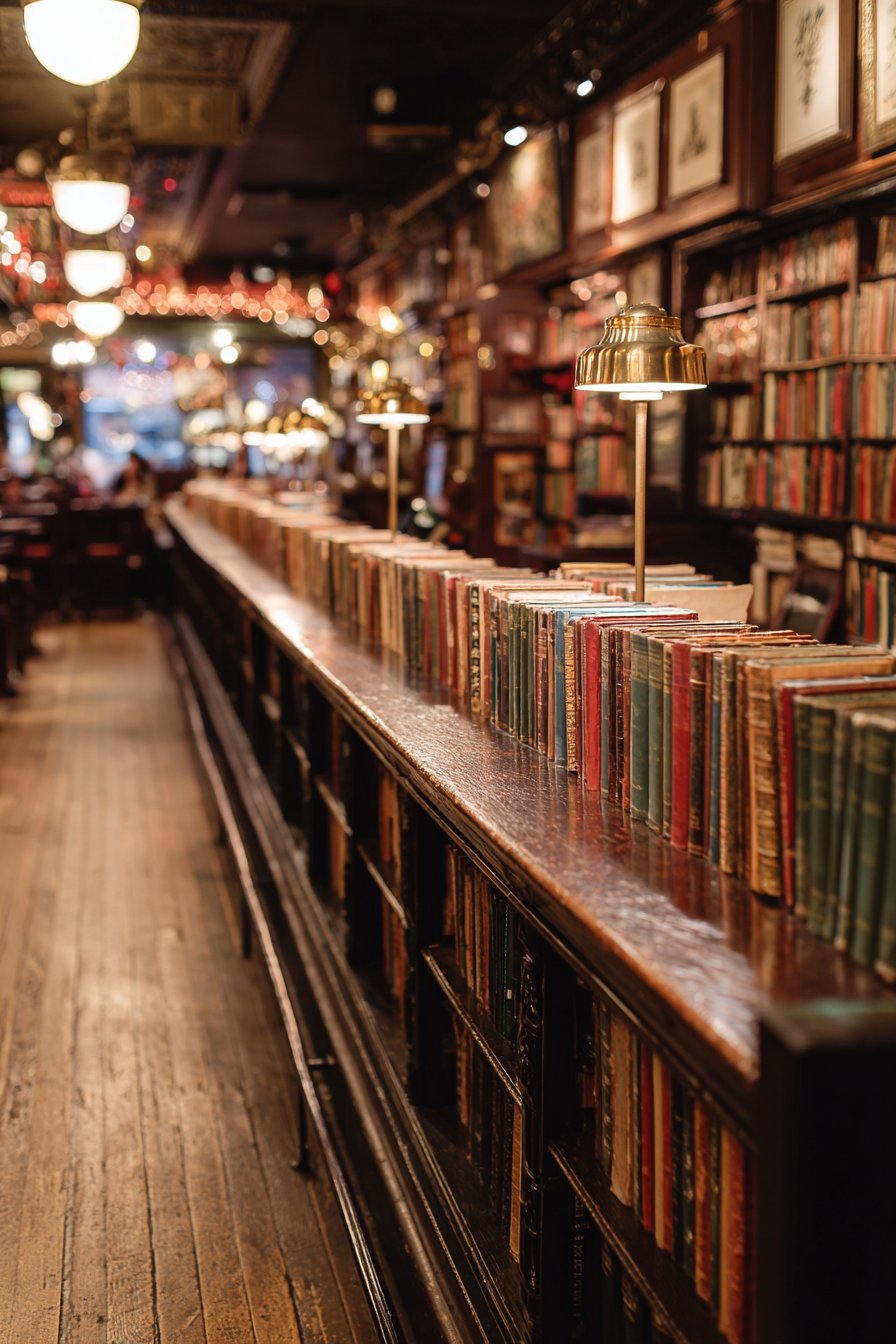
The integration with built-in bookshelves creates a total environment rather than isolated wall decoration. Books, framed literary ephemera, and traditional furnishings work together to create a space dedicated to reading and contemplation. This holistic approach to room design demonstrates how vintage gallery walls achieve maximum impact when considered as part of the complete interior composition rather than added as afterthought.
Key Design Tips:
- Choose subject matter that relates directly to the room’s purpose (literary themes for libraries)
- Install picture lights on individual frames for traditional gallery atmosphere
- Match frame woods to existing woodwork and built-ins for cohesive integration
- Include portraits of authors or historical figures relevant to your interests
- Create conversation between framed pieces and books on nearby shelves through subject connections
18. Nautical Maritime Heritage
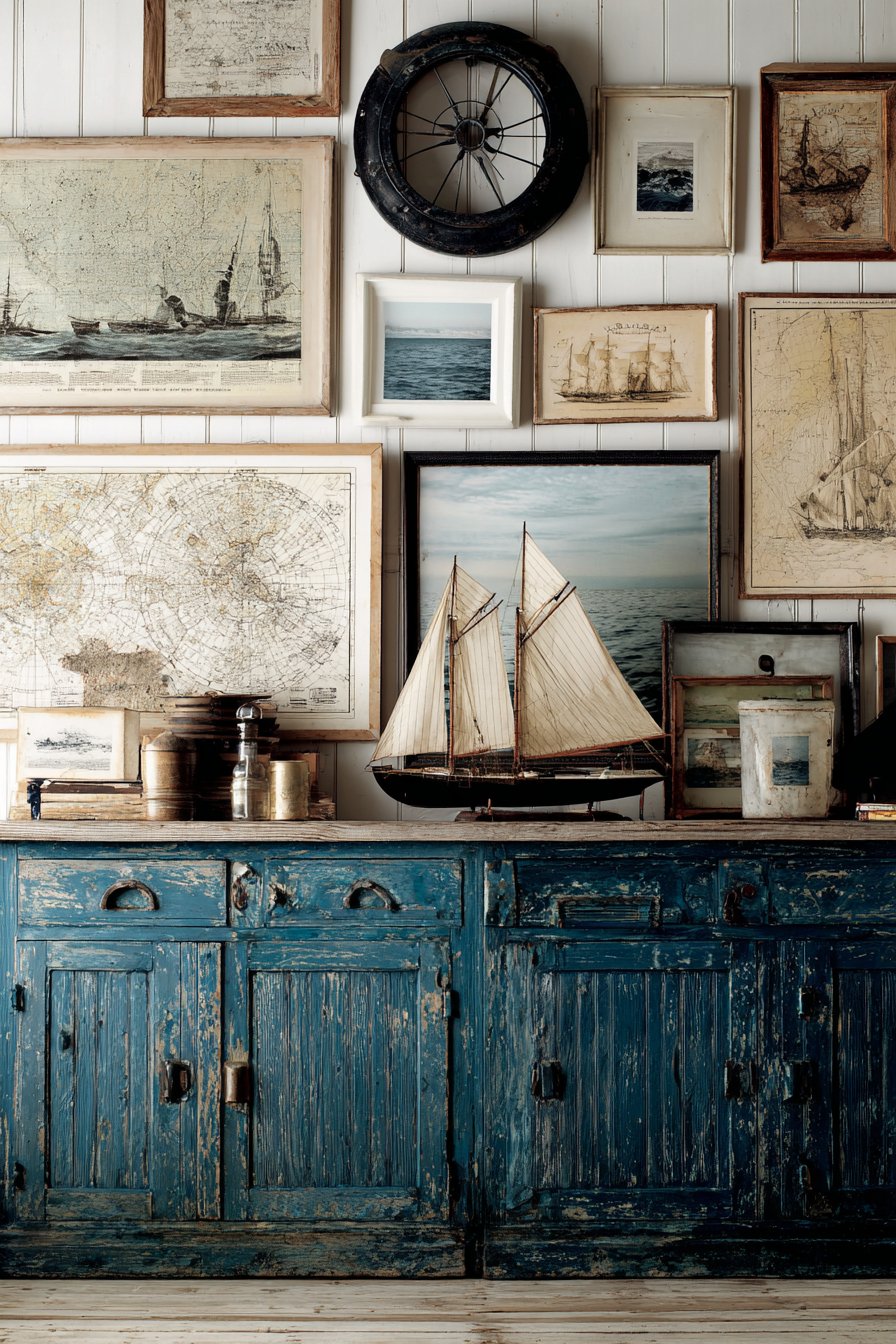
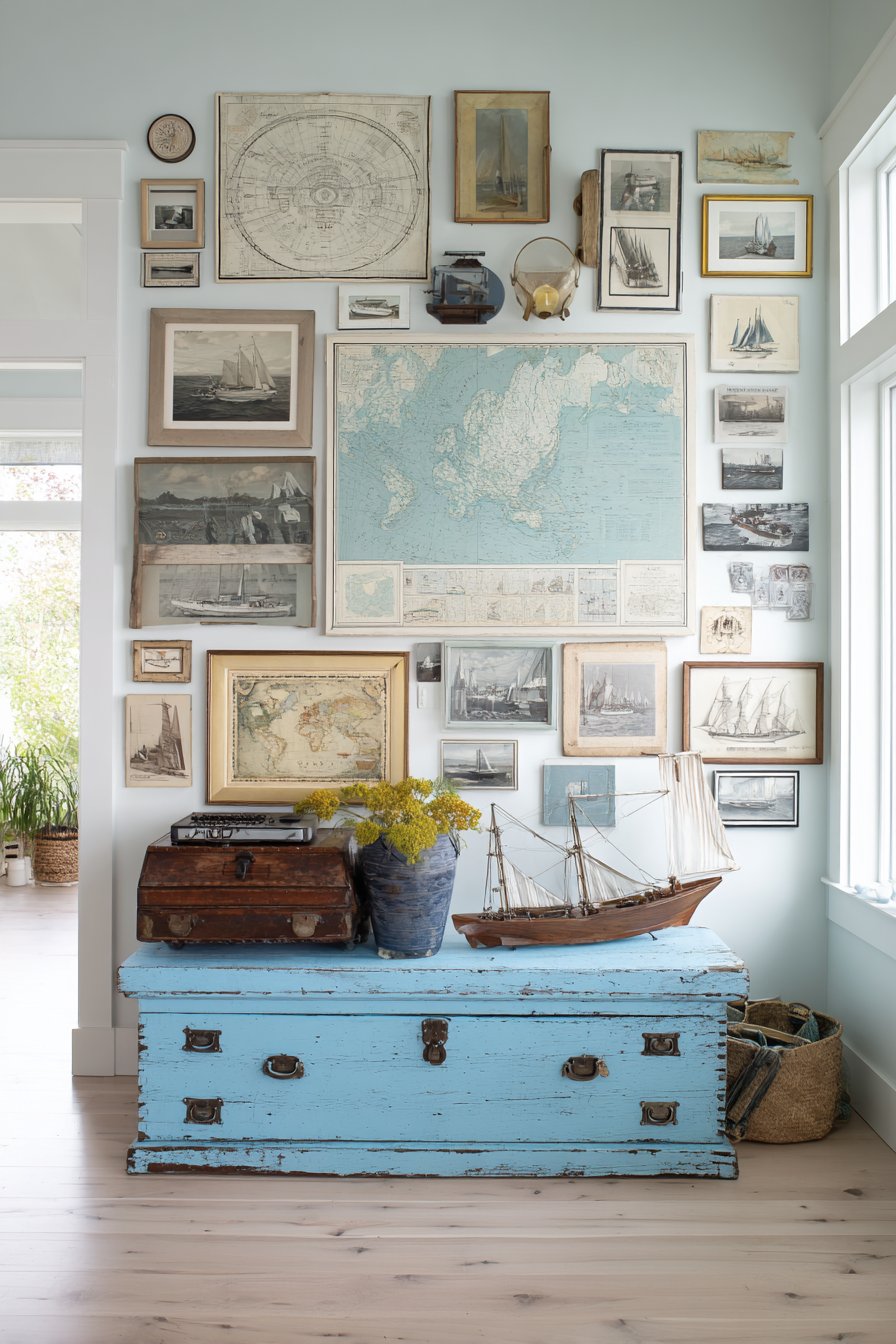
A nautical-themed vintage gallery wall features antique frames in weathered driftwood, tarnished brass porthole styles, and painted wood with chipped navy and white finishes. The collection includes vintage maritime maps, antique ship diagrams, sepia sailing photographs, aged tide charts, and vintage seaside postcards—imagery that celebrates seafaring heritage, coastal living, and maritime exploration. Arranged above a distressed blue painted chest, this display brings authentic weathered textures and maritime vintage aesthetic to coastal homes, beach houses, or anywhere you want to evoke oceanic atmosphere.
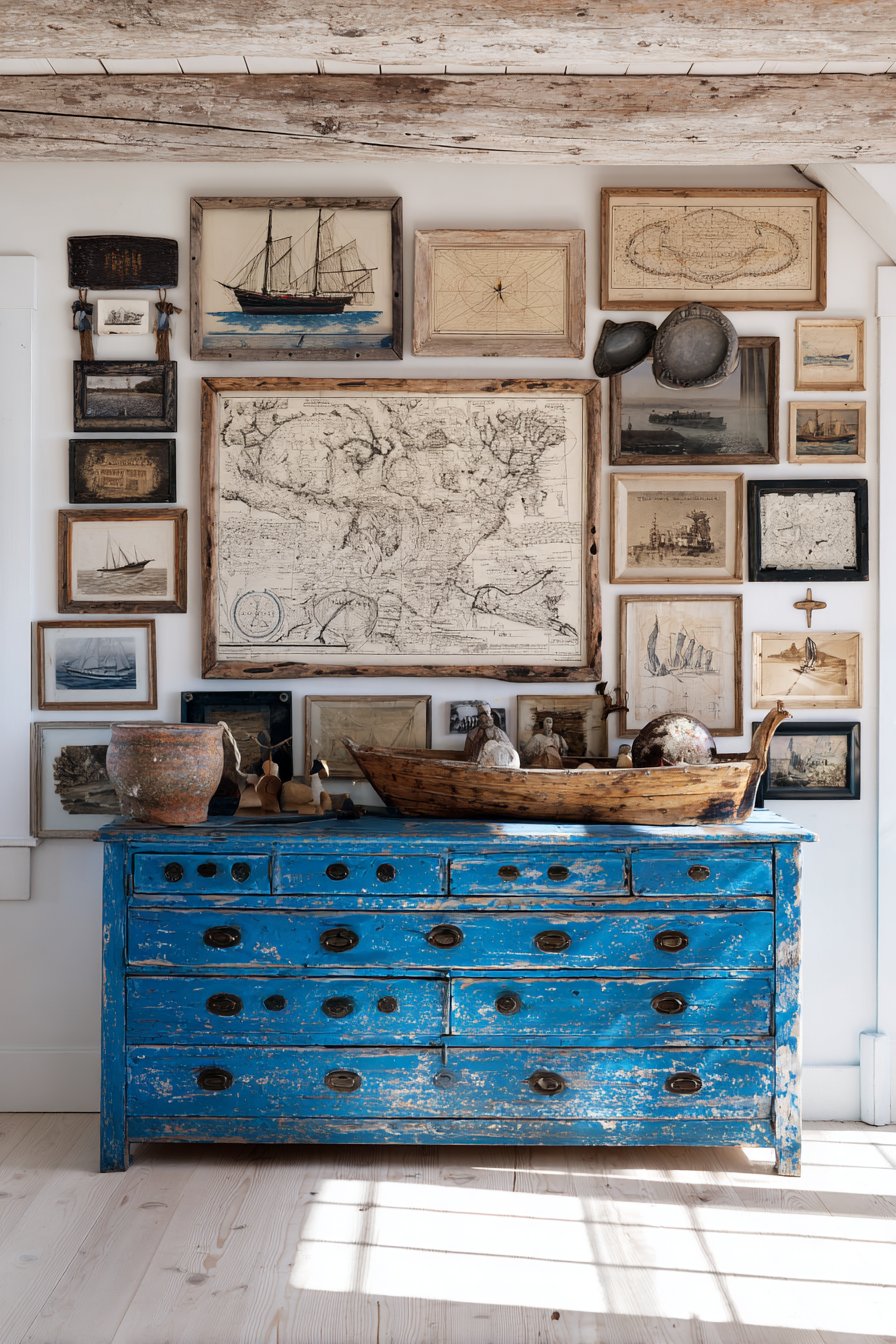
The frame materials themselves reference the sea—driftwood smoothed by waves and salt air, brass that might have adorned ship fittings, painted wood weathered by coastal conditions. This material authenticity creates deeper connection to the maritime theme than simply hanging ocean-related pictures in standard frames. The circular porthole frames provide unique silhouettes that break up the rectangles and squares, adding variety to the overall composition.
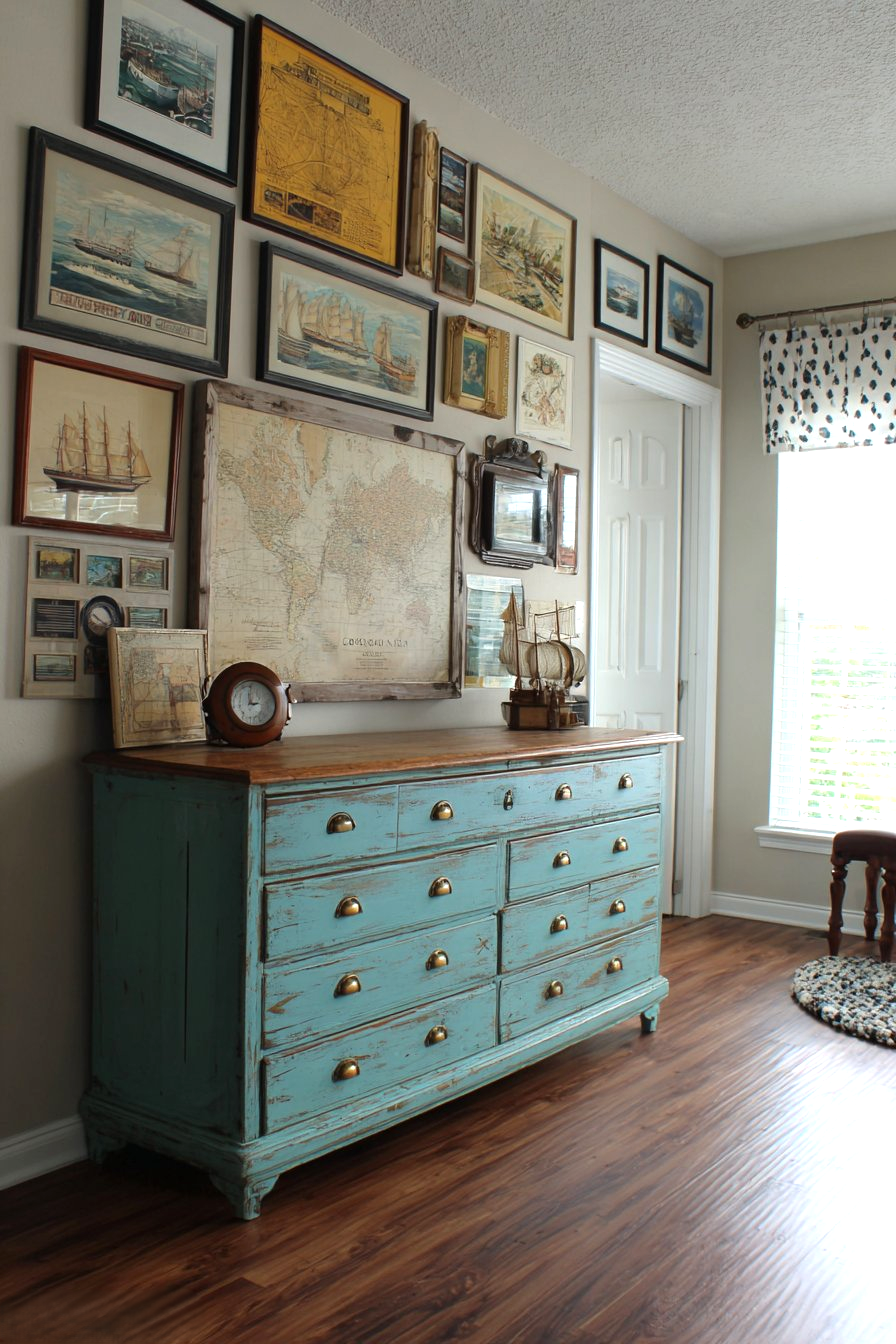
Natural coastal light streaming through nearby windows emphasizes the authentic weathered textures and maritime vintage aesthetic. This bright, clear light—characteristic of seaside environments where there’s less atmospheric interference—shows the bleached quality of sun-faded wood and the verdigris patina on brass frames. The lighting quality itself becomes part of the coastal narrative.
Key Design Tips:
- Incorporate actual maritime materials (rope, driftwood, brass) in frames or as hanging elements
- Choose imagery with nautical themes (maps, ships, sea life, coastal scenes)
- Use blue and white as primary colors to reference ocean and sail
- Include at least one round frame to reference portholes and ship’s wheels
- Position near windows to maximize natural light that references bright coastal conditions
19. Monochromatic Black Gallery Sophistication
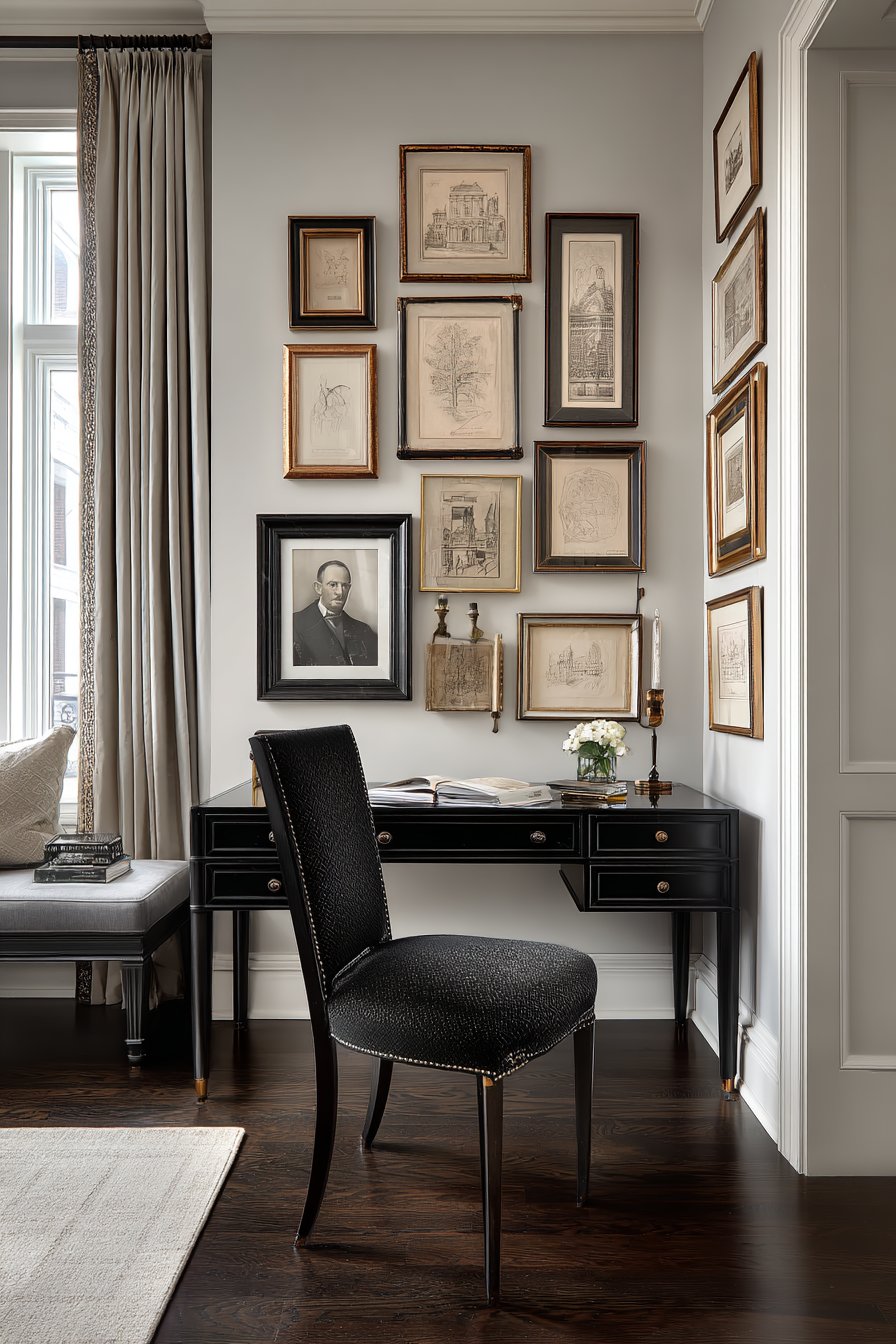
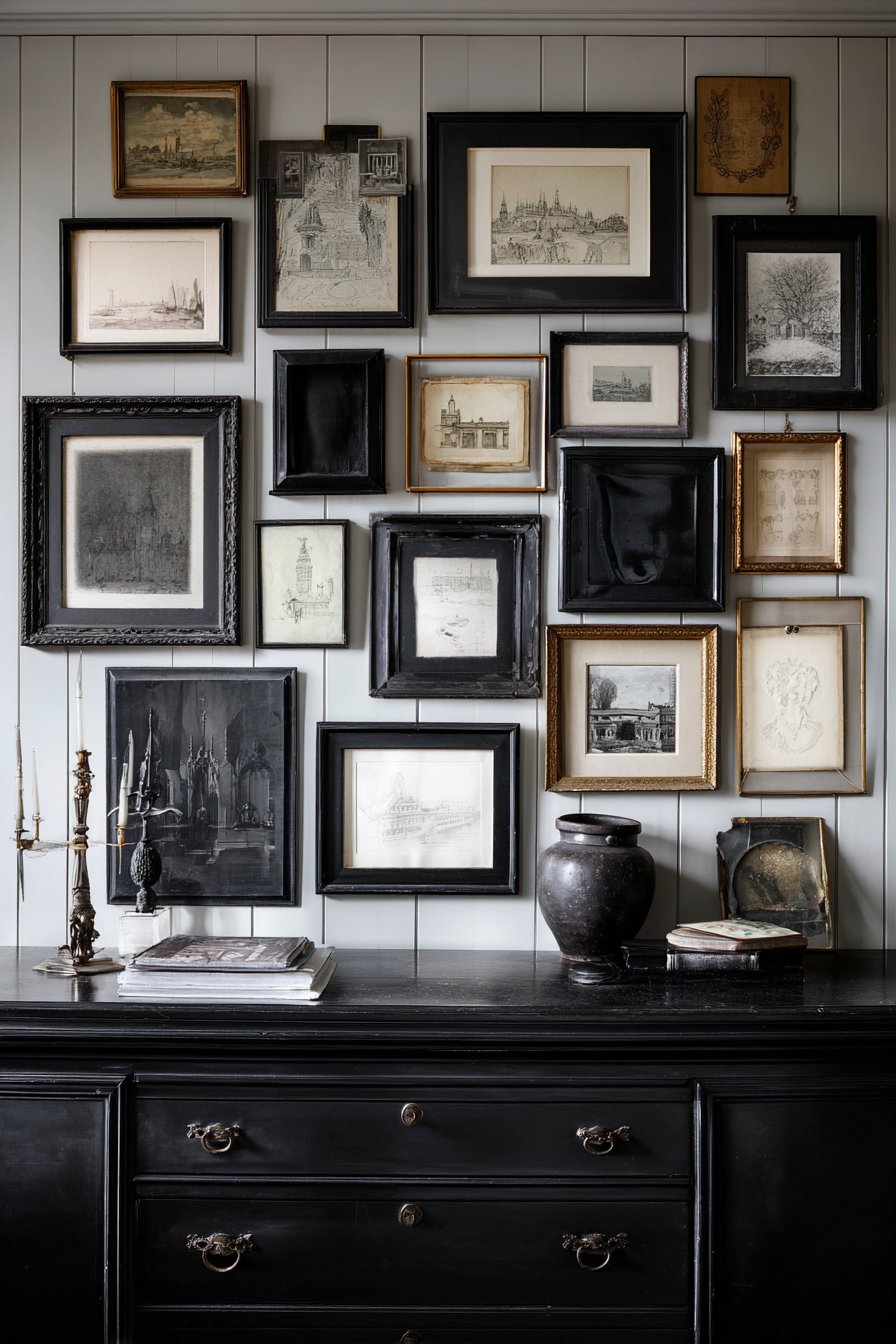
A sophisticated monochromatic arrangement of antique frames in various black finishes—ebony wood, oxidized iron, and matte black painted frames with gilded liners—creates a vintage gallery wall of dramatic elegance. The frames display vintage graphite drawings, antique engravings, sepia photographic portraits, and aged architectural elevations, all working within a narrow tonal range of blacks, grays, and sepias. Set against a pale gray linen-covered wall above a black lacquered console, this arrangement demonstrates how restraint in color creates opportunity for focus on form, texture, and composition.
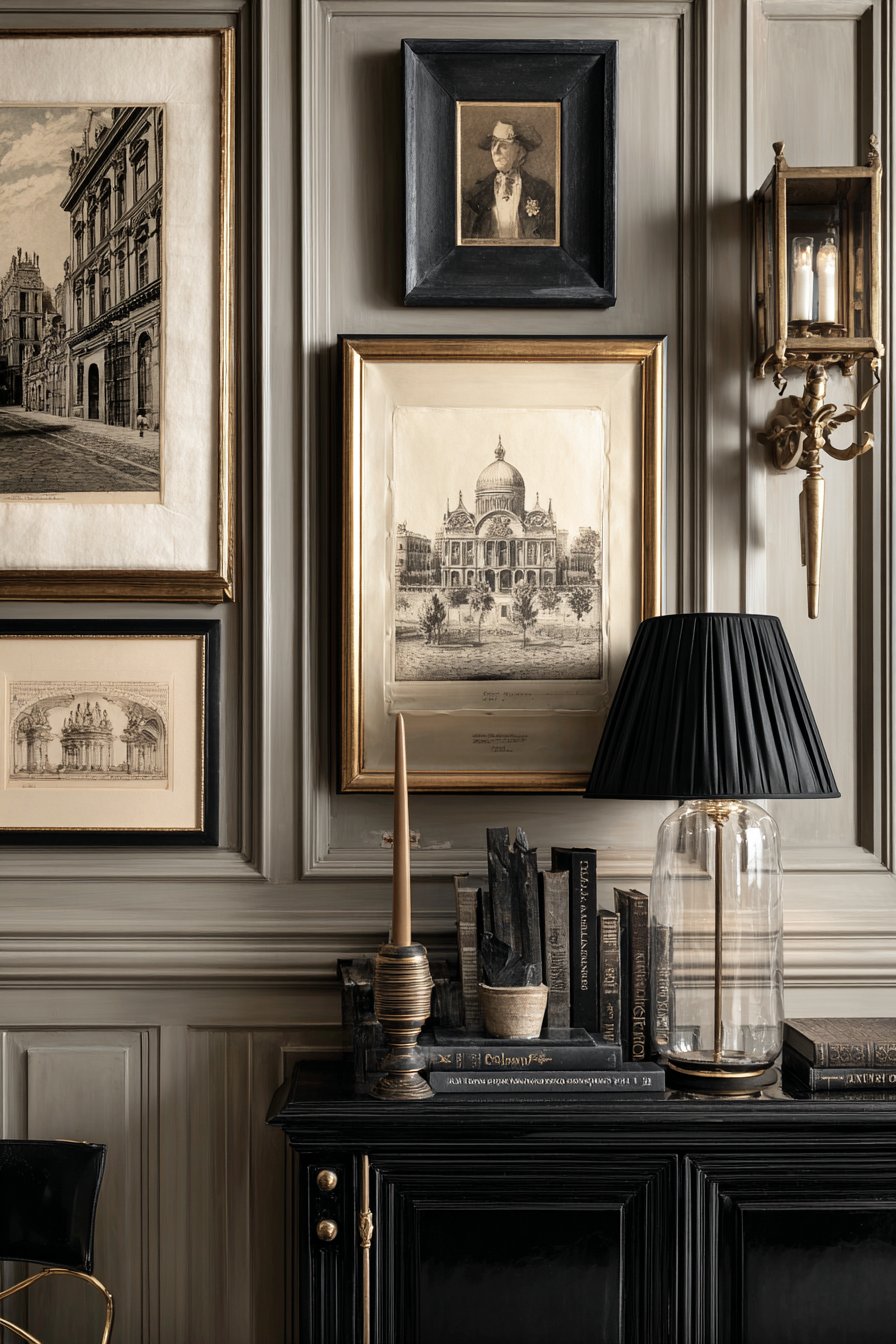
The variety in black finishes—from flat matte to glossy lacquer to oxidized metal—creates subtle visual interest within the monochromatic scheme. Light hits each surface differently, with matte black absorbing light, lacquer reflecting it sharply, and ebony wood showing grain patterns even while appearing nearly black. These textural variations prevent the dark palette from feeling heavy or monotonous.
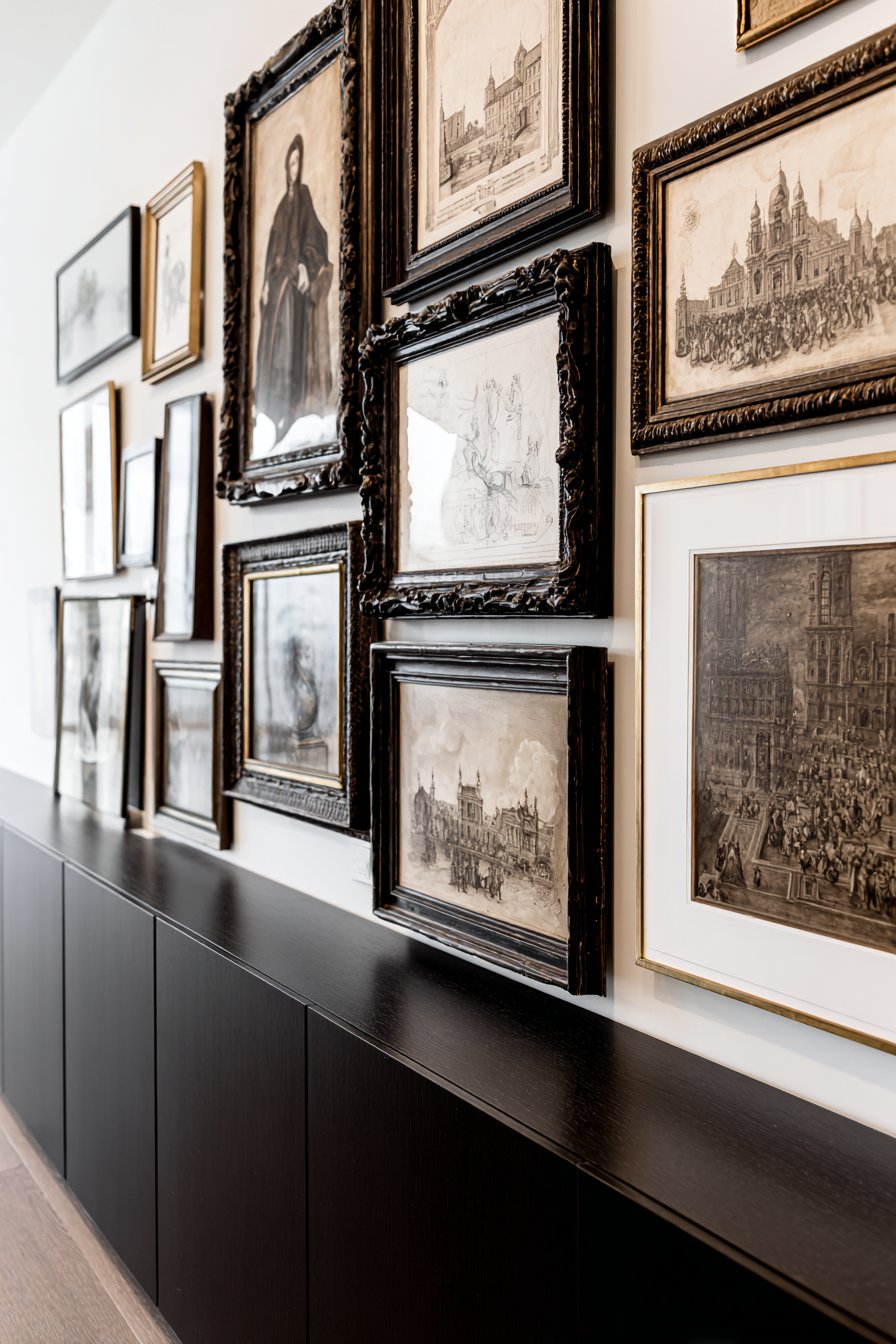
Professional interior photography with controlled lighting emphasizes the dramatic tonal contrasts and elegant vintage refinement. The lighting must be carefully balanced to reveal the subtle variations in black frames without creating harsh glare on glass surfaces or washing out the delicate gray tones in the background wall. The result is sophisticated and gallery-like, appropriate for formal spaces or contemporary interiors where vintage elements are introduced sparingly for maximum impact.
Key Design Tips:
- Vary frame finishes (matte, glossy, textured) within your chosen color for visual interest
- Choose black and white artwork to maintain strict monochromatic discipline
- Use light-colored walls to prevent black frames from disappearing into dark backgrounds
- Include at least one frame with gilded or metallic liner to add subtle warmth
- Control lighting carefully to reveal subtle variations in dark tones
20. Bohemian World Traveler Collection
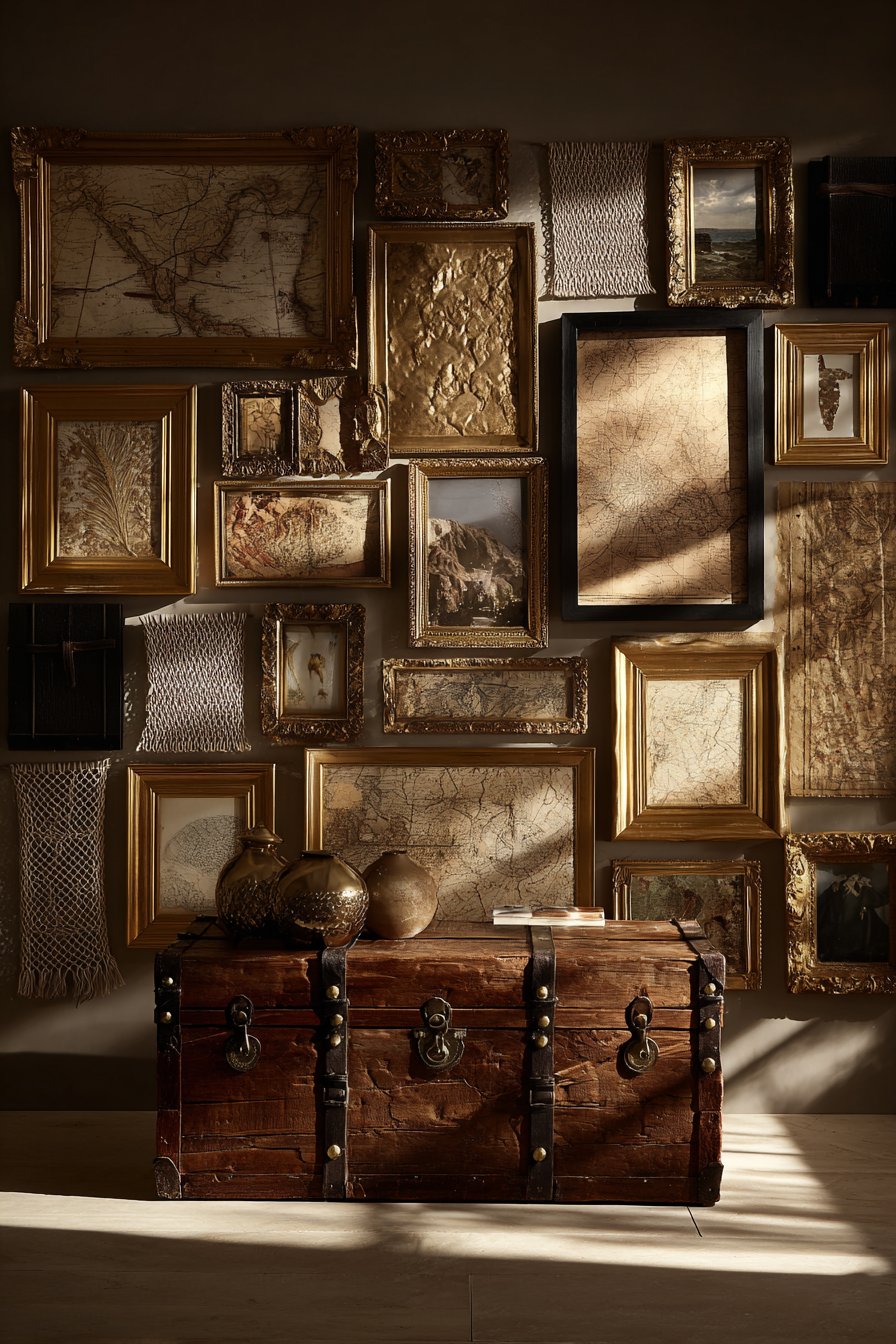
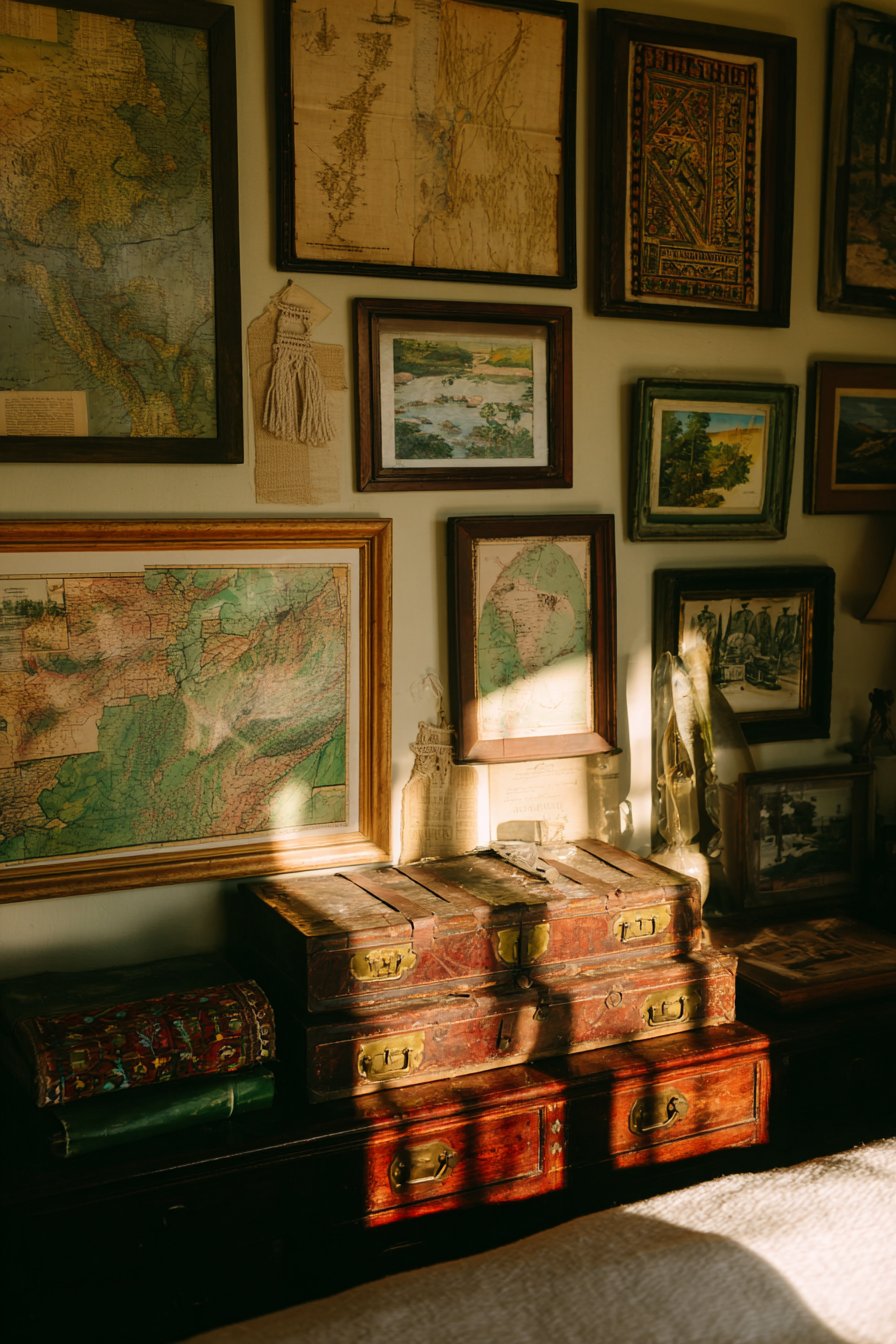
An eclectic bohemian arrangement of mixed antique frames creates a vintage gallery wall that tells stories of global exploration and cultural appreciation. The frames vary widely—aged brass, carved wood with traces of original polychrome paint, and macramé-wrapped frames that introduce textile elements. The collection displays vintage travel photography, antique textile fragments, pressed exotic flowers, aged maps of far-off places, and vintage ethnographic prints—imagery that celebrates cultural diversity and wanderlust.
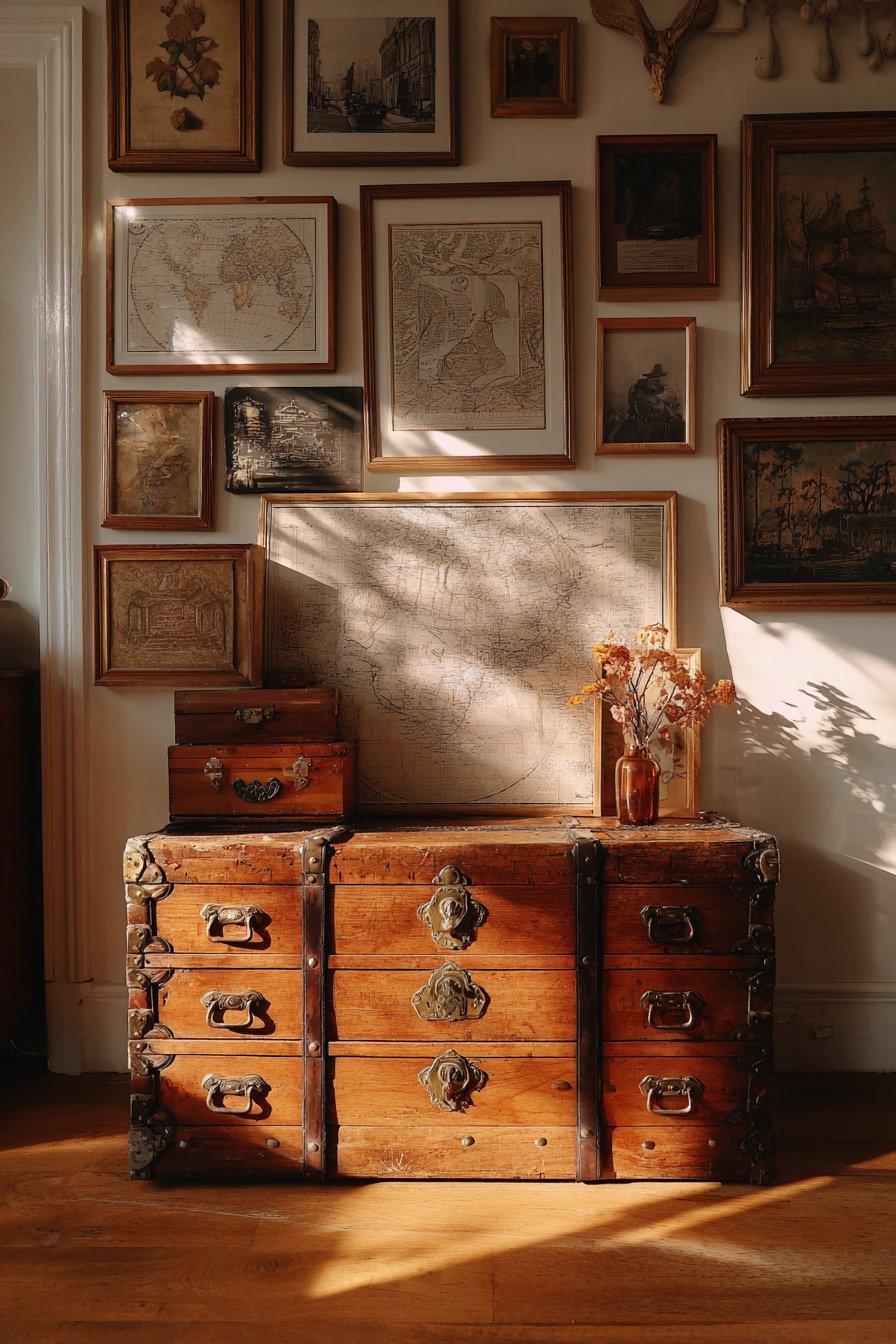
Positioned above a carved wooden trunk with brass hardware, this arrangement evokes the romantic notion of collected treasures brought home from travels abroad. The trunk itself might have accompanied someone on voyages, making it functionally and aesthetically appropriate as the foundation for this globally-inspired collection. The eclectic nature of both frames and subject matter creates energy and visual complexity that rewards extended viewing.
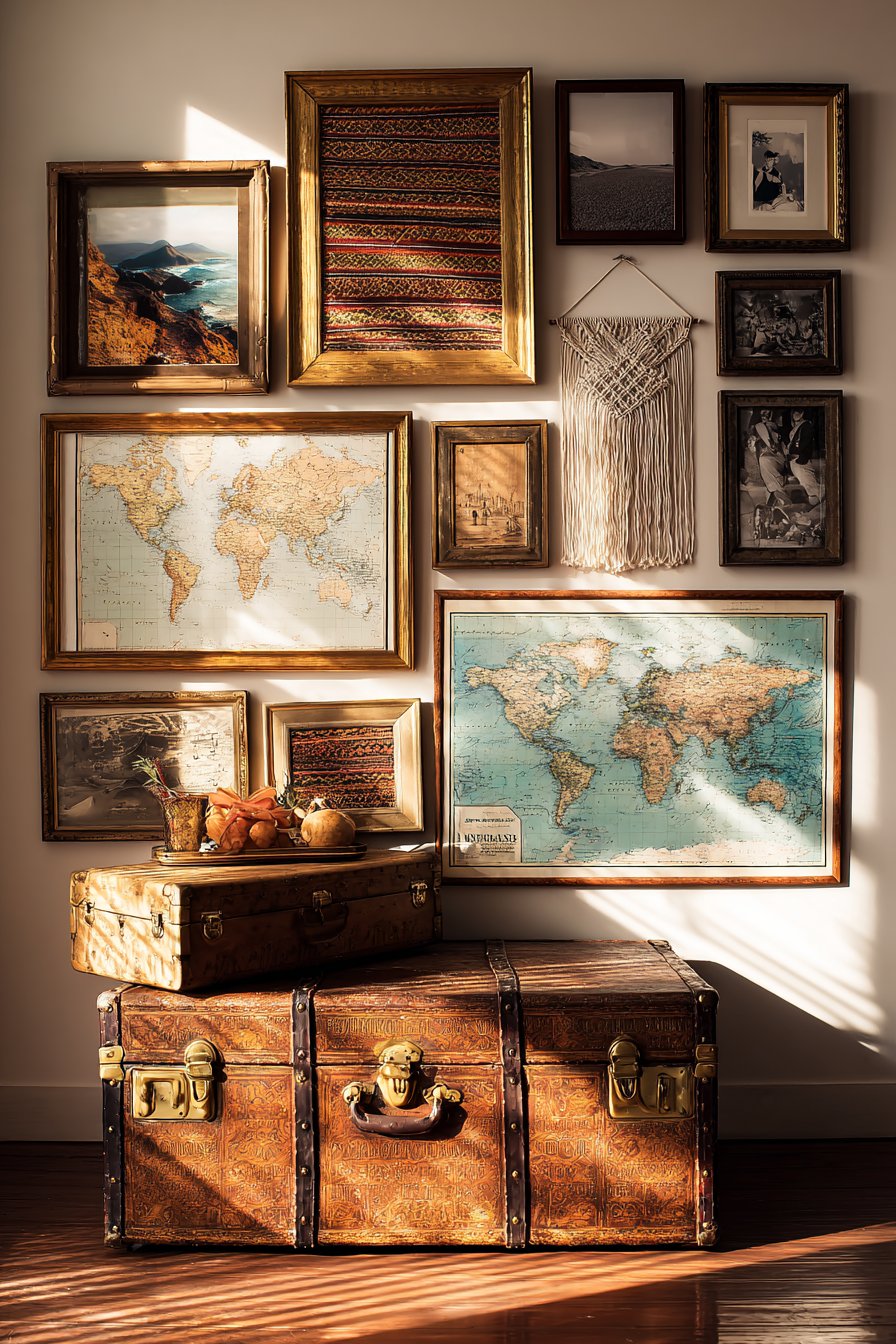
Warm natural lighting creates an adventurous, worldly vintage atmosphere with emphasis on authentic cultural artifacts. The lighting should feel warm and inviting like sunlight in exotic locations rather than cool and clinical. This atmospheric quality helps transport viewers imaginatively to the places represented in the photographs and maps, making the gallery wall an invitation to armchair travel and cultural exploration.
Key Design Tips:
- Mix frame materials and styles from different cultures for authentic global aesthetic
- Include maps, textiles, and artifacts from places you’ve actually visited for personal connection
- Vary the subjects widely (landscapes, portraits, patterns, documents) for visual richness
- Use warm lighting to enhance the adventurous, exotic atmosphere
- Group items by region or journey for subtle organization within the eclectic arrangement
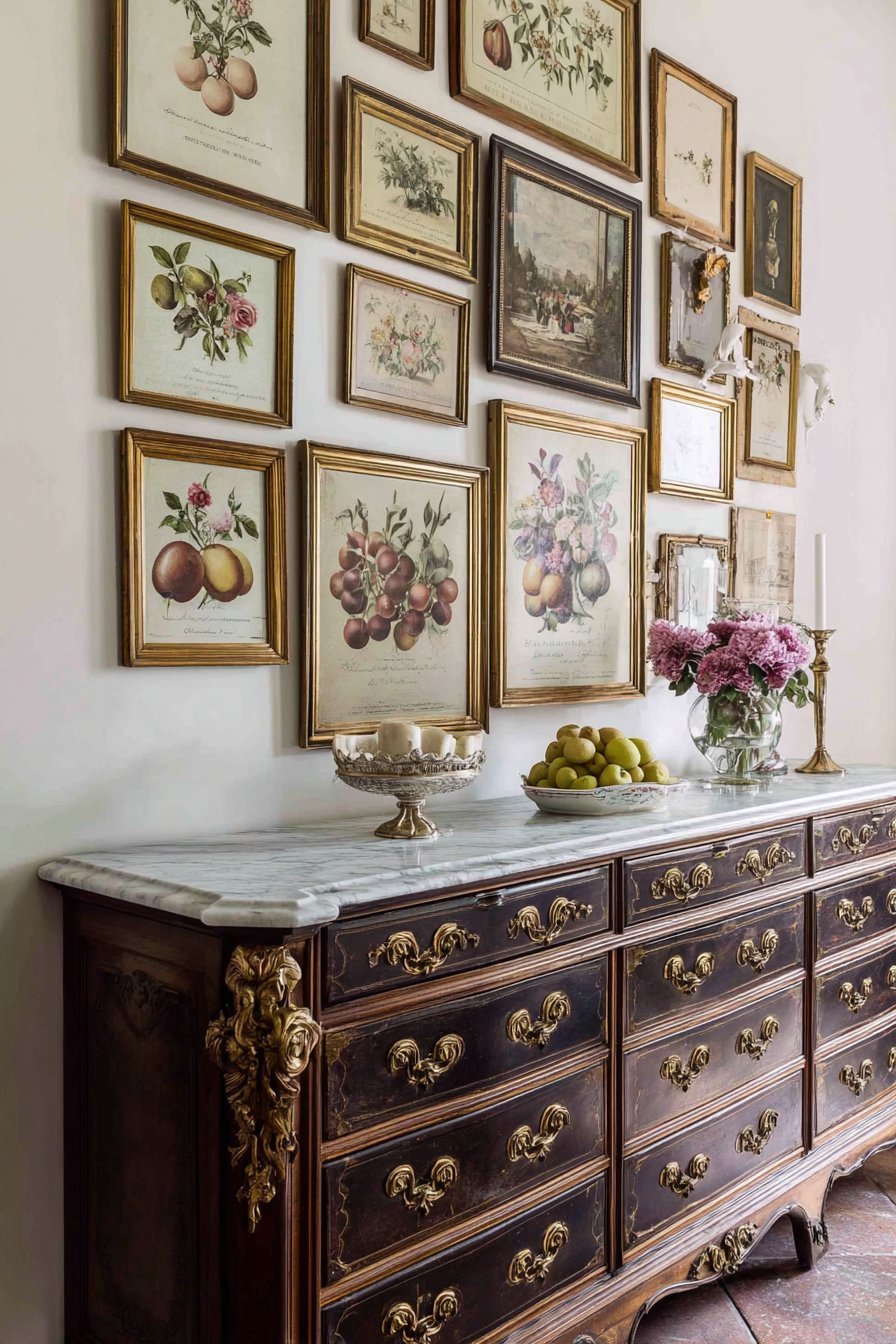
21. Formal Dining Rococo Opulence
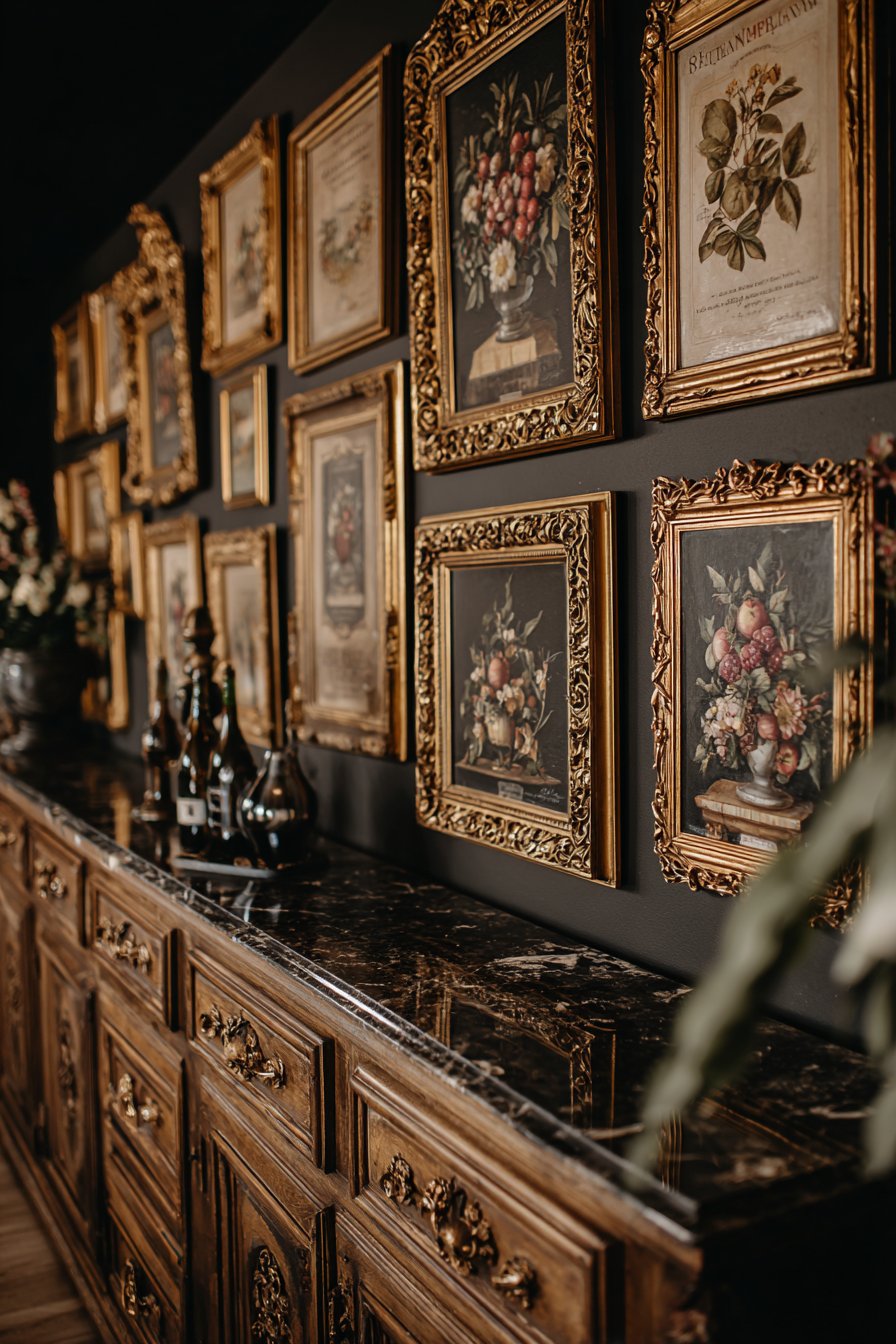
In a dining room, a formal symmetrical arrangement of matching gilt antique frames in ornate rococo style creates a vintage gallery wall of luxurious elegance. The frames feature elaborate scrollwork and aged gold leaf showing subtle wear that authenticates their vintage status. The displayed artwork includes vintage still life prints of fruits and flowers, antique wine labels, aged culinary illustrations, and classical dining scene paintings—subject matter directly relevant to the room’s function and the ritual of formal dining.
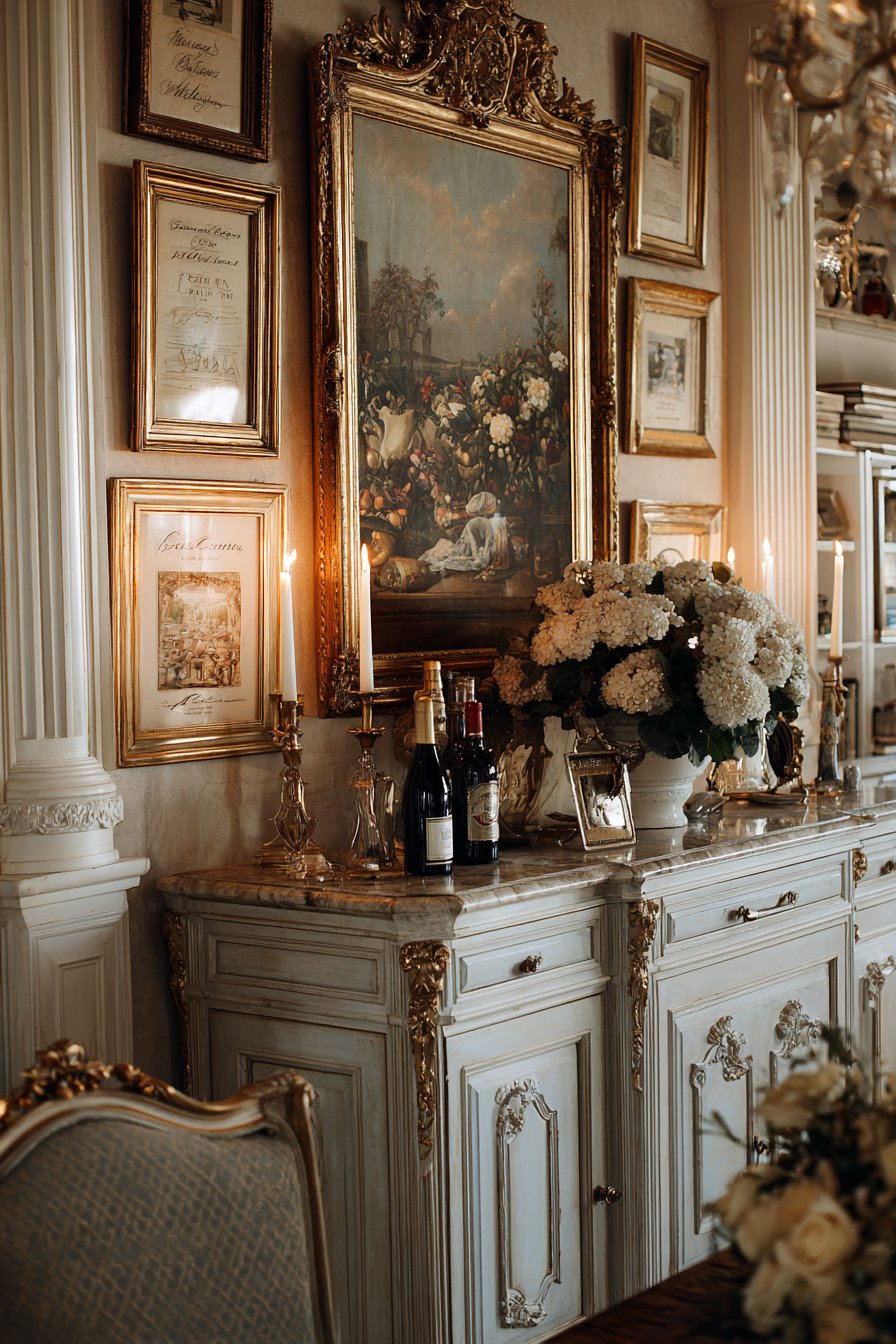
Centered precisely above an antique sideboard with marble top and brass pulls, this arrangement demonstrates traditional formal dining room decoration at its finest. The sideboard provides practical storage for linens and serving pieces while offering a surface for displaying silver, crystal, or floral arrangements. The marble top echoes classical elegance while the brass hardware connects to the golden frames above, creating visual unity throughout the vignette.
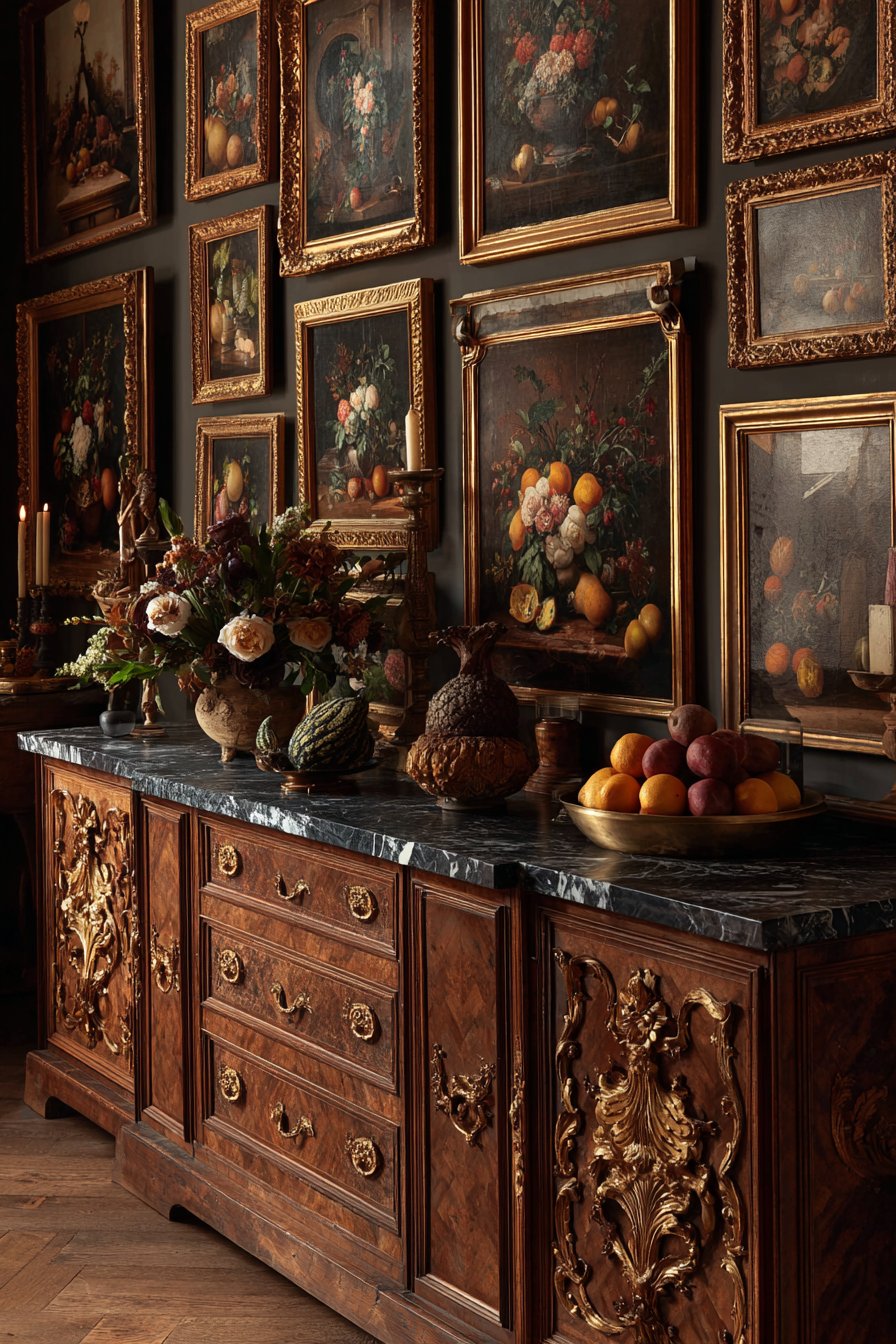
Professional interior photography captures the luxurious vintage elegance with soft candlelight-quality ambient glow that enhances the refined period details. This warm, gentle illumination—often achieved through dimmed chandelier lighting supplemented by candles during actual dining—creates romantic atmosphere appropriate for formal entertaining. The lighting makes the gold leaf shimmer subtly and highlights the raised rococo carvings on the frame surfaces.
Key Design Tips:
- Choose subject matter appropriate to room function (food and dining imagery for dining rooms)
- Maintain strict symmetry in formal spaces for traditional elegance
- Match frames exactly in formal symmetrical arrangements
- Position arrangement to be viewed from primary seating areas
- Use dimmable lighting to adjust atmosphere from bright (for cleaning and setup) to intimate (for dining)
Why These Vintage Gallery Wall Ideas Represent the Best in Home Decor
The twenty-one vintage gallery wall concepts presented in this comprehensive guide represent the pinnacle of this enduring decorating approach for several compelling reasons. First and foremost, each design demonstrates authentic vintage aesthetics rather than superficial imitation. The difference between genuine antique frames with naturally developed patina and artificially distressed new frames is immediately apparent to discerning eyes. Authentic vintage elements carry historical weight and character that simply cannot be manufactured, making these gallery walls valuable both aesthetically and as preservation of material culture.
The diversity of styles represented—from formal Victorian symmetry to casual bohemian eclecticism—ensures that vintage gallery wall approaches exist for every decorating preference and architectural context. Whether your home embodies farmhouse simplicity, industrial loft edginess, classical elegance, or coastal casualness, you’ll find vintage gallery wall inspiration that enhances rather than conflicts with your existing aesthetic. This versatility demonstrates that vintage collecting transcends specific style categories, instead representing a broader appreciation for quality craftsmanship, historical significance, and authentic materials.
These gallery wall ideas excel at creating focal points that tell stories and invite conversation. Unlike mass-produced wall art purchased from big-box retailers, vintage gallery walls composed of authentic antique frames and period imagery provide genuine talking points for guests. Each piece has its own history—where it was found, what it depicts, how it’s survived decades or centuries—creating narrative depth that enriches your home environment. This storytelling aspect transforms wall decoration from passive background element into active contributor to your home’s personality and character.
The practical advantages of vintage gallery walls make them not only beautiful but also sensible decorating choices. Antique frames can often be acquired affordably at estate sales, flea markets, and antique shops, especially if you’re willing to embrace frames with authentic wear rather than holding out for pristine examples. The variety in sizing and styles available in the vintage market allows for creative mixing and matching that would be expensive to achieve with new frames. Additionally, the robust construction of antique frames—often made from solid wood with proper joinery rather than molded composite materials—means they’ll continue serving for generations with basic care.
From a sustainability perspective, vintage gallery walls represent the ultimate in eco-friendly decorating. By preserving and repurposing antique frames rather than purchasing newly manufactured alternatives, you avoid the environmental costs of new production while preventing quality items from ending up in landfills. This approach aligns with growing awareness about consumption patterns and the value of reusing existing materials. The vintage aesthetic naturally complements sustainable living values, as both prioritize longevity, quality, and thoughtful consumption over disposable trendiness.
The keyword “vintage gallery wall ideas” encompasses crucial design elements that these examples demonstrate masterfully. The term “vintage” specifies authentic aged materials with genuine patina and historical significance rather than reproduction or artificially aged alternatives. “Gallery wall” indicates curated collections arranged intentionally rather than single large pieces, creating visual interest through variety and composition. “Ideas” suggests inspirational concepts that can be adapted to individual circumstances rather than rigid formulas requiring exact replication. Together, these components define an approach to wall decoration that balances creativity with authenticity, personal expression with design principles.
Interior designers and decorating professionals consistently recommend vintage gallery walls for clients seeking to add character, warmth, and visual interest to their spaces. The layered complexity of well-executed gallery walls creates sophisticated ambiance that single pieces cannot achieve. The interplay of frame styles, artwork subjects, materials, and finishes generates visual richness that rewards extended viewing and reveals new details over time. This complexity prevents spaces from feeling boring or one-dimensional, instead creating environments that remain visually engaging even after years of daily exposure.
The technical aspects of vintage gallery wall creation—proper spacing, secure hanging, protective glass, appropriate lighting—ensure these installations function as long-term design solutions rather than temporary decorating experiments. When executed with attention to preservation and display best practices, vintage gallery walls protect valuable antique frames and artwork while showcasing them optimally. This combination of aesthetic appeal and practical functionality makes vintage gallery walls wise investments of both time and resources.
Contemporary interior design increasingly values mixing old and new elements rather than maintaining strict period accuracy throughout entire rooms. Vintage gallery walls excel in mixed-era spaces, providing historical depth and handcrafted character that balances sleeker modern furnishings and technology. The examples presented demonstrate successful pairings with furniture ranging from Victorian settees to mid-century credenzas to contemporary sofas, showing how vintage frames adapt to diverse decorating contexts while maintaining their essential character.
The psychological benefits of surrounding yourself with vintage gallery walls shouldn’t be overlooked. Research in environmental psychology indicates that spaces with historical elements, natural materials, and evidence of craftsmanship create greater feelings of comfort and wellbeing compared to entirely modern environments. Vintage frames made from real wood and metal, containing hand-drawn illustrations or historical photographs, connect us to human creativity and effort across time. This connection to material culture and history provides grounding and meaning that purely decorative modern alternatives cannot replicate.
Conclusion
Creating a vintage gallery wall represents one of the most rewarding and personally expressive approaches to home decoration available to contemporary homeowners. The twenty-one concepts explored in this comprehensive guide demonstrate the remarkable versatility of vintage frames and historical imagery, showing how these elements can be adapted to virtually any room, architectural style, and personal aesthetic preference. From the formal symmetry of baroque arrangements to the relaxed eclecticism of bohemian collections, vintage gallery walls offer infinite possibilities for creative expression while maintaining the authenticity and character that comes only from genuine antique materials.
The key to success lies in understanding fundamental design principles—balanced composition, thoughtful lighting, proper hanging techniques, and cohesive color palettes—while allowing room for personal creativity and the happy accidents that occur when working with unique vintage finds. Unlike formulaic decorating approaches that can be replicated exactly from catalog photographs, vintage gallery walls celebrate individuality and the thrill of the hunt. Each frame you discover, each piece of vintage ephemera you uncover, contributes to a collection that reflects your specific tastes, experiences, and aesthetic sensibilities.
As you embark on creating your own vintage gallery wall, remember that the process should be enjoyable rather than stressful. Start with pieces you genuinely love rather than forcing yourself to find items that match a predetermined vision. Visit estate sales, antique shops, and flea markets with an open mind, allowing yourself to be drawn to frames and artwork that speak to you personally. Build your collection gradually, living with pieces before committing to final arrangements. This patient, intentional approach results in gallery walls with authenticity and soul—spaces that truly reflect who you are rather than merely following decorating trends.
The enduring appeal of vintage gallery walls in an era of fast fashion and disposable décor speaks to our deep human need for connection to history, craftsmanship, and material authenticity. By choosing vintage frames and antique imagery, you’re not only creating beautiful wall compositions but also preserving cultural artifacts and participating in sustainable design practices. Your vintage gallery wall becomes a small museum of personal significance, a visual autobiography that honors both the past and your present life. Embrace this opportunity to create something meaningful, beautiful, and entirely your own.
