
The toilet area, often overlooked in home design discussions, deserves just as much thoughtful consideration as any other room in your home. Whether you’re renovating a powder room, updating a master bathroom, or designing a brand-new space from scratch, the right toilet design can dramatically impact both the functionality and aesthetic appeal of your bathroom. Modern toilet design has evolved far beyond basic fixtures, encompassing innovative technologies, diverse style aesthetics, and clever spatial solutions that cater to every need and preference.
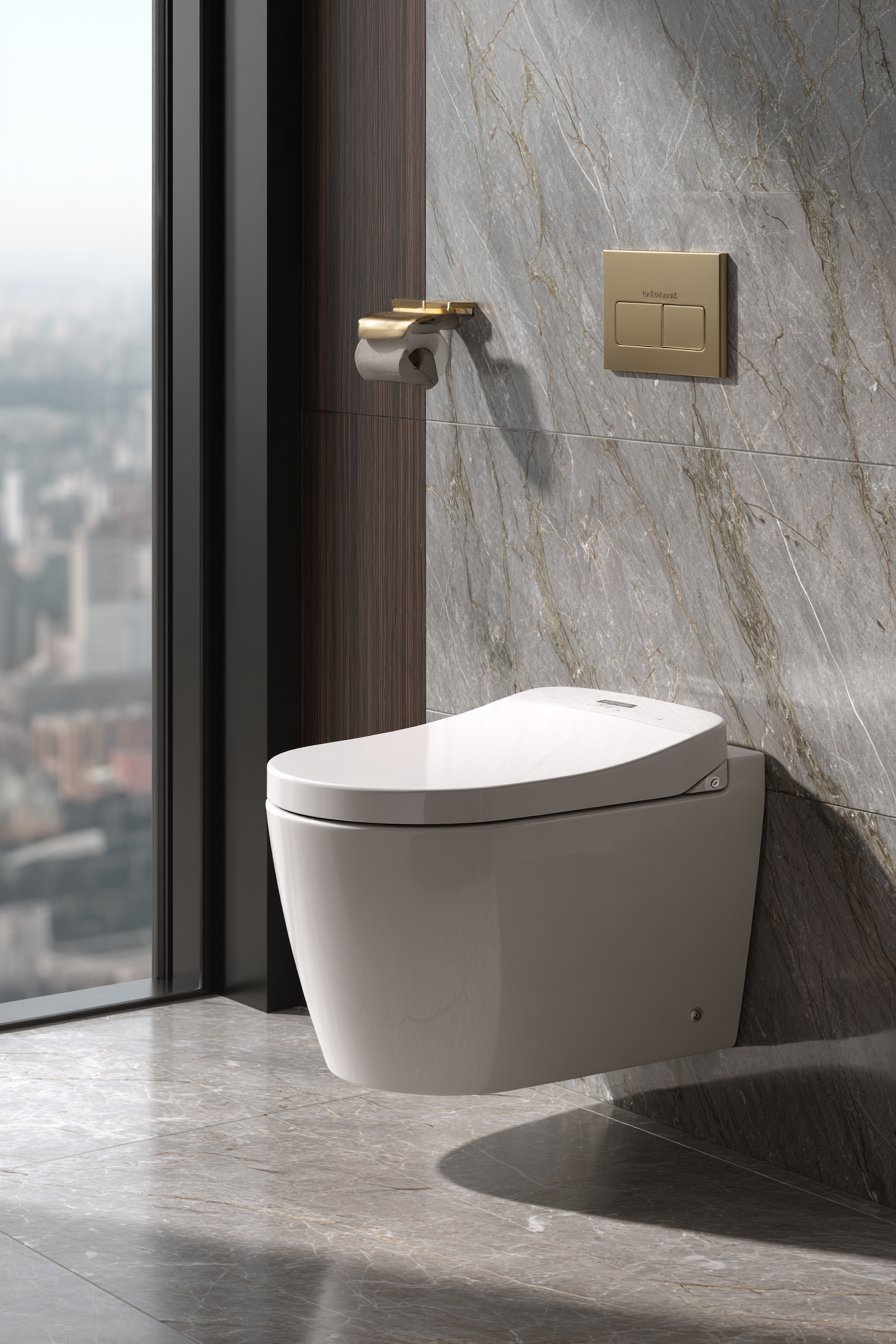
In today’s design landscape, homeowners are increasingly viewing the toilet area as an opportunity for creative expression and practical innovation. From minimalist Scandinavian sanctuaries to luxurious spa-inspired retreats, from vintage Victorian charm to cutting-edge smart technology, the possibilities are truly limitless. The key lies in understanding how different design elements—materials, colors, lighting, fixtures, and spatial arrangements—work together to create a cohesive and functional space that reflects your personal style while meeting your daily needs.
This comprehensive guide explores twenty-seven distinct toilet design ideas, each offering unique approaches to creating beautiful, functional bathroom spaces. Whether you’re working with a compact powder room that requires space-saving solutions, a generous master bathroom where you can indulge in luxury features, or anything in between, you’ll find inspiration and practical guidance to help you create the perfect toilet area for your home. From accessible universal design principles to bold artistic statements, these concepts demonstrate how thoughtful design transforms even the most utilitarian spaces into areas of comfort, style, and personal expression.
1. Minimalist Wall-Mounted Excellence
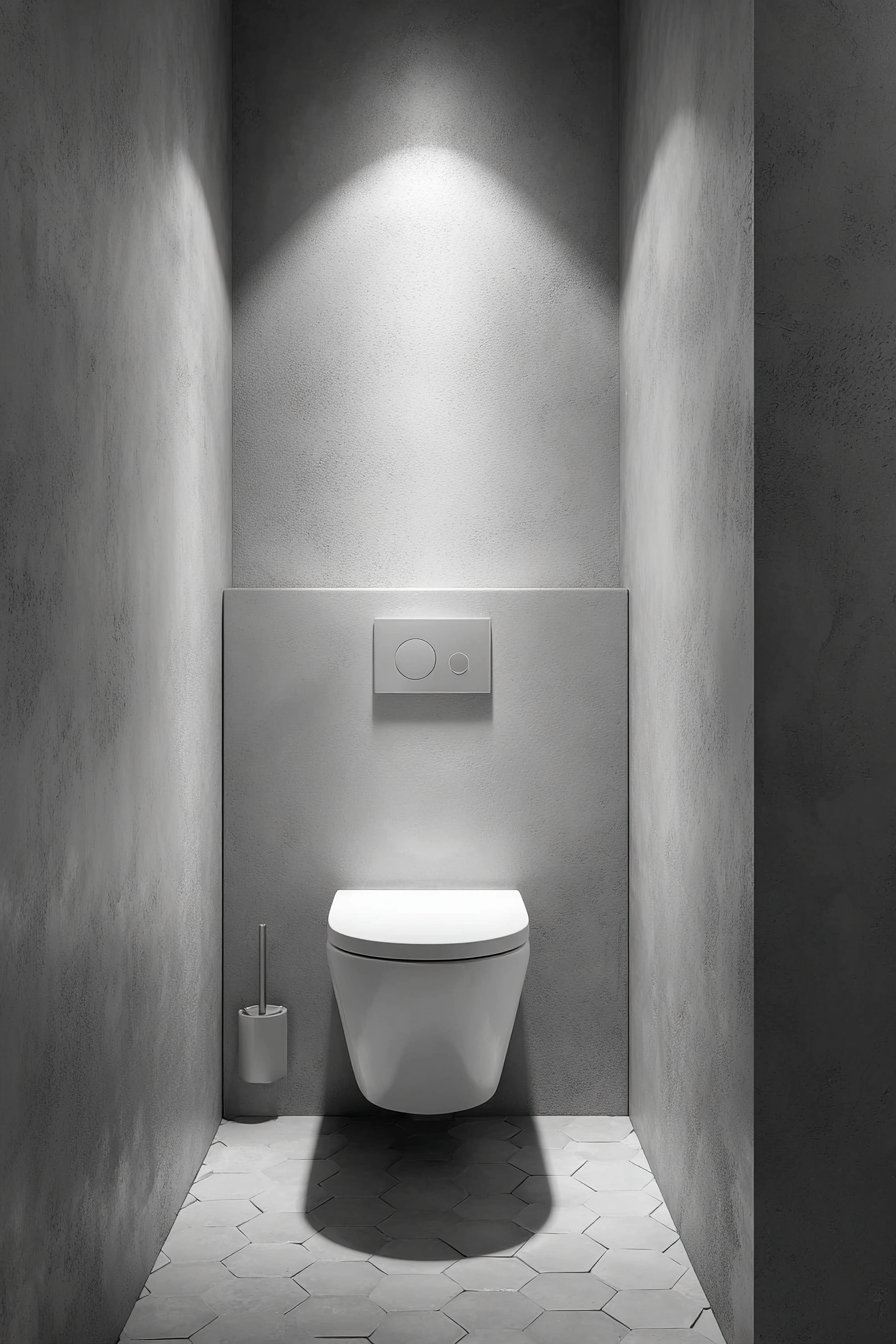
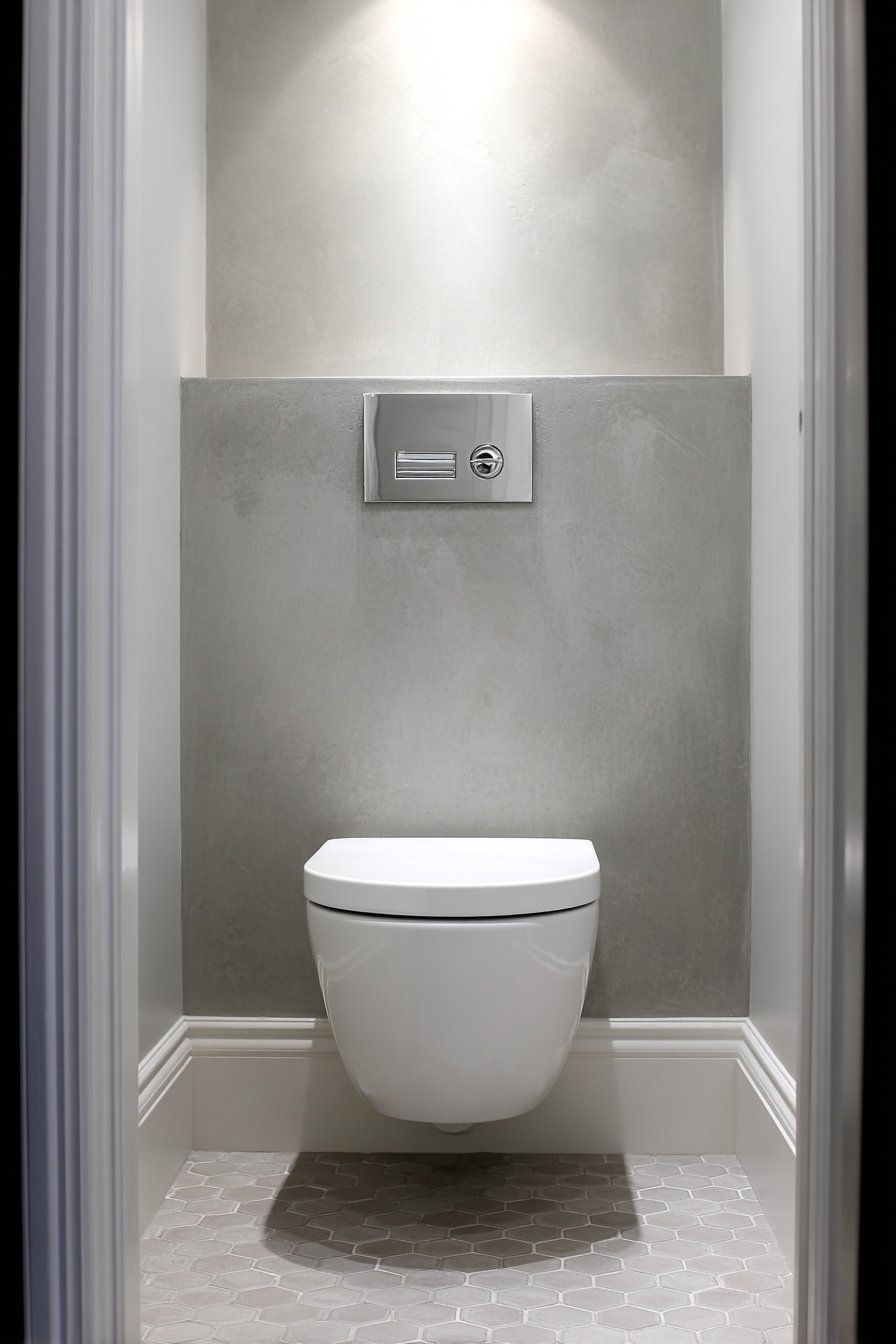
The contemporary minimalist approach to toilet design emphasizes clean lines, uncluttered spaces, and seamless integration of fixtures into the overall bathroom aesthetic. A wall-mounted toilet with a concealed cistern system represents the pinnacle of minimalist design philosophy, creating a floating effect that not only looks striking but also simplifies floor cleaning and maintenance. The compact powder room setting features light grey textured walls that add subtle visual interest without overwhelming the space, while hexagonal floor tiles introduce geometric pattern in a sophisticated, understated manner.
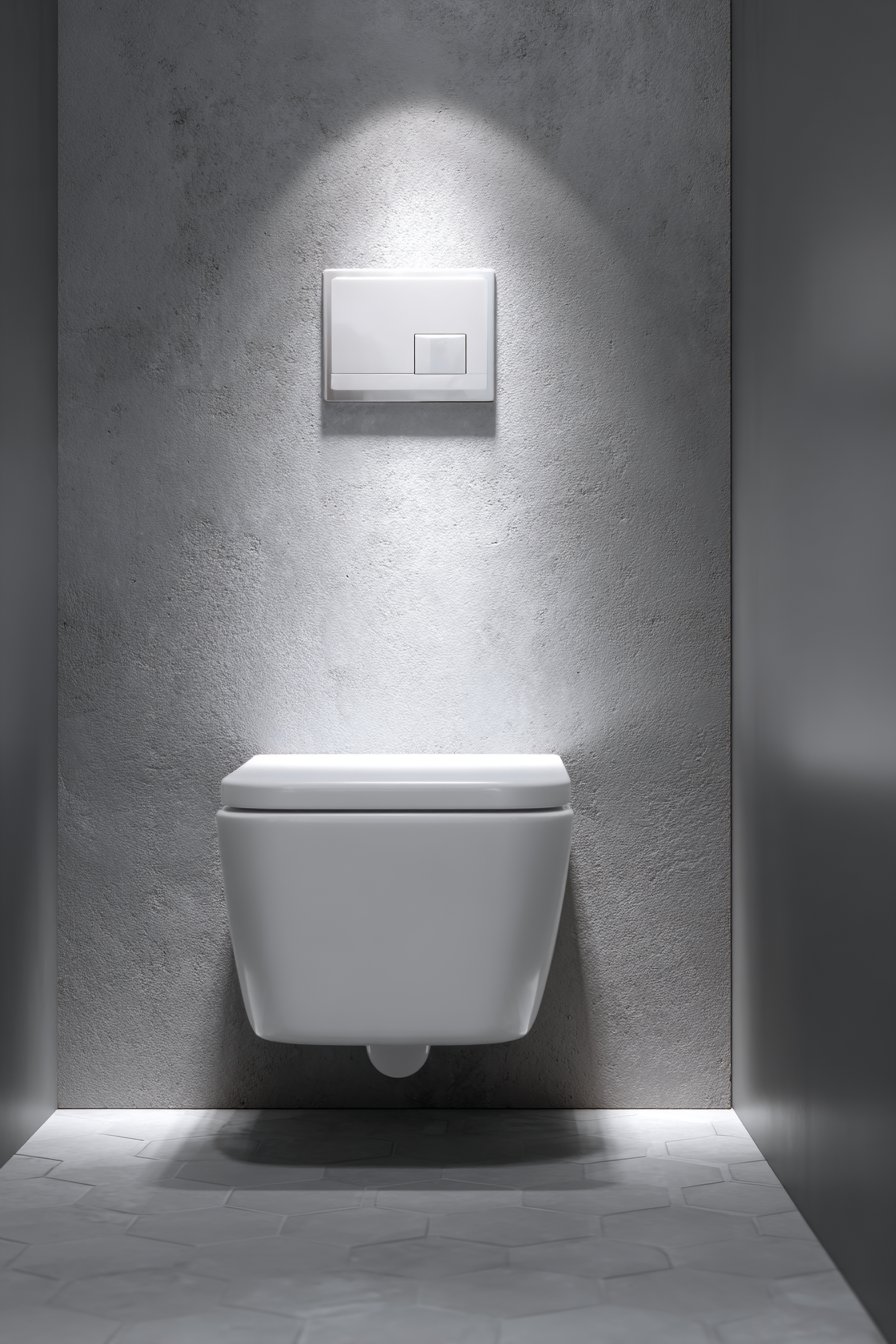
The beauty of this design lies in its restraint and attention to detail. The chrome flush button integrated directly into the wall maintains the seamless aesthetic, eliminating visual clutter and creating a sense of architectural precision. Every element serves a purpose while contributing to the overall sense of calm and order. The pure white ceramic toilet stands as a sculptural object against the grey backdrop, its clean geometric form becoming a statement of modern design sensibility.
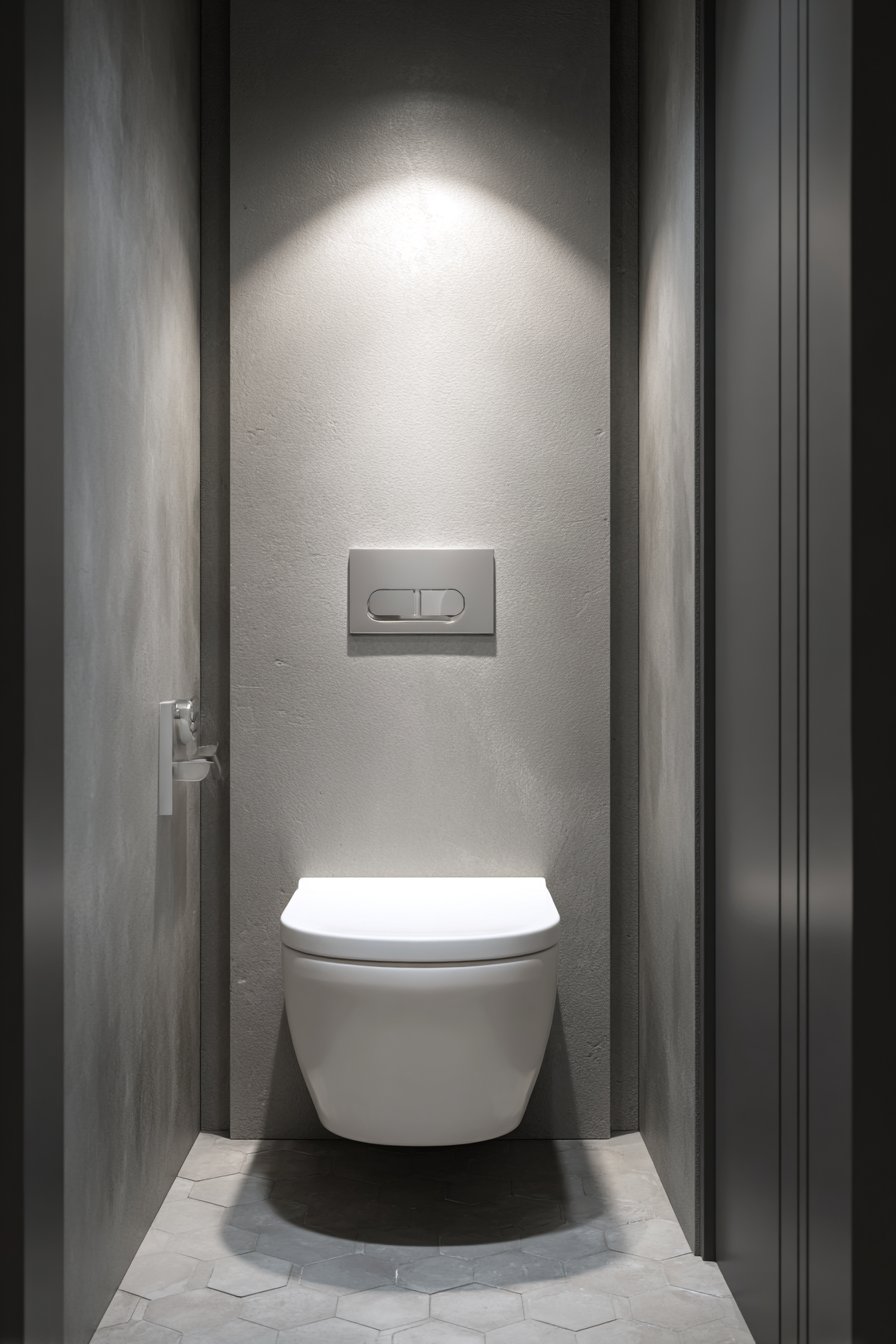
Lighting plays a crucial role in elevating this minimalist concept. Soft recessed lighting creates subtle shadows that emphasize the clean lines and geometric forms of the space, adding depth and dimension without introducing additional fixtures or visual complexity. The interplay of light and shadow becomes part of the design itself, highlighting the quality of materials and precision of installation. This approach to toilet design proves that simplicity, when executed with care and attention to detail, can be extraordinarily elegant and timeless.
Key Design Tips:
- Install wall-mounted toilets to maximize floor space and simplify cleaning routines
- Choose textured wall finishes in neutral tones to add interest without visual clutter
- Incorporate geometric tile patterns for subtle design impact
- Use recessed lighting to maintain clean ceiling lines while providing adequate illumination
- Select fixtures with integrated controls to eliminate protruding buttons and levers
2. Spa-Inspired Serenity
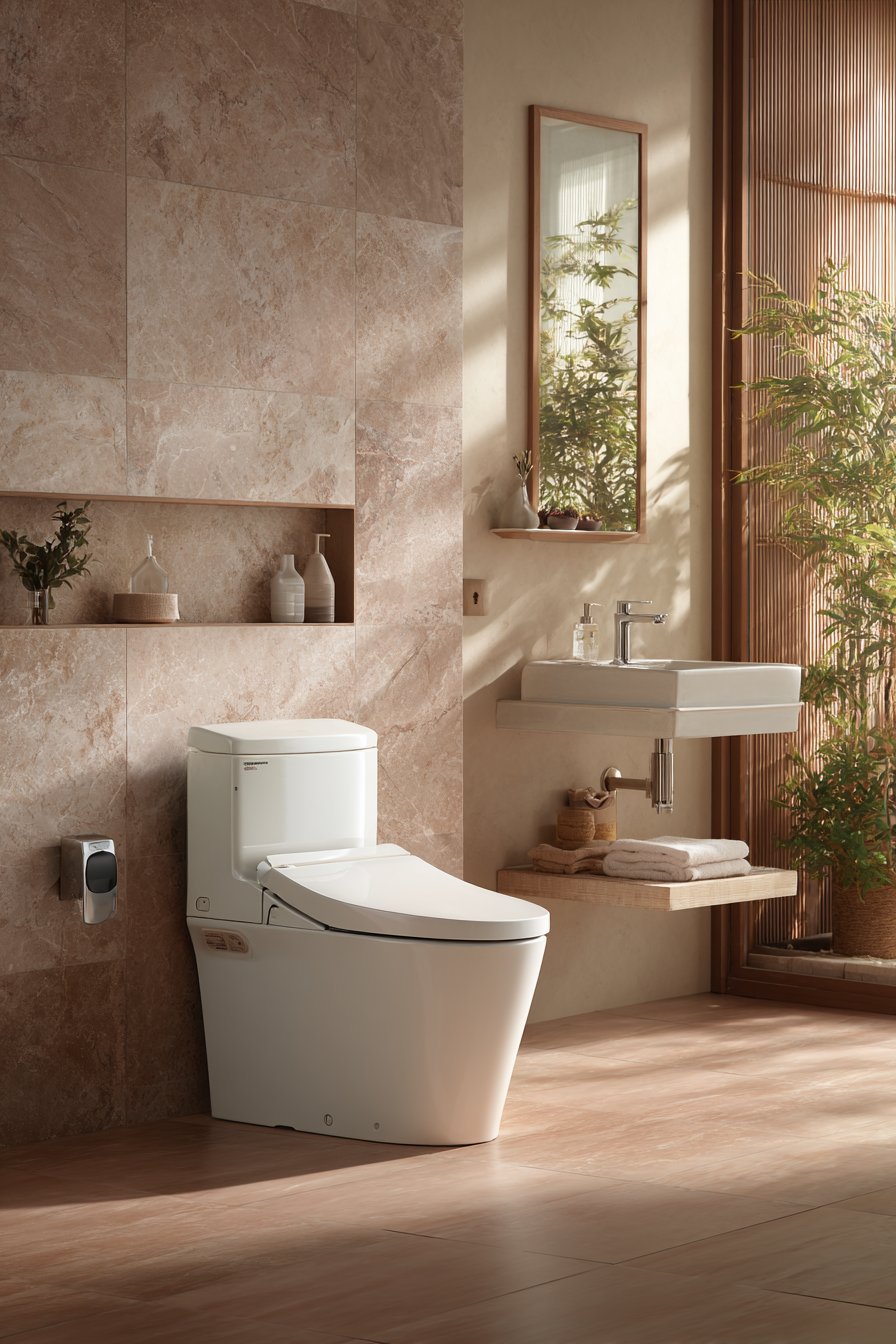
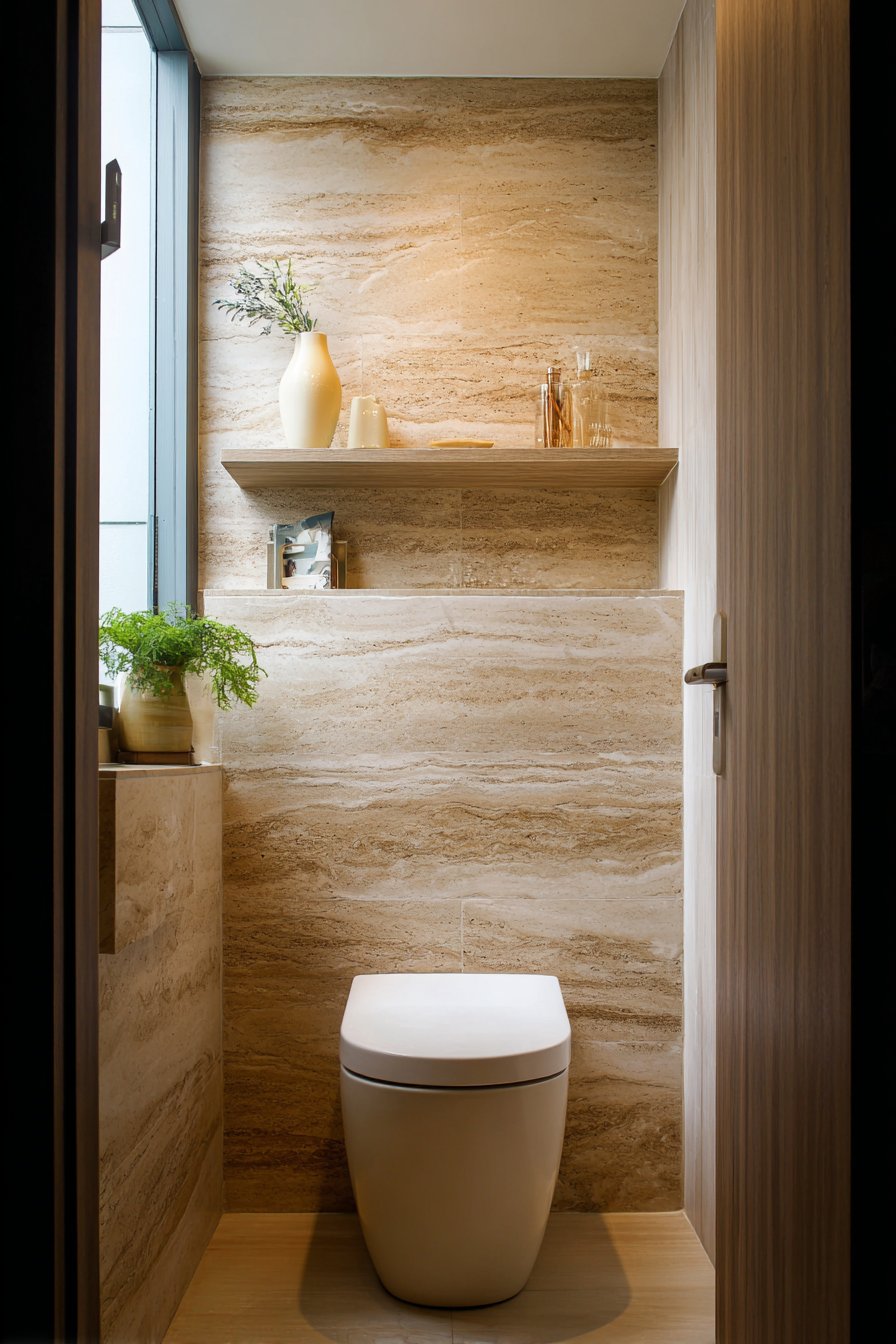
Creating a spa-inspired toilet area transforms a functional necessity into a daily retreat, offering moments of tranquility in even the busiest households. This design concept centers on a comfort-height elongated toilet with a soft-close lid, prioritizing user comfort while maintaining aesthetic appeal. The natural stone accent wall featuring warm beige travertine tiles brings organic texture and earthy warmth into the space, creating an immediate connection to nature that defines spa aesthetics. The varied patterns and subtle color variations inherent in natural stone add visual richness that manufactured materials simply cannot replicate.
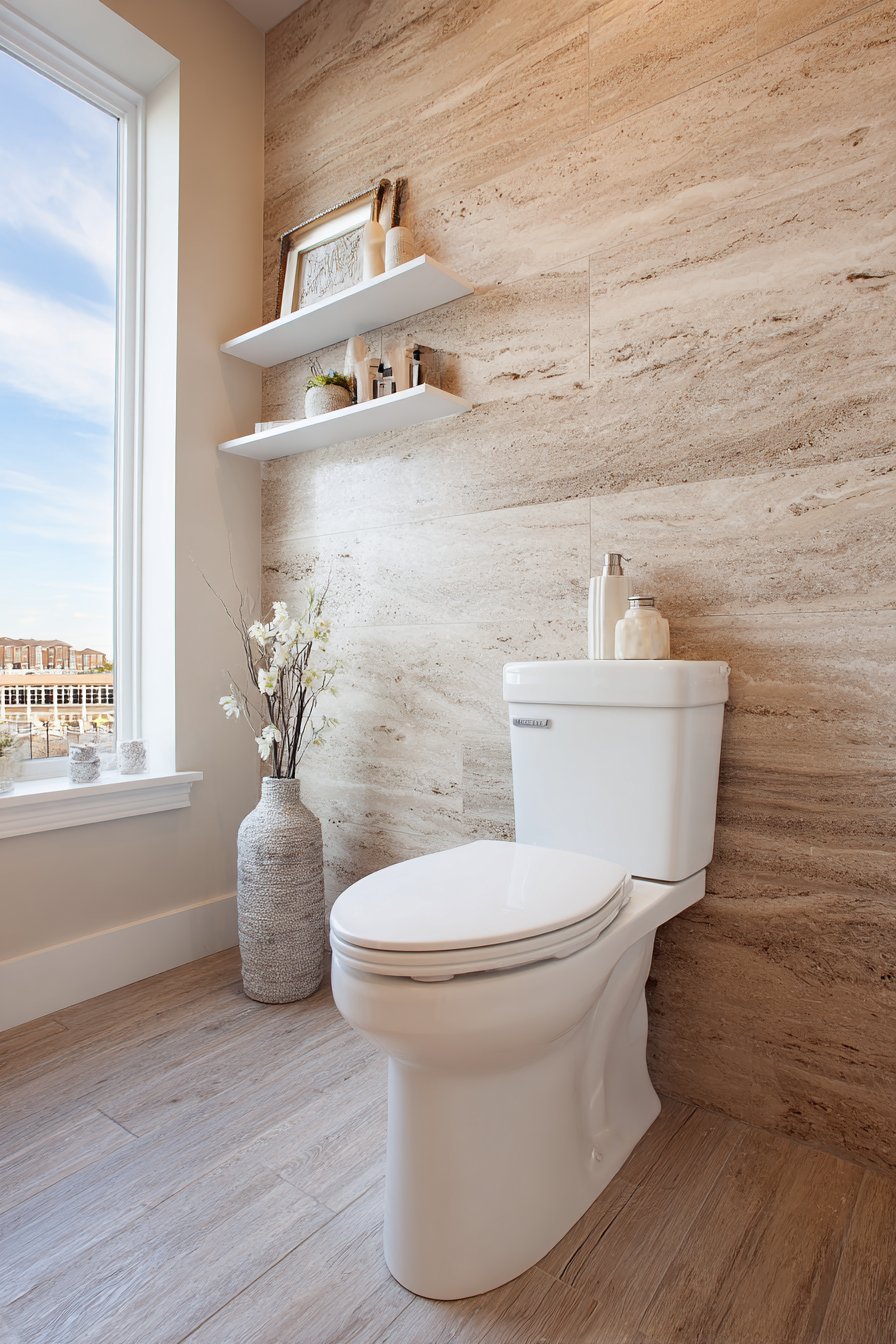
The thoughtful placement of a small floating shelf demonstrates how practical storage needs can be addressed without compromising the serene atmosphere. Displaying minimal decor items—perhaps a small succulent, a scented candle, or a few smooth river stones—the shelf adds personality while maintaining the uncluttered calm essential to spa-inspired design. Natural daylight from a nearby window bathes the space in soft, diffused illumination that changes throughout the day, connecting the interior space to natural rhythms and creating an ever-evolving play of light and shadow.
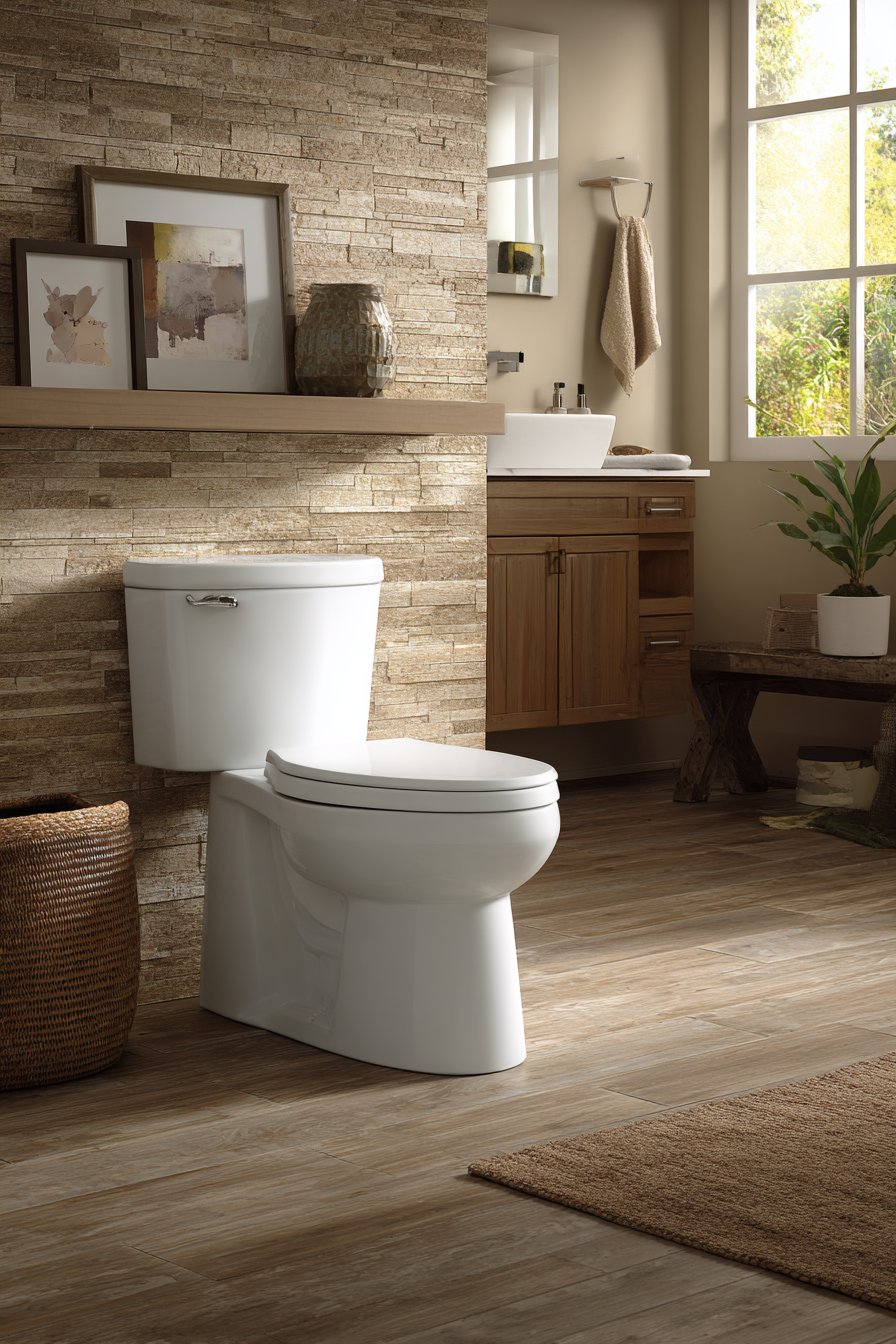
This design approach recognizes that true luxury lies not in opulence but in quality materials, thoughtful details, and spaces that promote wellbeing. The comfort-height toilet ensures accessibility and ease of use for people of all ages and abilities, while the soft-close lid eliminates jarring sounds that disrupt the peaceful atmosphere. Every element works together to create a space where daily routines become opportunities for mindfulness and self-care, proving that even the most practical spaces can nurture our wellbeing.
Key Design Tips:
- Select comfort-height toilets for improved accessibility and user comfort
- Incorporate natural stone materials to introduce organic warmth and texture
- Position fixtures near natural light sources whenever possible
- Add floating shelves for storage that doesn’t interrupt sight lines
- Choose soft-close mechanisms to maintain a peaceful, quiet environment
3. Space-Saving Corner Solutions
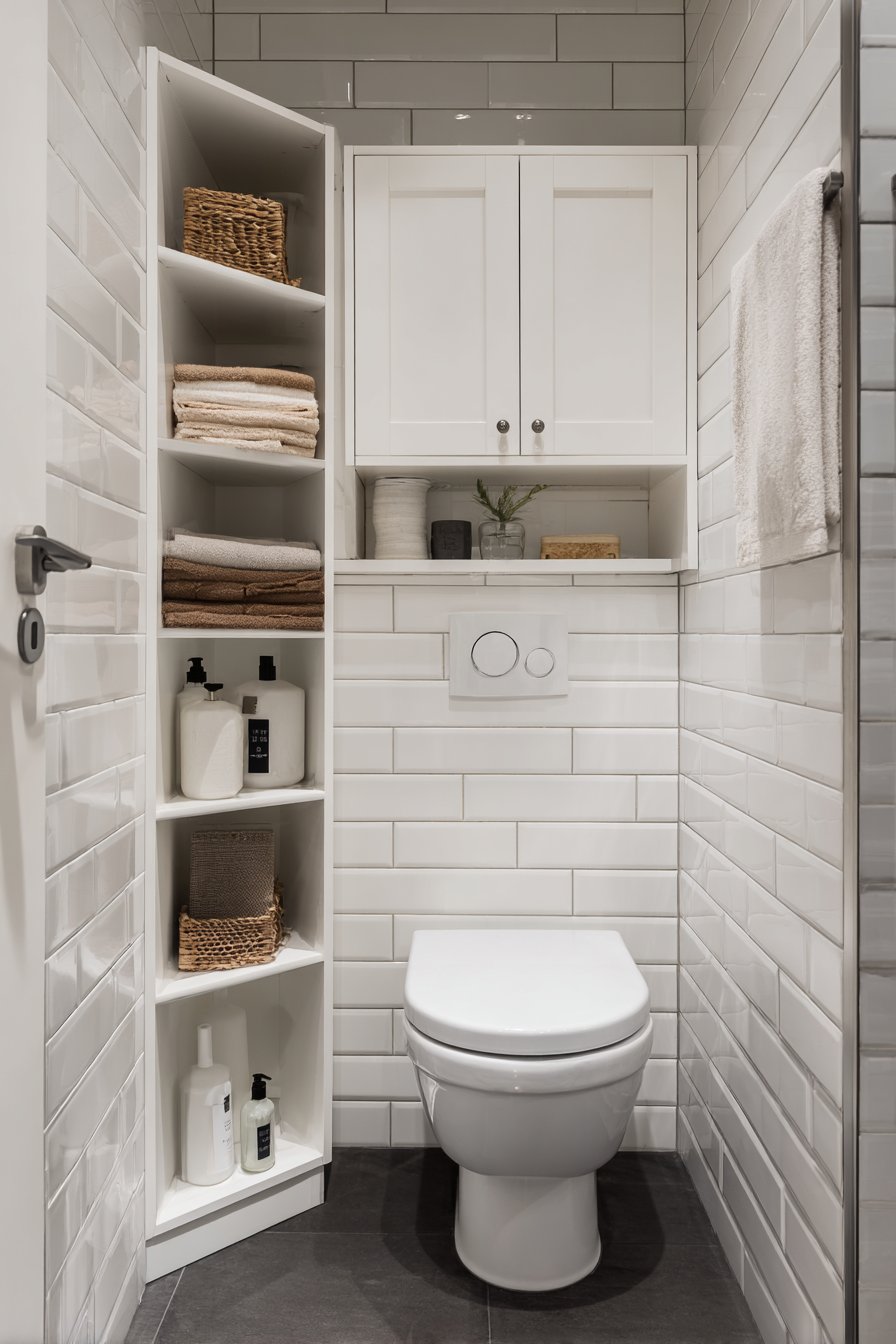
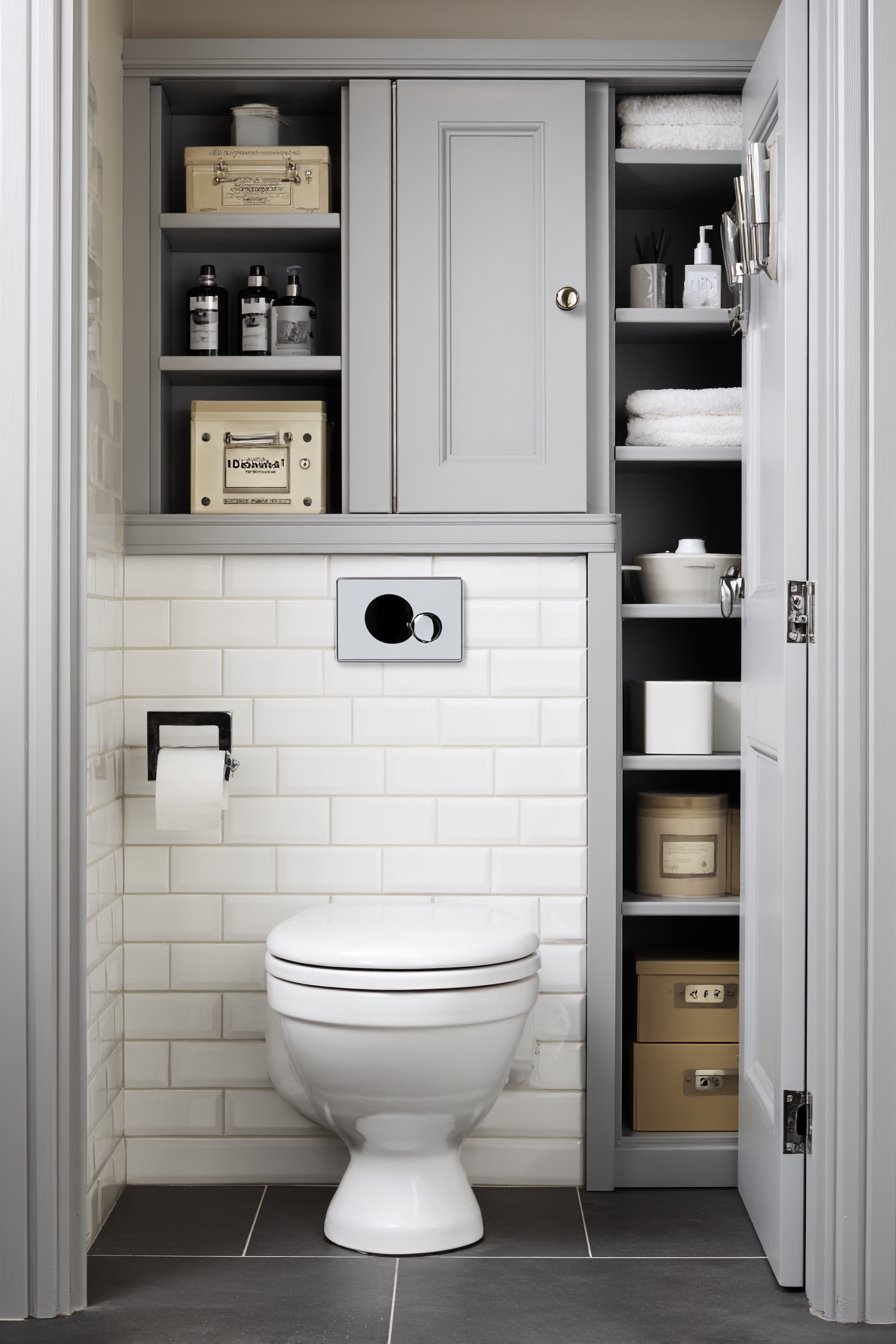
Small bathroom spaces demand creative thinking and strategic planning, and the corner toilet installation represents one of the most effective space-saving solutions available. This compact design maximizes every square inch without sacrificing style or functionality. White subway tiles covering the walls create a clean, classic backdrop that reflects light and makes the small space feel more open and airy. The charcoal grey floor tiles ground the design while creating visual interest through color contrast, defining the toilet area within the broader bathroom layout.
The genius of this design lies in its vertical thinking. A narrow wall-mounted cabinet positioned above the toilet utilizes often-wasted vertical space for essential storage, keeping toiletries and supplies accessible while maintaining the uncluttered floor area necessary in compact spaces. The dual-flush mechanism represents both environmental consciousness and practical water-saving technology, demonstrating that small spaces can incorporate modern conveniences and sustainable features. This efficient approach to toilet design proves that spatial constraints can inspire innovative solutions rather than limiting design possibilities.
Professional interior photography techniques capture how intelligent planning transforms challenging spaces into functional, attractive rooms. The careful arrangement of elements, the strategic use of color and pattern, and the attention to proportion all contribute to a space that feels complete and intentional rather than cramped or compromised. This design serves as an excellent example for anyone dealing with small bathroom spaces, showing that compact doesn’t mean lacking in style or comfort.
Key Design Tips:
- Position toilets in corners to maximize usable floor space in small bathrooms
- Use white tiles on walls to reflect light and create visual spaciousness
- Install wall-mounted cabinets above toilets for efficient vertical storage
- Select dual-flush mechanisms to conserve water and reduce utility costs
- Create color contrast between walls and floors to define different zones
4. High-Tech Smart Luxury
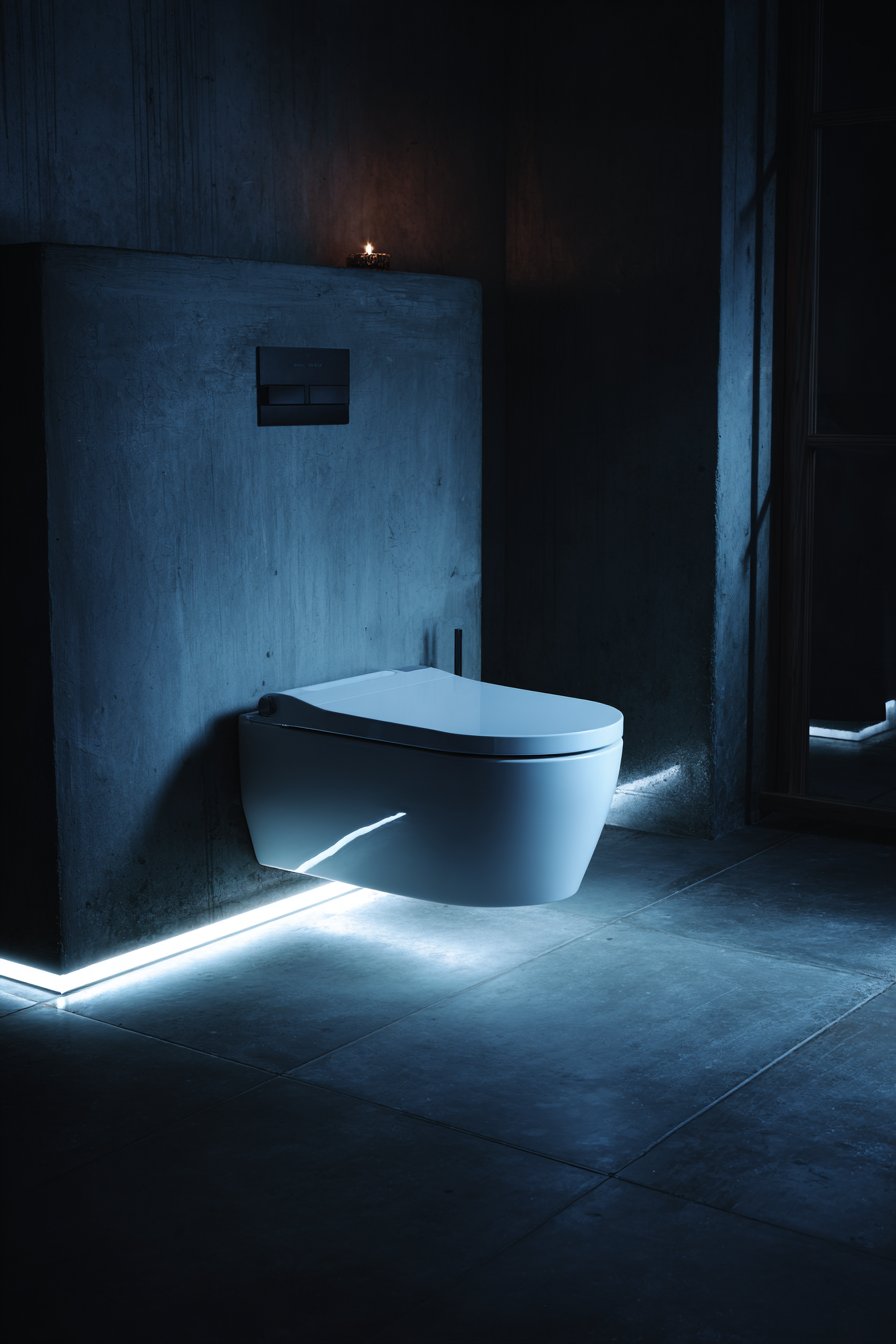
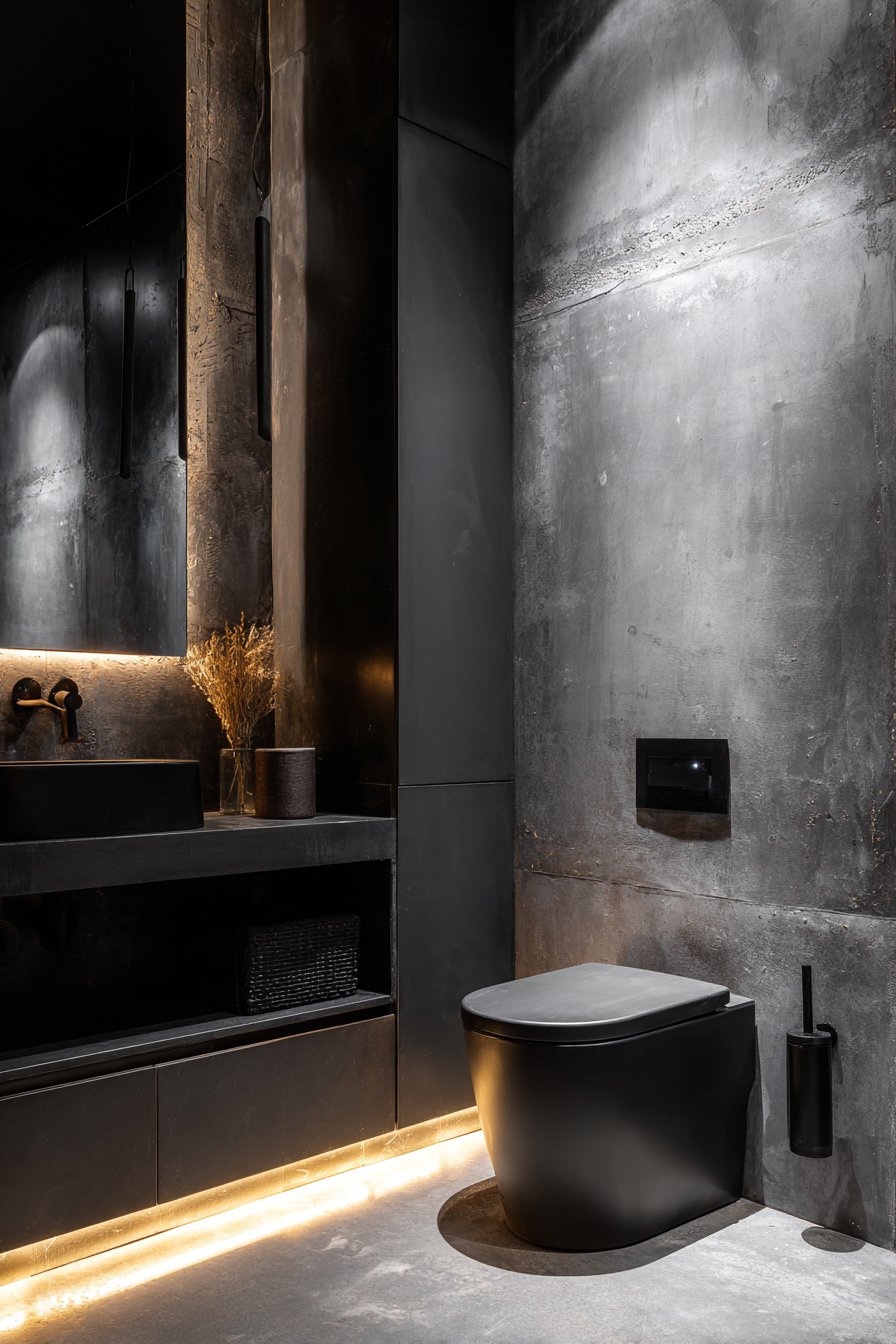
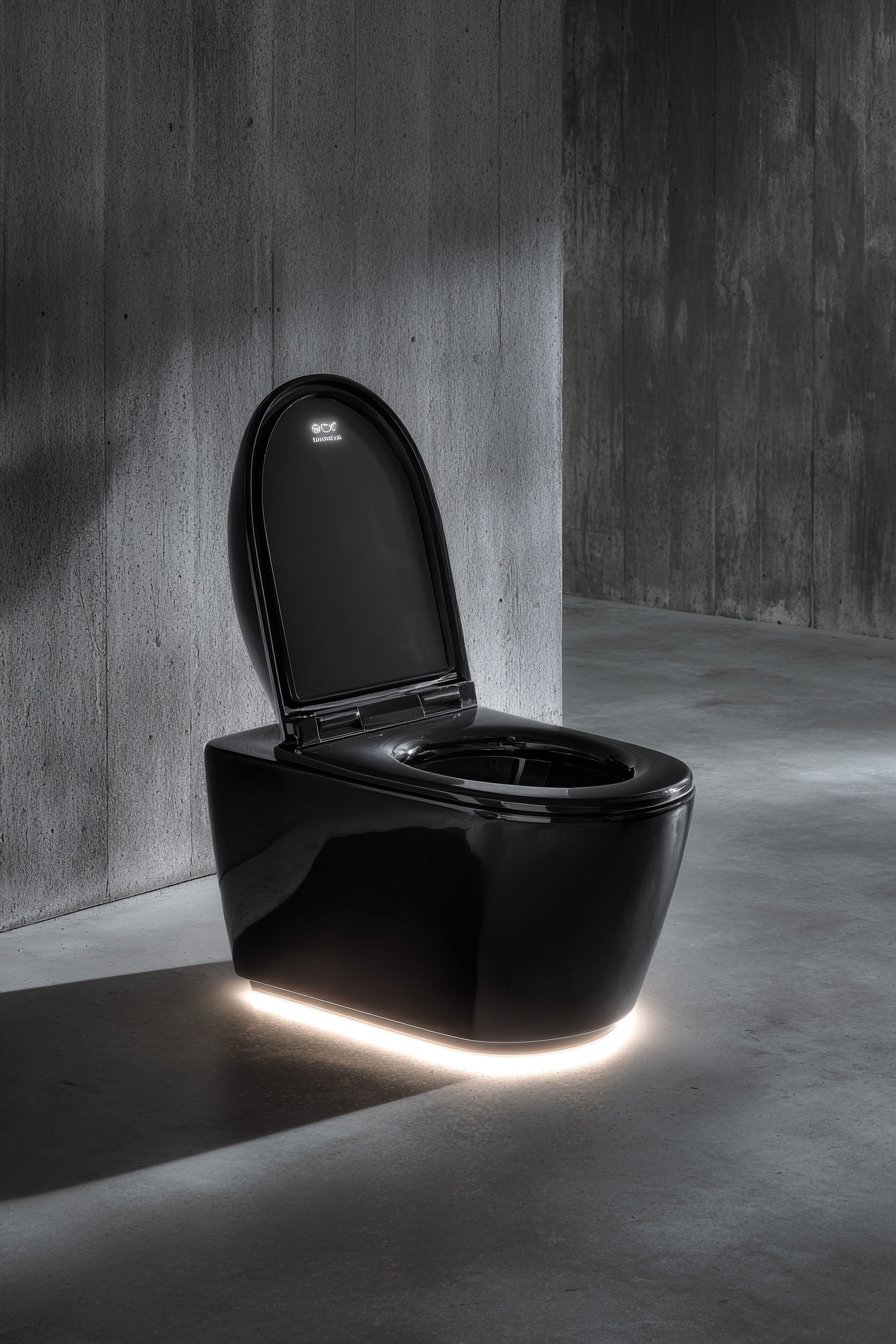
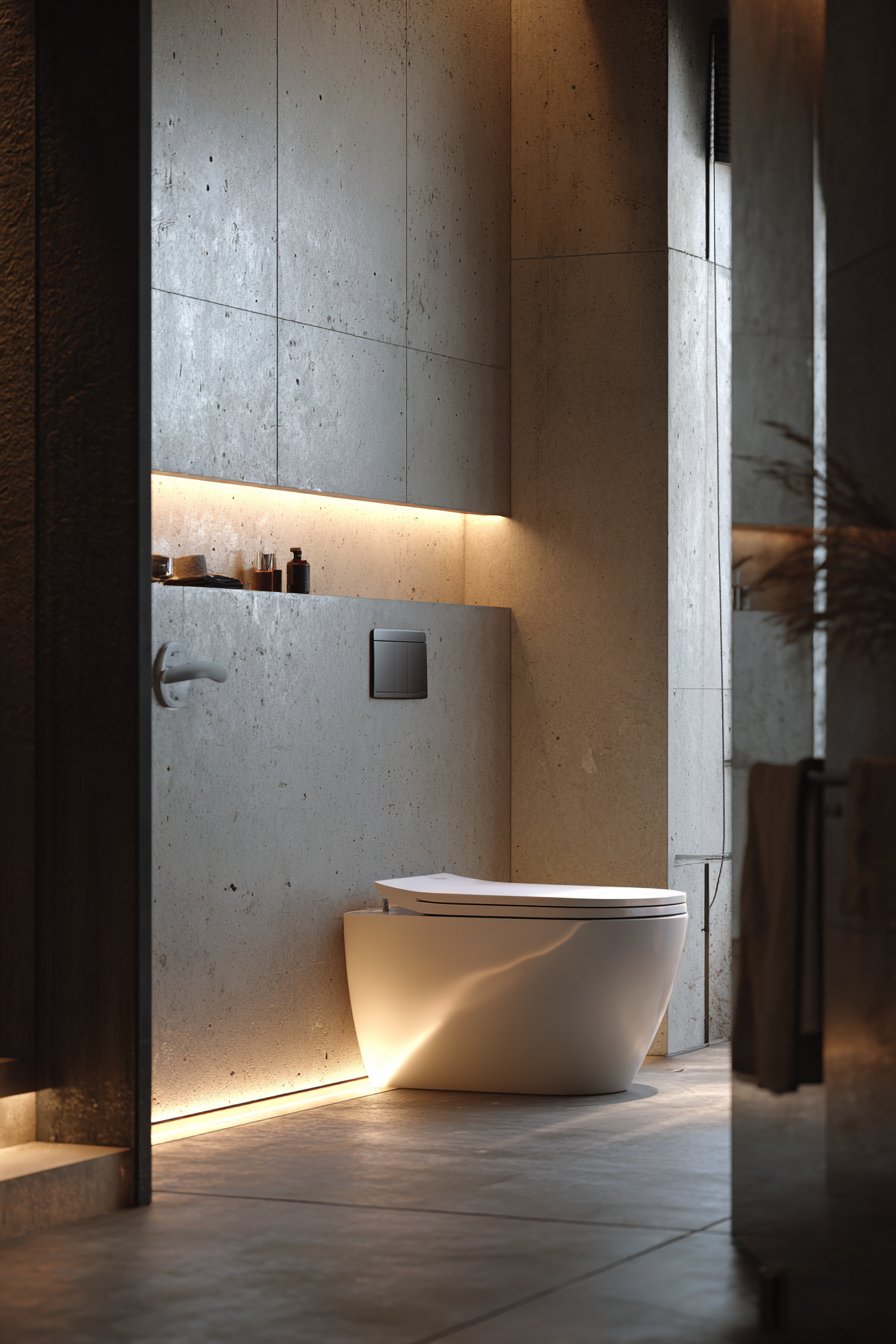
The integration of advanced technology into toilet design represents one of the most significant innovations in bathroom fixtures over recent decades. This luxury toilet design showcases a high-tech smart toilet featuring automatic lid operation, heated seating, integrated night lighting, and numerous other conveniences that elevate daily routines. Set in a contemporary bathroom with polished concrete walls, the space embraces an industrial-modern aesthetic that provides the perfect backdrop for cutting-edge technology. Radiant floor heating adds invisible luxury, ensuring comfort even on the coldest mornings.
The matte black fixtures throughout the space complement the modern aesthetic while creating dramatic visual contrast against the concrete surfaces. This careful attention to finish coordination demonstrates how even in highly technological spaces, design aesthetics remain paramount. Ambient LED strip lighting along the toilet base creates a floating effect that adds drama while serving the practical purpose of nighttime navigation lighting. This subtle illumination transforms the fixture into a sculptural element, highlighting its modern form and advanced features.
Architectural photography with balanced exposure captures the interplay between raw industrial materials and refined technological sophistication. The juxtaposition of concrete’s rough, organic texture with the smooth, precise surfaces of modern fixtures creates visual tension that makes the space memorable and distinctive. This design approach appeals to those who appreciate innovation and aren’t afraid to invest in features that genuinely improve daily life, proving that technology and design excellence can coexist beautifully.
Key Design Tips:
- Invest in smart toilets with features that genuinely improve your daily routine
- Pair high-tech fixtures with industrial materials for contemporary appeal
- Install radiant floor heating for invisible luxury and year-round comfort
- Use ambient LED lighting to highlight fixtures and provide nighttime navigation
- Choose matte black finishes to create sophisticated contrast in modern spaces
5. Rustic Farmhouse Authenticity
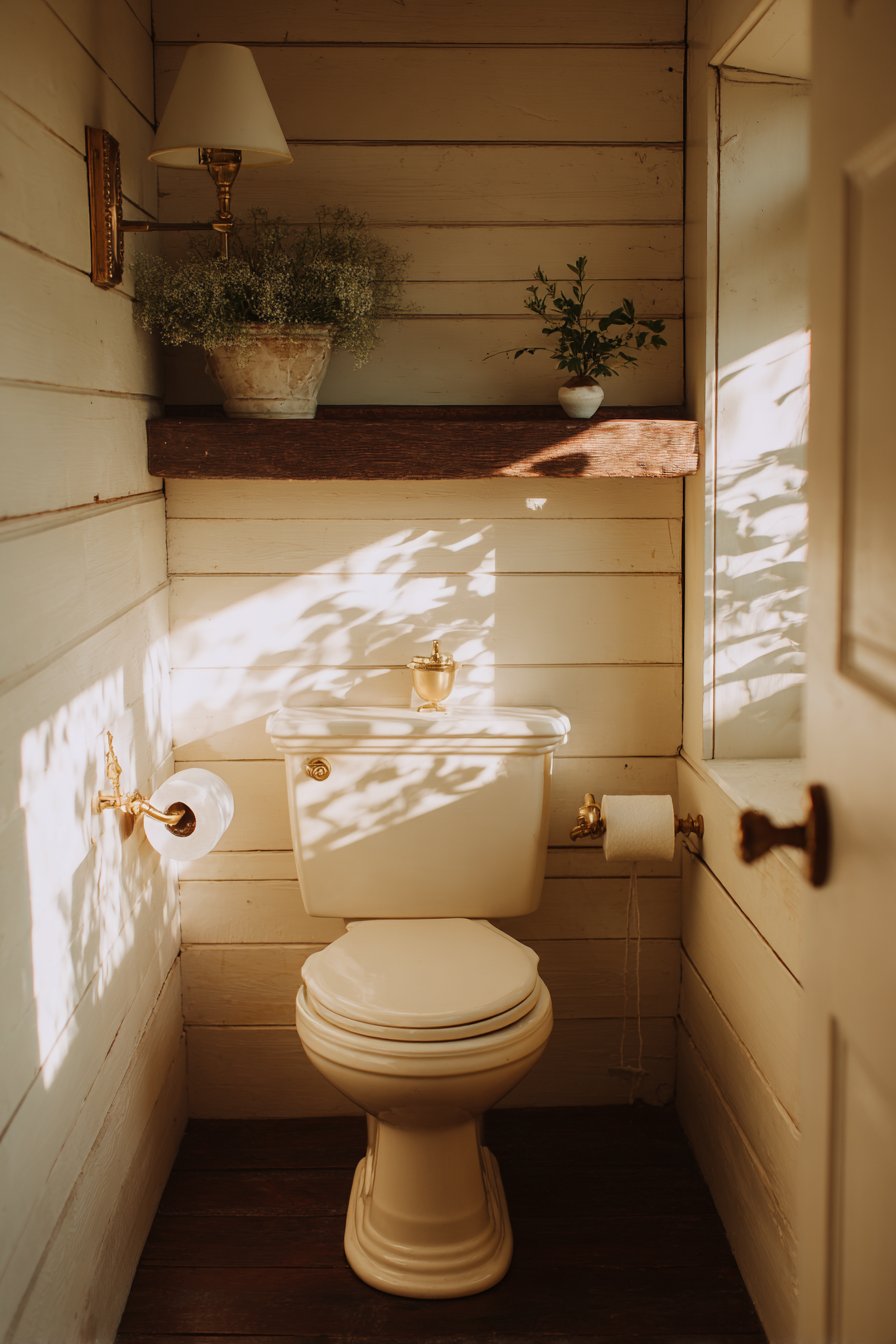
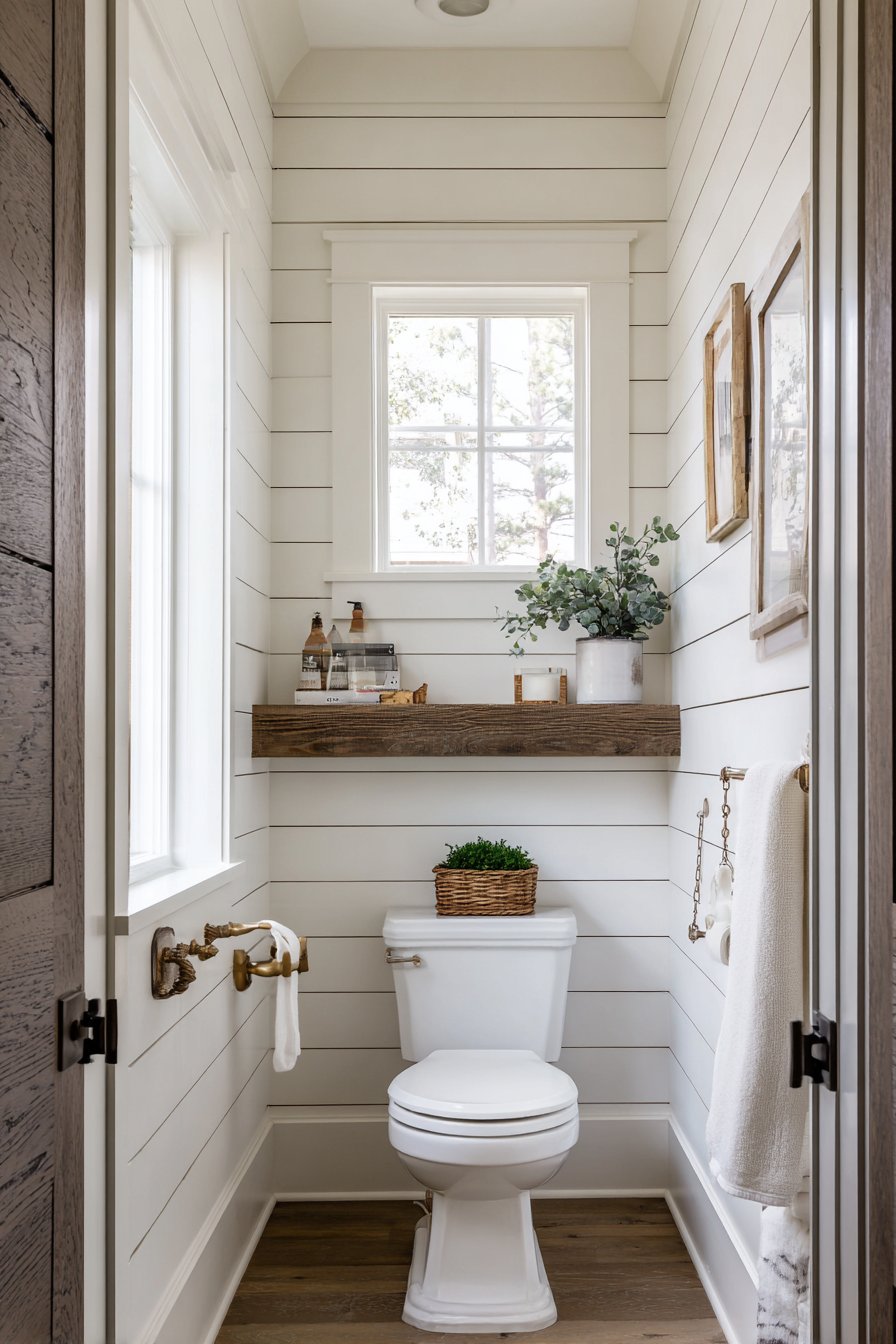
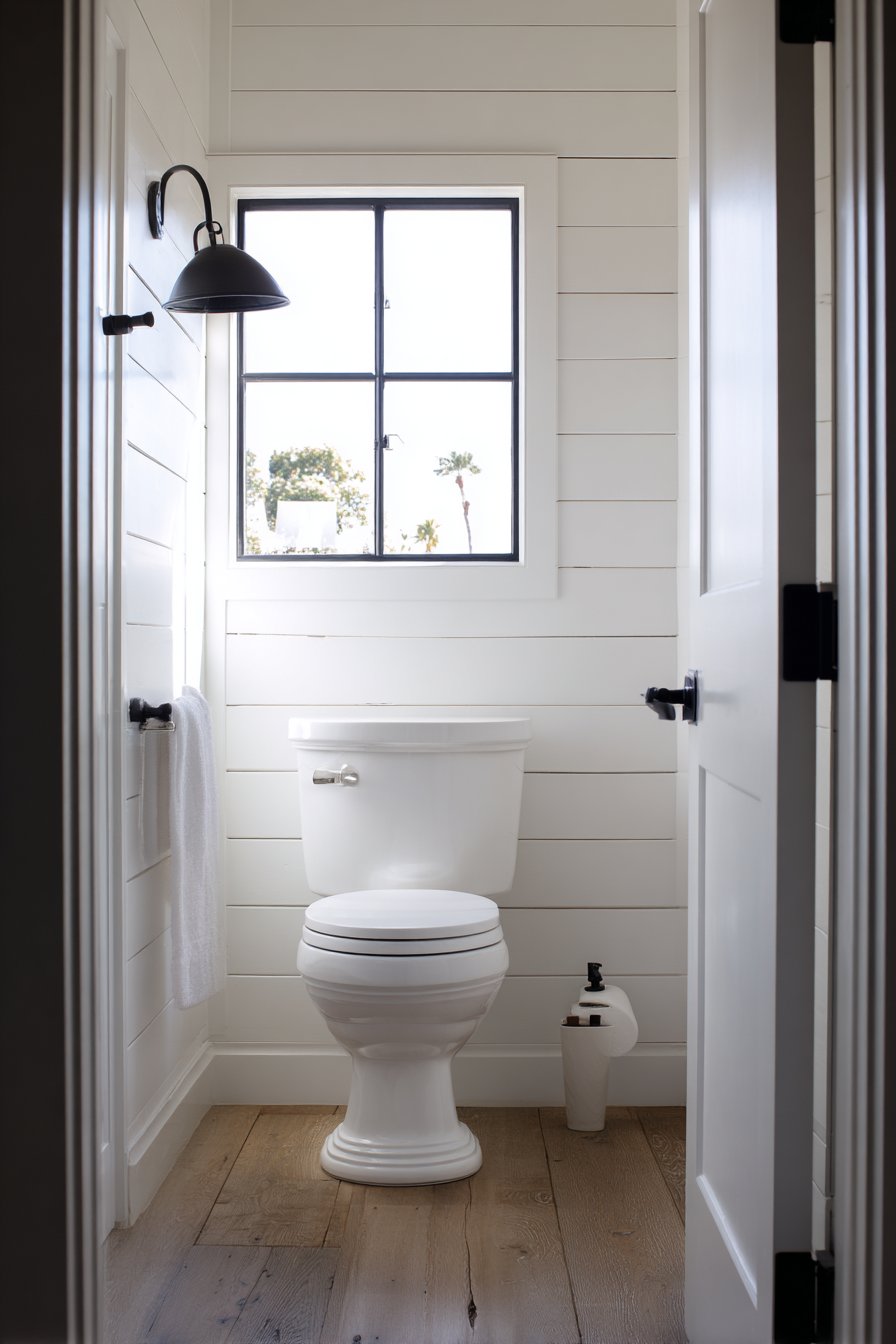
The rustic farmhouse toilet design celebrates traditional aesthetics and timeless materials, creating spaces that feel warm, welcoming, and full of character. A traditional two-piece toilet in classic white serves as the centerpiece, its familiar form providing comfort through its very conventionality. Shiplap walls painted in soft cream create the quintessential farmhouse backdrop, their horizontal lines adding visual rhythm while evoking rural American architecture. Vintage-style brass toilet paper holder and pull-chain flush mechanisms aren’t merely decorative choices—they’re authentic period details that reinforce the historical aesthetic.
The reclaimed wood floating shelf brings organic warmth and texture into the space while providing practical storage and display opportunities. Displaying simple greenery—perhaps a small potted herb or trailing ivy—the shelf adds life and freshness to the room, connecting the indoor space to the natural world beyond. Natural window light streaming into the space creates warm shadows that enhance the cozy, lived-in quality central to farmhouse design philosophy. This authentic approach to rustic design avoids the pitfalls of manufactured nostalgia, instead creating a space that genuinely honors traditional craftsmanship and materials.
Interior design photography captures the layered textures and warm tones that define successful farmhouse aesthetics. The combination of painted wood, natural brass, living plants, and soft natural light creates an environment that feels collected over time rather than installed all at once. This design demonstrates how historical styles can be adapted for modern living without losing their essential character, appealing to those who value tradition, authenticity, and the enduring appeal of classic American design.
Key Design Tips:
- Choose traditional two-piece toilets for authentic period appropriate styling
- Install shiplap walls painted in warm neutrals for farmhouse character
- Select vintage-style brass fixtures to add warmth and historical authenticity
- Incorporate reclaimed wood elements for genuine rustic texture
- Display simple greenery to add life and connect to natural elements
6. Contemporary Seamless Design
The contemporary toilet design emphasizes sleek, streamlined forms and cohesive material palettes that create unified, sophisticated spaces. A one-piece elongated toilet with a skirted trapway represents the evolution of toilet design, concealing mechanical elements within smooth, flowing surfaces that simplify cleaning while creating sculptural appeal. Large format grey porcelain tiles covering both walls and floors eliminate visual breaks and grout lines, creating a seamless envelope that makes the space feel larger and more cohesive than traditionally tiled bathrooms.
Chrome fixtures provide bright, reflective accents that contrast beautifully with the matte grey tiles, adding points of visual interest without disrupting the monochromatic color scheme. The reflective quality of chrome catches and reflects light, adding sparkle and energy to what might otherwise be a static color palette. A frosted glass window strikes the perfect balance between natural light admission and privacy protection, allowing the space to feel bright and connected to the outdoors while maintaining appropriate privacy for bathroom functions.
Professional photography emphasizes the streamlined silhouette and low-maintenance design that makes this approach so appealing to modern homeowners. The absence of visible mechanical elements, the easy-to-clean surfaces, and the timeless material choices ensure this design will remain relevant and attractive for years to come. This toilet design demonstrates how contemporary aesthetics prioritize both form and function, creating spaces that are as practical as they are beautiful.
Key Design Tips:
- Select one-piece toilets with skirted trapways for easy cleaning and streamlined appearance
- Use large format tiles on walls and floors to minimize grout lines and create continuity
- Install frosted glass windows to balance natural light with necessary privacy
- Choose chrome fixtures for bright accents that energize neutral color schemes
- Prioritize low-maintenance materials and designs that age gracefully
7. Bold Monochromatic Drama
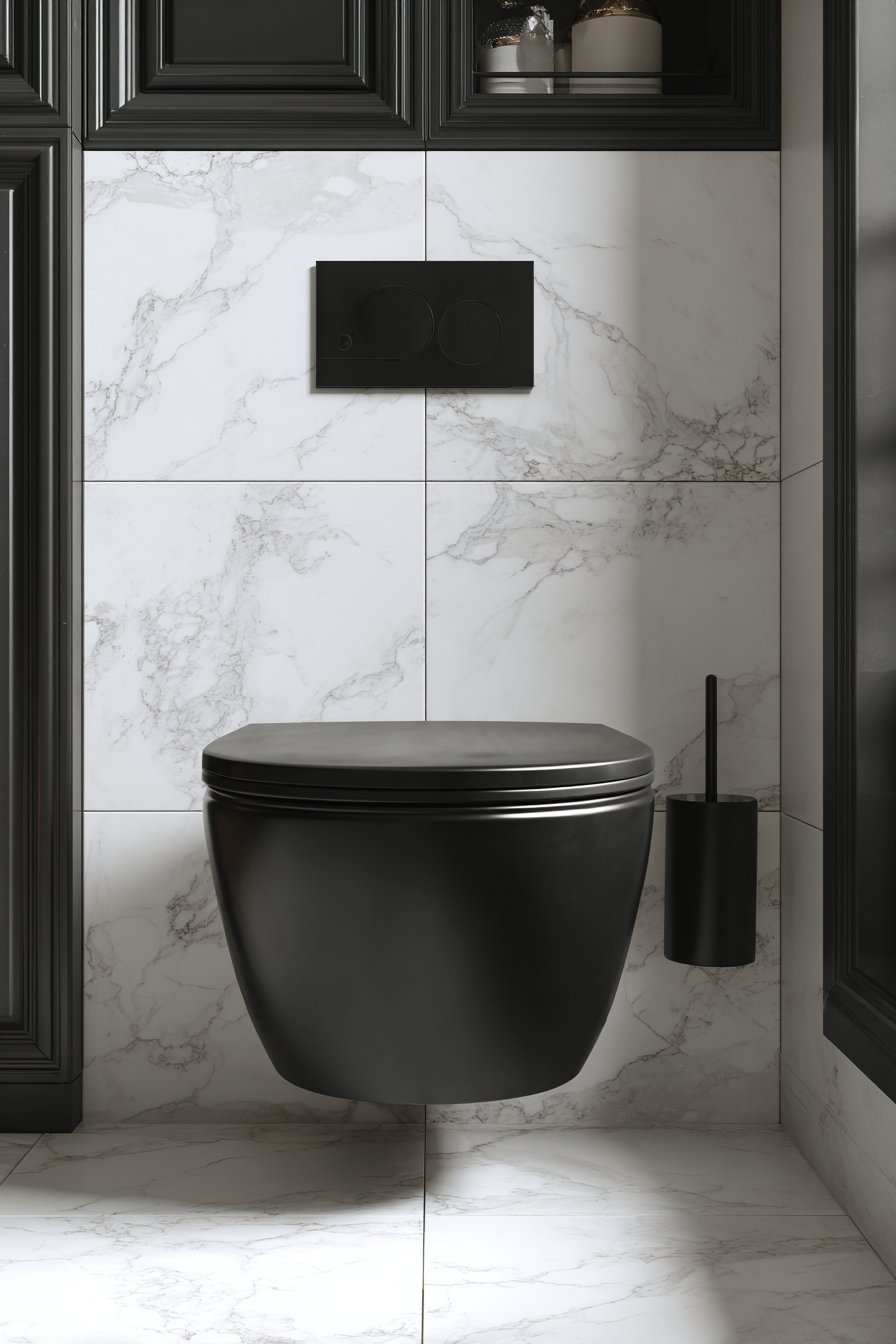
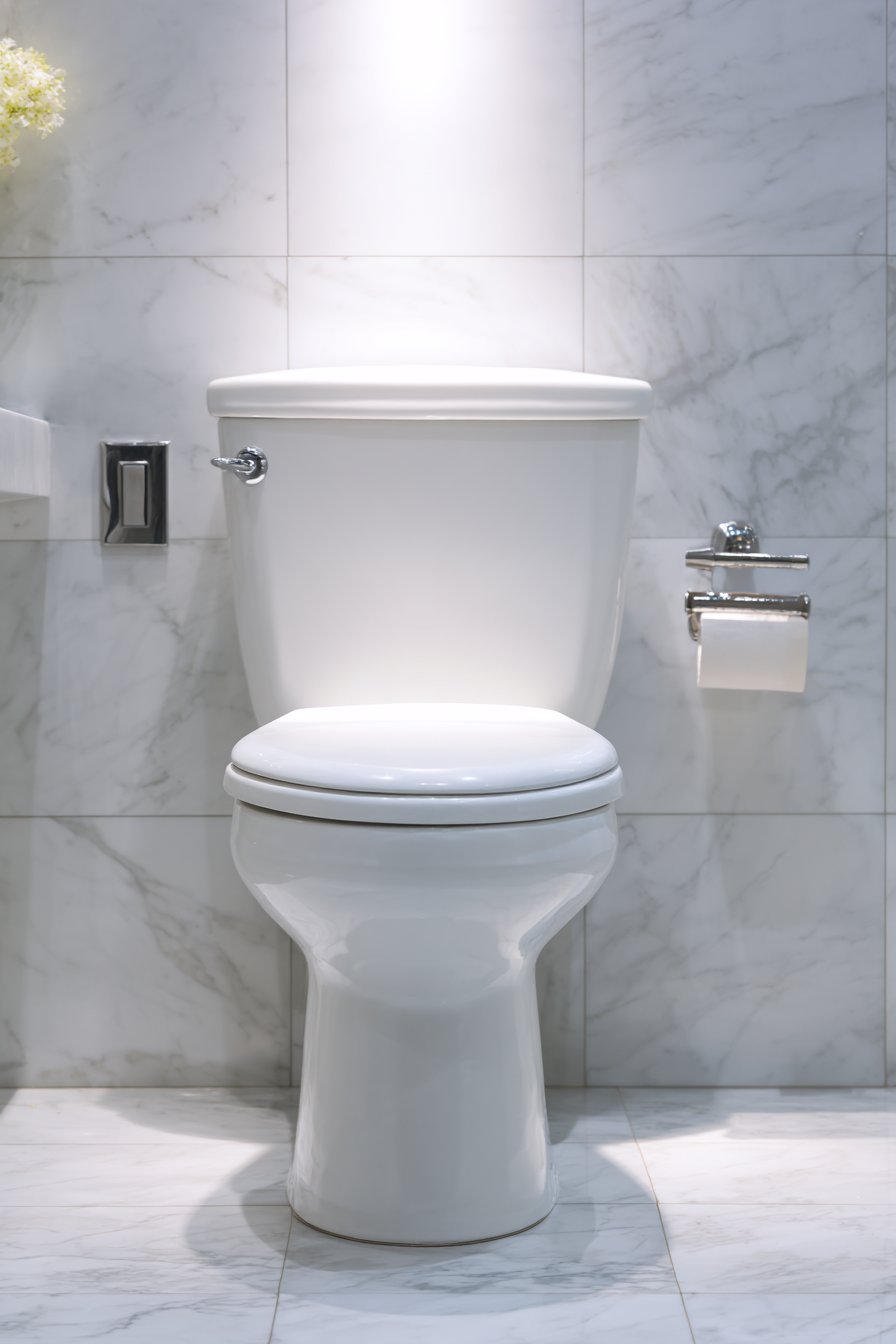
The black and white toilet design makes a striking statement through bold color contrast and sophisticated material choices. A matte black wall-hung toilet anchors the space, its dark finish creating dramatic impact against pristine white marble tiles with subtle grey veining. This high-contrast approach requires confidence and careful execution, but when done well, it creates spaces with undeniable personality and visual power. The black flush plate and toilet paper holder create a cohesive look, ensuring that every visible element contributes to the overall design concept.
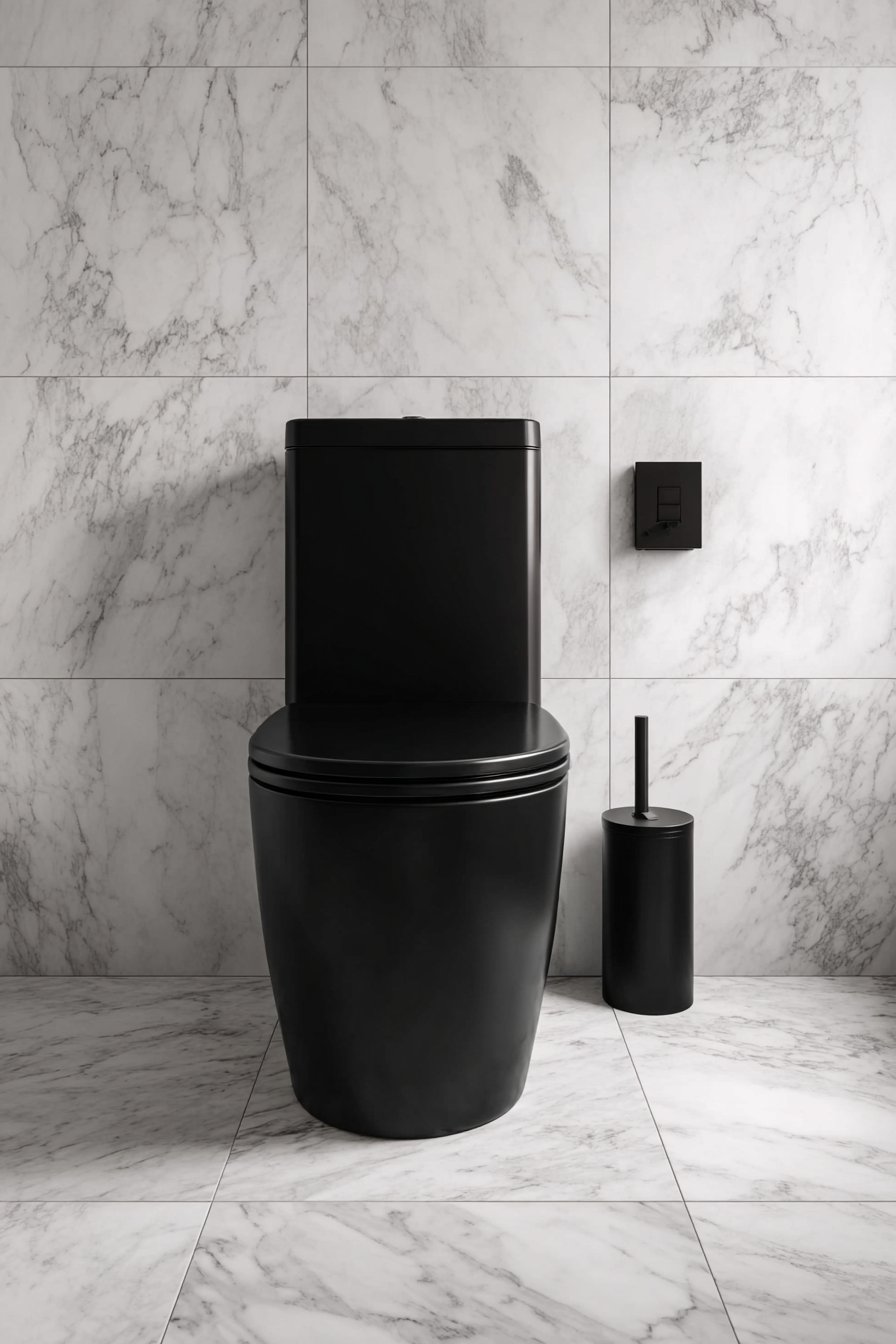
White grout lines add geometric interest and structure, creating a grid pattern that adds order and rhythm to the marble’s natural variation. The careful selection of marble with grey veining rather than pure white creates a subtle bridge between the black and white elements, softening what might otherwise be an overly stark contrast. Natural light from above highlights the bold color contrast while revealing the depth and variation within both the matte black finish and the white marble, proving that even seemingly simple color schemes contain surprising complexity.
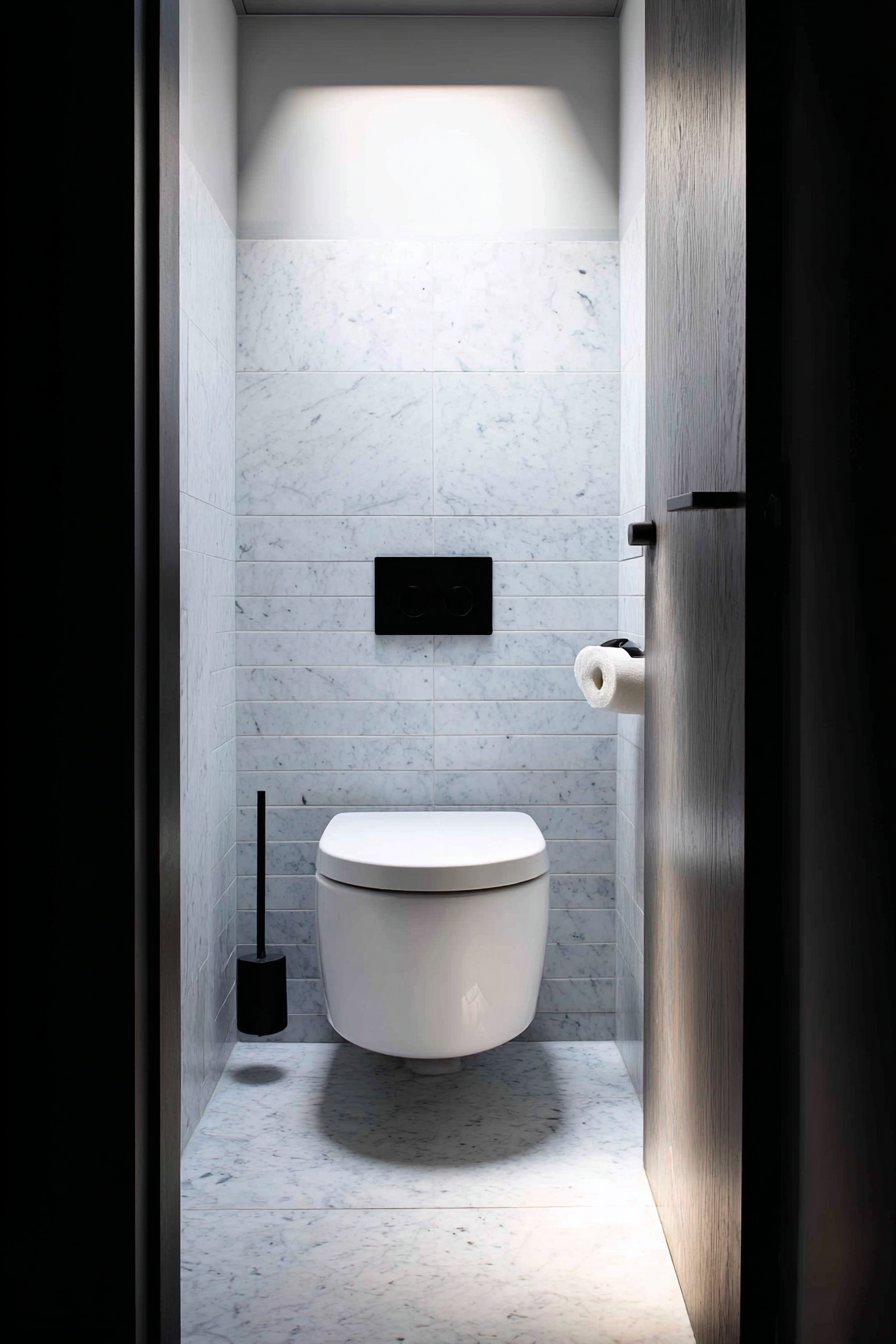
Wide-angle interior photography captures the dramatic modern aesthetic and careful attention to the monochromatic palette. The interplay between matte and polished surfaces, between geometric order and natural variation, creates visual richness that keeps the eye engaged. This design approach appeals to those with strong aesthetic convictions who appreciate bold, unambiguous design statements, demonstrating how confidence and clarity of vision can create memorable, impactful spaces.
Key Design Tips:
- Choose matte black fixtures to create sophisticated contrast against white surfaces
- Select marble with subtle veining to bridge between stark black and white
- Use white grout lines to add geometric structure and visual rhythm
- Position lighting to highlight color contrast and material textures
- Maintain consistency across all visible fixtures and hardware for cohesive impact
8. Japanese-Inspired Zen Harmony
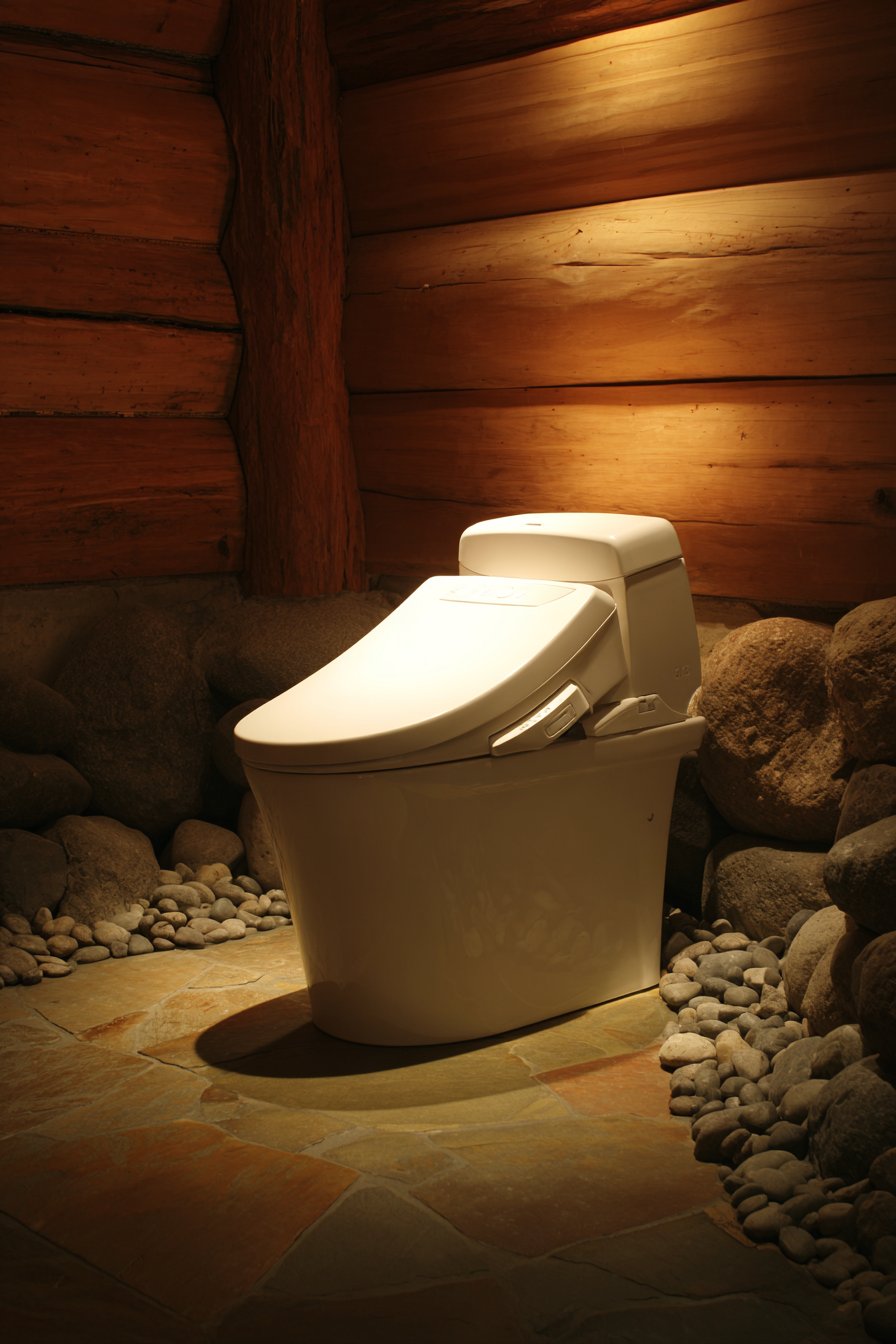
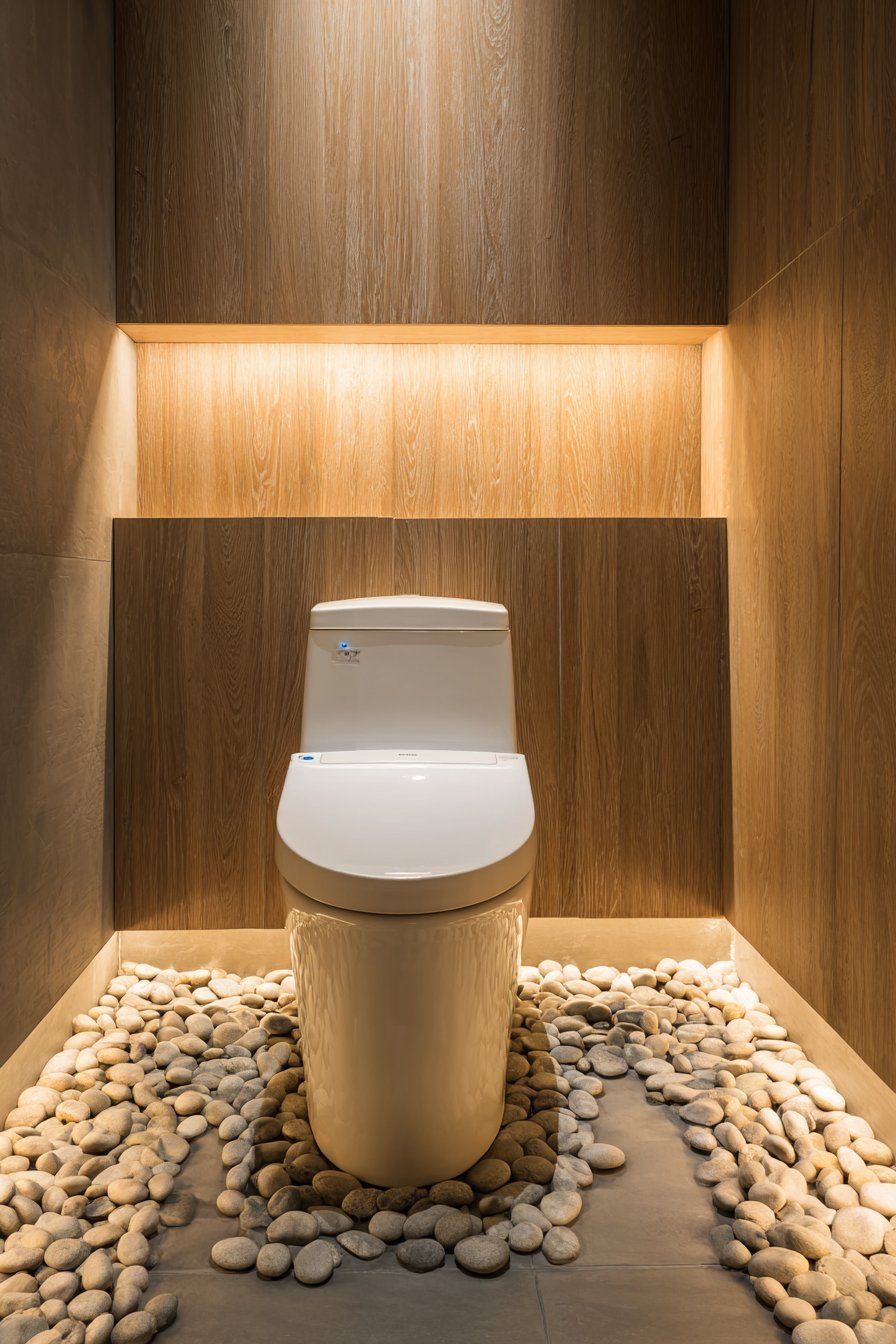
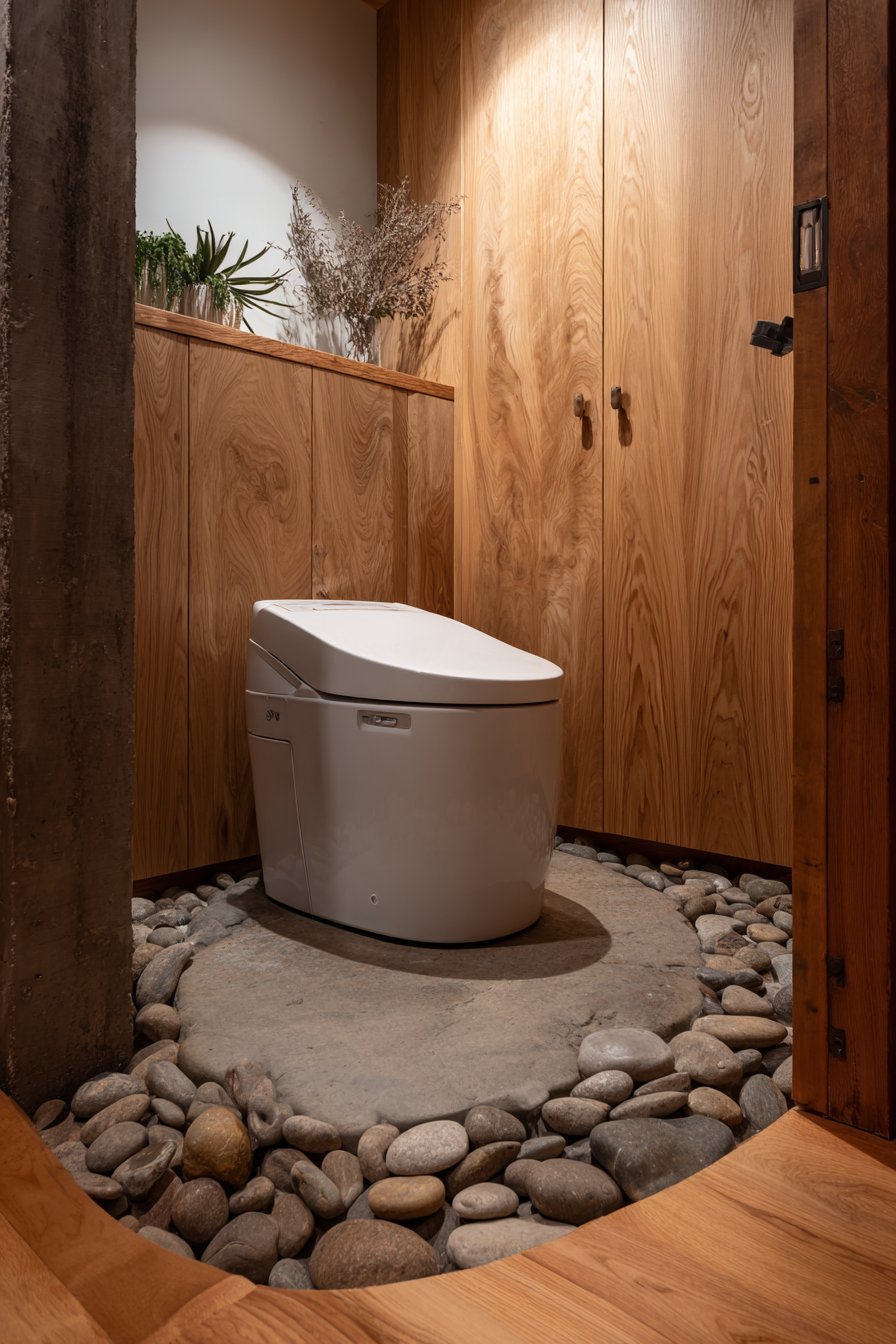
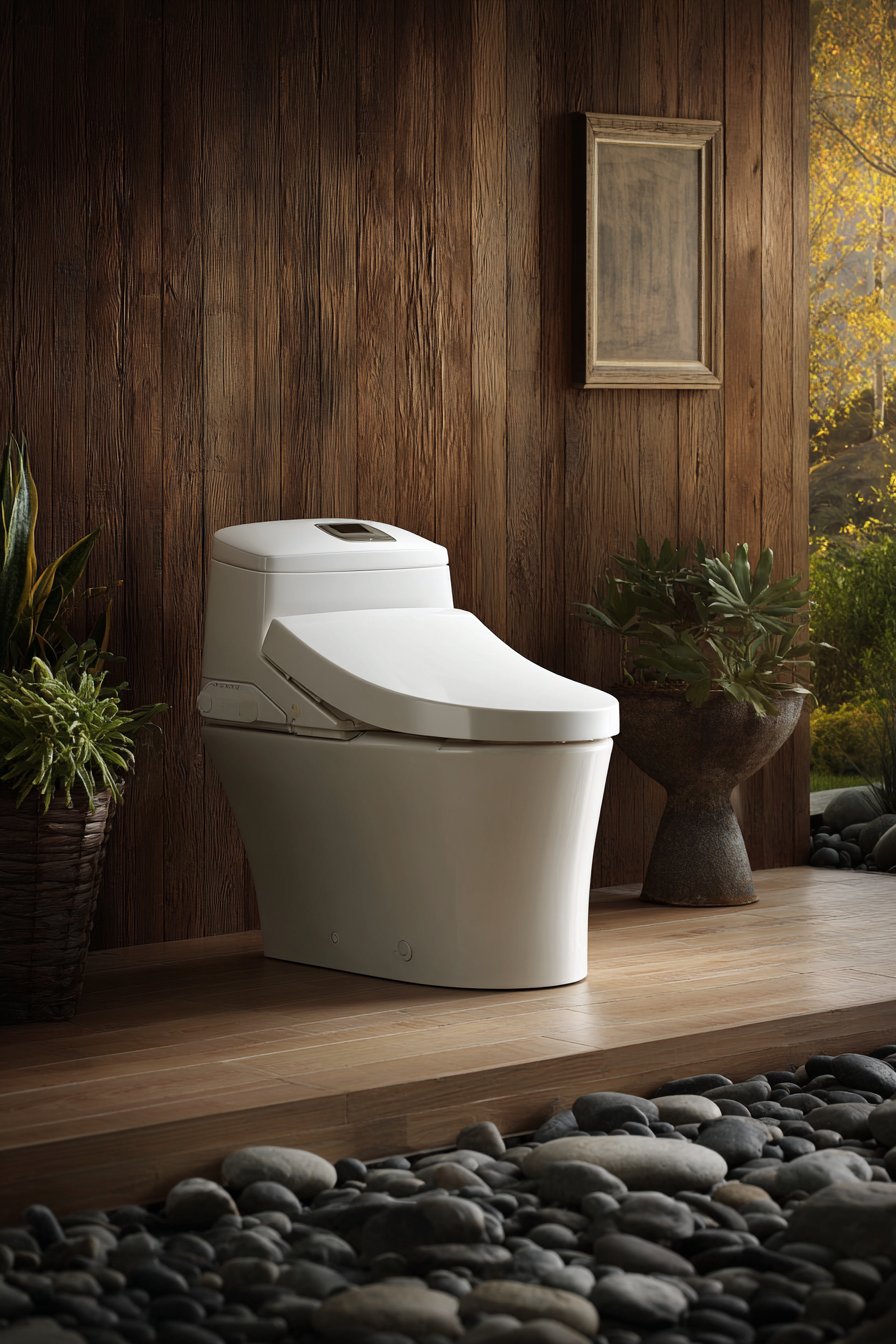
The Japanese-inspired toilet design brings principles of zen philosophy and Eastern aesthetics to create a space of tranquility and balance. A compact toilet with an integrated washlet bidet system represents the fusion of traditional Japanese bathing culture with modern technology, offering enhanced hygiene and comfort in a streamlined package. The natural wood accent wall in light oak provides warmth and organic texture, creating a connection to nature that’s central to Japanese design philosophy. The wood’s light tone keeps the space feeling bright and open while adding essential warmth to balance the clean white ceramic.
River rock floor border adds organic texture and creates a subtle threshold that defines the toilet area while maintaining visual flow with the broader bathroom space. These natural stones, smoothed by water over countless years, bring a sense of geological time and natural processes into the human-scaled space, grounding the design in the natural world. Soft diffused lighting creates a peaceful ambiance free from harsh shadows or glare, supporting the meditative quality essential to zen-inspired design.
Interior design photography showcases the harmonious blend of technology and natural materials, demonstrating how modern conveniences can be integrated into traditional aesthetic frameworks without creating dissonance. The balance between clean, simple forms and rich, organic textures; between advanced technology and natural materials; between active function and passive contemplation—these tensions resolved create spaces of remarkable peace and beauty. This approach appeals to those seeking bathroom designs that support wellness and mindfulness, proving that toilet areas can be places of renewal rather than merely functional necessities.
Key Design Tips:
- Integrate washlet bidet systems for enhanced hygiene and authentic Japanese functionality
- Install natural wood accent walls to bring warmth and organic texture
- Use river rocks or natural stone to create subtle borders and add organic elements
- Choose soft, diffused lighting to create peaceful, shadow-free illumination
- Balance modern technology with natural materials for harmonious contrast
9. Vintage Victorian Character
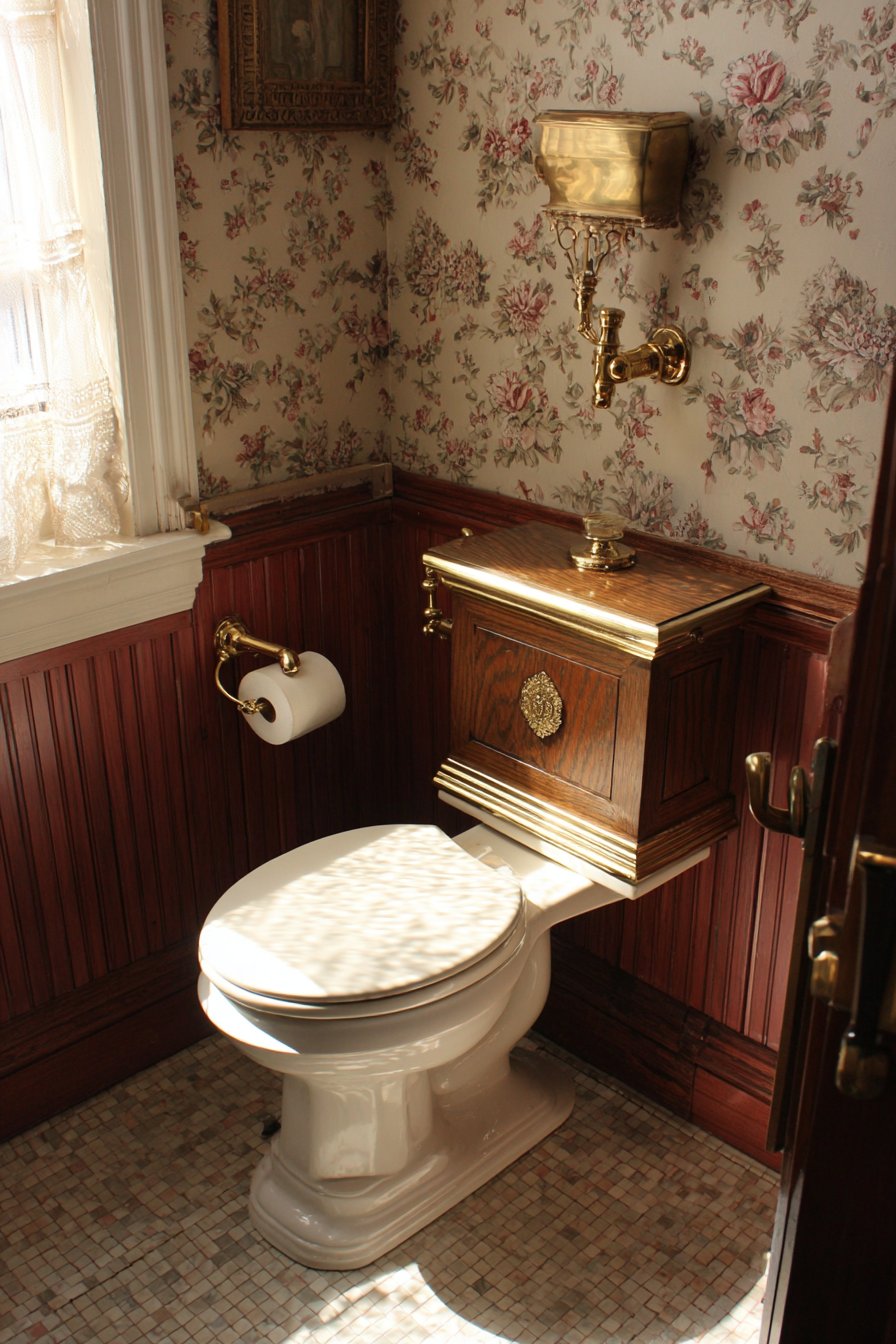
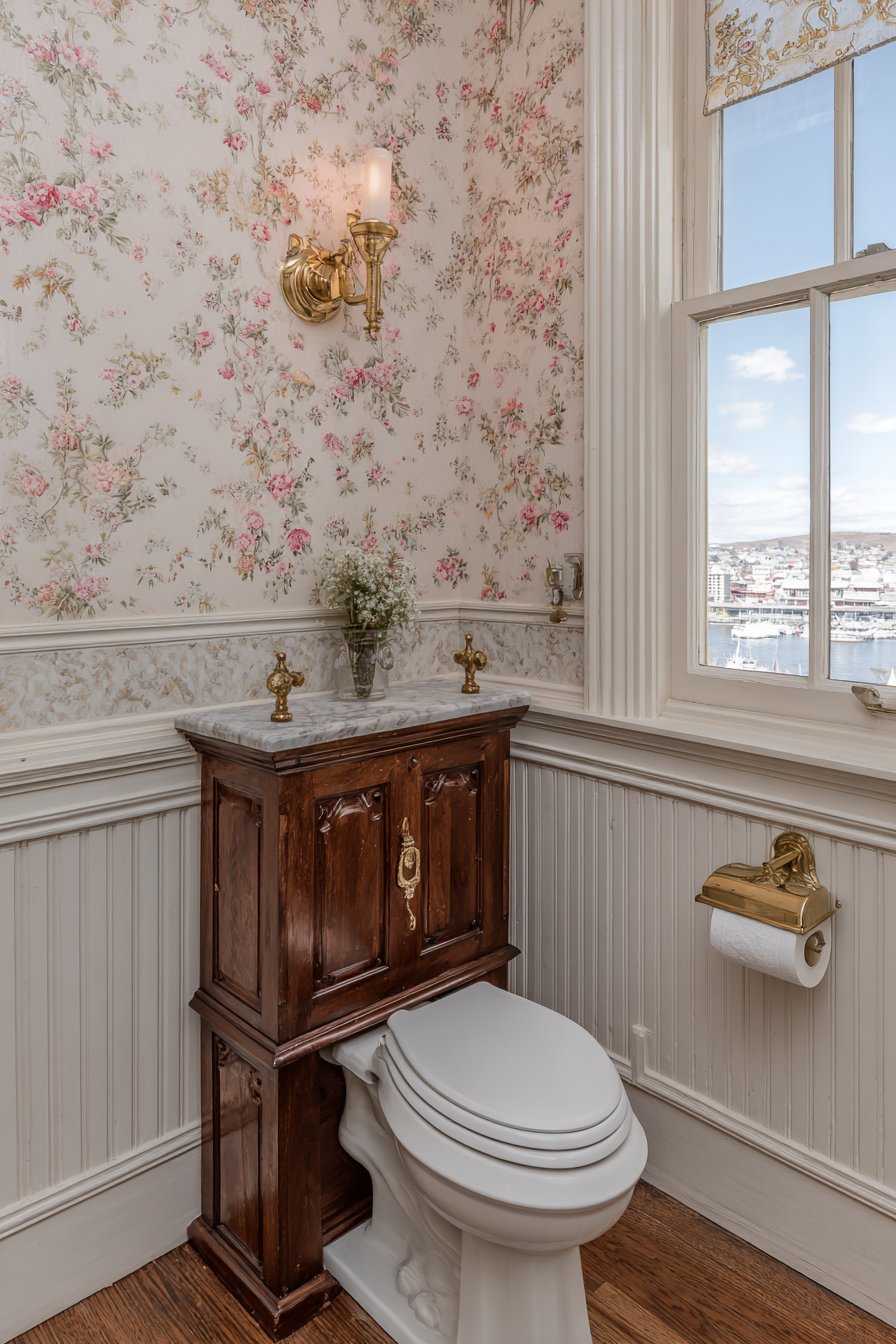
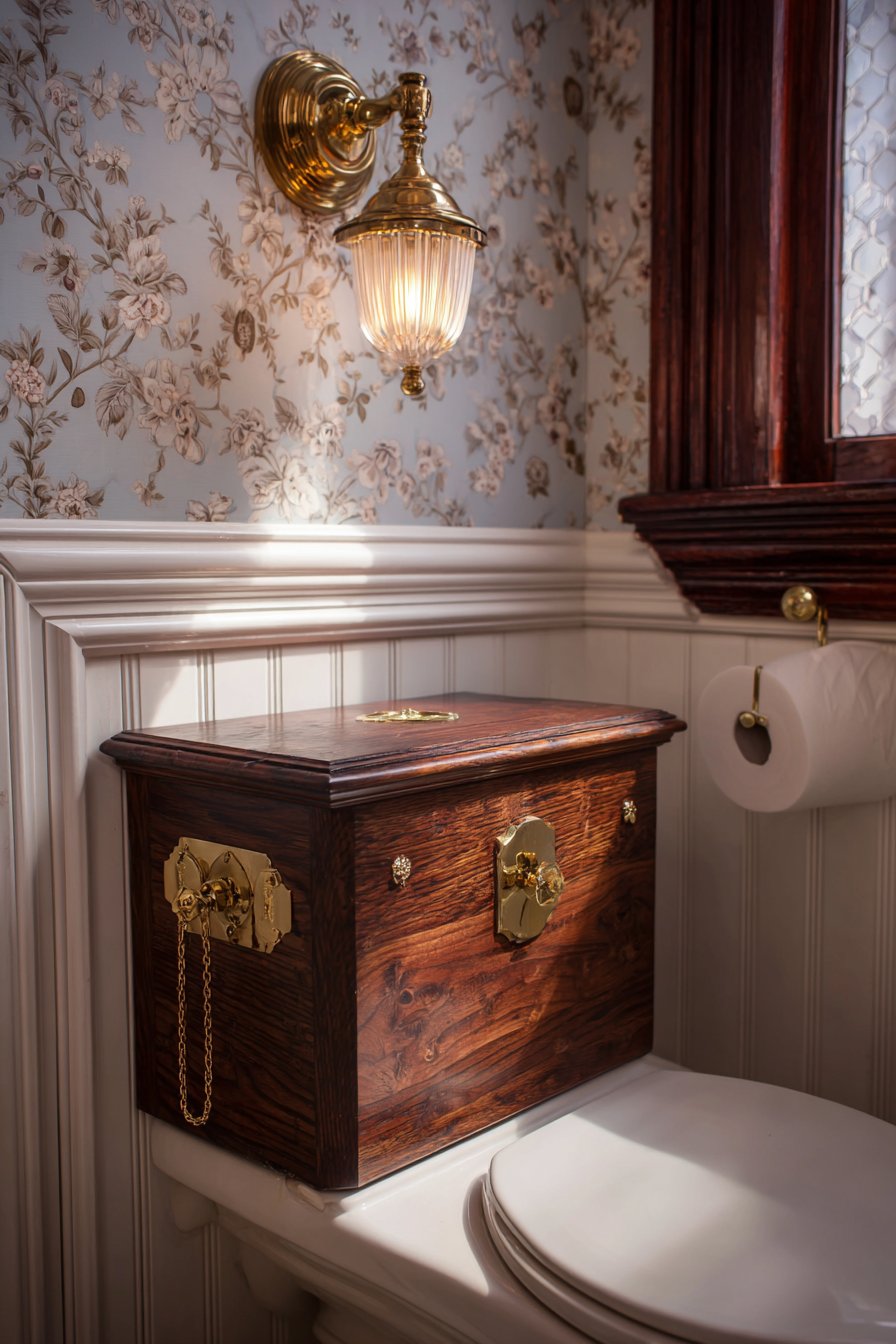
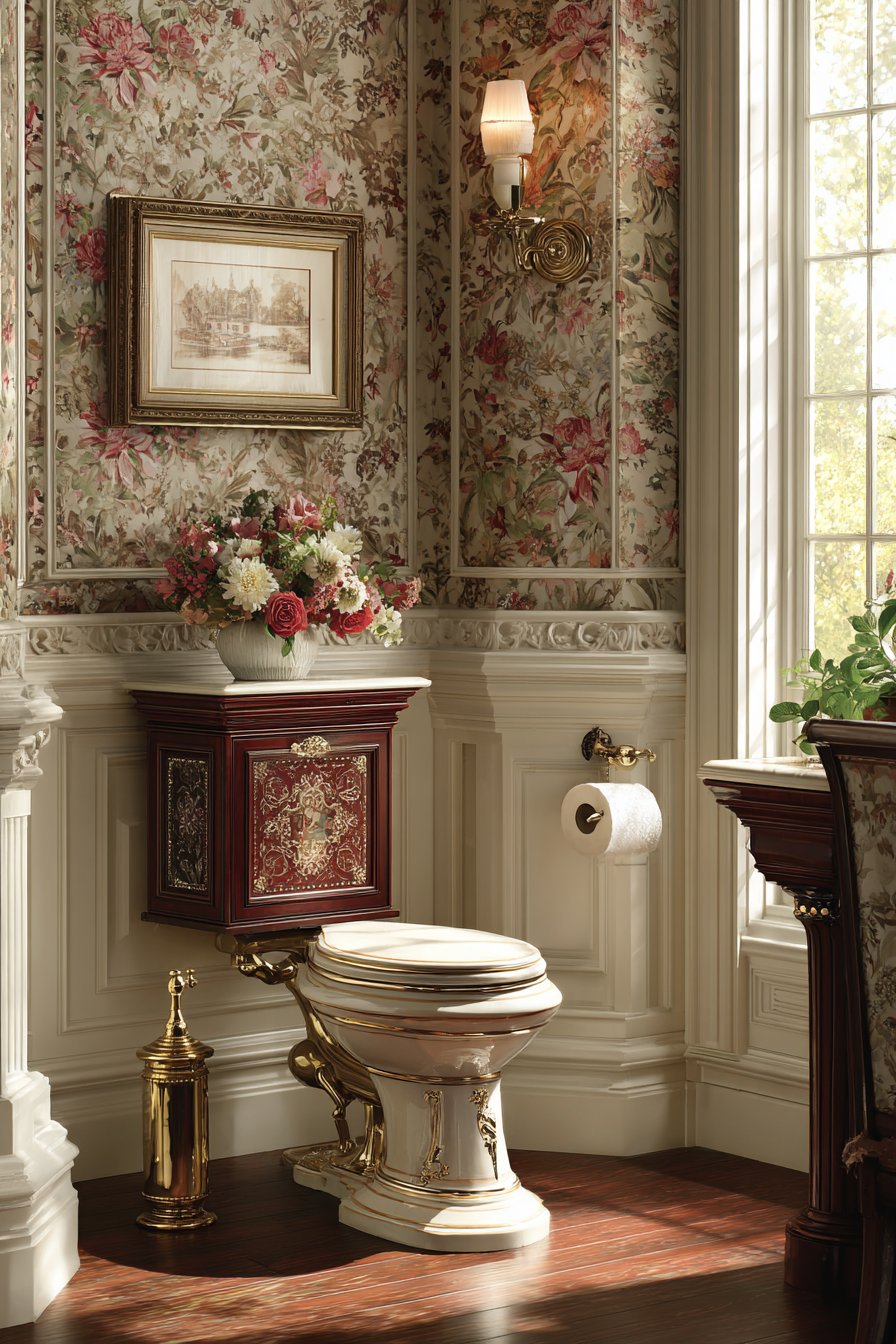
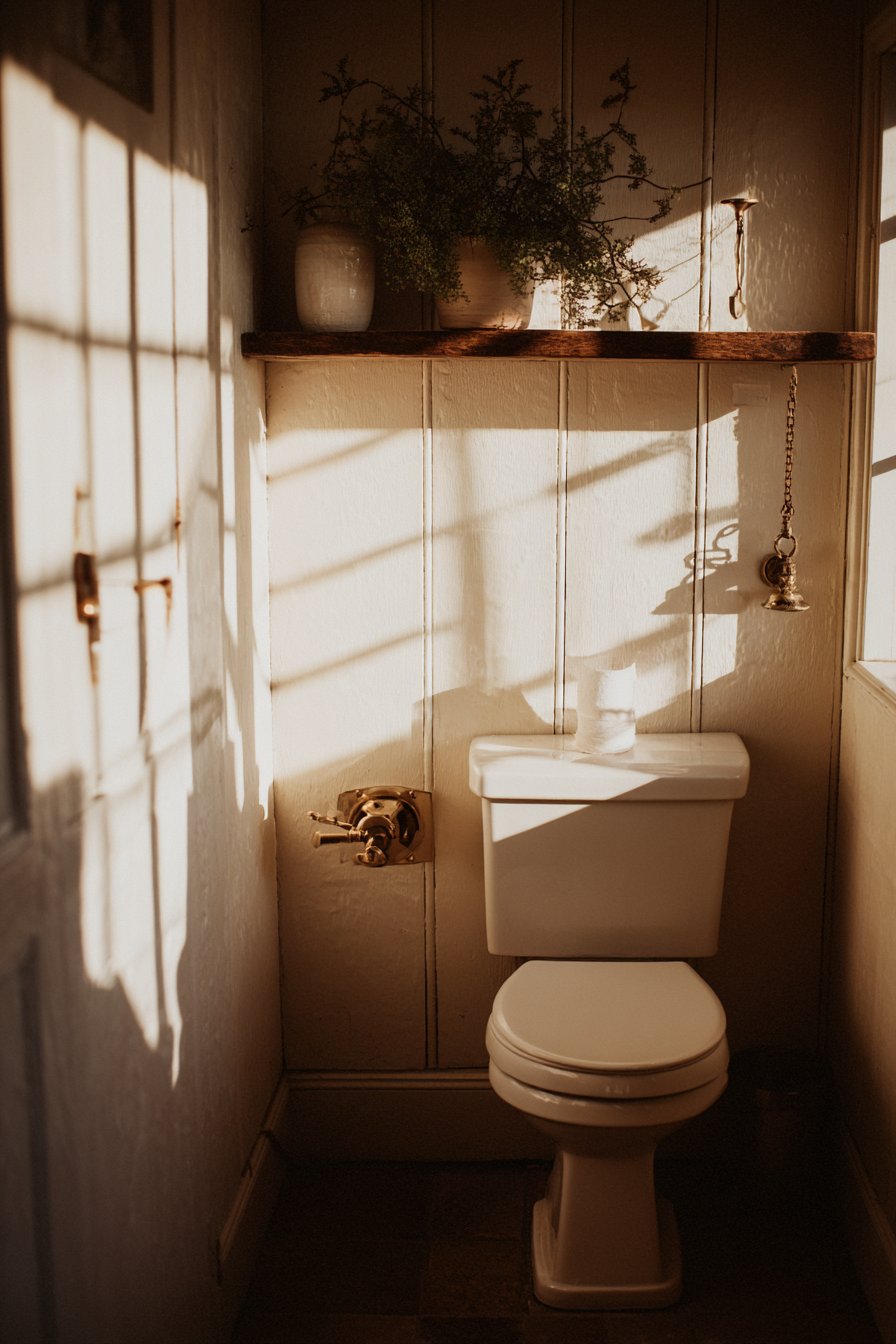
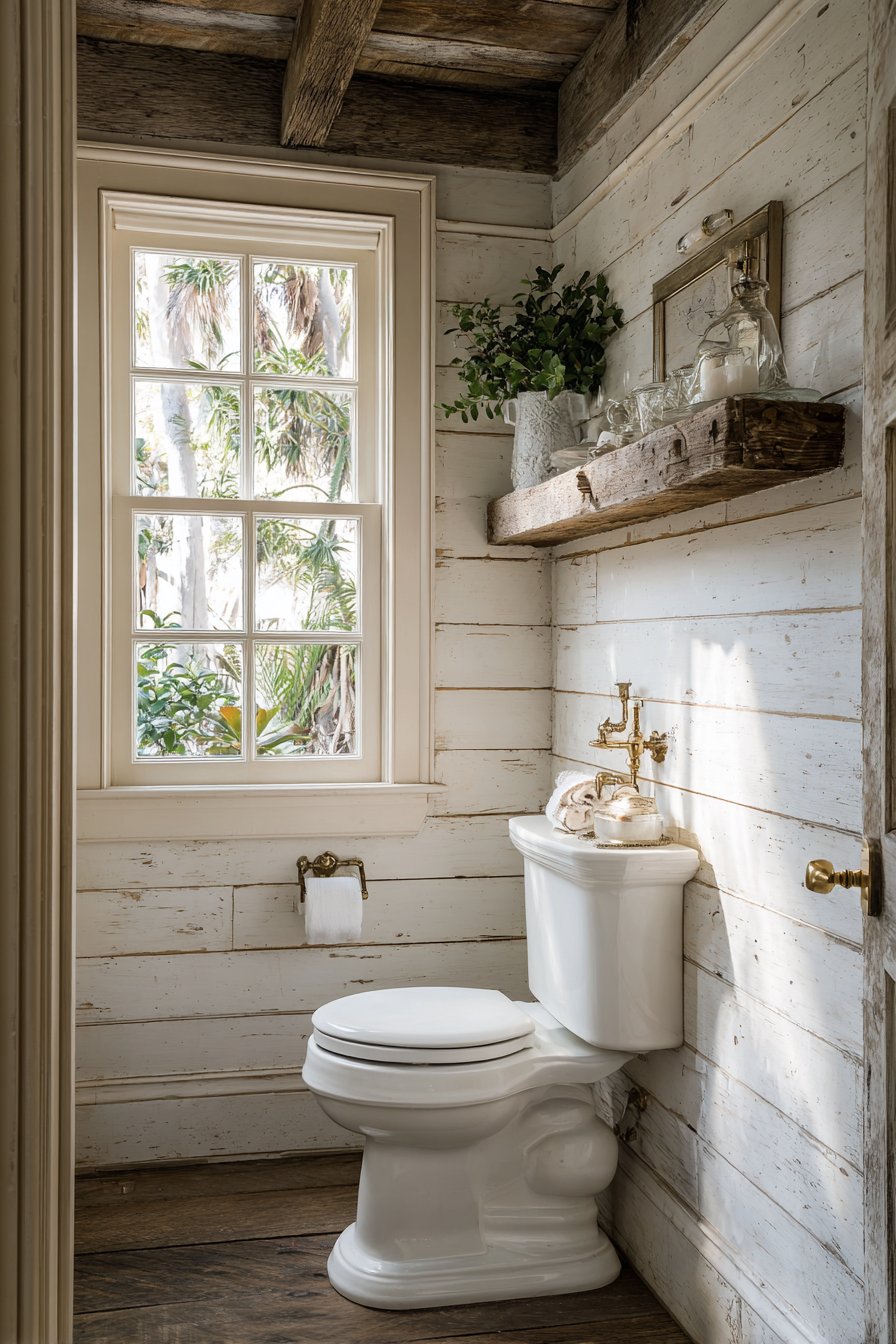
The vintage toilet design celebrates historical aesthetics and period-appropriate details, creating a space that transports users to another era. A high-tank pull-chain toilet with a decorative wooden tank box represents authentic Victorian-era bathroom technology, its vertical orientation and exposed mechanics revealing rather than concealing the ingenuity of period engineering. Brass hardware adds warmth and authenticity, its patina and weight speaking to quality craftsmanship that transcends passing trends. Classic white beadboard wainscoting protects walls while adding traditional architectural detail, its vertical lines drawing the eye upward and creating a sense of height.
Delicate floral wallpaper above the wainscoting adds pattern, color, and Victorian romanticism, transforming functional walls into decorative surfaces that delight the eye. The antique brass toilet paper holder and period-appropriate light fixture complete the historical ensemble, ensuring that every visible element reinforces the temporal journey the design creates. Natural window light enhances the nostalgic charm, its quality and angle changing throughout the day in ways that artificial lighting cannot replicate, connecting the interior space to natural cycles and rhythms.
Photography captures authentic Victorian-era bathroom character and attention to historical detail, demonstrating how period design requires research, commitment, and careful sourcing of appropriate elements. The layering of pattern, texture, and historical reference creates richness and depth that minimalist approaches cannot achieve, appealing to those who appreciate history, craftsmanship, and the romance of earlier eras. This design proves that looking backward doesn’t mean sacrificing comfort or functionality—it means honoring the aesthetic achievements of previous generations while adapting them for contemporary needs.
Key Design Tips:
- Source authentic high-tank toilets or quality reproductions for period accuracy
- Install beadboard wainscoting to add Victorian architectural character
- Select wallpapers with historical patterns appropriate to the era
- Choose brass fixtures and hardware for warm, authentic metallic accents
- Maximize natural light to enhance the romantic, nostalgic atmosphere
10. Scandinavian Simplicity and Function
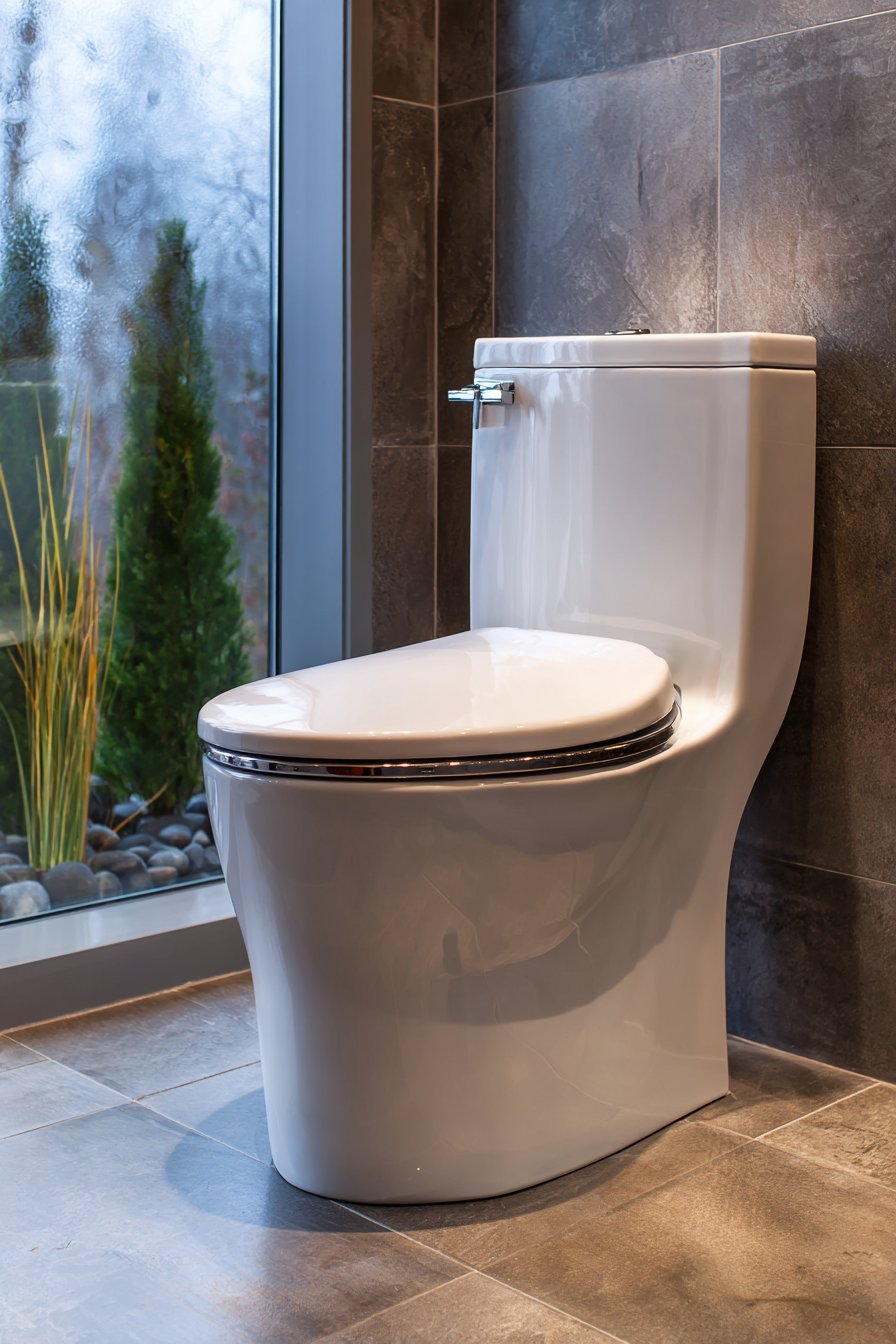
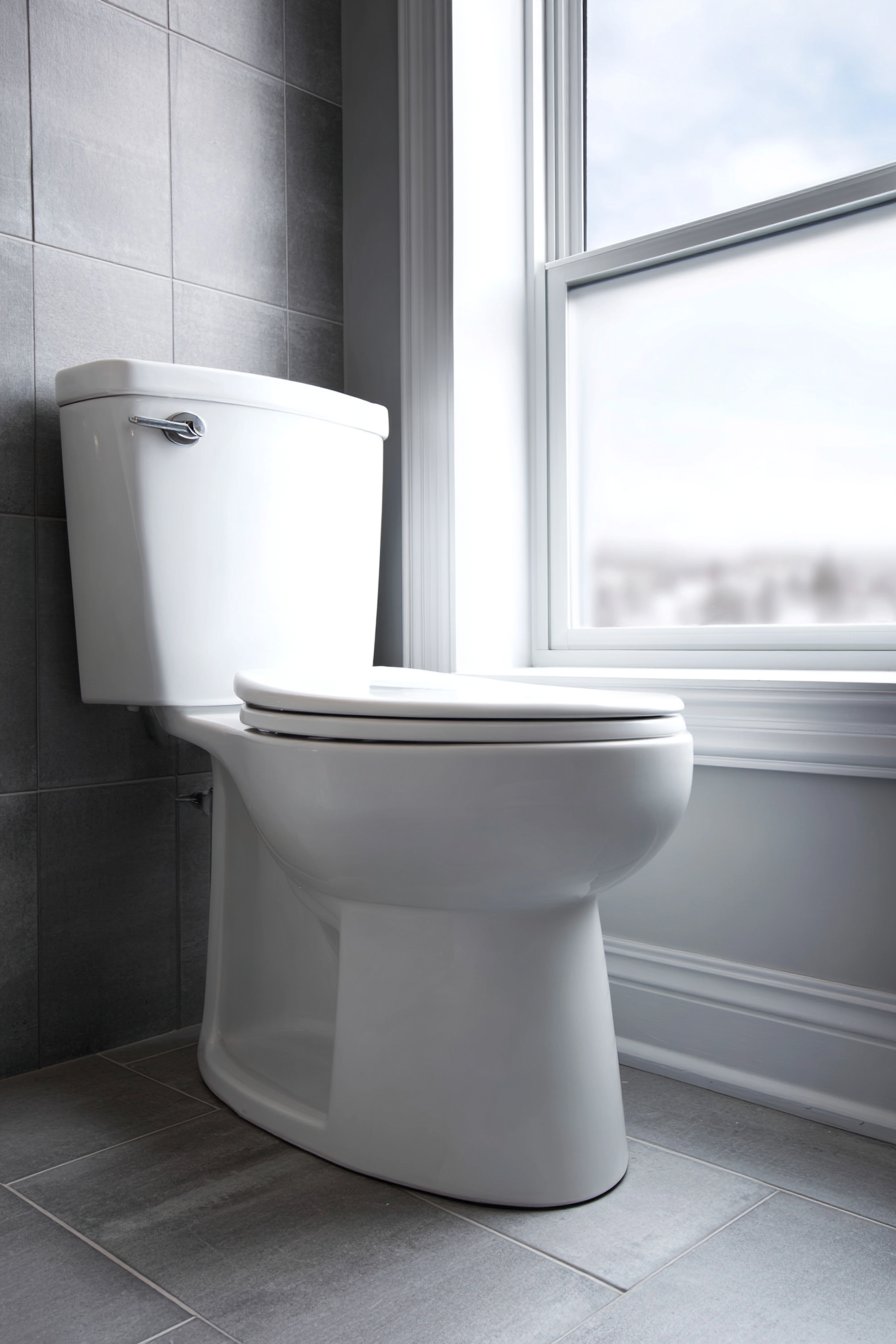
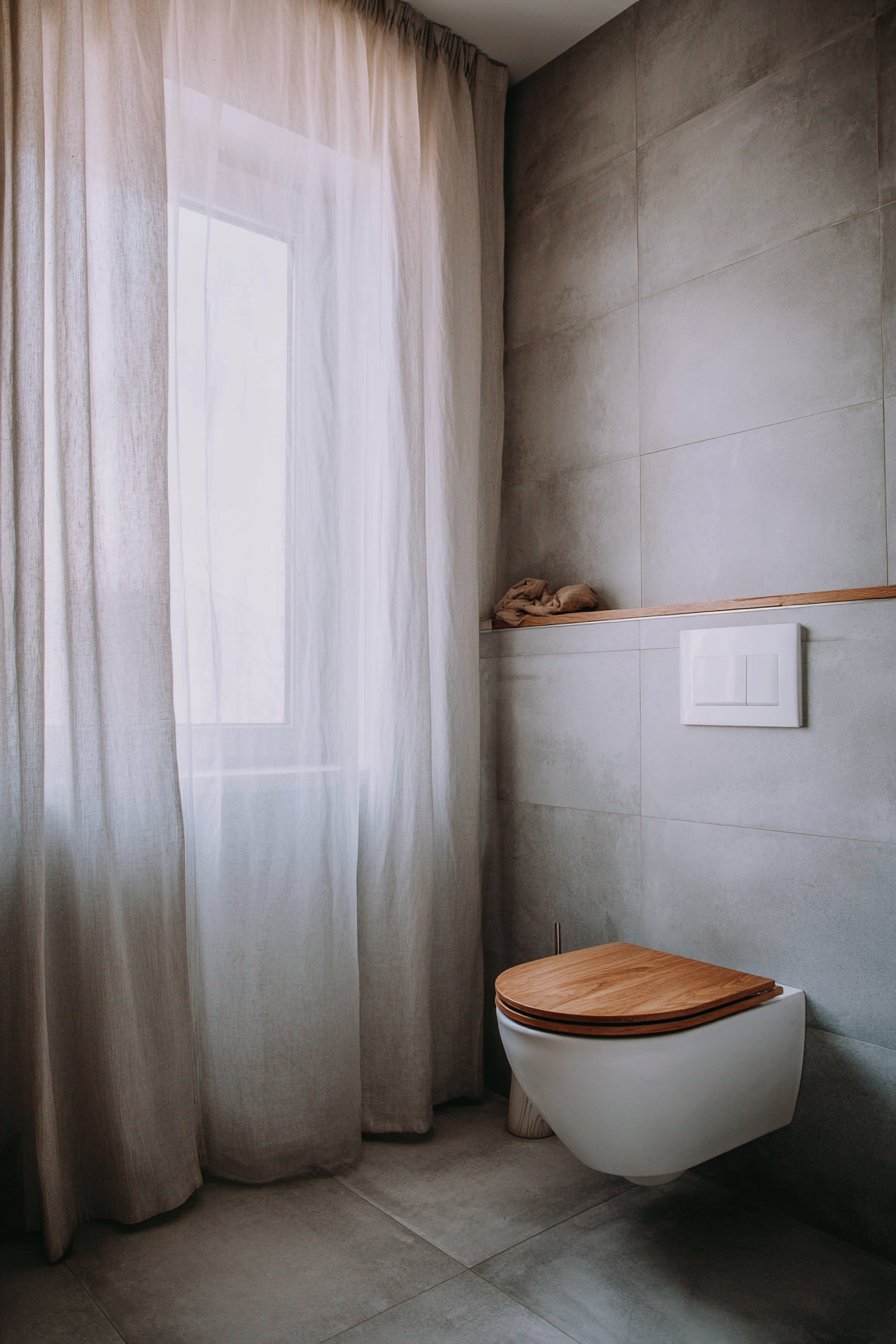
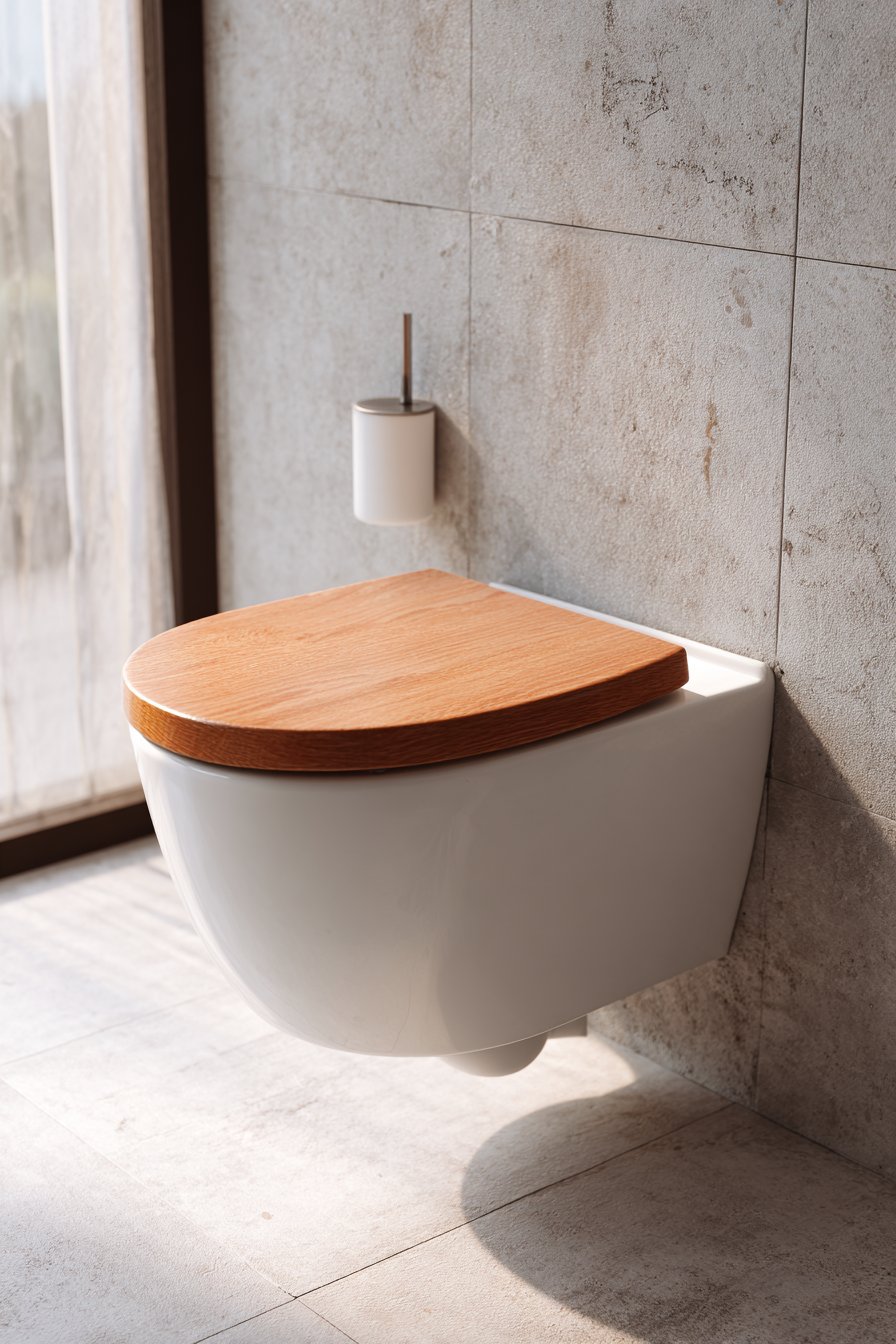
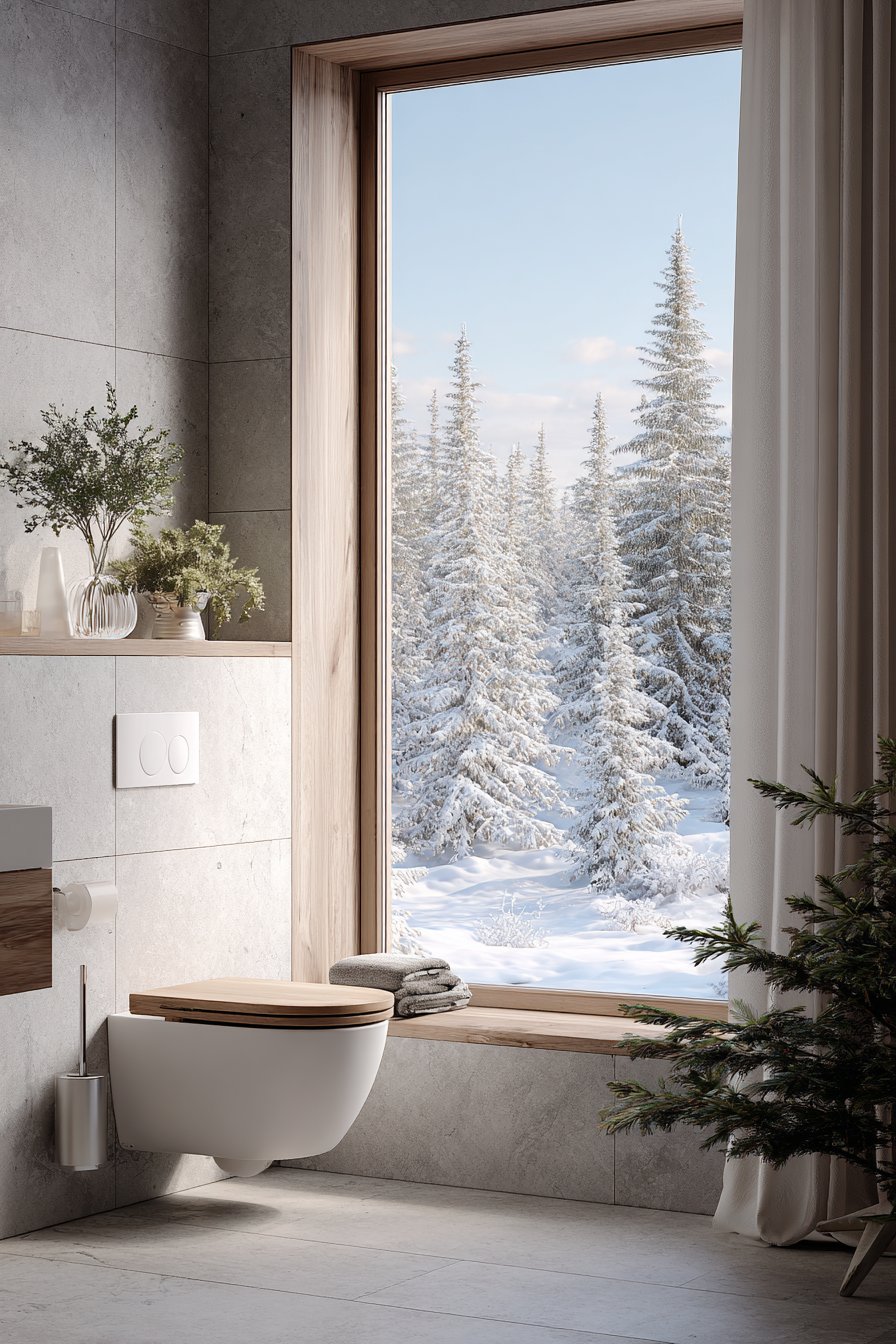
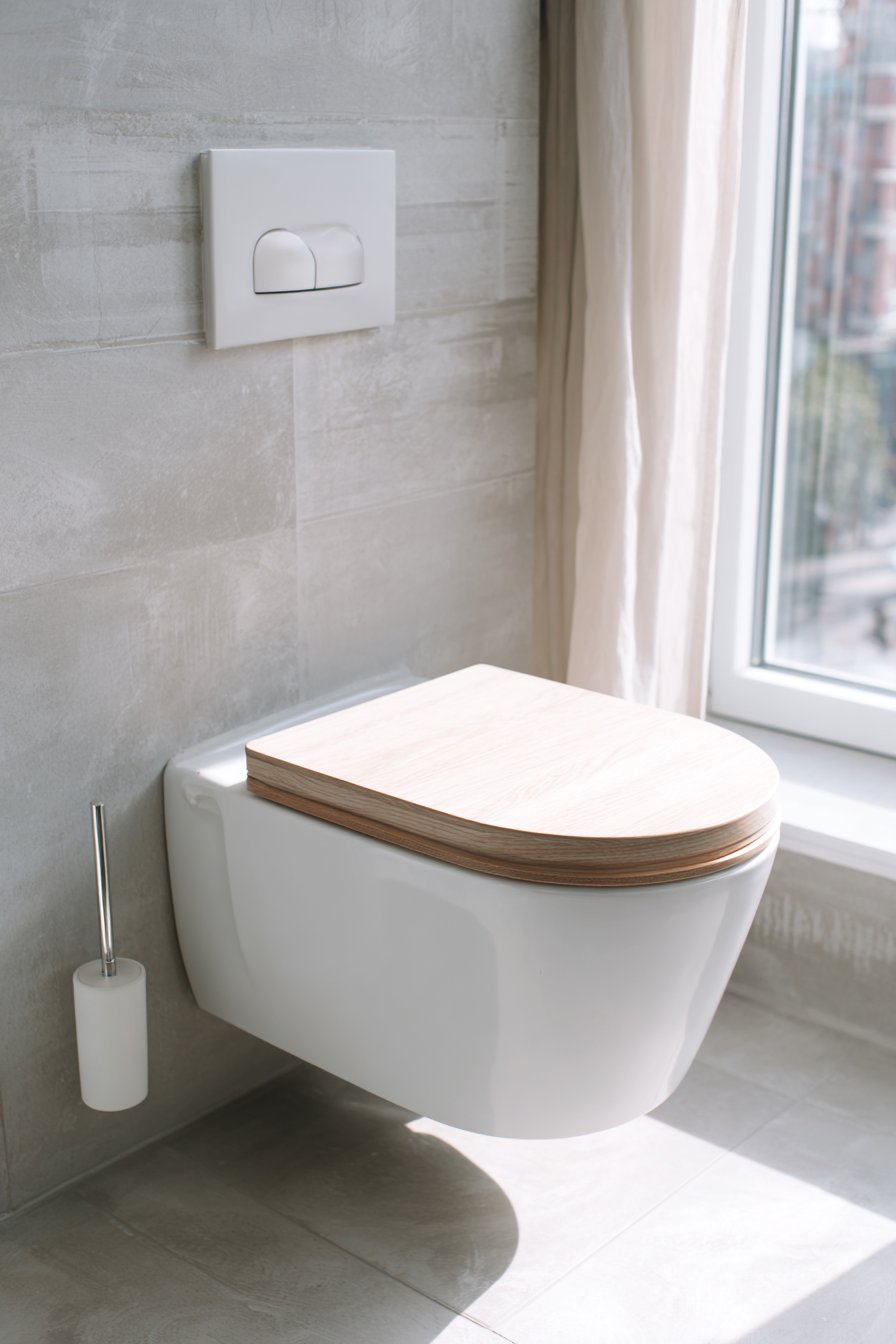
The Scandinavian toilet design embodies the Nordic philosophy of functional beauty, where every element serves a purpose while contributing to an atmosphere of calm simplicity. A wall-mounted toilet in matte white provides the clean, floating aesthetic characteristic of Scandinavian design, while an oak wood toilet seat introduces natural warmth that prevents the space from feeling cold or clinical. Light grey concrete-look tiles covering walls and floors create a neutral backdrop that highlights the beauty of natural materials and allows light to become a primary design element.
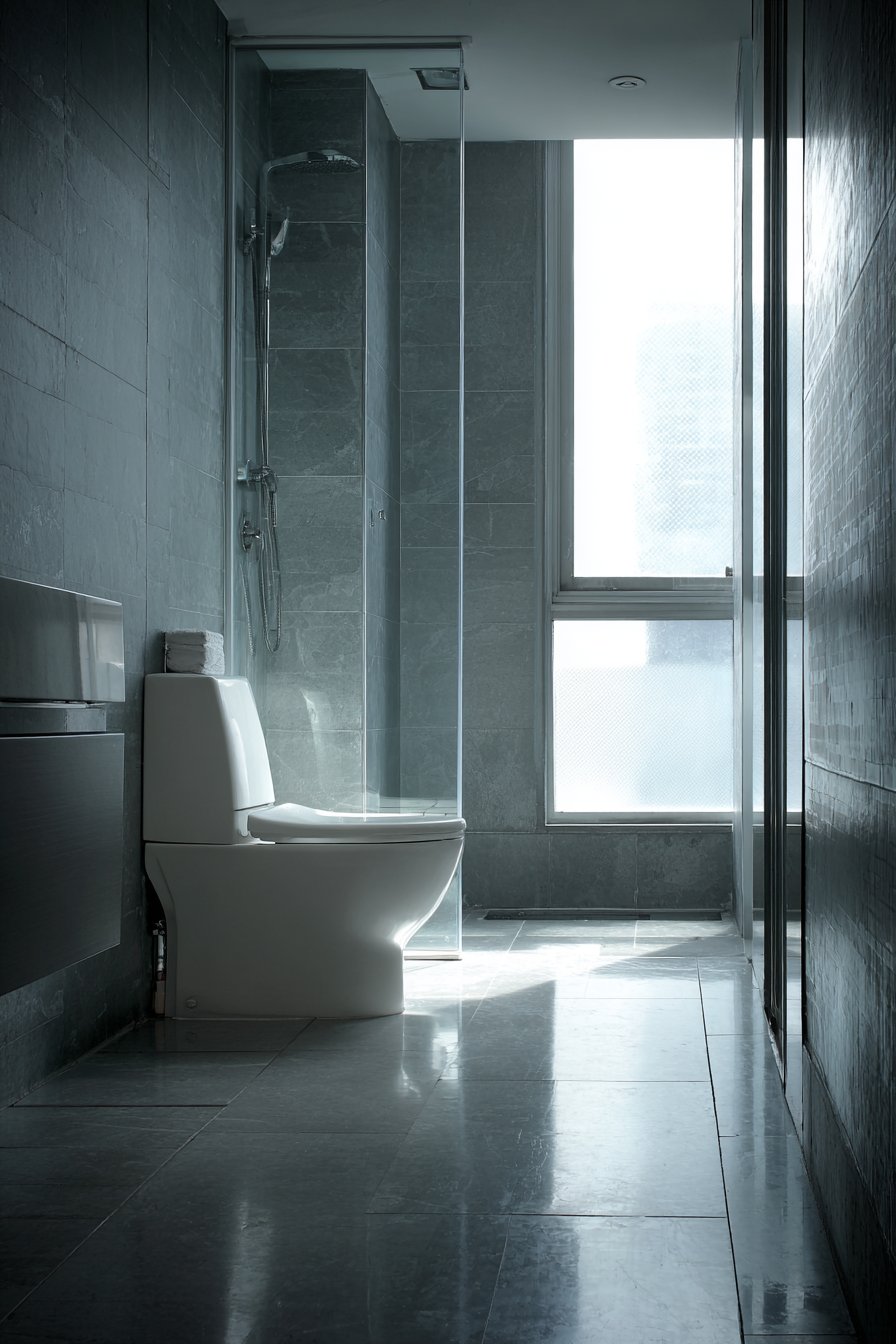
Minimalist accessories—a white toilet brush holder and simple toilet paper dispenser—maintain the clean aesthetic without adding visual clutter or unnecessary decoration. The restraint demonstrated in these choices reflects the Scandinavian principle that the most beautiful spaces often contain the fewest objects, each selected with care and intention. A large window with sheer curtain floods the space with natural Nordic light, that particular quality of brightness that characterizes northern latitudes and that Scandinavian design works so hard to maximize and celebrate.
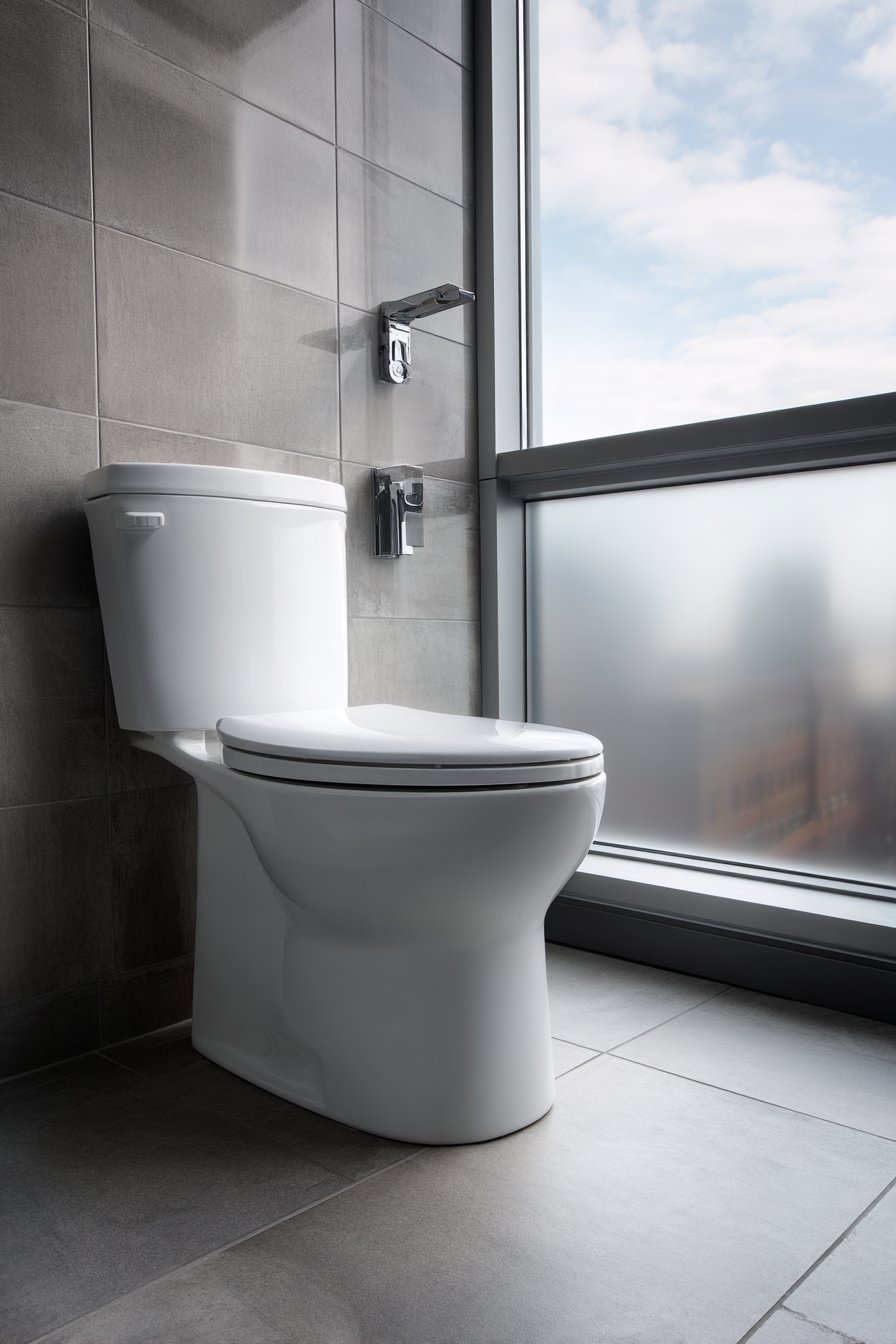
Interior photography emphasizes simplicity, functionality, and connection to nature—the three pillars of Scandinavian design philosophy. The limited material palette, the emphasis on natural light, the combination of white surfaces with warm wood tones—these elements work together to create a space that feels serene, fresh, and timeless. This design approach appeals to those who value quality over quantity, function over decoration, and the subtle beauty of well-chosen materials and careful composition.
Key Design Tips:
- Install wall-mounted toilets to create clean, uncluttered floor surfaces
- Add wood toilet seats to introduce natural warmth to white ceramics
- Use concrete-look tiles for neutral backdrops that highlight other elements
- Minimize accessories to only essential items in simple, functional designs
- Maximize natural light through generous windows with minimal window treatments
11. Eclectic Artistic Expression
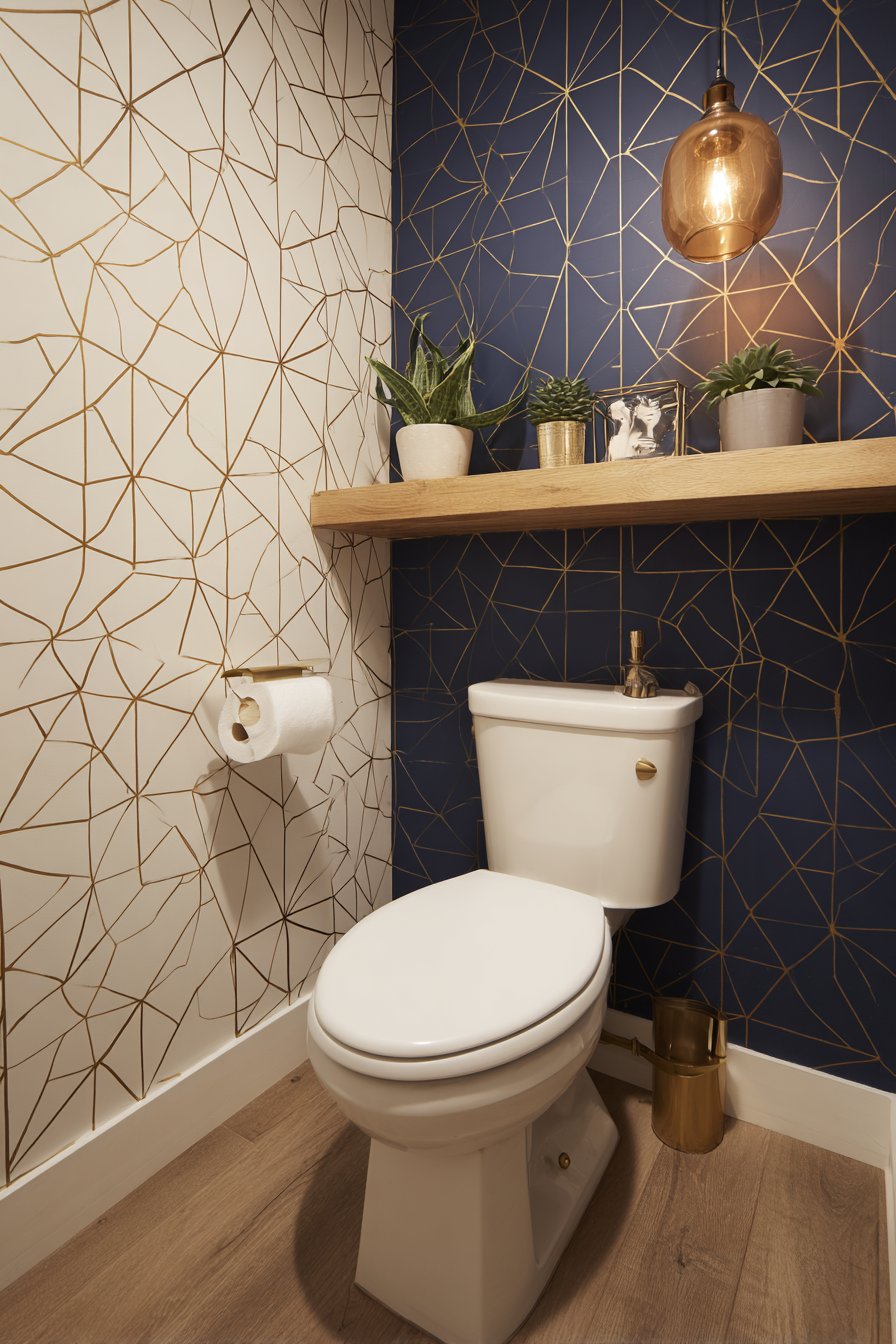
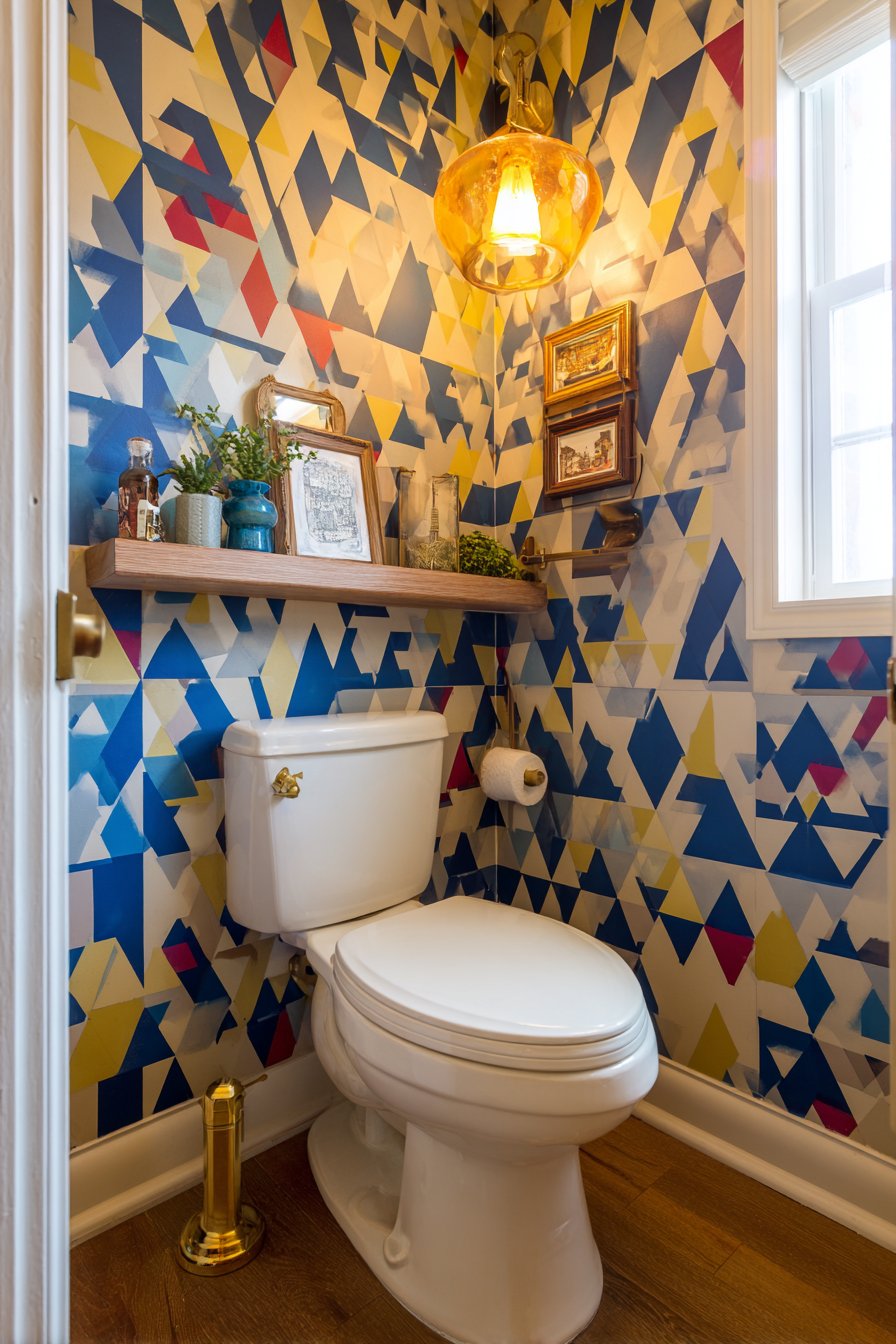
The colorful eclectic toilet design celebrates personality, creativity, and artistic confidence, creating a powder room that functions as a gallery space as much as a functional bathroom. A standard white toilet provides a neutral anchor in an otherwise exuberant space, allowing the surrounding design elements to take center stage. Bold geometric wallpaper in navy and gold transforms walls into art pieces, its pattern and color creating immediate visual impact and establishing the room’s distinctive character. The combination of deep navy and metallic gold evokes both Art Deco glamour and contemporary graphic design.
Brass flush lever and toilet paper holder add metallic accents that echo the gold in the wallpaper, creating visual connections that unify disparate elements. A small floating shelf in natural wood provides both practical storage and aesthetic balance, its organic warmth tempering the geometric precision of the wallpaper. Displaying succulents and decorative objects, the shelf becomes a curated vignette that reveals the inhabitant’s personality and interests. A pendant light with amber glass shade creates a warm glow that enhances the gold tones and adds another layer of visual interest to the ceiling plane.
Photography captures the playful personality and artistic confidence of the space, demonstrating how powder rooms, liberated from the strict functional requirements of full bathrooms, can become venues for bold design experiments. The layering of pattern, color, texture, and metallic accents creates a maximalist composition that rewards repeated viewing, with new details revealing themselves over time. This design appeals to those who view their homes as expressions of personal creativity and who aren’t afraid to make bold, joyful design choices.
Key Design Tips:
- Use bold wallpaper patterns to create instant visual impact in powder rooms
- Select metallic fixtures that coordinate with wallpaper colors for unity
- Add floating shelves to display personality-revealing objects and plants
- Install decorative pendant lights to add visual interest and warm illumination
- Balance bold patterns with neutral anchor elements like white fixtures
12. Industrial Urban Loft Character
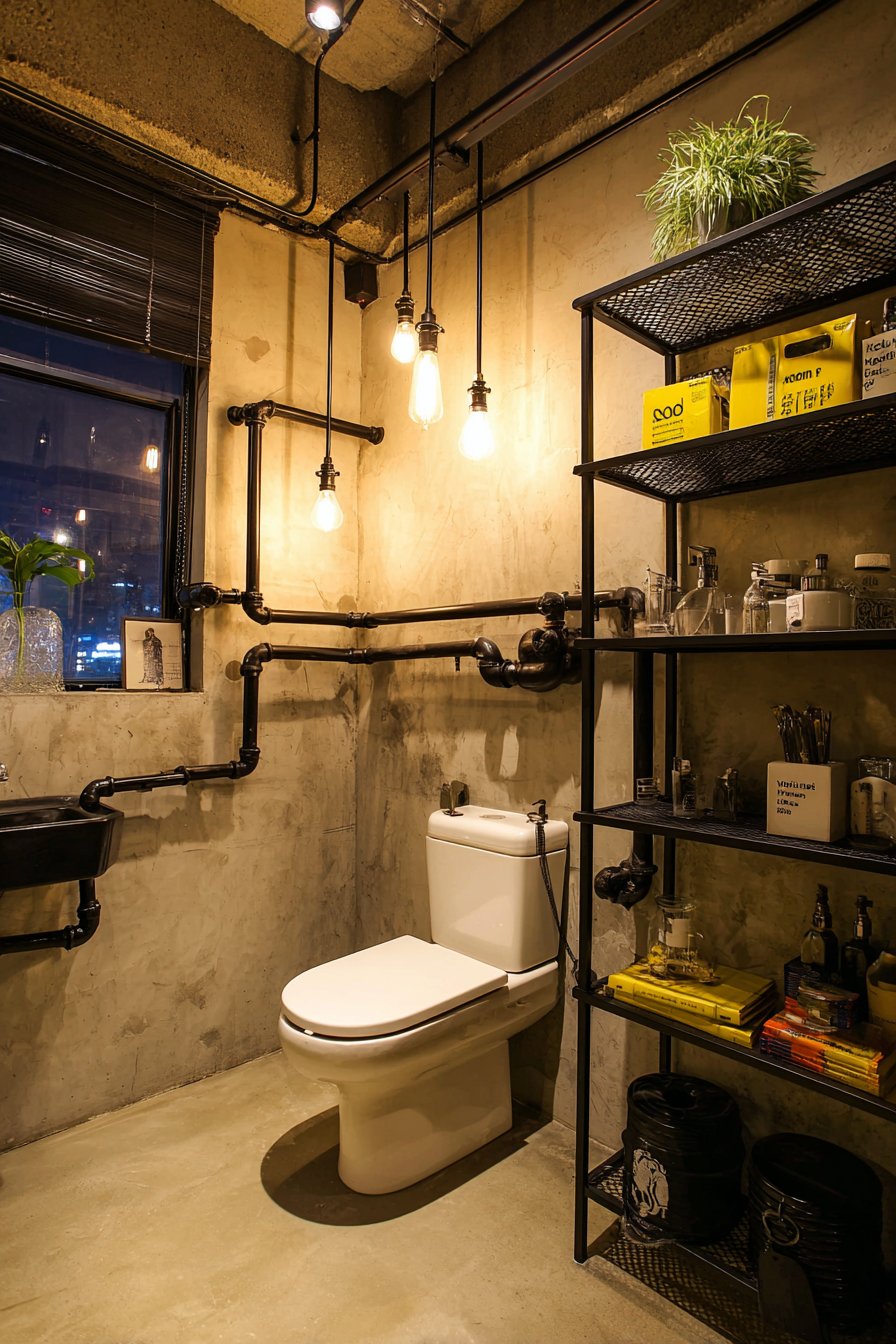
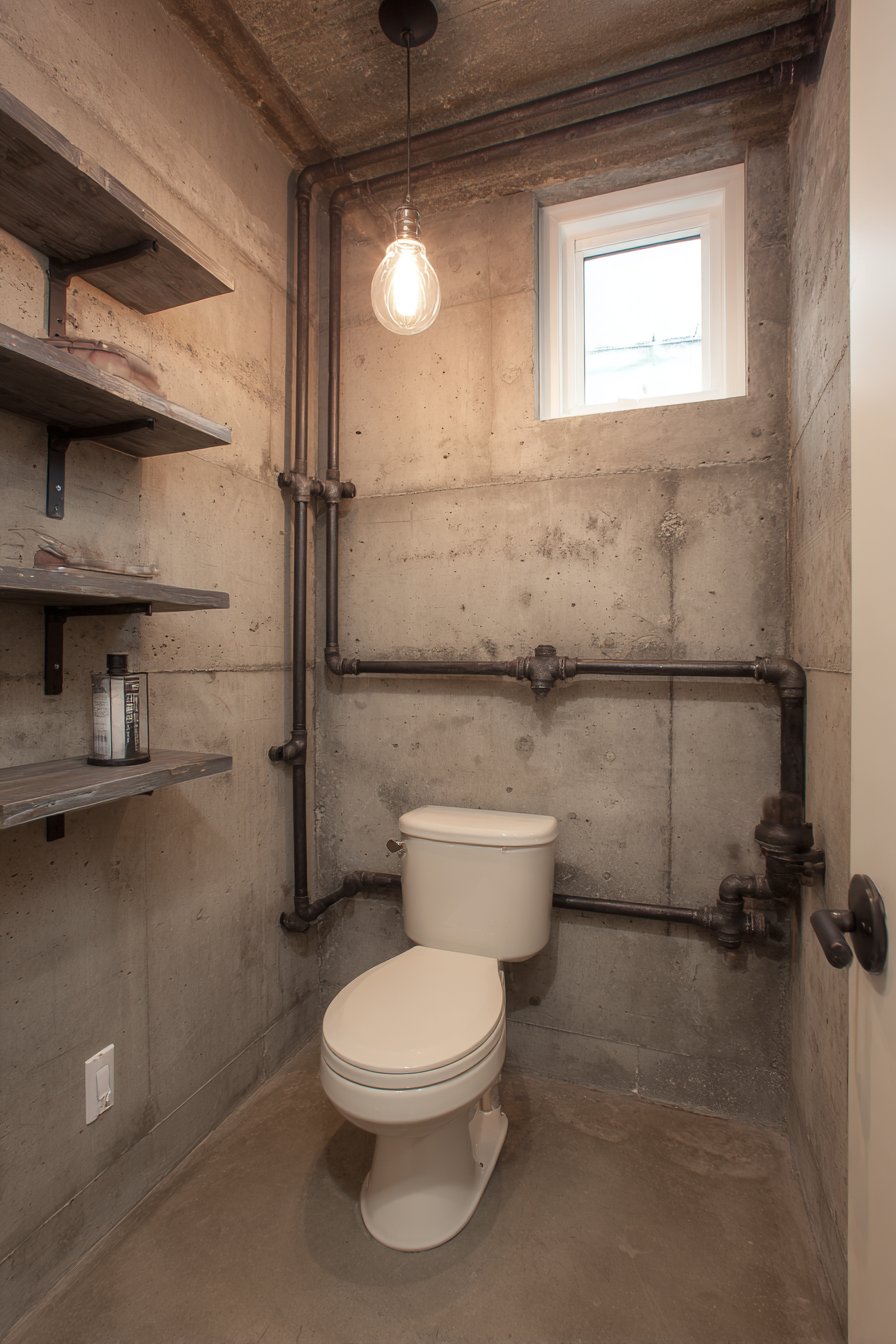
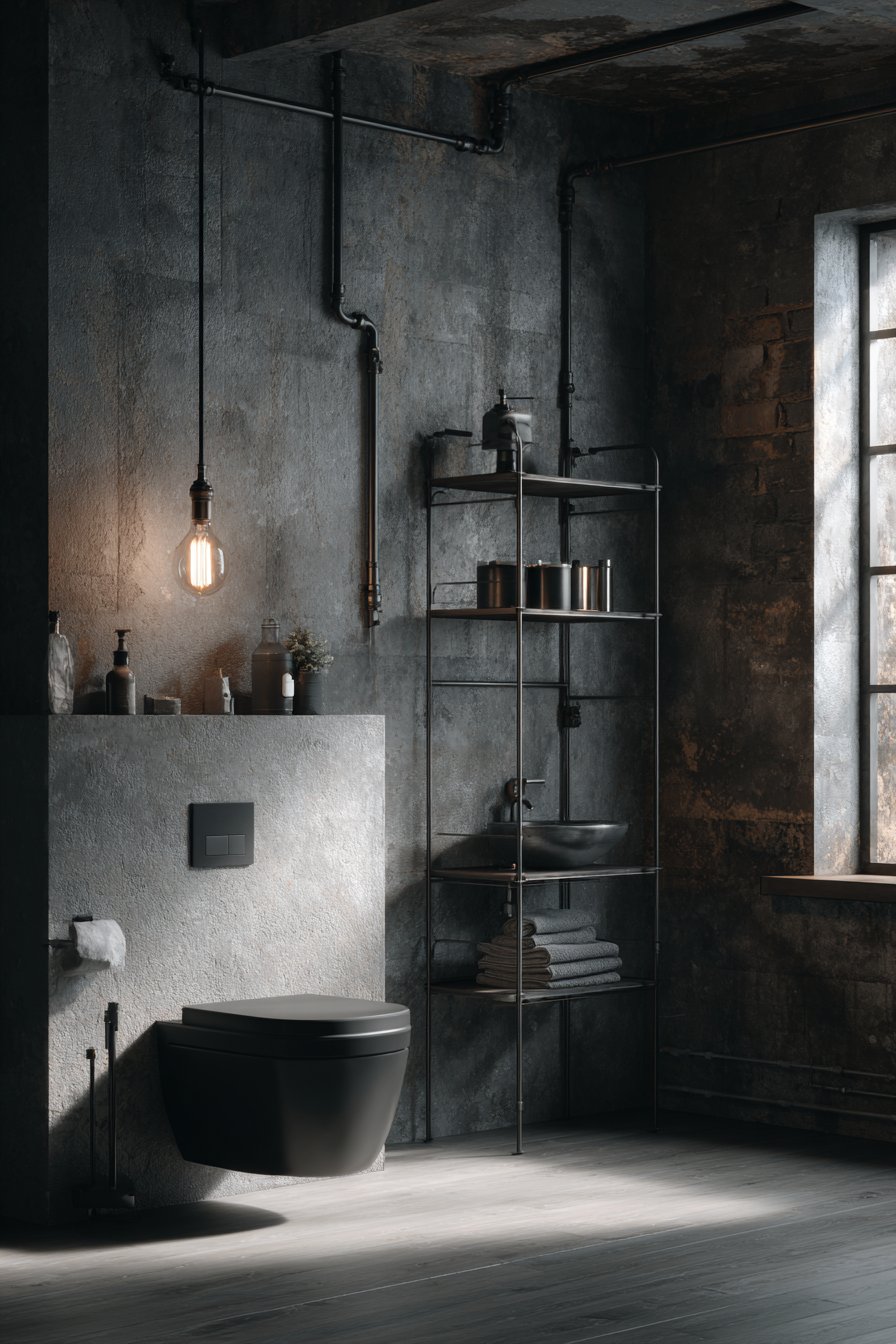
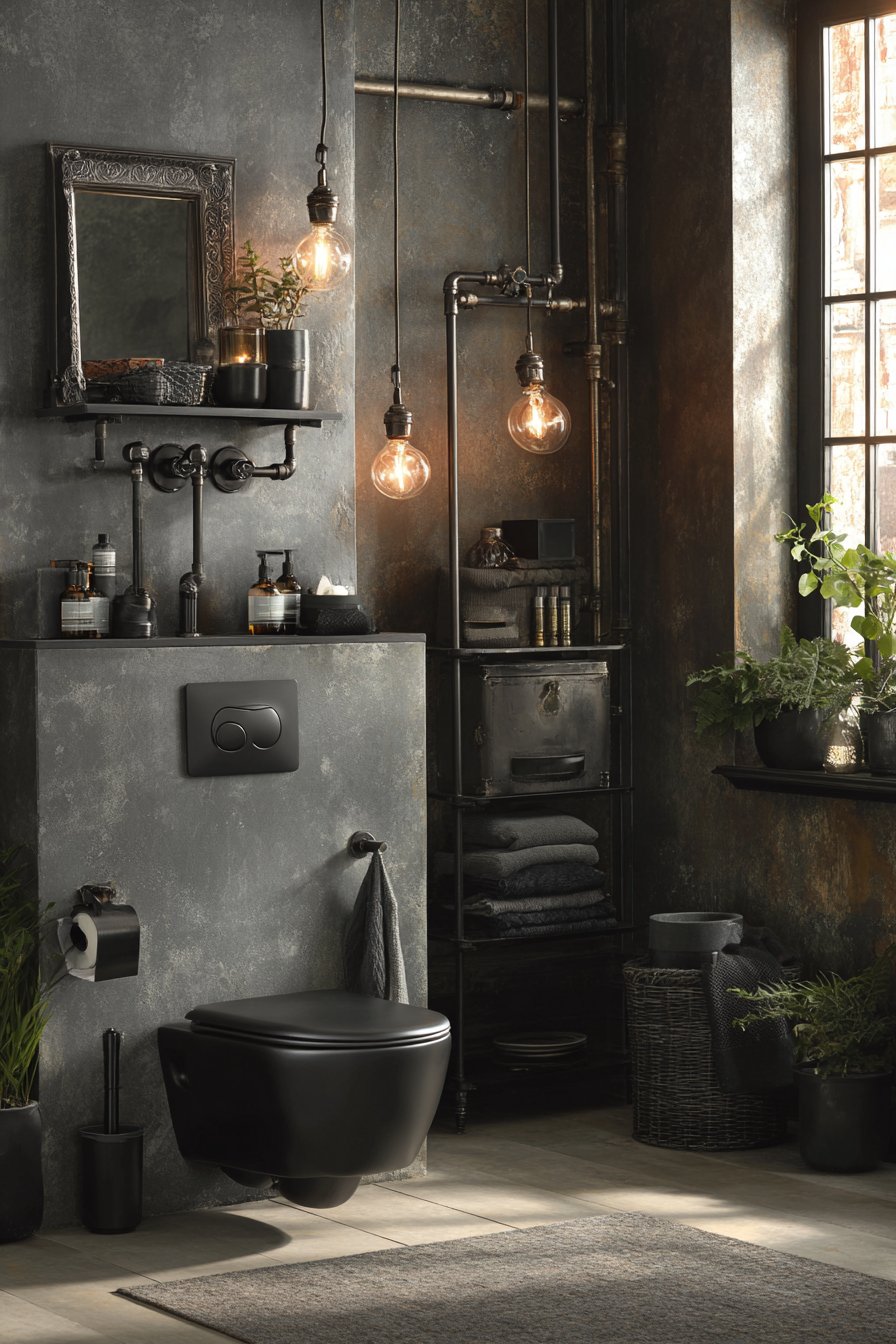
The industrial-style toilet design embraces urban aesthetics and honest materials, creating a space that celebrates rather than conceals structural and mechanical elements. A back-to-wall toilet paired with exposed black metal piping makes a virtue of necessary infrastructure, treating plumbing as sculptural elements worthy of display. Concrete-effect walls provide the raw, unfinished backdrop characteristic of industrial design, their texture and tone evoking the warehouses and factories that inspire this aesthetic. A matte black toilet seat and fixtures reinforce the utilitarian aesthetic while maintaining visual coherence.
Edison bulb pendant lights and metal shelving units add authentic industrial elements that reference early 20th-century manufacturing spaces. The warm glow of Edison bulbs softens the potentially harsh industrial materials, adding human warmth to architectural toughness. Natural light through a small window highlights raw material textures—the variations in concrete, the joints in metal piping, the imperfections that give industrial spaces their character. Architectural photography showcases urban loft bathroom character and honest materials, capturing how industrial design finds beauty in functionality and authenticity in exposure.
This design approach appeals to urban dwellers who appreciate the aesthetic of adaptive reuse and who see beauty in structural honesty. The deliberately minimal color palette, the celebration of utilitarian materials, the refusal to hide infrastructure—these choices create spaces with distinctive character and strong sense of place. Industrial design succeeds when it balances toughness with warmth, honesty with comfort, and this toilet design achieves that balance through careful material selection and thoughtful lighting.
Key Design Tips:
- Expose plumbing and mechanical elements as design features rather than hiding them
- Use concrete or concrete-effect finishes for authentic industrial character
- Choose matte black fixtures for cohesive industrial aesthetic
- Install Edison bulb lighting to add warmth and historical reference
- Balance raw materials with strategic lighting for comfortable ambiance
13. Coastal Beach Cottage Charm
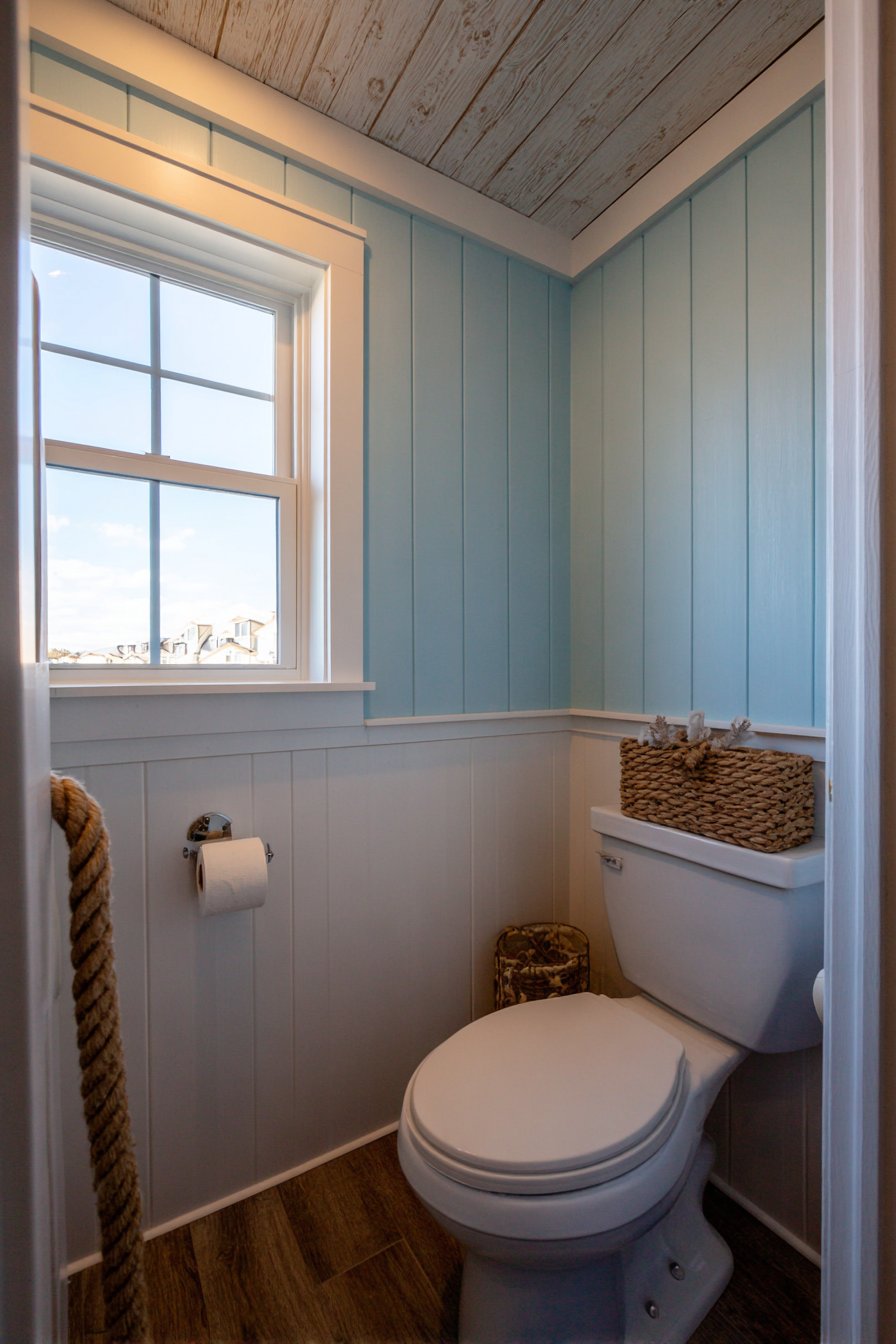
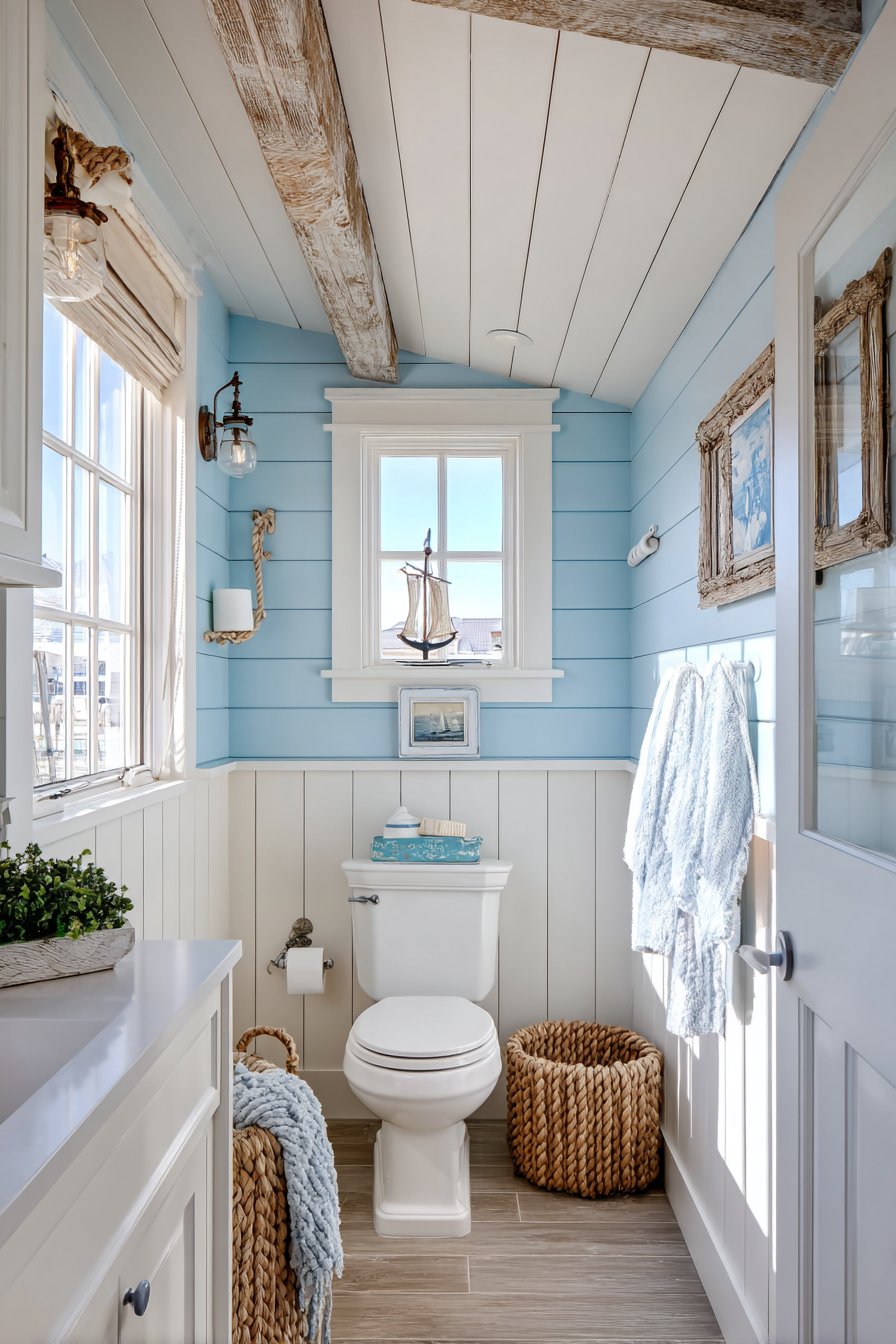
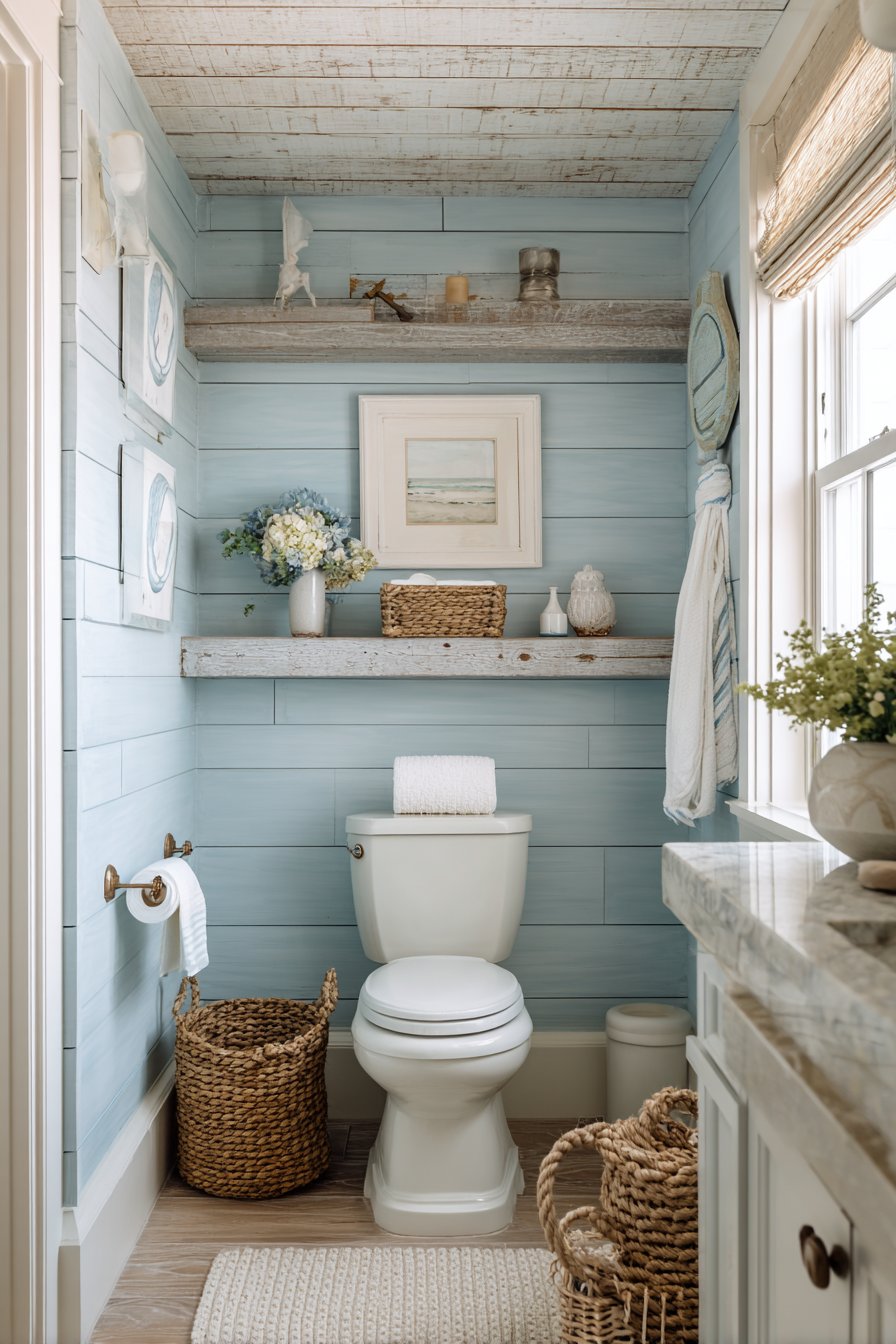
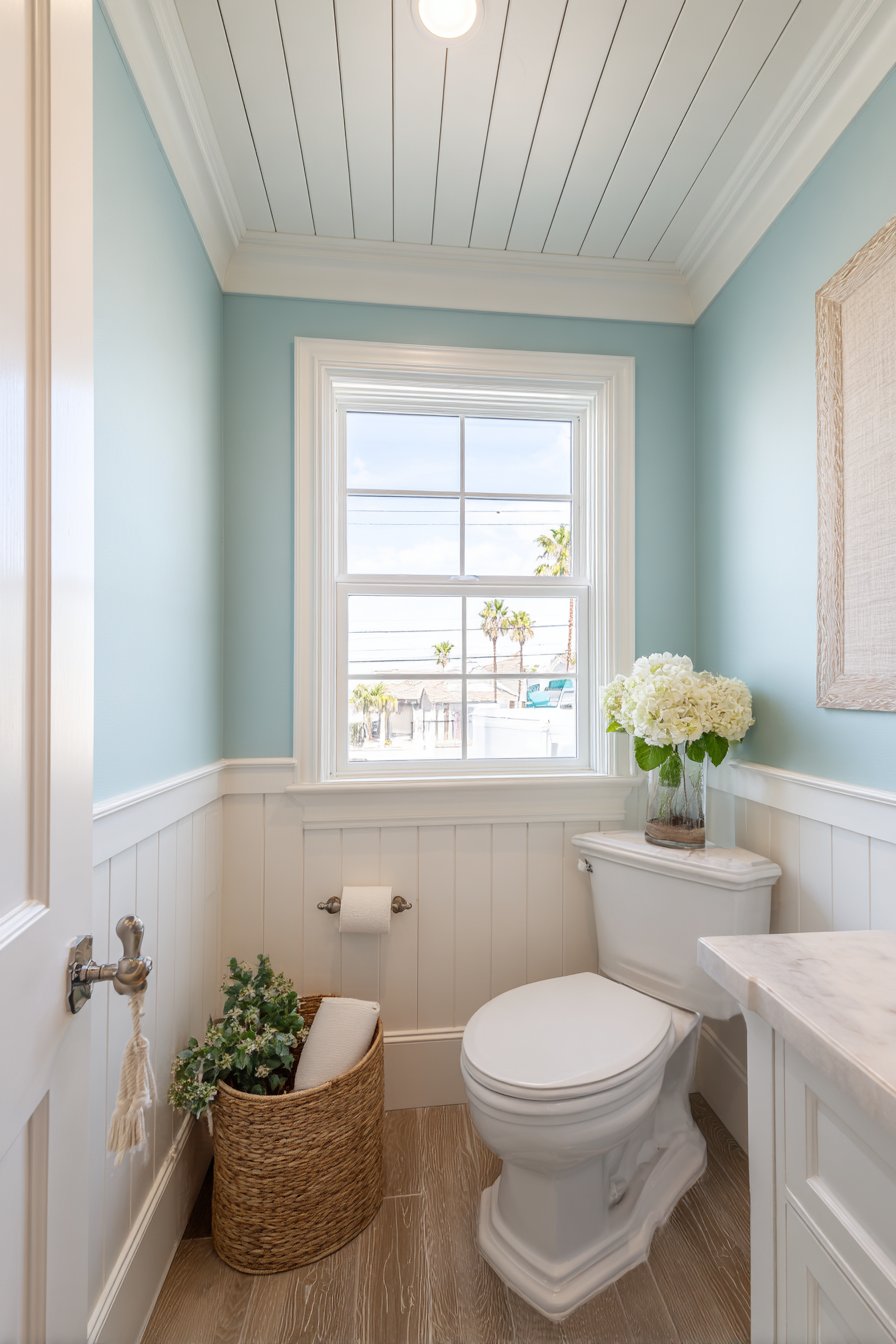
The coastal bathroom toilet design captures the relaxed elegance of seaside living, creating a space that evokes beach cottages and ocean breezes. A comfort-height toilet in soft white provides modern functionality while maintaining the light, airy feel essential to coastal aesthetics. Light blue beadboard walls reminiscent of beach cottages introduce color while adding traditional architectural detail, their vertical lines creating rhythm and visual interest. White shiplap ceiling and weathered wood accents evoke the sun-bleached, salt-aged materials found in authentic coastal structures.
A rope-wrapped toilet paper holder and carefully selected nautical accessories add thematic details without veering into kitschy territory. The key to successful coastal design lies in restraint—suggesting the seaside through subtle references rather than overwhelming the space with obvious maritime imagery. Natural daylight streaming through the window creates an airy, breezy atmosphere, its quality and brightness evoking the exceptional light that characterizes coastal regions. Interior photography captures the relaxed coastal living aesthetic, demonstrating how color, material, and light work together to create a sense of place.
This design approach appeals to those who love beach living or who want to bring vacation-home tranquility into their everyday environments. The soft color palette, the natural materials, the emphasis on natural light—these elements create spaces that feel perpetually fresh and new, like ocean breezes clearing away stale air. Coastal design succeeds when it captures the essence rather than the literal imagery of seaside living, creating spaces that feel breezy and relaxed rather than themed or theatrical.
Key Design Tips:
- Paint beadboard walls in soft coastal blues for traditional cottage character
- Add weathered wood accents to evoke sun-bleached, salt-aged coastal materials
- Use rope and natural fiber accessories for subtle nautical references
- Install white shiplap ceilings to enhance bright, airy atmosphere
- Maximize natural light to create the luminous quality characteristic of coastal regions
14. Modern Farmhouse Fusion
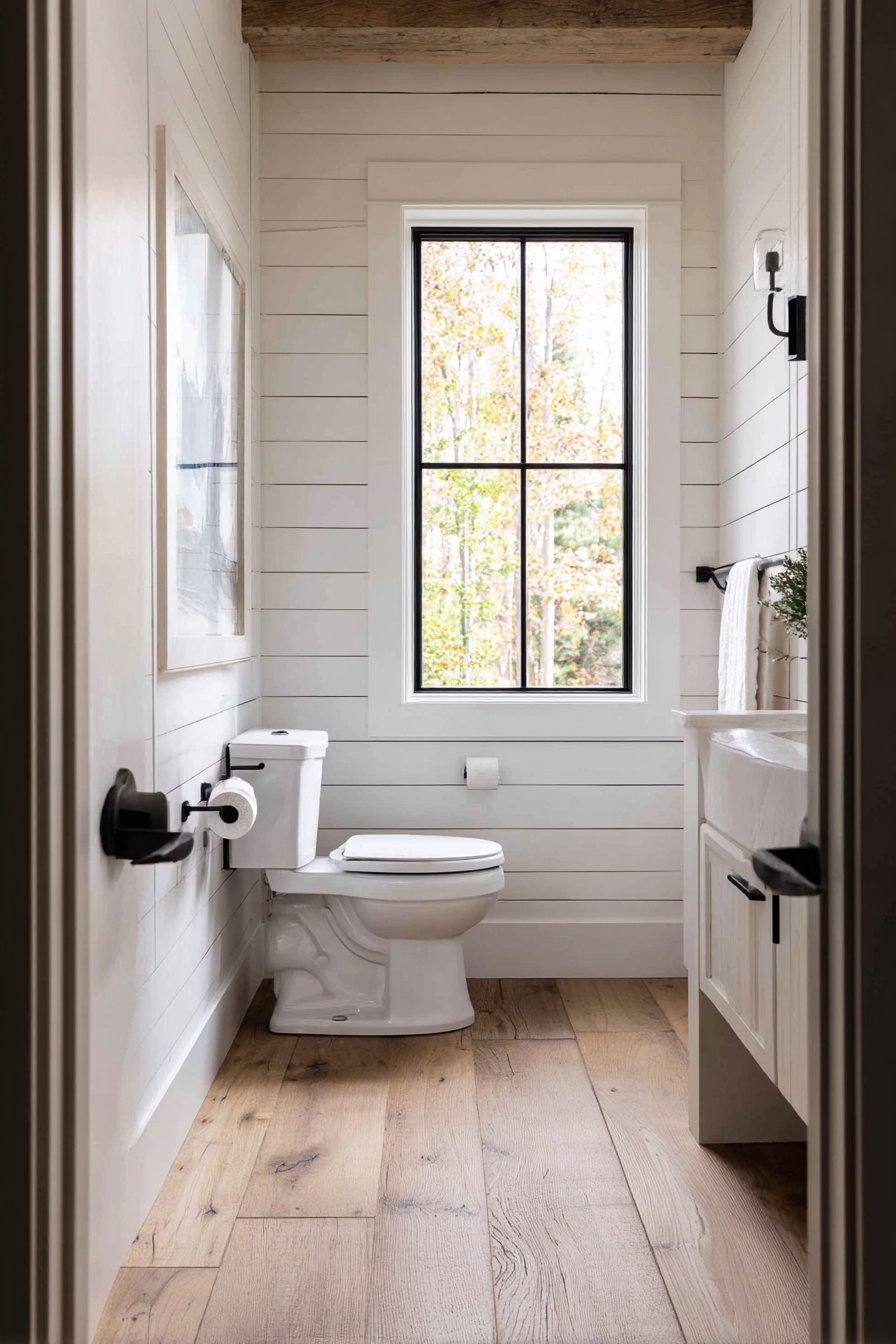
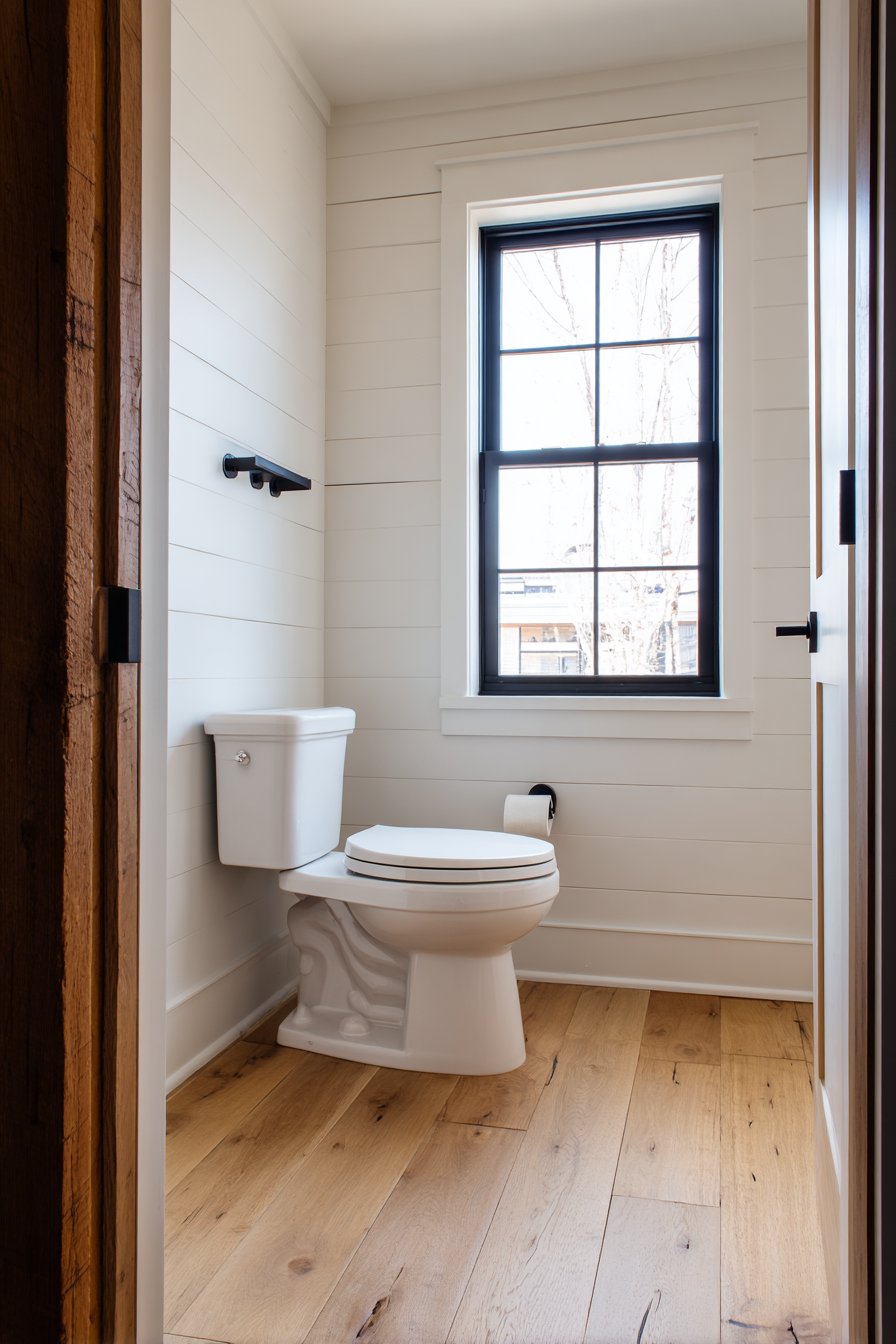
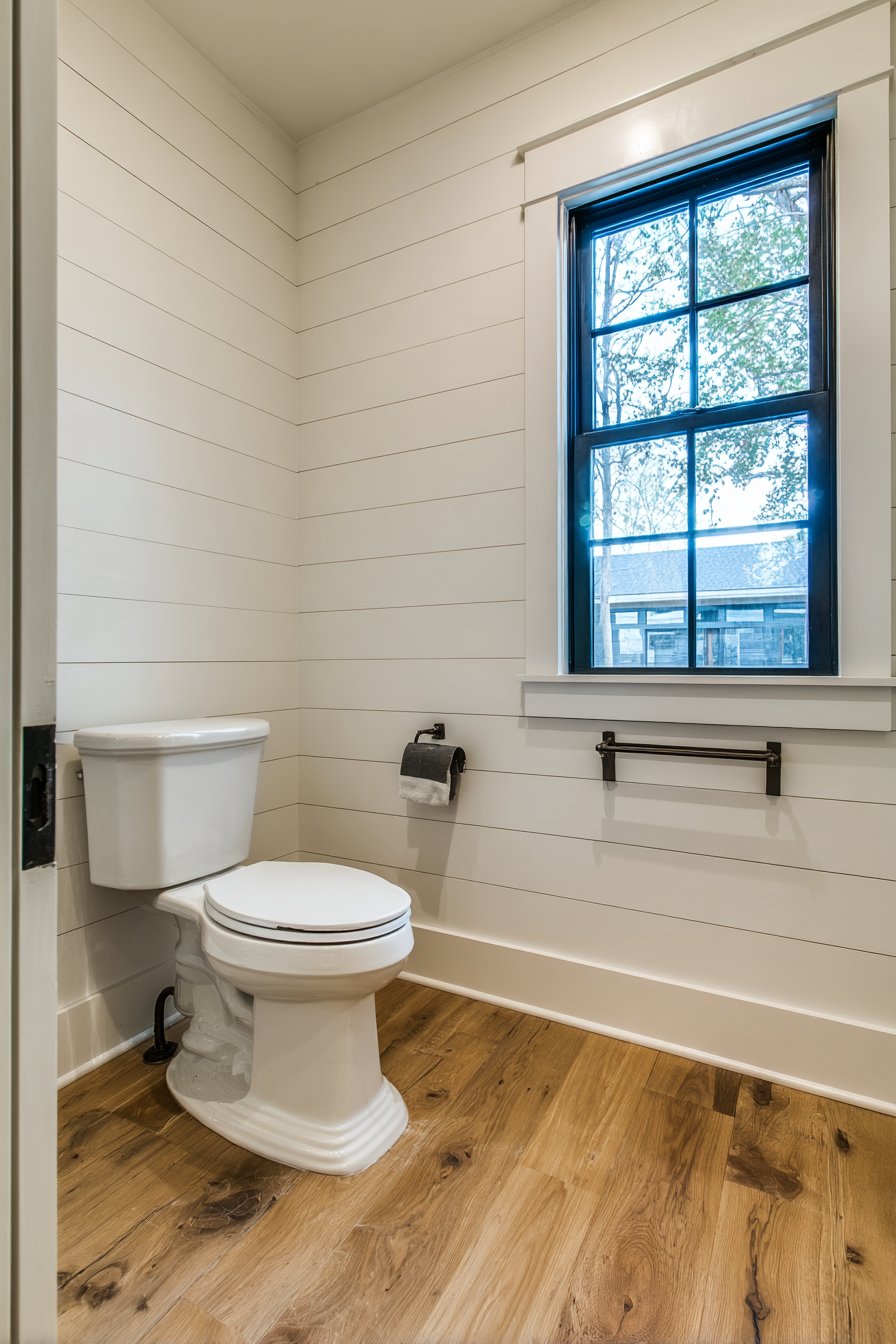
The modern farmhouse toilet design successfully bridges traditional and contemporary aesthetics, creating spaces that feel both fresh and familiar. A two-piece toilet with traditional silhouette provides recognizable form while offering modern functionality and efficiency. White shiplap walls deliver quintessential farmhouse character while their clean installation and fresh paint maintain contemporary appeal. Black metal fixtures provide dramatic contrast, introducing modern industrial elements that energize the traditional materials and prevent the space from feeling overly rustic or dated.
Black toilet paper holder and towel bar create visual punctuation points, their dark finish drawing the eye and adding graphic strength to the otherwise light space. Wide-plank light oak flooring adds rustic warmth underfoot while its clean finish and precise installation keep the look contemporary rather than overly distressed. A simple black-framed window allows natural light while adding another graphic element that reinforces the black-and-white contrast central to modern farmhouse aesthetics. Photography balances vintage charm with modern convenience and clean lines, capturing how this hybrid style takes the best elements from both traditional and contemporary design.
This design approach has become enormously popular because it offers the warmth and character of traditional design with the clean lines and functionality of contemporary spaces. Modern farmhouse succeeds by being selective—taking traditional materials like shiplap and wood floors but pairing them with contemporary fixtures and finishes. This toilet design demonstrates how thoughtful mixing of old and new creates spaces that feel collected and personal rather than designed all at once.
Key Design Tips:
- Combine traditional two-piece toilets with modern fixtures for transitional appeal
- Paint shiplap walls white to maintain farmhouse character with contemporary freshness
- Use black metal fixtures to add modern industrial contrast to traditional materials
- Install wide-plank wood flooring for rustic warmth with clean, contemporary finish
- Frame windows in black to reinforce graphic contrast and modern elements
15. Universal Accessible Design
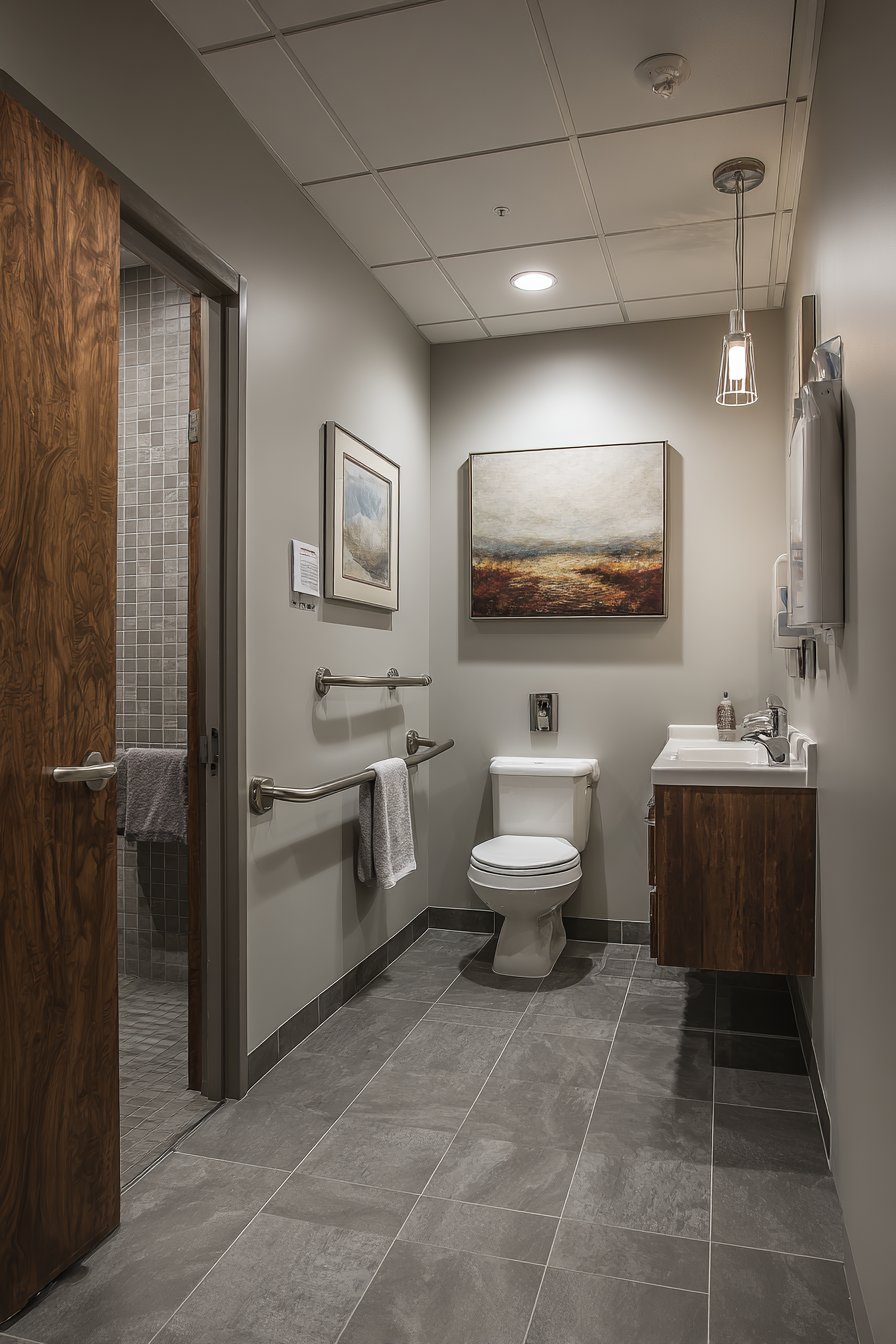
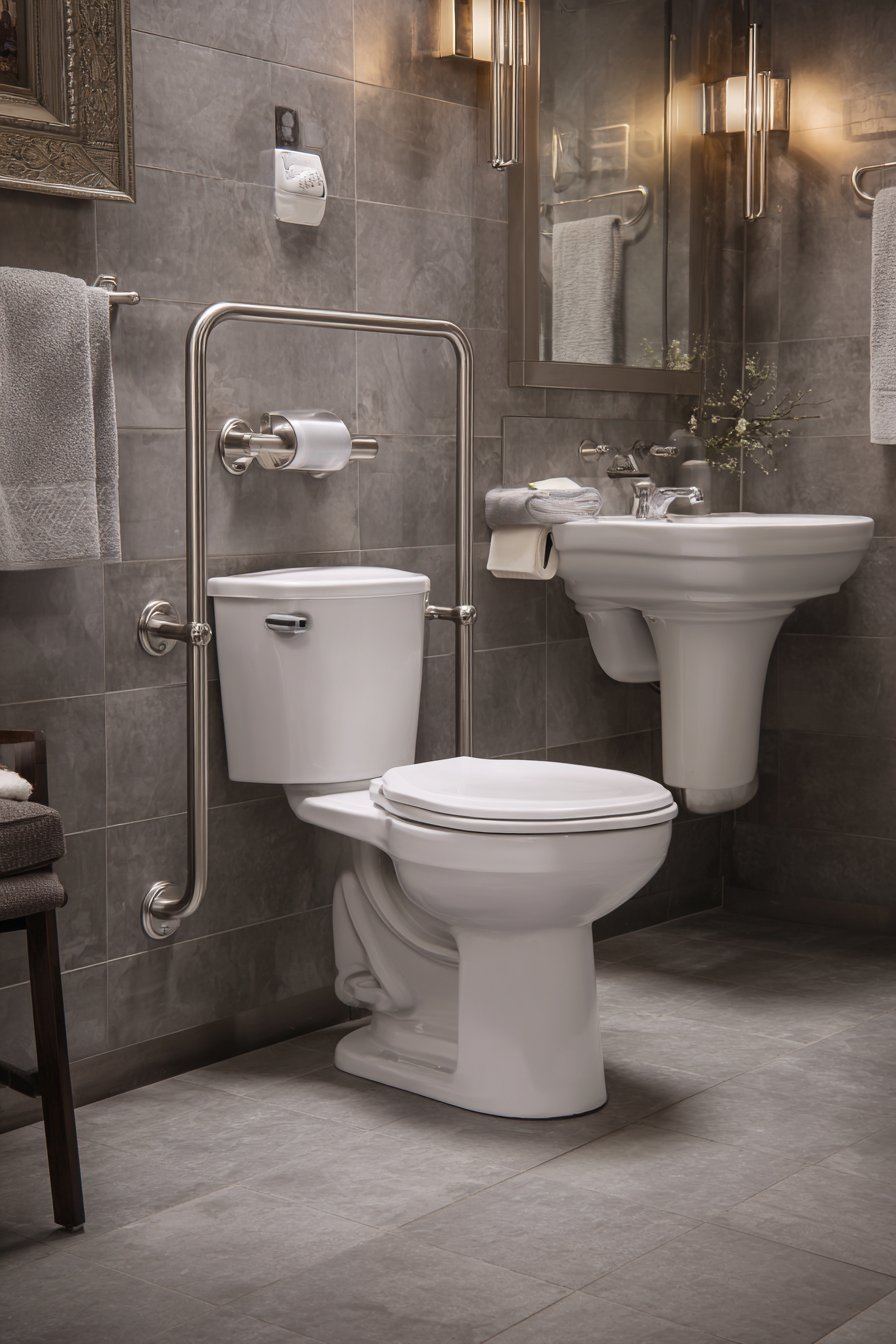
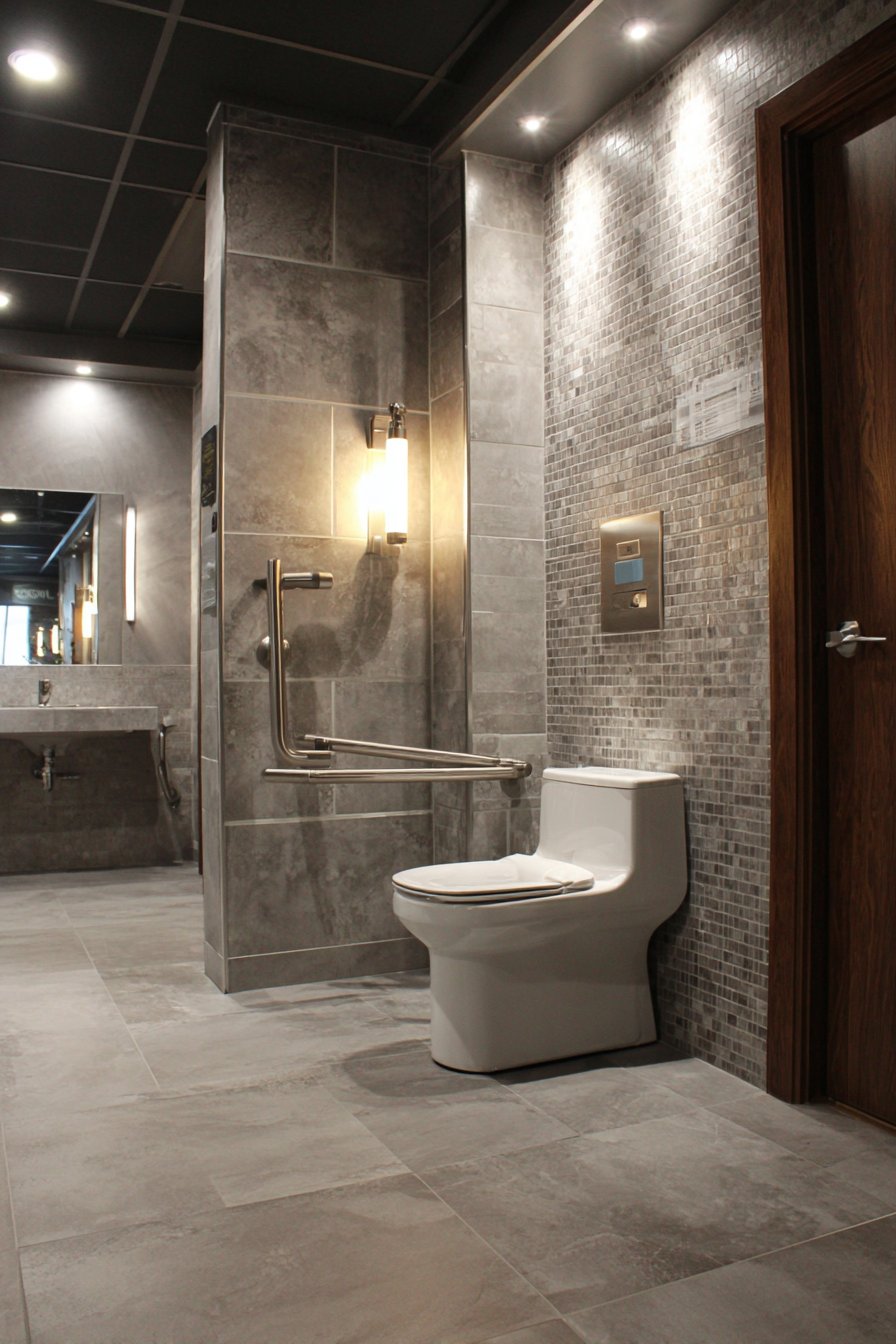
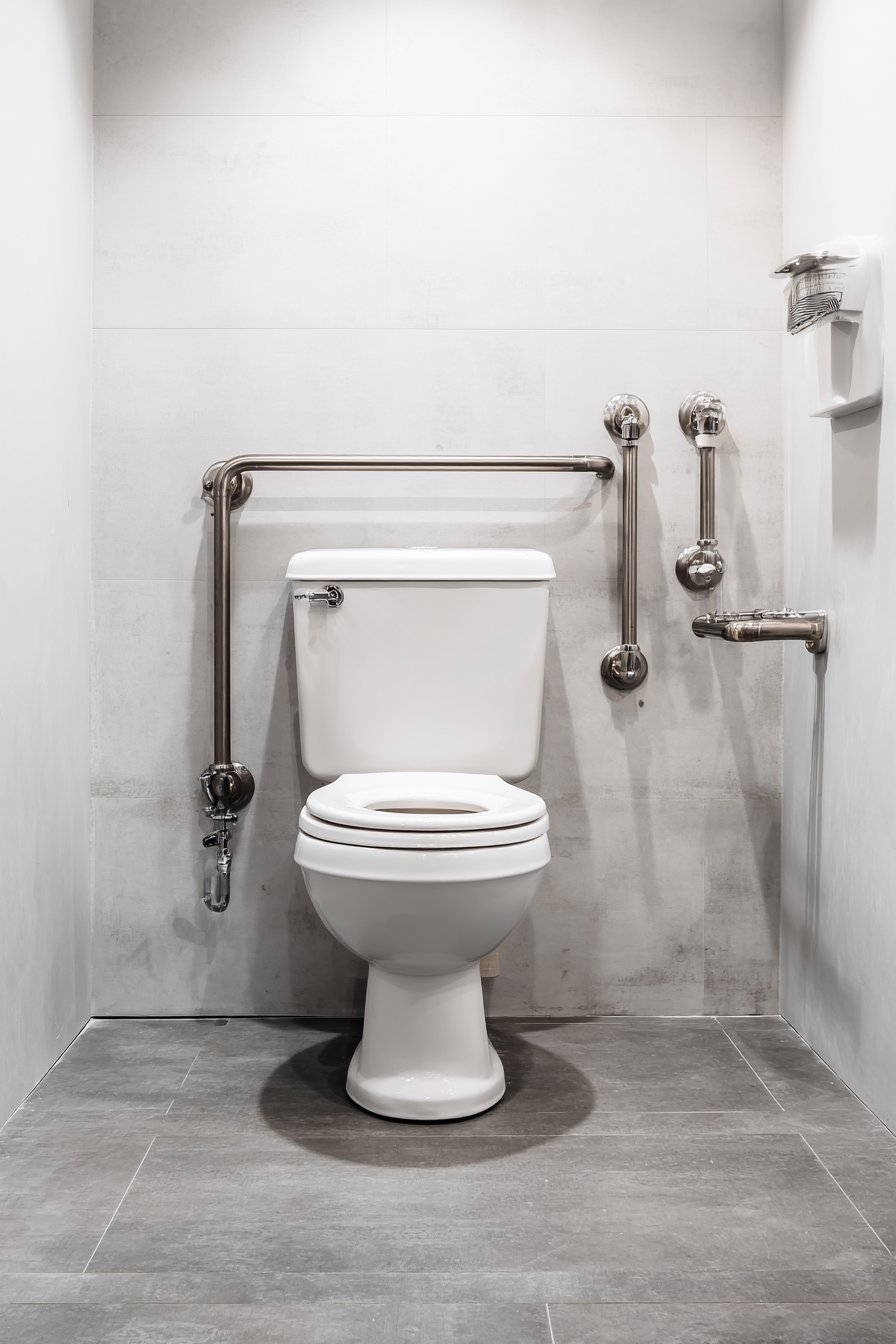
The wheelchair-accessible toilet design demonstrates how universal design principles create spaces that work better for everyone, not just those with mobility challenges. A comfort-height elongated toilet positioned with generous clearance space ensures ease of use and adequate maneuvering room for wheelchair users while also benefiting anyone who finds standard toilet heights uncomfortable. Grab bars in brushed stainless steel mounted at appropriate heights on both sides provide essential support without compromising aesthetic appeal—their clean, contemporary design proves that accessibility features can be beautiful as well as functional.
Non-slip grey porcelain floor tiles ensure safety without sacrificing style, their subtle texture providing necessary traction while maintaining a sophisticated appearance. Smooth wall surfaces facilitate cleaning and prevent snagging hazards, while their light color maximizes brightness and visibility. The combination of natural and LED lighting provides excellent visibility throughout the day and night, eliminating shadows that could conceal hazards or make navigation difficult. Professional photography shows thoughtful accessible bathroom planning and ADA-compliant fixture placement, demonstrating how universal design creates dignity and independence.
This design approach recognizes that accessibility isn’t a special accommodation but rather good design that considers the full range of human abilities. As populations age and awareness of inclusive design grows, creating accessible bathrooms becomes increasingly important. This toilet design proves that meeting accessibility standards doesn’t require compromising beauty or style—in fact, the clarity and simplicity required by universal design often results in spaces that are more attractive and easier to maintain than their non-accessible counterparts.
Key Design Tips:
- Install comfort-height toilets and ensure adequate clearance space for maneuverability
- Mount grab bars at appropriate heights in finishes that complement overall design
- Select non-slip flooring materials that provide safety without sacrificing appearance
- Combine natural and artificial lighting for excellent visibility at all times
- Follow ADA guidelines to ensure compliance while maximizing usability and dignity
16. Mediterranean Warmth and Texture
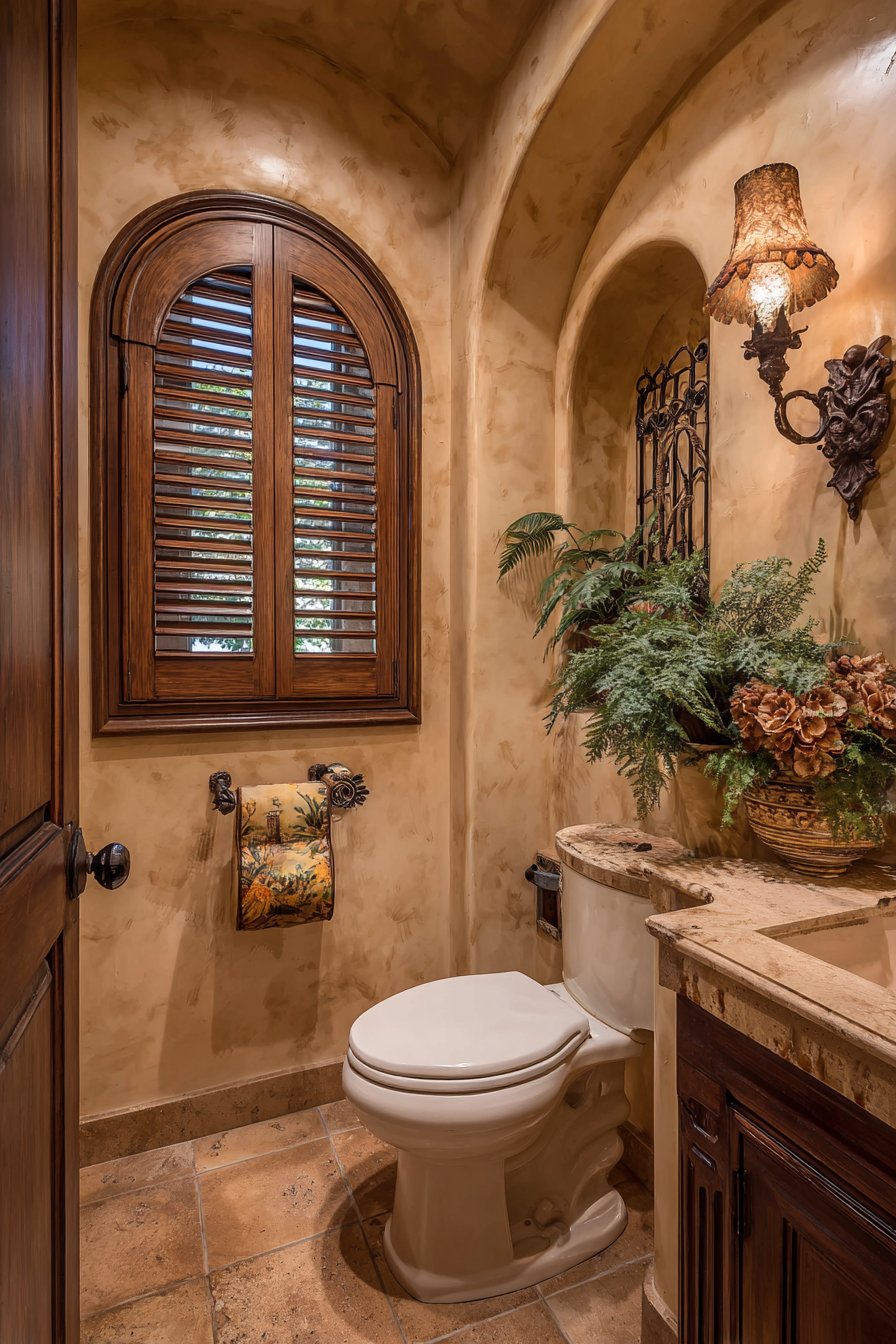
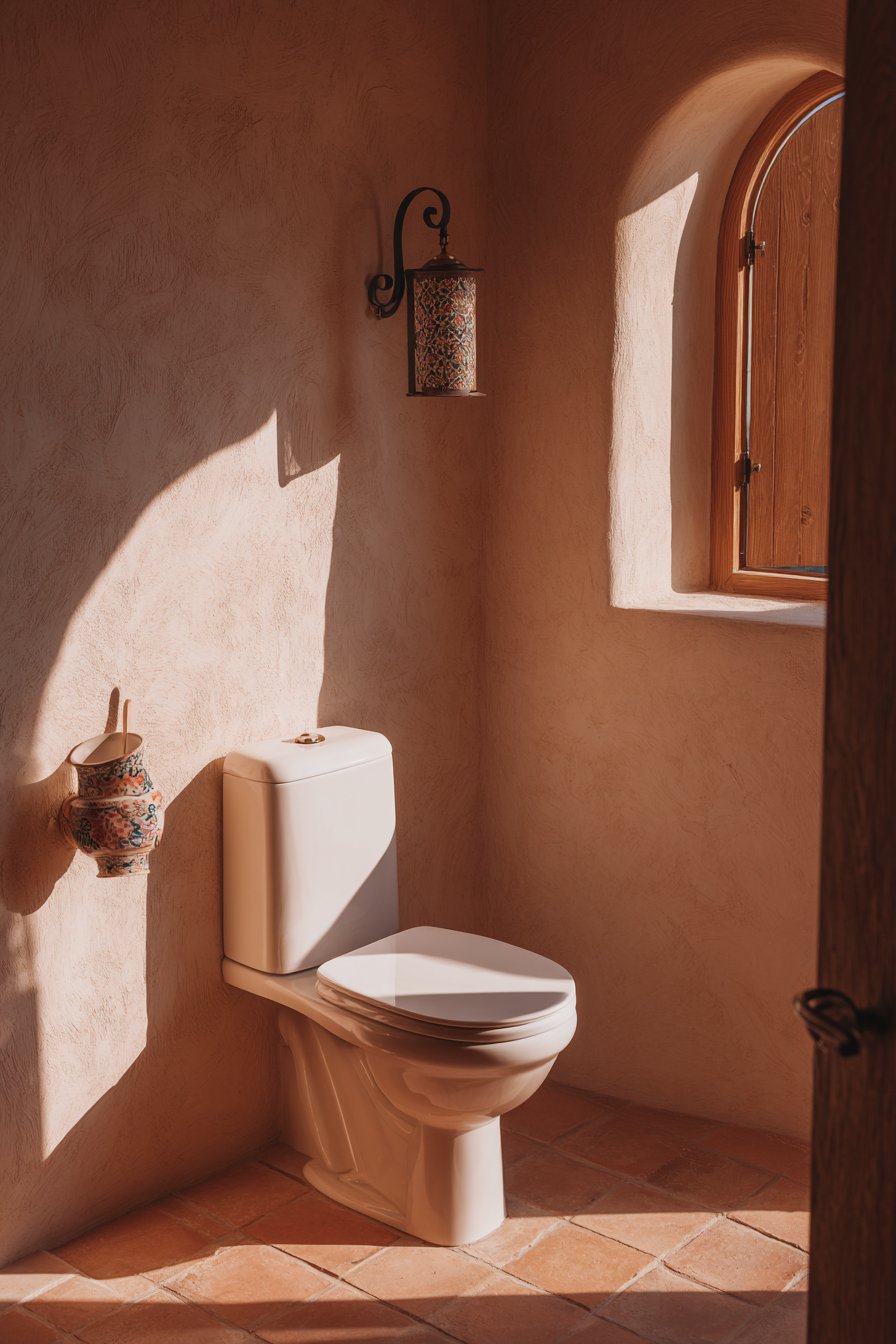
The Mediterranean-style toilet design brings the sun-drenched warmth of Southern Europe into everyday bathroom spaces. A standard toilet sits within a bathroom featuring terracotta floor tiles that immediately establish the regional character, their warm orange-red tones and slight variation evoking the handmade tiles found throughout Mediterranean countries. Textured stucco walls in warm cream provide tactile richness and authentic material reference, their irregular surface catching light and creating subtle shadow patterns that change throughout the day.
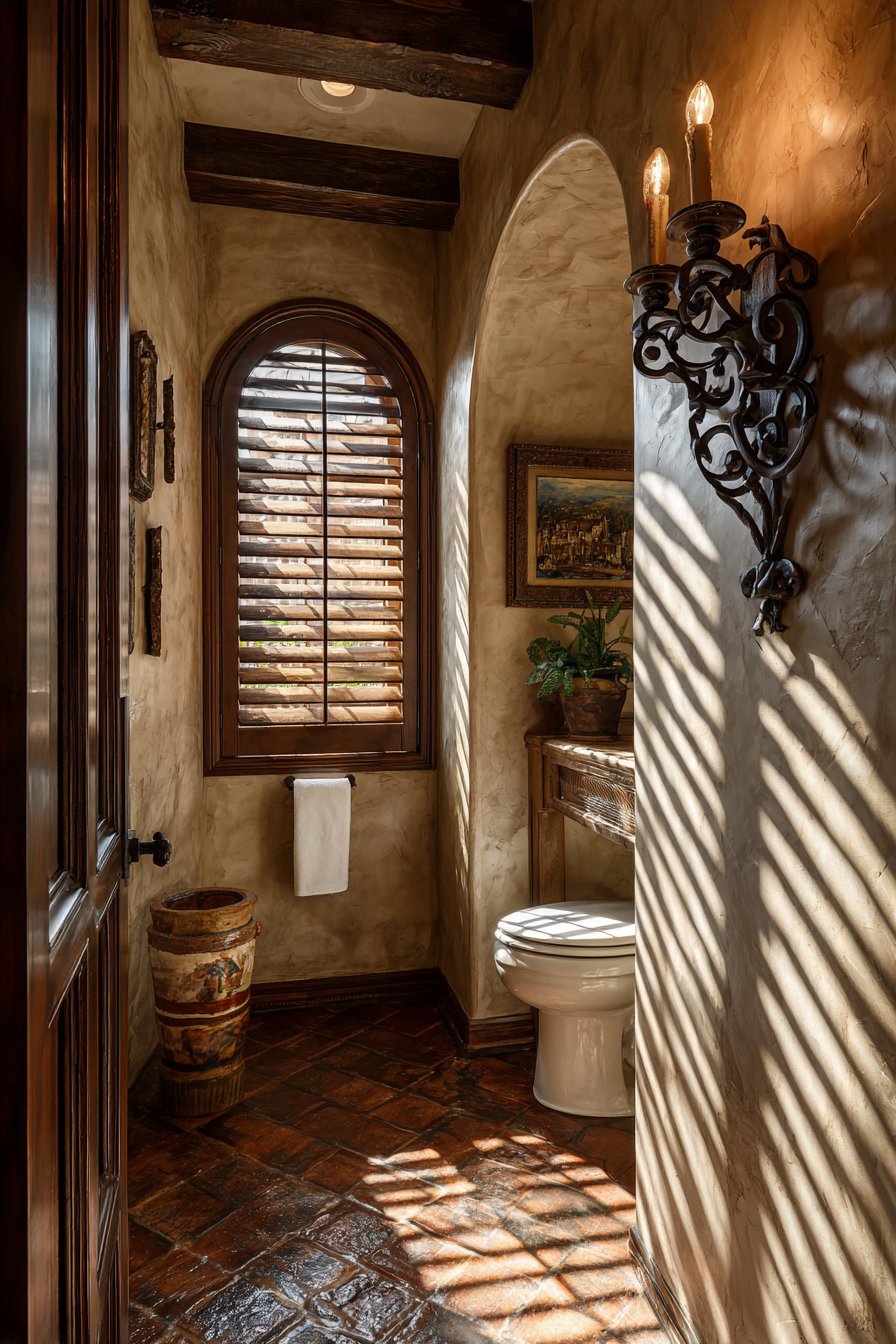
A hand-painted ceramic toilet paper holder adds artisanal touch and local craftsmanship, its colorful glaze and imperfect form celebrating human handiwork over machine precision. Wrought iron wall sconce provides ambient lighting while adding another layer of historical and cultural reference, its dark metal and organic form contrasting beautifully with the light walls. A small arched window with wooden shutters allows dappled sunlight while providing adjustable privacy and ventilation, its traditional form and materiality completing the Mediterranean ensemble.
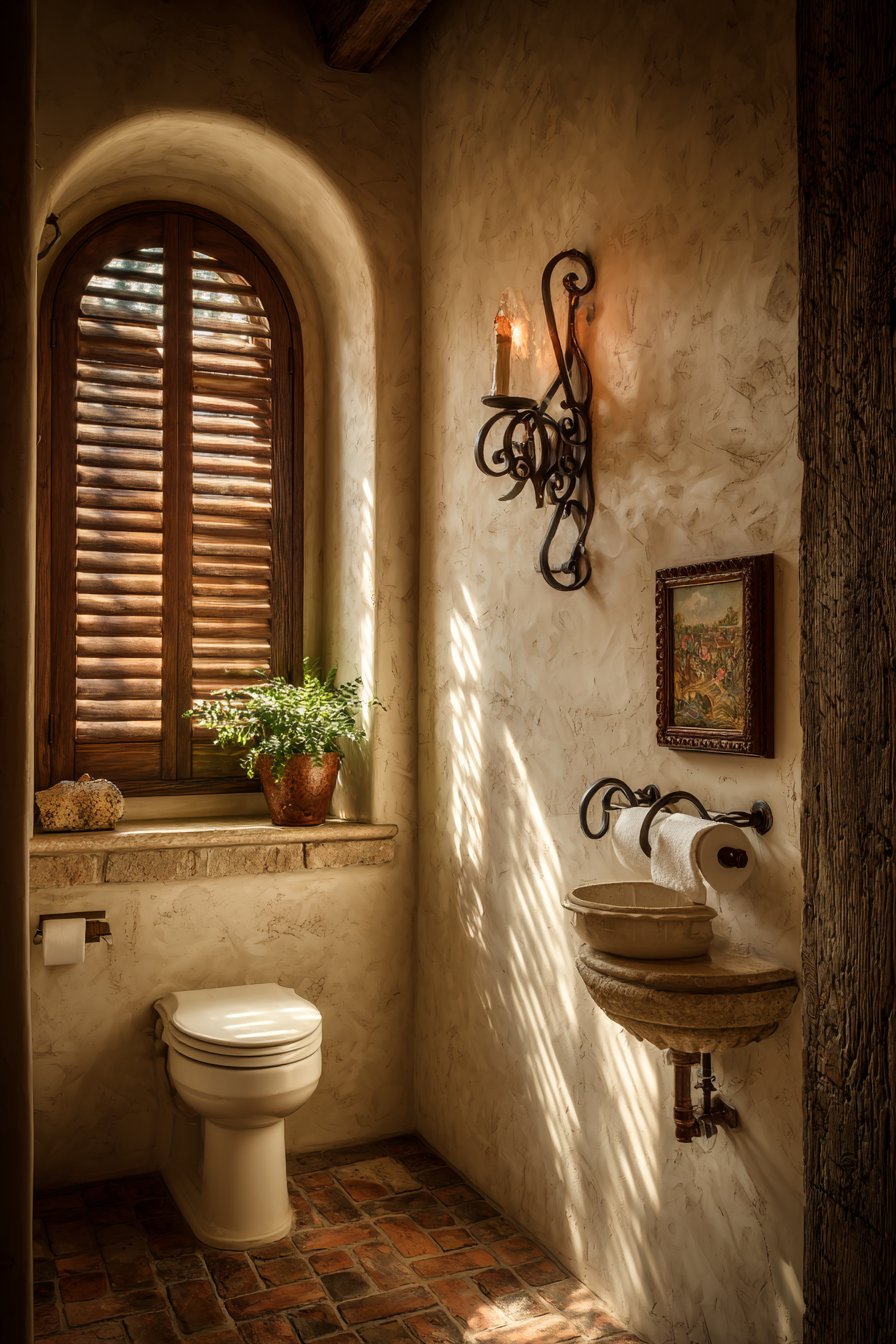
Interior design photography captures Old World charm and the sun-drenched European villa aesthetic, demonstrating how material, color, and light create strong sense of place. The layering of warm tones, textured surfaces, and handcrafted elements creates richness and depth that feels collected over generations rather than installed all at once. This design appeals to those who travel and who want to bring the warmth, craftsmanship, and sensory richness of Mediterranean cultures into their daily lives.
Key Design Tips:
- Use terracotta floor tiles to establish authentic Mediterranean character
- Apply textured stucco walls for tactile richness and regional authenticity
- Select hand-painted ceramic accessories to celebrate artisanal craftsmanship
- Install wrought iron fixtures for dark metallic contrast and historical reference
- Add arched windows with wooden shutters for traditional form and adjustable light control
17. Art Deco Geometric Glamour
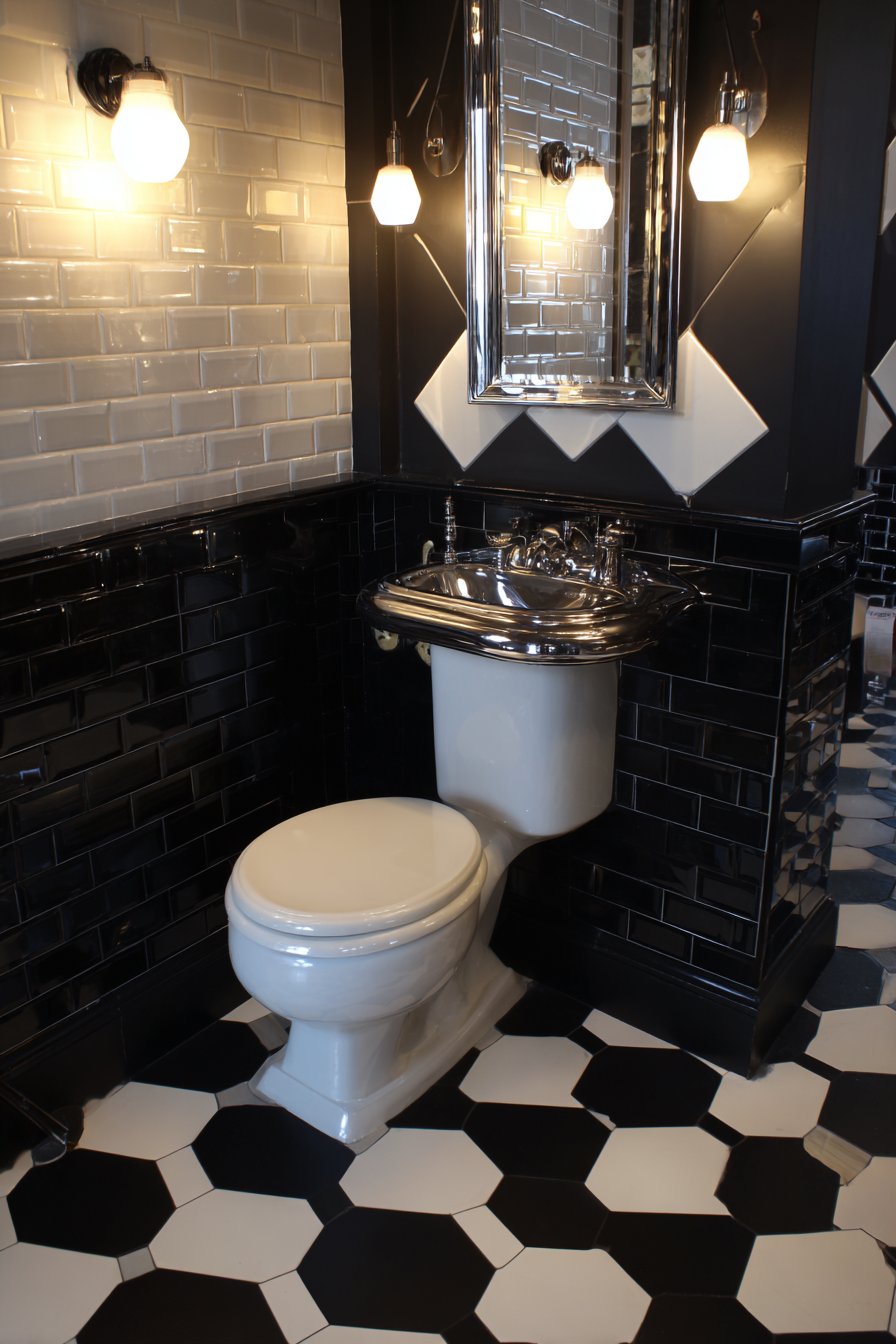
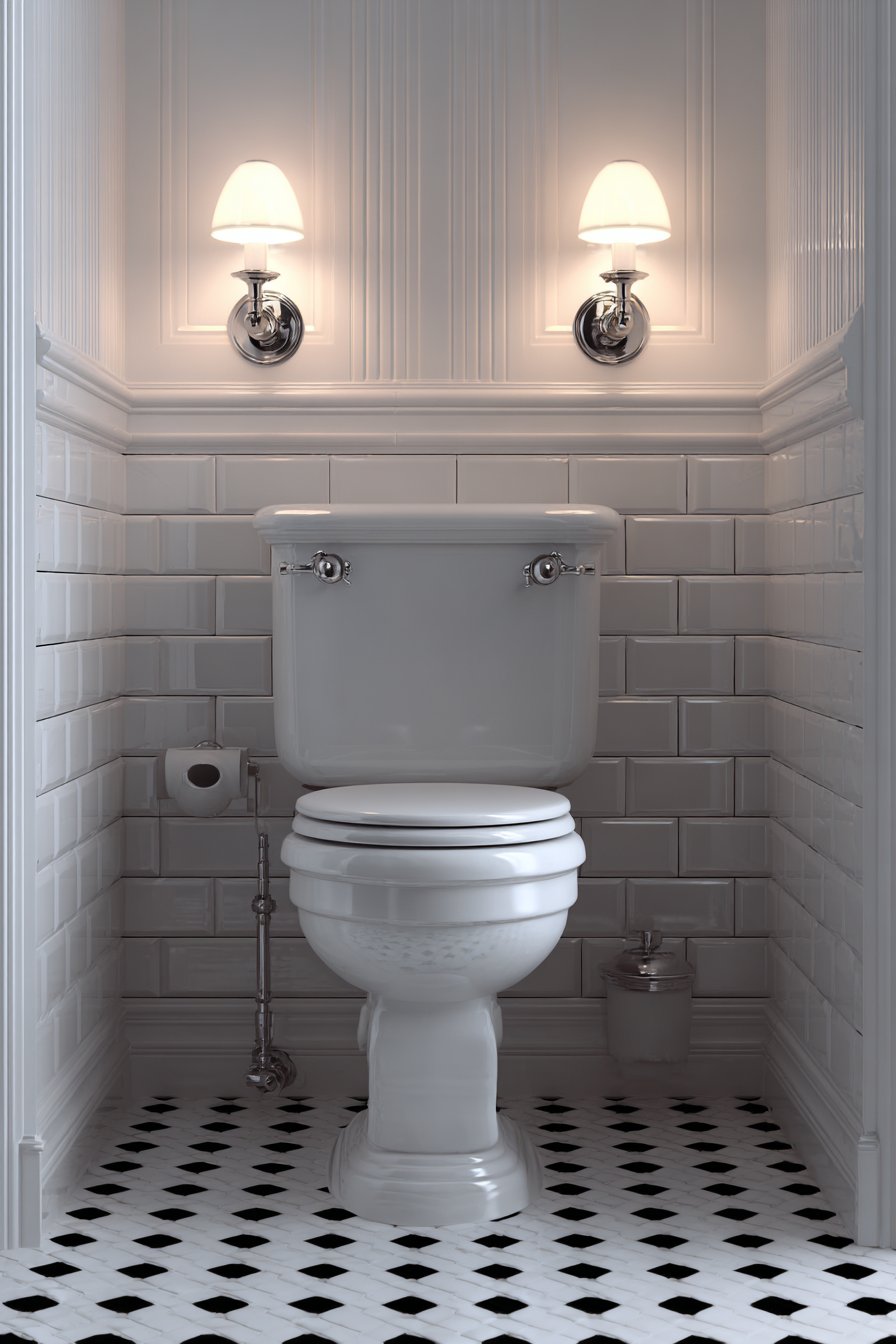
The Art Deco toilet design celebrates the glamorous sophistication of 1920s design, bringing geometric precision and luxurious materials into contemporary bathroom spaces. A vintage-inspired toilet provides period-appropriate form while incorporating modern functionality. Geometric black and white hexagonal floor tiles create immediate visual impact, their bold pattern establishing the Art Deco aesthetic from the ground up. Subway tiles laid in herringbone pattern add another layer of geometric interest, demonstrating how pattern at different scales creates visual complexity and richness.
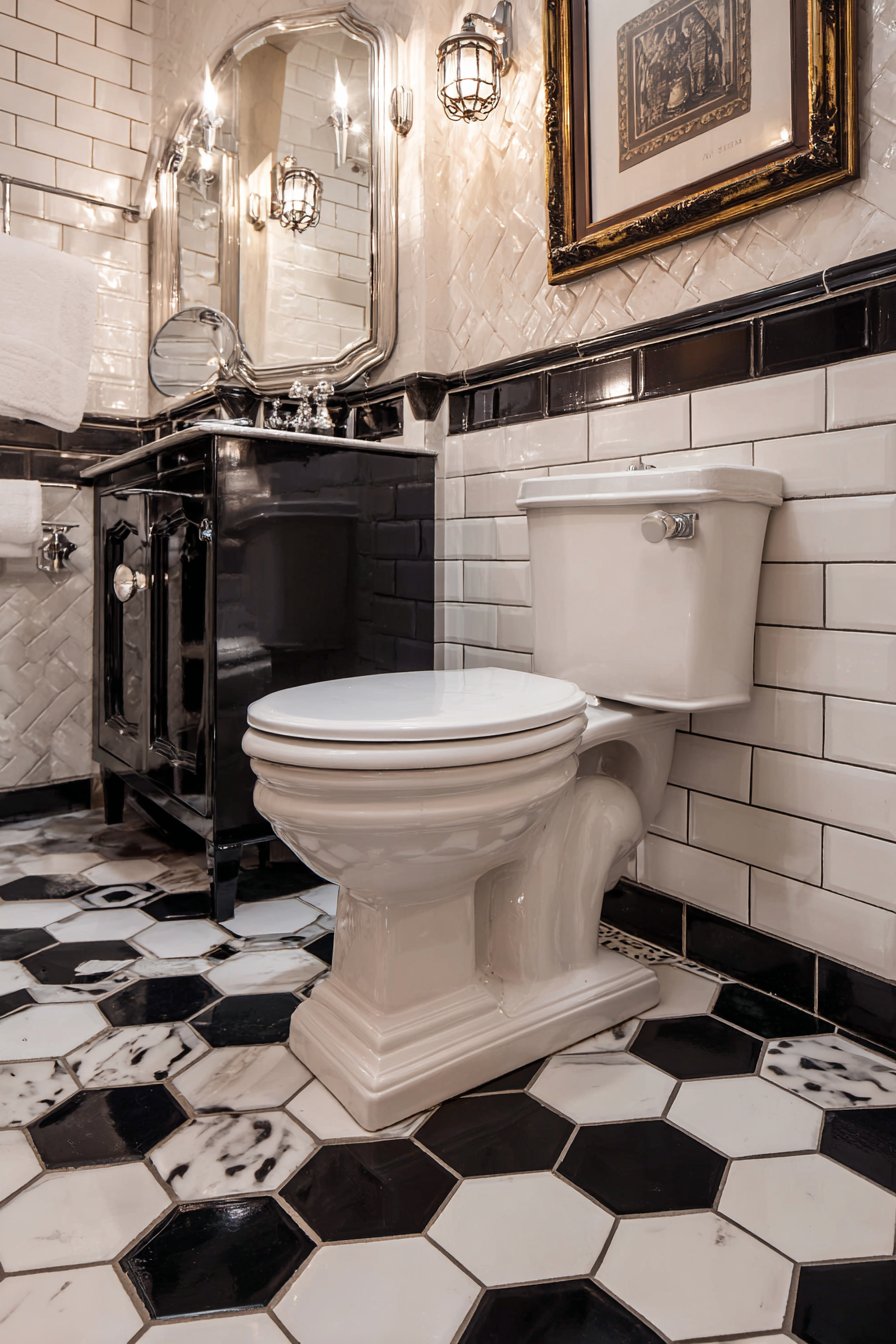
Chrome fixtures with period-appropriate detailing reference the machine age aesthetic that defined Art Deco, while a beveled mirror above the toilet reflects both light and the room’s geometric patterns, multiplying visual interest. Wall-mounted light fixtures with frosted glass shades provide even illumination while adding authentic period details, their streamlined forms and quality materials exemplifying Art Deco’s marriage of artistic ambition and industrial production. Photography emphasizes symmetry, bold patterns, and timeless elegance, capturing how Art Deco design maintains its appeal nearly a century after its creation.
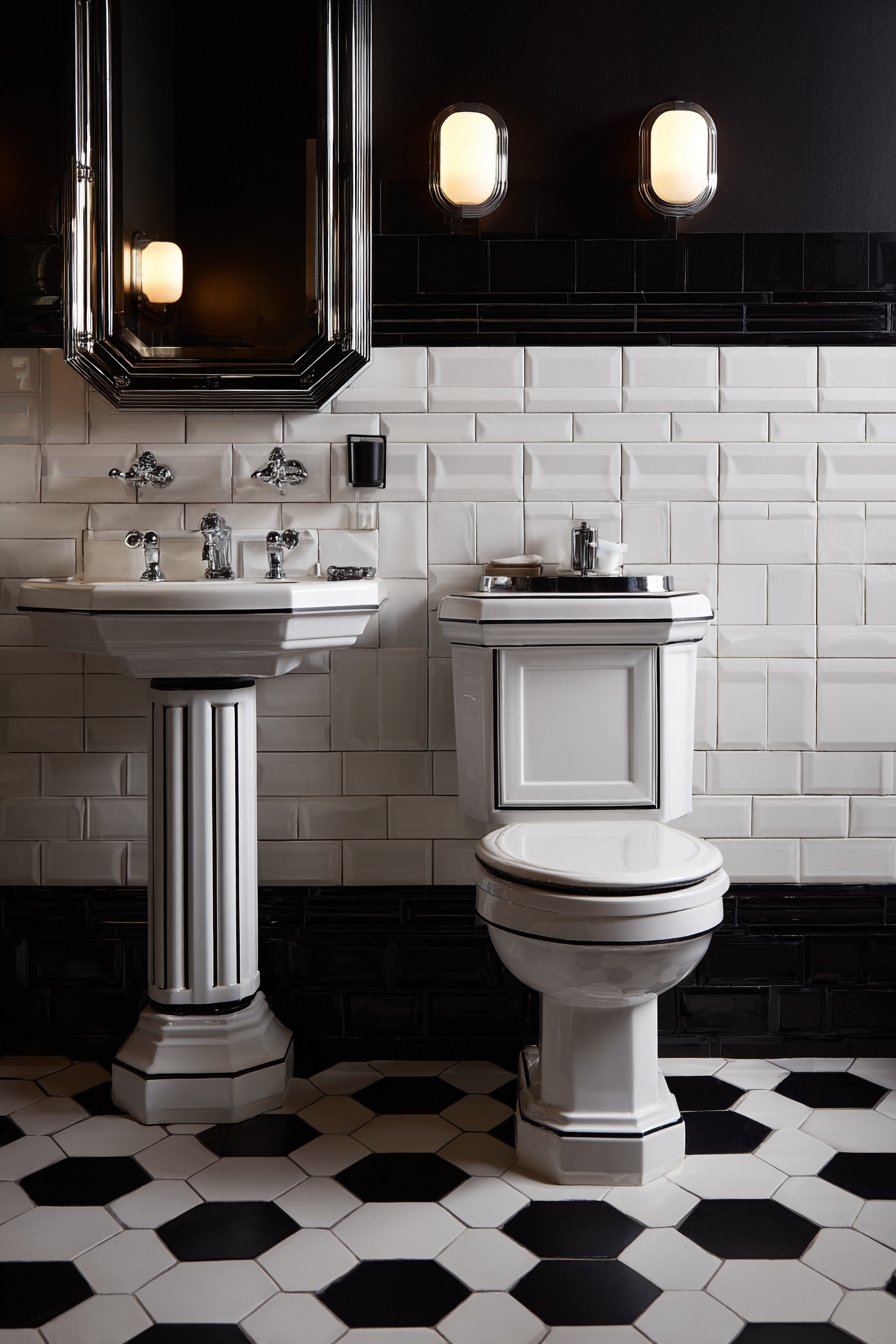
This design approach appeals to those who appreciate design history and who recognize that looking to the past can inspire fresh, distinctive contemporary spaces. Art Deco’s emphasis on geometry, luxury, and optimism creates spaces that feel both sophisticated and energetic. The black and white color scheme ensures the design remains crisp and clear, never muddy or confused, while the layering of geometric patterns at different scales creates visual richness that rewards close attention.
Key Design Tips:
- Create bold floor patterns with hexagonal tiles in classic black and white
- Install subway tiles in herringbone pattern for additional geometric interest
- Choose chrome fixtures with period-appropriate detailing for authentic Art Deco character
- Add beveled mirrors to multiply patterns and enhance light reflection
- Use wall-mounted fixtures with frosted glass for even illumination and period authenticity
18. Budget-Friendly Transformation
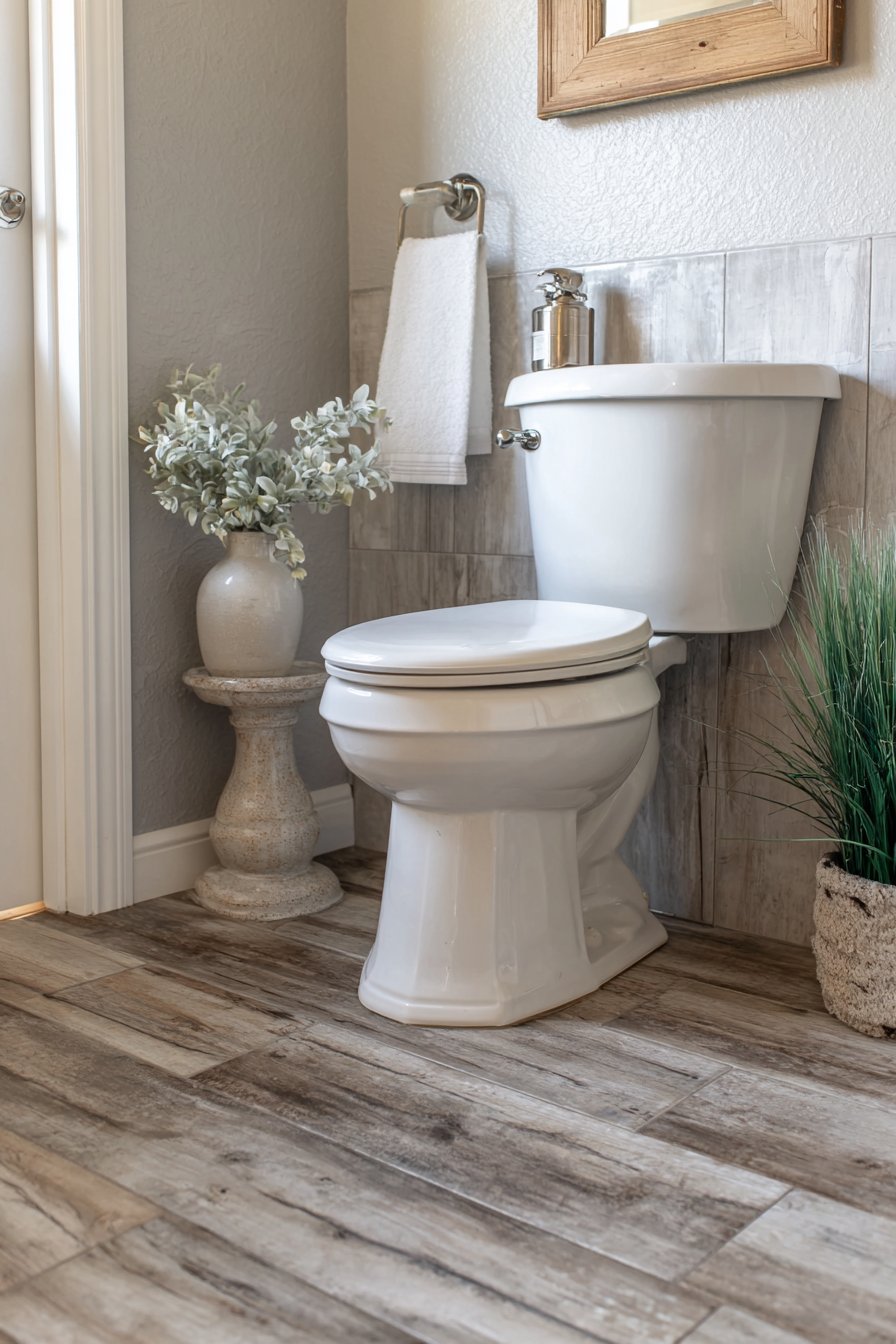
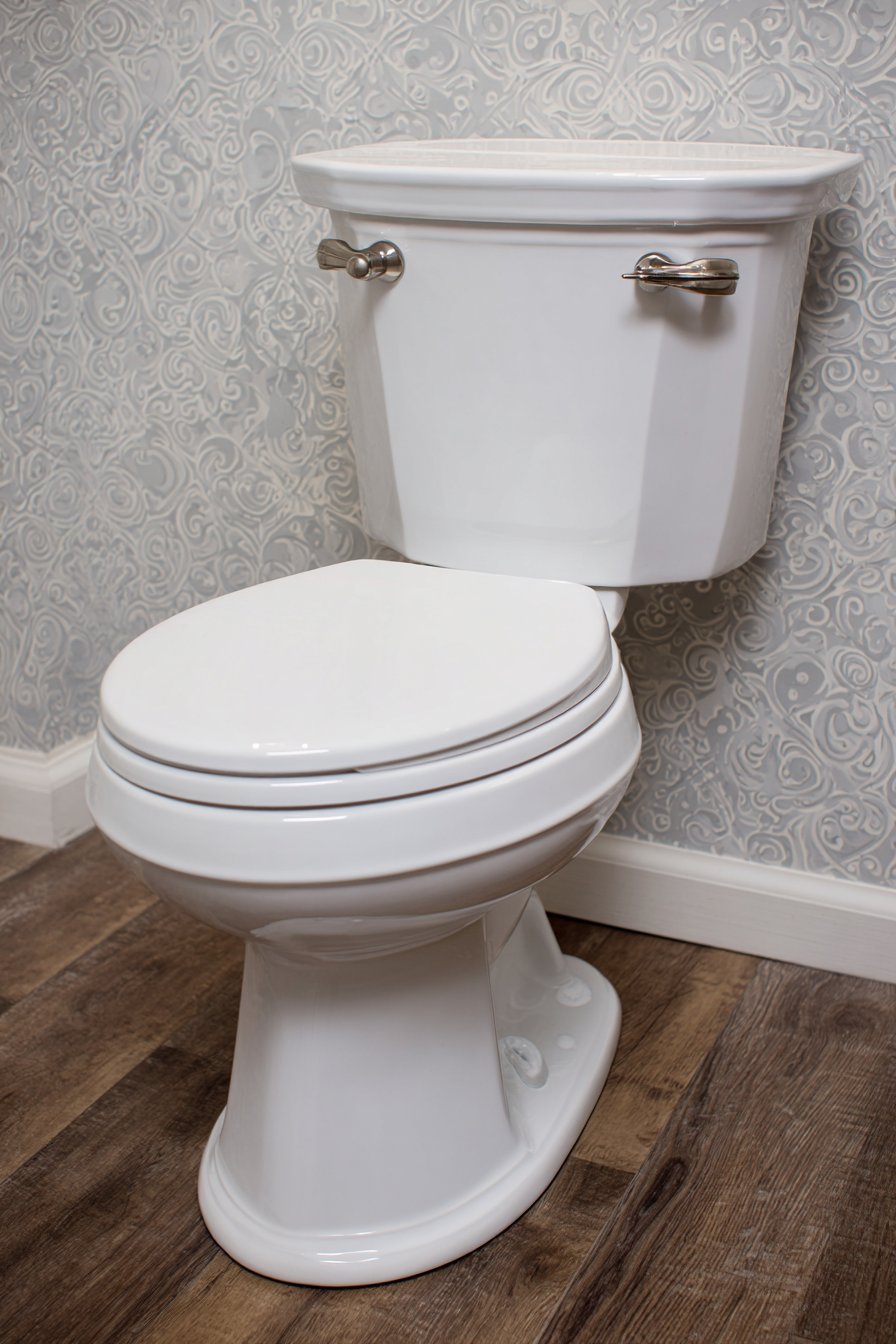
The budget-friendly toilet design demonstrates how strategic updates and creative thinking can transform basic builder-grade bathrooms without major renovation expenses. A standard two-piece toilet in white provides the functional foundation, its conventional form requiring no replacement or upgrade. Peel-and-stick tile wallpaper in soft grey pattern offers the visual impact of real tile at a fraction of the cost and with dramatically simplified installation. Simple chrome fixtures and white toilet paper holder keep costs low while maintaining a clean, cohesive appearance.
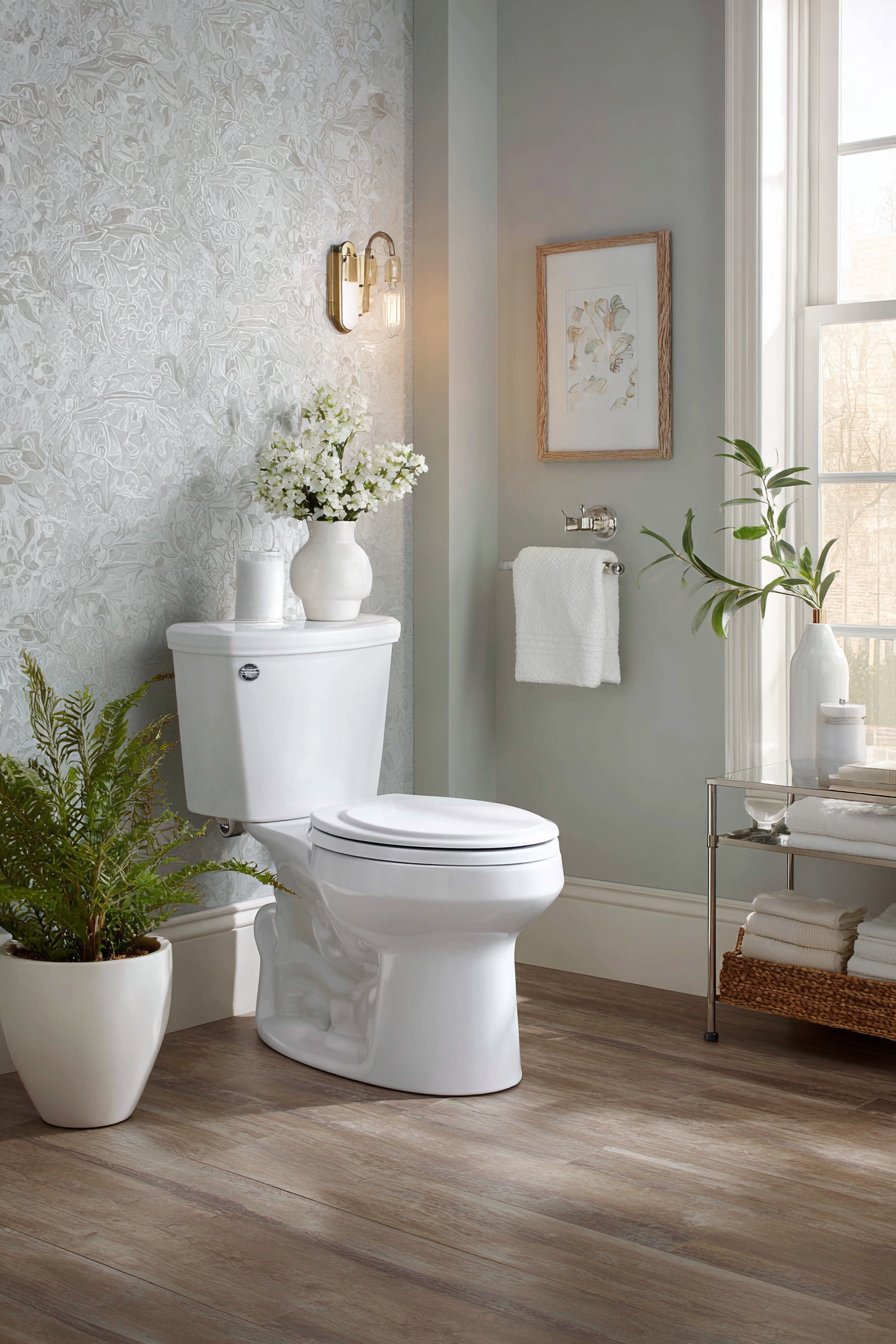
Vinyl plank flooring in wood-look finish provides a durable, water-resistant surface that mimics the appearance of real wood without the cost or maintenance concerns. An LED bulb in the existing fixture ensures good lighting while reducing energy costs, demonstrating how small upgrades can provide both immediate improvement and ongoing savings. Photography shows how strategic cosmetic updates create a fresh look on a limited budget, proving that beautiful bathrooms don’t require extensive renovations or luxury materials.
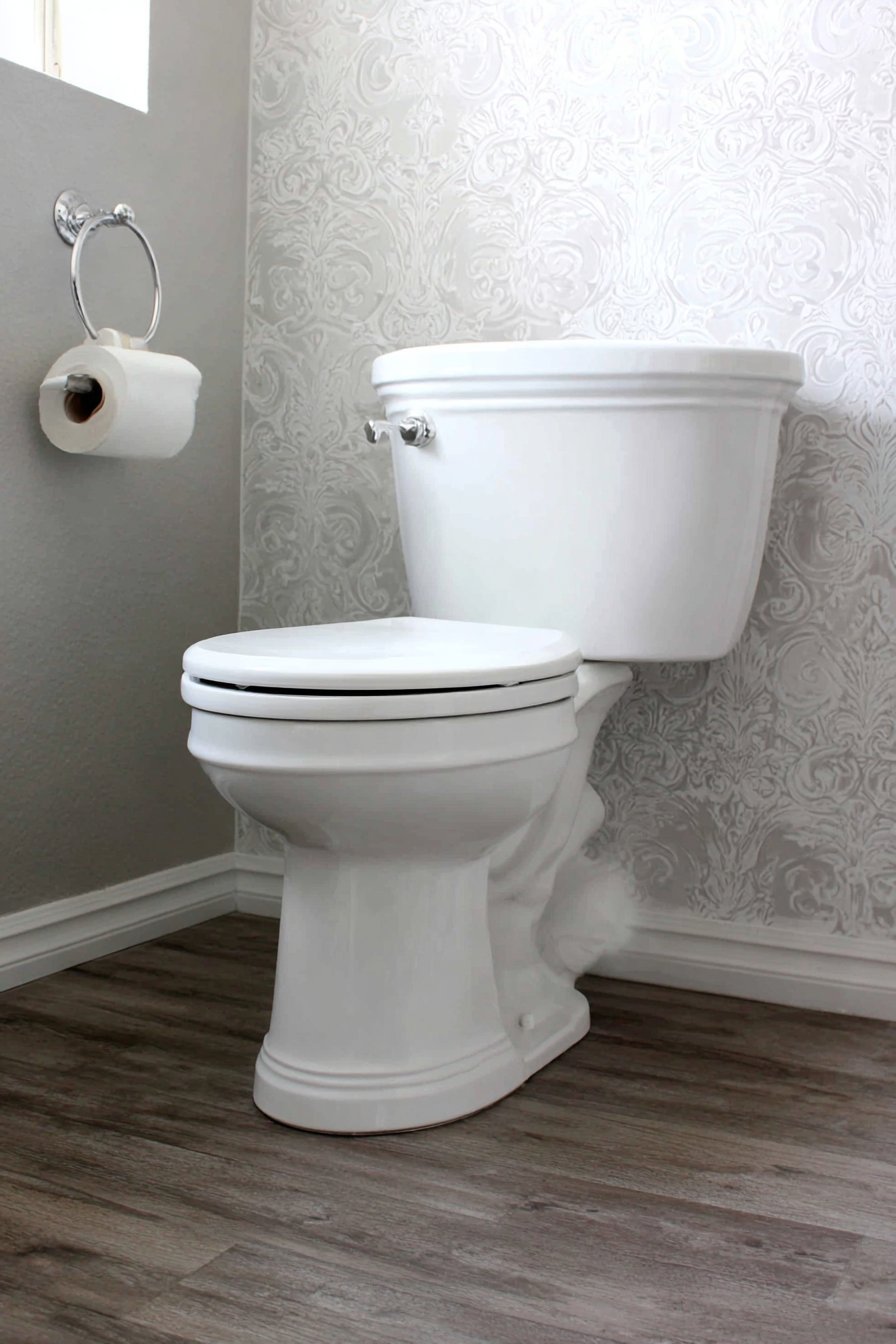
This design approach appeals to renters, first-time homeowners, or anyone who wants to improve their space without significant investment. The key lies in identifying high-impact, low-cost changes—updating wall surfaces, improving lighting, replacing small fixtures—that transform the space without requiring professional installation or permanent alterations. Budget-friendly design succeeds when it focuses resources on visible, impactful elements while accepting and working with existing features that function adequately.
Key Design Tips:
- Use peel-and-stick wallpapers for high-impact wall updates without permanent commitment
- Install vinyl plank flooring for water-resistant, affordable wood-look surfaces
- Replace only small fixtures and hardware for cost-effective visual refresh
- Upgrade to LED bulbs for better light quality and reduced energy costs
- Focus improvements on most visible elements for maximum impact per dollar spent
19. Dual Toilet Master Bathroom Luxury
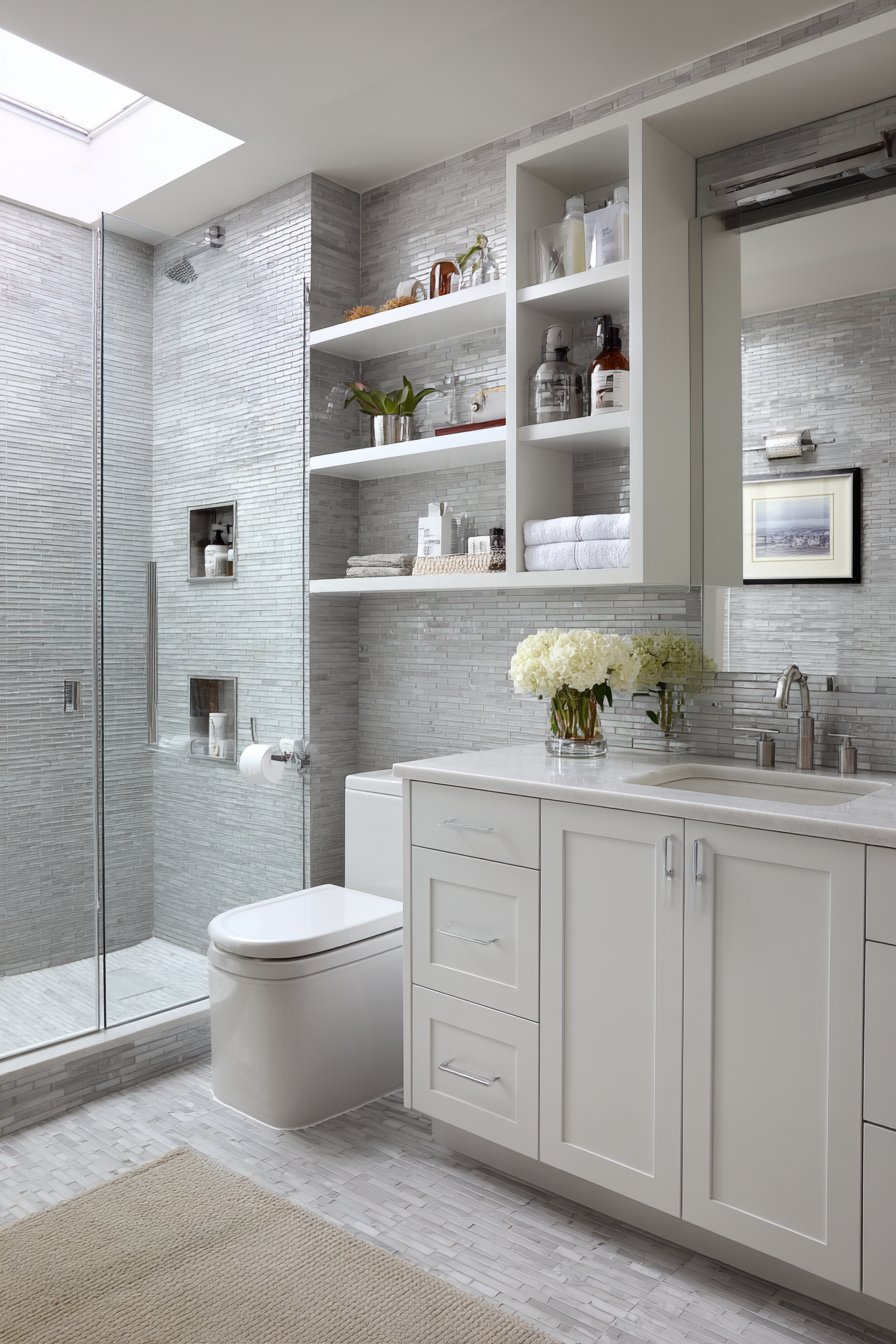
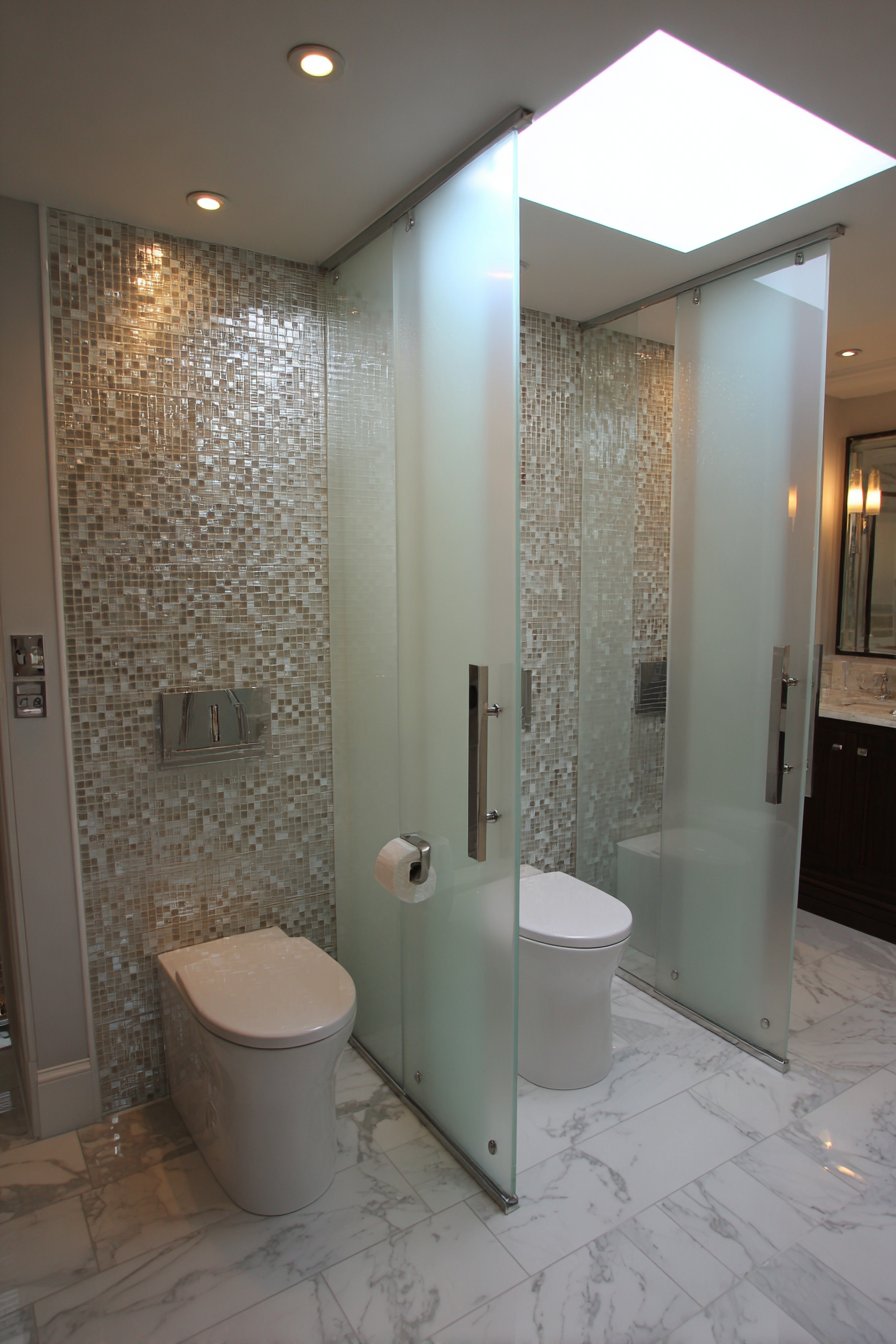
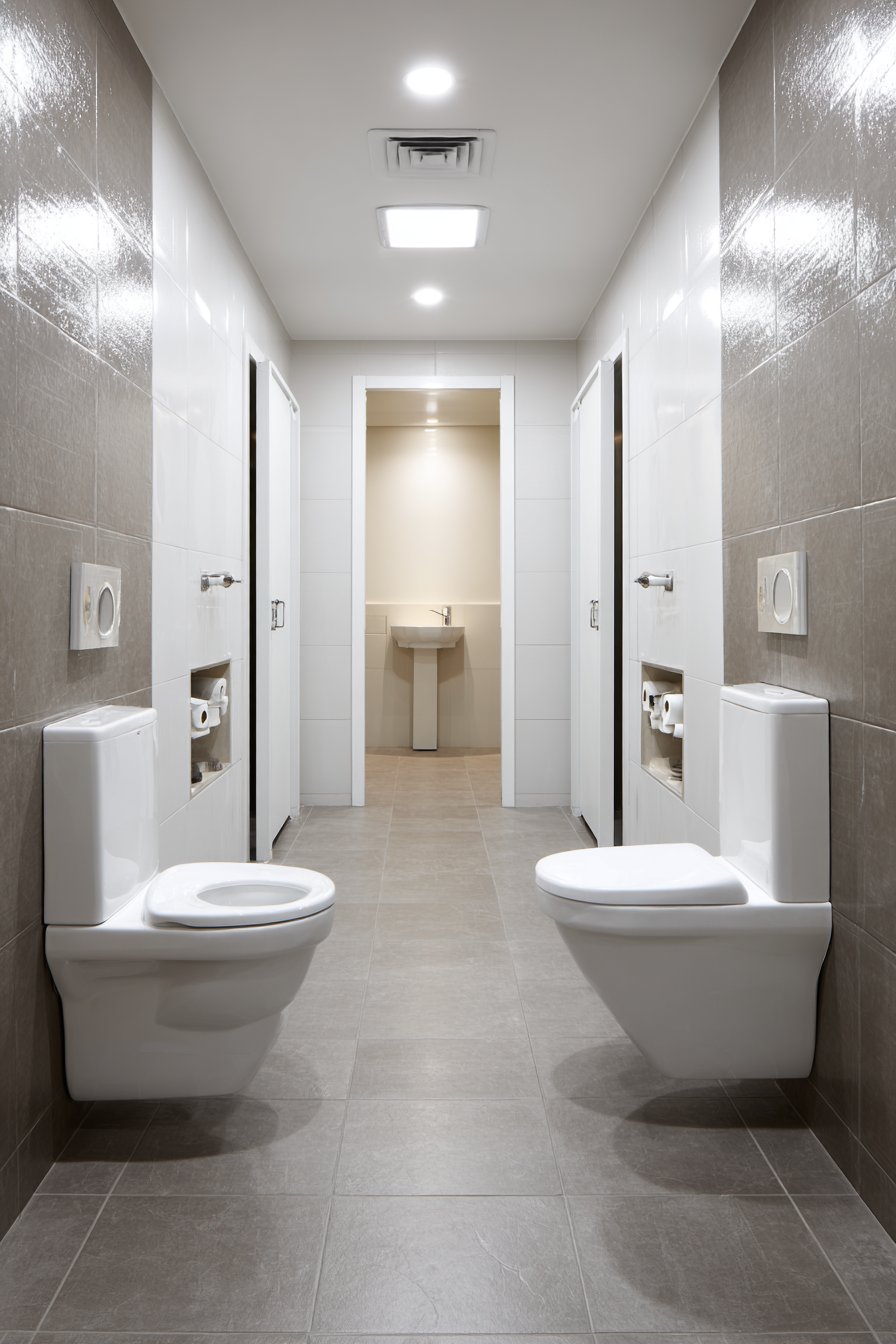
The double toilet design for master bathrooms addresses the practical needs of busy households while maintaining appropriate privacy and aesthetic appeal. Two wall-hung toilets with a privacy partition in frosted glass between them provide simultaneous access without sacrificing individual privacy. Matching grey porcelain wall tiles and white fixtures create a cohesive look that treats the dual toilets as intentional design elements rather than awkward necessities. Individual toilet paper holders and small storage niches for each position ensure both function and fairness.
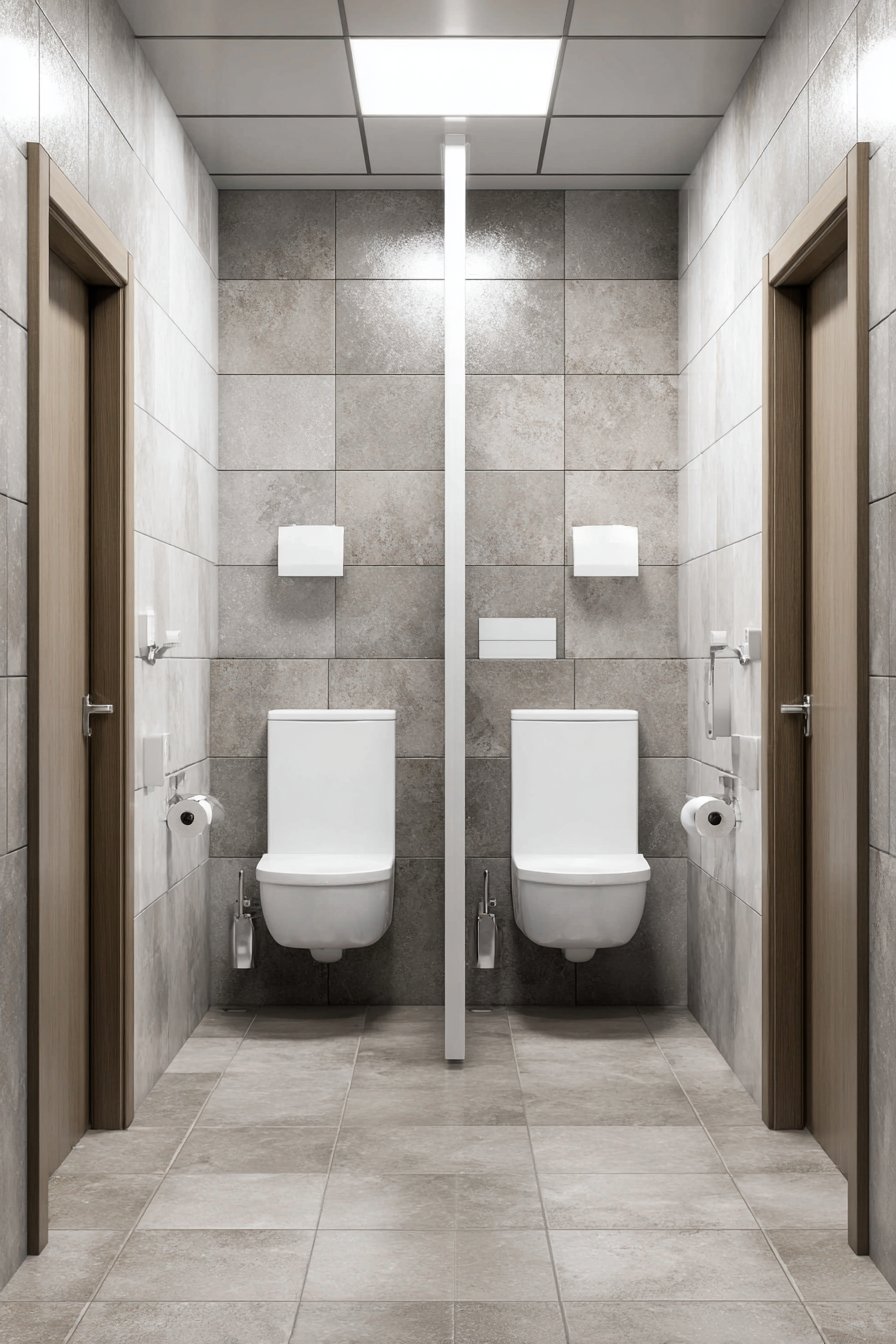
Natural light from a skylight provides bright, shadow-free illumination that benefits both positions equally, while the overhead position maintains privacy from exterior views. Wide-angle photography captures the practical luxury of dual toilet configuration, demonstrating how thoughtful planning addresses real-world needs without compromising beauty or comfort. This design recognizes that modern master bathrooms serve as complete personal care suites, requiring multiple fixtures that can be used simultaneously during busy morning and evening routines.
This approach appeals to couples, families with children, or anyone who has experienced the frustration of single-toilet master bathrooms during rushed mornings. The key lies in treating the dual configuration as an intentional design element rather than an afterthought, with careful attention to spacing, privacy, lighting, and material coordination. Dual toilet design succeeds when it provides genuine functionality without feeling clinical or institutional, maintaining the comfort and beauty expected in master bathroom suites.
Key Design Tips:
- Install wall-hung toilets to maximize floor space in dual configurations
- Add frosted glass partitions for privacy without visual weight or claustrophobia
- Use matching tiles and fixtures for cohesive, intentional appearance
- Provide individual accessories and storage for each toilet position
- Install skylights for natural illumination that maintains exterior privacy
20. Transitional Design Balance
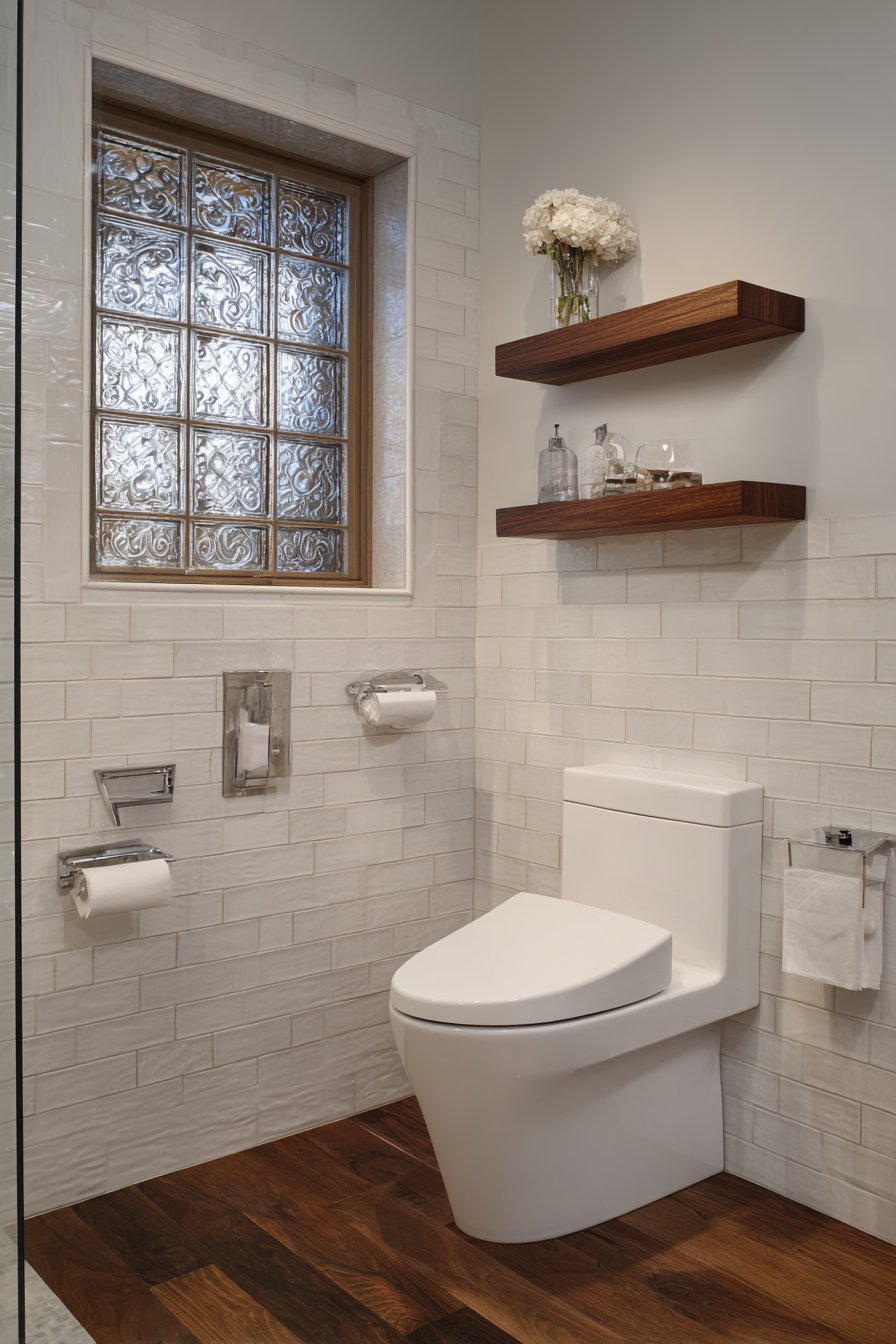
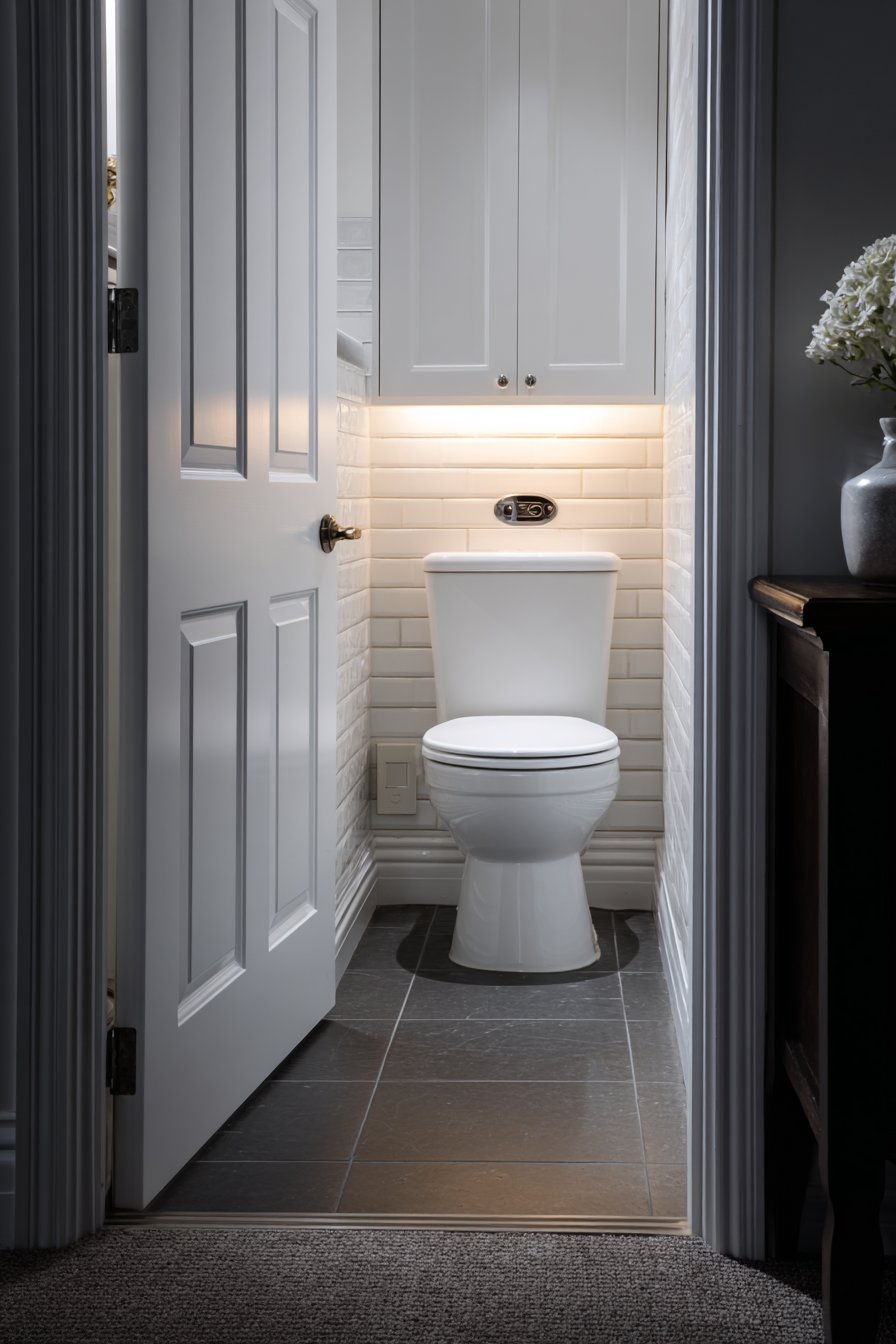
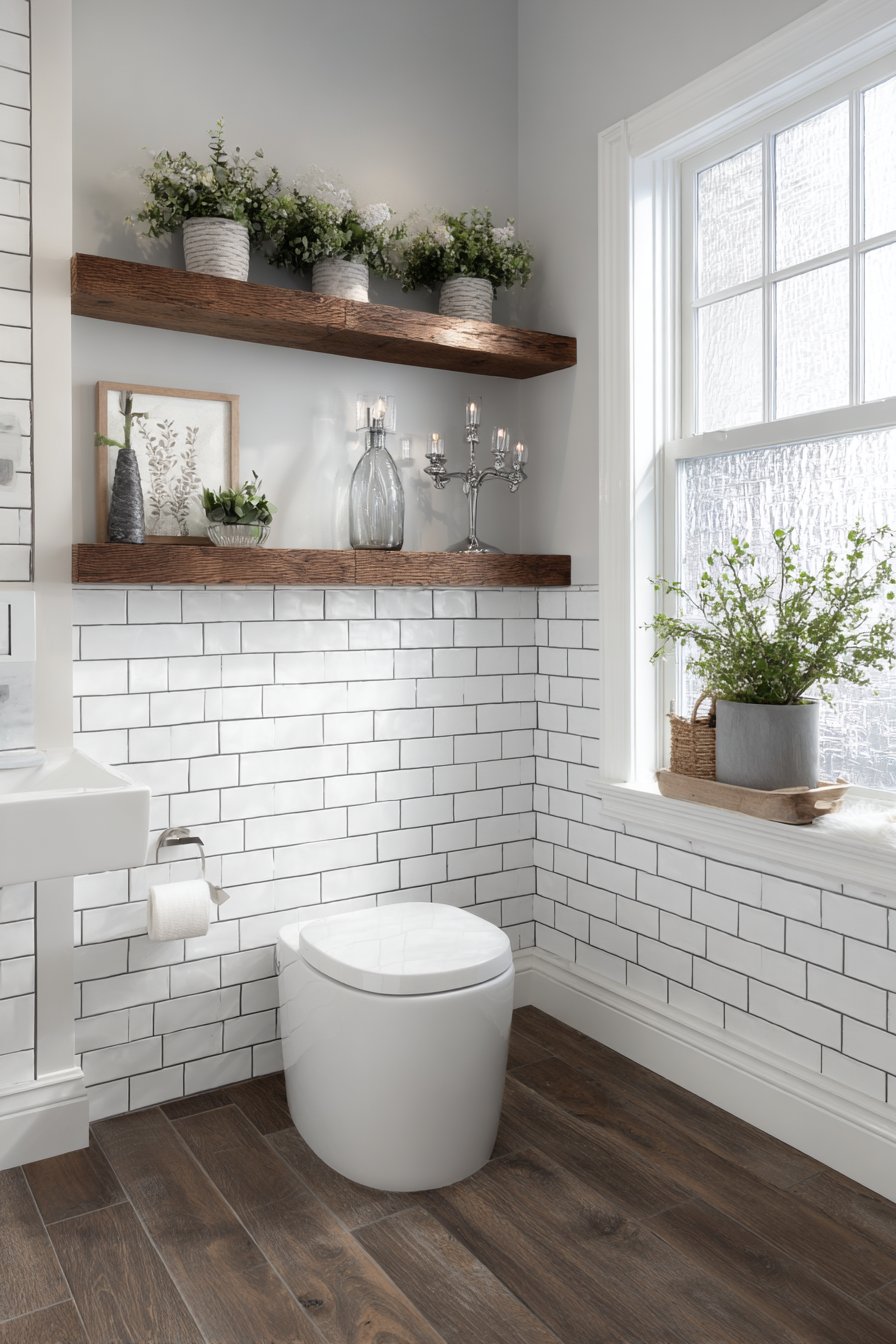
The transitional toilet design successfully bridges traditional and contemporary aesthetics, creating spaces that feel neither dated nor cold. A one-piece toilet in soft white features clean modern lines that avoid both ornate traditional detailing and stark contemporary minimalism. The bathroom combines classic white subway tiles with trendy grey grout, updating a traditional material with contemporary color choices. Modern chrome fixtures provide bright, clean accents that lean contemporary without rejecting traditional polish and shine.
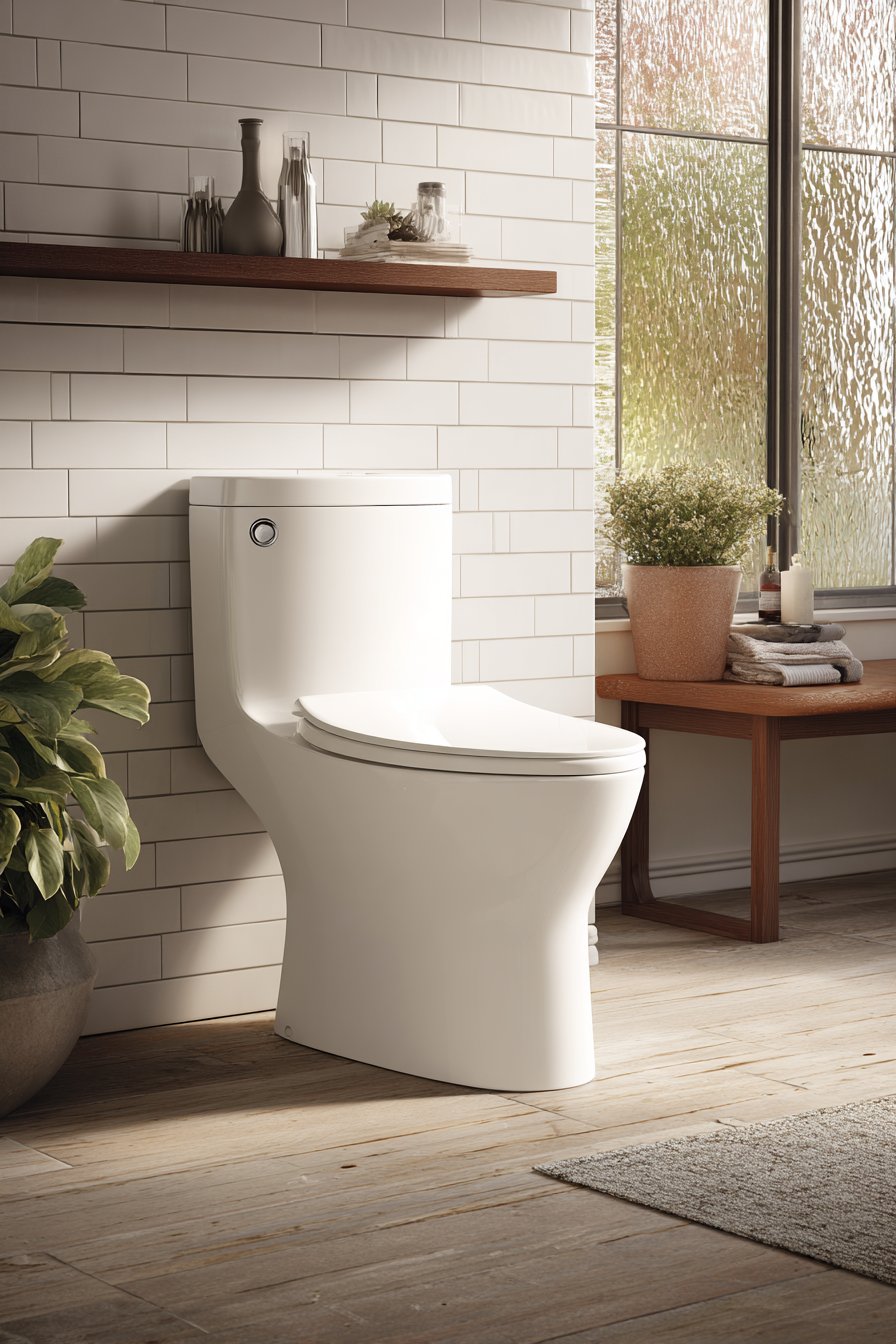
A floating wood shelf in medium walnut tone adds warmth and organic texture, its suspended form reading as contemporary while its wood material maintains traditional warmth. Natural light through textured glass window creates soft glow while maintaining privacy, the translucent glass suggesting contemporary sensibility while the window form remains traditionally scaled and positioned. Interior photography balances timeless appeal with current design trends, capturing how transitional design takes the best elements from both traditional and contemporary aesthetics.
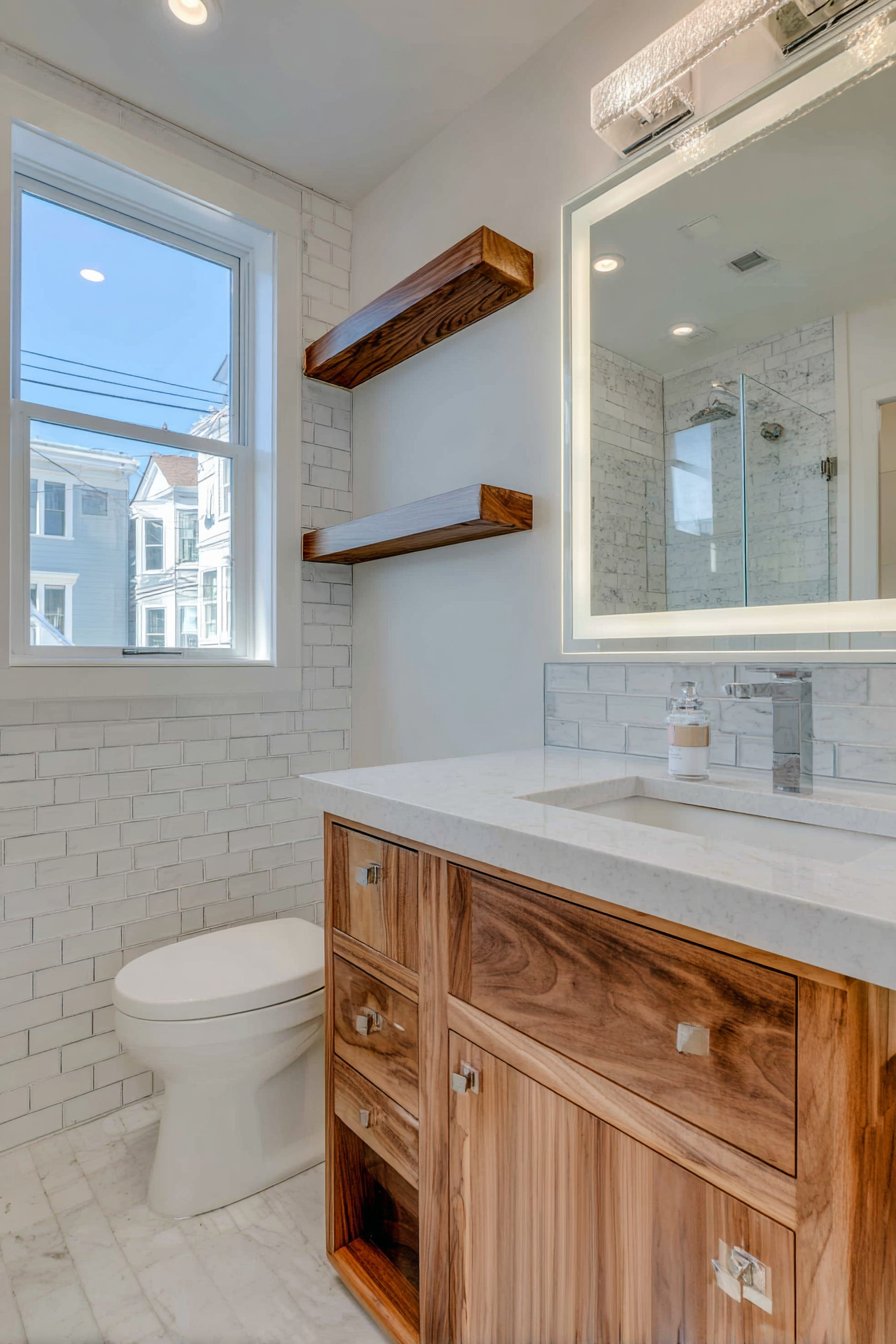
This design approach has become enormously popular because it appeals to broad audiences and ages gracefully. By avoiding the extremes of either purely traditional or purely contemporary design, transitional spaces remain relevant through changing trends. The key lies in selecting elements that work together despite coming from different aesthetic traditions—classic materials in contemporary colors, modern forms in traditional materials, updated proportions with familiar elements.
Key Design Tips:
- Choose one-piece toilets with clean lines that avoid both ornate and stark extremes
- Update classic materials with contemporary colors like grey grout on white subway tile
- Add floating wood shelves for warmth that reads as contemporary
- Use chrome fixtures for bright accents that bridge traditional and modern
- Install textured glass windows for privacy with contemporary translucent quality
21. Compact Powder Room Solutions
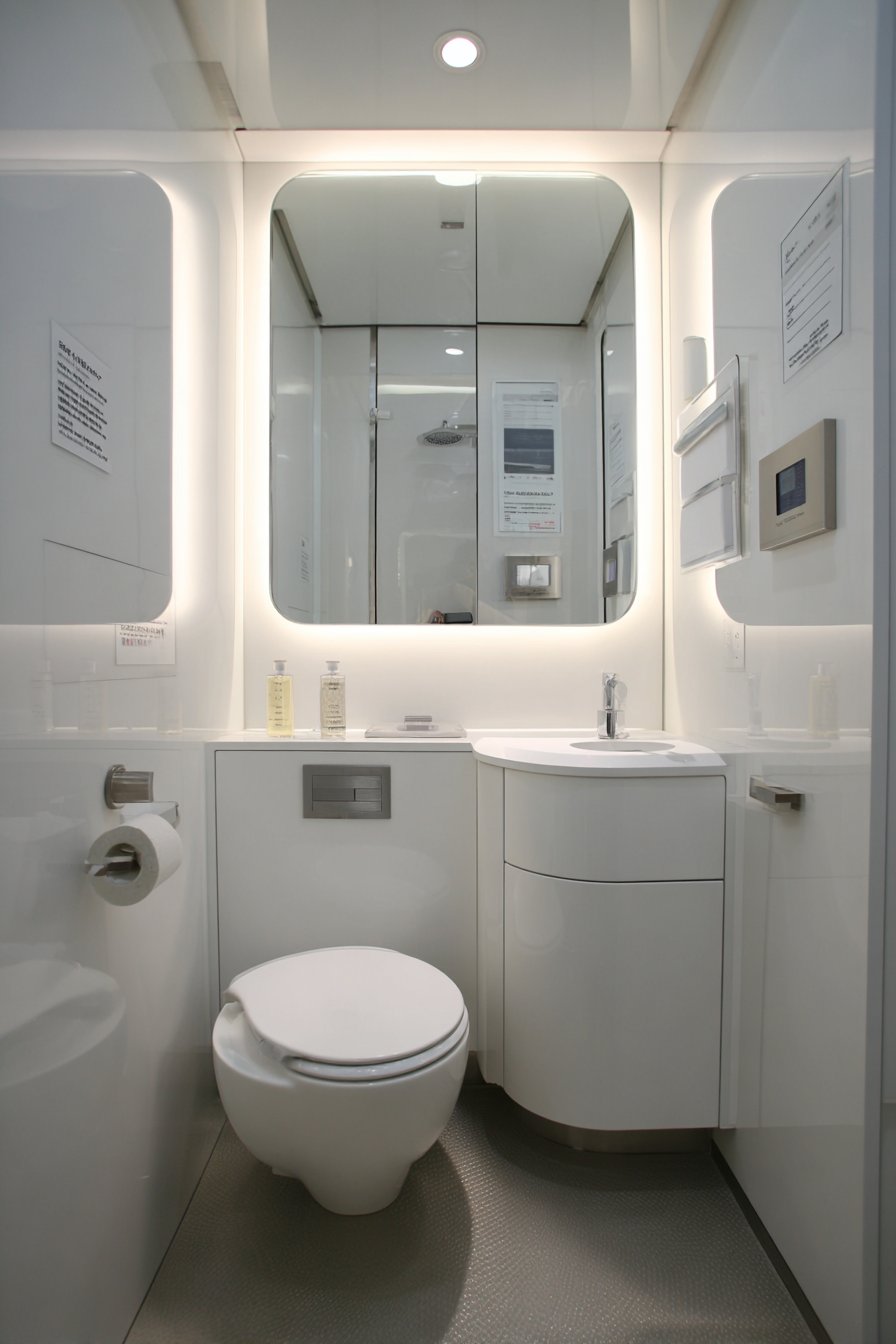
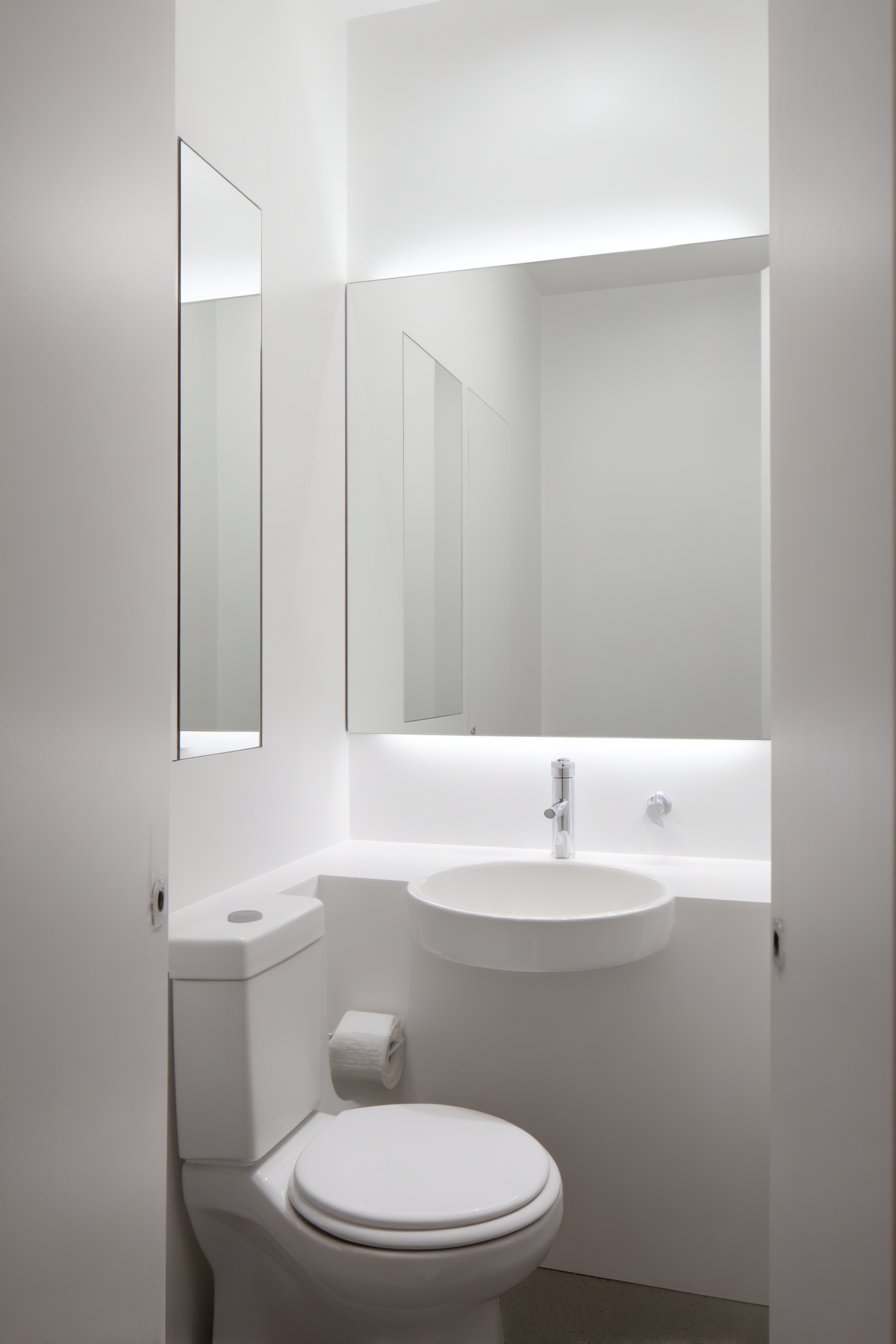
The compact powder room toilet design demonstrates how intelligent planning maximizes limited space without sacrificing style or function. A round-bowl toilet positioned efficiently in a minimal footprint leaves precious floor space available for circulation. Light-reflecting white walls and a large mirror create the illusion of openness, using psychological tricks to make the small space feel larger than its actual dimensions. A wall-mounted toilet paper holder and corner sink optimize every available inch, their placement carefully considered to avoid interference while maintaining access.
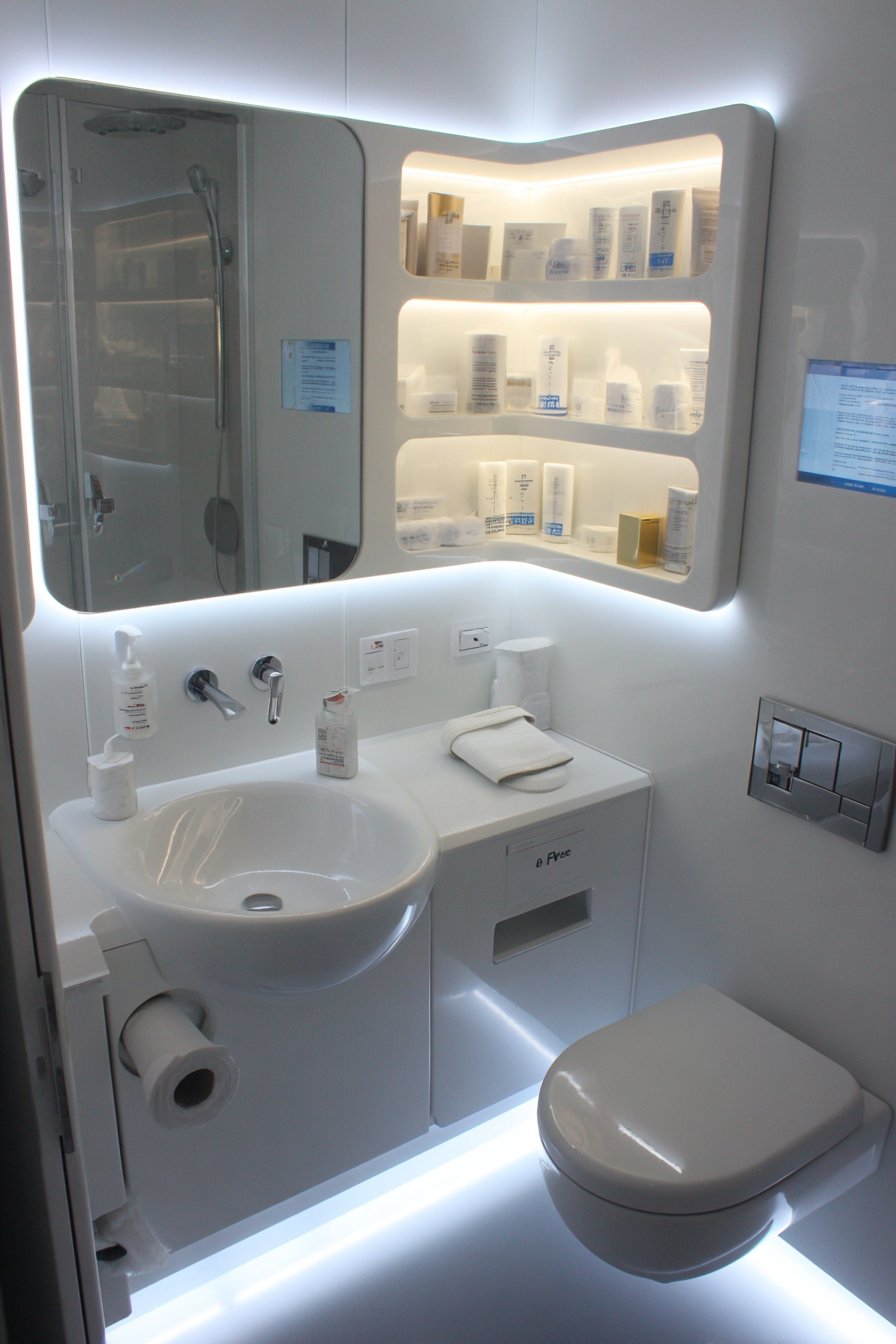
Recessed medicine cabinet provides hidden storage that doesn’t project into the limited space, keeping toiletries and necessities accessible without visual clutter. Bright LED lighting eliminates shadows that could make the small space feel dark or cramped, while the white surfaces reflect and multiply the light throughout the space. Photography demonstrates smart spatial planning and visual expansion techniques, showing how constraint can inspire creativity and innovation.
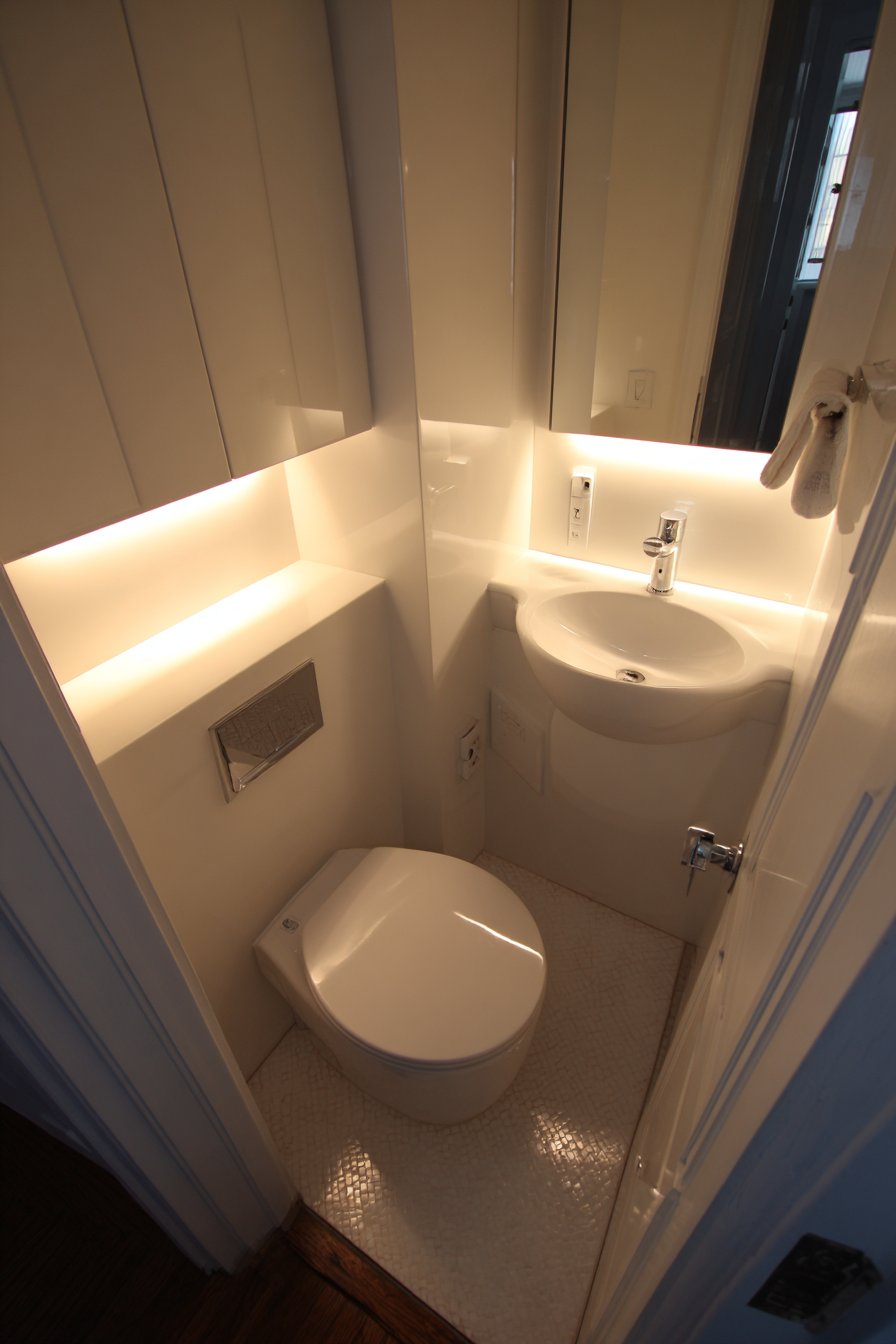
This design approach addresses the reality that many homes include small powder rooms that challenge even experienced designers. The key lies in prioritizing essentials, using light and reflection strategically, and selecting appropriately scaled fixtures that don’t overwhelm the space. Compact powder room design succeeds when it feels comfortable and complete rather than cramped and compromised, proving that small spaces can be both functional and beautiful.
Key Design Tips:
- Select round-bowl toilets for more compact footprint in tight spaces
- Paint walls bright white to reflect light and create visual spaciousness
- Install large mirrors to psychologically expand perceived space
- Use recessed storage to keep necessities accessible without protruding into room
- Provide bright LED lighting to eliminate shadows and enhance white surfaces
22. Biophilic Nature Connection
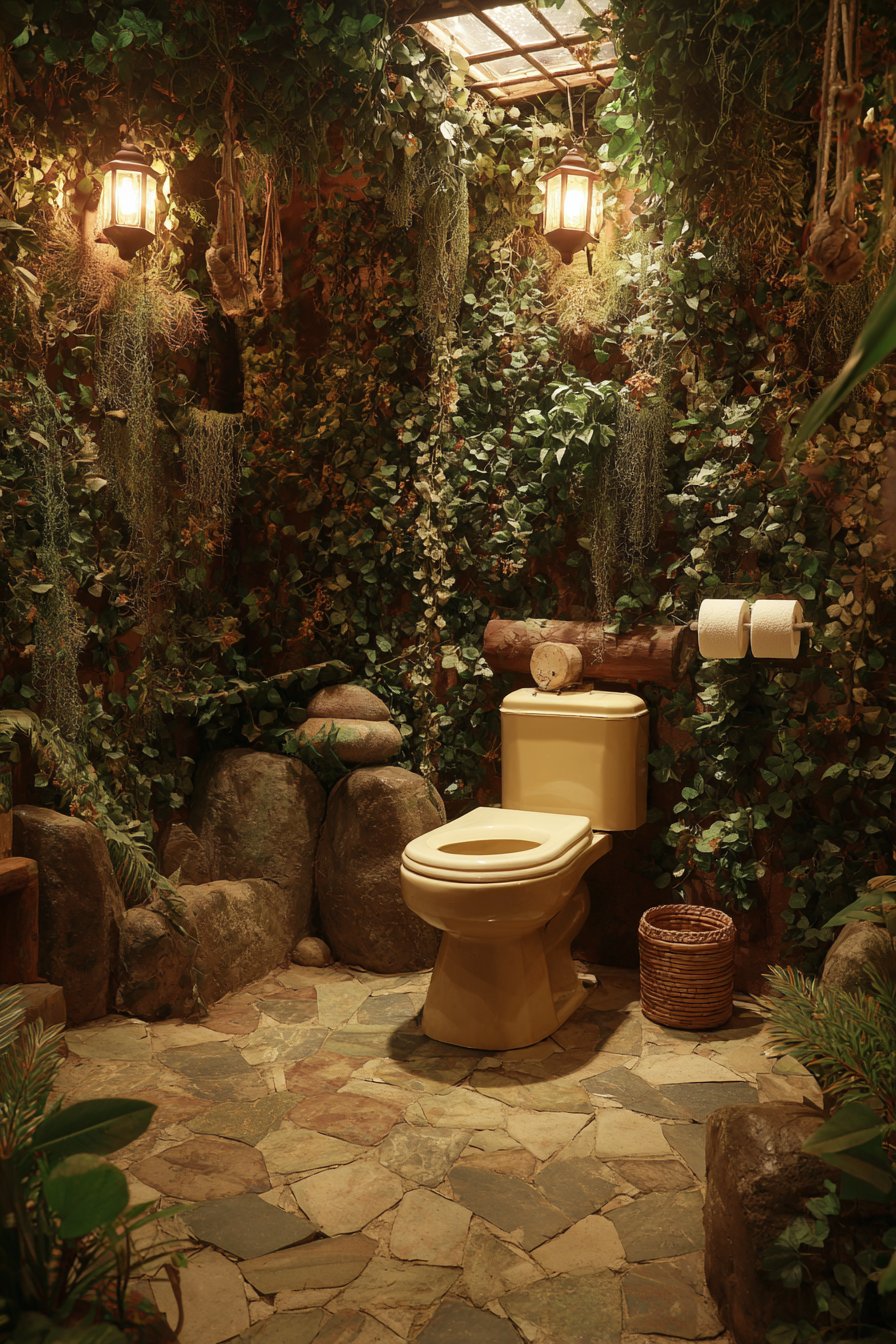
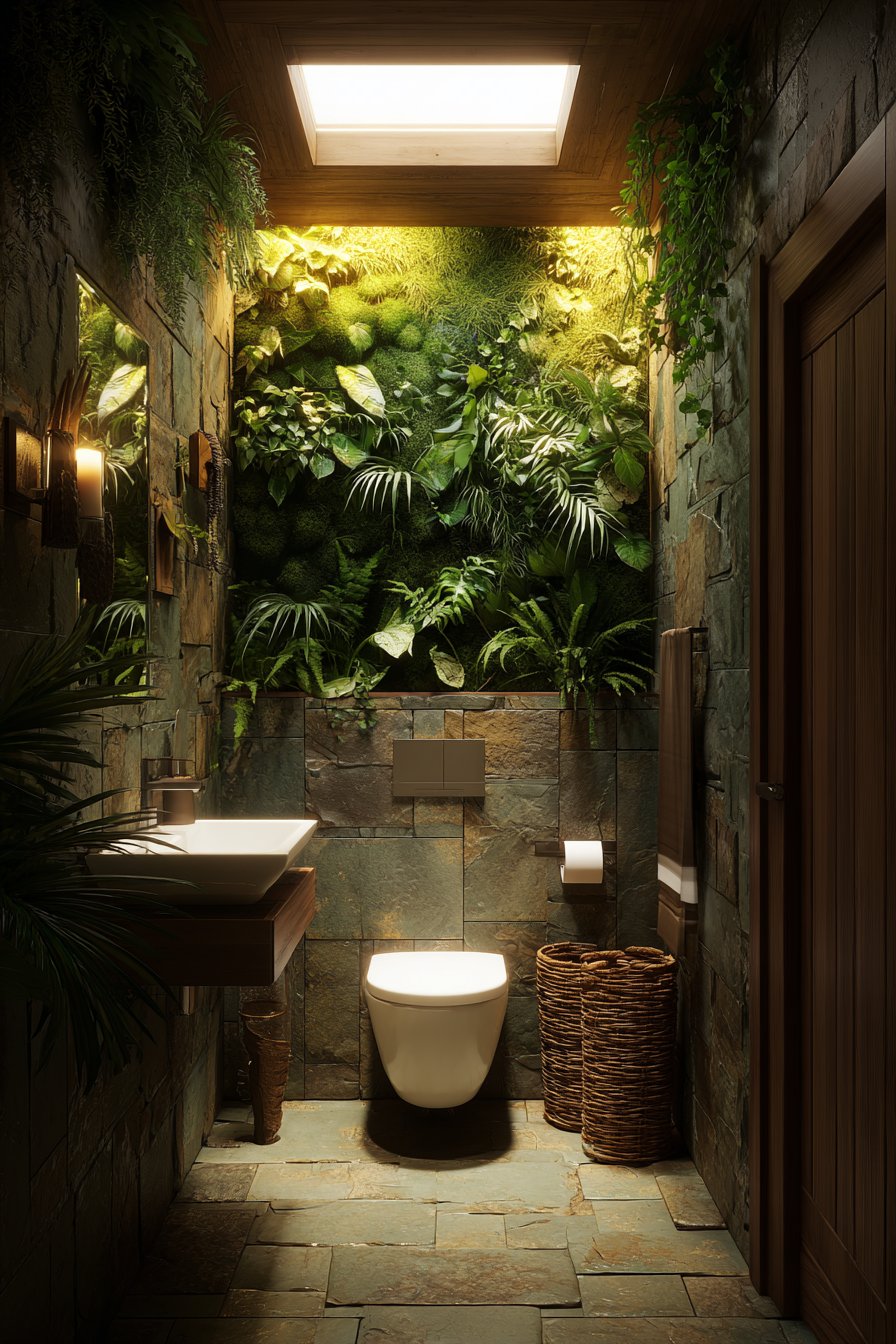
The nature-inspired toilet design embraces biophilic principles, creating a bathroom environment that maintains strong connection to the natural world. A standard toilet sits within a bathroom featuring a living plant wall behind it, creating a lush green backdrop that brings nature directly into the space. Natural stone floor tiles and wooden accents reinforce the organic theme, their varied textures and warm tones echoing materials found in natural settings. A skylight provides natural illumination for both the plants and the space, connecting interior and exterior through light and supporting the plants’ biological needs.
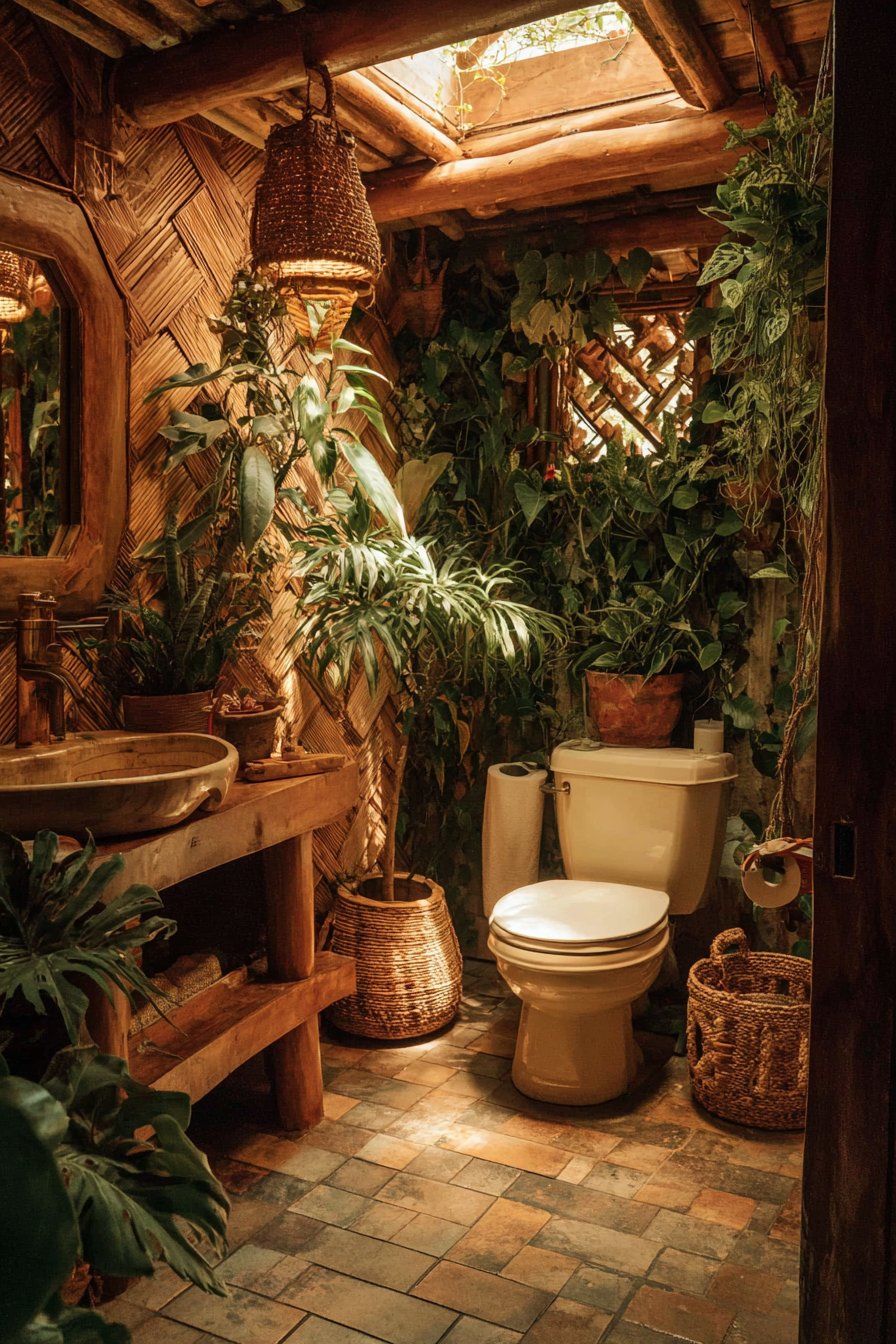
Bamboo toilet paper holder and woven storage basket add sustainable materials while maintaining the natural aesthetic, their organic forms and renewable sources aligning with environmental values. Interior photography captures biophilic design principles and connection to nature, demonstrating how bringing living elements into bathrooms transforms them from purely functional spaces into environments that support wellbeing and reduce stress. The presence of living plants improves air quality, adds oxygen, and creates dynamic visual interest that changes with growth and seasons.
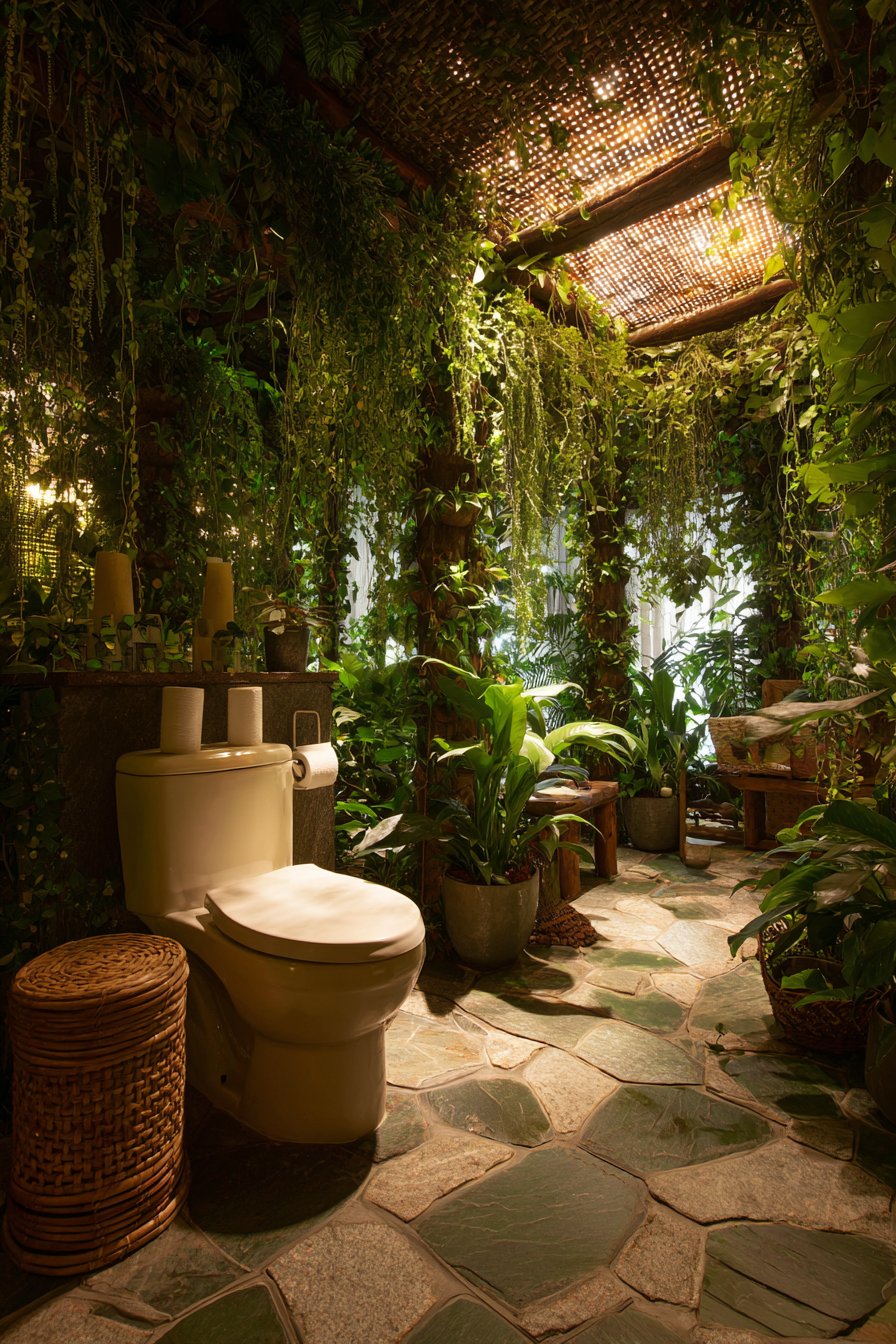
This design approach appeals to those who understand the psychological and physical benefits of maintaining connection to nature, particularly in urban environments where such connection may be limited. Biophilic design recognizes that humans evolved in natural settings and that we remain more comfortable, healthy, and happy when our built environments include natural elements. This toilet design demonstrates how even small bathrooms can incorporate meaningful natural connections through living plants, natural materials, and generous natural light.
Key Design Tips:
- Create living plant walls to bring nature directly into bathroom spaces
- Select natural stone flooring for organic texture and connection to earth
- Install skylights to provide natural light for plants and create indoor-outdoor connection
- Choose bamboo and other sustainable materials for accessories and storage
- Add wooden accents to introduce warmth and organic texture
23. Ultimate Spa Technology
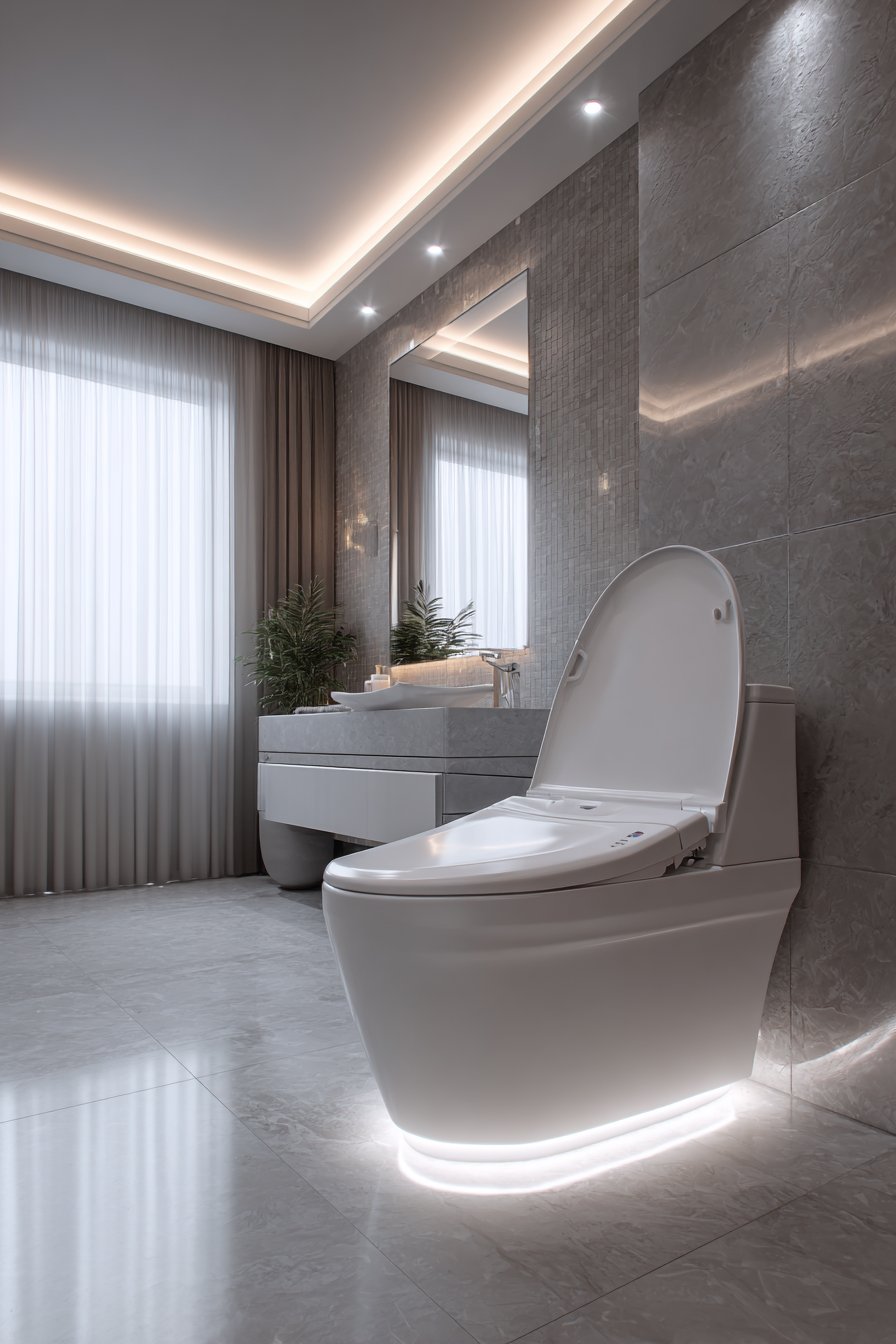
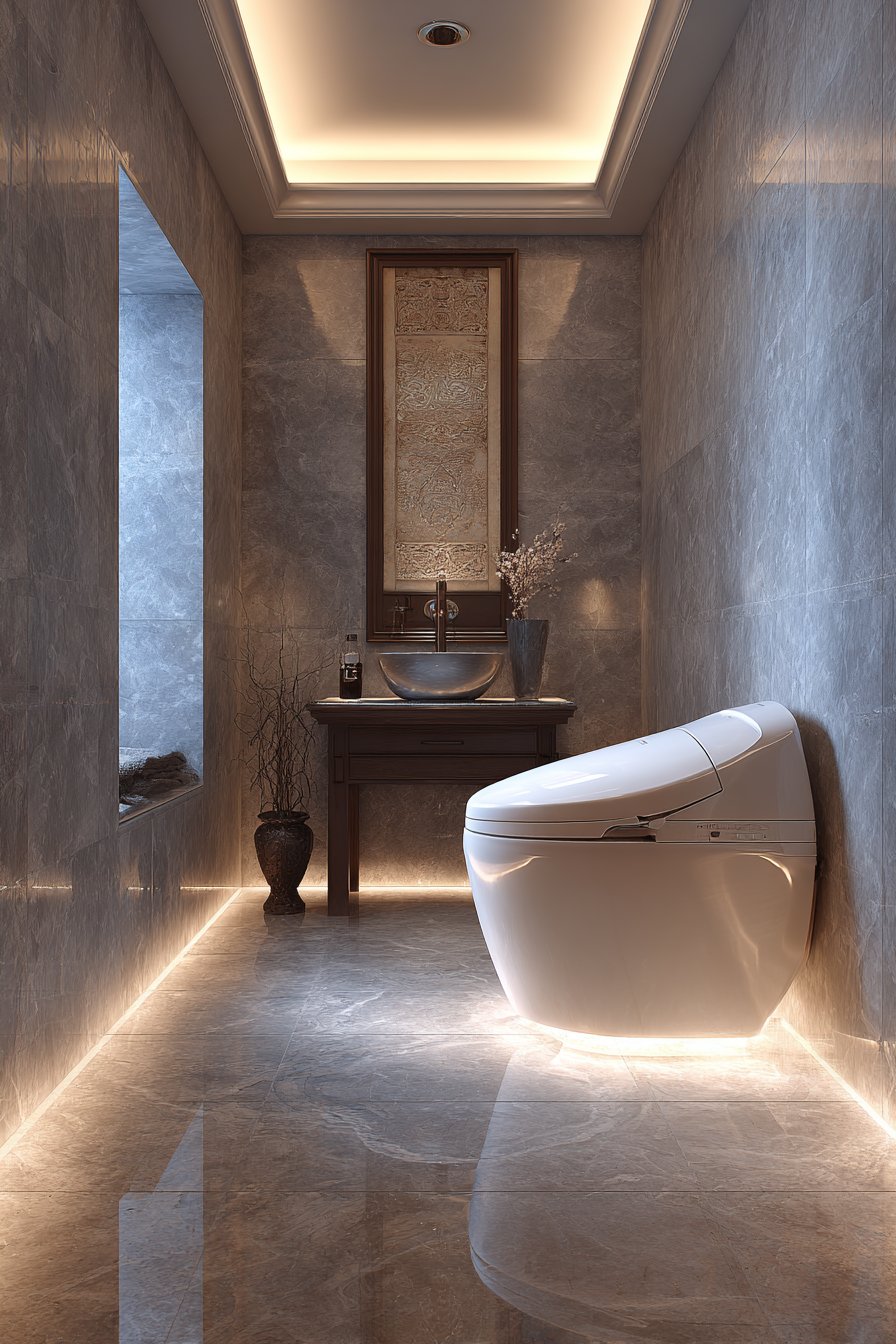
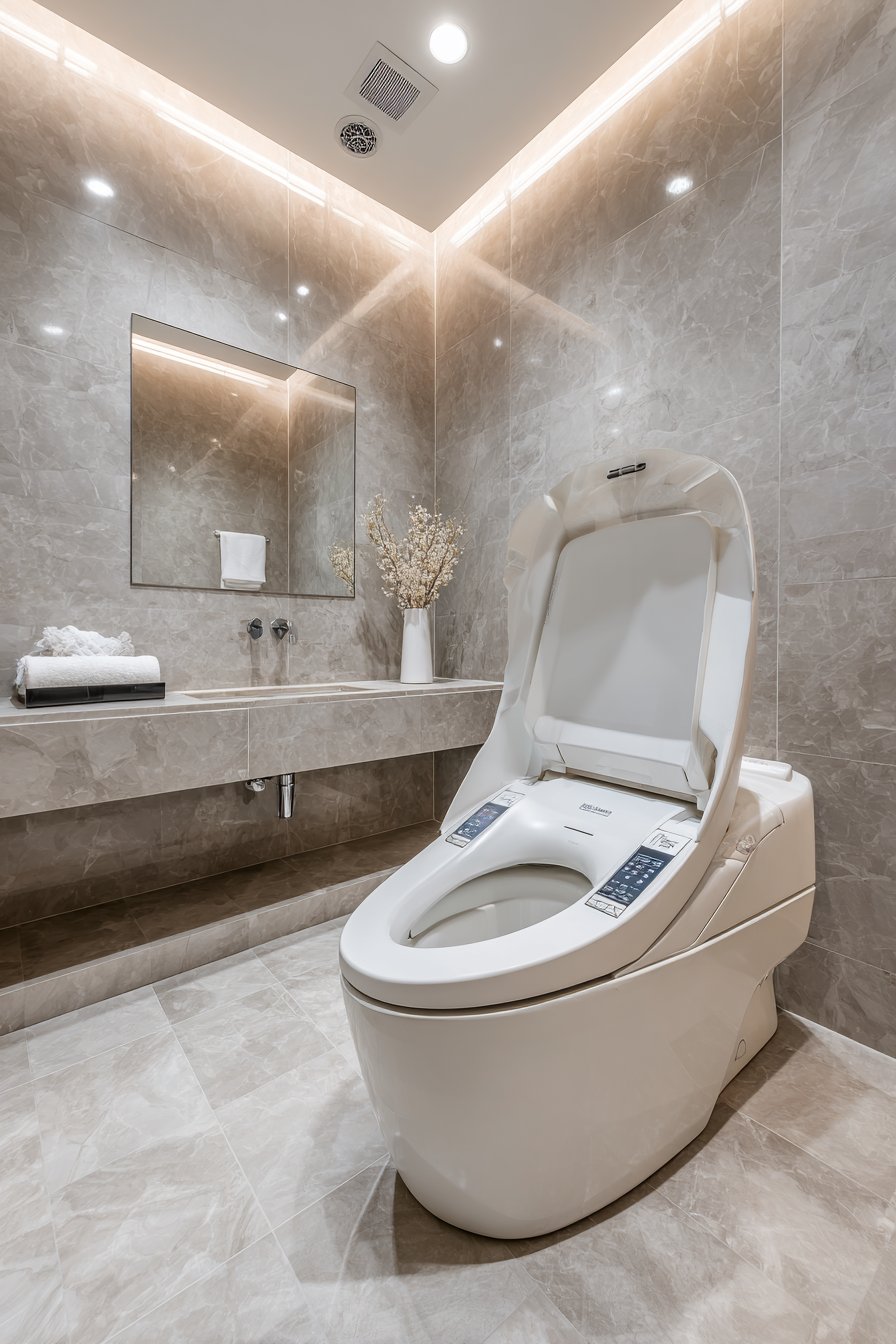
The luxury spa toilet design represents the pinnacle of bathroom technology and material excellence. A high-end intelligent toilet with automatic opening lid, heated seat, air dryer, and deodorizer transforms daily routines into pampered experiences. Floor-to-ceiling marble slabs in soft grey create an elegant backdrop that speaks to luxury and permanence, their book-matched veining creating symmetrical patterns that add formal elegance. Indirect LED lighting in ceiling cove provides gentle ambient glow that enhances the marble’s depth and variation while creating the soft, flattering light characteristic of high-end spa environments.
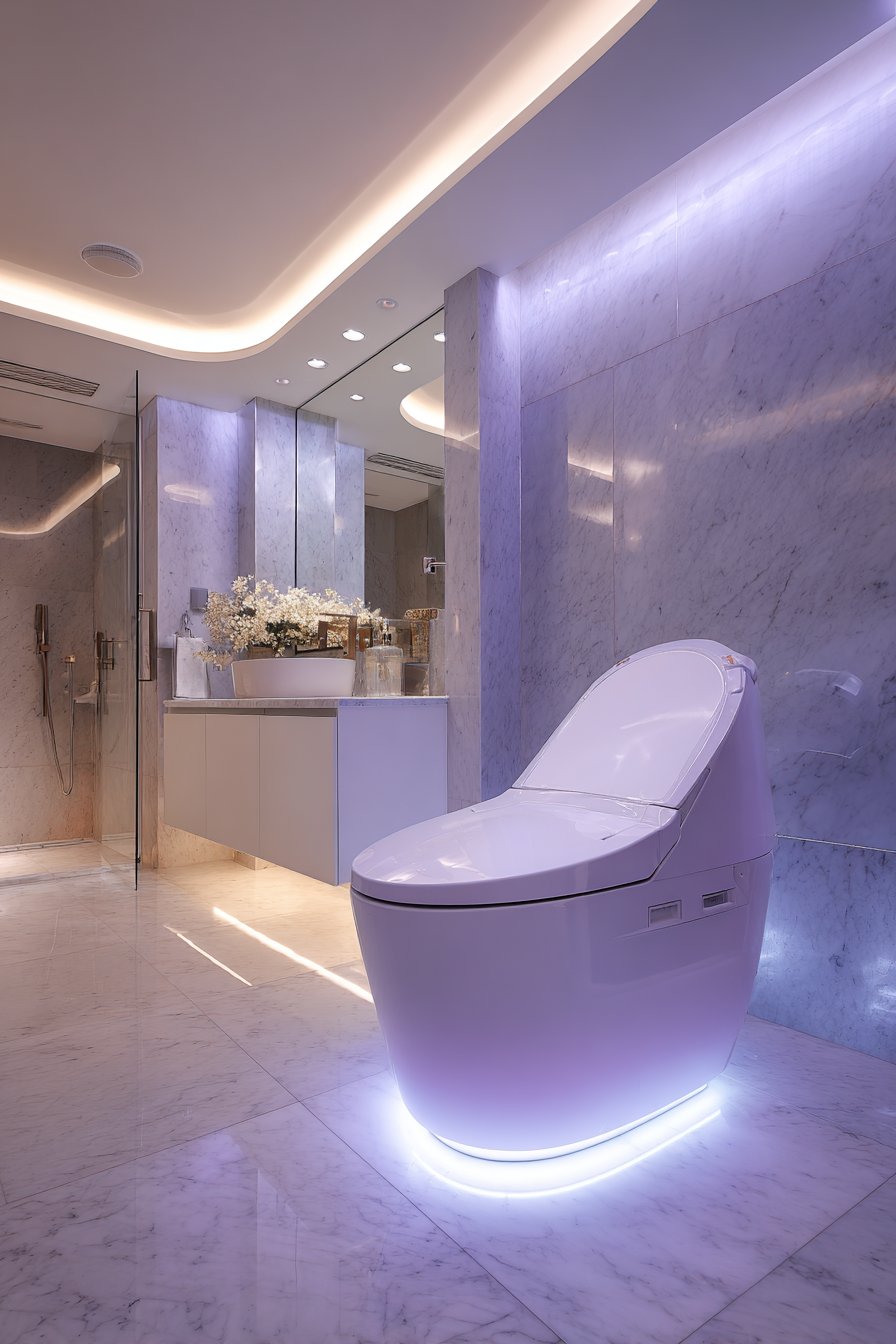
Heated marble floors add comfort while maintaining material continuity, ensuring that luxury extends from visual experience to tactile sensation. Professional photography emphasizes the ultimate in bathroom technology and material luxury, capturing how the most advanced features can be integrated into spaces of serene beauty rather than clinical functionality. Every element works together to create an environment where daily necessities become opportunities for self-care and renewal.
This design approach appeals to those who view bathrooms as personal wellness spaces and who appreciate technology that genuinely enhances comfort and hygiene. The investment in both advanced fixtures and premium materials reflects a prioritization of daily quality of life over occasional entertaining or display. Luxury spa design succeeds when technology and materials work together seamlessly, with neither dominating but both contributing to an overall experience of pampered comfort.
Key Design Tips:
- Invest in intelligent toilets with features that genuinely enhance daily comfort
- Use floor-to-ceiling marble slabs for luxurious material continuity
- Install indirect LED lighting for soft, flattering ambient illumination
- Add heated flooring for tactile comfort that matches visual luxury
- Book-match marble slabs for formal elegance and symmetrical visual interest
24. Family-Friendly Kids’ Bathroom
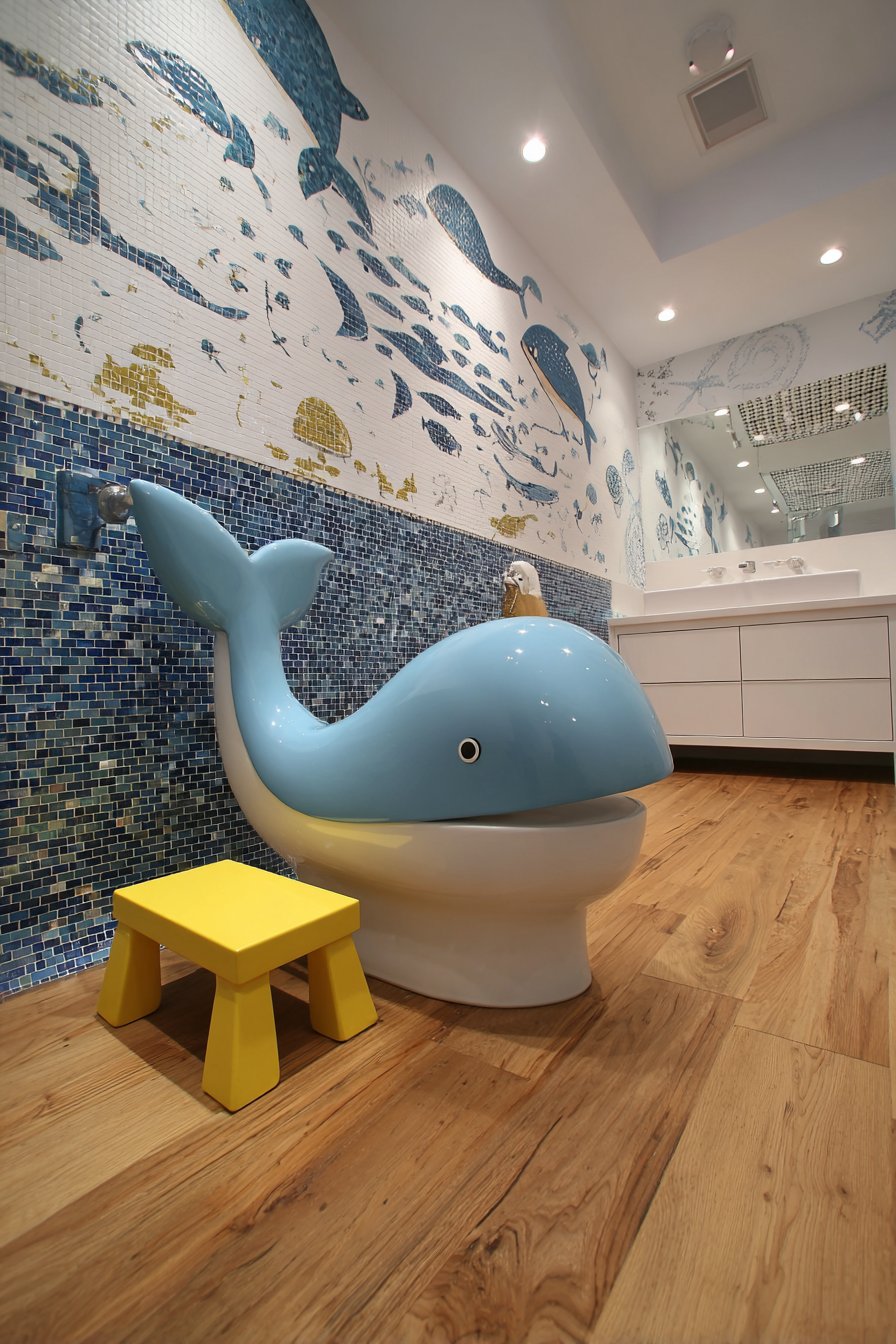
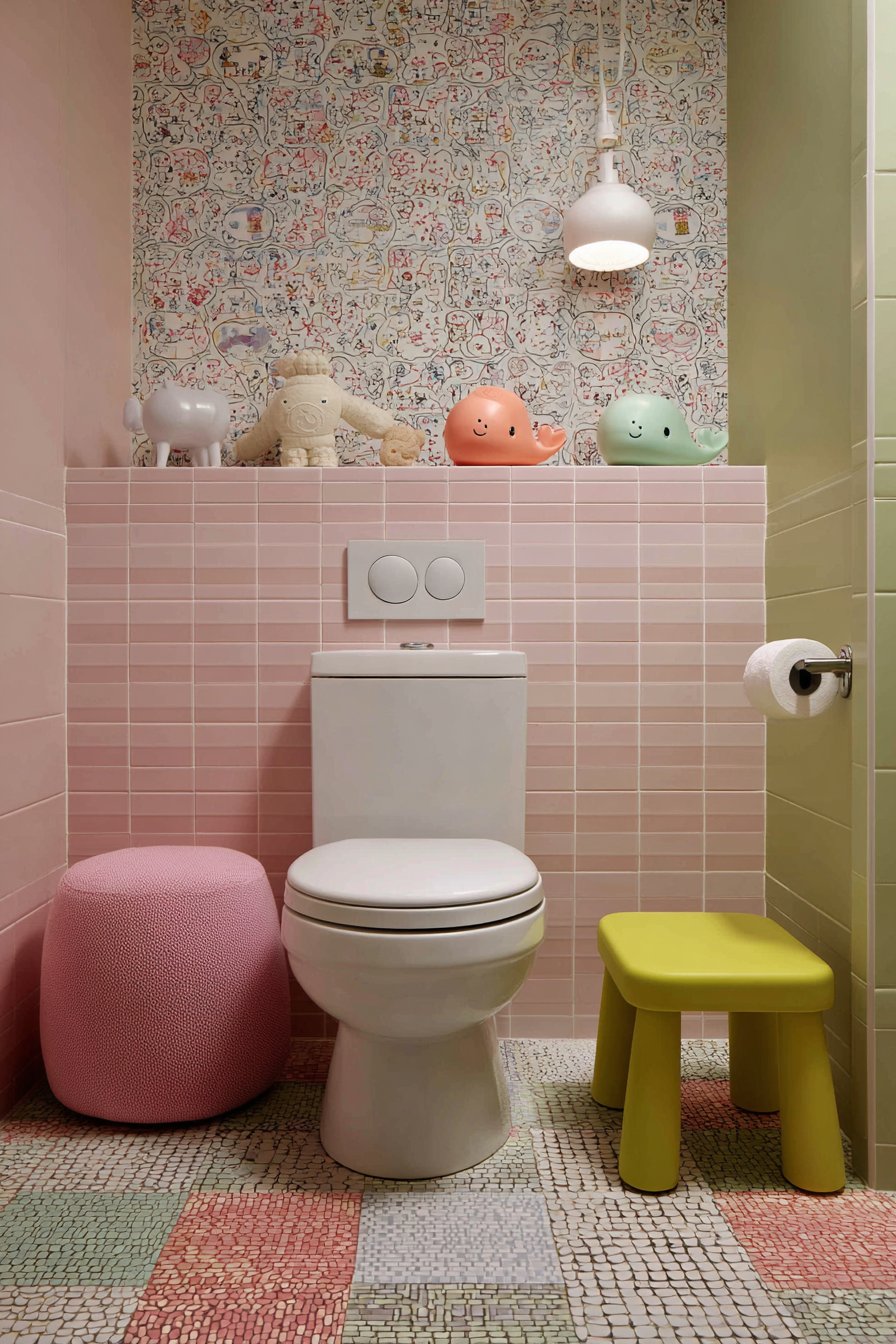
The kids’ bathroom toilet design creates spaces that work for children while growing with them through changing developmental stages. A comfort-height toilet with fun whale-shaped toilet paper holder makes necessary functions more engaging for young children while the toilet height remains appropriate into adolescence. Colorful mosaic tile border positioned at child eye-level adds visual interest where children can appreciate it, creating decoration scaled to young users. A sturdy step stool in bright color provides easy access for small children while its simple form ensures it remains useful for years.
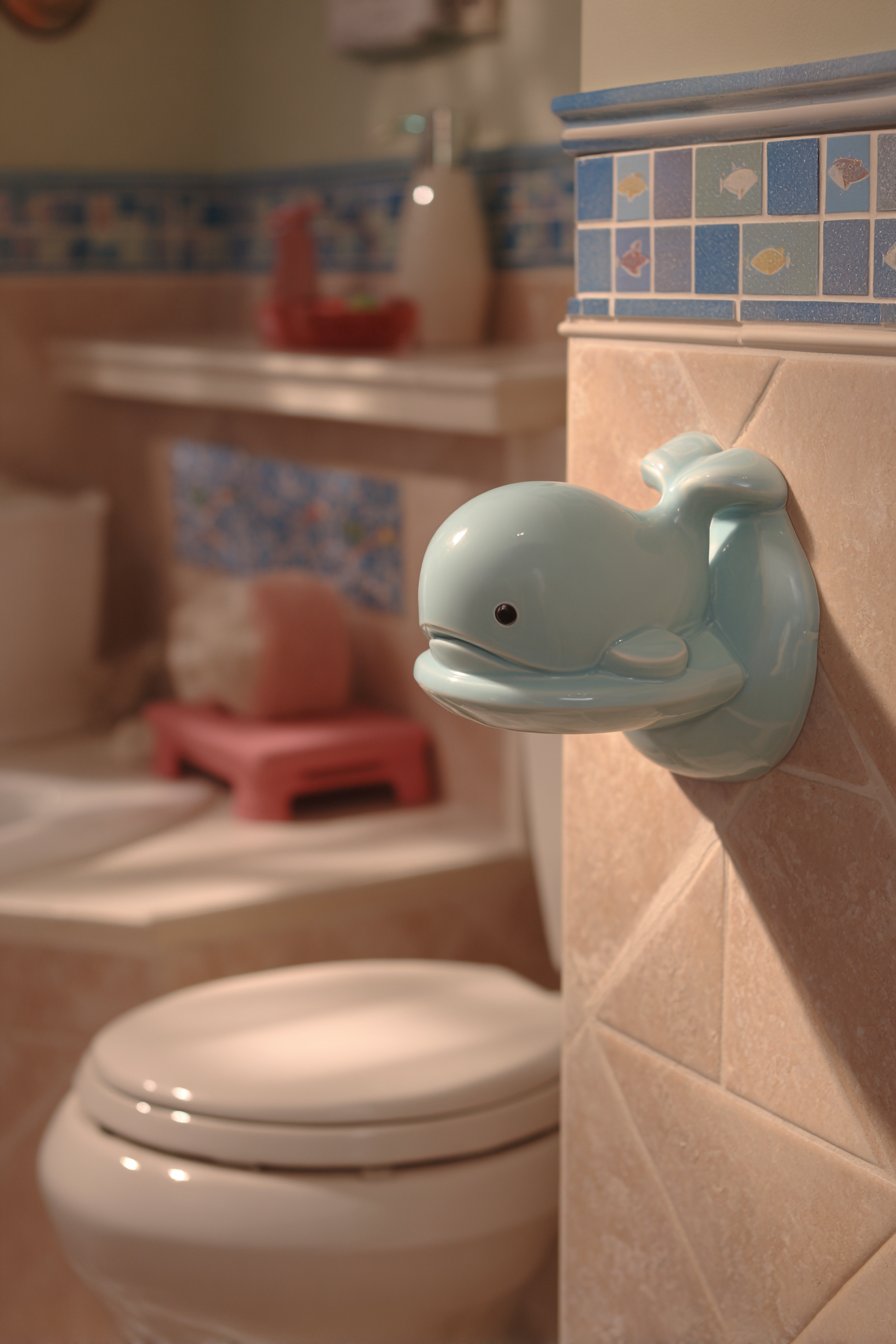
Wipeable vinyl wallpaper with playful pattern adds personality and child-friendly decoration while ensuring easy maintenance when inevitable spills and splashes occur. Excellent task lighting ensures safety during nighttime bathroom visits, while bright colors and cheerful patterns create a welcoming environment that reduces anxiety around bathroom routines. Photography shows family-friendly design that grows with children while maintaining easy maintenance, demonstrating how kid-focused design need not sacrifice durability or practicality.
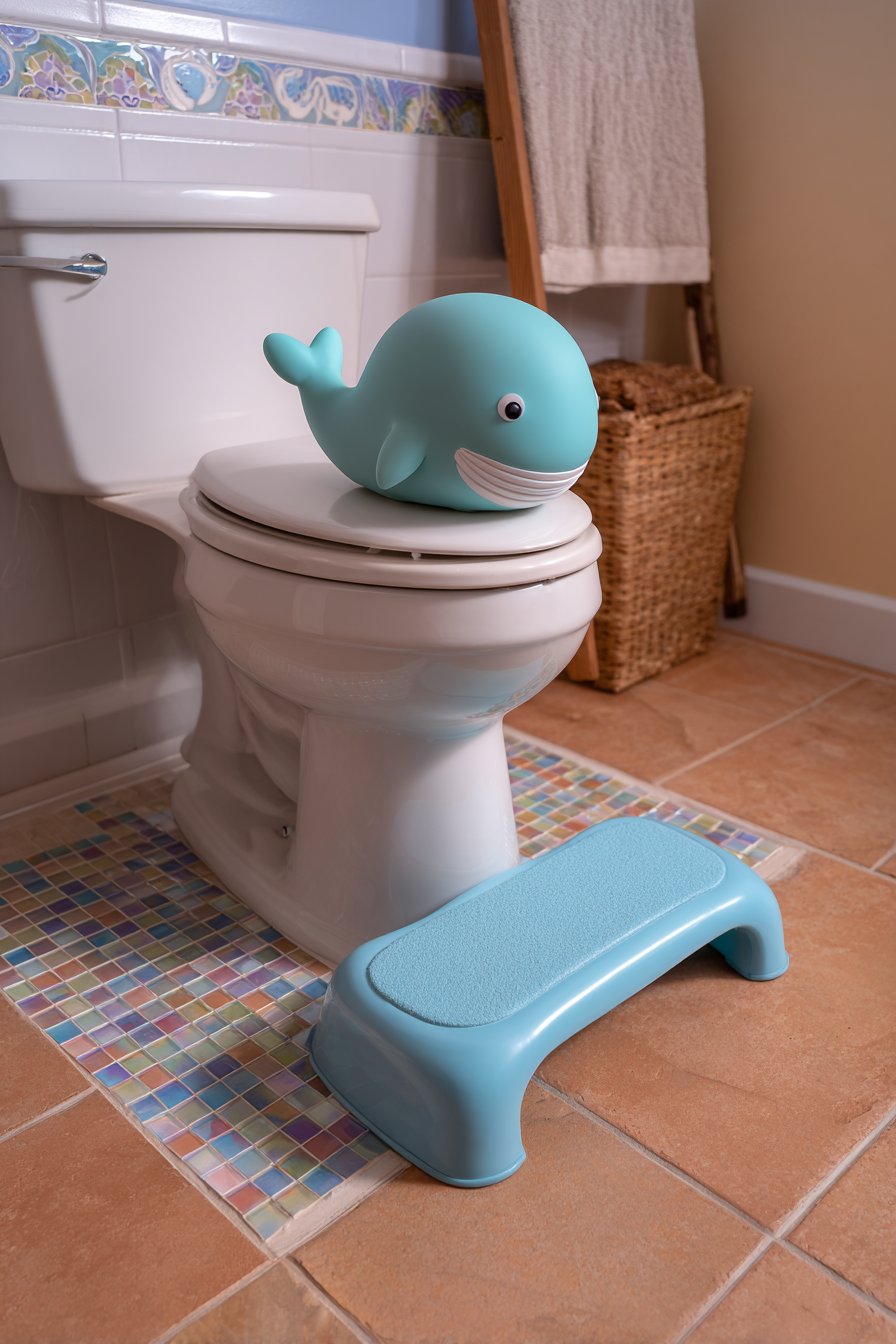
This design approach recognizes that children have different needs, perspectives, and concerns than adults, and that designing specifically for them creates more successful, better-used spaces. The key lies in providing child-scaled elements—lower decoration, fun themes, easy access—while maintaining adult-appropriate core fixtures that won’t require replacement as children grow. Kids’ bathroom design succeeds when it feels special to children without being so specifically themed that it becomes embarrassing as they mature.
Key Design Tips:
- Add comfort-height toilets that work for children now and adolescents later
- Install decorative elements at child eye-level for age-appropriate visual interest
- Provide sturdy step stools in bright colors for safe access and appealing design
- Choose wipeable wallpapers and surfaces for easy maintenance of inevitable messes
- Ensure excellent lighting for safety during nighttime bathroom visits
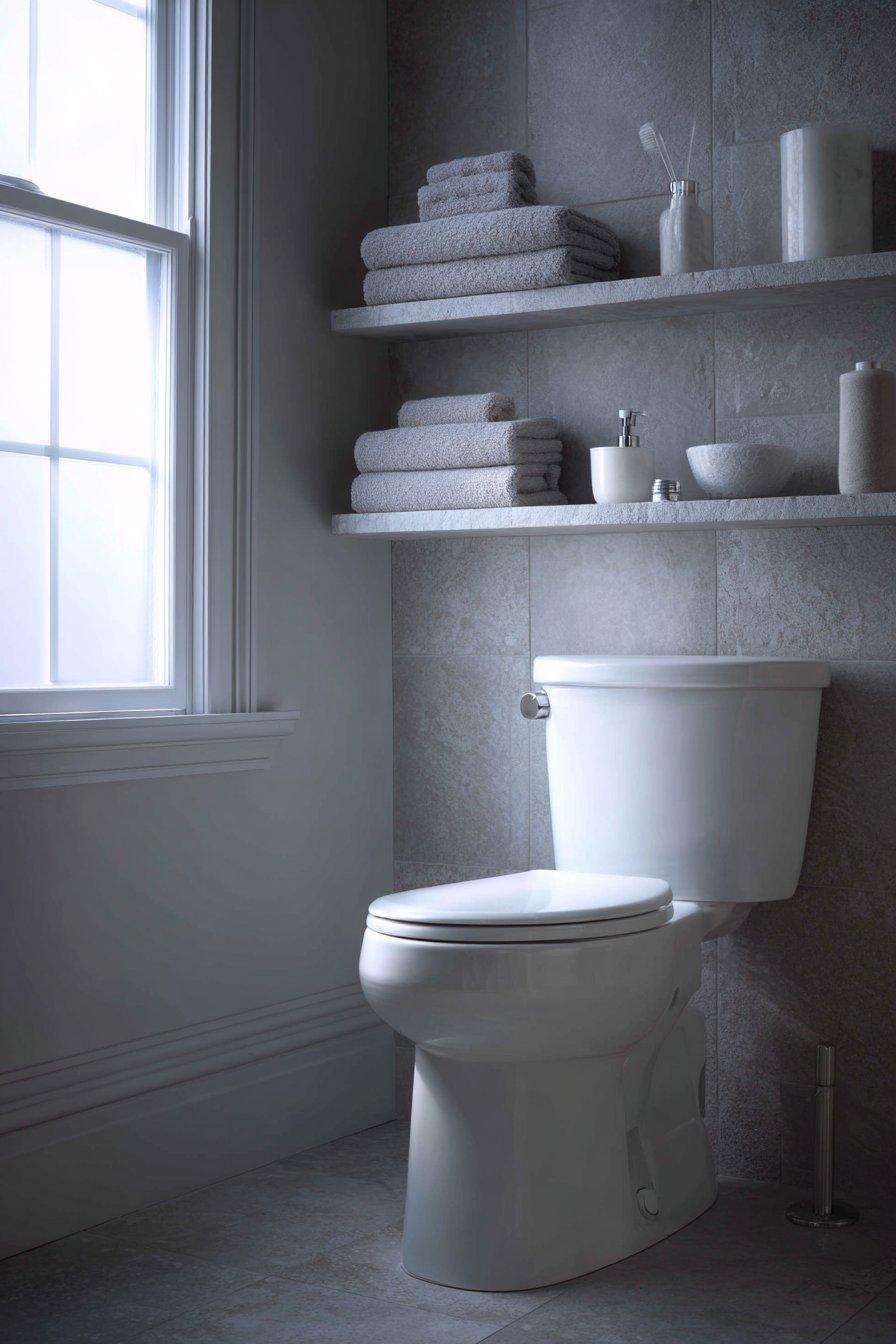
25. Sophisticated Grey Tonal Variation
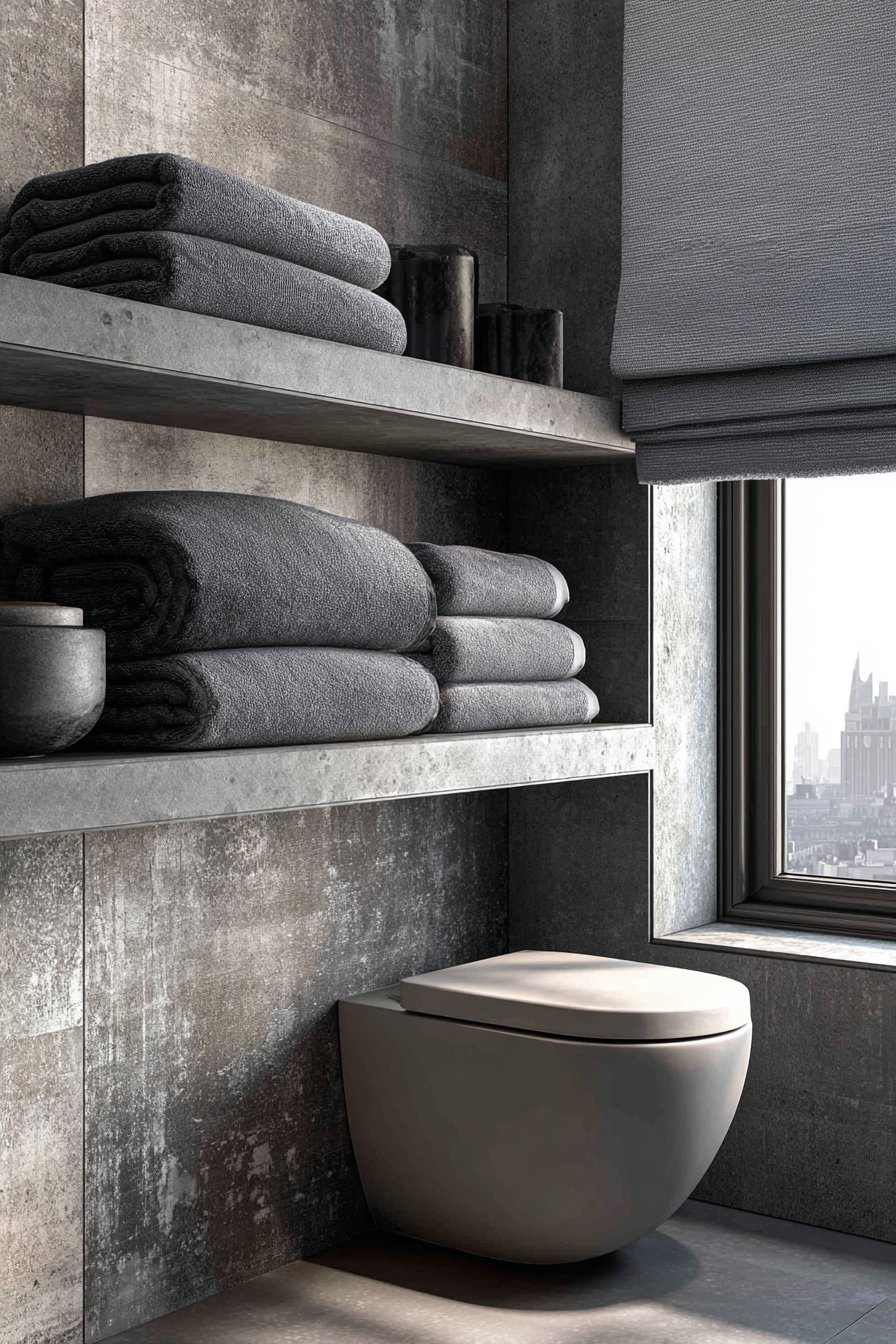
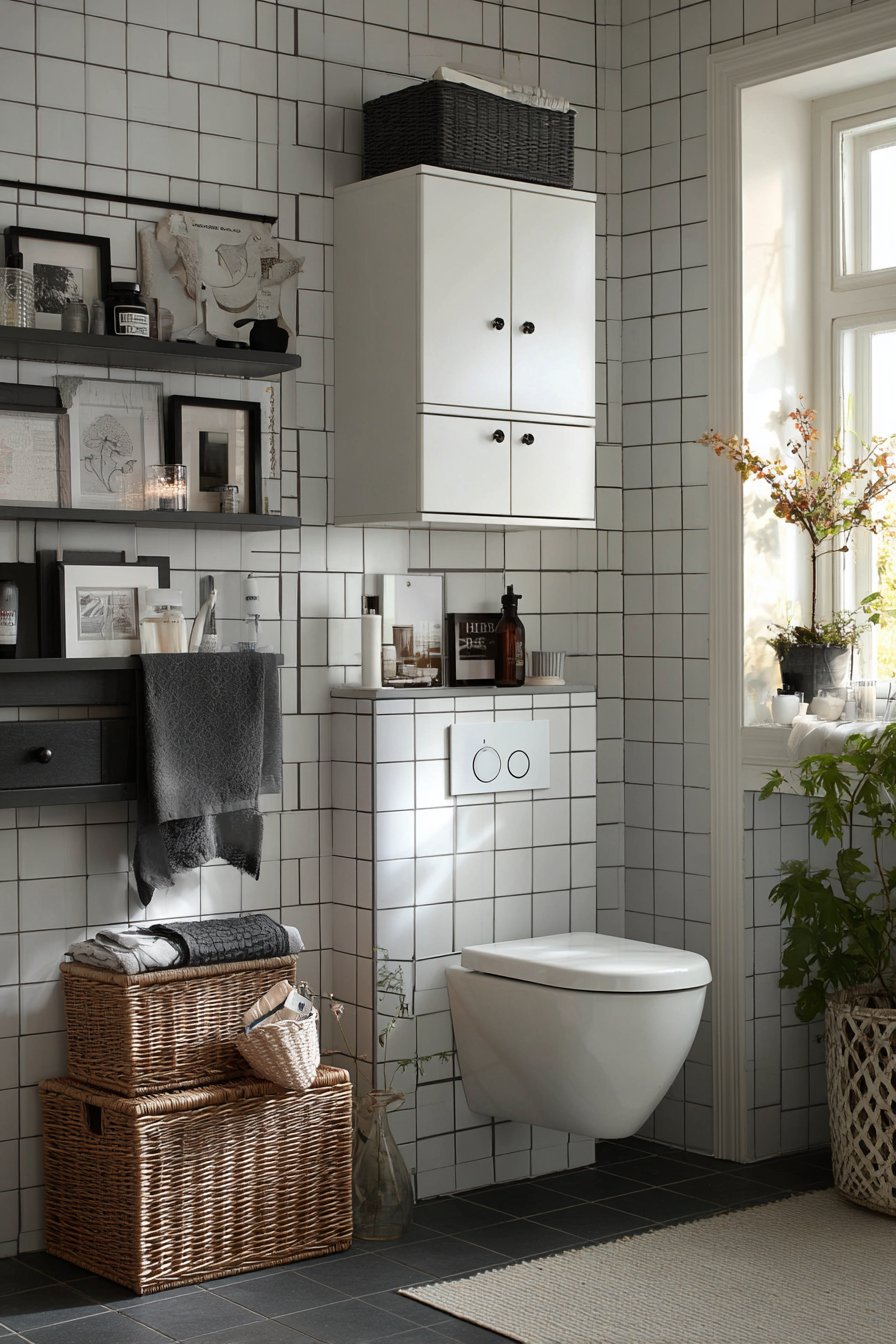
The monochromatic grey toilet design explores the surprising complexity available within a single color family. A wall-mounted toilet in light grey ceramic stands against darker grey textured tiles, the tonal variation creating depth and interest without introducing multiple colors. Grey concrete-look floating shelf holds grey towels and accessories, creating layers of grey that range from nearly white to almost charcoal. Matte grey fixtures complete the sophisticated palette, their low-sheen finish adding another textural variation to the monochromatic scheme.
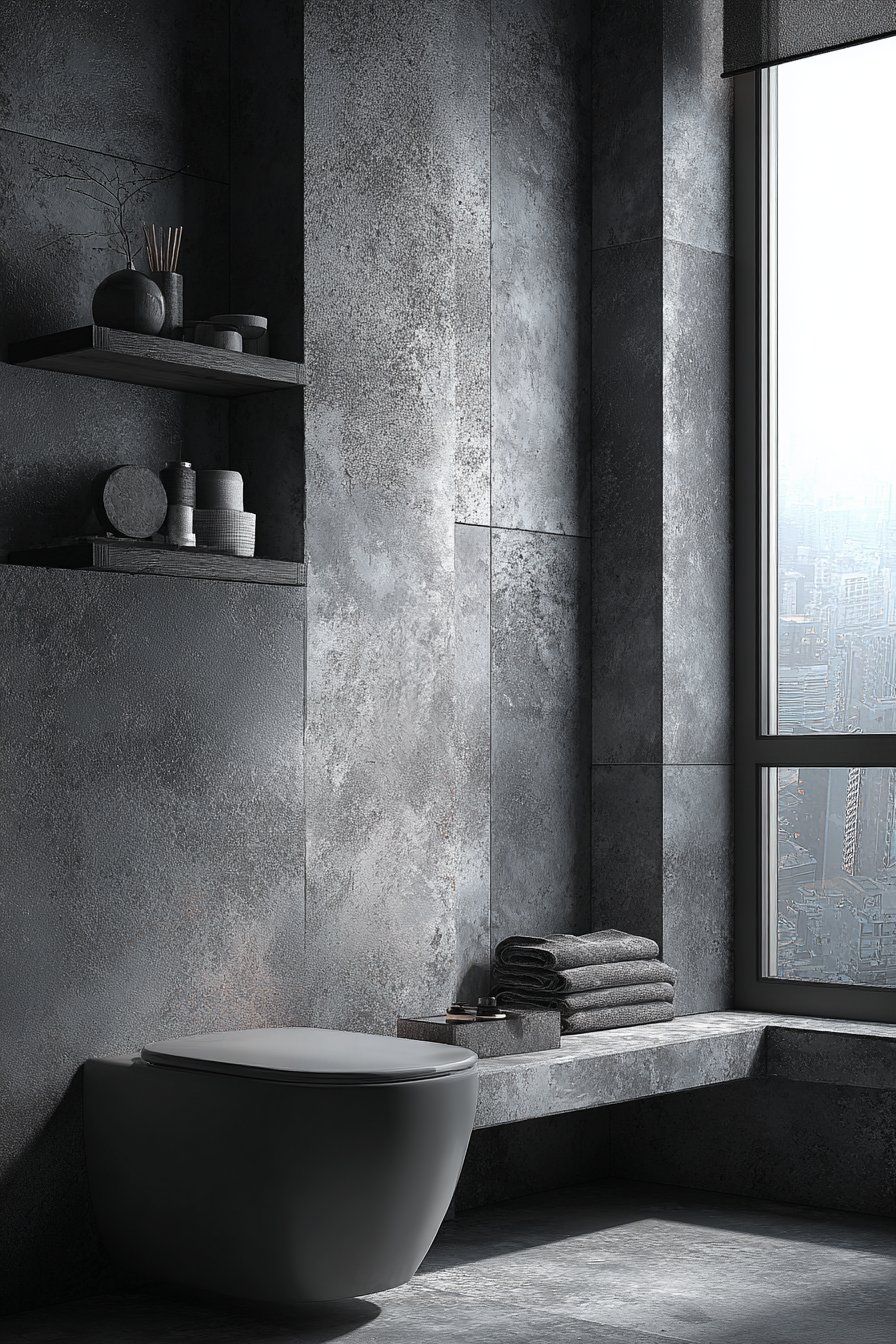
A frosted window allows natural light to highlight subtle grey gradations, revealing how light transforms a single color into countless variations depending on surface texture, angle, and proximity. Interior design photography with balanced exposure captures the elegant restraint of the monochromatic scheme, demonstrating how working within a limited palette forces attention to texture, form, and light—the fundamental elements of design. The interplay of different grey tones creates a serene, sophisticated atmosphere that feels cohesive and intentional.
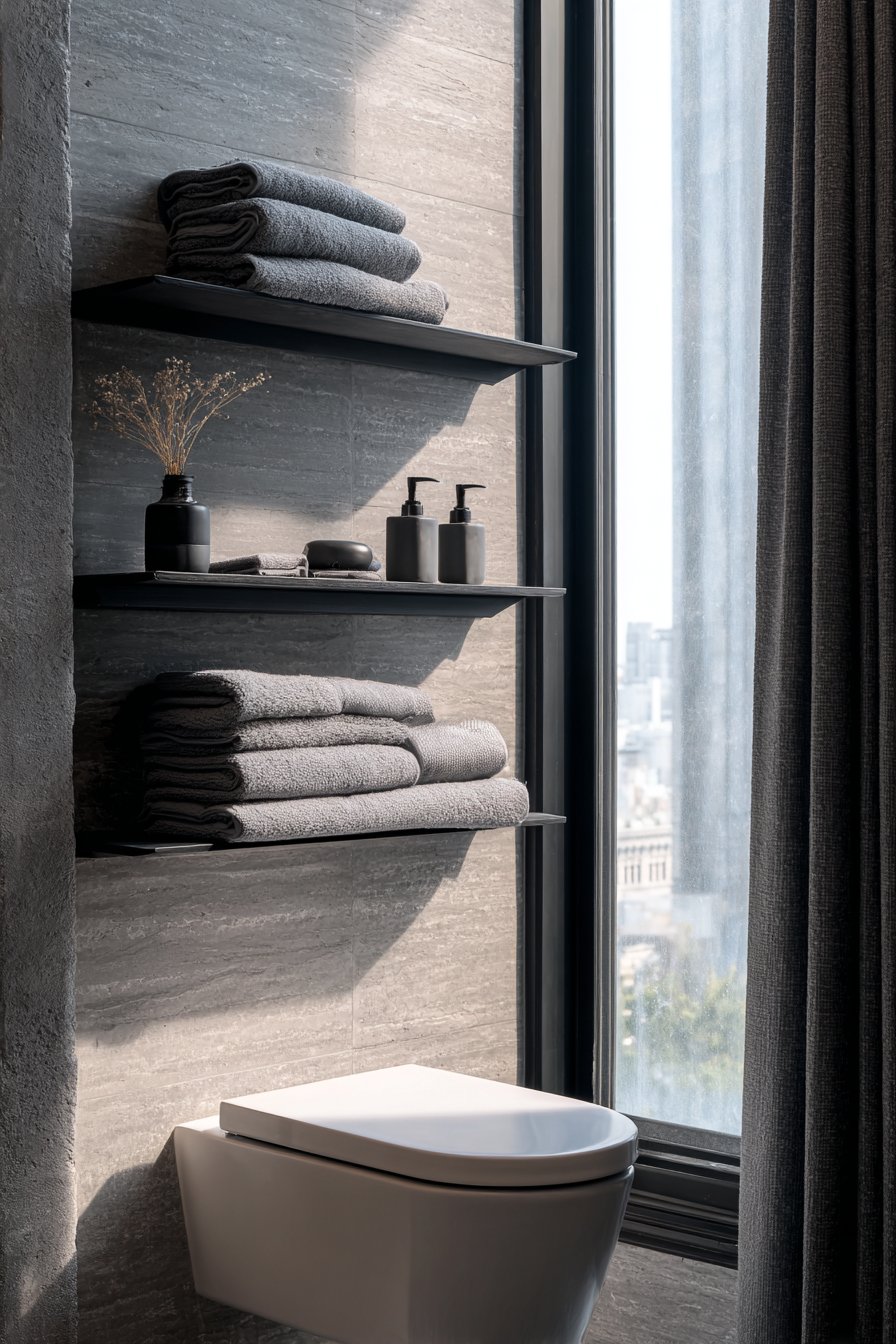
This design approach appeals to those who appreciate subtlety and sophisticated restraint, who find beauty in nuance rather than contrast. Monochromatic design challenges designers to create interest through texture, form, and light rather than relying on color contrast, resulting in spaces with quiet complexity that rewards careful attention. Grey specifically offers vast range—from warm greys with brown undertones to cool greys with blue undertones—making it an ideal choice for exploring monochromatic design.
Key Design Tips:
- Select wall-mounted toilets in colored ceramics to enhance monochromatic schemes
- Layer multiple grey tones from light to dark for depth and complexity
- Add textured surfaces to create visual interest within single-color palette
- Choose matte fixtures to introduce textural variation alongside tonal variation
- Use natural light to reveal subtle gradations and enhance material richness
26. Welcoming Guest Bathroom Hospitality
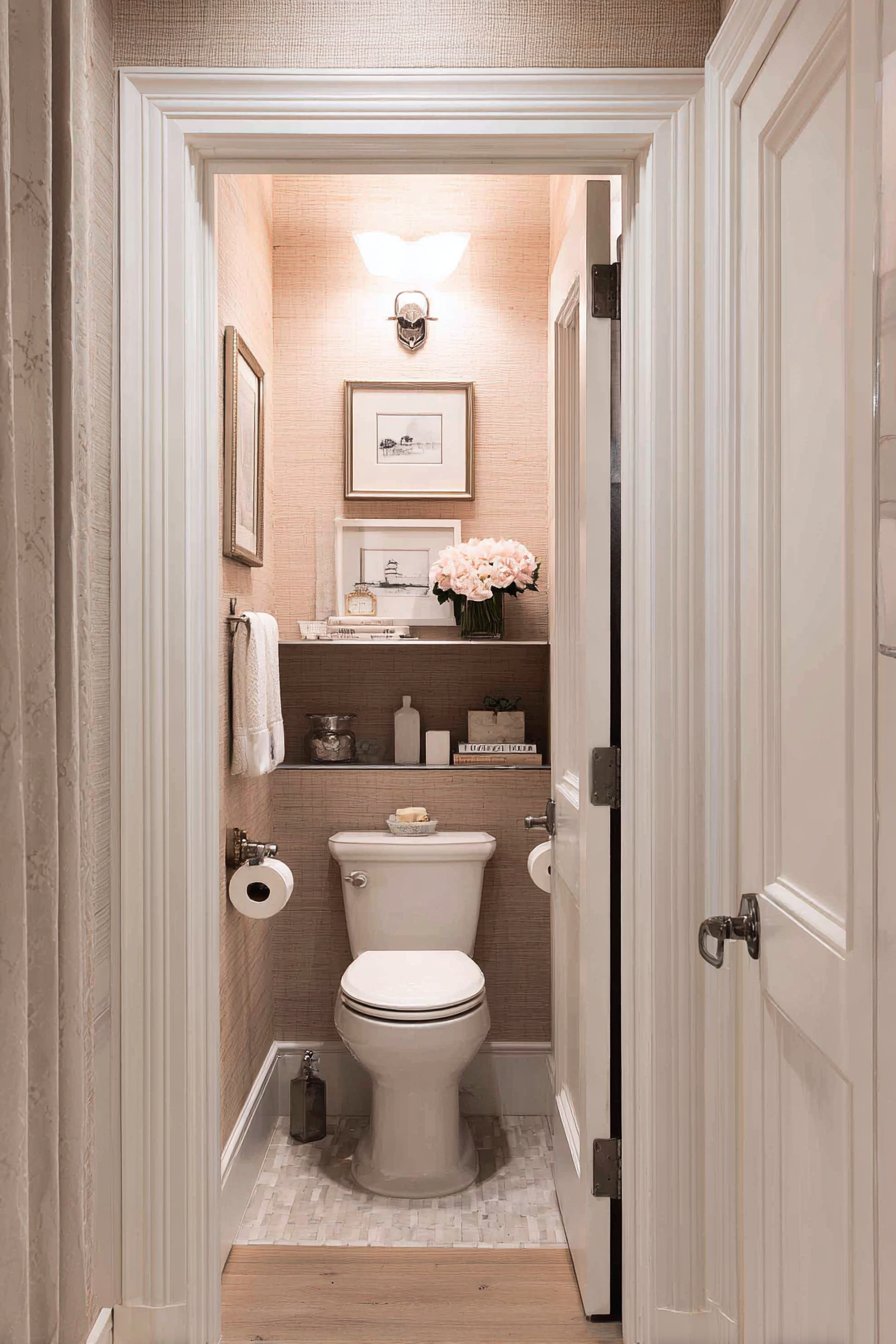
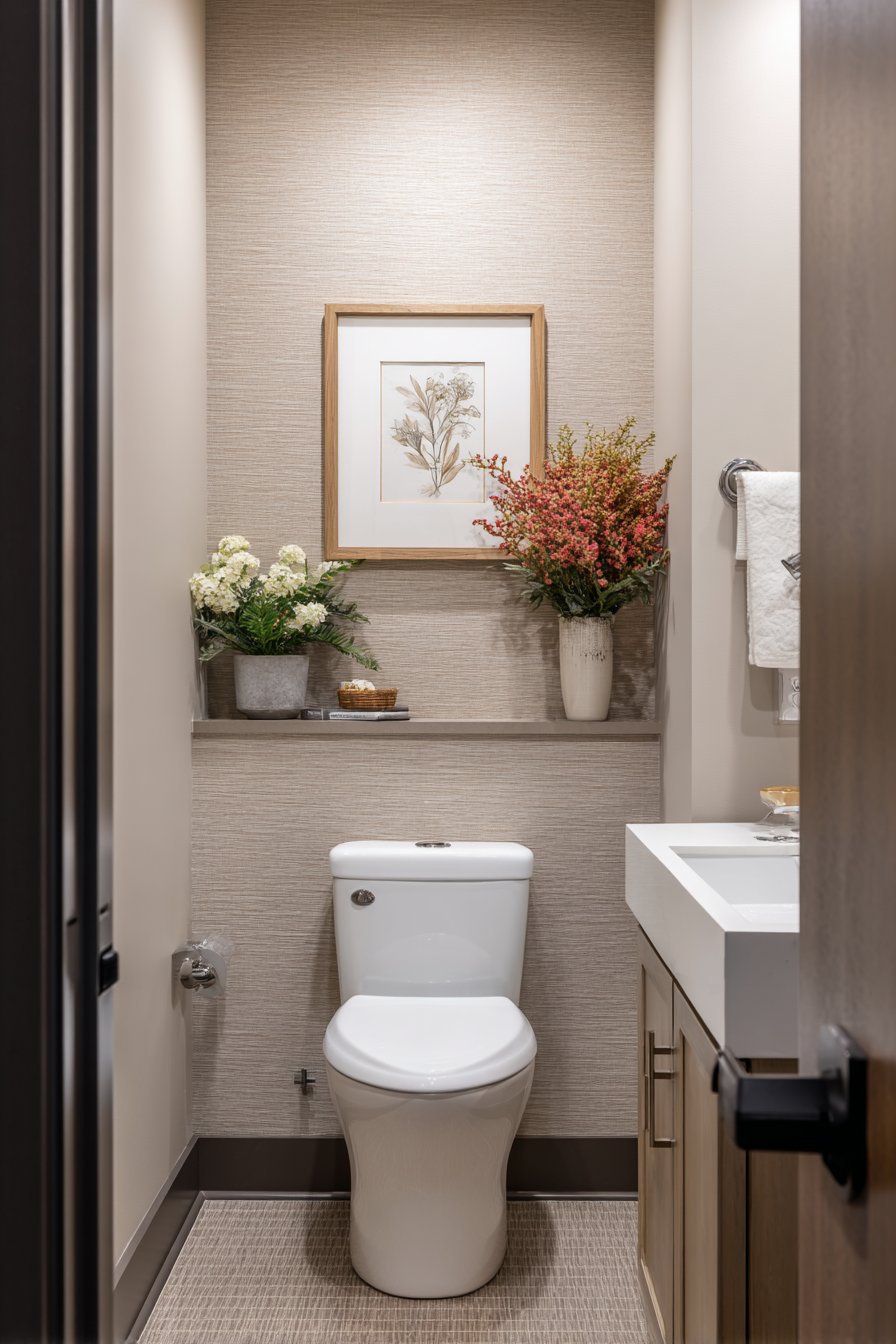
The guest bathroom toilet design creates spaces that make visitors feel comfortable, valued, and welcome. A compact elongated toilet with soft-close seat provides modern comfort while maintaining an appropriately modest footprint for secondary bathrooms. Grasscloth wallpaper in natural beige introduces organic texture and warmth, creating a sophisticated backdrop that feels both luxurious and approachable. Polished nickel fixtures add refined touch without excessive formality, their warm metallic tone creating a welcoming glow.
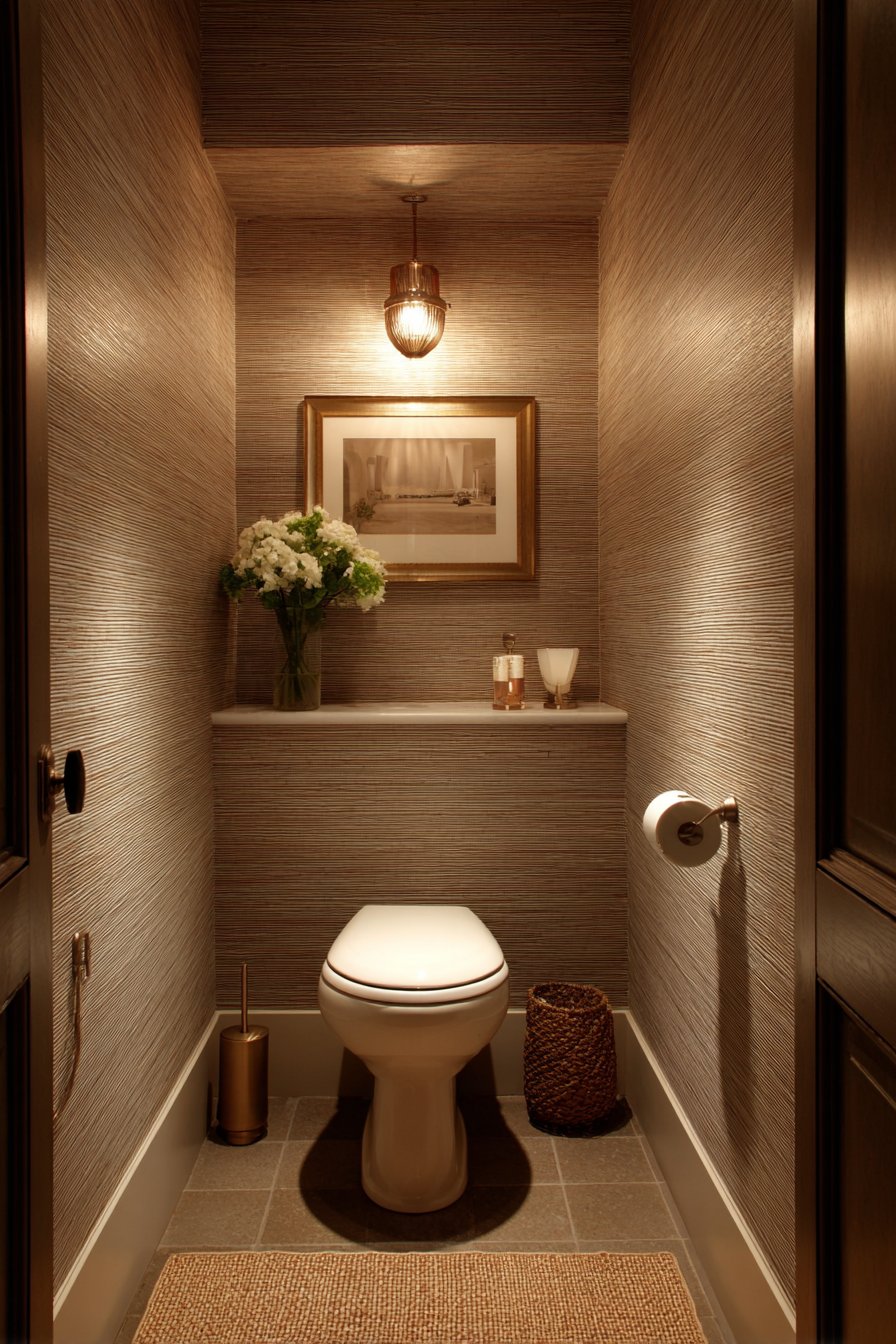
Small framed artwork and fresh flowers on a narrow shelf create hotel-like hospitality, demonstrating care and attention to guest comfort. These thoughtful details communicate that visitors matter and that their comfort has been considered. Dimmer-controlled lighting allows ambiance adjustment based on time of day or individual preference, providing control that enhances comfort. Photography captures the thoughtful details that make guests feel comfortable and welcome, showing how small gestures combine to create meaningful hospitality.
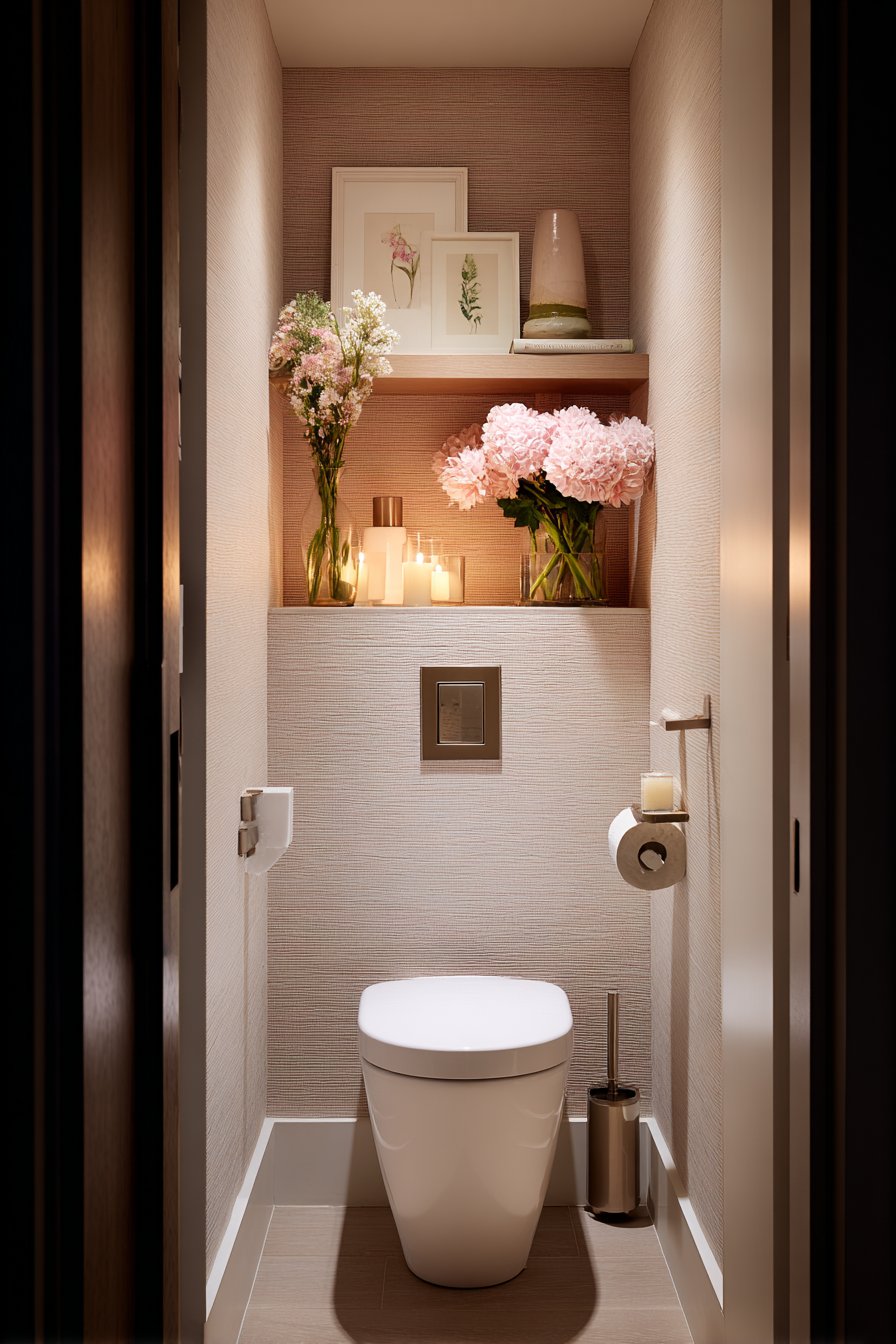
This design approach recognizes that guest bathrooms serve an important social function, creating first impressions and demonstrating hospitality values. The key lies in providing hotel-quality comfort and thoughtfulness—good lighting, quality materials, fresh accessories, appropriate privacy—while maintaining the personal warmth of a home. Guest bathroom design succeeds when visitors feel cared for without feeling like they’re imposing or creating work for their hosts.
Key Design Tips:
- Install compact elongated toilets that provide comfort in appropriately scaled fixtures
- Use grasscloth wallpaper for sophisticated texture and warm, natural character
- Choose polished nickel fixtures for refined warmth without excessive formality
- Add small artwork and fresh flowers to demonstrate care and hospitality
- Install dimmer switches to allow ambiance adjustment for comfort and preference
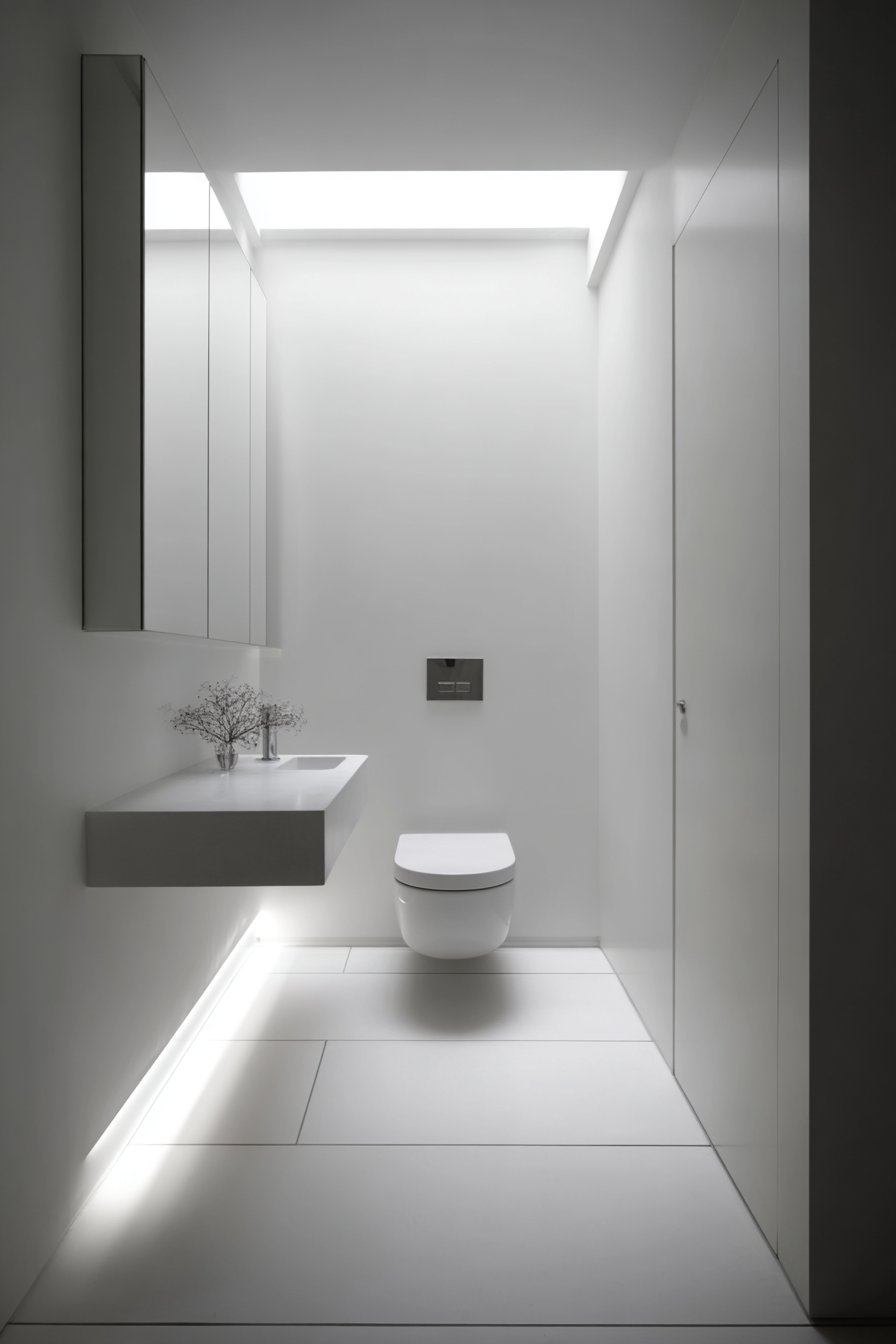
27. Pure Minimalist Clarity
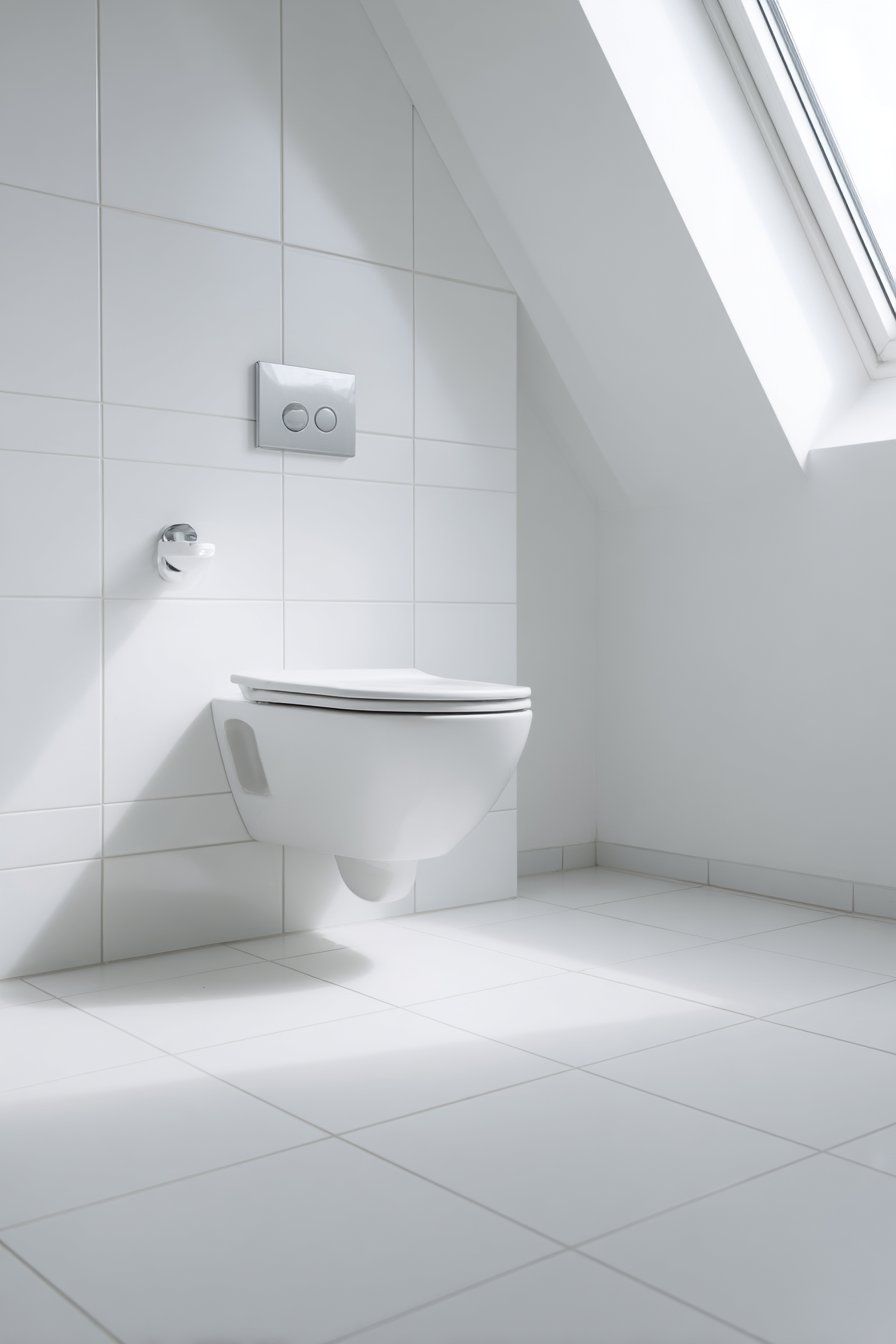
The contemporary minimalist toilet design represents the ultimate refinement of bathroom aesthetics, where every unnecessary element has been removed to reveal the essential beauty of pure form. A wall-hung toilet with completely concealed tank and plumbing floats within a pristine white bathroom, its only visible element the clean ceramic form. Floor-to-ceiling white tiles with minimal grout lines create a seamless surface that seems to envelop the space in pure light. A single chrome flush button mounted in the wall provides the only visible control, its simple circle the sole interruption to the white expanse.
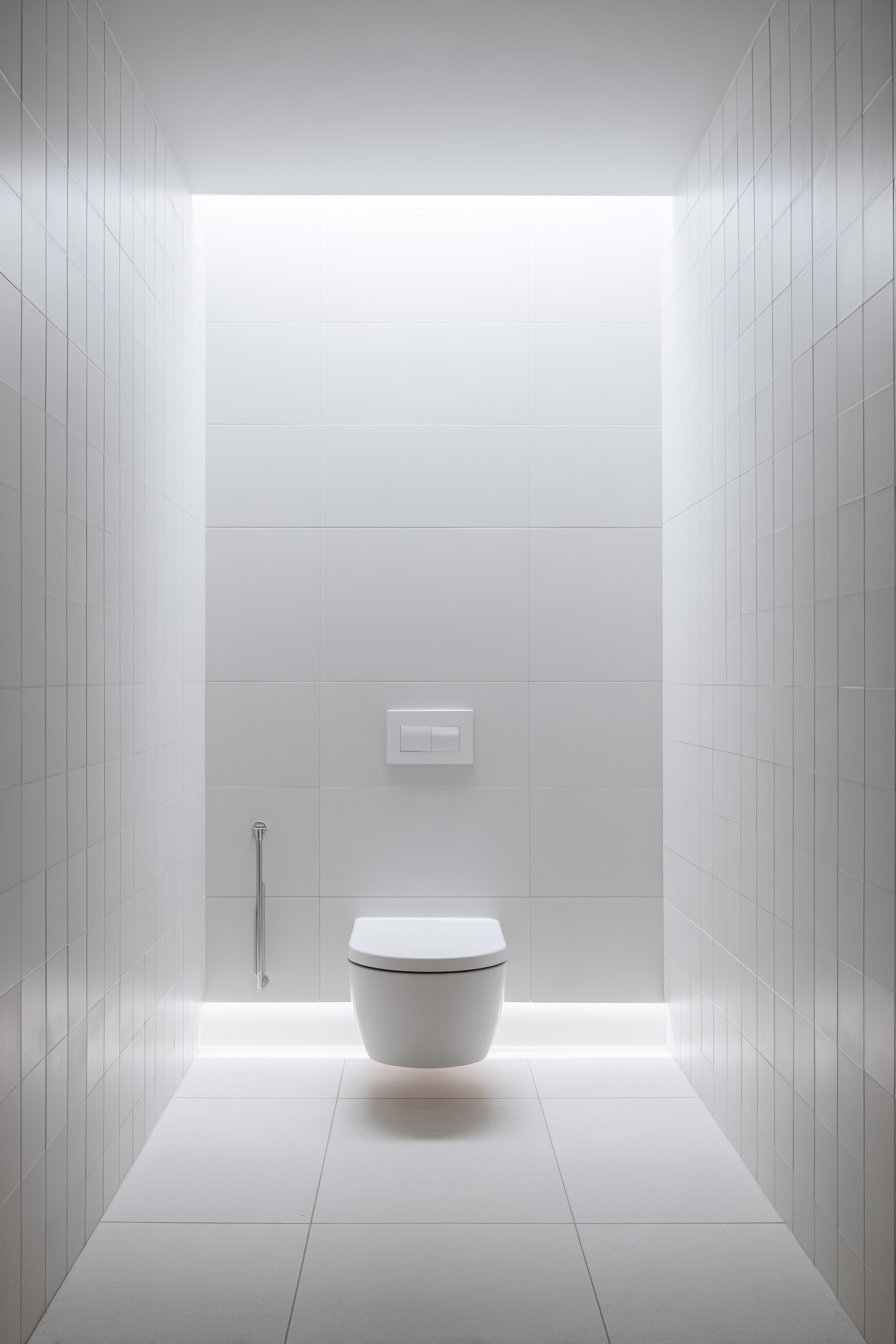
Skylight provides natural illumination that changes throughout the day, making light itself a primary design element. Hidden LED strip under the toilet creates a floating effect, dematerializing the already minimal fixture and adding the only artificial light source visible in the space. Architectural photography emphasizes the purity of form and absence of visual clutter, capturing how minimalism creates spaces of remarkable calm and clarity. The discipline required to achieve true minimalism—resisting decoration, concealing infrastructure, limiting materials—results in spaces that feel meditative and serene.
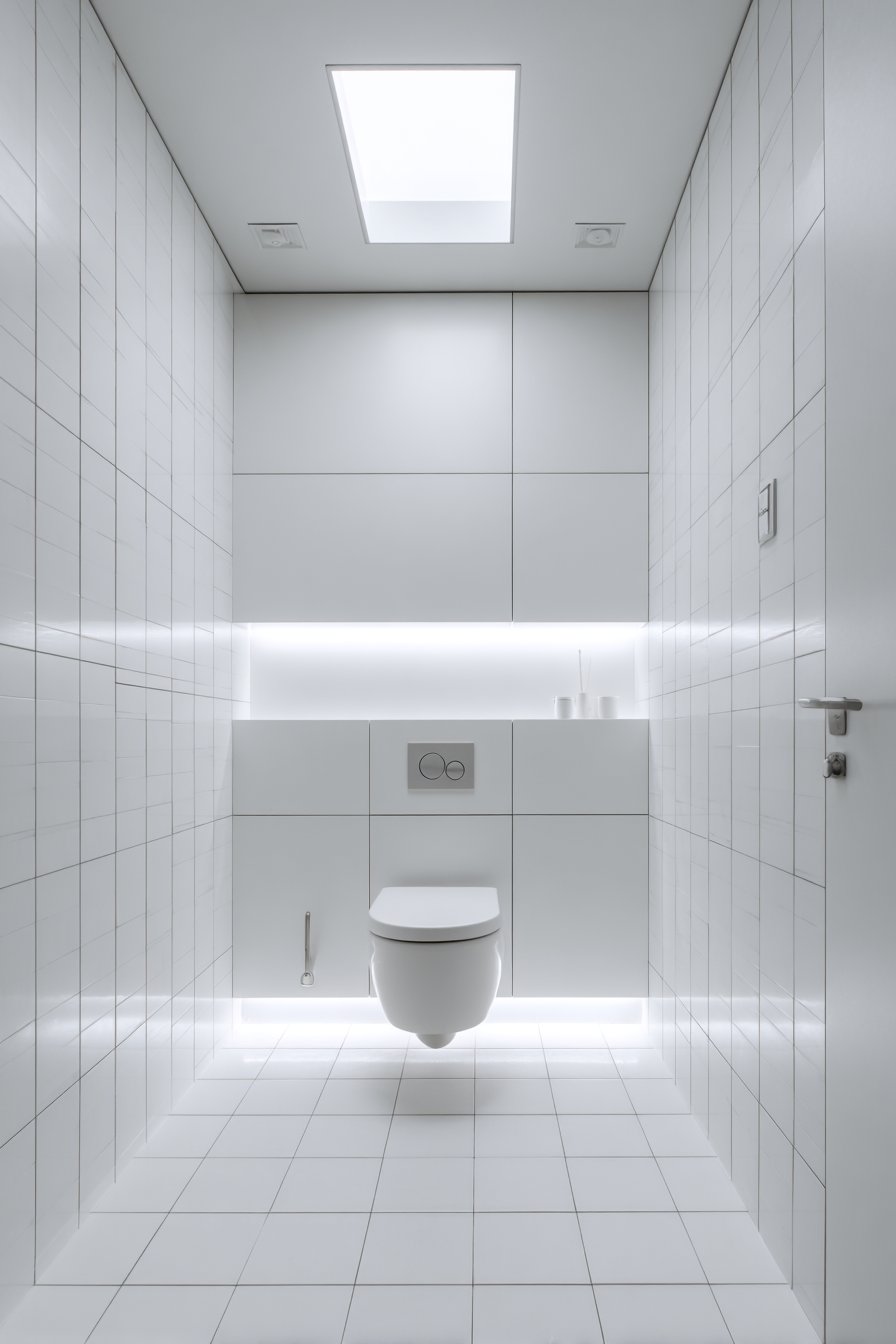
This design approach appeals to those who find peace in simplicity and who understand that minimalism isn’t about deprivation but about carefully considering what deserves inclusion. Each element in a minimalist space must justify its presence, resulting in rooms where everything visible has been deliberately chosen. Minimalist design succeeds when absence creates as much interest as presence, when empty space becomes an active design element rather than just the area between objects.
Key Design Tips:
- Conceal all tanks, plumbing, and mechanical elements for pure visual simplicity
- Use floor-to-ceiling tiles with minimal grout for seamless surface continuity
- Install single flush buttons as only visible controls in otherwise unmarked surfaces
- Rely on skylights for natural illumination that eliminates need for fixtures
- Add hidden LED strips to create floating effects and subtle ambient lighting
Why These Toilet Designs Represent Excellence
These twenty-seven toilet design ideas represent the best contemporary approaches to bathroom fixture planning because they address the full spectrum of human needs, preferences, and circumstances. From minimalist Scandinavian simplicity to maximalist eclectic expression, from vintage historical authenticity to cutting-edge smart technology, these designs demonstrate that there’s no single “correct” approach to toilet design—only approaches more or less suitable for particular situations, users, and aesthetic preferences.
The excellence of these designs lies in their attention to both function and beauty, their recognition that even the most utilitarian spaces deserve thoughtful design consideration. Each concept successfully integrates fixtures into broader bathroom aesthetics while addressing practical concerns like comfort, accessibility, maintenance, water conservation, and spatial efficiency. Whether working with generous master bathroom dimensions or compact powder room constraints, these designs show how creativity and careful planning overcome limitations and turn challenges into opportunities for innovation.
Material selection plays crucial role across all these designs, with choices ranging from natural stone and reclaimed wood to polished concrete and high-tech ceramics. The best designs understand that materials communicate meaning beyond their functional properties—natural materials suggest organic connection and authenticity, industrial materials convey urban sophistication and honest utility, traditional materials provide historical continuity and craftsmanship appreciation. By selecting materials that reinforce rather than contradict intended aesthetics, these designs achieve coherence that makes them feel complete and intentional.
Color strategy varies dramatically across these concepts, from bold monochromatic contrasts to subtle tonal variations, from neutrals that create calm backdrops to vibrant hues that energize spaces. The most successful designs understand color’s psychological impact and use it strategically to create desired atmospheres—peaceful spa environments employ soft, cool tones while energetic eclectic spaces embrace saturated, warm colors. Color coordination between fixtures, surfaces, and accessories ensures visual unity that makes spaces feel designed rather than assembled.
Lighting receives appropriate emphasis throughout these designs, recognized as essential element that transforms spaces throughout the day. Natural light is maximized through strategic window placement, skylights, and light-reflecting surfaces, while artificial lighting provides necessary illumination without introducing visual clutter. The best designs layer different lighting types—ambient, task, and accent—to create flexible environments that serve multiple needs and moods. Understanding that lighting affects both function and atmosphere separates excellent toilet designs from merely adequate ones.
Technology integration appears in several designs, from basic water-saving dual-flush mechanisms to sophisticated smart toilets with automated functions and integrated bidets. The best technology-forward designs integrate advanced features seamlessly rather than treating them as add-ons, ensuring that technology enhances rather than dominates the space. Recognition that technology should serve human comfort and convenience rather than existing for its own sake keeps these designs focused on genuine improvement rather than unnecessary complexity.
Accessibility considerations appear throughout many designs, reflecting growing understanding that universal design principles benefit everyone, not just those with diagnosed disabilities. Comfort-height toilets, adequate clearance, grab bars, non-slip surfaces, and excellent lighting make bathrooms safer and easier to use for people of all ages and abilities. The best accessible designs integrate these features elegantly rather than treating them as unfortunate necessities, proving that accessibility and beauty are completely compatible goals.
Spatial efficiency demonstrates particular importance in smaller bathroom designs, with creative solutions like corner placement, wall-mounting, and vertical storage maximizing utility in constrained footprints. These designs prove that small bathrooms needn’t sacrifice style or function, requiring only more careful planning and strategic design choices. Understanding how to make small spaces feel larger through light, color, reflection, and visual continuity separates good compact designs from claustrophobic failures.
Style consistency ensures these designs succeed aesthetically, with every visible element reinforcing rather than contradicting chosen aesthetic directions. Whether embracing minimalist restraint, rustic authenticity, industrial edge, or eclectic maximalism, the best designs maintain clear stylistic vision that guides all decisions. This doesn’t mean rigidity or inability to mix elements from different traditions—transitional and eclectic designs successfully blend disparate influences—but rather thoughtful integration where combinations feel intentional rather than accidental.
Environmental consciousness appears increasingly throughout contemporary toilet design, from water-saving flush mechanisms to sustainable materials like bamboo and reclaimed wood to living plant walls that improve air quality. The best environmentally conscious designs integrate sustainability naturally rather than treating it as separate concern requiring compromise. Recognition that environmental responsibility and design excellence support rather than conflict with each other represents important evolution in contemporary design thinking.
Personal expression receives appropriate emphasis, particularly in powder rooms and guest bathrooms where functional demands are less stringent and creative freedom greater. These spaces become opportunities for bold color, pattern, texture, and artistic expression that might overwhelm primary bathrooms but perfectly suit smaller, more contained spaces. The best expressive designs balance personality with comfort, ensuring spaces feel welcoming rather than overwhelming.
Conclusion
These twenty-seven toilet design ideas demonstrate that thoughtful design transforms even the most utilitarian spaces into areas of beauty, comfort, and personal expression. Whether you’re drawn to serene minimalist sanctuaries, historically inspired vintage charm, bold contemporary statements, or practical family-friendly solutions, there’s an approach that will suit your needs, preferences, and circumstances. The key lies in understanding your priorities—whether emphasizing cutting-edge technology, sustainable materials, accessibility features, spatial efficiency, or pure aesthetic impact—and selecting designs that align with those priorities.
Successful toilet design requires balancing multiple considerations: function and beauty, privacy and openness, tradition and innovation, personal preference and universal appeal. The best designs make these balances look effortless, creating spaces that work so well users don’t notice the planning that made them successful. They integrate fixtures seamlessly into broader bathroom aesthetics while ensuring comfort, safety, and appropriate privacy. They select materials that serve both practical and aesthetic purposes while remaining within budget constraints.
As you consider implementing these ideas in your own home, remember that you needn’t replicate any design exactly. Instead, extract principles, elements, and approaches that resonate with you, adapting them to your specific space, budget, and needs. Perhaps you love the serene material palette of the Scandinavian design but want the advanced features of the smart toilet. Maybe you appreciate the accessibility features demonstrated in the universal design but prefer the aesthetic of the coastal cottage. The beauty of having such diverse examples lies in the freedom to mix, match, and customize.
Don’t be afraid to invest thoughtfully in your bathroom spaces. We spend significant time in these rooms throughout our lives, and their quality directly impacts our daily experience and wellbeing. Whether that investment takes the form of advanced fixtures, premium materials, professional installation, or simply time spent carefully planning and implementing design changes, the return in daily comfort and satisfaction justifies the effort. Your toilet area can be more than merely functional—it can be beautiful, comfortable, and perfectly suited to your life.
