
Living in a small space doesn’t mean sacrificing style, comfort, or functionality. In fact, tiny bedrooms present unique opportunities for creative design solutions that maximize every square inch while creating a cozy, personalized retreat. Whether you’re dealing with a studio apartment, a converted attic space, or simply a modest-sized bedroom, the right design approach can transform cramped quarters into an efficient and beautiful sanctuary. The key lies in understanding how to leverage vertical space, incorporate multifunctional furniture, and create visual tricks that make rooms feel larger than their actual dimensions.
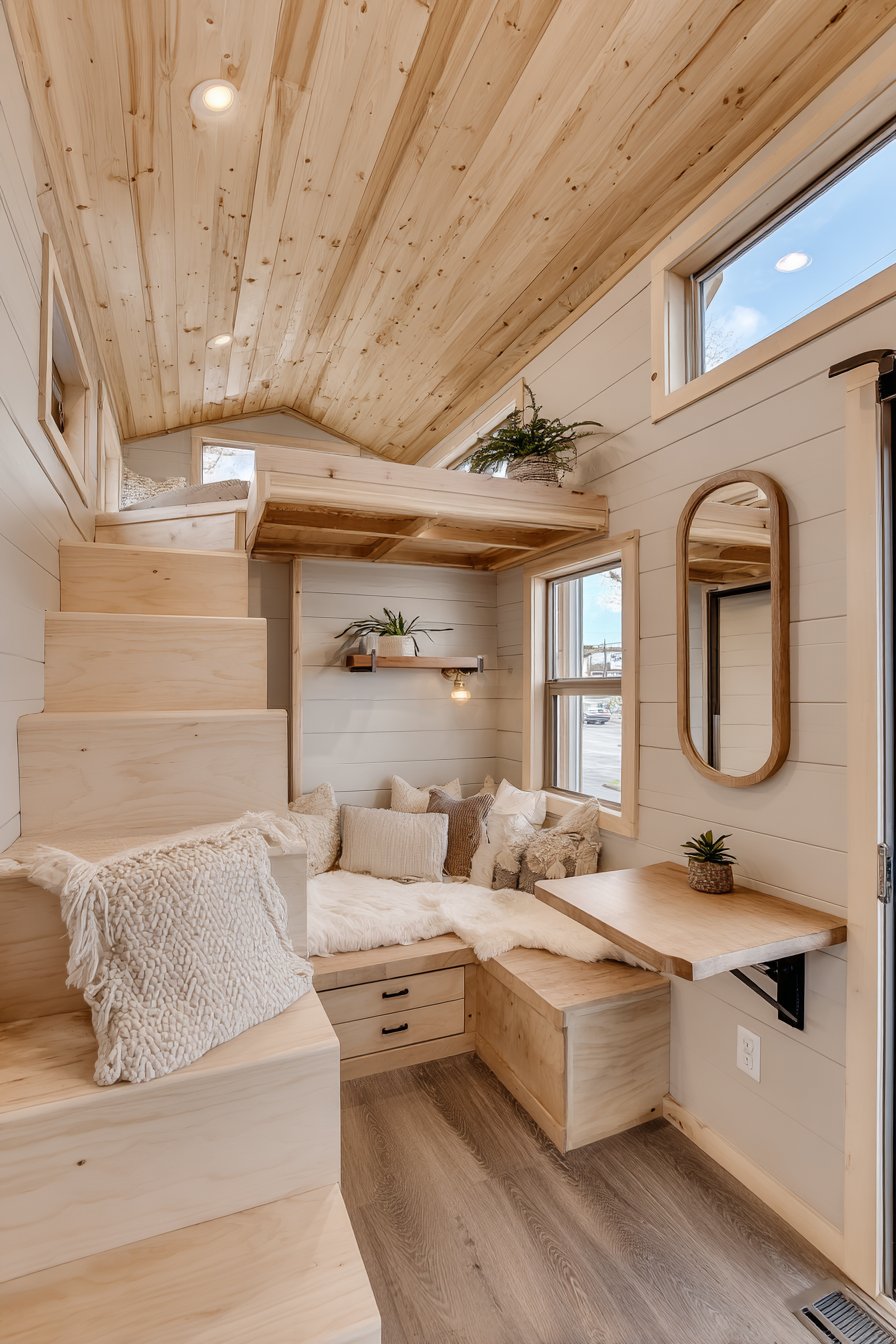
Today’s tiny room ideas for bedrooms have evolved far beyond basic minimalism. Modern design principles embrace both form and function, offering innovative storage solutions, space-saving furniture configurations, and aesthetic choices that enhance rather than diminish the sense of space. From murphy beds that disappear into walls to loft designs that create separate living zones within a single room, the possibilities are endless. These solutions cater to various lifestyles, whether you’re a student maximizing dorm space, a young professional in an urban apartment, or a homeowner looking to optimize a guest room or child’s bedroom.
This comprehensive guide explores twenty-one inspired tiny room ideas for bedrooms, each offering unique approaches to small-space living. You’ll discover ingenious storage solutions, multifunctional furniture arrangements, and design strategies that create the illusion of spaciousness while maintaining style and comfort. From transformable furniture pieces to clever vertical storage systems, these ideas prove that limited square footage can yield unlimited design potential when approached with creativity and intentional planning.
1. The Transformative Murphy Bed Solution
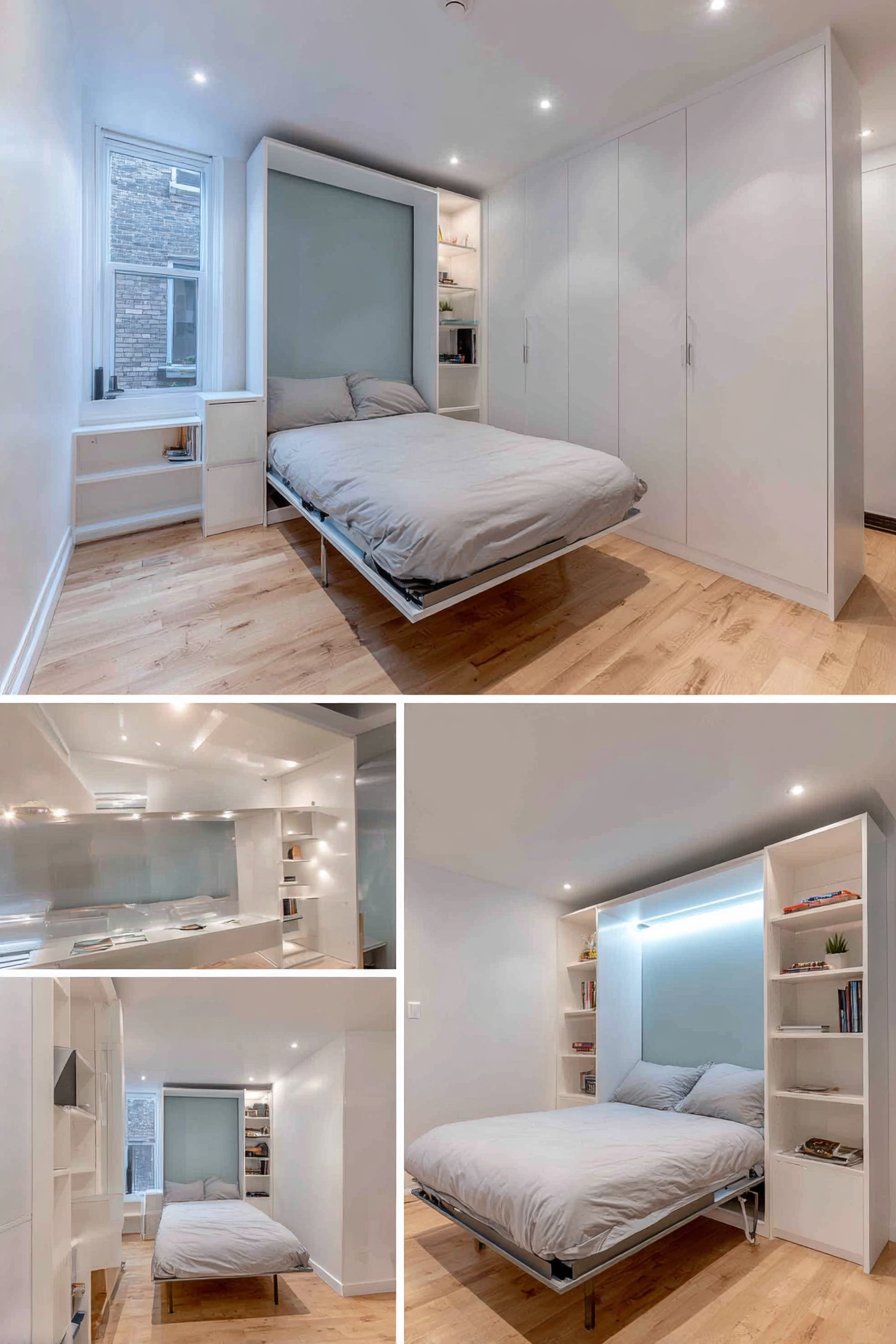
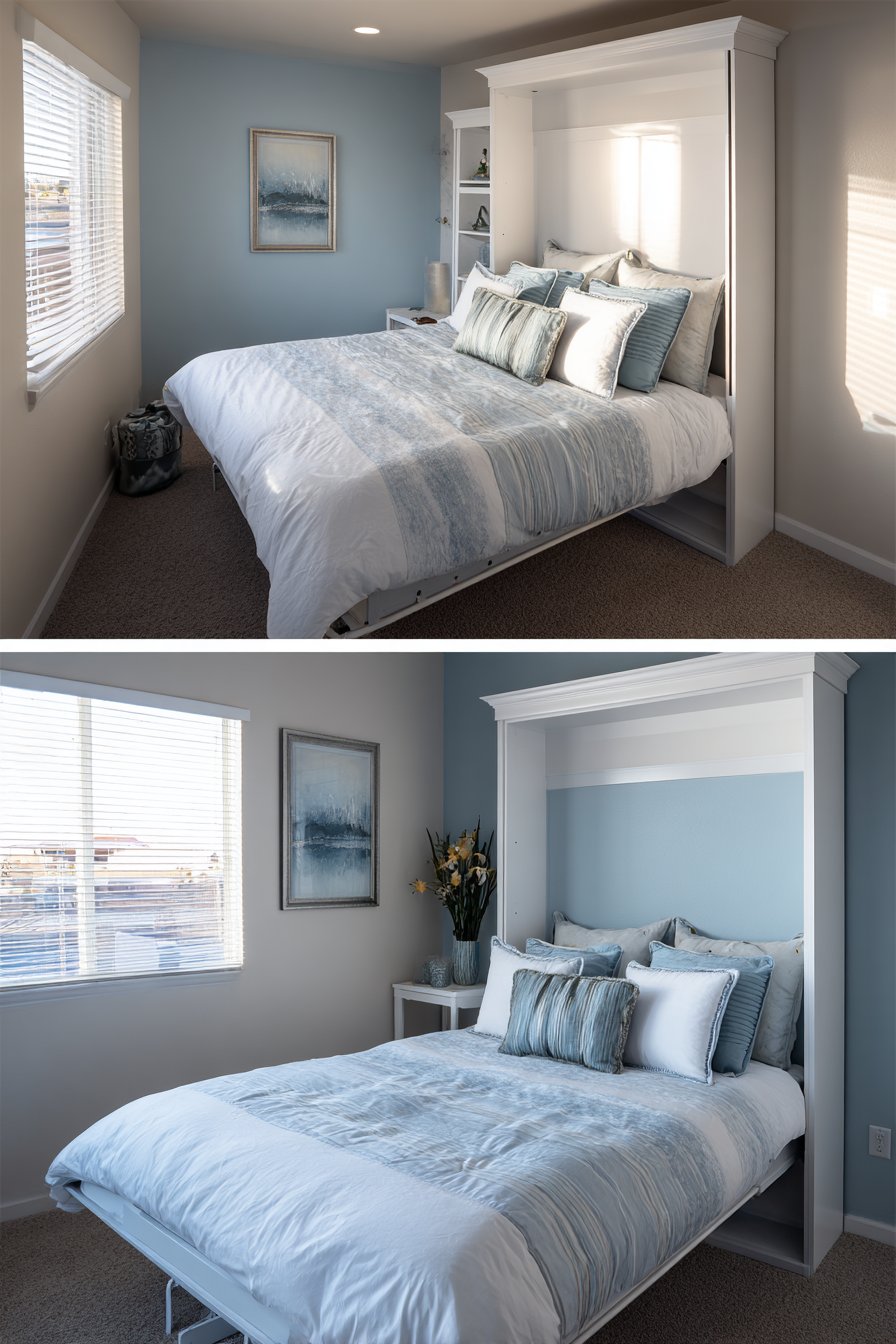
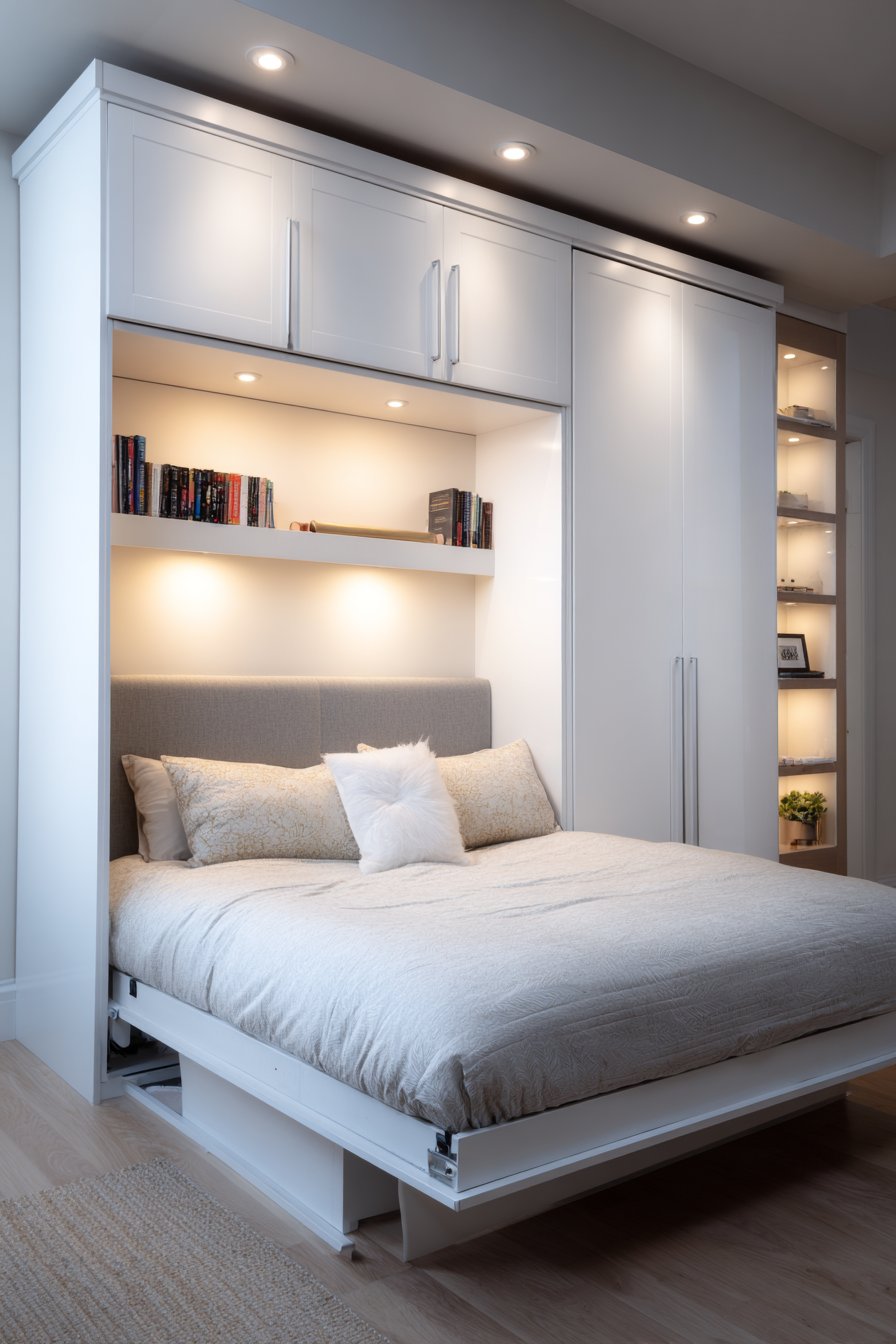
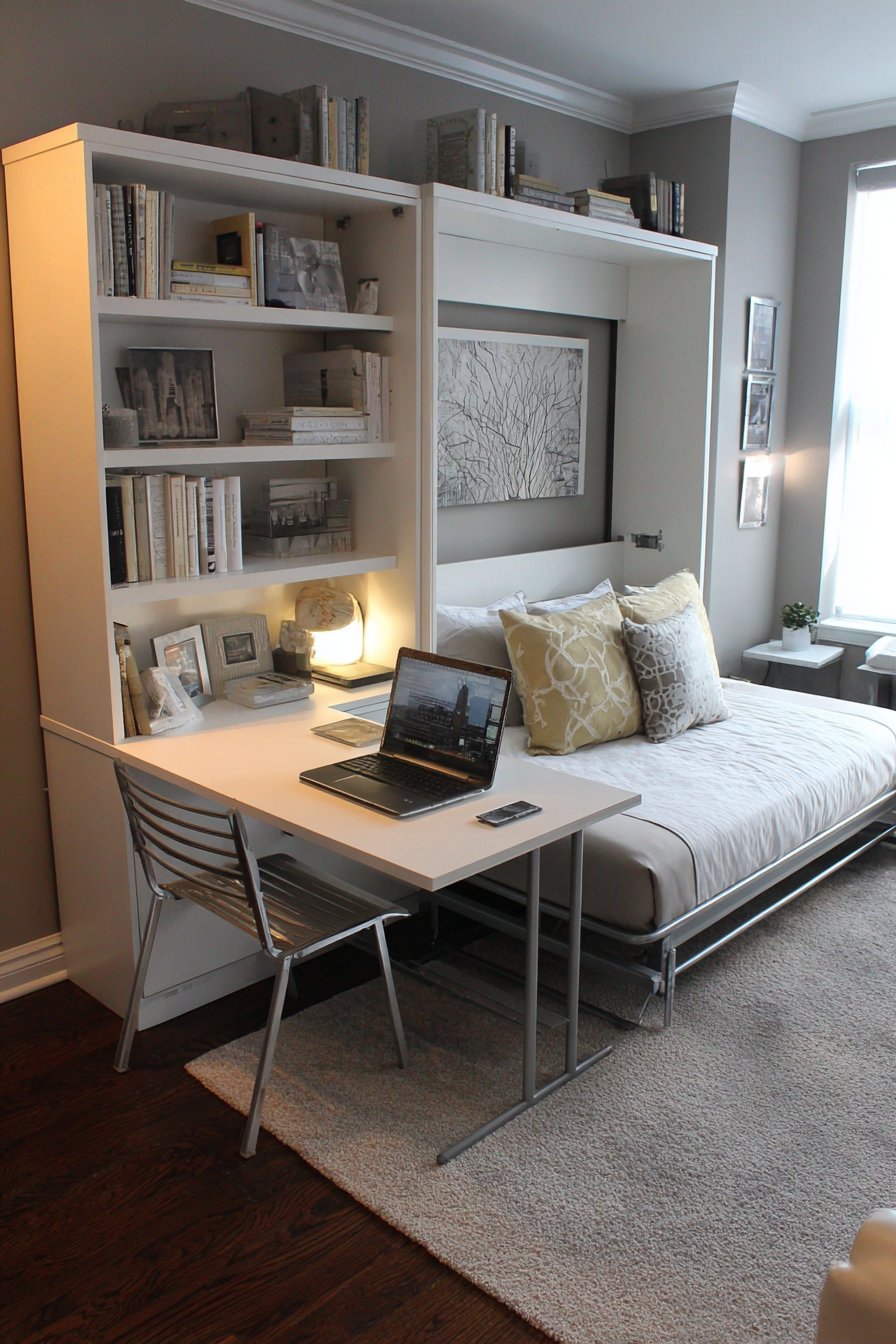
The murphy bed represents one of the most elegant solutions for tiny room ideas in bedrooms, offering the ultimate space-saving flexibility. This ingenious design features a bed that folds vertically into the wall when not in use, instantly transforming a sleeping space into a functional living area during daytime hours. Modern murphy beds have evolved significantly from their basic predecessors, now incorporating integrated shelving units, LED lighting strips, and small storage cubbies that remain accessible whether the bed is up or down. The surrounding cabinetry can be customized to match your aesthetic preferences, from sleek contemporary finishes to warm traditional wood tones.
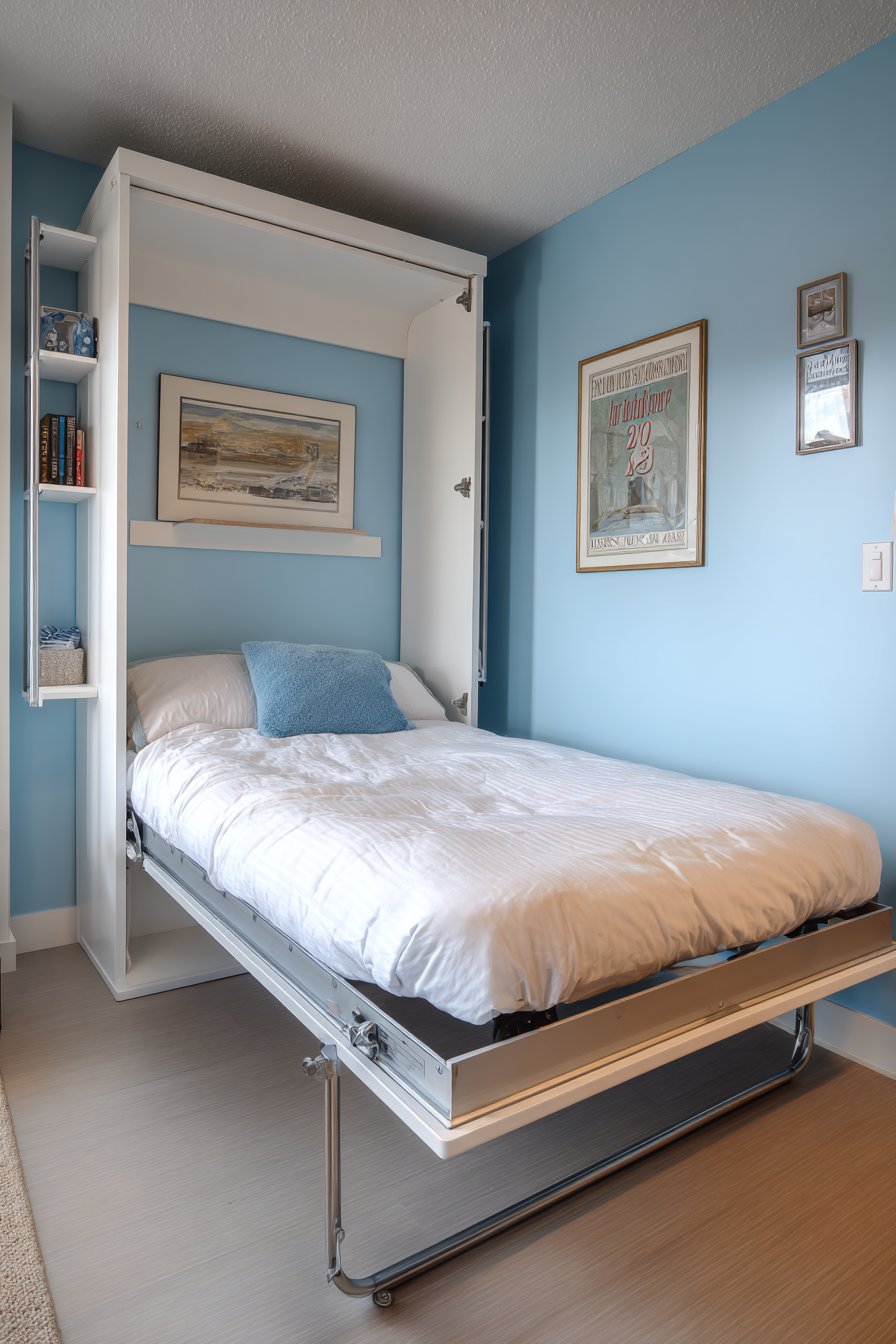
The beauty of this tiny bedroom idea lies in its dual functionality. During the day, your bedroom can serve as a home office, yoga studio, or entertainment space, with the bed completely concealed behind what appears to be an attractive wall unit or cabinet system. When evening arrives, simply pull down the bed mechanism to reveal a comfortable sleeping surface complete with your regular mattress and bedding. The surrounding shelving provides convenient storage for books, decorative items, and bedtime essentials, keeping everything within arm’s reach without cluttering valuable floor space.
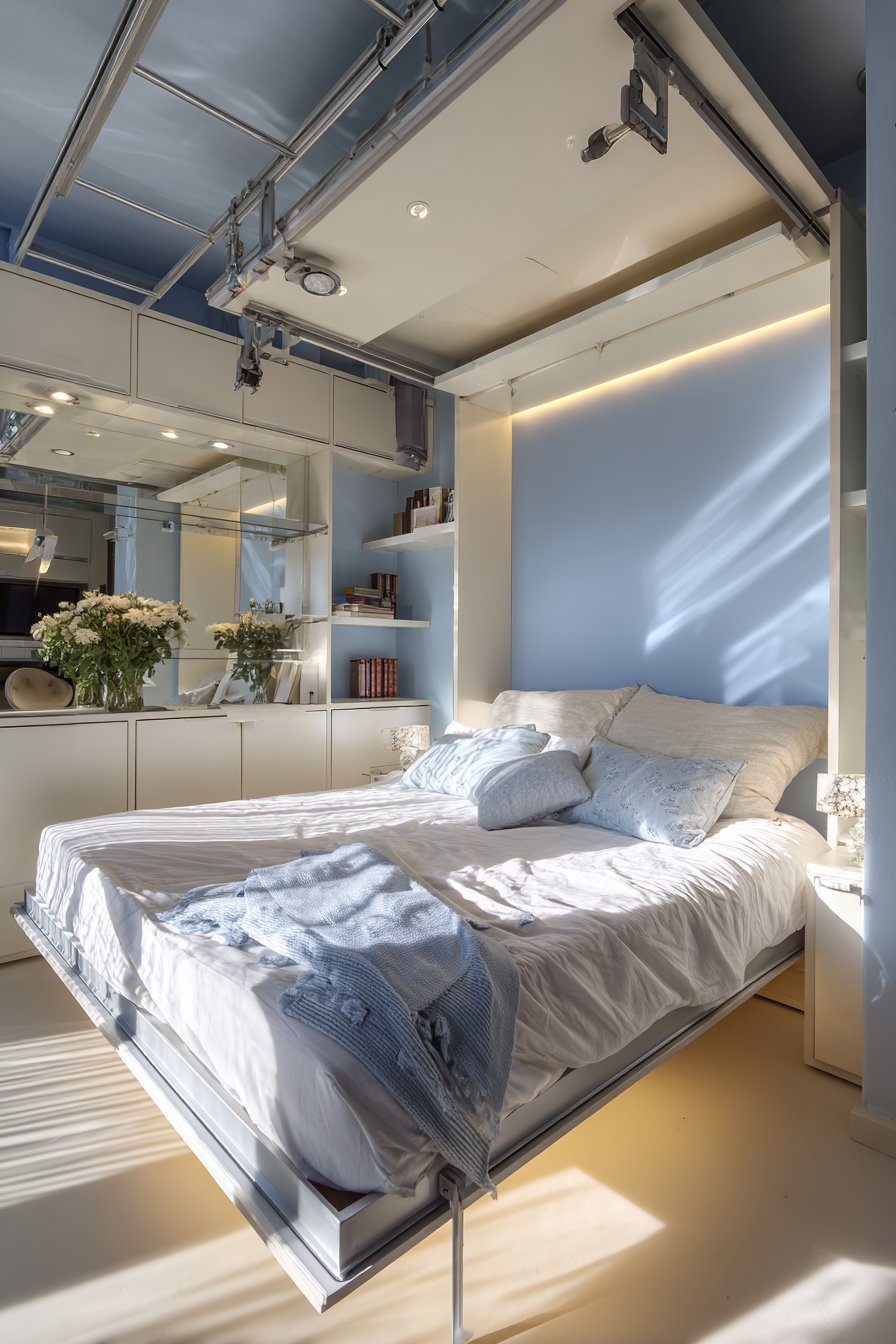
Installation considerations for murphy beds include ensuring proper wall support, as these systems require mounting to studs or reinforced wall structures. The mechanical components typically feature hydraulic or spring-loaded mechanisms that make raising and lowering the bed effortless, even for a single person. Some advanced models include soft-close technology and safety features that prevent accidental folding. The initial investment in a quality murphy bed system pays dividends in functionality, especially in studio apartments or multipurpose rooms where every square foot counts.
Key Design Tips:
- Ensure professional installation with proper wall anchoring to support the bed’s weight safely
- Choose a murphy bed with integrated lighting to enhance functionality without requiring additional lamps
- Select a design with accessible storage cubbies that can hold essentials like alarm clocks, phones, and reading materials
- Consider adding a small fold-down desk or table to the surrounding cabinetry for additional workspace
- Opt for a neutral wall color or accent wall treatment that complements both the open and closed positions
2. Platform Bed with Integrated Drawer Storage
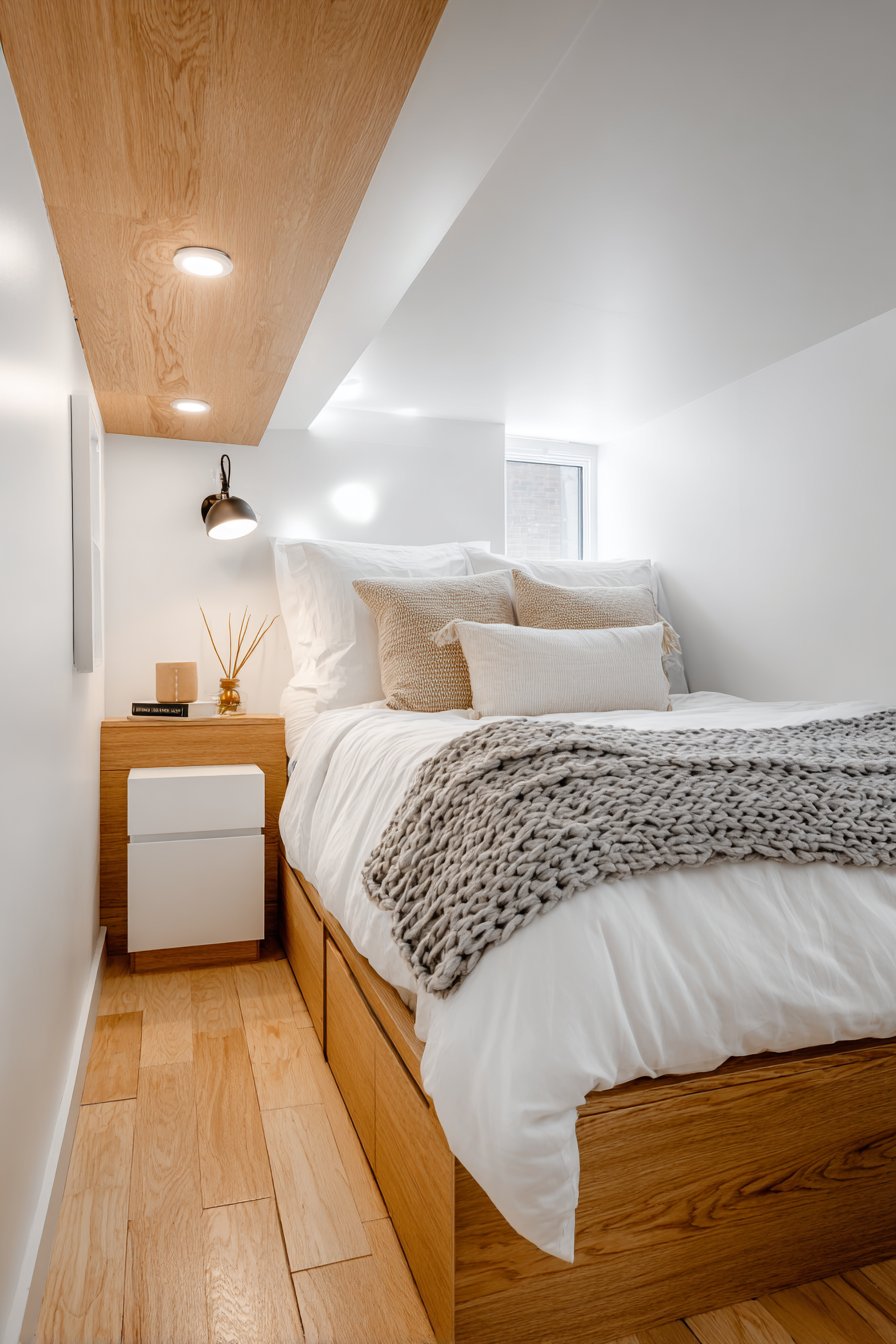
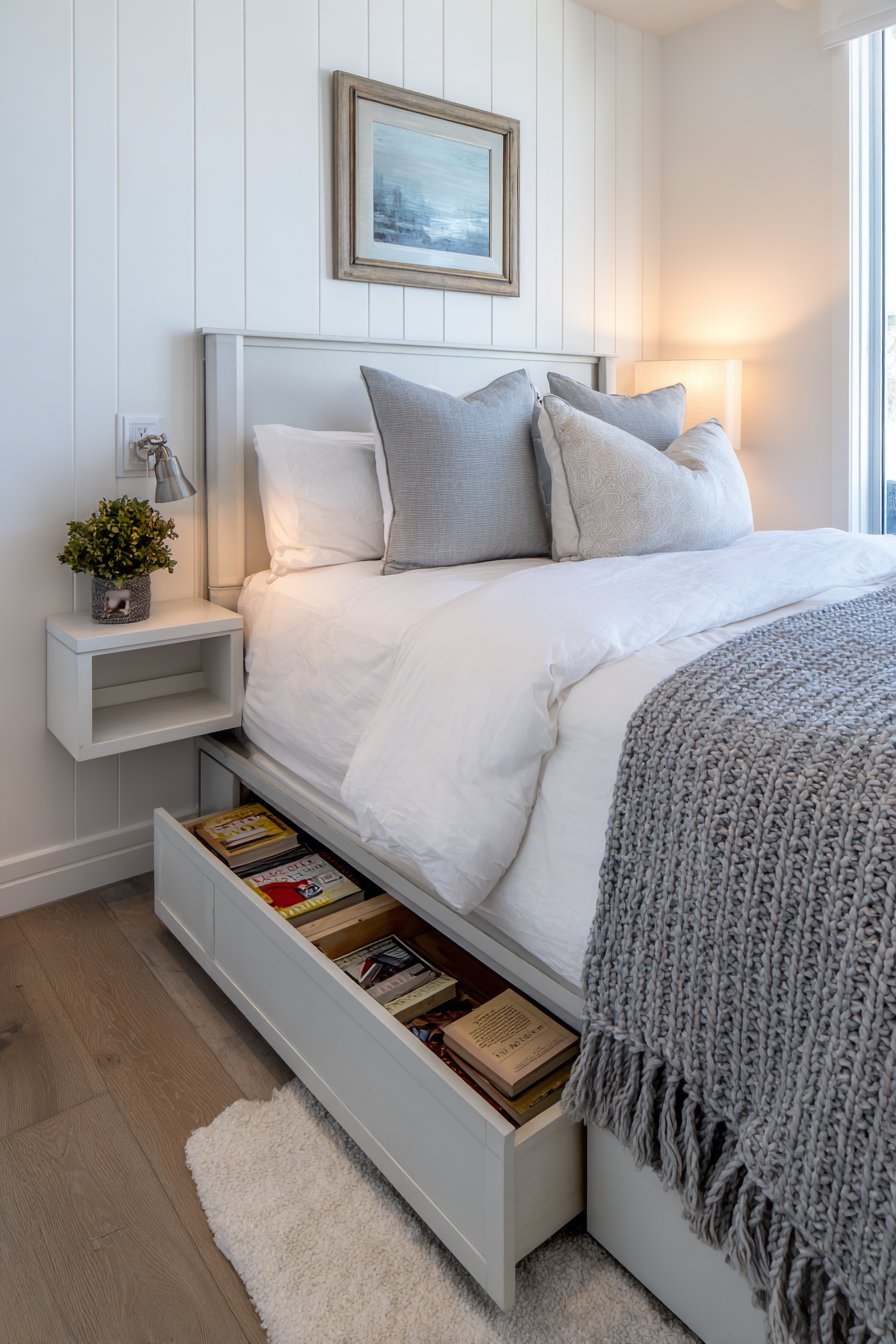
Platform beds with built-in storage drawers underneath offer one of the most practical tiny room ideas for bedrooms, combining essential sleeping space with substantial hidden storage capacity. This design elevates the mattress on a solid platform base that incorporates multiple deep drawers accessible from the sides of the bed. Unlike traditional bed frames that waste the valuable space beneath the mattress, platform storage beds transform this area into organized compartments perfect for storing clothing, extra linens, seasonal items, or personal belongings. The drawers typically feature smooth-gliding mechanisms and can be configured with dividers or organizers to maximize their utility.
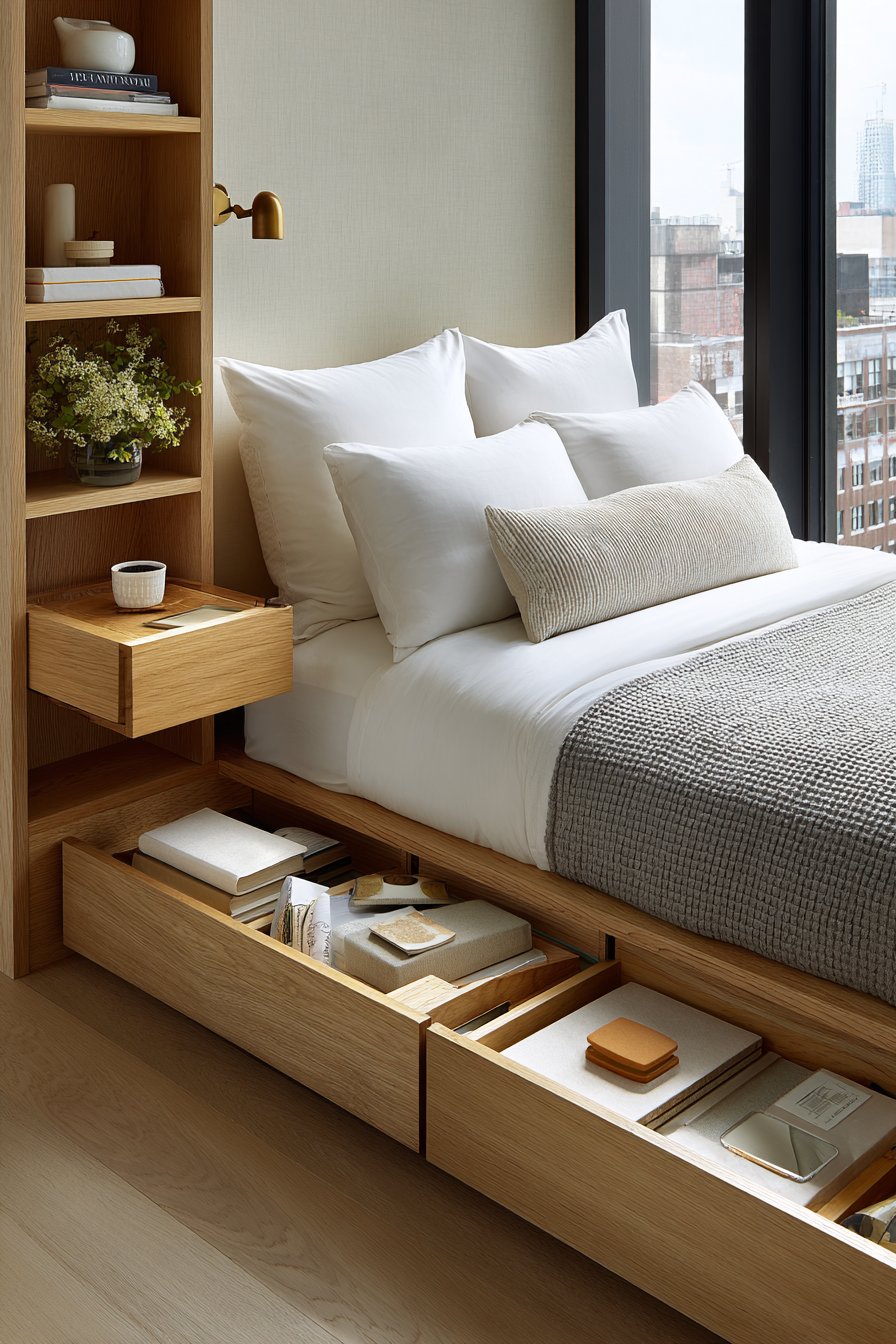
The visual appeal of platform beds extends beyond their storage capabilities. The low-profile design creates clean, modern lines that don’t overwhelm small spaces, while the solid platform eliminates the need for a box spring, reducing overall bed height and maintaining better proportions in rooms with standard ceiling heights. When dressed in crisp white linens layered with textured throws in neutral grays or soft blues, these beds become the focal point of a serene, uncluttered bedroom. The storage drawers remain discreetly hidden beneath the mattress overhang, maintaining the minimalist aesthetic while providing surprising storage capacity.
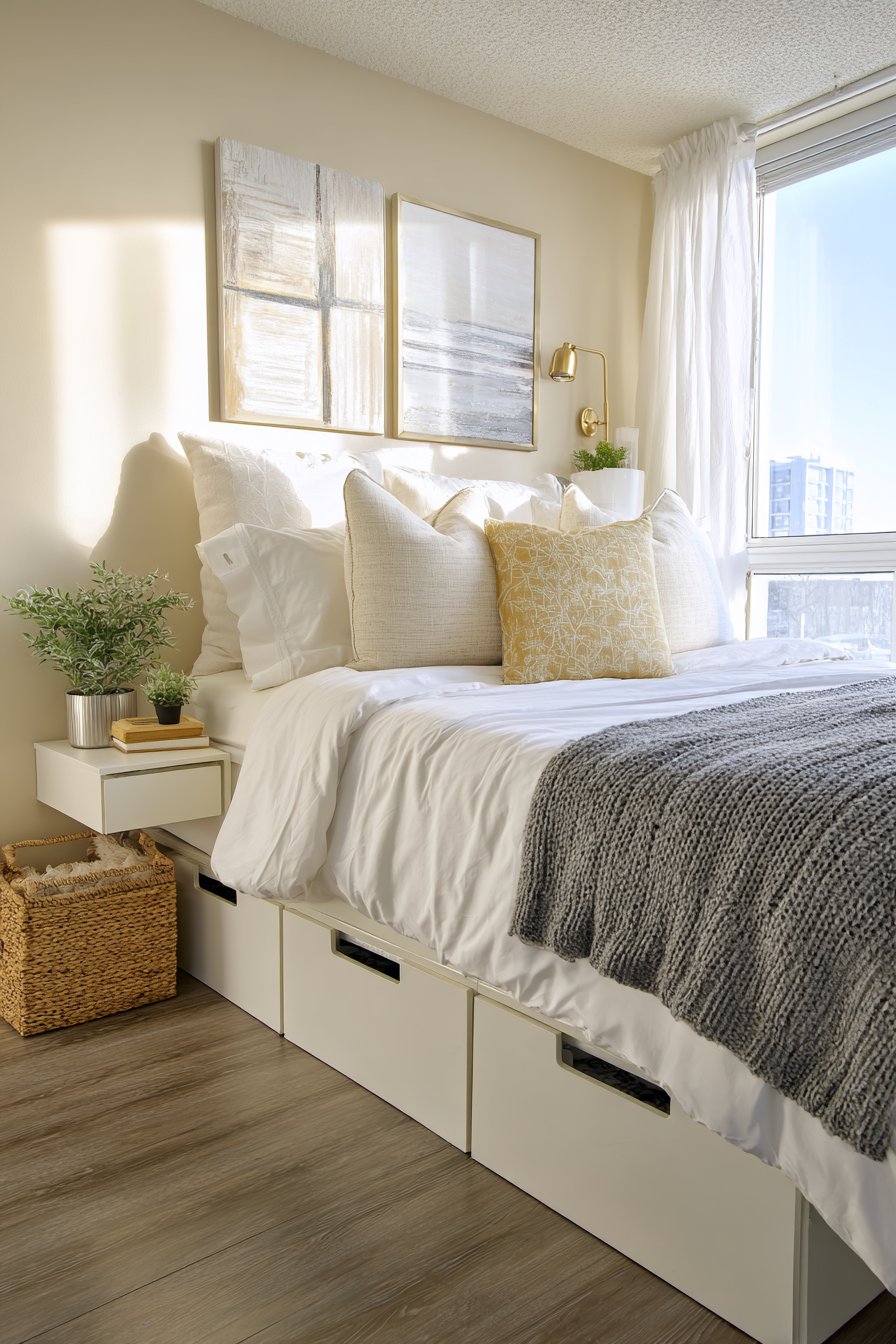
Floating nightstands mounted to the wall beside platform beds complement this tiny bedroom idea perfectly, eliminating the need for bulky bedside tables that consume precious floor space. Wall-mounted reading lamps with adjustable arms provide task lighting without requiring surface space, while the open floor area beneath floating furniture creates an airy feeling that makes the room appear larger. Natural oak or walnut flooring adds warmth and visual interest without competing with the bed’s streamlined design, creating a harmonious balance between functionality and style.
Key Design Tips:
- Measure drawer depths carefully to ensure they can accommodate folded clothing, linens, or storage boxes
- Install drawer organizers or dividers to maximize storage efficiency and keep contents neat
- Choose a platform bed with drawers that open from both sides if the bed is accessible from multiple angles
- Select drawer pulls or handles that complement your bedroom’s overall hardware finish
- Consider beds with different drawer sizes to accommodate various items, from bulky sweaters to small accessories
- Maintain a cohesive color palette with bedding that doesn’t visually add weight to the room
3. Vertical Storage Wall System with Integrated Workspace
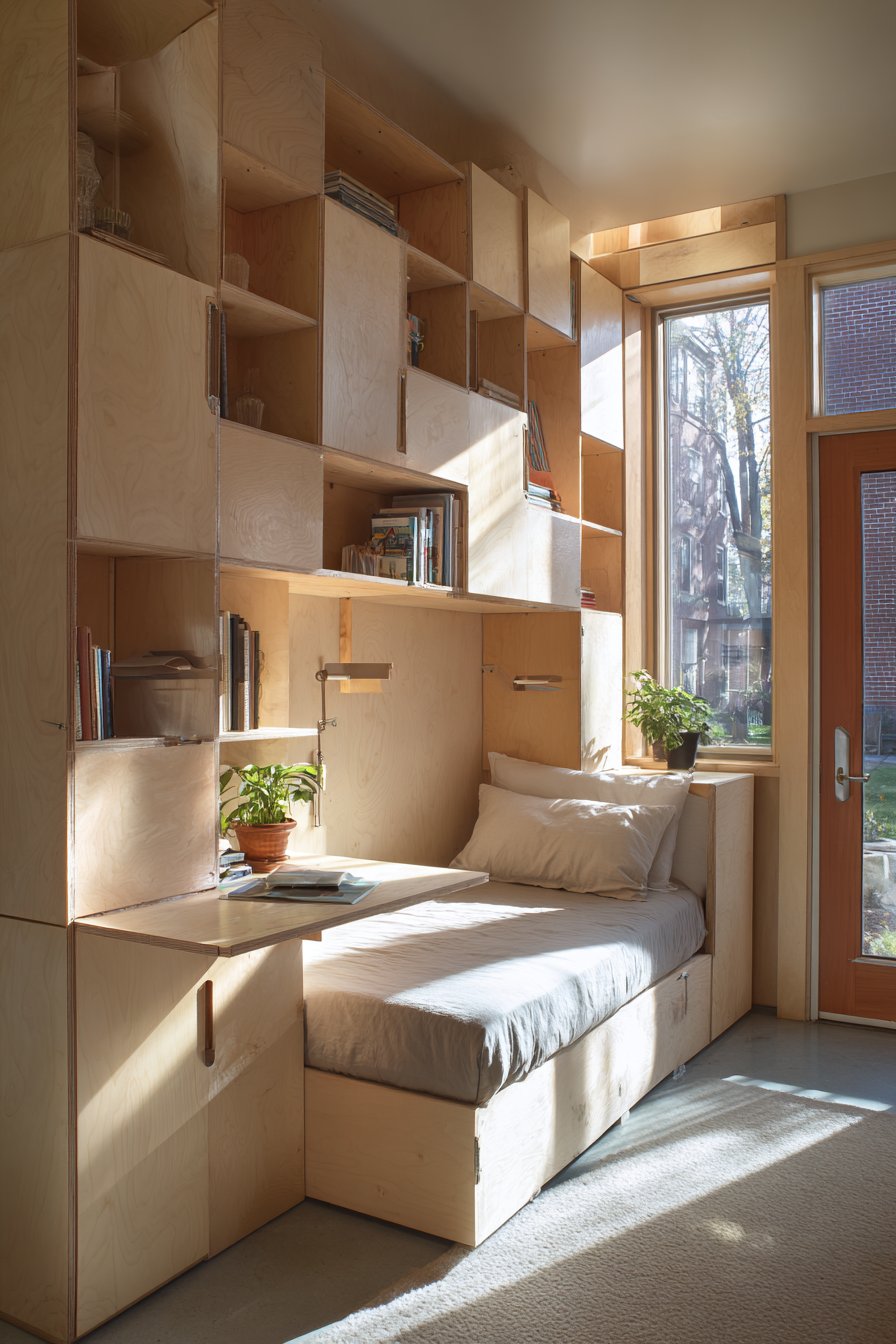
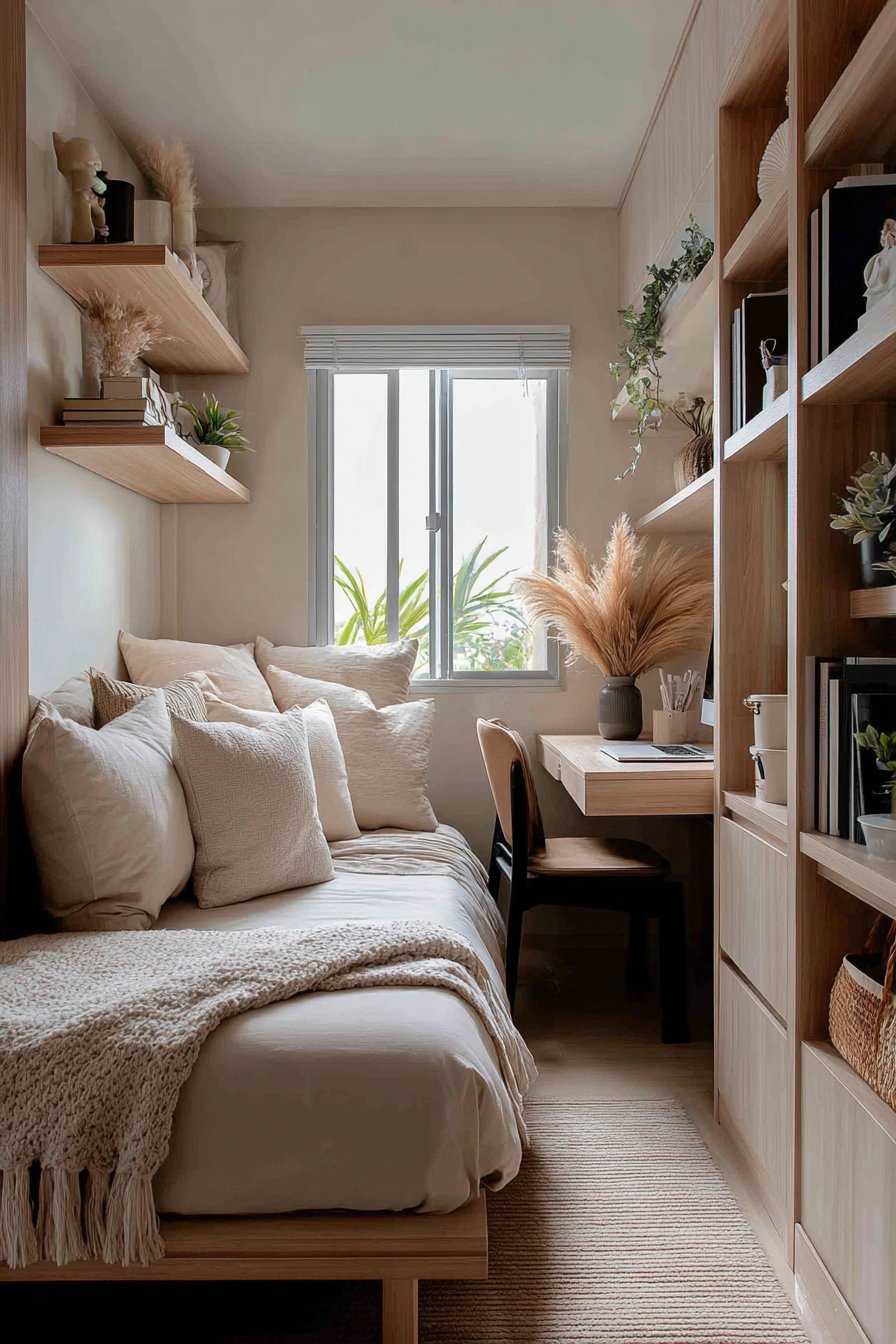
Maximizing vertical space represents one of the most effective tiny room ideas for bedrooms, especially when floor space is severely limited. Floor-to-ceiling storage systems transform empty wall space into functional storage while drawing the eye upward, creating the illusion of greater room height and spaciousness. These comprehensive storage walls combine open shelving for display items with closed cabinets for concealing clutter, all in coordinated light wood finishes that reflect natural light and prevent the space from feeling dark or cramped. The vertical emphasis creates architectural interest while providing storage capacity equivalent to several freestanding furniture pieces.
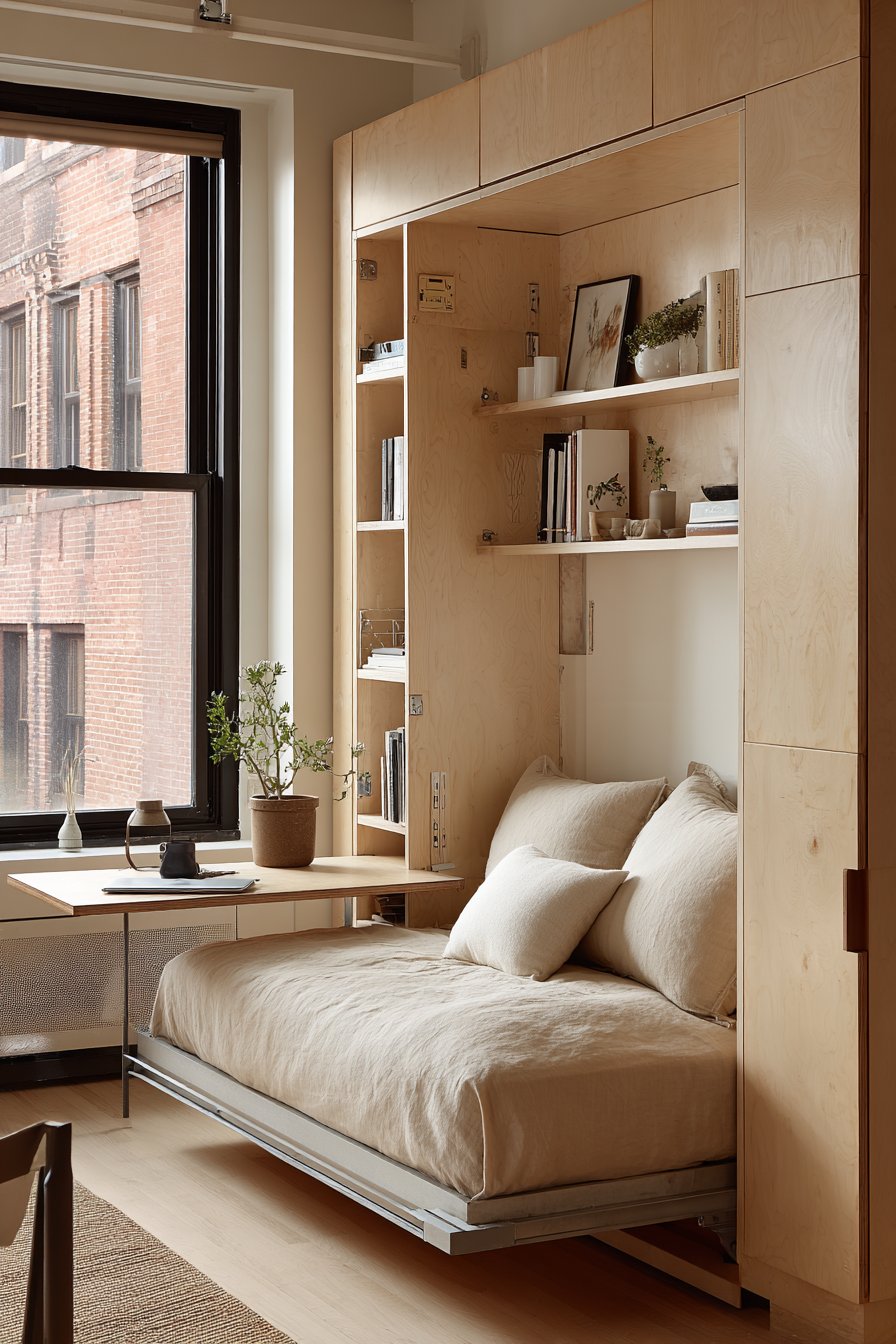
The integration of a fold-out desk within the shelving system exemplifies smart tiny bedroom design. This compact workspace attaches directly to the shelving unit, providing a functional area for laptop work, studying, or correspondence without requiring a separate desk that would consume valuable floor space. When not in use, the desk surface folds flat against the shelving, maintaining the room’s streamlined appearance. The surrounding shelves provide convenient storage for office supplies, books, and personal items, keeping everything organized and easily accessible.
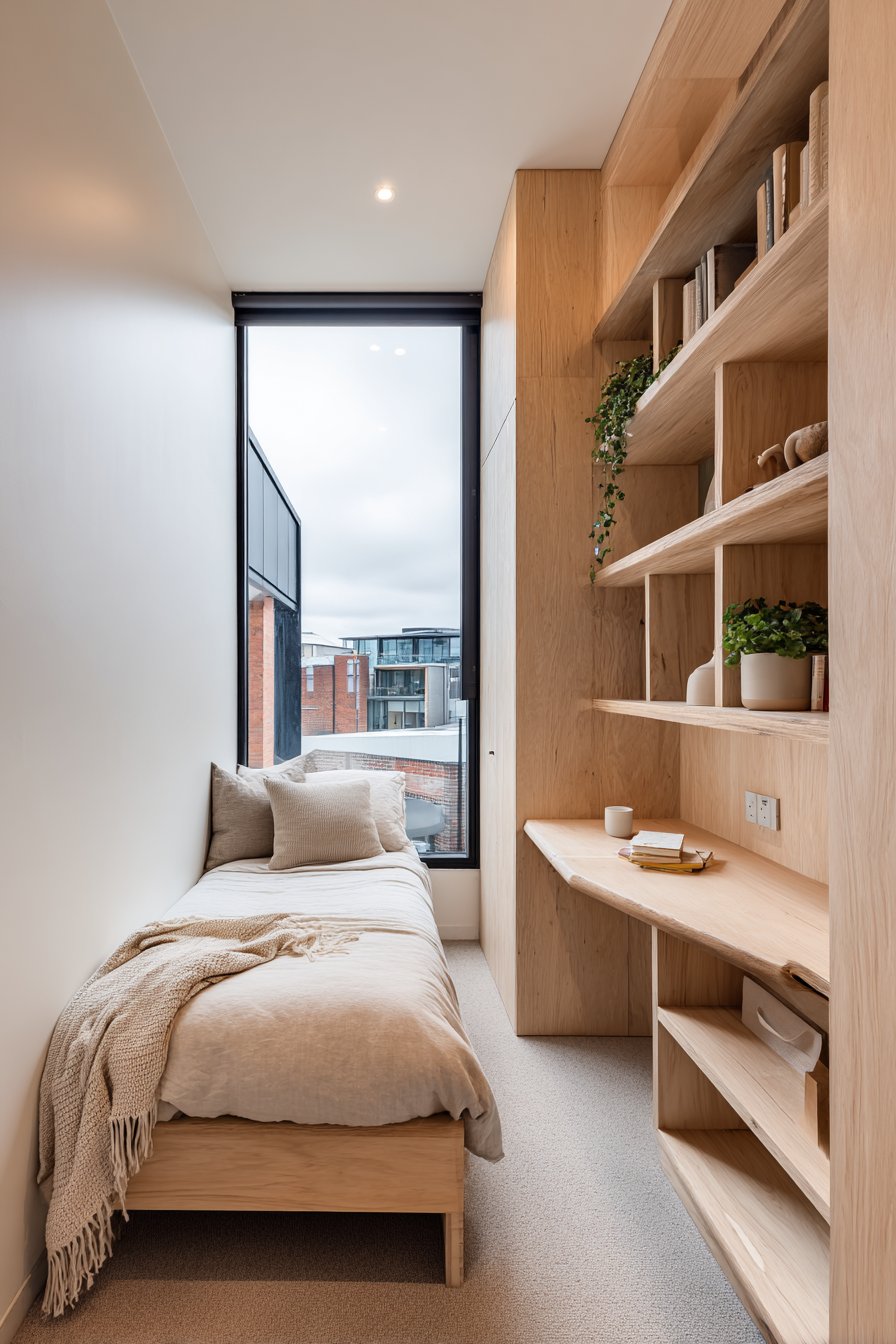
A narrow single bed positioned against an adjacent wall completes this efficient layout, dressed in neutral bedding that doesn’t compete visually with the storage wall’s presence. The minimal bed frame keeps the focus on functionality rather than decorative elements, while small fold-out or wall-mounted reading lights eliminate the need for table lamps. Natural light filtering through sheer white curtains on a small window illuminates the space without overwhelming it, highlighting the practical beauty of this vertical storage approach. Wire baskets on upper shelves provide additional organizational options for items used less frequently.
Key Design Tips:
- Install the tallest storage system your ceiling height allows to maximize vertical capacity
- Mix open and closed storage to balance display opportunities with concealed organization
- Position the most frequently used items at mid-level heights for easy access without climbing
- Use the top shelves for seasonal items or belongings accessed infrequently
- Incorporate a fold-out desk with integrated cable management for a clean, functional workspace
- Choose light wood finishes that reflect natural light and prevent the wall from feeling heavy
- Add small LED strip lights under shelves to illuminate the space and create ambiance
4. Loft Bed Design with Study Area Below
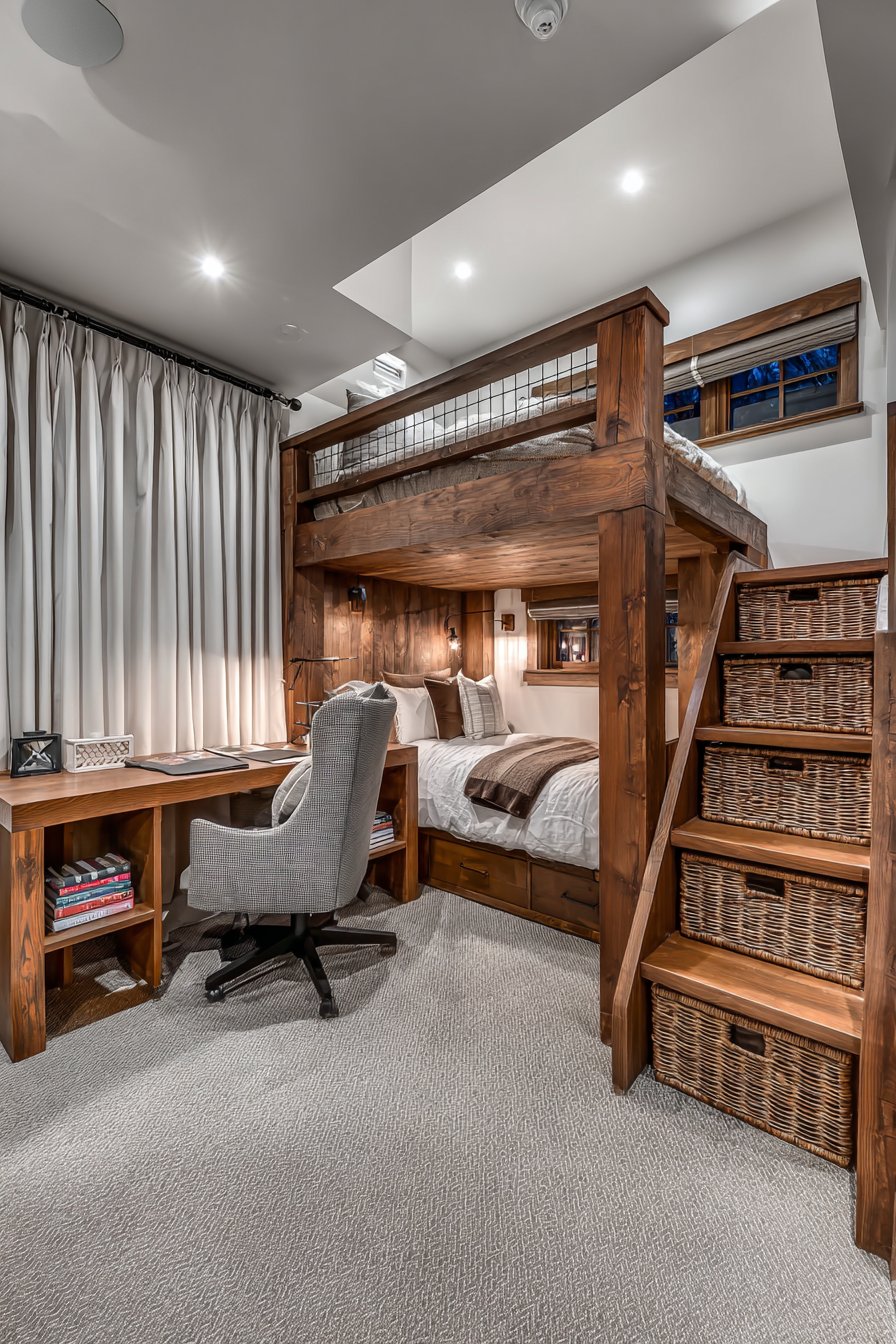
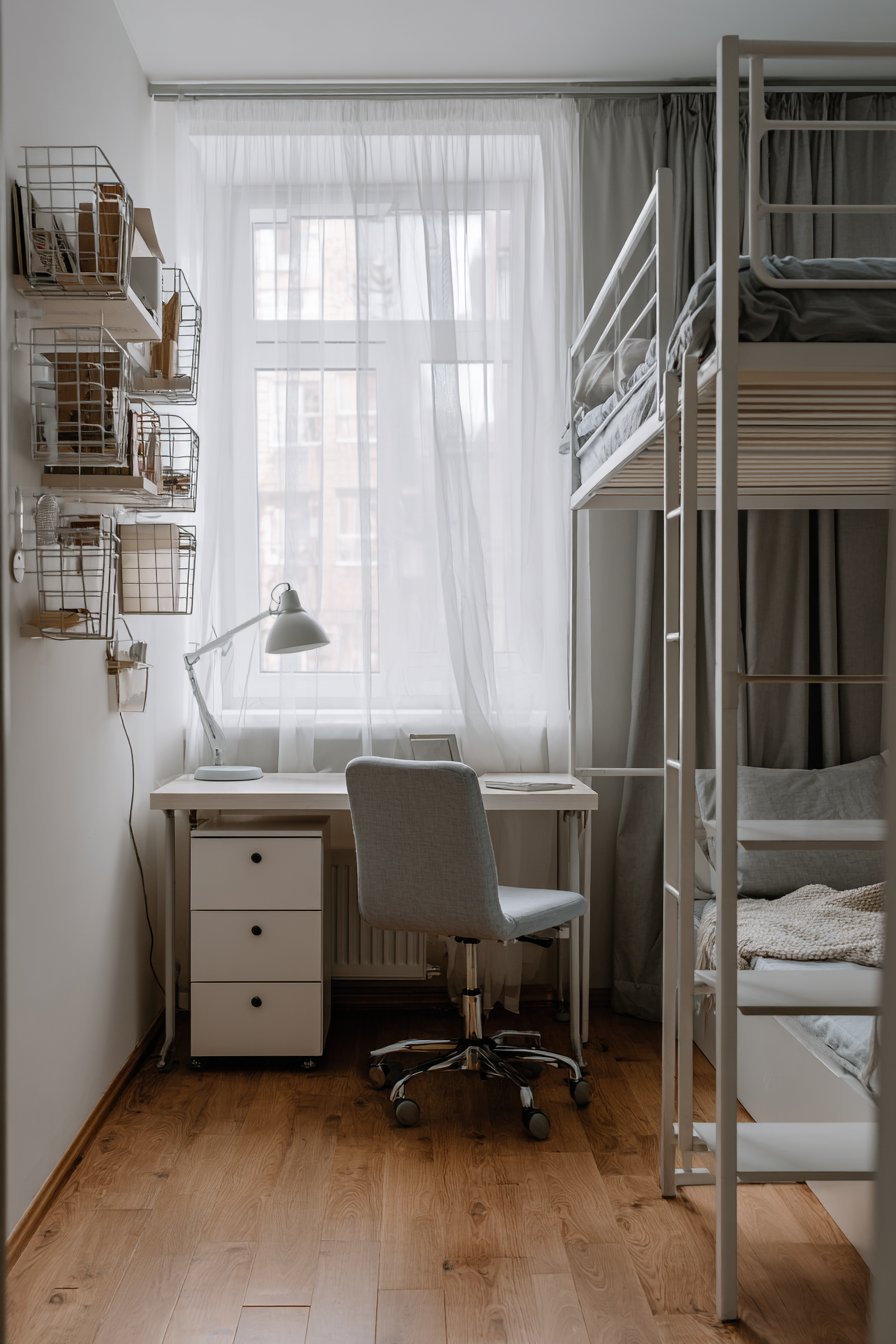
Loft beds represent innovative tiny room ideas for bedrooms by creating distinct functional zones within a single compact space. By elevating the sleeping area several feet off the ground, loft designs free up valuable floor space underneath for other purposes. This particular configuration incorporates a dedicated study area beneath the loft, complete with a compact desk featuring integrated task lighting and a comfortable office chair. The vertical separation between sleeping and working areas provides psychological boundaries that help maintain work-life balance, even in the smallest of rooms.
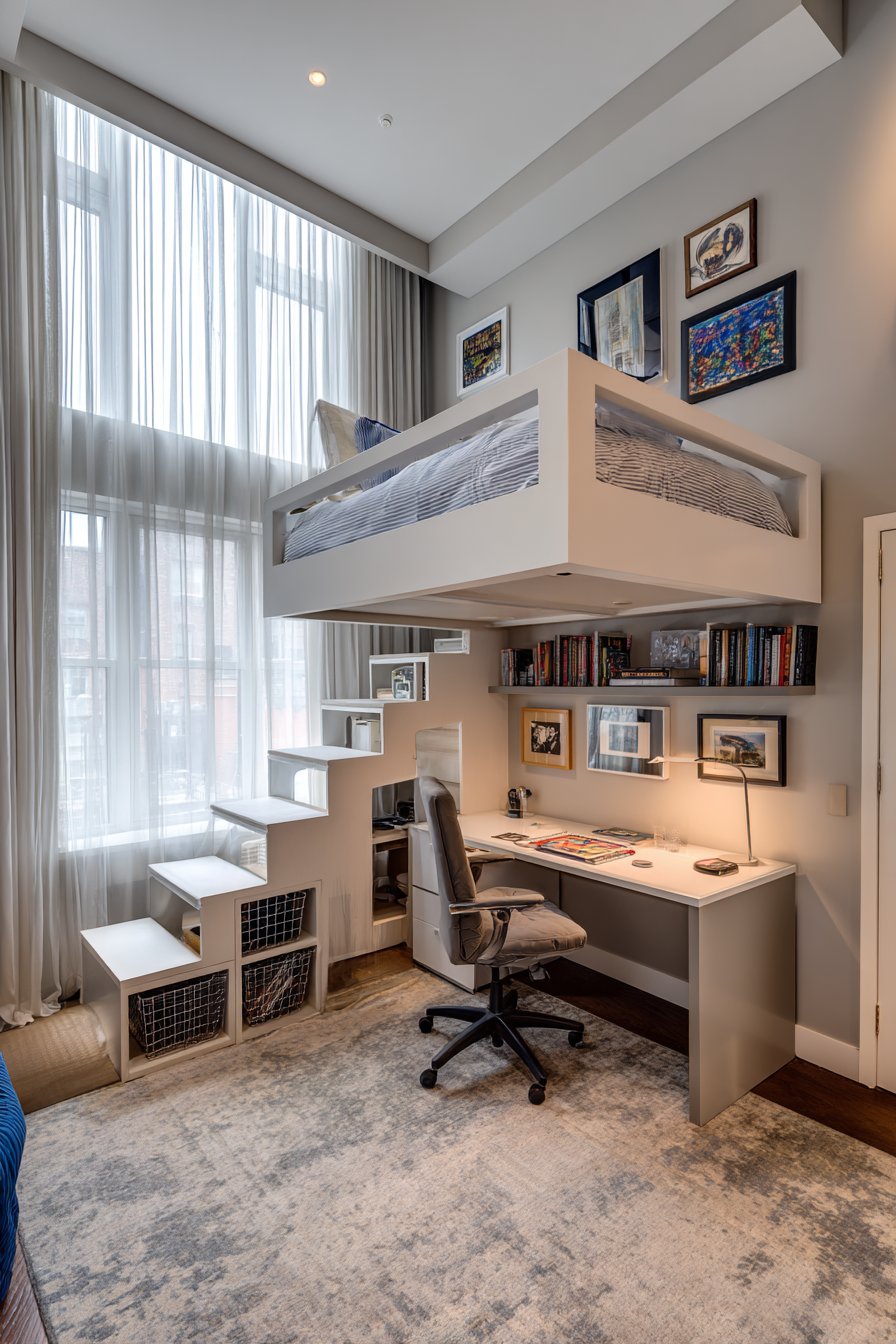
The loft structure itself is typically constructed from sturdy metal or solid wood, painted in light gray tones that blend seamlessly with wall colors while maintaining an open, airy feeling. Access to the loft is provided by a fixed ladder or stairs, with some designs incorporating storage drawers within stair treads for additional functionality. The elevated sleeping platform is surrounded by safety railings and dressed with comfortable bedding, creating a cozy sleeping nook that feels private and separated from the active workspace below. Wire baskets or hanging organizers mounted beneath the loft provide additional storage without cluttering the study area.
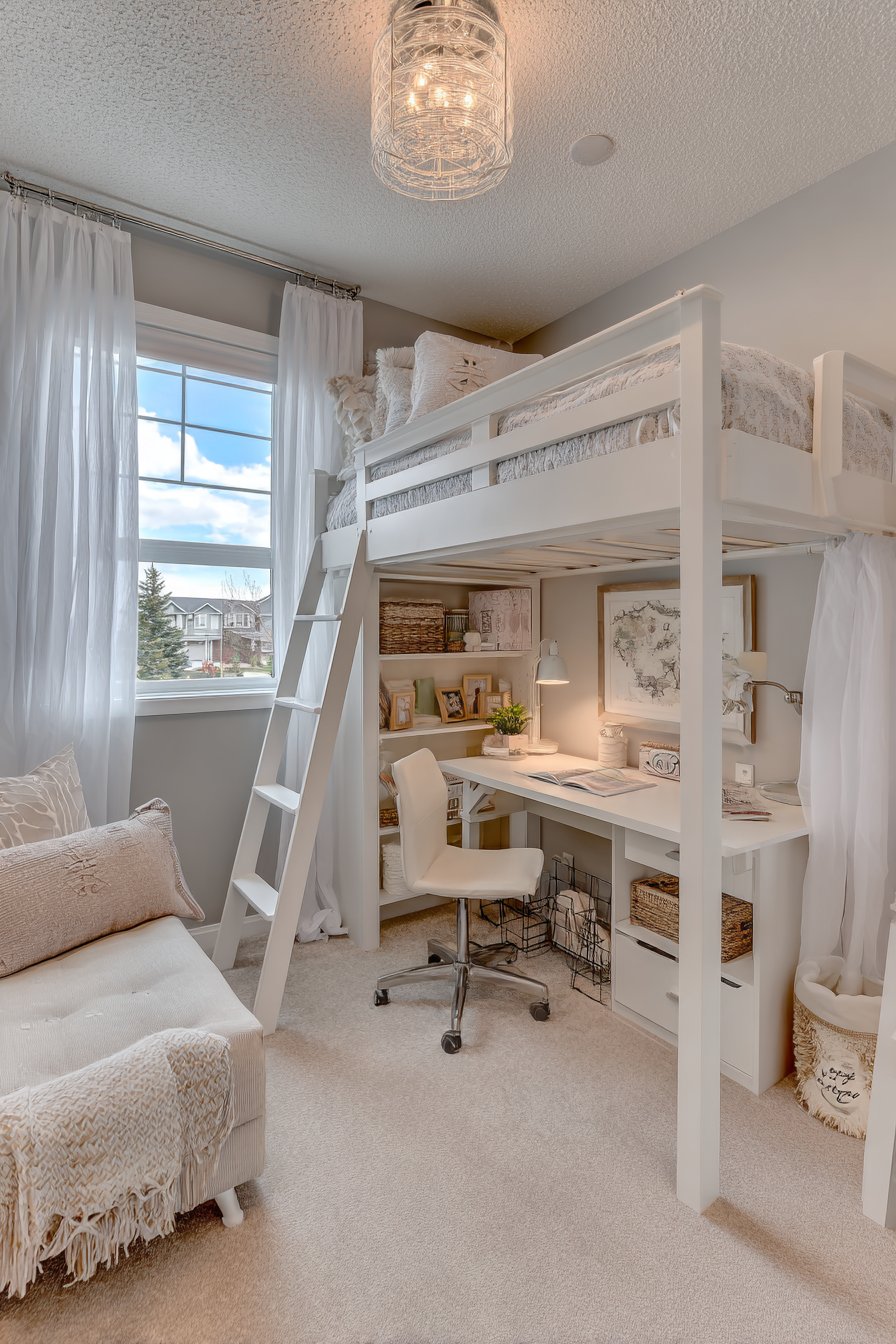
Natural light from windows becomes especially important in loft bed configurations, as the elevated sleeping area can sometimes feel enclosed. Sheer white curtains filter harsh sunlight while maintaining brightness throughout the day, and the study area benefits from this natural illumination for reading and computer work. The desk’s integrated task lighting supplements natural light during evening hours or on overcast days, ensuring the workspace remains functional regardless of ambient conditions. This thoughtful approach to lighting prevents the loft area from feeling cave-like while maintaining the study zone’s productivity.
Key Design Tips:
- Ensure adequate ceiling height (at least 8-9 feet) to prevent the loft from feeling claustrophobic
- Position the desk to maximize natural light from windows when possible
- Install sturdy safety railings around the sleeping platform, especially in children’s rooms
- Choose a comfortable mattress appropriate for platform sleeping (typically 6-8 inches thick)
- Incorporate wire baskets or hanging organizers under the loft for books, supplies, and accessories
- Add a small reading light near the pillow for bedtime reading without illuminating the entire space
- Consider placing a small rug under the study area to define the workspace and add comfort
5. Corner Bed Placement for Maximum Floor Space
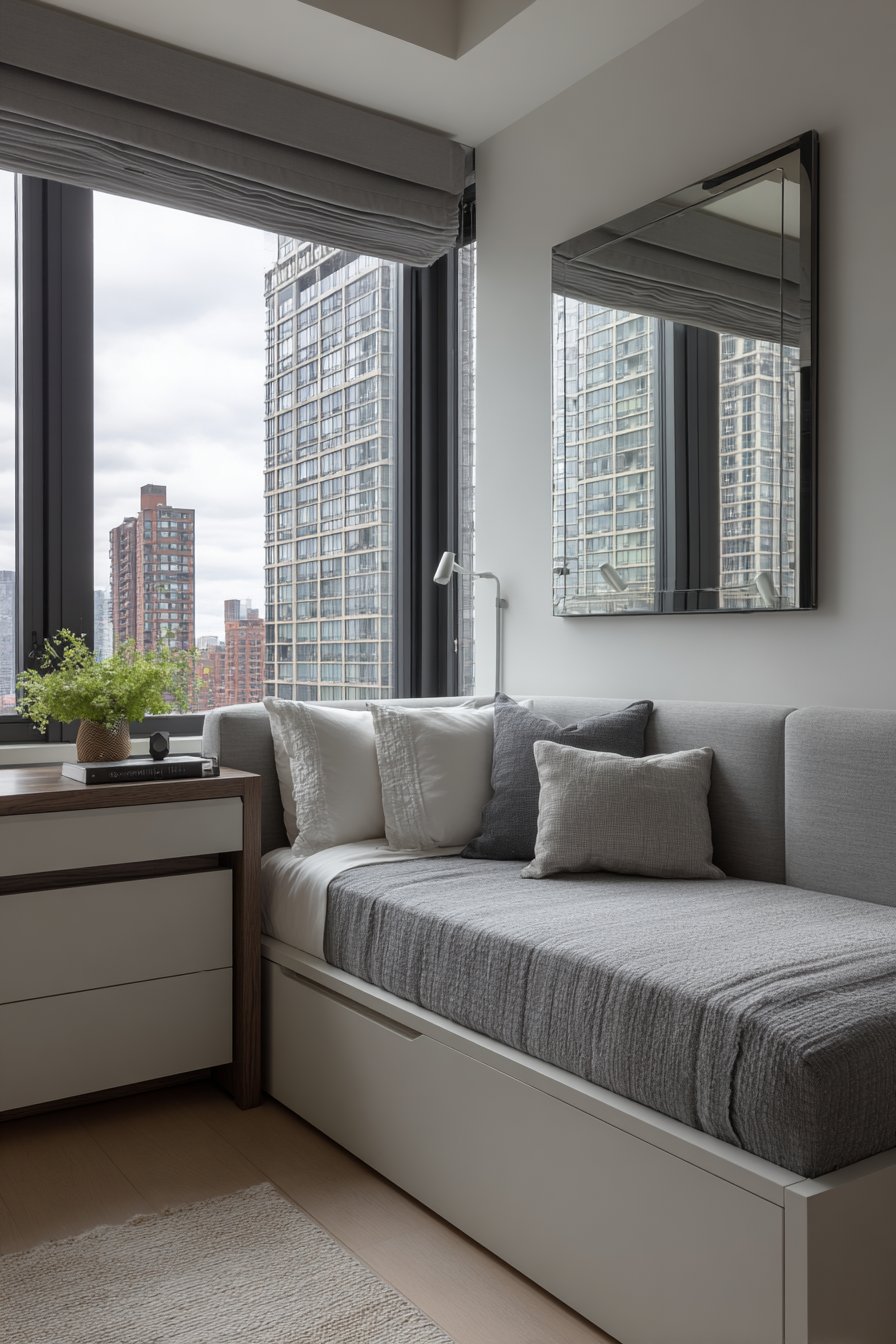
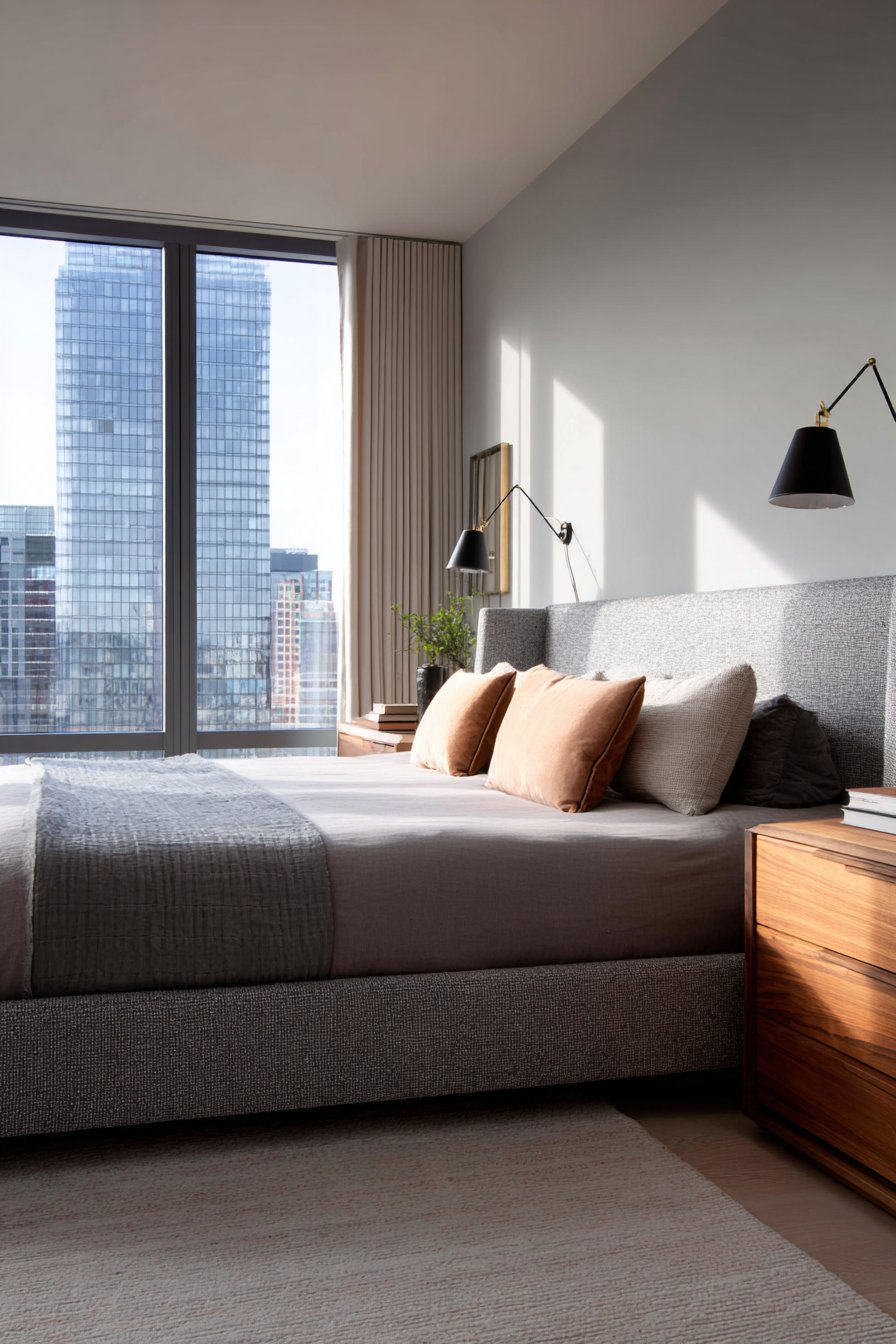
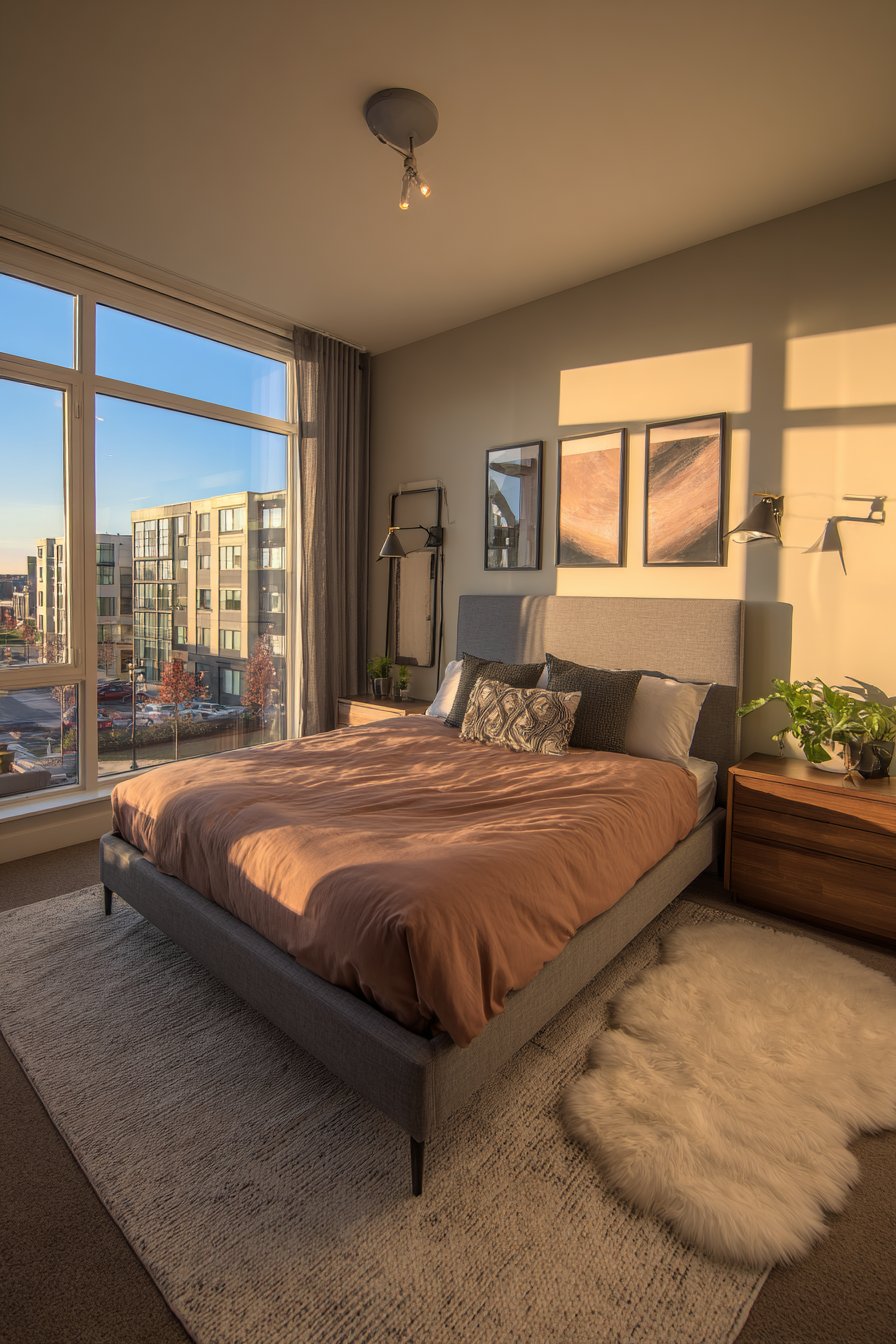
Strategic furniture placement can dramatically impact how spacious a tiny bedroom feels, and positioning the bed in a corner represents one of the smartest tiny room ideas for bedrooms. This configuration liberates the center of the room for movement and other activities, creating a more open, functional layout than traditional centered bed placement. The corner positioning naturally defines the sleeping zone while leaving the majority of floor space unobstructed, making the room feel significantly larger than its actual dimensions.
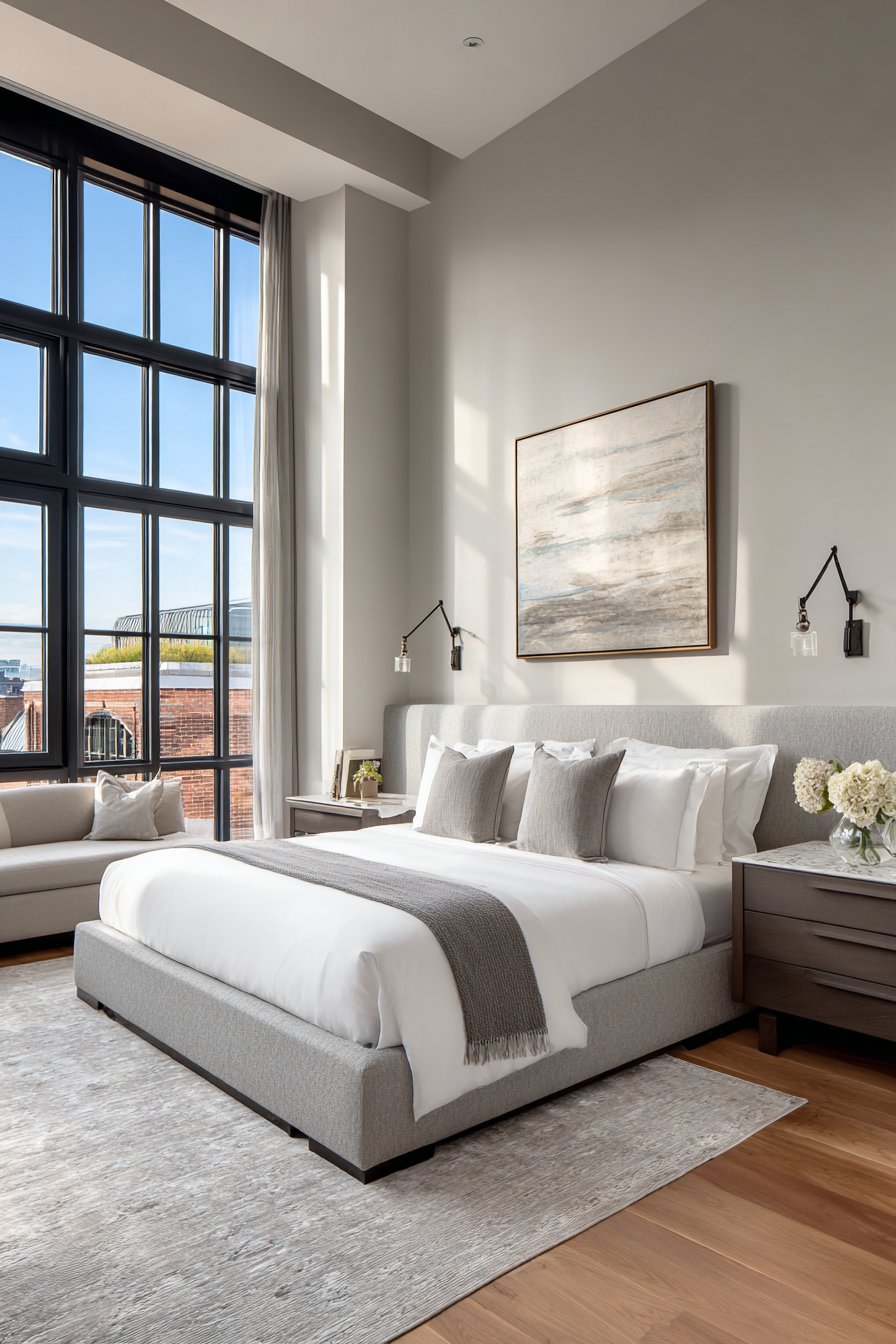
A low-profile upholstered headboard in soft gray fabric provides comfort for sitting up in bed while reading or using a laptop, without adding visual bulk that might make the corner feel cramped. The upholstered surface also prevents cold walls from being uncomfortable during winter months. Wall-mounted swing-arm reading lights positioned on both adjacent walls eliminate the need for nightstands and table lamps, freeing up valuable floor space while providing adjustable, directed lighting exactly where needed. These articulating fixtures can be swung close to the wall when not in use, maintaining the room’s streamlined appearance.
A narrow dresser positioned along the opposite wall creates a functional getting-ready area without impeding traffic flow through the room. Mounting a mirror above the dresser reflects natural light and creates the illusion of greater depth, one of the classic tricks in tiny bedroom design. The strategic placement of each furniture piece ensures adequate circulation space, typically maintaining at least two feet of clearance for comfortable movement. Natural morning light highlighting this thoughtful arrangement emphasizes how proper planning transforms spatial limitations into design opportunities.
Key Design Tips:
- Leave at least 24-30 inches of clearance on the open side of the bed for comfortable access
- Install wall-mounted lighting to eliminate the need for nightstands and table lamps
- Choose a low-profile headboard that provides comfort without overwhelming the corner
- Position a mirror strategically to reflect natural light and create visual depth
- Keep the center of the room as open as possible to maintain a sense of spaciousness
- Use the corner walls for floating shelves or small hooks for frequently accessed items
- Select furniture with narrow profiles that provide function without consuming excessive floor space
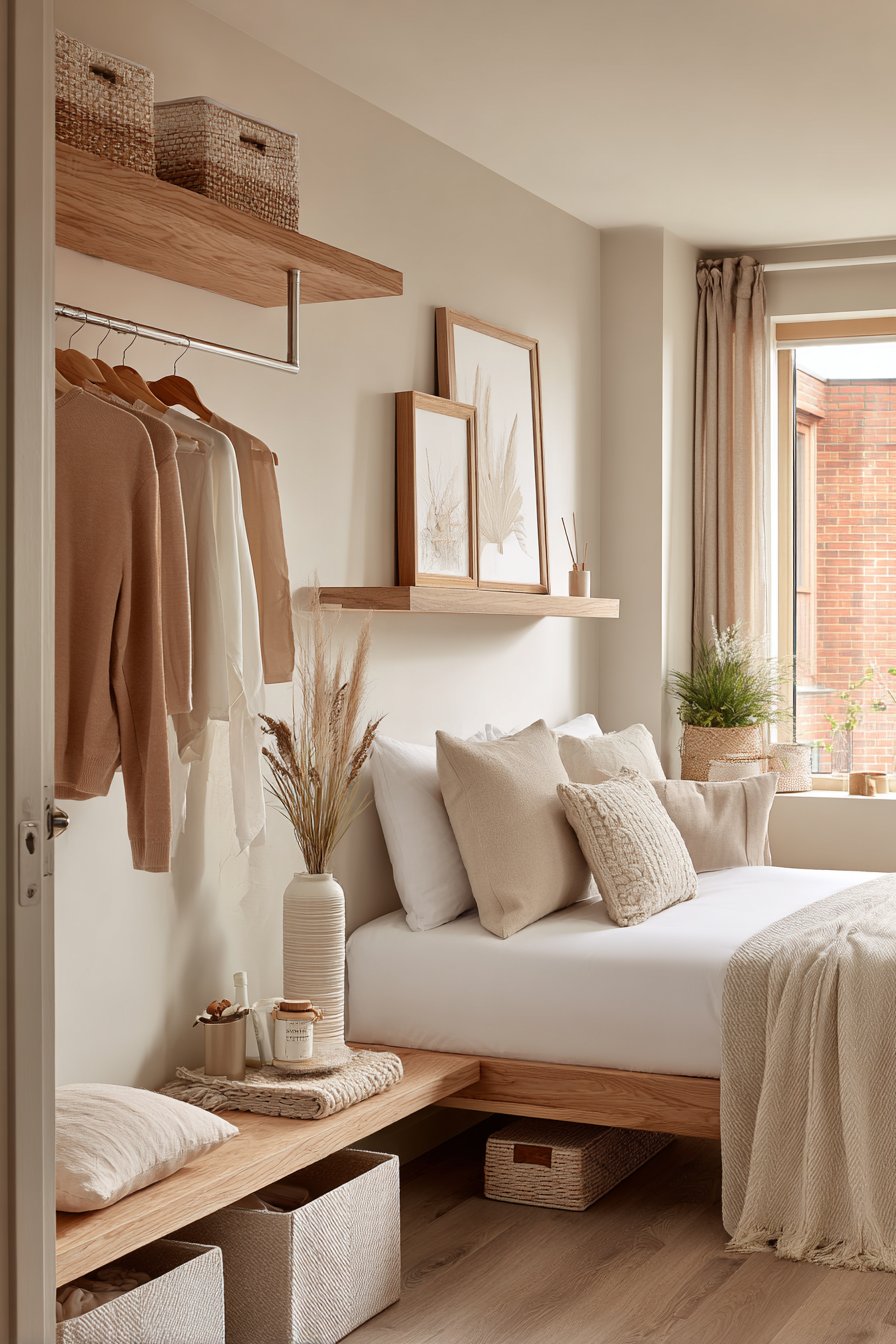
6. Minimalist Zen Approach with Under-Bed Storage
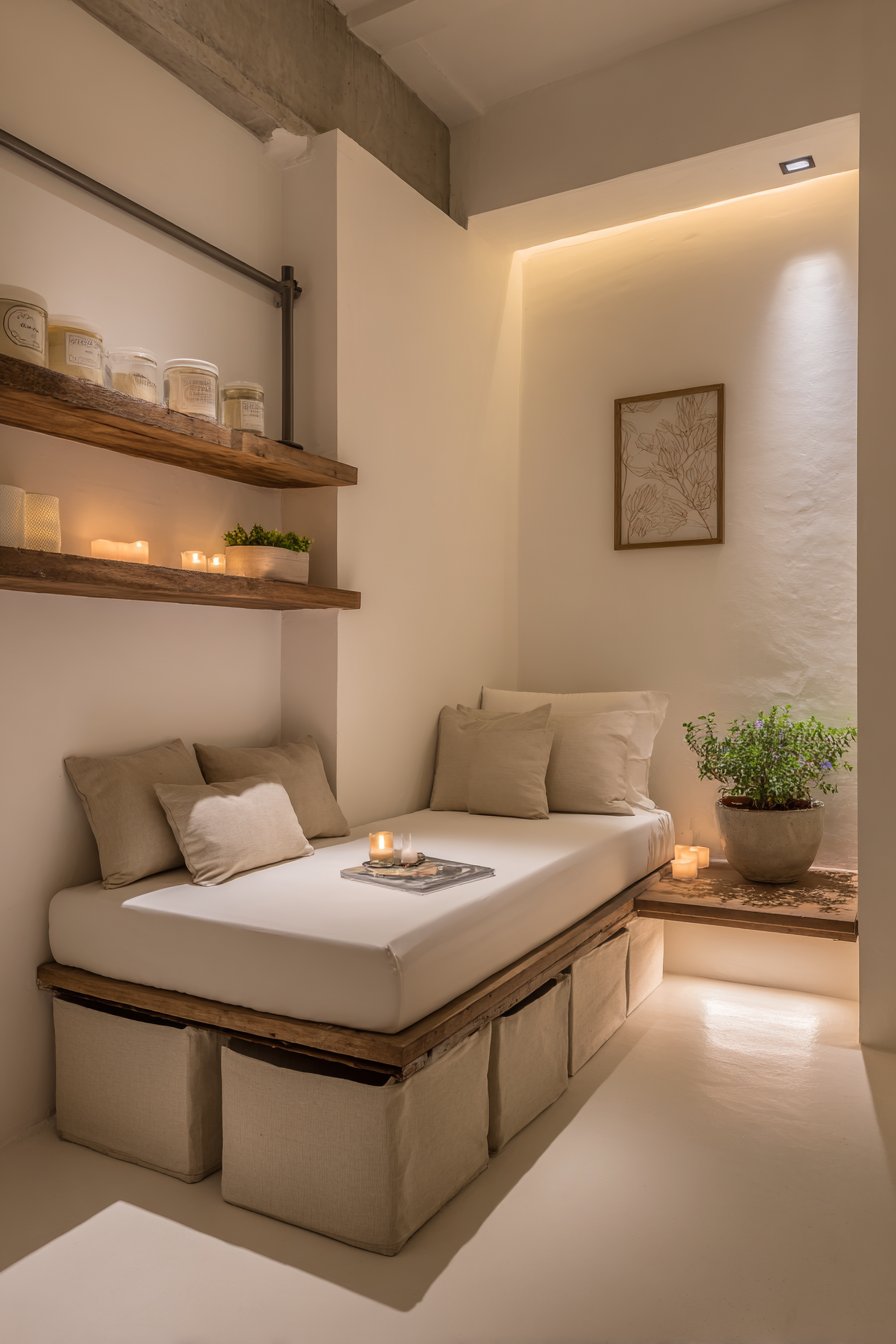
Embracing minimalism offers powerful tiny room ideas for bedrooms, proving that less truly can be more when space is limited. This approach features a simple bed frame elevated just enough to accommodate storage boxes underneath, dressed in neutral bedding that creates a calm, uncluttered aesthetic. The under-bed storage boxes in natural canvas or woven materials maintain the minimalist visual while providing essential storage for off-season clothing, extra linens, or items used infrequently. The key to this design’s success lies in its restraint—every item serves a purpose, and nothing extraneous clutters the space.
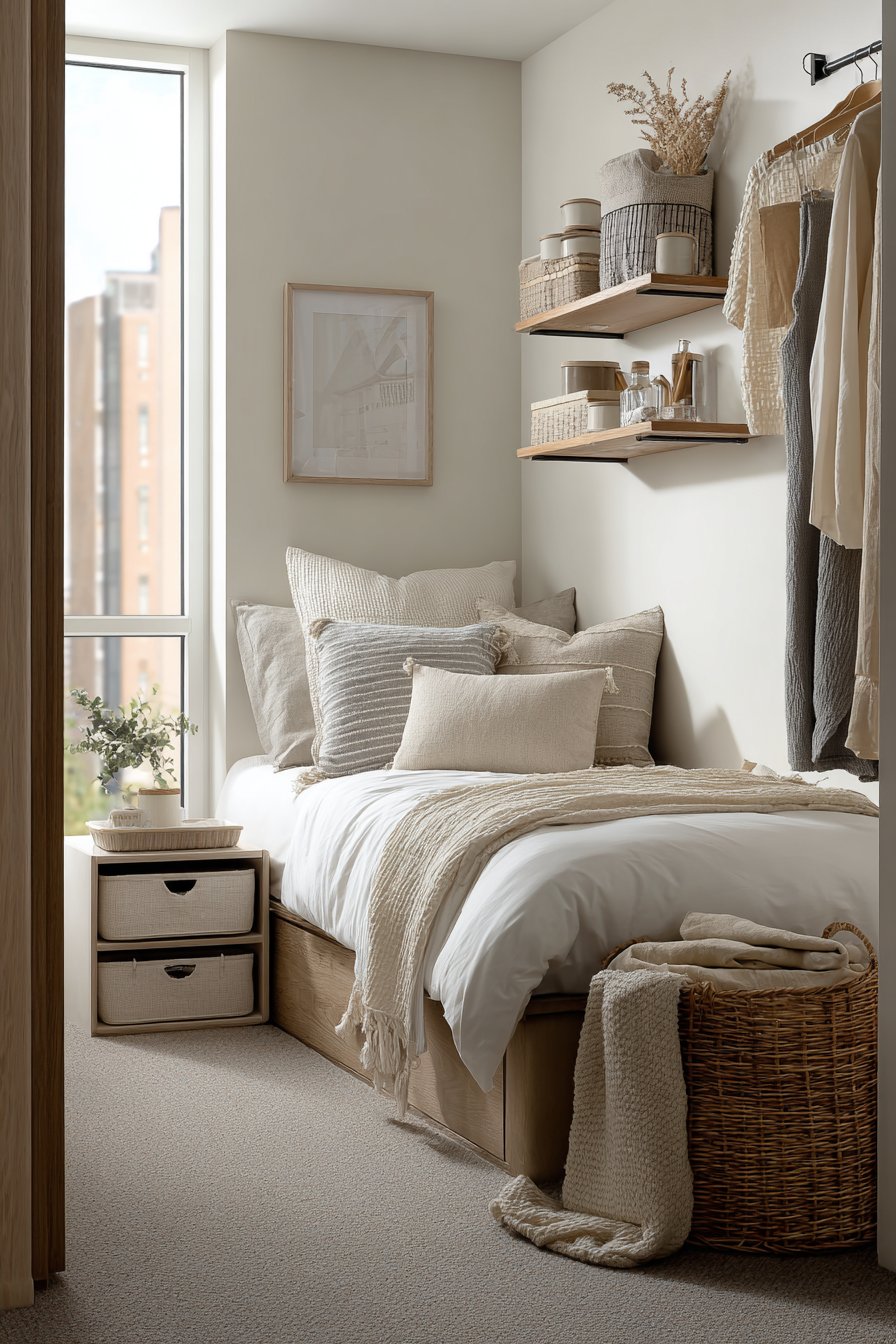
A single floating shelf mounted at headboard height serves as a minimalist nightstand, holding only essential items like an alarm clock, reading glasses, and perhaps a single small plant or meaningful object. This edited approach prevents the accumulation of clutter that can make tiny bedrooms feel chaotic and cramped. The walls, painted in warm white tones, provide a serene backdrop that maximizes light reflection while creating a sense of peace and tranquility. One small piece of carefully chosen artwork adds personality without overwhelming the intentionally spare aesthetic.
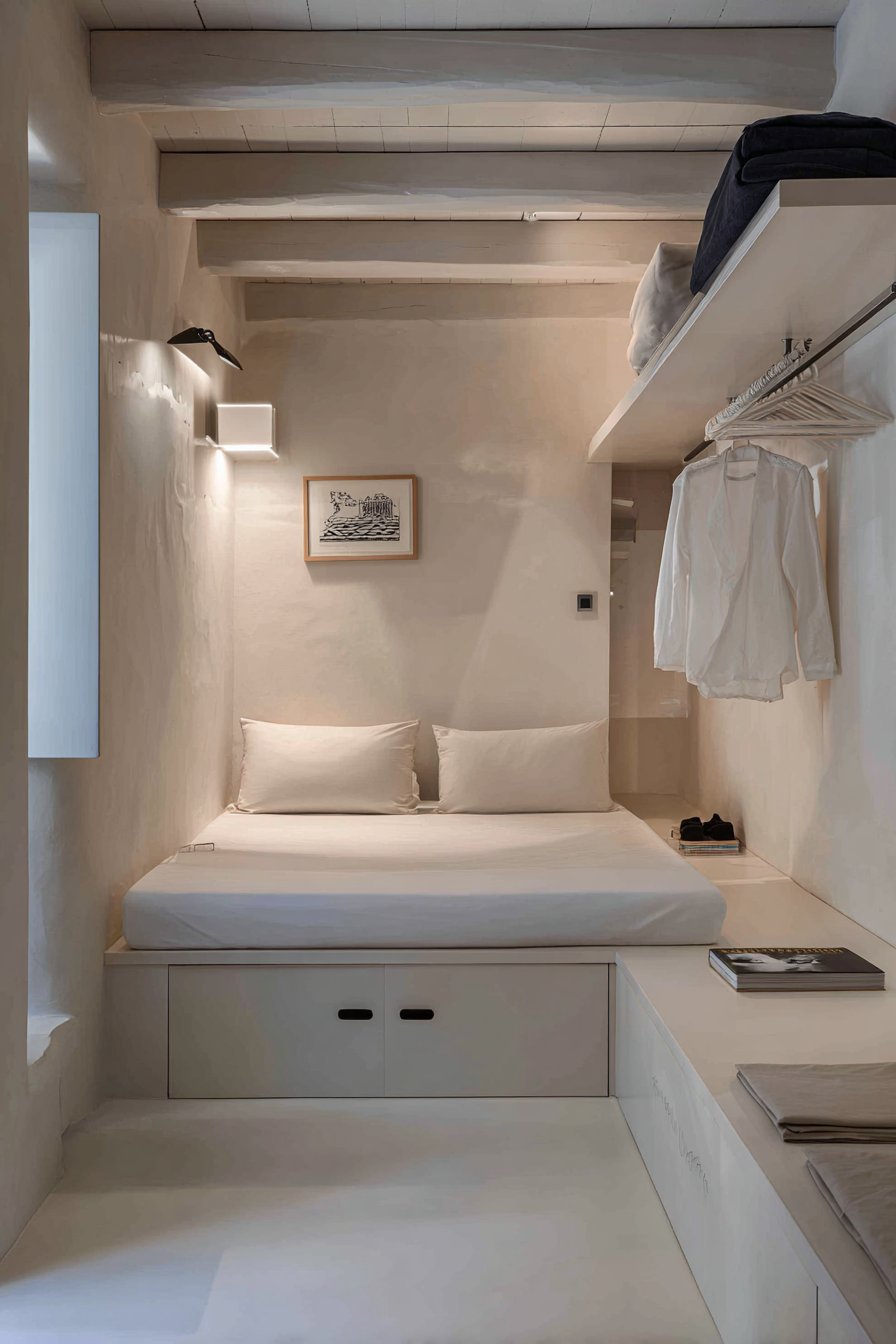
A compact clothing rack with minimal hanging items maintains the room’s uncluttered feeling while providing necessary storage for frequently worn garments. The open rack design prevents the closed, boxy feeling that traditional wardrobes can create in small spaces, and limiting the number of hanging items encourages a curated, intentional wardrobe. The breathing room created by this deliberate simplicity makes the tiny bedroom feel spacious and restful, proving that square footage matters less than thoughtful curation of belongings and furniture.
Key Design Tips:
- Adopt a “one in, one out” policy to prevent accumulation of unnecessary items
- Choose under-bed storage boxes in coordinating materials that complement your aesthetic
- Limit nightstand items to absolute essentials, storing other belongings out of sight
- Select one meaningful piece of art rather than clustering multiple small items
- Maintain a cohesive neutral color palette to create visual calm and continuity
- Use a compact clothing rack for current-season items only, storing off-season clothing elsewhere
- Embrace negative space as a design element rather than something that needs filling
7. Daybed with Trundle for Dual Functionality
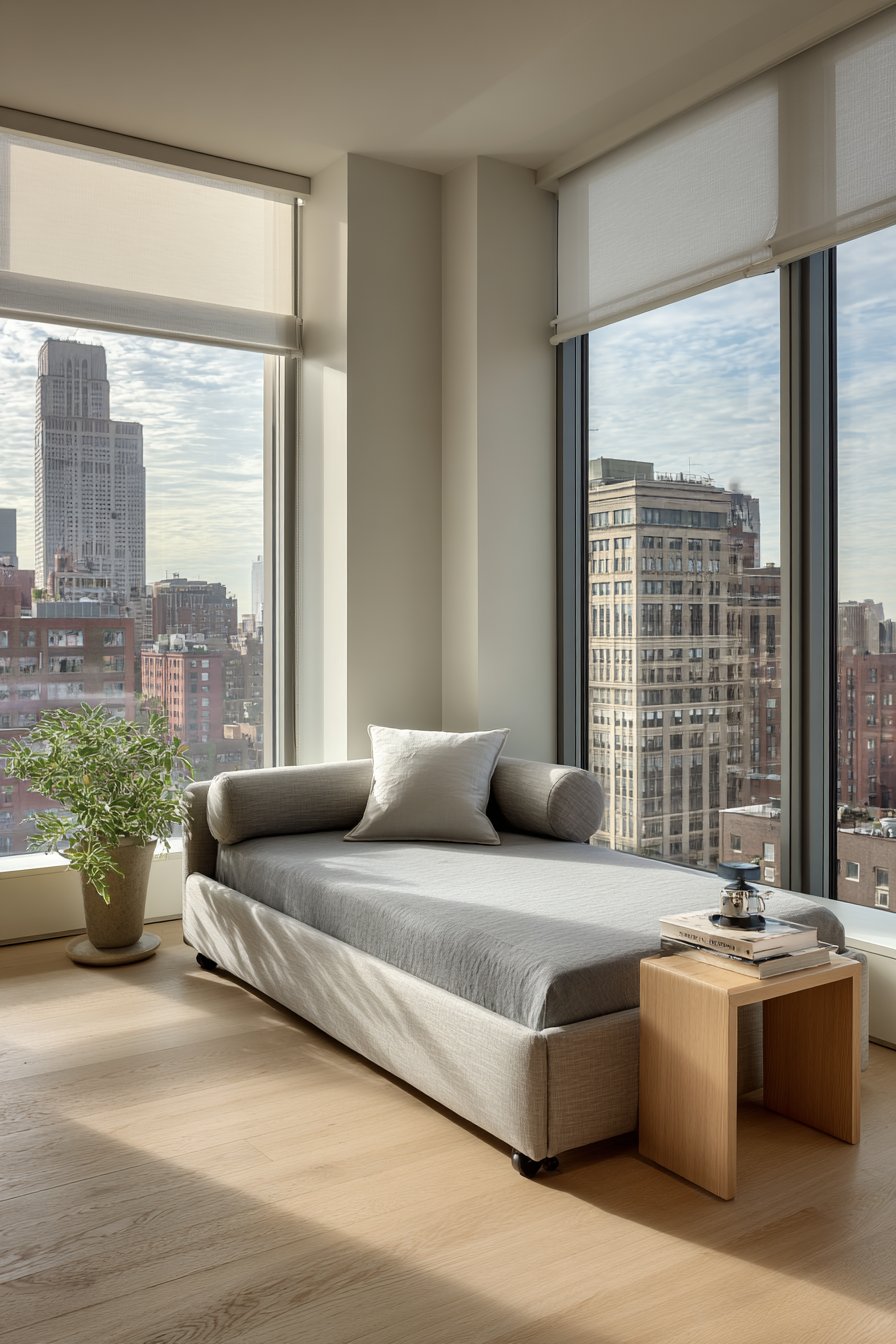
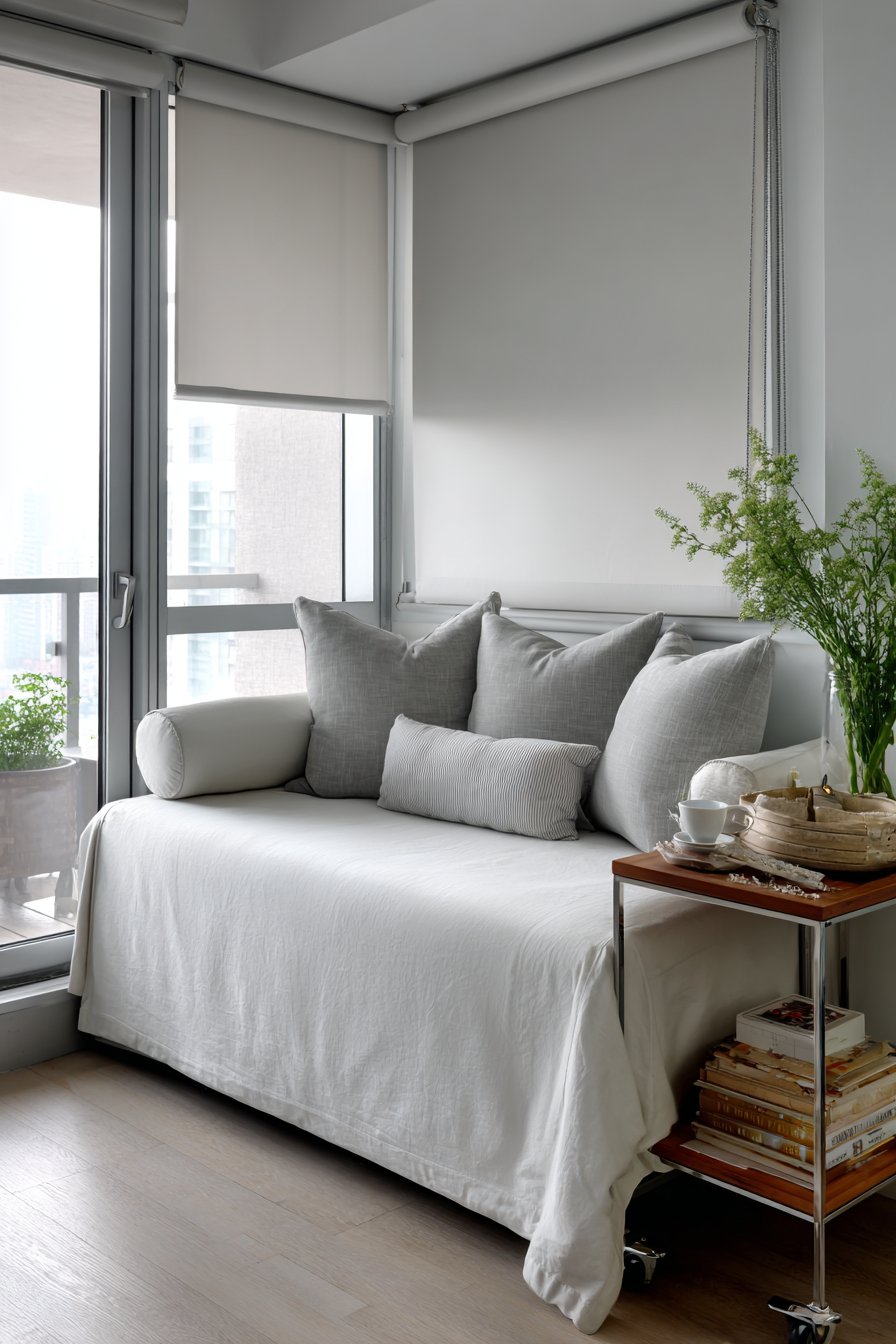
Multifunctional furniture pieces represent essential tiny room ideas for bedrooms, and daybeds with trundle configurations exemplify this principle beautifully. During daytime hours, the daybed functions as a comfortable sofa for reading, working on a laptop, or socializing with friends, dressed with bolster pillows and a fitted cover in light gray linen that emphasizes its dual nature. The clean lines and sofa-like proportions prevent the room from feeling like a bedroom during waking hours, creating psychological separation between sleeping and living spaces—an important consideration in studio apartments or multipurpose rooms.
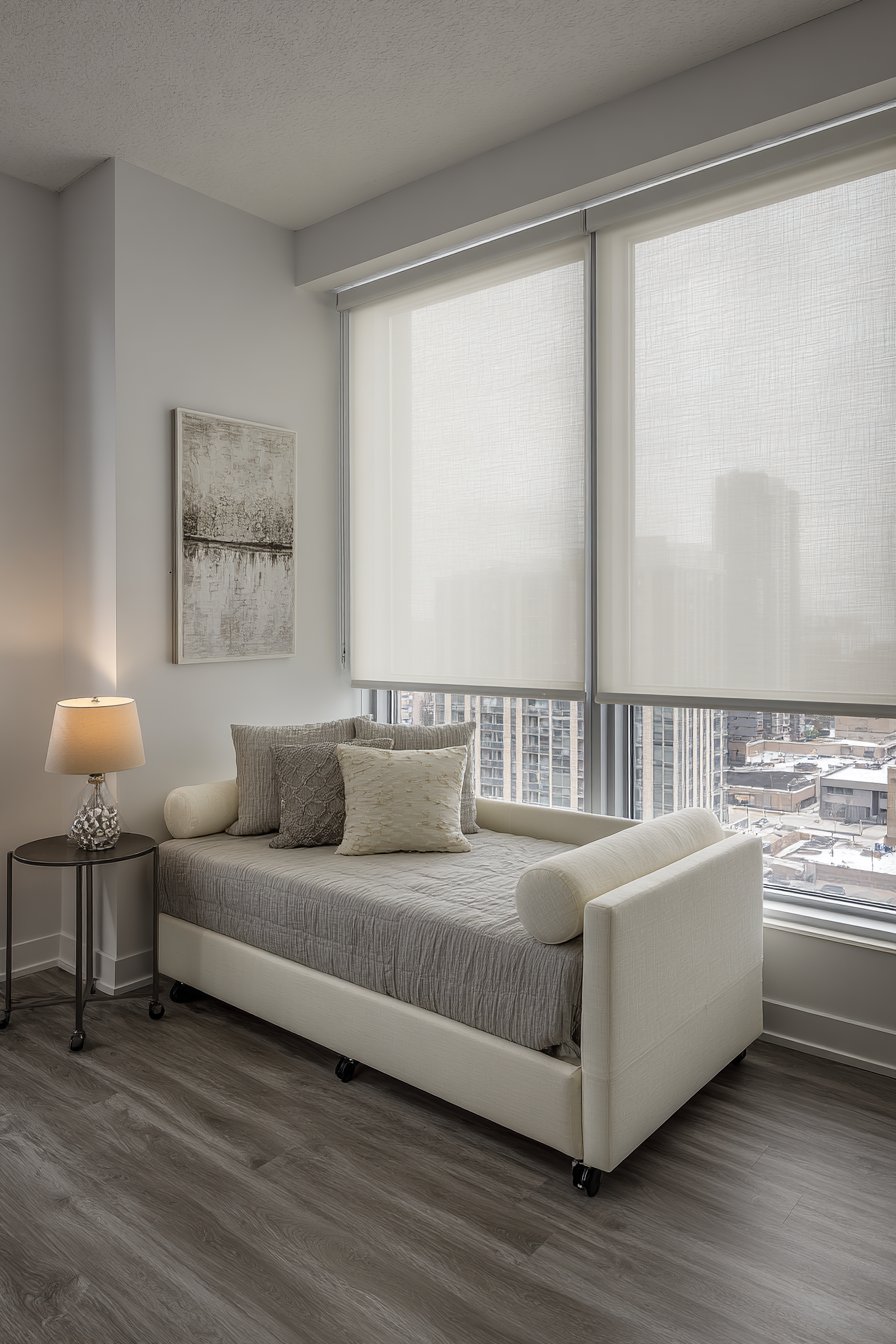
When overnight guests arrive or bedtime approaches, the hidden trundle bed rolls out from beneath the daybed, providing a second full sleeping surface without requiring permanent floor space. This configuration is ideal for children’s rooms that host frequent sleepovers, guest rooms that double as home offices, or studio apartments where a roommate might occasionally stay over. The trundle mechanism typically features wheels or casters that glide smoothly on hardwood or laminate flooring, though area rugs may need to be temporarily moved for access.
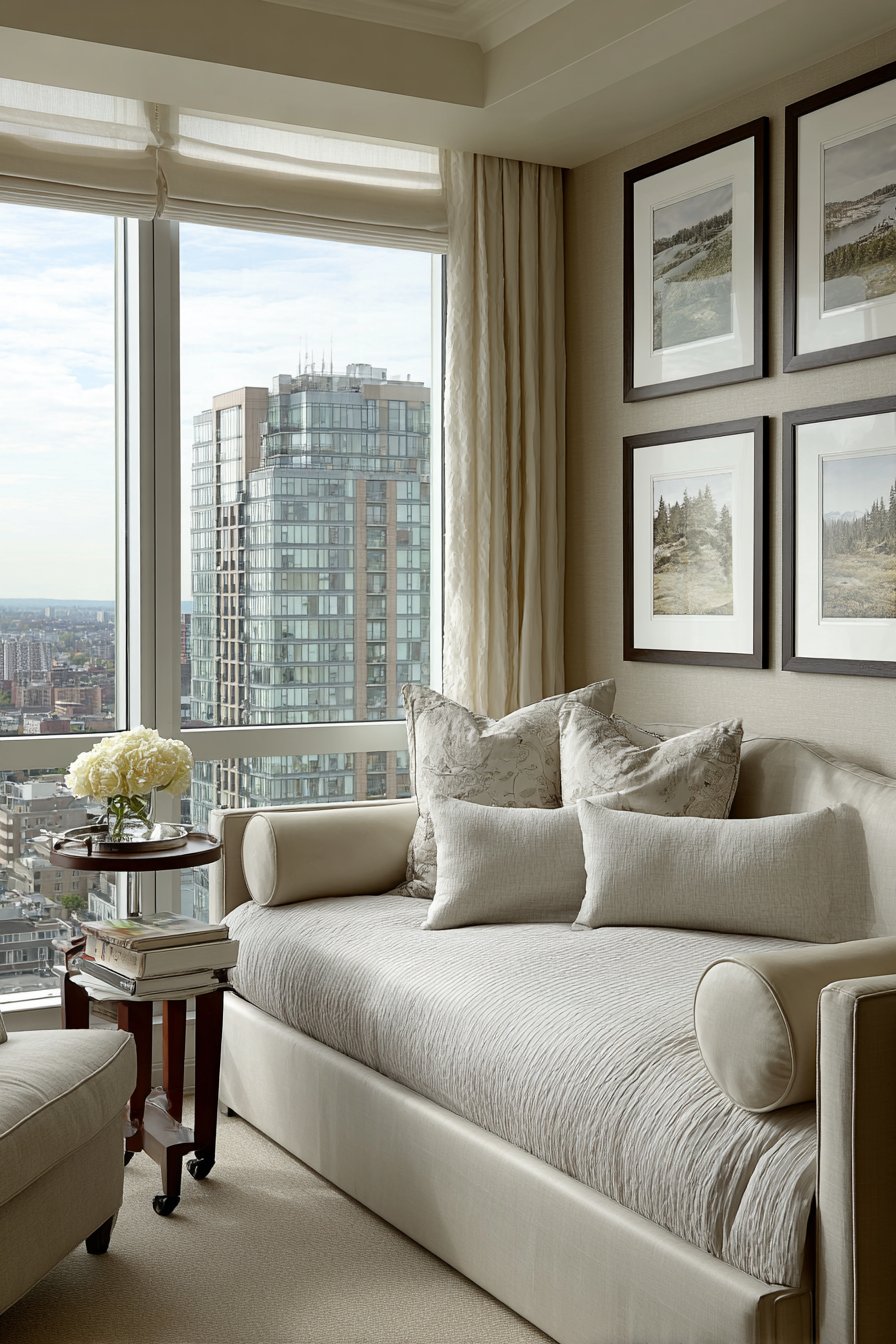
A small side table on casters complements this flexible arrangement, providing surface space for beverages, books, or a laptop that can be easily repositioned as the room’s function changes throughout the day. Sheer roller blinds control natural light levels while maintaining privacy, and their streamlined profile doesn’t consume valuable visual space the way heavy curtains might. The entire configuration emphasizes adaptability, proving that tiny bedrooms can successfully accommodate multiple functions when furnished with intentionally versatile pieces.
Key Design Tips:
- Dress the daybed with fitted covers and bolster pillows that emphasize its sofa-like appearance during the day
- Ensure adequate clearance in front of the daybed for the trundle to extend fully
- Choose a trundle with smooth-rolling casters that won’t scratch flooring
- Keep separate bedding for the trundle stored in nearby closets or under-bed storage
- Position the daybed perpendicular to windows to maximize natural light for both seating and sleeping
- Add mobile side tables that can be repositioned based on the room’s current function
- Consider daybeds with built-in storage drawers if the trundle feature isn’t needed
8. Window Seat with Integrated Storage
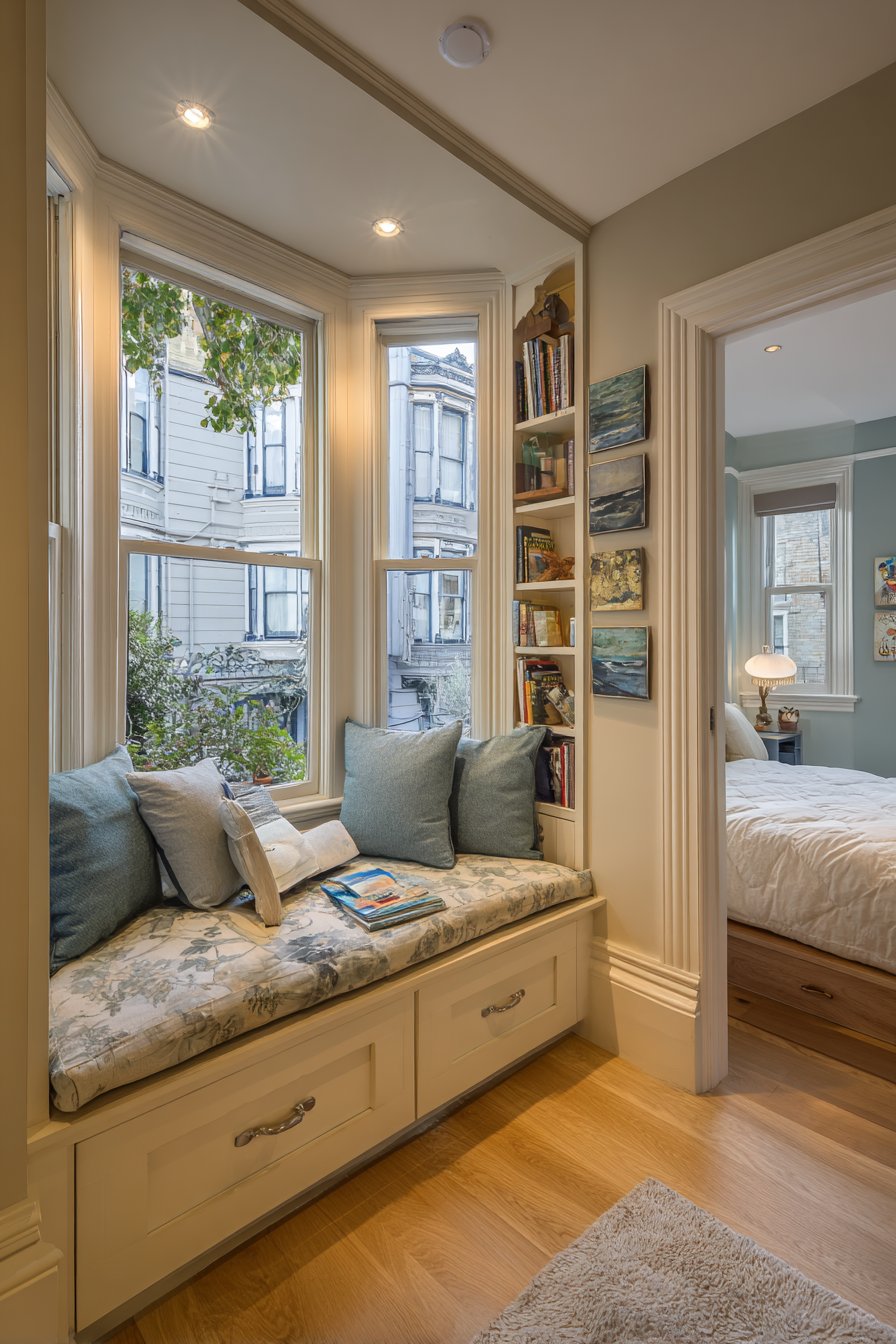
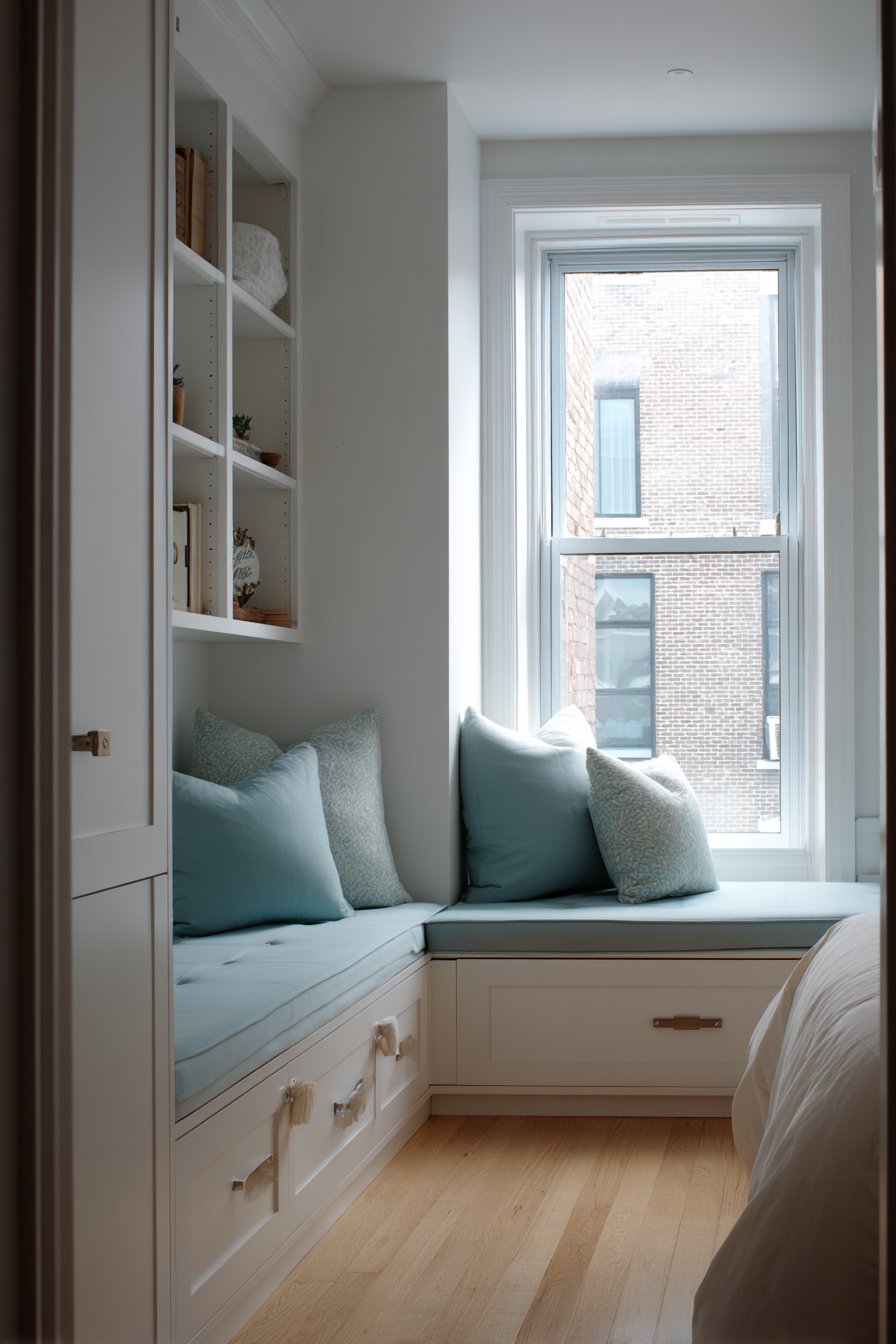
Capitalizing on architectural features presents excellent tiny room ideas for bedrooms, and built-in window seats exemplify how to transform underutilized spaces into functional design elements. This approach incorporates storage drawers beneath a cushioned window seat, creating a cozy reading nook while providing valuable storage capacity that doesn’t consume additional floor space. The window seat typically spans the full width of the window, with custom-built cabinetry that matches the room’s trim work and creates a polished, intentional appearance rather than looking like an afterthought.
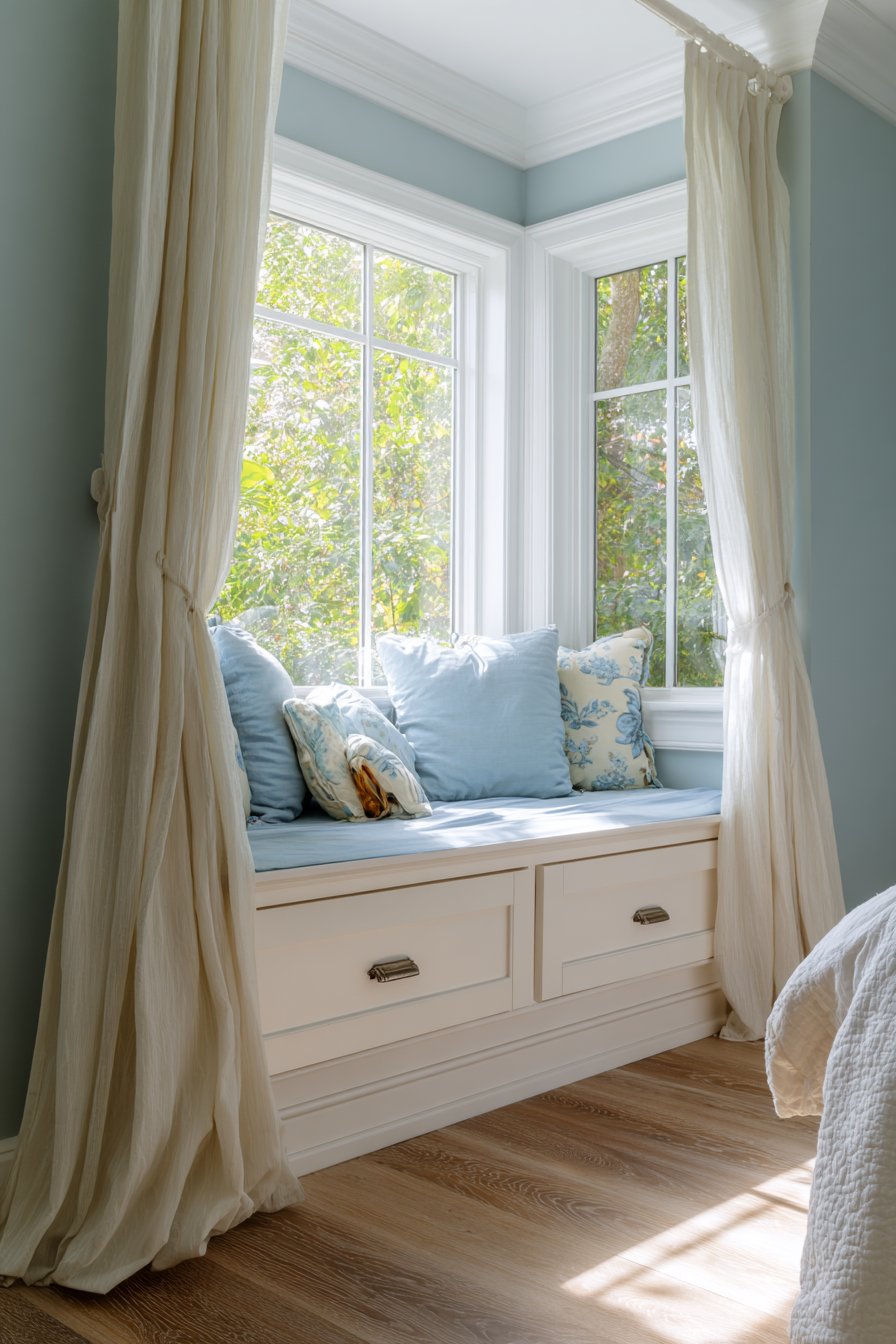
The window seat cushion, upholstered in durable fabric in muted blue tones, invites relaxation while coordinating with the room’s overall color scheme. Throw pillows in complementary patterns and textures enhance comfort and add personality without requiring floor space for a separate seating area. The storage drawers below feature smooth-gliding mechanisms and can accommodate everything from extra bedding to off-season clothing, maximizing the utility of this built-in feature. Some designs incorporate lift-up seat cushions rather than drawers, providing even more storage capacity for bulky items.
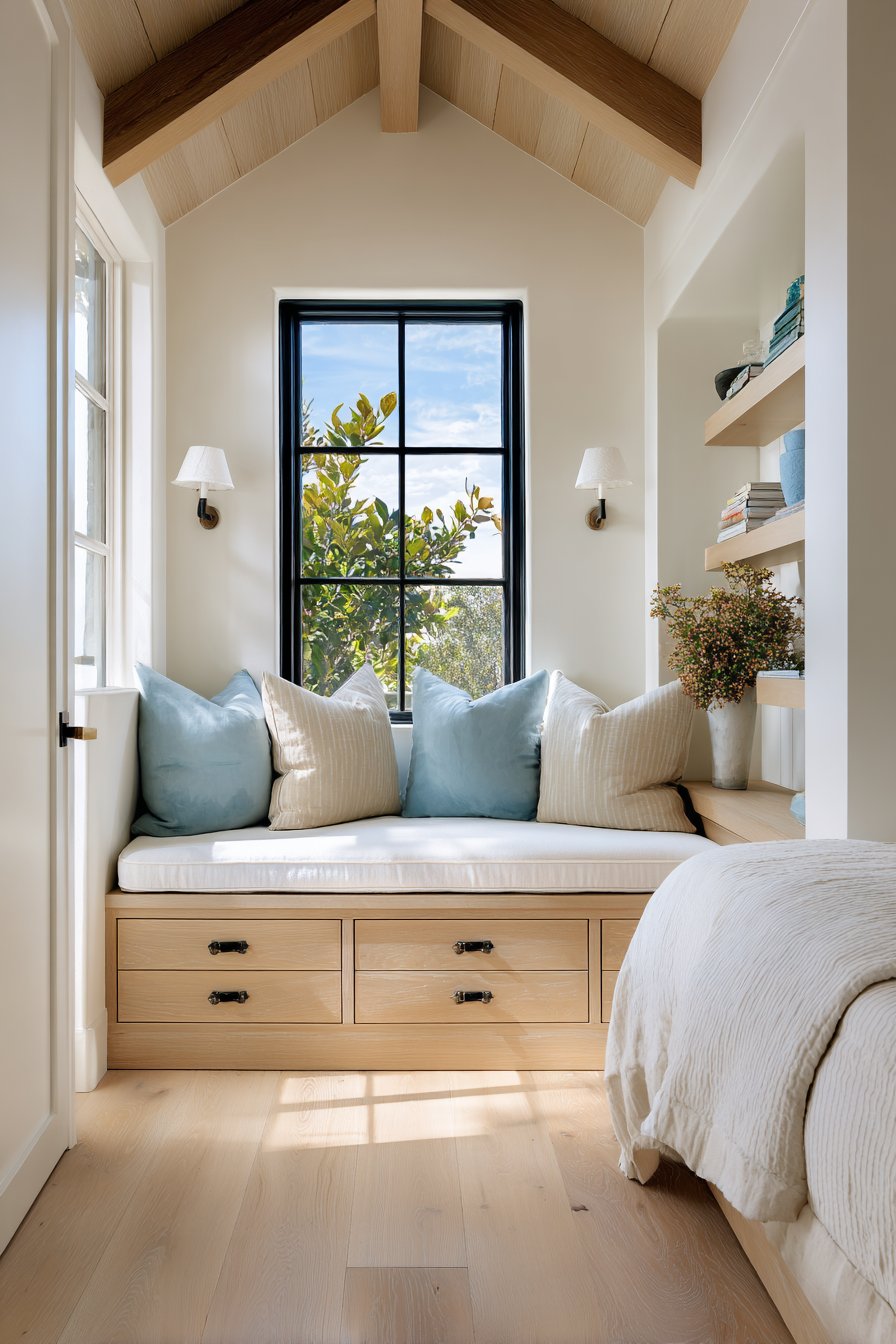
A narrow bed with a simple frame occupies the opposite wall, maintaining adequate circulation space between the bed and window seat. Light hardwood flooring reflects natural light streaming through the window, enhancing the room’s brightness and making it feel more spacious than its dimensions would suggest. The window seat becomes a favorite spot for reading, daydreaming, or simply enjoying natural light, adding significant quality-of-life value that transcends its practical storage function. This integration of form and function exemplifies sophisticated tiny bedroom design.
Key Design Tips:
- Ensure drawer depths accommodate your storage needs, typically 12-18 inches for clothing and linens
- Choose cushion fabrics that are durable and easy to clean, especially in children’s rooms
- Install the window seat at a comfortable height for sitting, typically 16-18 inches from the floor
- Add USB charging ports in the window seat surround for device charging while relaxing
- Consider custom cushions with removable covers for easy washing
- Incorporate throw pillows that can be stored in the drawers when not in use
- Position reading lights nearby to create a functional reading nook
9. Captain’s Bed with Comprehensive Storage
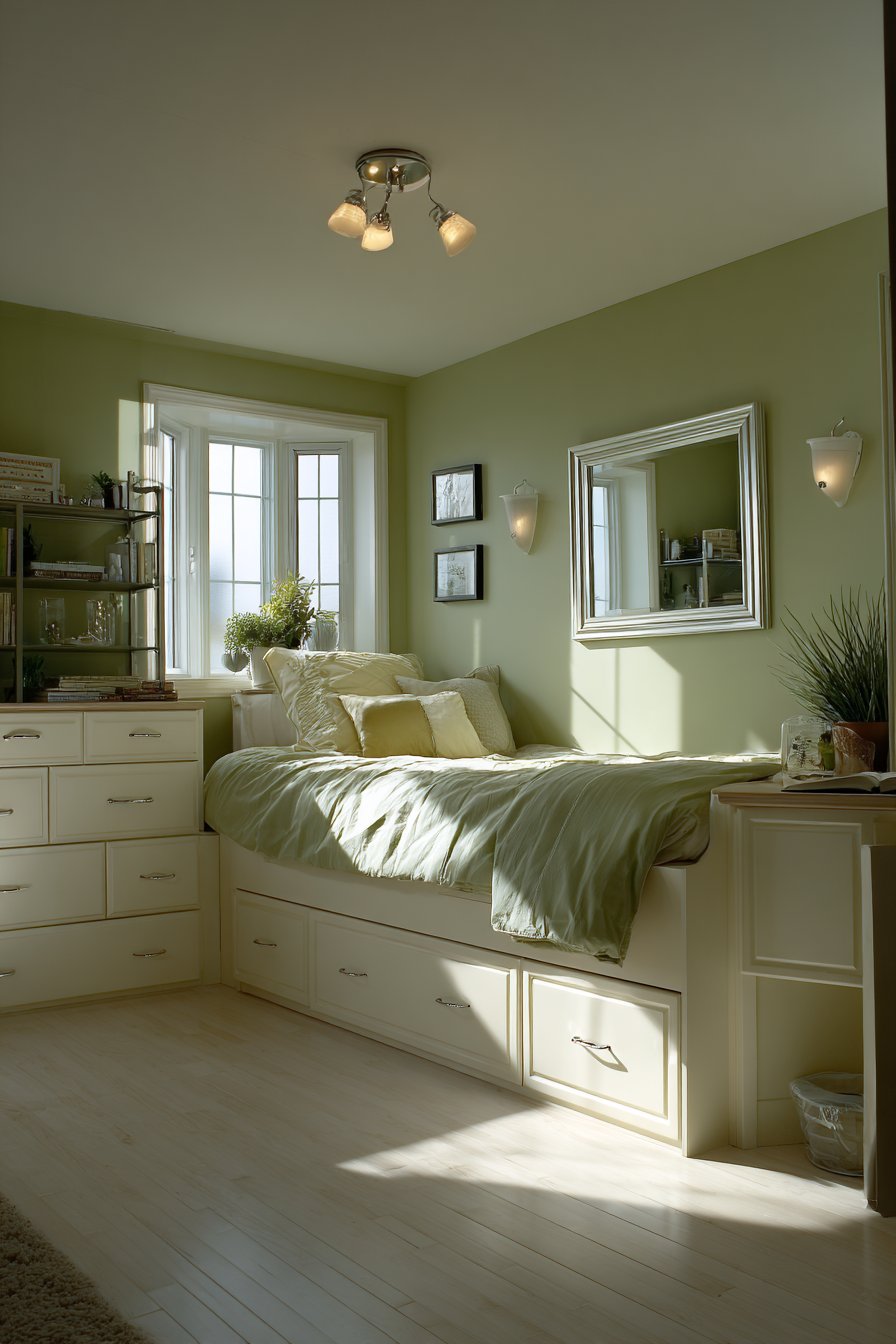
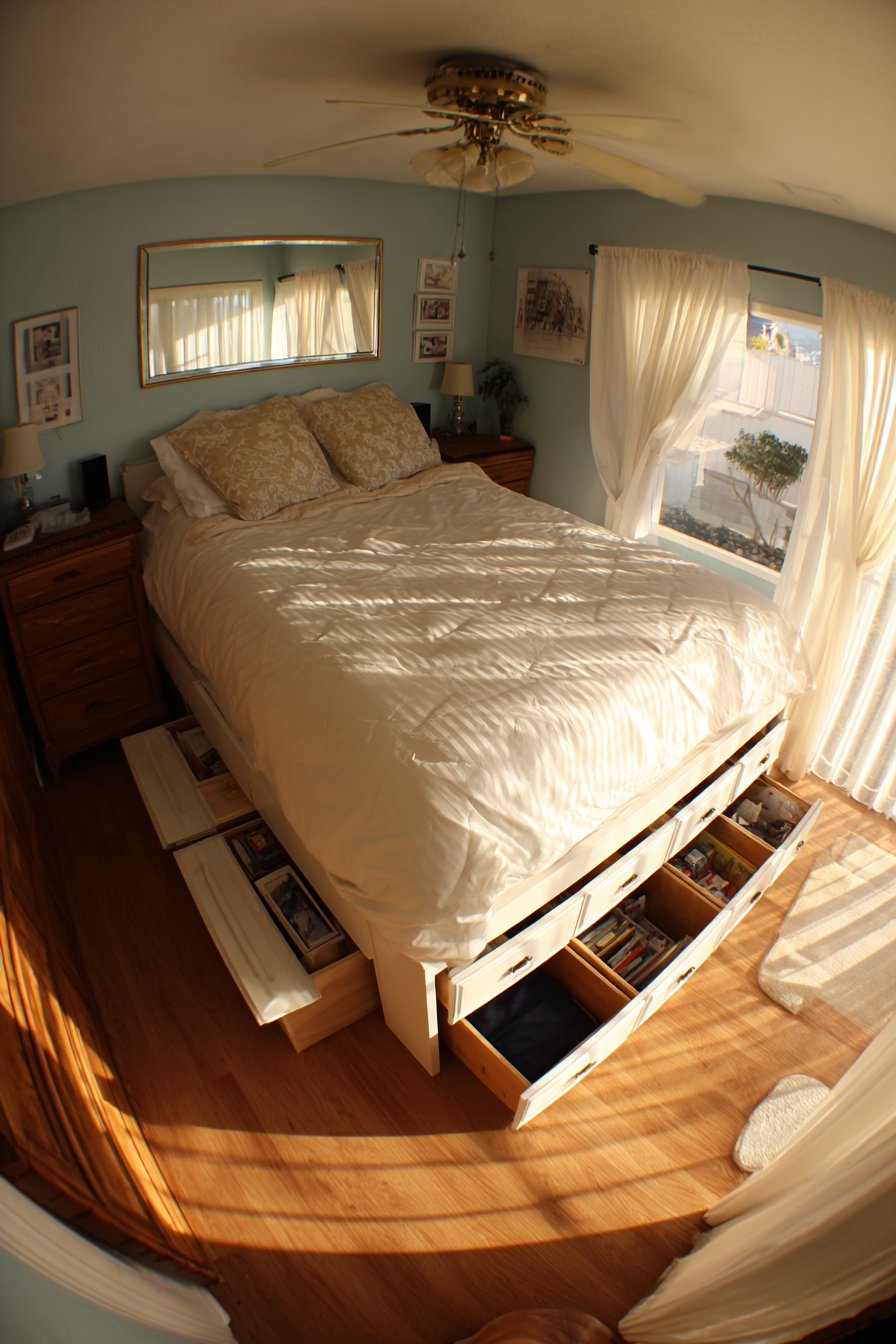
Captain’s beds represent some of the most efficient tiny room ideas for bedrooms, packing exceptional storage capacity into a single furniture piece. These beds feature multiple drawers and compartments built directly into the bed base, accessible from both sides when the bed is centrally positioned with adequate clearance. The storage configuration typically includes a combination of deep drawers for bulky items like sweaters and blankets, smaller drawers for accessories and undergarments, and sometimes cubbies or shelving for books and decorative items. This comprehensive approach can eliminate the need for a separate dresser, freeing significant floor space.
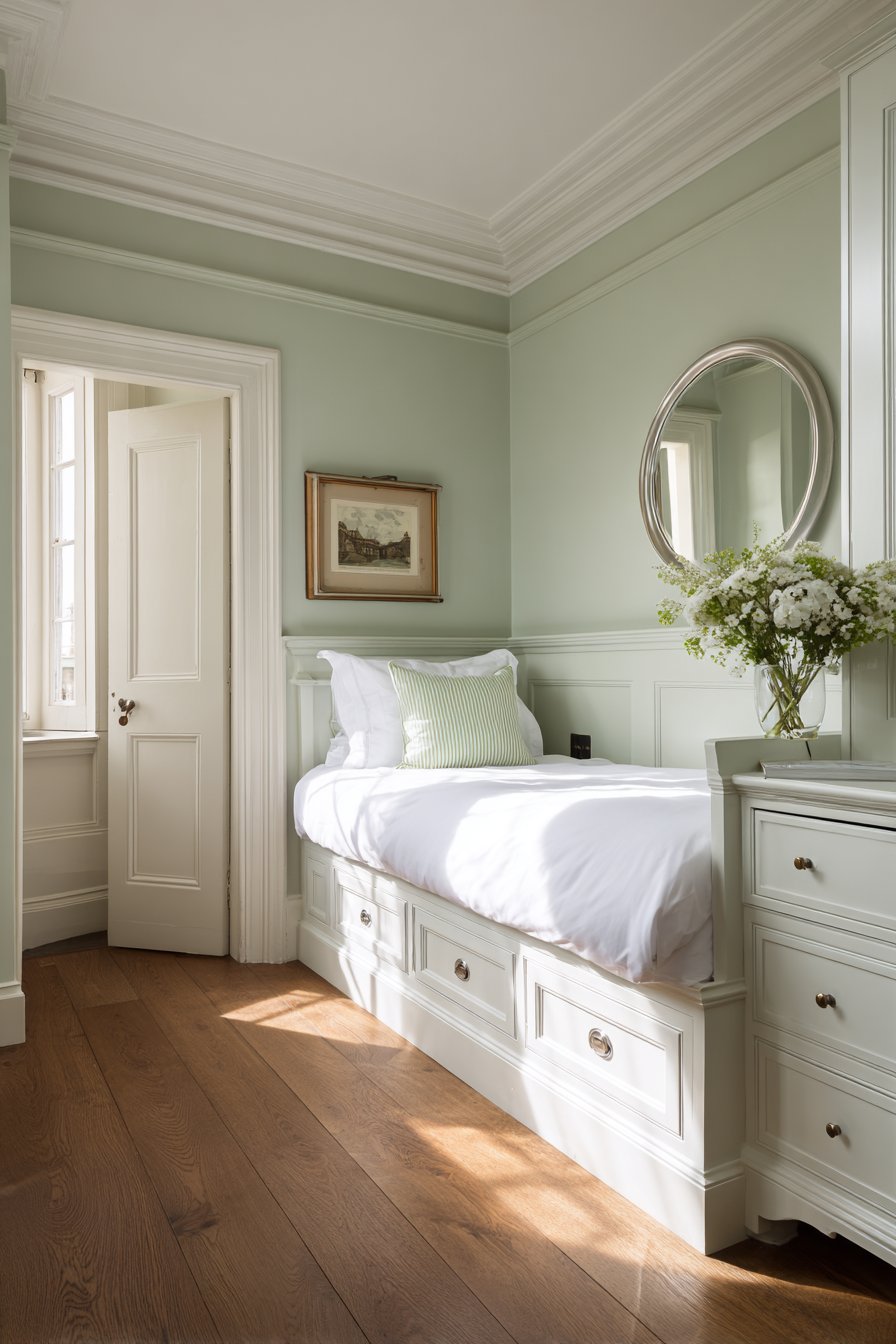
The bed’s central positioning with sufficient clearance on both sides creates a balanced, symmetrical layout that feels intentional and well-planned. Walls painted in pale sage green create a calming atmosphere that promotes rest and relaxation while maintaining a sense of spaciousness. The color choice reflects current design trends favoring nature-inspired hues that create psychological comfort without overwhelming small spaces. A single wall-mounted mirror above a small dresser (for items requiring a flat surface, like jewelry boxes or perfumes) enhances the sense of space by reflecting natural light throughout the room.
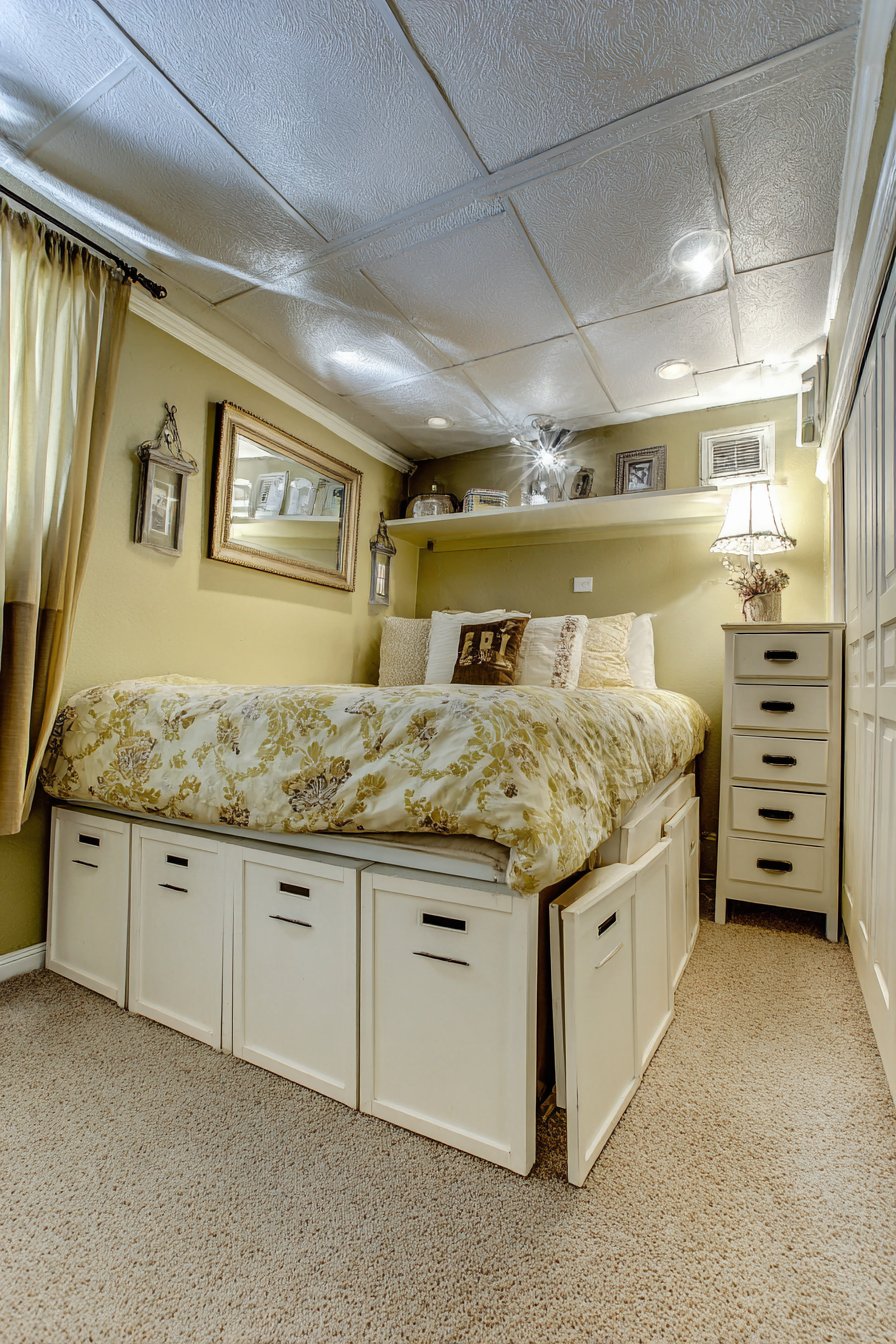
The captain’s bed design works particularly well in children’s and teen bedrooms, where storage needs are substantial and floor space for play or study is precious. The accessibility of storage from both sides encourages organization and makes it easy to sort belongings by category—school items on one side, clothing on the other, for example. The soft natural shadows created by proper lighting emphasize the bed’s architectural qualities and functional nature, celebrating rather than hiding its storage capabilities.
Key Design Tips:
- Measure your storage needs before purchasing to ensure adequate drawer capacity
- Choose a captain’s bed with varied drawer sizes to accommodate different types of items
- Maintain at least 24-30 inches of clearance on each side for comfortable drawer access
- Label or organize drawers by category to maintain long-term organization
- Select smooth-gliding drawer mechanisms with soft-close features to prevent slamming
- Consider beds with USB charging ports integrated into the headboard or sides
- Keep the top of the bed uncluttered to prevent the storage-heavy base from feeling overwhelming
10. Sliding Door Closet System
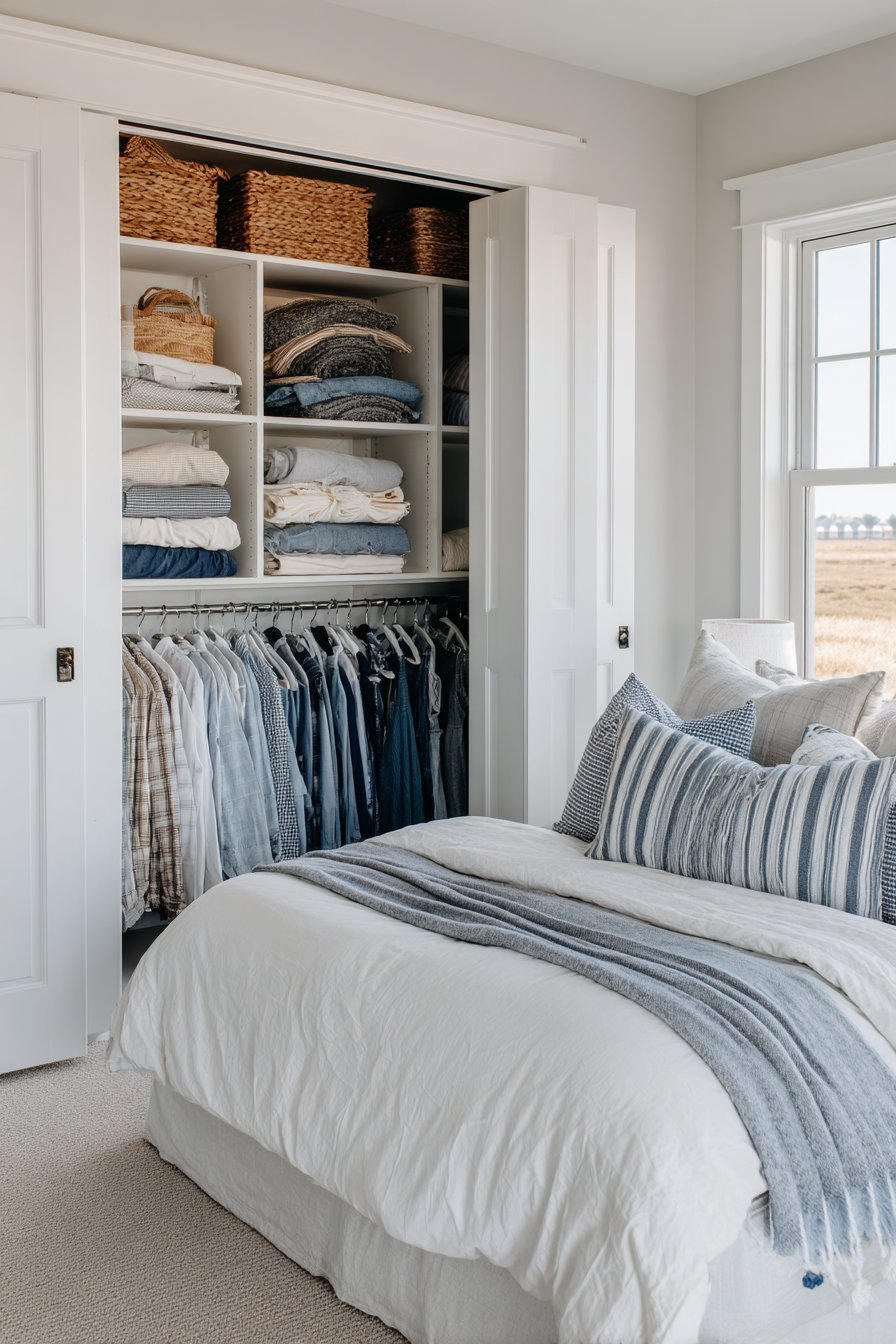
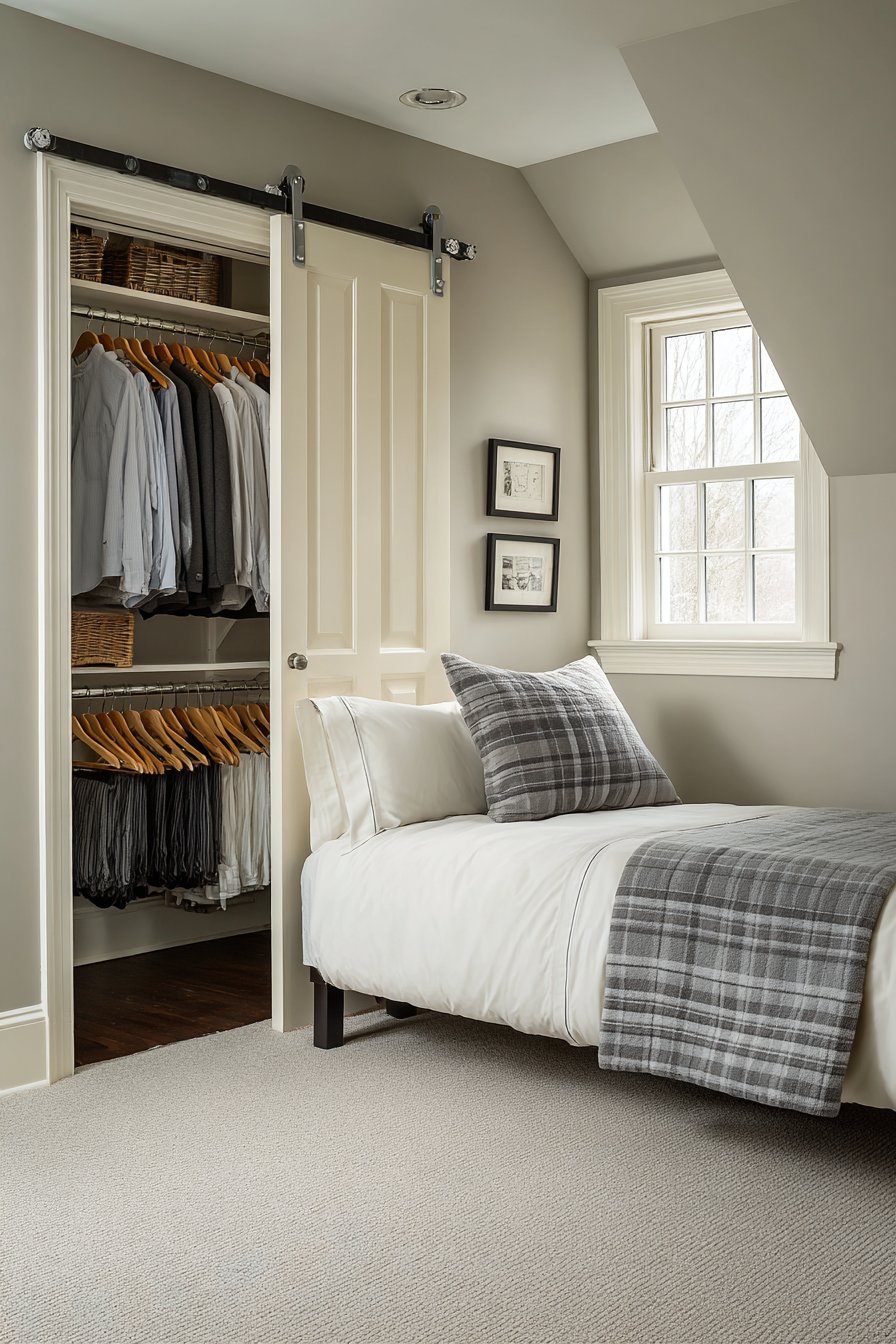
Closet design significantly impacts tiny room ideas for bedrooms, and sliding door systems offer substantial advantages over traditional swing-door closets. Sliding doors eliminate the need for clearance space required by swinging doors, immediately recovering several square feet of usable bedroom space. Modern sliding door systems feature smooth-rolling mechanisms that glide effortlessly on top or bottom tracks, with some designs incorporating soft-close technology that prevents slamming. The doors themselves can be mirrored to enhance light and create visual depth, or finished in materials that complement the room’s aesthetic.
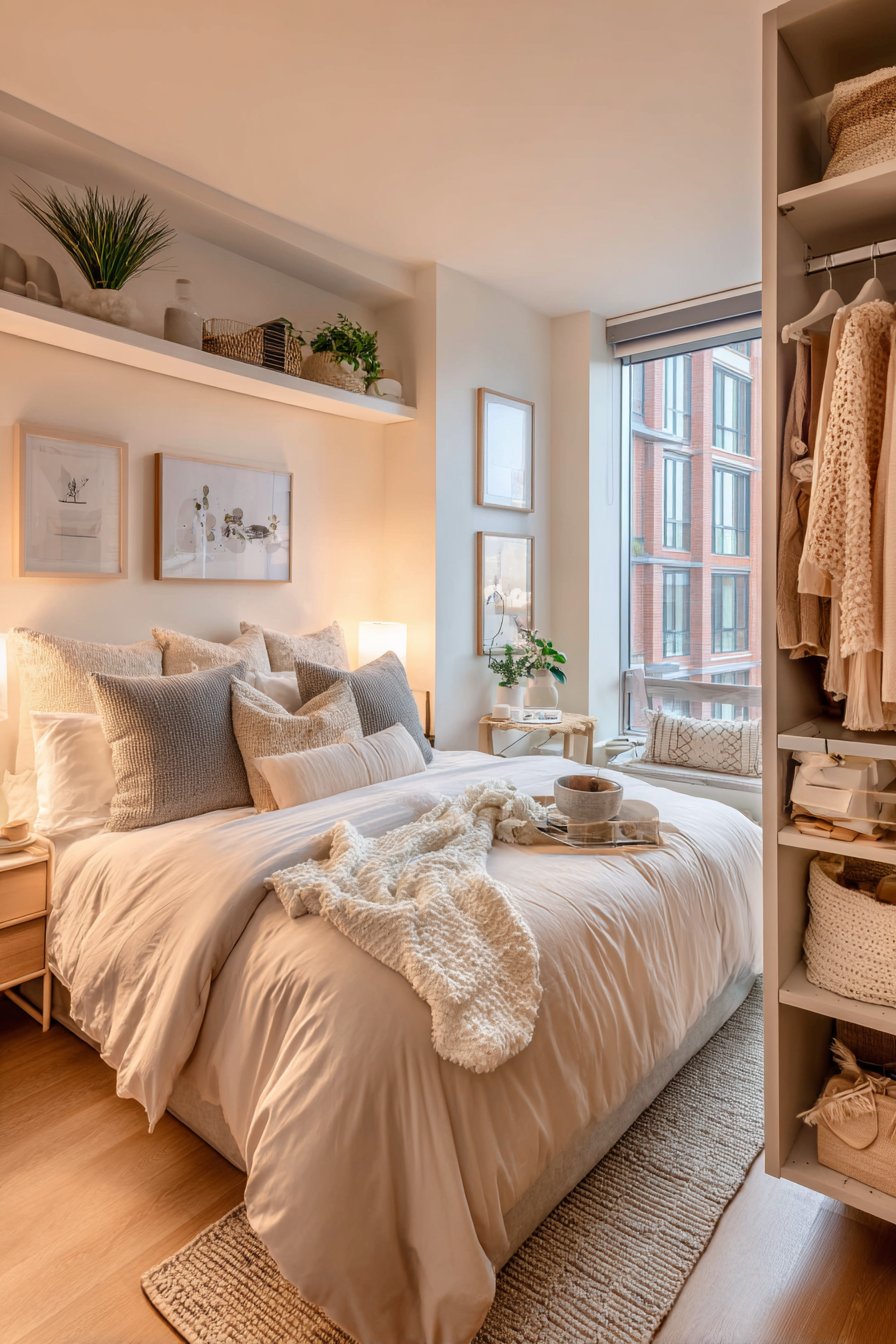
Inside the closet, thoughtful organization maximizes vertical space with double hanging rods that effectively double clothing capacity. The upper rod accommodates longer items like dresses and coats, while the lower rod holds shirts, folded pants, and shorter garments. Vertical organizers with multiple shelves provide storage for folded items, accessories, and shoes, while pull-out drawers or baskets corral smaller items that might otherwise create clutter. This systematic approach to closet organization can dramatically increase storage capacity compared to a single rod and shelf configuration.
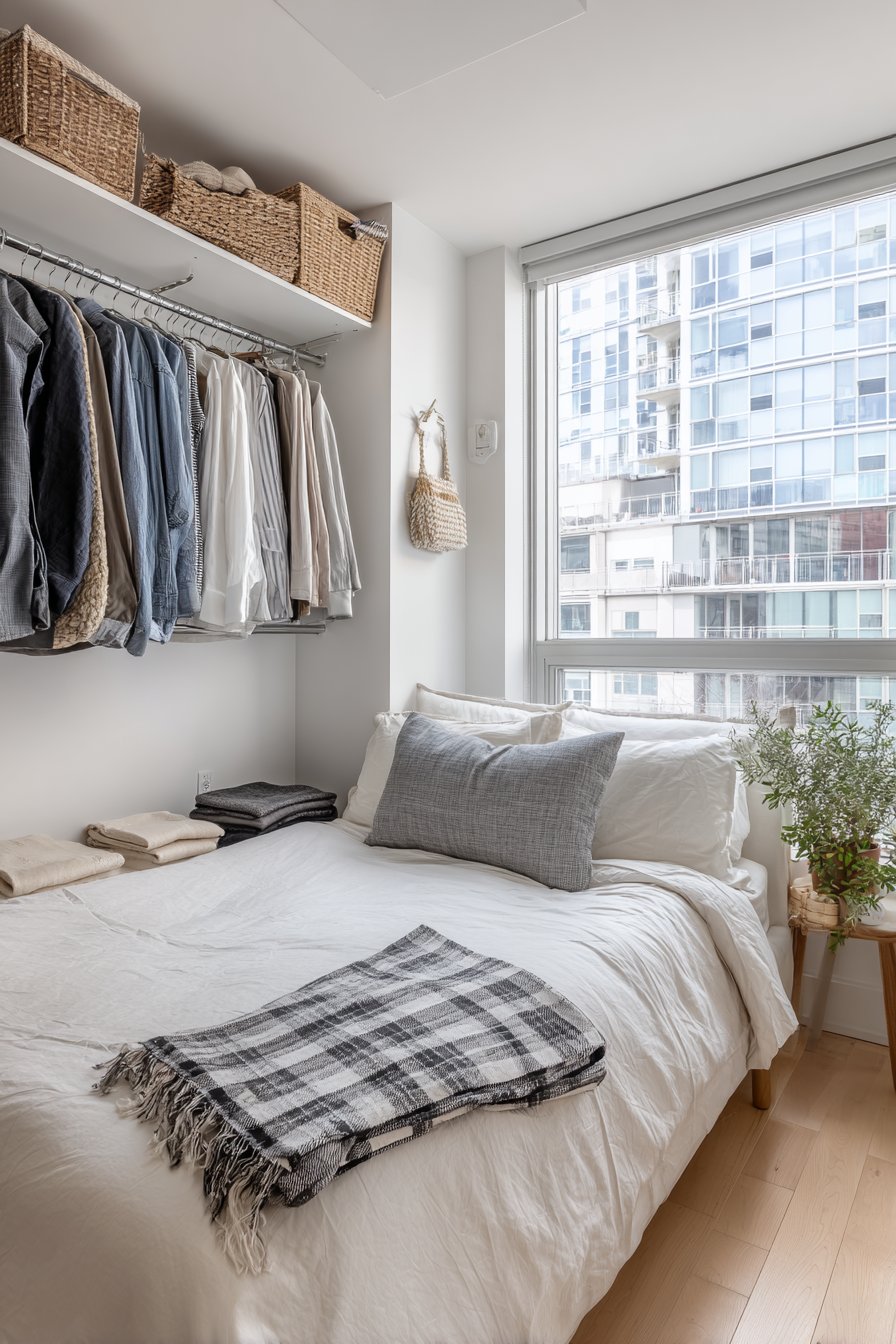
The bedroom itself features a simple bed dressed in white and grey bedding that creates a serene, hotel-like atmosphere. The neutral palette prevents the space from feeling busy or cluttered, instead promoting rest and relaxation. Natural light from a small window brightens the space during daytime hours, while strategic placement of the bed ensures the window doesn’t interfere with headboard positioning. The efficient closet organization visible when the doors slide open demonstrates that even tiny bedrooms can accommodate substantial wardrobes when storage is optimized properly.
Key Design Tips:
- Install double hanging rods to maximize vertical storage capacity for clothing
- Use slim-profile hangers to fit more items in the available hanging space
- Incorporate pull-out drawers or baskets for small items like accessories and undergarments
- Add LED closet lighting to illuminate contents and make selection easier
- Consider over-the-door organizers for shoes or accessories on the inside of sliding doors
- Use vertical shelf dividers to prevent stacks of folded clothes from toppling
- Maintain a regular decluttering schedule to prevent the closet from becoming overstuffed
11. Wall-Mounted Folding Desk Integration
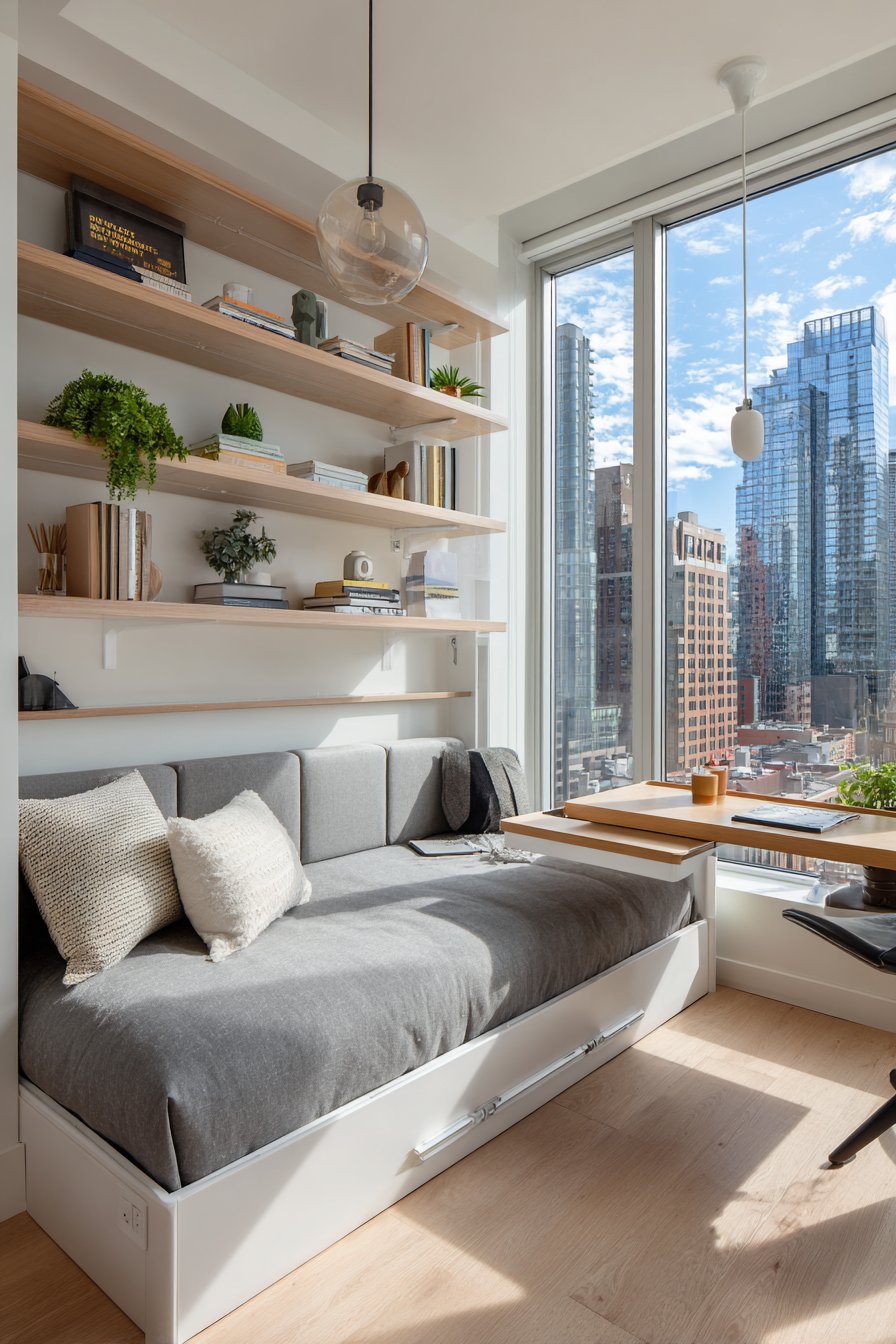
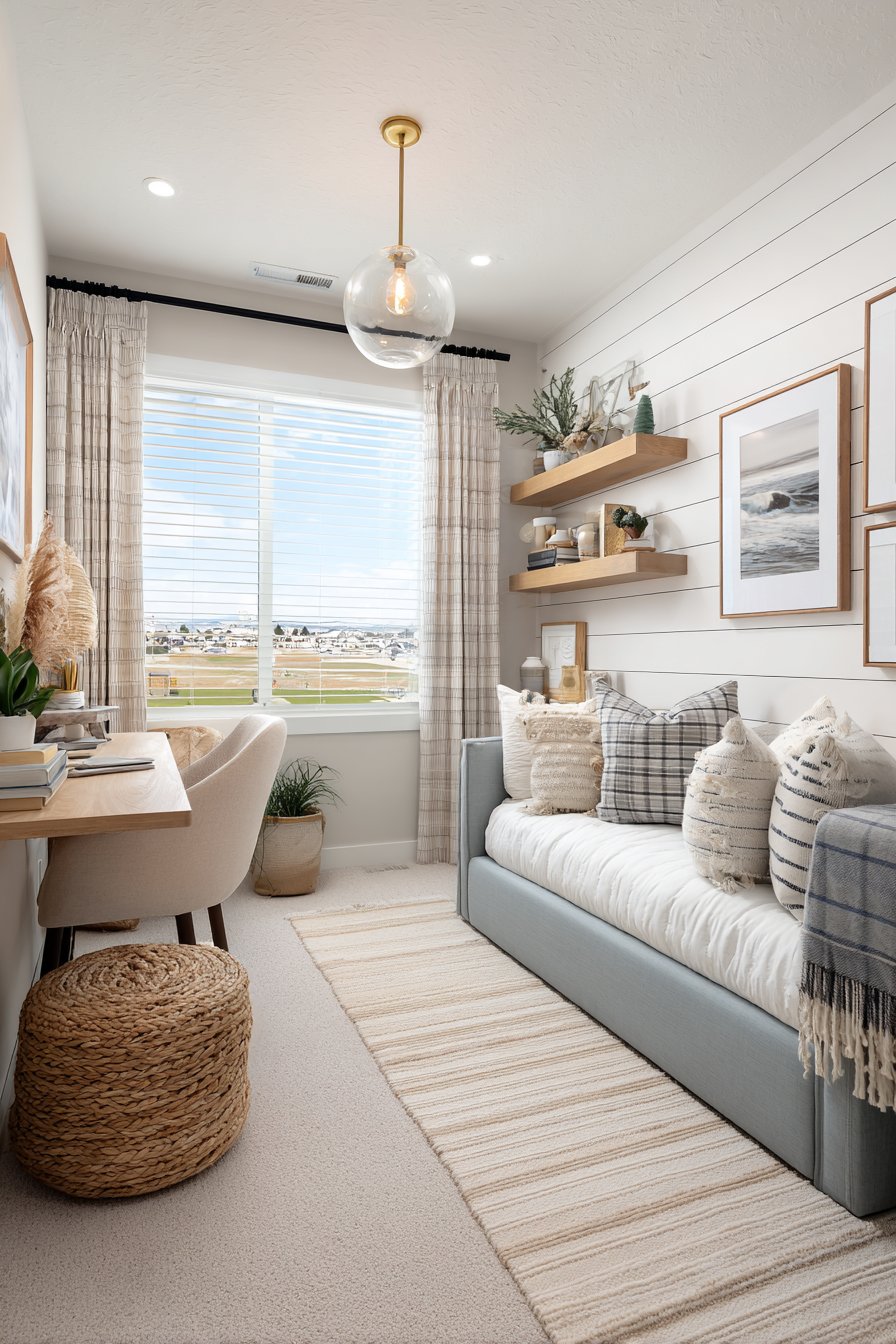
Transformable furniture represents innovative tiny room ideas for bedrooms, and wall-mounted folding desks exemplify this approach perfectly. These space-saving desks mount directly to the wall and fold down when needed for work or study, then fold flush against the wall when not in use, completely disappearing from the room’s functional space. The desk surface is typically supported by hinged brackets or cables that lock securely in the down position, providing a stable work surface capable of supporting a laptop, books, and writing materials. Some models include integrated cable management systems that keep charging cords organized and accessible.
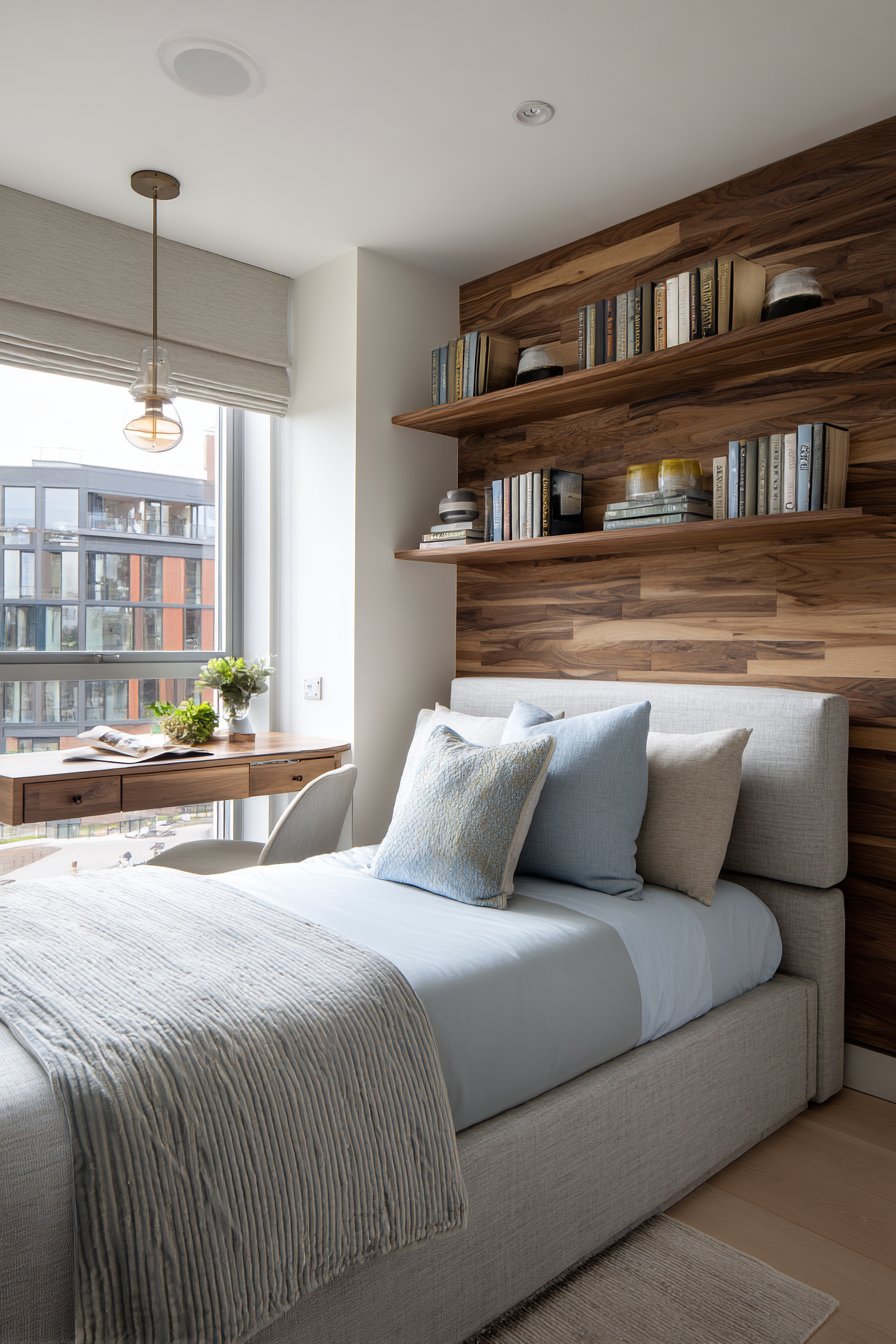
Above the folding desk, floating shelves provide permanent storage for books, small decorative items, and office supplies that need to remain accessible regardless of whether the desk is in use. The shelving can be arranged symmetrically for a balanced, organized appearance, or asymmetrically for a more casual, collected look. A twin bed with an upholstered headboard in soft grey occupies the opposite wall, maintaining adequate circulation space between the sleeping and working zones. The headboard adds comfort for sitting up in bed while reading or using devices, while its neutral color prevents it from dominating the small space.
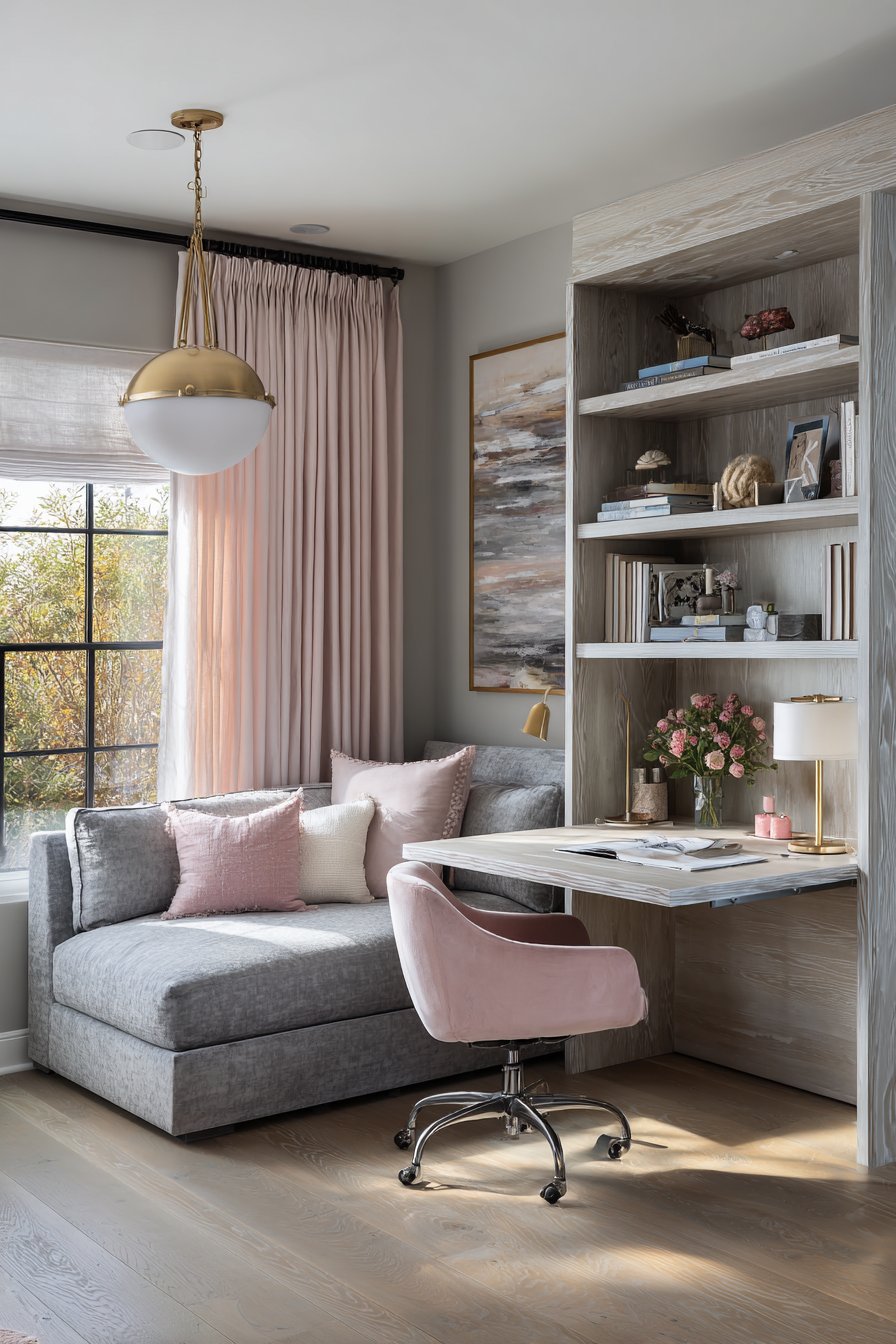
A pendant light hanging from the ceiling provides ambient lighting that can be supplemented with a clip-on task light attached to the floating shelves when the desk is in use. This layered lighting approach ensures adequate illumination for various activities without requiring multiple floor or table lamps that would consume valuable surface and floor space. The transformable nature of the folding desk means the bedroom can seamlessly transition between functions, serving as a restful sleeping space, productive workspace, or combination of both as needs dictate.
Key Design Tips:
- Ensure the wall can support the desk’s weight plus the load it will bear when in use
- Install the desk at a comfortable working height, typically 28-30 inches from the floor
- Choose a desk with integrated cable management for laptop and device charging
- Mount floating shelves at heights that don’t interfere with the desk’s folding mechanism
- Consider a desk with a built-in stop or lock to prevent accidental folding while in use
- Add a comfortable stool or chair that can be stored under the bed or elsewhere when not needed
- Test the folding mechanism regularly to ensure smooth operation and identify any maintenance needs
12. Diagonal Bed Placement for Spatial Interest
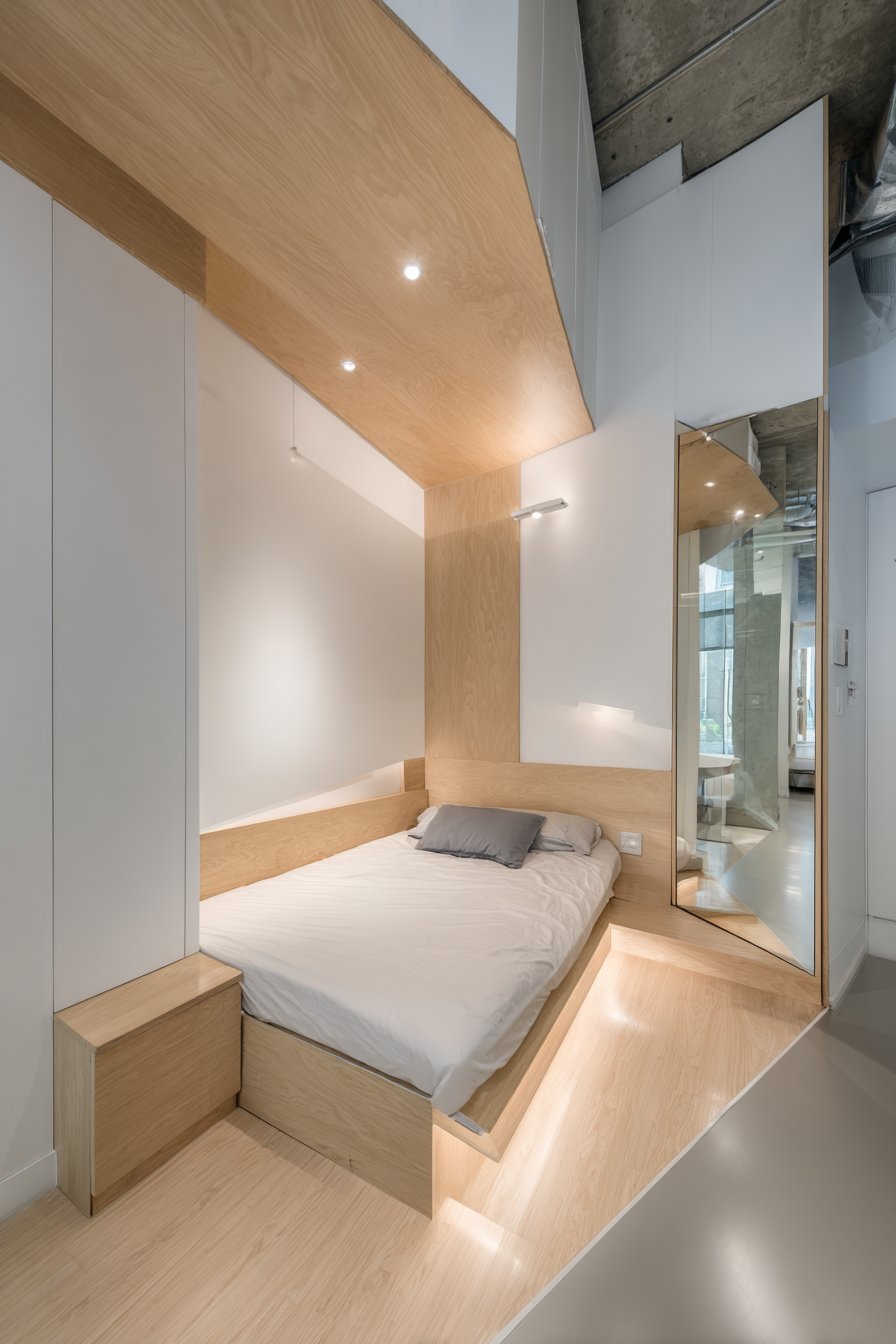
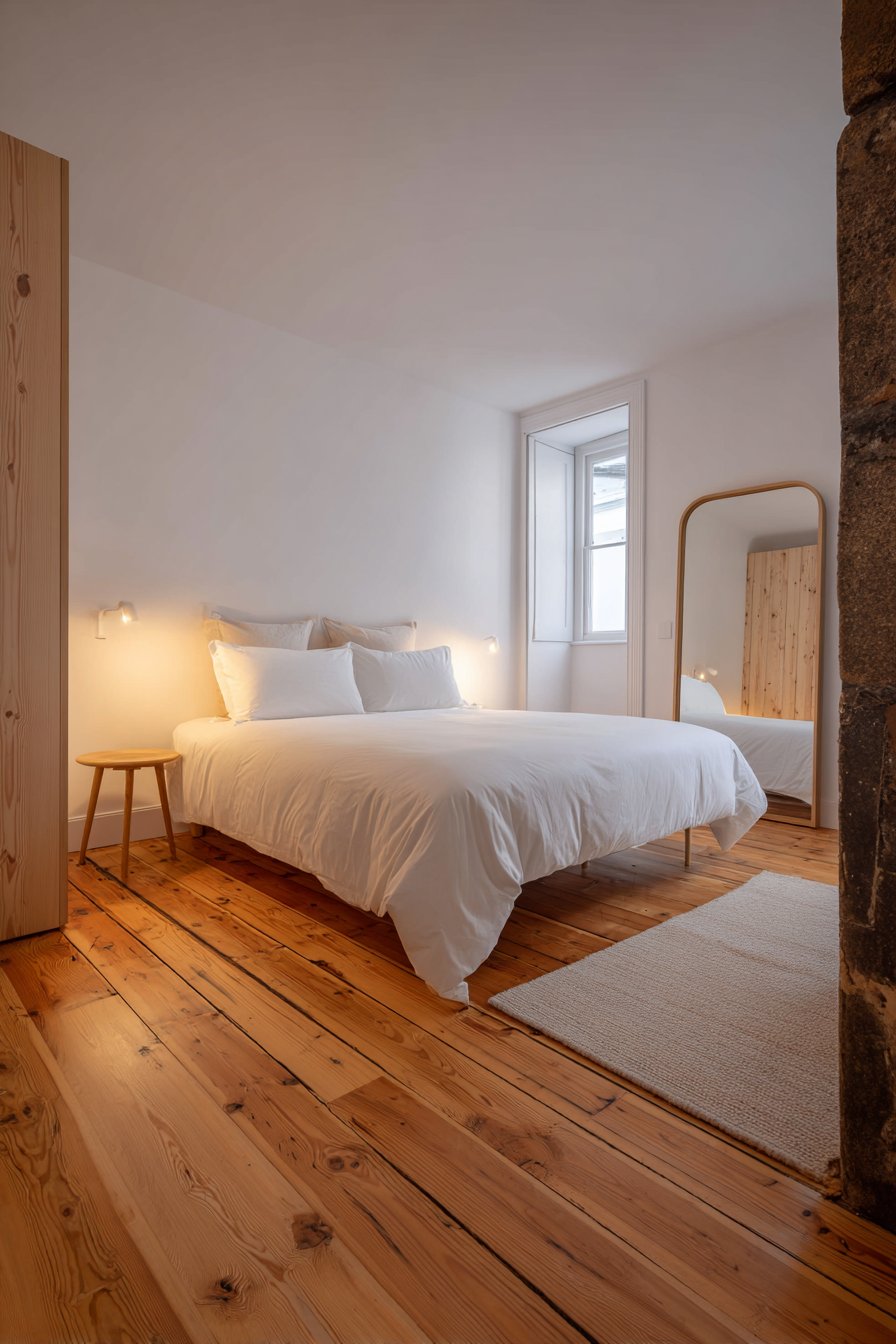
Unconventional furniture arrangements offer fresh tiny room ideas for bedrooms, and diagonal bed placement creates unexpected visual interest while maximizing usable floor space. Positioning the bed at a 45-degree angle in the corner defies conventional room layouts, immediately establishing the space as creative and intentional rather than merely cramped. This arrangement creates interesting triangular spaces on either side of the bed that can accommodate small nightstands, providing functional surface space without the parallel furniture lineup that can make rectangular rooms feel narrow and confined.
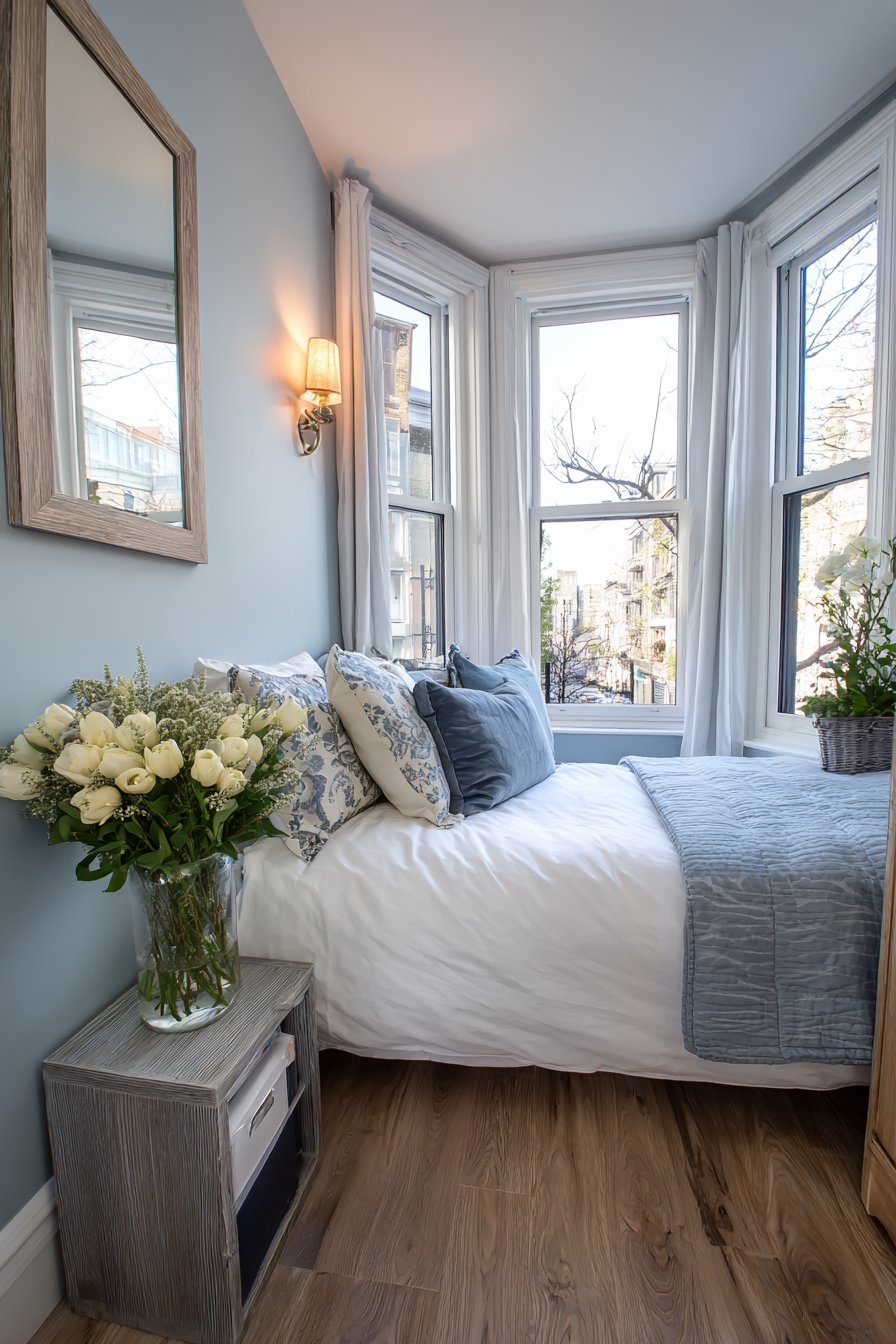
Walls painted in warm white tones provide a neutral backdrop that enhances the room’s brightness while allowing the furniture arrangement to take center stage. Light wood accent features—perhaps a floating shelf, window frame, or decorative wall hanging—add warmth and natural texture without overwhelming the compact space. A narrow full-length mirror leaning casually against the wall creates depth by reflecting the room back on itself, a classic design trick that makes small spaces feel significantly larger. The mirror’s leaning position rather than hanging adds a relaxed, lived-in quality that prevents the tiny bedroom from feeling too rigid or designed.
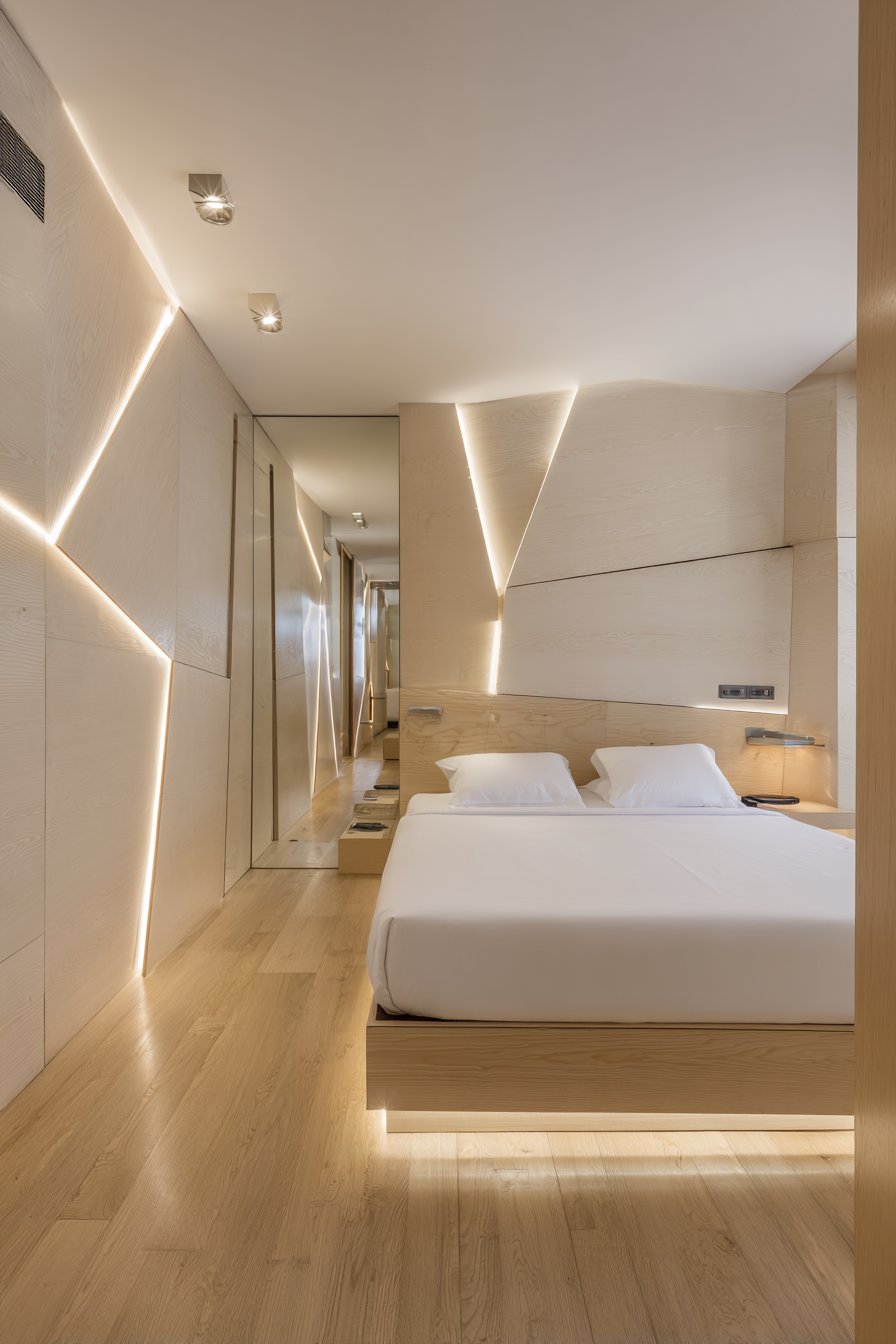
The diagonal placement works particularly well in square rooms, where traditional parallel arrangements can emphasize the room’s boxy proportions. By breaking up these rigid lines, the diagonal bed creates a more dynamic, flowing space that feels less constrained by architectural limitations. The unconventional layout also draws attention away from the room’s modest dimensions, instead focusing the eye on the creative arrangement and styling. Soft natural lighting and balanced exposure throughout the space emphasize the thoughtful nature of this approach to tiny bedroom design.
Key Design Tips:
- Ensure adequate clearance around all sides of the diagonally placed bed for comfortable access
- Use the triangular corner spaces created by diagonal placement for small nightstands or storage
- Position the bed’s diagonal so it doesn’t block natural light from windows or access to closets
- Add a rug under the bed at a complementary angle to anchor the diagonal arrangement
- Keep other furniture along the walls to prevent the room from feeling too chaotic
- Use the visual interest created by diagonal placement to minimize the need for decorative elements
- Consider this arrangement primarily for square or near-square room proportions
13. Pegboard Wall Organization System
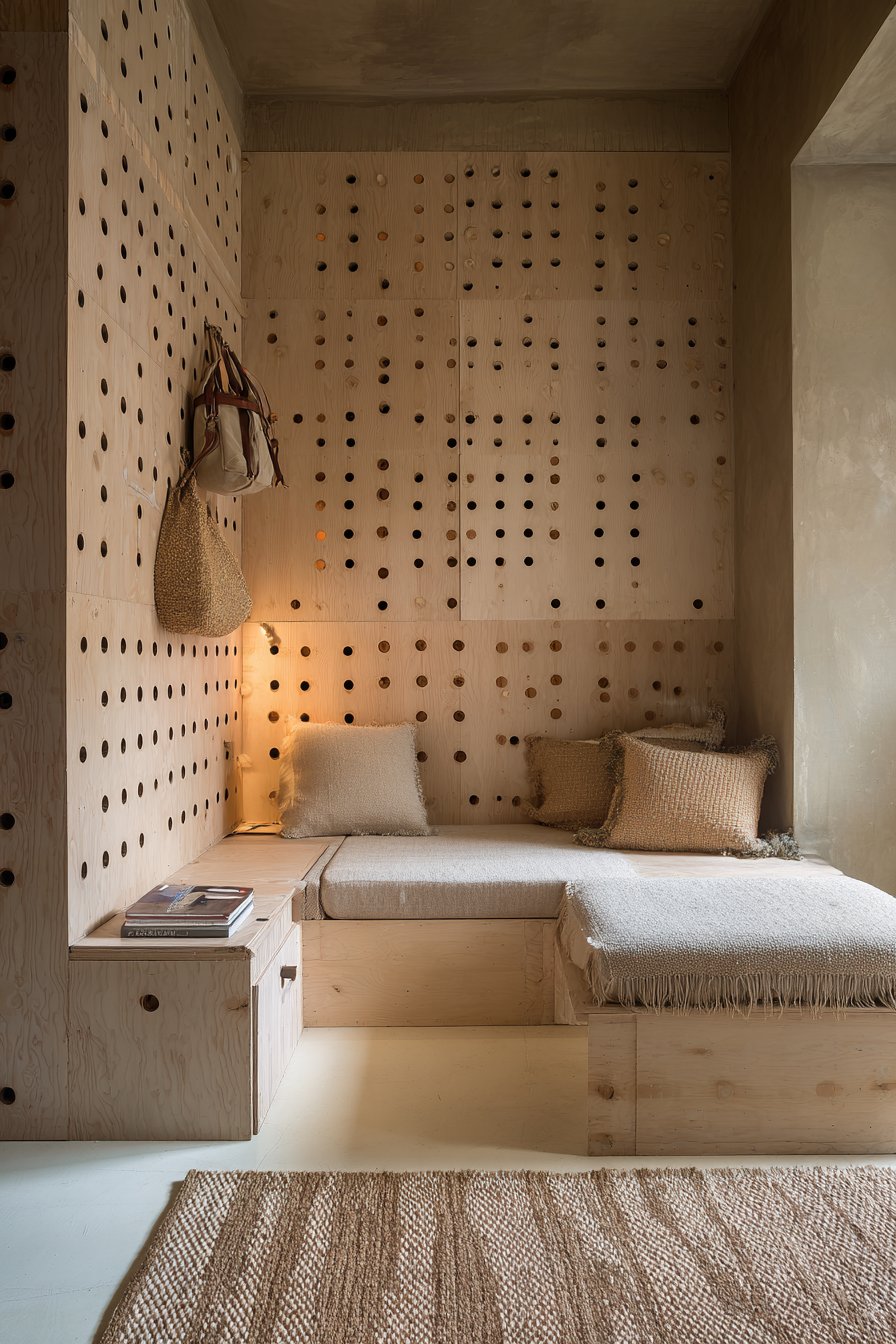
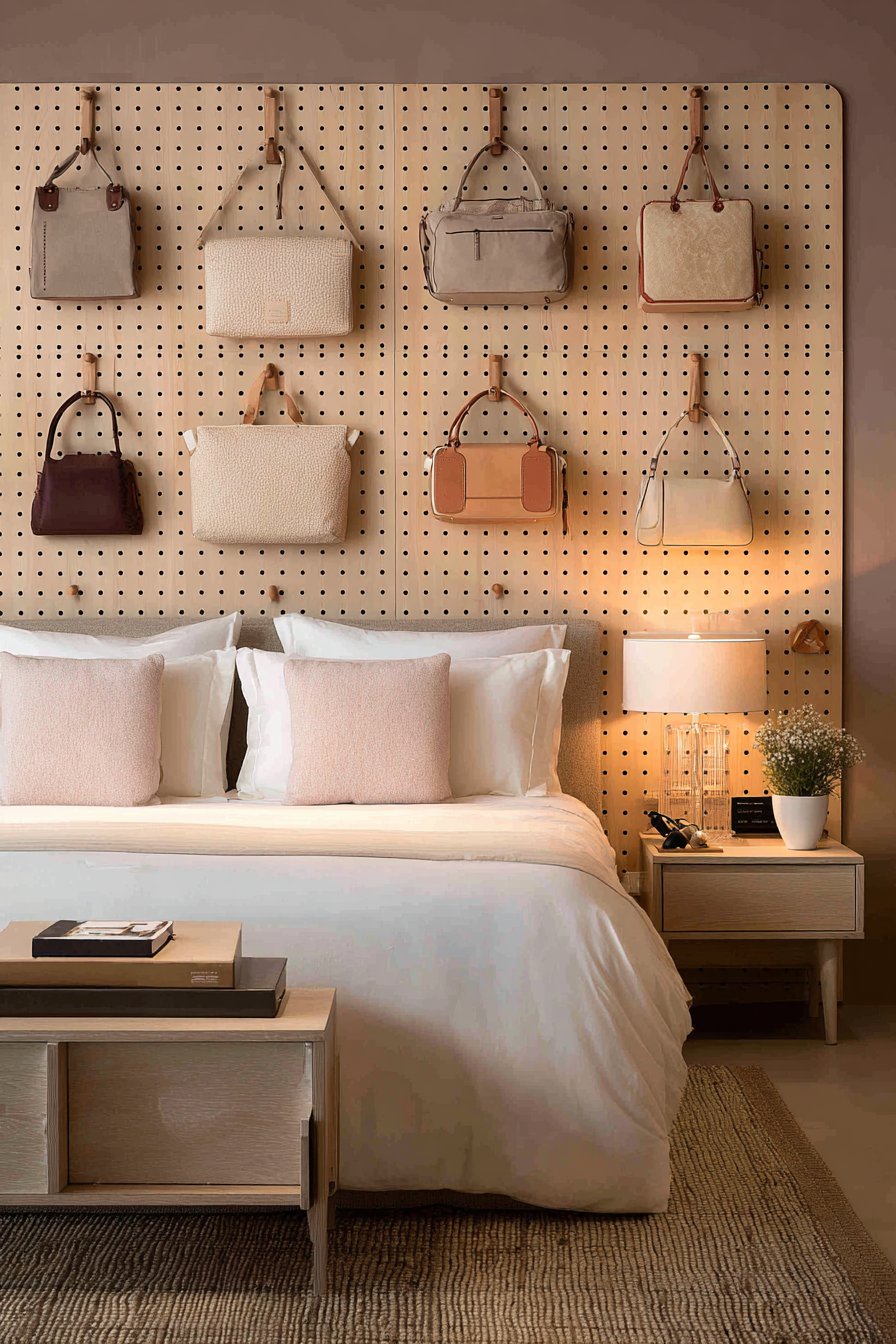
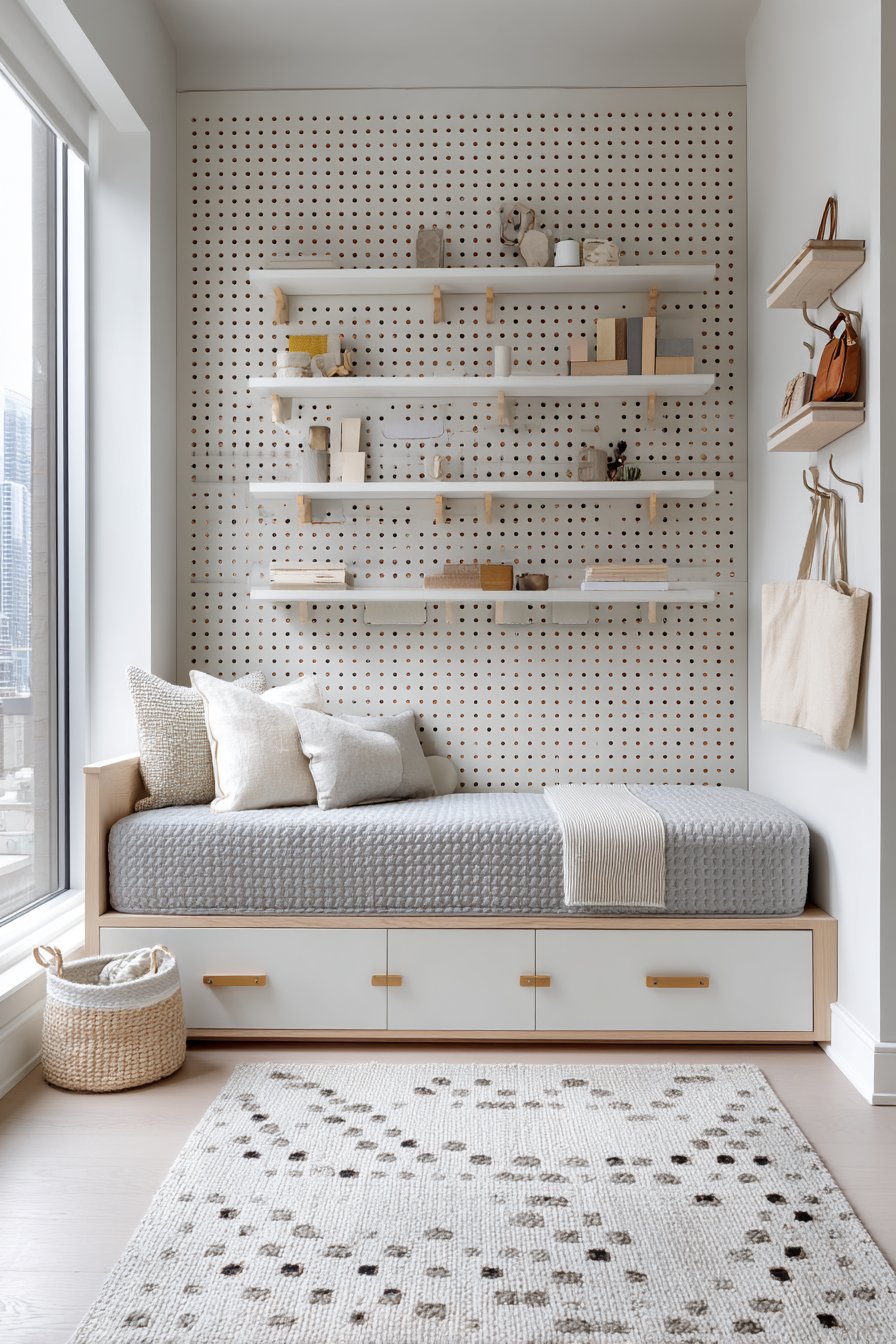
Adaptable storage solutions provide excellent tiny room ideas for bedrooms, and pegboard wall systems offer unmatched flexibility for organizing accessories, bags, and small items. The pegboard mounts directly to the wall, typically spanning a significant section to maximize storage capacity. When painted to match the wall color with natural wood pegs adding warmth and visual interest, the pegboard becomes an attractive design feature rather than purely utilitarian storage. The customizable nature of pegboard systems allows for easy reconfiguration as storage needs change, with pegs, hooks, and shelves repositioned without tools.
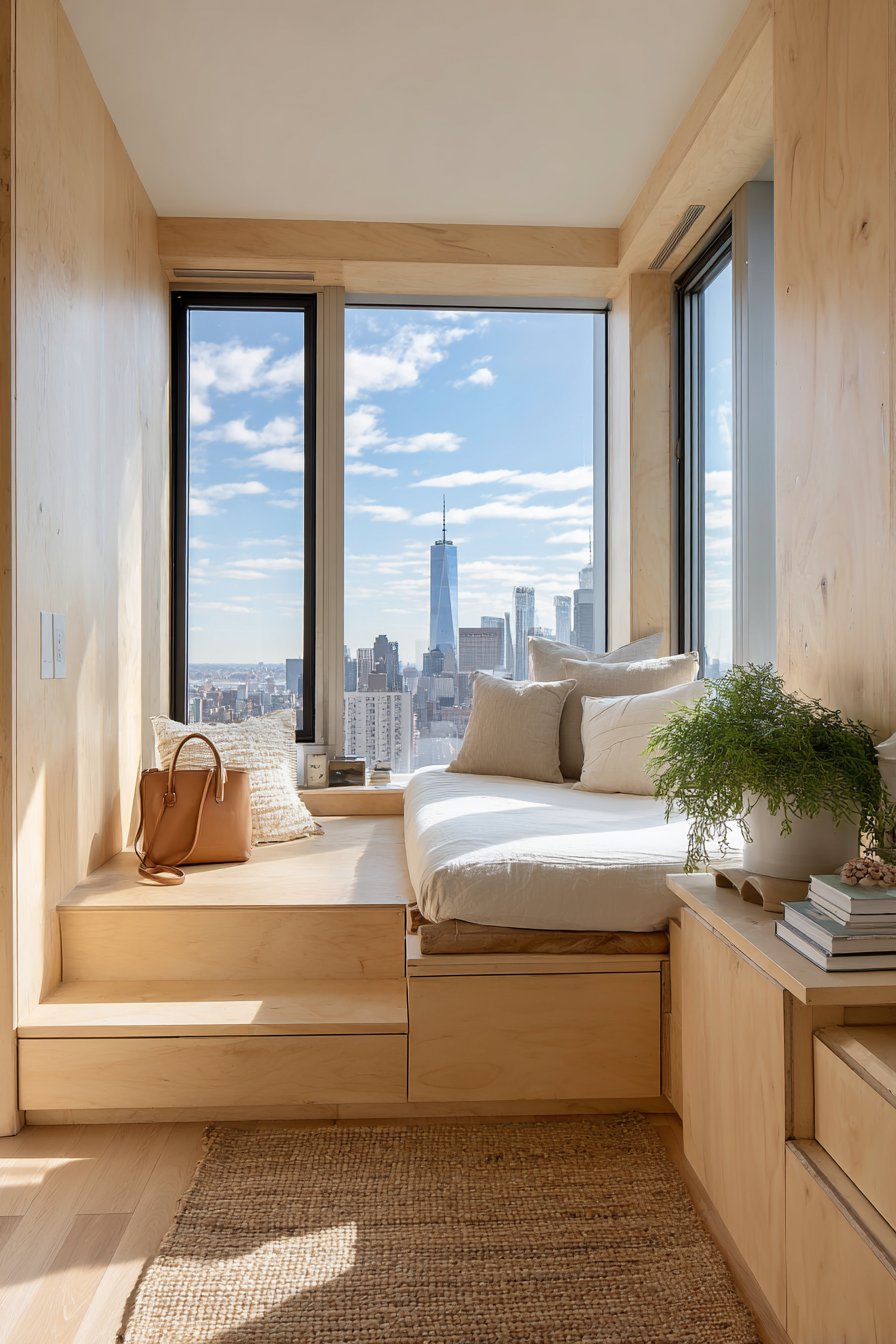
The pegboard can accommodate various accessories including hooks for bags and hats, small shelves for folded items or decorative objects, and baskets for corralling smaller accessories. This visible storage approach encourages organization and makes it easy to see exactly what you own, discouraging overaccumulation that can overwhelm tiny spaces. The pegboard’s vertical orientation makes efficient use of wall space that might otherwise go unused, transforming a blank wall into a functional and attractive organizational center.
A low platform bed with integrated side storage occupies minimal floor space while providing essential sleeping and storage functions. The platform’s low profile maintains good proportions in the room without dominating the vertical space, while built-in side storage offers convenient access to frequently used items like books, devices, or reading glasses. A natural textile rug in neutral tones defines the sleeping area and adds warmth underfoot, creating a soft landing for bare feet on cool mornings. The combination of pegboard organization and platform bed storage demonstrates how tiny bedrooms can be both highly functional and aesthetically pleasing.
Key Design Tips:
- Paint the pegboard in a color that complements your walls to create a cohesive look
- Use a variety of peg accessories including hooks, shelves, and baskets for versatile storage
- Arrange items on the pegboard with visual balance, avoiding clustering everything in one area
- Reserve pegboard space for items you use frequently or want to display decoratively
- Add small plants or decorative items to the pegboard to prevent it from looking purely functional
- Consider the pegboard’s placement carefully to avoid conflicts with door swings or furniture
- Update the pegboard arrangement seasonally to keep the room feeling fresh and organized
14. Overhead Storage Above the Bed
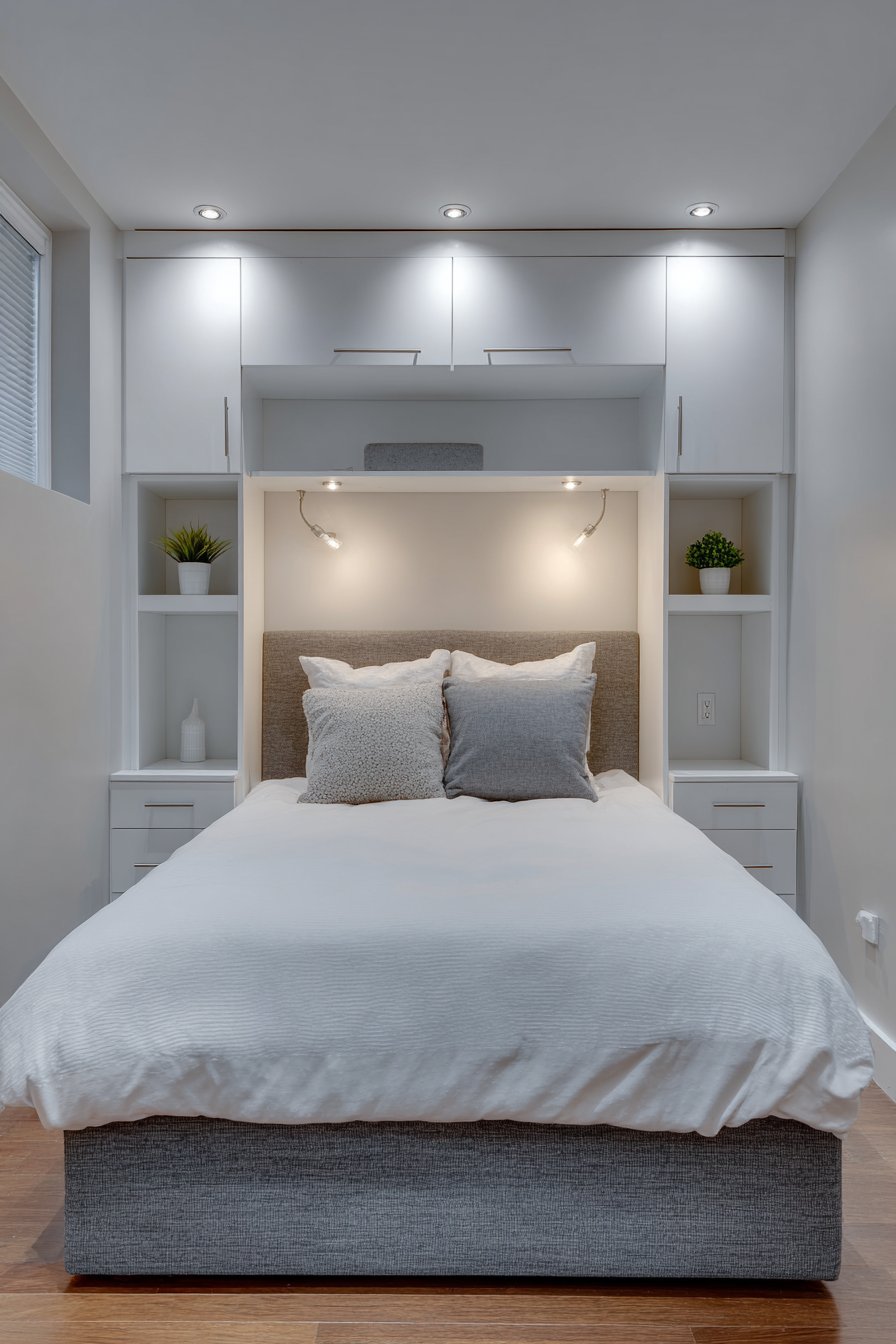
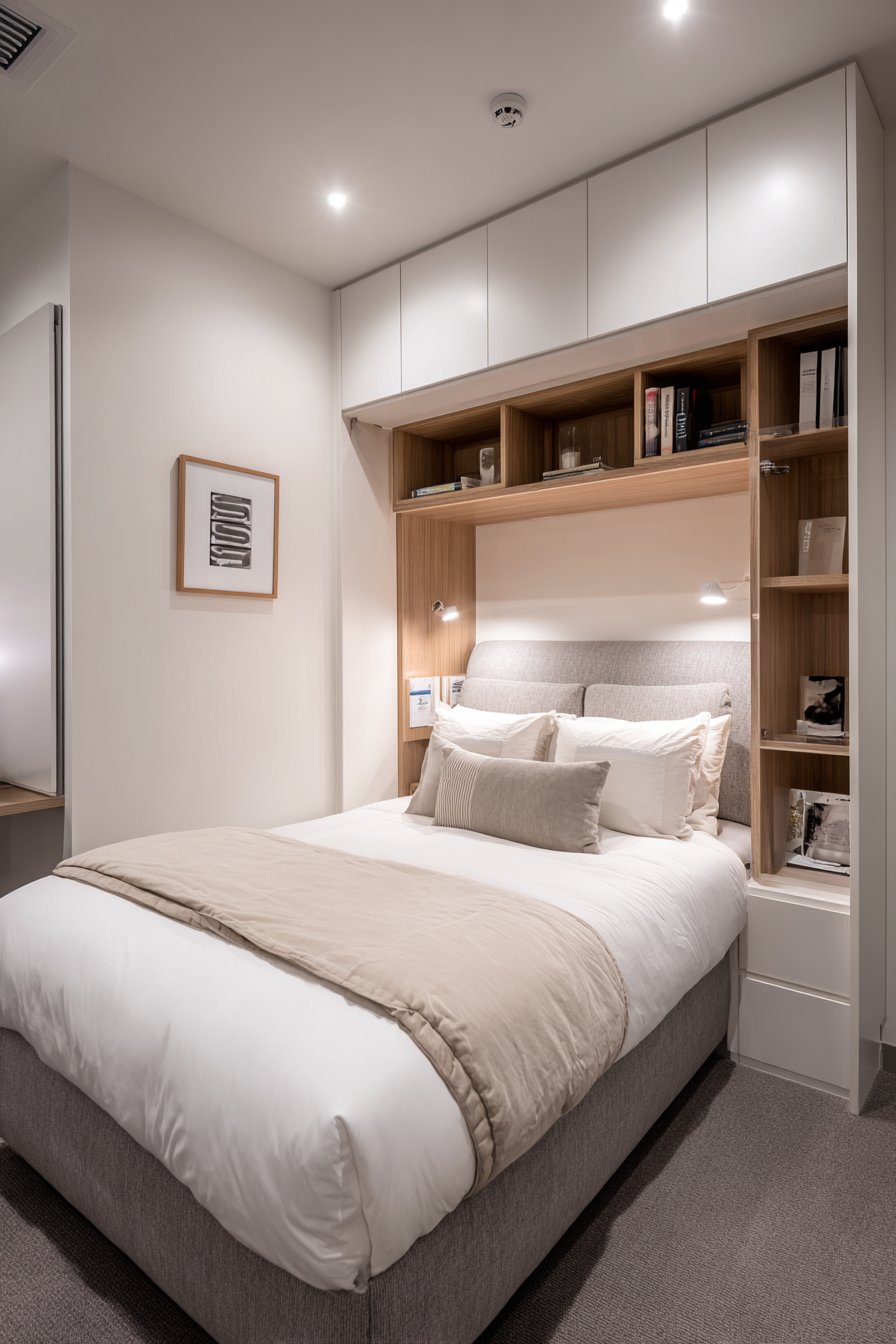
Vertical space utilization extends to overhead storage in tiny room ideas for bedrooms, particularly when floor and wall space are already maximized. Wall-mounted cabinets positioned above the bed provide substantial storage capacity without consuming any floor space, making them ideal for extremely compact rooms. These cabinets feature soft-close mechanisms that prevent slamming—an important safety feature when storage is positioned overhead. The white finish matching the walls creates visual continuity that prevents the cabinets from feeling heavy or oppressive, instead blending seamlessly into the room’s architecture.
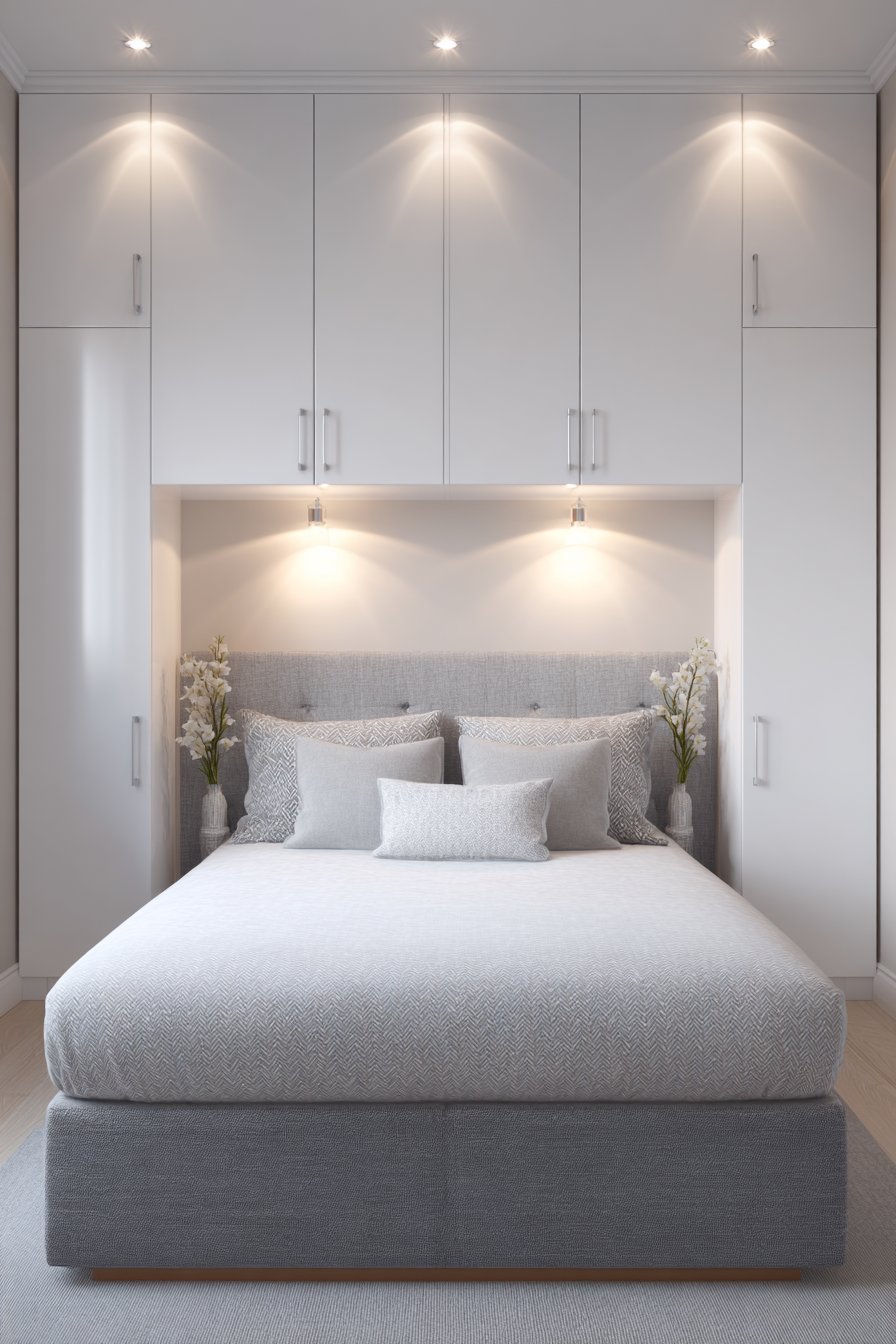
The overhead cabinets work best for storing items accessed less frequently, such as seasonal clothing, extra linens, luggage, or archived documents. The height makes them impractical for daily-use items, but perfect for belongings that need protection from dust while remaining accessible when needed. A simple bed frame with grey upholstered headboard centers below the overhead storage, dressed in neutral bedding that maintains the room’s calm, uncluttered aesthetic. Small wall-mounted reading lights provide task lighting without requiring bedside tables, and their adjustable arms allow for directed illumination exactly where needed.
Safety considerations are paramount with overhead storage, including proper installation into wall studs or with appropriate anchors, secure mounting hardware, and cabinet doors that lock in the open position to prevent accidental closing. The visual weight of overhead cabinets can be minimized through color matching with walls, adding subtle lighting underneath the cabinets to create a floating effect, and maintaining clean, simple lines in the cabinet design. When executed properly, overhead storage transforms wasted vertical space into valuable storage capacity in tiny bedrooms.
Key Design Tips:
- Install cabinets securely into wall studs with professional assistance if needed
- Position cabinets high enough that sitting up in bed doesn’t result in head contact
- Use overhead storage for seasonal or infrequently accessed items rather than daily necessities
- Choose cabinets with soft-close mechanisms to prevent noise and improve safety
- Match cabinet colors to walls to minimize visual weight
- Add LED strip lighting under cabinets to create a floating effect and provide ambient lighting
- Label cabinet contents for easy identification without removing items
15. Under-Stair Sleeping Nook
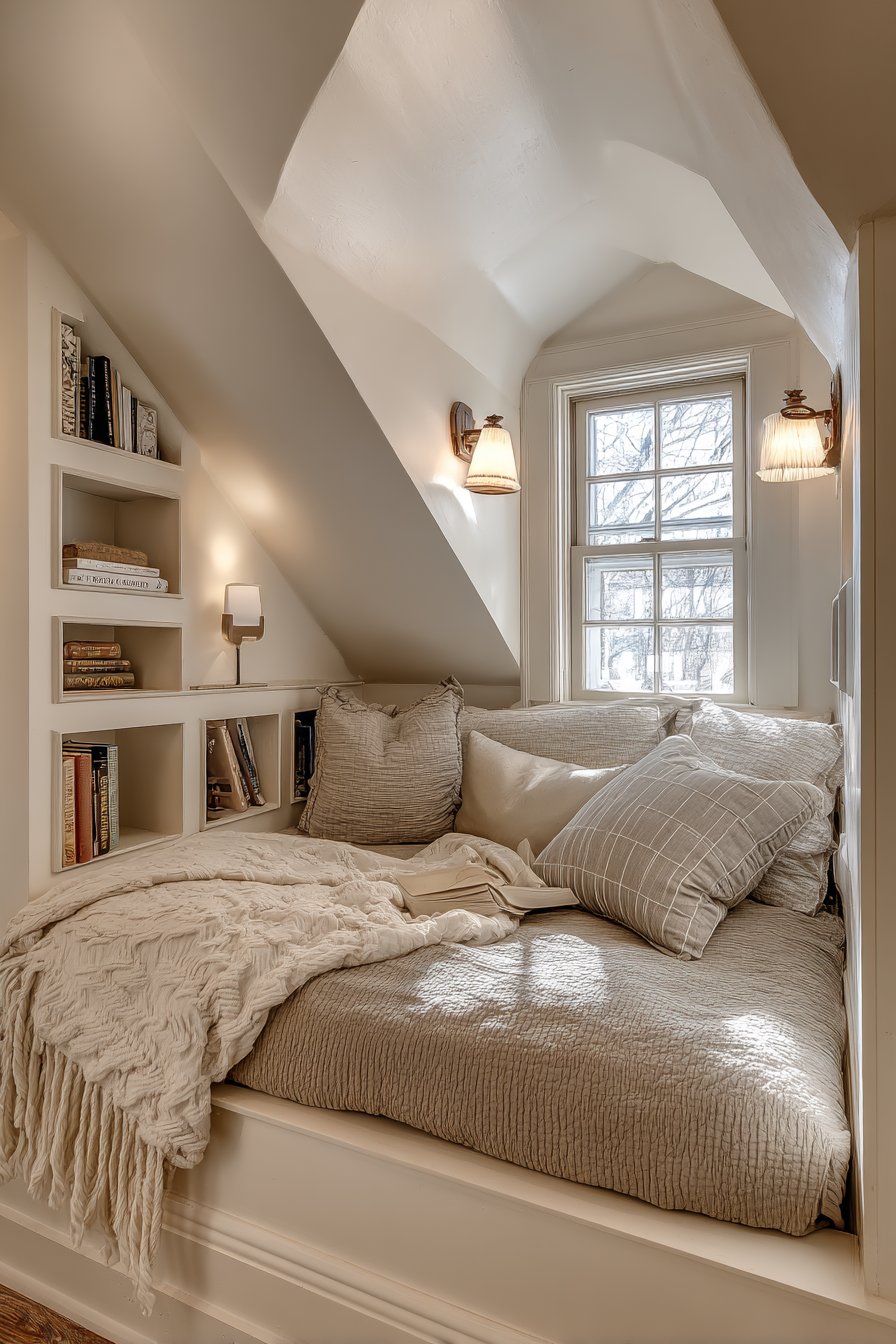
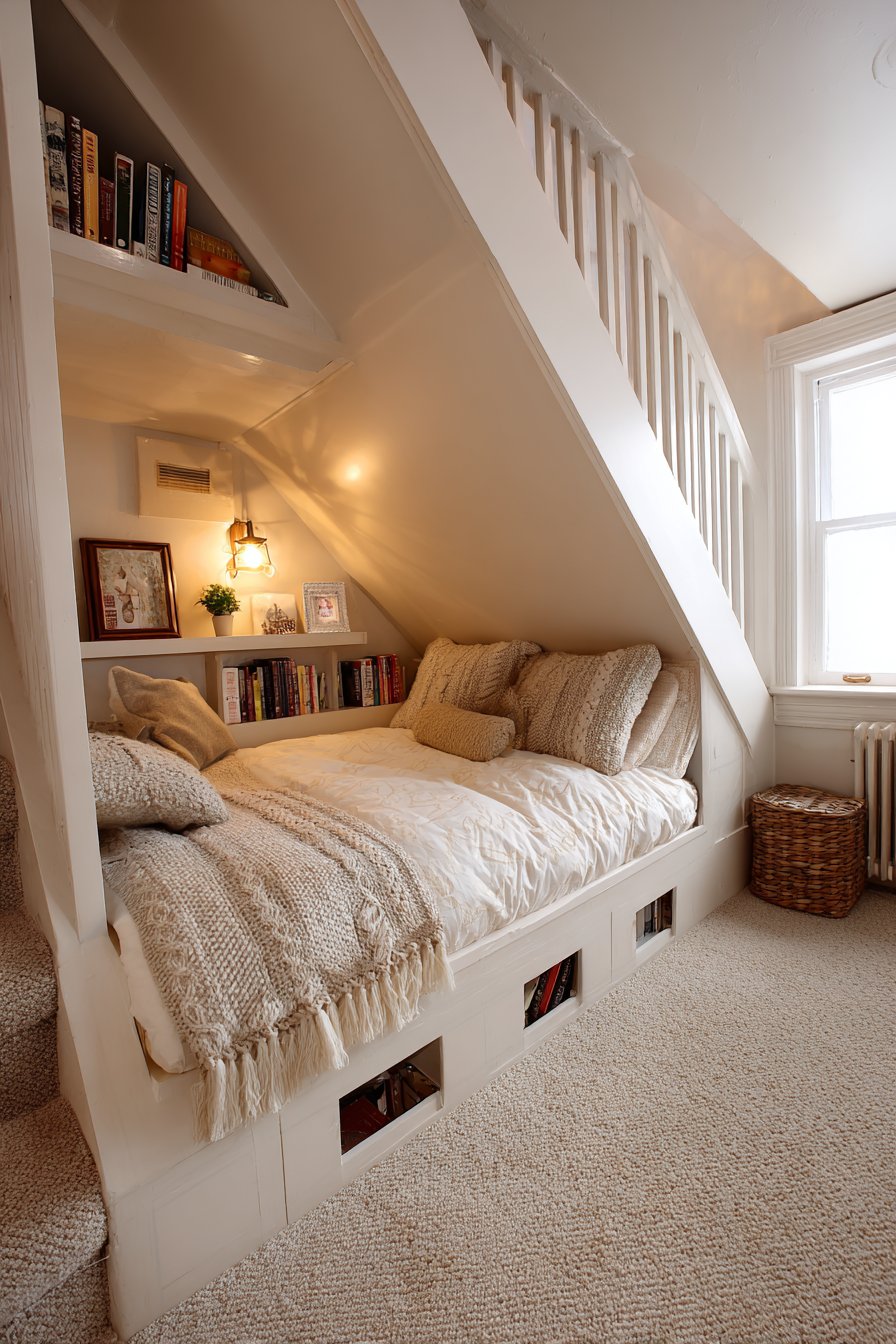
Creative use of architectural quirks offers unique tiny room ideas for bedrooms, particularly in homes with unusual layouts. Under-stair spaces typically go unused or become cluttered storage areas, but with intentional design, they can transform into cozy sleeping nooks. This approach involves custom-building a sleeping platform that fits precisely within the angled space beneath stairs, complete with a comfortable mattress and built-in reading light. The angled ceiling adds architectural interest while creating an enclosed, den-like feeling that many find especially restful and secure.
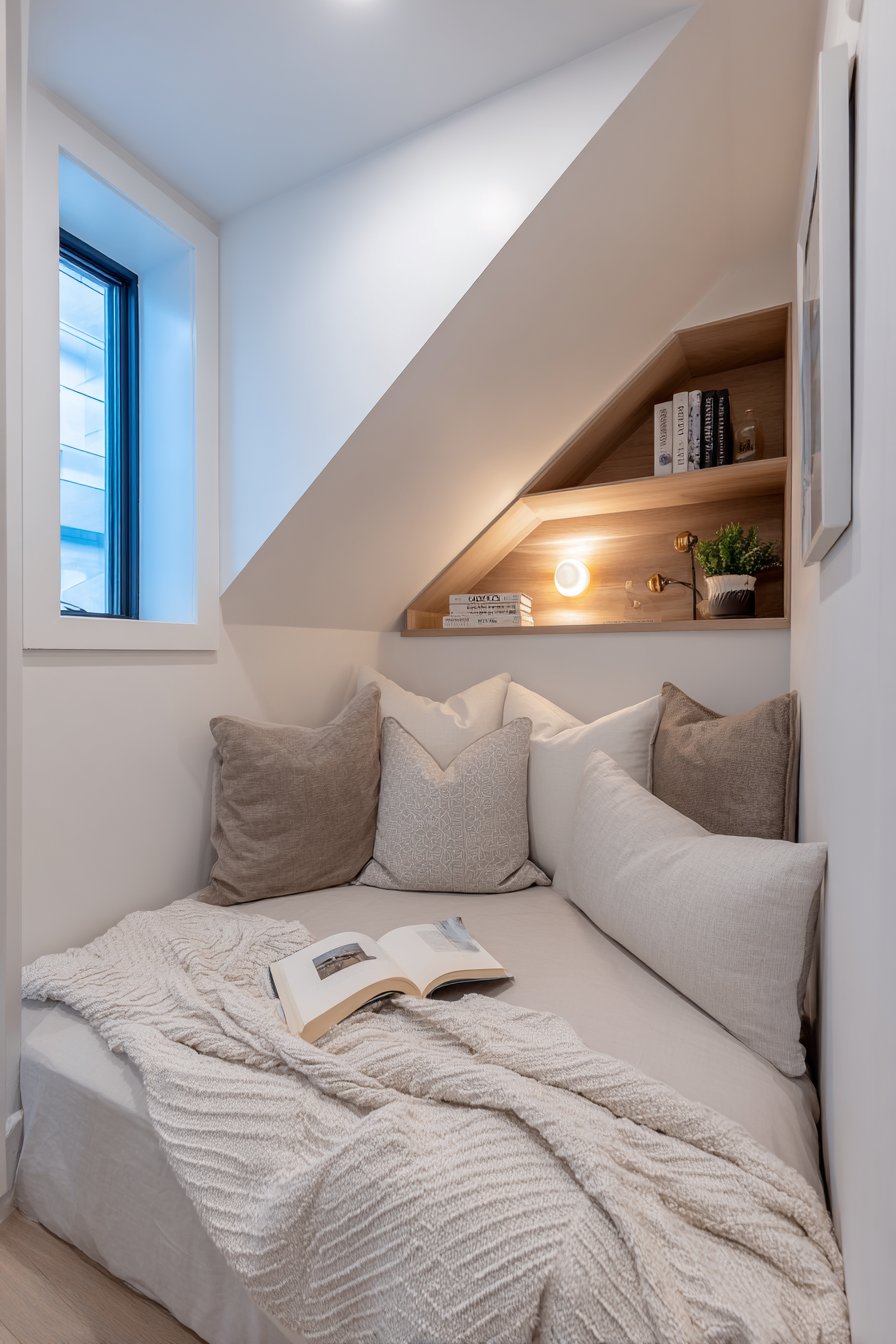
Soft white paint on all surfaces keeps the space feeling open despite its compact dimensions and unconventional angles. The paint color should have warm undertones to prevent the nook from feeling cold or clinical, creating instead a cozy, welcoming atmosphere. Small storage cubbies built into the walls surrounding the sleeping area provide convenient places for books, devices, water bottles, and other bedtime essentials. These built-ins make efficient use of the otherwise awkward spaces created by the stair structure overhead, turning potential dead space into functional storage.
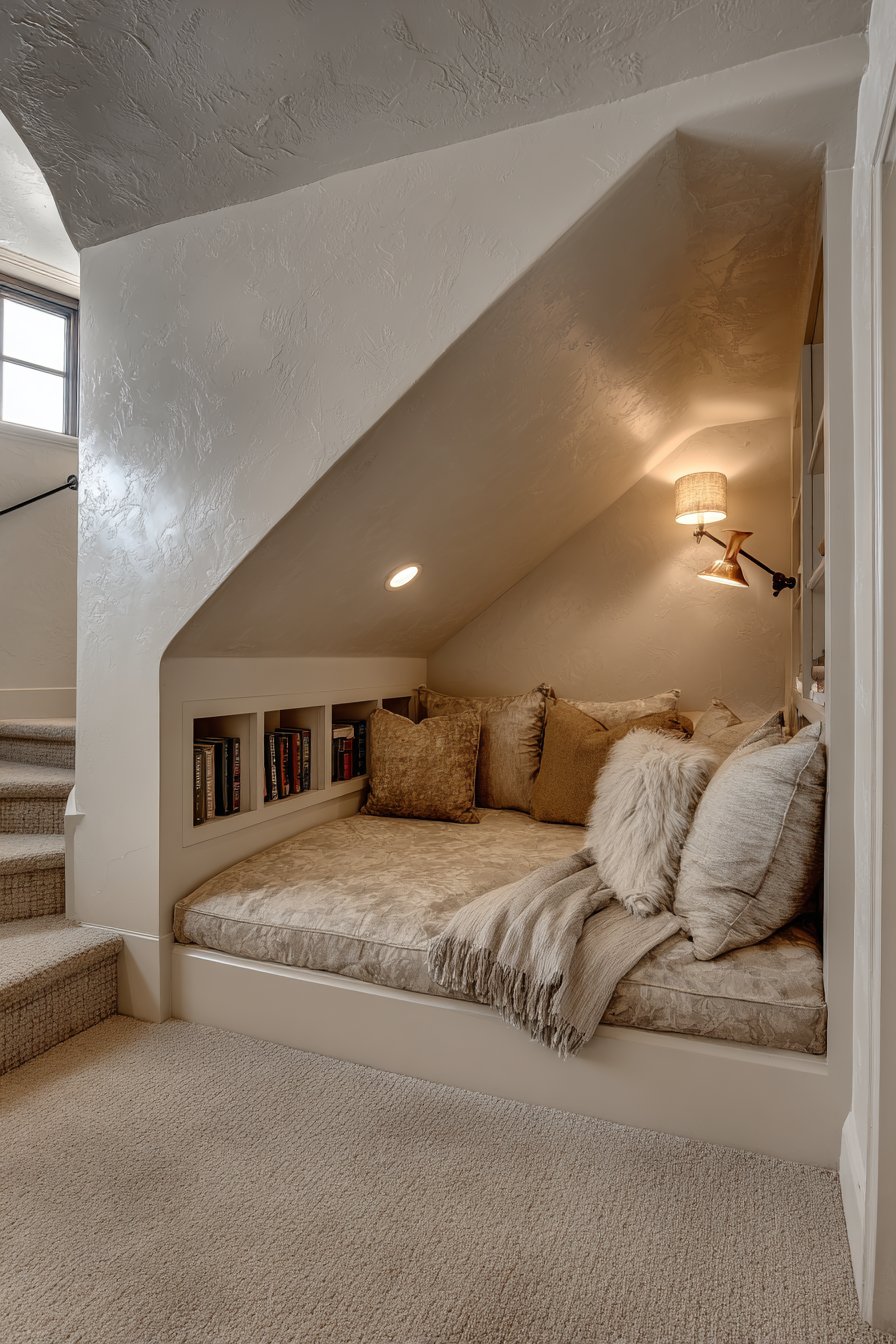
Textured bedding in neutral tones adds comfort and visual interest to the sleeping nook, with layers of blankets and pillows creating a nest-like quality that enhances the space’s coziness. Professional interior photography would capture this creative use of awkward space with natural lighting from a nearby window emphasizing the practical beauty of the converted area. The under-stair nook might serve as a primary sleeping area in a studio apartment, a child’s bedroom in a multi-story home, or a unique guest sleeping space that adds functionality without requiring a dedicated bedroom.
Key Design Tips:
- Ensure adequate headroom for sitting up comfortably, at least 3-4 feet at the highest point
- Install proper ventilation in enclosed sleeping nooks to maintain air quality
- Add a reading light with a dimmer switch for adjustable illumination
- Build in storage cubbies along the sides to maximize the utility of the awkward space
- Use comfortable, moisture-wicking bedding appropriate for potentially less ventilated spaces
- Consider adding a curtain or sliding door for privacy if the nook opens to a larger room
- Decorate with light colors and reflective surfaces to prevent the space from feeling cave-like
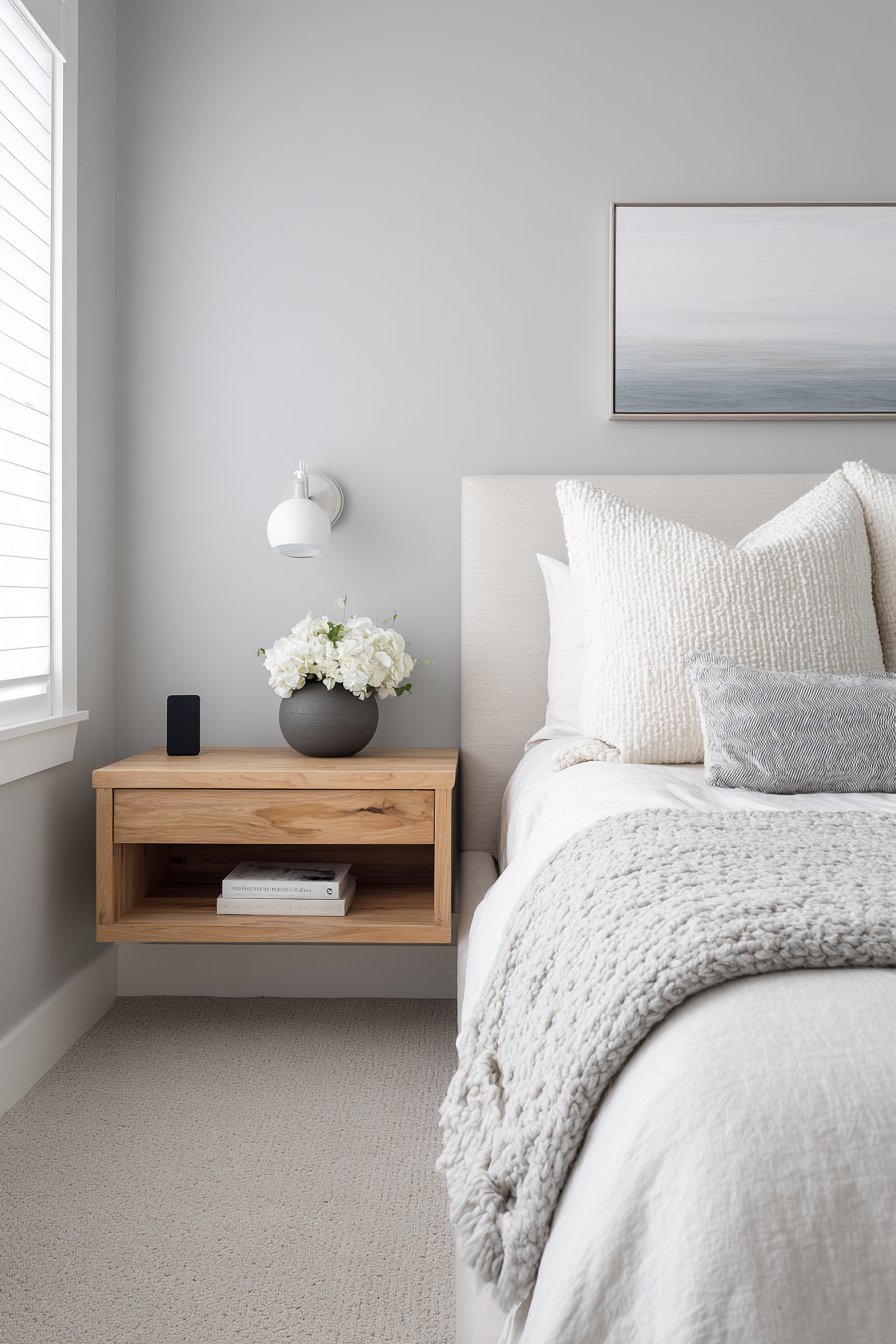
16. Headboard with Integrated Storage
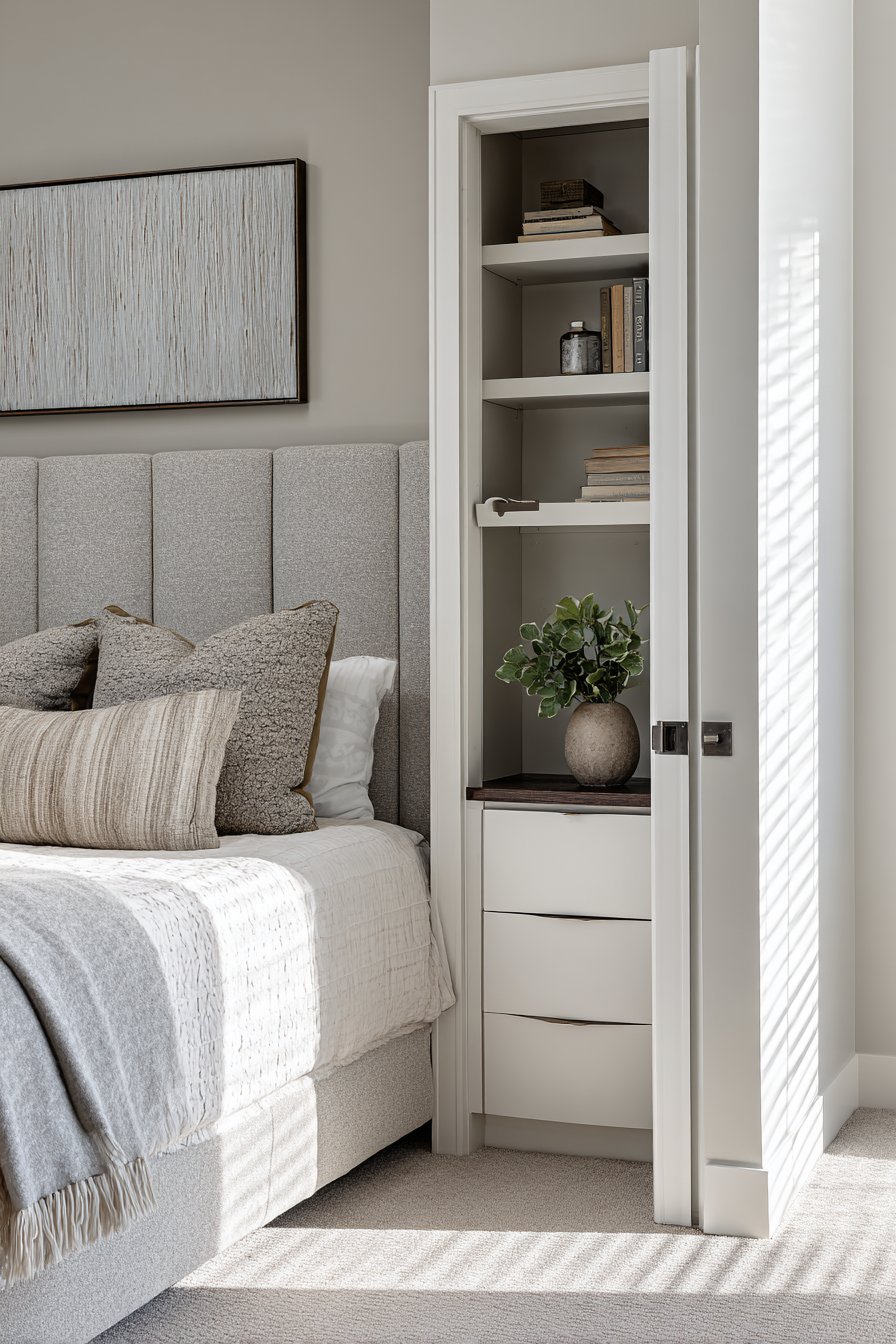
Multifunctional furniture continues to dominate tiny room ideas for bedrooms, and headboards with integrated storage exemplify this trend. These designs incorporate small shelves, hidden compartments, and specialized sections for books, phone charging, and nighttime essentials directly into the headboard structure. This consolidation eliminates the need for separate nightstands, freeing valuable floor space while keeping necessary items within easy reach. The headboard becomes a command center for the sleeping area, organizing everything from reading materials to charging devices in one centralized location.
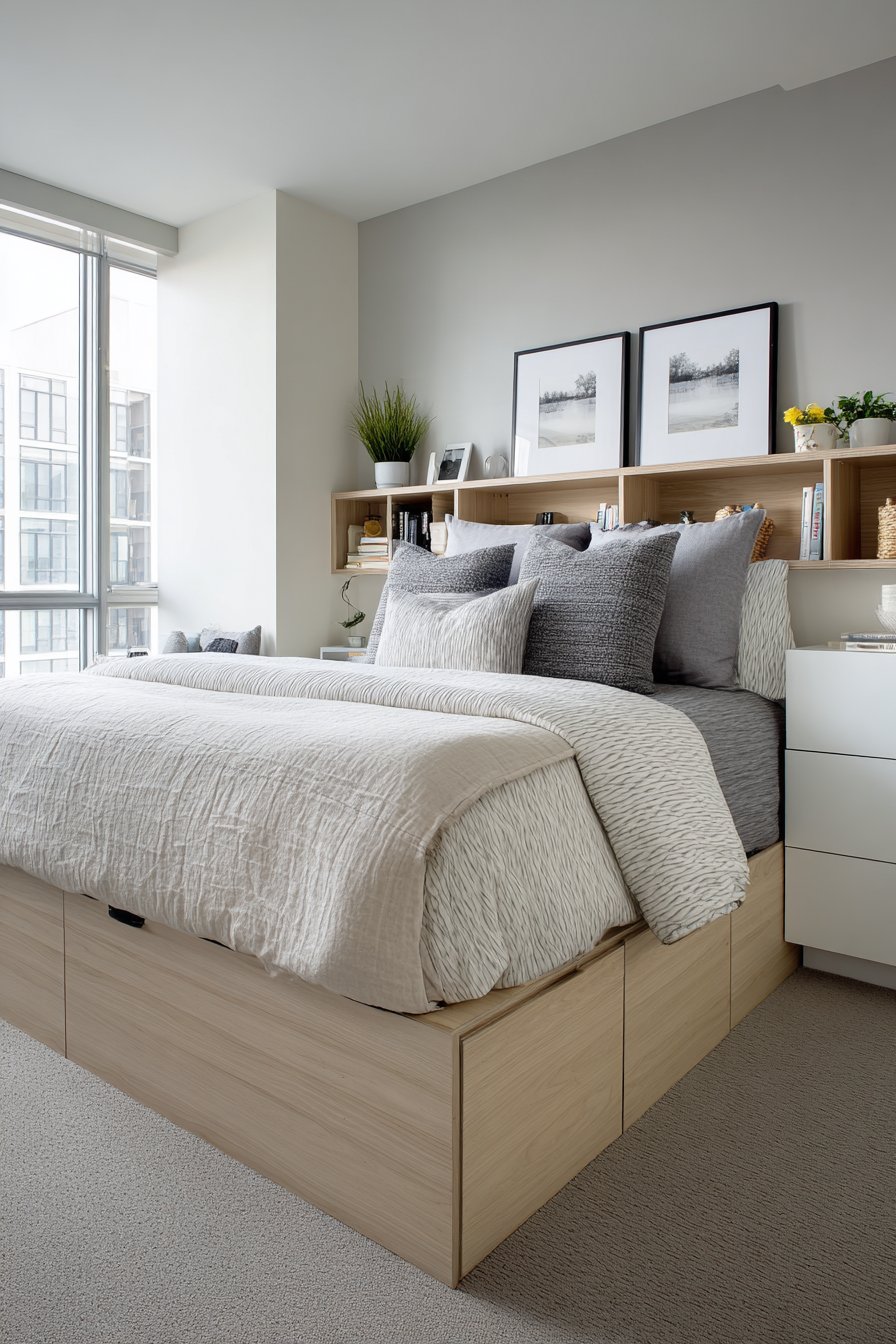
The bed is dressed in layered neutral bedding with subtle textures that add visual interest without creating busy patterns that might overwhelm the small space. Quality bedding in calming colors promotes restful sleep while maintaining the room’s sophisticated, uncluttered aesthetic. Soft grey walls create a restful backdrop that recedes visually, making the room feel more spacious than its dimensions would suggest. A compact dresser with vertical orientation maximizes storage capacity while minimizing floor space consumption, providing essential clothing storage without dominating the room.
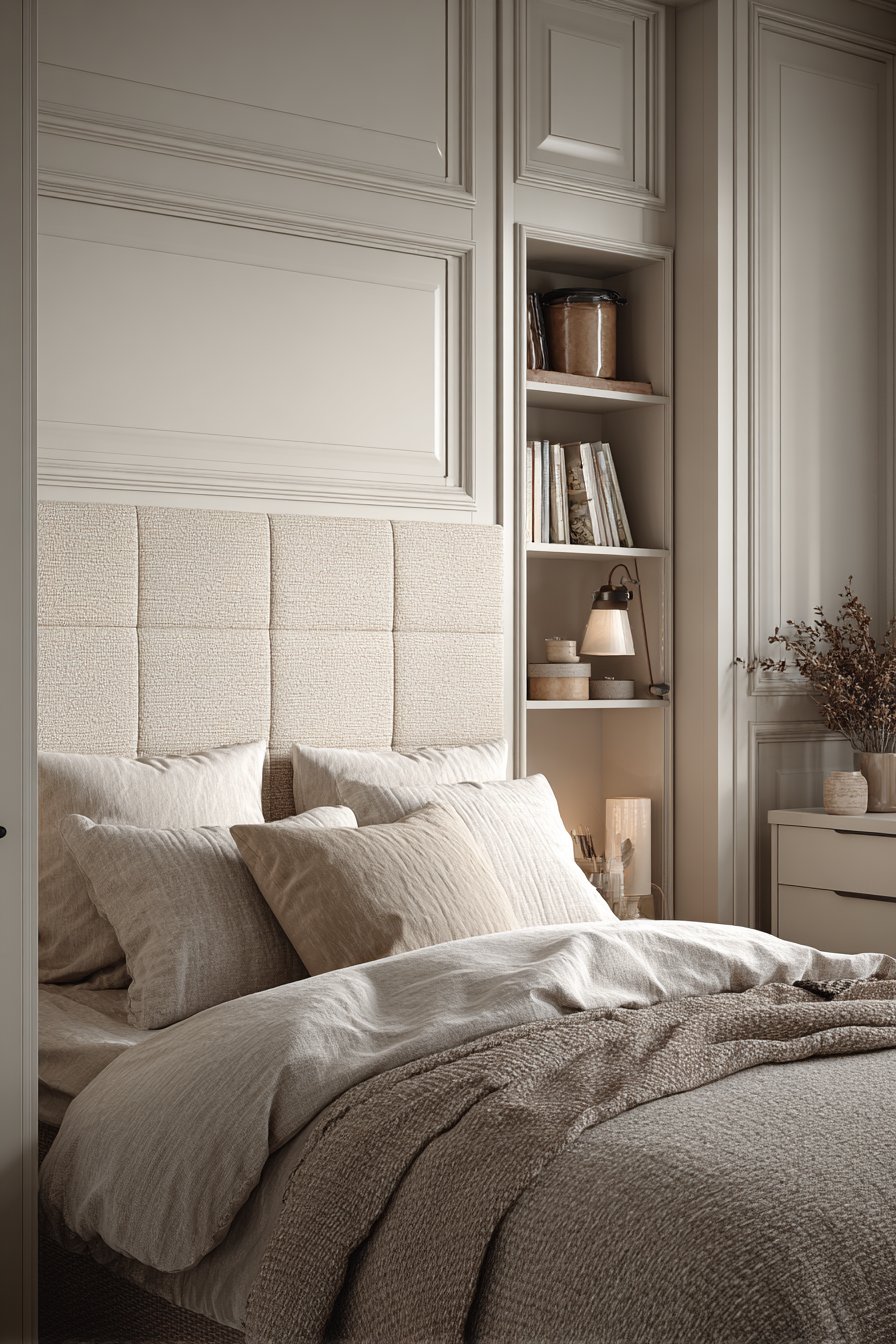
The multifunctional headboard design should include features like USB charging ports, small reading lights, and perhaps a fold-down surface for placing a beverage or device. Some designs incorporate sliding panels that conceal storage compartments, maintaining clean lines when the storage isn’t in use. The wide-angle interior design photography would highlight this thoughtful furniture selection and the efficient use of every element, with soft natural lighting emphasizing the practical elegance of the space.
Key Design Tips:
- Choose headboards with varied storage options including open shelves and closed compartments
- Look for integrated USB charging ports and electrical outlets for device charging
- Ensure headboard storage is deep enough for items but doesn’t extend too far into the room
- Add small LED lights in the shelving for ambiance and functional illumination
- Keep headboard shelves organized and avoid overcrowding them with items
- Select a headboard height that provides adequate storage without overwhelming the bed
- Consider headboards with padded sections for comfortable sitting while reading or relaxing
17. Modular Furniture System
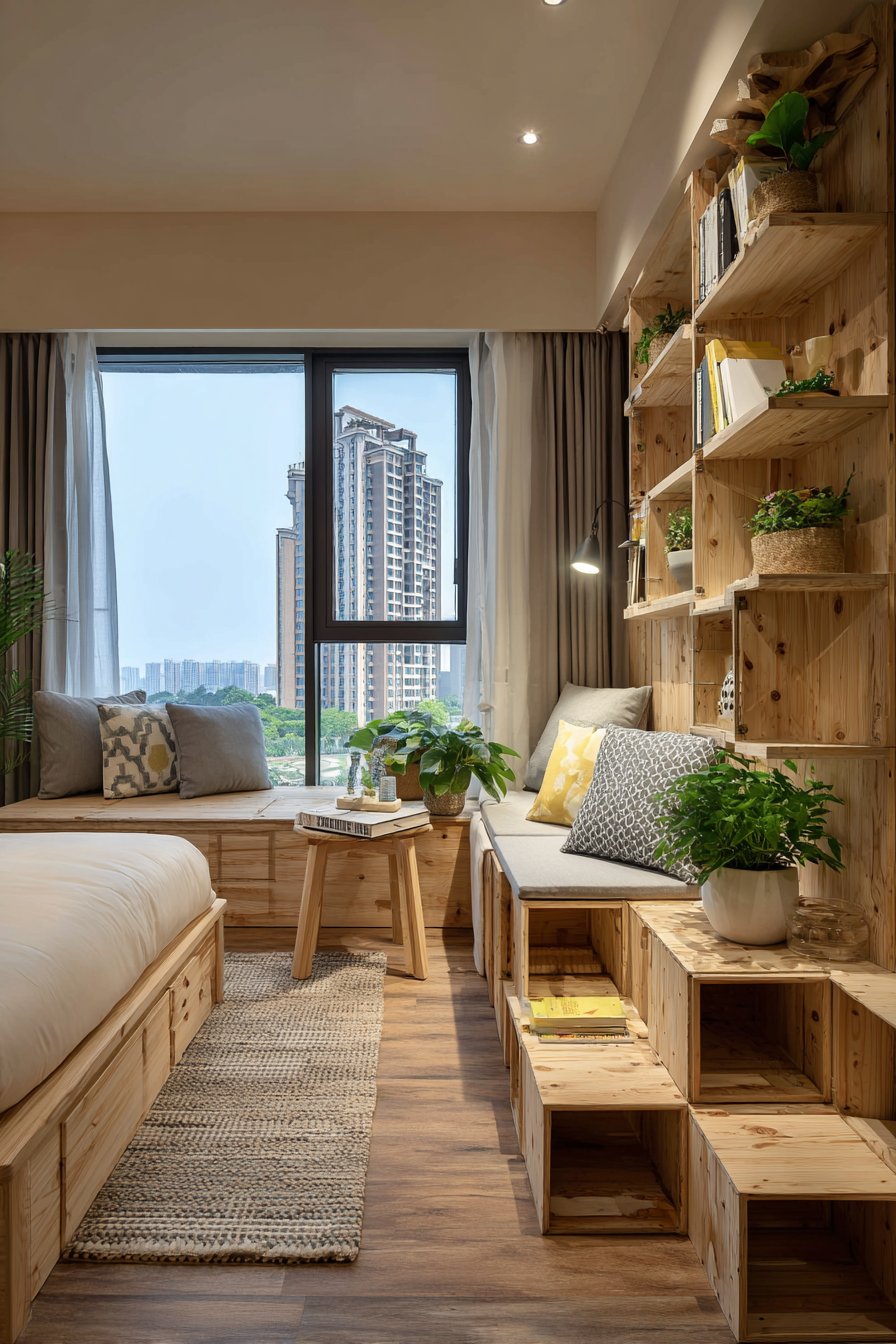
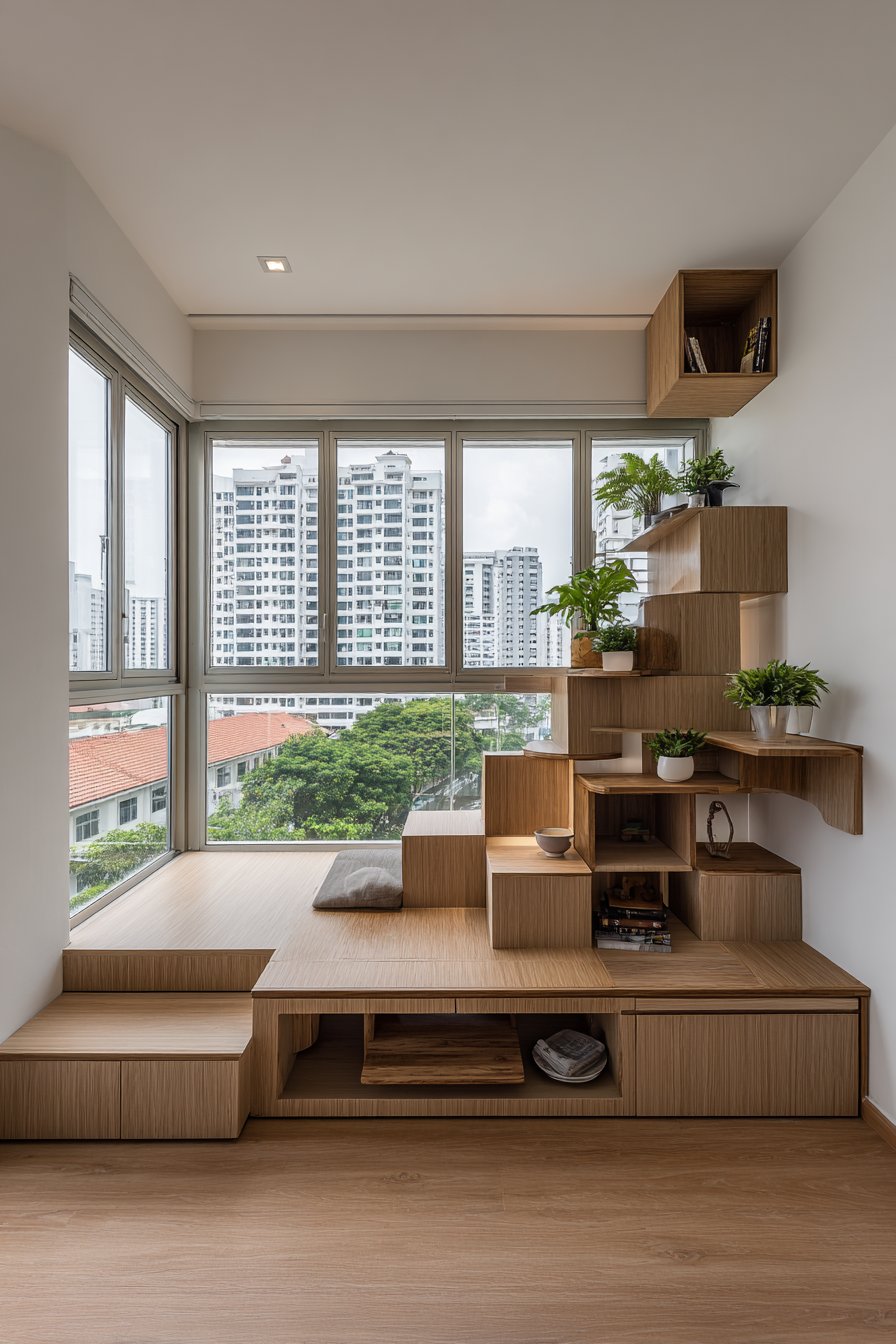
Adaptability defines modern tiny room ideas for bedrooms, and modular furniture systems offer ultimate flexibility. These systems consist of individual components—stackable storage cubes, versatile shelving units, and reconfigurable pieces—that can be arranged and rearranged as needs change. The modular cubes in natural wood finish serve multiple functions: nightstand, bookshelf, display unit, or even occasional seating. This versatility means the room can evolve with changing needs, from student dorm to first apartment to established home, without requiring complete furniture replacement.
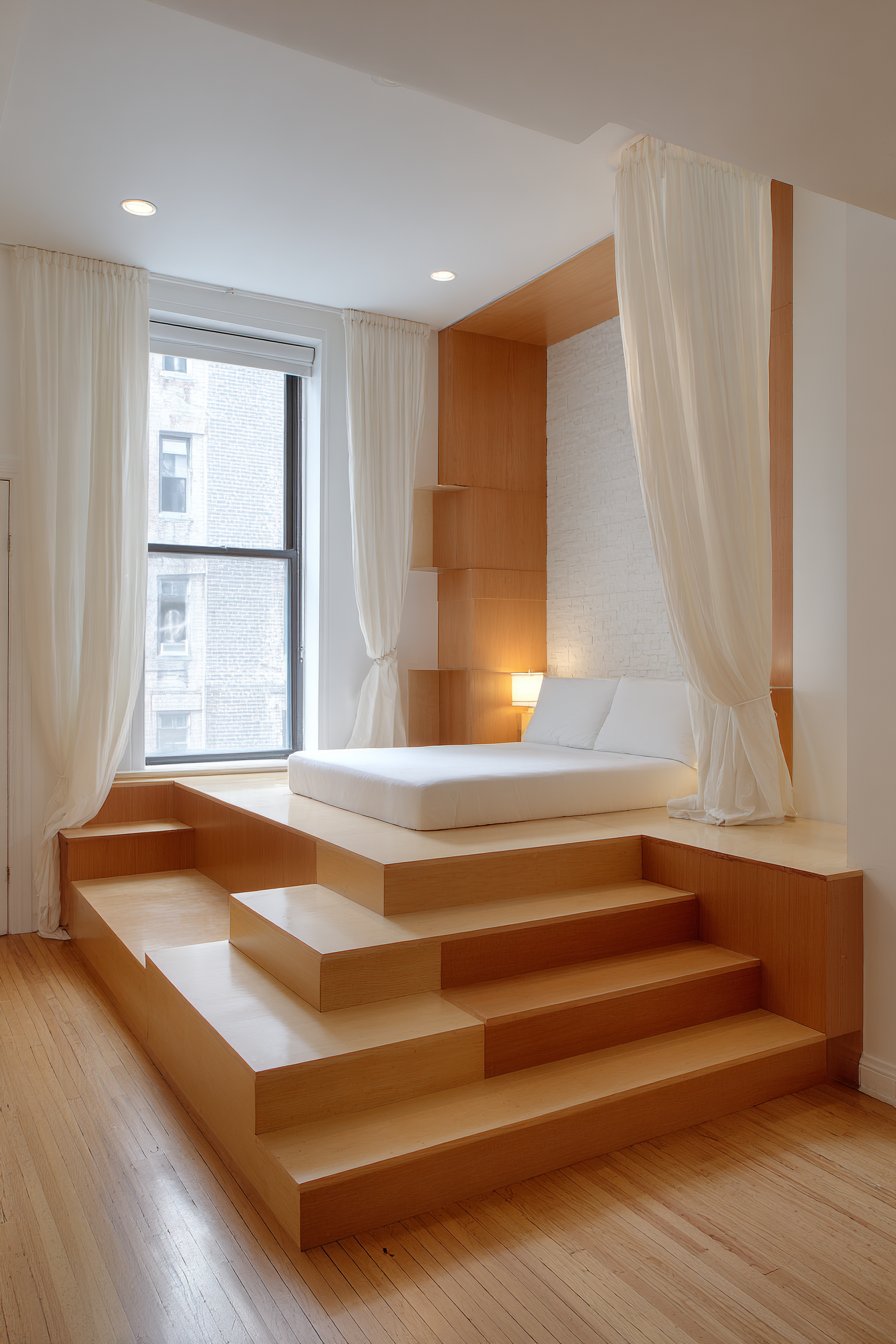
The stackable nature of modular systems allows for vertical expansion as storage needs grow, or horizontal spreading when floor space permits. A simple platform bed with low profile maintains sightlines across the modular furniture arrangement, preventing the room from feeling blocked or choppy. The bed’s minimal design philosophy aligns with the modular furniture’s emphasis on function over ornament, creating a cohesive aesthetic that celebrates practical design. Light filtering curtains soften natural light from a small window, creating gentle illumination that changes throughout the day.
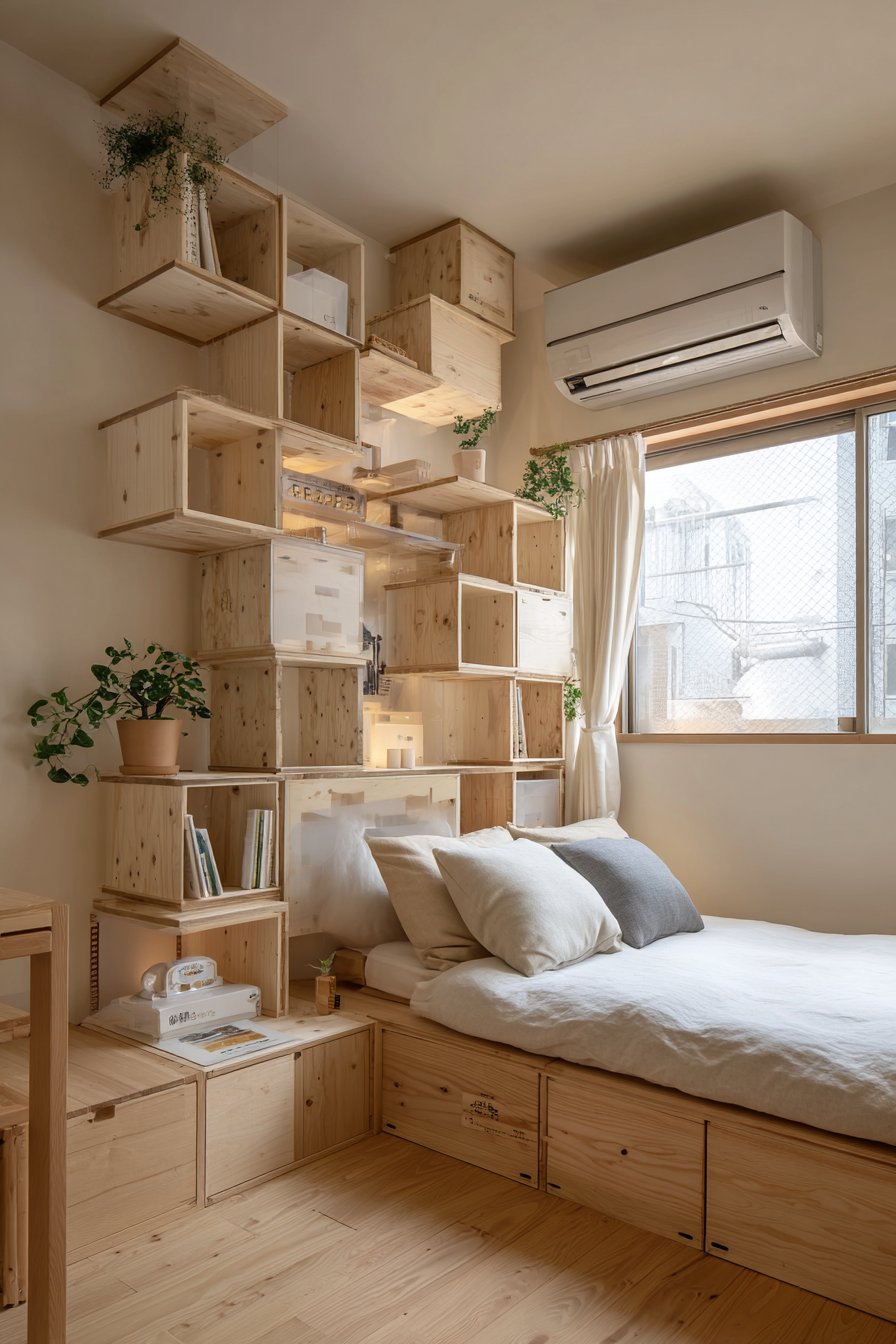
The beauty of modular systems lies in their problem-solving flexibility. Need a higher nightstand? Stack another cube. Require more book storage? Rearrange the configuration. Moving to a new space with different dimensions? The modular pieces adapt to new layouts without waste. This sustainable approach to furnishing tiny bedrooms reduces consumption while maintaining high functionality, and the natural wood finish brings warmth and organic texture that prevents the space from feeling cold or institutional despite its practical focus.
Key Design Tips:
- Start with a basic configuration and add modules as needs develop rather than buying everything at once
- Choose modules in consistent finishes and dimensions for a cohesive appearance
- Experiment with different arrangements to find the most functional configuration for your space
- Use modules both vertically (stacked) and horizontally (side-by-side) for visual variety
- Consider weight capacity when stacking modules, placing heavier items in lower positions
- Label or organize modules by category (books, clothing, accessories) for easy maintenance
- Take advantage of modular furniture’s portability when moving or redesigning the space
18. Hydraulic Lift Bed with Hidden Storage
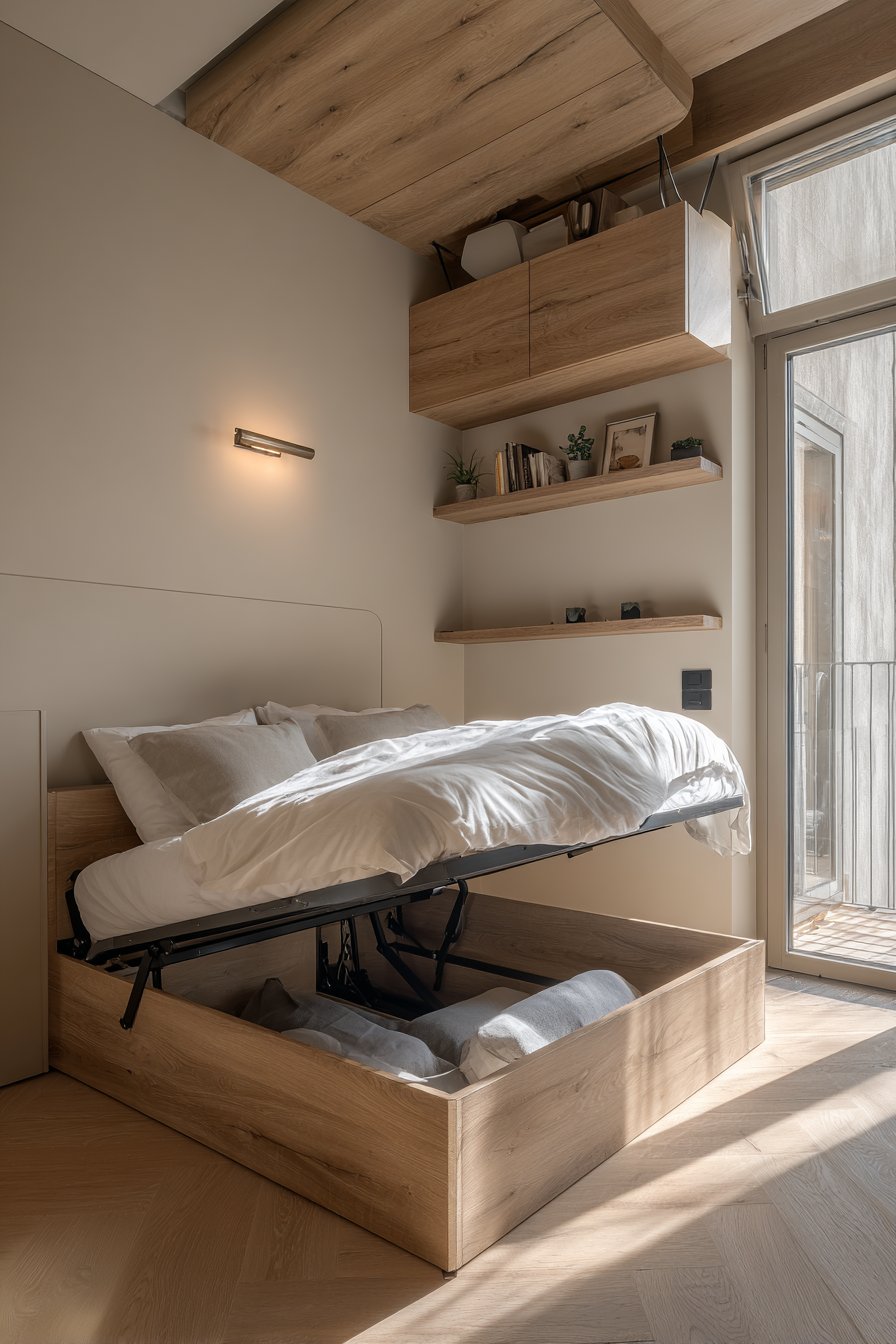
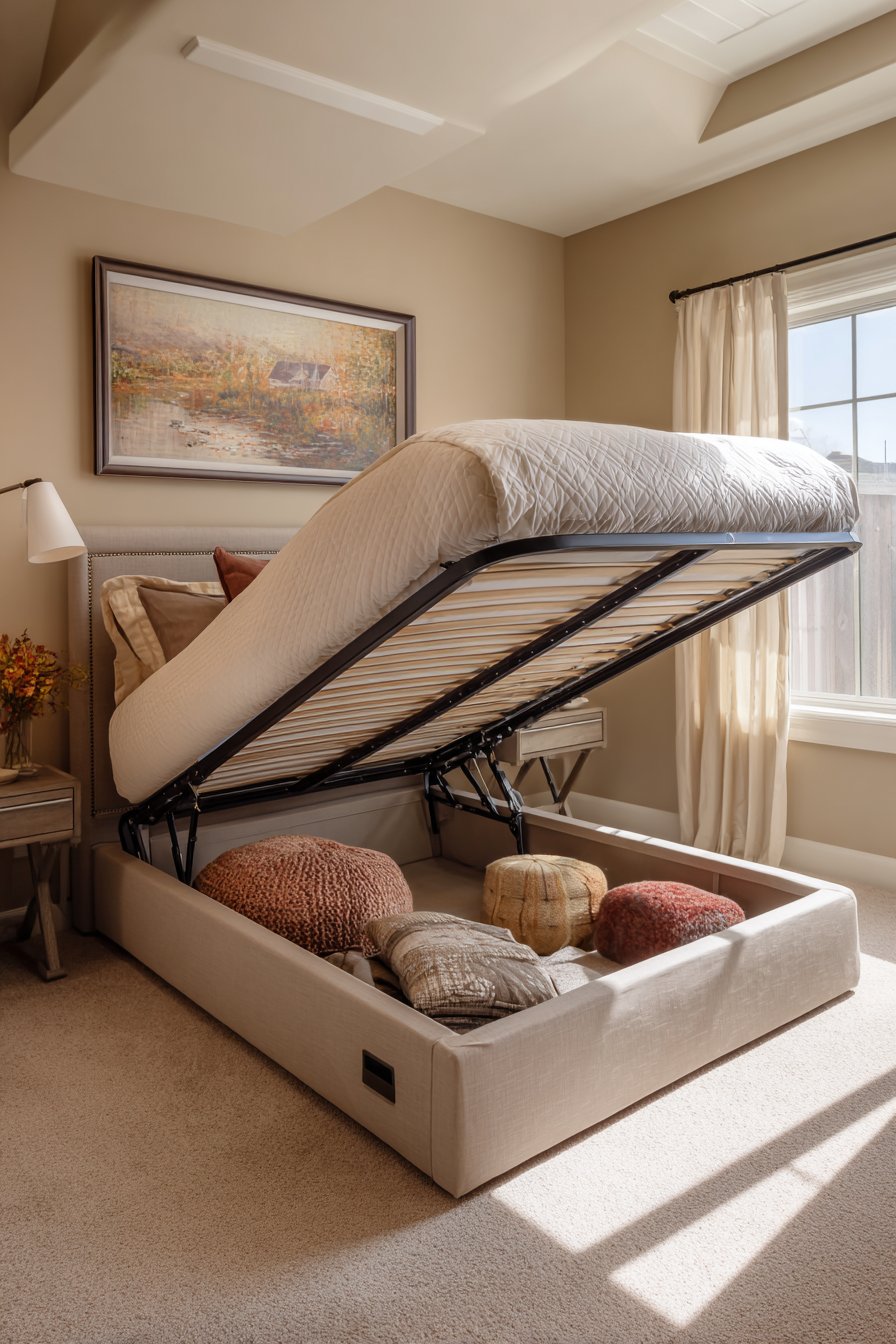
Innovation in furniture design yields impressive tiny room ideas for bedrooms, and hydraulic lift beds represent cutting-edge space optimization. These beds feature a gas-piston system that allows the entire mattress platform to lift upward, revealing substantial storage space underneath for seasonal items, extra bedding, luggage, or bulky belongings that don’t require frequent access. The hydraulic mechanism makes lifting even a loaded bed platform effortless for a single person, and safety features prevent unexpected lowering. This design provides storage capacity equivalent to several large dressers while consuming only the bed’s footprint.
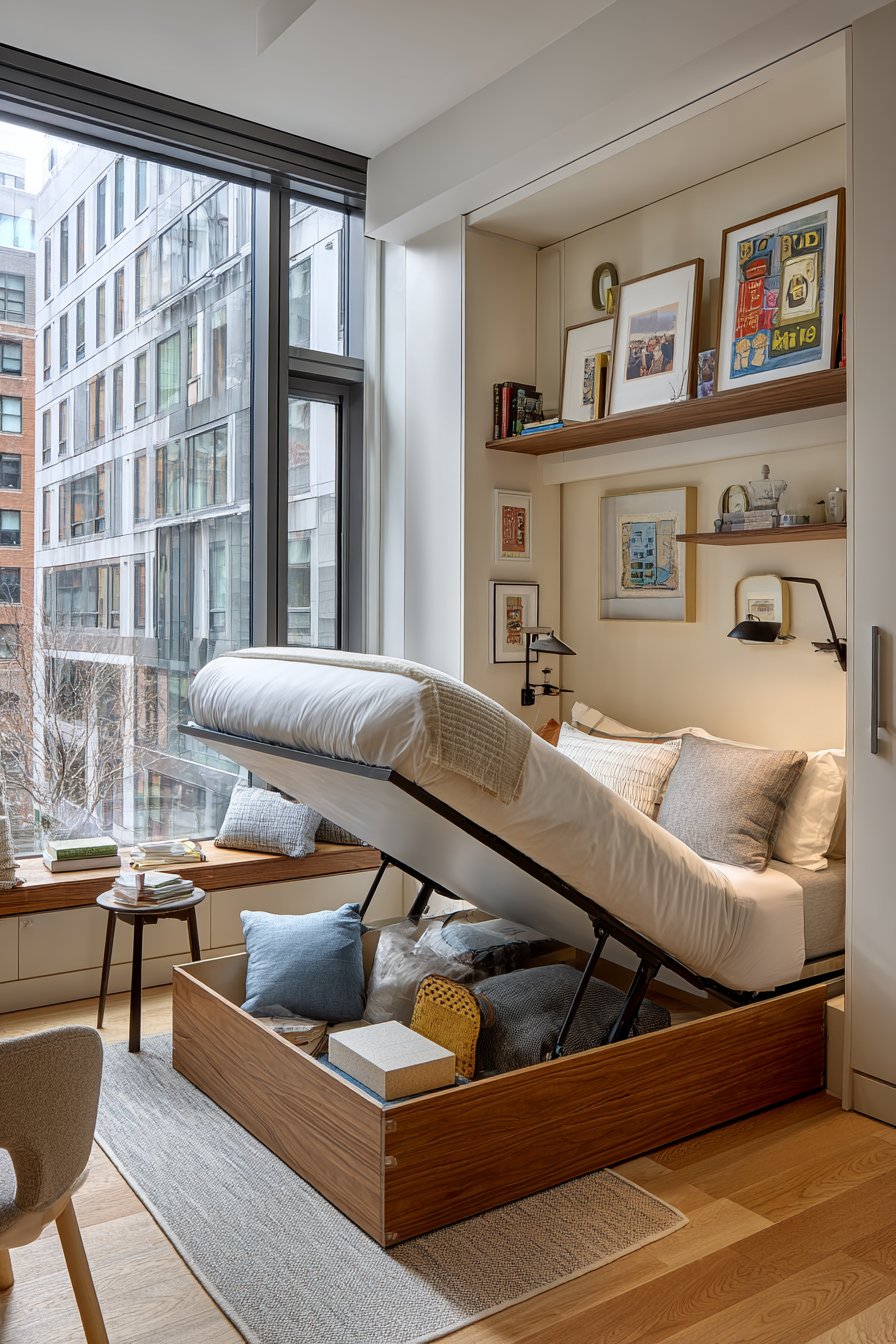
The lift mechanism demonstration in a well-photographed room shows both the practical storage capacity and the engineering elegance of the system. Walls painted in warm beige create a cozy atmosphere that makes the high-tech furniture feel welcoming rather than cold or industrial. A single floating shelf and wall-mounted light fixture keep surfaces clear, emphasizing the room’s uncluttered aesthetic. The hydraulic bed eliminates the need for additional storage furniture, meaning more floor space remains open for movement and other activities.
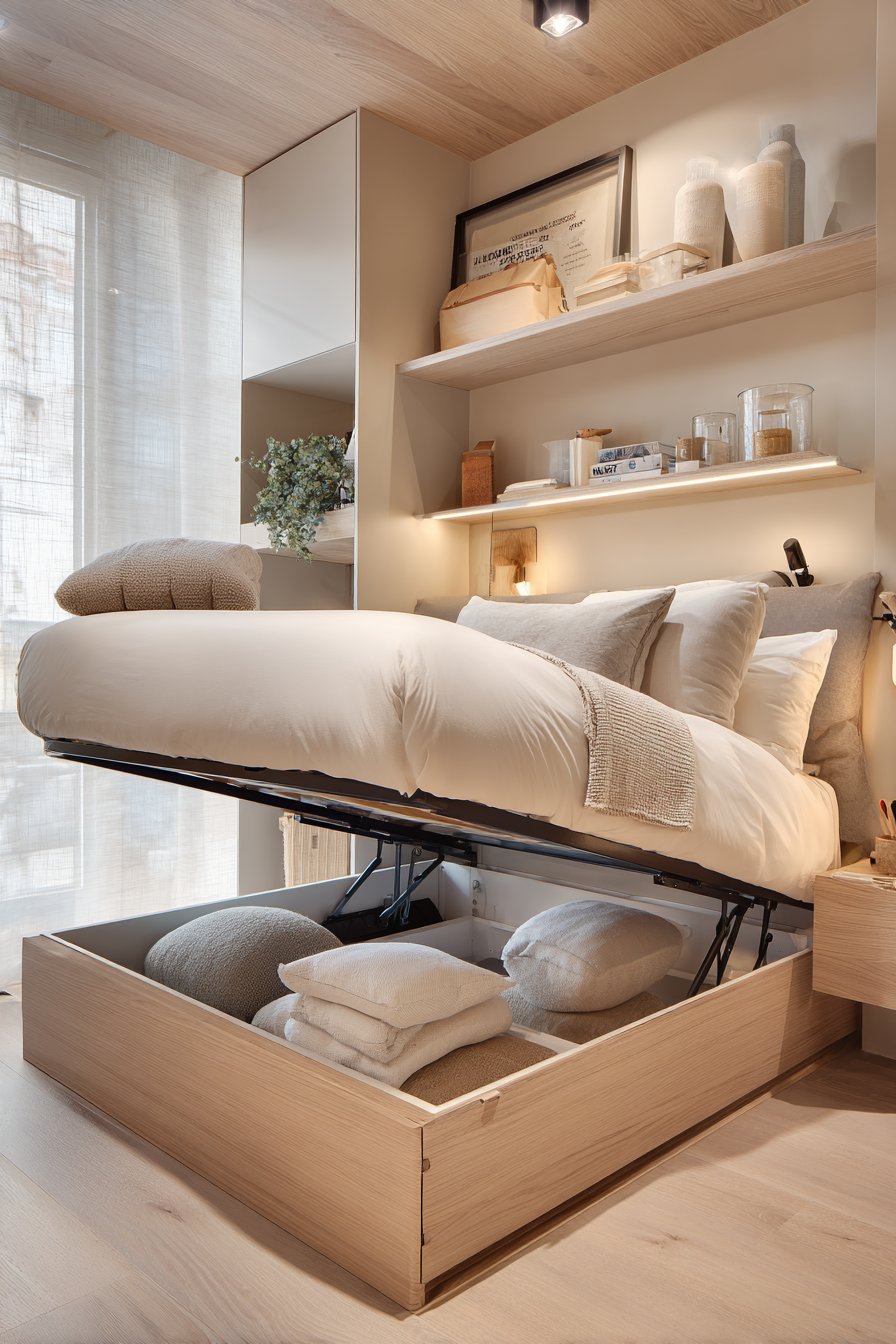
Professional interior photography would capture this innovative storage solution with natural lighting that emphasizes the mechanical functionality while maintaining the bedroom’s inviting character. The space-saving benefits are dramatic—all the storage capacity of traditional under-bed drawers without protruding hardware, handles, or tracking systems. The smooth lifting motion and the surprise of substantial hidden storage create an almost magical quality, transforming what appears to be a simple platform bed into a storage powerhouse for tiny bedrooms.
Key Design Tips:
- Ensure the hydraulic mechanism is high-quality with safety stops to prevent accidental lowering
- Keep the storage area organized with bins or dividers to prevent items from shifting
- Avoid storing items that need frequent access in hydraulic bed storage
- Make the bed completely before lowering to protect bedding from storage area dust
- Test the lifting mechanism periodically to ensure smooth operation
- Consider the added height of hydraulic beds when calculating ceiling clearance
- Choose storage containers that maximize the available height without interfering with the lowering bed
19. Mirrored Wardrobe for Visual Expansion
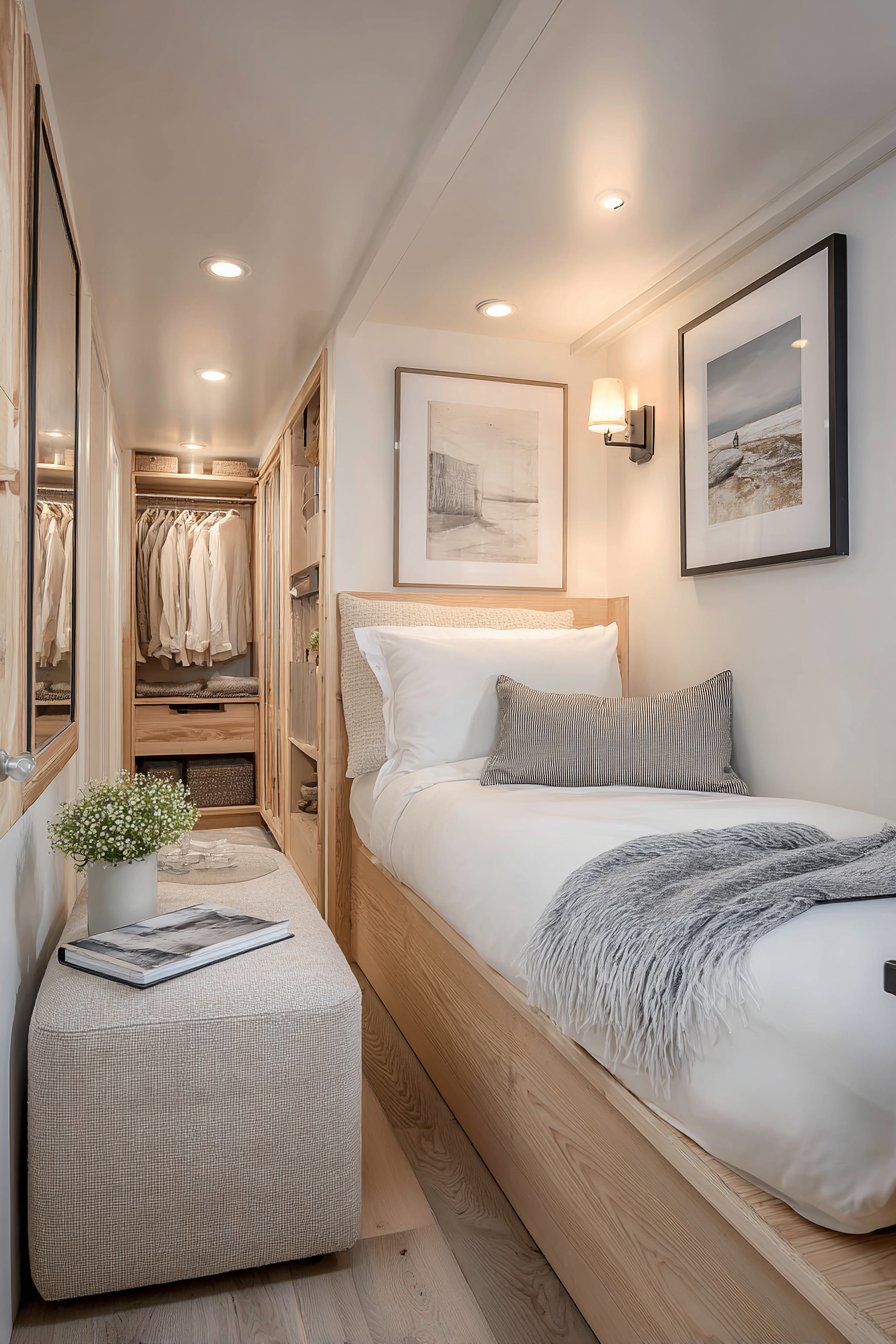
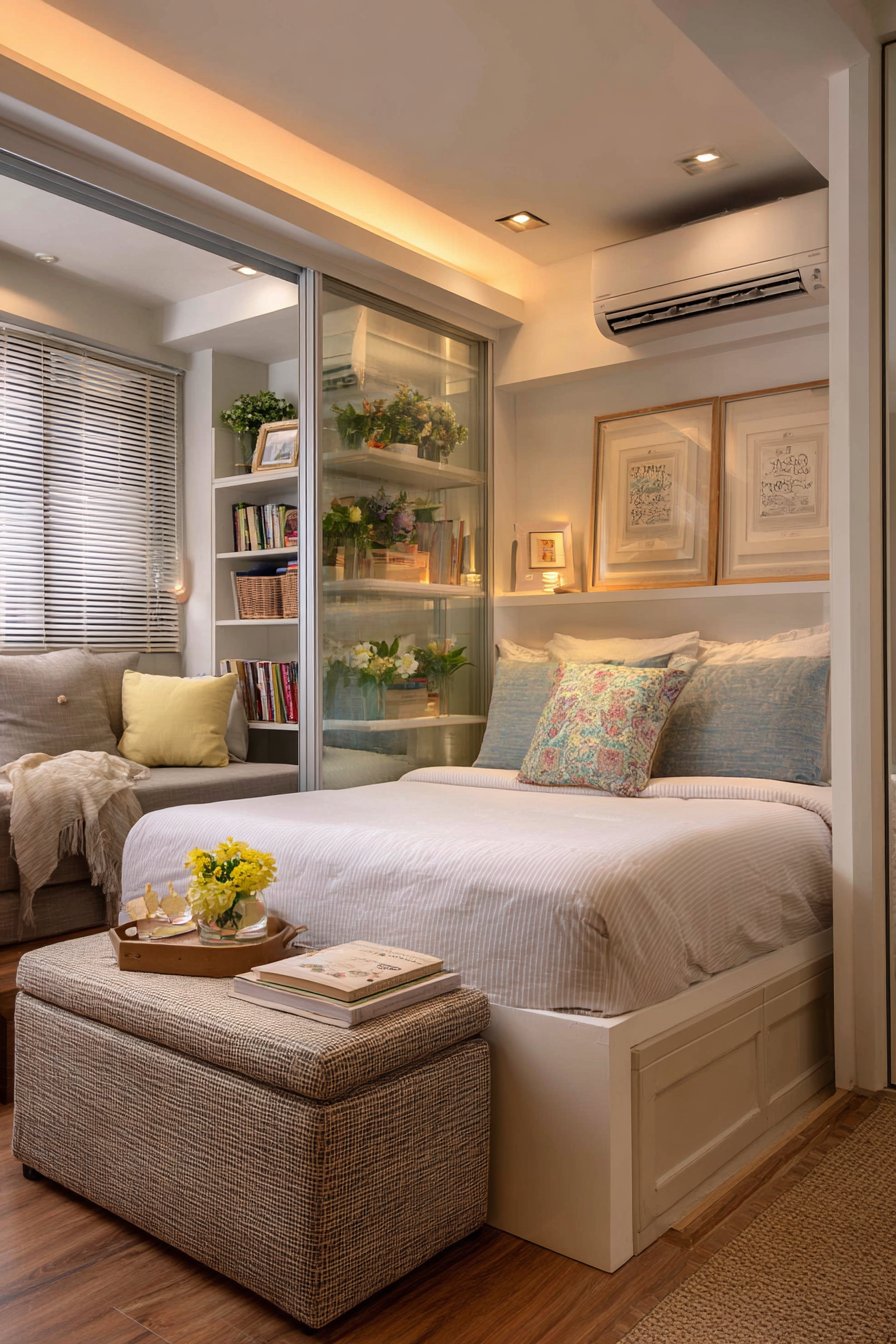
Strategic use of mirrors ranks among the most effective tiny room ideas for bedrooms, and mirrored wardrobe doors serve double duty by providing essential storage while visually doubling the apparent room size. The mirrors reflect natural light from windows and artificial lighting, dramatically brightening the space while creating the illusion of depth. The wardrobe itself features thoughtfully organized interior space with hanging rods, shelving, and possibly drawers that maximize vertical storage capacity. When the mirrored doors are closed, the storage disappears from view while the mirrors continue their space-enhancing work.
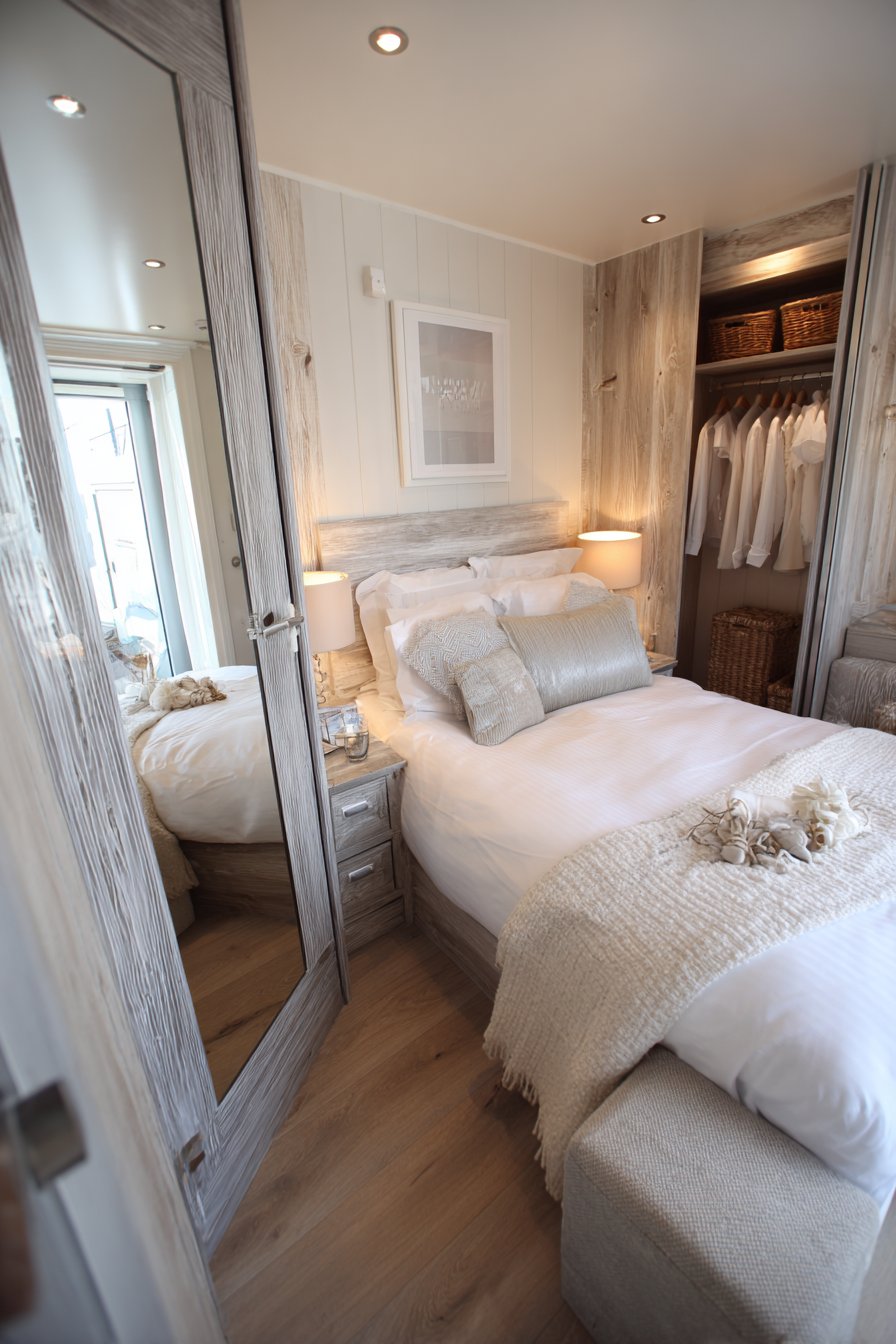
The wardrobe interior organization might include a combination of hanging space for dresses and coats, double rods for shirts and pants, shelving for folded items, and specialized storage for shoes and accessories. This comprehensive organization consolidates most bedroom storage into a single furniture piece, eliminating the need for separate dressers, shoe racks, or storage bins. A compact bed with a storage ottoman at the foot provides additional hidden storage for extra linens or out-of-season clothing, demonstrating how multiple storage solutions work together in tiny bedroom design.
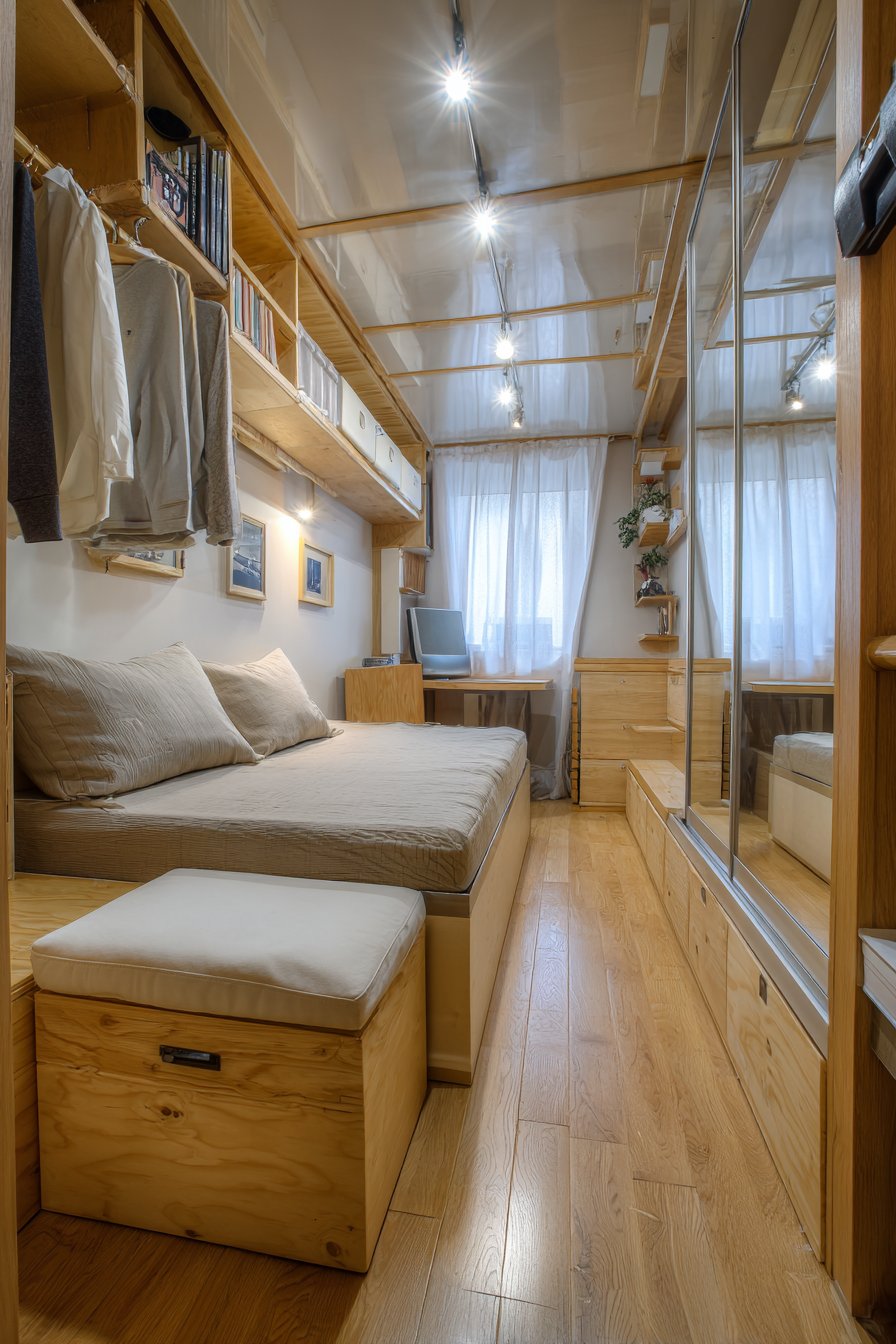
Walls painted in soft white with natural wood flooring create a neutral backdrop that allows the mirrored wardrobe to take center stage. The wide-angle interior photography perspective would capture the reflective surfaces’ impact and the strategic furniture placement in this efficient layout. The mirrors’ reflection of the room creates an infinity effect that makes determining the actual room boundaries difficult, effectively making the space feel nearly twice its actual size—a powerful psychological impact that makes tiny bedrooms feel much more comfortable and less confining.
Key Design Tips:
- Position the wardrobe where mirrors will reflect natural light from windows
- Keep the area in front of mirrors clear to maximize the space-expanding effect
- Clean mirrors regularly to maintain their reflective properties and visual impact
- Organize wardrobe interiors efficiently to maximize storage capacity
- Consider soft-close doors to prevent slamming and noise
- Add interior wardrobe lighting to illuminate contents and make selection easier
- Use the mirrored doors for outfit checking rather than needing a separate full-length mirror
20. Hanging Storage Solutions
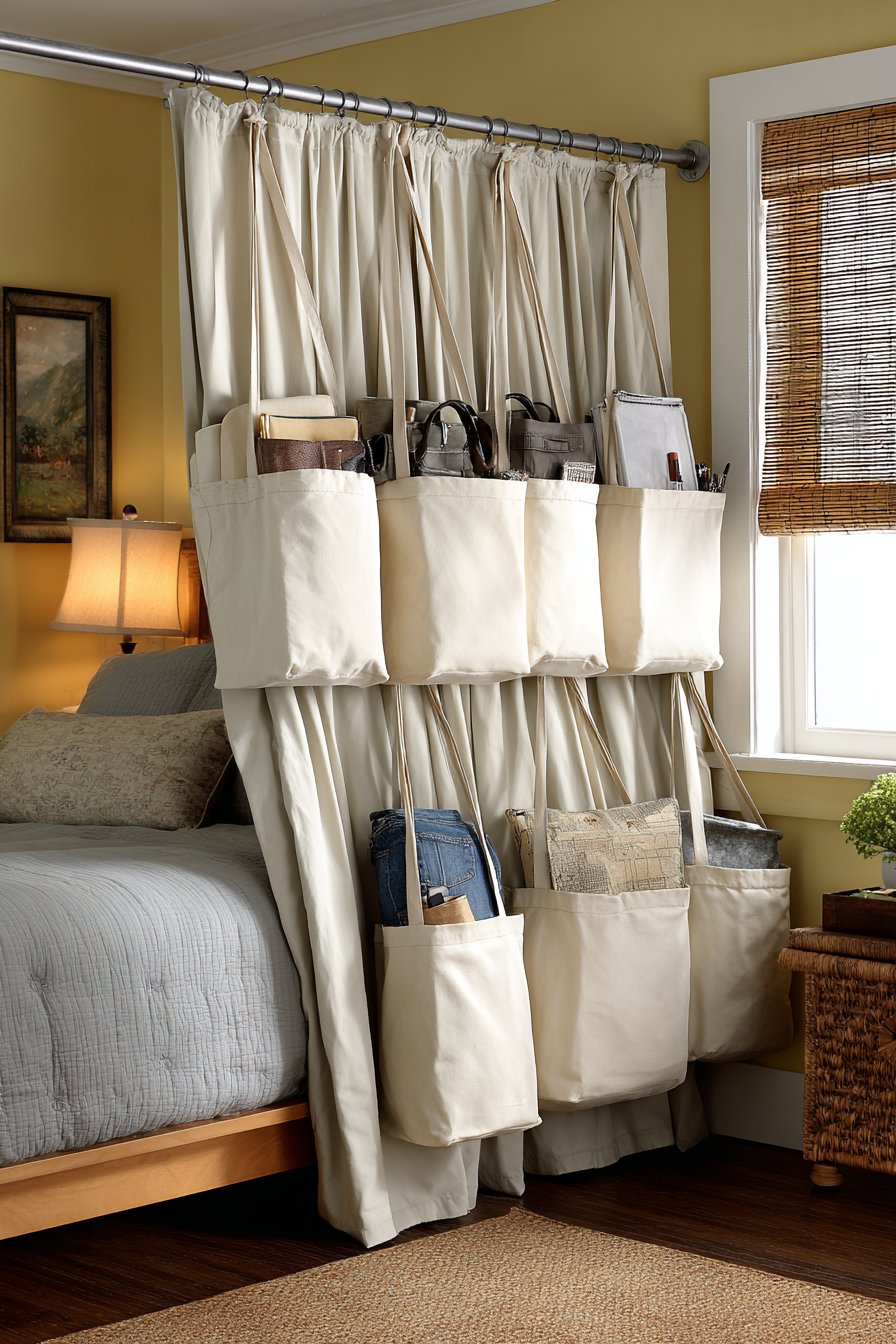
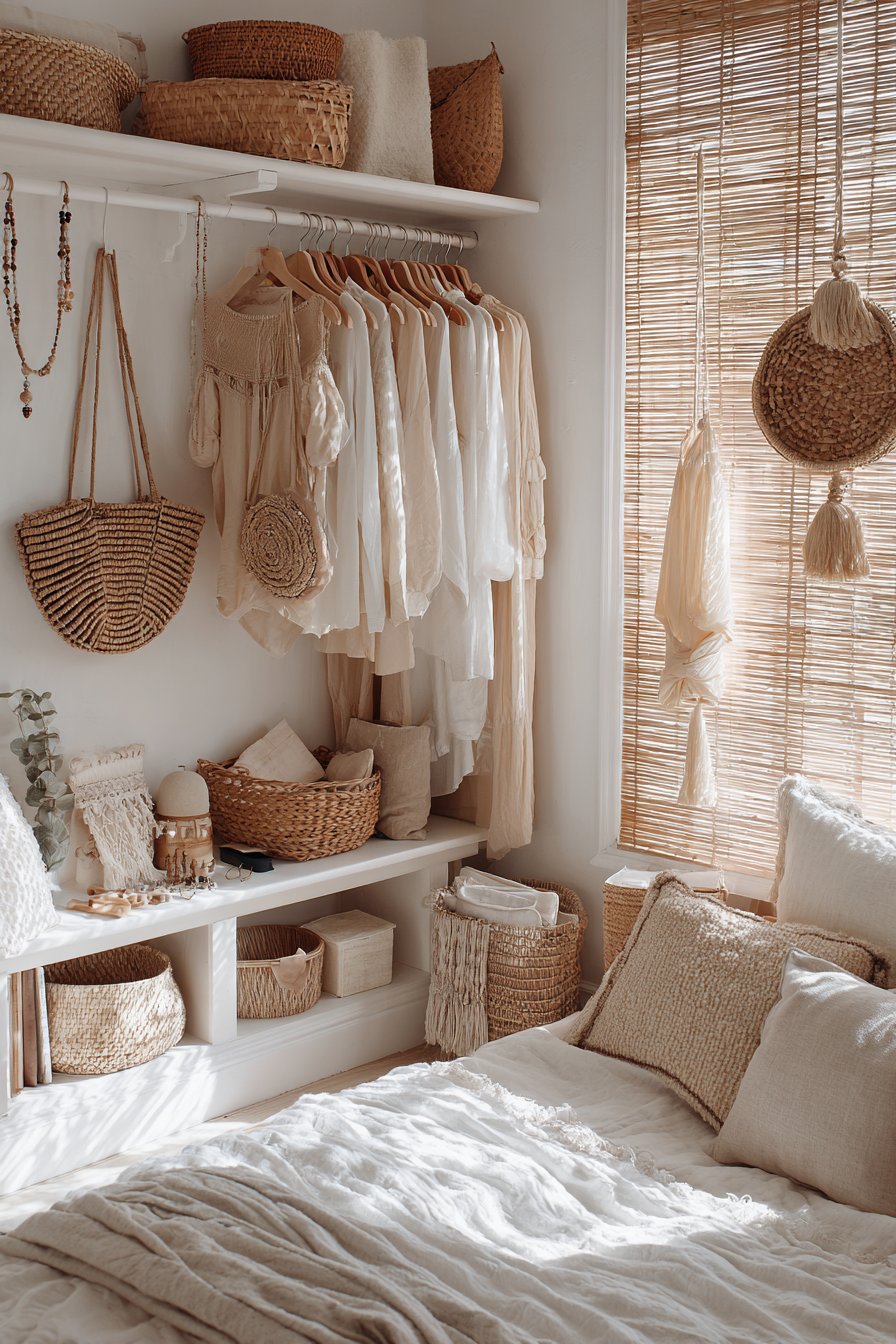
Thinking beyond conventional storage locations offers creative tiny room ideas for bedrooms, and hanging storage solutions maximize overhead space that typically goes unused. These systems feature fabric organizers or rigid bins suspended from ceiling-mounted rods, keeping items accessible without using valuable floor or wall space. The hanging organizers in neutral canvas materials maintain visual continuity with the room’s aesthetic while providing storage for clothing, accessories, shoes, and small items. The storage hangs at heights that keep items easily accessible while ensuring head clearance for walking beneath.
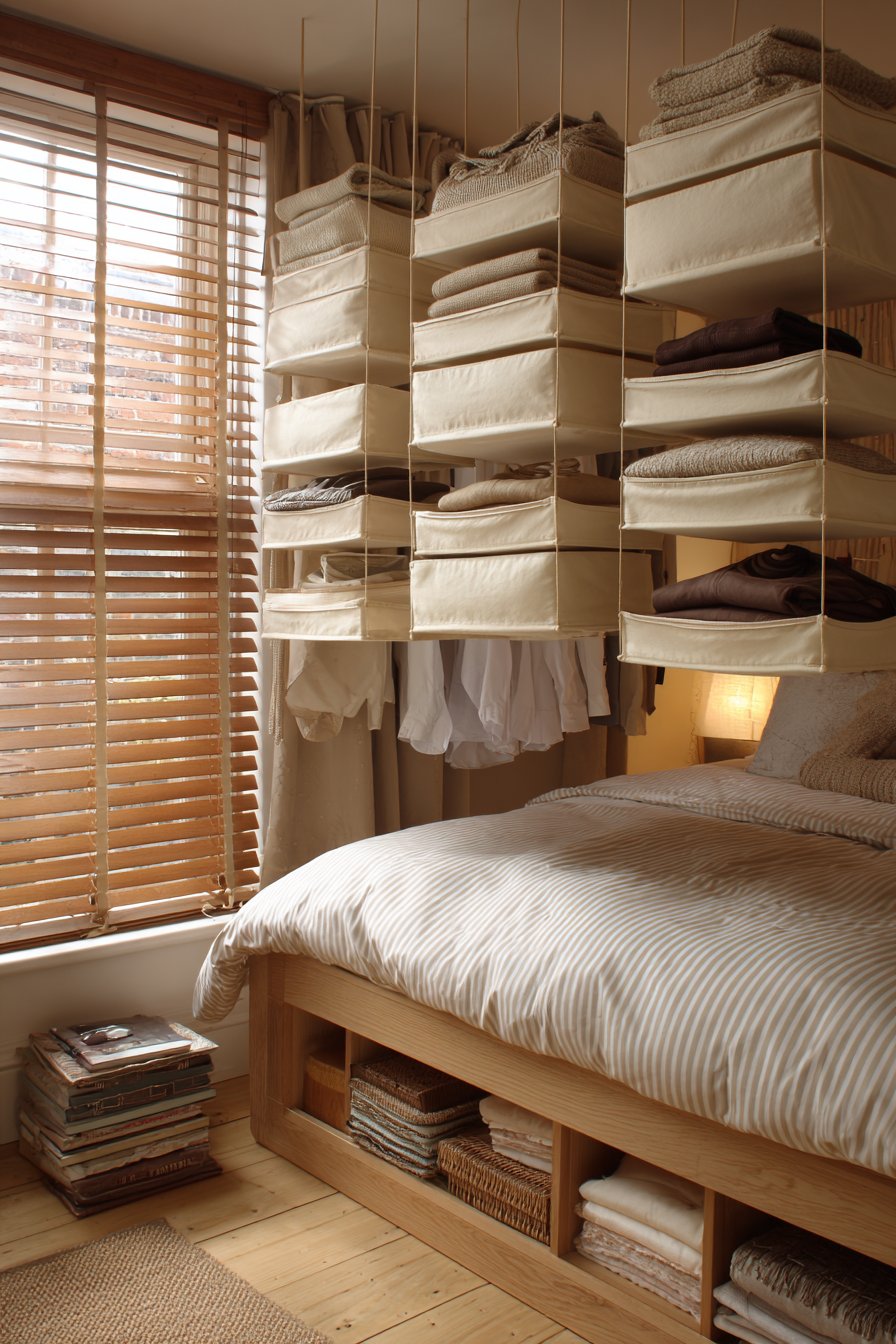
A simple bed frame with minimal design occupies the floor space below the hanging storage, demonstrating how vertical layering creates storage capacity in three-dimensional space rather than just horizontal surface area. Natural light filtering through bamboo blinds creates striped shadow patterns that add visual interest to the otherwise simple room. The bamboo blinds’ warm tones complement the canvas organizers, creating a cohesive natural material palette that feels organic and calming.
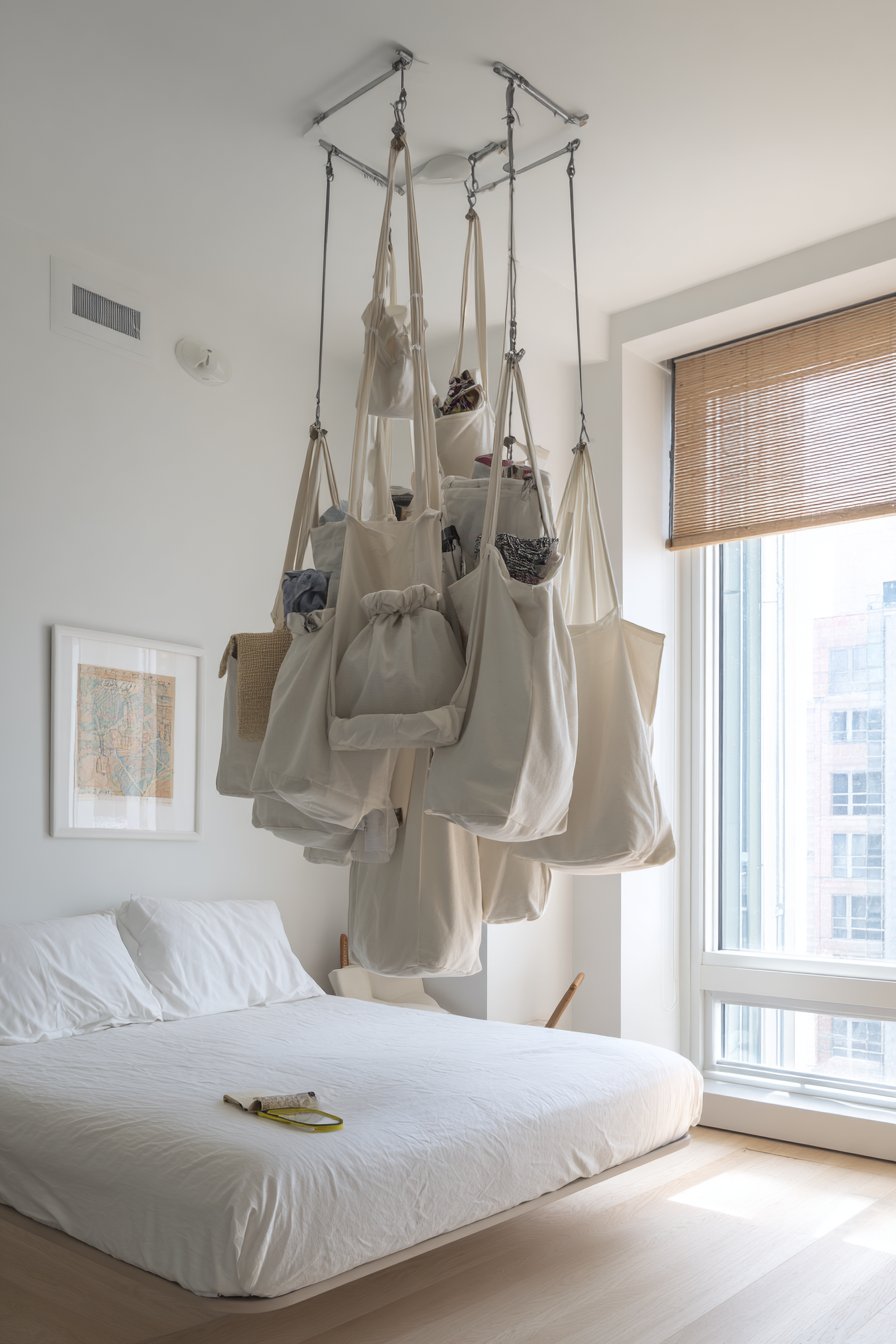
The hanging storage approach works particularly well for seasonal wardrobe rotation—winter items can hang overhead during summer months when they’re not needed, then swap positions when seasons change. This accessibility combined with the out-of-the-way positioning makes hanging storage ideal for tiny bedrooms where closet space is limited or nonexistent. The uncluttered floor space created by this overhead storage approach makes the room feel open and breathable despite substantial storage capacity, proving that creative thinking about spatial dimensions yields powerful results in compact rooms.
Key Design Tips:
- Install ceiling-mounted rods securely into joists or with appropriate anchors
- Ensure adequate head clearance beneath hanging storage, typically at least 6.5 feet
- Use clear or labeled organizers for easy identification of contents
- Limit the weight of hanging storage to prevent strain on mounting systems
- Position hanging storage where it won’t interfere with ceiling fans or light fixtures
- Rotate items seasonally to keep current-use belongings in more accessible locations
- Consider the visual impact of hanging storage and balance it with negative space
21. Murphy Desk for Workspace Transformation
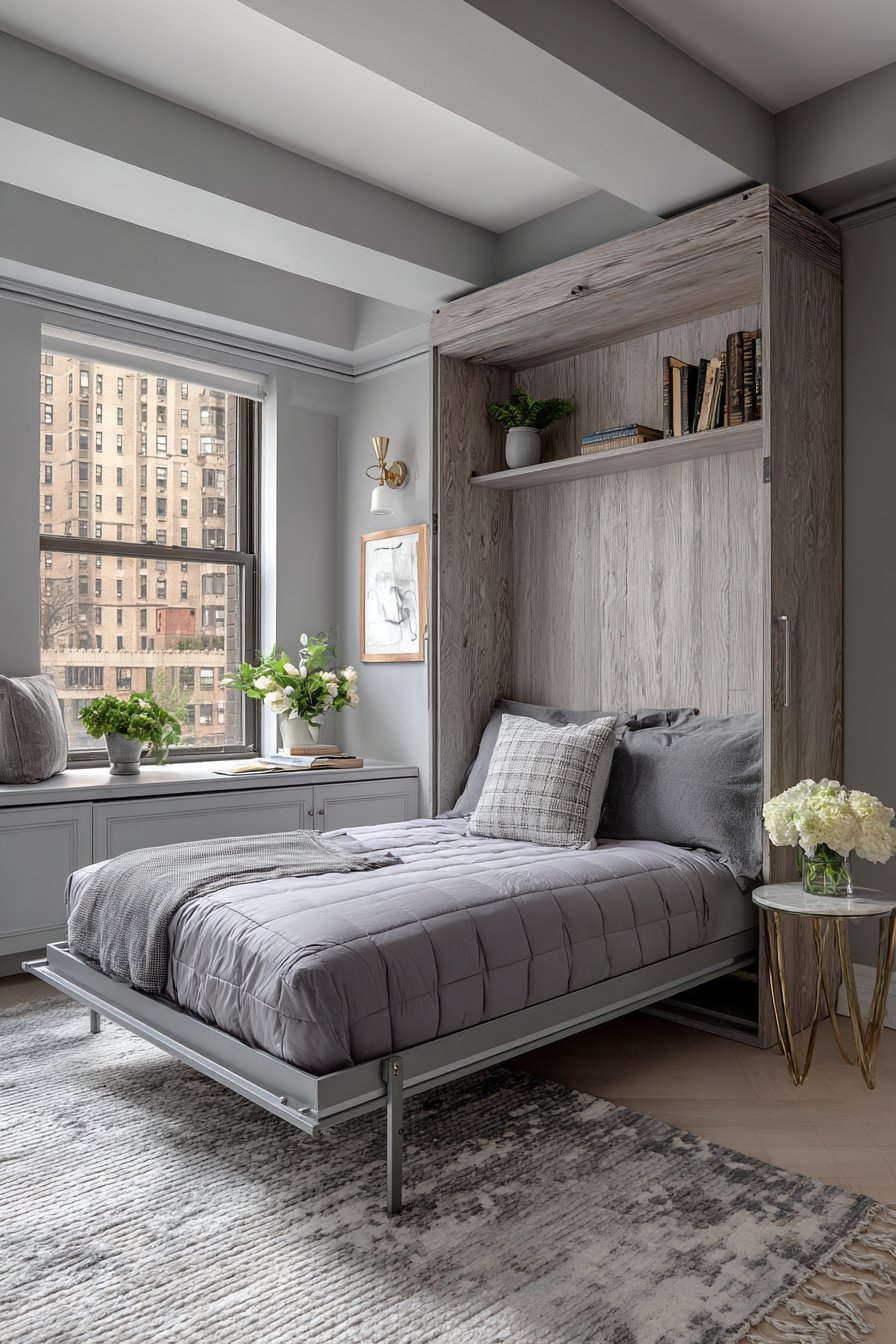
The evolution of murphy-style furniture extends beyond beds to include tiny room ideas for bedrooms that incorporate workspace flexibility. Wall-mounted murphy desks fold down when needed for work or study, featuring integrated cord management systems and small shelving that remains accessible regardless of whether the desk is deployed. When closed, the desk appears as a decorative wall panel with perhaps a small piece of artwork or a mirror, completely concealing its functional purpose. This transformation allows bedrooms to serve dual purposes without visual clutter or spatial compromise.
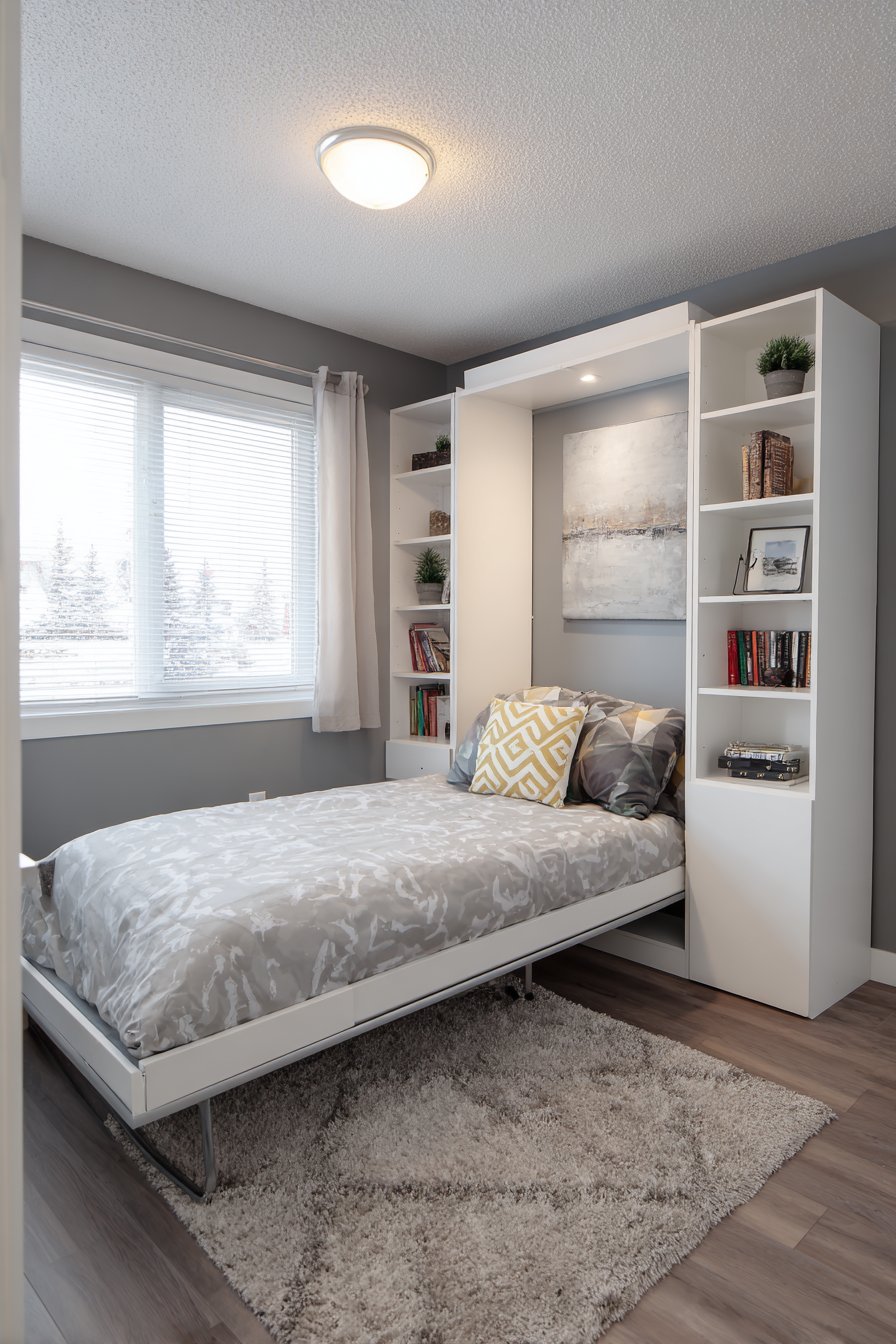
The murphy desk’s surrounding area includes a twin bed with a simple metal frame positioned perpendicular to the desk wall, maximizing the room’s flexibility for different activities. Walls painted in light grey with white trim create clean, crisp lines that enhance the room’s modern, efficient aesthetic. A small area rug defines the sleeping zone, providing visual separation between the sleep and work areas even in the compact space. The rug also adds softness underfoot and helps absorb sound in rooms with hard-surface flooring.
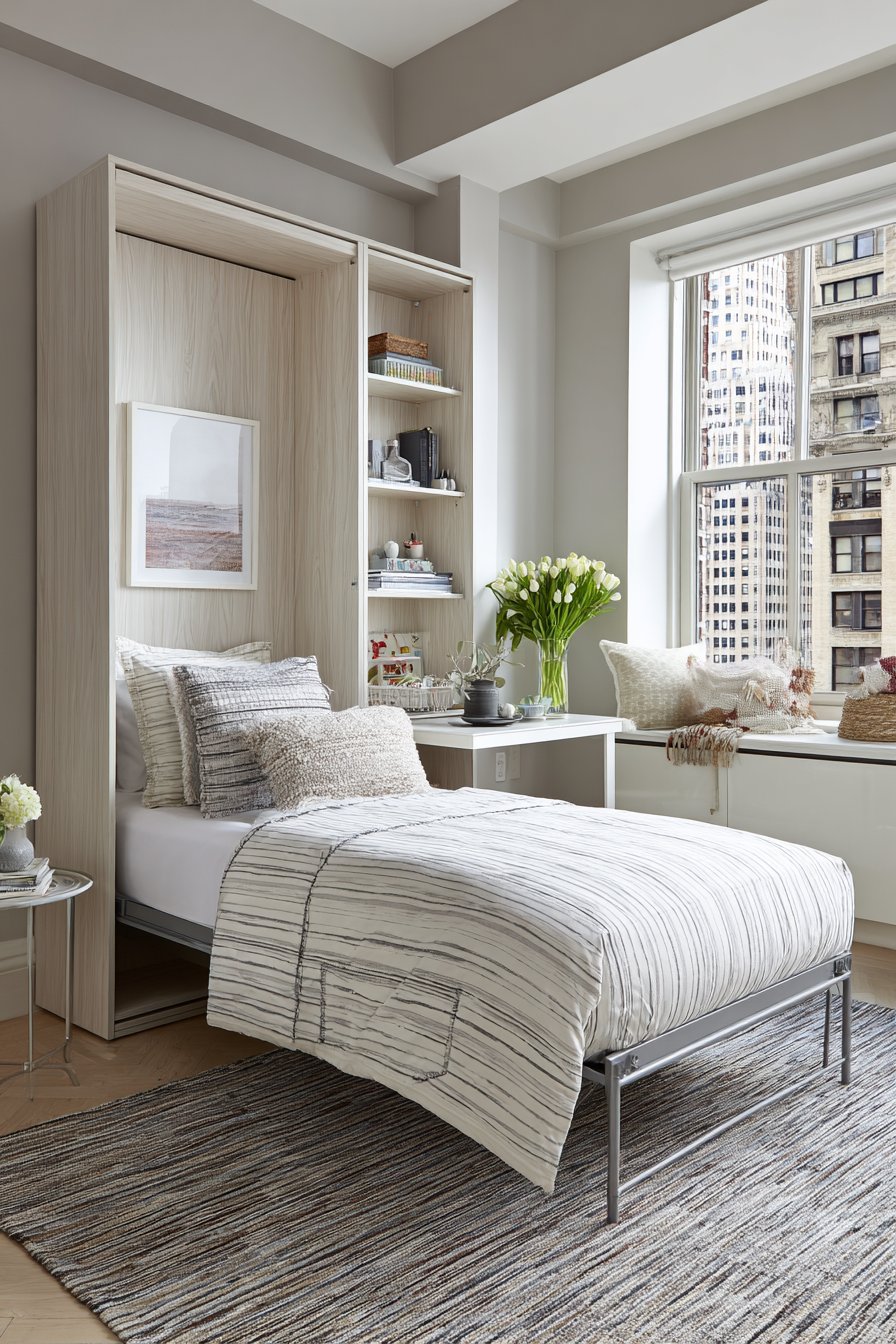
Wide-angle interior design photography with balanced exposure would showcase the transformable workspace and efficient multi-functional design suitable for tiny bedroom spaces. The murphy desk solution proves particularly valuable for studio apartments, guest rooms that double as home offices, or children’s bedrooms where homework space is essential but shouldn’t dominate the room when not in use. The ability to completely hide the workspace when it’s not needed prevents work from mentally encroaching on rest time, an important boundary for maintaining healthy sleep habits in multipurpose spaces.
Key Design Tips:
- Choose a murphy desk with built-in cable management for charging devices and powering laptops
- Ensure the wall can support both the desk weight and the load it will bear when in use
- Add a fold-down leg or support that provides stability when the desk is deployed
- Include small storage cubbies in the surrounding wall panel for office supplies
- Position the desk where natural light will illuminate the work surface during daytime hours
- Consider adding a bulletin board or whiteboard to the closed panel for notes and reminders
- Keep a lightweight chair nearby that can be stored under the bed or in a closet when not needed
Why These Tiny Room Ideas for Bedrooms Represent the Best Solutions
These twenty-one tiny room ideas for bedrooms showcase the most effective strategies for maximizing small spaces while maintaining style, comfort, and functionality. Each concept addresses the fundamental challenge of compact living: how to accommodate all necessary functions within limited square footage without creating a cramped, cluttered environment. The solutions range from multifunctional furniture pieces to creative storage systems, vertical space utilization, and transformable elements that allow rooms to serve multiple purposes throughout the day.
The effectiveness of these tiny bedroom ideas lies in their practical application of core design principles. Vertical space utilization appears consistently throughout the solutions, recognizing that small rooms often have adequate ceiling height even when floor space is limited. From floor-to-ceiling storage walls to loft beds with functional areas below, these designs make efficient use of the three-dimensional space rather than thinking only in terms of floor area. Multifunctional furniture represents another recurring theme, with pieces like murphy beds, captain’s beds with storage, and daybeds with trundles serving dual purposes that eliminate the need for multiple furniture items.
Visual expansion techniques incorporated throughout these ideas help tiny bedrooms feel more spacious than their actual dimensions. Mirrored surfaces, strategic lighting, light color palettes, and minimalist approaches all contribute to creating psychological spaciousness even in physically compact rooms. These visual tricks work alongside practical storage solutions to address both the functional and emotional challenges of tiny bedroom design. The transformable furniture concepts—murphy beds, folding desks, and lift-up storage—allow rooms to change function throughout the day, supporting the reality that tiny living spaces must often serve multiple purposes.
The emphasis on realistic, achievable design sets these tiny room ideas apart from purely aspirational concepts that wouldn’t function in actual homes. Each solution considers practical factors like accessibility, daily routines, and the reality of living in compact spaces. The storage-focused approaches recognize that inadequate storage is often the primary challenge in tiny bedrooms, leading to visible clutter that makes spaces feel even smaller. From under-bed drawers to overhead cabinets, these ideas systematically address storage needs without sacrificing style or comfort.
Material choices and color palettes throughout these concepts favor light, neutral tones and natural materials that create visual calm and reflect light rather than absorbing it. The consistent use of whites, grays, beiges, and light wood tones demonstrates how cohesive color schemes make small spaces feel larger and more pulled together. These color choices also provide flexibility for personalization through accessories, bedding, and artwork without overwhelming the space.
The integration of proper lighting appears as a crucial element in tiny bedroom success. Natural light maximization through strategic window treatments, supplemented by layered artificial lighting including ambient, task, and accent lighting, ensures these spaces feel bright and welcoming rather than dark and cave-like. Wall-mounted and ceiling-mounted fixtures eliminate the need for space-consuming table and floor lamps, while providing essential illumination.
Several concepts demonstrate creative use of architectural features, transforming potential liabilities like under-stair spaces or small windows into assets through thoughtful design. This approach of working with rather than against a room’s characteristics exemplifies sophisticated spatial problem-solving. The modular and flexible solutions recognize that needs change over time, allowing tiny bedrooms to evolve with their occupants rather than requiring complete redesigns when circumstances shift.
The minimalist philosophy underlying many of these ideas emphasizes that successful tiny bedroom design often involves curation and editing rather than clever storage of excessive belongings. This approach acknowledges that sometimes the best solution for tiny spaces is reducing what needs to be accommodated rather than finding increasingly complex ways to store everything. The psychological benefits of uncluttered spaces—reduced stress, better sleep quality, and easier maintenance—justify this edited approach beyond mere spatial considerations.
Ergonomic considerations appear throughout these designs, ensuring that space-saving solutions don’t sacrifice comfort or functionality. Adequate clearance for movement, comfortable bed heights, accessible storage, and proper lighting demonstrate that efficiency need not mean discomfort. The best tiny bedroom ideas balance spatial optimization with livability, creating spaces that feel good to inhabit rather than merely technically functional.
The aesthetic coherence visible across these concepts proves that small spaces require no design compromise. Each idea maintains visual appeal while maximizing functionality, demonstrating that tiny bedrooms can be just as stylish as larger spaces—sometimes more so, as the careful curation required by spatial limitations often results in more intentional, cohesive design. The emphasis on quality over quantity in furnishings and decor creates spaces that feel thoughtfully designed rather than merely furnished.
These tiny room ideas for bedrooms represent best-in-class solutions because they address the complete spectrum of small-space challenges: physical storage needs, psychological comfort, aesthetic appeal, functional flexibility, and long-term adaptability. They recognize that successful tiny bedroom design requires holistic thinking that considers how people actually live in spaces, not just how to fit furniture into floor plans. The emphasis on practical implementation, realistic styling, and achievable results makes these concepts valuable guides for anyone facing the challenge of creating a comfortable, functional bedroom within limited square footage.
Conclusion
Creating a beautiful, functional bedroom in a tiny space requires creative thinking, strategic planning, and willingness to embrace innovative solutions. These twenty-one tiny room ideas for bedrooms demonstrate that spatial limitations need not mean design limitations. From murphy beds and loft configurations to vertical storage systems and multifunctional furniture pieces, the possibilities for optimizing small bedrooms are virtually limitless. The key lies in carefully assessing your specific needs, space constraints, and lifestyle requirements, then selecting solutions that address your unique situation.
The most successful tiny bedrooms combine multiple strategies rather than relying on single solutions. A platform bed with storage drawers becomes even more effective when paired with floating shelves and wall-mounted lighting. A murphy bed’s space-saving benefits multiply when surrounding cabinetry provides additional storage. By layering various space-optimization techniques, you can create bedrooms that feel spacious, organized, and comfortable despite modest square footage.
Remember that tiny bedroom design is as much about what you choose not to include as what you do incorporate. Resisting the temptation to over-furnish or over-decorate allows the space to breathe, creating visual calm that makes rooms feel larger. Embrace minimalism not as deprivation but as intentional curation, keeping only items that truly serve functional or emotional purposes. This disciplined approach yields spaces that support rest, relaxation, and daily routines without the visual chaos that cluttered small spaces create.
We encourage you to experiment with these tiny room ideas in your own bedroom, adapting concepts to fit your specific space, style preferences, and budget. Start with the solutions that address your most pressing challenges—whether that’s inadequate storage, lack of workspace, or simply the feeling of being cramped—and build from there. Remember that successful tiny bedroom design evolves over time as you discover what works best for your daily routines and living patterns. With creativity, planning, and the innovative solutions presented here, your tiny bedroom can become a comfortable, stylish sanctuary that proves size truly doesn’t matter when design is done right.
