
Creating a welcoming and functional spare bathroom is an art that balances practicality with aesthetic appeal. Whether you’re designing a powder room for guests, updating a neglected half-bath, or maximizing a compact ensuite, the spare bathroom presents unique opportunities to showcase your design sensibility without the constraints of daily family use. These spaces allow for bolder choices, more experimental styling, and the kind of thoughtful details that leave lasting impressions on visitors while adding significant value to your home.
The beauty of designing a spare bathroom lies in its versatility. Unlike primary bathrooms that must accommodate the routines of multiple family members, spare bathrooms can embrace distinctive personalities—from serene spa-like retreats to bold statement spaces that reflect your most adventurous design impulses. These rooms offer the perfect canvas for exploring trending styles, testing new color palettes, or incorporating luxurious touches that might feel too impractical for everyday spaces. The key is creating an environment that feels both special and intuitive, where guests immediately understand the space and feel genuinely comfortable.
In this comprehensive guide, we’ll explore twenty-three exceptional spare bathroom ideas that span the full spectrum of design possibilities. From minimalist Scandinavian simplicity to vintage glamour, from accessible universal design to nature-inspired biophilic concepts, each approach offers unique solutions for common challenges like limited square footage, awkward layouts, and budget constraints. Whether you’re working with a spacious guest suite or a tiny powder room tucked under the stairs, you’ll discover inspiring concepts, practical implementation strategies, and expert tips to transform your spare bathroom into a space that delights, functions flawlessly, and reflects your refined taste.
1. Spa-Inspired Compact Guest Bathroom
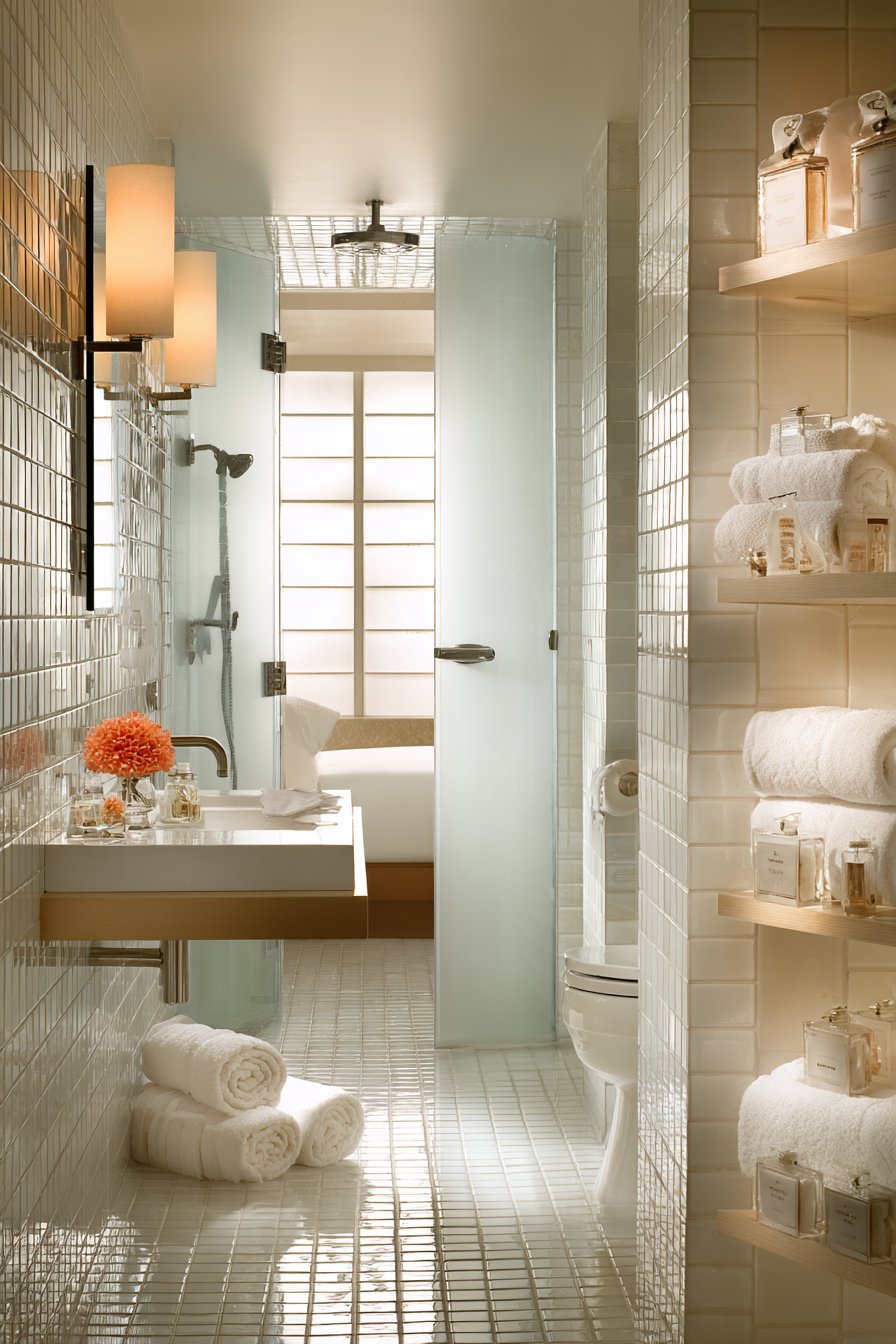
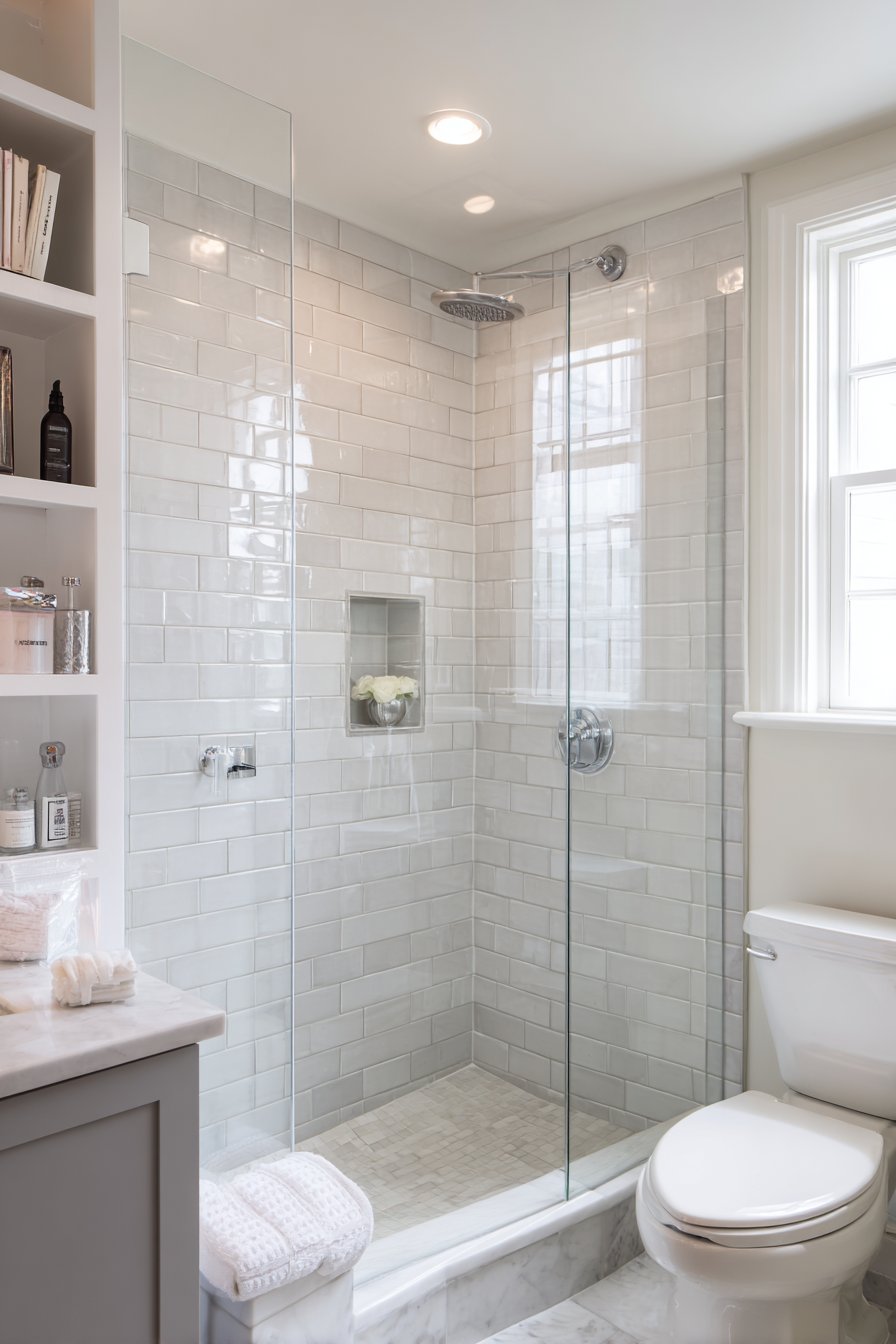
The ultimate spare bathroom experience begins with thoughtful consideration of how guests will use and feel in the space. This spa-inspired design showcases how even compact bathrooms can deliver a luxurious, resort-quality experience through careful material selection and strategic layout planning. At the heart of this concept is a wall-mounted floating vanity that creates visual spaciousness by revealing floor space beneath, while an undermount sink maintains clean, uncluttered counter surfaces perfect for guests to place their belongings.
The glass-enclosed shower becomes a focal point rather than an afterthought, featuring a rainfall showerhead that transforms the daily routine into a moment of indulgence. Open shelving displays neatly rolled towels in hotel-style presentation, combining practicality with visual appeal while ensuring guests never need to search for essentials. The neutral palette of soft whites and warm grays creates a serene foundation that appeals universally, avoiding bold color choices that might date quickly or clash with adjacent spaces.
Lighting plays a crucial role in this design’s success, with natural light streaming through a frosted window providing privacy without sacrificing brightness, while recessed lighting offers ambient illumination that can be adjusted for different times of day. The strategic use of vertical space through wall-mounted fixtures and tall storage solutions maximizes functionality without crowding the floor plan. Every element works in harmony to create what guests consistently describe as their favorite room in the house—a private sanctuary that feels both luxurious and intuitive.
Key Design Tips:
- Install a floating vanity to create the illusion of more floor space and easier cleaning access
- Choose a frameless glass shower enclosure to maintain visual continuity and make the room feel larger
- Use frosted glass for windows to balance natural light with guest privacy
- Display fresh towels on open shelving for both functionality and decorative appeal
- Invest in a rainfall showerhead to elevate the bathing experience
- Select neutral colors that create a calming atmosphere and won’t feel dated
- Incorporate multiple lighting layers including natural, ambient, and task lighting
2. Space-Saving Narrow Guest Bathroom
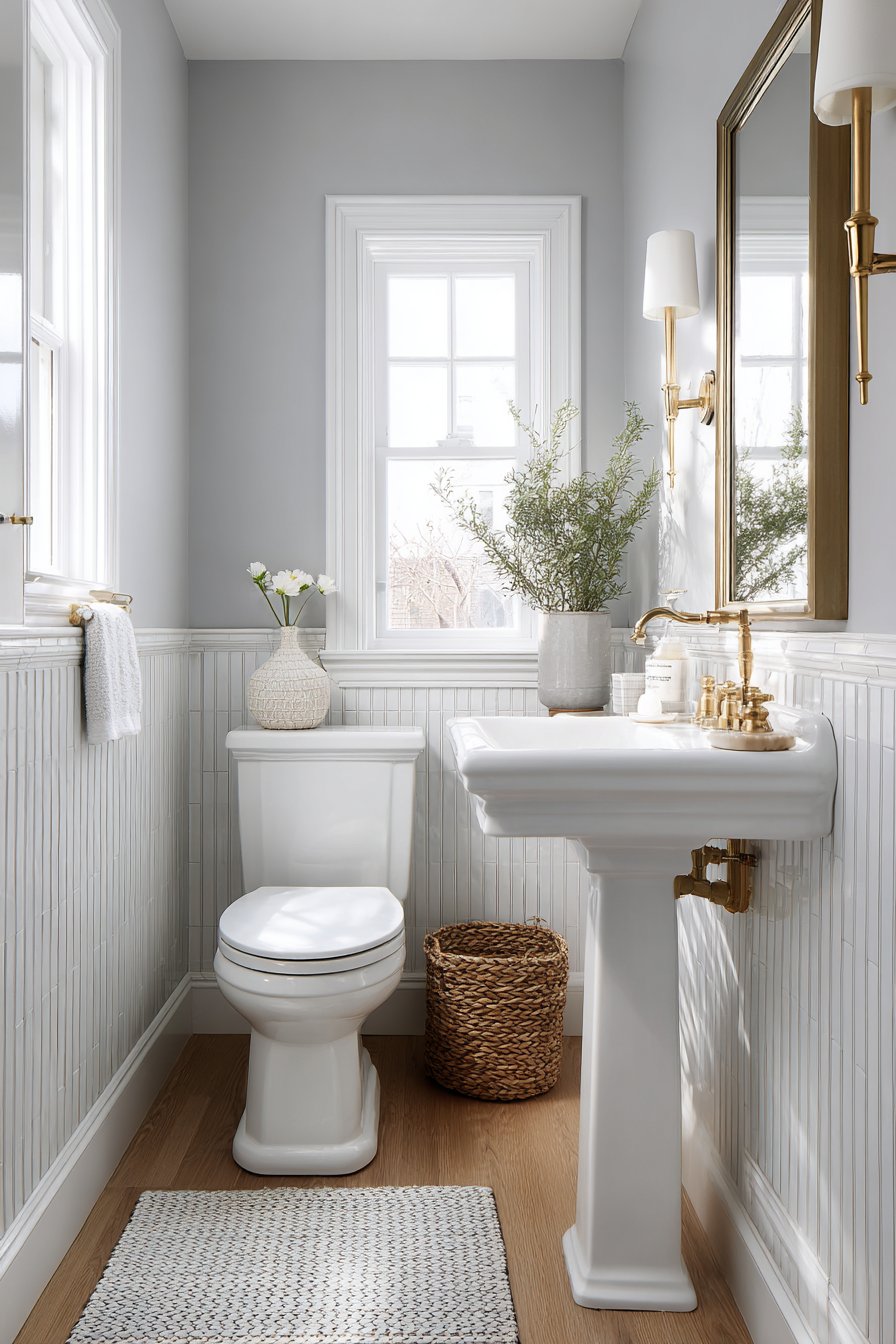
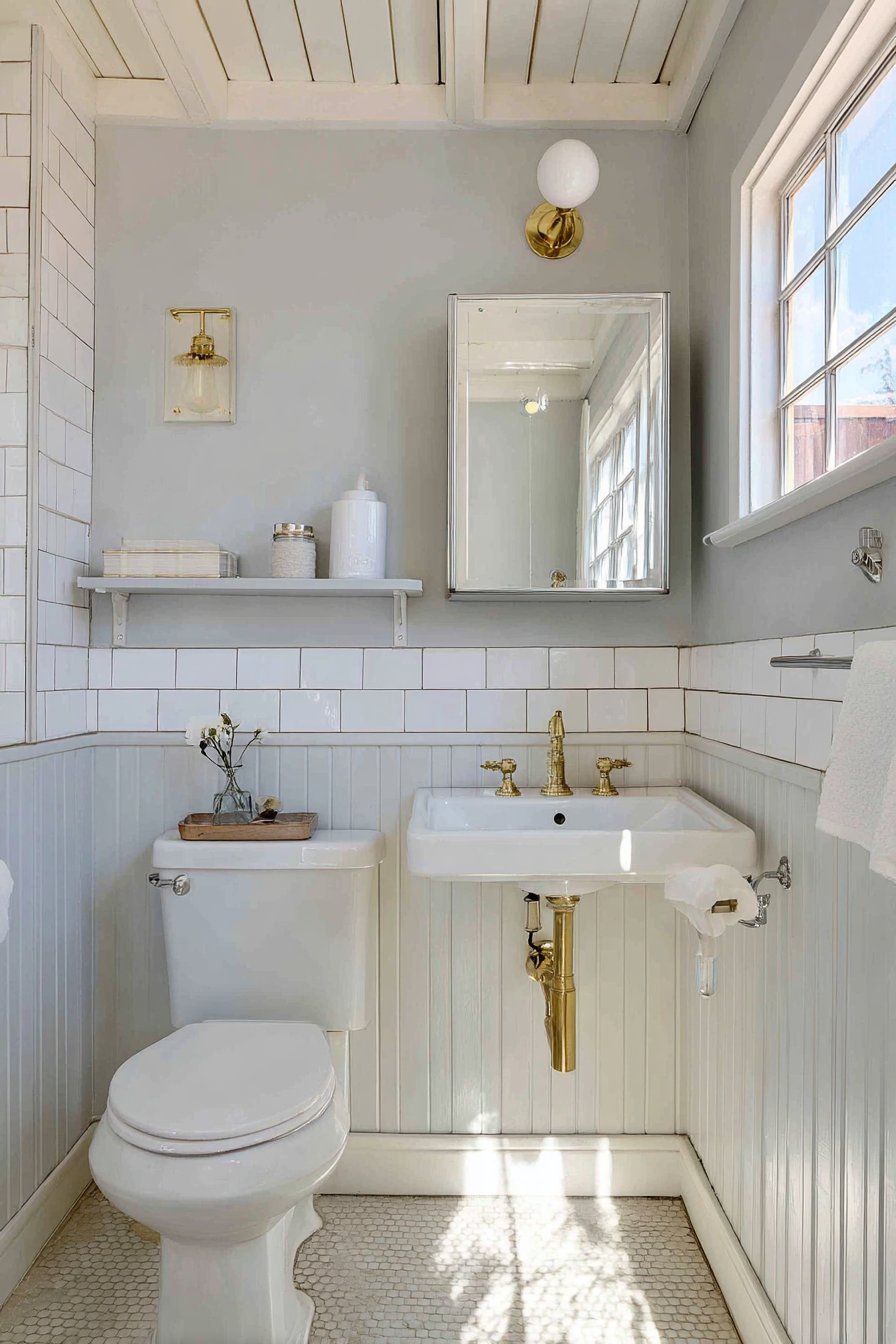
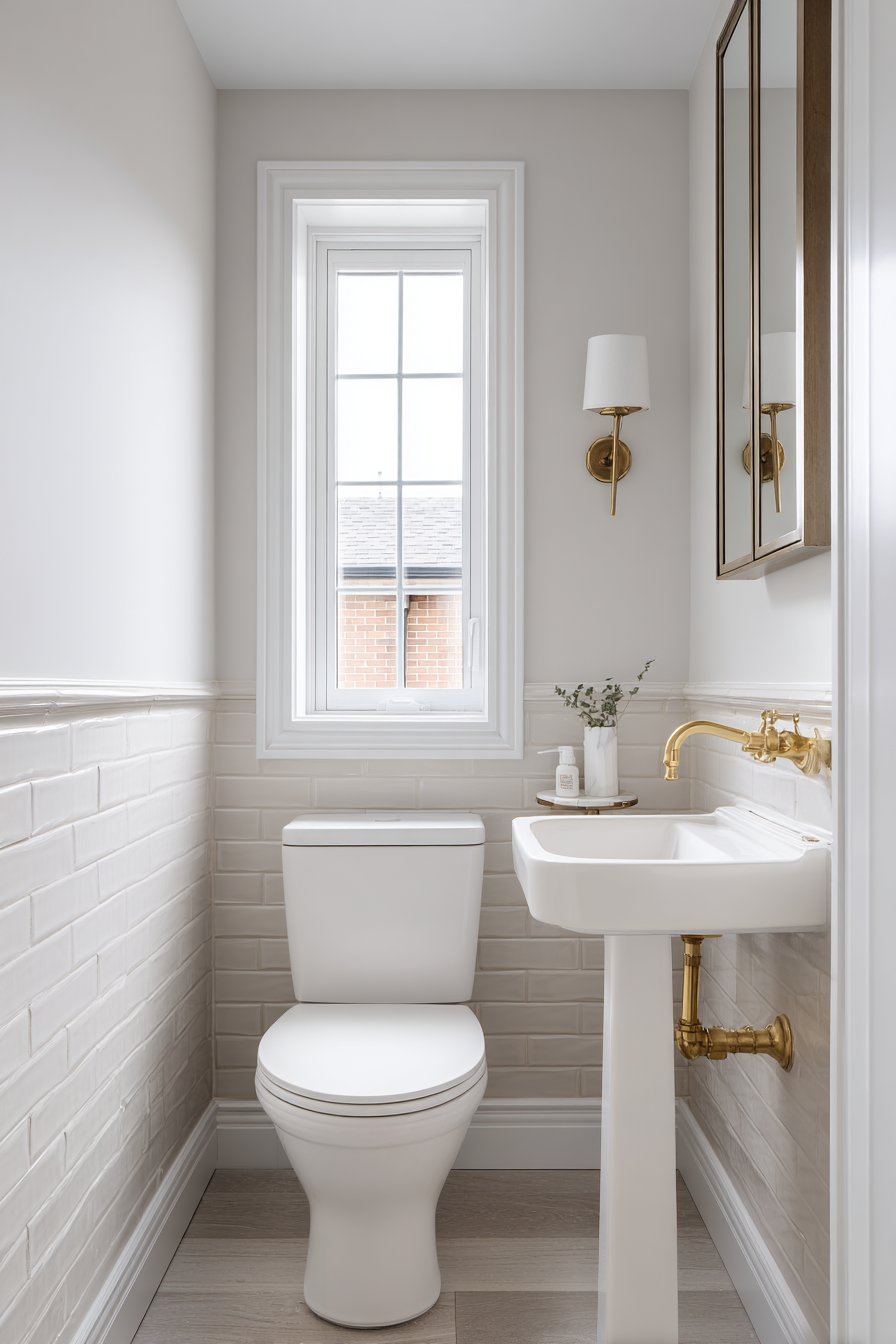
When confronted with a narrow footprint, the key to success lies in embracing the limitations rather than fighting against them. This spare bathroom idea demonstrates how a corridor-like space can become surprisingly functional and stylish through careful fixture selection and vertical design thinking. The wall-mounted toilet represents a game-changing choice that frees up precious floor space while offering easier cleaning access and a distinctly modern aesthetic that elevates the entire room’s perceived value.
The compact pedestal sink continues the space-saving theme without sacrificing style, its classic silhouette adding architectural interest while keeping sightlines open. Light gray walls paired with white subway tile wainscoting create dimension through subtle contrast, with the horizontal tile orientation making narrow walls appear wider. This clever use of visual tricks transforms what could feel like a cramped corridor into a thoughtfully designed boutique bathroom that guests appreciate for its efficiency and charm.
Vintage-inspired brass fixtures inject personality and warmth into the neutral backdrop, proving that even the smallest spaces deserve considered hardware selections that contribute to a cohesive design story. The medicine cabinet with mirrored door serves double duty, reflecting light to brighten the space while providing concealed storage that keeps toiletries organized and countertops clear. Natural daylight from a small window becomes amplified through the reflective surfaces, creating an airy atmosphere that defies the room’s modest dimensions.
Key Design Tips:
- Choose wall-mounted toilets to maximize floor space in tight quarters
- Use pedestal sinks in narrow bathrooms to maintain open sightlines
- Install wainscoting at standard height to create visual interest without overwhelming small spaces
- Select mirrors with integrated storage to combine functionality with light reflection
- Paint walls in light colors to enhance brightness and create spacious feeling
- Use horizontal tile patterns to visually widen narrow walls
- Invest in quality vintage-style fixtures to add character without consuming space
3. Modern Floating Vanity Powder Room
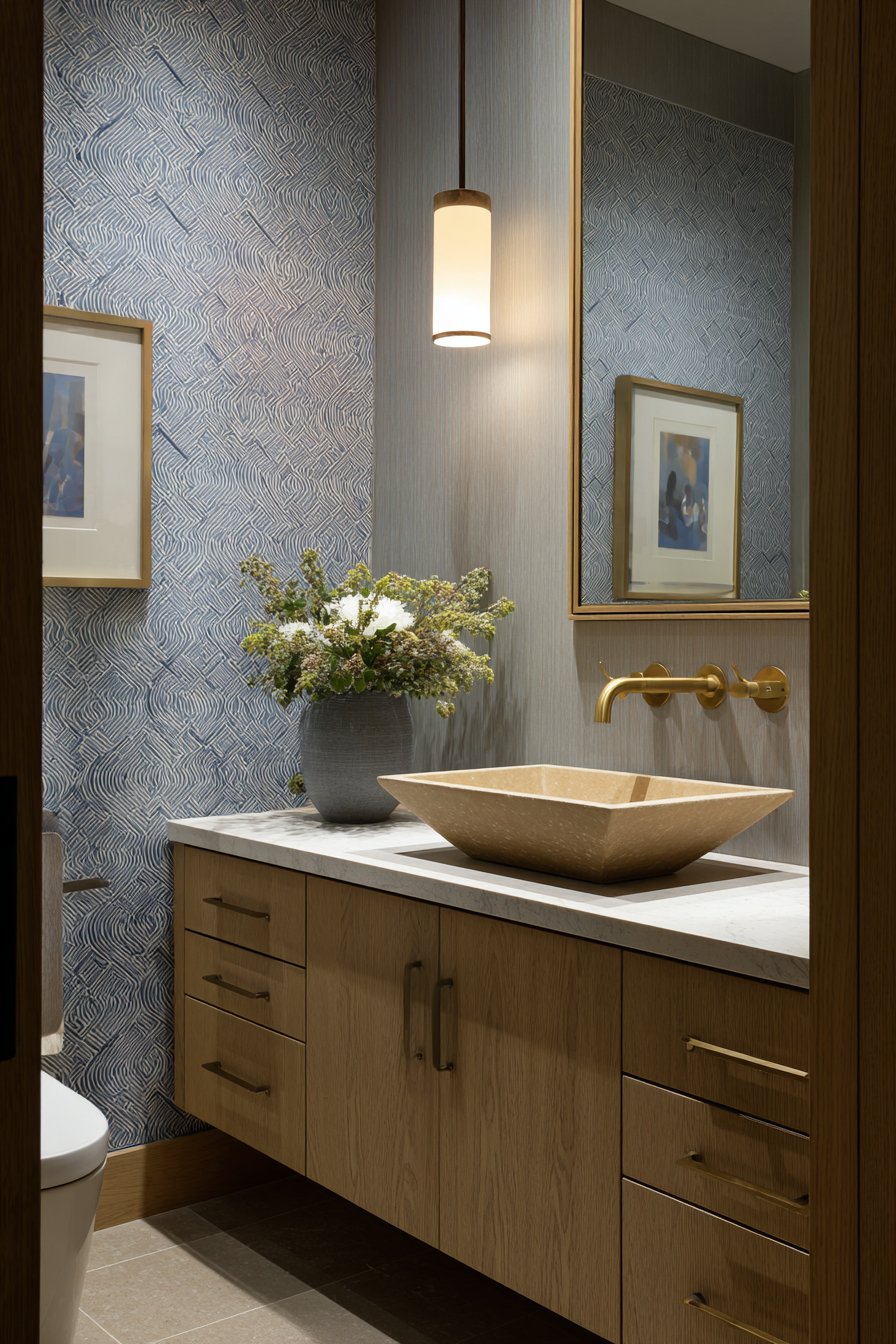
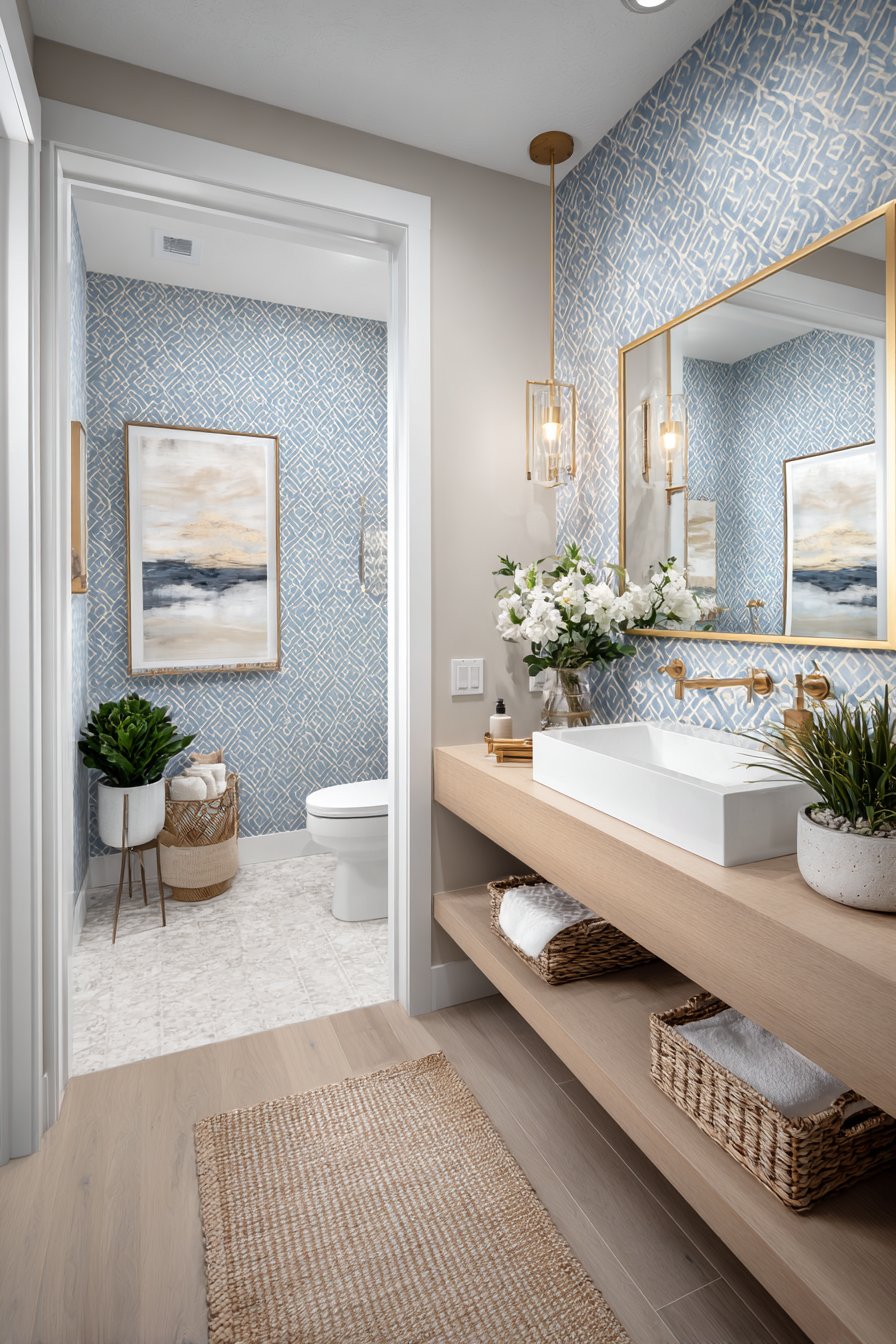
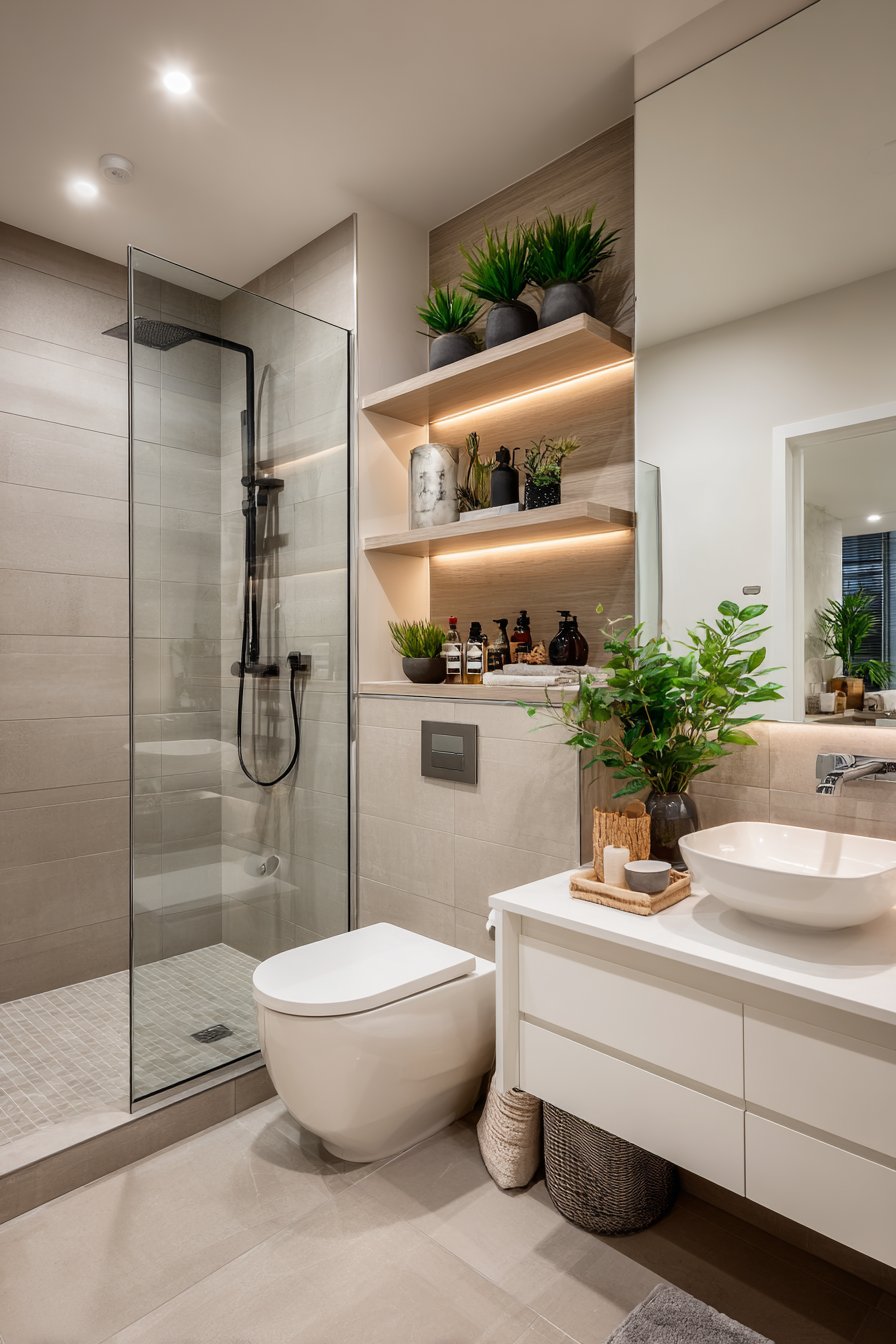
Contemporary design finds its perfect expression in this modern powder room where the floating wooden vanity in light oak becomes the room’s defining feature. The warm natural wood grain provides essential organic texture in an otherwise streamlined space, while the vessel sink perched atop the counter creates sculptural interest that guests immediately notice and admire. This combination of natural materials with modern forms represents the current evolution of contemporary design—less cold minimalism, more approachable sophistication.
The accent wall behind the vanity showcases geometric tiles in a soft blue and white pattern, introducing just enough visual complexity to create a memorable focal point without overwhelming the compact space. These carefully chosen tiles transform what might be a forgettable powder room into a design statement that sparks conversation while maintaining versatility that won’t tire over time. The brushed gold hardware and fixtures thread throughout the space, their warm metallic finish creating cohesion between disparate elements while adding touches of understated luxury.
The wall-mounted faucet represents both aesthetic and practical brilliance, saving precious counter space while creating clean, modern lines that emphasize the vessel sink’s sculptural qualities. Pendant lighting suspended at appropriate height provides task illumination while serving as jewelry for the room, its form and finish carefully selected to complement the gold hardware. Every element in this space works together to create a powder room that feels current, sophisticated, and welcoming—exactly what spare bathrooms should achieve.
Key Design Tips:
- Choose floating vanities in natural wood tones to warm contemporary spaces
- Use vessel sinks to add sculptural interest and height variation
- Create accent walls with patterned tiles for visual impact in small spaces
- Install wall-mounted faucets to maximize counter space and create modern lines
- Coordinate all metallic finishes for a cohesive, intentional look
- Select pendant lighting that complements your hardware finish
- Keep color palettes neutral with one accent color for timeless appeal
4. Minimalist Walk-In Shower Guest Bathroom
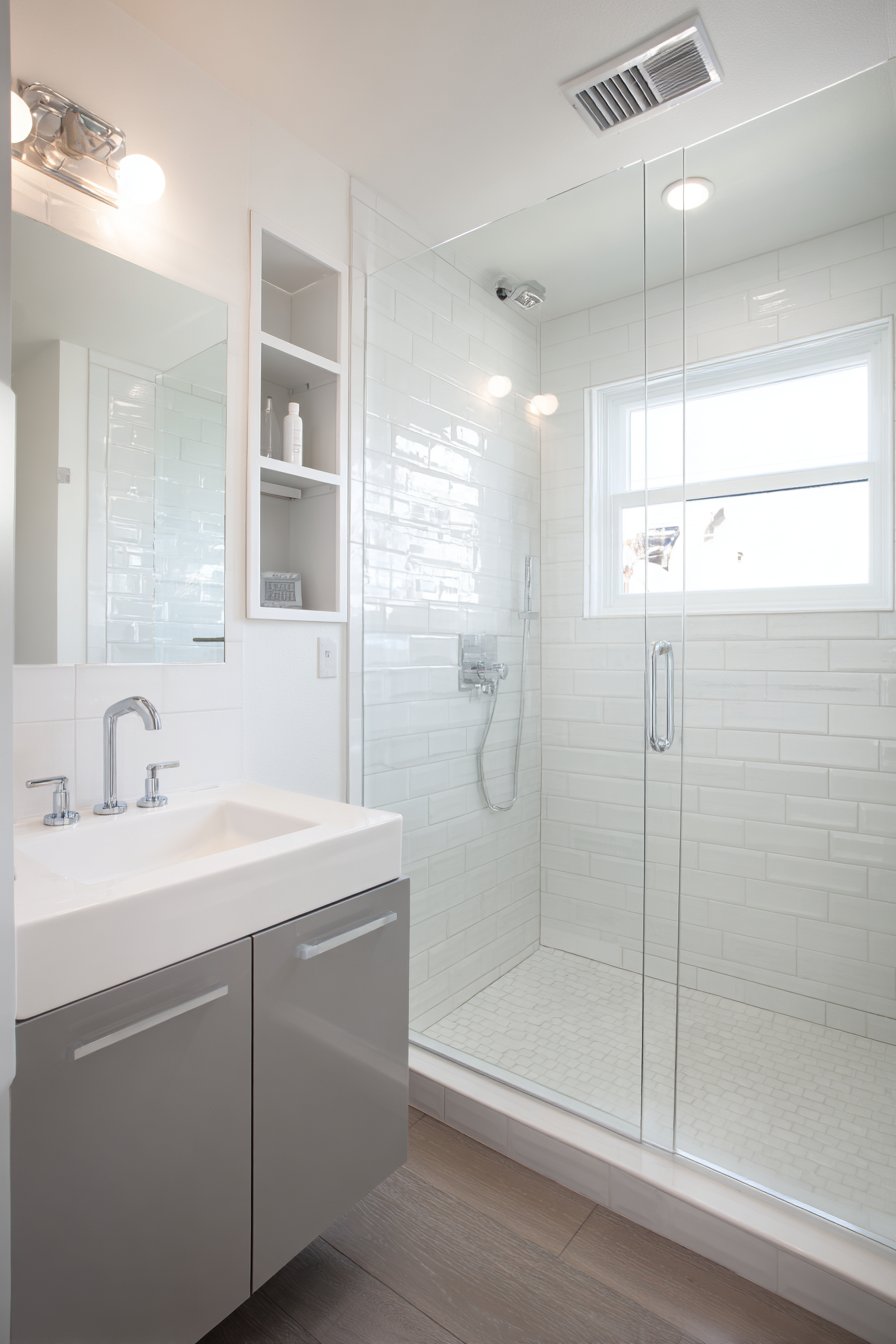
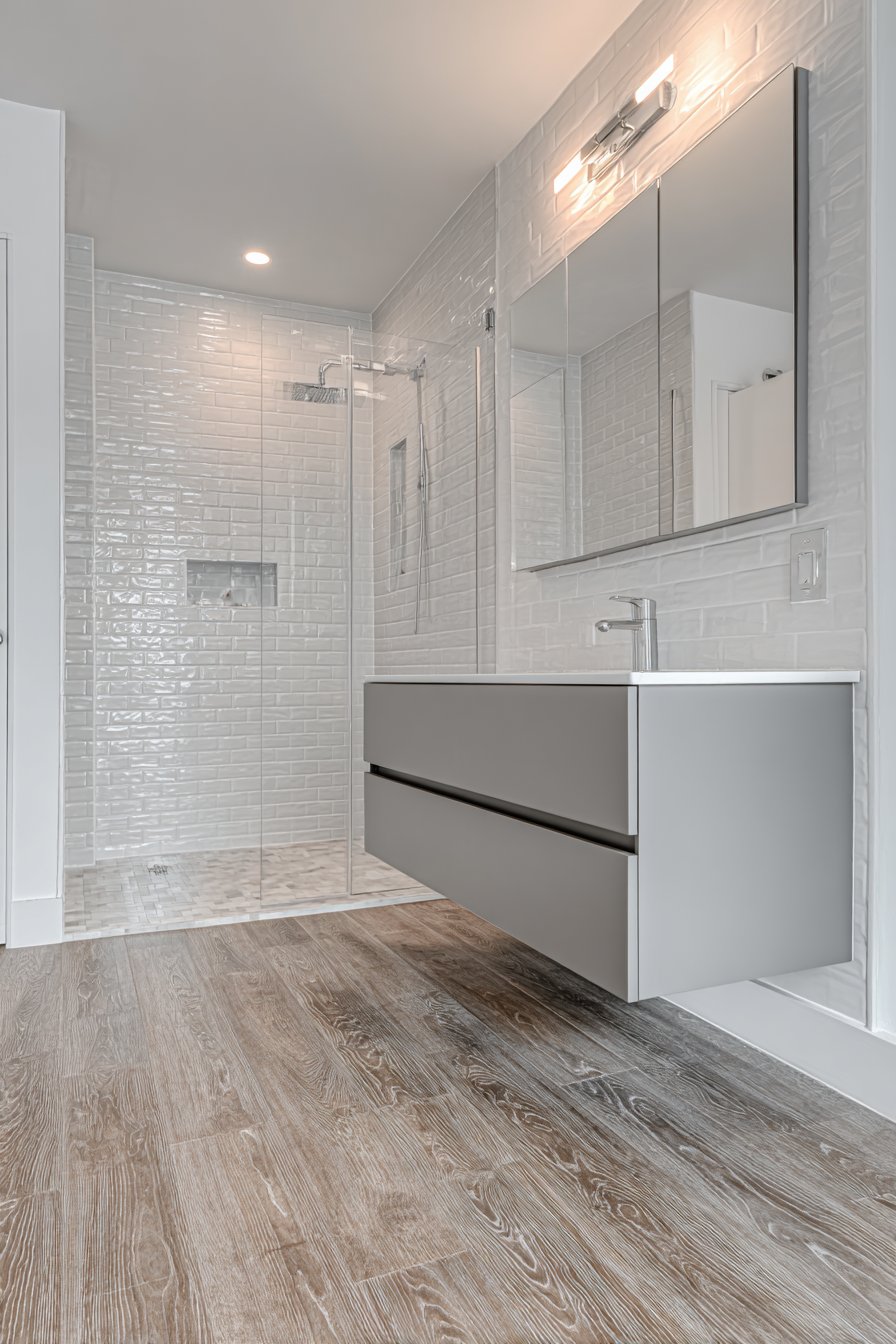
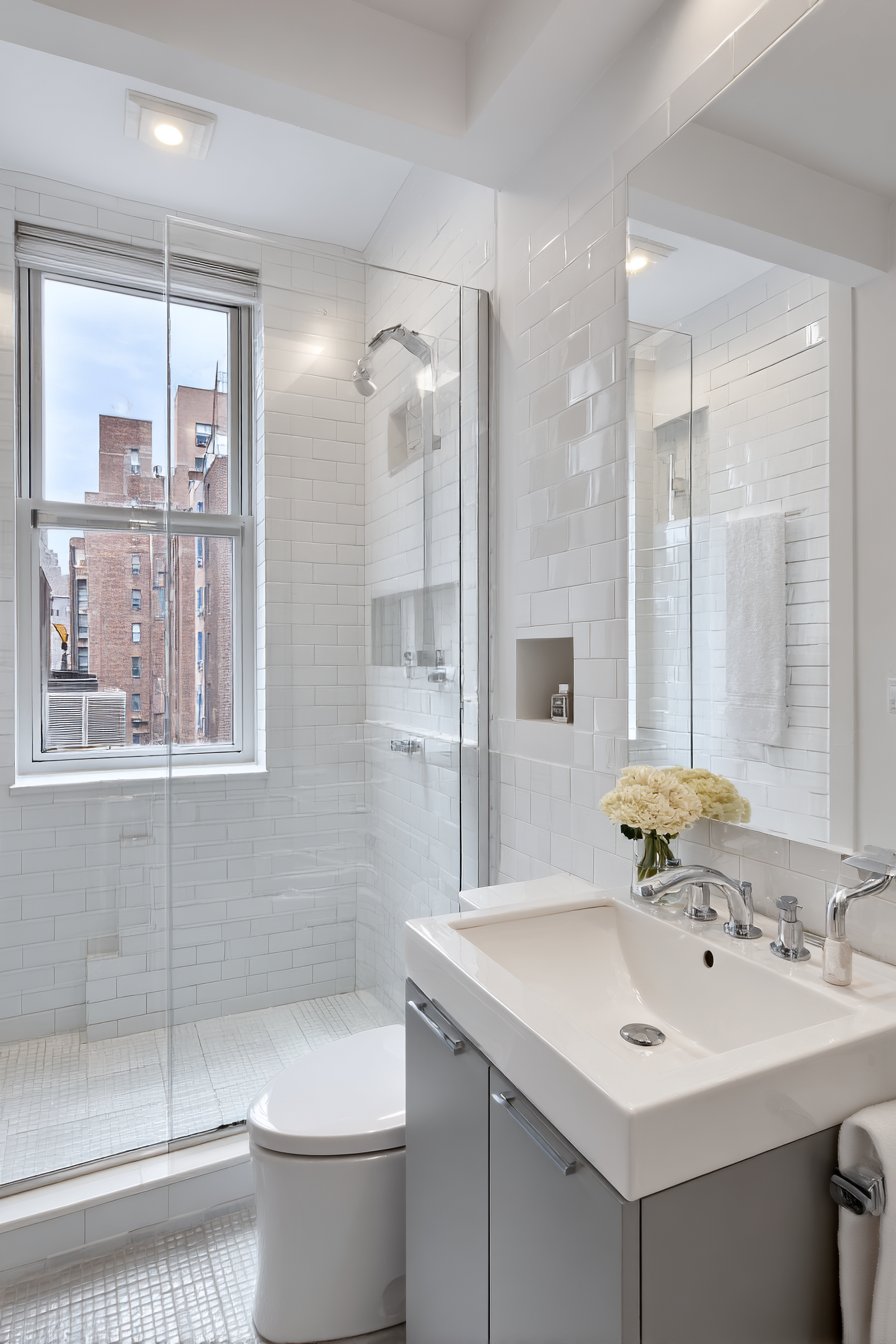
Minimalism reaches its zenith in this spare bathroom concept where every element serves multiple purposes and excess has been deliberately eliminated. The frameless glass shower enclosure creates seamless visual flow, allowing classic white subway tiles to extend uninterrupted across walls, making the modest square footage feel significantly larger. This transparency and continuity represent core minimalist principles—remove barriers, embrace simplicity, and let essential elements shine without competition.
The wall niche carved into the shower area provides practical storage for toiletries without introducing additional fixtures or accessories that would clutter the clean lines. This built-in solution demonstrates how thoughtful planning during construction or renovation can eliminate the need for hanging caddies or corner shelves that compromise the minimalist aesthetic. The floating vanity in matte gray continues the streamlined approach, its integrated sink eliminating the joint between countertop and basin where grime typically accumulates, making maintenance remarkably simple.
Chrome fixtures throughout maintain clean, reflective surfaces that catch and distribute light while avoiding the warmth of brass or gold that might soften the space’s crisp character. The combination of recessed lighting and natural window light creates bright, shadow-free illumination perfect for grooming tasks while maintaining the room’s unadorned elegance. This design proves that minimalism needn’t feel cold or unwelcoming—when executed with attention to material quality and spatial proportion, it creates serene environments where guests feel immediately relaxed.
Key Design Tips:
- Install frameless glass shower enclosures to maximize visual openness
- Build recessed wall niches during construction for seamless storage solutions
- Choose integrated sink-vanity units to eliminate cleaning challenges at joints
- Use classic white subway tiles for timeless appeal and light reflection
- Select matte finishes for vanities to hide fingerprints and water spots
- Incorporate both natural and recessed lighting for layered, shadow-free illumination
- Maintain strict color discipline with no more than three tones throughout
5. Charming Patterned Floor Half-Bath
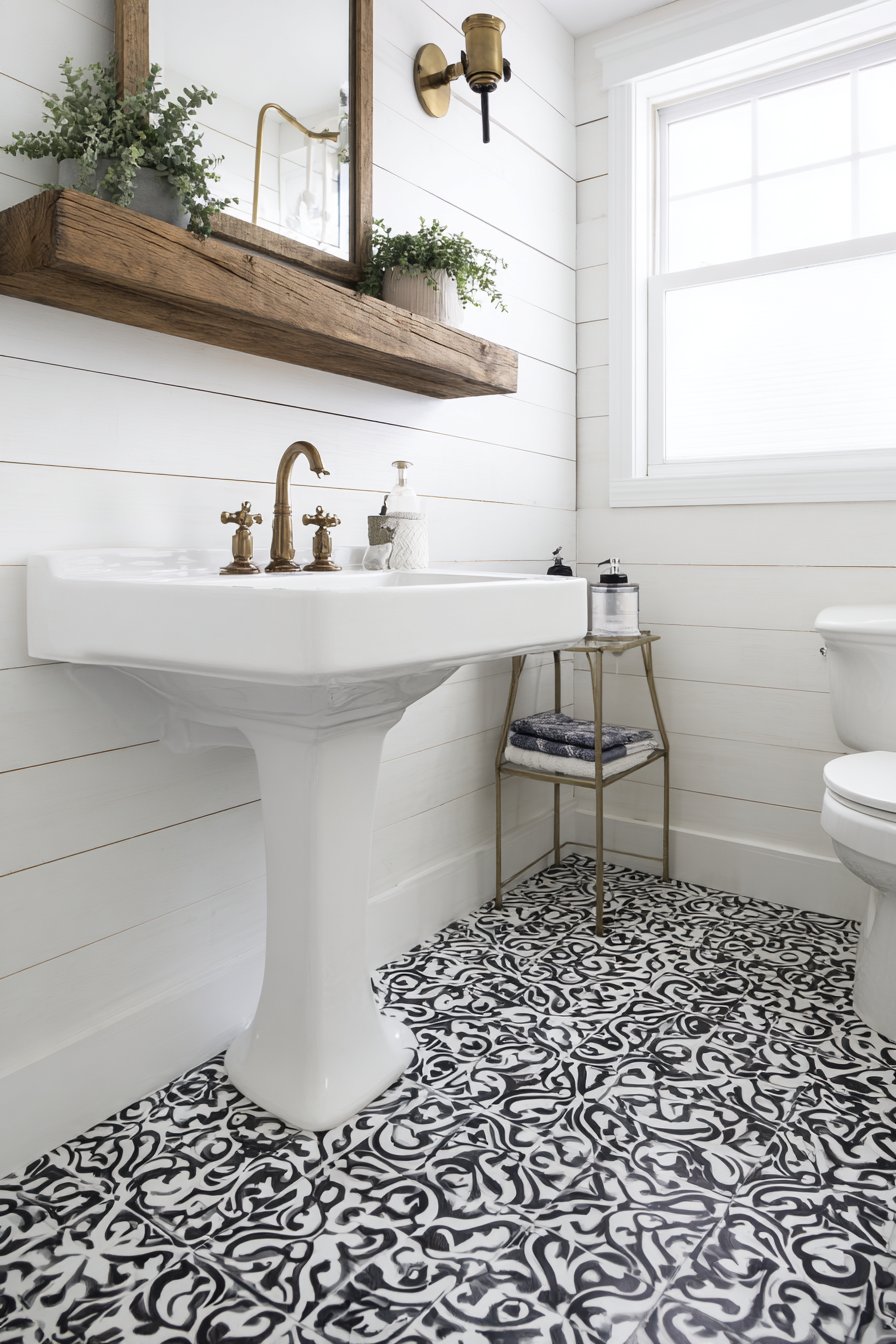
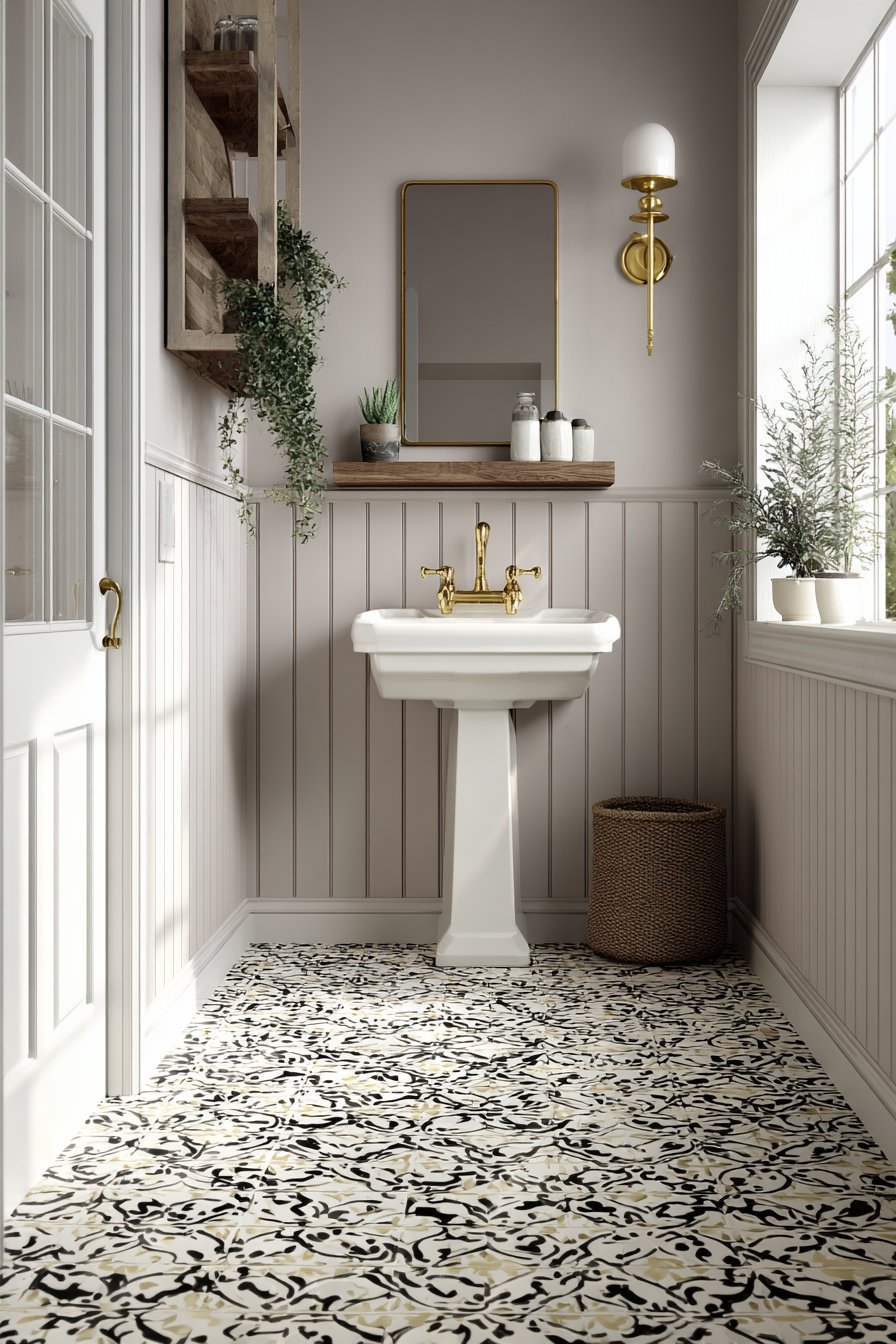
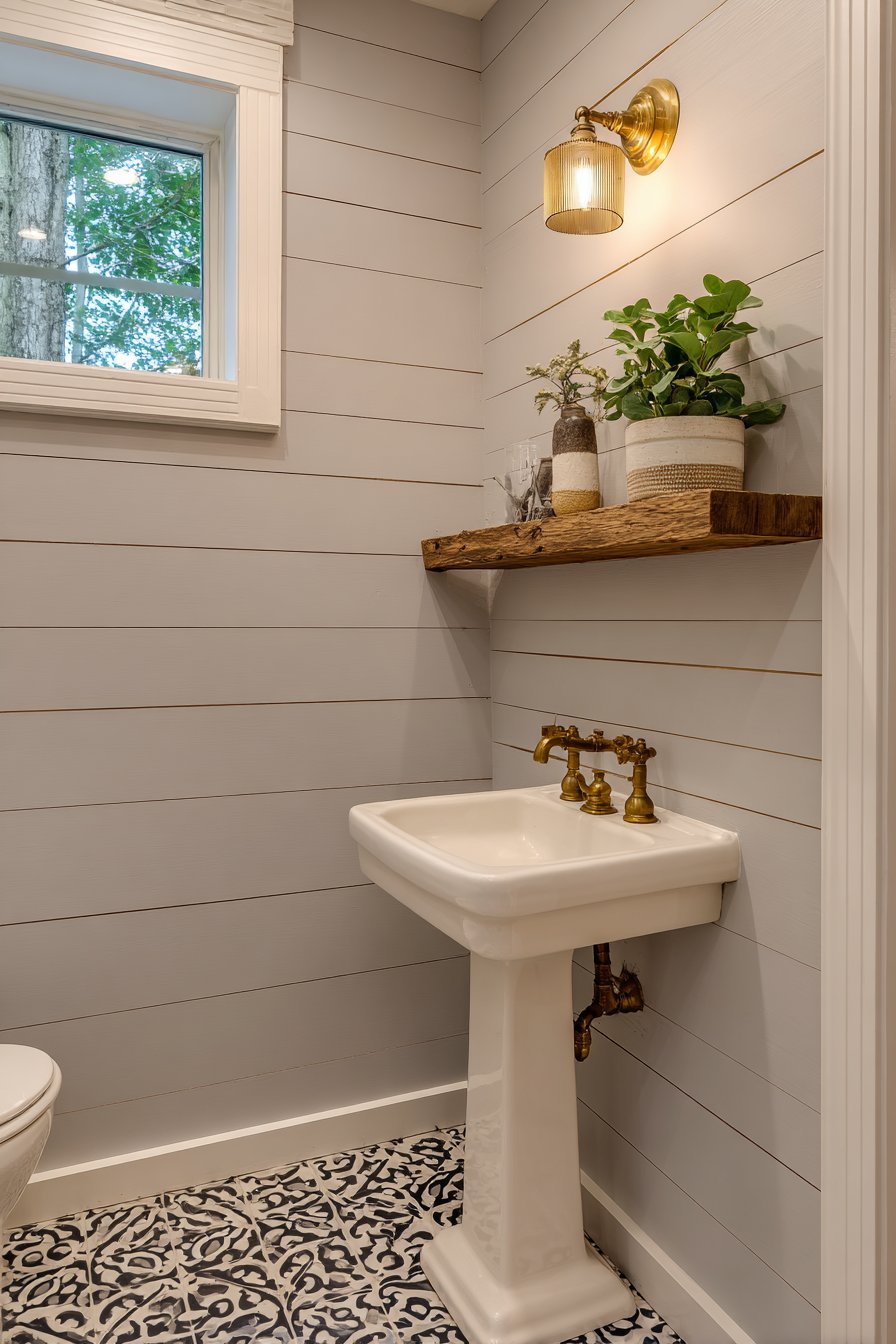
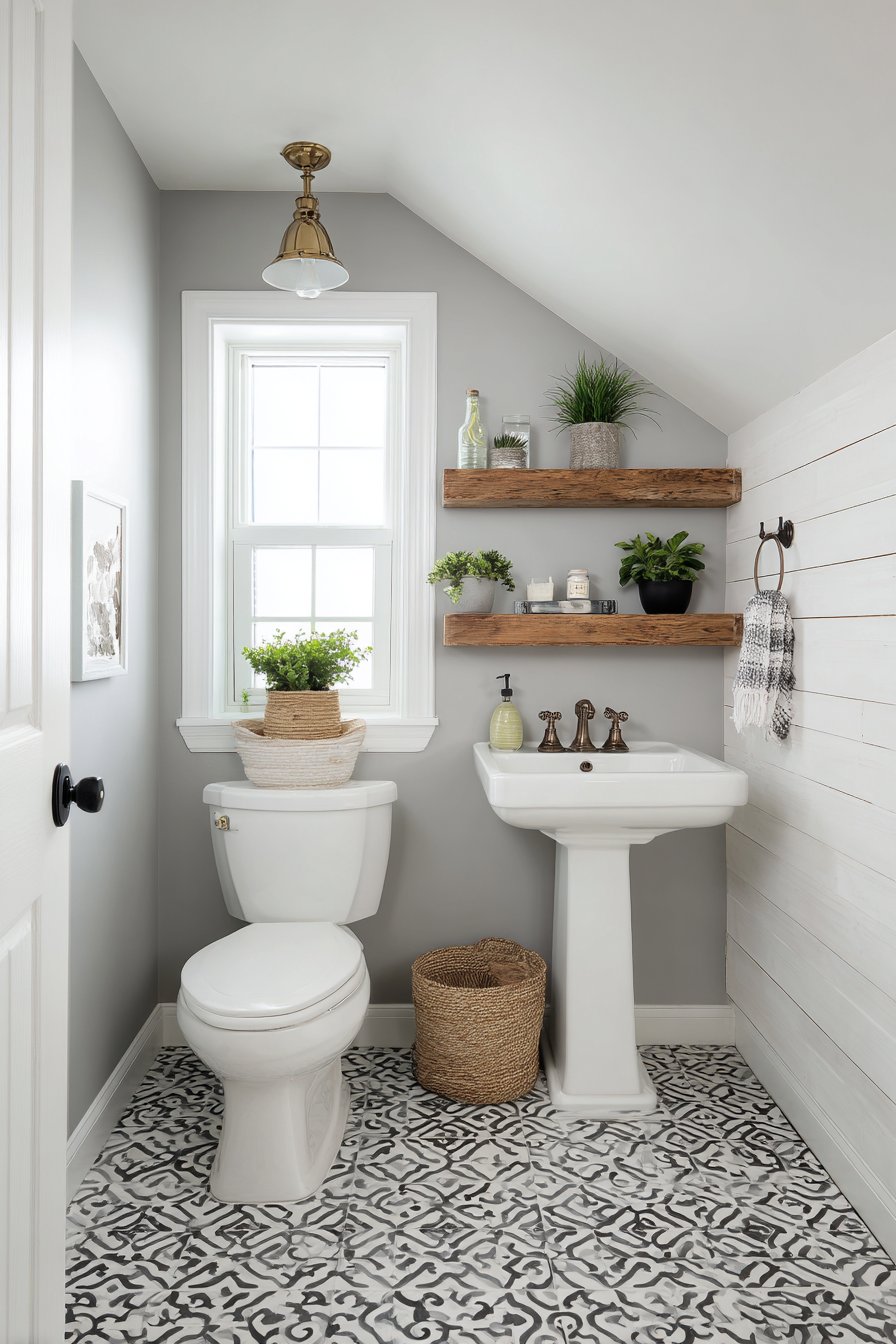
Bold pattern makes its entrance in this cozy half-bath where black and white geometric cement tiles create immediate visual impact underfoot. These striking floors become the room’s personality, allowing walls and fixtures to remain simple and classic, demonstrating the designer’s understanding of when to make a statement and when to exercise restraint. The pattern adds energy and interest to what might otherwise be a forgettable small powder room, proving that even the tiniest spaces deserve memorable design moments.
The white pedestal sink with vintage-style cross-handle faucet anchors the space with timeless elegance, its traditional form creating pleasing contrast with the floor’s contemporary geometry. Shiplap walls painted soft gray provide texture and visual interest without competing with the bold flooring, while also introducing the farmhouse-inspired character that makes this space feel warm and inviting rather than coldly modern. The horizontal lines of the shiplap subtly widen the perceived space, a particularly valuable trick in narrow half-baths.
A floating wooden shelf introduces practical display space for small plants and decorative items that personalize the room and soften hard surfaces, while natural light from a transom window supplements the warm glow from a brass wall sconce. This combination of natural and artificial lighting ensures the space feels welcoming at all hours while the brass finish ties together vintage and contemporary elements. The overall effect is a powder room with distinct personality that guests remember and appreciate for its confident design choices.
Key Design Tips:
- Use bold patterned floor tiles as the focal point in small powder rooms
- Keep walls and fixtures simple when floors make a strong statement
- Install shiplap horizontally to visually widen narrow spaces
- Choose pedestal sinks with vintage details for classic appeal
- Add floating shelves for both storage and decorative displays
- Include transom windows to bring in natural light without sacrificing privacy
- Mix brass fixtures with modern elements for transitional style
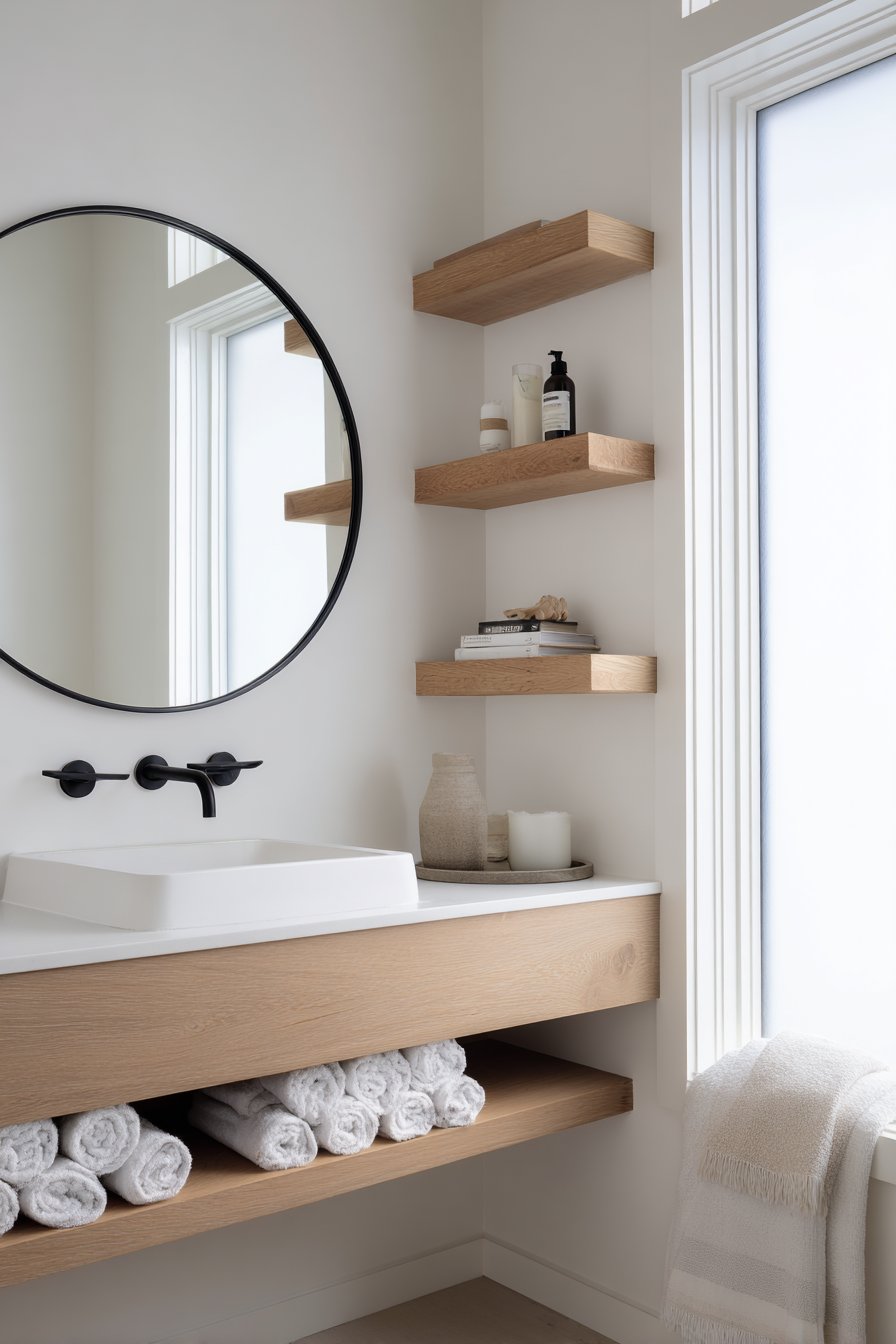
6. Scandinavian Clean White Guest Bathroom
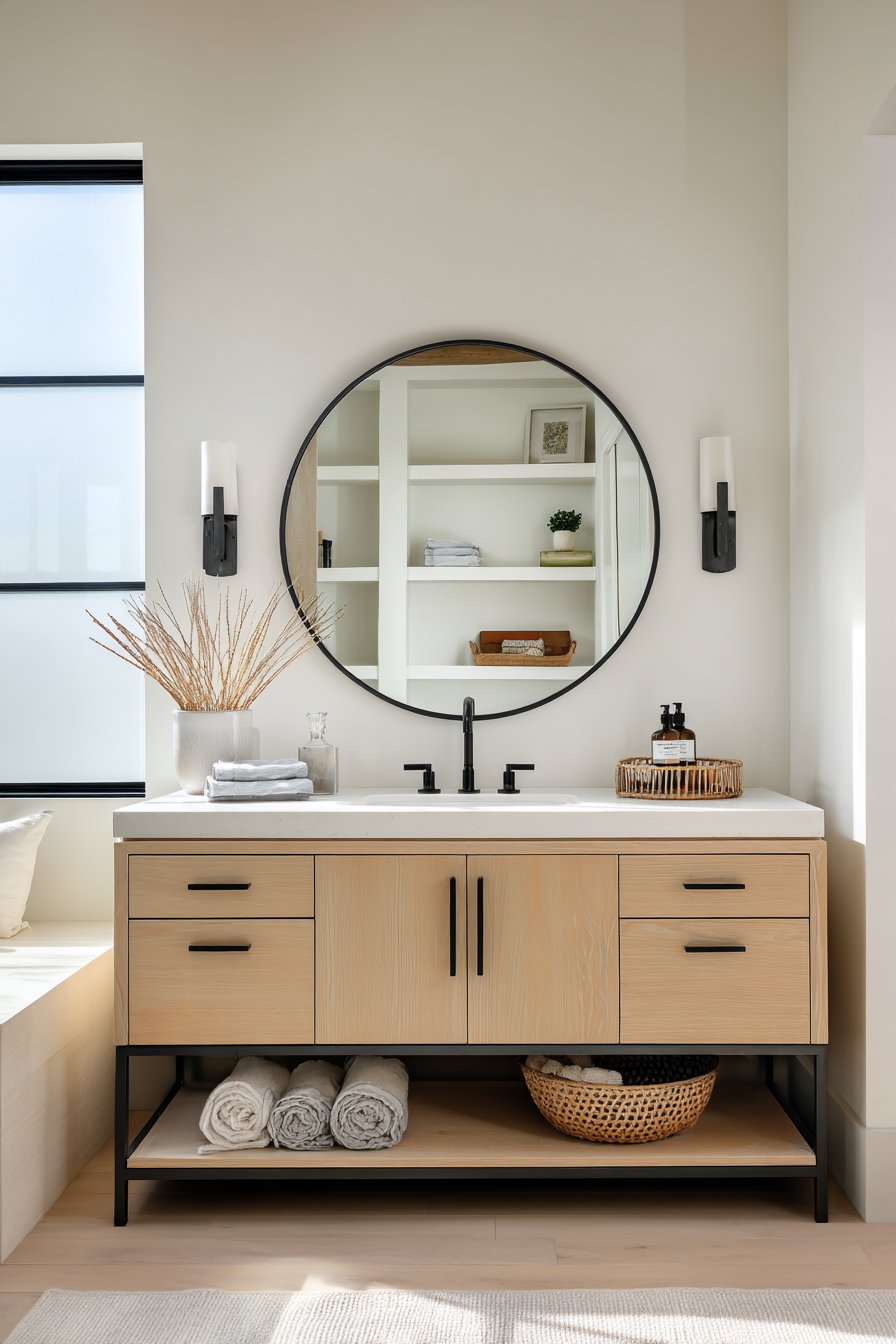
Scandinavian design philosophy permeates this spare bathroom where clean white walls create a gallery-like backdrop for the light wood floating vanity that introduces essential warmth and organic texture. The round mirror with black metal frame provides the perfect counterpoint to the vanity’s rectangular form while the black finish creates visual weight that grounds the otherwise airy space. This careful balance between light and dark, warm and cool, represents the hallmark of Scandinavian design—functional minimalism that remains inviting and human-scaled.
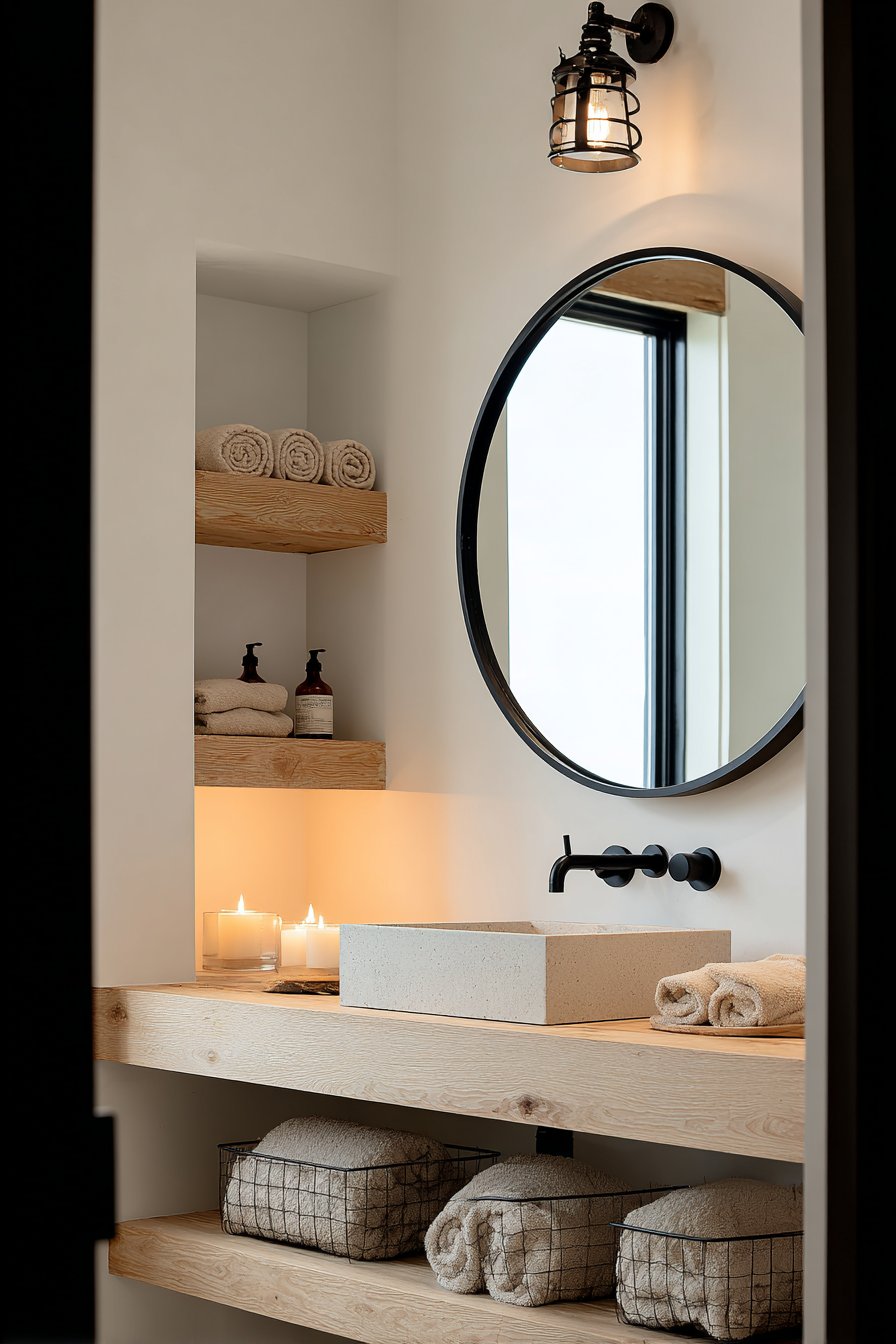
Matte black fixtures throughout provide striking contrast against pale surfaces, their geometric forms adding architectural interest without ornamental excess. The built-in recessed shelving holds rolled towels and bathroom essentials in organized display, demonstrating the Scandinavian commitment to “a place for everything” that eliminates visual clutter while ensuring functionality. These shelves become part of the architecture rather than additions to it, seamlessly integrated into the wall plane.
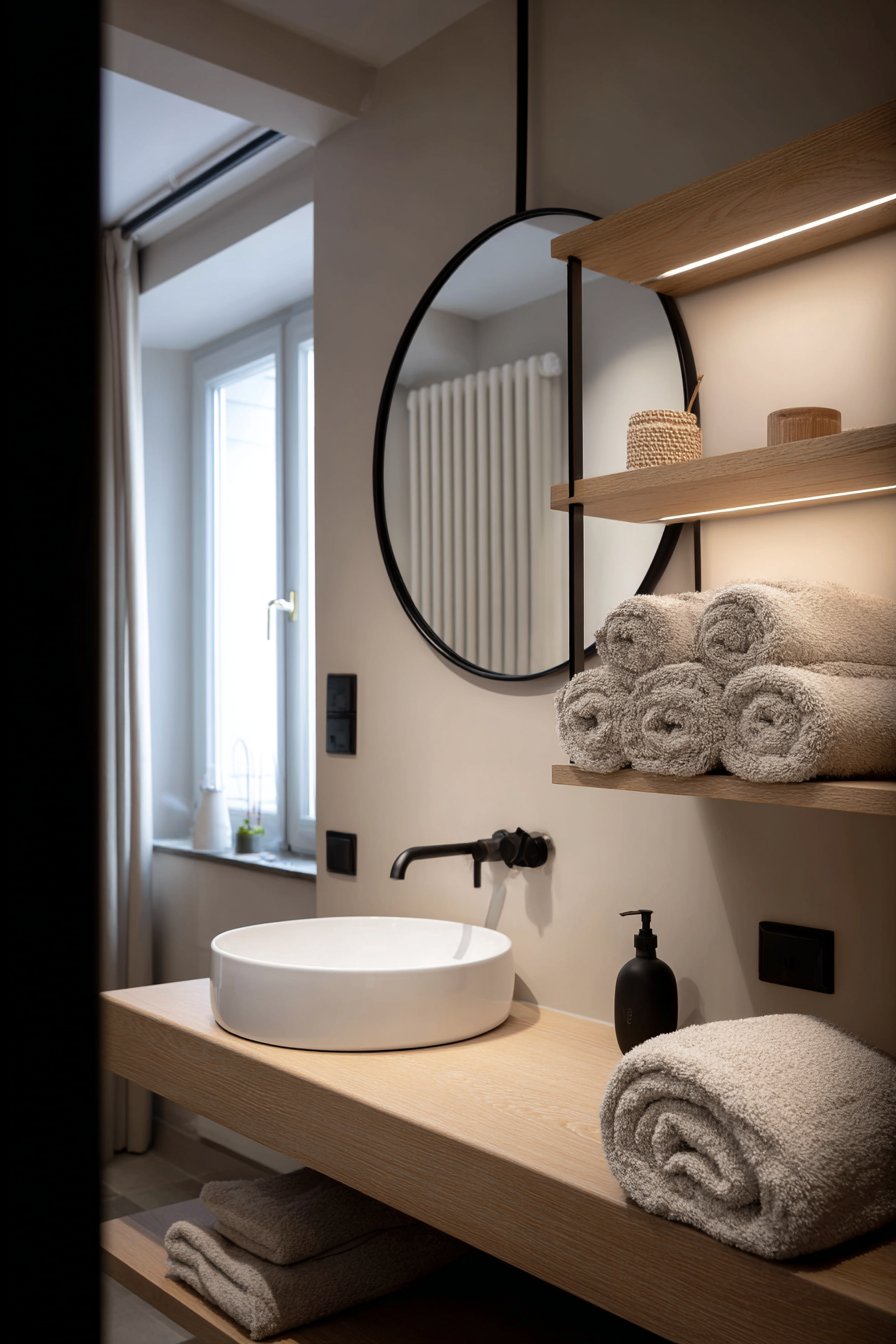
Soft natural lighting from a frosted window bathes the space in gentle, diffused illumination that changes throughout the day, connecting occupants to natural rhythms while maintaining privacy. This quality of light represents perhaps the most essential element of Scandinavian design—the celebration and maximization of daylight in regions where it’s precious. The overall effect is a bathroom that feels spacious, serene, and effortlessly sophisticated, requiring minimal maintenance while providing maximum pleasure in daily use.
Key Design Tips:
- Paint walls pure white to maximize light reflection and create spacious feeling
- Choose light wood vanities to introduce warmth in predominantly white spaces
- Use matte black fixtures for striking contrast and modern sophistication
- Install recessed shelving to store essentials without visual clutter
- Select round mirrors to soften rectangular vanities and doorways
- Prioritize natural light through frosted or sheer window treatments
- Maintain minimal accessorizing to let architecture and materials shine
7. Farmhouse Vintage Powder Room
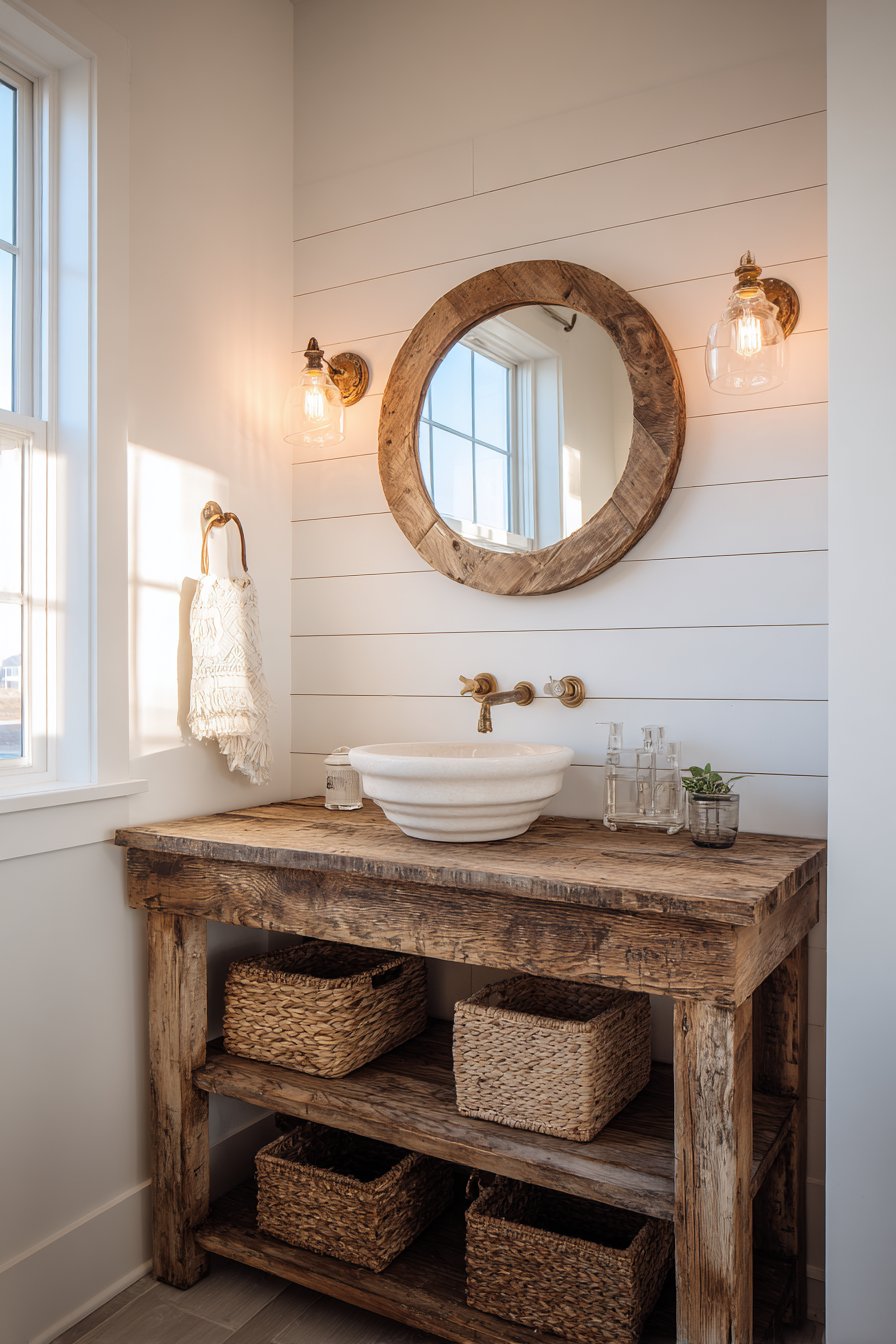
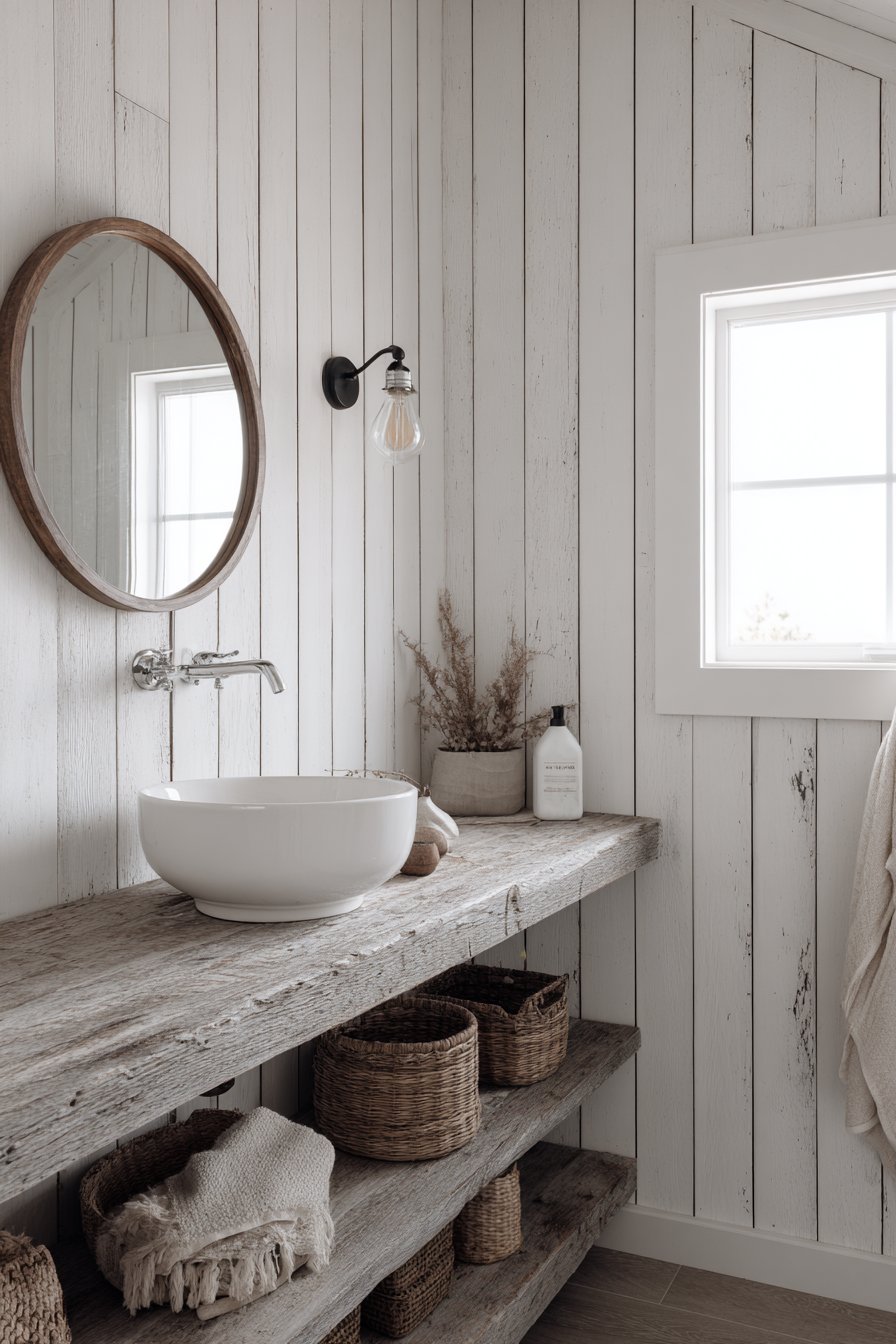
Rustic charm meets functional design in this farmhouse-inspired powder room where shiplap walls painted crisp white create the perfect canvas for vintage character. The weathered wooden vanity serves as the space’s anchor, its distressed finish telling stories of age and authenticity while supporting a pristine white porcelain vessel sink that provides clean contrast. This juxtaposition of rough and refined textures represents the essence of farmhouse style—celebrating imperfection and patina while maintaining cleanliness and order.
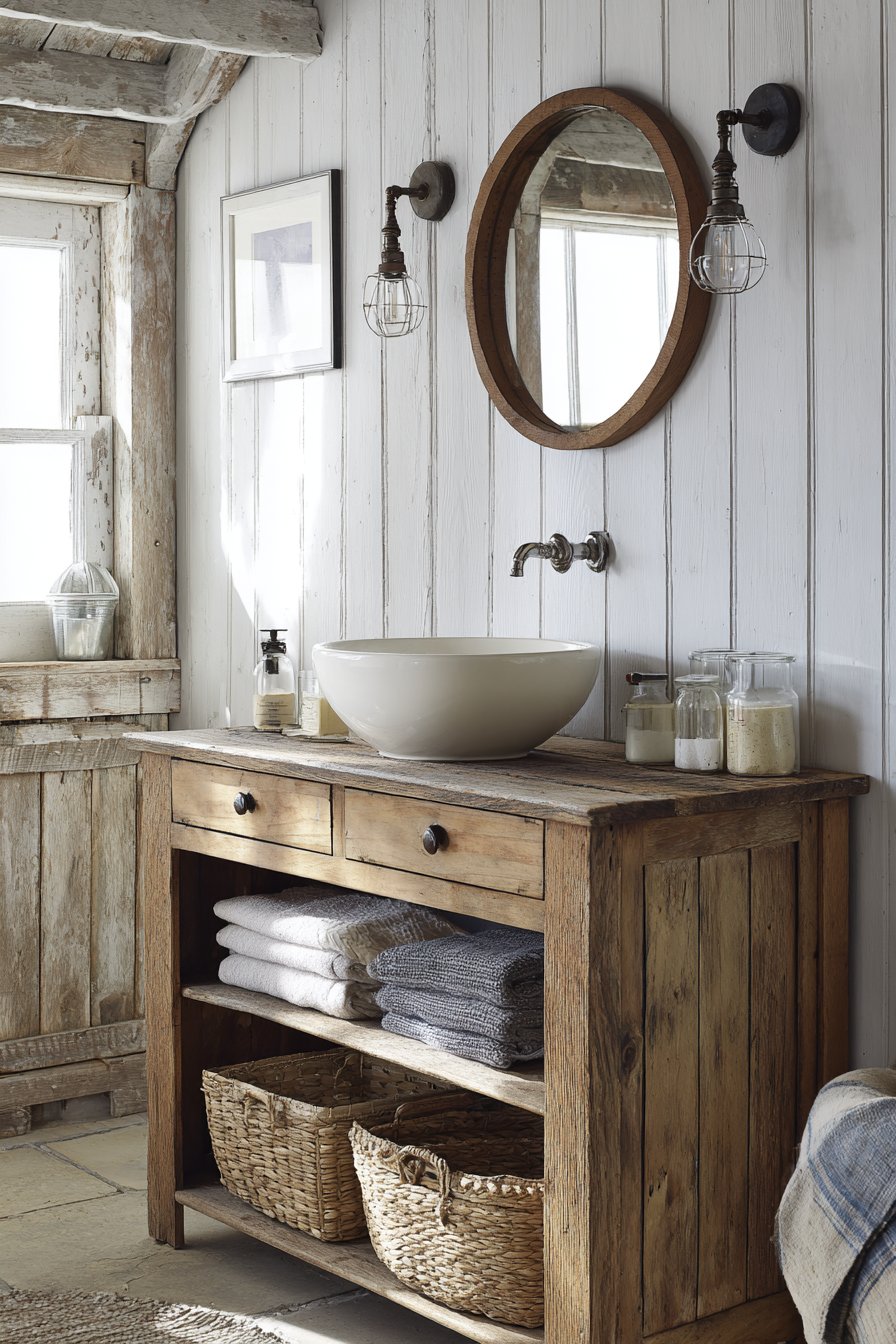
Edison bulb wall sconces flanking a round wooden mirror create symmetrical lighting that’s both practical and atmospheric, their exposed filaments adding industrial edge to the rustic foundation. The mirror’s natural wood frame echoes the vanity below, creating visual continuity that ties the composition together. Open shelving beneath the vanity displays woven baskets that conceal toiletries and cleaning supplies while contributing additional organic texture to the material palette.
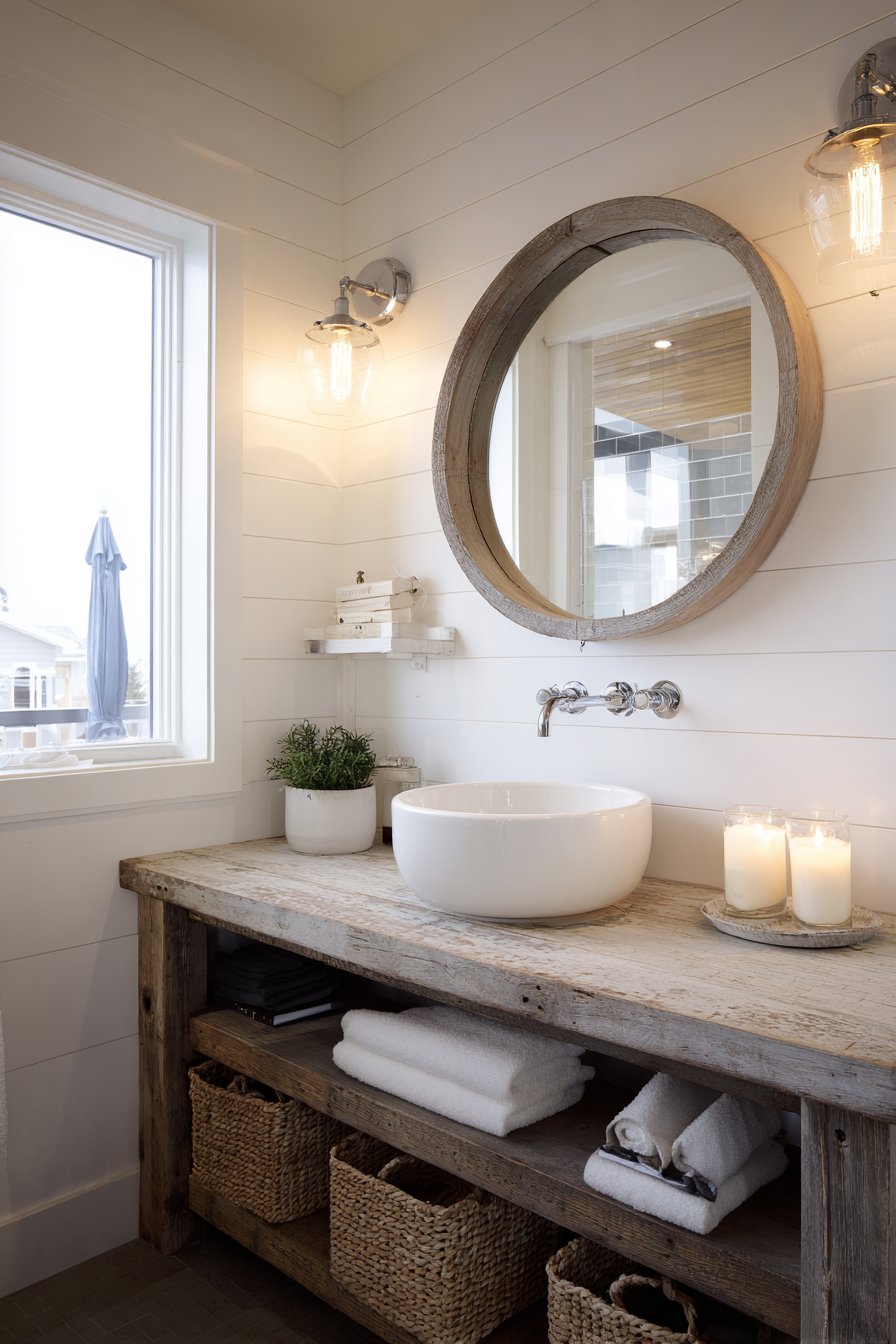
Natural light from a small window highlights the shiplap’s dimensional texture, casting subtle shadows that change throughout the day and reveal the wood’s grain and character. This play of light across textured surfaces transforms a simple powder room into a dynamic space that rewards closer inspection. The overall design achieves that elusive farmhouse goal—a room that feels collected over time rather than decorated all at once, where each element seems to have been chosen for both beauty and purpose.
Key Design Tips:
- Install shiplap walls for authentic farmhouse character and dimensional texture
- Choose weathered or distressed vanities for aged charm and visual interest
- Use Edison bulb fixtures to add industrial-farmhouse flair
- Incorporate vessel sinks atop furniture-style vanities for vintage appeal
- Display woven baskets for storage that doubles as decorative element
- Frame mirrors in natural wood to warm the space and create continuity
- Allow natural light to highlight textured surfaces throughout the day
8. Contemporary Gray Tile Guest Bathroom
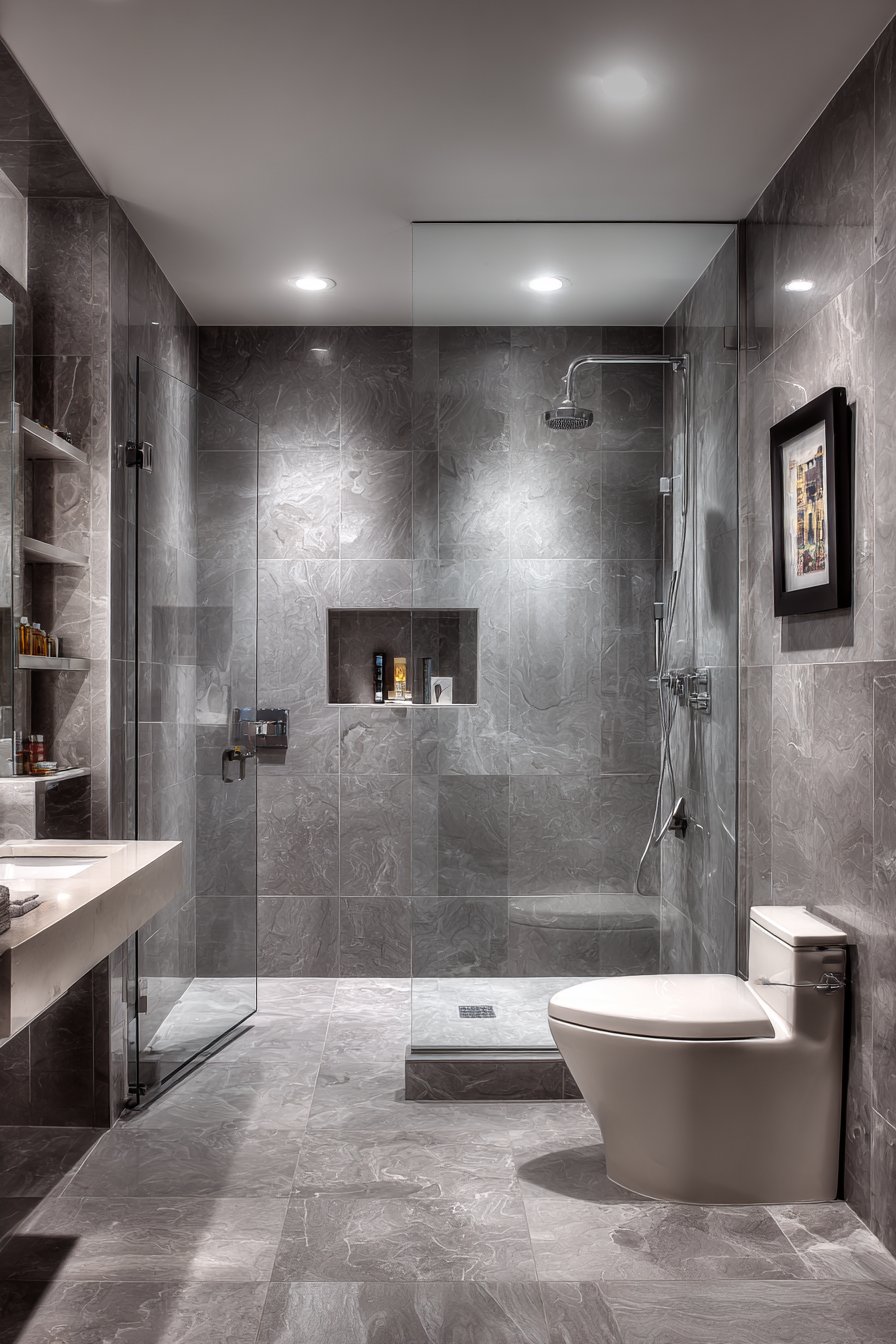
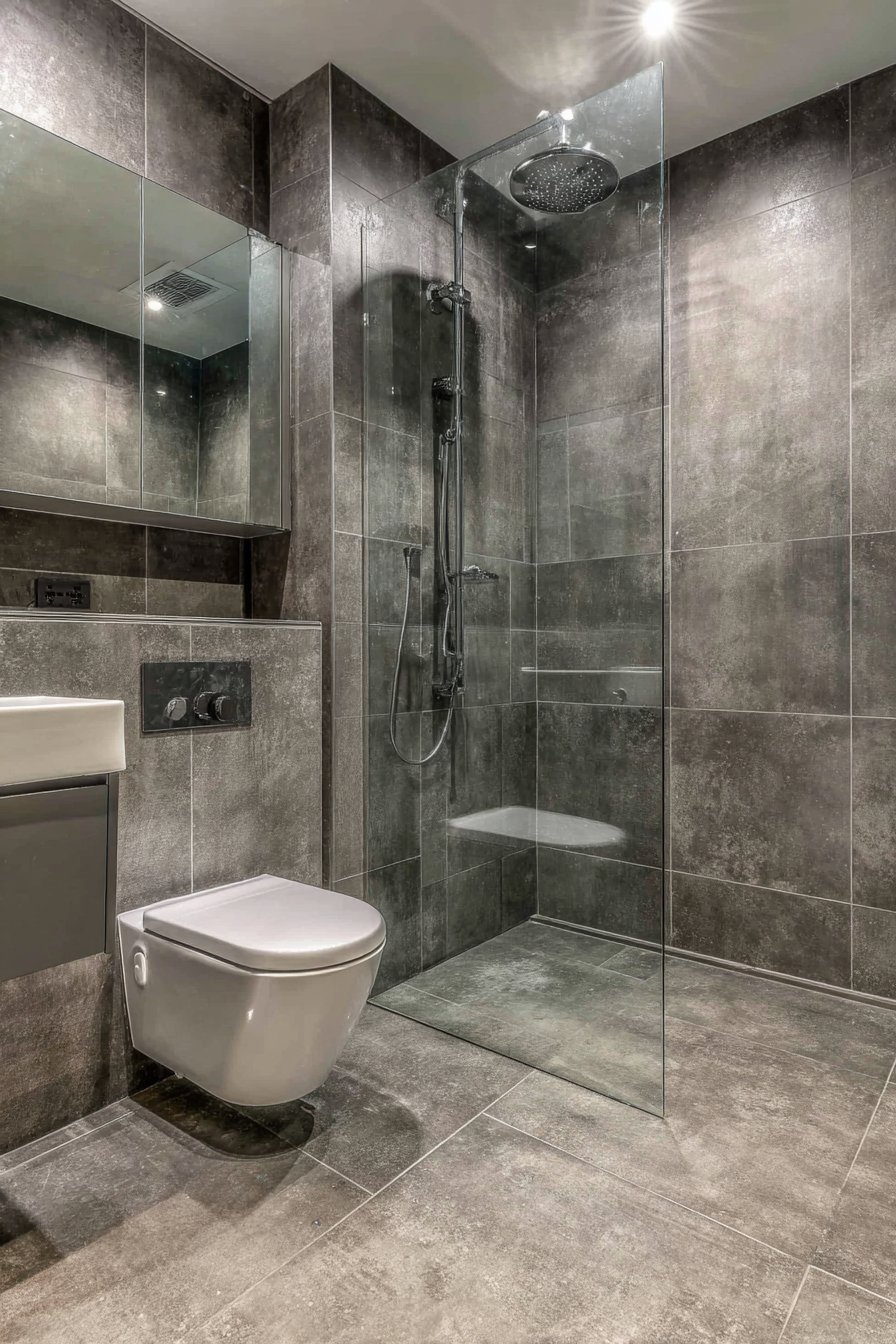
Sophisticated monochromatic design defines this contemporary guest bathroom where large format gray porcelain tiles create seamless, minimalist surfaces on both walls and floors. The continuous tile treatment eliminates visual breaks and grout lines, making the space feel larger while dramatically simplifying cleaning and maintenance. The wall-hung toilet and floating vanity continue the theme of elevated fixtures that reveal floor space, creating the illusion of greater square footage while making floor cleaning remarkably simple.
The frameless glass shower partition separates the wet area without blocking sightlines or light flow, maintaining the room’s open, airy character. A chrome rainfall showerhead paired with a handheld wand provides spa-like versatility, allowing guests to choose their preferred showering experience while the dual options ensure accessibility for users of different heights or abilities. Recessed shelving built into the shower wall keeps essential toiletries organized and accessible without introducing protruding fixtures that would interrupt the clean tile planes.
The monochromatic gray palette creates sophisticated calm, with subtle variations in tile finish and tone providing just enough visual interest to prevent monotony. Chrome fixtures reflect light and maintain the cool, contemporary aesthetic while their simple forms avoid competing with the architecture. This design demonstrates how restraint and quality materials can combine to create spaces that feel genuinely luxurious despite their simplicity, where guests appreciate both the aesthetic refinement and practical functionality.
Key Design Tips:
- Use large format tiles to minimize grout lines and create seamless surfaces
- Install wall-hung toilets to maximize floor visibility and simplify cleaning
- Choose frameless glass shower partitions to maintain visual openness
- Include both rainfall and handheld showerheads for versatility
- Build recessed shelving into shower walls during construction for seamless storage
- Select fixtures in matching finishes for cohesive, intentional appearance
- Vary tile finishes slightly within color family to add subtle depth
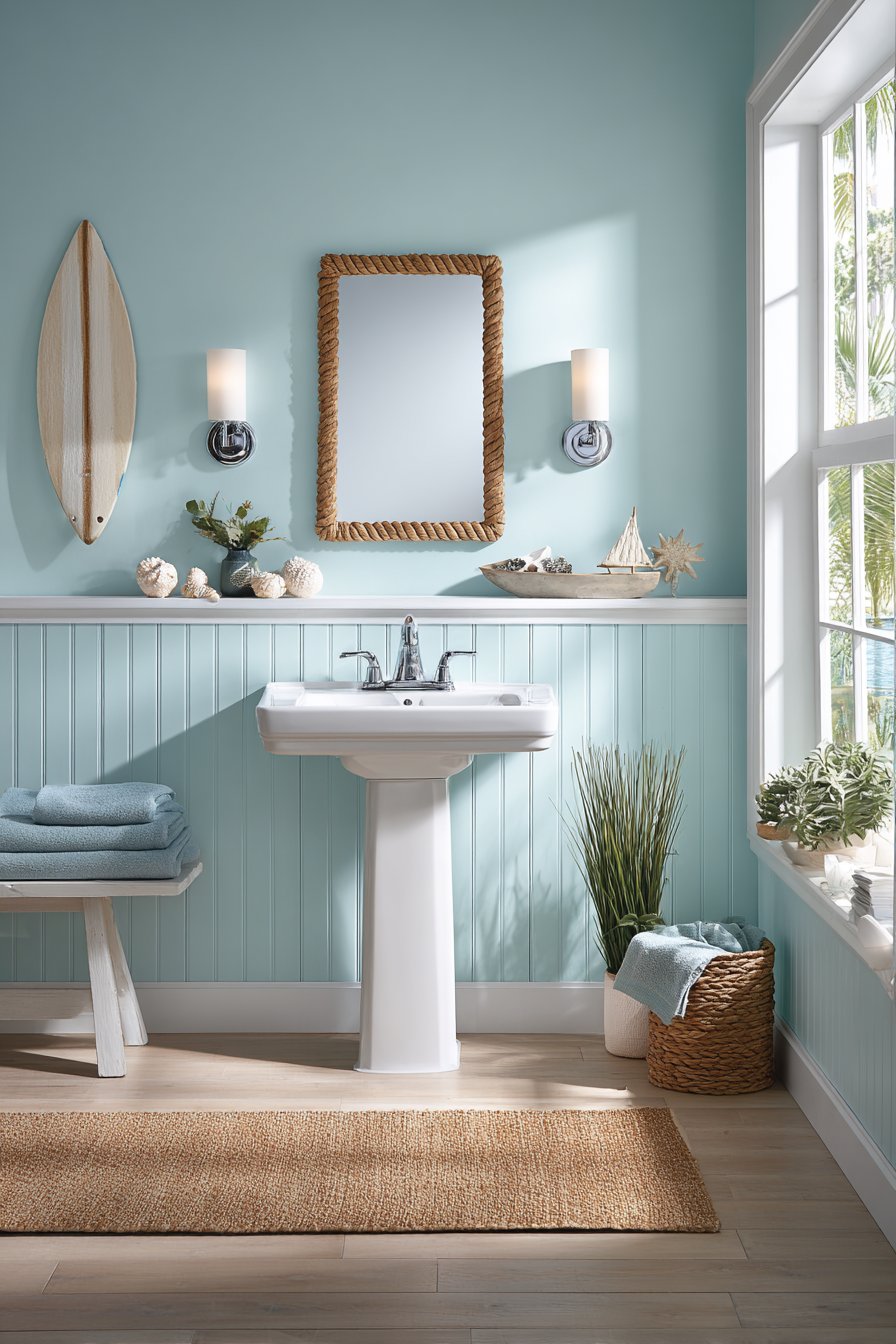
9. Coastal Seafoam Blue Half-Bath
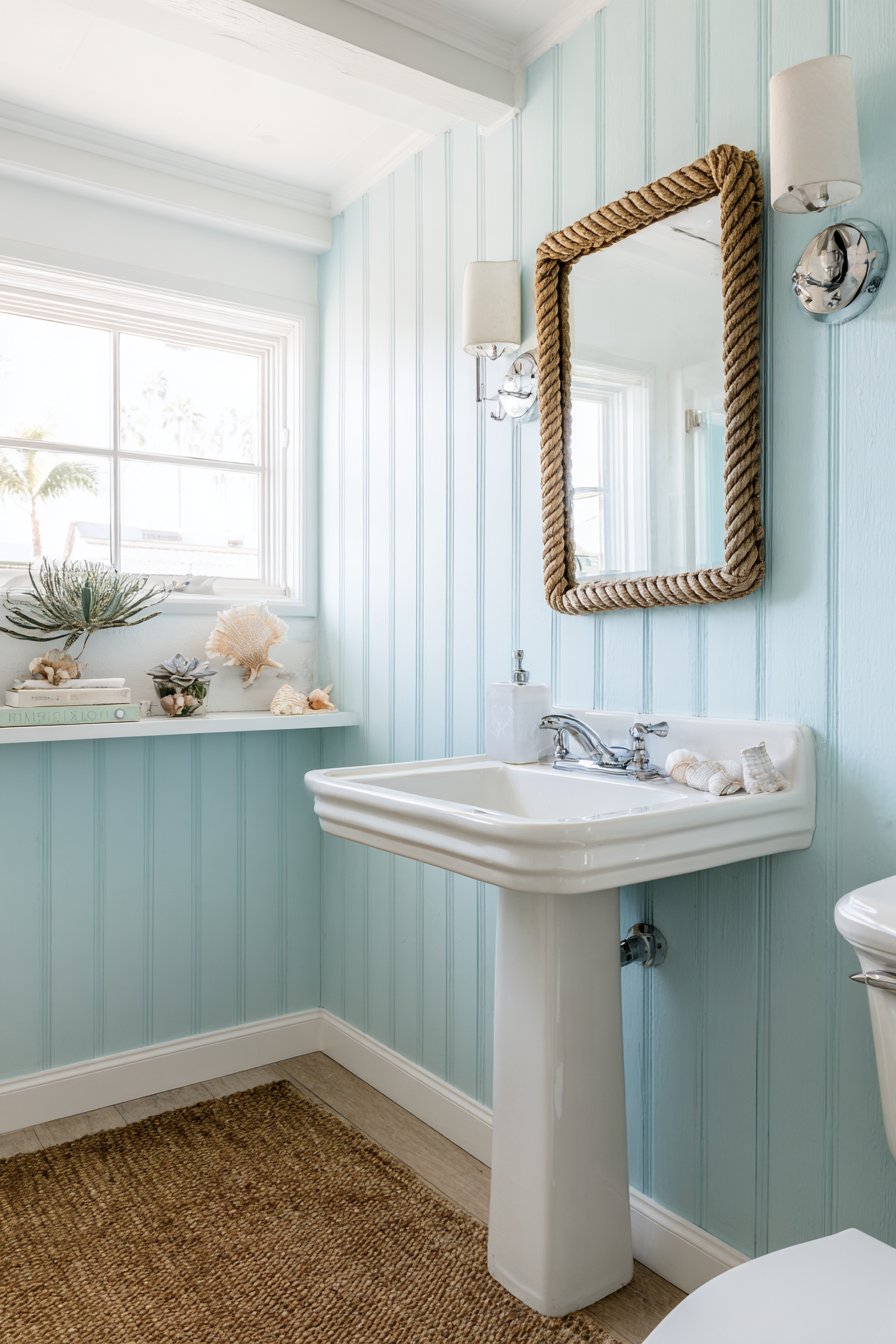
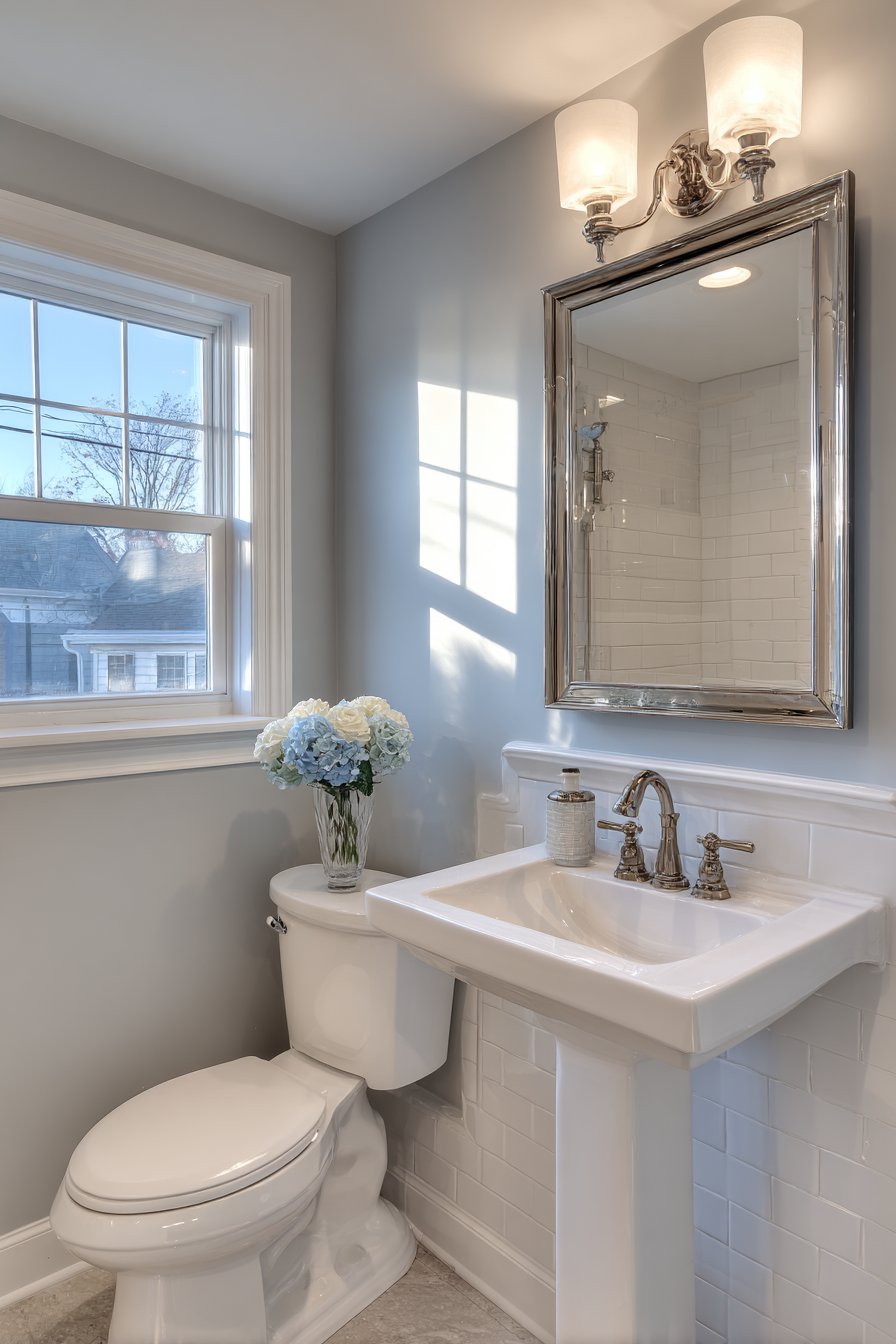
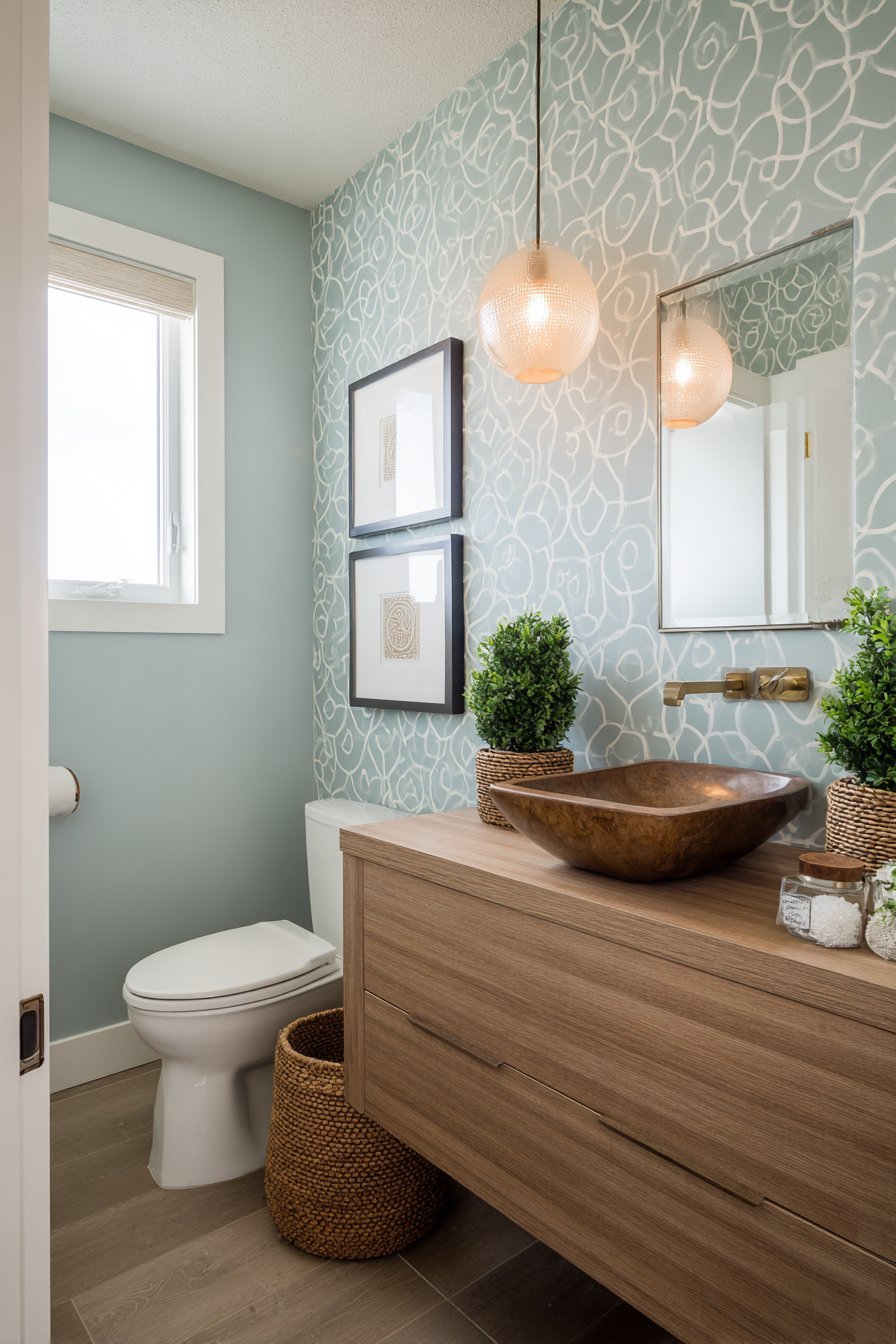
Beach-inspired serenity washes over this half-bath where beadboard walls painted soft seafoam blue immediately transport guests to coastal retreats. The blue-green hue creates instant calm while the beadboard’s vertical lines add architectural detail and visual height to modest wall planes. A white pedestal sink with chrome fixtures maintains classic simplicity, its traditional form providing counterbalance to the casual coastal theme while ensuring the design feels sophisticated rather than kitschy.
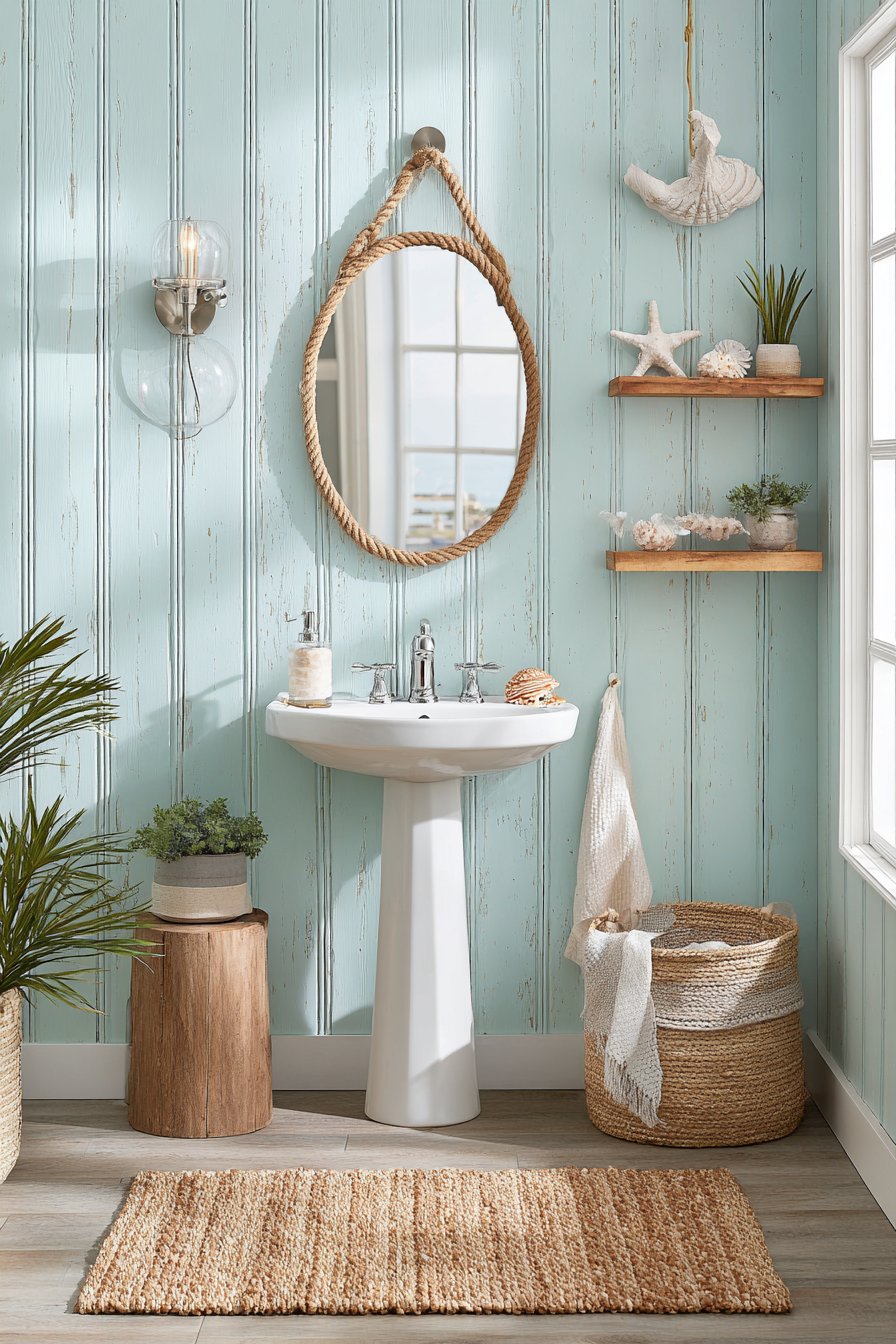
The rope-framed mirror introduces nautical reference through its material rather than obvious maritime symbols, demonstrating how themed design works best when suggested subtly rather than stated obviously. Nautical-inspired accessories carefully curated and sparingly placed reinforce the coastal story without overwhelming the space with starfish and anchors. A floating shelf displays seashells and small succulents, bringing organic elements that connect to beach environments while the low-maintenance plants add living texture.
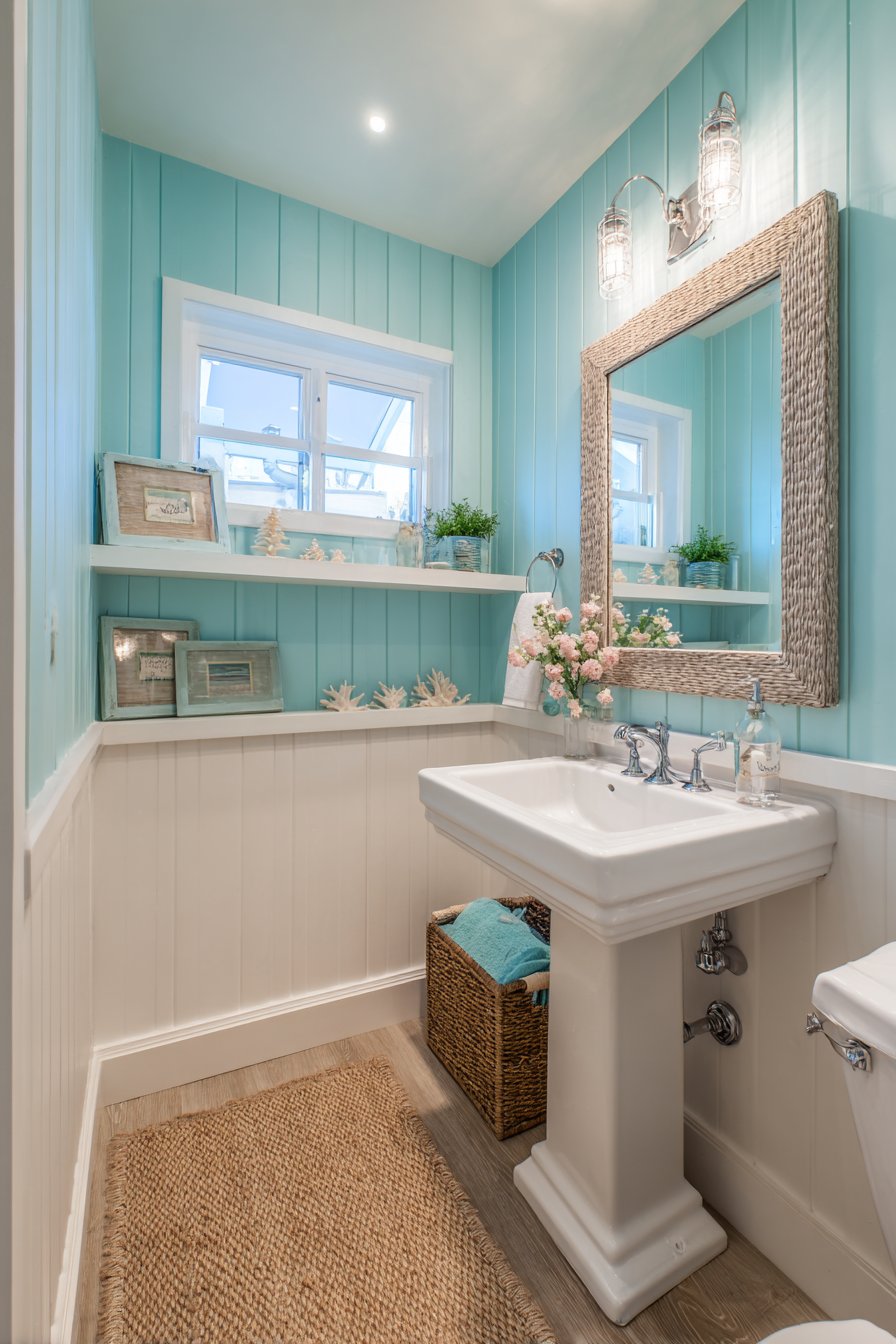
A natural jute rug introduces additional organic texture underfoot while its neutral tone grounds the blue walls and prevents the color from feeling too sweet or juvenile. Soft natural lighting from a window combined with a brushed nickel wall sconce creates layered illumination that transitions beautifully from day to evening. The overall effect is a powder room that feels like a breath of fresh sea air—relaxing, unpretentious, and universally appealing to guests who may or may not share the homeowner’s love of coastal living.
Key Design Tips:
- Paint beadboard walls in soft coastal colors for architectural interest
- Use rope or driftwood-framed mirrors for subtle nautical reference
- Choose classic white fixtures to prevent theme from becoming overwhelming
- Display natural elements like shells and driftwood rather than manufactured nautical decor
- Add jute or sisal rugs to introduce organic coastal texture
- Include living plants to bring nature indoors and improve air quality
- Layer natural and artificial lighting for ambiance throughout the day
10. Luxe Metallic Powder Room
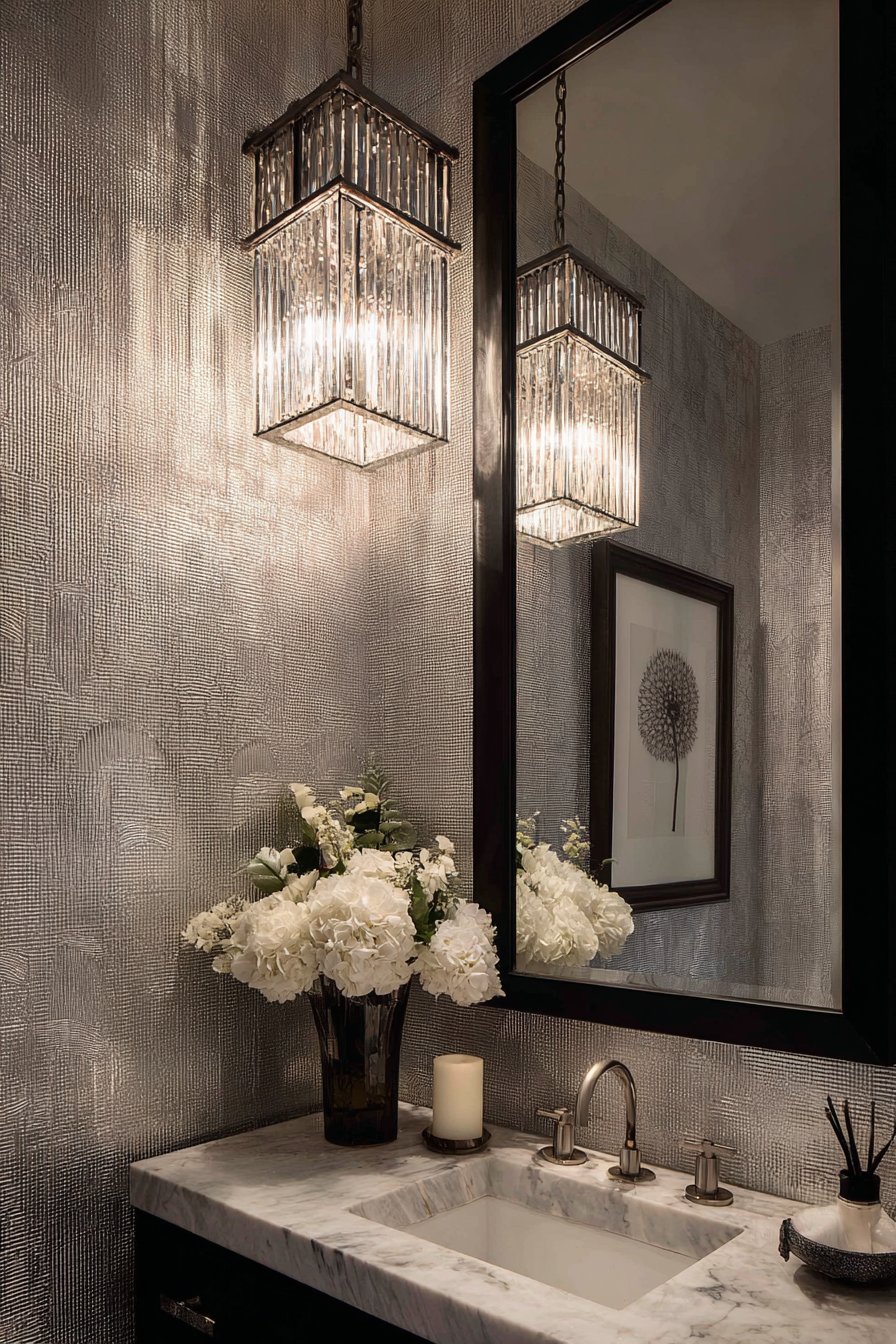
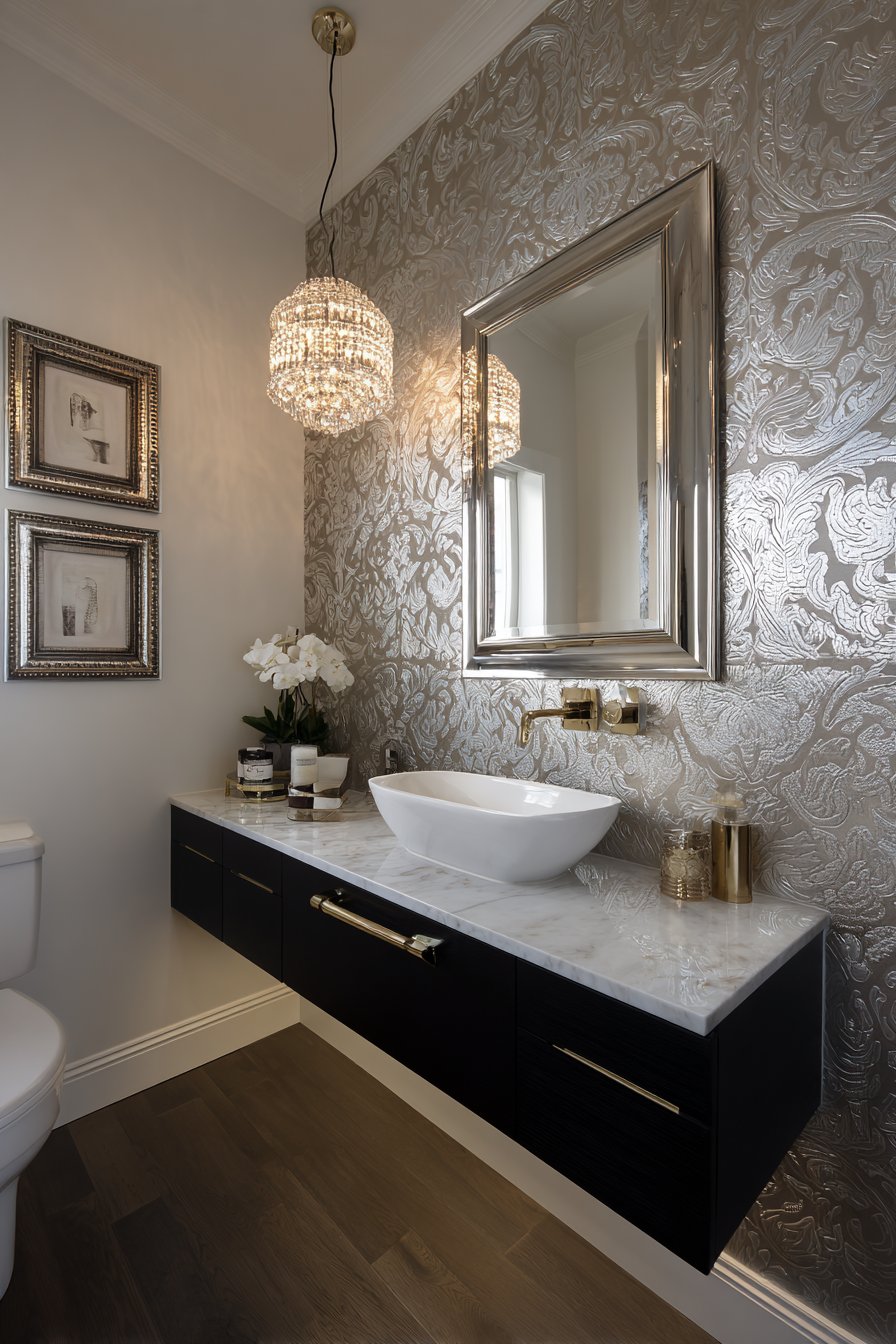
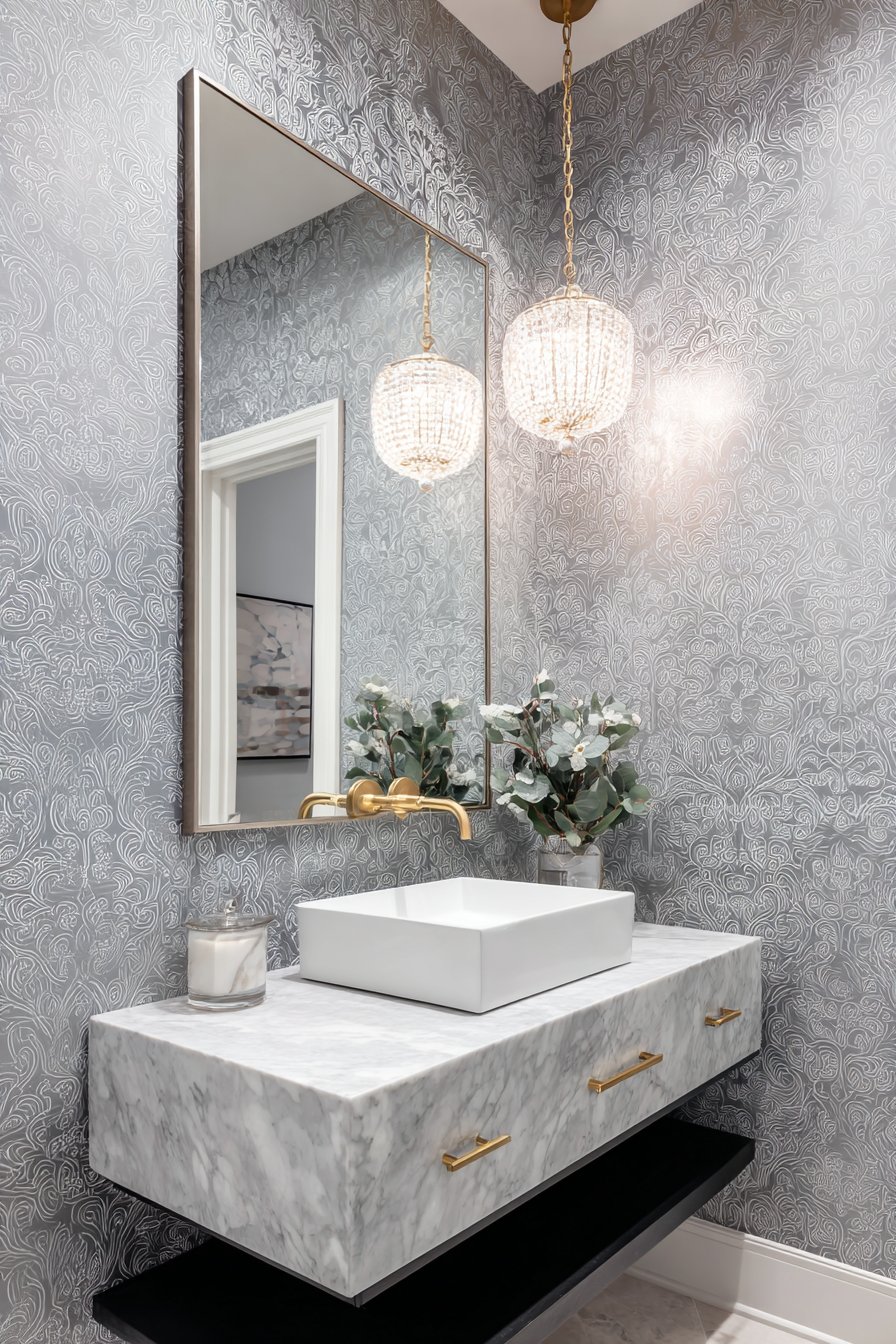
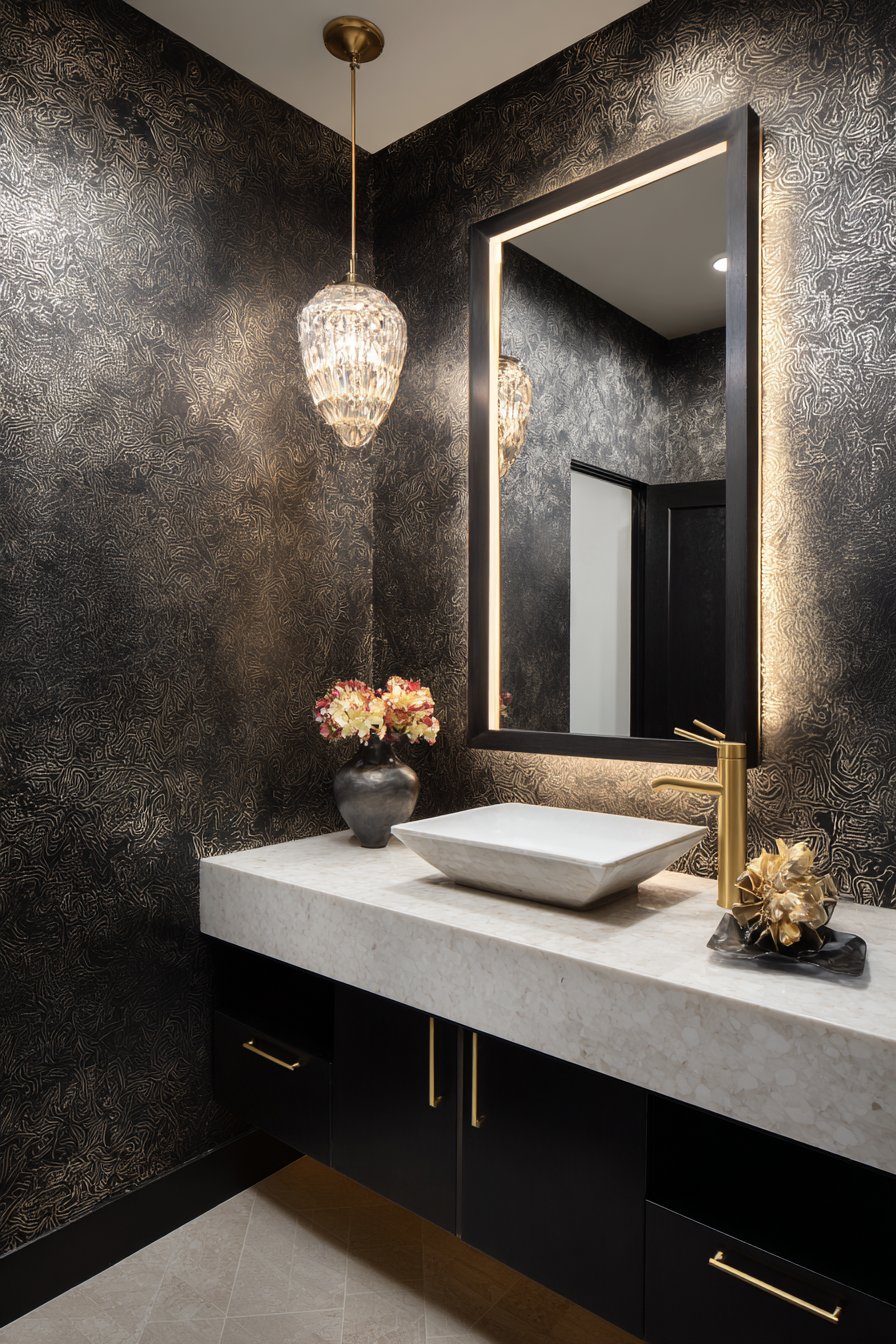
Glamorous sophistication reaches new heights in this luxe powder room where textured wallpaper in metallic silver pattern creates a shimmering accent wall that catches and reflects light throughout the day. The reflective quality amplifies available light while adding dimensional texture that makes the small space feel more substantial. A black floating vanity with white marble countertop creates dramatic contrast, its bold color pairing establishing instant visual impact while the vessel sink adds sculptural interest atop the luxurious stone surface.
Gold faucet and cabinet hardware introduce warm metallic accents that complement the silver wallpaper while preventing the scheme from feeling too cool or austere. These carefully chosen gold elements create a sophisticated mixed-metal approach that feels current and intentional rather than confused. The large rectangular mirror with integrated LED lighting provides modern functionality disguised as decorative element, its even illumination perfect for grooming tasks while the backlit glow creates atmospheric ambiance.
A crystal pendant light fixture serves as the room’s jewelry, its faceted surfaces catching light and casting prismatic patterns across walls and ceiling. This statement lighting transforms a functional powder room into a memorable space that guests discuss and remember. The layered luxury of textured walls, marble counters, mixed metals, and crystal lighting creates a powder room that feels like a jewelry box—precious, beautiful, and designed to make occupants feel special.
Key Design Tips:
- Use metallic wallpaper on accent walls to add glamour and light reflection
- Create drama with black vanities against white marble countertops
- Mix warm and cool metals for sophisticated, contemporary appeal
- Install mirrors with integrated LED lighting for flawless task illumination
- Choose crystal or glass light fixtures as statement pieces in small spaces
- Use vessel sinks to add sculptural interest and height variation
- Layer multiple light sources for adjustable ambiance
11. Industrial Exposed Brick Guest Bathroom
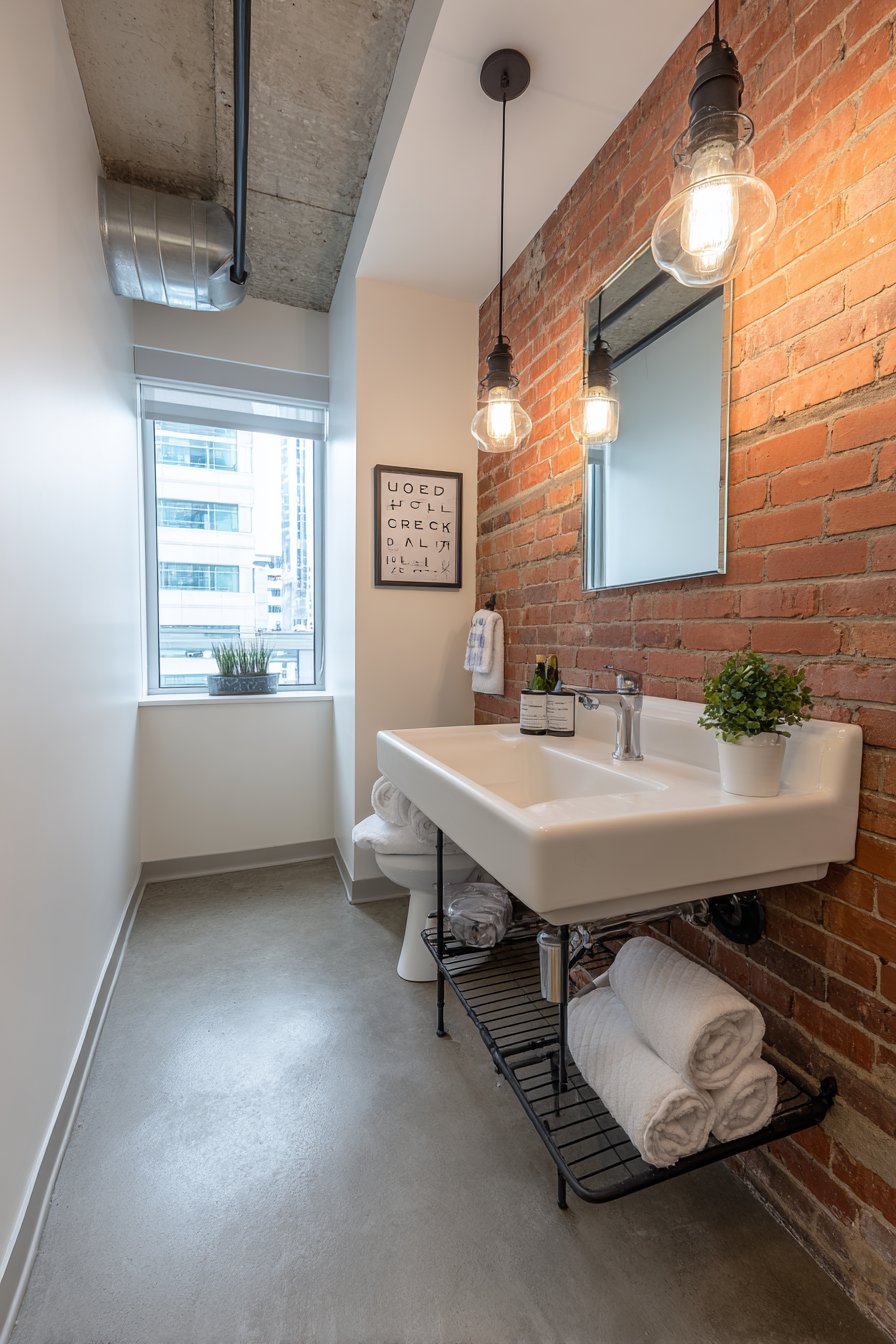
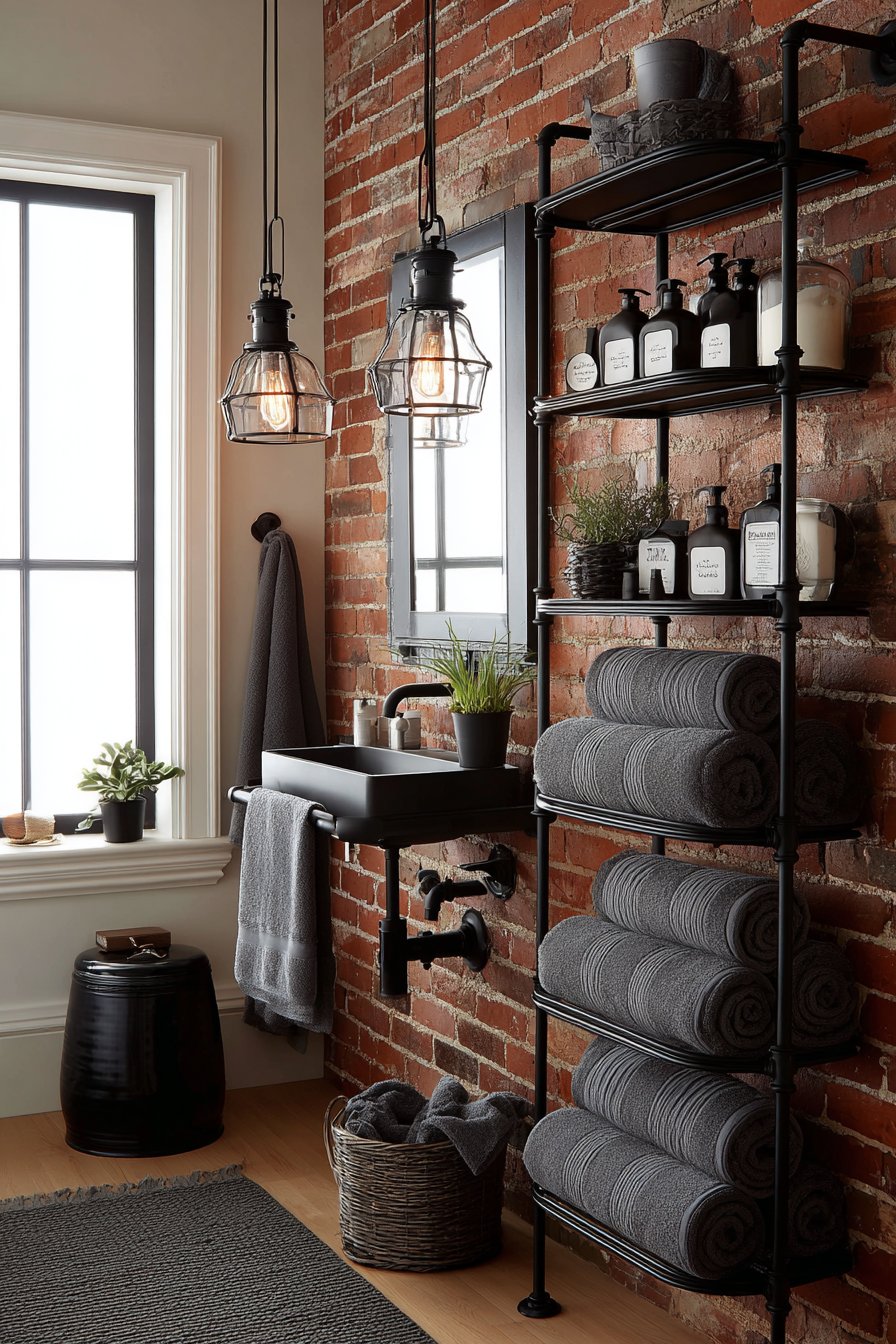
Urban edge defines this industrial-style guest bathroom where an exposed brick accent wall brings raw, textured character to the space. The brick’s natural variations in color and texture provide visual interest that manufactured materials cannot replicate, while its rough surface contrasts beautifully with smooth concrete-look porcelain floor tiles. Black metal pipe shelving continues the industrial aesthetic, its utilitarian construction proving that functional elements can be beautiful when thoughtfully designed and positioned.
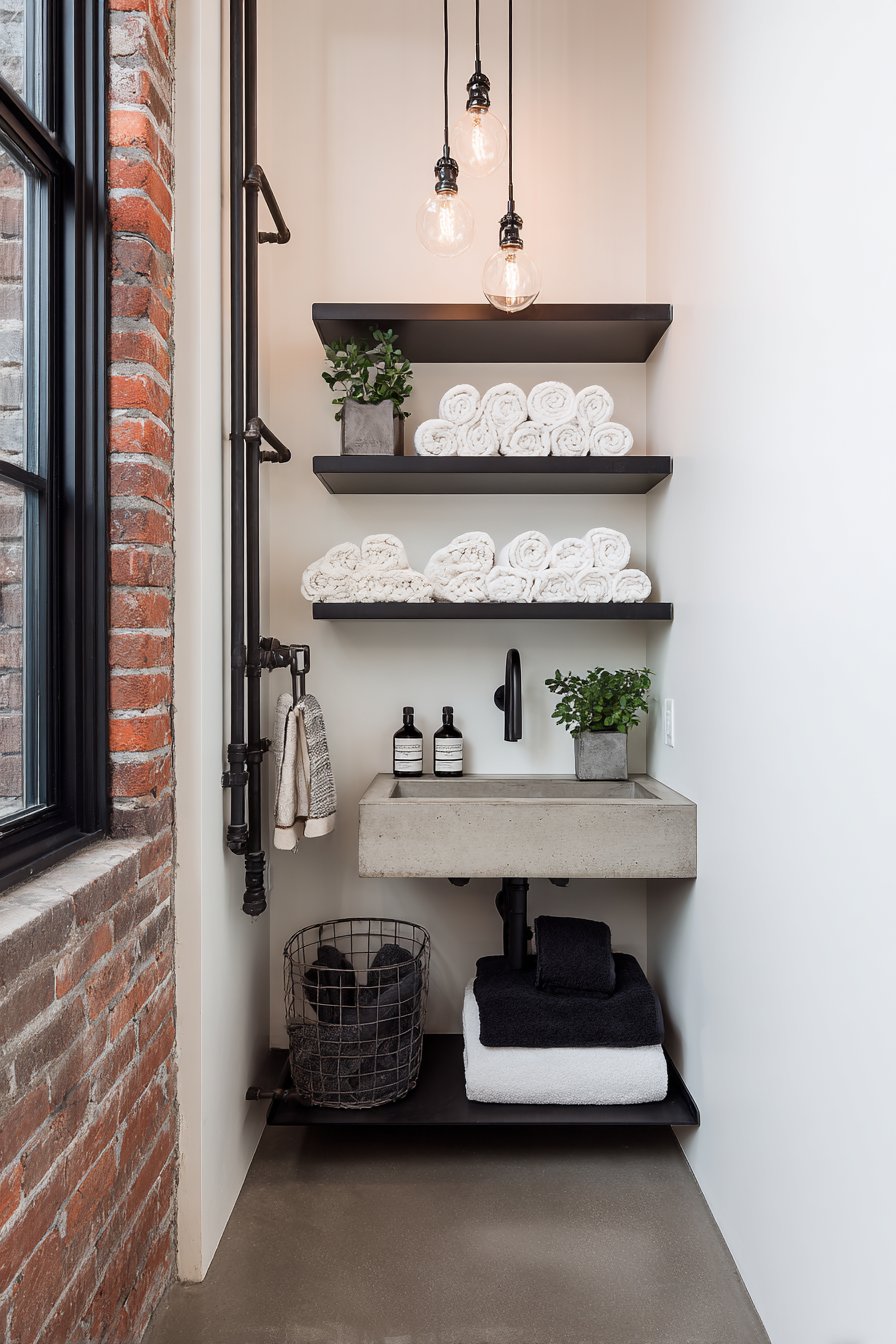
The wall-mounted sink with exposed plumbing embraces industrial design’s core principle—celebrating rather than concealing mechanical systems. Chrome or brushed nickel pipes and fittings become decorative elements that add authentic industrial character while remaining fully functional. Edison bulb pendant lights with black metal shades provide both task lighting and atmospheric glow, their vintage industrial styling perfect for this urban-inspired space.
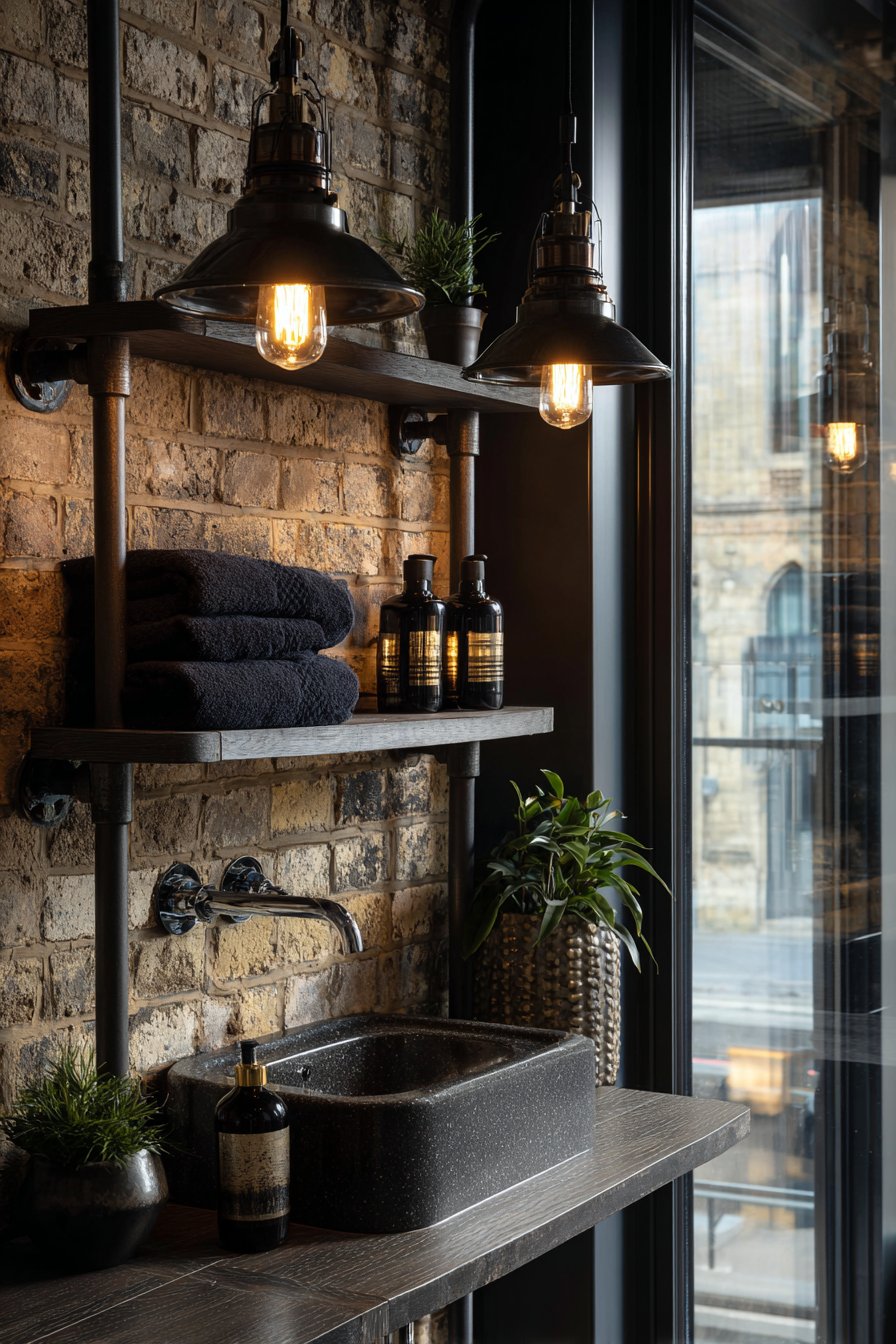
A small frosted window allows natural light to enter while maintaining privacy, its industrial-style metal framing reinforcing the design theme. The pipe shelving holds rolled towels and small plants, the living greenery softening hard surfaces and adding unexpected organic elements that prevent the industrial aesthetic from feeling cold or harsh. This design proves that industrial style can work beautifully in bathrooms when balanced with warm lighting, natural elements, and thoughtful material combinations.
Key Design Tips:
- Expose or add brick walls for authentic industrial texture and character
- Choose concrete-look tiles for floors to reinforce urban aesthetic
- Install black metal pipe shelving for functional industrial storage
- Use wall-mounted sinks with exposed plumbing as design features
- Select Edison bulb fixtures with metal shades for vintage industrial lighting
- Add living plants to soften hard industrial materials
- Include frosted windows with metal frames for privacy and style
12. Traditional Herringbone Subway Tile Bathroom
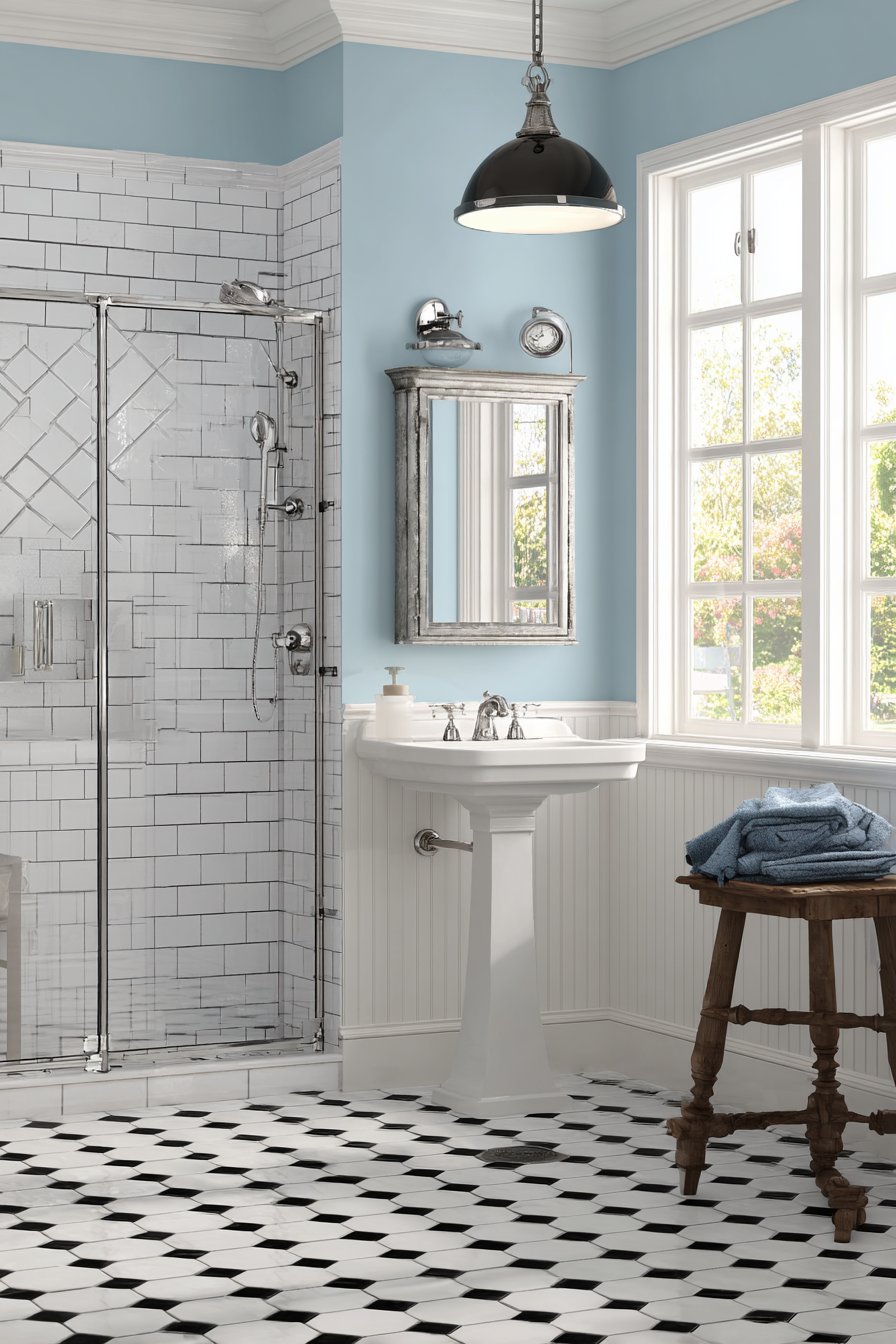
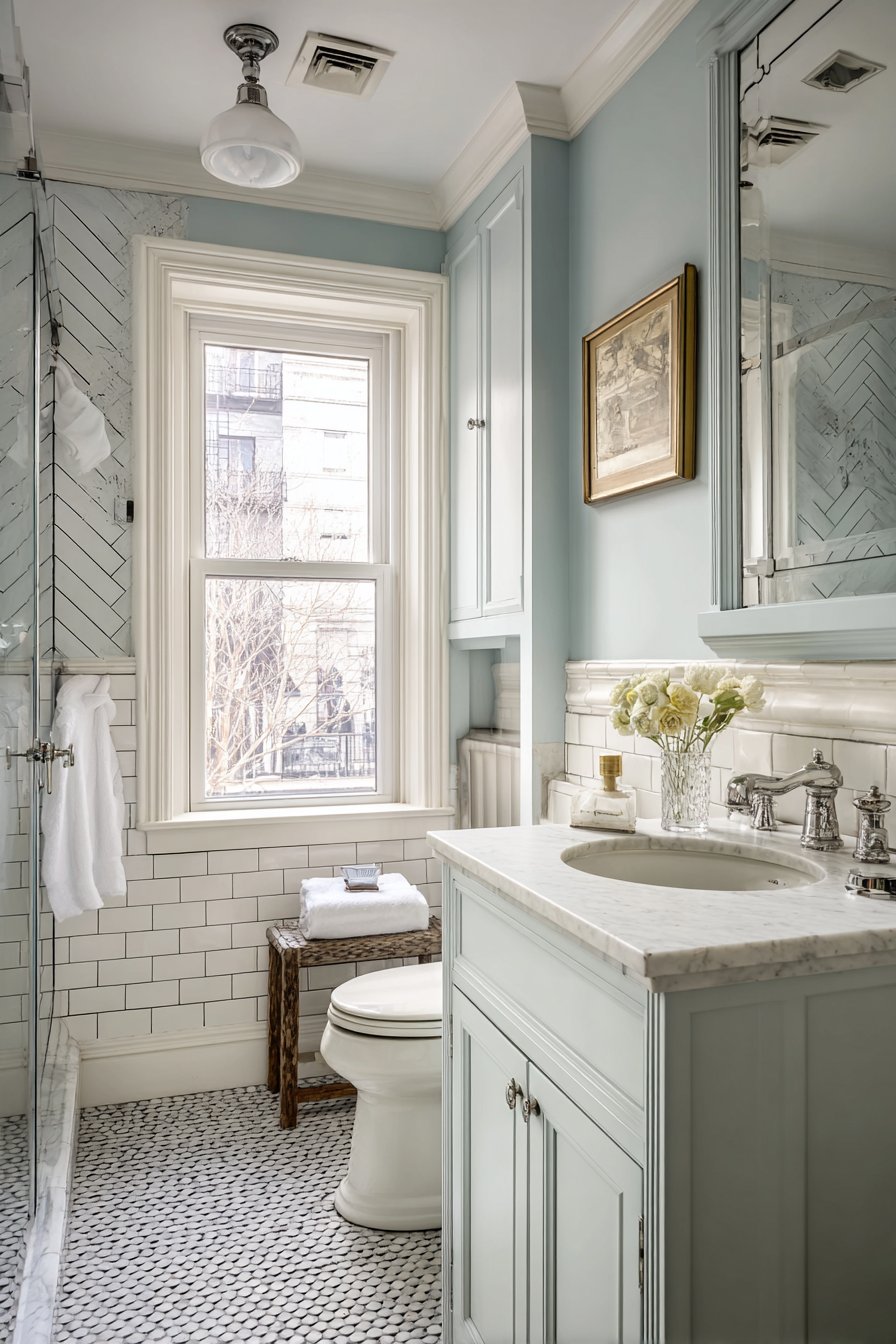
Timeless elegance pervades this traditional guest bathroom where classic white subway tiles arranged in herringbone pattern create visual interest without departing from conventional materials. The diagonal tile arrangement adds movement and sophistication to shower walls, demonstrating how installation pattern can dramatically elevate ordinary materials. A pedestal sink with polished chrome faucet maintains period-appropriate character, its graceful curves and classic proportions ensuring the design will remain beautiful for decades.
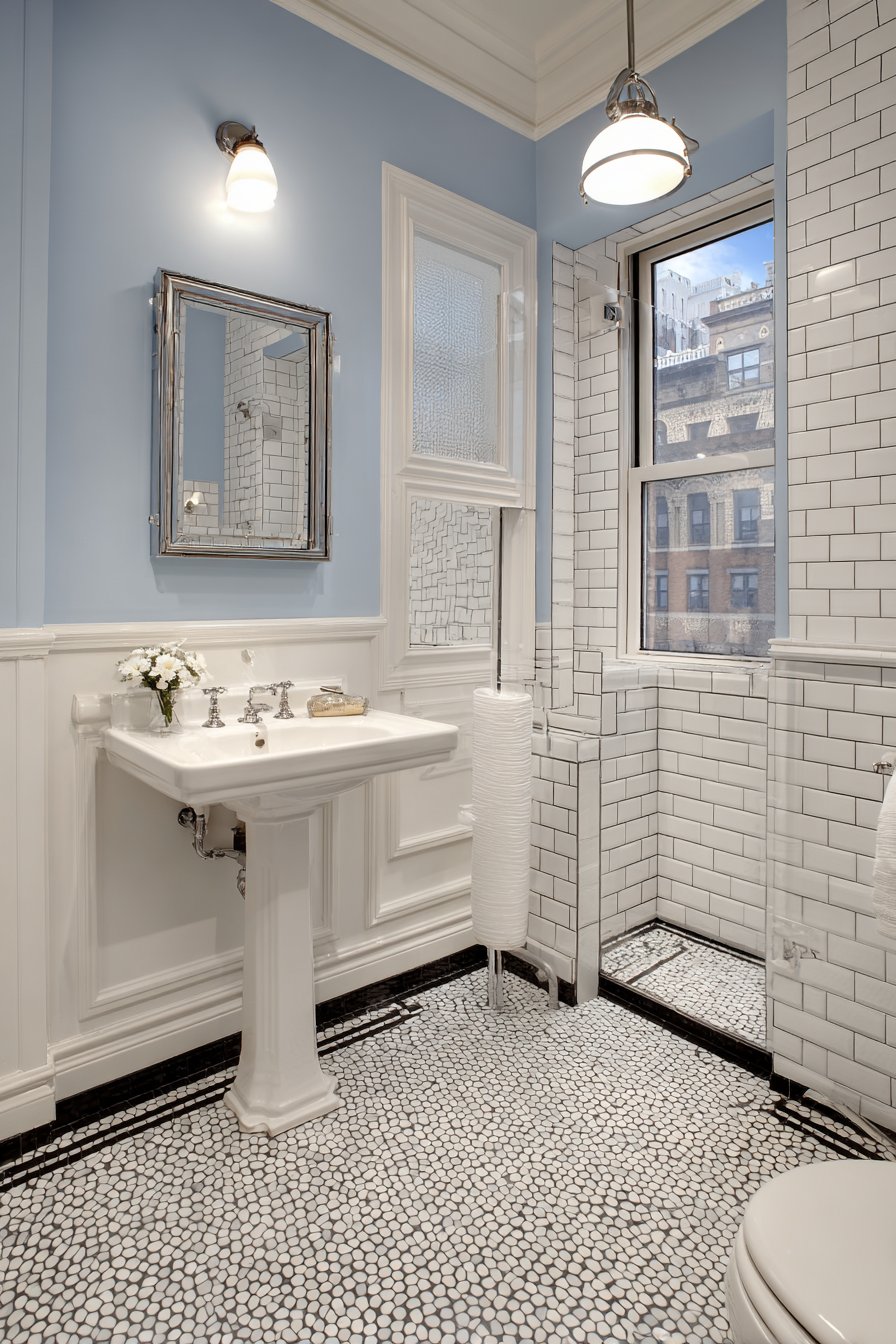
White wainscoting on lower walls paired with pale blue paint above creates architectural dimension while the horizontal division makes modest ceiling heights appear taller. The color separation also introduces the opportunity to incorporate personality through paint color without overwhelming the space. A vintage-style medicine cabinet provides practical storage while its design details—whether beveled mirror edges or period-appropriate hardware—contribute to the traditional character.
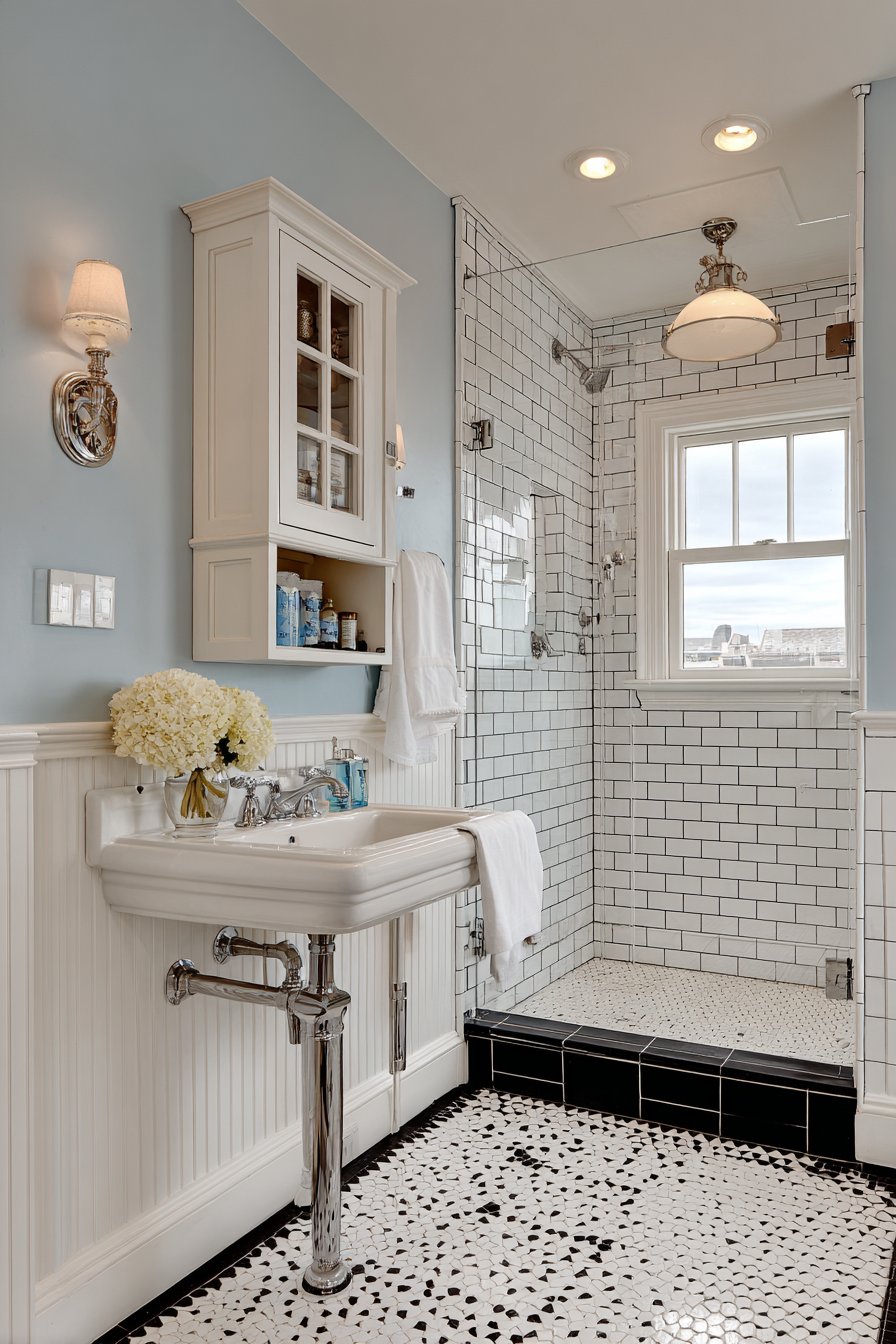
Hexagonal floor tiles in black and white add period-appropriate detail underfoot, their small-scale pattern providing visual interest without competing with the herringbone walls. Natural window light supplemented by a classic schoolhouse pendant creates layered illumination that feels warm and inviting throughout the day. This design demonstrates how traditional doesn’t mean boring—careful attention to material quality, pattern variation, and architectural detail creates spaces with enduring appeal that transcends trends.
Key Design Tips:
- Install subway tiles in herringbone pattern for elevated traditional style
- Use wainscoting to add architectural detail and visual height
- Choose pedestal sinks with classic proportions for timeless appeal
- Paint walls above wainscoting in soft complementary colors
- Install vintage-style medicine cabinets for period-appropriate storage
- Use small hexagonal floor tiles for traditional bathroom character
- Include schoolhouse pendant lights for authentic period lighting
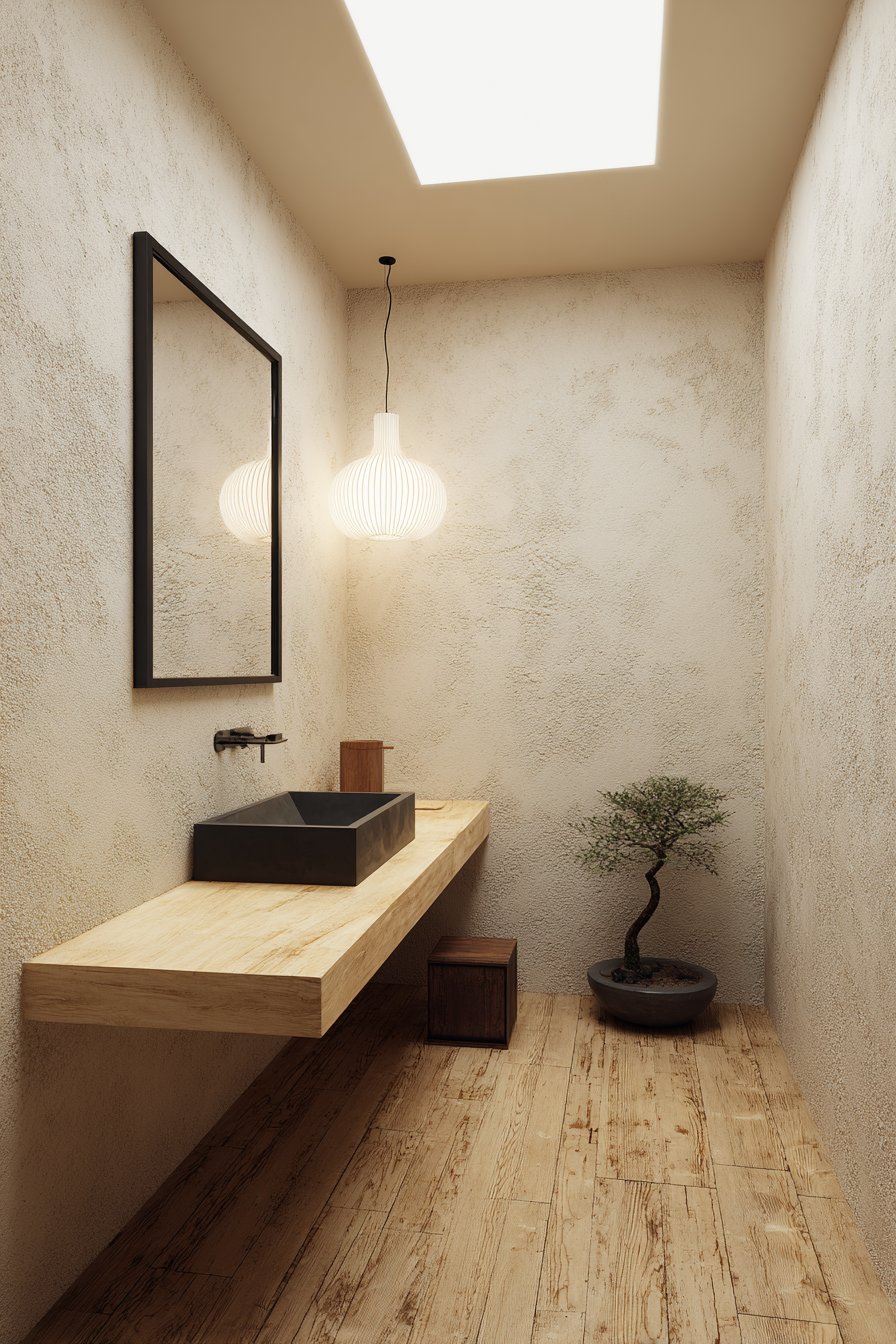
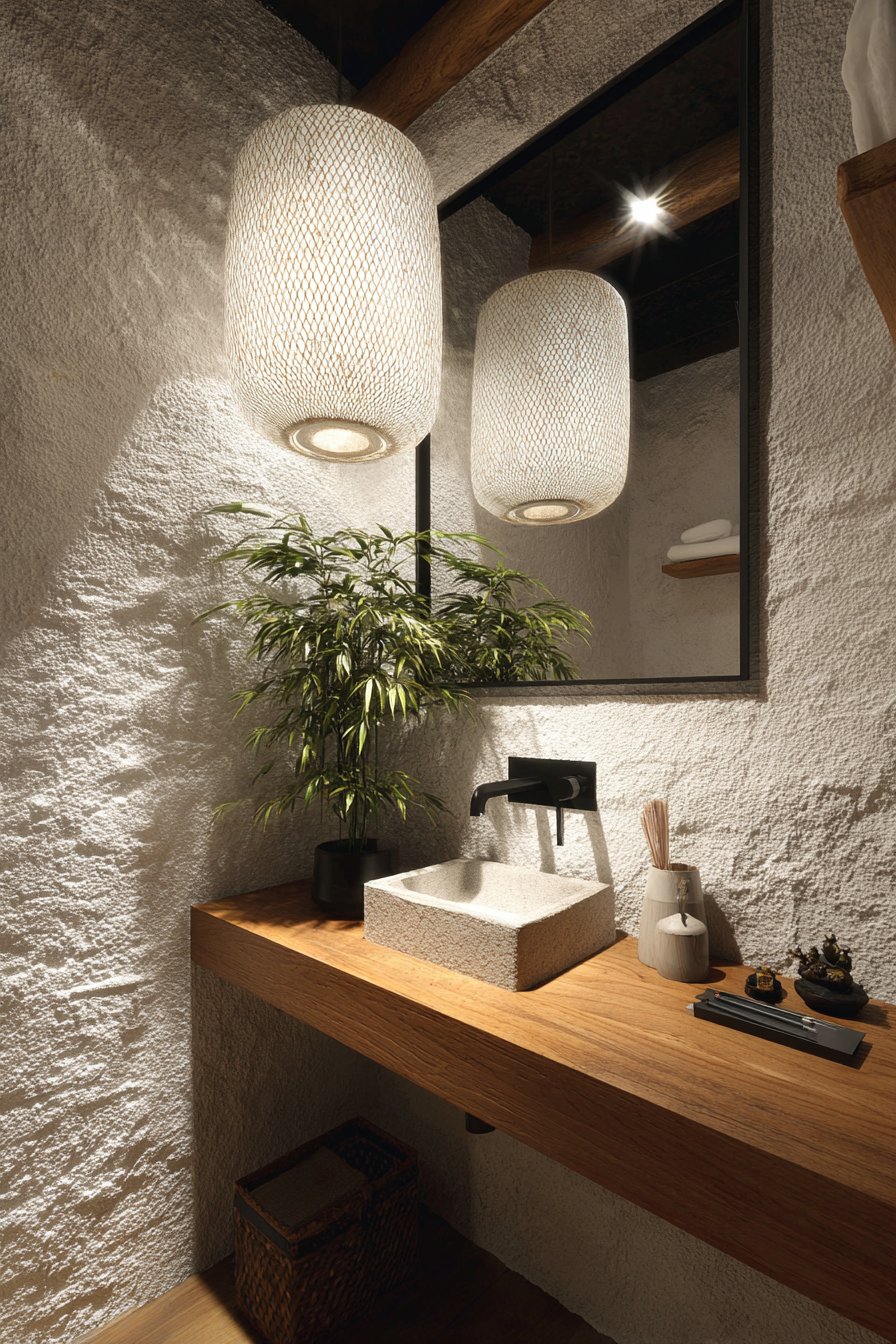
13. Japandi Zen Powder Room
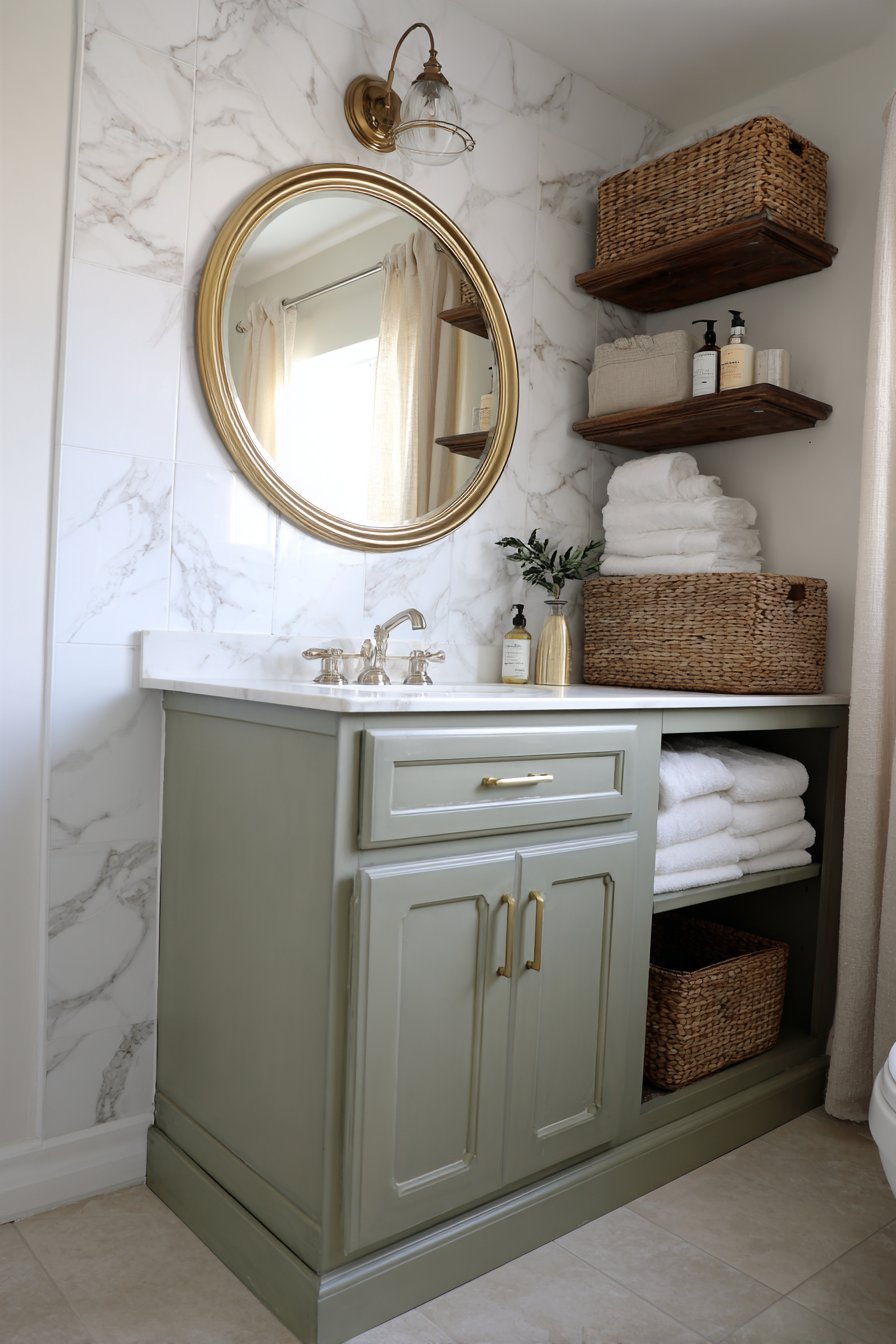
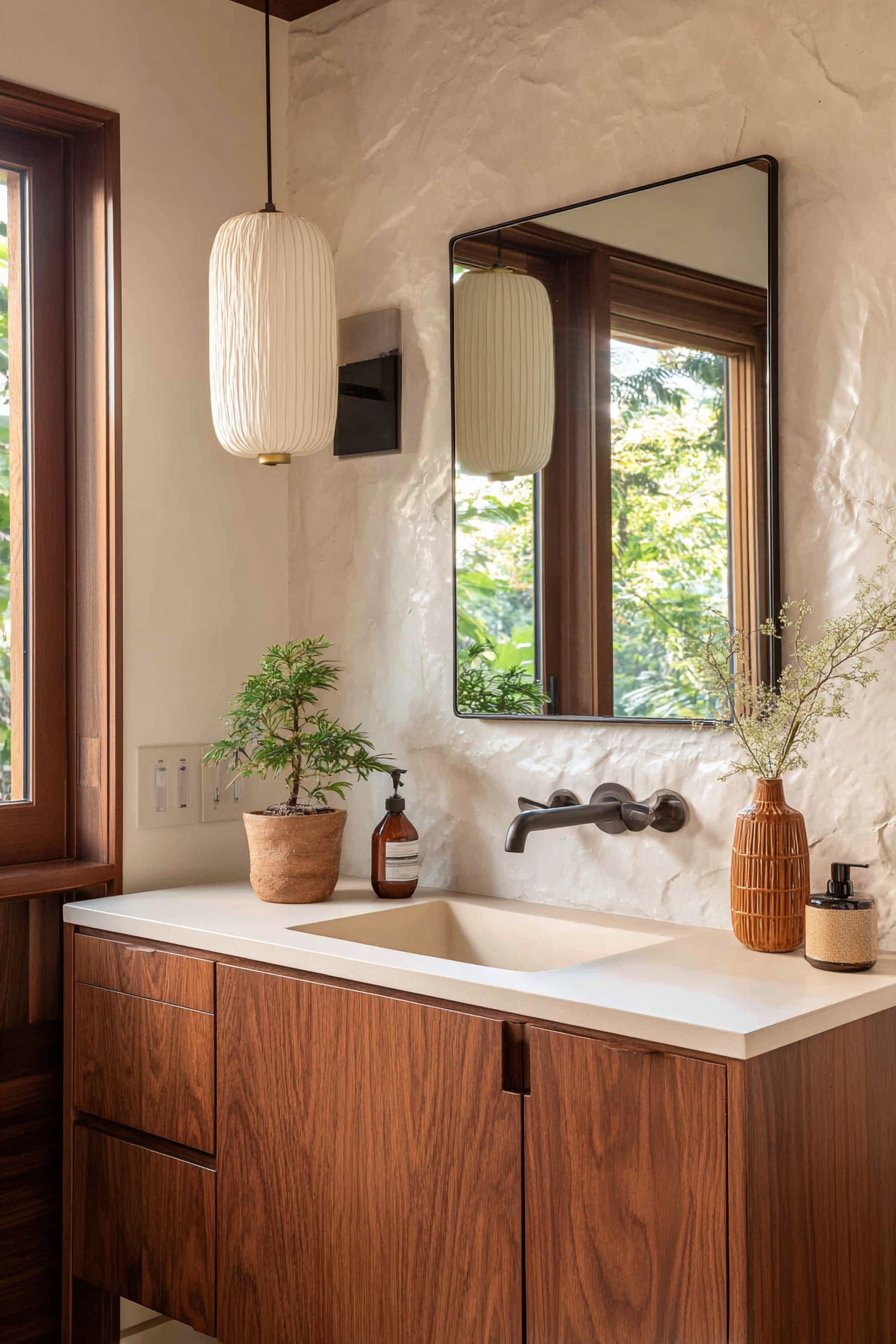
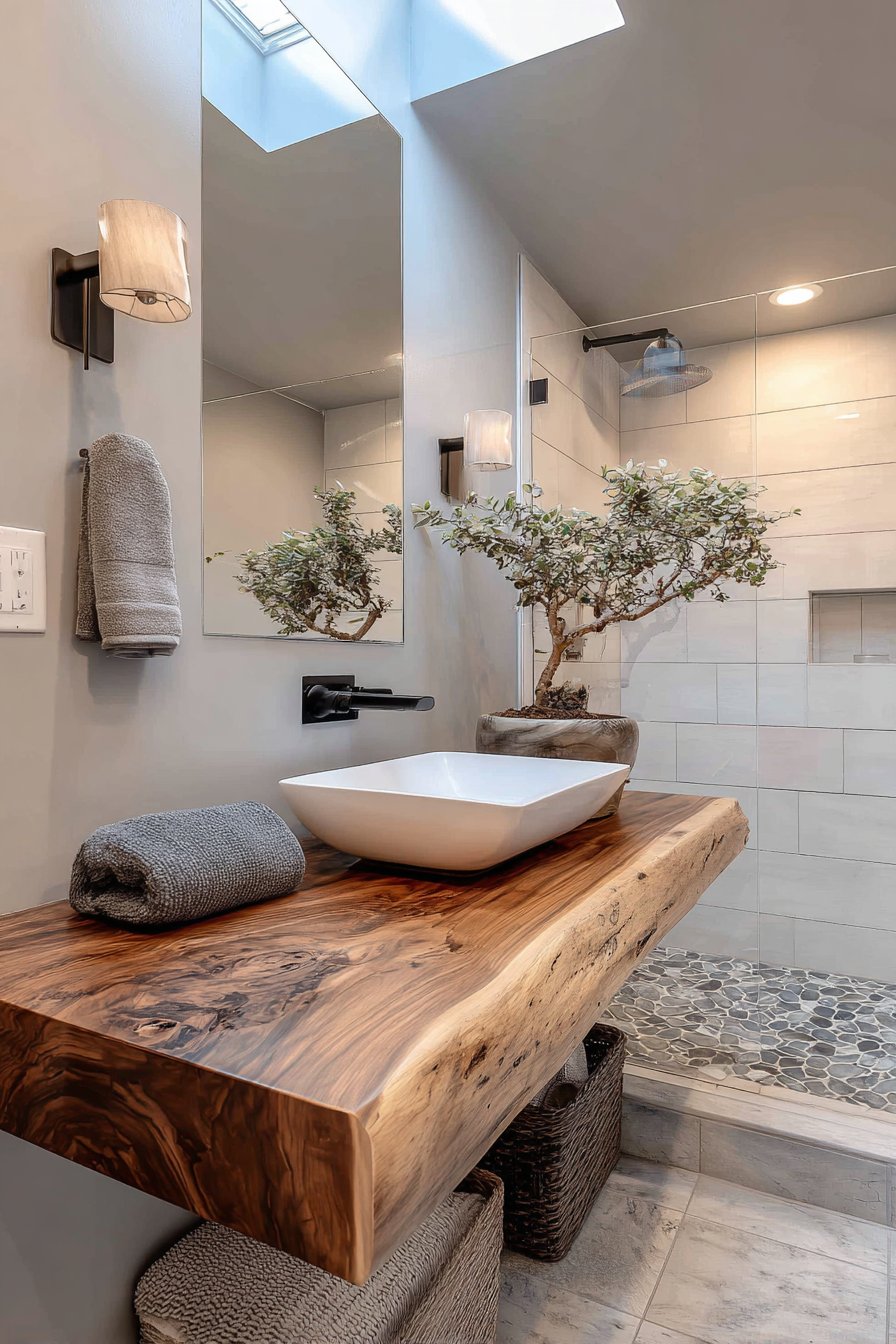
East meets North in this Japandi-inspired powder room where Japanese minimalism blends seamlessly with Scandinavian warmth to create a uniquely serene space. The natural wood floating vanity with integrated sink sits against textured plaster walls in warm white, the organic wood grain providing essential warmth while the integrated sink maintains clean, uncluttered lines central to both design philosophies. A black metal framed mirror and fixtures provide necessary contrast without introducing ornamental excess, their simple geometric forms respecting both Japanese and Scandinavian aesthetic principles.
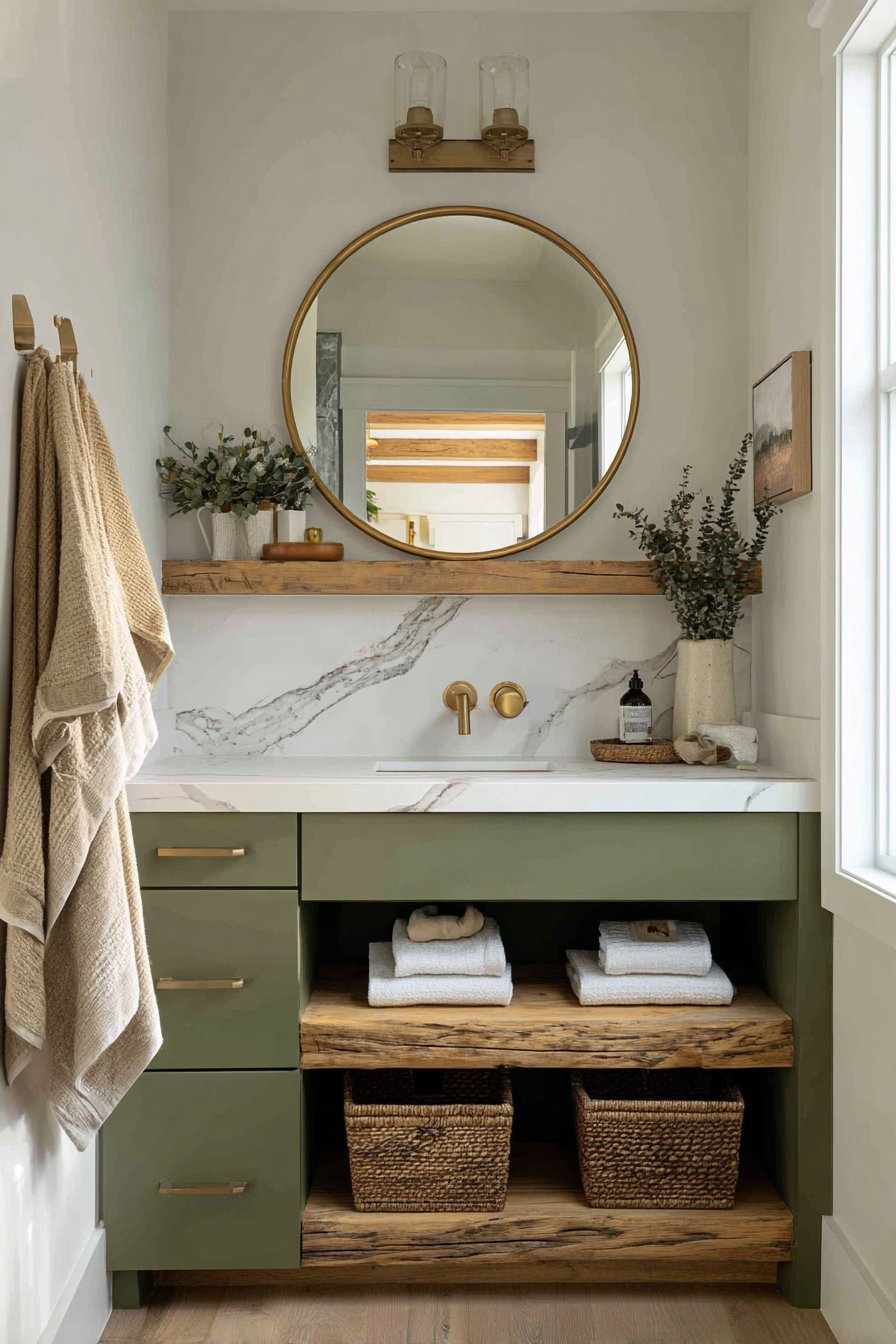
Bamboo accessories and a small bonsai tree introduce living elements and natural materials that connect occupants to nature, fulfilling the Japanese concept of bringing outdoors in while the careful curation and restraint reflect Scandinavian sensibilities. Each accessory serves both functional and aesthetic purposes, with nothing included purely for decoration. A paper pendant light fixture creates soft, diffused ambient glow, its translucent shade filtering light gently while its organic material reinforces the natural material palette.
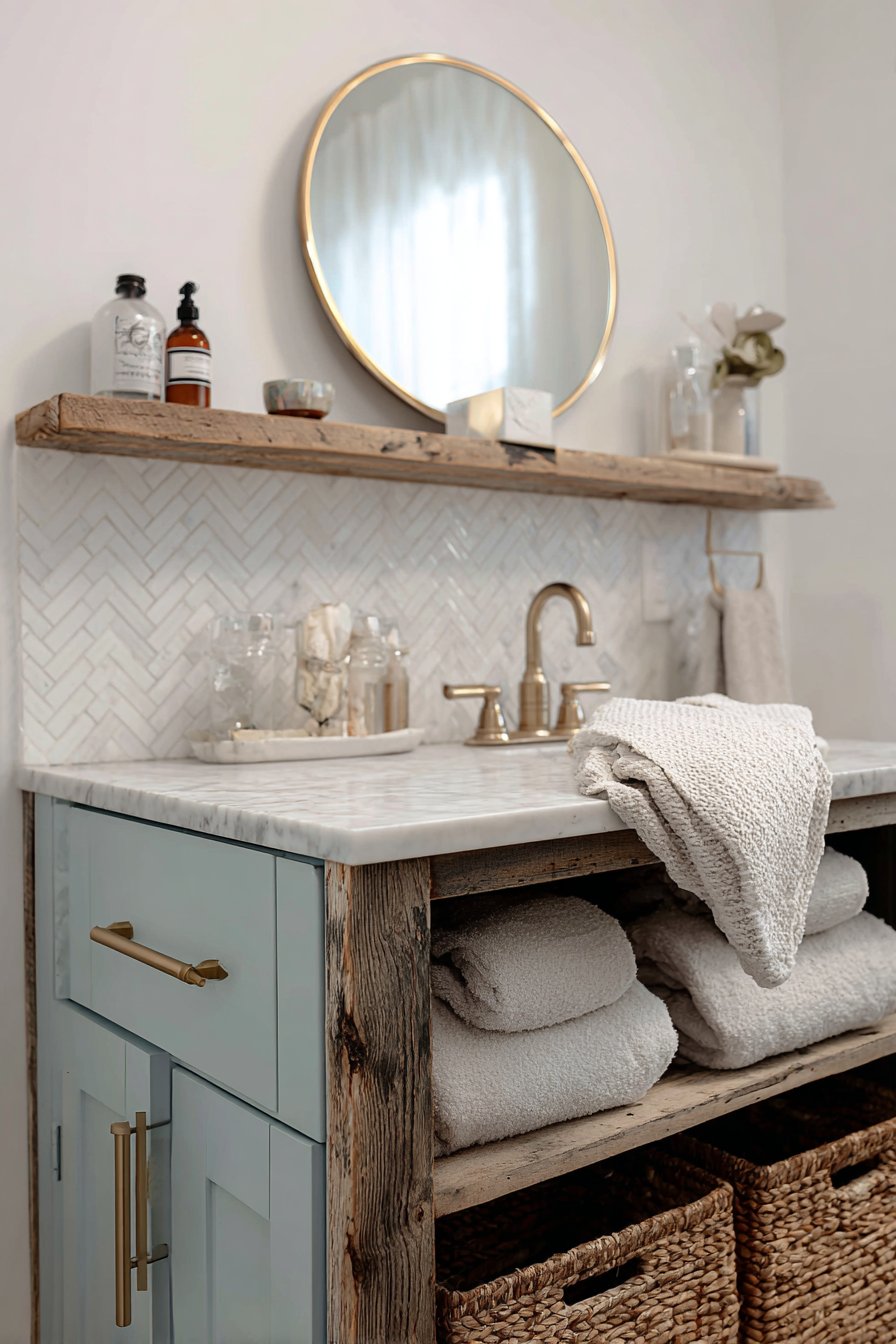
Natural light from a skylight enhances the zen-like tranquility, connecting the space to natural light cycles and weather patterns that remind occupants of their place within larger natural systems. The overall effect is a powder room that feels like a meditation space—calm, centered, and completely free of visual noise or unnecessary elements. This design demonstrates how two similar but distinct design philosophies can combine to create something greater than either alone.
Key Design Tips:
- Blend Japanese minimalism with Scandinavian warmth for Japandi style
- Choose natural wood vanities with integrated sinks for seamless, organic design
- Use textured plaster walls for subtle visual interest without pattern
- Include living plants like bonsai for connection to nature
- Select bamboo accessories for authentic natural material palette
- Install paper pendant lights for soft, diffused ambient illumination
- Incorporate skylights to connect indoor spaces with natural light and weather
14. Budget-Friendly Sage Green Makeover
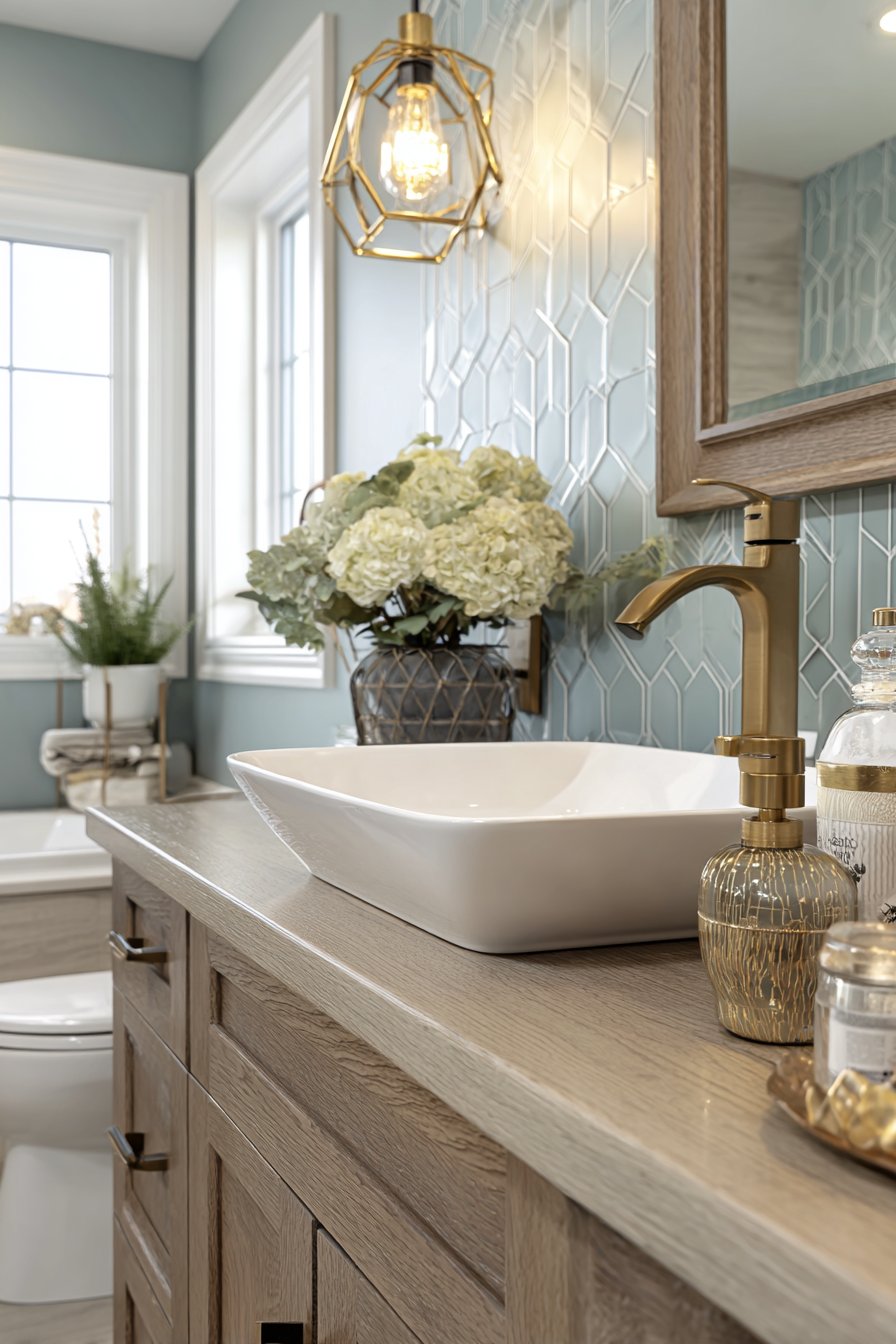
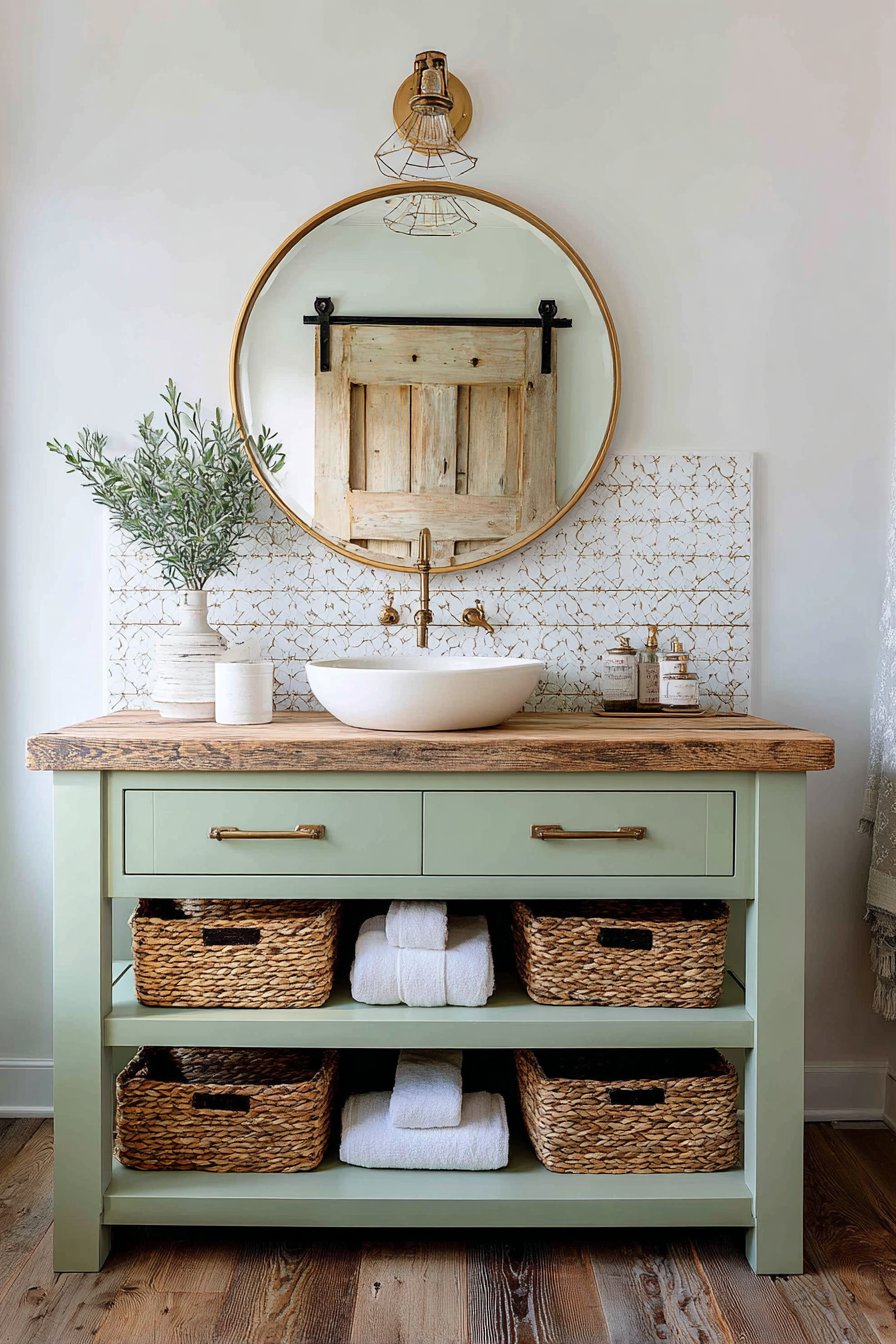
Smart updating on a budget comes to life in this guest bathroom makeover where painted vanity in sage green transforms an existing piece into something fresh and current. New brushed brass hardware replaces dated pulls and knobs, instantly elevating the vanity’s perceived value while the on-trend sage green paint color brings this bathroom firmly into contemporary design conversations. This demonstrates how paint and hardware updates deliver maximum impact for minimal investment.
Peel-and-stick tile backsplash in white marble pattern adds affordable elegance without the expense and disruption of traditional tile installation, while its water-resistant surface protects walls from splashes. Modern manufacturing has dramatically improved peel-and-stick materials, making them viable options for rental properties or budget-conscious homeowners who want high style without permanent commitment. A round gold mirror above the sink creates a focal point, its warm metallic finish coordinating with the brass hardware while its shape softens the vanity’s rectangular form.
Open shelving made from reclaimed wood holds baskets and towels, introducing both storage and decorative display while the weathered wood adds character and texture at minimal cost. An updated light fixture in modern farmhouse style provides improved illumination while contributing to the room’s cohesive updated aesthetic. This makeover proves that spare bathrooms can be transformed beautifully without major renovation or significant investment when homeowners focus on high-impact changes like paint color, hardware, and strategic accessories.
Key Design Tips:
- Paint existing vanities in trending colors for instant updated appearance
- Replace hardware with current finishes like brushed brass or matte black
- Use peel-and-stick tiles for affordable backsplashes without renovation
- Add round mirrors to soften rectangular vanities and create focal points
- Build simple open shelving from reclaimed wood for character and storage
- Update light fixtures to current styles for improved function and aesthetics
- Use baskets for organized storage that doubles as decorative element
15. Bold Black and White Powder Room
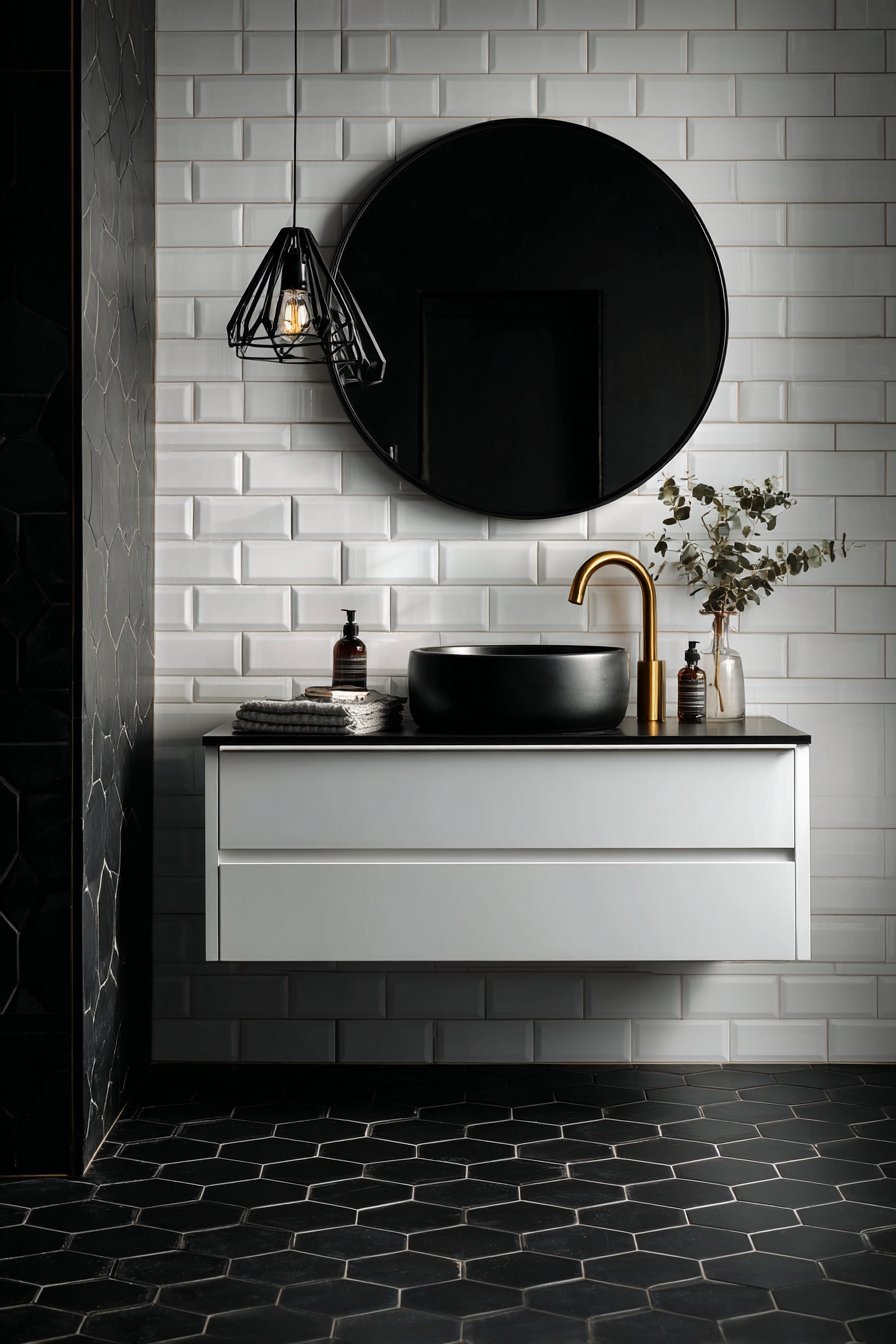
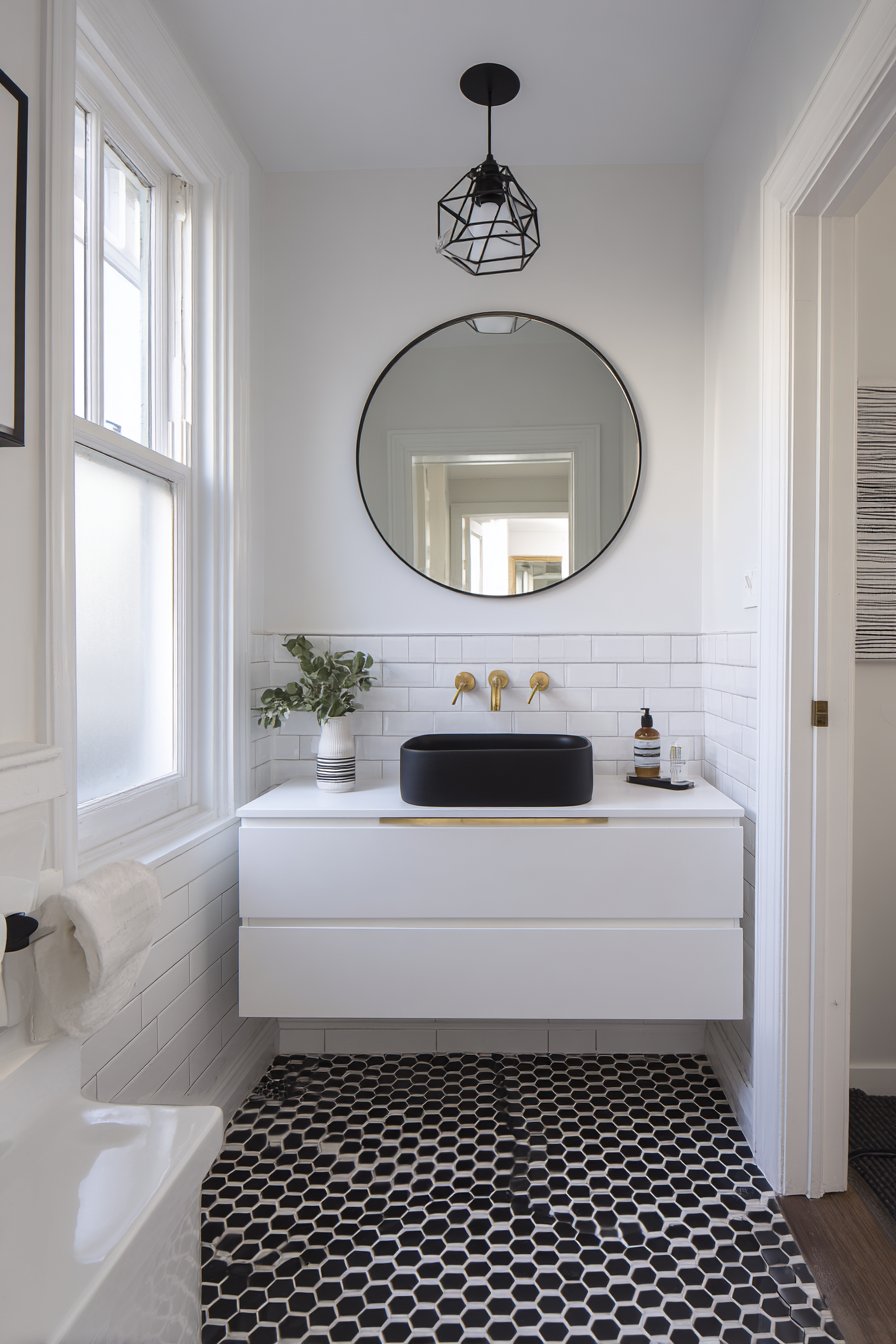
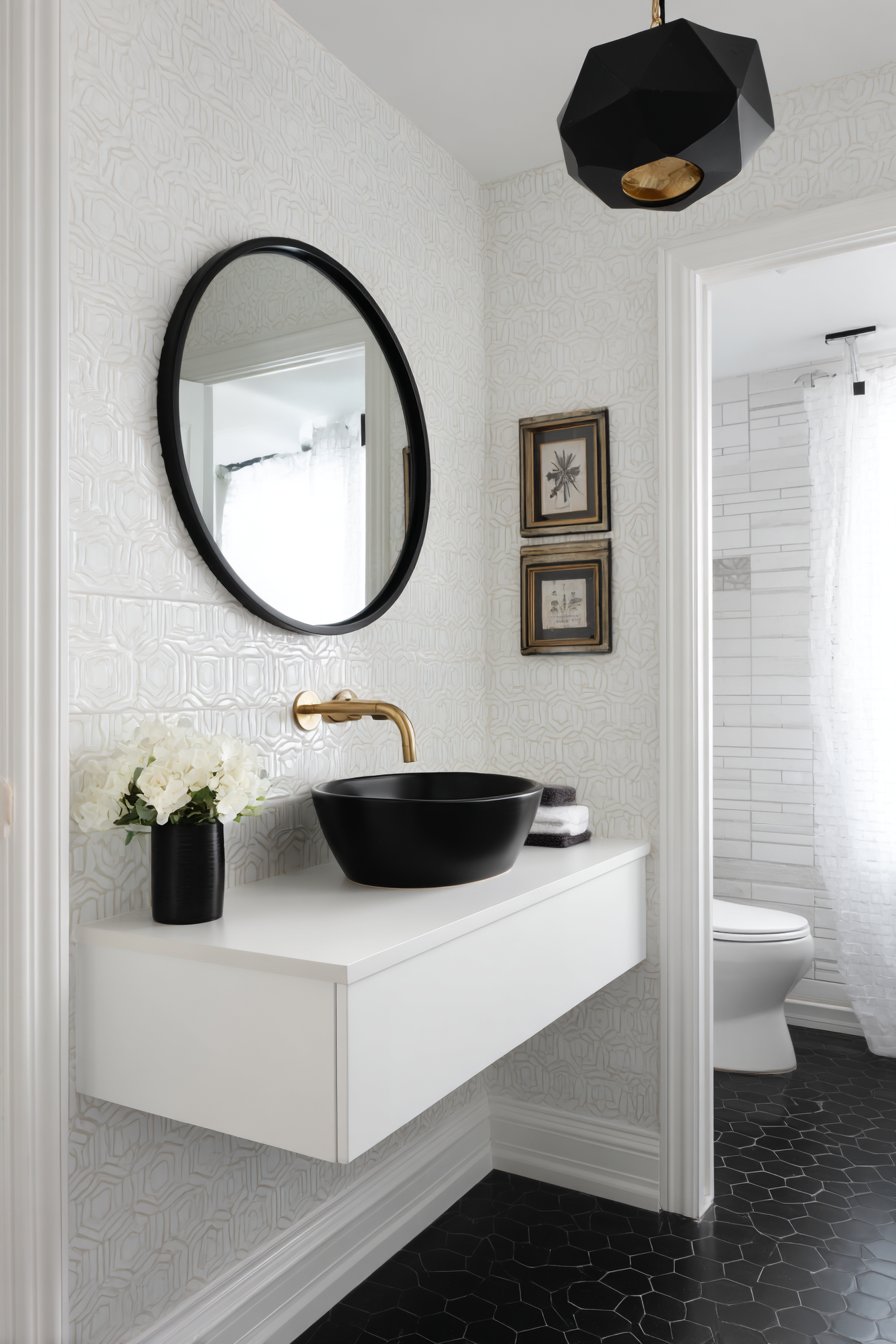
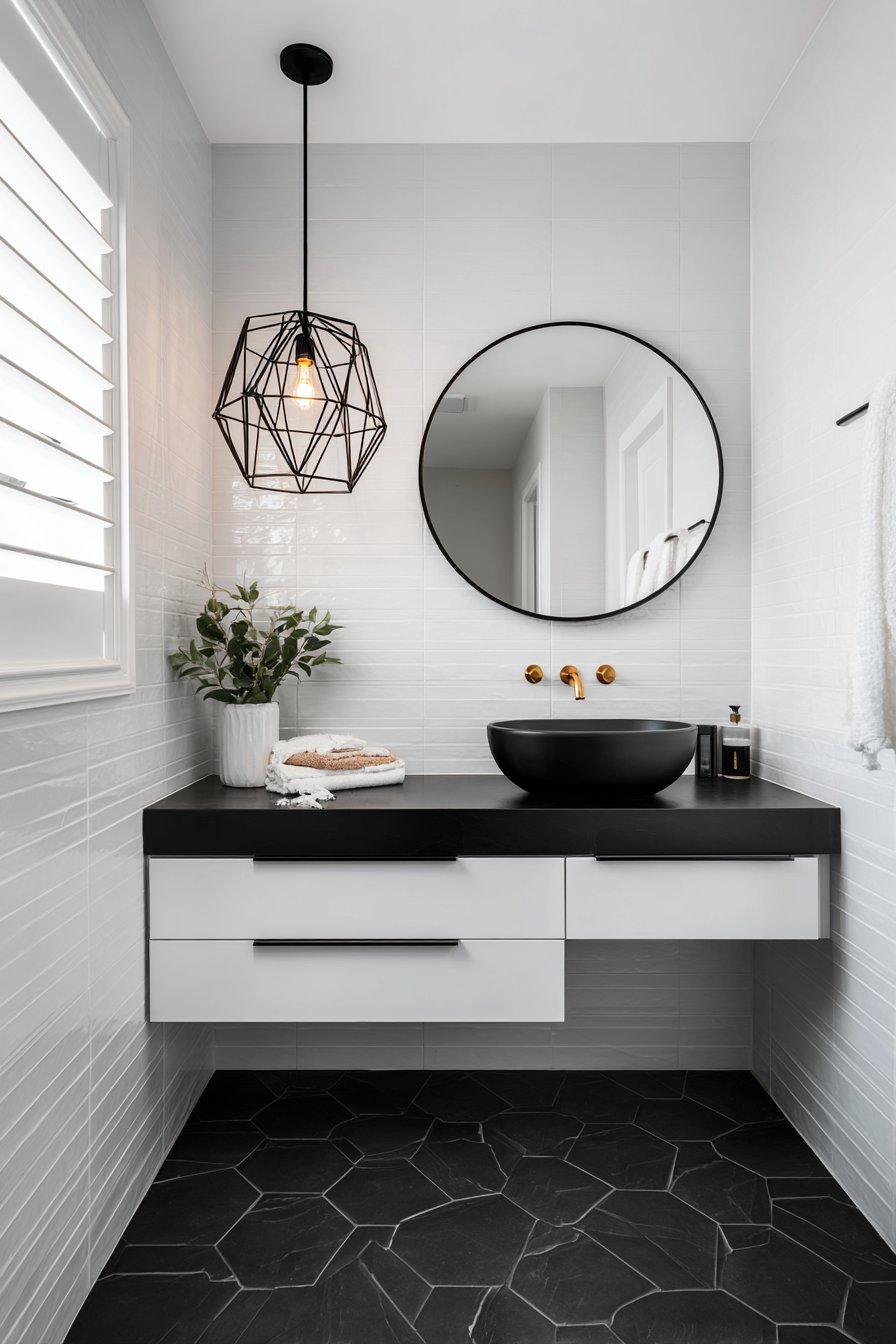
Graphic impact defines this modern black and white powder room where matte black hexagonal floor tiles create immediate visual drama underfoot. The bold geometric pattern establishes the room’s personality, allowing other elements to remain relatively simple while still contributing to a cohesive, striking design. A white wall-mounted floating vanity with black vessel sink continues the monochromatic scheme, the color reversal creating interest through contrast while the vessel sink adds sculptural dimension.
The gold faucet introduces a warm metallic accent that prevents the strict black and white scheme from feeling too stark or cold, its luxe finish adding sophistication and unexpected warmth. This single element in a third tone demonstrates how even the strictest color schemes benefit from a metallic accent that ties elements together. White subway tiles on walls keep the space bright and prevent the black floor from darkening the room, their classic pattern providing textural interest without competing with the bold flooring.
A large round mirror with thin black frame hangs above the vanity, its simple geometric form reinforcing the modern aesthetic while its reflective surface bounces light throughout the space. A geometric black pendant light completes the graphic composition, its angular form adding architectural interest while providing focused task lighting. This powder room proves that bold, graphic design can work beautifully in small spaces when carefully balanced and thoughtfully composed.
Key Design Tips:
- Use bold black and white patterns on floors for dramatic impact
- Create interest through color reversal between fixtures and surfaces
- Add single warm metallic accent to prevent stark monochromatic schemes
- Keep walls light when floors are dark to maintain brightness
- Choose geometric light fixtures that reinforce modern aesthetic
- Use round mirrors to soften angular geometric elements
- Maintain strict color discipline for maximum graphic impact
16. Natural Stone Spa Bathroom
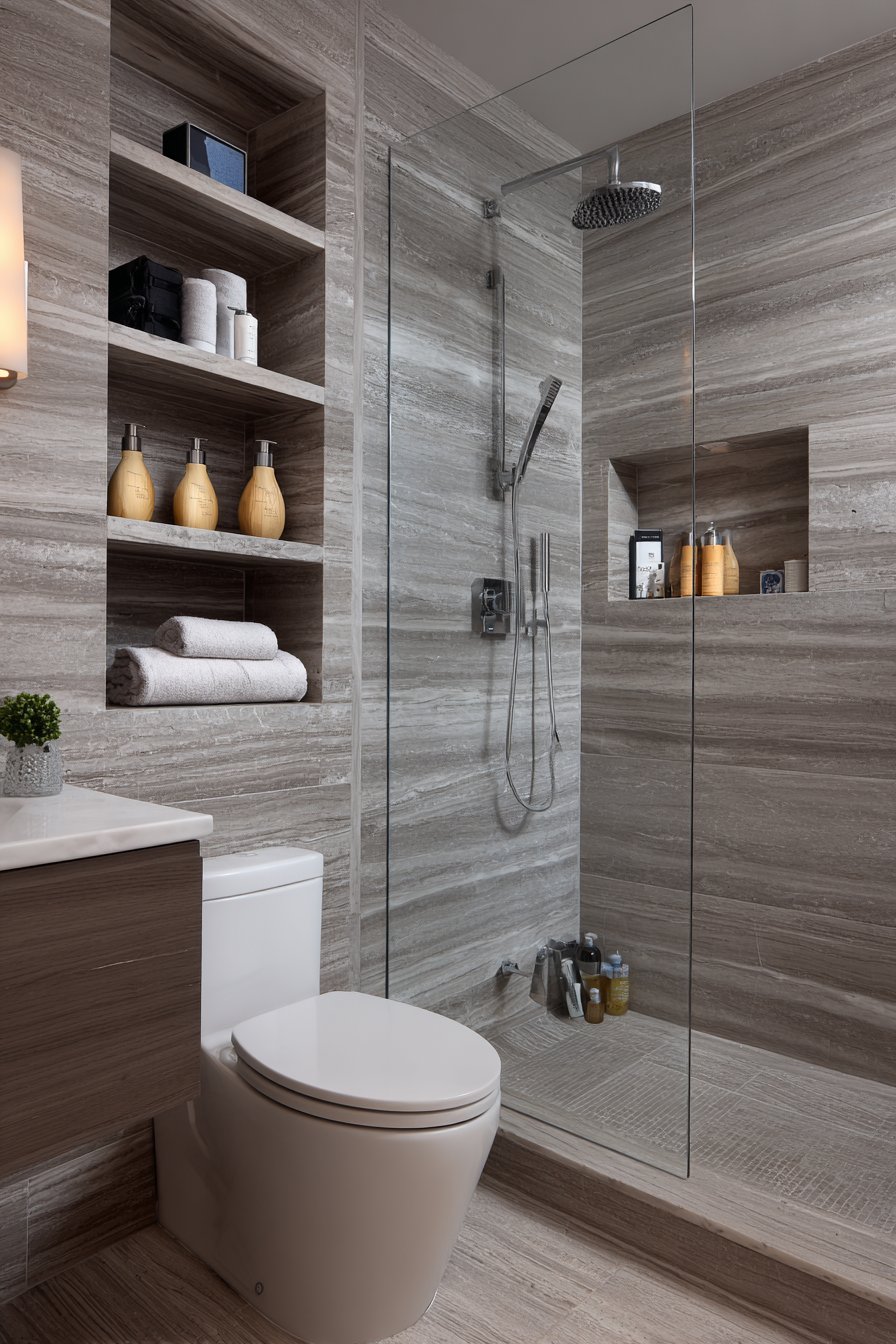
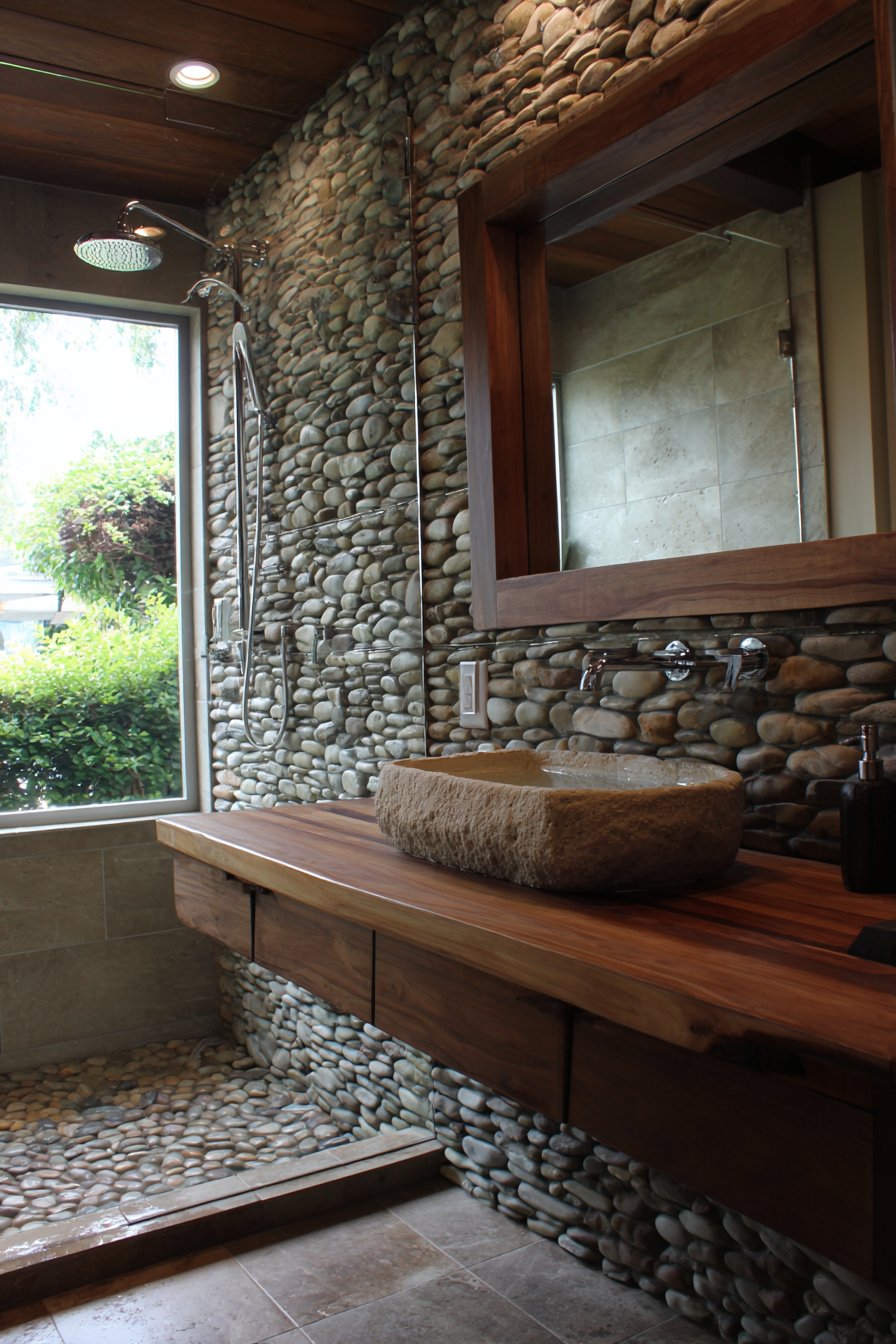
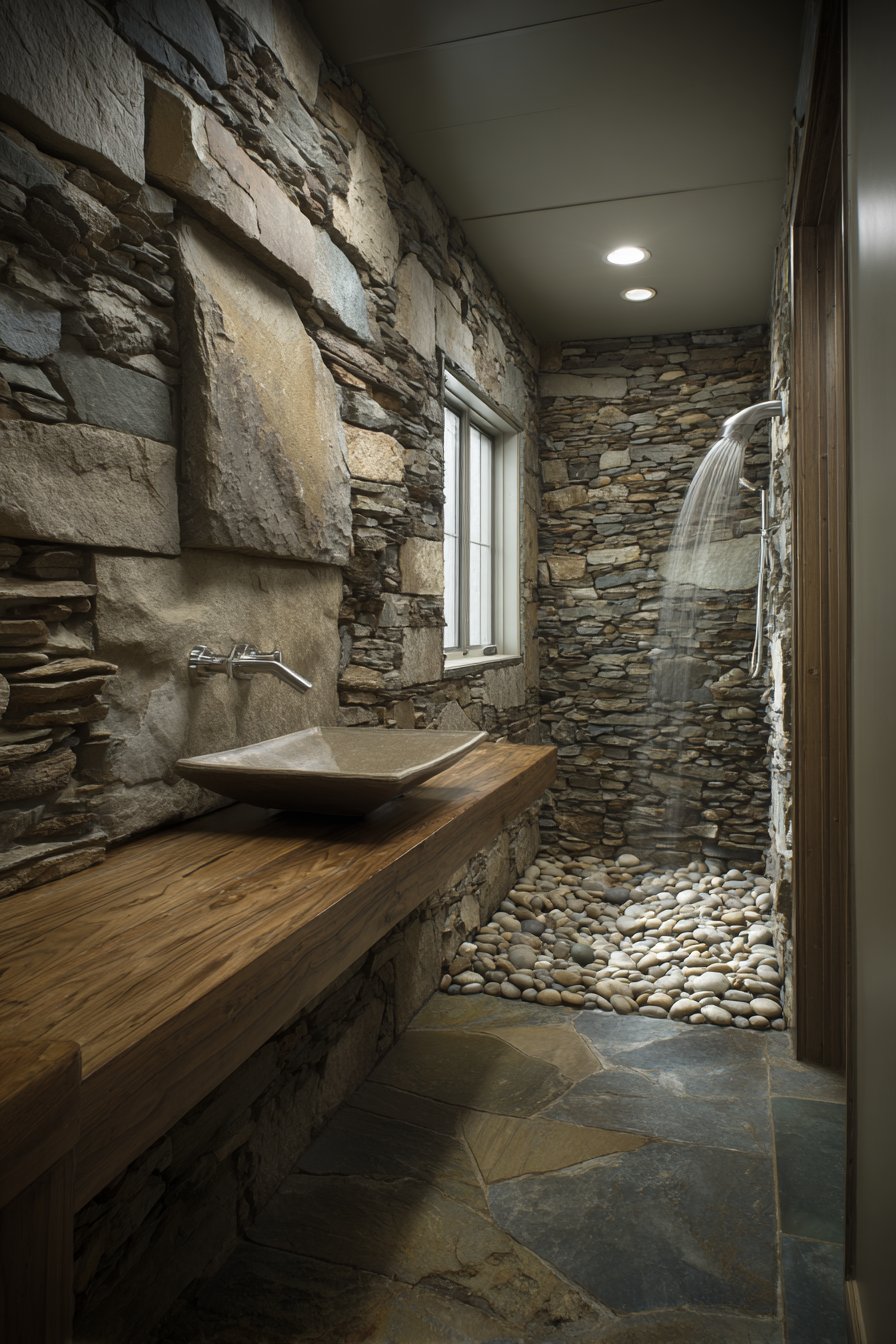
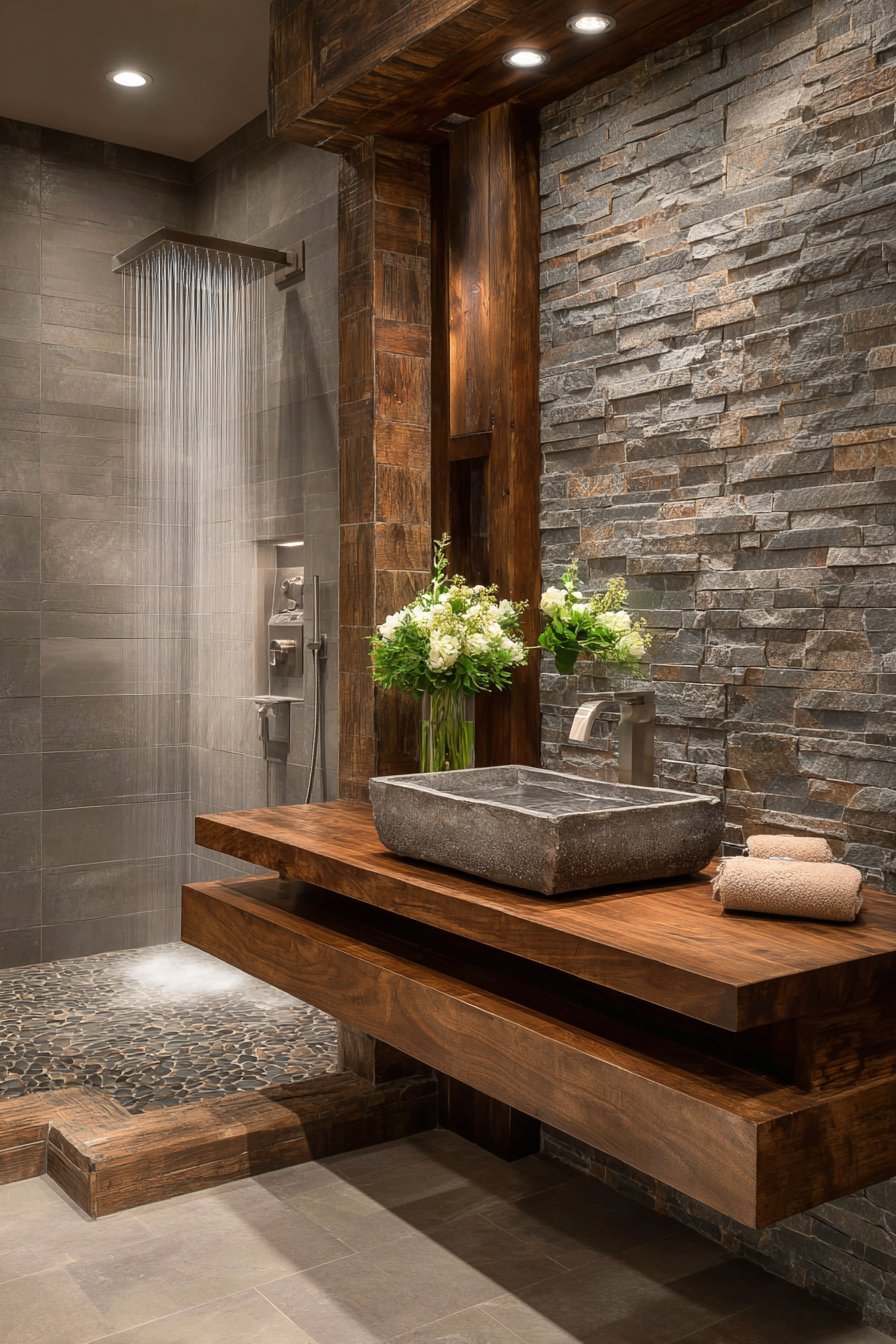
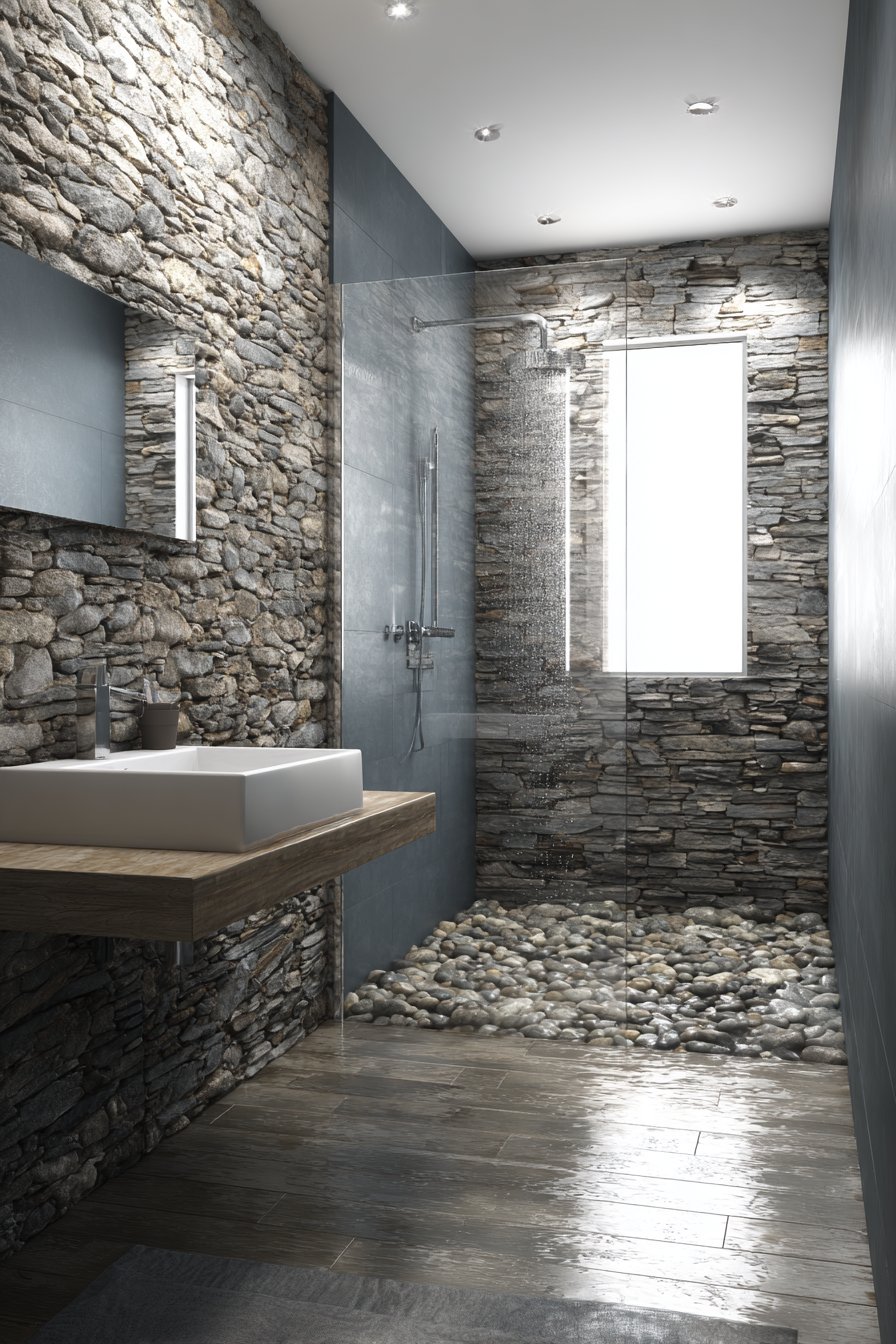
Organic luxury pervades this spa-inspired guest bathroom where natural stone accent wall in stacked slate brings textured three-dimensionality and earthy character to the space. The stone’s natural variations in color, texture, and depth create visual interest that draws the eye while providing a stunning backdrop for the teak wood floating vanity. The combination of stone and wood—both in their natural states with visible grain and variation—creates an inherently relaxing environment that connects occupants to nature.
The rectangular vessel sink in white provides clean contrast to the warm wood below while the chrome waterfall faucet adds modern sculptural interest, its flowing form echoing water in nature. River rock floor tiles in the shower area continue the natural theme, their smooth rounded stones providing gentle foot massage while their appearance reinforces the spa-like atmosphere. A rainfall showerhead enhances this feeling, delivering water in a manner that mimics natural rain rather than aggressive shower spray.
Soft recessed lighting combined with natural window light creates the gentle, adjustable illumination essential to spa environments where harsh lighting would shatter the tranquil mood. The lighting design allows for bright task lighting when needed but can be dimmed for relaxation. This bathroom demonstrates how natural materials, organic forms, and thoughtful lighting combine to create genuinely restorative spaces where guests feel pampered and restored.
Key Design Tips:
- Install stacked stone accent walls for dramatic natural texture
- Choose teak or other naturally water-resistant woods for vanities
- Use river rock tiles in shower areas for natural texture and foot massage
- Include waterfall faucets for sculptural modern interest
- Install rainfall showerheads to enhance spa-like experience
- Layer soft recessed lighting with natural light for adjustable ambiance
- Combine multiple natural materials for authentic organic aesthetic
17. Colorful Eclectic Powder Room
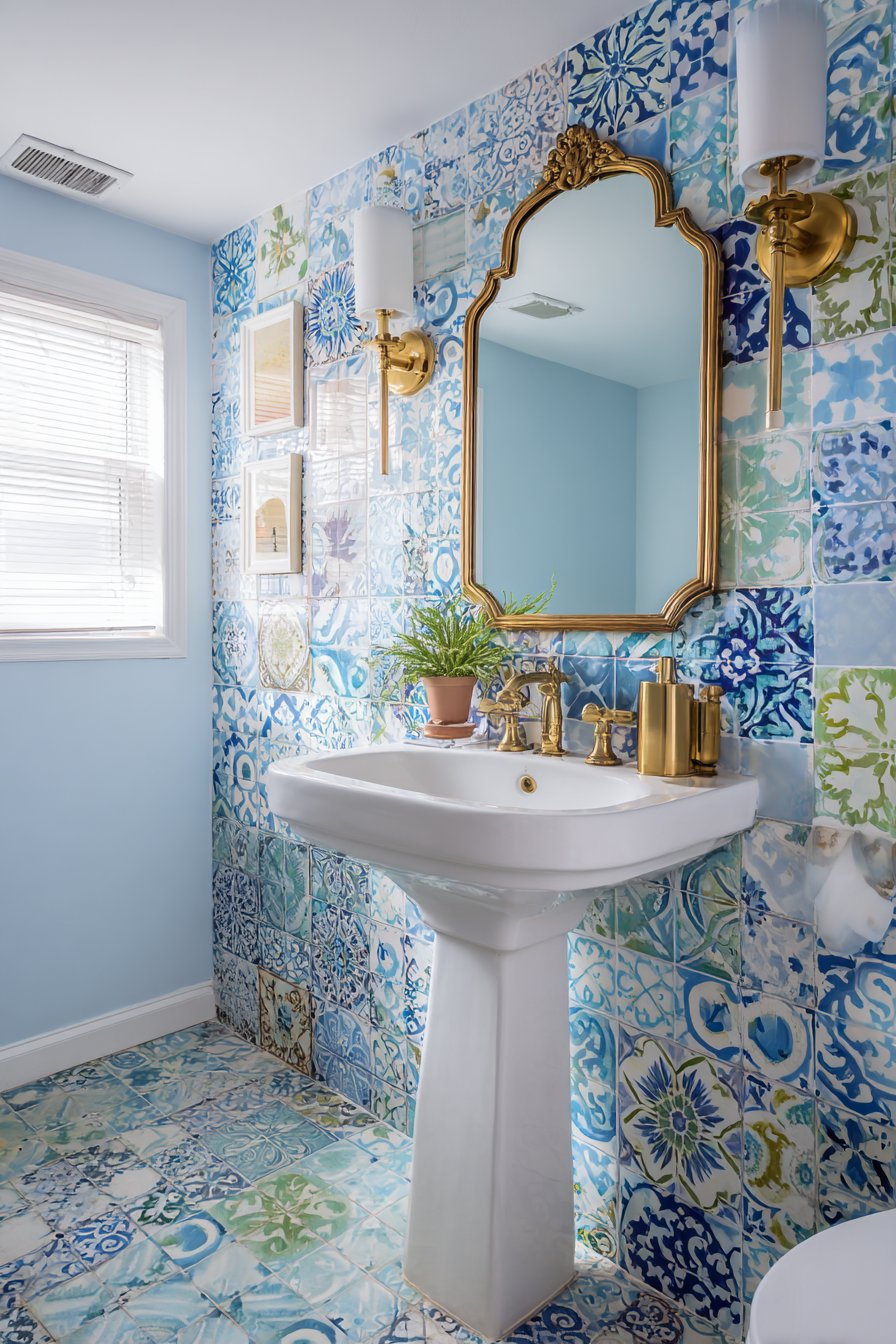
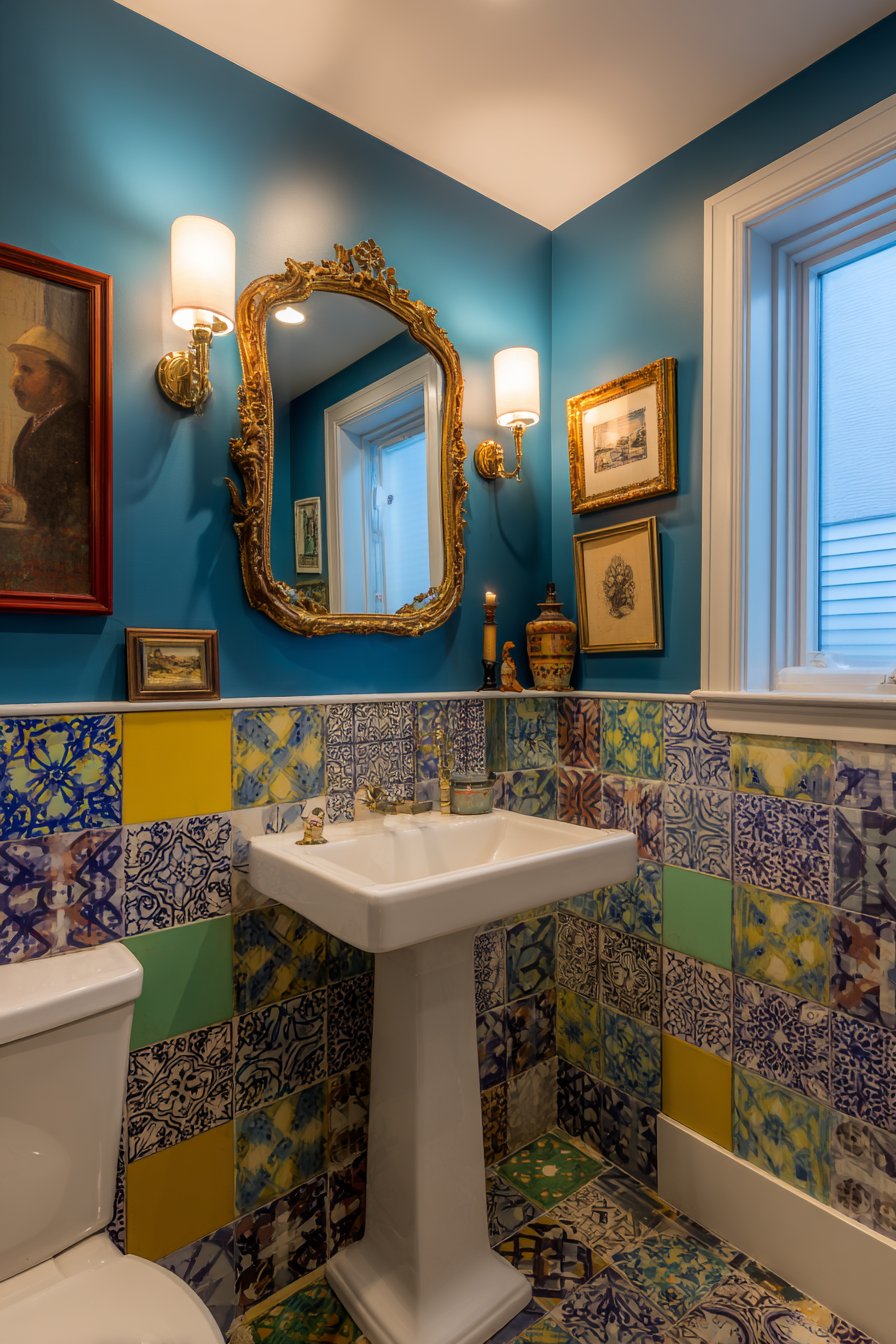
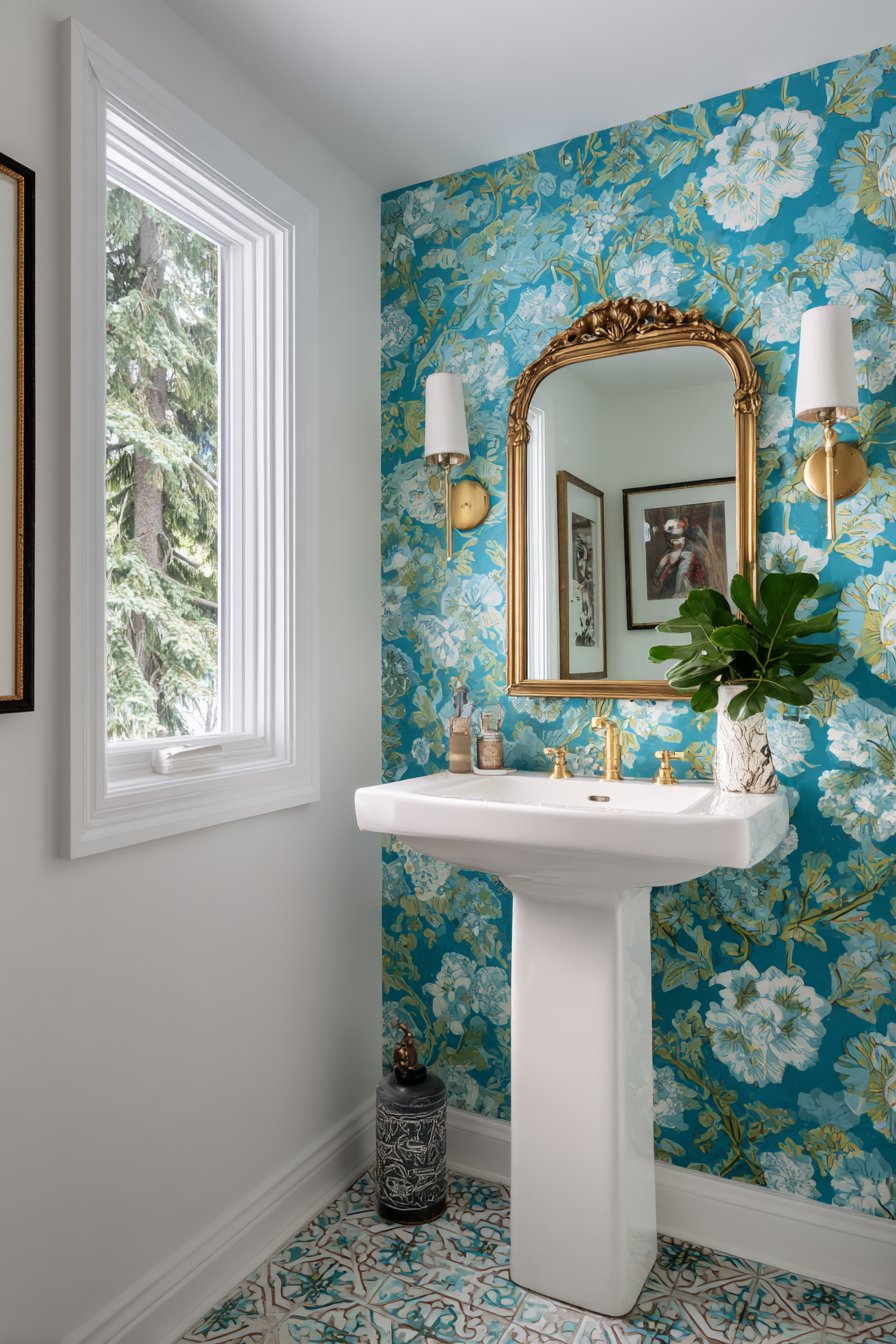
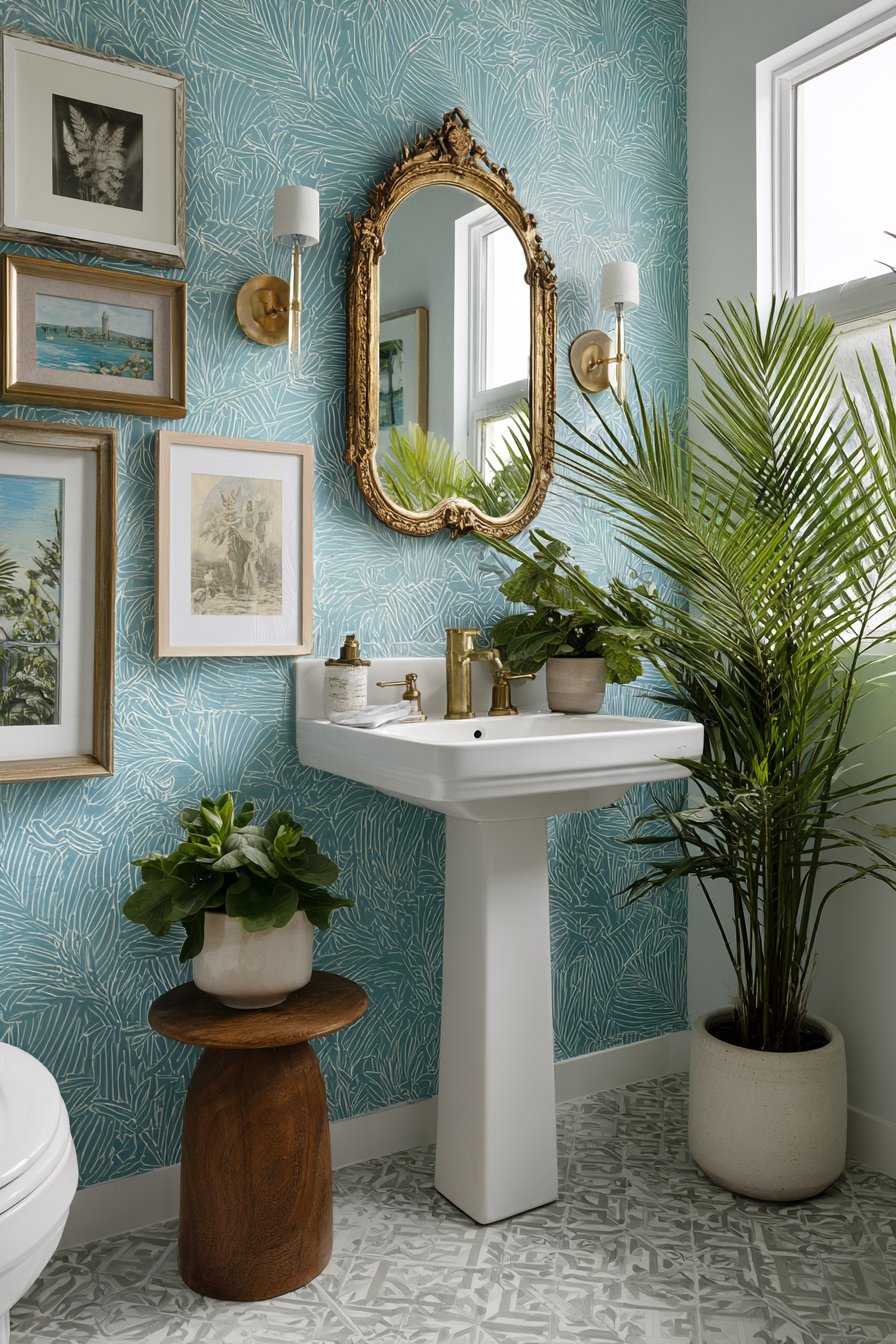
Personality bursts forth in this colorful eclectic powder room where bold patterned wallpaper in vibrant blues and greens creates an immediate mood of joy and confidence. The wallpaper becomes the room’s defining feature, transforming a small functional space into a memorable design moment that guests discuss and remember long after their visit. A white pedestal sink keeps the plumbing simple and classic, its straightforward form providing visual rest amidst the pattern while maintaining functionality.
An ornate gold-framed mirror adds vintage charm and reflects the homeowner’s willingness to mix periods, styles, and approaches in service of personal expression. A gallery wall of artwork and decorative objects creates additional layers of interest, each piece chosen for its contribution to the overall composition rather than following rigid matching rules. This collected, curated approach gives the powder room genuine character that manufactured coordination could never achieve.
Brass wall sconces provide warm task lighting while their traditional styling complements the ornate mirror without matching exactly, demonstrating the eclectic approach’s acceptance of “complements” rather than “matches.” Colorful patterned floor tiles coordinate with the wallpaper without matching it precisely, their geometric design adding another layer of pattern that somehow works because the colors bridge between elements. This powder room proves that rules are made to be broken when the result is a space with genuine soul and personality.
Key Design Tips:
- Use bold patterned wallpaper to create memorable impact in small spaces
- Keep fixtures simple when walls make strong statements
- Mix periods and styles through collected accessories and art
- Create gallery walls in powder rooms for personality and interest
- Coordinate rather than match colors between patterns and surfaces
- Choose ornate mirrors that add vintage character and reflect light
- Layer multiple patterns when they share a color palette
18. Smart Storage Built-In Bathroom
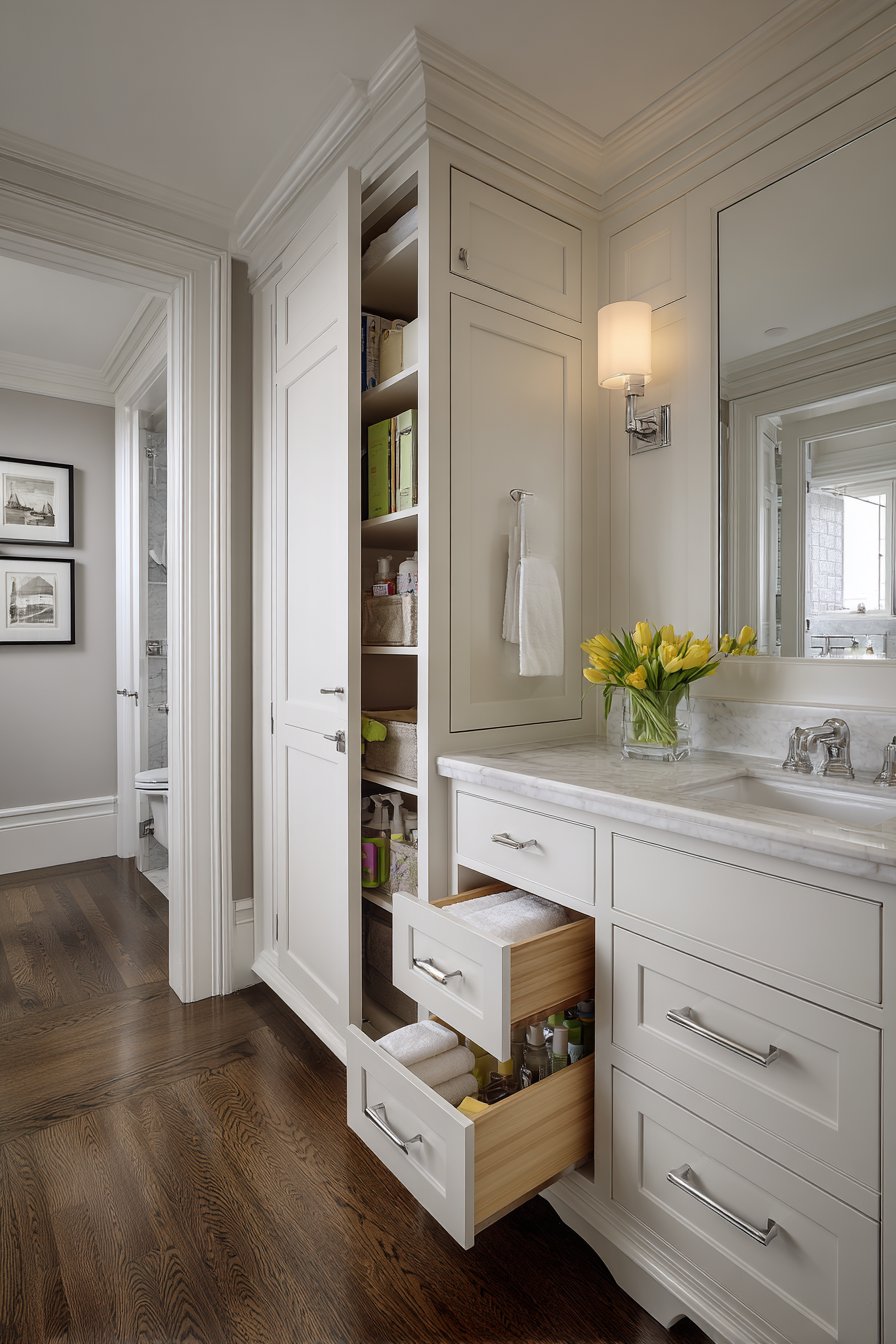
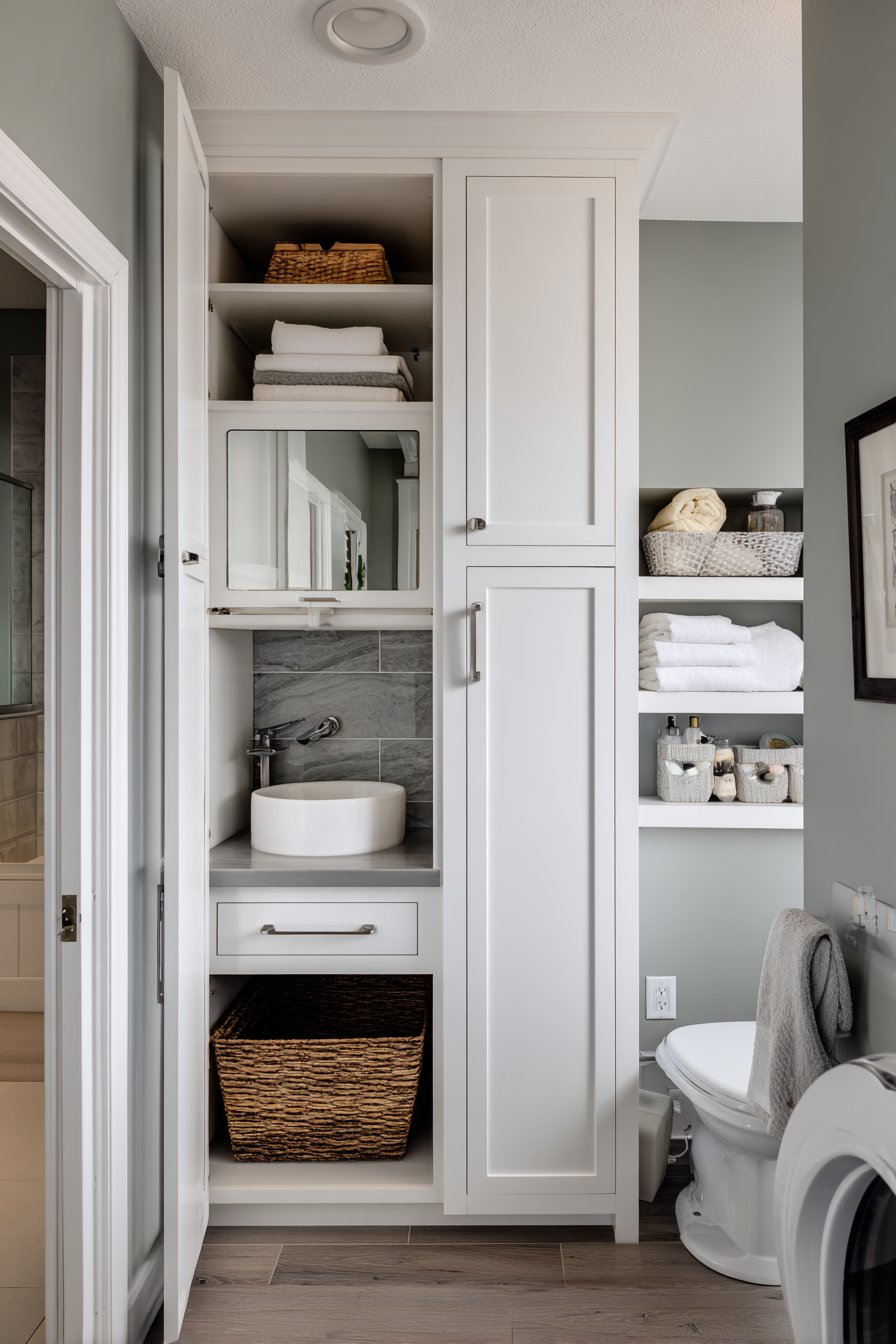
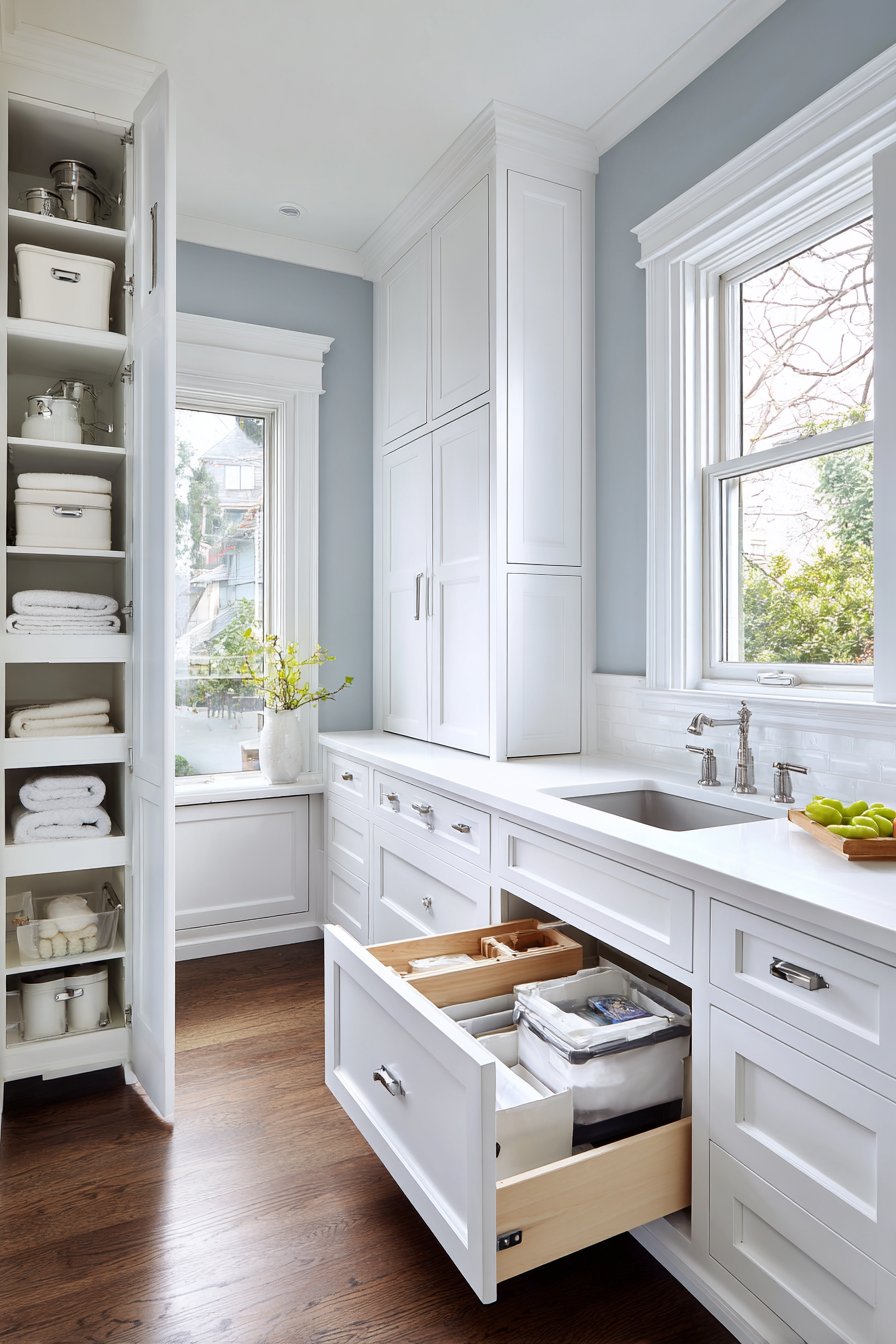
Organizational excellence defines this smart storage guest bathroom where floor-to-ceiling built-in cabinetry in white shaker style maximizes every inch of available space. The custom cabinetry proves that spare bathrooms can be as functional as primary baths when storage is planned thoughtfully from the beginning. A pocket door saves space in the tight layout, its sliding mechanism eliminating the floor space required for traditional swinging doors—a particularly valuable strategy in compact bathrooms.
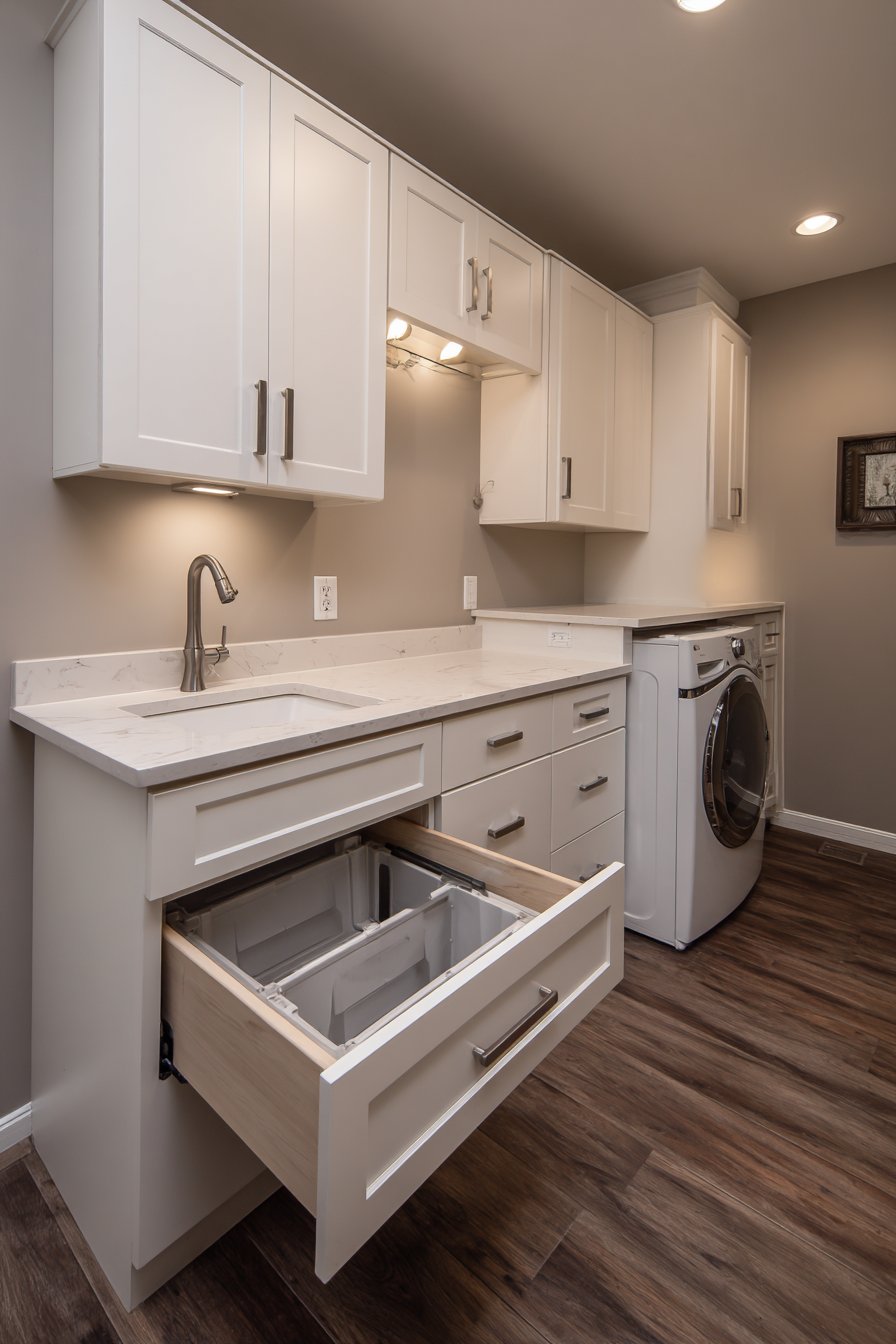
The wall-mounted faucet over an undermount sink maximizes counter space, eliminating the area typically consumed by deck-mounted faucets while creating clean, modern lines. Inside the cabinetry, pull-out hampers and organized drawer dividers demonstrate the functional design thinking that makes this bathroom work beautifully for extended-stay guests. A medicine cabinet with integrated lighting provides additional storage while the built-in illumination ensures excellent task lighting for grooming activities.
Soft gray walls with white trim create a classic, versatile palette that won’t date quickly, while the abundant white cabinetry brightens the space and creates a cohesive, furnished appearance. This bathroom demonstrates how thoughtful storage planning can transform spare bathrooms from minimal way-stations into fully functional guest suites where visitors can comfortably stay for days or weeks without feeling they’re imposing on limited space.
Key Design Tips:
- Install floor-to-ceiling built-in cabinetry to maximize storage in compact spaces
- Use pocket doors to eliminate swing space requirements
- Choose wall-mounted faucets to maximize usable counter space
- Include pull-out hampers and drawer dividers for organized storage
- Install medicine cabinets with integrated lighting for storage and task illumination
- Paint cabinetry white to brighten spaces and create cohesive appearance
- Plan storage during construction or renovation for seamless integration
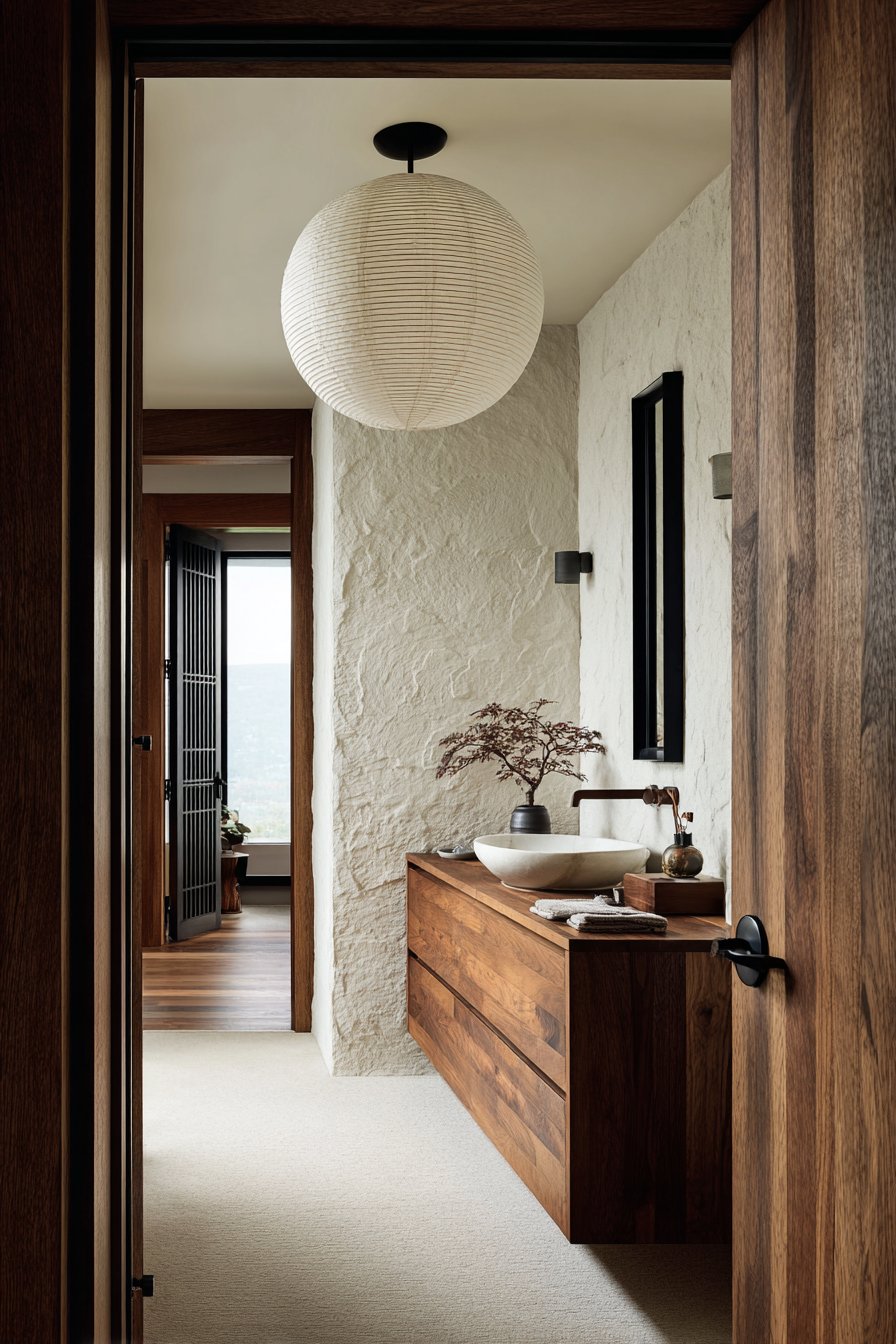
19. Mid-Century Modern Walnut Powder Room
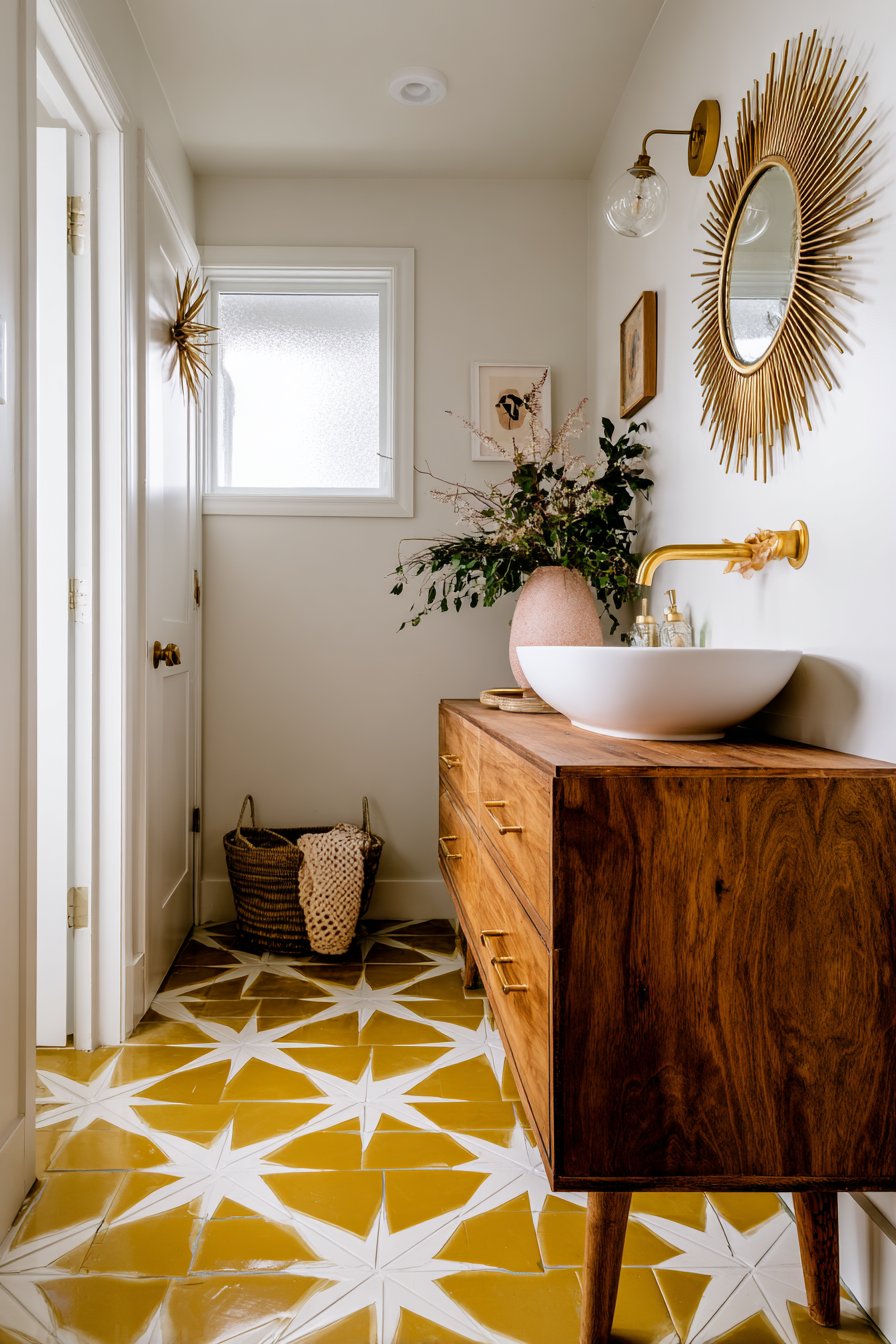
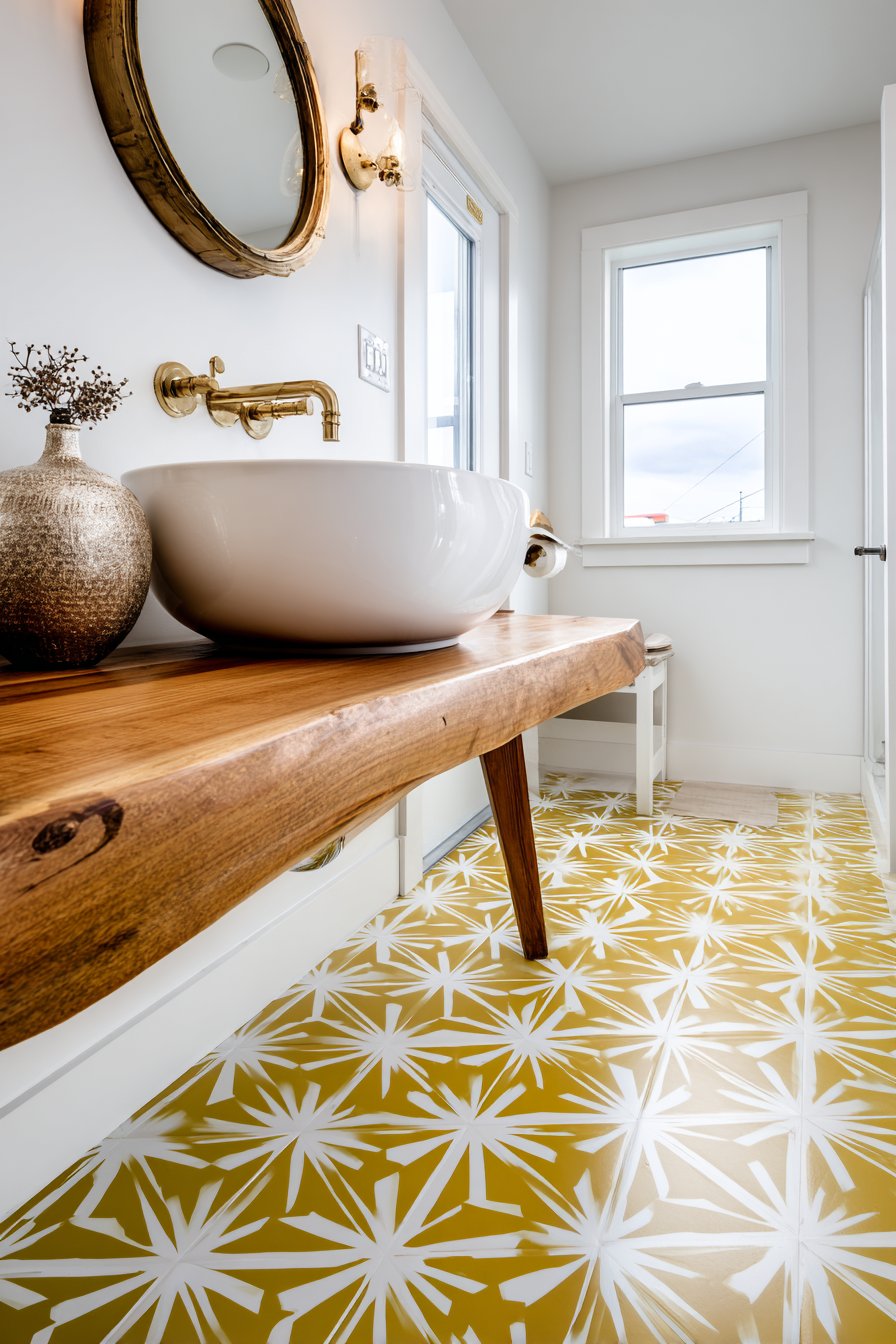
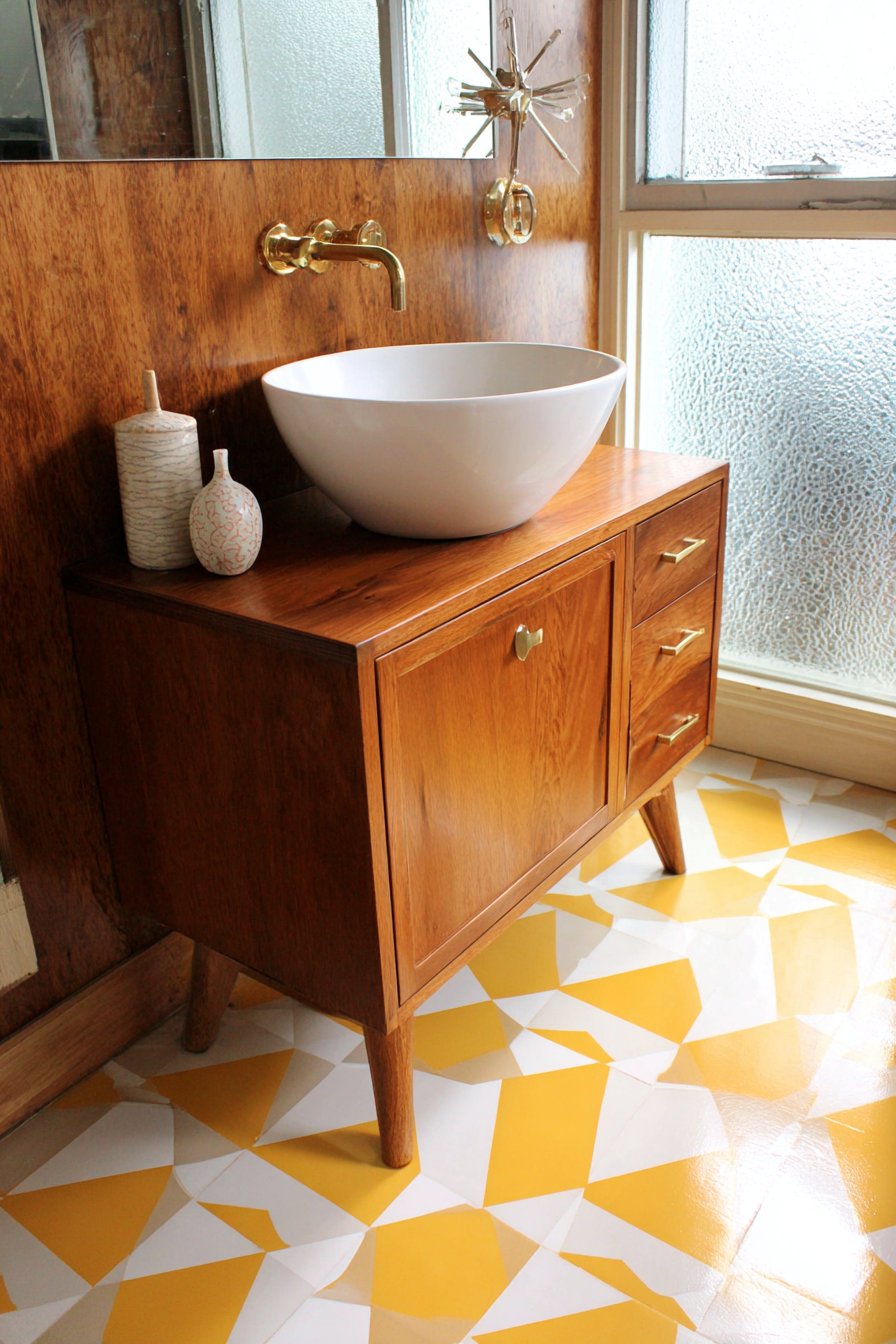
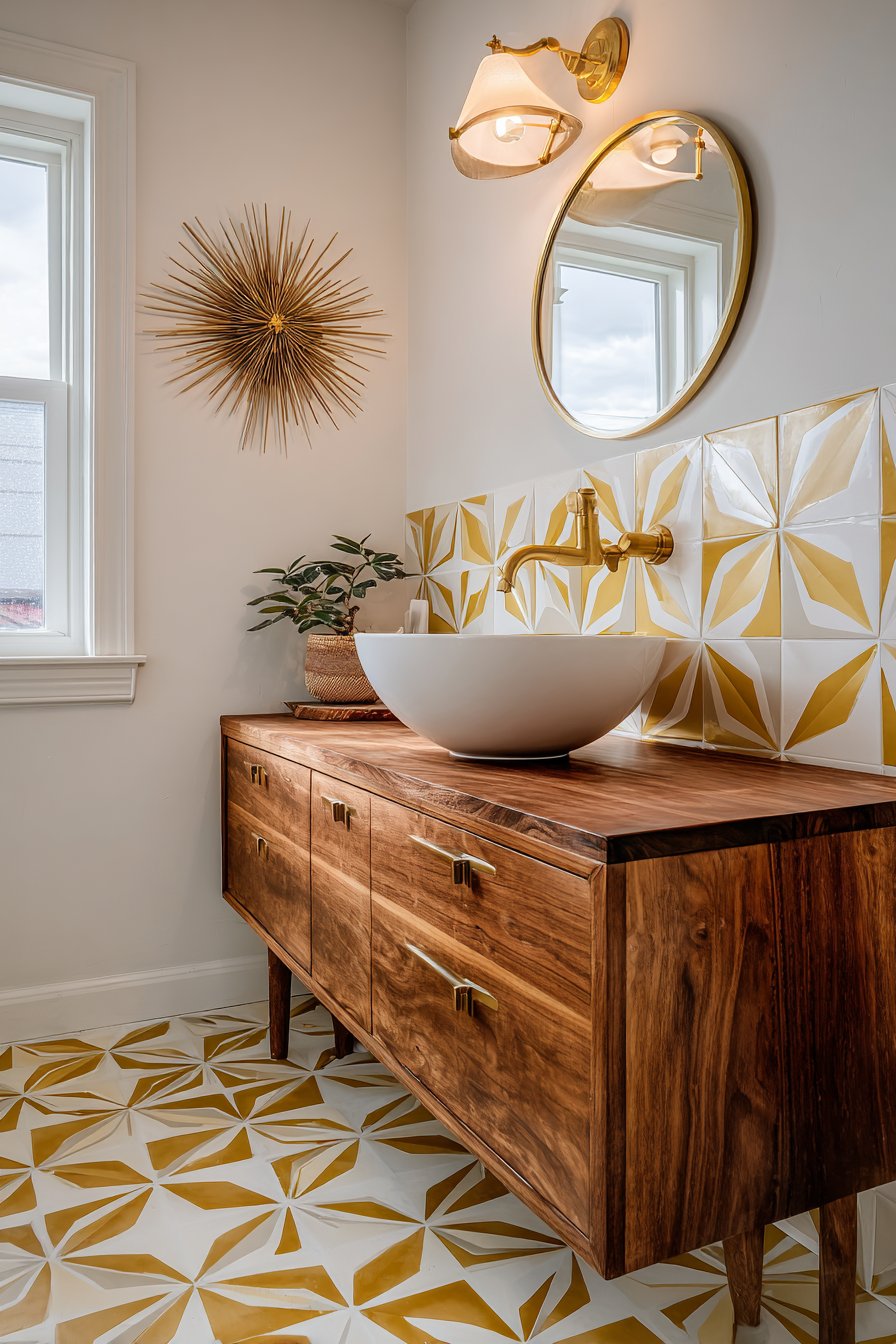
Retro charm meets timeless sophistication in this mid-century modern powder room where a walnut floating vanity with tapered wood legs immediately establishes the period aesthetic. The rich brown walnut grain provides warmth and visual interest while the distinctive tapered legs—a hallmark of mid-century furniture design—add sculptural grace and lightness. A white ceramic vessel sink sits atop the natural wood counter, its simple rounded form typical of mid-century design’s preference for organic shapes.
Brass faucet and cabinet pulls maintain period authenticity while their warm metallic finish complements the walnut’s rich tones perfectly. Geometric patterned floor tiles in mustard yellow and white add retro flair and period-appropriate color, their pattern scale and color choices directly referencing mid-century design sensibilities. A starburst mirror and atomic-inspired wall sconce complete the vintage aesthetic, their distinctive forms immediately recognizable as period pieces.
Natural light from a frosted window supplements the warm ambient lighting, creating the inviting glow that makes mid-century interiors feel so comfortable and livable. The combination of warm woods, brass accents, and period-appropriate colors and patterns creates a powder room that feels like it could have been designed in the 1950s or 60s—yet its clean lines and quality materials ensure it remains fresh and appealing to contemporary sensibilities.
Key Design Tips:
- Choose walnut vanities with tapered legs for authentic mid-century character
- Use vessel sinks in simple organic shapes appropriate to the period
- Include brass fixtures and hardware for warm period-authentic metallic finish
- Add geometric patterned floors in period colors like mustard yellow
- Install starburst mirrors and atomic-inspired lighting for instant recognition
- Combine natural wood tones with warm brass for cohesive mid-century palette
- Use frosted windows to balance natural light with privacy needs
20. Accessible Universal Design Bathroom
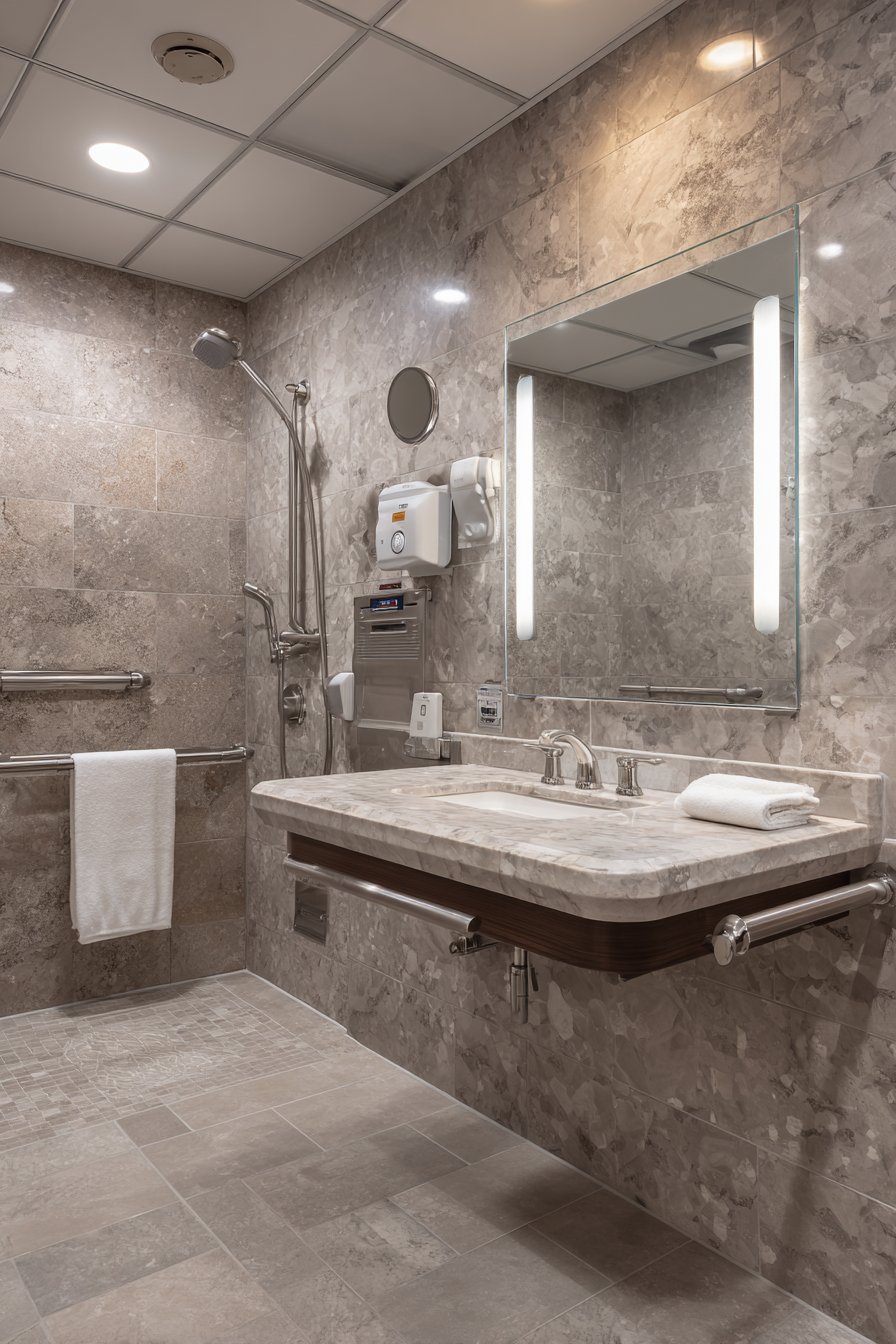
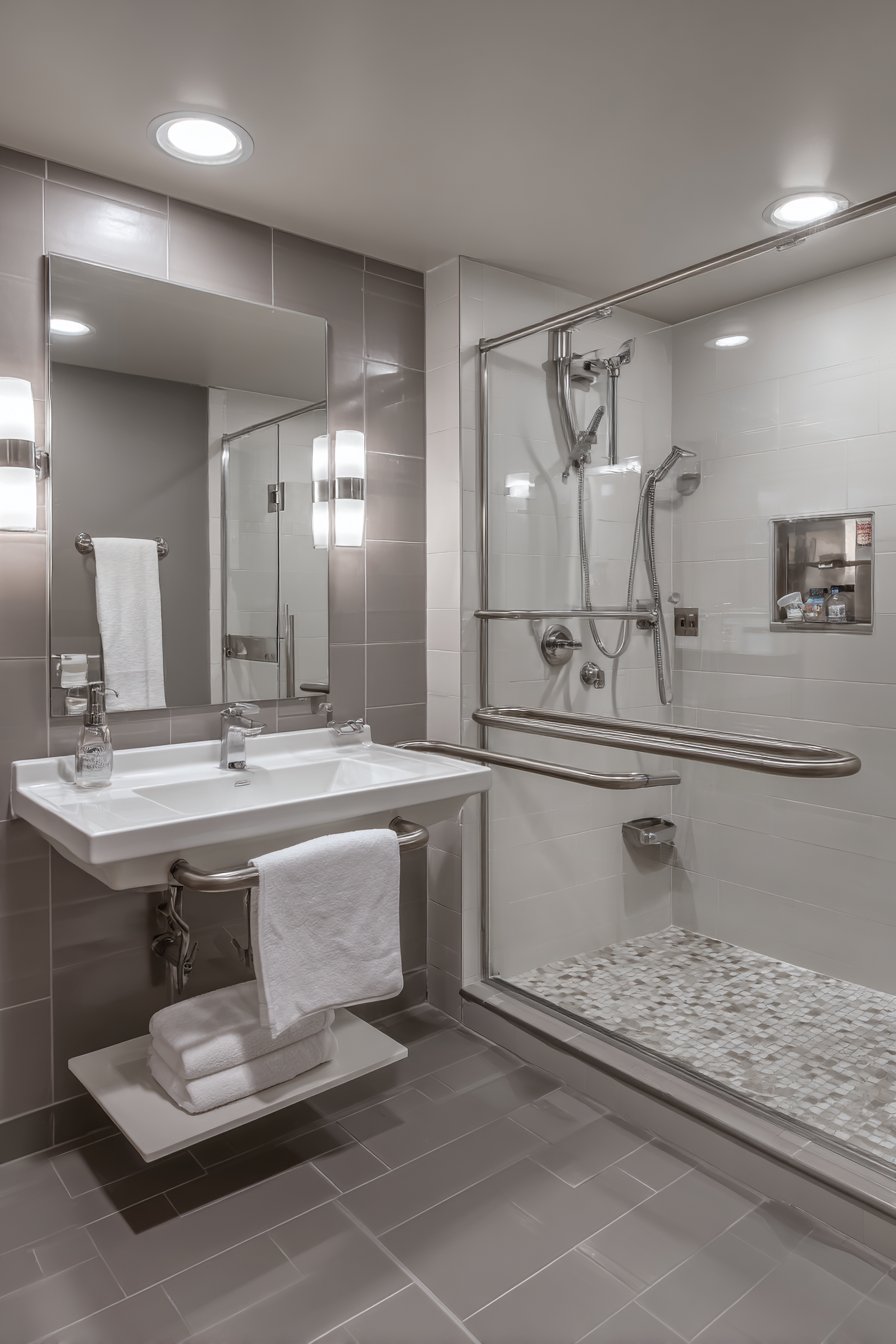
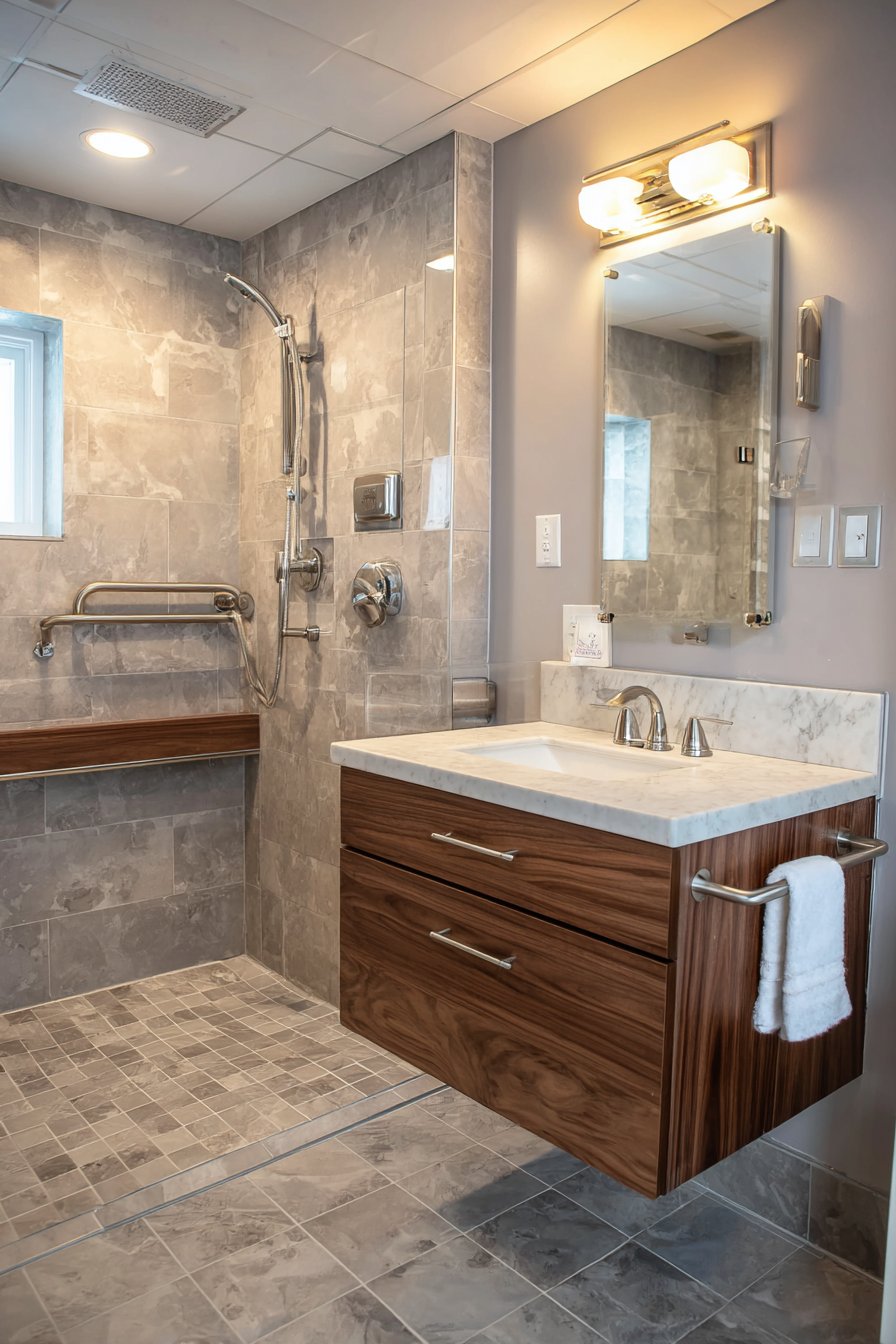
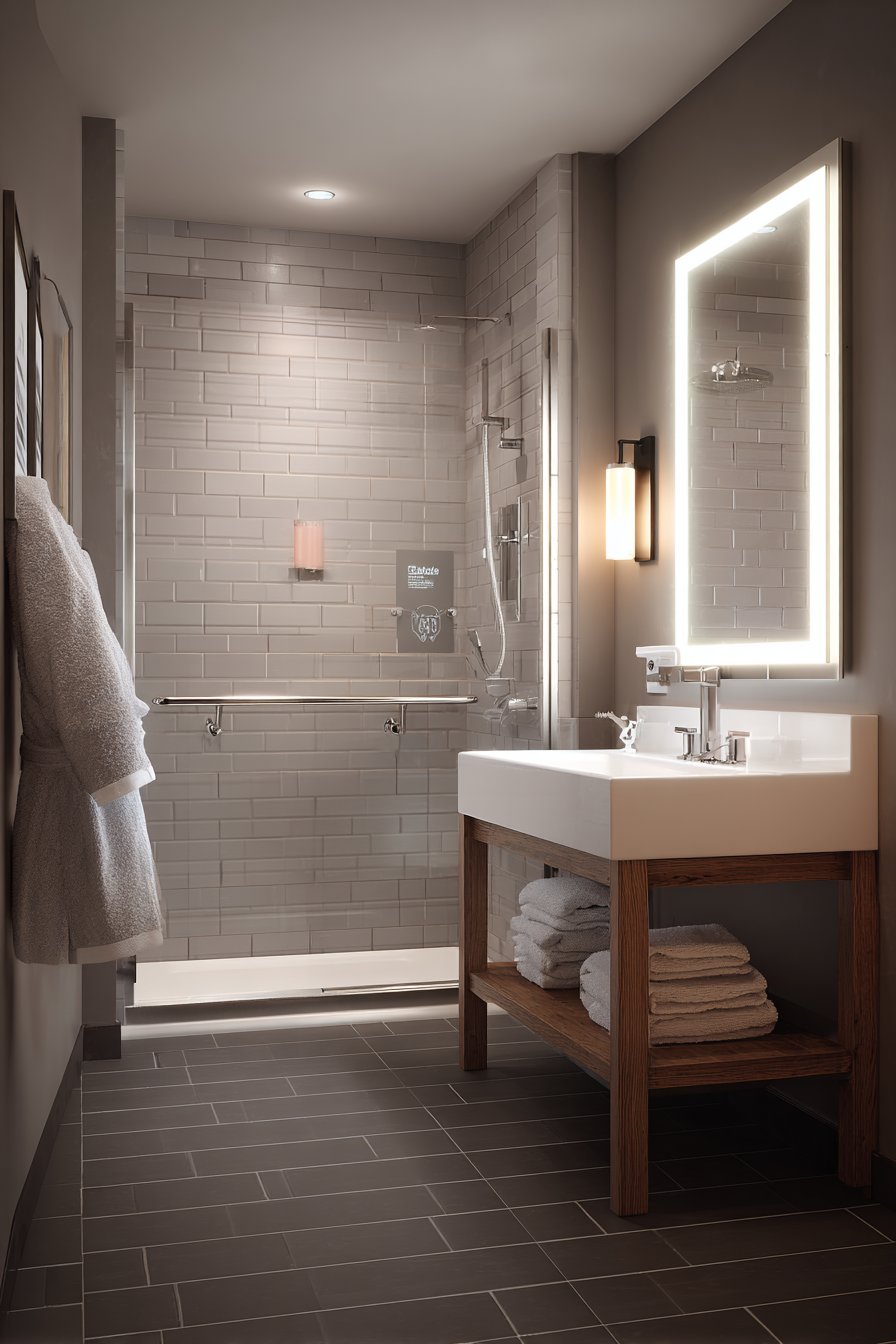
Thoughtful inclusivity shapes this wheelchair-accessible guest bathroom where barrier-free shower and integrated grab bars demonstrate that universal design can be beautiful when approached intentionally. The grab bars are designed into the architecture rather than appearing as afterthoughts, their form and finish complementing the overall aesthetic while providing essential safety and support. Non-slip porcelain tiles throughout in neutral gray create safe, attractive surfaces that reduce fall risk without sacrificing style.
The wall-mounted sink at appropriate height with open space below accommodates wheelchair users while also proving convenient for standing users—universal design’s core principle that accessibility benefits everyone. Lever-style faucets and easy-reach controls require minimal hand strength and dexterity to operate, making the bathroom genuinely usable for people with arthritis, limited mobility, or temporary injuries. Adequate turning radius clearly visible in the layout ensures wheelchair users can navigate comfortably and independently.
Bright LED lighting ensures excellent visibility, particularly important for users with vision challenges who require well-lit spaces to navigate safely. The neutral gray palette creates calm sophistication while the careful attention to proportion, material quality, and detail demonstrates that accessible design need not look clinical or institutional. This bathroom proves that universal design principles create spaces that work beautifully for all users while maintaining the aesthetic quality guests expect and deserve.
Key Design Tips:
- Design grab bars as integrated architectural elements rather than afterthoughts
- Install wall-mounted sinks with open space below for wheelchair access
- Use non-slip porcelain tiles throughout for safety without sacrificing style
- Choose lever-style faucets and controls for ease of operation
- Ensure adequate turning radius for wheelchair maneuverability
- Install bright LED lighting for excellent visibility
- Maintain neutral sophisticated palettes to avoid institutional appearance
21. Living Plant Wall Nature Bathroom
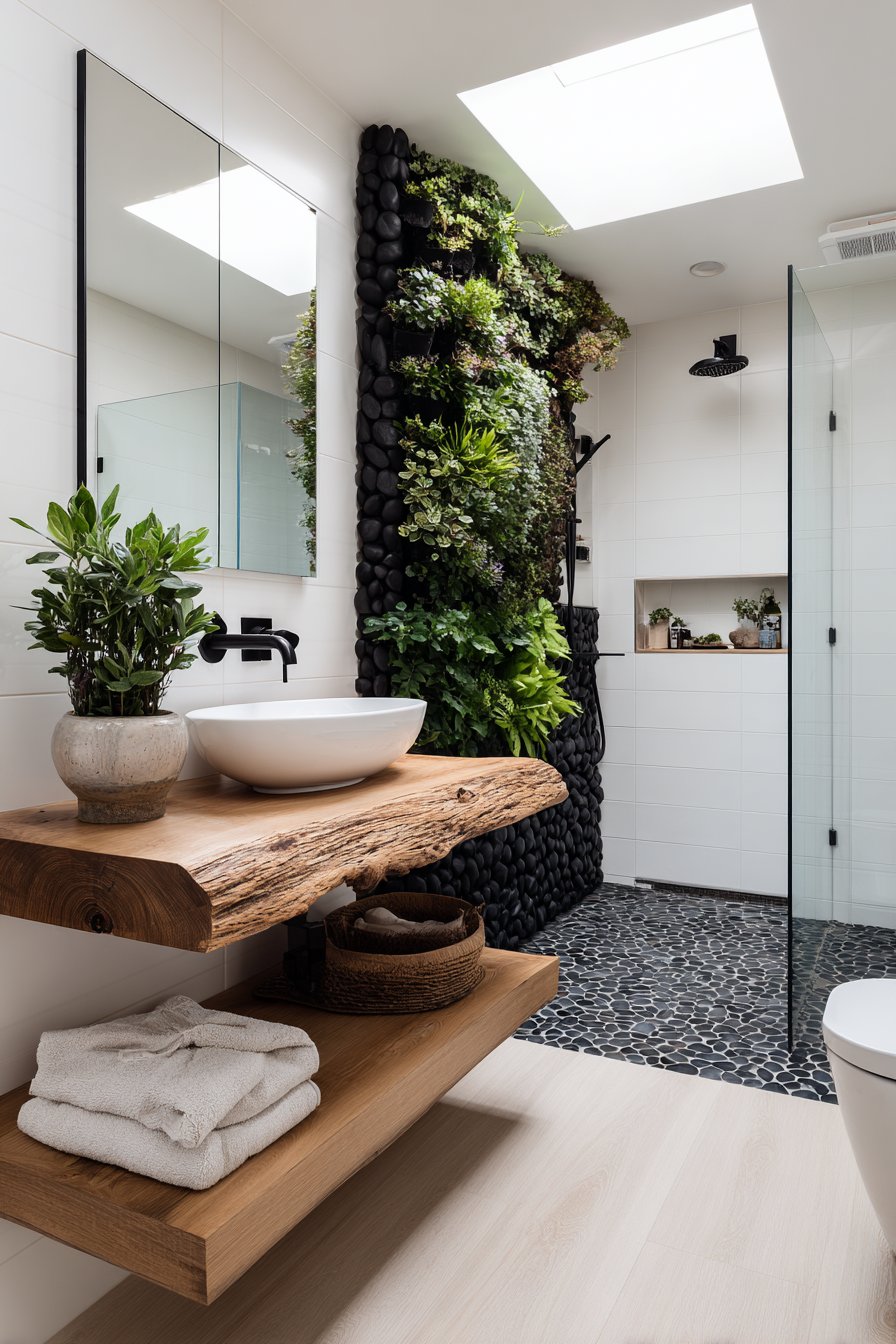
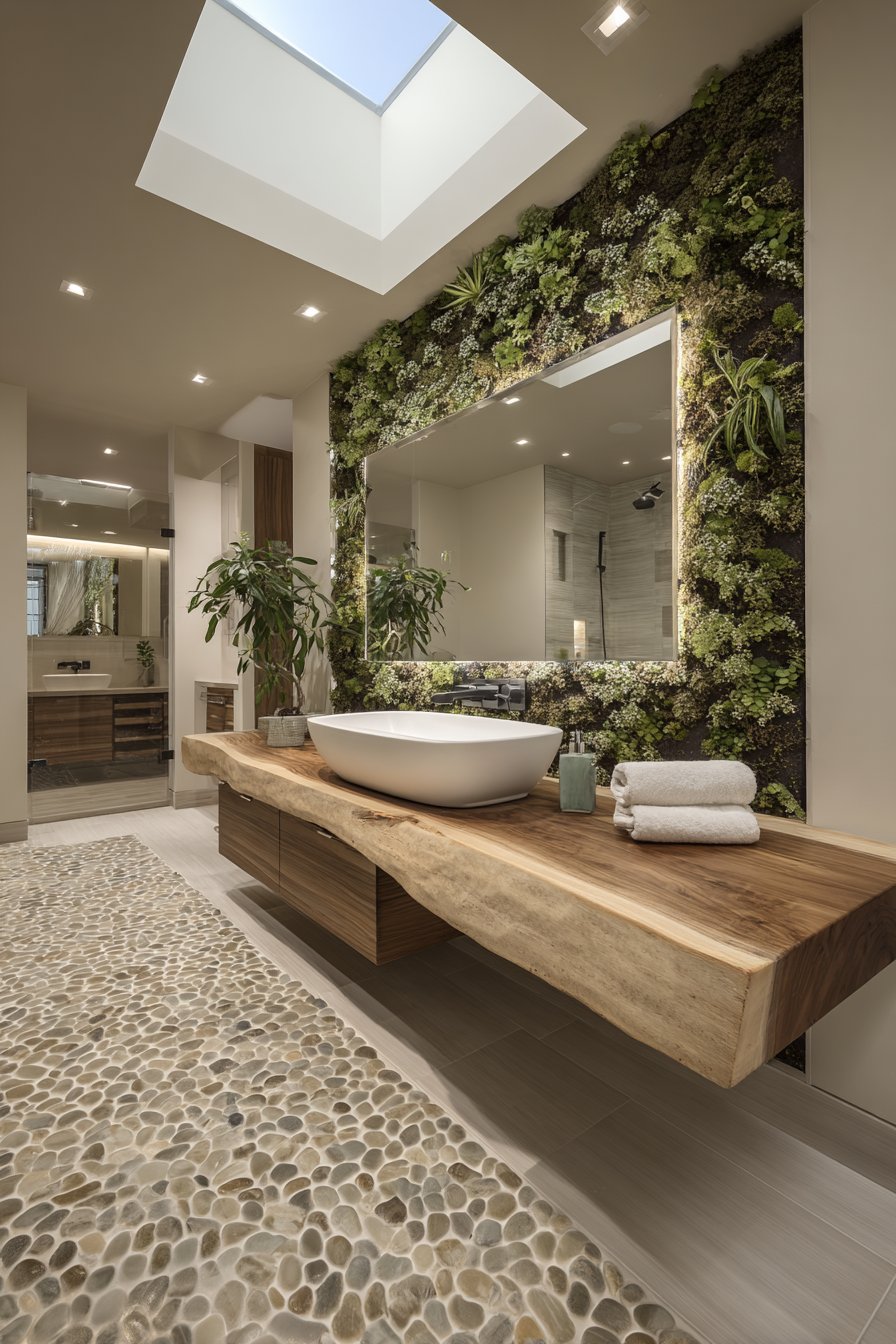
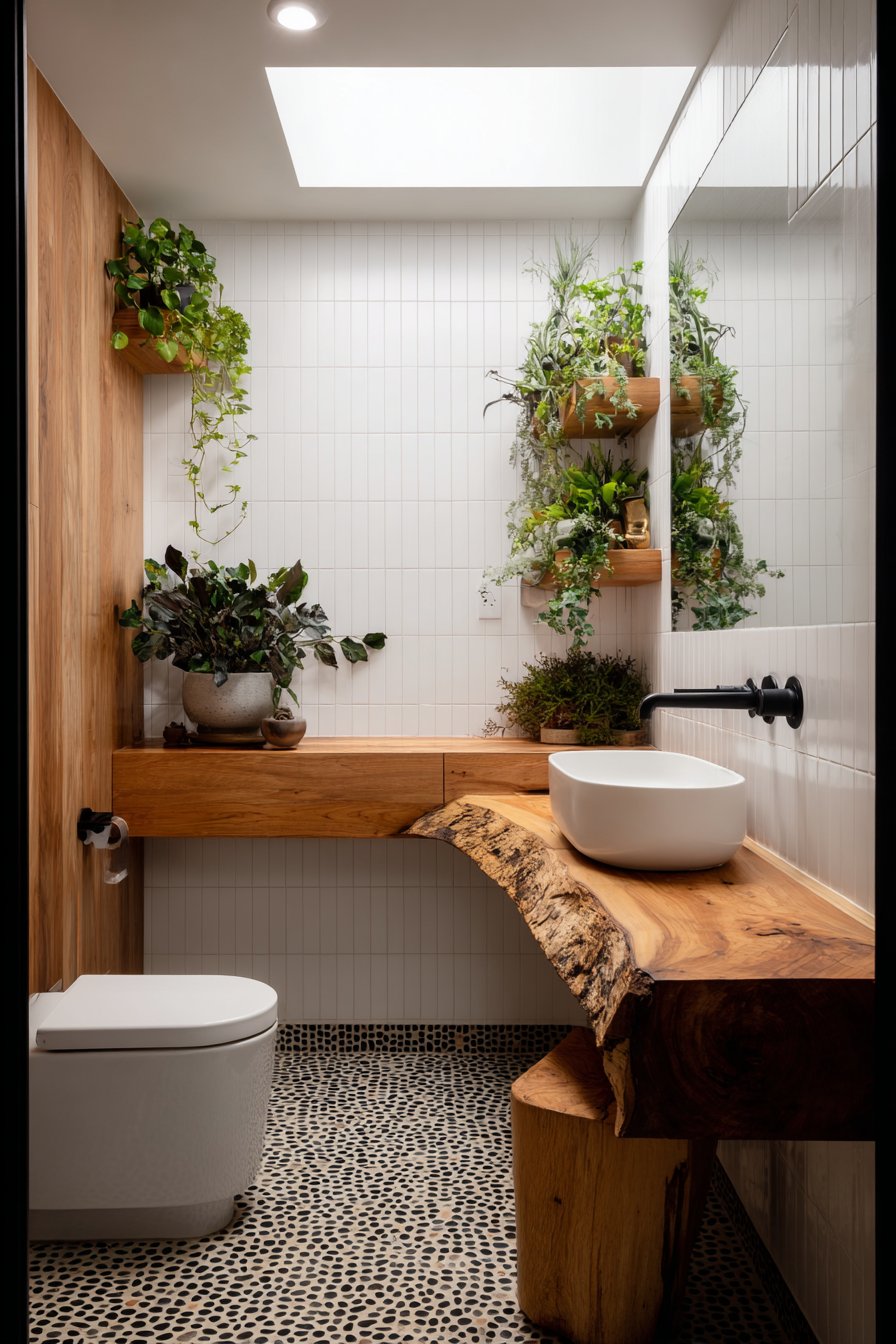
Biophilic design reaches its apex in this nature-inspired guest bathroom where a living plant wall becomes the dramatic focal point, transforming a functional space into a verdant sanctuary. The plant wall introduces living texture, natural air purification, and visual interest that changes over time as plants grow and evolve. A natural wood floating vanity with live-edge detail continues the organic theme, its irregular natural edge celebrating rather than concealing the wood’s origin as a living tree.
Black matte fixtures provide modern contrast to the organic elements, their geometric forms and dark finish grounding the design and preventing it from becoming too soft or undefined. Large format white tiles on remaining walls keep the space bright and clean while providing neutral backdrop that allows the plant wall to dominate without competition. A skylight provides natural illumination essential for plant health while connecting the interior space to weather and sky above.
Pebble tile floor in the shower area continues the natural theme, the smooth stones providing pleasant texture underfoot while their appearance reinforces the connection to natural environments. This bathroom demonstrates the power of biophilic design—the integration of nature into built environments—to create spaces that improve mood, reduce stress, and connect occupants to living systems. Guests consistently report feeling refreshed and restored after spending time in this nature-inspired sanctuary.
Key Design Tips:
- Install living plant walls as dramatic focal points and natural air purifiers
- Choose vanities with live-edge details to celebrate natural wood character
- Use matte black fixtures to ground organic designs with modern contrast
- Keep surrounding surfaces neutral to allow plant walls to dominate
- Include skylights to provide natural light for plant health and occupant connection
- Add pebble tile in shower areas for natural texture and massage
- Select low-maintenance plants appropriate for bathroom humidity and light conditions
22. Art Deco Vintage Glam Powder Room
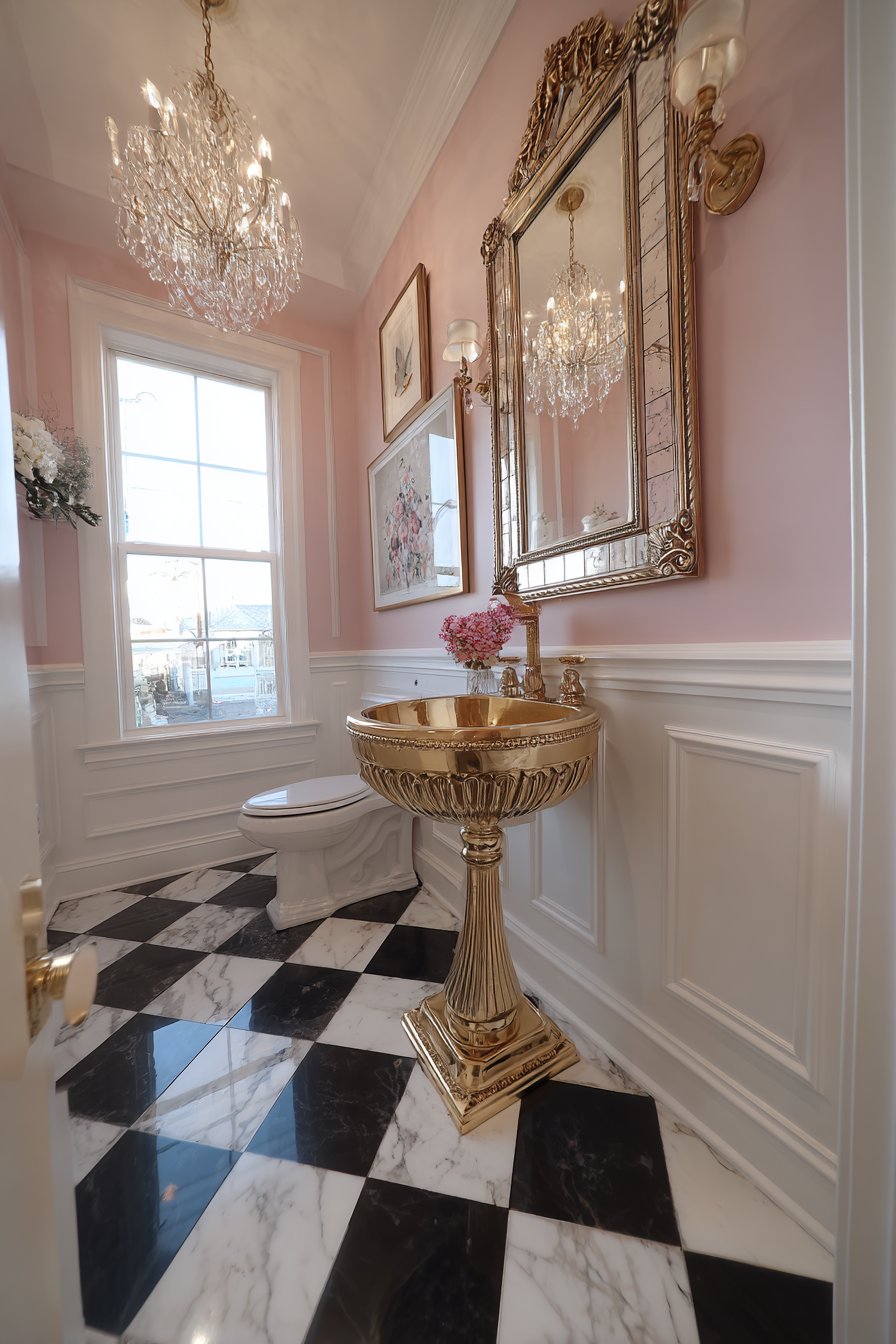
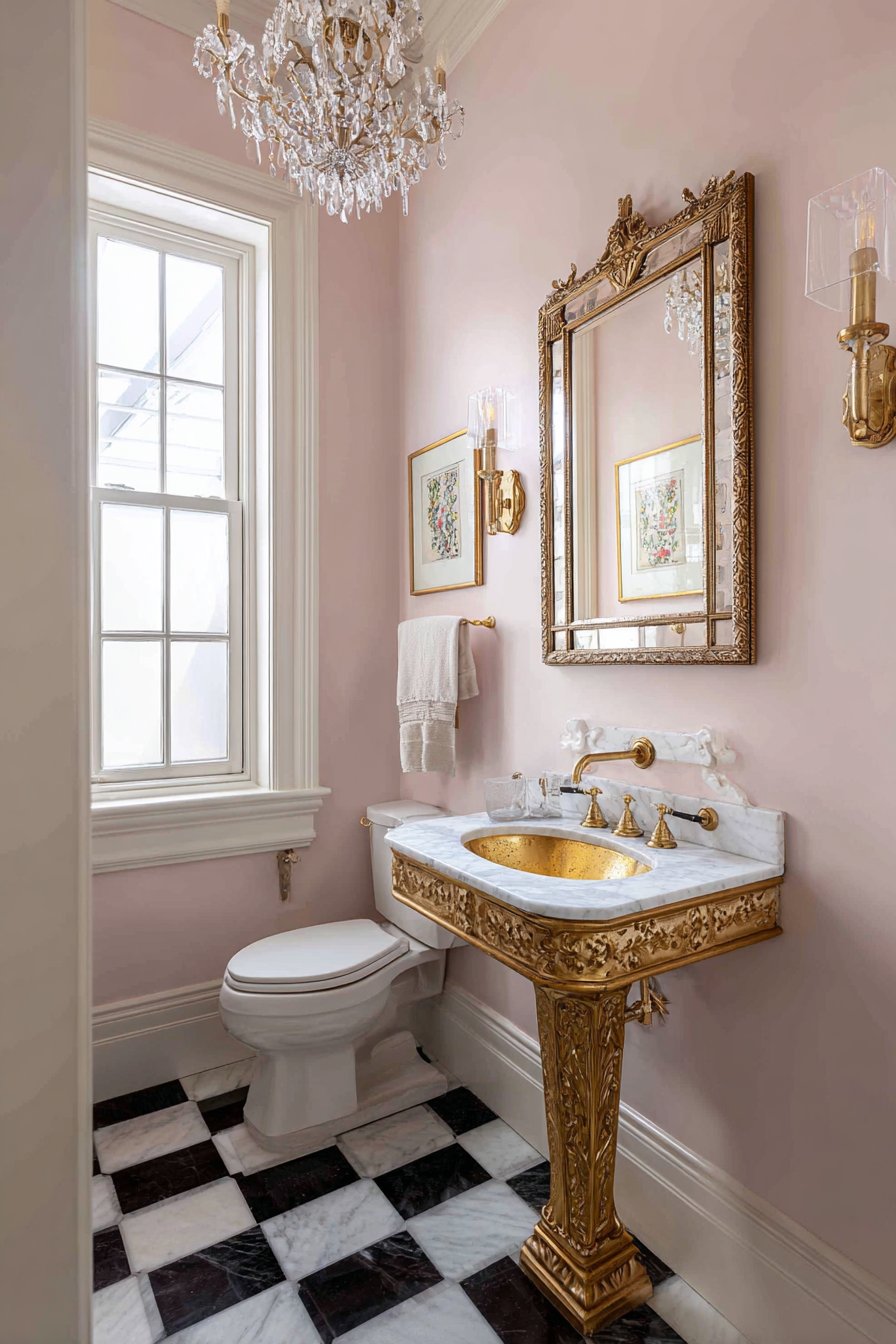
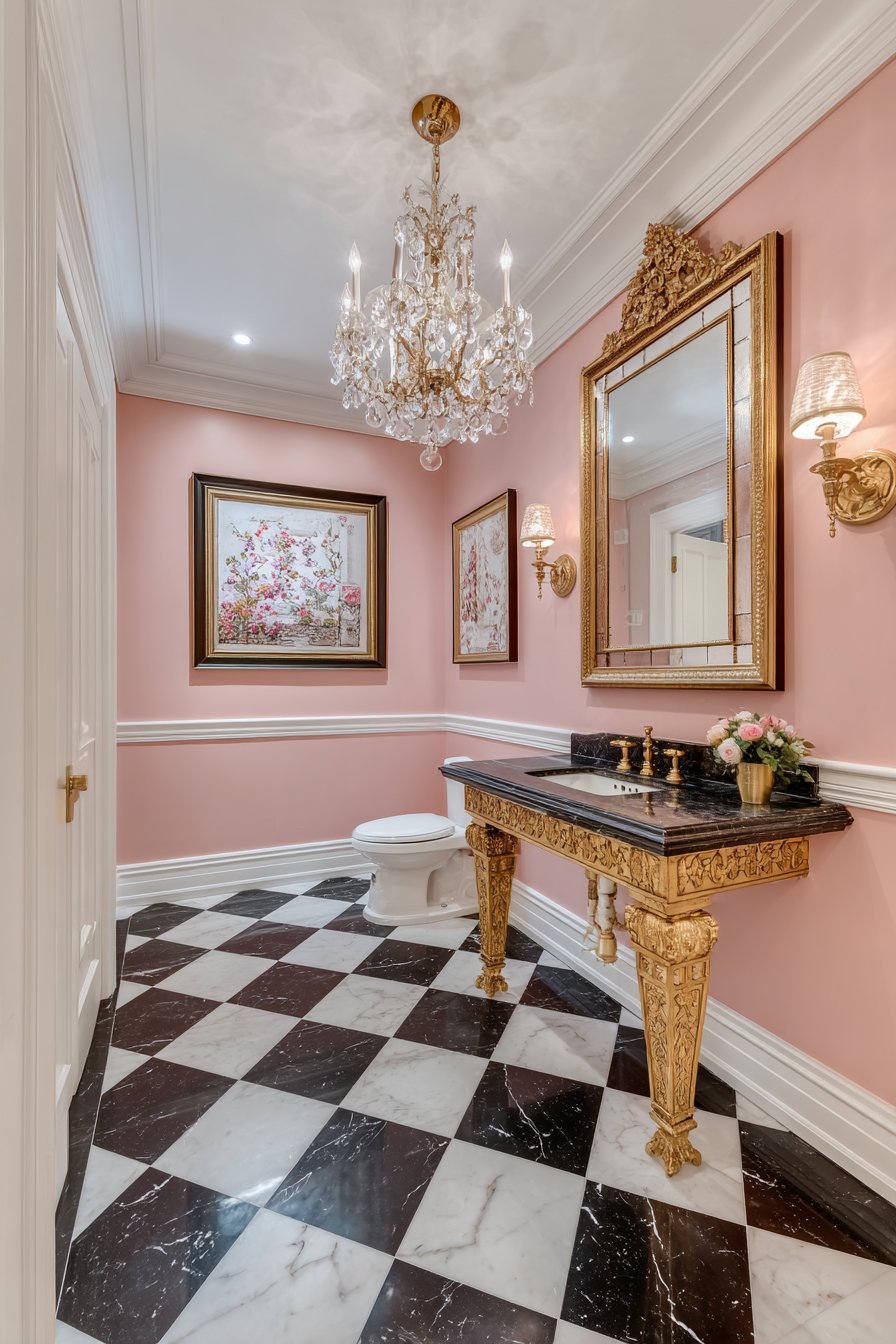
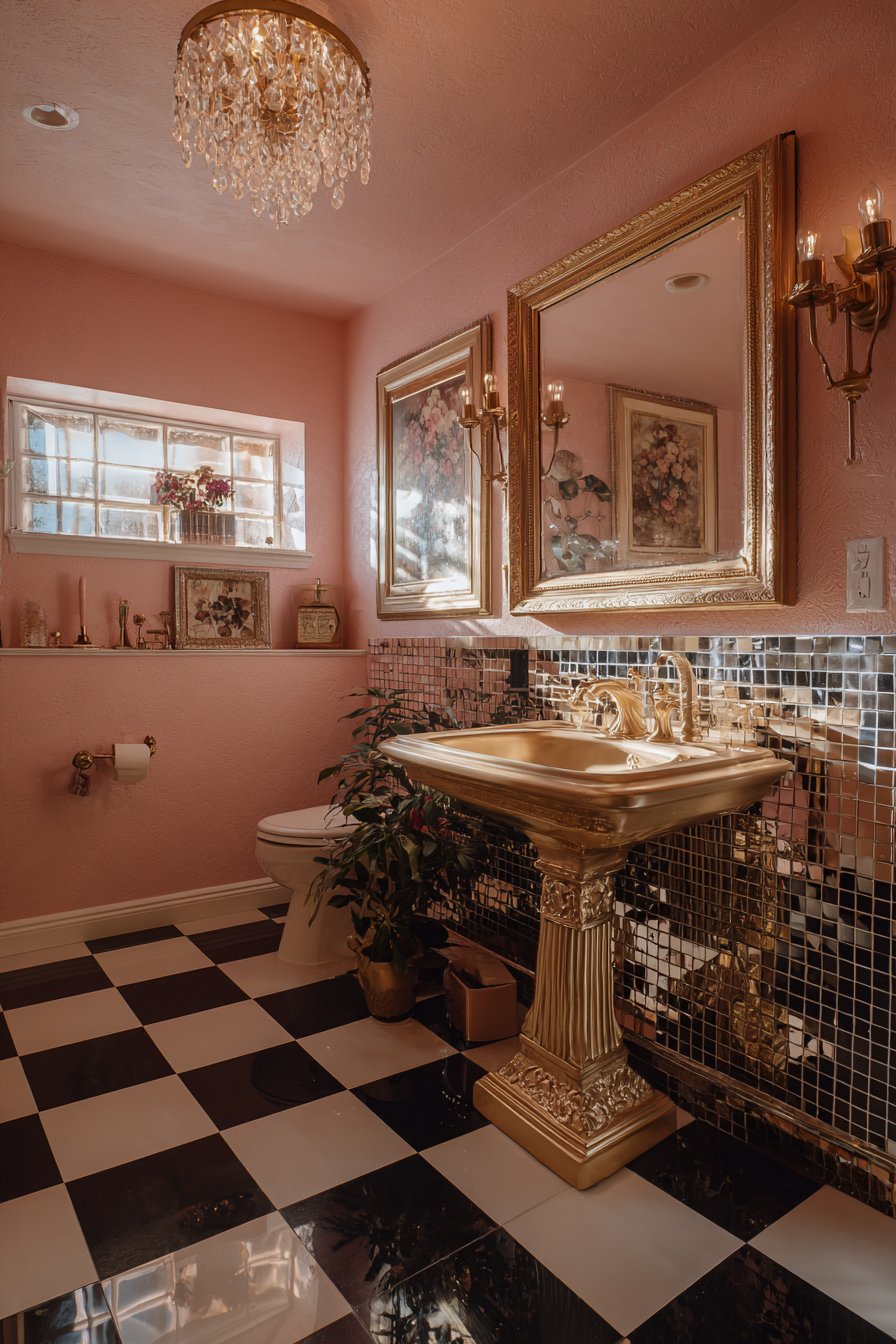
Vintage Hollywood glamour comes alive in this art deco inspired powder room where black and white checkered floor tiles create a classic foundation that immediately establishes the period aesthetic. The bold geometric floor pattern provides graphic impact while remaining timeless—a hallmark of art deco design’s enduring appeal. A gold pedestal sink with ornate details serves as the room’s statement piece, its luxe finish and decorative elements directly referencing the opulence of the art deco era.
Beveled mirror tiles create a glamorous accent wall, their faceted surfaces catching and multiplying light while adding dimensional texture that flat mirrors cannot achieve. The vintage technique of using multiple small mirrors creates visual complexity and luxury while the beveled edges add sparkle and refraction. A crystal chandelier introduces unexpected elegance to the powder room, its faceted crystals casting prismatic light patterns across surfaces and creating the kind of glamorous atmosphere associated with luxury hotels and vintage cinema palaces.
Soft pink walls provide a feminine backdrop that enhances the gold fixtures and crystal lighting while the wall-mounted gold faucets maintain the luxe aesthetic throughout. Natural light from a window combined with the chandelier’s glow creates warm, flattering illumination that makes everyone look their best—a key consideration in powder rooms where guests check their appearance. This design demonstrates how historical styles can be reinterpreted for contemporary homes when approached with restraint and attention to authentic details.
Key Design Tips:
- Use black and white checkered floors for classic art deco foundation
- Choose ornate pedestal sinks in gold finish for vintage glamour
- Create accent walls with beveled mirror tiles for sparkle and dimension
- Install crystal chandeliers in powder rooms for unexpected luxury
- Paint walls in soft feminine colors to complement gold fixtures
- Use wall-mounted faucets to enhance vintage aesthetic
- Layer natural and chandelier lighting for warm, flattering illumination
23. Compact Corner Shower Ensuite
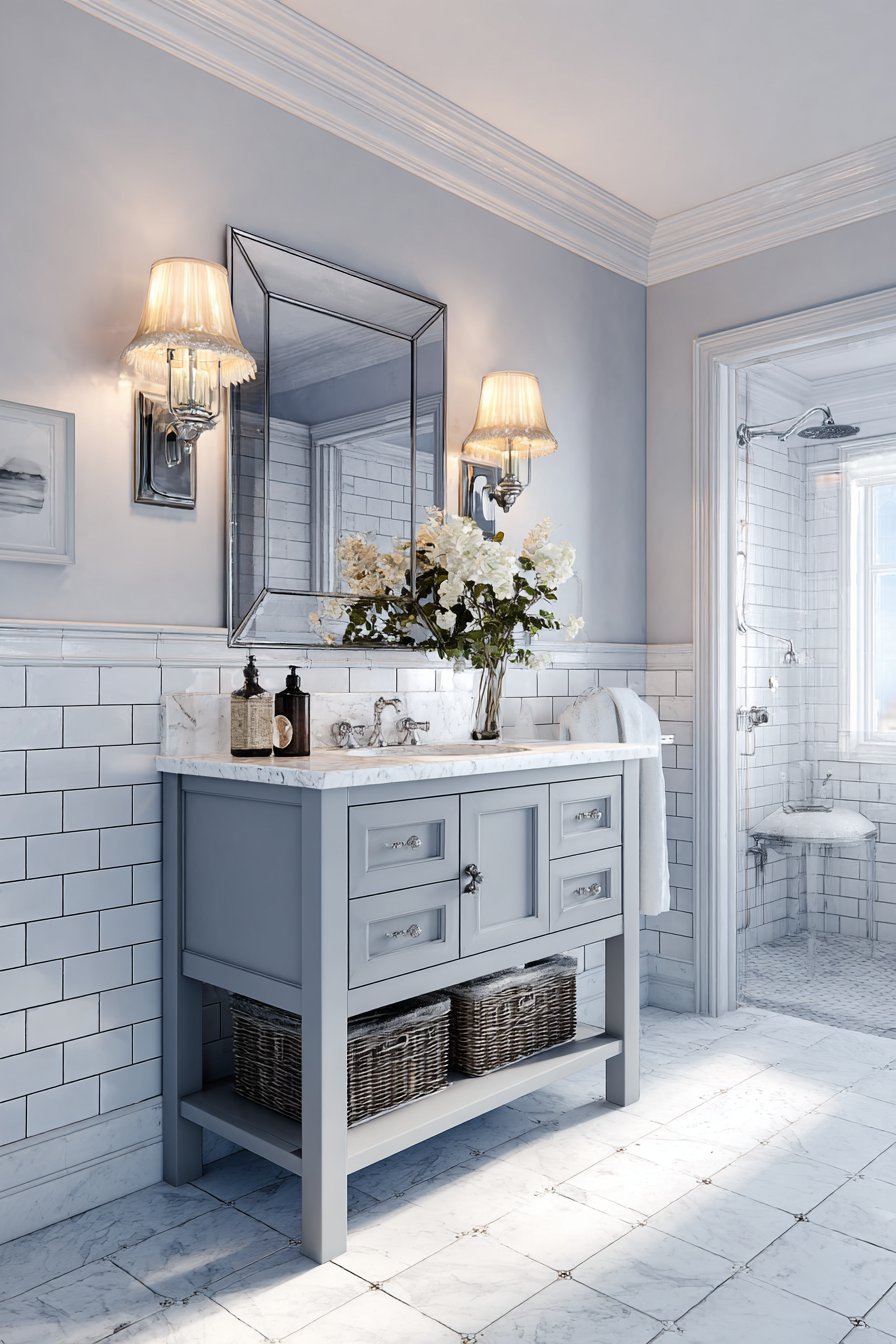
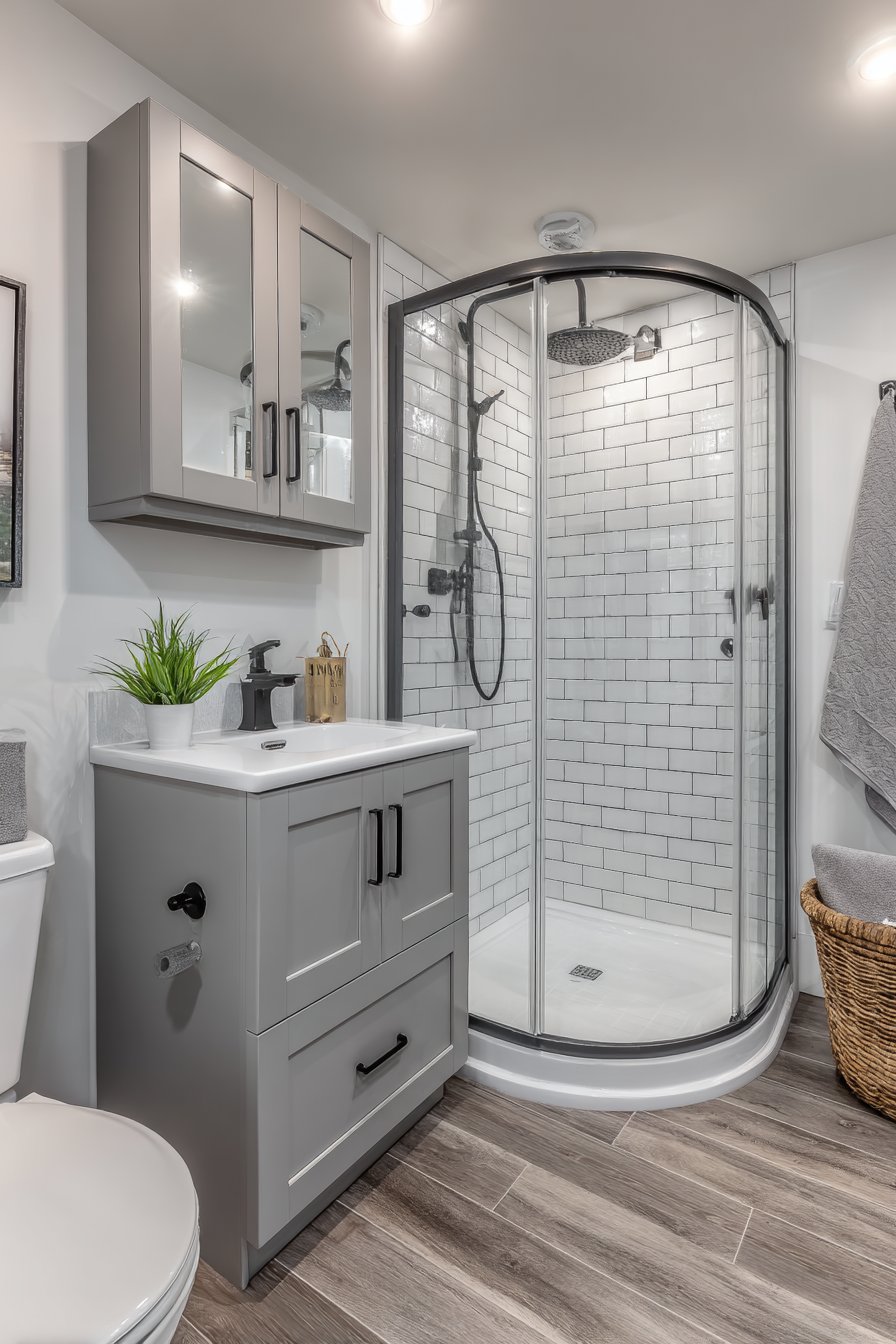
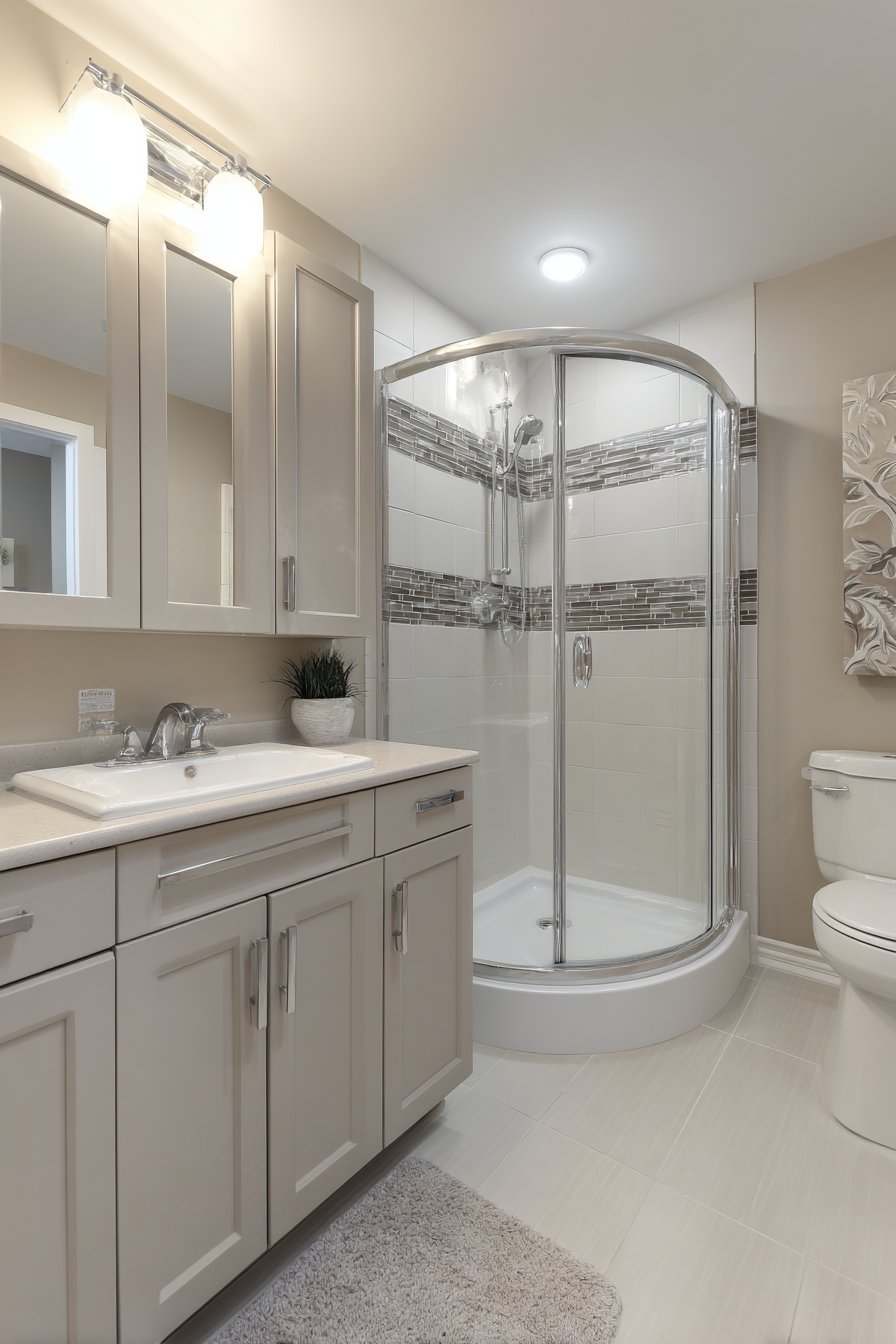
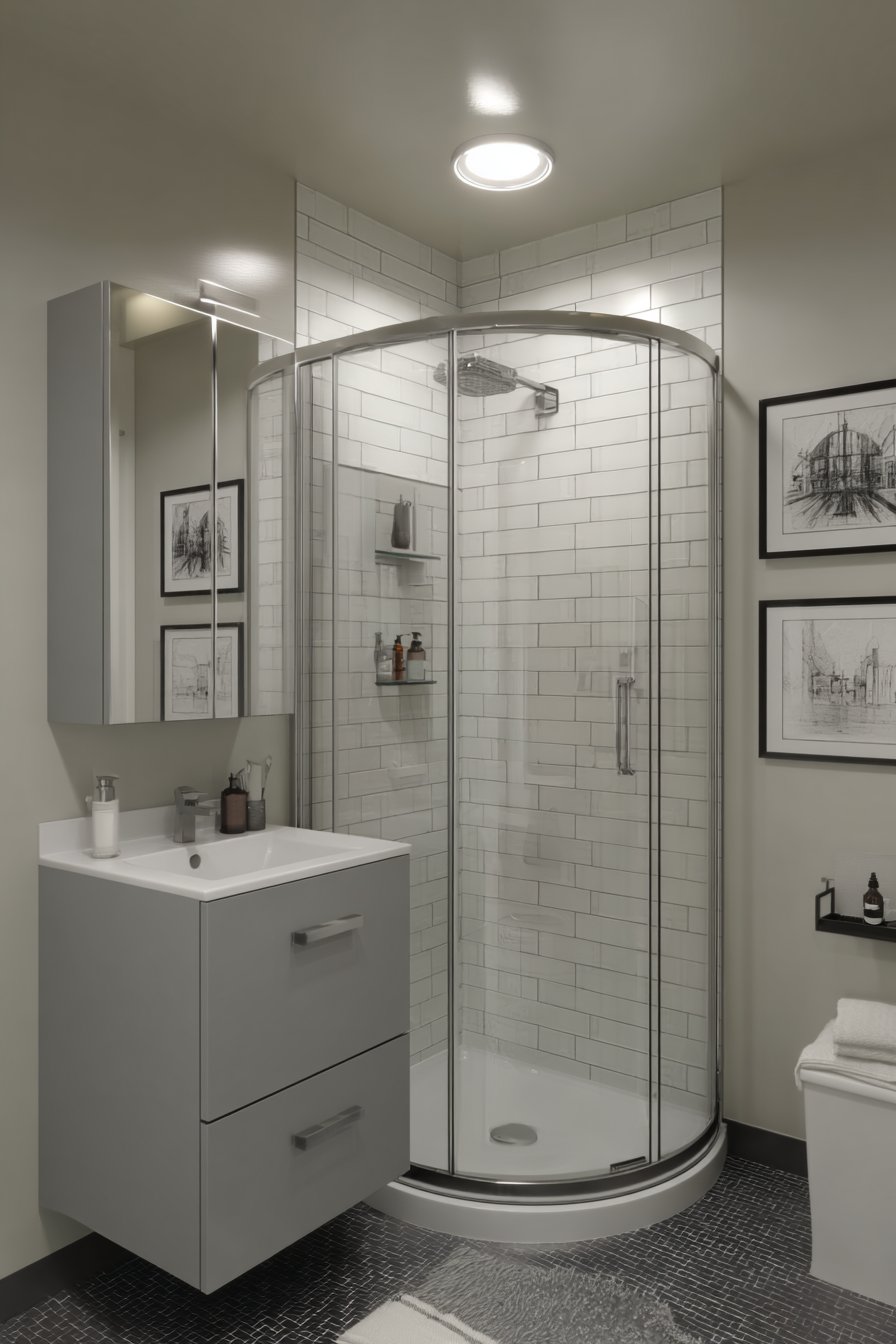
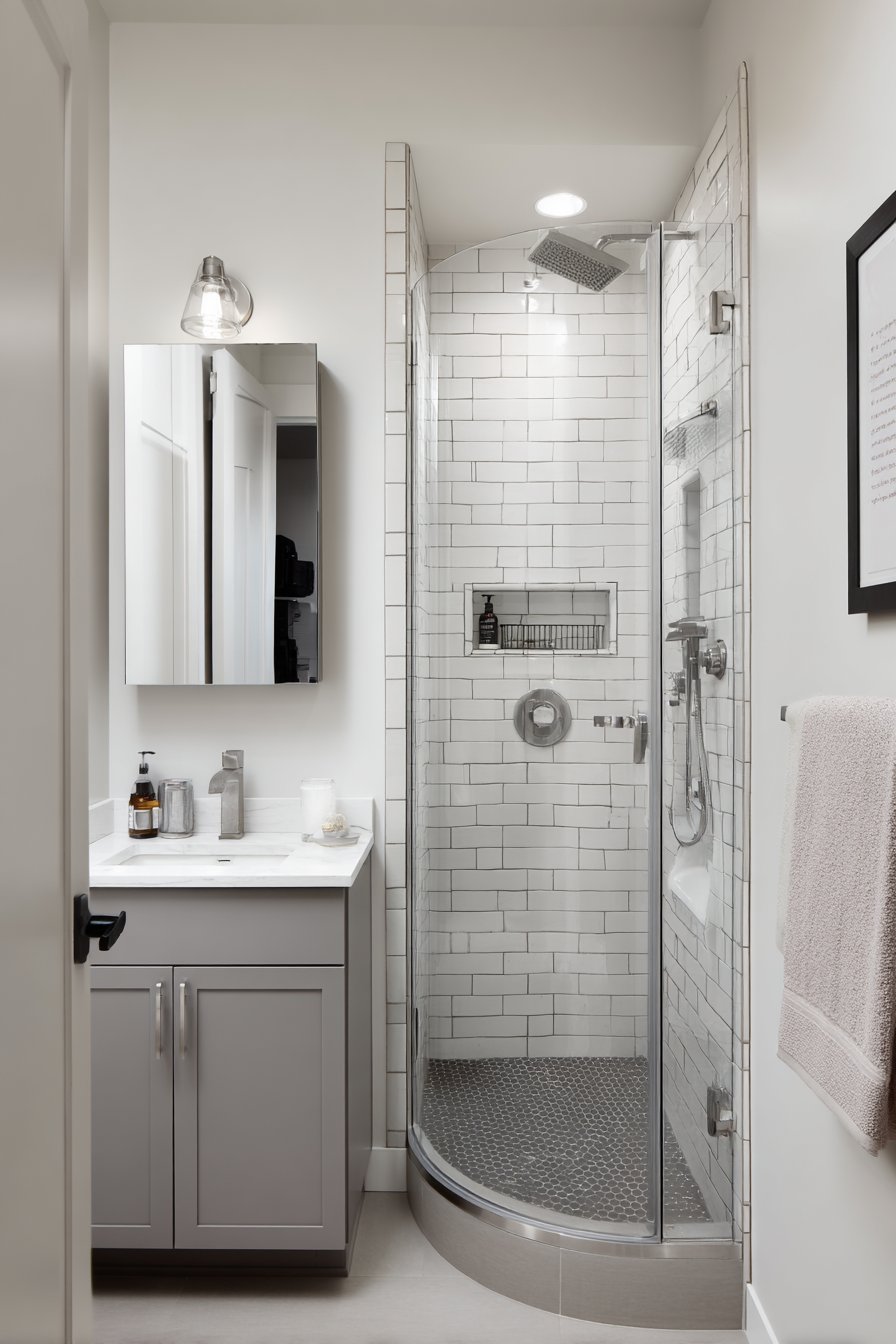
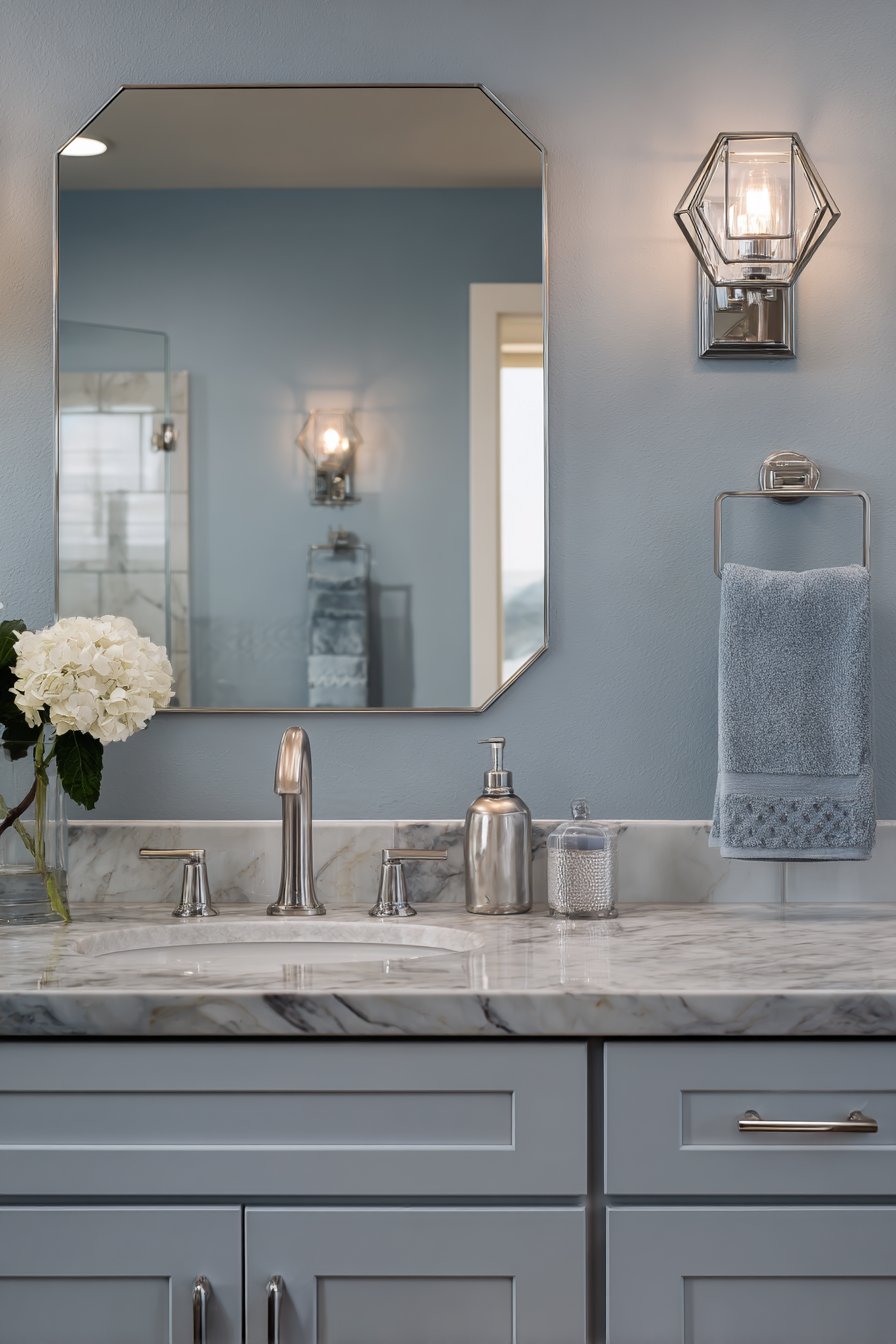
Space efficiency reaches new heights in this compact ensuite bathroom where thoughtful planning maximizes every square inch. The corner shower features a curved glass enclosure that saves space while adding visual softness—the curve eliminates sharp corners that would make the tight space feel even smaller. White subway tiles with dark gray grout add subtle detail and visual interest without overwhelming the modest dimensions, the darker grout preventing the all-white look from feeling sterile while remaining easy to maintain.
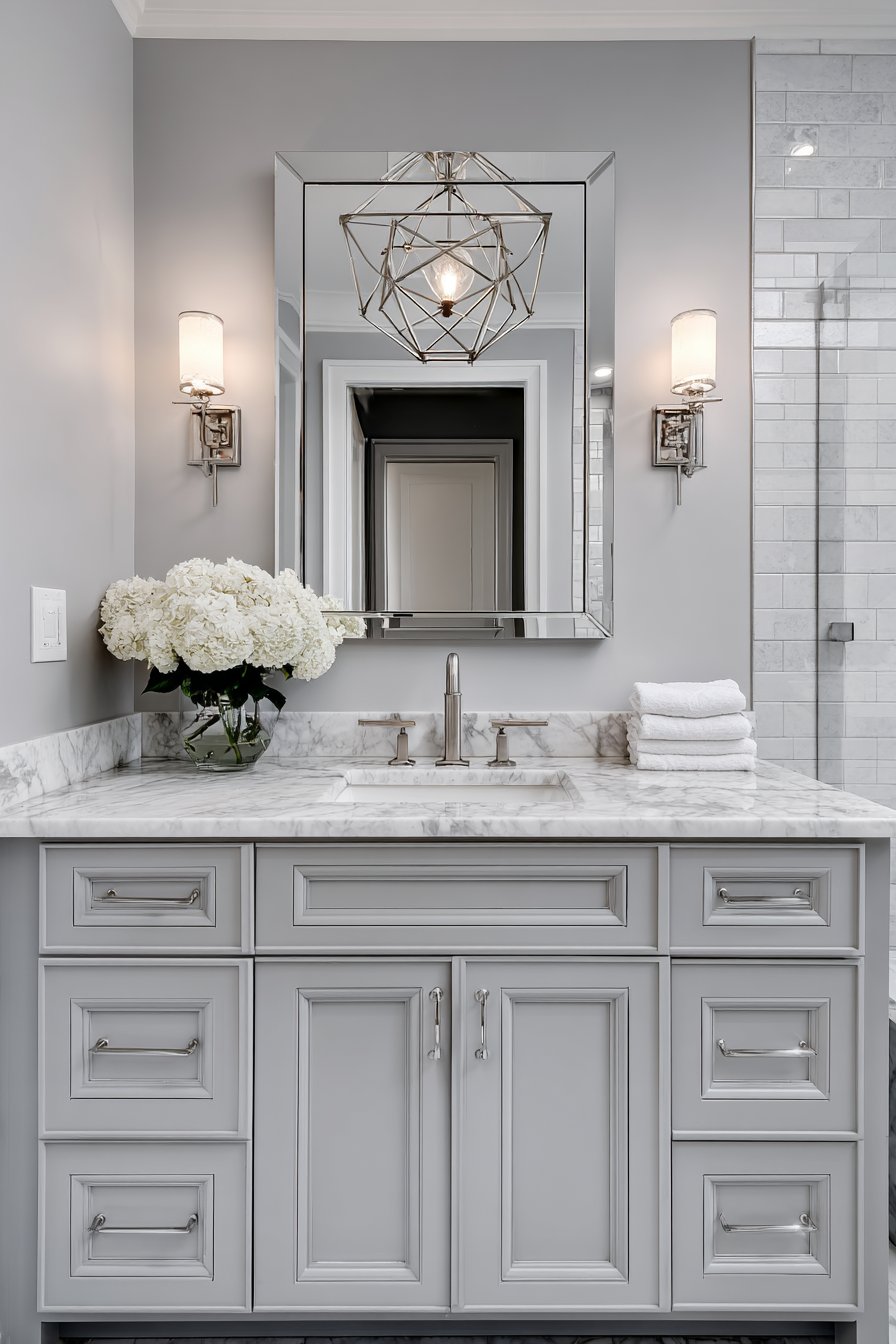
A narrow floating vanity in light gray with small rectangular sink fits the tight space perfectly, demonstrating how scaled-down fixtures can maintain functionality while respecting spatial constraints. The wall-mounted mirror cabinet provides essential storage without protruding into the limited floor space, its mirrored door reflecting light and creating the illusion of greater depth. Chrome fixtures maintain a clean, modern aesthetic while their reflective surfaces help distribute available light throughout the compact space.
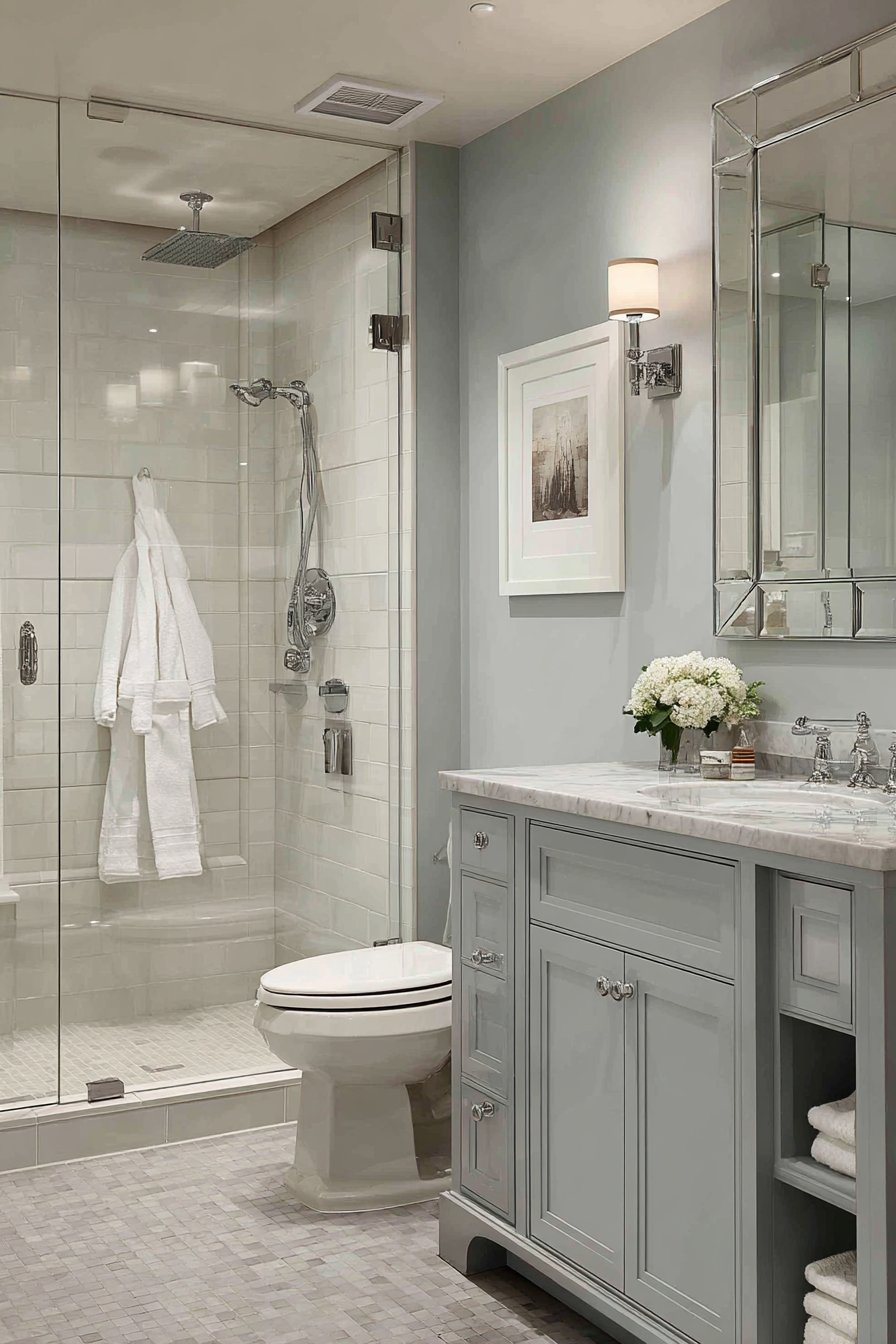
Recessed lighting in the shower and above the vanity ensures adequate illumination without consuming precious ceiling space with hanging fixtures. The strategic placement of lights eliminates shadows that would make the small space feel darker and more confined. This bathroom proves that even extremely small footprints can accommodate full bathroom functionality when fixtures are carefully selected, scaled appropriately, and positioned strategically to maximize both function and perceived spaciousness.
Key Design Tips:
- Use corner showers with curved glass to maximize space and add softness
- Choose dark grout with white tiles for subtle visual interest
- Scale vanities and sinks appropriately to room dimensions
- Install wall-mounted mirror cabinets for storage without floor space consumption
- Use recessed lighting to illuminate without consuming visual space
- Select chrome fixtures to reflect light and maintain modern aesthetic
- Plan fixture placement carefully to maximize function in tight quarters
Why These Spare Bathroom Ideas Represent the Best Design Solutions
These twenty-three spare bathroom concepts represent the pinnacle of contemporary bathroom design thinking, each addressing specific challenges while demonstrating core principles that make bathrooms both beautiful and functional. Whether dealing with minimal square footage, awkward layouts, limited budgets, or accessibility requirements, these designs prove that constraints often inspire the most creative and successful solutions.
The spare bathroom ideas showcased here excel because they understand that guest bathrooms serve unique purposes requiring different considerations than primary family bathrooms. These spaces must immediately communicate their function to unfamiliar users while creating welcoming environments that make guests feel valued and comfortable. The best spare bathrooms balance personality with versatility, showcasing the homeowner’s design sensibility without imposing so strongly that guests feel uncomfortable or uncertain how to use the space.
From the spa-inspired sanctuary with its floating vanity and rainfall shower to the accessible universal design bathroom with integrated grab bars and open vanity space, each concept demonstrates how spare bathroom ideas can address specific needs while maintaining aesthetic excellence. The narrow corridor bathroom proves that even the most challenging layouts can become charming and functional through thoughtful fixture selection and vertical design emphasis. The budget-friendly makeover bathroom shows how spare bathroom updates need not require significant investment when homeowners focus on high-impact changes like paint color, updated hardware, and strategic accessories.
Style versatility across these designs ensures that every homeowner can find inspiration regardless of their aesthetic preferences. The Scandinavian clean white bathroom appeals to minimalists who value simplicity and natural light, while the colorful eclectic powder room celebrates those who embrace personality and collected charm. The industrial exposed brick bathroom serves urban dwellers who appreciate raw materials and utilitarian beauty, while the farmhouse vintage powder room satisfies those who love rustic character and reclaimed elements. The mid-century modern walnut bathroom offers retro enthusiasts authentic period design, while the Japandi zen powder room blends Eastern and Northern design philosophies for ultimate serenity.
Material innovation and sustainable choices thread throughout these spare bathroom ideas, from the living plant wall that purifies air naturally to the reclaimed wood shelving that gives new life to salvaged materials. The natural stone spa bathroom showcases how organic materials like slate and teak create inherently relaxing environments, while the contemporary gray tile bathroom demonstrates how modern porcelain can deliver the look of concrete with superior performance characteristics. These material choices reflect growing awareness that bathroom design impacts not just aesthetics but environmental sustainability and occupant wellness.
Lighting design receives careful attention across all these spare bathroom concepts because proper illumination dramatically affects both functionality and mood. The combination of natural light through frosted windows, task lighting for grooming activities, and ambient lighting for atmosphere creates layered illumination schemes that adapt to different times of day and user needs. From the soft recessed lighting in the spa bathroom to the statement crystal chandelier in the art deco powder room, lighting choices reinforce design themes while ensuring practical visibility.
Storage solutions demonstrate particular innovation across these designs, addressing the common challenge of accommodating guest needs without permanent residents whose belongings would fill available space. The smart storage bathroom with floor-to-ceiling built-ins shows how thoughtful planning creates surprising capacity even in compact footprints, while open shelving in multiple designs proves that displayed storage can be both functional and decorative when styled with intention. These spare bathroom ideas recognize that guests need convenient access to fresh towels, toiletries, and personal items while appreciating organization that makes everything easy to find.
Color strategy varies brilliantly across these spare bathroom concepts, from strict monochromatic schemes like the black and white powder room to nature-inspired palettes in the coastal seafoam bathroom. The neutral gray and white combinations prove enduringly popular for their versatility and timeless appeal, while bold choices like the sage green budget makeover and vibrant eclectic powder room demonstrate how color confidence can transform ordinary spaces into memorable ones. These designs understand that color affects mood and perceived space, using this knowledge strategically to create desired atmospheres.
Accessibility and universal design principles appear not just in the dedicated accessible bathroom but threaded throughout multiple concepts that incorporate features benefiting all users regardless of ability. Wall-mounted faucets provide easier reach, floating vanities accommodate varied user heights, and lever-style controls require less dexterity than traditional knobs. These spare bathroom ideas demonstrate that accessible design need not look medical or institutional—when integrated thoughtfully from the beginning, accessibility features enhance both function and aesthetics for everyone.
The best spare bathroom ideas recognize that these spaces serve as ambassadors for the home, often providing guests’ first private encounter with the homeowner’s design sensibility and attention to detail. Whether welcoming overnight visitors, hosting dinner parties, or serving family members from other households, spare bathrooms make impressions that reflect on the entire home. These twenty-three concepts understand this responsibility, delivering spaces that delight, function flawlessly, and make every guest feel valued and comfortable.
Conclusion
Transforming your spare bathroom from functional afterthought to design showcase requires understanding both the practical needs of guests and the aesthetic possibilities inherent in these unique spaces. The twenty-three spare bathroom ideas explored here demonstrate that limitations of size, budget, or layout need not constrain creativity—indeed, these constraints often inspire the most innovative and successful solutions. Whether you’re drawn to minimalist Scandinavian simplicity, vintage glamour, industrial edge, or nature-inspired biophilic design, the perfect approach exists for your space and sensibility.
The key takeaways from these exceptional designs emphasize thoughtful planning that begins with understanding how guests will use the space, followed by strategic decisions about fixtures, materials, colors, and lighting that work together to create cohesive, welcoming environments. Remember that spare bathrooms offer freedom to experiment with bolder choices than you might risk in daily-use spaces—this is your opportunity to have fun with pattern, color, or unexpected materials while still maintaining the functionality and comfort guests require.
Start your spare bathroom transformation by identifying your biggest challenges—whether limited square footage, awkward layout, minimal natural light, or tight budget—then look to these designs for specific solutions that address similar constraints. Mix ideas that resonate with your personal style, adapting elements to fit your unique situation. Most importantly, remember that the best spare bathrooms make guests feel genuinely valued through thoughtful details like fresh towels displayed within easy reach, adequate storage for personal items, excellent lighting for grooming tasks, and overall atmosphere that whispers “welcome” without saying a word. Your spare bathroom deserves the same design attention as any other room in your home—these ideas provide the inspiration and practical guidance to make that transformation a beautiful reality.
