
Creating a beautiful bathroom in a small space can feel like navigating uncharted waters, but when you infuse coastal design elements into the mix, magic happens. Small coastal bathrooms offer the perfect opportunity to bring the tranquility of the ocean into your home, transforming even the most modest powder room into a refreshing sanctuary that evokes memories of seaside vacations and lazy beach days. The beauty of coastal design lies in its inherent ability to make spaces feel larger, brighter, and more open—qualities that are particularly valuable in compact bathrooms where every square inch matters.
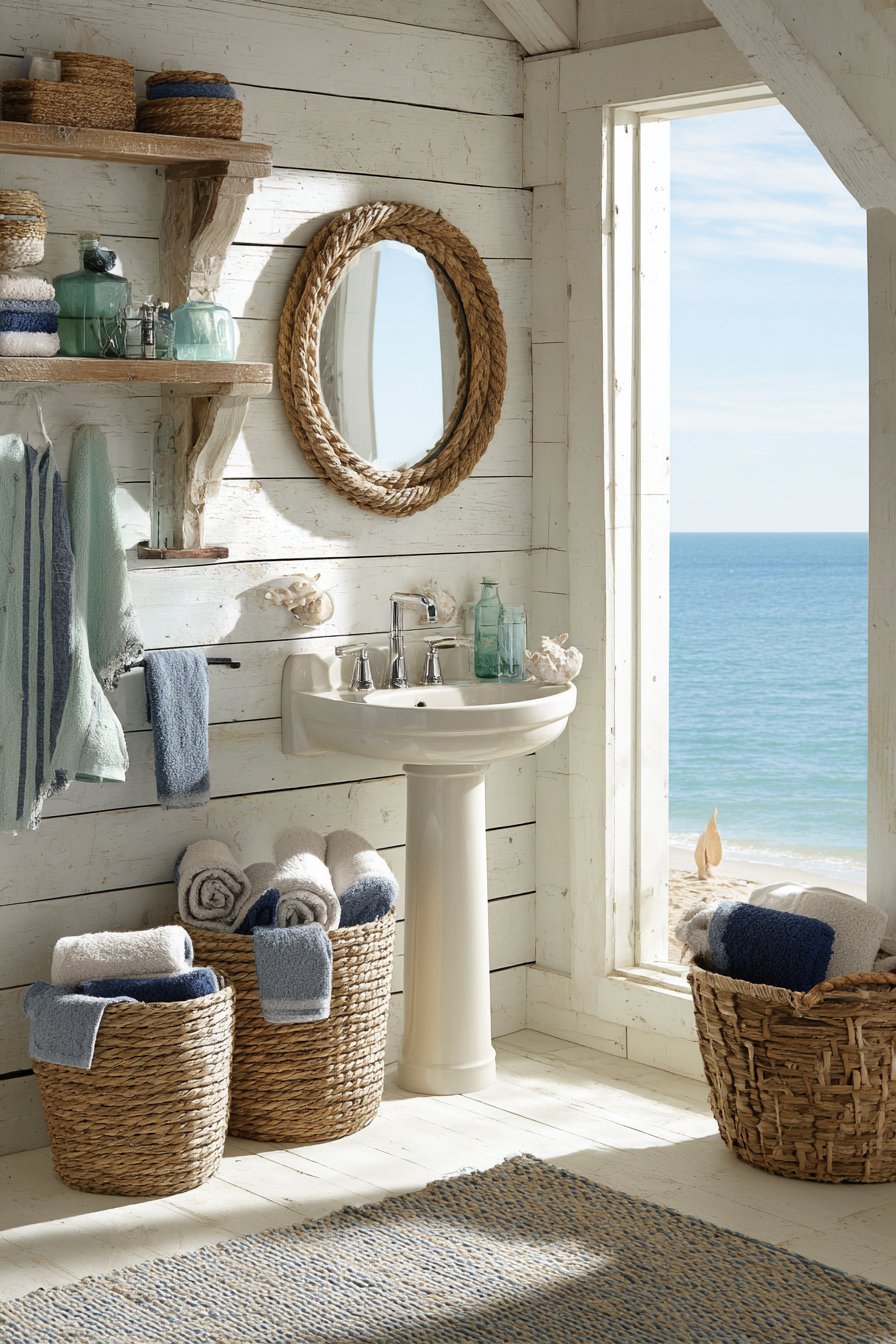
The coastal aesthetic is more than just a design trend; it’s a lifestyle choice that embraces natural light, organic materials, and a soothing color palette inspired by sand, sea, and sky. Whether you live steps from the shore or hundreds of miles inland, incorporating small coastal bathroom ideas can help you capture that breezy, relaxed atmosphere that makes beach houses so appealing. From weathered wood accents and nautical fixtures to sea glass colors and rope details, the possibilities for creating your personal coastal oasis are virtually endless, even when working with limited square footage.
In this comprehensive guide, we’ll explore twenty-one innovative small coastal bathroom ideas that prove you don’t need expansive square footage to achieve the serene, sophisticated look of a luxury beach resort. Each design concept demonstrates how thoughtful planning, clever storage solutions, and authentic coastal elements can work together to maximize functionality while creating a space that feels both spacious and stylish. Whether you’re planning a complete renovation or simply looking to refresh your existing bathroom with coastal touches, these ideas will inspire you to create a small bathroom that’s big on style and oceanic charm.
1. Spa-Inspired Coastal Shower Sanctuary
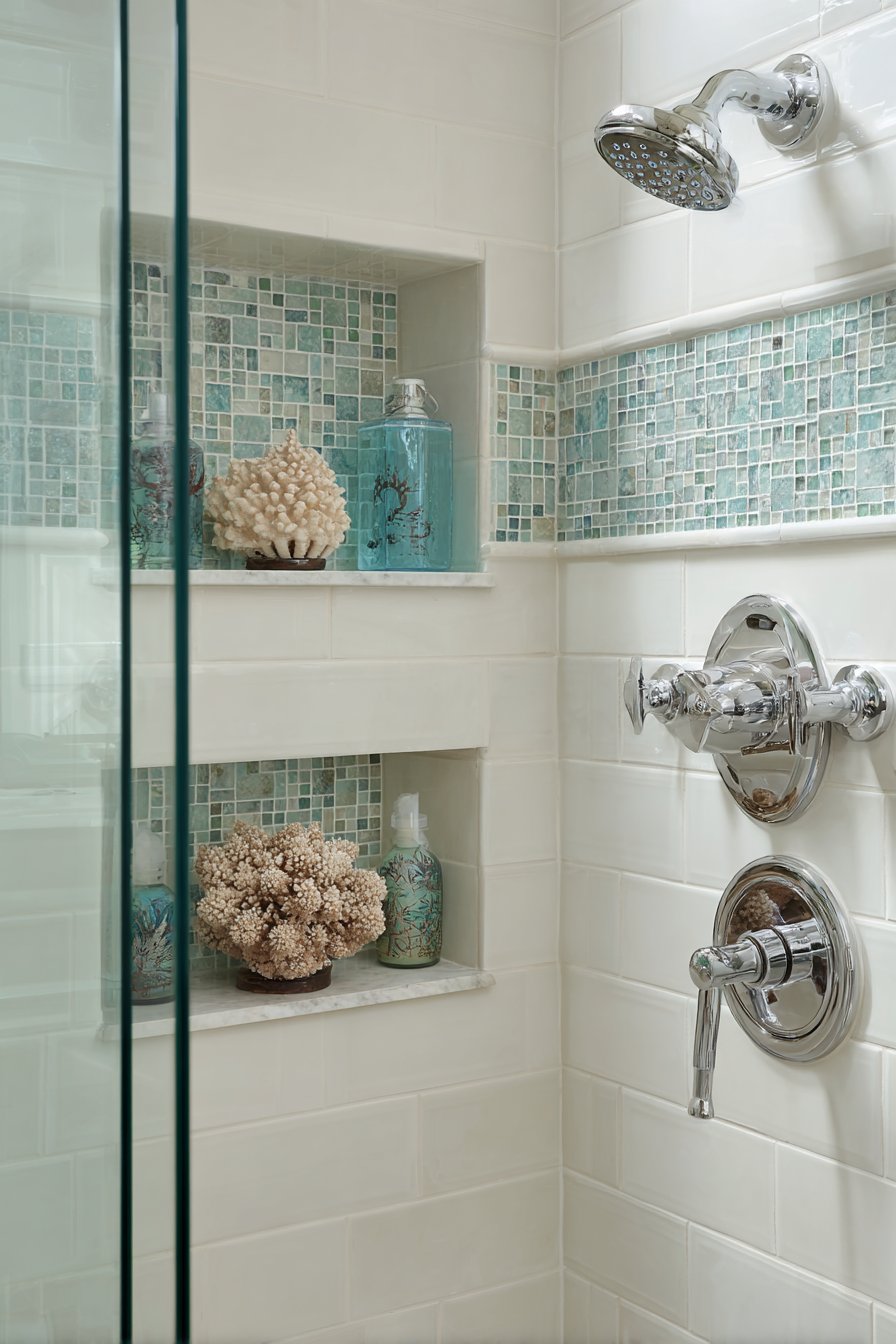
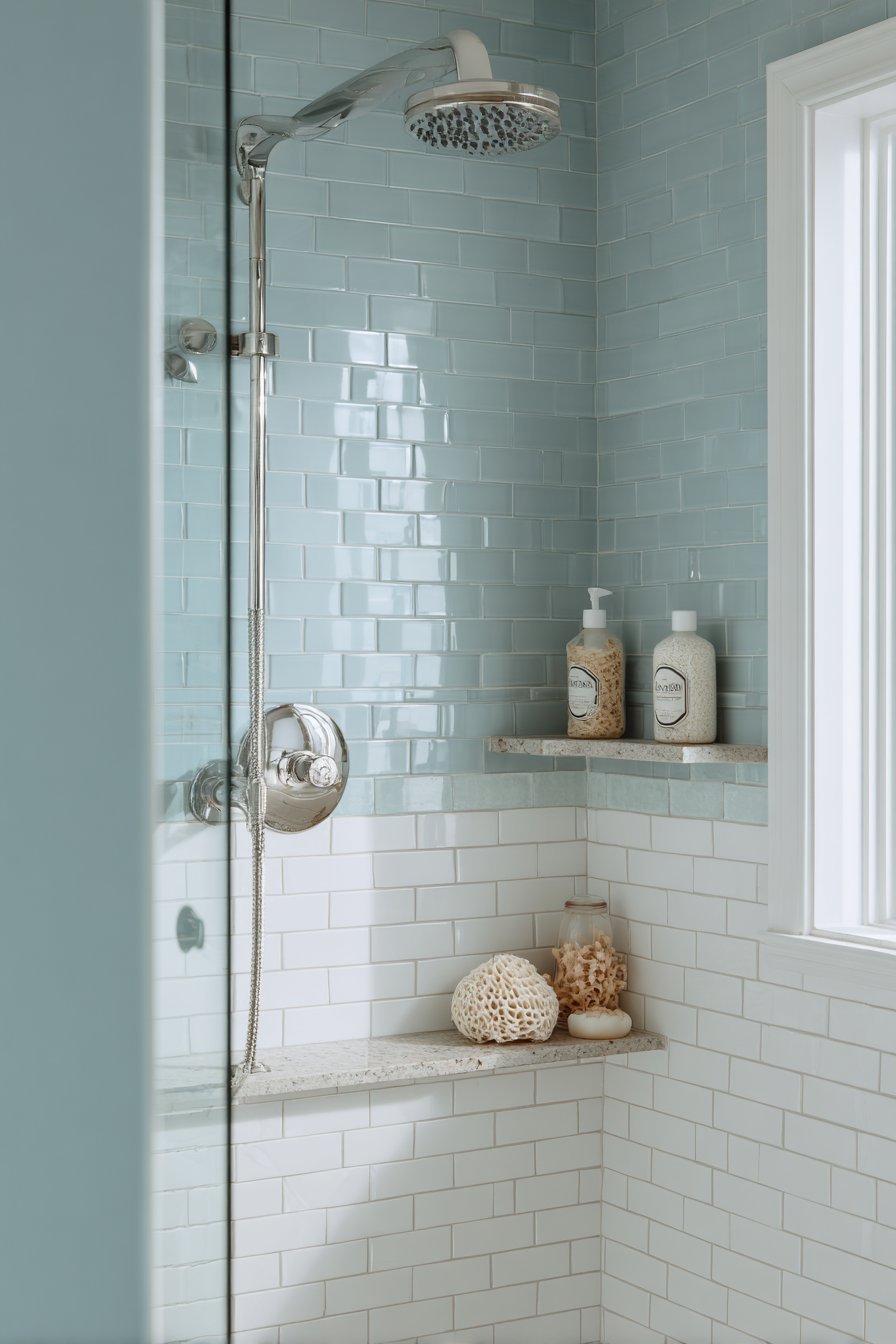
A walk-in shower featuring white subway tiles arranged in a classic brick pattern becomes the focal point of this small coastal bathroom, elevated by a stunning light blue glass mosaic accent stripe that runs horizontally at eye level. The chrome rainfall showerhead paired with a handheld fixture offers both luxury and practicality, while the crisp white walls create a clean canvas that amplifies the sense of space. Built-in corner shelving provides essential storage for coastal-themed soap dispensers and natural sea sponges, keeping frequently used items within easy reach without cluttering the streamlined design.
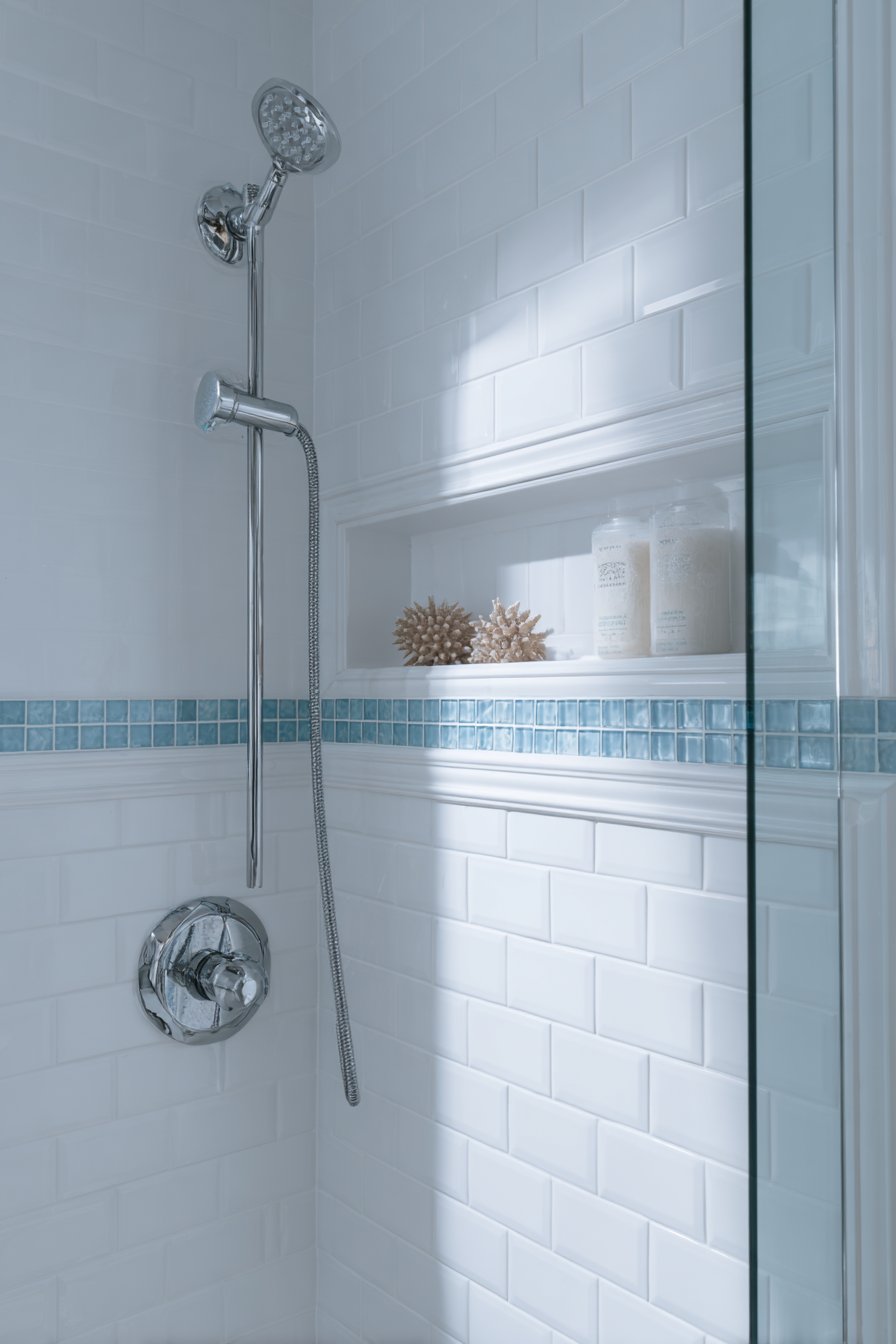
The frameless glass partition is a game-changer in small coastal bathroom ideas, as it eliminates visual barriers that would otherwise make the space feel cramped and confined. This transparent boundary allows natural light to flow freely throughout the bathroom while containing water spray effectively. The chrome fixtures catch and reflect light beautifully, adding subtle sparkle that mimics sunlight dancing on ocean waves, while the blue mosaic stripe introduces just enough color to establish the coastal theme without overwhelming the neutral palette.
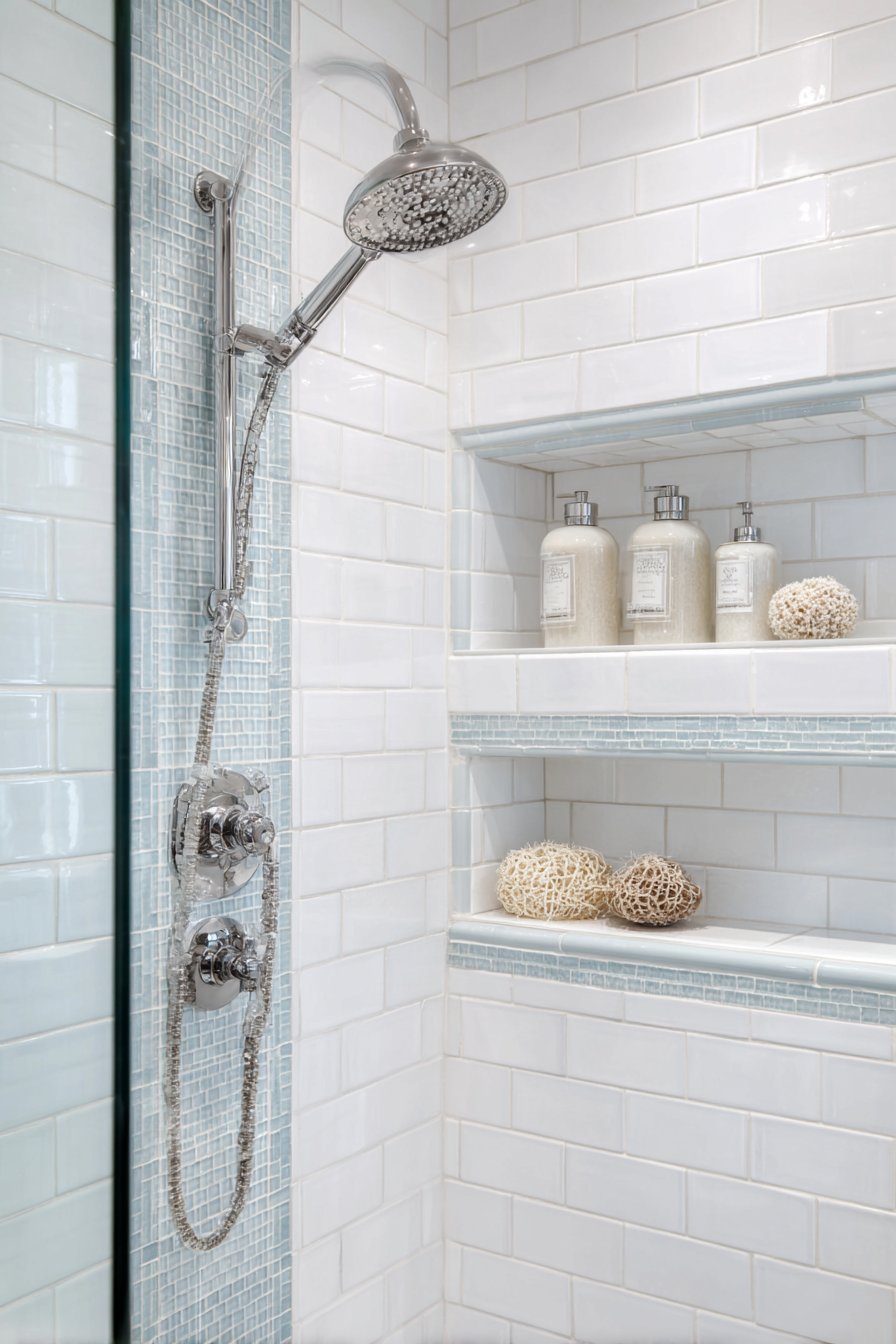
Material selection plays a crucial role in this design’s success, with the combination of glossy subway tiles and textured glass mosaics creating visual interest through varied surfaces. The subway tiles’ timeless appeal ensures the bathroom won’t feel dated in a few years, while the blue accent stripe can be easily updated if you decide to shift your color scheme. The corner shelf’s integration into the tile work demonstrates how smart planning can eliminate the need for hanging caddies or tension poles that often make small showers feel cluttered.
Key Design Tips:
- Install a frameless glass shower enclosure to maximize visual space and light flow
- Use a horizontal accent stripe at eye level to draw the gaze across the room rather than highlighting limited vertical space
- Choose a rainfall showerhead to add luxury without requiring additional floor space
- Build storage into the shower walls during construction to avoid aftermarket additions that protrude into the bathing area
- Select chrome fixtures for their reflective properties that enhance brightness in small bathrooms
2. Weathered Wood Floating Vanity Elegance
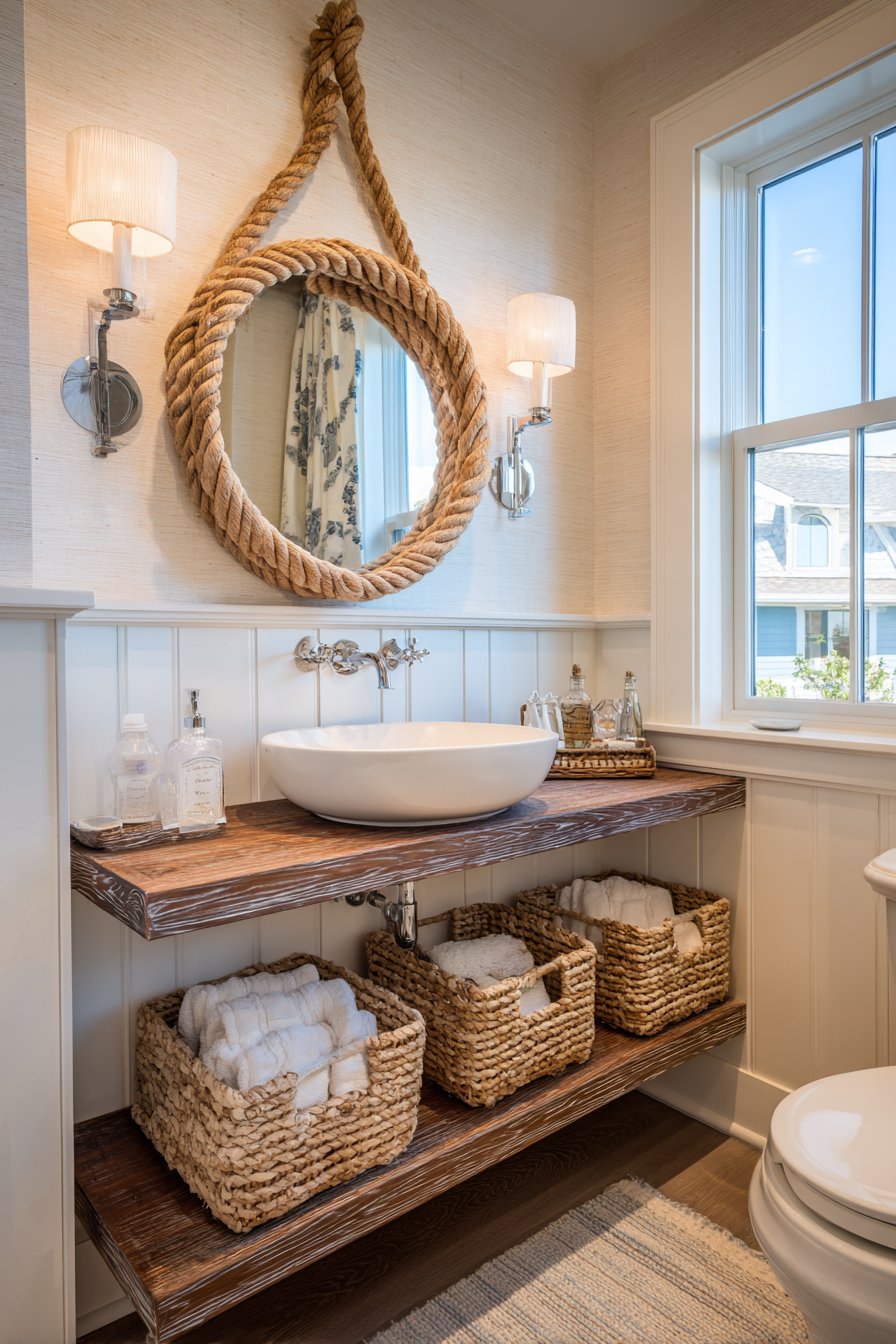
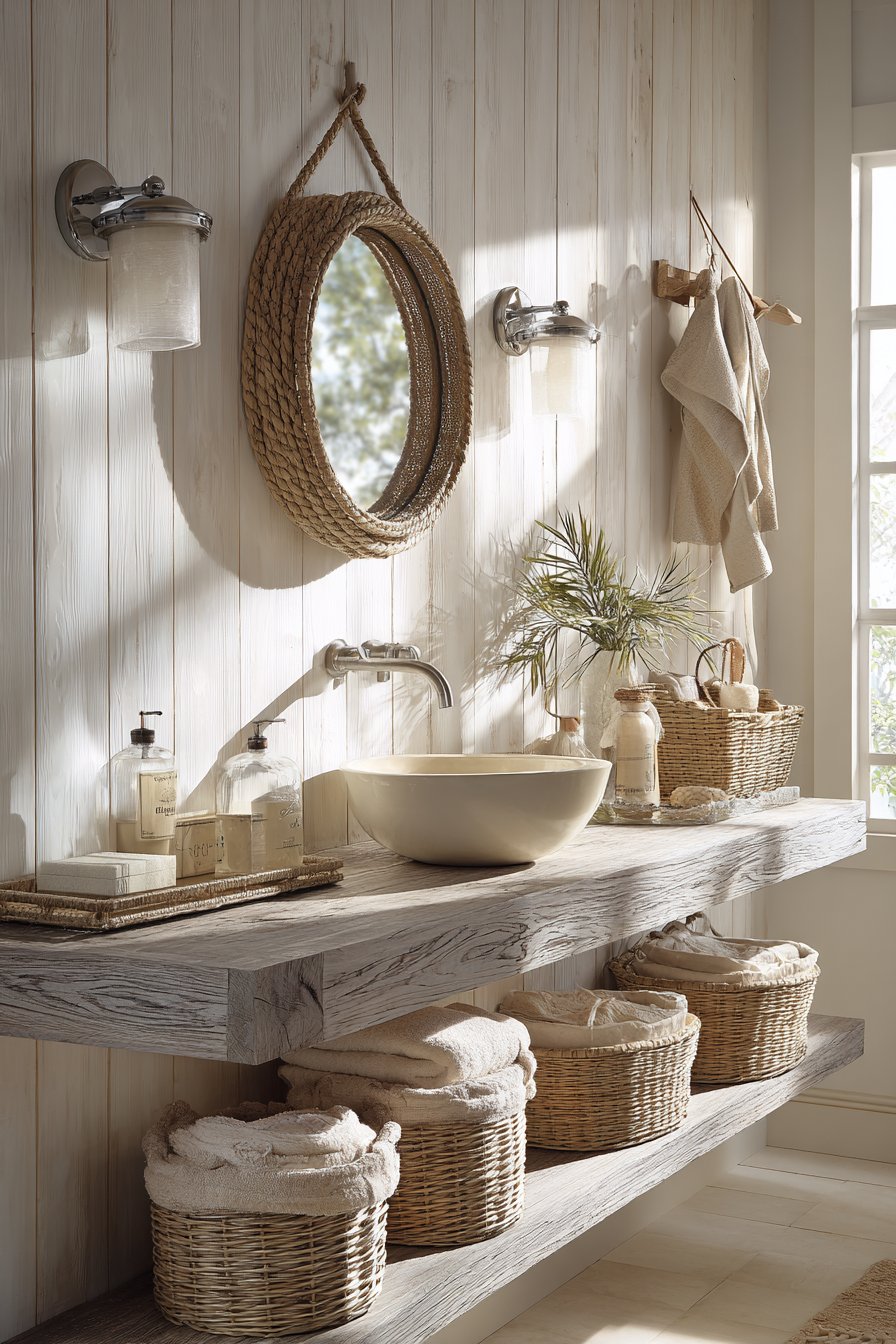
This small coastal bathroom idea centers on a stunning weathered driftwood-style floating cabinet that appears to hover above the floor, supporting a crisp white vessel sink that contrasts beautifully with the aged wood tones. The walls feature tongue-and-groove paneling painted in soft coastal white, their subtle vertical lines creating an illusion of height that makes the ceiling seem further away than it actually is. Above the vanity, a round mirror wrapped in natural rope detailing serves as both functional necessity and artistic statement, flanked by nautical-inspired sconce lighting with frosted glass shades that cast a warm, diffused glow.
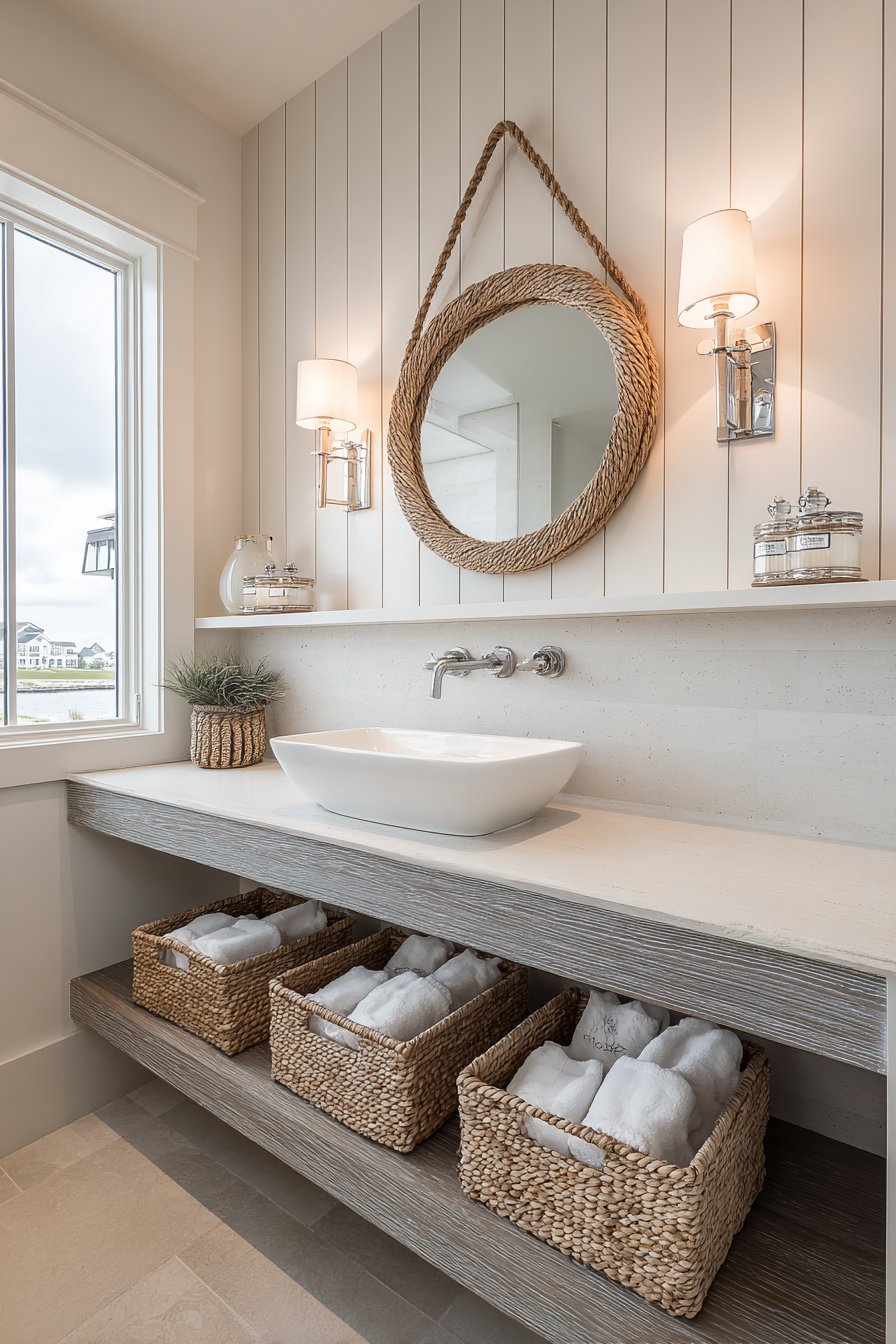
The floating design philosophy extends beyond aesthetics in this small coastal bathroom, offering practical benefits that make the space feel larger and more accessible. By elevating the vanity off the floor, you create the perception of additional square footage while also making floor cleaning significantly easier—a consideration that shouldn’t be underestimated in bathrooms prone to water splashes and humidity. The open shelving below the sink provides visible storage for woven seagrass baskets, which add texture while concealing toiletries and keeping the countertop clear of clutter.
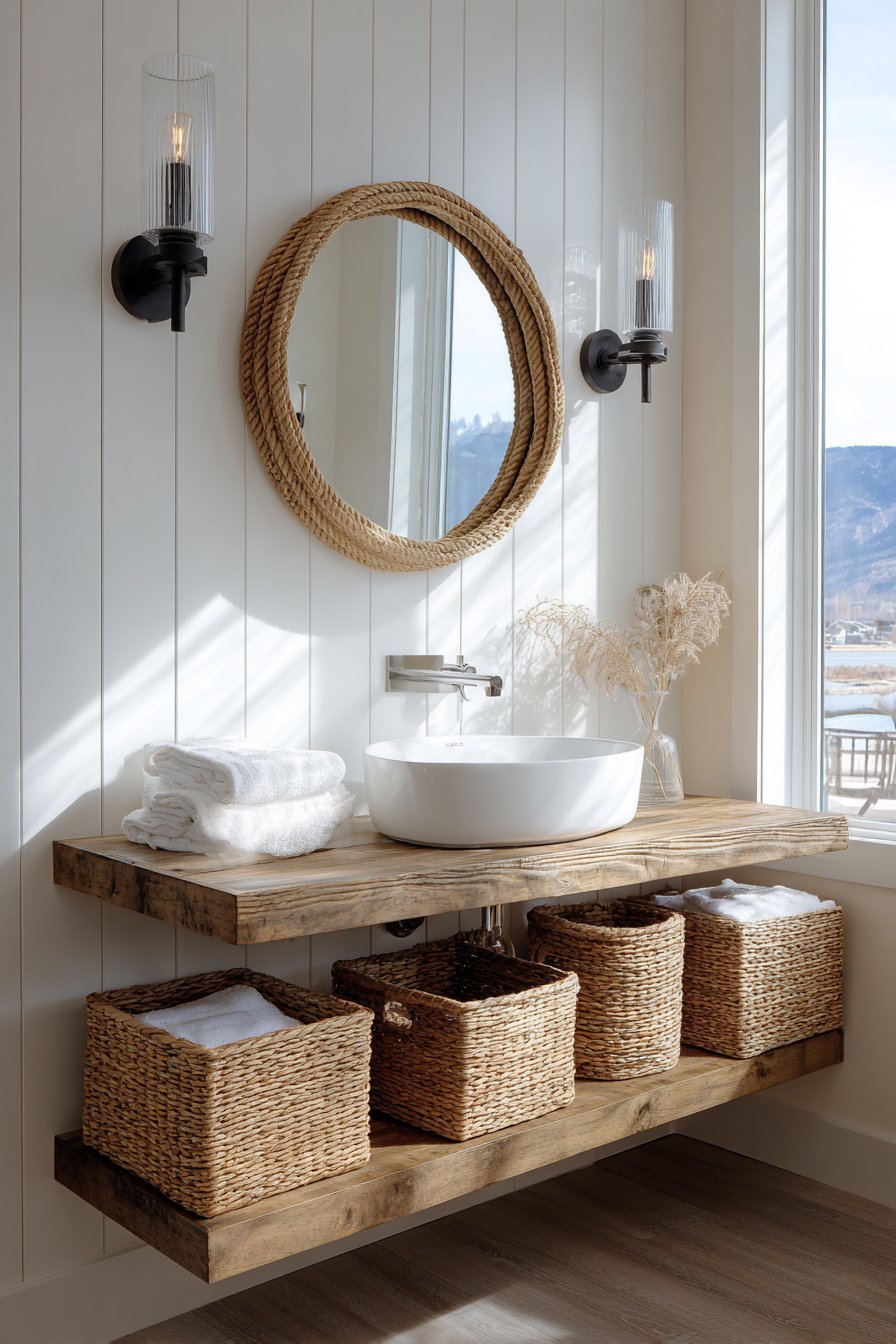
Natural materials dominate this design, from the wood-grain vanity to the rope mirror frame and seagrass baskets, each element reinforcing the coastal connection to organic, beach-found treasures. The vessel sink sits atop the vanity like a piece of sculptural art, its elevated position making a bold statement while also providing practical benefits—the raised bowl requires less bending and offers better clearance for the plumbing below. The frosted glass sconces reference old ship lanterns while providing functional task lighting that’s essential for grooming activities.
Key Design Tips:
- Choose a floating vanity to visually expand floor space and simplify cleaning routines
- Select vessel sinks for their sculptural quality and practical installation advantages in small spaces
- Use tongue-and-groove paneling to add architectural interest without sacrificing wall space to trim or wainscoting
- Incorporate rope details on mirrors or towel holders to reinforce coastal themes without resorting to obvious seashell motifs
- Install sconce lighting at face height on either side of the mirror for optimal task lighting that eliminates shadows
3. Corner Bathtub Coastal Retreat
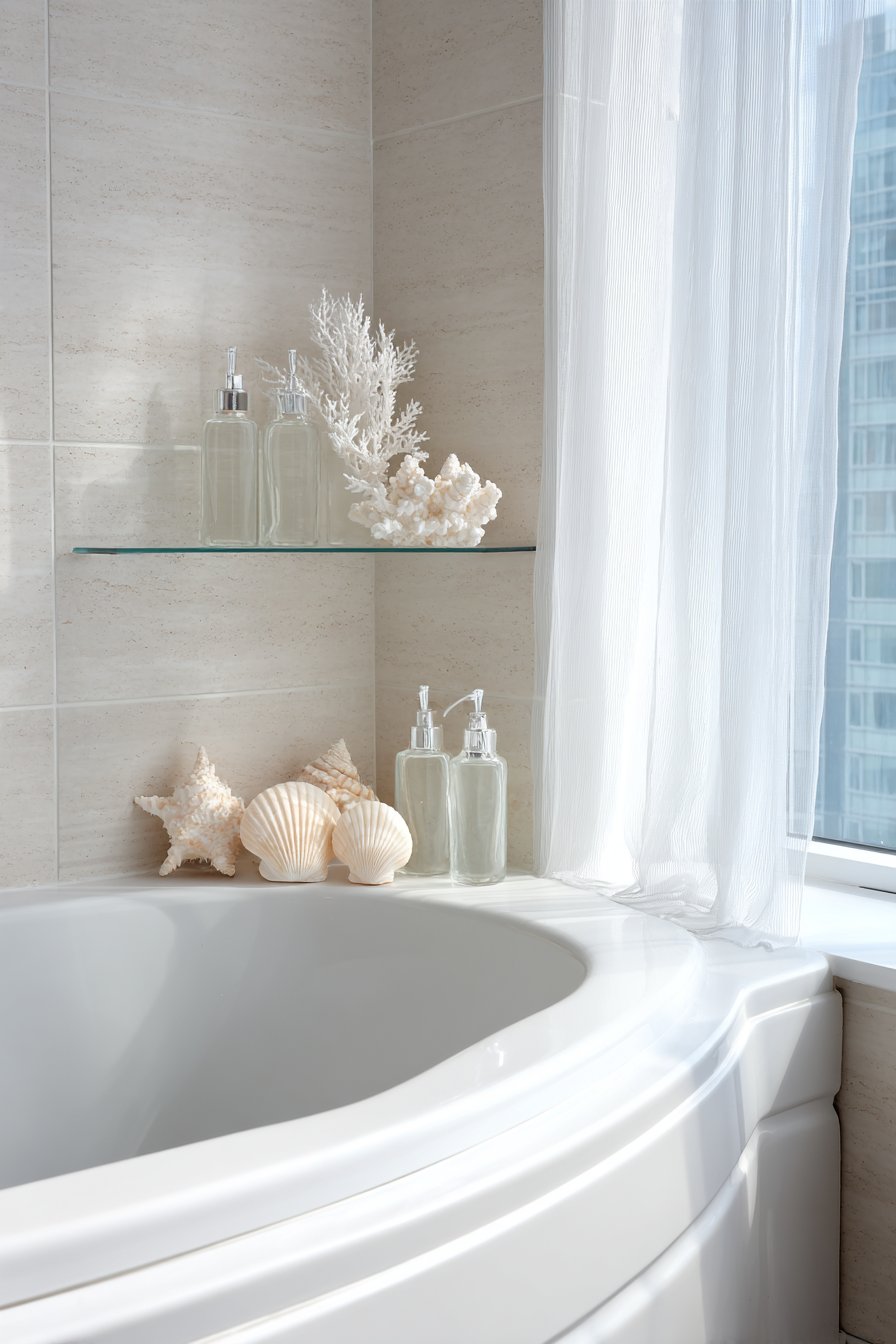
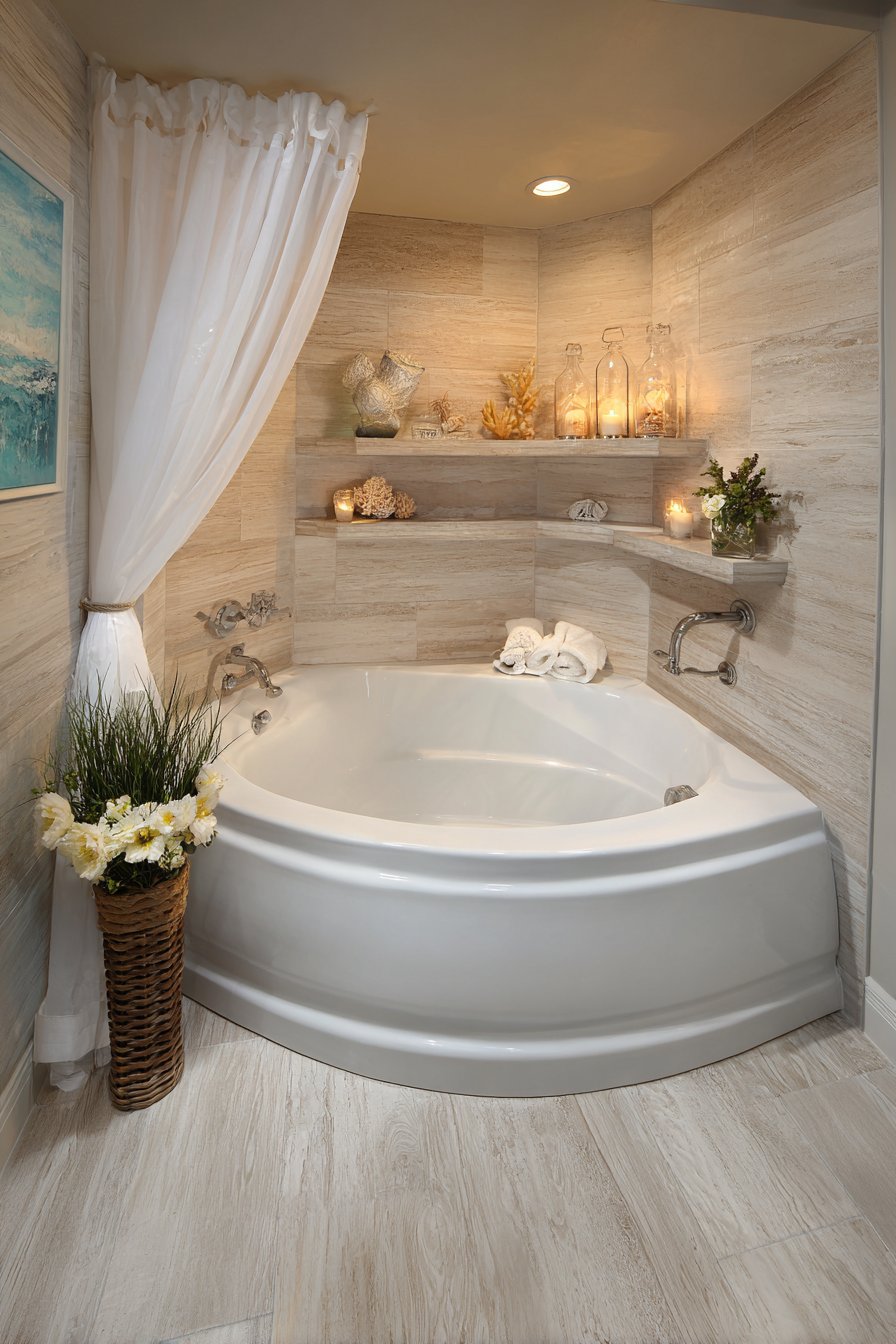
Maximizing every inch of available space, this small coastal bathroom idea showcases a corner bathtub installation that transforms an often-underutilized area into a luxurious soaking spot. The white acrylic finish maintains the bright, clean aesthetic essential to coastal design while the chrome fixtures add traditional elegance that never goes out of style. Large-format porcelain tiles in soft sand beige with natural stone texture cover the walls, their generous size reducing grout lines and creating a more seamless, spacious appearance than smaller tiles would achieve.
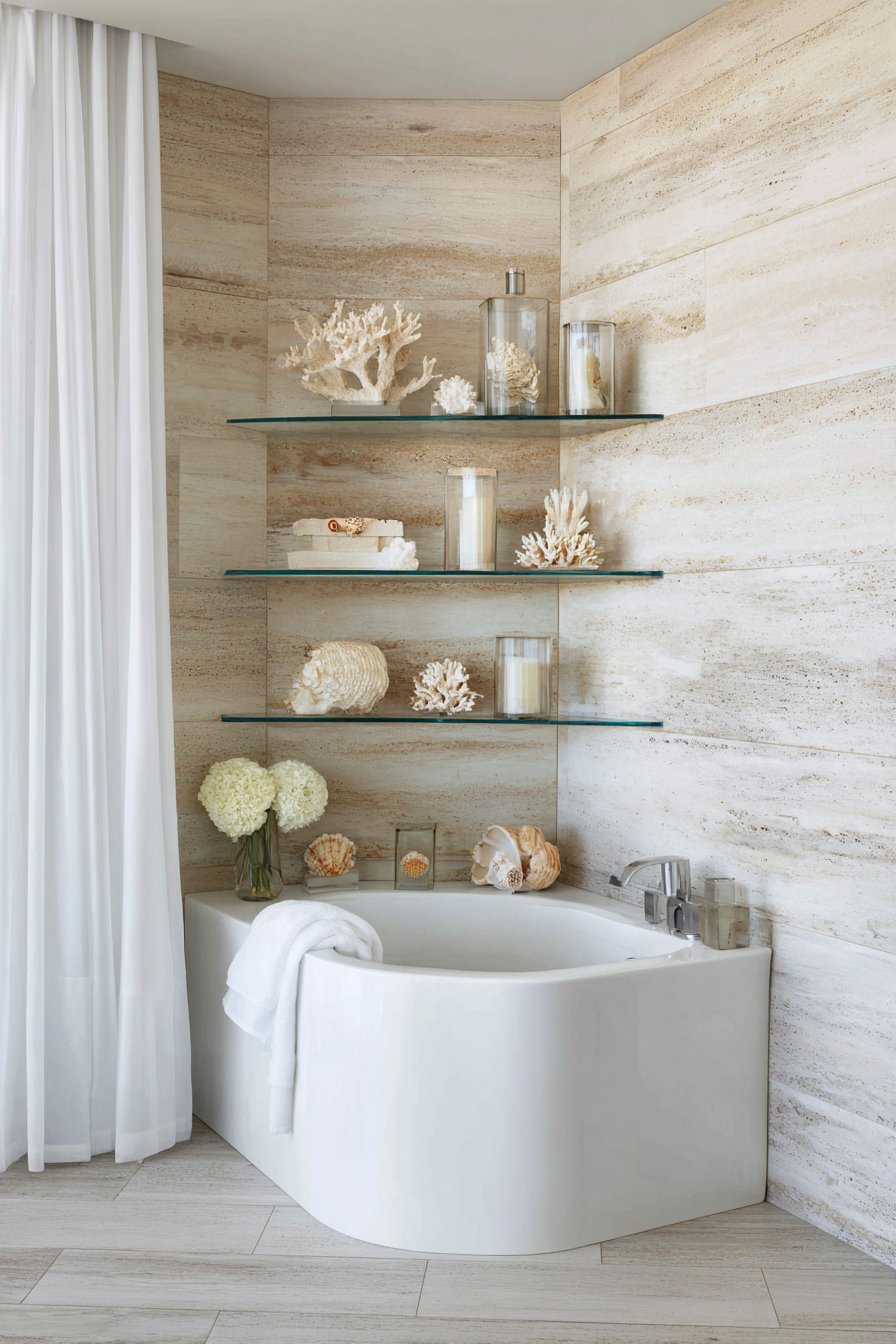
A narrow floating shelf mounted within easy reach of the tub provides the perfect perch for coastal accessories including preserved coral specimens and glass bottles filled with collected shells—personal treasures that tell stories of beach walks and ocean adventures. The sheer white linen curtain drawn across the window maintains privacy while still allowing natural light to filter through, creating that characteristic coastal luminosity that makes small spaces feel airy and open. This delicate balance between privacy and light is crucial in small bathrooms where windows are often the primary source of natural illumination.
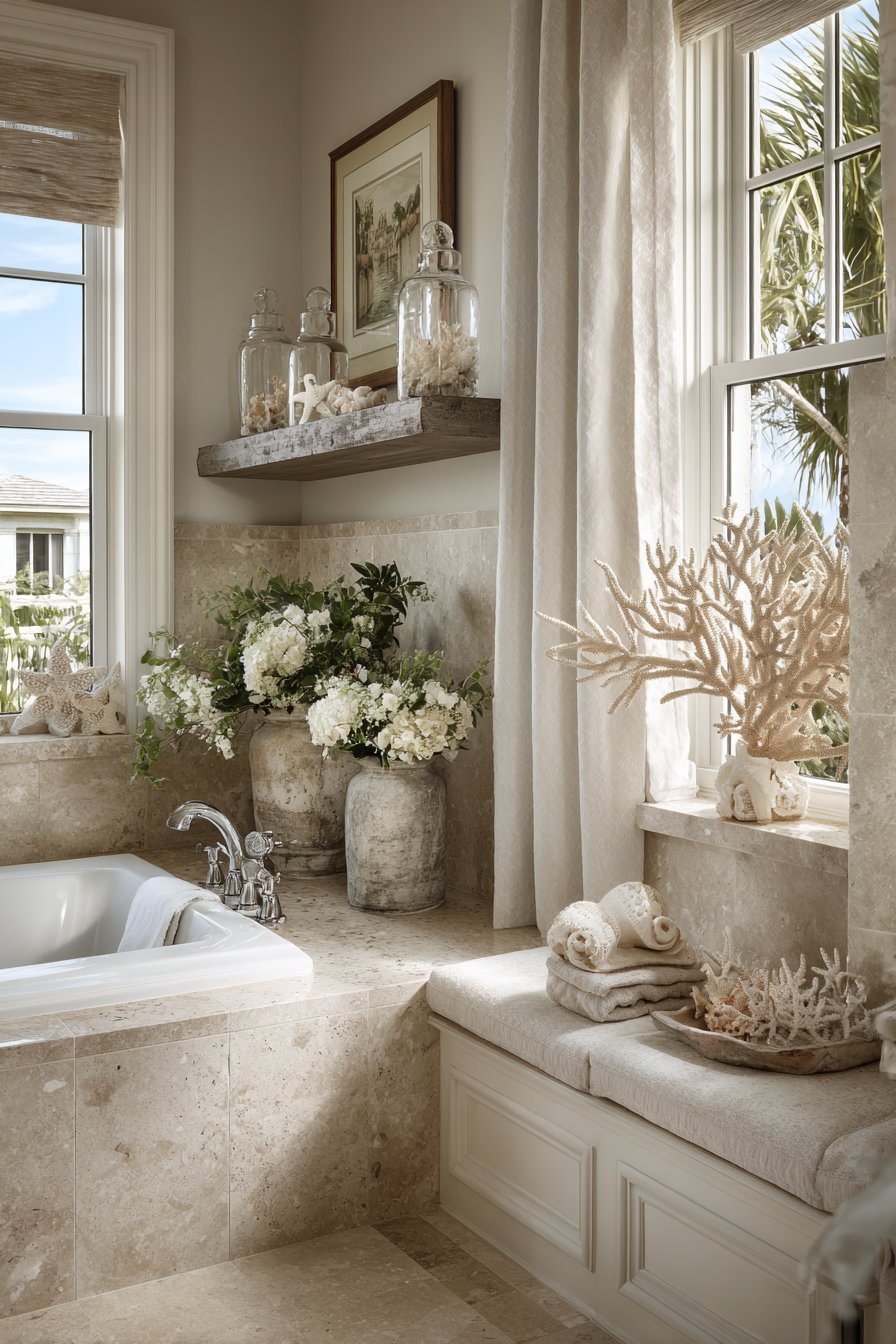
The corner placement of the bathtub is a brilliant space-saving strategy that leaves valuable wall space available for other essential fixtures like the toilet and vanity. Unlike traditional alcove tubs that require one long wall, corner tubs nestle into angles that might otherwise go unused, making them ideal for small coastal bathroom layouts. The sand-colored tiles establish a neutral foundation that evokes beaches and dunes without relying on obvious blue tones, proving that coastal design can embrace earth tones as readily as ocean hues.
Key Design Tips:
- Install corner tubs in small bathrooms to maximize usable floor space while maintaining soaking capacity
- Choose large-format tiles to minimize grout lines and create a more expansive visual effect
- Use floating shelves instead of floor-standing storage units to keep sight lines open
- Select sheer window treatments that provide privacy while preserving natural light
- Display collected coastal items as decor to personalize the space with authentic beach finds
4. Vertical Storage Solutions for Compact Spaces
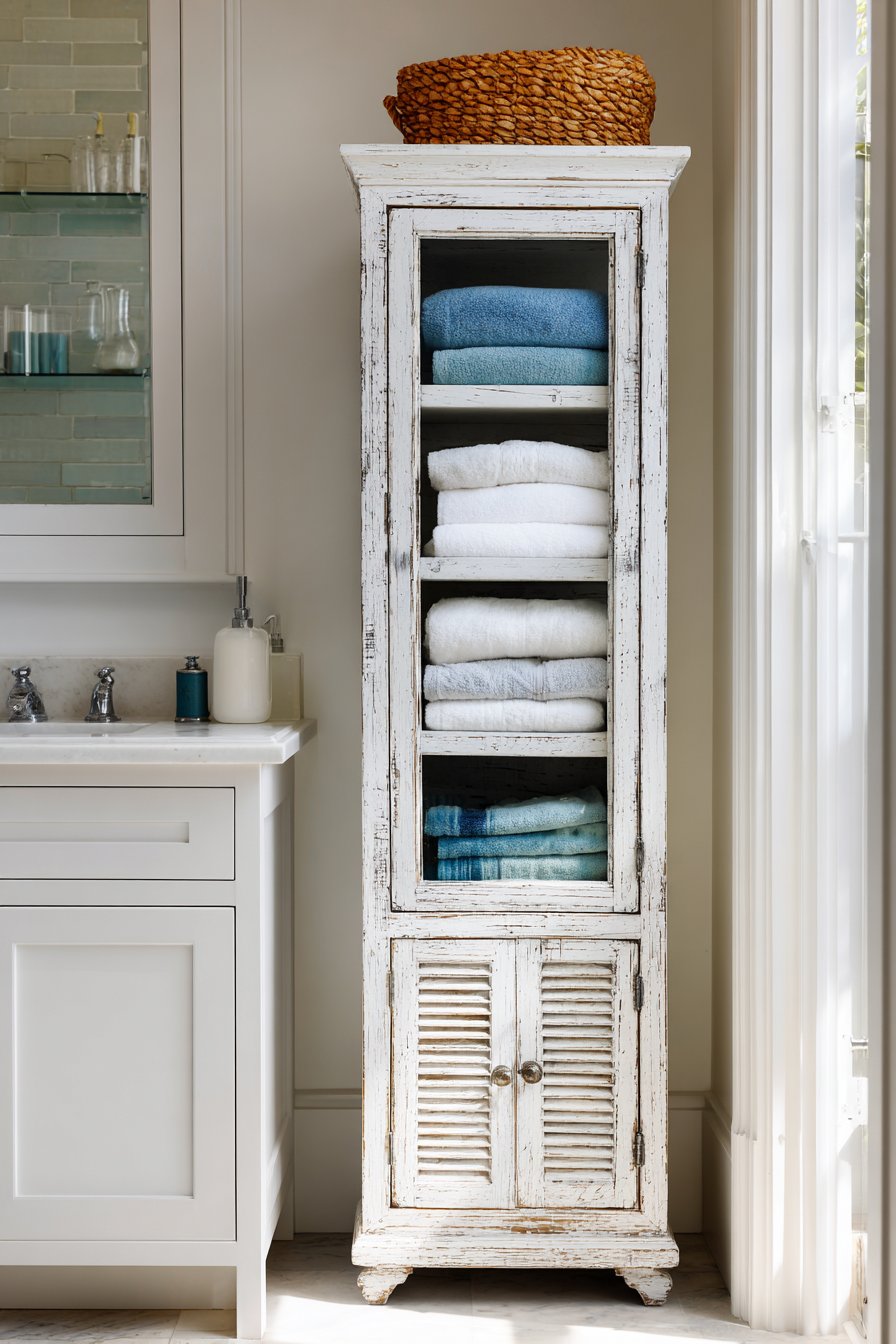
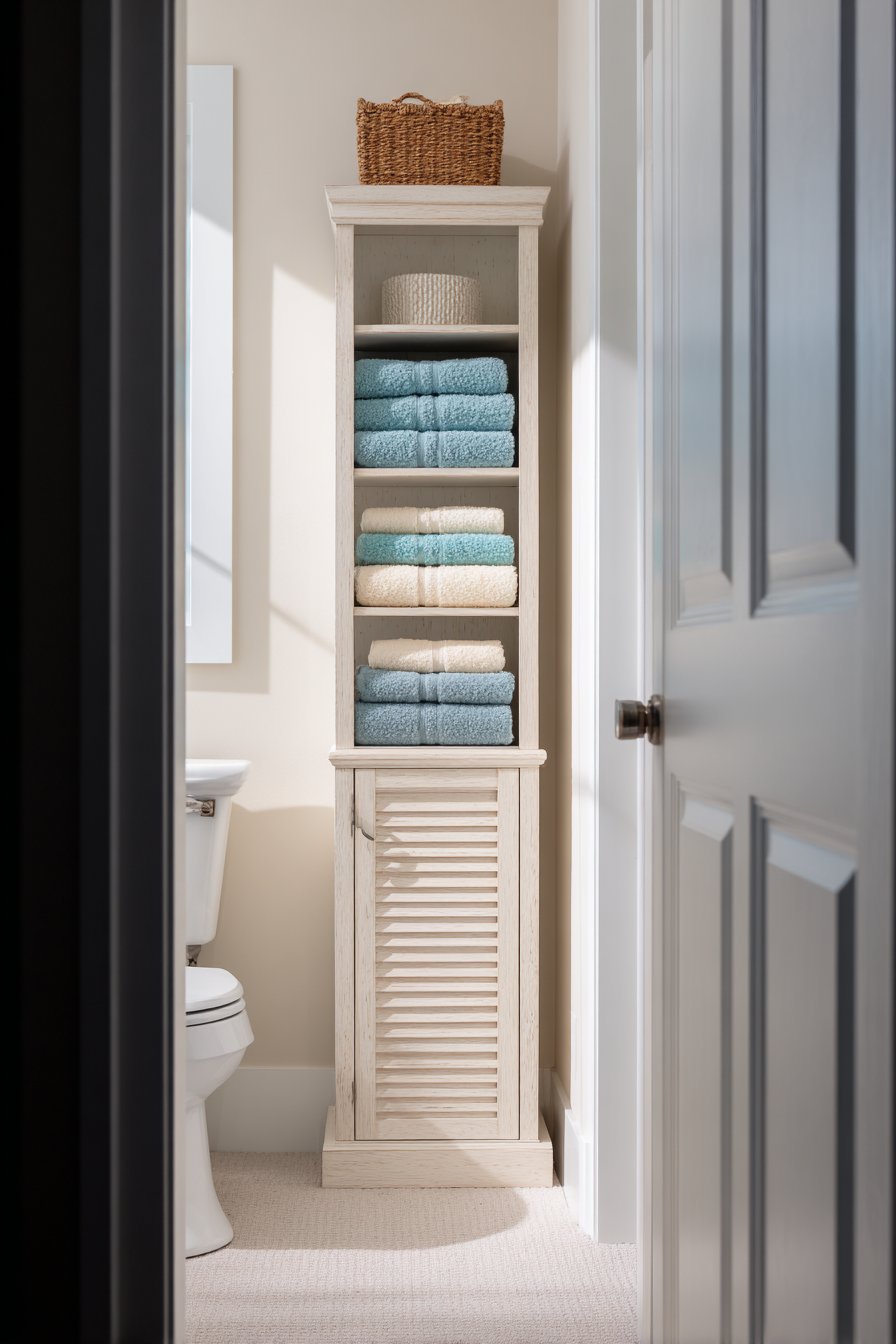
When floor space is at a premium, the solution lies in looking upward, as demonstrated by this small coastal bathroom idea featuring a tall narrow cabinet in distressed white wood with louvered doors reminiscent of classic beach house shutters. This vertical storage powerhouse fits perfectly into a slim wall niche, proving that even the narrowest spaces can accommodate functional cabinetry when you choose appropriately scaled pieces. The glass-paneled sections allow you to display folded towels in ocean blues and crisp whites, turning practical storage into an attractive design element that reinforces the coastal color scheme.
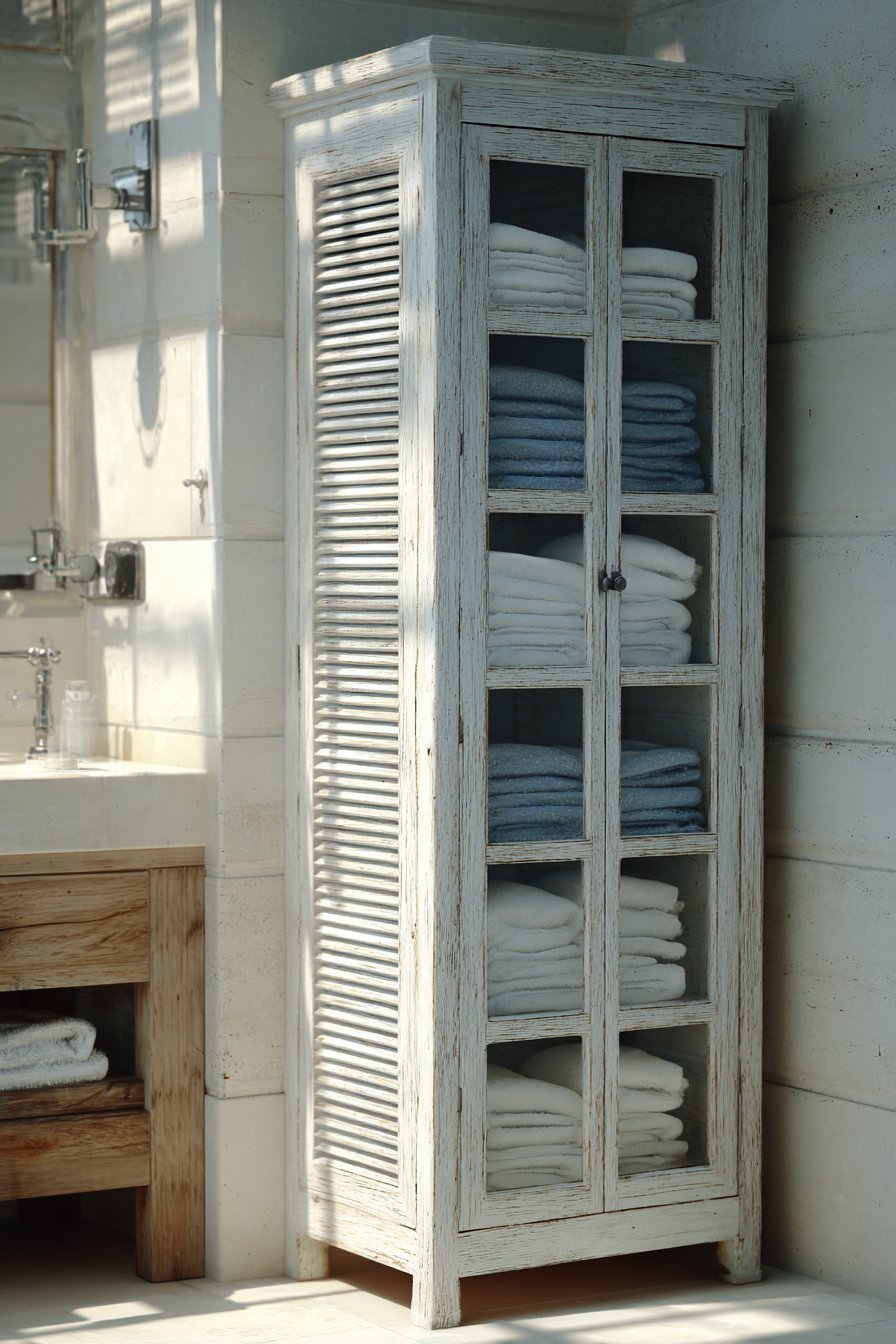
Brushed nickel hardware on the cabinet doors coordinates seamlessly with other fixtures throughout the bathroom, demonstrating the importance of consistent finishes in creating a cohesive design. Natural lighting from a skylight positioned directly above the cabinet creates soft highlights that emphasize the distressed wood’s textured finish, adding depth and visual interest to what might otherwise be a purely utilitarian piece. The louvered door design isn’t just aesthetically pleasing—it also allows air circulation that helps prevent musty odors in stored linens, a practical consideration in humid bathroom environments.
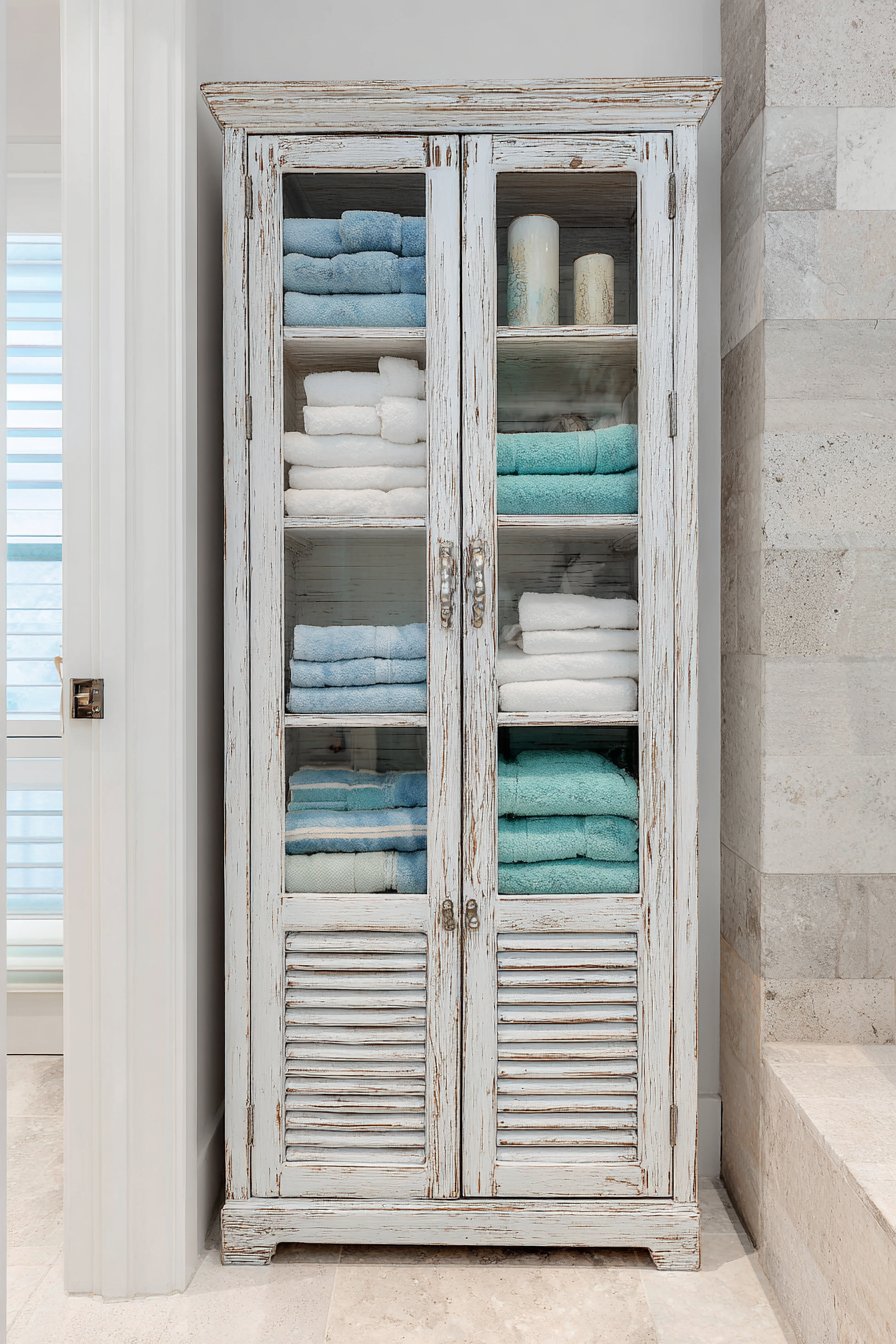
The strategic placement of this cabinet in a wall niche represents smart space planning at its finest, utilizing architectural features that might otherwise remain empty and overlooked. By building storage into existing recesses rather than adding furniture that protrudes into the room, you maintain clear floor space that makes the bathroom feel larger and more navigable. The combination of closed storage for items you’d prefer to hide and glass-fronted sections for attractive displays gives you flexibility in how you organize bathroom essentials.
Key Design Tips:
- Measure wall niches carefully and select cabinets specifically sized to fit these spaces perfectly
- Choose louvered doors for bathroom storage to promote air circulation and prevent moisture buildup
- Use glass-paneled cabinet sections to display color-coordinated linens as part of your decor
- Install skylights or light tubes above tall cabinets to prevent these vertical elements from creating dark shadows
- Coordinate all hardware finishes throughout the bathroom for a professionally designed appearance
5. Shiplap Accent Wall with Nautical Charm
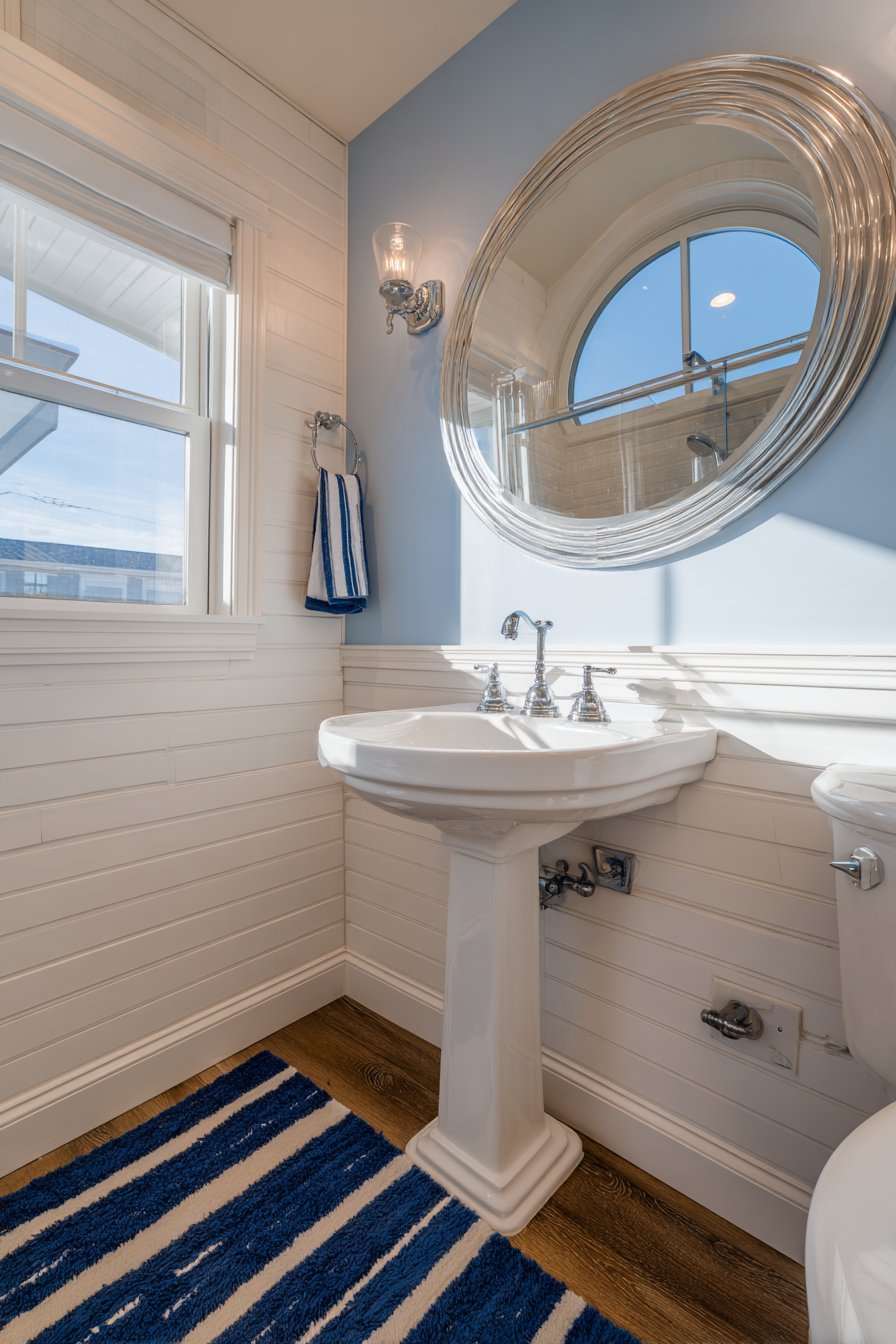
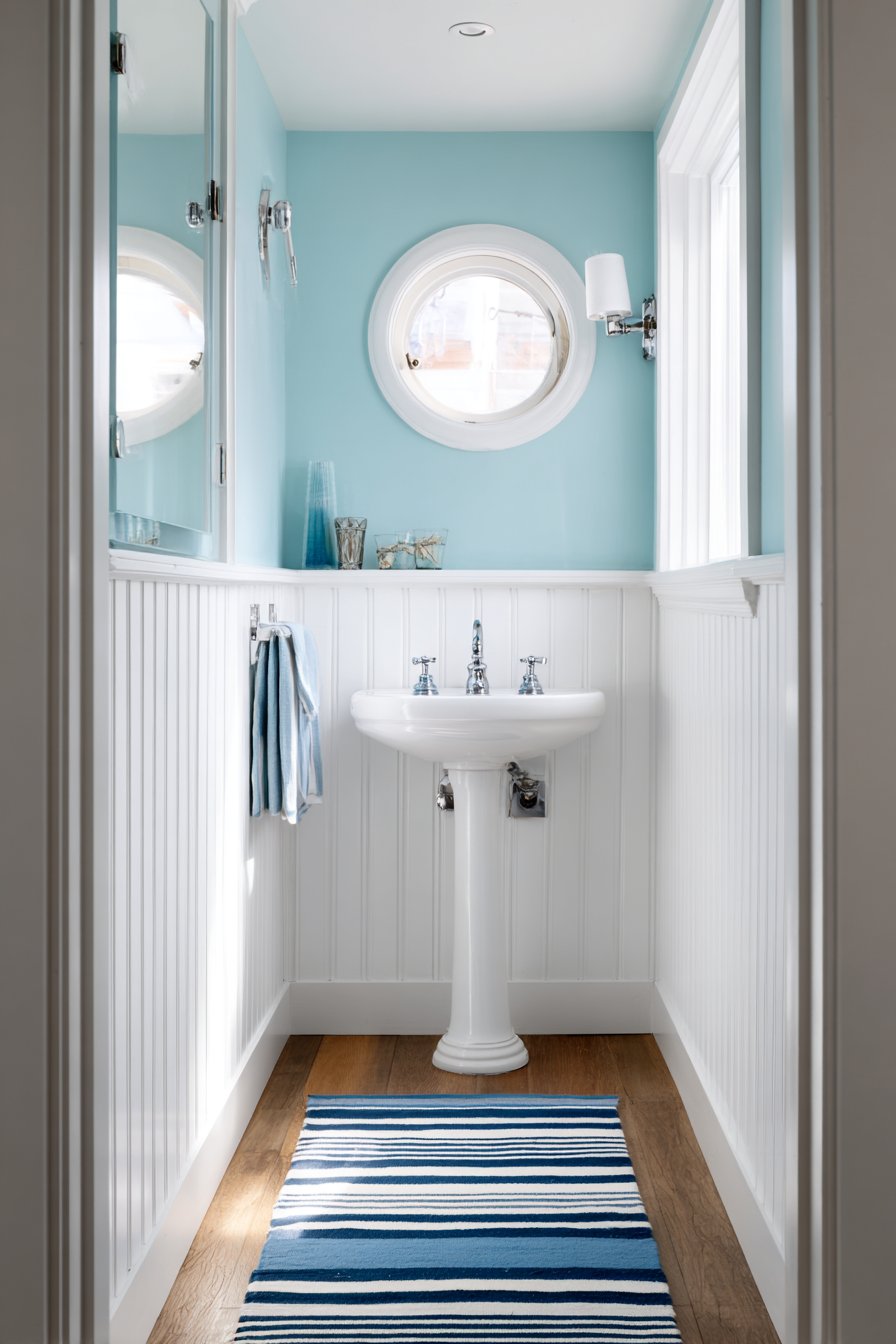
A strategically placed shiplap accent wall painted in pale aqua blue creates instant coastal atmosphere behind a compact pedestal sink in this small bathroom design. The horizontal boards draw the eye across the wall, making the room feel wider than its actual dimensions while adding architectural texture that elevates the space beyond basic drywall. White beadboard wainscoting wraps the lower portion of the remaining walls, providing visual weight that grounds the design while protecting high-impact areas from water damage and everyday wear.
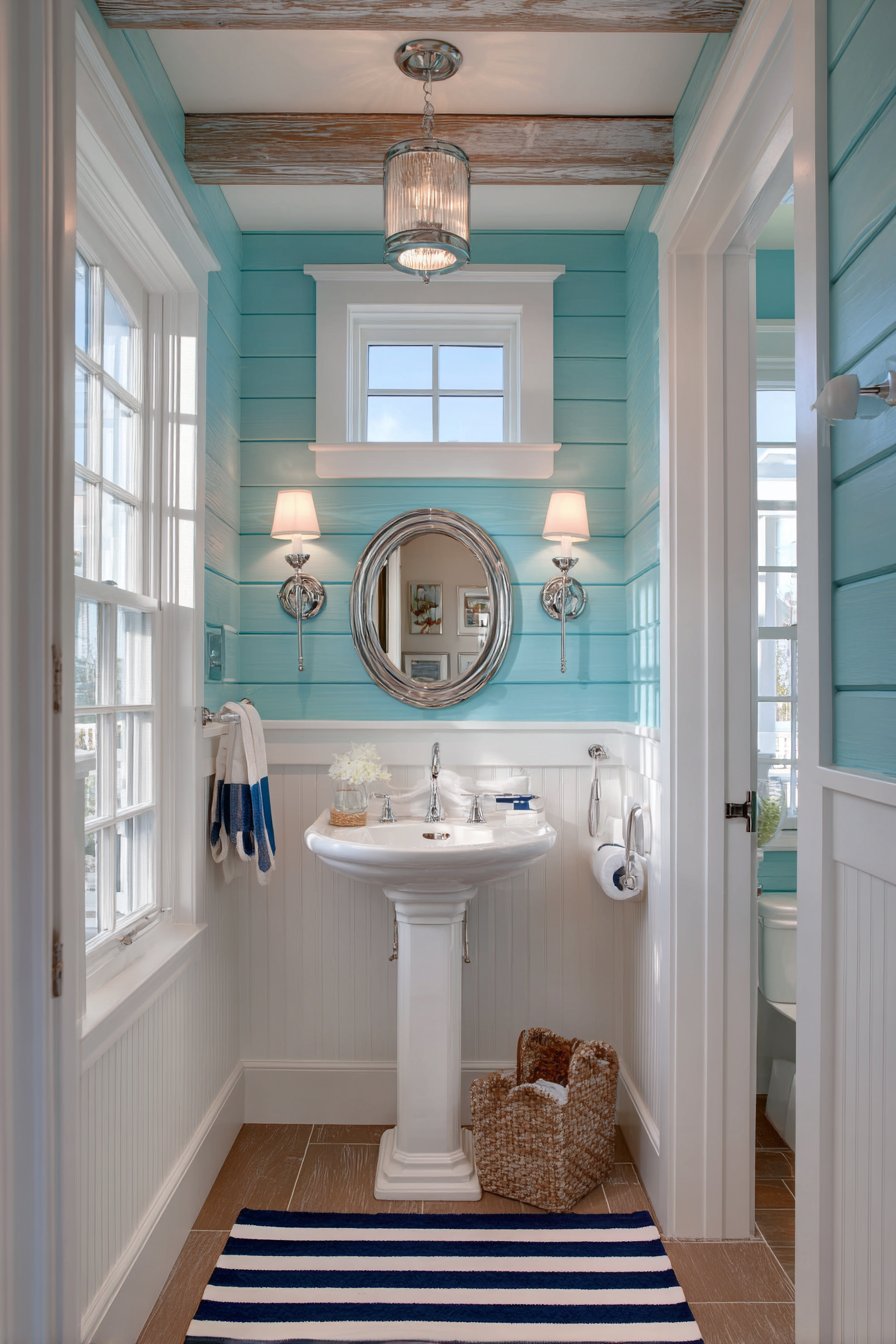
The pedestal sink’s classic form takes up minimal floor space while its polished chrome fixtures add subtle reflective shine that enhances the room’s brightness. A porthole-style medicine cabinet serves double duty as both practical storage and a distinctive nautical focal point, its circular shape breaking up the rectangular lines that dominate most bathrooms. This unexpected geometric variation adds visual interest while staying true to authentic maritime design elements found in actual ships and historic beach cottages.
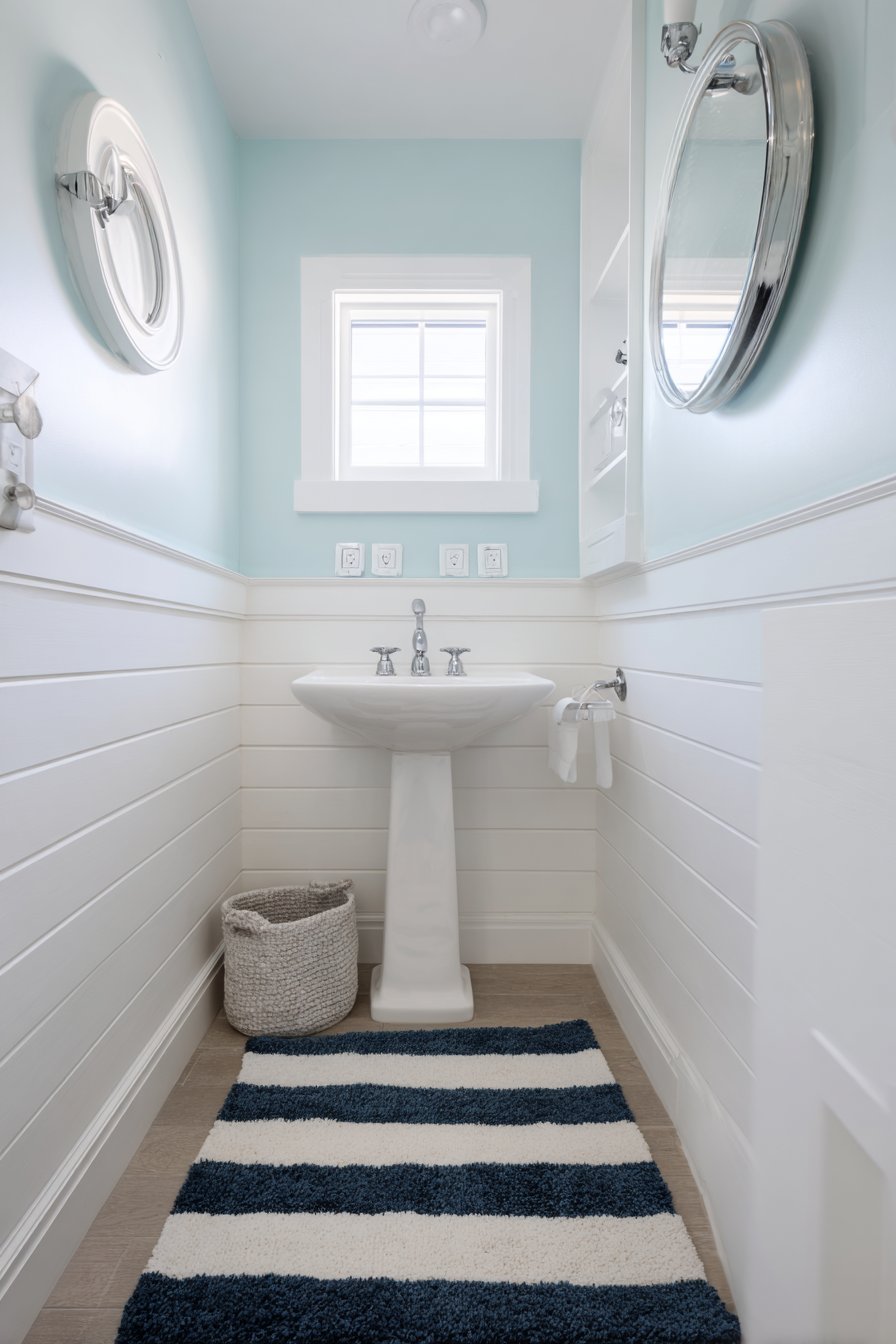
The striped bath mat in navy and white anchors the color scheme at floor level, its bold pattern adding graphic punch without requiring permanent installation or significant investment. This is where the beauty of small coastal bathroom ideas truly shines—accent pieces like rugs and towels can be easily changed with seasons or as your tastes evolve, allowing you to refresh the space without undertaking major renovations. The pale aqua wall color is sophisticated enough to grow with you while still making a clear statement about your coastal design intentions.
Key Design Tips:
- Paint shiplap accent walls in soft coastal colors rather than stark white to add subtle personality
- Use beadboard wainscoting to protect lower walls while adding classic cottage character
- Install porthole-shaped mirrors or medicine cabinets for authentic nautical references
- Choose pedestal sinks in small bathrooms where cabinet storage can be accommodated elsewhere
- Layer patterns through accessories like bath mats that can be easily updated or replaced
6. Monochromatic Gray Coastal Minimalism
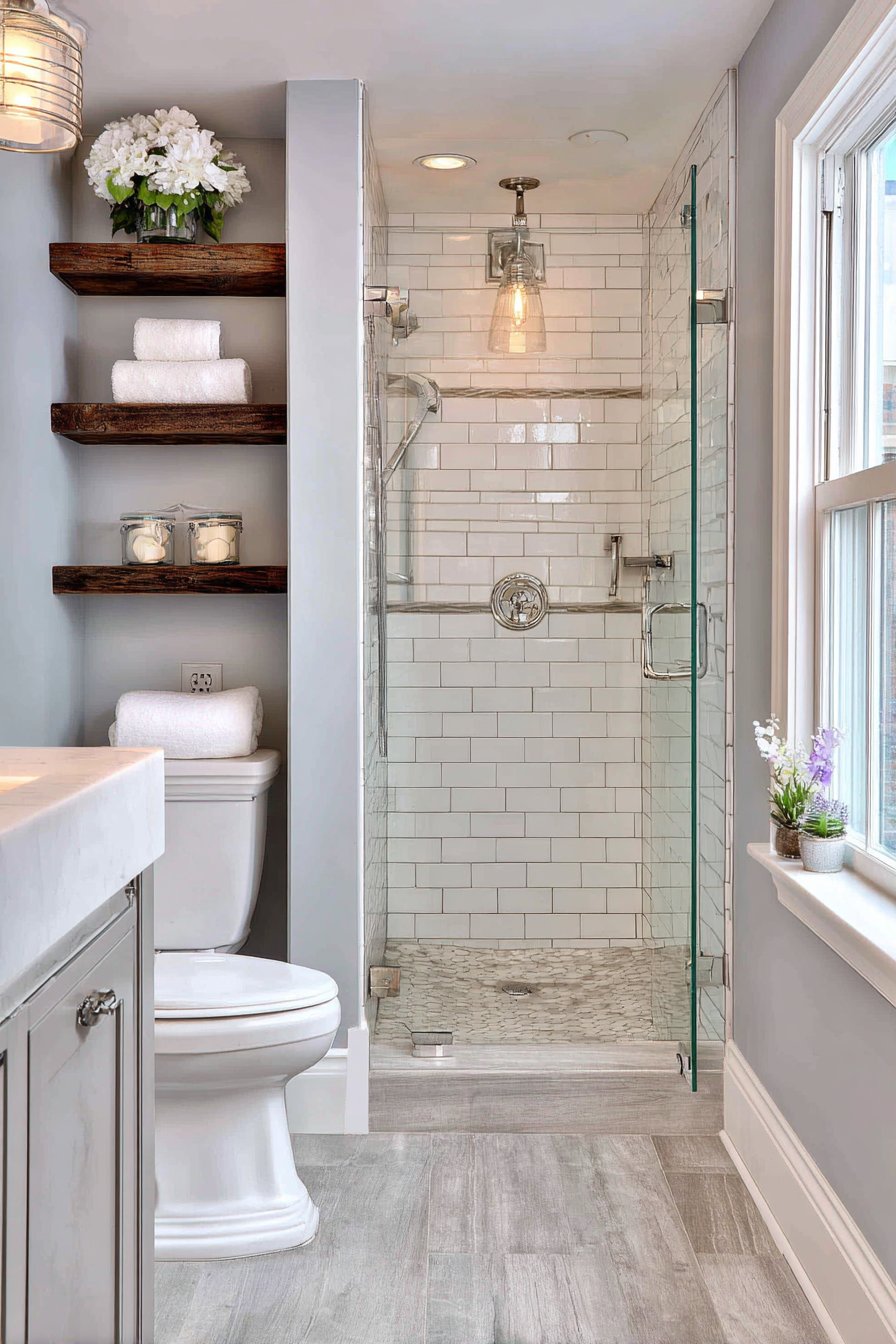
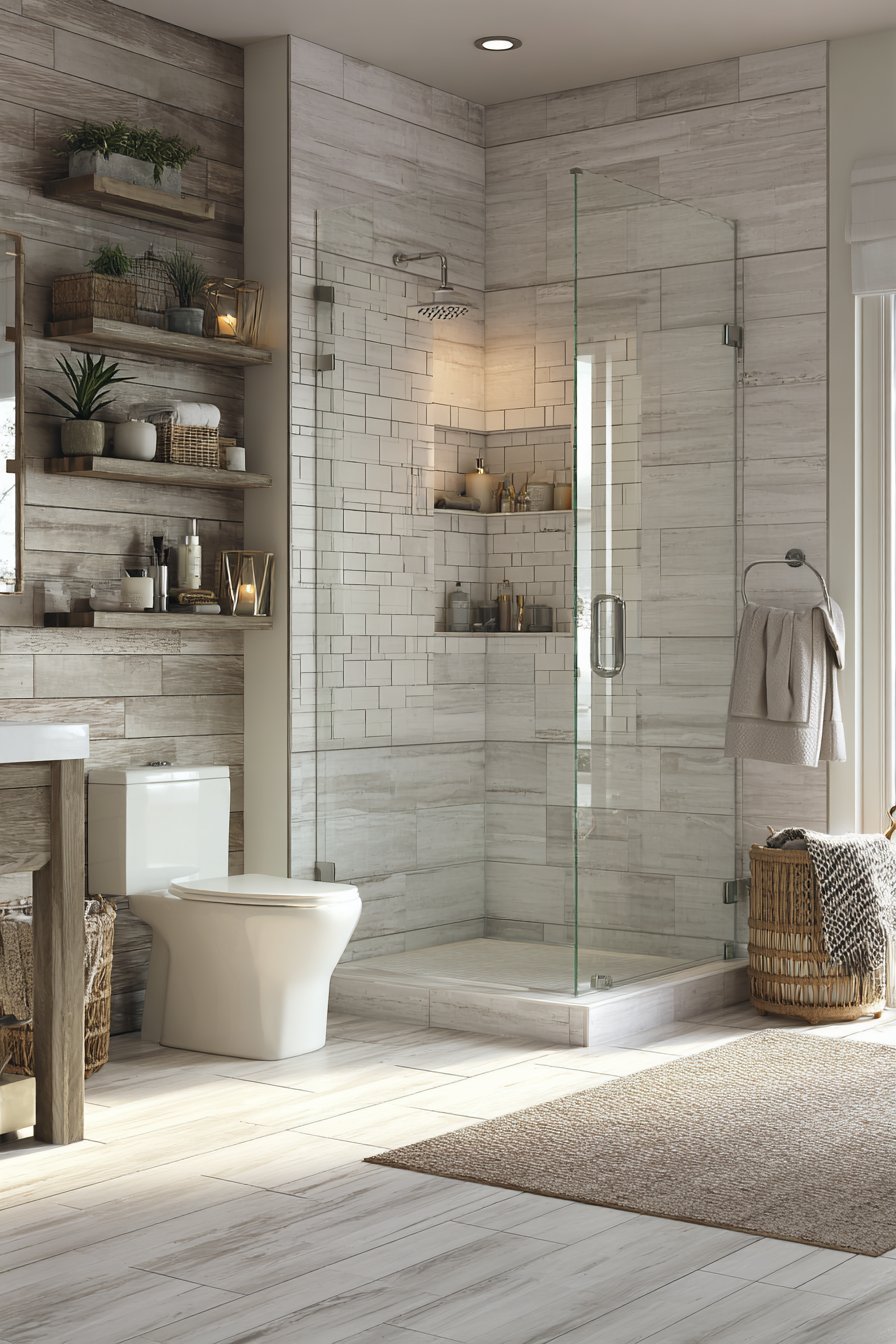
Proving that coastal design doesn’t require blue and white, this small bathroom embraces a sophisticated gray palette that evokes weathered driftwood and foggy mornings at the beach. Light gray porcelain tiles with subtle driftwood grain texture cover the floor, their wood-look finish providing visual warmth while offering the durability and water-resistance that ceramic materials deliver. A wall-mounted toilet preserves valuable floor space while contributing to the clean, minimalist aesthetic that characterizes contemporary coastal design.
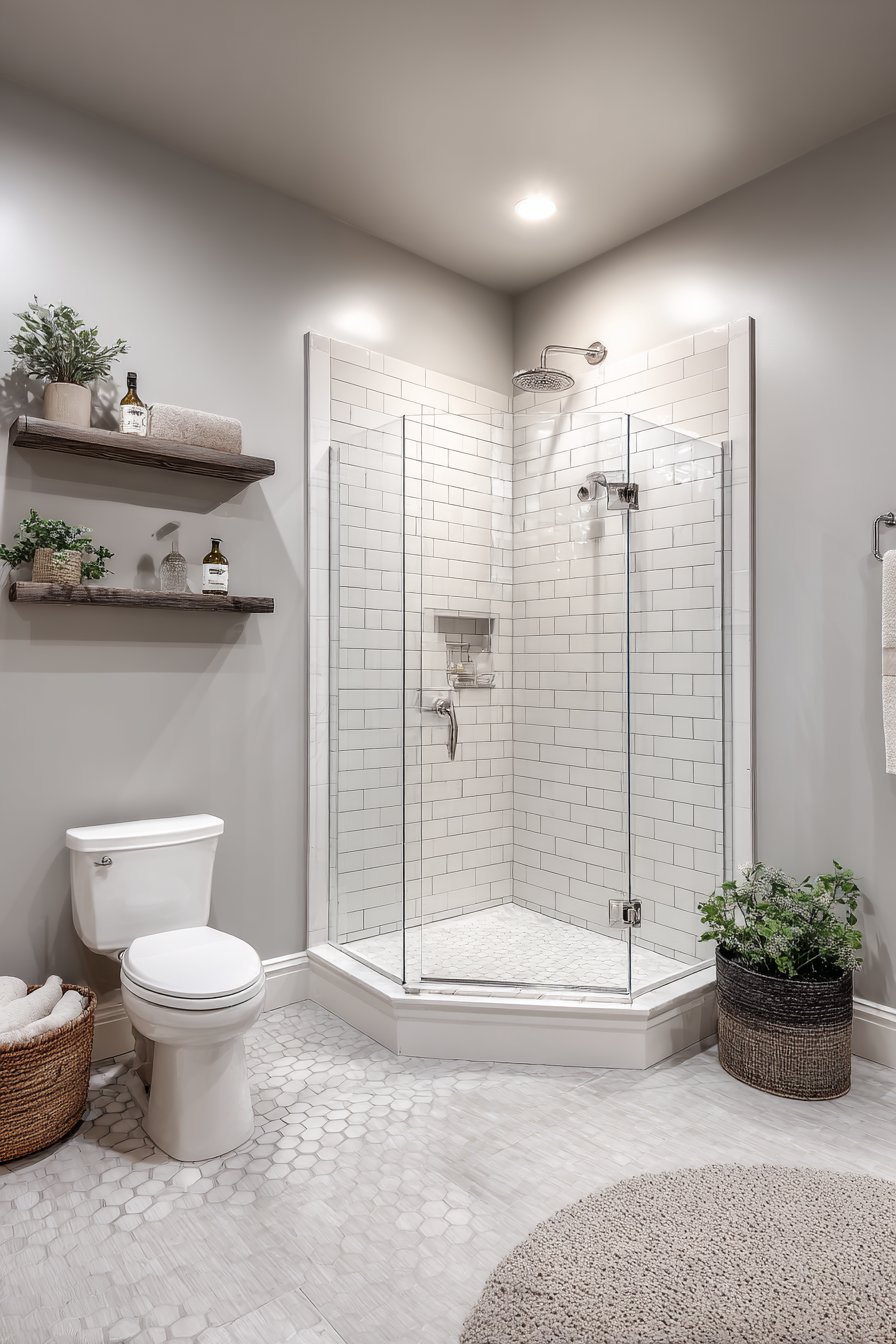
The compact glass-enclosed shower occupies a corner position, its white subway tile interior creating bright contrast against the gray walls. This tonal variation prevents the monochromatic scheme from feeling flat or monotonous, demonstrating how different values of the same color family can create depth and dimension. Recessed shelving built between wall studs provides storage without protruding into the limited space—a crucial consideration in small bathrooms where every inch of clearance affects movement and functionality.
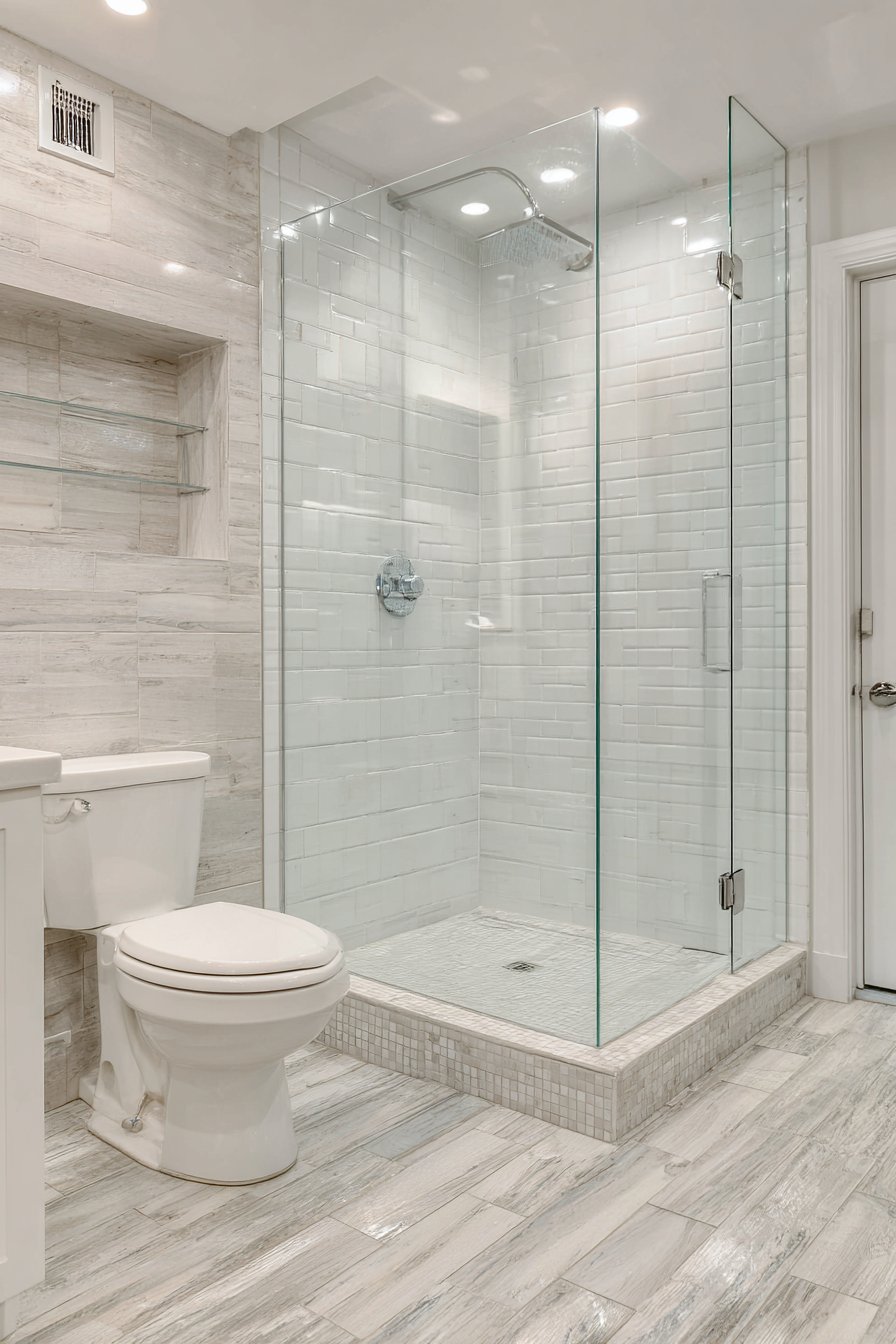
The gray-to-white gradient that flows from floor to ceiling creates an ombré effect that draws the eye upward, making the ceiling appear higher and the room feel more spacious. This gradual tonal shift is far more subtle and sophisticated than stark contrasts would be, creating a serene environment that promotes relaxation. The wood-look flooring grounds the space with organic texture while maintaining the easy-care properties essential in bathroom environments where water, humidity, and cleaning products take their toll on materials.
Key Design Tips:
- Use wood-look porcelain tiles to achieve natural aesthetics with superior water resistance
- Install wall-mounted toilets to maximize floor space and simplify cleaning
- Build recessed shelving between wall studs to gain storage without losing square footage
- Create tonal gradients from dark to light to enhance perceived ceiling height
- Limit your palette to variations of one or two colors for sophisticated cohesion
7. Natural Light Maximization with Coastal Windows
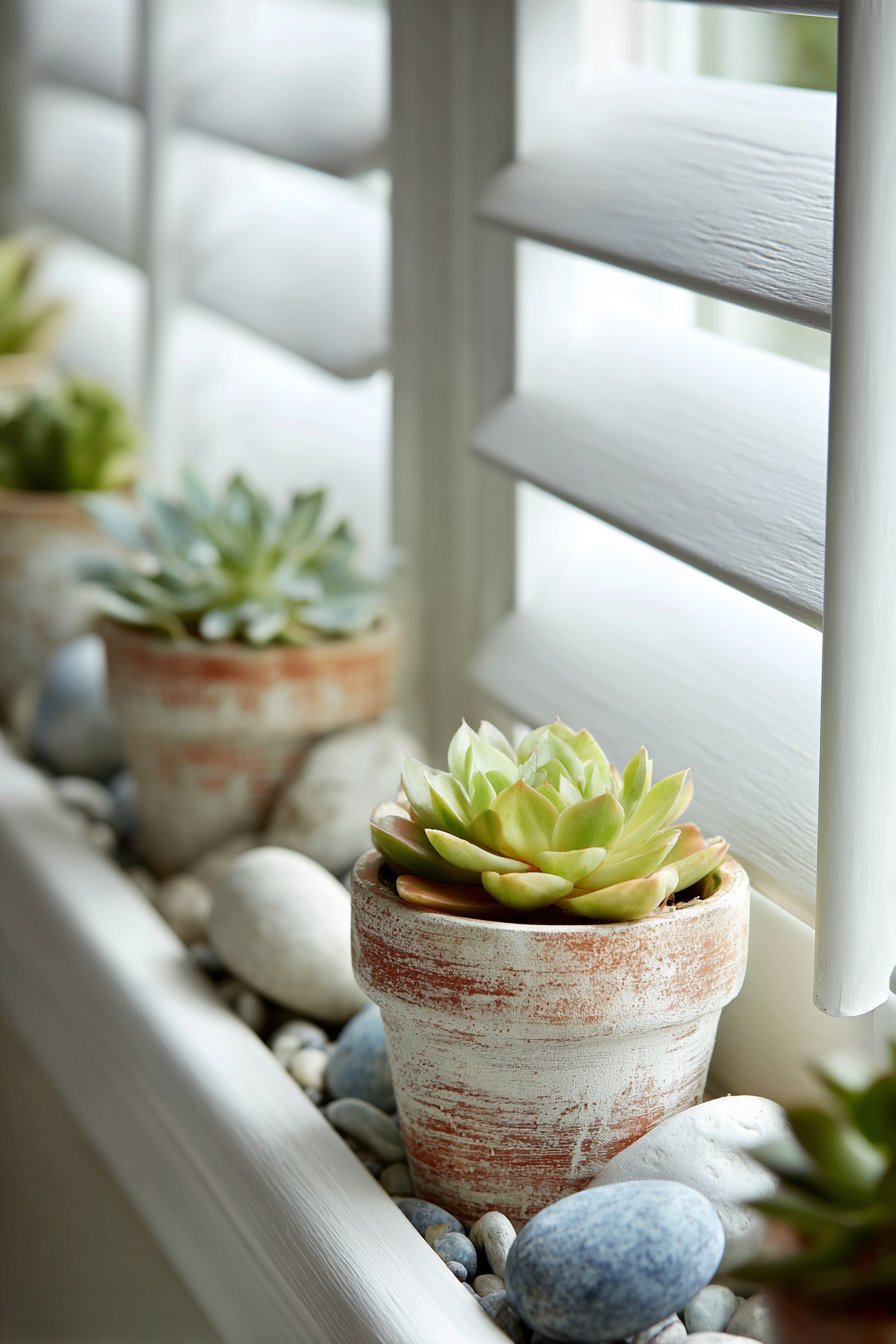
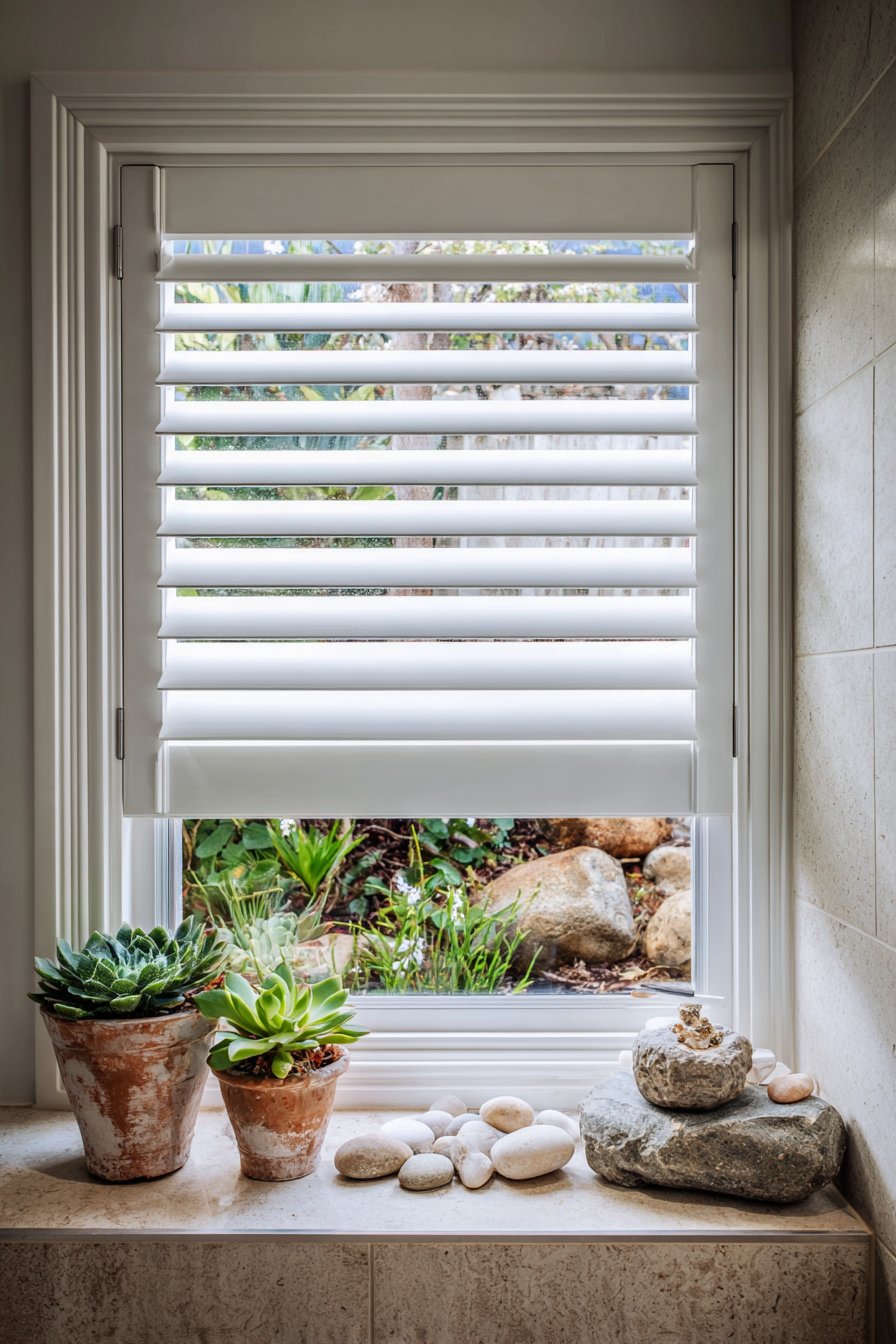
Window treatments can make or break the atmosphere in small coastal bathrooms, as demonstrated by this design featuring white plantation shutters with adjustable louvers that allow precise control over natural light and privacy. The window frames a view of subtle coastal landscaping, transforming the outdoors into living artwork that changes with seasons and weather. The window sill becomes a miniature garden displaying small potted succulents in weathered terracotta pots alongside a curated collection of smooth beach stones gathered from memorable shoreline walks.
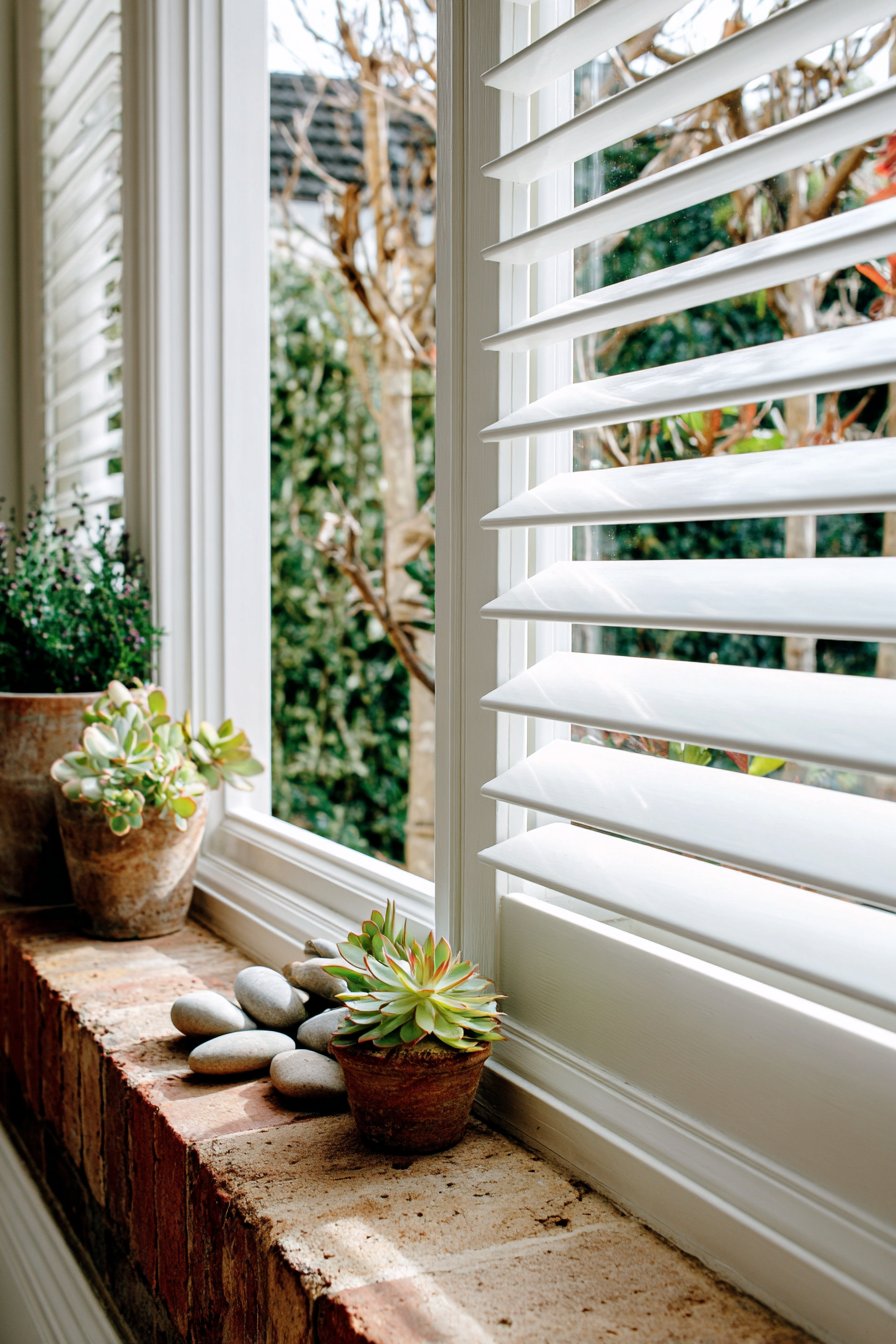
The adjustable louvers on the plantation shutters offer flexibility that’s particularly valuable in bathrooms—you can angle them to admit light while maintaining privacy, close them completely during use, or open them fully to frame the outdoor view. This versatility makes plantation shutters an excellent investment for small coastal bathrooms where the window often represents the primary light source. The crisp white finish of the shutters enhances brightness while their substantial construction adds architectural weight that elevates the entire space.
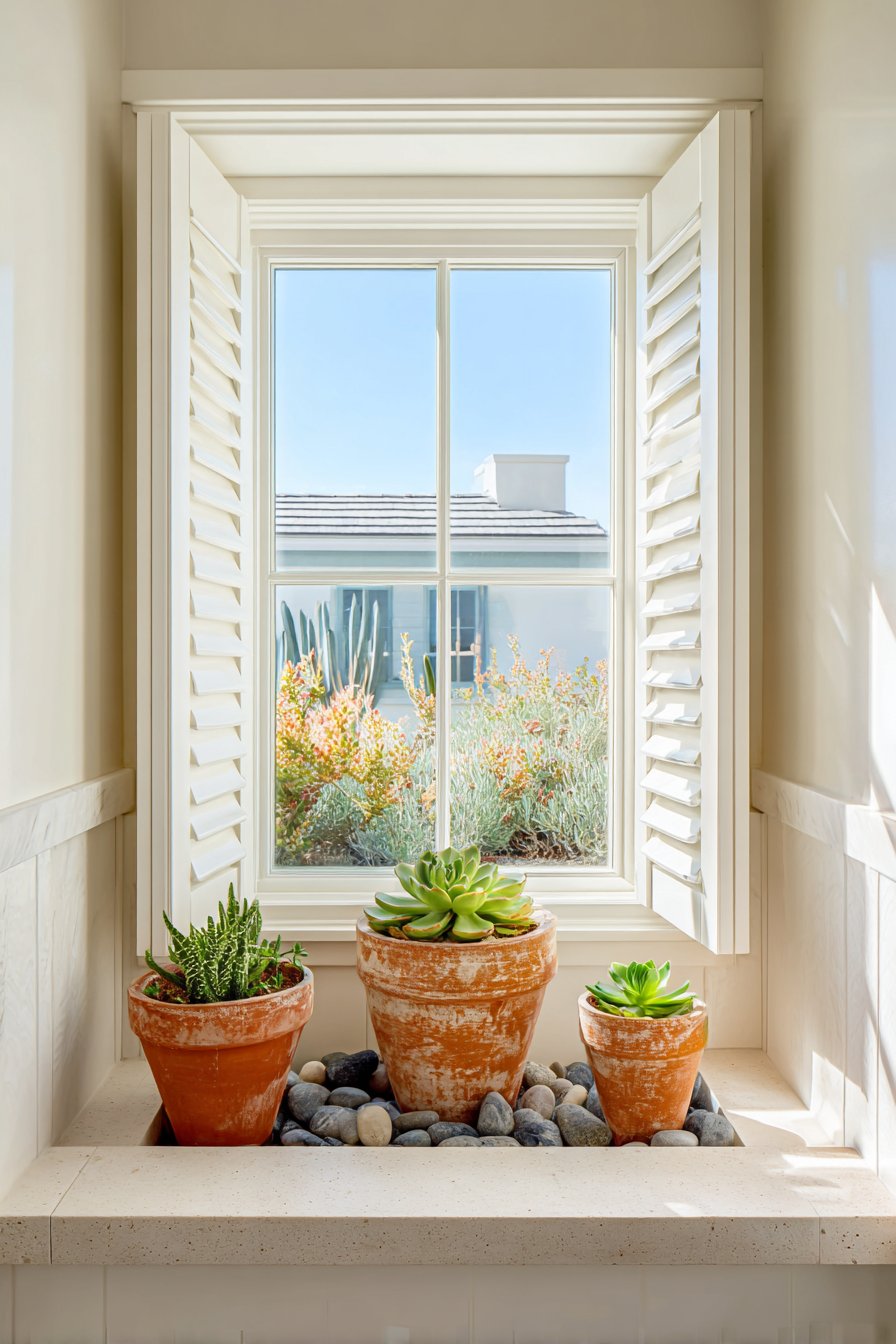
By treating the window as a focal point rather than covering it completely with curtains or shades, this design maximizes the connection between indoor and outdoor spaces—a hallmark of successful coastal interiors. The succulents on the sill require minimal maintenance while adding living greenery that purifies air and introduces organic shapes. The beach stones represent free, personal decor that carries memories and meaning, proving that the best coastal accessories don’t come from stores but from beaches you’ve walked and waters you’ve waded through.
Key Design Tips:
- Install plantation shutters for adjustable light control without sacrificing style
- Use window sills as display space for plants and collected natural objects
- Position windows to frame outdoor views that complement your interior coastal theme
- Choose white window treatments to maximize light reflection in small spaces
- Incorporate living plants that thrive in bathroom humidity like succulents or air plants
8. Layered Lighting for Ambiance and Function
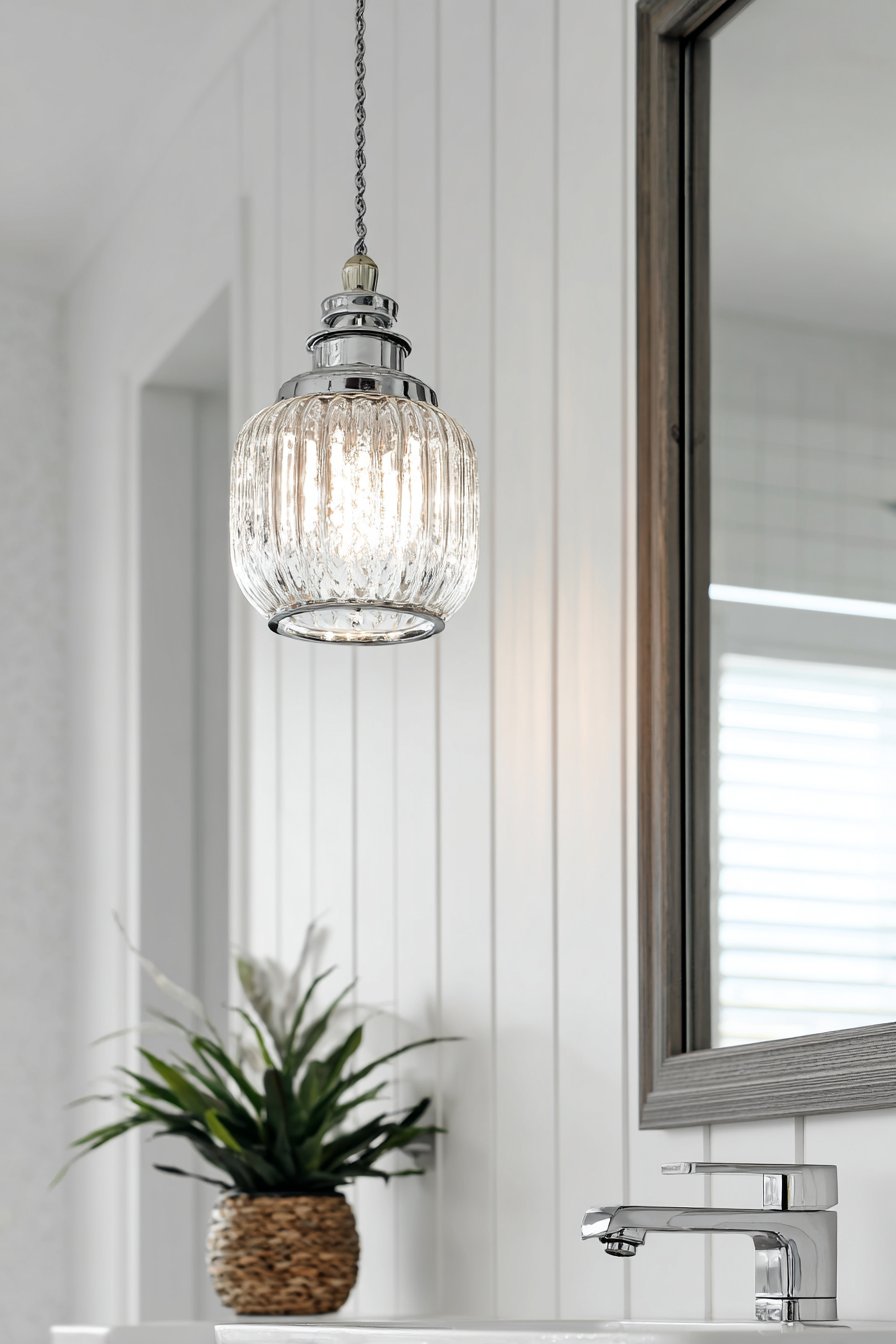
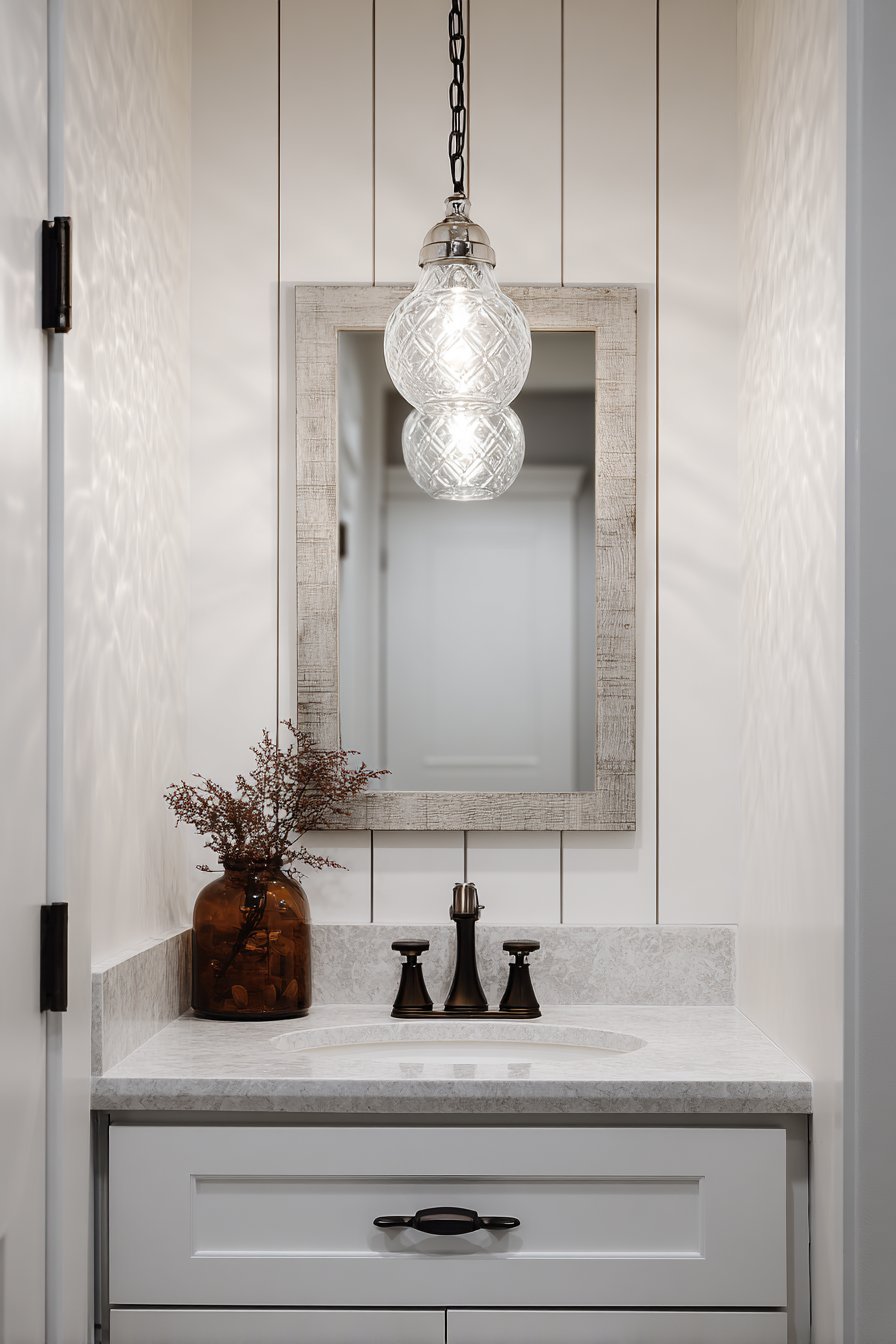
Effective lighting design separates mediocre bathrooms from exceptional ones, as evidenced by this small coastal space featuring a vintage-inspired chrome and glass pendant light suspended above a narrow vanity. The seeded glass shade references old ship lanterns while casting intriguing light patterns across white beadboard walls, creating visual interest beyond simple illumination. A medicine cabinet with integrated LED strip lighting provides focused task lighting exactly where it’s needed for grooming activities, while the soft shadows created by the layered approach add depth and dimension to the compact room.
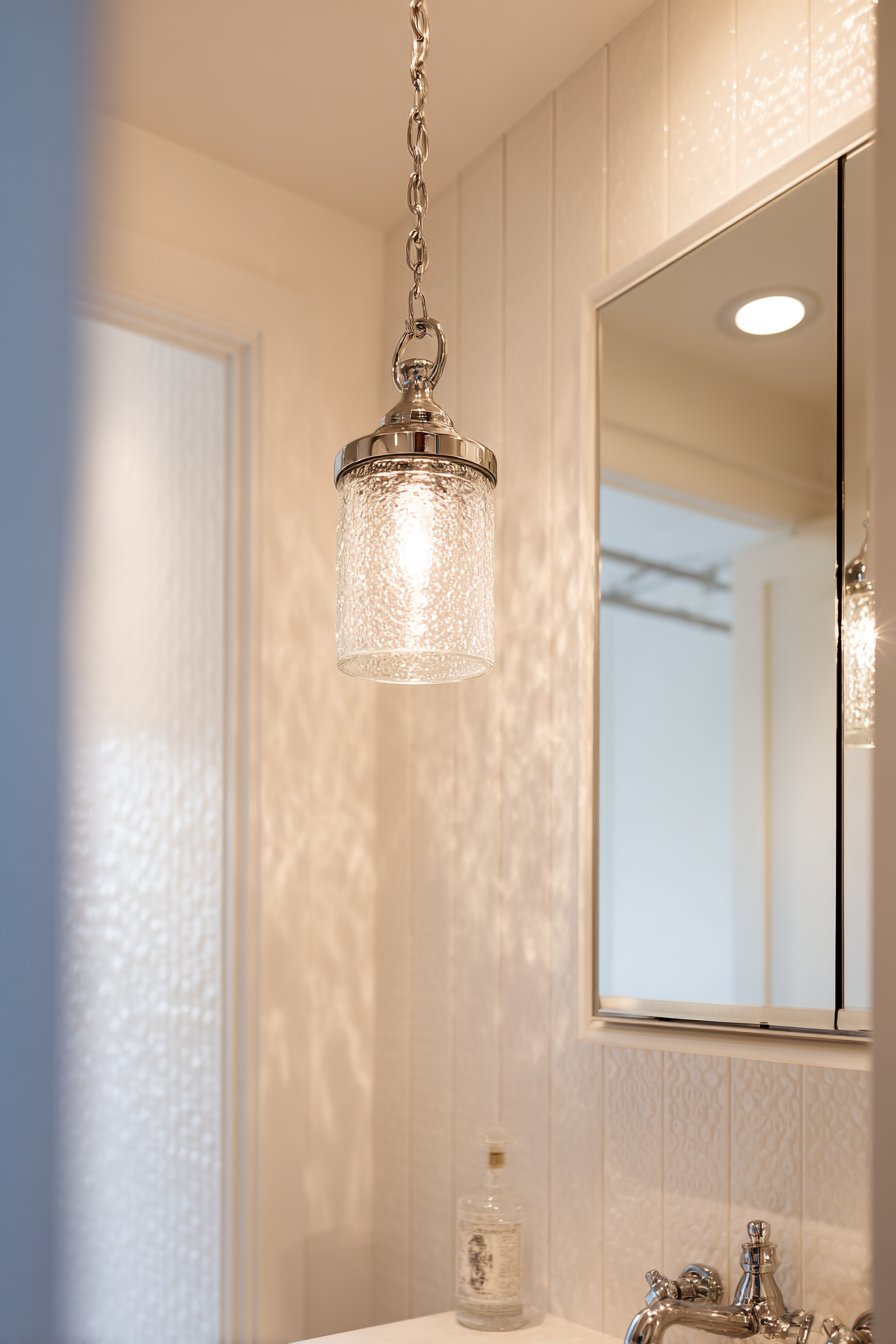
The pendant light makes a bold statement in a small space, proving that size constraints shouldn’t limit your design ambitions—sometimes a larger fixture creates better proportion and impact than multiple small lights. The seeded glass diffuses the bulb’s glare while creating subtle sparkle that mimics how light plays across ocean water, reinforcing the coastal theme through thoughtful material selection. The chrome finish ties into other fixtures throughout the bathroom, maintaining the cohesive finish scheme essential for polished design.
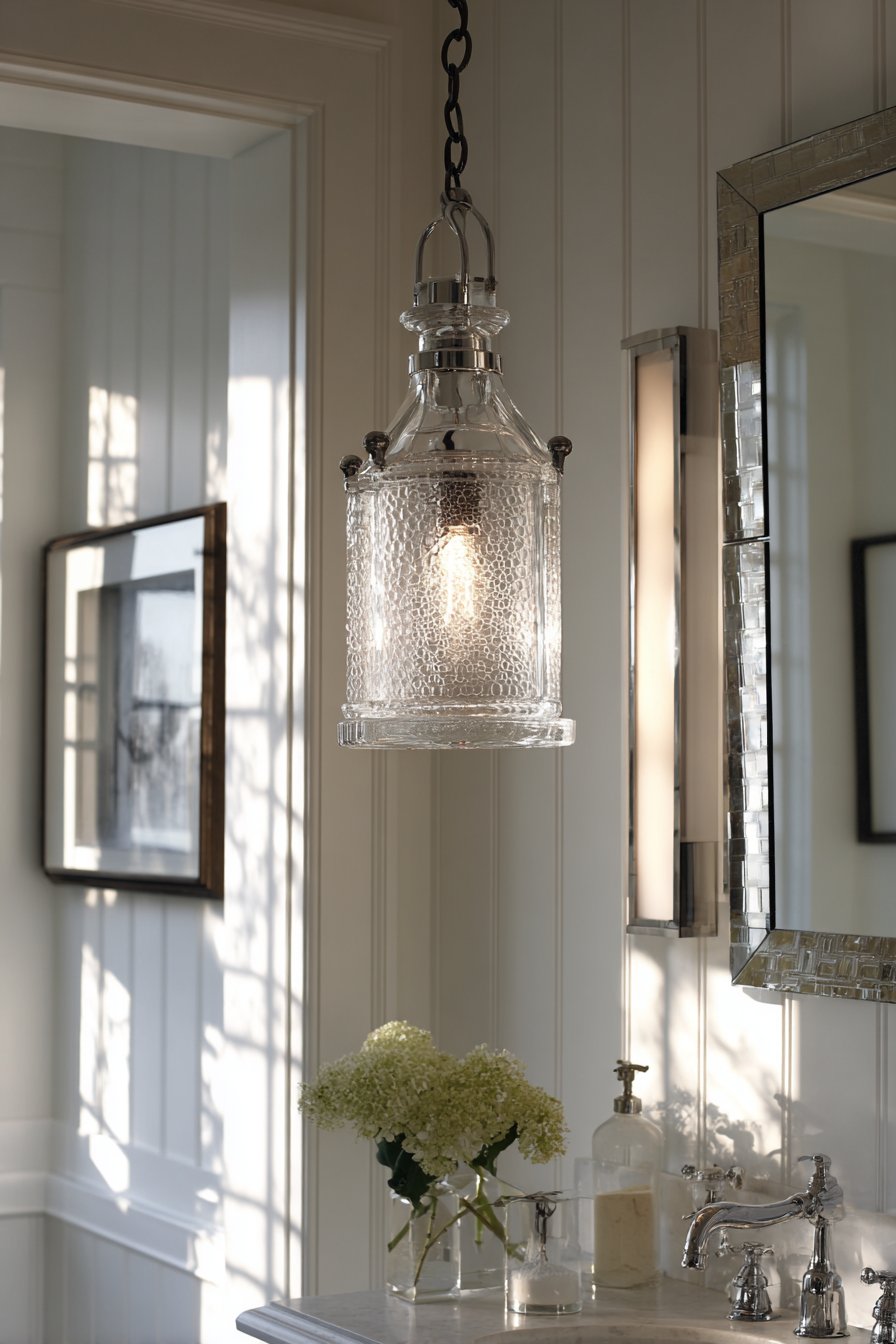
Task lighting from the medicine cabinet illuminates the face evenly without creating harsh shadows, addressing one of the most common complaints about bathroom lighting. This dual-layer approach—ambient lighting from the pendant and focused lighting from the cabinet—ensures the bathroom functions well at all times of day while creating atmospheric flexibility for relaxing soaks or energizing morning routines. The white beadboard walls reflect and amplify all light sources, making the most of every lumen in this efficiently lit small coastal bathroom.
Key Design Tips:
- Layer ambient and task lighting to serve different functions and create flexible atmosphere
- Choose pendant lights with vintage nautical styling for authentic coastal character
- Install LED strips in medicine cabinets for shadow-free task lighting
- Select seeded or textured glass fixtures to diffuse glare while adding visual interest
- Use white or light-colored walls to maximize light reflection from all sources
9. Creative Towel Storage with Ladder Shelving
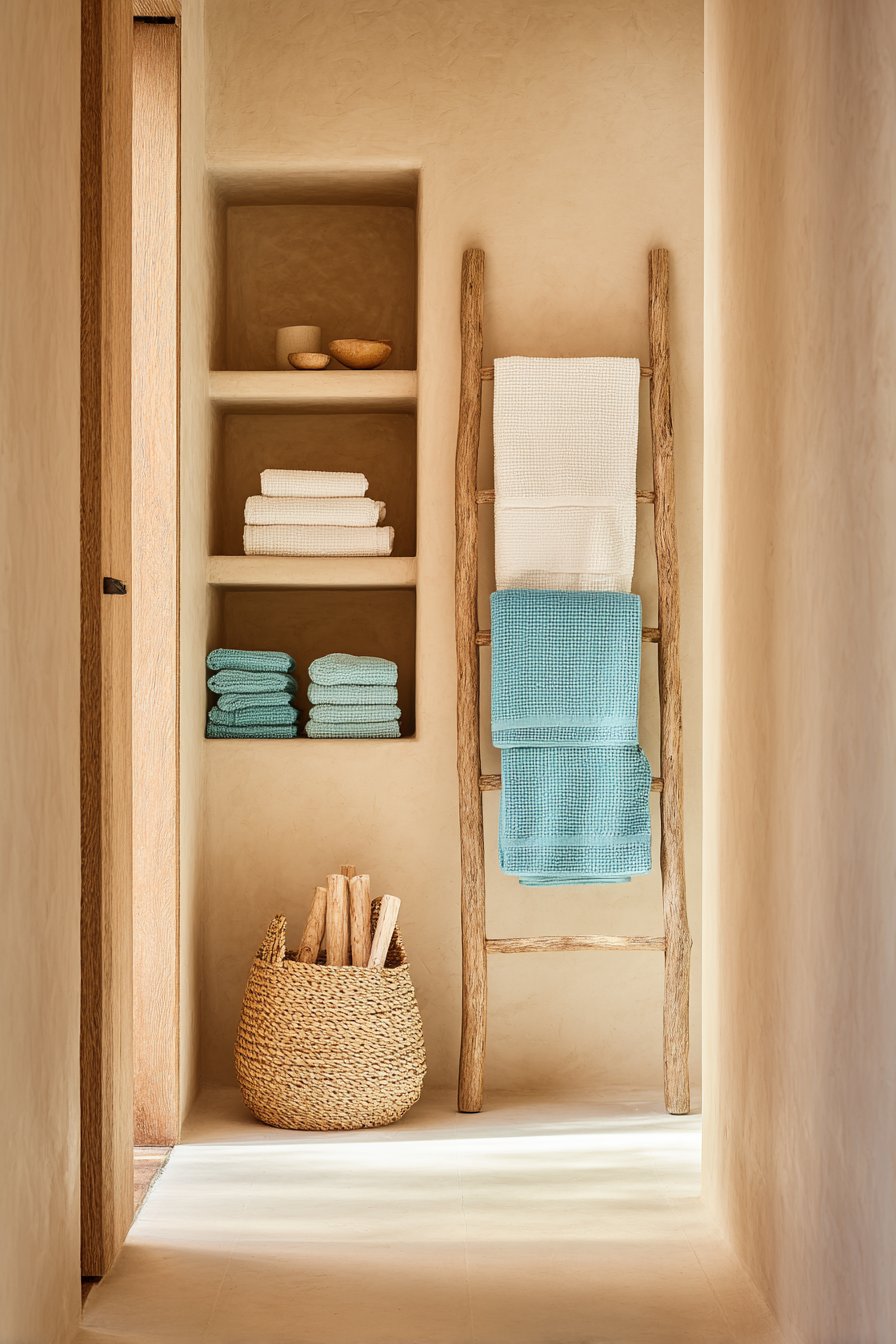
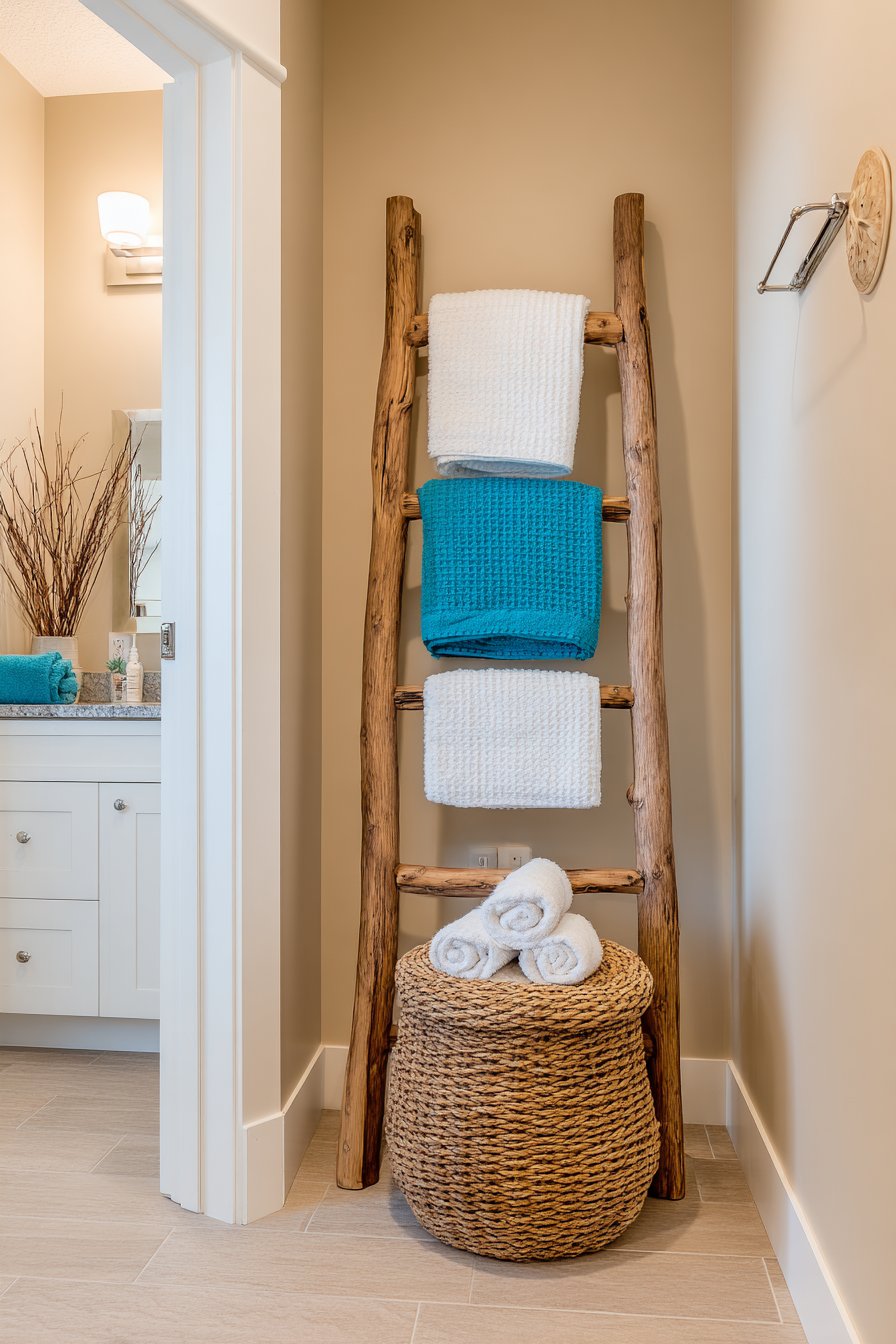
A wall-mounted ladder shelf crafted from natural driftwood-toned wood brings both storage and sculptural appeal to this small coastal bathroom, its four rungs providing designated spots for white waffle-weave towels and turquoise hand towels to hang in organized display. The ladder design capitalizes on vertical space without consuming precious floor area, making it ideal for small bathrooms where traditional linen closets aren’t available. A woven basket positioned on the floor below the ladder’s base holds neatly rolled washcloths, completing the storage solution while adding textural contrast.
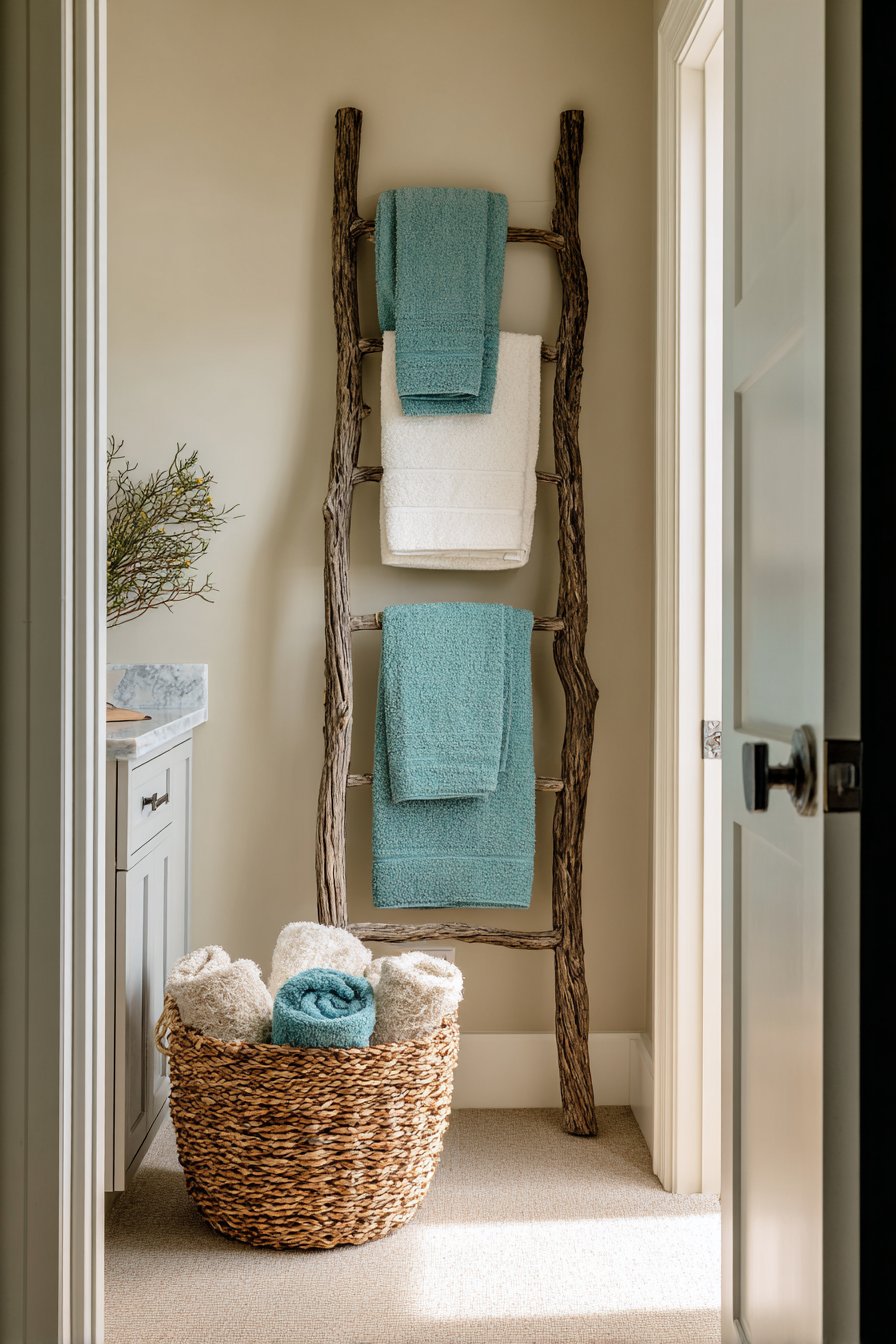
The pale sandy beige walls provide a neutral backdrop that allows the natural wood tones of the ladder to stand out while maintaining the light, airy feeling essential to successful small coastal bathroom design. This approach to towel storage transforms a purely functional necessity into a decorative element—the carefully chosen towels in coordinating colors become part of the room’s visual composition rather than items that need hiding. The varying textures of waffle-weave cotton, smooth standard towels, and woven basket materials create tactile interest that engages multiple senses.
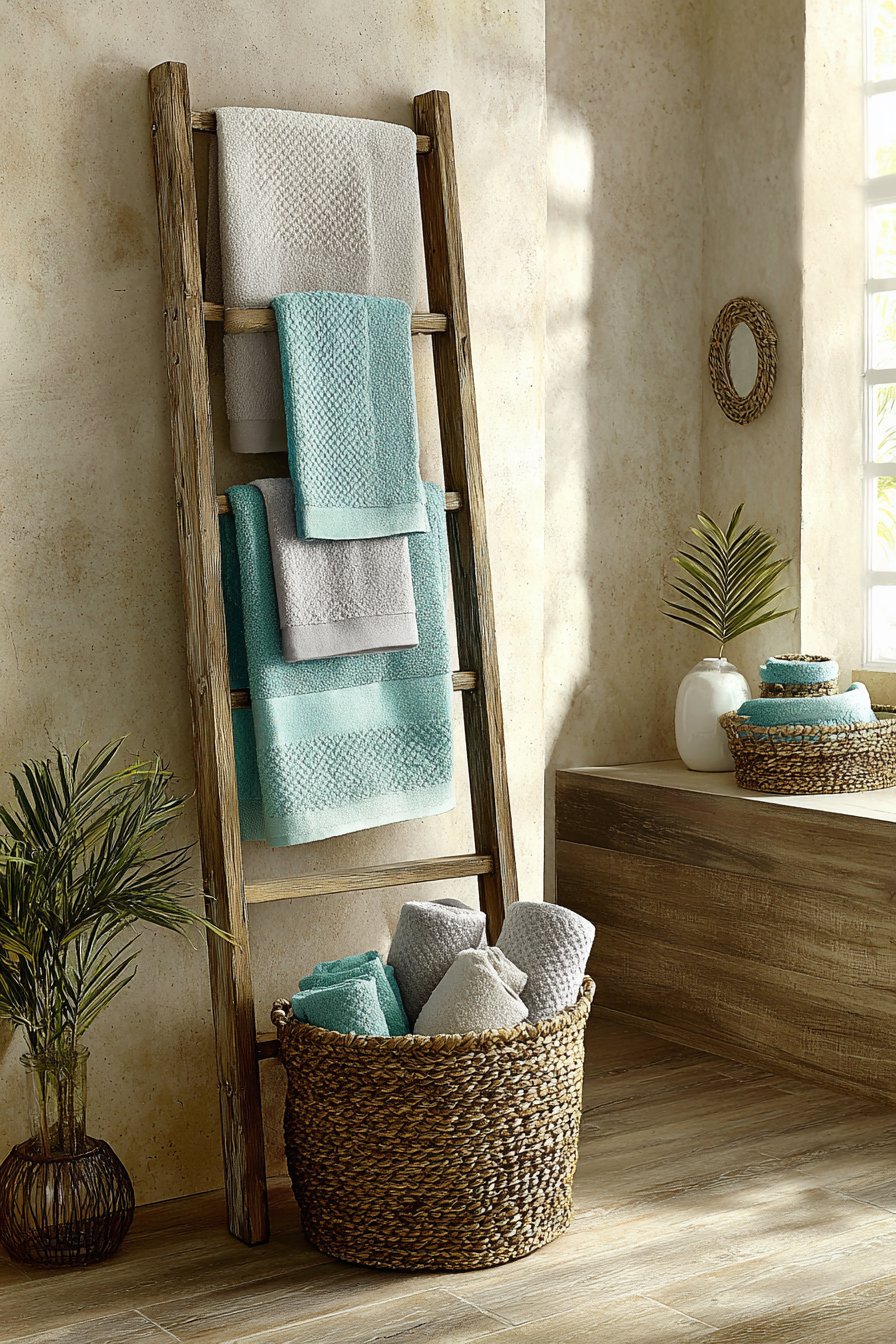
The beauty of ladder-style storage lies in its accessibility and flexibility—towels hang within easy reach, air dry efficiently between uses, and can be rearranged quickly to refresh the look. Unlike closed cabinets that hide their contents, this open storage keeps frequently used items visible and available while encouraging you to maintain an organized, cohesive presentation. The driftwood finish connects directly to beach environments where weathered wood is a treasured find, bringing authentic coastal character into your bathroom.
Key Design Tips:
- Mount ladder shelves securely to wall studs to support the weight of wet towels
- Coordinate towel colors to create an intentional display rather than random storage
- Use floor baskets beneath ladder shelves to capture additional storage without wall mounting
- Choose naturally finished wood to add warmth against predominantly white coastal bathrooms
- Vary towel textures (waffle-weave, terry, linen) to create visual and tactile interest
10. Cohesive Color Palette Demonstration
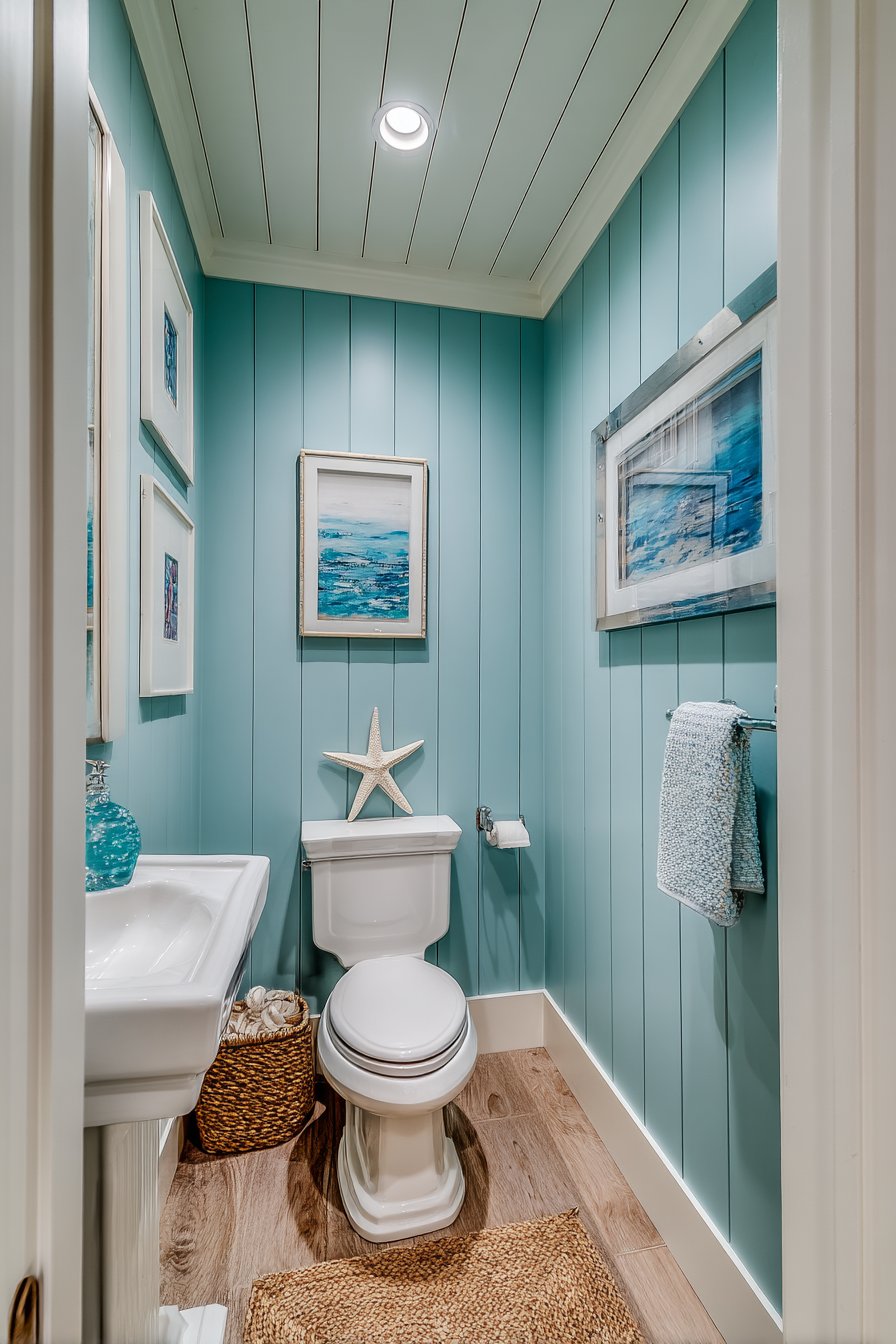
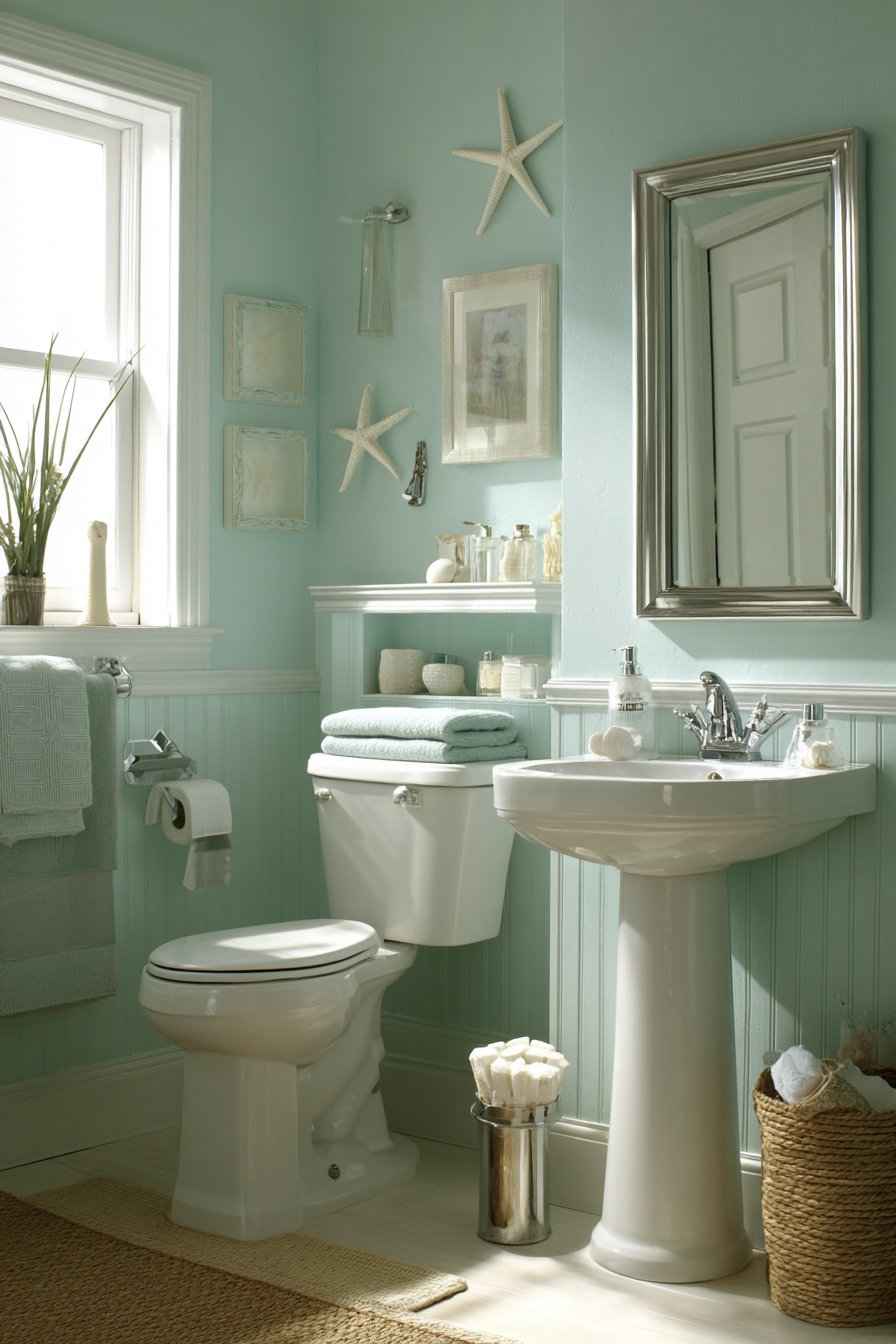
This small coastal bathroom serves as a masterclass in color coordination, with walls painted in soft seafoam green creating a soothing envelope around white porcelain fixtures including a toilet and matching pedestal sink. The crisp contrast between colored walls and white fixtures establishes clear visual hierarchy while maintaining the light, fresh feeling that characterizes successful coastal design. Accessories including natural jute rope details, white ceramic starfish, and hand towels in coordinating aqua tones reinforce the color scheme without introducing competing hues that would fragment the cohesive look.
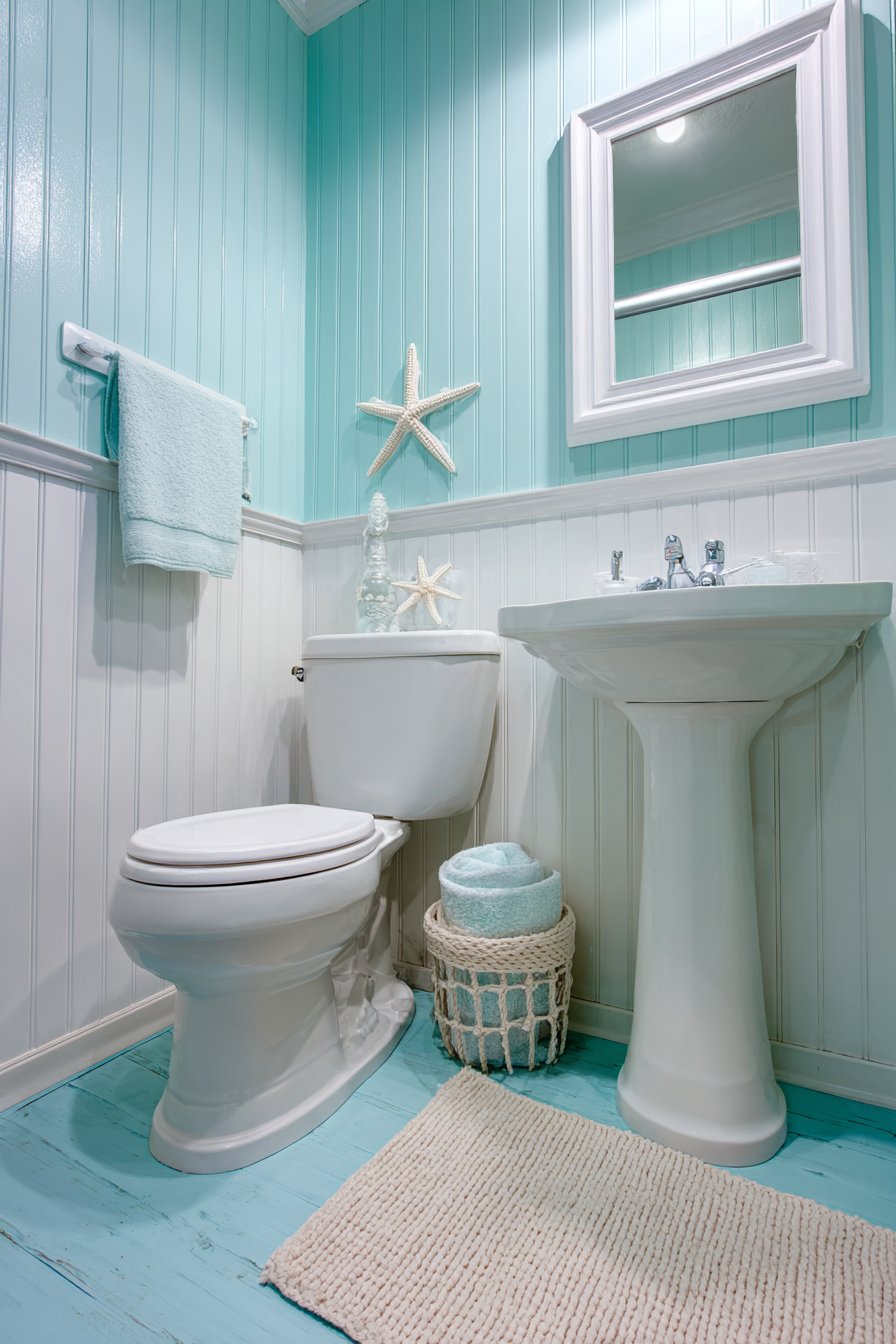
The chrome fixtures maintain a traditional coastal aesthetic while their reflective surfaces catch and bounce light throughout the space, enhancing brightness in this compact room. The seafoam green wall color sits in that perfect middle ground—saturated enough to establish clear personality but light enough to keep the space feeling open and airy rather than closed and dark. This balance is crucial in small bathrooms where dark colors can make walls feel like they’re closing in, while too-pale colors can appear washed out and lack character.
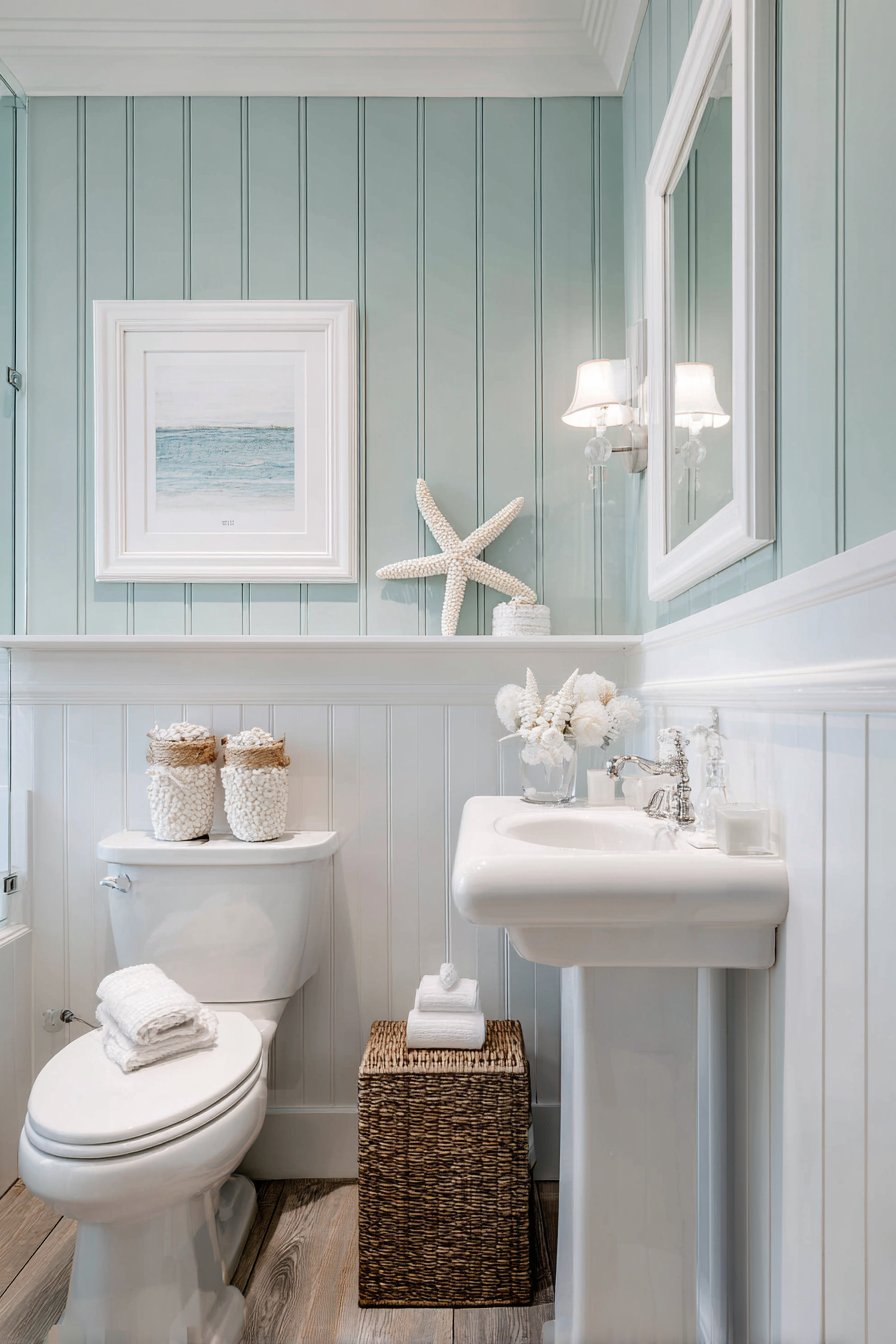
Multiple shades of coastal blues and greens work together harmoniously here because they share similar color temperatures and saturation levels—none of the hues fights for dominance or clashes with its neighbors. This demonstrates an important principle: you can successfully combine multiple colors in a small space as long as they relate to each other through shared characteristics. The white ceramic starfish and other decorative elements provide thematic reinforcement without resorting to literal beach scenes or kitschy seashell overload.
Key Design Tips:
- Choose one primary wall color in a medium saturation to establish personality without overwhelming small spaces
- Use white fixtures to create bright contrast against colored walls
- Select accessories in varying shades of your primary color to create tonal harmony
- Incorporate natural materials like jute rope to add texture within your color scheme
- Limit decorative accessories to a few meaningful pieces rather than overcrowding surfaces
11. Mirror Strategies for Visual Expansion
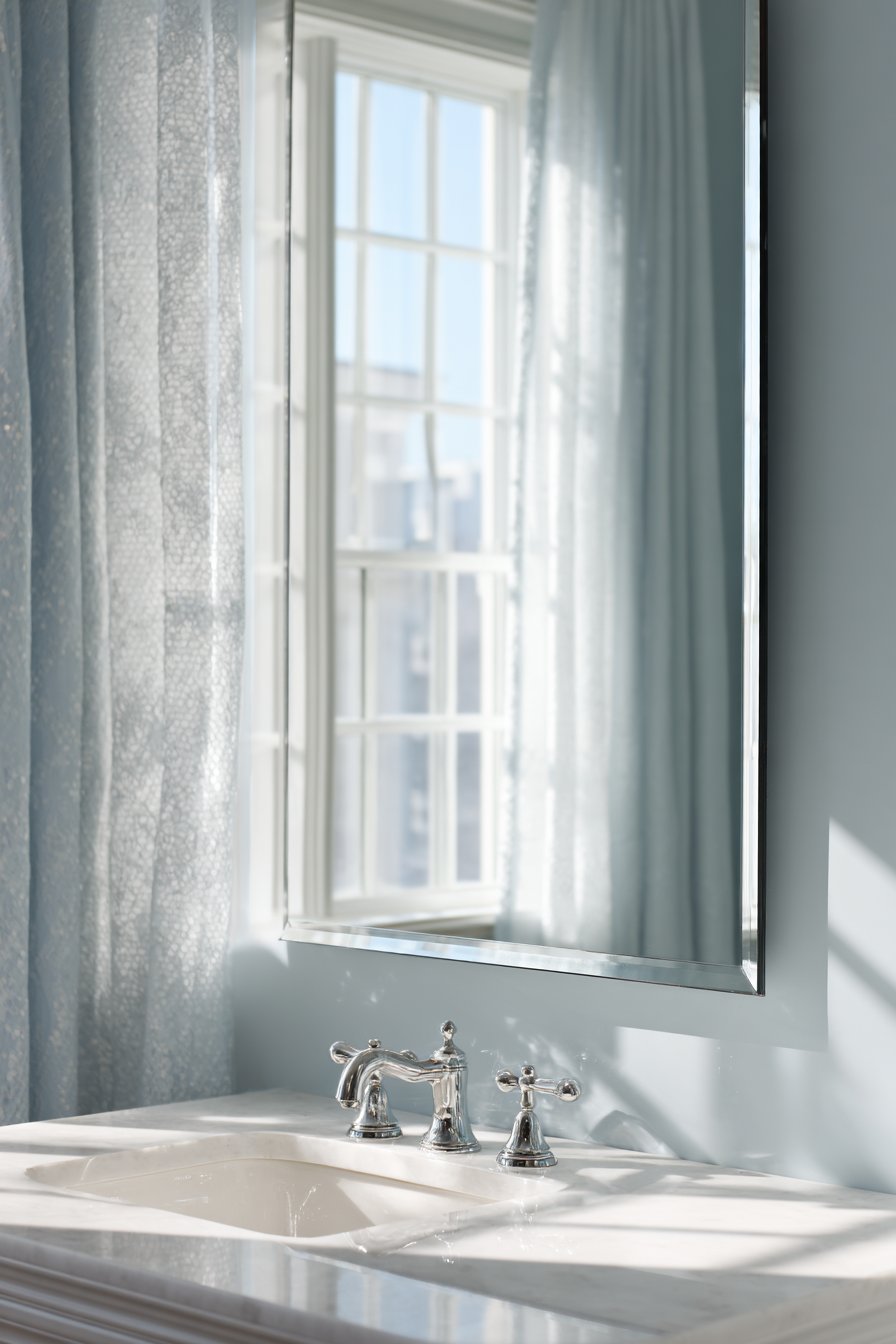
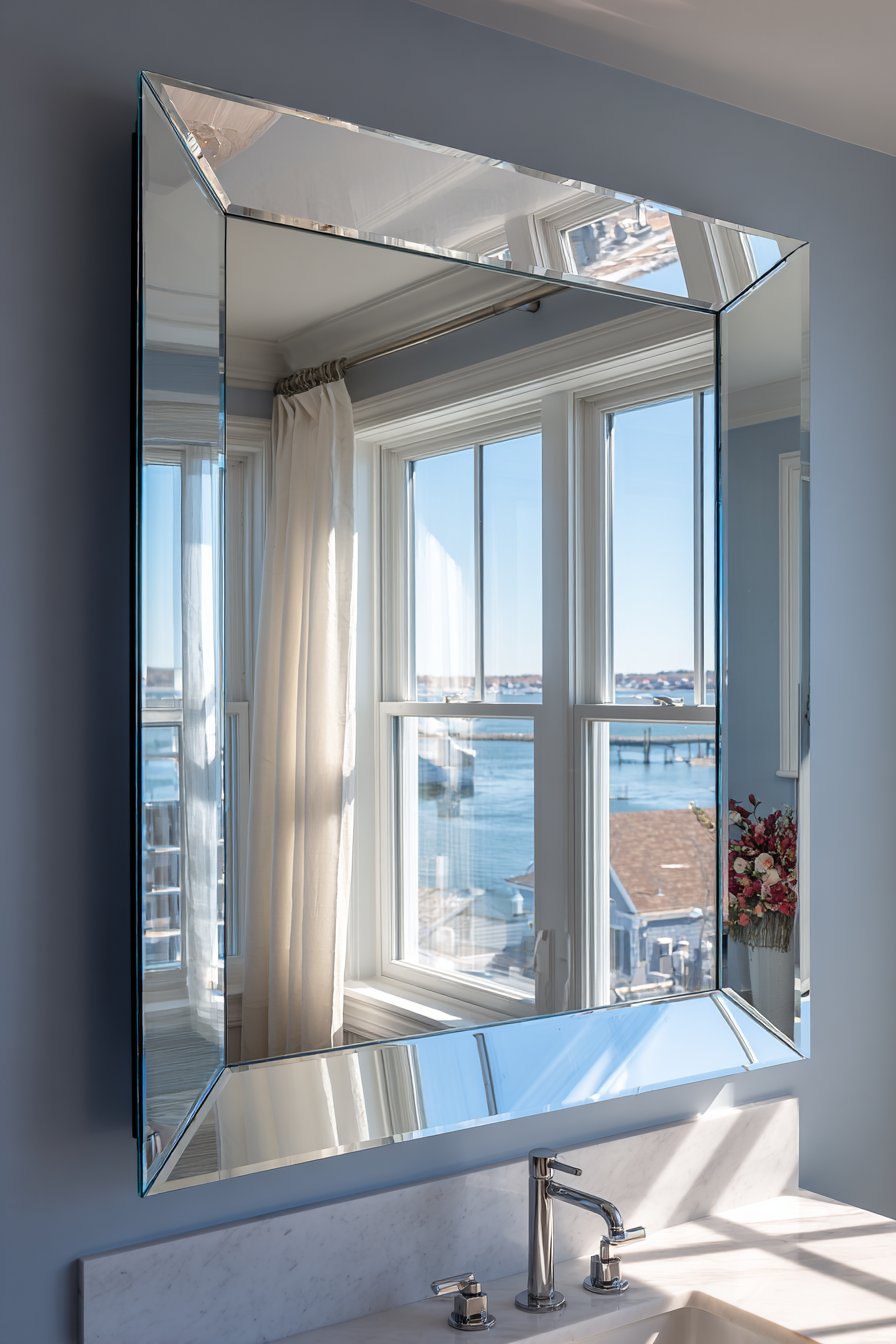
A large frameless mirror with beveled edges demonstrates the transformative power of reflective surfaces in this small coastal bathroom, where the mirror’s strategic placement doubles the perceived natural light by reflecting a window with white trim and sheer curtains. The visual trickery goes beyond simple reflection—the mirror creates the illusion that the bathroom extends far beyond its actual walls, making the space feel nearly twice its true size. Below the mirror, a sleek white quartz countertop with integrated sink maintains streamlined simplicity that keeps visual clutter to an absolute minimum.
The beveled edges of the frameless mirror catch light at their angled surfaces, creating subtle sparkle without requiring ornate frames that would add visual weight in a small space. This minimalist approach allows the mirror to seemingly disappear into the wall while still serving its essential functions of reflecting light and providing grooming functionality. The pale gray-blue walls create a subtle coastal atmosphere without competing with the mirror’s reflective properties—the soft color appears even more luminous when doubled through reflection.
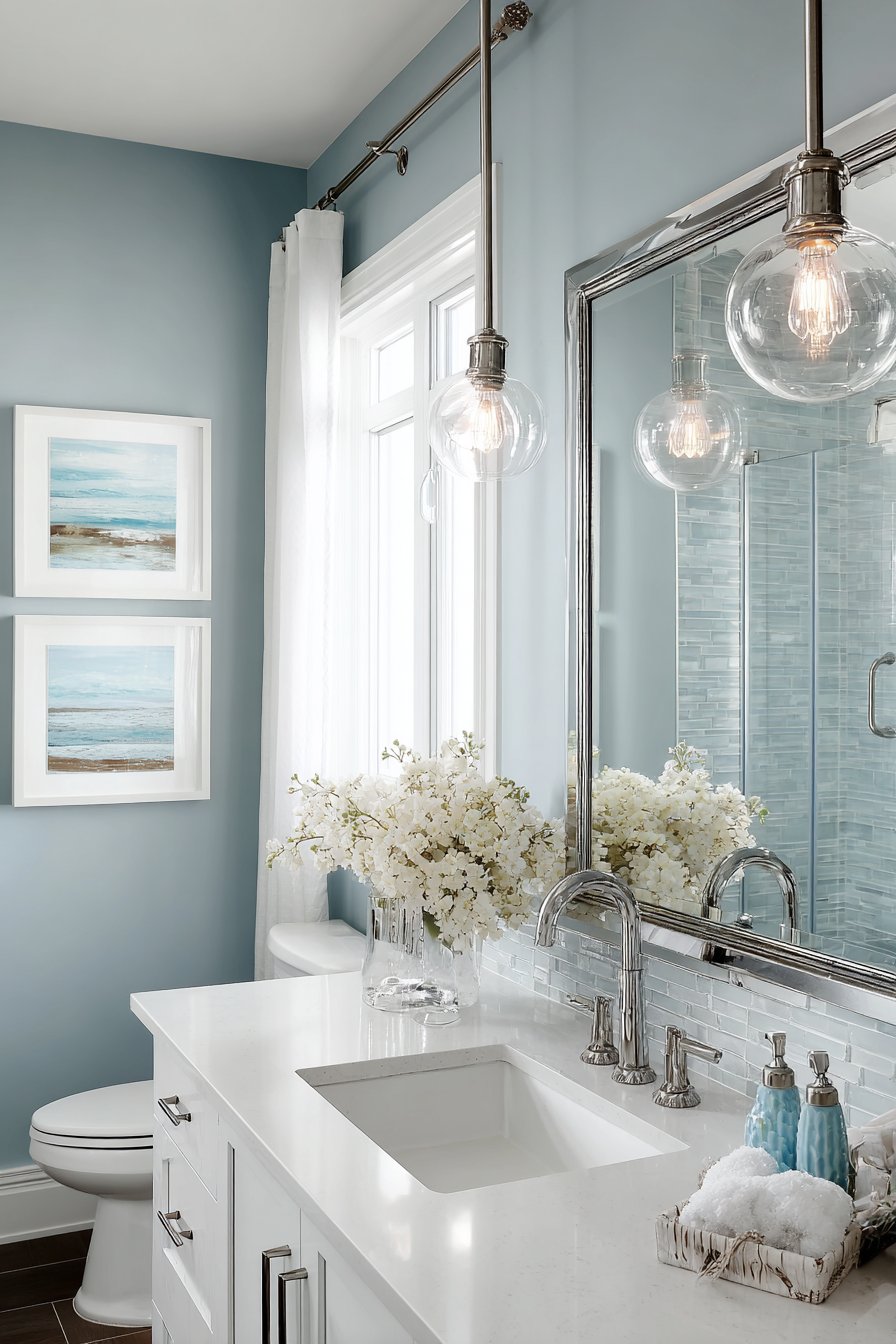
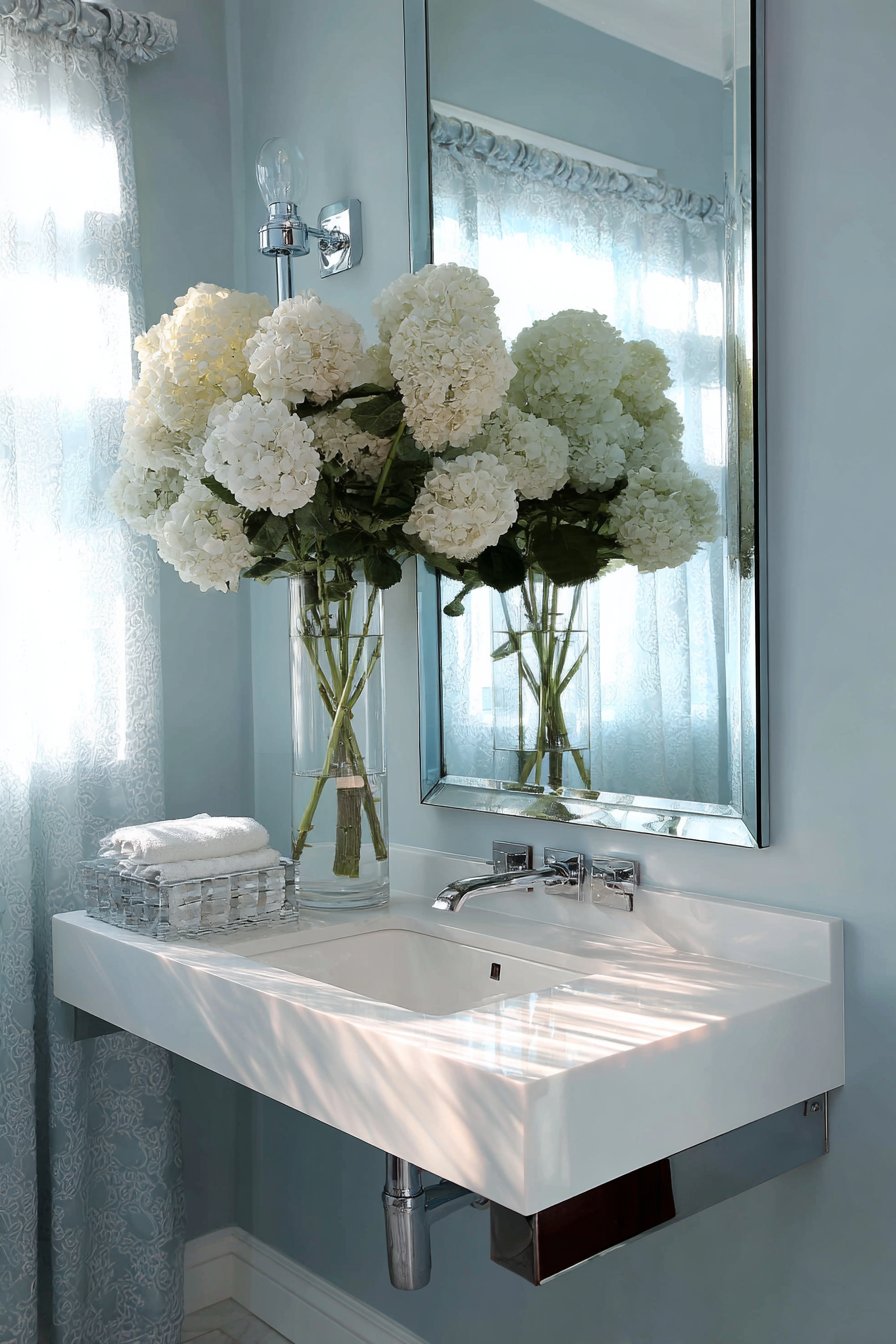
The integrated sink and countertop combination eliminates the seam where traditional drop-in or undermount sinks meet the counter, creating a smooth, continuous surface that’s both easier to clean and more visually streamlined. This attention to seamless integration characterizes high-end design and proves particularly valuable in small spaces where every element should contribute to an uncluttered, flowing composition. The quartz material offers durability and stain-resistance essential in bathroom environments while maintaining the clean white aesthetic that amplifies light.
Key Design Tips:
- Install the largest mirror your wall can accommodate to maximize light reflection and visual expansion
- Position mirrors to reflect windows and light sources rather than walls or closed doors
- Choose frameless mirrors with beveled edges for sparkle without visual weight
- Select integrated sink-counter combinations to minimize visual breaks and cleaning challenges
- Paint walls in light, reflective colors to enhance the mirror’s doubling effect
12. Continuous Flooring for Seamless Flow
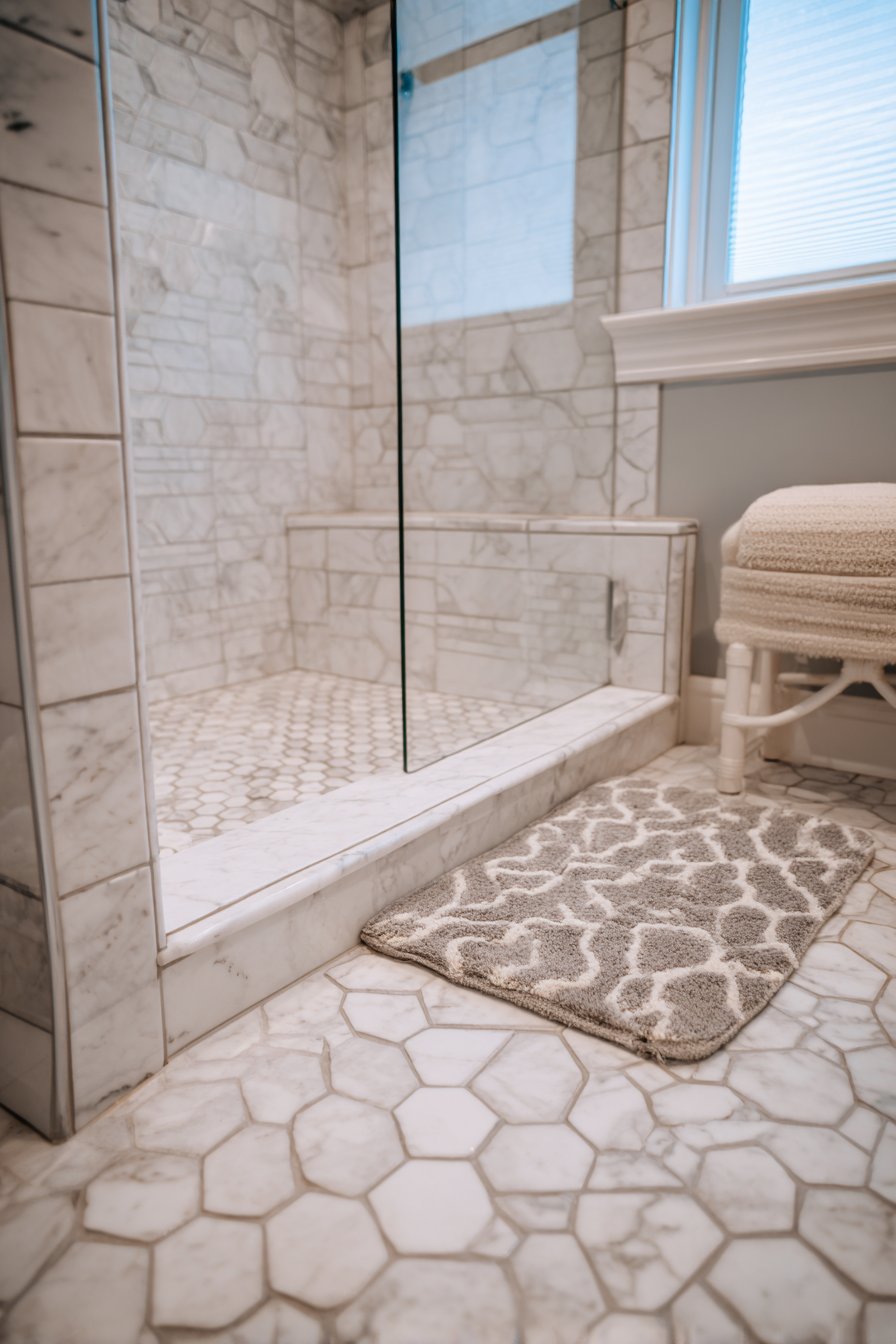
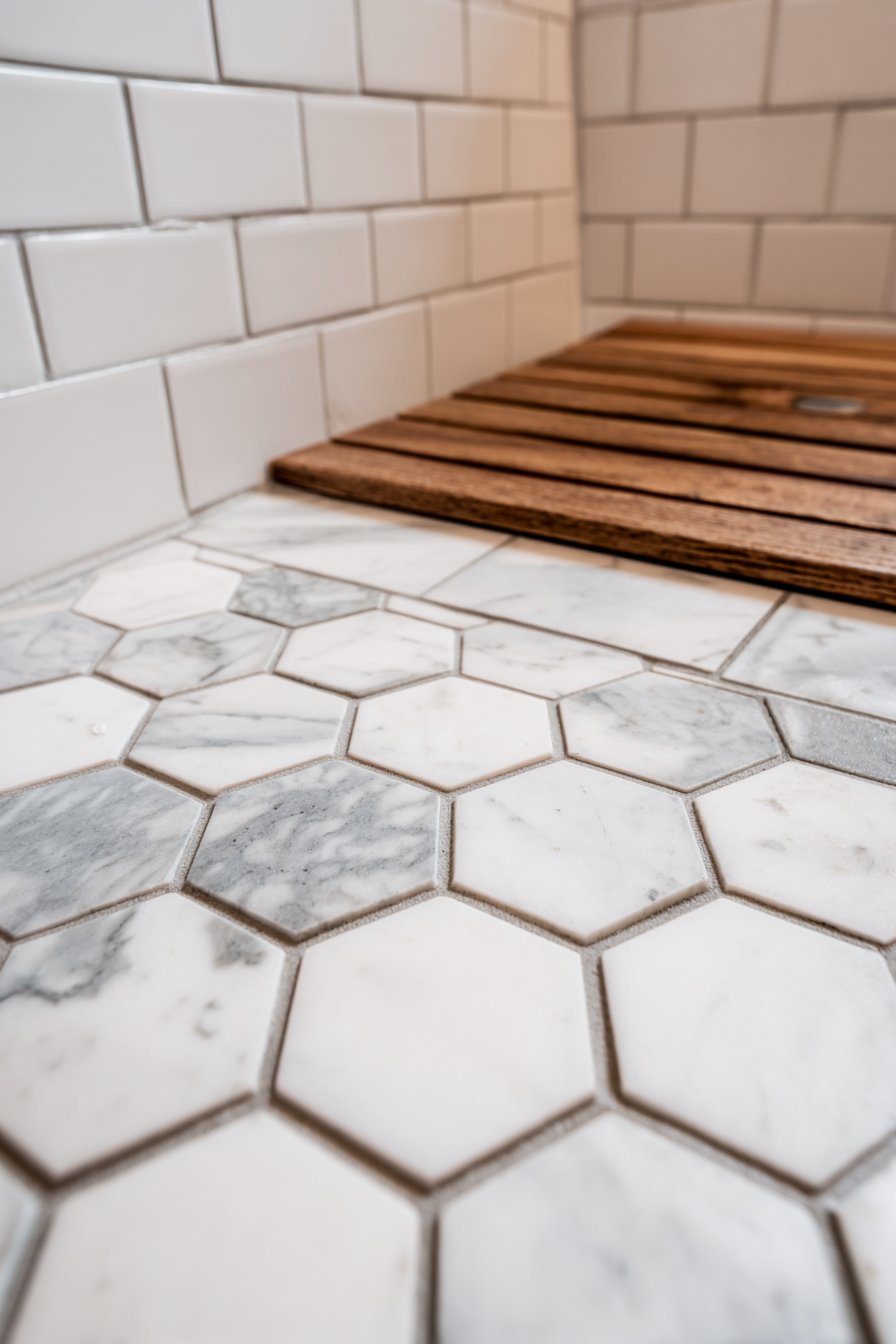
The floor makes a powerful statement in this small coastal bathroom, where hexagonal white marble tiles with subtle gray veining create a classic honeycomb pattern that extends seamlessly from the main bathroom into a curbless shower area. The continuous flooring eliminates visual barriers that would otherwise fragment the space, making the bathroom appear larger than it actually measures. Within the shower, the hexagonal tiles feature a slightly textured finish that provides essential traction for safety without compromising the elegant marble aesthetic.
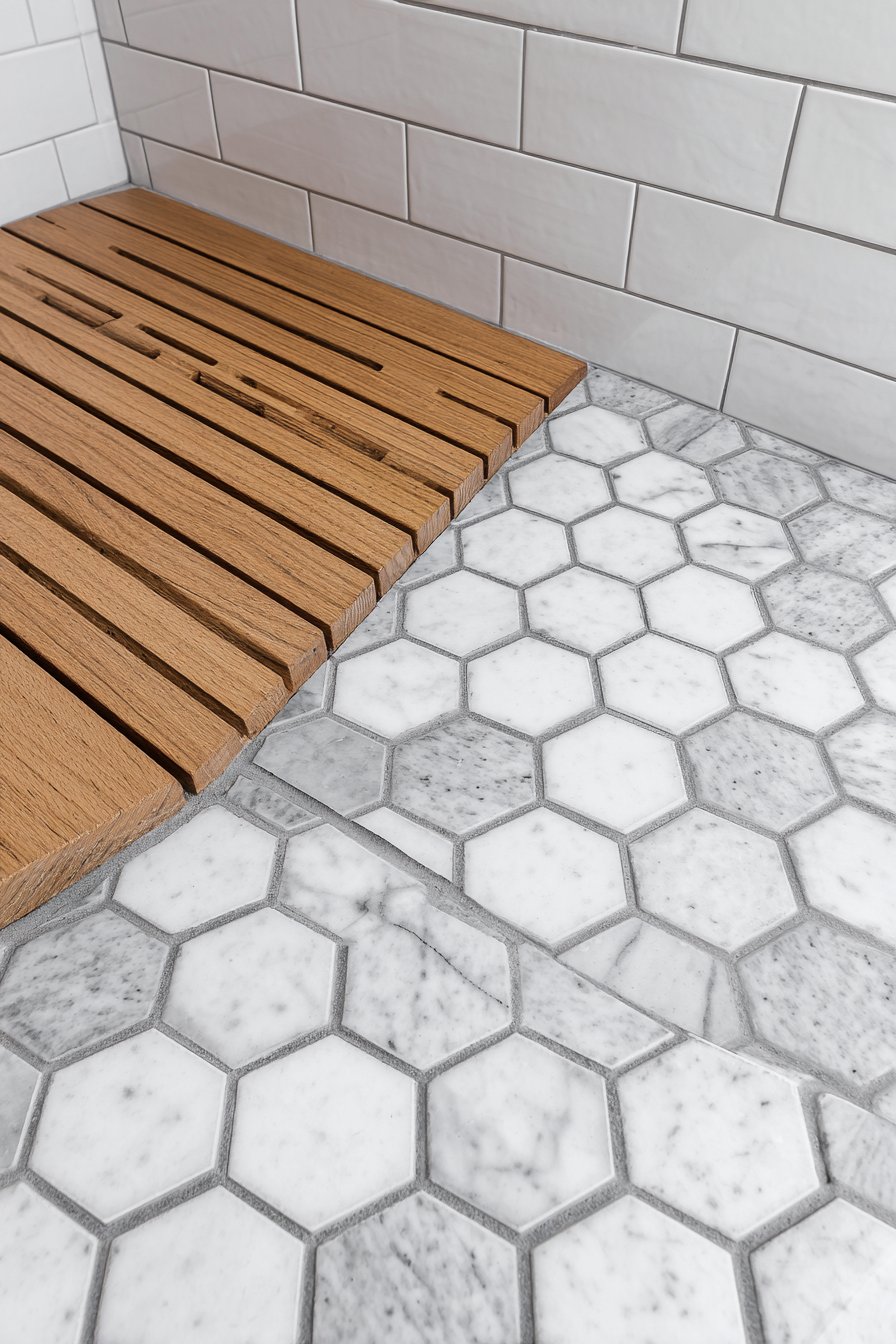
Large white subway tiles cover the shower walls with light gray grout providing subtle definition without creating harsh contrast. The marriage of hexagonal floor tiles and rectangular wall tiles demonstrates how different geometric shapes can work together successfully when they share color palettes and maintain appropriate scale relationships. A teak shower mat introduces warmth and natural coastal character while providing comfortable, non-slip footing—the rich wood tones create welcome contrast against the predominantly white and gray palette.
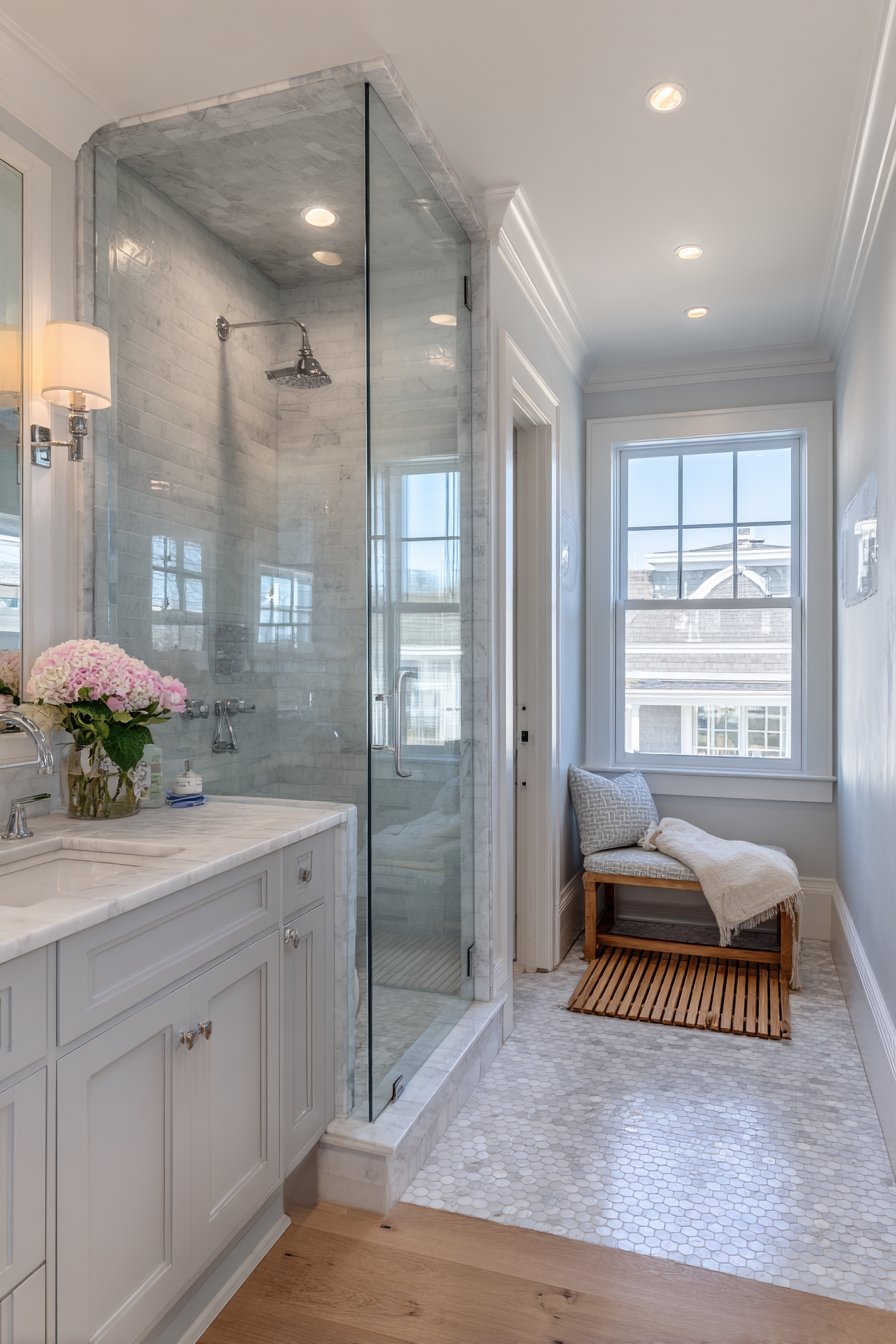
The curbless shower design represents a significant advantage in small bathrooms, eliminating the physical and visual barrier of a traditional shower threshold. This seamless transition creates a more spacious, accessible bathroom while also facilitating easier cleaning since there’s no raised curb to navigate with mops or to trap soap scum. The natural marble veining provides subtle visual interest that prevents the white floor from appearing flat or sterile, while the hexagonal pattern adds geometric intrigue that elevates the design beyond basic grid layouts.
Key Design Tips:
- Use continuous flooring from bathroom into shower to eliminate visual breaks
- Install curbless showers to maximize space and improve accessibility
- Choose textured tile finishes in wet areas to prevent slipping
- Add teak bath mats for warmth, comfort, and natural coastal character
- Select tiles with subtle natural variation to create interest without pattern overwhelm
13. Shiplap Feature Walls for Architectural Interest
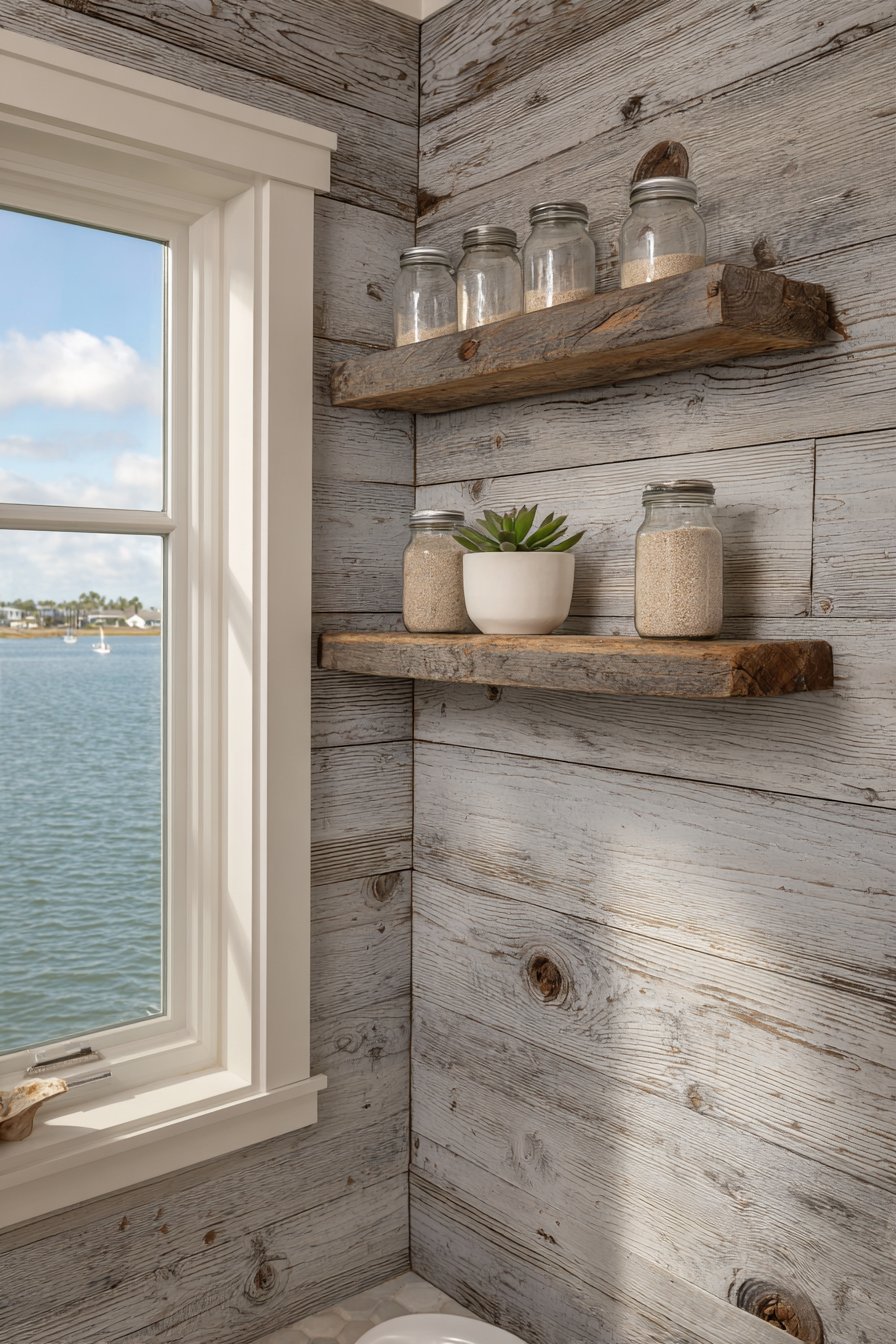
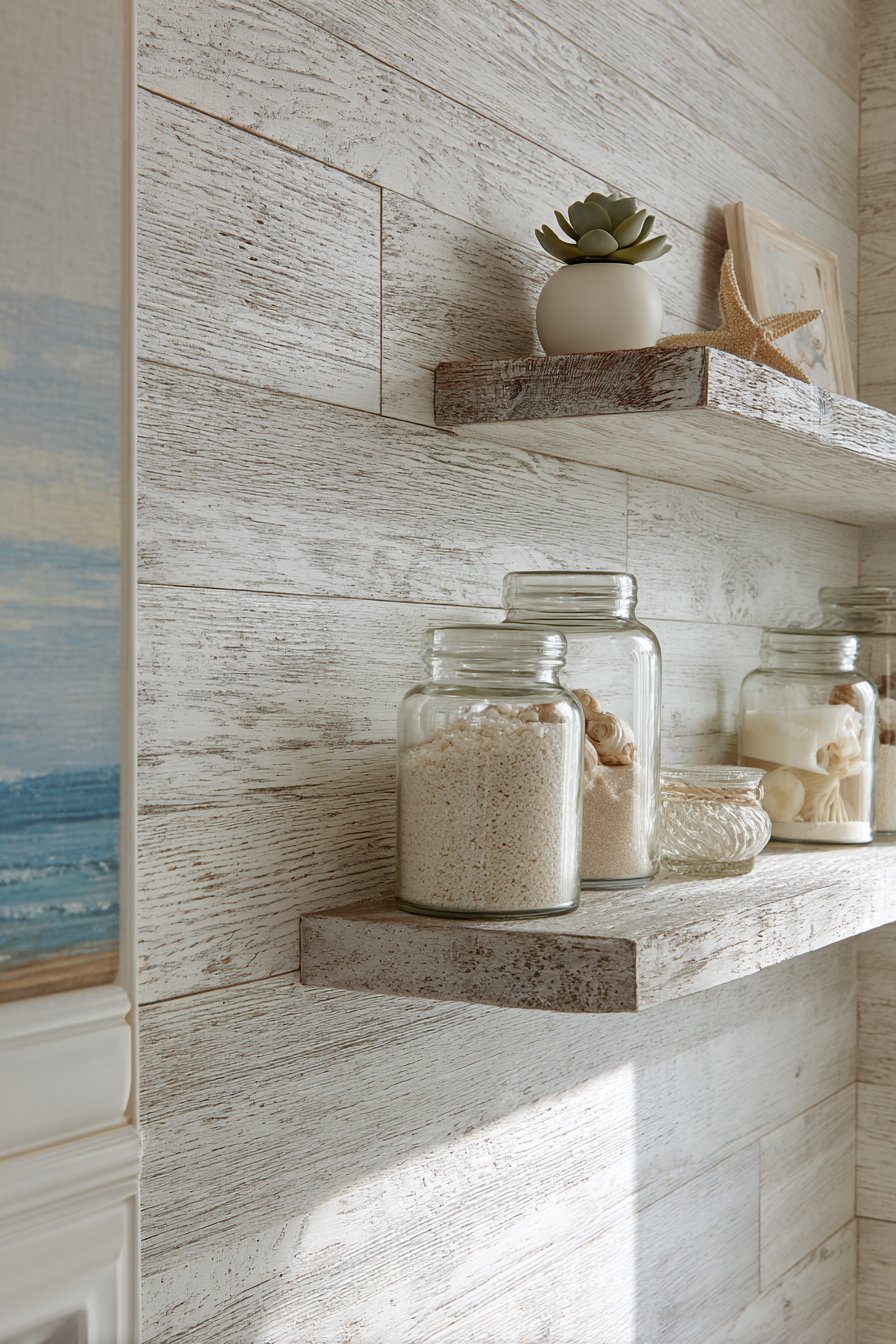
Horizontal shiplap boards finished in weathered white create an accent wall that adds significant architectural interest without consuming any floor space in this small coastal bathroom. The visible wood grain and slight texture variation across the boards reference authentic beach cottage construction while the weathered finish suggests years of salt air and sunshine exposure. A floating shelf crafted from reclaimed wood provides the perfect platform for glass apothecary jars filled with collected sand and shells, plus a small succulent planted in a white ceramic pot.
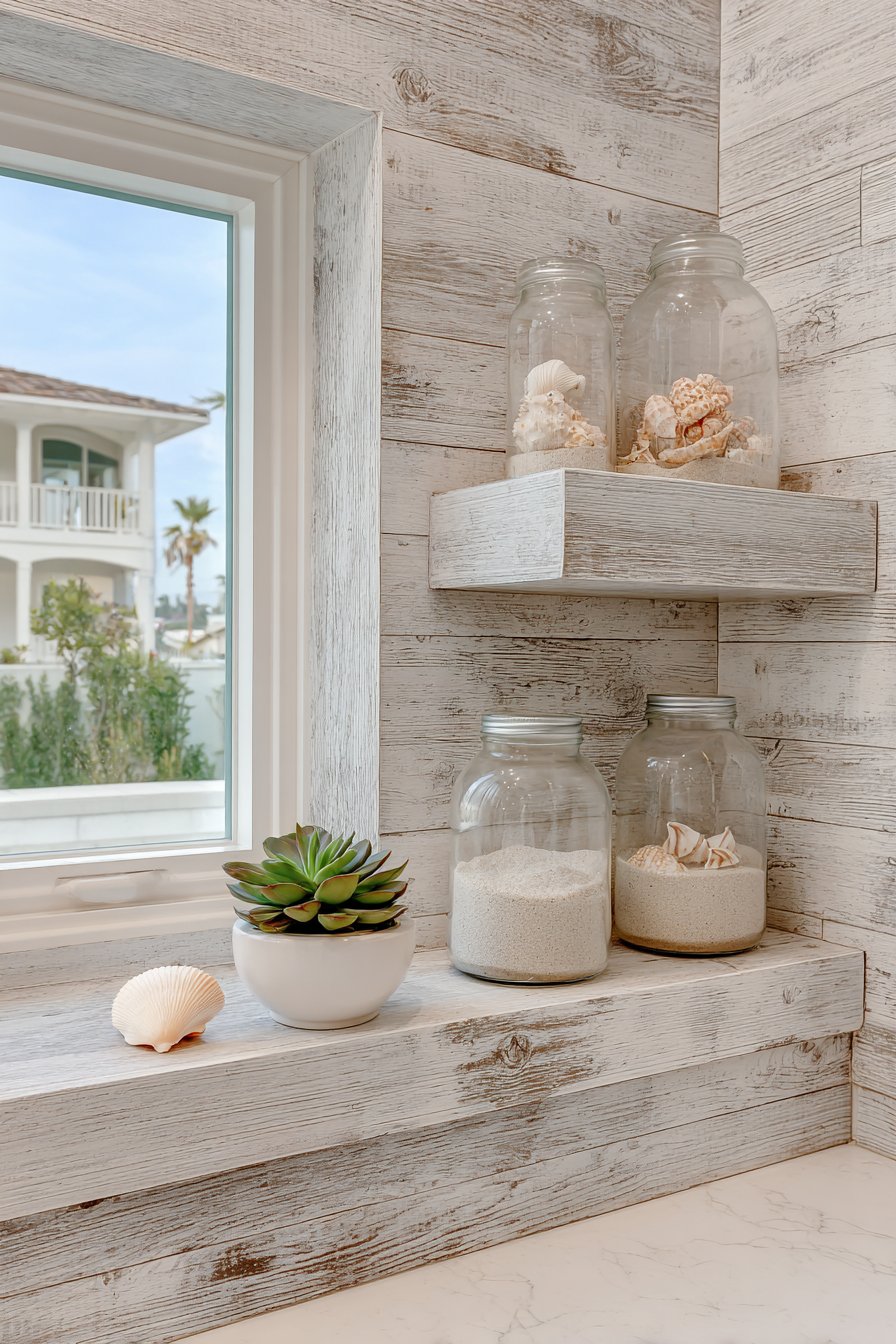
The shiplap creates subtle shadow lines between each board where they overlap, adding dimensional texture that makes the wall far more interesting than flat painted drywall could achieve. Natural light from an adjacent window grazes across the boards’ surface, emphasizing the texture and creating gentle shadows that shift throughout the day as sun angles change. This dynamic quality keeps the bathroom feeling alive and connected to natural cycles rather than static and artificial.
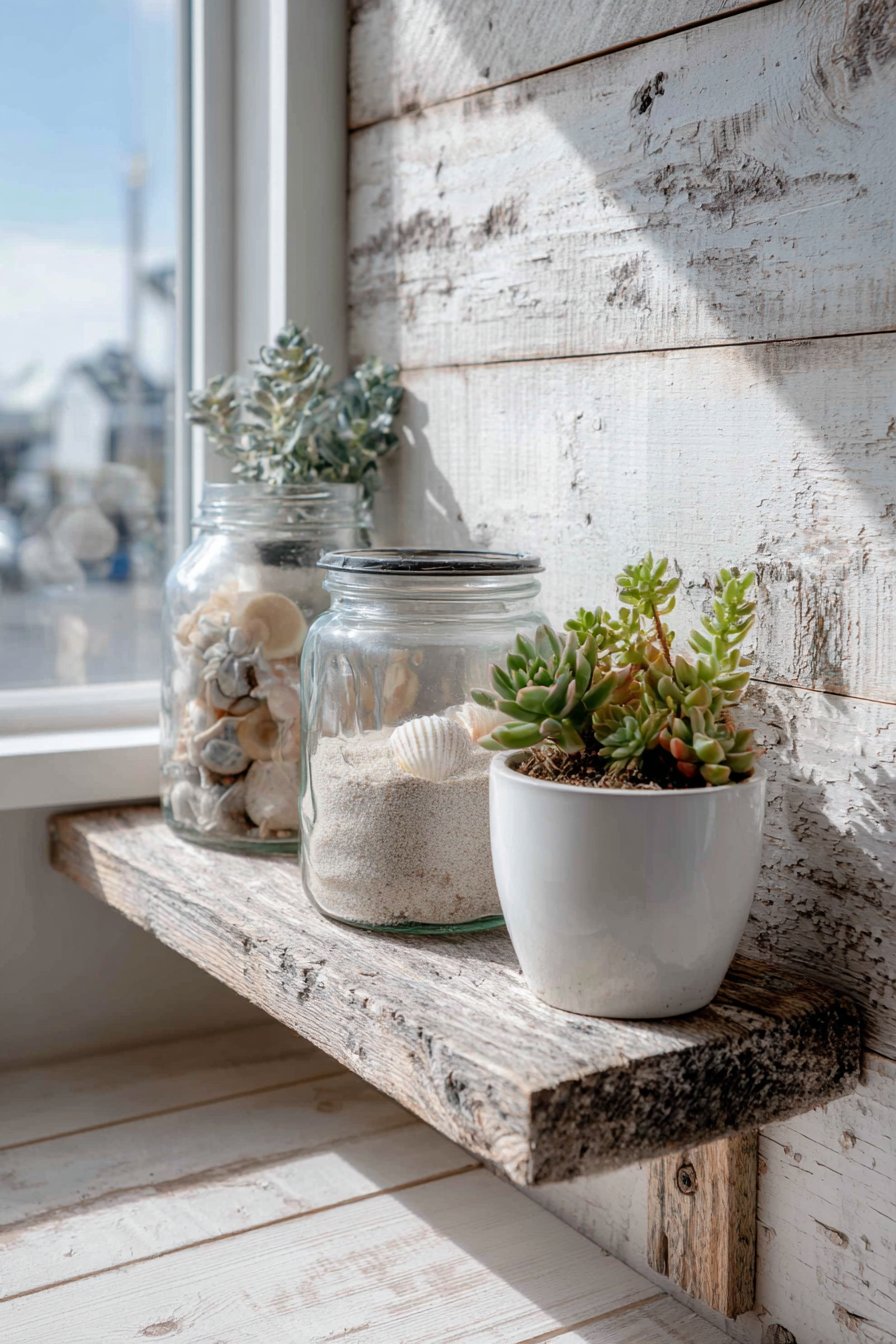
The reclaimed wood shelf adds another layer of authentic coastal character—its weathered surface and varied grain patterns tell stories of previous uses and weathered exposure. The glass jars filled with sand and shells transform collected beach treasures into curated displays, while the succulent introduces living greenery that thrives in bathroom humidity. This combination of architectural shiplap, rustic shelving, and thoughtful accessories creates a richly layered coastal aesthetic that feels collected over time rather than purchased all at once from a single store.
Key Design Tips:
- Install shiplap on one accent wall rather than all walls to avoid visual overwhelm in small spaces
- Choose weathered or distressed finishes for authentic aged coastal character
- Use reclaimed wood for shelving to add history and unique grain patterns
- Display collected beach items in clear glass containers to showcase their natural beauty
- Position accent walls adjacent to windows to maximize shadow play from natural light
14. Functional Shower Niche Design
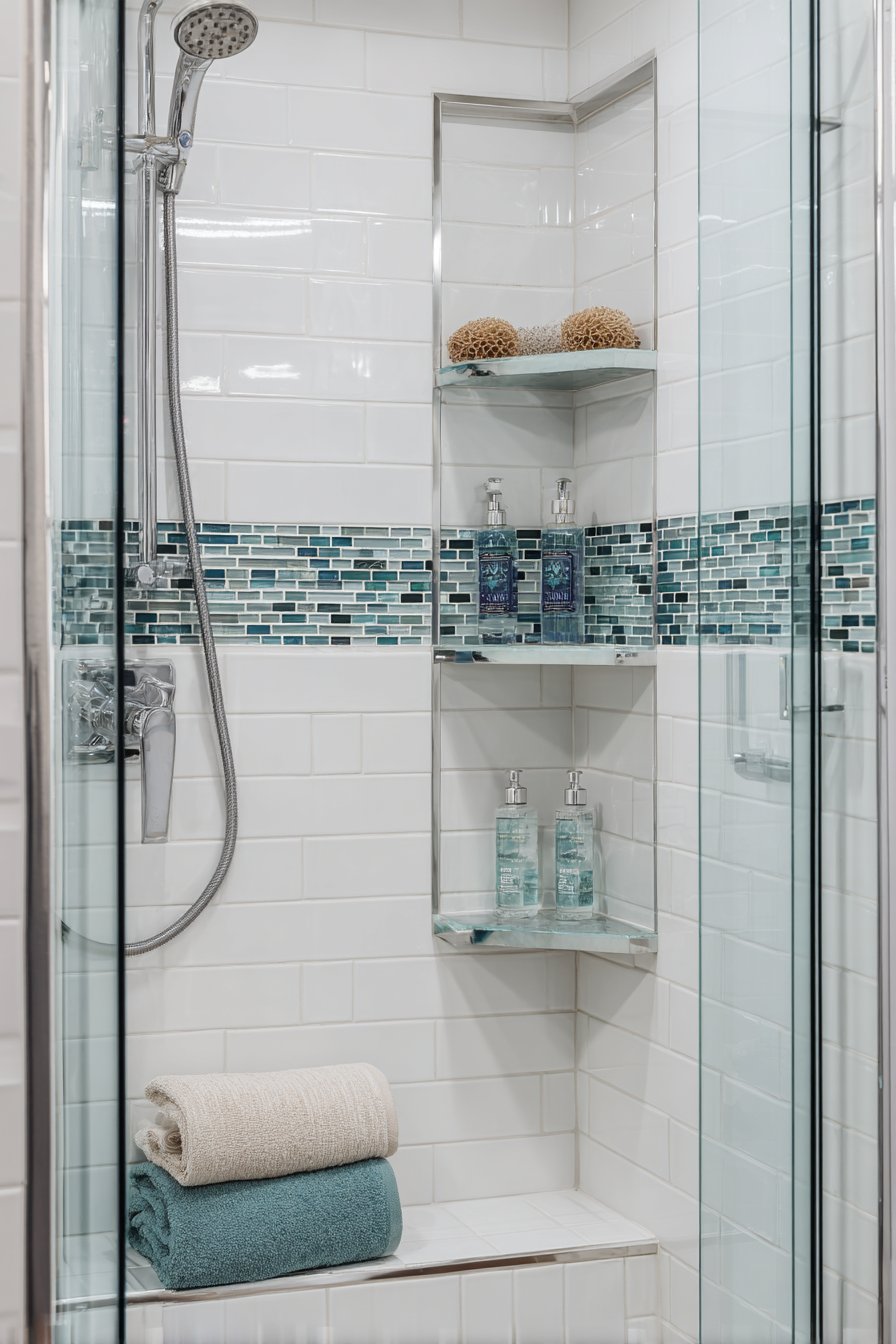
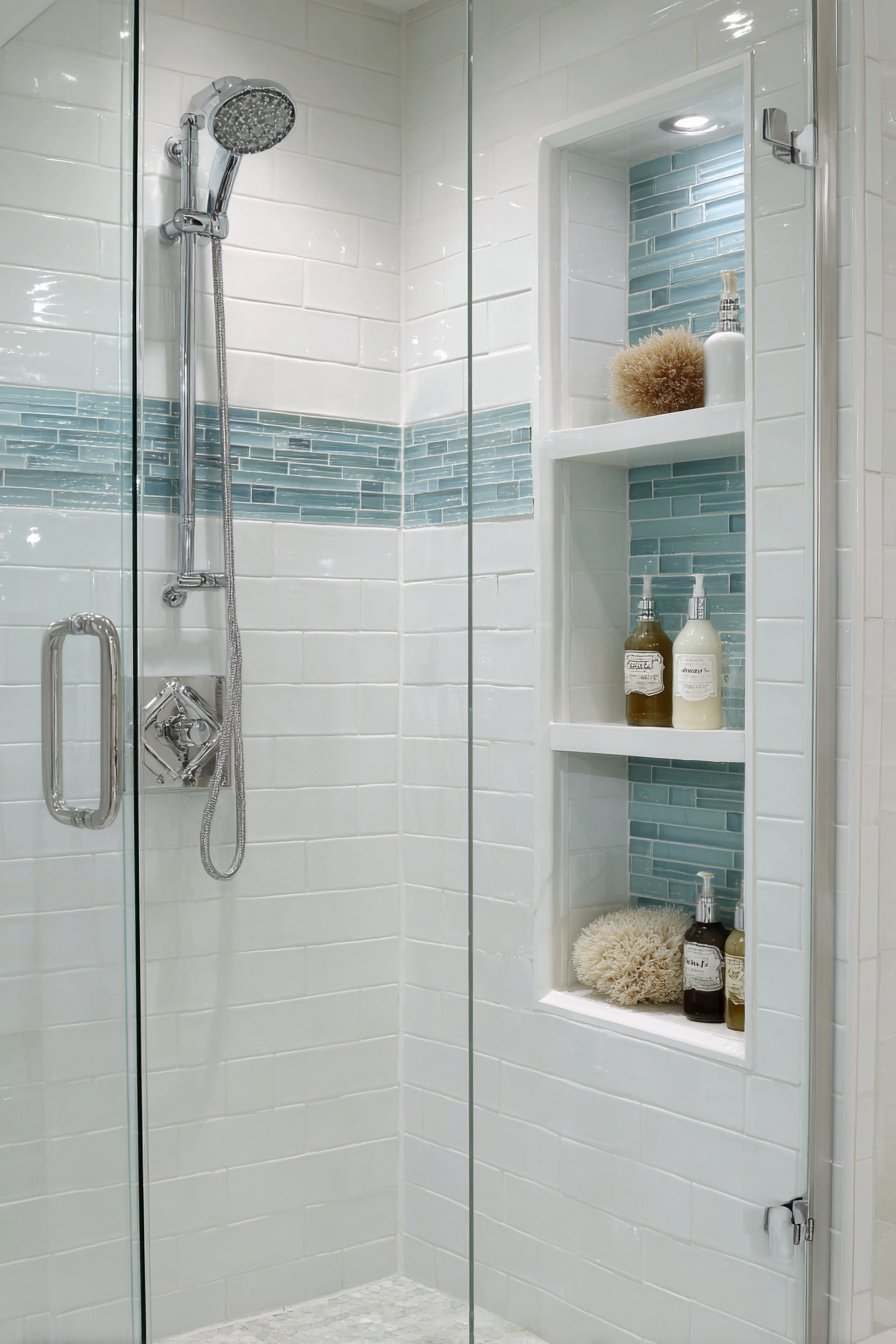
A tiled shower alcove featuring white subway tiles demonstrates how built-in storage can be both beautiful and practical in this small coastal bathroom. A horizontal stripe of turquoise glass mosaic tiles runs at eye level, breaking up the white expanse while introducing the ocean-inspired color essential to coastal design. Three built-in shelves carved into the wall provide designated storage for shampoo bottles and natural loofahs without requiring adhesive caddies or tension poles that often look like afterthoughts in shower design.
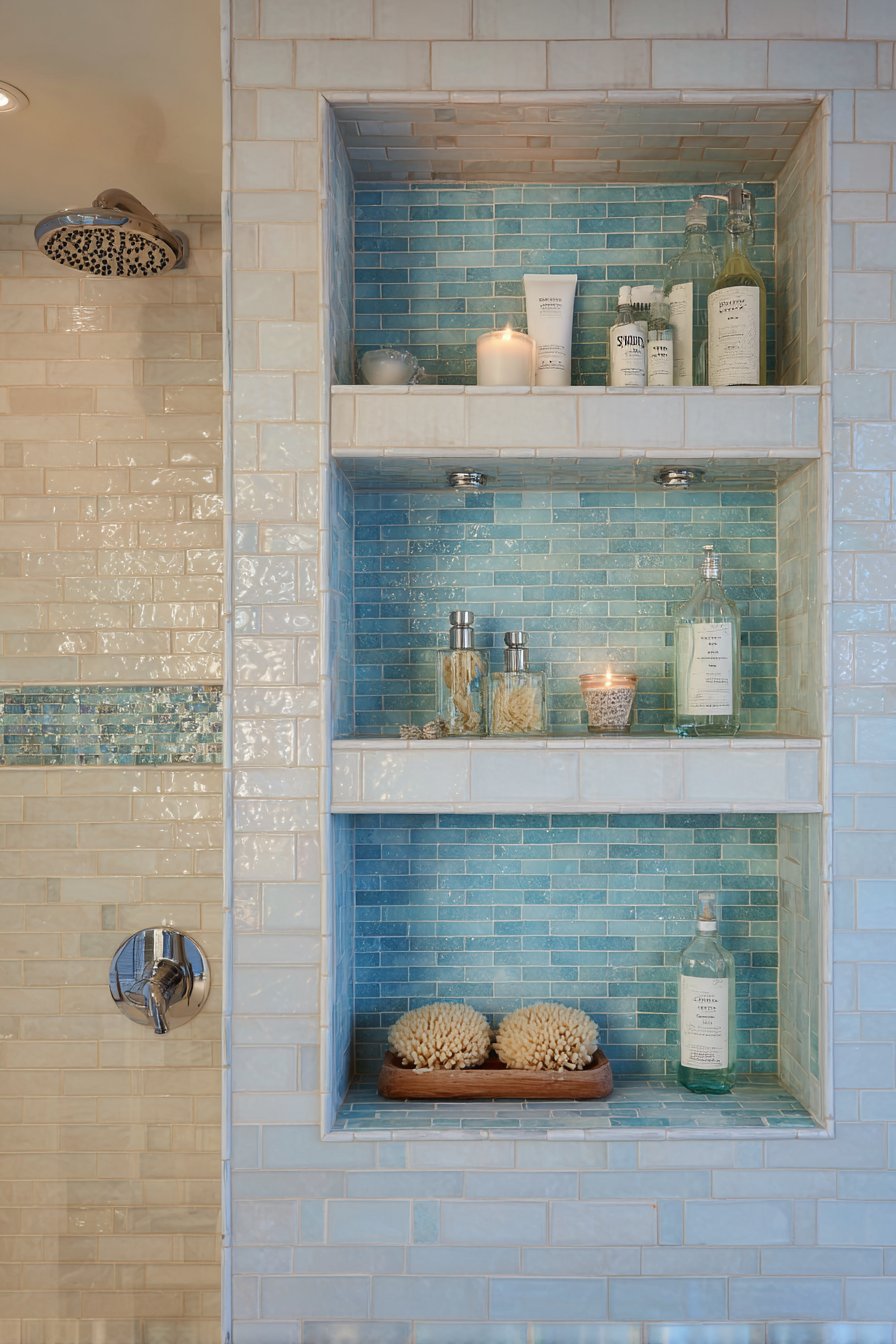
Chrome fixtures and a rain showerhead complete the setup, their polished finishes contrasting beautifully against the white tile while catching and reflecting both natural and artificial light. Waterproof LED strips illuminate the niche from above, creating ambiance while also providing practical visibility for locating products during showers. This lighting integration represents a level of planning that elevates the shower from purely functional to genuinely luxurious despite the bathroom’s compact overall dimensions.
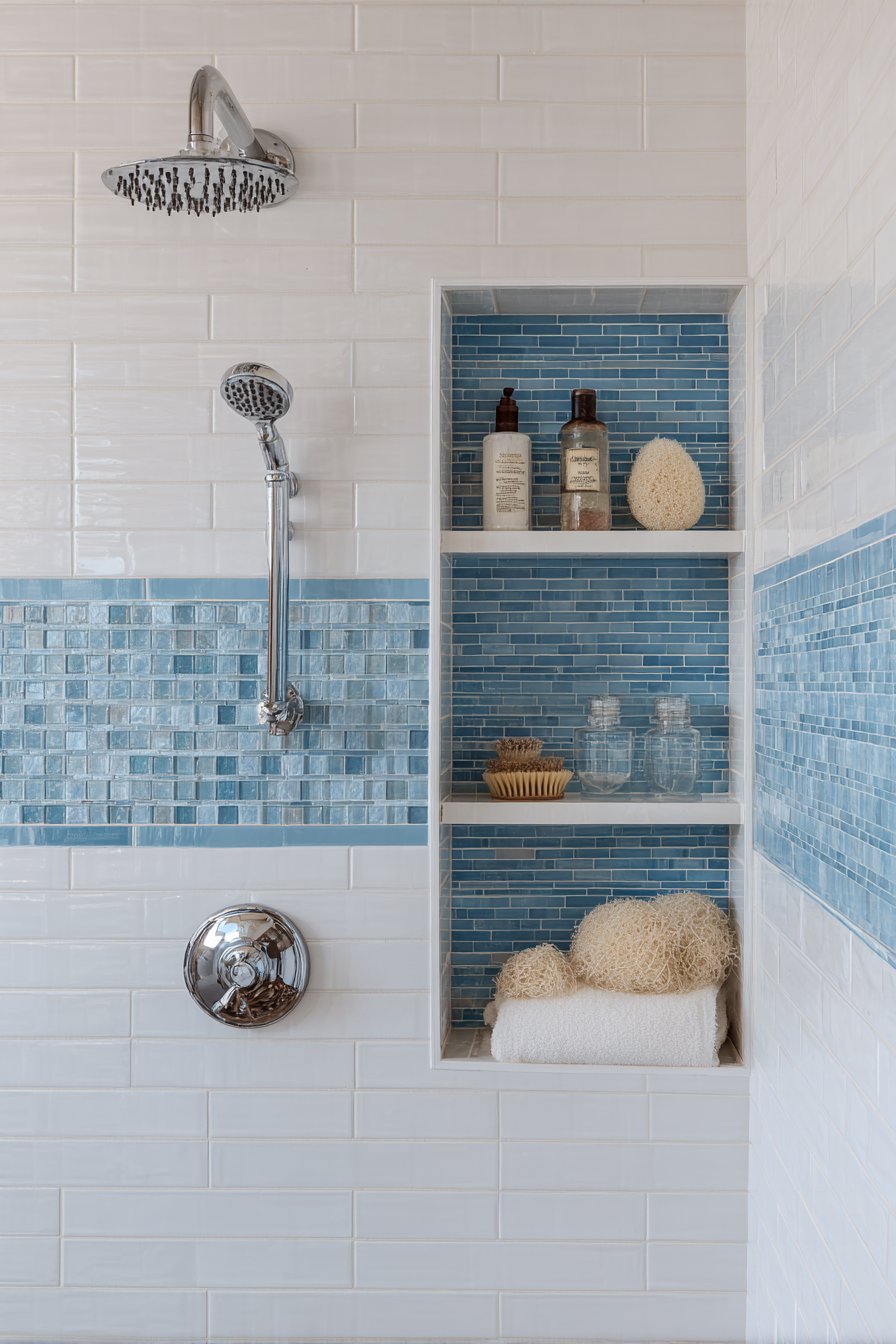
The turquoise mosaic stripe serves multiple purposes beyond pure decoration—it draws the eye horizontally across the shower wall, making the alcove feel wider, while also providing a visual endpoint that prevents the white tiles from appearing infinite and institutional. The built-in shelves demonstrate the value of planning storage during construction rather than adding it later—these recessed niches don’t protrude into the shower space, maintaining maximum room for comfortable bathing while still providing ample storage for all necessary products.
Key Design Tips:
- Build shower niches during construction or renovation rather than relying on aftermarket caddies
- Add horizontal accent stripes at eye level to visually widen narrow shower spaces
- Install waterproof LED lighting in niches for ambiance and practical illumination
- Use glass mosaic tiles for accent stripes to add color and reflective sparkle
- Position shelves at varying heights to accommodate bottles and products of different sizes
15. Compact Vanity with Maximum Impact
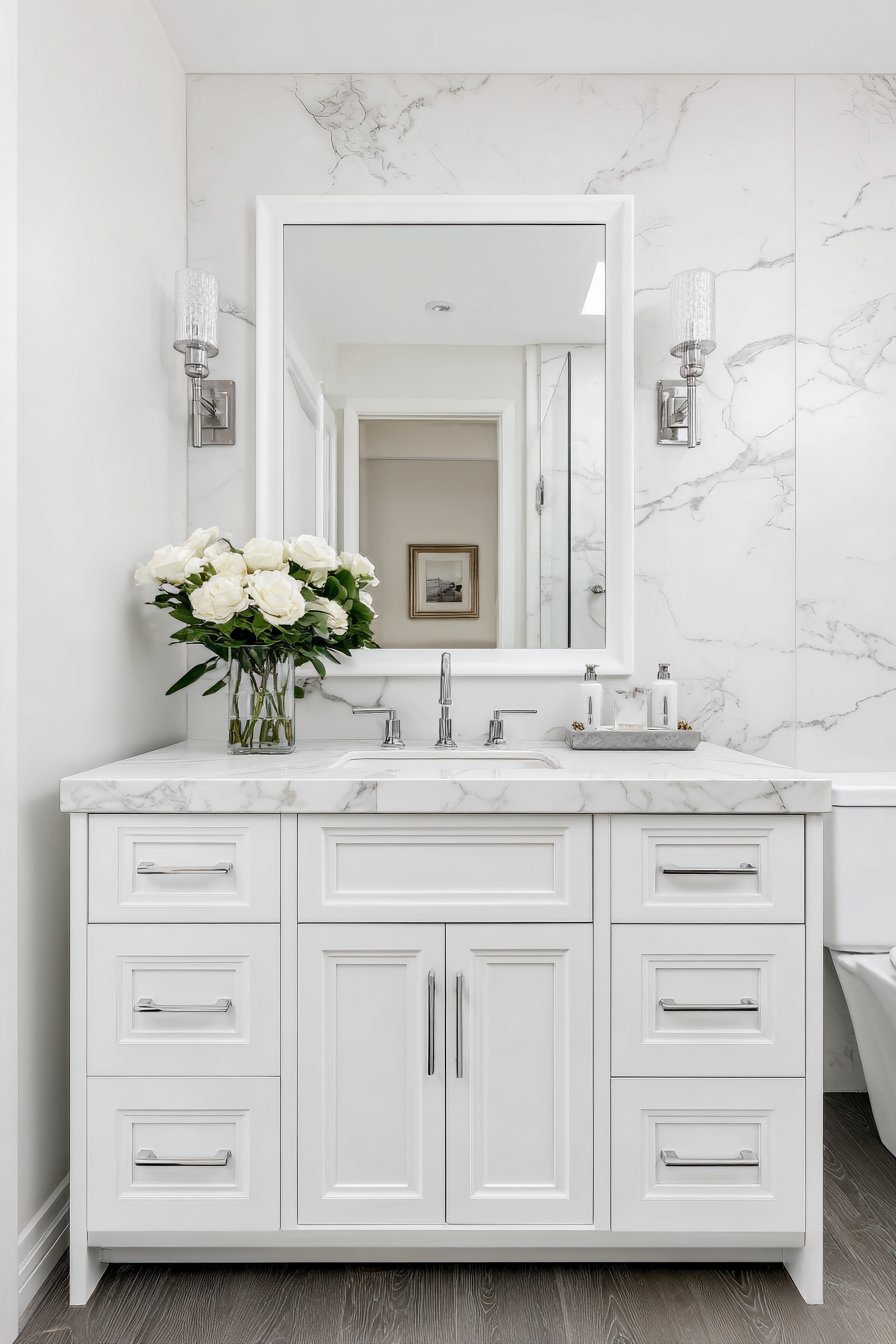
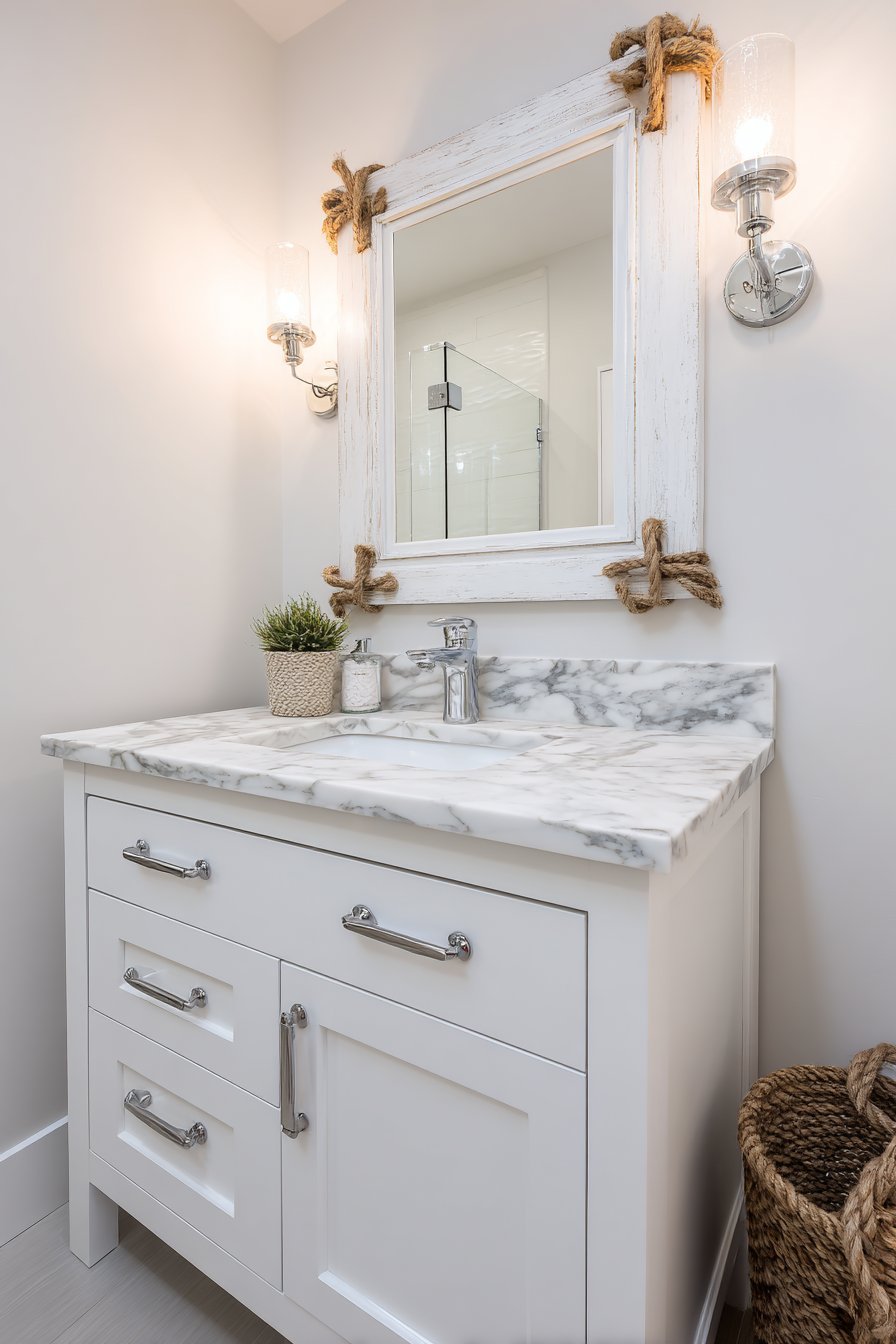
This small coastal bathroom idea showcases a 24-inch white shaker-style vanity that proves you don’t need expansive dimensions to create significant visual impact. The compact cabinet features soft-close drawers with brushed nickel cup pulls that coordinate perfectly with other fixtures throughout the bathroom, demonstrating the importance of cohesive hardware selection. A white marble countertop with delicate gray veining supports a chrome single-handle faucet, the natural stone’s cool elegance elevating the humble vanity to luxury status.
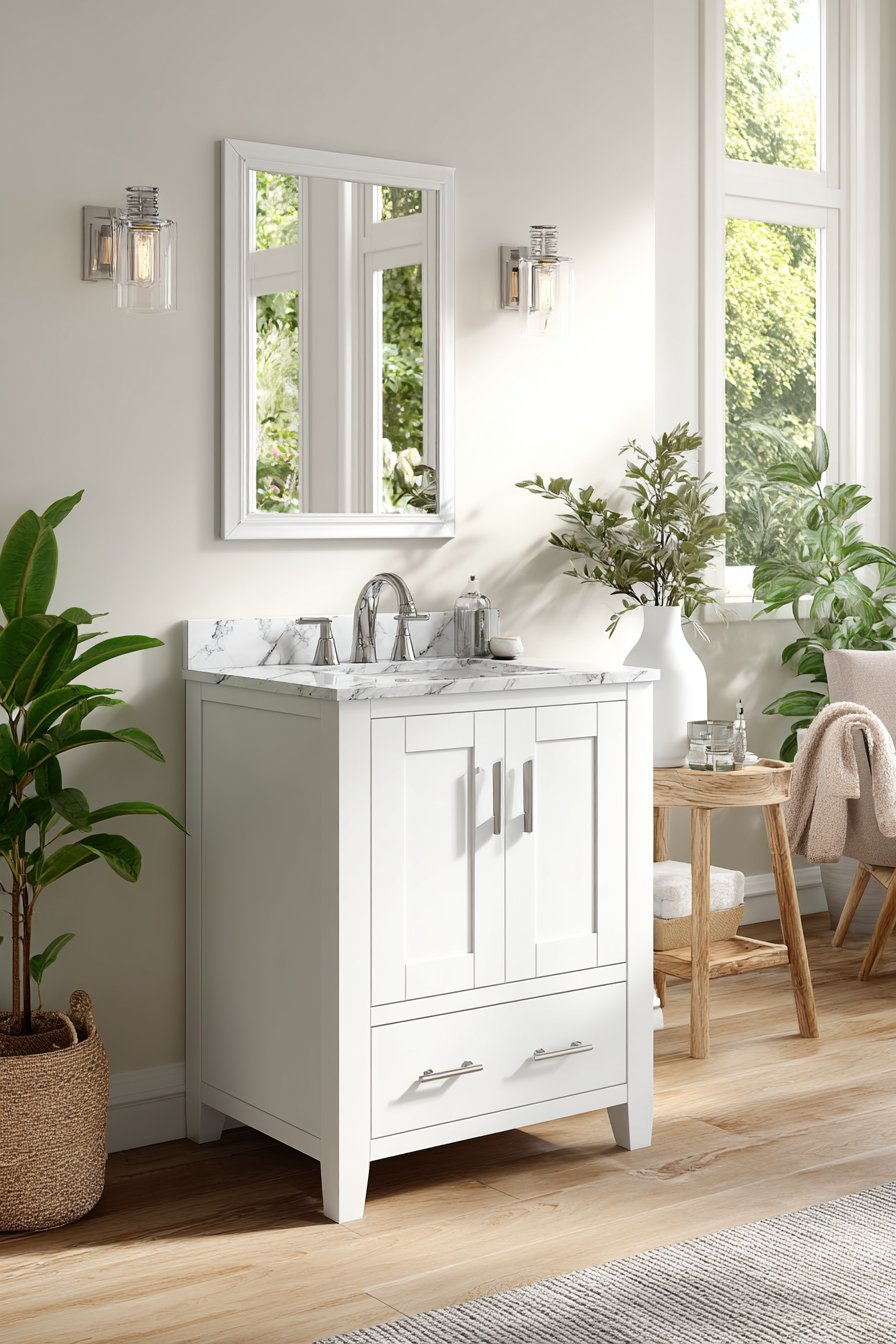
Above the vanity hangs a white-framed rectangular mirror distinguished by coastal rope detail wrapped artistically around its top edge—a subtle nautical reference that adds personality without resorting to obvious maritime clichés. Wall-mounted sconces with clear glass shades flank the mirror at face height, providing the even, shadow-free illumination essential for grooming tasks while adding architectural symmetry to the composition. The shaker-style cabinet doors with their simple recessed panels represent timeless design that won’t appear dated in coming years.
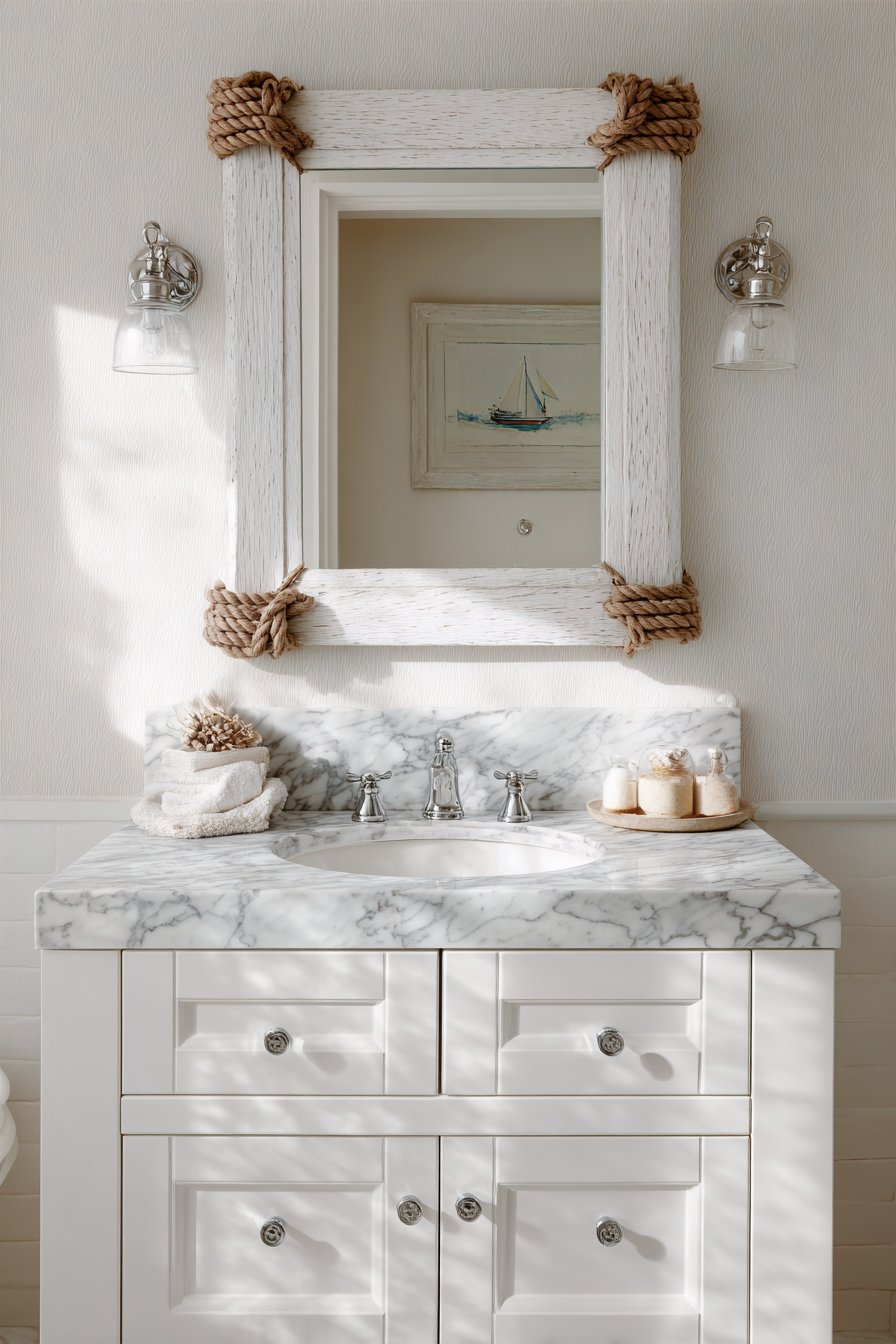
The 24-inch vanity width is ideal for small bathrooms where every inch counts, providing adequate counter space for daily essentials while leaving room for other necessary fixtures along the wall. The soft-close drawer mechanism represents a small luxury that makes a big difference in daily use—drawers close silently and smoothly rather than slamming, preserving both your nerves and the cabinet’s structural integrity over years of use. The marble countertop’s gray veining picks up tones from the rope mirror detail, creating subtle color connections that unify the design.
Key Design Tips:
- Choose vanities between 18-24 inches wide for genuinely small bathrooms
- Install wall-mounted sconces at 60-65 inches from the floor for optimal face lighting
- Select soft-close drawer mechanisms for quiet operation and extended cabinet life
- Use marble countertops to add luxury while maintaining neutral coastal color palettes
- Add rope details to mirrors or other accessories for subtle nautical character
16. Textile Coordination for Coastal Cohesion
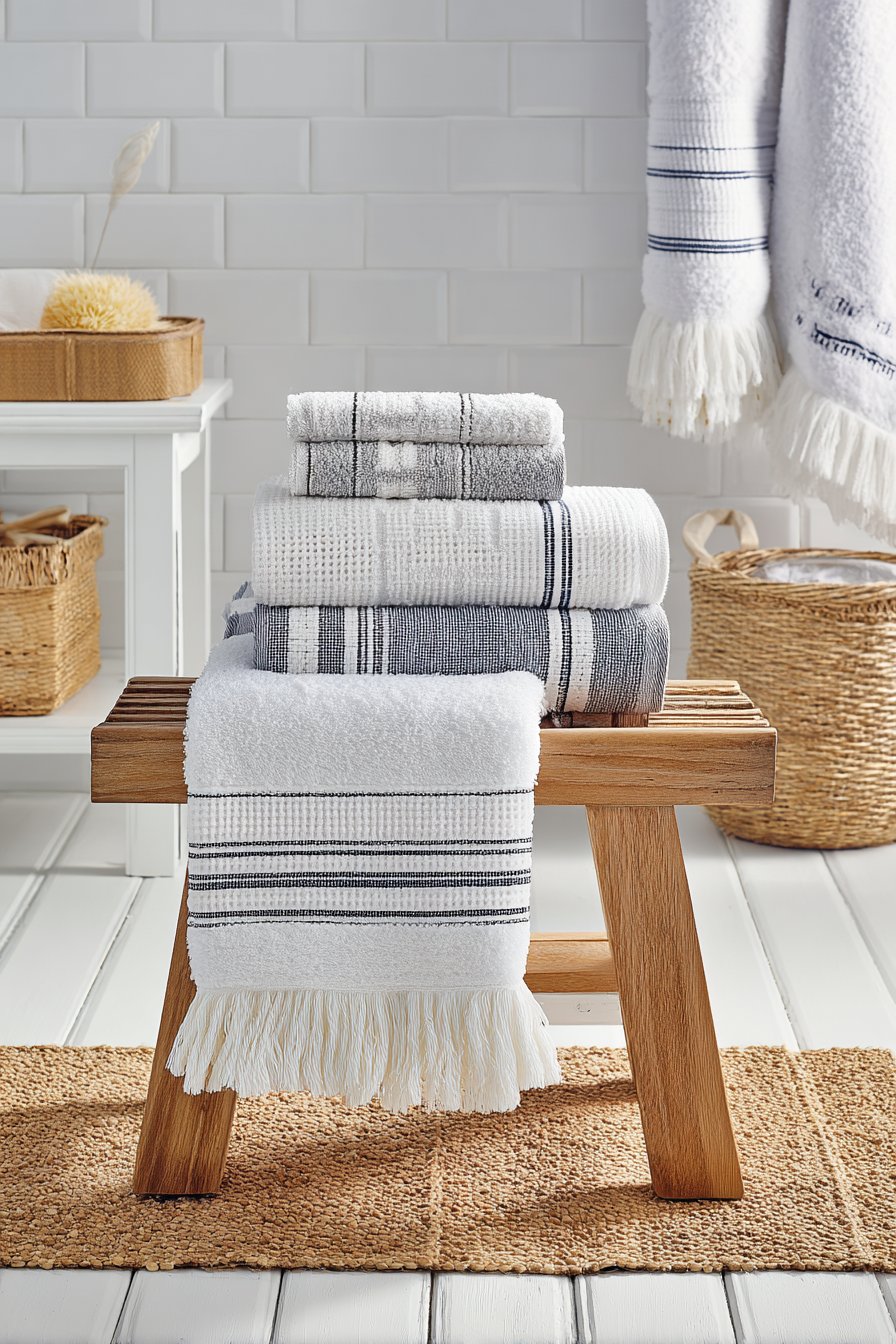
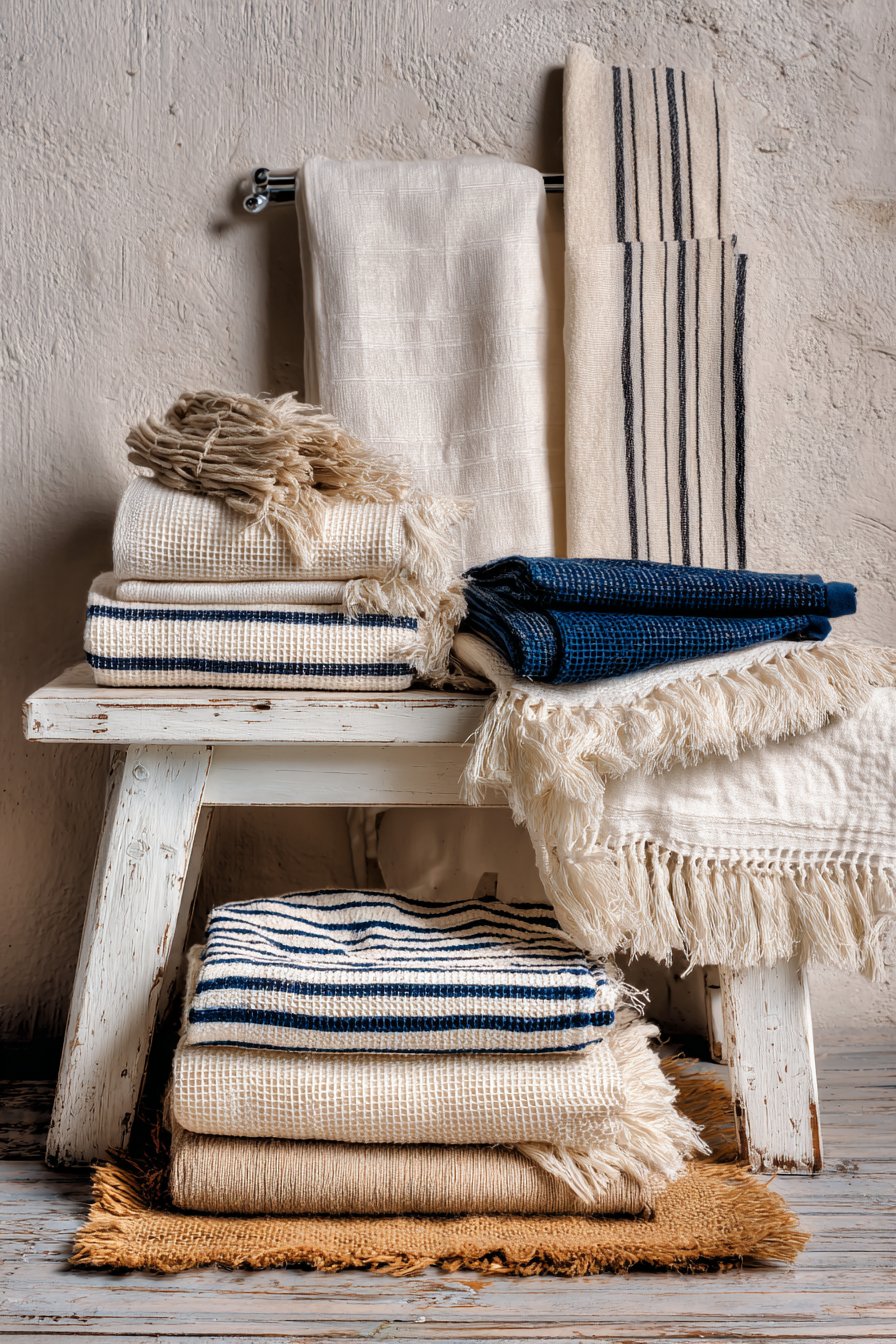
The thoughtful coordination of textiles demonstrates how fabrics can establish and reinforce coastal themes in this small bathroom. White cotton waffle-weave towels hang from chrome towel bars, their textured surface adding visual and tactile interest while maintaining the crisp clean aesthetic essential to successful coastal design. Accent towels in navy blue stripe pattern fold neatly on a white wooden stool, introducing classic nautical patterns that reference beach cabana awnings and sailor uniforms without appearing costume-like.
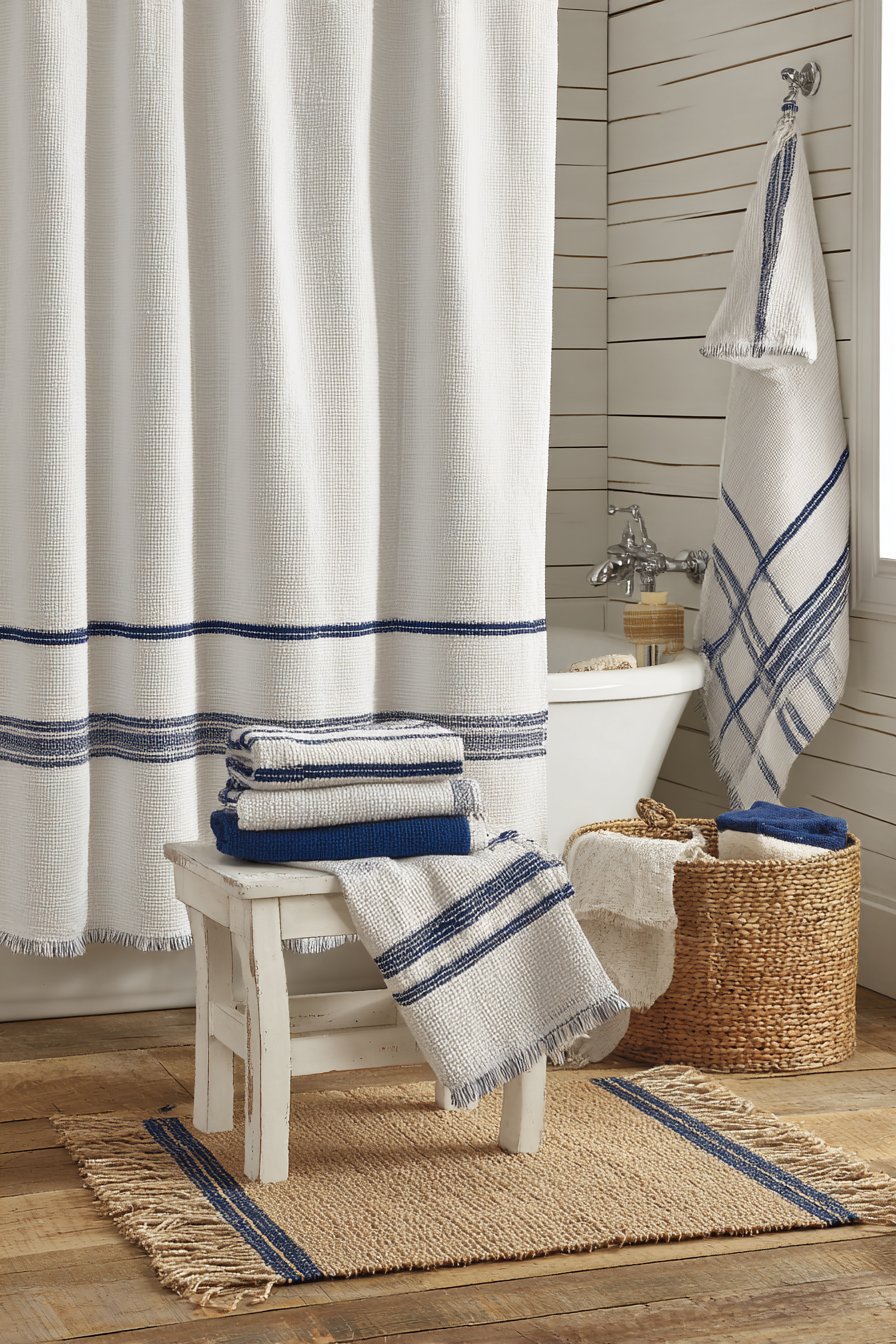
A natural jute bath mat with fringe detail covers the floor, its organic fibers and neutral color grounding the design with earthy warmth while providing comfortable, non-slip footing. The shower curtain in crisp white cotton with subtle texture adds to the layered neutral palette, proving that monochromatic schemes remain interesting when you vary textures and materials. Against warm white walls, these carefully selected textiles create a cohesive story about coastal living—relaxed but refined, comfortable but intentional.
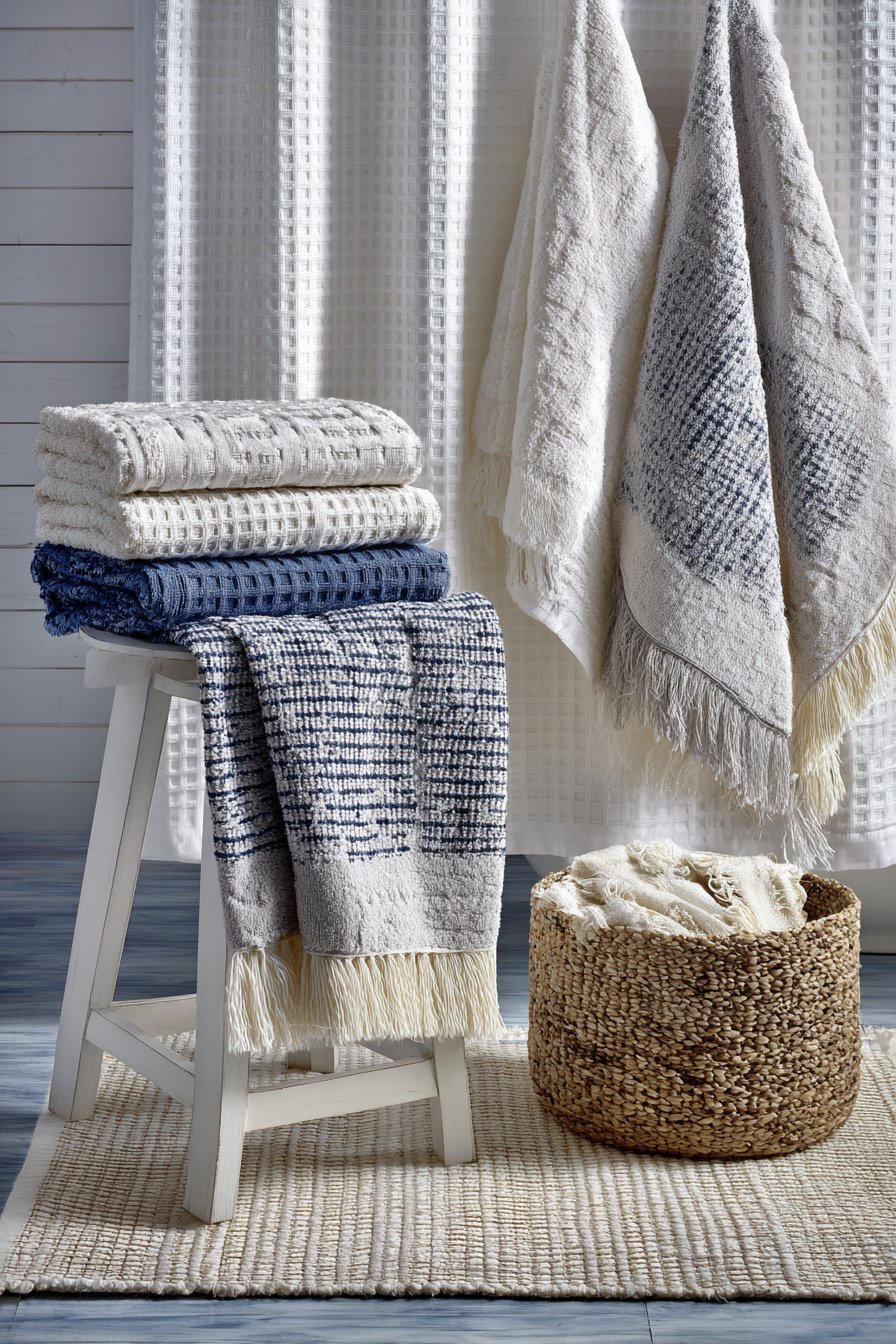
The varying textures across these fabrics—the dimensional waffle-weave, smooth cotton stripes, rough jute, and slightly textured shower curtain—create interest that keeps the predominantly white and navy scheme from appearing flat or boring. This textile layering demonstrates an important design principle: when working with limited color palettes, texture becomes your tool for creating visual richness. The chrome towel bars provide functional mounting while their reflective finish adds subtle sparkle that catches light like sun on water.
Key Design Tips:
- Coordinate all bathroom textiles within a limited color palette of 2-3 colors maximum
- Vary textures across towels, rugs, and curtains to create visual interest within neutral schemes
- Choose natural fiber bath mats like jute for organic coastal character and non-slip properties
- Display accent towels on furniture pieces like stools to add layers beyond wall-mounted bars
- Select white as your primary textile color and introduce patterns through accent pieces
17. Mobile Organization Solutions
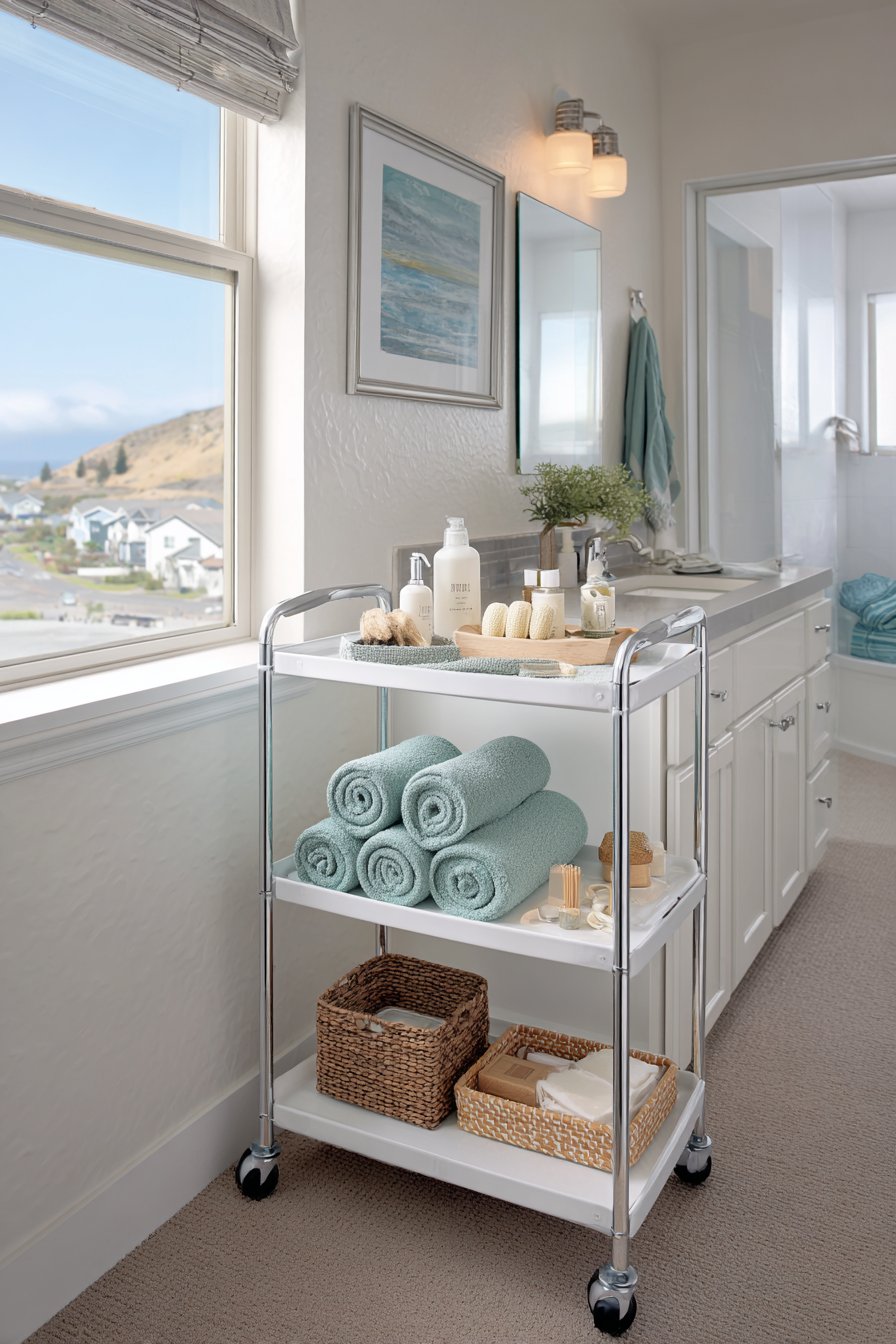
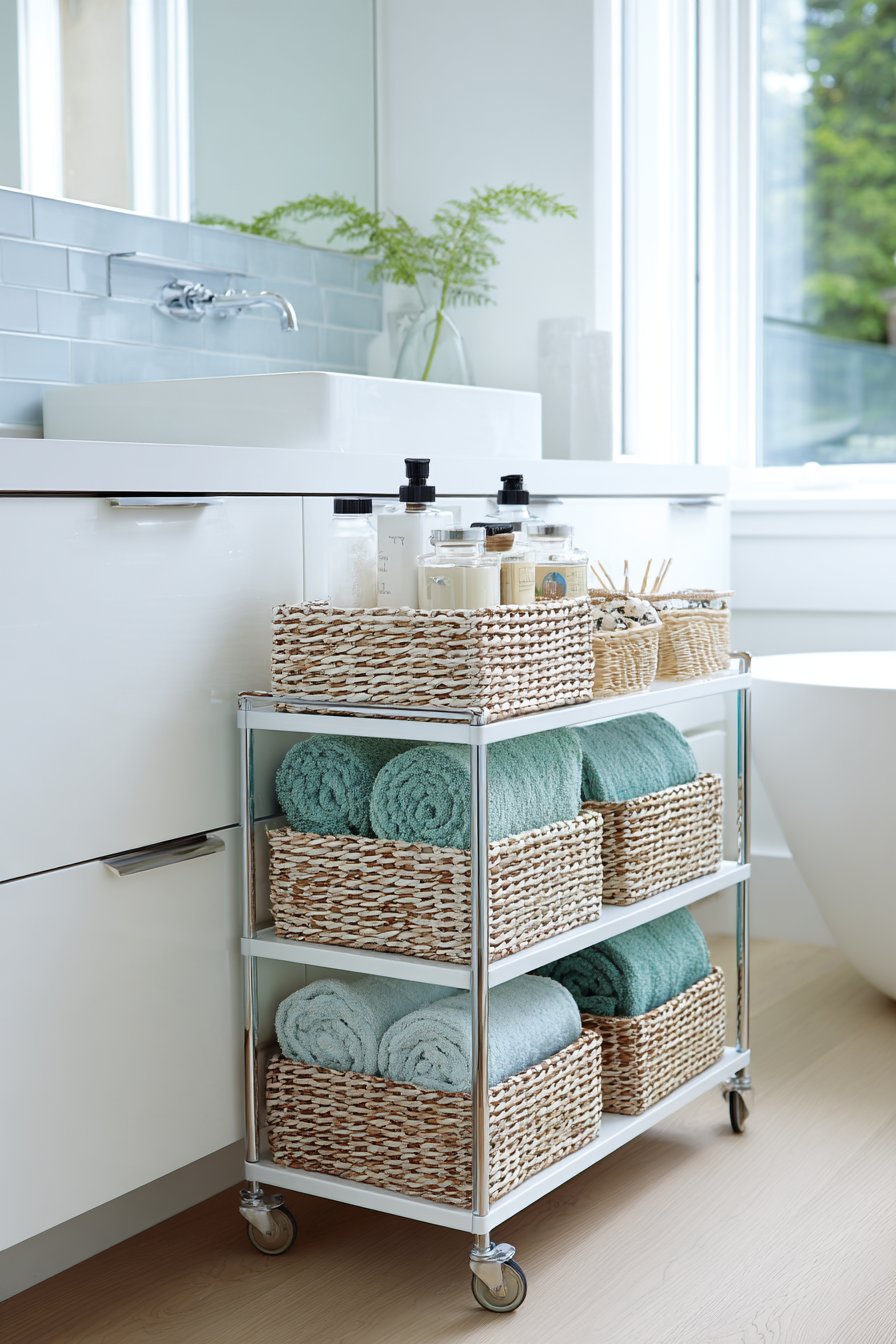
A white three-tier rolling cart positioned beside the vanity demonstrates how mobile storage can provide flexibility and functionality in small coastal bathrooms where built-in cabinetry may be limited. The cart holds neatly organized toiletries on its top tier, rolled hand towels in seafoam green on the middle level, and small woven baskets containing cotton swabs and other essentials on the bottom. The chrome frame provides subtle shine while maintaining an open, airy appearance that doesn’t visually clutter the small space.
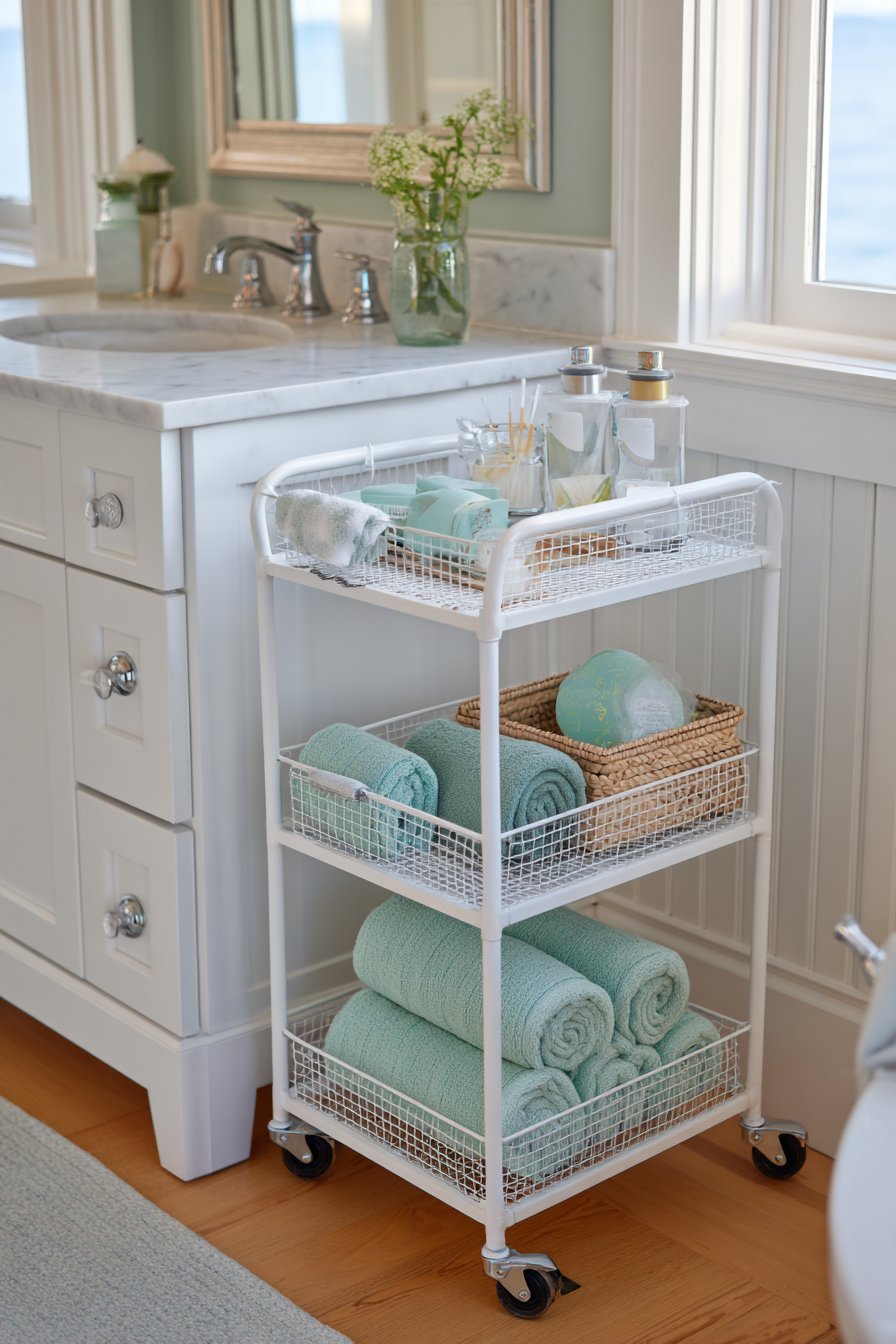
The mobile nature of this storage solution offers significant advantages—the cart can be rolled aside when floor space is needed for cleaning or can be repositioned to different areas of the bathroom as your needs change. This flexibility is particularly valuable in small spaces where permanent furniture placement might create traffic flow issues or make the room feel static and cramped. The open shelving design keeps everything visible and accessible, eliminating the frustration of digging through closed cabinets to find specific items.
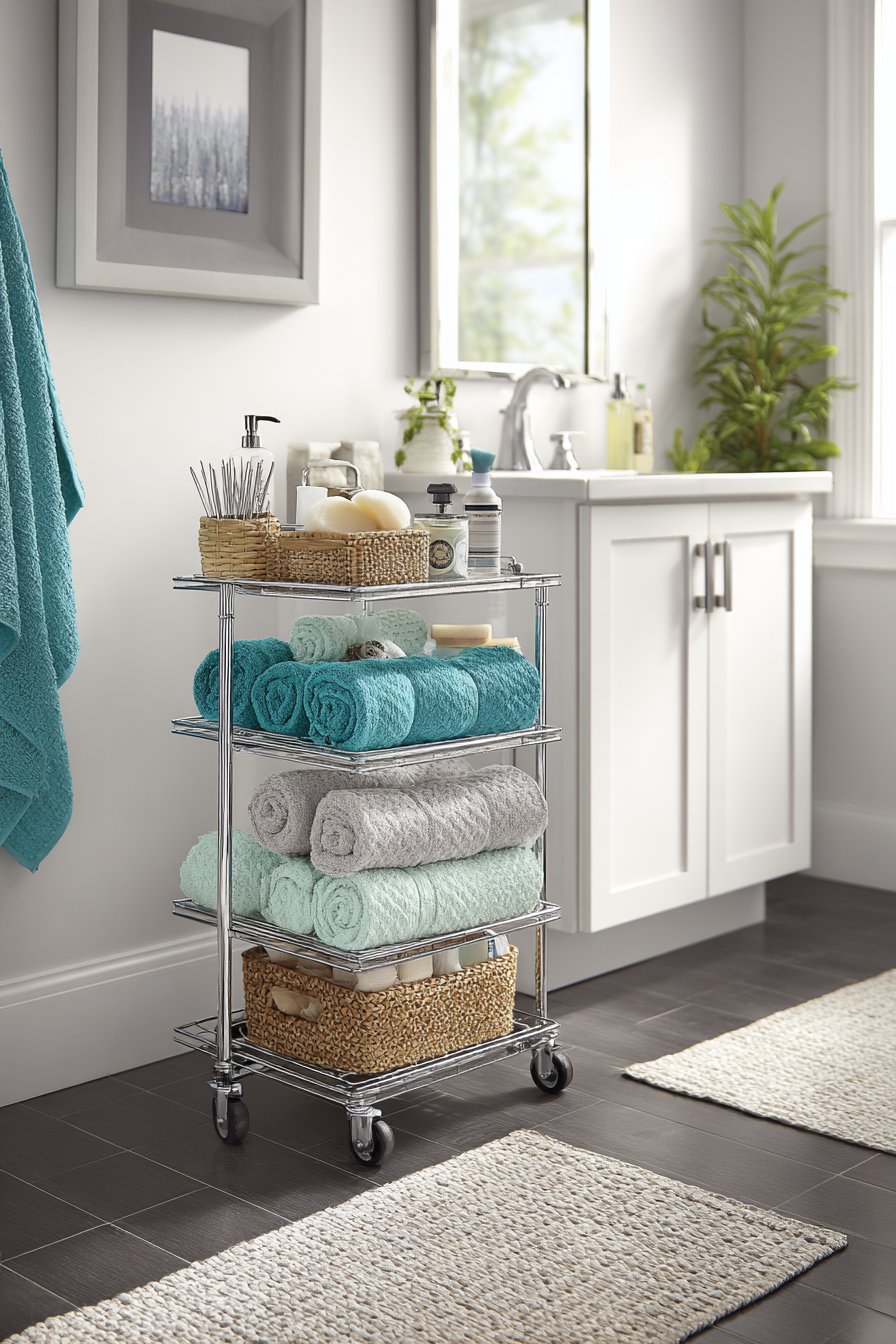
The organization strategy demonstrated here—toiletries grouped by type, towels rolled for compact storage and visual appeal, small items corralled in baskets—creates an intentional, curated appearance rather than random clutter. The seafoam green towels introduce coastal color while their rolled presentation takes up less space than folded stacks would require. The woven baskets add natural texture while hiding small items that might otherwise create visual chaos on open shelves.
Key Design Tips:
- Use rolling carts in small bathrooms to gain flexible storage without permanent installation
- Choose carts with open shelving to maintain visual lightness in compact spaces
- Roll towels rather than folding them to maximize shelf space efficiency
- Corral small items in baskets or containers to prevent cluttered appearance
- Select white or chrome carts that blend with coastal color schemes and reflect light
18. Hardware Coordination for Professional Polish
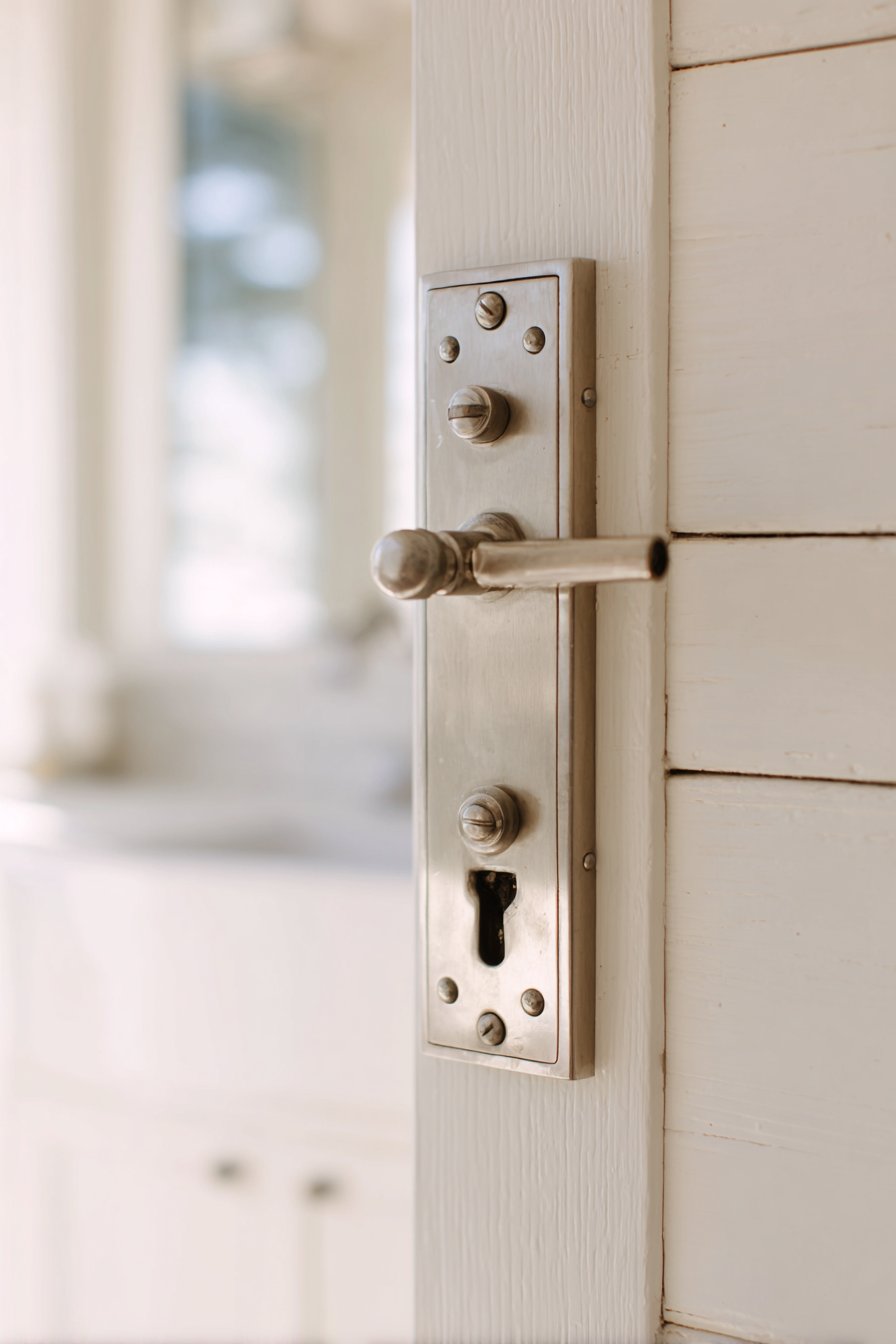
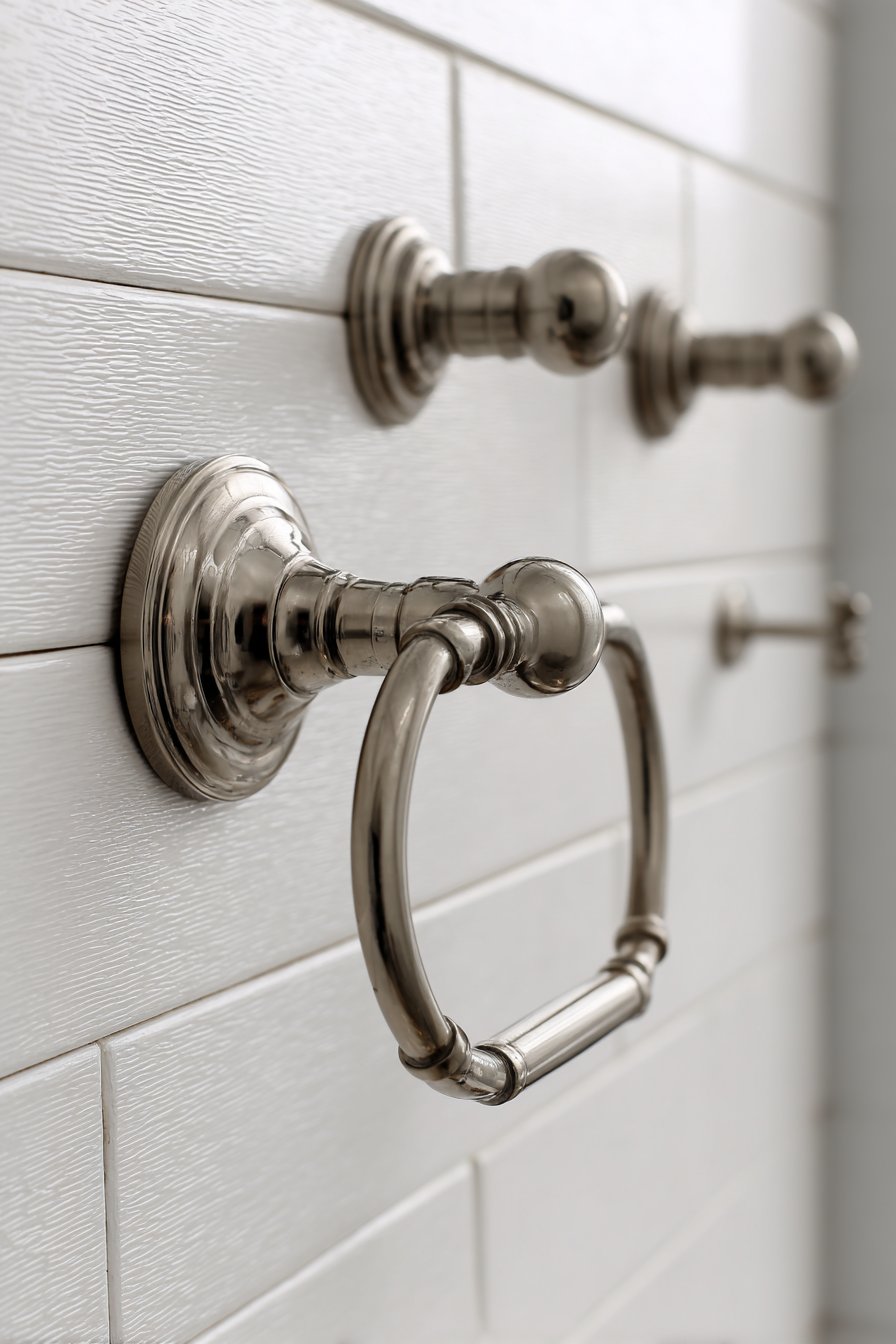
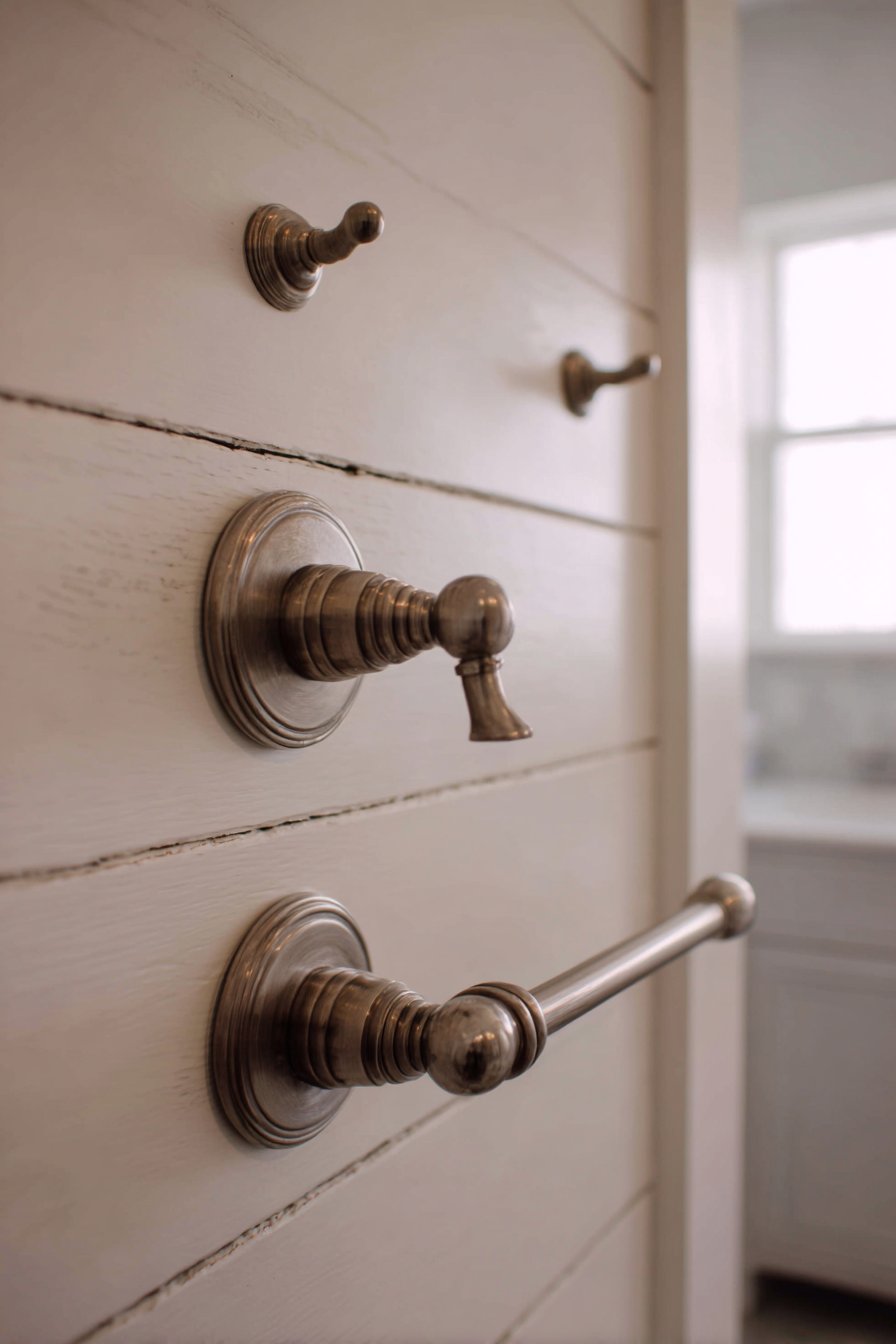
The careful selection and coordination of brushed nickel hardware throughout this small coastal bathroom—including widespread faucet, towel bars, toilet paper holder, and robe hooks—demonstrates how consistent finishes create visual cohesion that makes spaces feel professionally designed. Mounted against white shiplap walls, the hardware’s subtle brushed texture provides sophisticated contrast without the high-glare shine of polished chrome. A detail-focused view reveals the quality craftsmanship in each piece, from the precision of the faucet’s construction to the smooth finish on the towel bar.
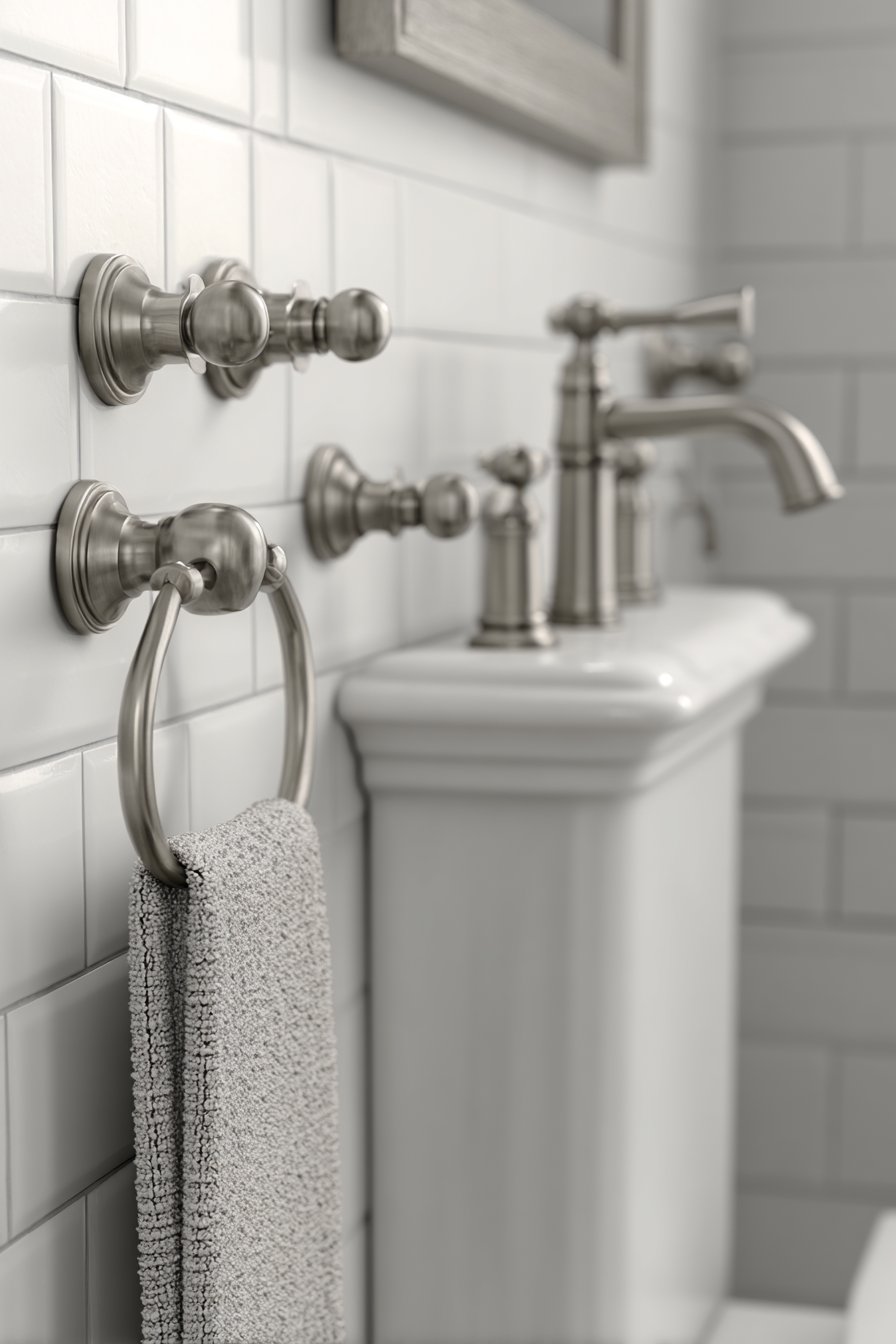
White subway tile backsplash and white countertop allow the brushed nickel fixtures to stand out as jewelry-like accents, their warm metallic tones adding sophistication against the predominantly white palette. The brushed finish offers practical advantages beyond aesthetics—it shows fingerprints and water spots less readily than polished finishes, maintaining its attractive appearance with minimal maintenance. The consistent finish across all hardware creates visual harmony that signals intentional design rather than random fixture selection.
The widespread faucet configuration—with separate hot and cold handles flanking the spout—offers traditional styling that complements coastal design’s emphasis on classic, timeless elements. The generous spacing between handles provides practical benefits in terms of operation and cleaning while creating an elegant horizontal line across the countertop. The robe hooks positioned near the shower provide convenient towel storage without requiring towel bars that consume more wall space—a smart solution for small bathrooms where every inch of wall real estate matters.
Key Design Tips:
- Select one metal finish and use it consistently for all bathroom hardware
- Choose brushed finishes over polished ones to minimize visible water spots and fingerprints
- Install widespread faucets for traditional coastal styling and easier cleaning access
- Use robe hooks instead of towel bars where wall space is limited
- Invest in quality hardware that will maintain its finish and function over years of use
19. Window Display as Coastal Gallery
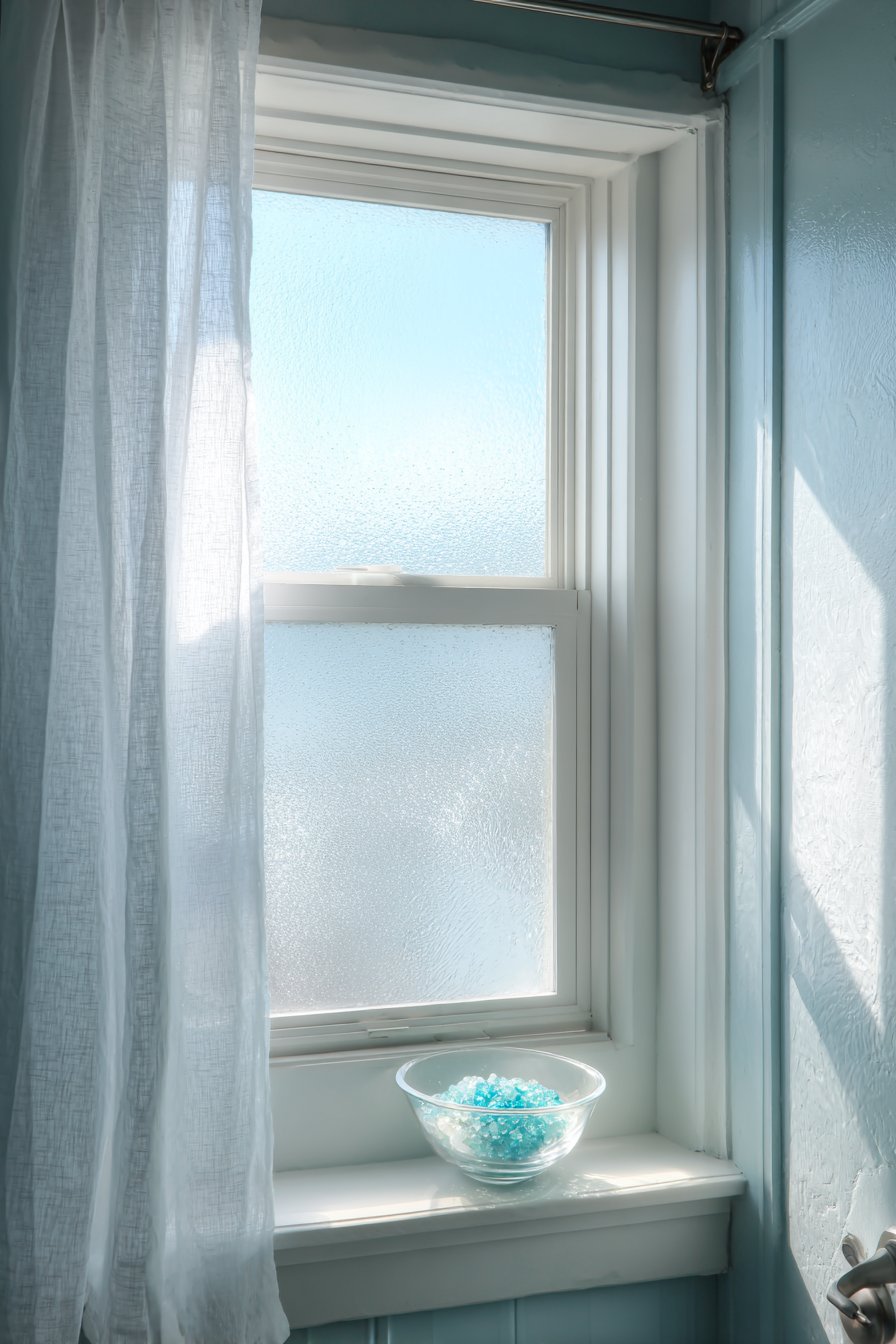
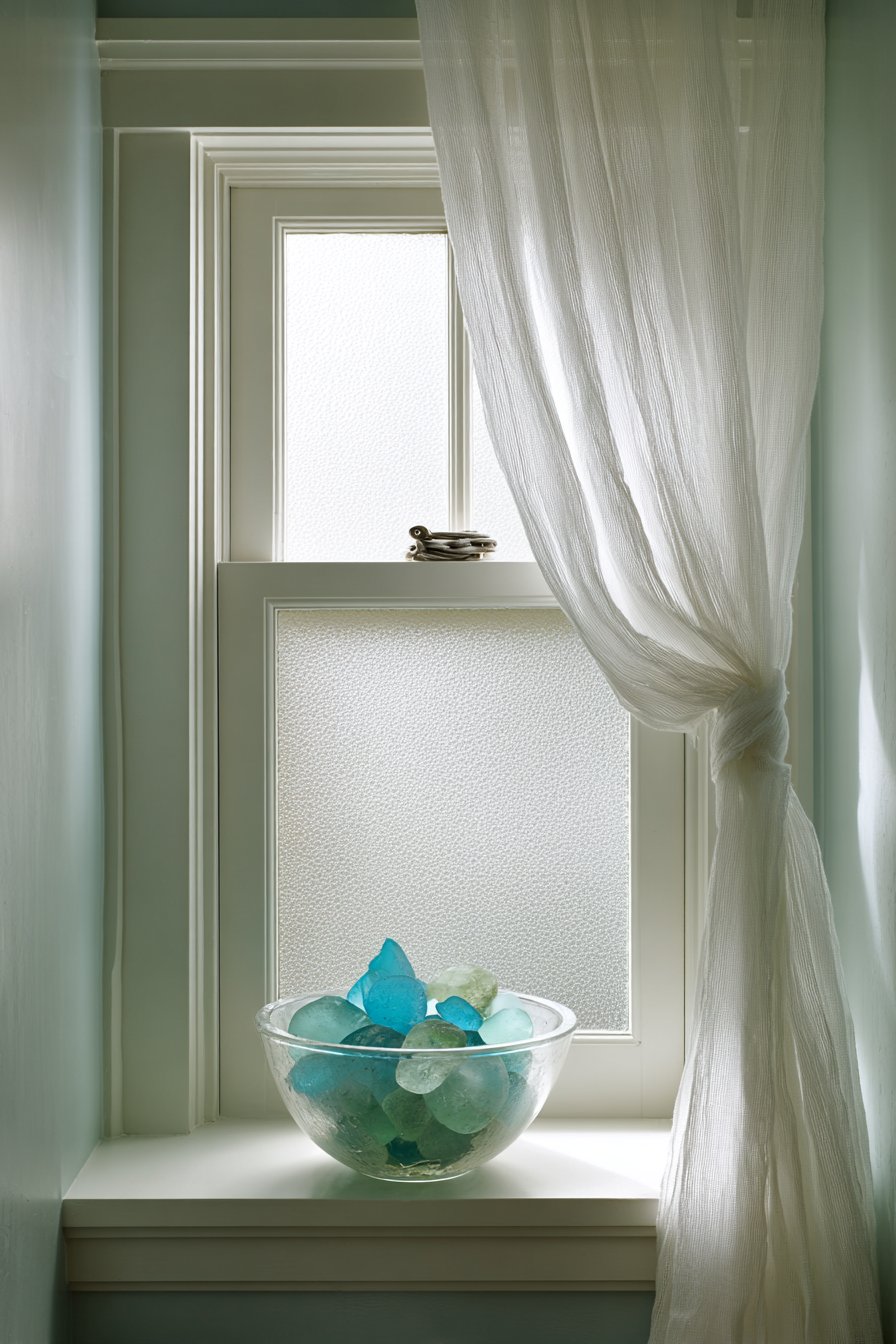
A white-framed casement window with thoughtful detailing transforms a purely functional element into a coastal focal point in this small bathroom. The frosted lower pane provides essential privacy while the clear upper section admits natural light and frames sky views. The window sill becomes a miniature coastal gallery displaying smooth beach glass pieces in blues and greens, arranged artfully in a clear glass bowl that allows light to pass through the translucent treasures. A sheer white linen curtain on a simple chrome rod can be drawn across the window when additional privacy is desired.
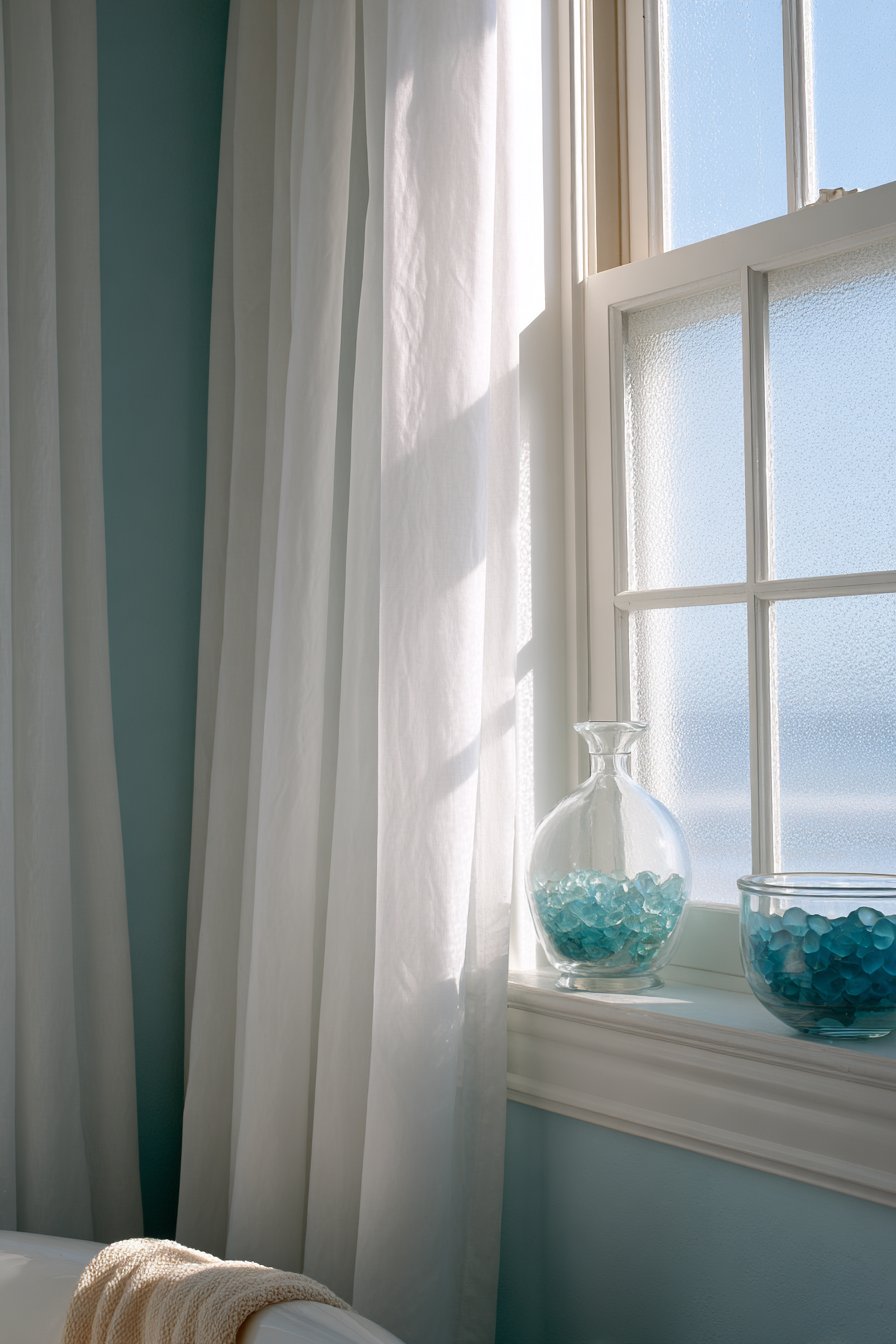
The pale blue-gray walls frame the window beautifully, creating a soft backdrop that makes the white trim appear even crisper and brighter. The casement style offers practical advantages—these windows open outward completely, catching breezes and directing fresh air into the bathroom for natural ventilation that helps manage humidity. The combination of frosted and clear glass in a single window demonstrates smart planning, providing exactly the right balance of privacy and openness without requiring additional window treatments during daylight hours.
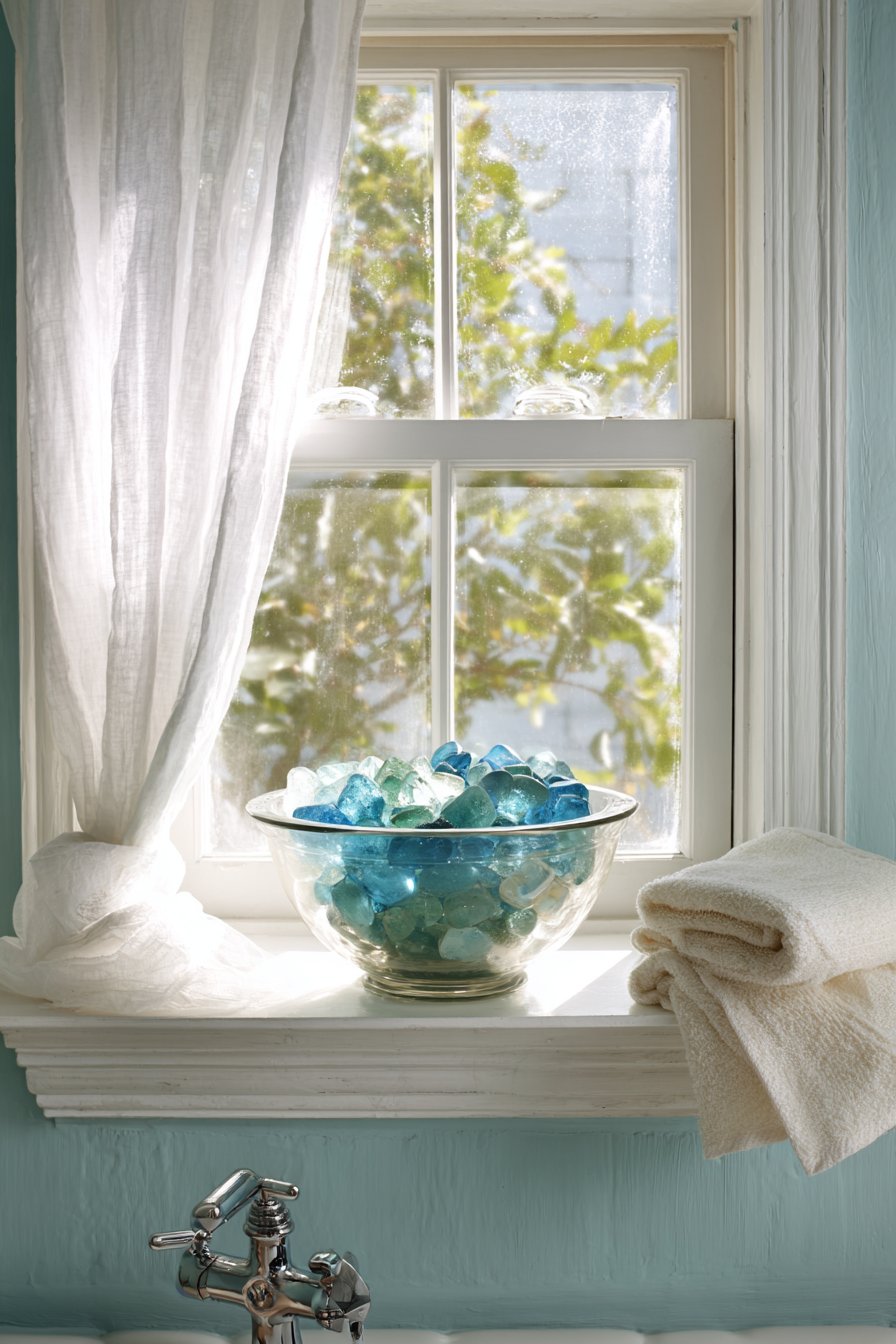
The beach glass collection represents the best kind of coastal decor—authentic, personal, and completely unique to your own beach experiences. The clear glass bowl allows natural and artificial light to illuminate the sea glass from behind and below, making the colored pieces glow with luminous beauty. This approach to window sill decor transforms a often-overlooked horizontal surface into an opportunity for meaningful display that reinforces your coastal theme through genuine beach finds rather than store-bought accessories.
Key Design Tips:
- Install windows with both frosted and clear sections to balance privacy with natural light
- Use window sills as display platforms for collected coastal treasures
- Choose casement windows for maximum ventilation and fresh air circulation
- Keep window treatments simple and light to maintain the airy coastal feeling
- Display beach glass in clear containers where light can pass through and illuminate the colors
20. Ceiling Details for Enhanced Spaciousness
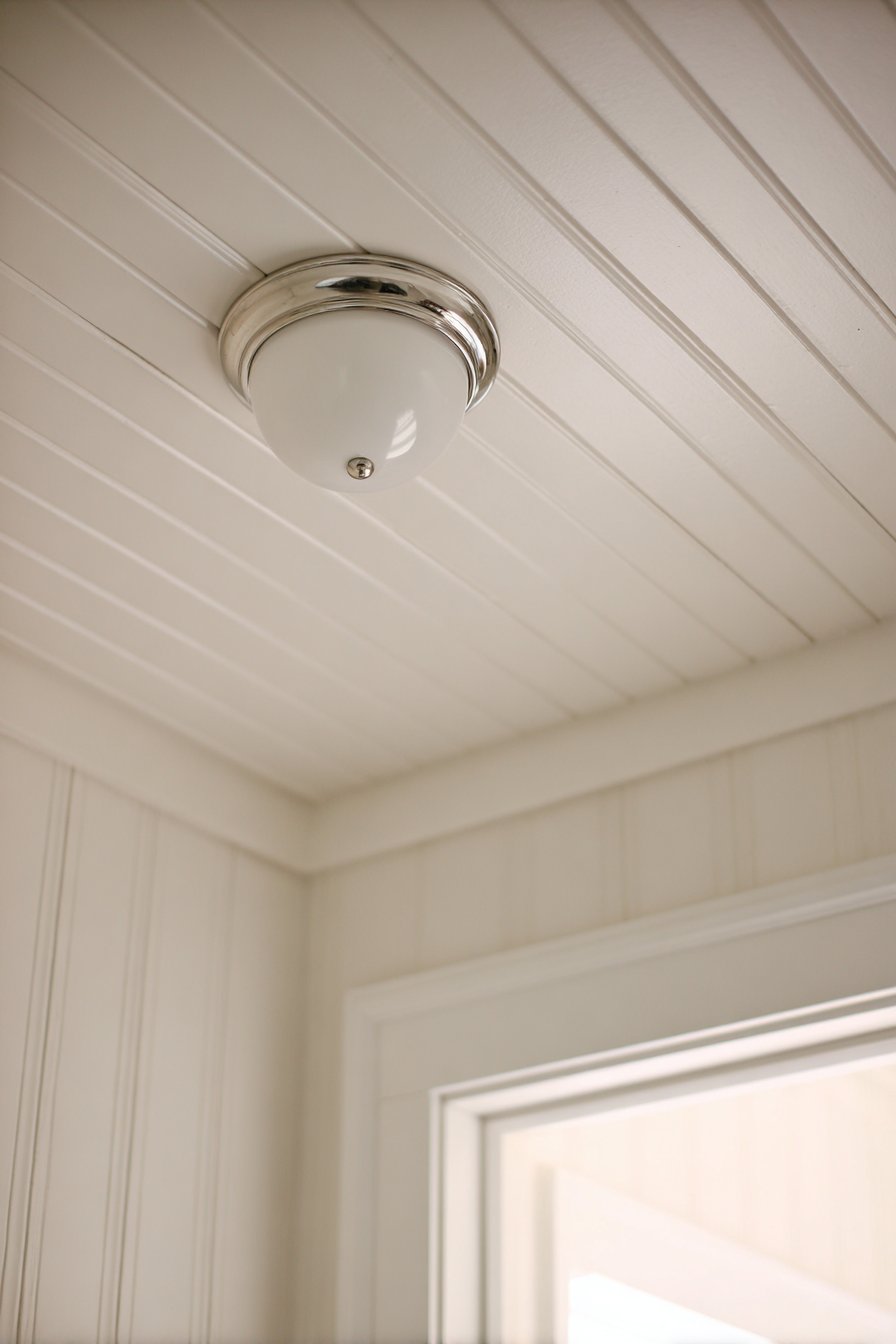
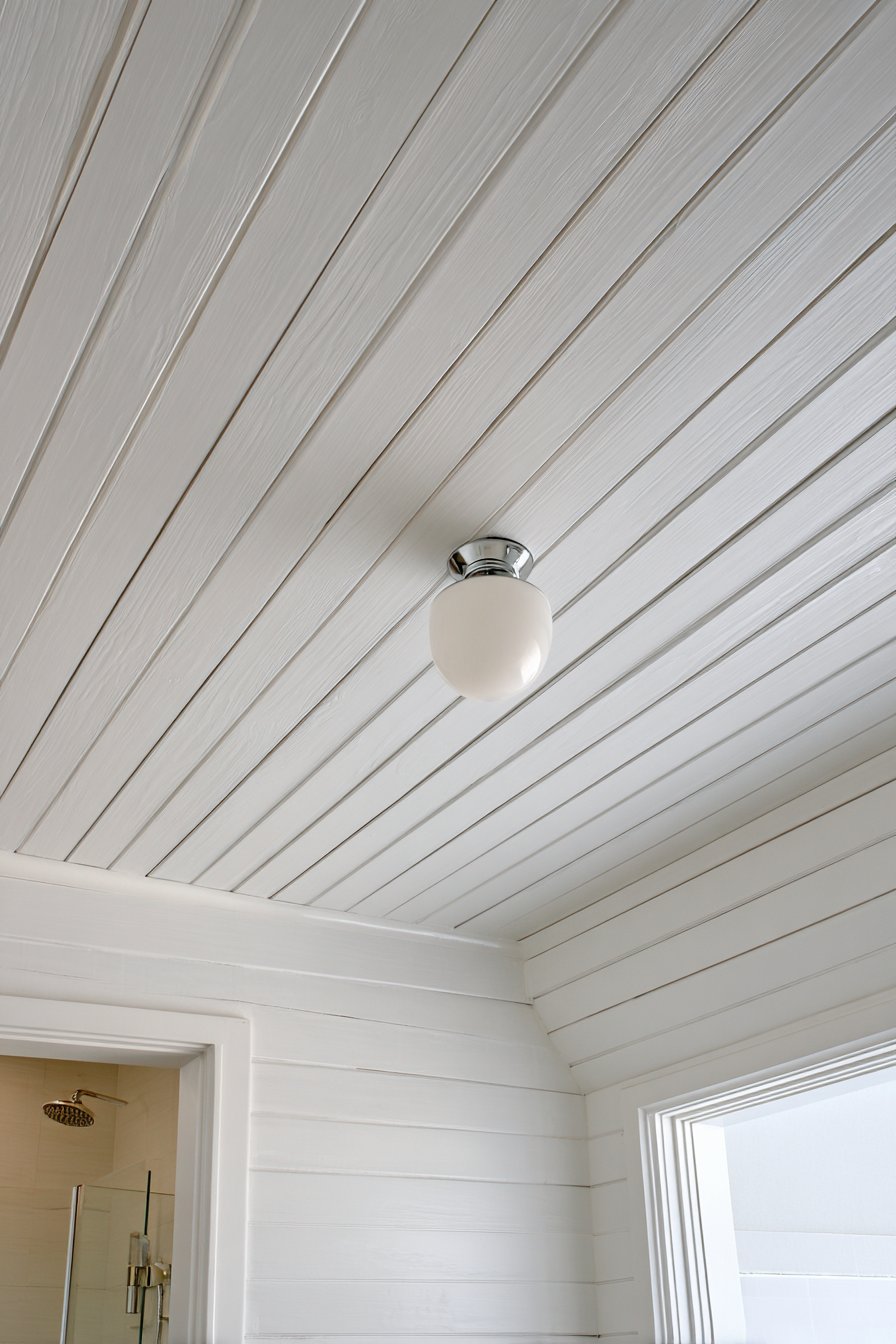
Looking upward reveals an often-neglected opportunity for adding character to small coastal bathrooms, as demonstrated by white V-groove tongue-and-groove planking installed across the ceiling. This architectural detail draws eyes upward, making the small bathroom feel more spacious by emphasizing vertical dimension. A simple chrome flush-mount light fixture with white glass shade provides general illumination without hanging down into the limited headroom, maintaining clean lines while delivering functional lighting.
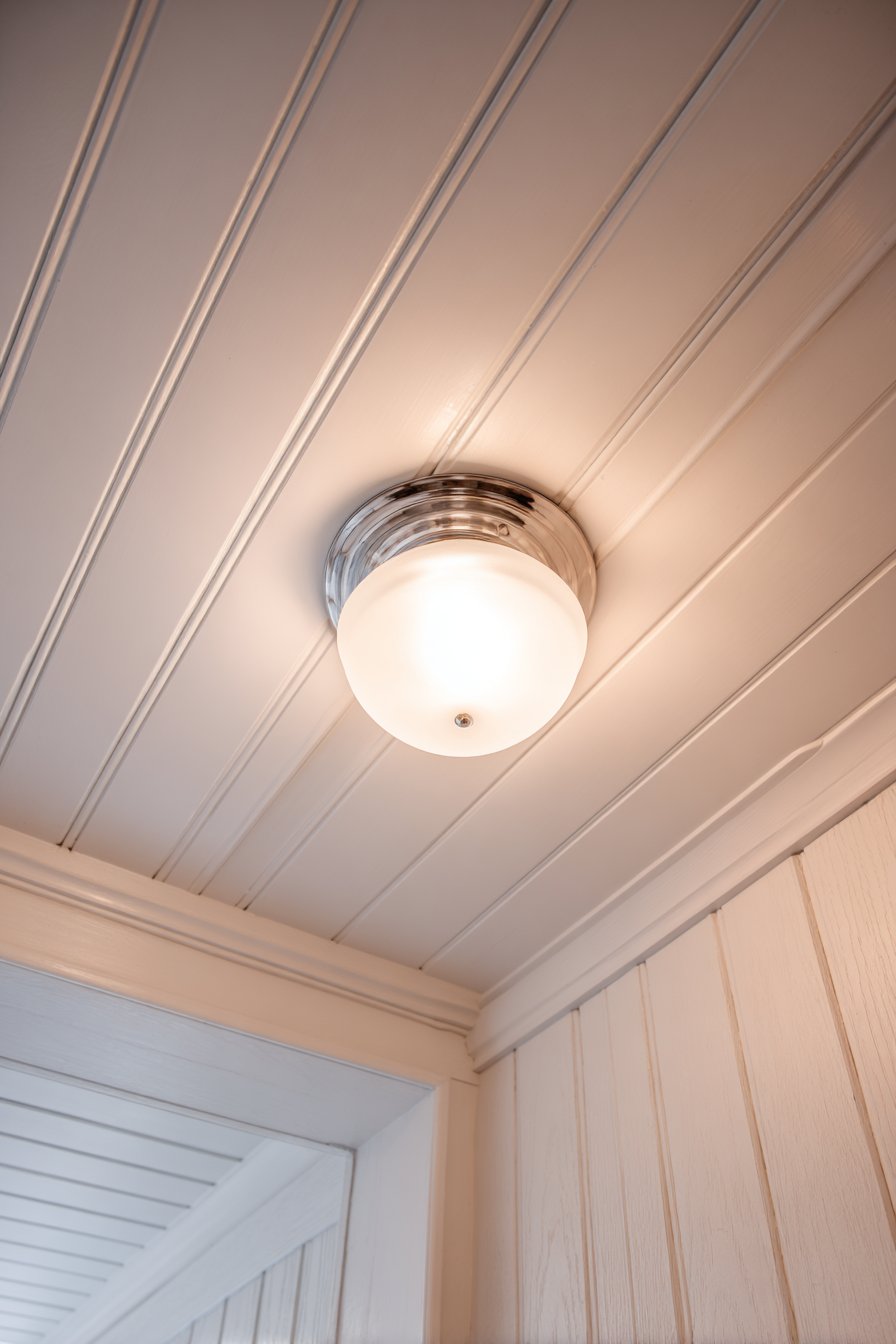
The ceiling planking adds cottage charm that’s authentic to historic beach houses where exposed wood ceilings were common both for aesthetic appeal and practical ventilation. The white finish keeps the ceiling light and reflective rather than dark and oppressive, ensuring the detail adds interest without making the room feel closed in. The coordinating walls in white with subtle warm undertone complement the ceiling treatment, creating an enveloping quality that feels cozy rather than cramped.
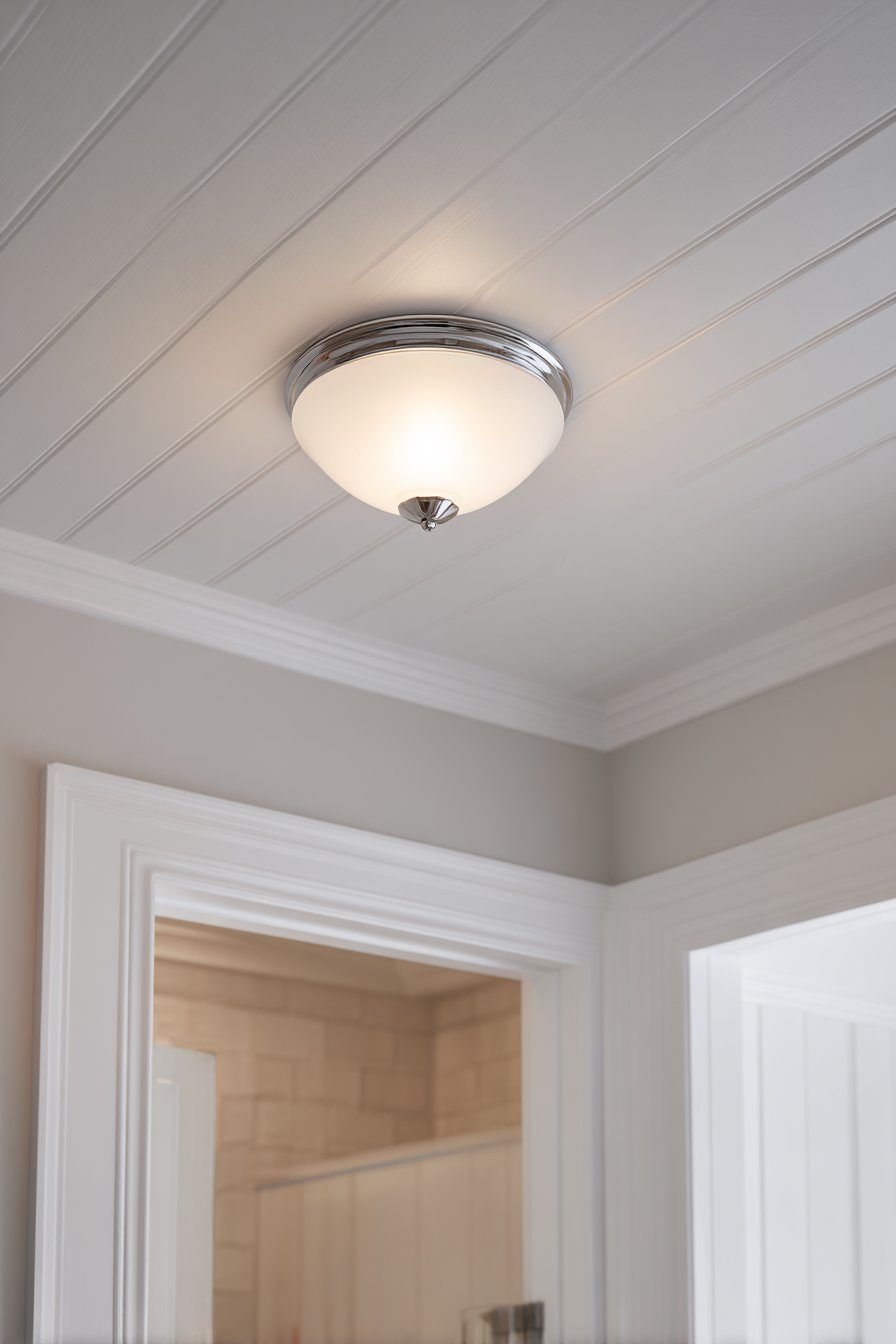
The flush-mount fixture represents smart planning for small bathrooms with standard ceiling heights—pendant lights or chandeliers that hang down would create head-bumping hazards and visually lower the ceiling, while this flush design provides necessary illumination without sacrificing precious vertical clearance. The white glass shade diffuses light evenly across the planked ceiling, emphasizing the wood grain texture and creating the kind of general ambient lighting that makes small spaces feel welcoming rather than cave-like.
Key Design Tips:
- Install planking or beadboard on ceilings to add architectural interest without consuming floor space
- Choose flush-mount fixtures in small bathrooms to preserve headroom and maintain clean sight lines
- Paint ceiling treatments white or light colors to maximize light reflection
- Use V-groove or tongue-and-groove boards to create subtle texture and shadow lines
- Coordinate ceiling and wall colors to create cohesive enveloping atmosphere
21. Curated Accessories for Personal Coastal Style
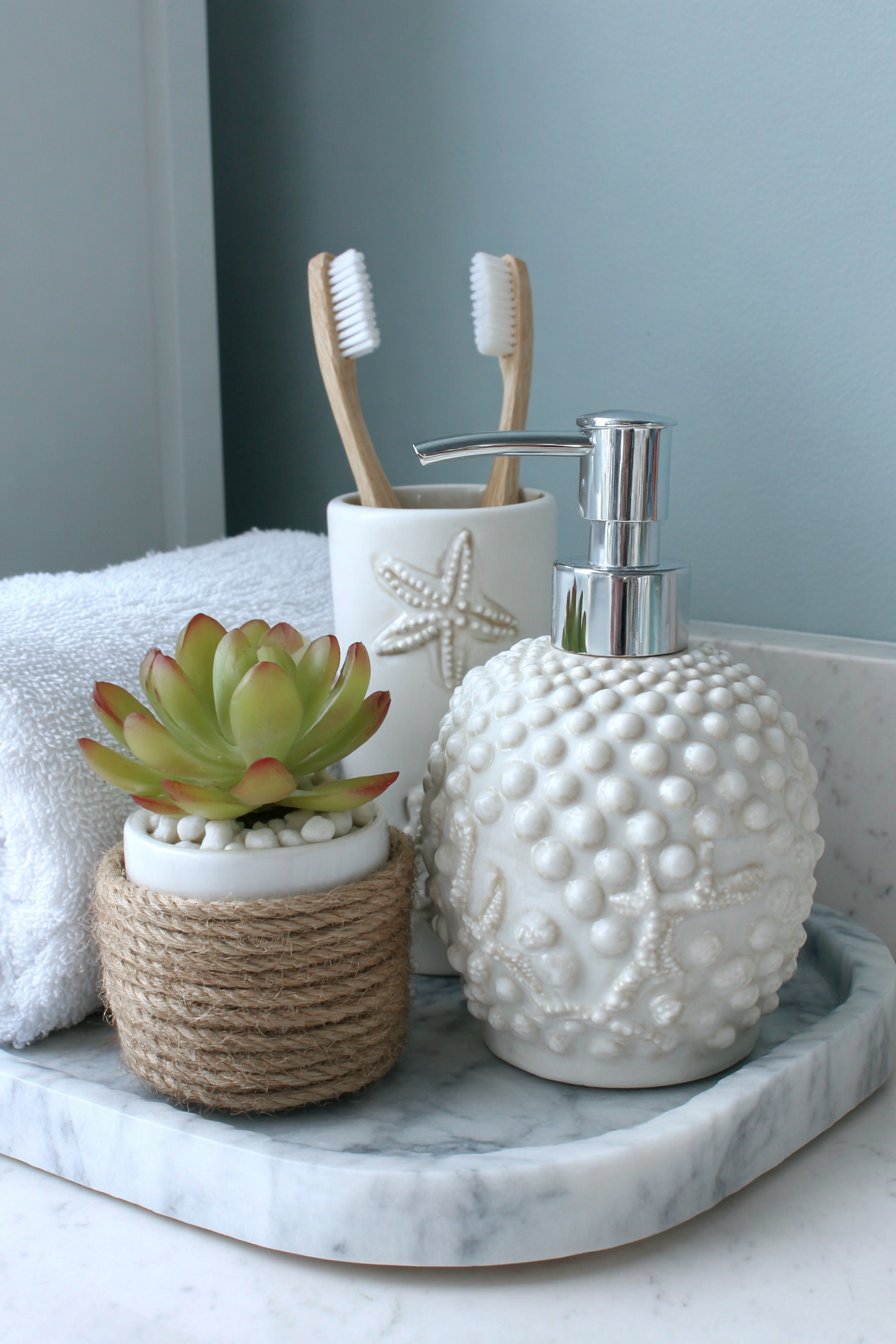
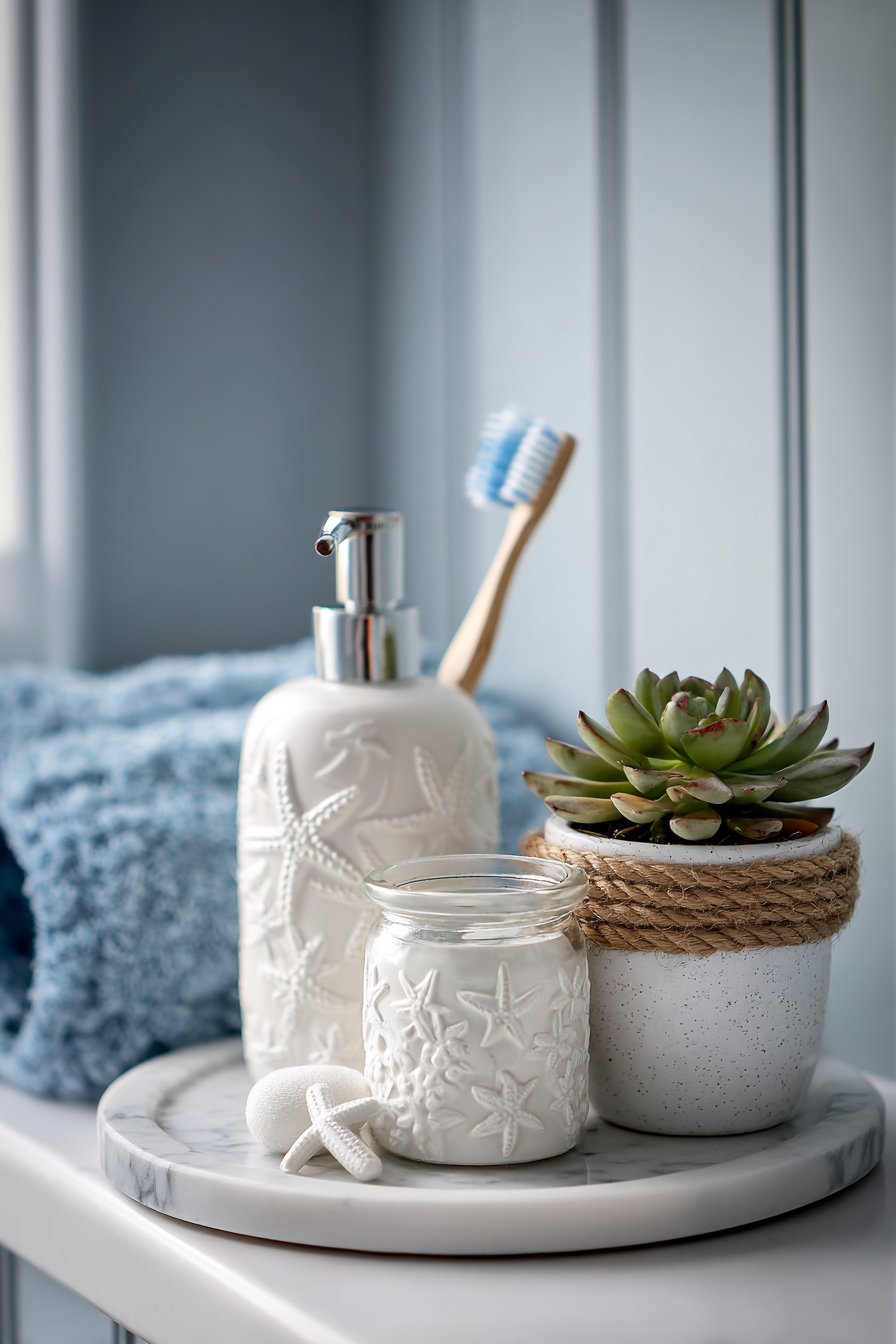
The final small coastal bathroom idea focuses on the power of carefully curated accessories to establish and reinforce your design theme. A white ceramic soap dispenser embossed with a delicate starfish pattern sits alongside a coordinating toothbrush holder and cotton ball jar, all arranged on a white marble tray that contains and organizes these essentials. A small potted succulent in white ceramic provides a living element that purifies air and adds organic form. The natural rope-wrapped tissue box cover completes the coordinated look.
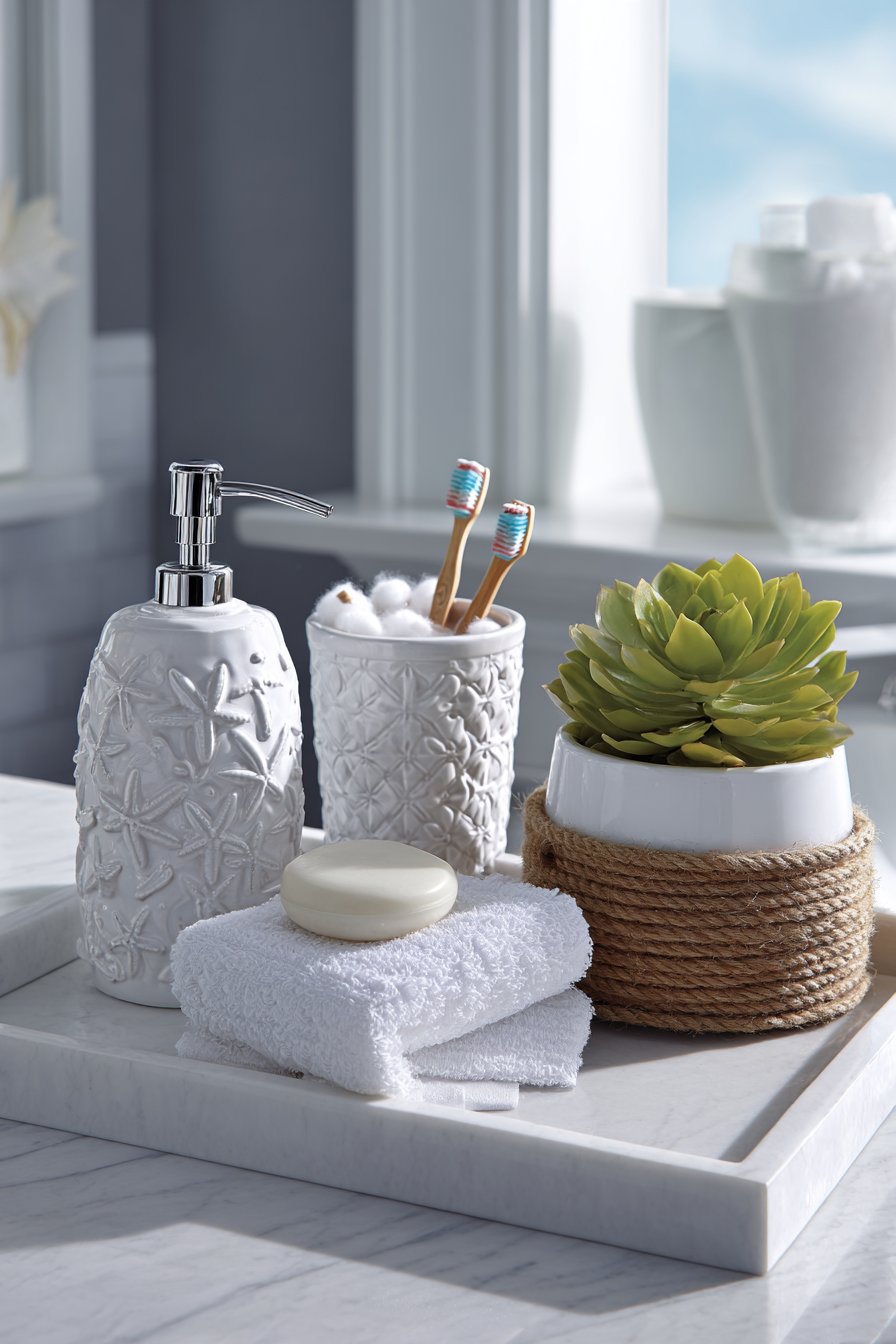
Soft coastal blue-gray walls provide the perfect backdrop for these white accessories, allowing them to stand out while maintaining the light, airy atmosphere essential to successful small bathroom design. The embossed starfish detail on the soap dispenser provides subtle coastal reference without resorting to obvious beach kitsch—the pattern is refined enough to feel sophisticated rather than juvenile. The marble tray serves the practical purpose of protecting the countertop from water rings and soap drips while also defining a specific zone for daily-use items.
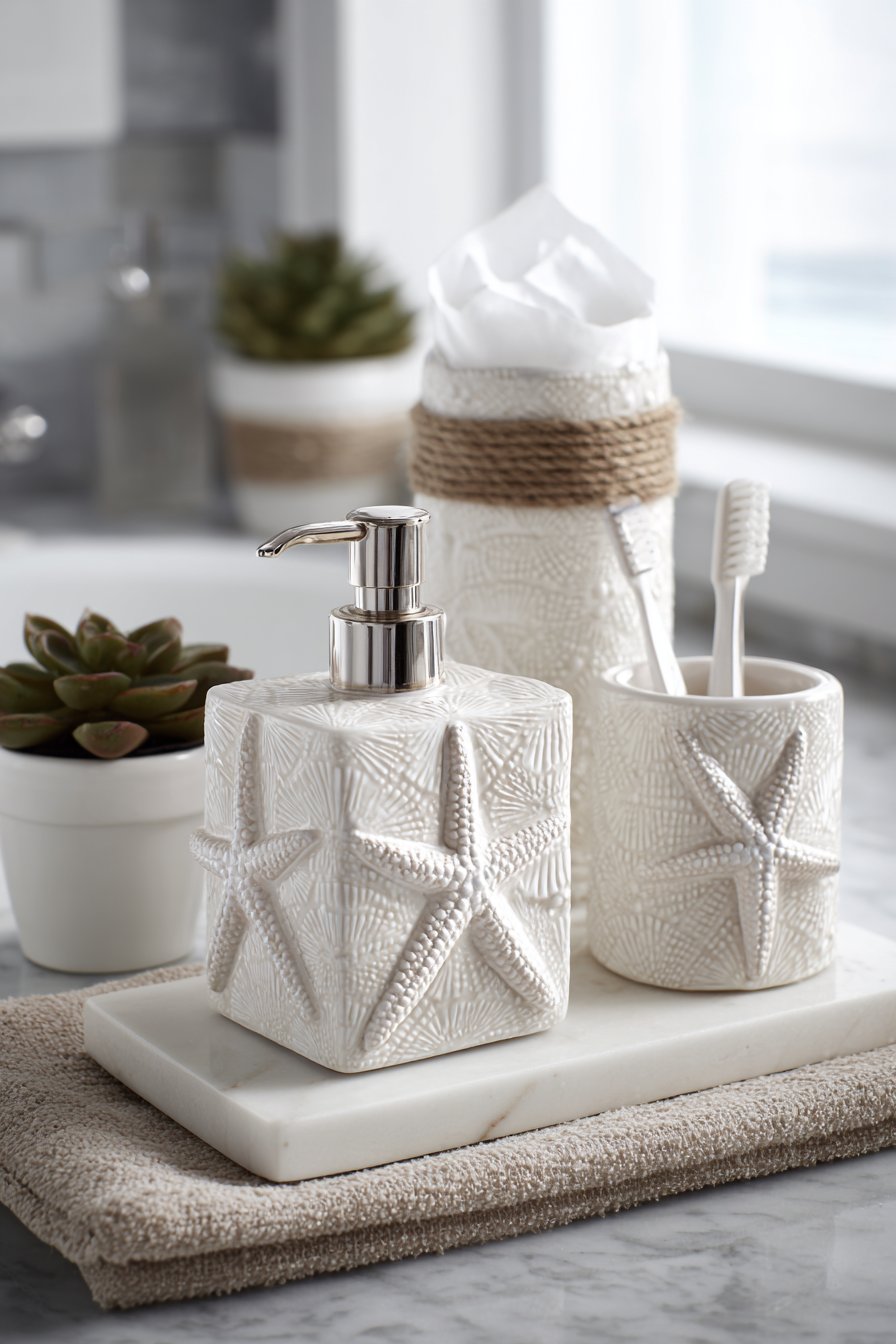
The coordinated accessories demonstrate an important principle: limitation creates cohesion. By restricting the color palette to white ceramics against blue-gray walls with natural rope accents, you create a unified look that feels intentional and curated. The succulent adds the only note of living green, making it stand out as a special element rather than competing with other colors. This restrained approach to accessorizing prevents the visual clutter that so easily overwhelms small bathrooms where every item is constantly visible.
Key Design Tips:
- Select coordinating accessory sets rather than mixing random pieces in different styles
- Use trays to contain and organize countertop items while protecting surfaces
- Choose embossed or subtly patterned accessories for texture without bold graphics
- Add one living plant as a focal point rather than multiple competing greenery pieces
- Limit accessory colors to 2-3 tones maximum for cohesive, uncluttered appearance
Why These Small Coastal Bathroom Ideas Work
The designs presented throughout this article succeed because they address the fundamental challenges of small bathroom spaces while embracing the inherent advantages of coastal aesthetics. The coastal design philosophy—with its emphasis on light colors, natural materials, and connection to outdoor environments—provides the perfect framework for making small bathrooms feel larger, brighter, and more inviting than their square footage might suggest. Each idea demonstrates how specific coastal elements serve dual purposes, delivering both aesthetic appeal and practical functionality.
Light colors dominate these small coastal bathroom ideas for good reason—white, soft blues, seafoam greens, and sandy beiges reflect available light rather than absorbing it, making rooms feel more spacious and open. This color strategy addresses one of the primary challenges in small bathrooms where inadequate lighting can make spaces feel cramped and claustrophobic. The consistent use of white fixtures creates visual continuity that prevents the fragmented appearance that results from introducing too many different tones and finishes.
Natural materials featured throughout these designs—weathered wood, marble, jute, linen, rope—connect bathrooms to coastal environments while adding the textural variation that keeps neutral color schemes interesting. These organic materials bring warmth that prevents all-white bathrooms from feeling sterile or cold, creating spaces that invite relaxation rather than clinical efficiency. The emphasis on authentic materials rather than synthetic imitations ensures these bathrooms will age gracefully, developing character over time rather than showing wear.
Strategic storage solutions appear in every design because small bathrooms demand creative approaches to organization. Floating vanities, recessed shelving, vertical cabinets, ladder storage, and mobile carts all maximize storage capacity without consuming precious floor space or creating visual clutter. These solutions demonstrate that small coastal bathrooms can be both beautiful and functional—you shouldn’t have to sacrifice practical storage for aesthetic appeal or vice versa.
The consistent attention to lighting—both natural and artificial—reflects an understanding that proper illumination can transform small spaces. Large windows, strategic mirror placement, layered light sources, and reflective finishes all work together to maximize brightness and create the airy, sun-drenched quality associated with beachside living. Even bathrooms without abundant natural light can achieve coastal luminosity through thoughtful artificial lighting design.
The emphasis on continuous flooring, frameless glass enclosures, and minimal visual barriers recognizes that sight lines matter tremendously in small spaces. When your eye can travel uninterrupted across a room, the space feels larger than when it encounters multiple stops and starts created by different flooring materials, shower curtains, or furniture that blocks views. The curbless showers, floating vanities, and wall-mounted toilets all preserve clean floor planes that enhance perceived spaciousness.
These small coastal bathroom ideas also succeed because they balance aspiration with achievability. The designs inspire without requiring massive budgets or extensive renovations—many elements can be incorporated through simple updates like paint colors, new textiles, coordinated accessories, or strategic lighting improvements. The emphasis on timeless materials and classic coastal elements ensures these bathrooms won’t feel dated quickly, protecting your investment whether you’re renovating for personal enjoyment or eventual resale value.
Conclusion
Creating a beautiful small coastal bathroom requires thoughtful planning, strategic material selection, and attention to the details that make limited spaces feel open and inviting. The twenty-one ideas presented in this guide demonstrate that size limitations need not constrain your design ambitions—with coastal-inspired colors, natural materials, smart storage solutions, and proper lighting, even the most compact bathroom can become a serene retreat that evokes the tranquility of beachside living.
The key to success lies in embracing coastal design principles that naturally enhance small spaces: light color palettes that reflect available light, natural materials that add warmth without visual weight, and clean lines that create uninterrupted sight lines. Whether you implement a complete renovation incorporating multiple ideas or simply introduce coastal elements through accessories and paint colors, these strategies will help you create a bathroom that feels significantly larger and more luxurious than its actual dimensions might suggest.
Remember that the most successful small coastal bathrooms tell personal stories through collected treasures, meaningful accessories, and authentic materials rather than relying entirely on purchased decor. Start with a strong foundation of neutral colors and classic coastal elements, then layer in personal touches that reflect your own beach experiences and design preferences. With these small coastal bathroom ideas as your inspiration, you’re well-equipped to transform your compact bathroom into the peaceful, beautiful coastal sanctuary you’ve been dreaming of.
