
The sitting room serves as the heart of any home—a versatile sanctuary where comfort meets style, and functionality harmonizes with aesthetic appeal. Whether you’re looking to create an intimate conversation area, a sophisticated entertaining space, or a cozy retreat for quiet contemplation, the design choices you make in this essential room speak volumes about your personality and lifestyle. A thoughtfully designed sitting room not only reflects your unique taste but also enhances the quality of daily life, providing a welcoming environment for family gatherings, social interactions, and peaceful moments of solitude.
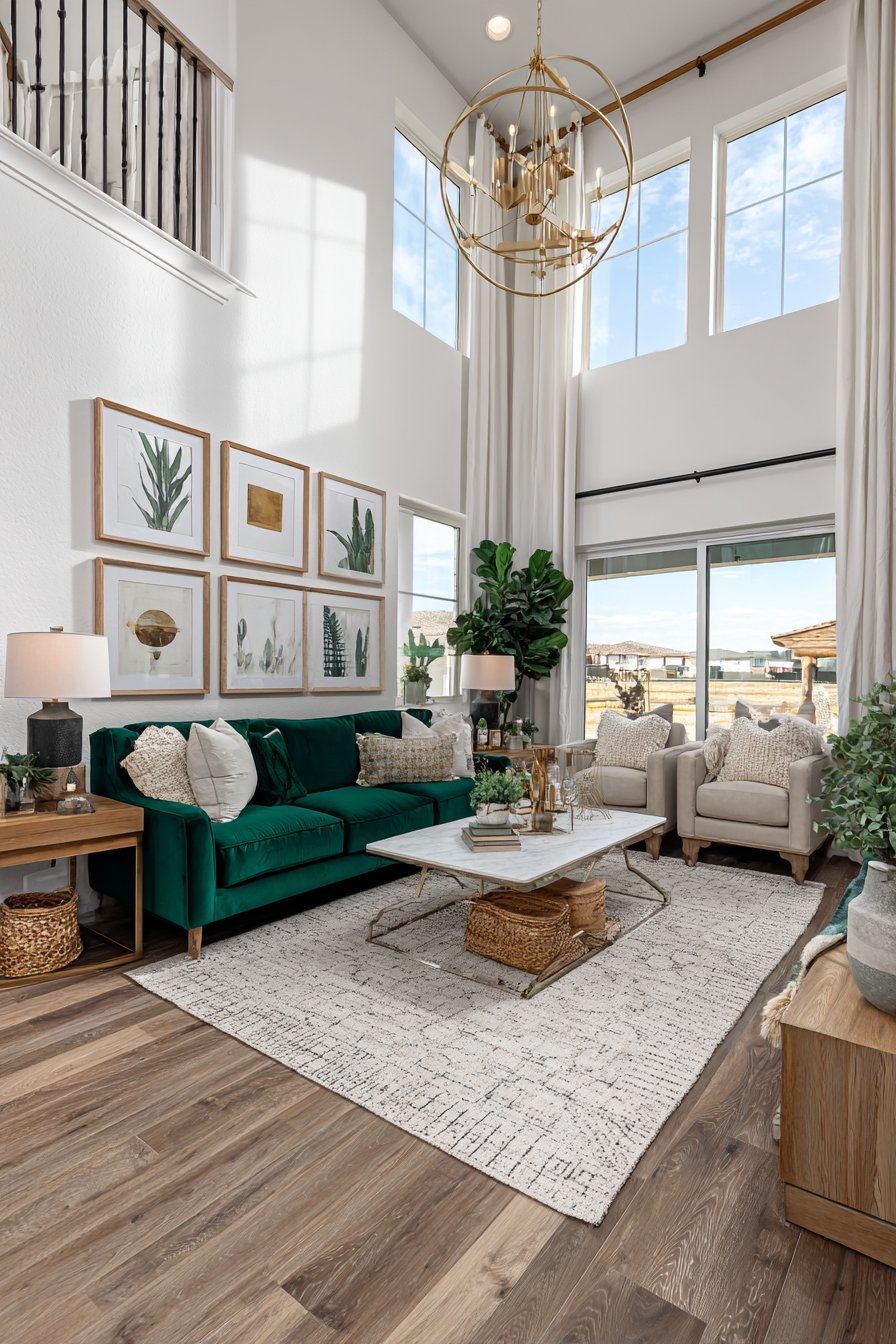
In today’s diverse design landscape, sitting room ideas span an incredible spectrum of styles, from minimalist Scandinavian simplicity to maximalist bohemian abundance, from industrial urban lofts to traditional farmhouse charm. Each design philosophy brings its own distinct character, material palette, and spatial considerations, offering homeowners endless possibilities for creating spaces that truly resonate with their vision. The key to a successful sitting room lies in balancing personal expression with practical considerations—selecting furniture that’s both beautiful and comfortable, choosing color schemes that energize or soothe as needed, and incorporating lighting that adapts to various activities throughout the day.
This comprehensive guide explores 31 distinctive sitting room ideas, each carefully curated to showcase different design approaches, material combinations, and spatial solutions. From compact spaces that maximize every square inch to expansive rooms that celebrate abundance, from monochromatic serenity to vibrant eclecticism, these concepts demonstrate how intentional design choices can transform any sitting room into a space that’s not only visually stunning but also perfectly suited to your lifestyle. Whether you’re embarking on a complete renovation or simply seeking fresh inspiration for updating your current space, these ideas will help you envision the possibilities and guide you toward creating a sitting room that feels authentically yours.
1. Cozy Conversational Sitting Room
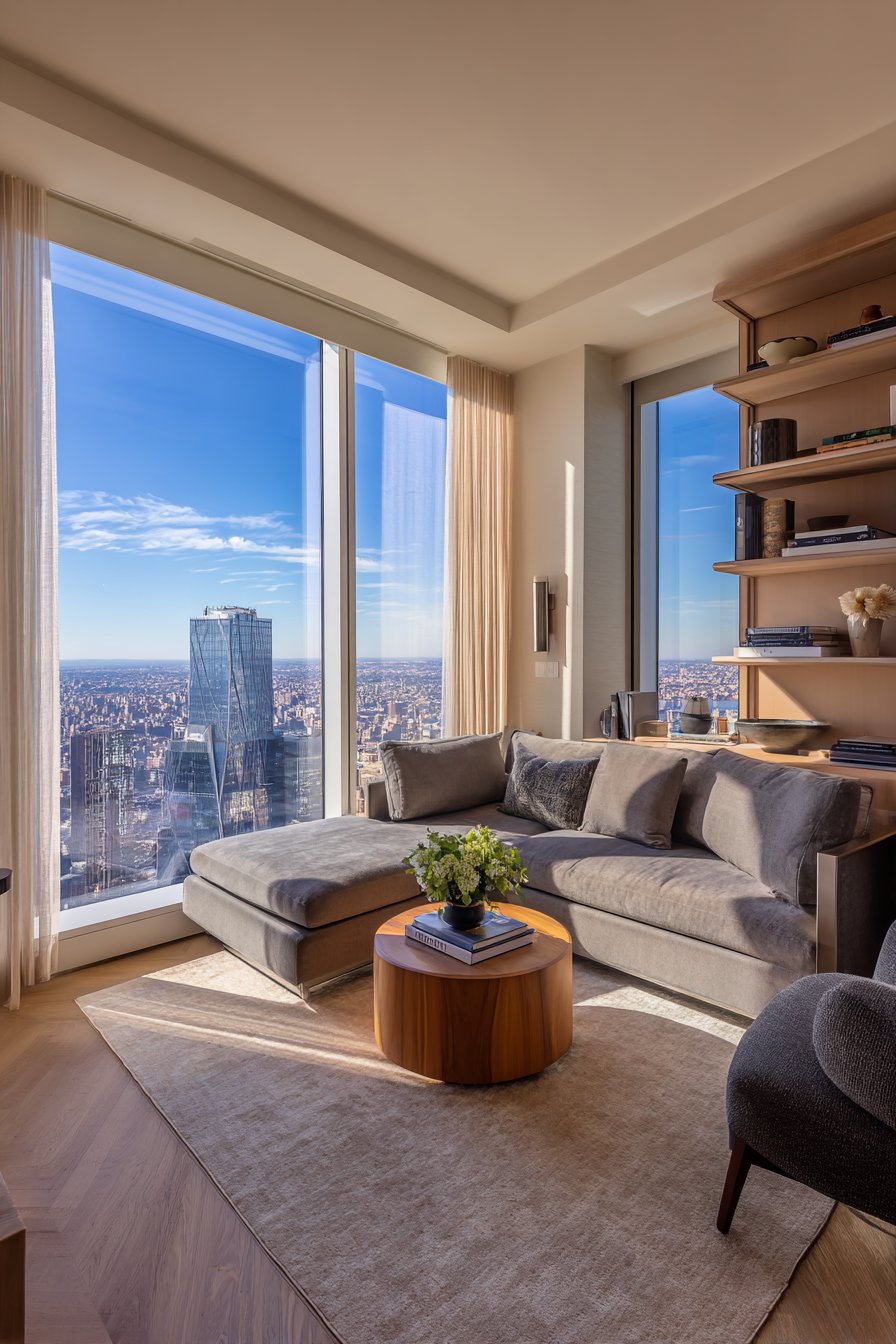
A sitting room designed with comfort and conversation at its core features a warm grey sectional sofa that anchors the space with its inviting presence. The thoughtful arrangement creates an intimate atmosphere where guests naturally gravitate toward meaningful interaction. A round wooden coffee table, chosen for its accessibility from all seating positions, sits centered on a textured wool area rug that adds both visual warmth and acoustic softness to the room. The organic shape of the table encourages equal participation in conversations, eliminating the hierarchical feeling that rectangular tables can sometimes create.
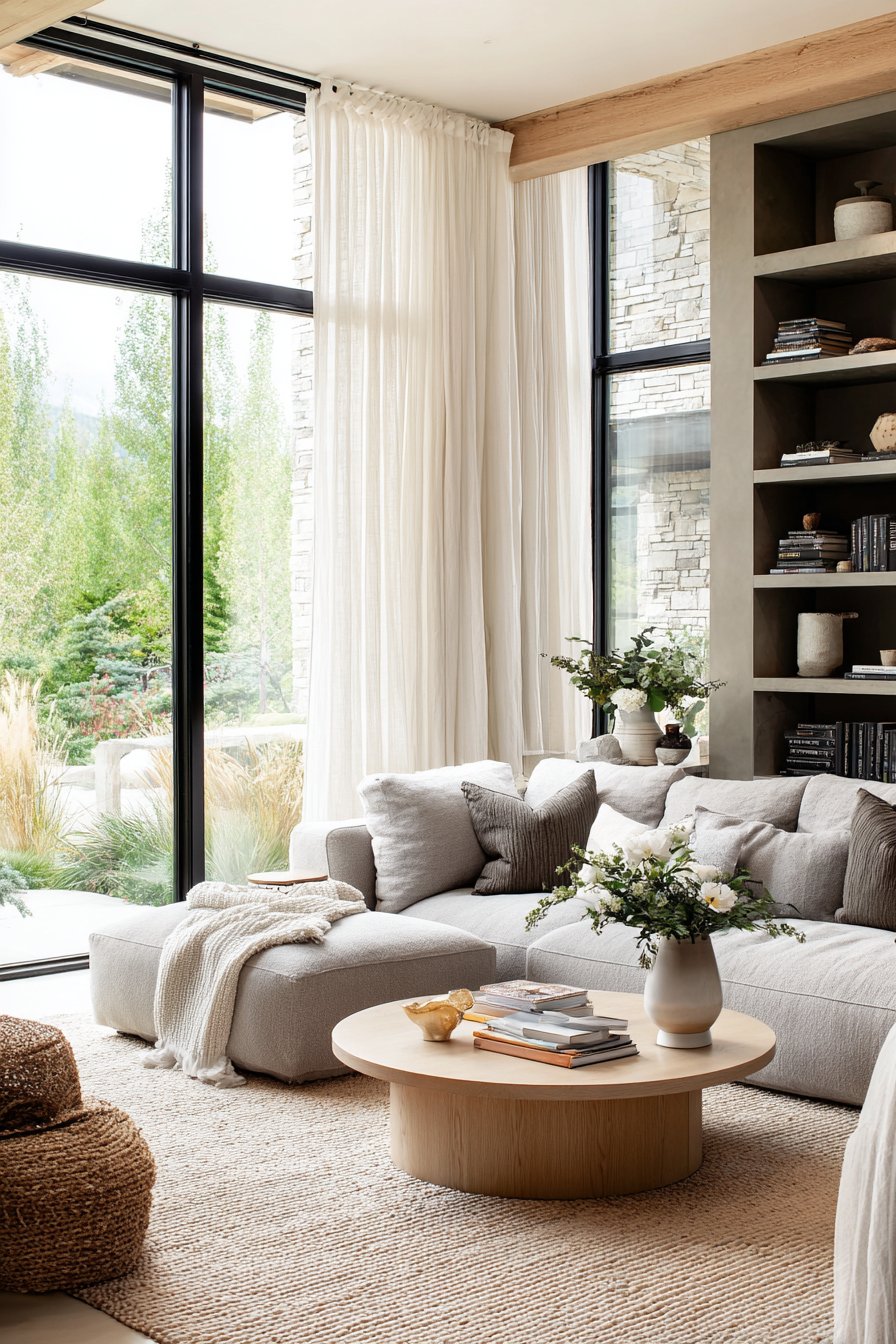
Natural light floods through large windows adorned with floor-length sheer curtains that soften the sunlight while maintaining connection to the outdoors. This carefully calibrated natural illumination reduces the need for artificial lighting during daylight hours, creating an energy-efficient and mood-enhancing environment. The wall-mounted shelving provides both functional storage and opportunities for personal expression through the display of books, decorative objects, and meaningful mementos that tell the story of those who live in the space.
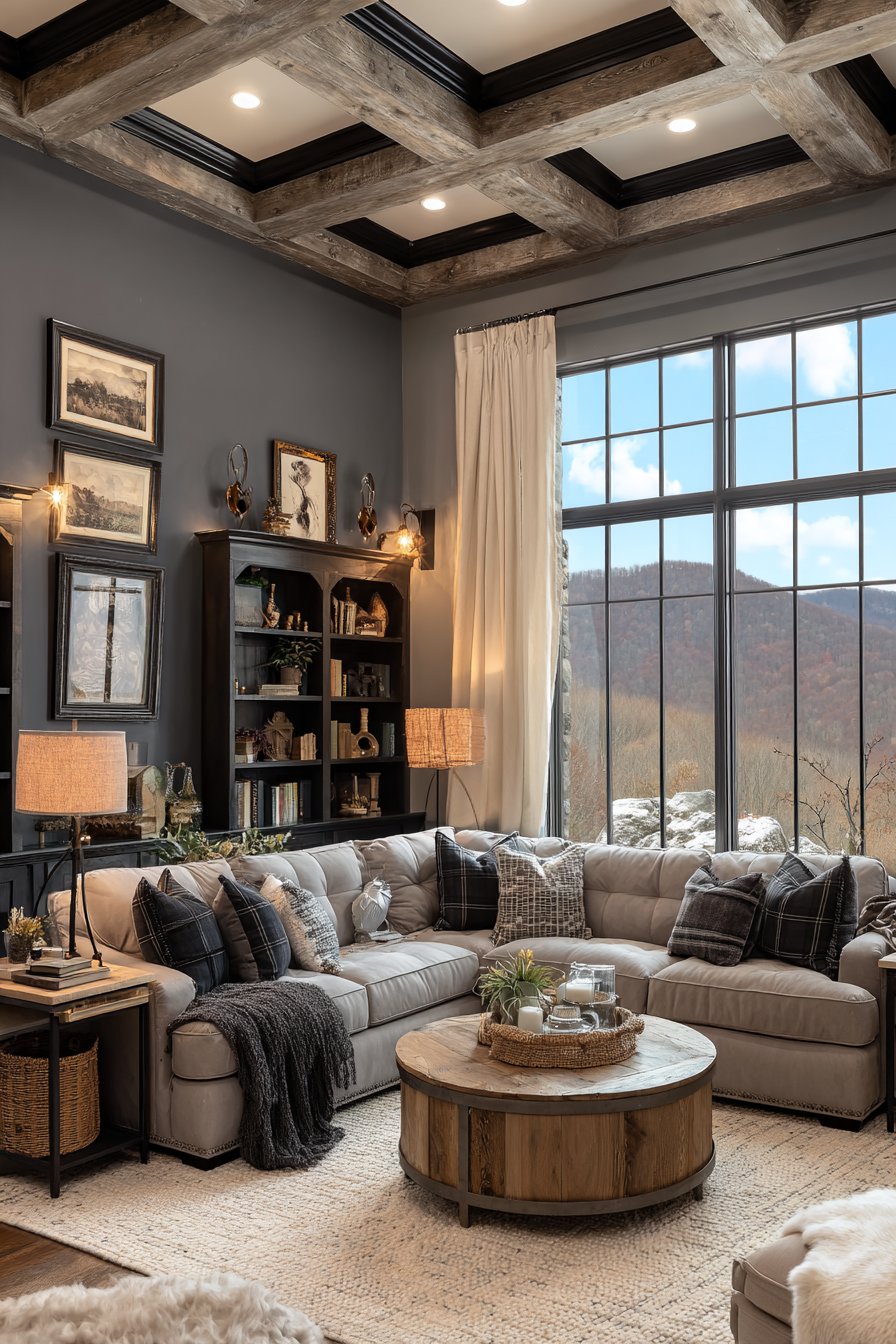
The color palette remains intentionally neutral, allowing the textures and materials to create visual interest without overwhelming the senses. The grey upholstery provides a sophisticated foundation that pairs beautifully with the warm wood tones and natural fiber rug, creating a balanced composition that feels both contemporary and timeless. This combination of elements results in a sitting room that welcomes guests while remaining practical for everyday family life.
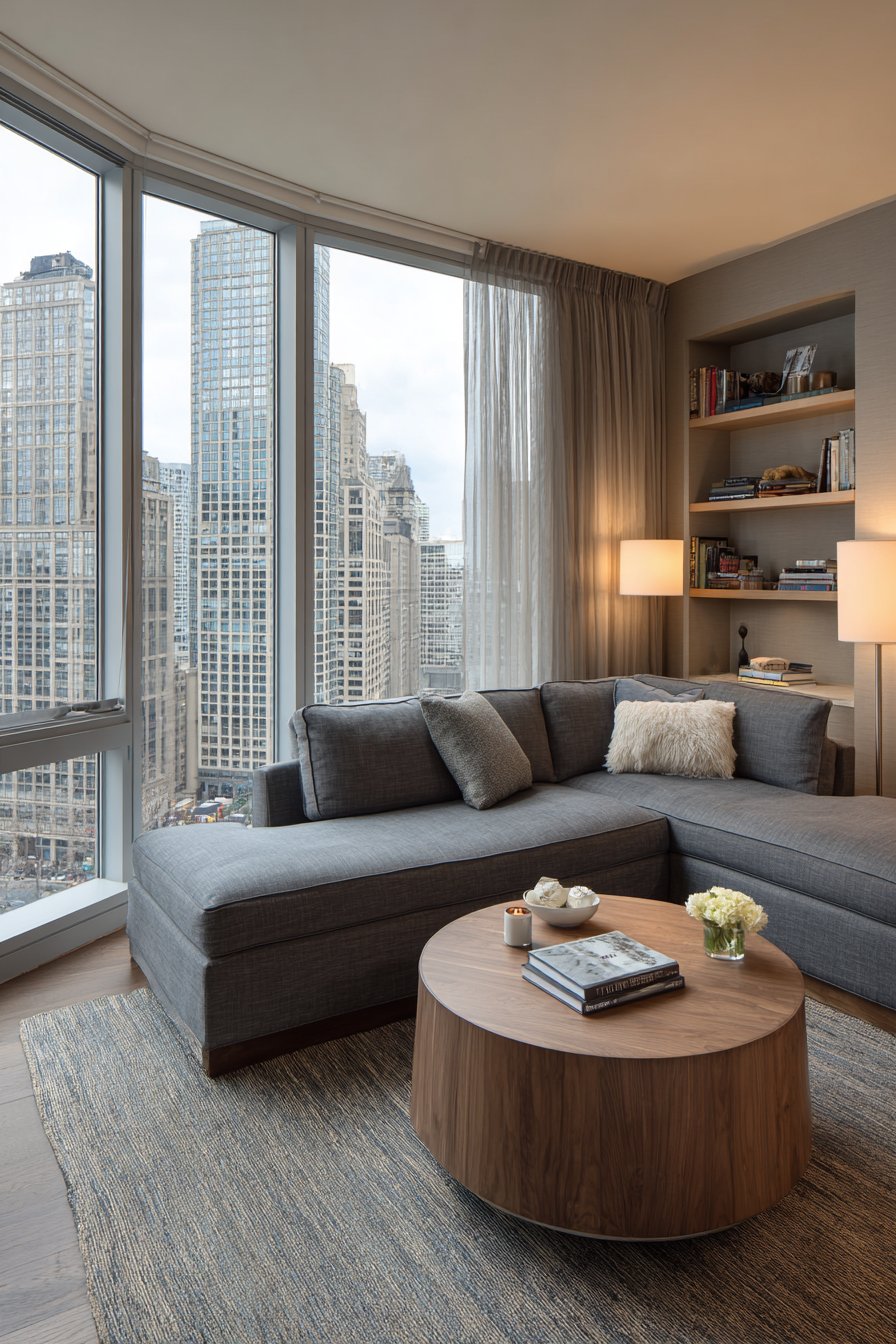
Key Design Tips: Choose sectional sofas to maximize seating in conversation-focused layouts, allowing multiple people to interact comfortably. Select round or oval coffee tables to facilitate easier movement and encourage democratic conversation flow around the table. Install floor-length sheer curtains to diffuse natural light beautifully while maintaining privacy and visual softness. Incorporate wall-mounted shelving to add vertical storage without consuming valuable floor space. Use textured wool rugs to add warmth, sound absorption, and tactile interest to sitting room floors.
2. Minimalist Scandinavian Sanctuary
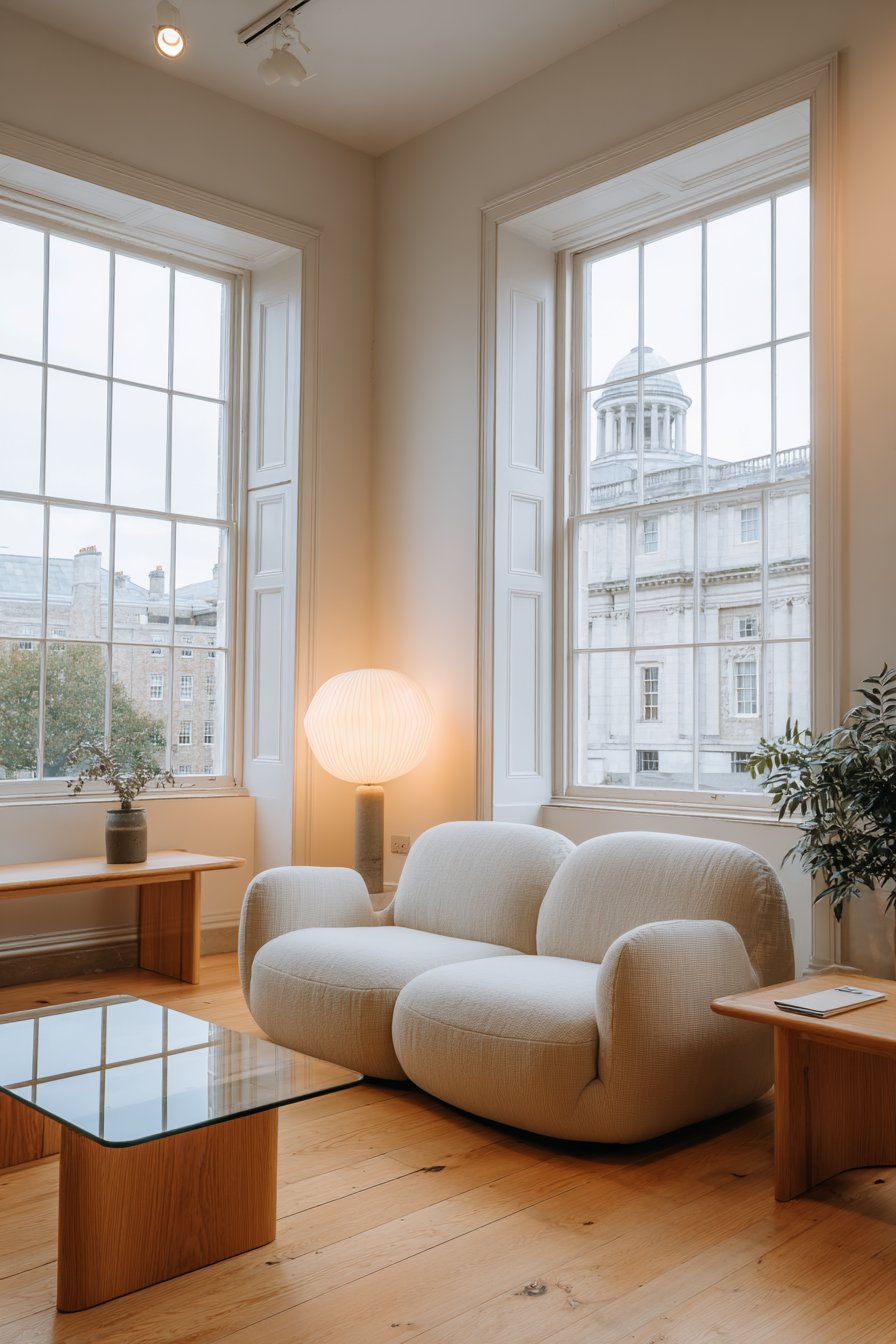
The essence of Scandinavian design philosophy manifests in this serene sitting room where less truly becomes more. A streamlined low-profile sofa upholstered in neutral beige linen creates a foundation of understated elegance, its clean lines embodying the Nordic principle of functional beauty. The simple glass coffee table appears to float above the natural oak flooring, maintaining visual lightness while providing essential functionality. Wooden side tables with gentle grain patterns bring organic warmth to the space without disrupting the minimalist aesthetic.
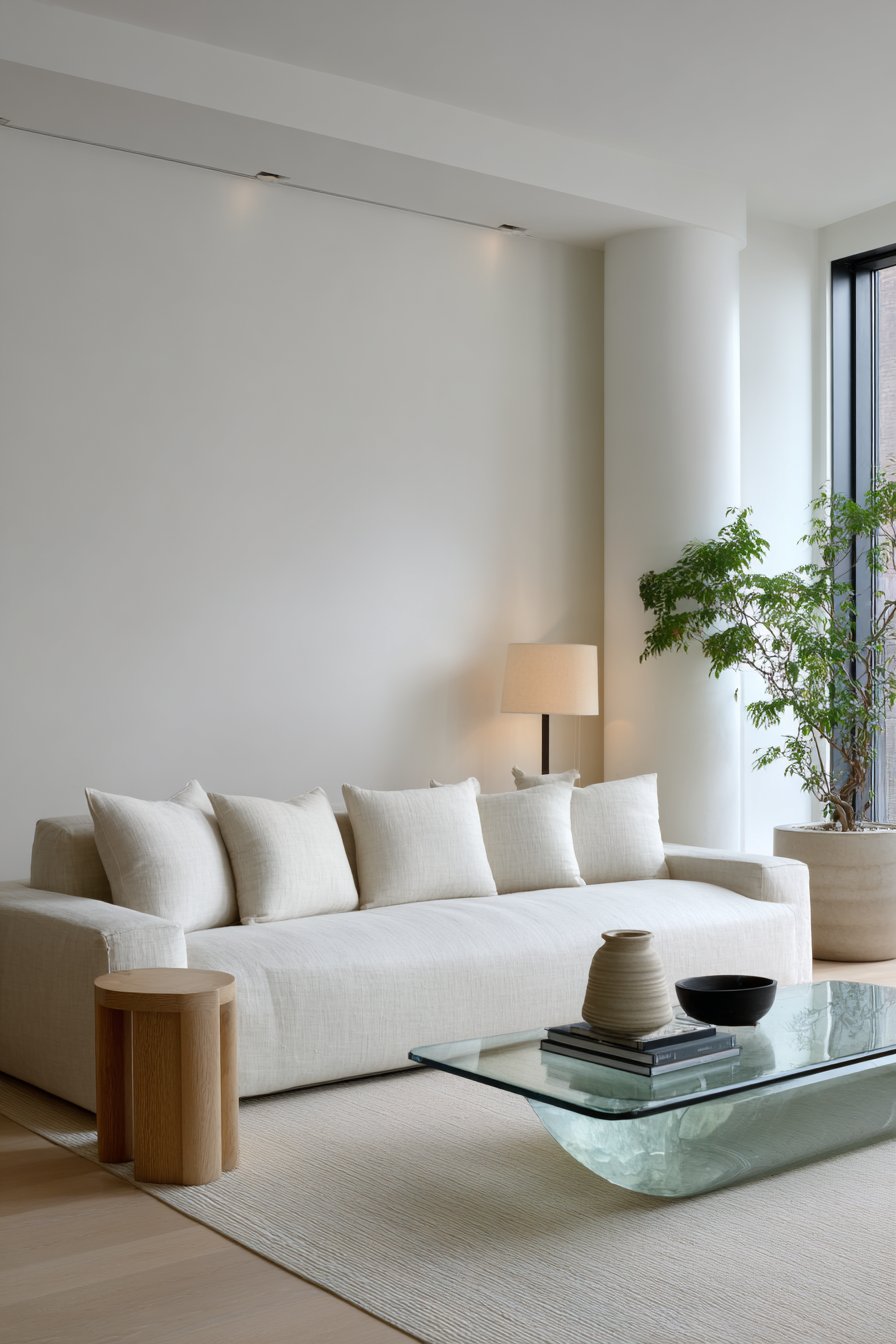
White walls serve as a blank canvas that maximizes light reflection, making the room feel spacious and airy even in smaller dimensions. The natural oak flooring grounds the space with subtle warmth, its honey tones providing just enough color to prevent the room from feeling clinical. Minimal accessories demonstrate the Scandinavian principle of intentional curation—a single sculptural floor lamp provides both task lighting and artistic interest, while a carefully selected potted plant introduces life and organic form.
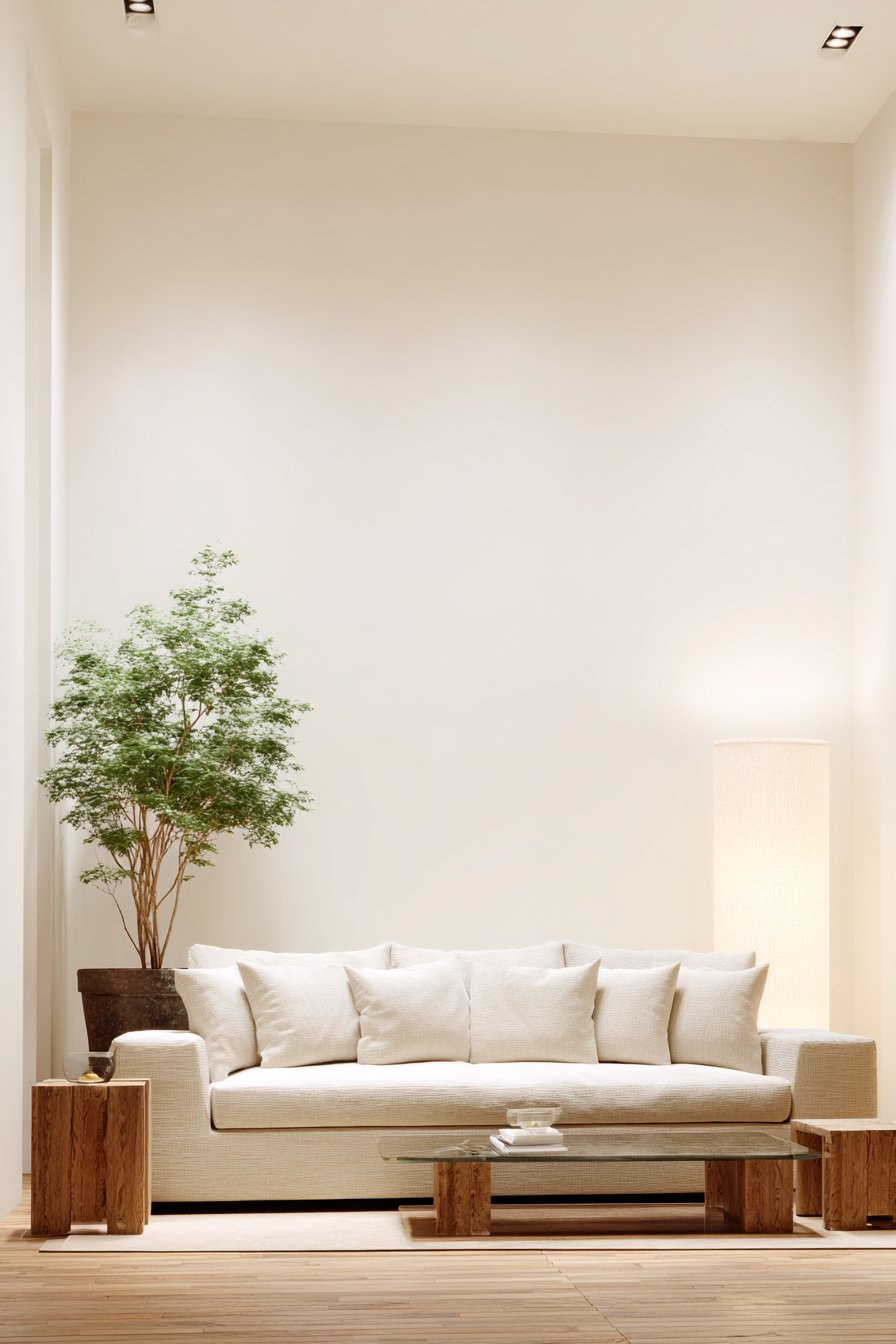
The beauty of this design approach lies in its emphasis on quality over quantity. Each piece serves a purpose and earns its place through both function and form. The absence of clutter creates mental clarity and visual rest, allowing occupants to truly relax and recharge. This sitting room proves that luxury doesn’t require abundance; sometimes the greatest luxury is spacious simplicity.
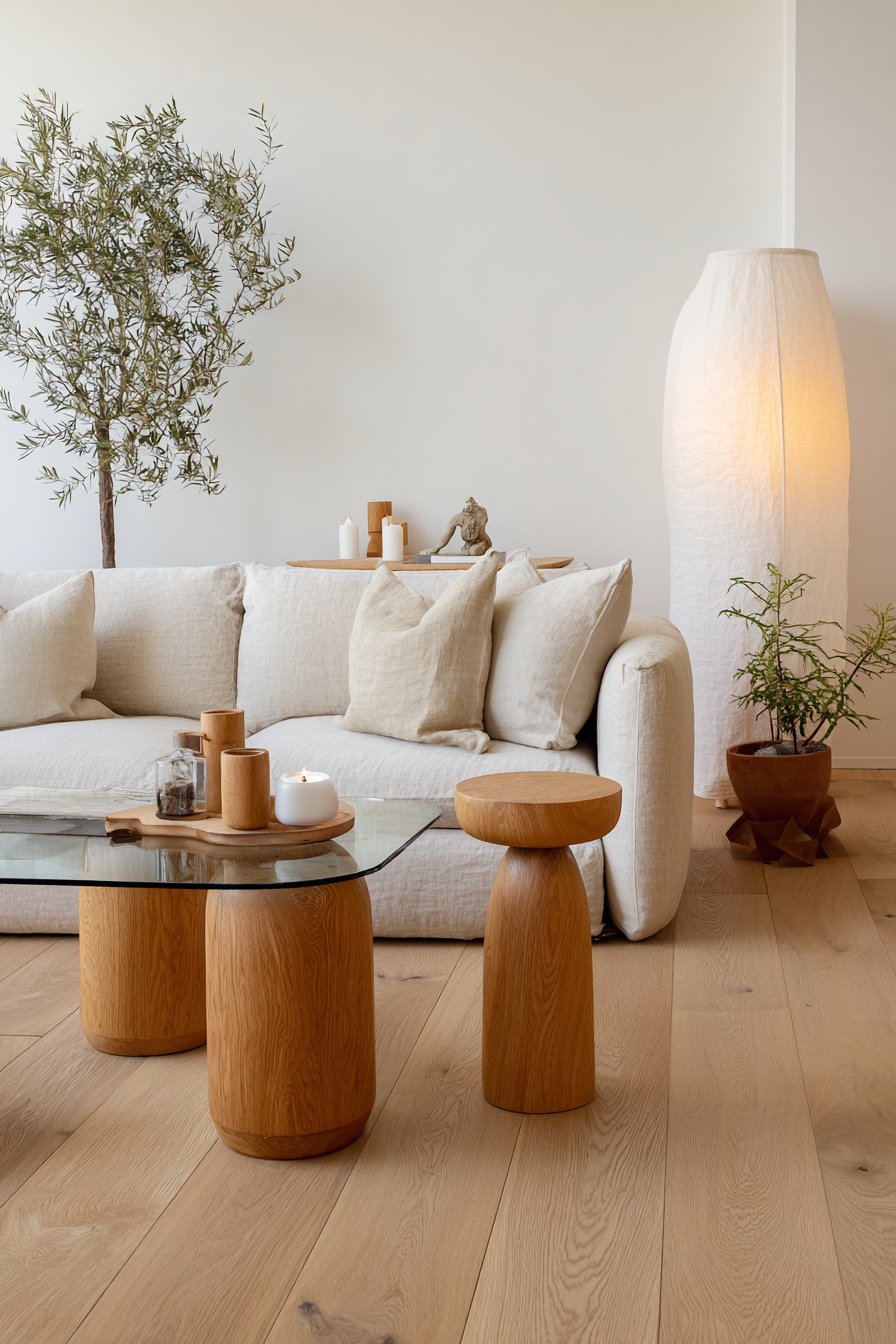
Key Design Tips: Invest in low-profile furniture with clean lines to maintain the minimalist aesthetic and create a sense of spaciousness. Choose neutral linen upholstery for its natural texture, breathability, and timeless appeal that ages beautifully. Select glass coffee tables to maintain visual lightness and allow flooring patterns to remain uninterrupted beneath. Limit decorative accessories to a few high-quality, meaningful pieces rather than multiple smaller items. Incorporate natural oak flooring to add warmth and organic beauty without overwhelming the minimalist palette.
3. Traditional English Elegance
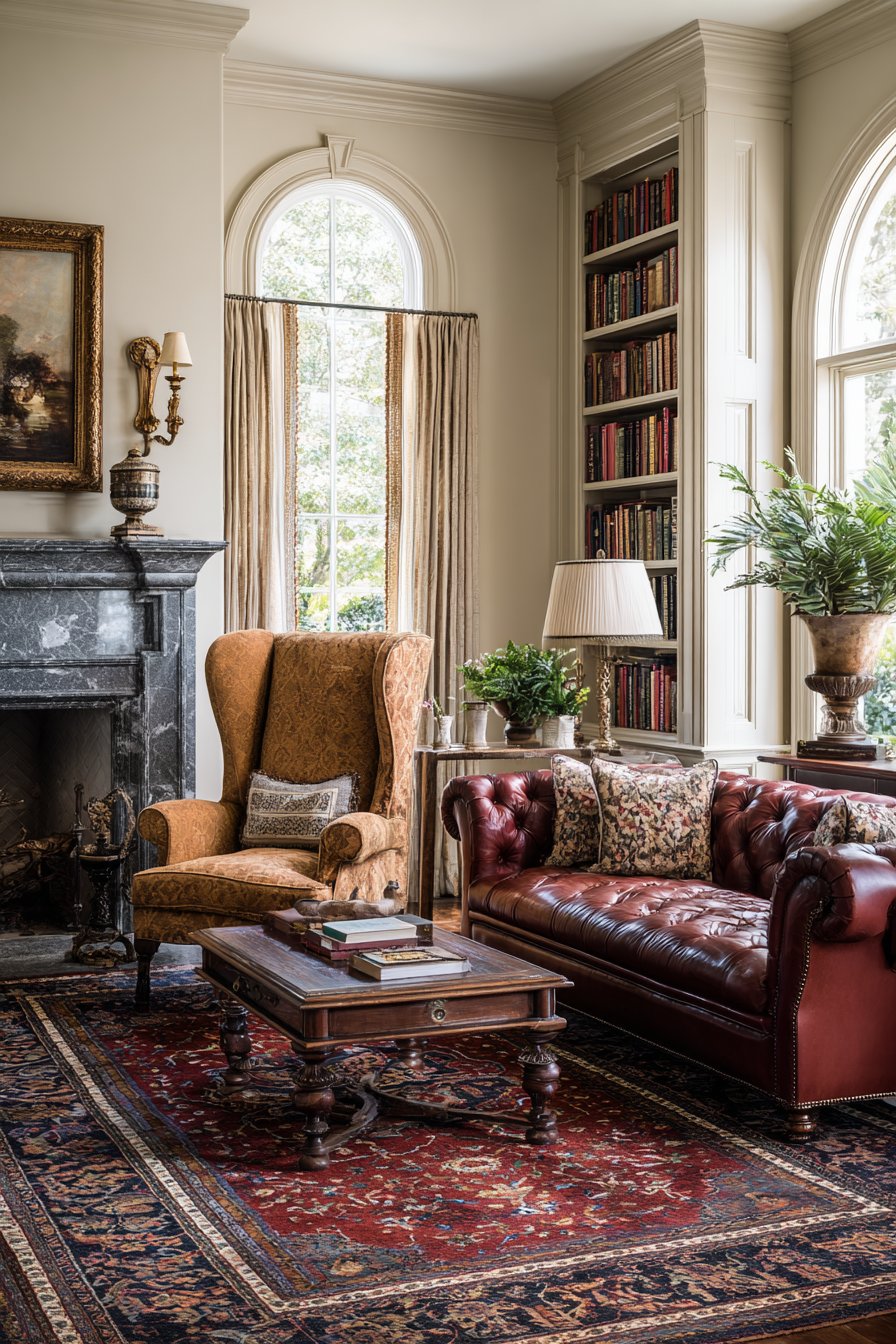
This sophisticated sitting room embodies timeless British design sensibilities through its careful selection of classic furniture and refined details. The centerpiece Chesterfield sofa, upholstered in rich leather with its characteristic deep button tufting and rolled arms, commands attention while promising enduring comfort. Two wingback chairs, their high backs providing both visual drama and practical draft protection, flank the seating arrangement in patterned fabric that adds controlled visual interest without overwhelming the space.
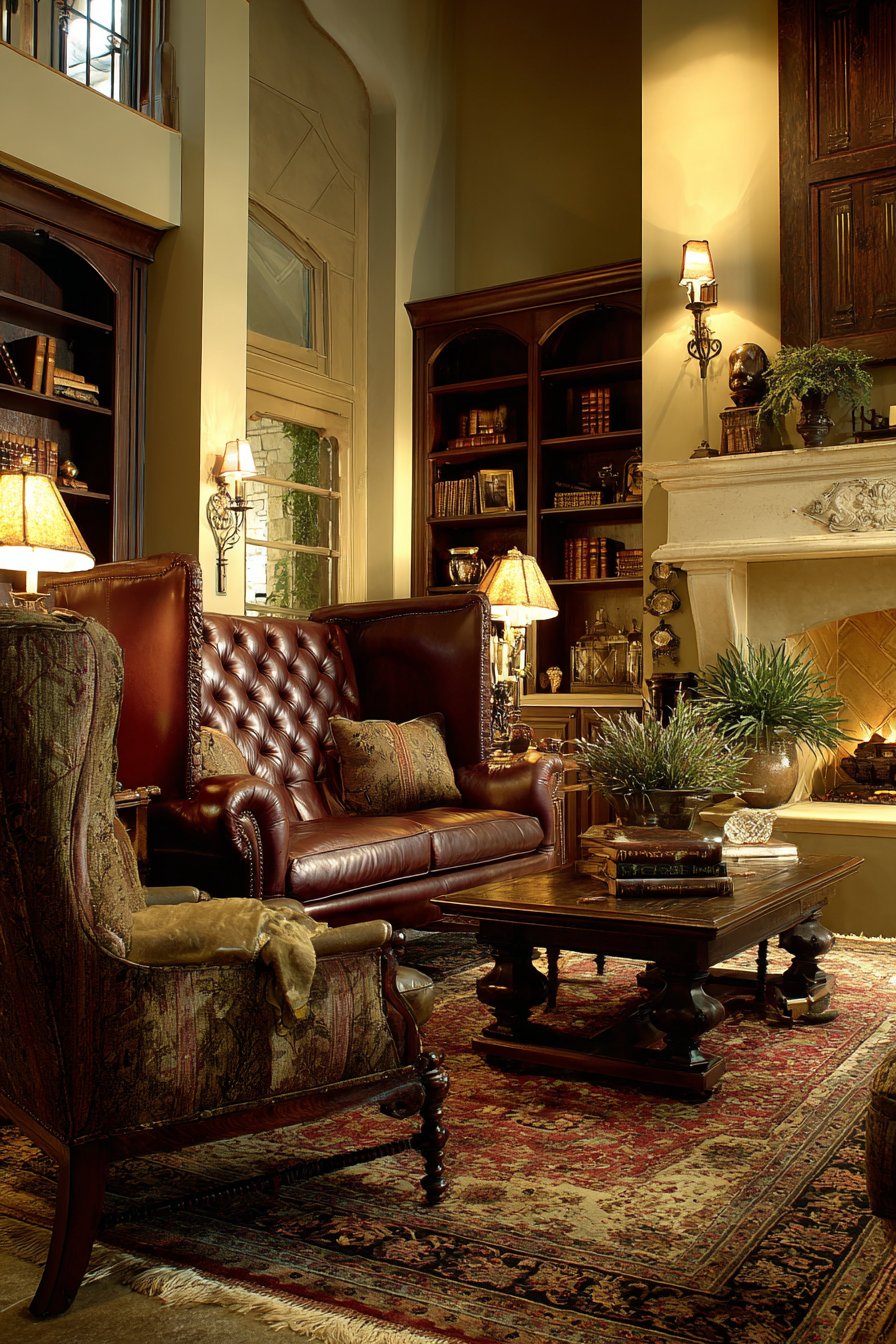
An ornate wooden coffee table serves as both functional centerpiece and decorative element, its carved details and dark finish adding gravitas to the arrangement. The Oriental rug beneath anchors the furniture grouping with intricate patterns that reference centuries of design tradition, its complex motifs adding layers of visual richness. Built-in bookshelves flanking a decorative fireplace create symmetry and provide homes for treasured volumes and display objects, while the fireplace itself serves as the room’s natural focal point.
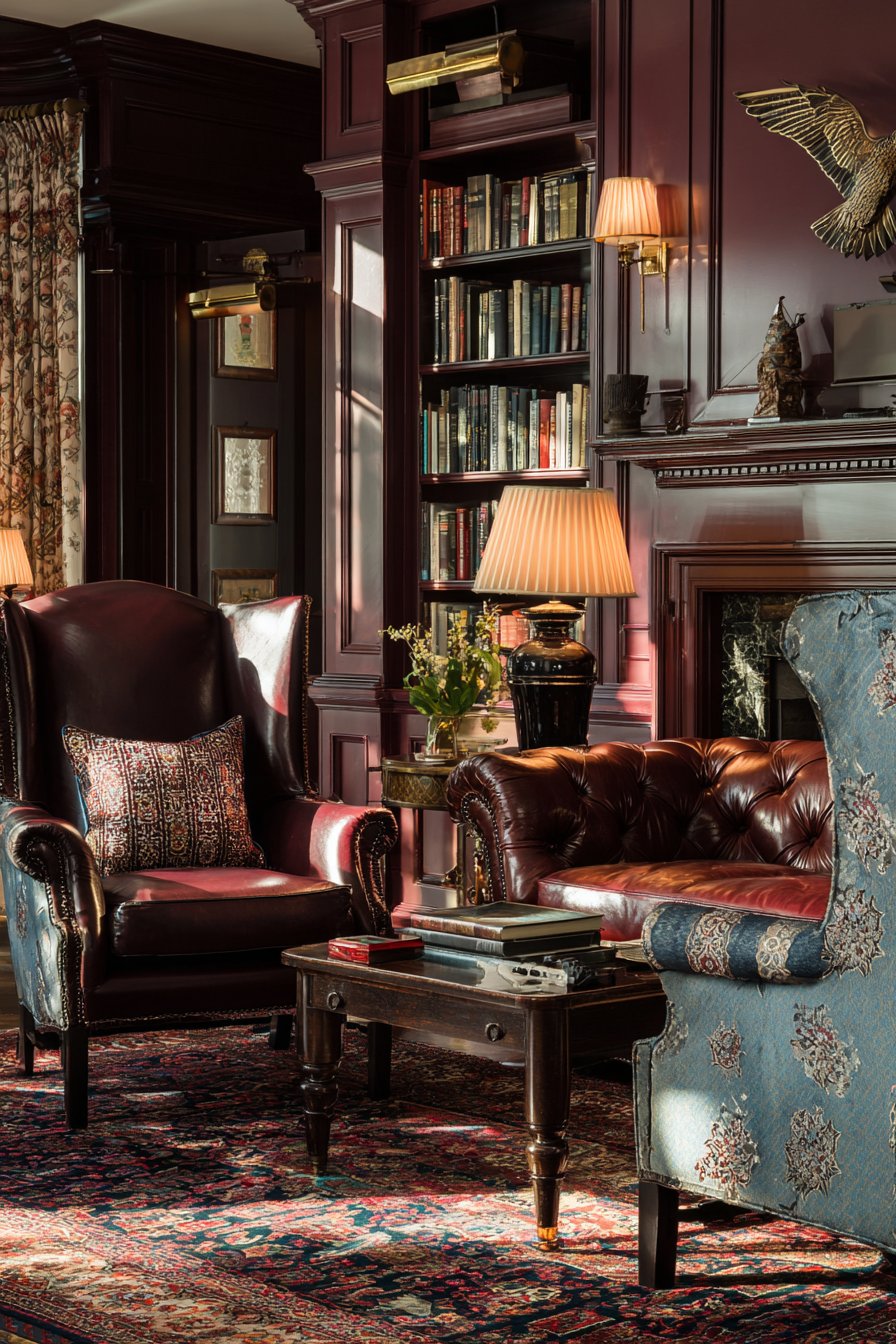
Warm ambient lighting from carefully positioned table lamps and wall sconces creates an inviting glow that enhances the room’s cozy sophistication. The layered lighting approach allows for adjustment based on time of day and activity, from bright illumination for reading to soft atmospheric glow for evening relaxation. This traditional sitting room proves that classic design elements can create spaces that feel both formal and welcoming.
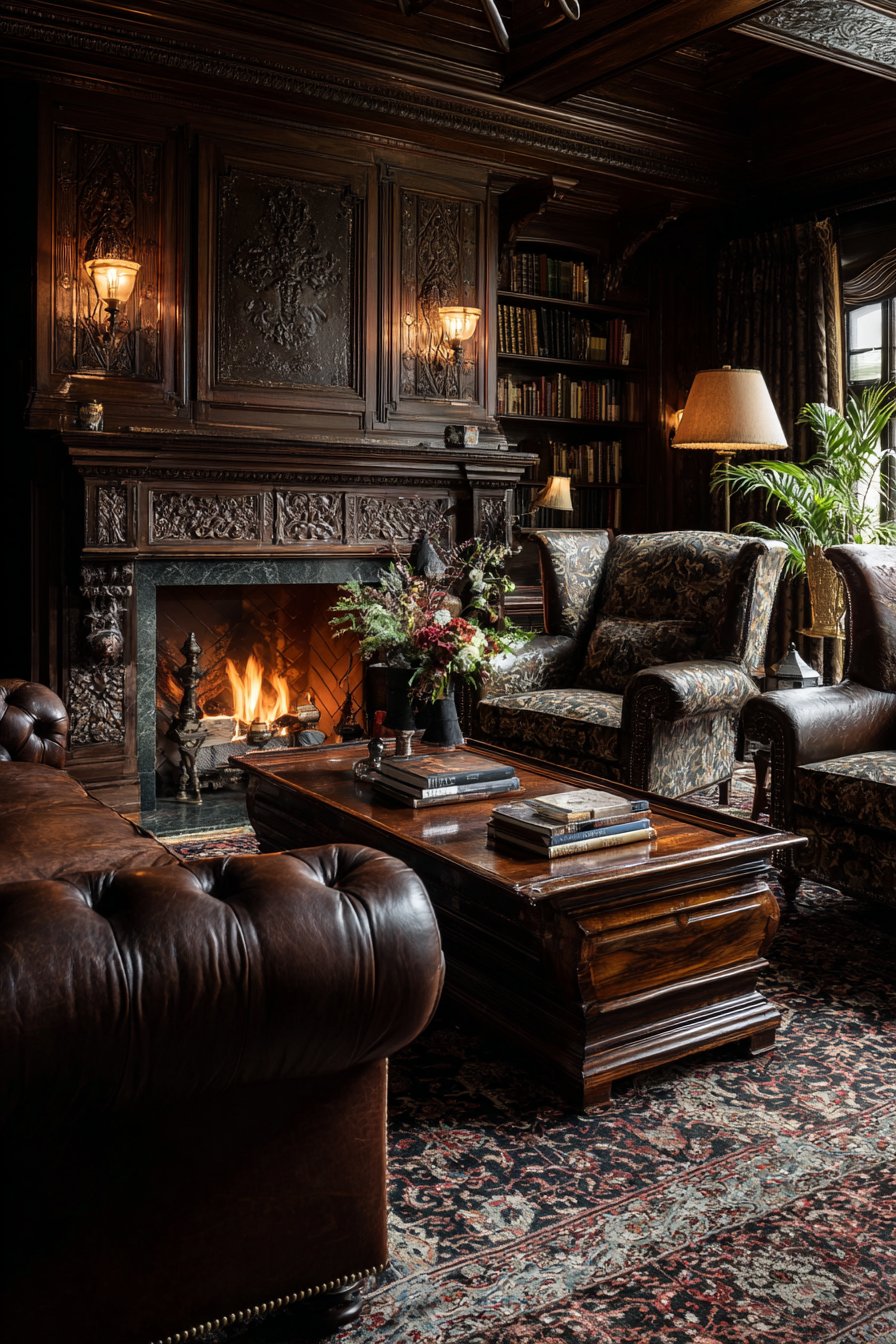
Key Design Tips: Select a Chesterfield sofa for its iconic design that provides both comfort and architectural presence in traditional spaces. Incorporate wingback chairs to add vertical interest and create intimate seating areas within larger rooms. Choose Oriental rugs with intricate patterns to add historical depth and visual complexity beneath furniture arrangements. Install built-in bookshelves to maximize storage while creating architectural symmetry and focal points. Layer ambient lighting sources including table lamps and sconces to create adjustable, warm illumination throughout the space.
4. Light-Filled Scandinavian Retreat
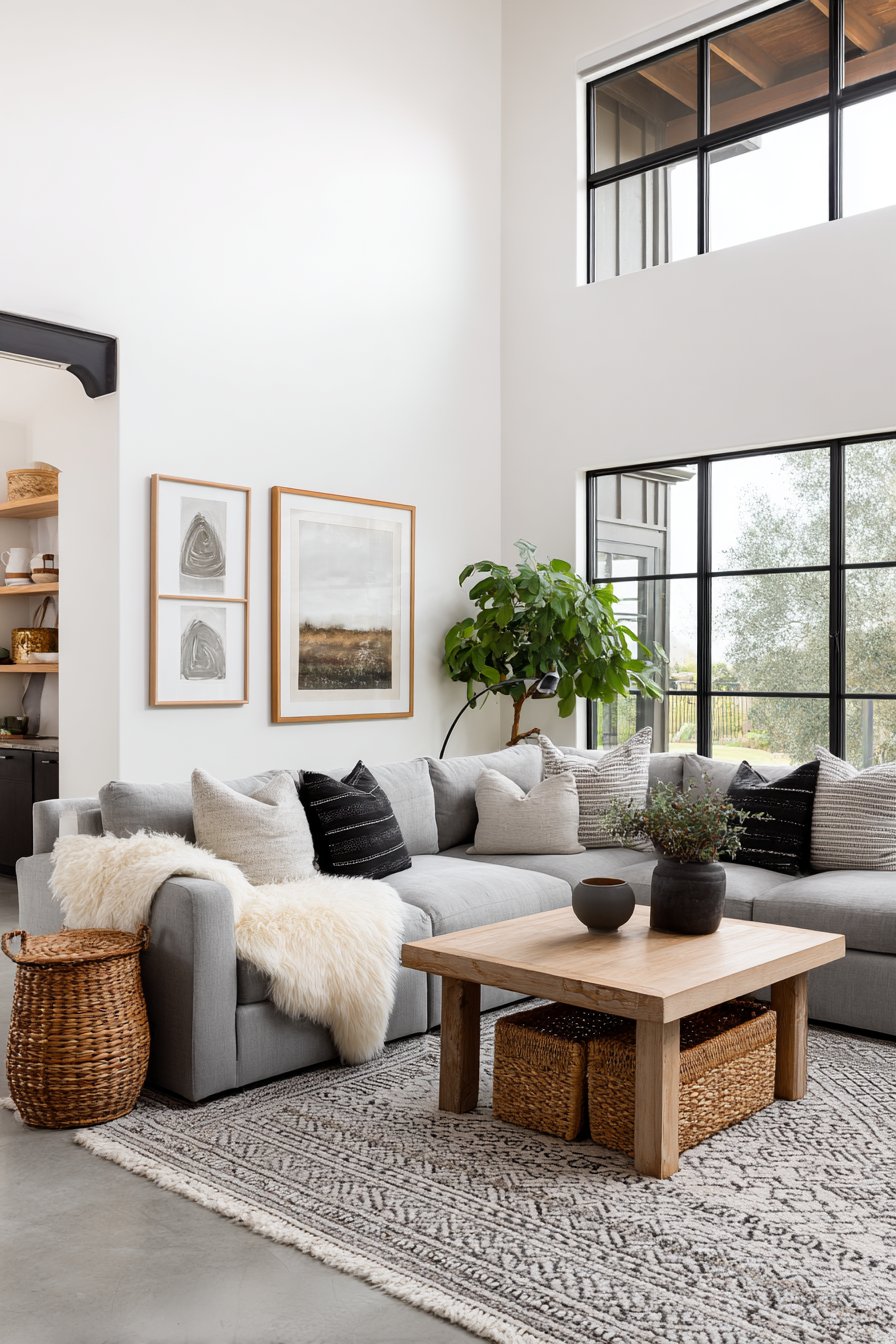
Nordic design principles shine brilliantly in this airy sitting room where natural light reigns supreme. The light grey modular sofa offers flexibility in configuration while maintaining the clean aesthetic lines characteristic of Scandinavian furniture design. Its modular nature allows for seasonal rearrangement or adaptation to different social configurations, making it both beautiful and practical. A natural wood coffee table, with visible grain and minimal treatment, celebrates the inherent beauty of timber while providing essential function.
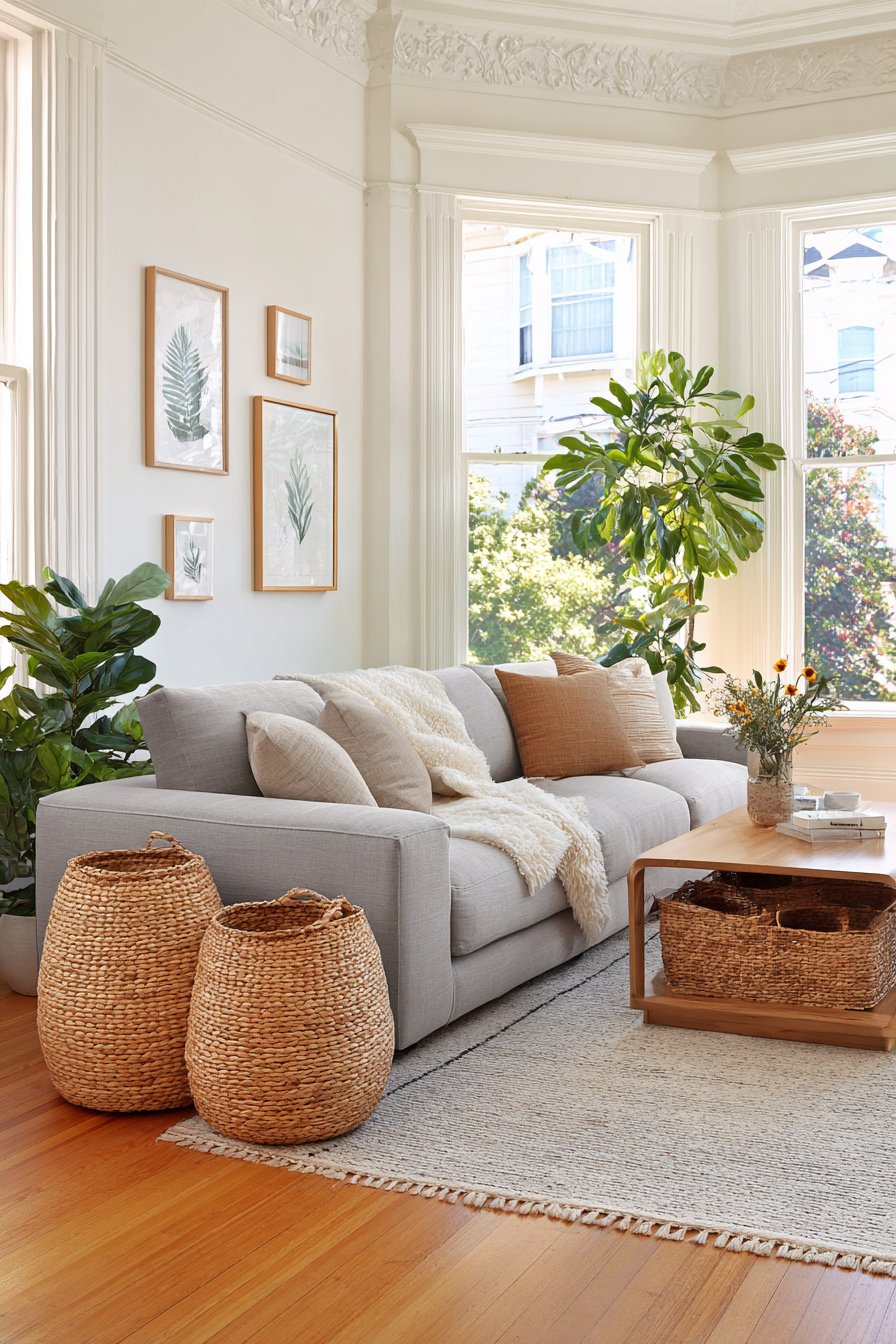
Woven storage baskets tucked beneath the coffee table demonstrate the Scandinavian commitment to concealing clutter without sacrificing accessibility. These natural fiber baskets add texture while keeping everyday items within reach but out of sight, maintaining the room’s visual serenity. White walls maximize light reflection and create a sense of expansiveness, serving as a neutral backdrop that allows the natural materials and subtle colors to take center stage.
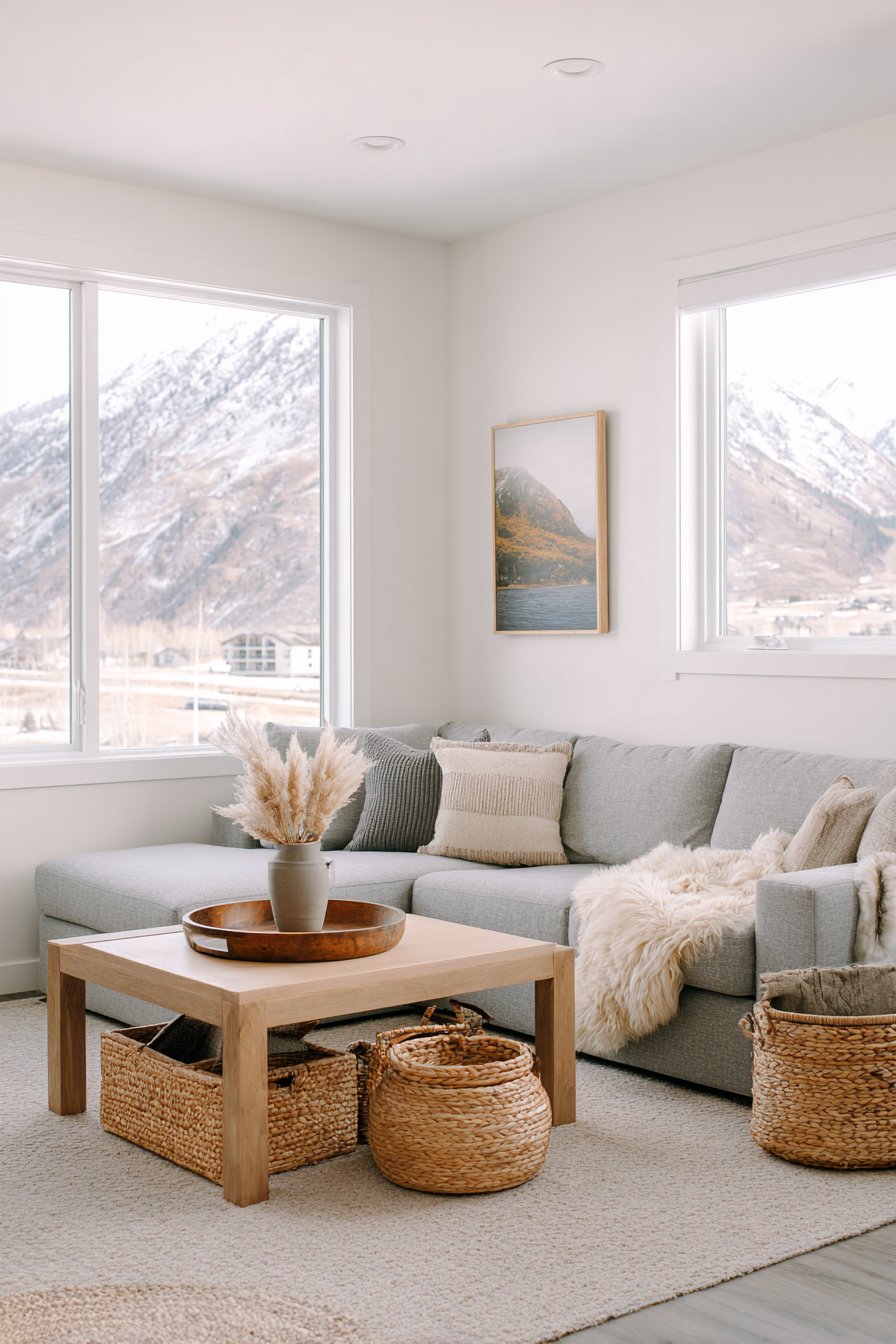
The room’s most distinctive feature is its approach to window treatments—or rather, the intentional absence of heavy drapes. Large windows remain largely unadorned, maximizing natural daylight and maintaining visual connection with the outdoors. A simple sheepskin throw draped casually over the sofa arm adds tactile luxury and visual warmth, exemplifying the Scandinavian principle of “hygge”—creating cozy contentment through simple pleasures.
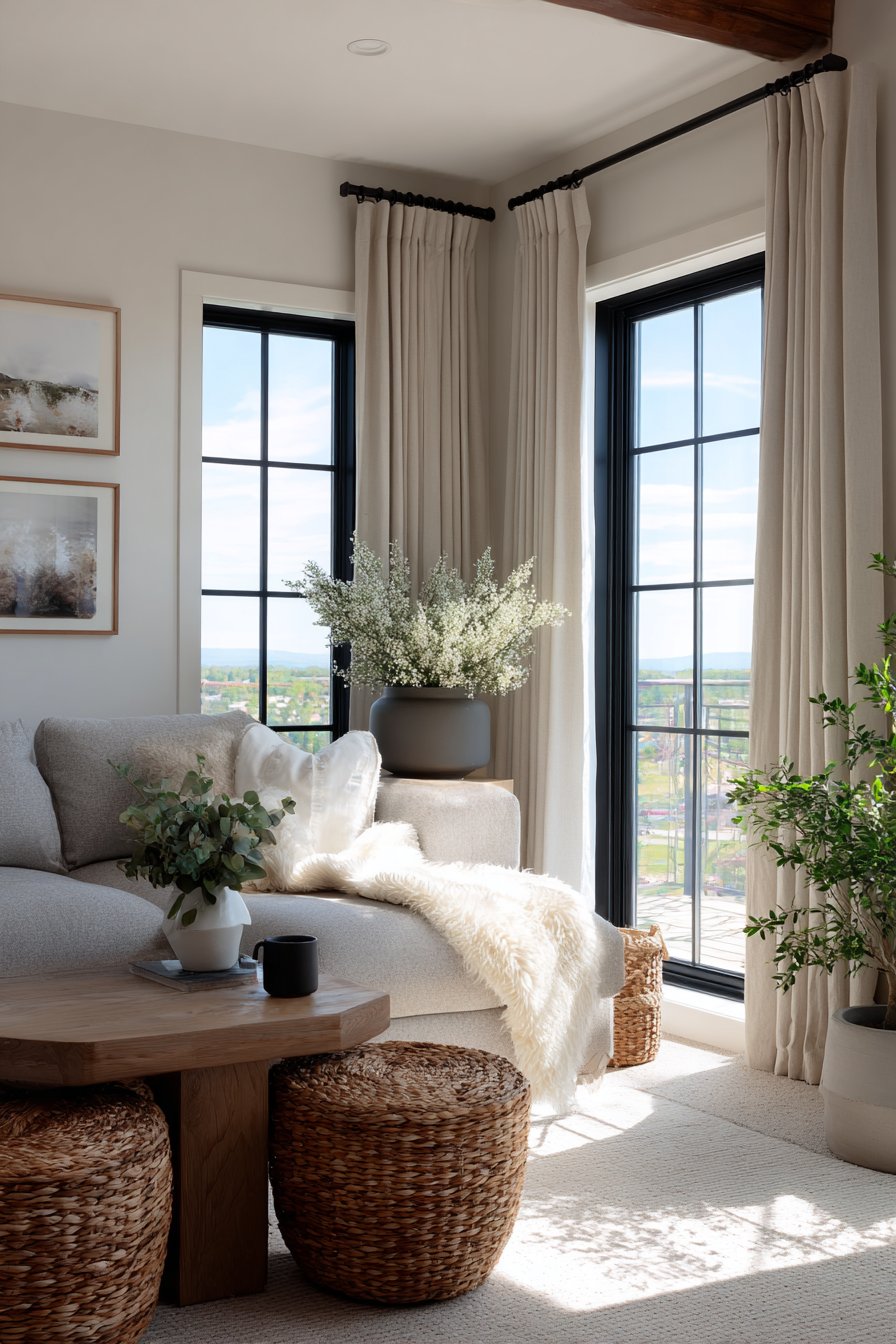
Key Design Tips: Choose modular sofas for their flexibility in arrangement and ability to adapt to changing needs and spatial configurations. Incorporate woven storage baskets beneath coffee tables to maintain visual cleanliness while keeping essentials accessible. Paint walls in pure white to maximize natural light reflection and create an expansive, airy feeling. Minimize window treatments on large windows to capitalize on natural daylight and maintain connection with outdoor views. Add sheepskin throws for tactile warmth and visual softness that invites touch and creates cozy moments.
5. Bohemian Eclectic Paradise
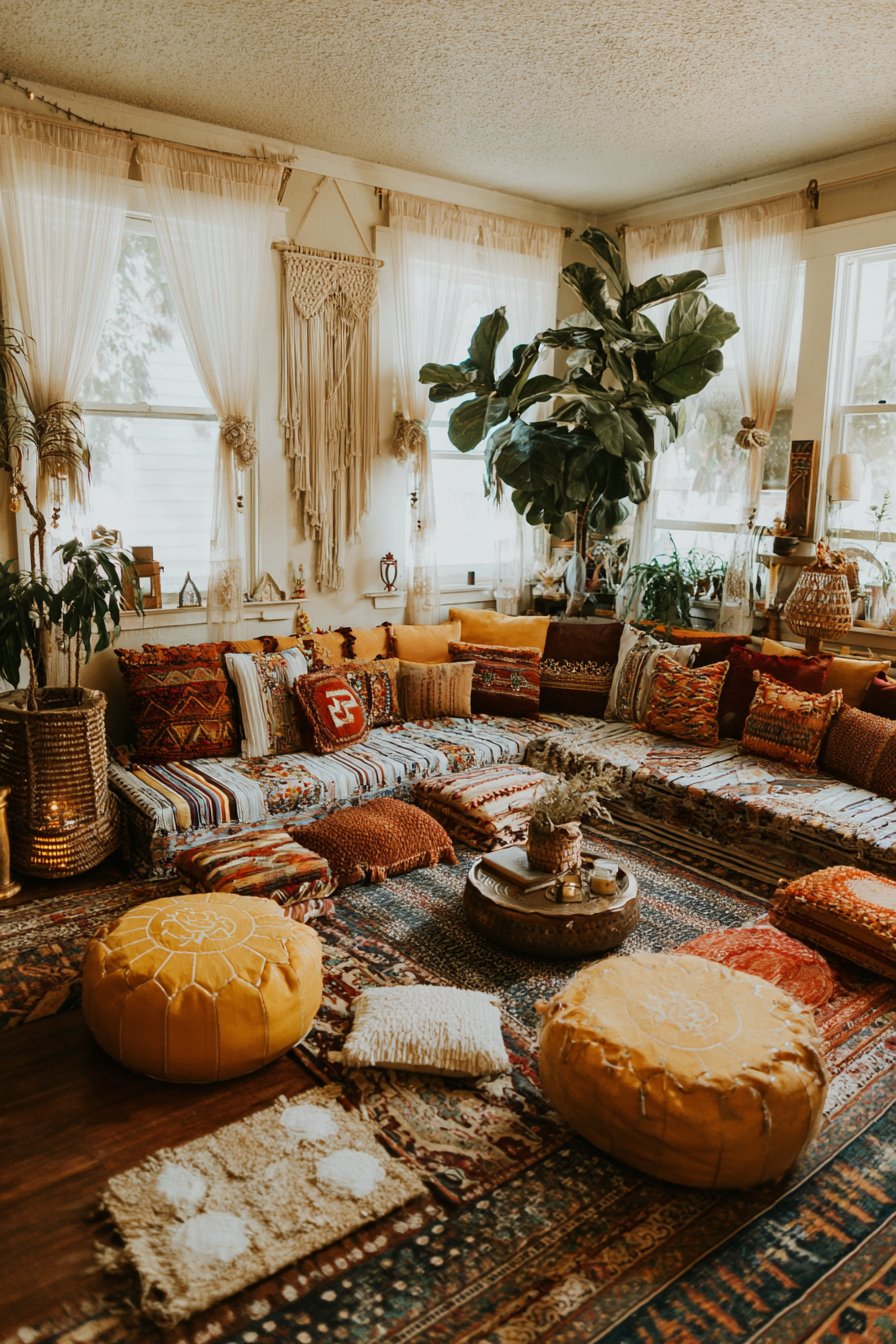
This vibrant sitting room celebrates the free-spirited bohemian aesthetic through its fearless mixing of patterns, textures, and cultural influences. The low-slung sofa serves as a foundation for an abundant collection of mixed patterned cushions in earthy tones—terracotta, ochre, sage, and burnt sienna create a warm, organic palette. Floor cushions and poufs scattered around the space provide flexible additional seating while reinforcing the relaxed, informal atmosphere that defines bohemian style.
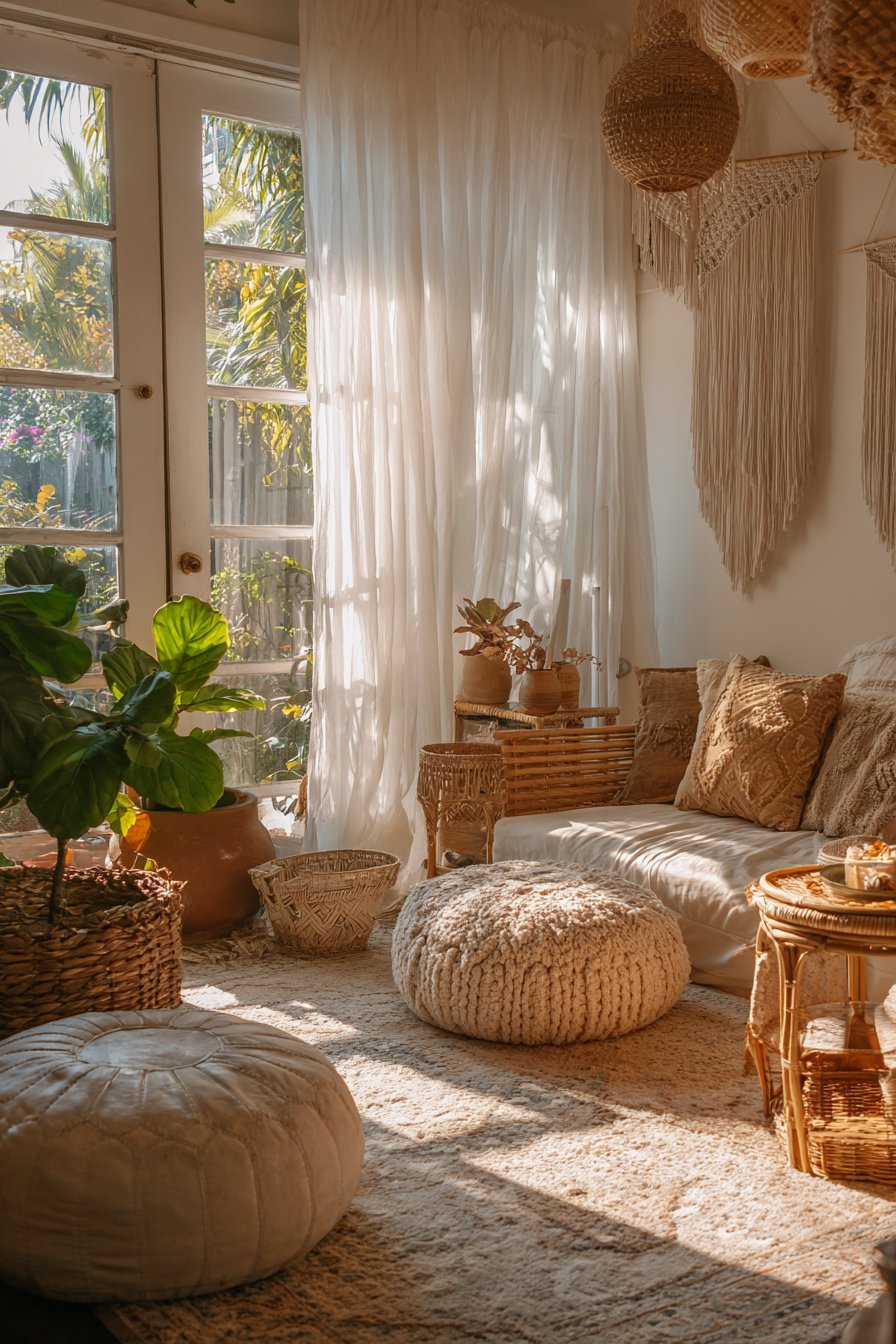
Macramé wall hangings add vertical texture and handcrafted artistry, their knotted patterns casting interesting shadows and demonstrating the bohemian appreciation for artisanal craft. Potted plants, including a statement-making fiddle leaf fig tree, bring life and oxygen to the space while connecting the interior to the natural world. The layered vintage rugs create visual depth and comfort underfoot, their overlapping patterns and colors telling stories of different places and times.
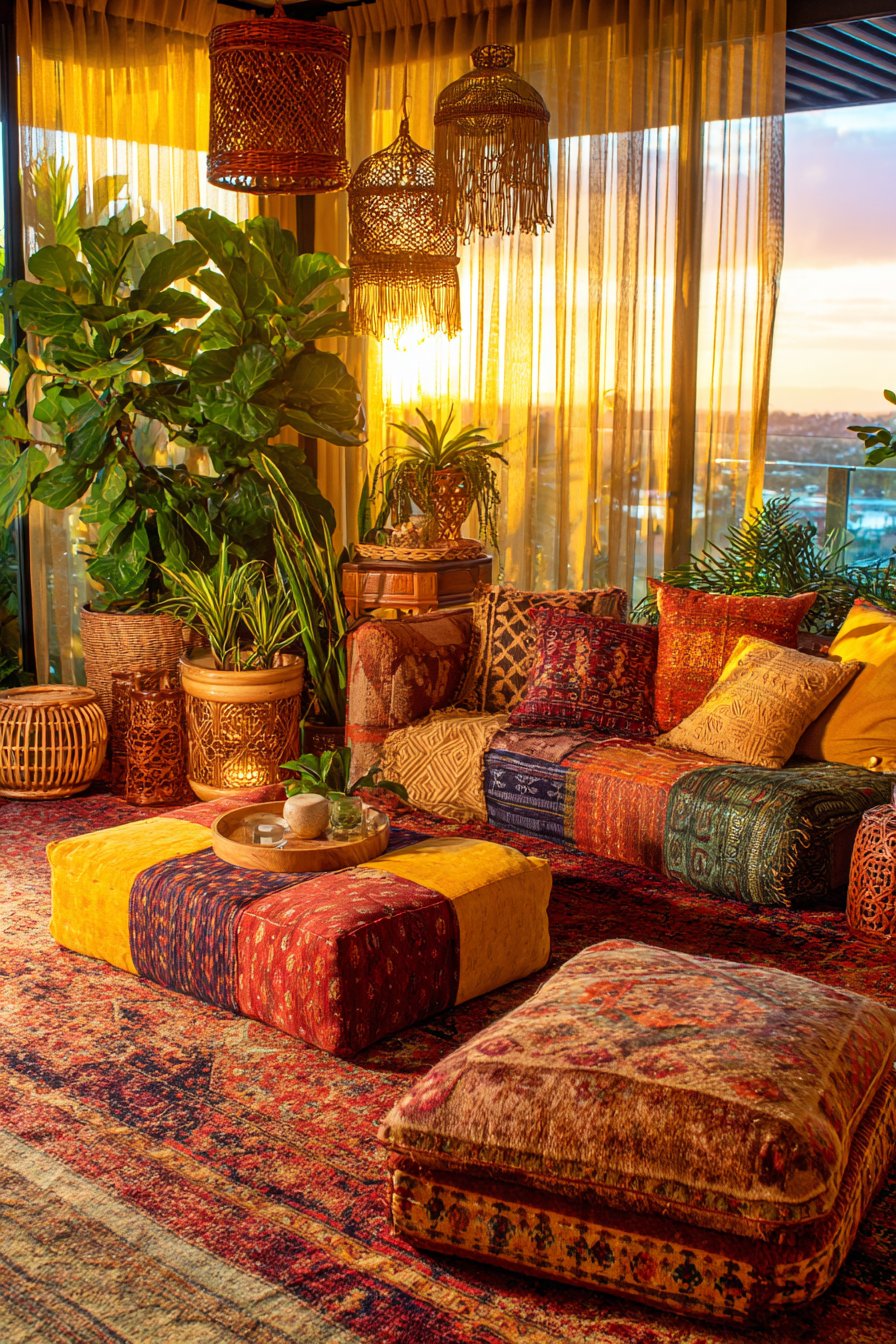
Natural rattan furniture pieces and woven baskets add organic texture throughout the room, creating a cohesive thread that ties together the diverse elements. Golden hour lighting streaming through sheer curtains bathes everything in warm, honeyed tones, transforming the space into a glowing sanctuary. This sitting room proves that more can indeed be more when curated with a discerning eye and genuine passion.
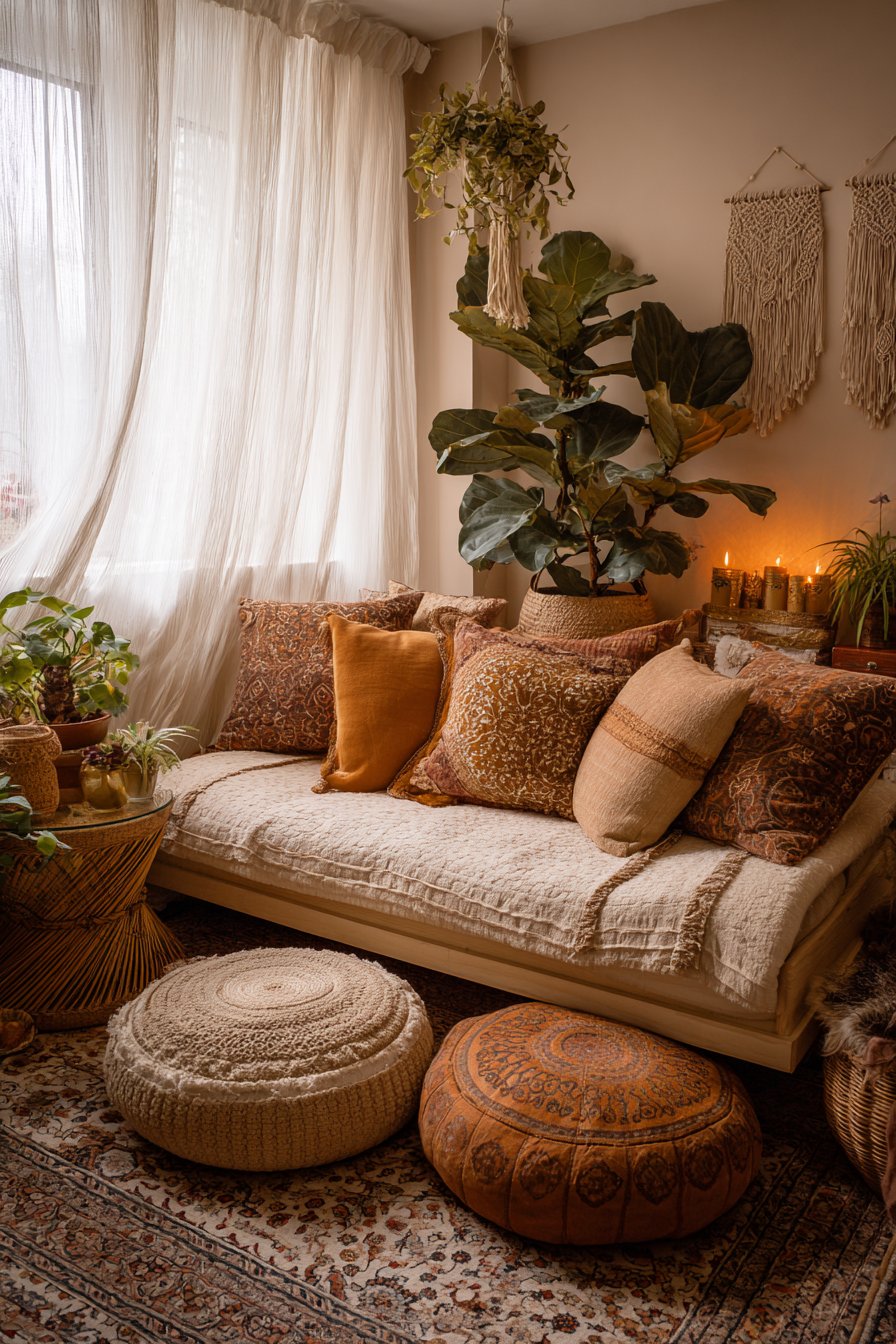
Key Design Tips: Layer multiple vintage rugs to create visual depth and eclectic charm while defining different zones within the space. Mix patterned cushions in complementary earthy tones to add color and comfort without creating visual chaos. Incorporate macramé wall hangings to add handcrafted texture and vertical visual interest to bare walls. Fill corners and surfaces with potted plants of varying sizes to bring life and organic forms into the interior. Choose natural rattan furniture and woven baskets to add organic texture and maintain connection with natural materials.
6. Contemporary Urban Sophistication
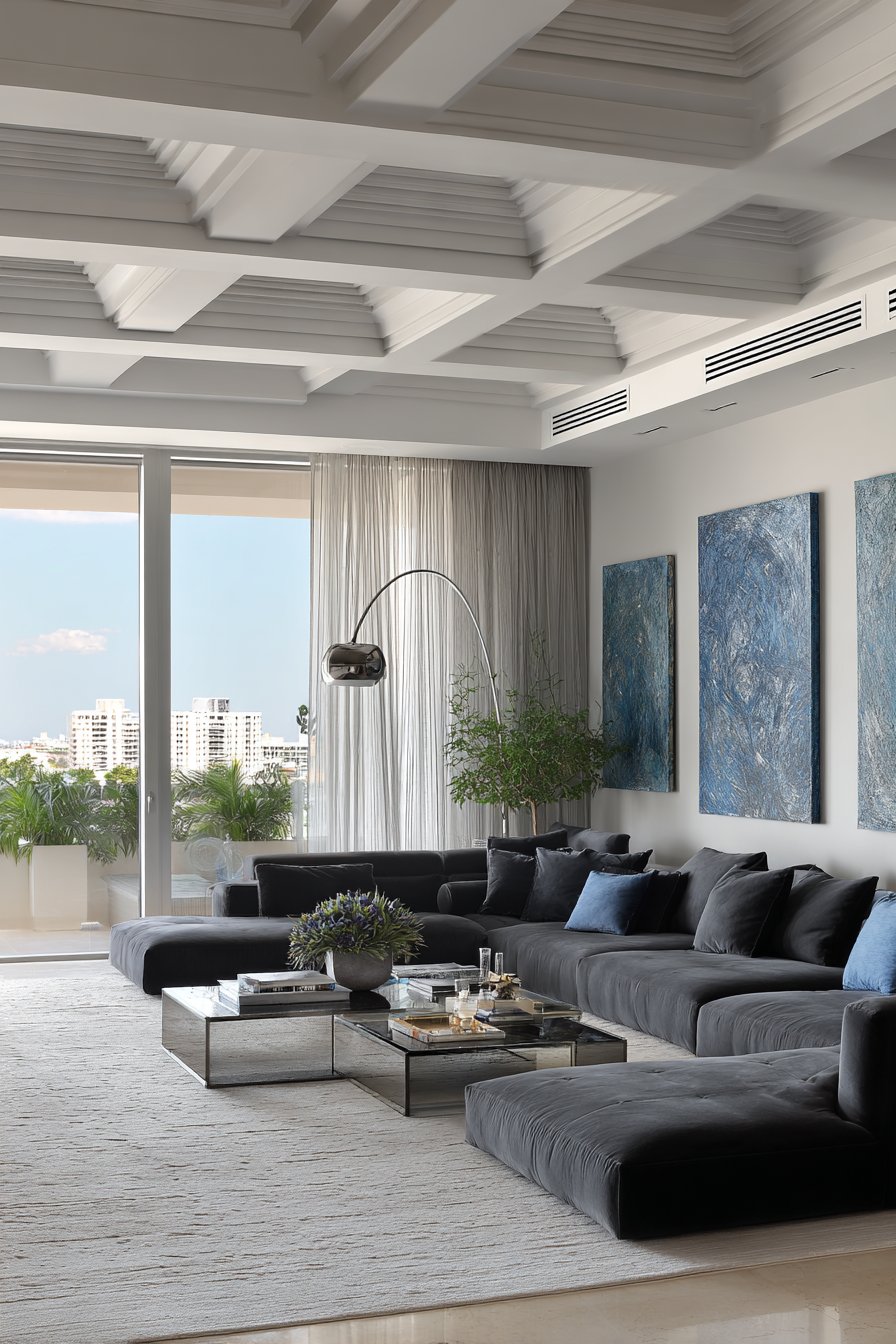
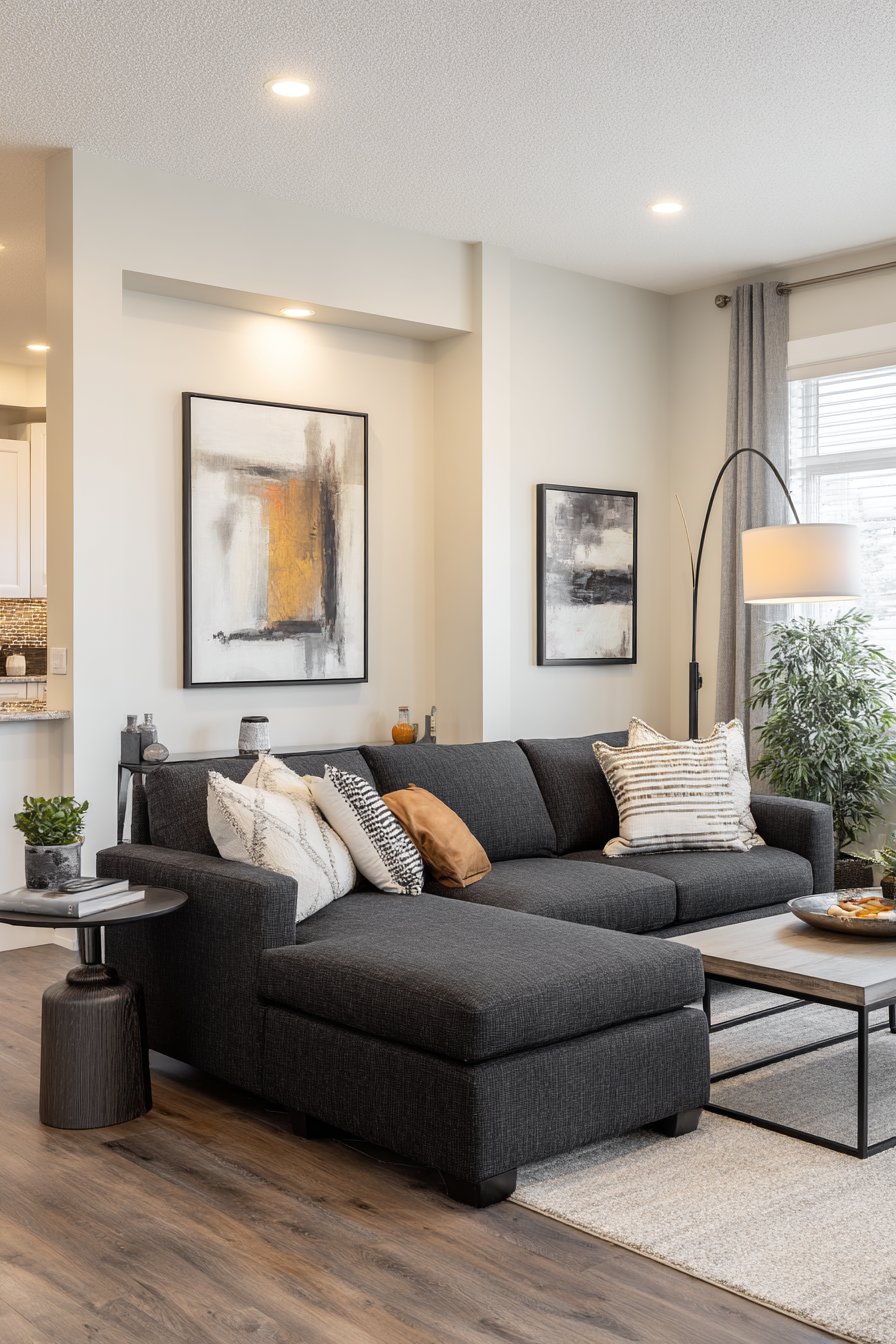
Clean lines and sophisticated materials define this contemporary sitting room designed for modern urban living. The sleek L-shaped sofa in charcoal fabric provides ample seating while maintaining the streamlined aesthetic essential to contemporary design. Its low profile and geometric form create visual interest through shape rather than ornamentation, embodying the principle that form follows function. A geometric coffee table featuring a metal frame and glass top adds industrial edge while maintaining transparency.
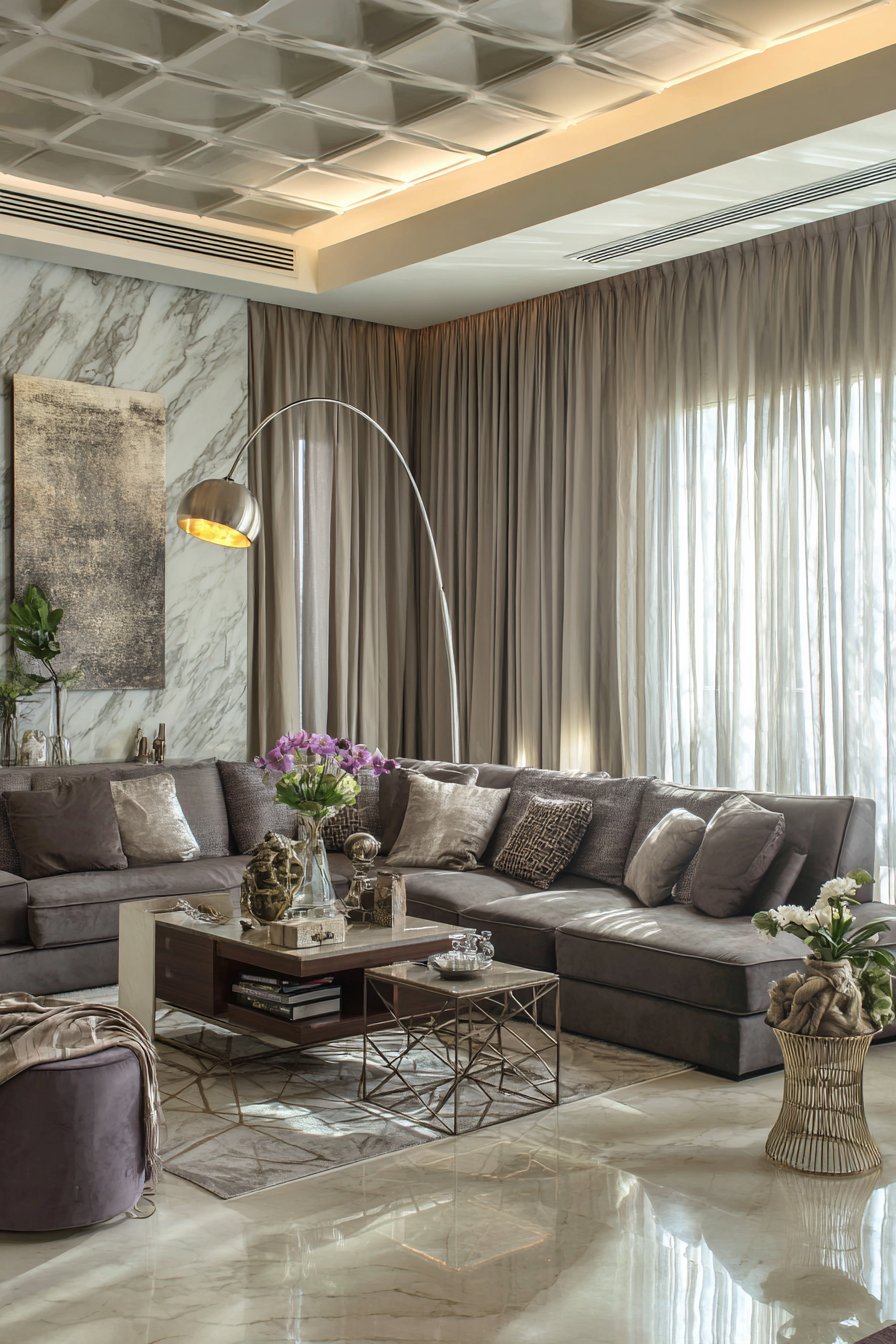
Abstract art on the walls introduces controlled bursts of color and visual intrigue, carefully selected to complement the neutral palette while adding personality and focal points. The artwork’s contemporary aesthetic reinforces the room’s modern sensibility while providing conversation starters and visual anchors. Recessed lighting creates clean ceiling lines while providing adjustable ambient illumination, and a modern arc floor lamp adds both functional task lighting and sculptural presence.
The neutral color palette punctuated with metallic accents—brushed steel, polished chrome, or warm brass—adds luminous interest without disrupting the sophisticated restraint. These metallic touches catch and reflect light, adding dynamic visual elements that change throughout the day. This contemporary sitting room demonstrates how disciplined material selection and attention to proportion can create spaces of refined urban elegance.
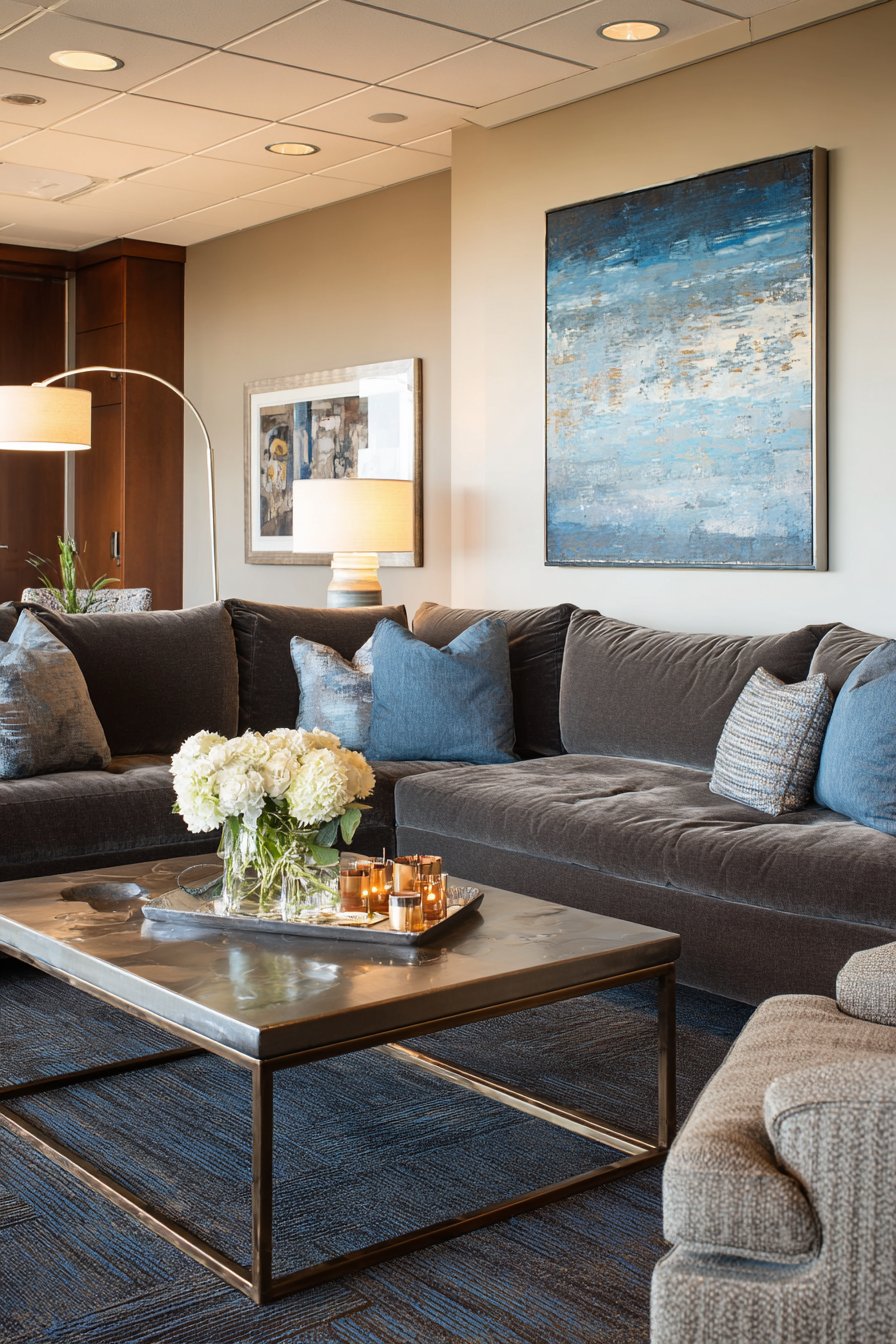
Key Design Tips: Select L-shaped sofas to maximize seating capacity while maintaining contemporary clean lines and efficient space utilization. Choose geometric coffee tables with metal and glass construction to add industrial sophistication and visual lightness. Incorporate abstract art as focal points that introduce color and personality within neutral contemporary palettes. Install recessed lighting to create clean ceiling lines and provide adjustable ambient illumination without visual clutter. Add modern arc floor lamps for both functional task lighting and sculptural architectural interest.
7. Rustic Farmhouse Warmth
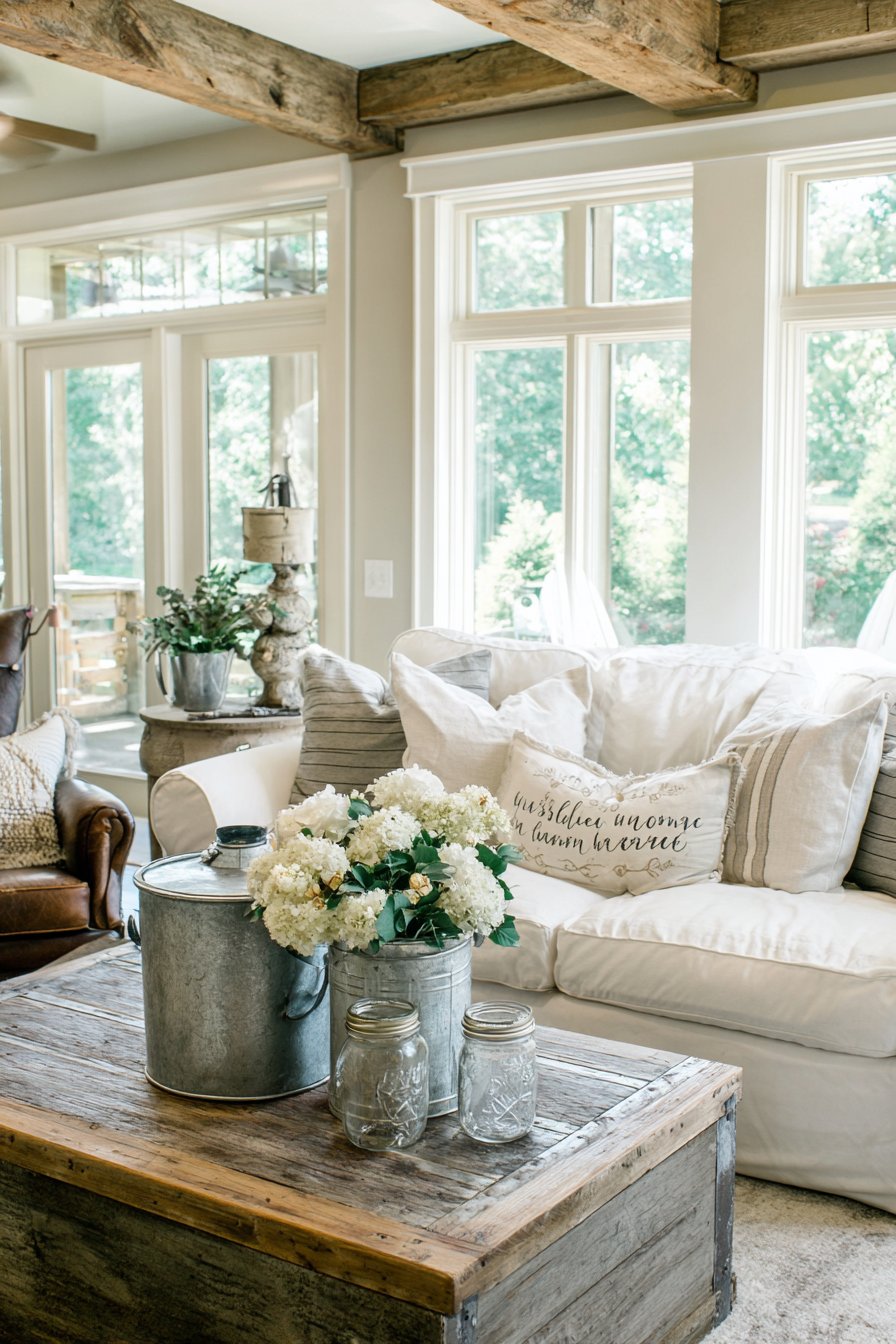
This charming sitting room captures the essence of farmhouse living through its emphasis on natural materials, comfortable textiles, and relaxed elegance. A slipcovered sofa in white linen creates a fresh, casual foundation that’s both practical and beautiful—the removable covers allow for easy cleaning while the natural fabric breathes and ages gracefully. A distressed wood coffee table adds rustic character, its weathered finish telling stories of use and time.
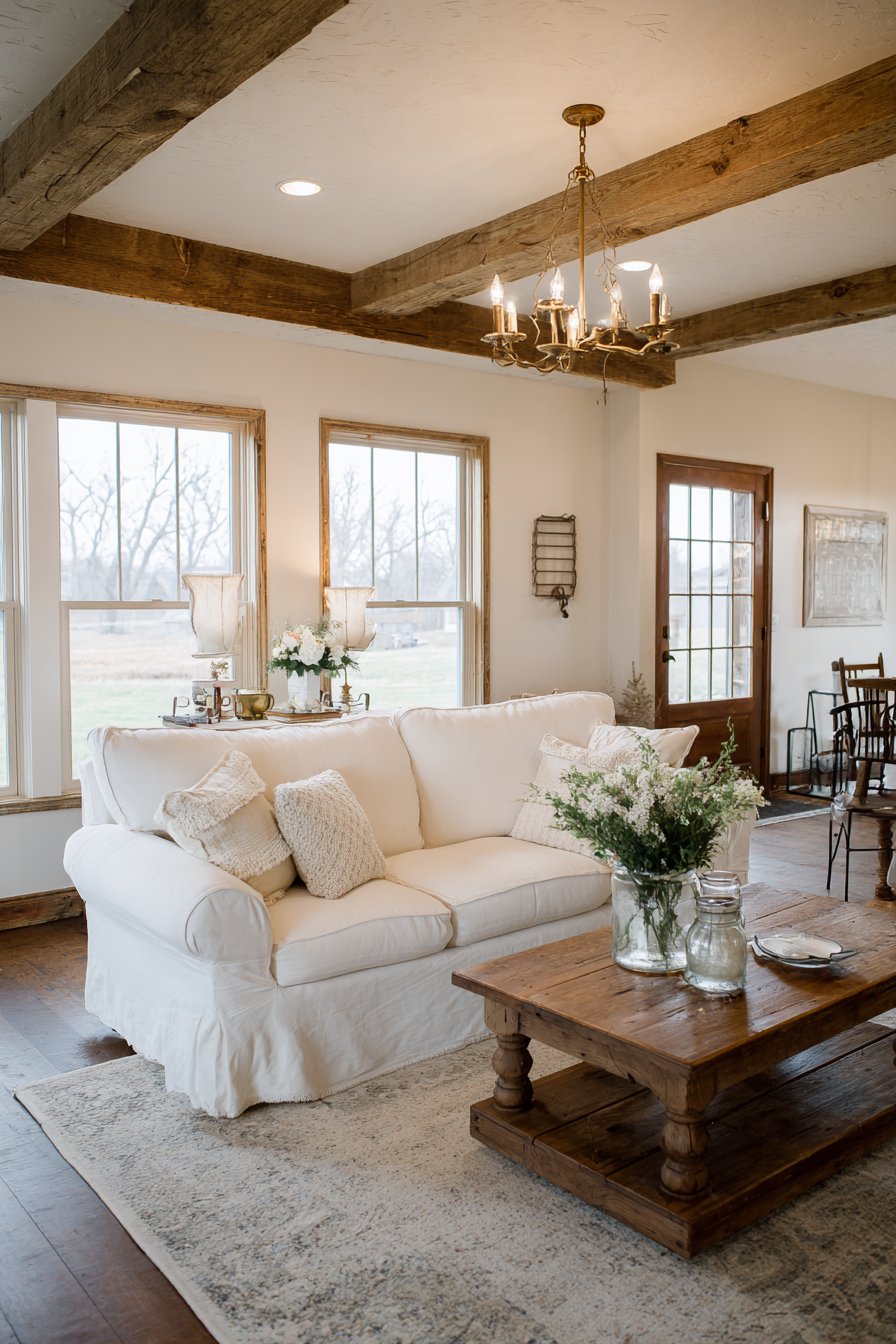
Exposed wooden beams crossing the ceiling add architectural interest and historical character, creating visual rhythm and emphasizing the room’s height. These structural elements, left natural or lightly stained, connect the interior to traditional agricultural buildings while adding warm wood tones overhead. Galvanized metal accessories and mason jar vases filled with fresh flowers introduce authentic farmhouse elements that balance the softness of the textiles.
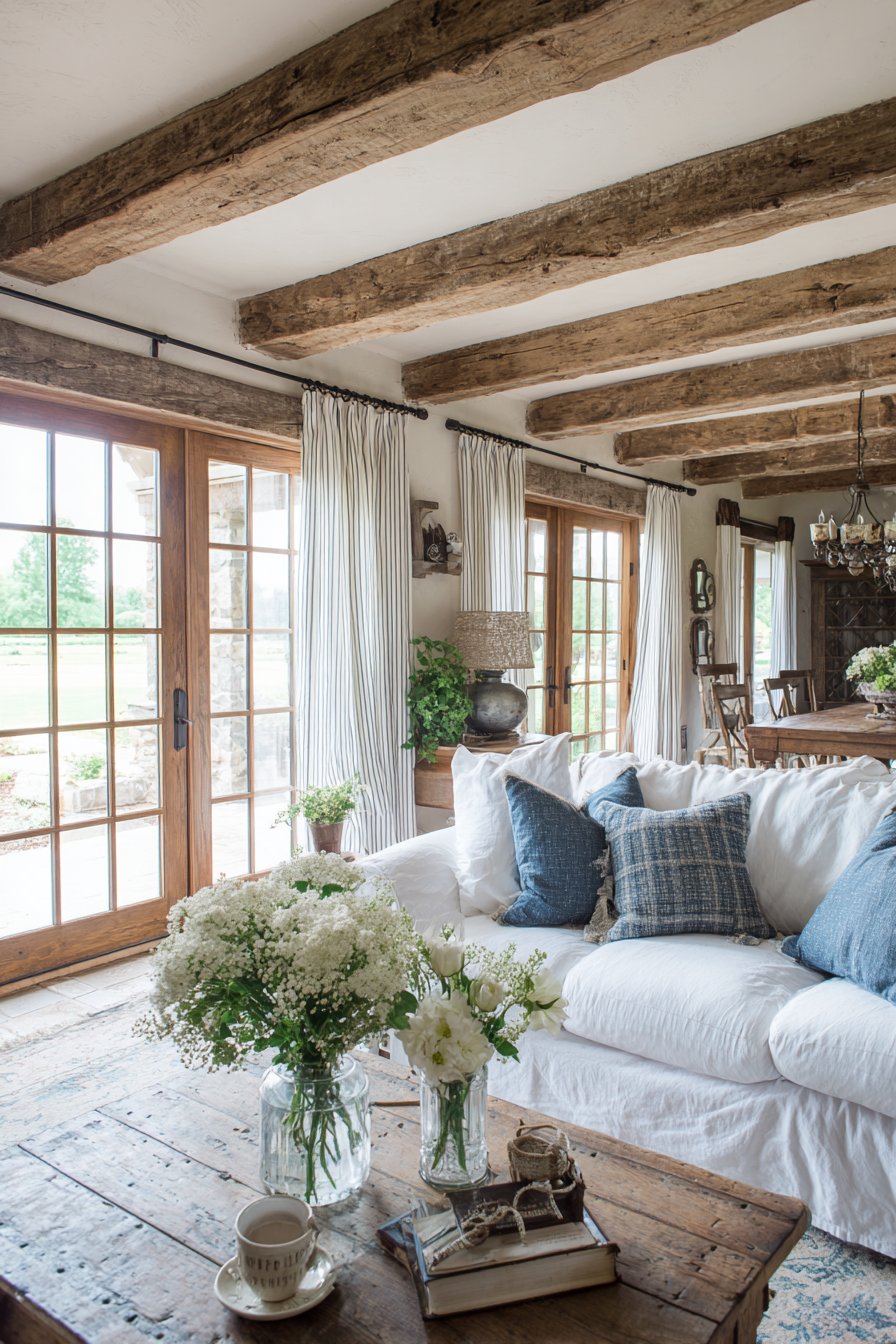
Natural light streaming through multiple windows highlights the comfortable, lived-in aesthetic that makes farmhouse style so appealing. The abundance of windows, often a feature of traditional farmhouses built before electric lighting, creates bright, cheerful spaces that change character throughout the day. This sitting room proves that rustic doesn’t mean rough—rather, it celebrates honest materials and comfortable, approachable design.
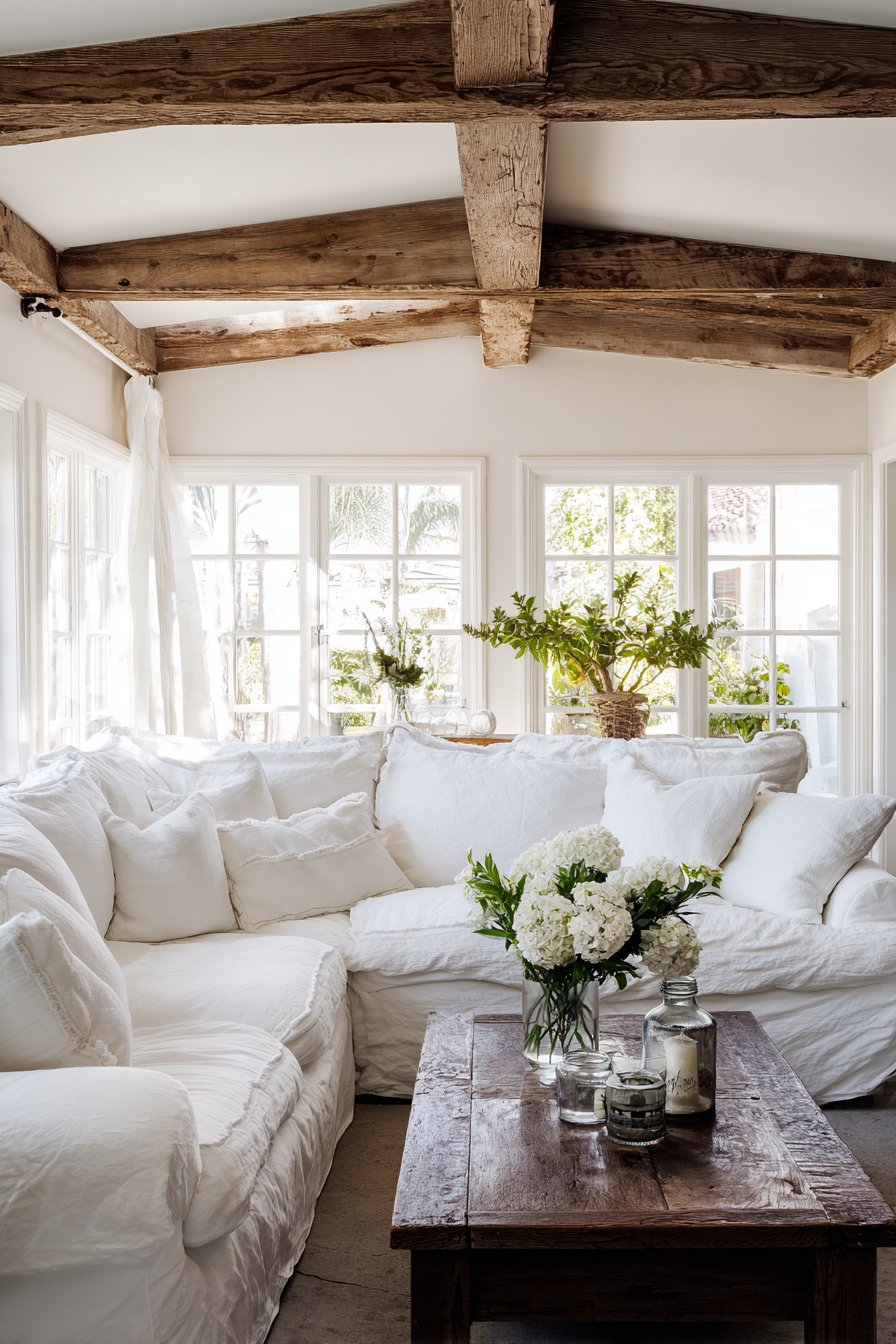
Key Design Tips: Choose slipcovered sofas in white linen for their casual elegance and practical washability, perfect for family-friendly spaces. Select distressed wood coffee tables to add rustic character and visual interest through authentic wear and patina. Expose wooden ceiling beams where possible to add architectural character and emphasize vertical space. Incorporate galvanized metal accessories to introduce authentic farmhouse materials with industrial heritage. Display fresh flowers in mason jars for simple, authentic farmhouse charm that brings nature indoors.
8. Smart Small Space Solutions
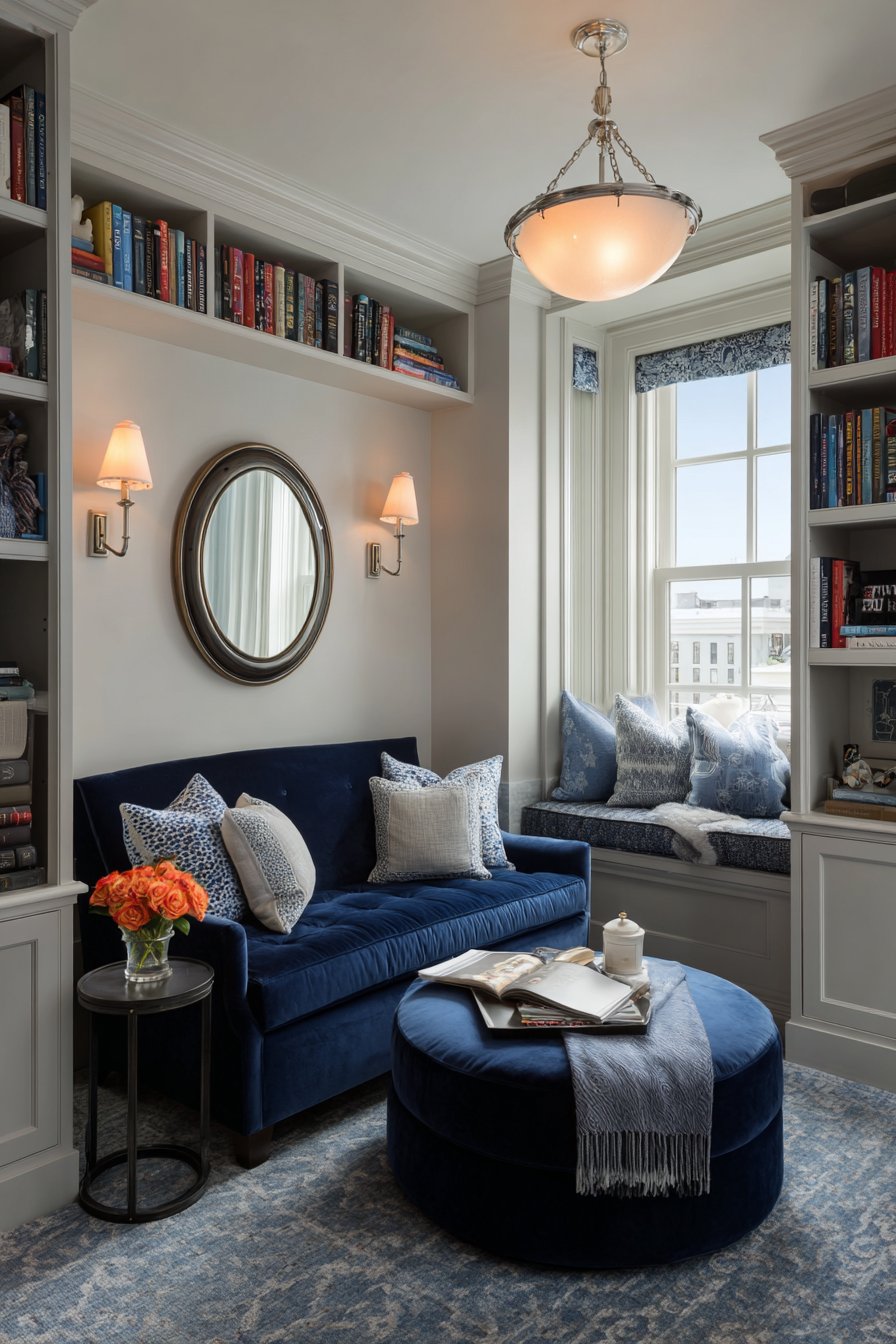
Maximizing limited square footage requires strategic thinking and multifunctional furniture, as demonstrated in this clever small sitting room design. A compact loveseat upholstered in navy blue velvet provides comfortable seating for two without overwhelming the modest dimensions, its rich color adding depth and luxury to the small space. Nesting side tables offer flexibility—they can be separated for entertaining or tucked together to minimize footprint when not needed.
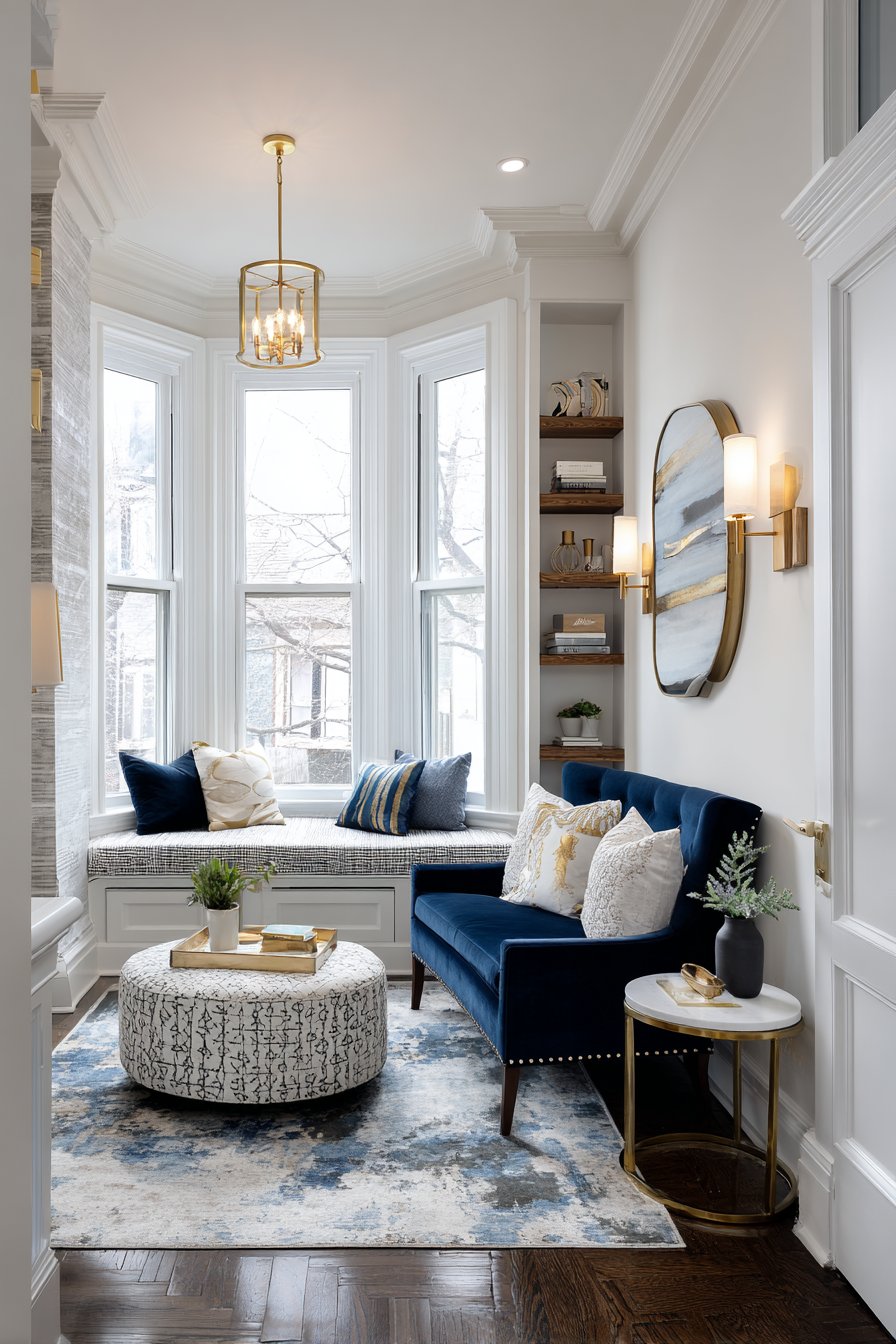
Wall-mounted floating shelves provide essential storage and display opportunities without consuming precious floor space, drawing the eye upward and making the room feel taller. A strategically placed round mirror creates the illusion of additional depth and reflects light throughout the space, effectively doubling the visual impact of windows and light sources. The multifunctional ottoman serves as both a coffee table and additional seating, its storage interior concealing blankets, books, or other living room essentials.
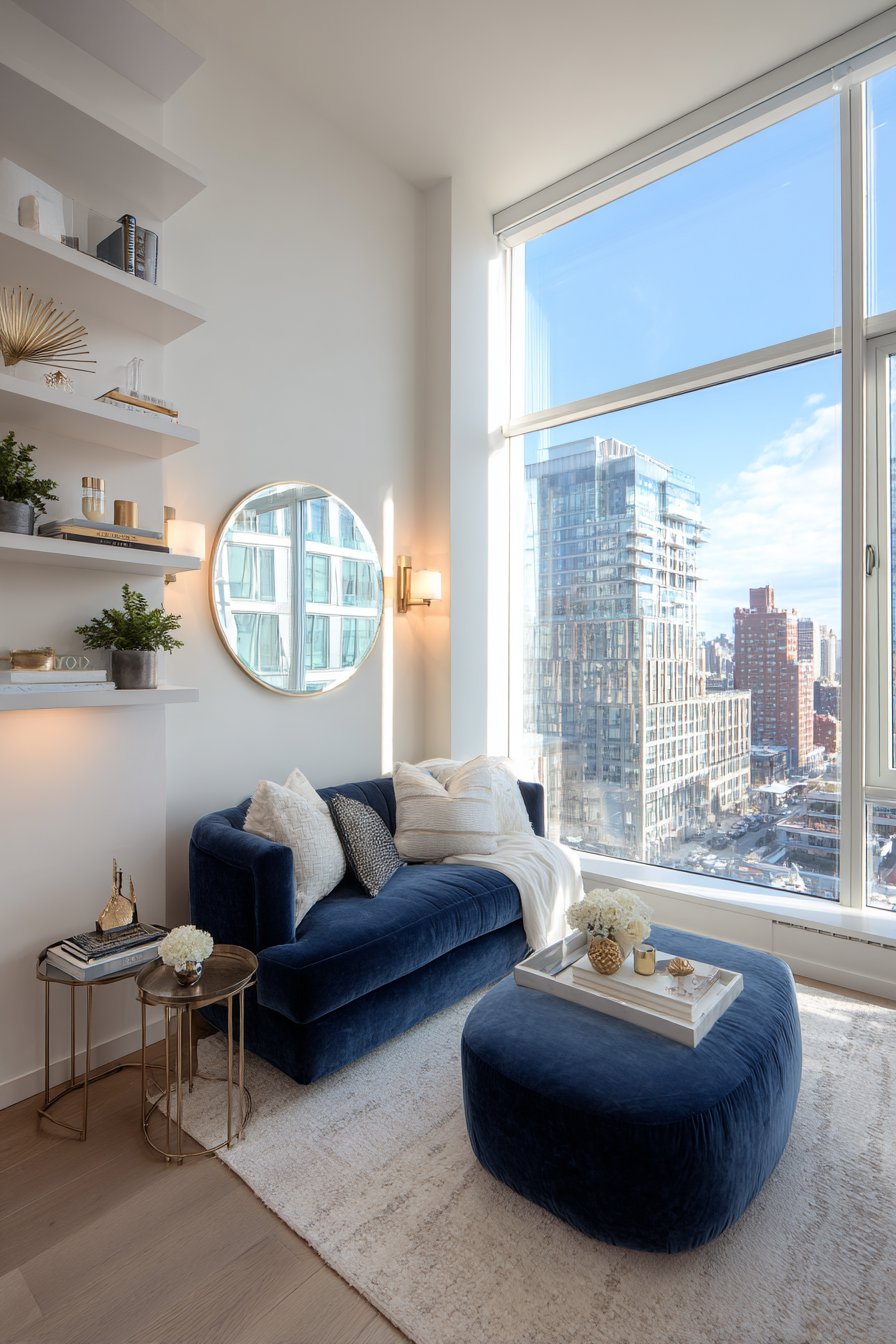
Clever lighting choices include wall sconces that provide illumination without requiring floor or table space, keeping surfaces clear and maximizing the usable area. The overall color scheme remains light and bright, with the navy velvet providing a jewel-like accent rather than making the space feel heavy or closed in. This sitting room proves that small spaces can be both functional and beautiful when every element earns its place.
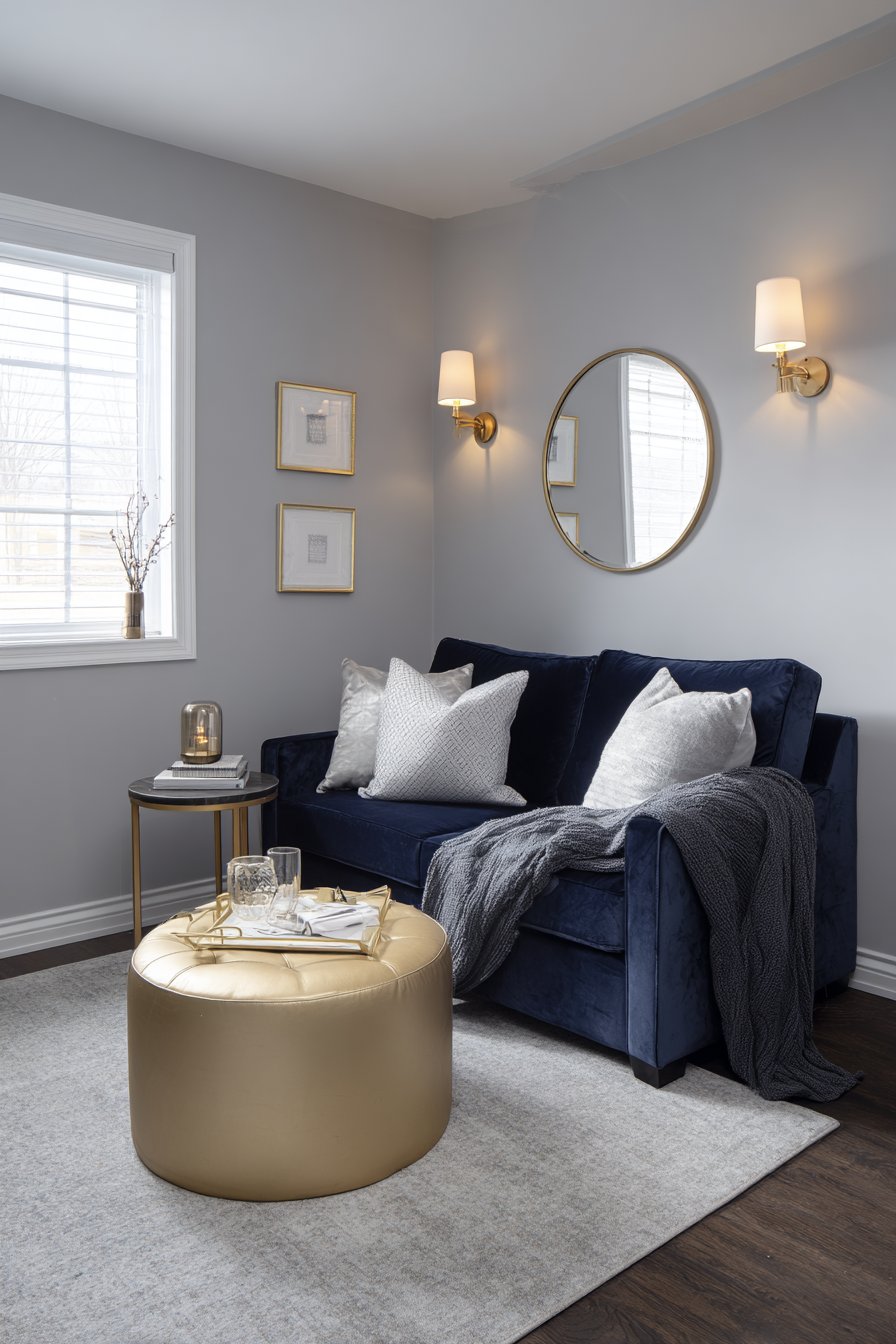
Key Design Tips: Select compact loveseats instead of full-size sofas to maintain comfortable seating without overwhelming small room dimensions. Choose nesting tables that separate for entertaining but stack together to minimize footprint when not in use. Install wall-mounted floating shelves to maximize storage while preserving valuable floor space and creating vertical interest. Position round mirrors strategically to reflect light and create the illusion of greater depth and spaciousness. Use multifunctional ottomans that serve as seating, coffee tables, and concealed storage simultaneously.
9. Breezy Coastal Retreat
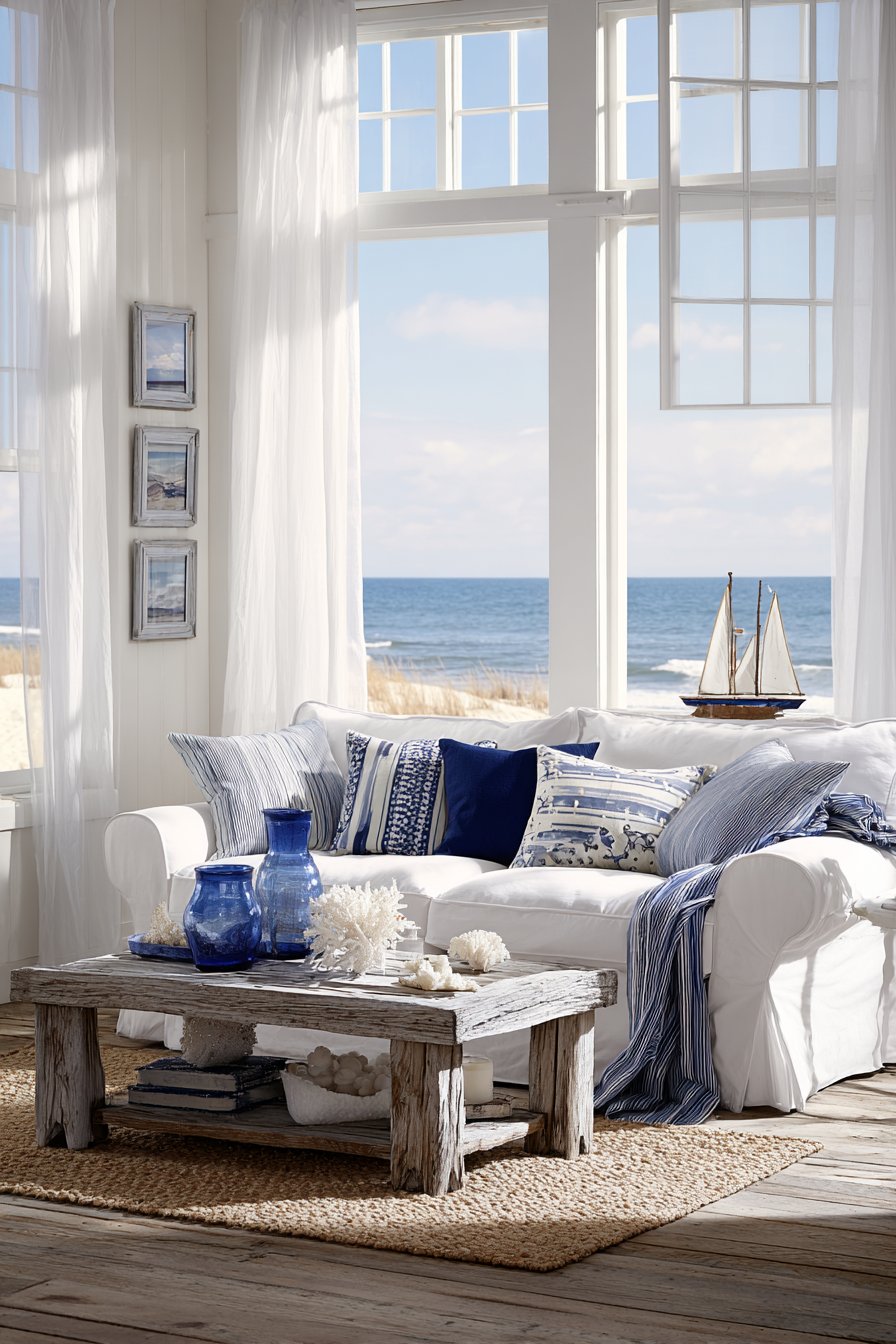
Ocean-inspired serenity defines this coastal sitting room where relaxed elegance meets beach house casual. A white slipcovered sofa creates a fresh, casual foundation reminiscent of sandy beaches and sea foam, its practical fabric choice allowing for easy maintenance in sandy, sun-drenched environments. The driftwood coffee table brings authentic coastal character, its weathered surface and organic form evoking treasures discovered during beach walks.
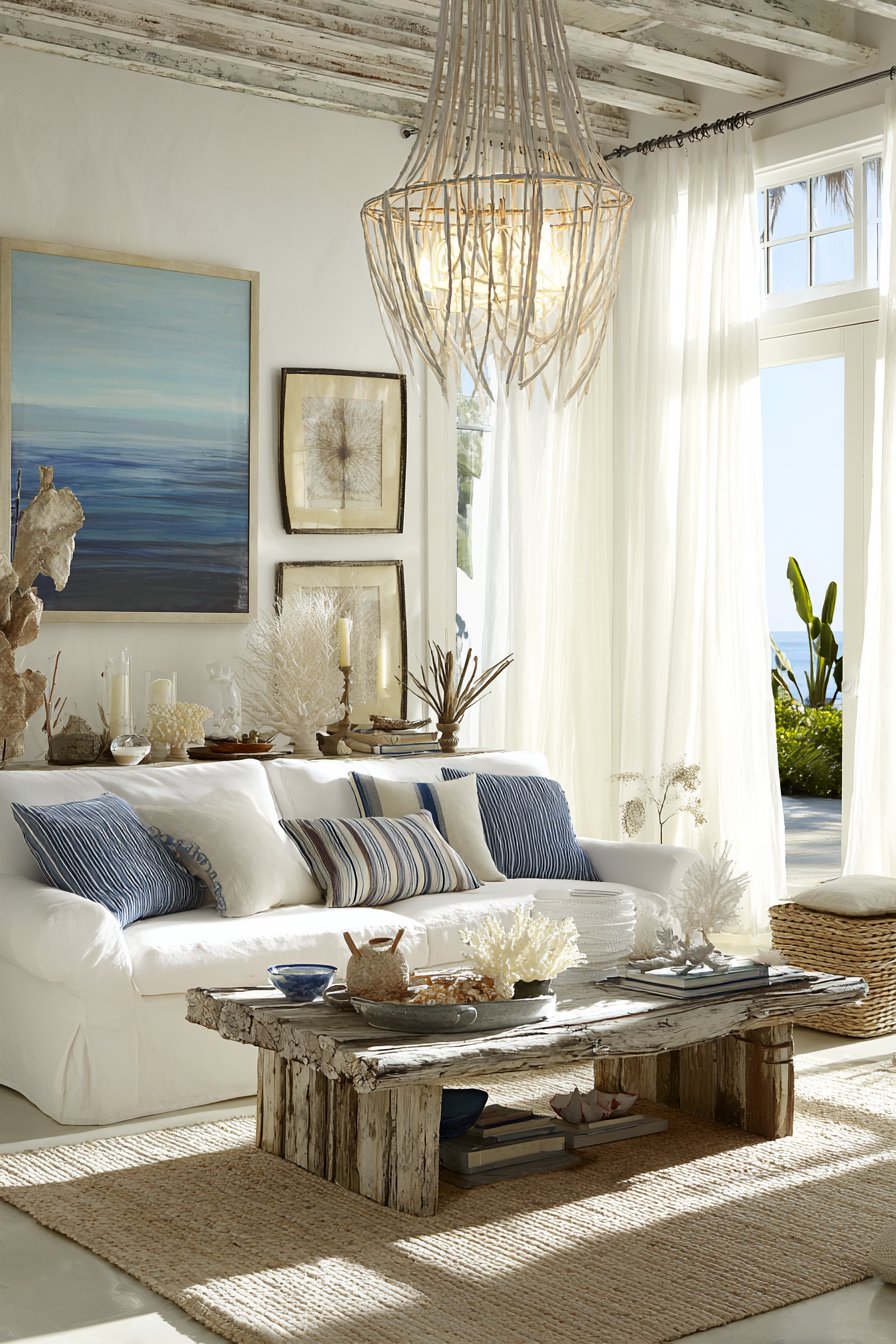
Striped throw pillows in shades of blue and sand introduce pattern while reinforcing the coastal palette—navy, aqua, sandy beige, and crisp white create a refreshing color story that never goes out of style. A seagrass rug adds natural texture underfoot while providing durability perfect for high-traffic beach house living. Decorative elements thoughtfully curated from coastal themes—coral specimens, nautical artwork, weathered wood accents—add personality without veering into theme park territory.
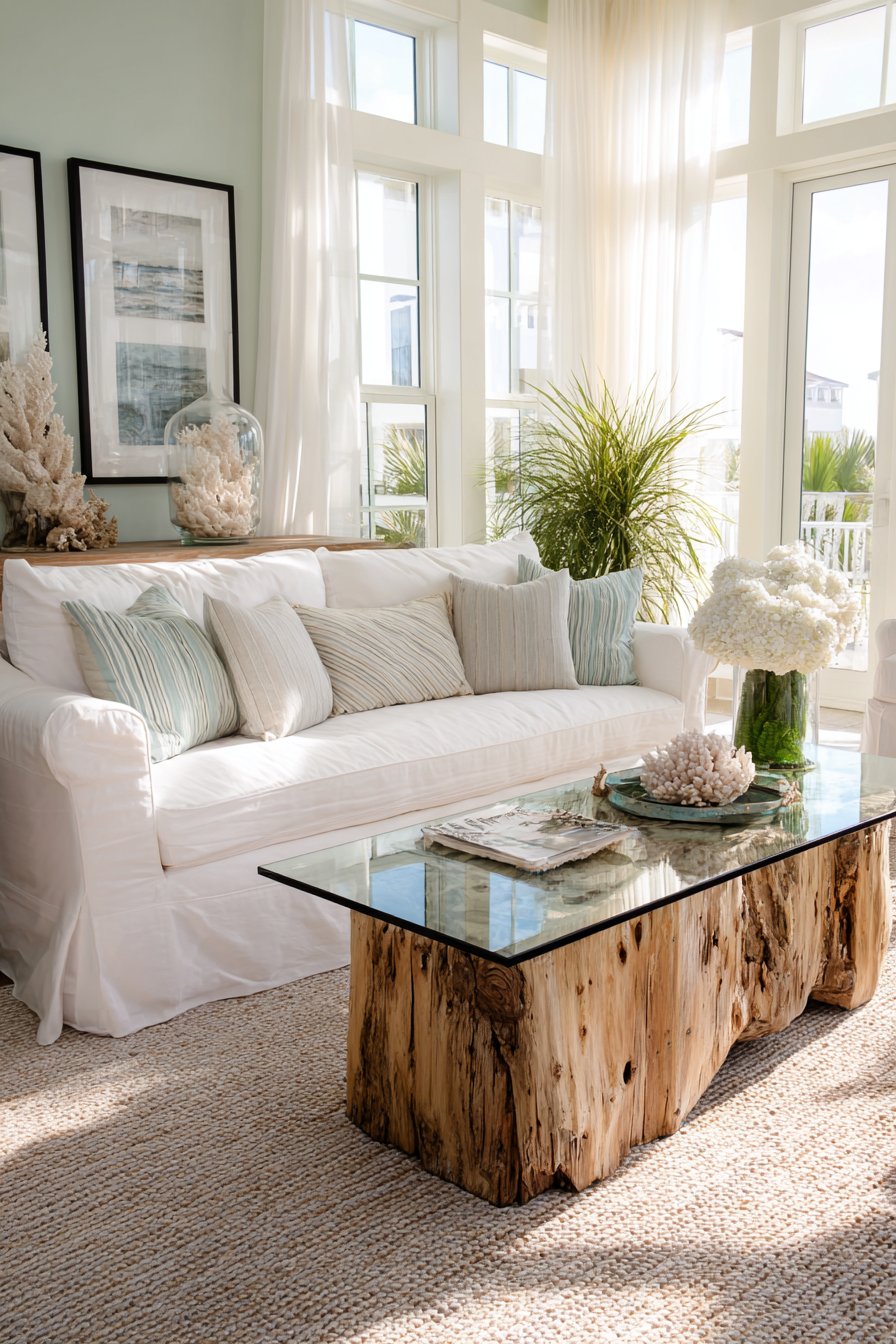
Sheer white curtains filter bright natural sunlight while maintaining the room’s airy, luminous quality. The window treatments move gently with ocean breezes, adding dynamic movement and reinforcing the connection between interior and coastal environment. This sitting room captures the essence of seaside living—relaxed, fresh, and always welcoming.
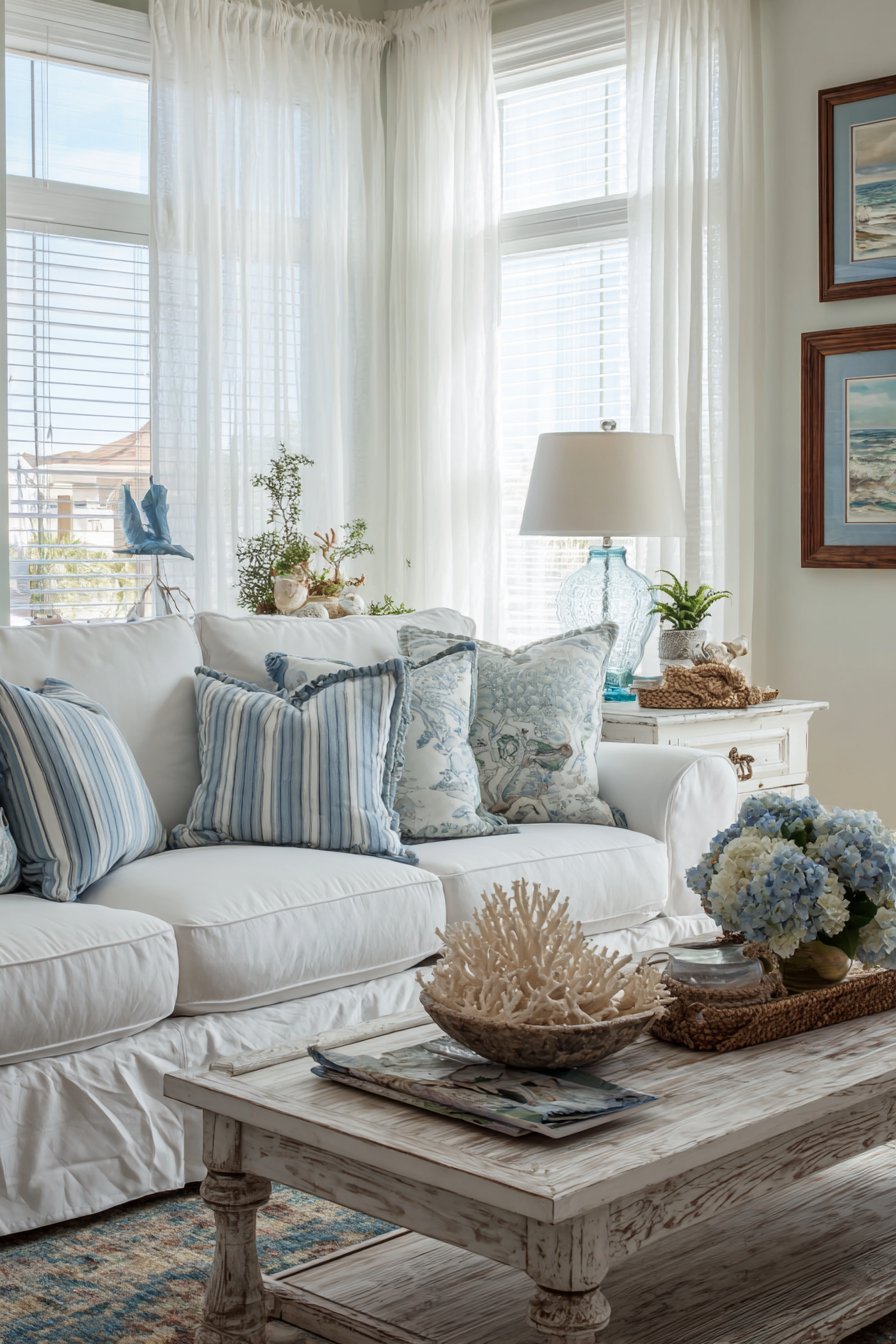
Key Design Tips: Choose white slipcovered sofas for their casual coastal aesthetic and practical cleanability in sandy beach environments. Select driftwood furniture pieces to add authentic coastal character and organic sculptural interest. Incorporate striped textiles in blue and sand tones to introduce pattern while maintaining classic coastal color palette. Install seagrass or sisal rugs for natural texture and durability perfect for barefoot beach house living. Add carefully curated coastal decorative elements like coral and weathered wood to enhance theme without overwhelming.
10. Mid-Century Modern Classic
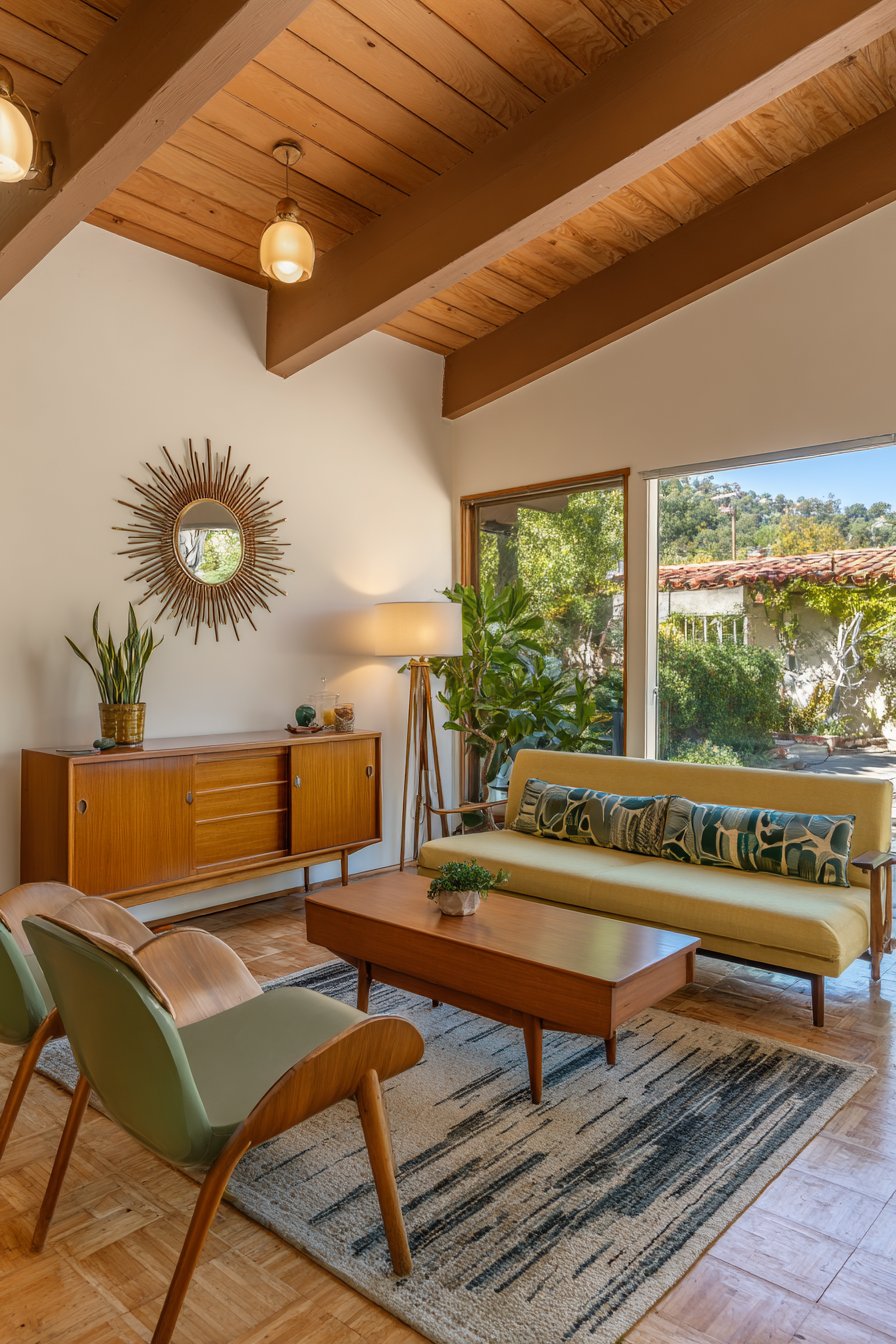
This sitting room celebrates the enduring appeal of mid-century modern design through its iconic furniture choices and period-appropriate aesthetic. A teak wood credenza provides essential storage while showcasing the beautiful wood grain and expert craftsmanship characteristic of 1950s and 60s furniture design. Iconic molded plastic chairs add sculptural presence and demonstrate the era’s fascination with innovative materials and forms.
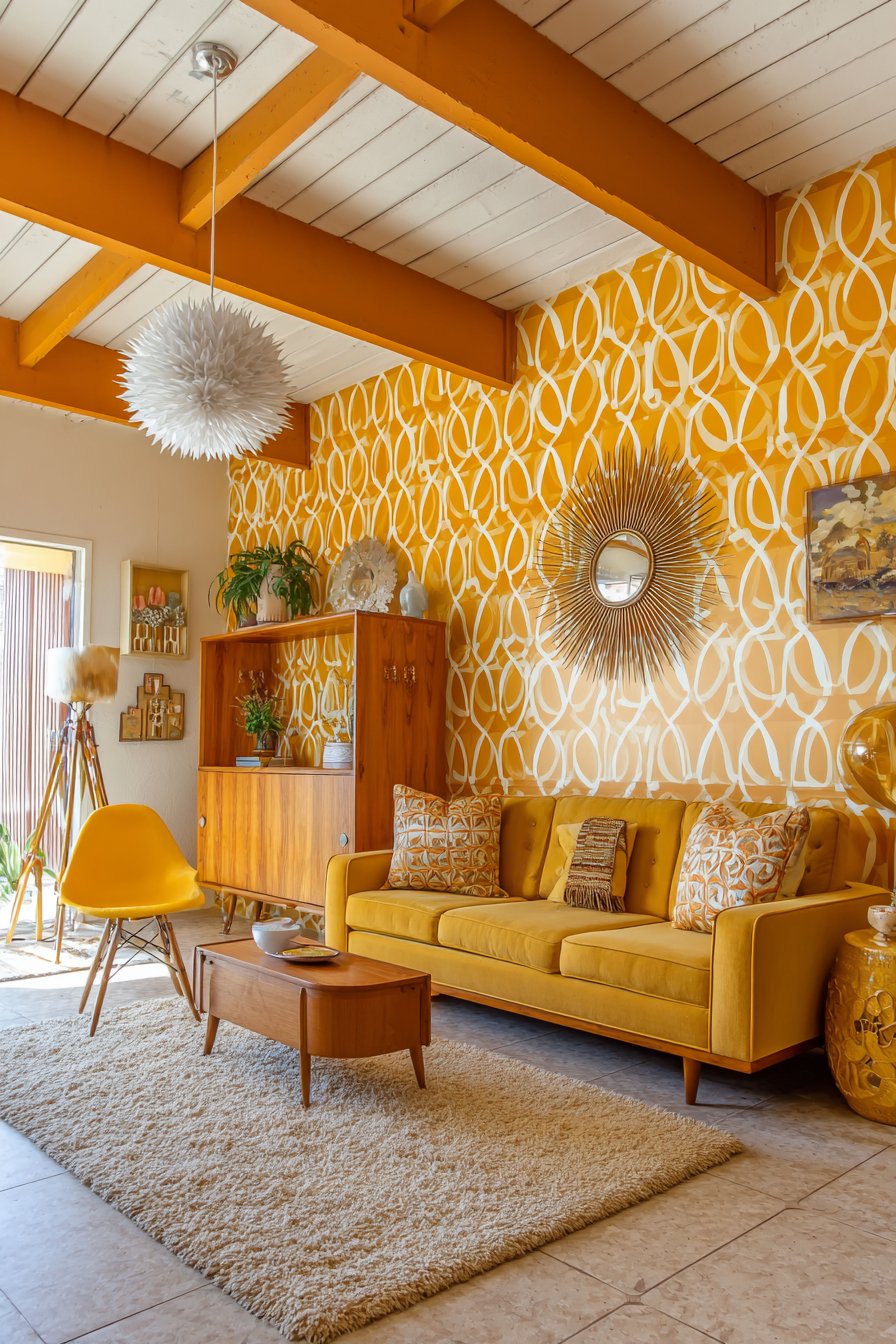
The low-profile sofa features tapered wooden legs and mustard yellow fabric upholstery—a color choice that exemplifies the bold yet sophisticated palette favored during this design era. The legs, angled outward in characteristic mid-century fashion, create visual lightness despite the sofa’s solid construction. Geometric patterns appear throughout in throw pillows and area rug, their angular forms and retro color combinations adding visual energy.
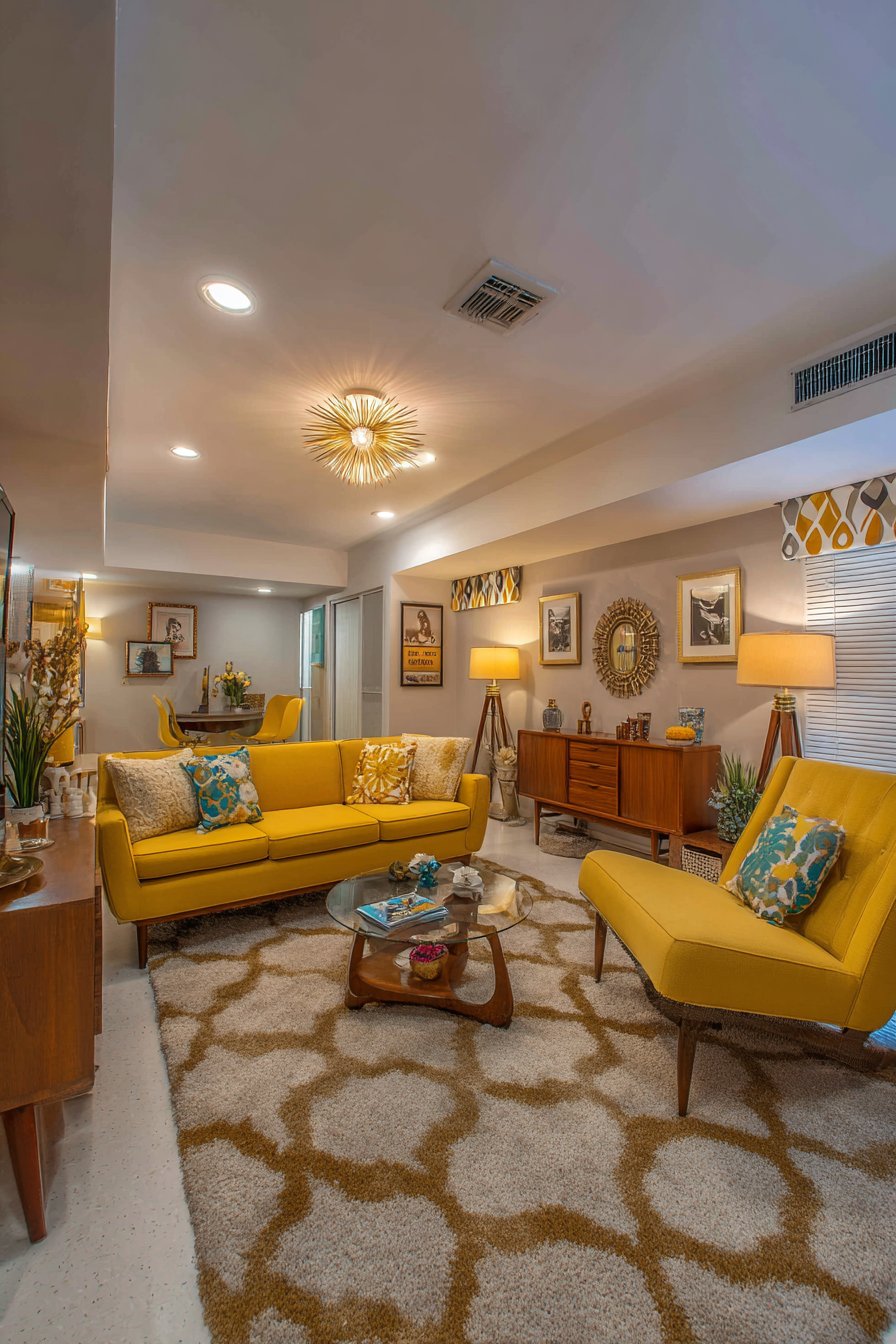
A sunburst mirror adorns the wall as both functional reflective surface and iconic decorative element, its radiating design capturing the optimism and forward-looking spirit of the atomic age. Period-appropriate lighting fixtures include a tripod floor lamp that provides both illumination and sculptural presence, its three-legged base and simple shade embodying mid-century design principles of form and function in harmony.
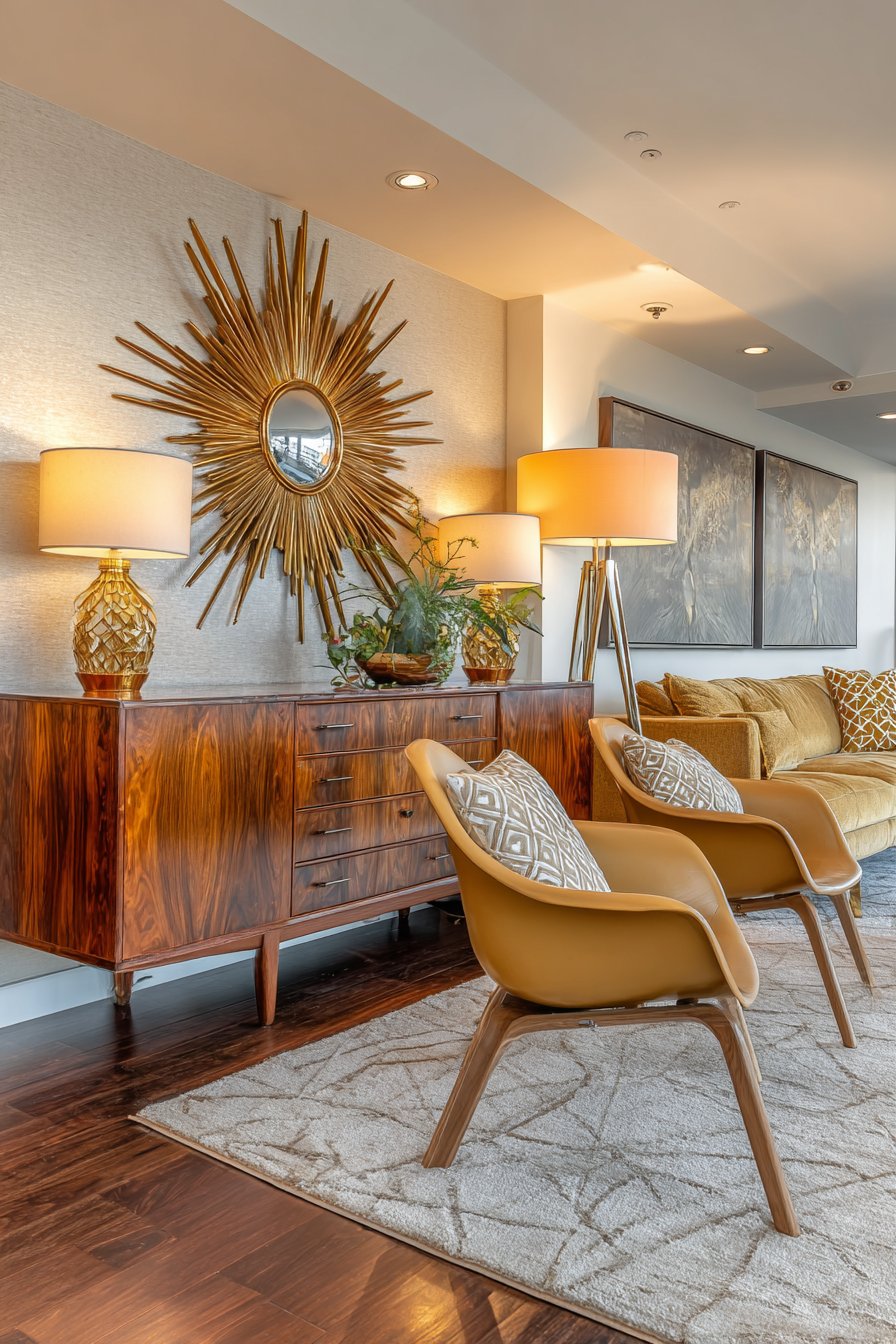
Key Design Tips: Invest in authentic or quality reproduction teak furniture to capture genuine mid-century warmth and expert craftsmanship. Choose iconic molded plastic chairs for their sculptural presence and historical design significance. Select low-profile sofas with tapered wooden legs to maintain the characteristic mid-century silhouette and visual lightness. Incorporate geometric patterns in textiles and area rugs to add visual energy appropriate to the era. Add sunburst mirrors and tripod floor lamps as signature mid-century decorative and functional elements.
11. Industrial Loft Character
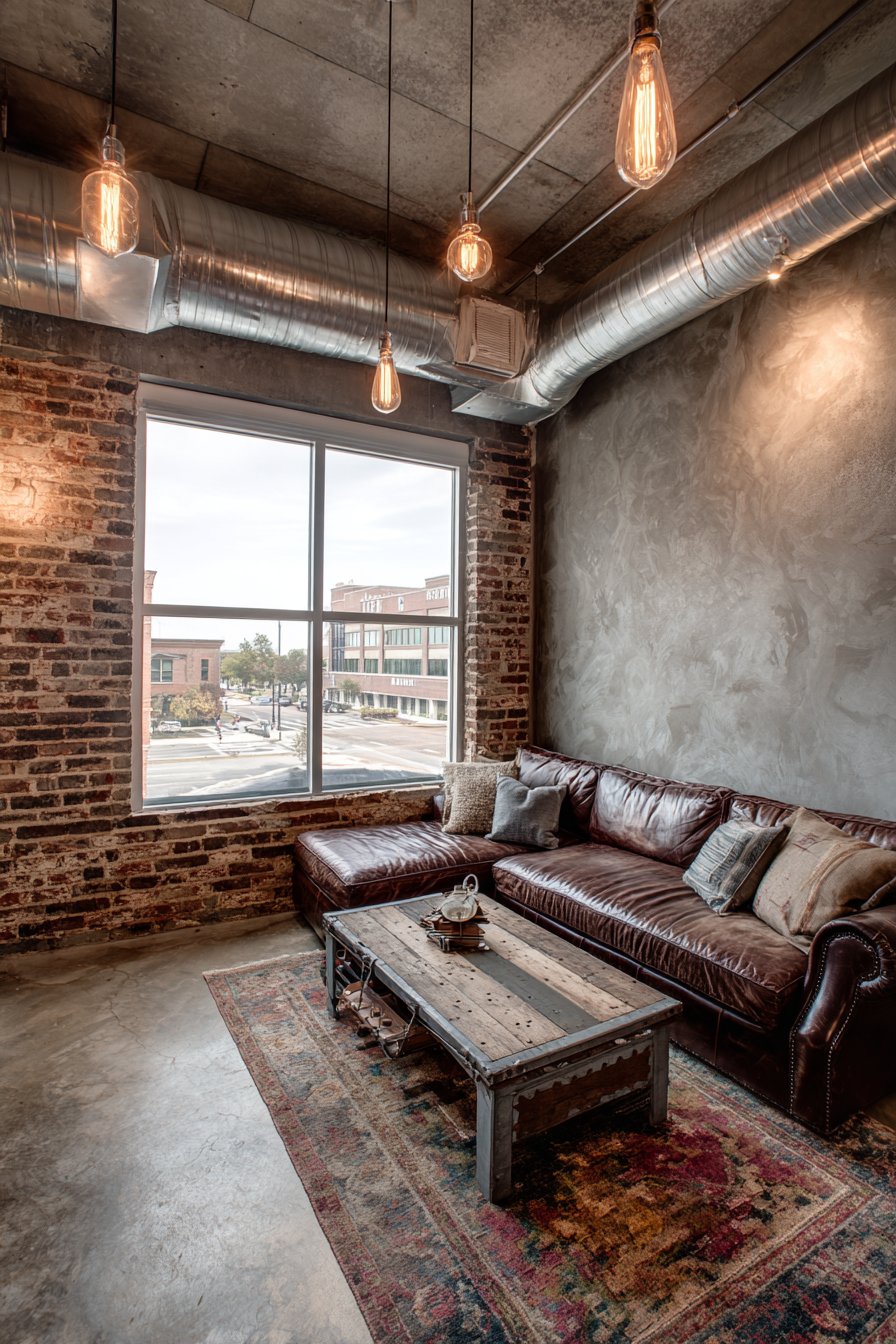
Raw materials and urban aesthetics converge in this industrial sitting room that celebrates the beauty of exposed structure and utilitarian design. A leather sofa with visible metal frame exemplifies industrial style’s appreciation for honest construction and durable materials. The exposed brick accent wall provides textural richness and historical character, its varied tones and mortar patterns adding visual interest that machine-made materials cannot replicate.
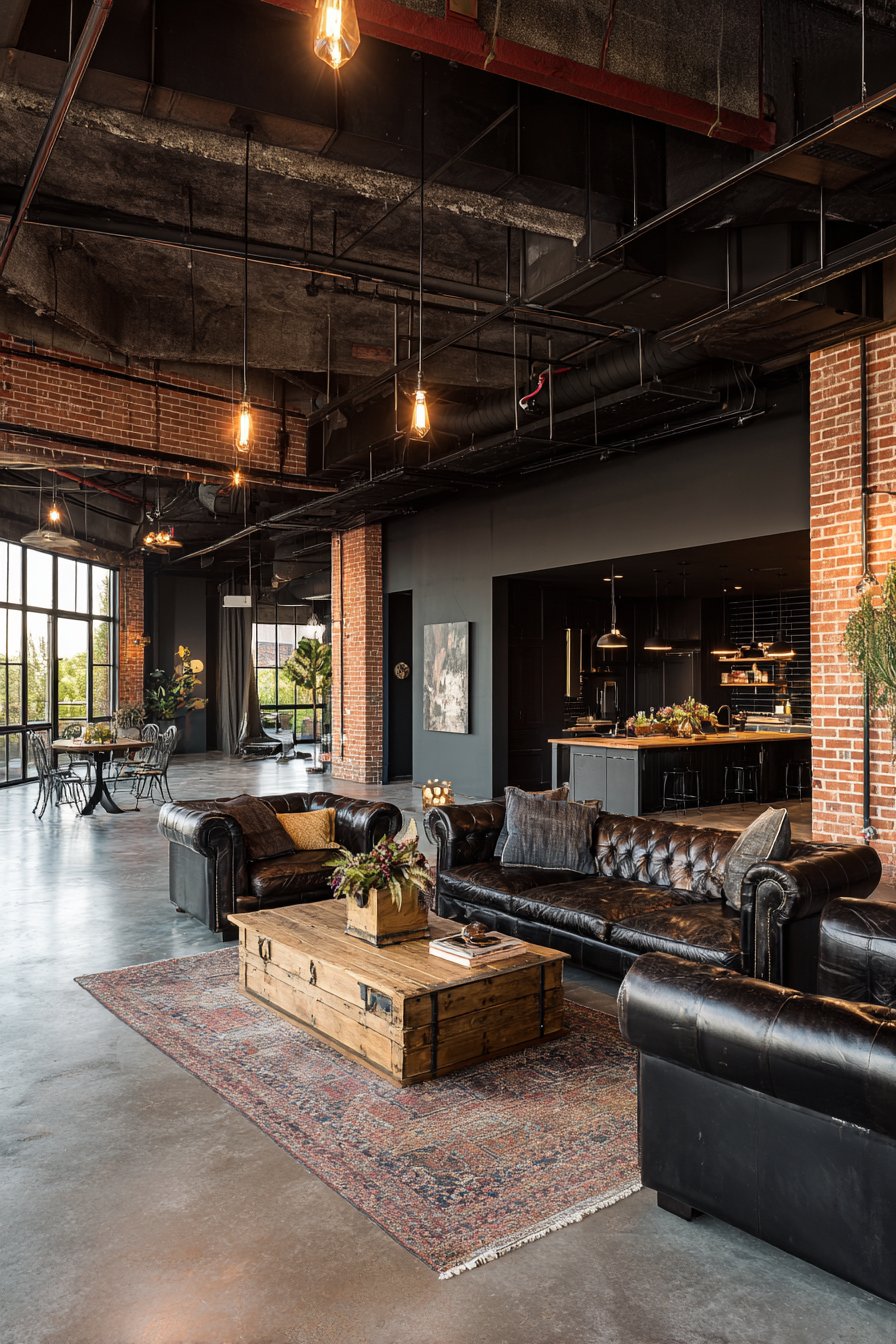
Concrete floors, polished and sealed for durability, create an urban foundation that’s softened by a distressed area rug in faded colors. This juxtaposition of hard and soft, rough and refined, characterizes successful industrial design. A metal and wood coffee table features visible bolts and rivets, celebrating the industrial aesthetic’s honest approach to joinery and construction—nothing is hidden or apologized for.
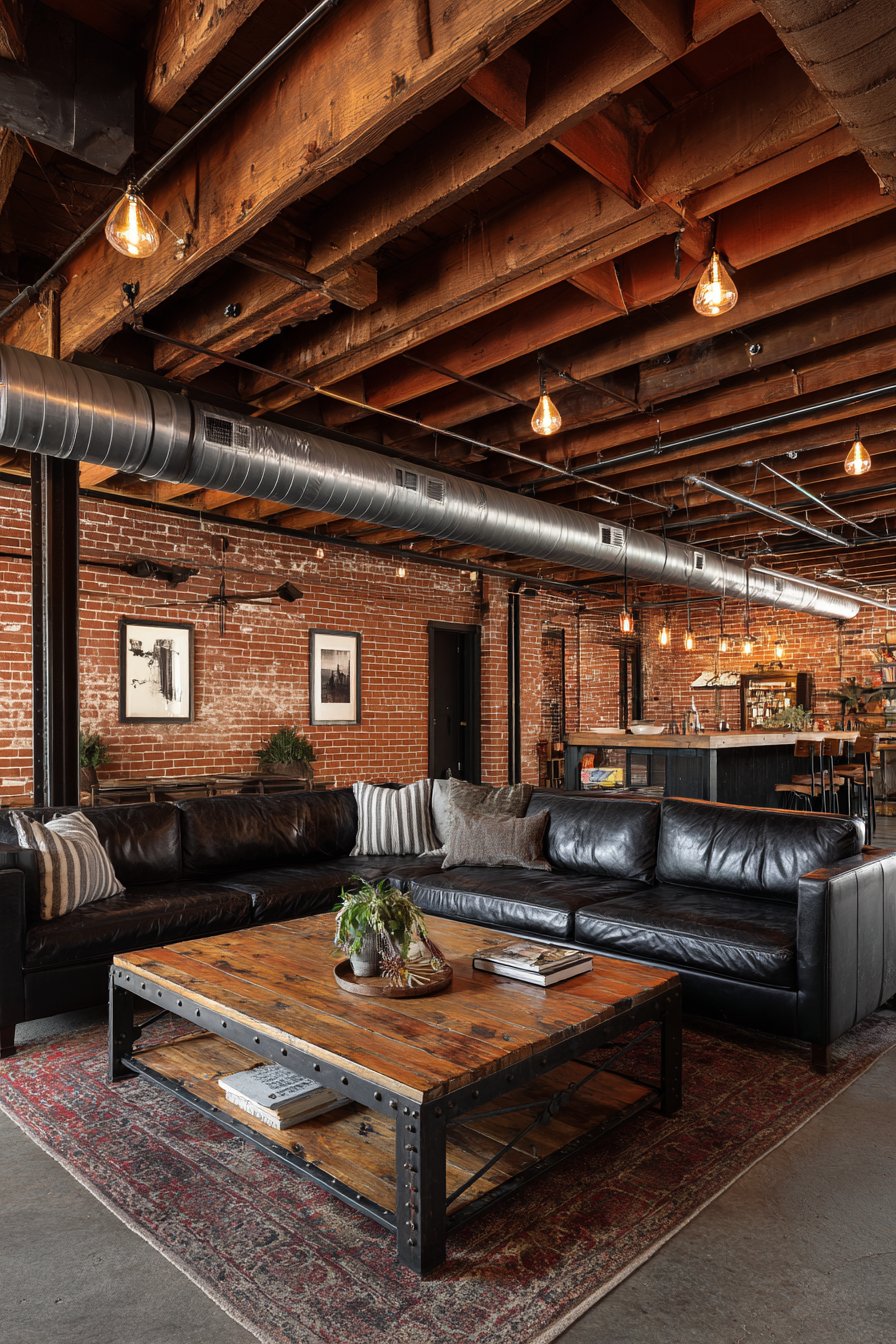
Edison bulb pendant lights hanging from exposed ductwork provide warm ambient lighting while showcasing the industrial appreciation for vintage technology and visible infrastructure. The exposed ductwork and structural elements that might be concealed in other design styles become decorative features here, painted or left raw depending on desired aesthetic. This sitting room proves that industrial doesn’t mean cold—when balanced with warm woods and comfortable textiles, it creates compelling urban character.
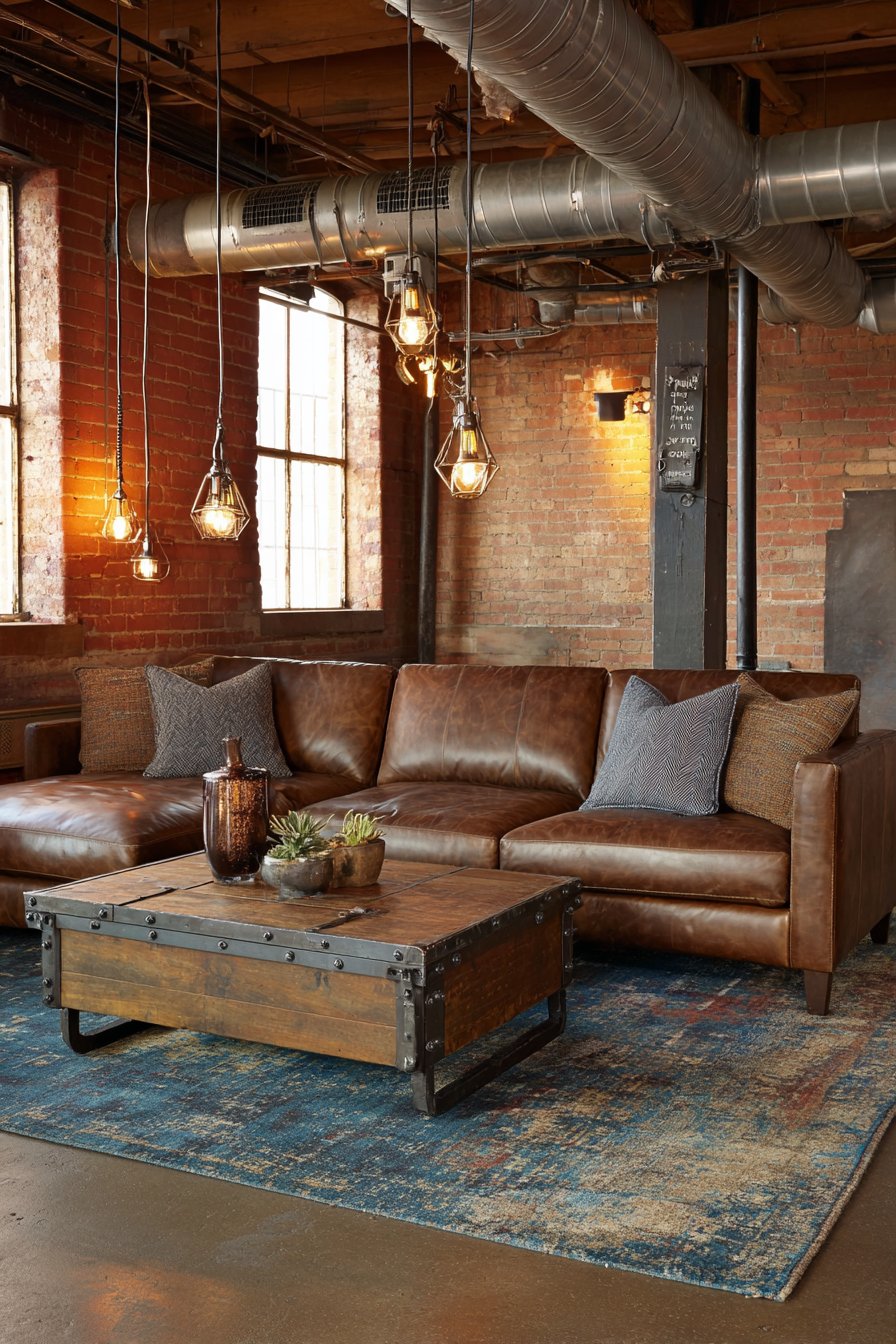
Key Design Tips: Choose leather sofas with exposed metal frames to showcase industrial construction methods and durable materials. Expose brick walls where possible to add authentic urban character and rich textural variation. Polish and seal concrete floors for durability while maintaining the industrial aesthetic and creating easy-care surfaces. Select furniture with visible bolts and rivets to celebrate honest construction and utilitarian design principles. Install Edison bulb lighting to add vintage industrial character and warm ambient illumination.
12. Elegant Formal Entertaining
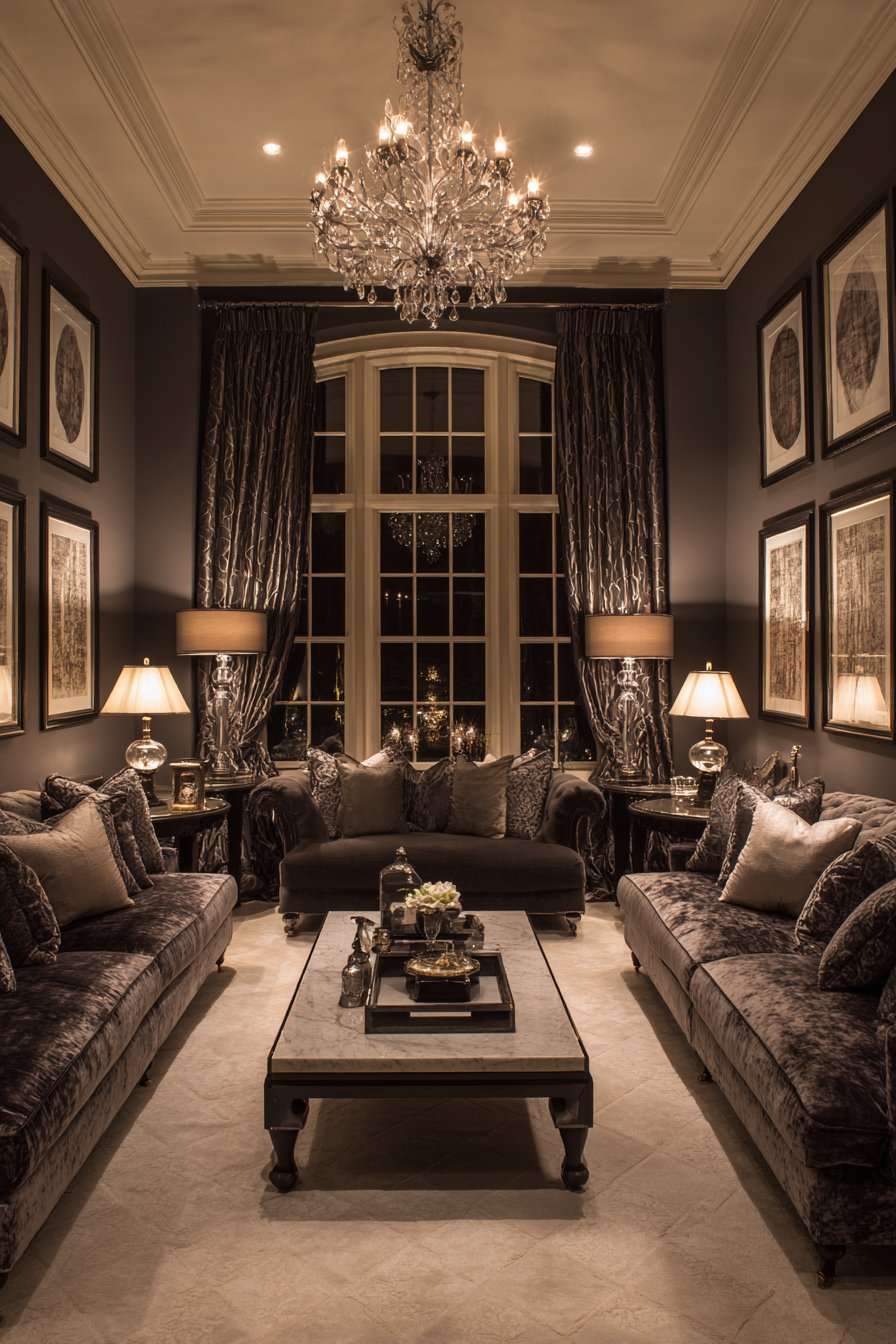
Sophisticated symmetry and refined materials create this formal sitting room designed specifically for hosting guests and special occasions. Matching sofas upholstered in luxurious velvet face each other across an elegant marble-topped coffee table, creating a balanced arrangement that encourages conversation while maintaining a sense of occasion. The velvet fabric choice adds tactile luxury and light-catching depth that changes as guests move through the space.
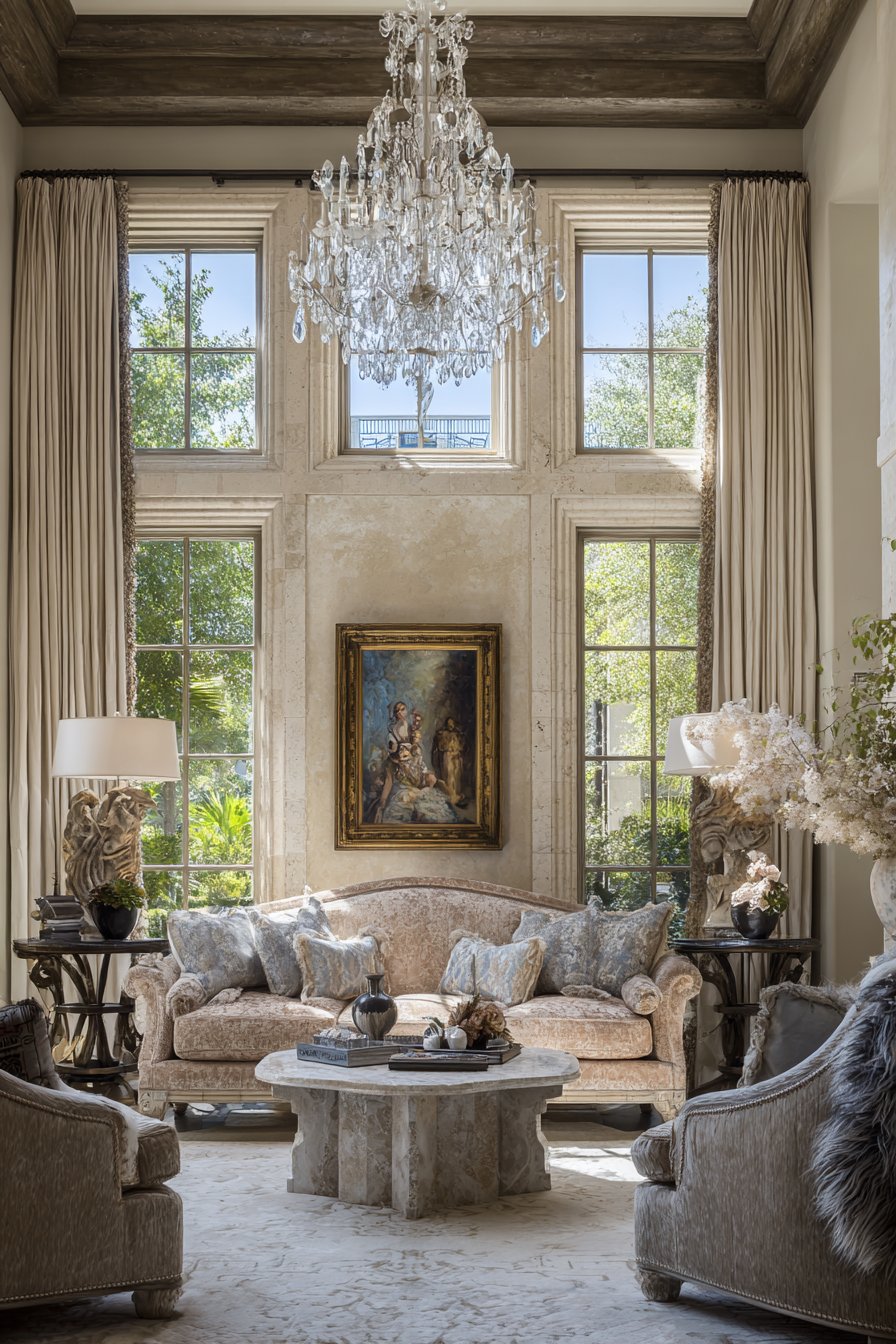
A crystal chandelier serves as the room’s crowning jewel, providing sparkling ambient illumination that transforms evening gatherings into memorable events. Heavy drapes in rich fabrics frame tall windows, adding gravitas and helping to control both light and temperature. Antique side tables displaying decorative lamps add functional task lighting while contributing to the room’s collected, refined aesthetic.
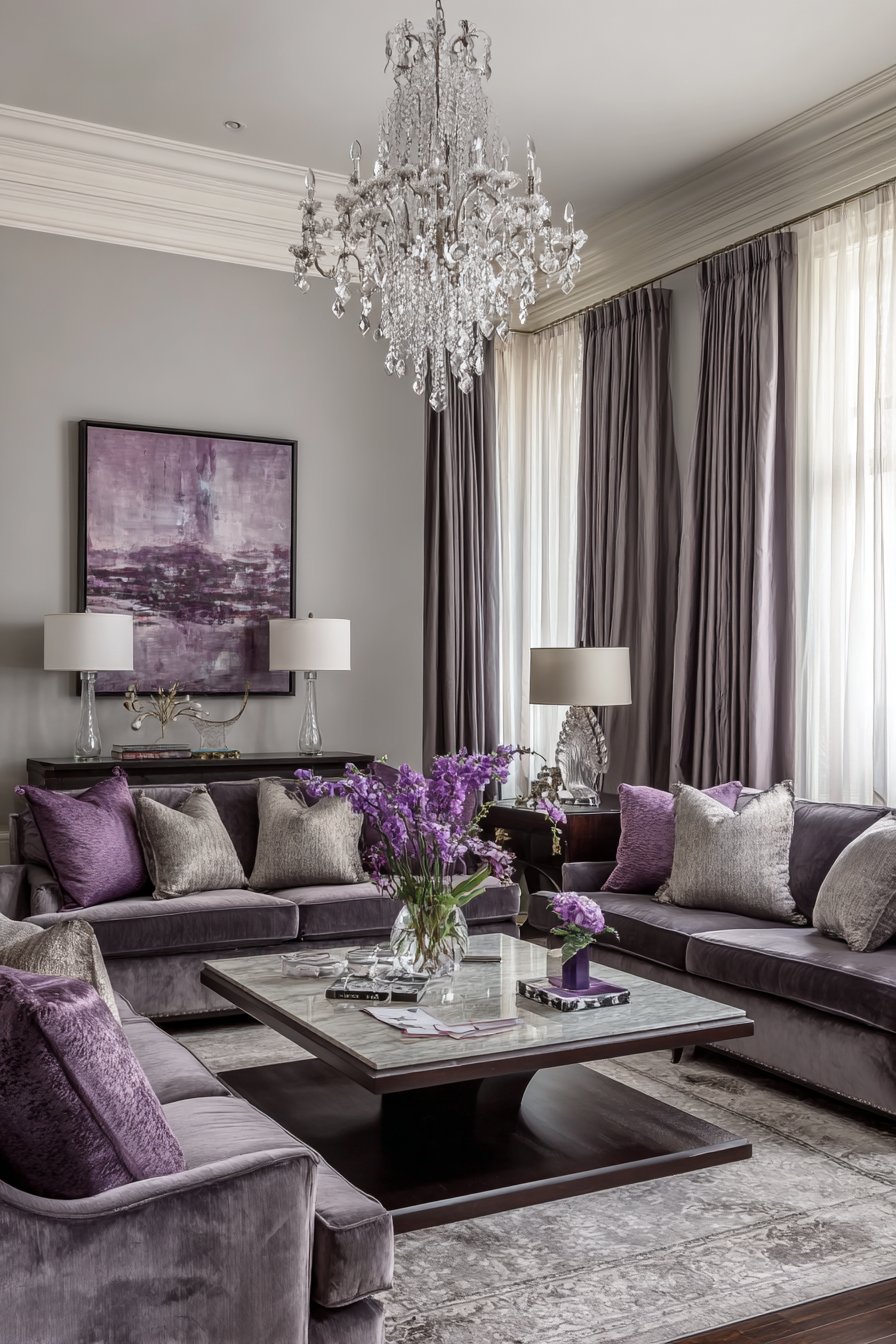
Silk throw pillows add subtle pattern and additional textural luxury, their sheen catching light and adding visual interest without disrupting the room’s sophisticated restraint. Every element works together to create an environment that honors guests and special occasions while remaining comfortable enough for extended entertaining. This formal sitting room demonstrates that elegance needn’t be stuffy—it can be both beautiful and welcoming.
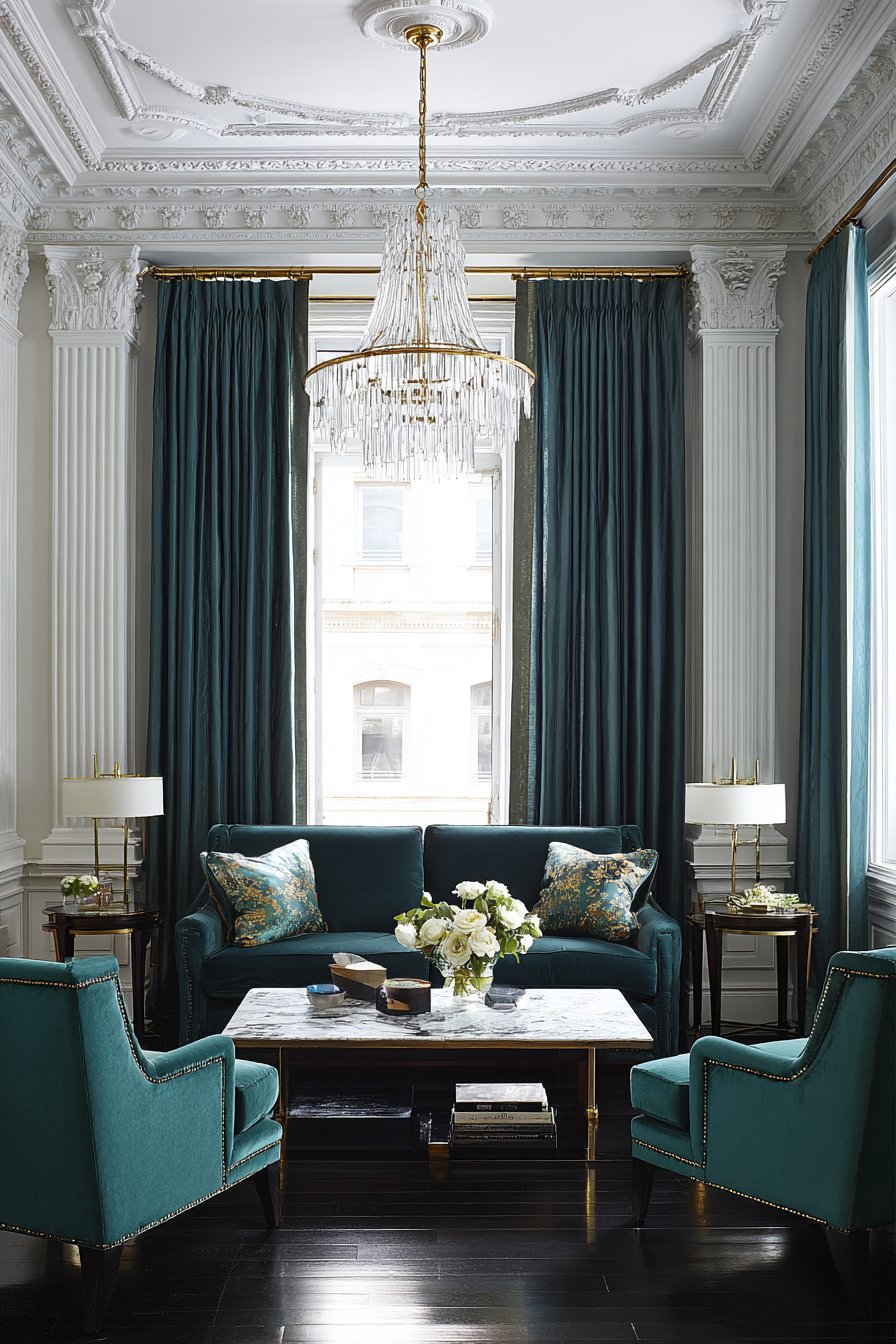
Key Design Tips: Arrange matching sofas facing each other to create formal symmetry and facilitate face-to-face conversation during entertaining. Choose velvet upholstery for its luxurious texture and light-catching qualities that add depth and richness. Install crystal chandeliers for sparkling ambient lighting that creates special occasion atmosphere. Select heavy drapes in quality fabrics to add gravitas and provide light and temperature control. Incorporate antique side tables and silk pillows to add refined decorative layers and textural luxury.
13. Family-Friendly Practical Luxury
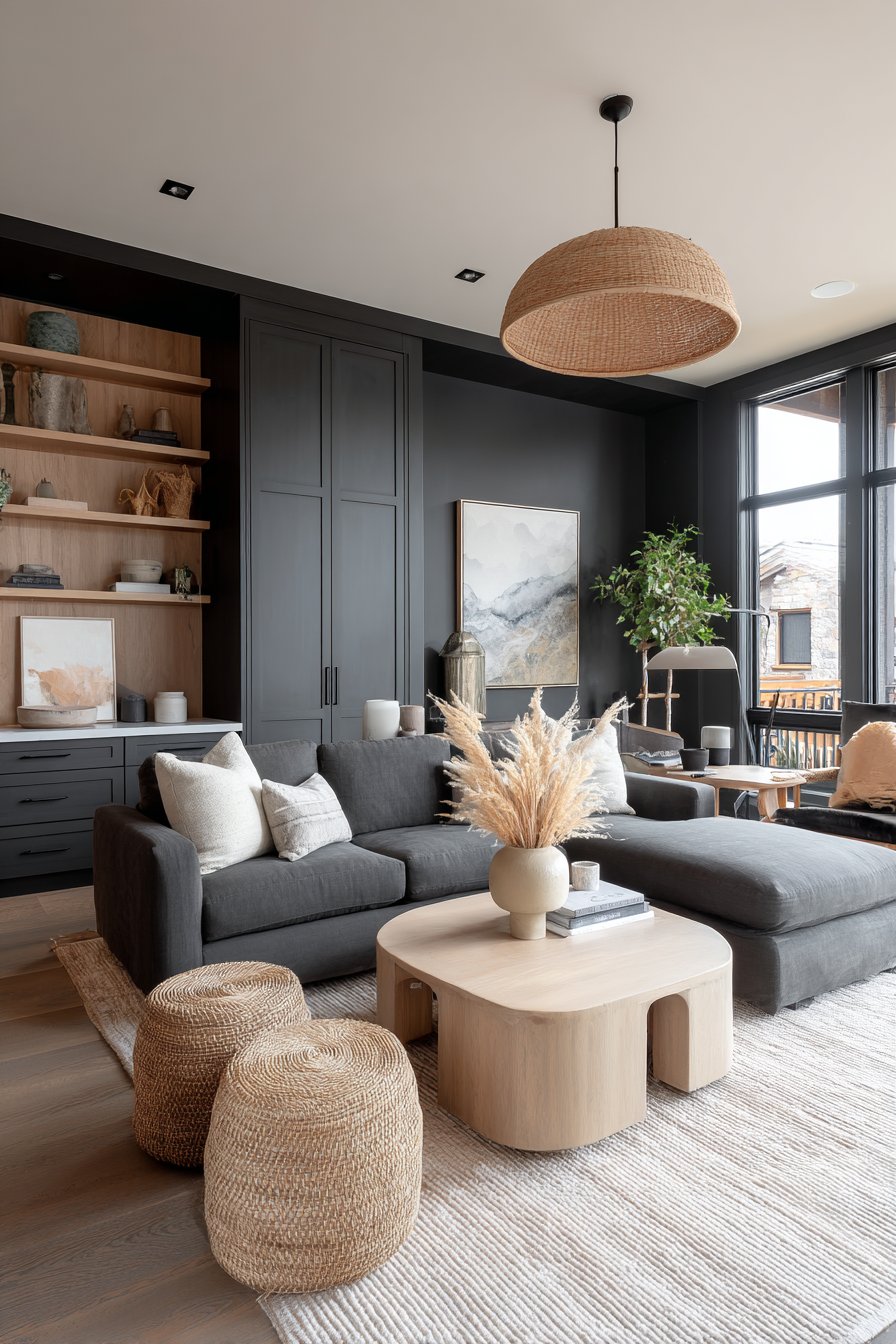
Durability meets beauty in this family-friendly sitting room designed to withstand daily life while maintaining aesthetic appeal. The sofa features performance fabric in dark grey—a practical choice that resists stains and wear while remaining sophisticated and neutral. An oversized ottoman provides extra seating for children or adults while doubling as a comfortable footrest, its large surface perfect for board games or casual dining.
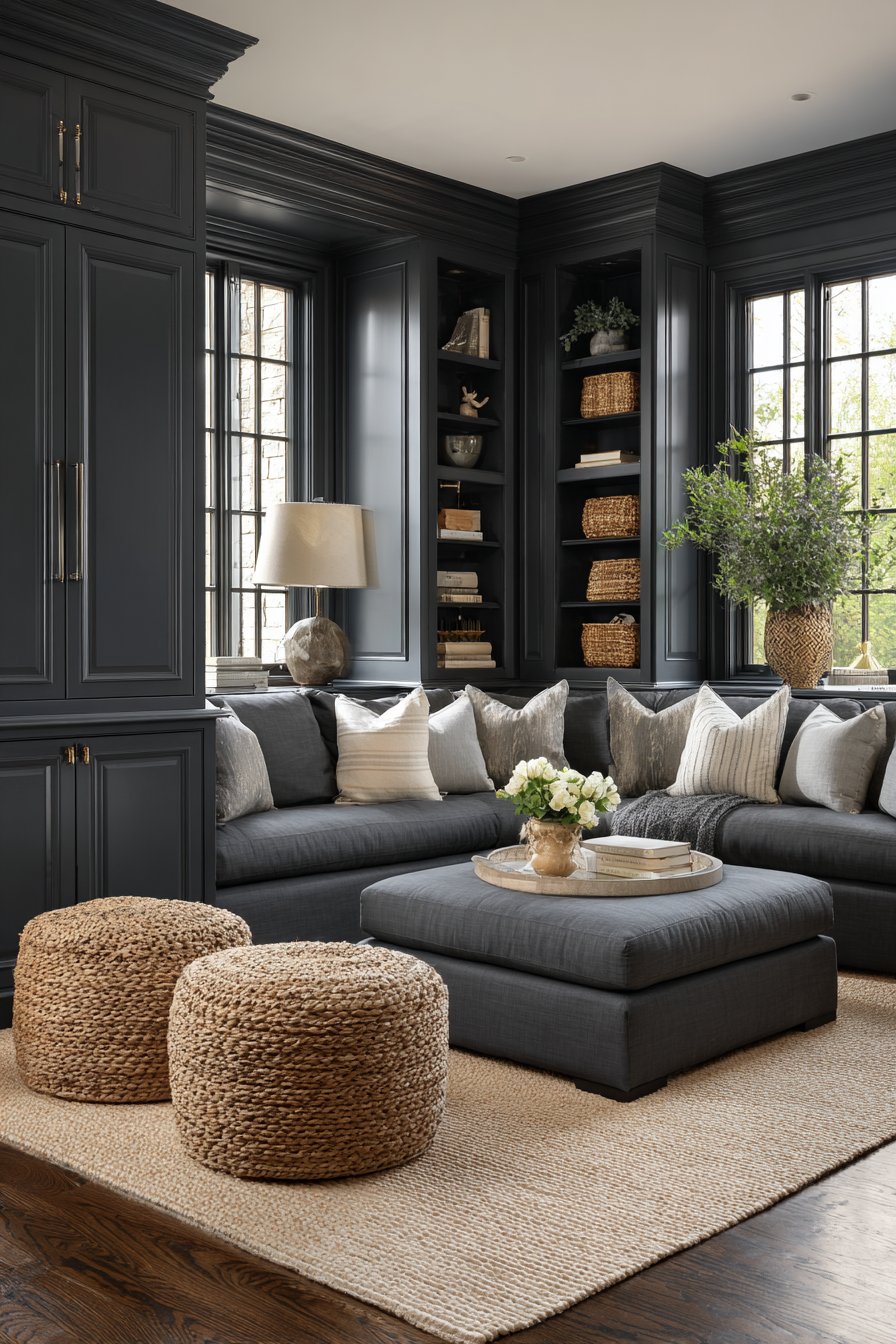
Practical storage solutions abound, with built-in cabinets providing concealed storage for toys, games, and media equipment, while woven baskets offer accessible storage that’s easy for children to use. The washable area rug in neutral tone provides comfortable flooring that can survive spills and high traffic—simply roll it up and clean when needed. The coffee table features rounded edges, a safety consideration for young children that doesn’t sacrifice style.
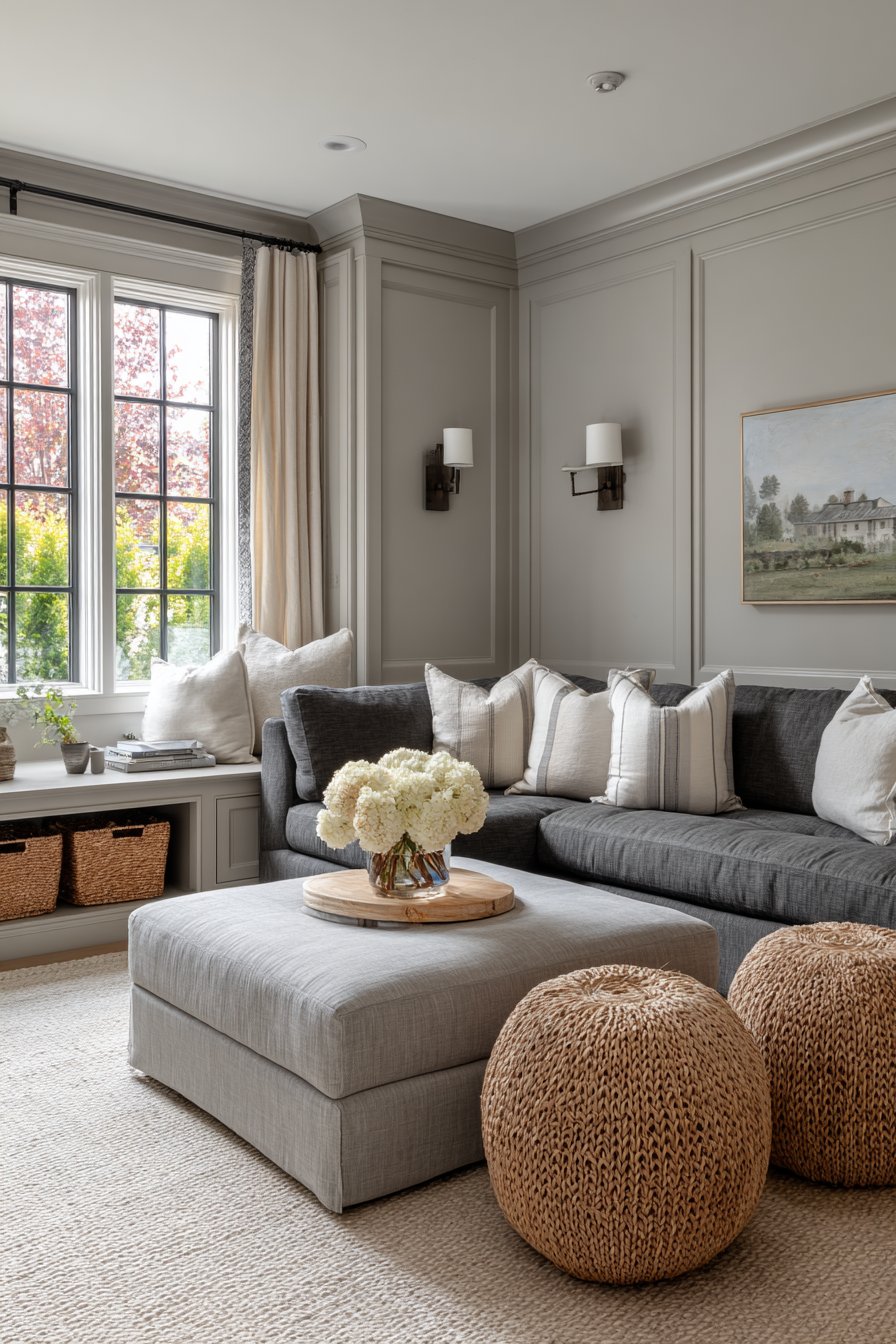
Natural lighting combines with soft ambient lamps to create a welcoming atmosphere suitable for various family activities, from homework sessions to movie nights. The thoughtful material choices mean parents can relax and enjoy the space without constant worry about damage or stains. This sitting room proves that family-friendly design can be beautiful, demonstrating that practical choices and aesthetic appeal aren’t mutually exclusive.
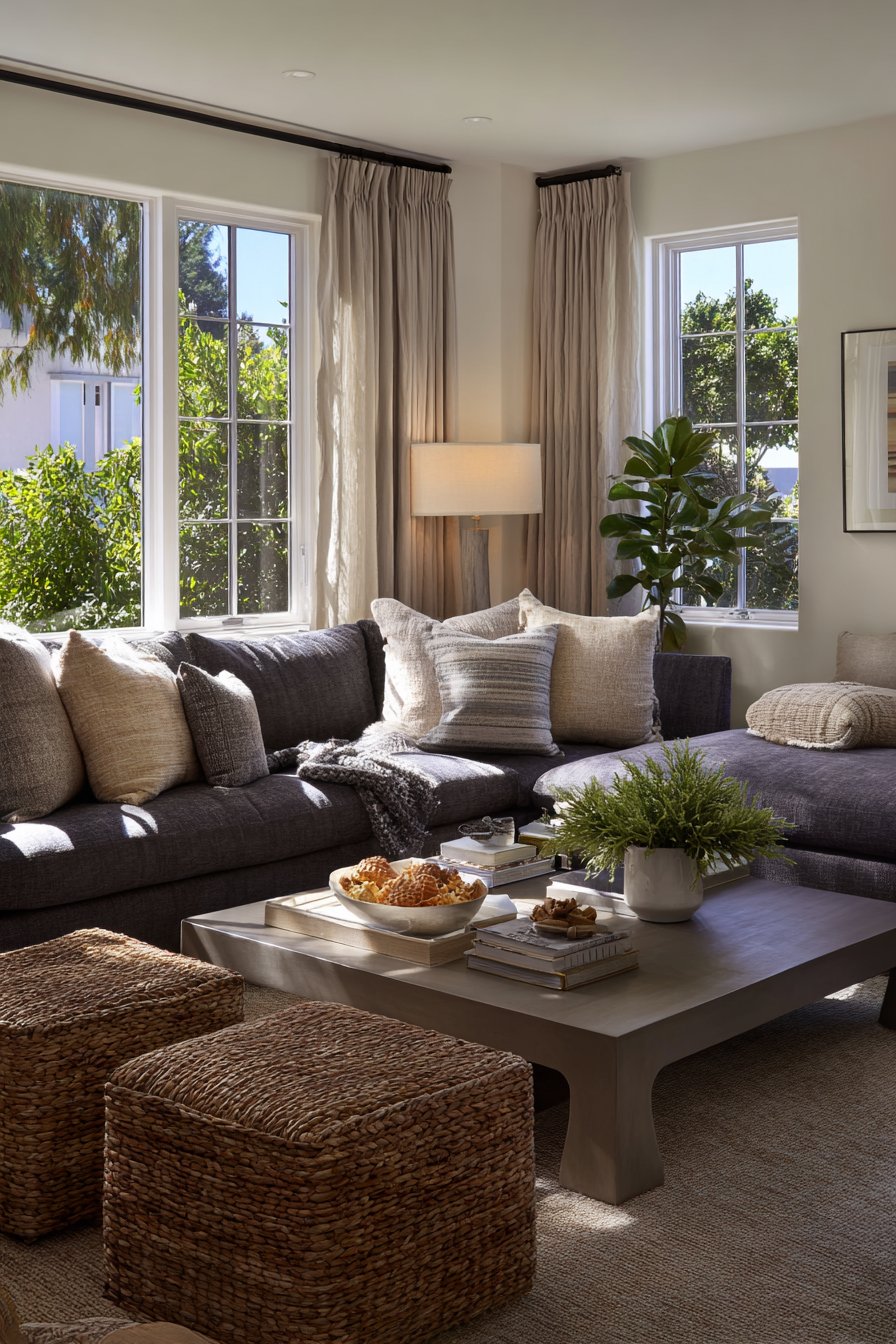
Key Design Tips: Select performance fabric upholstery for its stain resistance and durability without sacrificing comfort or sophisticated appearance. Choose oversized ottomans that provide flexible seating and surface space perfect for family activities. Install built-in cabinets and use woven baskets to create abundant storage that keeps family rooms organized. Invest in washable area rugs that can withstand spills and high traffic while maintaining softness underfoot. Select coffee tables with rounded edges to improve safety for young children without compromising style.
14. Transitional Timeless Balance
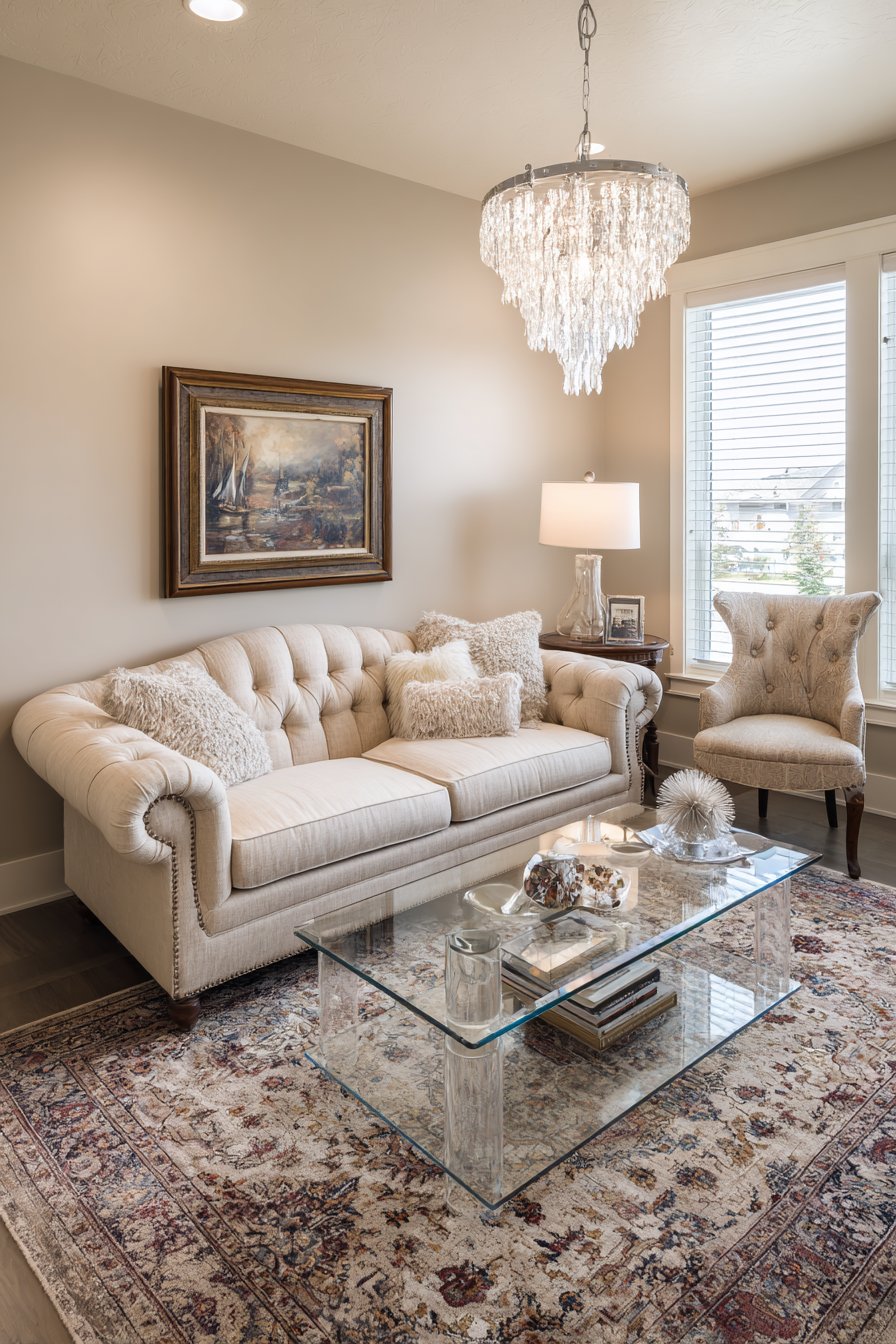
This sitting room successfully bridges traditional and contemporary design sensibilities, creating a timeless aesthetic that transcends passing trends. A rolled-arm sofa upholstered in linen represents traditional comfort while its neutral fabric and clean construction feel current. The modern glass coffee table introduces contemporary transparency and lightness, creating visual contrast with the more substantial upholstered pieces.
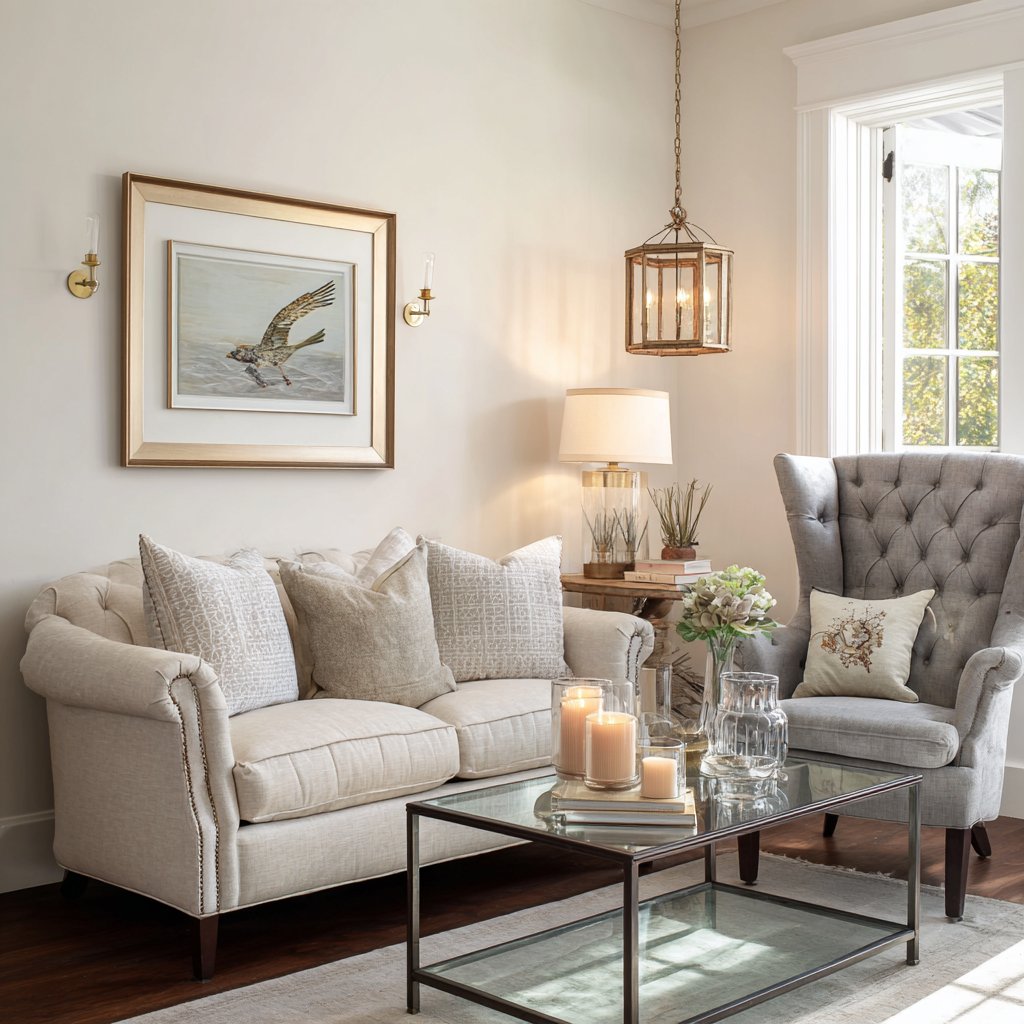
A classic wingback accent chair receives updated life through contemporary reupholstery in modern fabric—perhaps a geometric pattern or unexpected color that gives traditional form new relevance. Neutral walls provide a versatile backdrop that allows both antique and modern accessories to coexist harmoniously. Mixed metal finishes in light fixtures and hardware add visual interest and demonstrate the transitional style’s comfortable mixing of warm and cool tones.
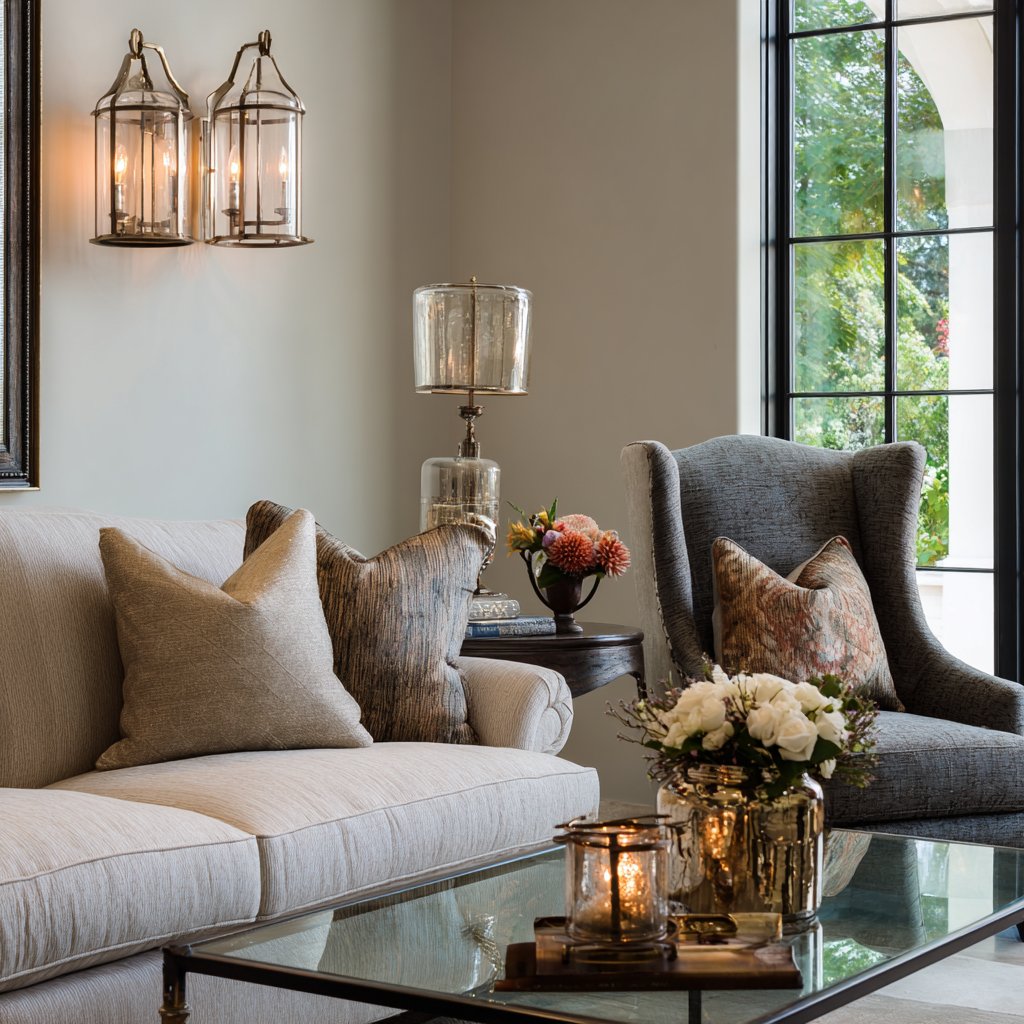
The successful transitional room doesn’t favor one era over another but instead creates dialogue between old and new, traditional and contemporary. Each piece brings something valuable to the conversation—historical weight, modern clarity, traditional comfort, contemporary clean lines. This approach creates rooms that feel both established and fresh, familiar and exciting.
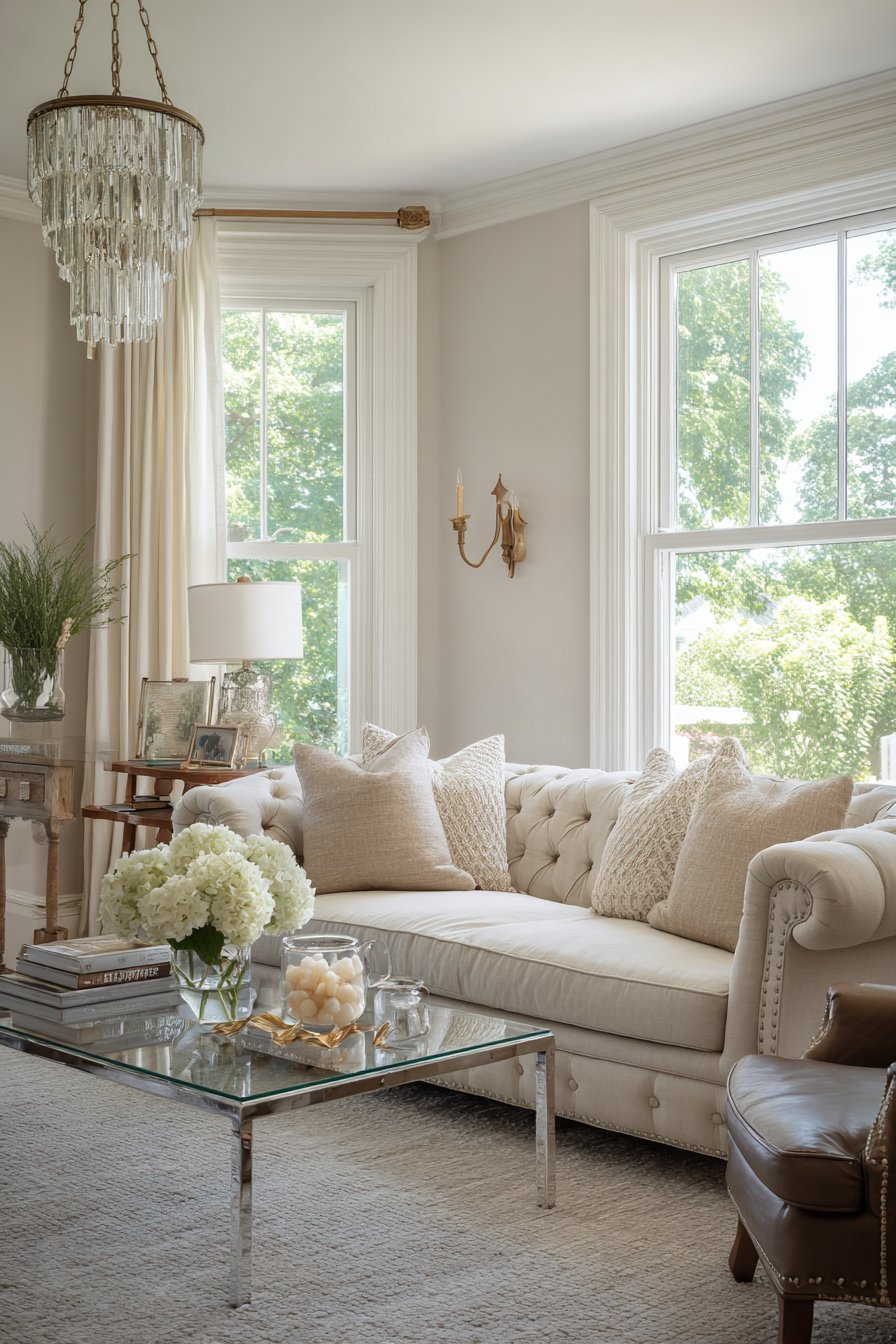
Key Design Tips: Combine rolled-arm traditional sofas with modern glass coffee tables to create successful transitional contrast and balance. Reupholster classic furniture forms in contemporary fabrics to give traditional pieces current relevance and visual interest. Choose neutral walls as versatile backdrops that allow both traditional and modern accessories to coexist harmoniously. Mix metal finishes in fixtures and hardware to add visual complexity appropriate to transitional eclecticism. Balance traditional comfort with contemporary clean lines to create timeless rooms that transcend specific eras.
15. Maximalist Bold Expression
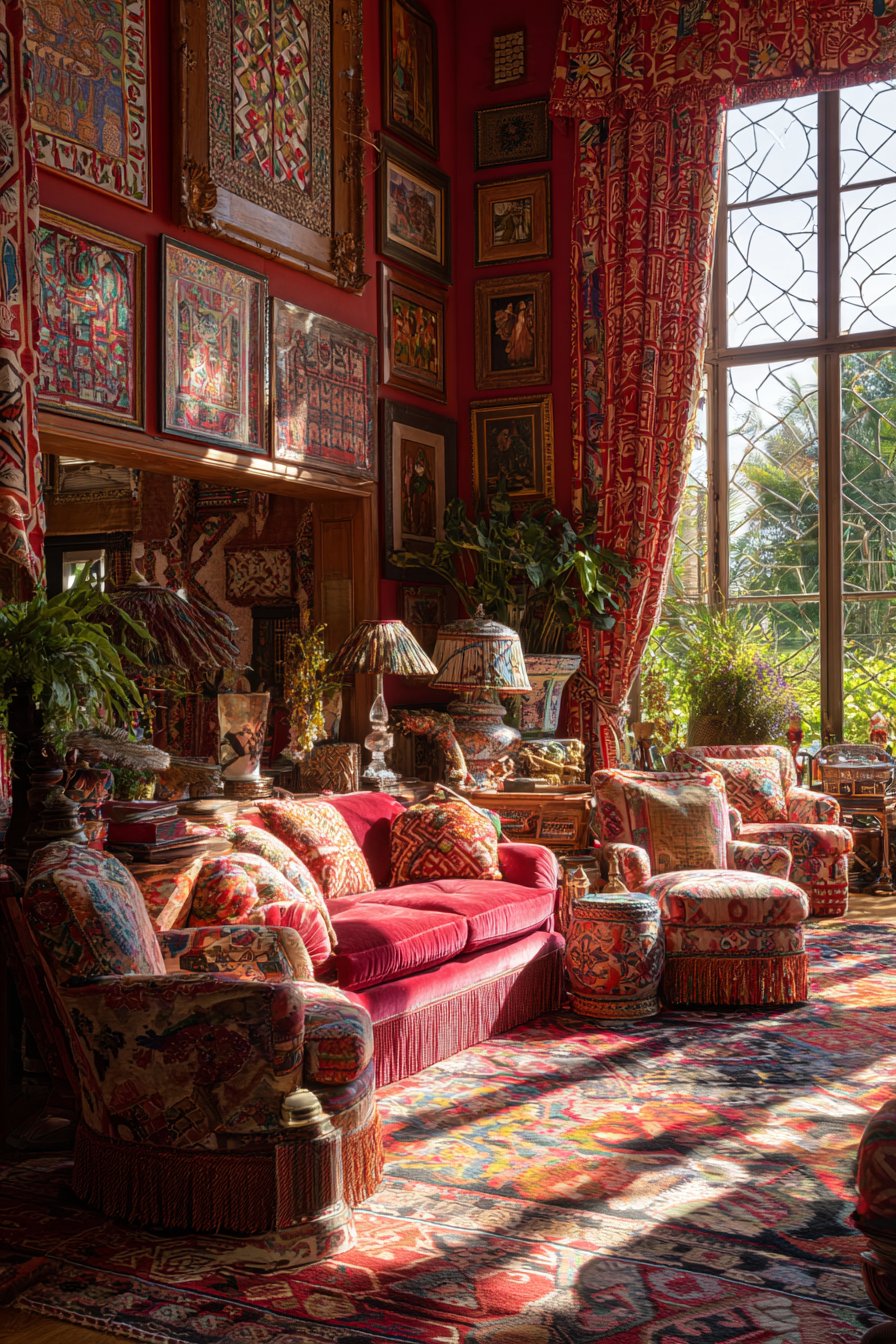
This exuberant sitting room celebrates abundance, pattern, and color through fearless maximalist design. A jewel-toned velvet sofa in deep emerald or sapphire anchors the space with luxurious color and texture, surrounded by patterned armchairs that add additional visual energy through their fabric choices. Multiple decorative pillows in varied patterns and sizes create layered comfort and visual richness.
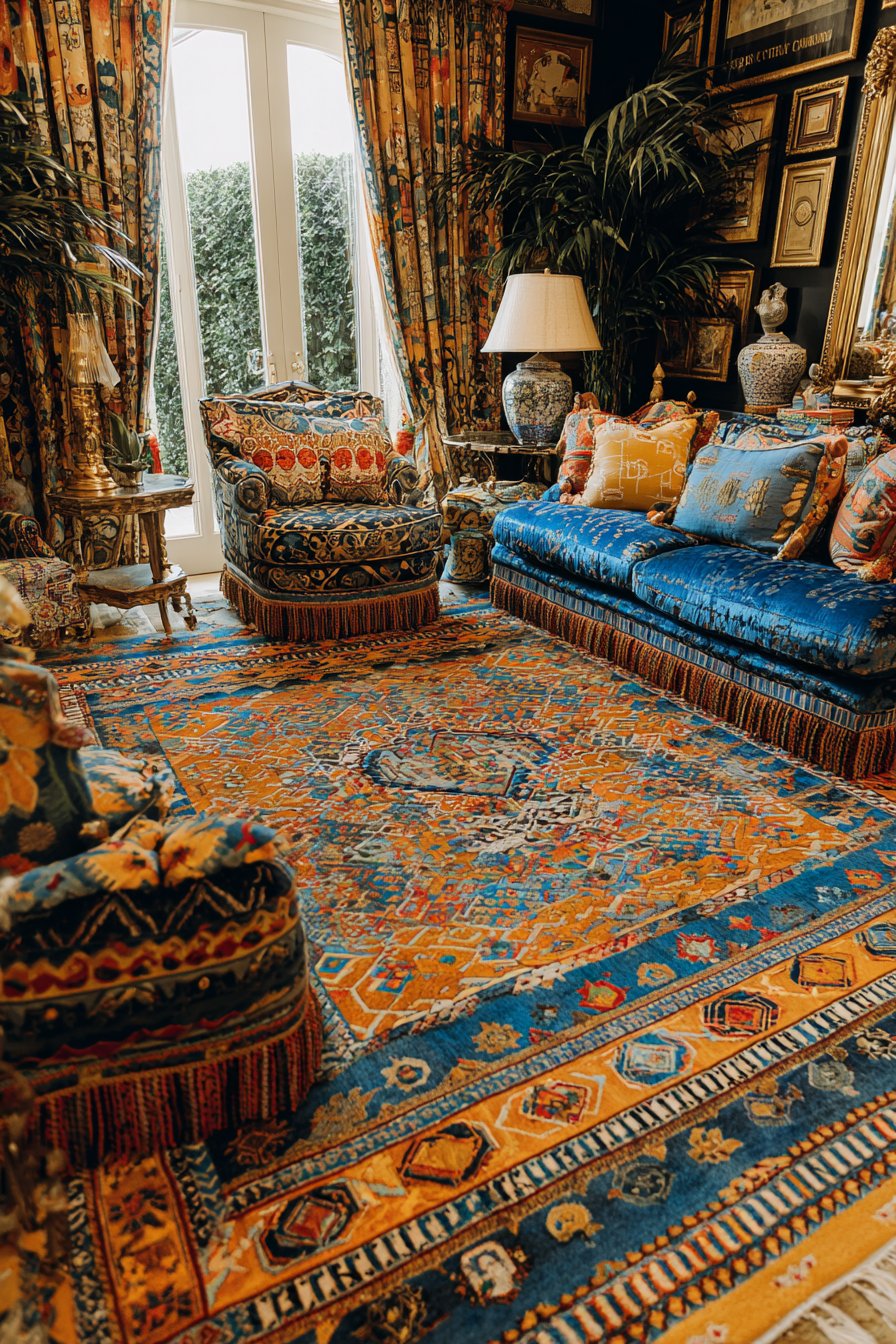
Elaborate window treatments featuring trim, tassels, and luxurious fabrics make windows architectural focal points rather than mere openings. A gallery wall with ornate frames displays diverse artwork in a carefully composed arrangement that creates visual impact through abundance rather than restraint. Multiple area rugs layer for additional pattern and visual depth, their overlapping edges creating zones within the larger room.
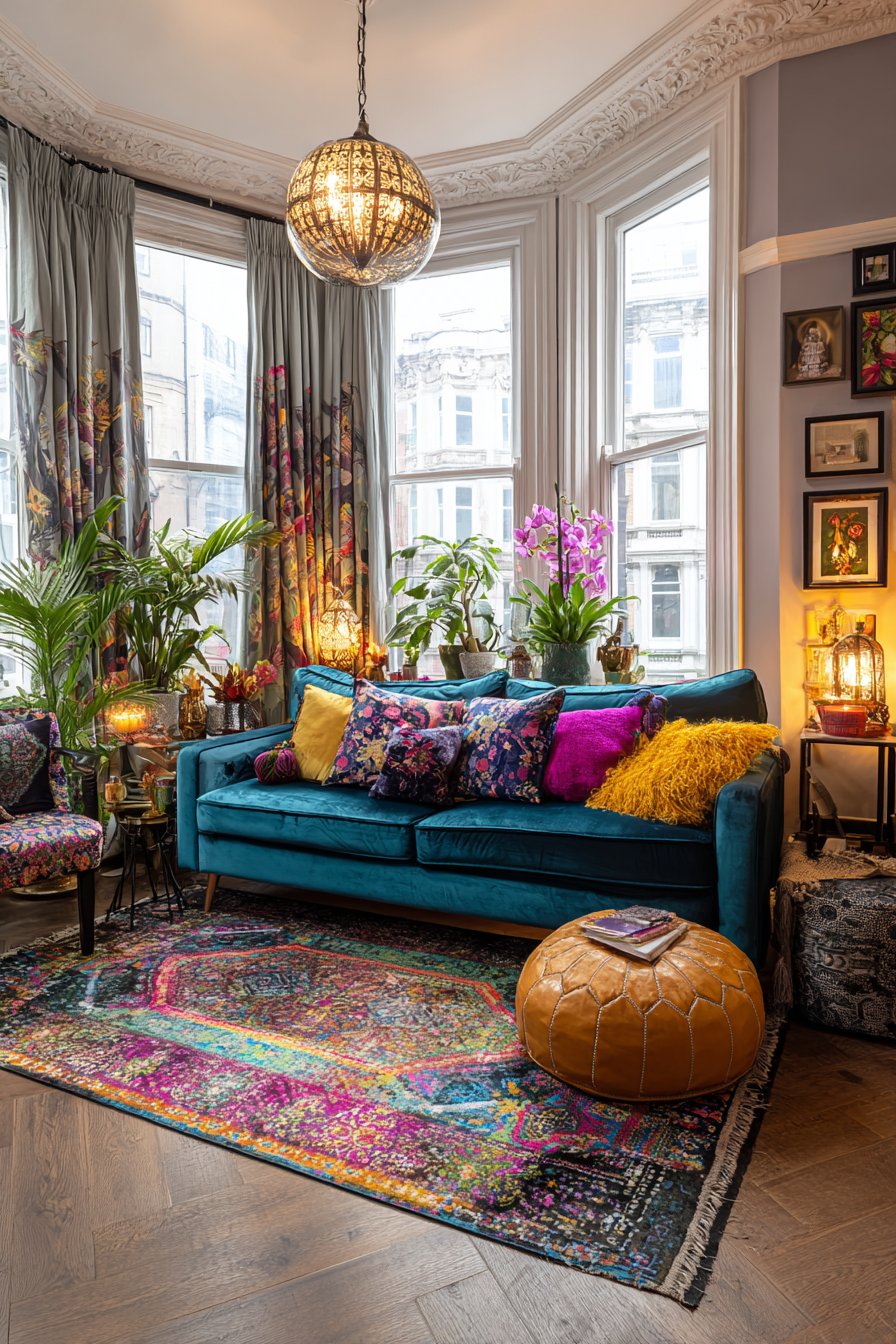
Abundant decorative objects and plants create a curated collection aesthetic where every surface tells a story through its arrangement of treasures. The maximalist approach requires a discerning eye—it’s not about random accumulation but rather intentional curation of beautiful things that spark joy and conversation. This sitting room proves that more can absolutely be more when guided by genuine passion and aesthetic confidence.
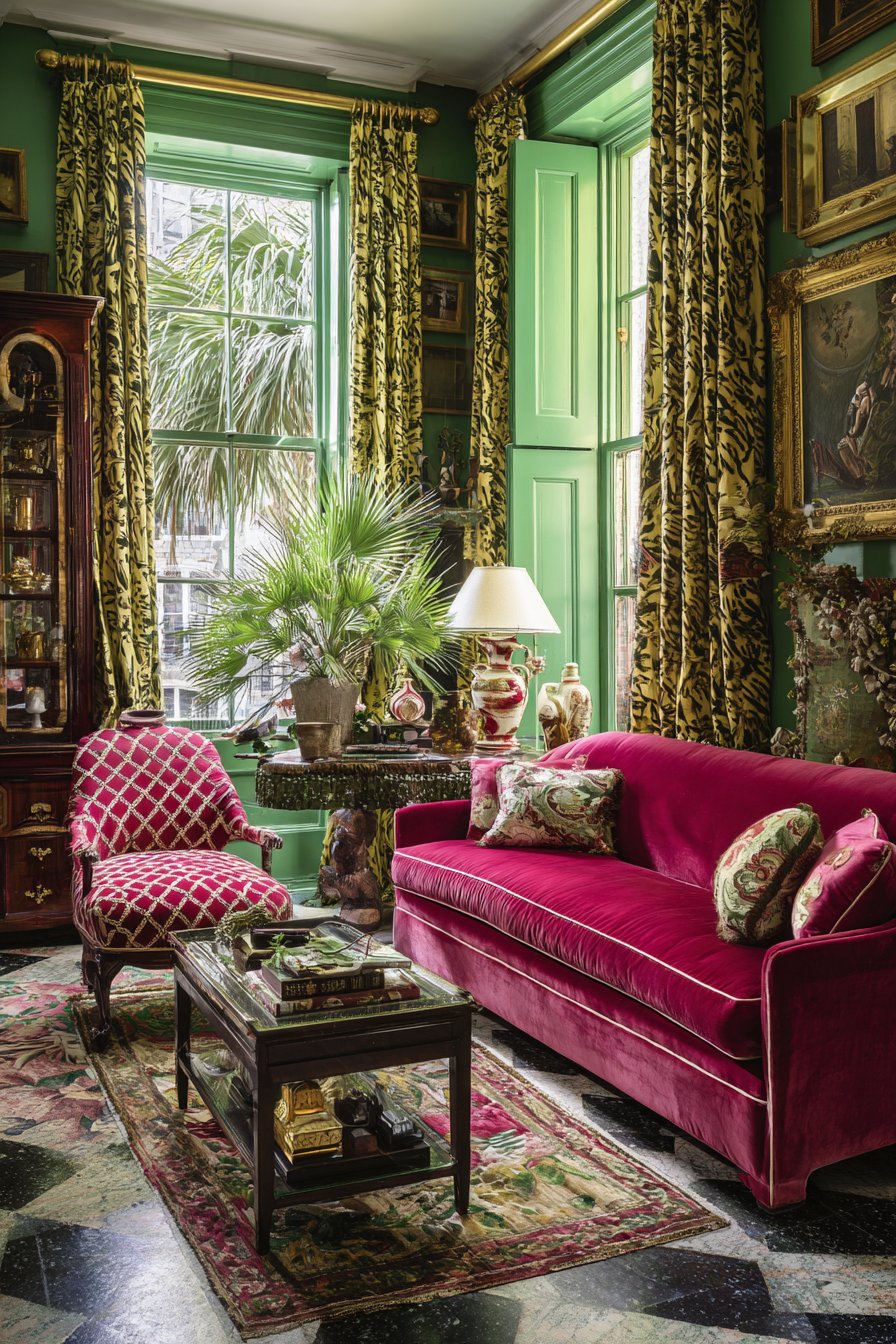
Key Design Tips: Choose jewel-toned velvet sofas as luxurious anchors for maximalist color schemes and tactile richness. Layer multiple patterned textiles in complementary colors to create visual energy and eclectic maximalist appeal. Create gallery walls with ornate frames mixing sizes and styles to add visual impact and display beloved artwork. Layer multiple area rugs to add pattern depth and define zones within larger maximalist spaces. Curate abundant decorative objects and plants to create collected aesthetic that celebrates beautiful things.
16. Japanese-Inspired Zen Simplicity
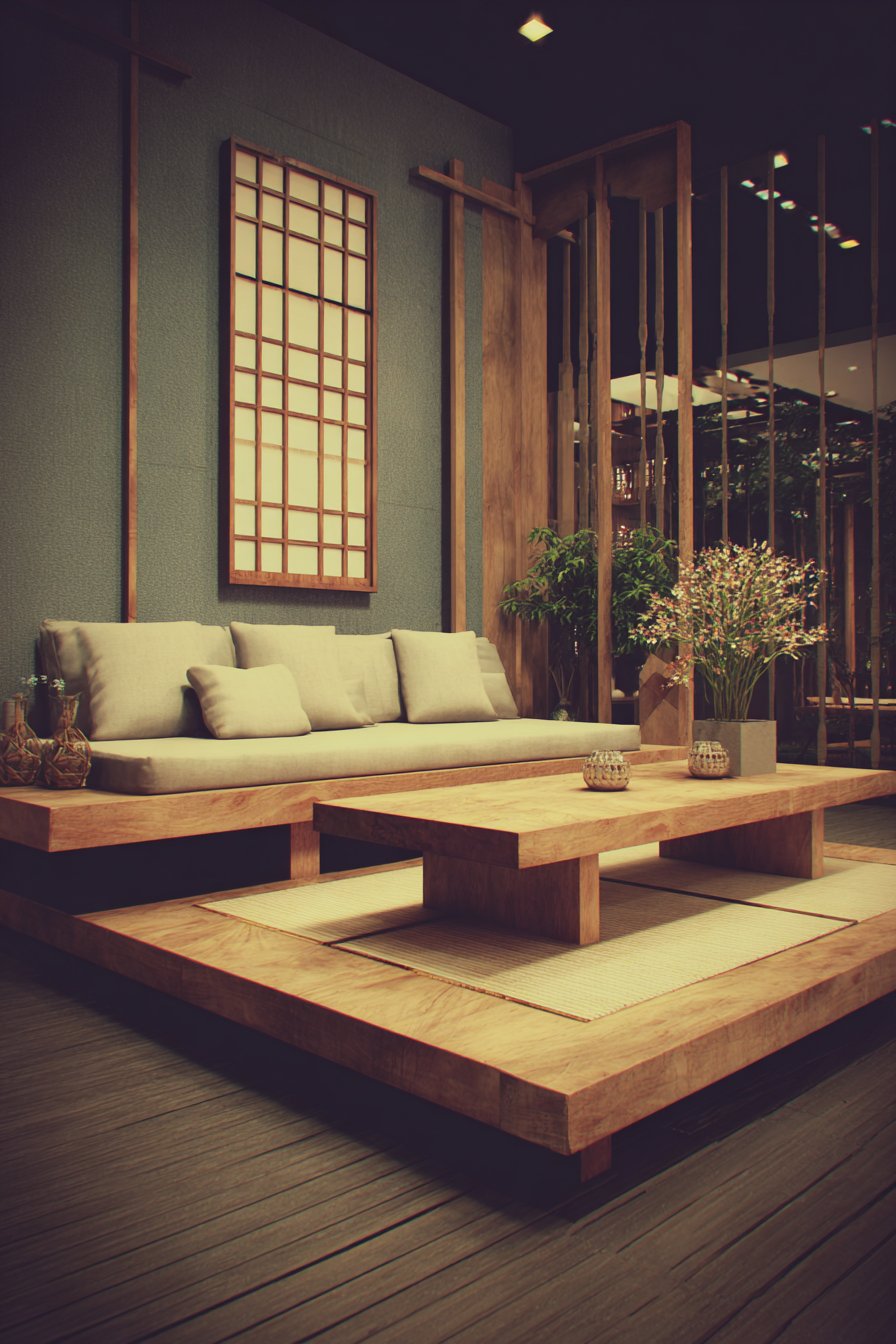
Eastern design philosophy manifests in this serene sitting room where minimalism serves spiritual as well as aesthetic purposes. Low-profile platform furniture including a simple sofa with clean lines maintains close connection to the floor, embodying Japanese design principles that emphasize humility and connection to earth. A minimalist coffee table in light wood showcases beautiful grain without excessive ornamentation, allowing natural material beauty to speak.
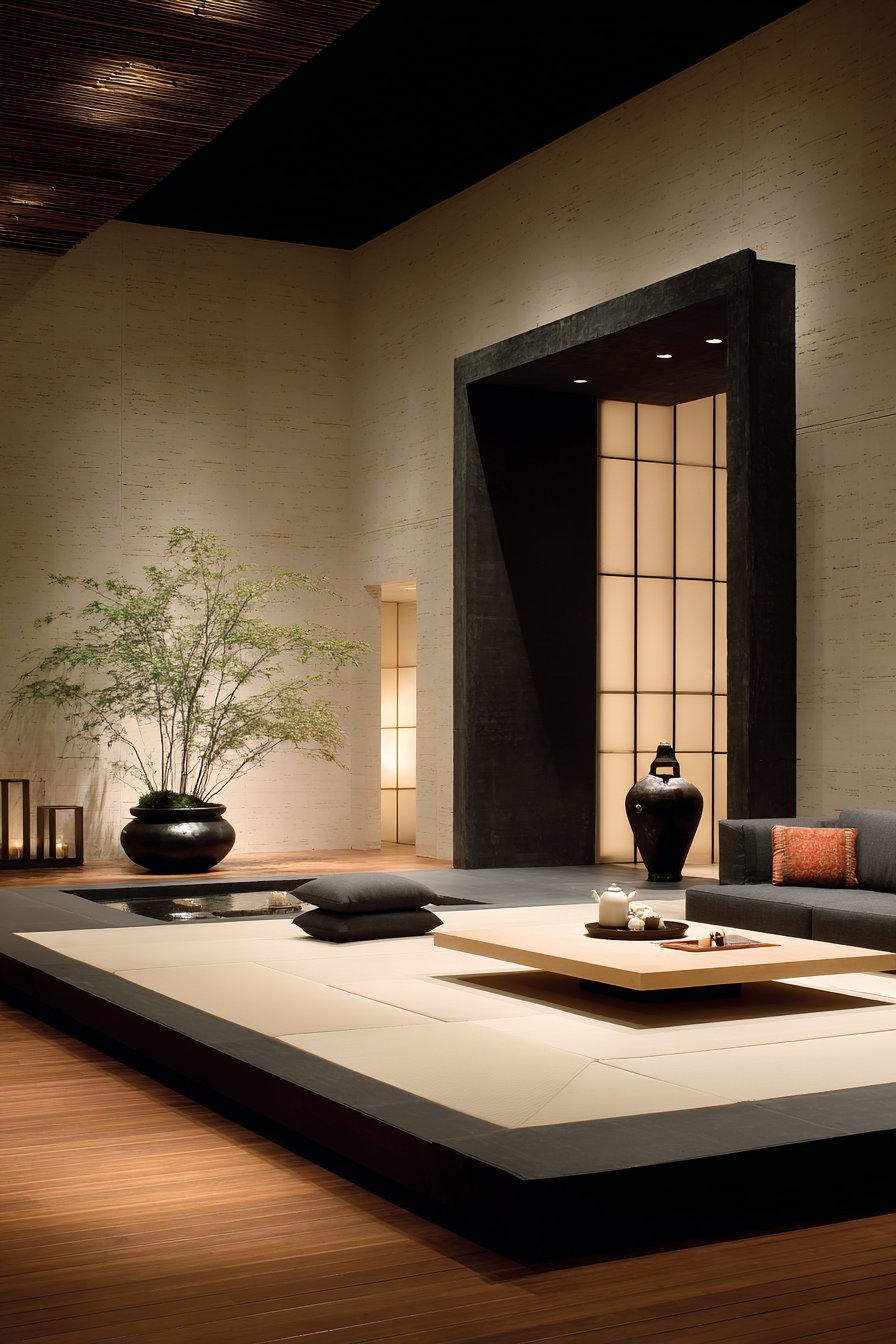
A tatami-style mat provides traditional flooring texture that connects the contemporary space to historical Japanese interiors. Shoji screen-inspired room dividers add authentic architectural detail while providing flexible spatial division—they can define areas without completely closing them off, maintaining spatial flow and natural light penetration. An ikebana flower arrangement provides a single carefully composed focal point, demonstrating the Japanese principle that one beautiful thing, perfectly placed, has more impact than many scattered decorations.
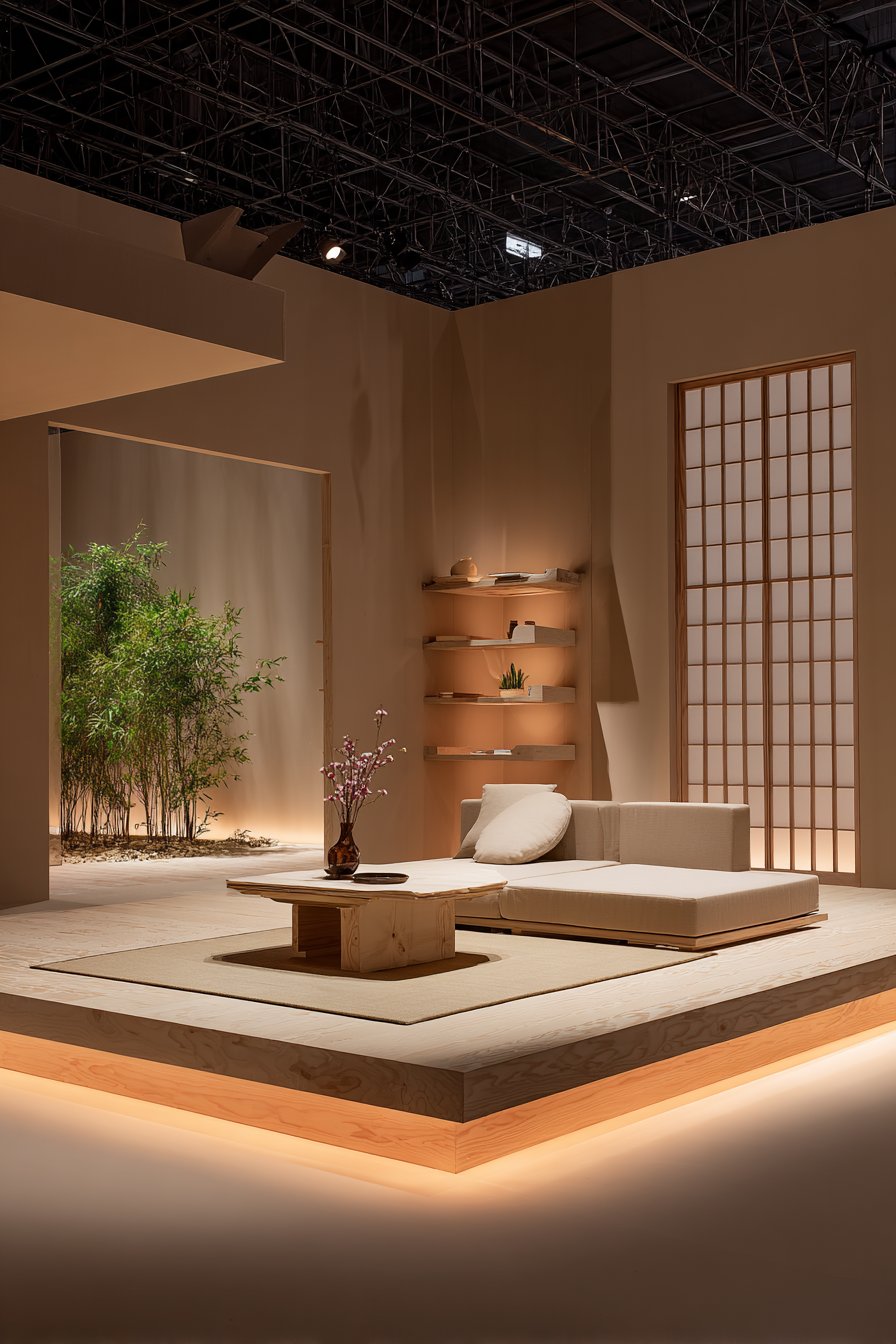
Natural materials dominate the palette—bamboo, handmade paper, and untreated wood create a cohesive material story that celebrates organic beauty. Soft diffused lighting creates a serene atmosphere perfect for meditation, reading, or quiet conversation, avoiding harsh shadows or bright spots. This Japanese-inspired sitting room offers a peaceful retreat from modern life’s chaos.
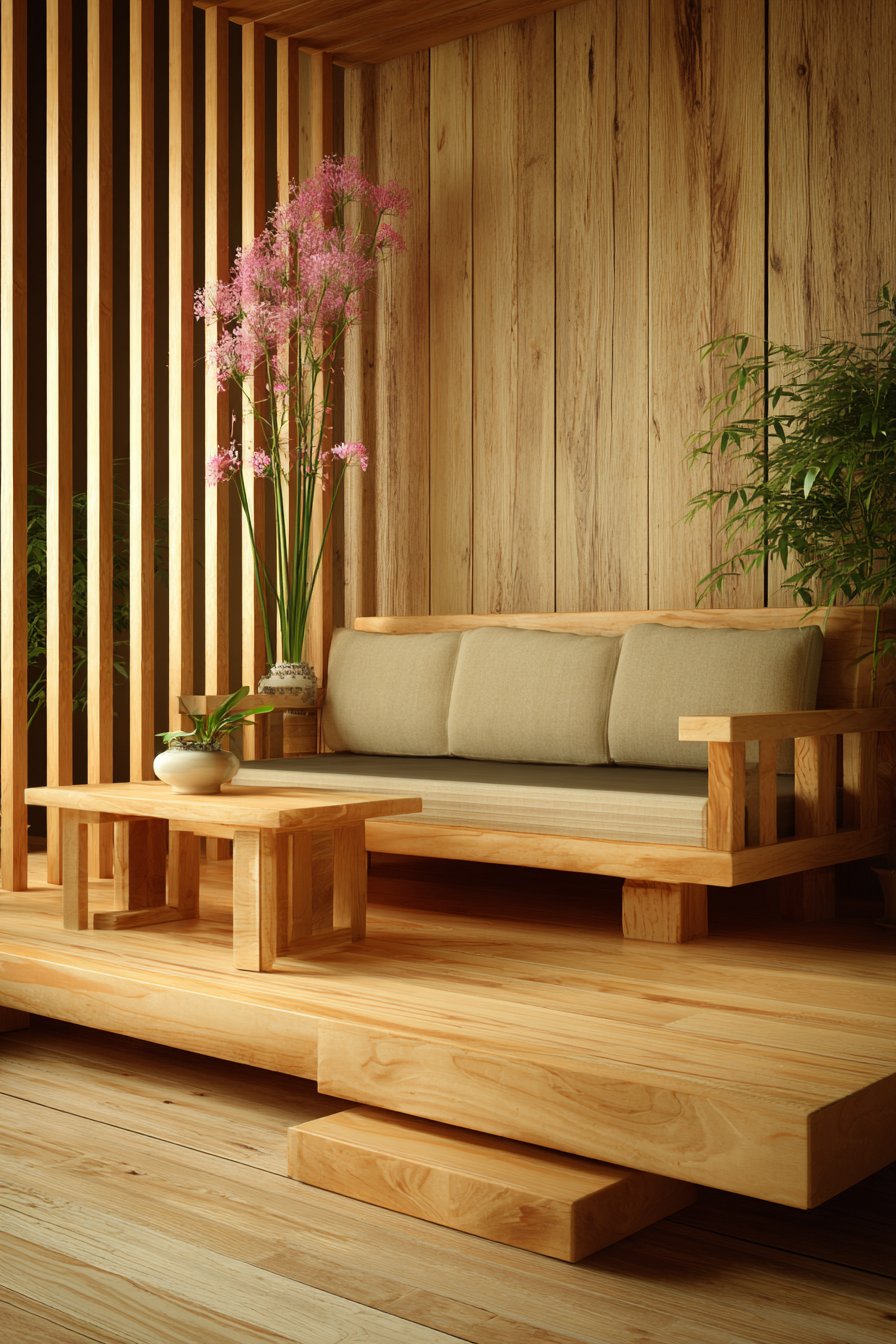
Key Design Tips: Choose low-profile platform furniture to maintain connection to floor and embody Japanese design humility. Incorporate tatami mats or inspired alternatives to add traditional texture and authentic Japanese character. Install shoji screen-inspired dividers for flexible spatial definition that maintains light and flow. Display single ikebana flower arrangements as focal points that demonstrate less-is-more design philosophy. Use natural materials like bamboo and handmade paper to create cohesive organic material palette.
17. Luxury Designer Showcase
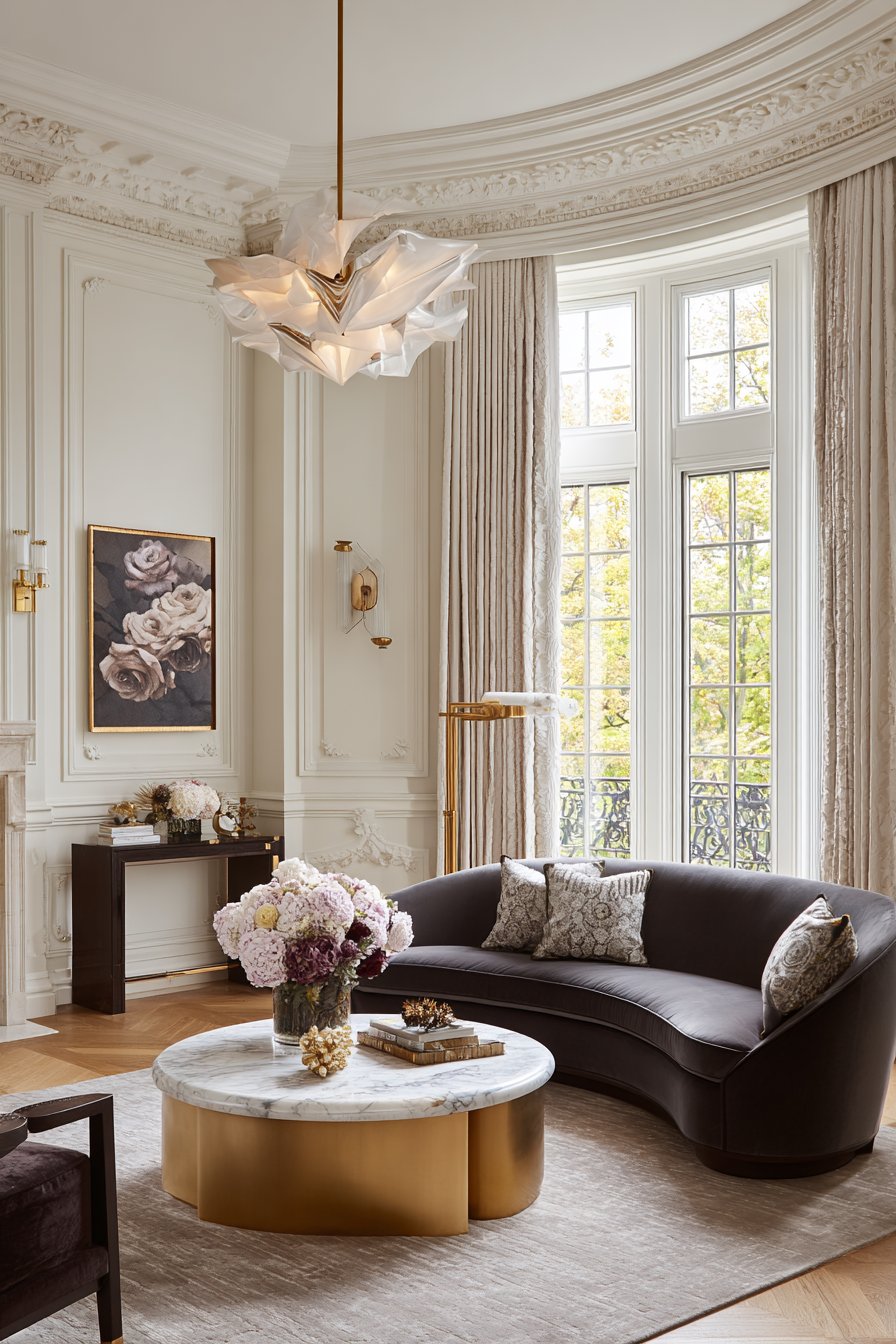
Premium materials and expert craftsmanship define this luxury sitting room where every element represents the pinnacle of quality and design. A curved velvet sofa in sophisticated grey demonstrates how form can be both comfortable and sculptural, its gentle arc creating visual movement and inviting users to relax into its embrace. The brass and marble coffee table combines warm metal with cool stone, creating a piece that’s both functional and gallery-worthy.
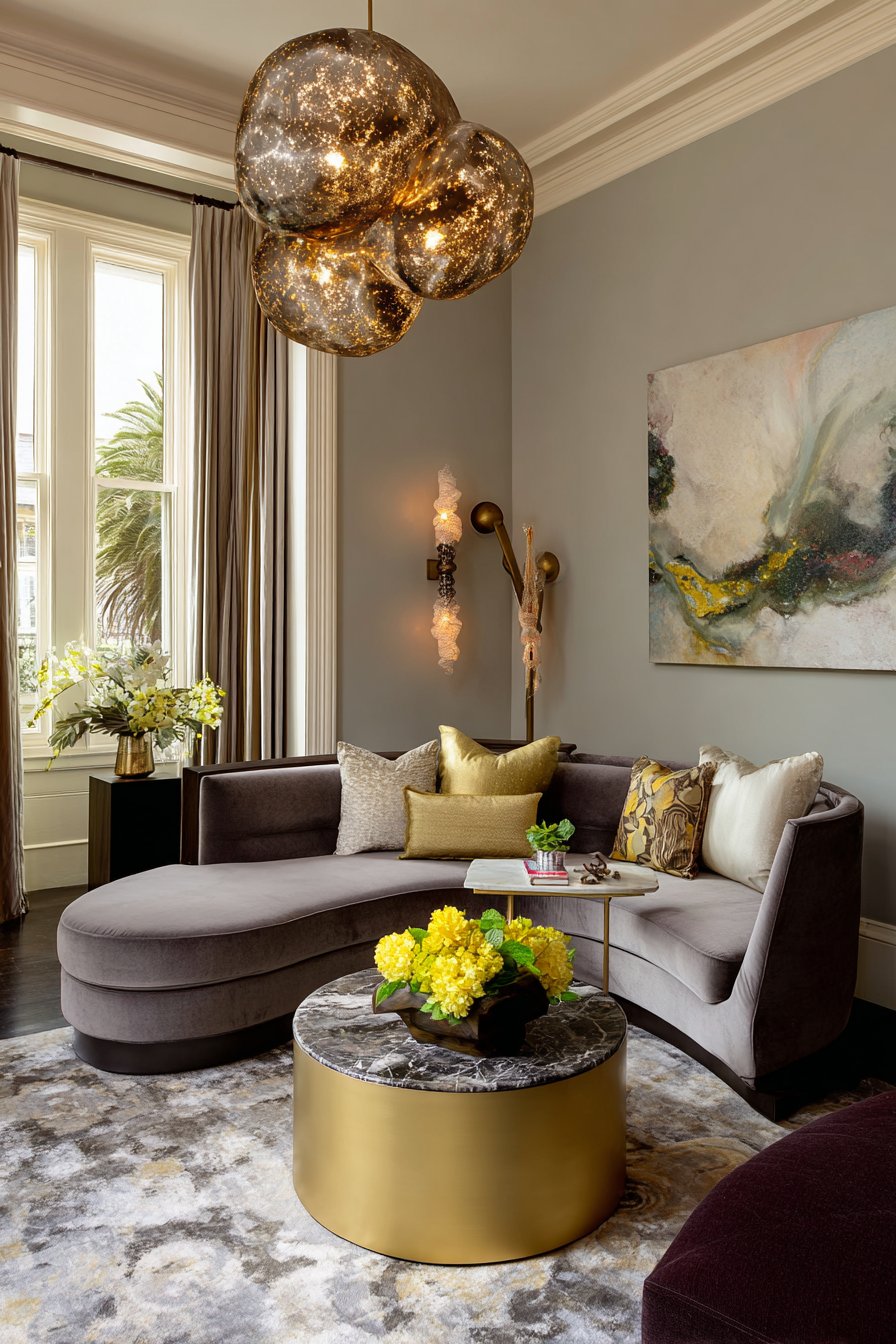
High-end finishes throughout include silk window treatments that pool luxuriously on the floor, hand-knotted area rugs featuring intricate patterns achieved through months of skilled labor, and custom millwork that transforms ordinary storage into architectural features. Designer lighting fixtures serve as functional sculpture, their forms and materials selected not just for illumination but for artistic merit. Art pieces and decorative objects receive museum-quality curation, each item carefully selected for its aesthetic contribution and perfect placement.
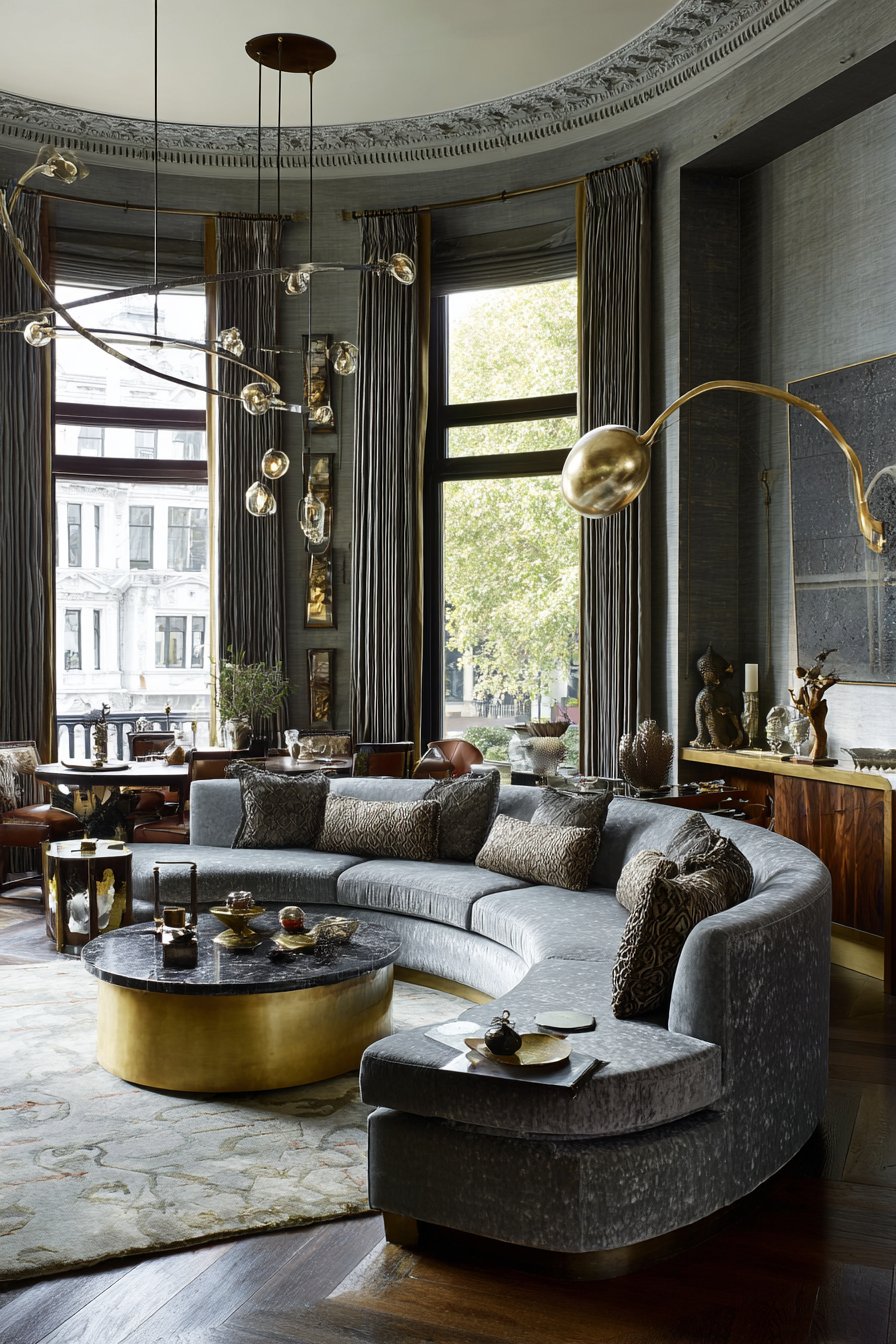
The luxury sitting room demonstrates that true luxury lies not in excessive ornamentation but in exceptional quality, perfect proportion, and meticulous attention to detail. Every material, every finish, every junction shows the hand of skilled craftspeople and thoughtful designers. This approach creates rooms that reward close inspection and grow more beautiful with time.
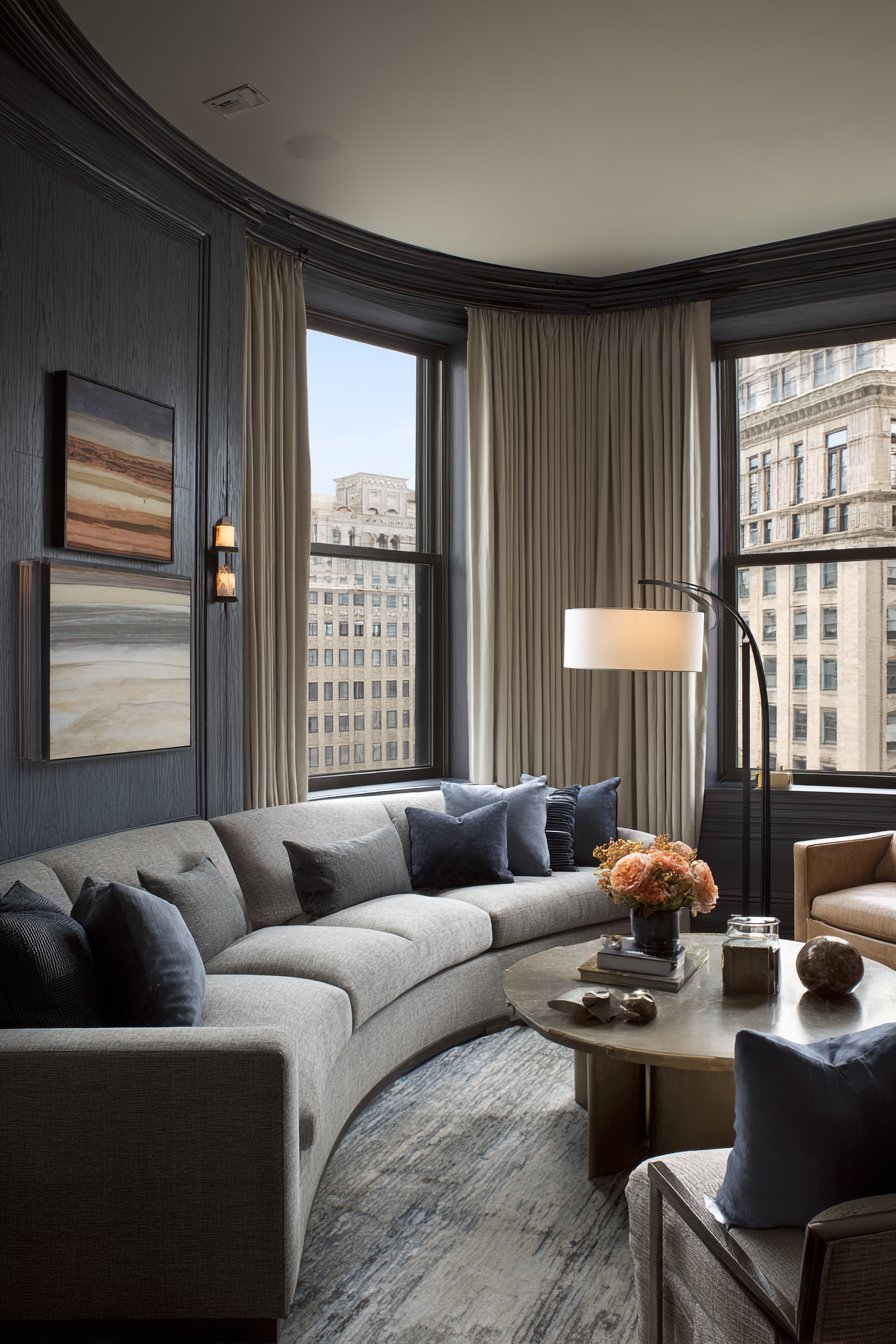
Key Design Tips: Select curved velvet sofas for their sculptural presence and luxurious comfort that elevates beyond standard linear forms. Choose brass and marble coffee tables to combine warm metals with cool stone in high-end material pairings. Install silk window treatments that demonstrate luxury through fabric quality and generous proportions. Invest in hand-knotted area rugs for their exceptional craftsmanship and intricate pattern work. Commission custom millwork to transform ordinary storage into architectural features worthy of luxury spaces.
18. Multi-Functional Living
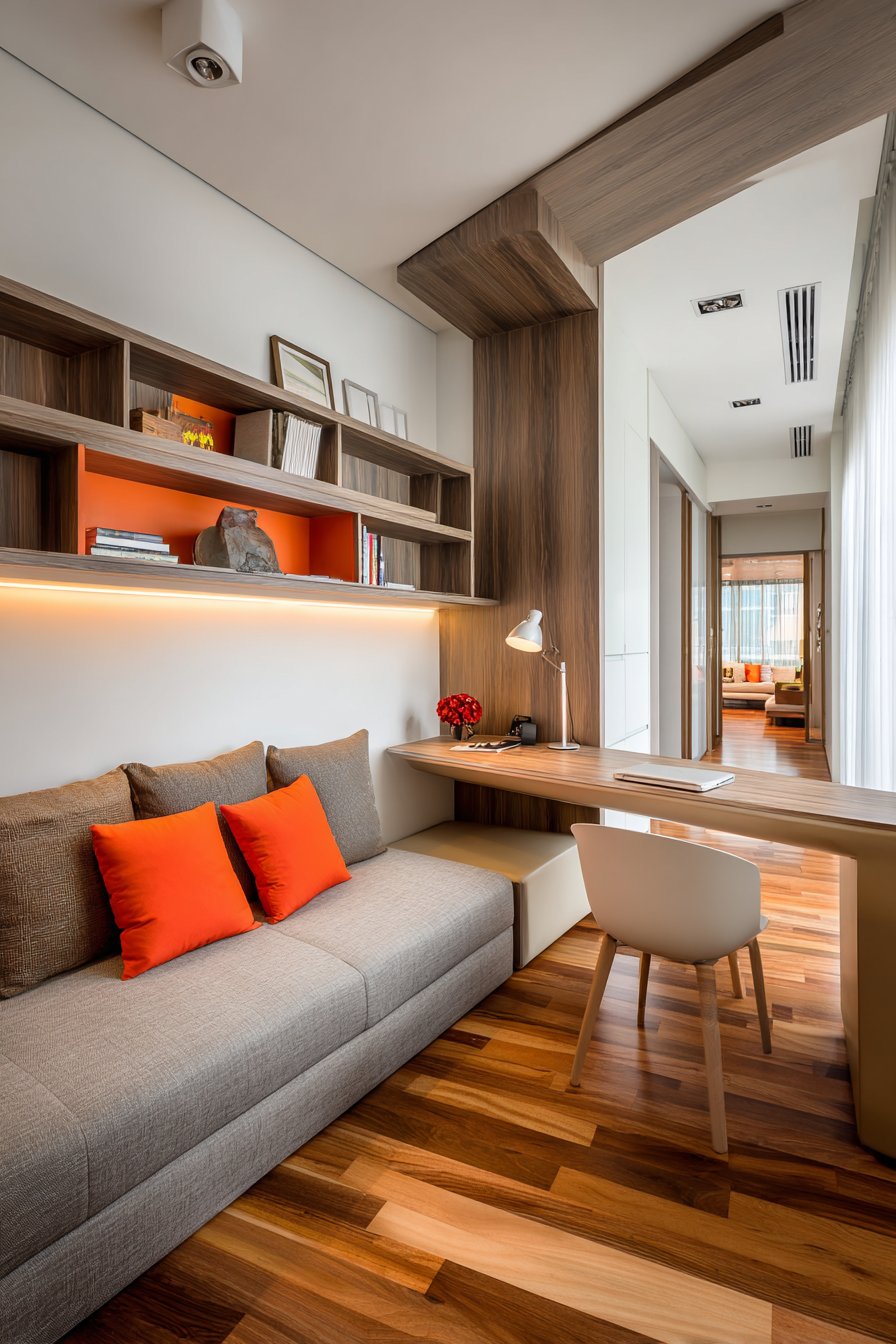
Smart spatial planning allows this sitting room to serve dual purposes without compromise, functioning equally well as relaxation space and productive work area. A comfortable sofa faces a built-in desk area with floating shelves, the two zones visually connected yet functionally distinct. The room divider or strategically placed bookcase partially separates zones without completely blocking light or sight lines, maintaining the room’s overall spaciousness while providing psychological separation between work and leisure.
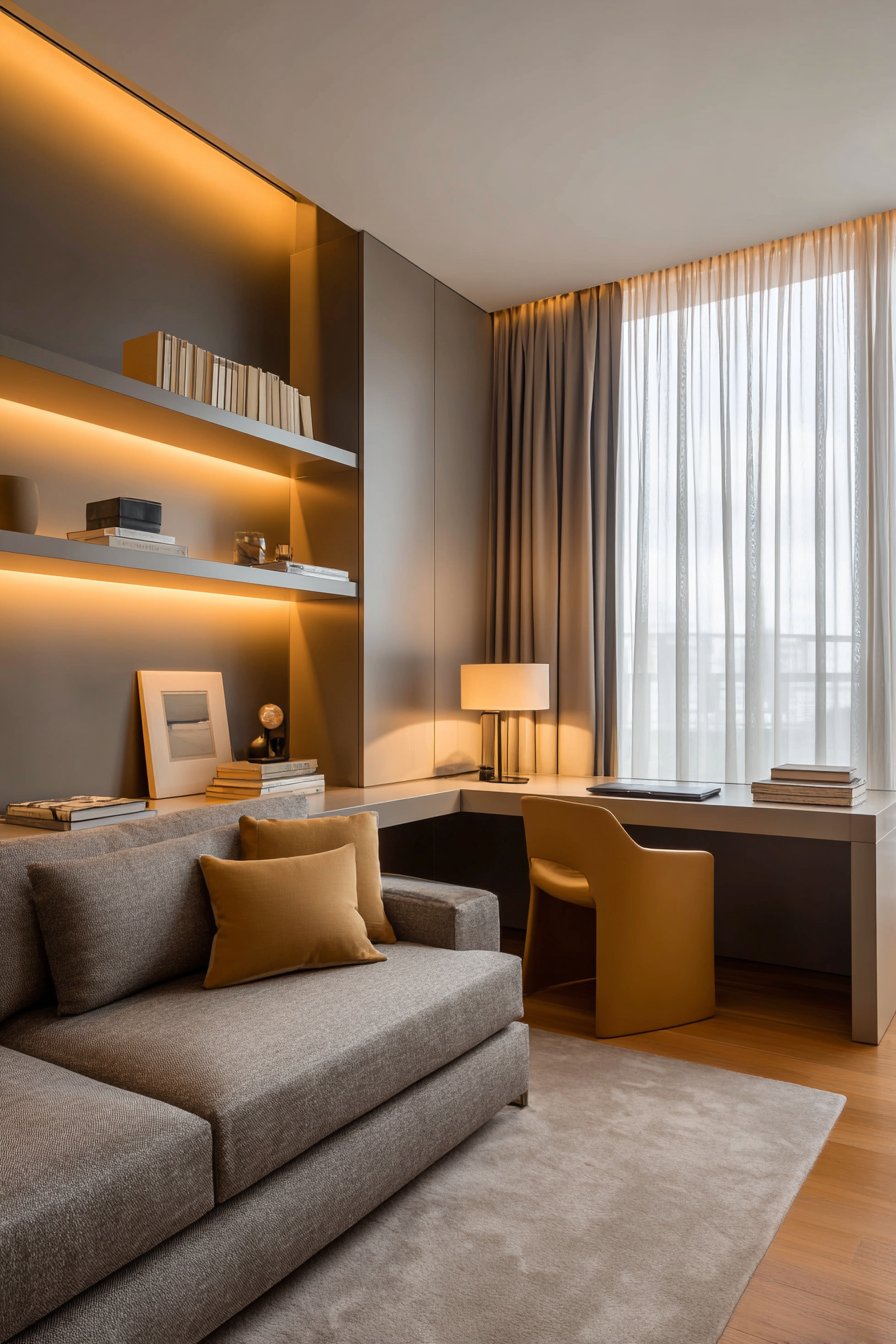
A coordinated color scheme unifies the dual purposes, using the same palette and materials throughout so neither zone feels like an afterthought. Task lighting for the work area—perhaps an adjustable desk lamp—provides focused illumination for computer work or reading without disturbing the more ambient lighting in the relaxation zone. Conversely, comfortable ambient lighting in the seating area creates a warm environment without causing screen glare in the work zone.
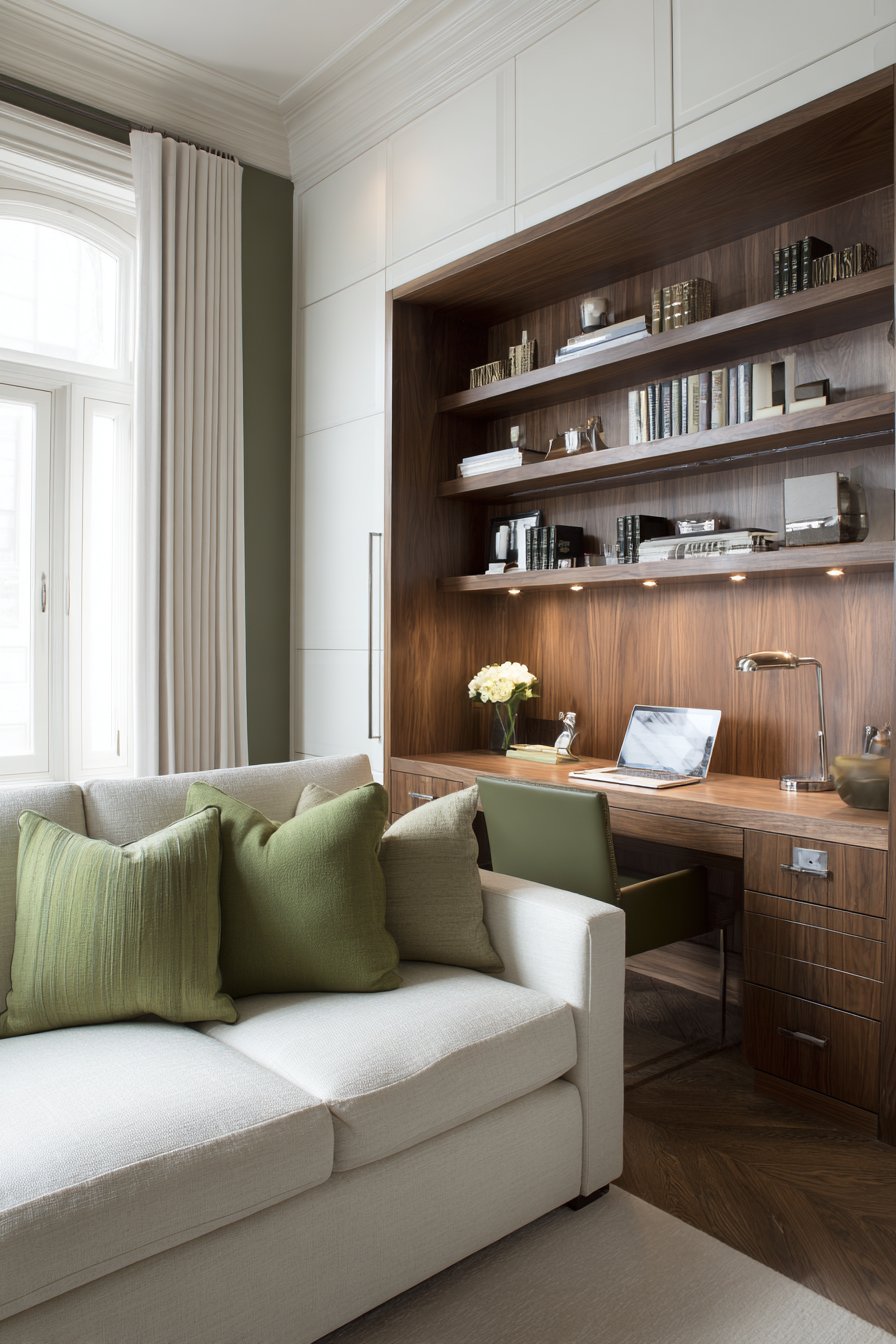
The multi-functional approach proves particularly valuable in contemporary homes where dedicated rooms for single purposes represent inefficient use of valuable space. This sitting room demonstrates how thoughtful design can create flexible spaces that adapt to different needs throughout the day, from morning coffee and newspaper reading to midday work sessions to evening relaxation.
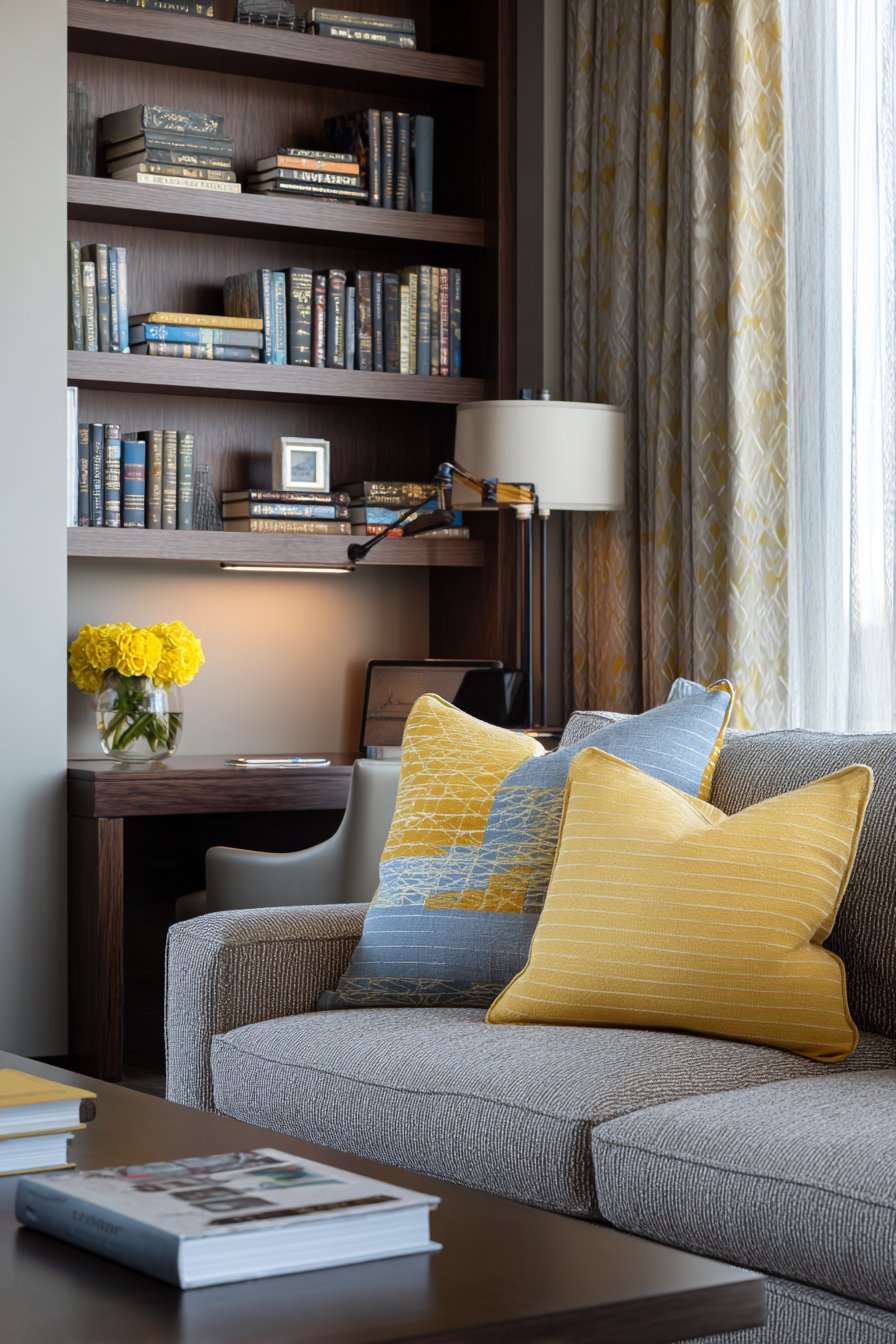
Key Design Tips: Position sofas facing built-in desk areas to create visual connection between work and relaxation zones. Use room dividers or bookcases to partially separate dual-purpose zones without blocking light or creating closed-off feelings. Coordinate color schemes throughout multi-functional spaces to create visual unity despite functional differences. Install separate task lighting for work areas and ambient lighting for relaxation zones to serve different needs. Choose floating shelves and built-in furniture to maximize functionality without consuming excessive floor space.
19. Eclectic Collected Character
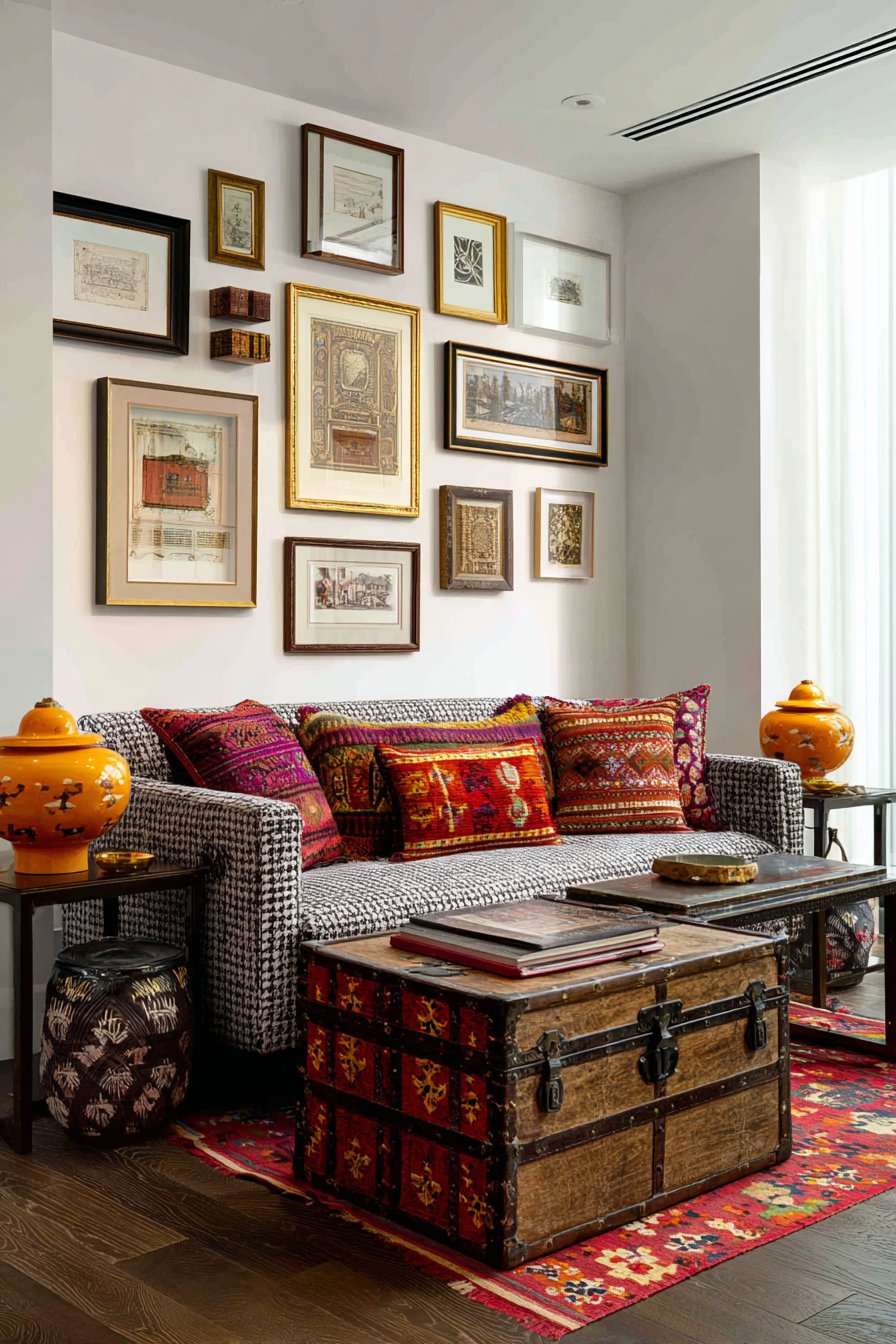
Personal style and accumulated treasures create this eclectic sitting room where diverse elements unite through shared spirit rather than matching aesthetics. A restored mid-century sofa pairs with modern side tables and an antique trunk serving as coffee table, demonstrating that pieces from different eras can coexist when united by quality and character. Collected artwork in mismatched frames creates a gallery wall that tells the story of its owner’s evolving taste and memorable discoveries.
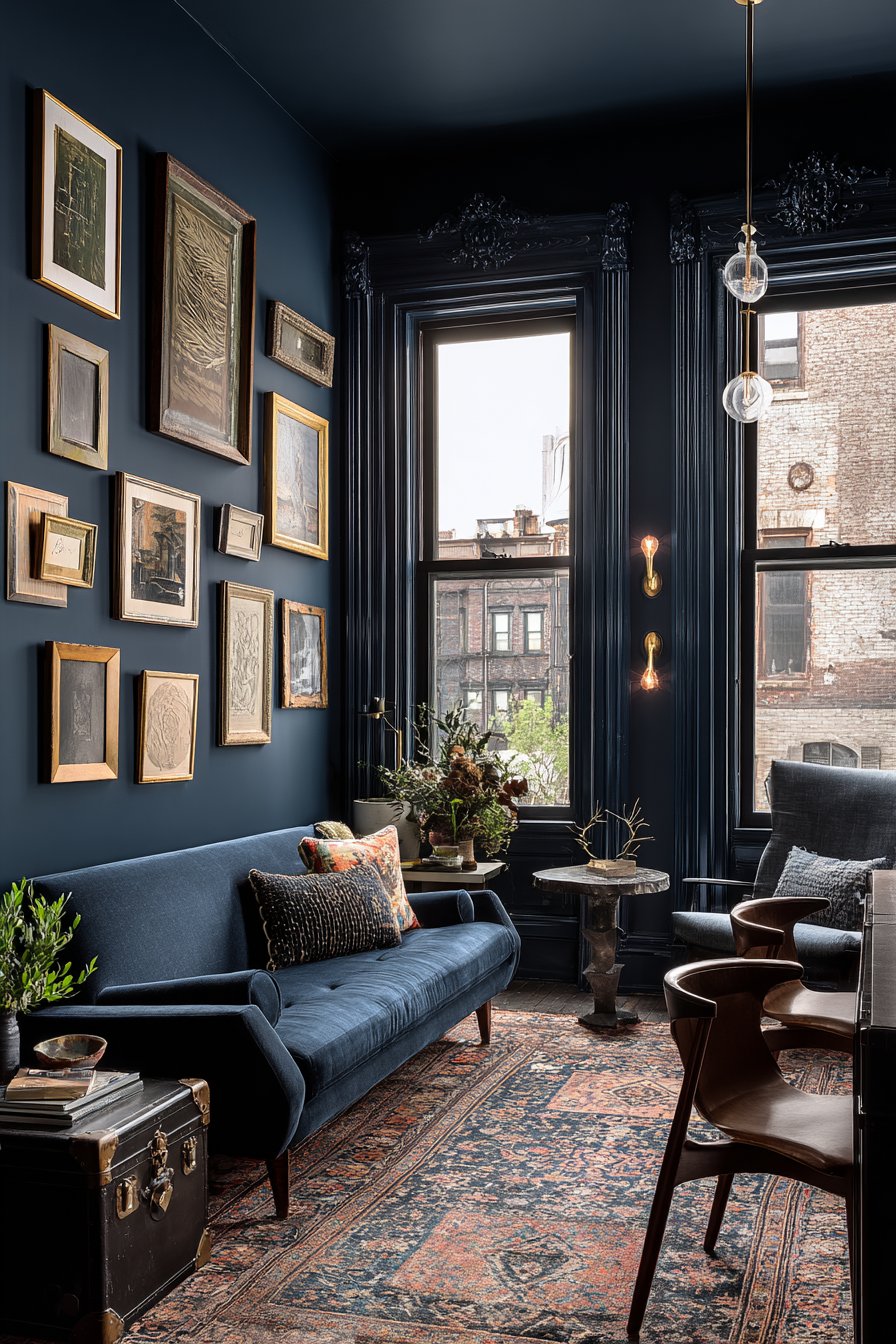
Global textiles in throw pillows and area rugs add color, pattern, and cultural depth—perhaps an Indian block print, a Moroccan kilim, and a South American textile all contributing their unique stories and artistic traditions. A mix of lighting styles from different eras proves that functional objects need not all match to create cohesive illumination—a Victorian floor lamp might coexist perfectly with a contemporary task light and an industrial pendant.
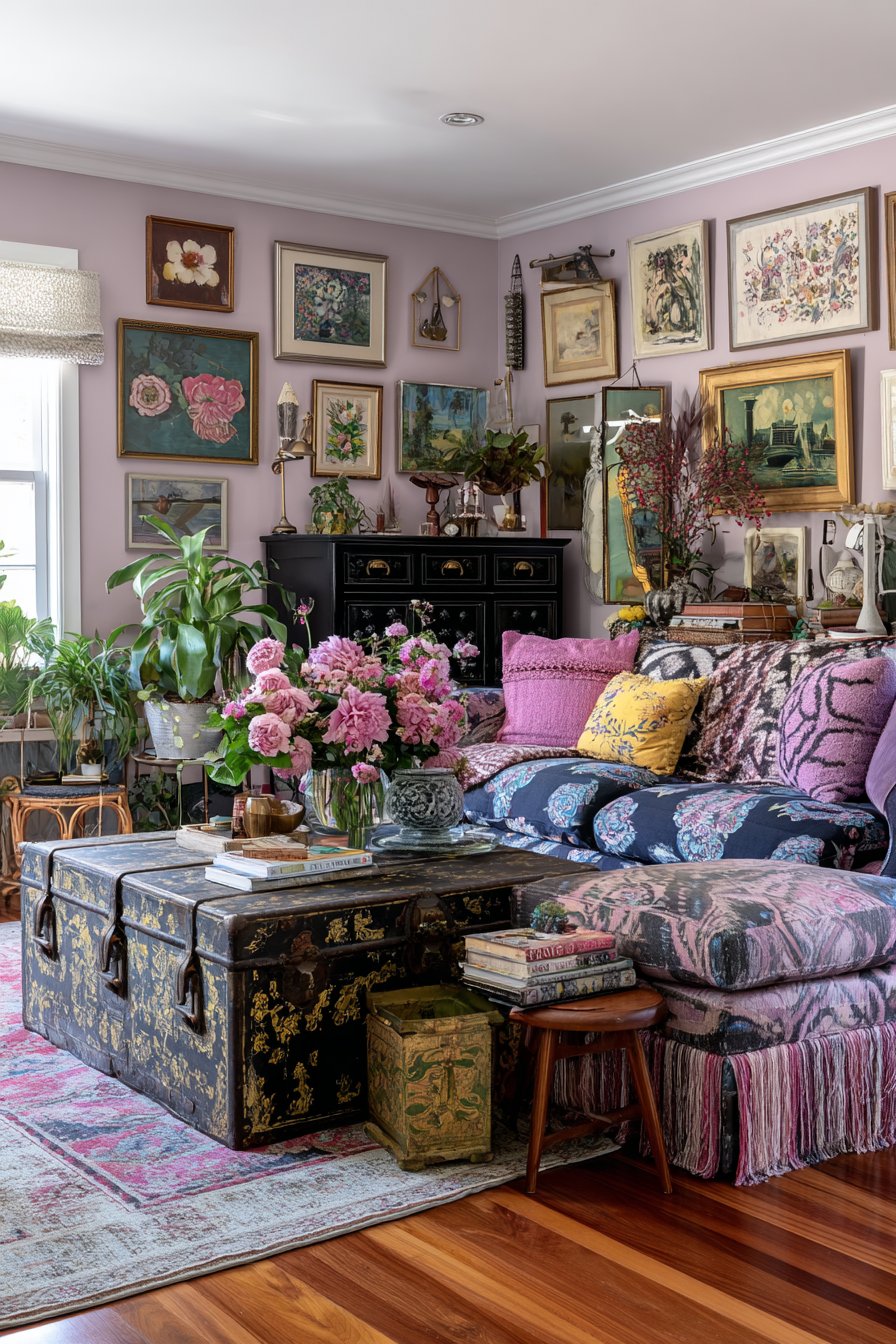
The eclectic approach requires confidence and a discerning eye, but rewards with rooms that feel genuinely personal and impossible to replicate. This sitting room demonstrates that the best interiors aren’t purchased all at once from a single source but rather accumulated over time through thoughtful collection and meaningful acquisition. Each piece has a story, and together they tell a larger narrative about the people who live here.
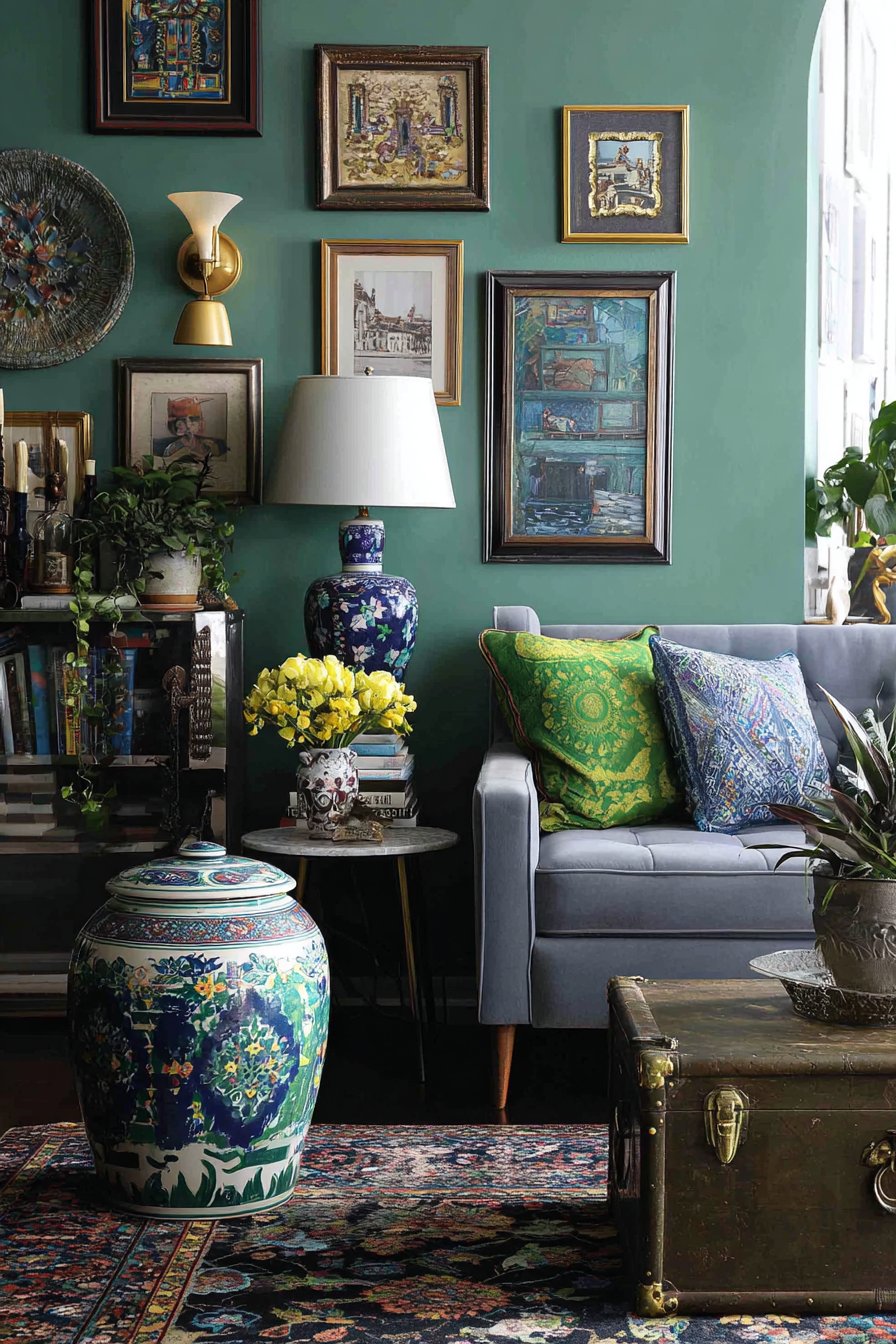
Key Design Tips: Mix furniture from different design eras united by quality and character rather than matching styles. Create gallery walls with mismatched frames to display collected artwork that tells personal stories. Incorporate global textiles from different cultures to add pattern and cultural depth through pillows and rugs. Combine lighting styles from different periods to create functional illumination with eclectic character. Collect pieces over time rather than purchasing everything at once to create authentic personal style.
20. Serene Monochromatic Palette
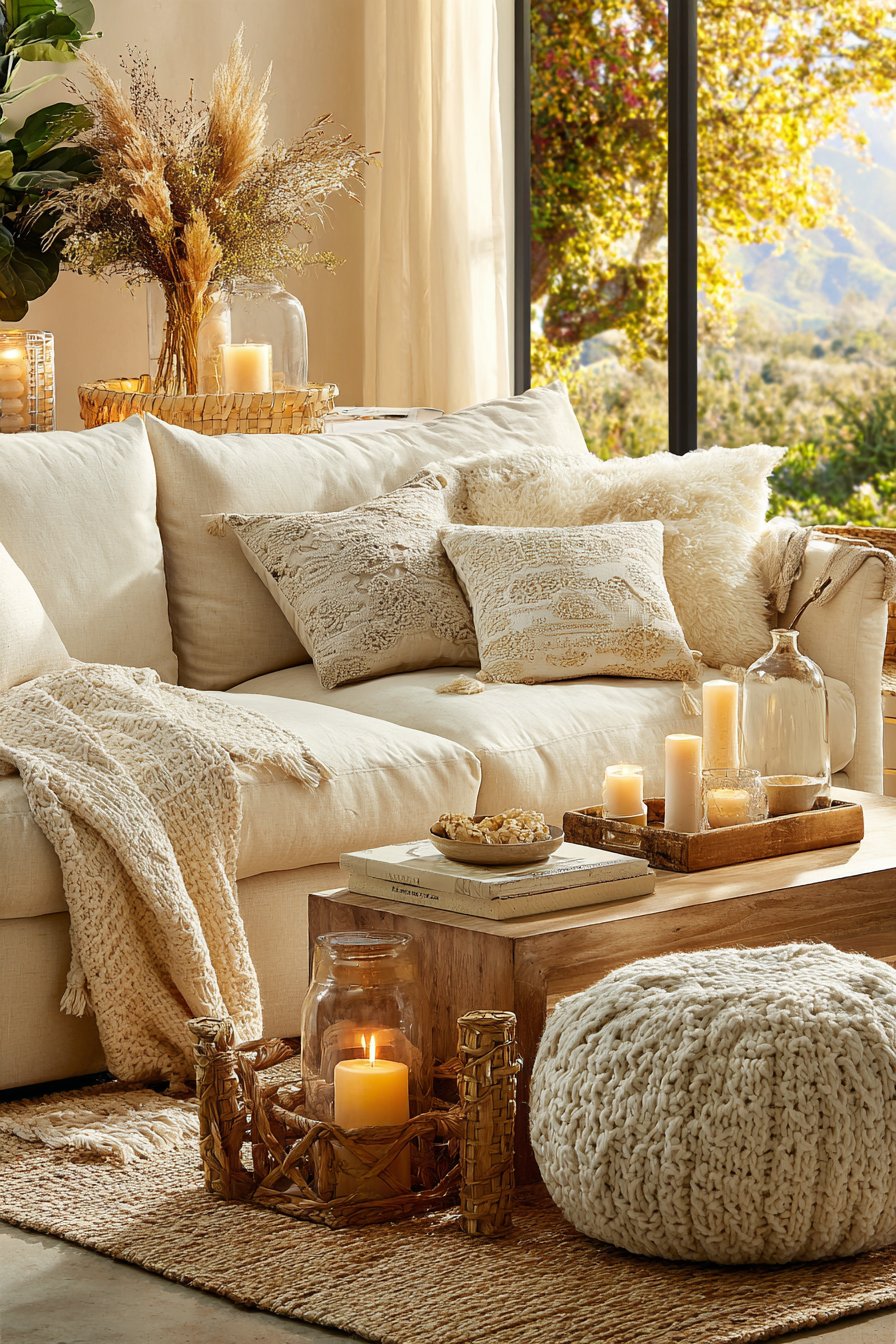
Visual harmony through tonal variation defines this sophisticated sitting room where multiple shades of cream and beige create depth without color contrast. A linen sofa in natural cream provides a neutral anchor, its textured fabric adding visual interest through weave variation rather than color. Natural fiber area rugs in sisal or jute add organic texture underfoot while maintaining the tonal palette. A blonde wood coffee table introduces warmth through honey tones that complement rather than contrast with the surrounding neutrals.
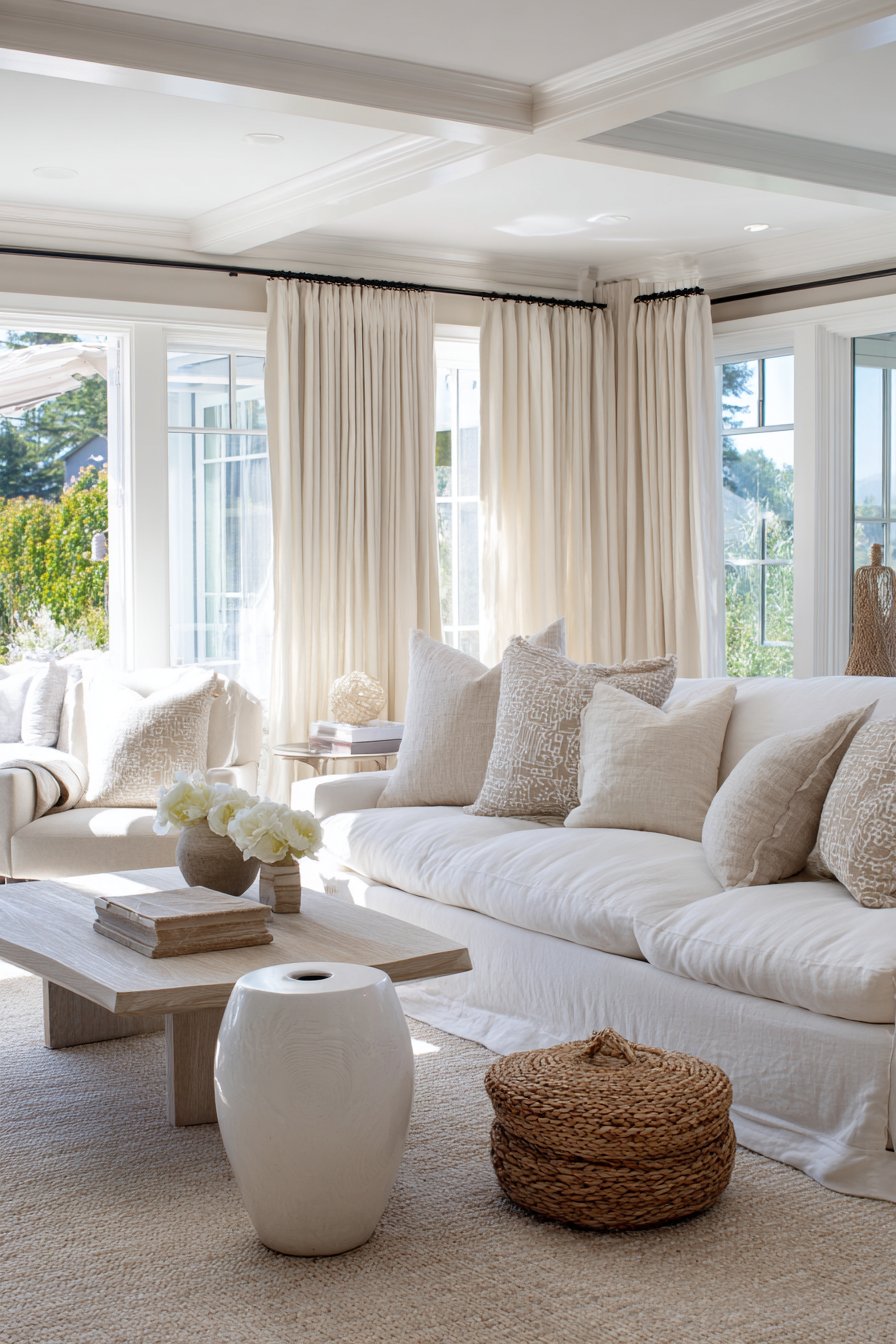
Texture becomes the primary tool for creating visual interest when color variation is minimized. Woven baskets, nubby throws, smooth leather, rough linen, and polished wood all contribute different tactile experiences that prevent monotony. Subtle pattern in throw pillows—perhaps a tone-on-tone geometric or organic motif—adds visual movement without disrupting the serene cohesion.
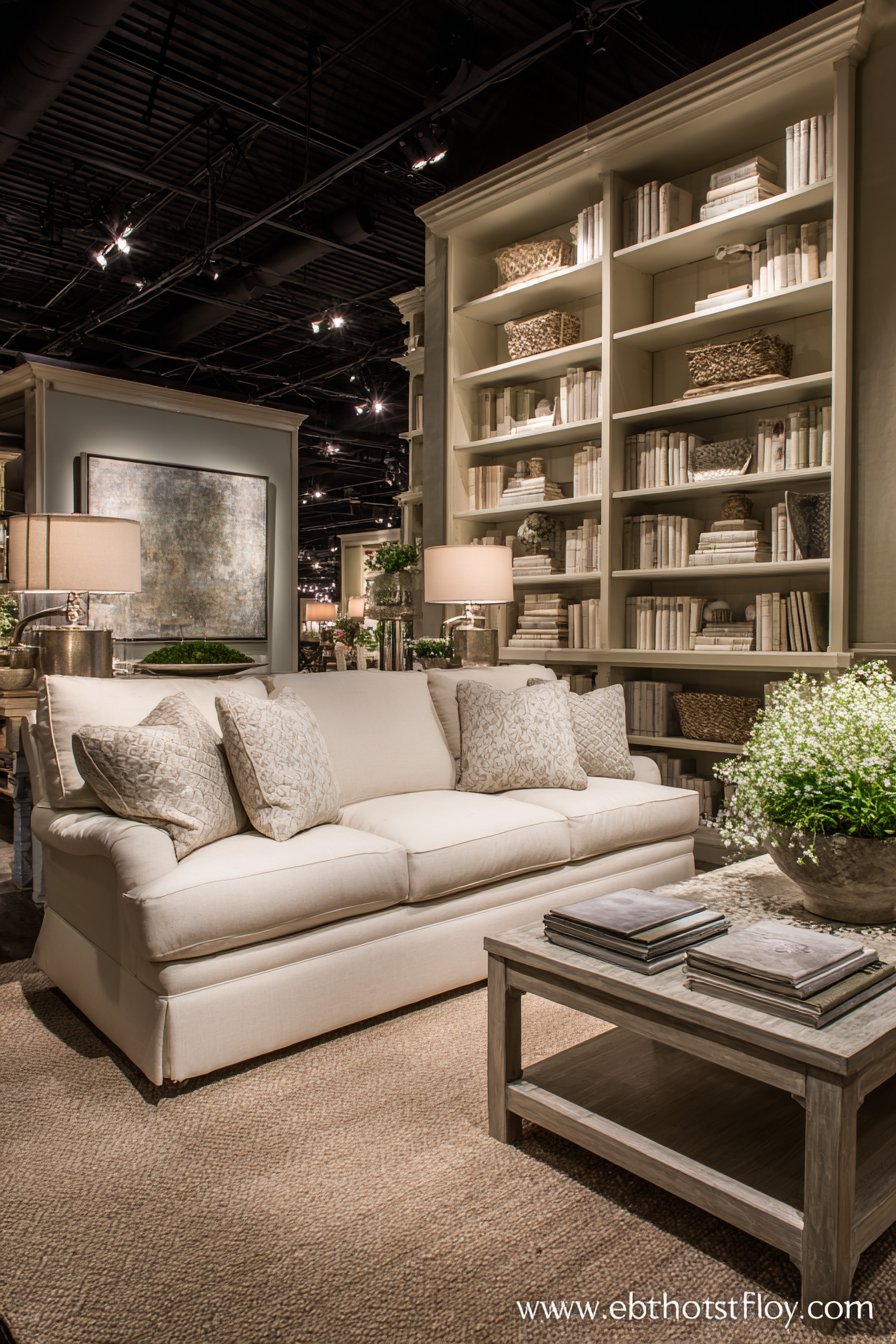
Soft ambient lighting from multiple sources creates a warm glow that enhances the room’s peaceful atmosphere. The monochromatic approach creates visual rest and mental calm, allowing occupants to truly relax without visual stimulation or competition for attention. This sitting room demonstrates that restraint in color can actually create freedom—freedom from visual chaos, freedom to focus on what matters, freedom to simply be.
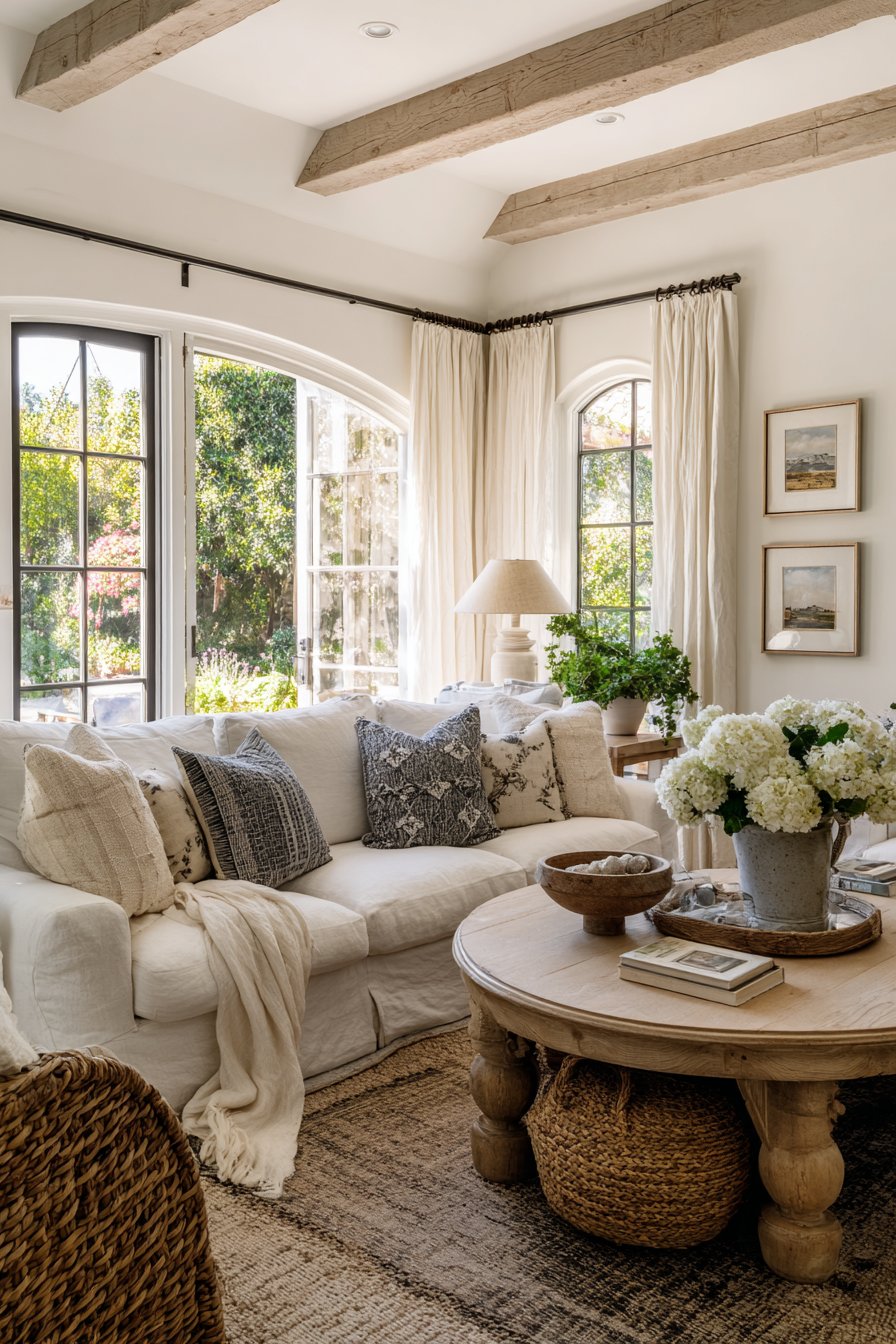
Key Design Tips: Layer multiple shades of single color family to create depth and visual interest through tonal variation. Use varied textures extensively when limiting color to prevent monotony and add tactile richness. Select natural fiber rugs in sisal or jute to add organic texture while maintaining neutral tonal palettes. Choose blonde or natural wood furniture to add warmth through honey tones within neutral schemes. Install multiple ambient lighting sources to create warm glow that enhances serene monochromatic atmospheres.
21. Reader’s Paradise
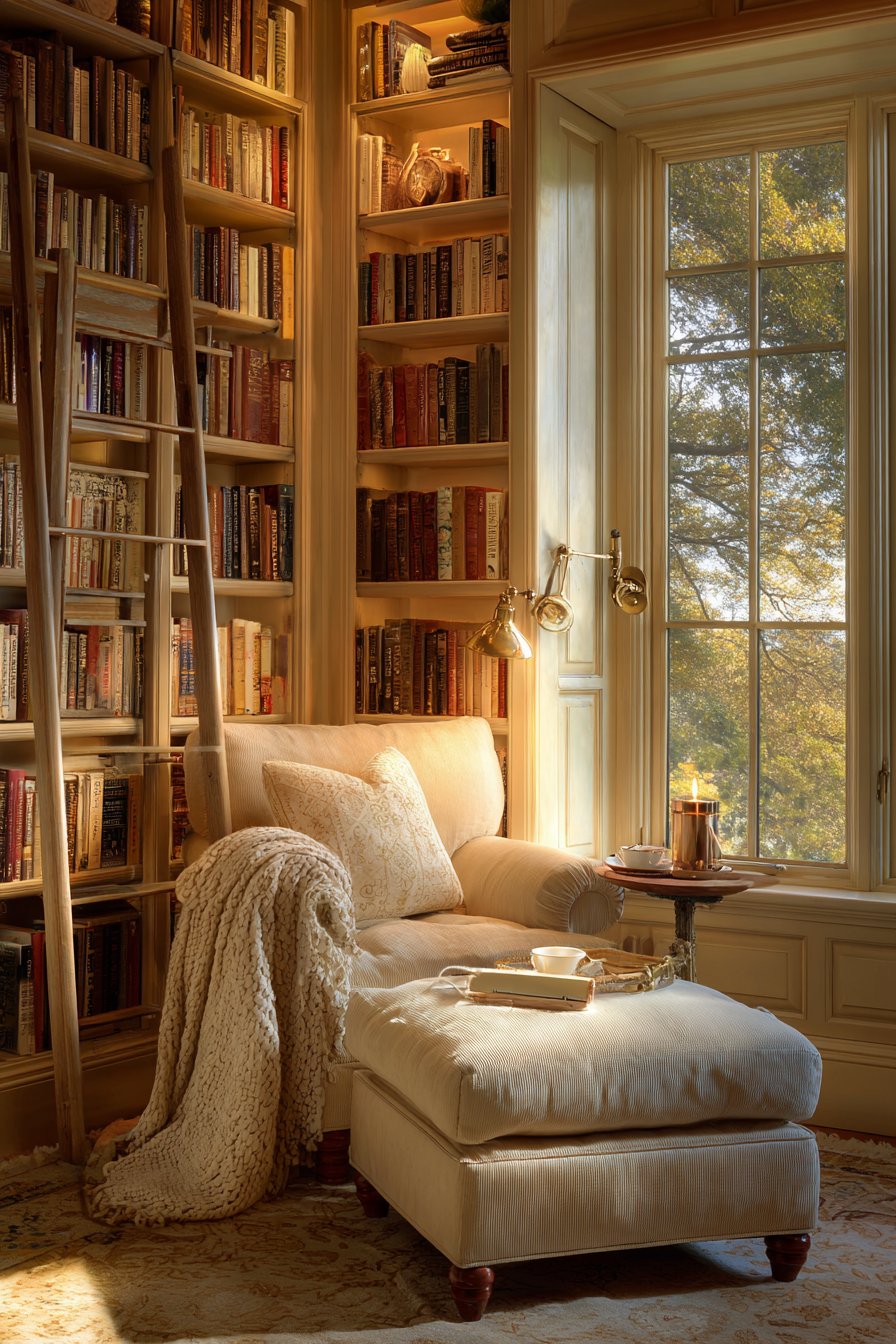
Book lovers will appreciate this sitting room designed around the pleasure of reading and surrounded by beloved volumes. Floor-to-ceiling built-in bookshelves with library ladder create both practical storage for extensive book collections and dramatic architectural impact. A comfortable reading chair with supportive back and arms positions near a window to maximize natural light during daylight reading hours. An ottoman provides leg support for extended reading sessions, promoting comfort and proper posture.
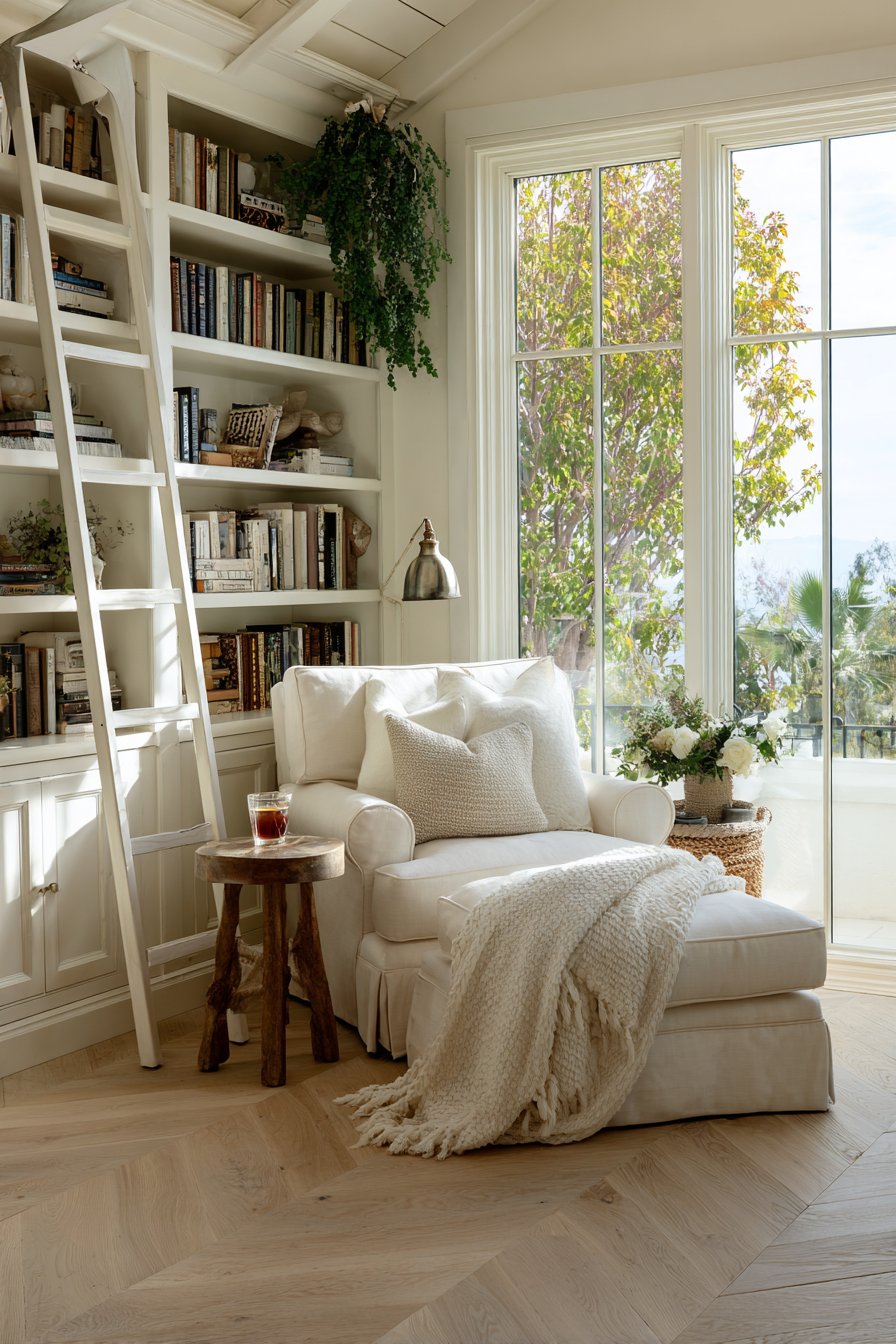
Adjustable reading lamp positioned beside the chair provides focused task lighting that can be directed precisely where needed without causing glare or eye strain. A side table within easy reach holds reading glasses, bookmarks, current reading selections, and a beverage—everything the dedicated reader needs within arm’s length. A cozy throw blanket draped over the chair arm invites curling up for hours of reading pleasure.
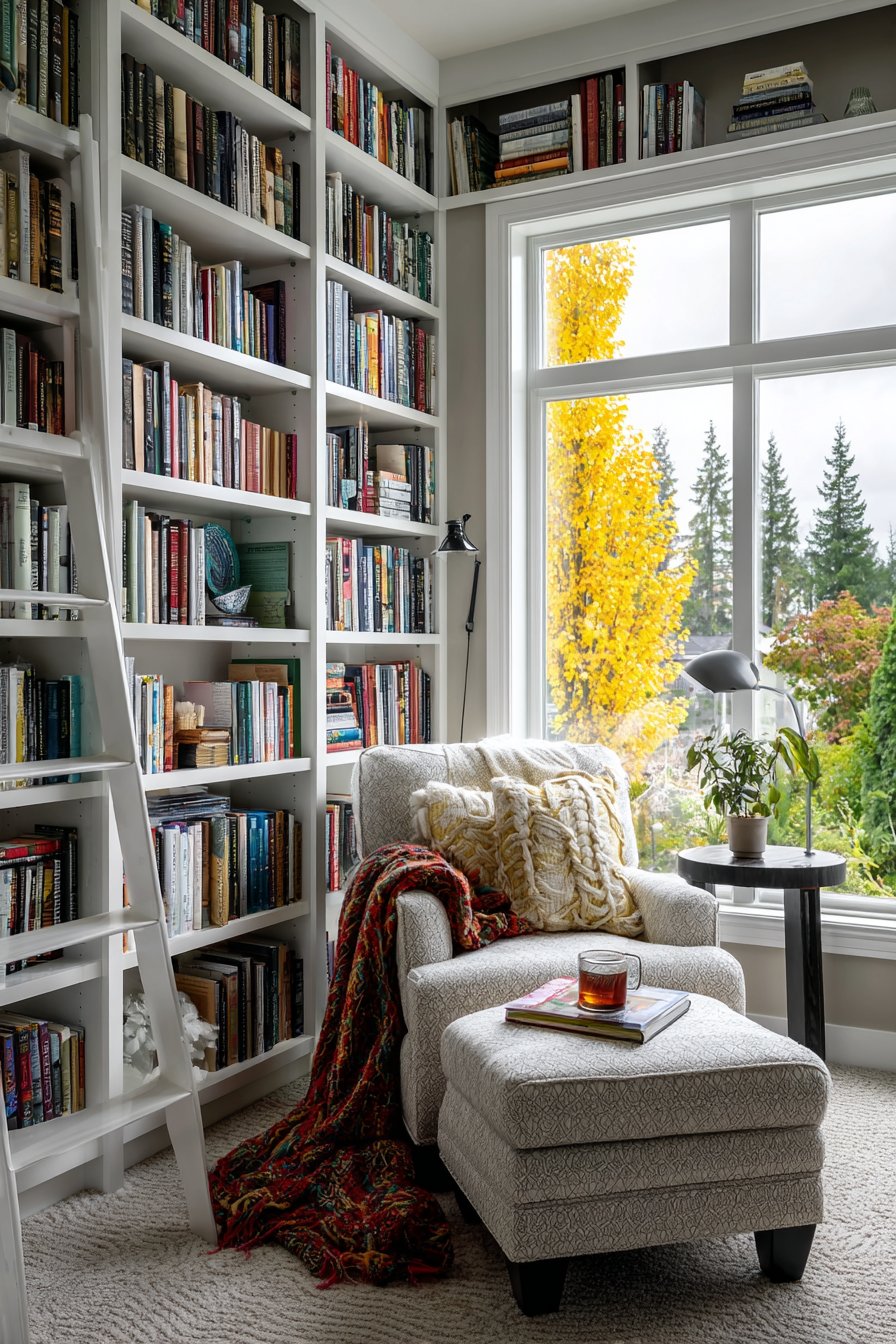
The room’s organization around reading demonstrates how sitting rooms can be designed to support specific beloved activities rather than serving generic purposes. When you know how a space will primarily be used, every design decision can support that use, creating environments that truly enhance daily life. This reading-focused sitting room shows that the best design serves life, not the other way around.
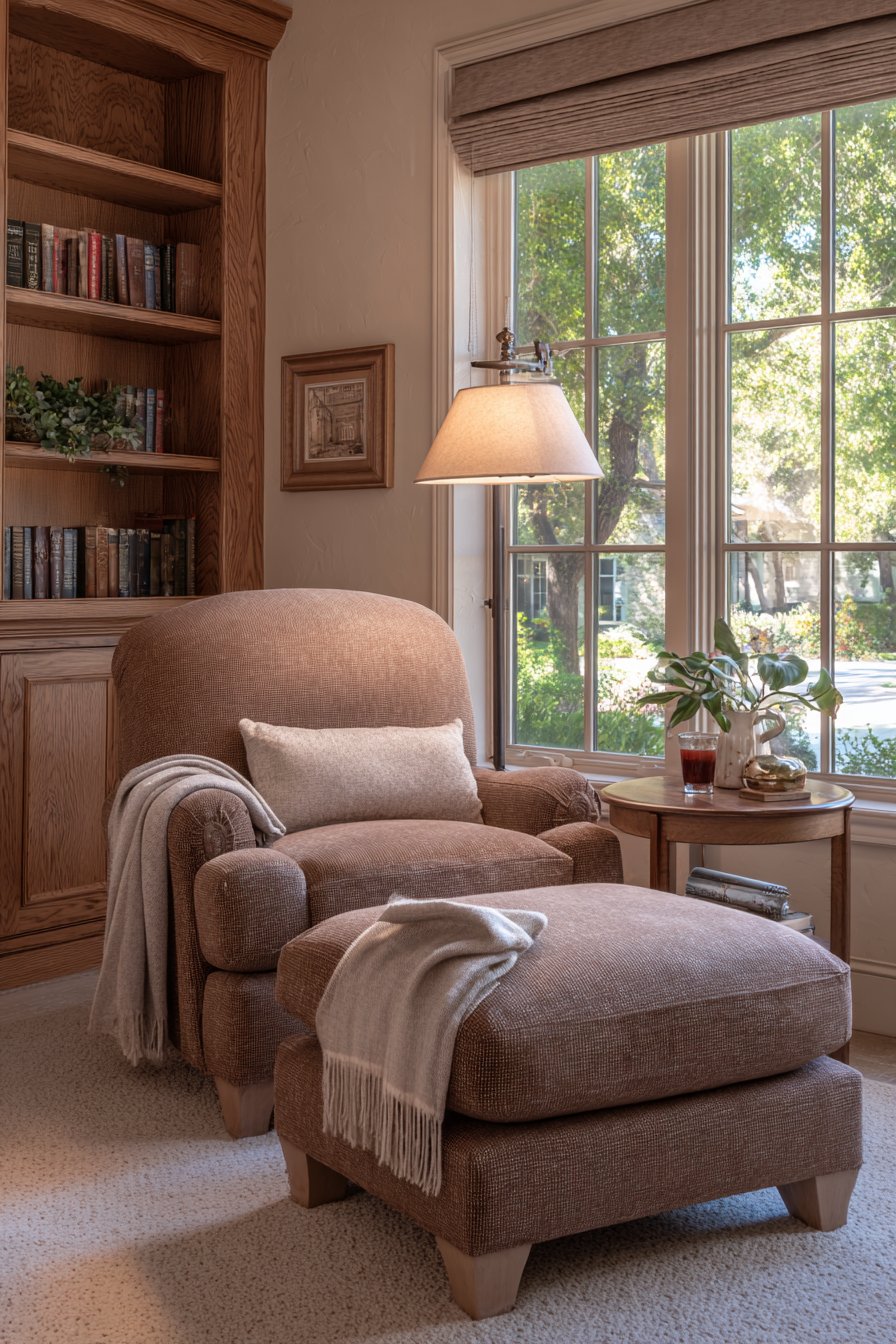
Key Design Tips: Install floor-to-ceiling built-in bookshelves with library ladders to maximize book storage and create dramatic architectural features. Position comfortable reading chairs near windows to take advantage of natural daylight for reading. Add supportive ottomans for leg elevation during extended reading sessions. Install adjustable reading lamps that provide focused task lighting without glare or eye strain. Include side tables within arm’s reach to hold reading essentials and beverages.
22. Fireplace-Centered Gathering
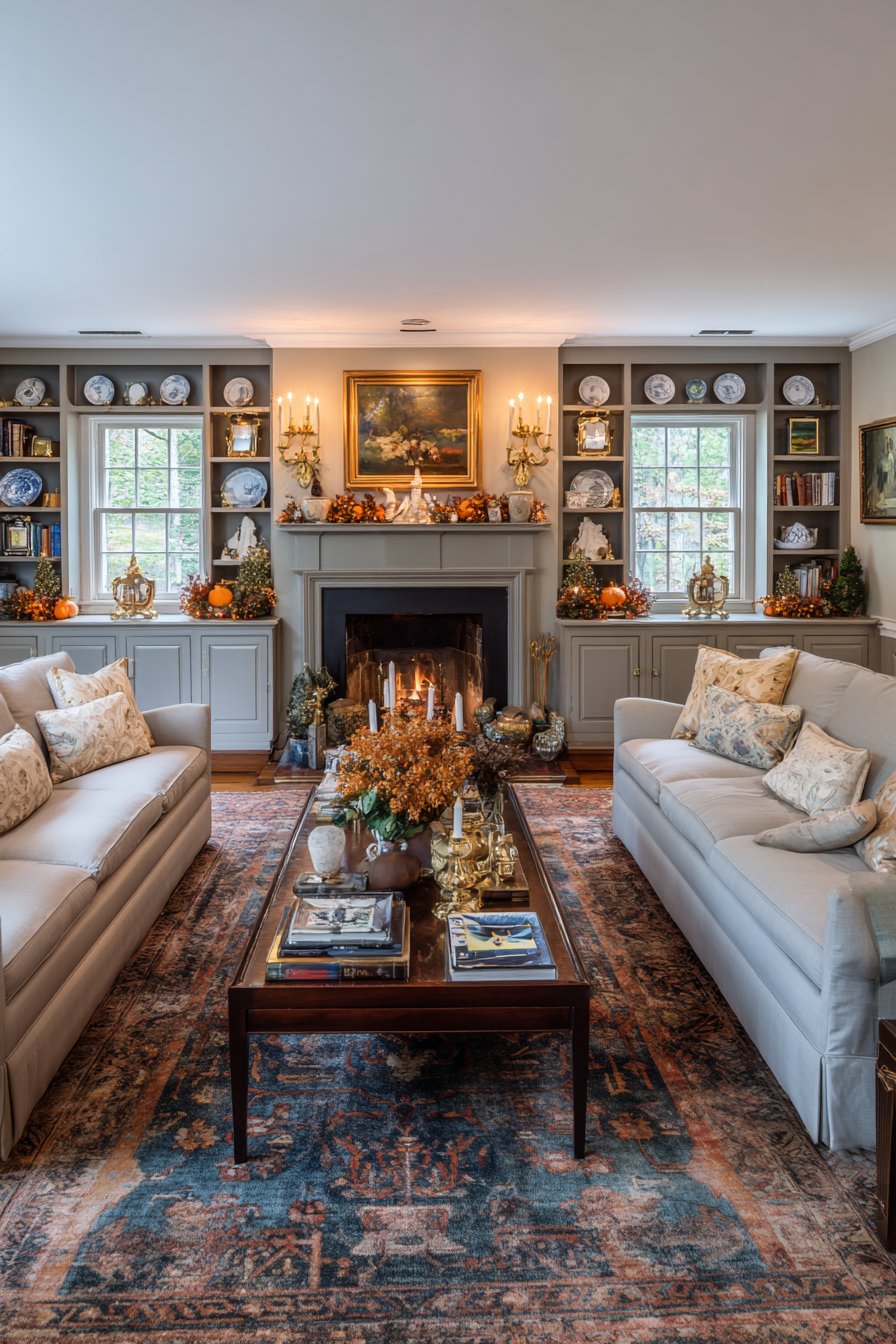
The timeless appeal of gathering around a fire manifests in this sitting room where the fireplace serves as both physical and psychological focal point. The decorative mantel receives thoughtful styling with mirrors that reflect light and make the space feel larger, candlesticks that echo the fireplace’s illumination, and seasonal decorative elements that change throughout the year. Sofa and armchairs arrange in a U-shape facing the hearth, creating an intimate gathering space that encourages conversation and connection.
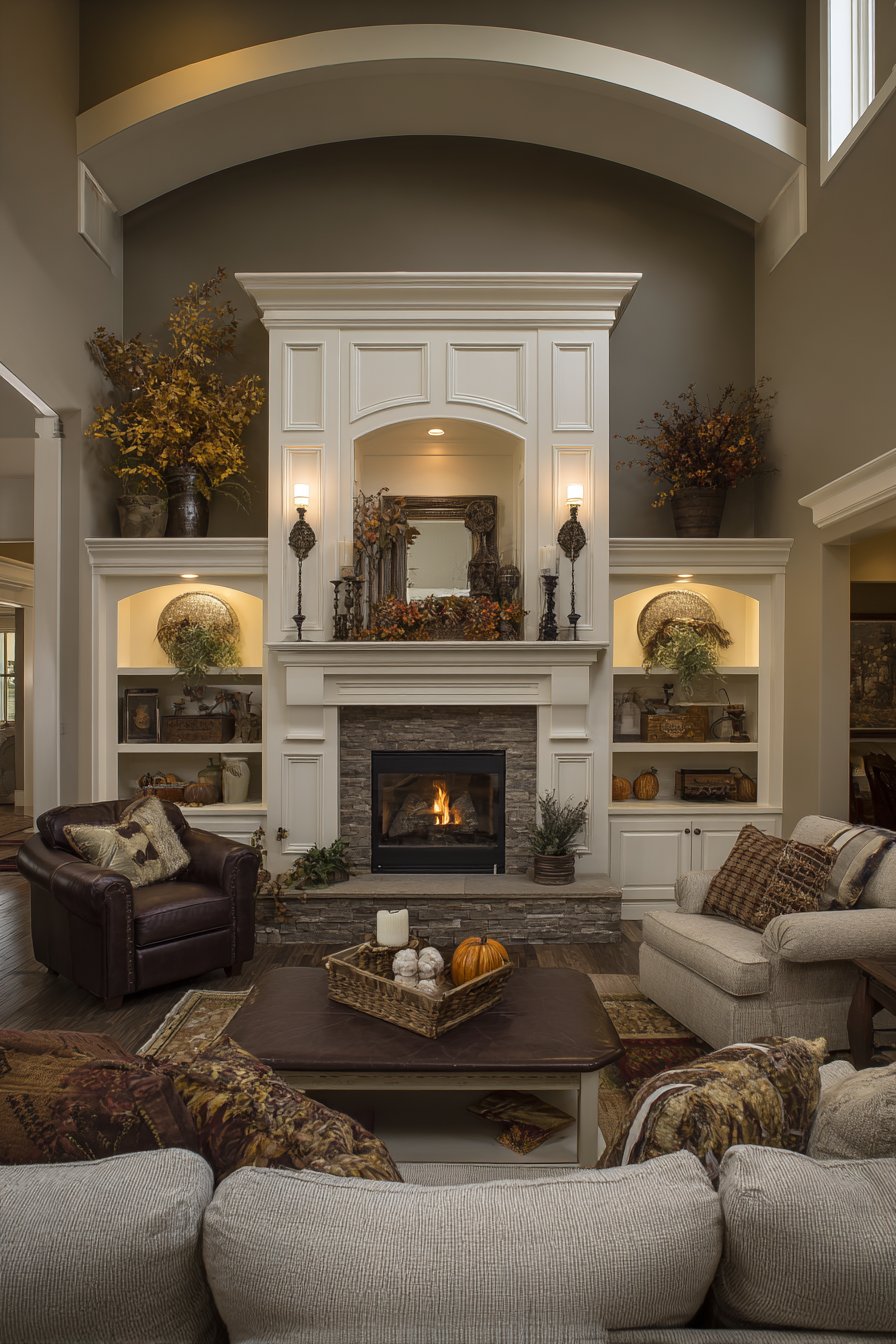
Built-in cabinetry flanking the fireplace provides practical storage while creating architectural symmetry that frames the focal point. These flanking elements might house media equipment, display treasured objects, or provide closed storage for less decorative necessities. Ambient lighting from wall sconces complements the fireplace’s natural glow, providing adequate illumination when the fire isn’t burning while creating layered lighting when it is.
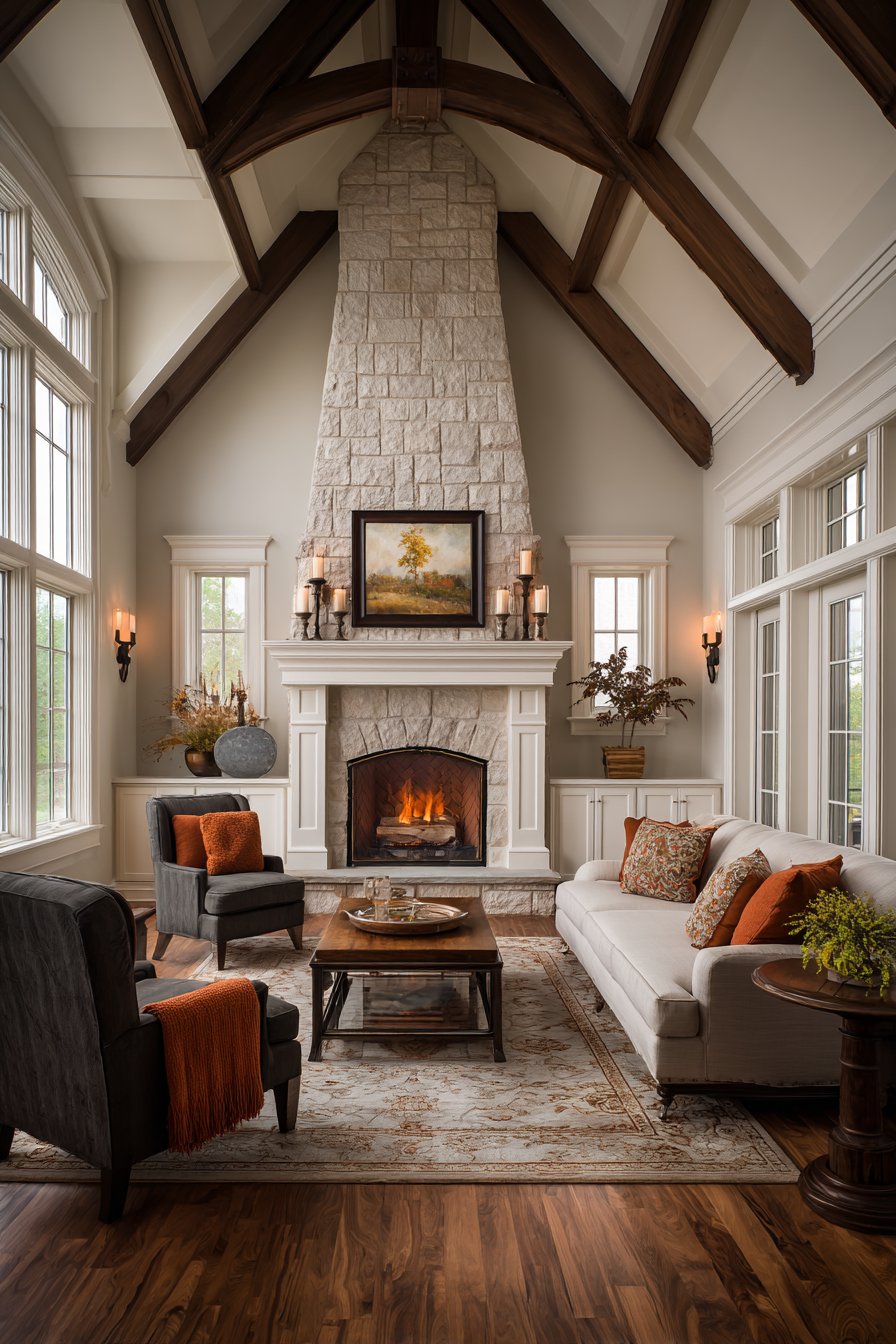
The fireplace-centered arrangement taps into deep human connections to fire and hearth, creating spaces that feel instinctively welcoming and safe. Even when not actively burning, the fireplace provides a visual anchor that grounds the furniture arrangement and gives the eye a natural resting place. This sitting room proves that some design principles transcend trends because they speak to fundamental human needs.
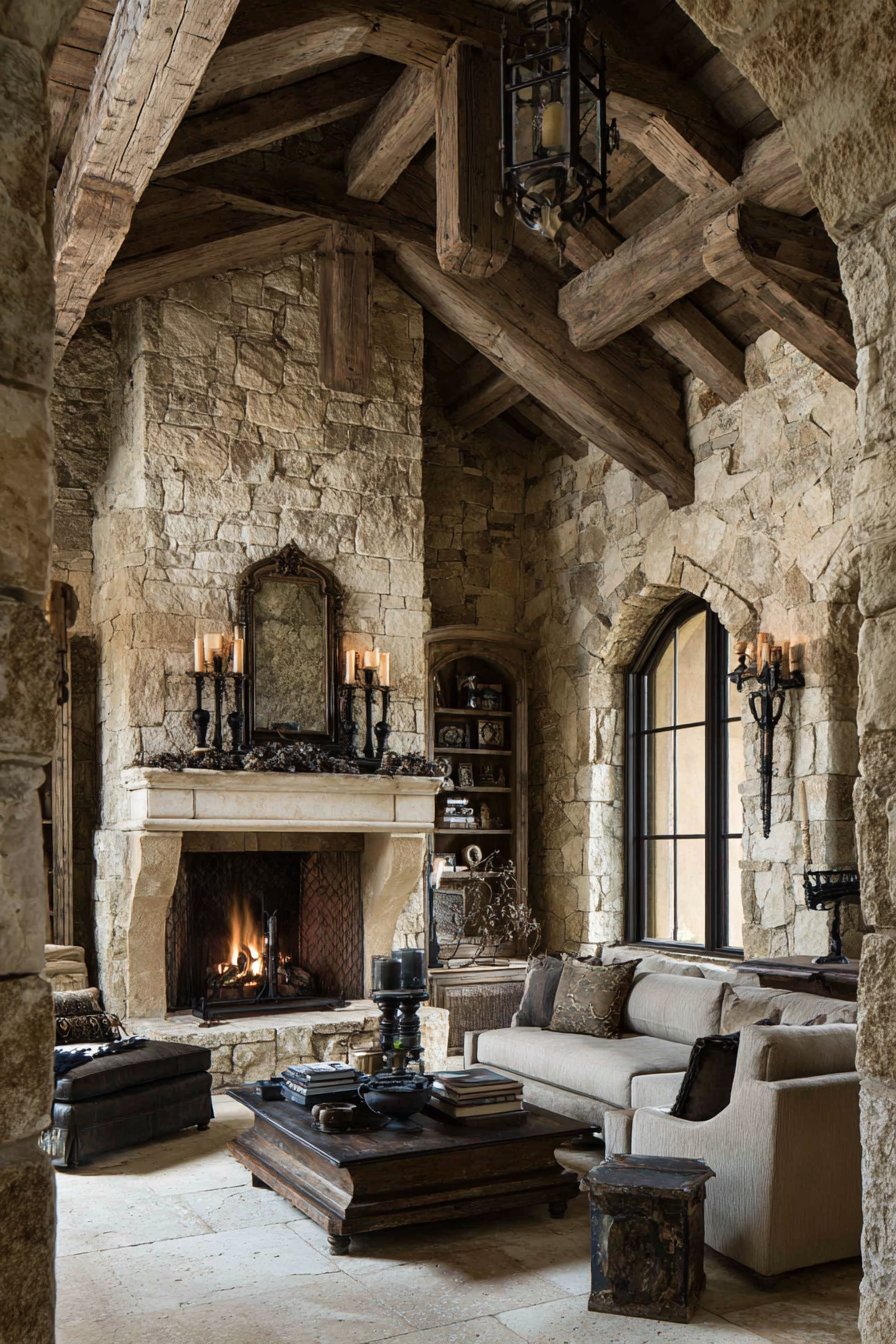
Key Design Tips: Style fireplace mantels with mirrors to reflect light and create the illusion of greater space. Arrange seating in U-shape facing fireplace to create intimate gathering spaces centered around the hearth. Install built-in cabinetry flanking fireplaces to add storage while creating architectural symmetry. Add wall sconces that complement fireplace glow to provide layered ambient lighting. Change mantel decorations seasonally to keep the focal point fresh and celebrate the changing year.
23. Pet-Friendly Practical Design
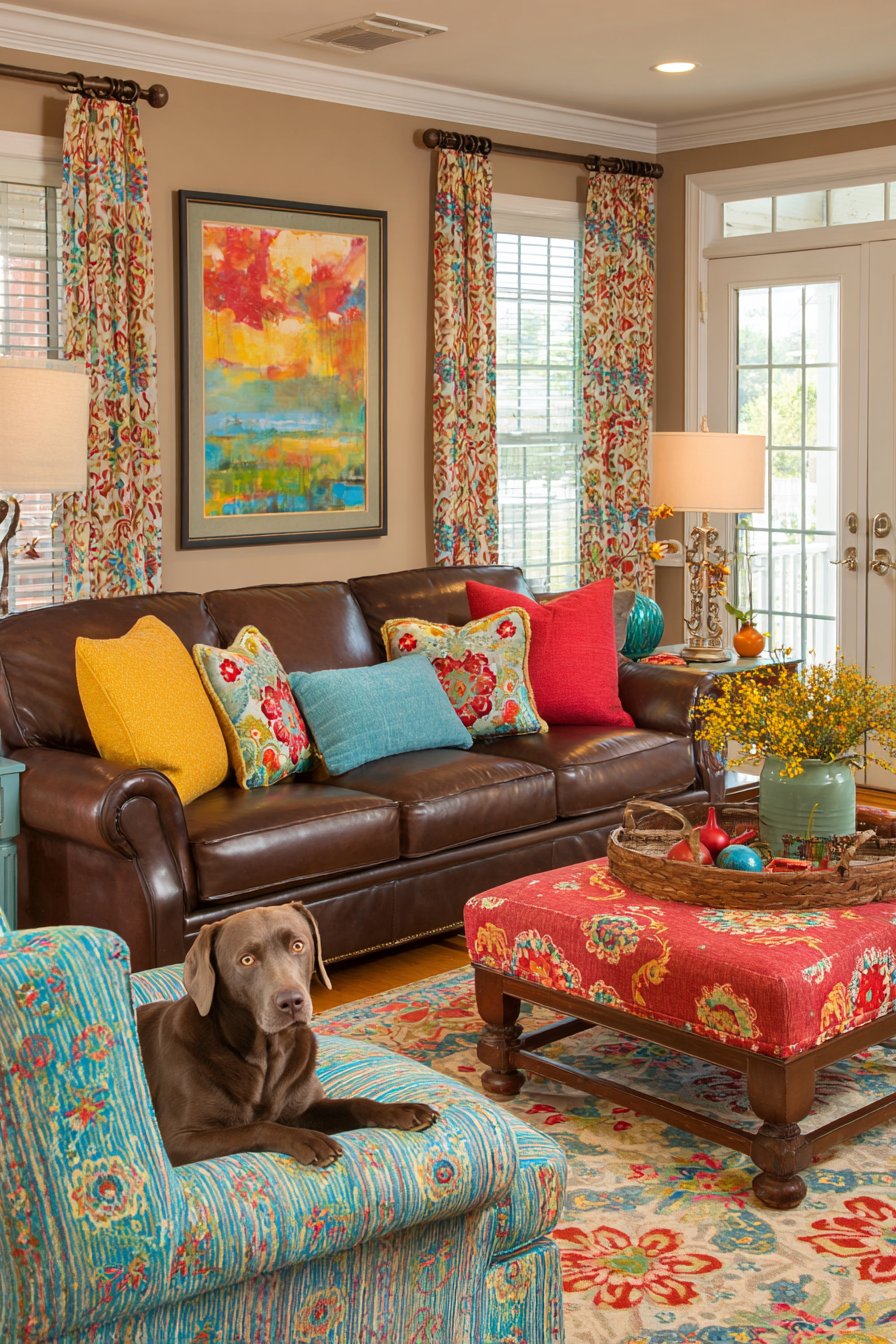
Creating beautiful spaces that accommodate furry family members requires strategic material choices and thoughtful planning, as demonstrated in this pet-friendly sitting room. Leather sofas resist pet hair and clean easily, making them practical choices for homes with dogs or cats. Scratch-resistant area rugs in patterned designs help hide inevitable wear and pet hair, maintaining their appearance despite daily use. Washable slipcovers on accent chairs allow for easy cleaning when muddy paws or shedding season take their toll.
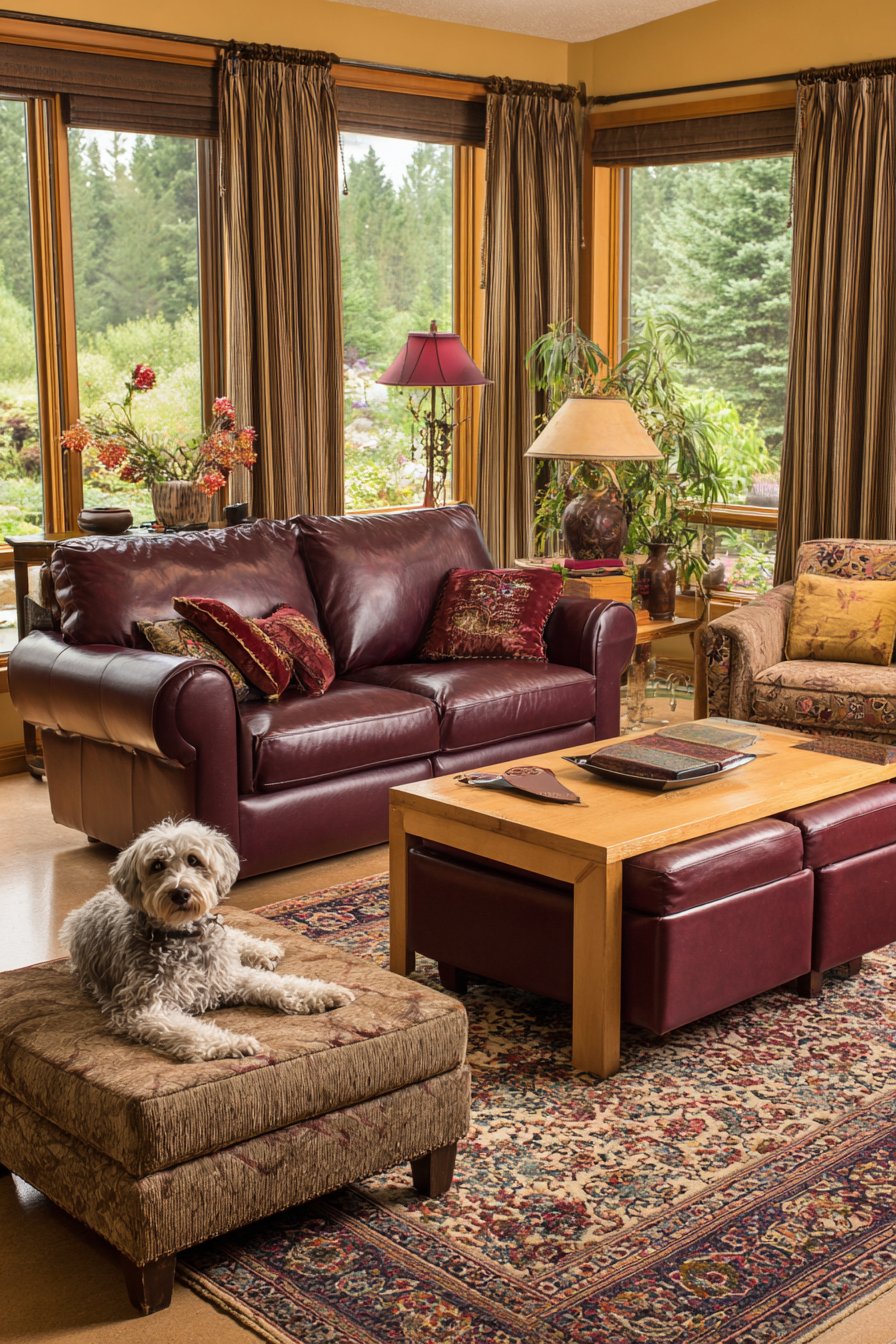
A dedicated pet bed tucked beside the furniture provides a designated spot where pets can rest near their humans without claiming furniture meant for people. Storage ottomans with lids conceal pet toys, keeping them accessible but out of sight when not in use. Easy-to-clean hard flooring visible at room edges simplifies cleanup of tracked-in dirt, spilled water bowls, or occasional accidents.
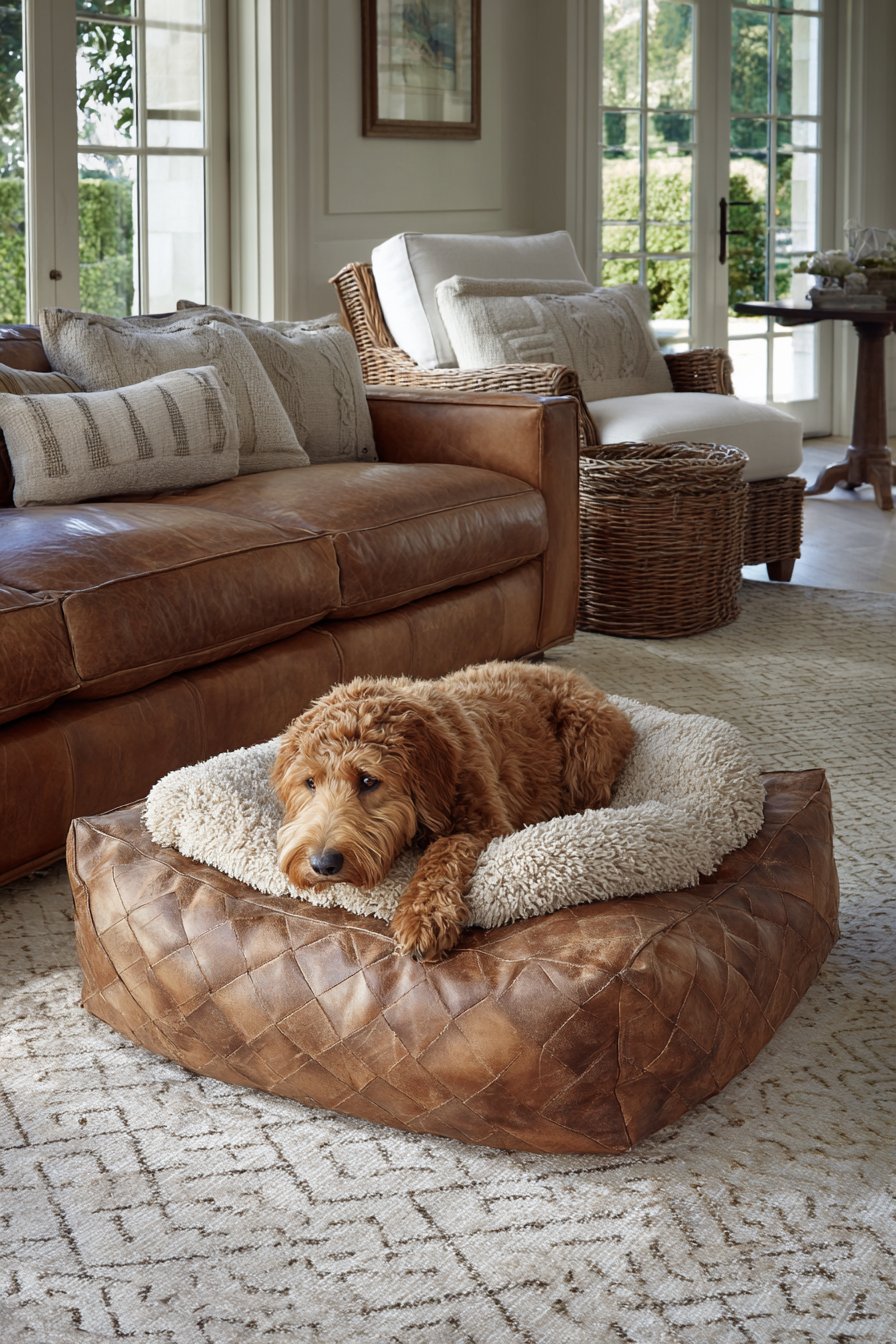
The pet-friendly approach demonstrates that accommodating animals doesn’t require sacrificing style—it simply means making smarter material choices and planning for realistic use. When design accounts for actual life rather than idealized photographs, spaces become more livable and less stressful for everyone, human and animal alike. This sitting room proves that practical and beautiful can absolutely coexist.
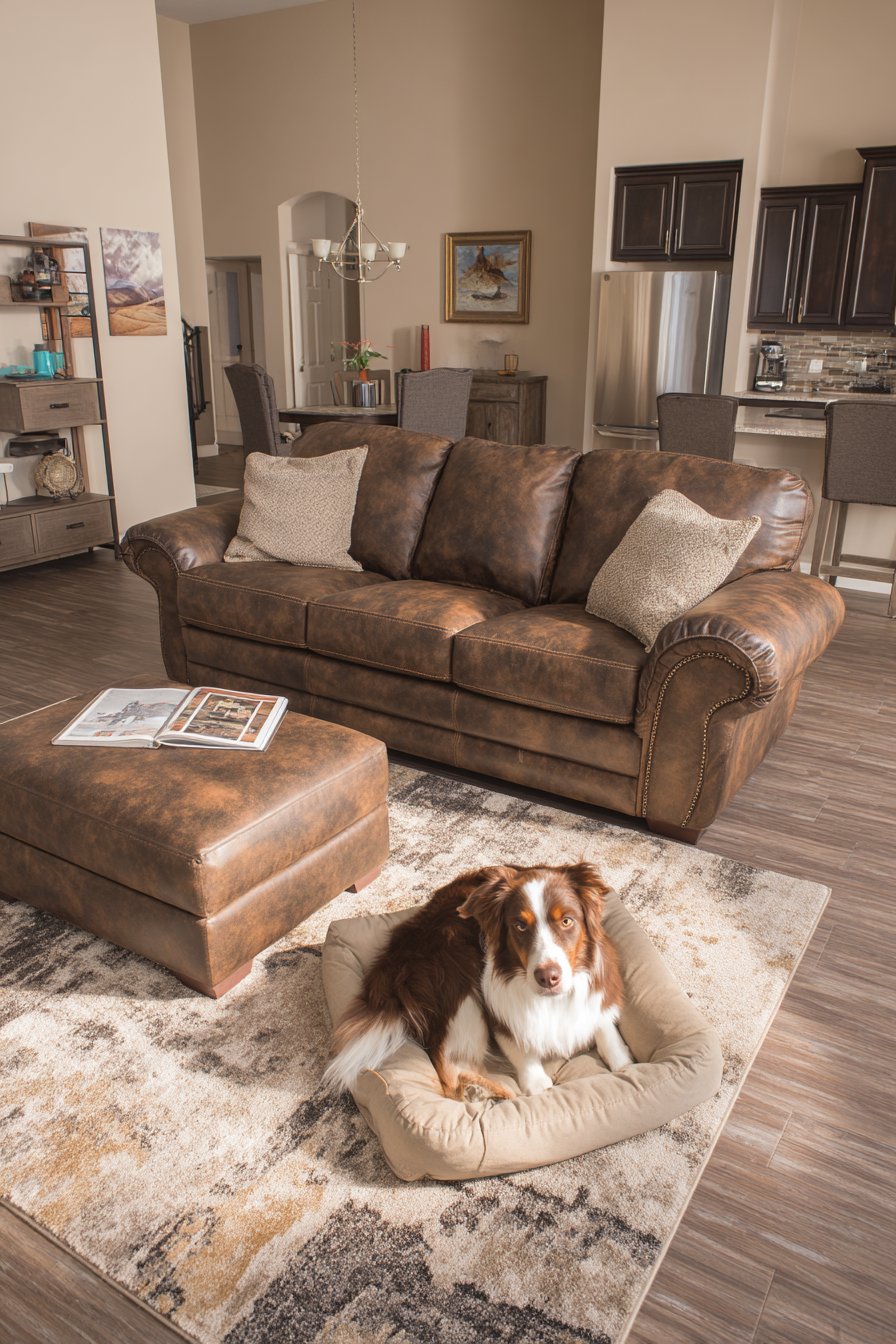
Key Design Tips: Choose leather sofas for their pet hair resistance and easy cleaning in homes with dogs or cats. Select patterned area rugs that help hide pet hair and wear while remaining attractive and durable. Use washable slipcovers on accent chairs to simplify cleaning after muddy paws or shedding seasons. Provide dedicated pet beds near furniture so animals can rest near humans without claiming people furniture. Incorporate storage ottomans to conceal pet toys and keep them accessible but out of sight.
24. Natural Light Maximization
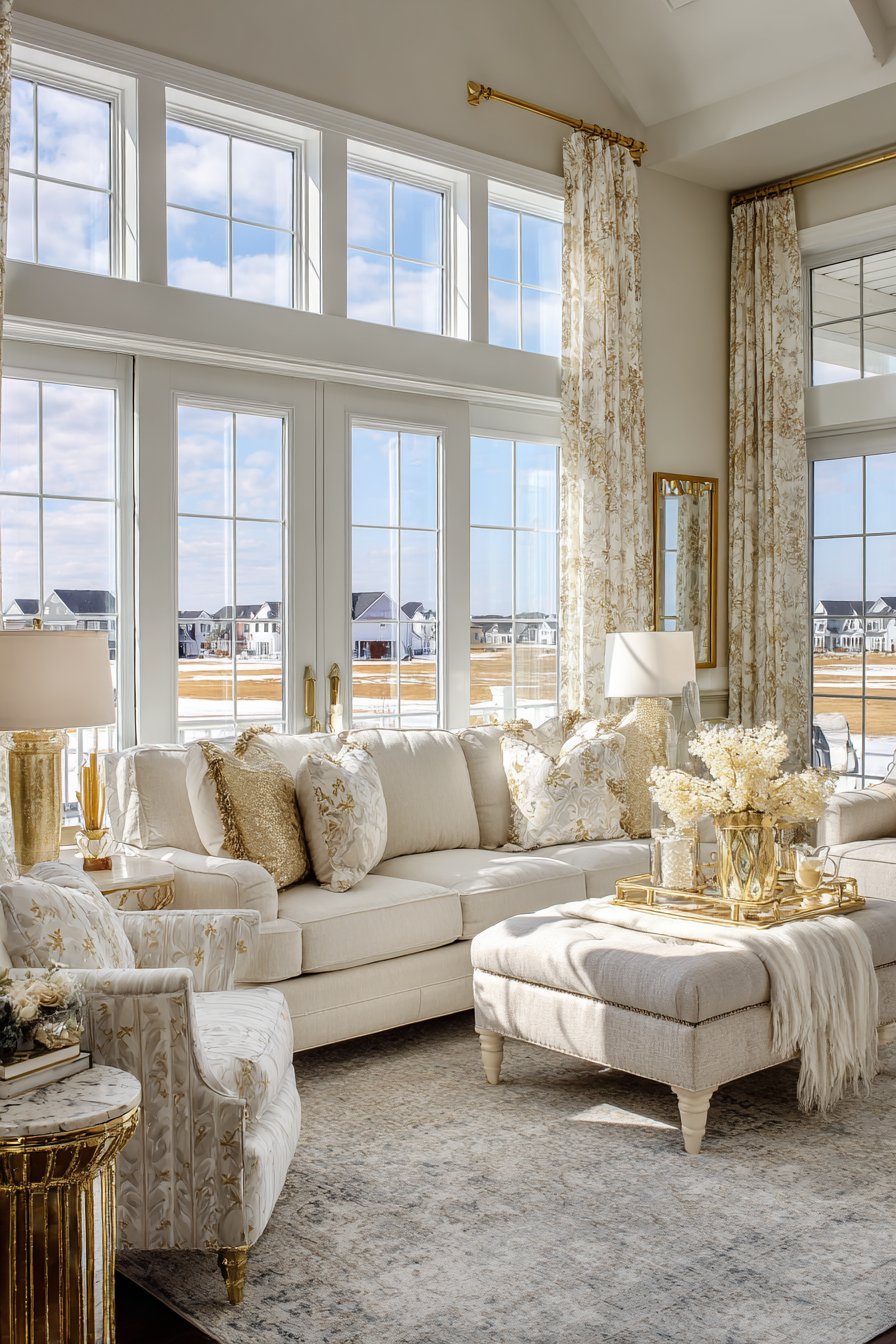
Celebrating natural illumination, this sitting room positions furniture and makes material choices specifically to capitalize on available daylight. Large windows receive minimal treatment—sheer curtains provide privacy when needed while allowing maximum light penetration during the day. Furniture arranges to take advantage of changing sun patterns throughout the day, perhaps placing reading chairs where afternoon light falls or positioning the sofa to avoid morning glare.
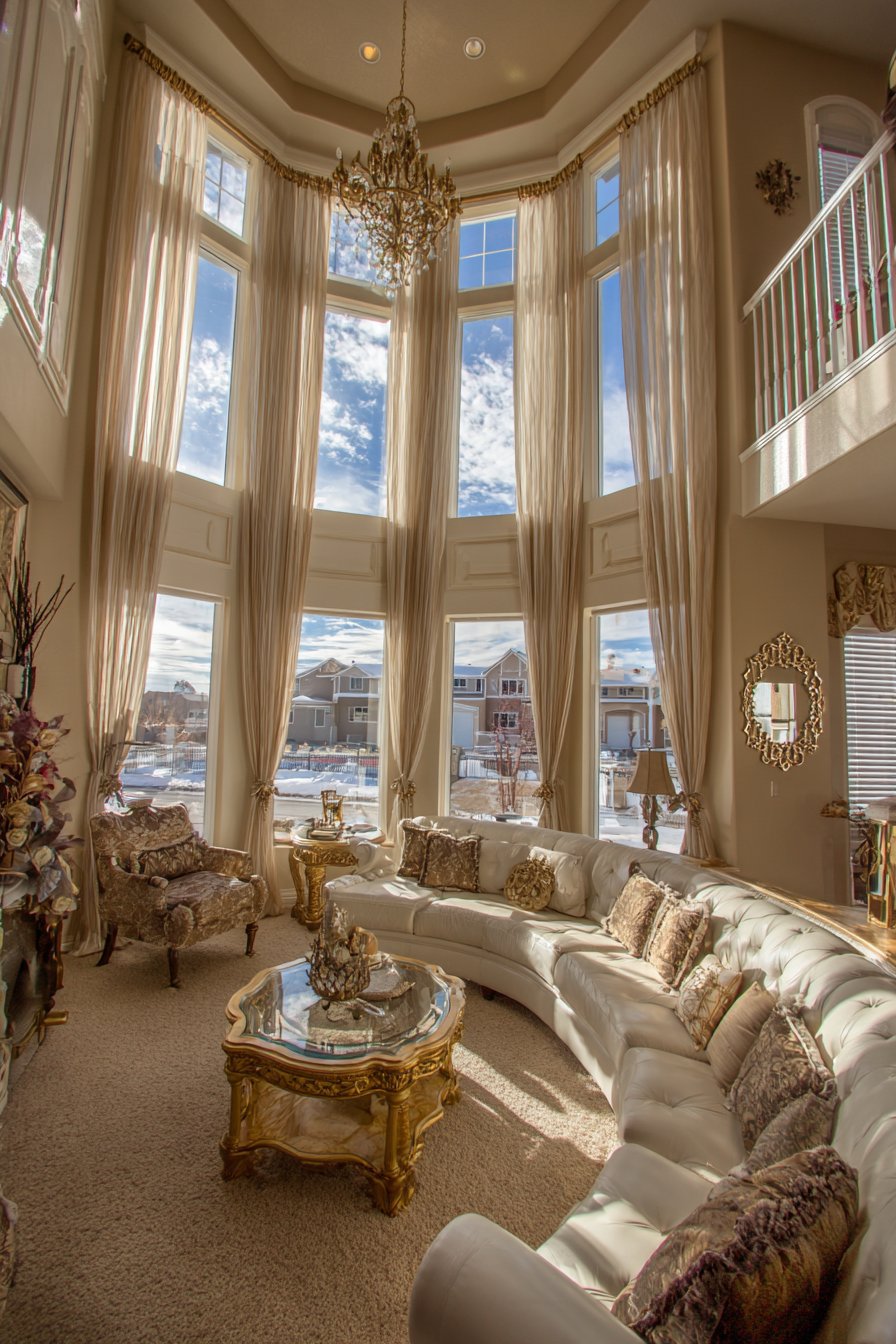
Light-colored walls and ceilings maximize light reflection, bouncing available sunlight deep into the room and amplifying its impact. Reflective surfaces including mirrors, glass coffee tables, and polished metal accessories catch and redirect light, creating sparkle and preventing dark corners. Strategic mirror placement specifically targets bouncing light from windows into darker areas, effectively multiplying the impact of each natural light source.
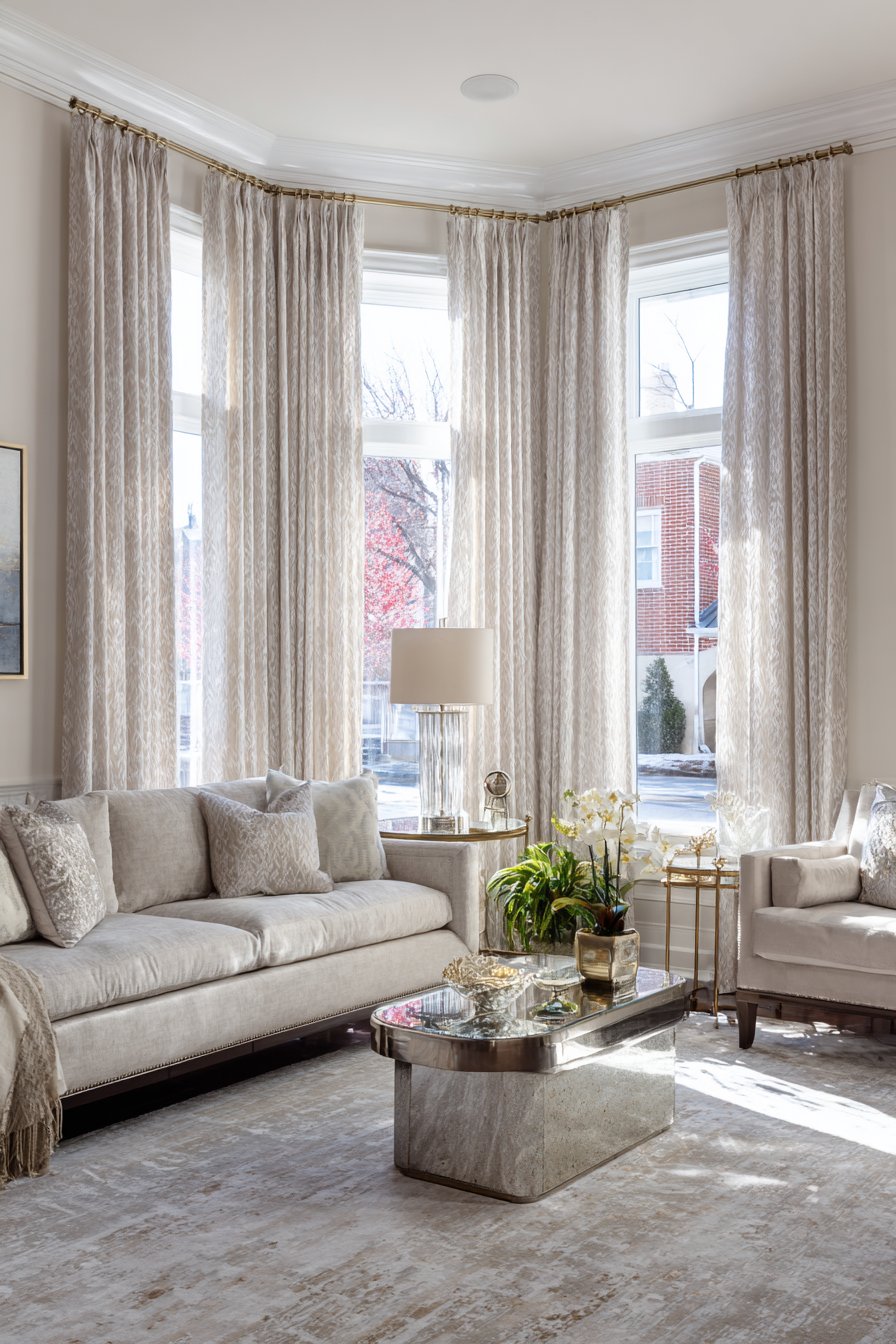
The light-focused design creates spaces that feel more spacious, more cheerful, and more connected to the outdoor environment and natural daily rhythms. Natural light benefits extend beyond aesthetics to include health advantages—better circadian rhythm regulation, improved mood, and vitamin D production. This sitting room demonstrates that designing with light isn’t frivolous but rather addresses fundamental human needs for connection to natural cycles.
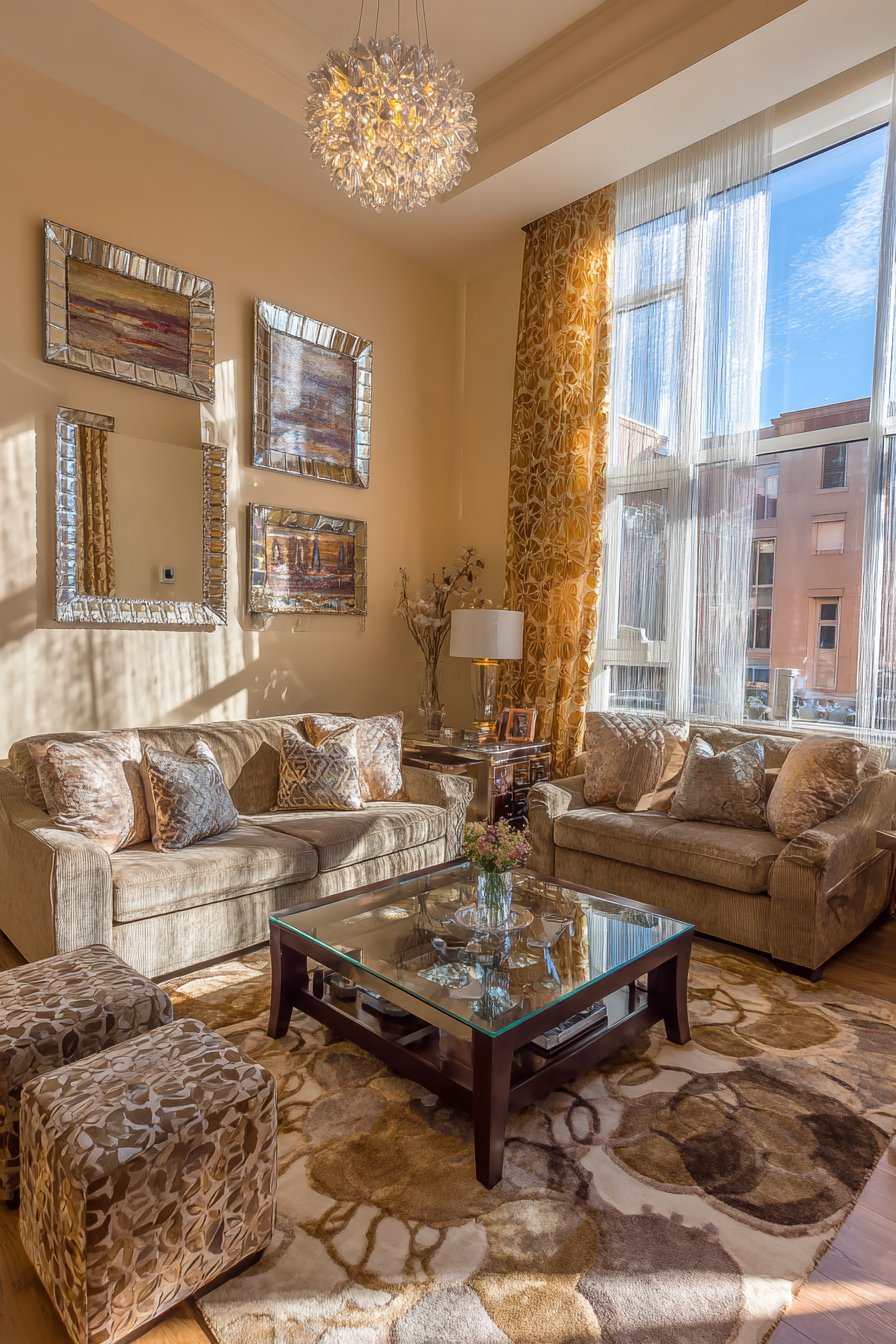
Key Design Tips: Minimize window treatments on large windows to preserve views and maximize natural daylight penetration. Arrange furniture to capitalize on changing sun patterns throughout the day for optimal natural lighting. Paint walls in light colors to maximize light reflection and amplify available natural illumination. Position mirrors strategically to bounce light from windows into darker corners and multiply illumination impact. Choose reflective surfaces including glass and polished metal to catch and redirect natural light throughout space.
25. Sustainable Eco-Conscious Design
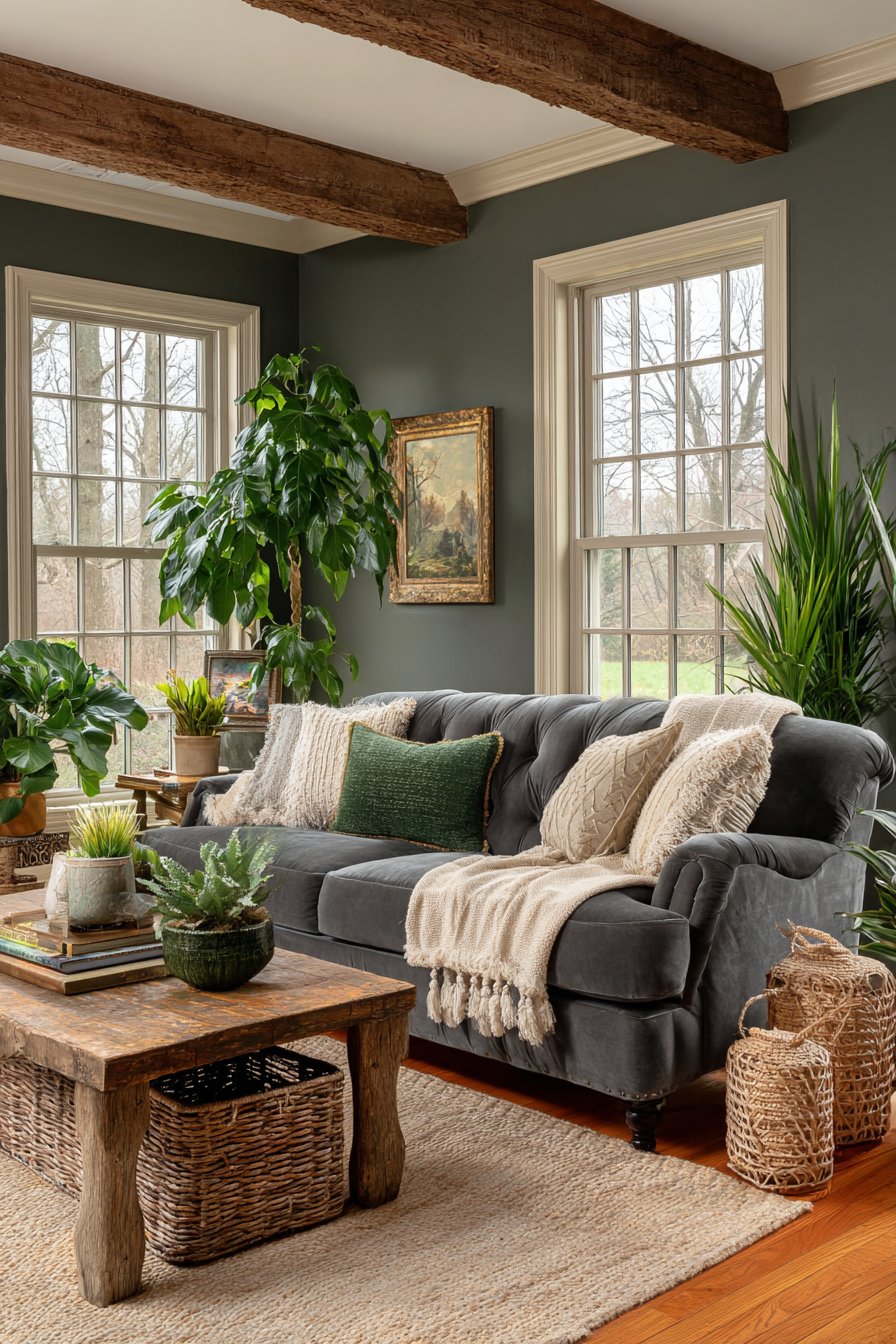
Environmental responsibility guides material selection in this eco-friendly sitting room where sustainability and beauty unite. The sofa features organic cotton upholstery grown without synthetic pesticides or fertilizers, offering comfort without environmental compromise. A reclaimed wood coffee table gives new life to salvaged timber, preventing deforestation while showcasing beautiful wood grain and historical character. Vintage or upcycled accent pieces reduce consumption of new resources while adding unique character impossible to replicate with new furniture.
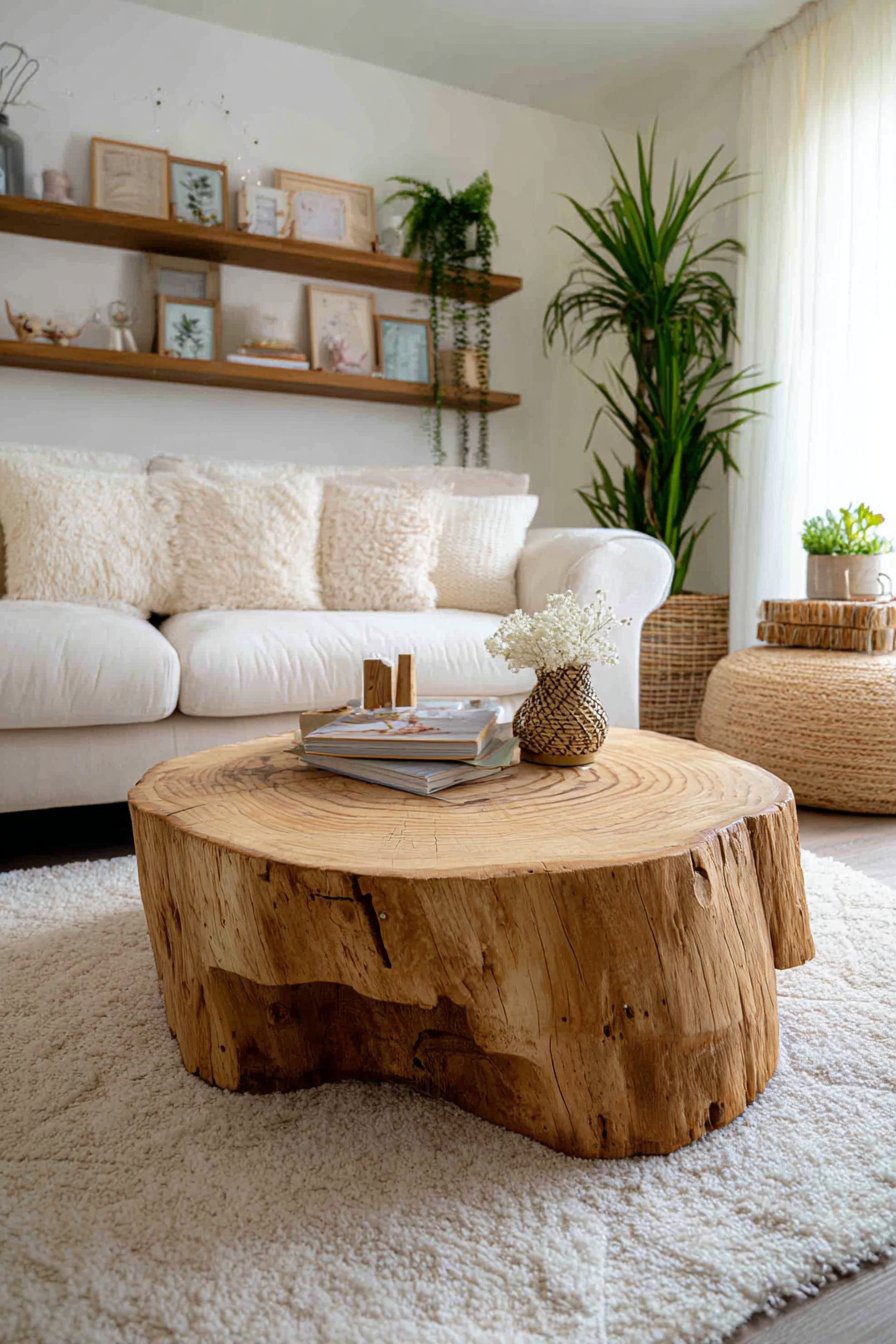
Natural fiber area rugs in jute, sisal, or wool provide renewable alternatives to synthetic petroleum-based carpeting, offering durability and beauty while biodegrading naturally at end of life. Low-VOC paint on walls reduces indoor air pollution, creating healthier interior environments for occupants. Energy-efficient LED lighting reduces electricity consumption while providing excellent illumination and lasting decades before replacement. Potted plants improve indoor air quality by filtering toxins while adding living beauty.
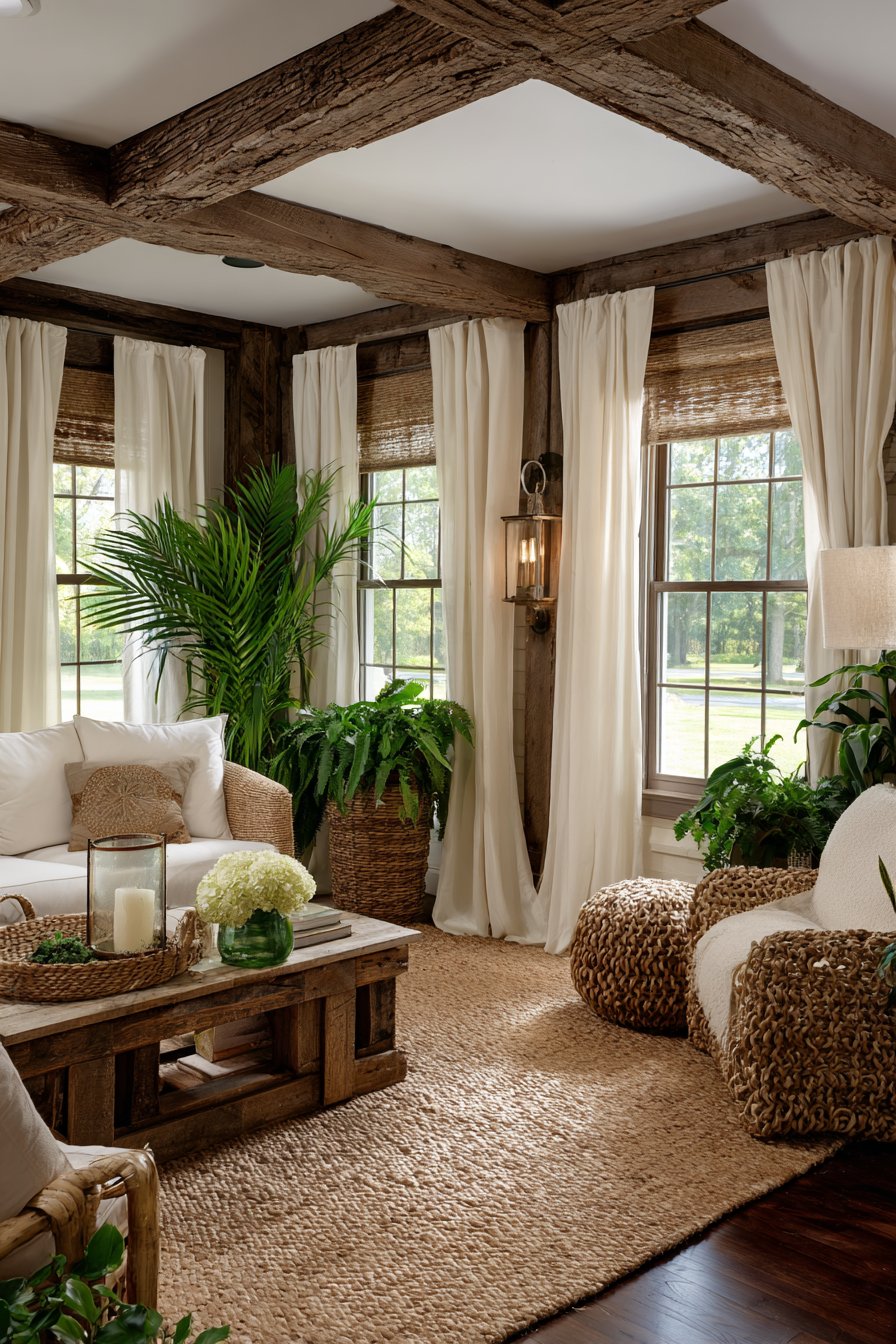
The sustainable approach demonstrates that environmental responsibility needn’t require aesthetic sacrifice. In fact, natural materials and thoughtful vintage pieces often bring more character and authenticity than mass-produced alternatives. This sitting room proves that designing with the planet in mind creates spaces that feel good in every sense—aesthetically pleasing, physically comfortable, and ethically sound.
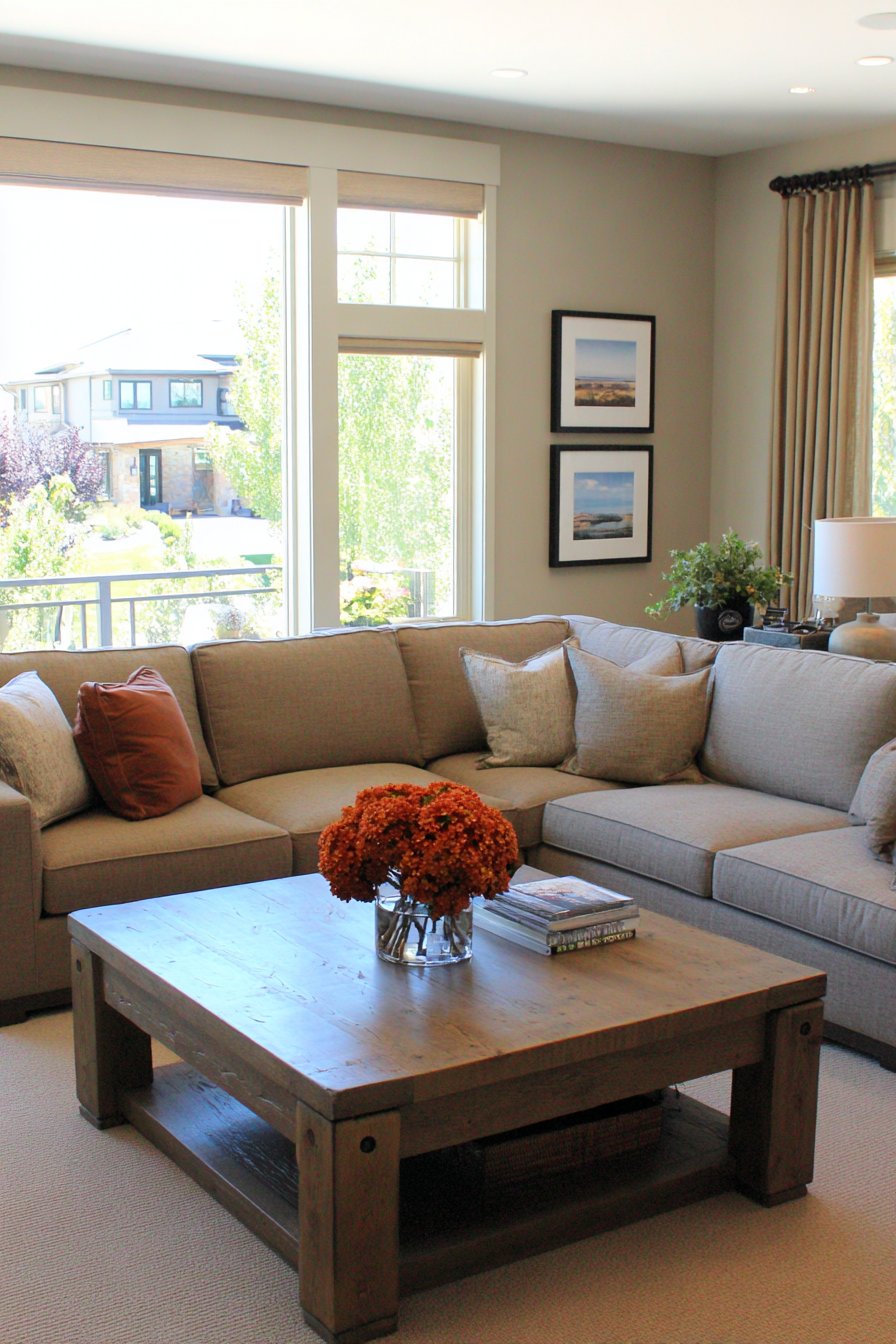
Key Design Tips: Choose organic cotton upholstery to reduce pesticide use while providing comfortable natural fabric. Select reclaimed wood furniture to prevent deforestation while adding unique character and beautiful grain. Incorporate vintage or upcycled pieces to reduce new resource consumption and add impossible-to-replicate character. Install natural fiber rugs in renewable materials like jute, sisal, or wool instead of synthetic alternatives. Use low-VOC paint and energy-efficient LED lighting to reduce environmental impact and improve indoor air quality.
26. Dramatic Accent Wall Impact
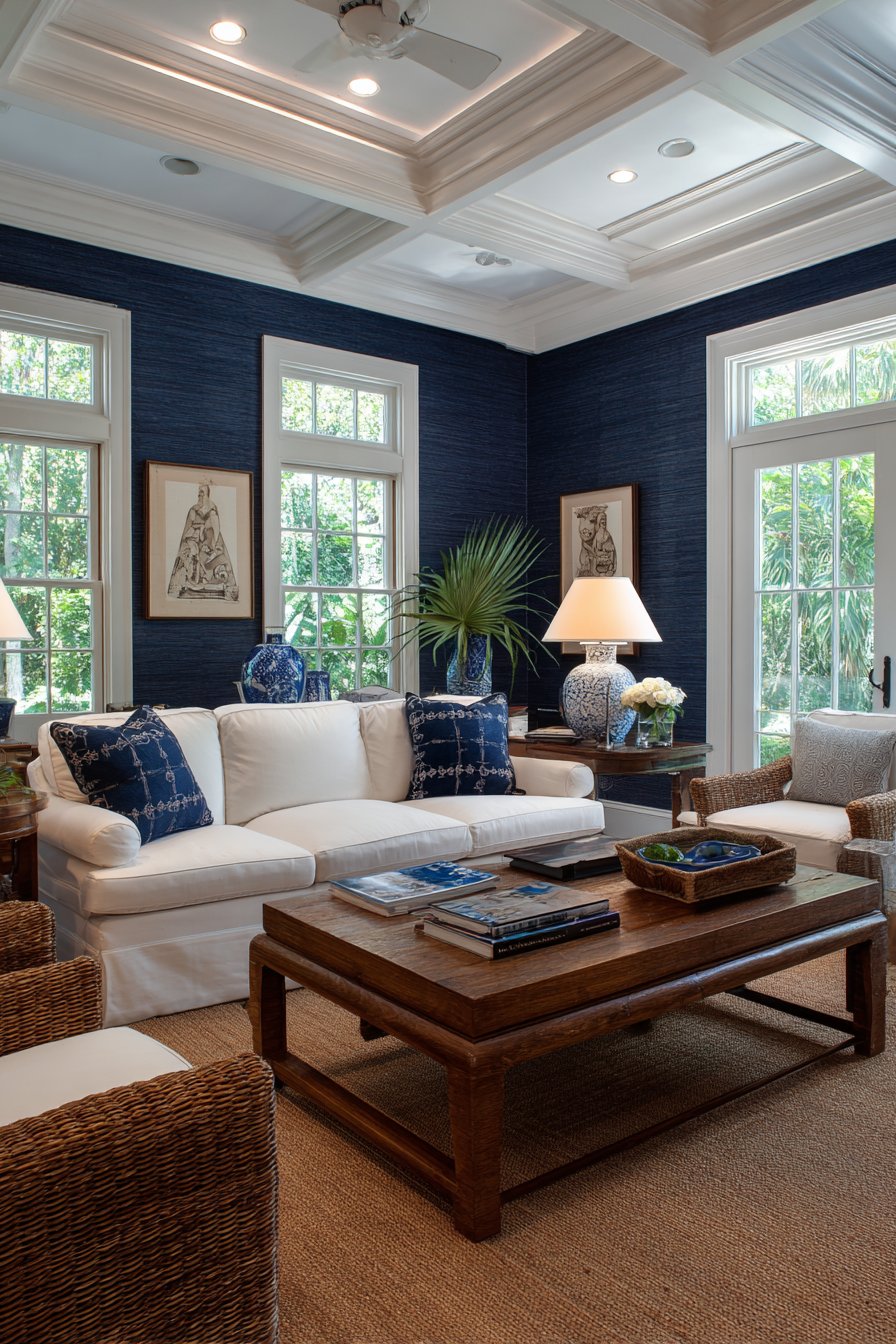
Bold color creates immediate impact in this sitting room where a deep navy accent wall behind the sofa transforms the entire space. The dark wall provides dramatic backdrop that makes neutral furniture pop visually while adding sophisticated depth. White trim and ceiling maintain brightness and prevent the room from feeling cave-like, creating crisp contrast that emphasizes architectural details. Artwork and decorative pillows pull the accent color throughout the room, creating cohesive color story rather than isolated feature wall.
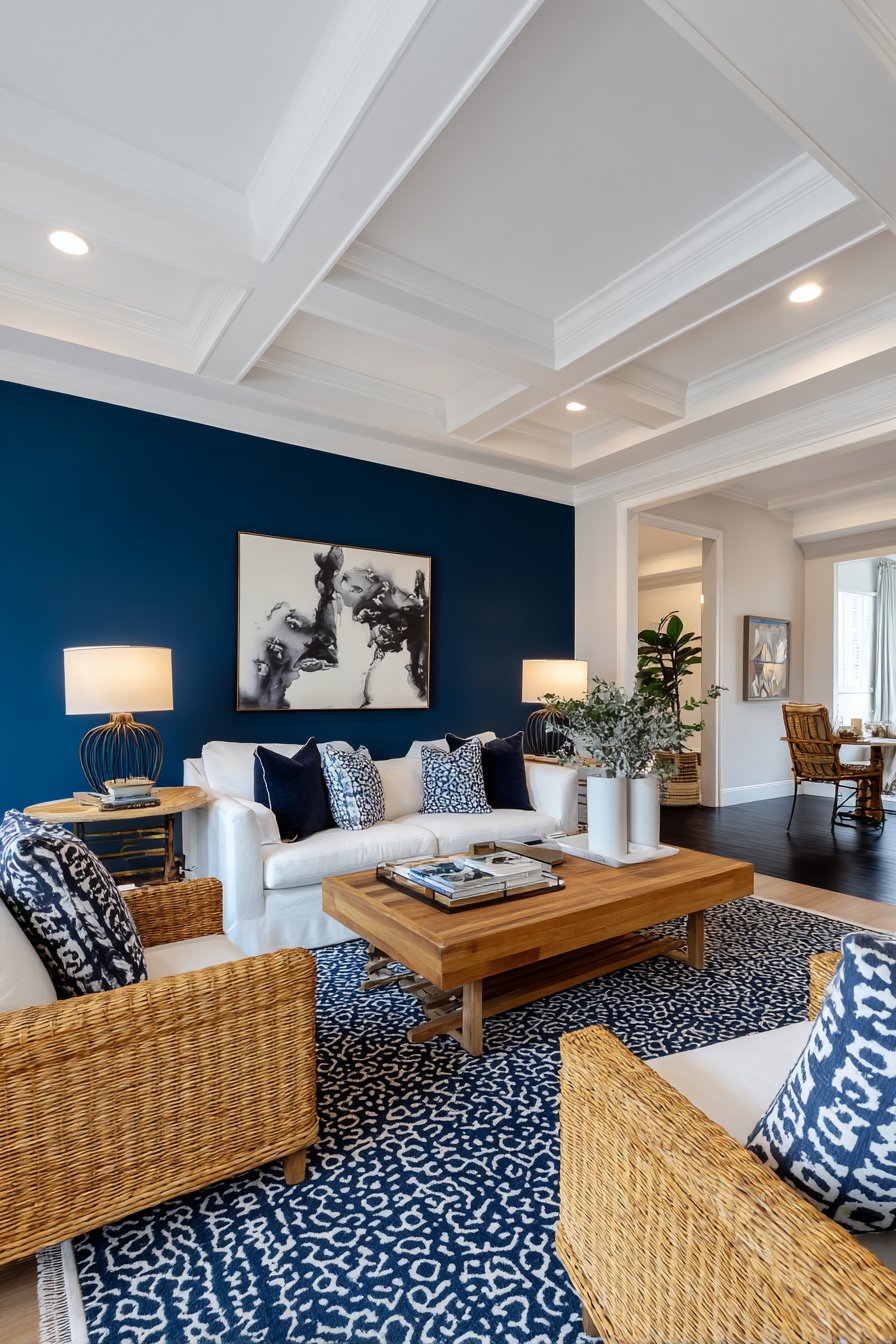
Natural wood coffee table and side tables add warmth that prevents the navy and white palette from feeling too stark or cold. The wood tones provide visual bridge between the dramatic wall and neutral furnishings, creating balanced composition. Layered lighting including table lamps and recessed ceiling lights ensures the dark wall doesn’t create shadowy space but rather serves as sophisticated backdrop for well-illuminated room.
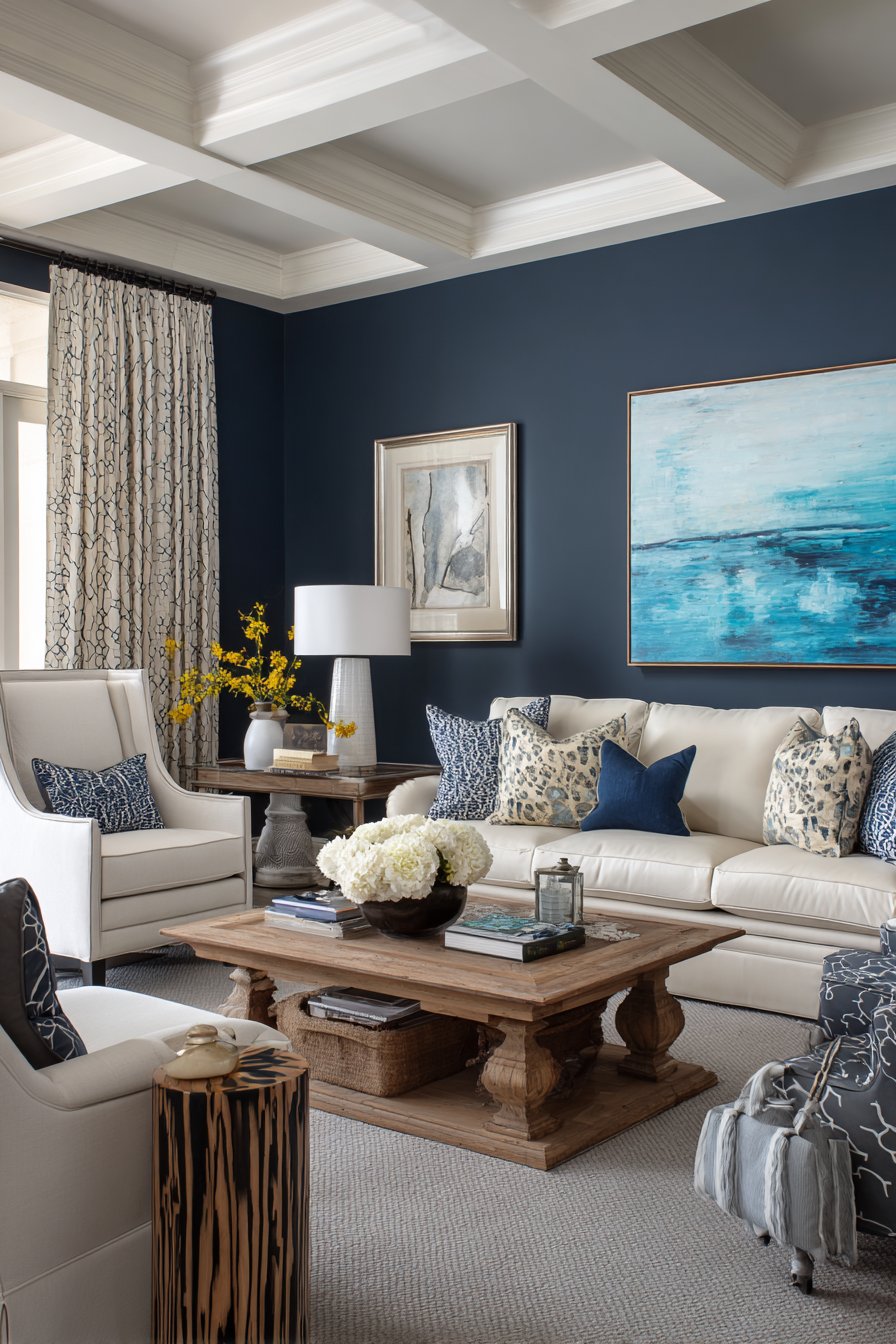
The accent wall demonstrates how strategic color placement can completely transform a space without requiring complete redecoration. One gallon of paint and a weekend’s work creates dramatic impact that would cost thousands if achieved through furniture replacement. This sitting room proves that sometimes the boldest design moves are also the most economical.
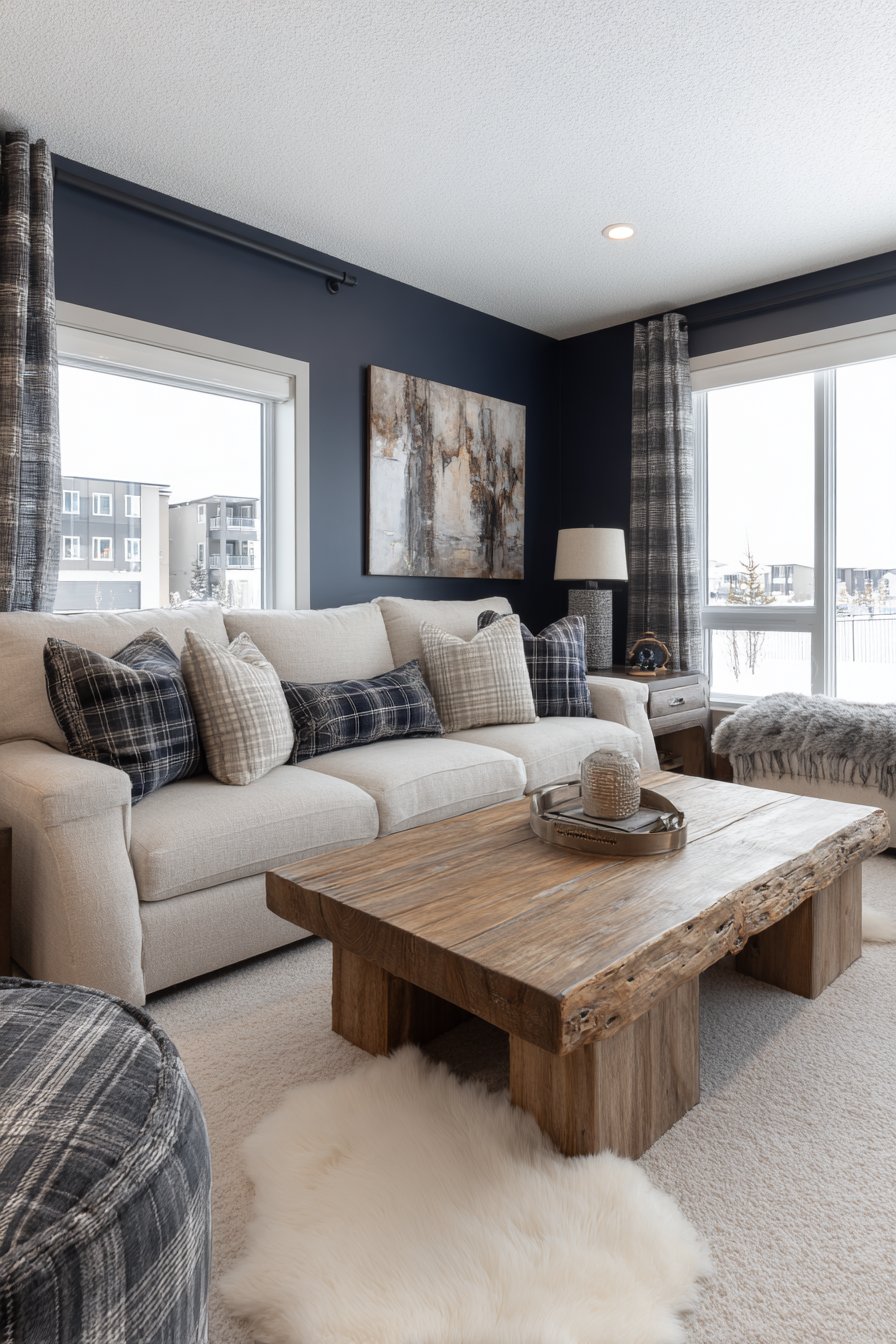
Key Design Tips: Paint accent walls in deep saturated colors to create dramatic backdrops that make neutral furniture stand out. Maintain white trim and ceilings to preserve brightness and prevent dark colors from overwhelming spaces. Pull accent wall colors into artwork and pillows throughout room to create cohesive color stories. Add natural wood furniture to warm potentially stark color combinations and create visual bridges. Layer multiple lighting sources to ensure dark accent walls don’t create shadowy areas or dim spaces.
27. Conversation-Optimized Layout
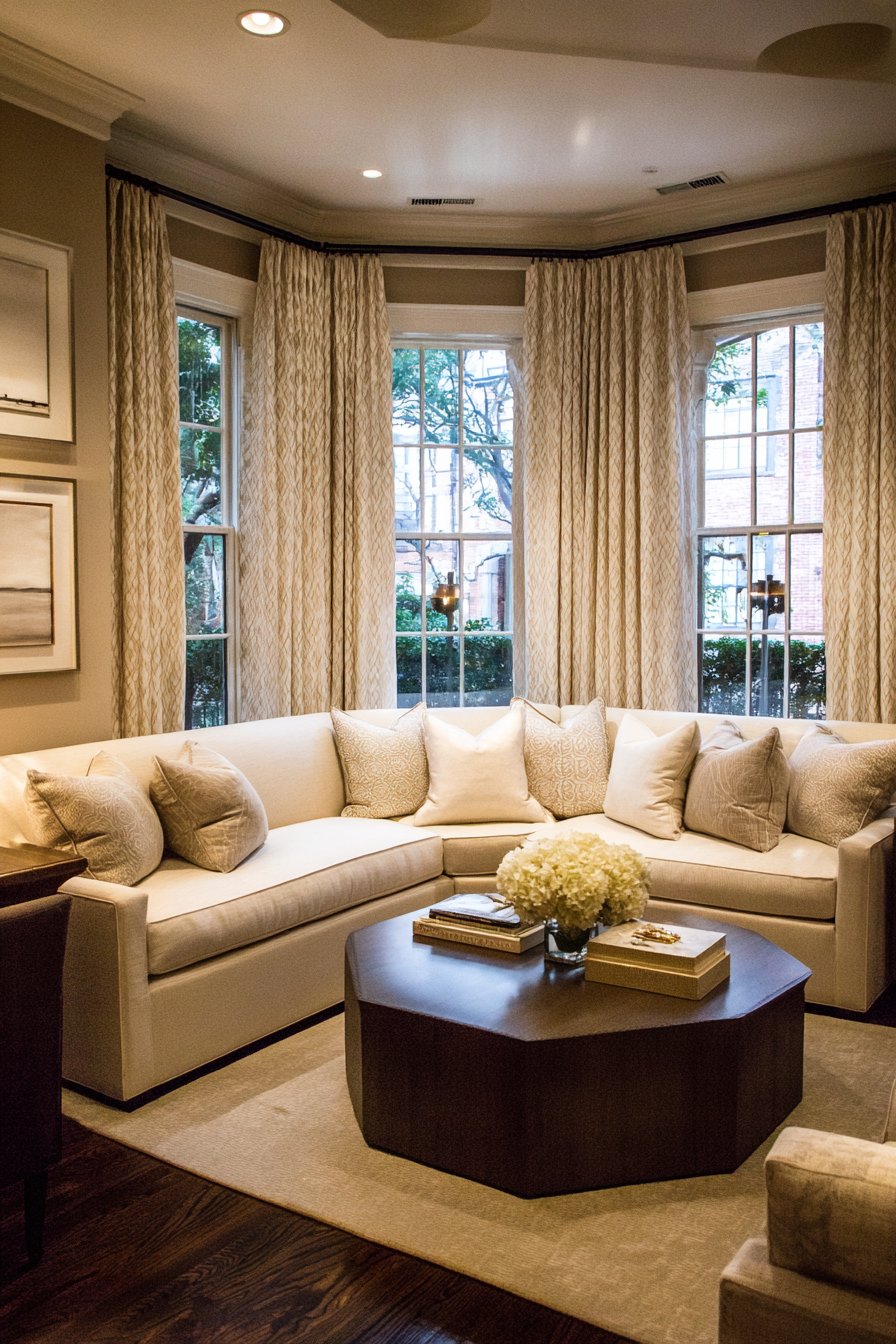
Facilitating meaningful interaction, this sitting room arranges seating in circular or square configuration ensuring comfortable eye contact between all occupants. The democratic arrangement means no single seat dominates or feels removed from the group, promoting equal participation in conversation. A coffee table positioned within easy reach of all seats provides surface for beverages and snacks without requiring anyone to stretch uncomfortably.
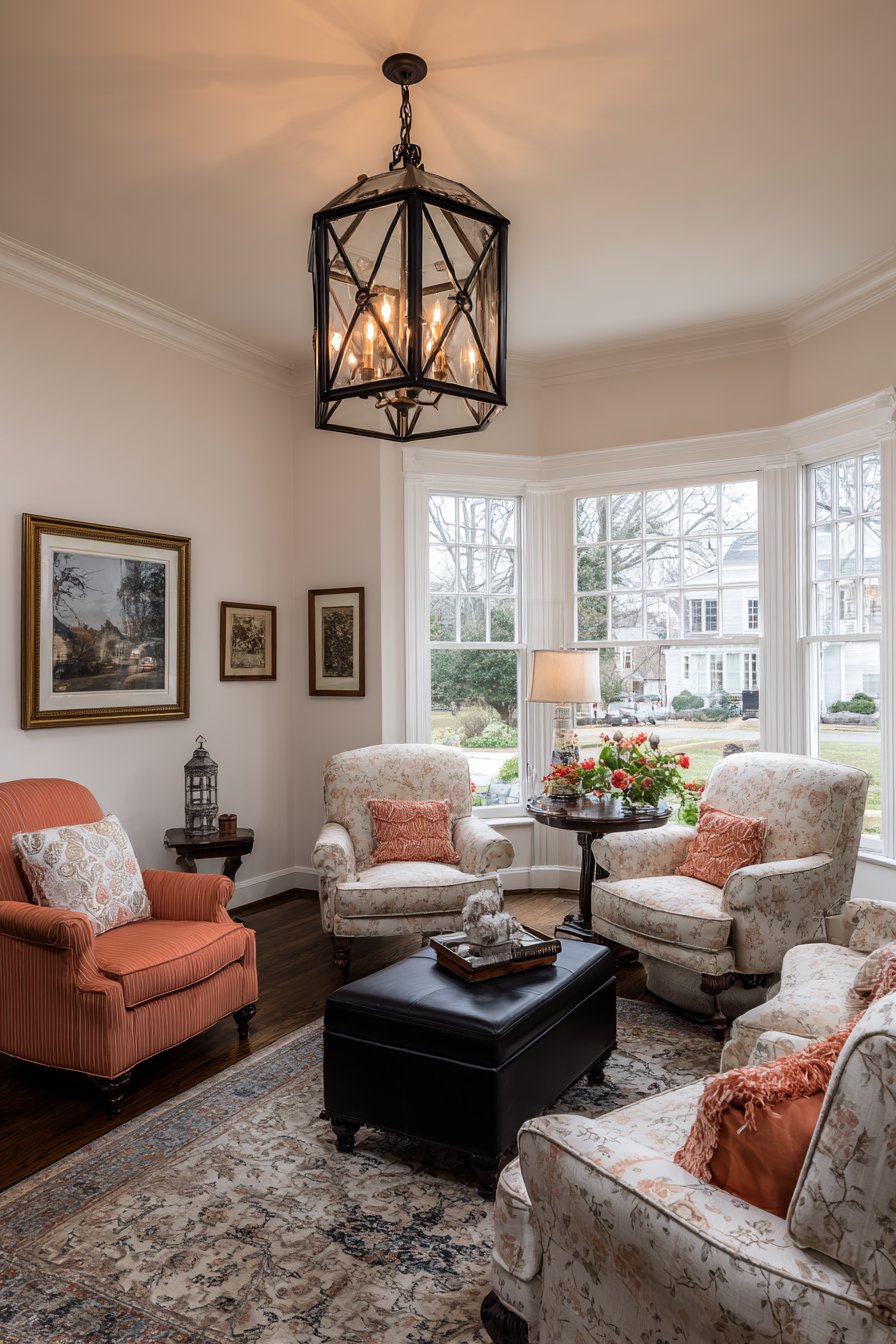
Notably absent is a television in dominant position—this room prioritizes human interaction over media consumption, making a statement about values and how time here should be spent. Artwork and decorative elements position at eye level when seated rather than standing, maintaining appropriate scale for the room’s primary use. Ambient lighting creates intimate atmosphere without harsh brightness that would discourage lingering conversation, with layered sources allowing adjustment for different times of day and moods.
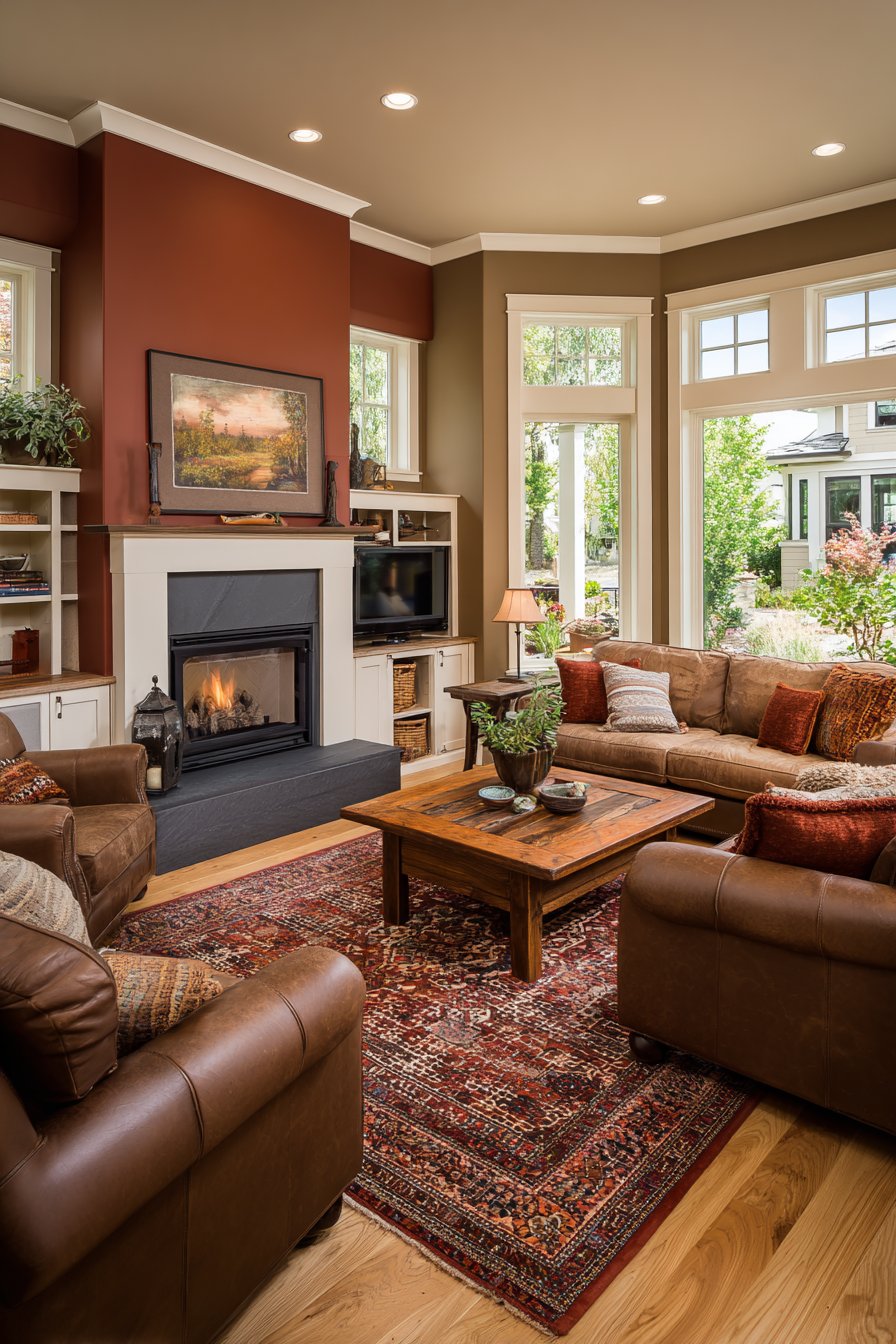
The conversation-focused design represents conscious choice to create space supporting face-to-face interaction in an increasingly digital world. By removing distractions and optimizing for human connection, this sitting room becomes antidote to isolation and screen time. The design reminds us that our physical environments profoundly influence our behavior—spaces designed for conversation encourage conversation.
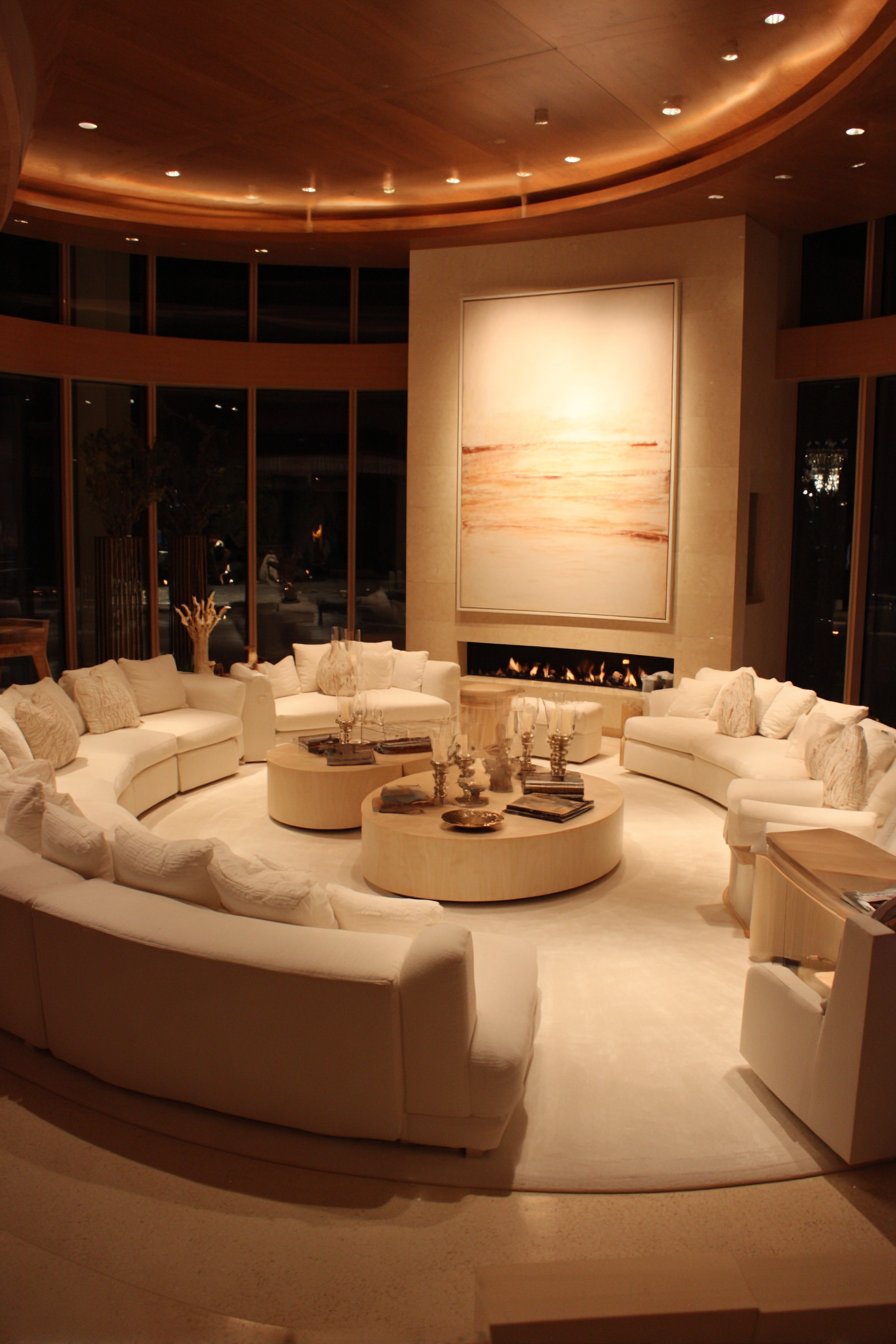
Key Design Tips: Arrange seating in circular or square configurations to facilitate equal eye contact and democratic conversation. Position coffee tables within easy reach of all seats for convenient surface access during gatherings. Avoid television dominance in conversation-focused rooms to prioritize human interaction over media consumption. Hang artwork and decorative elements at eye level when seated rather than standing for appropriate scale. Use ambient lighting to create intimate atmosphere that encourages lingering conversation and extended gatherings.
28. Gallery Wall Showcase
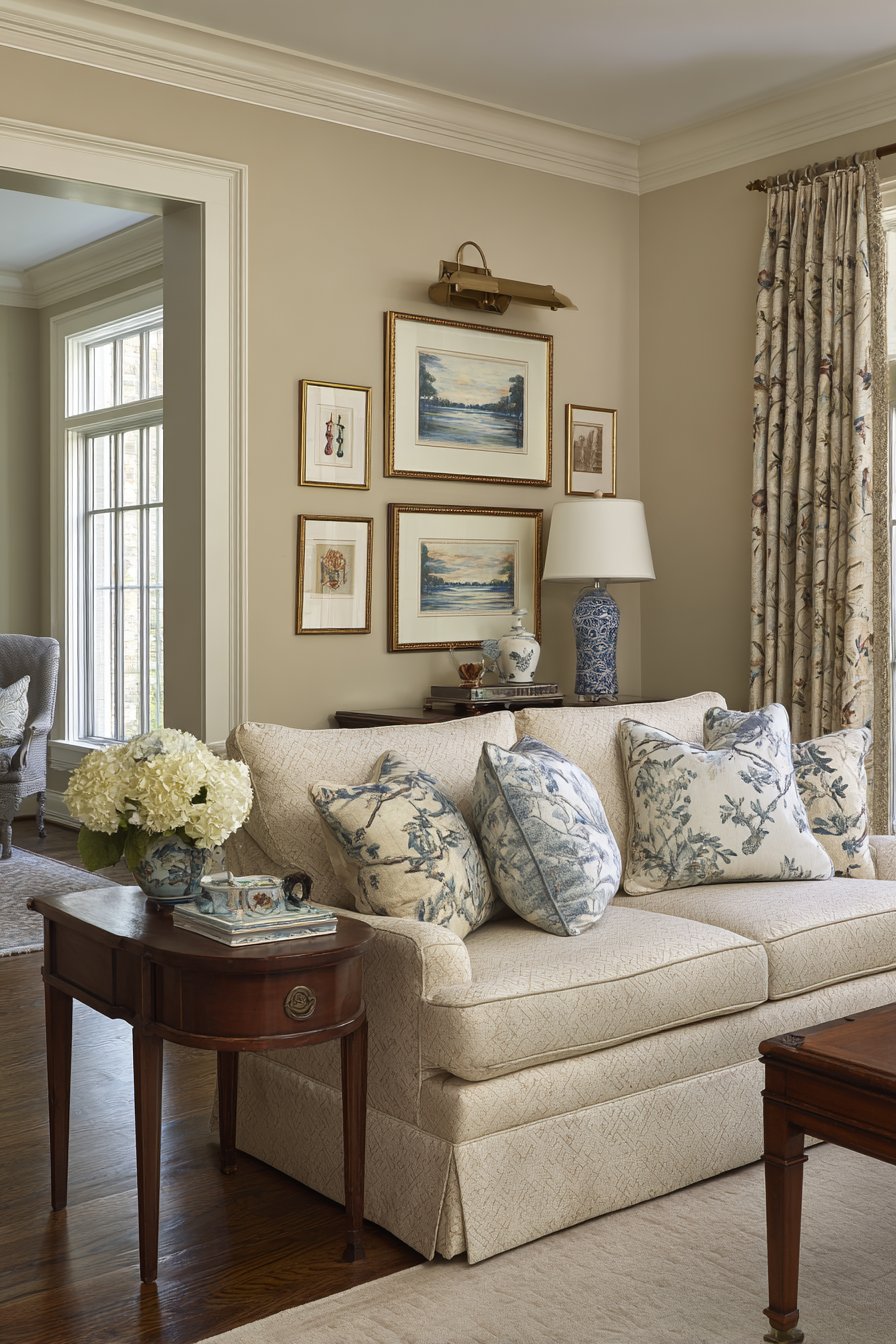
Personal collections take center stage in this sitting room where an impressive gallery wall above the sofa becomes the room’s defining feature. The carefully composed arrangement displays diverse artwork, family photographs, and three-dimensional decorative objects in cohesive presentation that tells visual story. Frames in complementary finishes—perhaps all warm metals or all wood in similar tones—create unified appearance despite varied artwork within.
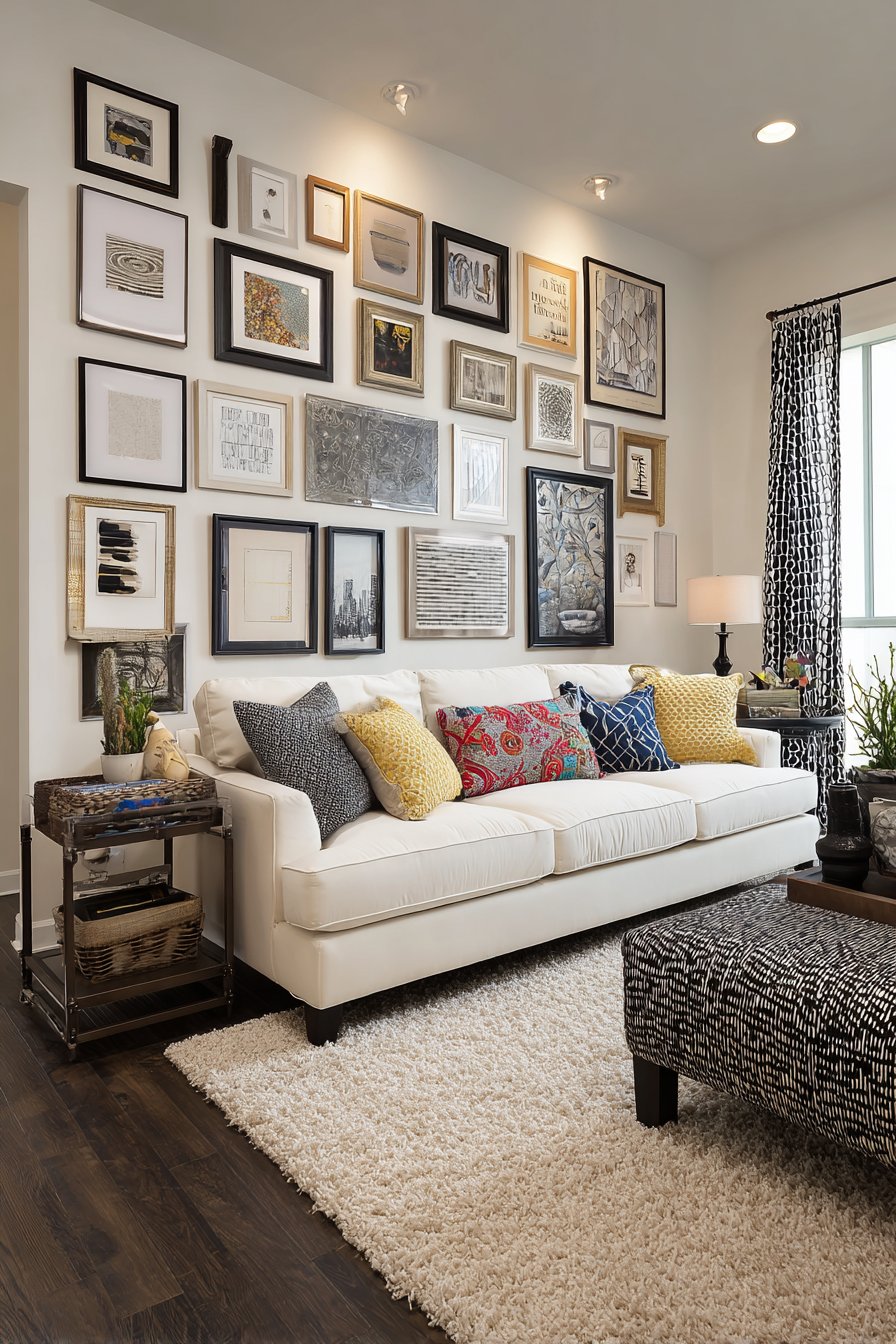
Furniture intentionally remains simple, allowing the wall display to command attention without competition. A neutral sofa provides comfortable seating while serving as backdrop that makes the gallery wall pop. Picture lights highlight key pieces, adding museum-quality presentation and allowing adjustment of which elements receive emphasis. The gallery arrangement receives thoughtful composition with varied frame sizes creating visual rhythm and balanced negative space preventing cluttered appearance.
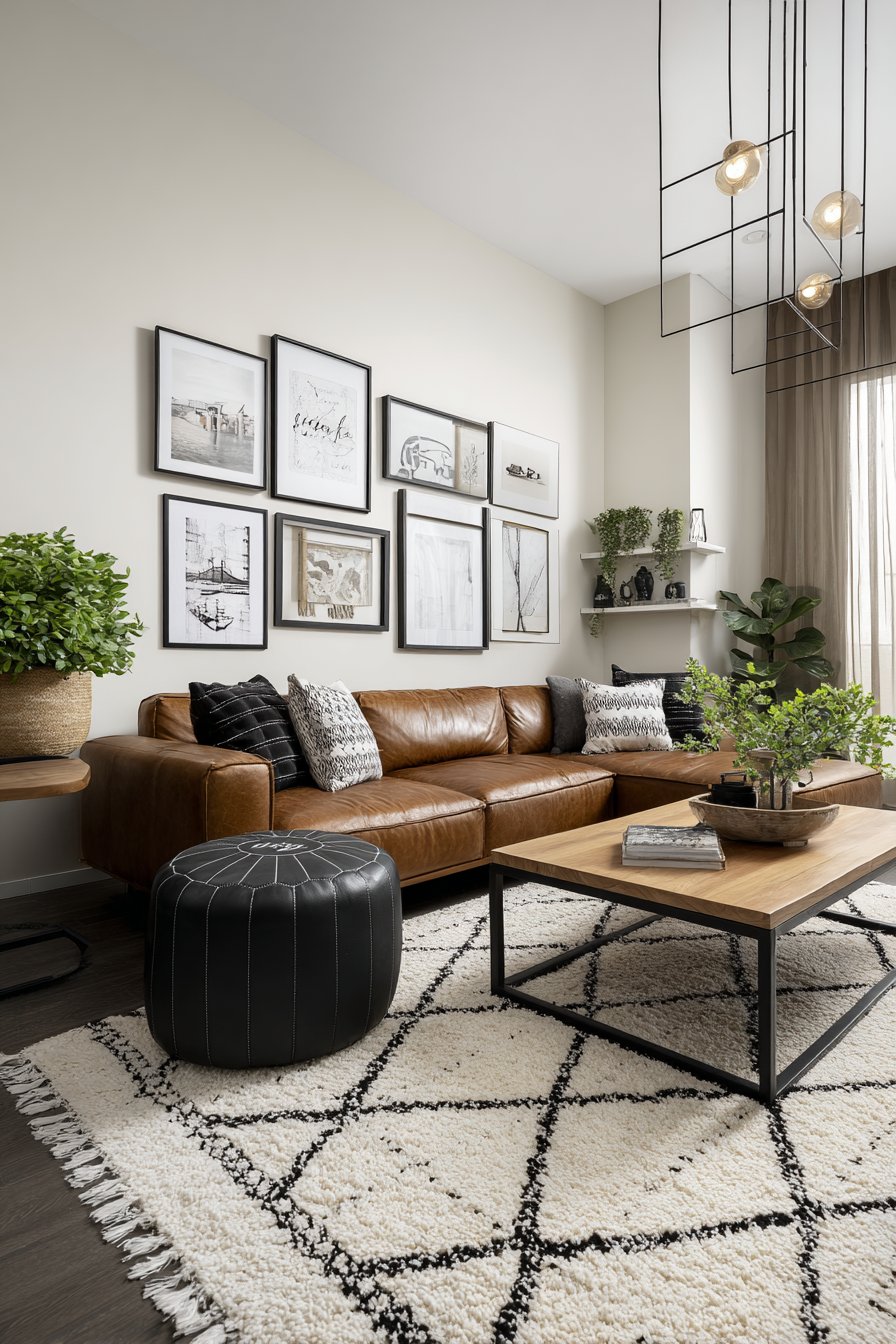
The personalized gallery wall approach creates sitting rooms that feel uniquely connected to their occupants, displaying memories, passions, and aesthetic preferences in curated presentation. Unlike generic decorator art purchased to match furniture, these collections tell authentic stories and grow more meaningful over time. This sitting room demonstrates that the best decoration celebrates life lived rather than catalog perfection.
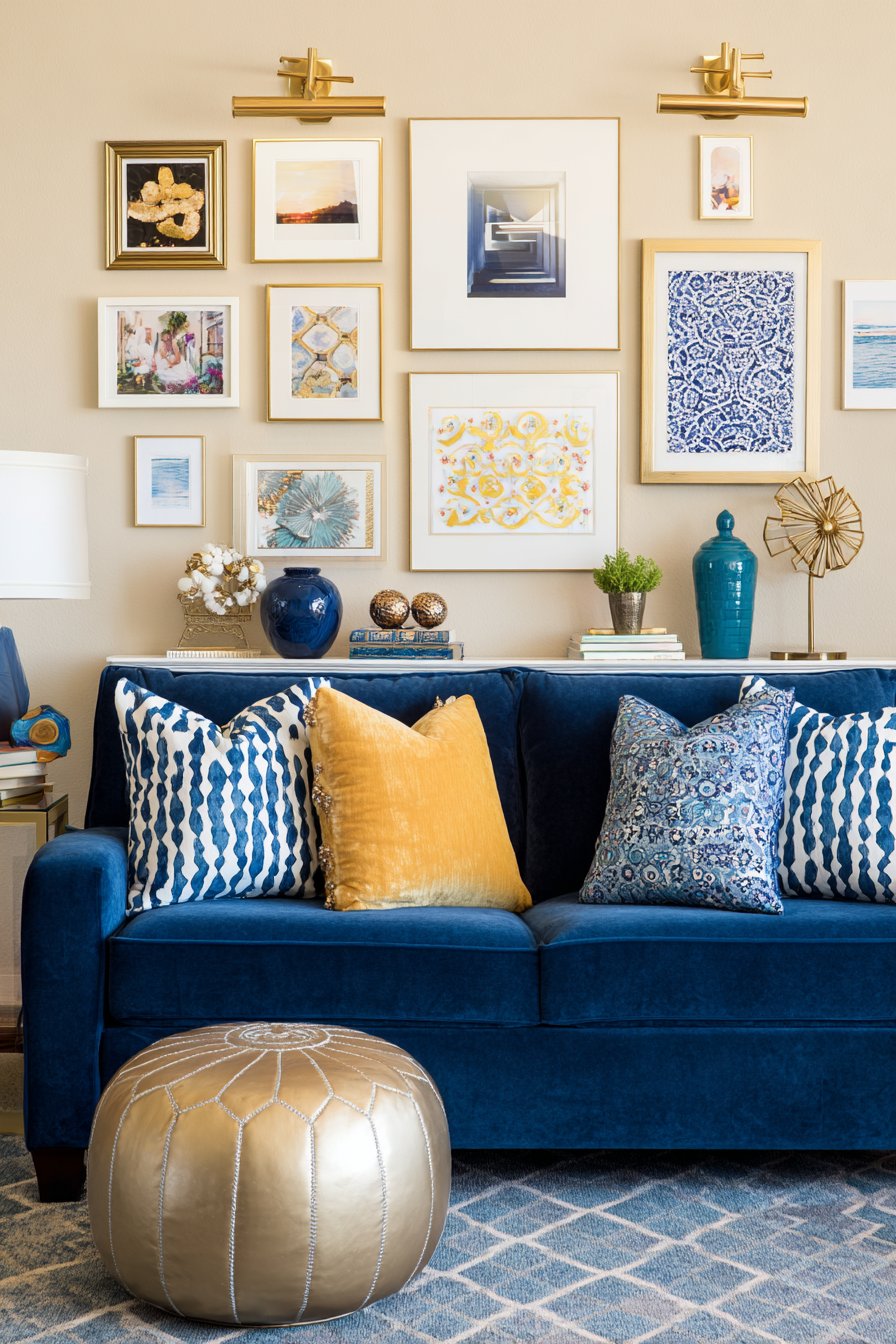
Key Design Tips: Compose gallery walls with varied frame sizes to create visual rhythm and balanced negative space. Select frames in complementary finishes to create unified appearance despite diverse artwork within frames. Keep furniture simple when gallery walls serve as focal point to avoid visual competition. Install picture lights to highlight key pieces with museum-quality presentation and adjustable emphasis. Include mix of artwork, photographs, and three-dimensional objects to add depth and personal storytelling.
29. Biophilic Nature Connection
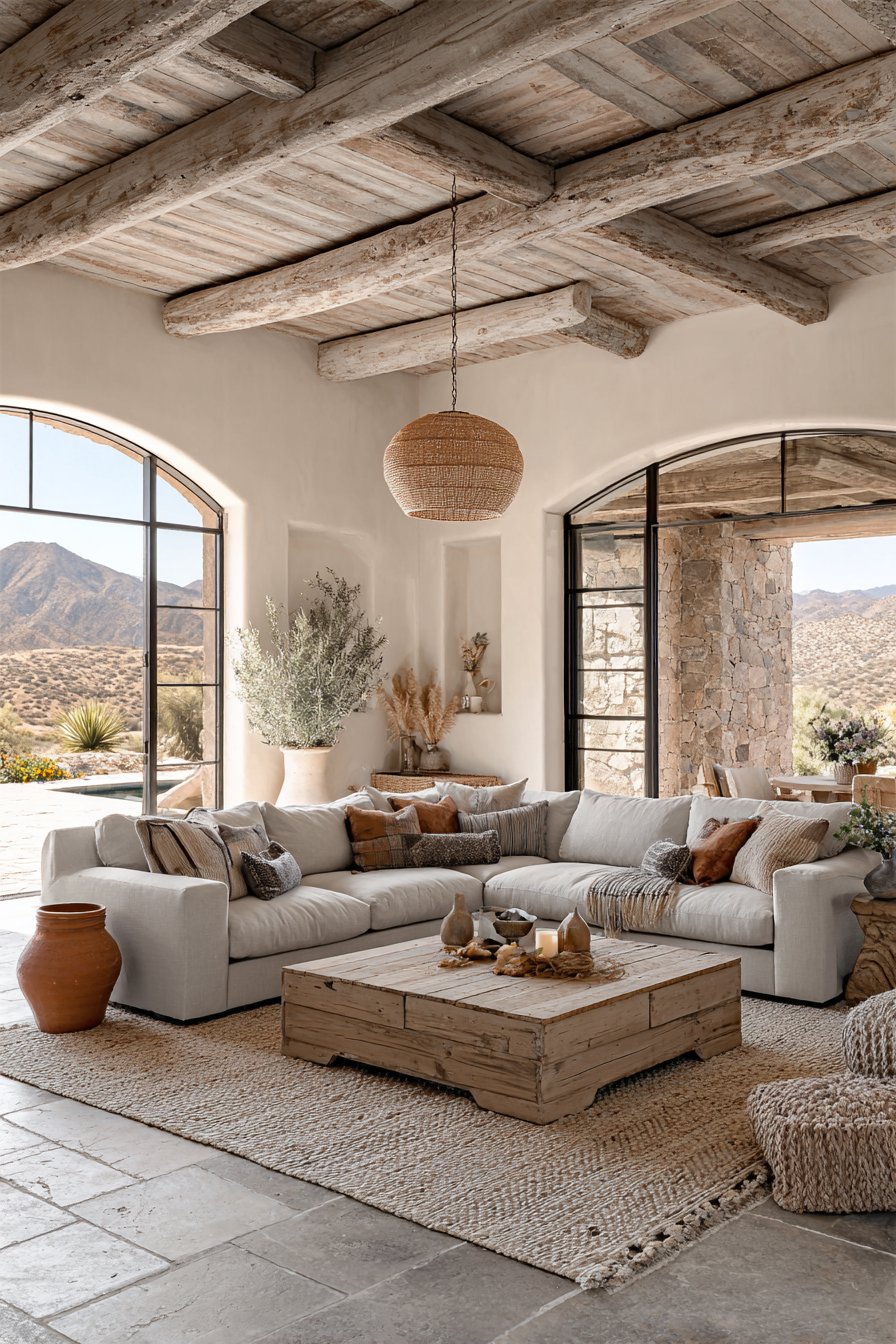
Deep human connection to nature manifests in this biophilic sitting room designed to blur boundaries between interior and exterior. Multiple plants of varying sizes—from small succulents to substantial floor plants—introduce living elements throughout the space. Natural wood furniture with visible grain celebrates organic origins, each piece showcasing unique patterns created by growth and time. Stone or terracotta accessories reference earth materials, adding weight and grounding presence.
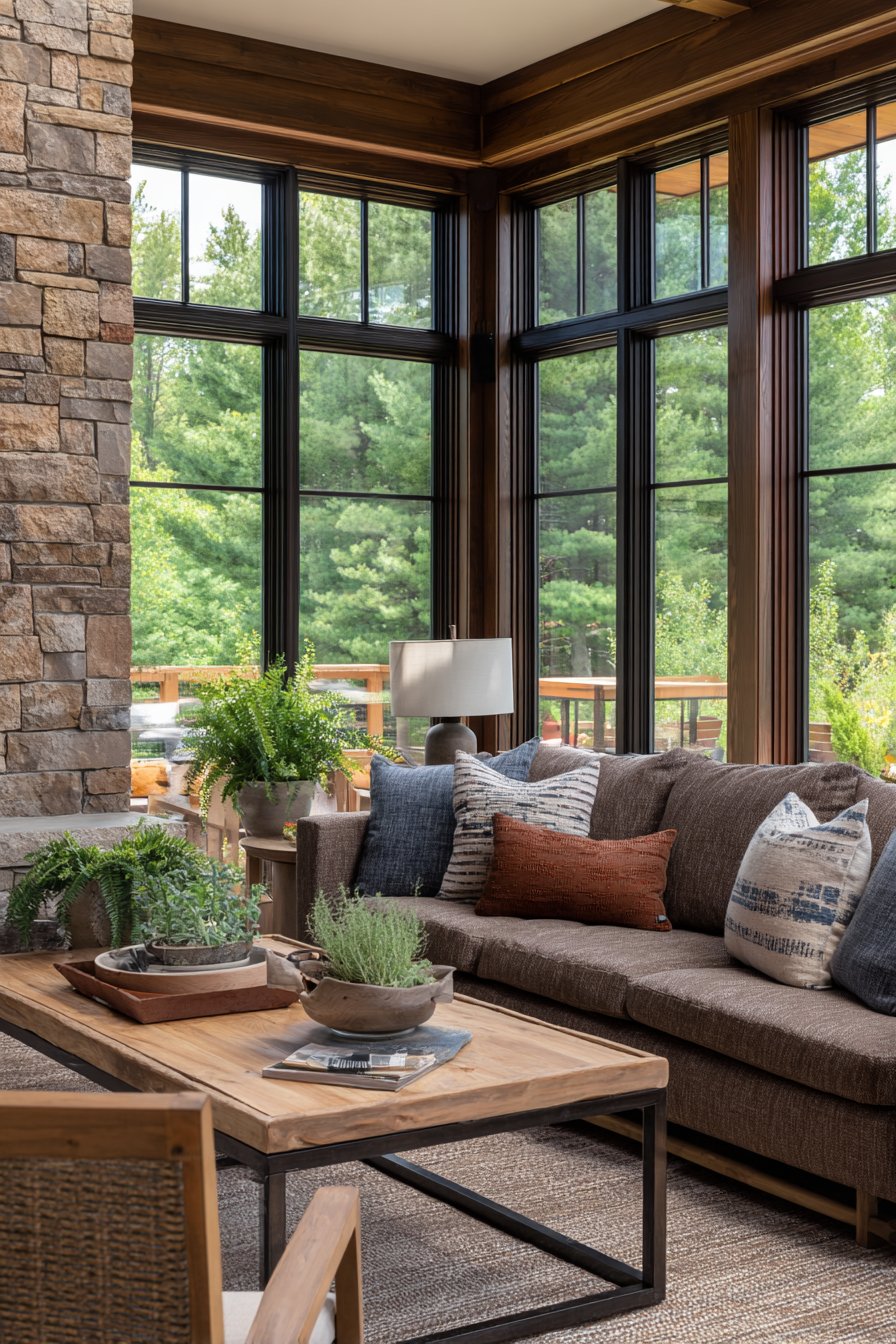
The nature-inspired color palette draws from earth tones—sage greens, warm browns, terracotta oranges, stone greys—creating schemes that feel instinctively harmonious because they mirror natural combinations found in landscapes. Large windows maximize connection to outdoor views, framing garden or landscape scenes as living artwork that changes with seasons and weather. Natural fiber textiles in linen, cotton, and jute add organic tactile experiences.
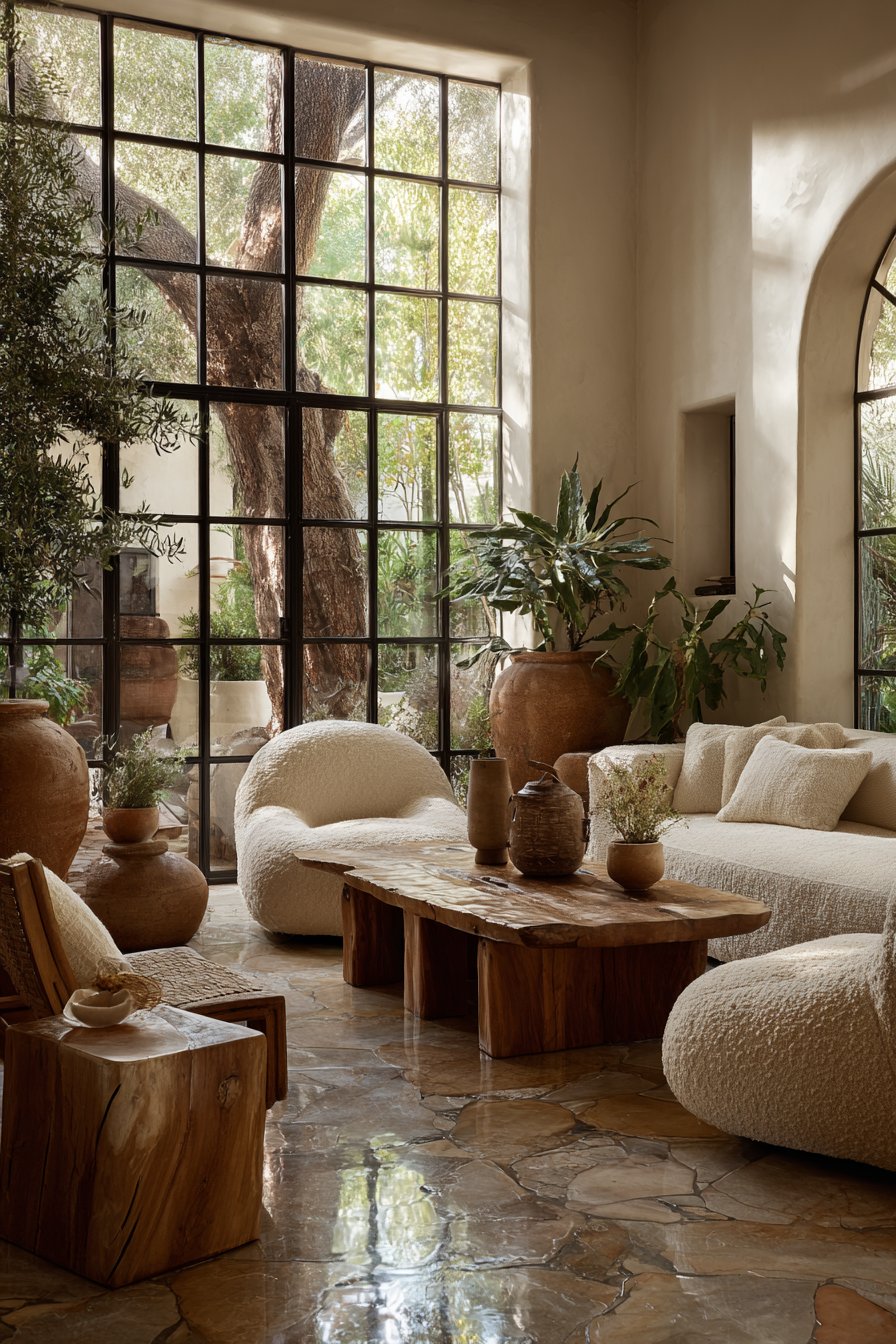
Abundant natural lighting supports plant growth while creating dynamic illumination that changes throughout the day just as outdoor light does. The biophilic approach addresses documented human needs for nature connection, with research showing that interior plants and natural materials reduce stress and improve wellbeing. This sitting room demonstrates that bringing nature indoors isn’t decoration but essential wellness practice.
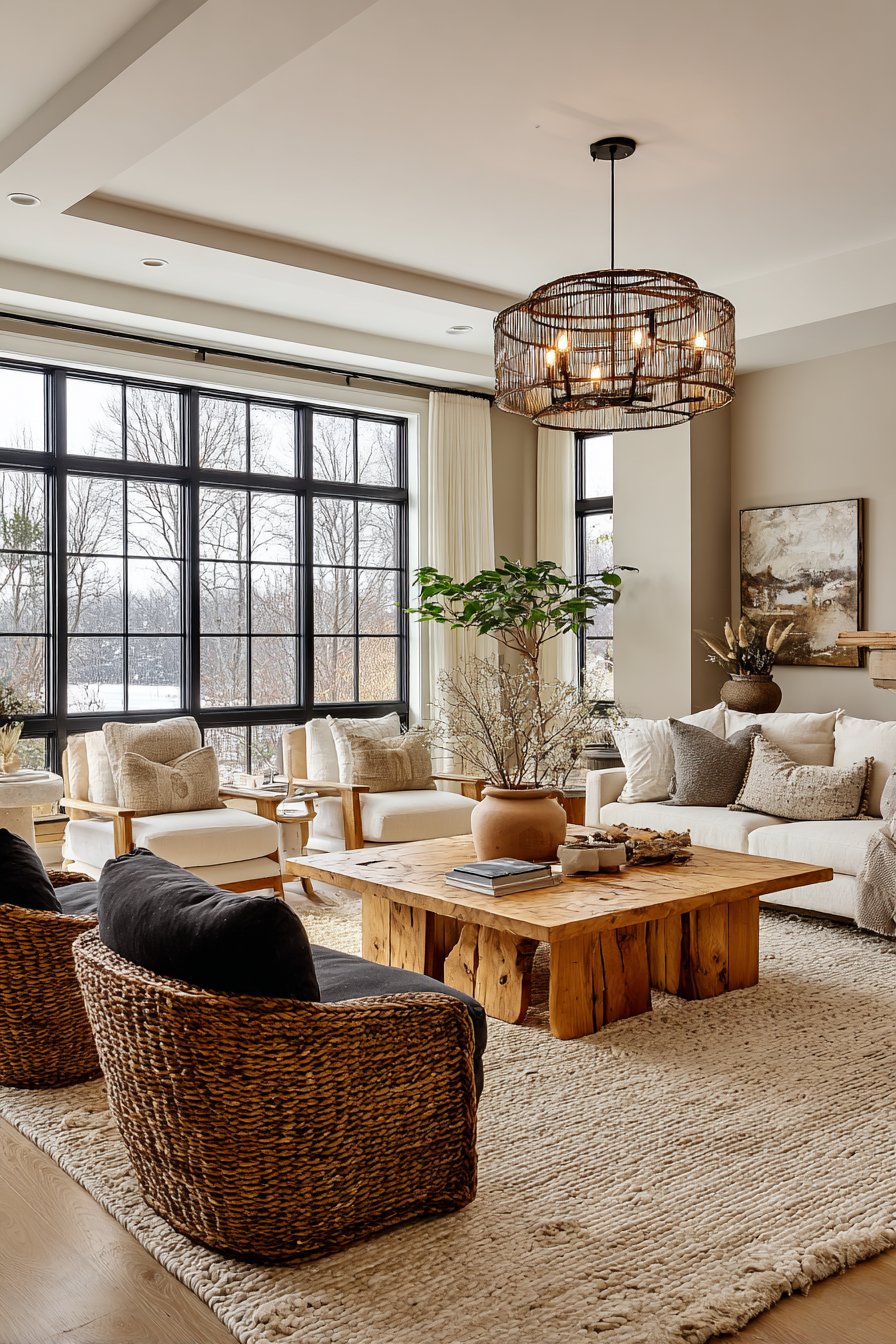
Key Design Tips: Incorporate multiple plants of varying sizes throughout space to introduce living elements and improve air quality. Choose natural wood furniture with visible grain to celebrate organic origins and unique natural patterns. Add stone or terracotta accessories to reference earth materials and provide grounding visual weight. Select nature-inspired color palettes drawn from earth tones that feel instinctively harmonious. Maximize window exposure to maintain connection with outdoor views and support plant growth.
30. Open-Concept Seamless Flow
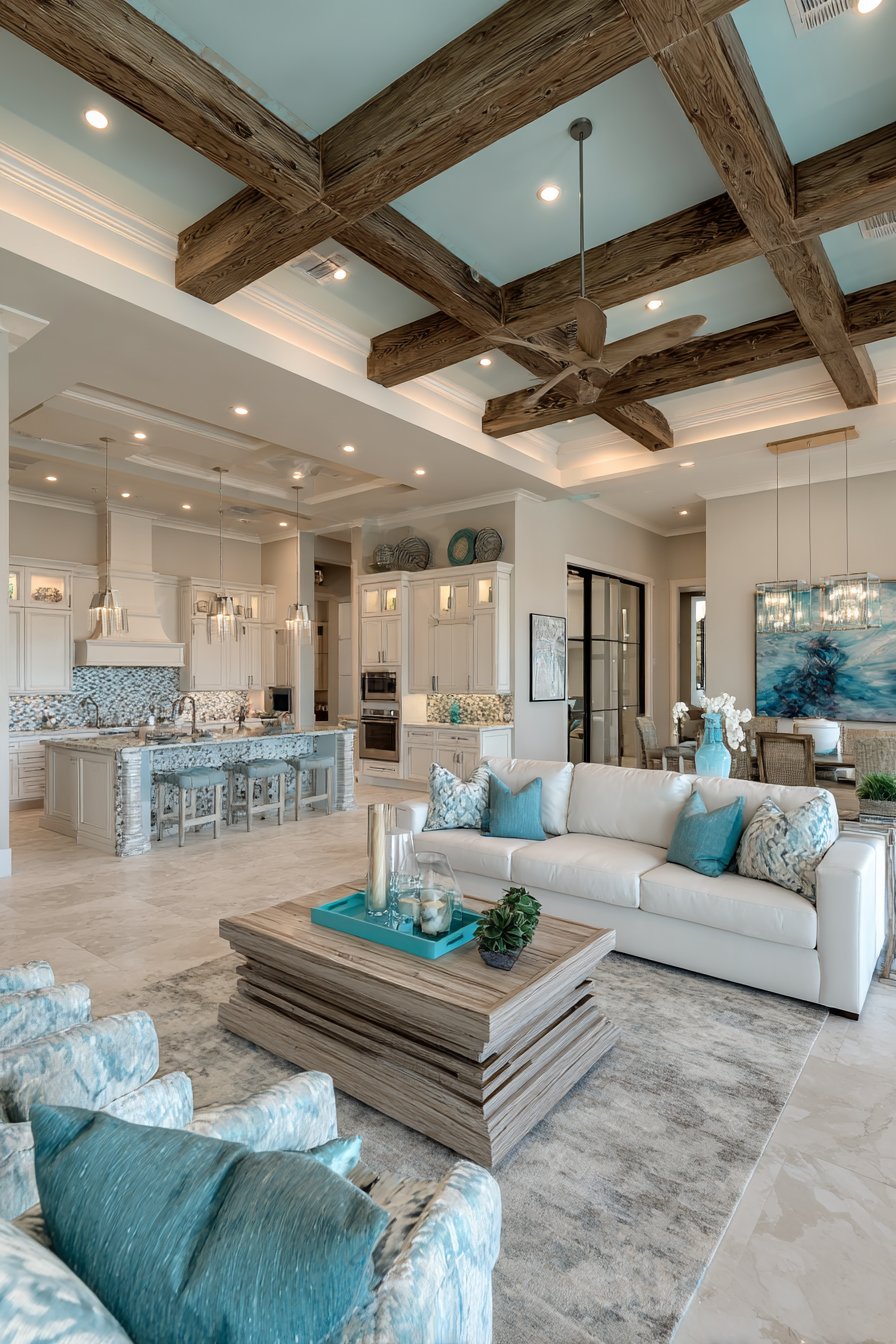
Modern living embraces connected spaces in this sitting room that flows seamlessly into adjacent dining or kitchen areas. Rather than walls creating hard divisions, area rugs and furniture placement define the sitting zone while maintaining visual and physical connection to neighboring spaces. Consistent flooring throughout—perhaps hardwood, tile, or polished concrete—creates uninterrupted flow that makes the overall space feel larger.
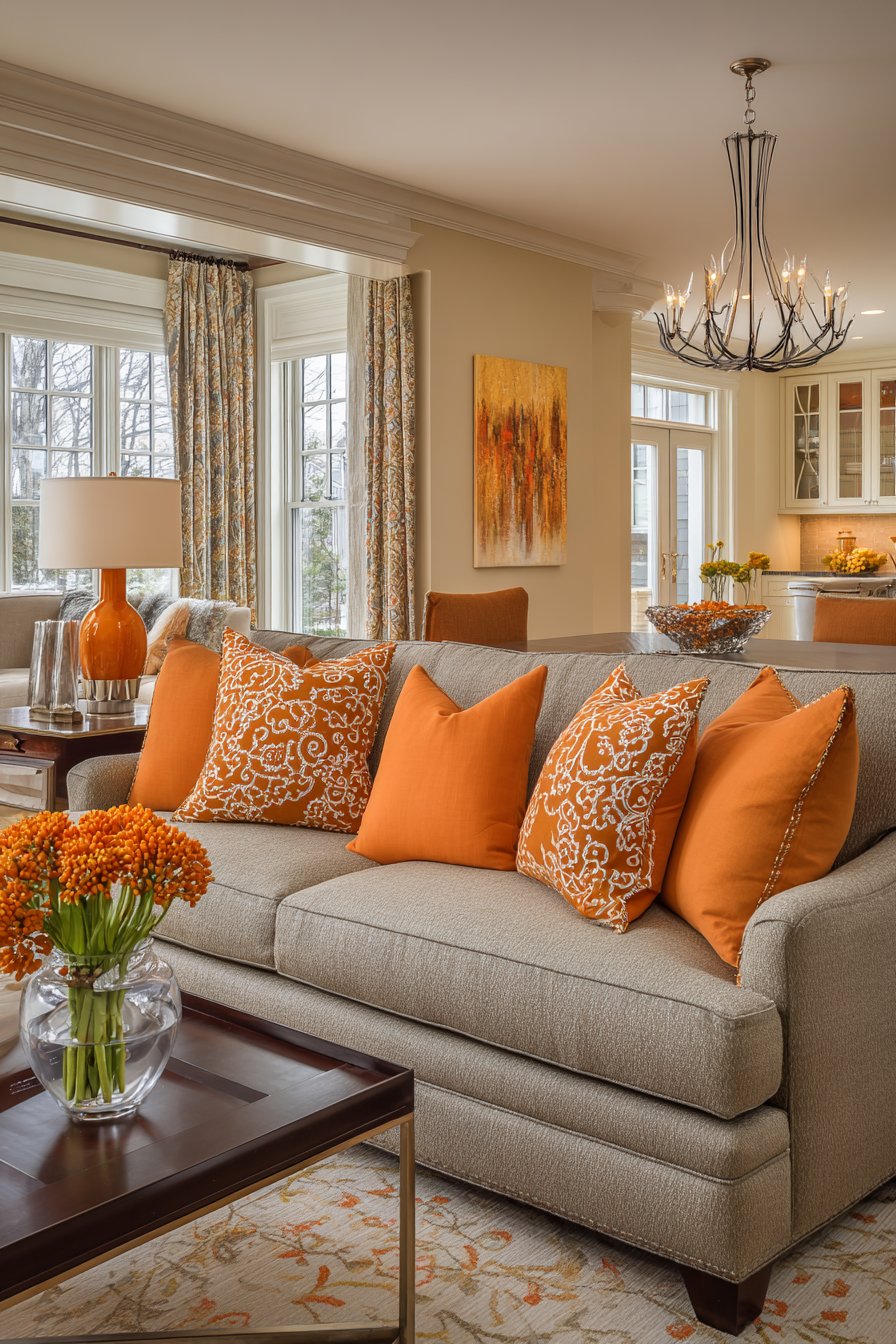
Coordinated color schemes using the same palette and similar materials create visual continuity despite functional differences between zones. The sofa back serves as subtle room divider, providing psychological separation between sitting and dining areas without blocking sight lines or creating closed-off feeling. Maintained sight lines throughout connected spaces create sense of spaciousness and allow supervision of children or interaction with those cooking while relaxing.
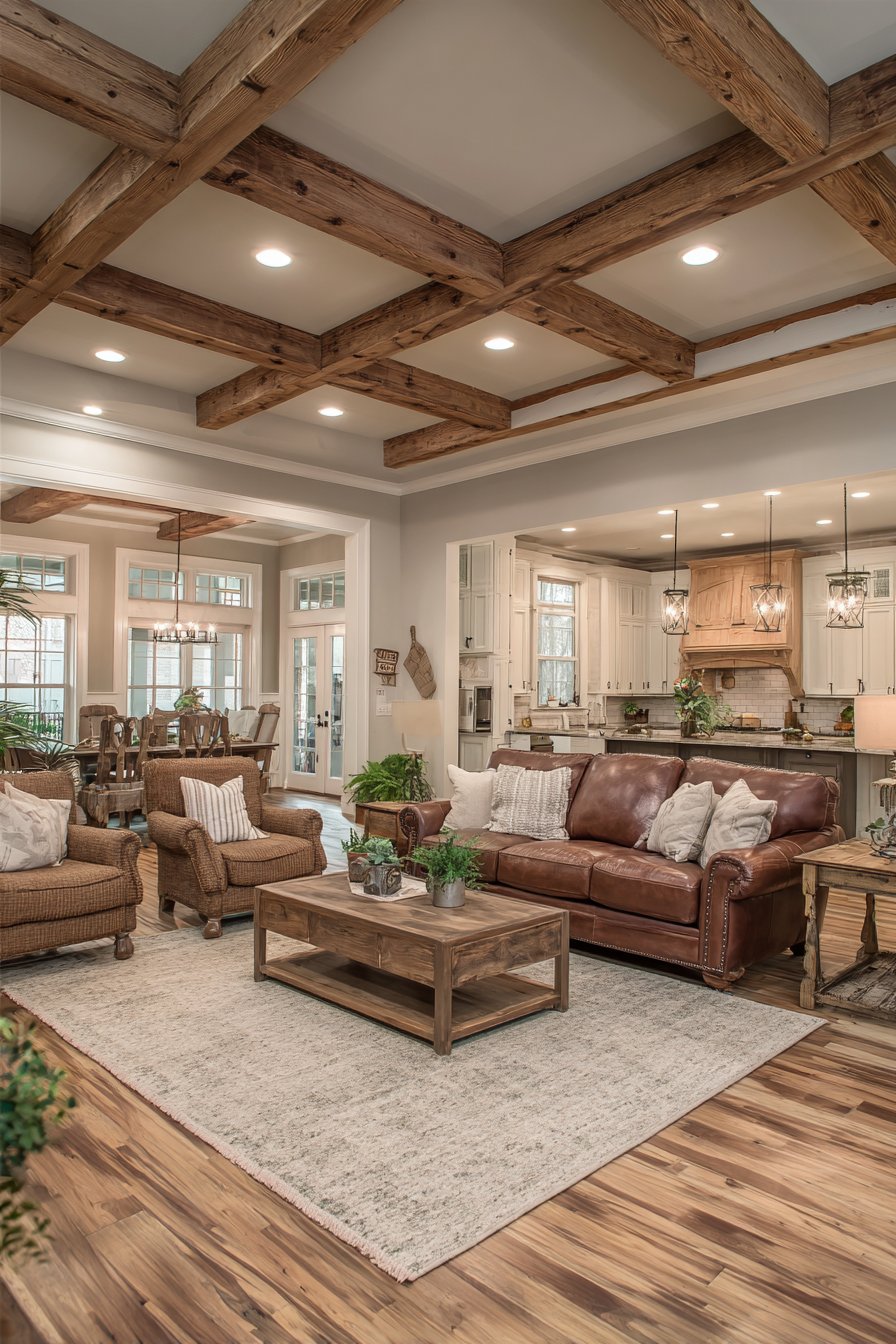
The open-concept approach reflects contemporary values favoring connection over privacy, community over isolation. These flowing spaces support modern lifestyles where cooking, entertaining, and relaxing happen simultaneously and interactively rather than in separate dedicated rooms. This sitting room demonstrates how thoughtful design can define distinct zones within open plans without sacrificing the spaciousness and connection that make open concepts appealing.
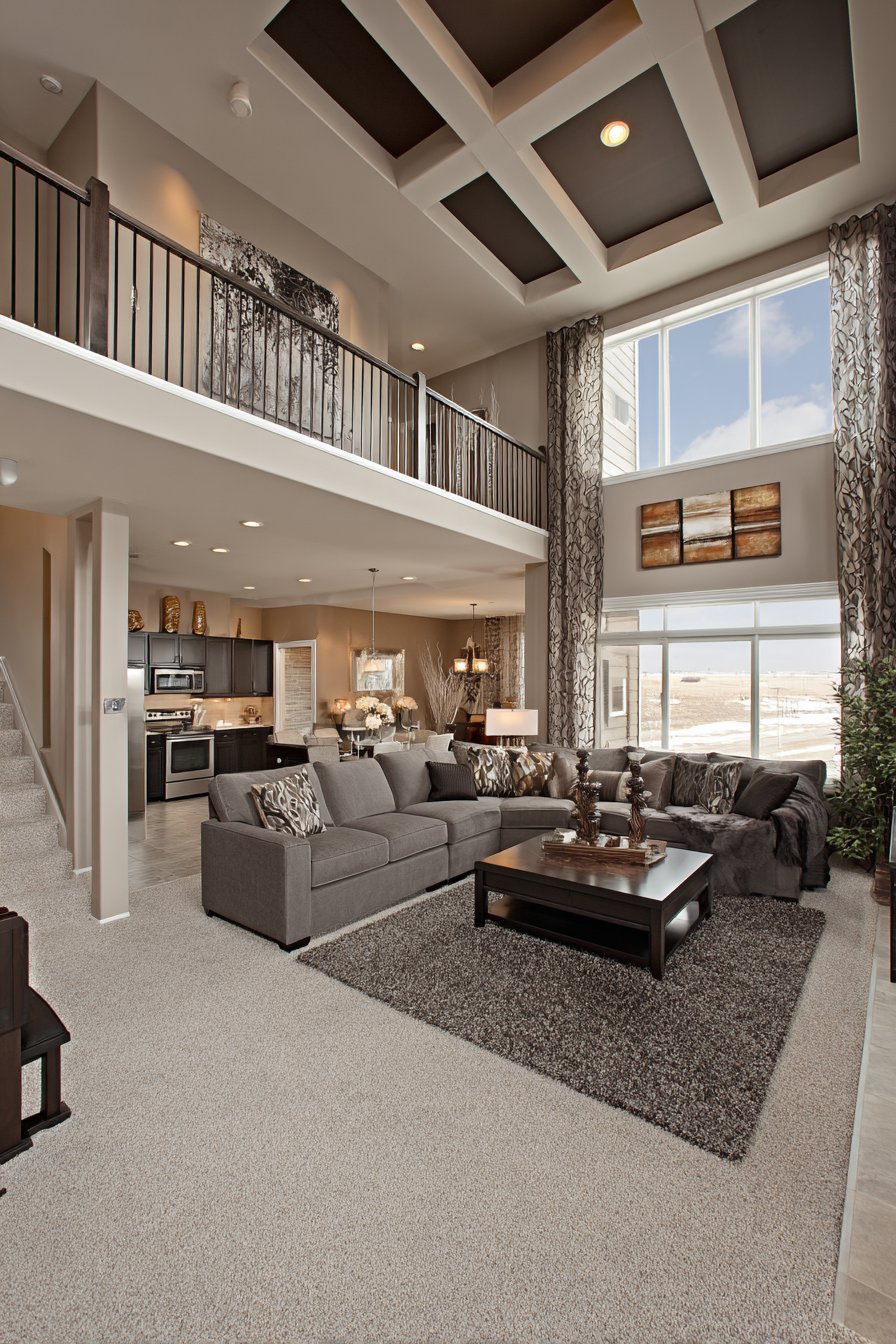
Key Design Tips: Define sitting areas with rugs and furniture placement rather than walls to maintain open-concept flow. Use consistent flooring throughout connected spaces to create visual continuity and enhance spaciousness. Coordinate color schemes across open-concept zones using same palette to create cohesive appearance. Position sofa backs as subtle dividers that provide psychological separation without blocking sight lines. Maintain visual connection throughout open spaces to enhance supervision and enable multi-zone interaction.
31. Smart Storage Integration
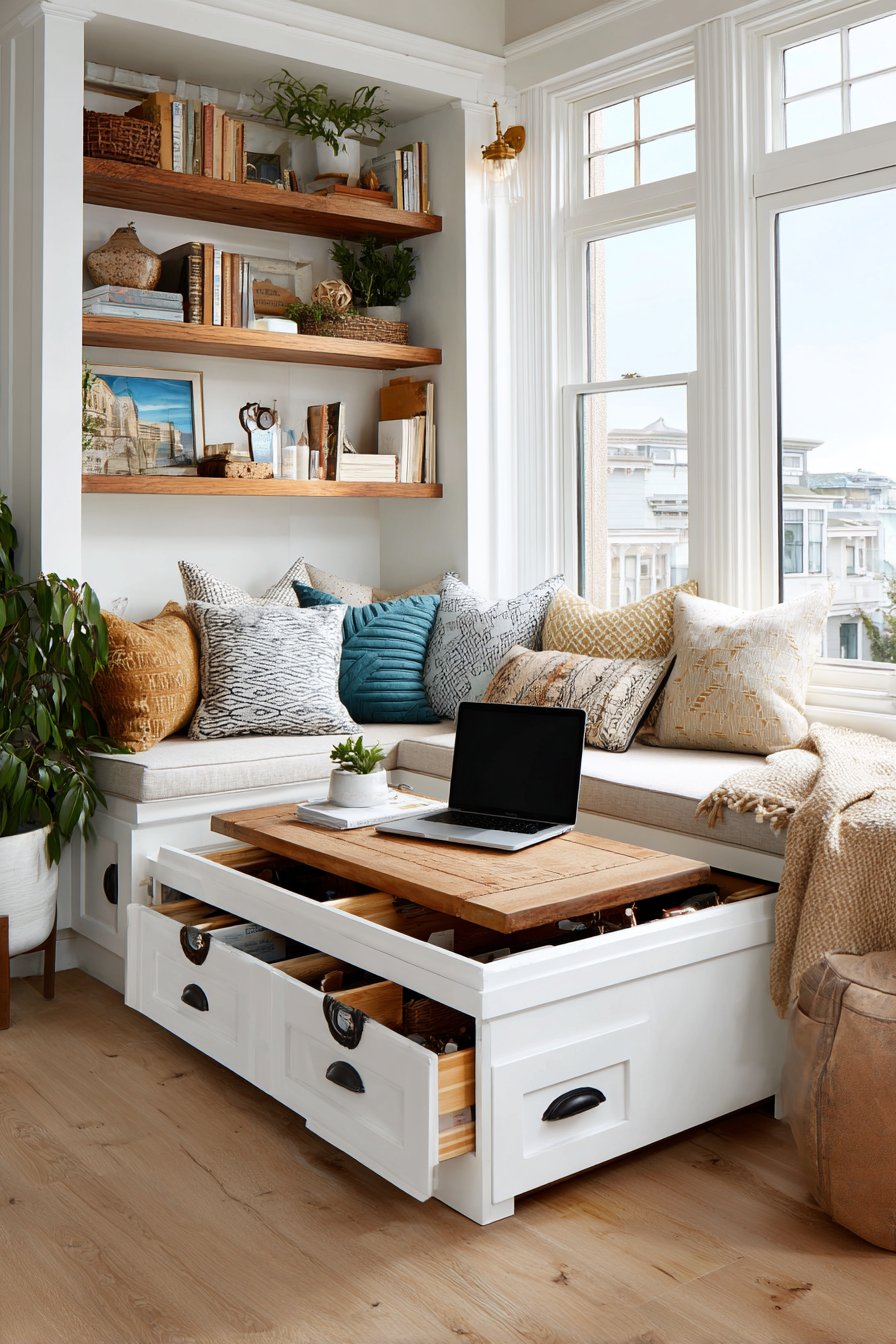
Organization meets aesthetics in this sitting room where abundant storage remains accessible yet largely concealed. A built-in window seat provides comfortable perching spot while concealing storage compartments beneath its cushioned top—perfect for seasonal items, extra throw blankets, or board games. The coffee table features drawers that keep remote controls, coasters, and other living room necessities close at hand but out of sight.
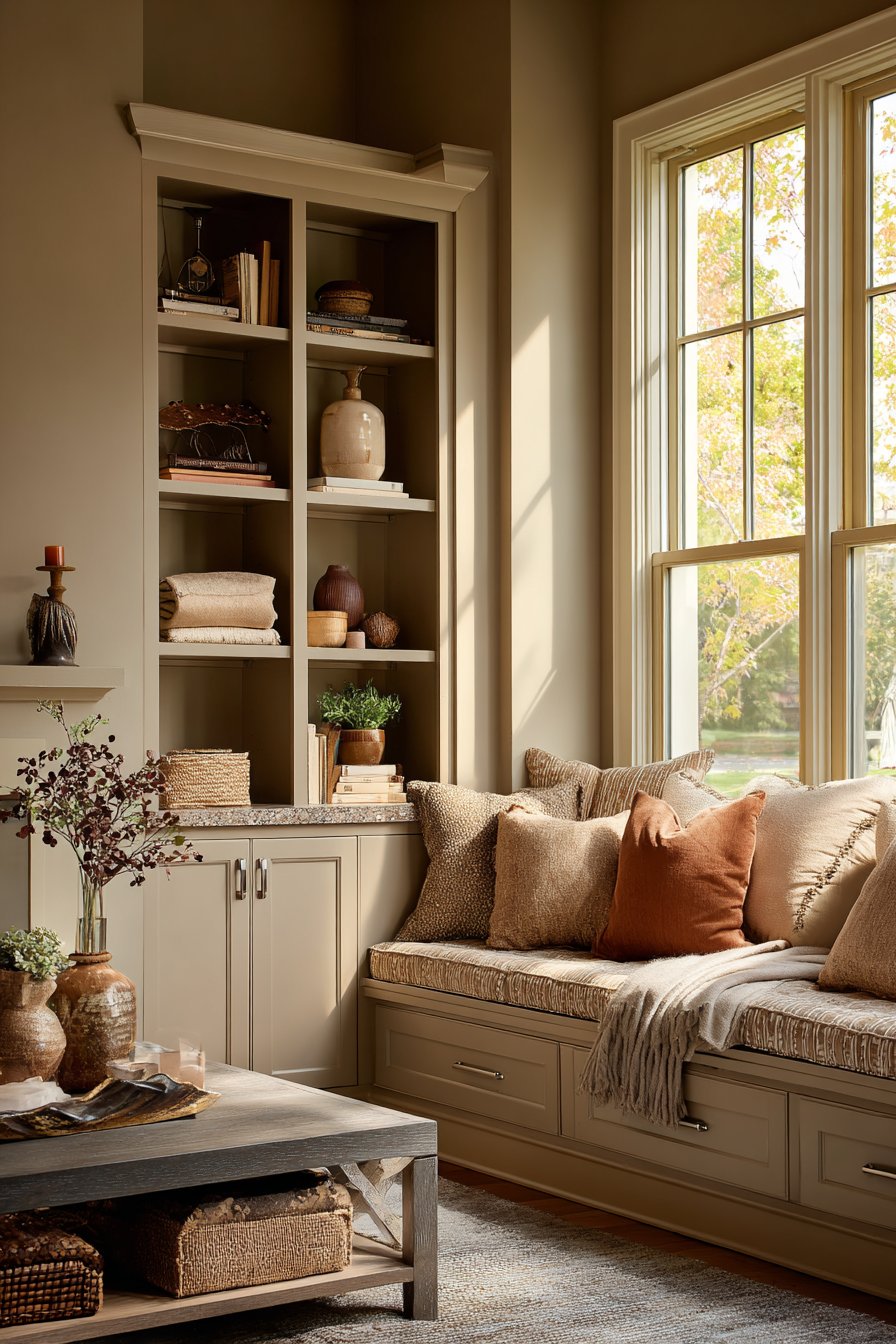
Behind the sofa, a sofa table provides display surface for lamps and decorative objects while offering storage through drawers or shelves below. Floating shelves utilize vertical wall space for books and decorative items without consuming floor space, their streamlined brackets nearly invisible. Closed cabinets keep visual clutter concealed—perhaps media equipment, office supplies, or children’s toys—while open shelving displays curated decorative items that enhance rather than clutter the aesthetic.
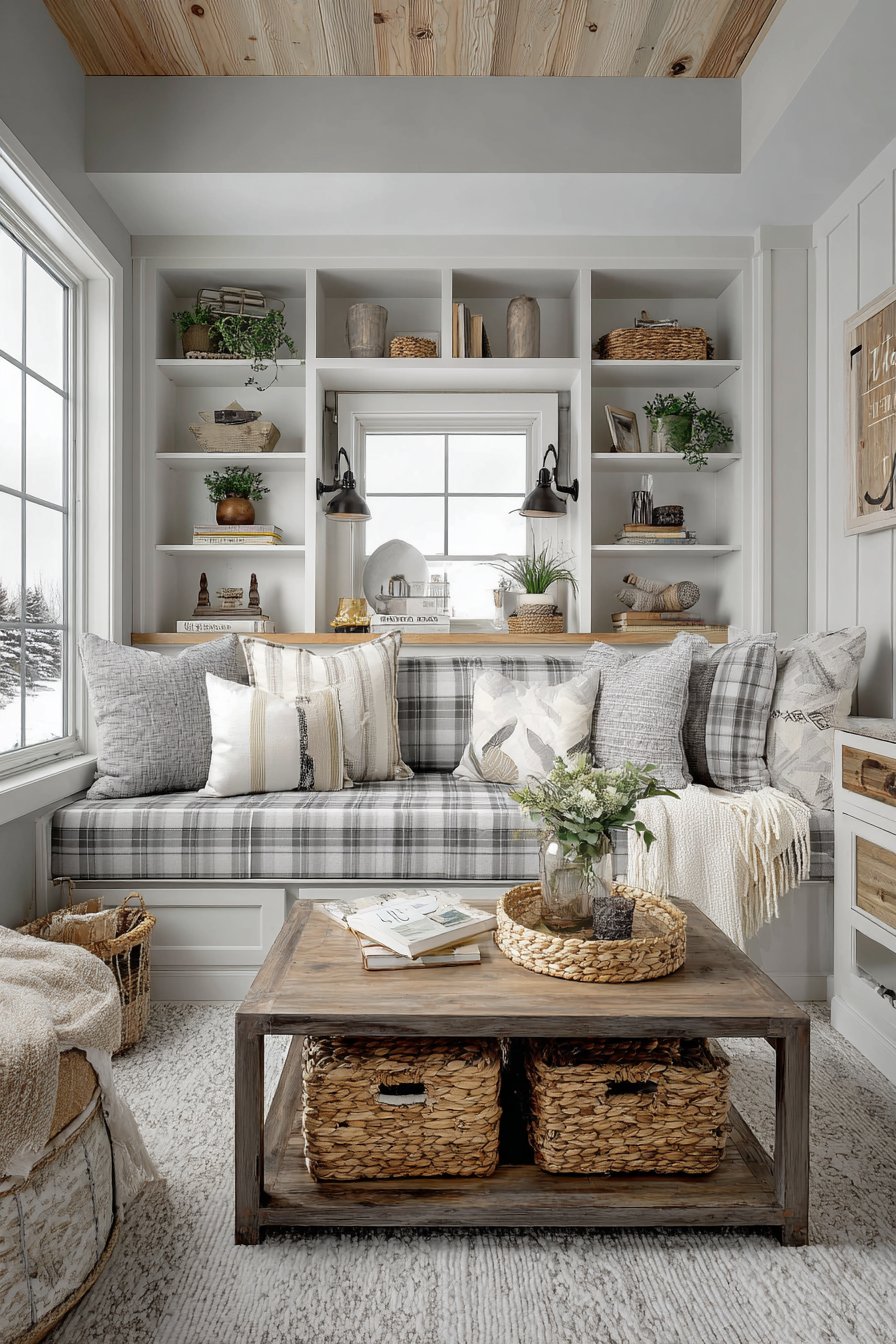
The storage-savvy approach creates sitting rooms that remain organized and clutter-free, making them more relaxing and inviting. When everything has a designated home, maintaining order becomes effortless rather than constant struggle. This sitting room proves that successful design addresses practical needs alongside aesthetic goals, creating beautiful spaces that actually support daily life.
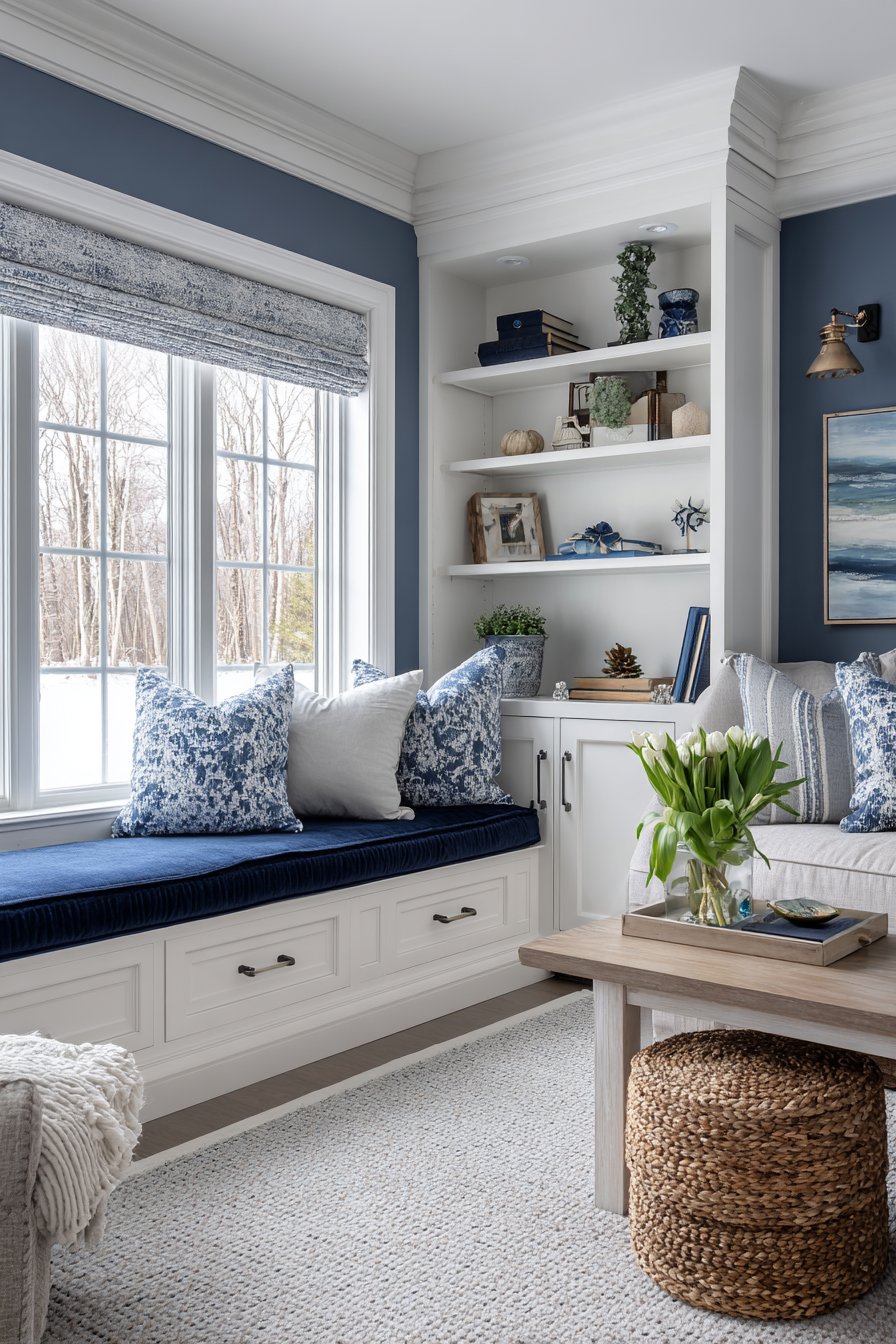
Key Design Tips: Install window seats with hidden storage compartments to add seating while concealing seasonal items or extra blankets. Choose coffee tables with built-in drawers to keep remote controls and living room essentials accessible but concealed. Add sofa tables behind seating to provide display surfaces while offering storage through drawers or shelves. Install floating shelves to maximize vertical storage without consuming valuable floor space. Balance closed cabinets for clutter concealment with open shelving for curated decorative displays.
Why These Sitting Room Ideas Represent the Best in Interior Design
The 31 sitting room concepts presented here represent the finest approaches to residential interior design because they address the full spectrum of human needs, aesthetic preferences, and practical requirements that define successful living spaces. These designs aren’t merely beautiful arrangements of furniture and accessories—they’re thoughtful responses to how people actually live, gathering real families and friends in comfortable environments that enhance daily life while expressing individual style and values.
Each design philosophy explored here—from minimalist Scandinavian to maximalist bohemian, from traditional English to contemporary urban, from family-friendly practical to luxury showcase—addresses specific lifestyle needs and aesthetic sensibilities. The sitting room ideas featuring small space solutions demonstrate how strategic design can make limited square footage feel spacious and functional, while open-concept designs show how modern living embraces connection and flow between spaces. Multi-functional designs prove that rooms can serve multiple purposes without compromise, and sustainable approaches show that environmental responsibility and beauty aren’t mutually exclusive.
Material selection represents a critical component of successful sitting room design, and these concepts showcase the importance of choosing fabrics, finishes, and furnishings appropriate to their intended use. Performance fabrics in family rooms withstand real life while remaining beautiful. Natural fibers in bohemian and coastal designs bring organic texture and connection to nature. Luxury materials like marble, brass, and hand-knotted rugs elevate formal spaces while demonstrating exceptional craftsmanship. Reclaimed and vintage materials add character impossible to replicate with new furnishings while supporting sustainability.
Color theory appears throughout these designs in sophisticated applications—from monochromatic serenity to bold accent walls, from earth-toned biophilic palettes to jewel-toned maximalist abundance. Understanding how color affects mood and perception allows designers to create spaces that energize or calm, expand or embrace, stimulate or soothe. The sitting room ideas presented here demonstrate that color choices should align with the room’s intended use and the occupants’ psychological needs, not just follow trending palettes from design magazines.
Lighting design receives appropriate emphasis across these concepts because illumination profoundly affects how spaces look and feel. Natural light maximization approaches show how to capitalize on windows and reflective surfaces, while layered artificial lighting demonstrates the importance of combining ambient, task, and accent illumination. From crystal chandeliers creating special occasion atmosphere to adjustable reading lamps providing focused task lighting, these designs prove that lighting deserves as much attention as furniture selection.
Spatial planning excellence appears in conversation-optimized layouts that facilitate interaction, reading-focused arrangements supporting beloved activities, and fireplace-centered designs tapping into deep human connections to hearth and home. Each arrangement demonstrates that furniture placement isn’t arbitrary but rather strategic response to how the space will actually be used. The sitting room serving primarily for entertaining arranges differently than one designed for solitary reading or family movie nights.
Storage integration throughout these designs addresses the universal challenge of maintaining organization without sacrificing aesthetics. Built-in solutions, multi-functional furniture, and concealed compartments prove that beautiful rooms needn’t sacrifice practicality. The most successful designs anticipate what needs storing and provide appropriate homes for everything from media equipment to children’s toys to seasonal decorative items.
Personal expression emerges as a unifying theme across diverse styles, whether through collected eclectic pieces telling individual stories, gallery walls displaying treasured artwork and photographs, or global textiles referencing meaningful travels and cultural connections. The best sitting rooms feel authentic to their occupants rather than looking like catalog recreations, demonstrating that successful design celebrates personality rather than conforming to generic ideals.
These sitting room ideas also demonstrate design’s capacity to address contemporary concerns including sustainability, wellness, and work-life balance. Biophilic designs incorporating plants and natural materials respond to documented human needs for nature connection. Pet-friendly approaches acknowledge that design must accommodate all family members. Multi-functional spaces reflect reality of working from home. Sustainable material choices show environmental consciousness need not sacrifice beauty.
Technical expertise appears throughout in appropriate scale and proportion, balanced compositions, and professional material specifications. Wide-angle perspectives, natural lighting consideration, and attention to texture detail demonstrate how these spaces would photograph beautifully while remaining livable. The designs avoid common pitfalls including unrealistic perfection, impractical furniture arrangements, or stylistic inconsistency.
Cultural and historical design literacy enriches these concepts through authentic references to established styles—mid-century modern showcasing period-appropriate furniture and lighting, Japanese-inspired designs honoring minimalist traditions, industrial spaces celebrating urban warehouse aesthetics. Understanding design history allows for informed interpretation rather than superficial trend-chasing.
Accessibility and inclusivity emerge through family-friendly designs, pet-accommodating spaces, and furniture choices supporting various physical needs. Coffee tables with rounded edges protect children, performance fabrics withstand real use, and comfortable seating with proper support allows extended occupation. Design excellence includes everyone rather than creating beautiful but uninhabitable spaces.
The economic range represented—from budget-conscious small space solutions to luxury showcase designs—demonstrates that good design exists at every price point. Beautiful sitting rooms don’t require unlimited budgets but rather thoughtful choices and clear priorities. Paint and rearrangement can transform spaces dramatically, while investment pieces like quality sofas provide lasting value.
Adaptability appears in modular furniture allowing configuration changes, neutral foundations accepting evolving color accents, and timeless transitional styles transcending specific eras. The best designs accommodate life’s changes rather than requiring complete redecoration when preferences shift or families grow.
These 31 sitting room ideas represent design excellence because they’re grounded in reality while inspiring possibility, acknowledge practical constraints while celebrating aesthetic potential, honor individual preference while demonstrating universal principles, and ultimately create spaces where life happens beautifully. They prove that thoughtful interior design isn’t frivolous decoration but rather essential practice of creating environments supporting human flourishing—spaces where we connect with others, express ourselves authentically, and find comfort in an increasingly complex world.
Conclusion
The sitting room remains one of the most important spaces in any home—a versatile environment where daily life unfolds in myriad ways from quiet morning coffee to lively evening gatherings, from solo reading sessions to family game nights. The 31 sitting room ideas explored in this comprehensive guide demonstrate that successful design needn’t follow a single formula but rather can take infinite forms depending on individual needs, aesthetic preferences, lifestyle requirements, and personal values.
Whether you’re drawn to the serene simplicity of Scandinavian minimalism or the abundant joy of maximalist design, whether you need family-friendly durability or formal entertaining elegance, whether you’re working with compact dimensions or expansive spaces, these concepts provide actionable inspiration for creating sitting rooms that truly serve your life. The key takeaway is that the best design decisions stem from honest assessment of how you’ll actually use the space, who will occupy it, what activities it must support, and what atmosphere you want to create.
We encourage you to experiment boldly with these ideas, adapting them to your specific circumstances rather than replicating them exactly. Mix elements from different concepts to create your own unique hybrid—perhaps combining the material palette of coastal design with the layout of conversation-optimized arrangement, or merging sustainable material choices with luxury finishing details. Remember that your sitting room should evolve with your life, welcoming new pieces that tell your story while releasing elements that no longer serve you.
Start small if a complete transformation feels overwhelming—perhaps adding plants for biophilic connection, rearranging furniture to optimize conversation, or painting an accent wall to create dramatic impact. Each incremental improvement builds toward the sitting room you envision, and the journey of creating your ideal space can be as rewarding as the destination. Most importantly, design your sitting room for real life, not idealized photographs—choose durable fabrics if you have children or pets, prioritize comfort over formal beauty, and create spaces that invite actual use rather than demanding preservation.
Your sitting room should be your favorite room—the space you look forward to inhabiting, where you feel most yourself, and where life’s best moments naturally unfold. Use these ideas as springboards for your imagination, trust your instincts about what feels right, and create a sitting room that’s not just beautiful but truly yours.
