
The modern bathroom has evolved far beyond its purely functional origins to become a personal sanctuary where design meets practicality. Among the most transformative elements in contemporary shower design, wall niches stand out as brilliant solutions that merge aesthetic appeal with everyday convenience. These recessed shelving spaces eliminate the clutter of bulky caddies and suction-cup organizers while adding architectural interest and visual depth to your shower walls.
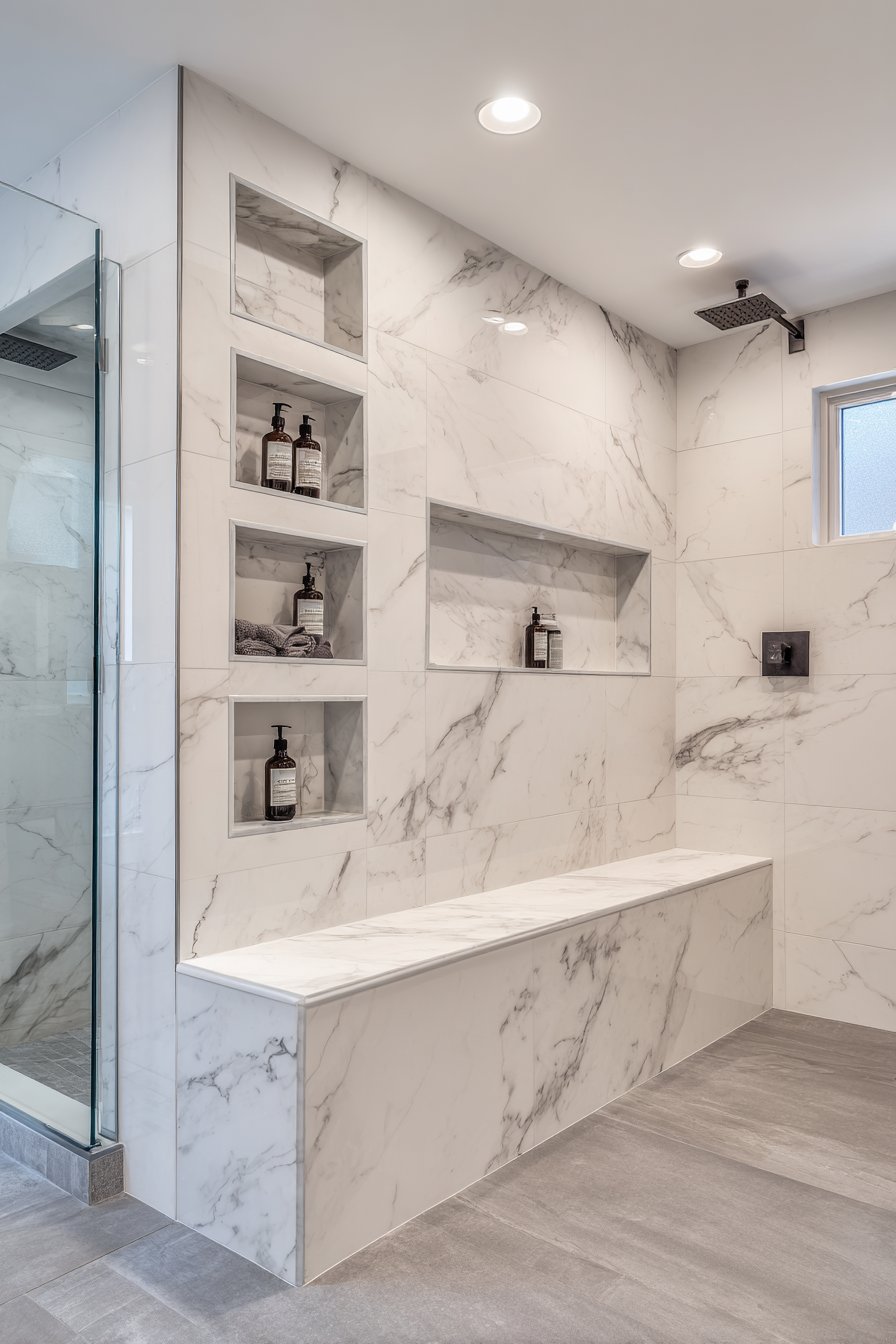
Whether you’re planning a complete bathroom renovation or simply looking to upgrade your existing shower space, thoughtfully designed wall niches can dramatically enhance both the functionality and beauty of your daily routine. From minimalist single-shelf installations to elaborate multi-tiered storage systems with integrated lighting, the versatility of shower niches allows them to complement virtually any design style—from rustic farmhouse charm to sleek contemporary elegance. These architectural features not only provide convenient access to your bathing essentials but also serve as focal points that can showcase premium materials, interesting tile patterns, and creative lighting solutions.
In this comprehensive guide, we’ll explore twenty-three inspiring shower wall niche ideas that demonstrate the remarkable range of possibilities available to homeowners and designers. Each concept offers unique approaches to materials, positioning, lighting, and styling, ensuring you’ll find inspiration perfectly suited to your space, budget, and personal aesthetic preferences. Let’s dive into these innovative designs that prove functional storage can be beautifully integrated into your bathroom’s overall design narrative.
1. The Practical Single-Shelf Solution
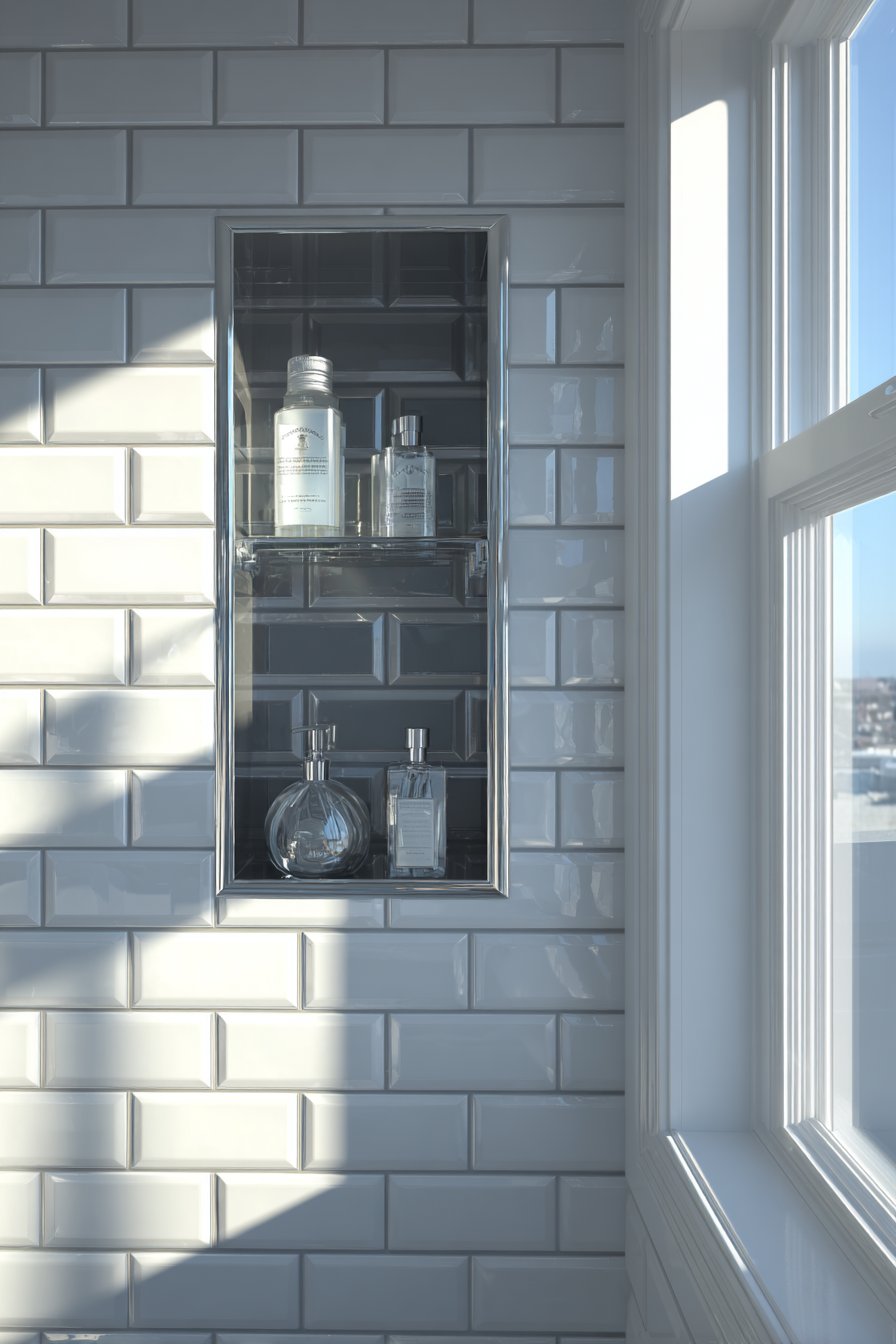
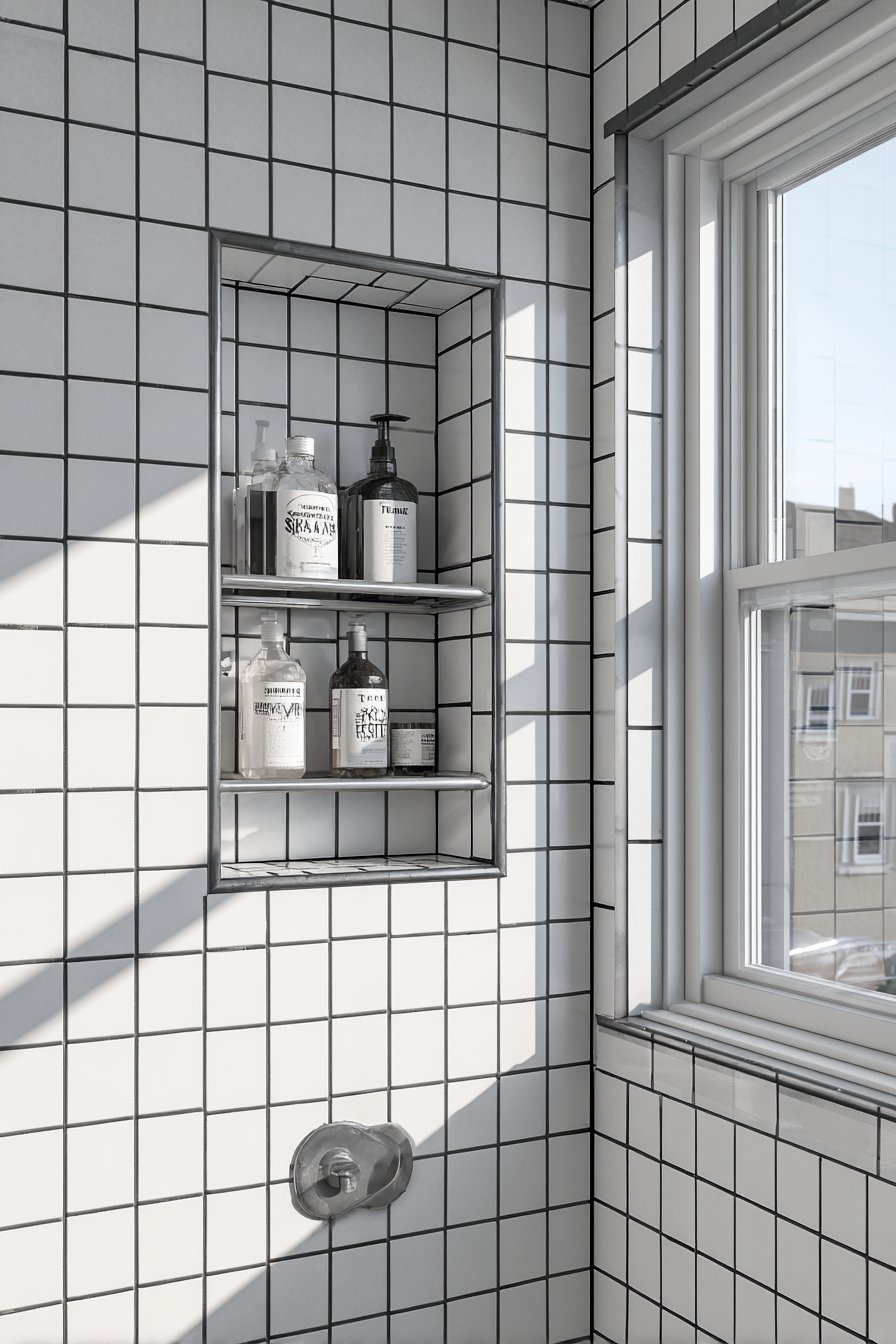
For homeowners seeking straightforward functionality without unnecessary complexity, the single horizontal niche positioned at chest height represents the quintessential shower storage solution. This classic approach features white ceramic subway tiles that seamlessly blend with surrounding shower walls, creating a cohesive look that never goes out of style. The contrasting dark grey grout lines provide subtle definition while adding visual interest to the clean white surface, and the simple chrome corner shelving organizes everyday essentials with understated elegance.
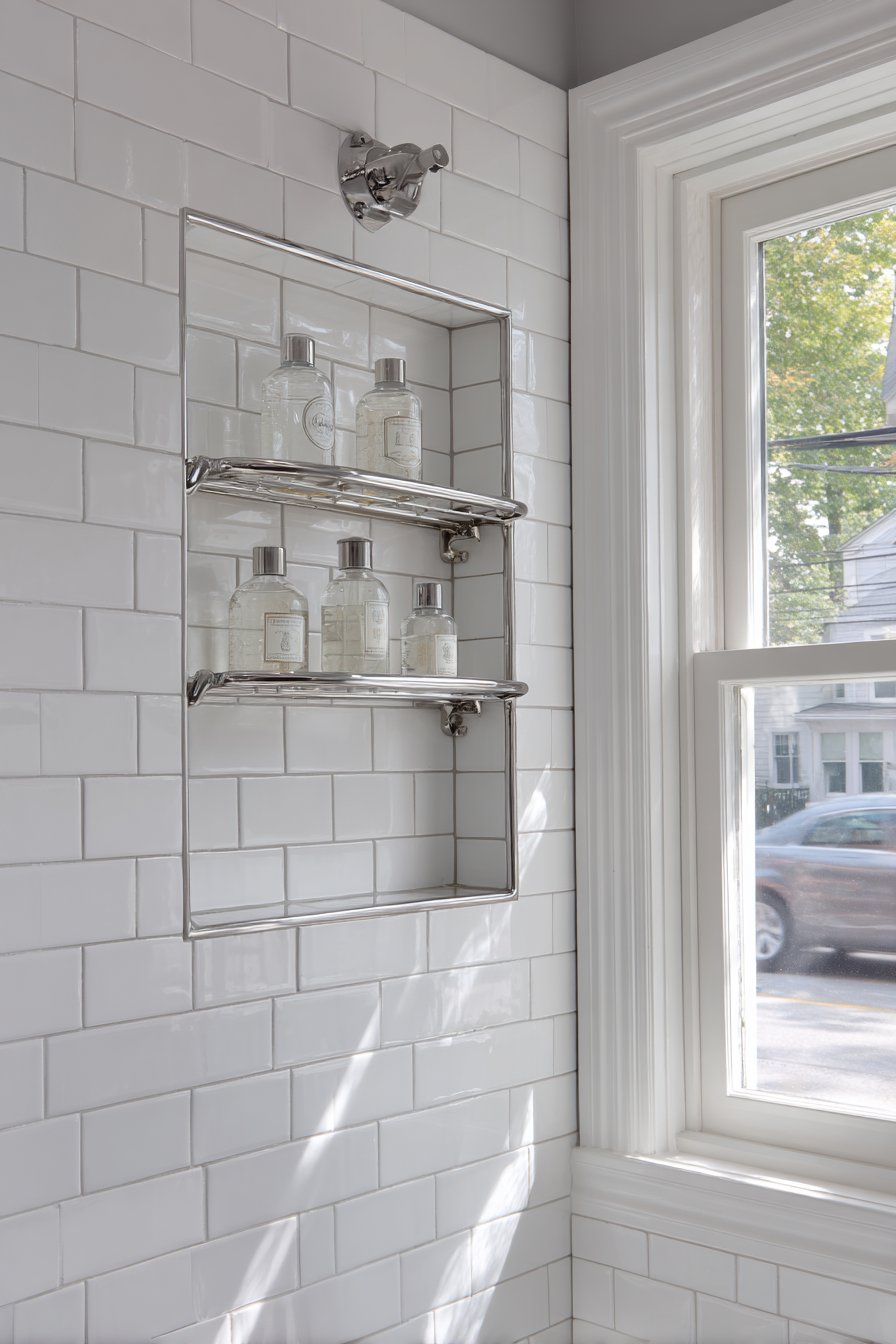
What makes this design particularly appealing is its universal adaptability. The chest-height positioning ensures comfortable reach for most users without requiring awkward bending or stretching, making it an excellent choice for family bathrooms where multiple household members of varying heights will use the space. The subway tile selection offers timeless appeal that transcends passing trends, ensuring your investment will look current for years to come. Natural lighting from adjacent bathroom windows creates gentle shadows that emphasize the dimensional quality of the recessed niche, transforming what could be merely functional into genuinely attractive.
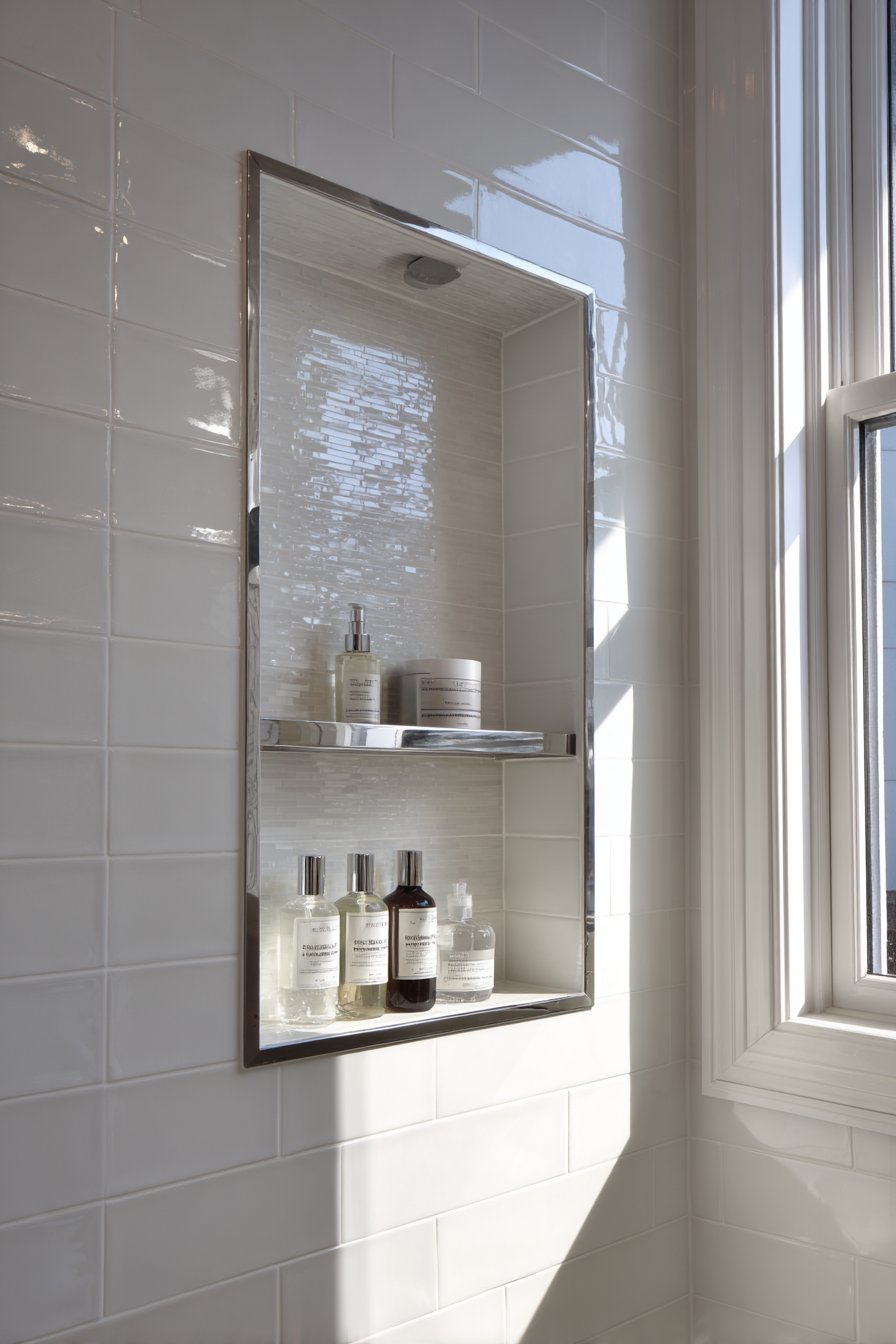
The beauty of this approach lies in its accessibility for DIY enthusiasts and professional installations alike. Standard subway tiles are readily available at virtually any home improvement retailer, and the straightforward rectangular geometry doesn’t require complex cutting or intricate layout patterns. Clear bottles containing shower products maintain the clean aesthetic while allowing you to quickly identify contents at a glance. This design proves that sometimes the most effective solutions are also the simplest, providing exactly what you need without excess embellishment.
Key Design Tips:
- Position the niche between 48-54 inches from the shower floor for optimal ergonomic access
- Use waterproof grout and proper waterproofing membrane behind tiles to prevent moisture damage
- Select corner shelving inserts that complement your fixture finish for a coordinated look
- Keep the niche depth between 3.5-4 inches to accommodate standard bottle sizes without protruding into the shower space
2. Illuminated Vertical Storage
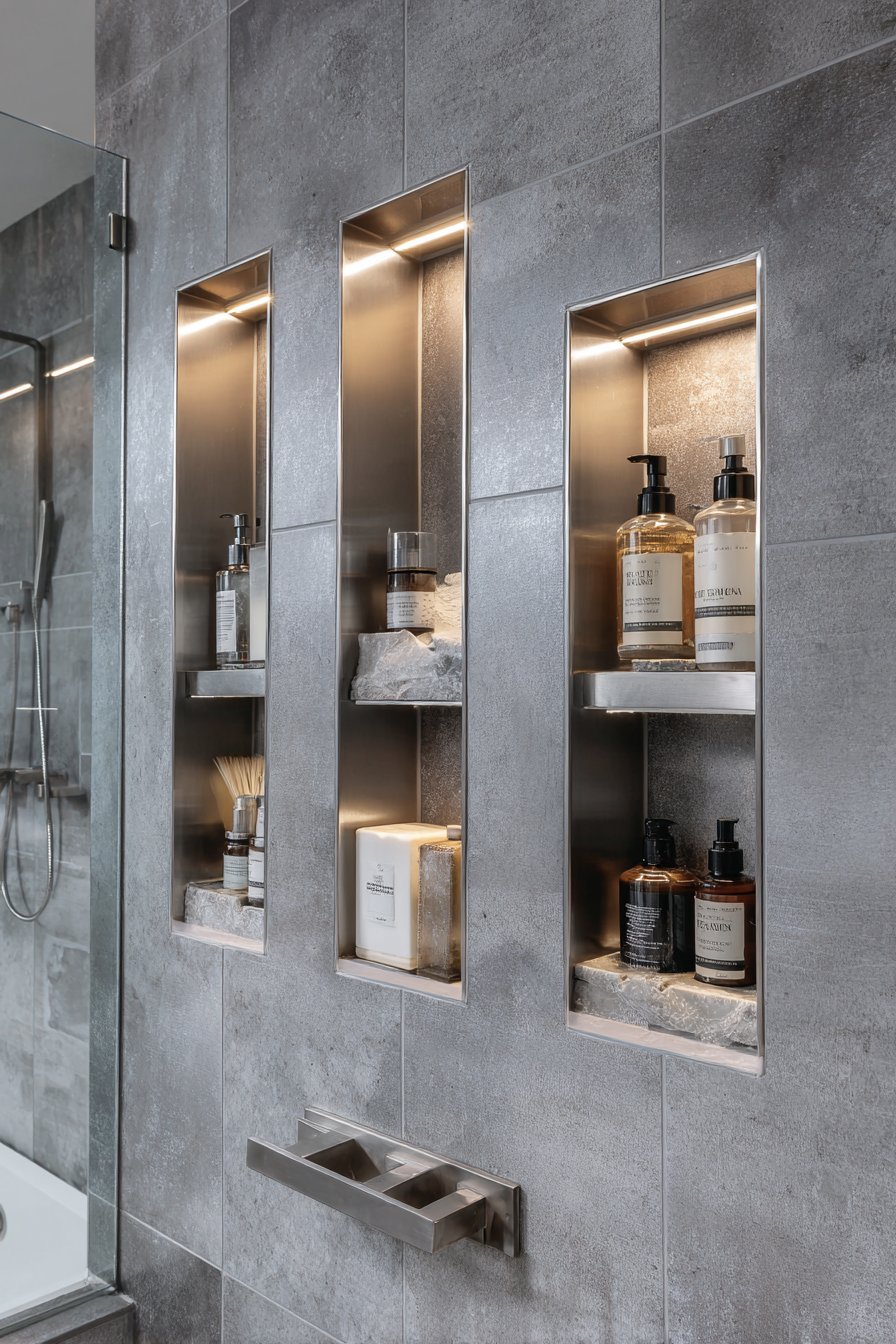
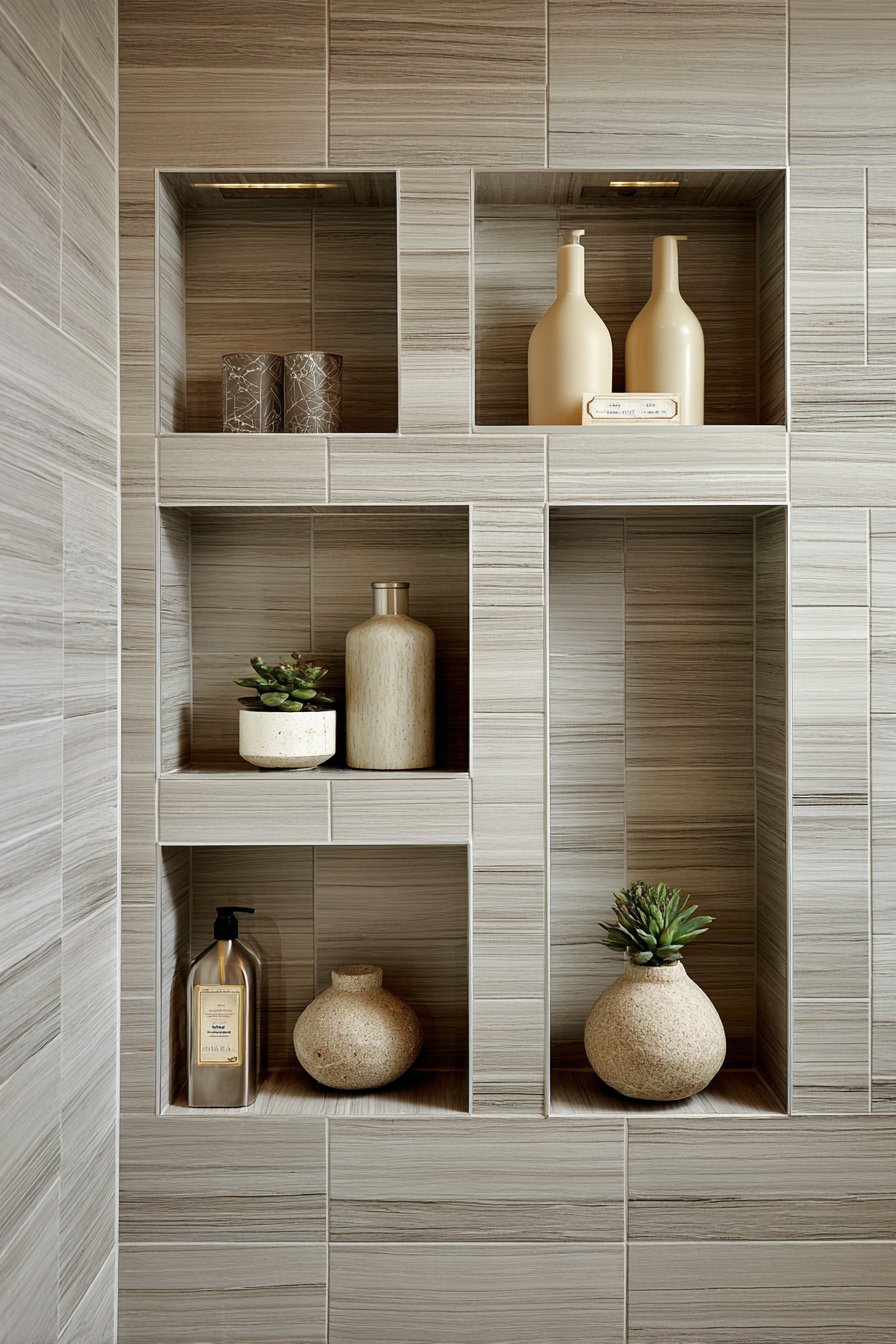
The integration of lighting technology into shower niche design represents a significant evolution in bathroom functionality and ambiance. This sophisticated concept features three stacked rectangular niches of varying widths, each topped with integrated waterproof LED strip lighting that illuminates stored items from above. The large-format grey porcelain tiles create a contemporary backdrop that feels both modern and timeless, while brushed nickel fixtures add refined metallic accents that catch and reflect the LED illumination.
LED lighting within shower niches serves multiple practical purposes beyond mere aesthetics. The illumination makes it easier to identify products during early morning showers or evening baths when bathroom lighting might be dimmed for relaxation. The soft glow creates a spa-like atmosphere that transforms routine hygiene into a more luxurious experience. Additionally, the lighting draws attention to the architectural feature itself, turning what might otherwise be purely functional storage into a genuine design statement that adds depth and visual interest to the shower enclosure.
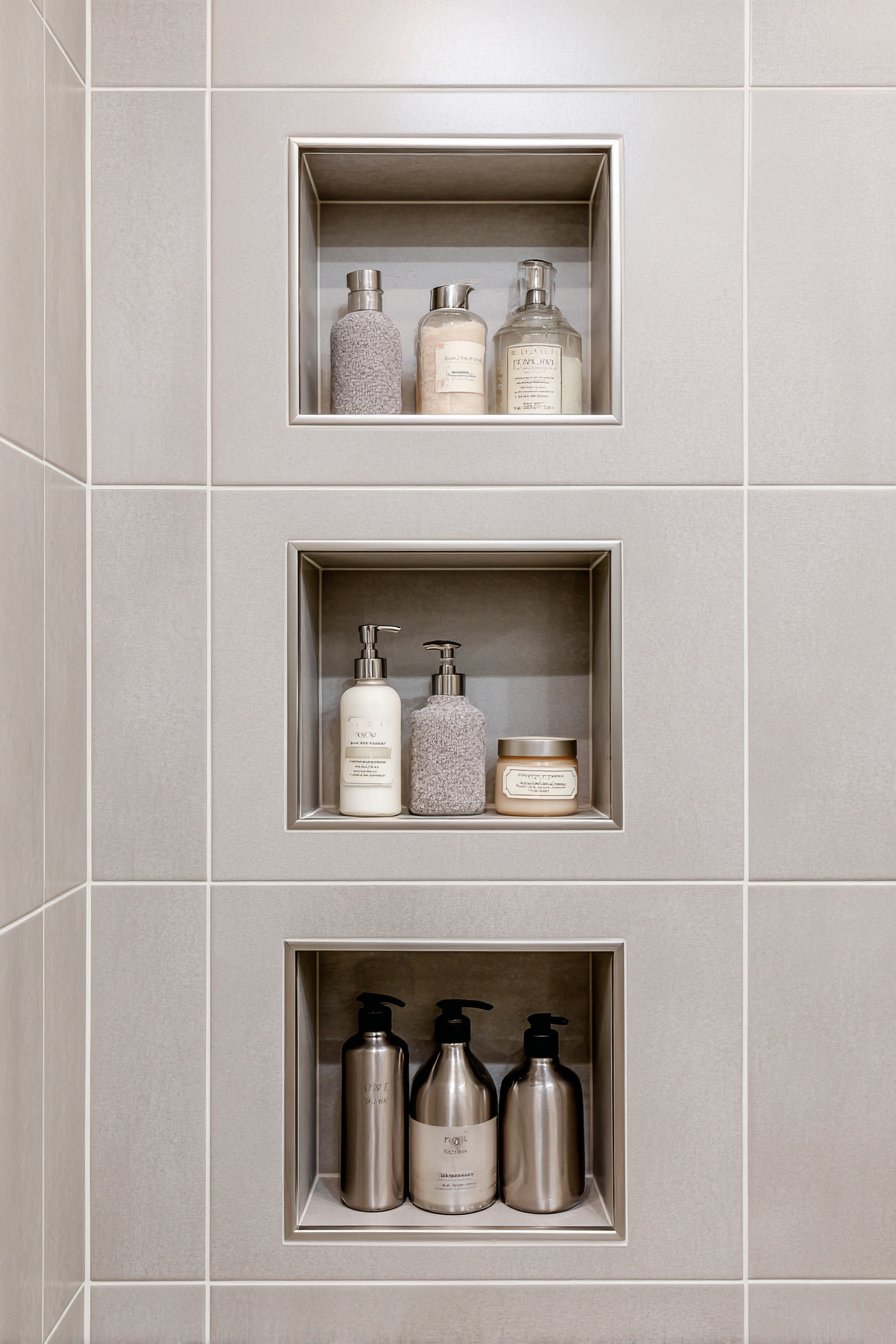
The varying widths of the three stacked niches demonstrate thoughtful planning for different product types. Taller bottles fit comfortably in the wider middle section, while smaller items like soap bars and razors occupy the narrower compartments above and below. This vertical stacking approach maximizes wall space efficiency, particularly valuable in compact bathrooms where every square inch matters. The monochromatic grey palette with neutral-toned bath products creates a calming, cohesive appearance that embodies contemporary design principles.
Key Design Tips:
- Choose LED strips rated specifically for wet locations with IP65 or higher waterproof rating
- Install dimmer switches to control lighting intensity for different moods and times of day
- Vary niche widths between 8-16 inches to accommodate different bottle and container sizes
- Consider low-voltage (12V) LED systems for enhanced safety in wet environments
- Apply tile with slight slope toward the shower to ensure proper water drainage from niche shelves
3. Industrial Minimalist Concrete Expression
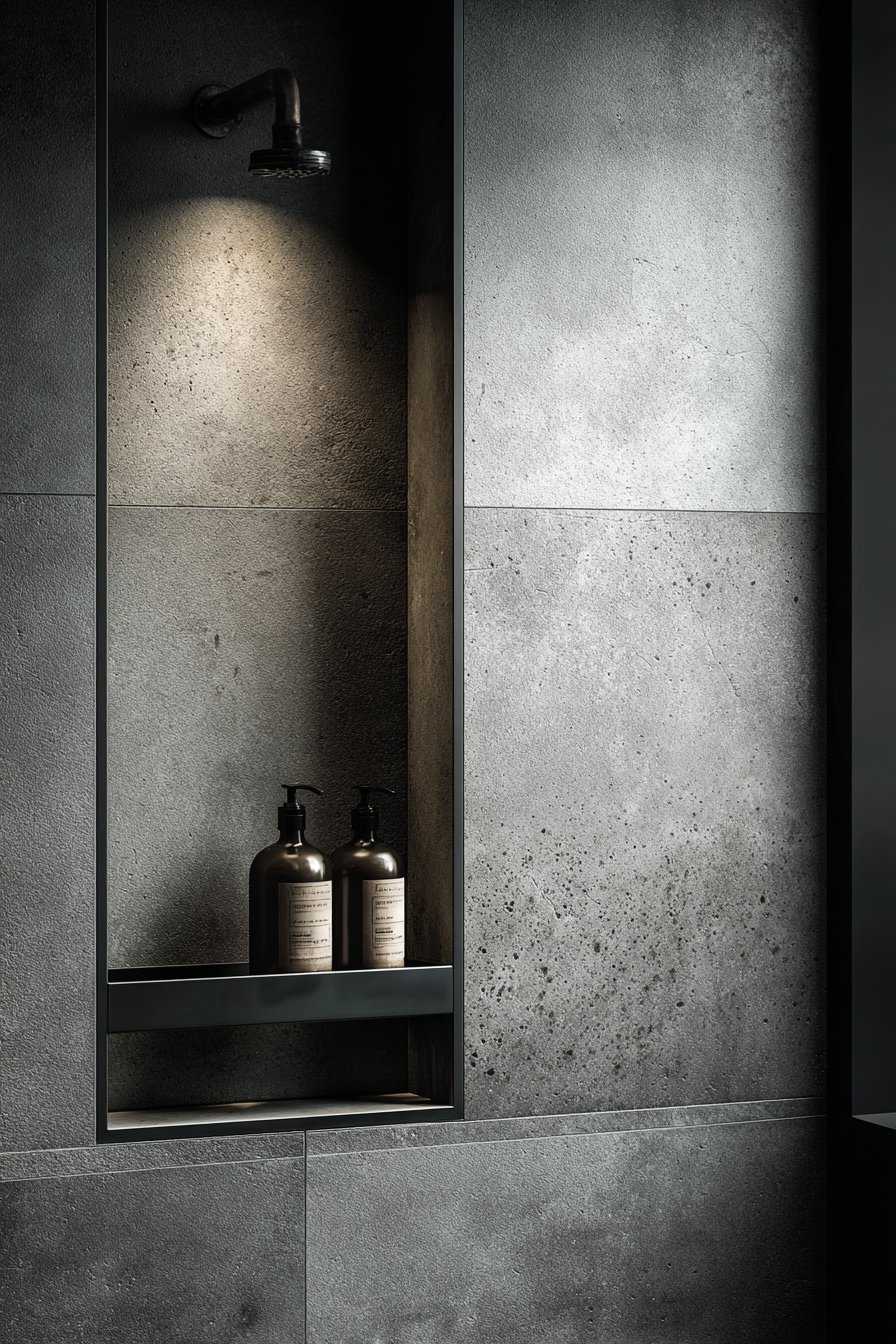
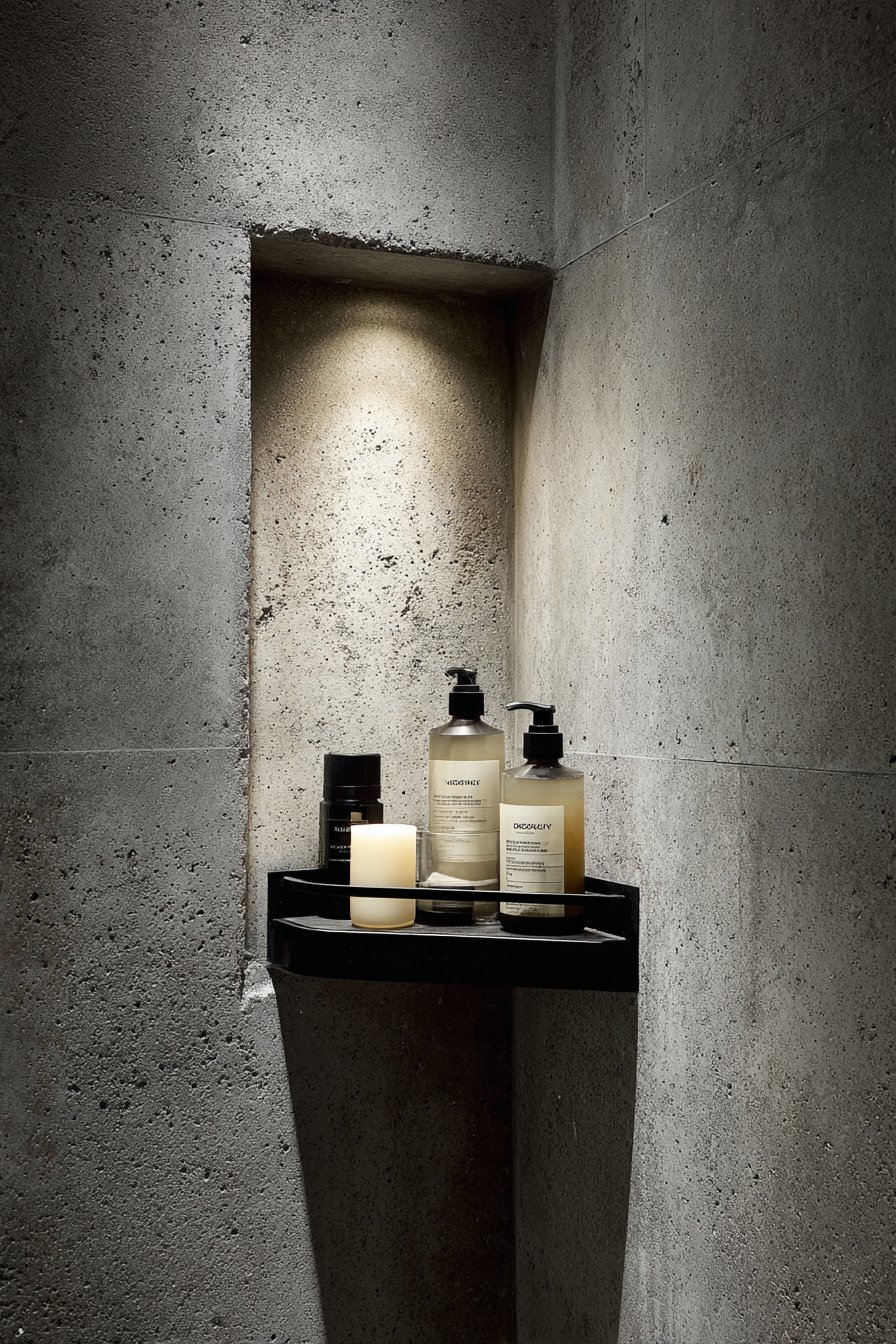
For those drawn to raw, honest materials and urban loft aesthetics, the concrete-look porcelain niche offers industrial appeal with practical maintenance advantages. This design features a single deep square niche carved into seamless grey concrete-effect walls, creating a monolithic appearance that celebrates material authenticity. The matte black metal corner caddy provides organized storage while reinforcing the industrial design vocabulary, and the substantial depth of the niche accommodates larger bottles and even folded washcloths.
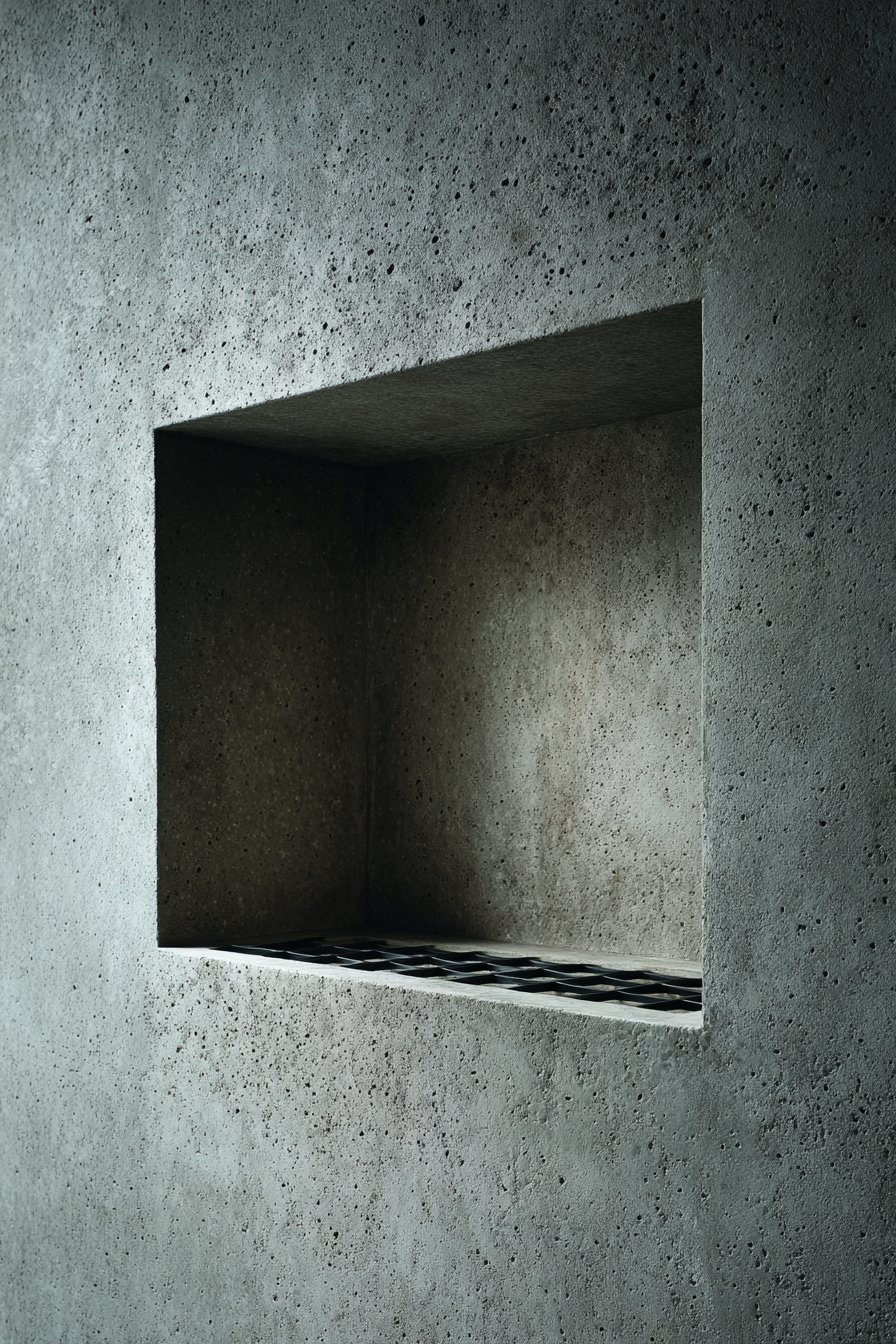
Concrete-effect porcelain represents one of the most exciting developments in contemporary tile technology, delivering the visual impact of poured concrete without the maintenance challenges, porosity issues, or installation complications of actual concrete surfaces. The subtle texture variations and slightly mottled appearance capture the organic quality of real concrete while providing a completely sealed, waterproof surface that’s remarkably easy to clean. Soft diffused lighting emphasizes these texture variations, creating shadows and highlights that add dimensional interest to what might otherwise appear as flat grey surfaces.
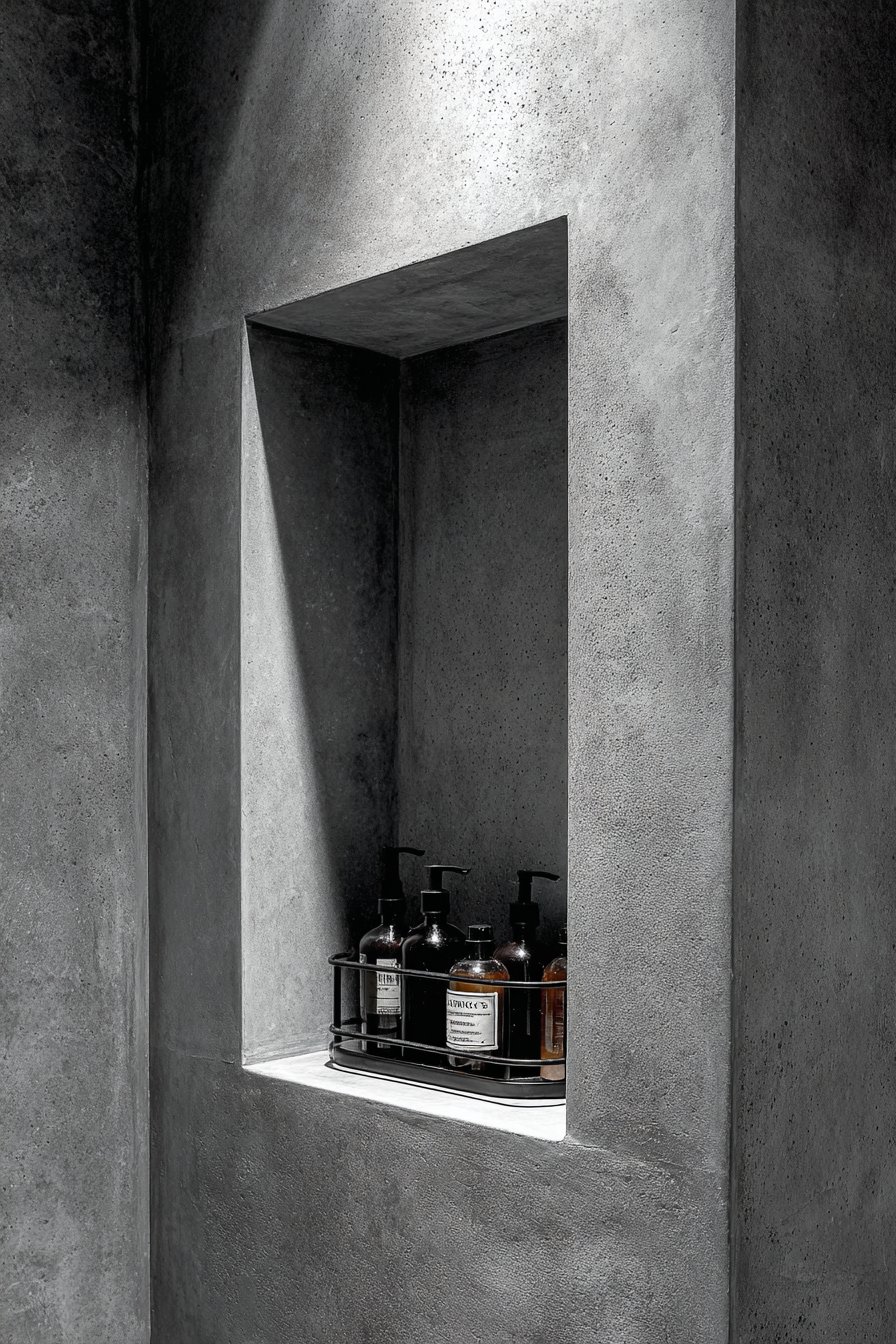
The square geometry and generous depth of this niche design make it particularly well-suited to minimalist bathrooms where a few carefully selected, high-quality products replace an abundance of bottles and containers. The matte black metal caddy insert adds functional organization with industrial edge—its dark finish contrasts beautifully against the lighter concrete tones while coordinating seamlessly with matte black plumbing fixtures and hardware. This approach proves that industrial design needn’t feel cold or harsh; when executed thoughtfully, it creates spaces of calm sophistication.
Key Design Tips:
- Select porcelain tiles with realistic concrete texture and subtle color variation rather than flat, uniform grey
- Consider slightly larger square dimensions (12×12 inches) for contemporary proportions
- Install the niche at a height that places frequently used items at easy reach without excessive bending
- Use spacers during tile installation to maintain consistent grout lines that enhance the geometric precision
- Seal grout lines with quality penetrating sealer to prevent discoloration and facilitate cleaning
4. Coastal Serenity with Textured Details
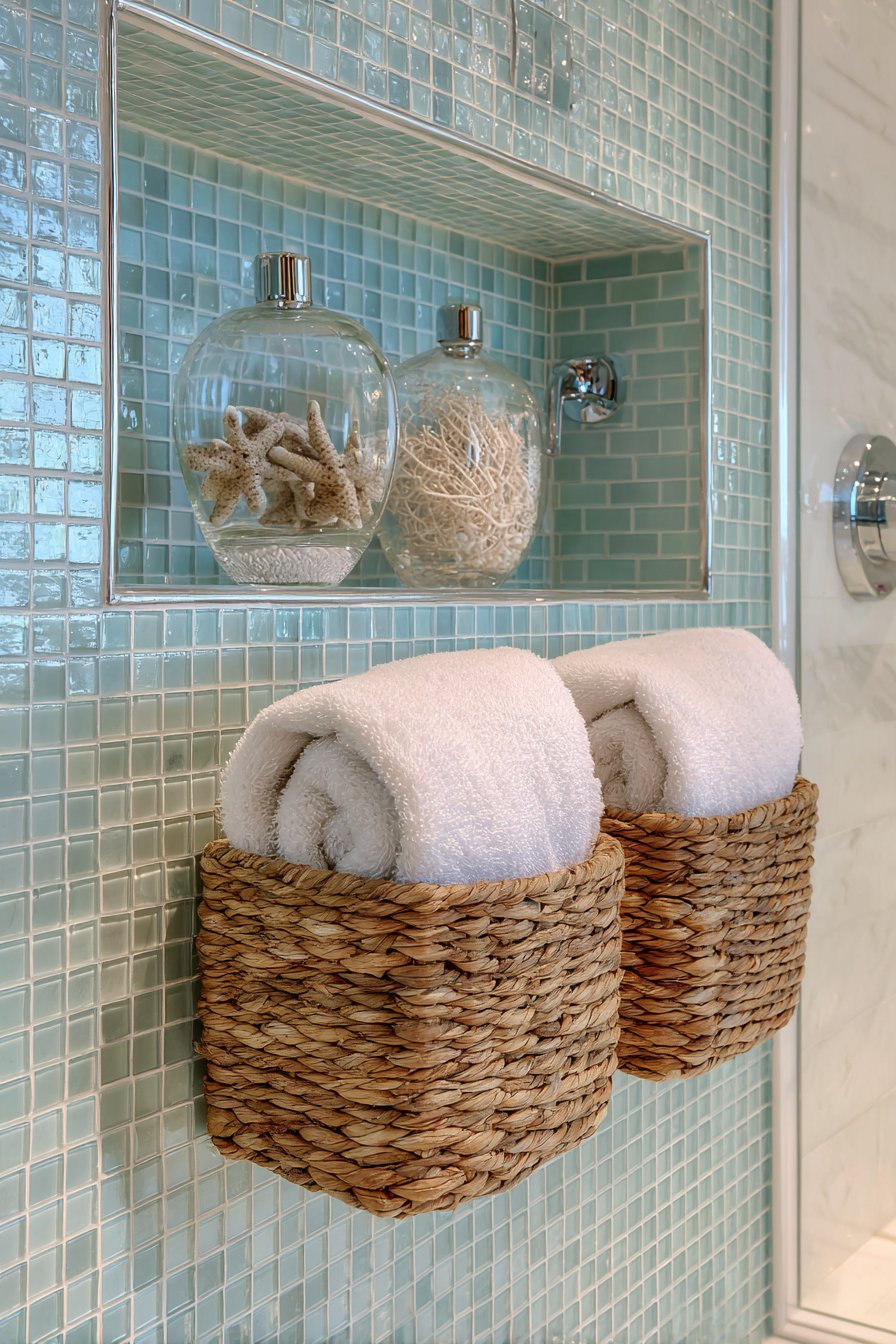
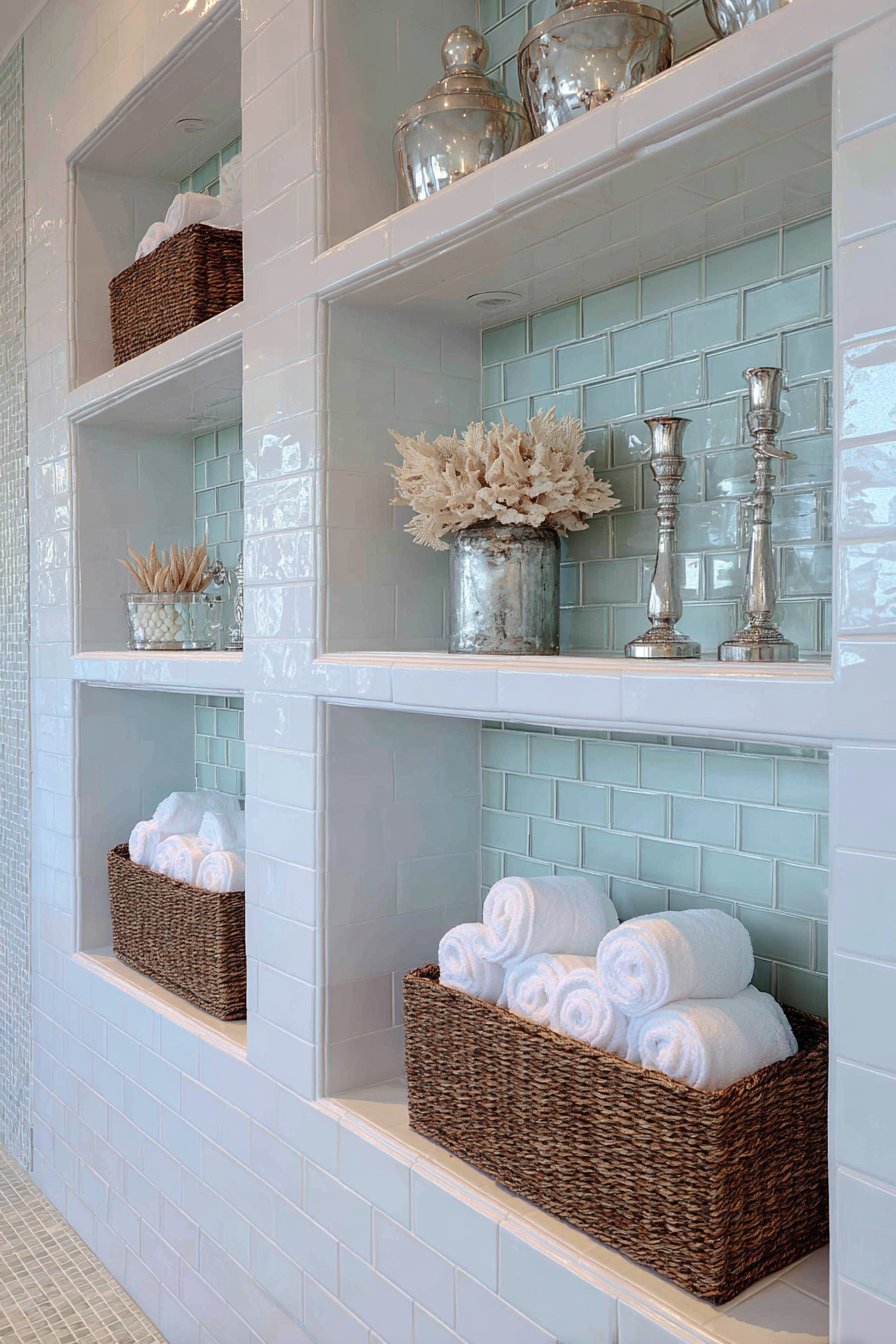
Drawing inspiration from seaside retreats and beach house living, this coastal-themed niche design brings vacation vibes into everyday life. Two horizontal niches feature classic white beveled subway tile with light aqua glass mosaic tile backing that evokes ocean waters and sea glass. Natural woven baskets nestle within the niches, holding rolled white towels and beach-inspired accessories that reinforce the coastal narrative. Polished chrome fixtures reflect available light while maintaining the bright, airy quality essential to successful coastal design.
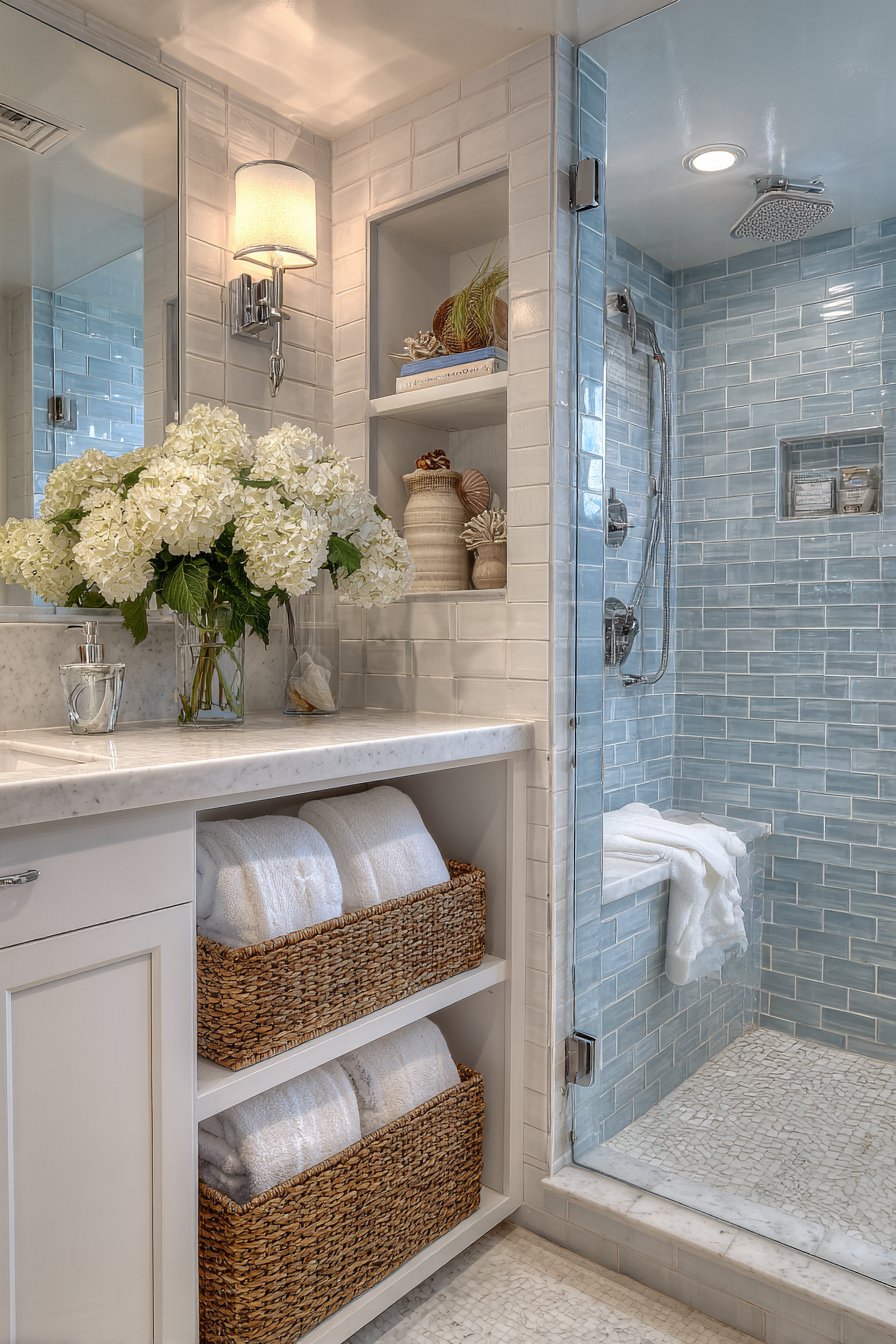
The beveled edge detail on the subway tiles adds subtle dimensional interest that catches light beautifully, creating gentle shadows that prevent the white surfaces from appearing flat or sterile. The aqua glass mosaic backing serves as a focal point within each niche, drawing the eye inward while providing color contrast against the surrounding white tile field. This layered approach to tile selection demonstrates how thoughtful material choices can create visual depth and interest even within relatively compact spaces.
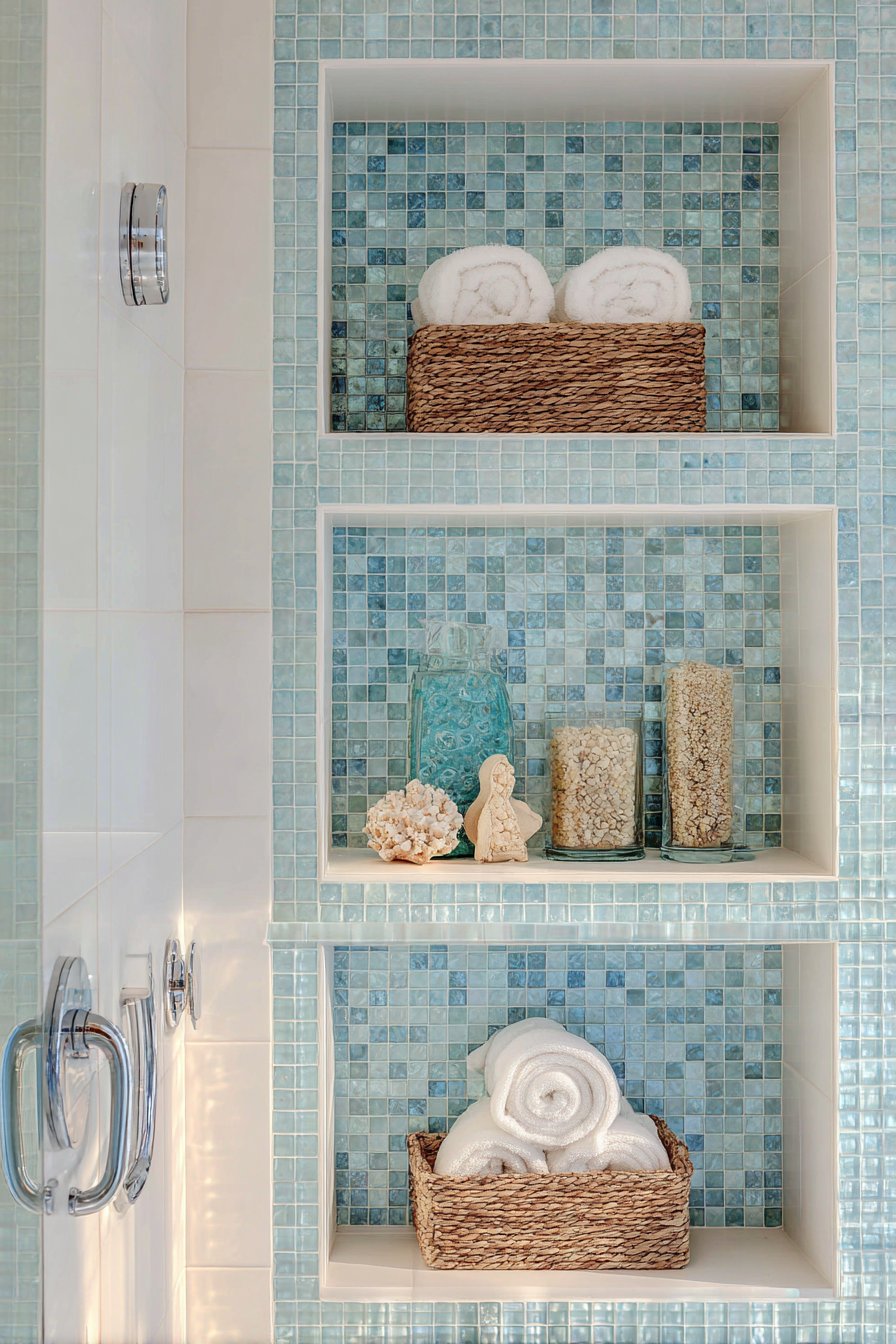
Natural materials play a crucial role in authentic coastal design, and the woven baskets fulfill both aesthetic and functional purposes. They soften the hard tile surfaces with organic texture while providing convenient storage that can be easily removed for cleaning or seasonal updates. The basket approach also offers flexibility—you can swap contents seasonally or as your needs change without any permanent modifications to the tile work itself. This adaptability makes the design practical for long-term use as your storage requirements evolve.
Key Design Tips:
- Choose aqua or turquoise glass mosaics in varied shades to mimic the natural color variations of ocean water
- Select woven baskets made from water-resistant materials like sealed seagrass or synthetic rattan
- Maintain the bright, airy feel by keeping accessory colors primarily white, cream, and natural wood tones
- Position niches to take advantage of natural light sources that will highlight the glass tile’s translucent qualities
- Consider adding small decorative elements like starfish or coral (real or ceramic) for authentic coastal character
5. Luxury Marble Column Statement
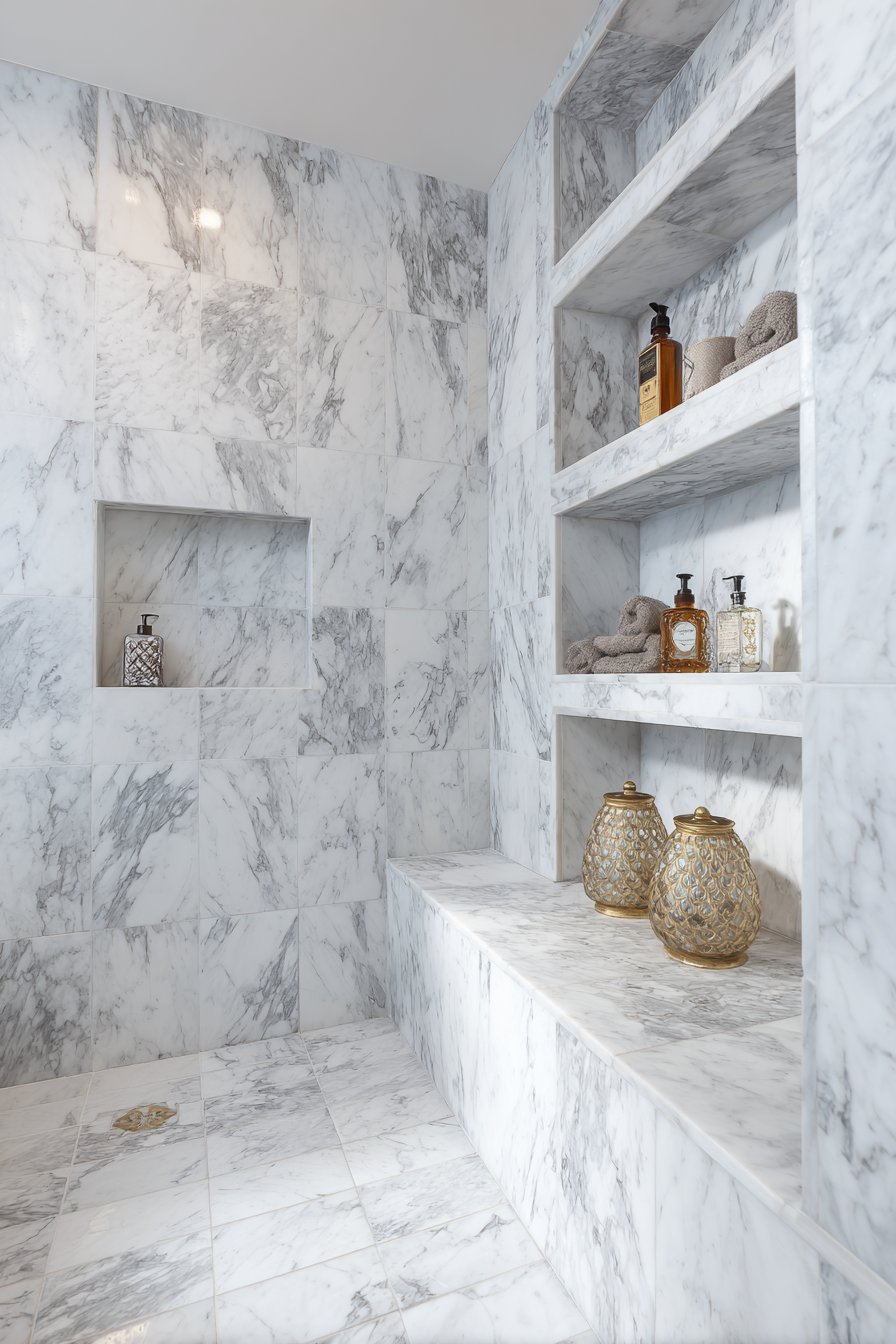
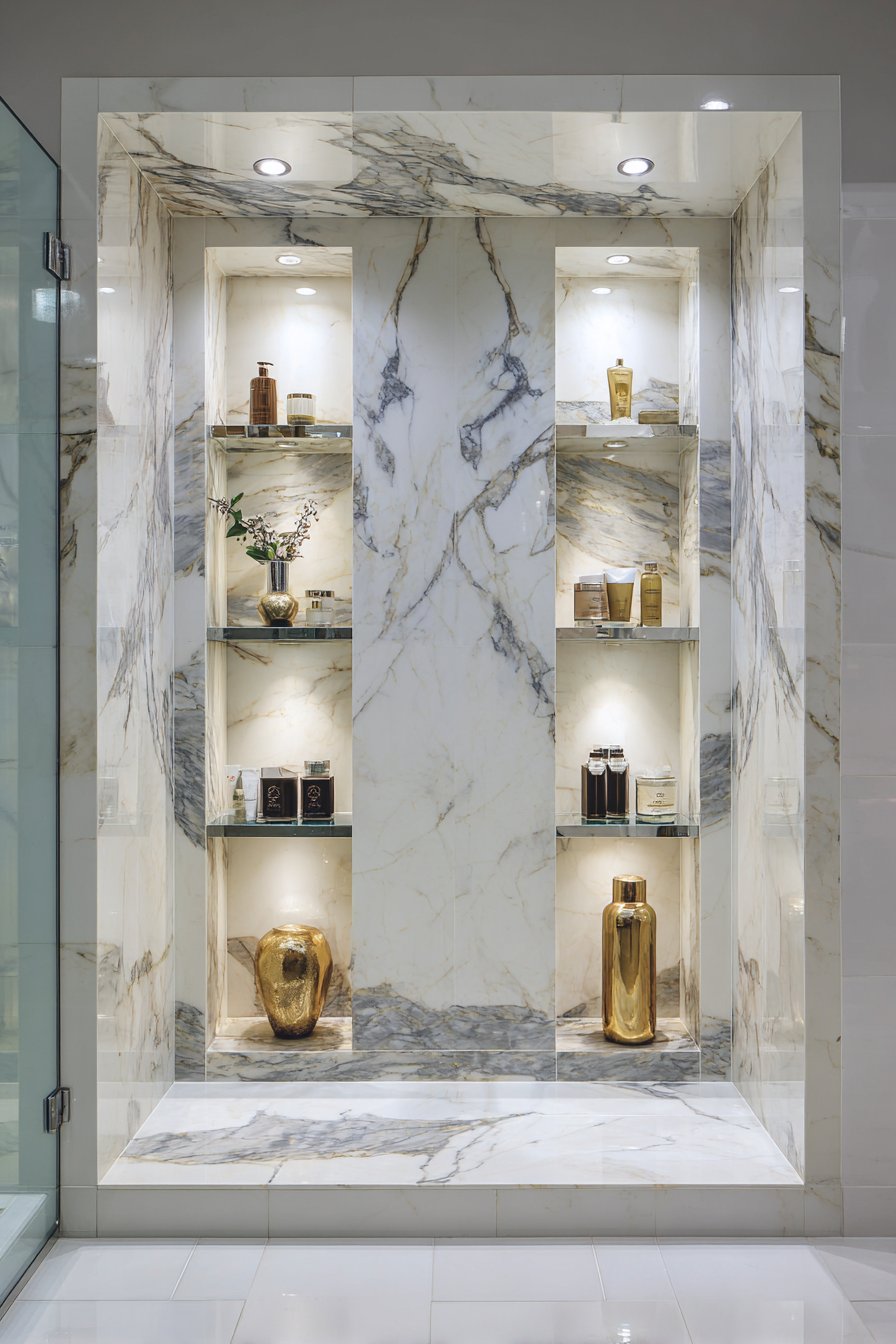
When budget allows for premium materials and dramatic design gestures, the floor-to-ceiling vertical niche column delivers unparalleled impact. This luxurious concept showcases book-matched white marble with dramatic grey veining arranged to create mirror-image symmetry that emphasizes the natural beauty of the stone. Multiple shelves positioned at varying heights display high-end bath products in coordinating glass containers, while surrounding shower walls feature large marble slabs with waterfall edges that extend the luxury throughout the entire enclosure.
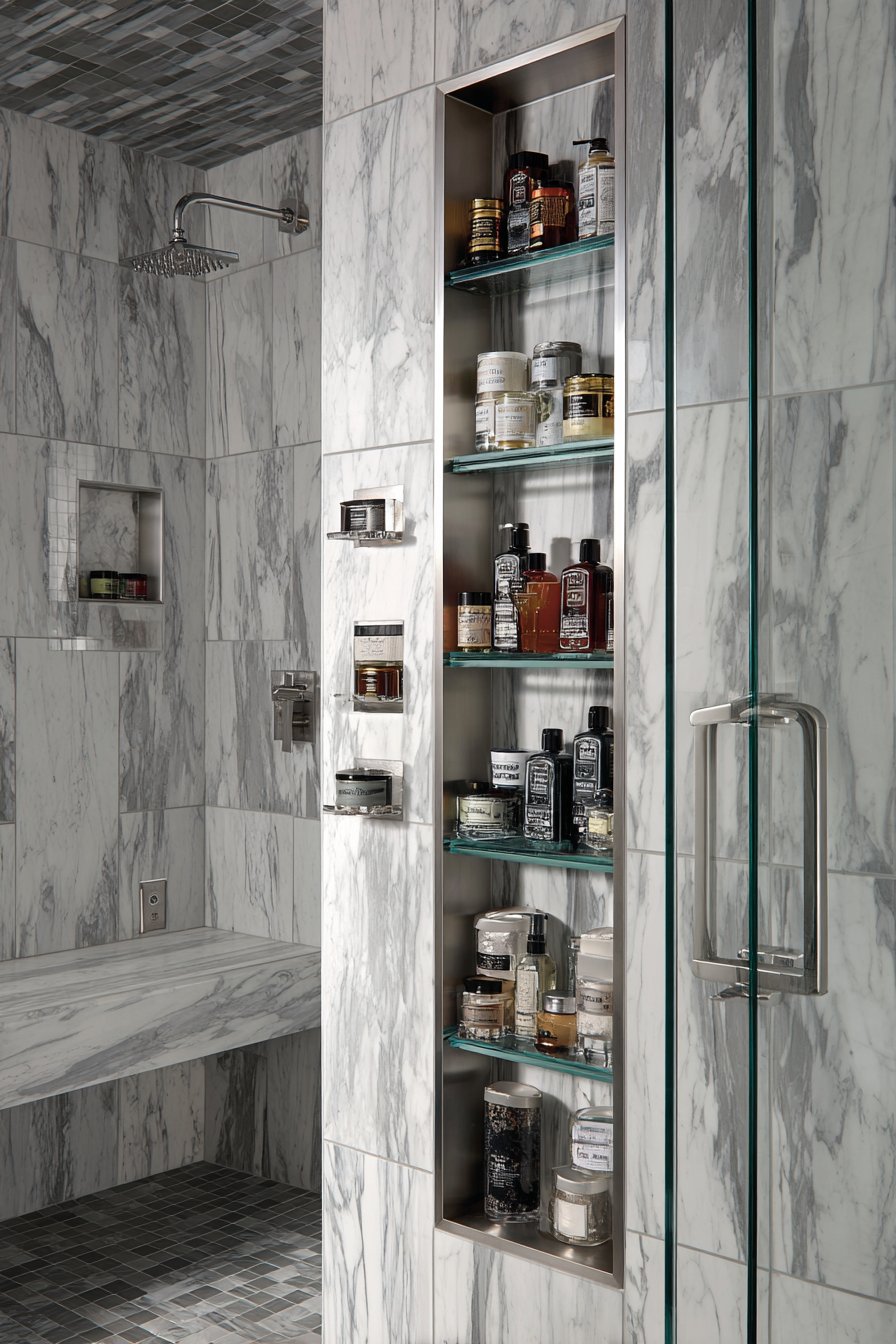
Book-matching—the technique of slicing consecutive pieces from the same marble block and arranging them to mirror each other—creates striking visual patterns that resemble butterfly wings or abstract art. This approach transforms the natural veining from random occurrence into intentional design feature, elevating the niche from functional storage to sculptural focal point. The vertical orientation draws the eye upward, making the shower space feel taller and more grand while providing ample storage across multiple shelf levels.
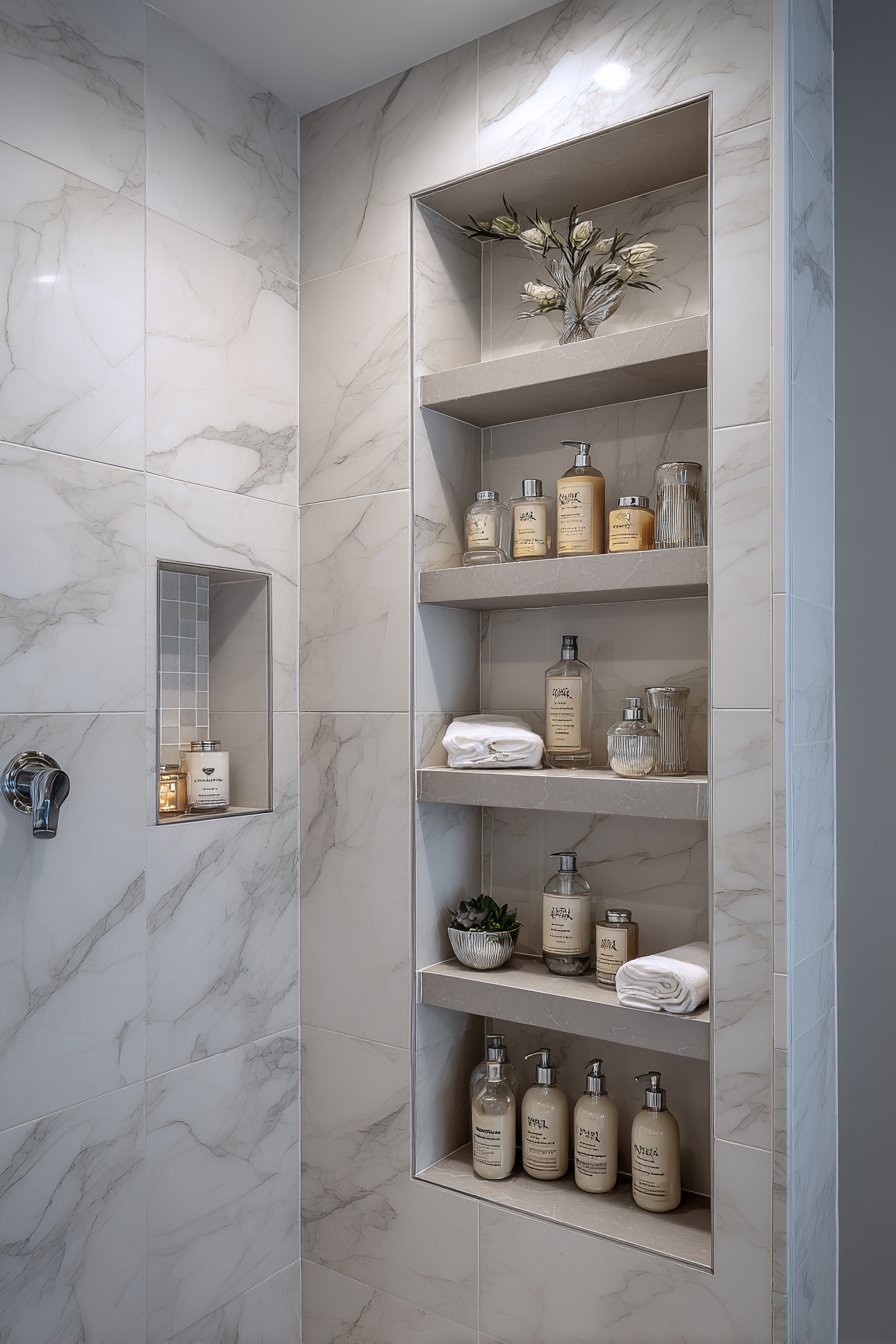
The coordination of bath products in matching glass containers demonstrates attention to detail that separates truly luxurious spaces from merely expensive ones. Clear or frosted glass bottles with consistent labeling create visual calm and refinement, allowing the beautiful marble to remain the star while the necessary everyday items fade into the background. Professional lighting becomes especially important in this design, as strategic illumination will highlight the marble’s veining patterns and translucent qualities while creating appropriate shadows that emphasize the dimensional depth.
Key Design Tips:
- Work with a stone specialist to select slabs with dramatic but not overwhelming veining patterns
- Request book-matching during the fabrication process to ensure proper symmetry
- Install adequate structural support behind walls to accommodate the weight of natural stone
- Seal marble surfaces with quality penetrating sealer designed specifically for shower environments
- Position shelves to display products without blocking the most beautiful veining patterns
- Consider heated shelf edges to prevent water pooling and potential staining
6. Warm Rustic Modern Fusion
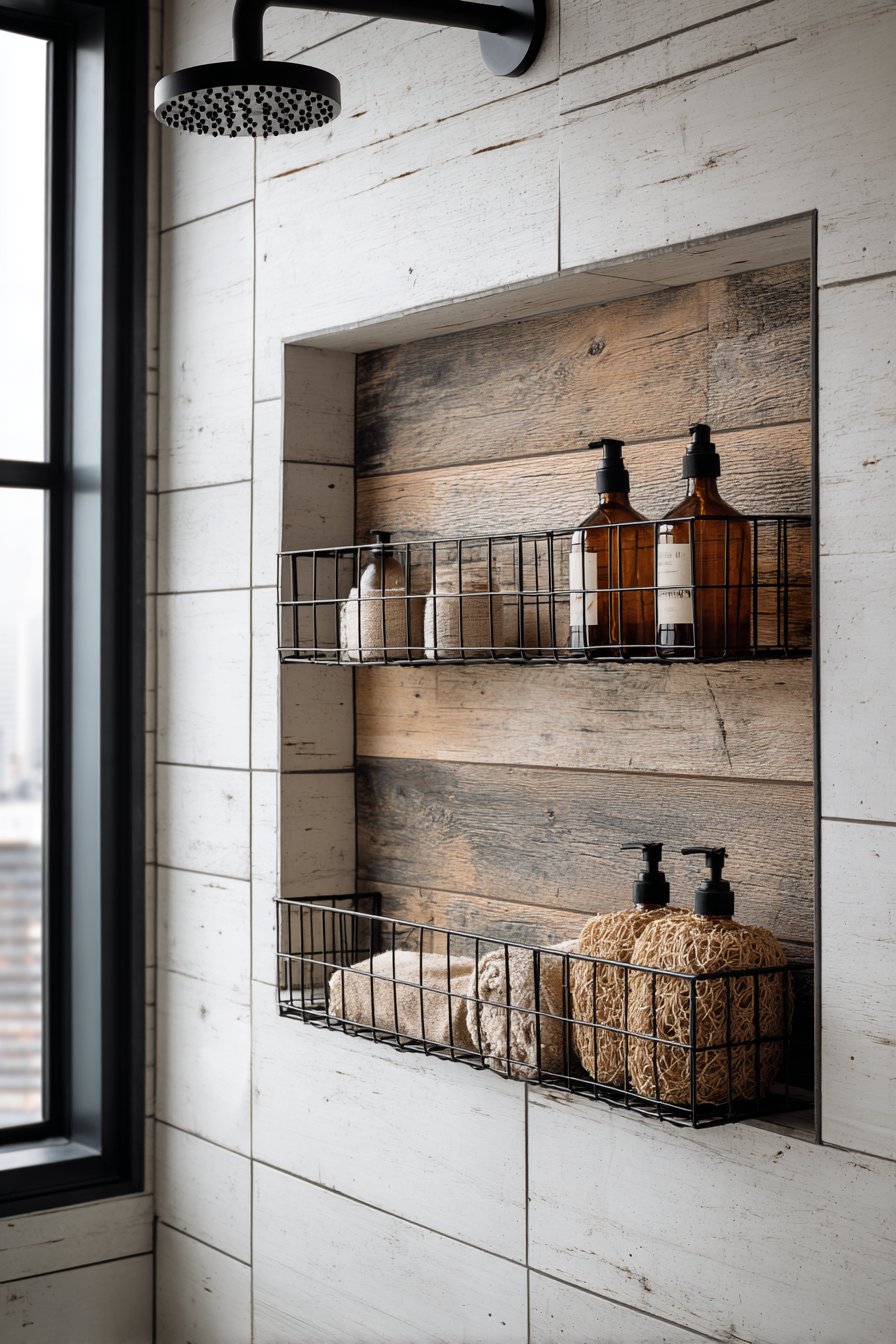
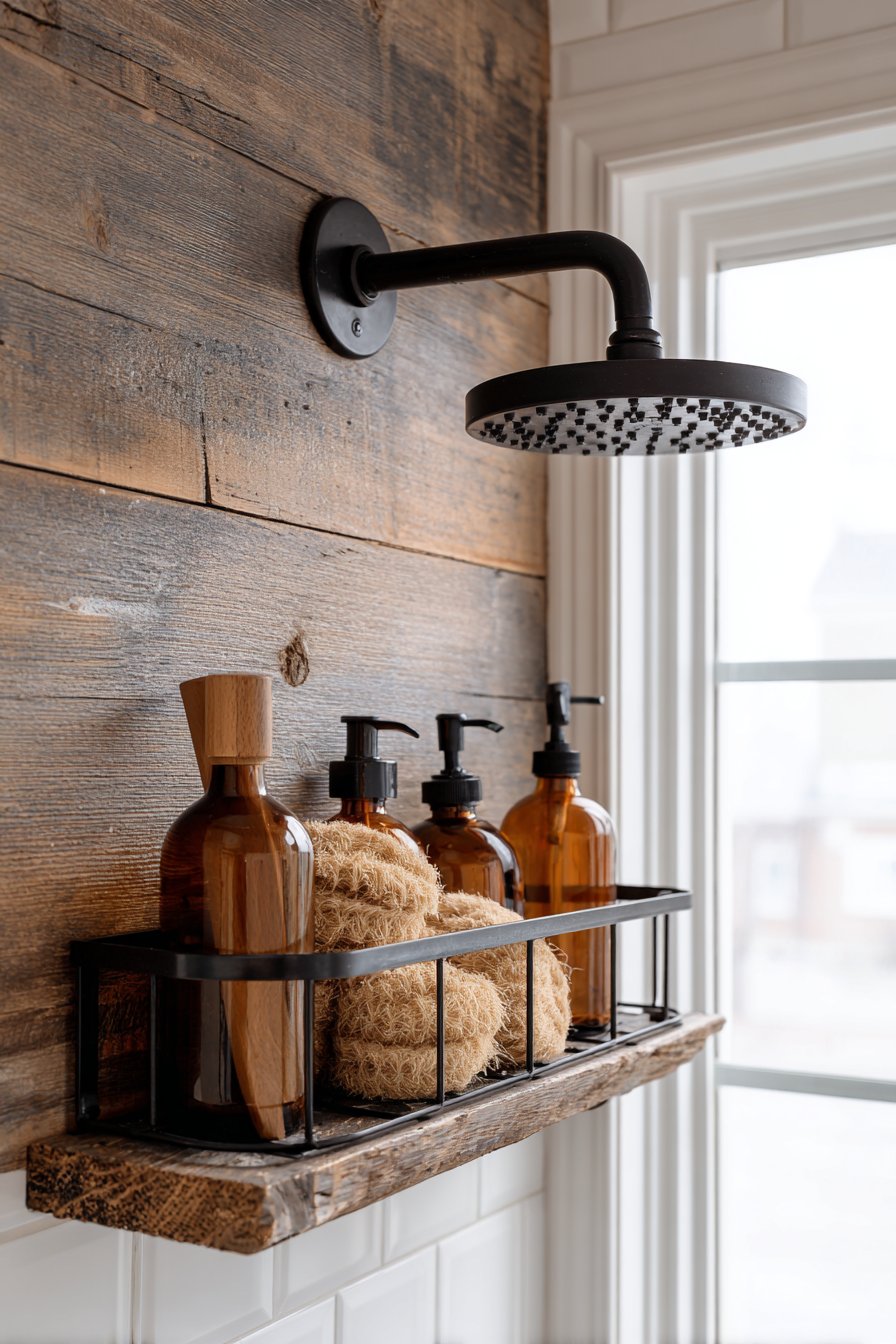
The marriage of rustic warmth and modern cleanliness creates spaces that feel both welcoming and current. This design features a horizontal niche with reclaimed wood-look porcelain tile backing that contrasts beautifully against white shiplap-style wall tiles. Simple black metal wire basket organizers hold natural fiber accessories and amber glass bottles, while a matte black rainfall showerhead above creates vertical visual connection and cohesive design narrative throughout the shower space.
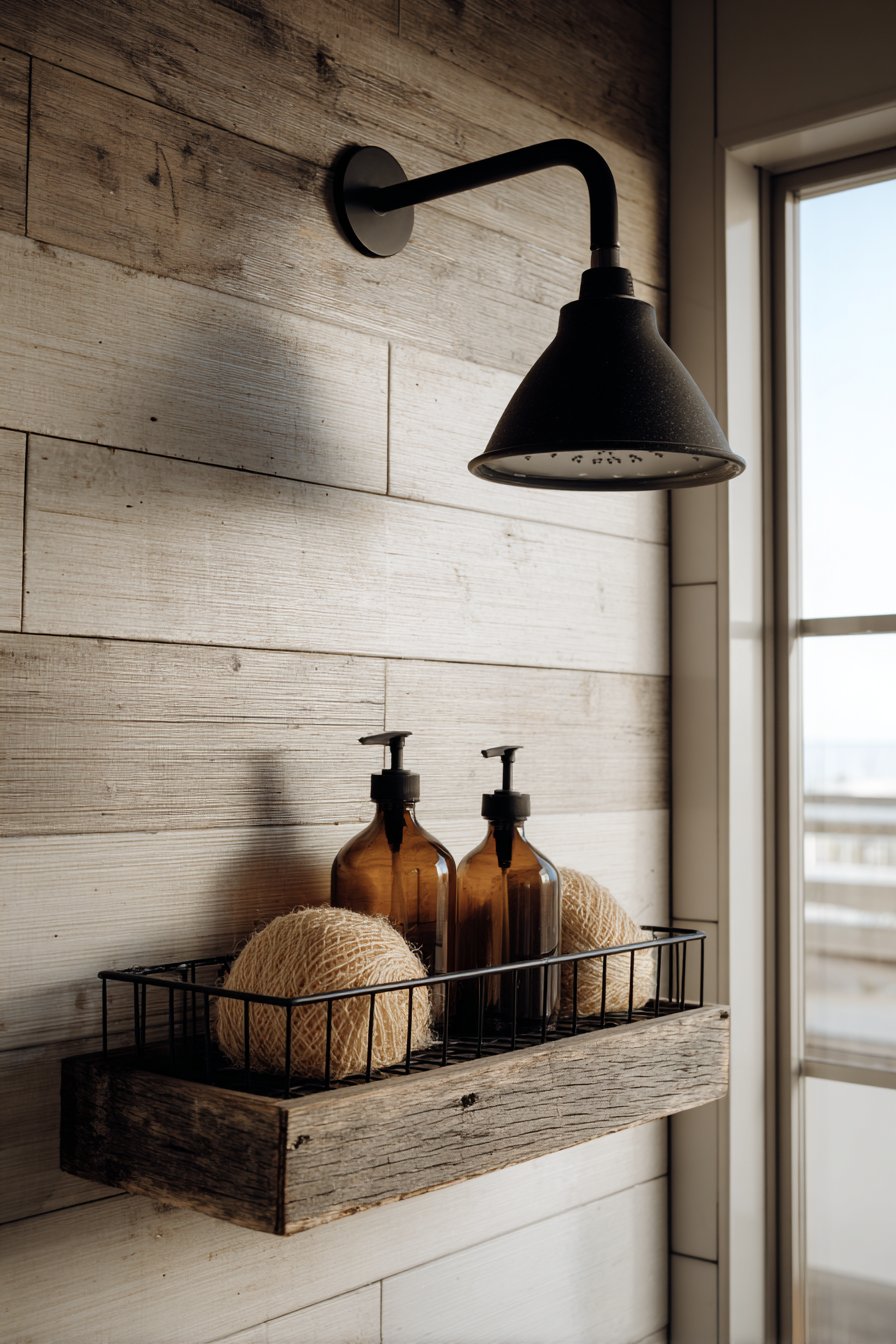
Wood-look porcelain represents a triumph of tile technology, capturing the warmth, grain patterns, and color variations of authentic reclaimed wood while providing the waterproof, low-maintenance properties essential for shower environments. The horizontal planking orientation of the niche backing creates visual interest and directional flow that guides the eye across the space, while the white shiplap surrounding tiles provide bright contrast that prevents the wood tones from feeling too heavy or dark.
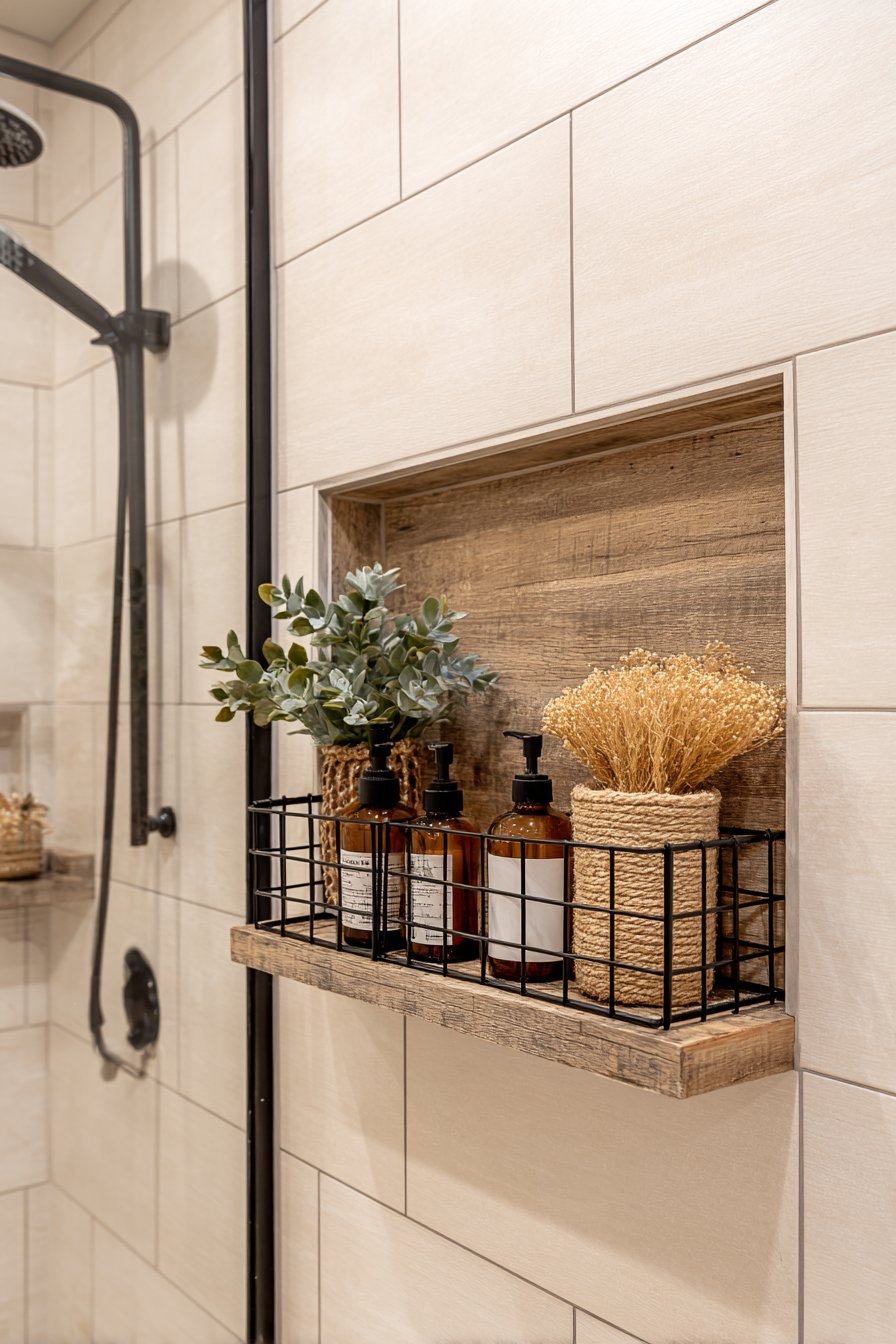
The selection of accessories reinforces the rustic modern aesthetic—natural fiber elements like sisal or jute add organic texture, while amber glass bottles provide vintage character with their warm, honey-colored transparency. The black metal wire basket organizers bridge rustic and industrial design vocabularies, offering practical organization with an appropriately casual, unfussy appearance. This layered approach to materials and finishes demonstrates how successful design often comes from thoughtful contrast rather than perfect matching.
Key Design Tips:
- Select wood-look tiles with authentic grain patterns and natural color variation rather than repetitive, obviously printed designs
- Ensure all “wood” surfaces are genuine porcelain or ceramic tile rated for wet areas, never actual wood products
- Coordinate metal finishes throughout the bathroom (basket organizers, fixtures, hardware) for cohesive look
- Consider the wood tone carefully—medium browns work most universally, while very dark or very light woods require more careful coordination
- Use white or light-colored grout even with wood-look tiles to maintain brightness and prevent the space from feeling cave-like
7. Space-Saving Corner Innovation
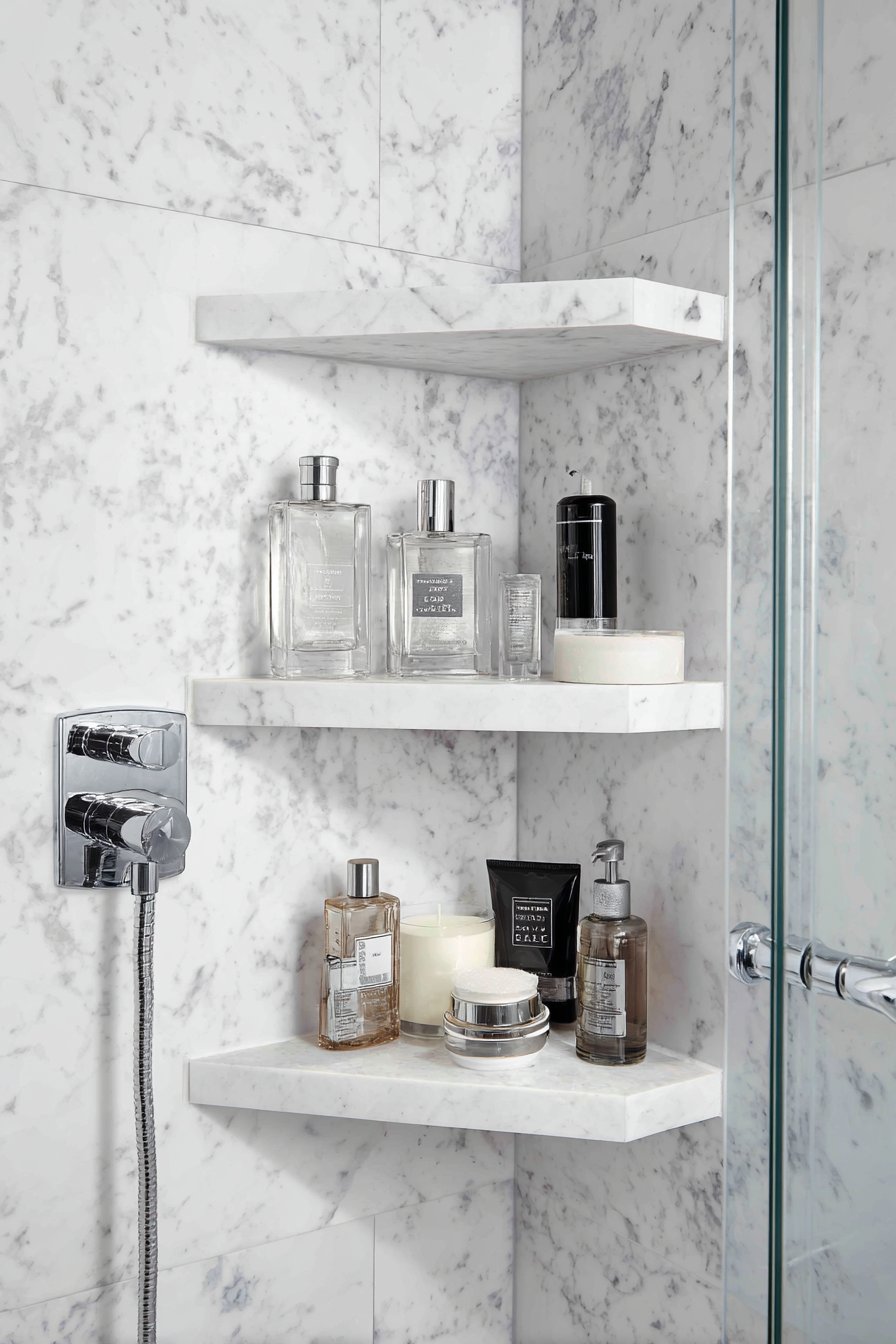
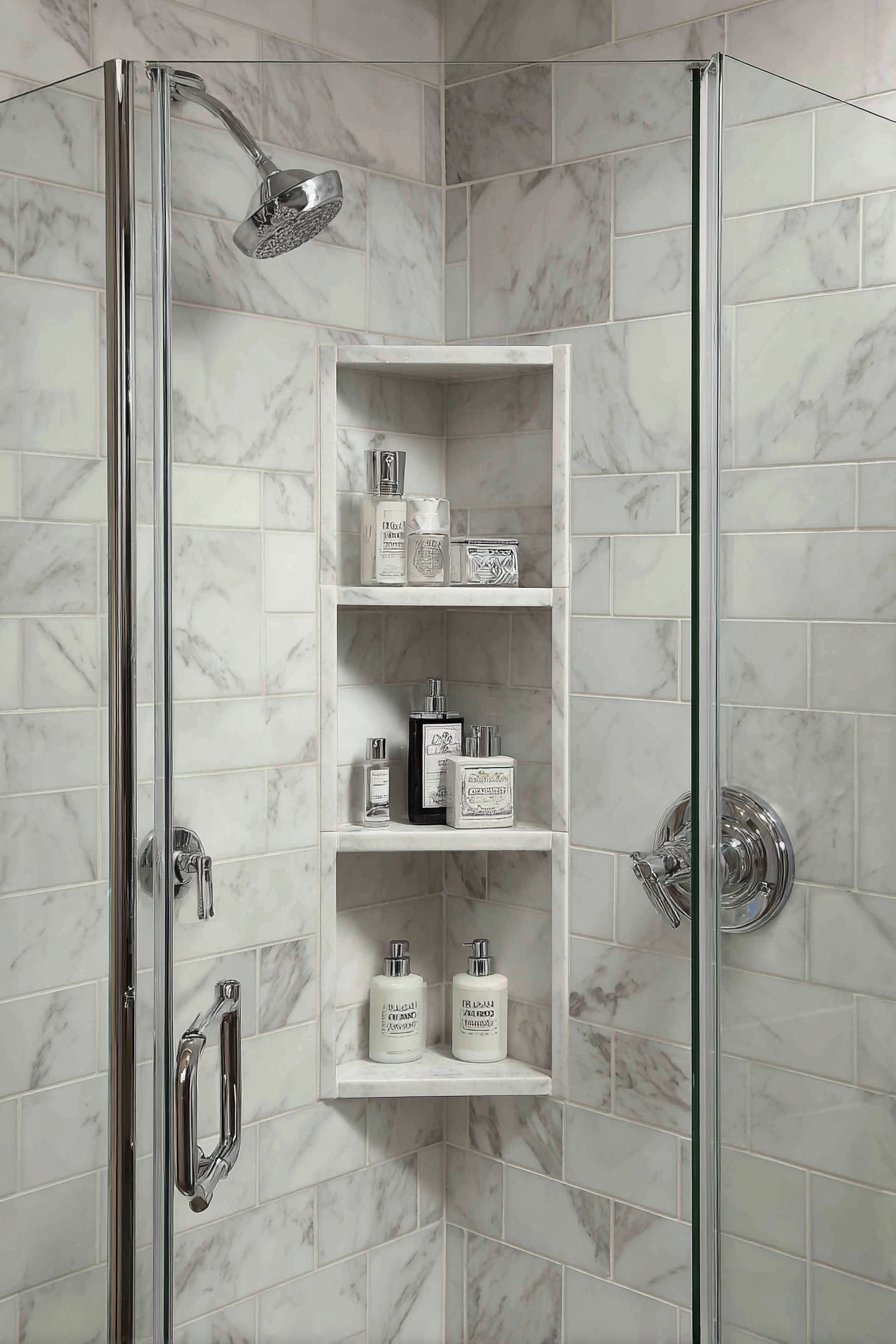
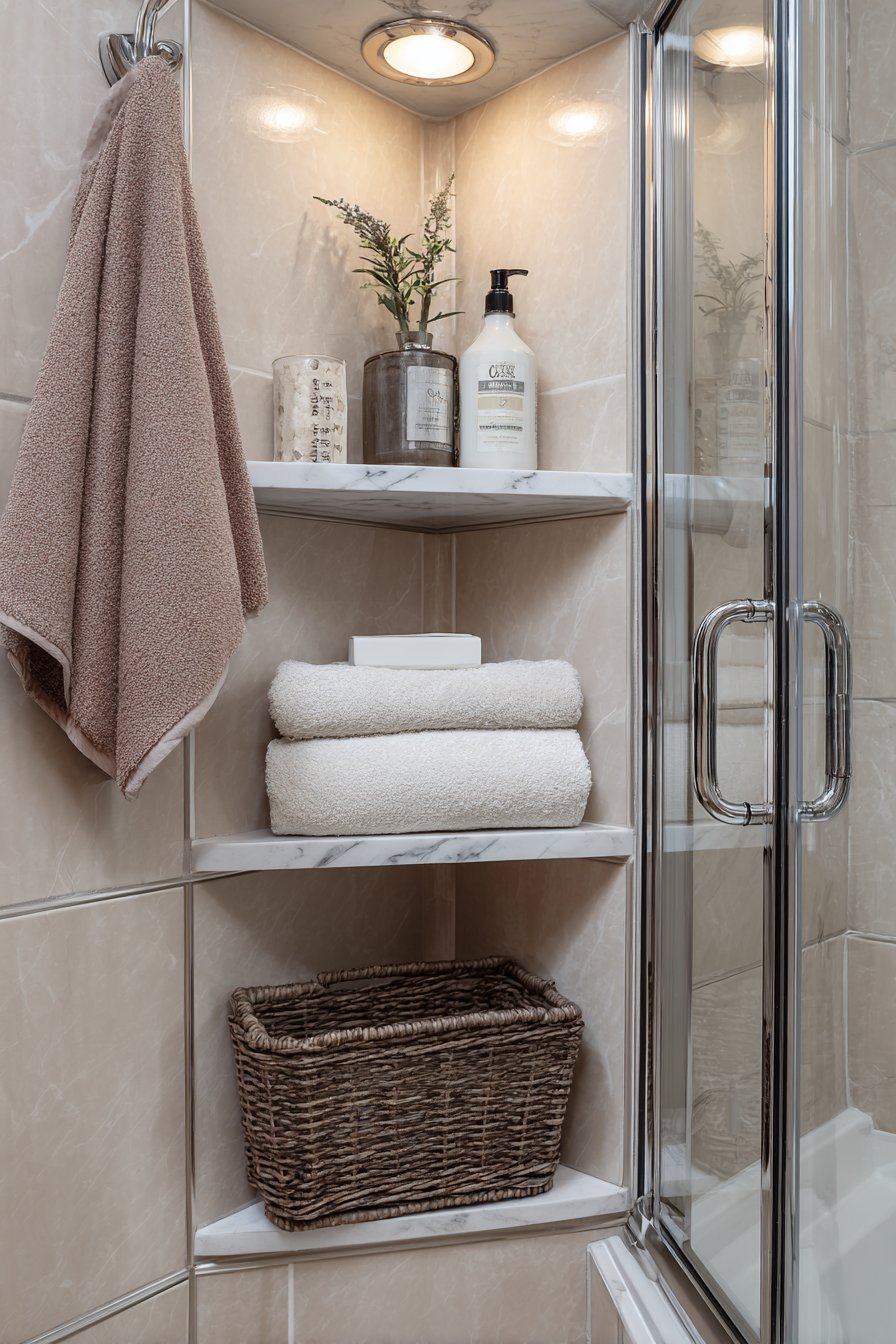
Small bathrooms demand creative solutions, and the corner-positioned triangular niche represents intelligent spatial planning at its finest. This compact design maximizes often-wasted corner space while providing essential storage without encroaching on the limited square footage of a small shower enclosure. The white marble-look quartz material offers the elegance of natural stone with enhanced durability and stain resistance, while chrome fixtures and clear glass shower doors maintain the open, airy feeling crucial to preventing small spaces from feeling cramped.
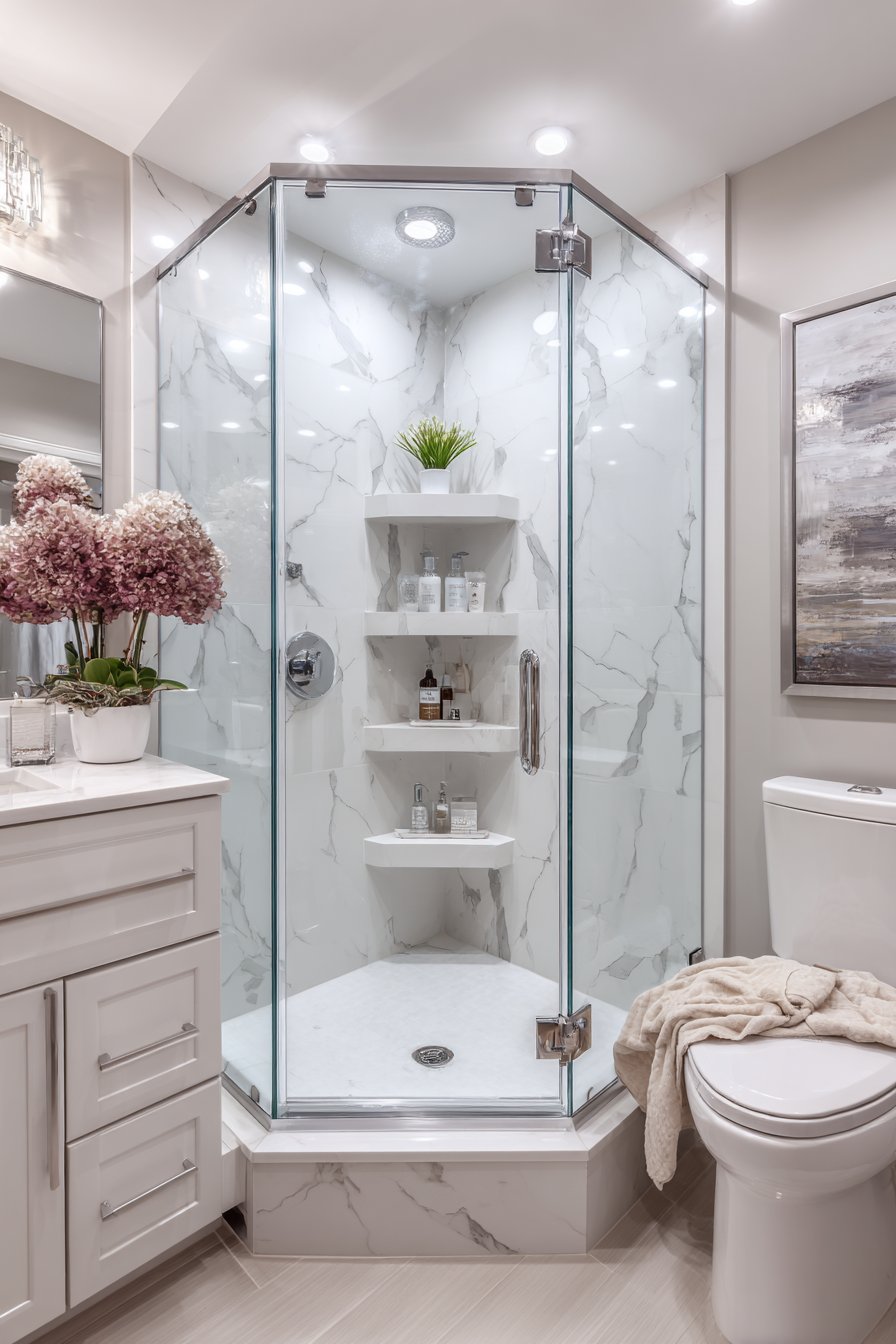
The triangular geometry might seem unusual at first consideration, but it perfectly fits the natural corner angle while offering surprising storage capacity. The angled shelves prevent bottles from being pushed too far back into the corner where they’d be difficult to reach, and the shape naturally contains items without requiring additional edging or stops. This intelligent adaptation to architectural constraints demonstrates how limitations can inspire innovative solutions that ultimately work better than conventional approaches.
Maintaining visual openness becomes paramount in small shower spaces, and every design decision in this concept supports that goal. The light-colored quartz keeps the corner from appearing dark or recessive, while the polished chrome fixtures reflect available light to enhance brightness. The frameless glass shower door eliminates visual barriers that would make the space feel smaller, and the consistent white color palette throughout prevents the choppy, busy appearance that multiple colors would create in a confined area.
Key Design Tips:
- Position corner niches on the wall opposite the showerhead to keep products away from direct water spray
- Consider two corner niches at different heights if storage needs are substantial
- Use rounded or beveled edges on corner installations to prevent sharp angles that could cause injury
- Select larger-format tiles for surrounding walls to minimize grout lines that can make small spaces feel busy
- Install adequate ventilation to prevent moisture buildup in corner areas where air circulation may be limited
8. Spa-Inspired Zen Sanctuary
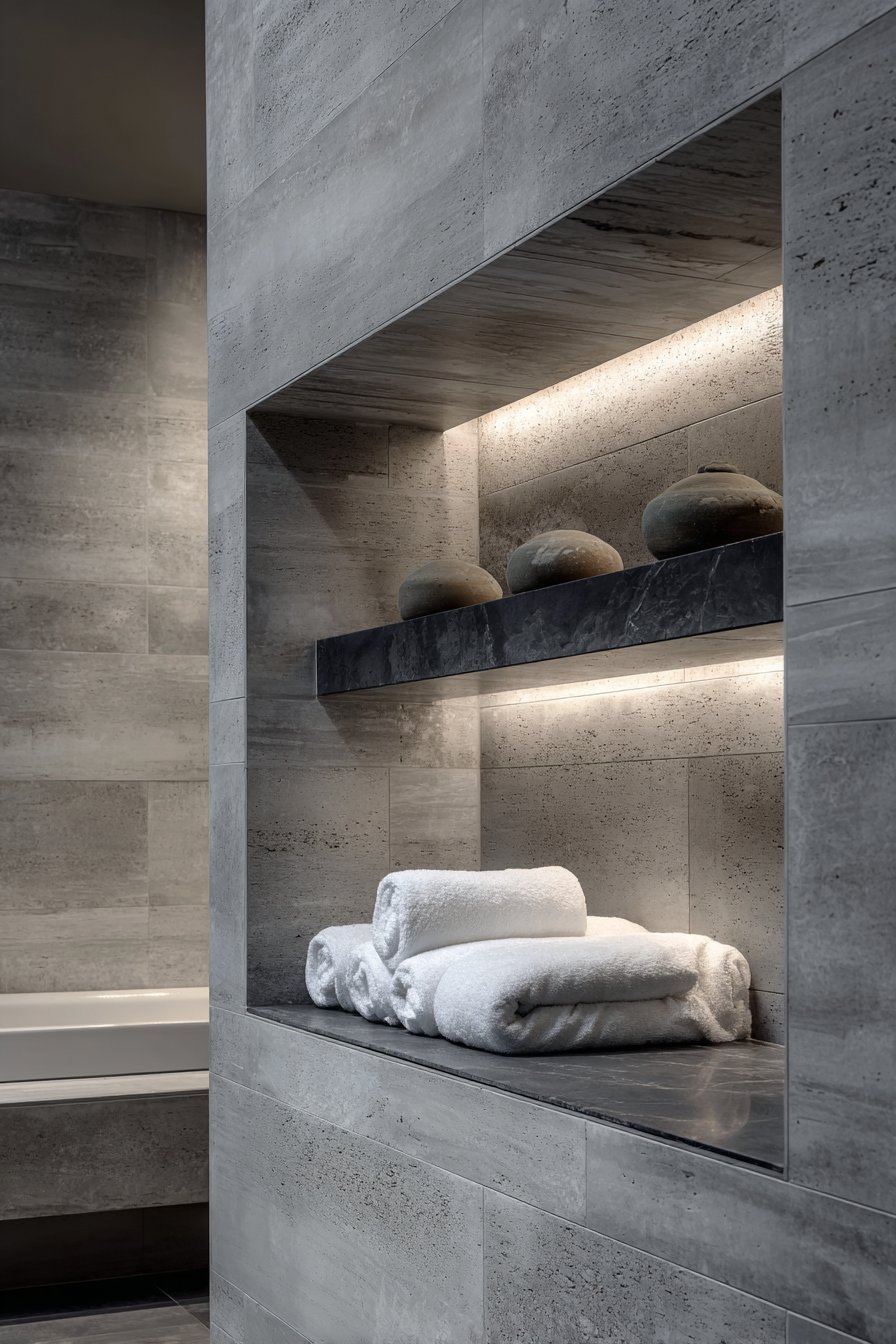
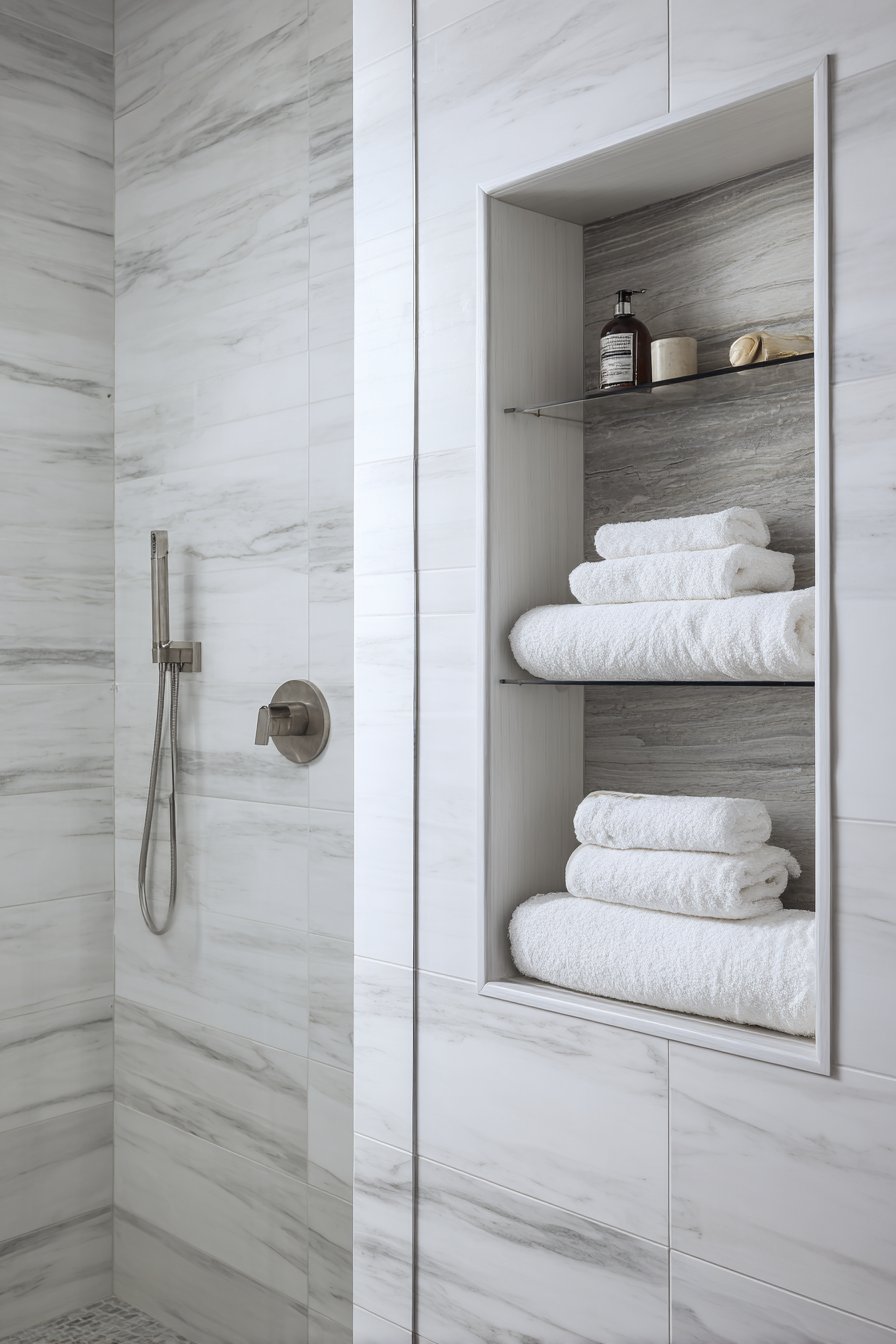
Creating a home spa experience requires careful attention to materials, lighting, and the overall sense of calm refinement. This design features a wide horizontal niche with honed black granite backing and integrated indirect LED lighting that creates a dramatic floating shelf effect. White rolled towels and minimalist stone accessories are artfully arranged like a high-end spa display, while surrounding walls use large white porcelain panels that provide clean contrast against the dark granite niche interior.
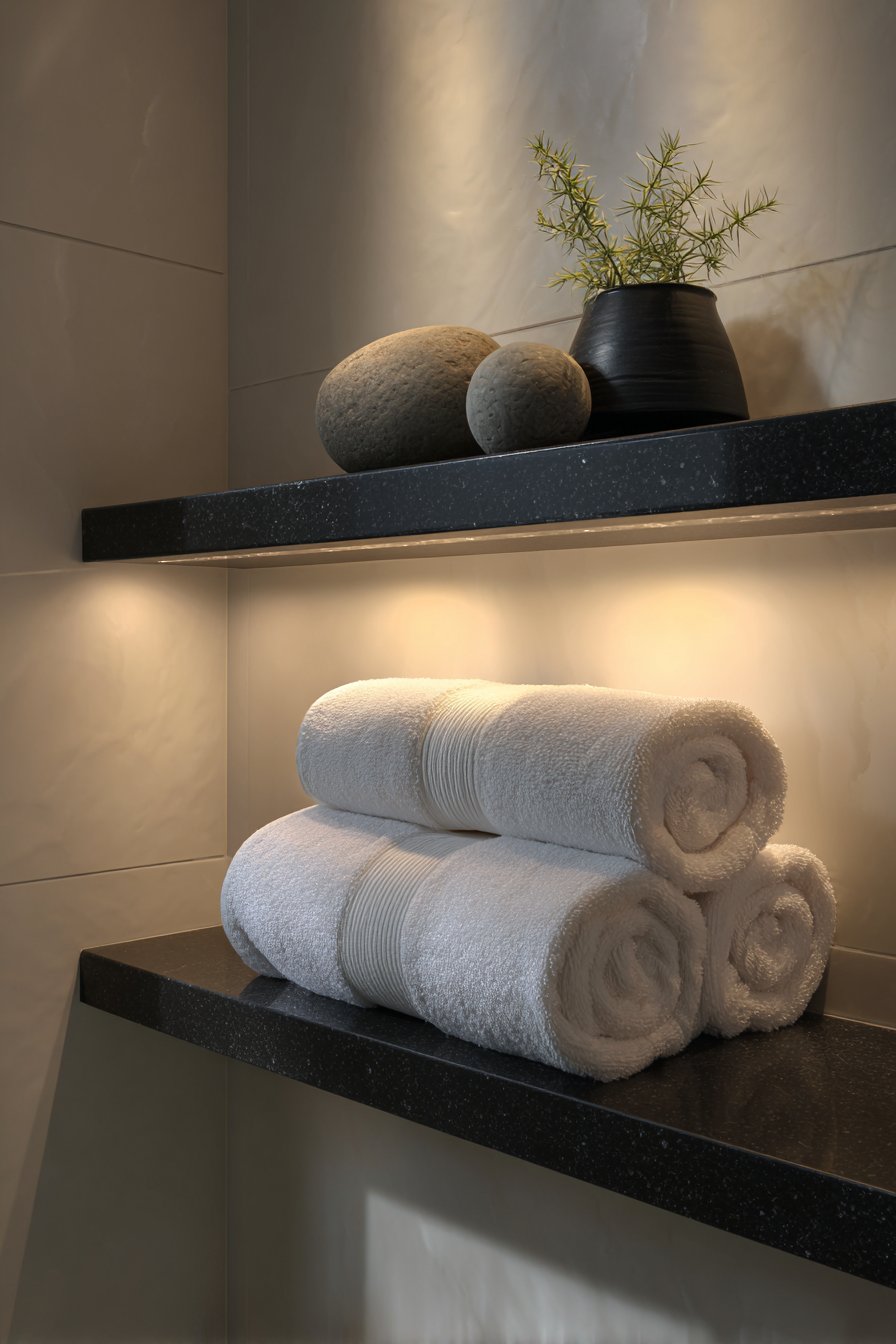
Honed granite—with its matte, non-reflective finish—offers sophisticated alternative to polished stone surfaces. The soft surface treatment creates subtle depth and prevents the black stone from appearing too harsh or shiny, contributing to the serene atmosphere essential to spa-inspired design. The indirect LED lighting positioned behind or beneath the granite creates the illusion that the dark shelf floats within the white wall, adding technological sophistication while providing gentle illumination that enhances the meditative quality of the space.
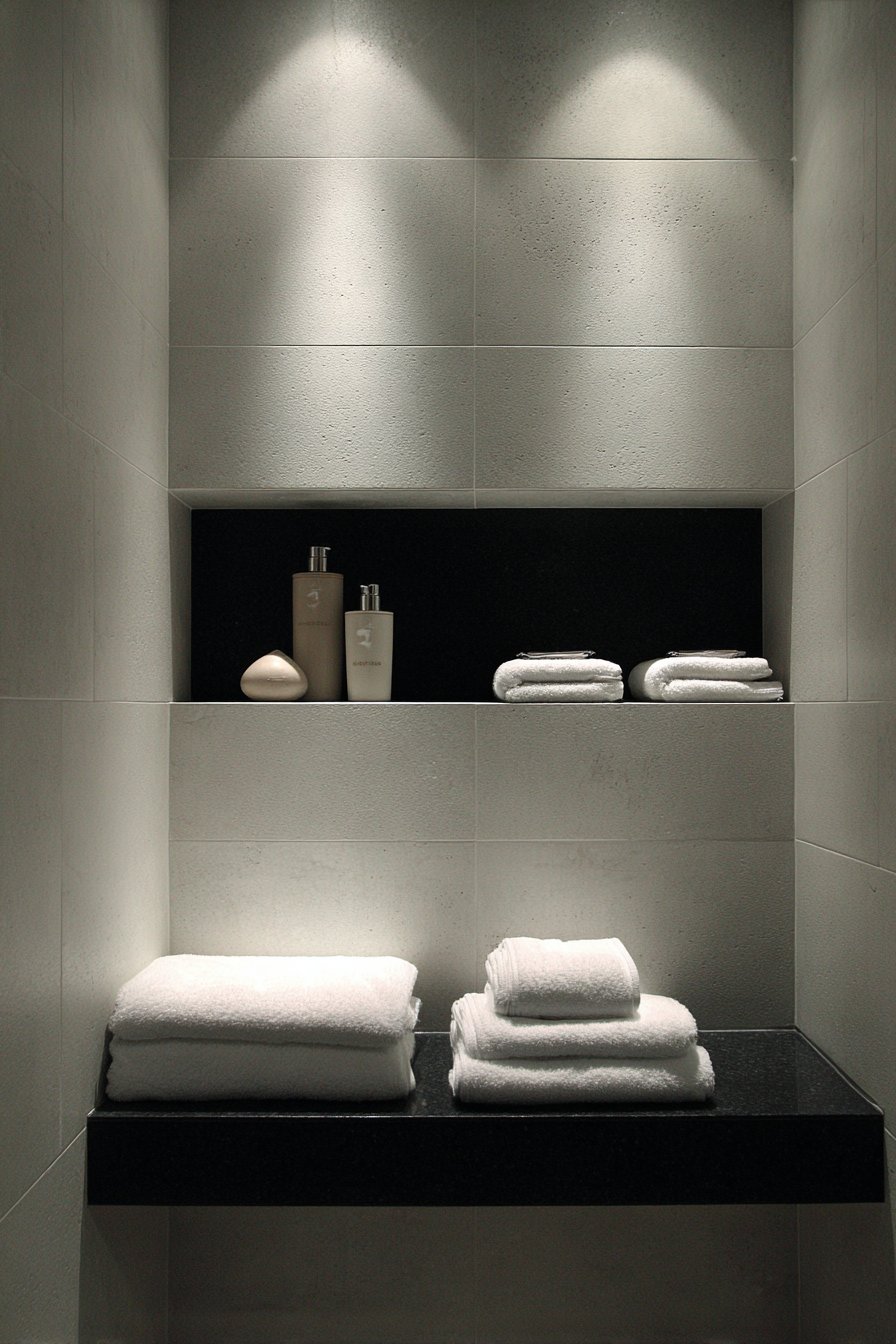
The styling within the niche demonstrates the power of thoughtful curation and restraint. Rather than filling every available inch with products, this approach displays only essential items in beautiful containers, with carefully rolled towels adding textural interest and practical convenience. The white-on-black contrast creates bold graphic impact while maintaining the minimalist aesthetic. This level of organization and visual discipline transforms daily shower routine into ritual, elevating the mundane into something approaching ceremony.
Key Design Tips:
- Specify honed or leather-finished granite rather than polished for softer, less reflective appearance
- Install LED lighting on dimmer switches to control intensity for different moods and times of day
- Select absolute black granite (rather than granite with white or grey veining) for maximum dramatic impact
- Limit displayed items to 5-7 pieces maximum to maintain the uncluttered spa aesthetic
- Use waterproof silicone or specialized adhesive for mounting stone shelves to ensure secure installation
- Consider adding a small water feature or rain panel elsewhere in the shower to complete the spa experience
9. Timeless Traditional Symmetry
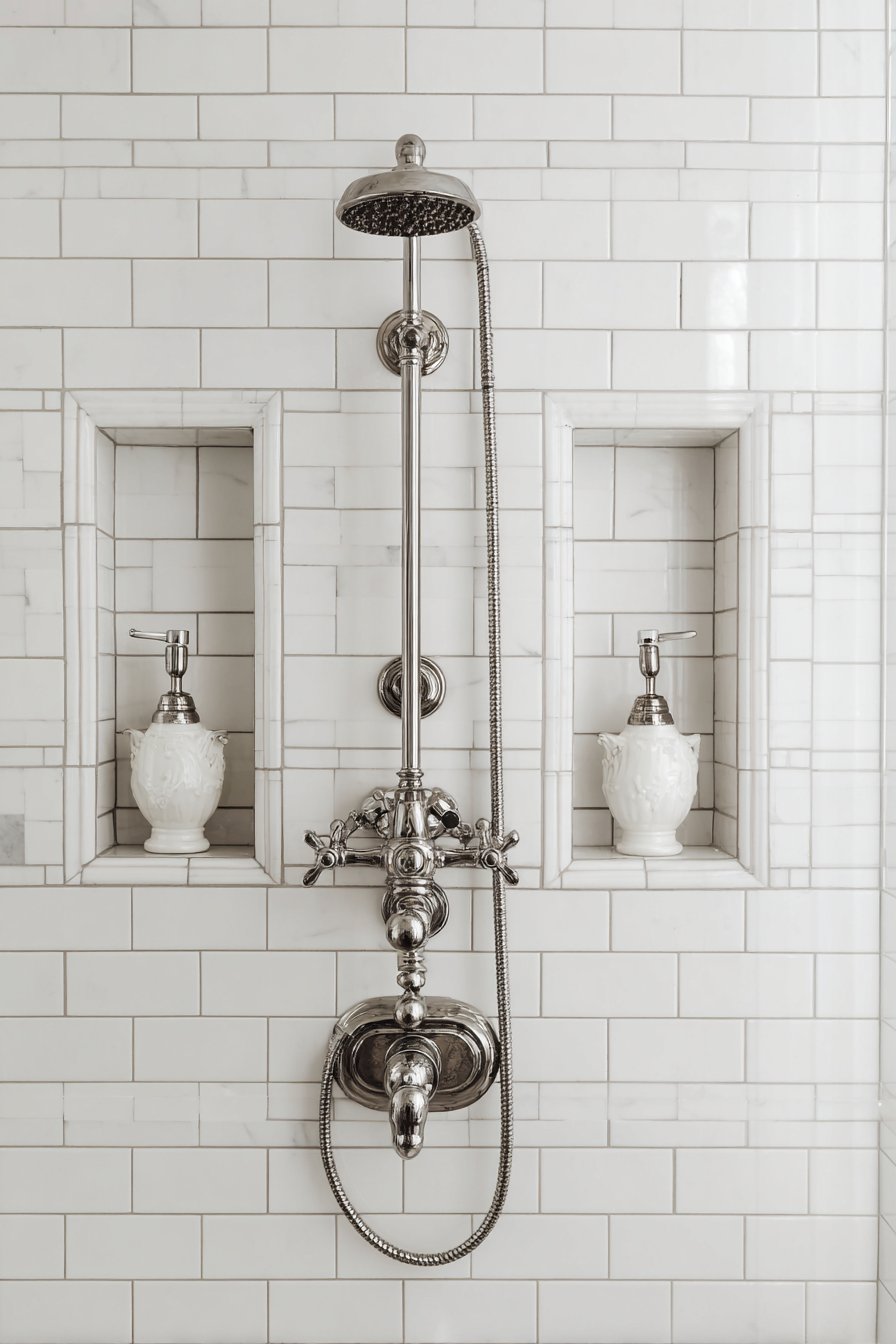
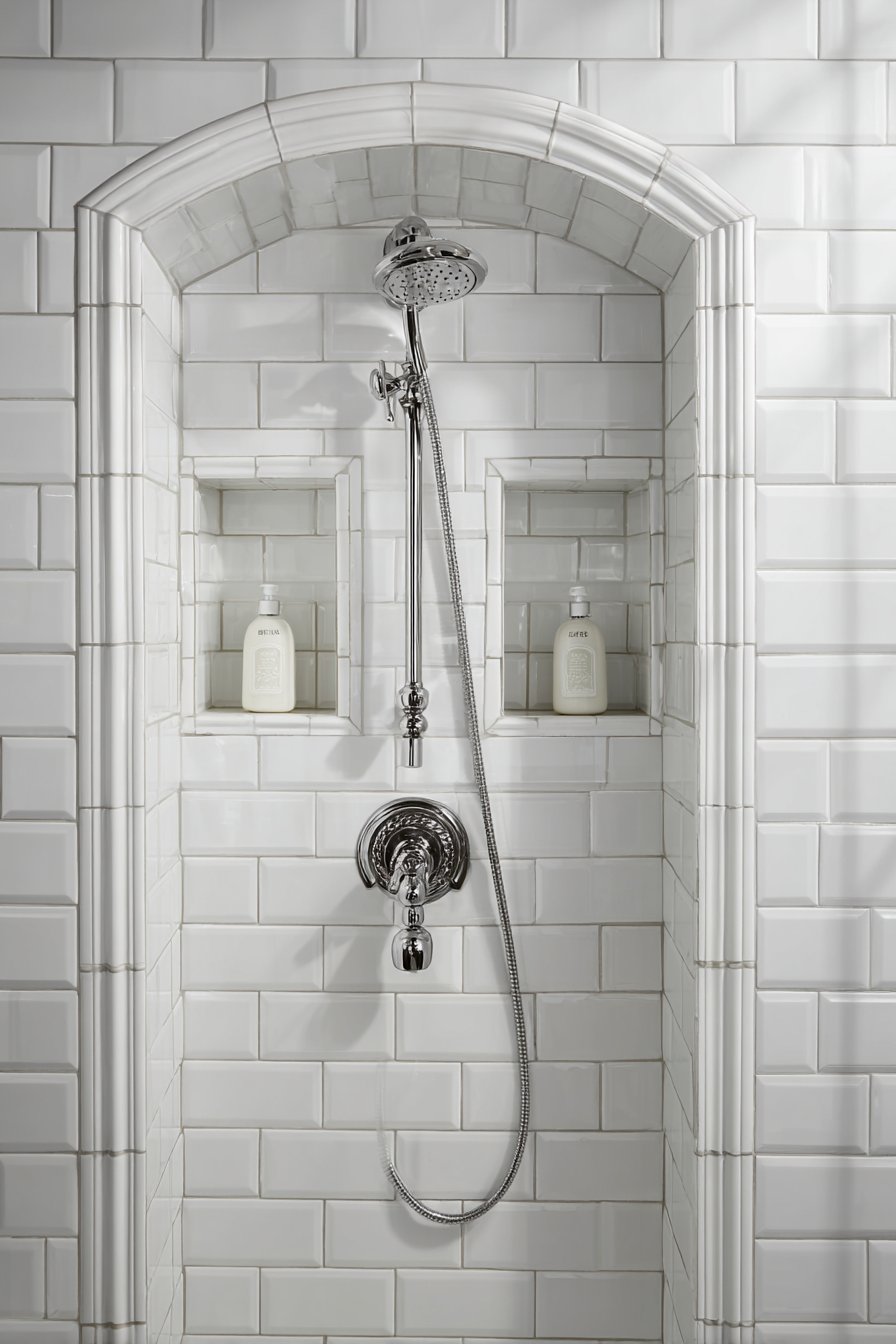
Classical design principles emphasize balance, proportion, and time-tested materials that never truly go out of style. This traditional approach features two symmetrical rectangular niches flanking a classic chrome thermostatic valve, creating a balanced composition that feels intentionally designed rather than arbitrarily placed. White ceramic subway tiles provide the foundation, with bullnose tile edge details that demonstrate craftsmanship and attention to finishing details. Matching white ceramic dispensers within each niche maintain the clean, cohesive appearance while polished chrome fixtures reinforce the traditional aesthetic.
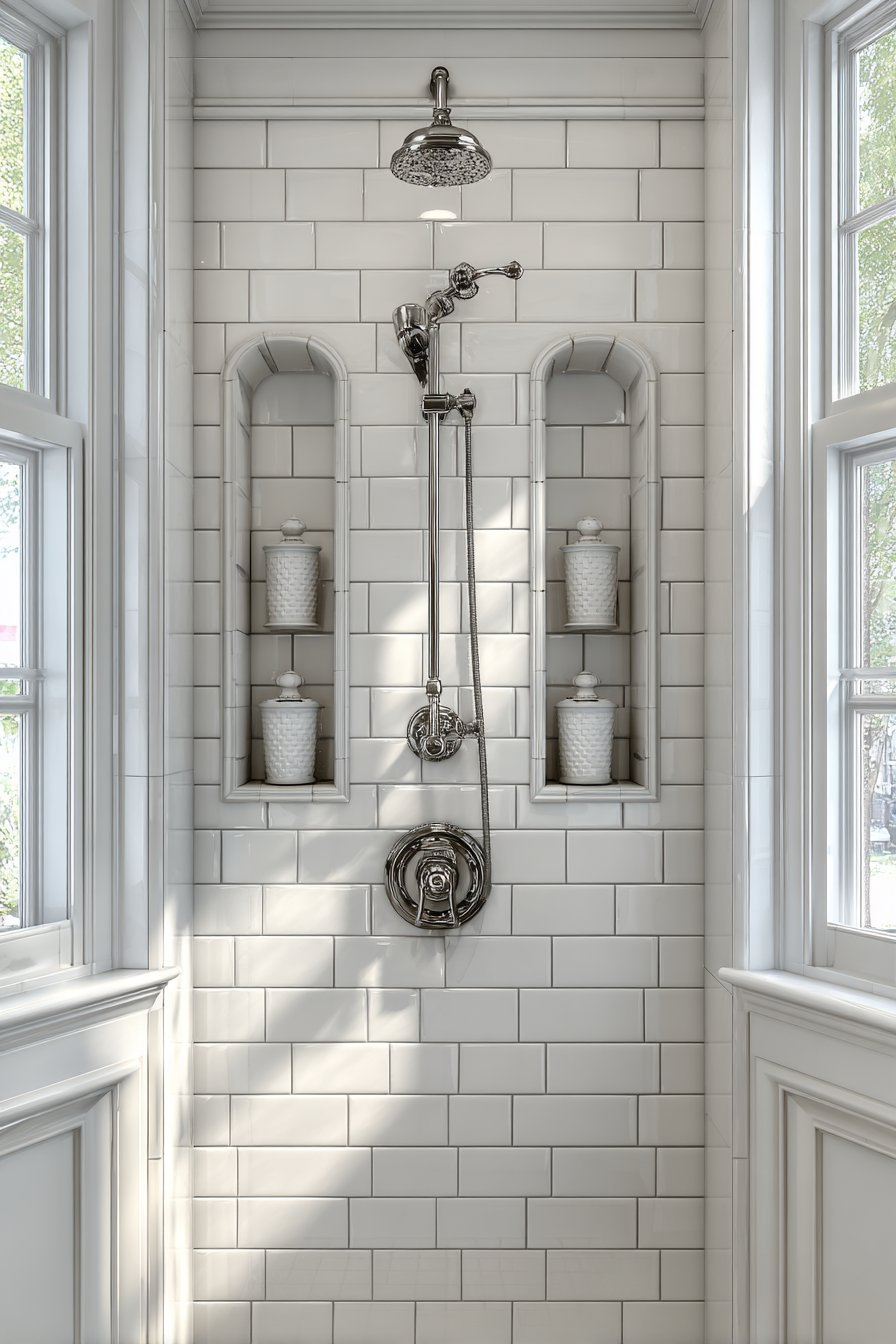
Symmetry creates a sense of order and calm that the human eye finds inherently pleasing, and positioning niches on either side of the valve creates natural balance that feels right even if you can’t articulate why. This layout also offers practical advantages—separating products between two niches (perhaps his-and-hers, or body care versus hair care) keeps items organized and easy to locate. The identical sizing and positioning on both sides prevents any visual imbalance that might make the shower feel tilted or awkward.
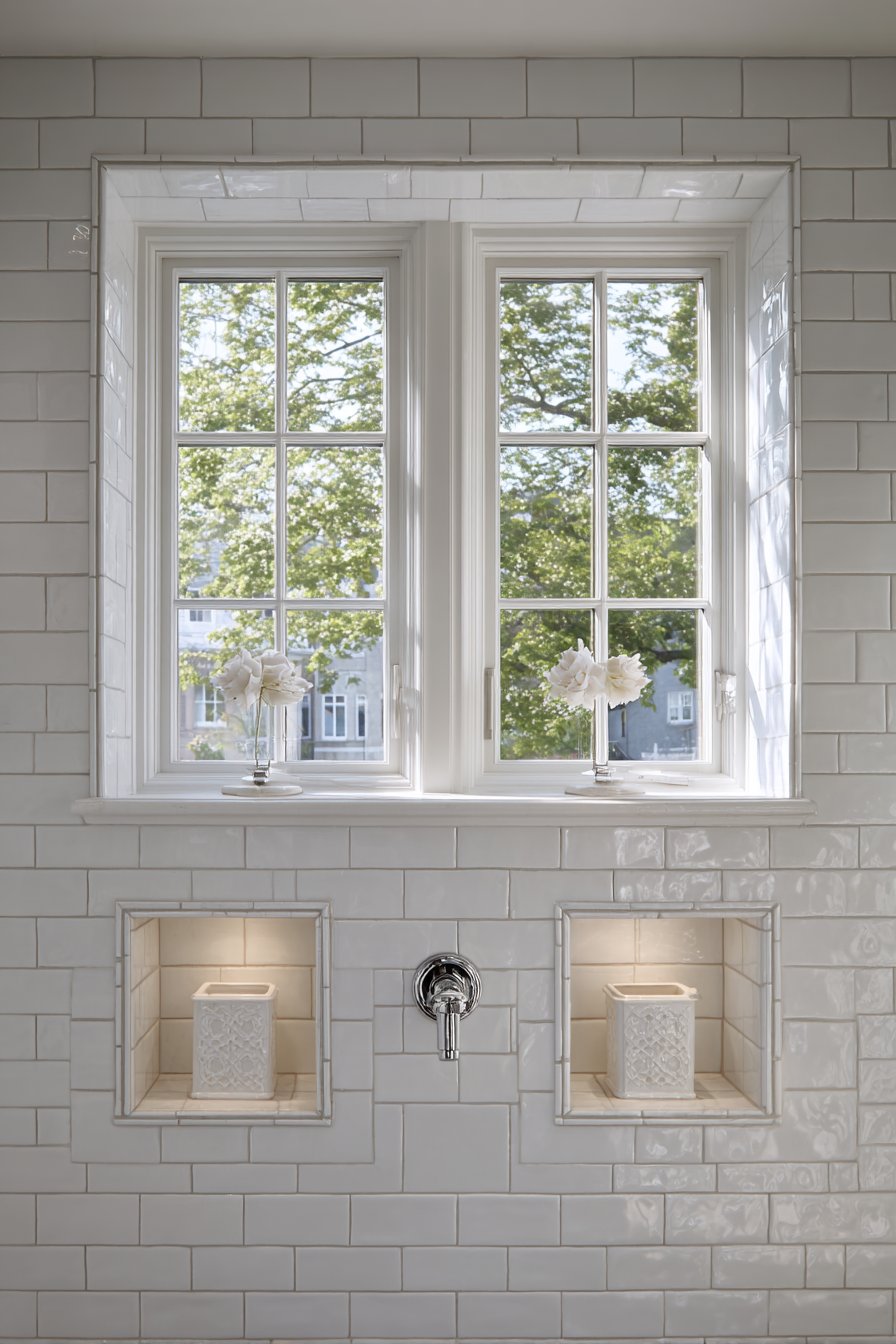
The bullnose edge detail represents a hallmark of quality traditional tile work, providing a finished, rounded edge that’s more refined than simple cut tile edges. This detail work signals craftsmanship and proper execution, subtle touches that distinguish professionally installed work from amateur efforts. The all-white palette with chrome accents creates a bathroom that could fit comfortably in a home from the 1920s or 2020s—this kind of timelessness offers excellent long-term value as trends shift and evolve around this stable foundation.
Key Design Tips:
- Maintain equal spacing between the valve and each niche to ensure true symmetry
- Select subway tiles in actual ceramic rather than porcelain for more authentic traditional appearance
- Consider slightly smaller niche dimensions (8×8 inches) for proportions more consistent with classic design
- Use white or light grey grout to maintain the bright, clean traditional aesthetic
- Install niches at identical heights (measured precisely) to ensure the symmetry reads clearly
- Add complementary traditional elements like a handheld shower on a slide bar for functional period-appropriate design
10. Geometric Contemporary Surprise
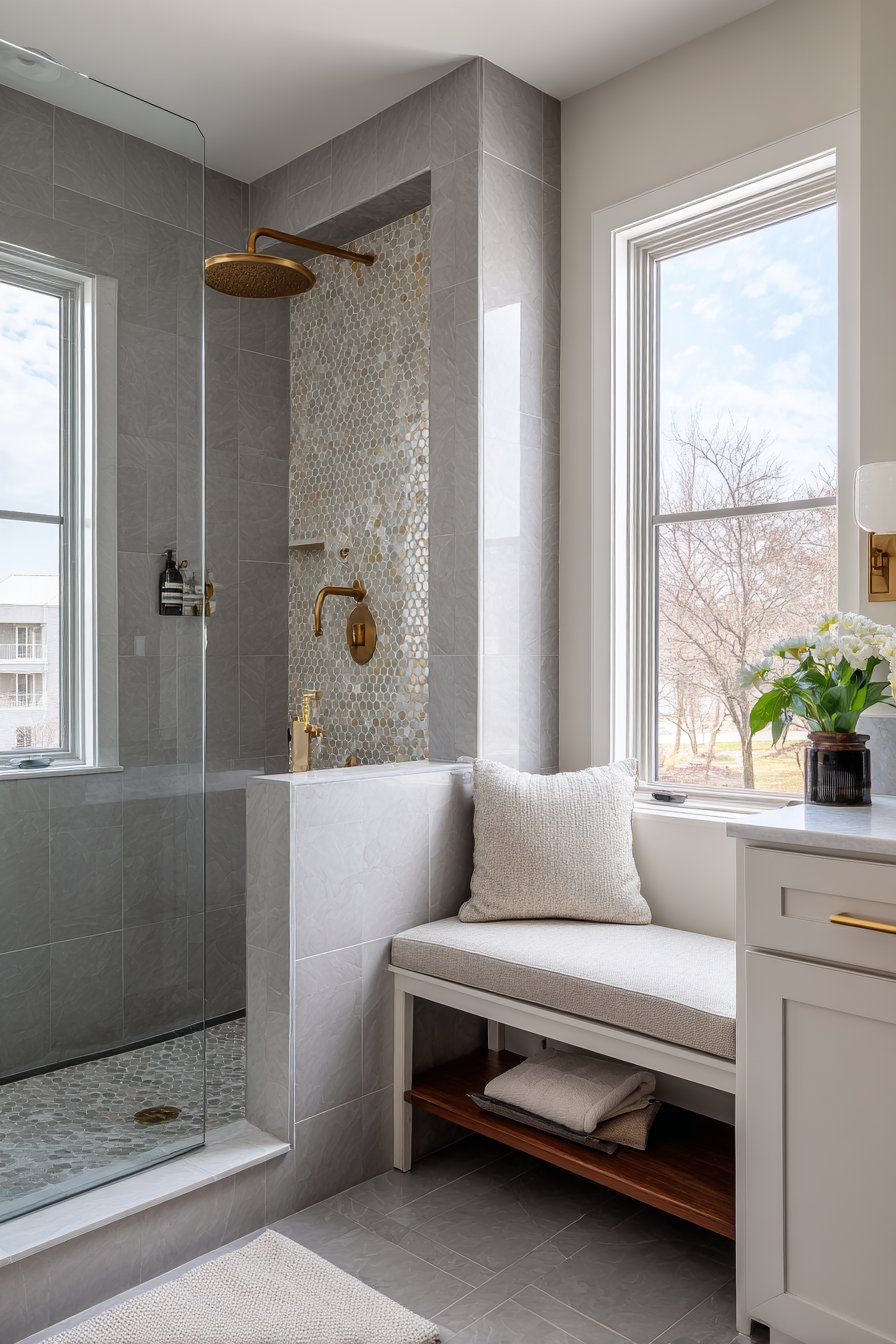
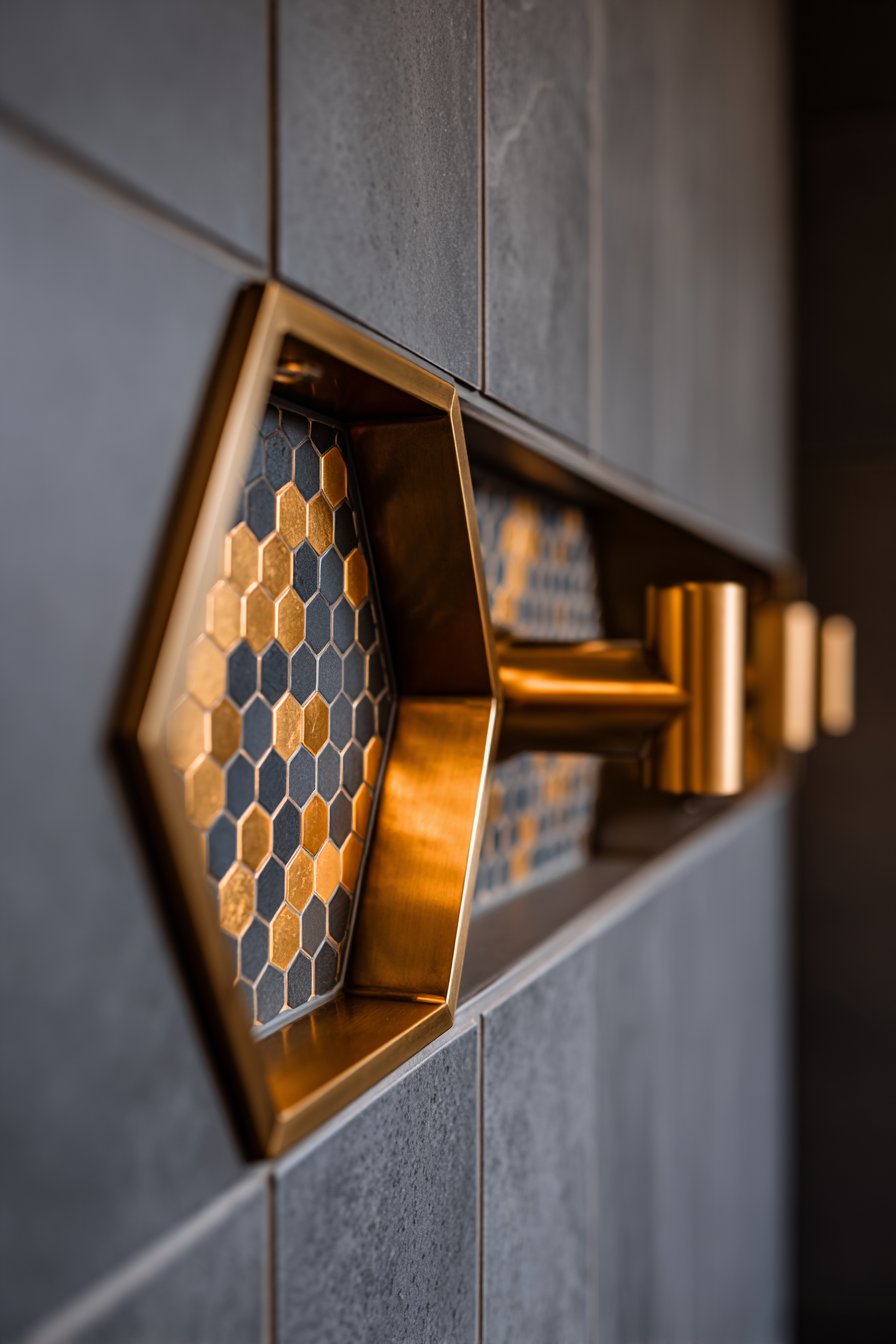
Breaking away from rectangular conventions, the hexagonal niche offers unexpected visual interest that captures attention and expresses personality. This contemporary design features a geometric six-sided niche in matte grey large-format tiles with brass hexagonal tile mosaic backing that creates a jewel-box effect within the wall. The unusual shape becomes a focal point that transcends mere storage function, while warm brass fixtures coordinate with the metallic mosaic accents to create cohesive design narrative throughout the shower space.
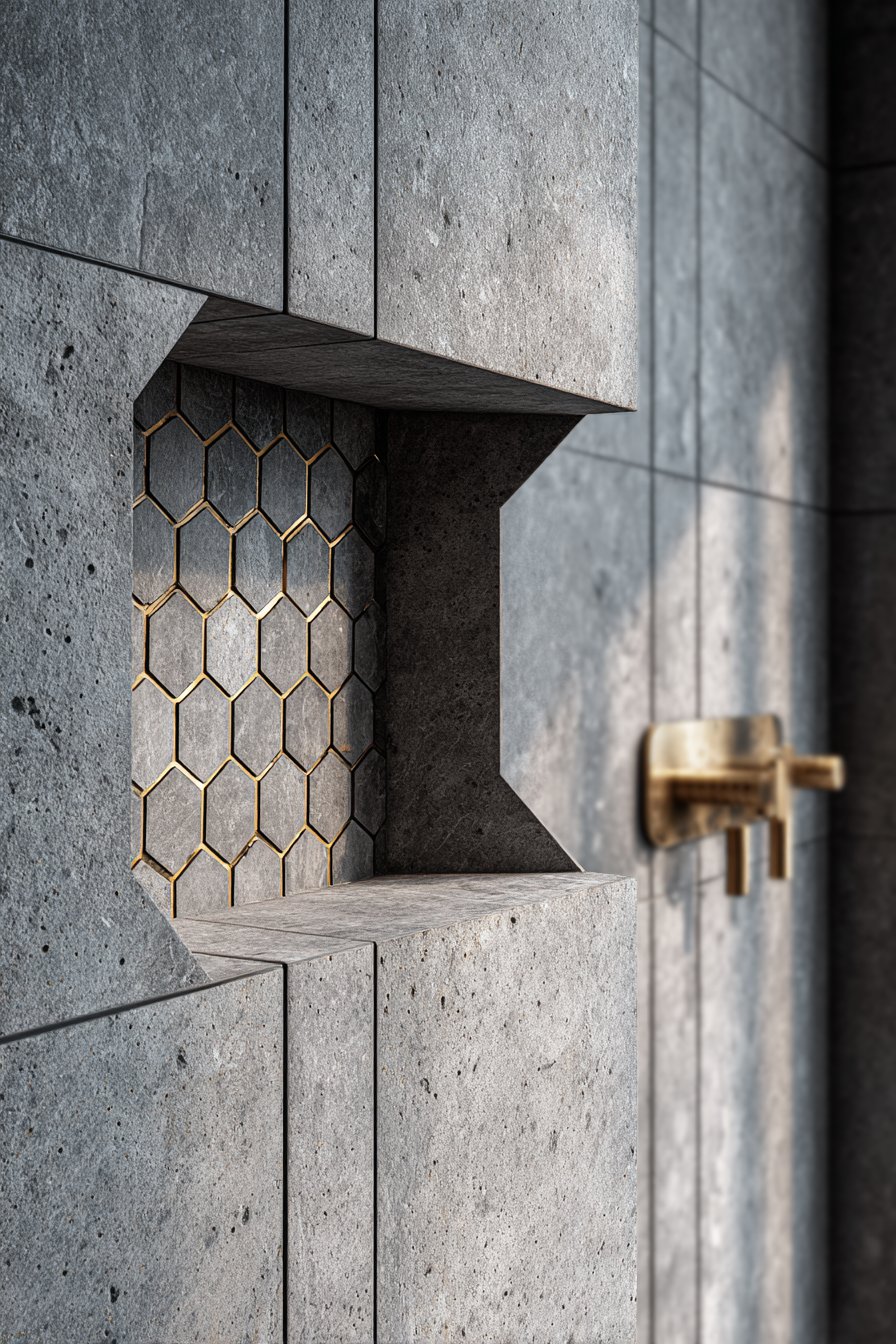
The hexagon shape has experienced renewed popularity in contemporary design, appearing in everything from tile patterns to furniture forms to architectural details. Its geometric perfection—six equal sides and angles—creates pleasing symmetry while offering something visually distinct from the rectangles and squares that dominate most built environments. The shape also provides practical advantages; the angled sides naturally contain bottles and prevent them from sliding to edges, while the interior angles create natural separation between different product types.
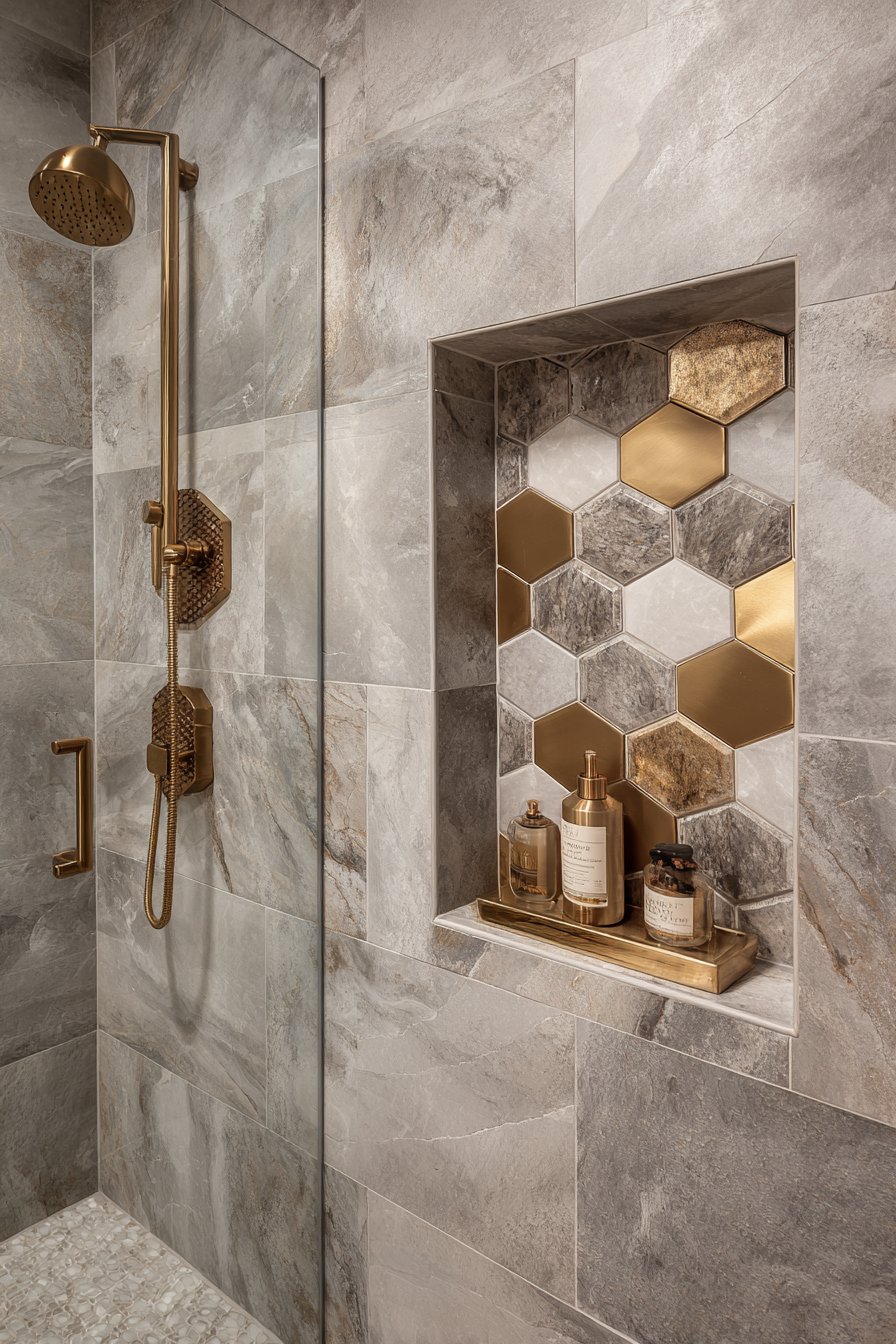
Brass fixtures and accents represent a significant departure from the chrome and nickel finishes that have dominated bathroom design for decades. The warm golden tones add richness and personality while complementing a wide range of color schemes. The brass hexagonal mosaic backing transforms the niche interior into a statement feature worthy of attention, catching and reflecting light in ways that flat tiles cannot. This combination of unusual geometry and warm metallic accents creates spaces that feel custom and considered rather than spec-grade and generic.
Key Design Tips:
- Work with a skilled tile installer experienced with custom cuts required for hexagonal shapes
- Consider the hexagon size carefully—too small appears busy while too large (over 18 inches across) can look awkward
- Coordinate warm-toned brass fixtures throughout the bathroom for cohesive design rather than mixing metal finishes
- Select brass hexagonal mosaics on a mesh backing for easier installation than individual tile pieces
- Protect brass fixtures and accents with appropriate sealers to prevent tarnishing in humid bathroom environments
- Balance the decorative niche with simpler surrounding tiles to let the hexagon feature stand out
11. Approachable Budget-Friendly Design
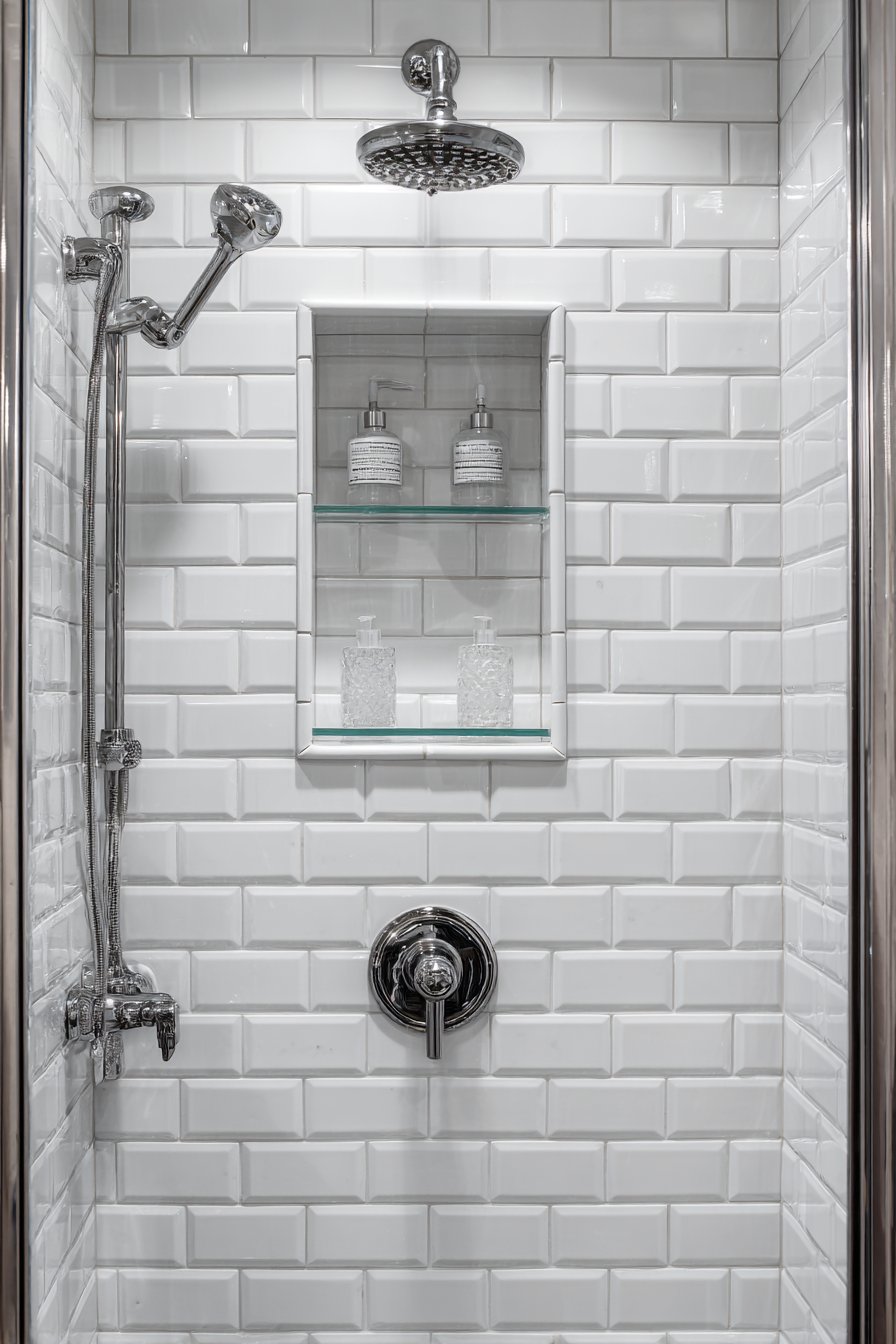
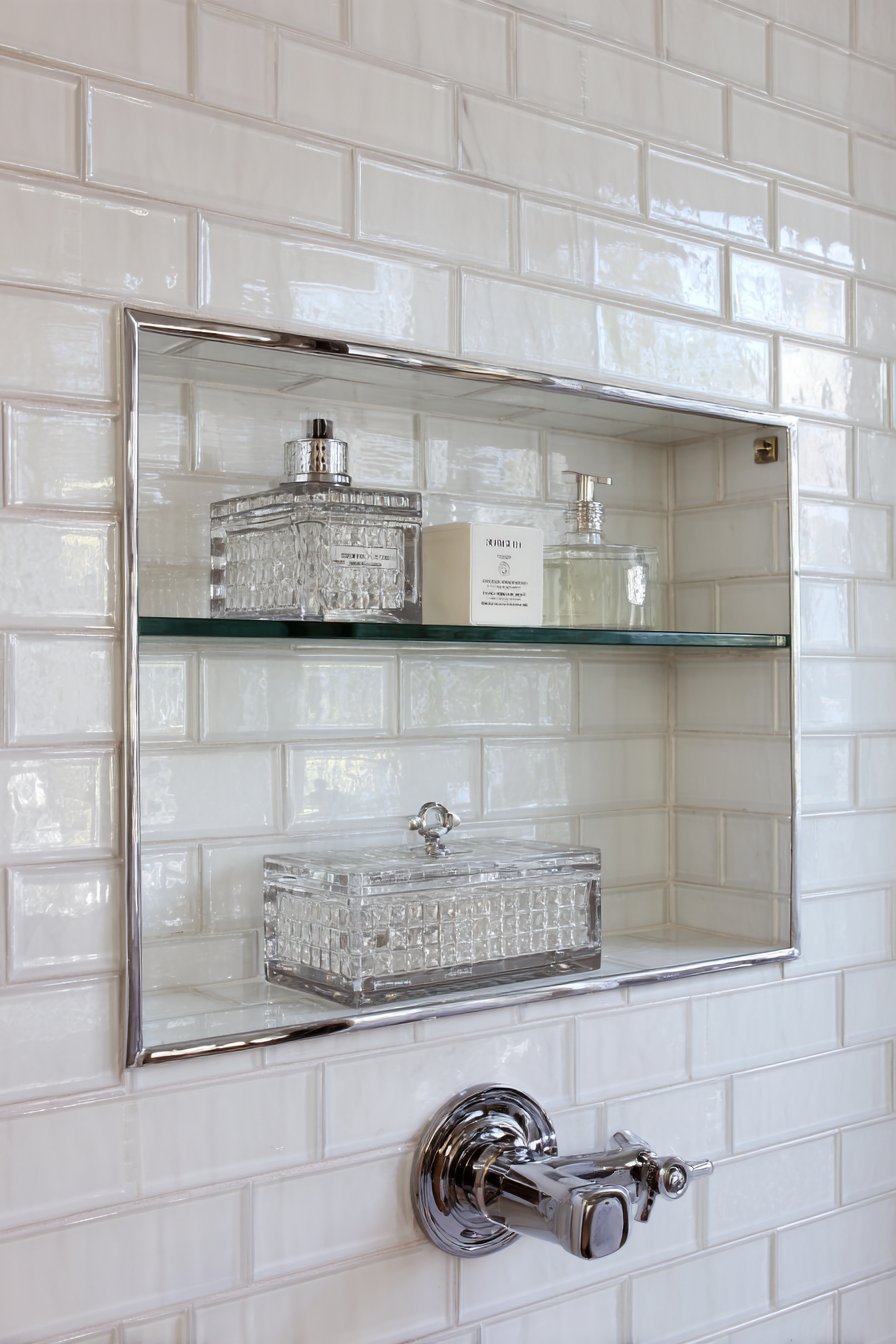
Not every bathroom renovation comes with unlimited budget, and this honest, accessible design proves that attractive, functional results are achievable at modest price points. A simple rectangular niche features standard white ceramic tile with a single glass shelf insert that provides transparent storage without visual bulk. Basic chrome fixtures maintain the clean aesthetic while clear plastic organizing bins demonstrate practical everyday functionality that real families need. Natural bathroom lighting creates straightforward presentation that doesn’t rely on expensive lighting systems or dramatic materials.
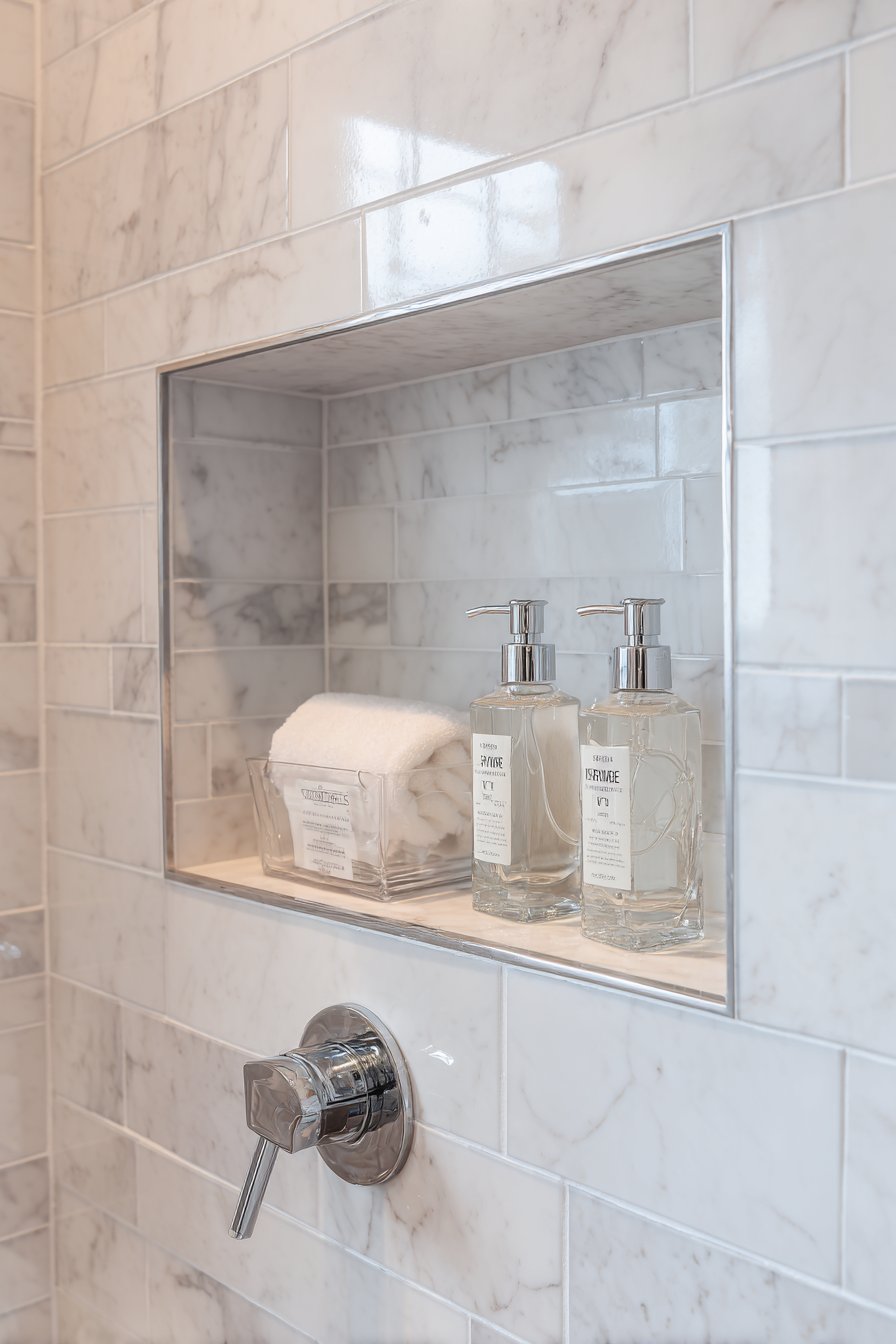
The beauty of this approach lies in its achievability for average homeowners undertaking DIY renovations or working with limited budgets. Every material specified here is available at standard home improvement retailers at accessible price points, and the simple rectangular geometry doesn’t require specialized skills or expensive professional installation. The single glass shelf—while modest—provides adequate support for standard bottles and containers while maintaining a cleaner appearance than wire caddies or plastic inserts.
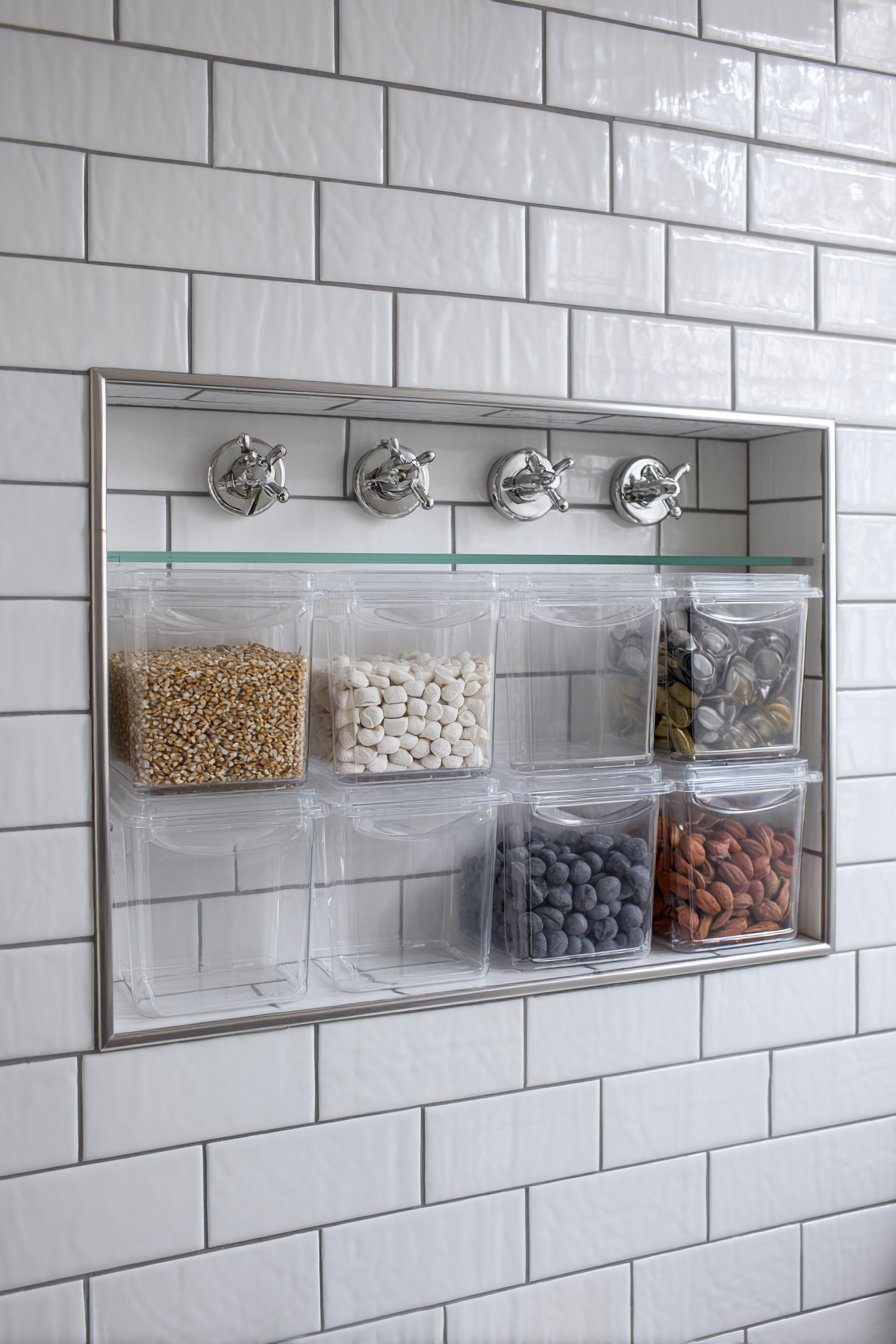
The clear organizing bins represent practical wisdom often missing from high-end design concepts. Real life includes partially used bottles, trial-size products, and various odds and ends that don’t photograph beautifully but need accessible storage nonetheless. The transparent bins corral these items while keeping them visible and reachable, demonstrating that budget-conscious design can be thoughtfully planned rather than haphazard or apologetic. This approach proves that “affordable” need not mean “ugly” or “shoddy”—it simply means making smart choices that maximize value.
Key Design Tips:
- Shop home improvement store sales and clearance sections for quality tiles at reduced prices
- Consider doing your own tile work for simple rectangular niches to save on labor costs
- Invest in proper waterproofing materials even when keeping tile costs low—preventing water damage is essential
- Use standard-size tiles (3×6 inch subway tiles, 12×12 inch floor tiles) which are typically less expensive than specialty sizes
- Purchase chrome fixtures in coordinated sets or bundles for better value than individual pieces
- Plan niche dimensions around standard tile sizes to minimize cutting and waste
12. Mediterranean Warmth and Character
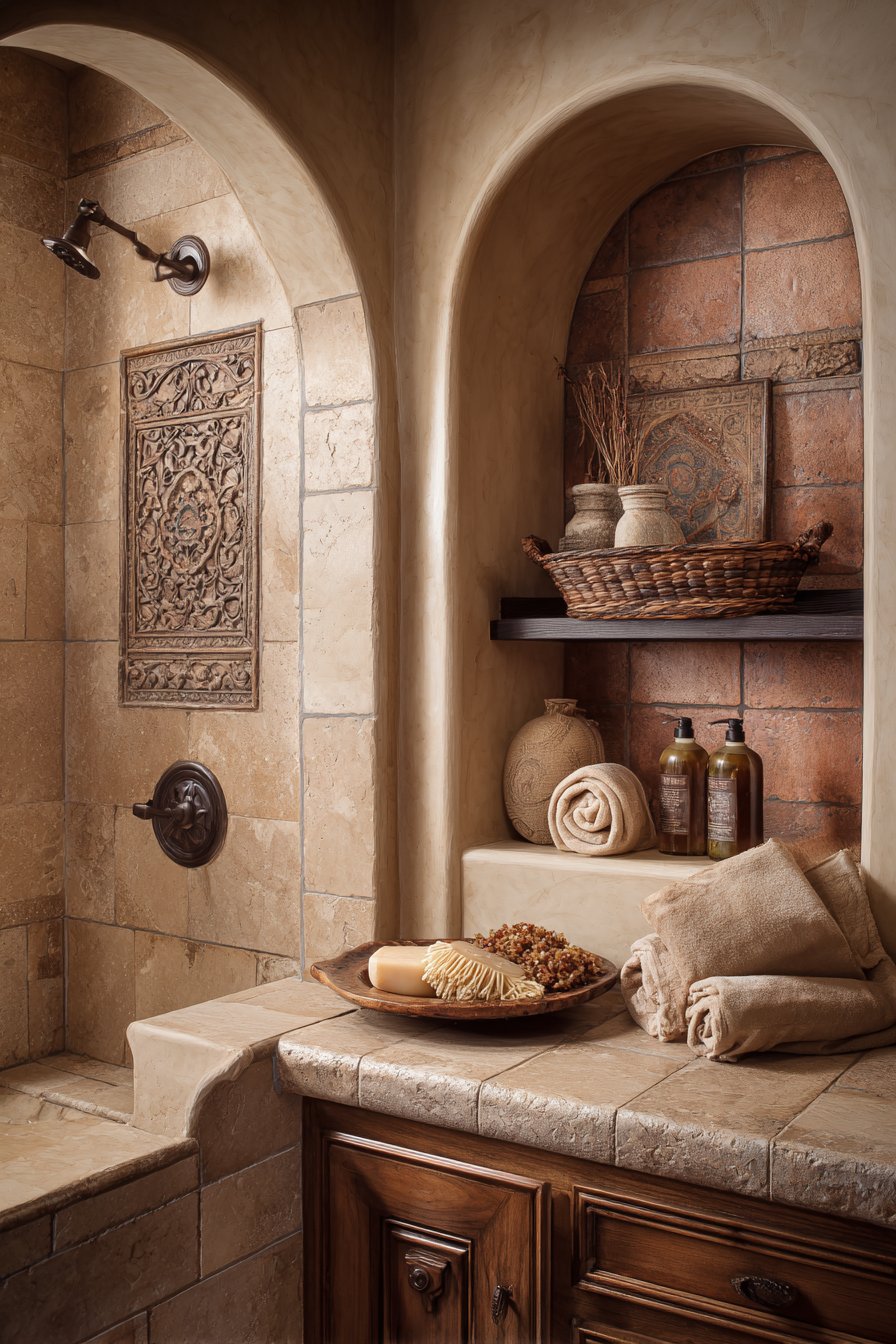
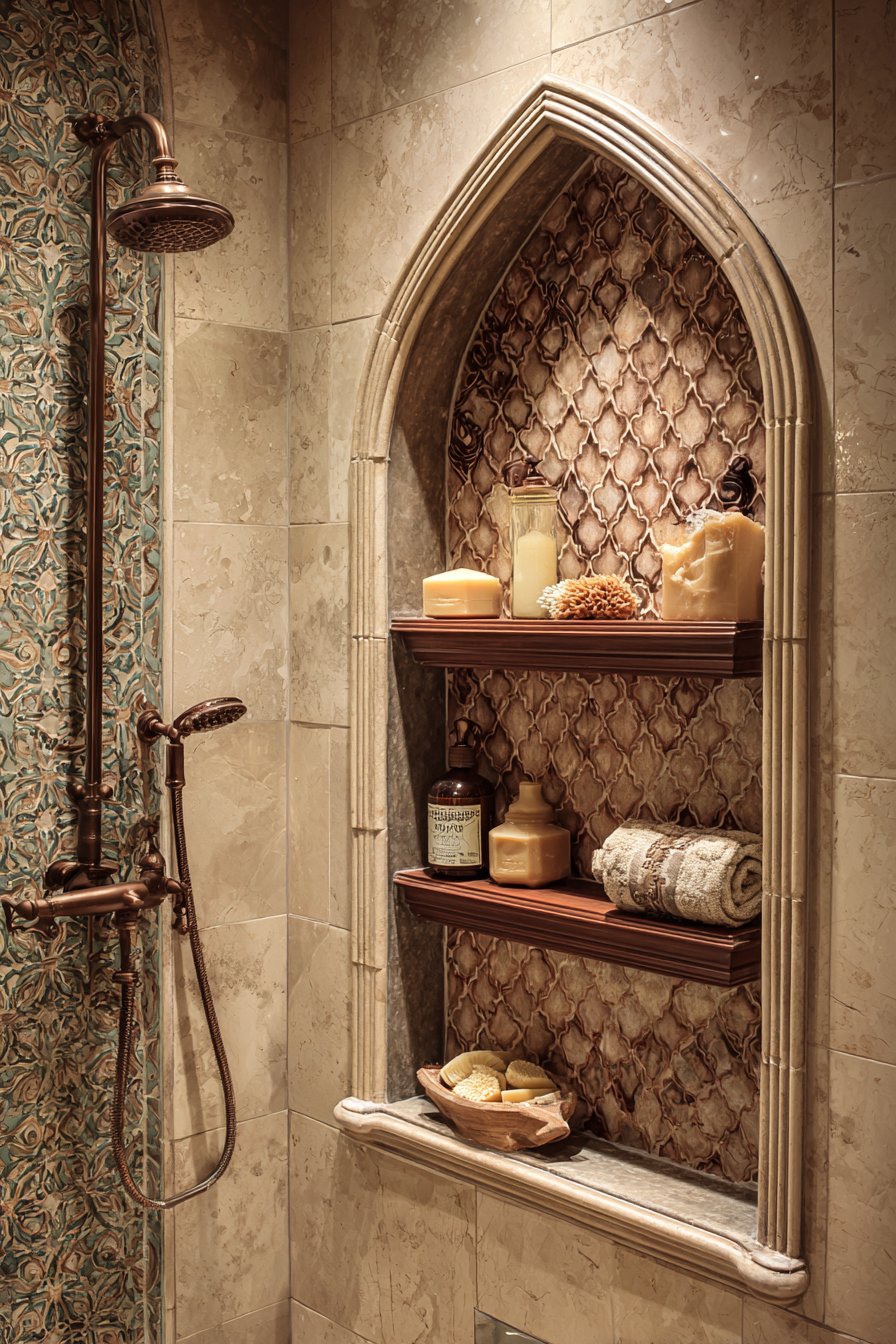
Drawing from the sun-drenched regions surrounding the Mediterranean Sea, this design concept brings Old World charm and warmth to the shower space. The arched niche features terracotta-colored textured tiles that evoke Spanish and Italian villa aesthetics, while a wrought iron decorative insert holds artisanal soaps and natural sponges. Warm bronze fixtures complement the earthy palette, and surrounding walls use cream travertine-look porcelain that captures the character of aged stone with modern maintenance advantages.
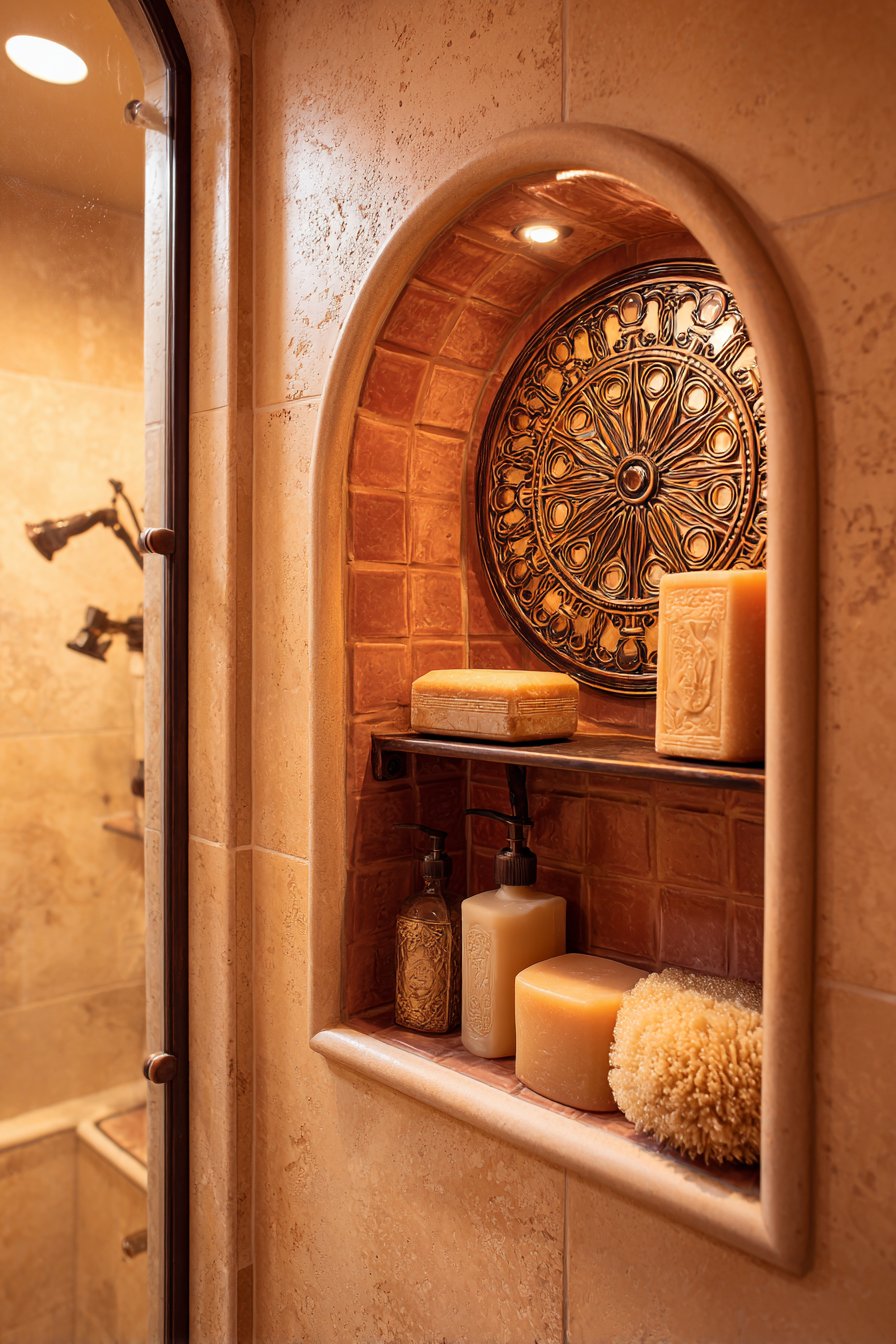
The arched top transforms a simple niche into an architectural feature reminiscent of Moorish design, Roman aqueducts, and Renaissance buildings. This single gesture dramatically changes the character from contemporary to historical, creating immediate sense of place and narrative. The arch also provides practical advantages—the curved top sheds water more effectively than a flat ceiling, and the shape naturally draws the eye upward while creating sense of increased height and spaciousness.
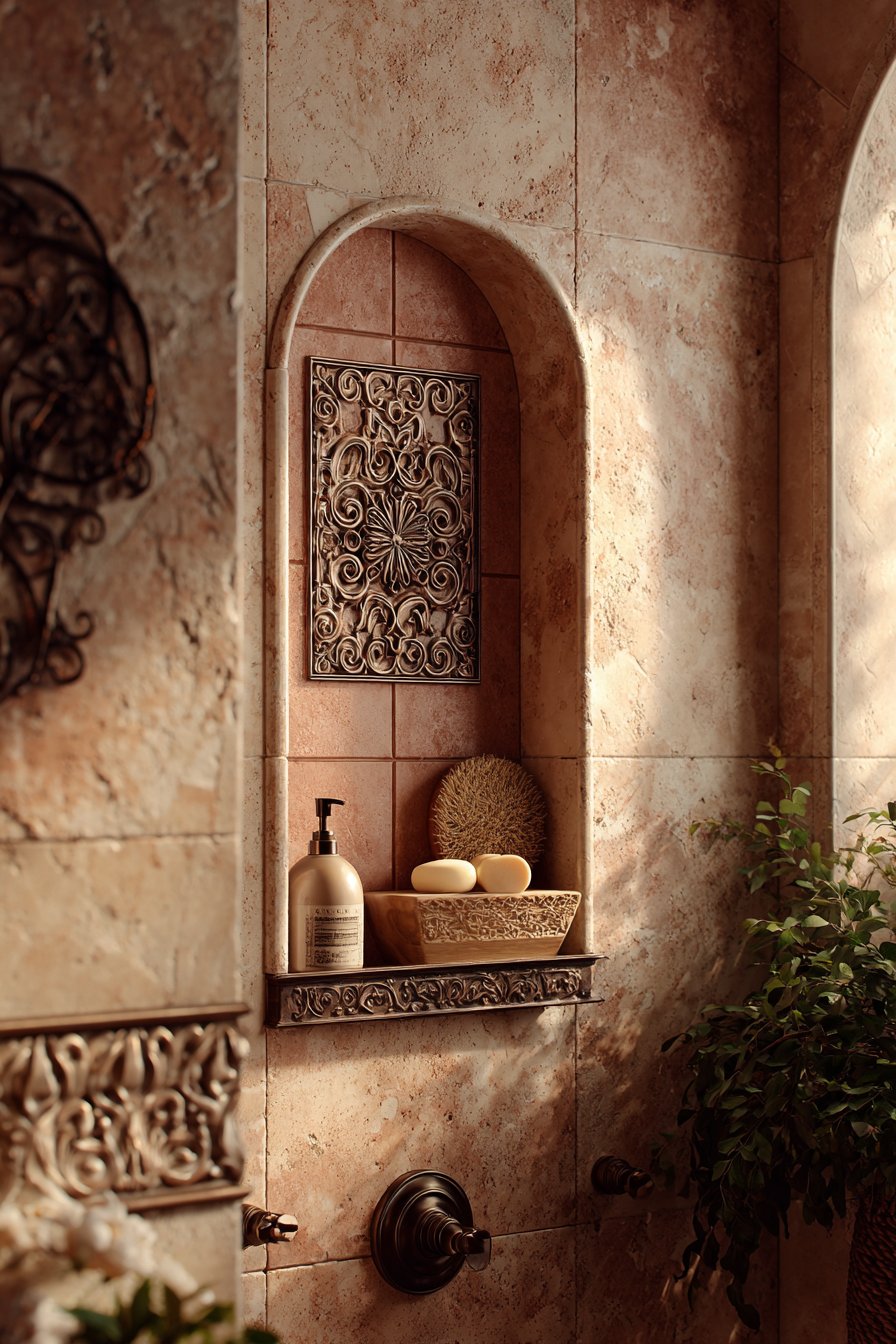
Terracotta represents one of the oldest building materials in human civilization, with a warm orange-brown color that brings instant coziness to any space. Modern textured tiles capture the slightly irregular, handmade quality of traditional terracotta while providing the durability and water resistance that actual clay might lack in shower environments. The wrought iron insert adds authentic Mediterranean character—decorative metalwork features prominently in Spanish and Italian design traditions, and the dark metal contrasts beautifully against the warm tile tones while providing sturdy support for stored items.
Key Design Tips:
- Select textured or matte-finish terracotta-colored tiles rather than glossy versions for more authentic appearance
- Consider hand-painted or hand-decorated tiles for the niche interior to enhance the artisanal quality
- Coordinate warm metal finishes (bronze, copper, antique brass) throughout the bathroom for cohesive Mediterranean aesthetic
- Add other Mediterranean elements like decorative tiles, arched mirrors, or wrought iron towel bars
- Use natural materials like olive oil soaps, sea sponges, and woven baskets to reinforce the Old World character
- Install adequate ventilation as terracotta colors can appear muddy in perpetually damp environments
13. Scandinavian Serenity and Natural Elements
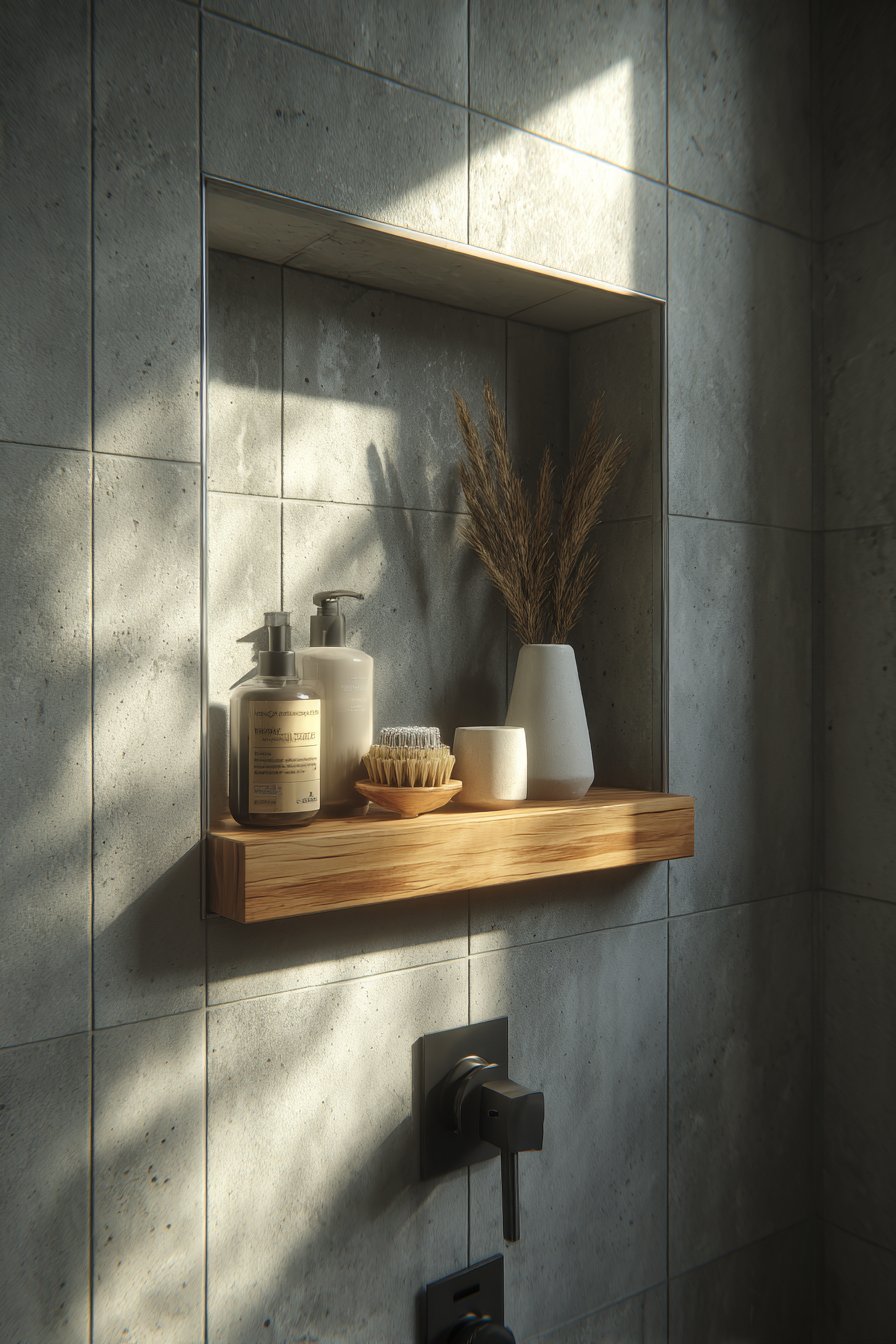
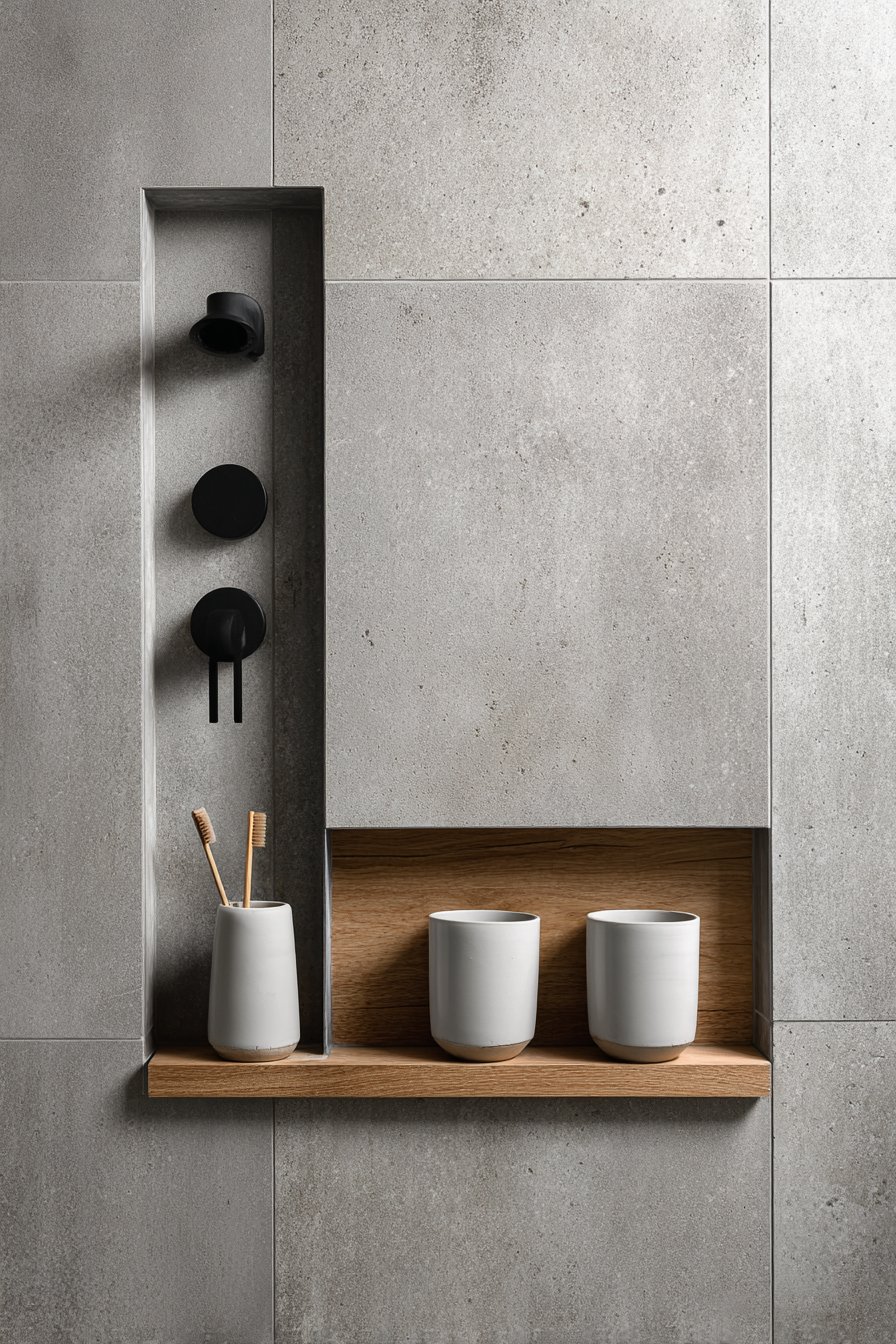
Northern European design traditions emphasize simplicity, natural materials, and connection to nature—principles beautifully expressed in this Scandinavian-inspired niche. The horizontal design features light grey matte tiles paired with a natural oak wood accent shelf that provides organic warmth against the cool grey backdrop. Simple white ceramic accessories maintain the clean lines and neutral palette that exemplify Nordic design principles, while matte black minimalist fixtures create subtle contrast without disrupting the serene atmosphere.
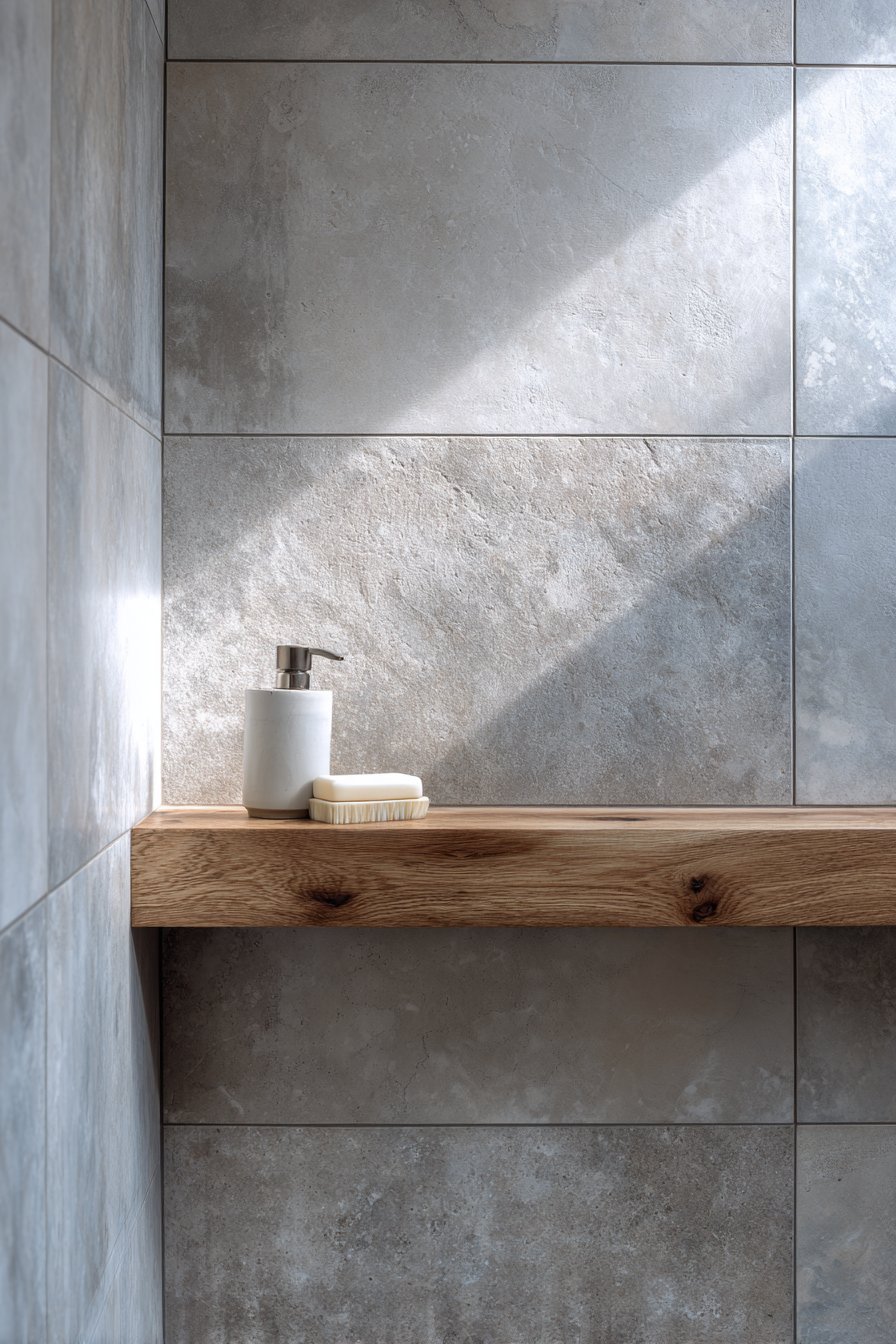
Scandinavian design rejects excess in favor of carefully considered essentials that serve both functional and aesthetic purposes. The single horizontal niche provides exactly what’s needed without overbuilding or adding unnecessary complexity. The light grey matte tiles create a soft, non-reflective surface that contributes to the calm atmosphere, while the natural oak shelf brings biophilic design principles into the shower space—the inclusion of natural wood (or realistic wood-look materials) has been shown to reduce stress and improve wellbeing.
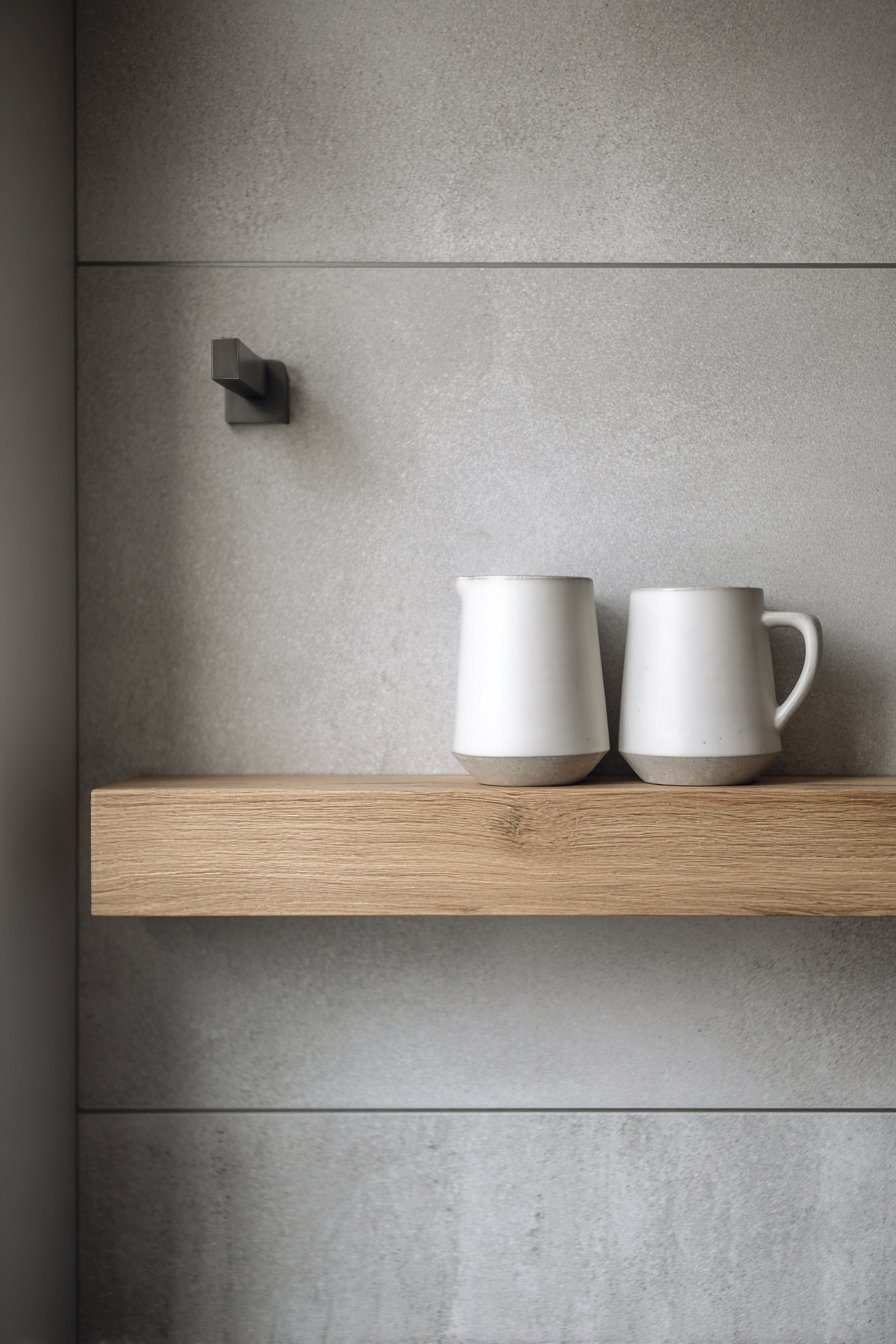
The matte black fixtures represent a contemporary evolution of Scandinavian design, which historically favored white and silver tones. The dark contrast adds visual interest while maintaining the minimalist aesthetic—the fixtures are simple in form without decorative details or flourishes that would conflict with the Nordic philosophy. White ceramic accessories continue the restrained color palette while providing necessary function, proving that beautiful design need not be complicated or cluttered.
Key Design Tips:
- Select oak shelves in natural or light honey tones rather than dark stained wood for authentic Scandinavian palette
- Ensure any wood or wood-look materials are rated for wet areas or sealed appropriately for shower environments
- Limit color palette to whites, greys, blacks, and natural wood tones for true Nordic aesthetic
- Choose matte tile finishes rather than glossy for the soft, understated quality essential to Scandinavian design
- Incorporate natural materials throughout the bathroom (wood, stone, natural fiber textiles) to reinforce the biophilic design approach
- Maintain generous open space and avoid overcrowding the niche with excessive products or accessories
14. His-and-Hers Double Configuration
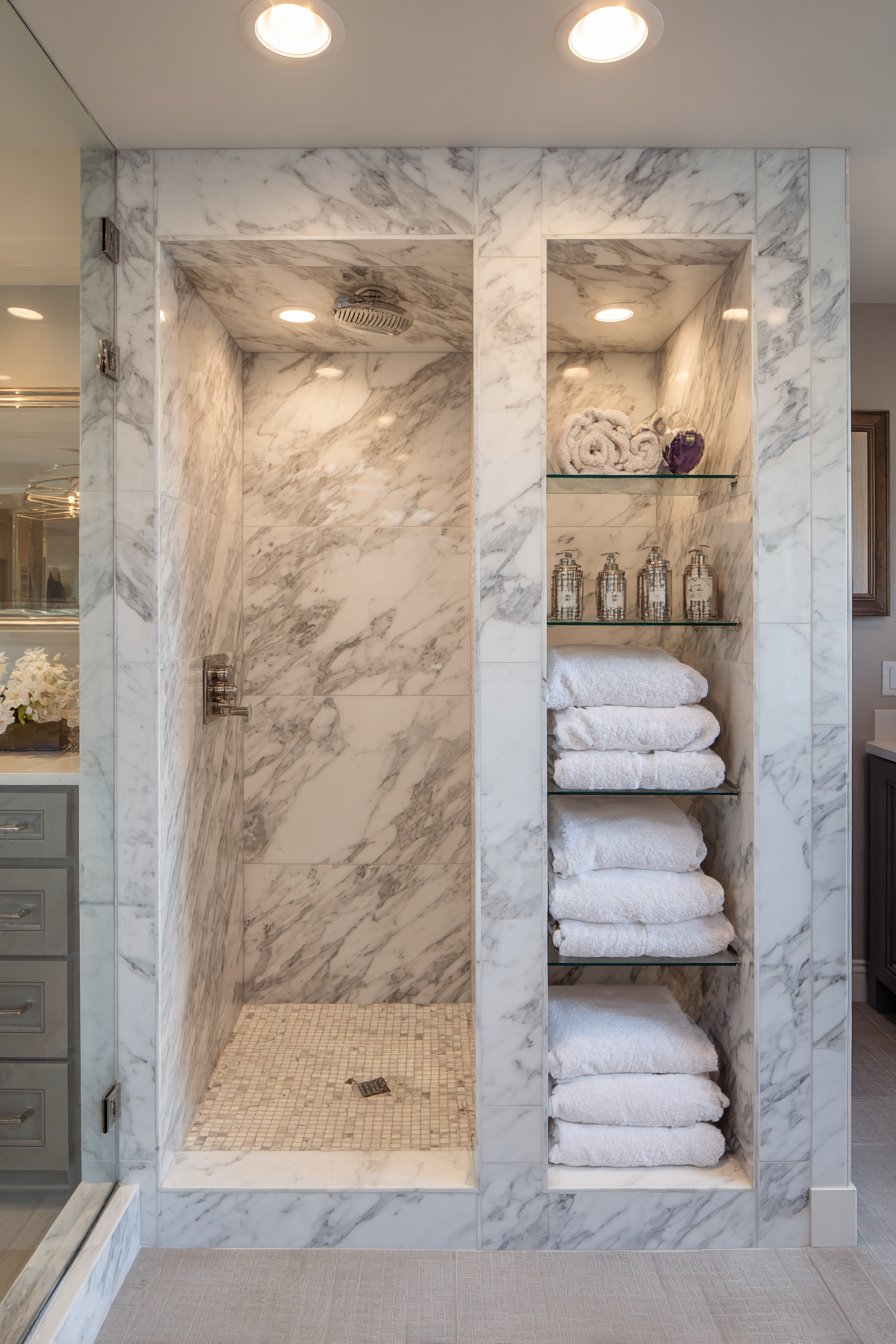
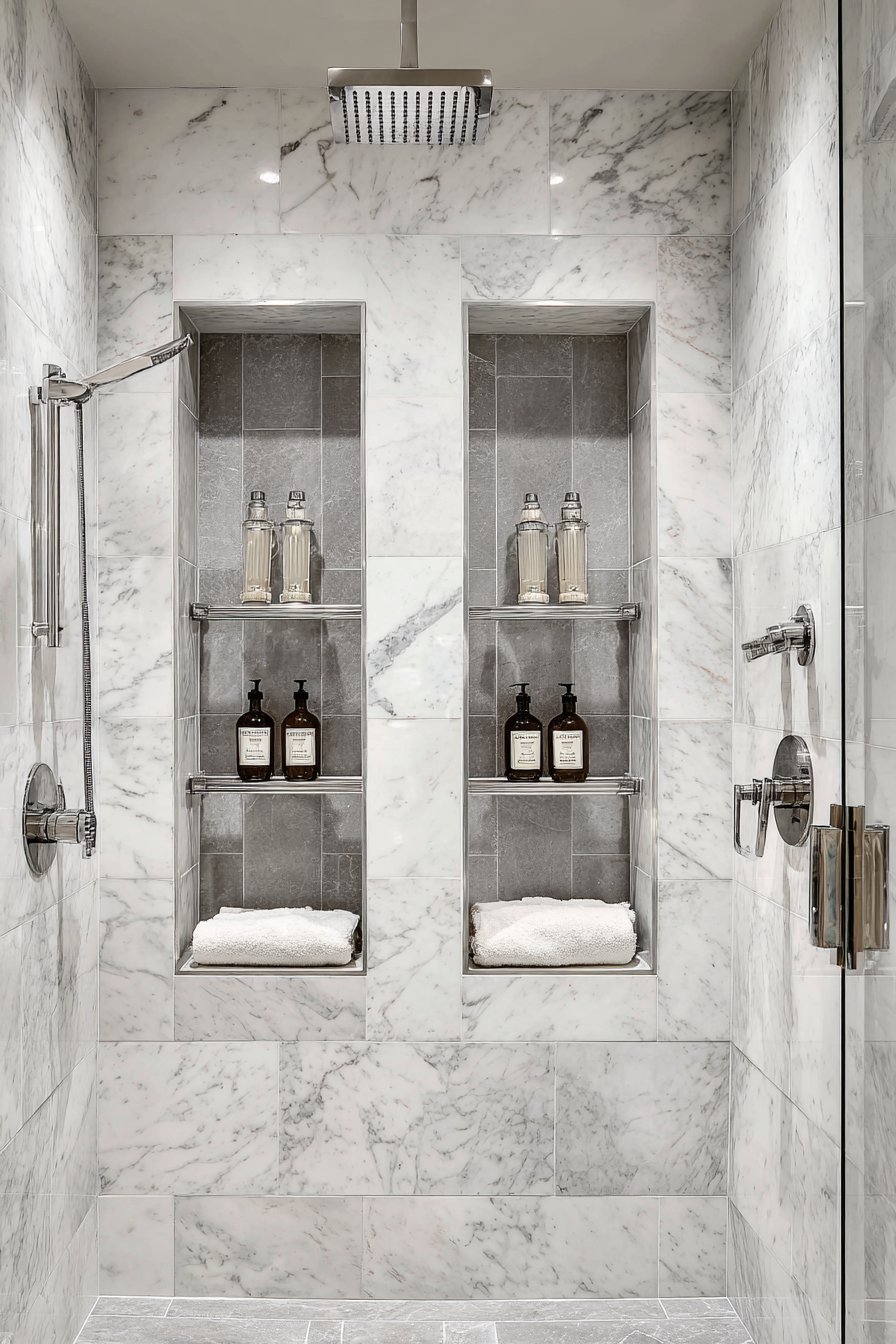
Shared bathrooms benefit from thoughtful organization that acknowledges different users’ needs and preferences. This double niche layout features two large vertical niches positioned side-by-side in elegant white marble with grey veining and polished chrome corner shelves. The separate storage areas allow personal organization without mixing products, with matching frosted glass bottles and rolled washcloths creating visual harmony across both spaces. A centered rainfall showerhead maintains symmetry while providing equitable water distribution.
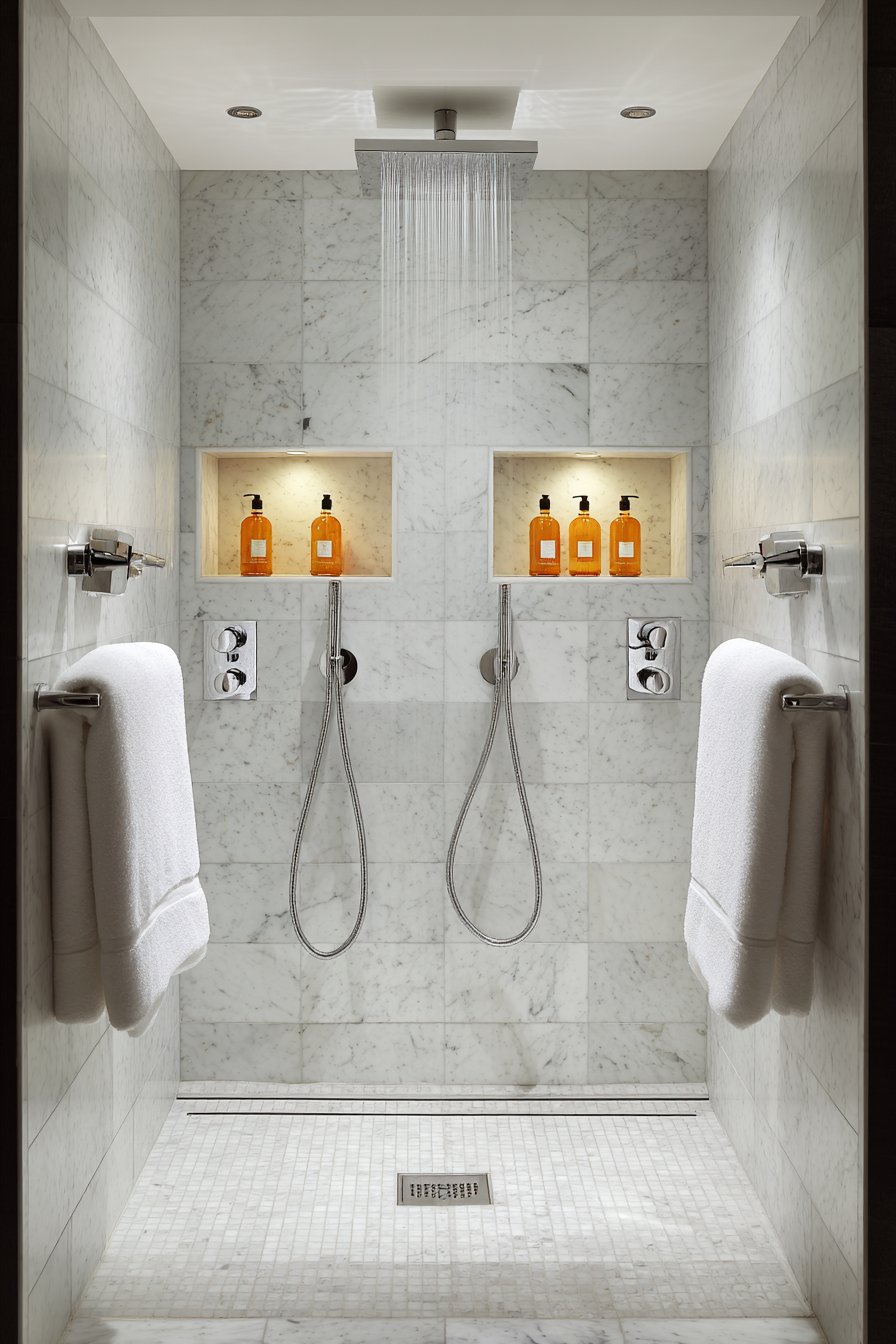
The side-by-side configuration offers practical advantages beyond just doubled storage capacity. Each user can organize their preferred products in their own space without compromise or inconvenience, eliminating the daily frustration of searching through someone else’s bottles to find your own shampoo. The matching frosted glass bottles create visual unity while preserving this practical separation—the coordination demonstrates consideration for overall aesthetics while the separation respects individual autonomy.
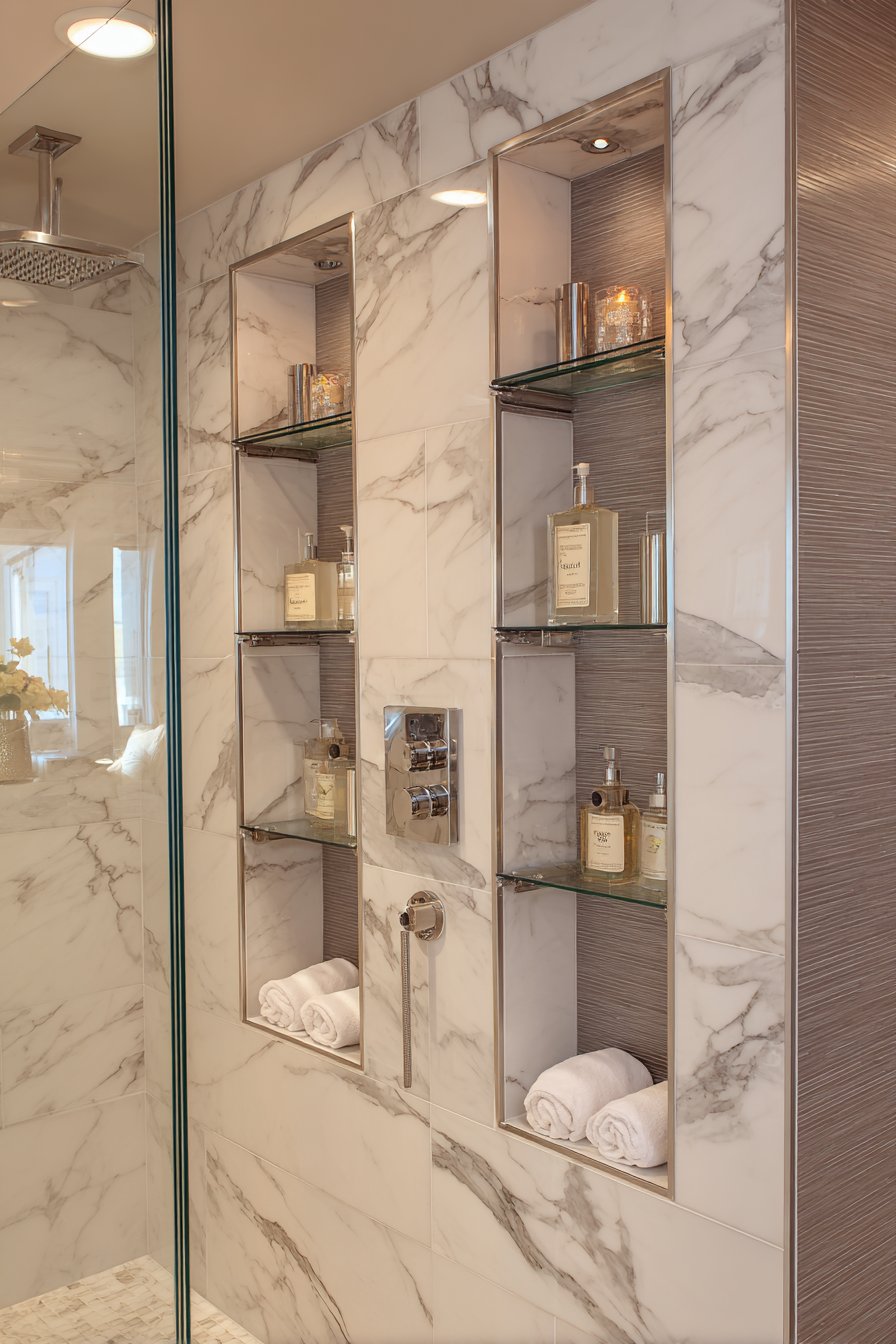
White marble with subtle grey veining provides an elegant backdrop that feels luxurious without being ostentatious. The natural stone’s timeless appeal ensures the design won’t feel dated as trends evolve, and the white palette creates brightness that makes the dual niches feel expansive rather than crowded. Polished chrome corner shelves add functionality while their reflective quality enhances light distribution throughout the shower enclosure. The symmetrical arrangement with centered rainfall showerhead creates a composition that feels balanced and intentionally designed.
Key Design Tips:
- Size each niche generously (at least 12 inches wide) to accommodate adequate products for each user
- Position niches at a height comfortable for both users—around 50-54 inches typically works well
- Consider slightly different heights if users have significant height differences
- Install the rainfall showerhead large enough (at least 10-12 inches) to provide even coverage across the entire shower width
- Select marble with relatively subtle veining to keep the dual niches from appearing too busy
- Coordinate bottle and container choices to maintain visual harmony across both storage areas
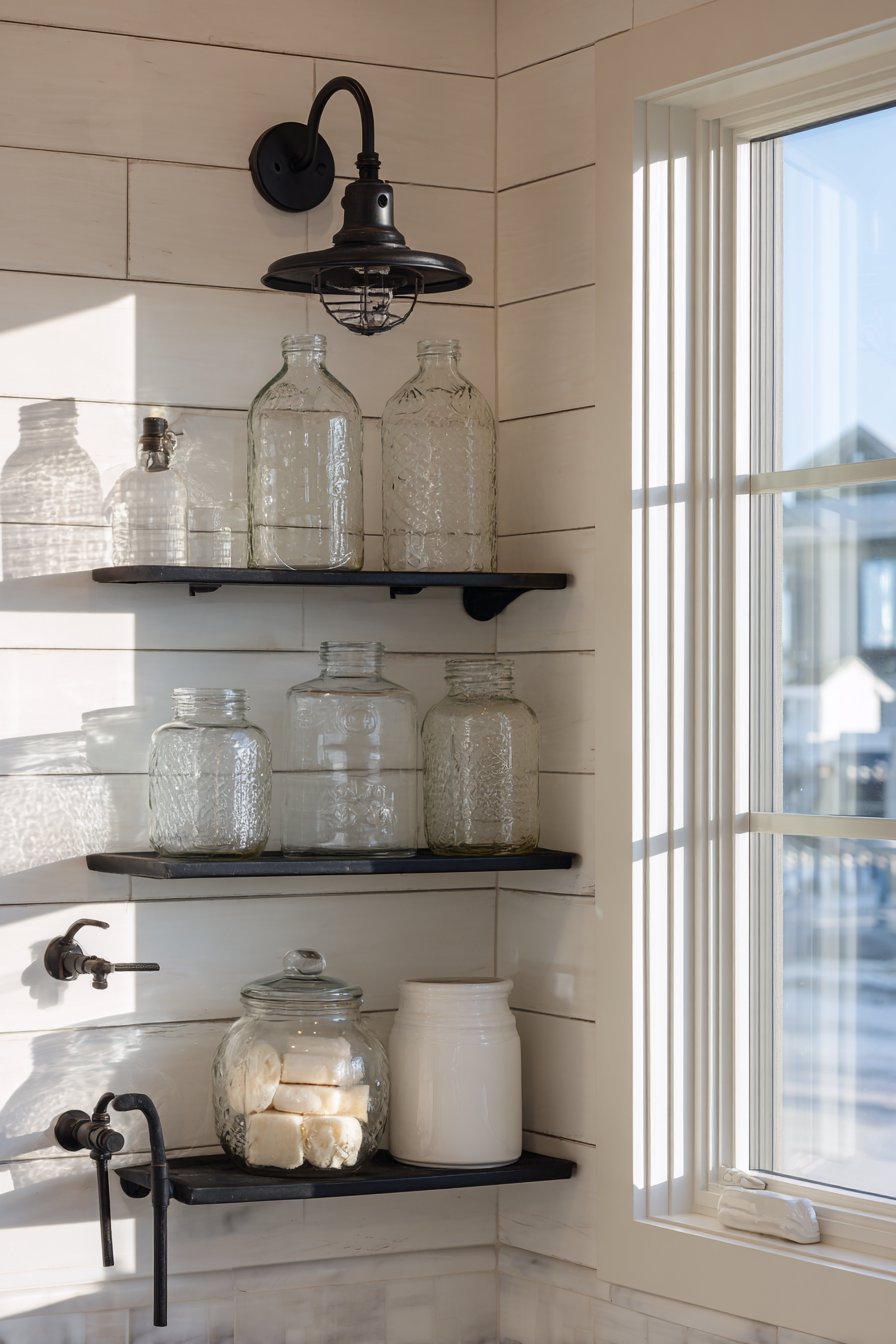
15. Modern Farmhouse Industrial Blend
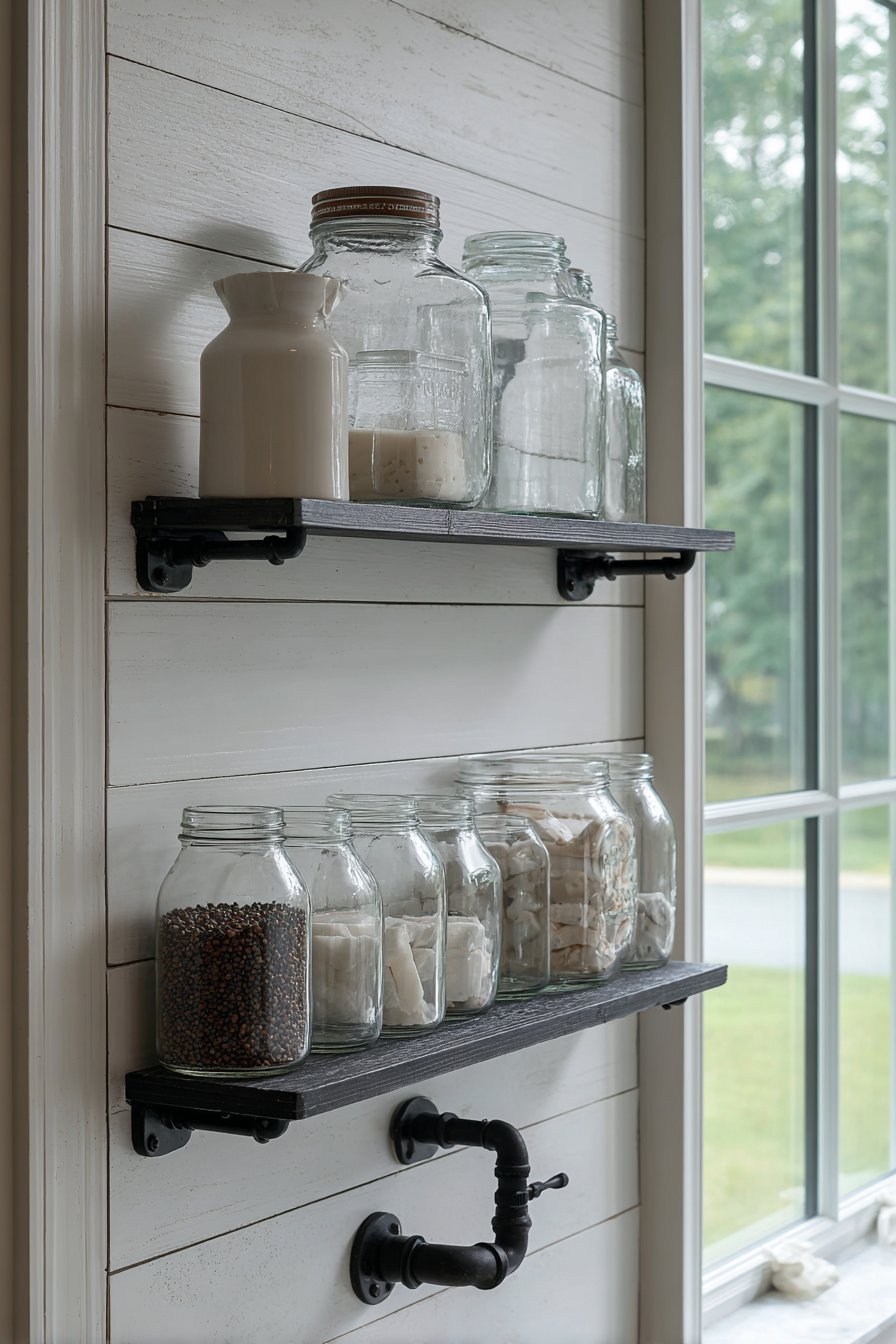
The modern farmhouse aesthetic has captivated homeowners by combining rustic charm with contemporary cleanliness, and this niche design exemplifies that popular hybrid style. White shiplap tile backing creates a farmhouse foundation, while a black metal floating shelf adds industrial edge. Vintage-style glass apothecary jars and white enamelware hold bath essentials with nostalgic character, and matte black fixtures with exposed plumbing details enhance the farmhouse-industrial fusion.
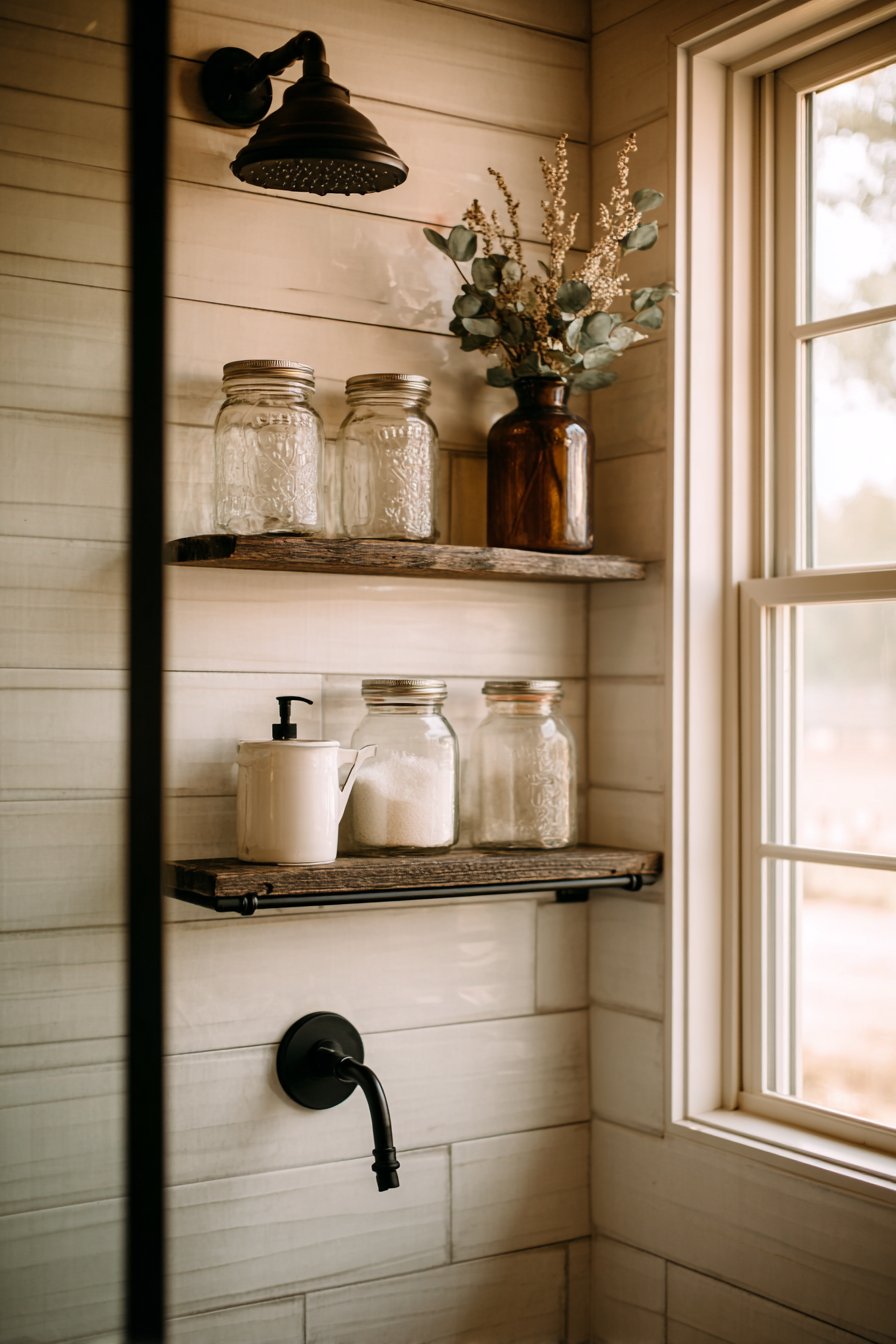
Shiplap—horizontal wooden planks with characteristic gaps between boards—has become synonymous with modern farmhouse style, though this bathroom application uses porcelain tile that captures the shiplap appearance with appropriate water resistance. The white color keeps the farmhouse elements from feeling too rustic or country, while the horizontal lines create visual width that can make smaller showers feel more expansive. This backdrop provides the perfect canvas for the more industrial elements to create interesting contrast.
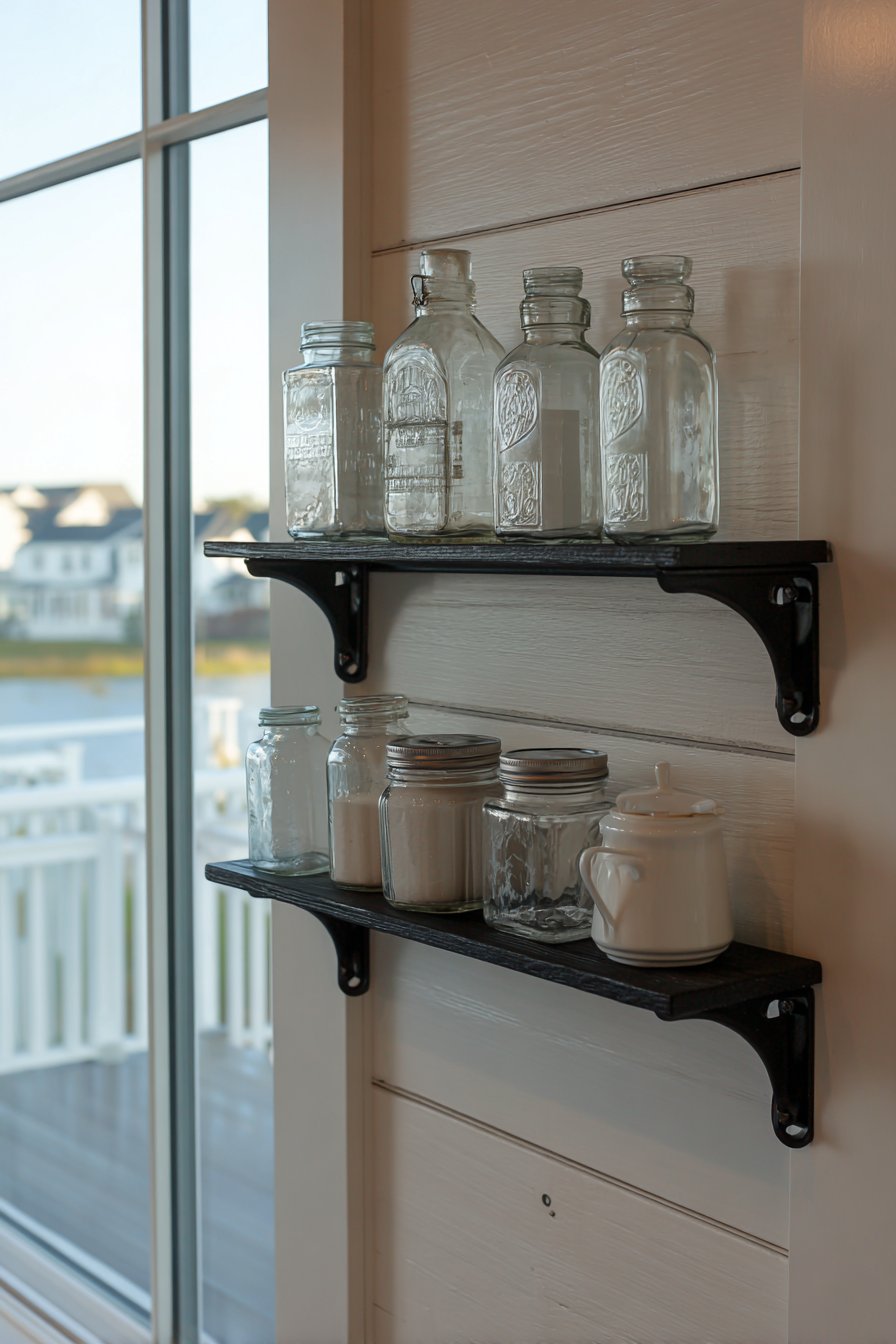
The black metal floating shelf represents the industrial component of this hybrid style, bringing urban loft character into the farmhouse context. The exposed mounting brackets or supports typical of industrial shelving add visual interest while honestly expressing how the shelf is supported. Vintage apothecary jars and enamelware accessories bridge the farmhouse and industrial vocabularies—both styles appreciate vintage items and honest materials, creating natural synergy in this eclectic but cohesive design approach.
Key Design Tips:
- Select shiplap-look tiles with realistic groove details rather than printed lines for authentic appearance
- Ensure black metal shelving is powder-coated or treated to resist rust and corrosion in humid environments
- Mix vintage and new accessories to achieve collected-over-time appearance rather than overly coordinated look
- Consider adding other modern farmhouse elements like subway tile, hexagonal floor tiles, or barn door-style shower doors
- Keep the overall palette neutral with black and white as the primary colors and minimal other colors
- Install hooks or knobs in farmhouse styles (classic porcelain knobs, simple black metal hooks) for towels and robes
16. Comprehensive Multi-Level Organization
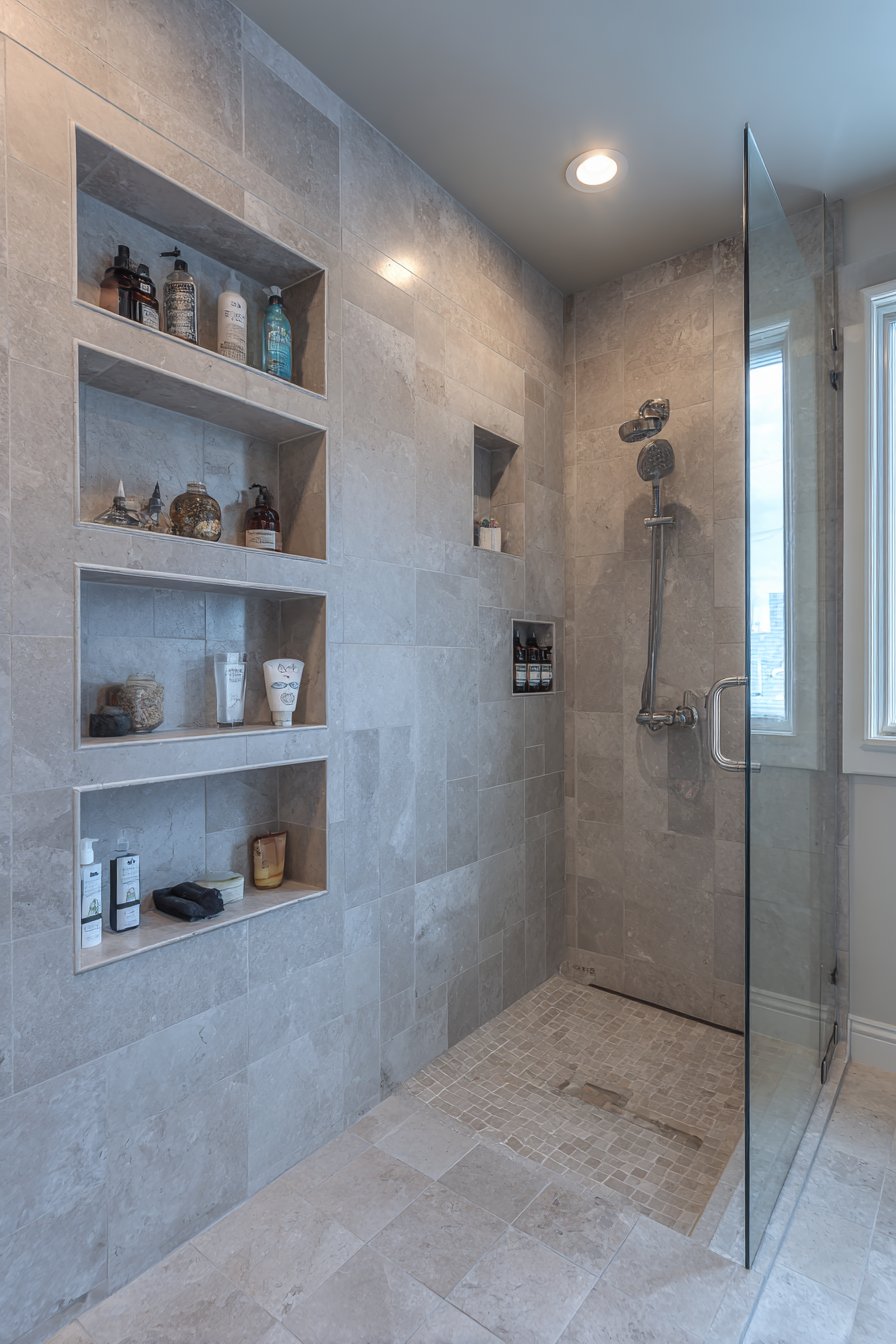
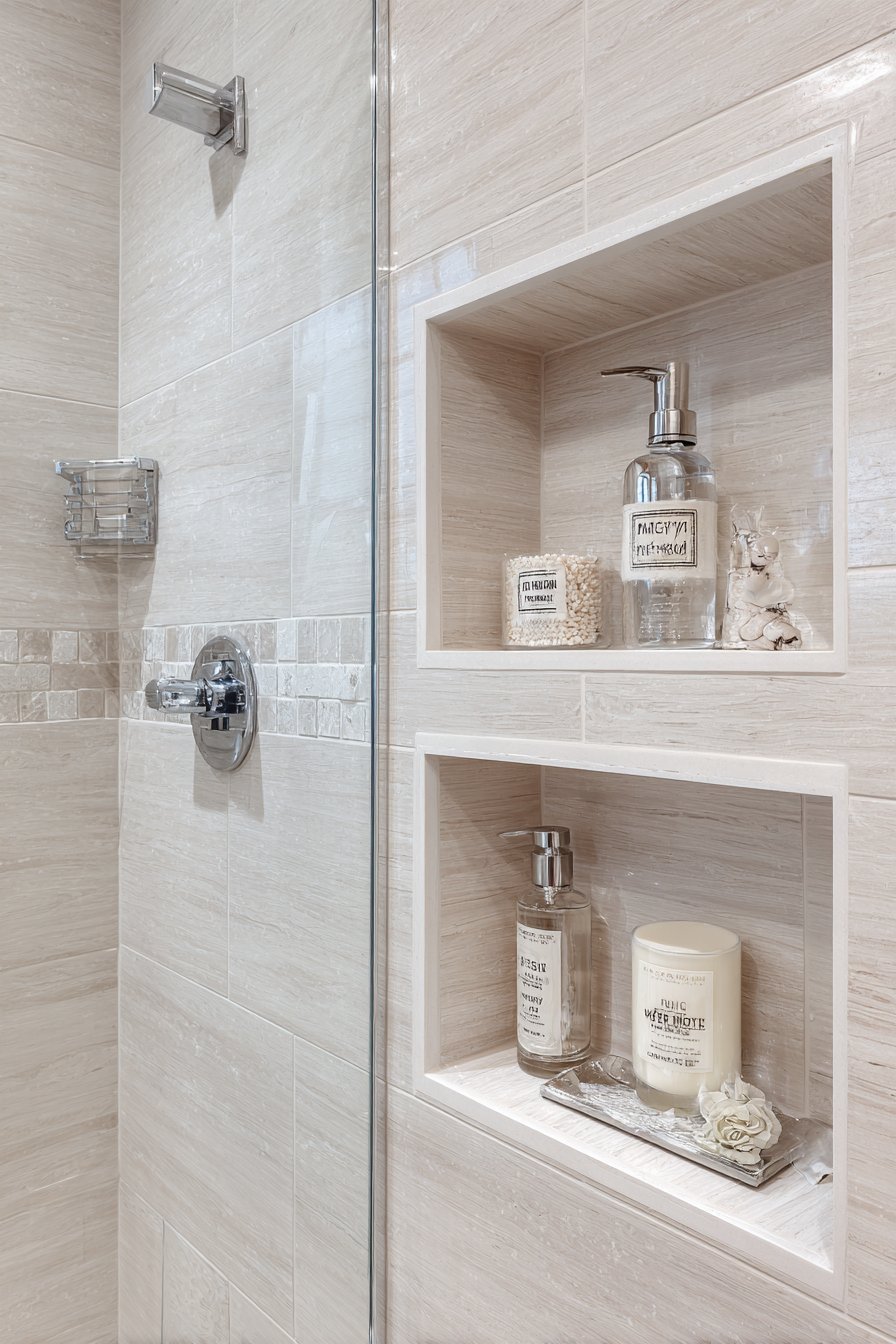
For those who prefer extensive storage and meticulous organization, the three-niche staggered arrangement provides compartmentalized space for different product categories. Large-format grey porcelain tiles create a contemporary backdrop, while waterfall-edge shelving adds refined detail to each of the three horizontal niches positioned at staggered heights. The frameless glass enclosure and linear drain maintain the sleek contemporary aesthetic while the thoughtful organization system ensures everything has its designated place.
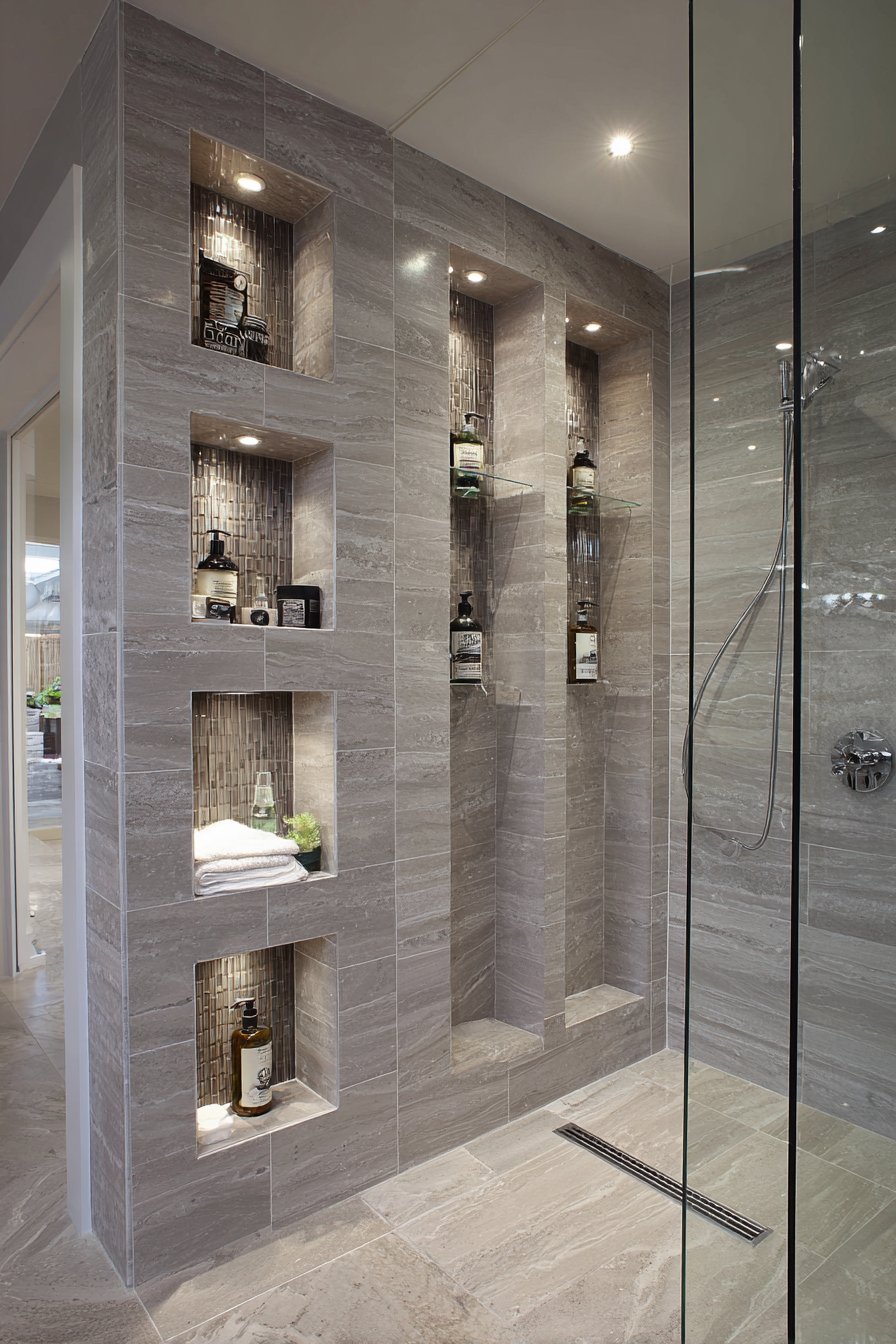
The staggered height arrangement serves both aesthetic and functional purposes. Visually, the varied positions create dynamic composition that’s more interesting than three identically positioned niches, while practically, the different heights accommodate different user preferences and product types. The highest niche might hold infrequently used items or seasonal products, the middle niche at prime reach height contains everyday essentials, and the lowest niche accommodates children’s products or bulk containers.
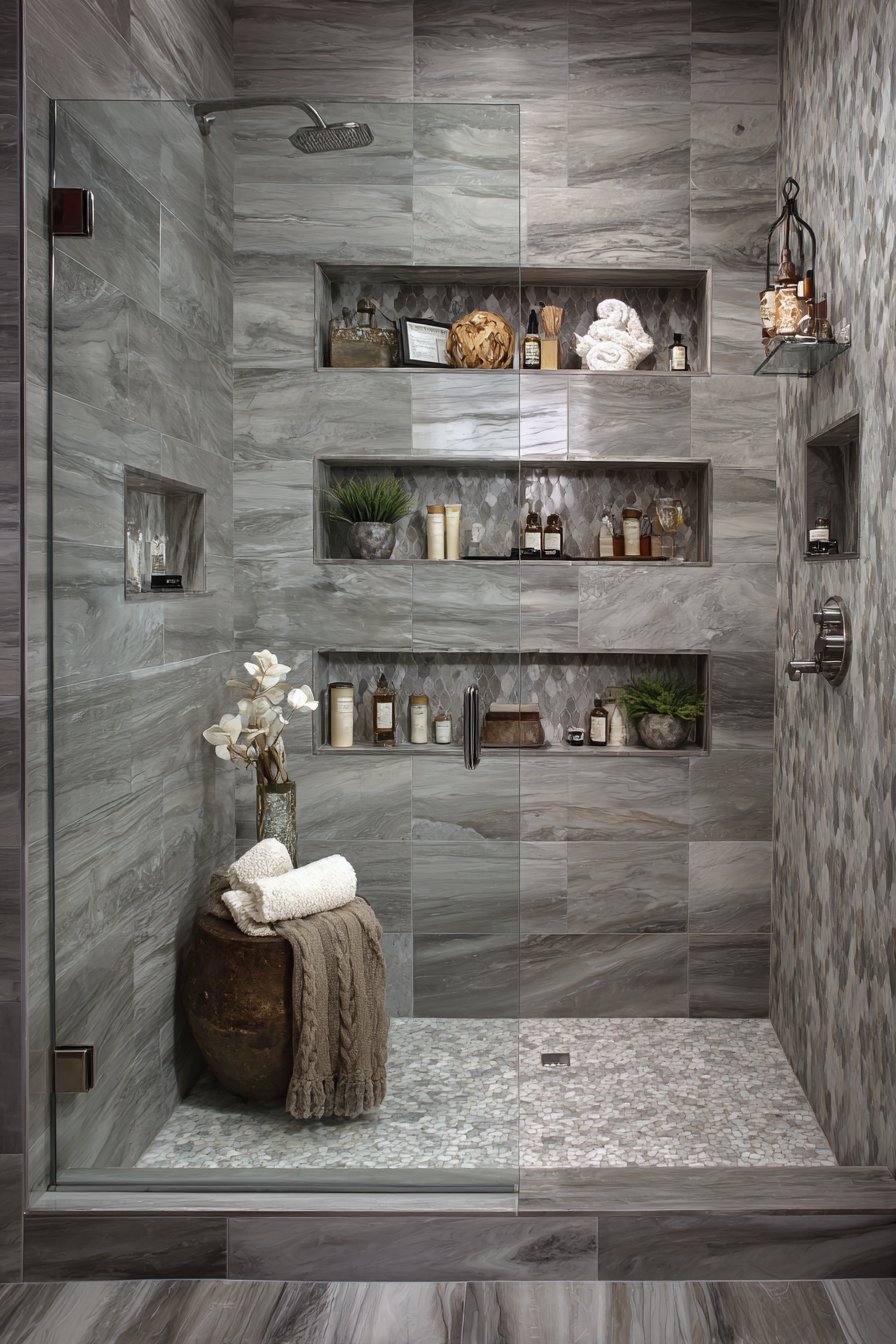
Waterfall-edge shelving—where the material extends down the front edge rather than showing the tile thickness—demonstrates attention to detail that separates high-quality installations from basic work. This edge treatment creates a clean, finished appearance while providing slightly more surface area than standard thickness edges. The linear drain represents contemporary shower design evolution, creating a subtle, elongated drain opening that’s less visually intrusive than traditional center drains while facilitating excellent water removal.
Key Design Tips:
- Space niches vertically with 10-15 inches between each level to create distinct zones
- Vary niche widths if desired—perhaps 14 inches, 18 inches, and 22 inches for visual interest
- Install waterfall edges carefully to ensure proper water drainage toward the shower rather than pooling on shelves
- Coordinate niche materials with vanity countertops or other bathroom surfaces for cohesive design
- Consider labeling or organizing by category (hair care, body care, face care) for optimal functionality
- Ensure adequate structural support behind walls to accommodate the weight of multiple loaded shelves
17. Dramatic Backlit Onyx Statement
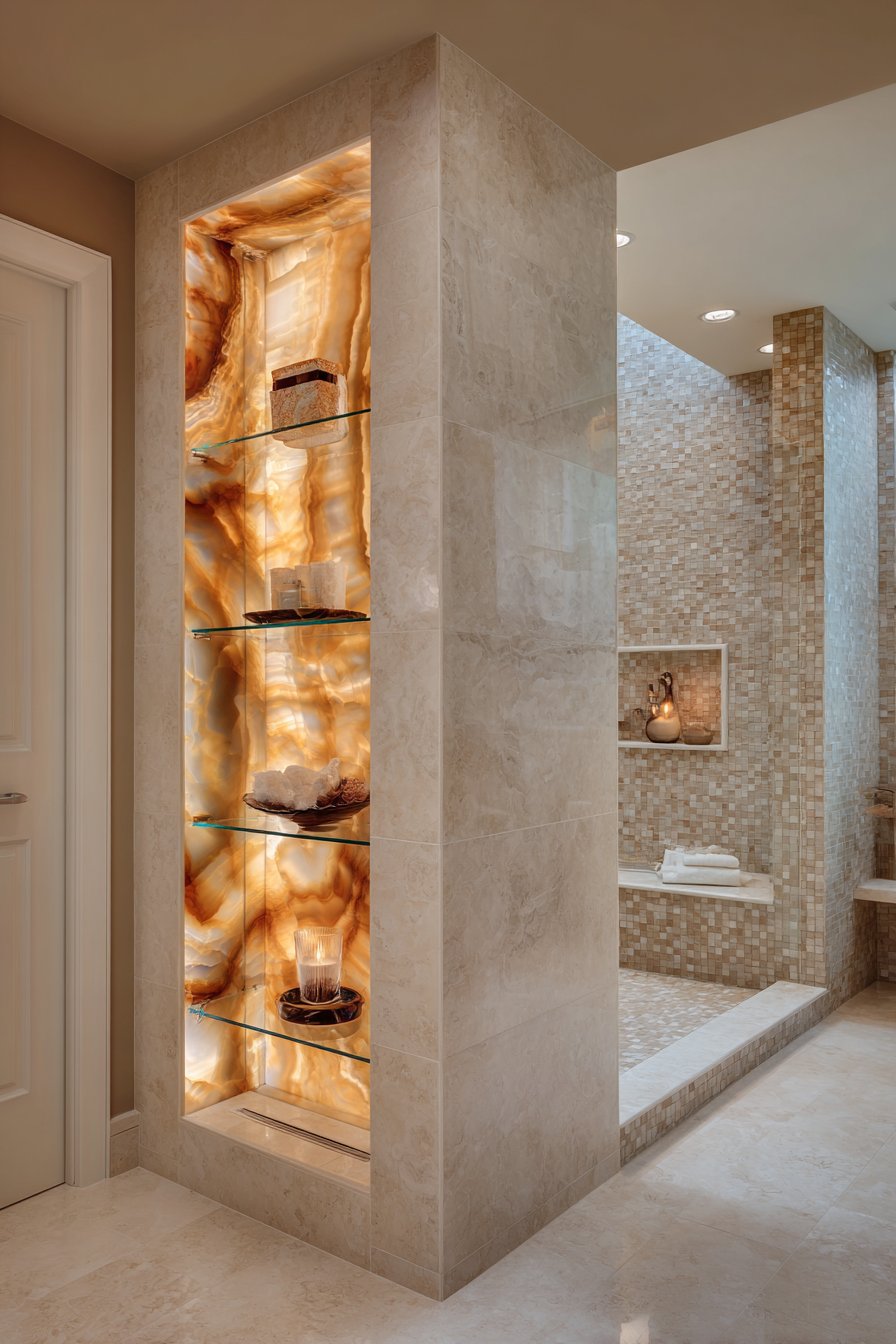
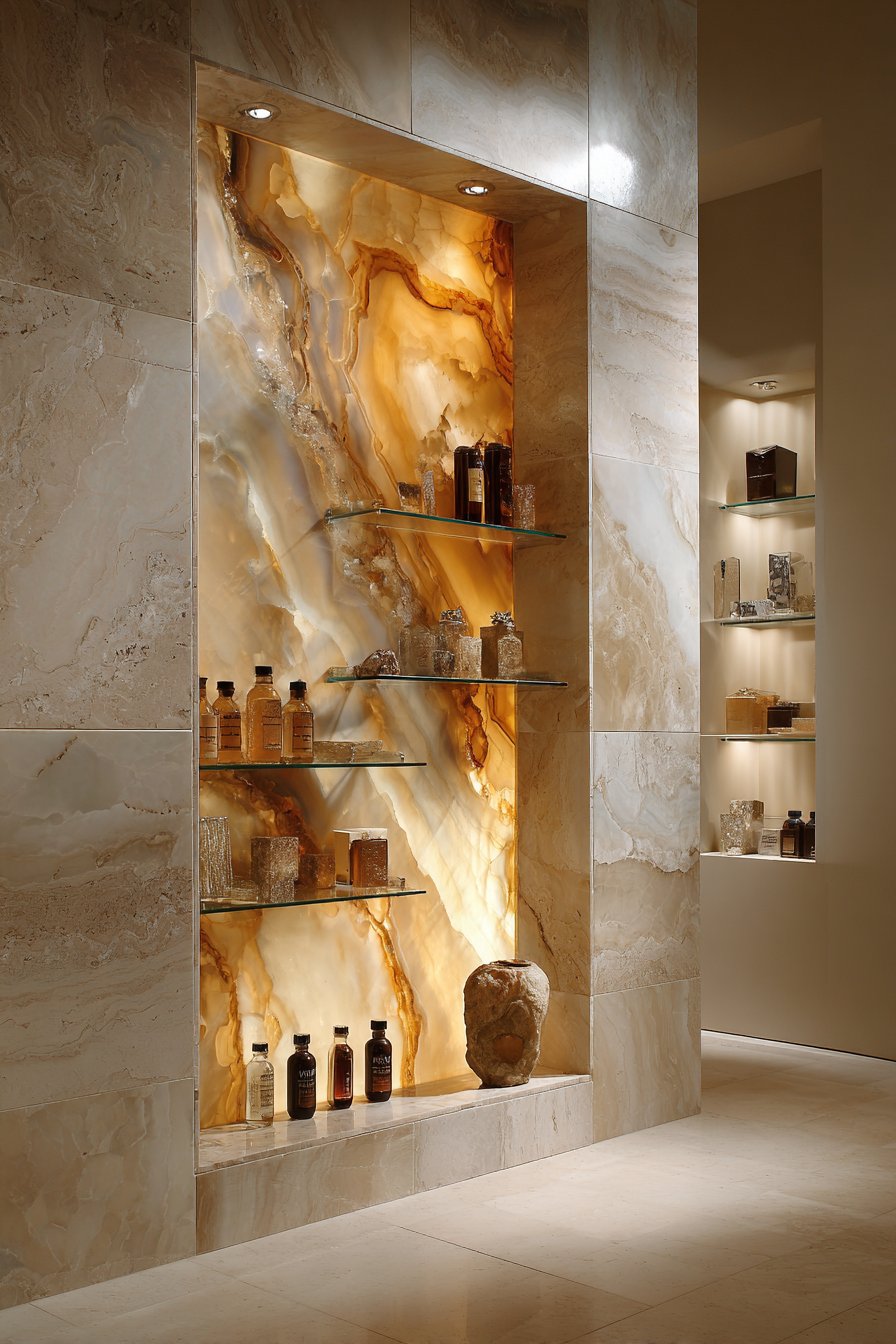
When the goal is creating a true showpiece that transcends functional storage to become sculptural art, backlit onyx delivers unmatched drama. This full-height vertical niche features thin onyx stone panels lit from behind, creating a glowing amber focal point that becomes the bathroom’s centerpiece. Floating glass shelves hold minimal high-end products while allowing light to pass through unobstructed, and the surrounding coordinating beige limestone tiles provide neutral context that allows the illuminated onyx to star.
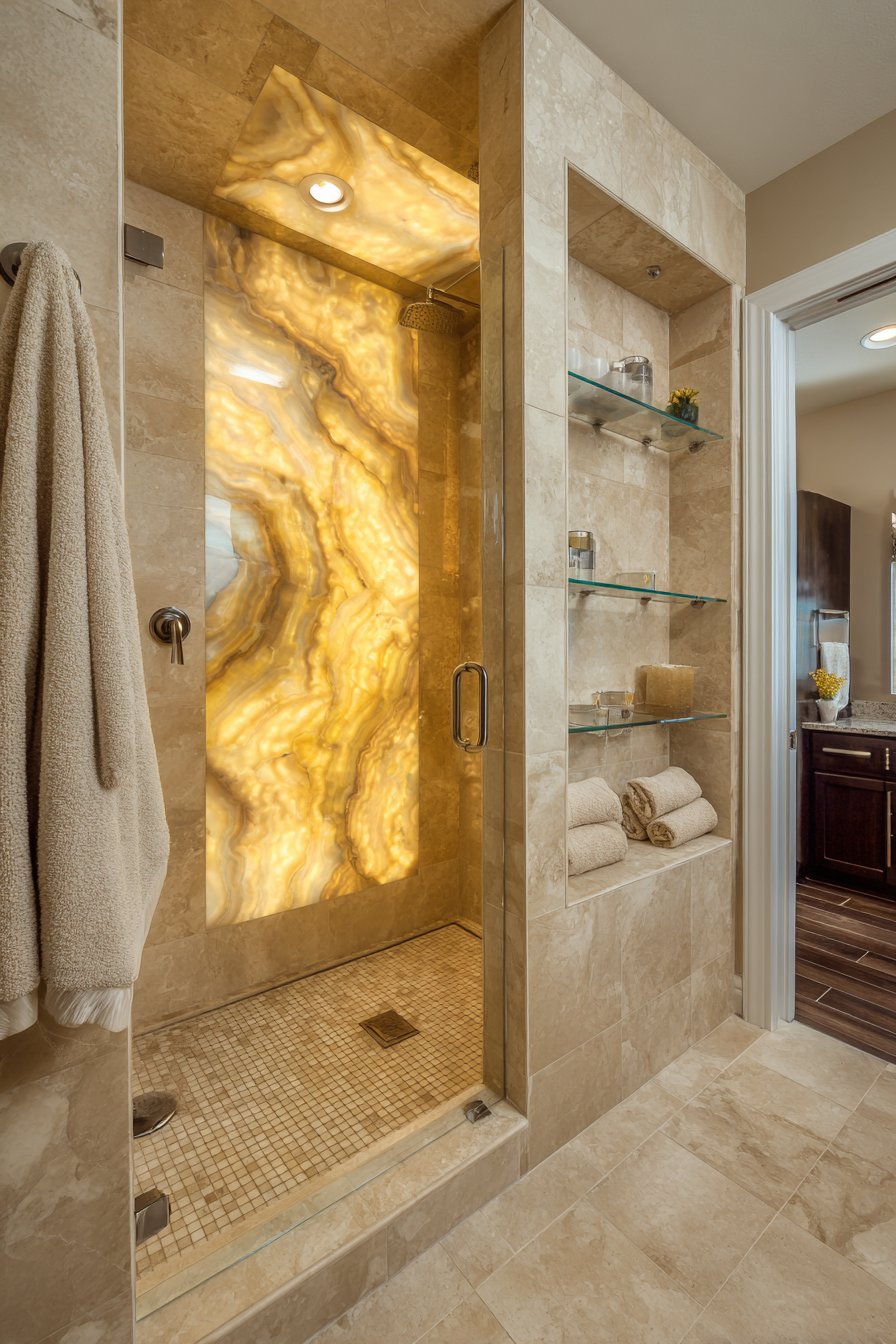
Onyx represents one of nature’s most spectacular materials—a translucent stone formed from calcium deposits that transmits light in ways opaque materials cannot. When backlit, the stone’s internal structures become visible, creating organic patterns of color and light that resemble stained glass or abstract paintings. The amber and honey tones most common in onyx create warm, inviting illumination that transforms the shower into something approaching sacred space, elevating daily routines into contemplative rituals.
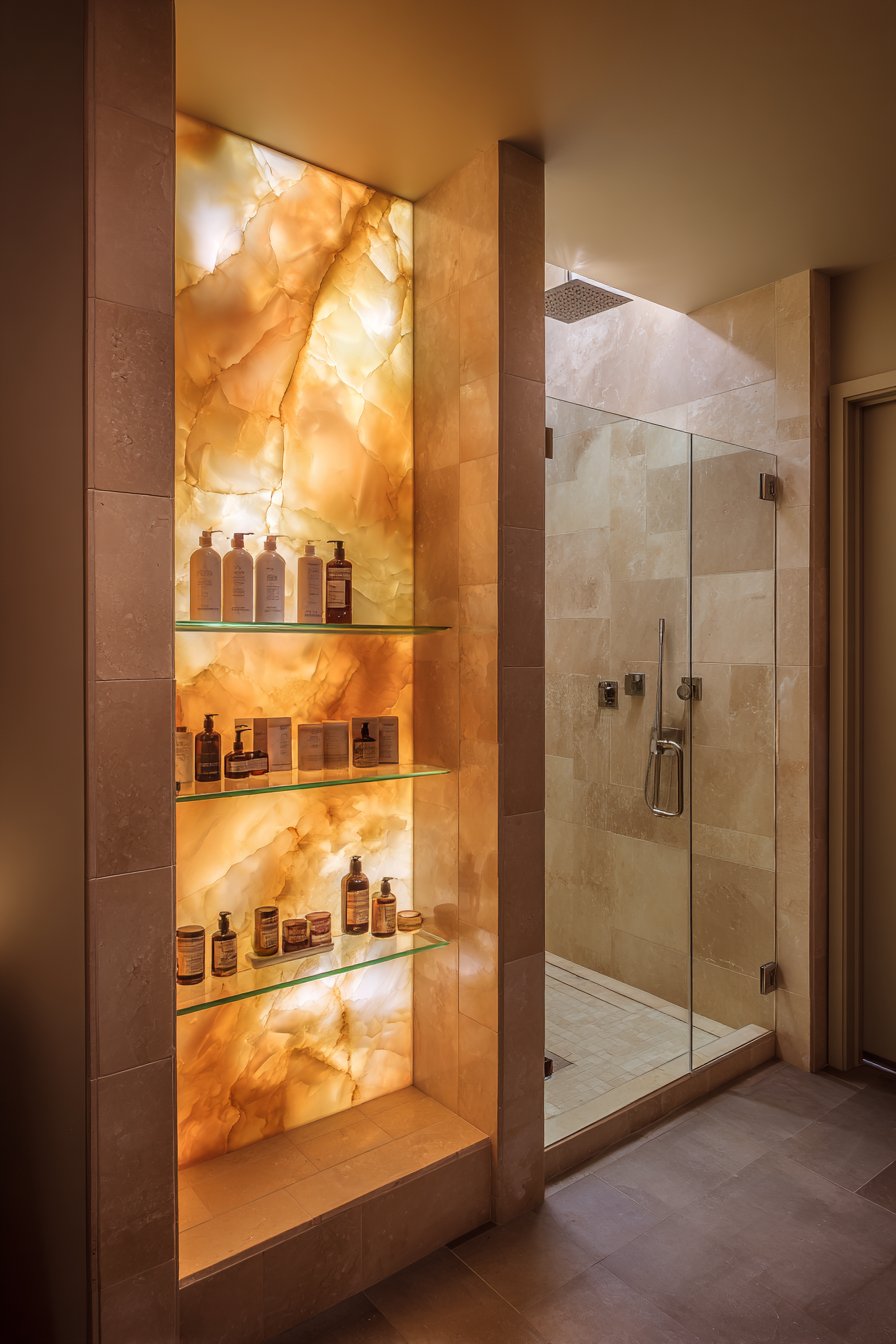
This level of design sophistication requires careful planning and professional installation. The backlighting must be positioned correctly to ensure even illumination without hot spots or dark areas, and the electrical work must meet all safety codes for wet locations. The stone itself requires precise cutting and skilled mounting, as onyx can be more fragile than granite or marble. The resulting effect, however, justifies the complexity—this becomes a signature feature that defines the entire bathroom and creates genuine luxury.
Key Design Tips:
- Work with a stone specialist experienced in onyx installation and backlighting techniques
- Install LED lighting rated for wet locations on appropriate dimmer controls
- Select onyx slabs personally to ensure the veining patterns and color tones meet your vision
- Consider the electrical requirements early in the renovation process to ensure proper wiring
- Limit displayed products to maintain the focus on the illuminated stone feature
- Seal onyx surfaces appropriately as the stone can be more porous than granite
- Budget adequately as backlit onyx installations represent significant investments
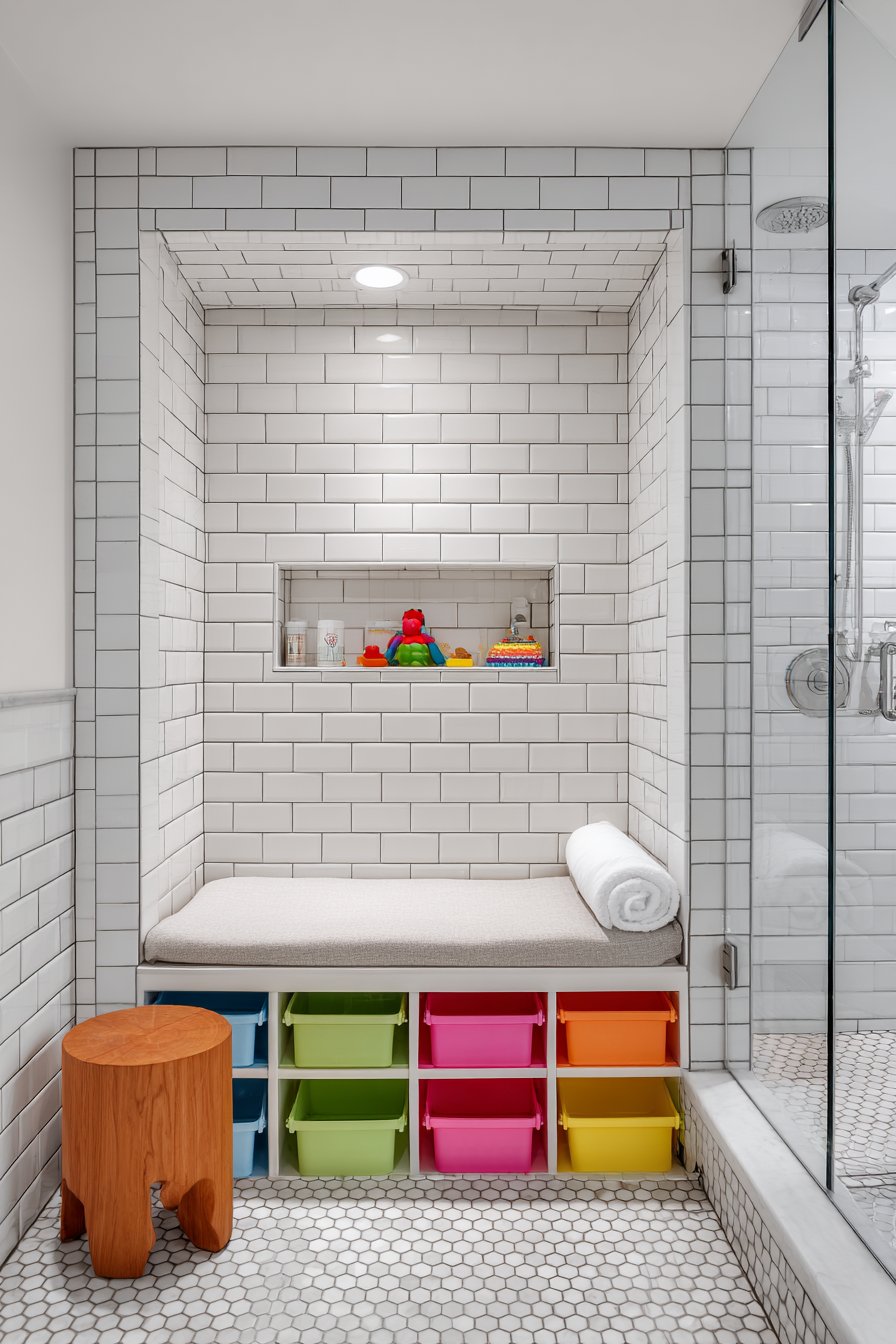
18. Family-Friendly Practical Design
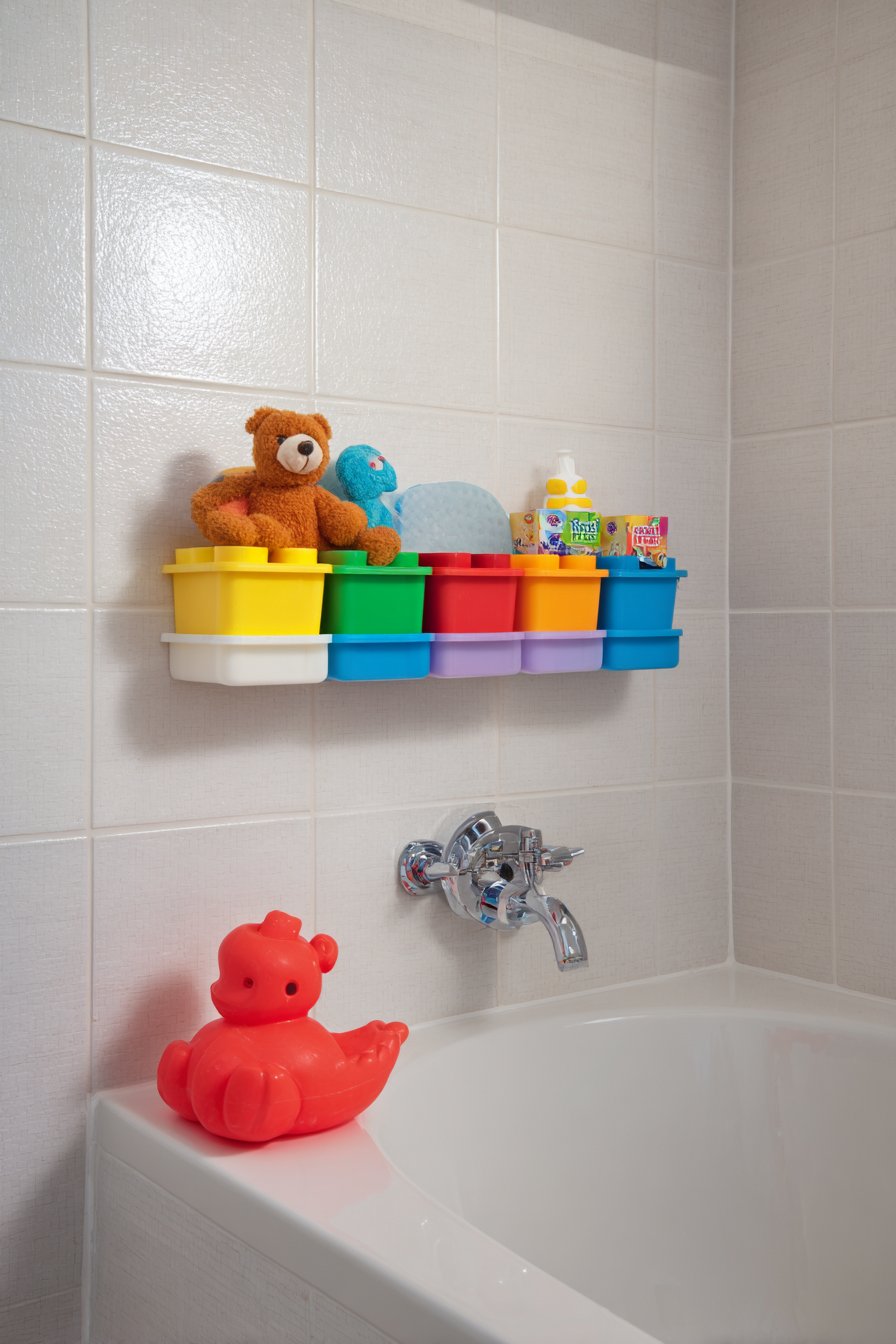
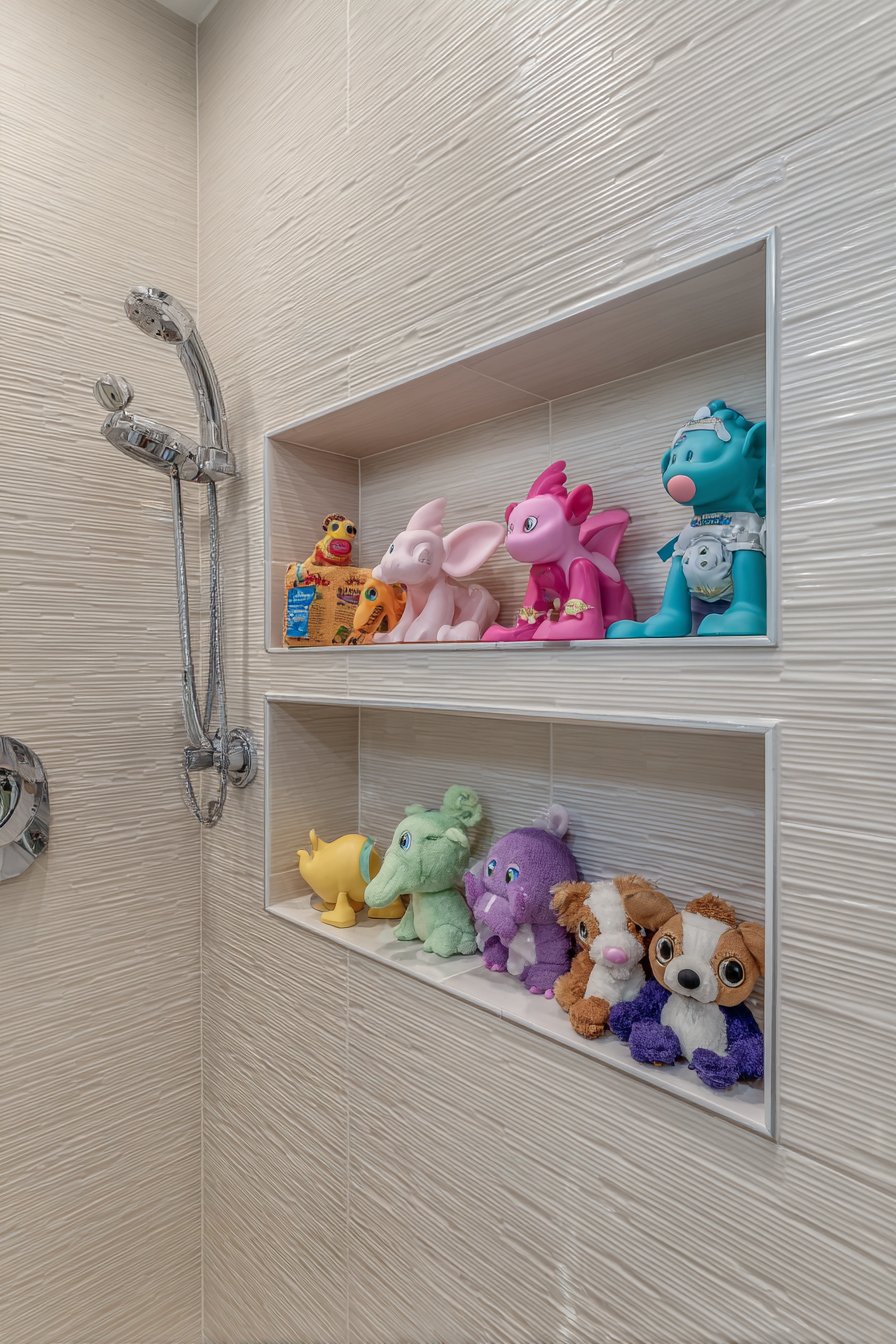
Bathrooms serving families with young children require different considerations than adult-only spaces. This practical design features a wide horizontal niche positioned at kid-friendly height (approximately 30-36 inches) in durable white ceramic tile with rounded bullnose edges that prevent injuries. Colorful silicone caddies organize children’s bath toys and products in bright, cheerful hues, while standard chrome fixtures maintain budget-friendly affordability that’s important for growing families.
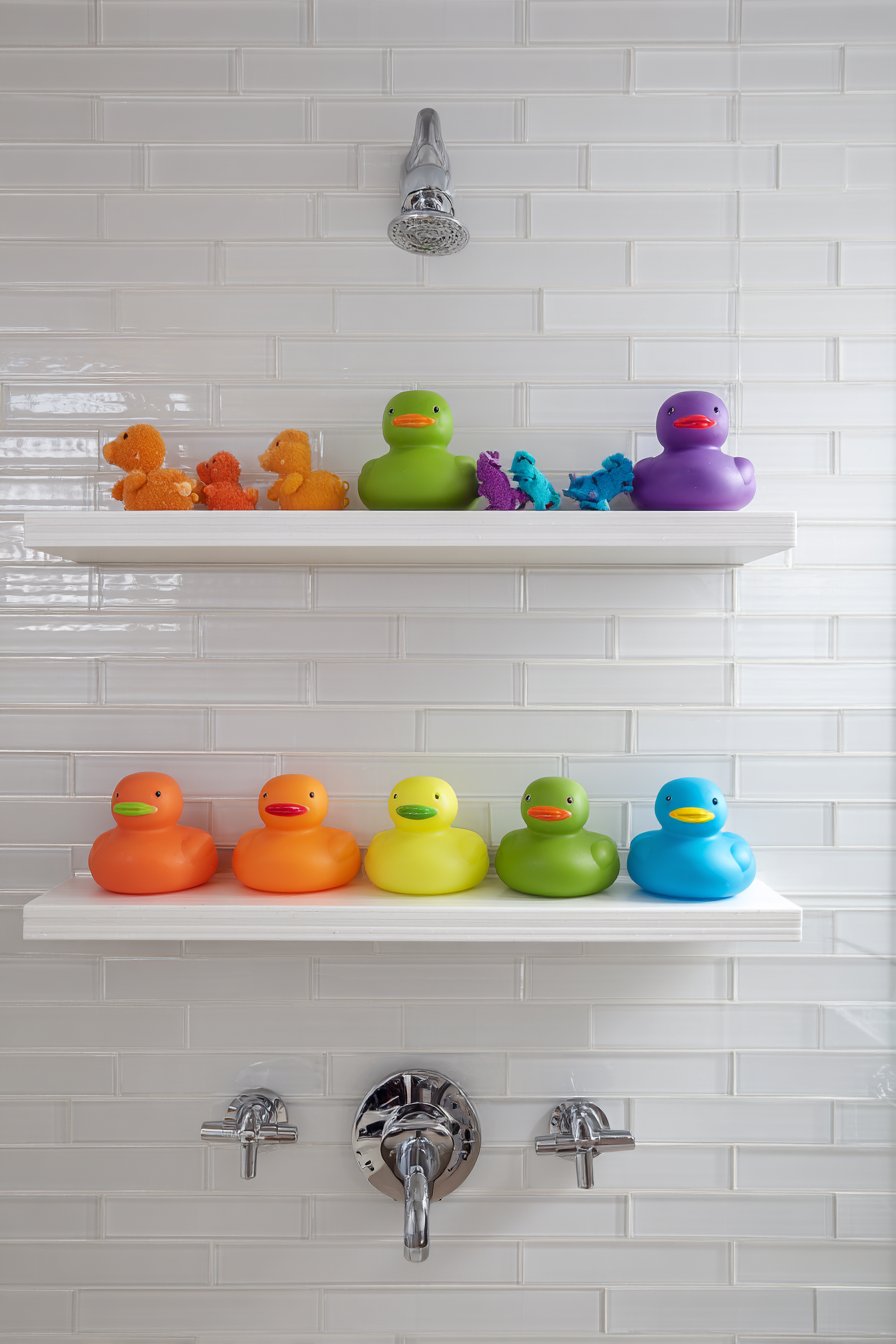
The lower positioning makes a crucial difference for children’s independence and safety. Kids can reach their own products without climbing, stretching, or requiring adult assistance, fostering autonomy and self-sufficiency. The rounded bullnose edges eliminate sharp corners that could cause injury during the inevitable roughhousing and active play that occurs in family bathrooms. These thoughtful details demonstrate how good design considers all users, not just adults.
Silicone caddies represent smart material choice for family bathrooms—they’re essentially indestructible, easy to clean, dry quickly, and come in fun colors that appeal to children while adding playful personality to the space. The removable caddy approach allows easy cleaning of the niche itself while providing flexibility to rearrange or update as children’s needs change. The honest, straightforward design acknowledges real family life rather than pursuing an aspirational aesthetic that wouldn’t survive actual use.
Key Design Tips:
- Position family-use niches lower (30-40 inches) for child accessibility
- Use rounded edges and corners throughout to minimize injury potential
- Select durable, easy-to-clean materials that can withstand rough treatment
- Consider installing a second niche at adult height for grown-up products separate from kids’ items
- Choose mold-resistant grout and grout sealers as family showers see heavy use
- Install adequate ventilation to handle the extended shower times that occur with multiple family members bathing
- Use bright, adequate lighting so children can see clearly during bath time
19. Urban Industrial Raw Aesthetic
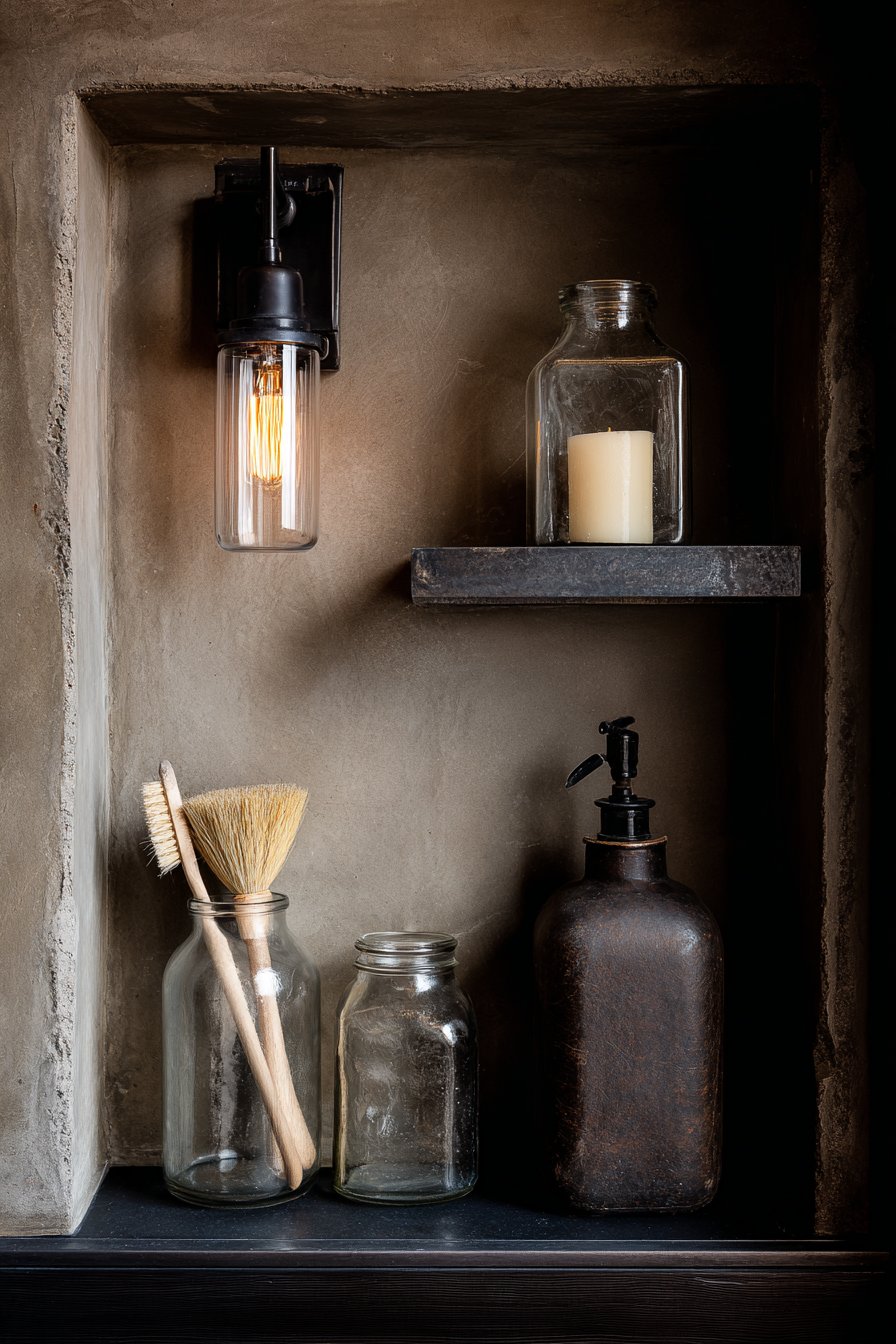
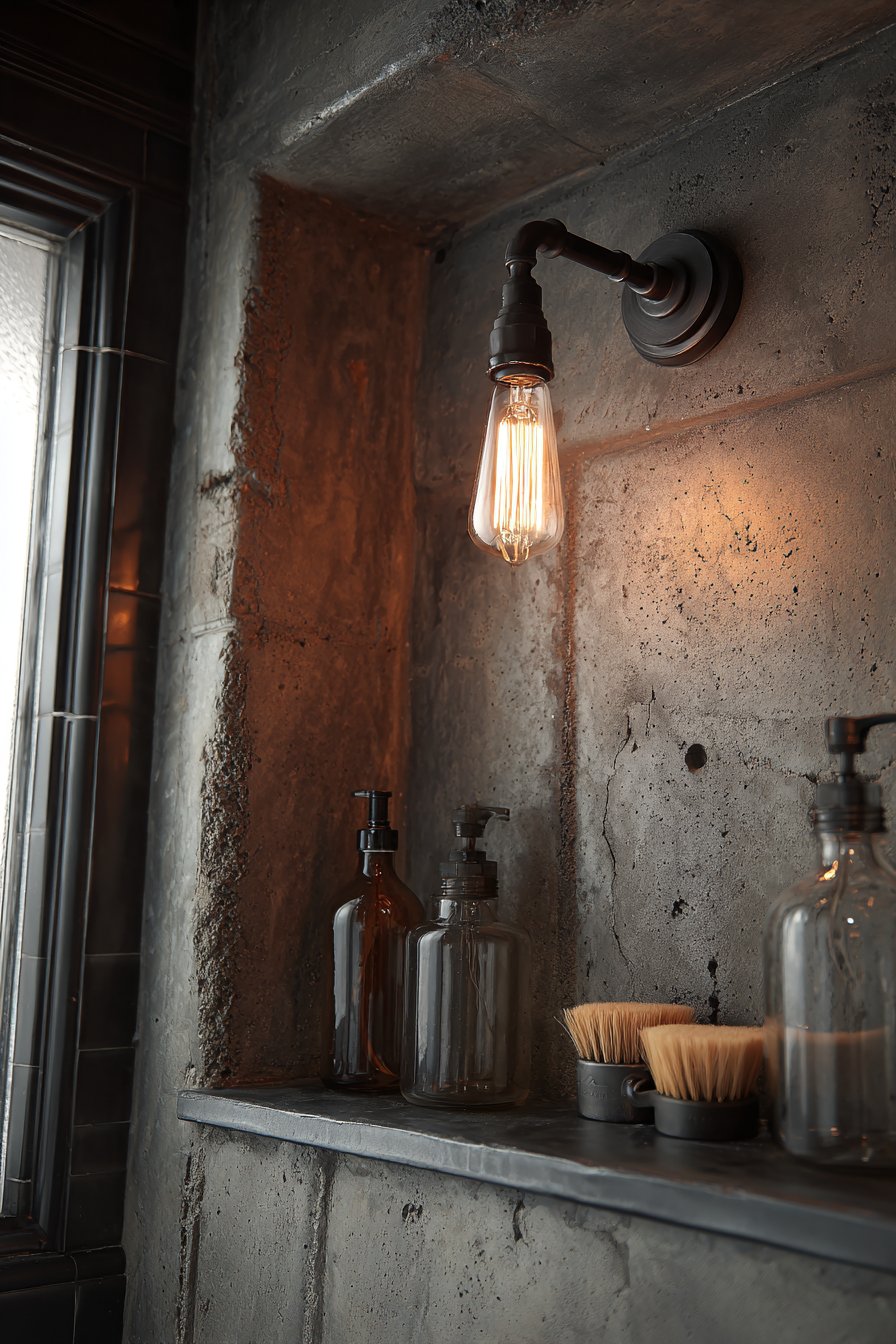
For those drawn to the honest materials and utilitarian beauty of industrial design, this concept embraces exposed concrete and raw steel with unapologetic authenticity. The niche features genuine exposed concrete with visible form marks that reveal the construction process, paired with a raw steel floating shelf that will develop natural patina over time. Matte black fixtures and an Edison-style bulb sconce create urban loft atmosphere, while glass apothecary bottles and natural bristle brushes complete the masculine, unadorned aesthetic.
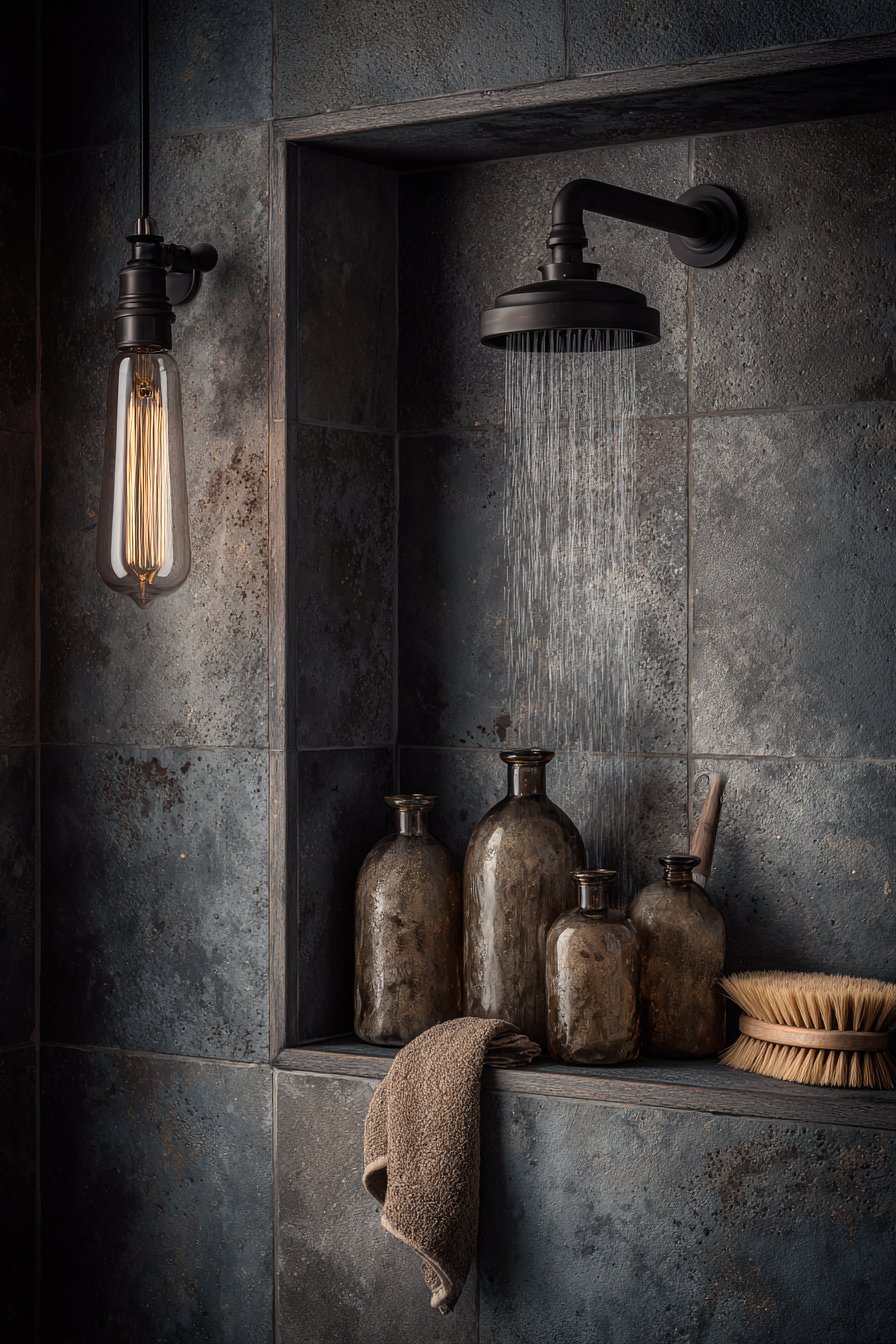
Industrial design celebrates the beauty found in construction materials typically hidden behind finished surfaces. The exposed concrete with its slight surface irregularities, form board impressions, and honest grey tone makes no attempt to appear refined or polished—instead, it revels in the raw material’s inherent character. This approach requires confidence and commitment to a strong aesthetic vision, but the results create spaces with genuine personality and distinctive character impossible to achieve with conventional pretty materials.
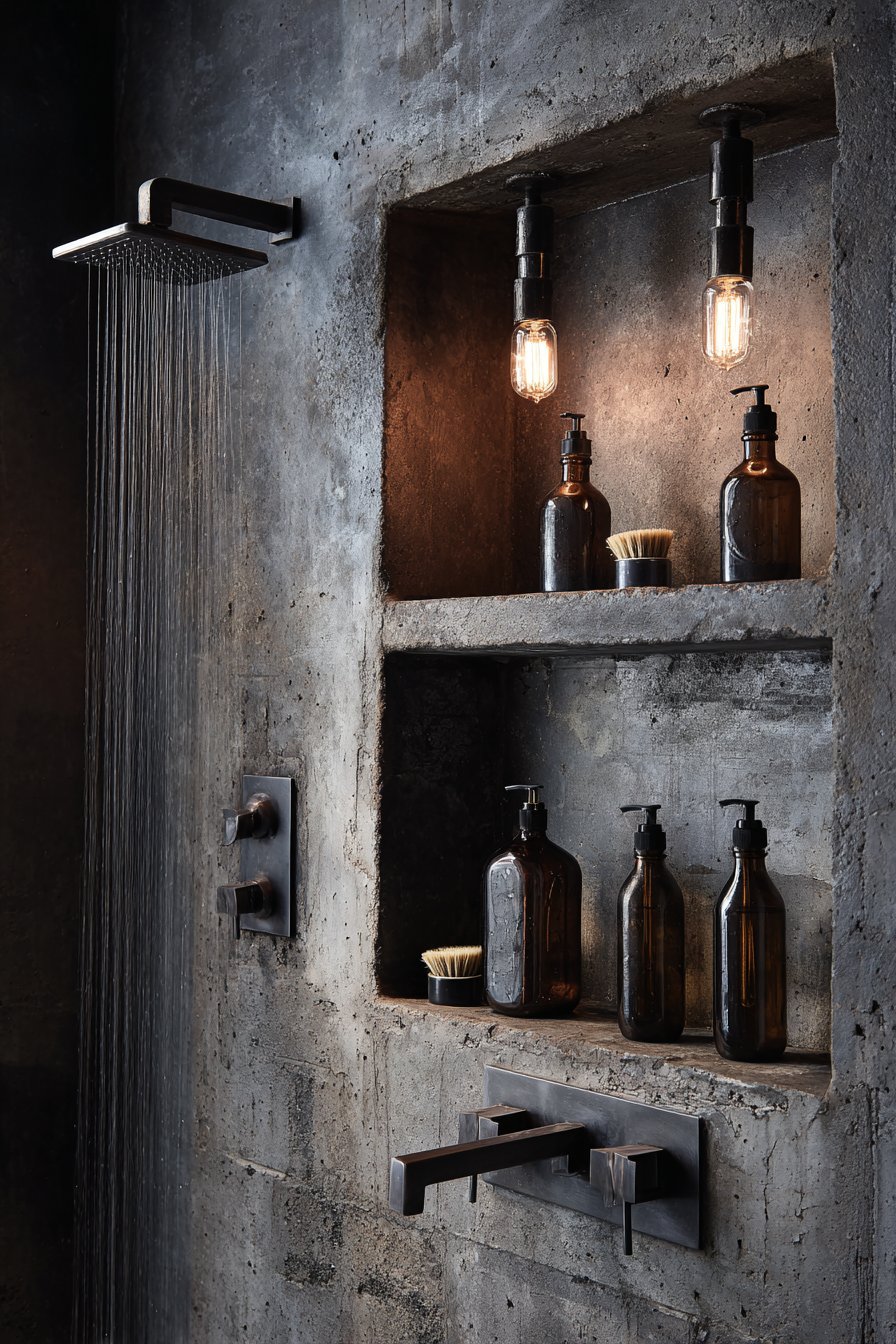
The raw steel shelf introduces the inevitability of change into the design—steel will oxidize and develop rust patina in humid bathroom environments unless sealed, and this design embraces that evolution as part of the material’s beauty. The natural aging process creates unique character that develops over time rather than looking exactly the same years after installation. This acceptance of material transformation reflects industrial design’s core principle: honest materials honestly expressed.
Key Design Tips:
- Seal concrete surfaces with penetrating concrete sealer to prevent water absorption while maintaining the raw appearance
- Decide whether to allow steel to develop natural rust patina or apply clear sealant to arrest the oxidation process
- Install adequate ventilation to prevent excessive moisture that could accelerate material deterioration
- Consider the permanence of exposed concrete—it cannot be easily painted or covered if you tire of the look
- Coordinate industrial elements throughout the bathroom (metal shelving, exposed pipes, concrete or brick elsewhere)
- Balance the hard, cold materials with warm lighting and natural elements to prevent an overly harsh atmosphere
- Ensure structural support adequate for the weight of concrete and steel materials
20. Transitional Classic-Contemporary Bridge
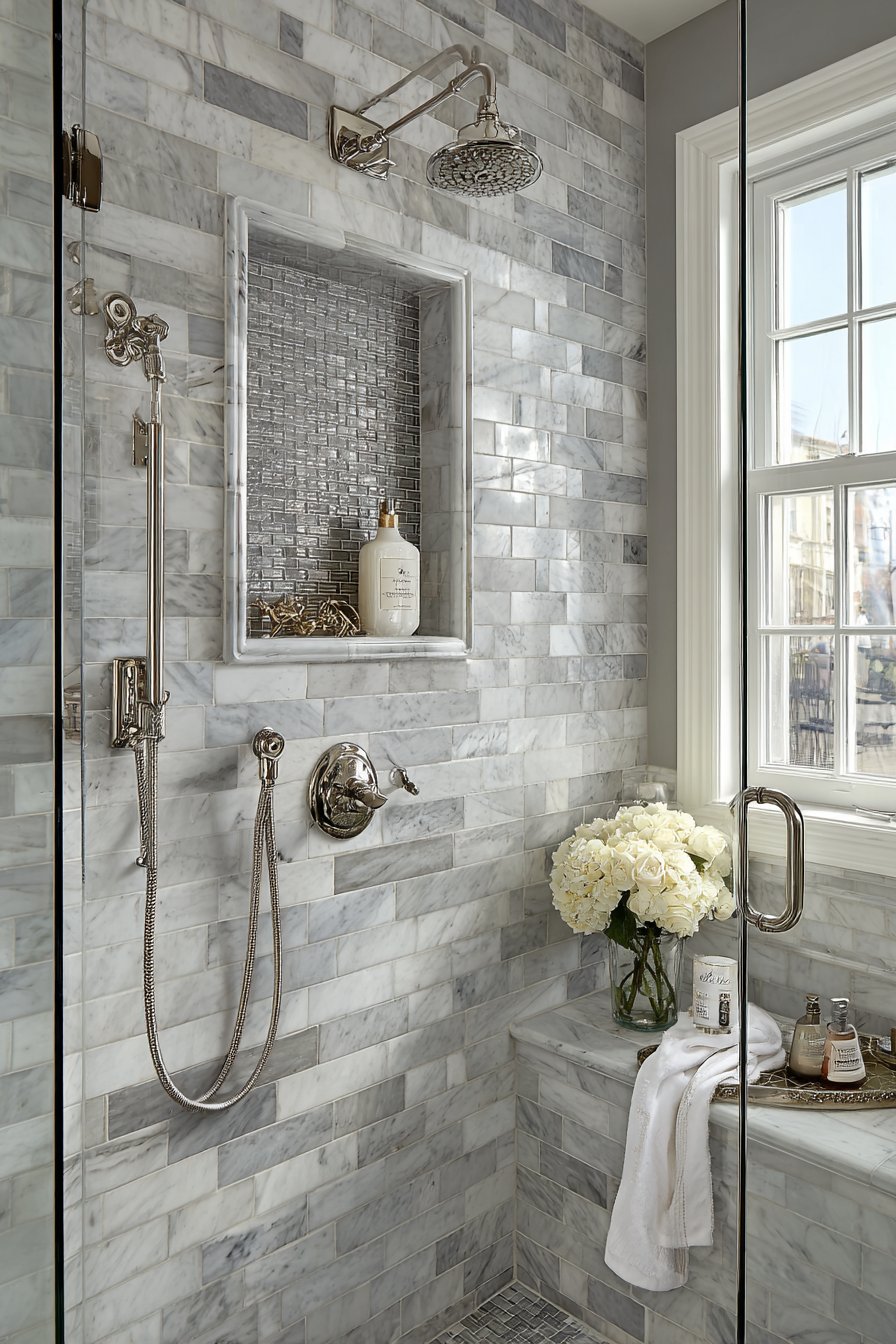
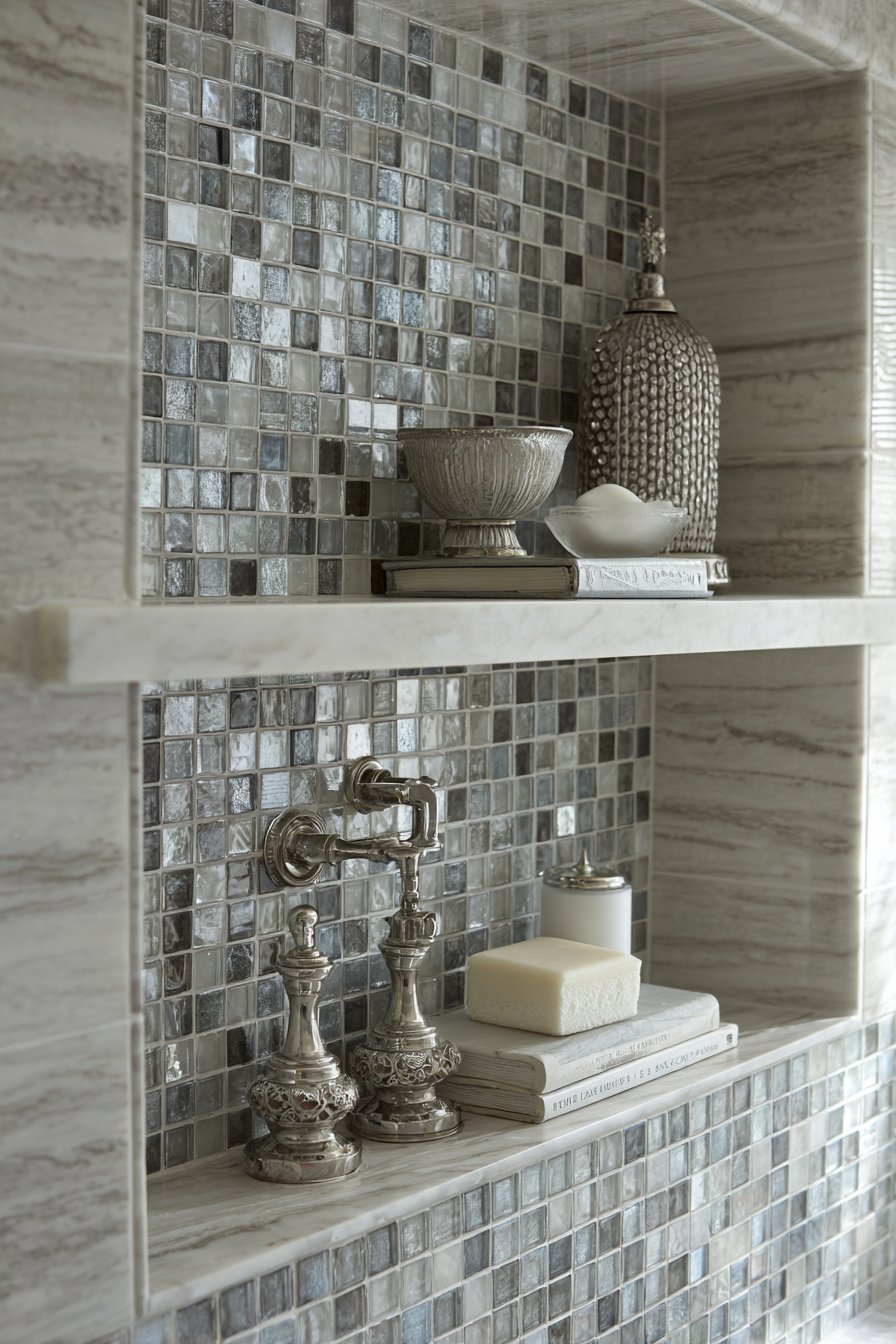
Transitional design serves homeowners who appreciate both traditional and contemporary aesthetics, creating spaces that feel current without abandoning classic principles. This niche design features the timeless appeal of classic white subway tile combined with contemporary grey glass mosaic tile backing. Brushed nickel fixtures bridge eras by being neither strictly traditional chrome nor boldly modern matte black, and the carefully arranged white and grey bath accessories maintain the refined neutral palette that characterizes successful transitional design.
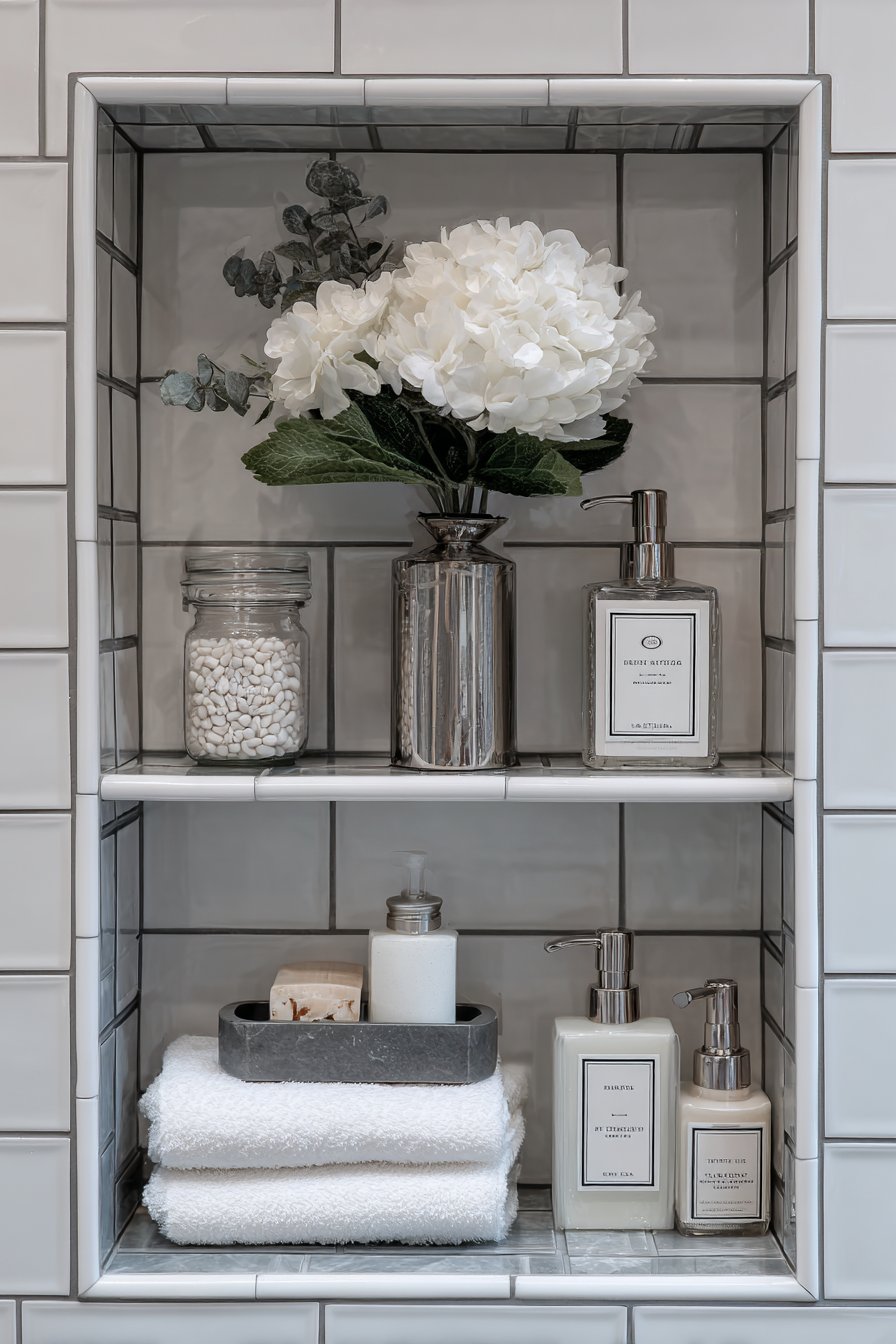
The power of transitional design lies in its ability to create spaces that appeal across generations and persist through changing trends. The subway tile provides traditional foundation that feels familiar and comfortable, while the glass mosaic backing adds contemporary sparkle and visual interest. This layering of classic and current elements results in a bathroom that won’t feel dated in five years yet doesn’t sacrifice timeless appeal for fleeting trendiness.
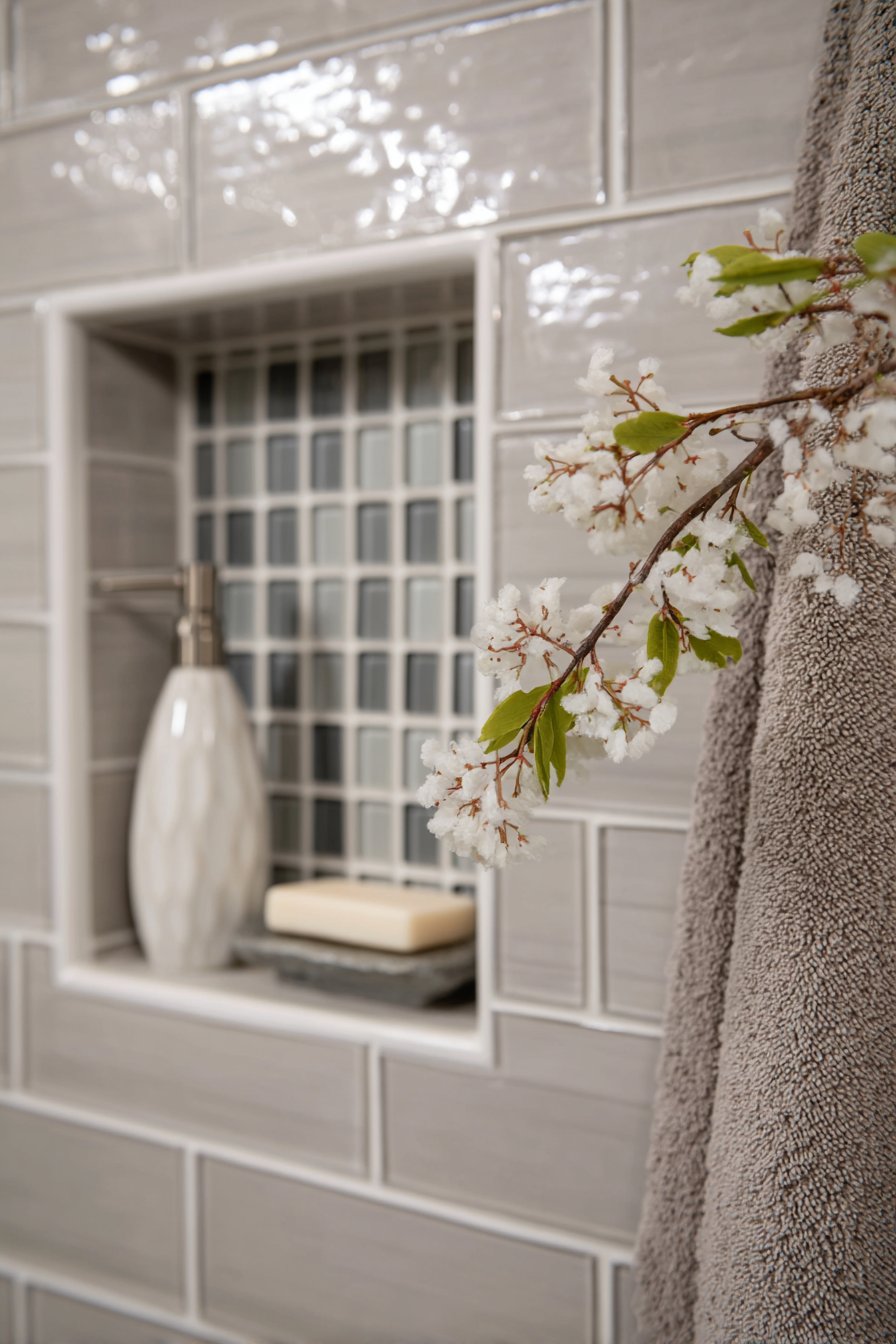
Brushed nickel represents the perfect transitional finish—the brushed texture adds contemporary casual feeling while the nickel tone stays neutral enough to work with both warm and cool color schemes. The finish also offers practical advantages, hiding water spots and fingerprints better than polished chrome while being easier to maintain than the trendy matte black finishes that show water marks prominently. This balance of aesthetic and practical considerations exemplifies the transitional approach.
Key Design Tips:
- Maintain a 60/40 or 70/30 ratio between traditional and contemporary elements for balanced transitional style
- Keep the color palette neutral (whites, greys, soft beiges) to bridge time periods successfully
- Select fixtures in transitional finishes like brushed nickel, satin brass, or champagne bronze
- Avoid extremely trendy elements that will quickly date the space
- Incorporate both straight lines (contemporary) and subtle curves (traditional) in the overall design
- Choose quality classic materials that have demonstrated longevity across changing trends
- Consider how the bathroom connects visually to adjacent rooms to maintain cohesive flow
21. Universal Design Accessibility
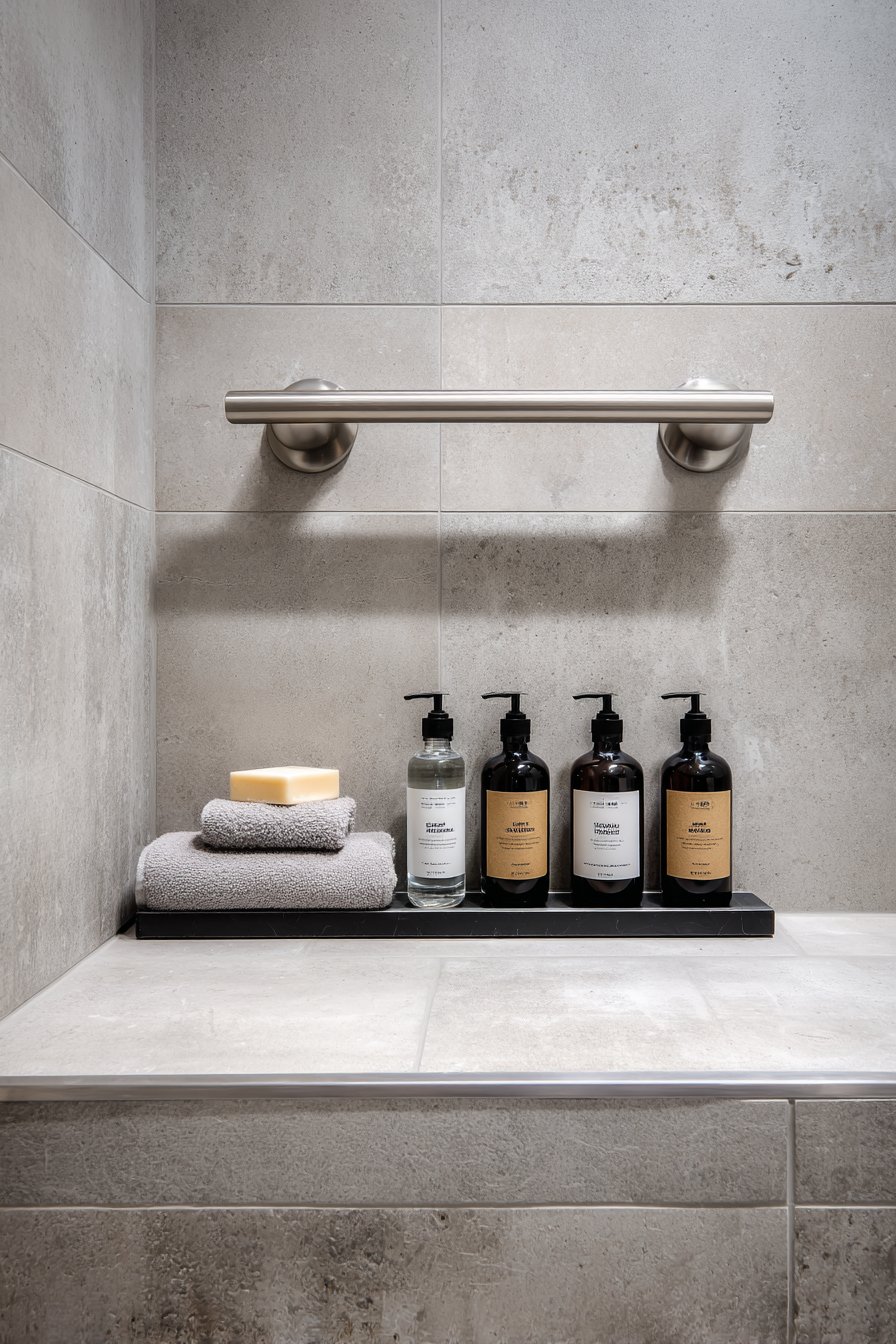
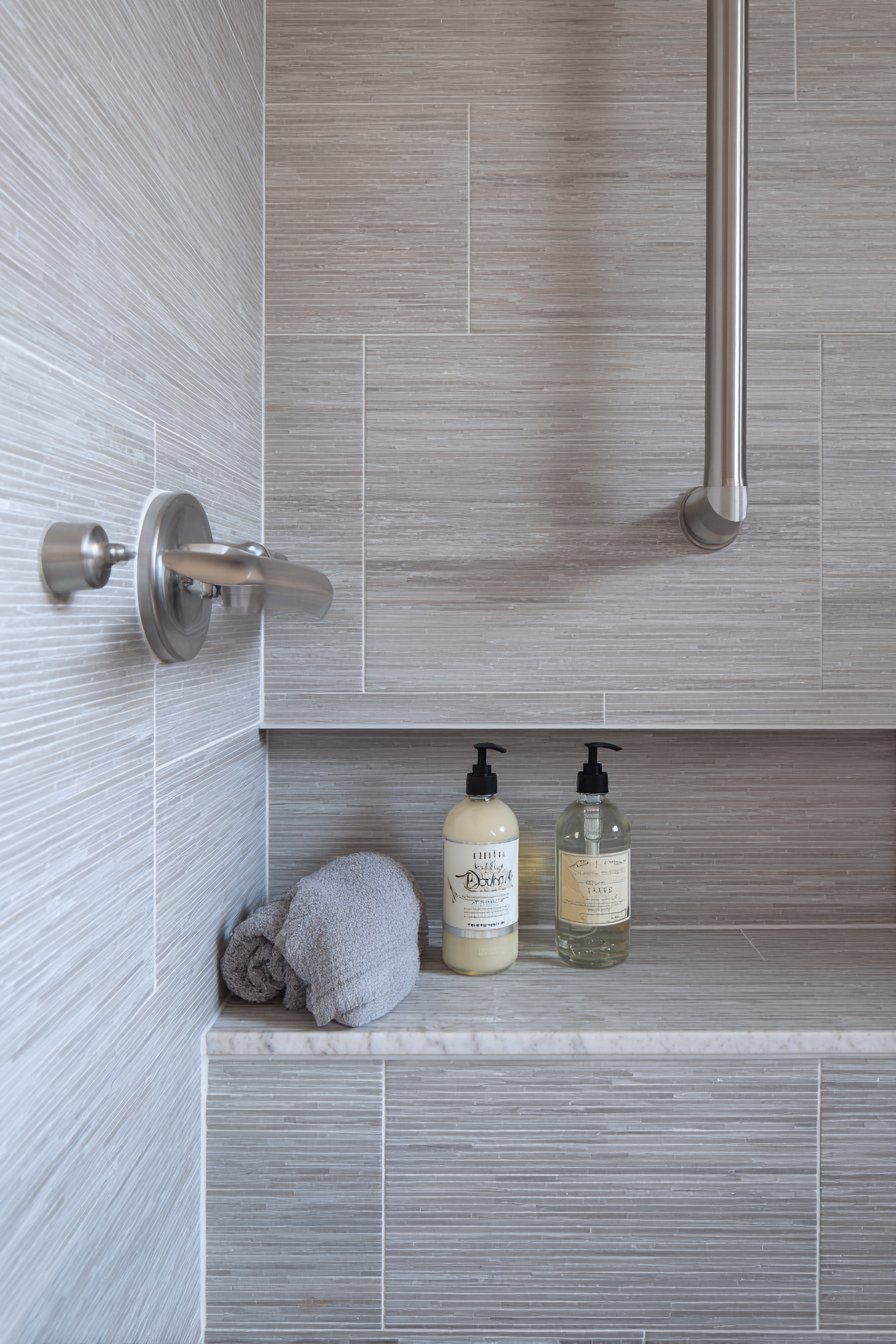
Thoughtful design considers all users regardless of age or ability, and this accessible shower niche demonstrates how universal design principles create spaces that work for everyone. The long horizontal niche positioned at seated height (approximately 24-30 inches) features slip-resistant textured grey porcelain tile and coordinates with grab bars integrated nearby in matching finish. Clear bottles with pump dispensers ensure easy access for users with limited grip strength or dexterity challenges, while the overall design maintains dignity and style rather than appearing institutional or medical.
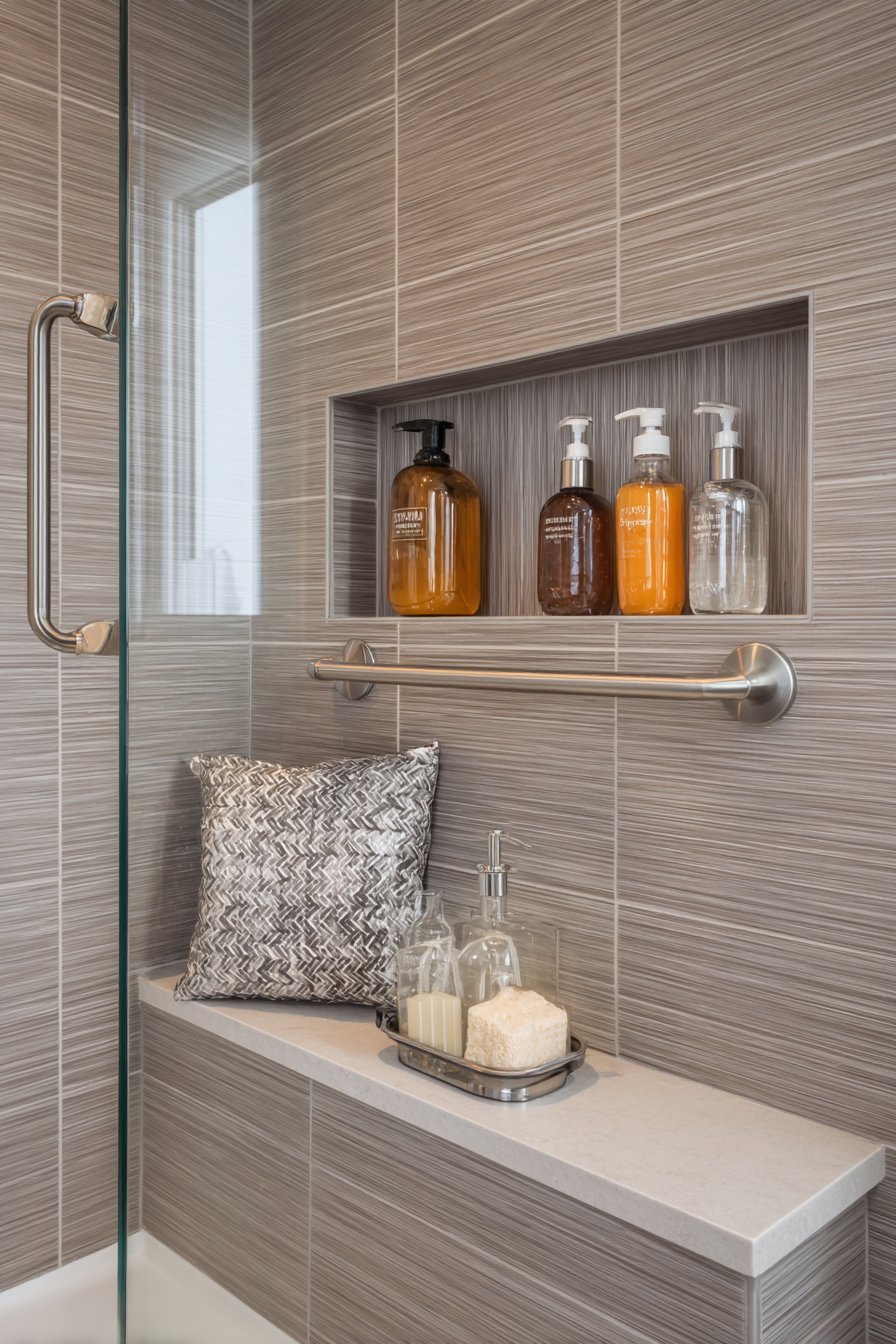
Universal design represents evolution from “accessible design” or “barrier-free design”—rather than creating special spaces that identify users as having limitations, universal design creates spaces that work better for everyone. The seated-height niche benefits elderly users and those with mobility challenges while also serving parents bathing young children or anyone who might prefer to sit while showering. The thoughtful positioning demonstrates that accommodation need not compromise aesthetics.
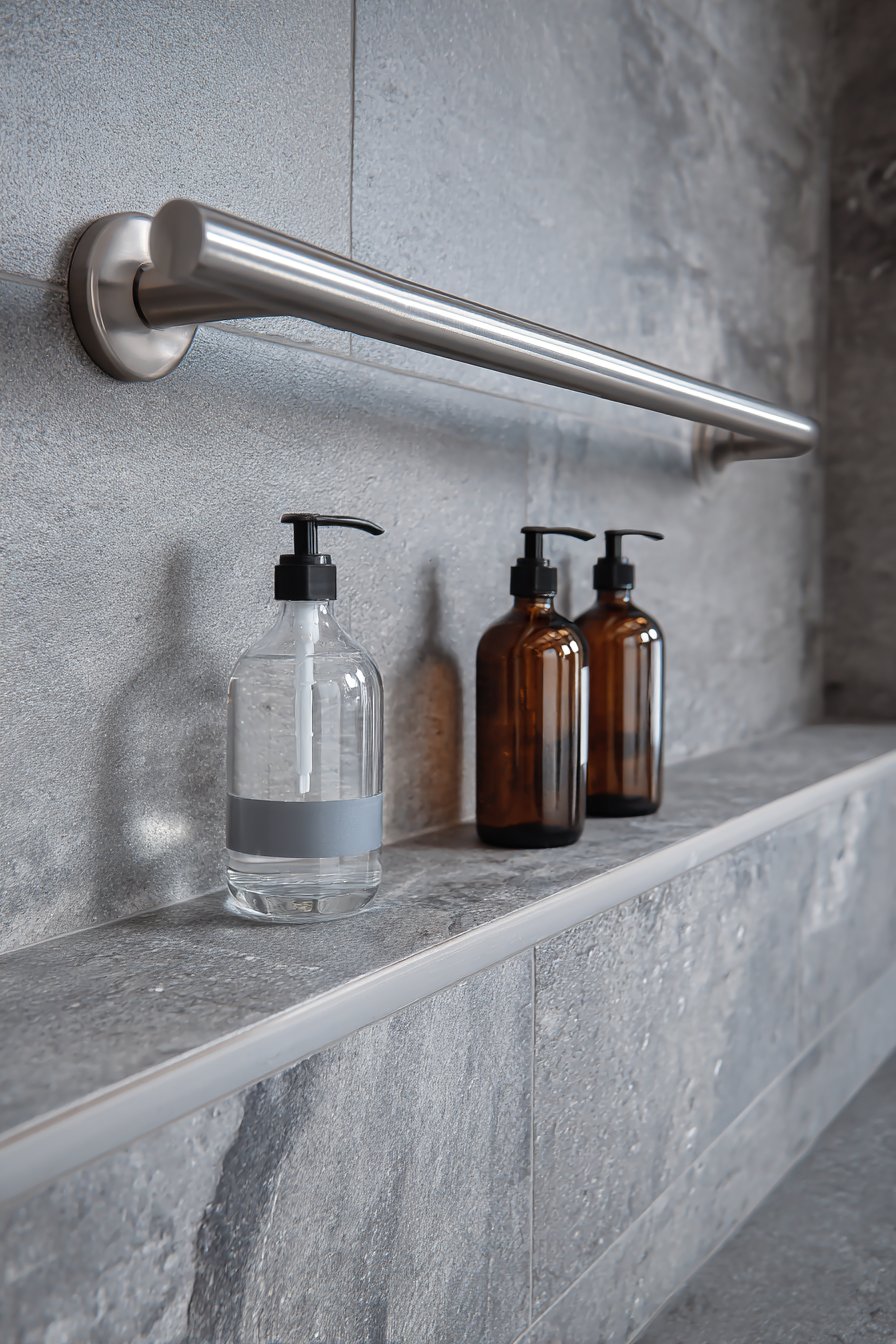
The coordination of grab bars and niche installation shows integrated planning rather than afterthought additions. When grab bars match the niche surround and fixtures in finish and style, they become design elements rather than obvious safety equipment. The pump dispenser bottles eliminate the grip strength and manual dexterity required to open flip-top caps or squeeze bottles, benefiting users with arthritis, reduced hand function, or weakness while also providing convenience for able-bodied users with soapy hands.
Key Design Tips:
- Position accessible niches between 20-30 inches from the shower floor for seated user access
- Extend niche width generously (24-36 inches) to accommodate products without crowded appearance
- Install grab bars according to ADA guidelines for proper positioning and support
- Select textured or slip-resistant tiles for all shower surfaces including niche interiors
- Ensure adequate reinforcement behind walls for grab bar mounting
- Use lever-style or thermostatic valve controls that don’t require grip strength or twisting
- Consider handheld shower on slide bar for adjustable height and seated user convenience
- Maintain 5-foot turning radius within the bathroom for wheelchair or walker maneuverability
22. Boutique Hotel Luxury Experience
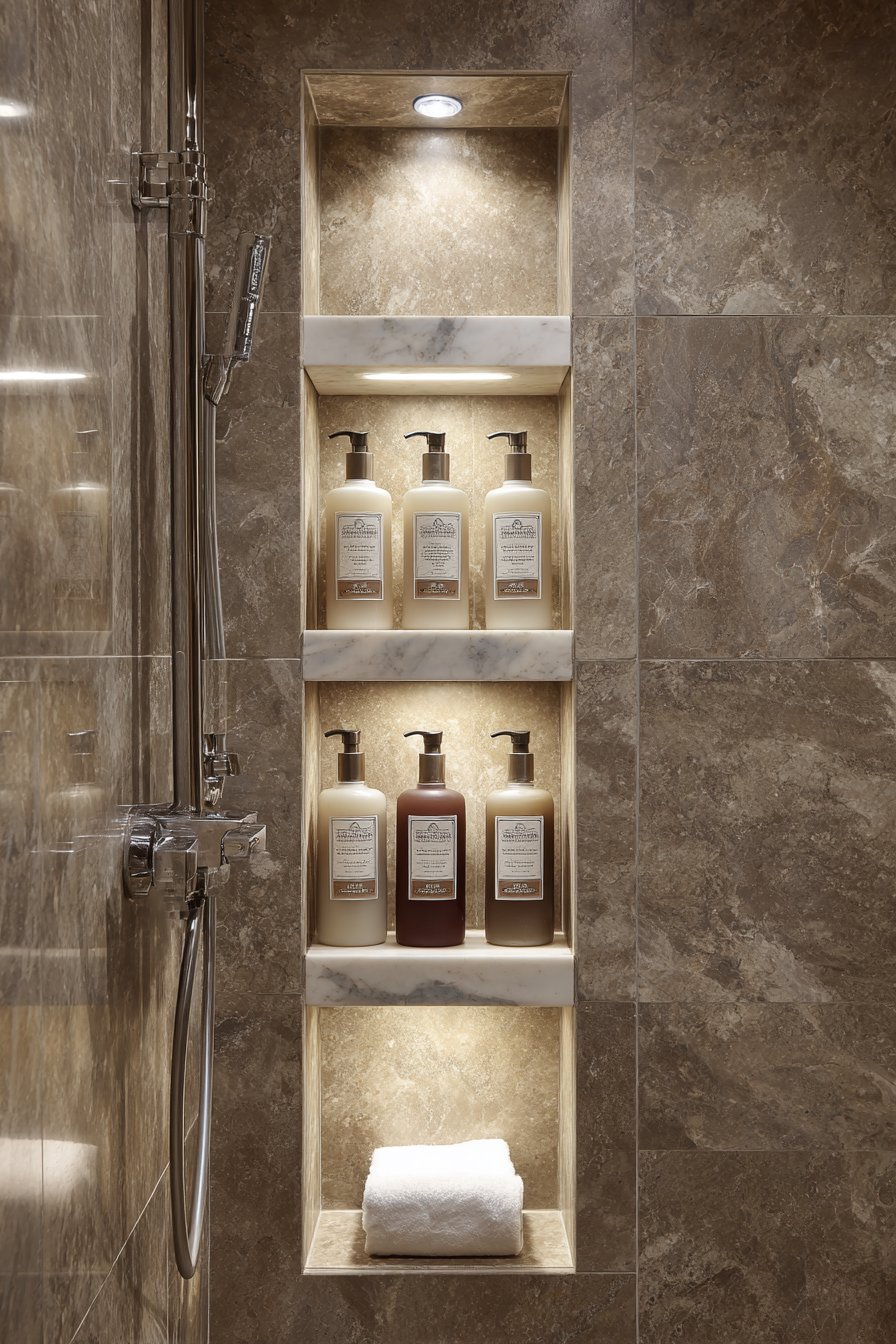
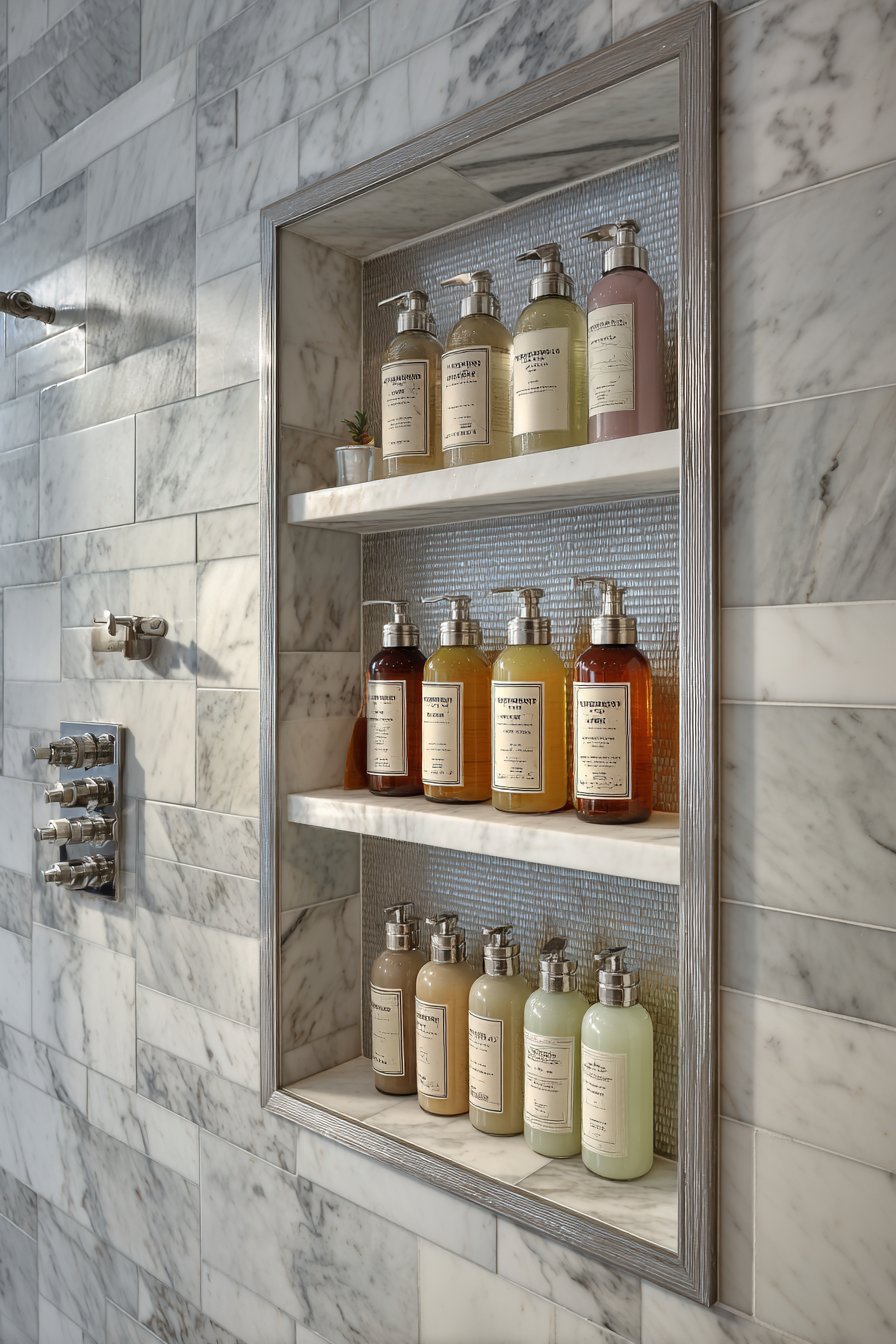
Hospitality design offers lessons in creating memorable experiences through thoughtful details and elevated finishes. This boutique hotel-inspired niche features a narrow vertical design with a backlit frosted glass panel and floating marble shelves displaying luxury amenity bottles with custom labels. Polished chrome rainhead and handheld fixtures create a comprehensive spa experience, while the curated presentation transforms everyday products into something special that makes users feel pampered and valued.
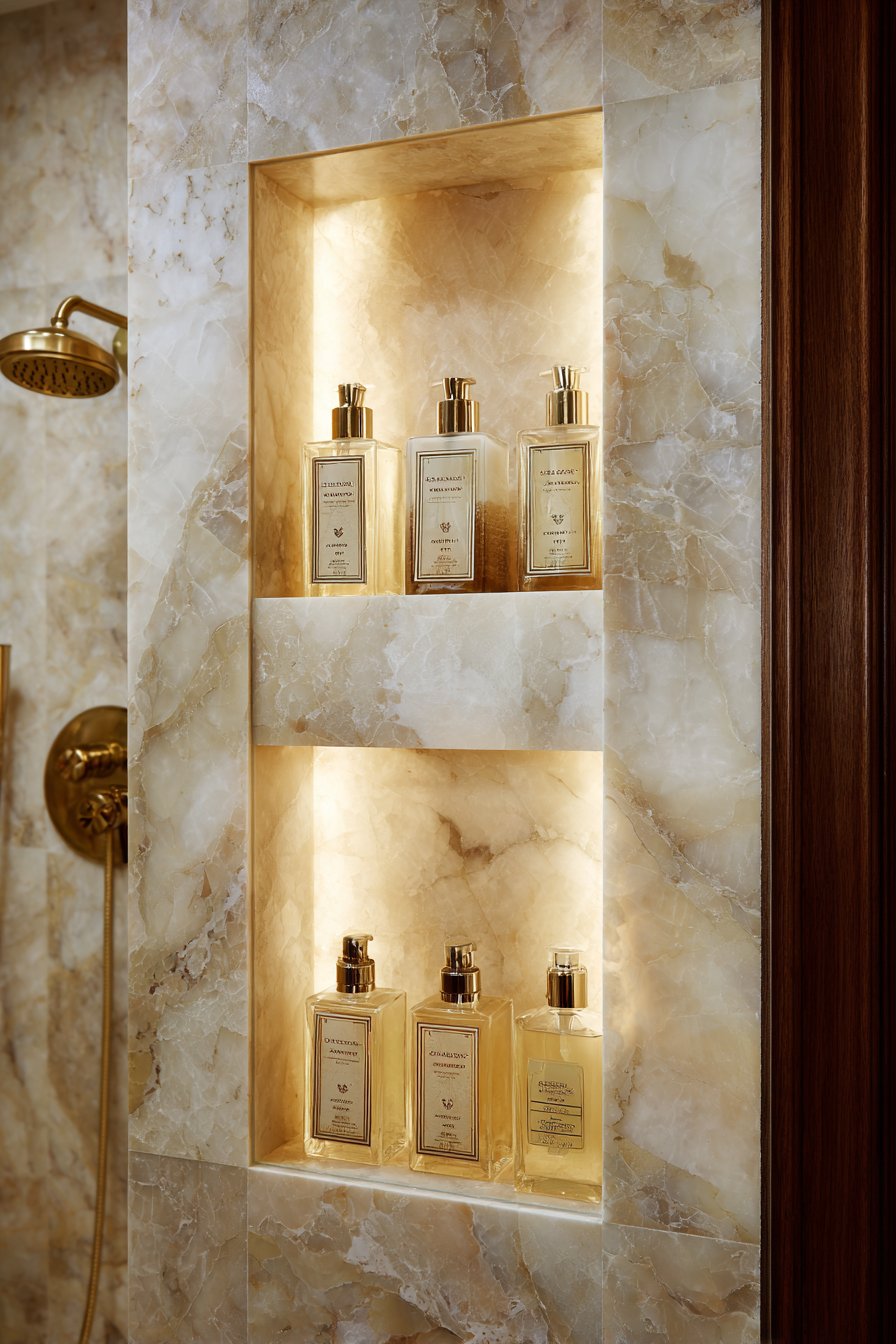
The frosted glass panel with backlighting creates soft, diffused glow that adds ambiance without harsh brightness. This sophisticated approach to illumination demonstrates how lighting design can transform functional spaces into mood-setting environments. The narrow vertical orientation maximizes impact while minimizing intrusion into the shower space—this niche serves more as display and atmosphere creation than bulk storage, reflecting the boutique hotel approach where service staff replenish amenities daily.
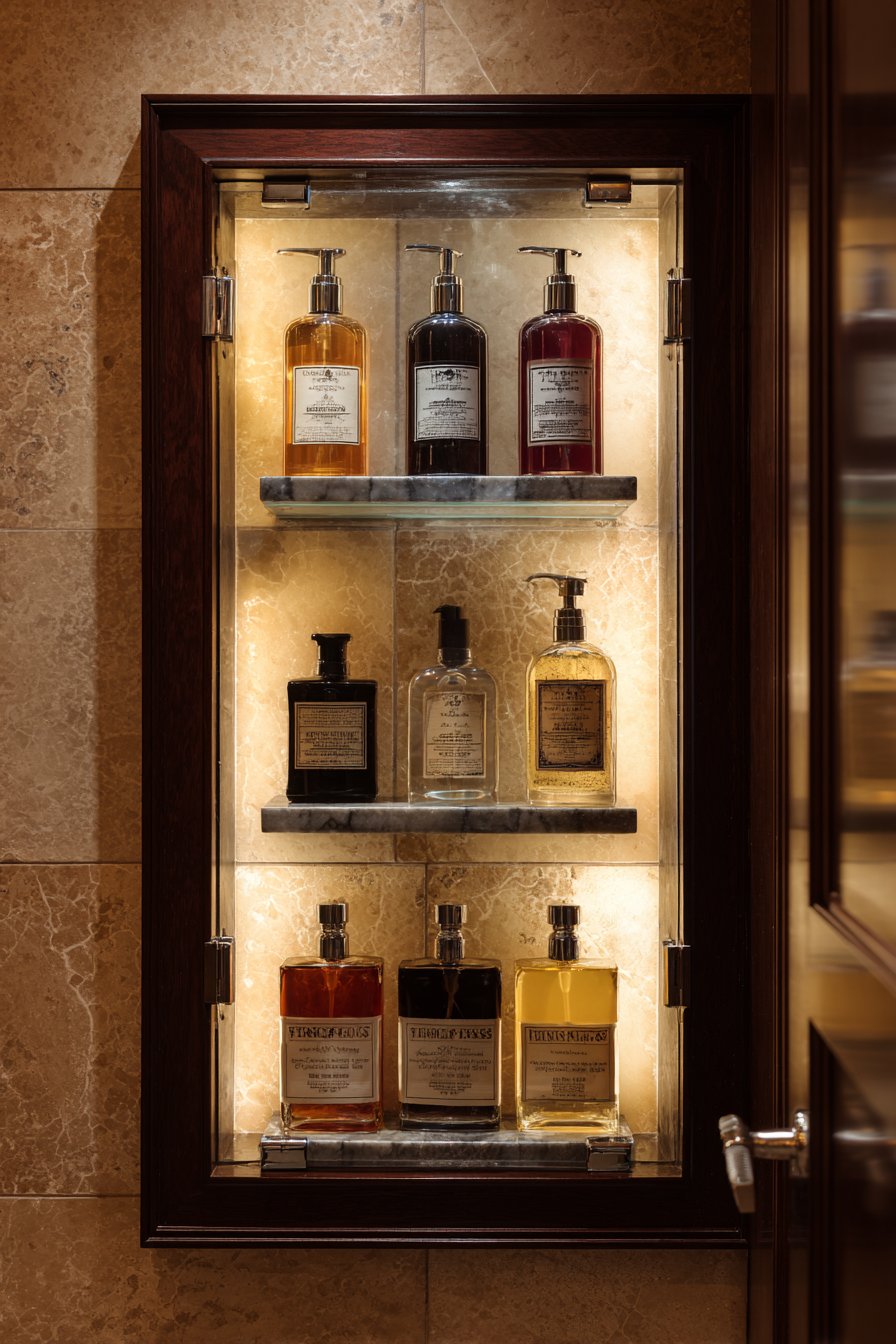
Custom-labeled amenity bottles represent the ultimate expression of curated design. Whether displaying actual high-end products or transferring preferred items into beautiful containers, this approach transforms the mundane (shampoo bottles) into the aspirational. The consistent labeling and bottle shapes create visual harmony while the elevated presentation makes daily showering feel like a special occasion rather than routine maintenance.
Key Design Tips:
- Source attractive bottle sets designed for shower use with waterproof labels
- Use professional label printing or elegant handwritten calligraphy for custom labels
- Install dimmer controls for backlighting to adjust intensity for different moods
- Limit displayed products to 3-5 premium items rather than full product lineups
- Consider adding luxury elements elsewhere (rainfall showerhead, body sprays, bench seating, steam function)
- Select marble or stone with subtle, elegant veining rather than dramatic patterns
- Maintain the elevated experience with quality towels, bathrobes, and accessories outside the shower
- Create a cohesive experience by coordinating the overall bathroom design with the niche styling
23. European Wet Room Integration
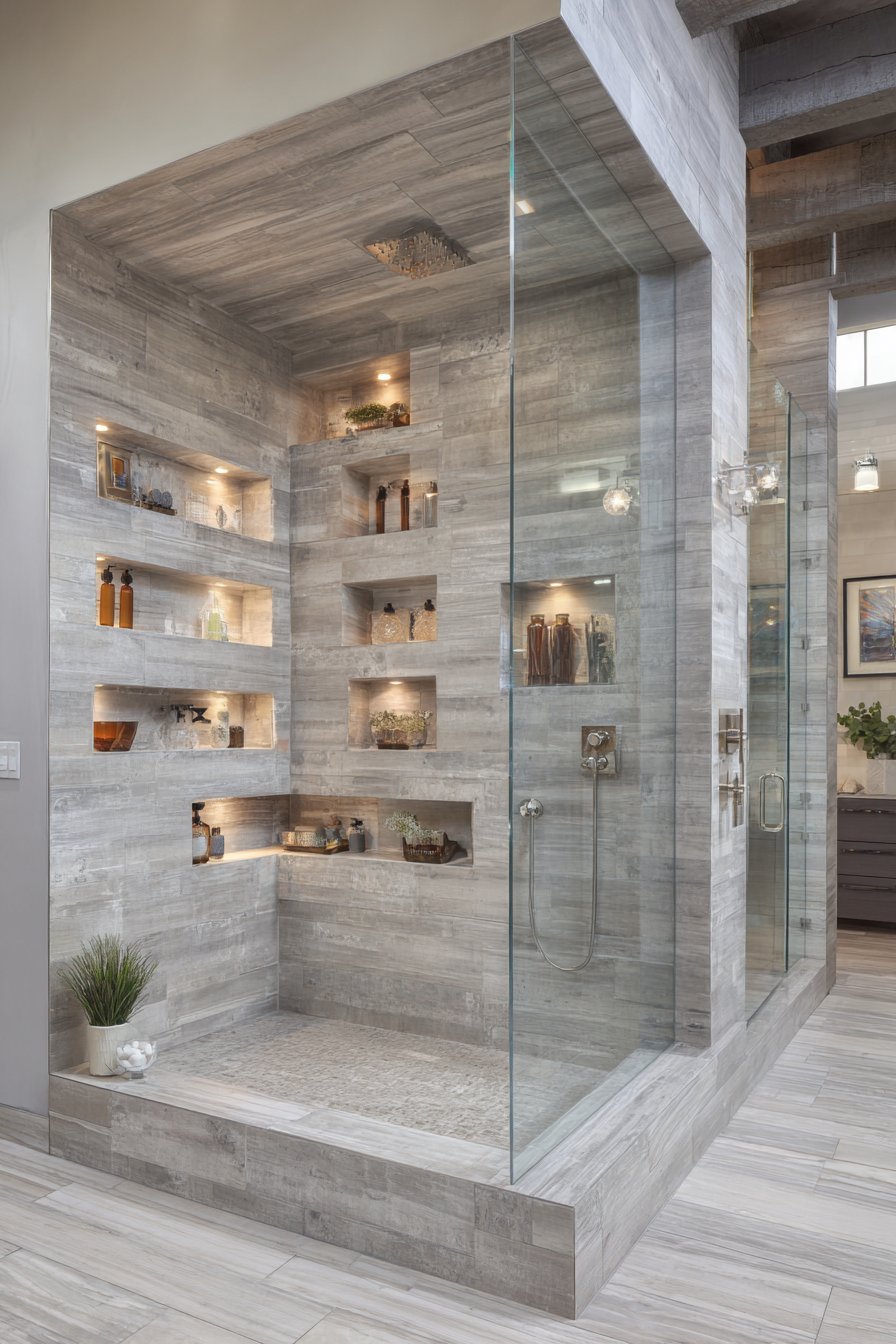
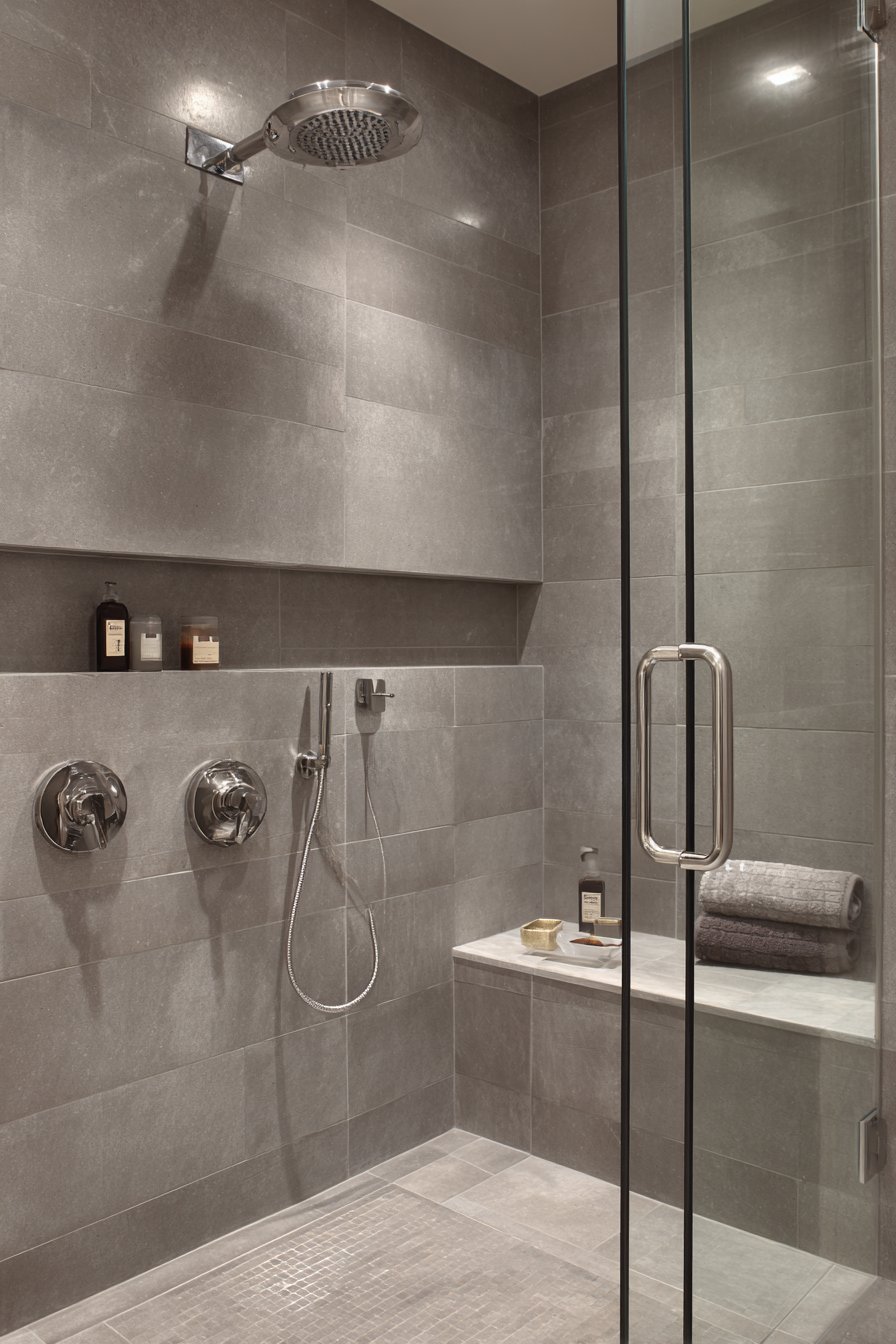
European bathroom design often embraces the wet room concept where the entire bathroom floor is waterproofed and gently sloped toward a drain, eliminating the need for enclosed shower stalls. This design features a continuous horizontal niche spanning the entire length of the shower wall in large grey concrete-effect tiles. Multiple sections created by vertical dividers organize different bath product categories, while floor-to-ceiling glass partition and wall-mounted fixtures maintain the open concept that characterizes contemporary European design.
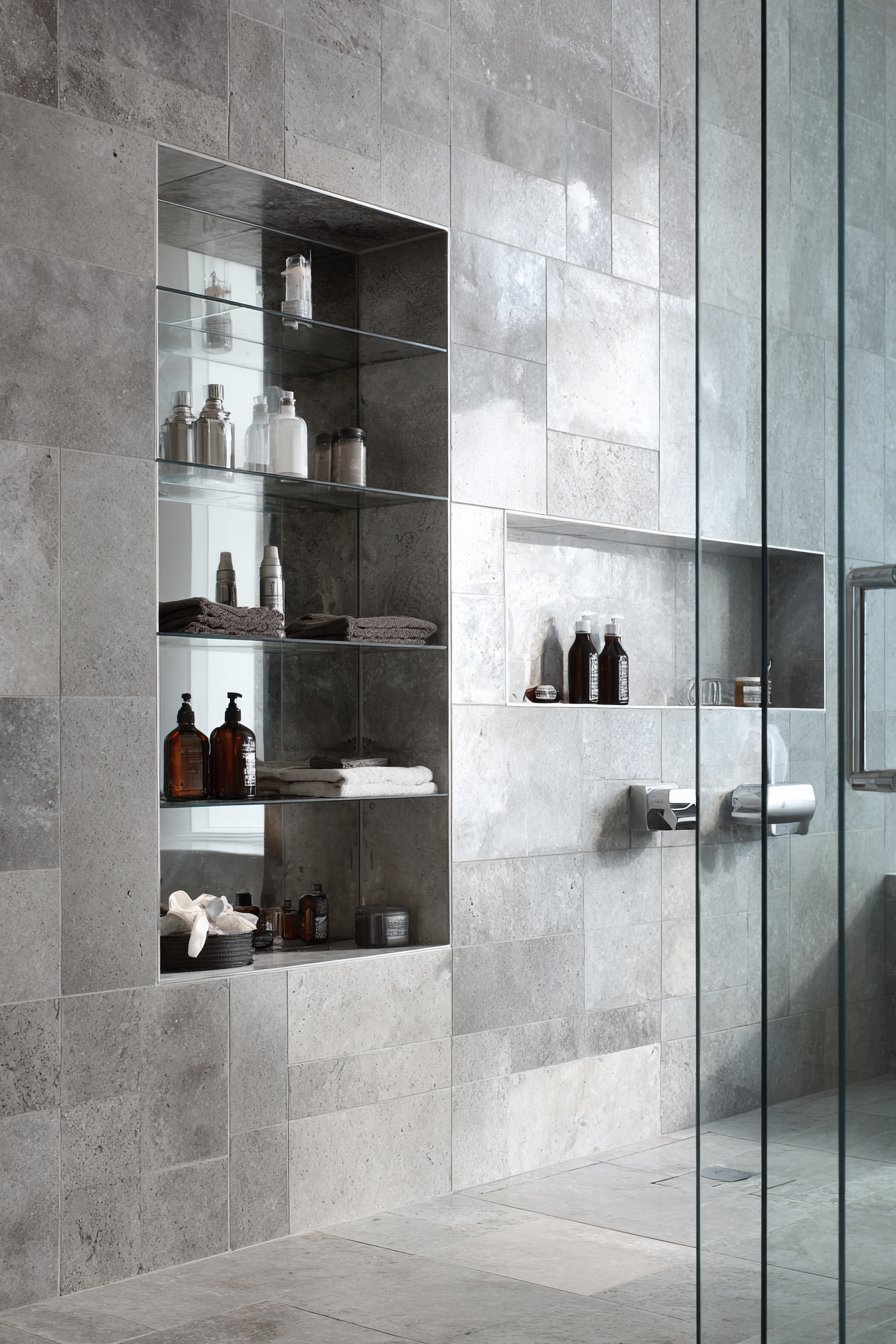
The continuous niche spanning the full wall length represents a departure from the small, self-contained niches common in American bathrooms. This generous approach provides ample storage without appearing cramped while creating strong horizontal line that emphasizes the room’s width. The sectional dividers prevent the long span from appearing as one enormous hole in the wall, instead creating an organized system of compartments that bring order to the extensive storage capacity.
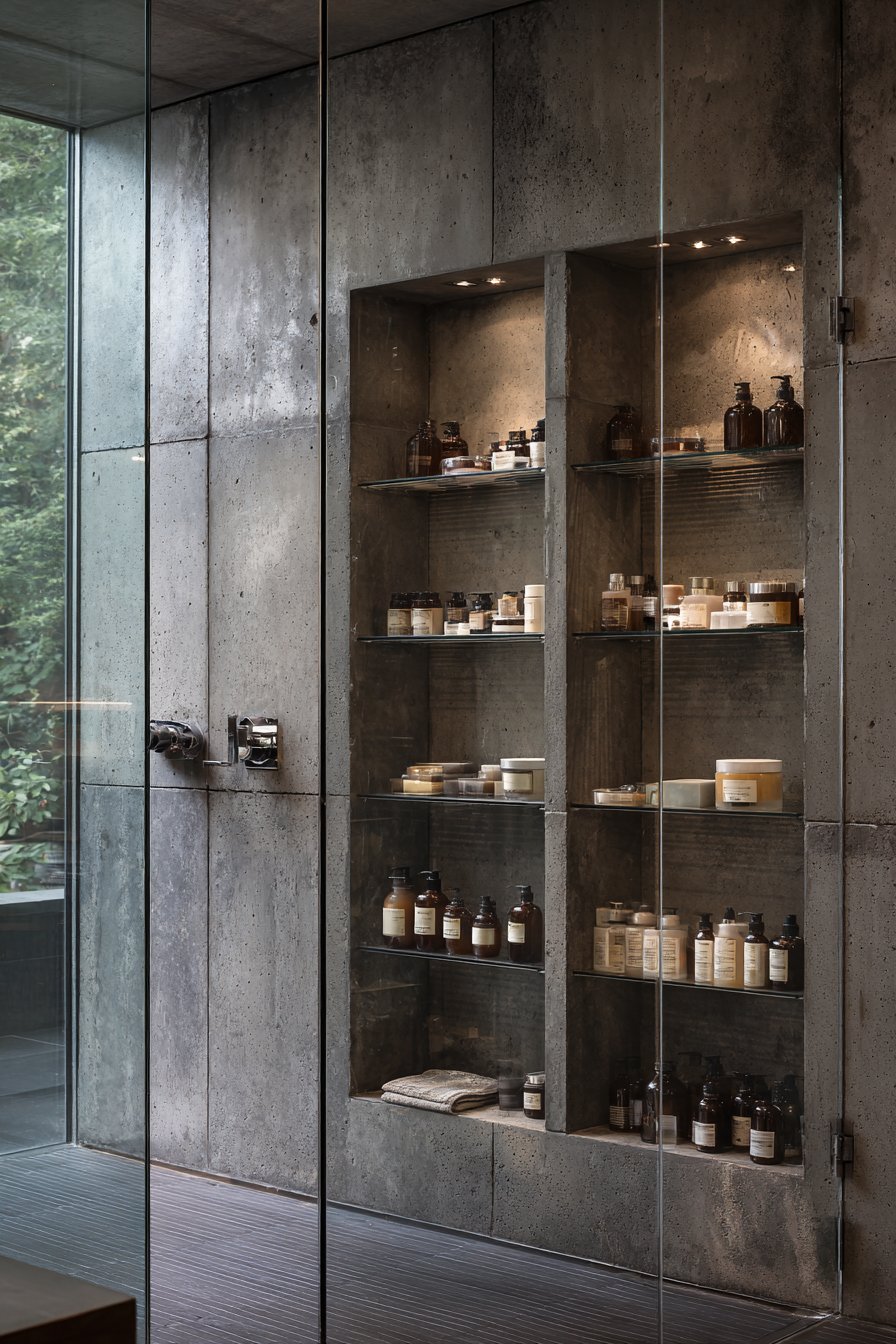
Large-format concrete-effect tiles (often 24×48 inches or larger) minimize grout lines that can visually chop up surfaces and make spaces feel smaller. The fewer seams create a more unified, cohesive appearance while also reducing maintenance requirements—fewer grout lines mean less scrubbing and less opportunity for discoloration or mold growth. The grey concrete tones provide sophisticated neutrality that works as a backdrop for various accessories and decor choices.
Key Design Tips:
- Ensure entire bathroom floor is properly waterproofed and sloped for wet room functionality
- Install linear drain positioned to catch water from the entire open shower area
- Use large-format tiles (at least 12×24 inches, ideally larger) for contemporary European aesthetic
- Position the glass partition strategically to contain spray while maintaining open feeling
- Consider heated floors as water will cover more floor area than in traditional enclosed showers
- Install adequate ventilation to handle the moisture from open wet room design
- Specify rectified tiles (precisely cut edges) for very narrow grout lines typical of European design
- Select wall-mounted toilet and floating vanity to enhance the open, easy-to-clean aesthetic
Why These Shower Wall Niche Ideas Represent the Best in Contemporary Bathroom Design
After exploring these twenty-three diverse approaches to shower wall niche design, several key themes emerge that explain why these concepts represent the pinnacle of contemporary bathroom planning. Each design successfully balances aesthetics with functionality—a fundamental requirement for spaces where beautiful design must withstand daily exposure to water, humidity, soap residue, and constant use. The best shower niche ideas seamlessly integrate storage into the shower’s architectural composition rather than treating organization as an afterthought or necessary evil.
Material selection plays a crucial role in successful niche design, and these concepts demonstrate the remarkable range of options available to today’s homeowners. From traditional ceramic subway tiles to cutting-edge concrete-effect porcelain, from luxurious natural marble to budget-friendly standard materials, the right tile choice establishes the aesthetic foundation while providing essential water resistance and durability. The integration of complementary materials—glass shelving, metal organizing inserts, wood-look accents, stone mosaics—adds dimensional interest and allows for personalization that reflects individual style preferences and practical requirements.
Lighting integration represents one of the most significant recent advances in shower niche design. The incorporation of waterproof LED strip lighting, indirect illumination, and even backlit translucent stone transforms purely functional storage into ambient lighting features that enhance the entire bathroom atmosphere. These illuminated niches serve dual purposes—providing task lighting for shower activities while creating mood and visual interest that elevates the space from purely utilitarian to genuinely spa-like. The dimming controls and strategic positioning discussed in multiple designs allow homeowners to customize the lighting experience for different times of day and various purposes.
The positioning and configuration variations presented across these twenty-three concepts address the reality that different households have vastly different needs. Single users require different organization than couples sharing a bathroom. Families with young children need accessibility and durability features that empty-nesters might not prioritize. Small bathrooms demand space-efficient solutions while luxury master baths can accommodate more elaborate installations. The range from simple single-shelf niches to comprehensive multi-level storage systems ensures that readers will find approaches scaled appropriately for their specific circumstances, budgets, and spatial constraints.
Style diversity represents another strength of this collection. The designs span from traditional and timeless through transitional and contemporary to boldly industrial and ultra-modern, demonstrating that shower niche design can successfully support virtually any aesthetic preference. Whether your bathroom embraces coastal serenity, Scandinavian minimalism, Mediterranean warmth, or urban loft edge, thoughtful niche design can reinforce and enhance your chosen style rather than conflicting with it. This versatility makes the shower niche one of the most adaptable elements in bathroom design—capable of serving as either neutral background or architectural focal point depending on the overall design strategy.
The accessibility and universal design principles demonstrated in several concepts reflect growing awareness that good design must serve all users throughout their lifetimes. The seated-height niches, pump-dispenser bottles, and integration with grab bars show how accommodating diverse abilities actually creates better functionality for everyone while maintaining the dignity and aesthetic appeal that makes spaces feel welcoming rather than institutional. This inclusive approach to design represents best practices that forward-thinking homeowners and designers should embrace regardless of current needs.
Budget consciousness threads through many of these designs, acknowledging that not every renovation comes with unlimited resources. The straightforward single-niche concepts, budget-friendly material selections, and DIY-achievable approaches demonstrate that impressive results needn’t require luxury budgets or professional installation. Conversely, the high-end concepts featuring premium materials like book-matched marble and backlit onyx show what’s possible when resources allow for maximum impact. This range ensures that readers at all budget levels find relevant inspiration and actionable ideas.
The integration of organizational systems—from simple corner caddies to sectioned compartments to his-and-hers dual configurations—addresses the reality that shower storage must accommodate real products in their actual packaging. Beautiful Instagram-worthy styling may show artfully arranged apothecary jars and rolled towels, but daily life often includes economy-size shampoo bottles, kids’ character-branded body wash, and half-used tubes of specialty products. The best niche designs accommodate both aspirational styling and practical storage needs, providing flexible systems that can look beautiful while functioning efficiently.
Current trends in shower design favor larger walk-in enclosures over traditional tub-shower combinations, making well-designed wall niches more important than ever. Without a tub ledge to hold products, and with many homeowners choosing to eliminate bulky shower caddies that interrupt the clean lines of frameless glass enclosures, integrated wall storage becomes essential rather than optional. These niche designs respond to that shift by offering solutions that maintain the open, airy quality of contemporary showers while providing necessary storage that’s easily accessible and visually harmonious.
The attention to technical details—proper waterproofing, appropriate tile choices for wet areas, structural support for loaded shelves, correct positioning for ergonomic access—reflects the reality that beautiful design must be properly executed to deliver long-term satisfaction. The key design tips accompanying each concept provide actionable guidance that helps translate inspiration into successful implementation, whether you’re working with professional contractors or undertaking DIY renovation. Understanding these technical considerations prevents costly mistakes and ensures that your beautiful new niche will function reliably for years.
Material authenticity represents a subtle but important thread throughout these designs. Whether embracing genuine natural stone or selecting high-quality porcelain that realistically mimics other materials, the emphasis remains on authentic appearance and quality execution. The tile technology advances that allow concrete-look, wood-look, and stone-look porcelains to achieve remarkable realism mean that homeowners can enjoy desired aesthetics with practical advantages—lower maintenance, better water resistance, more consistent coloring, and often lower costs than the natural materials they emulate.
Color strategy varies widely across these concepts, from monochromatic white schemes through various grey palettes to warm earth tones and even bold contrasts, demonstrating that shower niche design can support any color direction. The neutral palettes dominating many designs reflect practical wisdom—spaces experiencing constant moisture and requiring frequent cleaning benefit from colors that don’t show water spots, soap residue, or hard water staining as readily as darker tones. However, the darker and more colorful options prove that with proper material selection and maintenance commitment, dramatic color choices can succeed beautifully.
The relationship between the niche and surrounding tile work demonstrates sophisticated design thinking. Whether creating contrast through material changes (wood-look backing against white tile fields), emphasizing continuity through matched materials that make niches recede subtly, or using accent tiles to make niches pop as focal points, the interplay between niche interior and surrounding surfaces significantly impacts the overall visual effect. The most successful designs make intentional choices about this relationship rather than treating it as an afterthought.
Finally, these diverse approaches remind us that there’s no single “right” answer in shower niche design. The best solution for your bathroom depends on your specific circumstances—your budget, your style preferences, your storage needs, your household composition, your maintenance willingness, and your existing bathroom architecture. Rather than following trends blindly or copying designs that don’t suit your situation, thoughtful homeowners and designers should consider all these factors to select or adapt approaches that truly work for their unique contexts.
Conclusion
The evolution of shower wall niches from purely functional recesses to considered design features reflects broader trends in bathroom design toward spaces that seamlessly blend beauty with practicality. As we’ve explored through these twenty-three diverse concepts, the possibilities for creative, personalized shower storage have expanded dramatically beyond the basic rectangular niche of years past. Whether your priorities emphasize luxury materials and dramatic lighting, budget-conscious accessibility, family-friendly durability, or cutting-edge contemporary style, thoughtful niche design can transform your daily shower routine while enhancing your bathroom’s overall aesthetic.
The key to successful implementation lies in careful planning that considers all relevant factors—from proper waterproofing and structural support through material selection and positioning to the organizational systems and styling details that will make the space truly yours. Don’t rush this process. Take time to evaluate your actual storage needs, measure your available space accurately, research materials appropriate for your budget and maintenance preferences, and consider how the niche design will coordinate with your broader bathroom vision. If you’re working with professionals, use these concepts as conversation starters to articulate your preferences and requirements clearly.
Remember that even modest bathrooms can benefit from well-designed niches, and that sometimes the simplest approaches deliver the most satisfying results. You needn’t pursue elaborate lighting systems or expensive materials to achieve attractive, functional shower storage—though if your circumstances permit those investments, the impact can be truly transformative. Start by identifying which of these twenty-three concepts resonates most strongly with your personal style and practical needs, then adapt the core ideas to fit your specific situation, budget, and existing bathroom architecture.
As you move forward with planning your shower renovation or new construction, keep these inspiring niche ideas in mind as you make decisions about tile selection, fixture placement, and storage solutions. The integration of beautiful, functional storage directly into your shower walls represents an investment that will reward you daily with convenience, organization, and visual pleasure. Your bathroom should serve as a personal retreat where even routine activities feel elevated through thoughtful design—and a well-executed shower niche contributes significantly to creating that experience. Take inspiration from these concepts, trust your instincts about what will work best for your unique circumstances, and create a shower space that brings you satisfaction every time you step inside.
