
The bathroom has evolved from a purely functional space into a personal sanctuary where we begin and end our days. Among all bathroom features, the shower stands as the centerpiece—a place where design meets daily ritual, where form embraces function, and where thoughtful details can transform an ordinary routine into an extraordinary experience. Whether you’re planning a complete bathroom renovation or simply seeking inspiration to refresh your existing space, the shower area offers endless possibilities for creative expression and practical innovation.
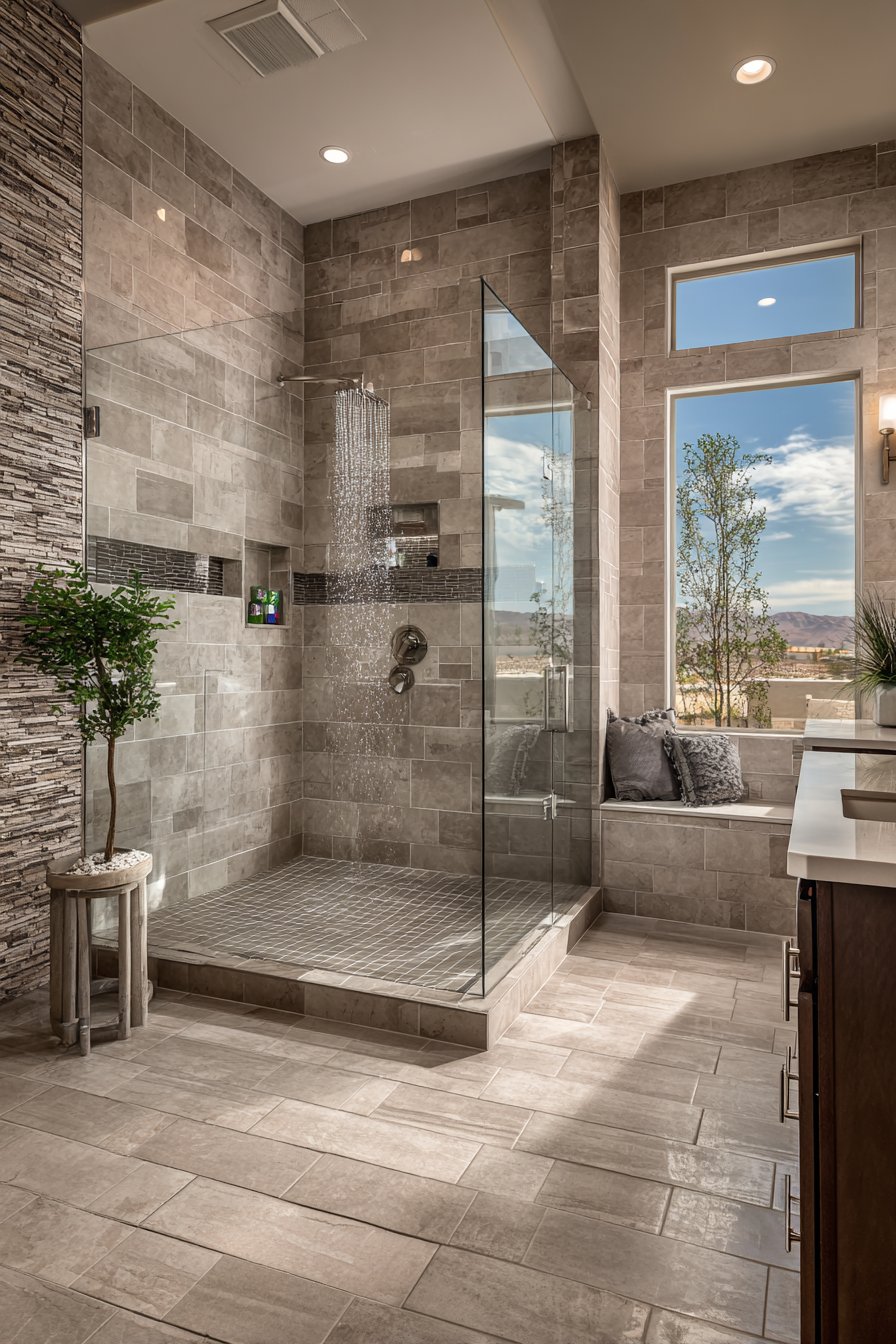
Modern shower design has transcended the basic enclosed stall of decades past. Today’s shower bathrooms incorporate luxurious materials, innovative technologies, and sophisticated aesthetics that rival the finest spas and resorts. From minimalist Scandinavian retreats to opulent marble sanctuaries, from compact urban solutions to expansive dual-shower suites, the diversity of shower bathroom ideas available today ensures that every homeowner can find inspiration suited to their space, budget, and personal style. The key lies in understanding how different design elements—tile patterns, fixture finishes, glass configurations, lighting strategies, and material choices—work together to create cohesive, beautiful, and highly functional spaces.
In this comprehensive guide, we’ll explore twenty-one distinctive shower bathroom ideas that showcase the breadth of contemporary design possibilities. Each concept has been carefully selected to demonstrate specific design principles, material applications, and spatial solutions that you can adapt to your own home. Whether you’re working with a generous master bathroom or maximizing a compact powder room, whether your aesthetic leans toward rustic warmth or sleek modernism, you’ll discover actionable insights and professional design tips that will help you create a shower bathroom that not only meets your practical needs but also elevates your daily experience and adds lasting value to your home.
1. Contemporary Walk-In Shower with Subway Tile Classic
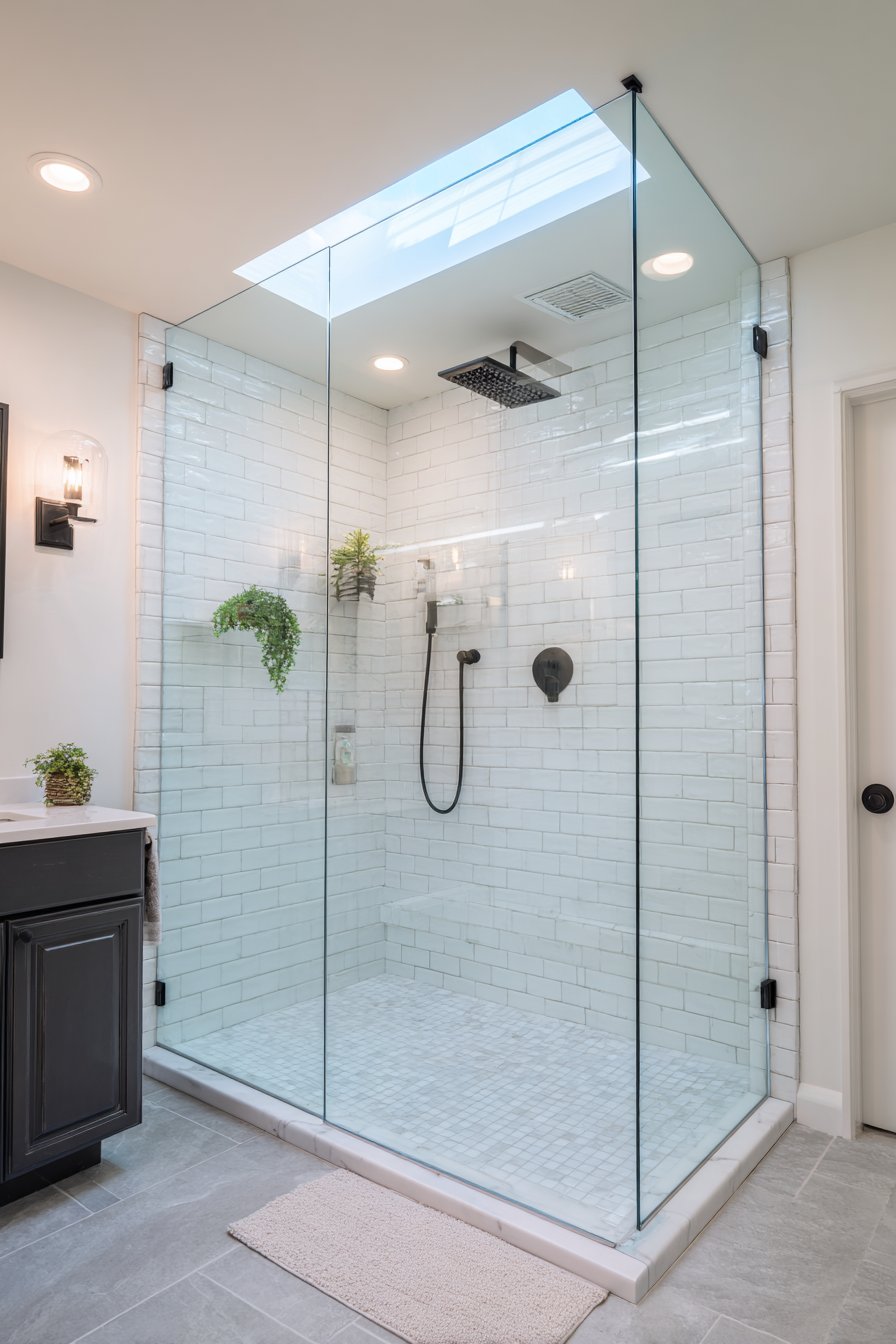
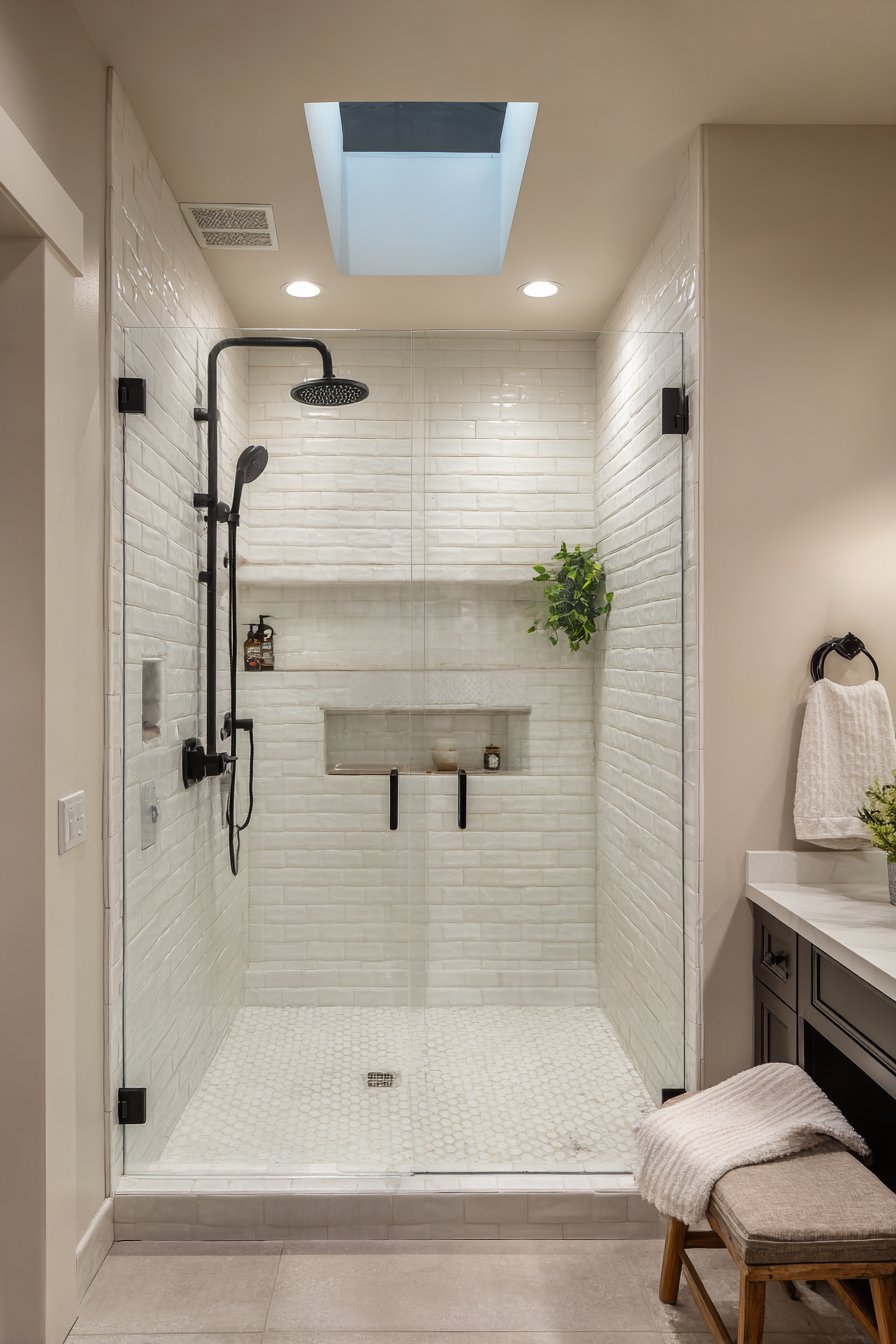
The timeless appeal of white subway tile meets modern sophistication in this contemporary walk-in shower design. The classic brick pattern arrangement creates visual rhythm across the shower walls, while the crisp white surface reflects light beautifully, making even modest-sized bathrooms feel more spacious and airy. The matte black rainfall showerhead serves as a bold focal point, creating striking contrast against the pristine white backdrop and establishing a design tension that feels both current and enduring.
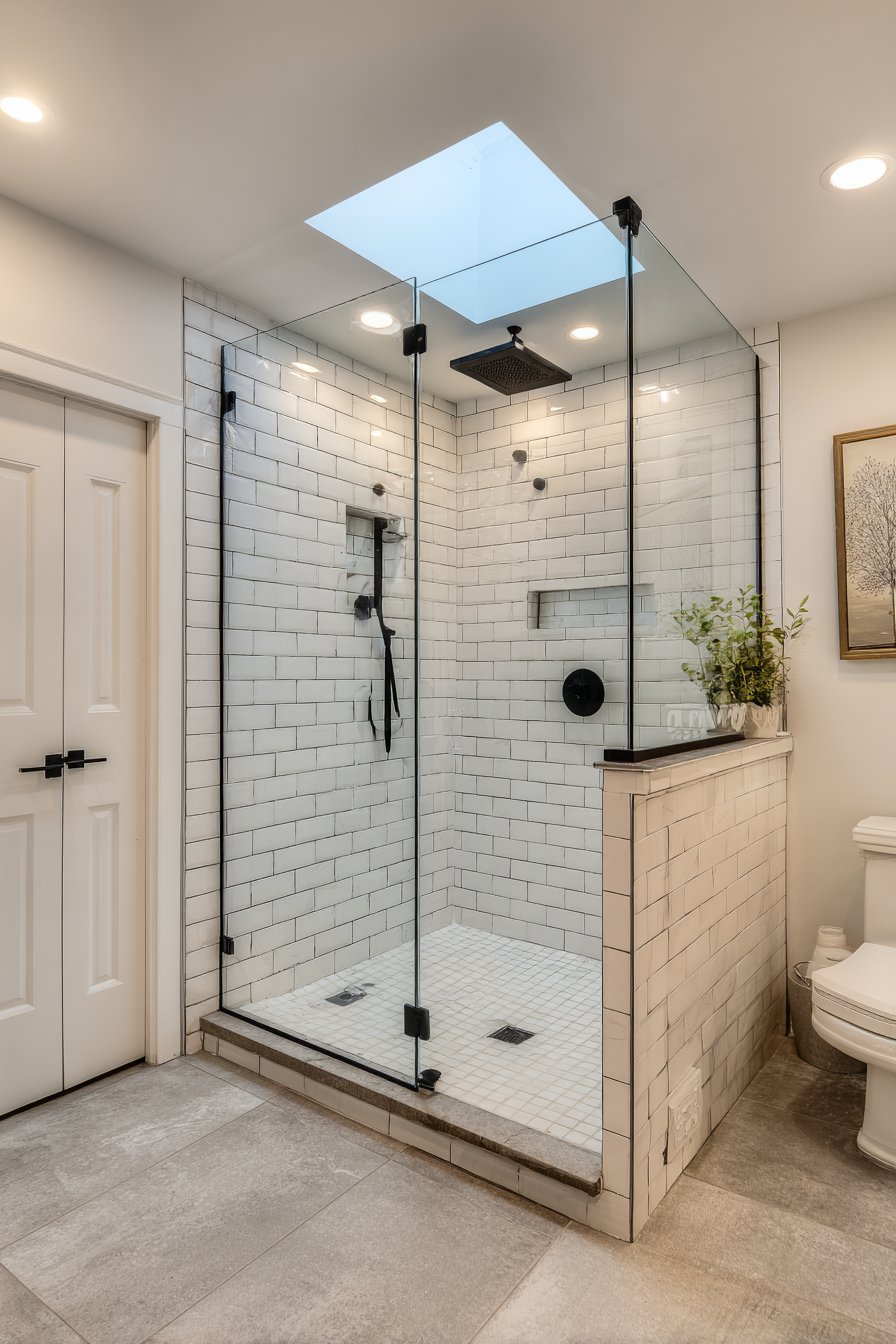
Floor-to-ceiling frameless glass panels maximize transparency and spatial flow, eliminating visual barriers that can make showers feel cramped or enclosed. This open approach allows the beautiful tilework to shine while maintaining practical water containment. The gray porcelain floor tiles introduce subtle texture and provide essential slip resistance—a critical safety feature that doesn’t compromise aesthetic appeal. Their slightly darker tone also helps conceal water spots and soap residue, reducing maintenance demands.
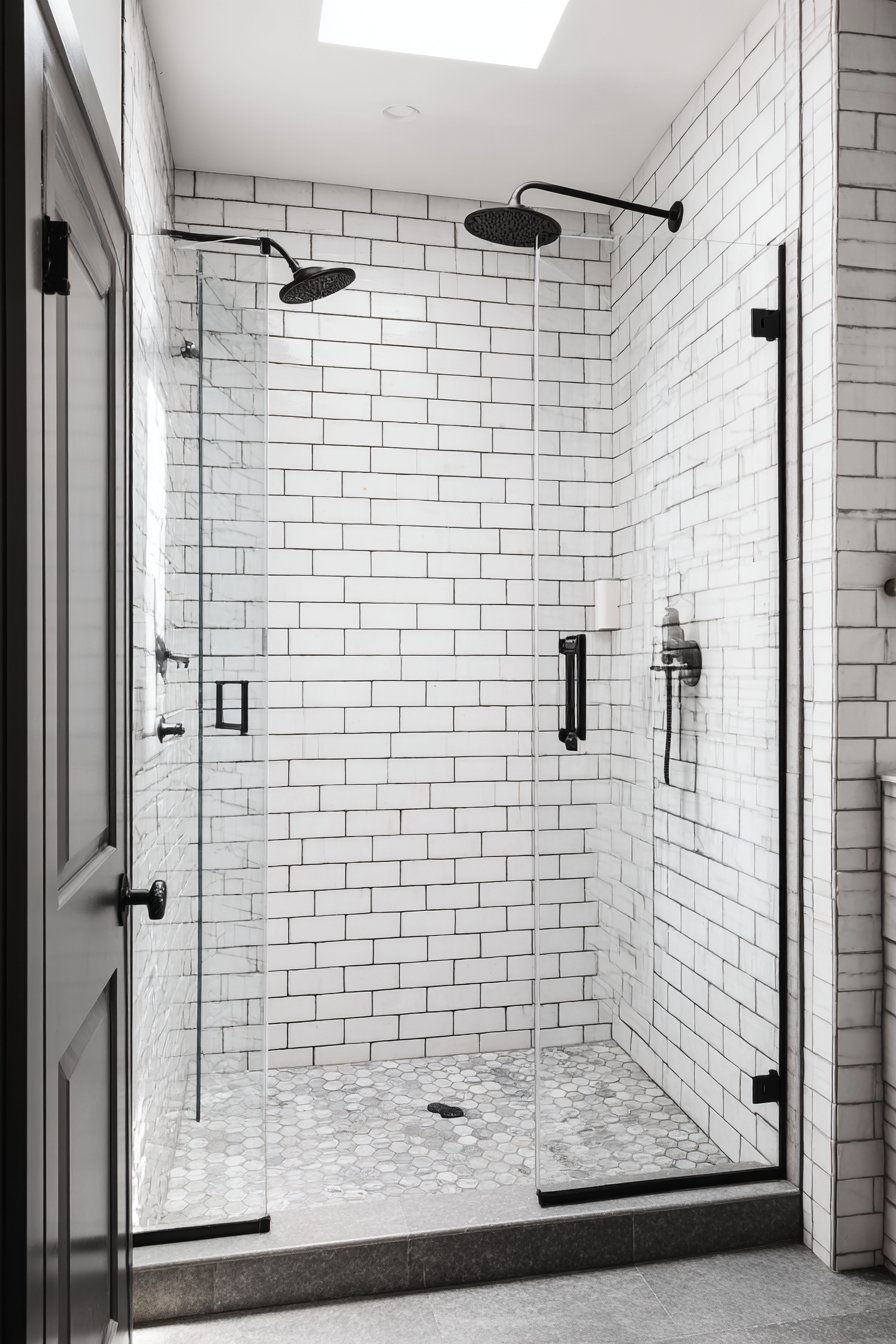
Natural light streaming from an overhead skylight transforms this shower into a sun-drenched retreat. The skylight placement is particularly strategic, flooding the space with illumination during morning routines while avoiding direct spray from the showerhead. The interplay of natural light on the white tile surfaces creates subtle shadows along grout lines, adding depth and dimension that flat artificial lighting cannot replicate. This design proves that classic materials, when executed with attention to proportion and detail, create spaces that feel both familiar and fresh.
Key Design Tips:
- Select subway tiles with slight beveling to add subtle dimensional interest and catch light beautifully
- Position the rainfall showerhead to avoid water flowing directly onto glass, minimizing water spot visibility
- Use contrasting grout color (light gray rather than pure white) to define tile edges without stark contrast
- Install a skylight with UV-filtering glass to prevent tile discoloration while maximizing natural light
- Consider heated flooring beneath gray porcelain tiles for enhanced comfort and faster drying
2. Minimalist Curbless Shower Design
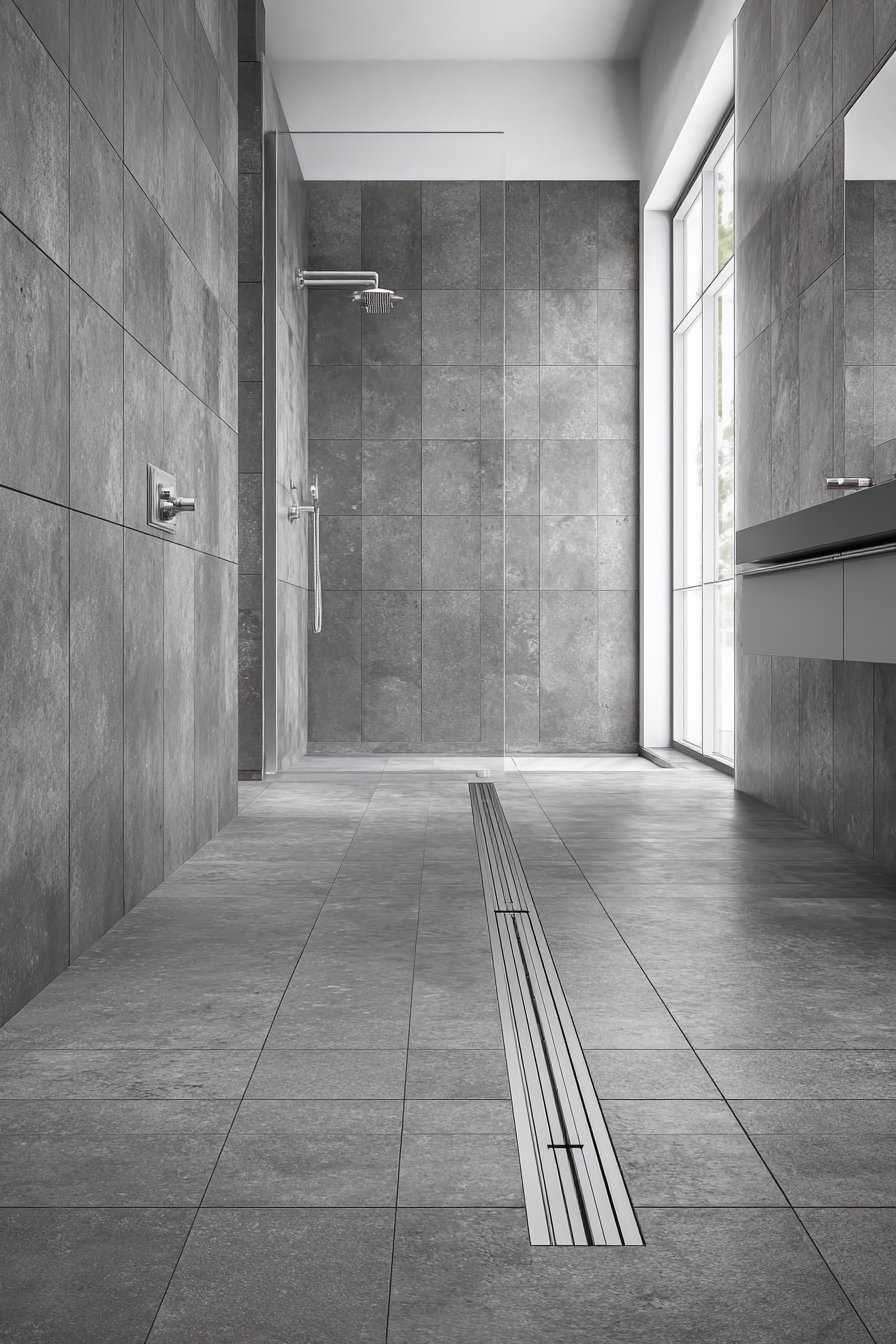
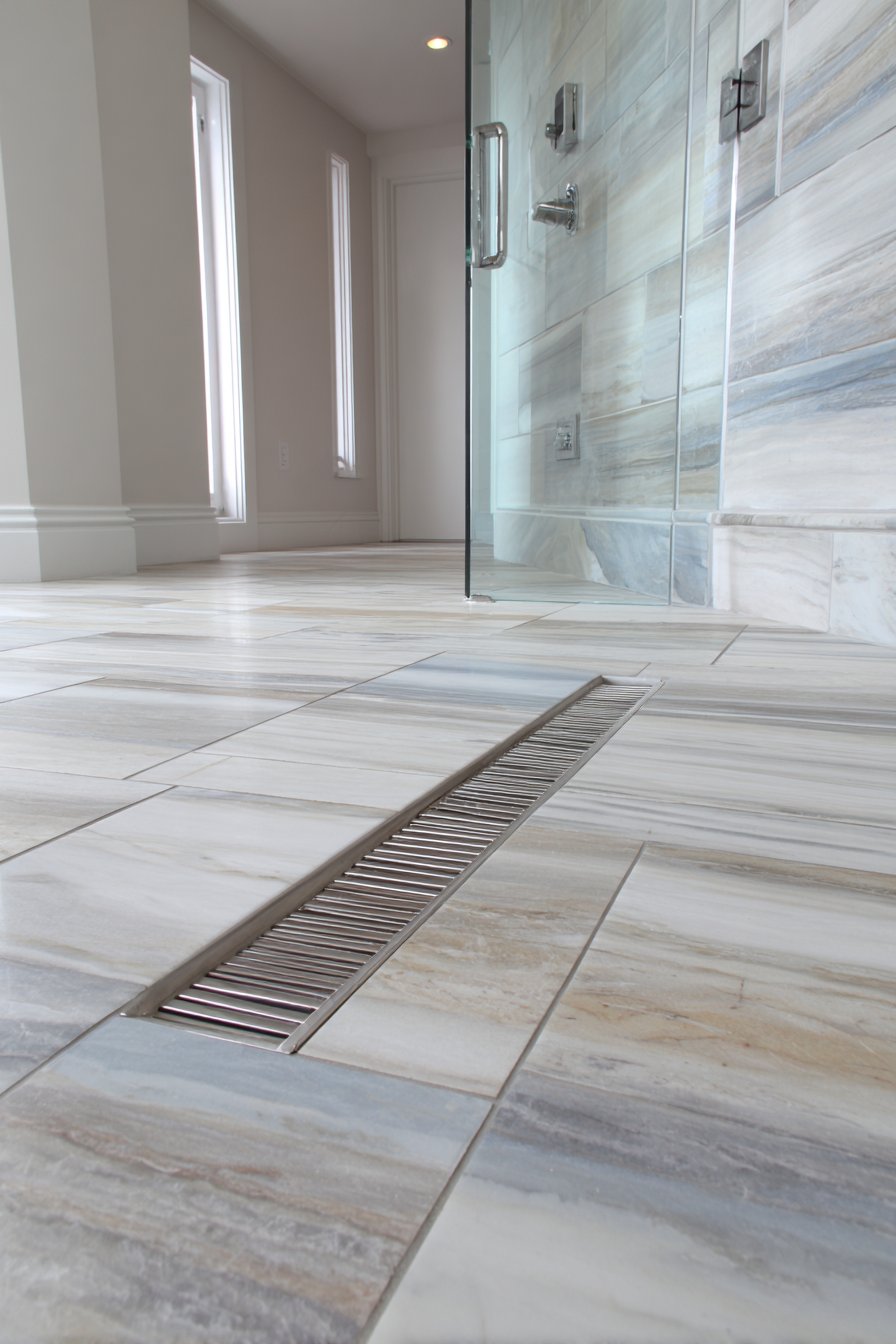
Seamless transitions define this minimalist shower bathroom idea, where the elimination of traditional shower curbs creates fluid spatial continuity. Large format gray porcelain tiles flow uninterrupted from the main bathroom floor into the shower area, establishing visual cohesion that makes the entire room feel larger and more unified. This curbless approach represents a convergence of aesthetic minimalism and universal design principles, creating spaces that are simultaneously beautiful and accessible.
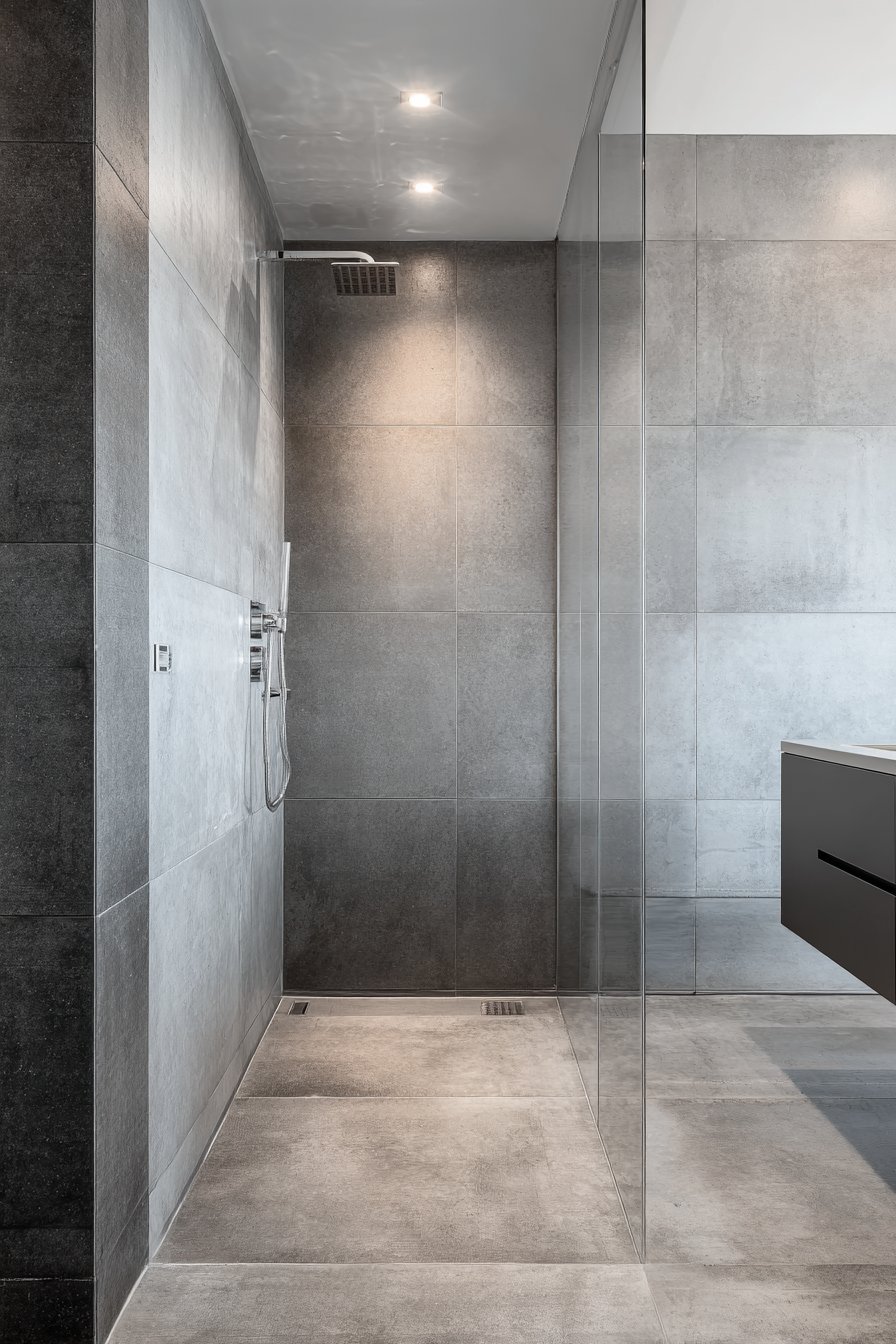
The linear drain positioned along the far wall represents both functional engineering and design restraint. Unlike traditional center drains that create multiple slopes and visual disruption, the linear drain allows for a single gentle slope that’s nearly imperceptible underfoot while efficiently channeling water away from the bathroom proper. The slim profile of the drain cover, available in finishes that match surrounding tiles, maintains the clean, unbroken visual field that minimalist design demands.
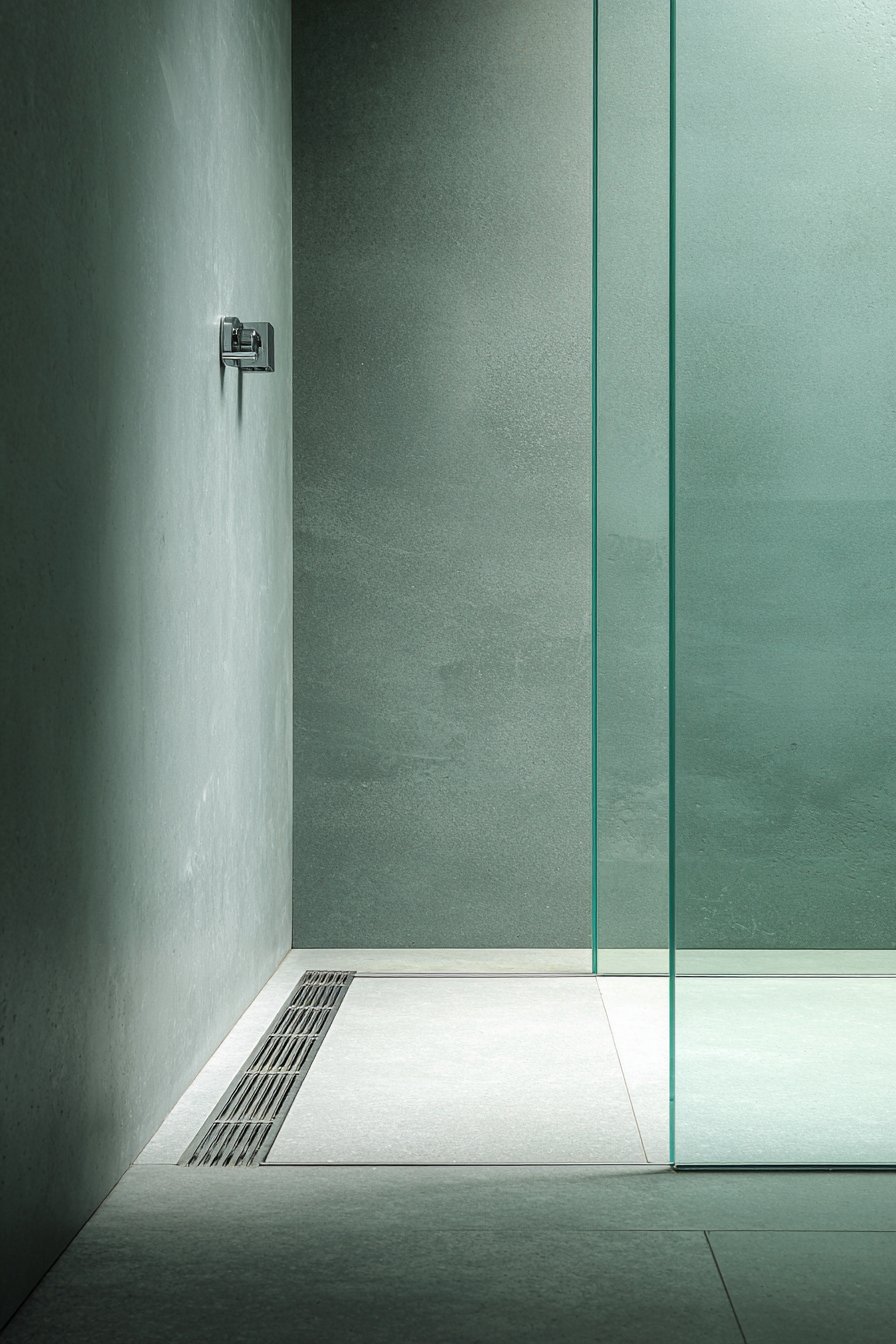
Simple chrome fixtures with wall-mounted controls reinforce the uncluttered aesthetic while offering practical benefits. Wall-mounted placement eliminates the need for floor-standing supports, making cleaning effortless and maintaining that sought-after minimalist clarity. A single glass panel provides subtle psychological separation between wet and dry zones without creating the visual weight of a full enclosure. The careful restraint in material choices, fixture selection, and architectural details creates a shower space that feels meditative and calm—a true minimalist sanctuary.
Key Design Tips:
- Ensure proper floor pitch (minimum 1/4 inch per foot) toward the linear drain to prevent standing water
- Choose rectified large format tiles with minimal grout lines to maximize the seamless appearance
- Install waterproof membrane extending at least three feet beyond shower area for complete protection
- Select a linear drain with adjustable leveling feet for precise installation on sloped floors
- Consider matte finish tiles rather than high gloss to reduce visible water spots and maintain minimalist purity
3. Luxury Spa-Inspired Dual Rainfall Shower
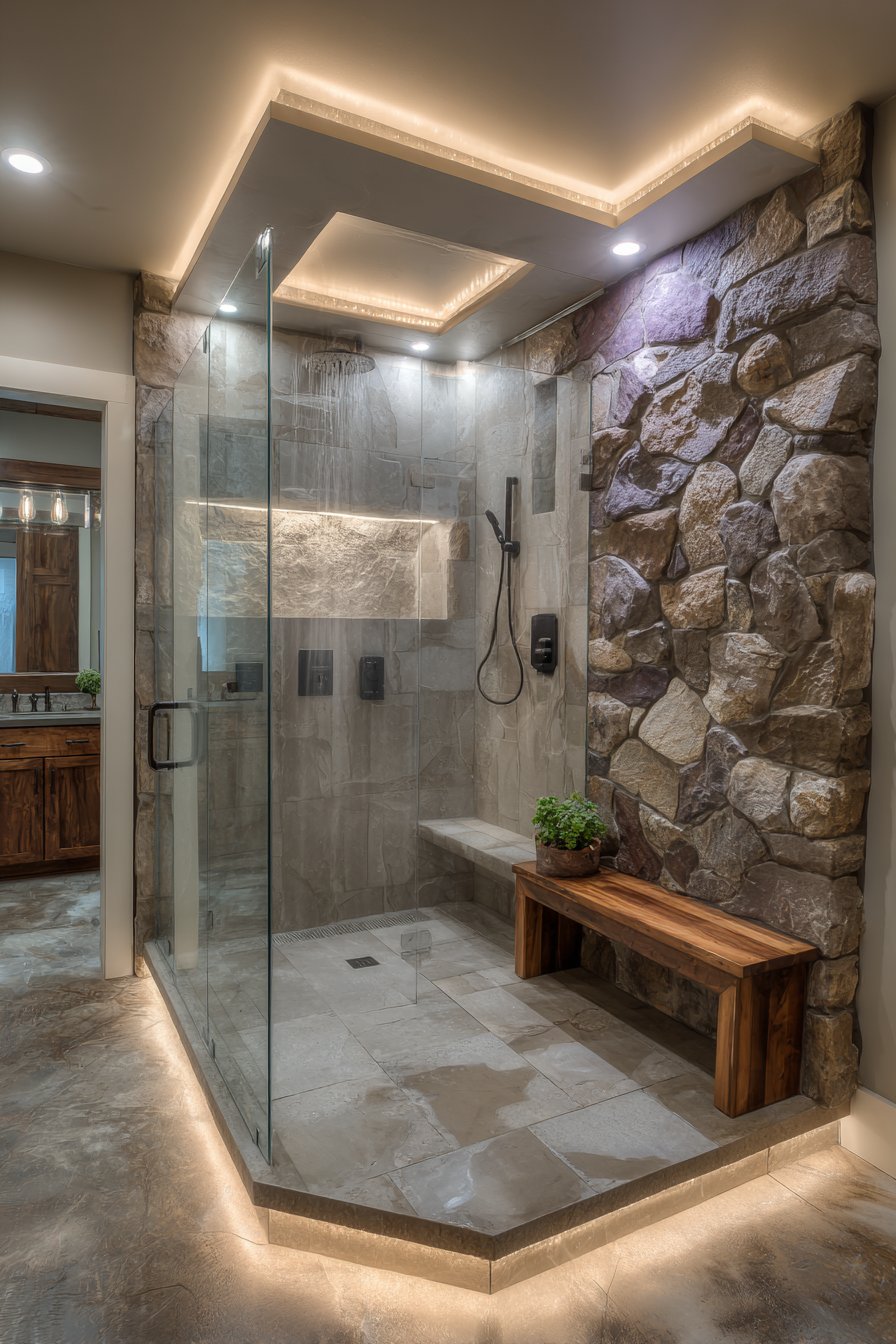
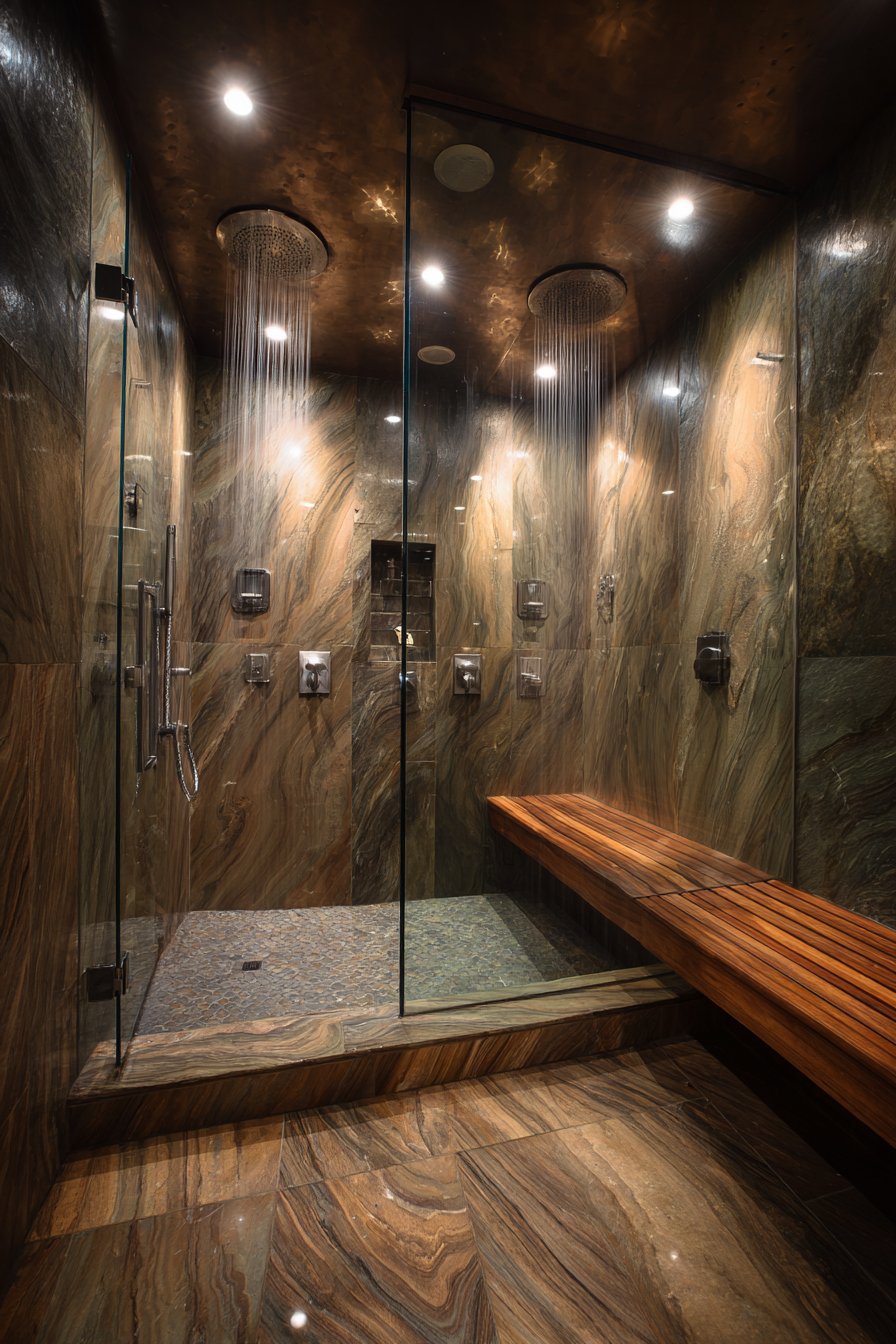
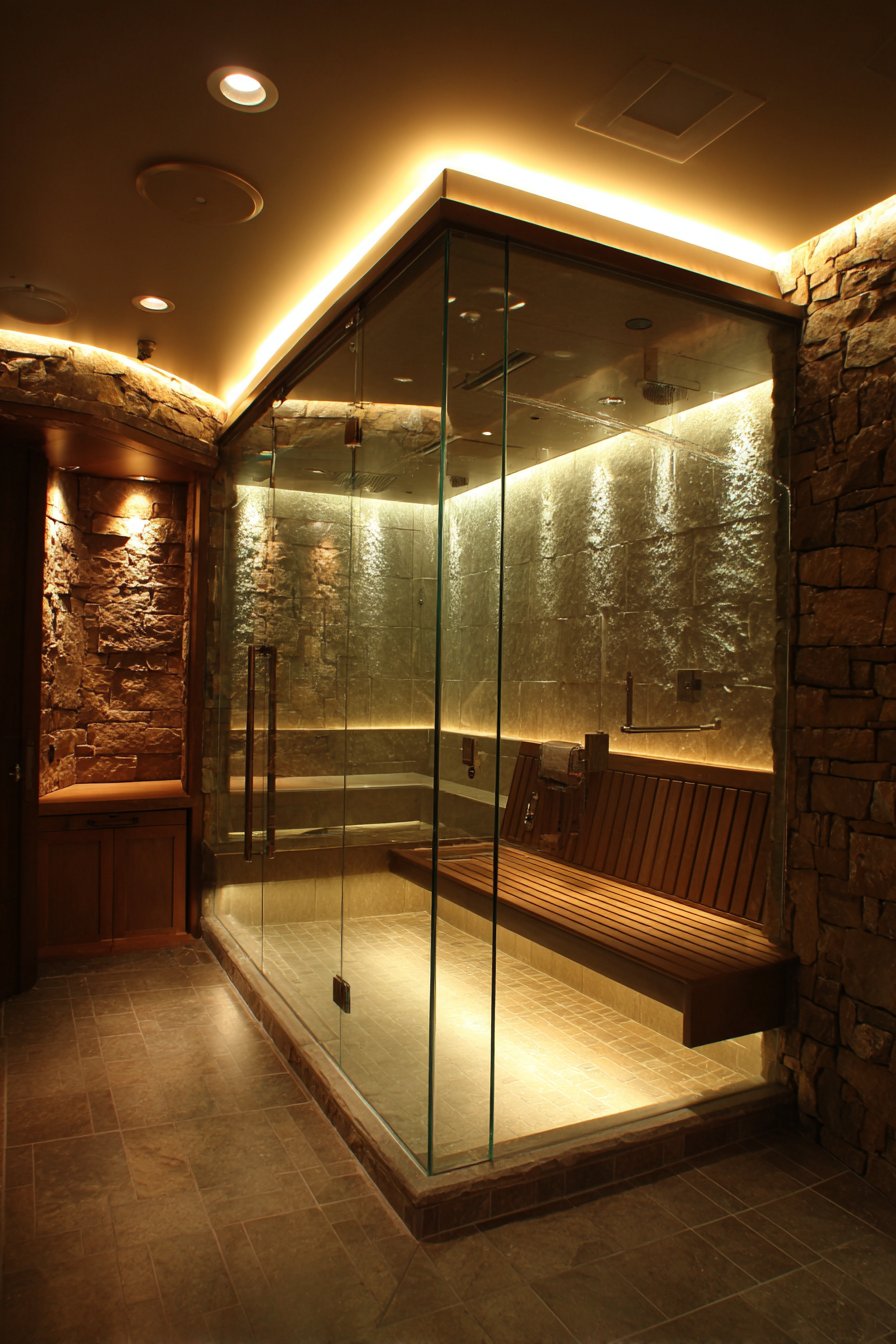
This resort-quality shower bathroom idea elevates daily routines to indulgent spa experiences through carefully orchestrated luxury features. Dual rainfall showerheads positioned at opposite ends of the spacious enclosure create symmetry while offering customized showering experiences for two users simultaneously. The textured stone accent wall introduces organic beauty and tactile richness, its natural variations in color and surface creating visual interest that manufactured materials cannot replicate.
Body spray jets integrated directly into the stone wall transform the shower into a hydrotherapy station, delivering targeted water streams that massage and invigorate. The careful placement of these jets—typically at shoulder, mid-back, and lower back heights—ensures comprehensive coverage while maintaining aesthetic integration. A teak wood bench provides both practical seating for comfortable showering and a warm material counterpoint to the cool stone surfaces, its natural oils making it inherently water-resistant and aromatic.
Frameless glass on three sides showcases the premium materials and fixtures while maintaining the open, expansive feeling essential to spa-like experiences. Recessed LED lighting along the ceiling perimeter creates ambient illumination that can be dimmed for relaxing evening showers or brightened for morning clarity. This lighting strategy avoids harsh overhead fixtures while providing even, shadow-free illumination that highlights the stone’s natural beauty. The integration of multiple water delivery systems, premium materials, and thoughtful lighting creates a shower environment that rivals—and often surpasses—the finest hotel suites.
Key Design Tips:
- Install individual thermostatic controls for each showerhead to allow different temperature preferences
- Choose natural stone with sealed surfaces to prevent water absorption and staining
- Position body sprays to avoid direct hits to the face, typically between 48-52 inches from floor
- Select teak bench with slatted design to allow water drainage and air circulation for longevity
- Include steam generator capability in design phase, even if not immediately installed, for future upgrade option
4. Space-Saving Corner Shower Solution
Compact bathrooms demand creative solutions, and this corner walk-in shower proves that limited square footage need not limit design ambition. The curved glass enclosure maximizes usable interior shower space while minimizing the footprint required in the bathroom proper. This geometric efficiency makes corner showers ideal for small bathrooms, guest baths, or basement conversions where every inch counts. The curve also softens the angular transition, creating a more welcoming entry than harsh right-angle glass panels.
White hexagonal wall tiles deliver substantial visual interest without overwhelming the compact space. The geometric pattern draws the eye across surfaces, creating a sense of movement and dimension that plain tiles cannot achieve. Black grout lines define each hexagon crisply, adding graphic punch while serving the practical purpose of disguising minor discoloration over time. This bold grout choice transforms a simple white tile into a statement feature that becomes the shower’s focal point.
Space-saving corner shelving, typically mounted at the junction of the two walls, provides essential storage without protruding into the limited shower interior. Chrome fixtures with water-efficient showerheads demonstrate that sustainable design and compact spaces are natural partners—both prioritizing resource optimization. A small frosted window supplements the bright white palette with natural light while maintaining privacy, its translucent quality diffusing harsh direct sun into soft, even illumination that makes the small space feel airy rather than confined.
Key Design Tips:
- Measure carefully to ensure minimum 32-inch interior shower diameter for comfortable use
- Install corner shelving at 48-54 inches height for easy reach without bending
- Choose hexagonal tiles no larger than 2 inches across to maintain appropriate scale in small space
- Use high-contrast grout to make pattern pop and hide inevitable staining in humid environment
- Consider a neo-angle door configuration (angled corner entry) to maximize entry width in tight spaces
5. Rustic Farmhouse Shower Retreat
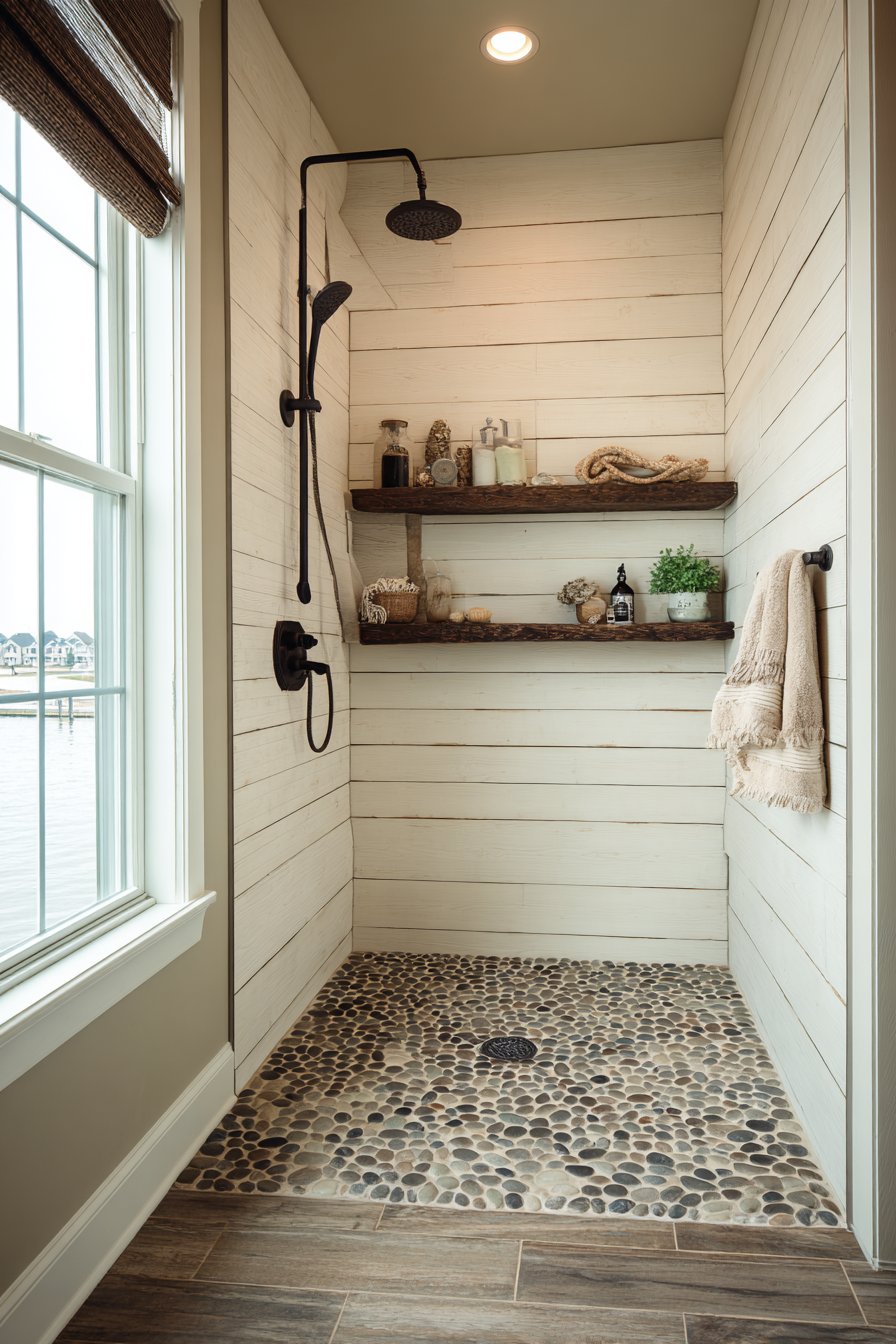
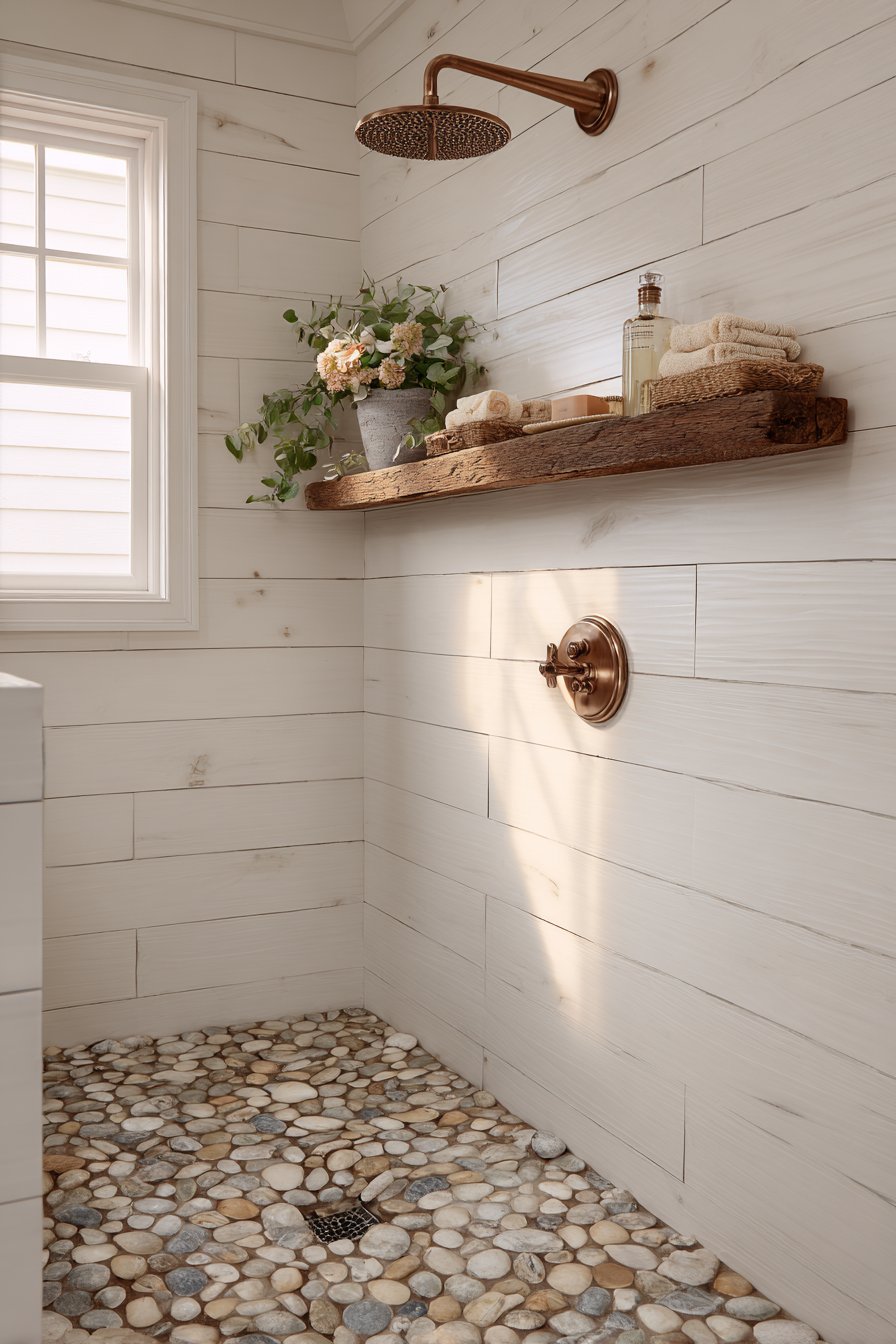
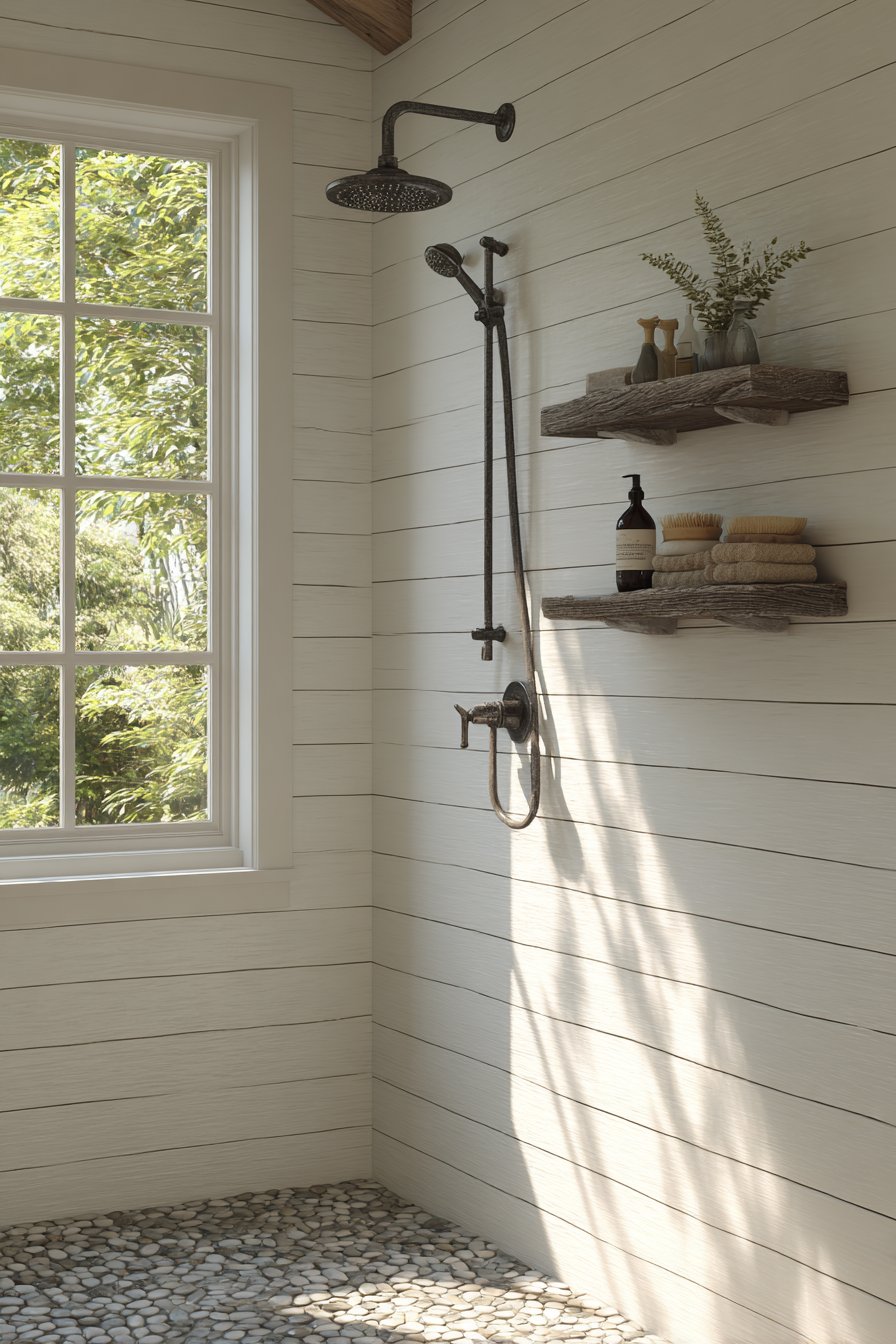
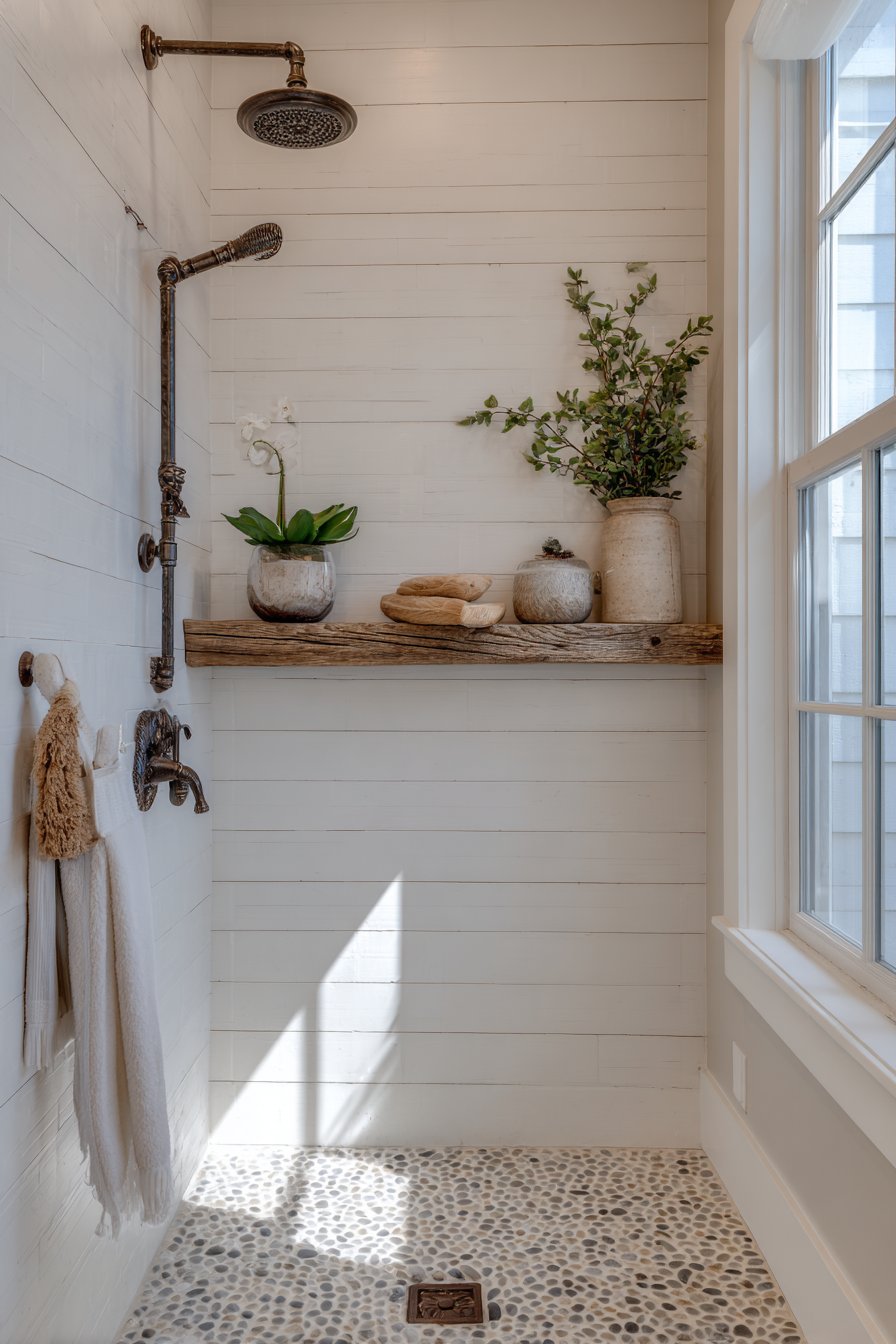
Warmth and authenticity define this rustic farmhouse shower bathroom idea, where modern functionality meets vintage agricultural charm. The shiplap accent wall painted in soft white establishes the farmhouse foundation, its horizontal lines creating visual width while the painted finish provides necessary moisture protection. Authentic shiplap installation, with slight reveals between boards, casts subtle shadows that add depth and prove more forgiving of minor imperfections than perfectly smooth drywall.
Oil-rubbed bronze fixtures bring vintage character and surprising durability to the wet environment. The dark, slightly mottled finish develops a distinguished patina over time, actually improving with age rather than showing wear. The substantial weight and traditional forms of oil-rubbed bronze fixtures—typically featuring cross handles and visible mounting hardware—provide tactile satisfaction and visual anchor in the predominantly light-colored space.
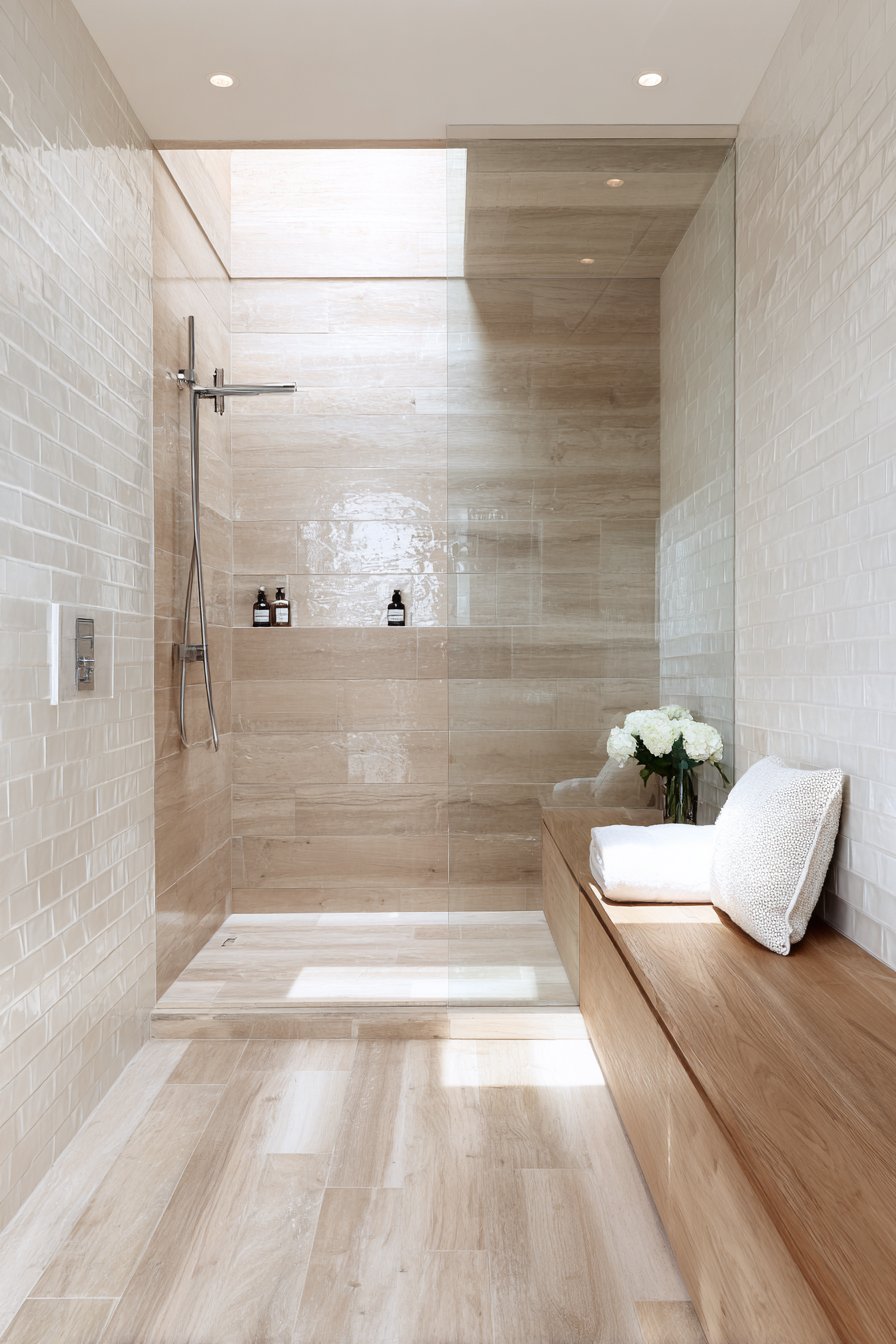
Pebble stone shower flooring creates an unexpected sensory experience, delivering gentle foot massage with each shower while evoking natural riverbeds and outdoor bathing. The varied sizes and organic shapes of river-smoothed stones create natural texture and excellent slip resistance. A reclaimed wood floating shelf introduces another layer of authentic material, its weathered surface and visible hardware telling stories of previous use. Morning light filtering through a privacy-textured window creates dappled patterns across surfaces, enhancing the natural, outdoorsy feeling central to farmhouse aesthetic.
Key Design Tips:
- Seal shiplap with marine-grade polyurethane to prevent moisture damage and warping
- Install pebble tile sheets (pre-mounted on mesh backing) rather than individual stones for easier installation
- Ensure proper shower pan waterproofing under pebble floor, as grout between stones will absorb water
- Choose reclaimed wood shelf from hardwood species like oak or maple for better moisture resistance
- Position privacy window above 60 inches to ensure modesty while allowing maximum natural light
6. Dramatic Black Matte Tile Sanctuary
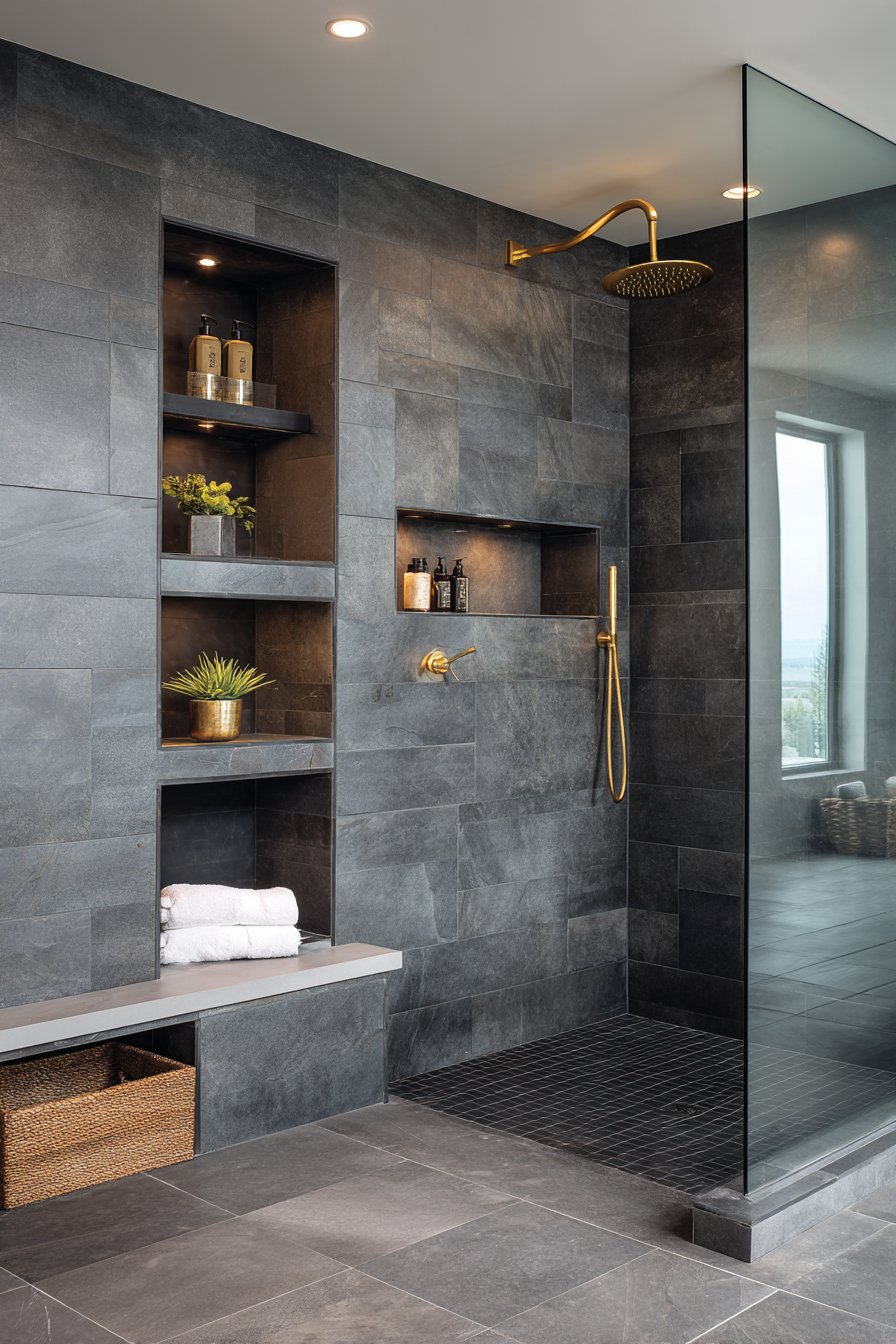
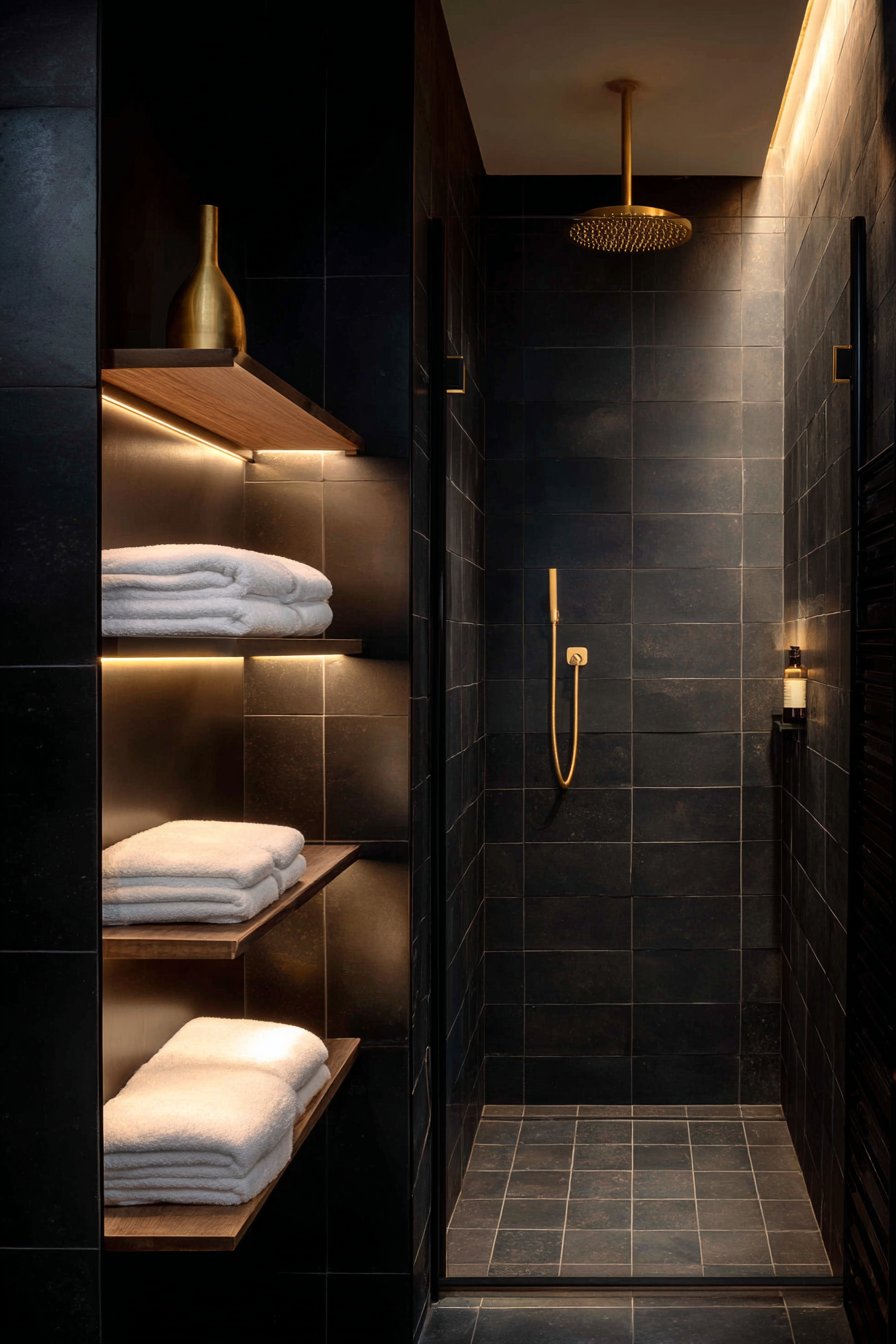
Bold design choices create dramatic impact in this contemporary shower bathroom idea featuring floor-to-ceiling black matte tile. The complete immersion in dark surfaces creates an unexpected cocoon-like quality—intimate and enveloping rather than oppressive. The matte finish is critical to this success, absorbing rather than reflecting light and creating velvety depth that glossy black tile cannot achieve. This darkness provides the perfect backdrop for highlighting premium fixtures and creating striking contrasts.
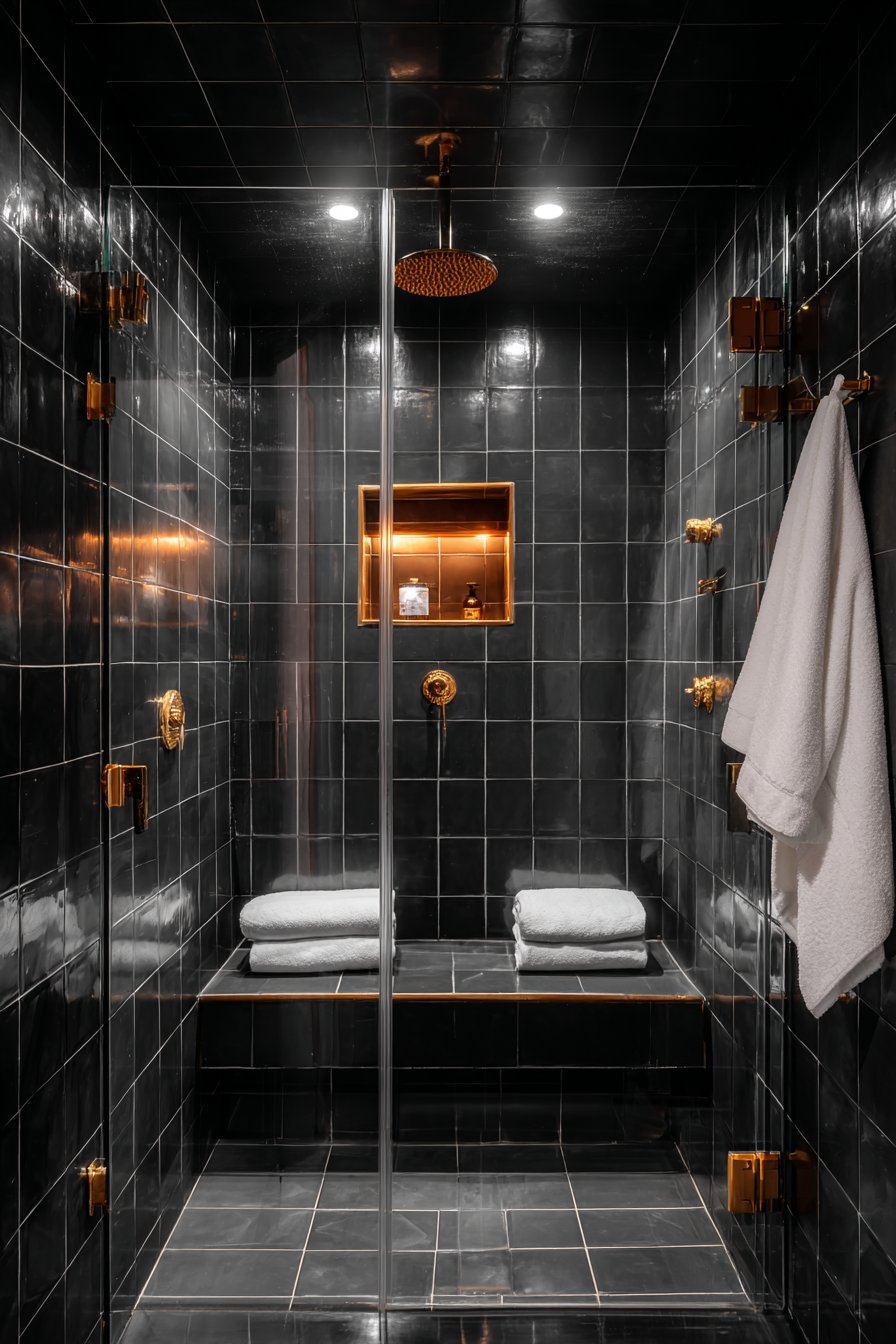
Brushed brass fixtures emerge as jewelry-like focal points against the dark canvas, their warm metallic glow creating visual warmth that balances the cool darkness. The oversized rainfall head, finished in brushed brass, becomes a sculptural element—a functional artwork suspended above the shower space. The gentle brushed finish resists water spots better than polished brass while developing a subtle patina that enhances rather than diminishes its beauty over time.
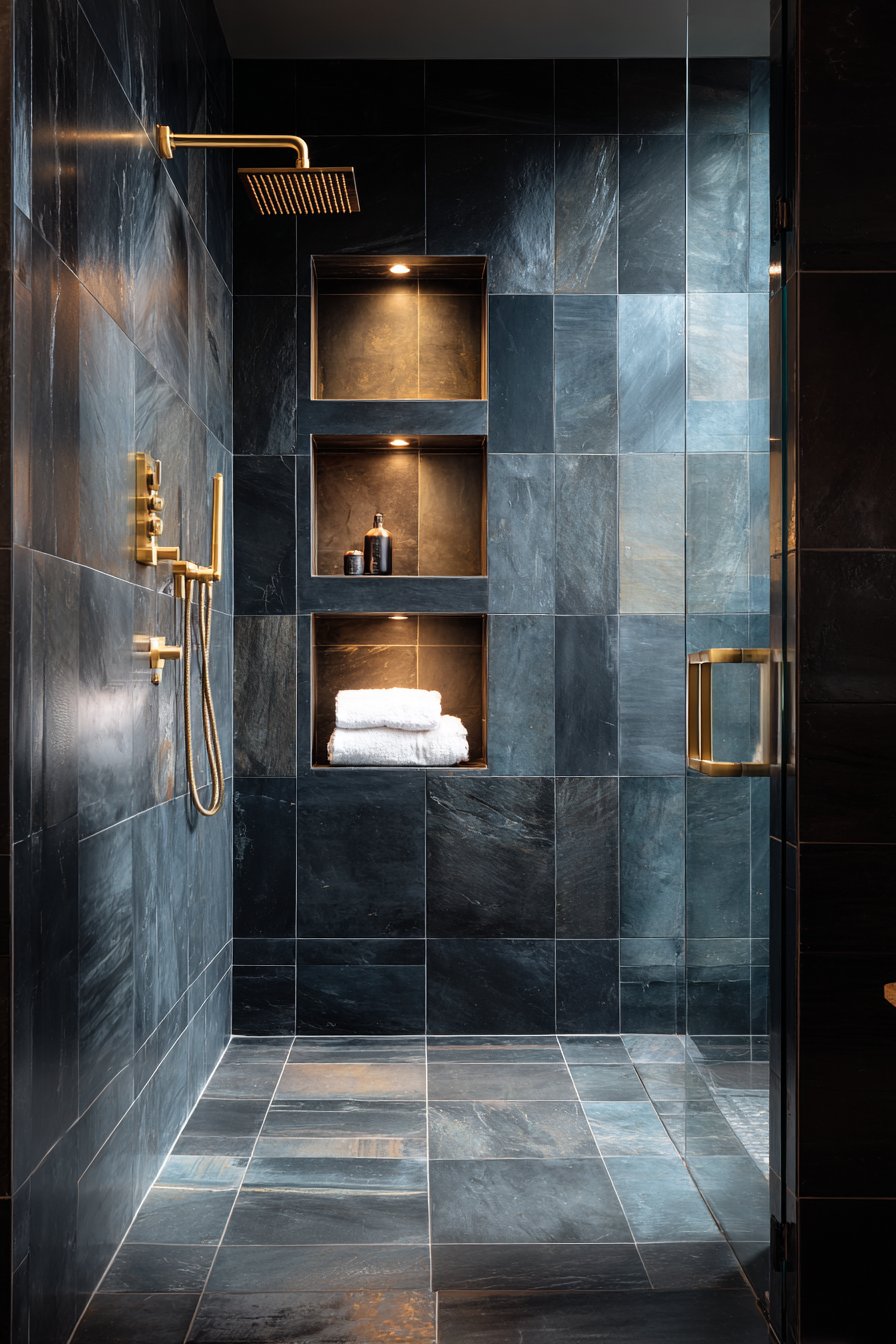
A built-in illuminated niche provides both practical storage and architectural interest. The interior lighting—typically LED strips along the back edge—creates a glowing frame for white towels and minimal accessories, turning everyday items into a curated display. Frameless glass partition separates the dramatic shower from the rest of the bathroom without diminishing impact, allowing the striking black enclosure to serve as a design anchor for the entire room. This bold approach demonstrates that dark colors, when executed with proper lighting and contrast, create sophisticated luxury rather than gloomy confinement.
Key Design Tips:
- Install additional LED lighting to compensate for light absorption by dark surfaces
- Choose large format black tiles (12×24 inches or larger) to minimize grout lines and maintain sleek appearance
- Use dark gray or black grout to create monolithic appearance where grout virtually disappears
- Position illuminated niche opposite the main shower spray to keep displayed items dry
- Include light-colored elements (white towels, brass fixtures) as necessary visual relief from darkness
7. Industrial Raw Concrete Aesthetic
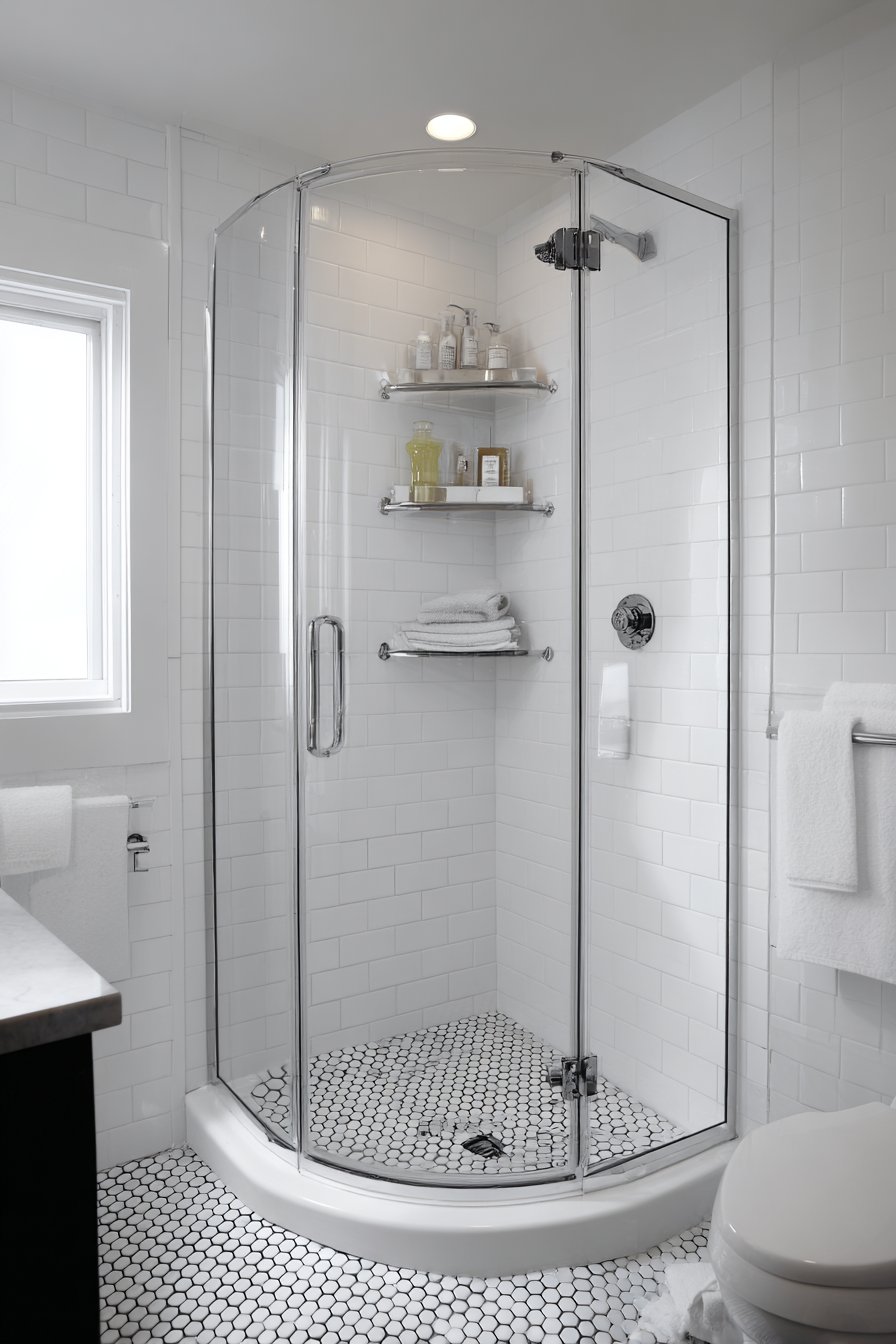
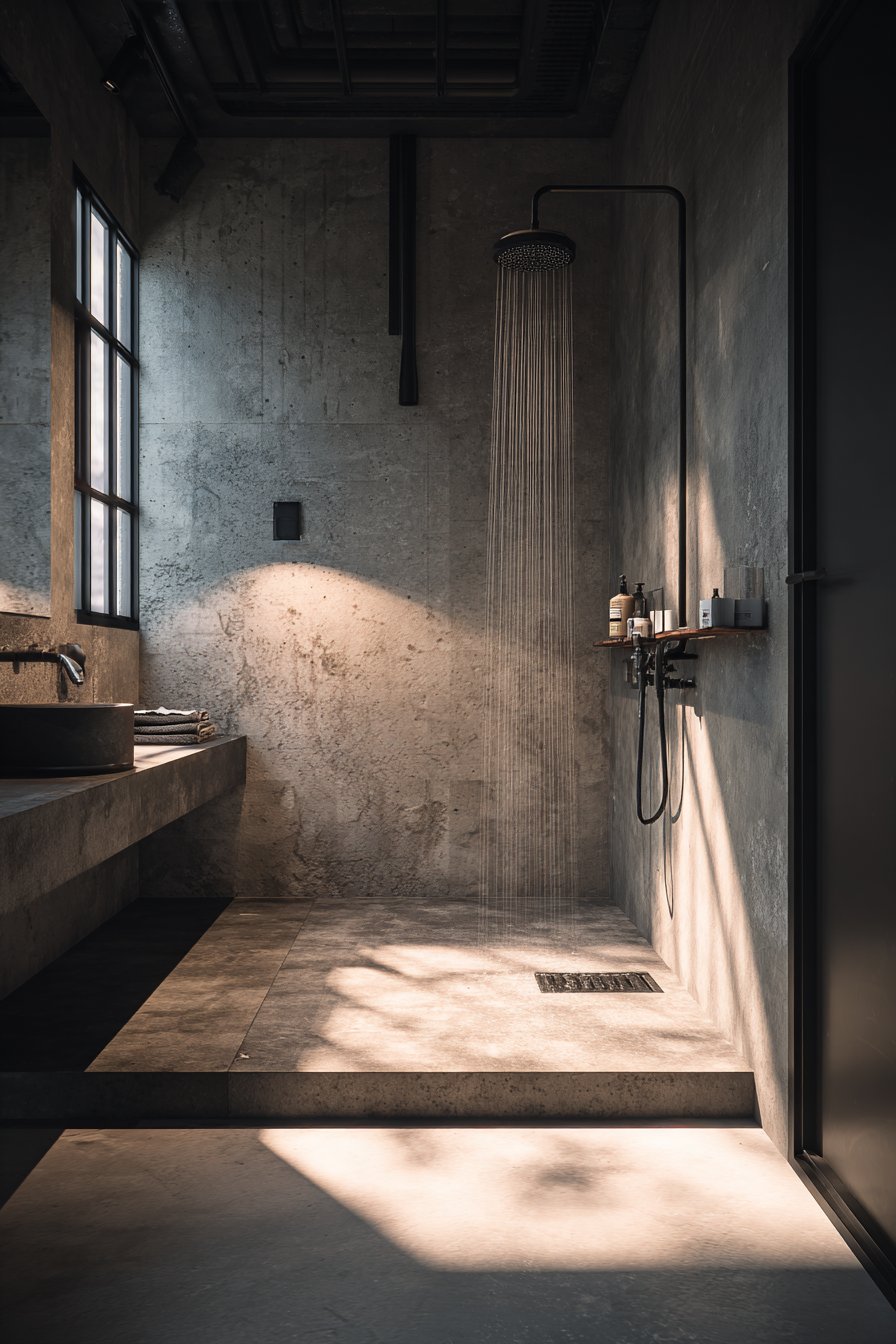
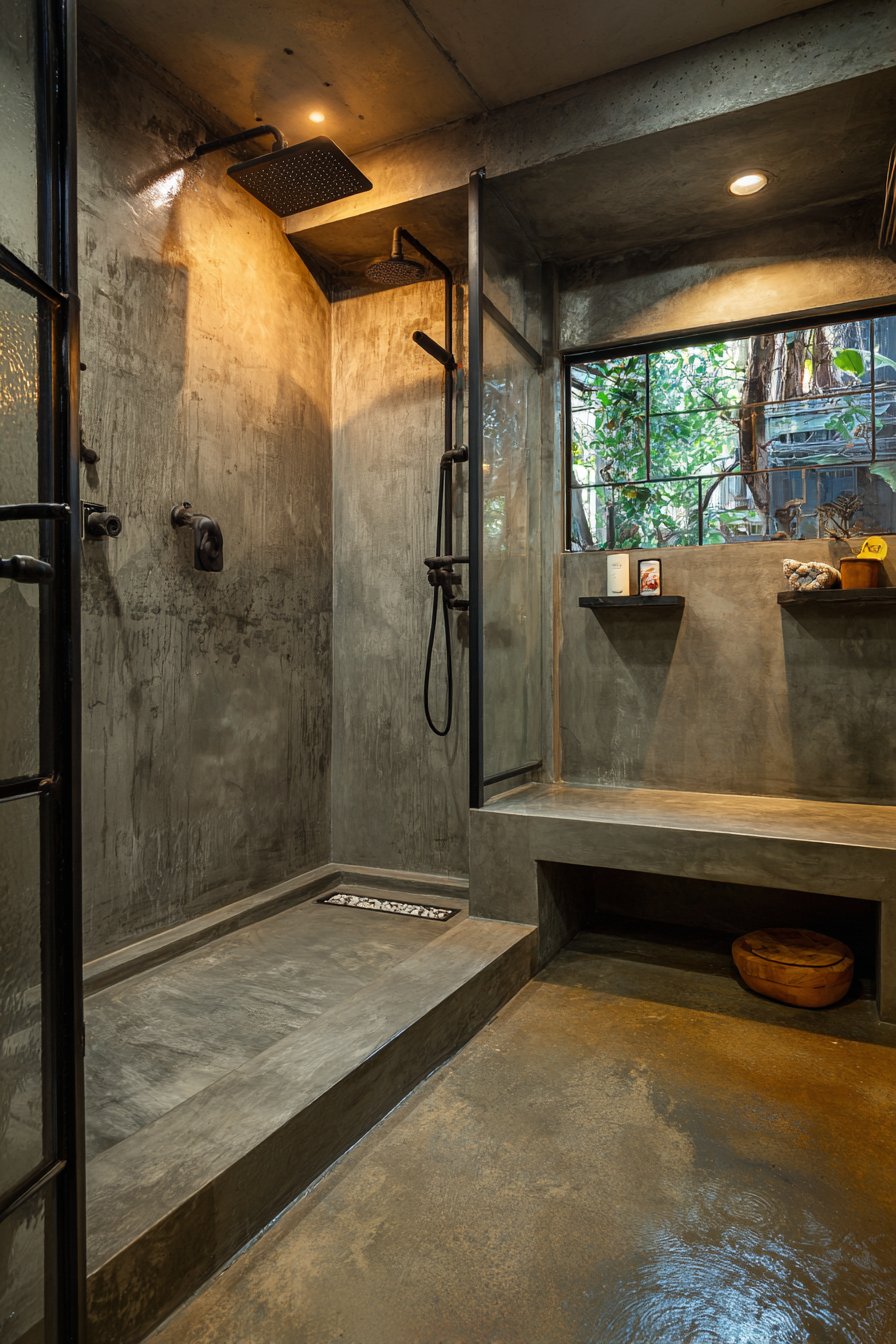
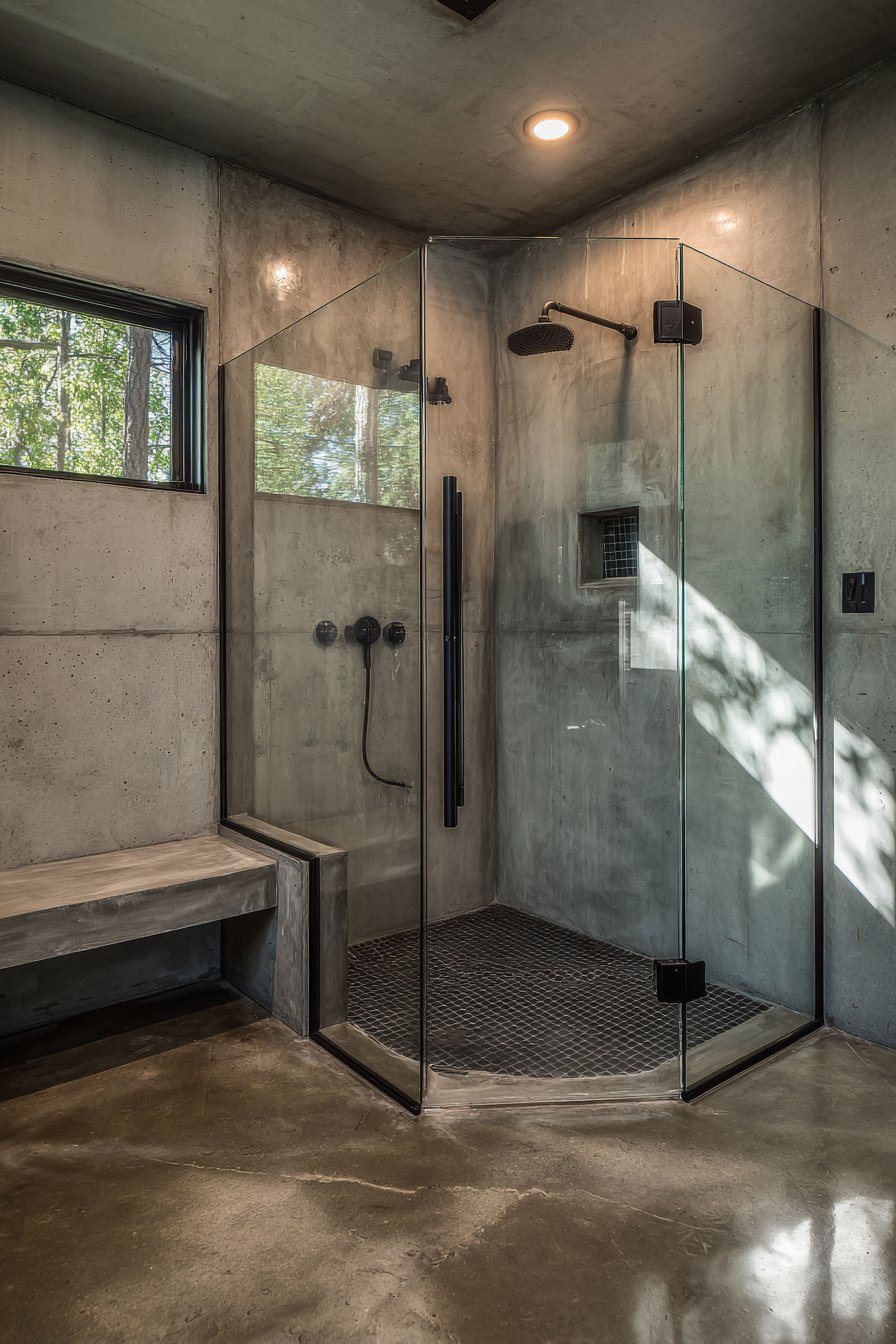
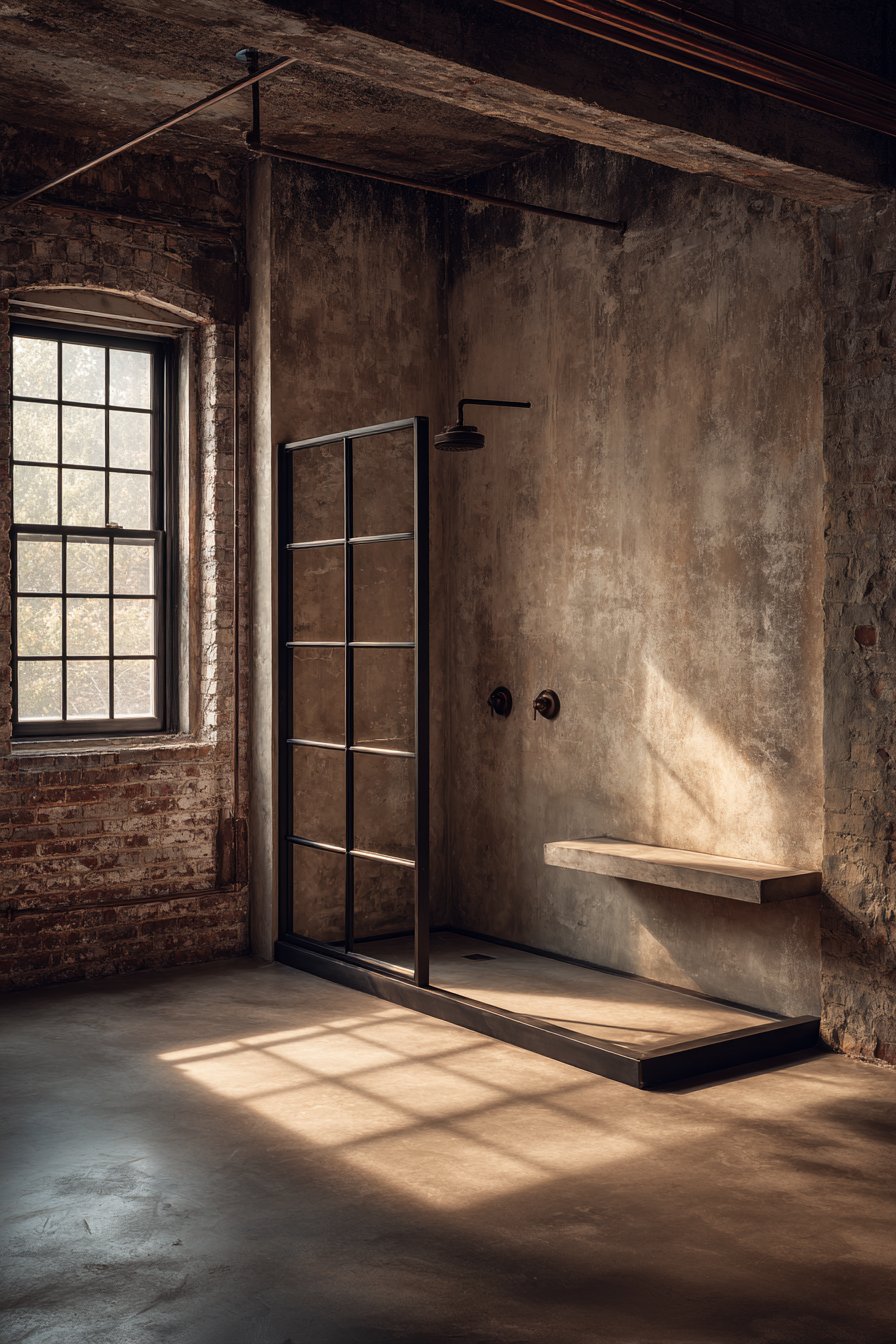
Exposed materials and honest construction define this industrial-style shower bathroom idea. Concrete walls with their inherent texture variations and natural color shifts celebrate the beauty of raw building materials. Unlike smooth painted surfaces that hide their substrate, these exposed concrete walls acknowledge their structural purpose while serving as finished surfaces. The sealed concrete resists water penetration while developing a subtle sheen that enhances the gray variations and occasional aggregate exposure.
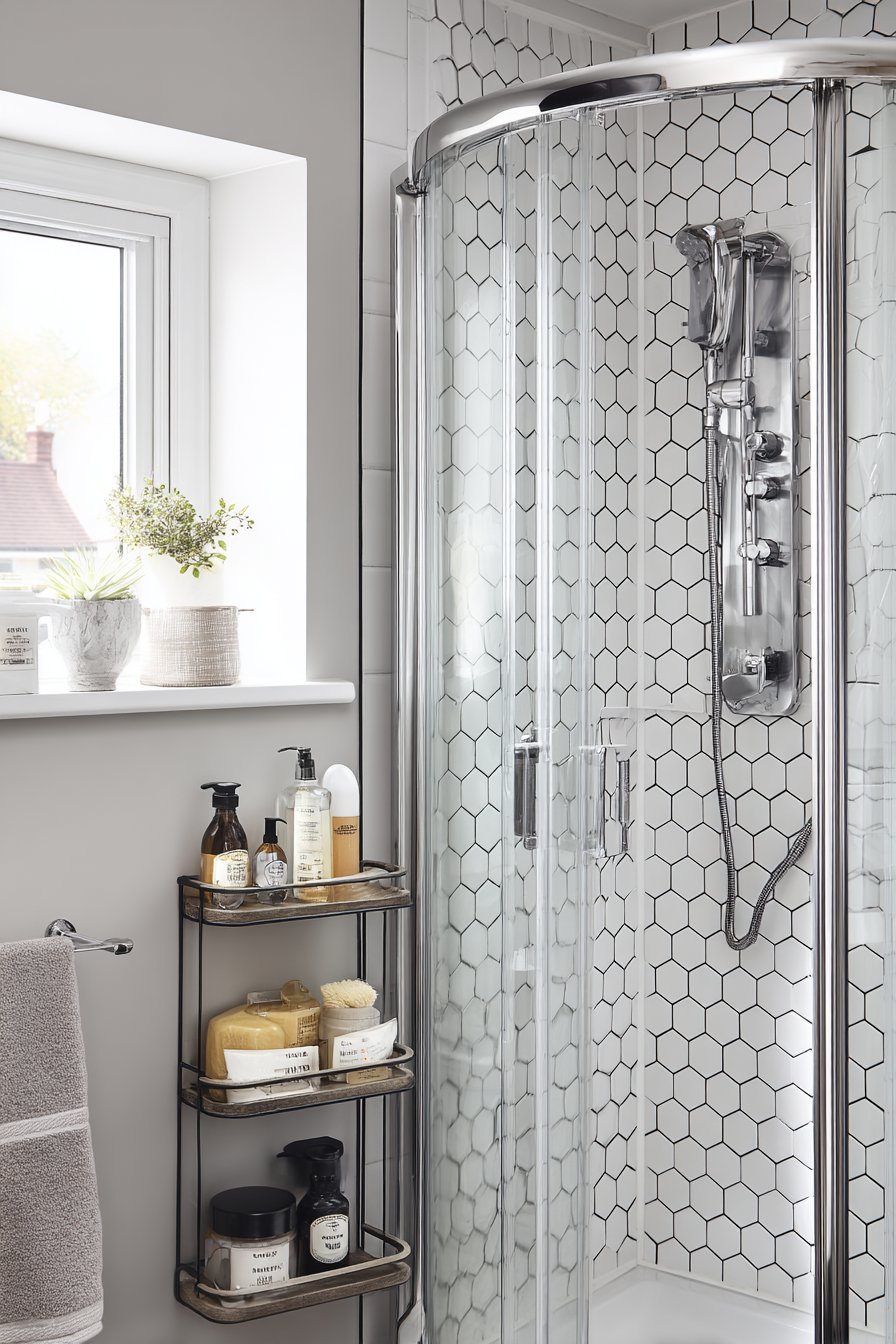
The polished concrete shower floor continues the industrial material narrative while providing practical benefits. The polishing process densifies the concrete surface, creating a nearly impermeable barrier that resists water absorption while developing a soft luster. The thermal mass of concrete flooring provides surprising comfort underfoot, maintaining moderate temperatures rather than the shocking cold of ceramic tile.
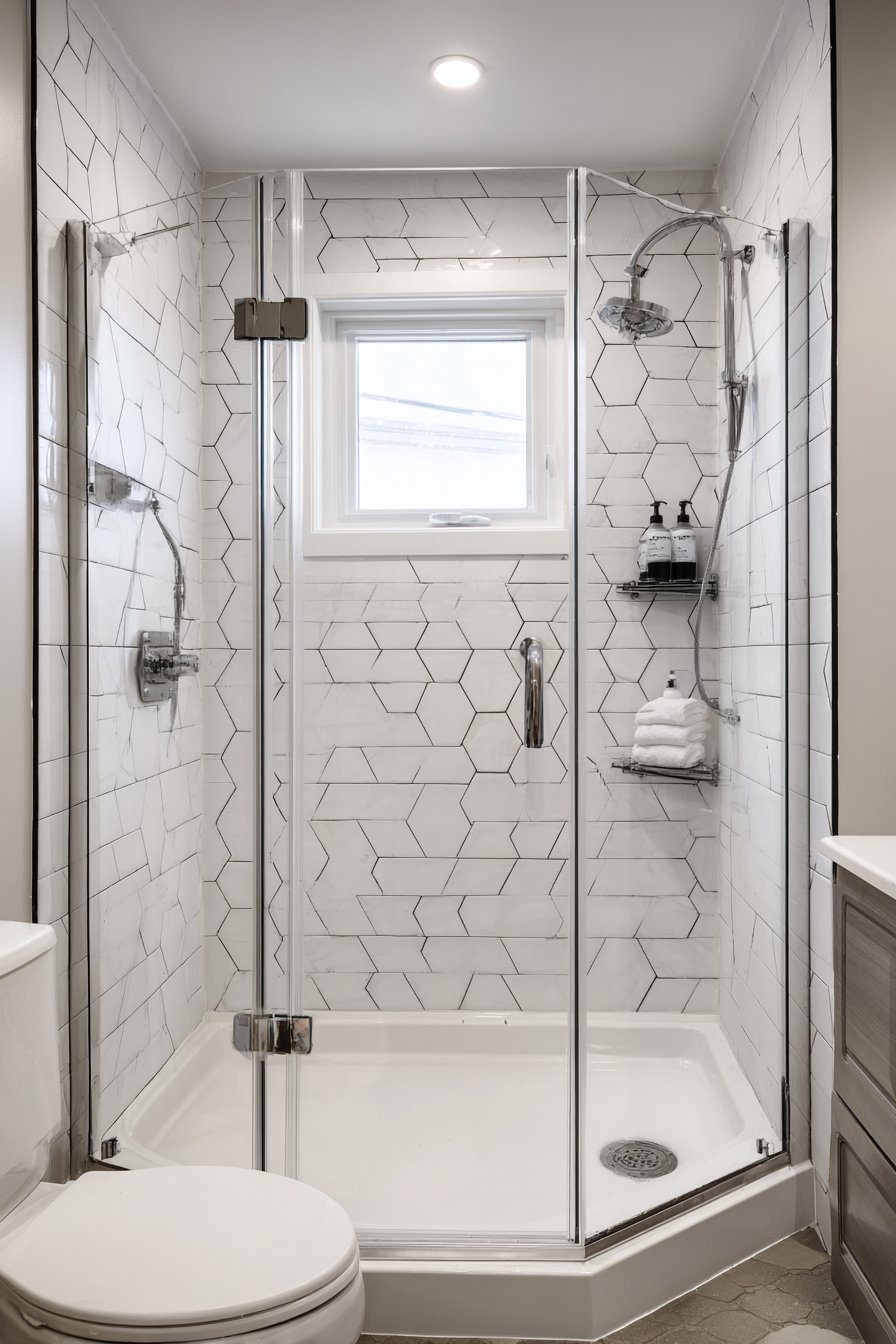
Black metal-framed glass enclosure reinforces the utilitarian aesthetic with its visible framework and honest joinery. Unlike frameless glass that seeks invisibility, the metal framing announces its structural purpose—holding glass panels securely while creating crisp black lines that define space. Simple pipe-style fixtures in matte black echo industrial plumbing with their exposed threads and minimal ornamentation. A floating concrete shelf, cast integrally with the wall or mounted with industrial brackets, provides functional storage that maintains material consistency. Light from a small industrial-style window—perhaps with steel muntins dividing panes—creates dramatic shadows across textured surfaces, emphasizing the raw material beauty central to industrial design.
Key Design Tips:
- Seal concrete surfaces with penetrating silicone sealer to prevent water damage while maintaining natural appearance
- Specify “as-cast” concrete finish rather than perfectly smooth troweled surface for authentic industrial look
- Install concrete floor with slight slope (2% grade) to ensure proper drainage despite dense, impermeable surface
- Choose metal-framed glass in true black powder coat rather than bronze or graphite for authentic industrial palette
- Embrace minor surface imperfections in concrete (slight color variations, small air bubbles) as character rather than flaws
8. Coastal Wave-Pattern Tile Design
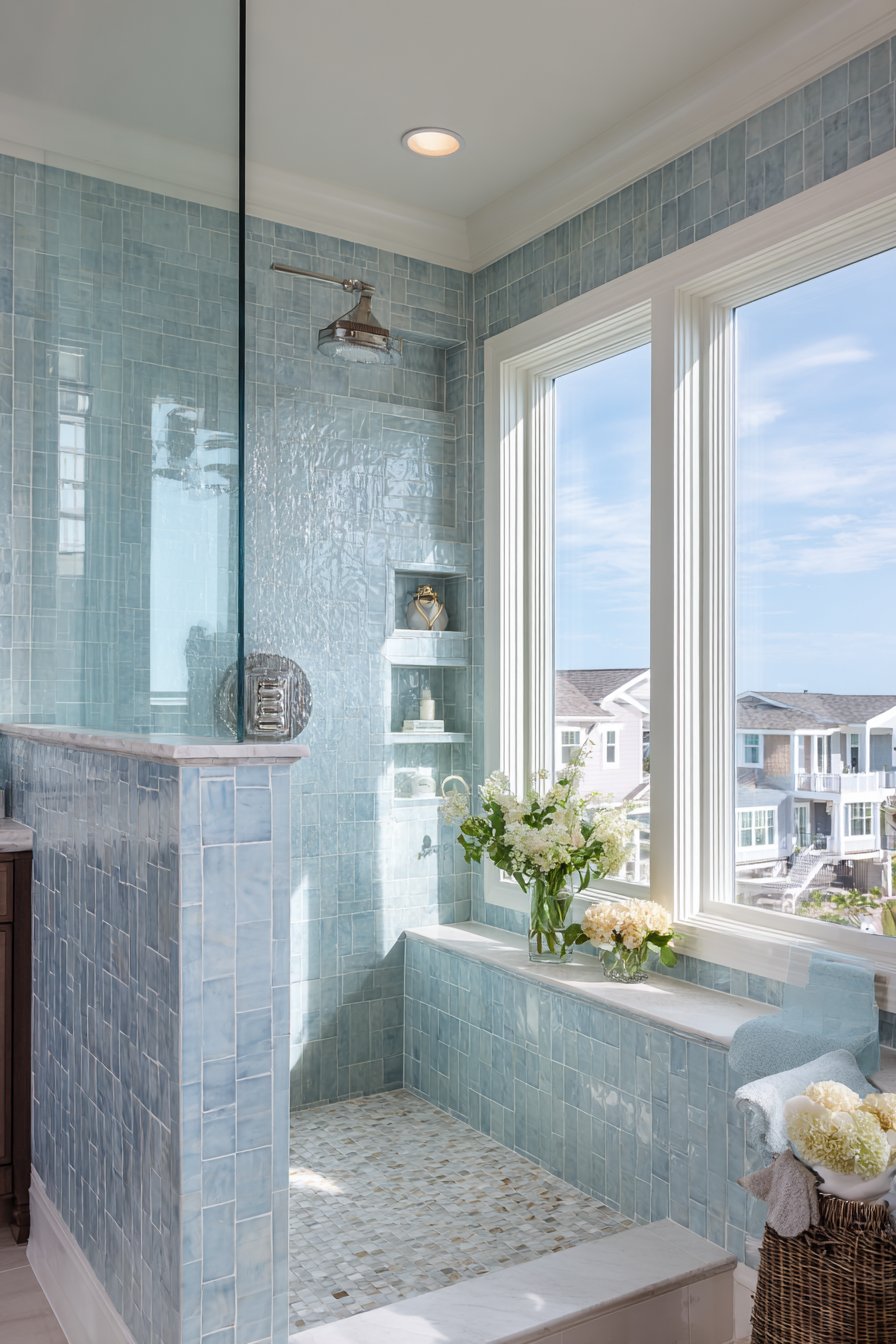
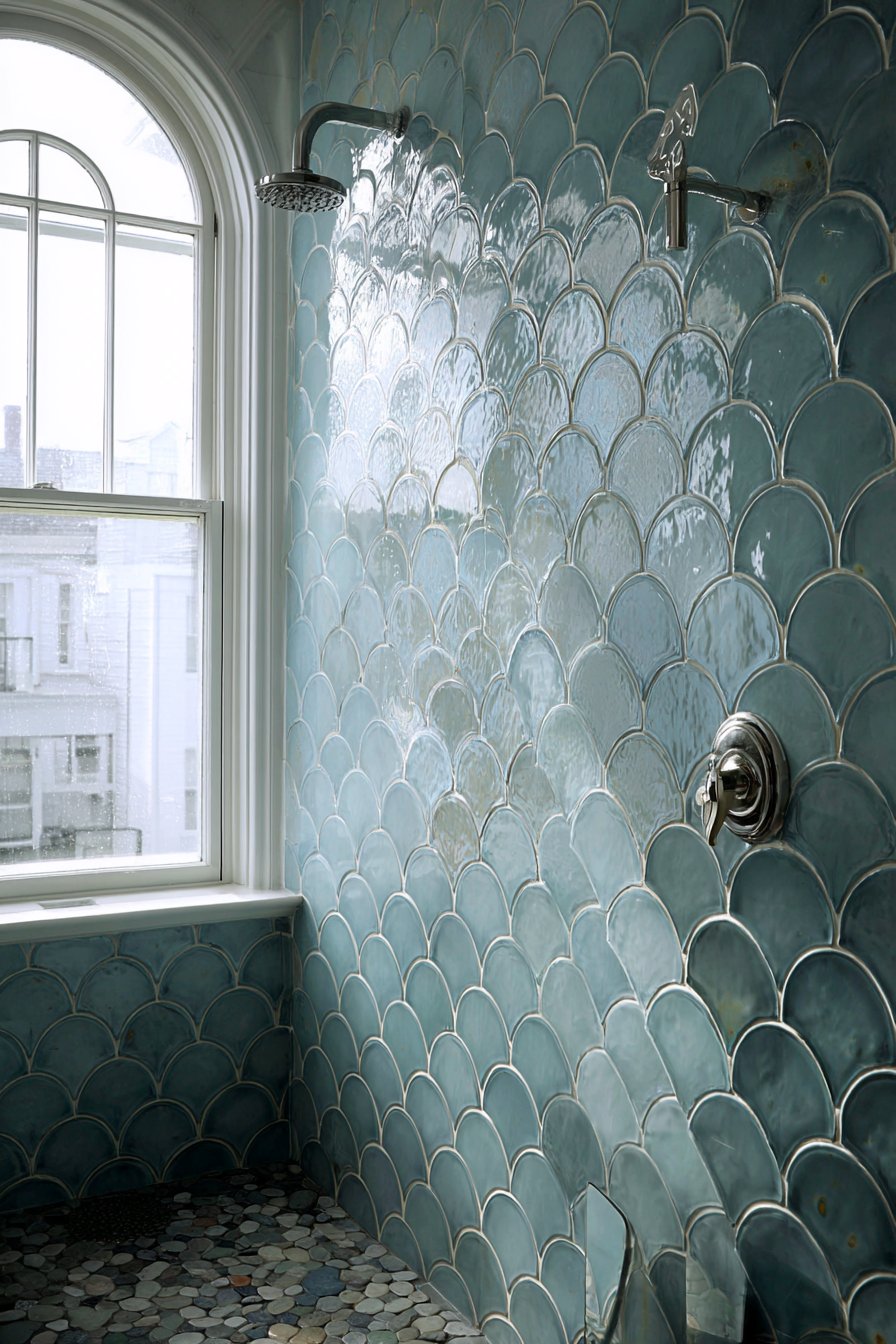
Ocean-inspired tranquility washes over this coastal shower bathroom idea through carefully selected materials and soothing color palettes. Soft blue-gray ceramic tiles arranged in a gentle wave pattern across shower walls create subtle movement that evokes rolling seas. The dimensional pattern—achieved through varying tile depths or curved tile edges—catches light differently throughout the day, creating ever-changing visual interest. This approach delivers pattern and texture without busy graphics or intense colors.
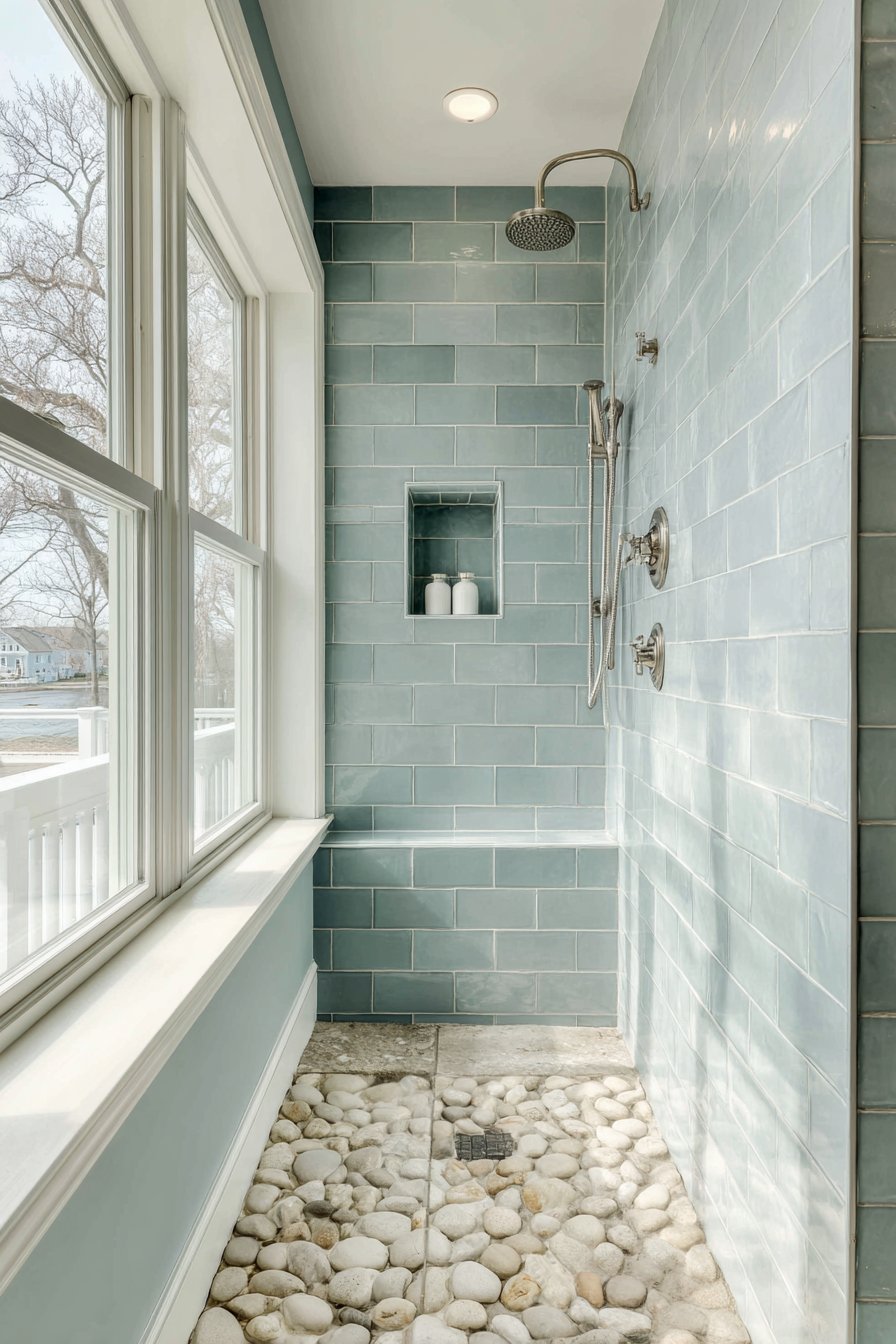
Brushed nickel fixtures strike the perfect balance between casual beach house informality and polished finish quality. The soft gray tone complements the blue-gray tiles while the brushed texture resists fingerprints and water spots—practical considerations in frequently used showers. A rainfall showerhead reinforces the natural water theme, its broad spray mimicking summer rain over coastal waters.
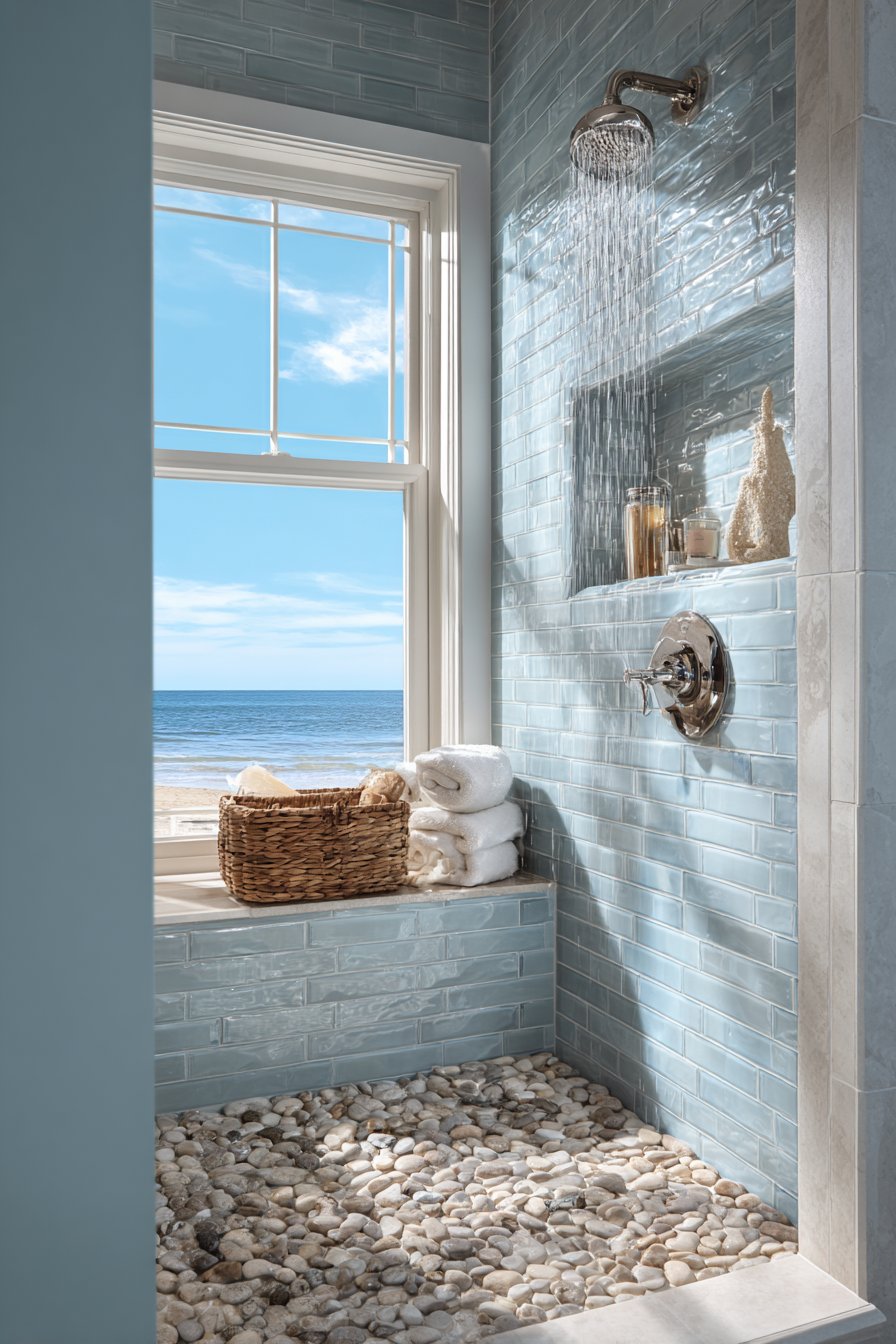
Natural river rock shower flooring introduces authentic beach texture while providing excellent slip resistance. The smooth, water-worn stones feel pleasant underfoot, delivering gentle massage and evoking barefoot walks along shorelines. White grout between the blue-gray tiles keeps the overall palette fresh and prevents the blues from reading too heavy or dark. Abundant natural light from a large frosted window floods the space with brightness essential to coastal aesthetics—these are spaces meant to feel open, airy, and sun-drenched. The overall effect creates a daily escape to seaside tranquility.
Key Design Tips:
- Select blue-gray tiles with slight color variation rather than perfectly uniform color for natural, oceanic quality
- Install wave-pattern tiles with professional tile setter experienced in dimensional installations
- Use epoxy grout in wet areas for superior stain resistance and durability compared to standard cement grout
- Position river rock flooring on proper waterproof membrane with adequate mortar bed for stability
- Include ventilation fan sized appropriately for space to prevent moisture buildup and preserve coastal freshness
9. Scandinavian Wood and White Harmony
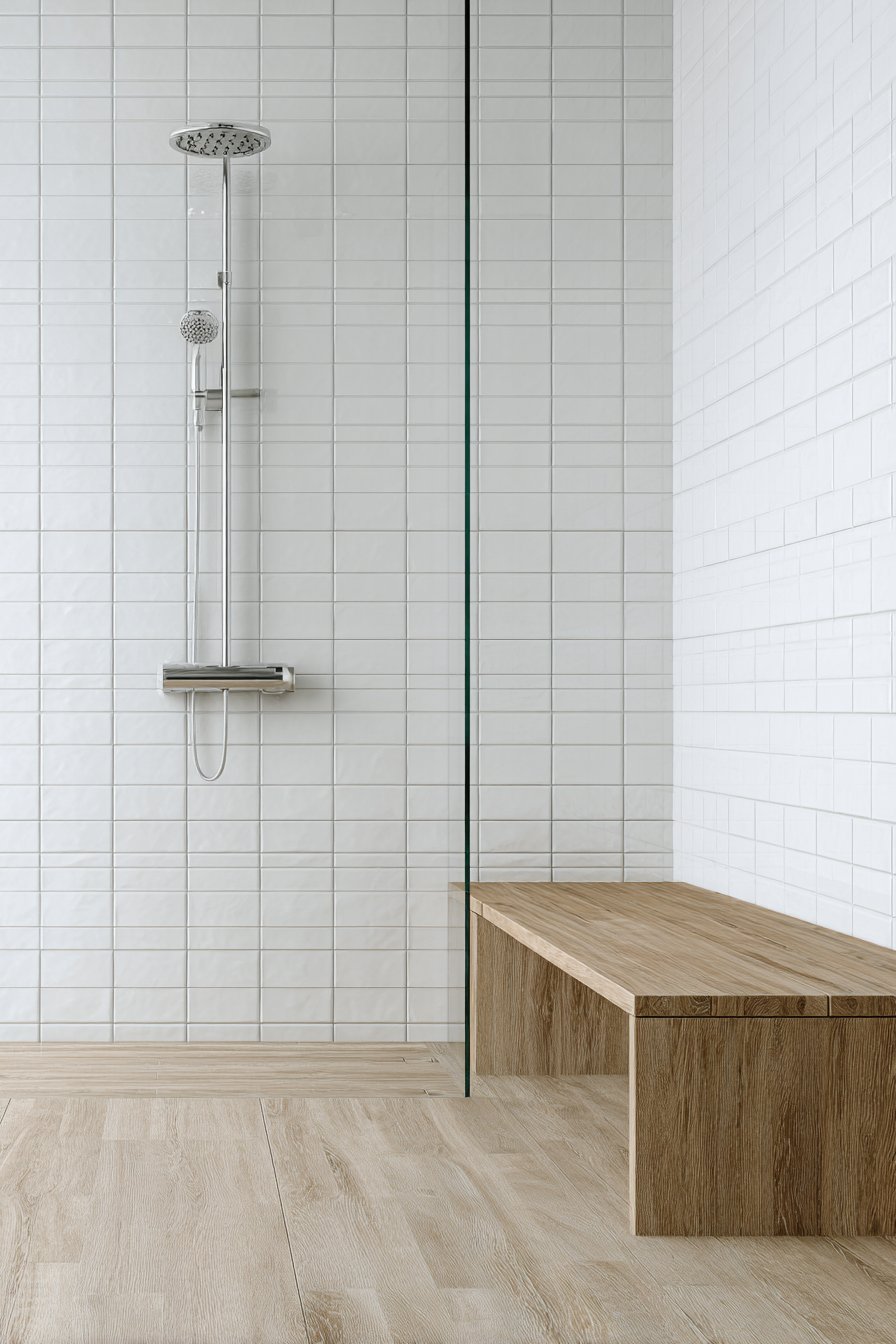
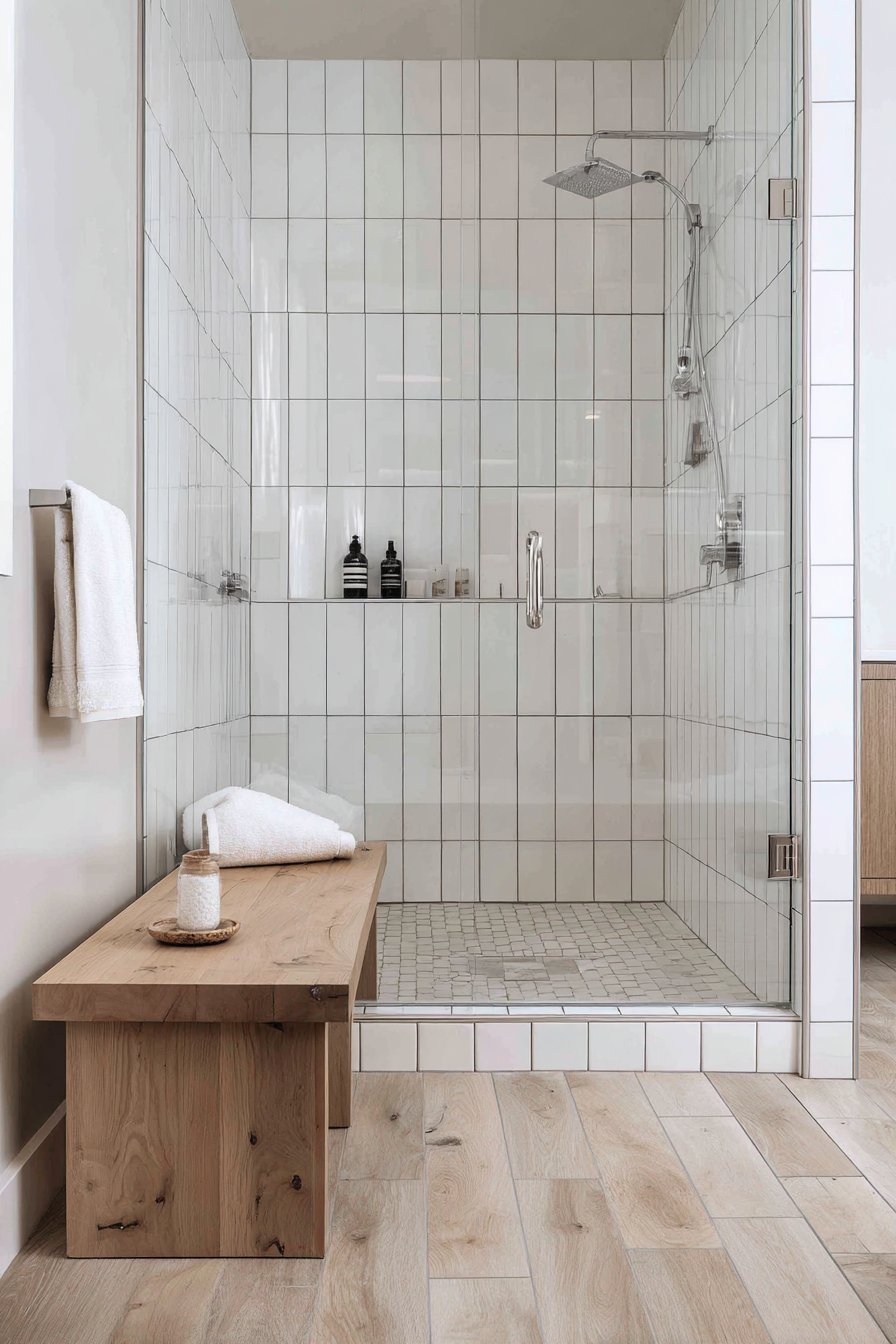
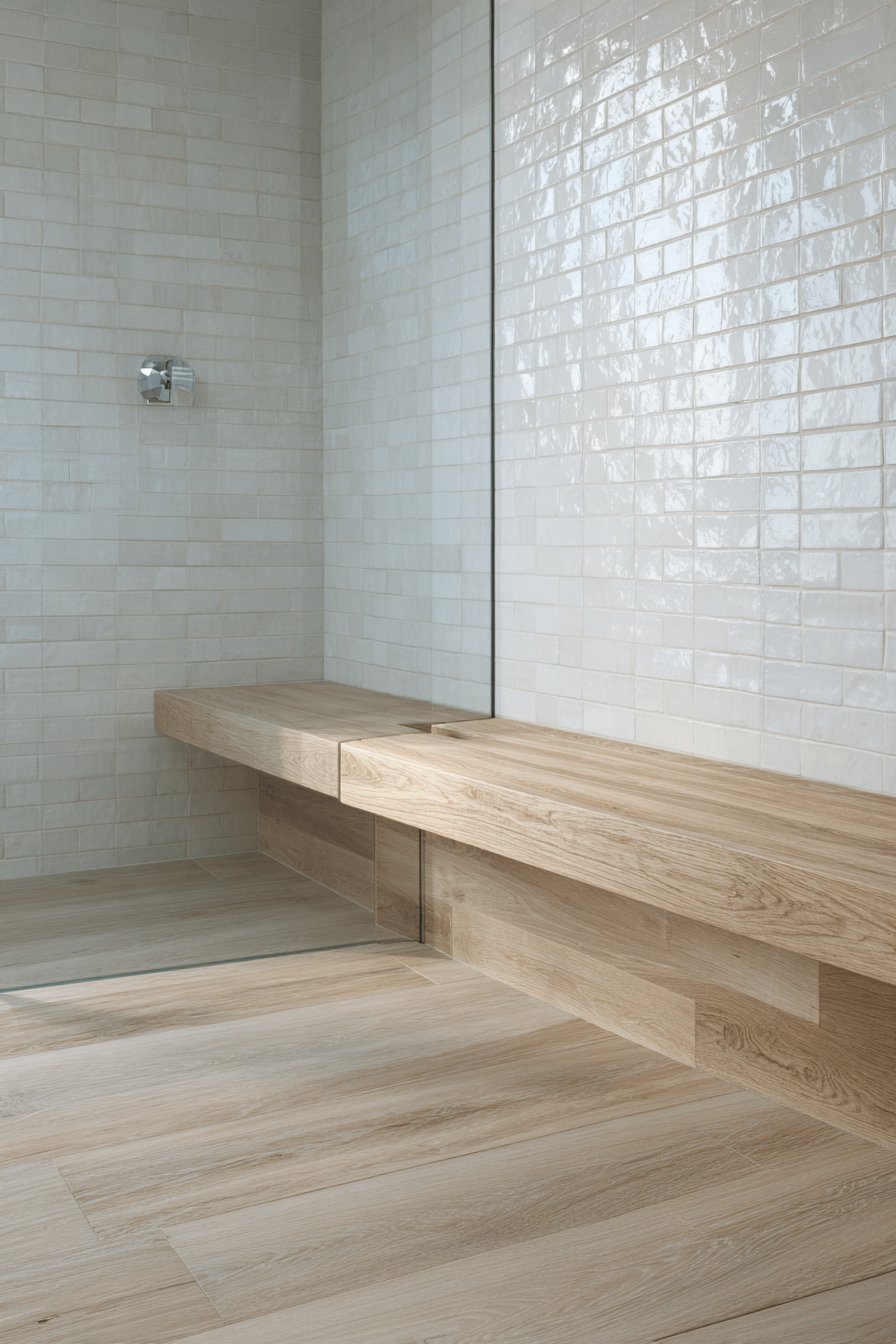
Nordic design principles of simplicity, functionality, and natural materials converge in this Scandinavian shower bathroom idea. Light ash wood-look porcelain tiles on the shower floor introduce warmth and organic beauty while offering superior water resistance compared to actual wood. Modern porcelain technology replicates wood grain, knots, and color variation with remarkable fidelity, providing the aesthetic appeal of wood with the practical performance tile requires.
Crisp white ceramic subway tiles on walls create the clean, bright backdrop essential to Scandinavian design. The high-contrast pairing of pale wood tones with pure white surfaces embodies the Nordic approach to interior spaces—light, uncluttered, and serene. This combination also maximizes natural light reflection, critical in Scandinavian countries with limited daylight hours and equally valuable in bathrooms with modest windows.
Minimalist chrome fixtures with clean geometric lines maintain the design restraint central to Scandinavian aesthetics. The forms are reduced to essential elements—no ornamental details, no unnecessary curves, just pure functional beauty. A built-in wooden bench made from water-resistant teak provides both practical seating and a significant warm accent. The honey tones of teak wood create visual comfort against the cool whites and grays, while teak’s natural oils provide inherent moisture resistance. A single glass panel creates separation while preserving the openness and spatial flow that small Scandinavian apartments demand. Soft diffused natural lighting completes the composition, creating the gentle, even illumination that makes these spaces feel peaceful and welcoming.
Key Design Tips:
- Choose wood-look porcelain with matte finish rather than high gloss for more authentic wood appearance
- Install tiles in varied plank lengths (if using wood-plank pattern) to mimic real wood installation
- Maintain minimal grout lines on white subway tile using rectified edges and narrow spacing
- Position teak bench away from direct shower spray to maximize longevity despite water-resistant properties
- Include radiant floor heating beneath wood-look tile for authentic Scandinavian comfort and rapid drying
10. Mediterranean Terracotta Artisan Charm
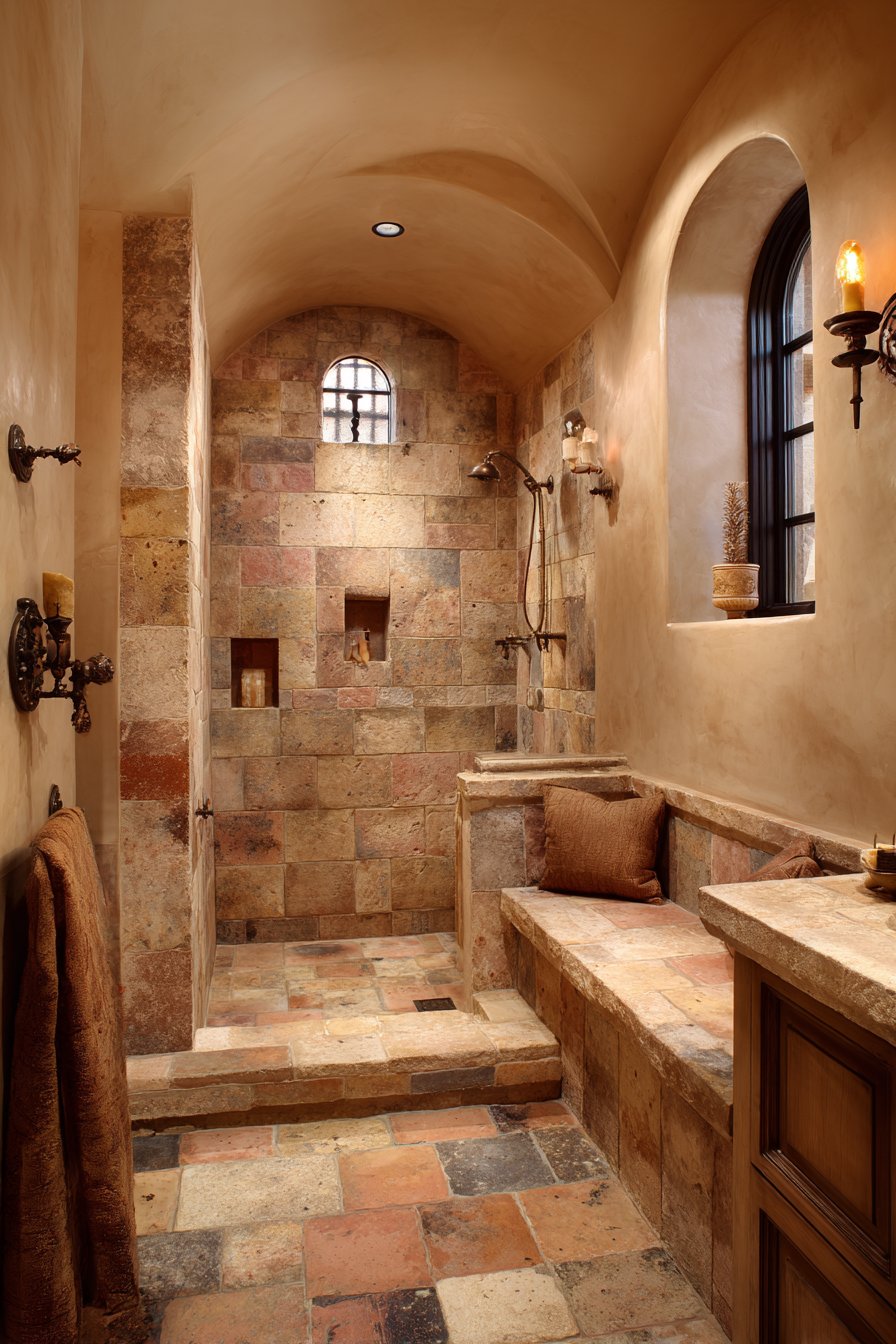
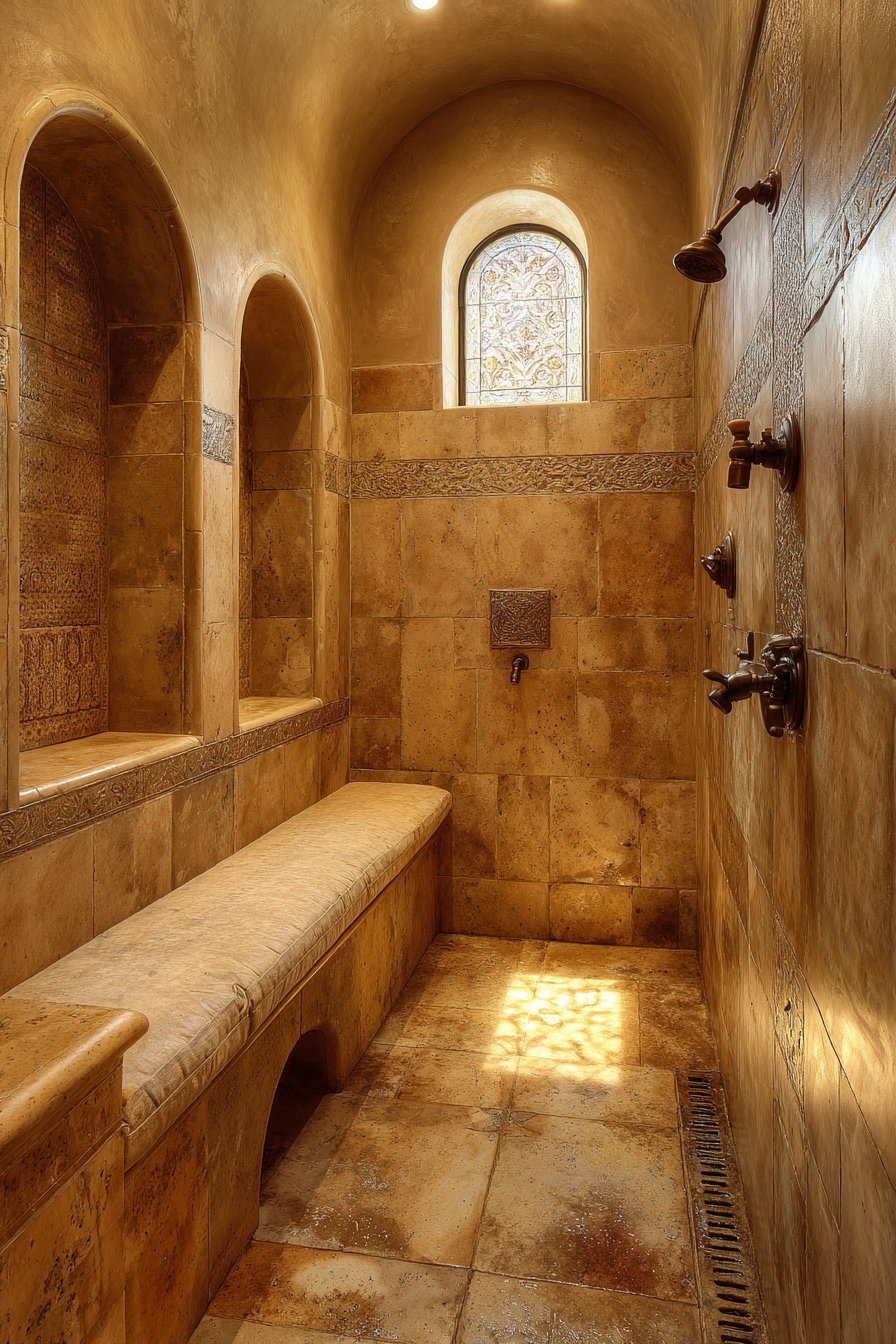
Old-world craftsmanship and sun-soaked warmth characterize this Mediterranean shower bathroom idea. Handcrafted terracotta-colored tiles with subtle glaze variations bring artisan appeal and authentic character impossible to achieve with mass-produced materials. Each tile shows slight differences in color saturation, surface texture, and glaze application—imperfections that prove human craftsmanship and create surfaces that reward close inspection.
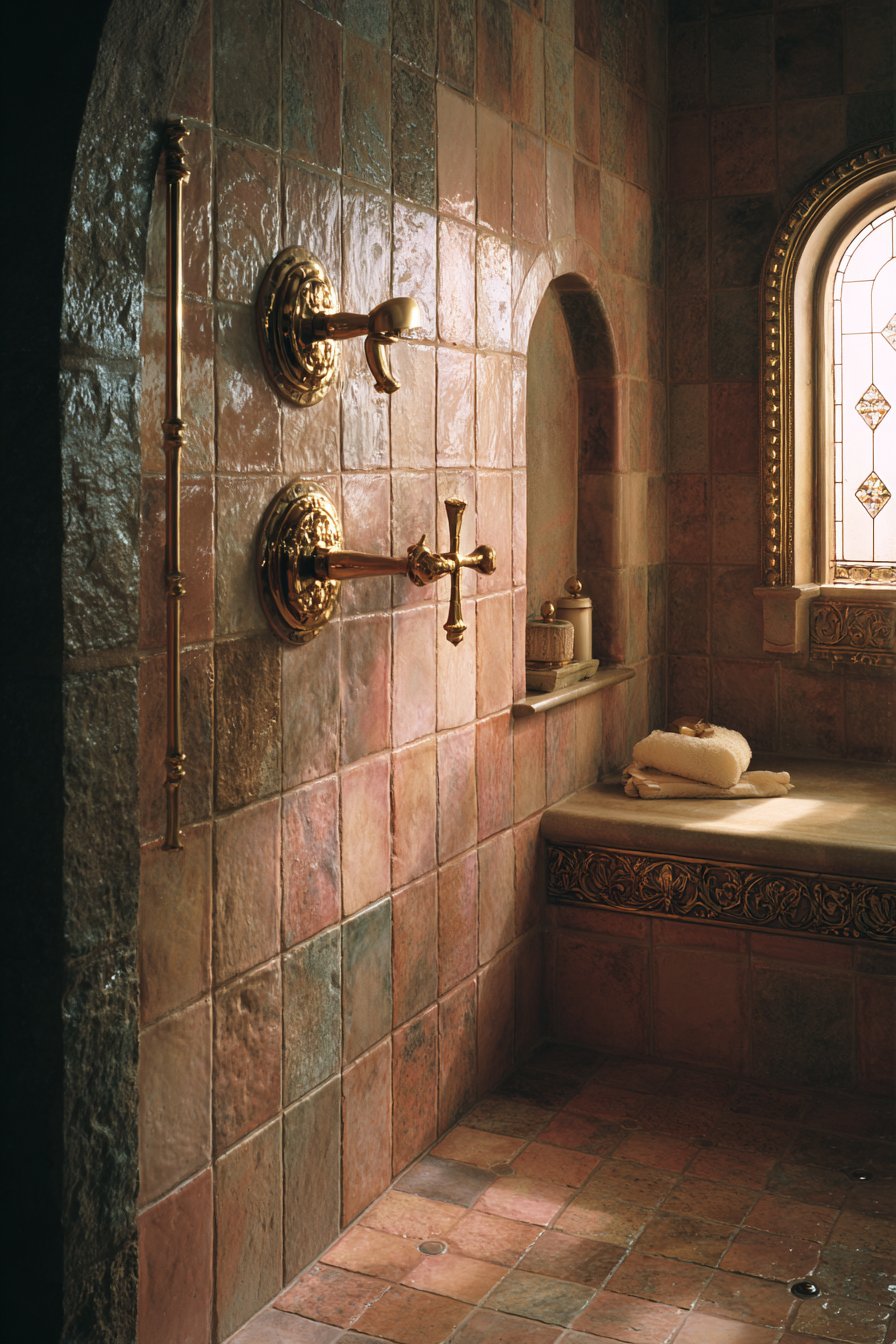
Antique brass fixtures with traditional cross handles transport users to Mediterranean villas and historic estates. The warm golden tones of brass complement terracotta beautifully, creating a cohesive warm palette. The cross handle configuration references traditional European plumbing while providing excellent grip even with wet, soapy hands. The antique finish, with its subtle darkening in recesses and bright highlights on edges, suggests age and patina that new polished brass lacks.
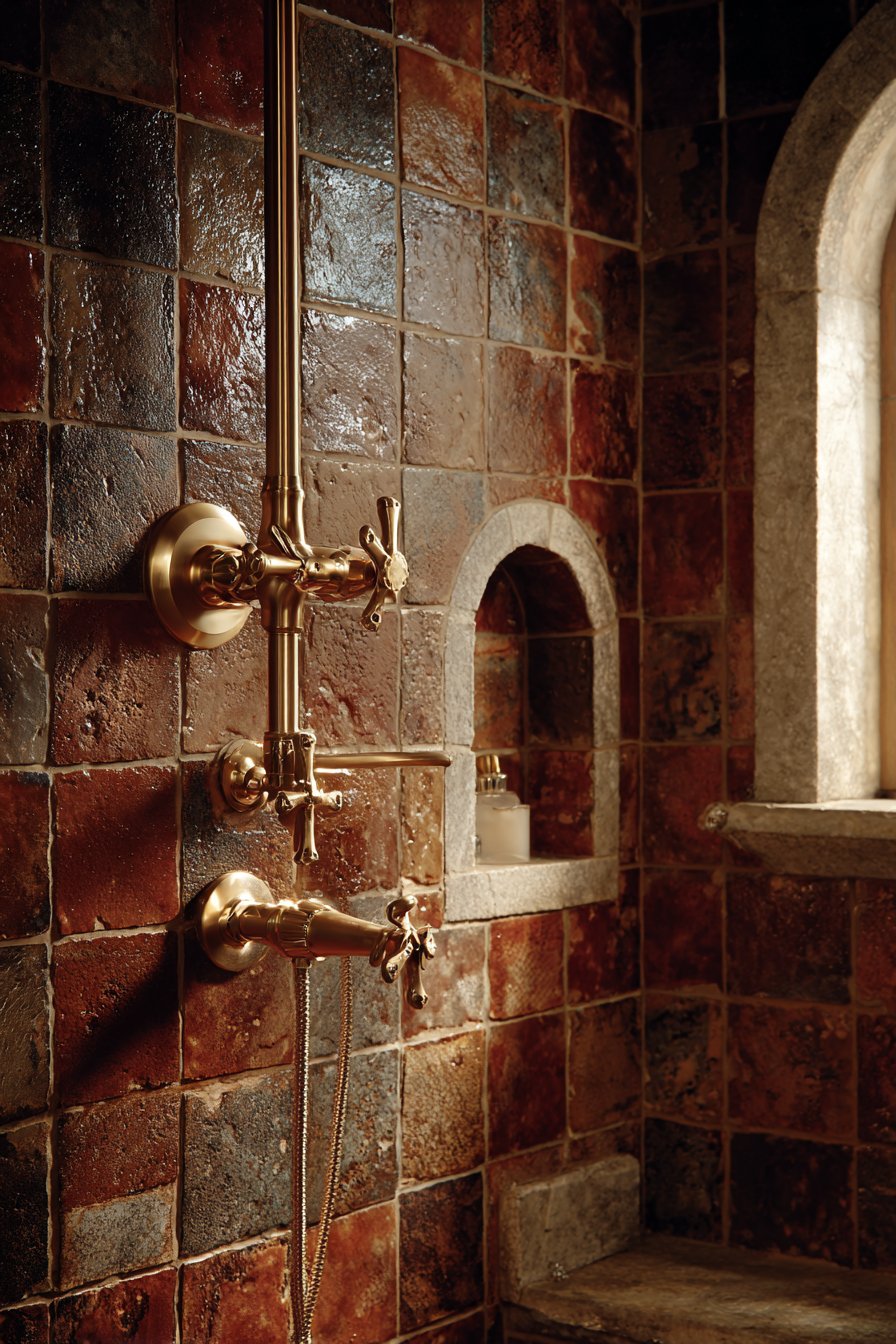
An arched shower alcove with built-in soap niches reflects classic Mediterranean architecture. The curved arch softens the rectangular shower space while creating visual interest and a sense of established architectural tradition. Built-in niches eliminate the need for hanging caddies or corner shelves, maintaining clean lines while providing essential storage. A natural stone shower curb provides a traditional threshold detail, marking the transition into the shower space with substance and permanence. Warm afternoon light through a small arched window creates golden ambient glow, enhancing the terracotta warmth and creating the sun-drenched atmosphere of Mediterranean coastal regions.
Key Design Tips:
- Source handmade tiles from artisan producers to ensure authentic variation and quality
- Accept and celebrate minor size variations in handmade tiles as evidence of craft rather than defects
- Seal porous terracotta tiles with quality penetrating sealer to prevent water staining
- Choose antique brass fixtures from manufacturers offering solid brass construction for durability
- Design arched alcove with proper radius (not too flat) and smooth curve for authentic architectural appearance
11. Japanese Zen Natural Stone Garden
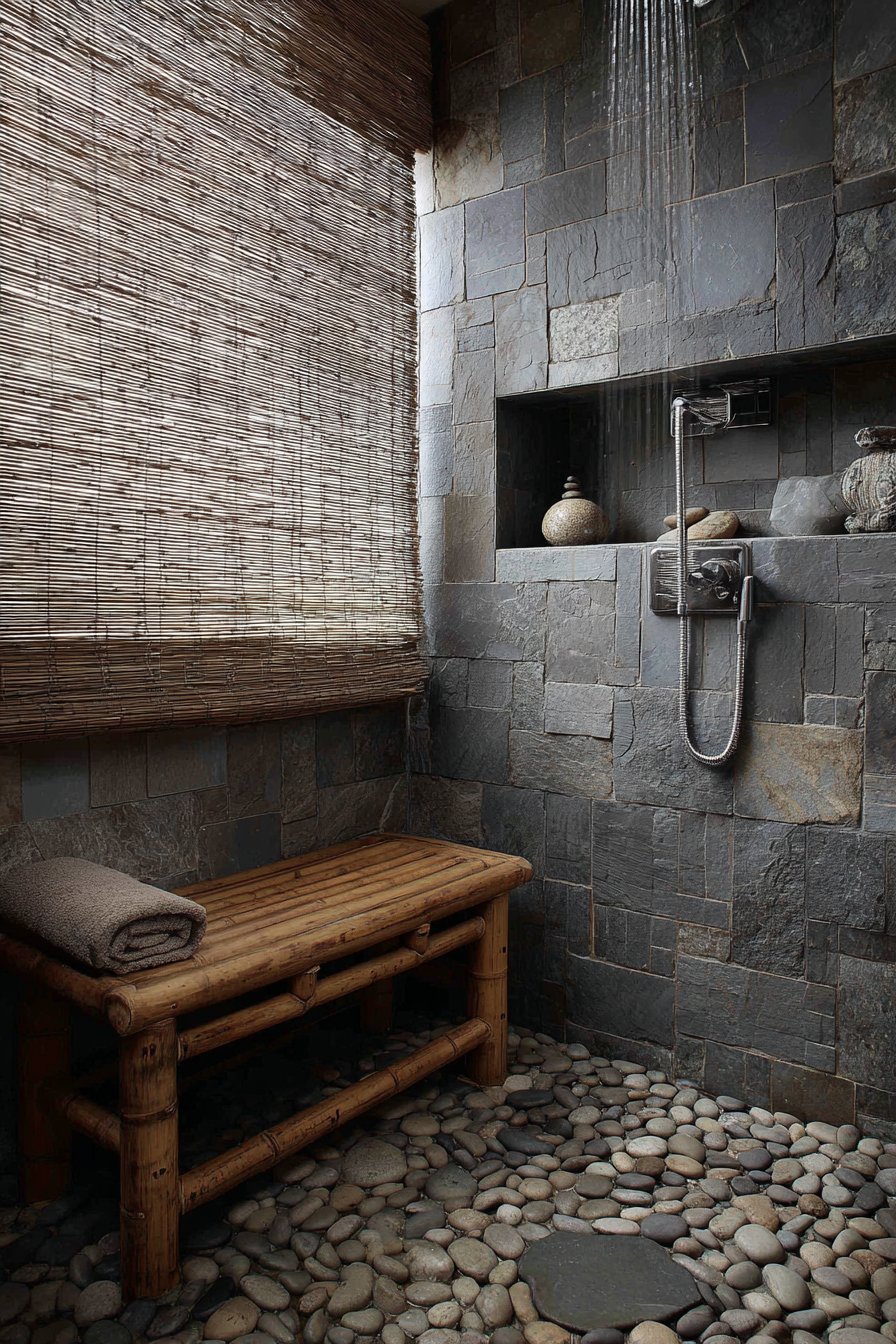
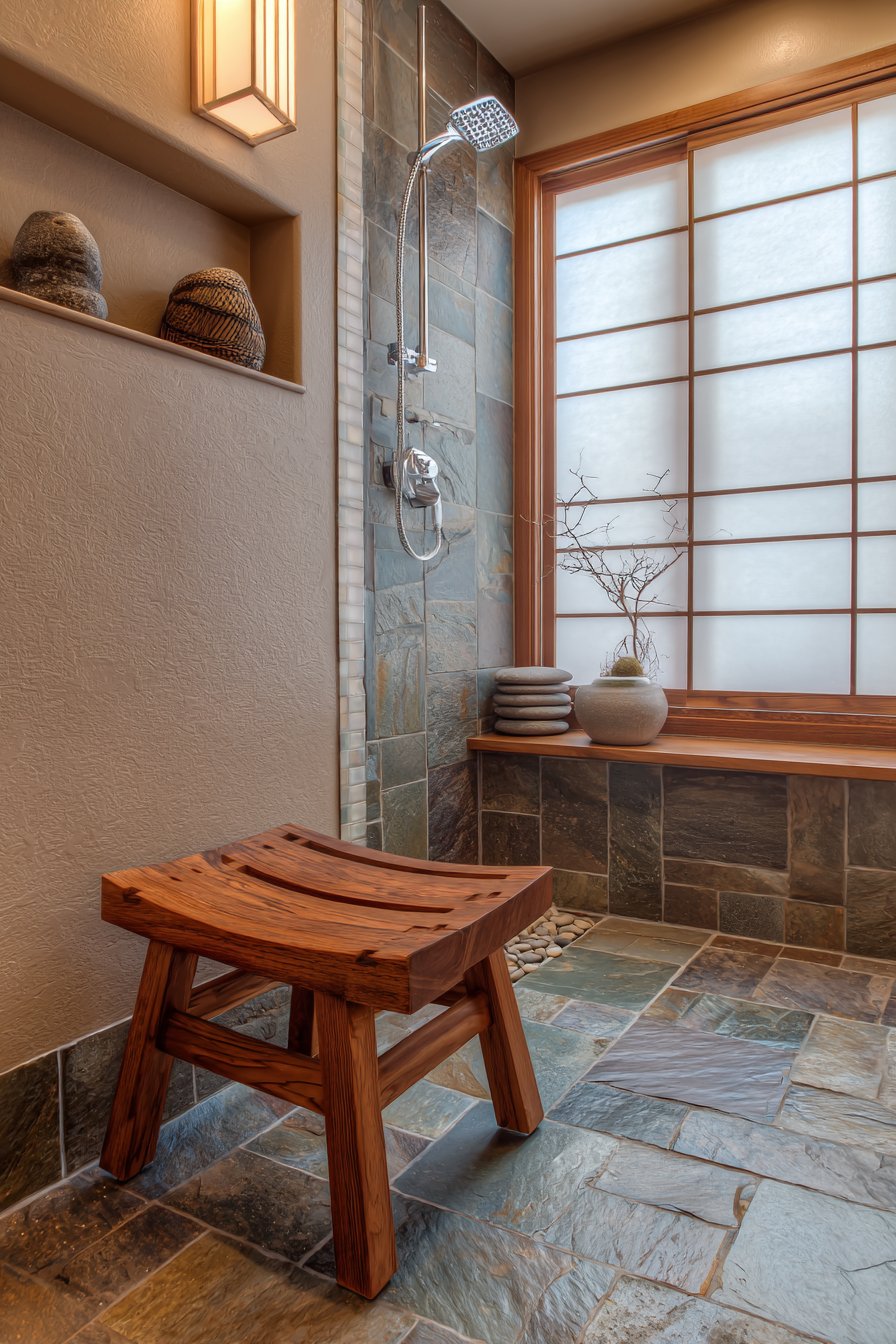
Eastern philosophy and natural materials create contemplative serenity in this Japanese-inspired shower bathroom idea. Natural slate tiles in varying shades of gray mimic stone garden pathways and riverbed formations. The inherent variation in slate—from deep charcoal to soft silver—creates organic visual interest without patterns or graphics. The slightly textured surface provides slip resistance while the cool gray tones establish a calm, meditative atmosphere.
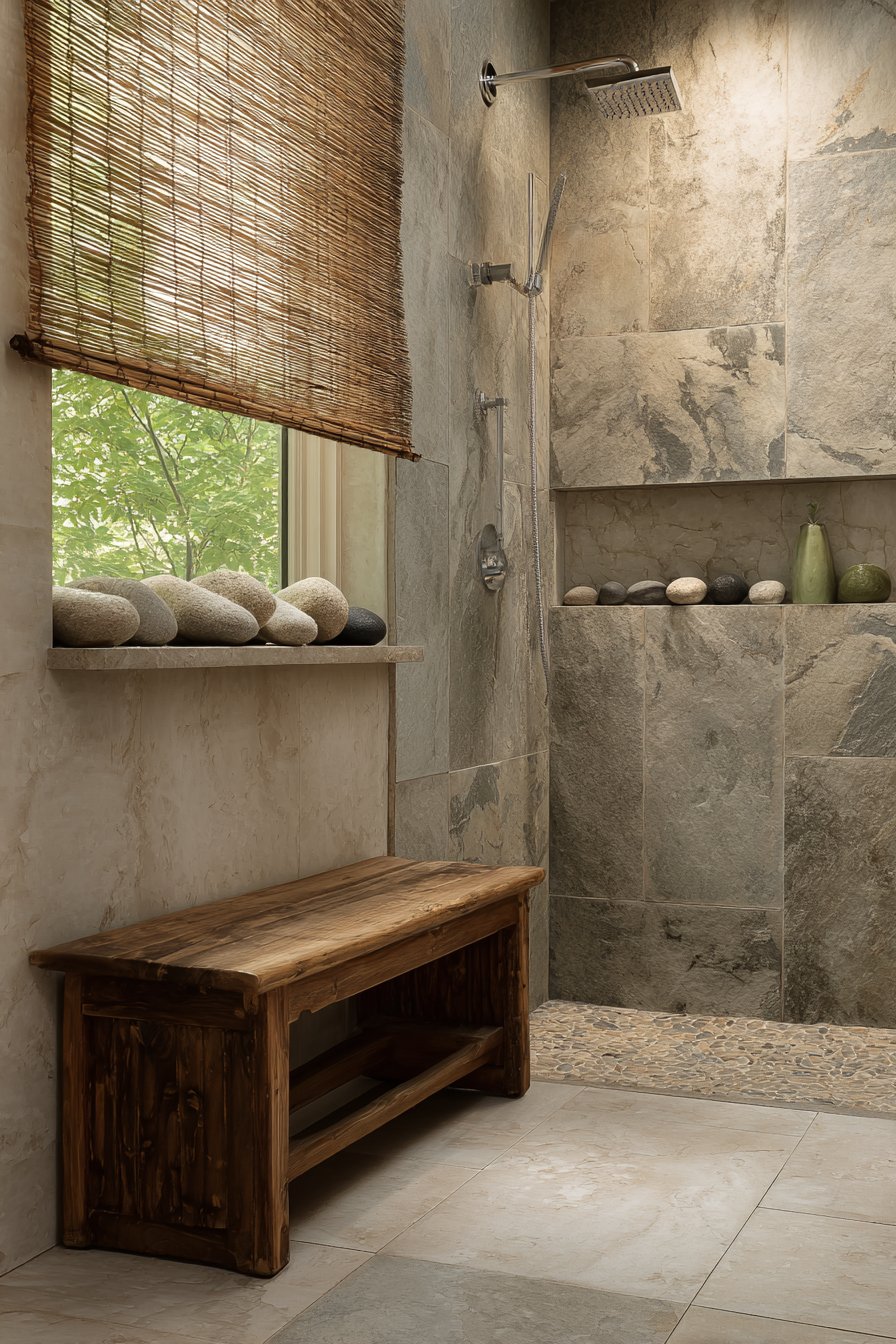
A wooden hinoki bath stool in the corner introduces traditional Japanese bathing culture and aromatic natural wood. Hinoki cypress, prized in Japan for centuries, releases a subtle, pleasant fragrance when wet—transforming each shower into aromatherapy. The simple stool form reflects Japanese design restraint, providing function without ornament. This seating element acknowledges the Japanese practice of seated bathing, offering a moment of pause in rushed modern routines.
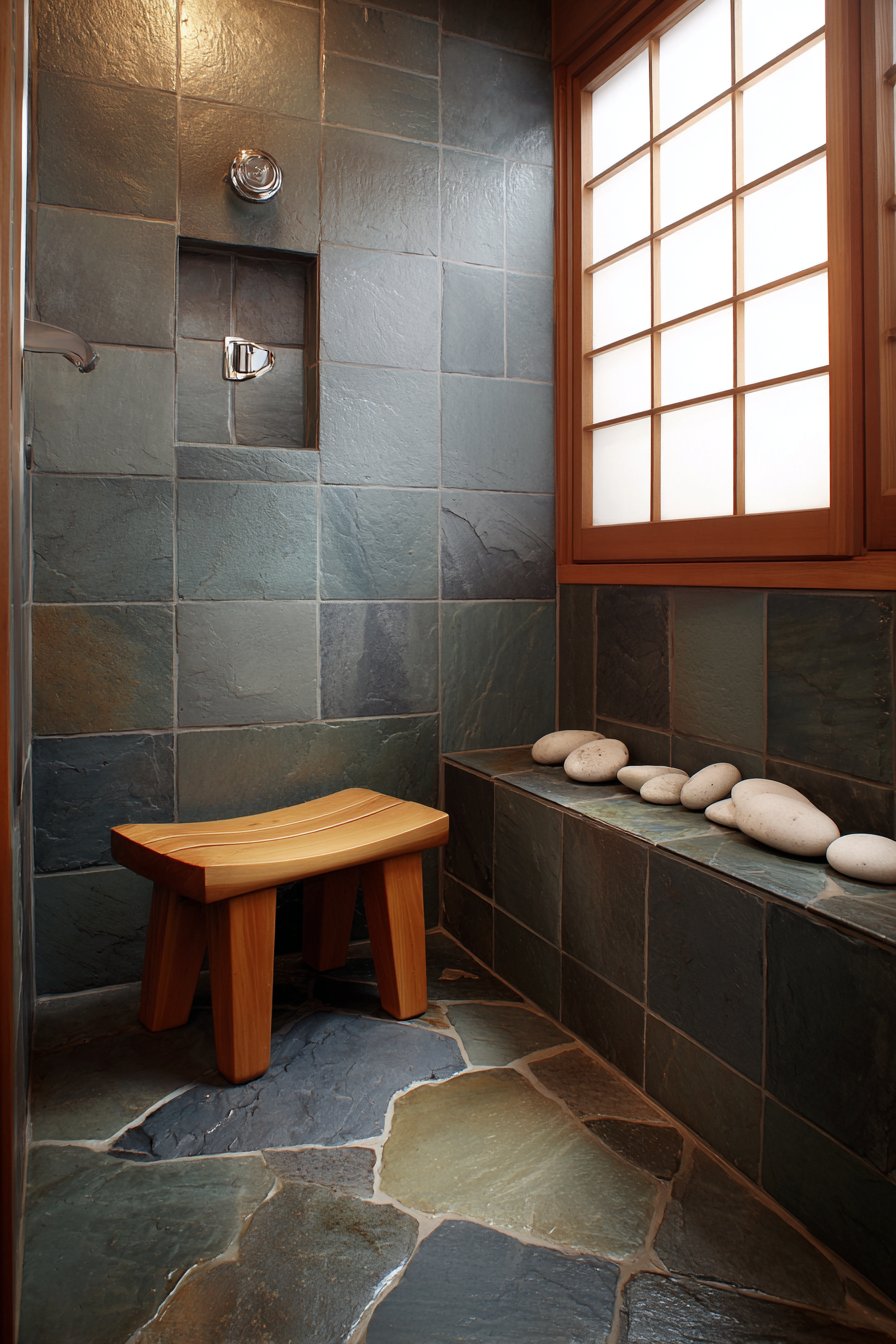
A simple square chrome rainfall showerhead provides gentle water flow, prioritizing relaxation over powerful spray. The geometric simplicity of the square form aligns with Japanese design principles favoring clear, honest shapes. Bamboo accents and river stones arranged along a recessed shelf bring nature directly into the showering space, reinforcing the connection to natural world central to Zen philosophy. Soft natural light diffused through rice paper window treatment creates even, shadow-free illumination that enhances the peaceful simplicity. The overall composition invites mindfulness and presence—qualities often lost in hurried morning routines.
Key Design Tips:
- Install slate tiles with natural cleft surface rather than honed for authentic stone garden texture
- Source authentic hinoki wood stool from Japanese woodworkers for genuine aromatic properties
- Position shower controls within easy reach of stool to allow seated adjustment
- Create shallow recessed shelf for stone and bamboo display to keep items secure
- Use rice paper or cellular shades that diffuse light while providing privacy and maintaining minimalist aesthetic
12. Elegant Book-Matched Marble Showcase
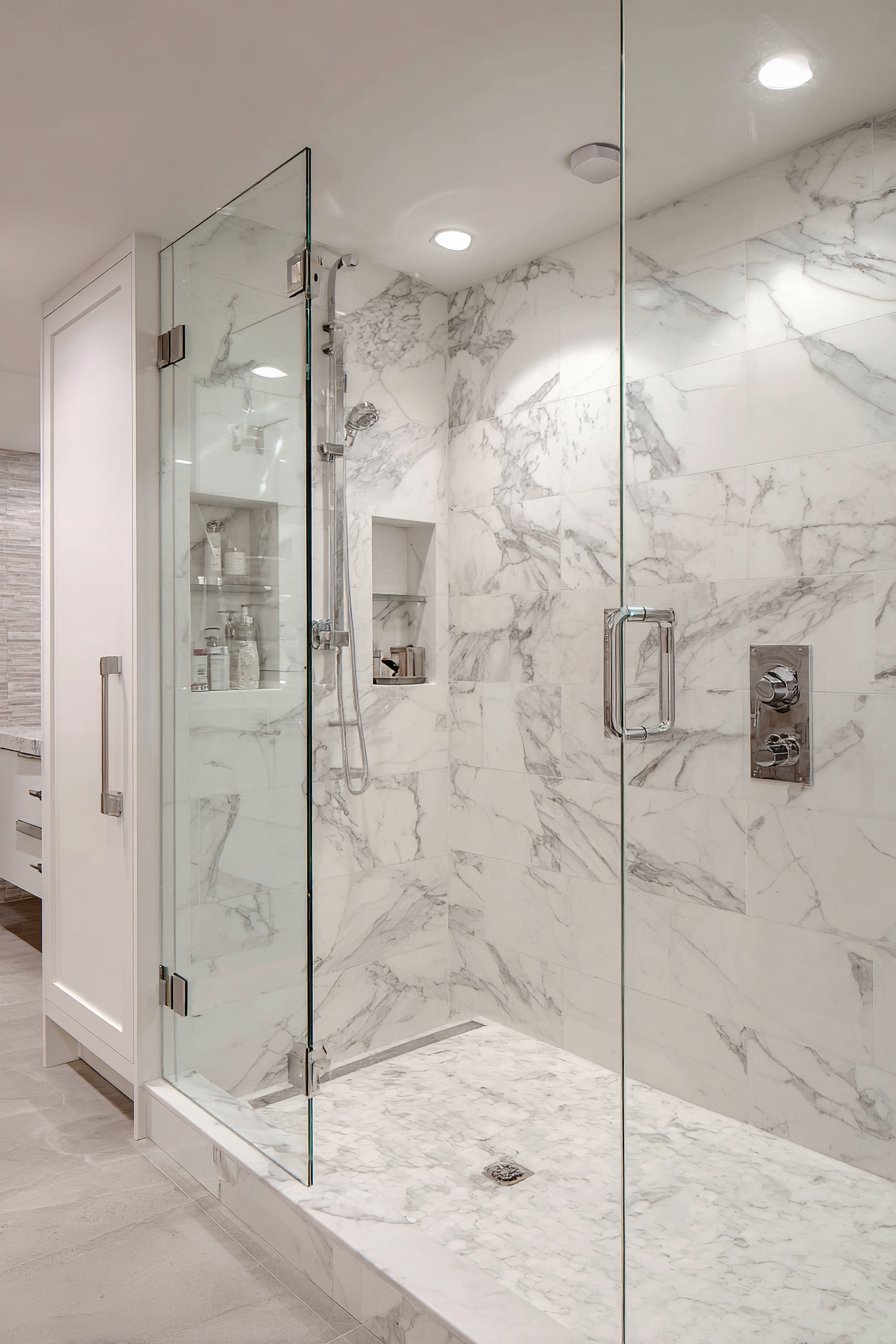
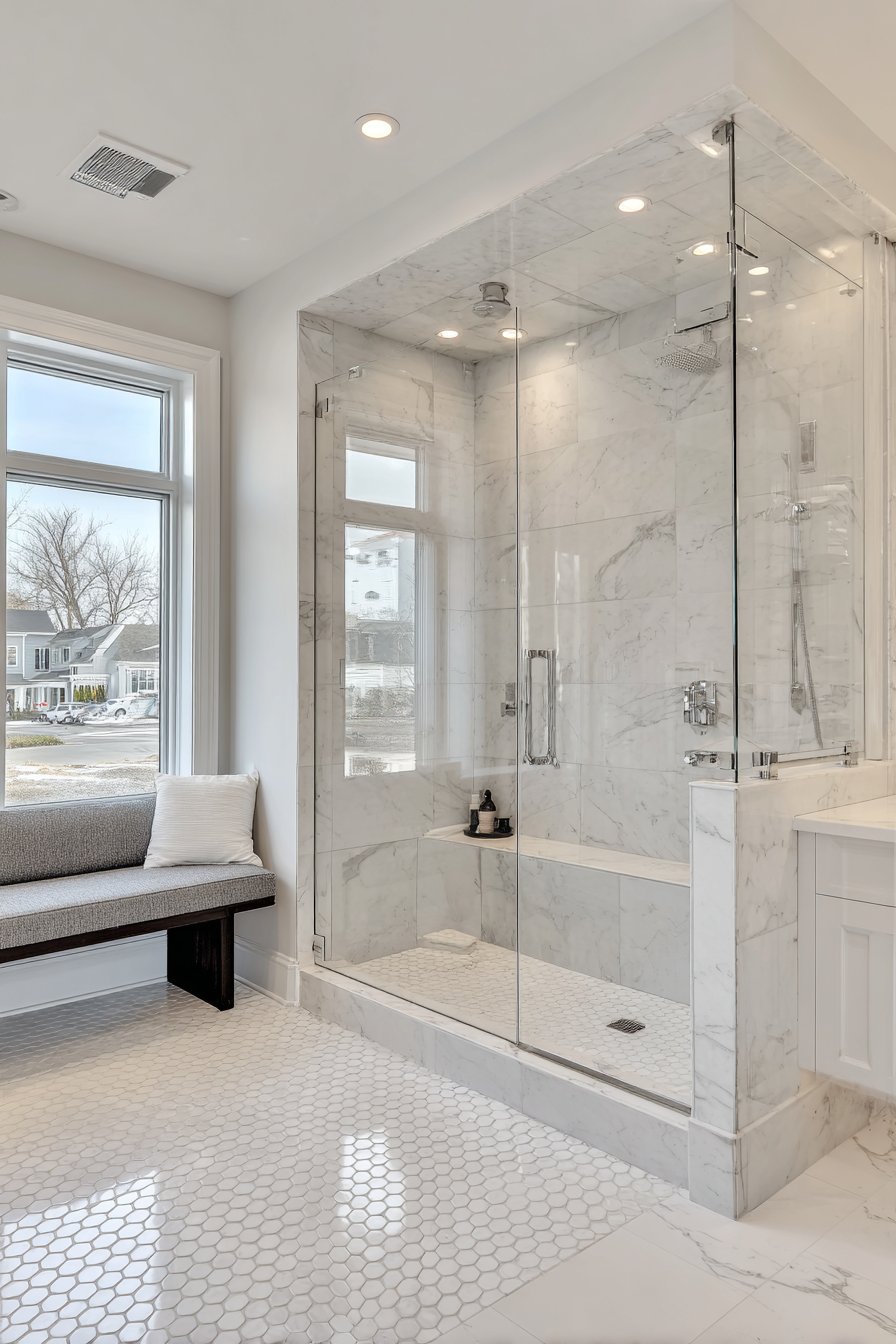
Luxury materials take center stage in this sophisticated shower bathroom idea featuring book-matched Carrara marble slabs. The book-matching technique—where consecutive marble slabs are opened like a book to create mirror-image veining patterns—produces stunning symmetry and visual drama. This approach treats marble as fine art, celebrating the natural stone’s distinctive veining as the primary design feature. The continuous patterns flowing across walls create the impression of single massive stone blocks rather than assembled tiles.
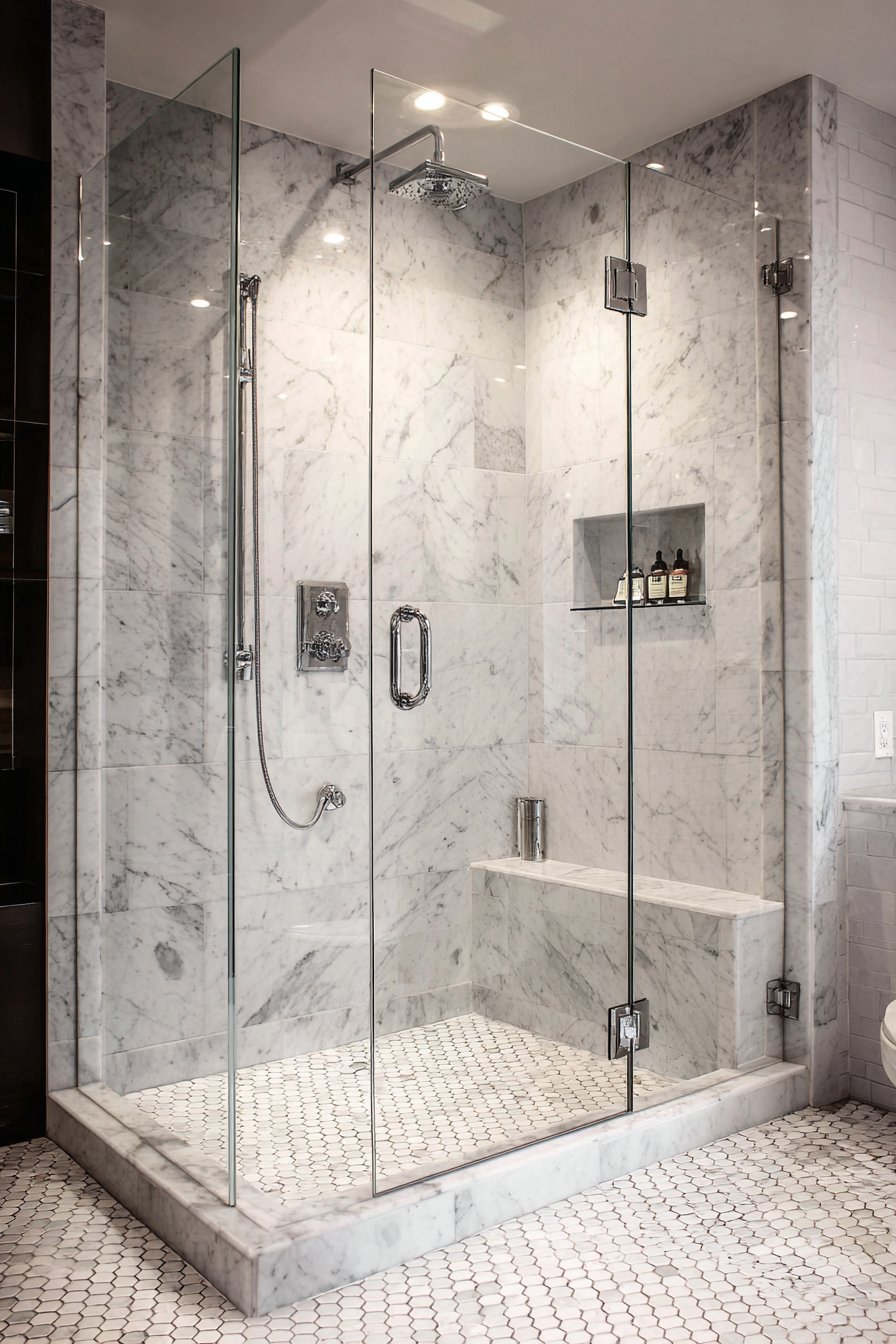
Polished chrome fixtures with thermostatic controls ensure both aesthetic refinement and practical precision. Thermostatic valves maintain constant water temperature despite pressure fluctuations elsewhere in the home, preventing scalding or sudden cold bursts. The polished chrome finish provides classic elegance that complements Carrara’s cool gray veining without competing for attention.
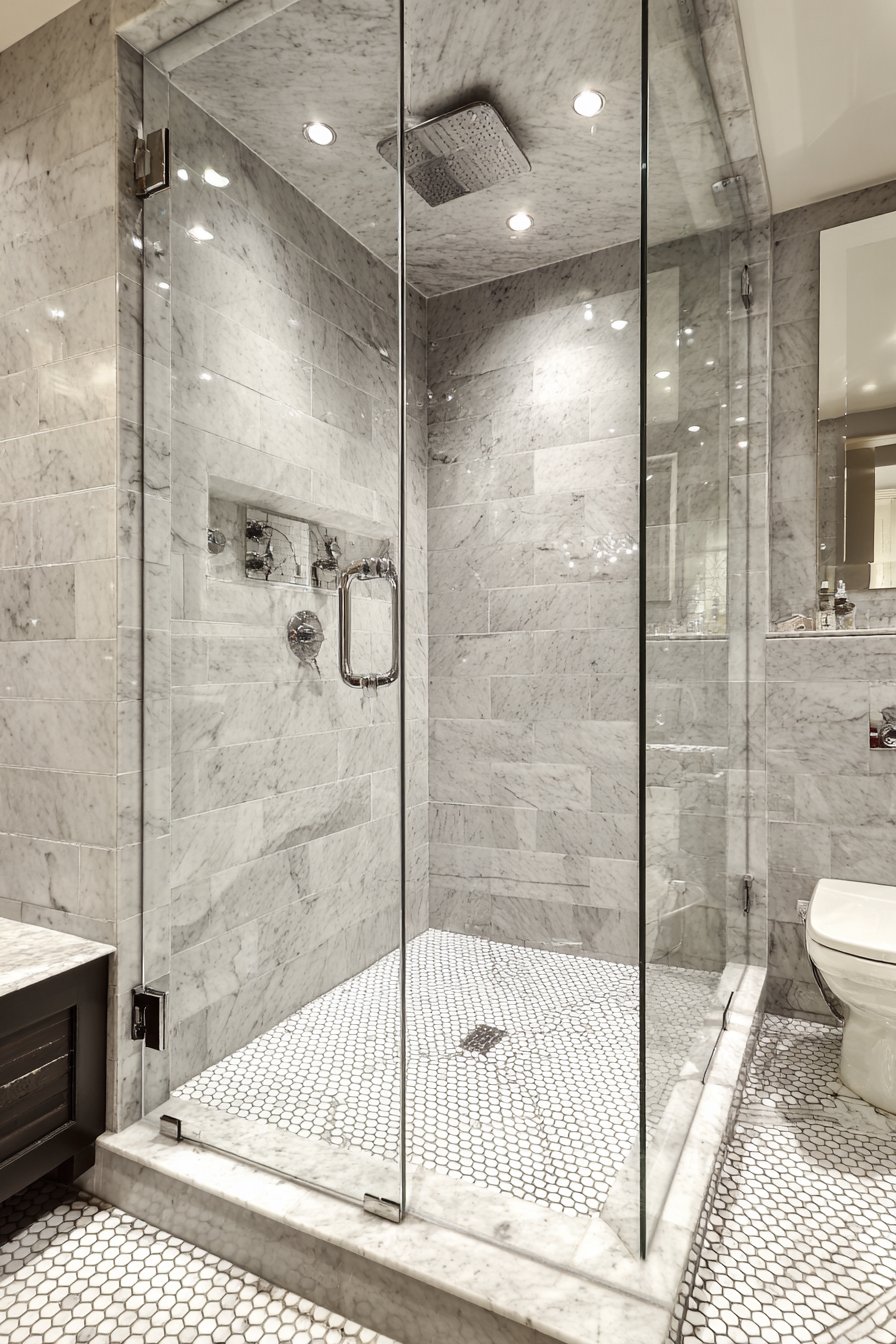
White marble hexagonal floor tiles introduce subtle texture contrast while maintaining the monochromatic marble theme. The smaller hexagonal scale prevents the floor pattern from competing with the dramatic wall installation while the white tone ensures visual continuity. A frameless glass enclosure becomes virtually invisible, allowing unobstructed views of the premium stone investment from every angle in the bathroom. Recessed lighting positioned specifically to highlight the marble’s natural veining patterns transforms the shower into a illuminated art installation. This design demonstrates how exceptional materials, when properly showcased, require minimal additional decoration.
Key Design Tips:
- Work with stone supplier to select slabs with prominent, attractive veining before cutting and book-matching
- Seal marble thoroughly with impregnating sealer to prevent etching from soap and hard water
- Install marble slabs with minimal grout lines using precision cutting and professional stone installers
- Position recessed lights to graze marble surfaces at low angles, emphasizing veining depth and dimension
- Budget appropriately—book-matched marble installation represents significant material and labor investment
13. Vintage Penny Tile Time Capsule
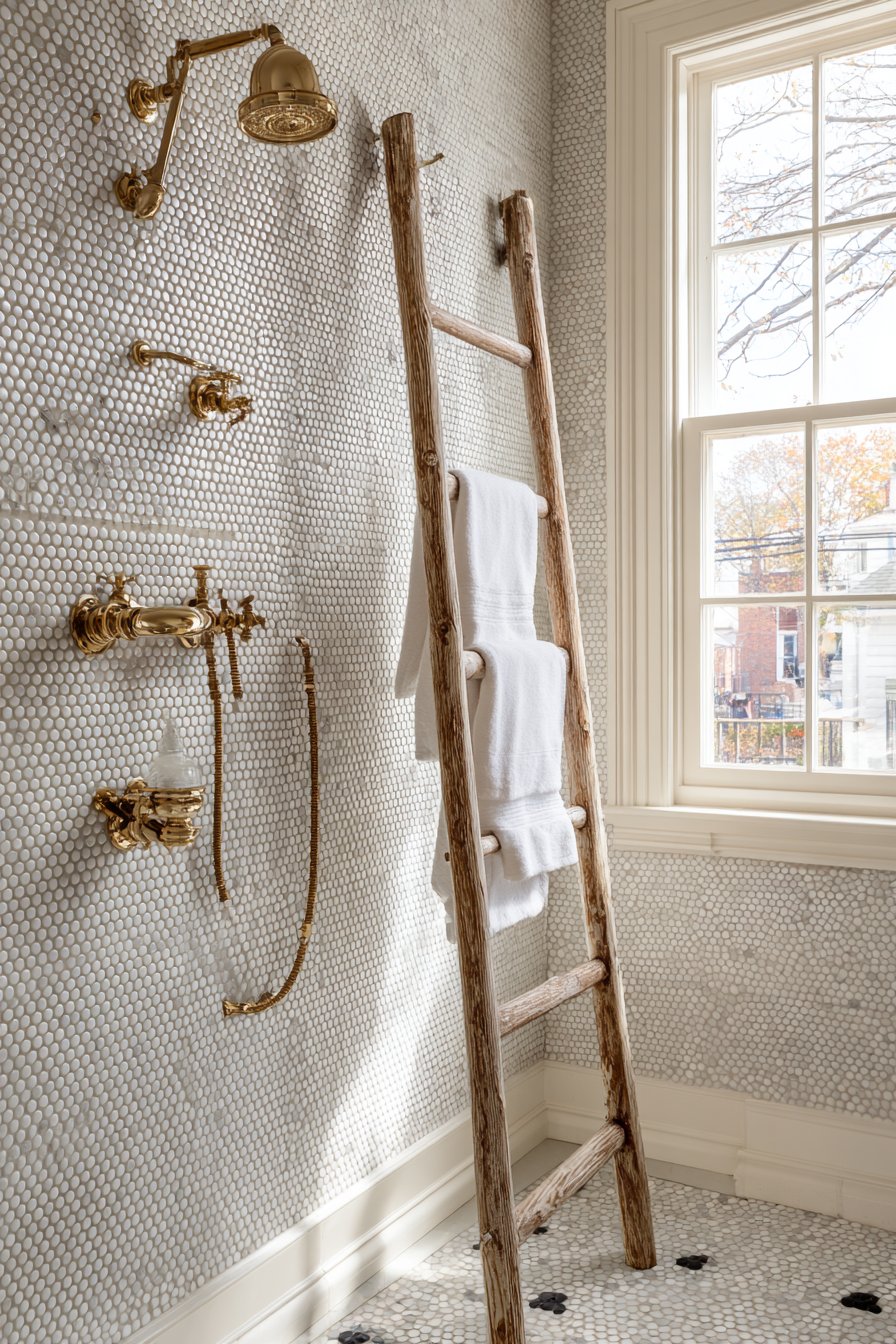
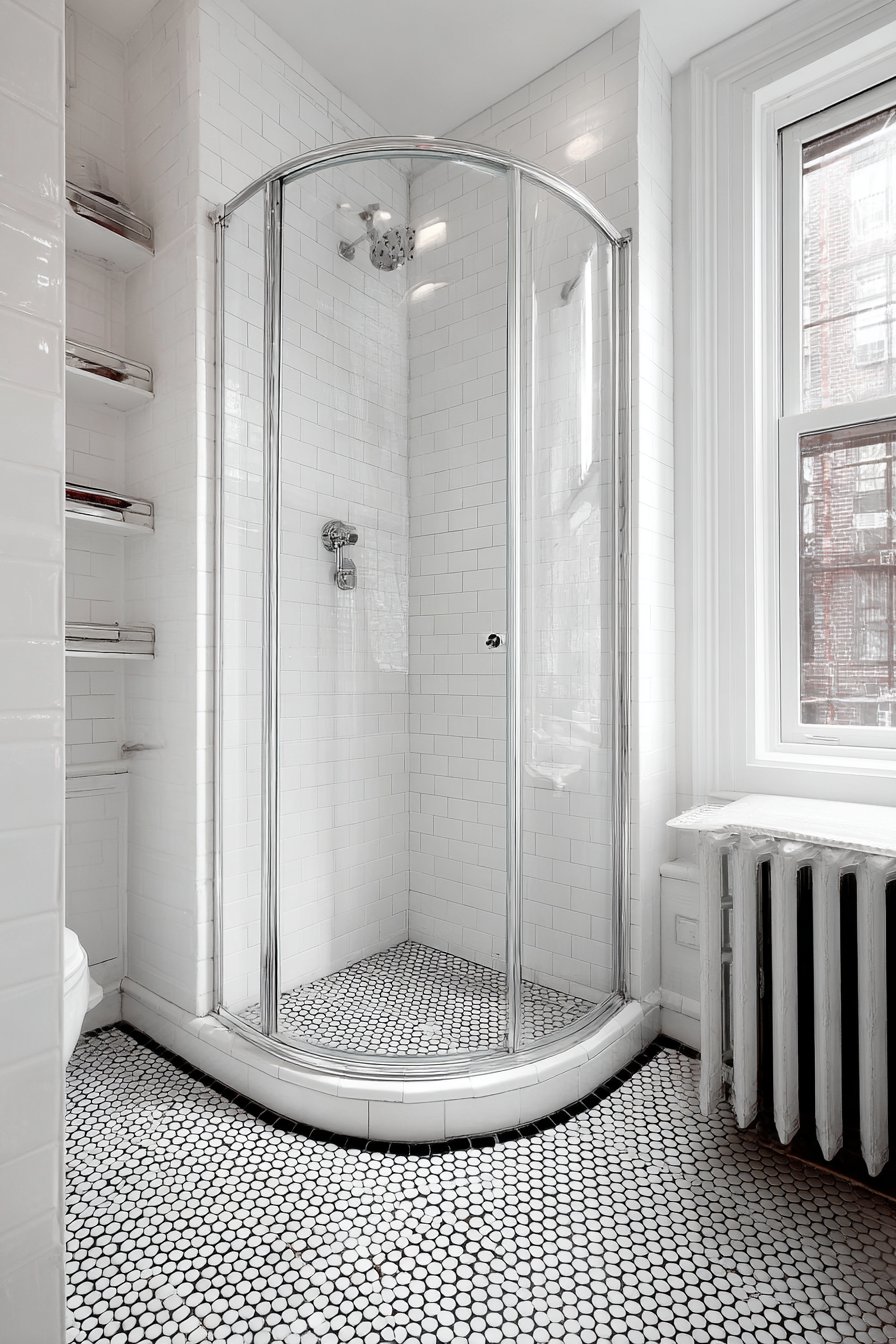
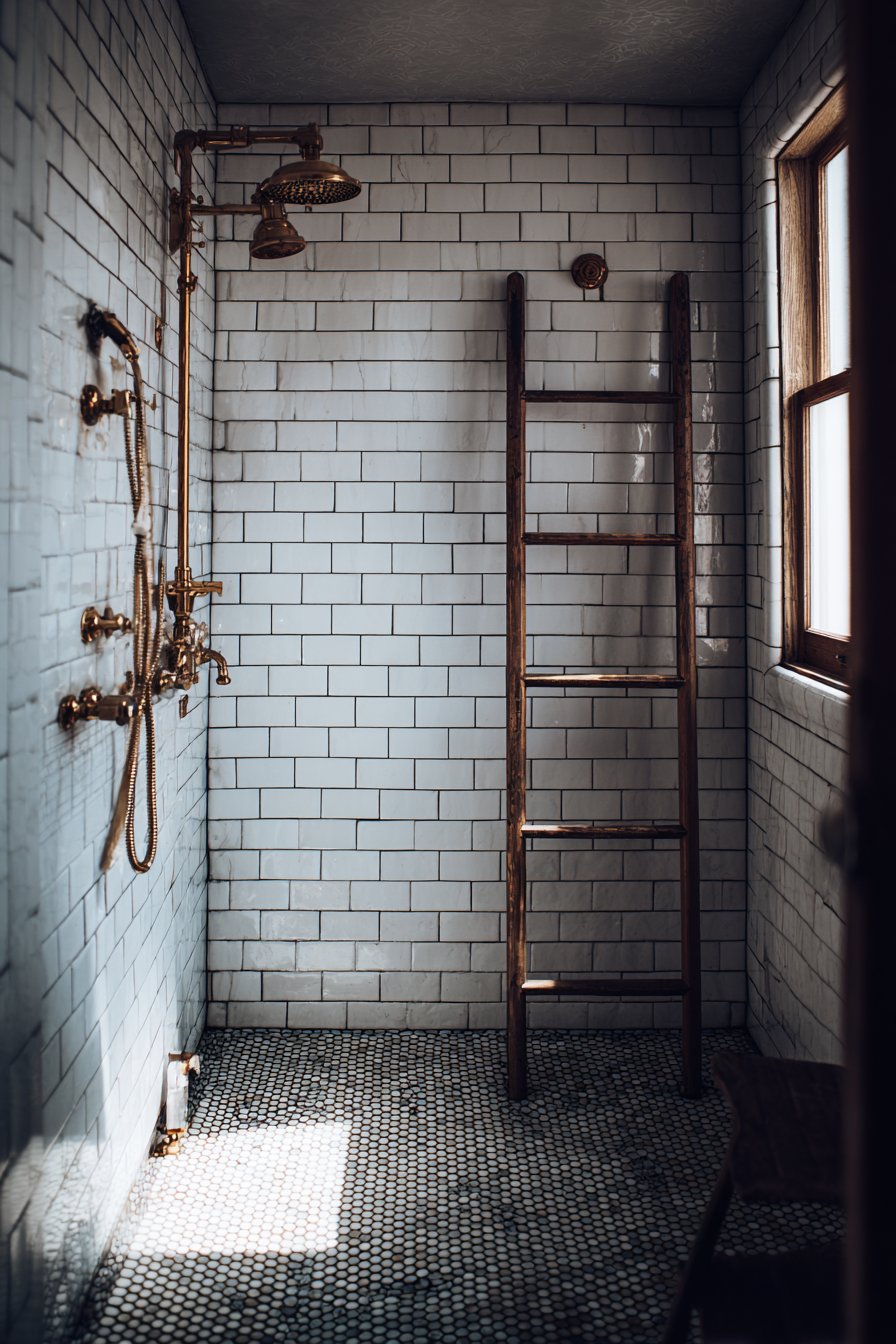
Historical charm meets enduring style in this vintage-inspired shower bathroom idea. Classic white penny tile covering both shower walls and floor creates the timeless pattern found in early 20th-century bathrooms. The small circular tiles, typically one inch in diameter, form continuous sheets of textured white surface punctuated by countless grout lines. This extensive grout work creates tremendous visual texture and authentic period character.
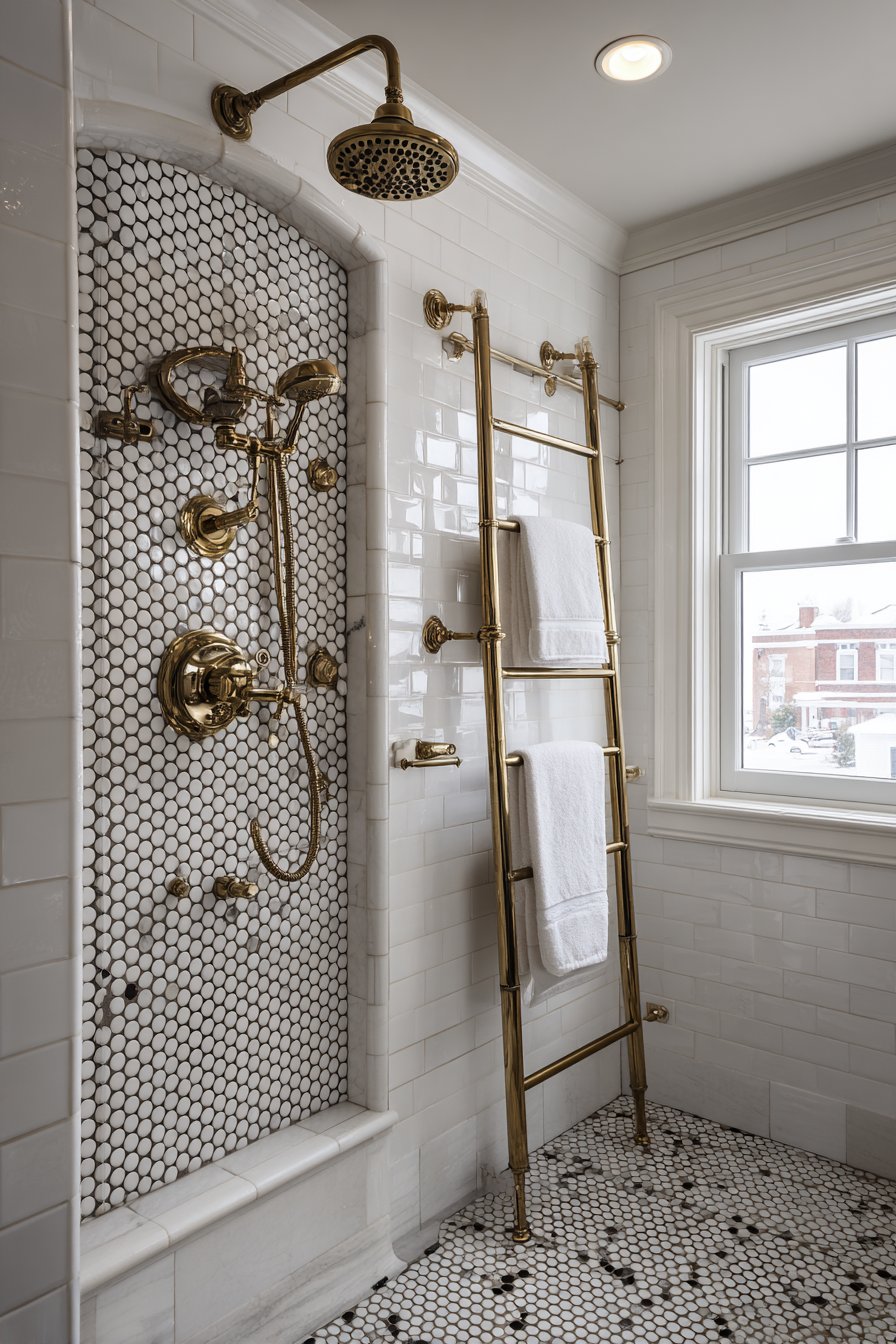
Restored antique brass fixtures including a telephone-style handheld shower bring authentic period detail and functional vintage appeal. The telephone spray configuration—with its curved support and classic spray head—references the transitional period when indoor plumbing was becoming standard. The warm brass finish develops natural patina, enhancing rather than diminishing its vintage authenticity. These fixtures become conversation pieces and functional antiques.
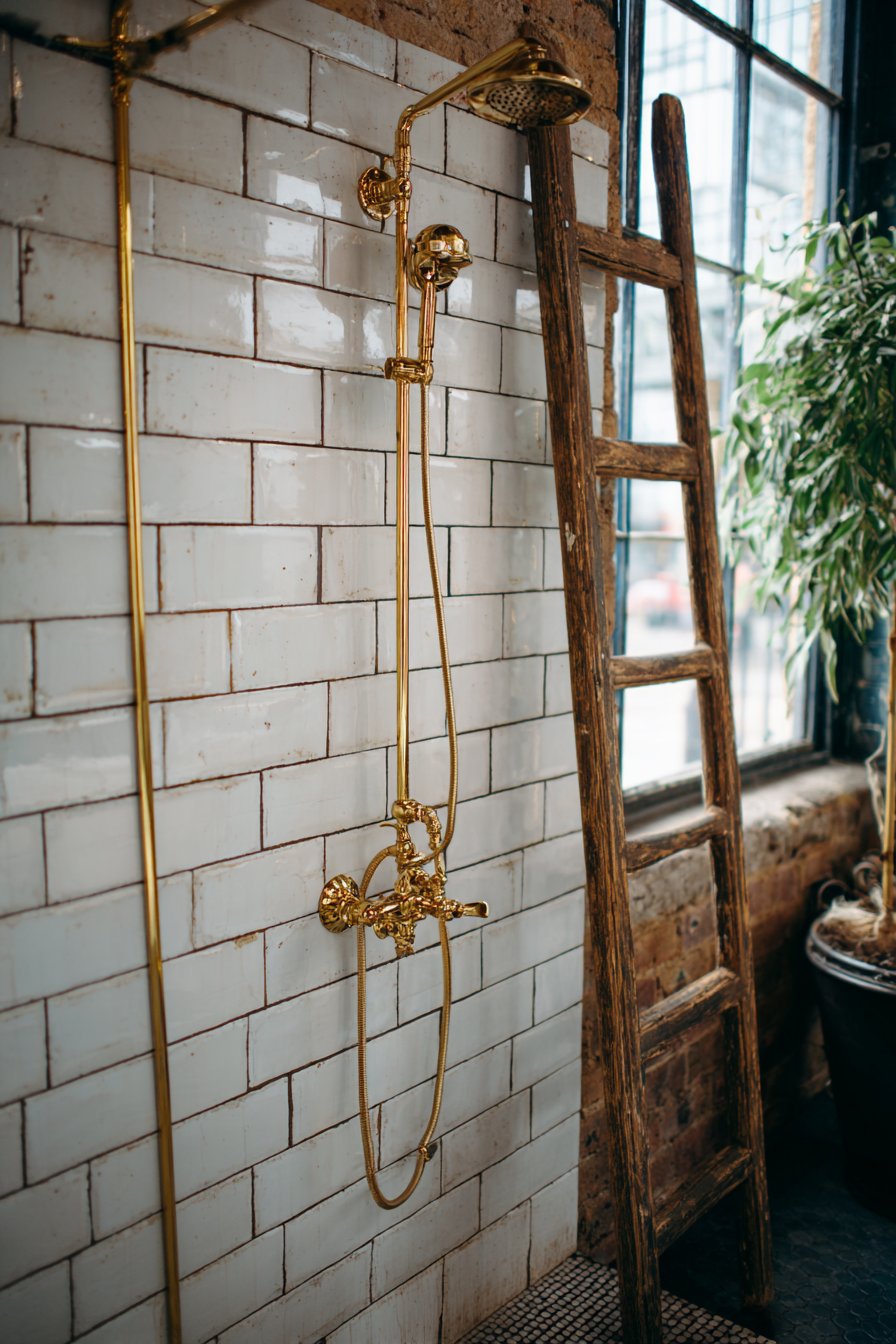
Black grout lines define each individual penny tile crisply, creating striking graphic contrast that emphasizes the pattern. This bold grout choice, unusual in new construction, instantly signals vintage sensibility while serving practical purposes—black grout won’t show soap scum or mildew discoloration. A freestanding vintage ladder repurposed as towel rack outside the shower area reinforces the salvaged, authentic aesthetic. Natural window light creates nostalgic ambiance, soft and even rather than harsh or directional. This shower celebrates bathroom history while demonstrating that well-executed traditional design remains relevant and appealing.
Key Design Tips:
- Use authentic porcelain penny tile sheets rather than larger tiles printed with penny pattern for genuine appearance
- Apply black grout carefully with small float to ensure complete coverage in countless grout lines
- Source antique fixtures from architectural salvage companies, ensuring proper restoration and functionality
- Install modern pressure-balancing valve behind vintage brass trim for safety despite period appearance
- Embrace slight irregularities in vintage tile placement as authentic to historical installation methods
14. Dual Rainfall Shower for Two
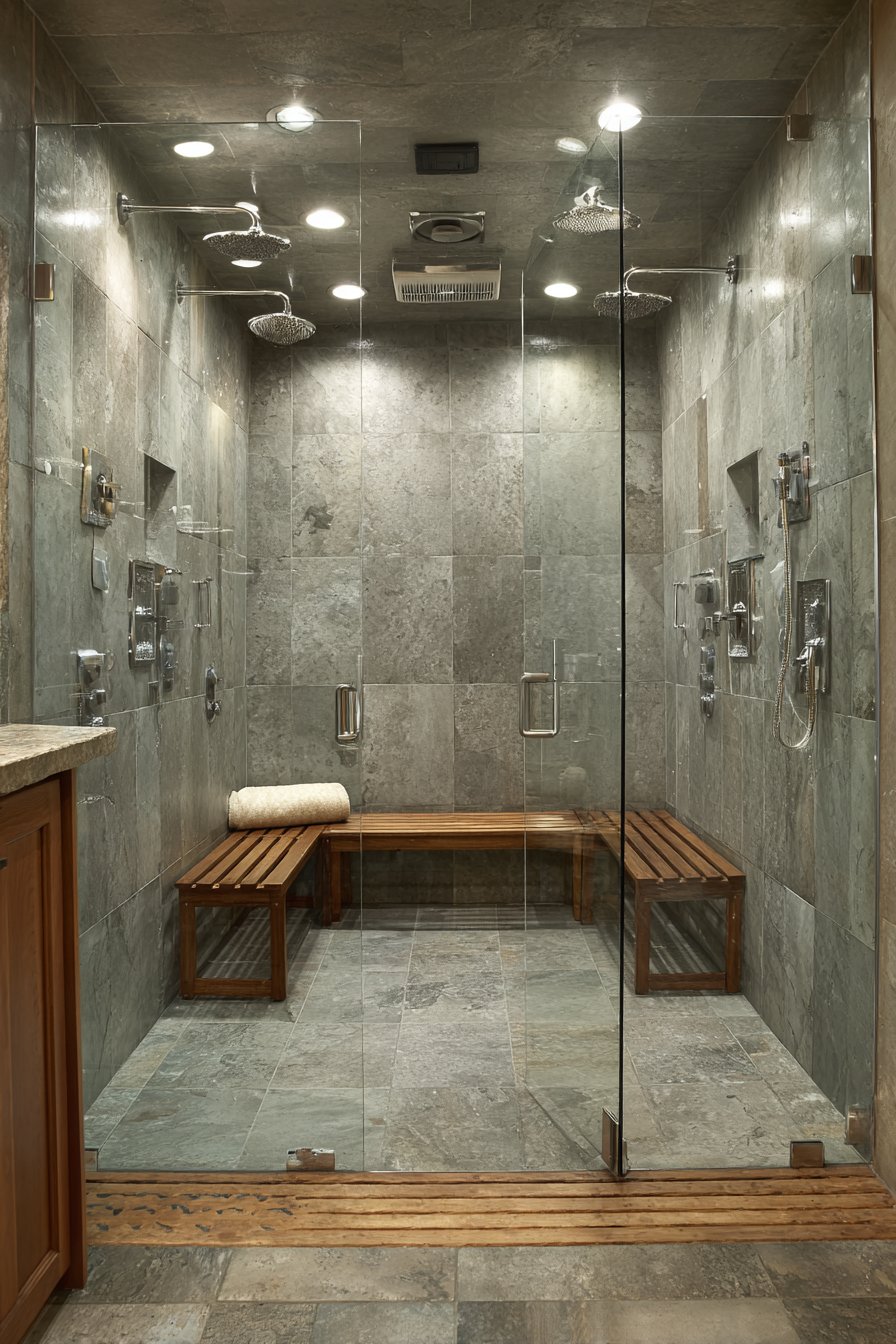
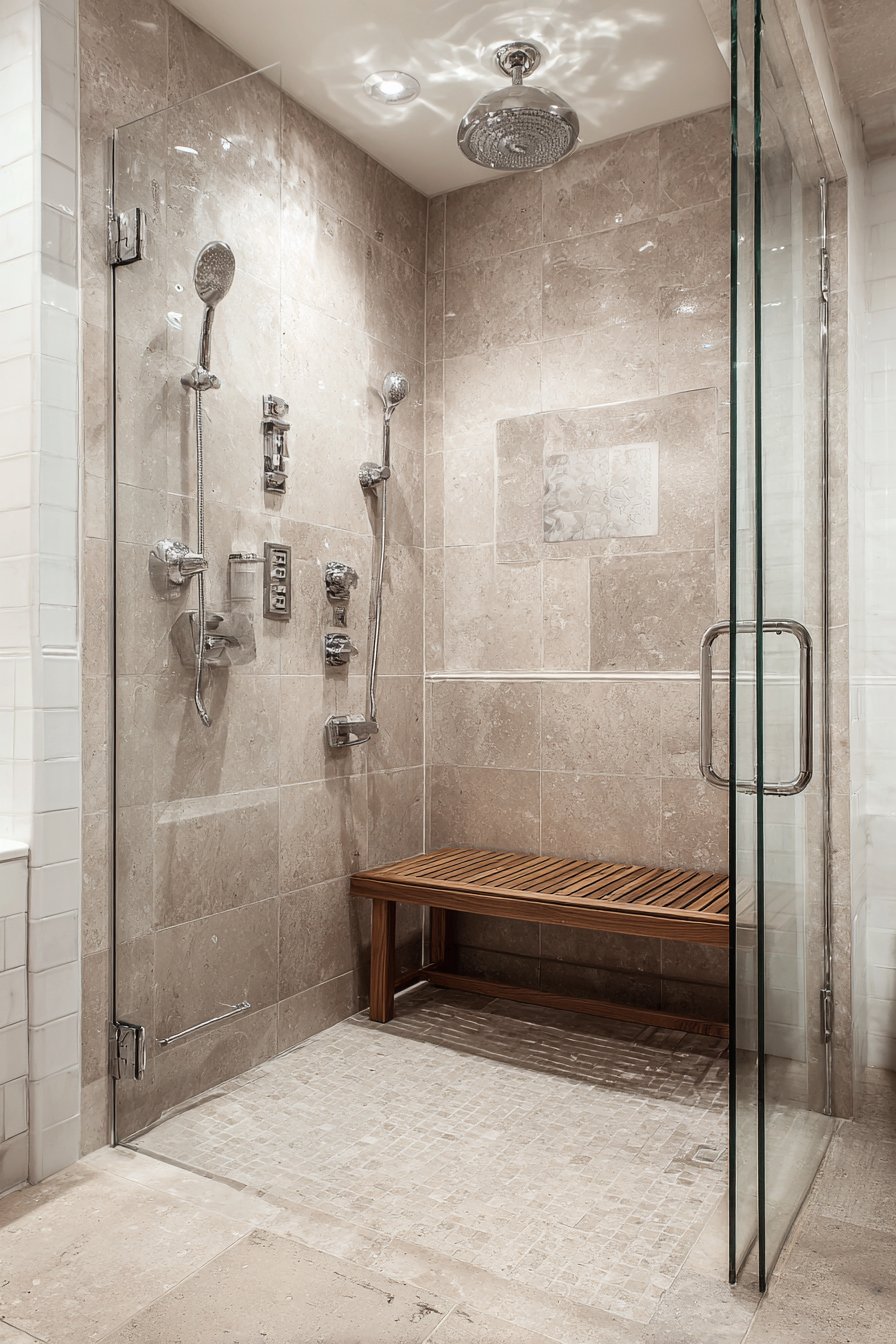
Generous proportions and thoughtful dual functionality define this spacious shower bathroom idea designed for couples. The oversized walk-in shower accommodates dual rainfall showerheads positioned at opposite ends, eliminating the morning bottleneck of sequential showering. Each user enjoys independent temperature control and water flow, transforming the shared experience from compromise to luxury. The spatial generosity—typically eight feet long by five feet wide minimum—provides comfortable simultaneous use without crowding.
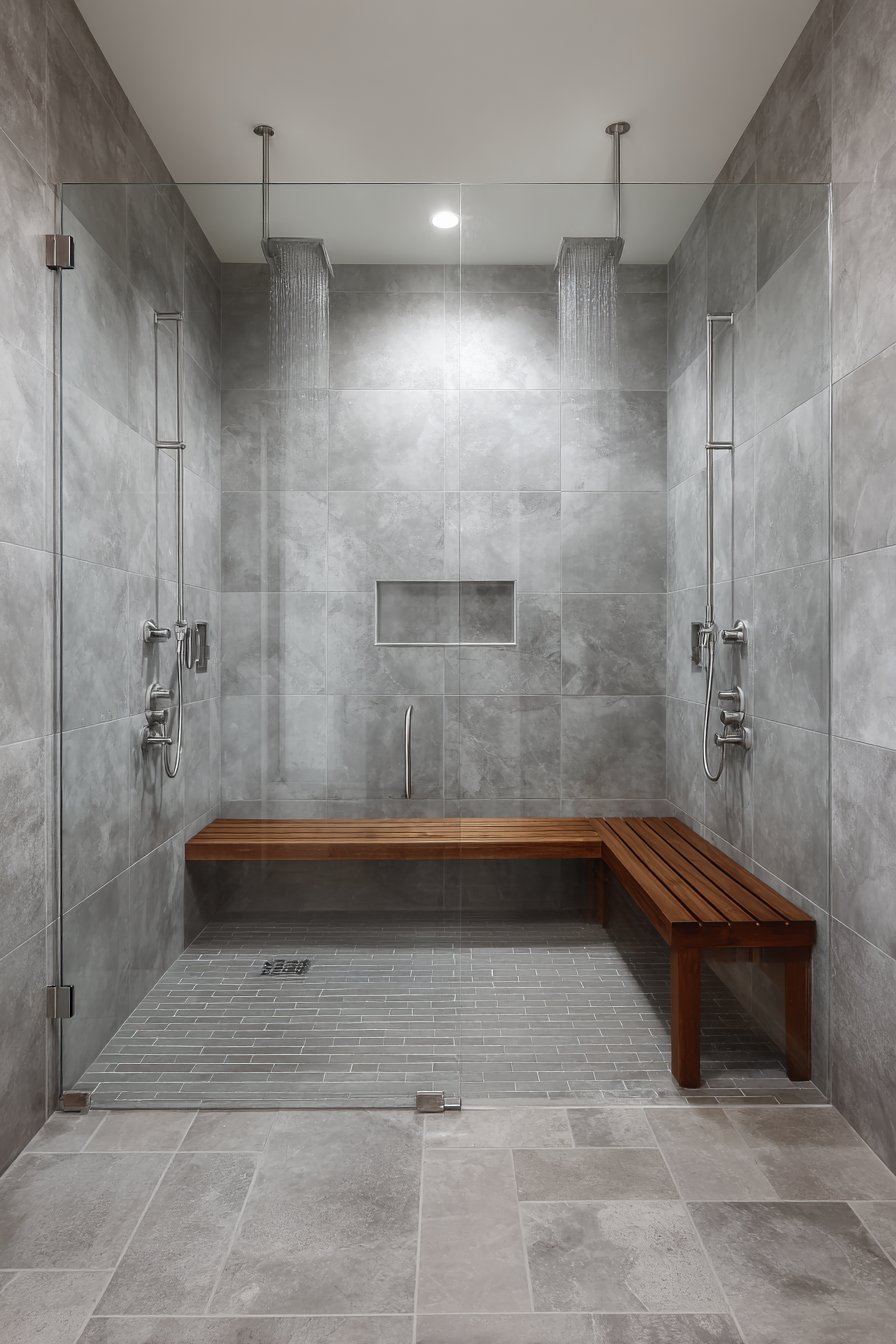
Large format gray limestone tiles create spa-like serenity while simplifying maintenance through minimal grout lines. The natural stone introduces subtle color variation and authentic material character. Limestone’s matte surface provides slip resistance while its neutral gray tone creates a calming foundation that won’t compete with the dual shower systems. A teak fold-down bench provides flexible seating, mounting securely to the wall and folding up when not needed to maximize floor space.
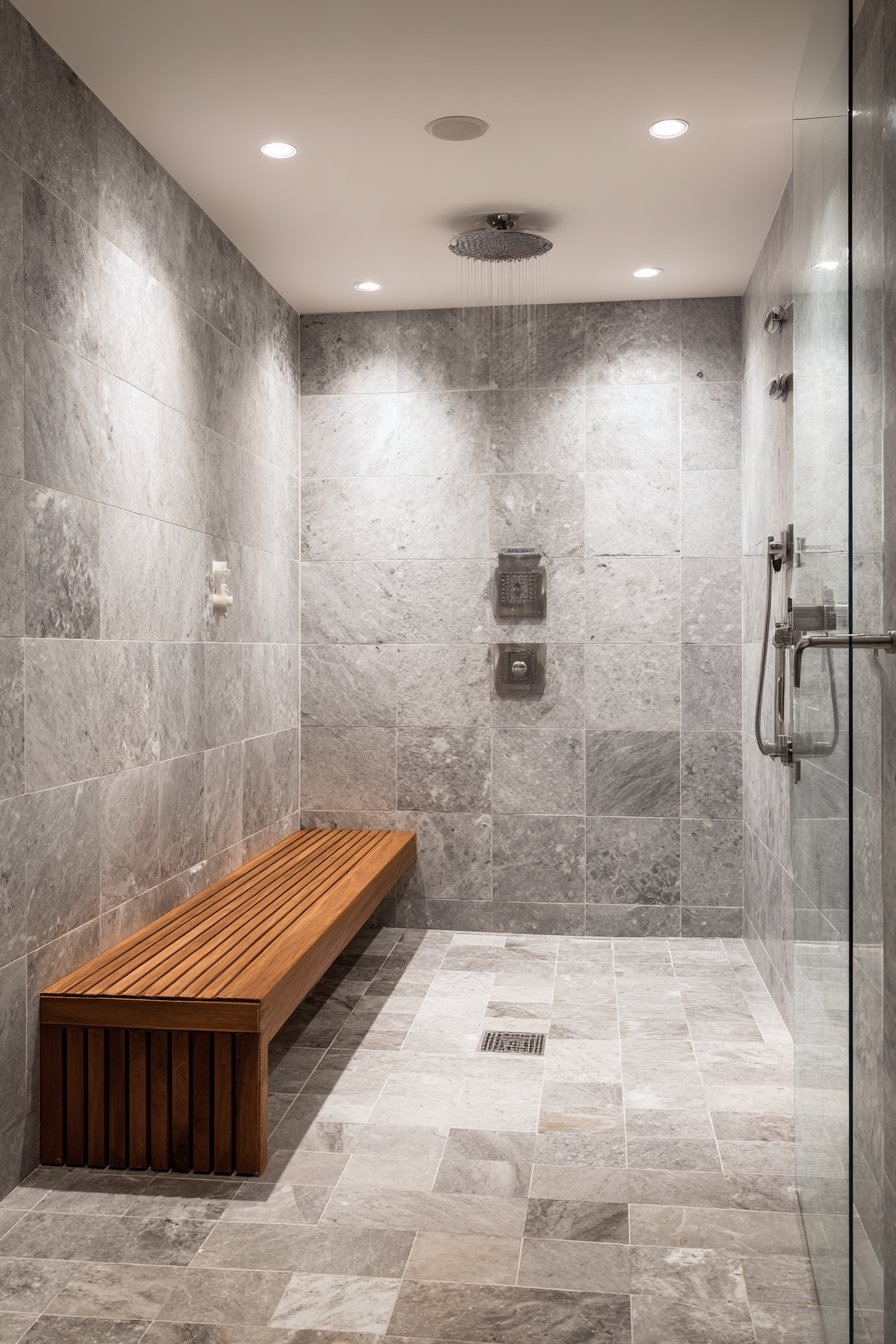
Multiple body sprays integrated into walls offer customized showering experiences—targeting shoulders, back, and legs with adjustable streams. The careful positioning of these jets considers both users, creating comprehensive coverage regardless of height differences. Floor-to-ceiling frameless glass on two sides maintains openness essential in larger showers, preventing the expansive space from feeling enclosed despite its size. Professional lighting design ensures even illumination throughout the generous shower area, eliminating shadows that could make the space feel cavernous rather than luxurious.
Key Design Tips:
- Install separate thermostatic valves for each shower system to allow different temperature preferences
- Position body sprays between 42-52 inches high to accommodate users of varying heights
- Specify teak bench with marine-grade stainless steel mounting hardware for strength and corrosion resistance
- Design shower with two drains for proper water evacuation from the large floor area
- Include bench seating in at least one section for comfort and accessibility
15. Budget-Conscious Smart Design
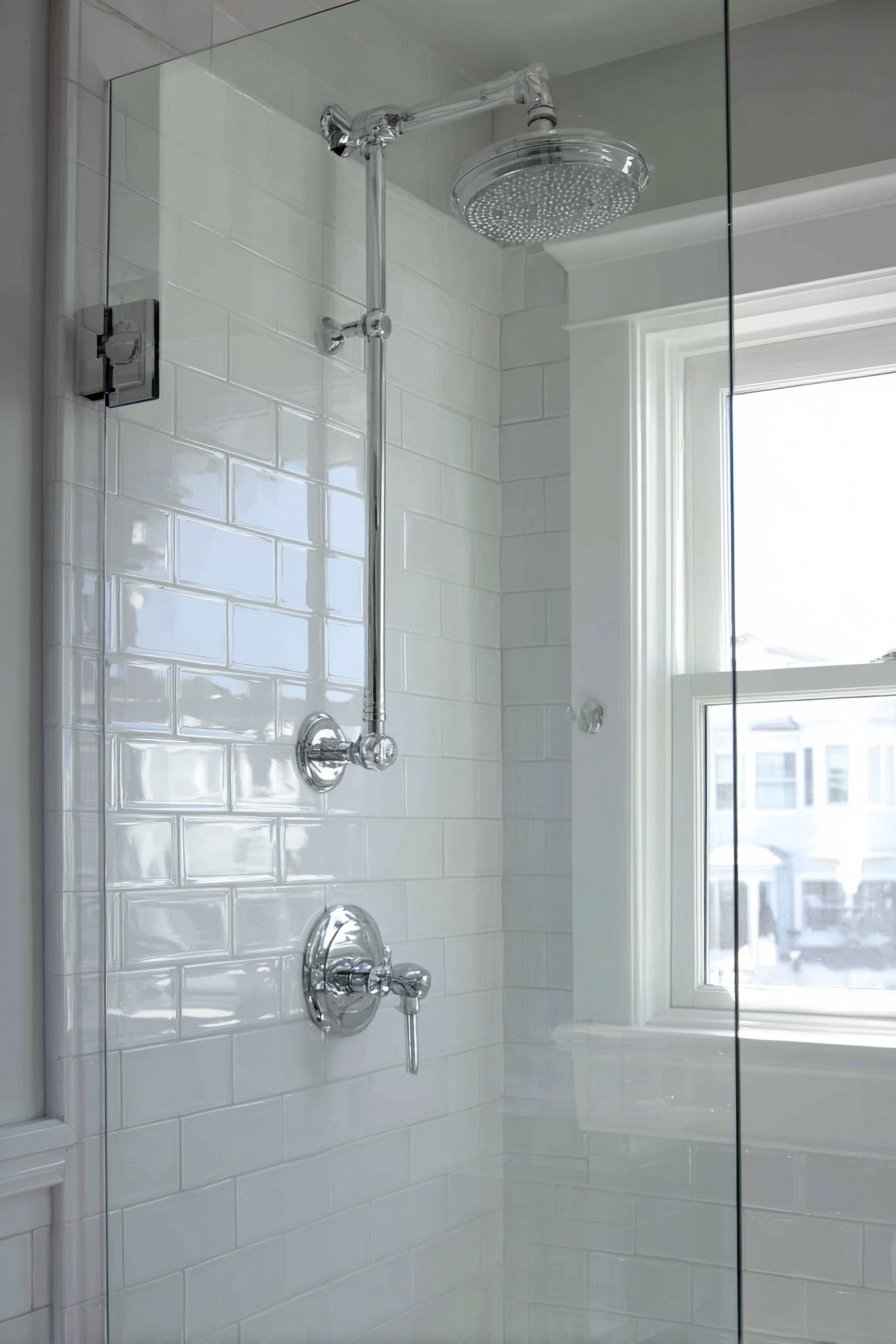
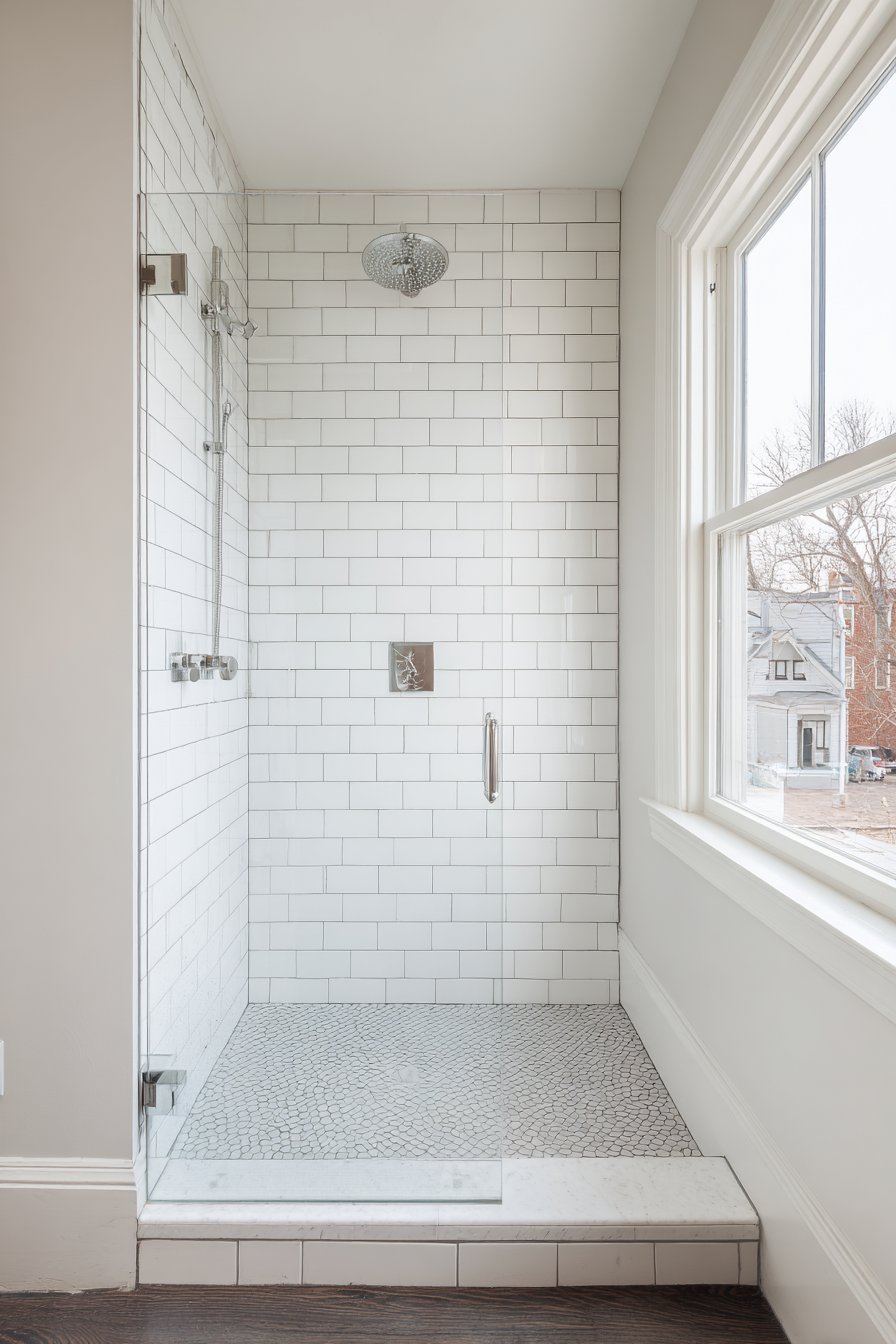
Practical elegance and cost consciousness combine in this budget-friendly shower bathroom idea proving that financial constraints need not limit style. Affordable white ceramic subway tiles in classic running bond pattern provide timeless appeal at modest cost. The simple rectangular form and widely available format keep material costs low while the white color ensures broad appeal and bright appearance. Bright white grout maintains the fresh, clean aesthetic without the cost of specialty grout colors.
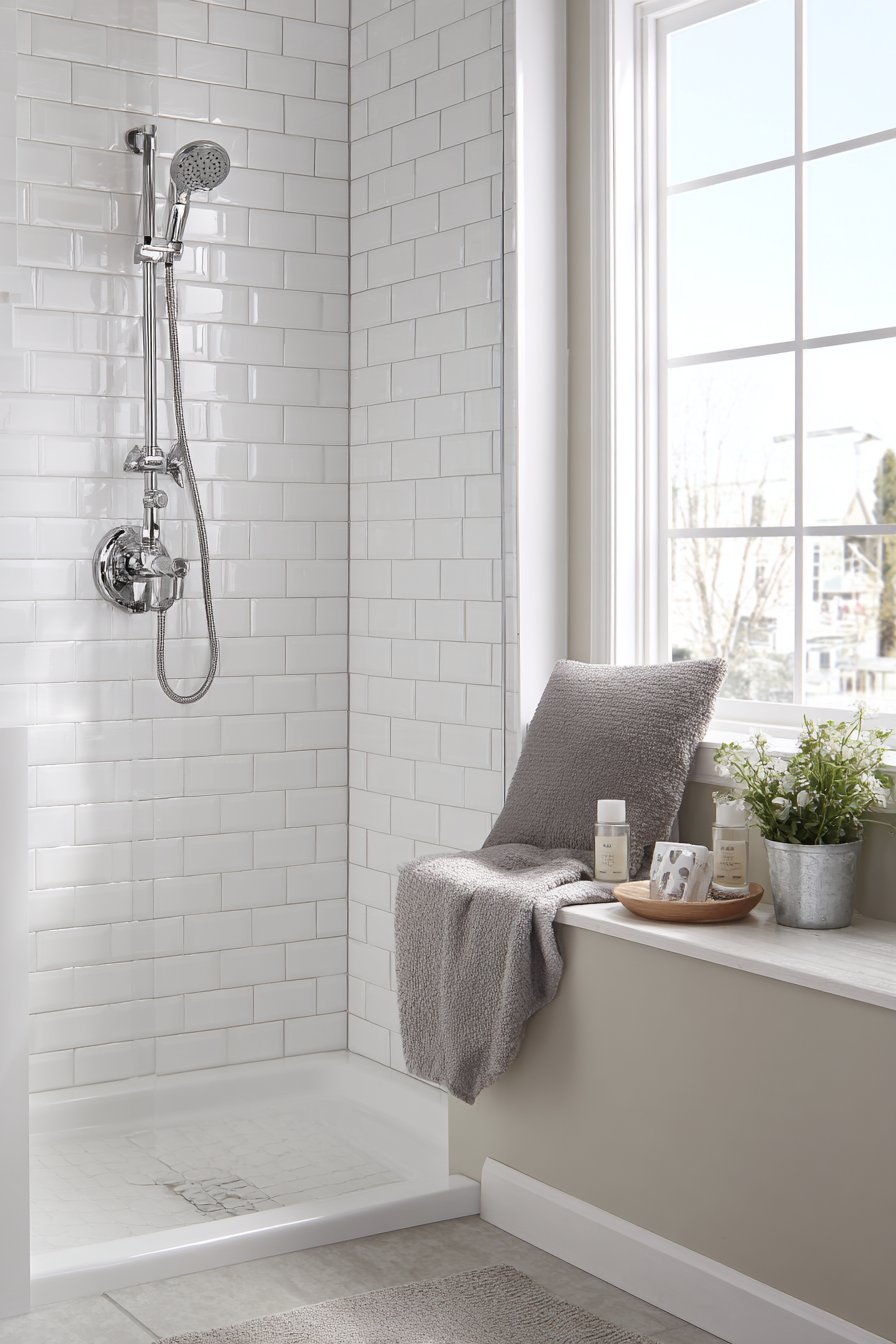
Simple chrome builder-grade fixtures receive meaningful upgrade through the addition of a modern rainfall showerhead attachment. This strategic improvement delivers luxurious showering experience without the expense of replacing entire valve systems. The rainfall head transforms the basic shower from purely functional to genuinely pleasurable—proof that targeted upgrades create disproportionate impact.
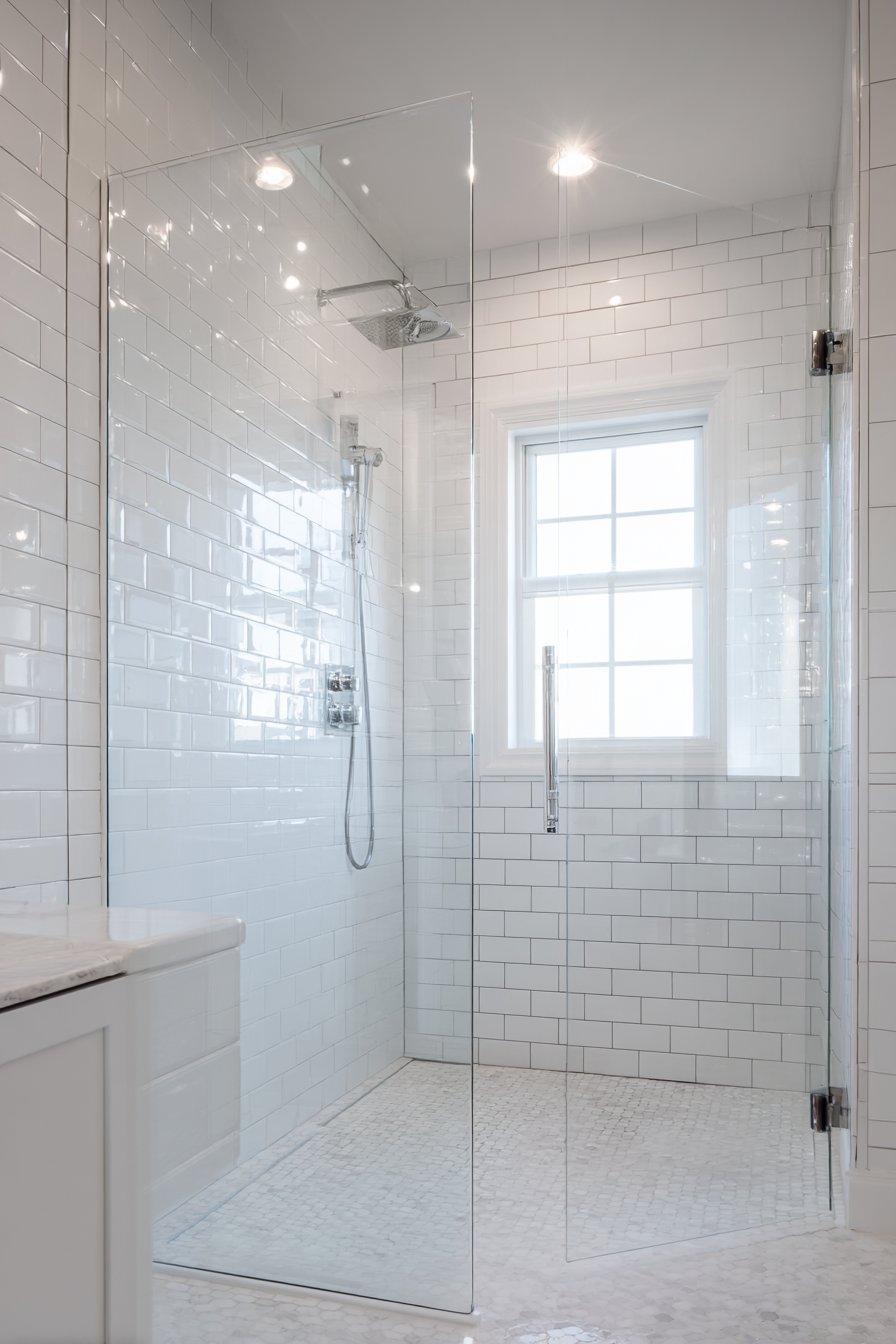
A prefabricated shower pan with tile-ready surface keeps costs manageable while ensuring proper waterproofing. These factory-made bases eliminate the labor-intensive process of building custom mud-set pans, reducing installation time and potential for waterproofing failures. A single fixed glass panel provides contemporary appearance without the custom expense of full frameless enclosures. Natural light through existing windows, enhanced by the bright white surfaces, reduces reliance on expensive artificial lighting fixtures. This design demonstrates that smart material choices, strategic upgrades, and acceptance of quality mid-range products create attractive results within tight budgets.
Key Design Tips:
- Shop for subway tile during supplier sales or choose house-brand options for maximum savings
- Upgrade only the showerhead initially, leaving valve upgrades for future improvement
- Install prefabricated shower base with precision leveling to ensure proper drainage
- Use single fixed glass panel on the primary splash side, leaving other sides open or curtained
- Maximize natural light through careful placement of reflective white surfaces
16. Universal Design Accessible Comfort
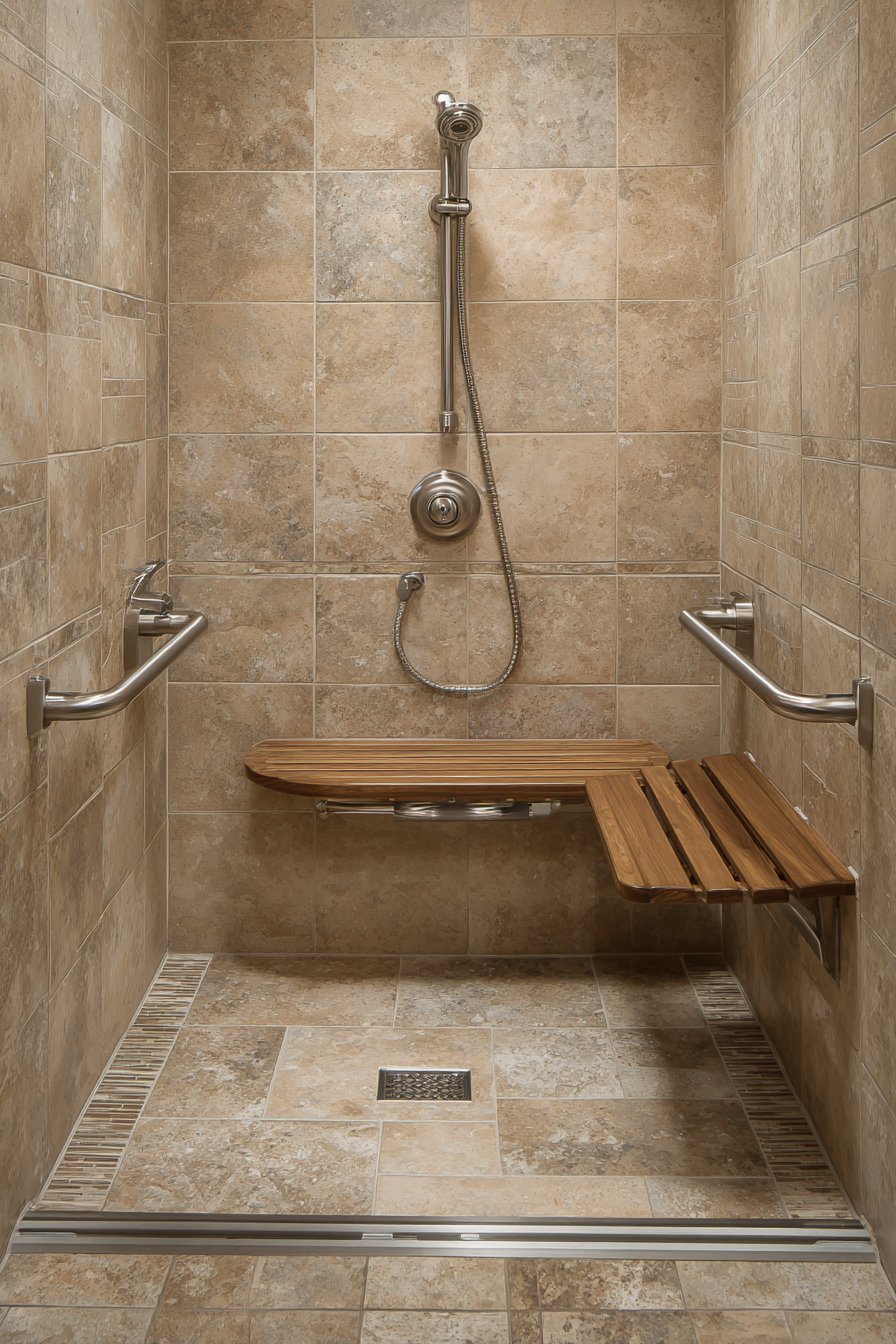
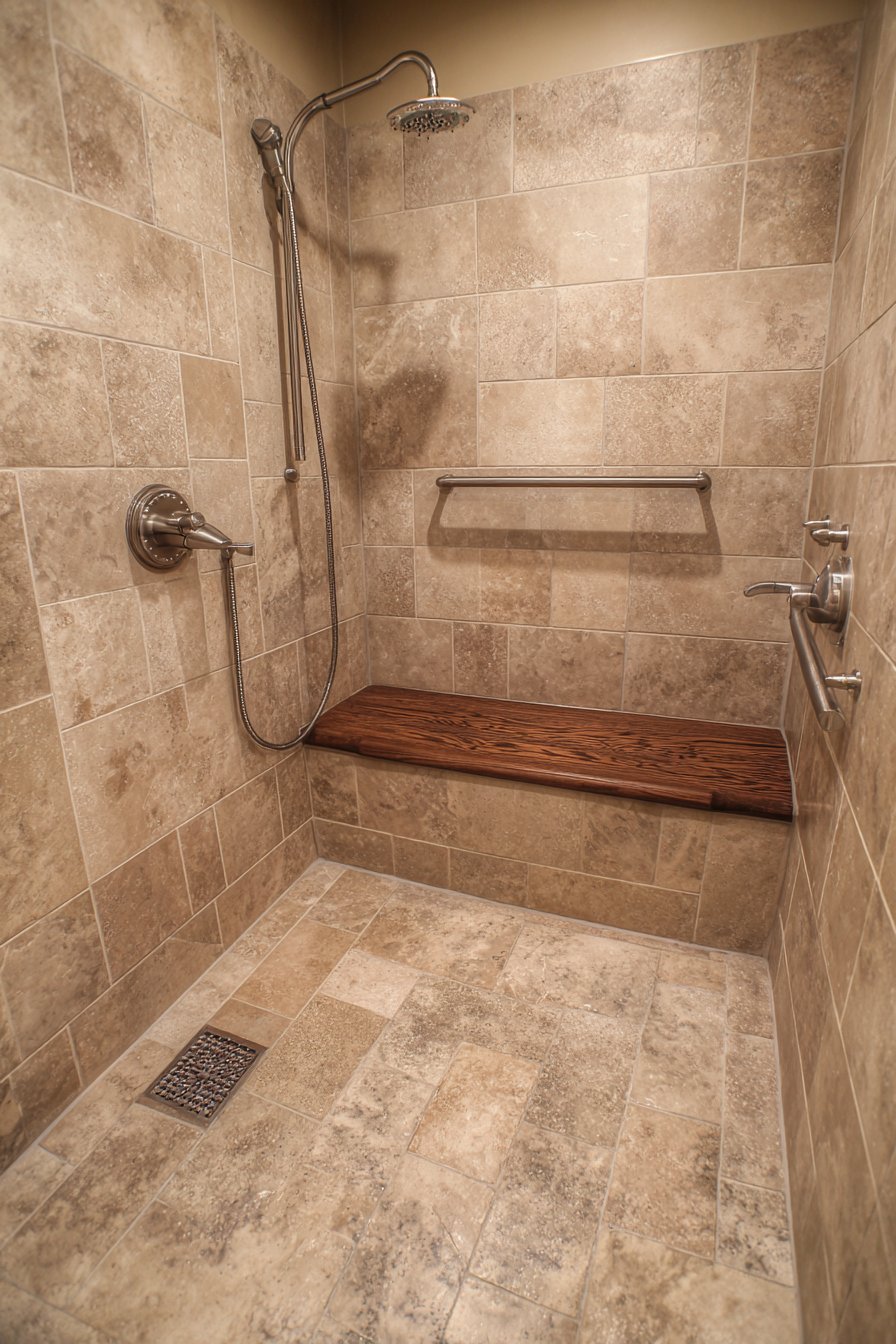
Thoughtful accessibility features integrate seamlessly into attractive design in this universal design shower bathroom idea. The curbless entry with gently sloped floor directing water to a linear drain provides barrier-free access for users of all mobility levels. This design accommodates wheelchairs, walkers, and anyone finding step-over difficult while benefiting everyone through easier cleaning and contemporary aesthetics. The subtle floor slope—typically 1/4 inch per foot—remains virtually imperceptible underfoot.
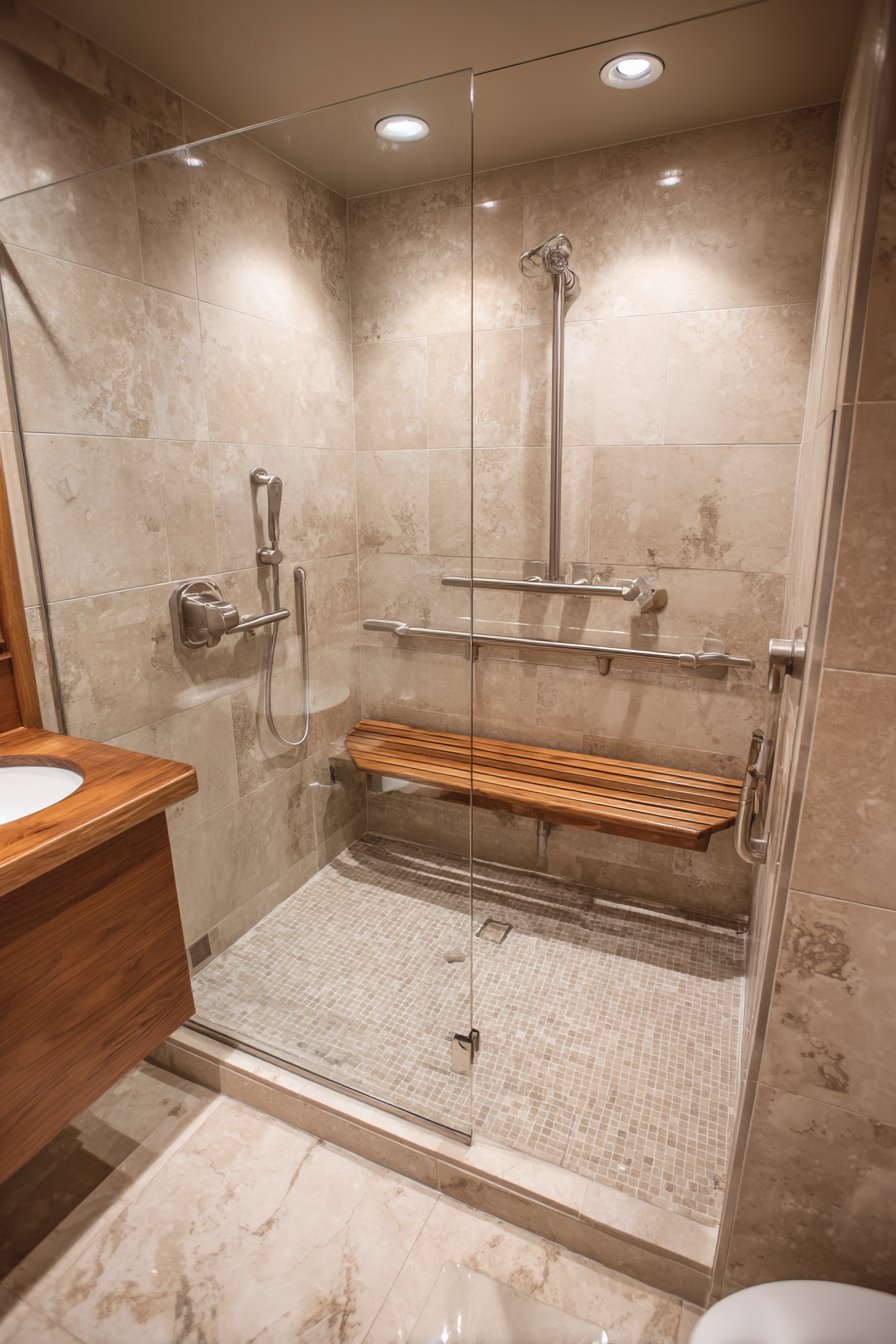
Non-slip large format tiles in warm beige ensure safety without institutional appearance. The textured surface provides traction when wet while the large tile size and neutral warm tone maintain residential comfort. This proves accessibility need not announce itself through clinical or institutional design language. Grab bars in brushed nickel are integrated thoughtfully into the design aesthetic, positioned at strategic locations—typically 33-36 inches high for seated transfer and 48 inches for standing support—while coordinating with other fixtures to feel intentional rather than retrofitted.
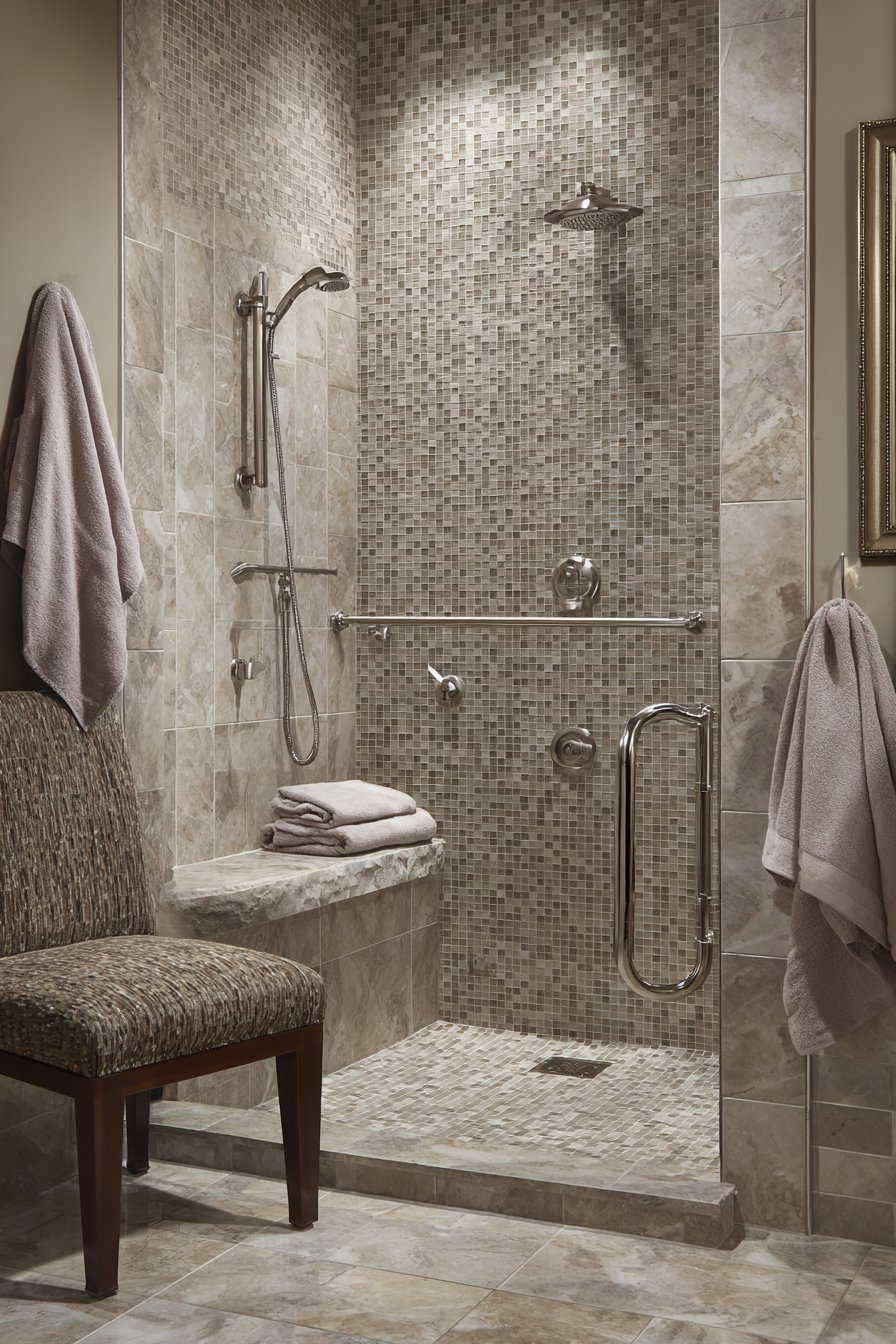
A built-in fold-down teak seat provides secure seating for comfortable showering. The wall-mounted design supports substantial weight (typically 300-500 pounds when properly installed) while folding up when not needed to preserve floor space. A handheld showerhead on a sliding rail offers flexible positioning, accommodating seated showering while remaining functional for standing use. This shower demonstrates how accessibility features, when designed from the beginning rather than added later, create beautiful spaces that serve users across their entire lifespan.
Key Design Tips:
- Extend waterproof membrane minimum 6 feet beyond shower area to protect surrounding floor from curbless shower splash
- Install blocking (reinforcement) in walls during framing phase for secure grab bar mounting
- Choose textured tiles with coefficient of friction rating of 0.60 or higher for wet slip resistance
- Position handheld shower on bar no higher than 48 inches to ensure reachability from seated position
- Include thermostatic mixing valve to prevent scalding, particularly important for users with limited mobility
17. Indoor-Outdoor Garden Shower Connection
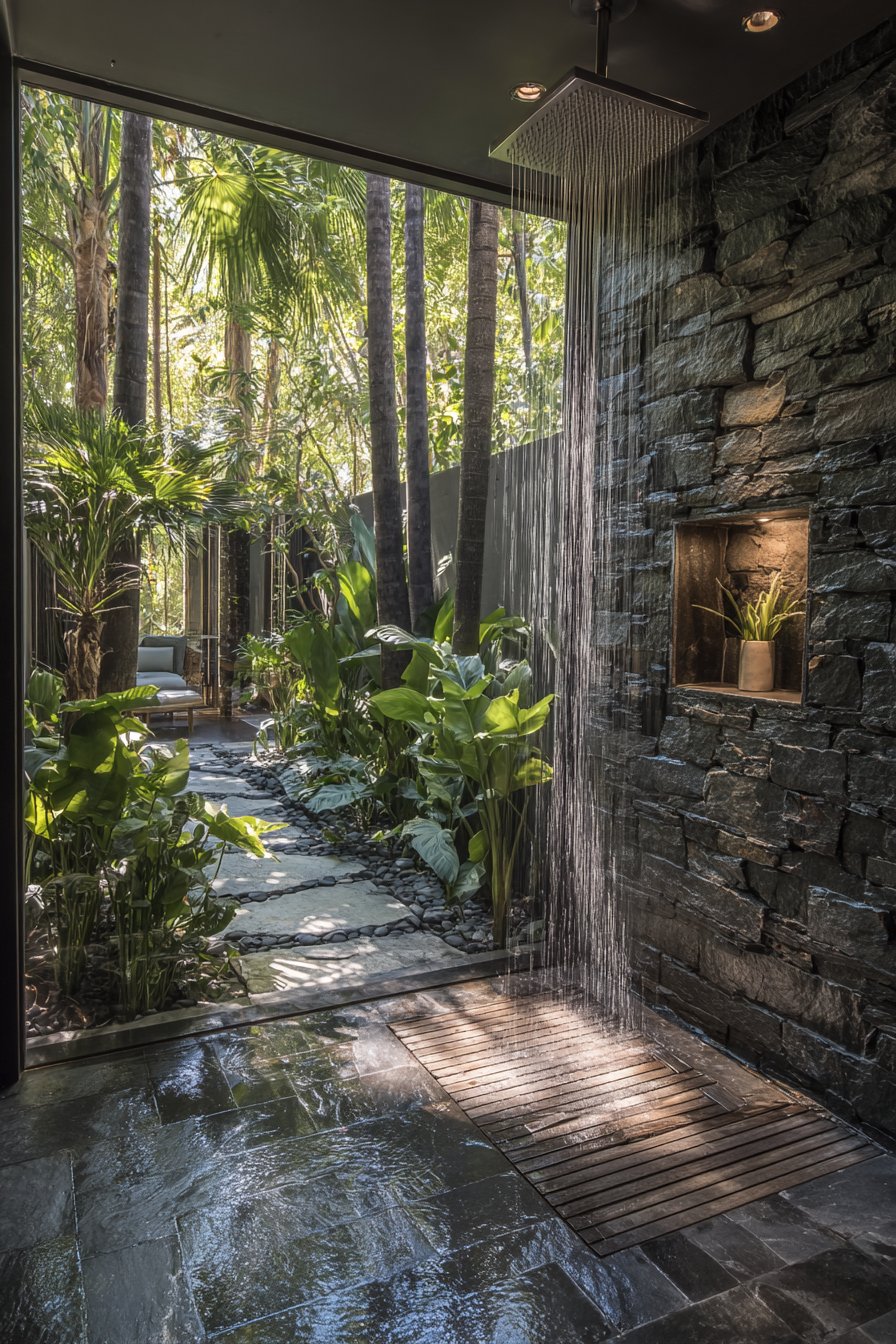
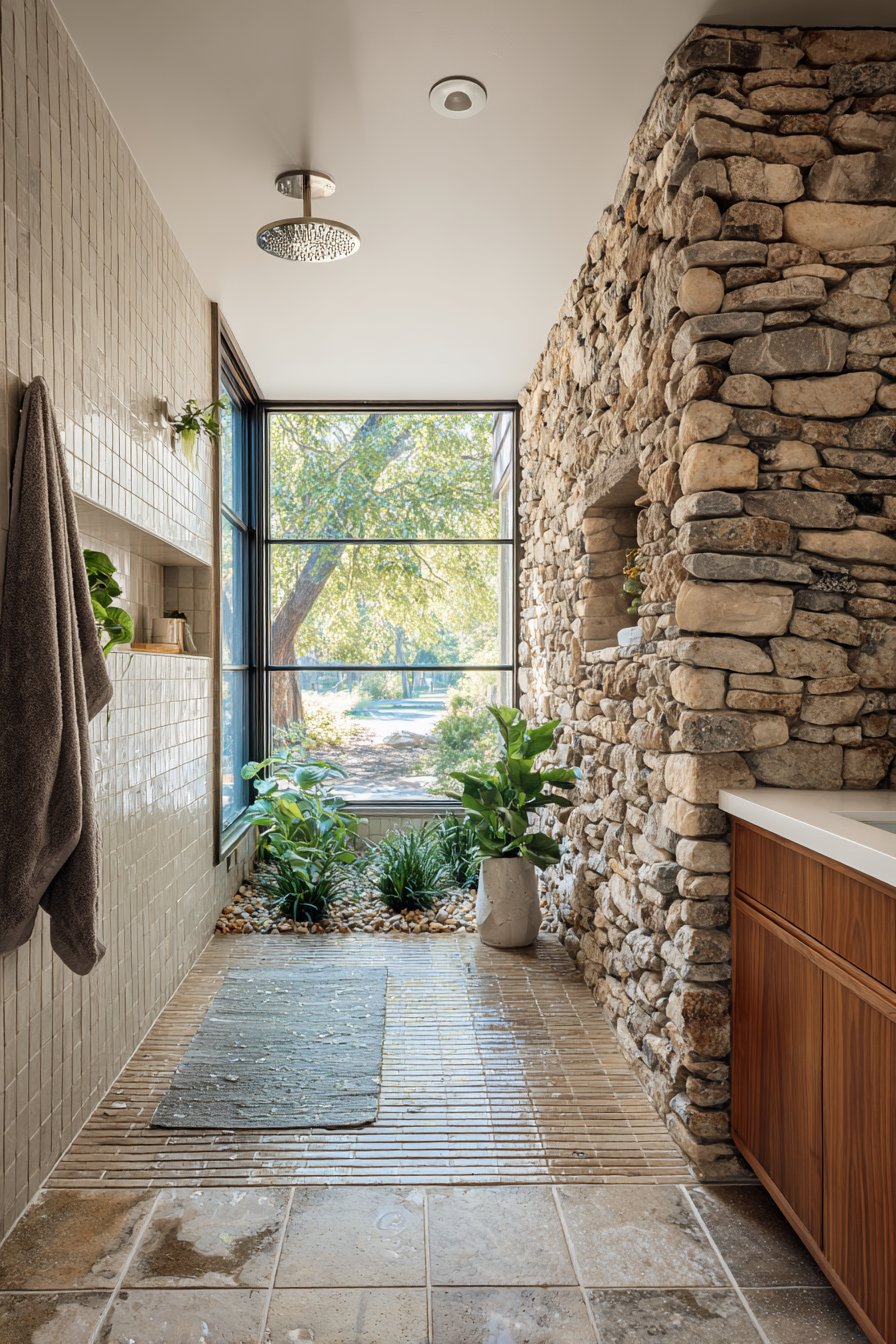
Biophilic design principles create unique showering experiences in this nature-inspired shower bathroom idea. Floor-to-ceiling windows overlooking a private garden create the sensation of outdoor showering while maintaining climate control and privacy. The extensive glazing dissolves boundaries between interior bathing space and exterior landscape, bringing nature’s calming influence directly into daily routines. Strategic landscaping outside—perhaps including bamboo, ferns, or ornamental grasses—ensures privacy while enhancing the natural connection.
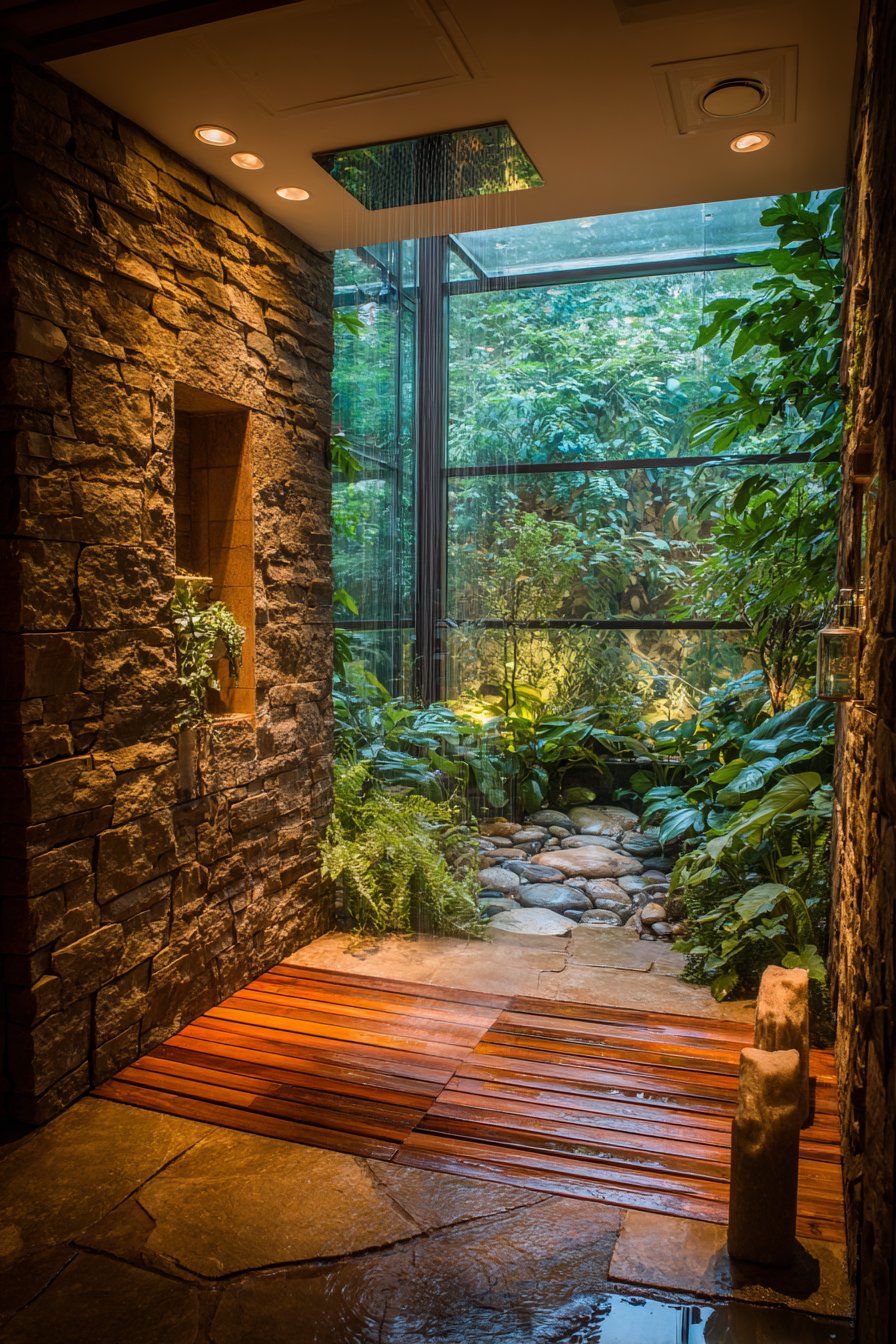
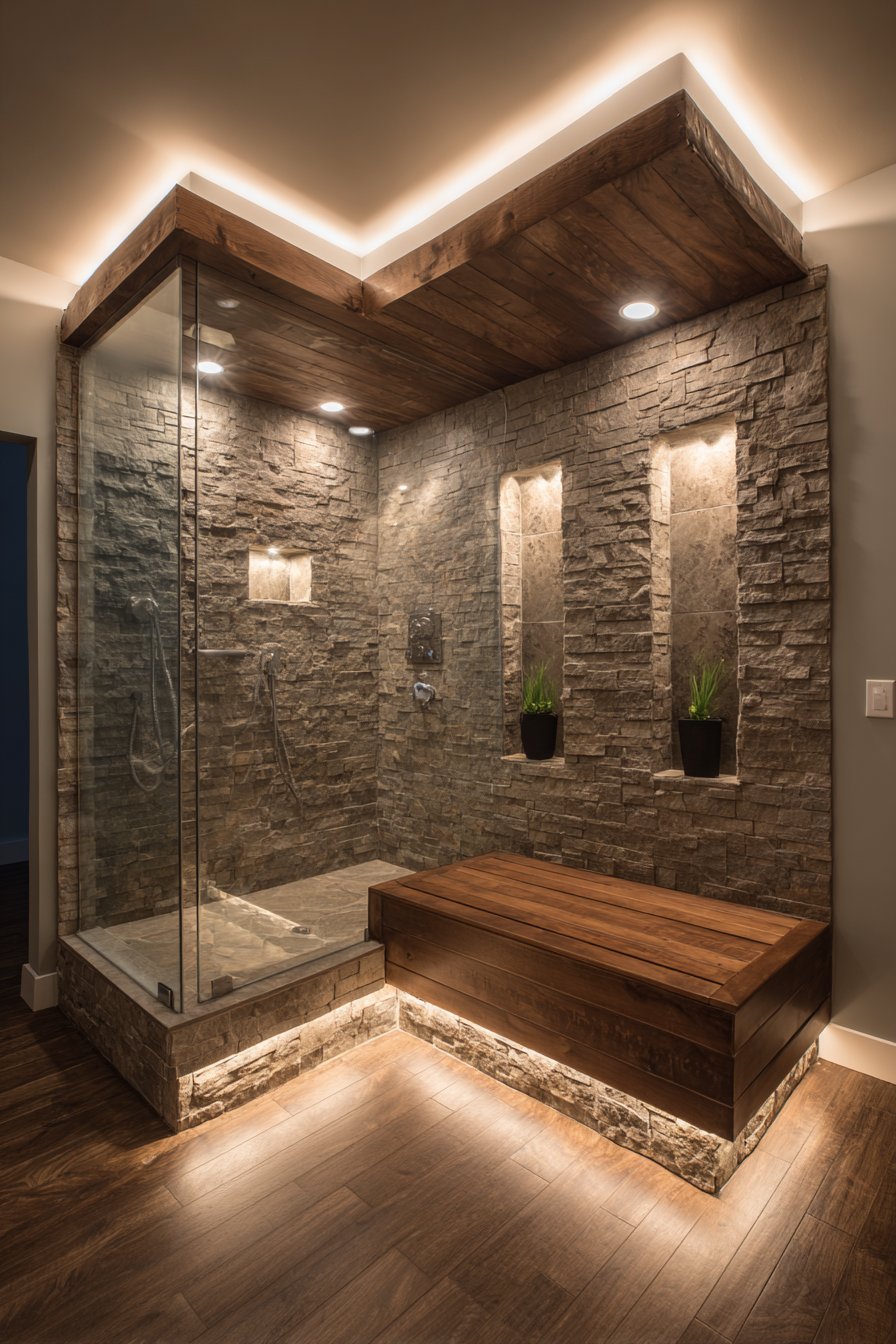
Natural stacked stone accent wall brings exterior textures inside, its varied earth tones and textured surface evoking natural rock formations. The dimensional quality of stacked stone—with pieces protruding at different depths—creates strong visual interest and shadows that change throughout the day. A rainfall showerhead mimics natural rainfall experiences, its broad gentle spray pattern feeling more like standing in summer rain than traditional shower sprays.
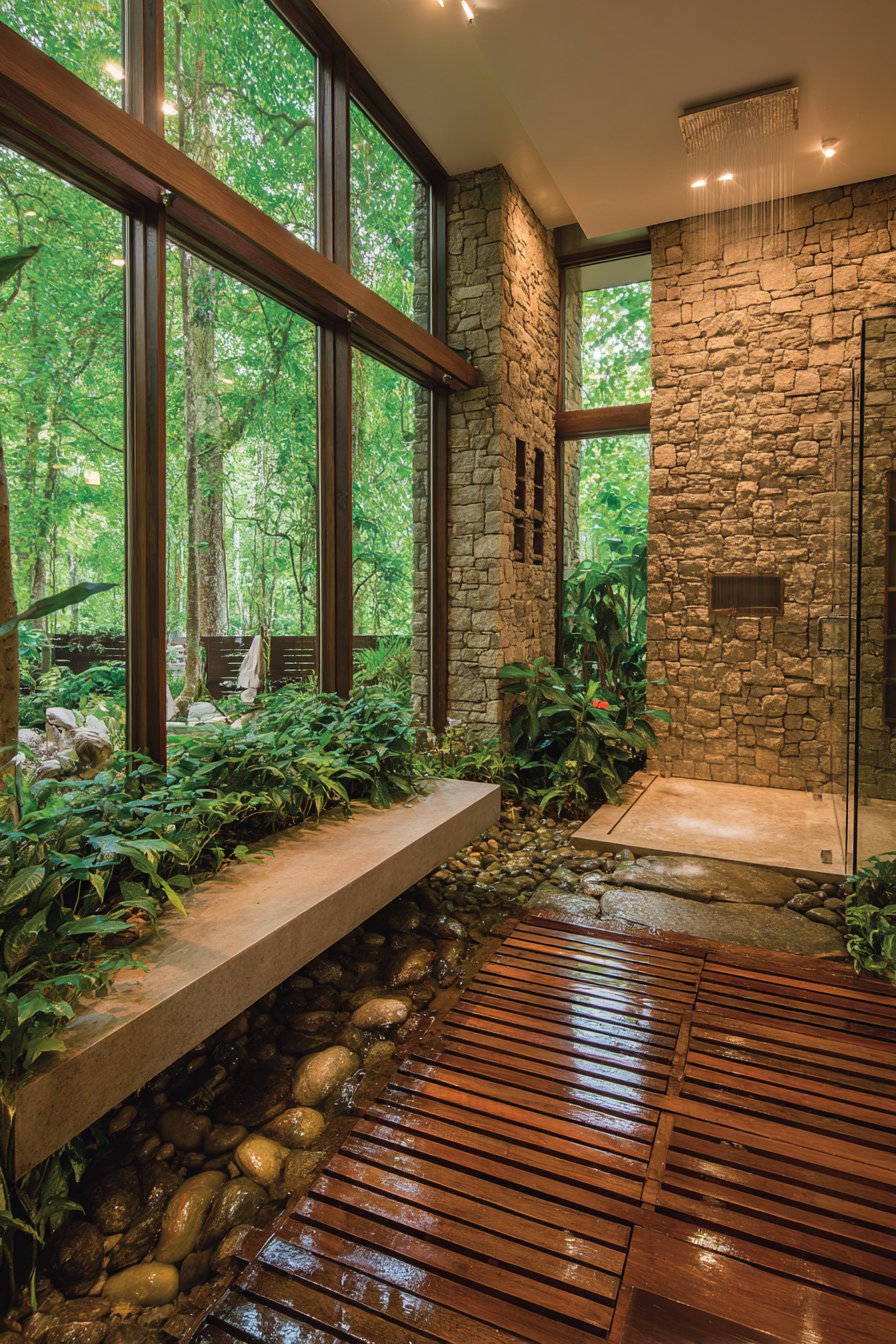
Teak wood slat flooring allows drainage while maintaining organic aesthetic, its warm honey tones and visible grain providing visual warmth. The spaced slats permit water flow to the drainage system below while creating a comfortable surface for bare feet. Living plants in waterproof planters thrive in the humid shower environment, introducing air purification and living color. Natural daylight flooding the space creates the ultimate connection to outdoor rhythms—morning light energizing morning showers, afternoon sun warming evening bathing.
Key Design Tips:
- Install tempered safety glass in all windows with minimum R-value insulation for climate control
- Select exterior landscaping that provides privacy without requiring extensive maintenance
- Seal natural stone thoroughly to prevent water damage and mineral deposits
- Install teak slats over proper shower pan with adequate drainage, not directly on substrate
- Choose tropical plants that tolerate high humidity and varying light conditions for shower integration
18. Geometric Cement Tile Statement Floor
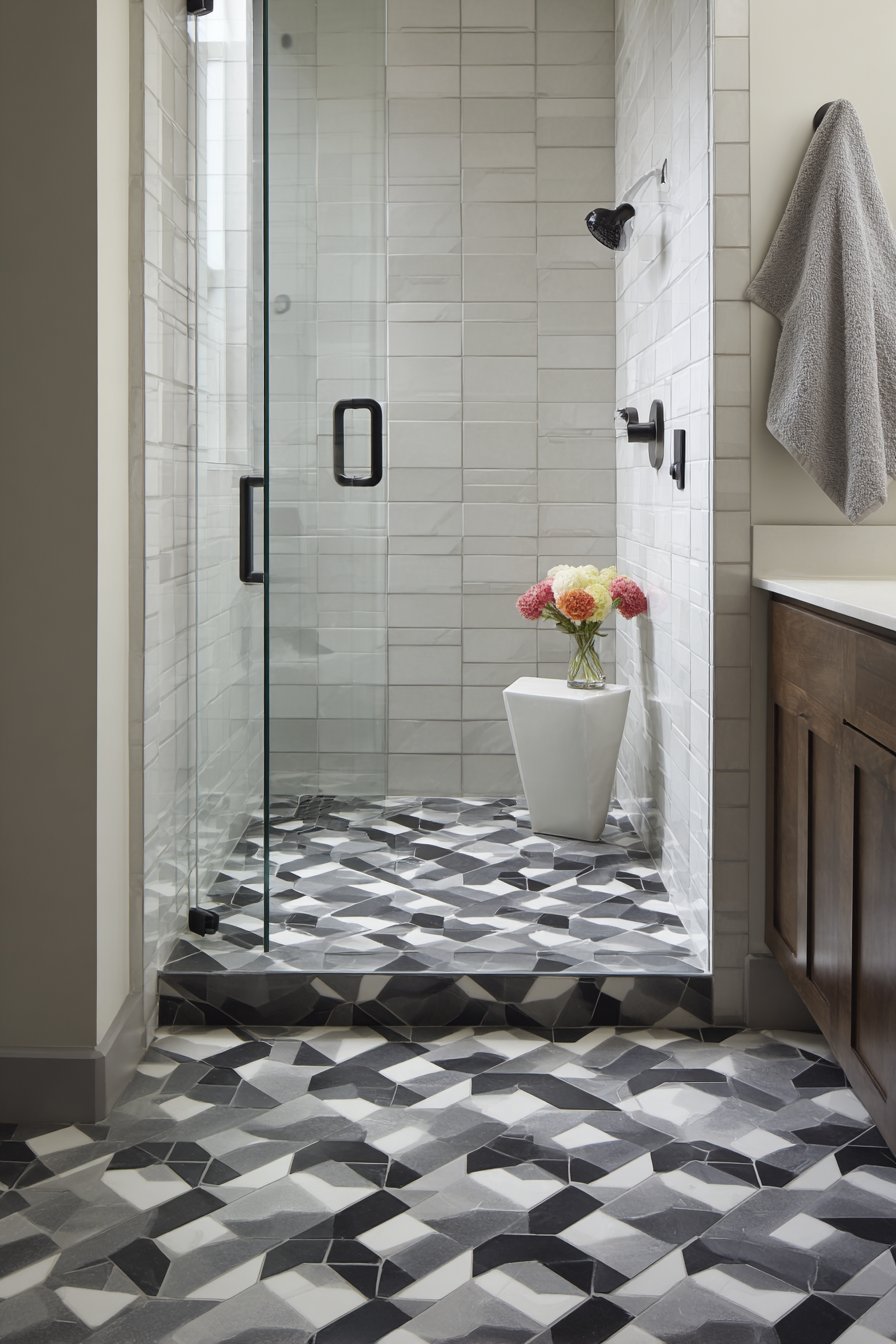
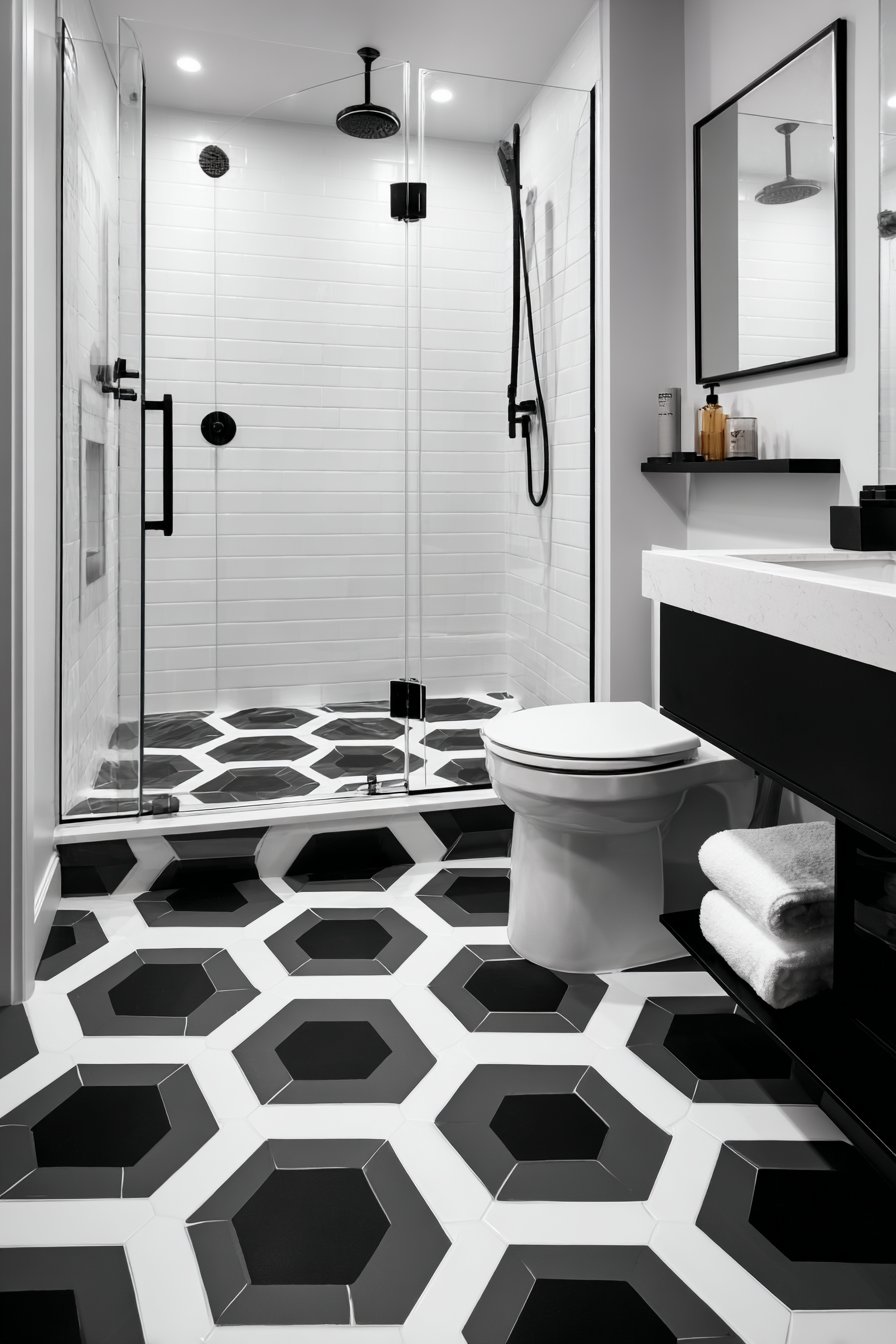
Bold pattern creates unforgettable visual impact in this geometric shower bathroom idea. Hexagonal cement tiles in contrasting black and white pattern on the shower floor establish a striking graphic foundation. The handmade quality of cement tiles—with their slight color variations and artisan appeal—adds character impossible to achieve with machine-made ceramics. The high-contrast pattern becomes the shower’s undeniable focal point, anchoring the entire design and allowing simpler choices elsewhere.
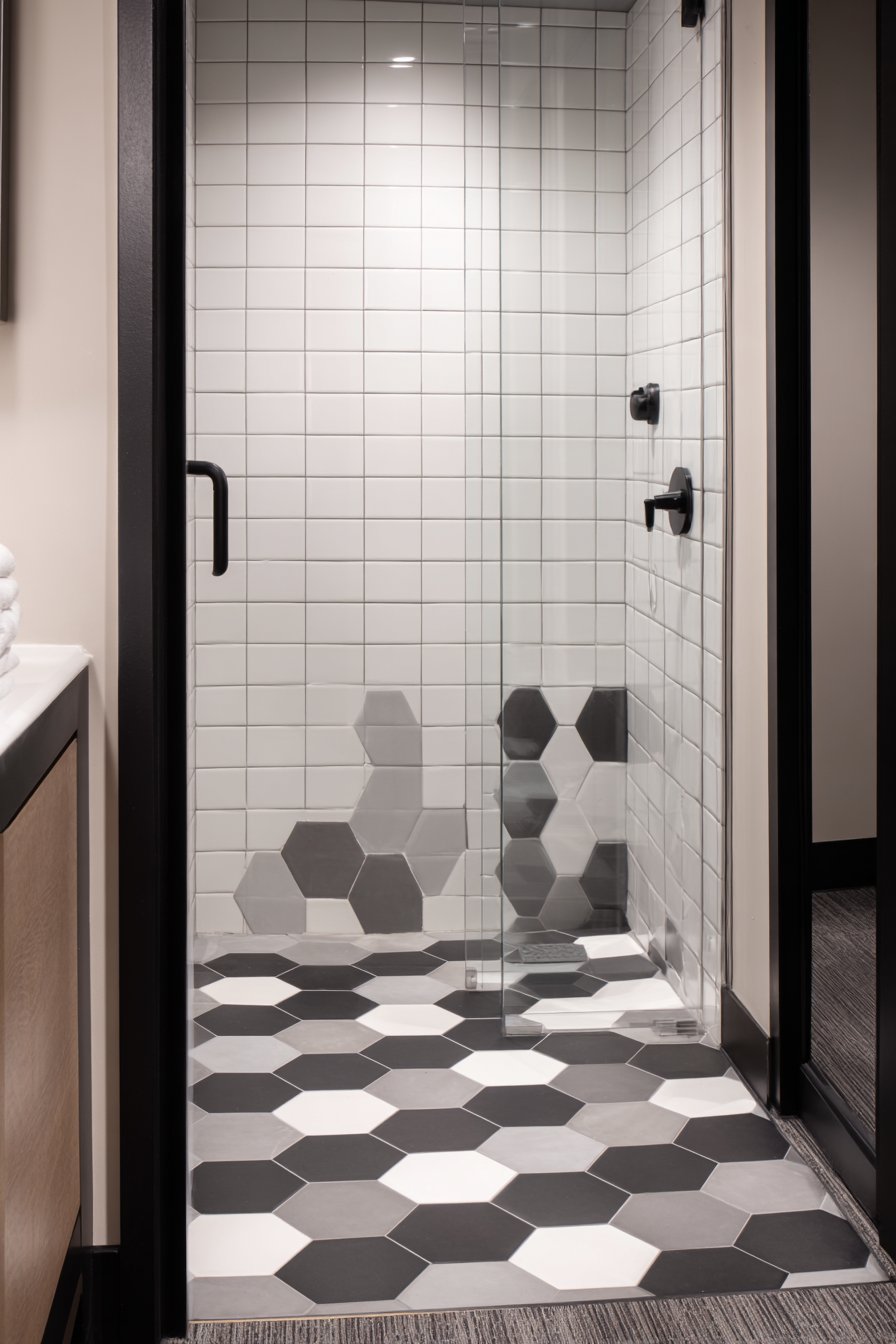
Coordinating white ceramic tiles with beveled edges on walls create dimensional interest without competing with the dramatic floor. The beveling—a subtle angle cut into tile edges—catches light and creates gentle shadows that add depth to plain white surfaces. Matte black fixtures complement the graphic floor pattern while providing essential visual weight and contemporary edge. The black finish unifies with the black hexagons, creating color consistency that ties the design together.
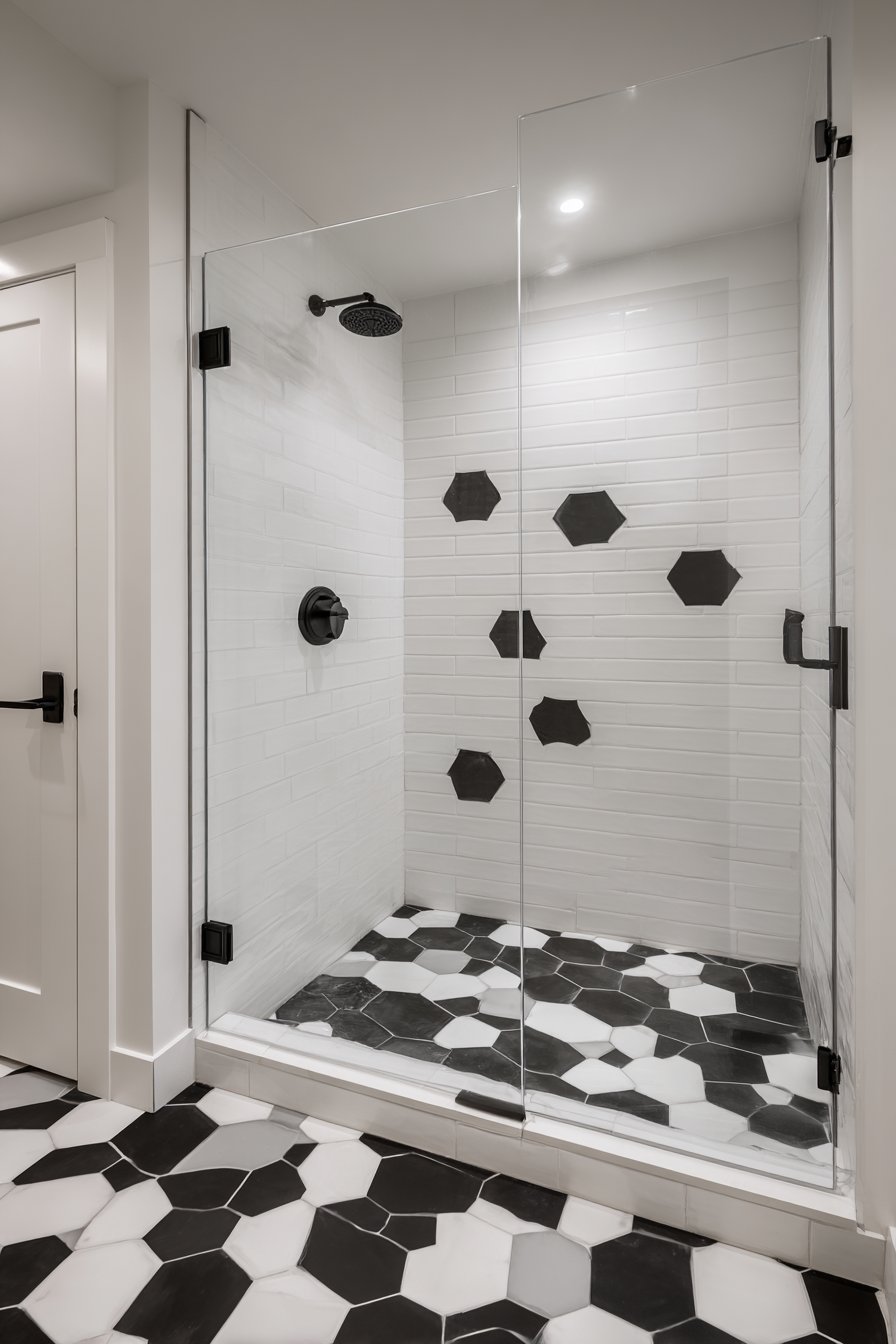
A glass enclosure allows the striking tilework to remain visible from throughout the bathroom, extending the pattern’s impact beyond the shower proper. The frameless glass becomes nearly invisible, ensuring nothing obscures views of the carefully considered geometric composition. Balanced artificial and natural lighting prevents the strong pattern from overwhelming, with diffused illumination softening the high contrast. This design demonstrates that bold pattern, when applied strategically and balanced with restraint elsewhere, creates memorable spaces with strong character.
Key Design Tips:
- Order extra cement tiles (at least 15-20% overage) to account for breakage and future repairs
- Seal cement tiles with penetrating sealer before and after grouting for maximum protection
- Install patterned floor tiles precisely with careful alignment to maintain geometric integrity
- Use simple white or light gray grout on patterned floor to let tile pattern dominate
- Consider pattern direction carefully—typically aligning pattern with shower entry for maximum impact
19. European Wet Room Open Concept
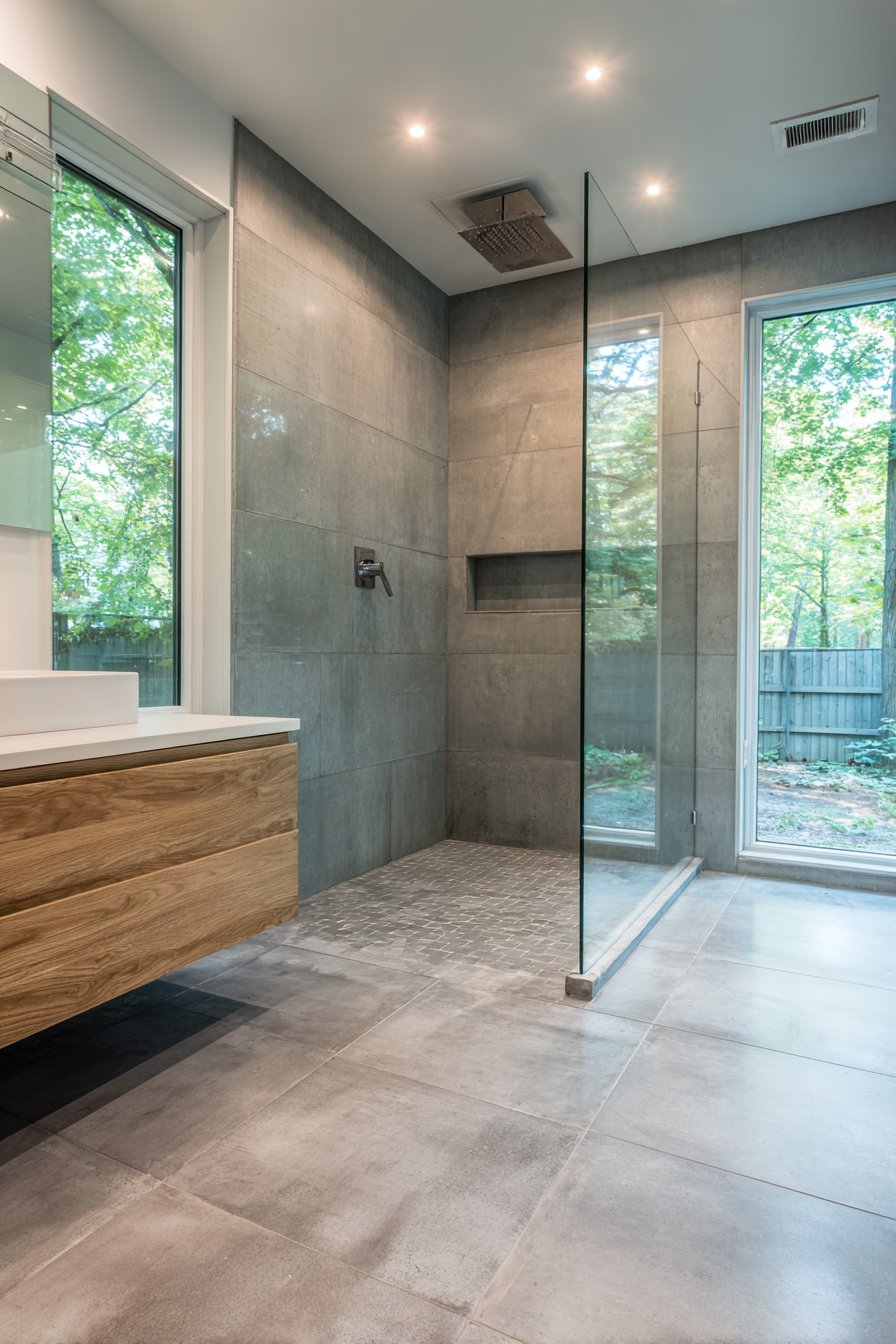
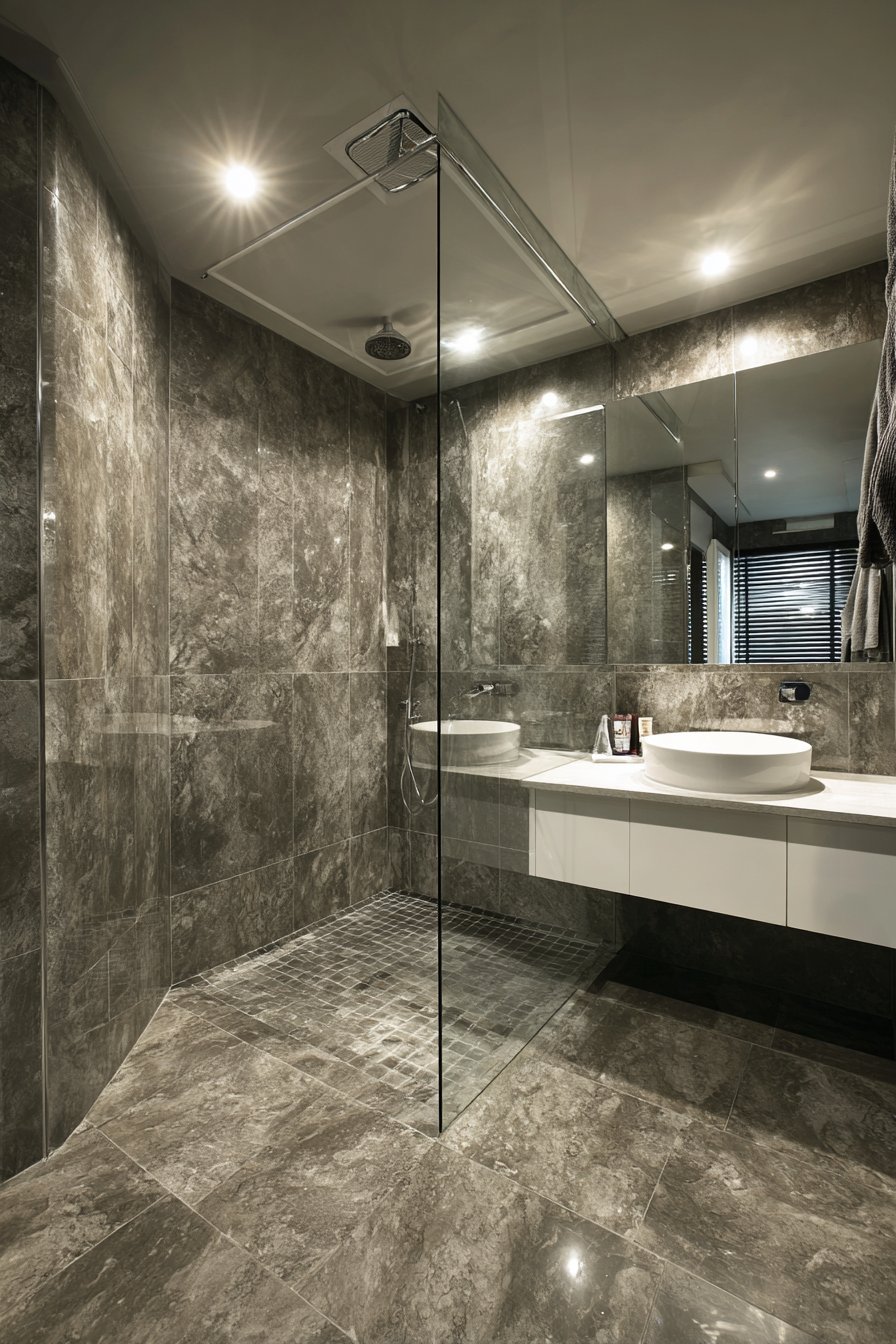
Continental sophistication and practical simplicity characterize this wet room shower bathroom idea. The entire floor gently sloped toward a central drain creates a seamless waterproof space without traditional shower enclosures. This European approach to bathroom design maximizes perceived space and simplifies cleaning—no shower door tracks, no curbs, no separate dry zones requiring protection. The unified floor treatment creates spatial generosity even in modest square footage.
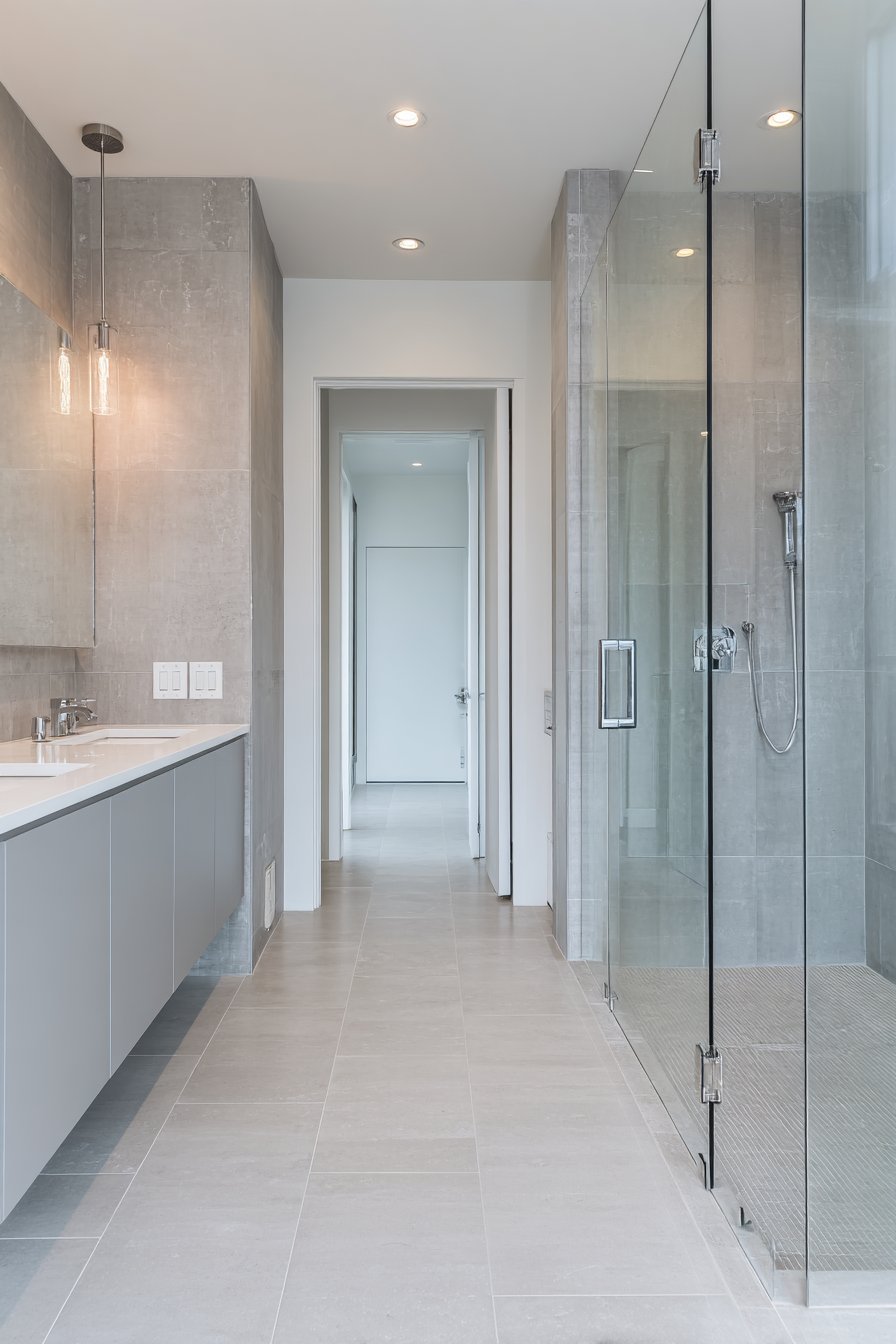
Large gray porcelain tiles cover both walls and floor in a continuous installation that emphasizes unity and flow. The consistent tile application from floor up walls creates monolithic quality, making walls and floor feel like carved sections of a single piece rather than separate surfaces. A frameless glass partition provides minimal splash protection for the toilet and vanity areas while maintaining the open concept. The glass panel—often only four to five feet wide—strikes the balance between practical water control and visual openness.
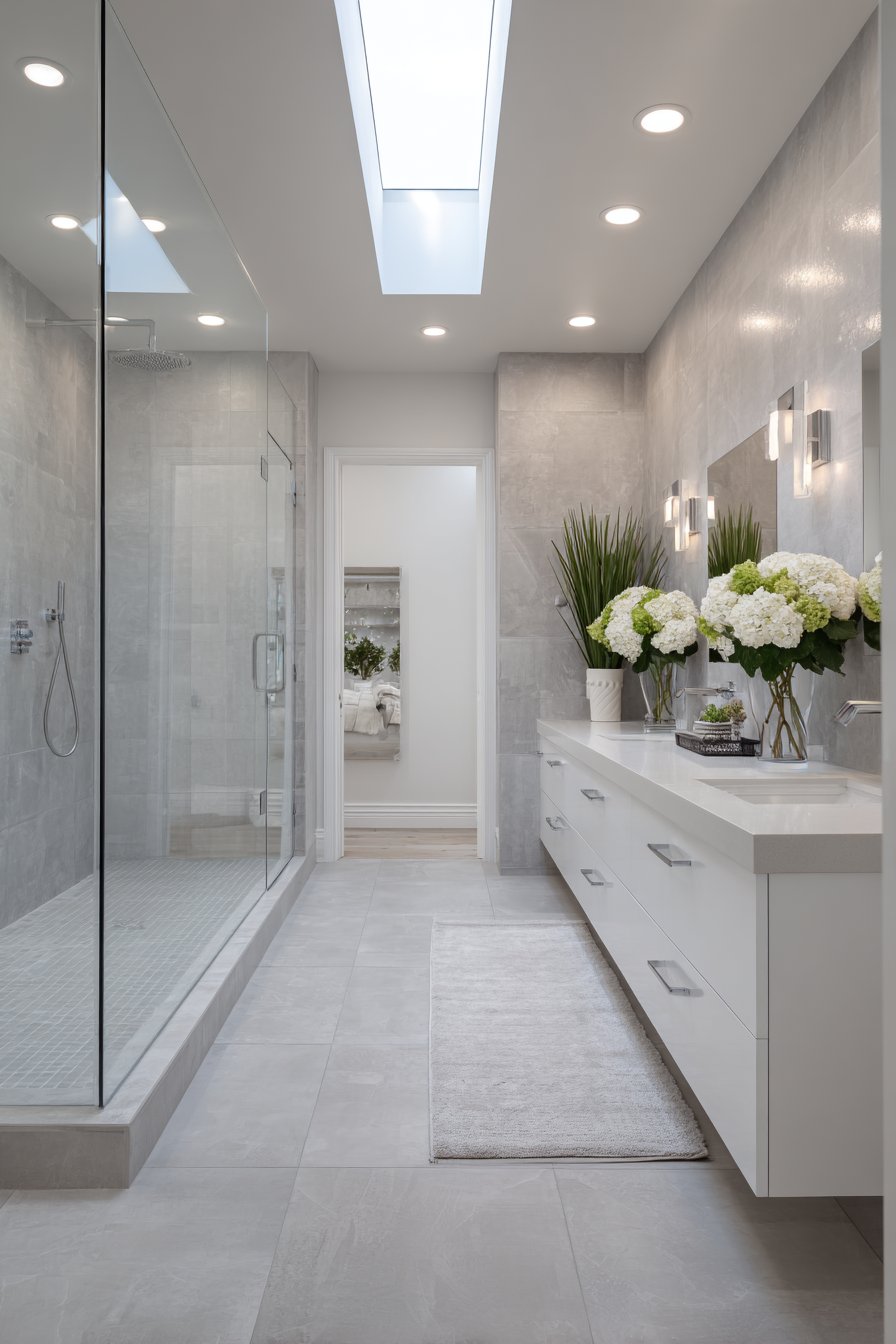
A wall-mounted floating vanity keeps the floor completely clear, enhancing the sense of spaciousness while simplifying floor cleaning. The suspended vanity appears to float, its shadow creating visual lightness. Multiple recessed ceiling lights ensure even illumination throughout the open space, eliminating the dark zones that can occur in larger bathrooms. The wet room concept demonstrates European design priorities: efficiency, simplicity, and the belief that less enclosure creates more freedom.
Key Design Tips:
- Install comprehensive waterproofing across entire bathroom floor and walls up to shower height
- Ensure proper floor slope (minimum 1/4 inch per foot) radiating from all directions toward central drain
- Choose drain with adequate capacity for the entire floor area, typically larger than standard shower drains
- Mount all electrical outlets, switches, and fixtures above splash zone heights per electrical codes
- Include adequate ventilation—wet rooms require more air movement than traditional bathrooms
20. Smart Technology Integration
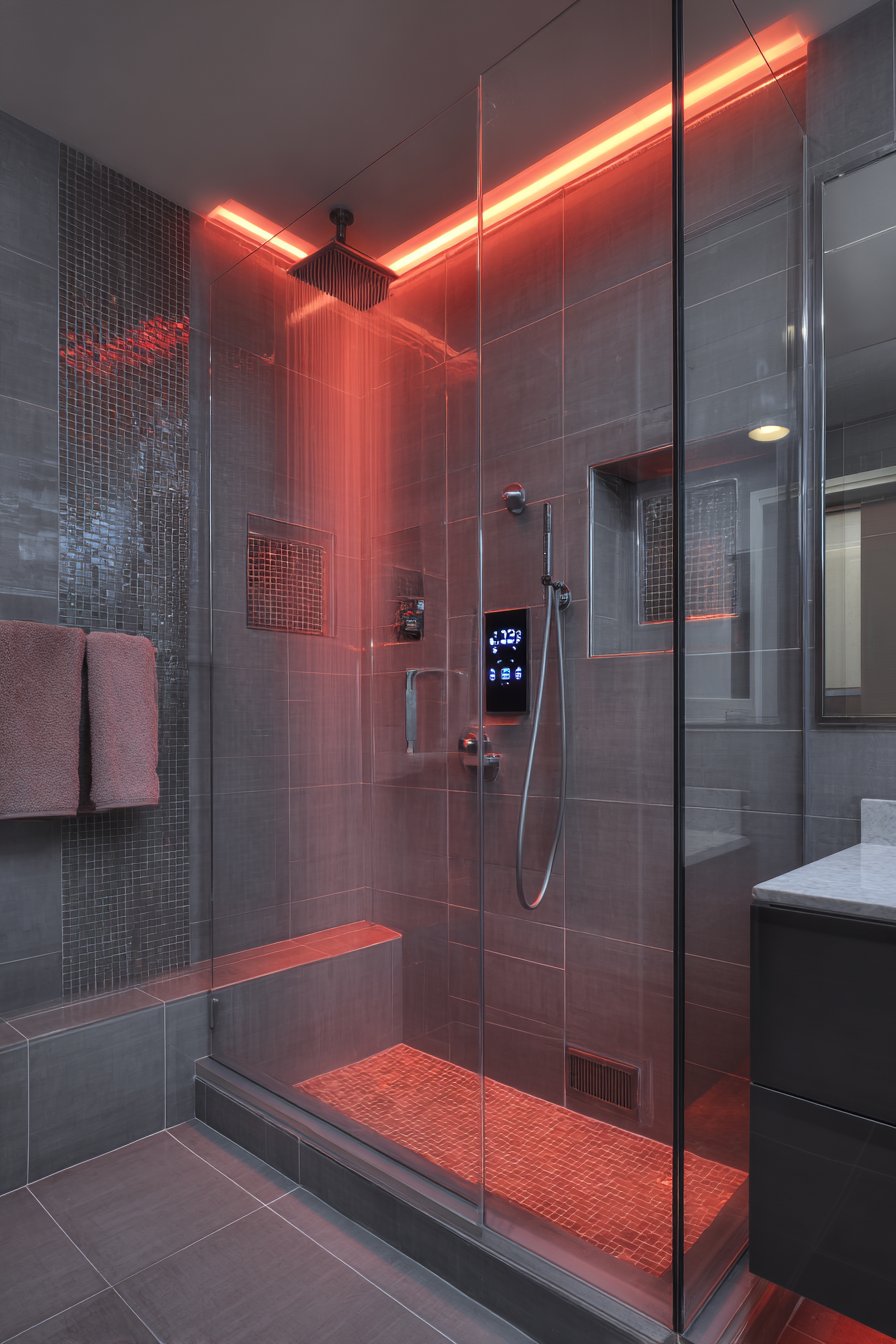
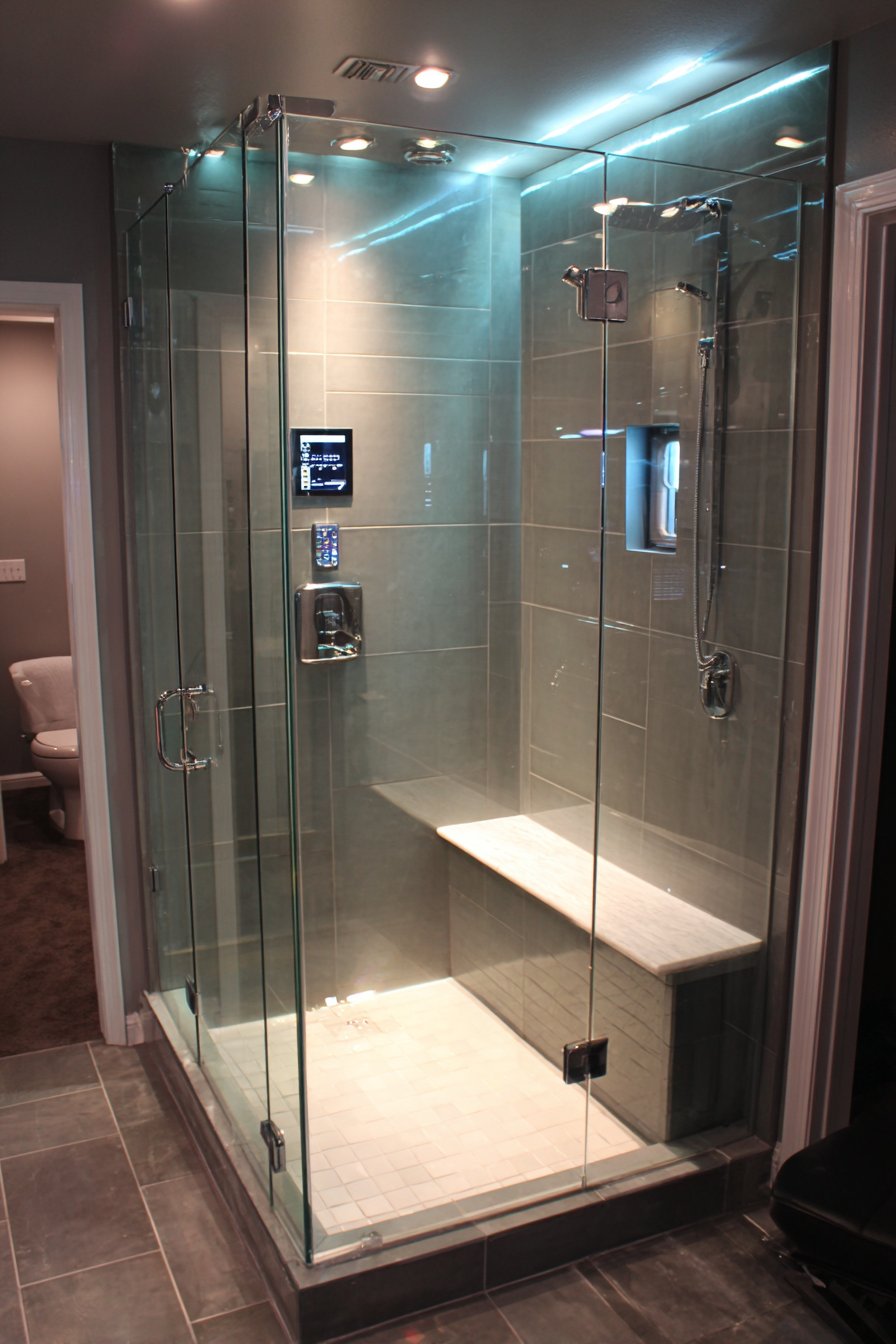
Modern convenience and digital integration define this technology-forward shower bathroom idea. Digital shower controls with preset temperature memory eliminate the morning guesswork and waiting for temperature adjustment. Multiple users program their preferred temperatures, water flow patterns, and even shower duration into the system, accessing their custom settings with a button press. LED temperature displays provide at-a-glance confirmation of water temperature before entry—a safety feature and convenience.
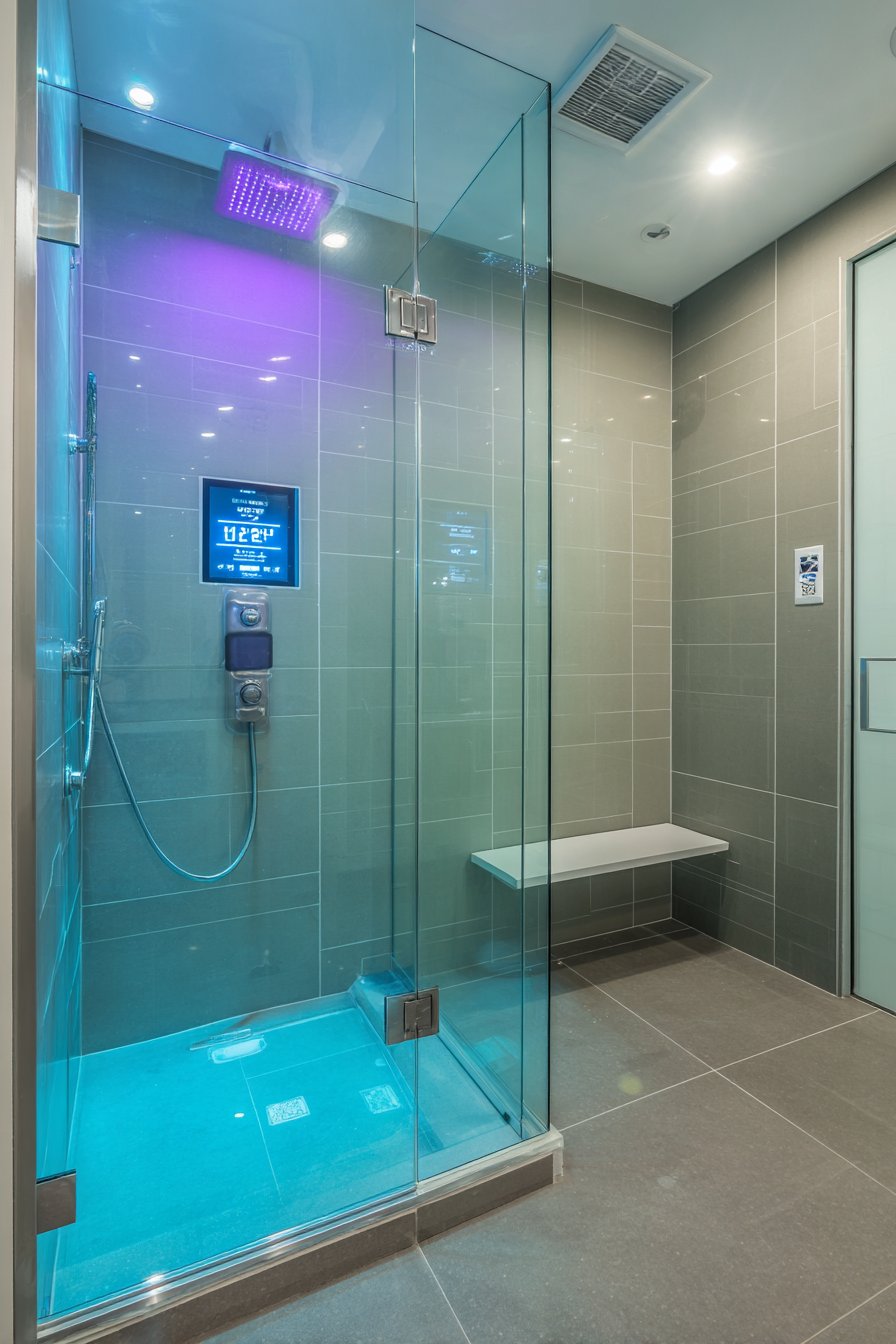
Chromotherapy lighting systems integrated into the ceiling change colors for mood enhancement and therapeutic effect. The color-changing LEDs cycle through the spectrum or hold specific colors—perhaps energizing blue for morning showers, calming green for midday refresh, or relaxing purple for evening wind-down. The lighting system often synchronizes with the digital controls, creating preset “shower experiences” that combine water temperature, spray pattern, and lighting color.
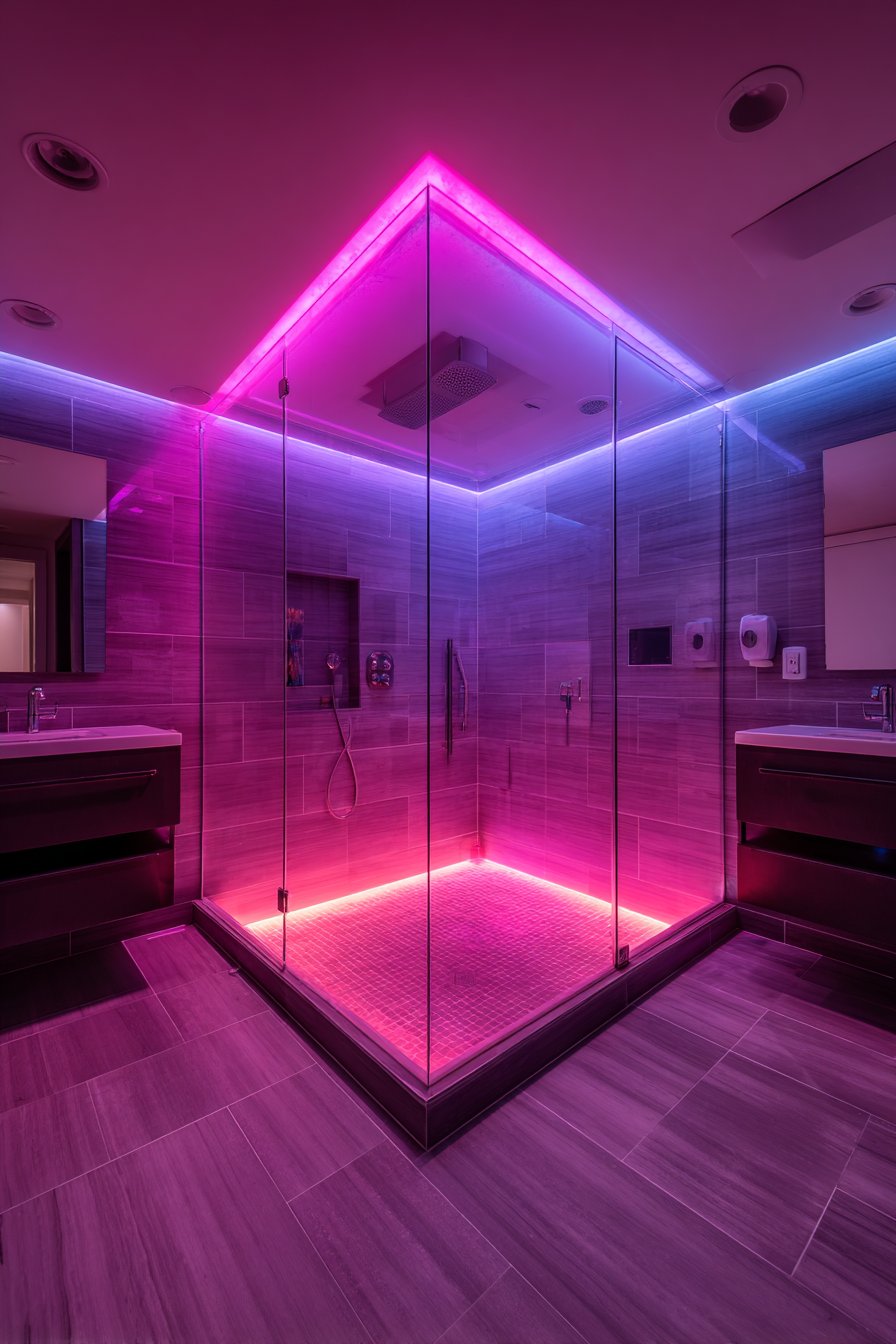
Bluetooth speakers embedded in the shower wall enable wireless audio streaming, transforming the shower into a private concert hall or podcast listening booth. The waterproof speakers deliver surprisingly robust sound while maintaining subtle visual presence. A frameless glass enclosure with self-cleaning nano-coating reduces maintenance through molecular-level treatment that causes water to bead and sheet off, carrying dirt and soap residue away. Contemporary gray tiles provide neutral backdrop for the technology features, ensuring the innovations rather than the surfaces command attention.
Key Design Tips:
- Install dedicated electrical circuits for digital controls to prevent interference from other bathroom devices
- Choose digital systems with manual backup controls in case of electronic failure
- Position Bluetooth speakers away from direct water spray to maximize longevity
- Research nano-coating reapplication requirements—most need renewal every 1-2 years for continued effectiveness
- Include waterproof smartphone niches or mounts for controlling music and monitoring shower settings
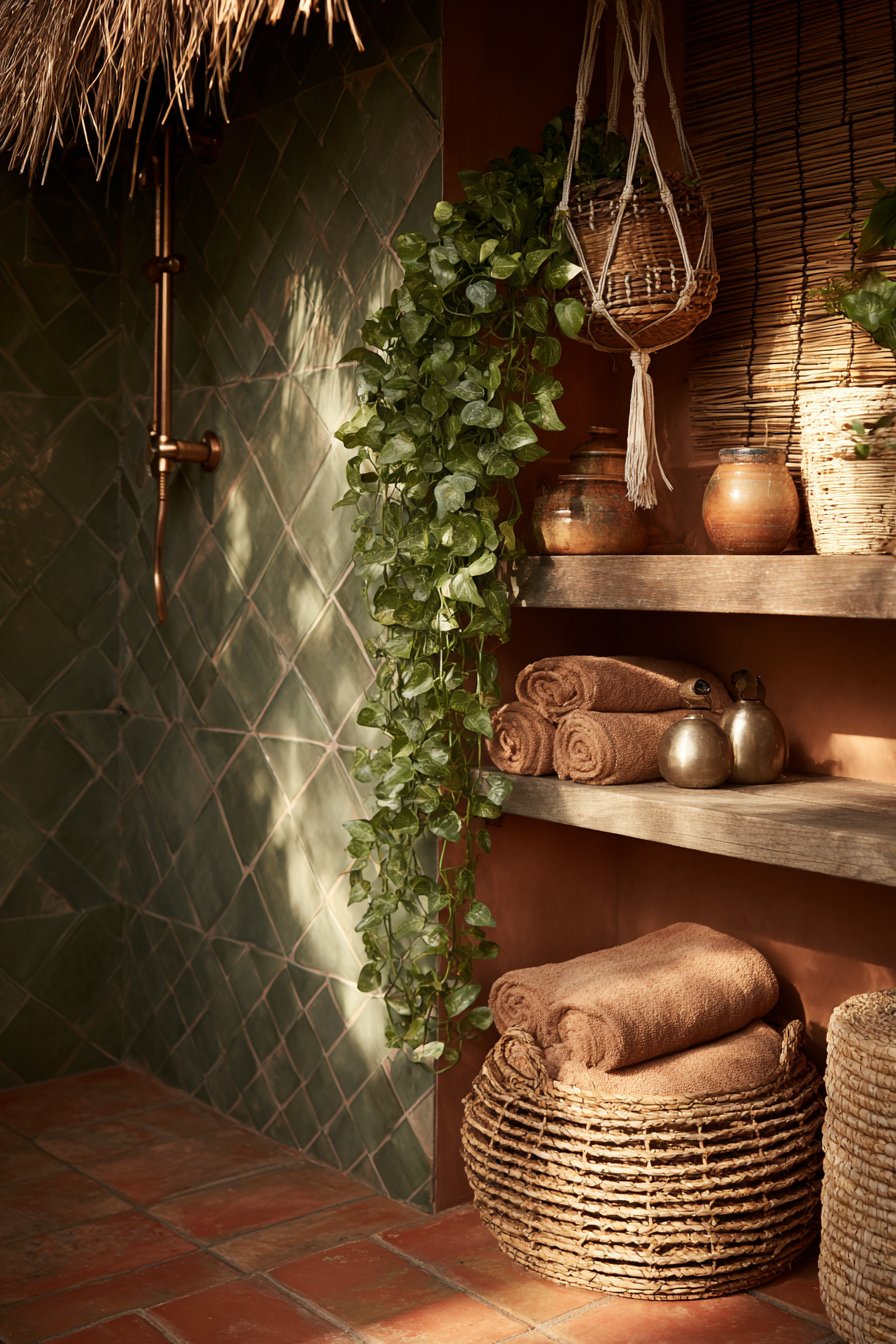
21. Bohemian Layered Natural Materials
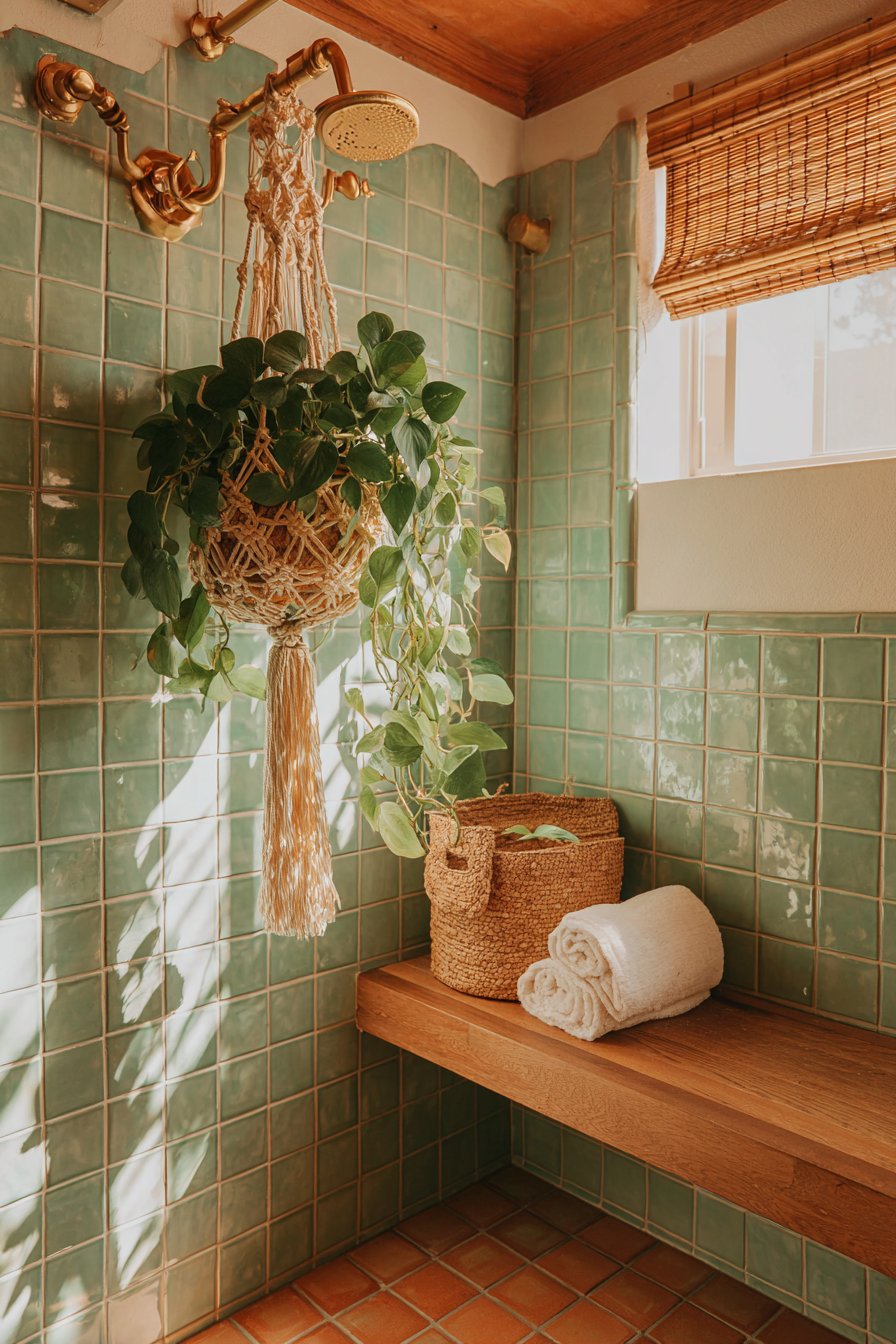
Eclectic charm and relaxed sophistication merge in this bohemian shower bathroom idea. Mixed natural materials including terracotta tiles on the floor and handmade zellige tiles in sage green on walls create the layered, collected-over-time aesthetic central to boho style. The slight irregularities in handmade zellige—uneven edges, color variations, surface undulations—provide the imperfect beauty that mass-produced tiles cannot replicate. The earthy terracotta floor grounds the space while the soft sage walls provide soothing color.
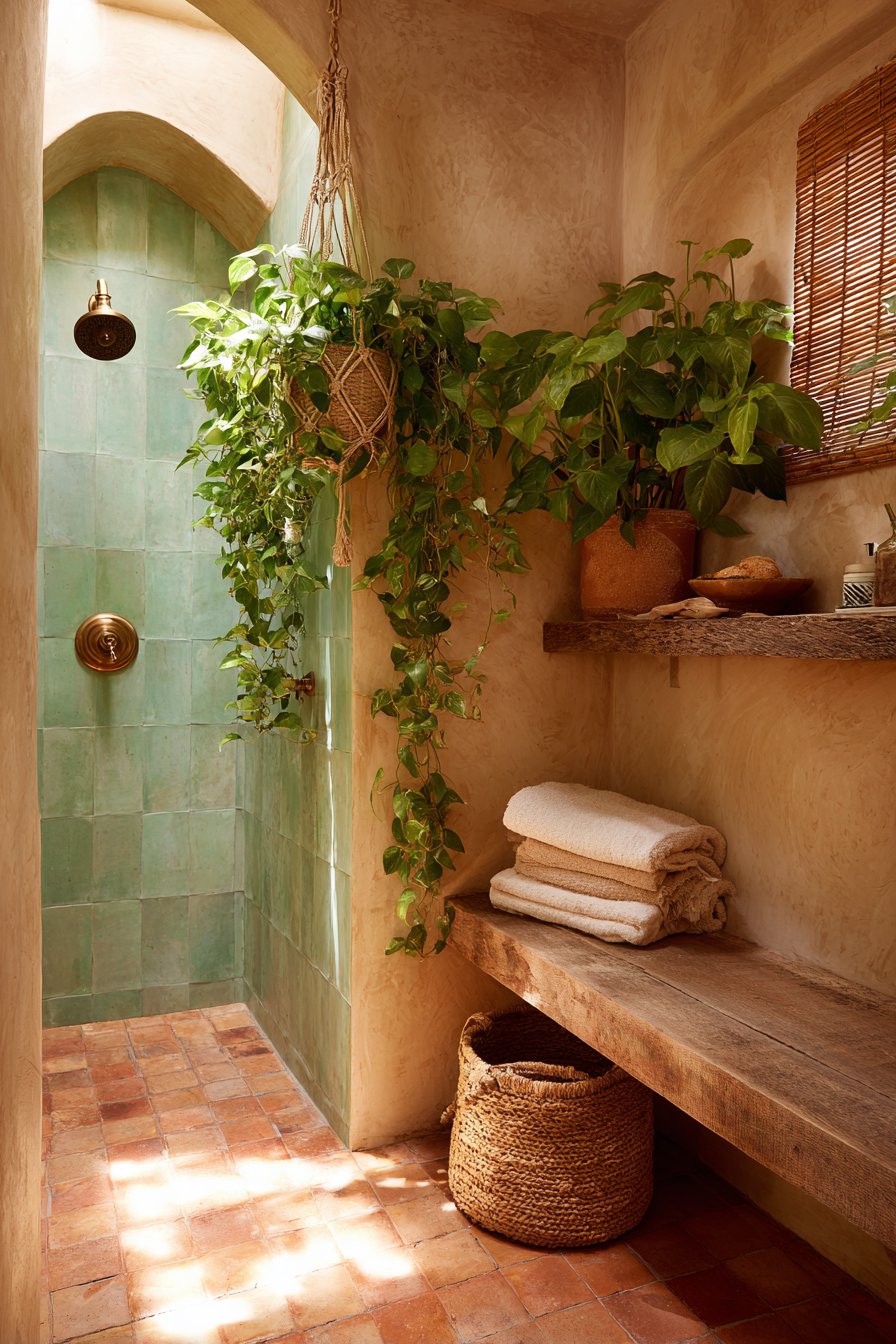
Vintage brass fixtures with developed patina finish add character and warmth, their slightly tarnished appearance suggesting age and history. The brass aging process creates unique coloring on each fixture—darker in recesses, brighter on frequently touched surfaces—making each piece unique. A macramé plant hanger holds trailing pothos in a waterproof planter, bringing living greenery into the shower space. The hand-knotted macramé and cascading plant introduce organic forms and textures that soften hard tile surfaces.
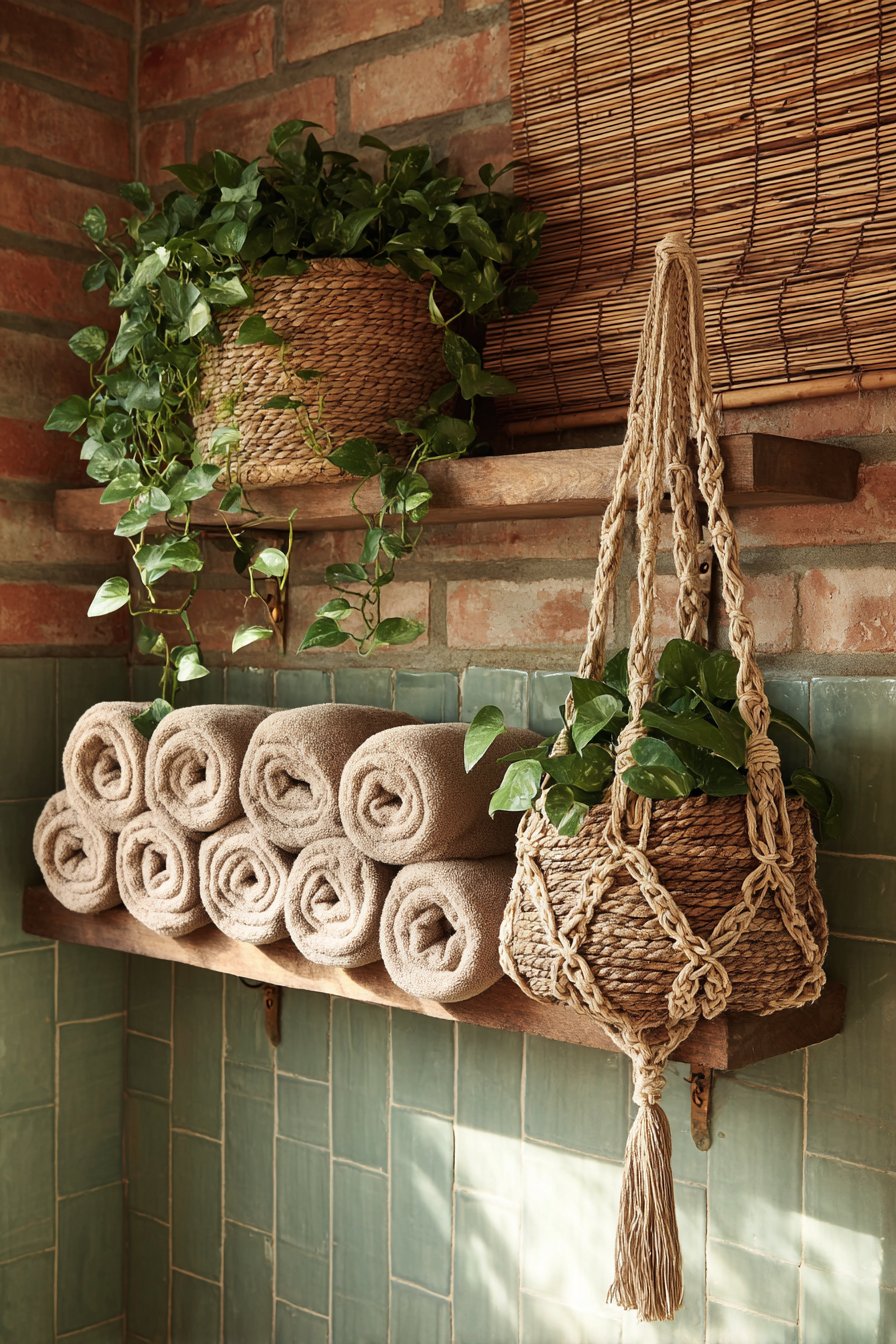
A woven basket holds rolled towels on a floating wood shelf, introducing additional natural texture and warm material. The rough-sawn wood shelf shows natural edge and visible grain, celebrating material authenticity over refinement. Warm natural light through a bamboo shade creates dappled shadows across surfaces, the filtered light creating the relaxed, sun-drenched quality essential to bohemian interiors. This shower demonstrates that eclectic design, when grounded in natural materials and warm tones, creates spaces that feel personal, collected, and genuinely comfortable.
Key Design Tips:
- Source zellige tiles from Moroccan artisans for authentic irregular beauty and traditional production methods
- Seal terracotta floor thoroughly and reseal annually to prevent water staining and damage
- Choose vintage brass fixtures from reputable sellers who verify functionality and provide installation guidance
- Position plant hanger outside direct shower spray but within humid zone where tropical plants thrive
- Install bamboo shade with moisture-resistant backing to prevent warping and mildew in humid bathroom environment
Why These Shower Bathroom Ideas Represent the Best in Contemporary Design
The twenty-one shower bathroom ideas presented throughout this comprehensive guide exemplify the diversity and sophistication available in contemporary bathroom design. Each concept demonstrates specific design principles, material applications, and functional solutions that address real-world needs while delivering aesthetic excellence. From the space-efficient corner shower solution that proves compact bathrooms can achieve style without compromise, to the expansive dual-shower suite that elevates couples’ morning routines into shared luxury experiences, these designs span the full spectrum of bathroom possibilities.
The enduring appeal of classic materials shines through in several concepts—white subway tile creating timeless backdrops, natural stone introducing organic beauty, and handcrafted cement tiles delivering artisan character. These traditional materials continue dominating bathroom design not through trend cycles but through proven performance, broad aesthetic compatibility, and the authentic quality that manufactured alternatives cannot fully replicate. The subway tile shower demonstrates how proper execution of classic elements creates spaces that feel both current and timeless, while the book-matched marble showcase proves that exceptional materials, when properly featured, require minimal additional decoration.
Contemporary design movements find strong representation throughout these concepts. The minimalist curbless shower and Scandinavian wood-and-white design embody the current preference for simplified forms, reduced visual clutter, and emphasis on essential elements. These approaches respond to modern life’s complexity by creating visual calm and spatial clarity. The industrial concrete aesthetic and geometric cement tile designs represent the ongoing appreciation for raw materials, bold pattern, and honest expression of structure—design approaches that celebrate rather than conceal their architectural bones.
Accessibility and universal design principles appear not as compromises but as opportunities for creating better bathrooms for everyone. The accessible shower concept demonstrates that thoughtful integration of grab bars, curbless entry, and flexible seating creates spaces that serve users across entire lifespans while maintaining residential warmth and contemporary style. This inclusive approach represents perhaps the most important evolution in bathroom design—the recognition that accessibility features benefit all users and should be designed in from the beginning rather than retrofitted later.
Technology integration emerges as a defining characteristic of cutting-edge bathroom design. The smart shower concept with its digital controls, chromotherapy lighting, and integrated audio represents the intersection of traditional bathing rituals and digital convenience. These technologies enhance rather than replace the fundamental showering experience, adding customization, efficiency, and entertainment without undermining the essential purpose. As home automation systems become standard, bathroom integration of these technologies will likely become expected rather than exceptional.
Material diversity stands out as a hallmark of contemporary design freedom. Where historical bathrooms relied on limited moisture-resistant materials, modern waterproofing technologies liberate designers to incorporate wood elements, fabric textures, concrete surfaces, and natural stone varieties previously considered impractical. The rustic farmhouse shower incorporates shiplap and reclaimed wood, the Japanese zen design features hinoki cypress, and the bohemian concept layers multiple natural materials—all made possible through proper sealing, ventilation, and waterproofing that protects surfaces while allowing their use.
Budget considerations span the full range, with concepts addressing both modest renovations and significant investments. The budget-friendly shower demonstrates that strategic material selection, focused upgrades, and acceptance of mid-range products create attractive results without premium pricing. Conversely, the luxury spa shower and book-matched marble concepts showcase how investment in exceptional materials and comprehensive features delivers resort-quality experiences. Most importantly, beauty and functionality exist at every price point—good design transcends budget through thoughtful planning and careful execution.
Color applications throughout these concepts reveal sophisticated approaches to bathroom palettes. The dramatic black tile shower proves that dark colors create intimacy rather than oppression when properly lit and contrasted. The coastal wave-pattern design demonstrates how soft blue-gray tones evoke natural themes without literal beach imagery. The Mediterranean terracotta concept shows warm earth tones creating sun-soaked atmosphere even in northern climates. These varied color approaches prove that bathroom palettes extend far beyond the expected whites and neutrals, offering opportunities for personal expression and thematic development.
Lighting strategies emerge as critical design elements often underestimated in their impact. Natural light plays prominent roles in multiple concepts—from the skylit subway tile shower to the garden-view biophilic design. Where natural light proves limited, artificial lighting receives careful consideration through recessed fixtures highlighting marble veining, LED strips illuminating niches, and chromotherapy systems creating colored ambiance. The consistent message across concepts: lighting deserves equal attention to material selection and fixture choice.
The shower enclosure approaches vary significantly, from fully enclosed corner units to open wet room concepts with minimal partitioning. This diversity reflects both stylistic preferences and practical considerations of bathroom size, layout, and splash concerns. Frameless glass dominates luxury designs for its transparency and minimal visual intrusion, while metal-framed glass appears in industrial concepts for its honest structural expression. The single glass panel solution offers cost-effective contemporary appearance, and the vintage shower demonstrates that enclosed stalls remain viable when executed with authentic period details.
Cultural influences appear throughout these concepts, acknowledging that design inspiration draws from global sources. The Japanese zen shower references Eastern bathing traditions and philosophical approaches to space and materials. The Mediterranean terracotta design evokes southern European warmth and artisan craft. The Scandinavian concept embodies Nordic design values of simplicity, functionality, and light maximization. These cultural references enrich contemporary design by introducing diverse aesthetic traditions and time-tested approaches to creating beautiful, functional spaces.
Storage solutions receive thoughtful attention across concepts, recognizing that shower functionality depends partly on convenient access to bathing essentials. Built-in niches appear frequently—some illuminated for display quality, others simple recesses for pure utility. Floating shelves in materials from concrete to reclaimed wood provide accessible storage while maintaining design consistency. Corner units, fold-down benches with storage beneath, and wall-mounted organizers demonstrate varied approaches to the universal challenge of keeping shower products accessible yet organized.
Water delivery systems range from simple single showerheads to complex multi-outlet configurations. Rainfall heads dominate for their luxurious feel and even coverage. Handheld sprays appear in accessible designs and vintage concepts for functional flexibility. Body spray jets transform showers into hydrotherapy stations in luxury designs. The variety demonstrates how water delivery profoundly affects showering experience and should receive careful consideration during planning rather than being left to default builder choices.
Sustainability considerations appear implicitly throughout these concepts through water-efficient fixtures, durable material selections, and designs that anticipate long-term use. The accessible shower accommodates changing mobility throughout life, eliminating need for future renovation. Timeless material choices like subway tile and natural stone avoid trend-driven replacement. LED lighting reduces energy consumption while improving light quality. These sustainable approaches demonstrate that environmental responsibility and beautiful design work together rather than competing.
Conclusion
The shower bathroom represents far more than a purely functional space—it embodies our daily rituals of renewal, our desire for private sanctuary, and our opportunity to surround ourselves with beautiful materials and thoughtful design. The twenty-one shower bathroom ideas explored throughout this comprehensive guide demonstrate the remarkable range of possibilities available to contemporary homeowners, from modest refreshes to complete luxury renovations, from compact corner solutions to expansive wet room concepts, from timeless traditional approaches to cutting-edge technology integration.
Each design concept offers valuable lessons that extend beyond its specific aesthetic. The minimalist curbless shower teaches us that eliminating unnecessary elements creates spatial generosity and visual calm. The vintage penny tile bathroom reminds us that historical approaches remain relevant when executed with attention to authentic detail. The universal design accessible shower demonstrates that inclusive features benefit everyone and deserve integration from the beginning. The dramatic black tile sanctuary proves that bold choices create memorable spaces. These lessons, applied thoughtfully to your unique circumstances, enable you to create shower bathrooms that truly serve your needs while expressing your personal style.
As you contemplate your own shower bathroom project, whether planning a complete renovation or considering targeted improvements, remember that successful design balances multiple considerations simultaneously. Material selections must satisfy both aesthetic preferences and performance requirements in wet environments. Fixture choices should deliver desired functionality while coordinating stylistically with surrounding elements. Lighting strategies must provide adequate illumination for grooming tasks while creating ambiance for relaxation. Storage solutions need convenient accessibility without visual clutter. These competing demands require careful planning and often benefit from professional design consultation.
Most importantly, approach your shower bathroom as an investment in daily quality of life. We spend significant time in these spaces throughout our lives—thousands of showers, countless moments of private reflection, daily rituals of self-care and preparation. Creating shower bathrooms that genuinely serve our needs, inspire us with their beauty, and function reliably through years of use represents one of the most valuable home improvements possible. Whether you pursue the spa-like luxury of dual rainfall heads and chromotherapy lighting, the honest simplicity of industrial concrete and metal, the warm authenticity of rustic farmhouse materials, or any of the diverse approaches presented here, commit to executing your vision with care, quality materials, and proper installation. Your daily routine—and your home’s value—will benefit for years to come.
