
The allure of coastal living extends far beyond sandy shores and ocean breezes—it can be seamlessly woven into the very fabric of your home, particularly in one of its most intimate spaces: the bathroom. A seaside-inspired bathroom offers more than mere aesthetic appeal; it creates a sanctuary where the calming essence of the coast meets functional design, transforming daily routines into rejuvenating rituals. Whether you live steps from the beach or miles inland, incorporating coastal elements into your bathroom design can evoke the tranquility and natural beauty of waterfront living, providing an everyday escape that soothes the senses and refreshes the spirit.
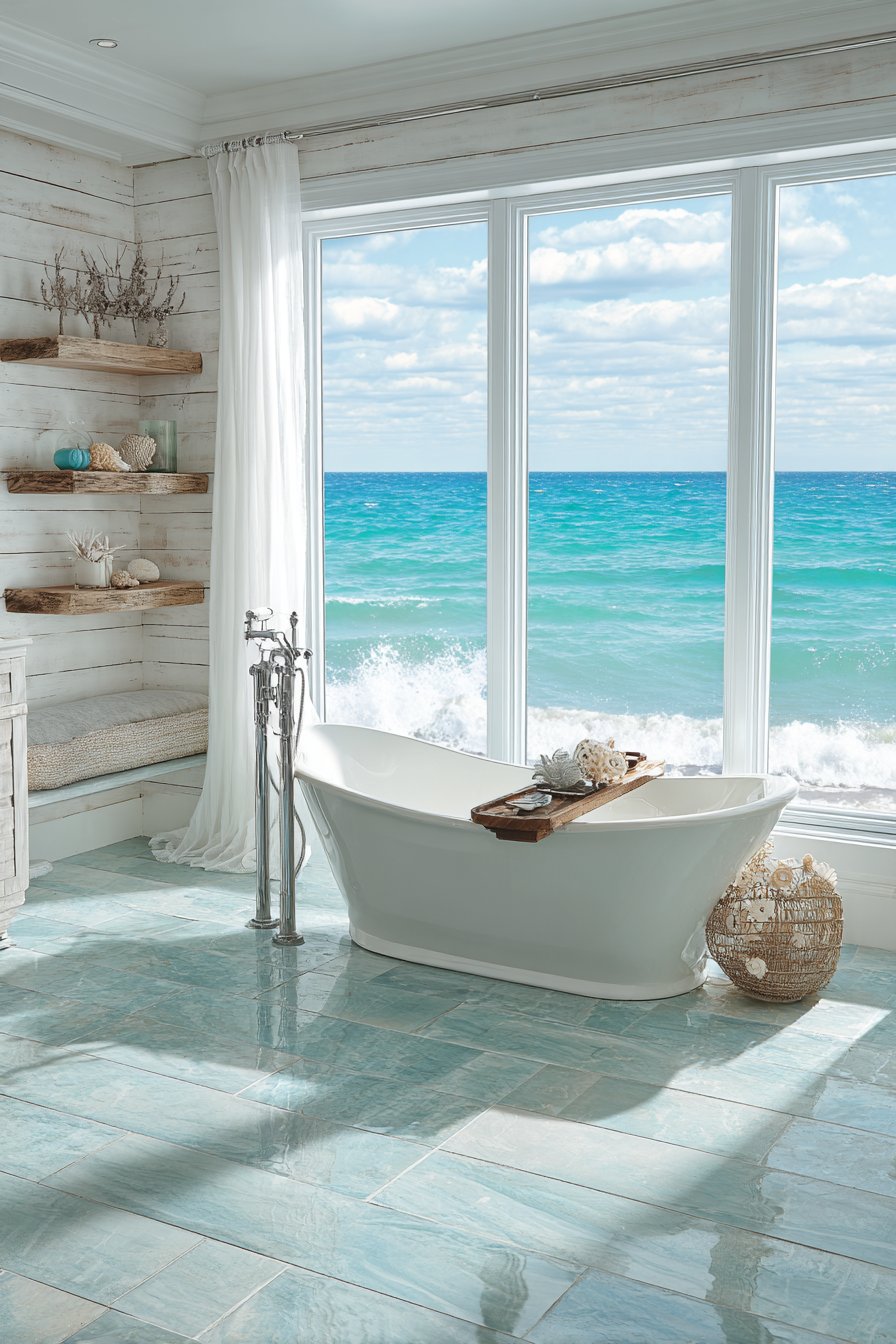
The beauty of seaside bathroom design lies in its remarkable versatility and timeless appeal. From the crisp, nautical charm of New England coastal cottages to the sophisticated elegance of modern seaside retreats, coastal-inspired bathrooms embrace a spectrum of styles that cater to diverse tastes and architectural contexts. These designs celebrate natural materials, ocean-inspired color palettes, and thoughtful details that echo the rhythms of coastal life—weathered wood reminiscent of driftwood, tiles that capture the shimmer of sunlight on water, and accessories that celebrate maritime heritage. The fusion of form and function in seaside bathroom design creates spaces that are not only visually stunning but also deeply personal, inviting homeowners to craft their own interpretation of coastal living.
In this comprehensive guide, we’ll explore twenty-one distinct seaside bathroom ideas that showcase the breadth and depth of coastal design possibilities. Each concept demonstrates how strategic material selection, color theory, spatial composition, and attention to authentic details can transform an ordinary bathroom into an extraordinary coastal haven. From compact powder rooms to luxurious master bathrooms, these designs prove that seaside style adapts beautifully to spaces of all sizes and budgets, offering practical inspiration for anyone seeking to bring the tranquil beauty of the coast into their daily life.
1. Classic New England Coastal Cottage Bathroom
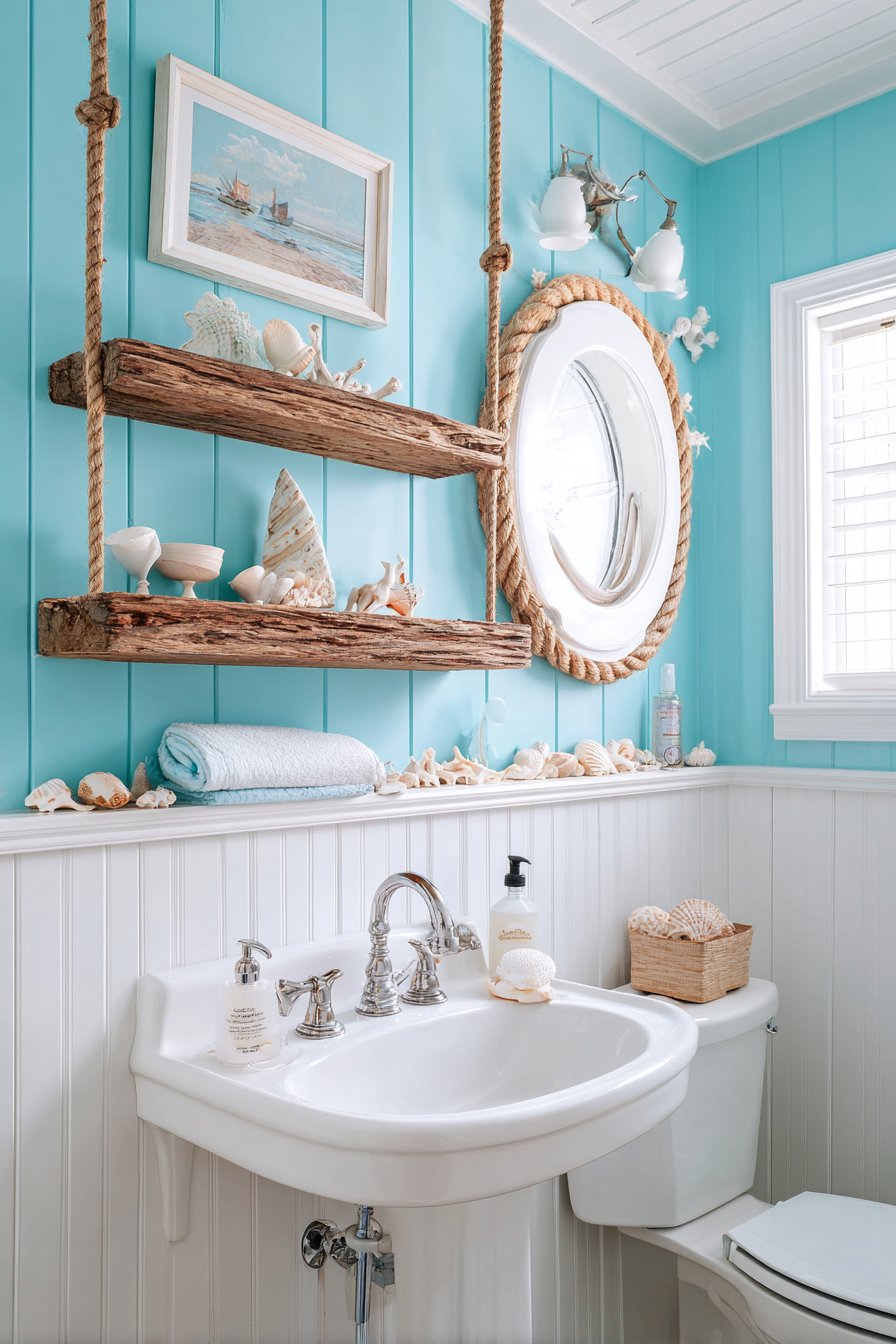
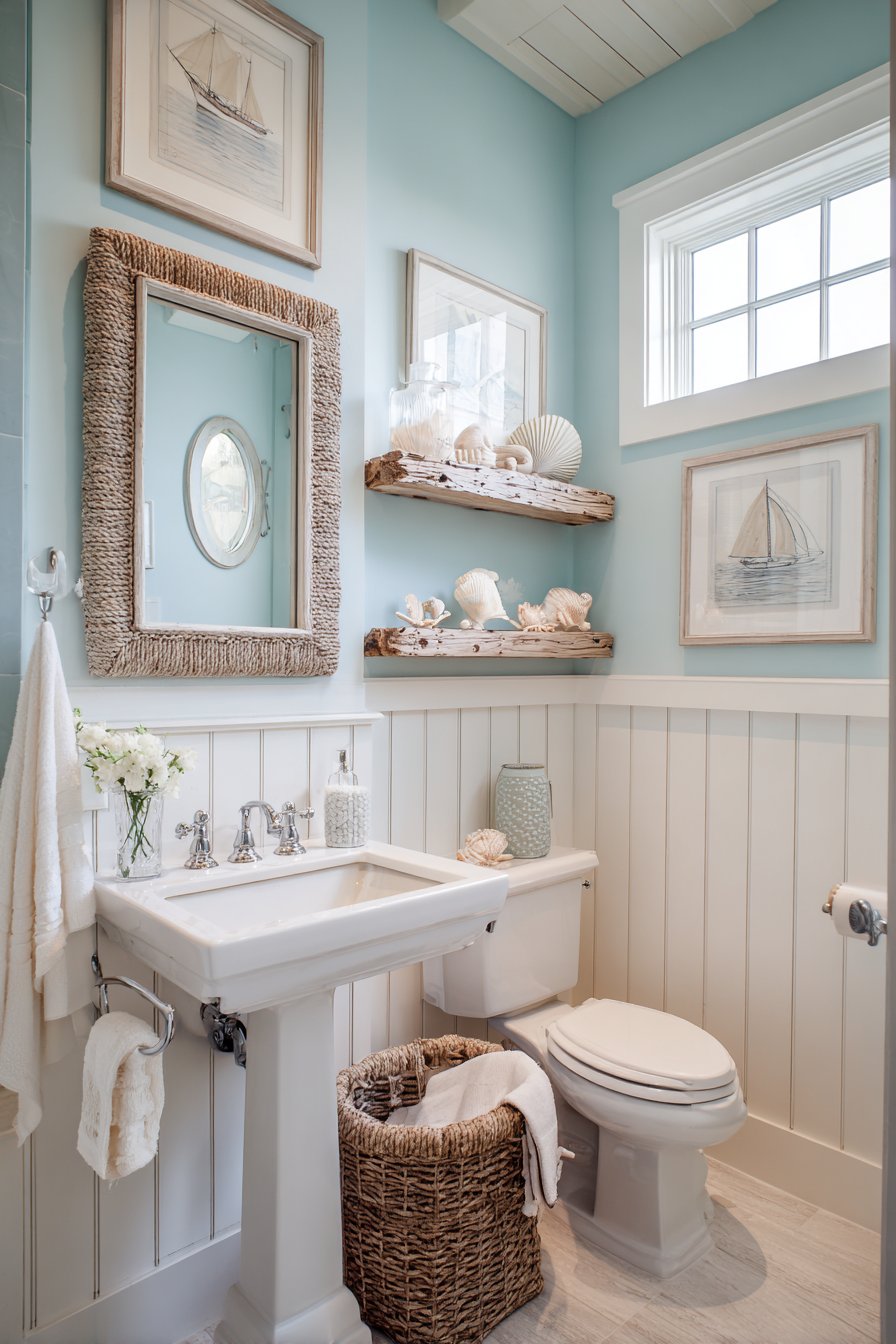
Step into a bathroom that captures the quintessential charm of seaside New England, where crisp white beadboard wainscoting meets soft aqua blue walls in a timeless coastal composition. This design exemplifies the marriage of traditional craftsmanship and coastal aesthetics, featuring a vintage-style pedestal sink with polished nickel fixtures that serves as both a functional centerpiece and a nod to classic bathroom design. The authentic nautical character emerges through carefully curated details: a natural rope mirror frame that adds organic texture, maritime-themed artwork that tells coastal stories, and a small porthole-style window that filters gentle sunlight into the space.
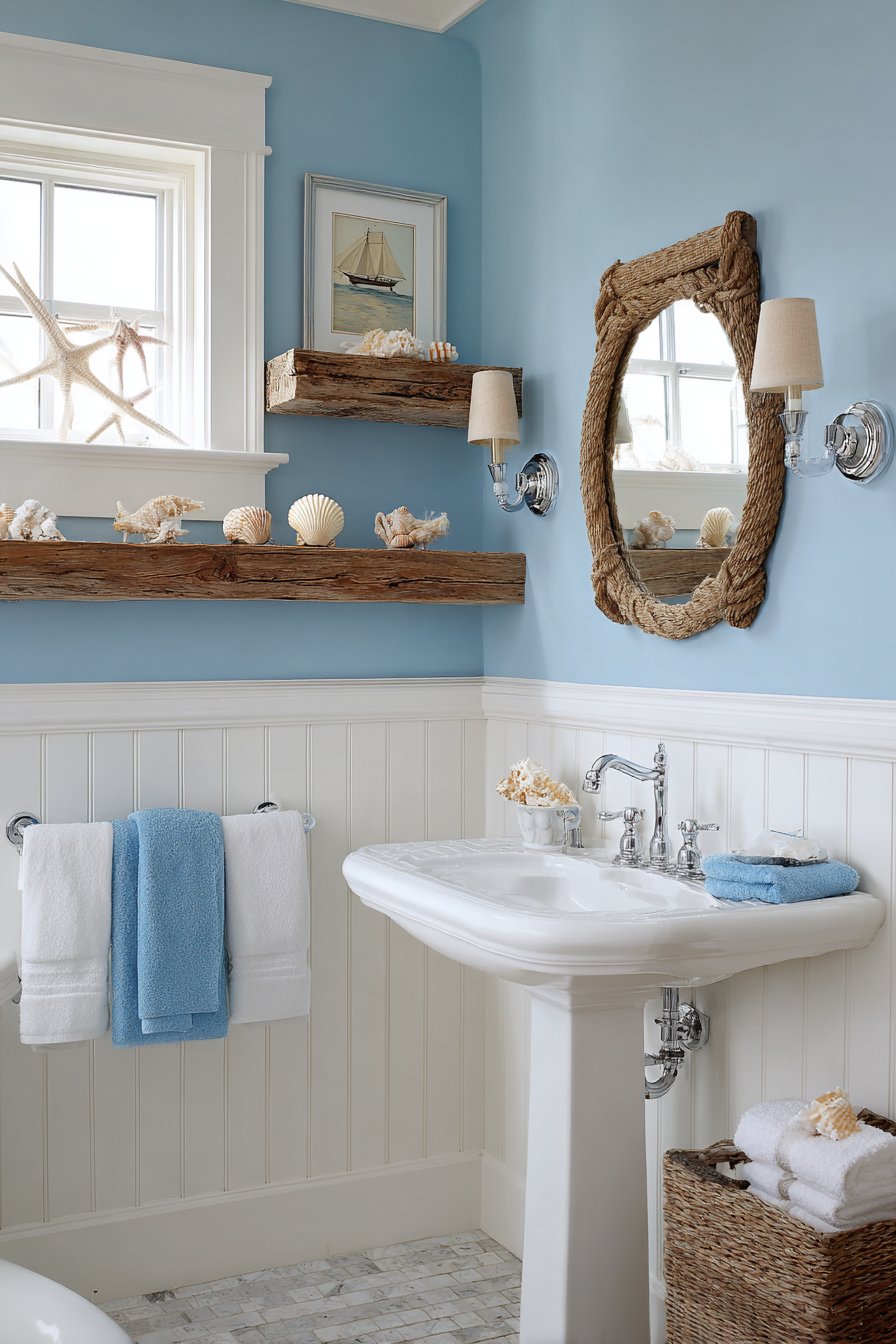
The genius of this design lies in its masterful use of vertical space and layered textures. Floating driftwood shelves display seashell collections and coastal accessories, their weathered appearance providing visual interest against the clean backdrop of white and aqua. The beadboard wainscoting adds dimensional texture while protecting walls from moisture—a practical consideration that enhances rather than compromises aesthetic appeal. Natural light plays a crucial role, streaming through the porthole window to create shifting patterns that evoke the play of sunlight on water.
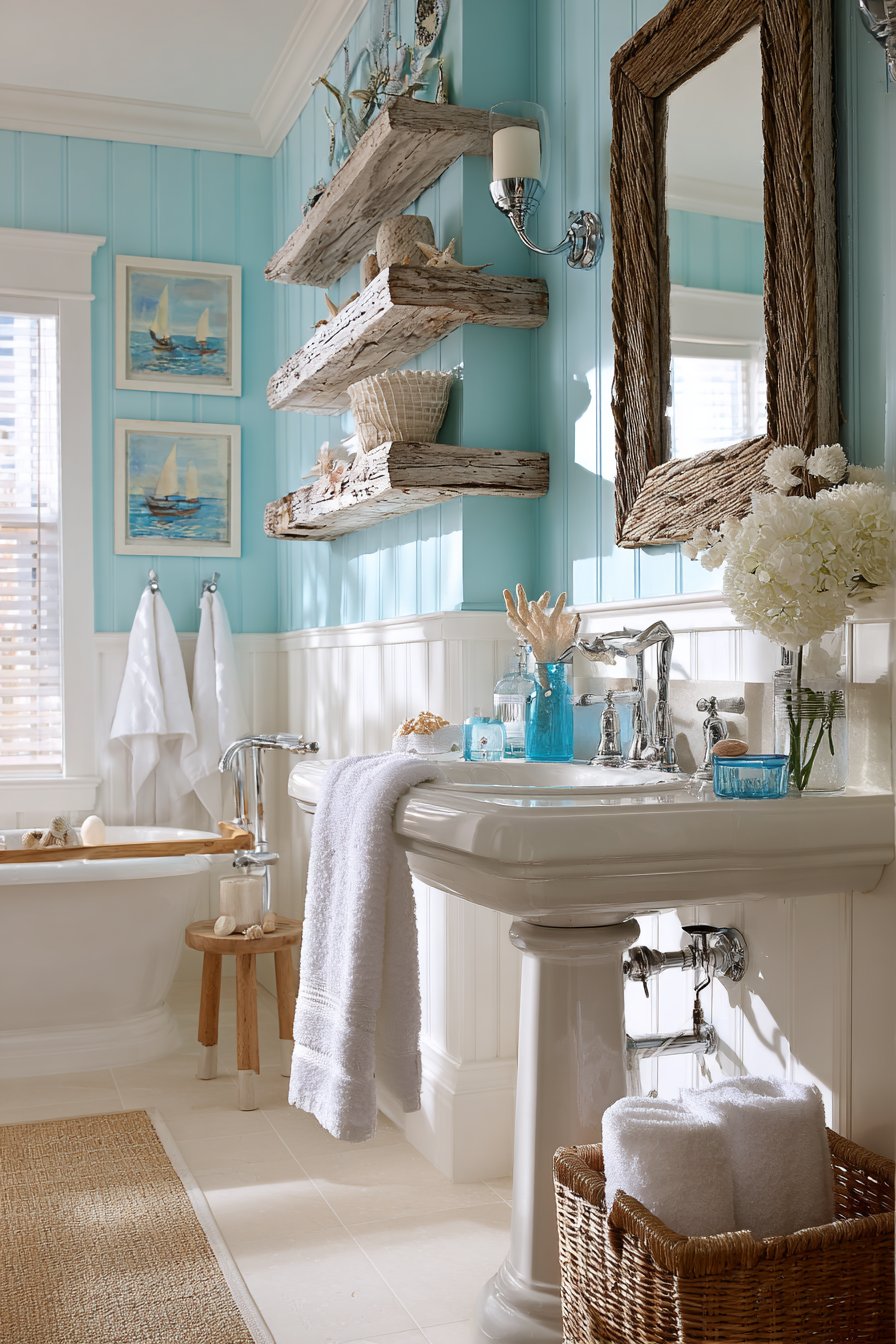
This bathroom design proves that coastal style need not be elaborate to be effective. The restrained color palette of white and soft aqua creates a sense of spaciousness and serenity, while the vintage pedestal sink keeps the floor plan open and accessible. The polished nickel fixtures provide just enough gleam to suggest the shimmer of sea spray without overwhelming the space’s inherent simplicity. Every element serves a purpose, from the rope mirror frame that introduces natural fiber texture to the maritime artwork that personalizes the space with coastal narratives.
Key Design Tips:
- Install beadboard wainscoting at chair rail height to add architectural interest and protect walls from moisture
- Choose a pedestal sink to maximize floor space and enhance the vintage coastal aesthetic
- Use natural rope as decorative accent material for mirror frames, towel holders, or shelf edging
- Incorporate a porthole-style window for authentic nautical character and controlled natural lighting
- Display genuine seashells collected from beach visits to personalize the space with meaningful coastal mementos
- Select polished nickel fixtures for their durability and ability to complement both cool and warm coastal tones
2. Modern Spa-Inspired Ocean Sanctuary
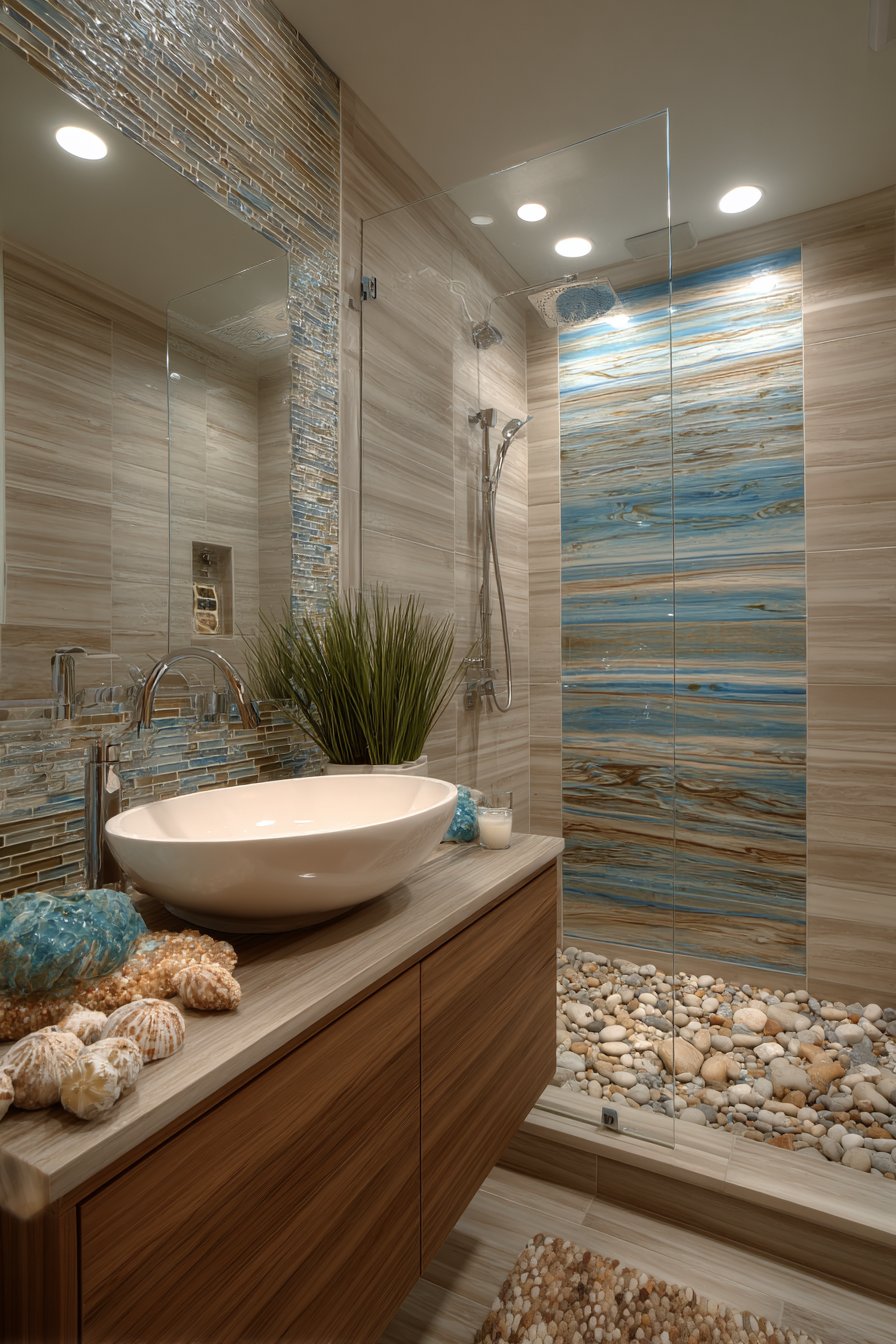
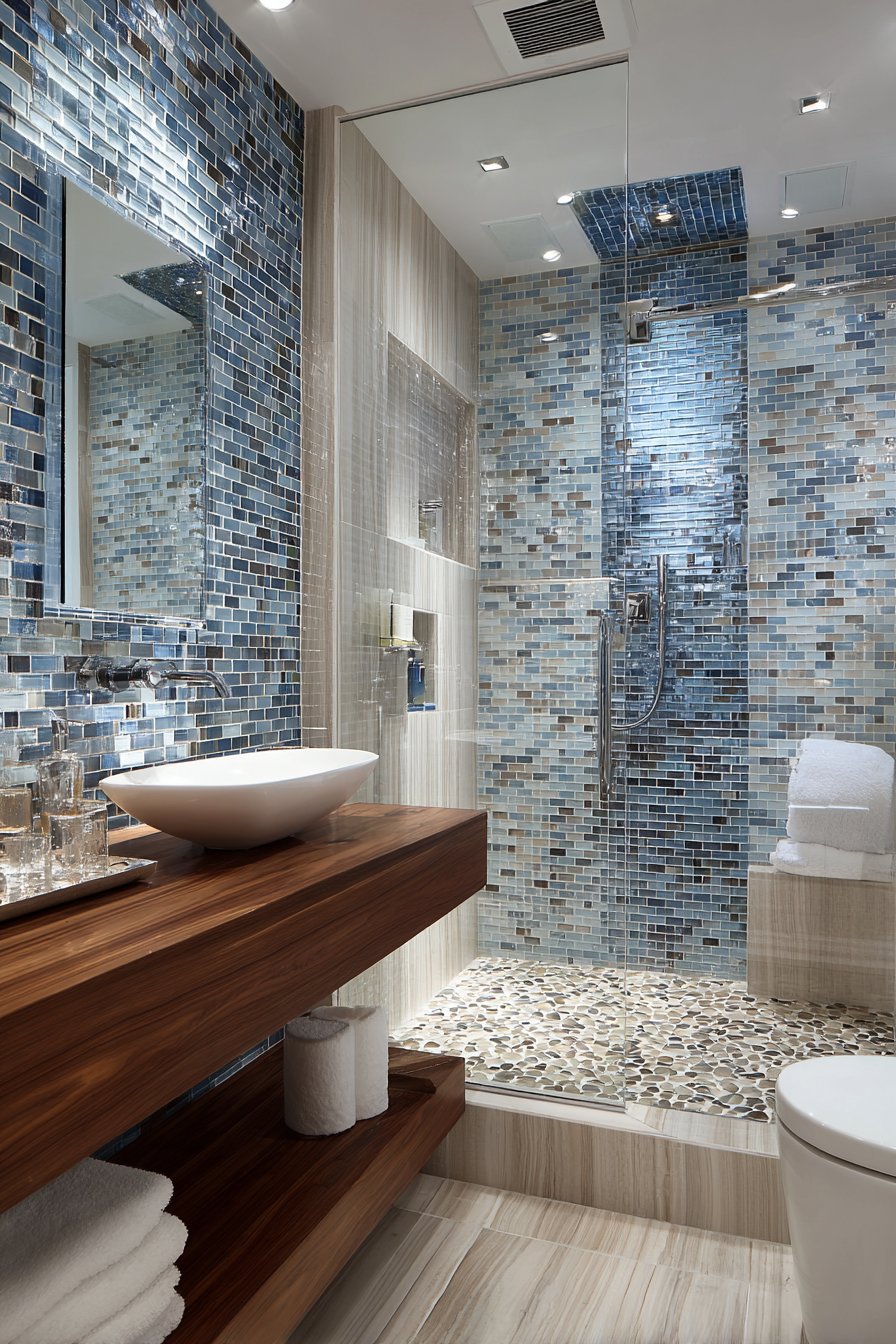
This contemporary interpretation of seaside bathroom design elevates coastal style to sophisticated new heights through the strategic use of large-format porcelain tiles in sandy beige tones, complemented by a stunning glass mosaic accent wall that graduates through ocean blue shades. The walk-in shower becomes the room’s focal point, featuring a luxurious rainfall showerhead that mimics the sensation of tropical downpours and pebble tile flooring that brings the tactile experience of walking on beach stones indoors. A floating teak vanity with vessel sink introduces natural warmth, its rich wood grain providing organic contrast to the cool, water-inspired palette.
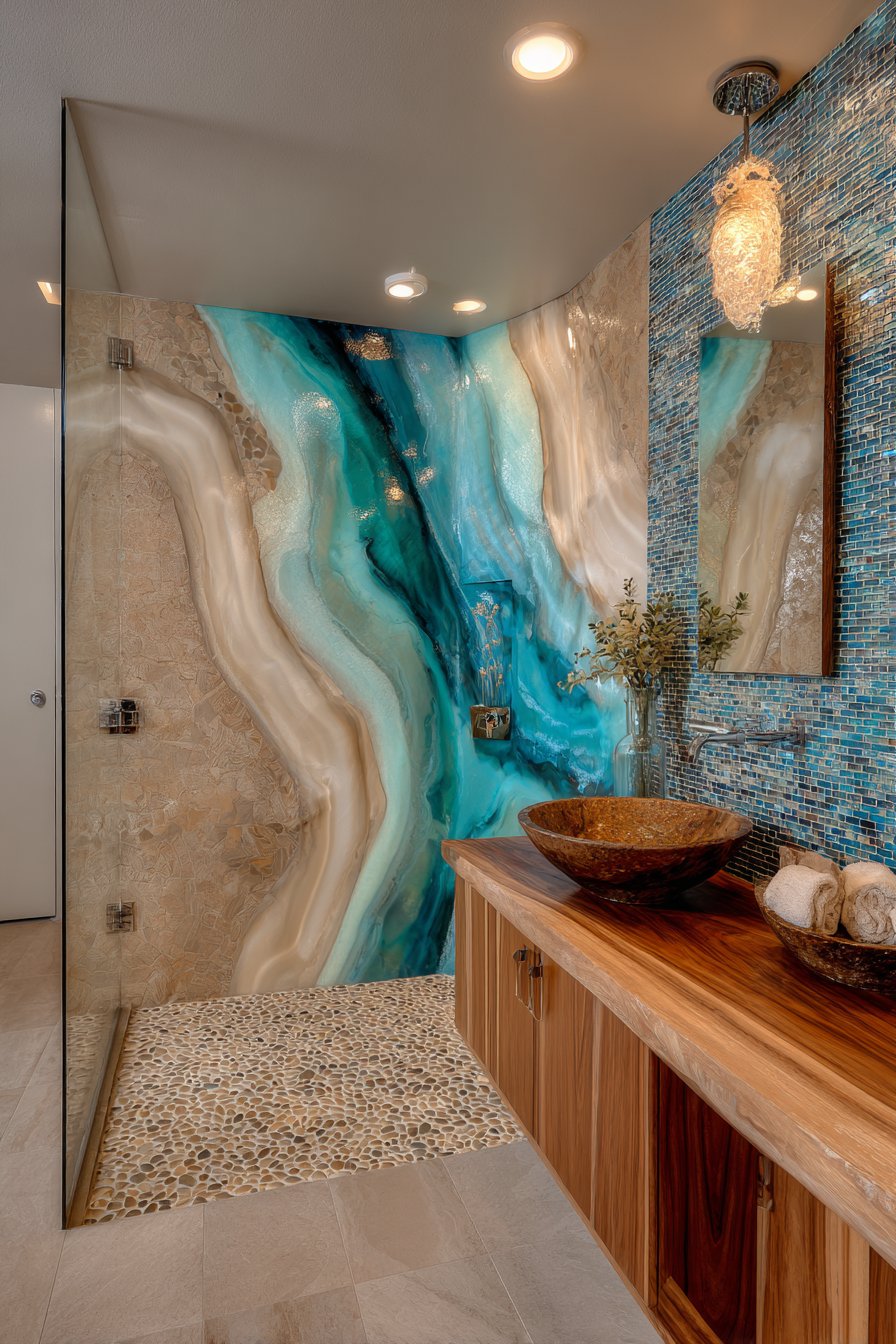
The layered approach to texture and material in this bathroom creates a multi-sensory experience that engages touch, sight, and even sound. The smooth porcelain tiles offer effortless maintenance while their large format minimizes grout lines for a seamless, contemporary appearance. Against this neutral foundation, the glass mosaic accent wall becomes a stunning focal point, its gradient of blues capturing the depth and movement of ocean waves. The pebble tile shower floor provides gentle massage underfoot while ensuring superior slip resistance—a perfect example of how thoughtful design harmonizes safety with aesthetics.
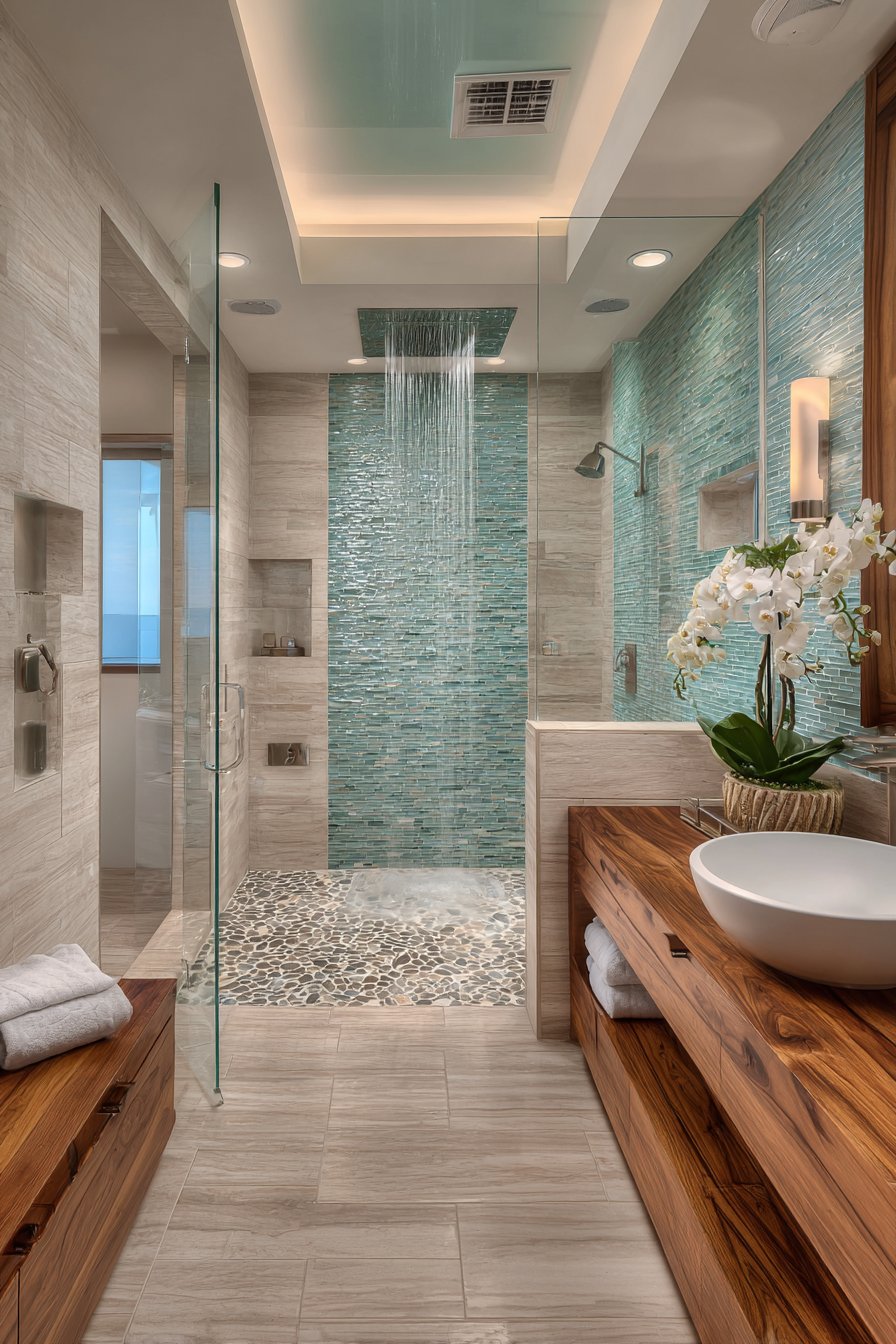
The floating teak vanity exemplifies the integration of sustainable materials in modern coastal design. Teak’s natural oils make it exceptionally water-resistant, while its warm honey tones prevent the blue and beige palette from feeling cold or sterile. The vessel sink adds sculptural interest, its elevated placement creating a more ergonomic washing experience while providing space beneath for open storage or decorative display. This bathroom demonstrates how contemporary design principles—clean lines, minimal ornamentation, emphasis on materials—can be applied to coastal aesthetics to create spaces that feel both current and timelessly connected to the sea.
Key Design Tips:
- Use large-format porcelain tiles to create a seamless, modern foundation with minimal grout maintenance
- Install a glass mosaic accent wall in graduated ocean blues to serve as a dramatic focal point
- Choose a rainfall showerhead for a luxurious, spa-like shower experience
- Incorporate pebble tile flooring in the shower for natural texture and superior slip resistance
- Select a floating teak vanity to introduce sustainable, water-resistant natural wood while maintaining a modern aesthetic
- Pair a vessel sink with the floating vanity to create visual interest and maximize counter space
- Ensure proper ventilation to protect natural wood elements in humid bathroom environments
3. Efficient Coastal Storage Solutions
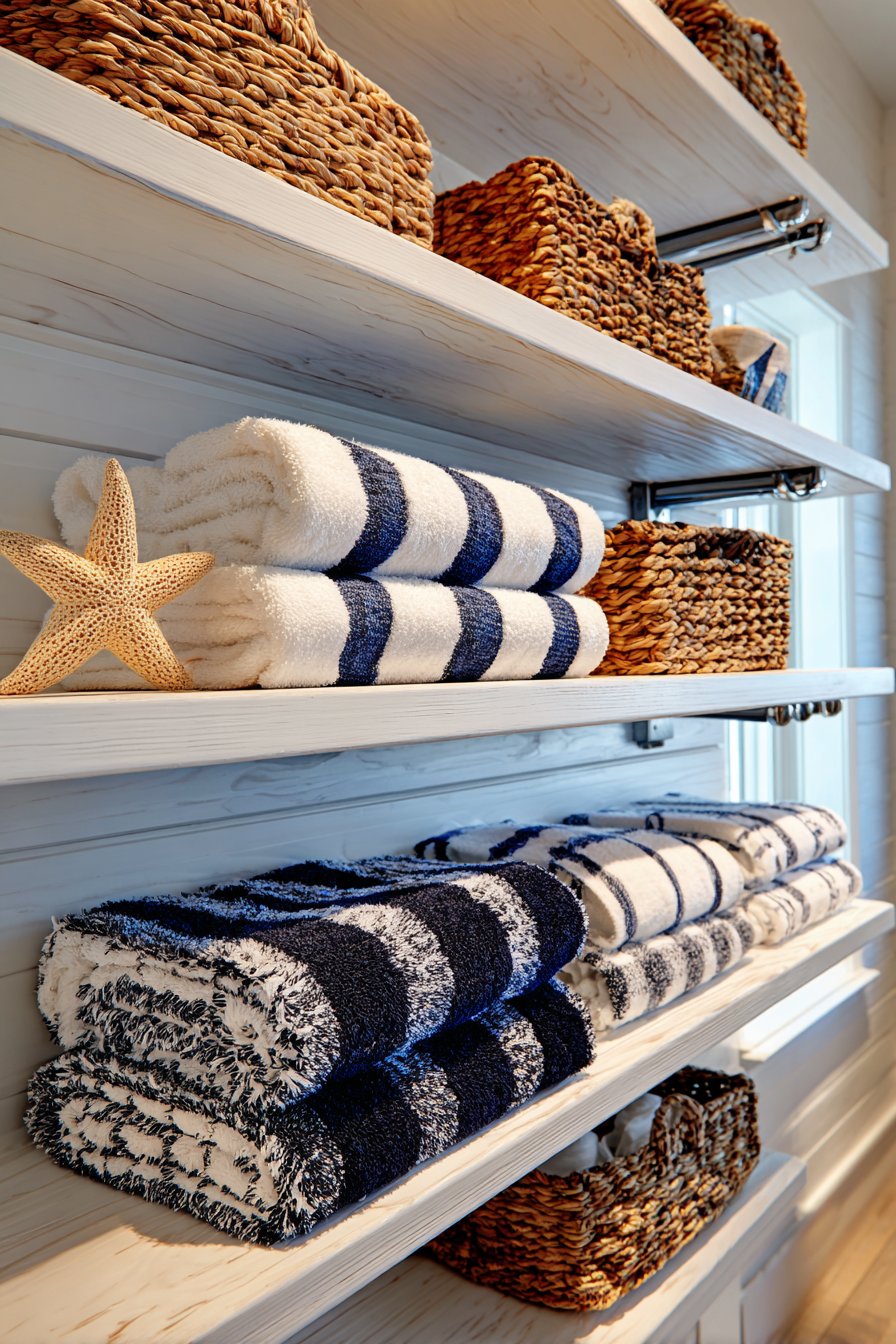
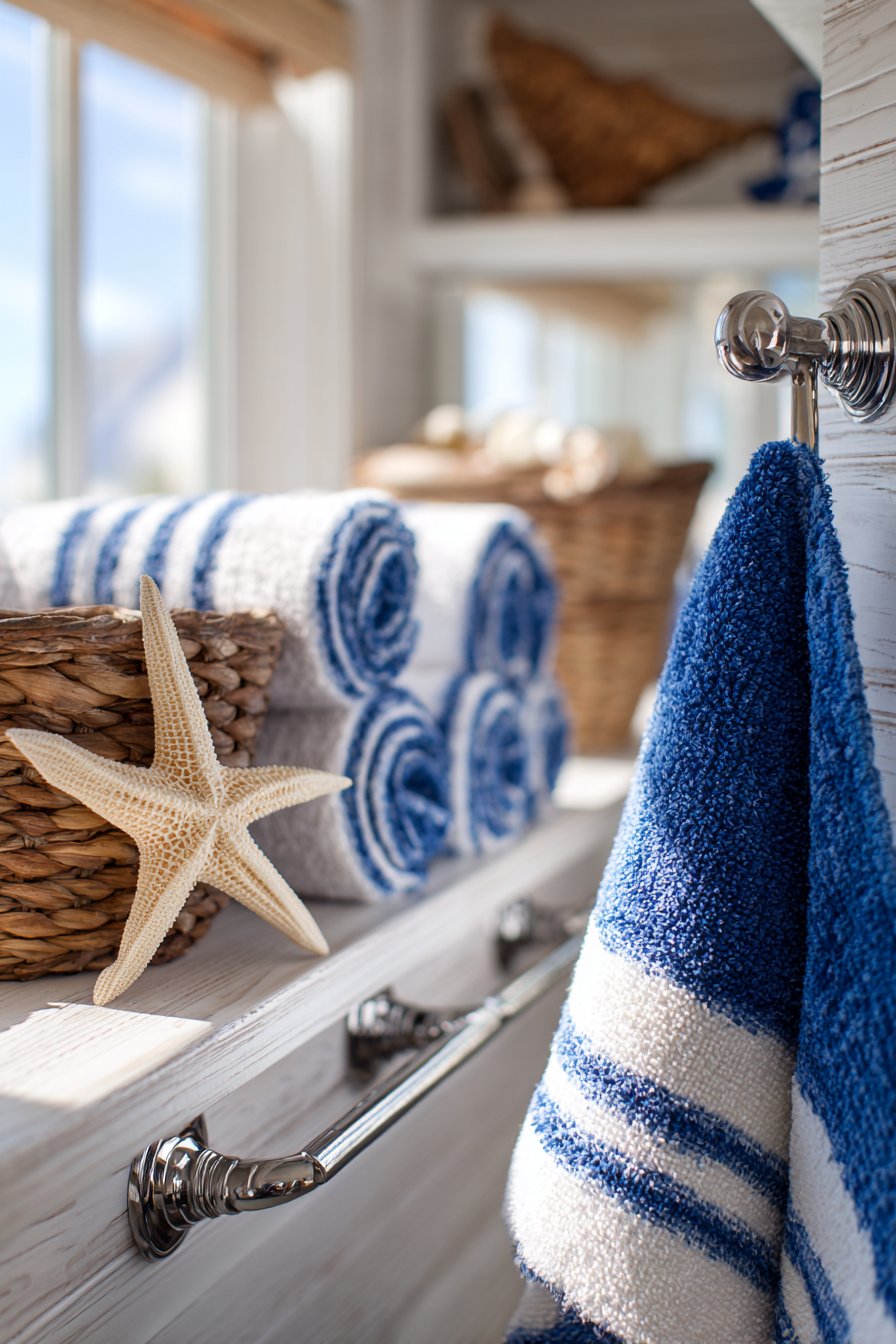
Practicality meets coastal charm in this storage-focused bathroom design that demonstrates how organizational needs can be addressed without sacrificing aesthetic appeal. Built-in recessed shelving with painted shiplap backing in weathered white creates both functional storage and architectural interest, transforming what could be dead wall space into an attractive display area. The open shelves showcase rolled towels in classic navy and white stripes, their crisp patterns echoing nautical tradition, while woven seagrass baskets contain smaller items and introduce natural texture. Decorative starfish and other coastal accessories punctuate the display, preventing the storage from feeling purely utilitarian.
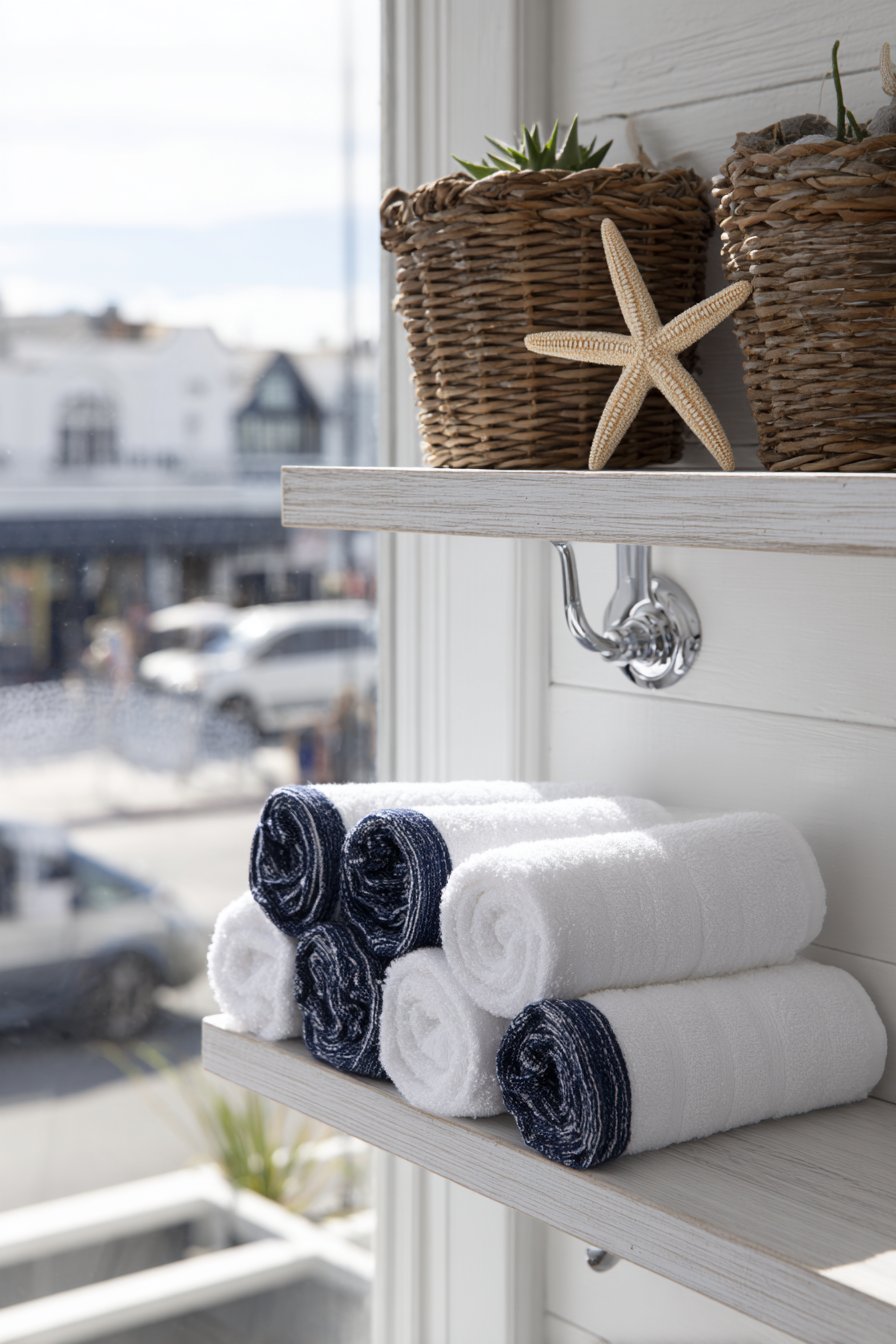
The weathered white shiplap backing adds depth and character to the recessed shelving, its horizontal lines drawing the eye along the wall and making the space feel wider. This detail exemplifies how architectural elements can serve multiple purposes—the shiplap provides visual interest, reinforces the coastal theme, and creates a finished backdrop for stored items. Chrome towel bars and hooks offer practical hanging solutions while their polished finish adds subtle reflective elements that enhance the room’s brightness. The combination of open and closed storage (baskets) provides flexibility for displaying attractive items while concealing necessities.
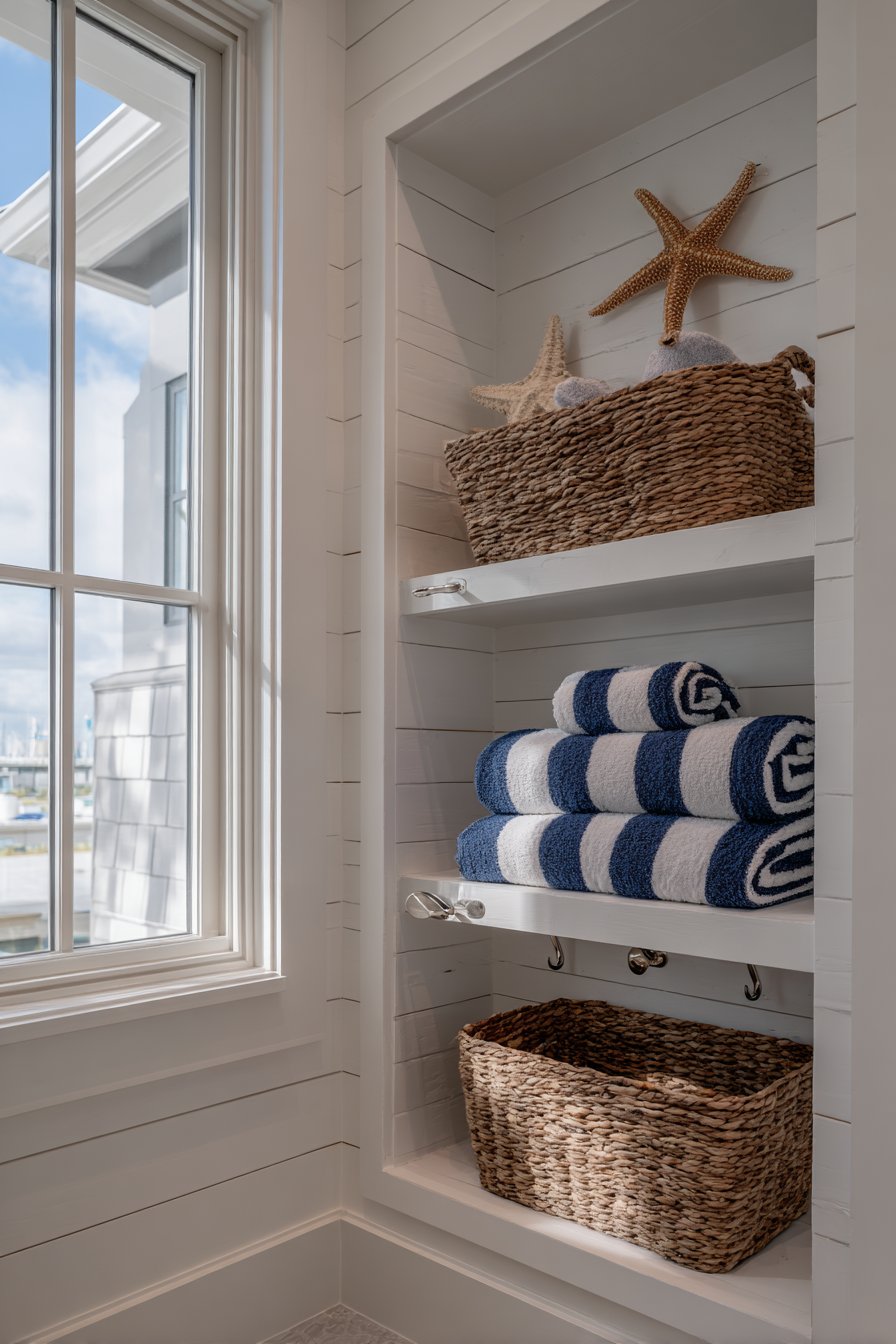
Natural daylight from a nearby window illuminates this carefully curated storage display, highlighting the interplay of textures between smooth towels, woven baskets, and the linear pattern of shiplap. This design proves that storage solutions need not be hidden behind closed doors to maintain a polished appearance. When storage items are selected with care and displayed thoughtfully, they become part of the room’s decorative scheme rather than visual clutter. The navy and white color scheme creates cohesion, while the varying textures—smooth chrome, woven seagrass, plush towels, weathered wood—add dimensional interest.
Key Design Tips:
- Create recessed shelving between wall studs to maximize storage without protruding into the room
- Line recessed shelving with painted shiplap for added texture and coastal character
- Roll towels vertically for a spa-like presentation that maximizes shelf space
- Choose navy and white striped towels for classic nautical appeal that never goes out of style
- Use woven seagrass baskets to contain smaller items while adding natural texture
- Install chrome towel bars and hooks for their durability, ease of cleaning, and reflective properties
- Limit decorative accessories to a few meaningful pieces to avoid cluttering functional storage areas
4. Romantic Vintage Bathing Retreat
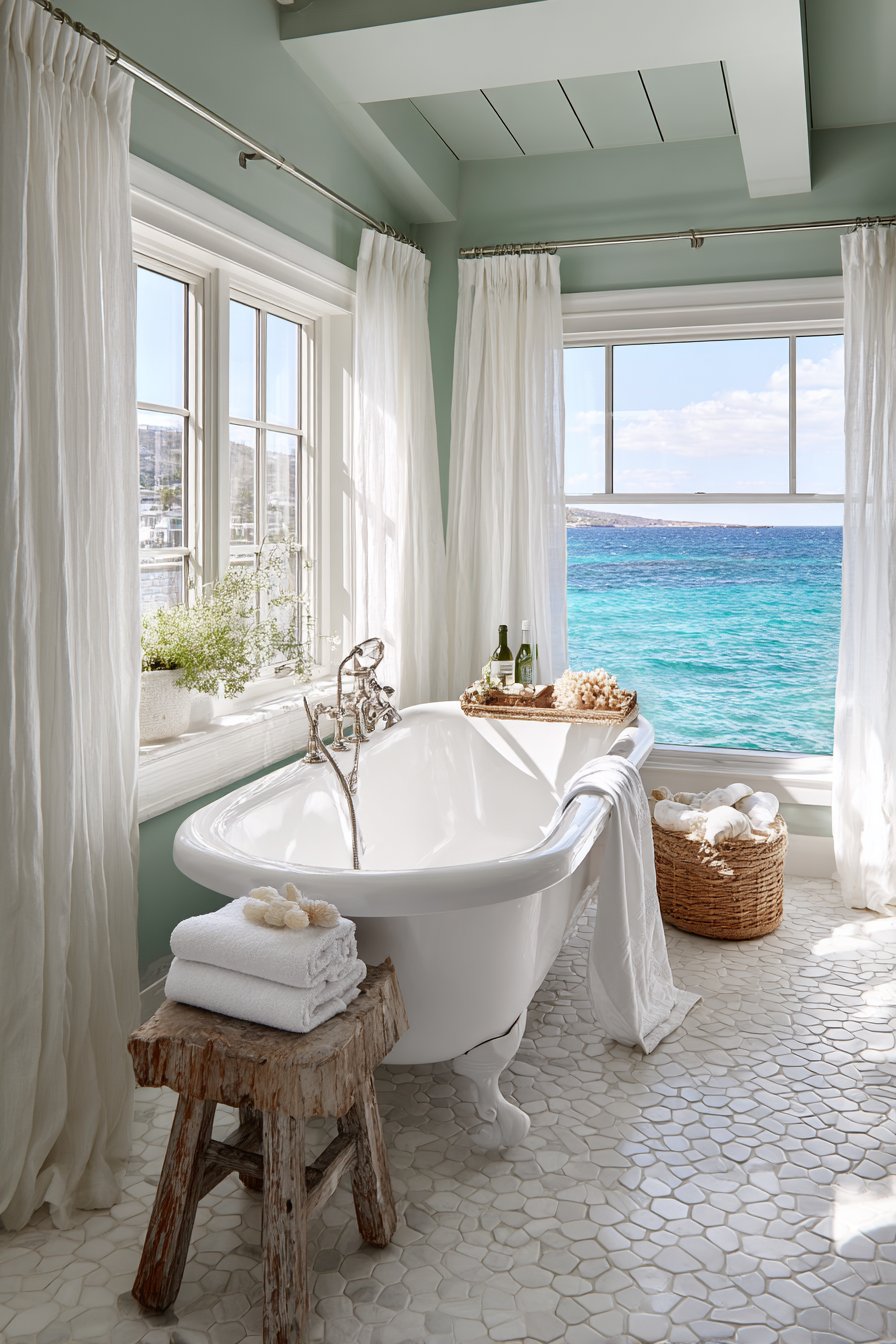
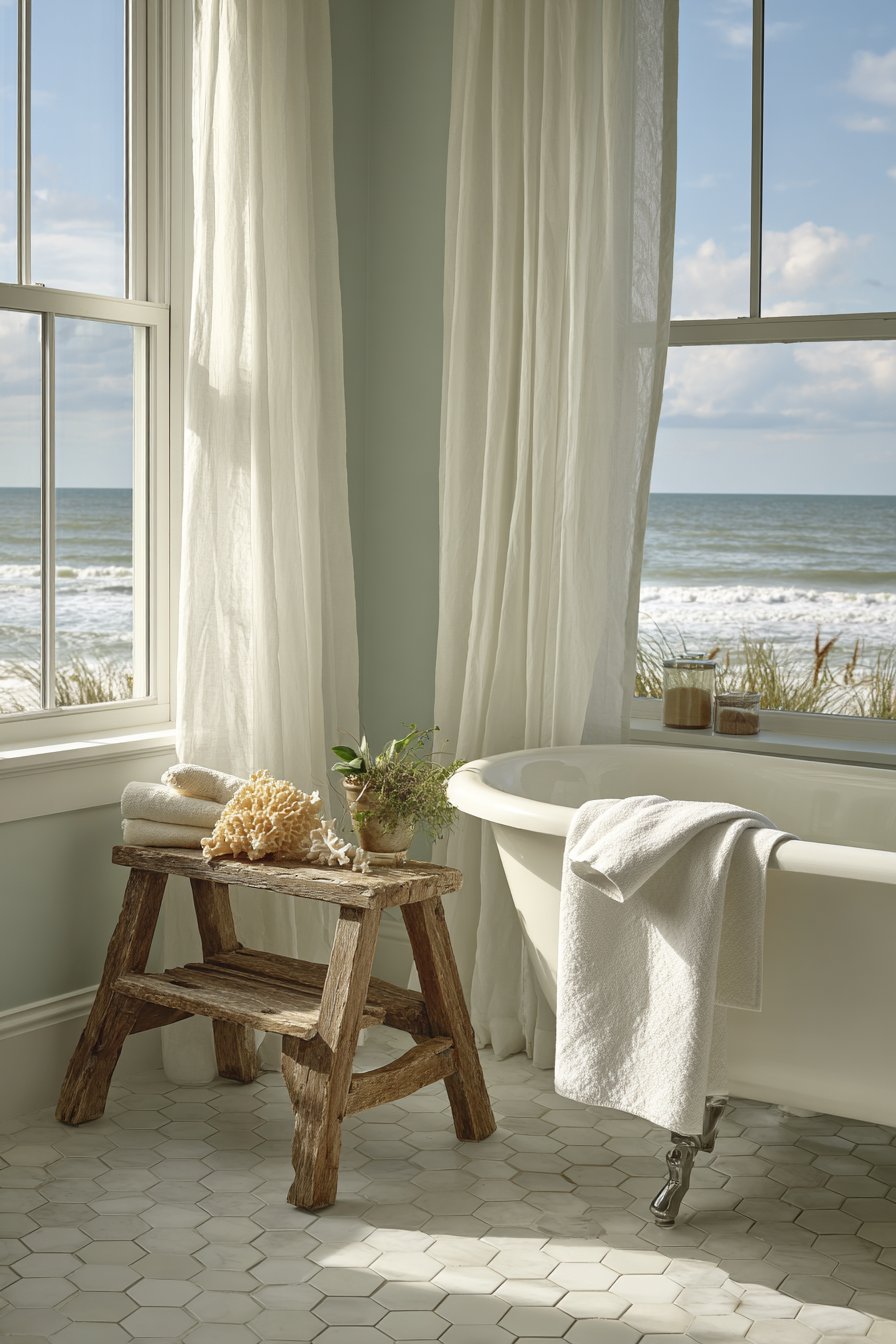
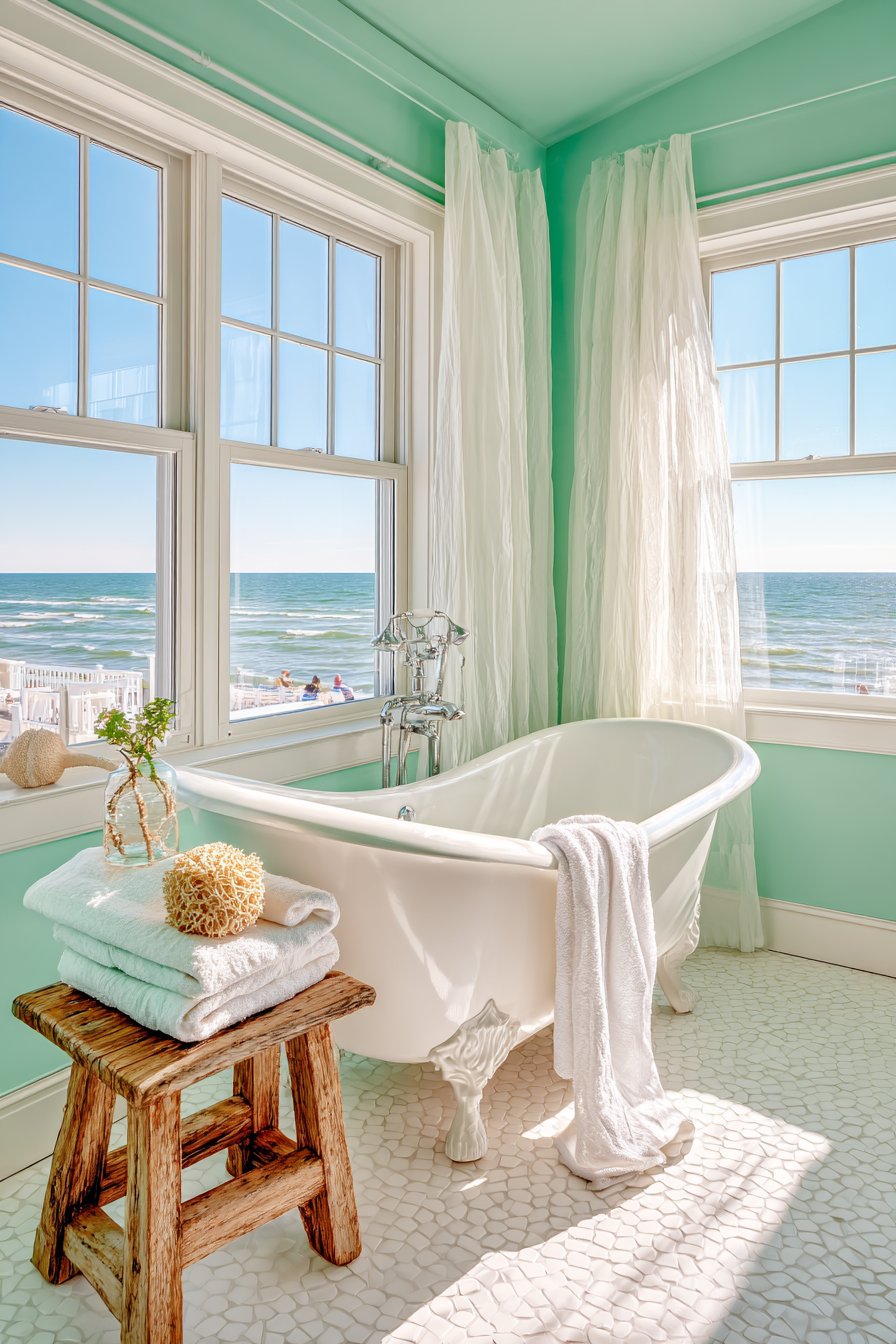
Luxury and nostalgia converge in this romantic seaside bathroom where a pristine clawfoot bathtub takes center stage, positioned on classic white hexagonal floor tiles near expansive windows that frame ocean or garden views. Sheer linen curtains diffuse natural light while preserving privacy, their gentle movement in the breeze adding kinetic beauty to the static elements of the room. A weathered wood stool serves both functional and decorative purposes, holding plush white towels and natural sea sponges that invite indulgent bathing rituals. Walls painted in soft seafoam green create a serene backdrop that evokes the calm of shallow coastal waters.
The clawfoot bathtub represents the perfect marriage of vintage charm and modern comfort, its sculptural form serving as functional art. The white hexagonal floor tiles provide a classic foundation that has graced bathrooms for over a century, their geometric pattern adding visual interest without overwhelming the space. The positioning near windows transforms bathing into a contemplative experience, connecting the bather with natural light cycles and outdoor views. During golden hour, as referenced in the original design concept, warm sunlight floods the space, enhancing the seafoam green walls and creating an almost ethereal atmosphere.
This design celebrates the ritual of bathing as self-care rather than mere hygiene. The weathered wood stool introduces organic imperfection—subtle variations in grain and tone that prevent the space from feeling too precious or staged. Natural sea sponges and plush white towels speak to sensory indulgence, their textures inviting touch. The soft seafoam green walls provide psychological benefits beyond aesthetics; this color has been shown to reduce stress and promote tranquility, making it ideal for a space dedicated to relaxation and restoration.
Key Design Tips:
- Position a clawfoot tub near windows to maximize natural light and create connection with outdoor views
- Use hexagonal floor tiles for timeless appeal and subtle geometric interest
- Paint walls in soft seafoam green to evoke coastal waters and create a calming environment
- Hang sheer linen curtains for privacy that doesn’t block natural light
- Include a weathered wood stool for authentic vintage character and practical towel storage
- Choose natural sea sponges over synthetic alternatives for sustainable luxury
- Install the tub with enough clearance around all sides for easy cleaning and maintenance
5. Space-Maximizing Compact Coastal Design
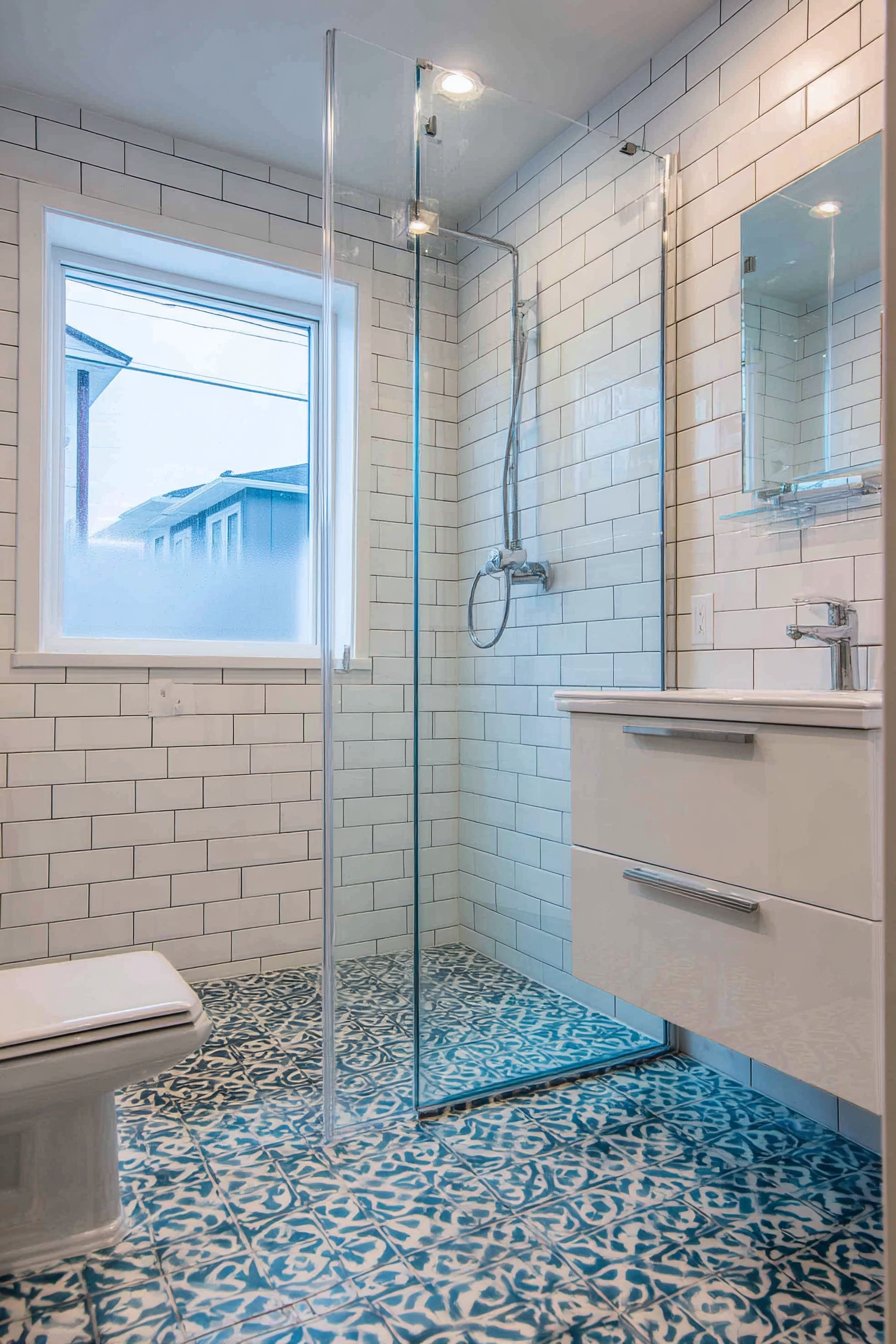
Small bathrooms present unique design challenges, but this compact seaside concept proves that limited square footage need not limit style or functionality. White subway tiles with light blue grout create subtle nautical reference while establishing a bright, clean foundation that makes the space feel larger than its actual dimensions. A corner shower with clear glass enclosure maximizes usable floor space while the transparent glass prevents visual barriers that would make the room feel cramped. The shower floor features blue and white geometric tiles that add pattern and personality without overwhelming the compact footprint.
The wall-mounted vanity in weathered gray finish serves as the room’s anchor, its floating design creating the illusion of more floor space while providing essential storage. Chrome hardware maintains the coastal theme through its reflective qualities, bouncing light around the room and creating subtle sparkle that suggests sunlight on water. The weathered gray finish introduces depth and character without the heaviness that darker colors might bring to a small space. Natural lighting through a frosted glass window provides privacy while flooding the room with diffused daylight that enhances the sense of openness.
This design demonstrates sophisticated spatial planning where every element serves multiple purposes. The subway tiles offer durability and timeless style while their white surface maximizes light reflection. The light blue grout introduces color in a way that’s permanent and maintenance-free, unlike paint that might require frequent touch-ups in humid conditions. The clear glass shower enclosure keeps sight lines unobstructed, a critical strategy in small bathroom design. The geometric floor tiles in the shower create a designated zone that adds visual interest without requiring additional square footage.
Key Design Tips:
- Install a corner shower to maximize floor space in compact bathrooms
- Use clear glass shower enclosures to maintain sight lines and prevent visual fragmentation
- Choose white subway tiles to create a bright, timeless foundation
- Incorporate color through grout selection for permanent, maintenance-free coastal hues
- Select a wall-mounted vanity to create the illusion of more floor space
- Add pattern through shower floor tiles rather than wall tiles to avoid overwhelming small spaces
- Install frosted glass windows for privacy without sacrificing natural light
- Choose chrome fixtures for their reflective properties that enhance brightness in small spaces
6. Industrial-Coastal Fusion Bathroom
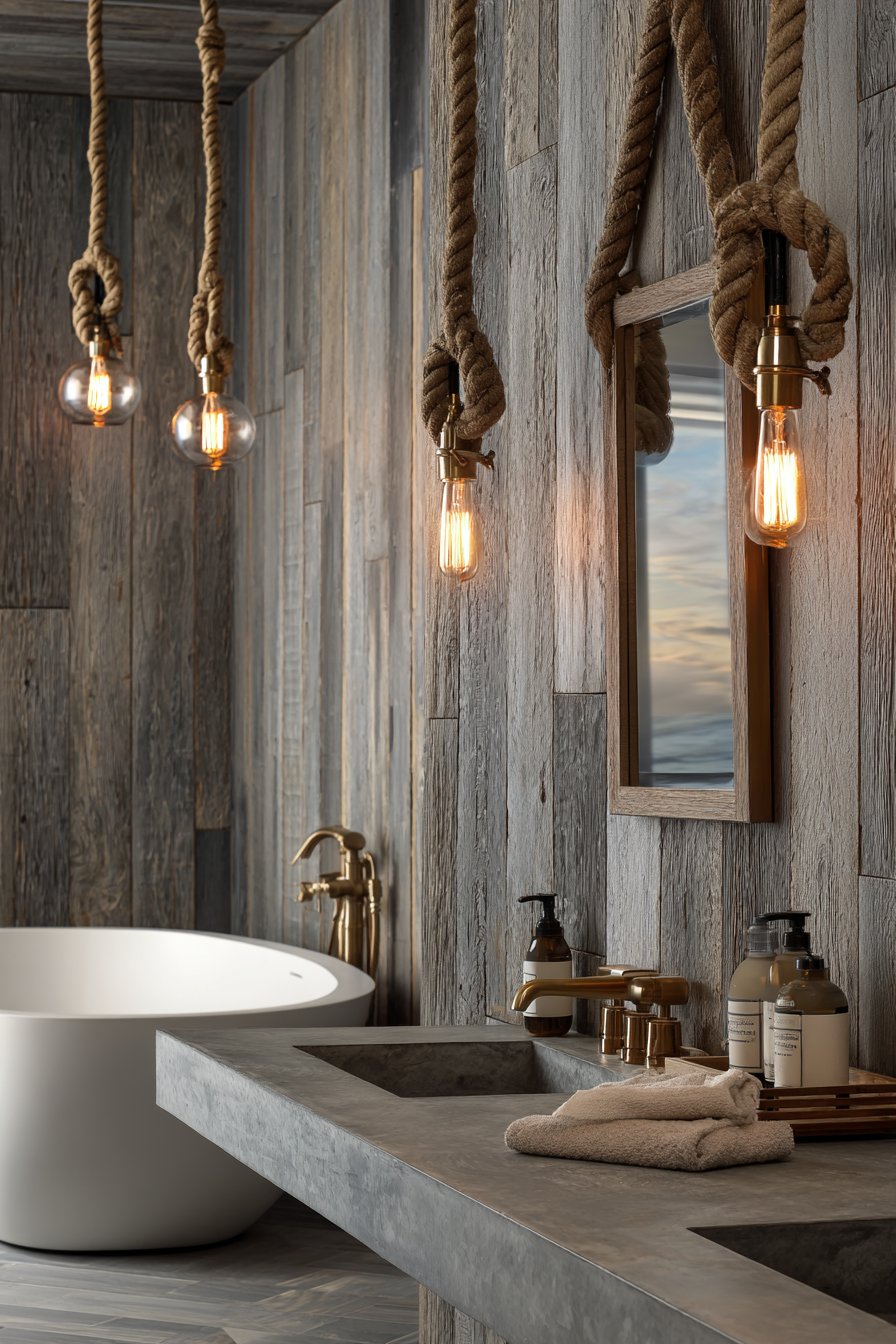
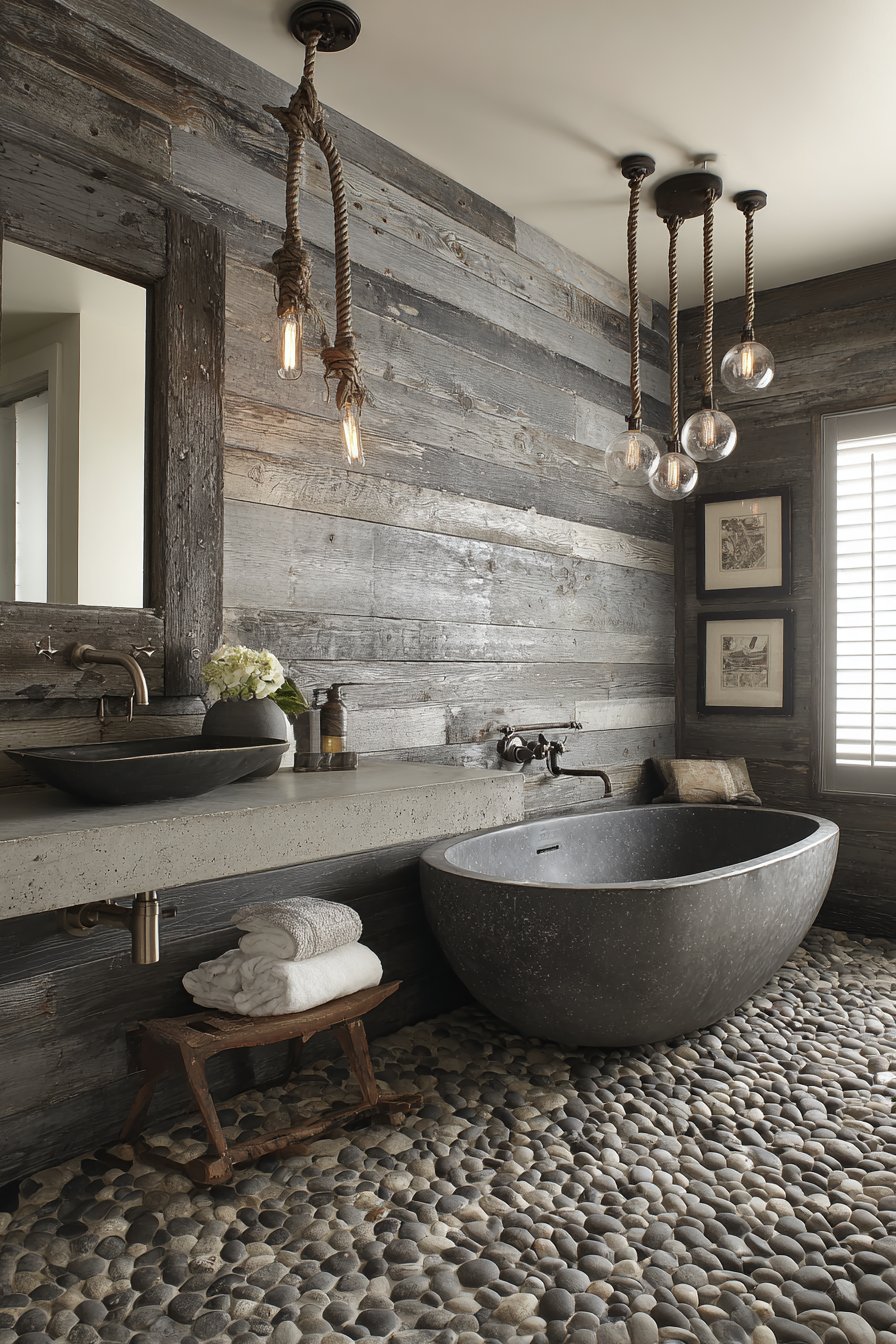
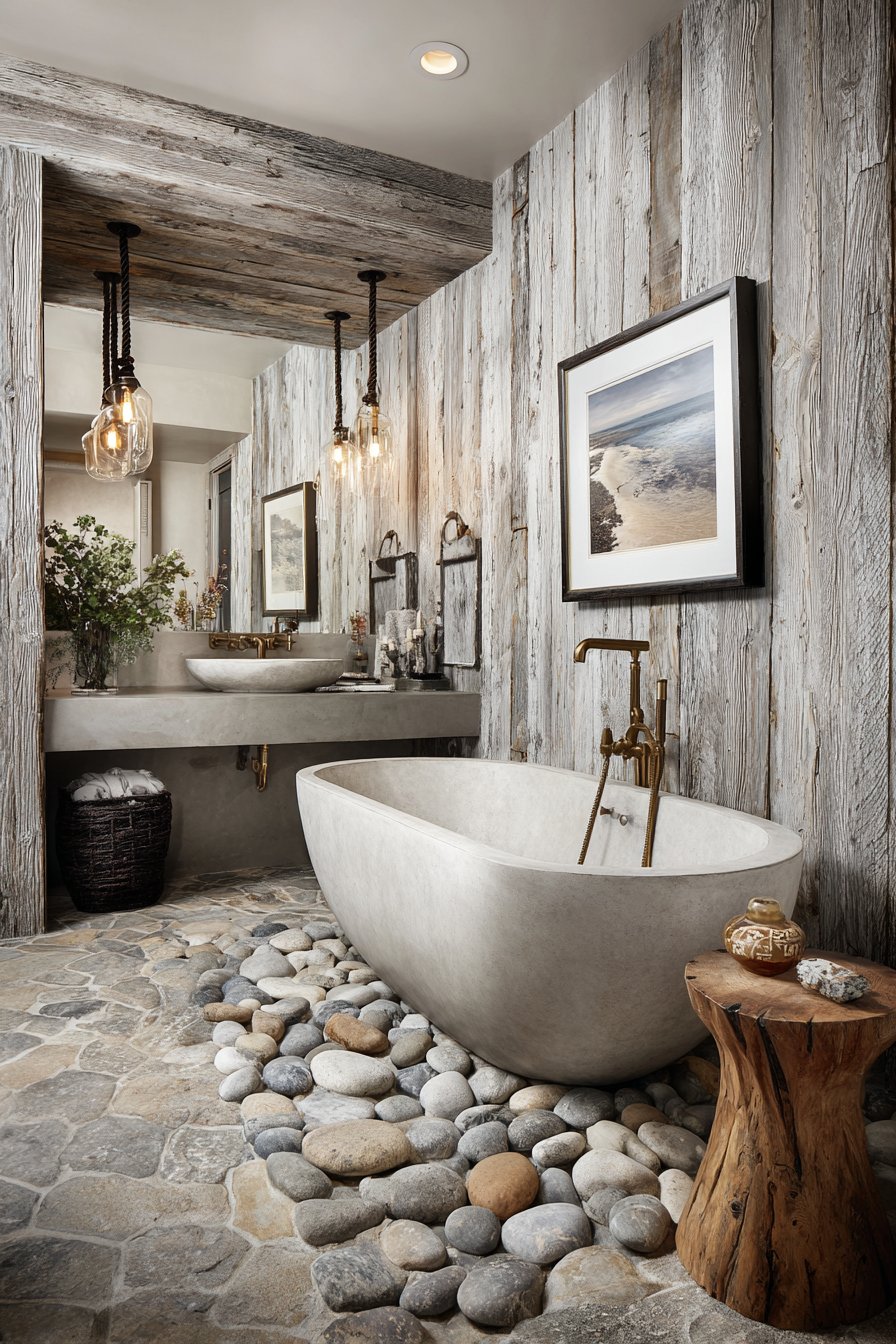
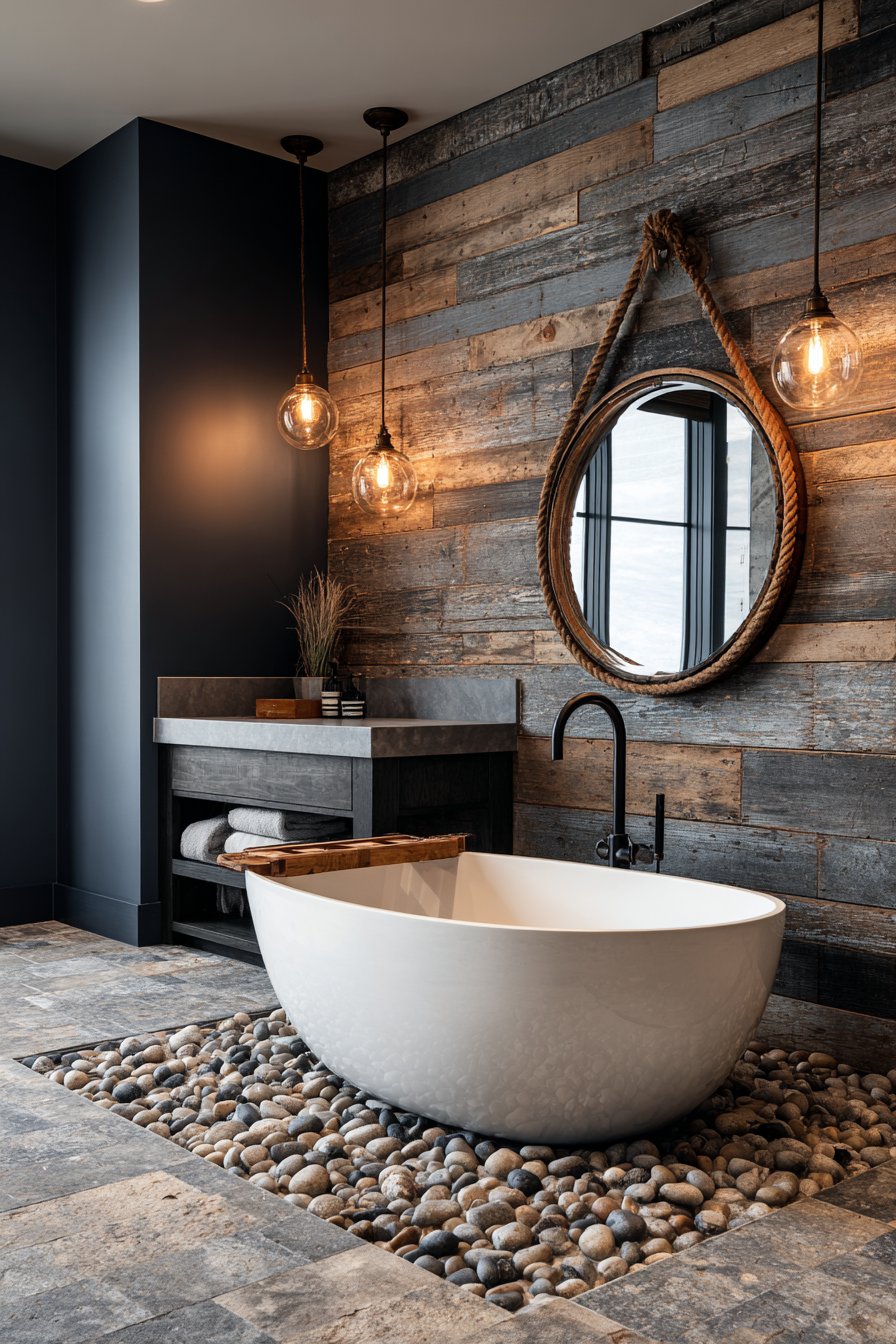
This innovative design bridges two seemingly disparate aesthetics—industrial and coastal—creating a sophisticated space that appeals to those who appreciate both raw authenticity and seaside serenity. A reclaimed wood accent wall in driftwood gray tones provides dramatic backdrop for a sleek modern freestanding tub, the juxtaposition of rustic texture and contemporary form creating dynamic visual tension. A concrete countertop with integrated sink introduces industrial edge while its neutral gray tone harmonizes with coastal color schemes. Edison bulb fixtures with aged brass finish add vintage character while rope details on the mirror frame ensure the maritime theme remains present.
The reclaimed wood accent wall tells a story through its weathered surface, each knot and grain pattern representing years of exposure to elements. This authenticity cannot be replicated by new materials, making reclaimed wood invaluable for spaces seeking genuine character. The driftwood gray tone bridges the gap between industrial concrete and coastal palette, its sun-bleached appearance evoking wood washed ashore. Against this textured backdrop, the modern freestanding tub’s clean lines stand out in sharp relief, its smooth white surface contrasting beautifully with the wall’s rough-hewn character.
Natural stone floor tiles in mixed gray and tan shades echo the varied colors of beach pebbles, grounding the space with earthy authenticity. The concrete countertop with integrated sink exemplifies industrial design’s celebration of honest materials—concrete’s inherent properties are displayed rather than disguised. The aged brass fixtures and Edison bulbs introduce warmth that prevents the gray palette from feeling cold, while rope details ensure the coastal theme isn’t lost amid industrial elements. This bathroom proves that seemingly contradictory styles can coexist harmoniously when united by thoughtful material selection and balanced composition.
Key Design Tips:
- Install a reclaimed wood accent wall to add instant character and authentic texture
- Choose driftwood gray tones to bridge industrial and coastal aesthetics
- Pair a modern freestanding tub with rustic elements for dynamic contrast
- Use concrete countertops with integrated sinks for seamless, industrial-style vanities
- Select Edison bulb fixtures for vintage character and warm ambient lighting
- Incorporate aged brass finishes to add warmth to gray-heavy color schemes
- Add rope details to maintain coastal references in industrial-leaning designs
- Use natural stone floor tiles in mixed tones to echo beach pebbles and ground the design
7. Navy and White Nautical Excellence
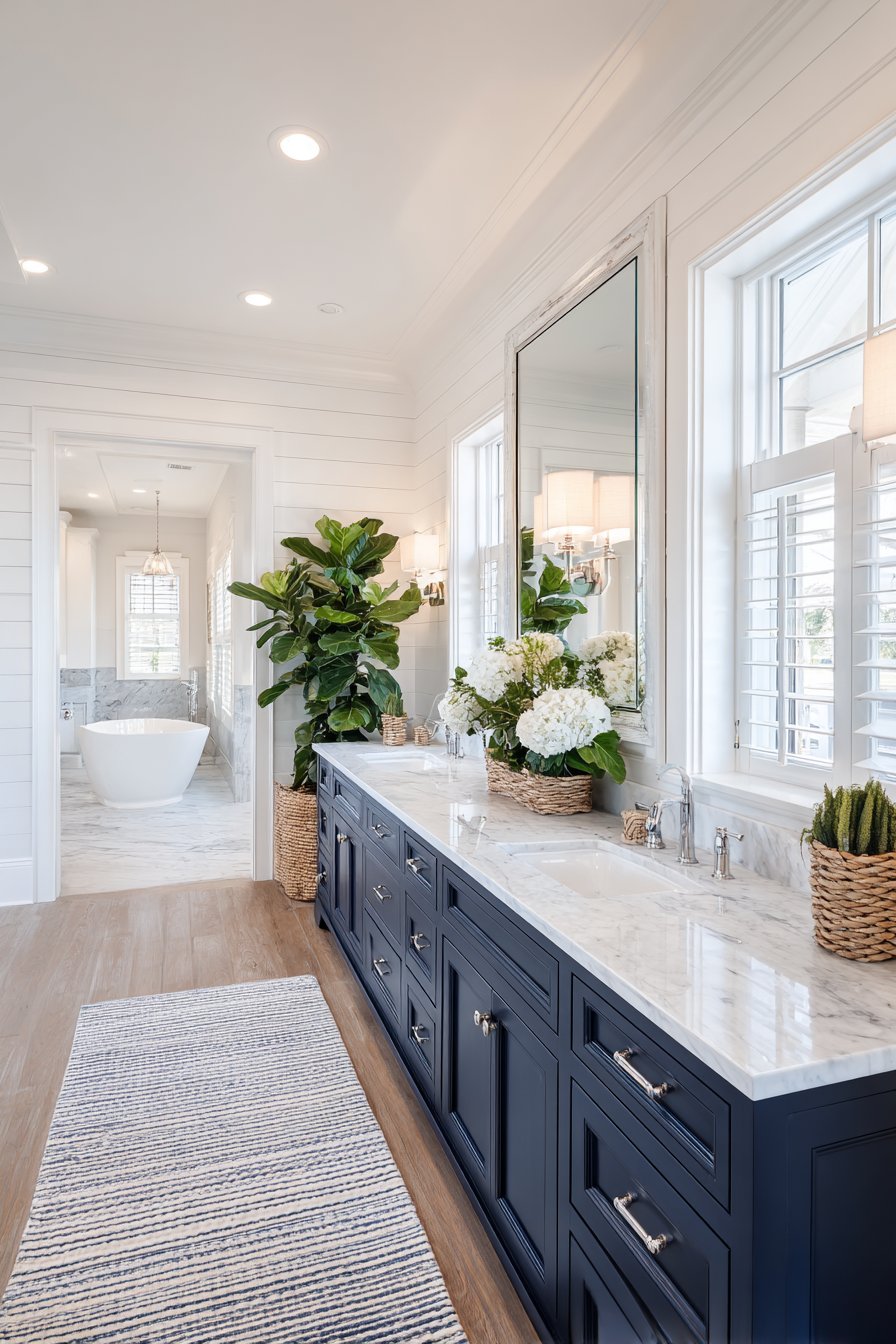
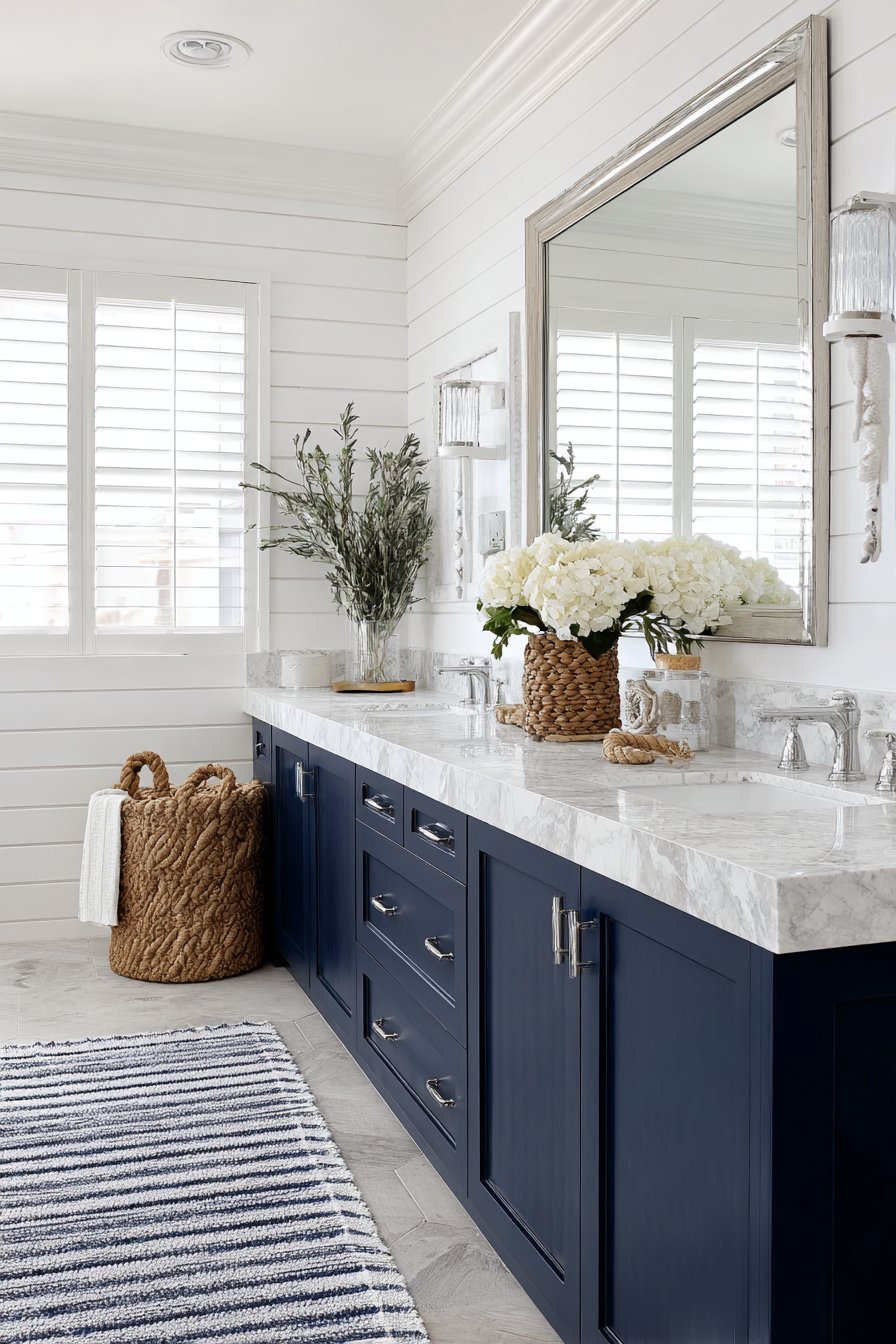
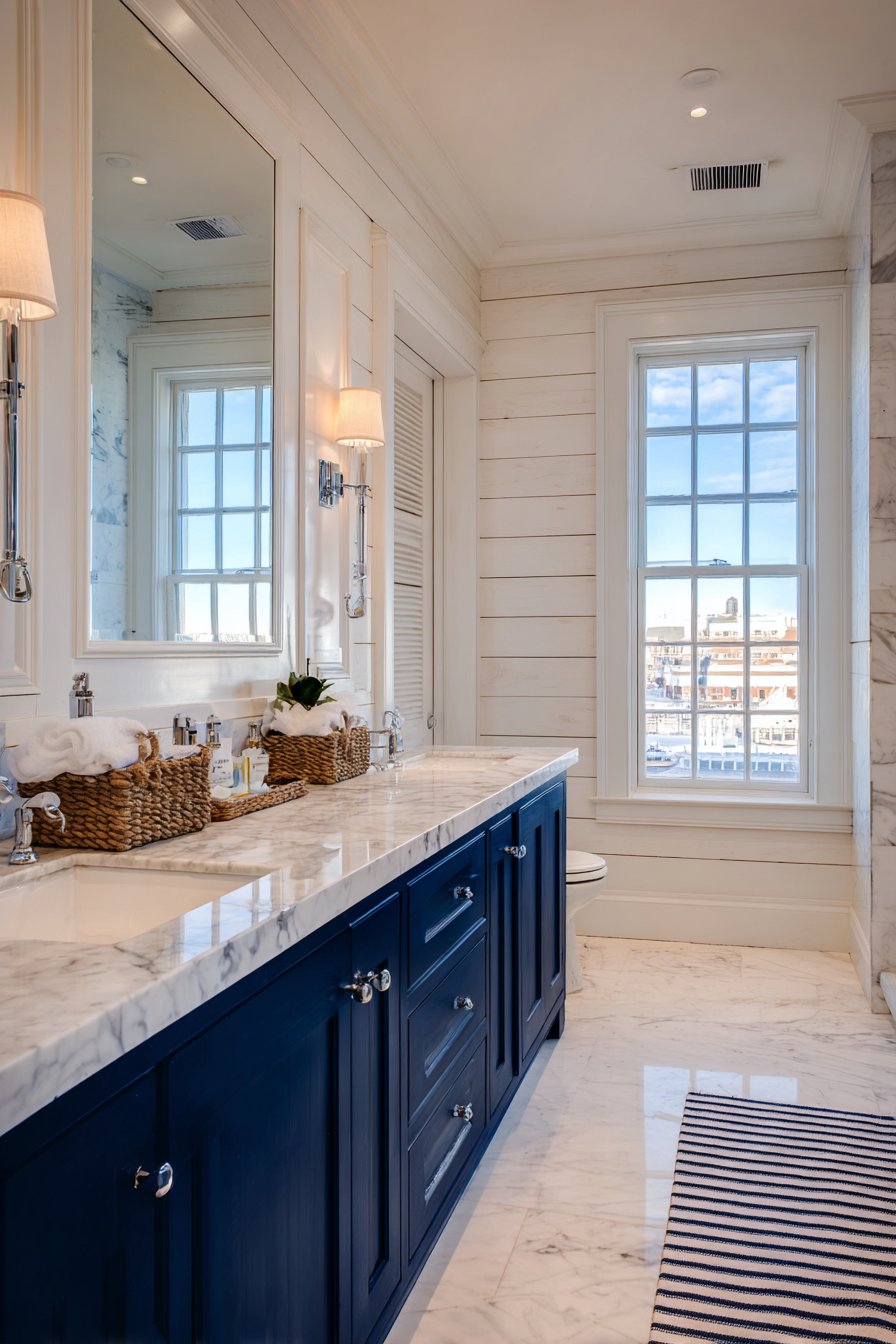
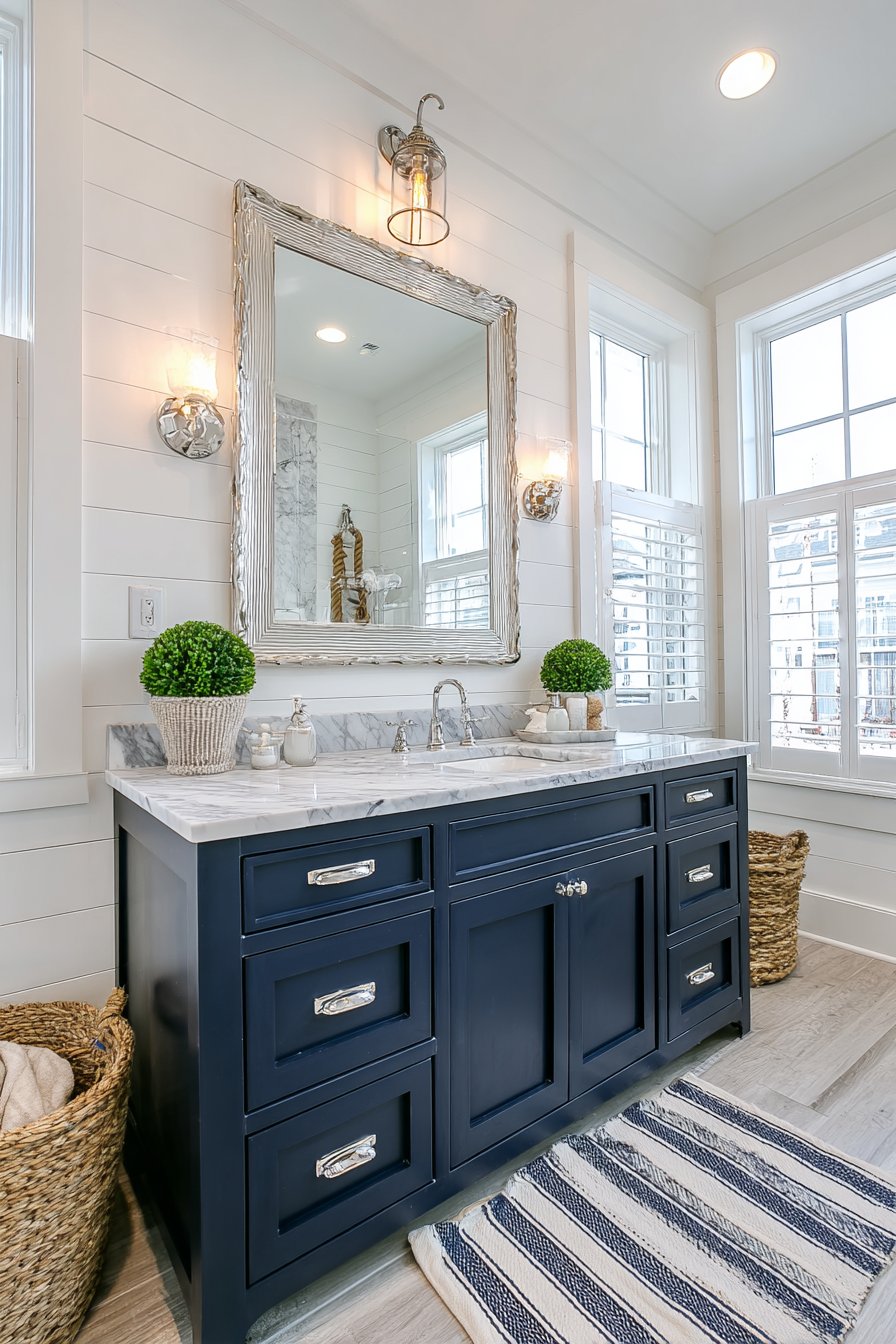
Bold contrast defines this bright seaside bathroom where pristine white shiplap walls create an expansive backdrop for dramatic navy blue vanity cabinetry. The navy cabinets make a confident statement, their deep saturated color anchoring the space and preventing the abundance of white from feeling sterile or institutional. Marble countertop with subtle gray veining introduces natural pattern and luxurious tactile quality, its cool elegance balancing the navy’s richness. Polished chrome fixtures and a large frameless mirror work in concert to reflect natural light streaming from double windows dressed with classic white plantation shutters.
The shiplap walls demonstrate how architectural detail adds dimension to otherwise flat surfaces, their horizontal lines creating rhythm and visual movement around the room. This classic coastal wall treatment provides texture without pattern, allowing the navy vanity to serve as the room’s color focal point. The double windows ensure abundant natural light—critical when working with darker colors—while plantation shutters offer flexible light control and enhance the room’s traditional coastal character. The frameless mirror maximizes light reflection while its simple design keeps attention on the navy and white color story.
Striped bath mats and nautical rope accessories complete the classic coastal aesthetic without overwhelming the clean composition. The navy and white stripe pattern has been synonymous with nautical style for generations, its crisp geometry suggesting order and maritime discipline. Small touches like rope-wrapped accessories bridge the gap between functional fixtures and decorative elements, ensuring every item in the room contributes to the cohesive coastal narrative. This bathroom exemplifies how a limited color palette, when executed with confidence and supported by quality materials, creates more impact than a space filled with multiple competing colors.
Key Design Tips:
- Paint vanity cabinetry in navy blue to create a bold focal point against white walls
- Install shiplap walls for classic coastal texture and architectural interest
- Choose marble countertops to introduce natural pattern and luxury
- Use polished chrome fixtures for their reflective properties and traditional appeal
- Install plantation shutters for flexible light control and enhanced coastal character
- Incorporate striped patterns in bath mats and towels for classic nautical reference
- Select a large frameless mirror to maximize light reflection in rooms with dark cabinetry
- Keep accessories minimal and meaningful to maintain the clean, classic aesthetic
8. Sophisticated Stormy Seas Palette
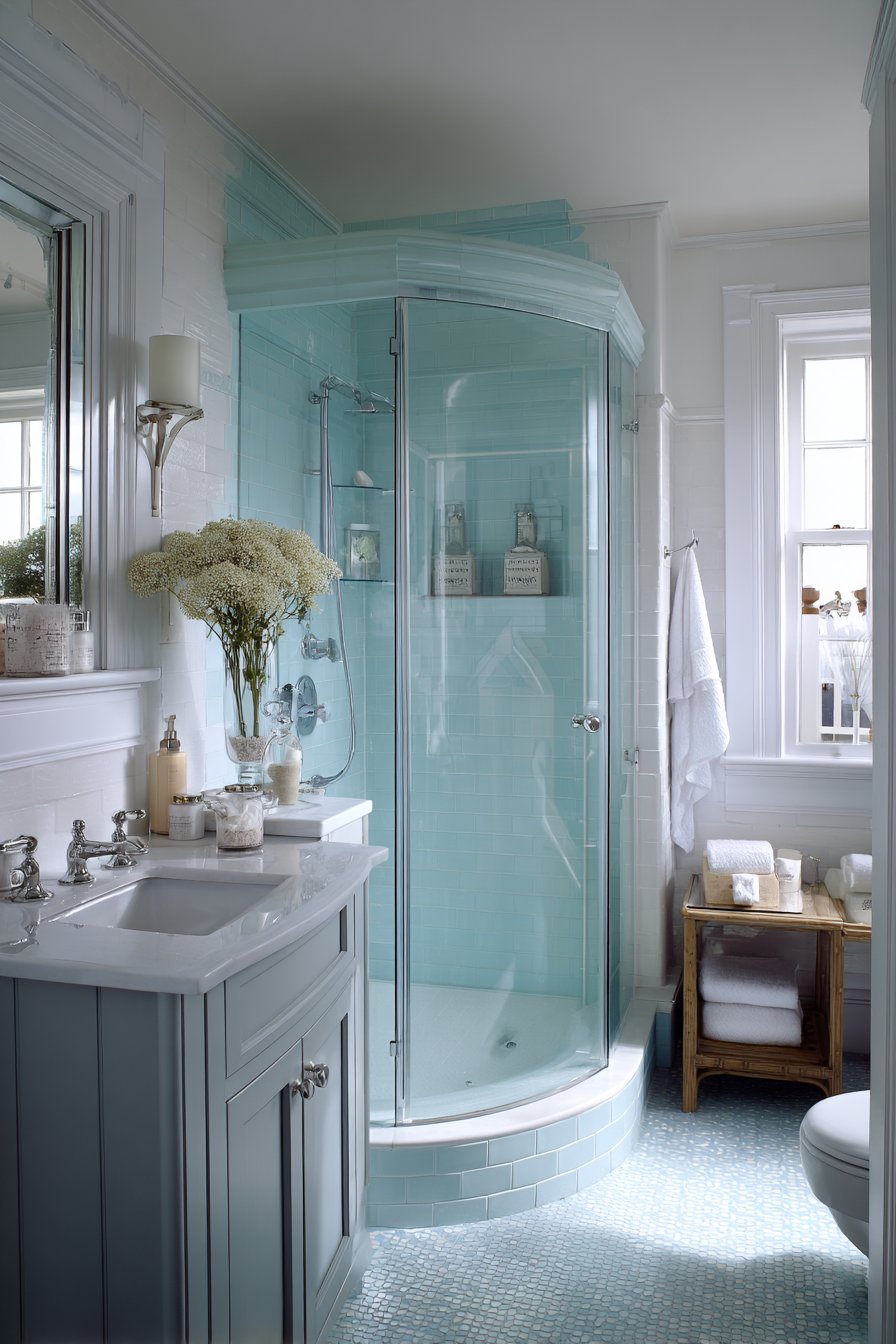
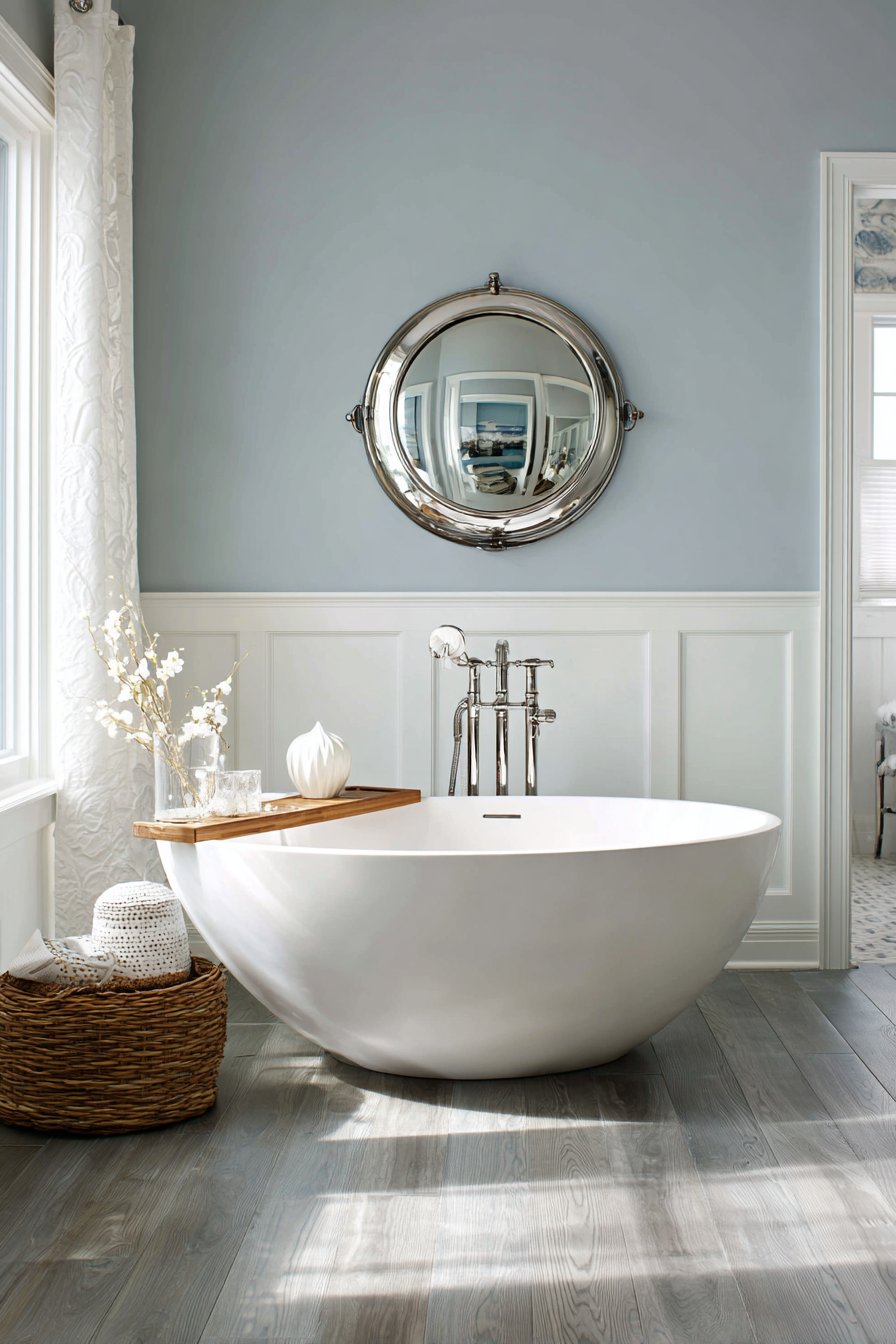
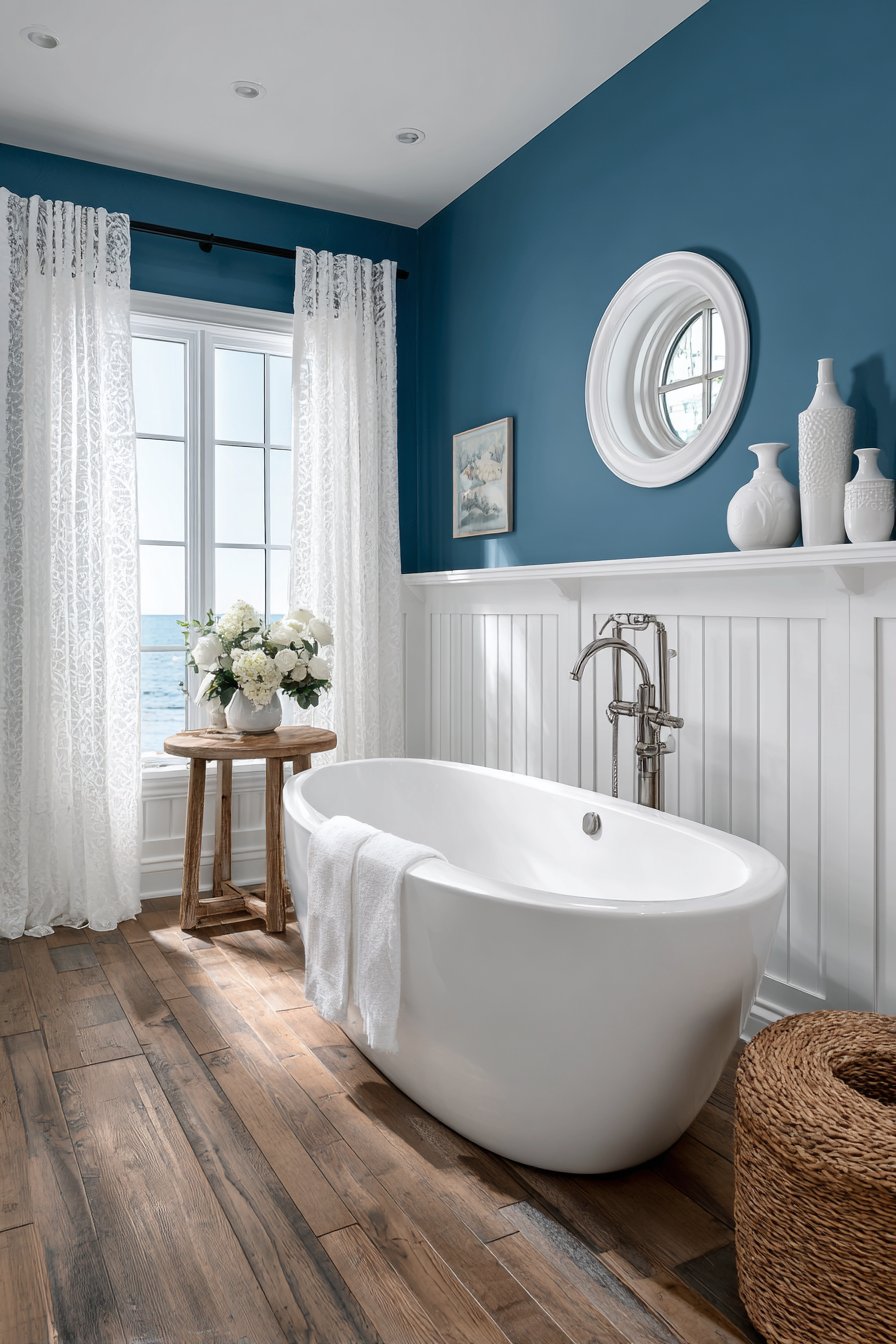
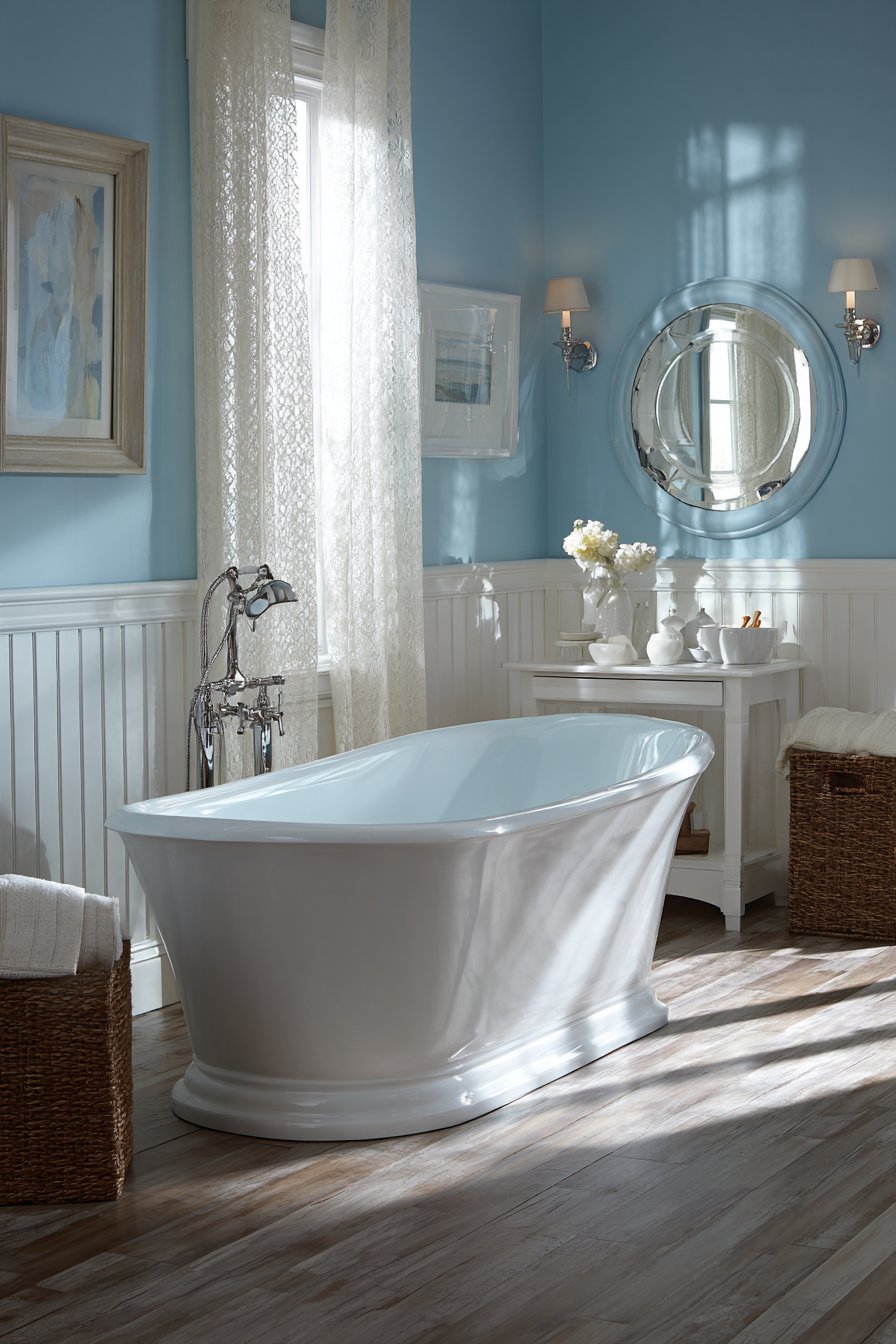
Depth and drama characterize this refined seaside bathroom where gray-blue walls reminiscent of stormy seas create a moody, sophisticated atmosphere. The color selection moves beyond typical coastal pastels to embrace the ocean’s more complex personality—the deep tones seen when storm clouds gather over water. White wainscoting provides crisp contrast and prevents the darker walls from overwhelming the space, its traditional profile adding architectural polish. A freestanding oval bathtub in glossy white finish serves as the luminous centerpiece, its sculptural form standing out beautifully against the complex wall color.
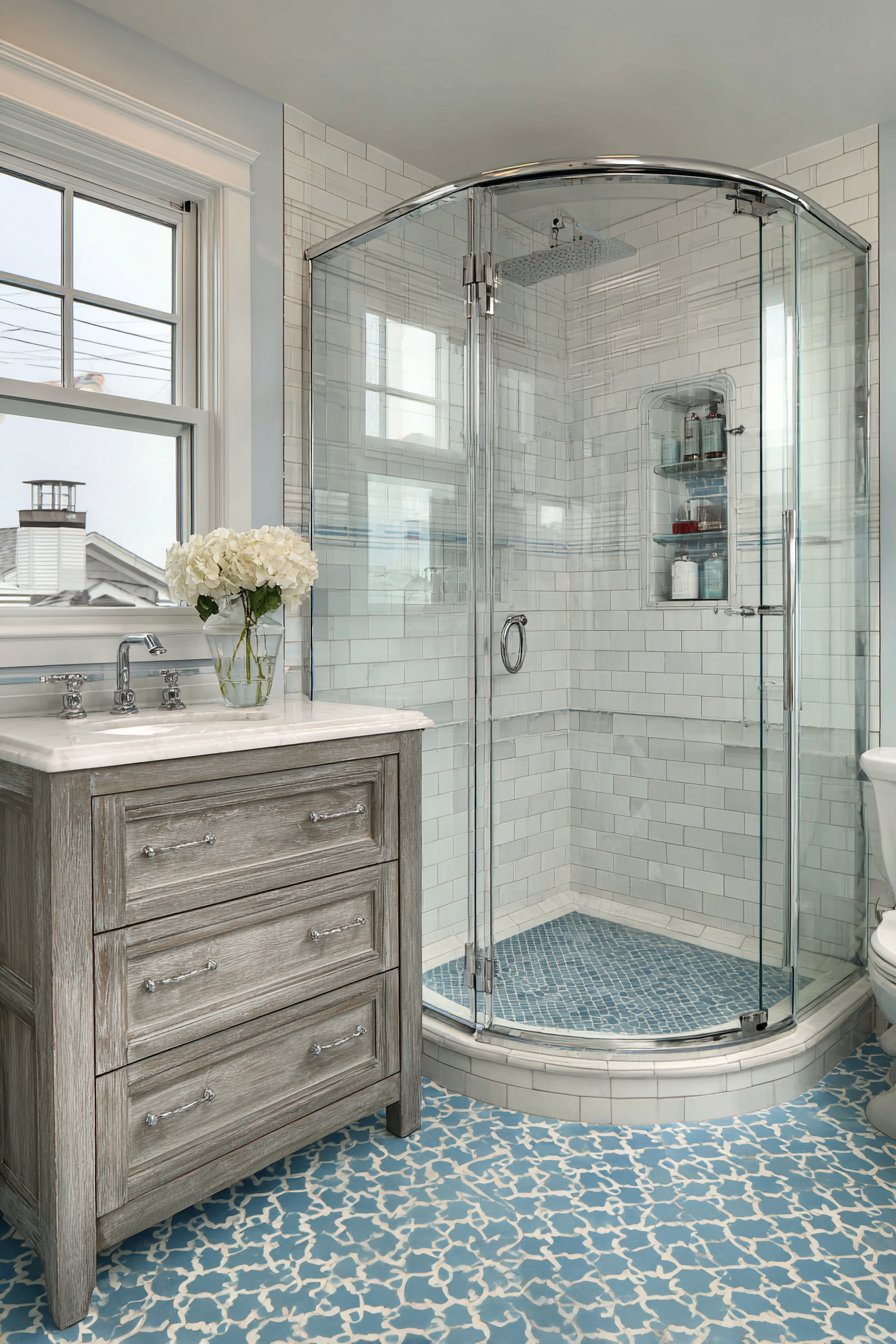
The brushed nickel floor-mounted tub filler represents the intersection of vintage-inspired form and modern engineering, its graceful arc and floor placement creating visual drama while offering practical advantages over wall-mounted fixtures. This type of installation allows for flexible tub positioning since the filler doesn’t need to align with wall plumbing. The vintage-style porthole mirror reinforces maritime heritage while its circular form provides pleasing contrast to the room’s predominantly rectangular elements. White ceramic accessories maintain clean simplicity, their pure form and color preventing the space from becoming too heavy or dark.
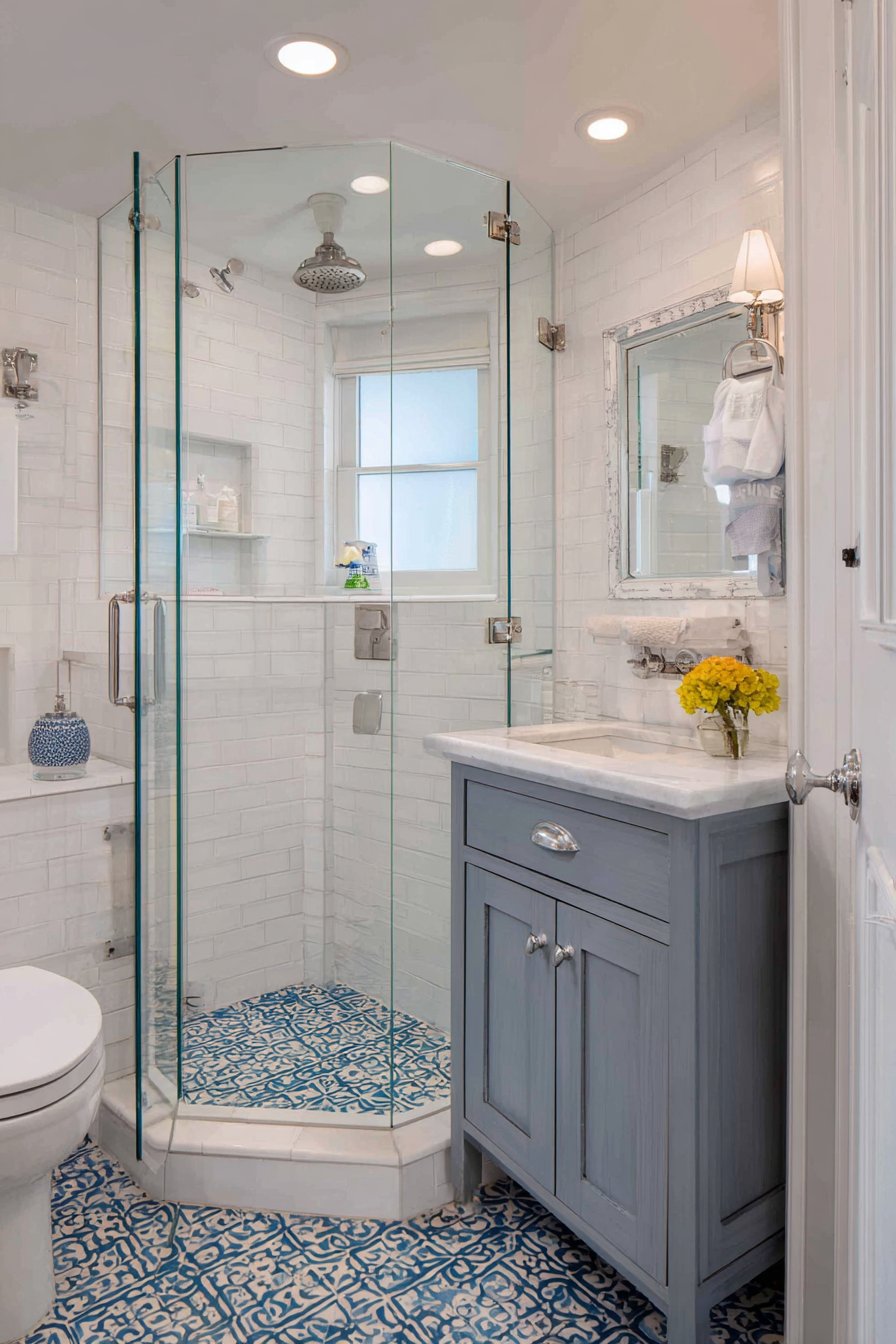
Soft natural lighting filtered through lace curtains creates gentle shadows and highlights the subtle complexity of the gray-blue walls. This diffused illumination suits the room’s contemplative character, avoiding the harsh brightness that would undermine the sophisticated moodiness. The lace curtains introduce delicate pattern and romantic sensibility, their vintage character harmonizing with the porthole mirror and traditional wainscoting. This bathroom demonstrates how coastal design can move beyond bright and breezy to embrace more nuanced, atmospheric interpretations of seaside living.
Key Design Tips:
- Choose gray-blue wall colors that reference stormy seas for sophisticated depth
- Install white wainscoting to balance darker wall colors and add architectural detail
- Select a freestanding oval tub for sculptural presence and flexibility in placement
- Use a floor-mounted tub filler for dramatic visual impact and installation flexibility
- Incorporate a vintage porthole mirror for authentic maritime character
- Hang lace curtains to filter natural light softly and add romantic texture
- Keep accessories simple in white ceramic to avoid competing with the complex wall color
- Ensure adequate lighting to prevent dark wall colors from making the space feel enclosed
9. Immersive Ocean Wave Shower Experience
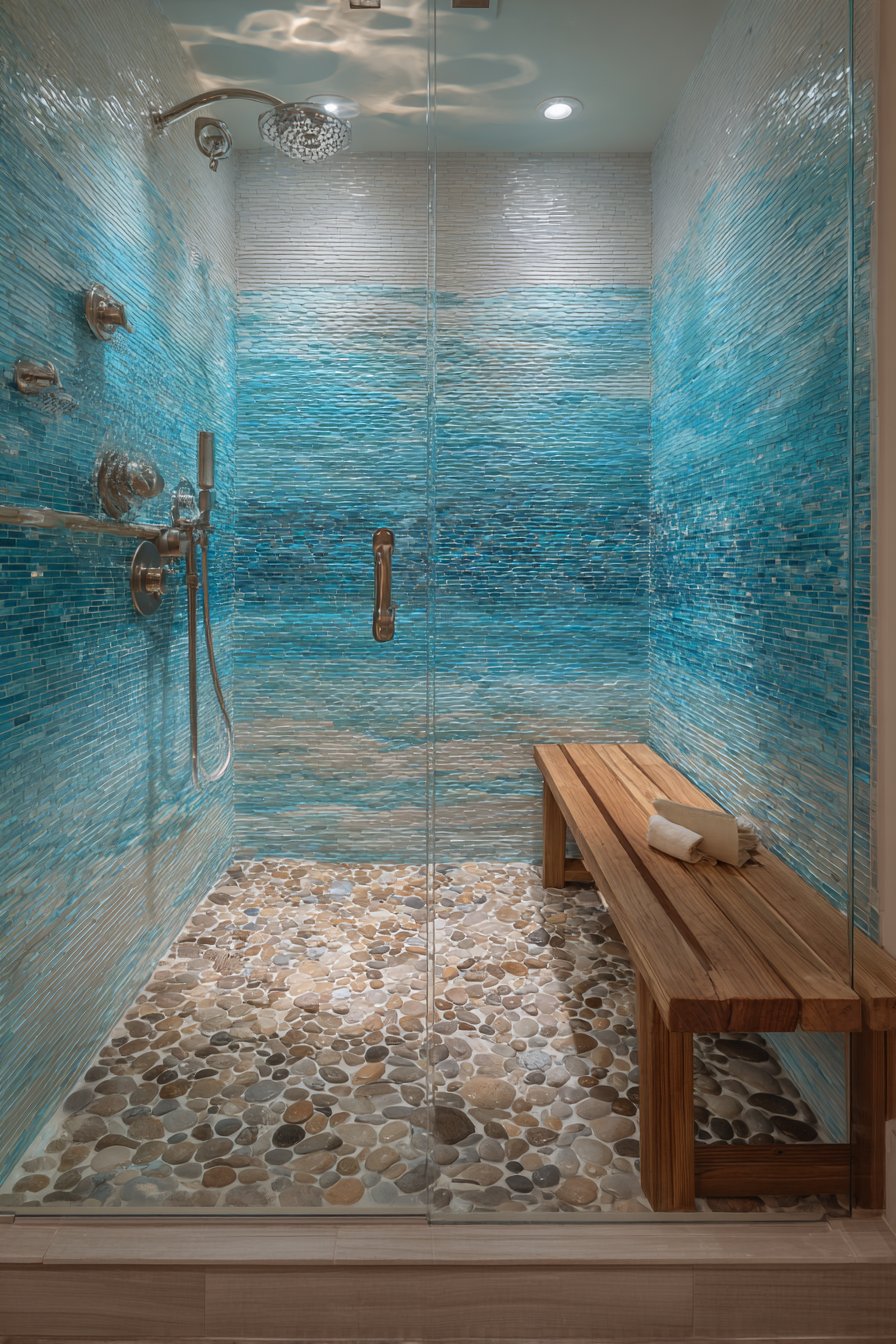
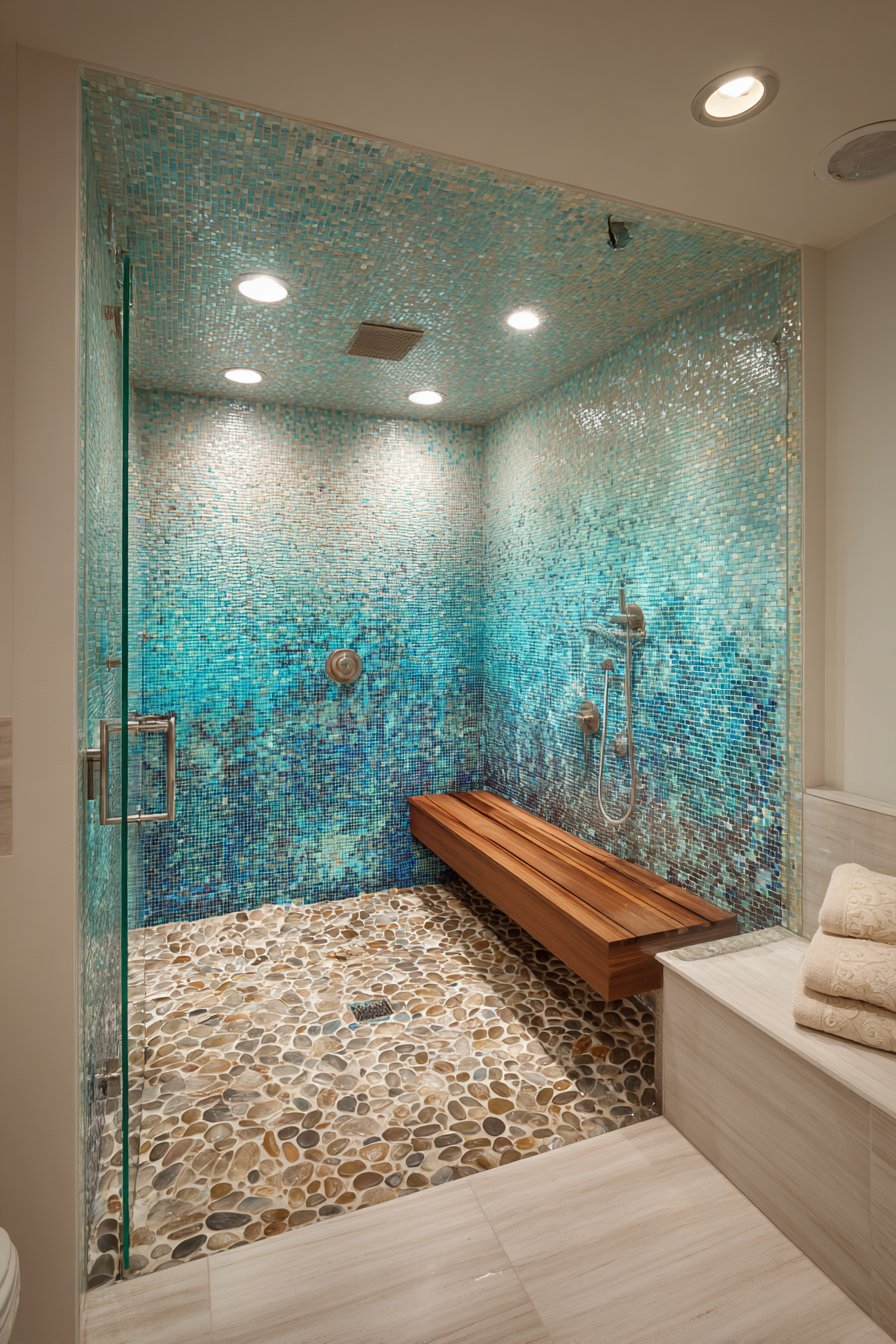
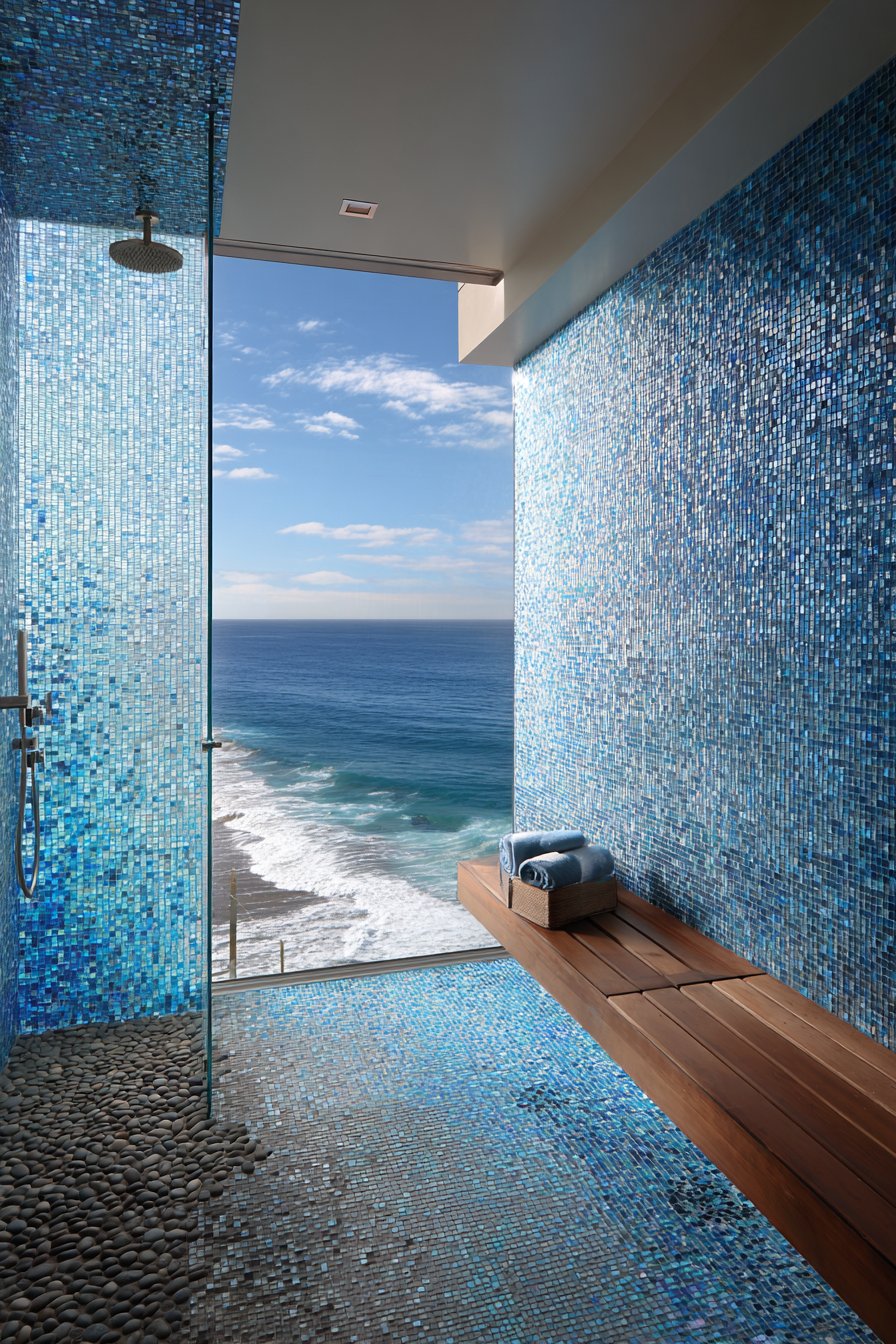
This spa-inspired design transforms the shower into an immersive coastal experience through the stunning use of floor-to-ceiling glass mosaic tiles in graduated shades of blue and aqua. The tiles are arranged to create an ocean wave effect, their color transition mimicking the way water depth affects hue and light penetration. A teak shower bench and accessories bring natural warmth and sustainable luxury, their rich wood tones providing organic contrast to the cool blues. The rainfall showerhead and handheld spray in brushed nickel finish deliver both luxury and versatility, while pebble stone shower floor adds authentic beach texture underfoot.
The glass mosaic tiles represent significant investment in both materials and installation, but the result is truly spectacular—a shower that feels like stepping into ocean waters. The graduated color scheme creates the illusion of depth, with lighter aqua tones at the top suggesting shallow, sun-lit water and deeper blues below evoking mysterious ocean depths. This color transition also serves practical purposes, drawing the eye upward and making the shower feel more spacious. The tiles’ reflective glass surface catches and plays with light, creating shimmer and movement that enhances the water theme.
The teak elements introduce important warmth and natural character that prevent the abundant blue tile from feeling cold. Teak’s exceptional water resistance makes it ideal for wet environments, while its natural oils provide antimicrobial properties. The pebble stone shower floor offers therapeutic benefits through gentle foot massage while ensuring superior slip resistance—safety and wellness combined through thoughtful material selection. The dual shower system with rainfall and handheld options provides flexibility for different users and bathing preferences, while brushed nickel finishes complement both the warm teak and cool blue tiles.
Key Design Tips:
- Install floor-to-ceiling glass mosaic tiles to create immersive color and light effects
- Arrange tiles in graduated shades to create depth and movement suggesting ocean waves
- Include a teak shower bench for natural warmth, durability, and sustainable luxury
- Use pebble stone flooring for authentic texture, massage benefits, and slip resistance
- Install both rainfall and handheld showerheads for versatile shower experiences
- Choose brushed nickel finishes to bridge warm and cool tones in the color scheme
- Ensure proper ventilation to protect teak elements and prevent moisture issues
- Consider professional installation for complex mosaic tile patterns
10. Family-Friendly Coastal Functionality
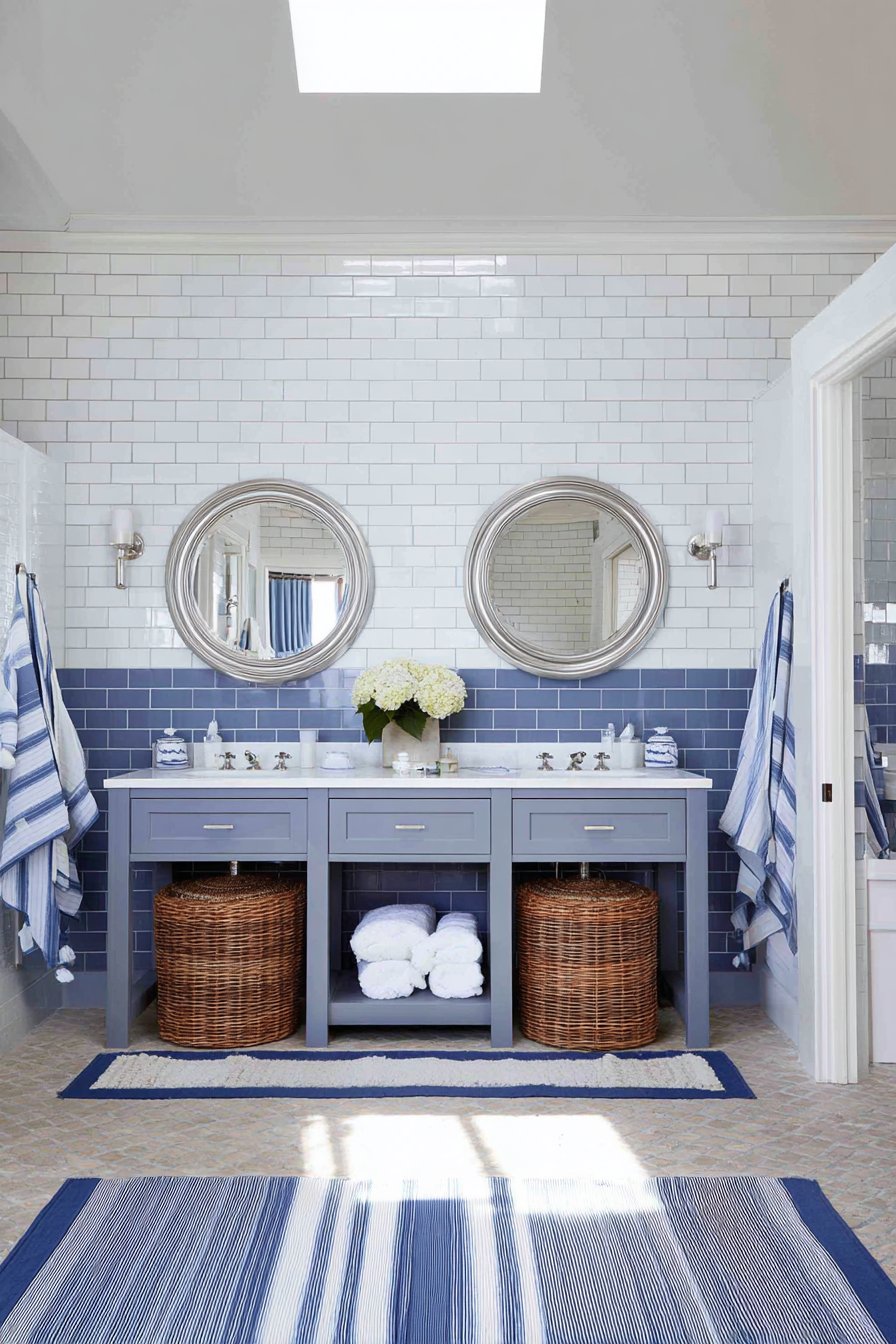
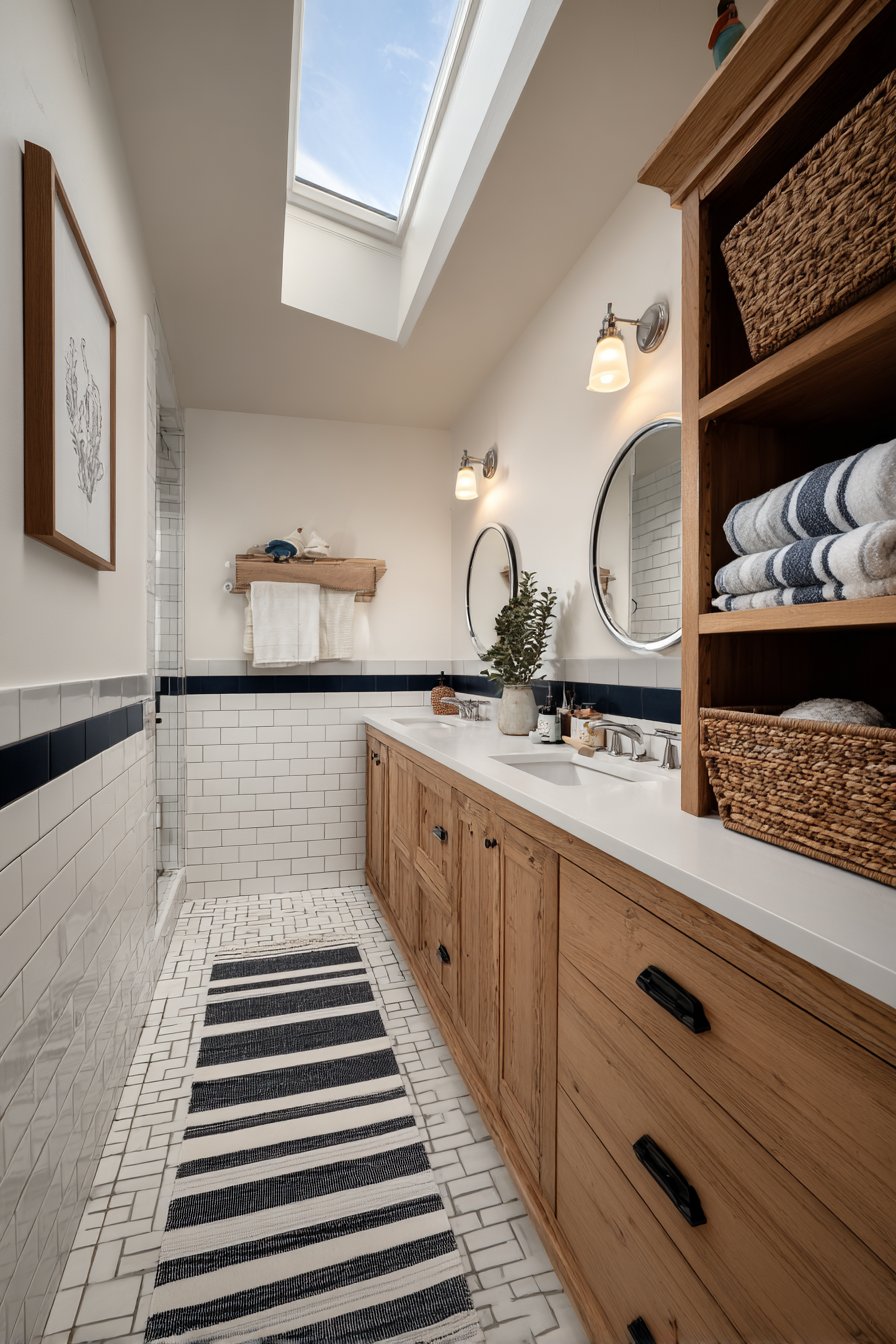
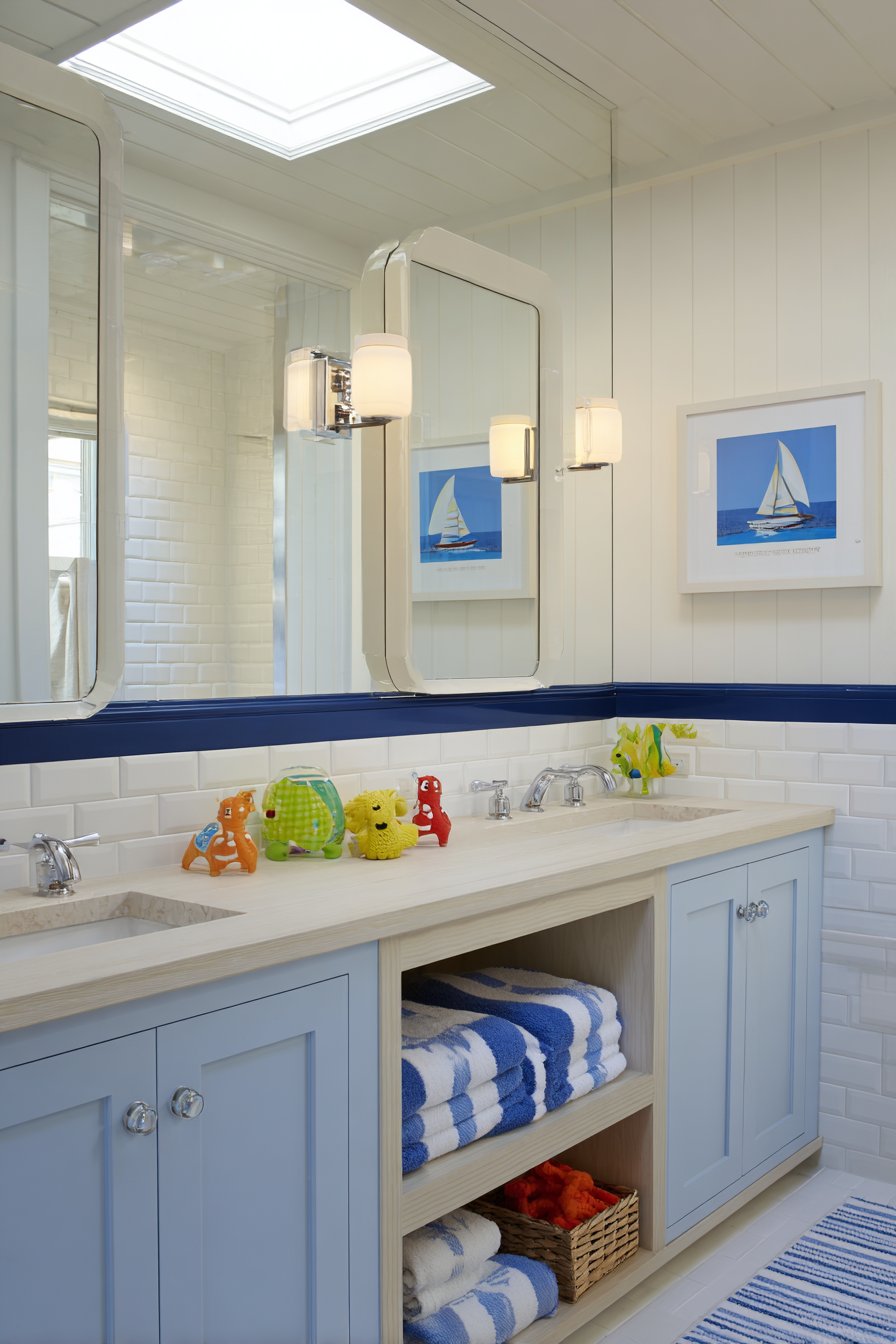
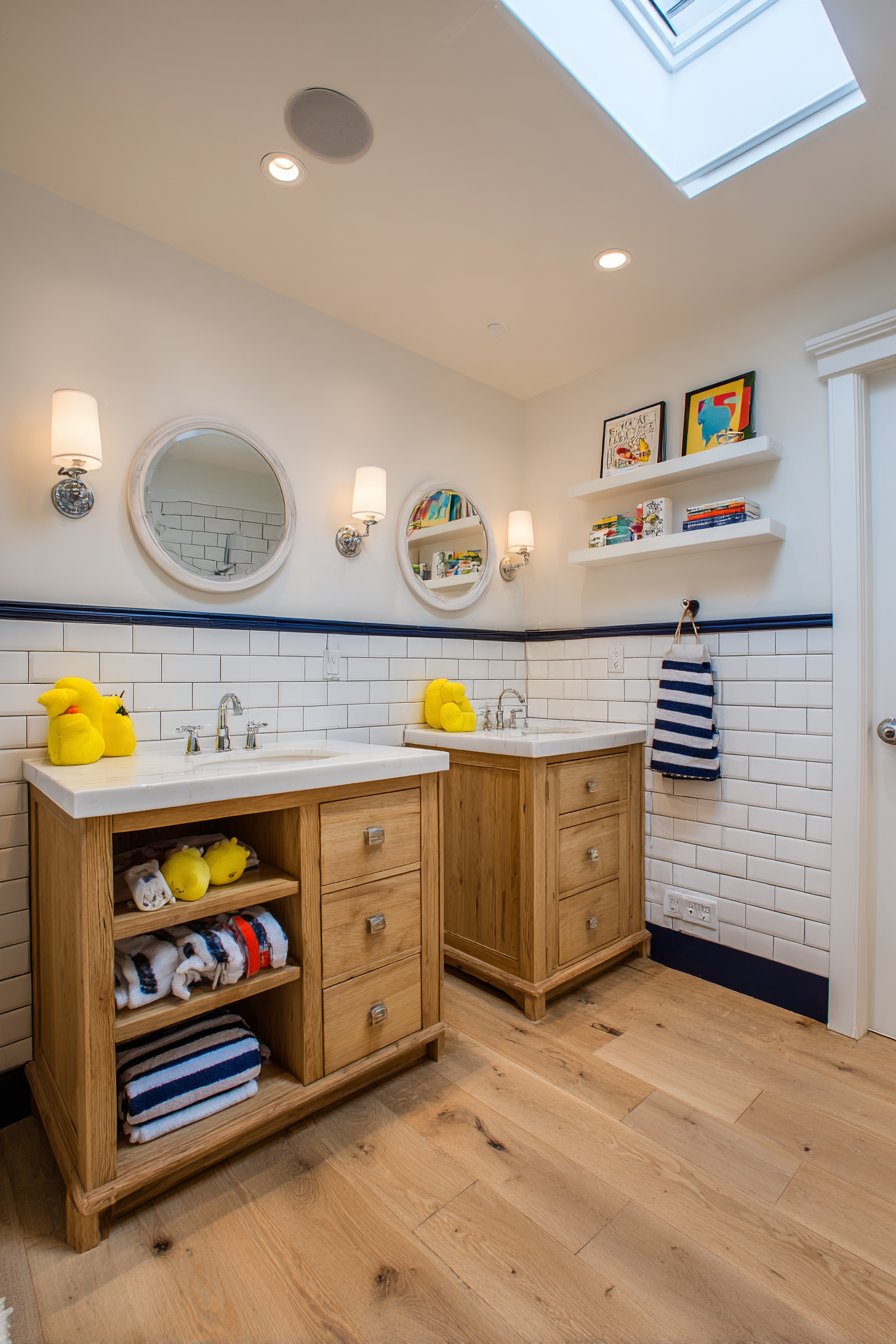
This practical seaside bathroom addresses the real needs of busy coastal families without sacrificing style or charm. Durable white subway tiles provide a clean, timeless foundation that withstands heavy use and simplifies maintenance, while a navy blue accent stripe at chair rail height adds visual interest and coastal color without overwhelming the space. The double vanity in painted wood finish offers ample drawer storage that keeps the family organized, with chrome faucets and simple round mirrors providing straightforward functionality. Built-in cubby storage holds striped towels and beach-themed bath toys, acknowledging the reality of family life while maintaining aesthetic appeal.
The genius of this design lies in its understanding of how families actually use bathrooms. The double vanity eliminates morning bottlenecks when multiple family members need to prepare simultaneously. Drawer storage rather than open shelving keeps clutter contained while remaining easily accessible. The navy blue accent stripe placed at chair rail height serves multiple purposes: it adds color interest, creates visual proportion, and helps hide marks and wear in the area most likely to get bumped and touched by children. The white subway tiles above and below resist showing water spots and are simple to wipe clean—critical considerations for high-traffic family bathrooms.
Natural light from a skylight eliminates the need for windows that might compromise privacy or reduce usable wall space—a smart solution that provides abundant illumination while freeing up walls for storage and fixtures. The built-in cubby storage demonstrates how family-friendly design can be attractive; the cubbies keep beach toys and extra towels organized without requiring additional furniture that would consume floor space. Striped towels in coastal colors maintain the seaside theme while their pattern helps disguise inevitable stains and wear from frequent laundering.
Key Design Tips:
- Install a double vanity to accommodate multiple users in family bathrooms
- Use durable white subway tiles for easy maintenance and timeless appeal
- Add a navy blue accent stripe at chair rail height for color and to hide wear
- Choose drawer storage over open shelving to contain clutter in family spaces
- Install chrome fixtures for durability and easy cleaning
- Create built-in cubby storage for organized towel and toy storage
- Include a skylight for natural light without compromising wall space or privacy
- Select patterned towels that hide stains and maintain appearance between washings
11. Sustainable Sage Green Serenity
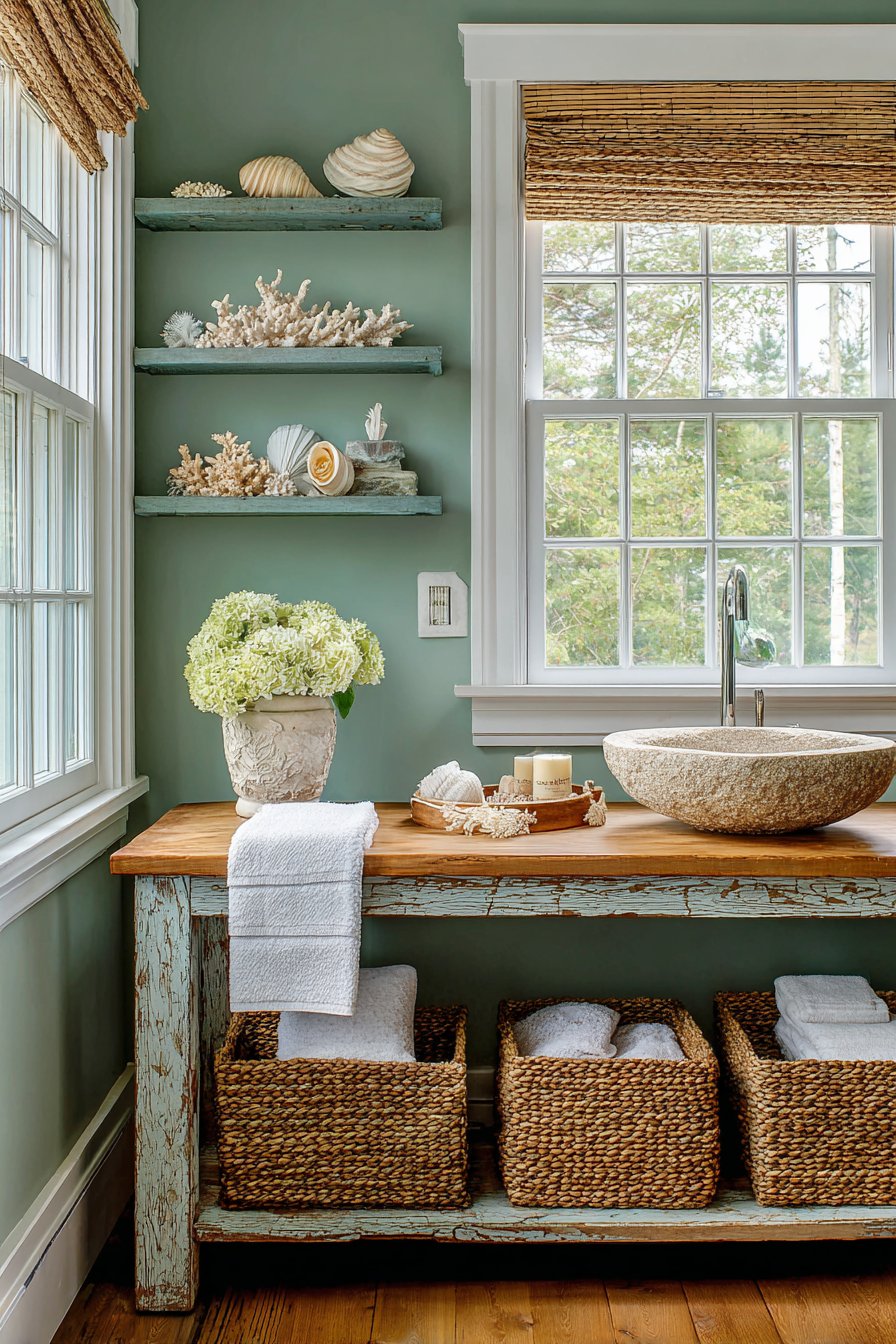
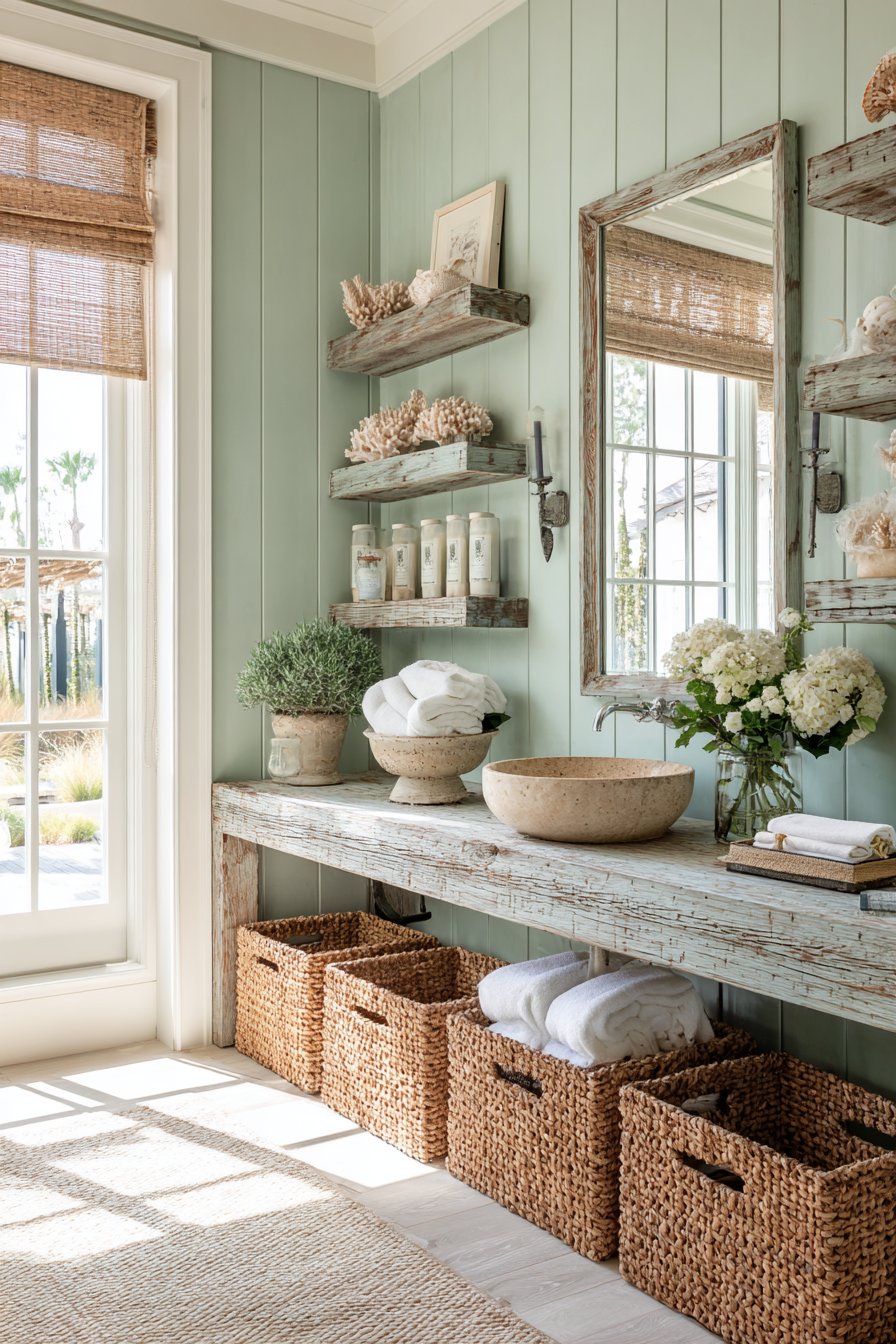
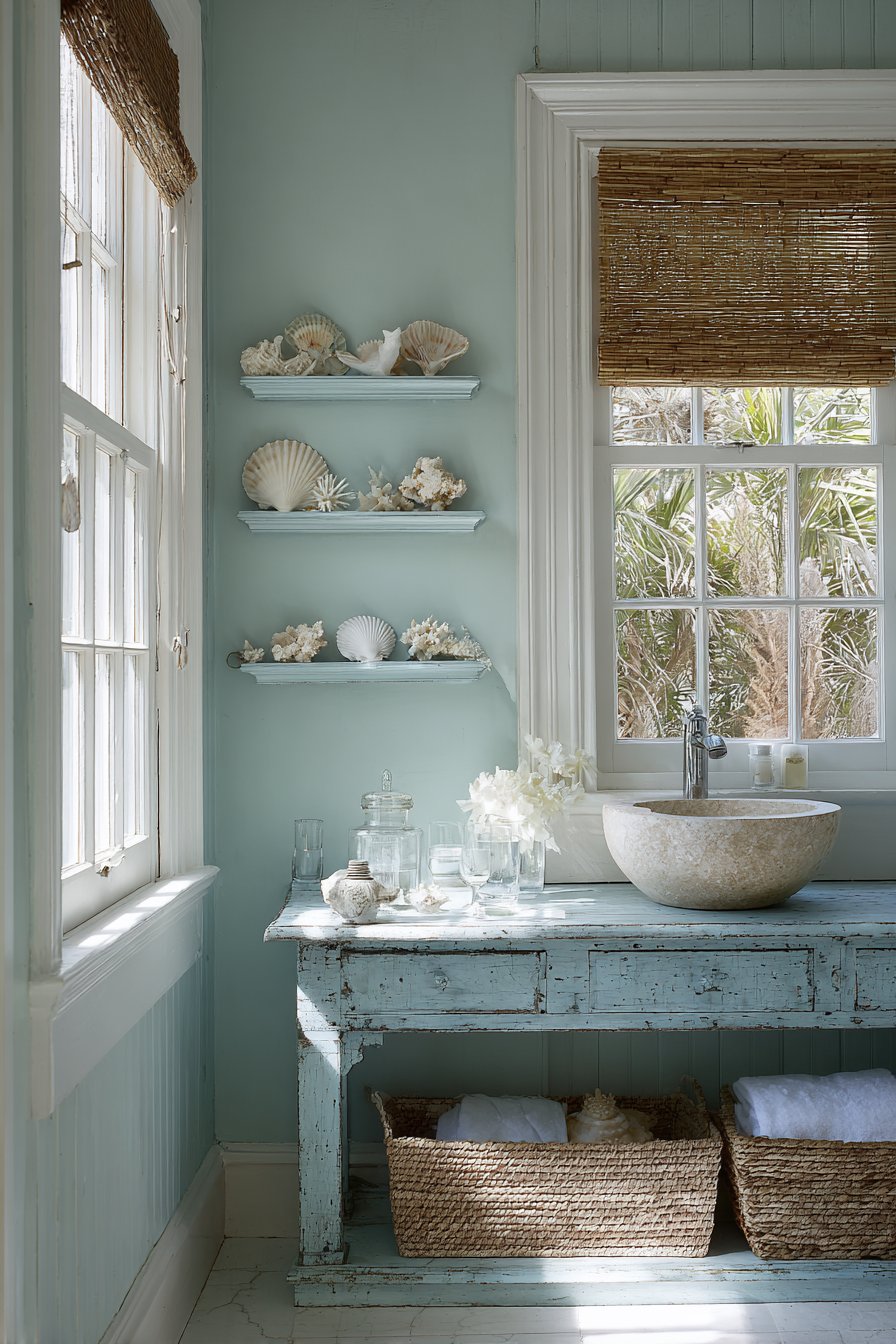
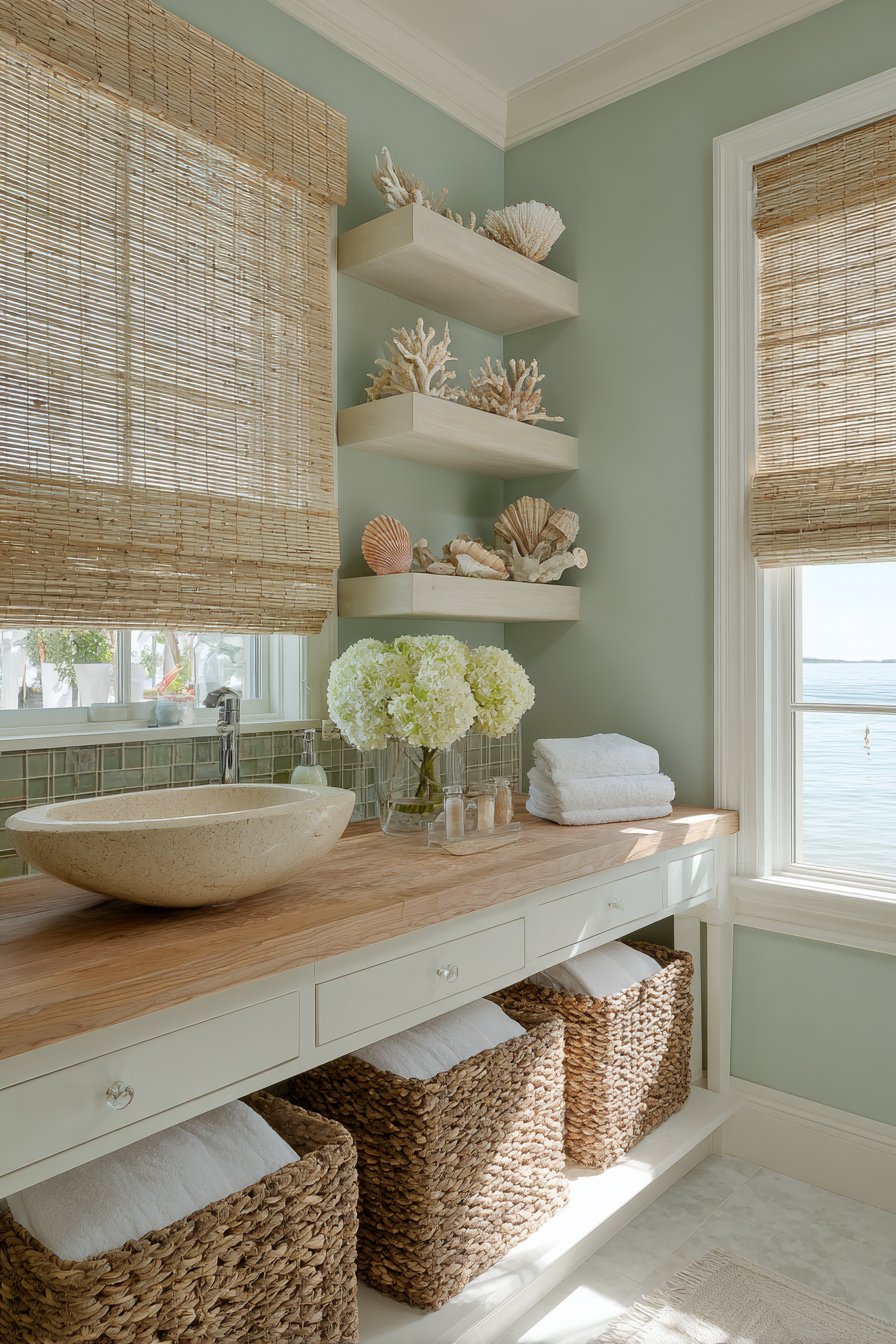
Environmental consciousness meets coastal charm in this serene bathroom where soft sage green walls create a calm, nature-inspired atmosphere. The color choice reflects the growing trend toward biophilic design—connecting interior spaces with natural elements—while its soft, muted tone provides a soothing backdrop for daily routines. A vintage dresser converted to vanity exemplifies sustainable design principles, giving new life to existing furniture while adding character and storage capacity that new pieces might lack. The vessel sink installation transforms the dresser top, while woven seagrass baskets beneath hold bathroom essentials with natural texture.
The repurposed dresser approach offers multiple advantages beyond sustainability. Vintage furniture often features superior construction and materials compared to modern alternatives, with solid wood frames and dovetail joinery that ensure longevity. The dresser’s existing drawers provide organized storage for toiletries, linens, and personal items, while its furniture-style appearance softens the bathroom’s utilitarian character. The sage green walls complement the natural wood tones beautifully, whether the dresser maintains its original finish or receives fresh paint in complementary coastal hues.
A large window with bamboo roman shade filters natural light while maintaining privacy, the bamboo material reinforcing the sustainable, natural aesthetic. The roman shade’s horizontal lines when raised create visual interest and complement the room’s organic character. Floating shelves display seashells and coral collected from beach visits, transforming personal memories into decorative elements that tell the homeowner’s coastal story. This approach to decoration—displaying meaningful found objects rather than mass-produced accessories—creates authenticity that cannot be purchased.
Key Design Tips:
- Paint walls in soft sage green to create calming, nature-inspired atmosphere
- Convert a vintage dresser into a vanity for sustainable, character-rich storage
- Install a vessel sink on the dresser top to accommodate plumbing while preserving drawer functionality
- Use woven seagrass baskets for sustainable storage with natural texture
- Hang bamboo roman shades for eco-friendly light control that complements natural materials
- Display genuine seashells and coral collected from beaches for authentic personal decoration
- Ensure proper waterproofing and sealing when converting furniture to bathroom use
- Choose low-VOC paints and finishes to maintain healthy indoor air quality
12. Contemporary Coastal Stone Accent
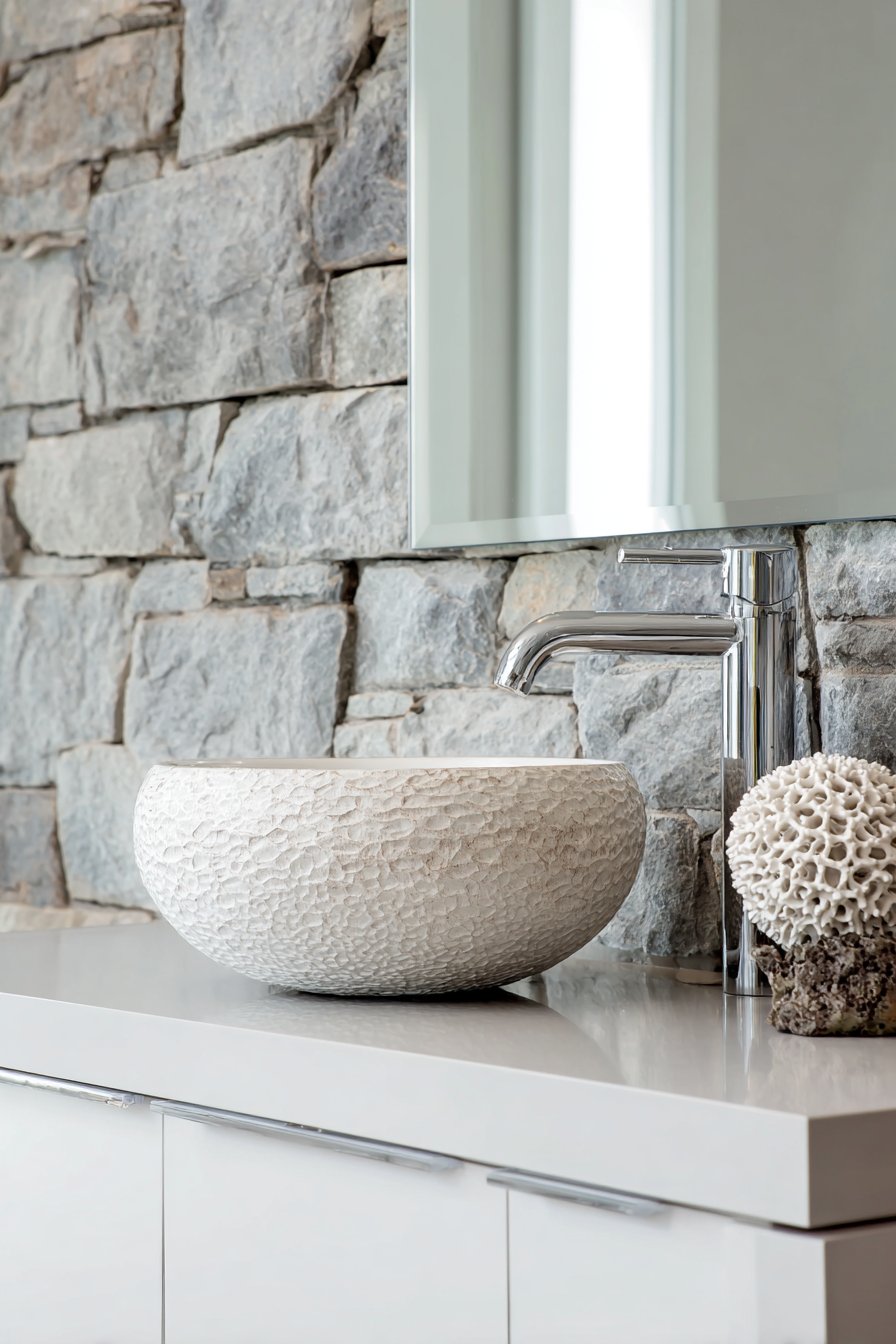
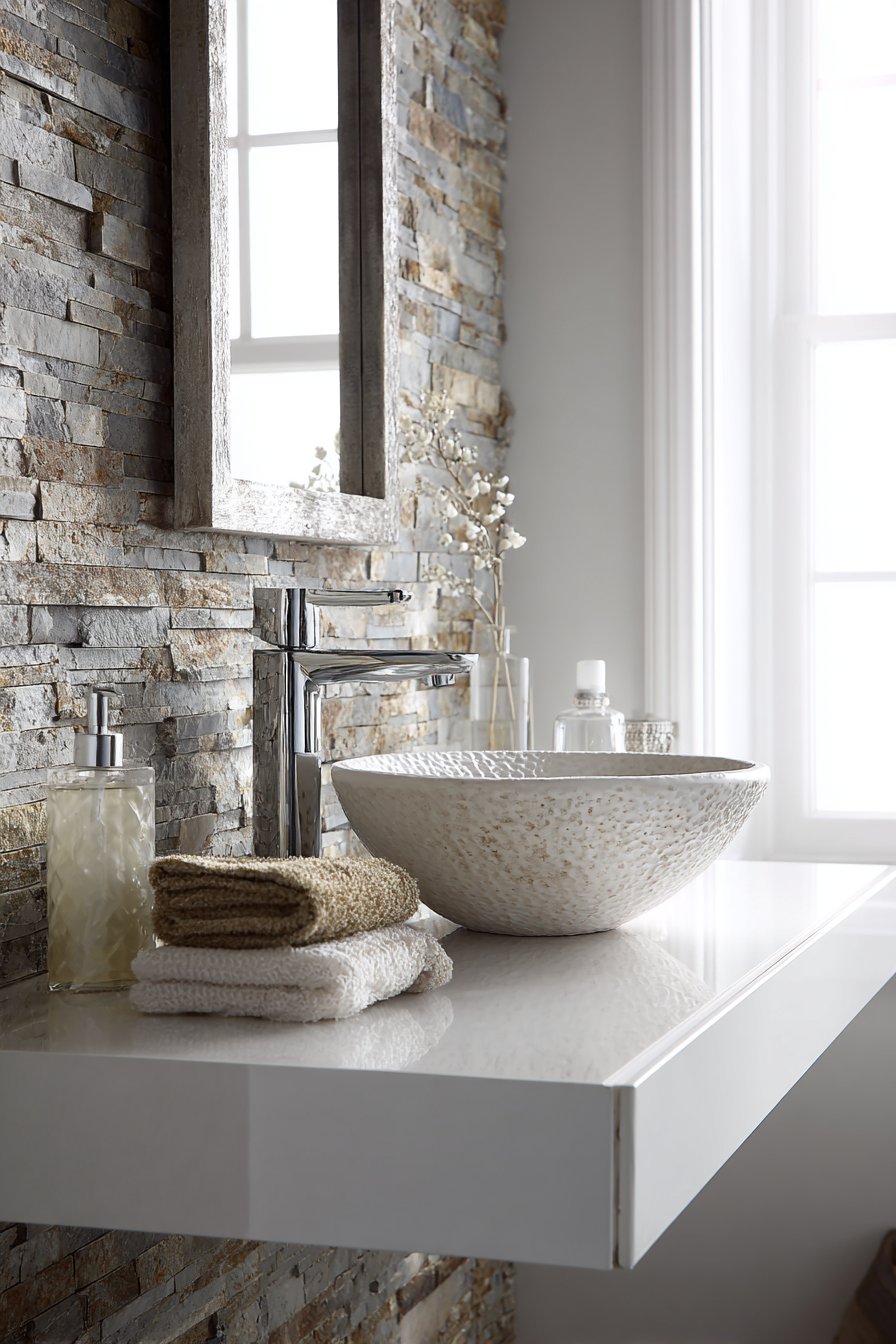
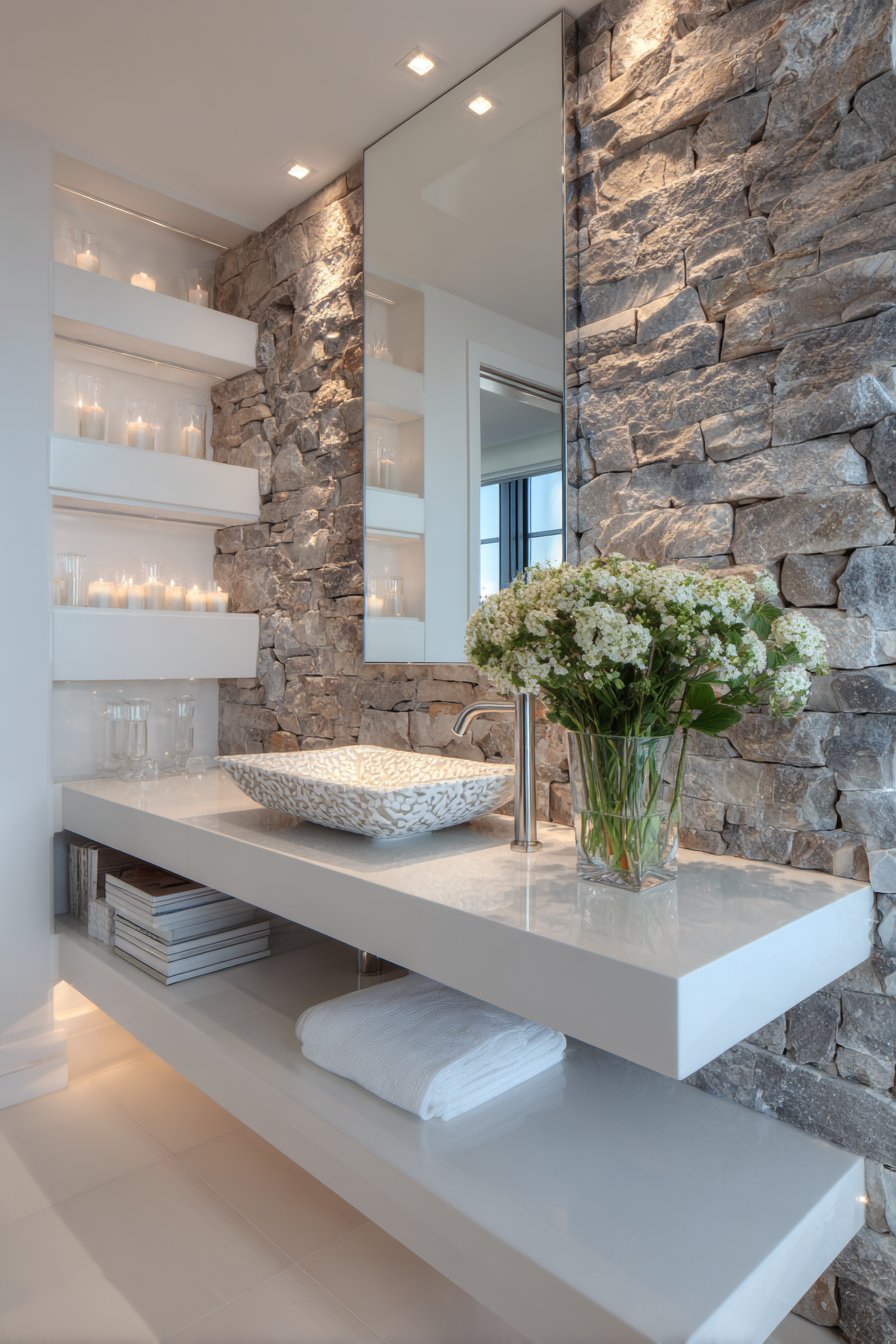
Modern sophistication defines this coastal bathroom where clean white walls provide a neutral canvas for a dramatic accent wall of stacked stone tile in mixed gray and cream tones. The stone wall suggests weathered coastal rocks shaped by time and tide, bringing the raw beauty of nature’s architecture indoors. A floating vanity in high-gloss white lacquer creates sleek modern contrast, its reflective surface and integrated LED lighting adding contemporary polish. The vessel sink in textured white ceramic introduces organic interest against the smooth vanity, while chrome fixtures maintain the clean, modern aesthetic.
The stacked stone accent wall represents a bold design move that pays significant dividends in visual impact. Unlike smooth tiles, stacked stone has dimensional depth that creates dramatic shadow play as lighting conditions change throughout the day. The mixed gray and cream tones within the stone provide natural variation that adds interest without requiring additional color or pattern. This accent wall becomes the room’s focal point, drawing the eye and providing textural richness that prevents the predominantly white space from feeling flat or sterile.
The floating vanity with integrated LED lighting exemplifies contemporary design’s emphasis on clean lines and innovative lighting solutions. The LED strips beneath the vanity create ambient glow that makes the unit appear to float, visually expanding the floor space while providing practical task lighting for grooming activities. The high-gloss white lacquer finish reflects light beautifully, its mirror-like surface contributing to the room’s brightness. The textured vessel sink provides essential tactile variety, its organic surface pattern offering relief from the smooth, sleek surfaces that dominate the modern aesthetic.
Key Design Tips:
- Create an accent wall with stacked stone tile for dramatic texture and natural character
- Choose mixed gray and cream stone tones that suggest weathered coastal rocks
- Install a floating vanity to create visual spaciousness in contemporary designs
- Select high-gloss white lacquer for maximum light reflection and modern polish
- Integrate LED lighting beneath floating vanities for ambient glow and task lighting
- Use a textured vessel sink to introduce organic interest against smooth modern surfaces
- Maintain chrome fixtures for their clean, contemporary appearance
- Balance the rustic stone accent with sleek modern elements to prevent style confusion
13. Nostalgic Beach House Character
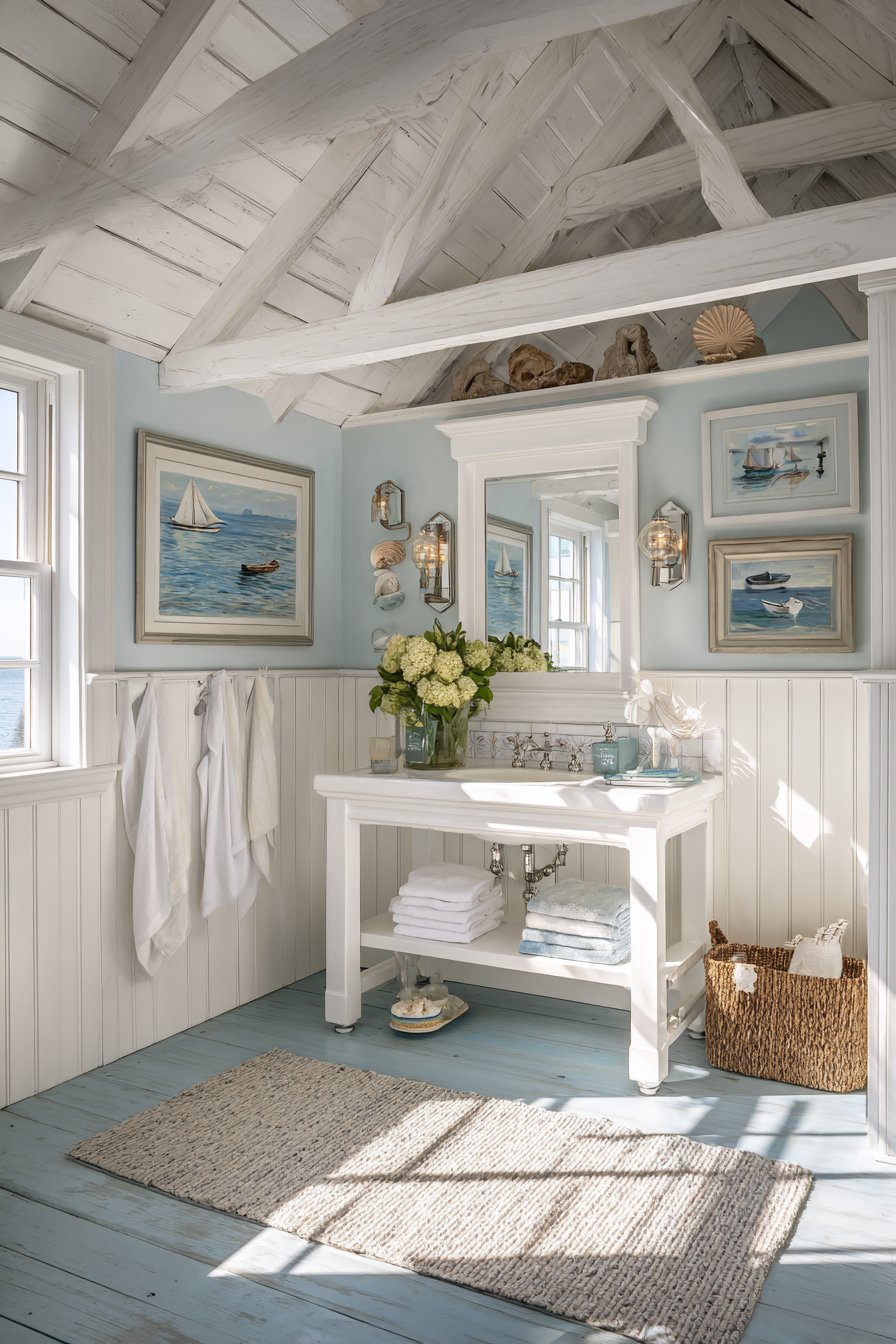
This charming design captures the timeless appeal of classic beach cottages where every element speaks to coastal heritage and nostalgic summer memories. A tongue-and-groove wood ceiling painted white with exposed beams in natural finish draws the eye upward, creating architectural interest overhead that’s often neglected in bathroom design. White beadboard wainscoting topped with crisp blue paint establishes the room’s traditional coastal character, while a white pedestal sink with cross-handle faucets provides vintage charm and practical functionality. Antique brass light fixtures and nautical-themed framed prints complete the cottage aesthetic.
The wood ceiling treatment transforms what might be a forgotten surface into a character-defining feature. The tongue-and-groove boards add texture and visual rhythm, while the exposed beams in natural finish introduce warmth and authentic architectural detail. This ceiling treatment evokes the craftsmanship of traditional beach cottages built before drop ceilings became standard, connecting the space to coastal building heritage. The combination of painted white boards and natural beams creates subtle contrast that adds depth without introducing additional colors to the palette.
Natural light from casement windows illuminates vintage finds and seashell collections displayed with care rather than profusion. The casement style itself reinforces the cottage aesthetic—these outward-opening windows were standard in traditional coastal architecture and provide superior ventilation, critical for humid bathroom environments. The antique brass fixtures introduce warm metallic notes that age beautifully, developing patina over time that enhances rather than diminishes their appeal. Nautical-themed framed prints personalize the space with maritime imagery, whether vintage charts, ship illustrations, or coastal landscapes.
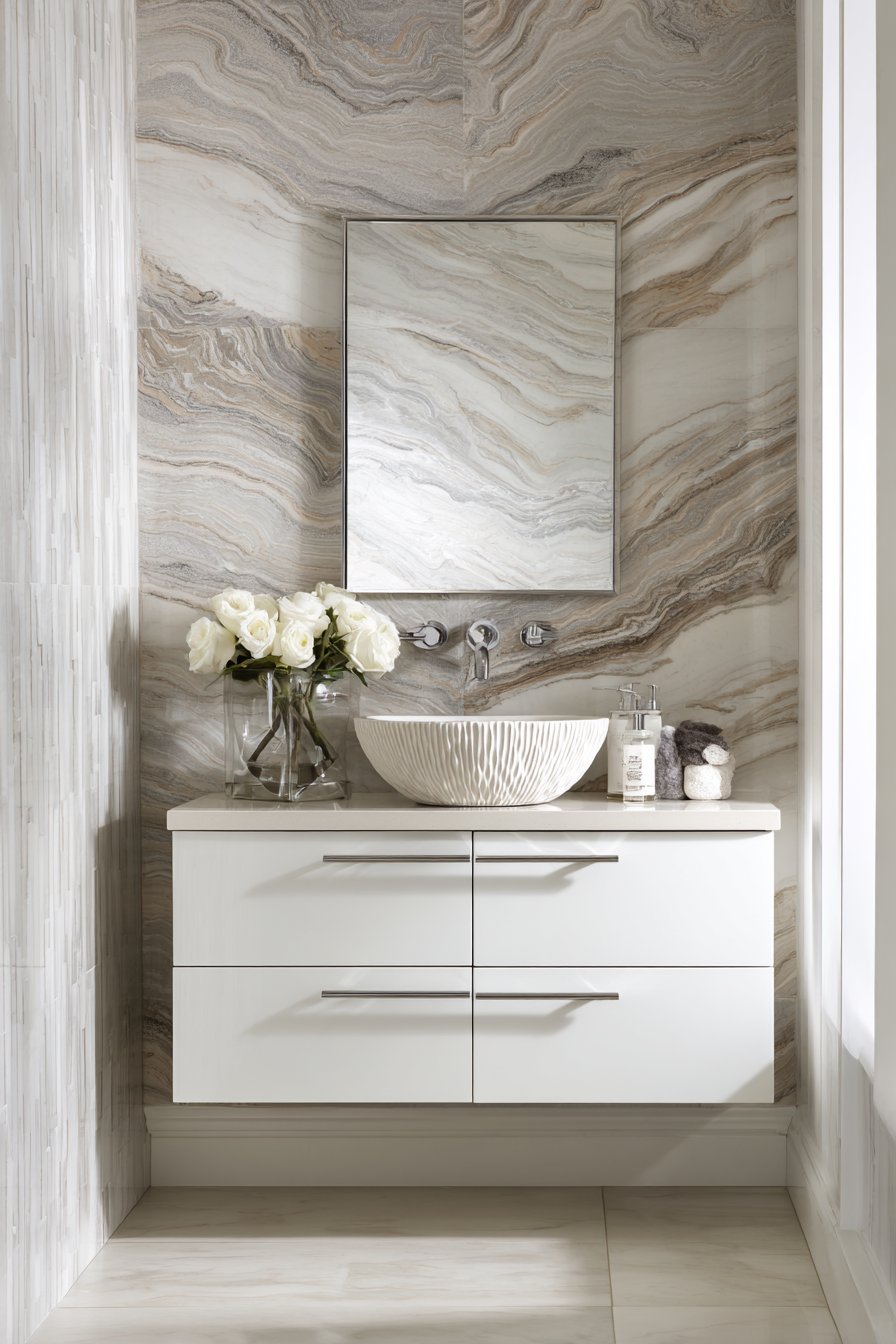
Key Design Tips:
- Install tongue-and-groove wood ceiling with exposed beams for authentic cottage character
- Paint ceiling boards white while leaving beams in natural finish for subtle contrast
- Use beadboard wainscoting topped with blue paint for traditional coastal walls
- Choose a pedestal sink with cross-handle faucets for vintage functionality
- Select antique brass fixtures that develop beautiful patina over time
- Hang casement windows for traditional style and superior bathroom ventilation
- Display vintage nautical finds and genuine seashell collections for authentic decoration
- Frame maritime-themed artwork to personalize the space with coastal imagery
14. Minimalist Seaside Tranquility
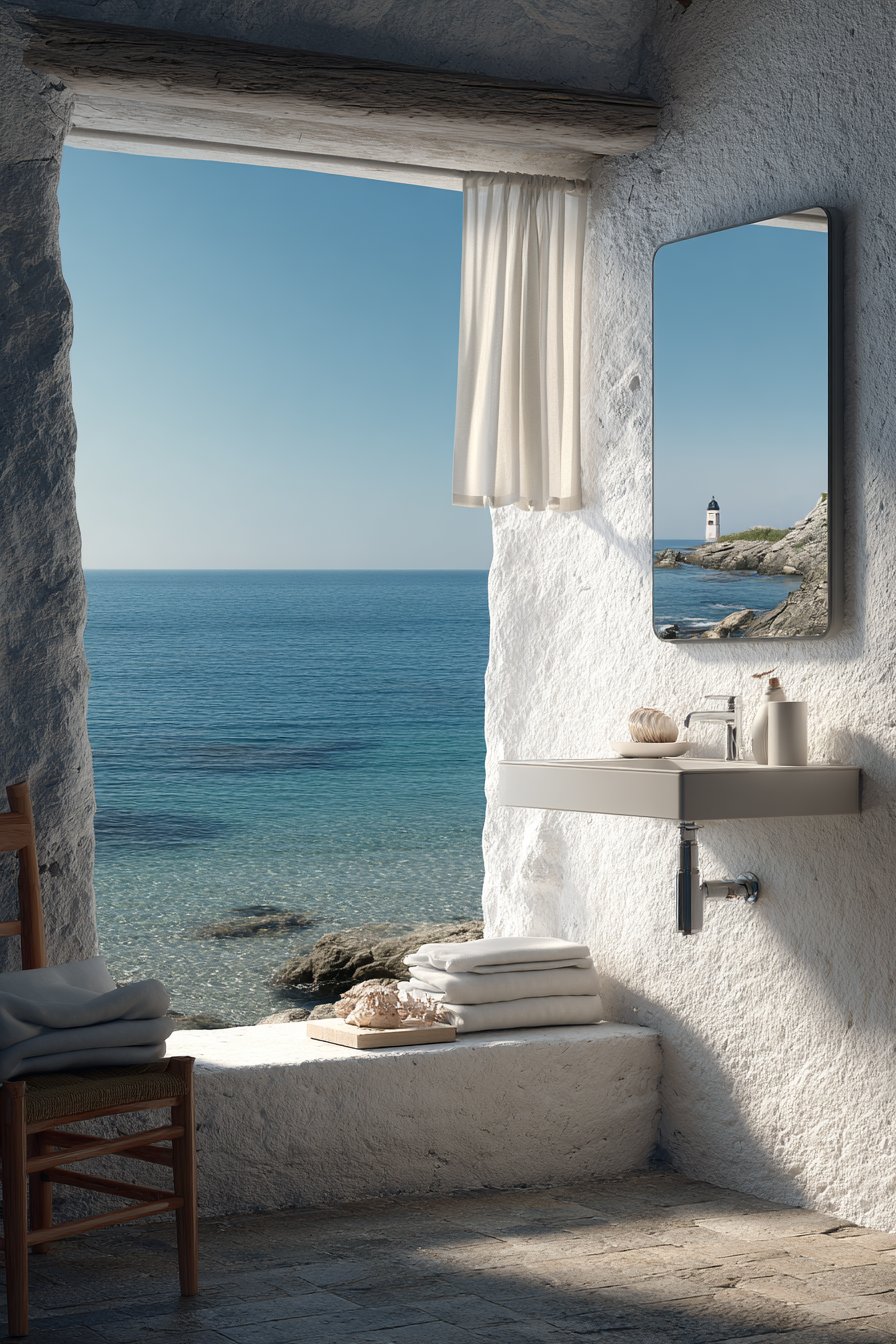
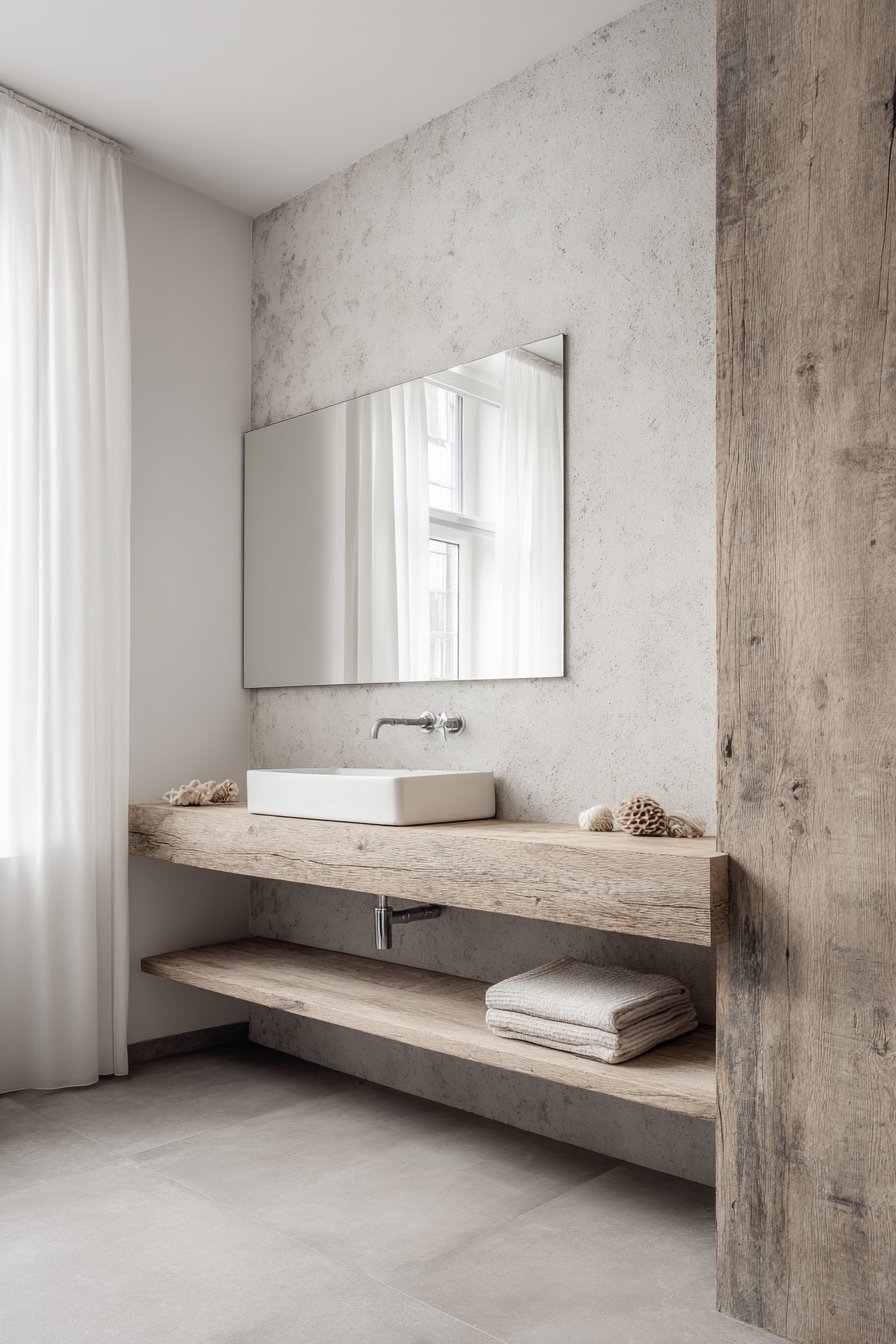
Restraint and intentionality define this minimalist coastal bathroom where every element has been carefully considered and nothing extraneous remains. Walls in soft white plaster finish provide subtle texture without pattern, while concrete-look porcelain floor tiles introduce industrial edge with practical advantages of porcelain—durability, water resistance, and easier maintenance than actual concrete. A simple wall-mounted sink with exposed plumbing in chrome creates understated style that celebrates functional honesty. A large frameless mirror reflects natural light from a window dressed simply with white linen curtain.
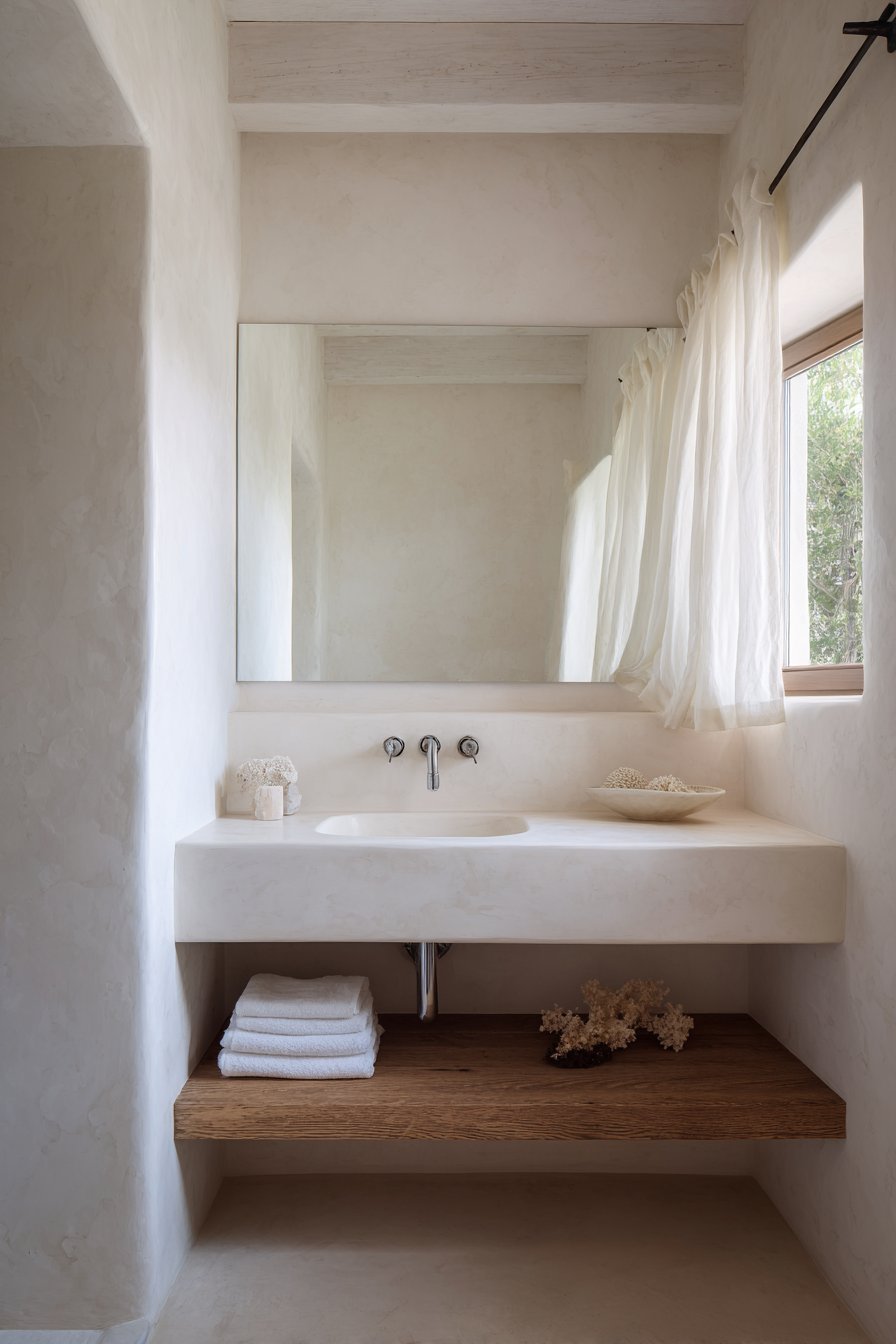
The minimalist approach to coastal design strips away decorative excess to reveal the essential elements that define seaside living: natural light, honest materials, and connection to the broader environment. The wall-mounted sink with exposed plumbing represents this philosophy perfectly—rather than hiding necessary infrastructure behind cabinetry, the design celebrates the beauty of functional components. The chrome plumbing becomes sculptural, its clean lines and reflective surface contributing to the room’s aesthetic rather than detracting from it. This approach also makes cleaning easier and repairs more accessible.
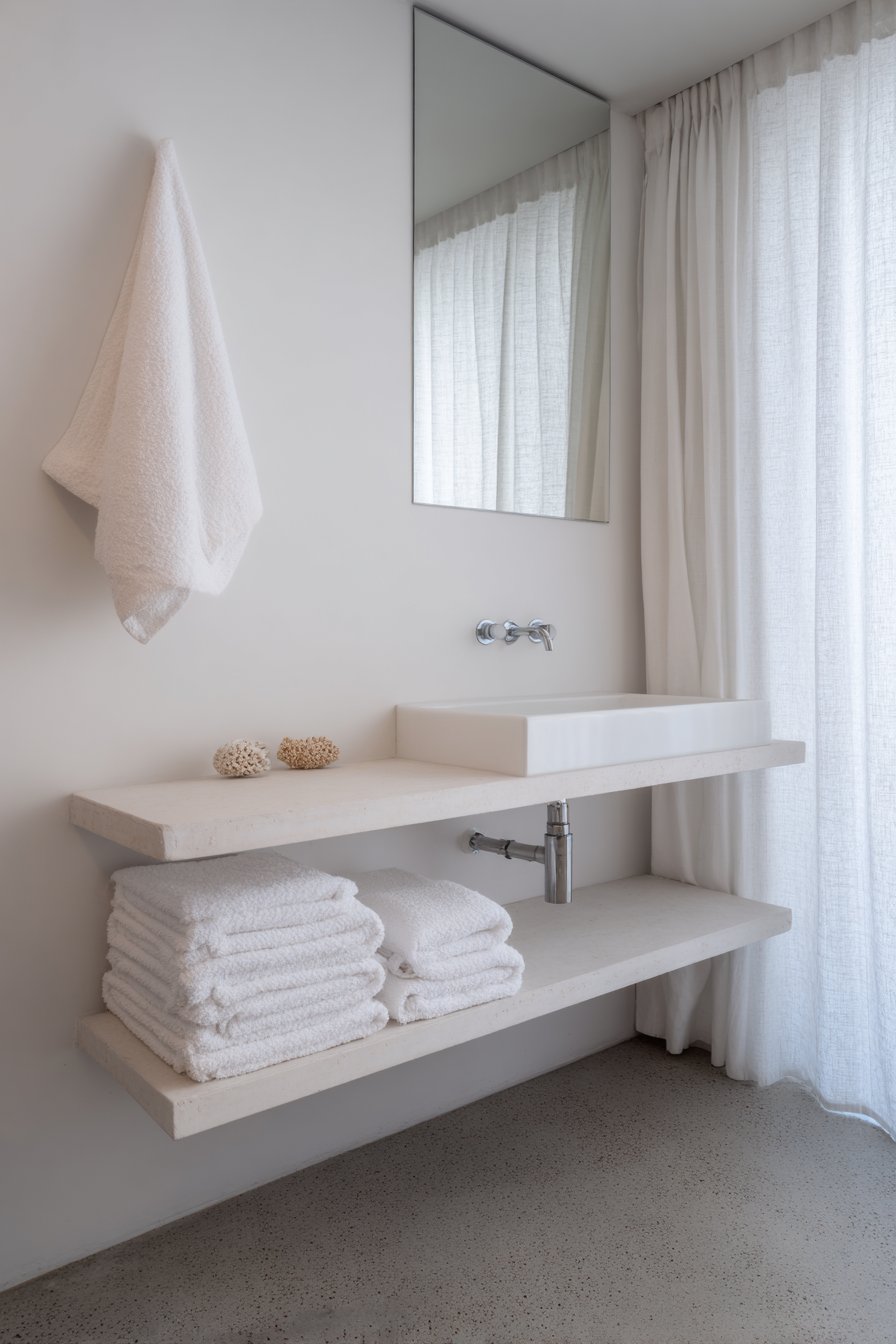
A single floating shelf in bleached oak holds neatly folded white towels and a few carefully chosen sea glass pieces—the ultimate expression of minimalist restraint. Each item on display has earned its place through beauty, function, or meaning. The bleached oak introduces the only warm tone in an otherwise cool palette, its natural grain providing organic interest without busy pattern. The sea glass pieces, shaped and frosted by ocean tumbling, represent nature’s own minimalist sculpture. This bathroom demonstrates how reducing elements to only the essential can create profound tranquility.
Key Design Tips:
- Use soft white plaster finish for walls to add subtle texture without pattern
- Choose concrete-look porcelain tiles for industrial aesthetic with practical maintenance
- Install a wall-mounted sink with exposed chrome plumbing for minimalist honesty
- Select a large frameless mirror to maximize light reflection without decorative frames
- Hang simple white linen curtains for light diffusion and privacy
- Include one floating shelf in bleached oak for minimal storage and warm accent
- Display only a few meaningful items like sea glass to maintain minimalist restraint
- Keep color palette limited to whites, grays, and natural wood tones
- Ensure excellent ventilation to prevent moisture issues on plaster walls
15. Bold Turquoise Statement Design
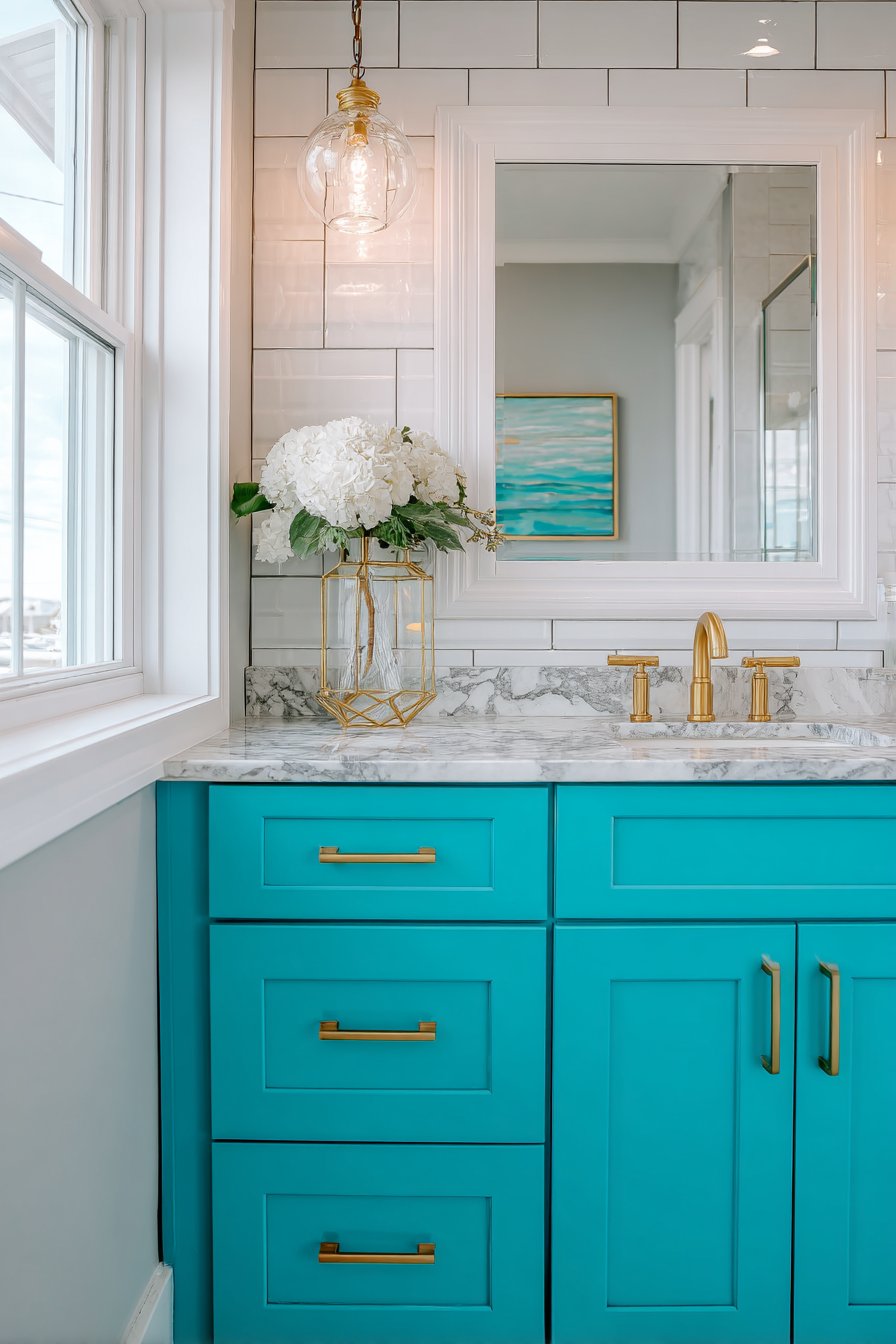
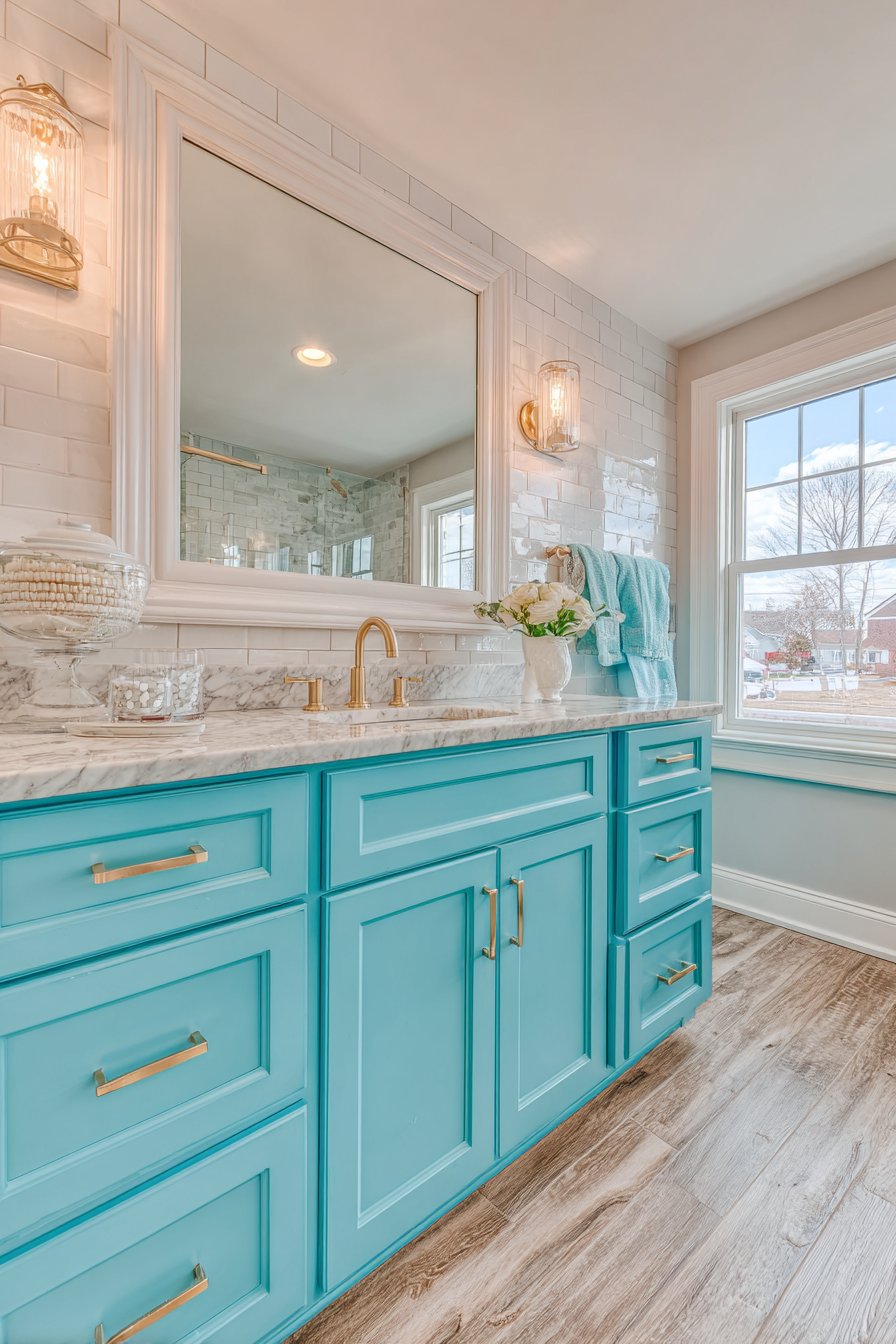
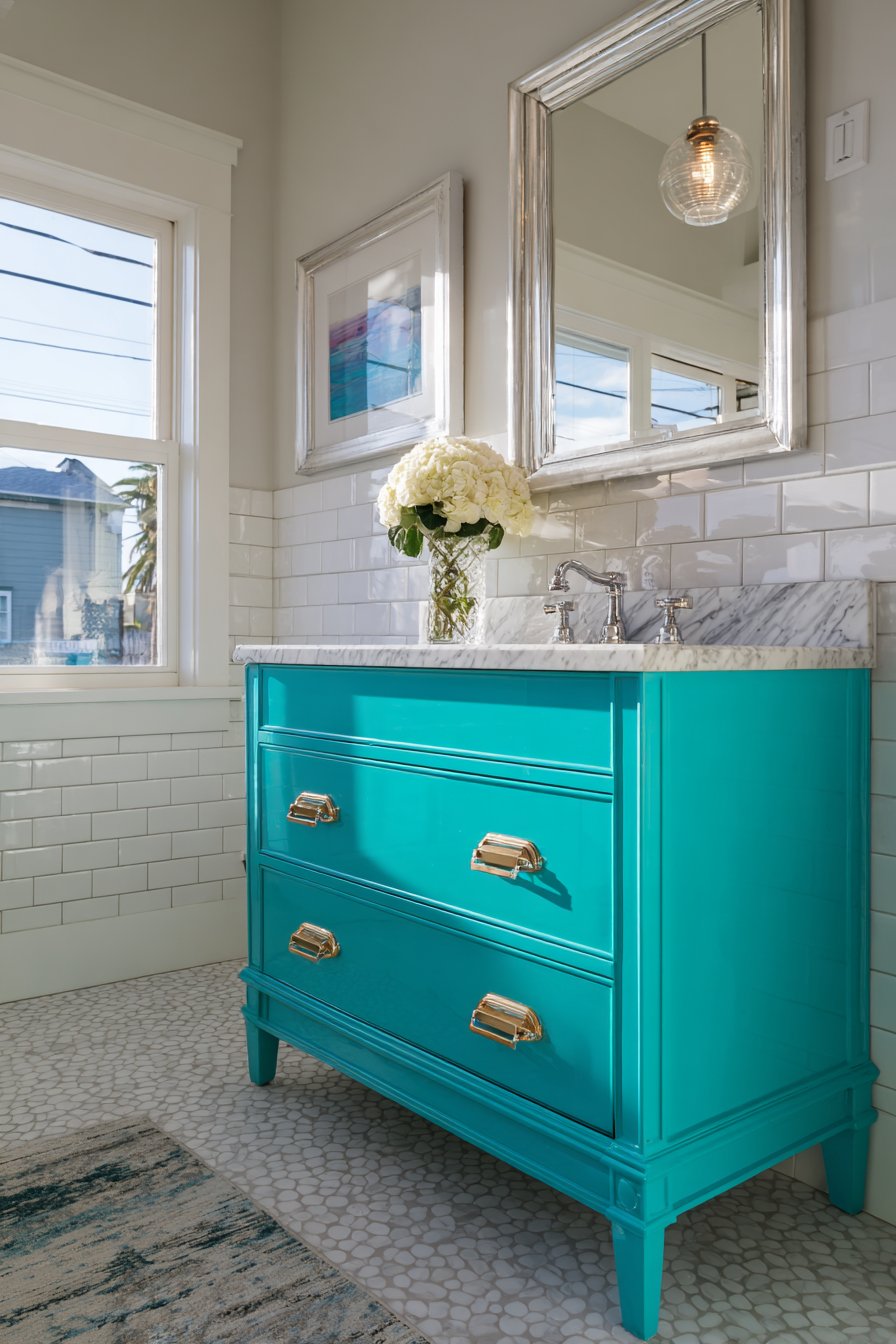
Vibrant personality emerges in this playful seaside bathroom where a turquoise painted vanity creates an energetic focal point against classic white subway tiles. This bold color choice moves beyond safe neutrals to embrace the more exuberant aspects of coastal living—the brilliant hues of tropical waters, vintage beach postcards, and sun-faded surfboards. White marble countertop provides elegant contrast, its cool luxury tempering the vanity’s saturated color. Gold hardware and fixtures add unexpected warmth, their luminous finish creating sophisticated interplay with the vivid turquoise.
The turquoise vanity demonstrates how a single bold element can transform an entire space. Against the neutral backdrop of white subway tiles and marble, the saturated blue-green cabinet commands attention while remaining grounded by quality materials and thoughtful details. The specific shade of turquoise matters—too blue and it reads cold, too green and it feels unnatural. The ideal coastal turquoise contains both blue and green in balance, suggesting the color of shallow tropical waters where sunlight illuminates sandy bottom through clear sea.
Gold fixtures and hardware represent an increasingly popular choice in contemporary coastal design, offering warmth that traditional chrome and nickel cannot match. Gold’s reflective properties create visual excitement without the harshness of silver-toned metals, while its association with luxury elevates the overall design. The white framed mirror and simple glass cylinder pendant light maintain balance, ensuring the bold vanity and gold accents don’t overwhelm the space. Natural light from a white-trimmed window enhances the turquoise color, which appears slightly different throughout the day as sun angles change.
Key Design Tips:
- Paint vanity in bold turquoise to create an energetic coastal focal point
- Choose turquoise shades that balance blue and green for authentic tropical water color
- Pair turquoise cabinetry with white marble countertop for elegant contrast
- Select gold hardware and fixtures for warm, luxurious metallic accents
- Use white subway tiles as neutral backdrop to showcase bold color choices
- Keep mirrors and lighting fixtures simple to avoid competing with bold vanity
- Maximize natural light to show color variations throughout the day
- Consider the undertones in turquoise to ensure it complements other elements
16. Tropical Resort-Style Retreat
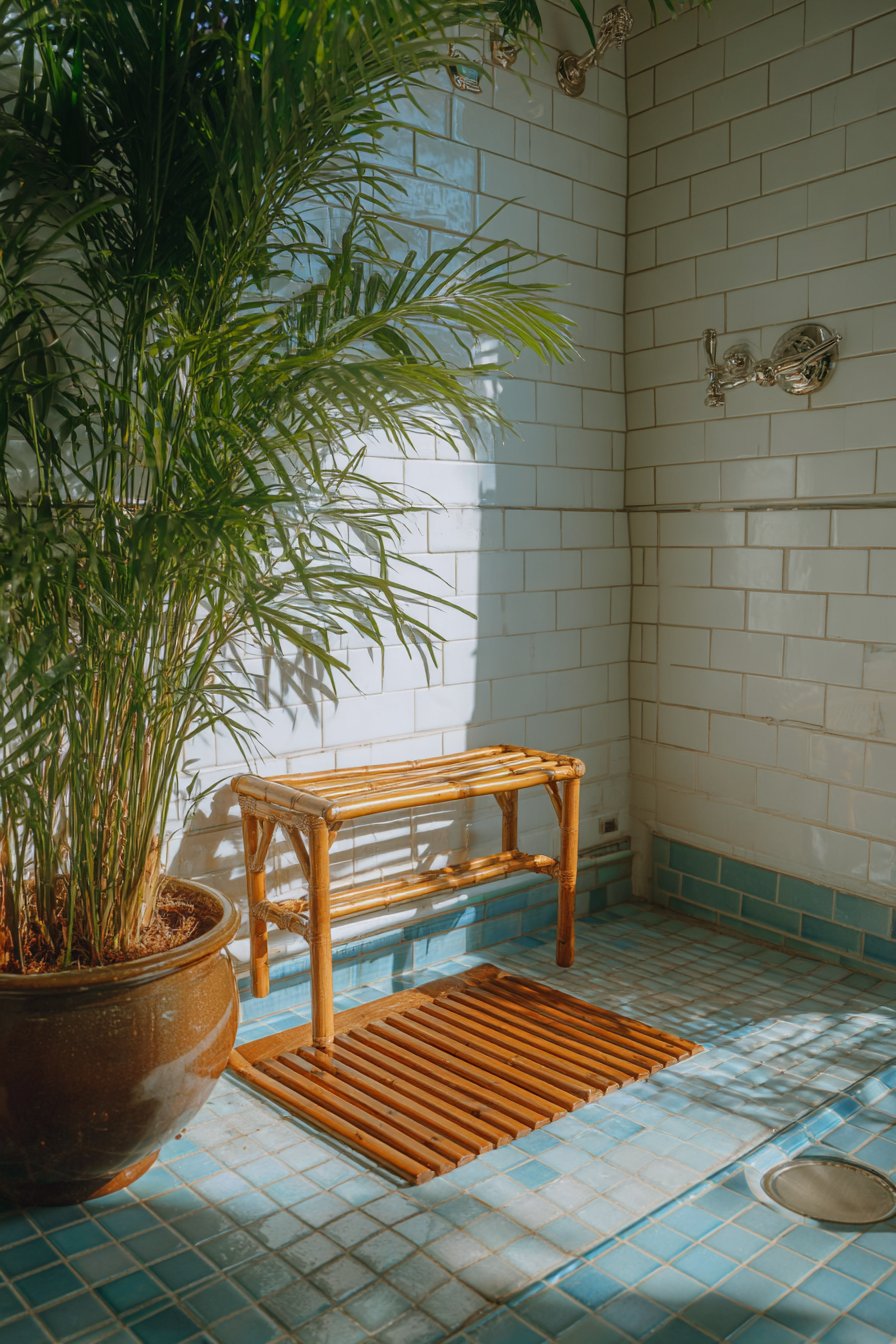
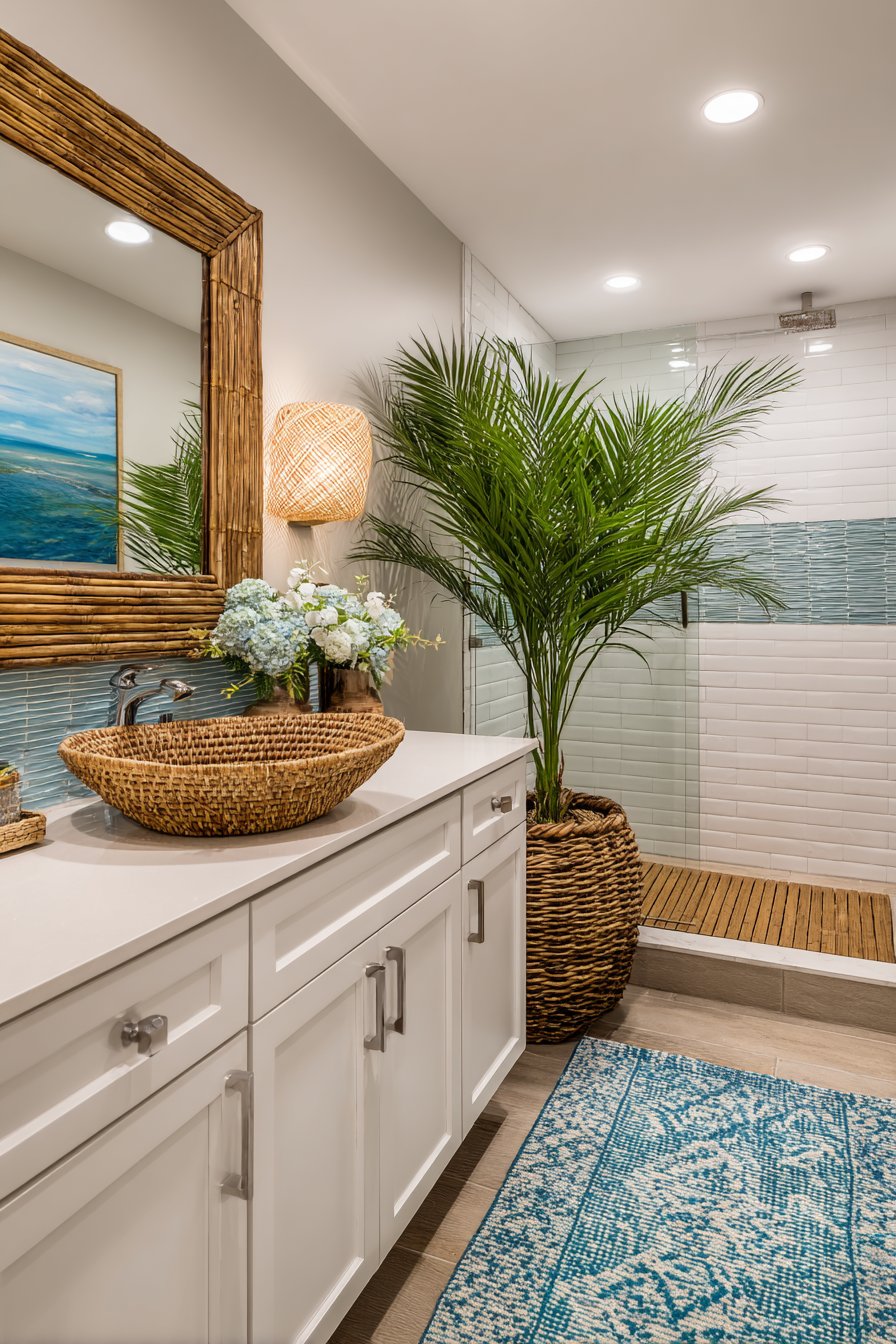
Warm climate coastal living inspires this tropical seaside bathroom where bamboo accents bring organic warmth and sustainable style. White walls create a bright, fresh backdrop while natural bamboo elements—mirror frame, storage ladder, and accessories—introduce the relaxed elegance associated with resort destinations. A walk-in shower features classic white subway tiles with sea glass blue border tiles that add color without overwhelming the clean aesthetic. A teak shower mat and accessories provide rich wood tones and practical functionality, while a potted palm adds lush greenery. Chrome fixtures maintain a fresh, clean appearance.
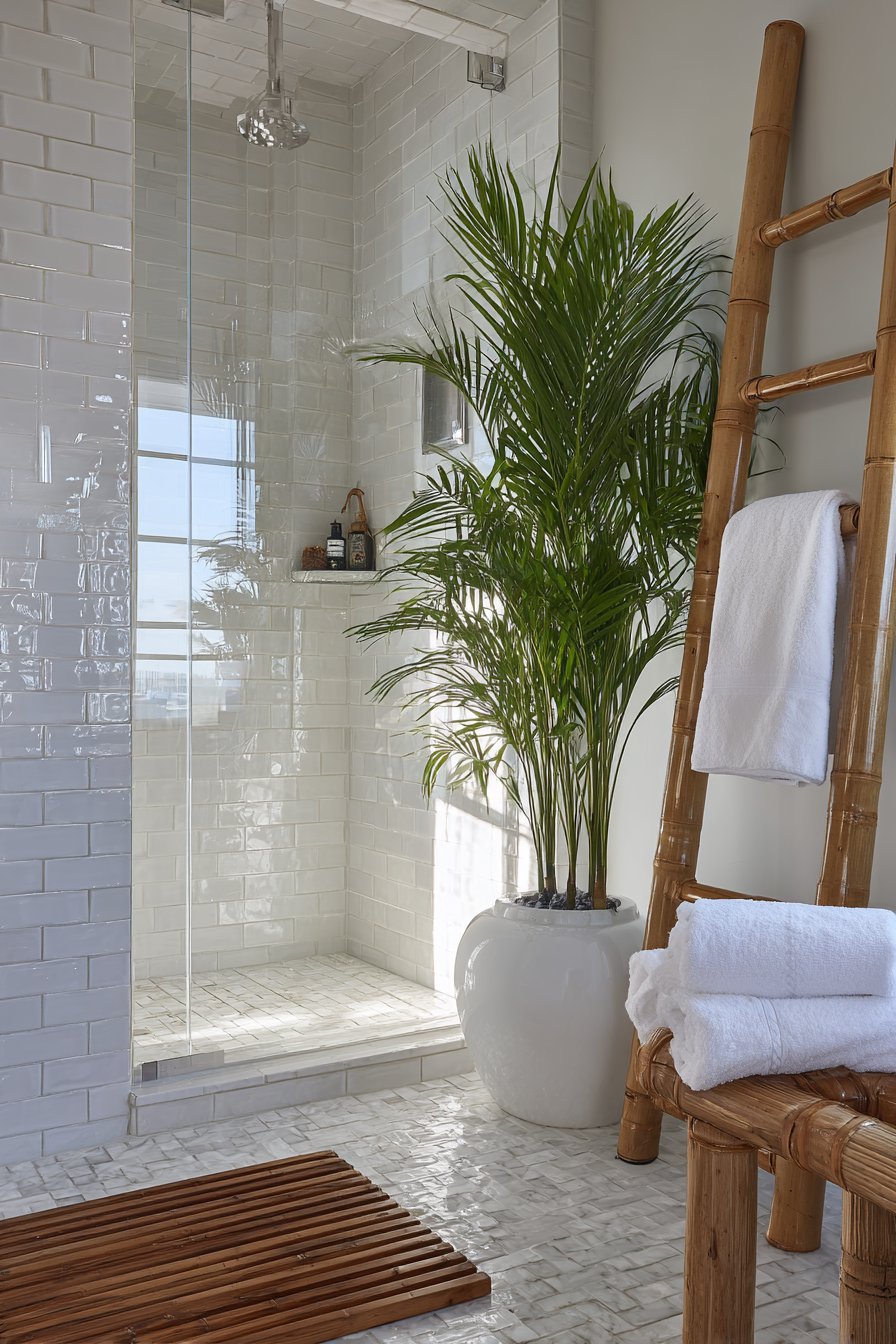
The bamboo elements represent sustainable material choices that align with coastal environmental consciousness. Bamboo grows rapidly, requires minimal pesticides, and regenerates without replanting—making it one of the most sustainable building materials available. The bamboo ladder provides vertical storage that maximizes wall space, perfect for hanging towels or displaying accessories. Its natural finish and organic form soften the bathroom’s hard surfaces, introducing curves and natural variation to counter the predominance of straight lines and manufactured materials.
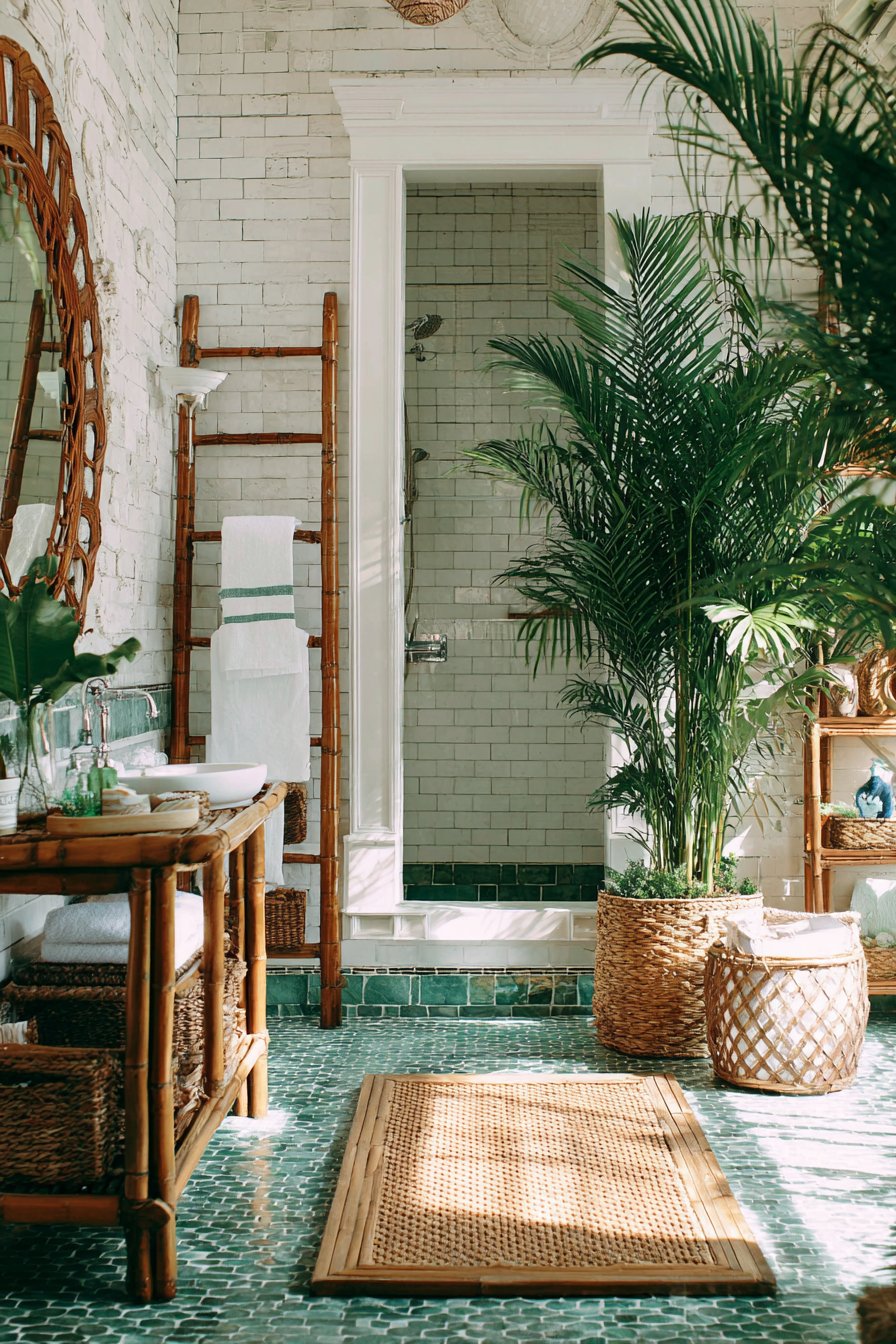
The walk-in shower demonstrates how subtle color introduction through border tiles creates impact without commitment. The sea glass blue border tiles add personality and coastal reference while the white subway tiles maintain timeless versatility. If the homeowner tires of the blue accent, changing border tiles is far simpler than repainting an entire room. The teak shower mat introduces luxury underfoot while its slatted design promotes drainage and prevents slipping. The potted palm brings life and air-purifying benefits, its tropical foliage reinforcing the resort atmosphere.
Key Design Tips:
- Use bamboo for mirrors, ladders, and accessories for sustainable coastal style
- Install a bamboo storage ladder to maximize vertical space for towels and accessories
- Create shower interest with white subway tiles and sea glass blue border tiles
- Include a teak shower mat for luxury, drainage, and slip resistance
- Add a potted palm for tropical atmosphere and air purification
- Choose chrome fixtures for their clean, fresh appearance in tropical settings
- Ensure adequate humidity control to protect natural bamboo and teak materials
- Select palm varieties suited to bathroom humidity and light conditions
17. Refined Marble and Gray Elegance
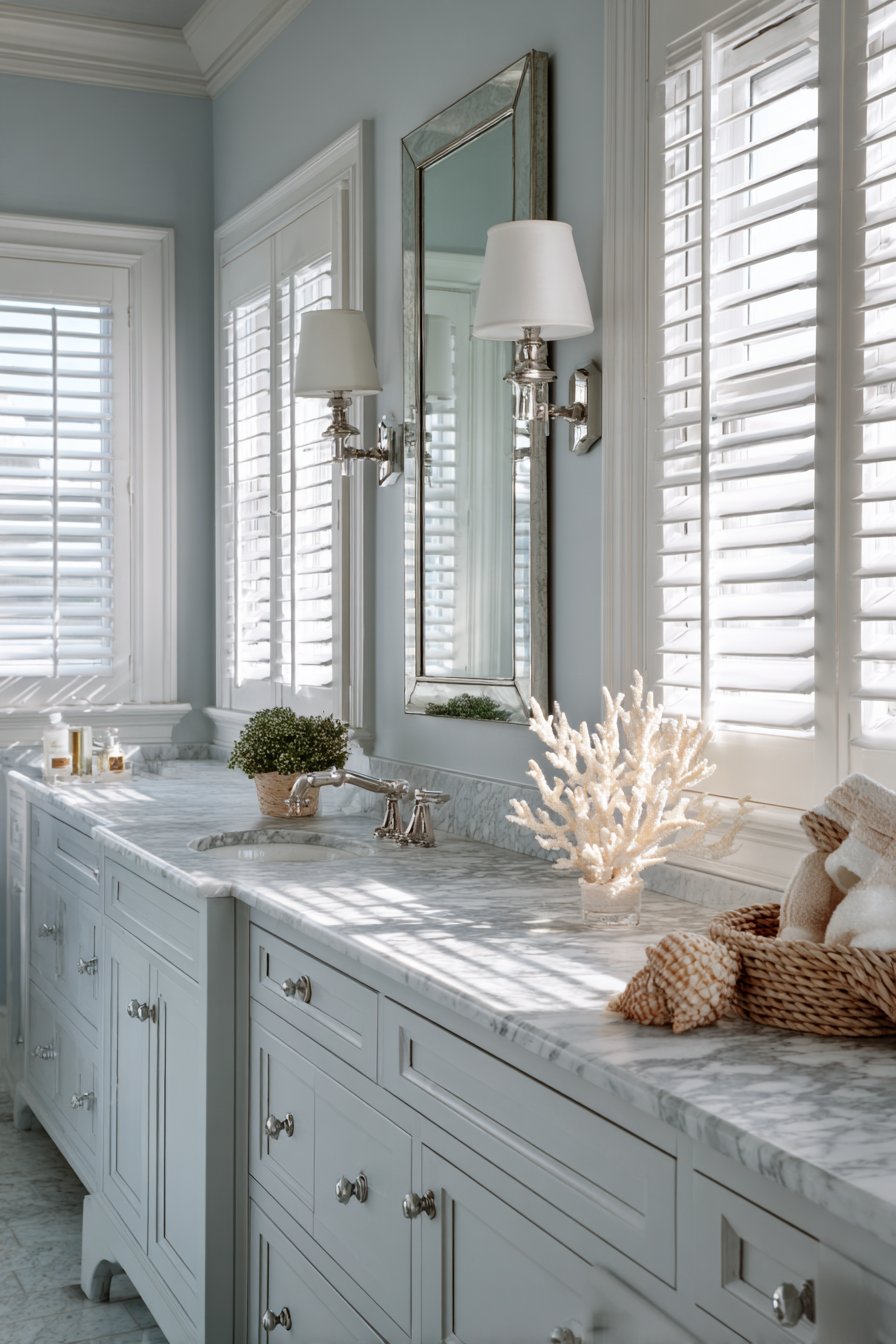
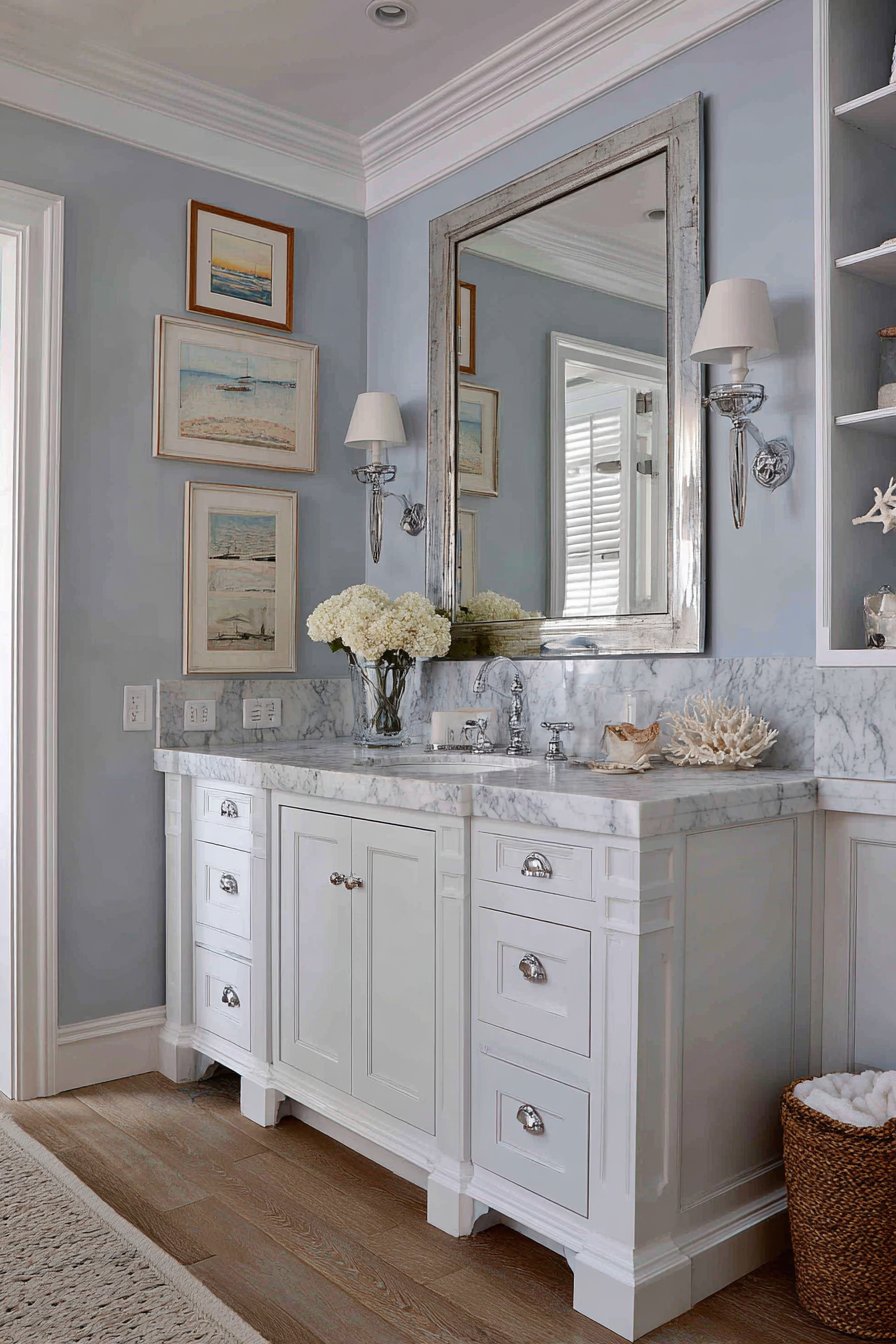
Sophisticated restraint characterizes this elegant seaside bathroom where soft gray cabinetry and white Carrara marble create a refined coastal atmosphere. The marble-topped vanity features distinctive gray veining that provides natural pattern and visual interest, while the soft gray cabinet finish offers subtle color without the heaviness of darker tones. Polished nickel hardware adds traditional elegance, and the marble extends as backsplash to create material continuity and protect walls from water damage. Sconce lighting with white linen shades flanks a beveled mirror, providing flattering illumination for grooming activities.
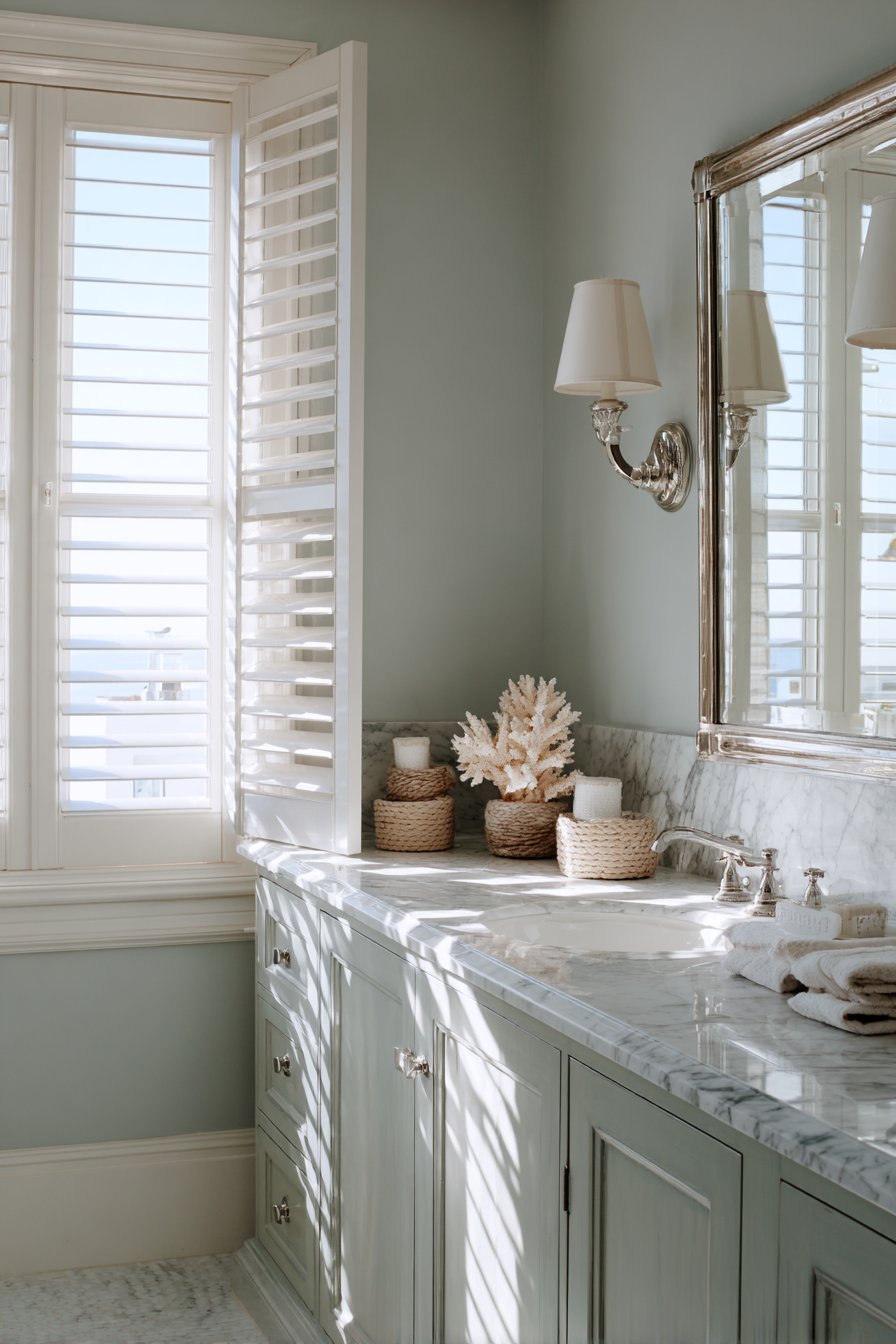
The Carrara marble represents a timeless material choice that has graced elegant interiors for centuries. Its white background with gray veining creates natural pattern that never repeats, ensuring the vanity top remains visually interesting regardless of how many times it’s seen. The gray veining in the marble harmonizes beautifully with the gray cabinetry, creating cohesion through repetition of color. The marble backsplash protects walls while eliminating visual breaks that would occur with different materials, creating a seamless, luxurious appearance.
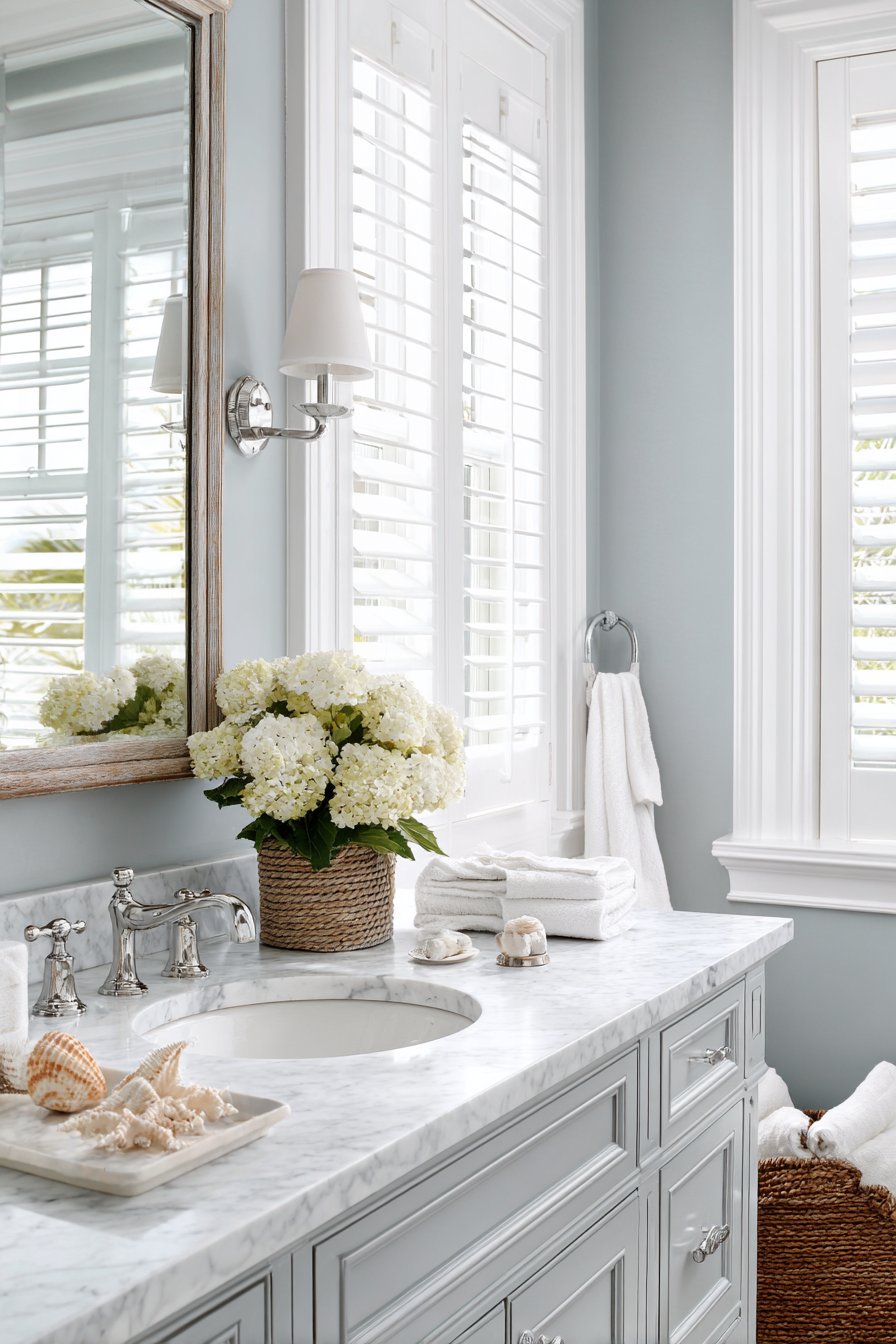
Pale blue-gray walls create a sophisticated coastal ambiance that moves beyond obvious beach references to suggest more subtle connections—morning mist over water, weathered beach fences, or distant horizons. White plantation shutters provide light control and privacy while enhancing the room’s traditional character. Subtle coastal touches like rope-wrapped soap dispensers and coral specimens add seaside references without overwhelming the refined aesthetic. This bathroom proves that coastal design can be thoroughly sophisticated, foregoing obvious nautical motifs for a more nuanced interpretation of seaside elegance.
Key Design Tips:
- Choose white Carrara marble for timeless elegance and natural gray veining
- Select soft gray cabinetry to provide subtle color without heaviness
- Use polished nickel hardware for traditional elegance and durability
- Extend marble as backsplash to create material continuity and protect walls
- Install sconce lighting with linen shades for flattering, glare-free illumination
- Paint walls in pale blue-gray for sophisticated coastal atmosphere
- Add plantation shutters for traditional light control and enhanced character
- Include subtle coastal touches like rope accessories and coral specimens
- Seal marble properly to protect against water damage and staining
18. Practical Master Bath Efficiency
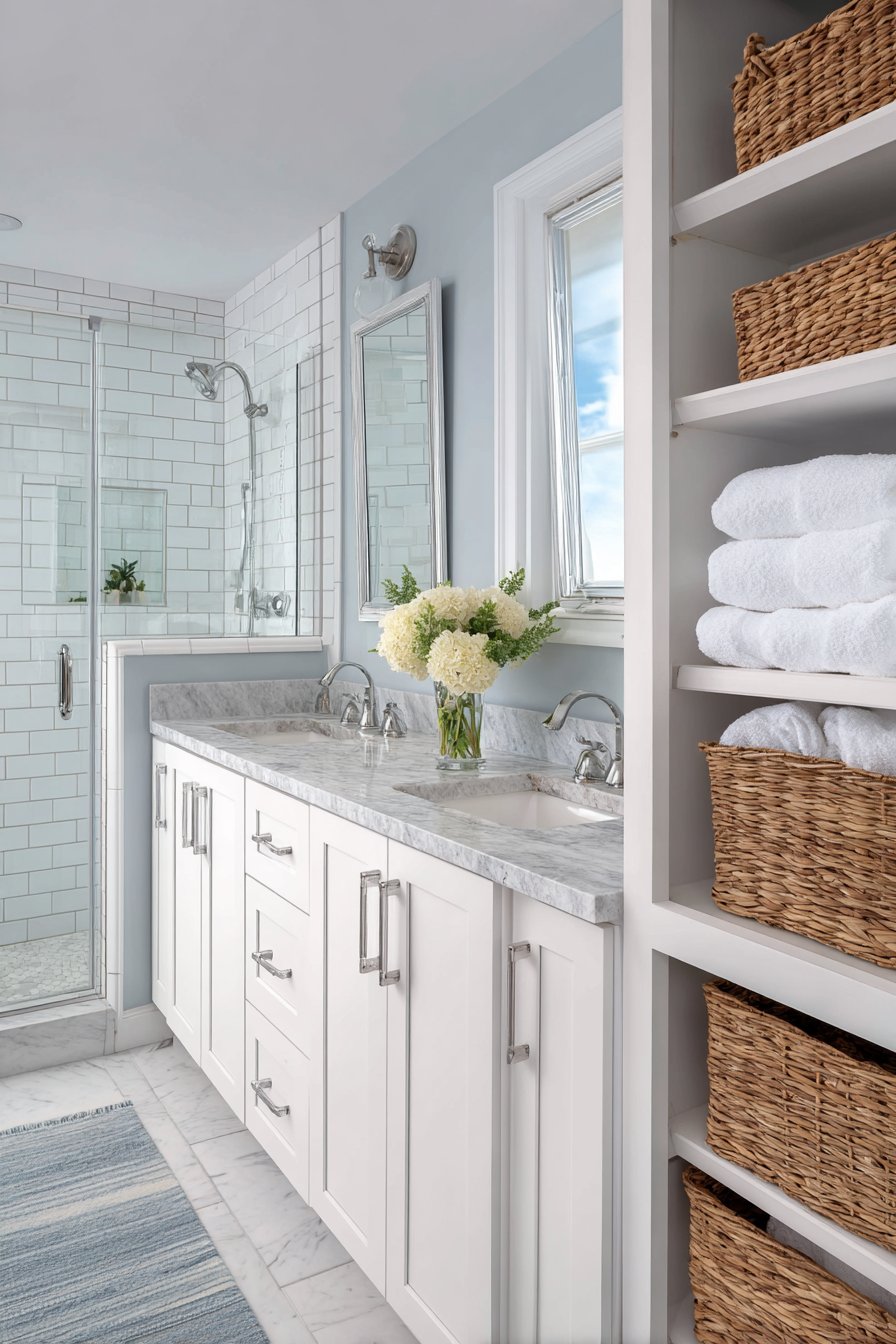
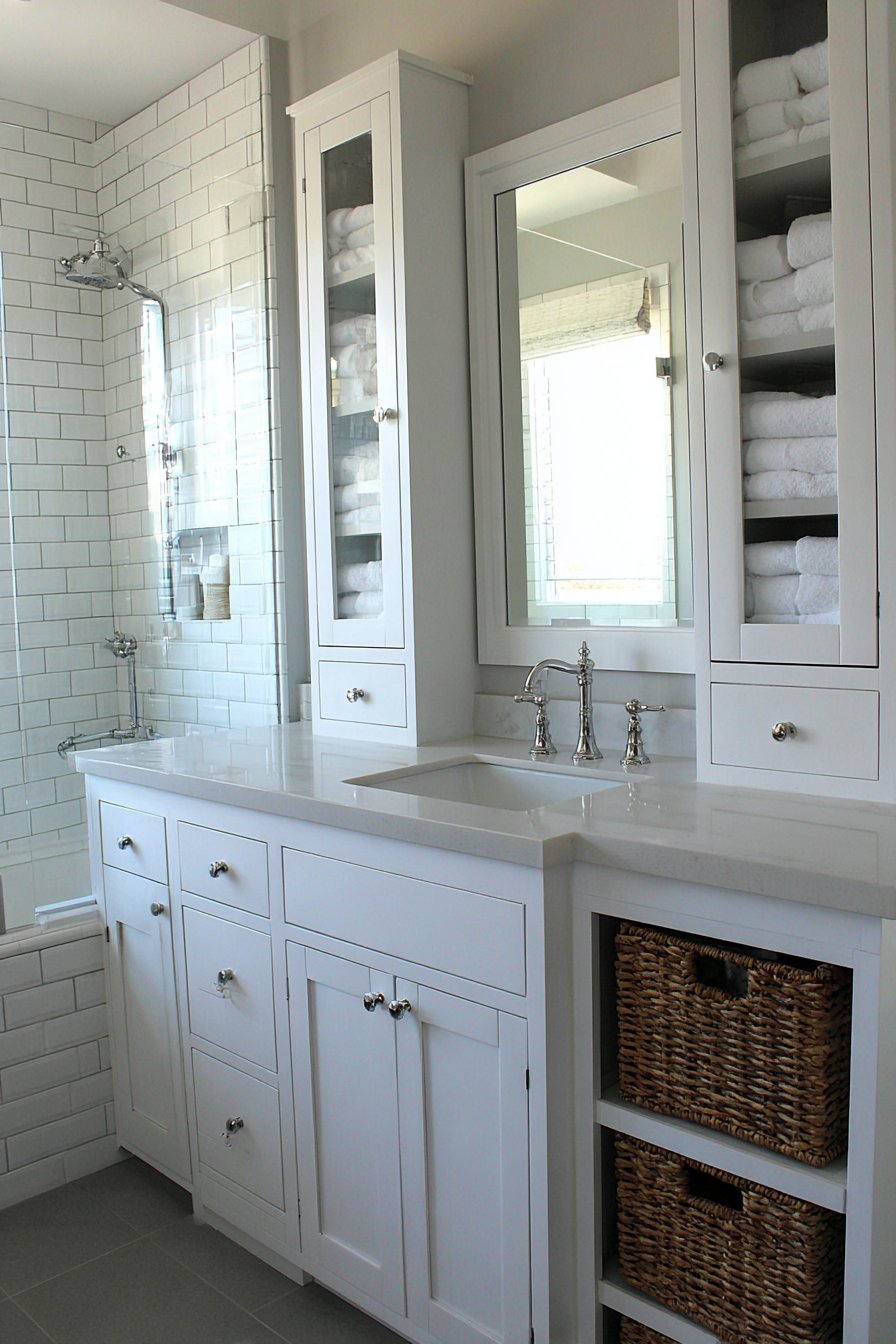
This well-planned master bathroom demonstrates how efficient design and coastal style unite to create spaces that serve real daily needs while maintaining aesthetic appeal. A double vanity with white shaker-style cabinetry and gray quartz countertop provides ample preparation space for two users, while polished chrome faucets and simple rectangular mirrors deliver straightforward functionality. The white subway tile shower surround with clear glass enclosure maximizes light penetration, while coastal blue-gray walls create a calming environment. A built-in linen closet with glass-front doors displays neatly organized white towels and woven baskets.
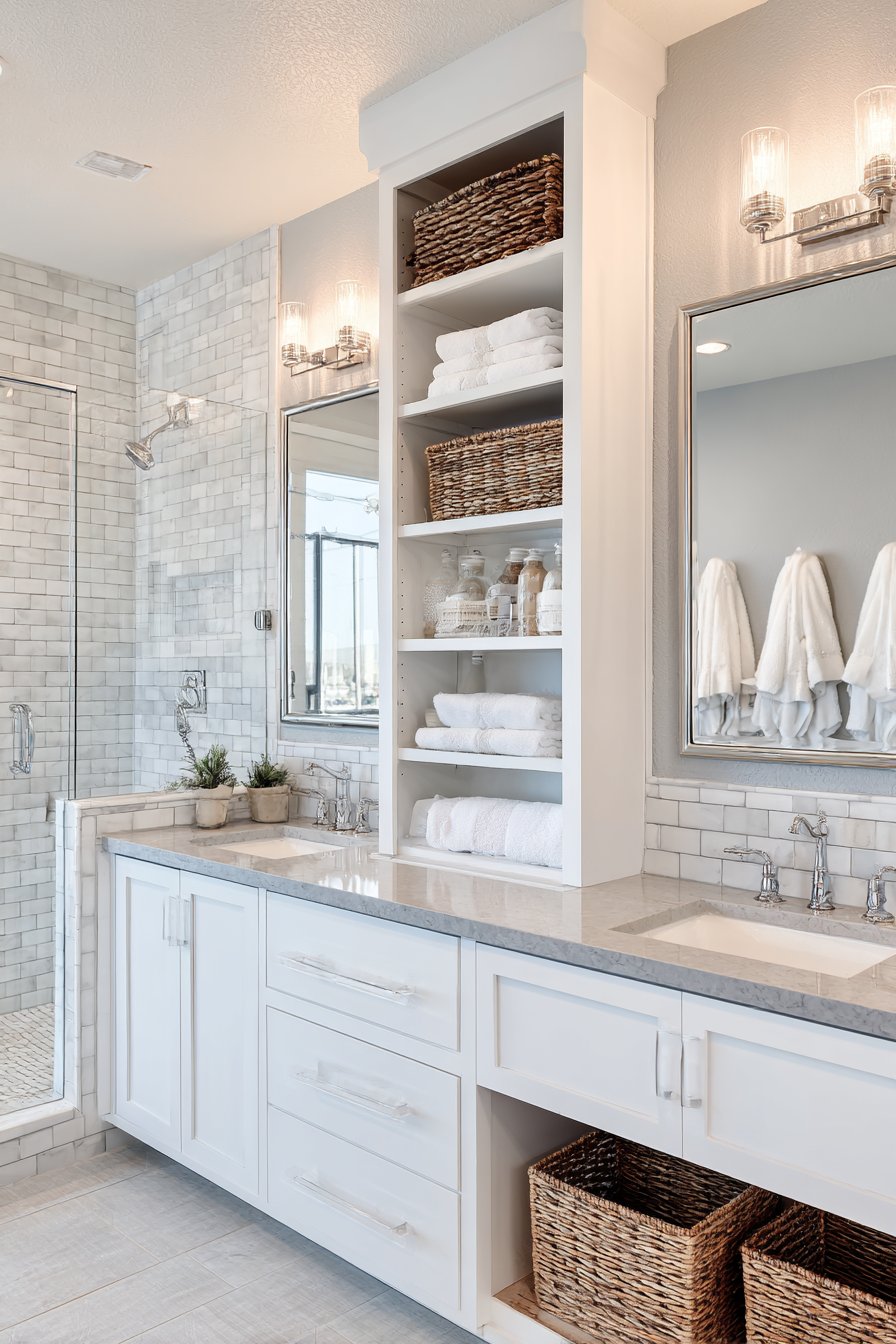
The shaker-style cabinetry represents timeless American craftsmanship characterized by clean lines, recessed panels, and absence of ornate decoration—qualities that align perfectly with coastal design’s emphasis on simplicity and functionality. The white finish keeps the cabinetry feeling fresh and spacious, while the gray quartz countertop introduces subtle color and superior durability. Quartz offers advantages over natural stone—it’s non-porous, doesn’t require sealing, and resists staining—making it ideal for busy master bathrooms where maintenance time is limited.
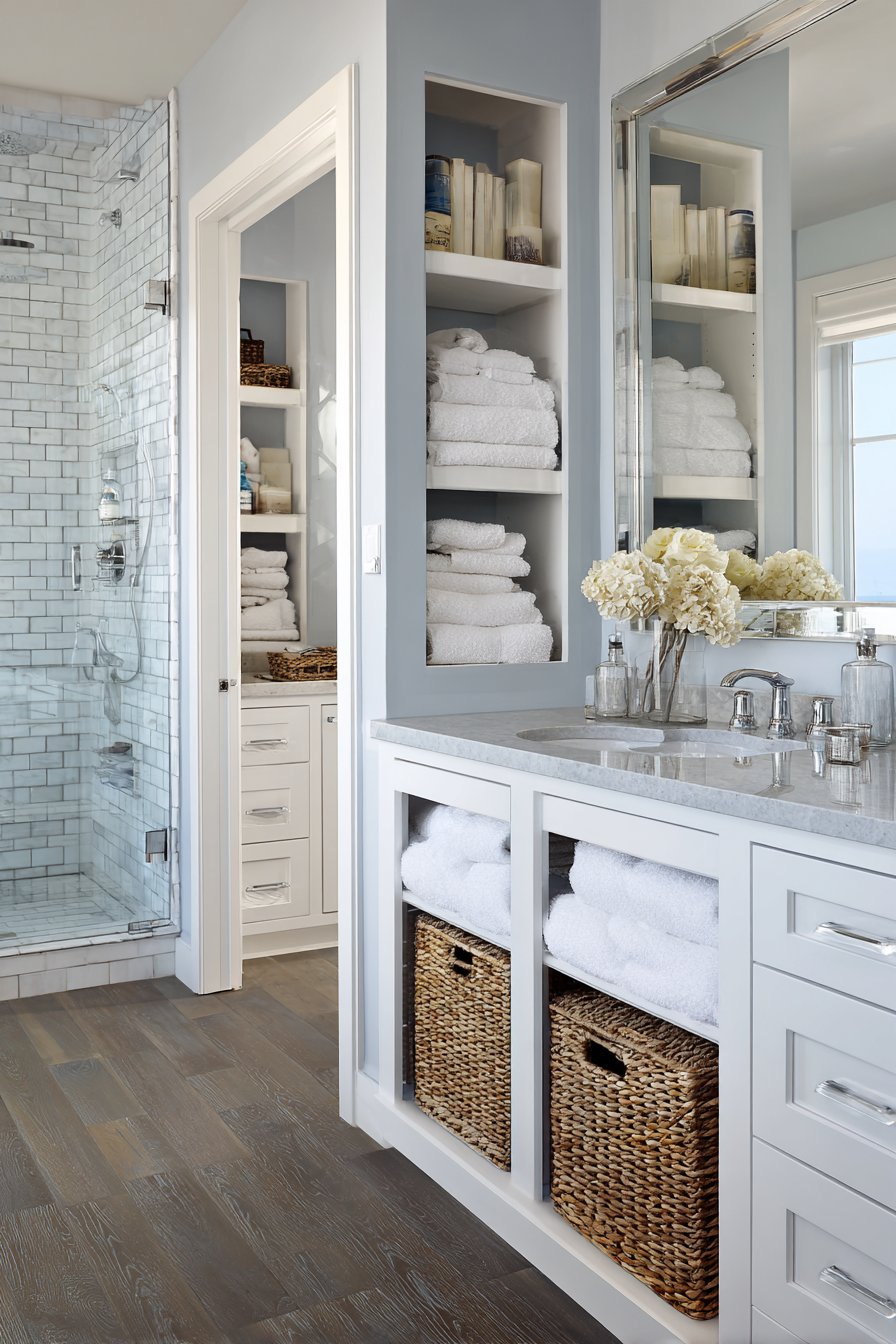
The built-in linen closet with glass-front doors demonstrates how storage can be both functional and decorative. The glass fronts require organization discipline—only attractive, neatly arranged items should be displayed—but this accountability often leads to better habits and more pleasant spaces. The combination of visible storage for towels and concealed storage in woven baskets provides flexibility for displaying attractive items while hiding necessities. The coastal blue-gray walls create a serene atmosphere without introducing bold colors that might tire over time in a frequently used master bath.
Key Design Tips:
- Install a double vanity to accommodate couples in master bathrooms
- Choose shaker-style cabinetry for timeless appeal and coastal simplicity
- Select gray quartz countertops for durability and low-maintenance luxury
- Use polished chrome faucets for classic functionality and easy maintenance
- Install white subway tile in showers to maximize light and create clean backdrop
- Paint walls in coastal blue-gray for calming atmosphere in frequently used spaces
- Include built-in linen closets with glass-front doors for organized display storage
- Use woven baskets within storage areas to conceal less attractive necessities
- Ensure adequate lighting at the vanity for grooming activities
19. Charming Powder Room Intimacy
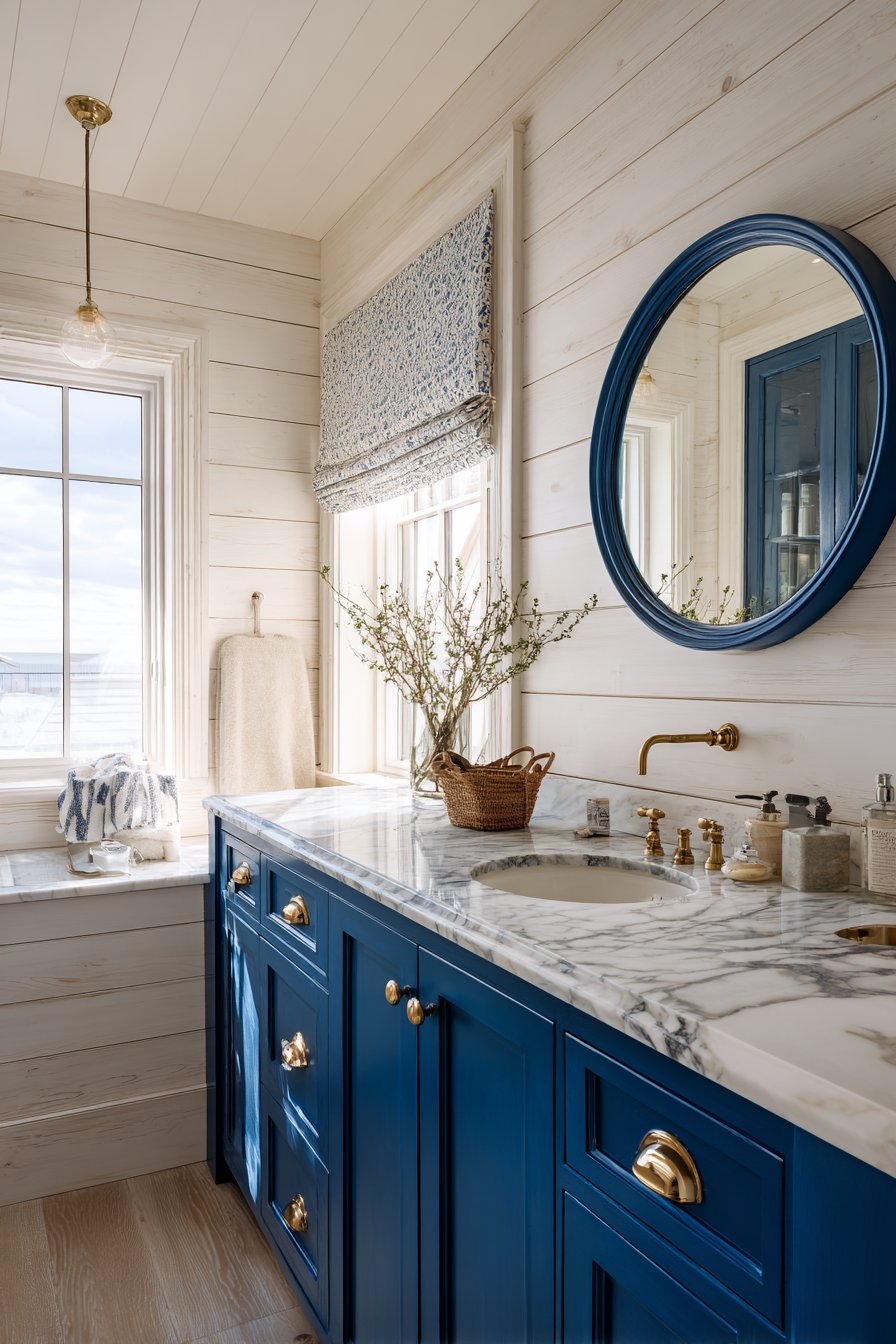
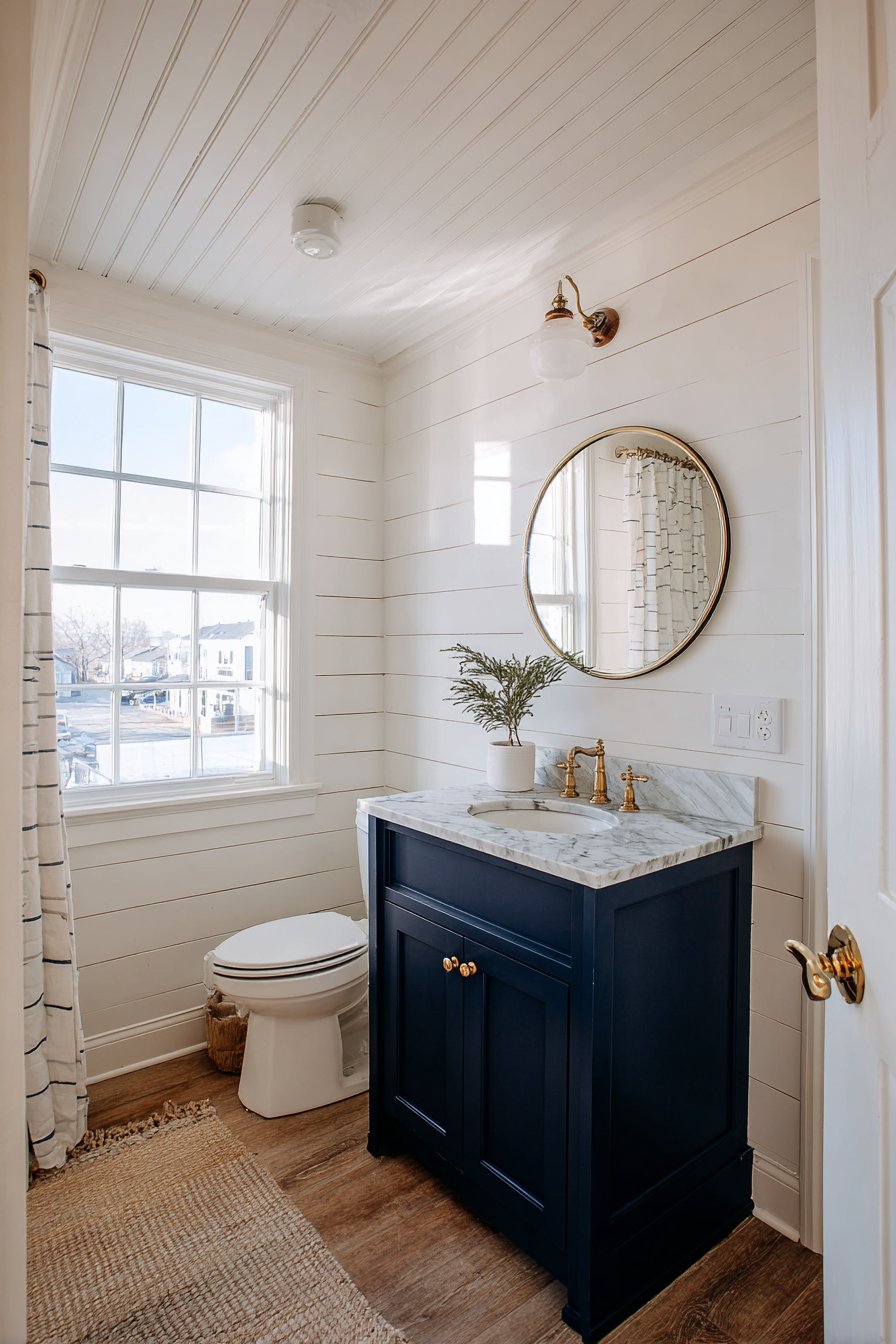
This cozy powder room proves that small spaces can make big style statements when designed with intention and confidence. White shiplap walls create classic coastal texture while a statement navy blue vanity with marble top commands attention in the intimate space. A brass faucet and cabinet hardware add warmth and vintage character, while a round porthole mirror reinforces the maritime theme without feeling kitschy. White beadboard ceiling and a simple pendant light fixture complete the carefully composed small space. A small window with cafe curtain provides privacy while allowing natural light.
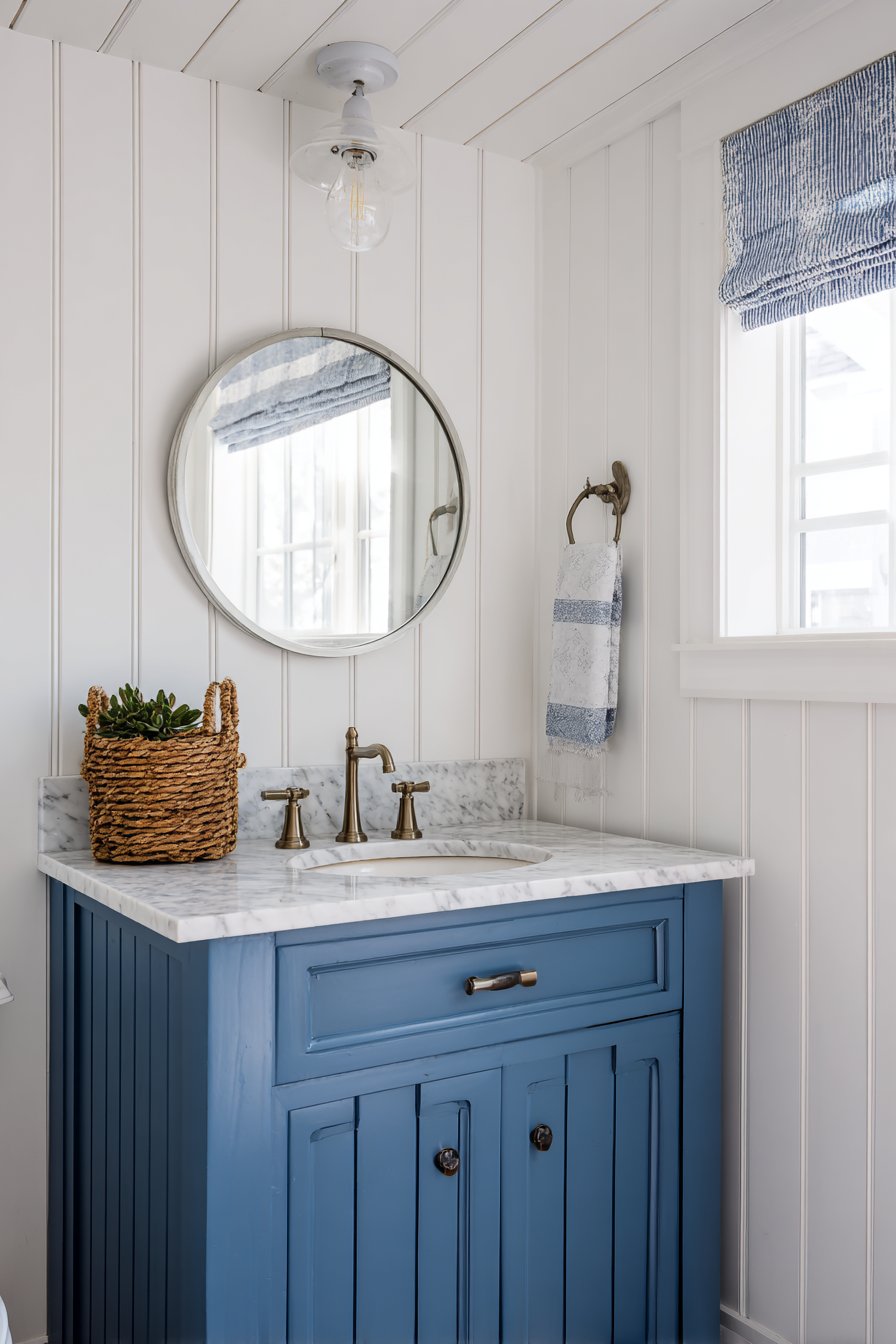
The powder room’s limited size actually works to the design’s advantage—bold choices that might overwhelm larger spaces create perfect impact in compact areas. The navy vanity makes a confident statement precisely because it occupies substantial visual real estate in the small room. The marble top prevents the navy from feeling too heavy, its white surface and gray veining providing essential light contrast. The brass fixtures and hardware introduce warmth that gold or copper could not match, their traditional finish suggesting vintage maritime instruments and ship fittings.
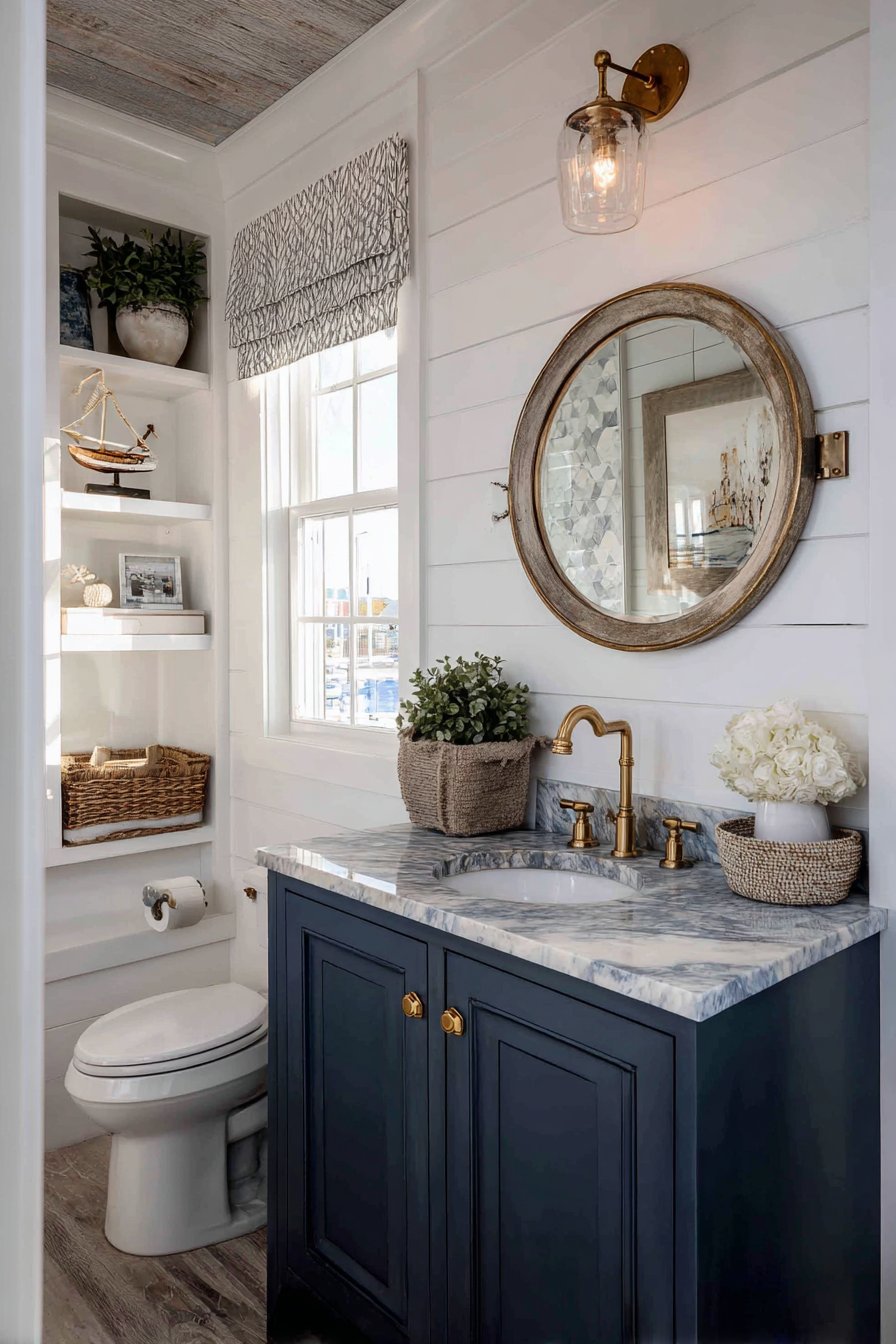
The porthole mirror serves as the room’s charming focal point, its circular form providing relief from the predominance of rectangular elements while making obvious reference to ship architecture. The white shiplap walls and beadboard ceiling create envelope of coastal texture without introducing pattern or color that would compete with the navy vanity. The cafe curtain solution—covering only the lower portion of a small window—provides privacy for users while allowing natural light to enter from the upper window area, a practical solution for powder rooms that need both qualities.
Key Design Tips:
- Paint vanity in navy blue to create bold focal point in small powder rooms
- Choose marble countertops to provide light contrast against dark cabinetry
- Select brass faucets and hardware for warm, vintage maritime character
- Install a porthole mirror to reinforce nautical theme and provide circular contrast
- Use shiplap walls and beadboard ceiling for coastal texture without color
- Include a simple pendant light fixture for adequate illumination without visual clutter
- Hang cafe curtains on small windows for privacy while preserving upper window light
- Keep powder room design bold and confident—small spaces can handle dramatic choices
20. Luxurious Ocean-View Bathing Sanctuary
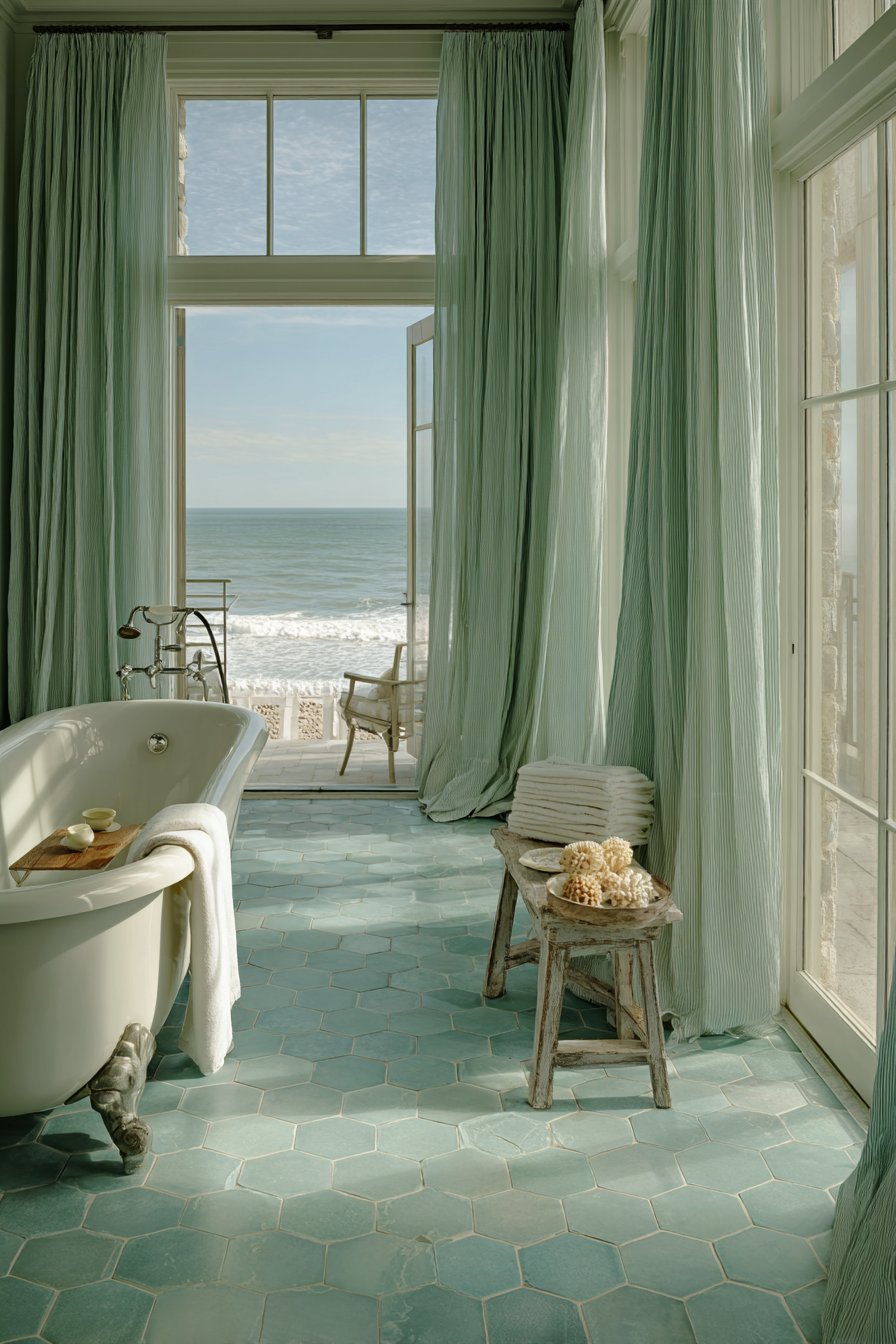
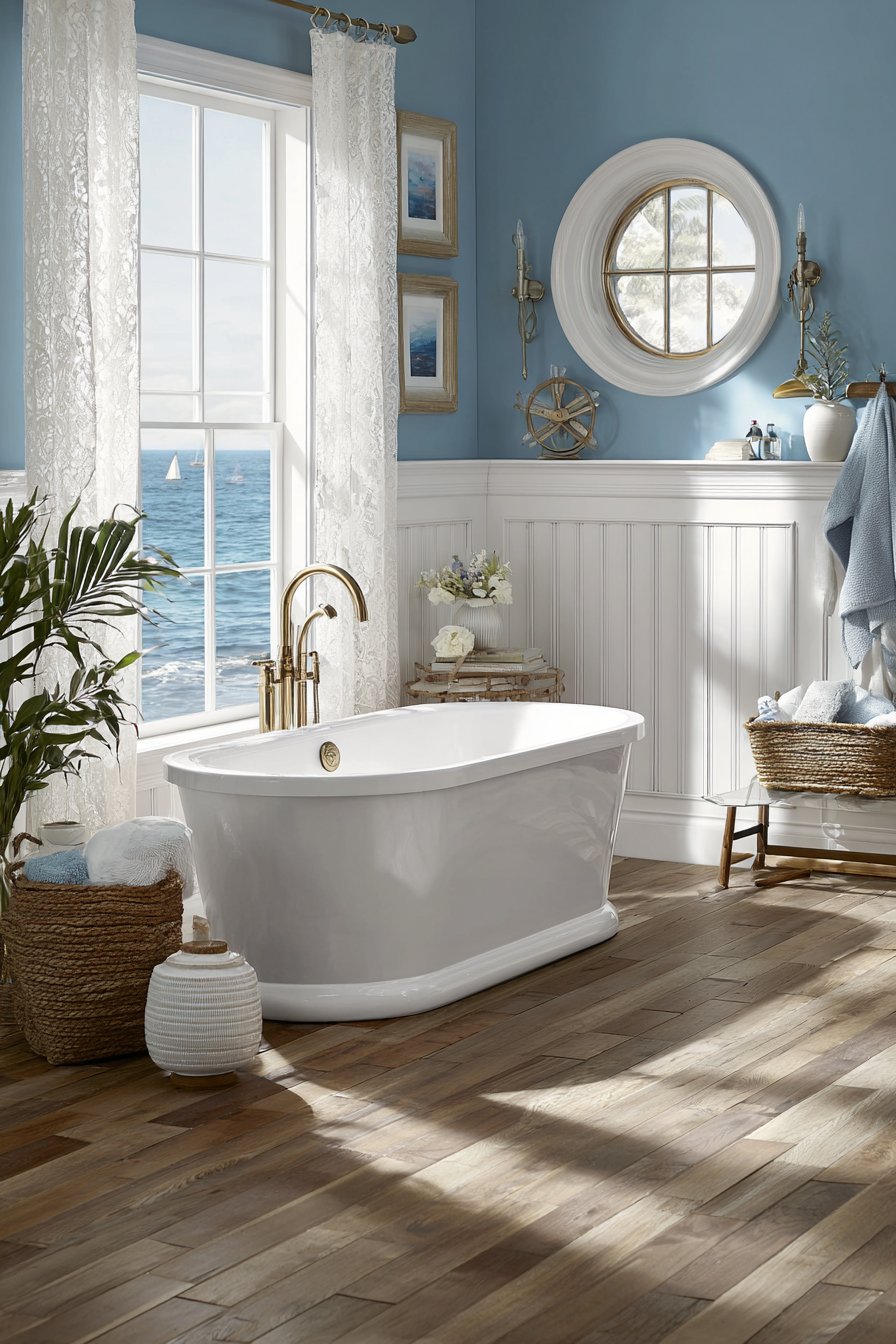
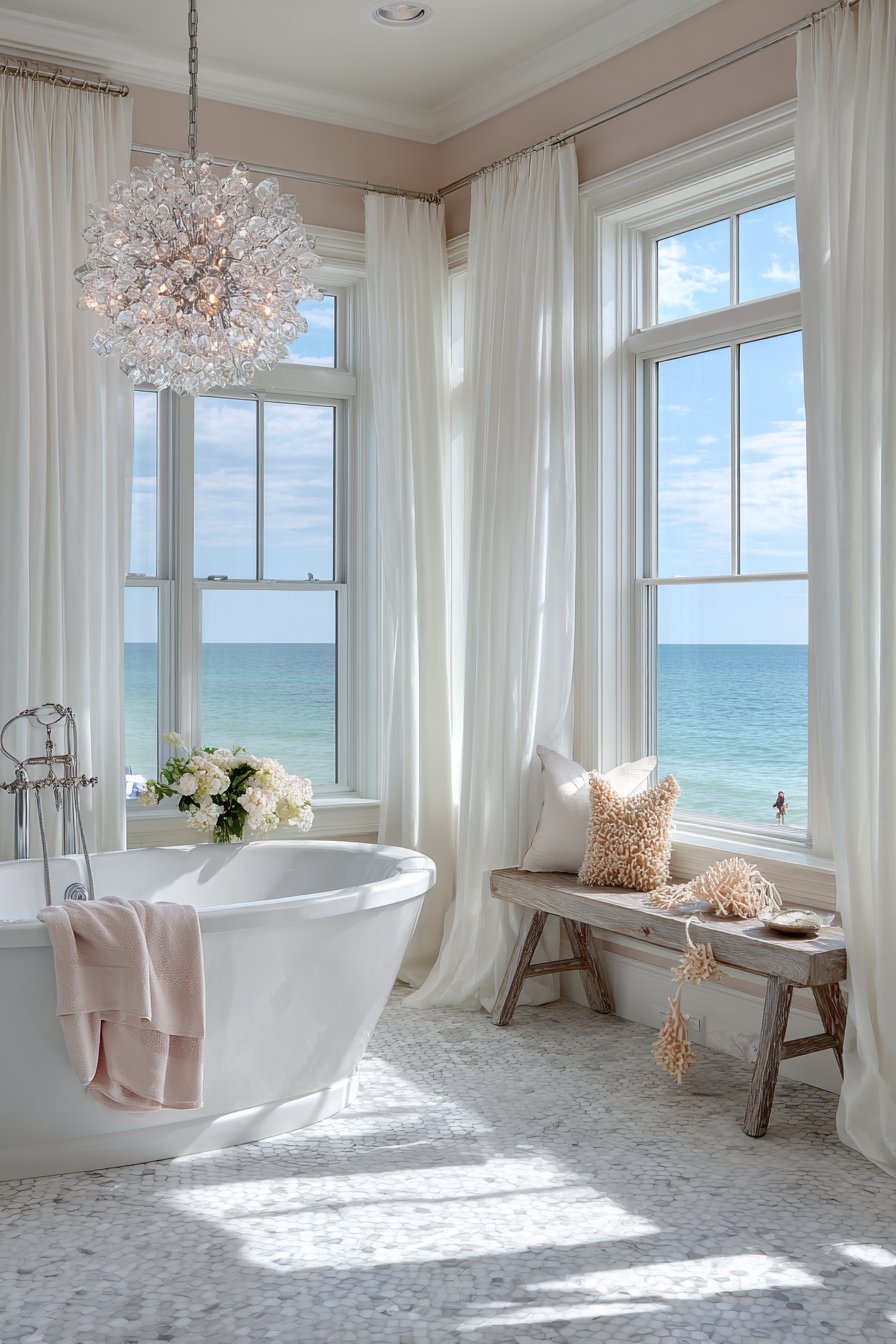
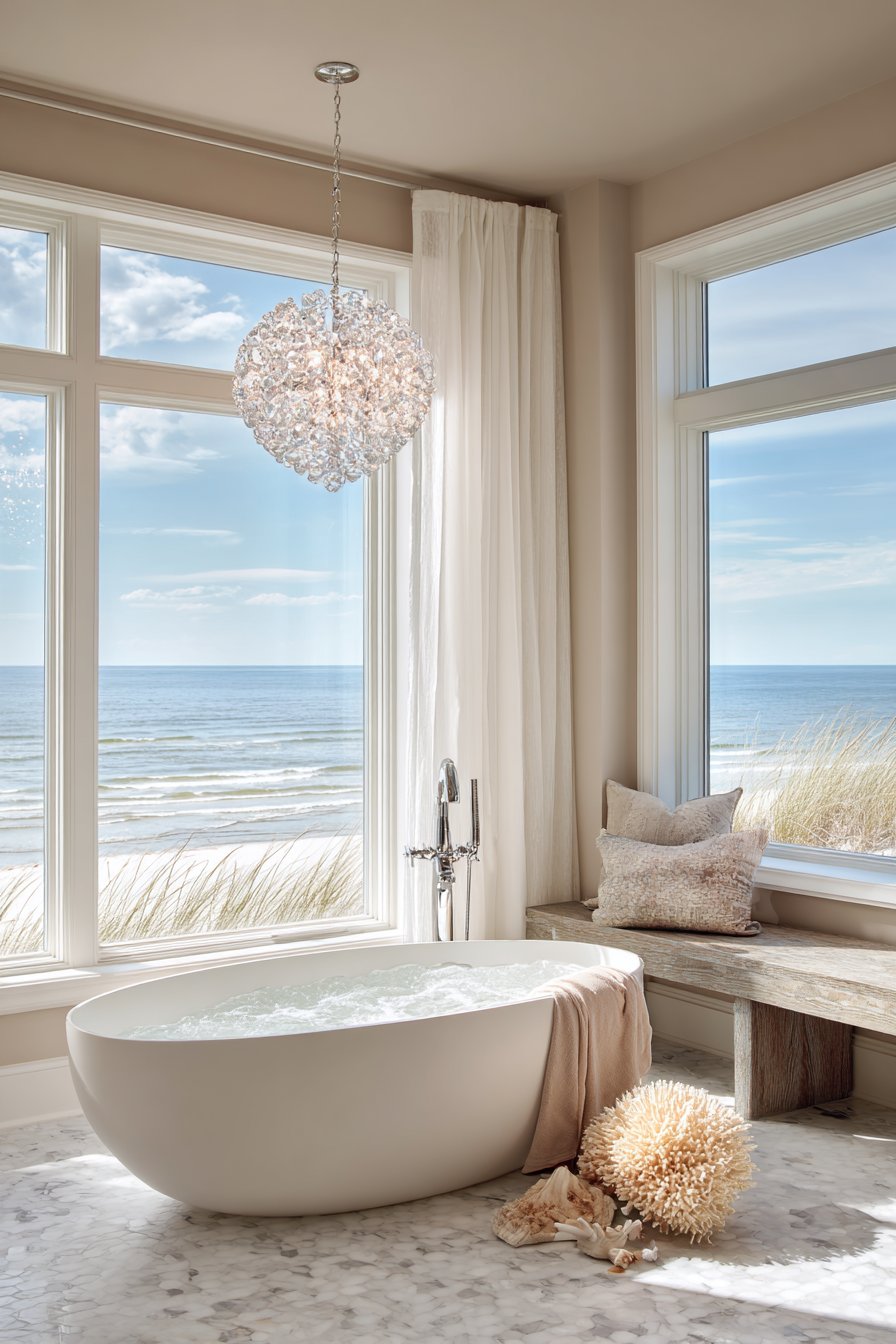
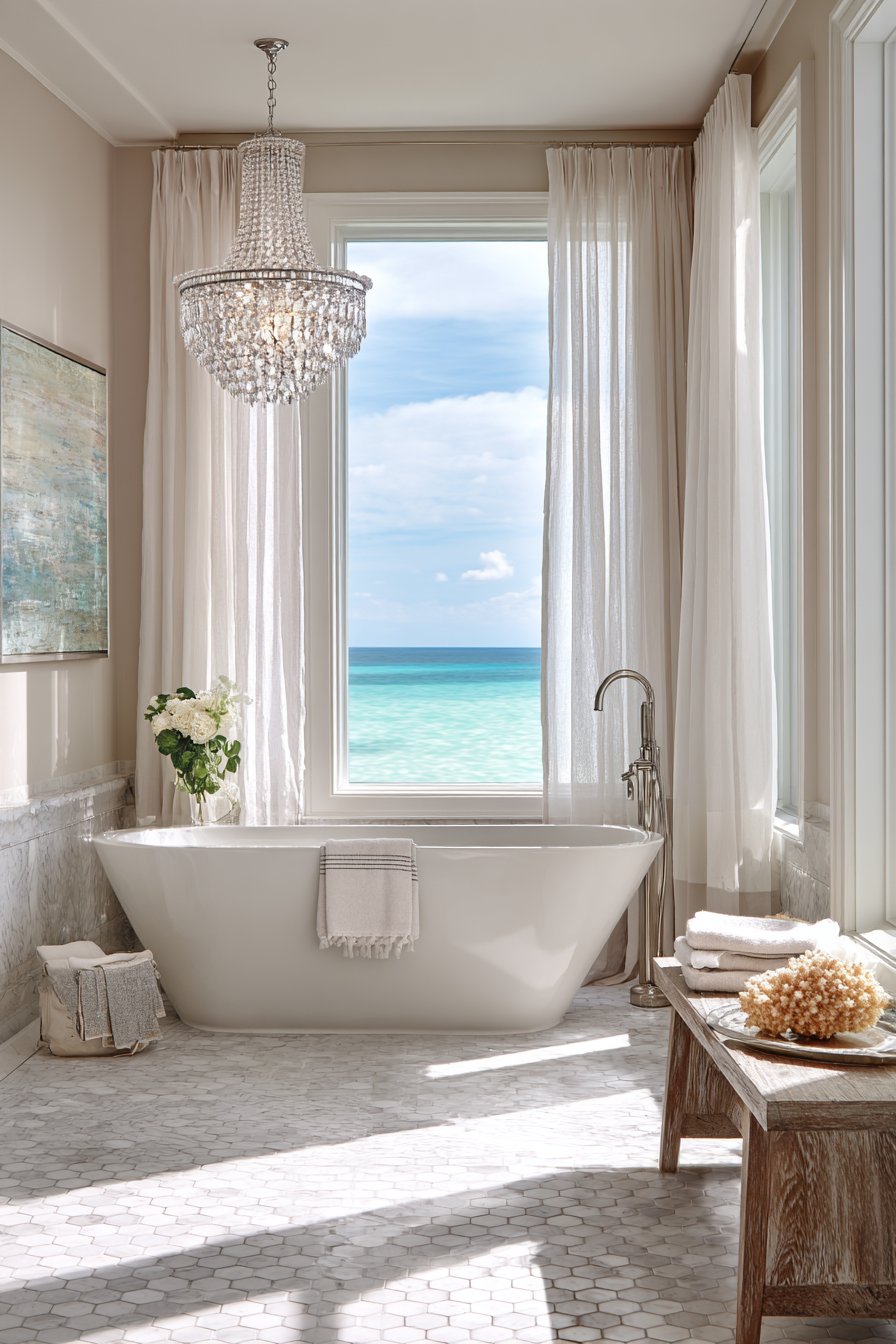
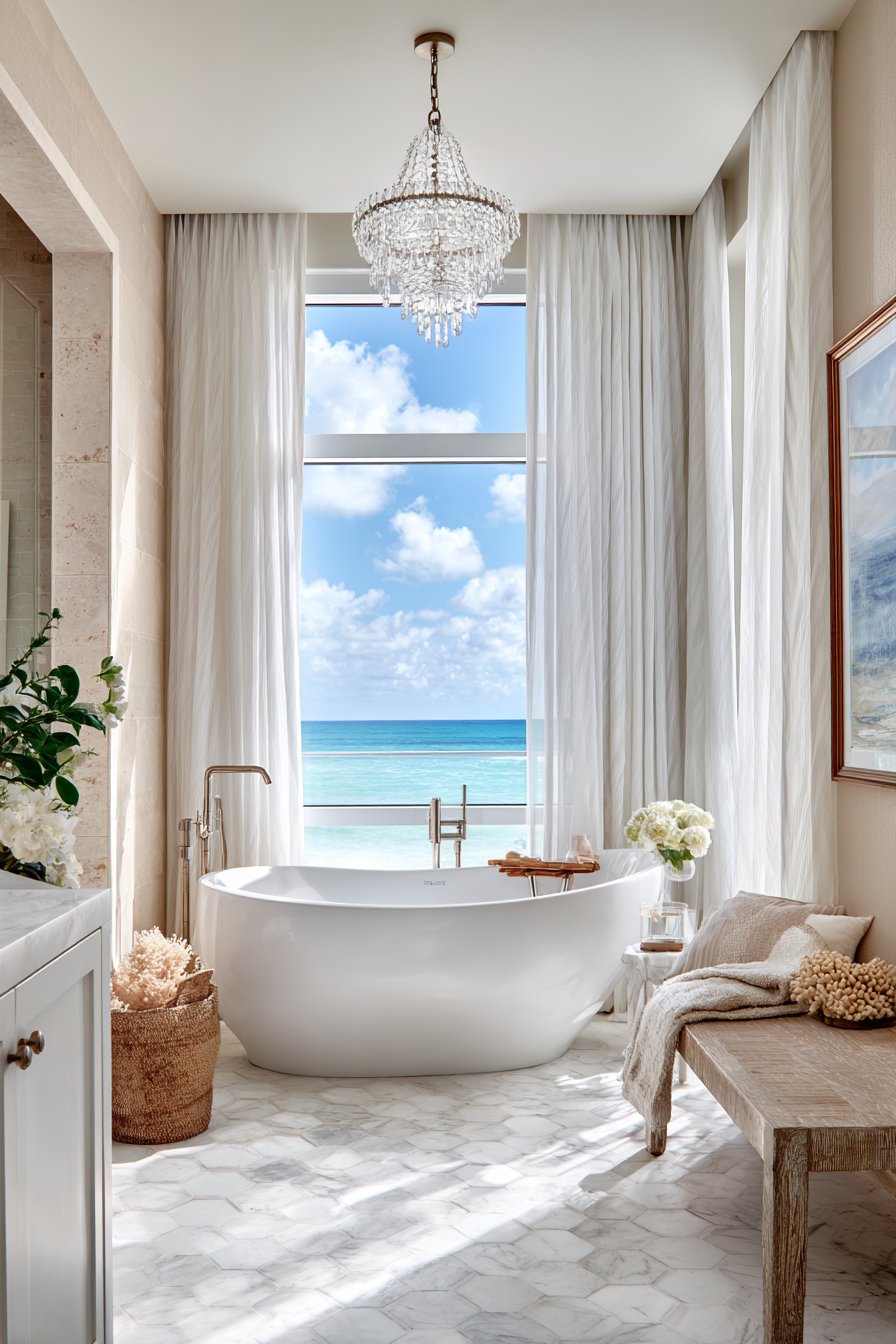
Ultimate coastal luxury defines this spectacular bathroom where a freestanding soaking tub with floor-mounted tub filler occupies center stage on white marble hexagonal floor tiles. Floor-to-ceiling windows frame actual ocean views or, in inland settings, lush garden vistas that suggest natural beauty beyond the walls. Sheer white drapery diffuses direct sunlight while preserving the views, their gentle movement adding kinetic beauty. Walls in soft sand beige create a warm neutral backdrop that enhances rather than competes with the views. A weathered wood bench holds plush towels and natural sea sponge, while an unexpected crystal chandelier adds glamorous contrast.
The freestanding tub positioned to face the windows transforms bathing into a contemplative luxury experience. The floor-mounted tub filler creates sculptural drama, its polished nickel finish and graceful lines suggesting fine jewelry for the bathroom. The white marble hexagonal floor tiles provide classic elegance underfoot, their geometric pattern adding visual interest that complements rather than competes with the view. The tiles’ white background reflects light beautifully, enhancing the room’s overall brightness and sense of spaciousness.
The crystal chandelier represents the design’s most surprising element—introducing unexpected glamour to coastal style often characterized by casual simplicity. This juxtaposition of elegant crystal with natural coastal elements like weathered wood and sea sponge creates sophisticated tension that elevates the space beyond predictable beach house aesthetic. The soft sand beige walls prevent the space from feeling cold despite the abundance of white marble and glass, their warm undertones suggesting beaches at sunset rather than clinical sterility.
Key Design Tips:
- Position a freestanding tub to face windows for views during bathing
- Install floor-mounted tub filler for dramatic sculptural presence
- Use white marble hexagonal floor tiles for classic elegance and light reflection
- Include floor-to-ceiling windows to frame views and flood space with natural light
- Hang sheer white drapery to diffuse direct sunlight while preserving views
- Paint walls in soft sand beige for warm neutral backdrop
- Add a weathered wood bench for natural coastal character and towel storage
- Include an unexpected element like a crystal chandelier for sophisticated surprise
- Ensure privacy considerations are addressed before installing large windows
21. Eclectic Collected-Over-Time Character
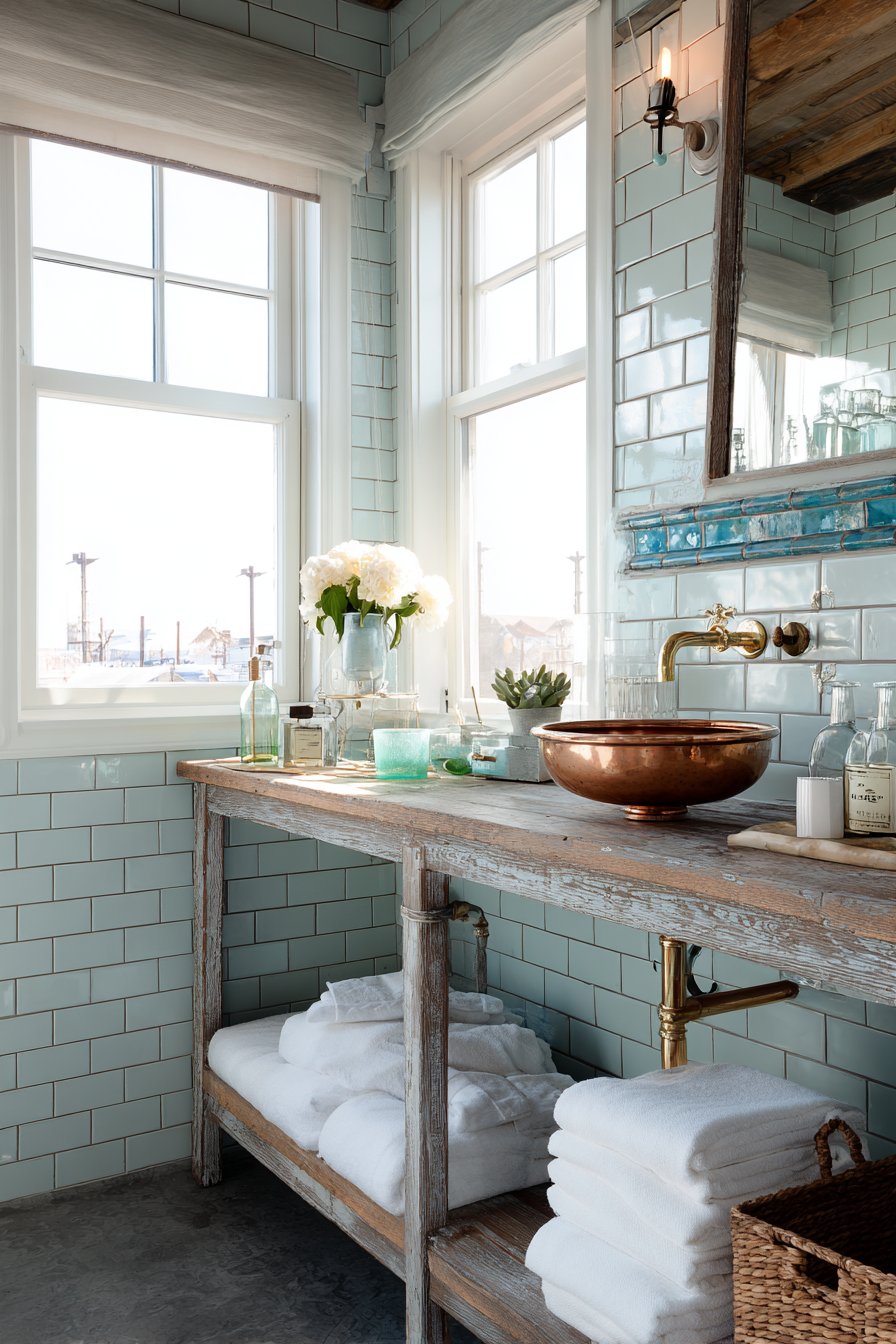
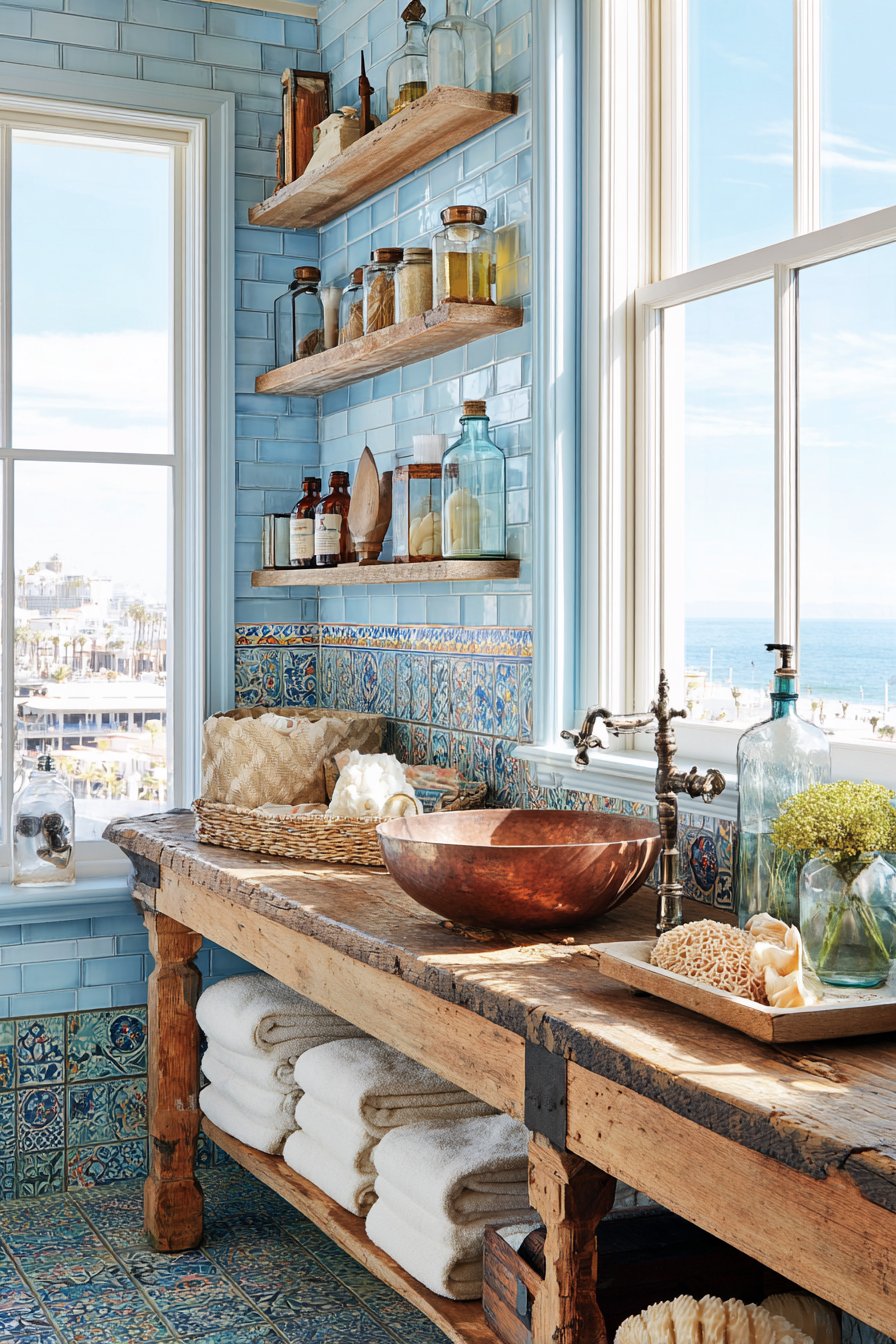
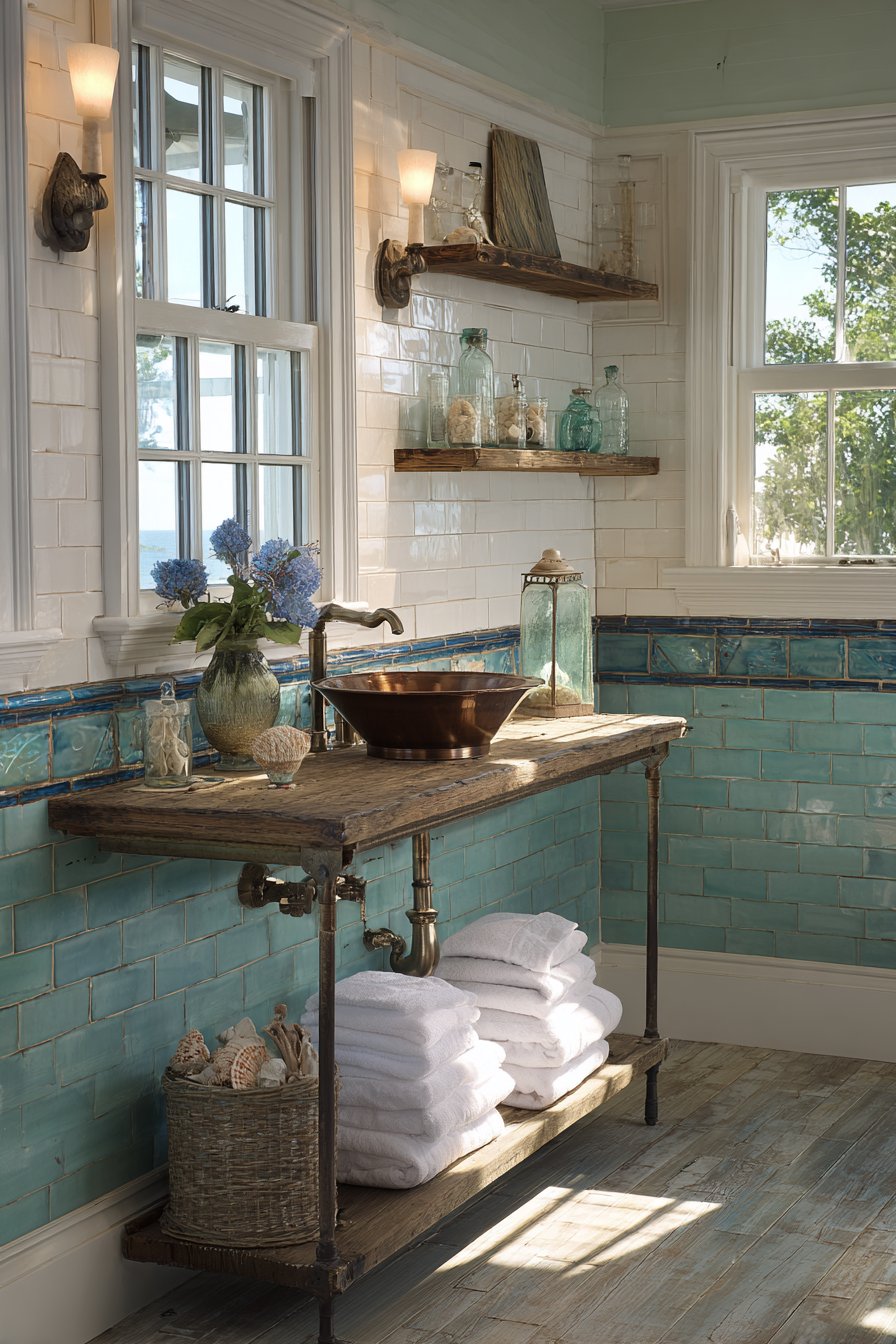
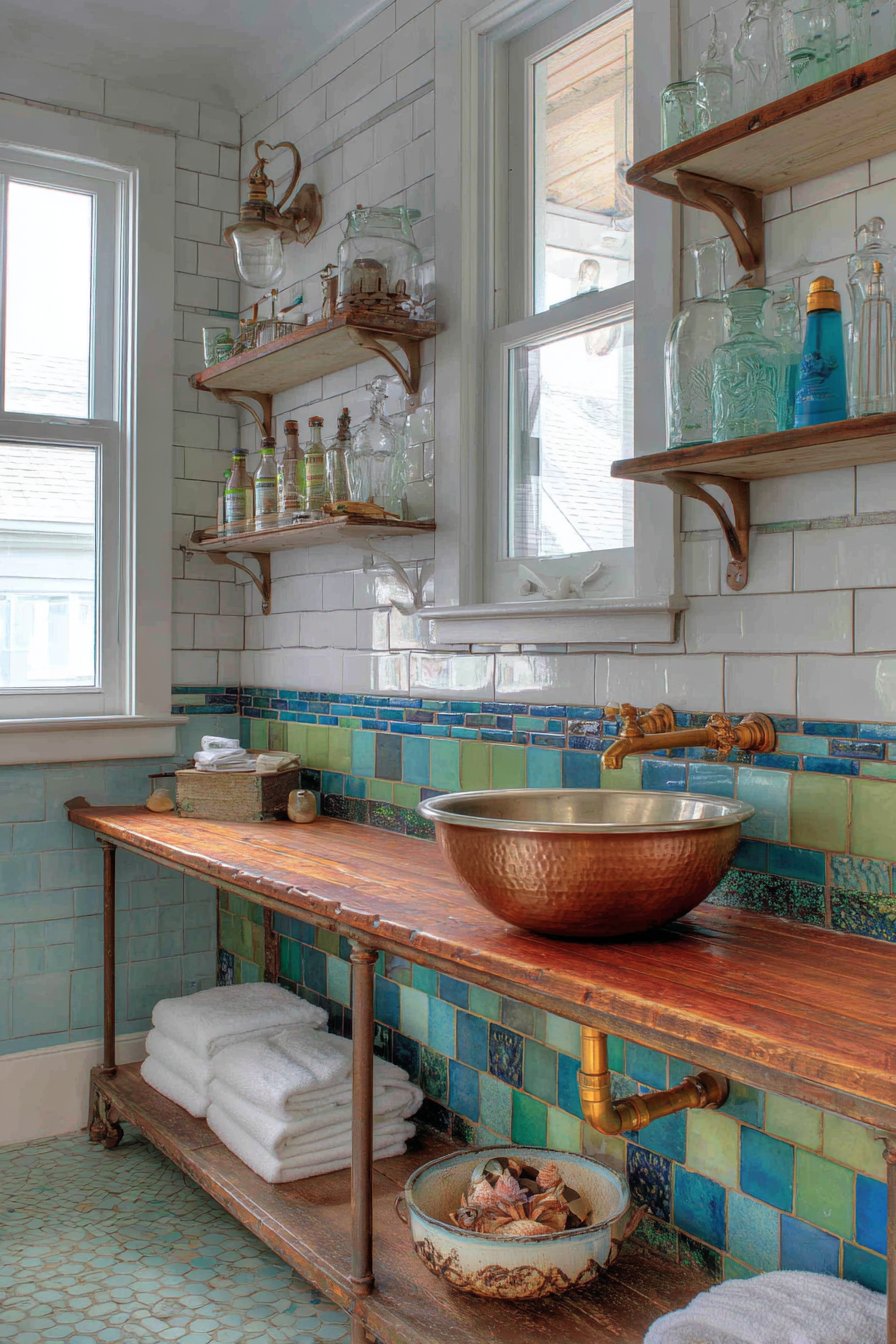
Personal history and individual taste converge in this eclectic seaside bathroom that celebrates the beauty of collected elements rather than matched sets. White subway tiles provide a clean foundation while colorful hand-painted ceramic border tiles in blues and greens suggest sea and sky with artisanal character. A repurposed wooden console table converted to vanity with copper vessel sink demonstrates creative reuse and one-of-a-kind character. Mixed metal fixtures in aged brass and chrome create the collected-over-time appeal of homes furnished gradually rather than all at once.
The hand-painted border tiles represent the room’s most personal element—each tile slightly different from its neighbors, bearing the marks of individual craftsmanship. These tiles might be sourced from artisan markets, specialty tile makers, or even created by the homeowner, ensuring the bathroom contains elements that cannot be found in any other space. The blues and greens in the tiles capture coastal colors while their handmade quality introduces warmth and humanity often missing from perfectly manufactured products.
Open shelving displays a curated mix of white towels, vintage glass bottles, and beach treasures found during coastal walks. This approach to storage and display creates a space that feels lived-in and loved rather than staged for photographs. The repurposed console table as vanity demonstrates creativity and sustainability—giving new purpose to existing furniture while avoiding the uniformity of mass-produced vanities. The copper vessel sink adds unexpected metallic warmth, its natural tendency to develop patina ensuring it will look better with age rather than worse.
Key Design Tips:
- Use hand-painted ceramic border tiles for artisanal character and unique color
- Source tiles from artisan makers or create custom designs for personal expression
- Repurpose wooden console tables as vanities for one-of-a-kind character
- Install copper vessel sinks that develop beautiful patina over time
- Mix metal finishes like aged brass and chrome for collected-over-time authenticity
- Include open shelving to display curated collections of meaningful coastal items
- Combine vintage finds with modern elements for eclectic personality
- Allow natural light from multiple windows to create bright, cheerful atmosphere
- Embrace slight imperfections and variations as marks of authenticity and character
Why These Seaside Bathroom Designs Excel
The twenty-one seaside bathroom concepts presented here represent the pinnacle of coastal interior design, each excelling in specific ways while collectively demonstrating the remarkable versatility of seaside-inspired spaces. These designs succeed because they honor fundamental principles of authentic coastal living while adapting to contemporary needs, diverse budgets, and varied architectural contexts. From compact powder rooms to luxurious master bathrooms, each concept proves that seaside style transcends mere decoration to become a holistic approach to creating bathrooms that function beautifully while nurturing the spirit.
The excellence of these designs stems from their unwavering commitment to authenticity in material selection and color application. Genuine coastal bathrooms draw inspiration from actual seaside environments—the weathered gray of driftwood, the varied blues of ocean water, the warm sand tones of beaches, and the crisp white of sea foam. These designs avoid artificial or overly stylized interpretations, instead embracing materials that would naturally appear in coastal settings: reclaimed wood, natural stone, sustainable bamboo and teak, honest concrete, and authentic rope and seagrass fibers. This material authenticity creates spaces that feel genuinely connected to coastal environments rather than merely decorated with nautical motifs.
Color theory expertise elevates these designs beyond amateur attempts at coastal style. The successful seaside bathrooms presented here demonstrate sophisticated understanding of how colors interact, how natural light affects color perception throughout the day, and how to balance cool ocean-inspired blues and greens with warm neutrals that prevent spaces from feeling cold or sterile. Whether embracing the classic navy and white nautical palette, exploring sophisticated gray-blue tones reminiscent of stormy seas, or making bold statements with vibrant turquoise, each design uses color with intention and restraint. The most successful coastal bathrooms often feature predominantly neutral palettes punctuated by carefully chosen blue or green accents, allowing the colors to reference the sea without overwhelming the senses.
Spatial composition and functional planning distinguish these professional-level designs from superficial styling attempts. Each bathroom demonstrates thoughtful consideration of how users will actually interact with the space—where natural light enters and how to maximize it, how to position fixtures for optimal functionality, how to balance storage needs with aesthetic goals, and how to create visual flow even in compact footprints. The designs recognize that beautiful bathrooms must also be practical bathrooms, incorporating elements like slip-resistant pebble flooring, adequate storage solutions, proper ventilation for humid environments, and durable materials that withstand moisture exposure while maintaining their appearance.
The integration of sustainable and repurposed elements in many of these designs reflects growing environmental consciousness and the coastal community’s traditional connection to natural preservation. Bathrooms featuring converted vintage furniture as vanities, reclaimed wood accents, bamboo and teak from sustainable sources, and displays of naturally found coastal objects demonstrate how environmental responsibility and aesthetic excellence support rather than contradict each other. These sustainable choices often result in more interesting, character-rich spaces than those furnished entirely with new manufactured products, while reducing environmental impact and supporting traditional values of conservation and resourcefulness.
Lighting design receives appropriate attention across these concepts, recognizing that bathroom lighting serves both practical and atmospheric purposes. Natural light is maximized through thoughtful window placement, often with privacy solutions like frosted glass, plantation shutters, or sheer curtains that filter without blocking sunlight. Artificial lighting strategies include task lighting at vanities for grooming activities, ambient lighting that creates overall illumination, and accent lighting that highlights architectural features or creates mood. The most successful designs layer multiple light sources at different heights and intensities, ensuring the bathroom functions well at all times while offering flexibility to create different atmospheres for energizing morning preparation versus relaxing evening baths.
The attention to architectural detail distinguishes these professional designs from amateur styling attempts. Elements like shiplap walls, beadboard wainscoting, tongue-and-groove ceilings with exposed beams, and carefully composed tile patterns add dimensional texture and visual interest that flat painted walls cannot match. These architectural treatments reference traditional coastal building methods while providing practical benefits—wainscoting protects walls from moisture damage, shiplap adds insulation value, and detailed tilework creates durable water-resistant surfaces. The investment in quality architectural elements ensures these bathrooms will remain attractive for decades rather than appearing dated as superficial decorating trends change.
The versatility demonstrated across these twenty-one designs proves that coastal style adapts to virtually any bathroom size, budget level, or regional context. Compact powder rooms make bold statements with navy vanities and porthole mirrors, while expansive master bathrooms embrace luxury through freestanding tubs and marble surfaces. Budget-conscious designs achieve authentic coastal character through painted furniture conversions and creative use of affordable materials like subway tiles, while high-end concepts incorporate premium materials like Carrara marble and teak. This adaptability ensures that anyone drawn to coastal aesthetics can find approaches suitable to their specific circumstances.
The psychological and wellness benefits of these seaside bathroom designs extend beyond visual appeal. Research consistently demonstrates that colors associated with nature—particularly blues and greens—reduce stress, lower blood pressure, and promote relaxation. The incorporation of natural materials, abundant natural light, and references to coastal environments creates bathrooms that function as daily retreats, offering respite from modern life’s demands. The best coastal bathrooms engage multiple senses: the visual beauty of ocean-inspired colors, the tactile pleasure of natural wood and stone, the sound of water from rainfall showerheads suggesting natural precipitation, and even the scent of sea salt soap or coastal-inspired aromatherapy products.
The cultural resonance of coastal design contributes to its enduring popularity and effectiveness. Seaside environments hold universal appeal across cultures and generations, representing escape, relaxation, and connection to natural rhythms larger than individual human concerns. By bringing coastal elements into bathrooms, these designs tap into deep psychological associations with vacation, renewal, and simplified living. This cultural resonance ensures coastal bathrooms rarely feel dated or trendy—the ocean’s appeal transcends temporary fashion, making seaside-inspired spaces essentially timeless when executed with quality materials and thoughtful design.
Conclusion
The twenty-one seaside bathroom designs explored in this comprehensive guide demonstrate that coastal style offers far more than a single aesthetic formula—it encompasses a rich spectrum of interpretations ranging from traditional New England cottage charm to contemporary minimalist serenity, from bold tropical resort vibrancy to sophisticated gray-toned elegance. Each design proves that authentic coastal bathrooms emerge from understanding fundamental principles: respect for natural materials, thoughtful application of ocean-inspired color palettes, commitment to functional excellence, and appreciation for the psychological benefits of connecting interior spaces with coastal environments.
Whether you’re renovating a beach house bathroom with ocean views or creating a seaside-inspired retreat in a landlocked suburban home, these concepts provide actionable inspiration for transforming bathrooms into daily sanctuaries. The key lies not in perfectly replicating any single design but in understanding the principles that make each successful—selecting materials with authentic coastal character, applying colors that evoke water and sky, prioritizing natural light, incorporating meaningful personal touches, and maintaining the balance between aspirational beauty and practical functionality.
As you embark on your own seaside bathroom project, remember that the most successful coastal designs honor both the aesthetic traditions of seaside living and the practical realities of modern bathroom use. Start with quality materials that will age beautifully, invest in good lighting that serves both task and mood functions, and don’t fear making bold choices in small spaces or exercising restraint in larger ones. Most importantly, infuse your coastal bathroom with personal meaning—display shells from memorable beach visits, incorporate colors that remind you of favorite coastal destinations, or repurpose furniture with sentimental value. When authentic materials, thoughtful design, and personal significance converge, the result transcends mere decoration to become a true coastal sanctuary that renews your spirit with every use.
