
The bathroom has evolved from a purely functional space into a personal sanctuary where we begin and end our days. Among the various design approaches available, rustic shower ideas stand out as a timeless choice that brings warmth, authenticity, and natural beauty into one of the most intimate spaces in our homes. The rustic aesthetic celebrates organic materials, weathered textures, and honest craftsmanship, creating an environment that feels both grounded and luxurious. Whether you’re drawn to the rugged charm of stacked stone, the warmth of reclaimed wood, or the industrial edge of exposed piping, rustic design offers endless possibilities for creating a shower space that’s uniquely yours.
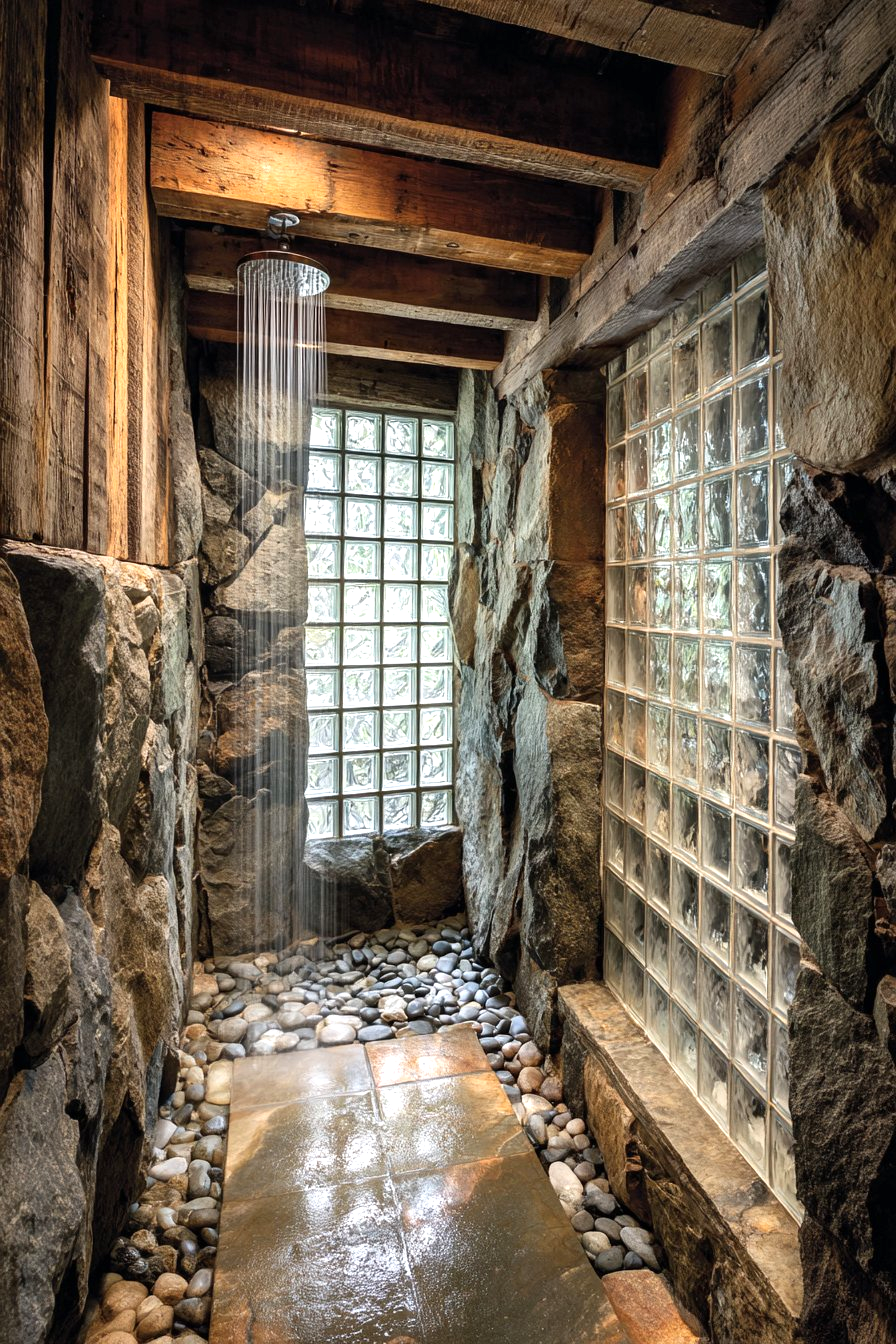
In today’s fast-paced world, homeowners increasingly seek to create spa-like retreats within their own homes, and rustic shower designs deliver this experience through their connection to nature and emphasis on tactile, authentic materials. From dramatic walk-in showers with floor-to-ceiling natural stone to compact solutions that maximize character in smaller spaces, rustic design proves versatile enough to work in any bathroom size or budget. The beauty of this approach lies in its ability to blend modern functionality with timeless aesthetics—think rainfall showerheads and thermostatic controls housed within spaces adorned with river rock floors and barn wood accents.
This comprehensive guide explores twenty-three distinctive rustic shower ideas, each offering a unique interpretation of this beloved design style. You’ll discover how to incorporate everything from vintage fixtures and reclaimed materials to innovative tile treatments and architectural details that elevate your shower from ordinary to extraordinary. Whether you’re planning a complete bathroom renovation or simply seeking inspiration for a refresh, these ideas demonstrate that rustic design is far from one-dimensional, offering possibilities that range from minimalist and modern to ornate and traditional, all while maintaining that essential connection to natural elements and authentic craftsmanship.
1. Natural Stone Sanctuary with Reclaimed Wood Accents
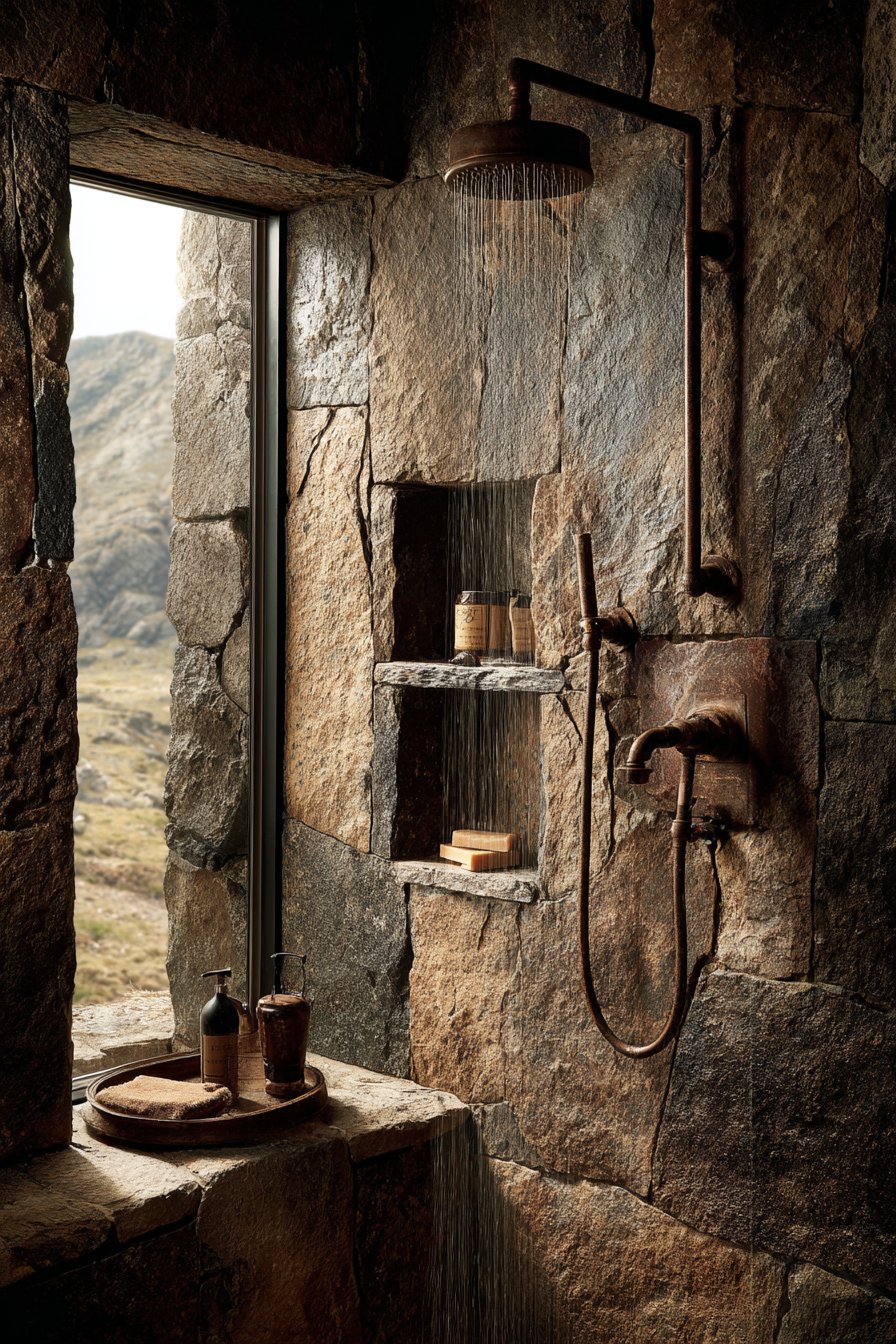
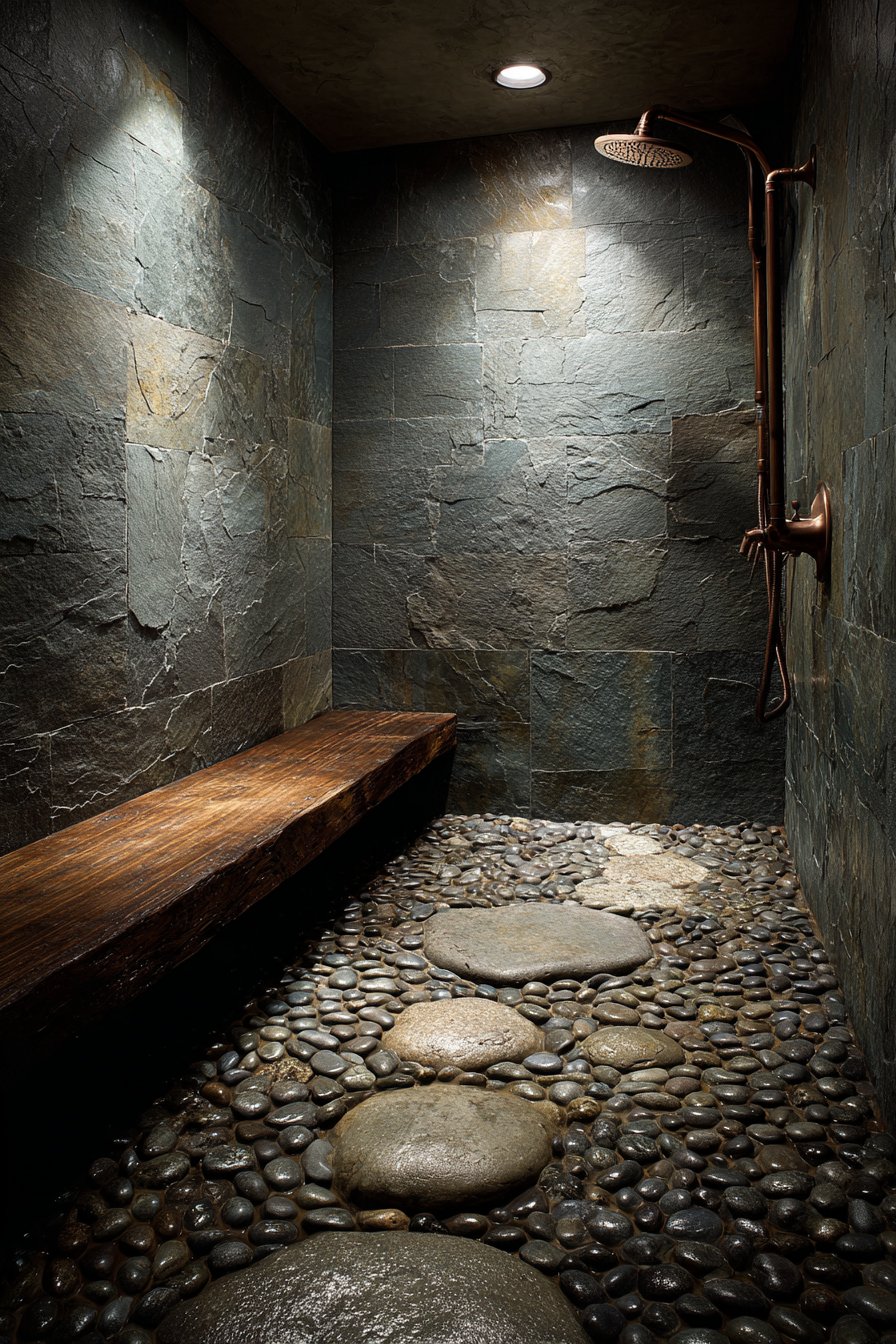
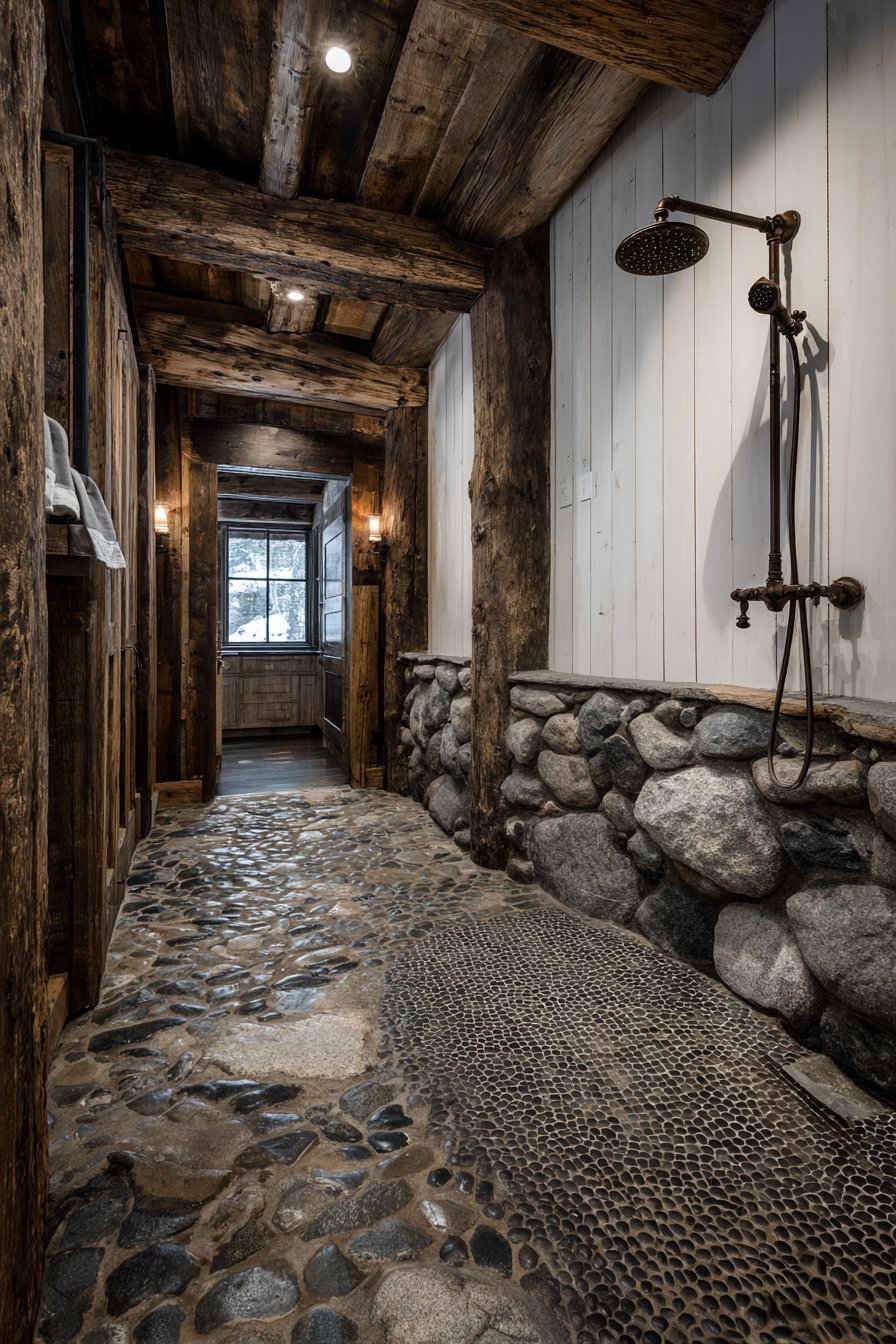
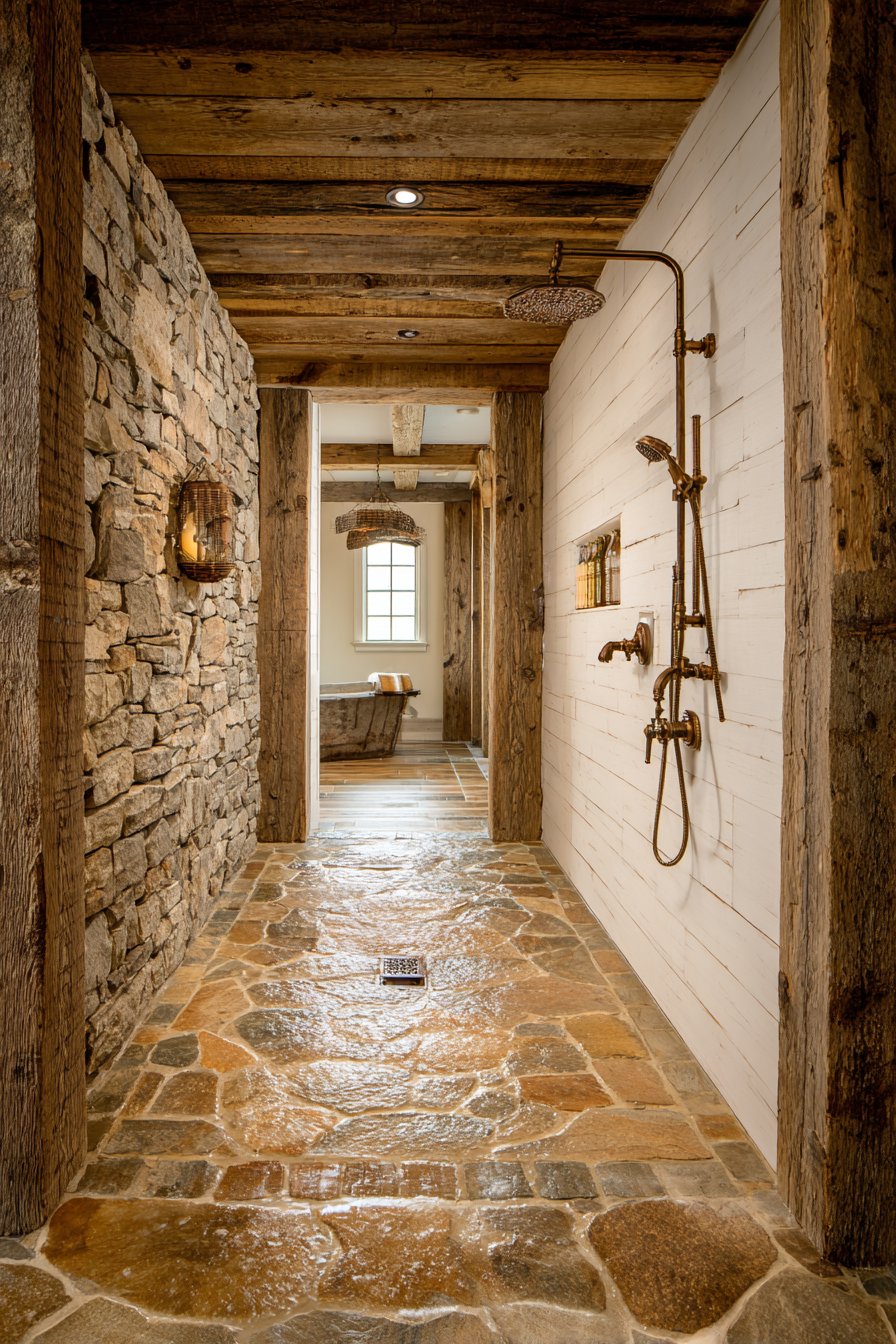
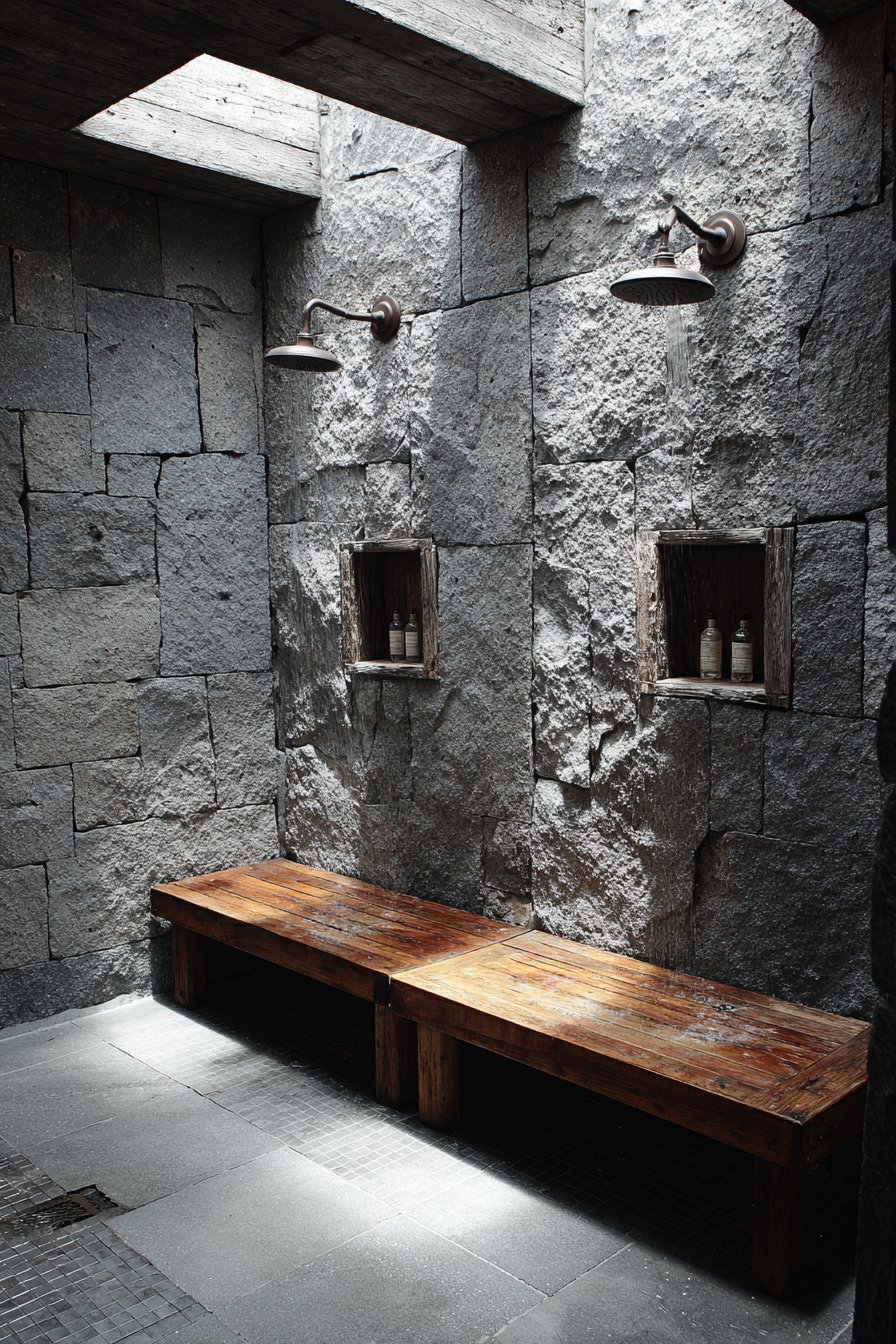
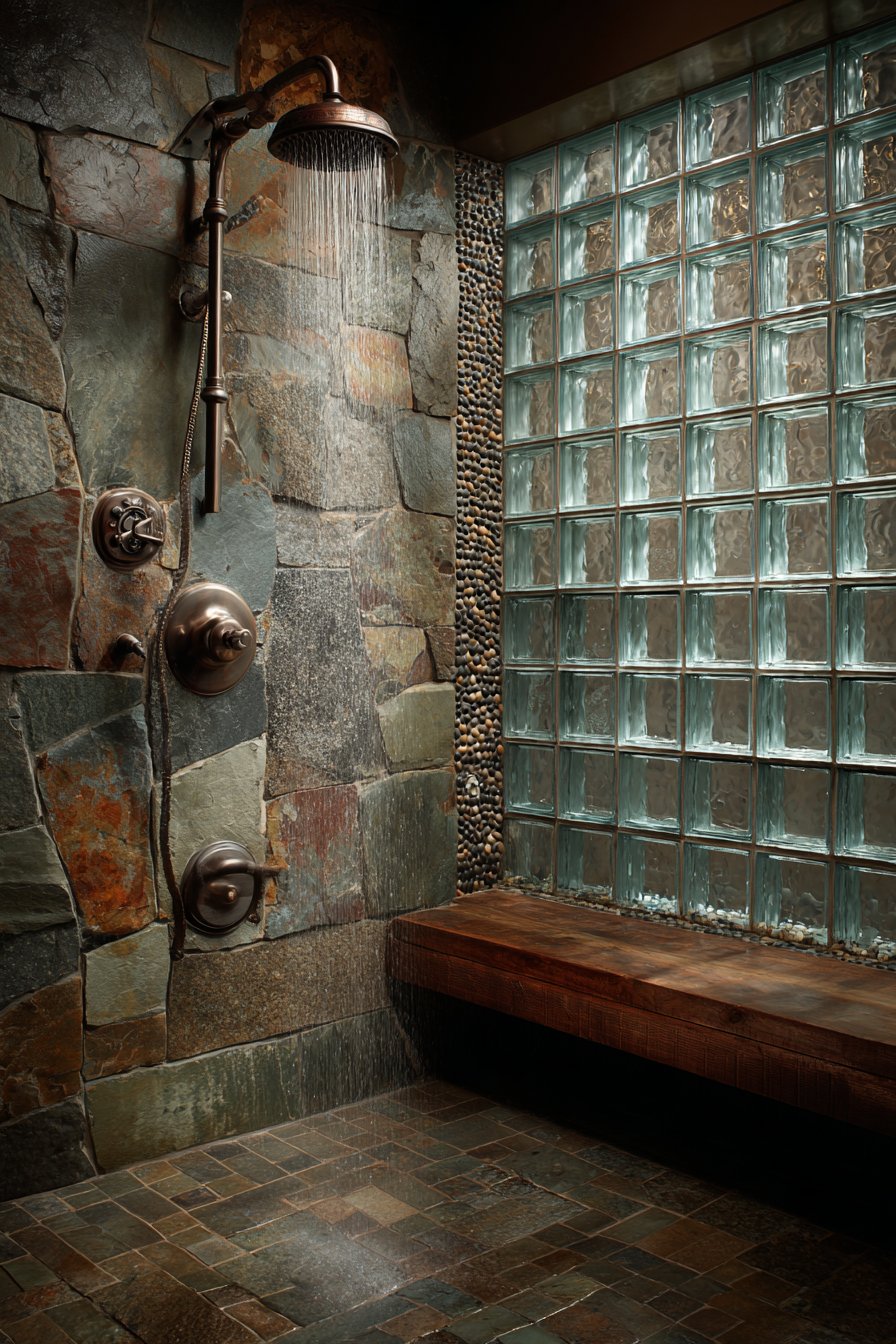
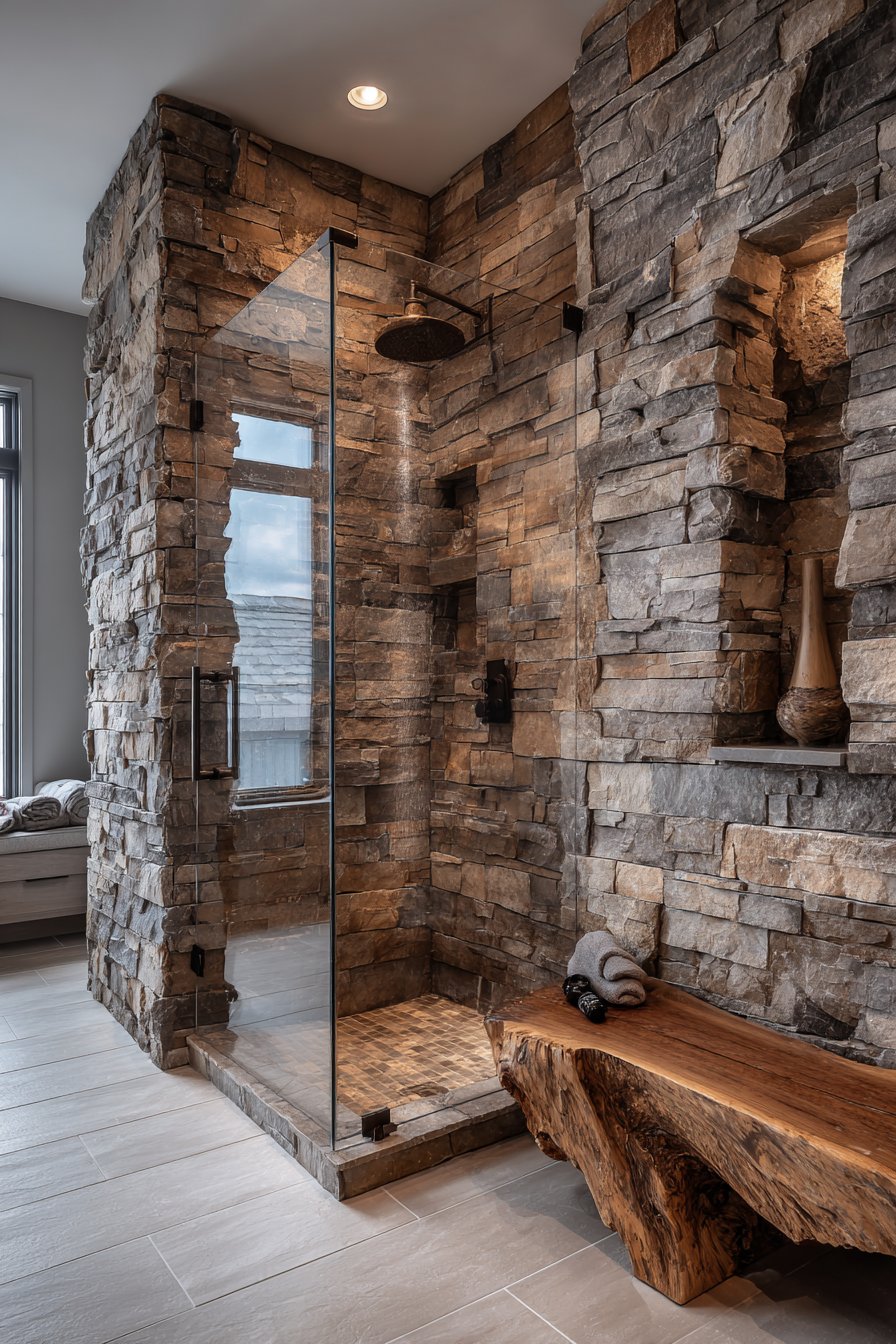
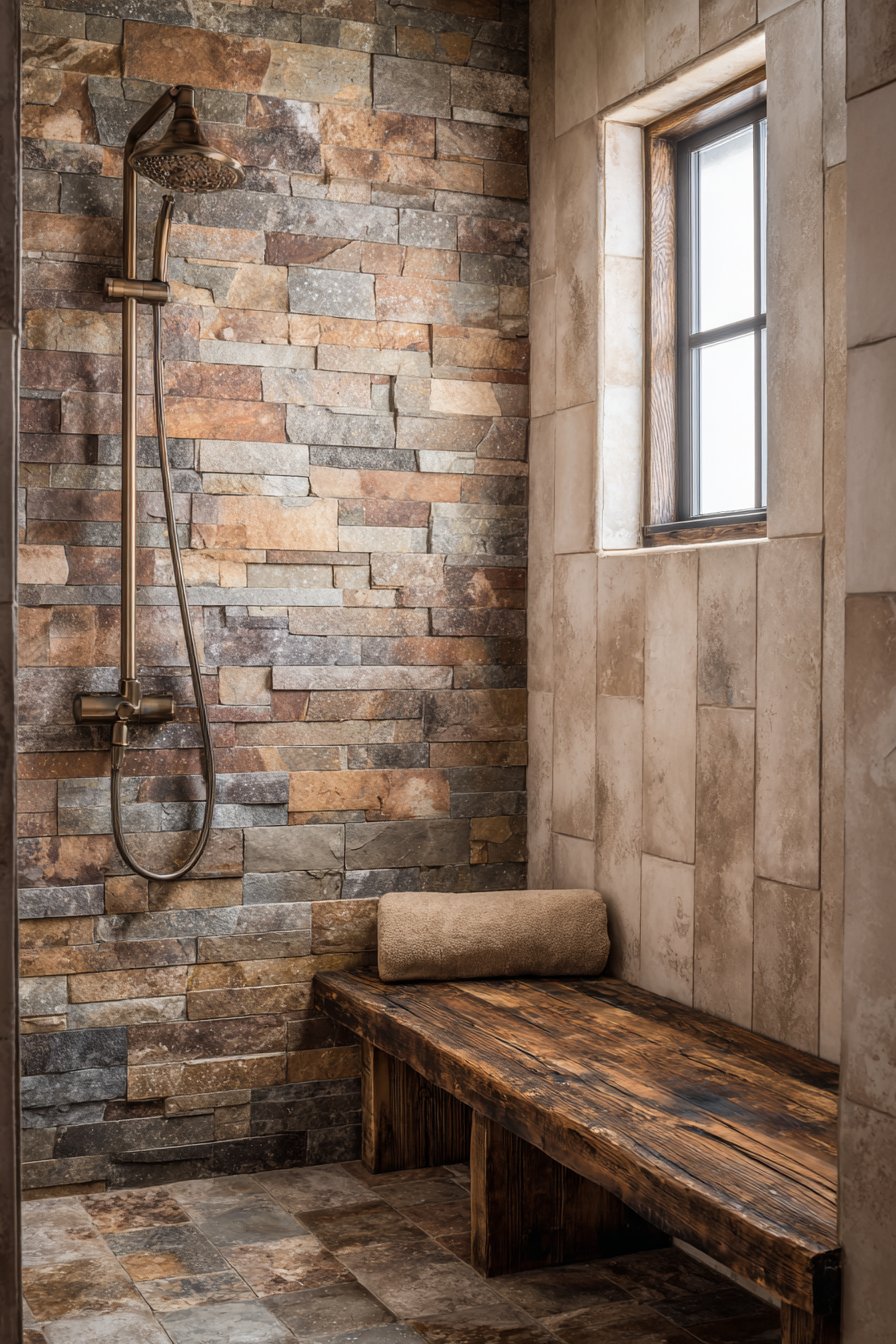
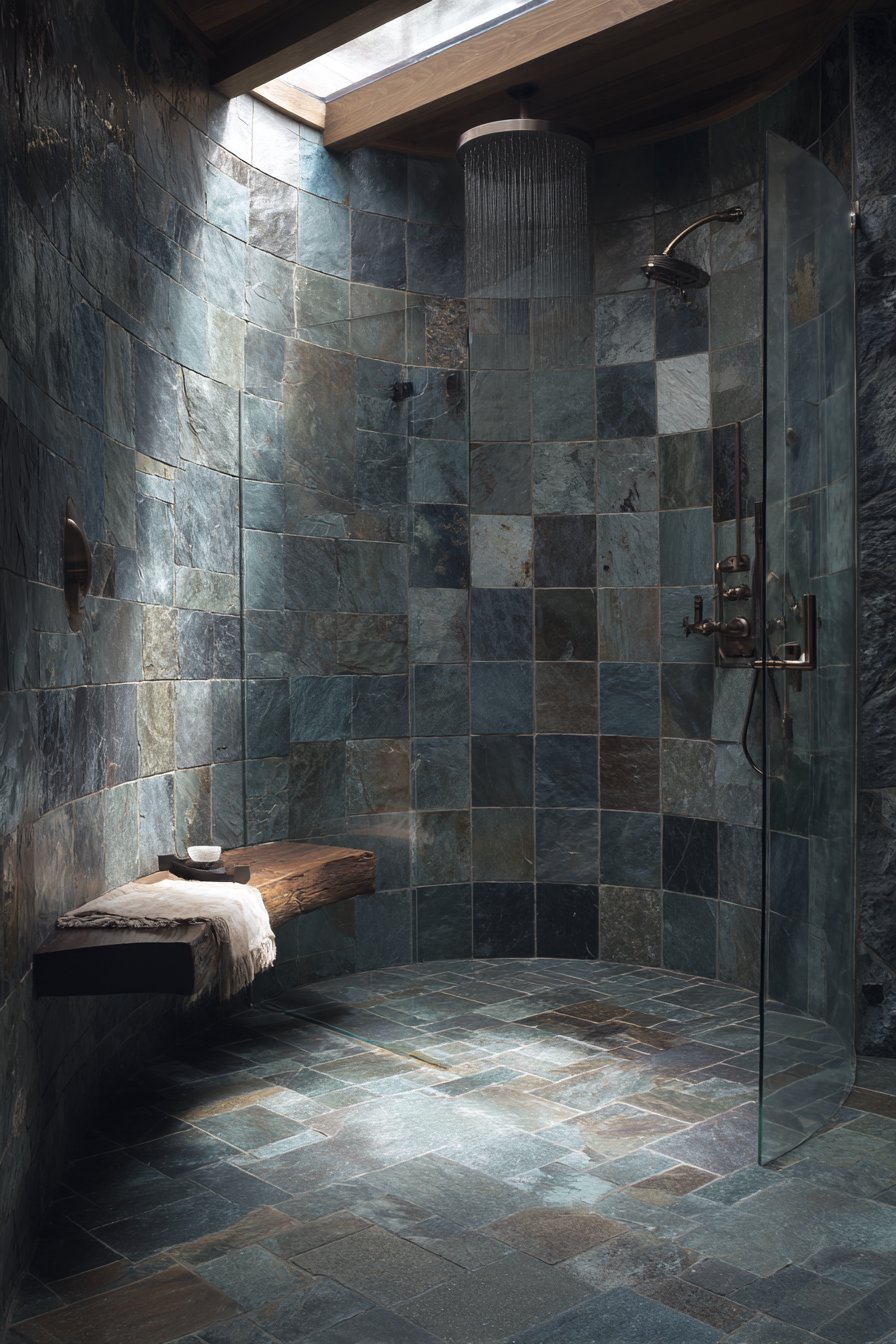
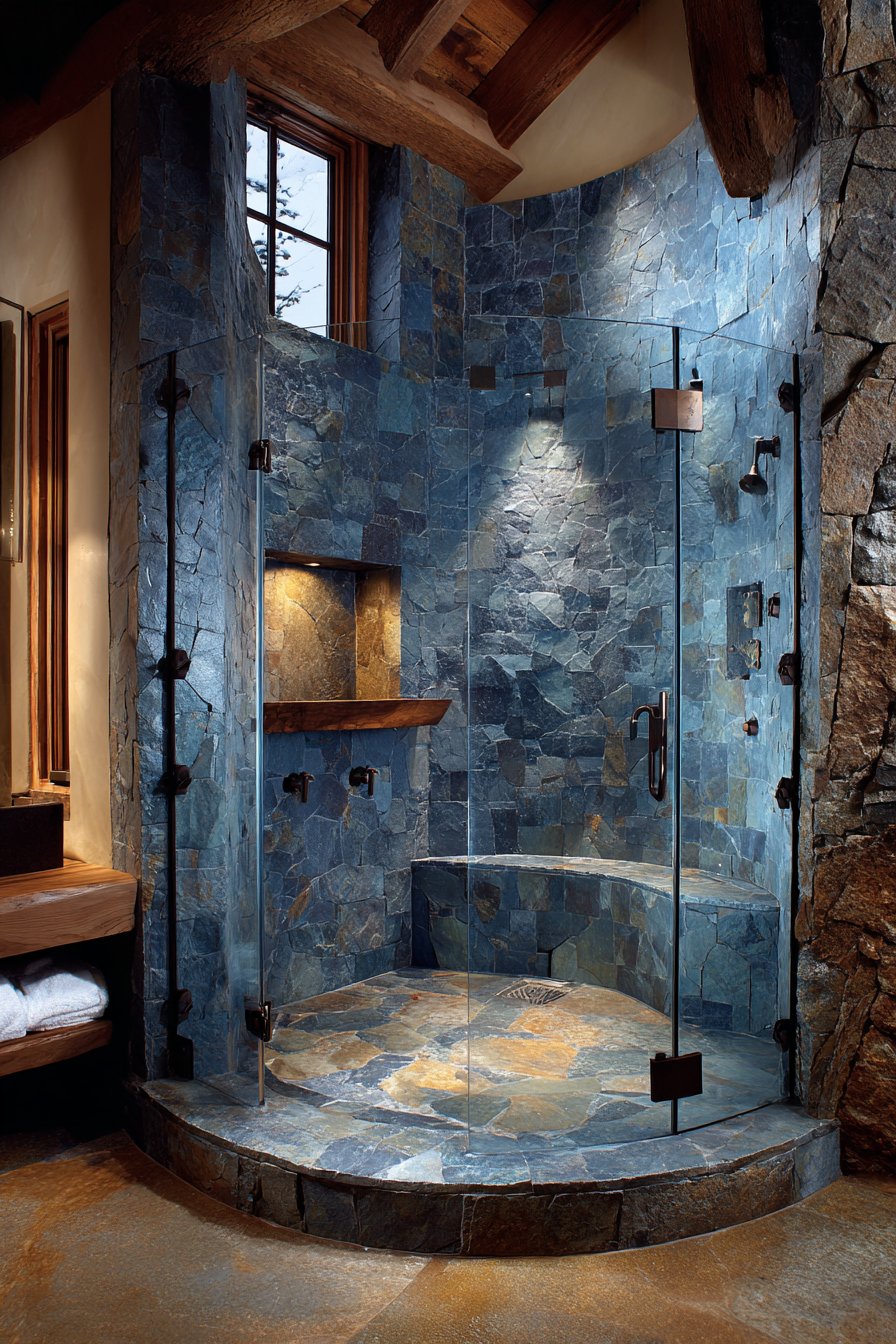
This stunning rustic shower ideas showcase brings together the raw beauty of natural materials in a harmonious composition that feels like stepping into a forest spa. The walk-in shower features rough-hewn stone walls displaying a gorgeous palette of gray and earth tones, with each stone piece showing its unique character through varied textures and subtle color shifts. The addition of a reclaimed barn wood accent wall introduces warmth and organic linearity that beautifully contrasts with the irregular stone surfaces, creating visual interest and dimensional depth. An oil-rubbed bronze rainfall showerhead suspended from exposed wooden ceiling beams becomes a functional sculpture, while the river rock flooring beneath provides not only excellent drainage but also a massage-like experience underfoot.
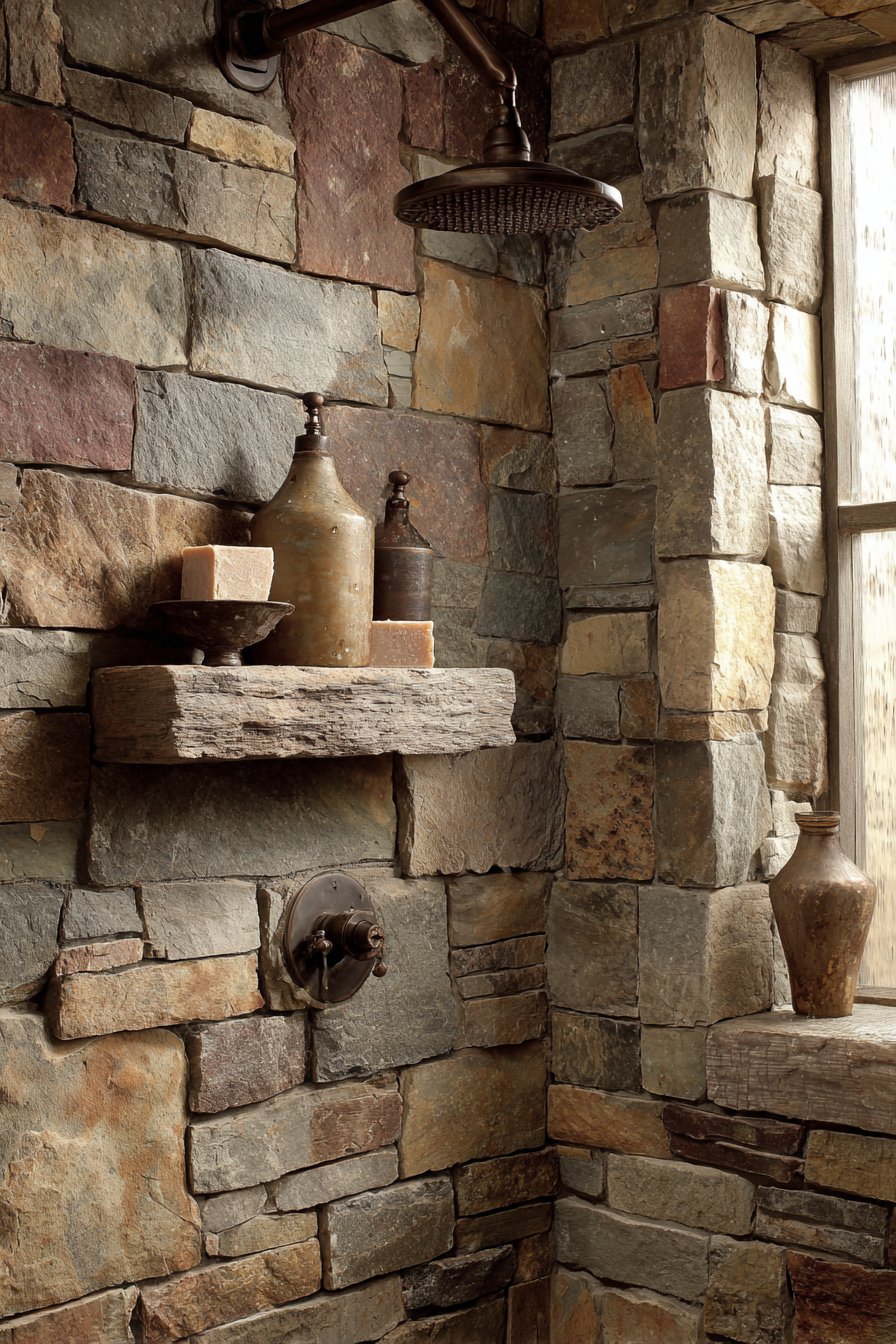
The interplay of light and texture defines this space’s character. A vintage-style glass block window allows soft, diffused natural light to filter through, illuminating the organic textures of stone and wood without compromising privacy. The lighting creates an ever-changing play of shadows across the textured surfaces throughout the day, ensuring the space never feels static. The oil-rubbed bronze fixtures develop a living patina over time, adding to the authentic rustic character while requiring minimal maintenance. This combination of elements creates an inviting atmosphere that embodies authentic farmhouse charm while providing all the comfort of modern luxury.
The practical considerations of this design are as impressive as its aesthetic appeal. The river rock flooring, while beautiful, serves the essential function of providing natural drainage pathways and preventing water pooling. The stone walls, when properly sealed, offer excellent durability and water resistance, aging gracefully over decades. The exposed wooden beams, treated with appropriate water-resistant finishes, add architectural drama without sacrificing functionality.
Key design tips for achieving this look include: selecting stone pieces with complementary color tones to create cohesion rather than chaos, ensuring proper waterproofing behind all stone installations to prevent moisture damage, treating reclaimed wood with marine-grade sealants designed for high-moisture environments, choosing fixtures with finishes that naturally patina to avoid the “worn-out” look of artificially aged hardware, and incorporating adequate ventilation to prevent moisture buildup that could damage natural materials. This rustic shower idea represents the pinnacle of organic luxury, proving that natural materials can create sophisticated, spa-worthy spaces.
2. Vintage Charm with Stone and Bronze Elegance
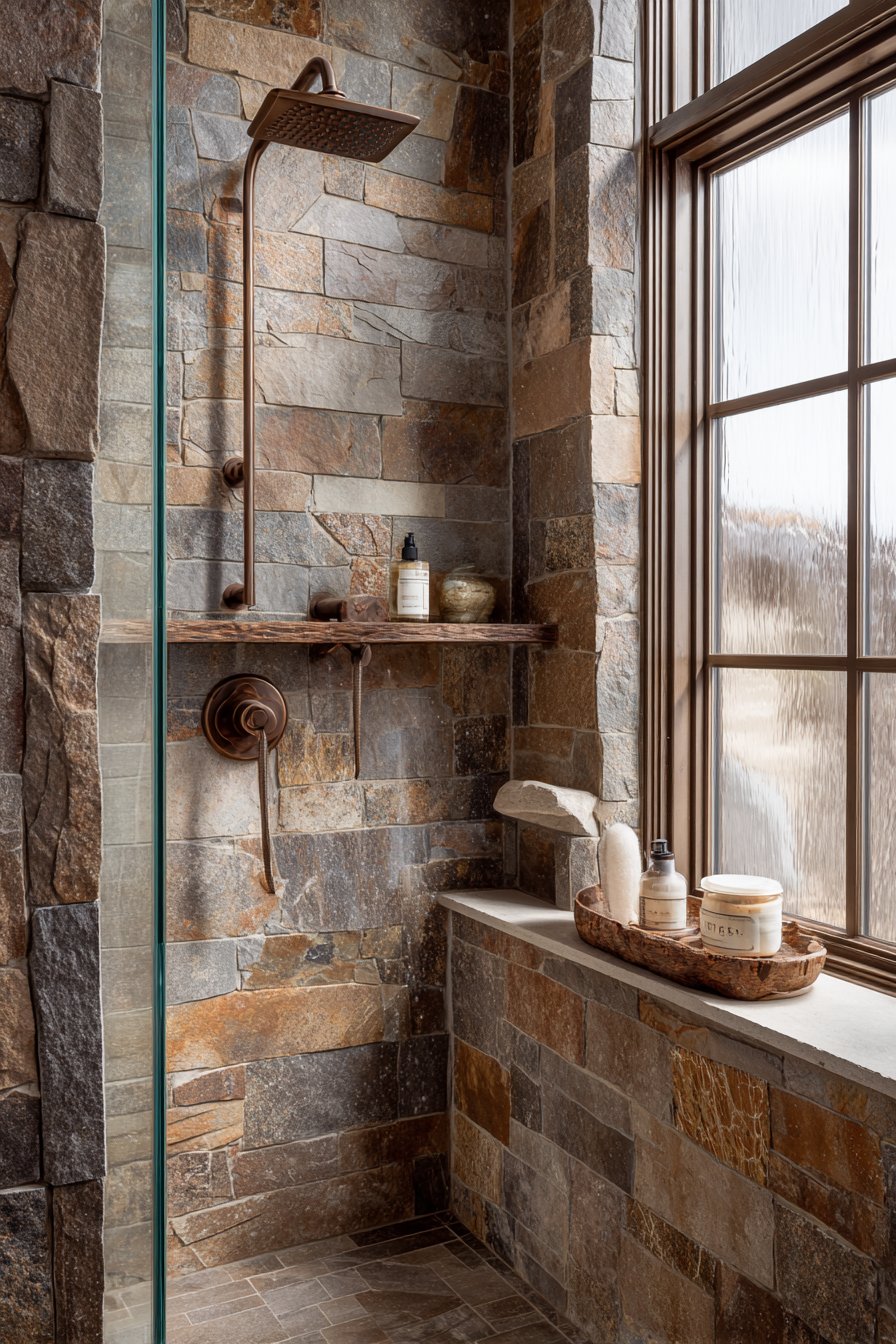
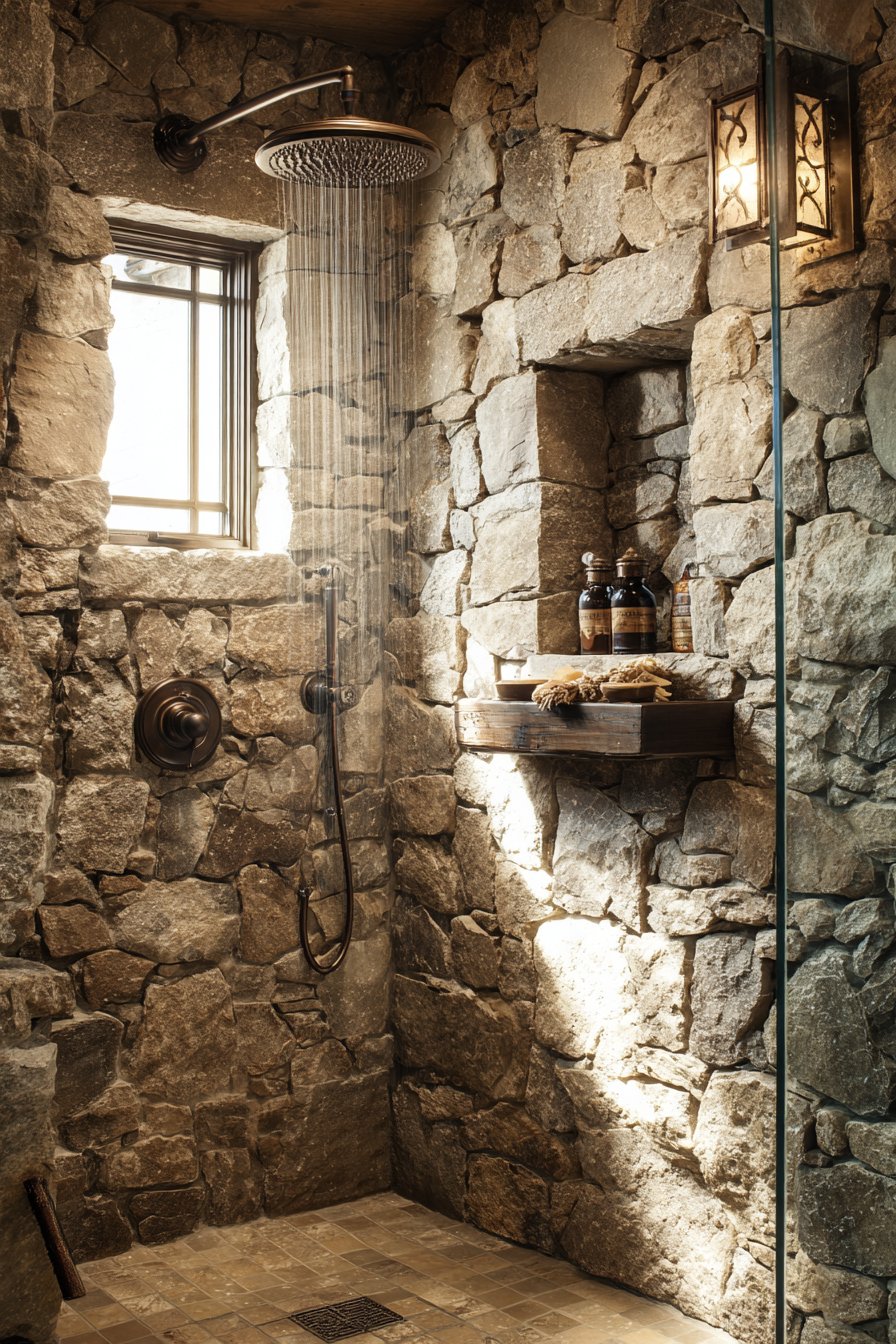
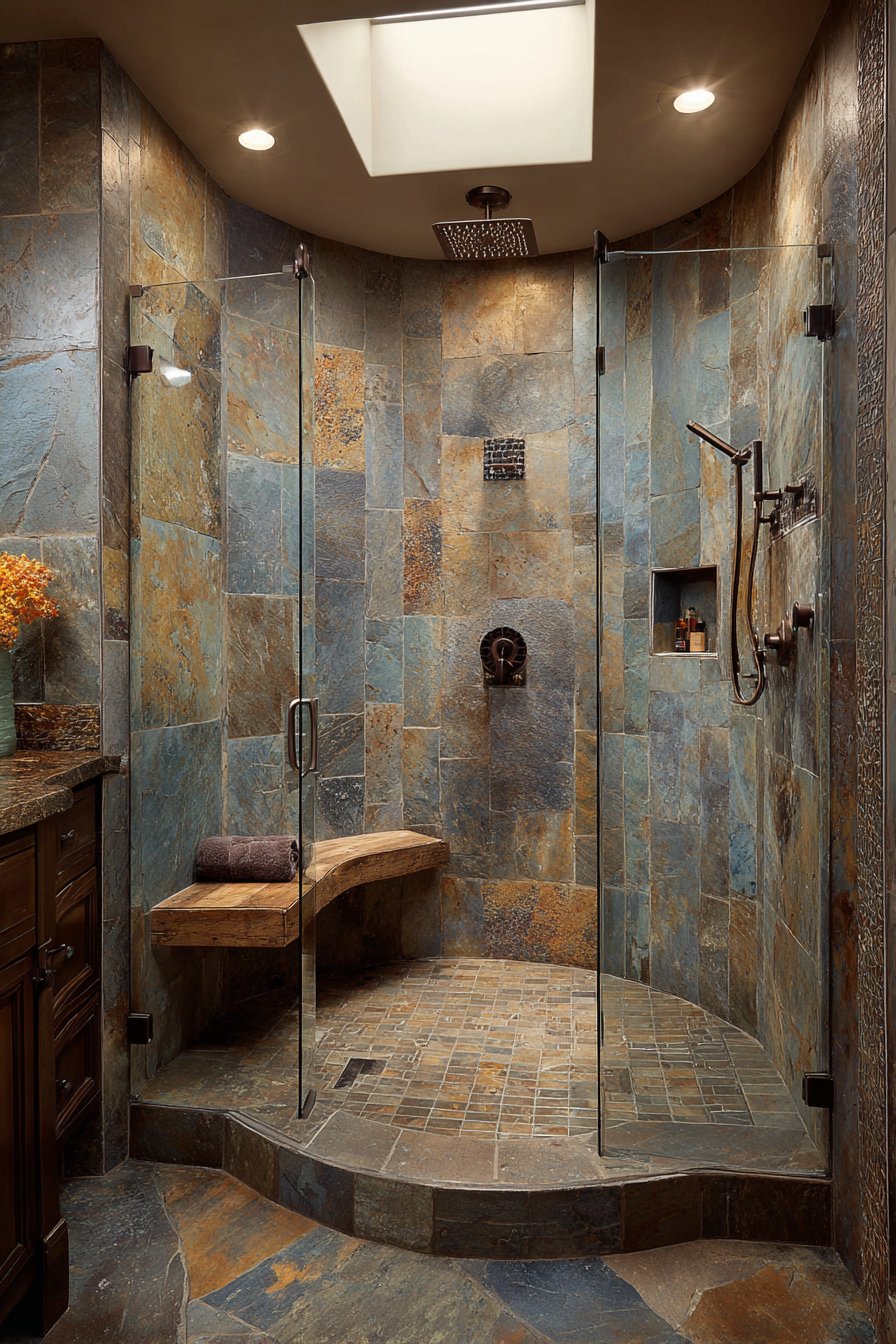
A corner walk-in shower featuring stacked stone walls demonstrates how rustic shower ideas can maximize space while delivering maximum impact. The natural stone, arranged in a horizontal stacked pattern, showcases earth tones ranging from warm tans to deep grays, with each stone displaying its own irregular texture and unique character. The frameless glass partition maintains an open, airy feeling while keeping water contained, allowing the beautiful stonework to remain the visual focus. Vintage bronze fixtures including both a rainfall showerhead and a convenient hand-held option mounted on a slide bar combine period-appropriate style with modern functionality, their warm metallic tones echoing the warmer hues within the stone.
The thoughtful details elevate this rustic shower from basic to extraordinary. A reclaimed wood shelf mounted directly into the stone wall provides practical storage for handmade soaps and rustic accessories while introducing an additional natural material that warms the overall palette. The shelf’s integration into the stonework appears intentional and organic rather than added as an afterthought, demonstrating how rustic design rewards careful planning. Natural morning light filtering through a frosted window creates soft, diffused illumination that changes throughout the day, casting gentle shadows across the textured stone surfaces and highlighting the dimensional quality of the stacked stone installation.
The beauty of this design lies in its authenticity and attention to natural material variations. Unlike manufactured alternatives, genuine stone displays organic color shifts, textural inconsistencies, and unique patterns that ensure no two installations look identical. The aged bronze fixtures, whether authentically vintage or quality reproductions, feature a depth of color and subtle wear patterns impossible to replicate with modern plating techniques.
Essential design considerations include: choosing stone pieces with similar thickness to ensure proper stacking and professional appearance, using a skilled mason familiar with natural stone to ensure structural integrity and proper mortar application, selecting a bronze finish with protective coating to slow (but not prevent) natural patina development, installing proper backing and waterproof membranes behind stone to prevent moisture migration, and incorporating a recessed niche or shelf during initial construction rather than attempting to retrofit later. This rustic shower idea proves that traditional materials and time-honored techniques create spaces with lasting beauty and value.
3. Barn Door Innovation Meets Subway Tile Simplicity
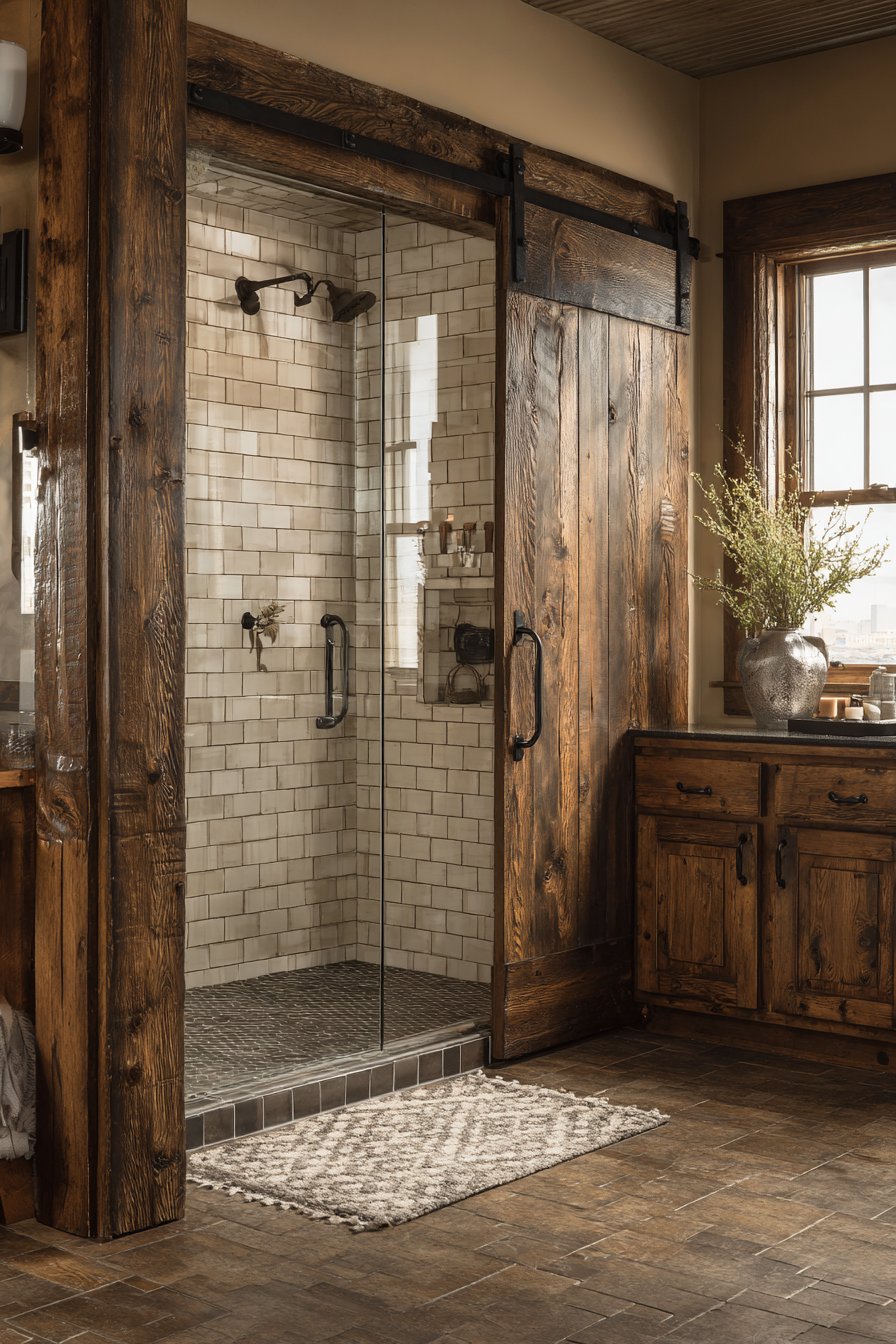
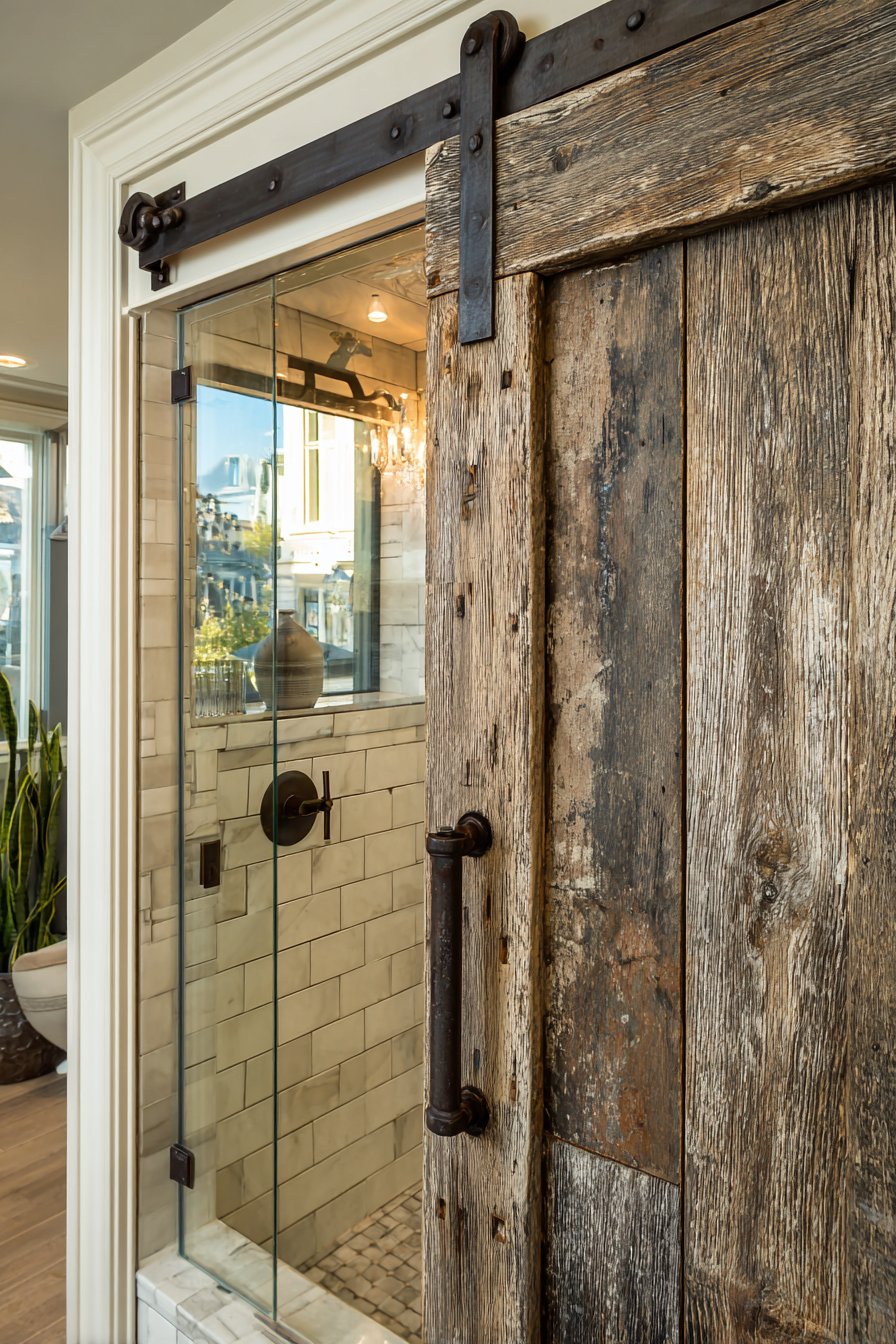
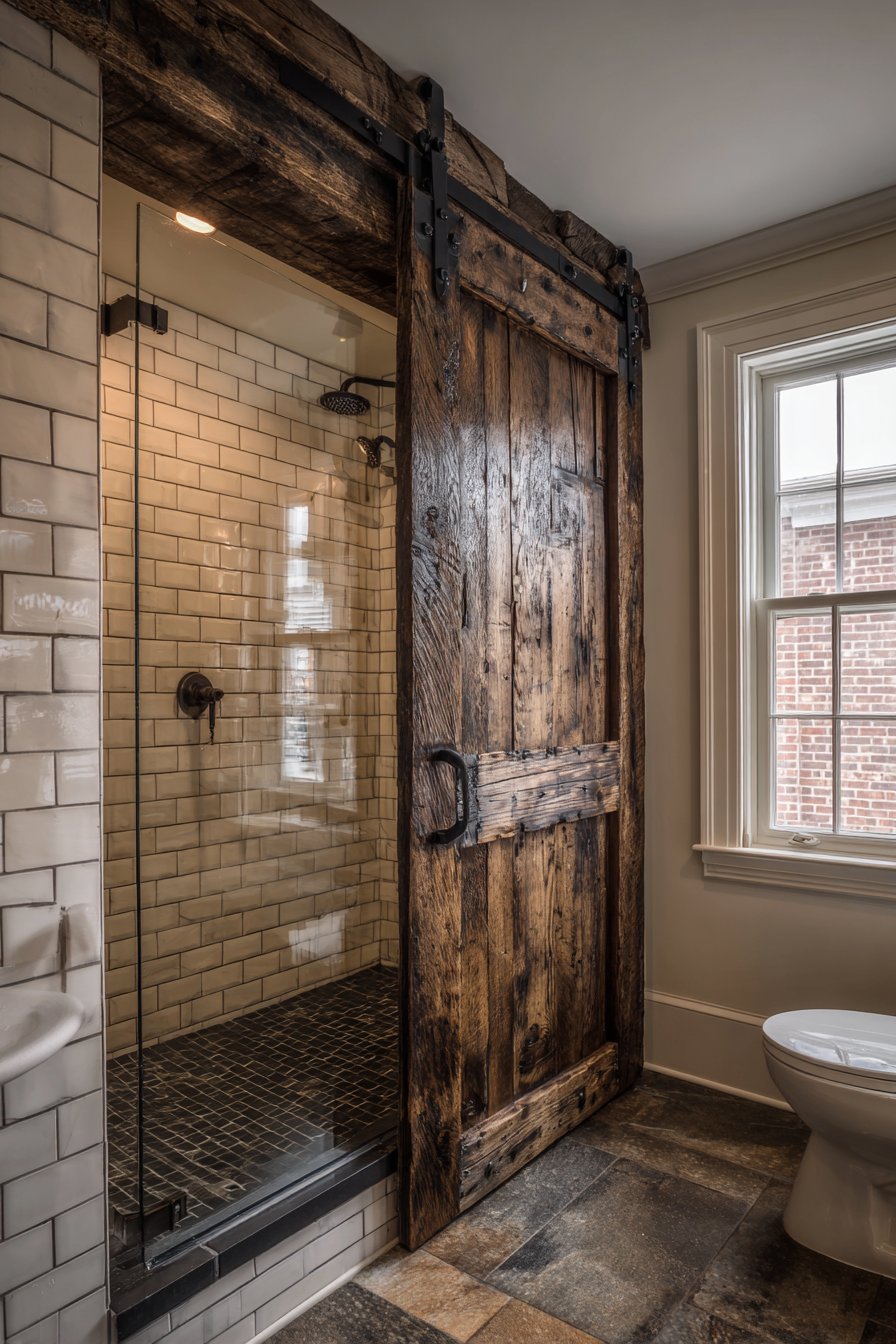
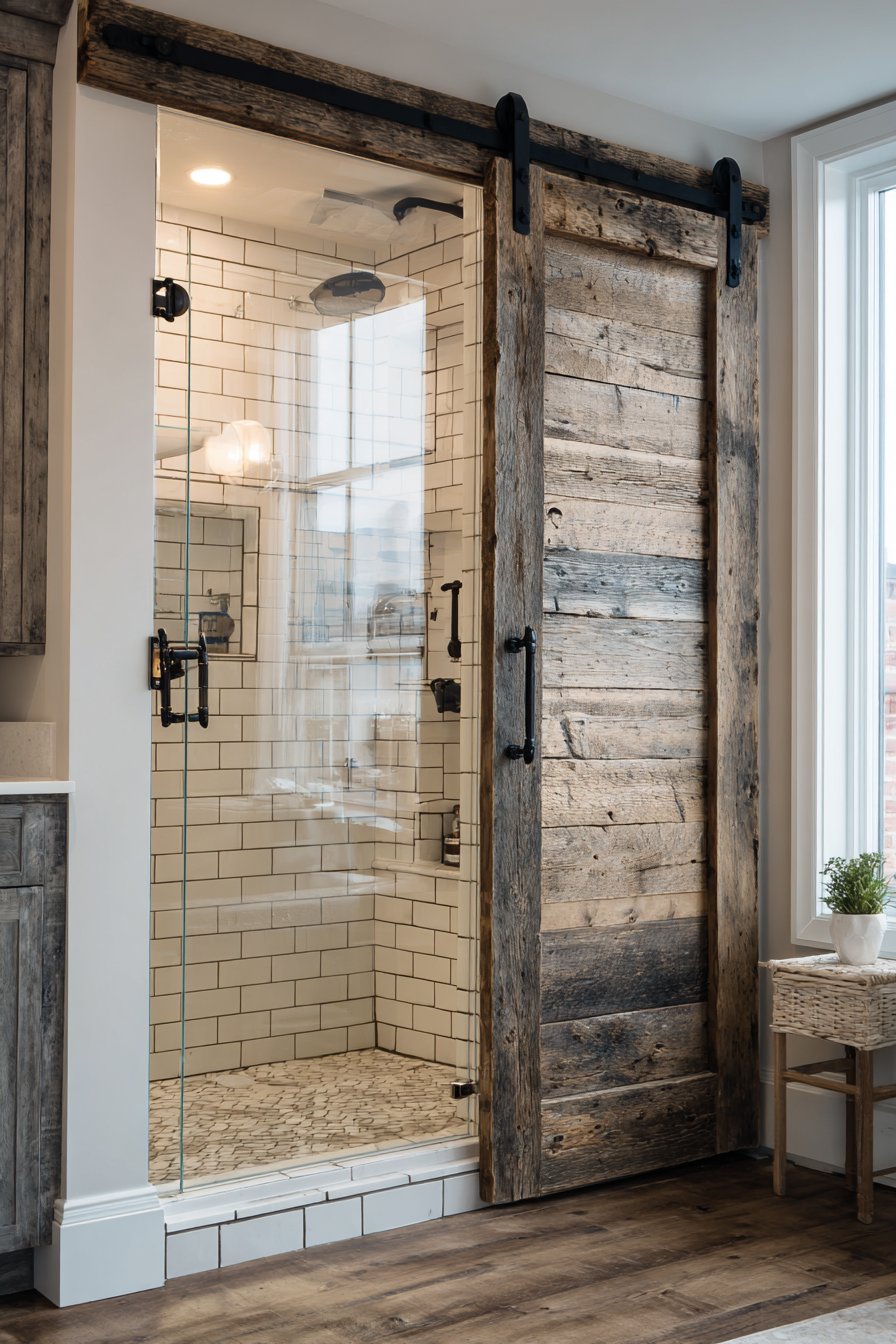
This creative rustic shower idea reimagines the standard shower enclosure with a barn-style sliding door that immediately captures attention and establishes the space’s character. The door, constructed from weathered wood planks displaying authentic wear patterns and varied gray tones, features substantial black iron hardware and a clear glass panel insert that maintains visibility while the wood creates privacy and visual interest. This unexpected element transforms what might otherwise be a standard shower into a distinctive design statement. The interior space takes a more restrained approach with cream subway tiles installed in traditional brick pattern, their clean lines and simple geometry providing calm contrast to the door’s rustic texture.
The design successfully balances rustic elements with practical functionality. The dark grout lines between subway tiles provide definition and prevent the wall treatment from appearing too plain or clinical, while also hiding the inevitable mineral deposits that accumulate in shower environments. Oil-rubbed bronze fixtures complement the door’s black hardware, creating a cohesive metal palette throughout the space. Natural light entering from a nearby window illuminates both the weathered wood door and the pristine tile interior, creating interesting plays of light and shadow while ensuring the space feels bright rather than cave-like despite the substantial wooden door.
This approach offers particular advantages for homeowners seeking rustic character without committing to extensive natural stone or wood installations throughout the shower. The barn door creates immediate impact while the simpler tile treatment keeps costs manageable and maintenance straightforward.
Critical implementation tips include: ensuring the wall above the shower can support the weight of both the door and its sliding hardware system, selecting door hardware rated specifically for bathroom environments to prevent rust and deterioration, properly sealing all wood surfaces with marine-grade finishes designed to withstand humidity and temperature fluctuations, installing adequate floor drainage beyond the shower threshold to catch water that may escape around the door, and incorporating soft-close mechanisms to prevent the heavy door from slamming. Additionally, the clear glass insert should be tempered safety glass, and the door should be constructed with waterproof adhesives to prevent delamination. This rustic shower idea proves that strategic use of statement elements can create dramatic impact without requiring a complete rustic transformation.
4. River Rock Foundation with Slate Sophistication
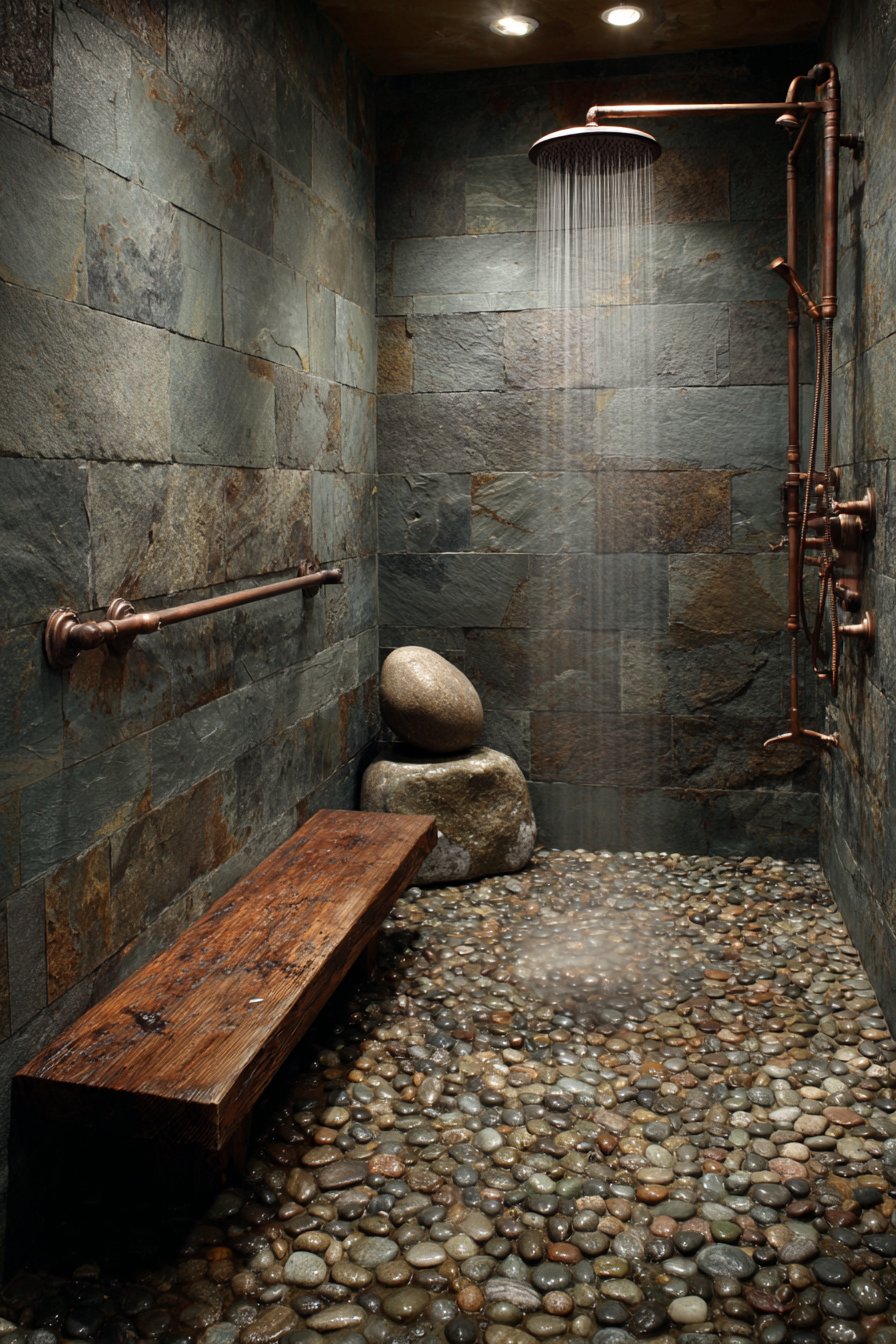
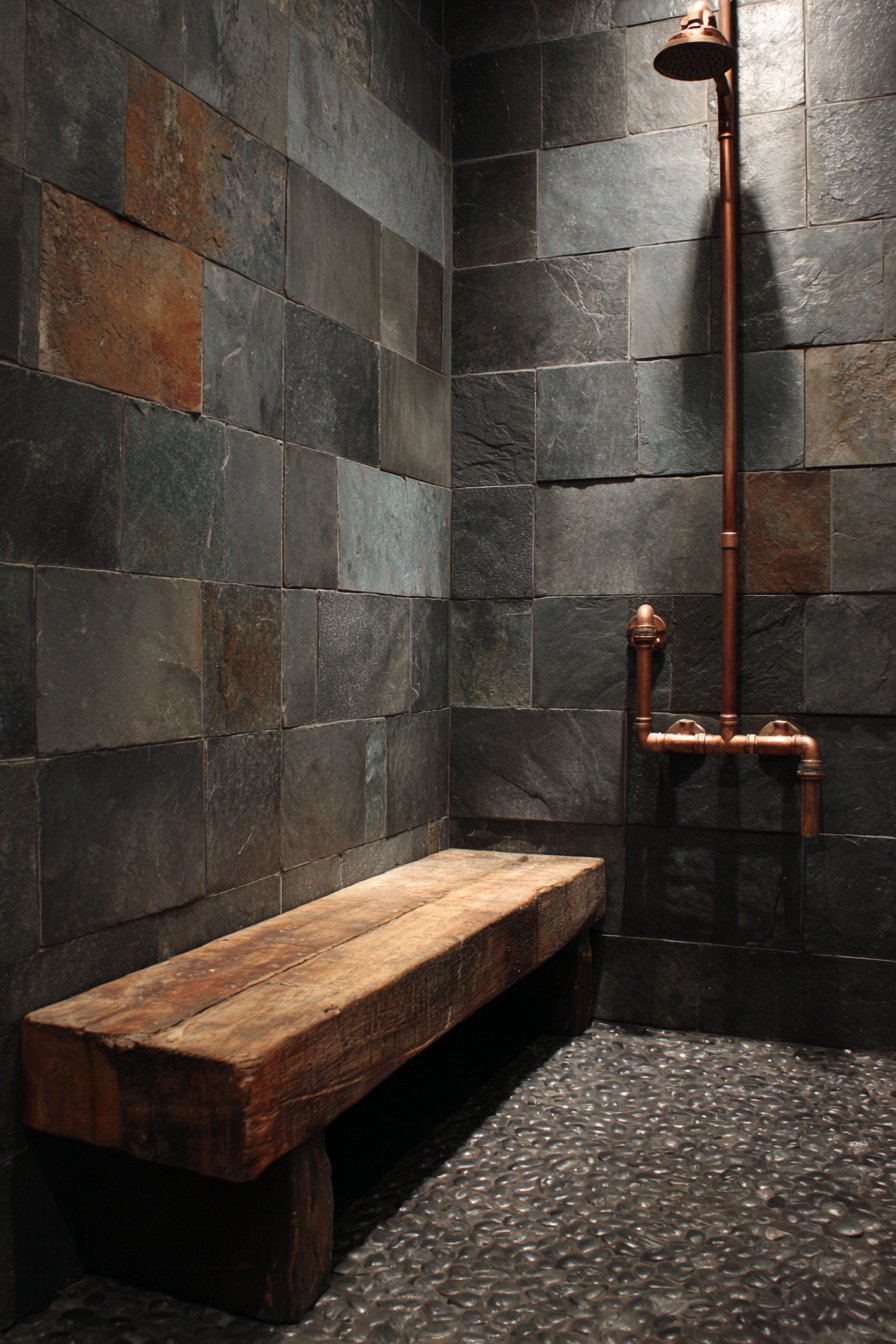
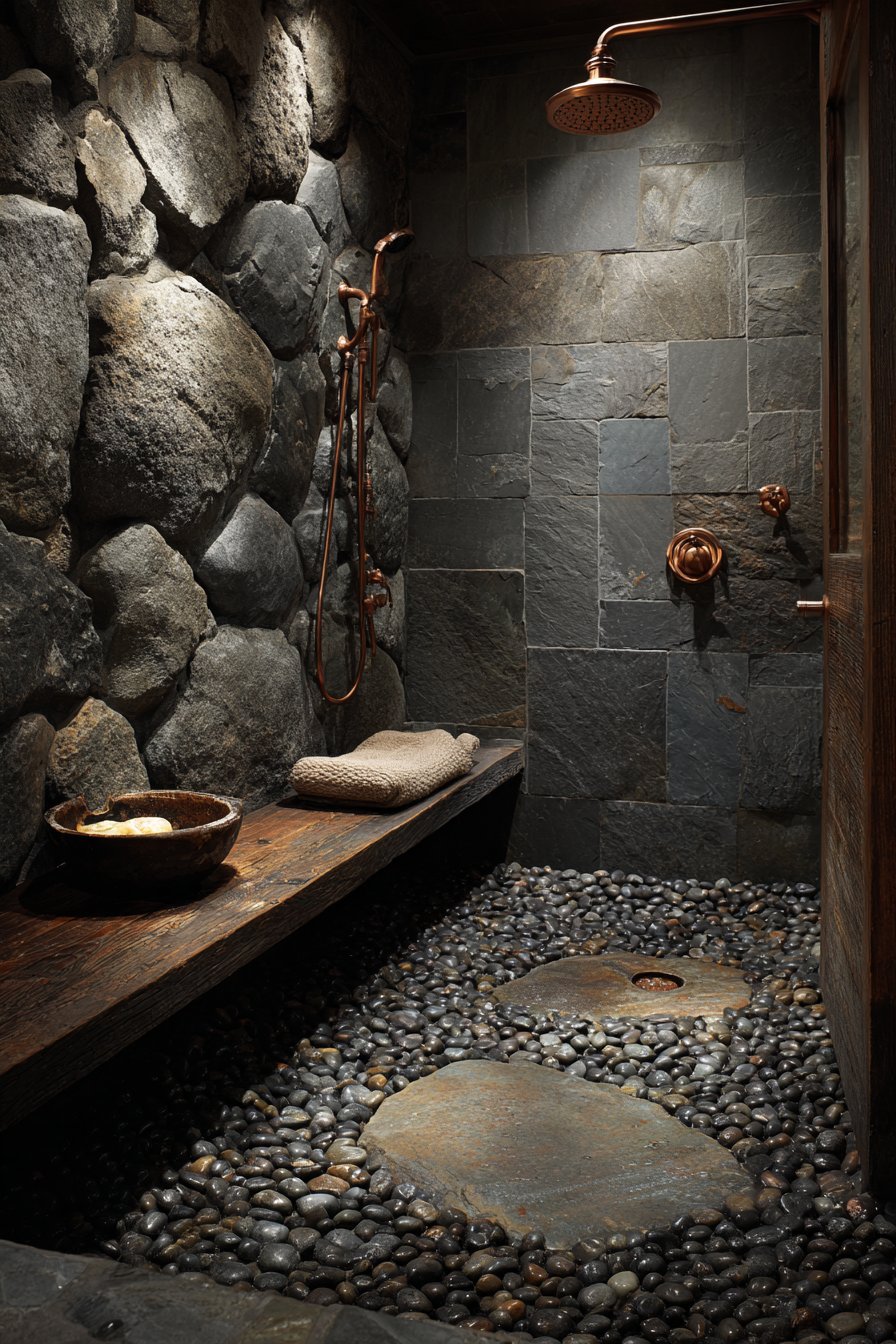
The marriage of river rock flooring with slate tile walls represents a sophisticated interpretation of rustic shower ideas that emphasizes natural materials while maintaining a refined aesthetic. The shower floor features smooth, rounded river rock pebbles in varied sizes and colors, creating a naturalistic surface that provides excellent traction and natural drainage pathways between stones. This flooring choice transforms the shower experience, offering a subtle foot massage with every use while visually evoking the feeling of standing in a stream. The walls showcase large-format slate tiles in deep charcoal gray, their natural cleft surfaces displaying the subtle striations and color variations that make slate such a compelling natural material.
The industrial-style copper piping leading to an exposed showerhead introduces an unexpected element that bridges rustic and industrial design aesthetics. The copper, displayed proudly rather than concealed behind walls, develops a living patina over time that shifts from bright metallic orange through bronze tones toward eventual verdigris, creating an ever-evolving sculptural element within the space. A floating reclaimed wood bench provides both functional seating and another textural layer, its weathered surface and visible grain patterns adding warmth to the cooler slate and stone palette. The bench’s floating installation creates visual lightness while making floor cleaning considerably easier.
Lighting plays a crucial role in this design’s success. Soft, diffused illumination highlights the dimensional quality of the slate tiles, emphasizing their natural texture and creating subtle shadows that enhance visual interest. The varied heights and colors of the river rocks create a dynamic floor surface that never appears flat or monotonous when properly lit.
Important considerations for this design include: installing a proper shower pan beneath river rock flooring to ensure water drains to the correct location rather than seeping into subflooring, using a skilled tile installer experienced with natural slate to accommodate its thickness variations and ensure proper setting, applying appropriate sealers to both slate and river rock to enhance color and provide stain resistance while maintaining natural appearance, ensuring copper piping is properly supported and connections are watertight to prevent leaks behind walls, and treating the wooden bench with water-resistant finish suitable for constant moisture exposure. Regular resealing of natural stone surfaces maintains their beauty and performance. This rustic shower idea demonstrates how combining multiple natural materials with varying textures and colors creates rich, layered spaces with enduring appeal.
5. Vintage Industrial with Repurposed Character
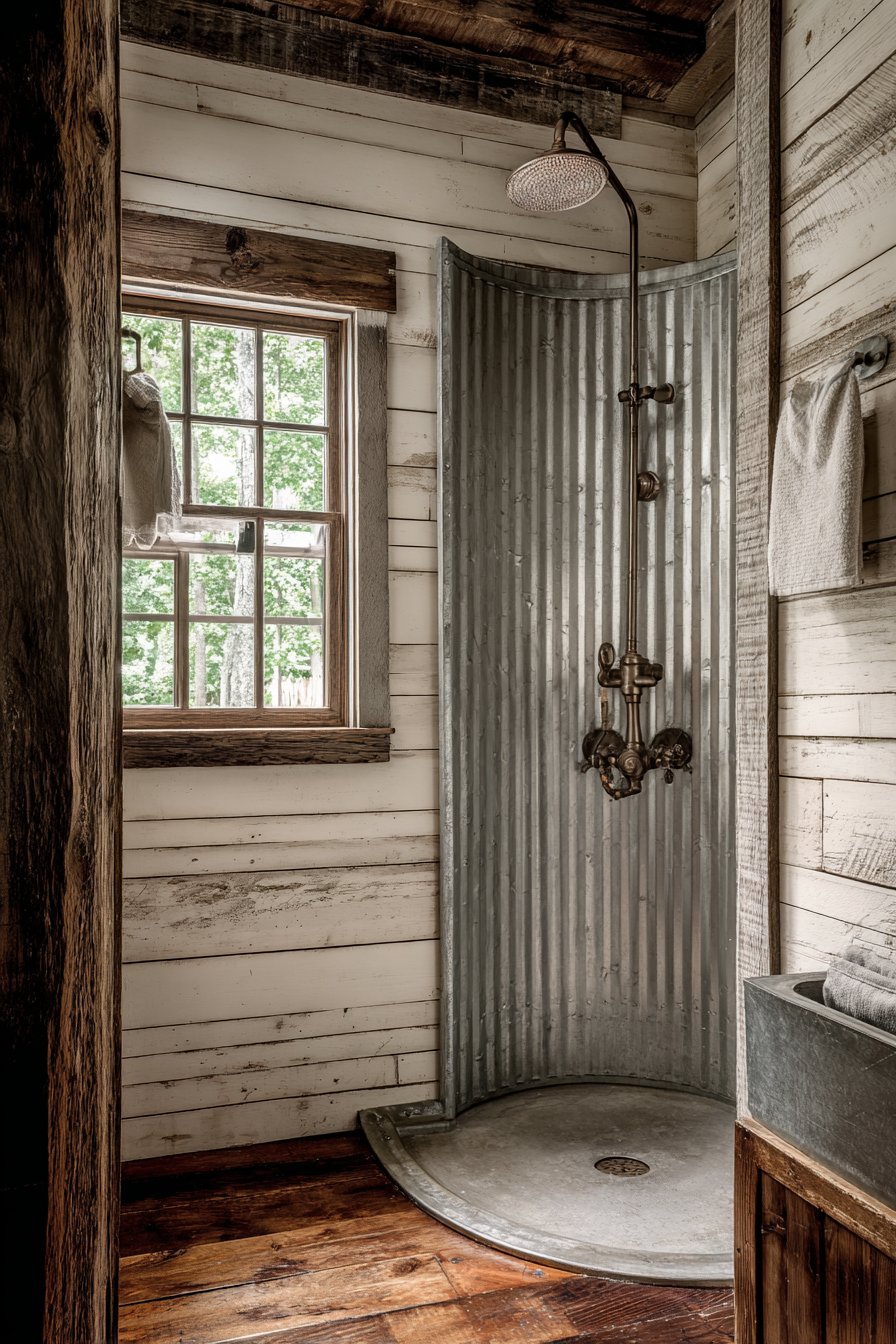
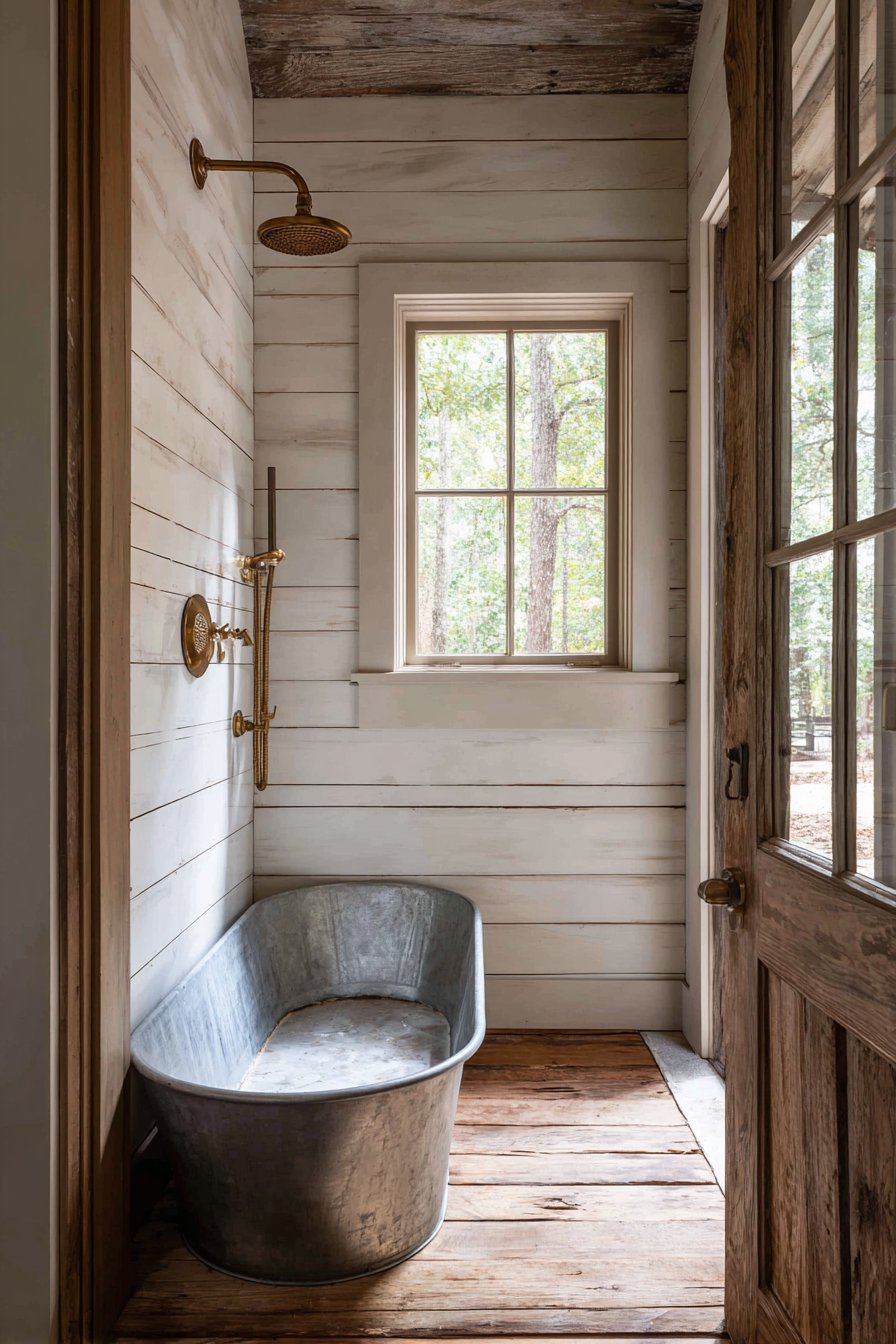
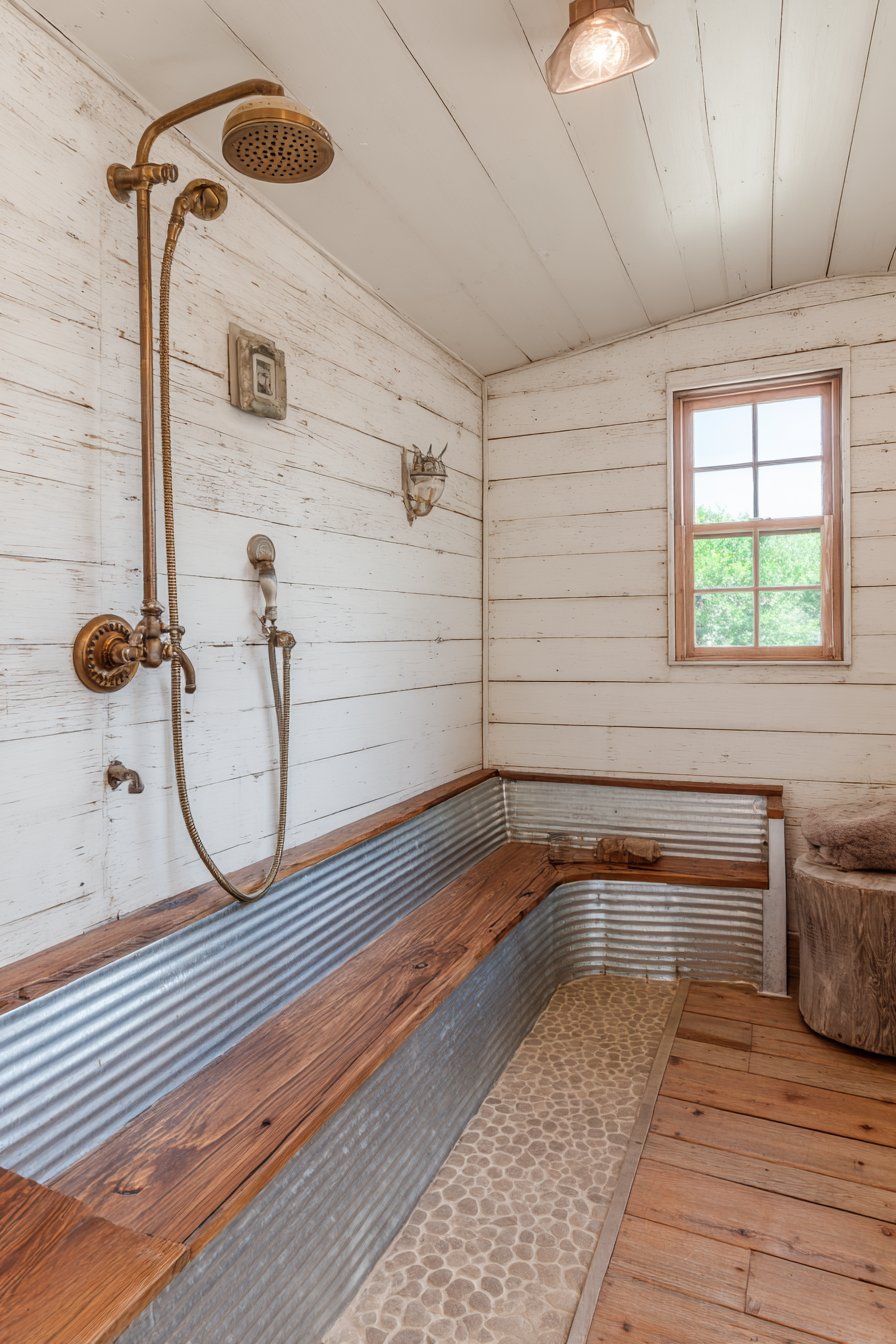
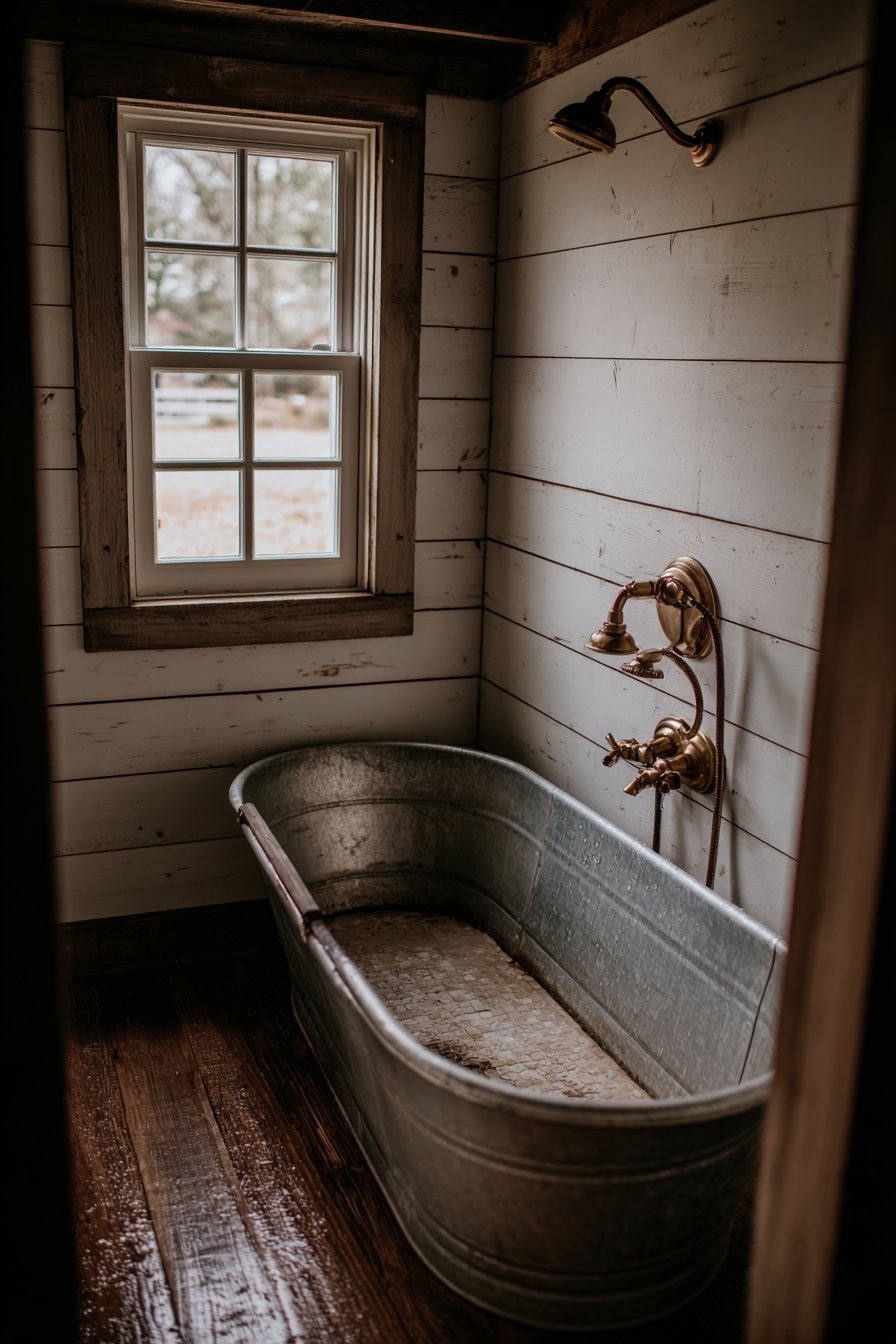
Innovation and creativity define this rustic shower idea, which features a converted vintage galvanized metal trough as the shower pan—a perfect example of how repurposed industrial elements can create truly unique spaces. The trough, originally designed for agricultural use, receives professional waterproofing treatment and modern drainage installation while retaining its authentic weathered appearance and functional simplicity. This unexpected foundation element immediately establishes the space’s creative, resourceful character. Surrounding walls feature horizontal shiplap painted in soft white, the visible wood grain and board-to-board texture creating subtle visual interest while brightening the space and allowing the unique shower pan to command attention.
Antique brass fixtures including a traditional rain shower head provide the functional components while their warm metallic tones and period-appropriate styling reinforce the vintage aesthetic. The brass finish, whether authentically aged or skillfully reproduced, features the depth and complexity that modern chrome or nickel finishes cannot replicate. A small window with simple wooden frame provides natural ventilation—essential in any bathroom but particularly important when working with repurposed materials that may not offer modern moisture resistance. The window’s placement and size provide fresh air circulation without compromising privacy, while the wooden frame echoes the shiplap walls and reinforces the farmhouse sensibility.
This design represents the ultimate in sustainable, creative design thinking—taking materials originally intended for completely different purposes and reimagining them in new contexts. The vintage trough tells a story, its dents, scratches, and patina representing years of previous use and adding authentic character impossible to manufacture.
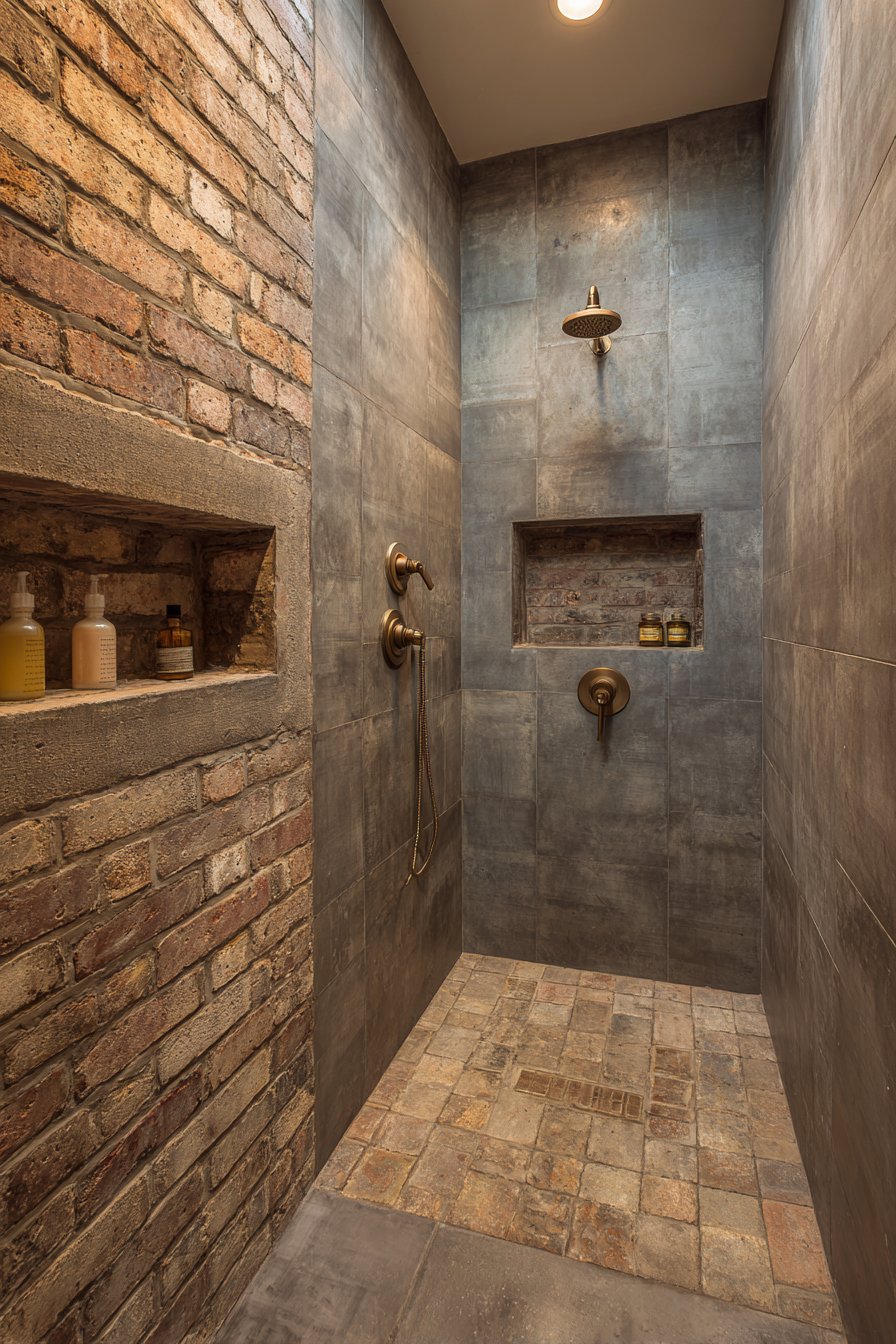
Essential implementation considerations include: working with a licensed plumber to properly install modern drainage systems that comply with building codes while integrating with vintage elements, applying professional waterproofing membranes and sealants specifically designed for metal surfaces, ensuring the trough’s base is properly supported and level to prevent water pooling or drainage issues, treating shiplap walls with appropriate moisture-resistant paints or sealants rated for bathroom use, and installing proper ventilation fans in addition to operable windows to manage humidity effectively. The white painted shiplap should receive multiple coats of moisture-resistant primer and paint specifically formulated for high-humidity environments. This rustic shower idea celebrates resourcefulness and creativity, proving that the most memorable designs often come from thinking outside conventional boundaries.
6. Reclaimed Brick Meets Modern Concrete Aesthetics
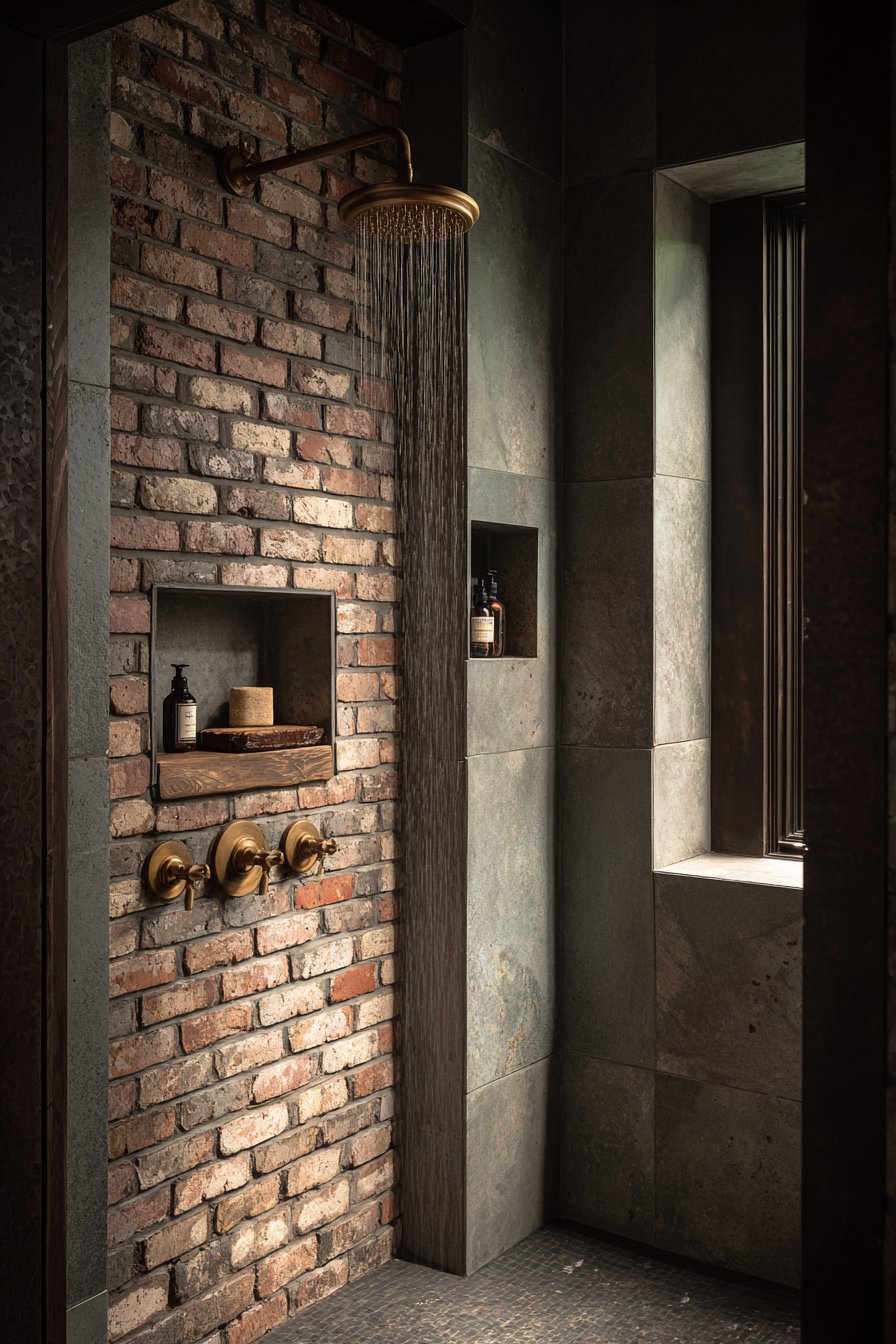
The dramatic juxtaposition of reclaimed brick and concrete-look tiles creates a rustic shower idea that bridges historical character with contemporary minimalism. The feature wall showcases authentic reclaimed brick displaying natural color variations from deep red to muted orange, with aged mortar lines showing the honest wear of decades. Each brick tells its own story through chips, weathering, and color shifts that create a richly textured surface full of visual interest. The complementary walls feature large-format porcelain tiles designed to mimic poured concrete, their warm gray tone and subtle surface variation providing a modern counterpoint to the brick’s historical character.
A bronze thermostatic shower system delivers modern performance and convenience within this aesthetically diverse environment. The dual showerheads—typically a fixed rainfall head and an adjustable handheld option—provide flexibility and functionality while their bronze finish creates warmth that bridges the cooler gray tiles and warmer brick tones. The thermostatic controls ensure consistent water temperature regardless of usage elsewhere in the home, representing the perfect marriage of period-appropriate style with contemporary performance. A built-in niche framed with reclaimed wood provides essential storage while introducing another natural material that softens the harder brick and tile surfaces.
The interplay between rough and smooth, old and new, creates a sophisticated tension that keeps the space visually engaging. Natural light filtering through the space creates different effects on each surface—the brick absorbs and diffuses light, creating soft shadows within its texture, while the concrete-look tiles reflect light more evenly, their subtle sheen adding luminosity.
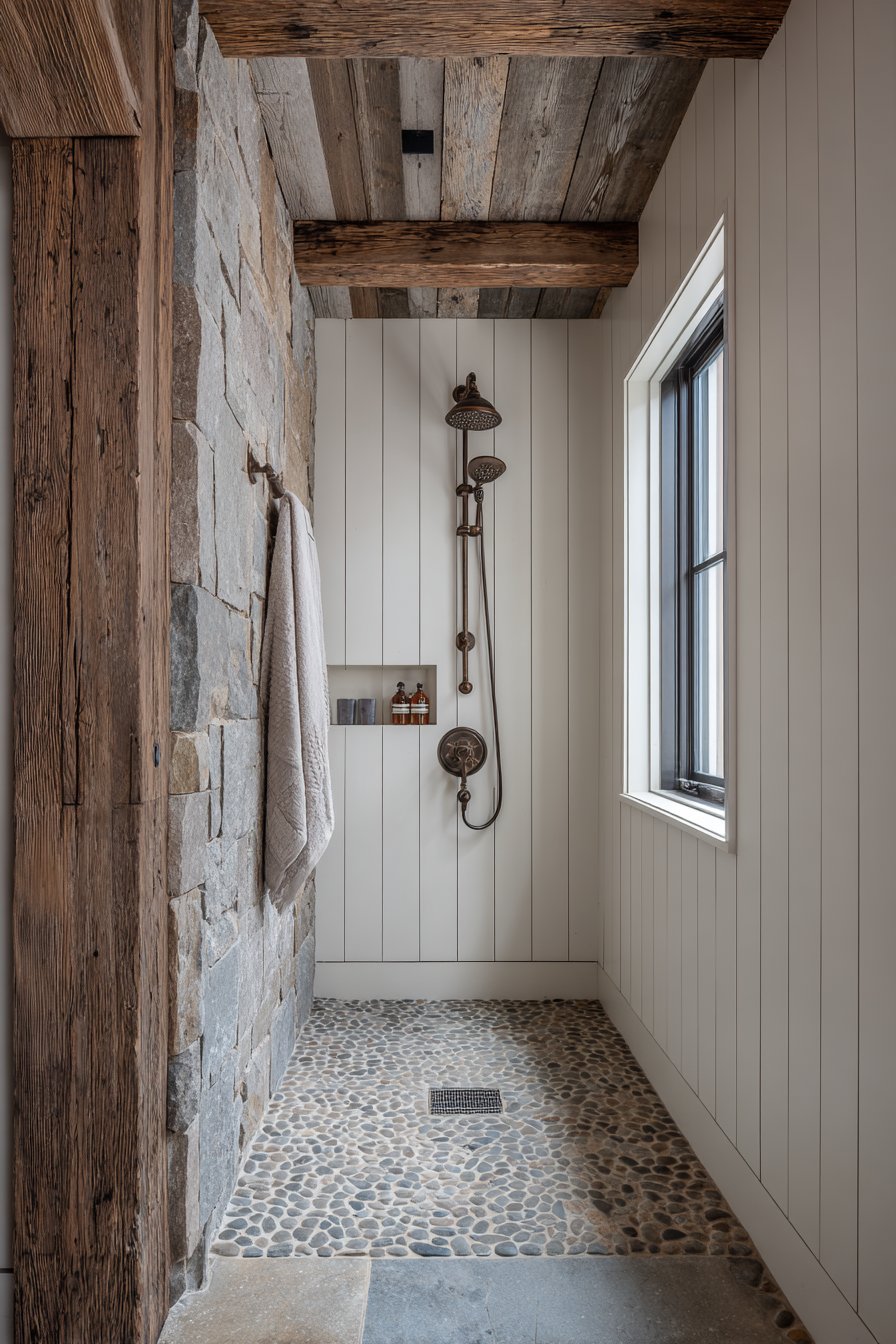
Key design principles for achieving this look include: properly sealing reclaimed brick to prevent moisture absorption while maintaining its authentic appearance, ensuring the brick wall receives professional waterproofing membrane installation behind the brick to protect structural walls from moisture, choosing concrete-look tiles with subtle variation rather than perfectly uniform appearance for more authentic character, installing the reclaimed wood niche during initial construction with proper waterproofing rather than as an afterthought, and selecting grout colors that complement rather than contrast with tile colors for a more sophisticated appearance. The bronze fixtures should be quality reproductions or restored vintage pieces rather than artificially aged new fixtures for authentic patina development. This rustic shower idea demonstrates how seemingly disparate materials can create cohesive, compelling spaces when united by thoughtful design and a consistent color palette.
7. Accessible Luxury with Flagstone and Shiplap
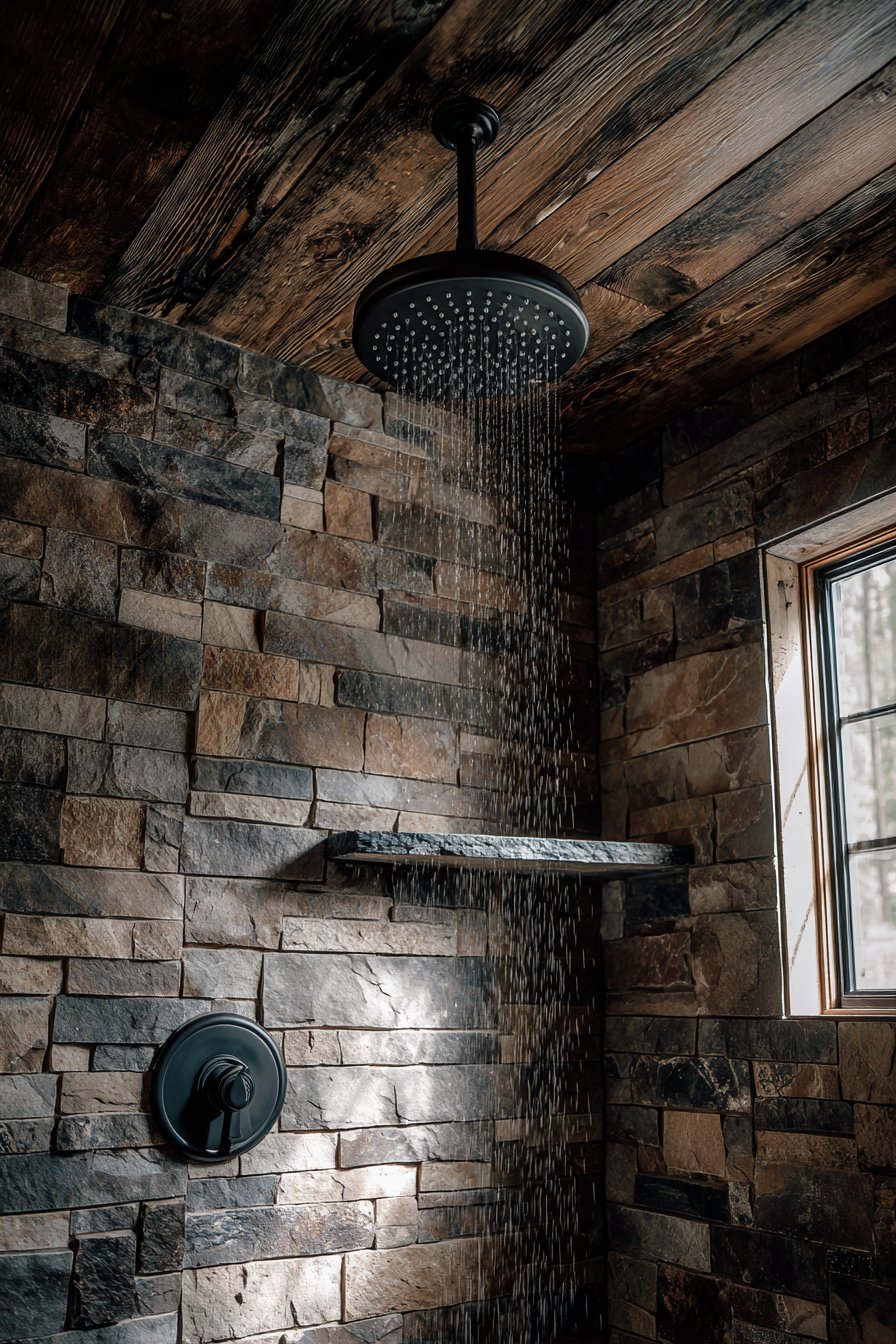
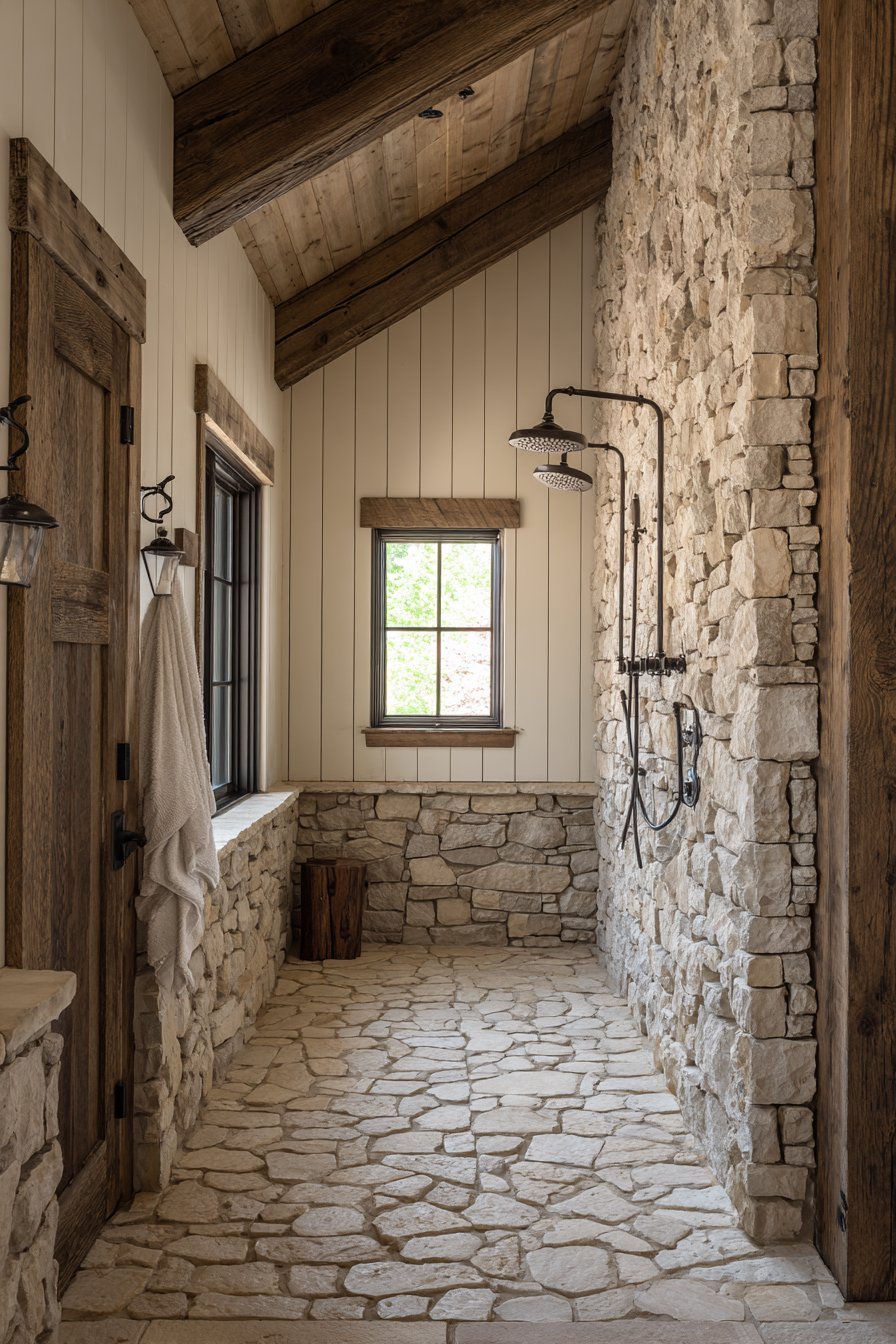
Universal design principles meet rustic elegance in this curbless walk-in shower that proves accessibility and beauty need not be mutually exclusive. The hand-hewn flagstone flooring displays the irregular shapes and natural color variations that make each stone unique, while the gentle slope toward a linear drain ensures water management without requiring a threshold that could impede access. This zero-entry design welcomes users of all abilities while the natural stone creates a luxurious, spa-like foundation. The walls combine natural stone wainscoting extending approximately three feet up from the floor with whitewashed shiplap above, creating visual height while managing costs and moisture exposure strategically.
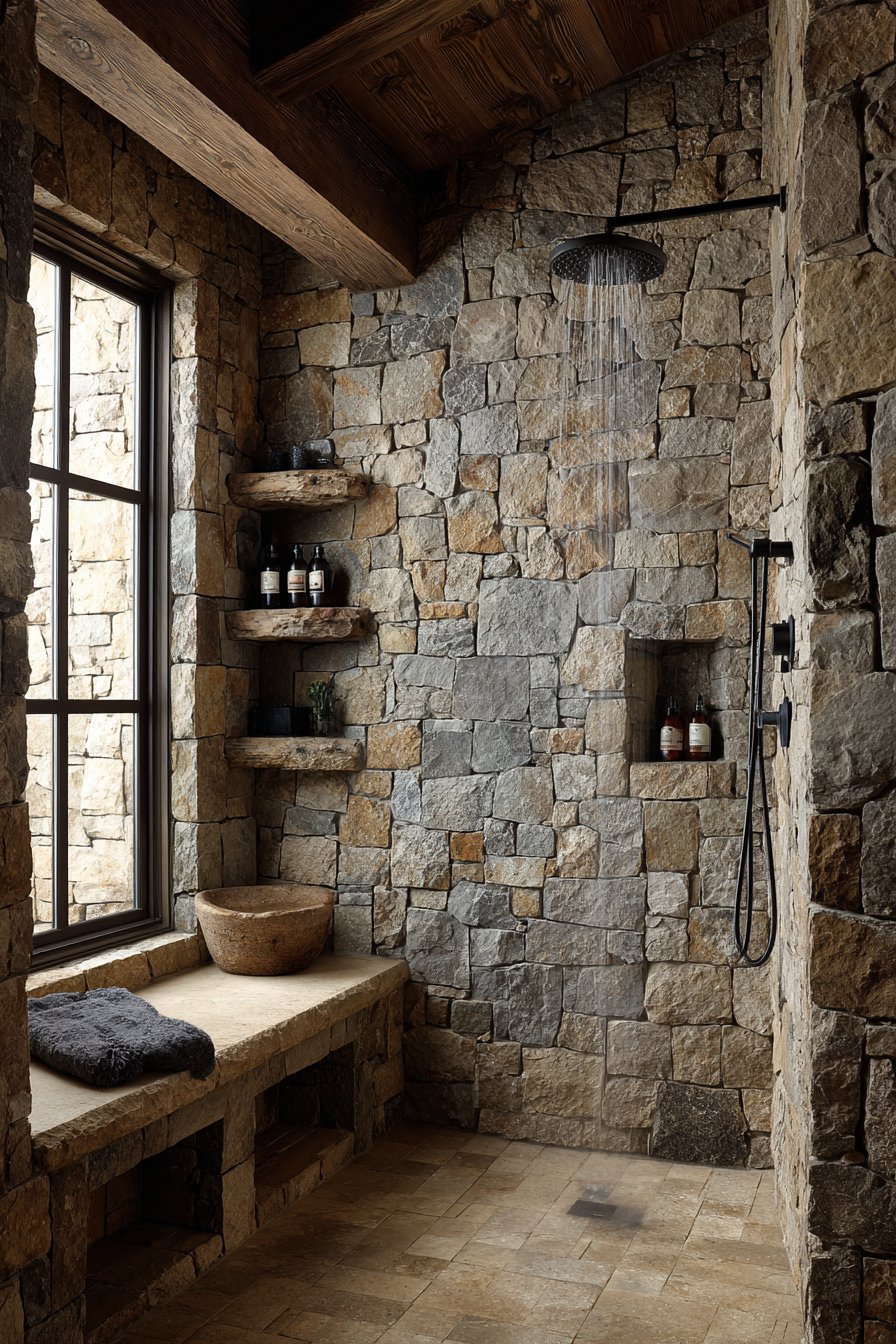
A vintage-inspired bronze shower system featuring both a rain shower and handheld combination fixture mounts on exposed black pipe, creating an industrial-rustic fusion that adds character and functionality. The exposed plumbing becomes an intentional design element rather than something to hide, its matte black finish providing strong contrast against the lighter shiplap while the bronze fixtures add warmth. Wooden ceiling beams overhead introduce architectural interest and draw the eye upward, emphasizing the shower’s generous height and creating a sense of spaciousness. These beams, properly treated for moisture resistance, add structural visual weight that grounds the design.
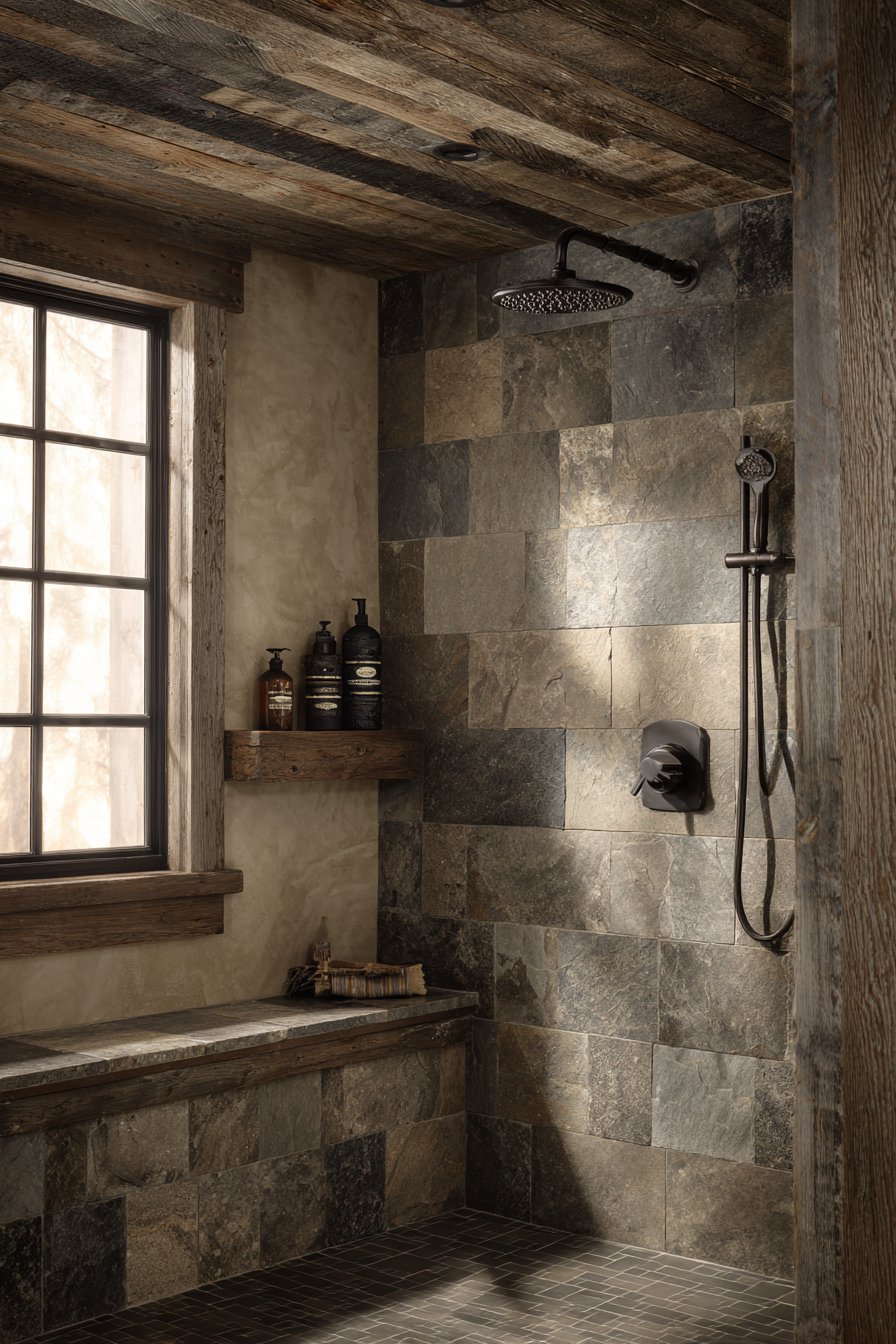
The whitewashed shiplap represents a particularly clever material choice for the upper walls. The white finish brightens the space and reflects light effectively, making the shower feel larger and more open, while the visible wood grain and board lines prevent the surface from appearing flat or institutional. The wash finish allows the wood’s natural character to show through while providing excellent moisture resistance.
Critical implementation elements include: ensuring proper floor pitch of at least 1/4 inch per foot toward the drain to prevent water pooling in the curbless design, installing waterproofing membrane across the entire shower floor extending beyond the shower area to catch any water migration, treating all wooden elements including beams and shiplap with appropriate moisture-resistant finishes reapplied according to manufacturer recommendations, selecting a linear drain with adequate capacity for the shower size and multiple shower heads, and ensuring adequate ventilation to manage the moisture created by the curbless design’s larger opening. The flagstone should be sealed with penetrating sealer that enhances color without creating a slippery surface. This rustic shower idea proves that accessible design can deliver style and luxury without compromise.
8. Architectural Interest Through Diagonal Wood Planking
Innovative ceiling treatment transforms this corner shower into an architectural statement, demonstrating how rustic shower ideas can create interest through unexpected applications of familiar materials. The diagonal wood plank ceiling in weathered pine creates dynamic visual movement overhead, the angled lines drawing the eye upward and making the space feel larger than its footprint suggests. The weathered finish displays natural gray tones and subtle color variations that feel authentic rather than artificially aged. This ceiling treatment transforms what’s typically an afterthought surface into a focal point that adds considerable character. Stacked stone walls in mixed earth tones provide textural contrast and ground the design, their horizontal orientation creating calm stability against the diagonal ceiling.
The matte black rainfall showerhead and accompanying fixtures provide dramatic modern contrast against the natural materials, their contemporary finish and clean lines preventing the space from feeling too rustic or dated. This juxtaposition of modern fixtures with traditional materials creates visual tension that keeps the design interesting and prevents it from becoming a period costume. A built-in corner shelf carved from a single piece of natural stone offers both practical storage and a sculptural element, its organic edges and natural variation celebrating the stone’s inherent beauty rather than forcing it into geometric conformity.
Natural window light plays across these varied surfaces throughout the day, creating an ever-changing display of shadows and highlights. The diagonal ceiling planks cast distinctive shadow patterns, the stone walls create textural depth through their dimensional surfaces, and the matte black fixtures provide strong focal points that anchor the composition.
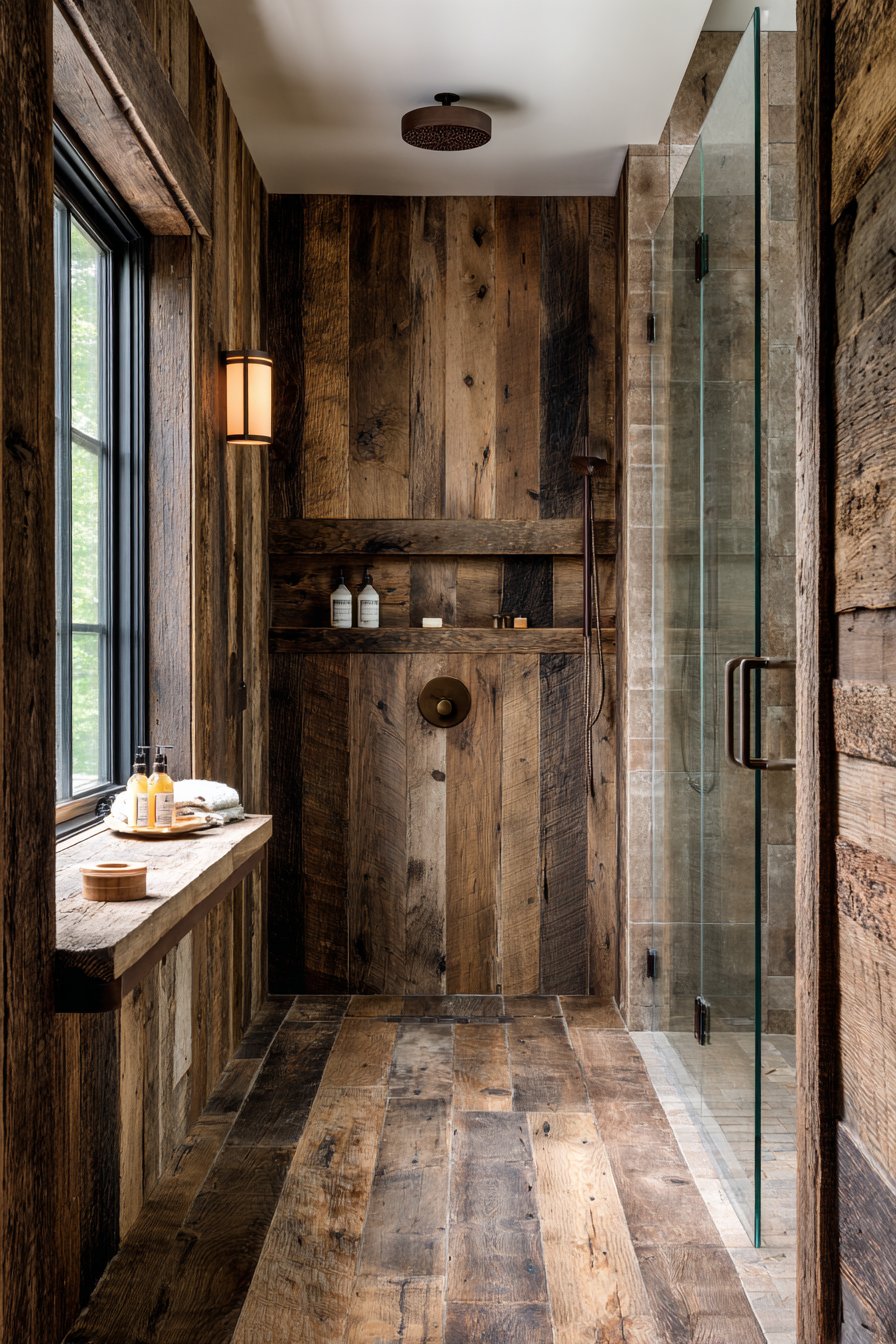
Essential design considerations include: ensuring ceiling joists can support the additional weight of wood planking and any moisture it absorbs, applying multiple coats of marine-grade sealer to ceiling wood to prevent warping, sagging, or mold growth, installing proper ventilation to prevent moisture accumulation at the ceiling where warm humid air naturally rises, using skilled masons to cut and install corner stone pieces for clean, professional intersections, and selecting a stone shelf with natural imperfections that add character rather than appearing damaged or defective. The diagonal plank installation requires precise measuring and cutting to ensure joints meet properly and the pattern remains consistent. This rustic shower idea demonstrates how architectural creativity and attention to ceiling planes can elevate shower design beyond standard wall treatments.
9. Wood-Look Luxury with Modern Convenience
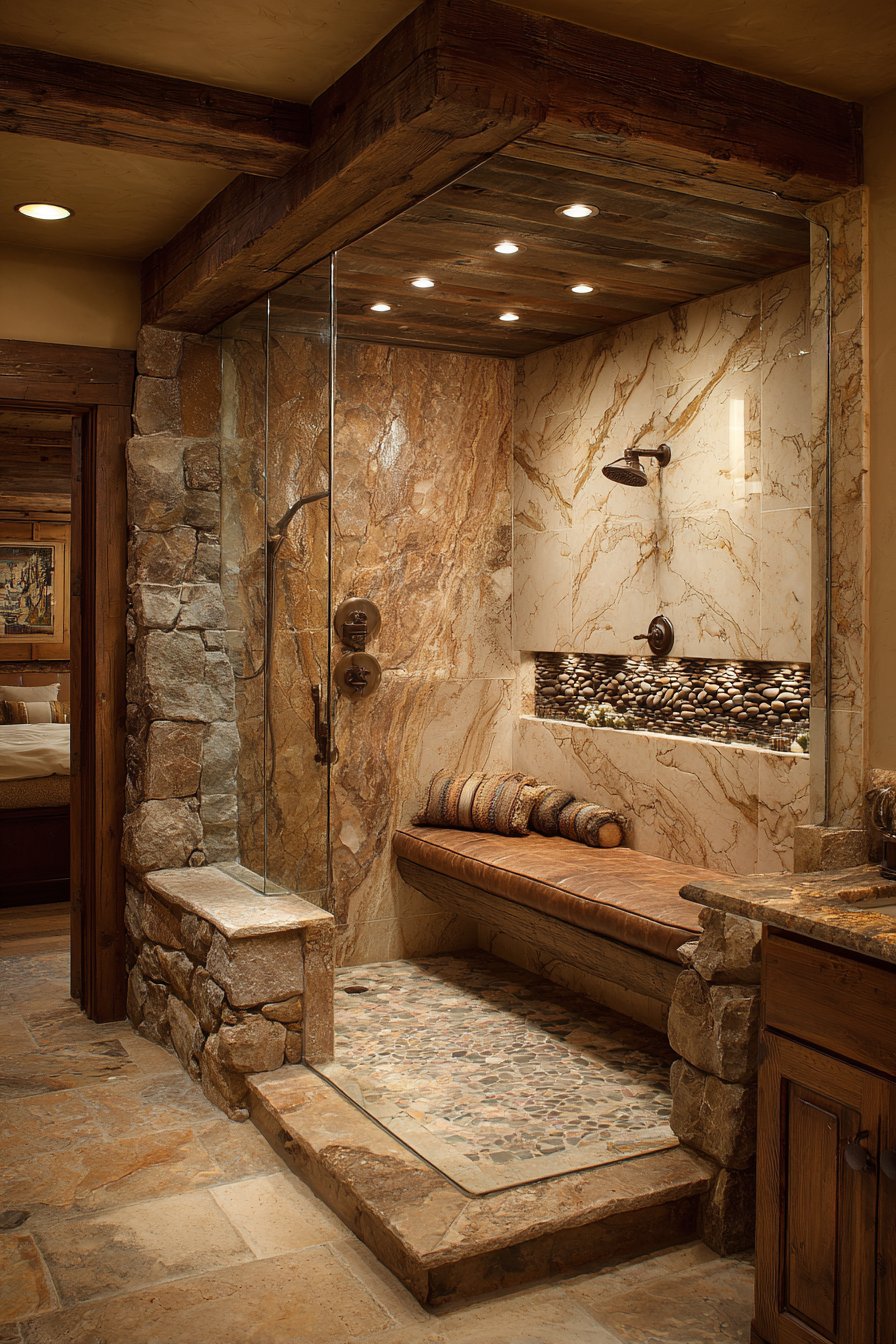
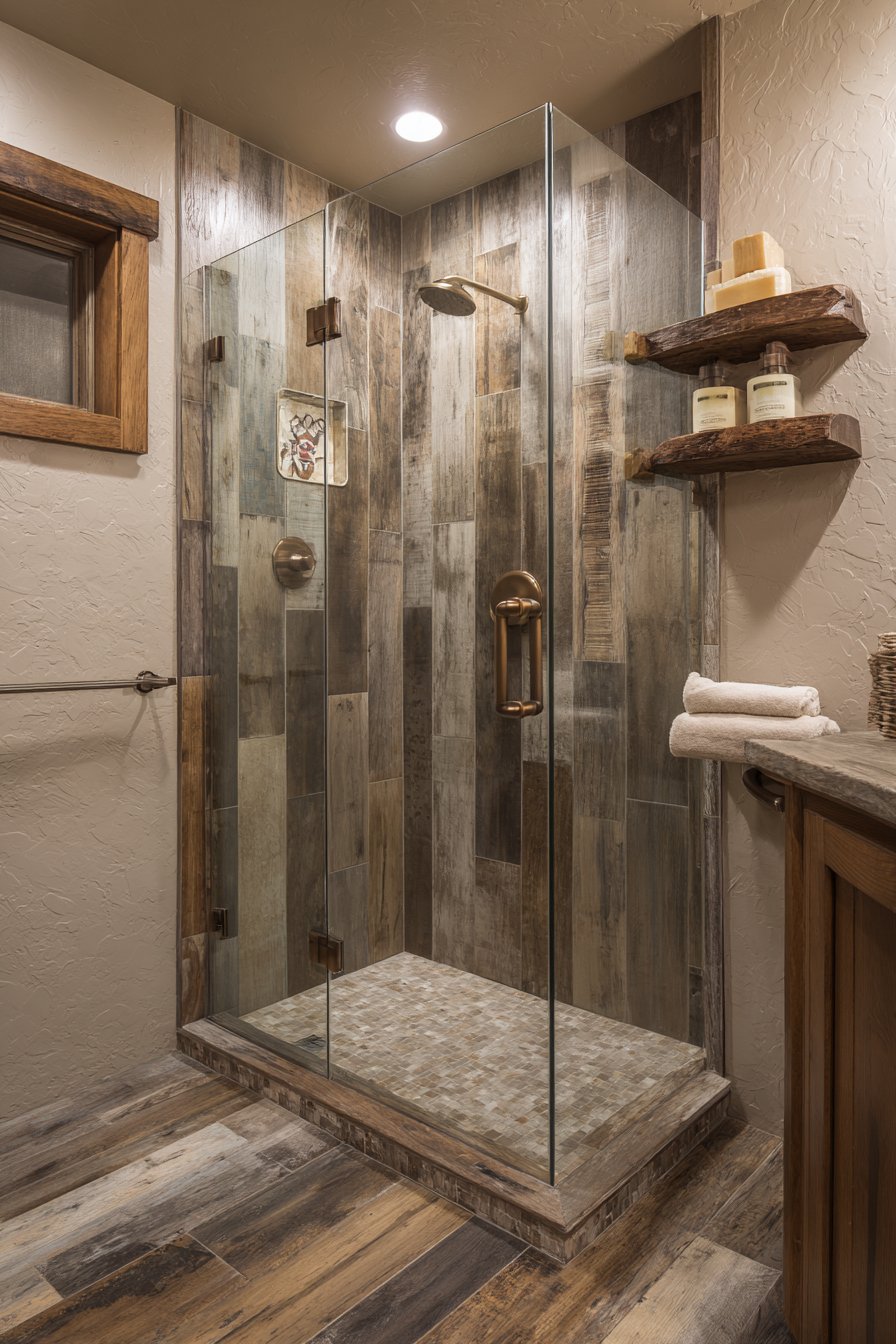
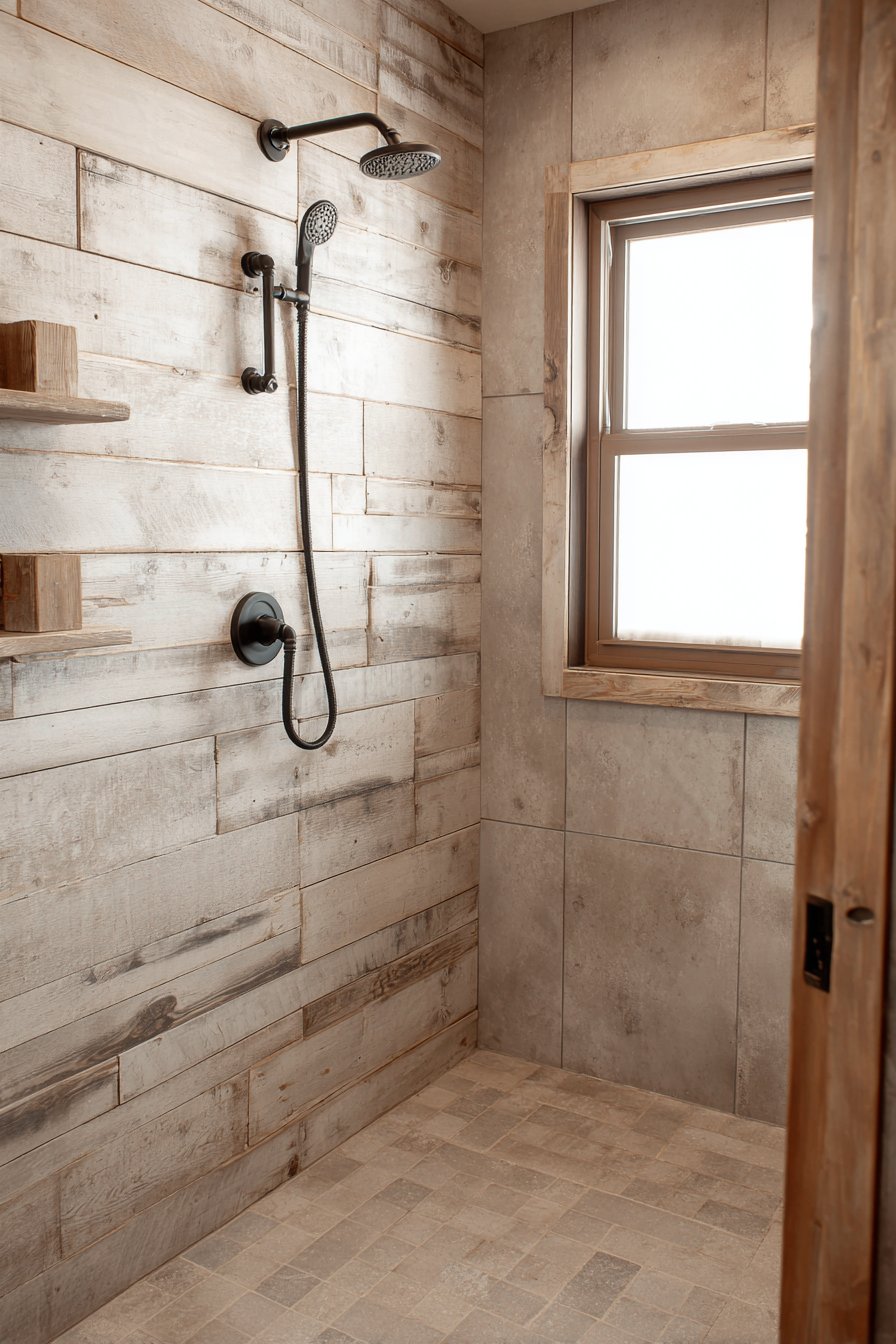
Advanced porcelain technology enables this rustic shower idea, which features floor-to-ceiling barnwood-look tiles that deliver authentic wood appearance with none of wood’s moisture-related challenges. The tiles display varied brown and gray tones with remarkably realistic wood grain texture, creating the warmth and character of reclaimed barn wood while offering porcelain’s superior durability and water resistance. The vertical plank installation emphasizes ceiling height while the varied tones prevent monotony. A frameless glass door and panel maintain clean sight lines and maximize the sense of openness while keeping water contained—the transparency allows the beautiful tile work to remain visible even when showering.
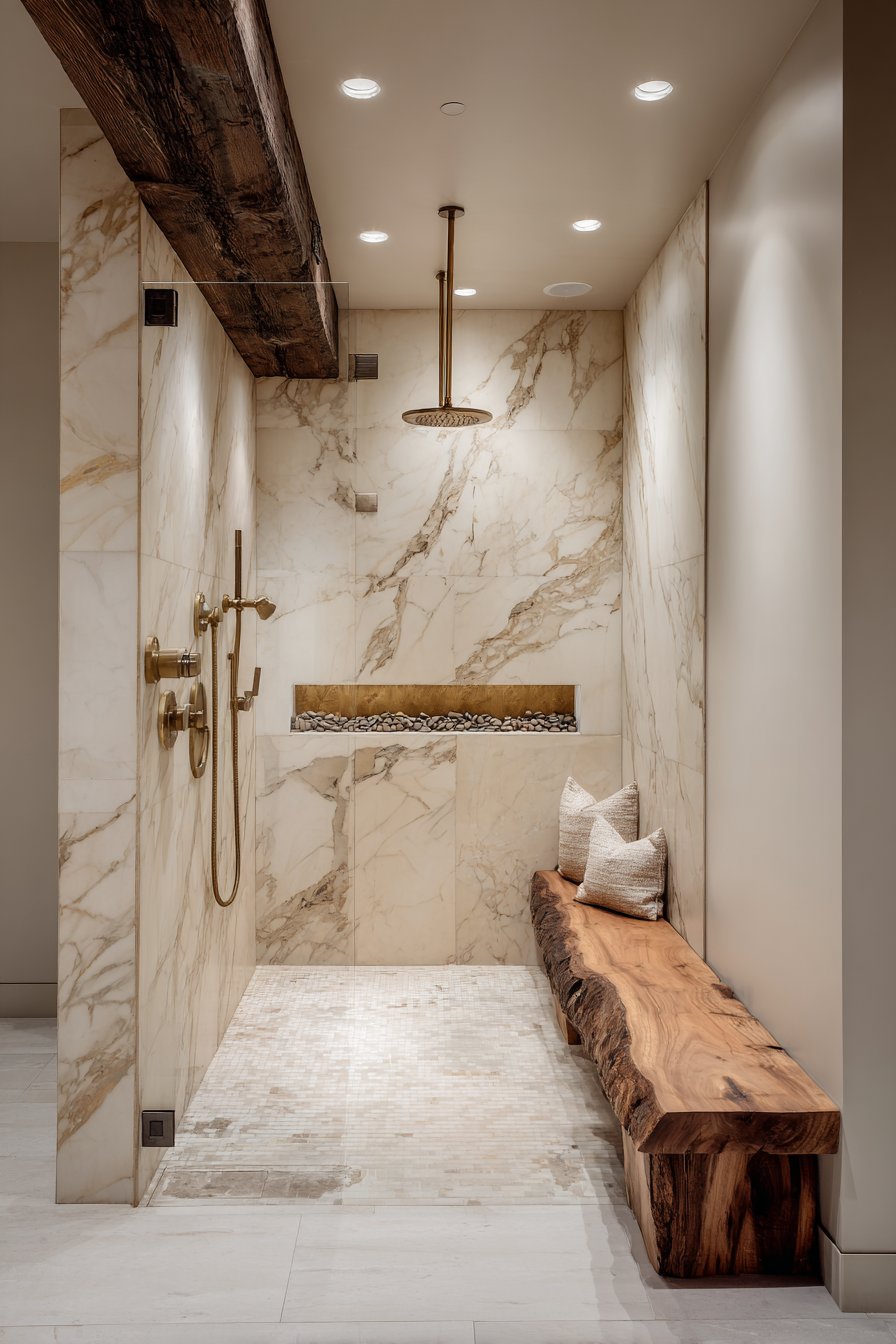
Bronze fixtures provide period-appropriate styling that complements the wood-look tiles’ rustic character while offering modern thermostatic controls and water-saving technology. The warm metallic tones bridge beautifully with the tiles’ brown tones, creating color harmony throughout the space. A small floating shelf made from actual reclaimed wood introduces authentic material and provides practical storage for natural soaps, loofahs, and other shower essentials. This shelf creates a textural and material contrast that actually enhances the wood-look tiles’ realism—the comparison emphasizes how successfully the porcelain mimics real wood.
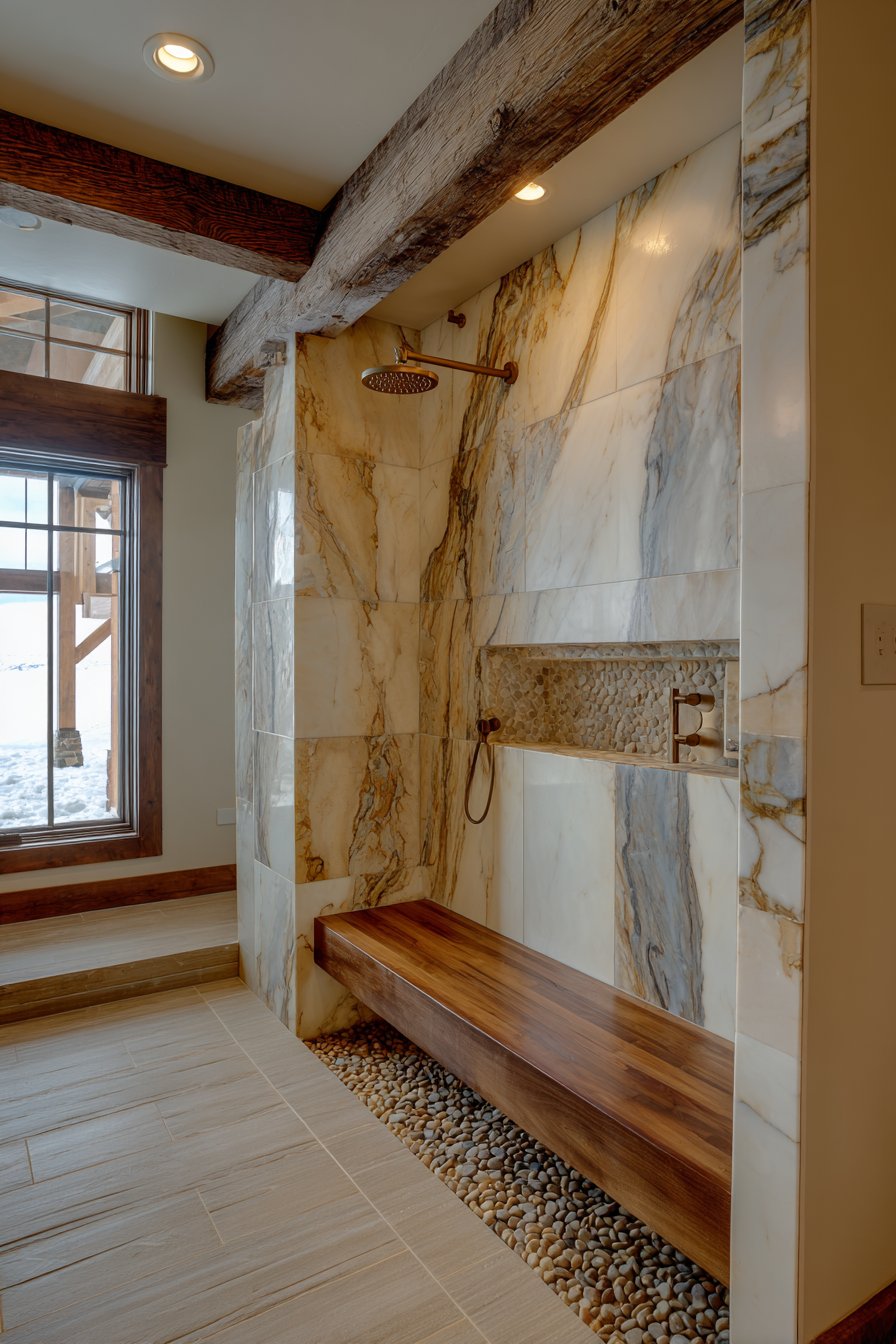
Soft overhead lighting combined with natural window light creates the ideal illumination for this space, ensuring the wood-grain details remain visible while preventing harsh shadows or glare. The lighting design should emphasize the tiles’ dimensional texture and varied coloring without creating hotspots on the glossy glass enclosure.
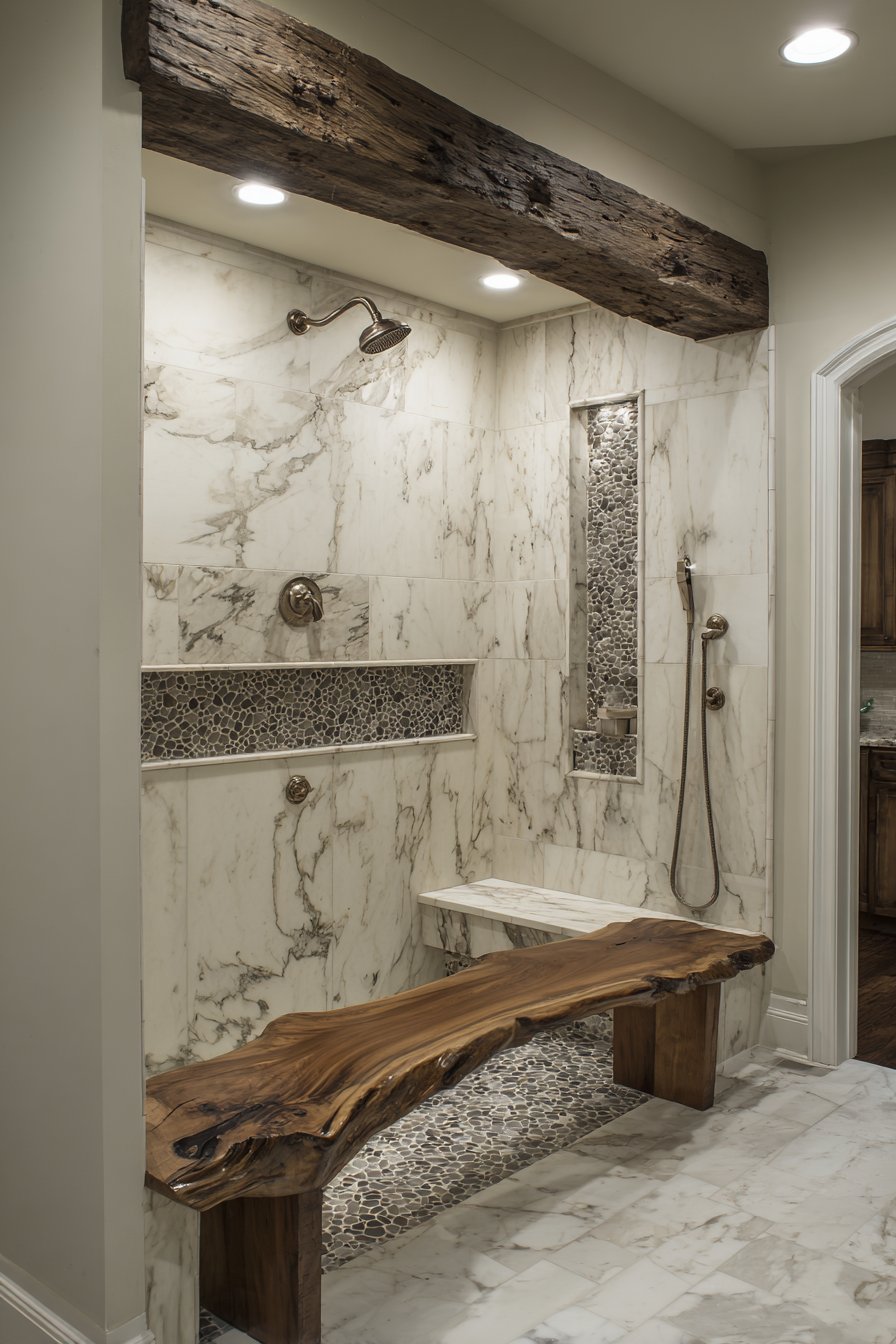
Important implementation factors include: selecting premium wood-look tiles with varied plank widths and random color distribution rather than repetitive patterns, using experienced tile installers familiar with large-format tiles to ensure proper setting and minimal grout lines, choosing grout colors that match the tiles’ mid-tone rather than contrasting grout that emphasizes grid patterns, installing tiles with joints slightly offset rather than perfectly aligned for more authentic wood flooring appearance, and ensuring the authentic reclaimed wood shelf receives marine-grade sealing to prevent moisture damage. The wood-look tiles should be installed vertically with varied starting points to avoid repetitive patterns. This rustic shower idea offers the perfect solution for homeowners who love wood’s warmth but need shower-appropriate materials—proving that modern manufacturing technology can deliver authentic aesthetics with superior performance.
10. Elegant Fusion of Marble and Rustic Wood
Luxury materials meet rustic sensibility in this sophisticated shower design that demonstrates how rustic shower ideas can embrace elegance without abandoning natural character. Book-matched marble slabs in warm cream tones feature distinctive natural veining that creates organic artwork across the walls, each slab carefully selected and positioned to create symmetrical patterns that emphasize the stone’s natural beauty. A rustic wood beam accent intersects the marble, its rough-hewn texture and natural edge providing earthy contrast to the marble’s polished refinement. This unexpected pairing creates visual interest and prevents the space from feeling too formal or cold.
Antique brass fixtures including a luxurious rainfall showerhead and multiple body sprays provide spa-like functionality wrapped in vintage-appropriate styling. The brass finish, whether authentically aged or quality reproduction, develops a living patina over time that adds character and depth impossible to achieve with static modern finishes. A horizontal river rock detail strip running at approximately waist height introduces additional texture and creates visual movement that breaks up the marble’s expansive surface. The rounded river rocks, carefully selected for consistent size and complementary colors, create a tactile band that draws the hand and eye. A built-in teak bench with natural edge detail provides comfortable seating, its warm tone and organic shape adding essential warmth to balance the marble’s cool elegance.
Professional photography with soft natural lighting reveals how these materials interact throughout the day, the marble’s veining becoming more or less prominent depending on light angle and intensity, while the wood beam’s texture creates interesting shadow patterns. The river rocks add dimensional interest as light plays across their rounded surfaces.
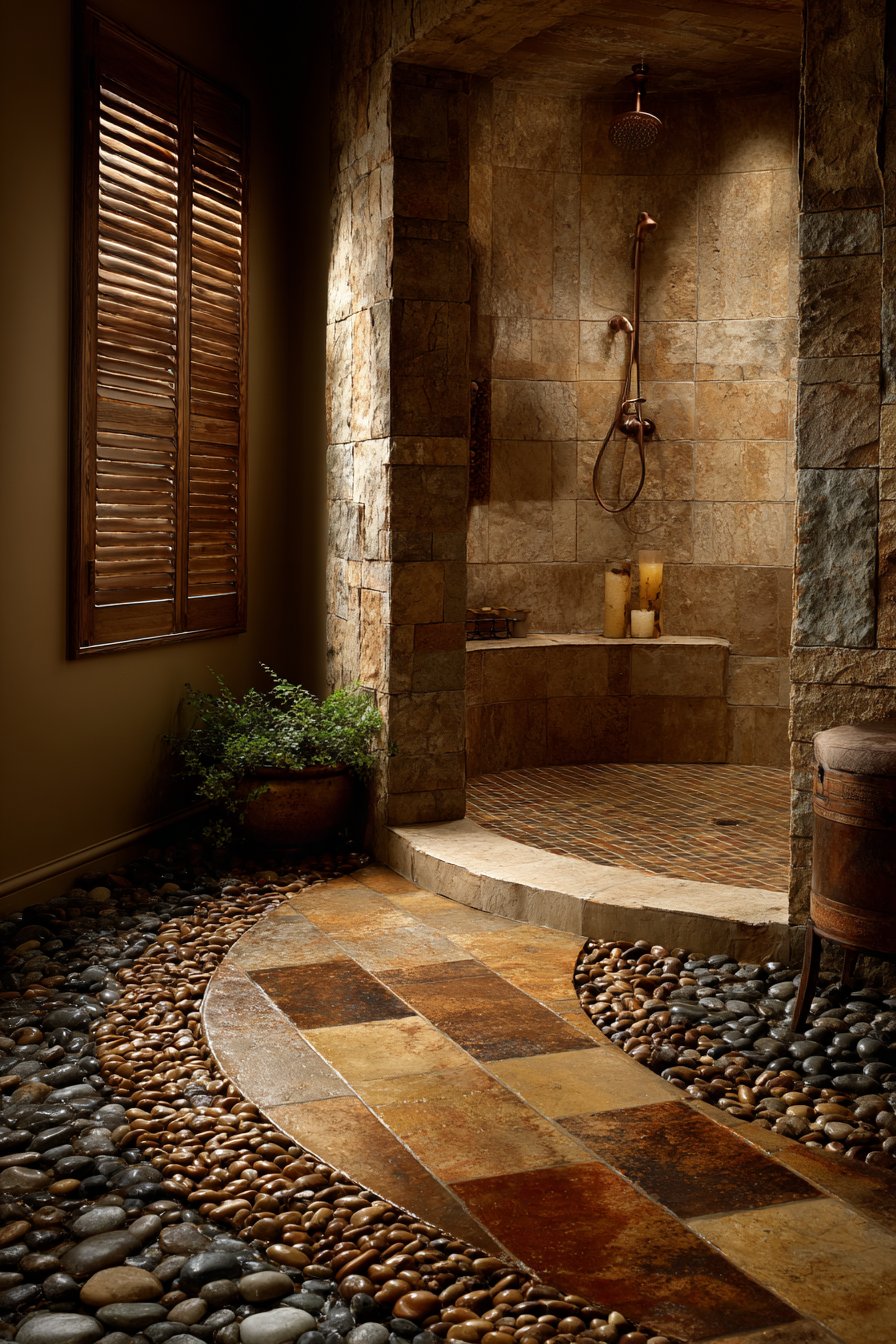
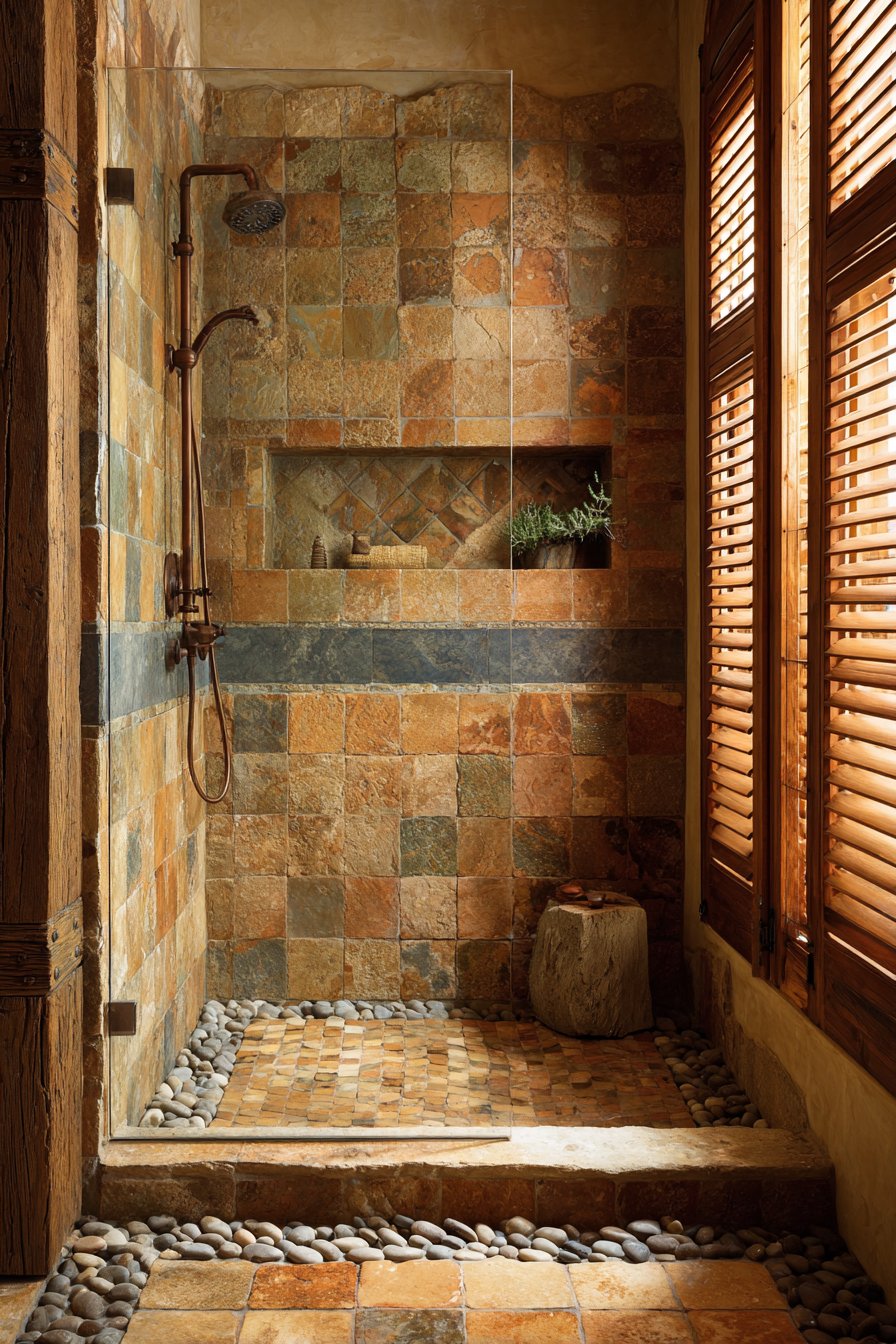
Key design principles include: selecting marble slabs personally rather than relying on samples to ensure veining patterns meet expectations, hiring experienced stone fabricators and installers capable of achieving precise book-matching, sealing marble with high-quality penetrating sealers to prevent staining and etching from hard water and soap residue, treating the wood beam accent with marine-grade sealant that prevents moisture absorption while maintaining natural appearance, and ensuring the teak bench has adequate support and receives regular oiling to maintain its rich color. The body sprays should be positioned to provide coverage without creating uncomfortable pressure points. This rustic shower idea proves that rustic design needn’t mean rough or unsophisticated—natural materials and traditional craftsmanship can create spaces of refined luxury.
11. Compact Efficiency with Shiplap Character
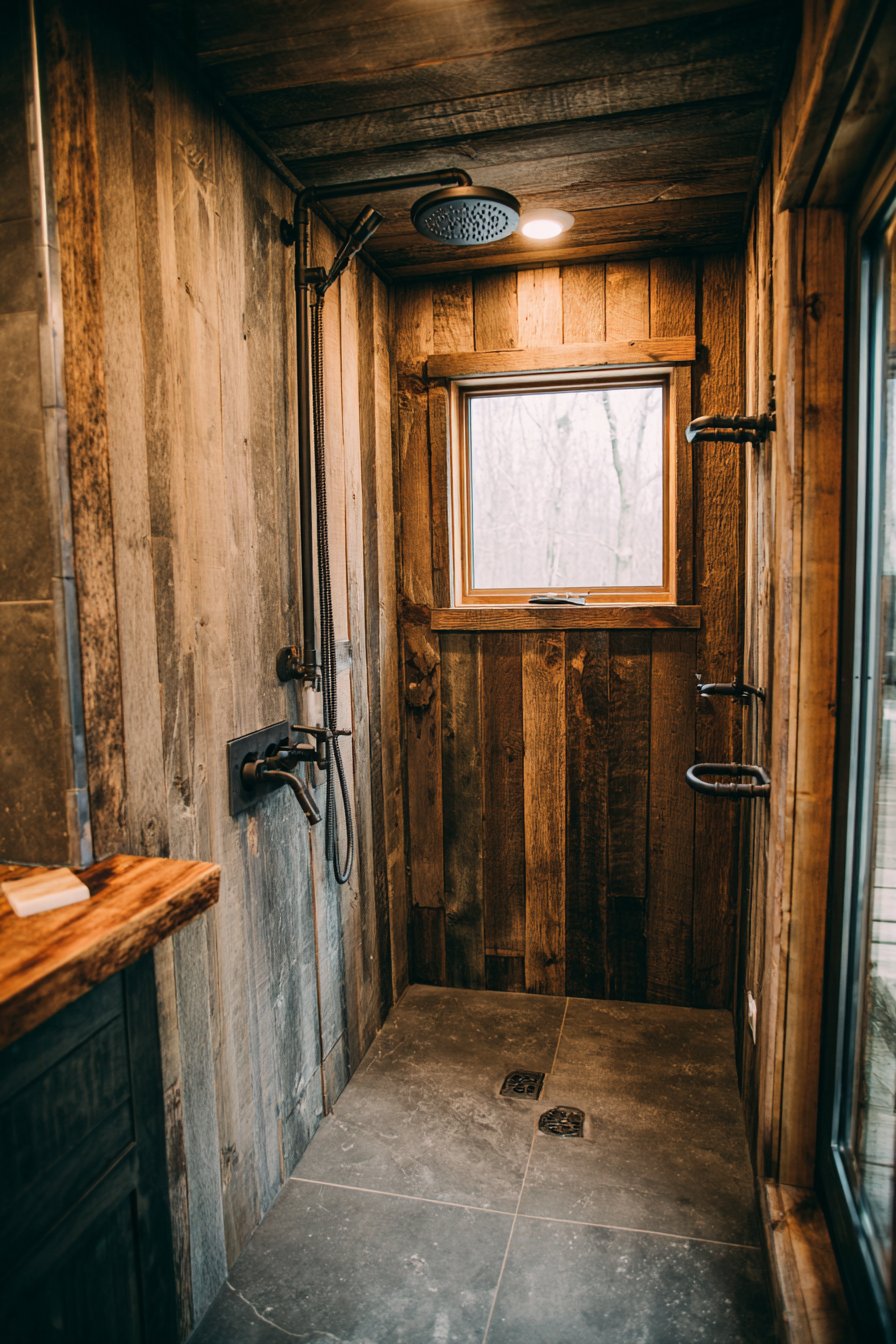
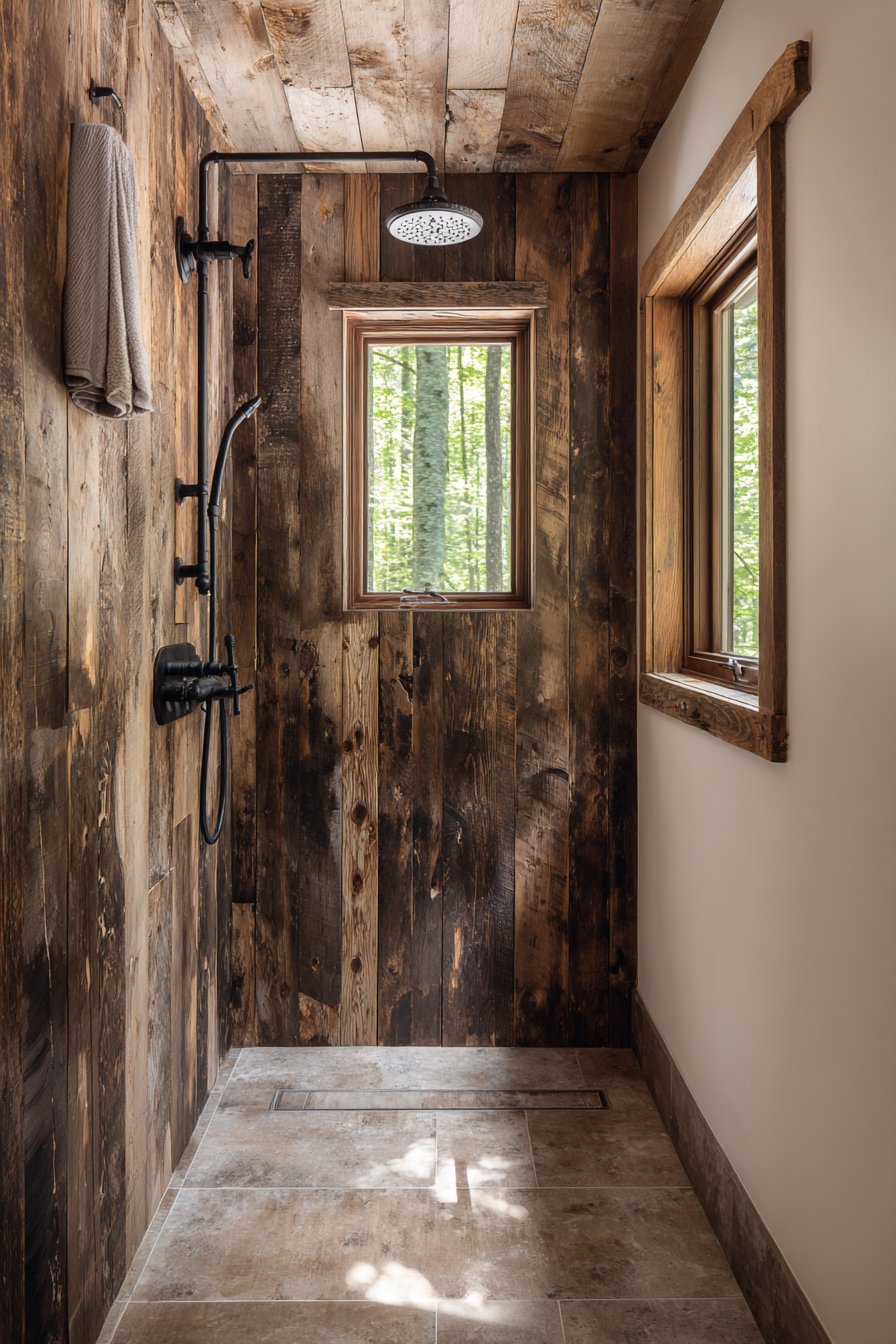
Small bathrooms need not sacrifice style, as this compact rustic shower idea demonstrates through efficient space planning and character-rich materials. Vertical shiplap walls in natural wood finish, properly sealed for water resistance, showcase authentic grain patterns and natural knots that celebrate wood’s inherent character rather than trying to hide its imperfections. The natural finish maintains the wood’s inherent warmth while the vertical installation emphasizes ceiling height, making the compact space feel taller and more open. An industrial-style black pipe shower system with deliberately exposed plumbing adds sculptural interest while the minimalist aesthetic ensures the small space doesn’t feel cluttered.
Concrete-look floor tiles in charcoal gray provide subtle texture underfoot while their dark tone creates sophisticated contrast with the lighter wood walls. The tiles’ matte finish prevents slipperiness while their concrete aesthetic reinforces the industrial-rustic fusion established by the exposed pipe fixtures. A small window with simple wooden frame provides essential natural ventilation and daylight, its modest size appropriate to the shower’s compact footprint while the wooden frame echoes the shiplap walls and maintains material consistency.
Wide-angle interior photography captures how careful material selection and strategic design choices maximize the impact of limited square footage. The vertical shiplap draws the eye upward, the exposed plumbing creates interest without consuming precious space, and the dark floor grounds the design while the window prevents any sense of claustrophobia.
Critical considerations for compact shower design include: using vertical rather than horizontal patterns to emphasize height in small spaces, selecting wall-mounted fixtures that don’t require protruding handles or controls that could create collision points, ensuring adequate ventilation is even more critical in smaller spaces where moisture concentrates more quickly, treating all wood surfaces with multiple coats of marine-grade sealer with regular reapplication to prevent warping in the confined high-moisture environment, and choosing a recessed niche rather than protruding shelves to maximize usable space. The exposed pipe system should use quality fittings and valves to prevent leaks since access for repairs may be more challenging in compact installations. This rustic shower idea proves that limited space needn’t limit character or style—thoughtful design can create personality-filled spaces in any footprint.
12. Mediterranean Warmth with Terracotta and Copper
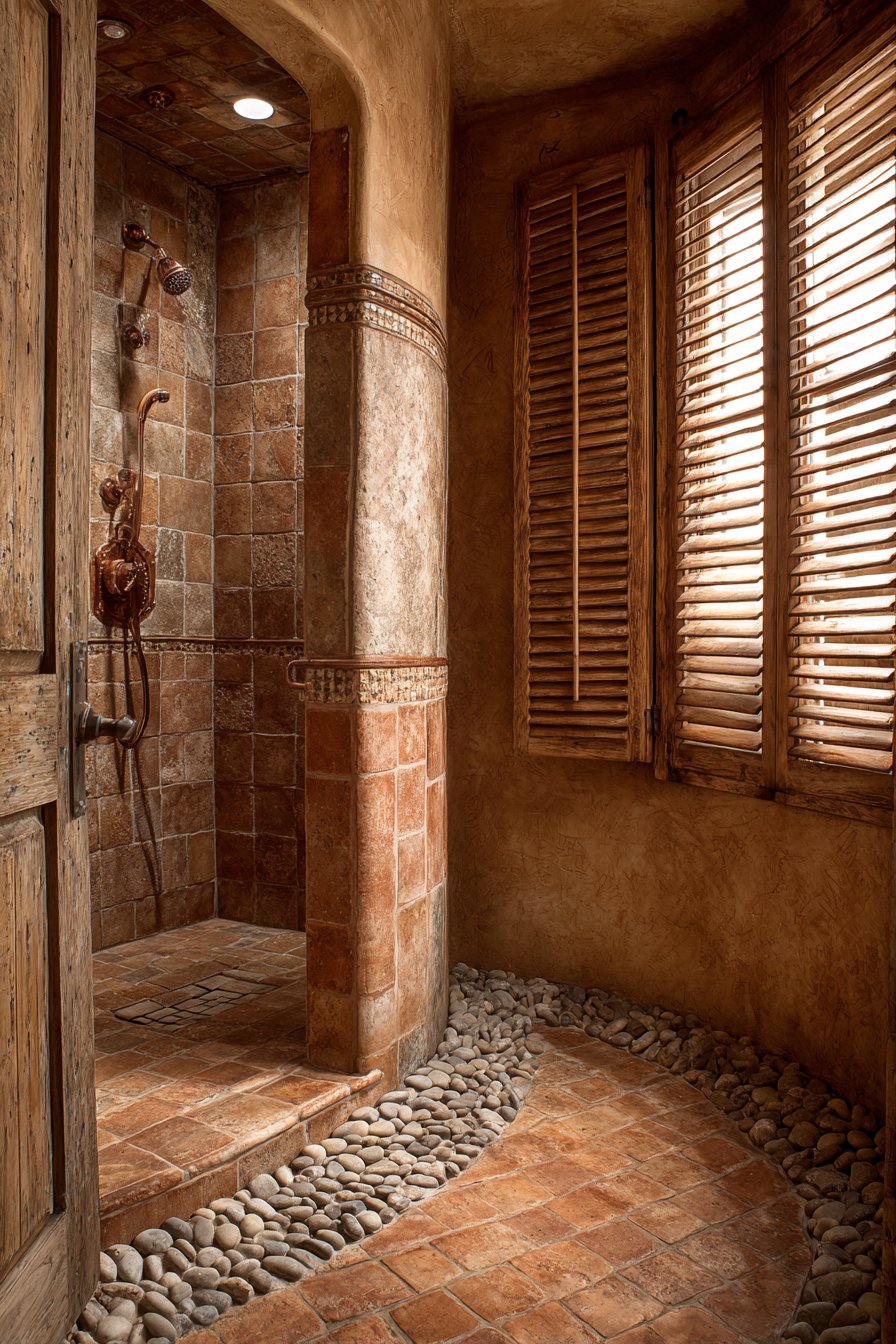
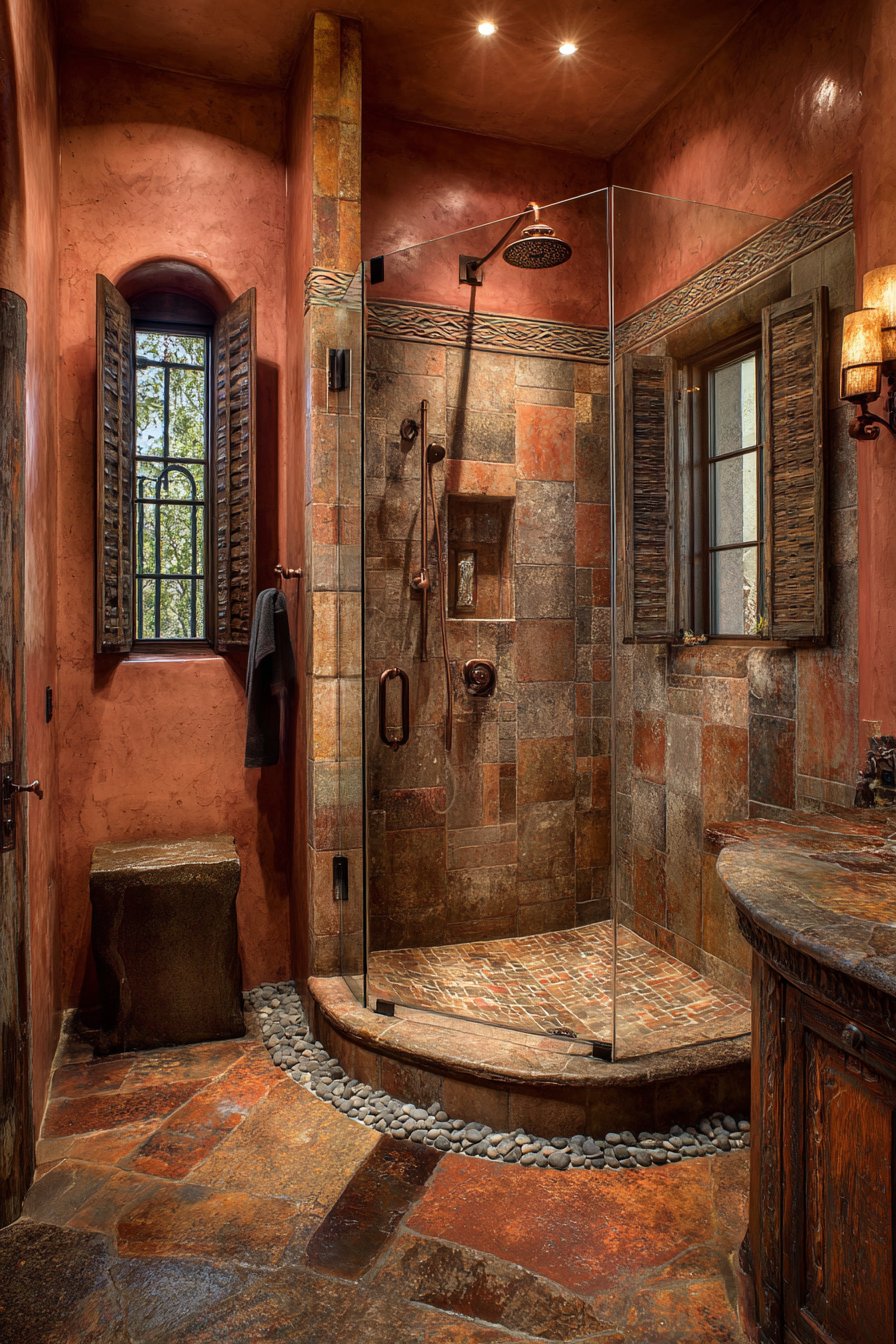
This rustic shower idea draws inspiration from Mediterranean aesthetics, featuring terracotta-colored textured tiles that evoke sun-baked clay and ancient craftsmanship. The tiles display subtle surface variation and dimensional texture that creates the appearance of handmade pieces, their warm orange-red tones immediately establishing the space’s warm, inviting character. A natural stone accent stripe in complementary earth tones runs horizontally around the shower perimeter, adding visual interest and creating a natural break in the terracotta field. This stripe introduces textural contrast while its neutral tones prevent the warm terracotta from overwhelming the space.
Aged copper fixtures showing natural patina provide the perfect complement to the terracotta’s warmth, their greenish-blue patina creating beautiful color harmony with the orange-toned tiles. The copper’s living finish continues to evolve over time, developing richer patina that adds character and depth impossible to achieve with static finishes. Curved river rocks create a decorative floor border around the central tile area, their rounded forms and varied colors adding organic beauty while the border pattern creates architectural definition. Wooden window shutters, adjustable to control natural light and ventilation, provide both practical function and additional rustic character.
Professional interior photography with golden hour lighting emphasizes the space’s warm Mediterranean-rustic aesthetic, the low-angle sun illuminating the terracotta’s orange tones while the copper fixtures gleam softly. The handcrafted quality of the textured tiles becomes particularly apparent in this warm light, their dimensional surfaces creating subtle shadow patterns that highlight their artisanal character.
Important implementation considerations include: selecting terracotta tiles with appropriate water absorption ratings for shower applications, as some terracotta formulations are too porous for wet areas, sealing terracotta tiles with high-quality penetrating sealers that enhance color while providing water and stain resistance, ensuring copper fixtures receive protective clear coating to slow (though not stop) patina development if the owner prefers to maintain brighter copper appearance, properly waterproofing behind all tile installations to prevent moisture damage to structural walls, and treating wooden shutters with marine-grade finishes suitable for consistent moisture exposure. The river rock border requires professional installation to ensure proper setting and prevent individual rocks from becoming dislodged over time. This rustic shower idea celebrates warmth, color, and the enduring appeal of Mediterranean design traditions.
13. Dual Shower Luxury with Stone and Teak
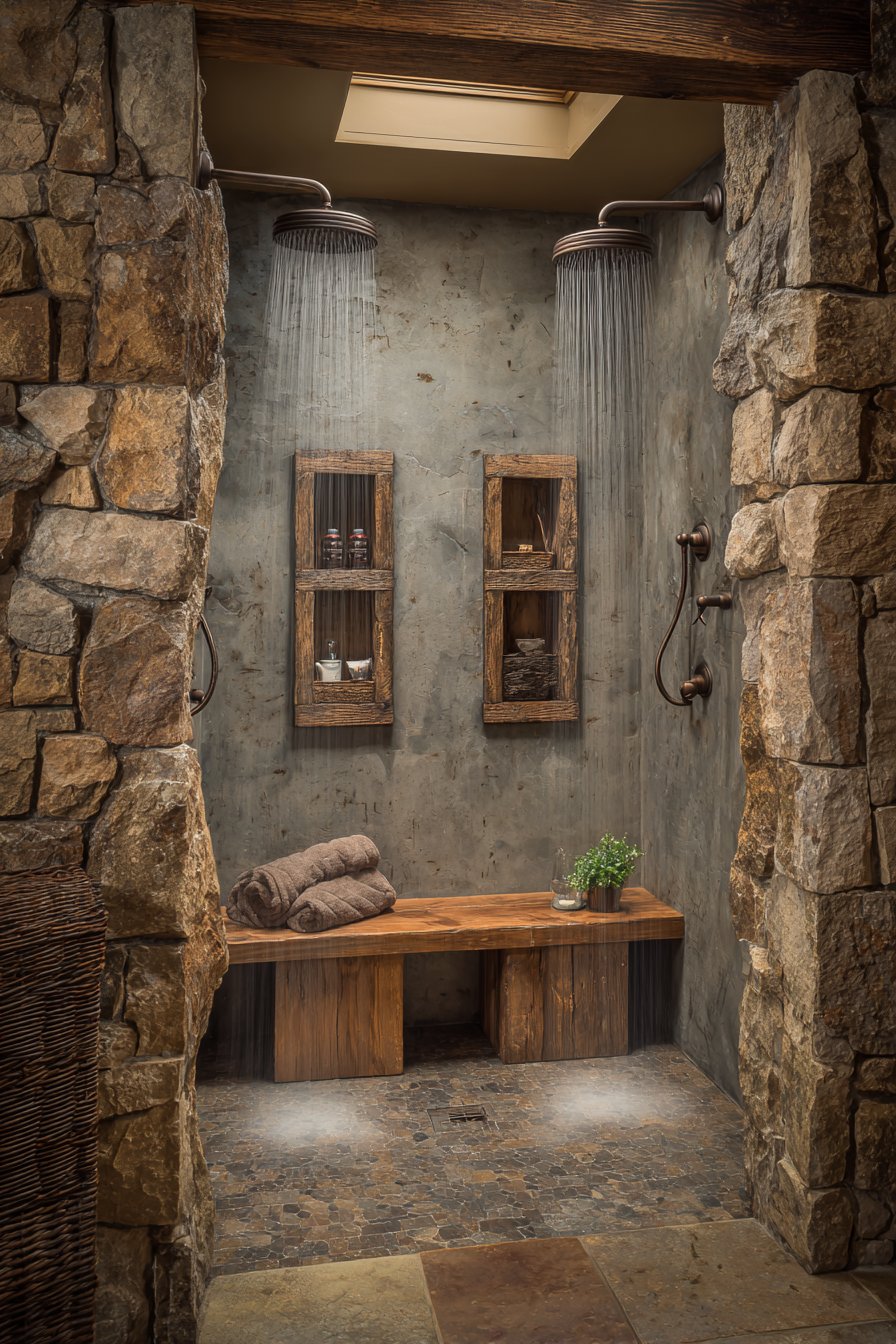
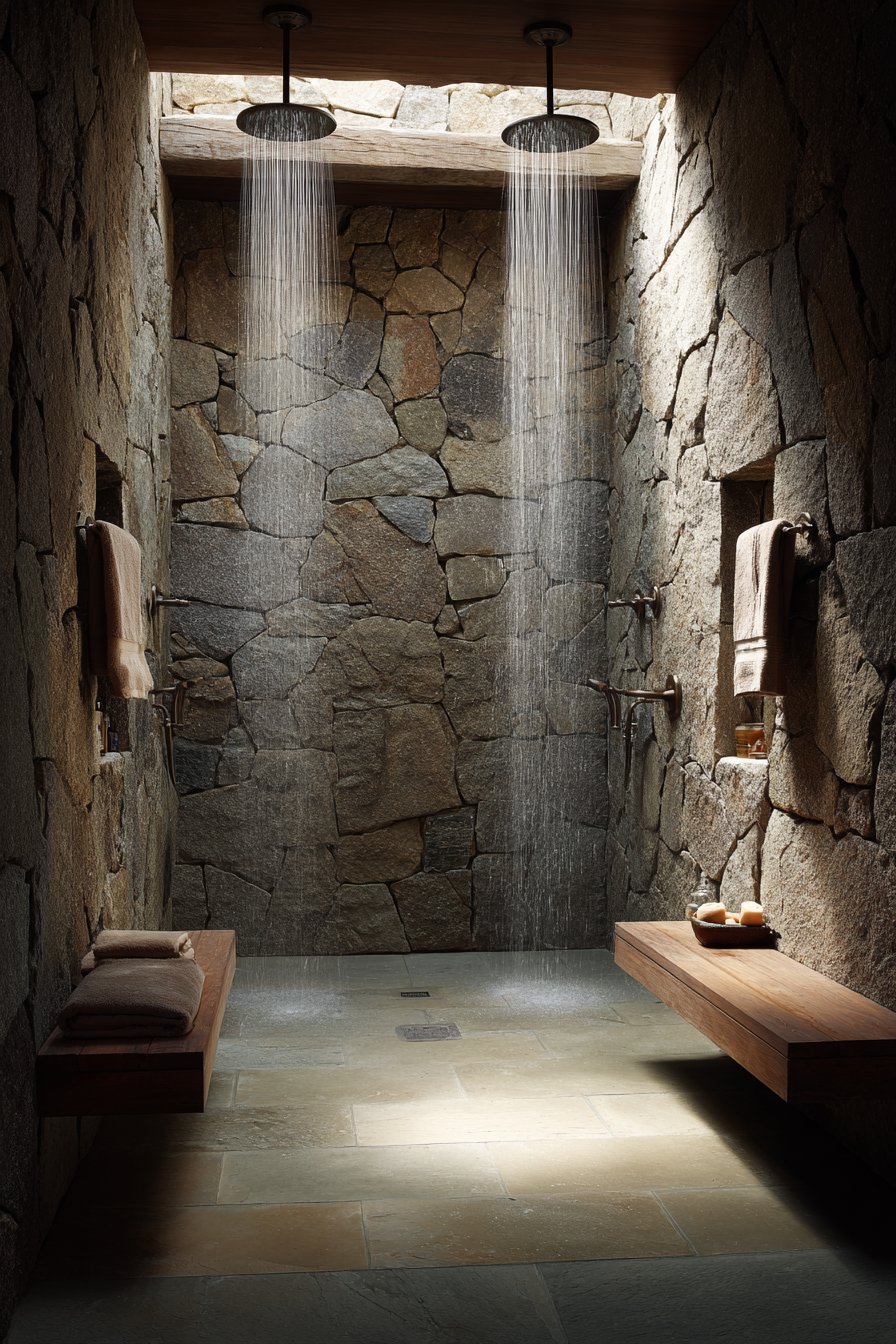
Spacious luxury defines this rustic shower idea featuring dual rainfall showerheads mounted on a rough-cut stone feature wall that serves as the space’s dramatic focal point. The stone wall showcases bold, irregular stone pieces in varied earth tones, each displaying natural texture and color variation that creates a powerful visual statement. The dual showerheads, finished in oil-rubbed bronze, position on this textured backdrop to create both functional zones and sculptural interest, their warm metallic finish complementing the stone’s warmer tones. Surrounding walls feature large-format tiles in concrete gray, their cooler neutral tone and smoother texture providing essential contrast to the feature wall’s dramatic texture.
A floating teak bench spans between the two shower zones, its rich golden-brown tone adding warmth while providing practical seating that doesn’t impede the open flow between zones. The bench’s floating installation creates visual lightness despite its substantial appearance, while the teak’s natural oil content makes it ideal for wet environments. Reclaimed wood niche boxes set directly into the stone feature wall provide dedicated storage for each shower zone, their rustic character integrating seamlessly with the stone while creating functional organization. Natural overhead skylight floods the space with daylight, the changing angle and quality of sunlight throughout the day creating an ever-evolving interplay of light across the textured stone surface.
Architectural photography captures the spacious layout and thoughtful rustic luxury details, from the careful spacing of the dual showerheads to the precise integration of storage niches into the stone wall. The generous proportions ensure the shower feels like a true spa retreat rather than a merely functional space.
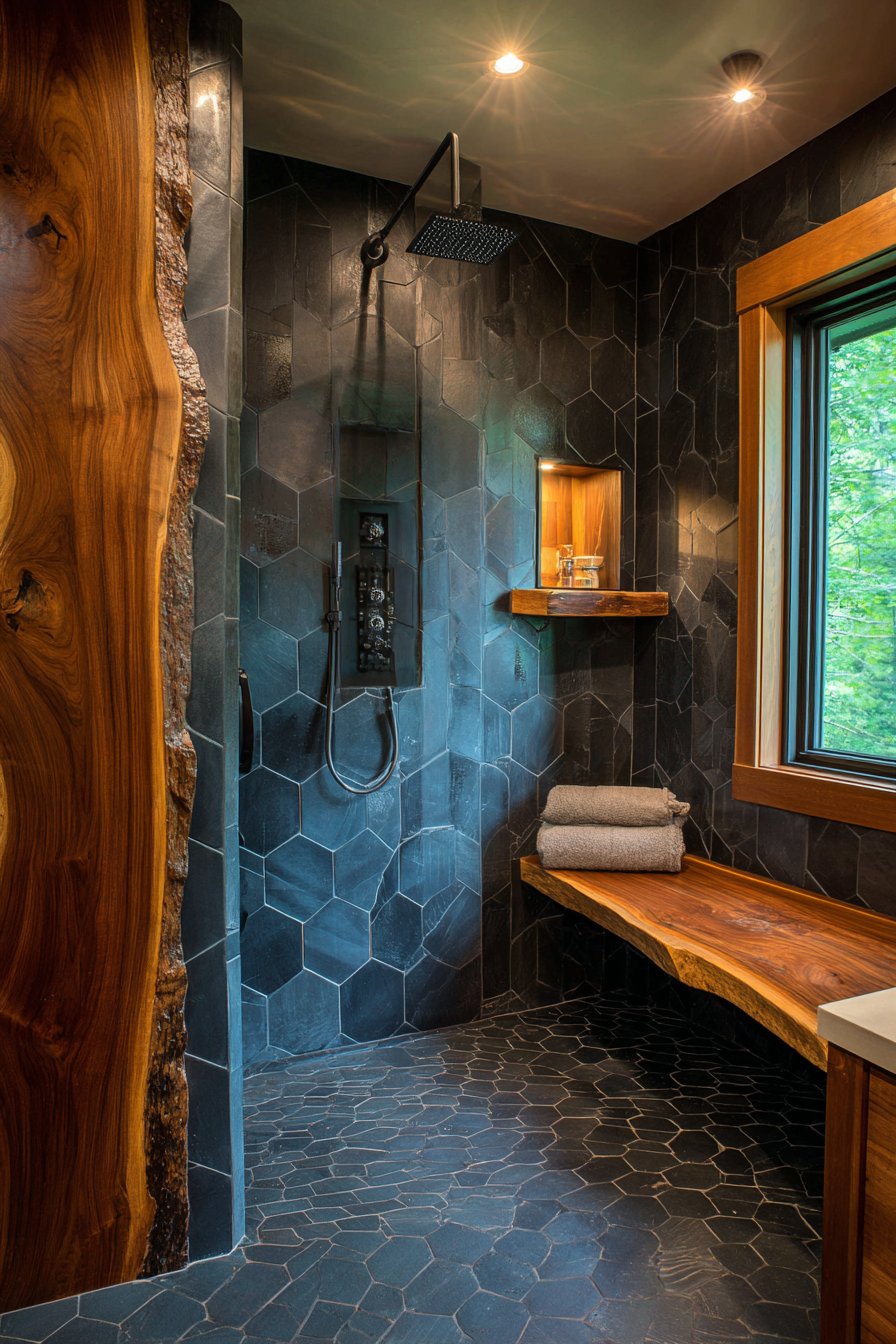
Essential design elements include: ensuring adequate water pressure and flow rate to supply both showerheads simultaneously without performance degradation, installing proper support structure for the floating teak bench capable of safely supporting multiple adults, treating teak bench with teak oil regularly to maintain its rich color and prevent graying, ensuring skylight installation includes proper flashing and waterproofing to prevent leaks into the shower space below, and creating recessed niches during initial framing and waterproofing rather than attempting to retrofit into completed walls. The stone feature wall requires professional installation by masons experienced with large, irregular stone pieces to ensure structural stability and proper waterproofing. This rustic shower idea demonstrates how rustic design can embrace luxury and spaciousness while maintaining connection to natural materials and honest craftsmanship.
14. Live-Edge Integration with Geometric Contrast
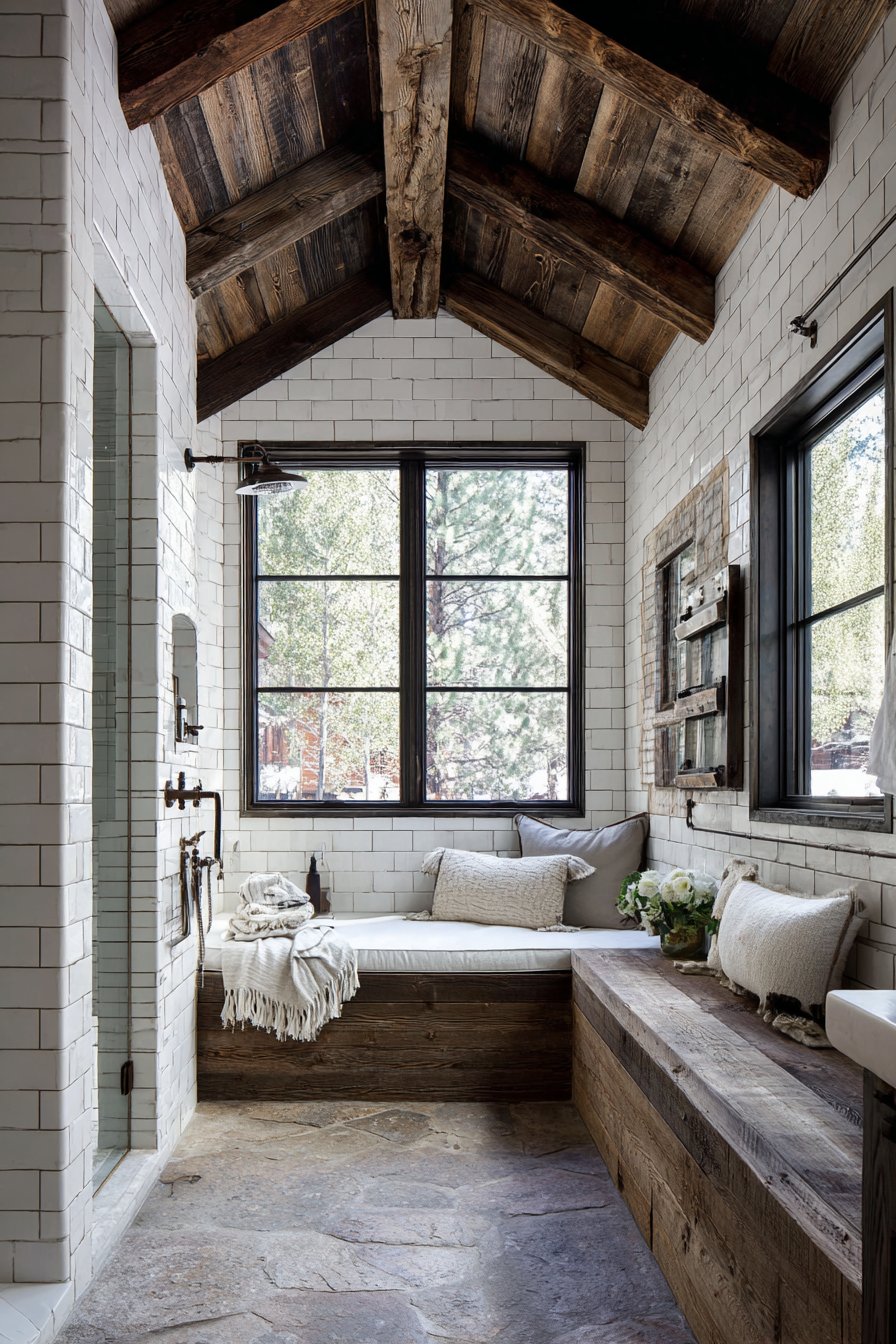
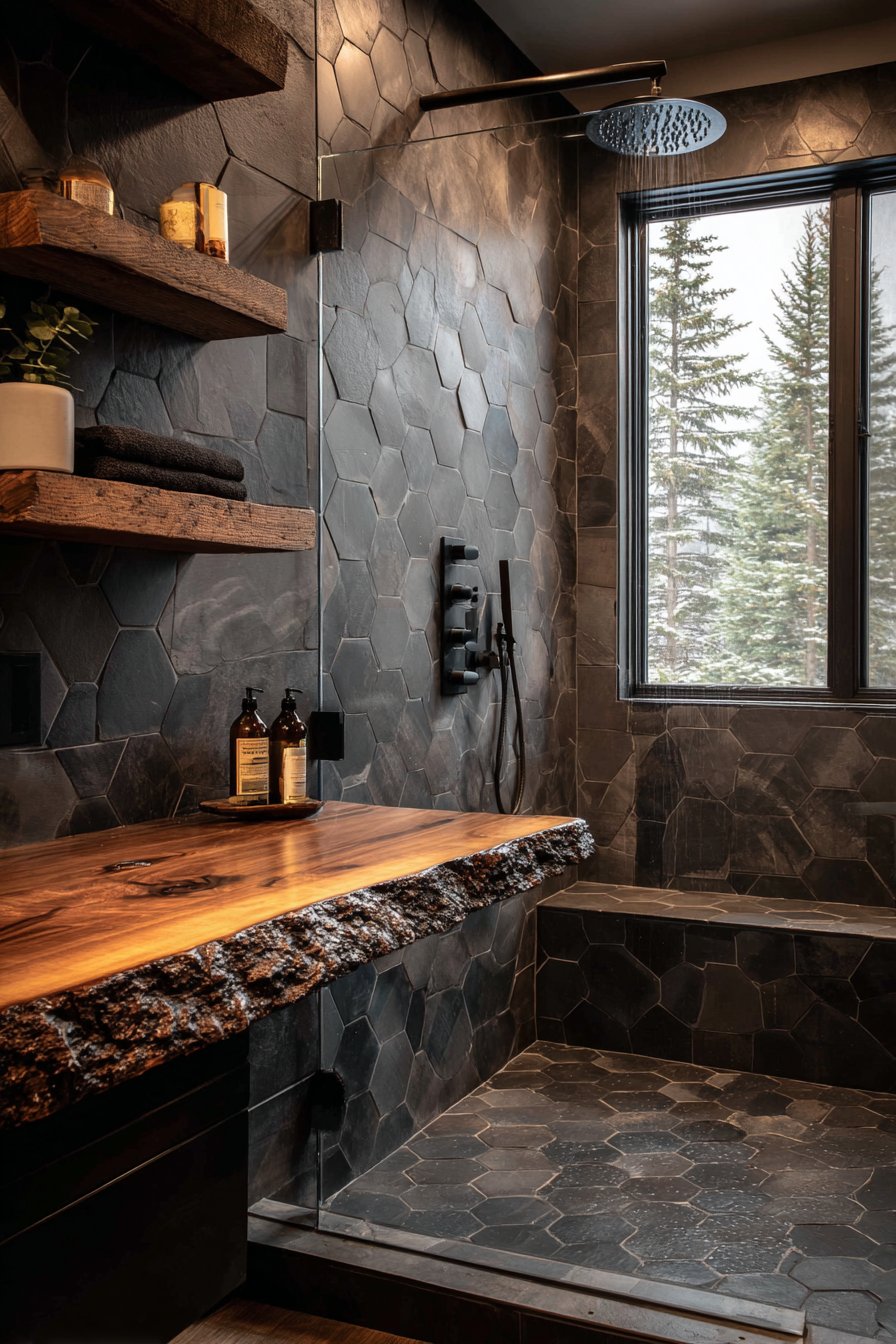
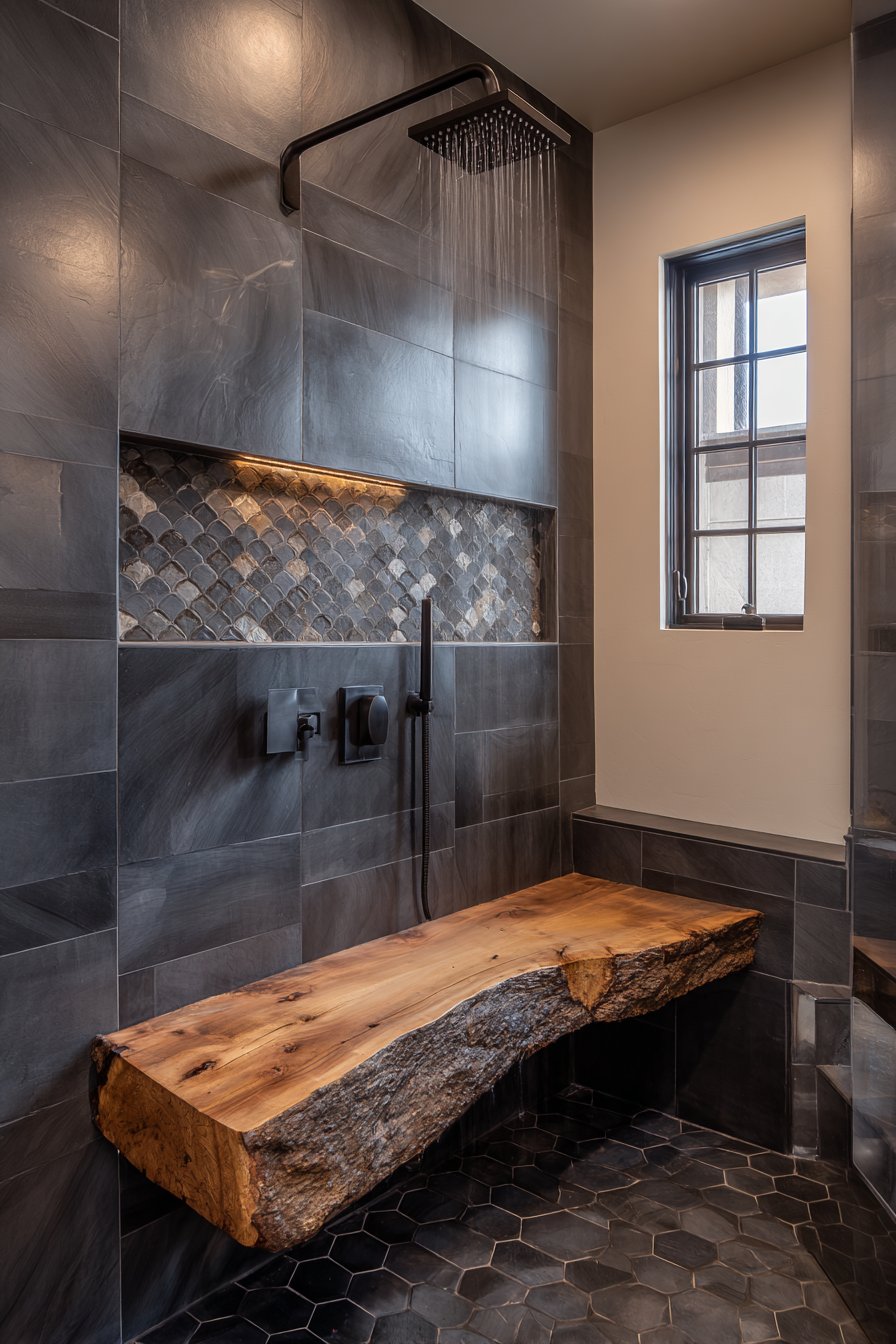
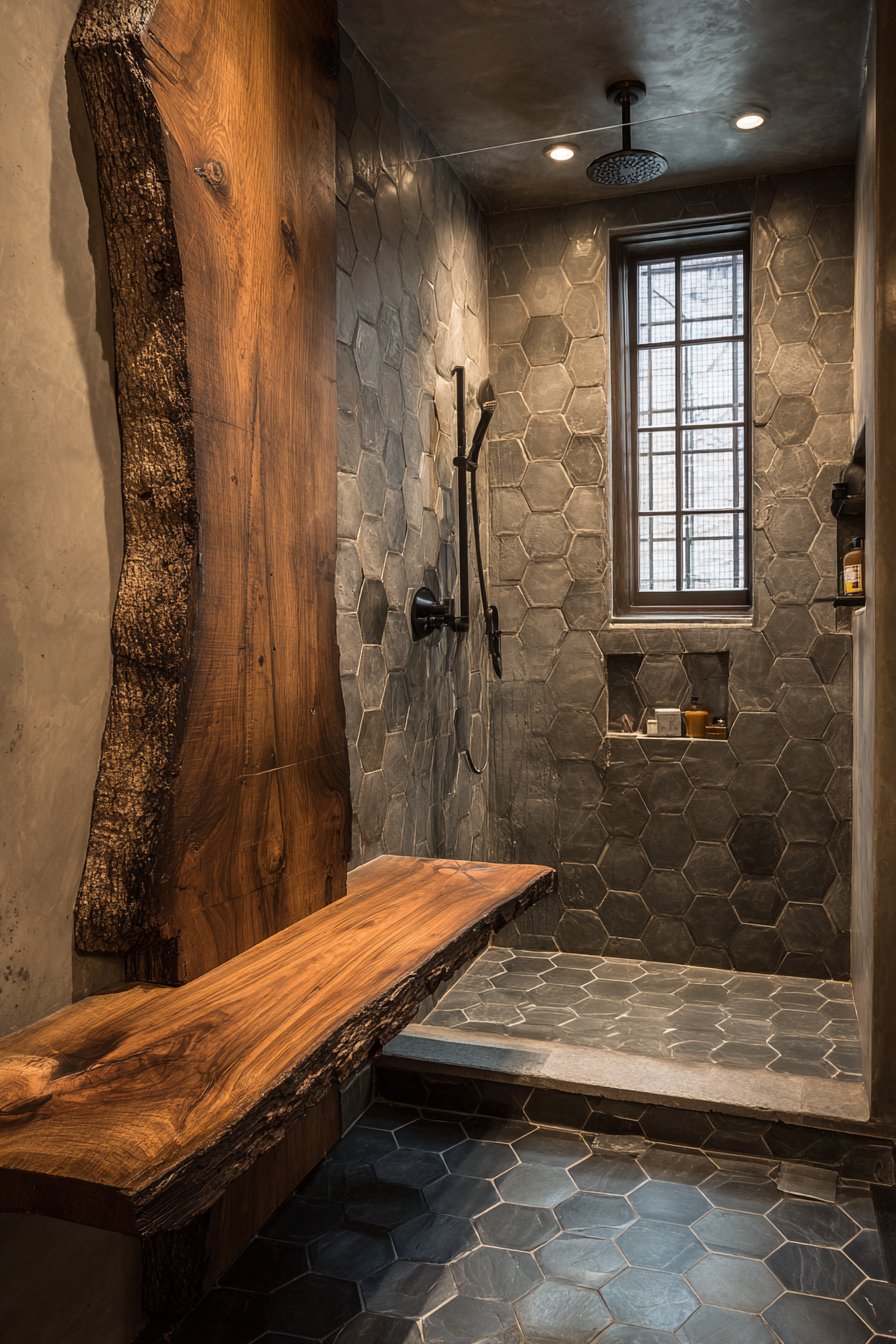
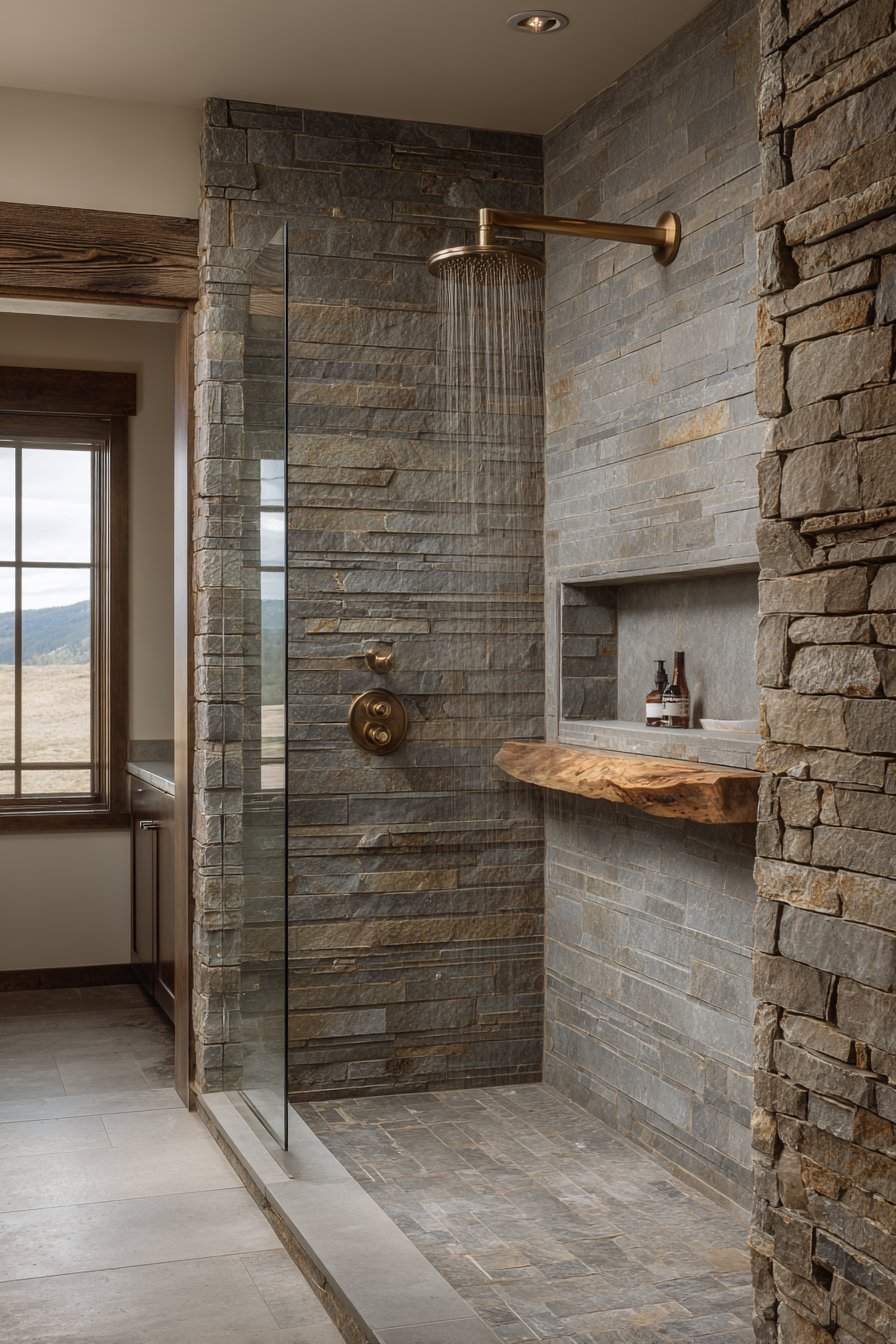
Organic and geometric elements create dynamic tension in this innovative rustic shower idea featuring a live-edge wood shelf integrated directly into the stone tile wall. The shelf retains its natural bark edge and organic shape, celebrating the tree’s original form rather than forcing the wood into geometric conformity. This feature creates a striking focal point that demonstrates nature’s inherent beauty while providing practical storage for shower essentials. The shelf has been carefully sealed and treated for wet environment exposure, protecting it from moisture while maintaining its natural appearance. The surrounding stone tiles display geometric patterns that create intentional contrast with the shelf’s organic forms.
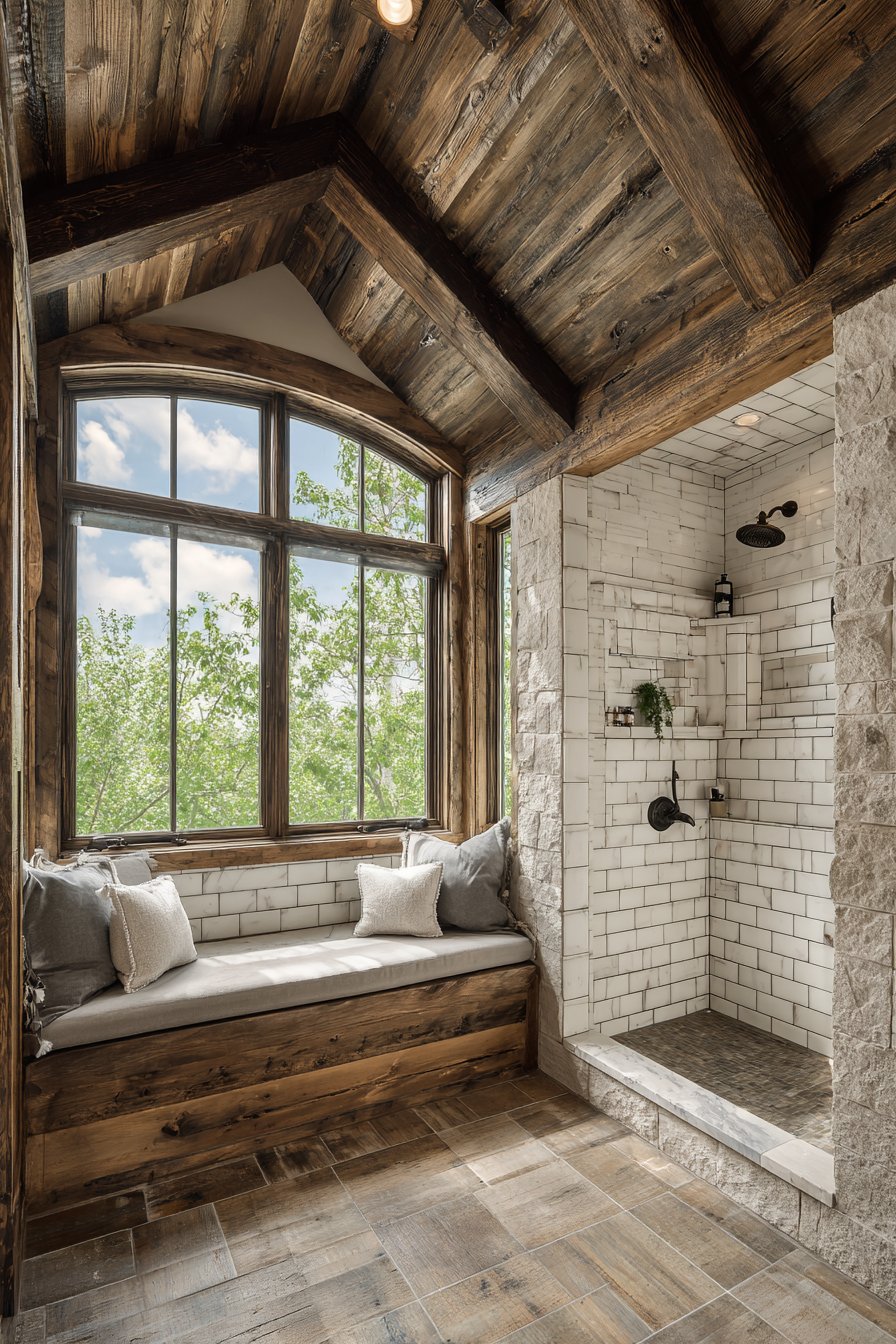
Matte black fixtures including a substantial rainfall showerhead complement the natural elements through their contemporary aesthetic and strong visual presence. The fixtures’ clean lines and modern finish prevent the space from feeling too rustic or dated, while their matte black color provides dramatic contrast against both the light stone tiles and the natural wood shelf. Hexagonal floor tiles in charcoal gray add another geometric element while their darker tone provides grounding weight that balances the lighter walls. The hexagon pattern introduces visual interest underfoot without competing with the walls’ focal points. A simple window frame allows soft natural light to enter, illuminating the shelf’s organic edges and the stone’s textural surface.
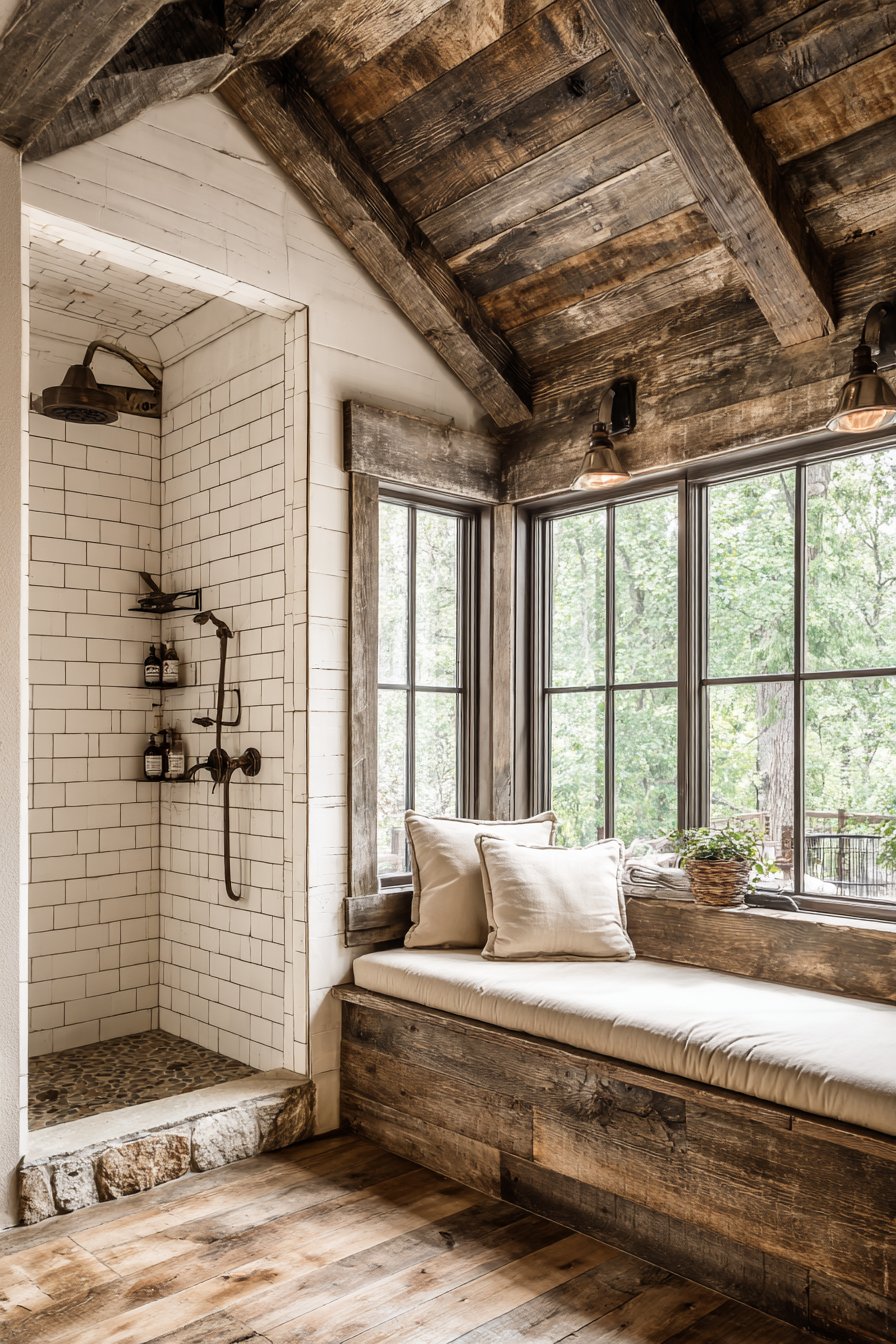
Interior photography focuses on the unique wood element and material authenticity, emphasizing how the live-edge shelf’s organic character creates a compelling counterpoint to the geometric tiles surrounding it. The contrast between organic and geometric, rough and smooth, natural and manufactured creates visual interest that keeps the space engaging.
Critical implementation factors include: working with a skilled woodworker to select and prepare a live-edge piece with stable, dry wood suitable for the humid environment, applying multiple coats of marine-grade epoxy or sealant to all wood surfaces including the bark edge to prevent moisture absorption and decay, ensuring the shelf integrates into wall framing with substantial support capable of bearing weight when fully loaded with shower products, selecting stone tiles with varied natural coloring rather than perfectly uniform appearance to bridge between the wood’s organic character and geometric tile patterns, and creating a cohesive grout color strategy that doesn’t overemphasize the geometric tile pattern. The live-edge shelf should be installed during initial construction with proper waterproofing behind and around it rather than retrofitted into finished walls. This rustic shower idea celebrates the beautiful tension between nature’s organic forms and human geometric order.
15. Vaulted Architecture with Rustic Elegance
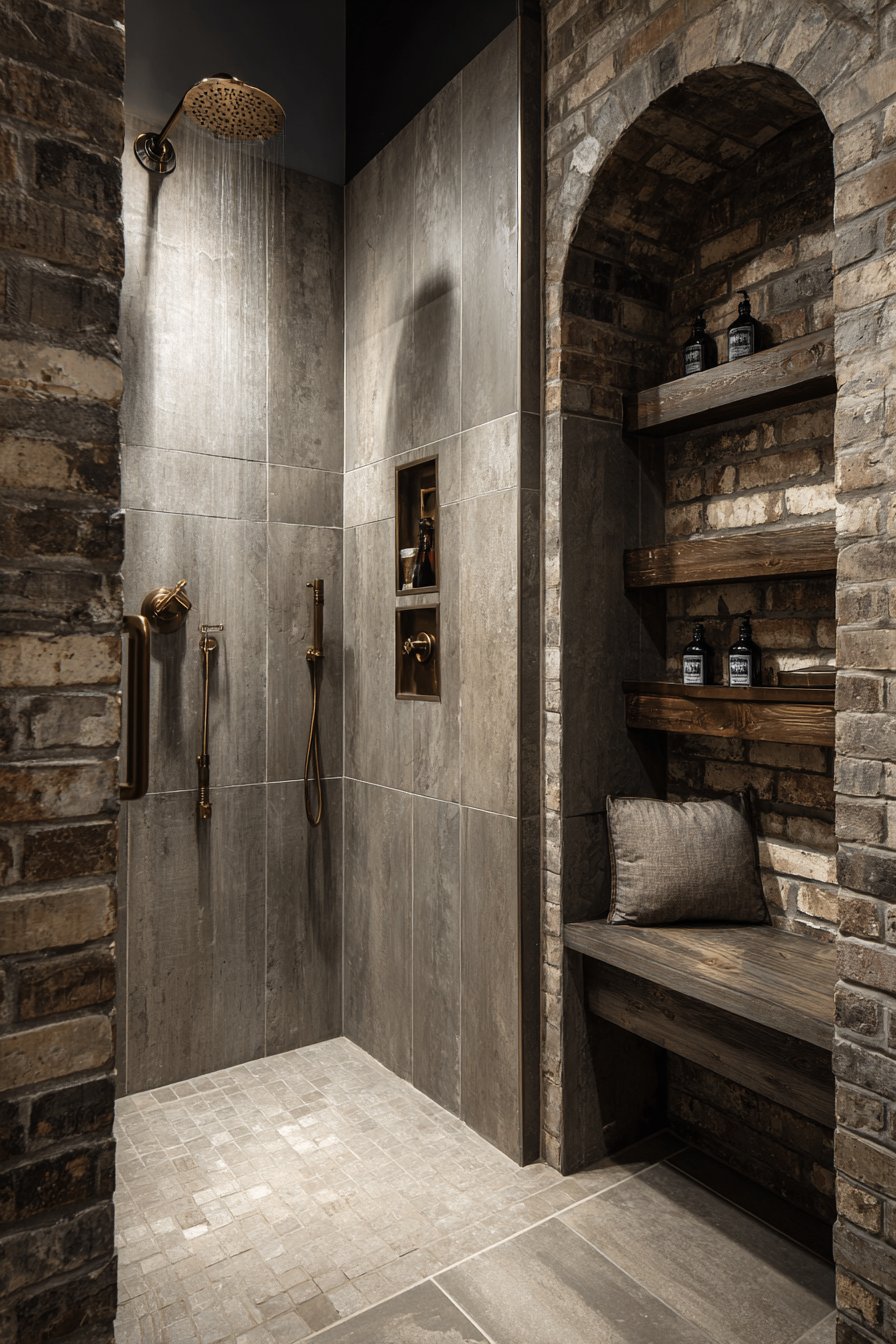
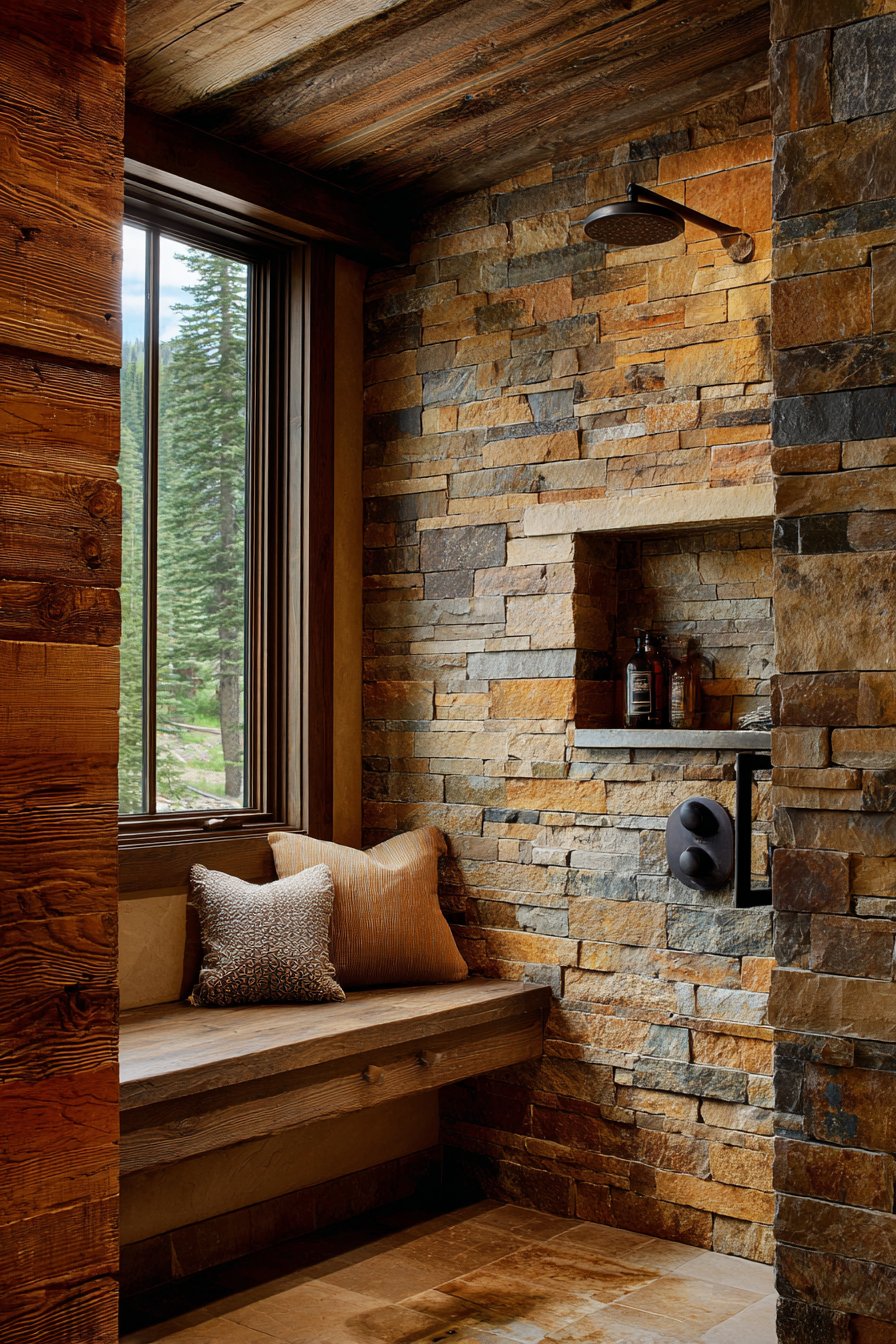
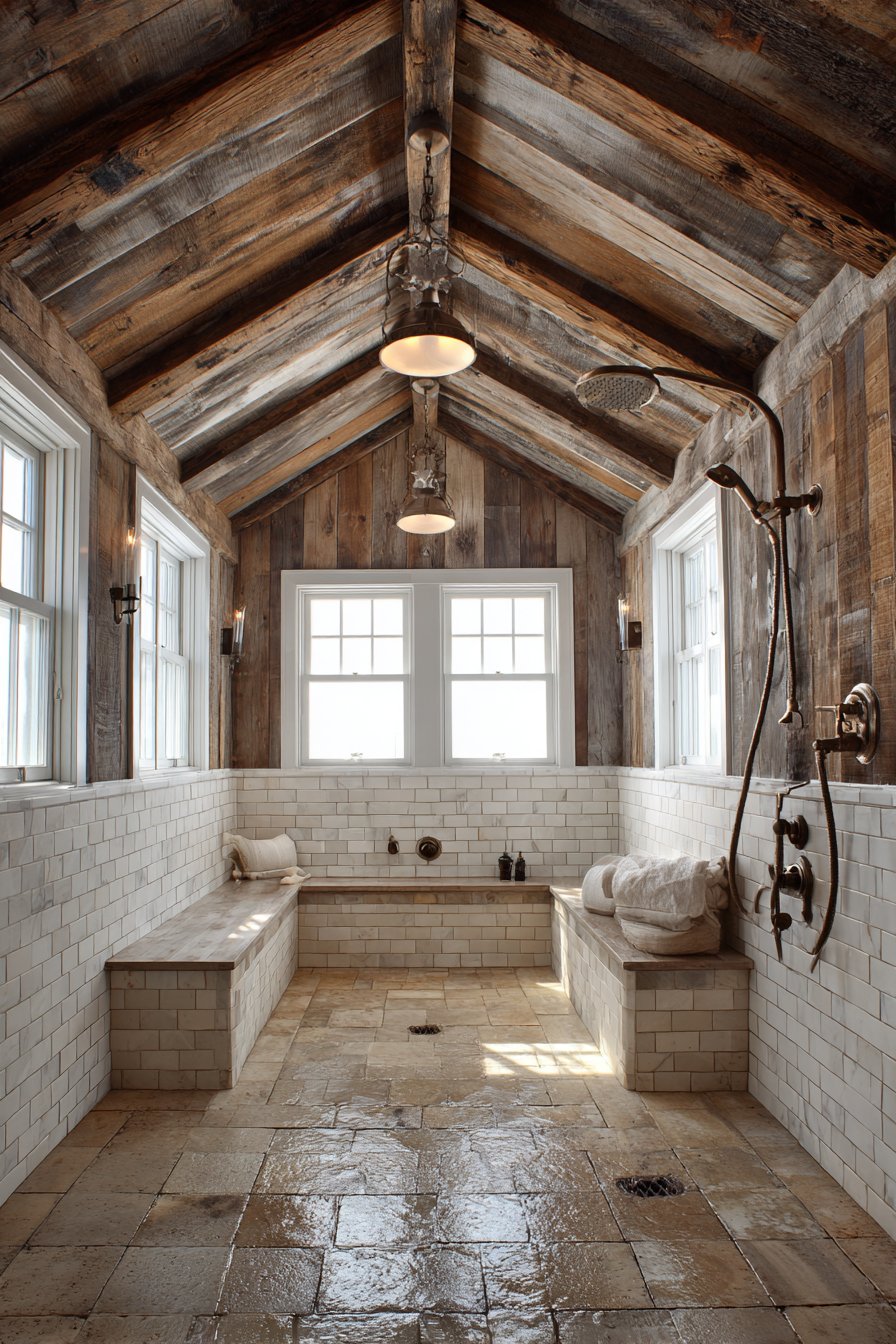
Architectural volume transforms this shower into a room-within-a-room experience, demonstrating how rustic shower ideas can embrace verticality and spatial drama. The vaulted ceiling features exposed dark wood beams contrasting beautifully with white-painted tongue-and-groove boards between them, creating a classic architectural treatment that draws the eye upward and emphasizes the shower’s generous height. The dark beams provide structural visual weight while the white boards between them reflect light and prevent the ceiling from feeling heavy or oppressive. Walls combine classic white subway tile installation with natural stone wainscoting extending approximately three feet high, creating a thoughtful material transition that manages both aesthetics and practicality.
Bronze shower fixtures including a vintage-style handheld unit on a sliding bar provide flexible functionality wrapped in period-appropriate design. The bronze finish’s warmth complements the dark ceiling beams while the sliding bar mechanism allows users of different heights to position the handheld shower at optimal levels. A built-in window seat with comfortable cushion provides a dedicated changing and toweling area within the shower room itself, transforming the space from simple shower to full bathing chamber. Multiple windows create a bright, airy atmosphere that prevents the vaulted space from feeling cavernous, while their placement provides cross-ventilation essential for moisture management in this larger shower room.
Wide-angle photography captures the architectural volume and rustic elegance, from the soaring vaulted ceiling to the thoughtful material transitions on the walls. The generous proportions and multiple windows create a shower experience that feels more like bathing in a private spa pavilion than a conventional bathroom shower.
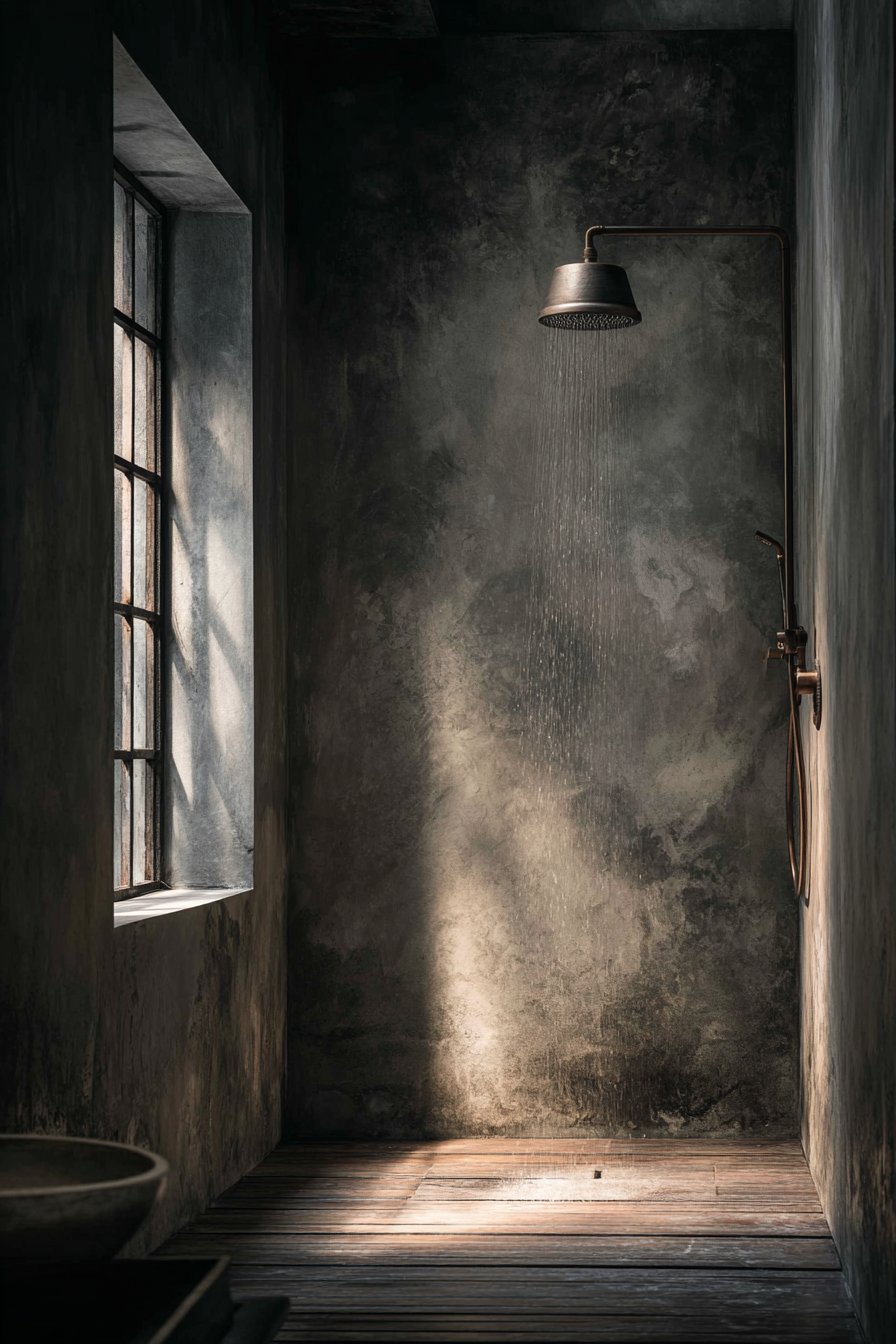
Key design considerations include: ensuring structural framing can support the vaulted ceiling’s weight and span requirements, treating all wooden ceiling elements with appropriate moisture-resistant finishes suitable for the humid environment despite the ceiling’s height above water sources, installing adequate ventilation capable of managing moisture in the larger cubic footage this design creates, selecting cushion fabrics and fillings specifically rated for wet environments to prevent mold growth on the window seat, and positioning windows to provide natural light and ventilation while maintaining privacy from outside views. The stone wainscoting should receive proper waterproofing membrane installation behind it to protect lower walls from direct water exposure. This rustic shower idea demonstrates how architectural ambition and generous proportions can create truly memorable bathing experiences.
16. Industrial Minimalism with Concrete and Teak
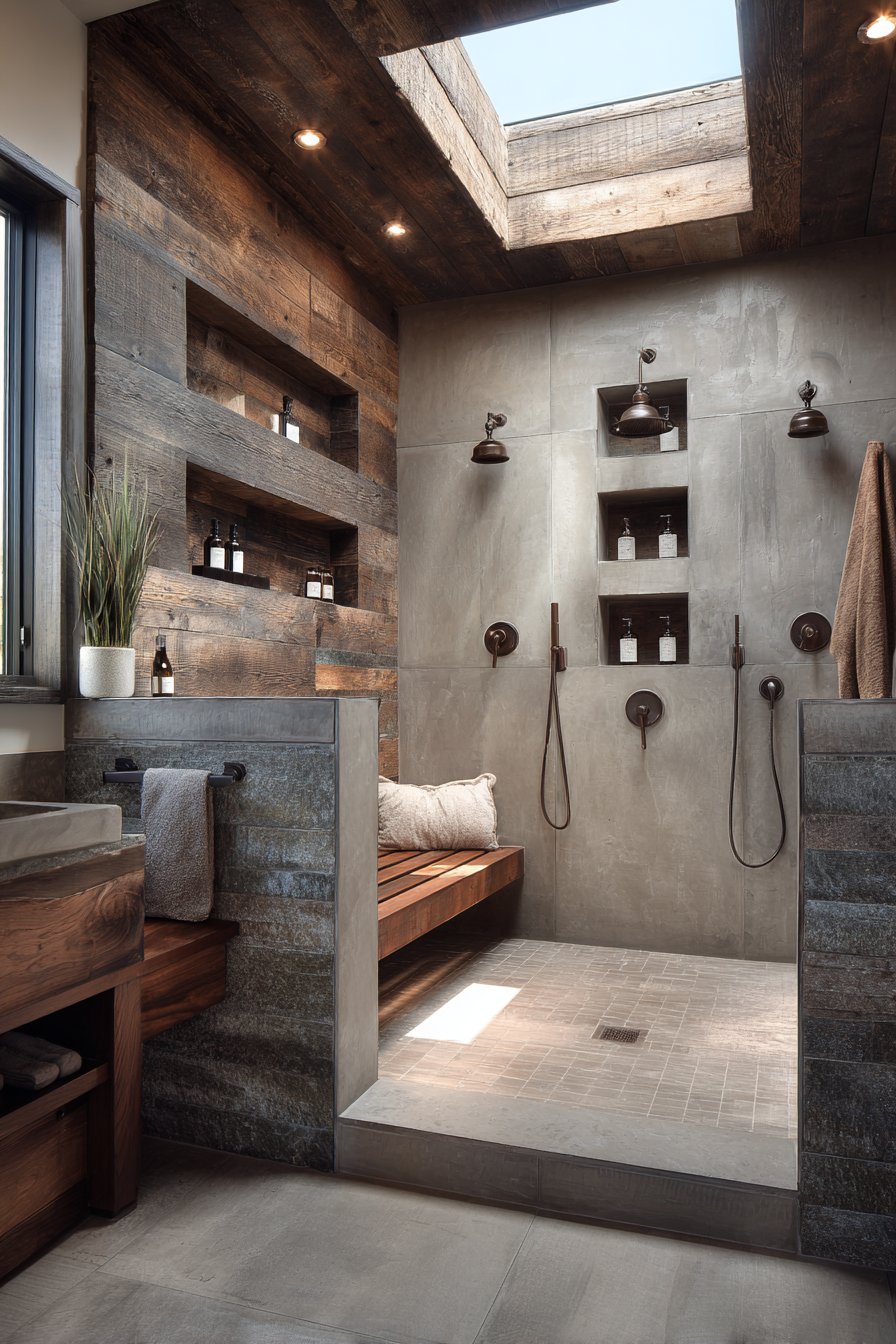
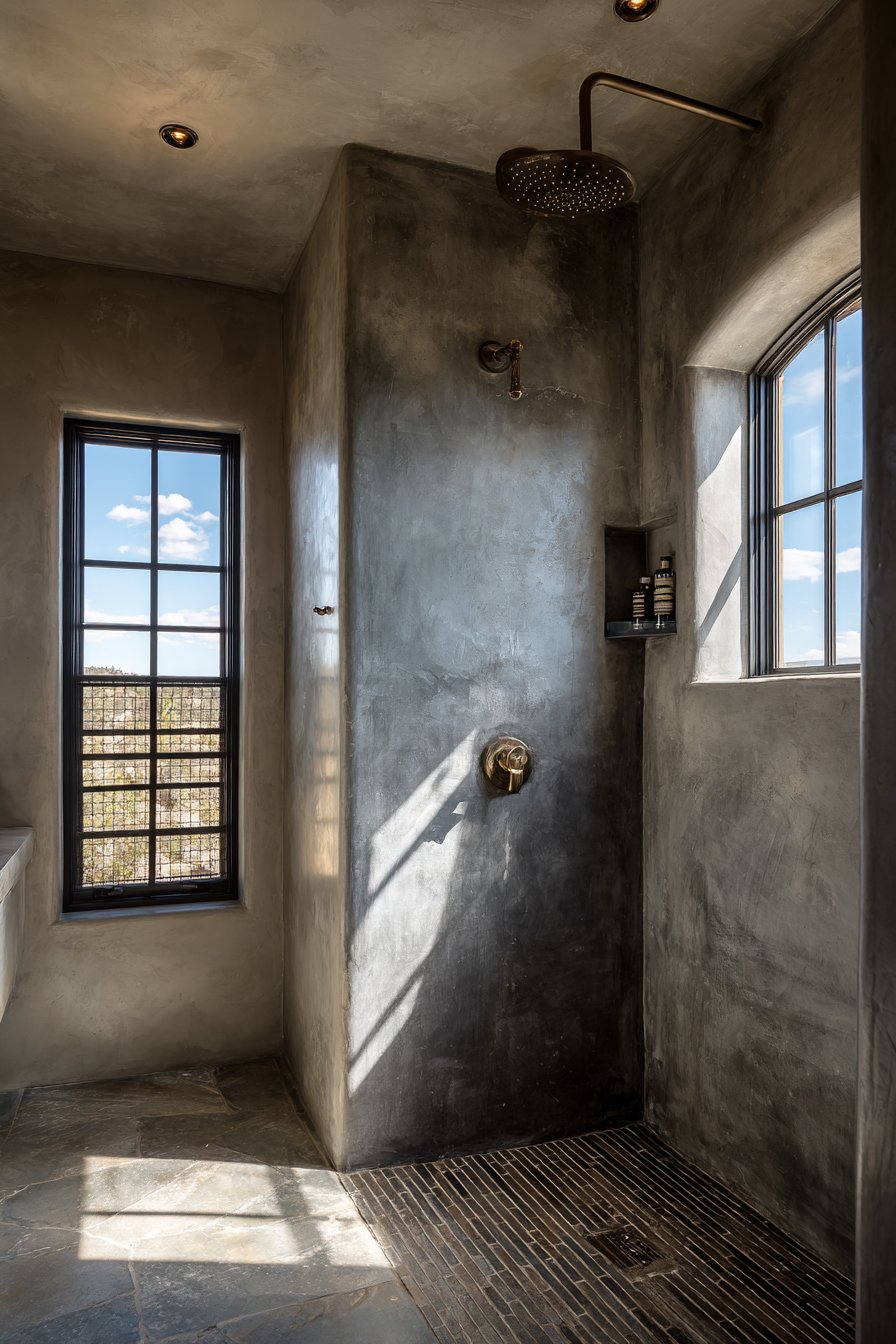
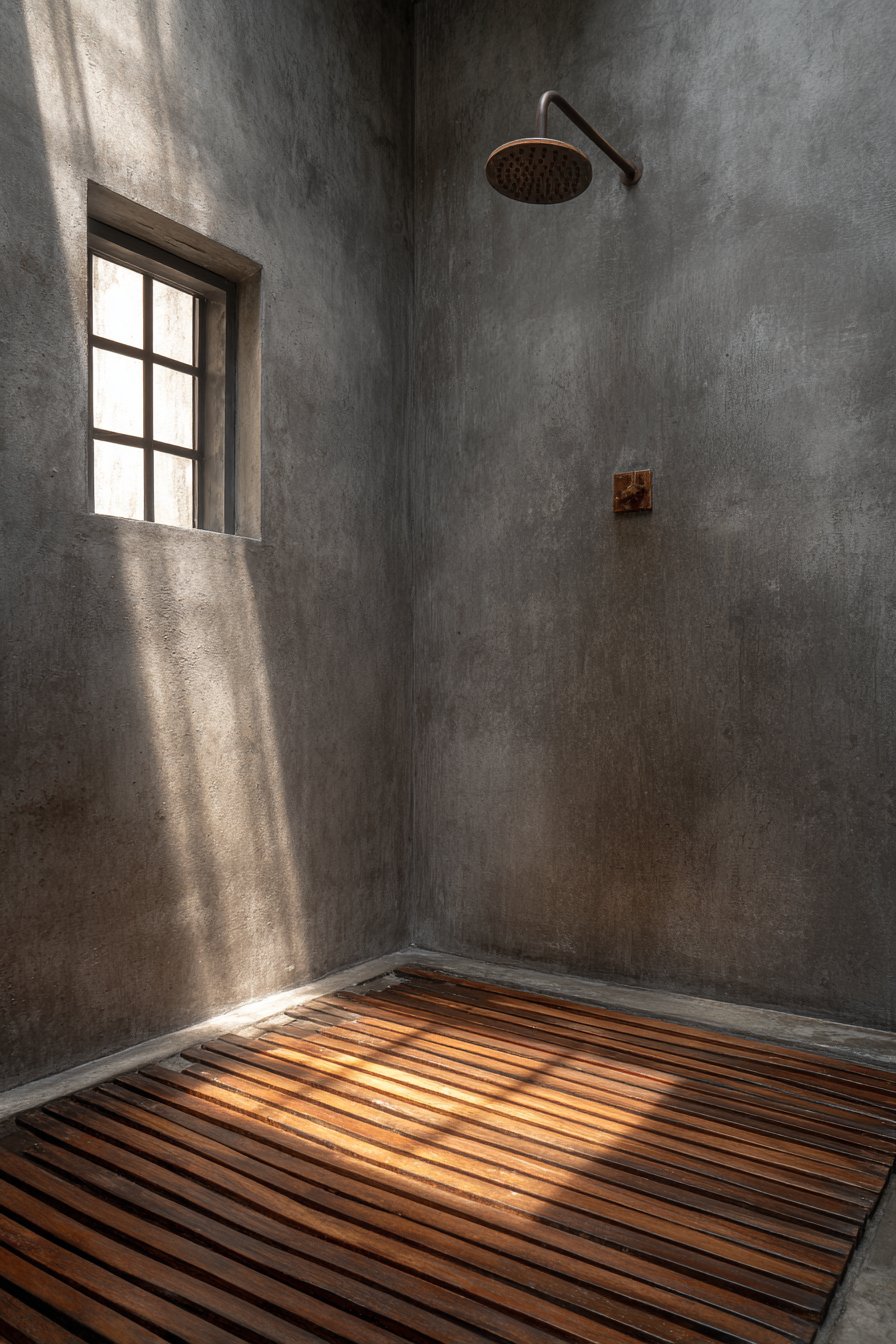
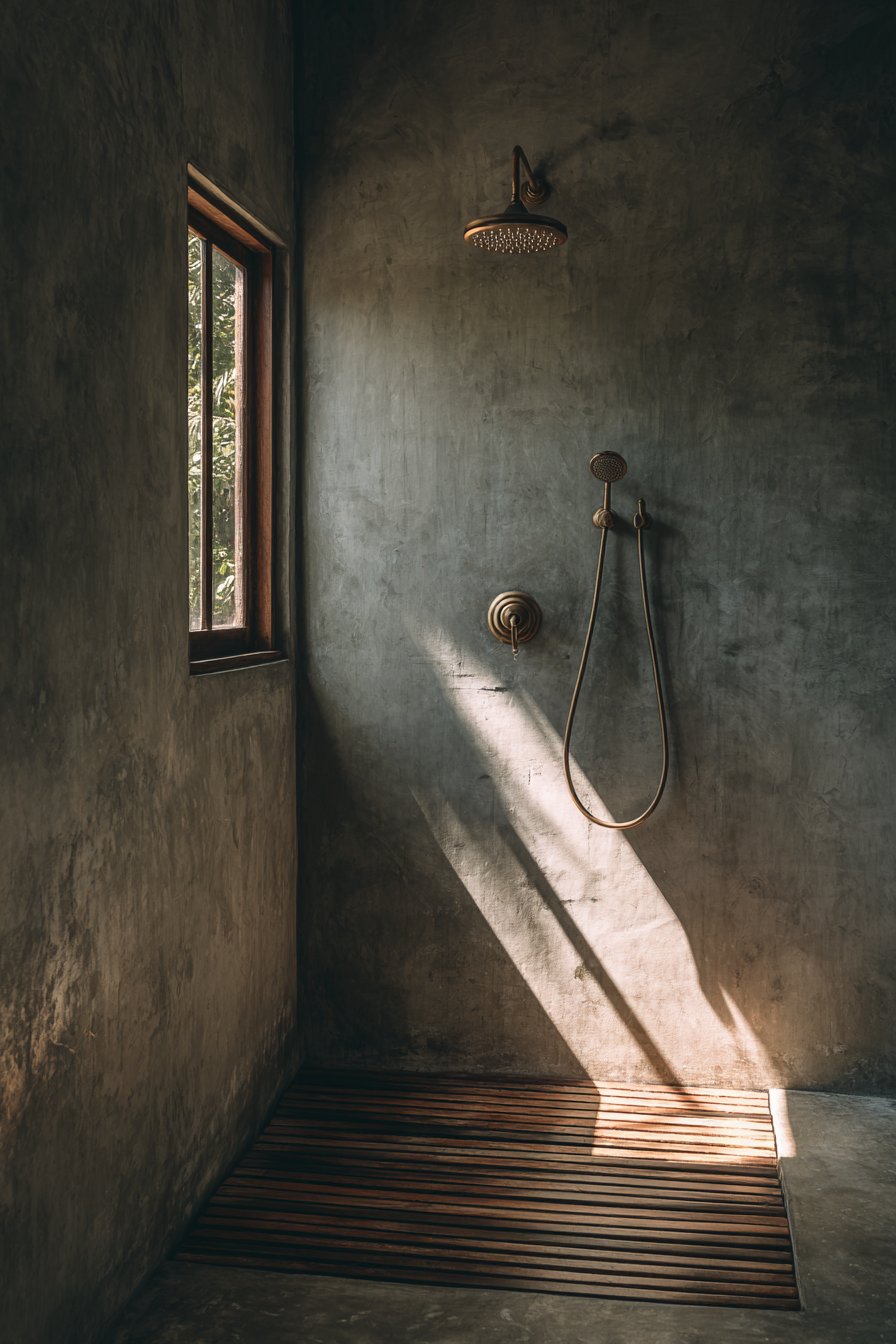
Minimalist sensibilities meet rustic materials in this pared-down rustic shower idea featuring smooth concrete walls showing subtle trowel marks and natural texture variation. The concrete’s natural gray displays the honest character of a poured material, with slight color shifts and surface imperfections that add character without feeling unfinished or rough. The walls’ smooth finish provides textural contrast to other elements while their monolithic appearance creates a calm, meditative backdrop. A simple bronze rainfall showerhead mounts directly to the wall, its warm metallic finish and traditional form providing the only decorative element needed against the concrete’s minimalist canvas.
Teak wood floor grating over a concrete shower pan introduces natural warmth underfoot while serving the practical purpose of elevating users above pooling water and providing excellent drainage. The teak’s rich golden-brown tone creates striking contrast against the gray concrete, while the slatted construction allows water to drain freely while providing comfortable footing. The teak’s natural oil content makes it ideal for wet environments, though regular oiling maintains its rich color and prevents the silvery gray patina that develops on untreated teak exposed to water. A single small window with minimalist steel frame provides light and ventilation without disrupting the space’s clean-lined aesthetic.
Professional interior photography with dramatic natural side-lighting emphasizes the industrial-rustic aesthetic and material simplicity, the low-angle light creating strong shadows that highlight the concrete’s textured surface and the teak grating’s linear pattern. This stark lighting reveals the beauty inherent in simple materials thoughtfully composed.
Essential implementation elements include: hiring skilled concrete applicators experienced with achieving consistent color and smooth finishes appropriate for shower applications, sealing concrete walls with penetrating sealers that enhance water resistance while maintaining the material’s natural appearance, creating a proper shower pan with adequate slope beneath the teak grating to ensure water drains to the waste line rather than pooling, treating teak grating with teak oil regularly to prevent graying and potential splinter development, and ensuring the steel window frame receives appropriate rust-resistant finish suitable for the humid environment. The teak grating should be removable for occasional cleaning beneath it to prevent soap scum and hair buildup. This rustic shower idea proves that rustic design needn’t mean busy or cluttered—natural materials and honest finishes create powerful statements through simplicity.
17. Mosaic Artistry with Pebble and Slate
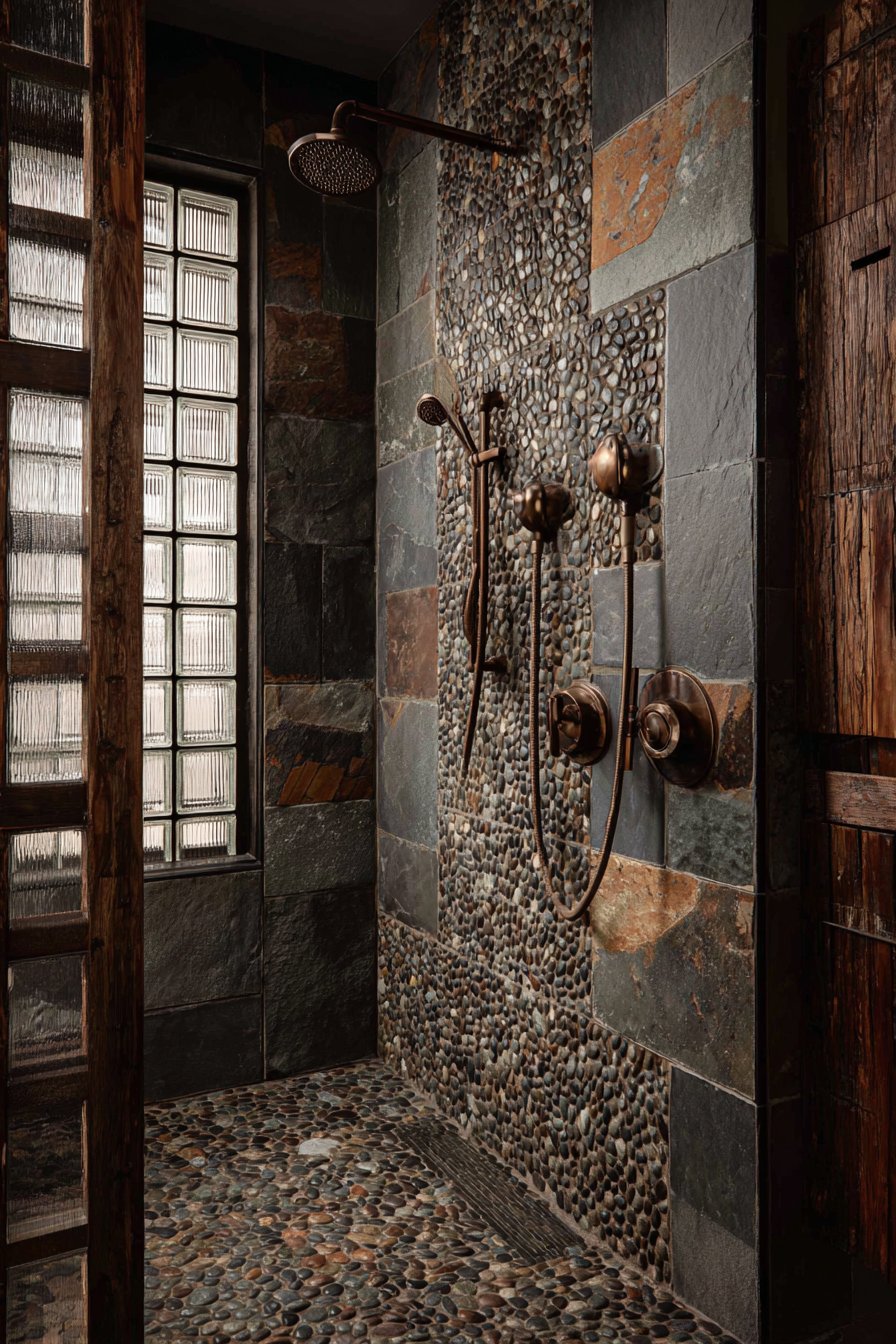
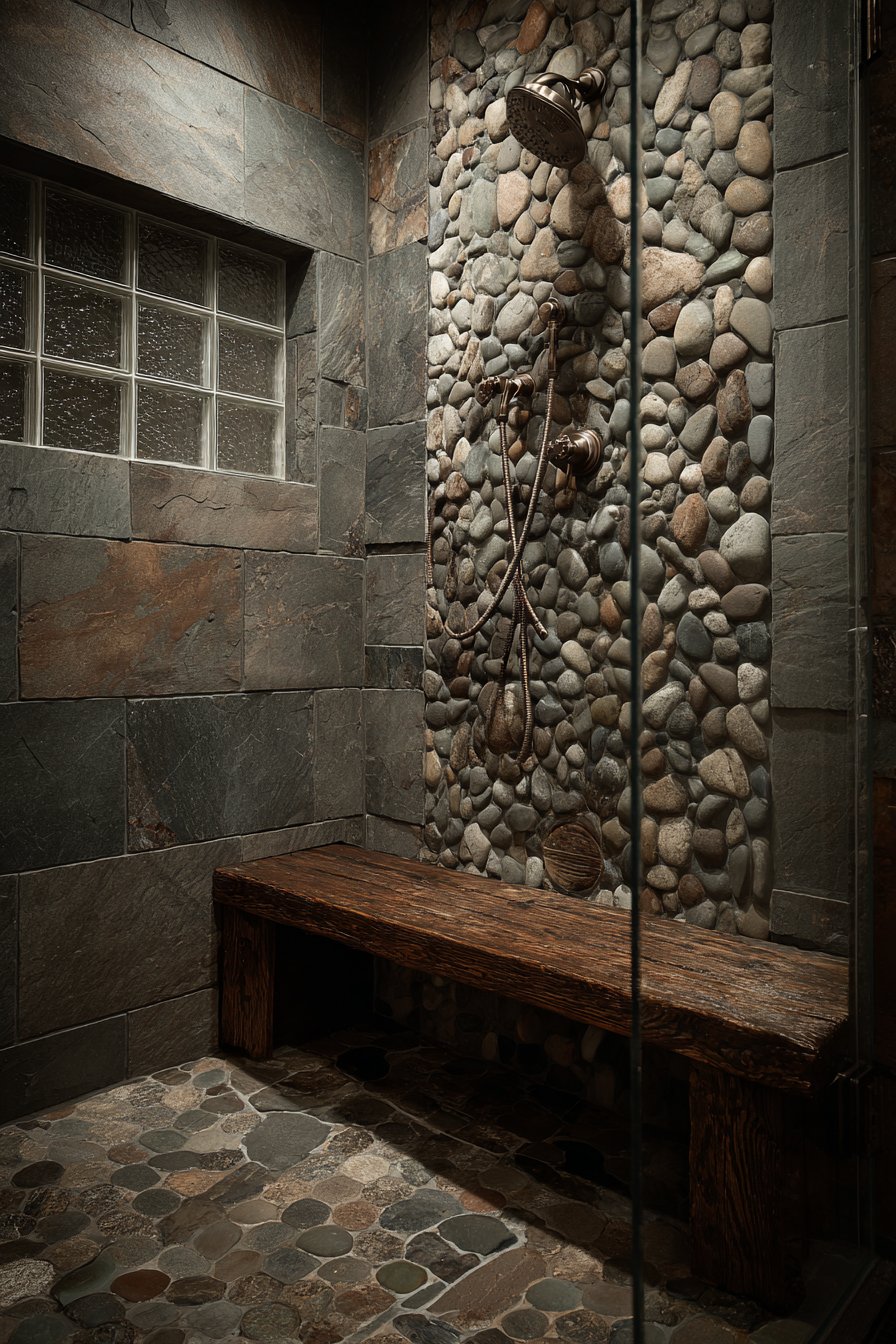
Tactile richness defines this rustic shower idea featuring a mosaic pebble tile accent wall that transforms natural river stones into living artwork. The accent wall showcases natural multi-colored river stones arranged in contemporary mosaic sheets, each stone displaying its unique color, shape, and smoothness earned through water tumbling over centuries. The varied colors—creams, tans, grays, and browns—create a naturally harmonious palette that shifts subtly as light changes throughout the day. Surrounding walls feature large slate tiles in dark gray, their natural cleft surface providing textural interest while their size keeps the design from feeling too busy against the detailed pebble accent wall.
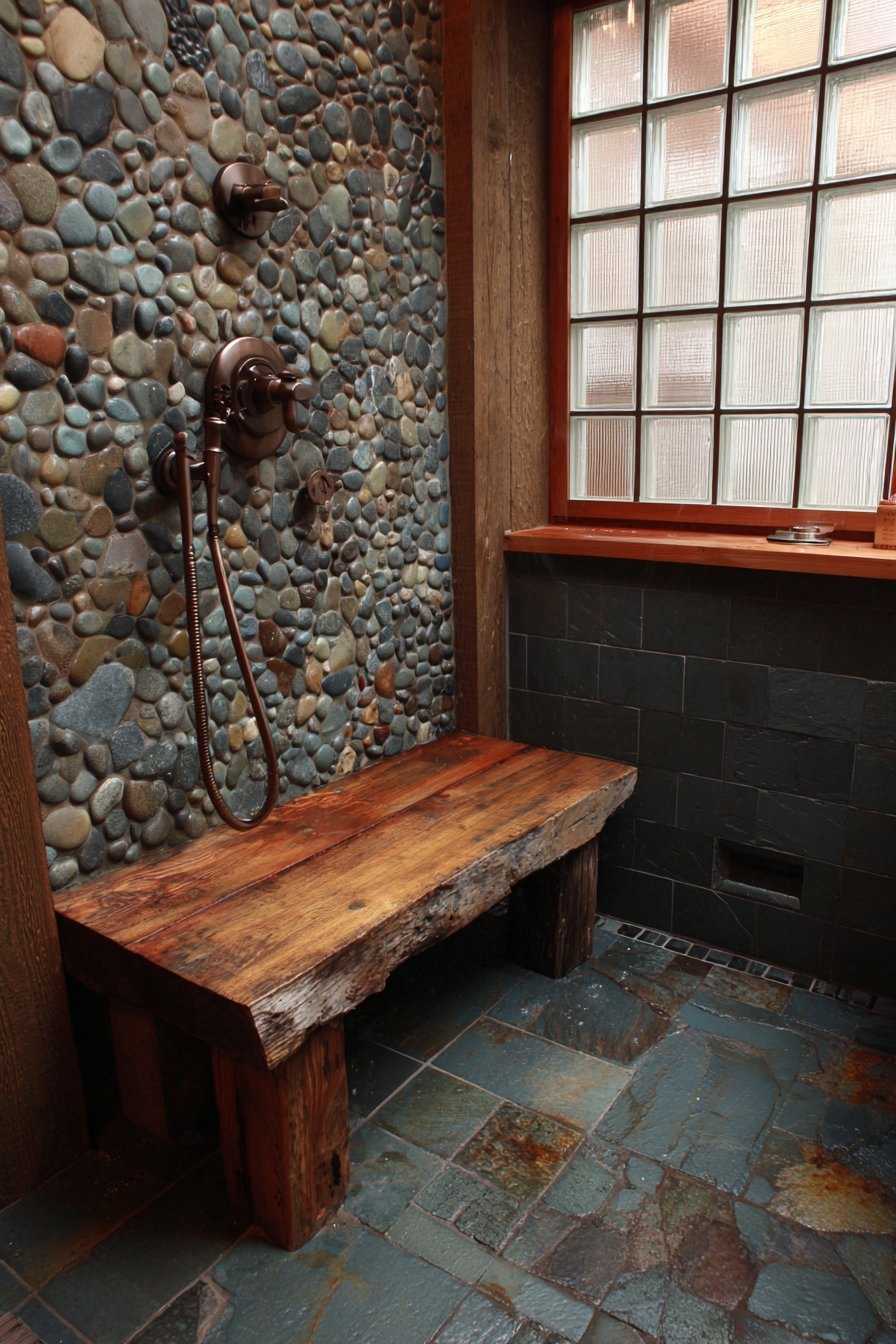
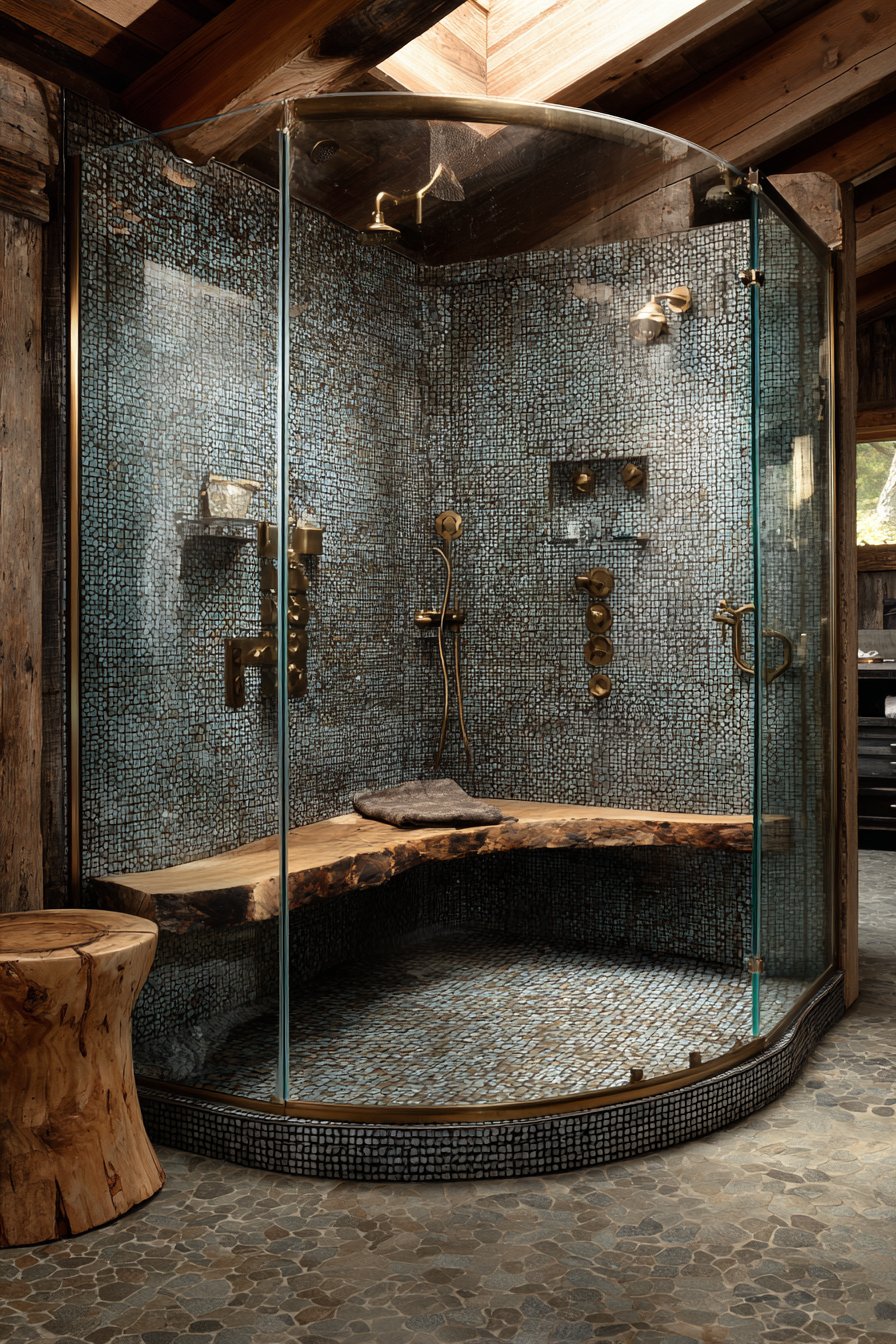
A bronze thermostatic shower system with both rainfall head and convenient handheld fixture provides modern functionality and convenience while maintaining period-appropriate aesthetic. The bronze’s warm tones harmonize beautifully with the pebble wall’s warmer stone colors, creating color cohesion throughout the space. A reclaimed wood floating bench featuring visible traditional mortise joints demonstrates honest craftsmanship while providing practical seating. The joints’ visibility celebrates traditional woodworking techniques rather than hiding them, adding an educational element that connects users to historic building methods. A frosted glass block window provides privacy while allowing generous natural light to flood the space, the diffused light preventing harsh shadows while keeping the shower bright and welcoming.
Interior design photography with balanced exposure highlights the tactile quality of the pebble mosaic and the authentic materials throughout. The camera captures how light plays across the pebbles’ rounded surfaces, creating highlights and shadows that emphasize their three-dimensional character, while the slate’s cleft surface provides textural backdrop that enhances rather than competes with the pebble wall.
Important design considerations include: selecting pebble mosaic sheets with natural rather than dyed stones for authentic appearance, ensuring proper waterproofing behind the pebble wall as its irregular surface creates more potential moisture pathways than flat tile, using an experienced installer familiar with natural stone mosaics to ensure proper setting and consistent grout lines, sealing both pebble and slate tiles with appropriate penetrating sealers that enhance color while providing water and stain resistance, and ensuring the reclaimed wood bench receives marine-grade sealing with regular reapplication. The glass block window should be installed with proper mortar and reinforcement to prevent water infiltration. This rustic shower idea celebrates nature’s small-scale beauty, transforming humble river rocks into a sophisticated focal point.
18. Farmhouse Freshness with Painted Beadboard
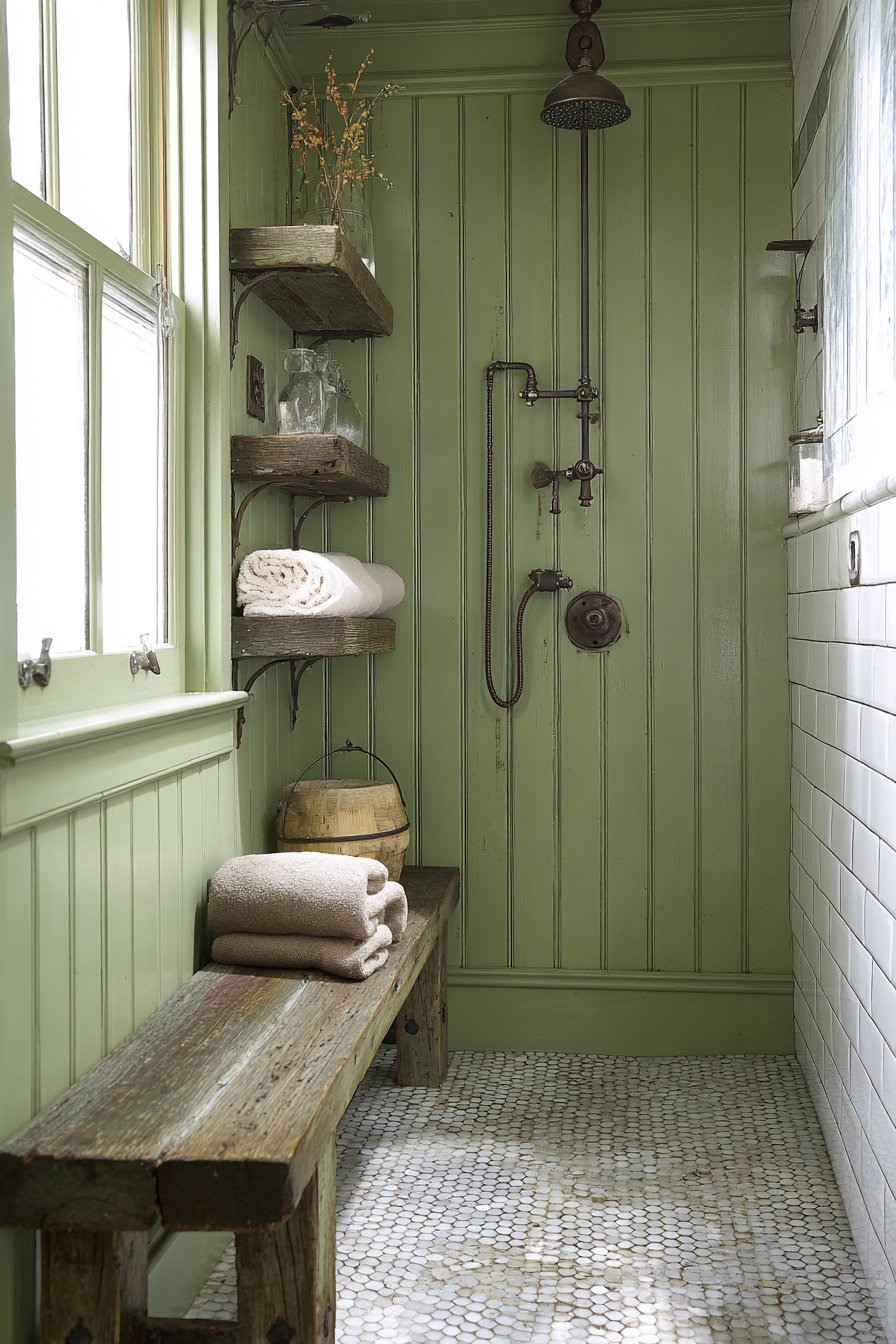
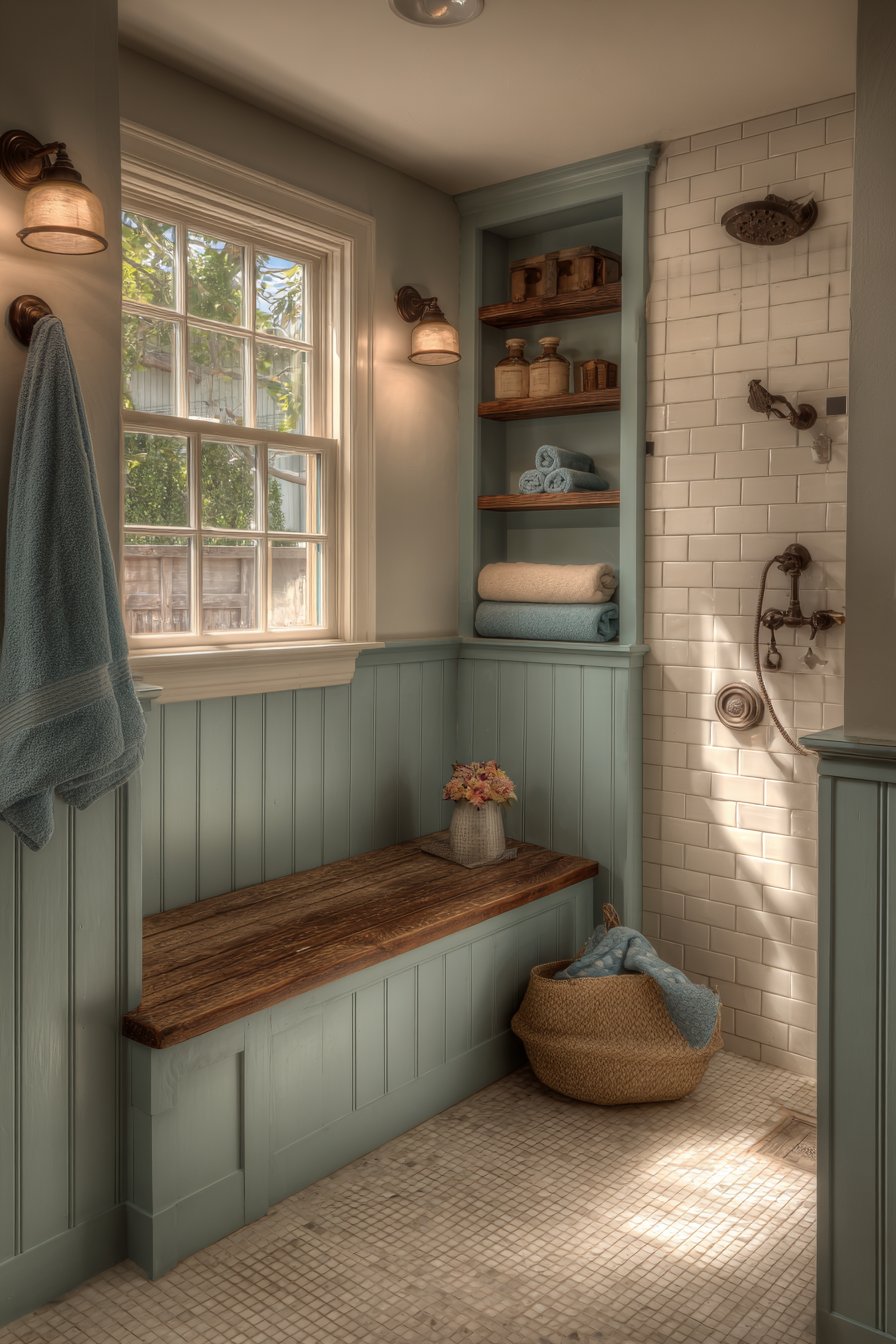
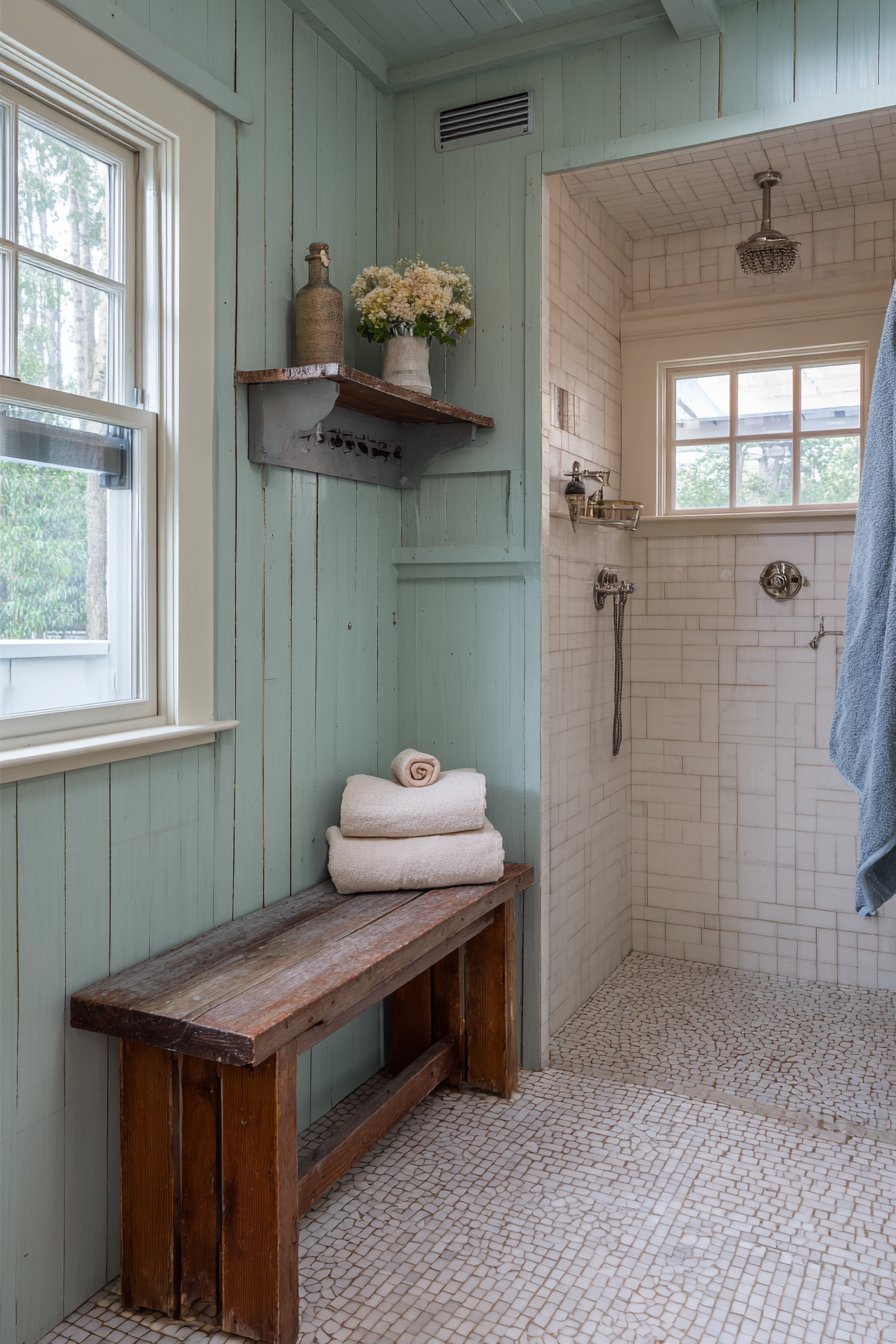
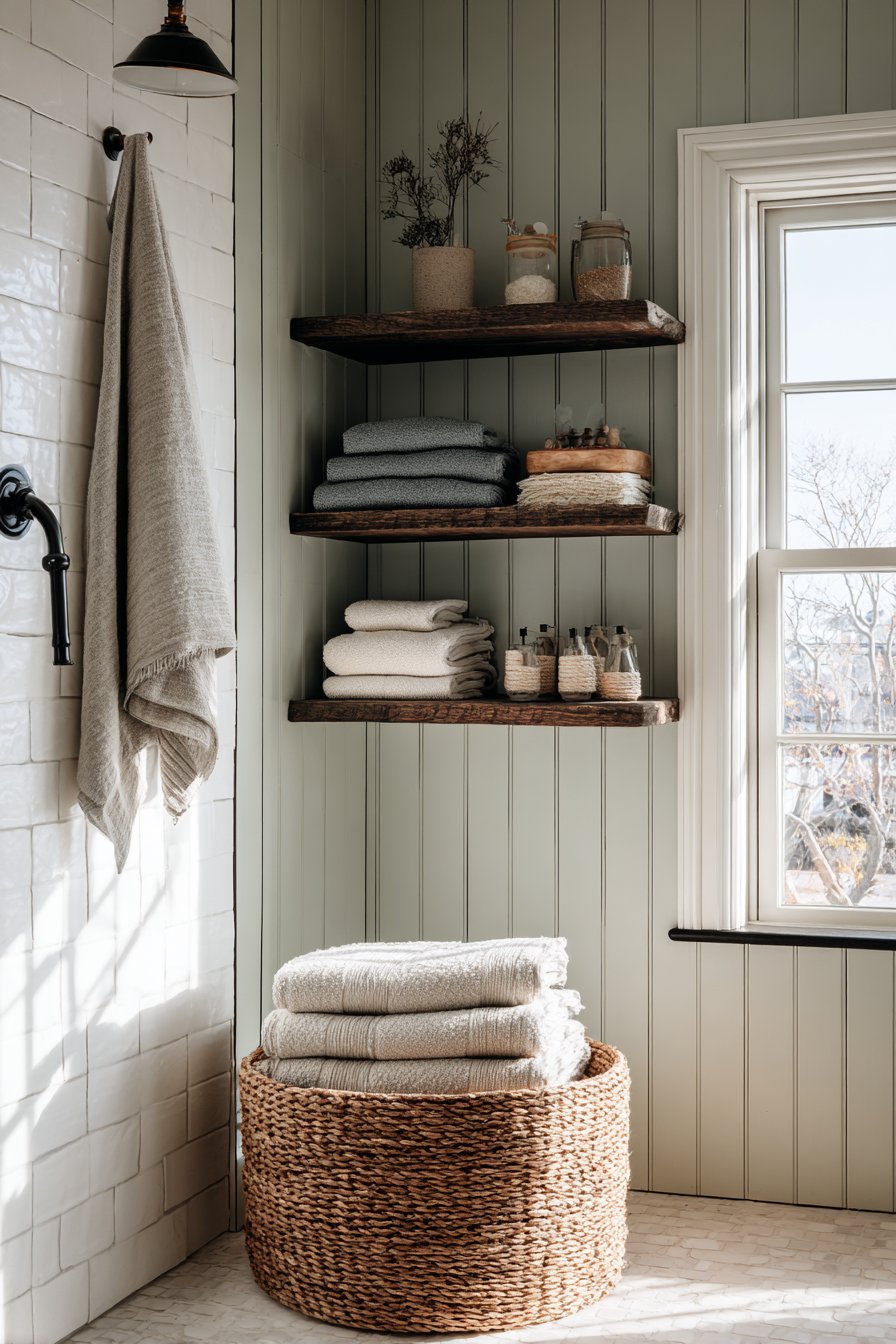
Fresh country charm characterizes this rustic shower idea featuring painted beadboard walls in soft sage green that create a cottage-like atmosphere while serving practical moisture-resistant purposes. The beadboard, properly sealed for moisture resistance, displays subtle vertical texture that adds visual interest without overwhelming the space. The soft sage green provides calming color while the paint finish offers excellent moisture resistance superior to natural wood in wet environments. White subway tile installation from floor to wainscot height provides practical water protection in the highest-exposure areas while its classic pattern and pristine color create clean contrast with the painted beadboard above.
Vintage-reproduction bronze fixtures including deliberately exposed shower plumbing celebrate honest functionality while adding industrial-rustic character. The exposed pipes become intentional design elements rather than unsightly necessities, their bronze finish aging gracefully over time. Open wood shelving painted to match the beadboard provides practical storage for rolled towels and rustic accessories while maintaining color harmony. The shelves’ open construction prevents moisture accumulation while their simple bracket design reinforces the farmhouse aesthetic. Natural window light creates an inviting atmosphere, the soft illumination highlighting the painted wood’s subtle texture while keeping the space feeling fresh and bright rather than dark or heavy.
Professional photography captures the fresh country aesthetic with particular attention to the painted wood texture and how the soft green color creates a calming, nature-inspired environment. The camera reveals how the beadboard’s vertical lines create subtle rhythm while the subway tile’s horizontal installation provides grounding weight.
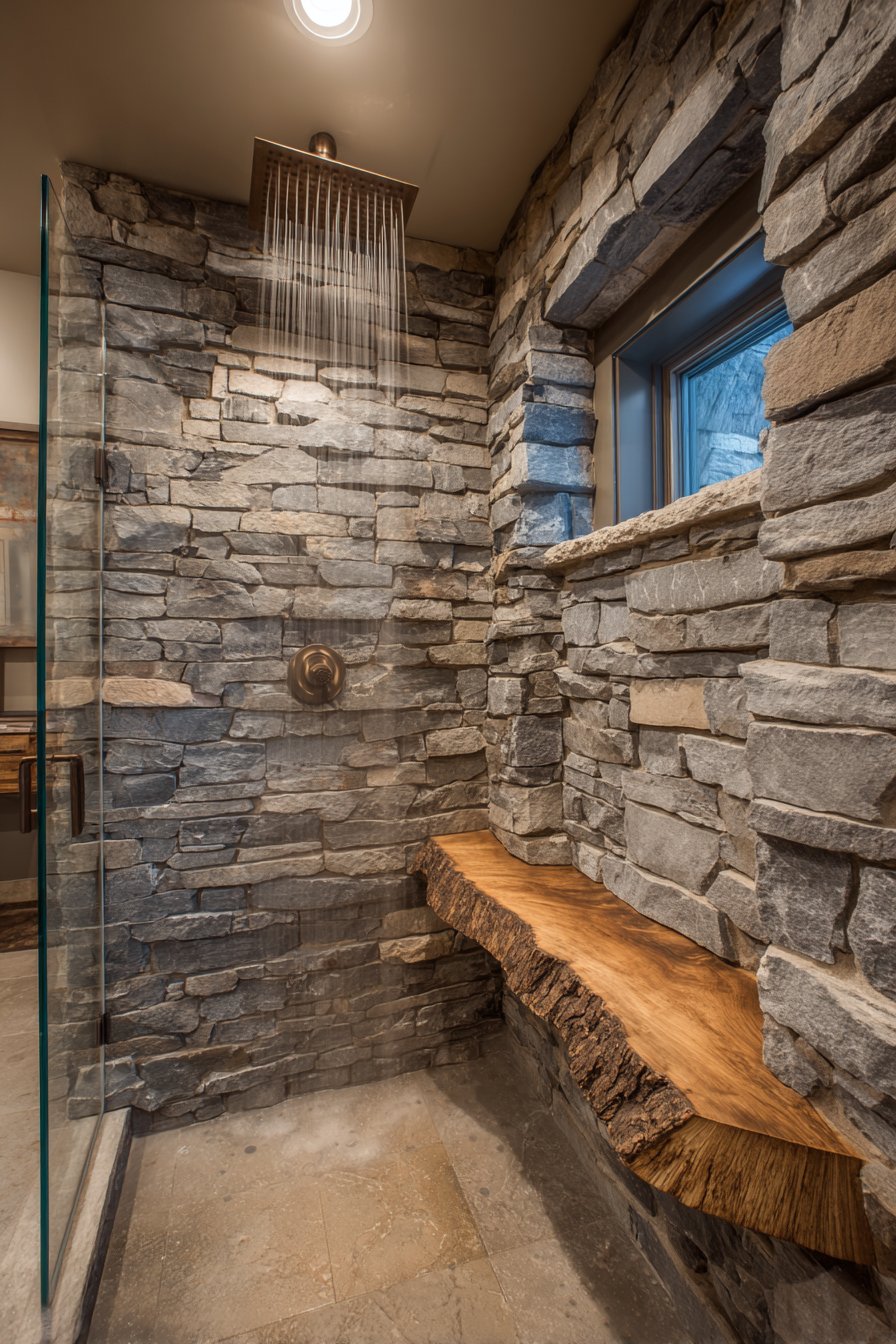
Critical implementation factors include: selecting paint specifically formulated for high-humidity environments with mildew-resistant additives, applying proper primer designed for wood in wet areas before finish coats, ensuring beadboard installation includes waterproof backing and proper ventilation behind it to prevent moisture accumulation, using ceramic subway tile rather than cheaper alternatives to ensure durability and appropriate water resistance, and treating wooden shelving with the same moisture-resistant paint system as the beadboard. The vintage-reproduction fixtures should be quality pieces rather than cheap imitations to ensure reliable performance and authentic appearance. This rustic shower idea demonstrates how painted wood and classic patterns can create spaces that feel both fresh and timeless, proving rustic design works beautifully in lighter, brighter applications beyond dark woods and heavy stone.
19. Dimensional Drama with Stacked Stone Ledger
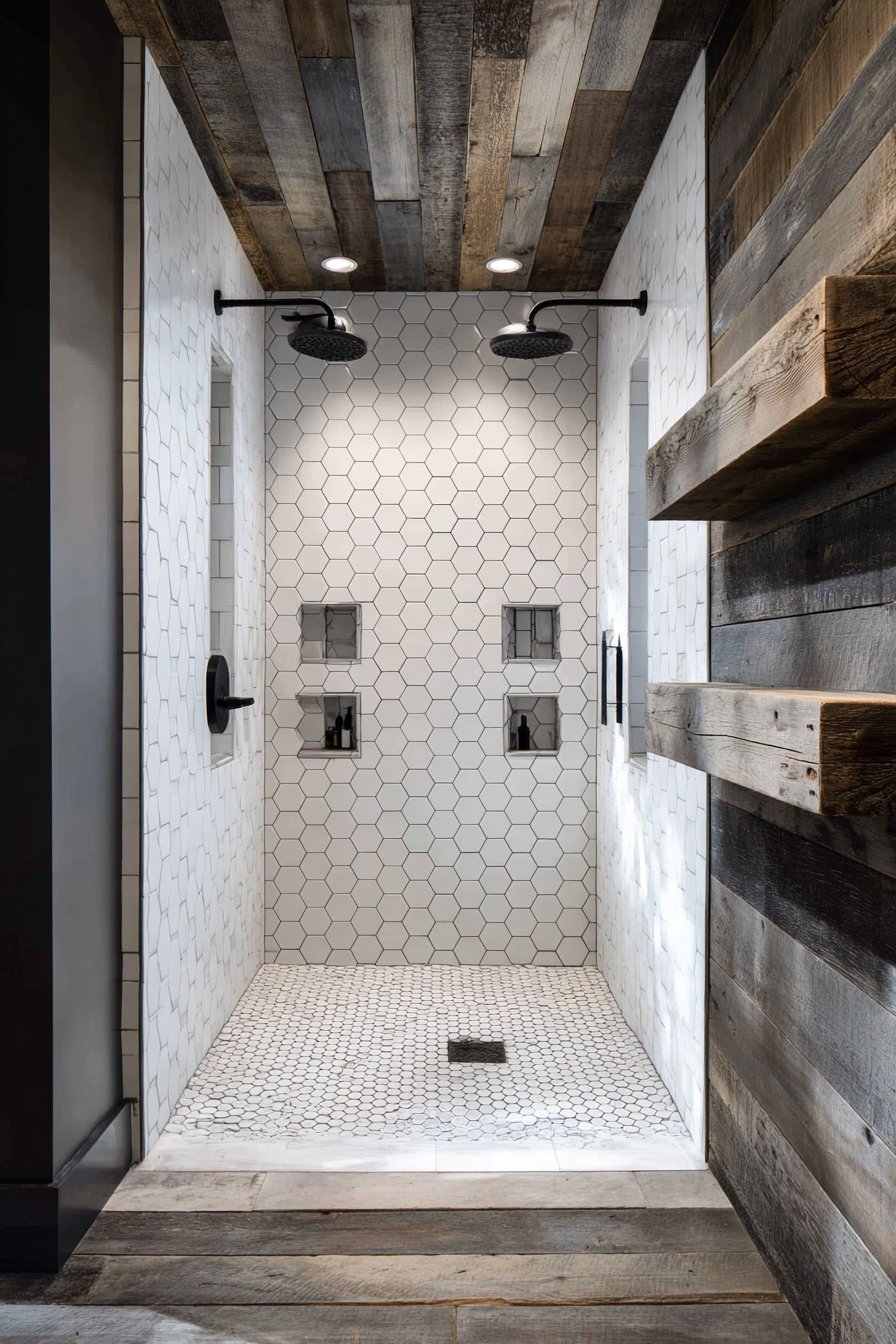
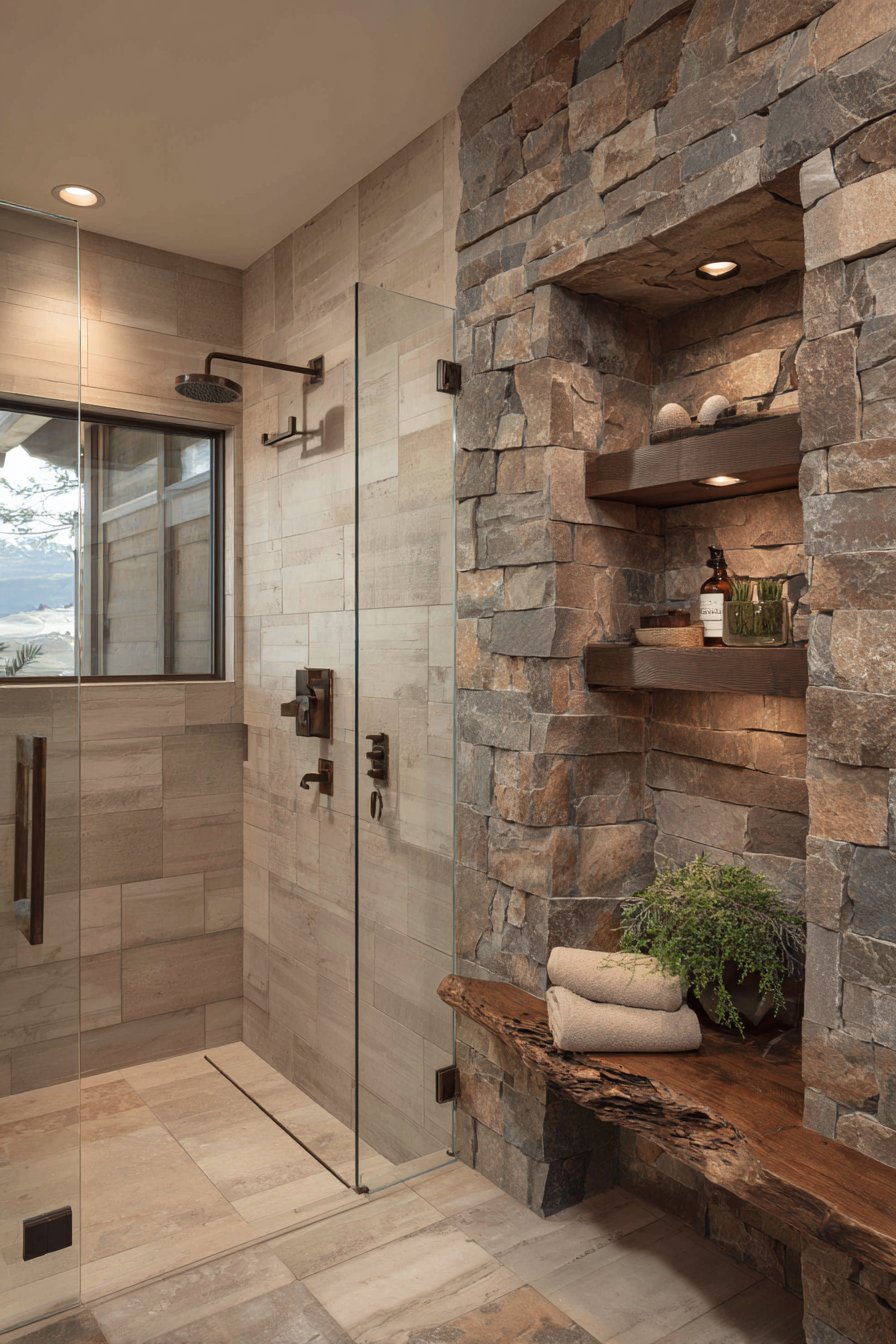
Three-dimensional visual impact defines this rustic shower idea featuring dimensional stacked stone ledger panels that create powerful horizontal lines and textural depth. The ledger panels showcase mixed gray and tan tones in carefully selected stone pieces that vary in depth from the wall surface, creating strong shadow lines that emphasize the horizontal pattern. This dimensional quality ensures the walls never appear flat or monotonous, with natural light creating an ever-changing shadow pattern throughout the day. A frameless glass enclosure maintains the space’s openness while allowing the dramatic stone work to remain fully visible from outside the shower, maximizing the impact of this significant investment in premium materials.
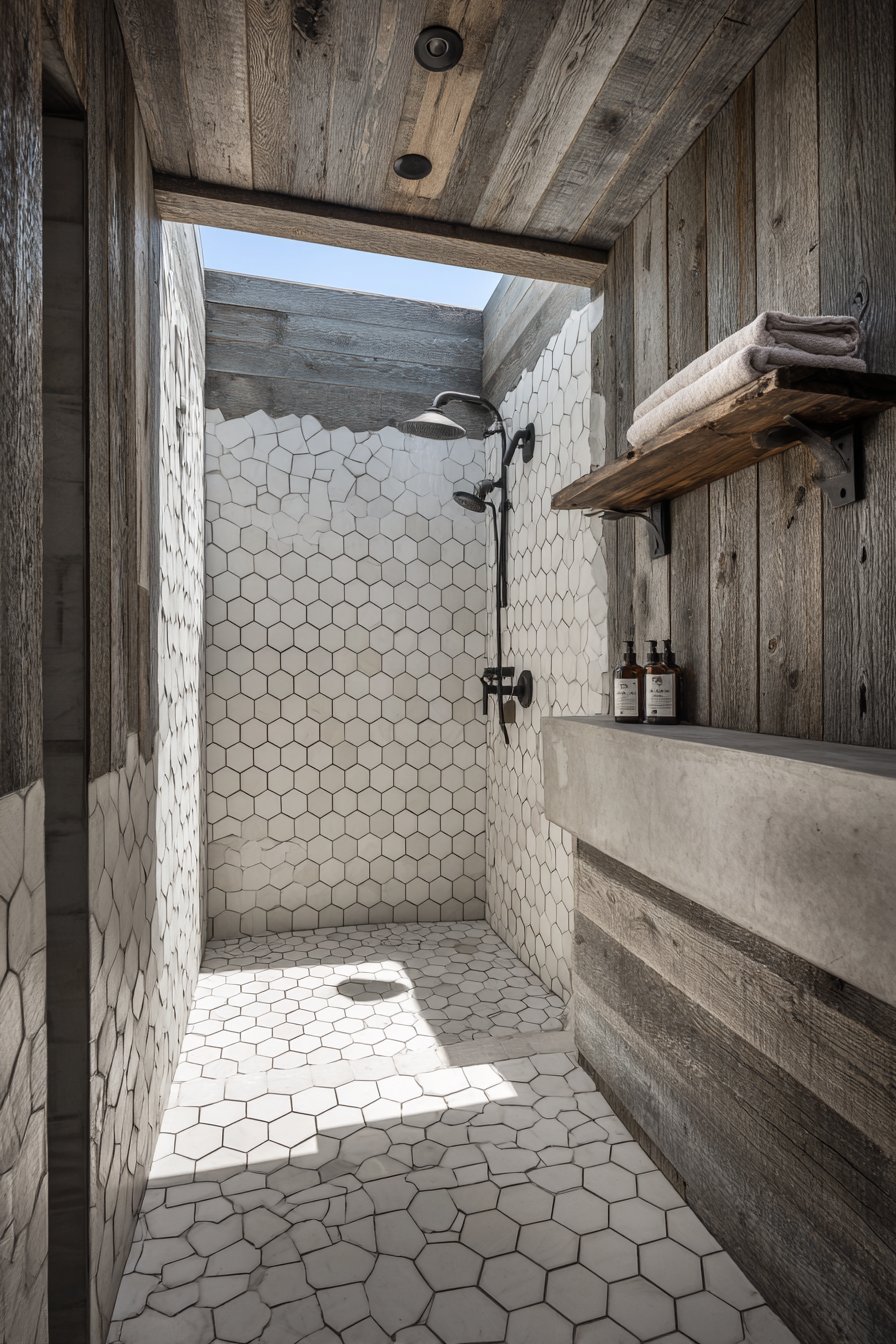
Brushed bronze rainfall showerhead and coordinating fixtures add warmth through their metallic finish while their contemporary styling prevents the space from feeling overly rustic or historical. The brushed finish provides subtle texture that complements the stone’s natural surface while requiring less maintenance than polished finishes that show water spots prominently. A natural wood corner shelf with live edge detail provides organic accent and practical storage, its curved natural edge celebrating the tree’s original form rather than forcing geometric conformity. Recessed lighting combined with natural window light works together to highlight the stone texture variations, the directional recessed lights creating dramatic shadows across the ledger panels’ dimensional surface while window light provides overall illumination.
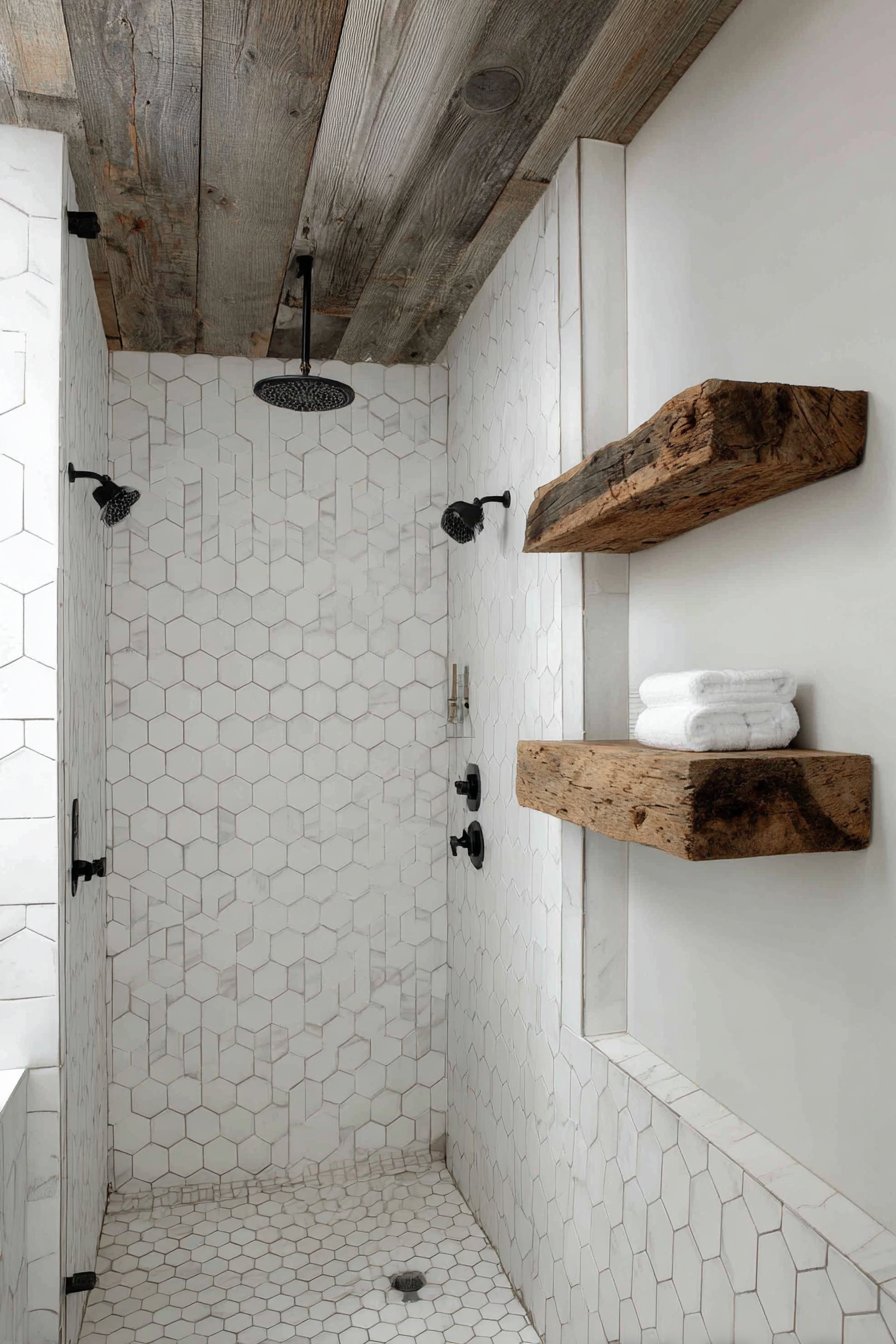
Wide-angle interior photography with professional lighting showcases the three-dimensional stone installation and how properly positioned lighting brings the material to life. The camera captures how light moves across the varied depths of stone pieces, creating highlights on protruding elements and shadows in recessed areas that emphasize the wall’s sculptural quality.
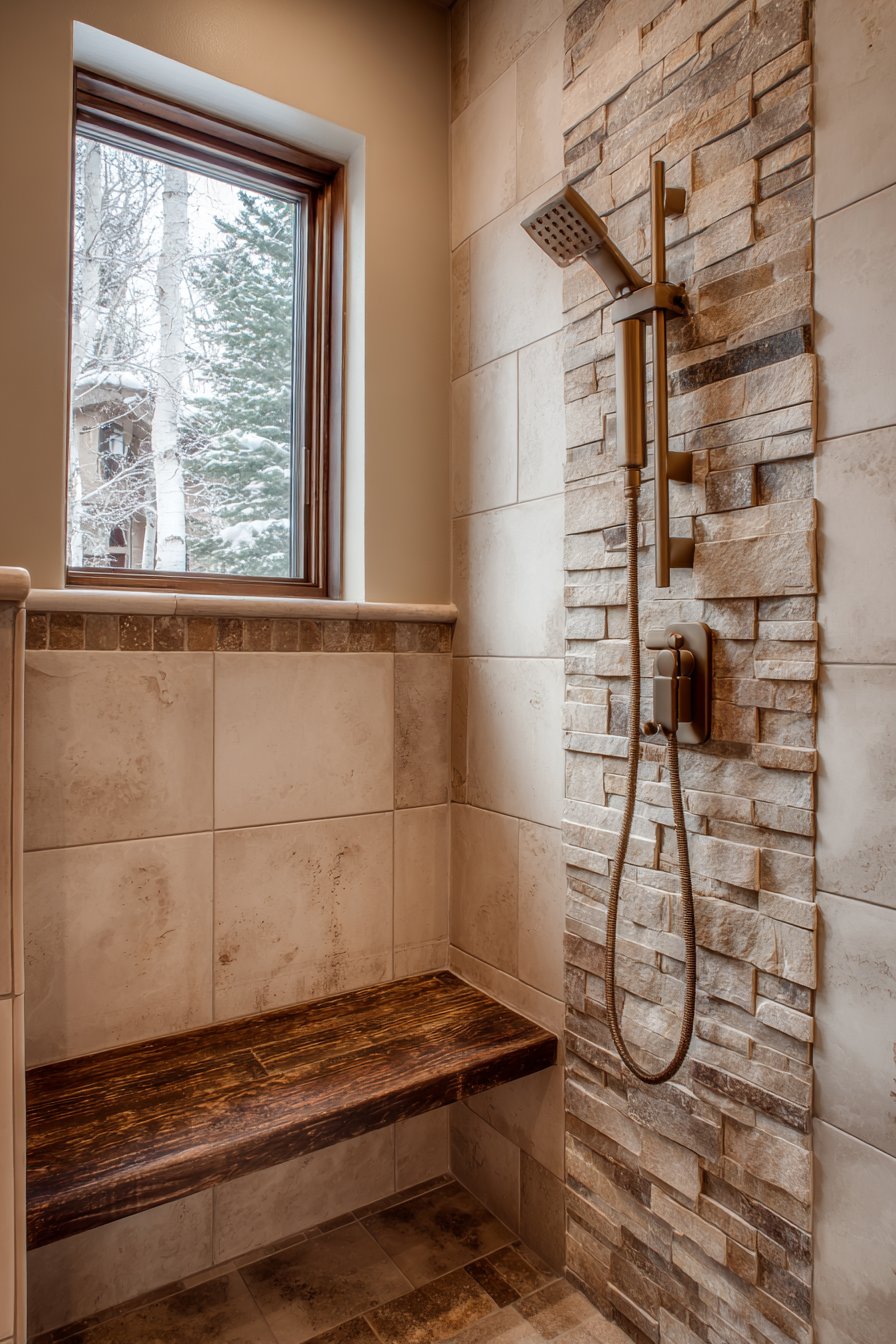
Key design principles include: selecting ledger panels with authentic stone rather than manufactured alternatives for genuine weight and texture, ensuring professional installation by masons experienced with dimensional stone to achieve consistent coursing and proper mortar joints, sealing stone with high-quality penetrating sealer that doesn’t eliminate the natural texture or color variation, positioning recessed lights to graze across stone surfaces rather than shining directly onto them for maximum shadow and texture emphasis, and ensuring the live-edge corner shelf integrates with proper structural support and waterproofing. The frameless glass should use heavy-duty hardware capable of supporting the substantial glass weight. This rustic shower idea demonstrates how dimensional materials and strategic lighting create spaces with powerful visual impact and enduring interest.
20. Architectural Interest Through Wooden Ceiling Treatment
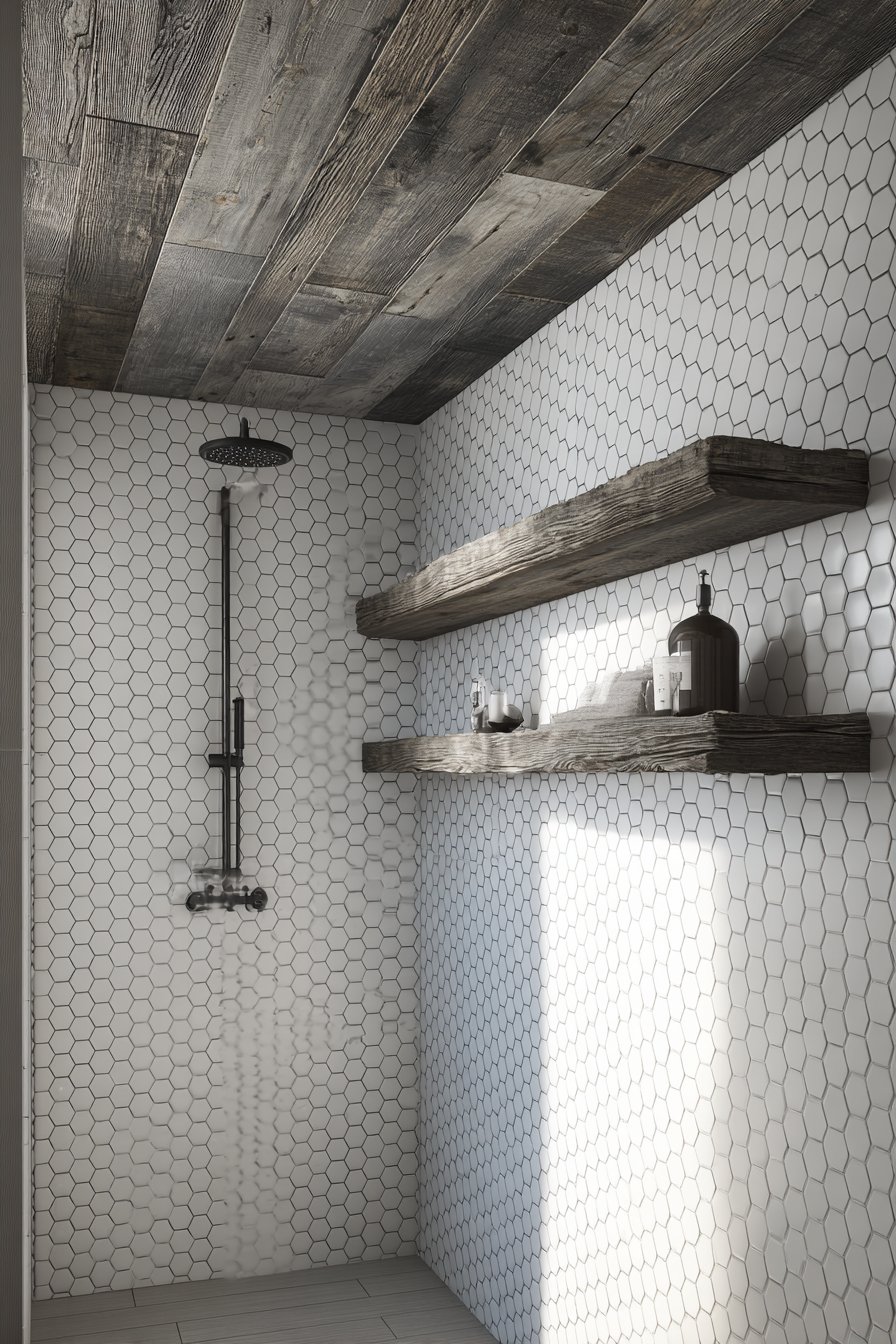
Unexpected overhead drama transforms this rustic shower idea through a ceiling covered in narrow wood planks finished in weathered gray that draws the eye upward and creates architectural interest often overlooked in shower design. The weathered gray finish displays natural color variation and subtle grain patterns that feel authentically aged rather than artificially distressed, while the narrow plank width creates rhythm that adds visual interest without overwhelming the space. This ceiling treatment transforms the overhead plane from an afterthought into a distinctive design feature. White hexagonal tiles on the walls provide geometric contrast to the ceiling’s linear pattern while maintaining bright, clean surfaces that keep the space feeling fresh rather than cave-like despite the wooden ceiling.
A rustic wood accent strip at approximately mid-height runs horizontally around the shower perimeter, creating visual movement and additional material interest while breaking the wall’s vertical expanse. This accent strip introduces another natural element that reinforces the ceiling’s rustic character while its horizontal orientation provides calm counterpoint to the hexagonal tile pattern. Matte black industrial-style shower fixtures provide contemporary contrast through their modern finish and minimalist design, their strong visual presence anchoring the design while preventing it from feeling too soft or traditional. Corner floating shelves constructed from thick reclaimed wood slabs provide practical storage while introducing another rustic element, their substantial thickness and visible saw marks celebrating honest craftsmanship.
Natural overhead light creates interesting ceiling shadows and highlights the narrow planks’ texture and color variation throughout the day. The changing angle of sunlight creates dynamic shadow patterns as light passes between planks, ensuring the ceiling never appears static or flat.
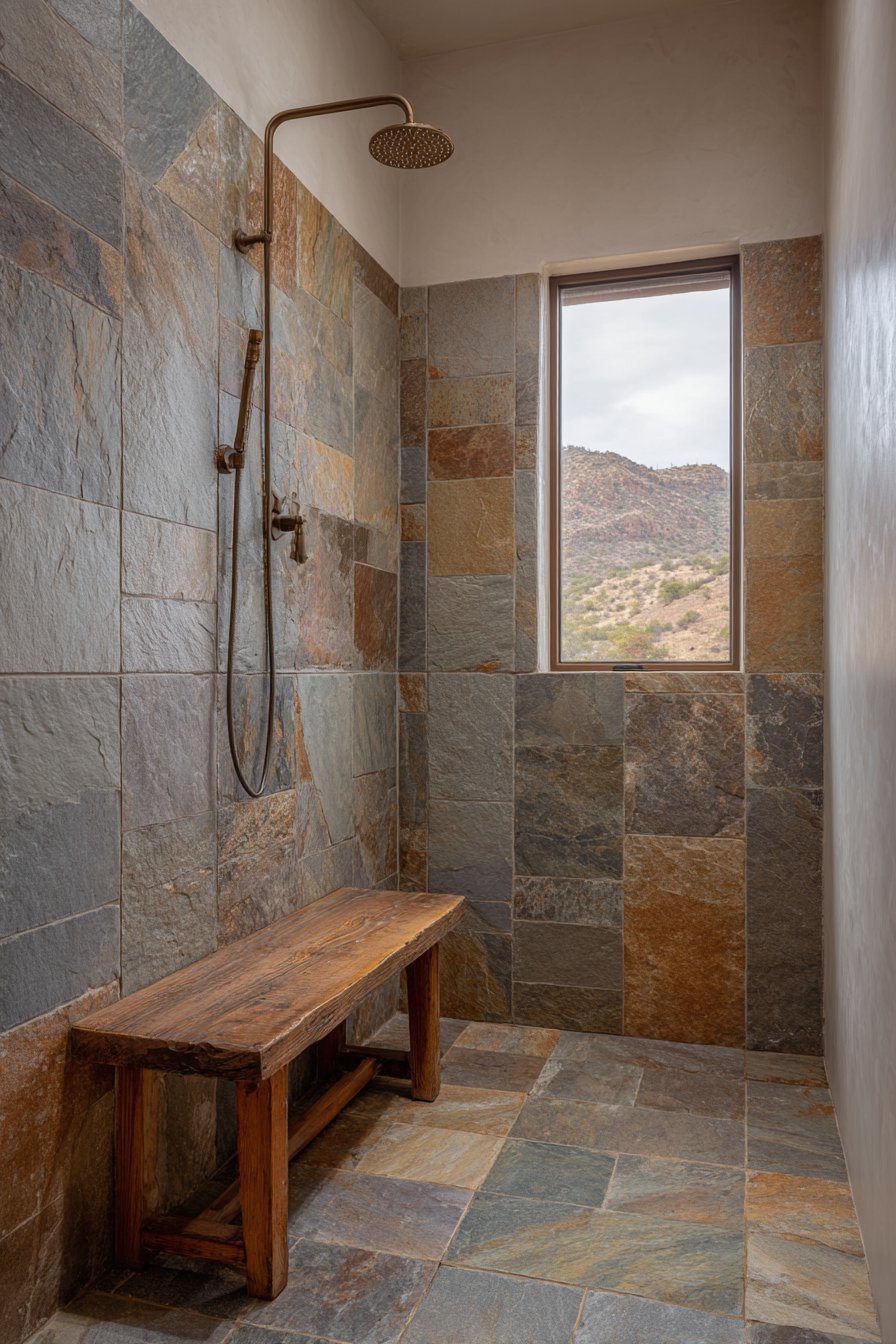
Essential design considerations include: ensuring ceiling framing can support additional wood plank weight and any moisture the wood absorbs despite sealant application, applying multiple coats of marine-grade sealer to all ceiling wood surfaces with regular reapplication every few years, installing adequate ventilation to prevent moisture accumulation at the ceiling where warm humid air naturally rises, selecting wood planks with consistent thickness to ensure even ceiling plane without dips or bulges, and treating the mid-height accent strip and corner shelves with identical moisture-resistant finishes for maintenance consistency. The hexagonal tile installation requires skilled tilework to achieve clean angles and consistent grout lines. This rustic shower idea proves that overlooked surfaces like ceilings offer opportunities for distinctive design moves that set spaces apart.
21. Compact Stone Feature with Cream Simplicity
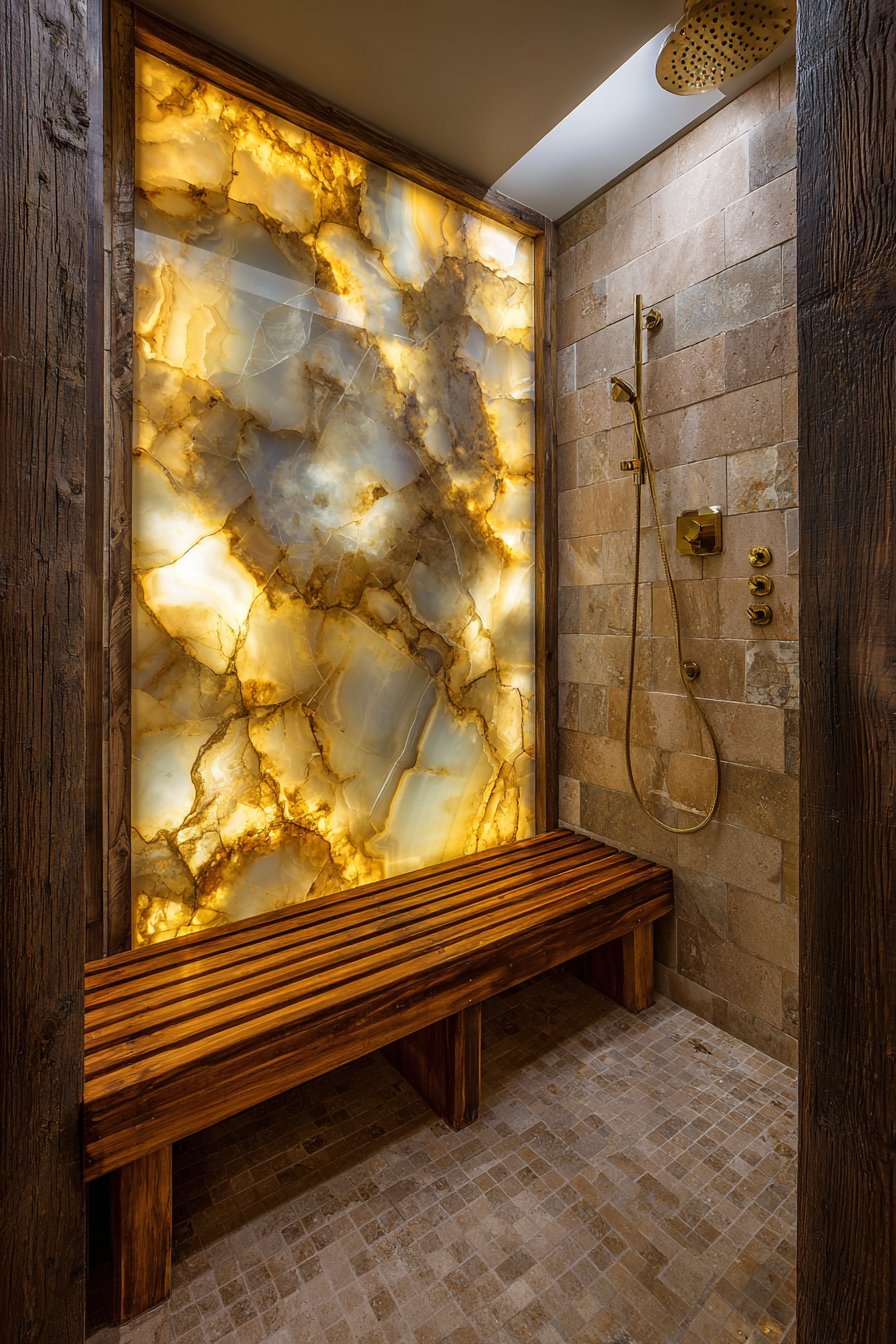
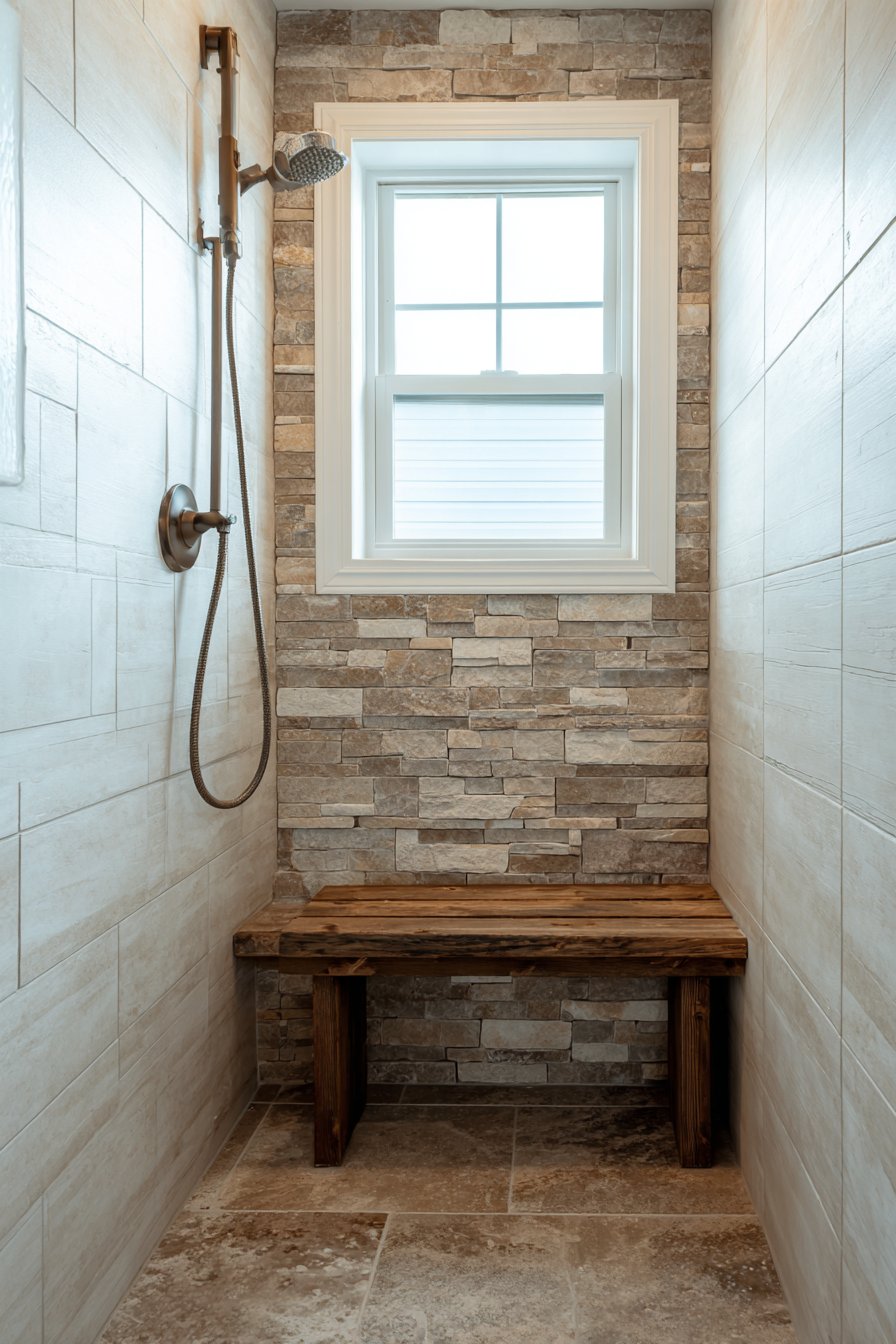
Efficient design proves that small showers can deliver big character through strategic material use, as demonstrated by this compact rustic shower idea featuring a vertical natural stone tile feature wall. The stacked ledgestone displays authentic earth tone variations and three-dimensional texture that creates a powerful focal point despite the shower’s modest footprint. The vertical installation of the stone emphasizes ceiling height, making the compact space feel taller and more spacious than its square footage suggests. Adjacent walls feature cream ceramic tile in traditional subway installation, their neutral color and familiar pattern providing calm backdrop that allows the stone wall to command attention without competition.
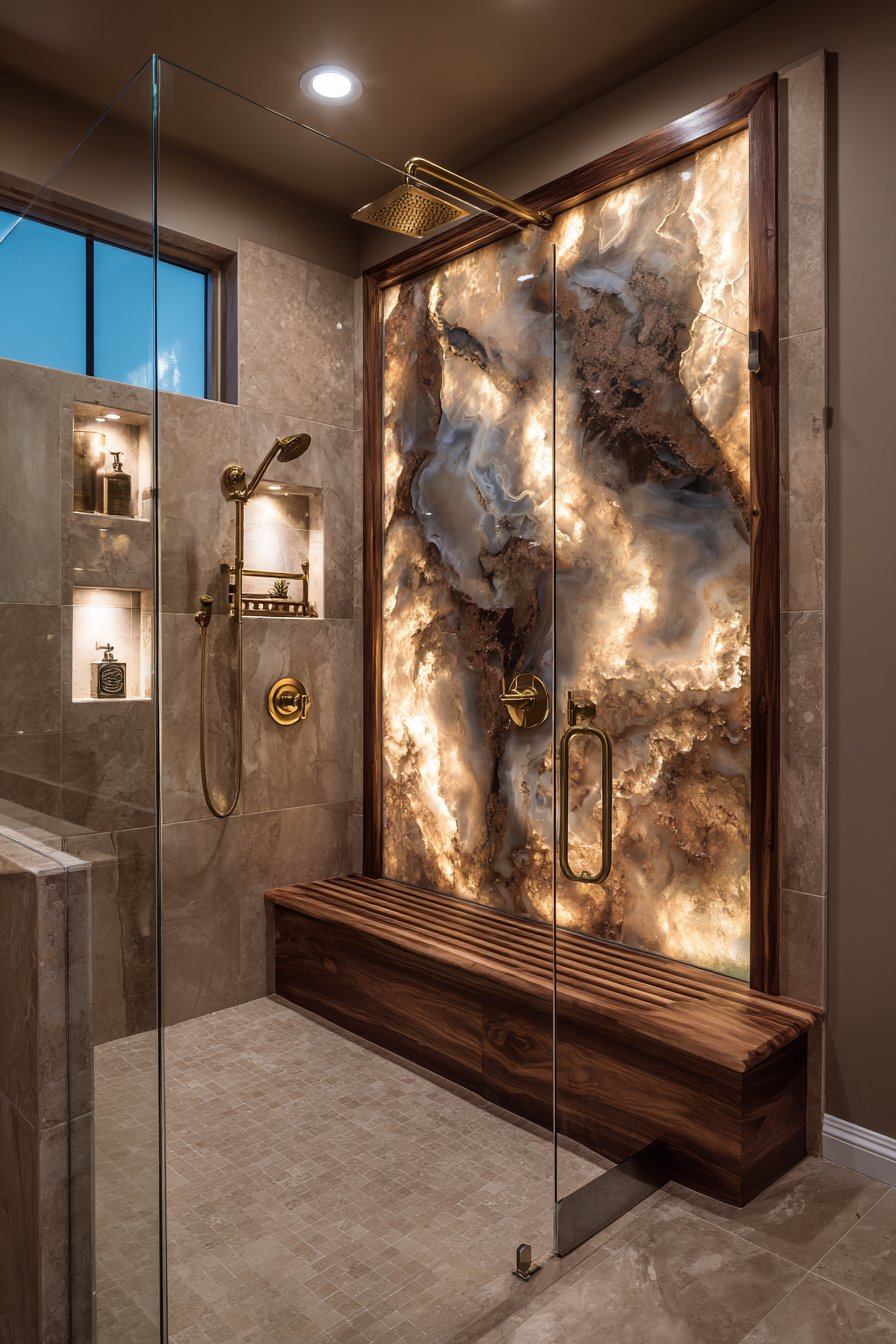
A bronze handheld shower on a sliding bar offers flexible function particularly important in compact spaces where users may need to adjust water position more frequently than in larger showers. The sliding bar mechanism ensures users of varying heights can position the handheld optimally without requiring complex adjustments. A small built-in bench topped with sealed reclaimed wood provides practical seating while introducing additional rustic character and functional convenience. The bench’s compact size ensures it doesn’t impede movement within the small footprint while its wooden top adds warmth that prevents the space from feeling cold or institutional. A simple window provides natural ventilation and soft daylight essential for preventing compact spaces from feeling claustrophobic.
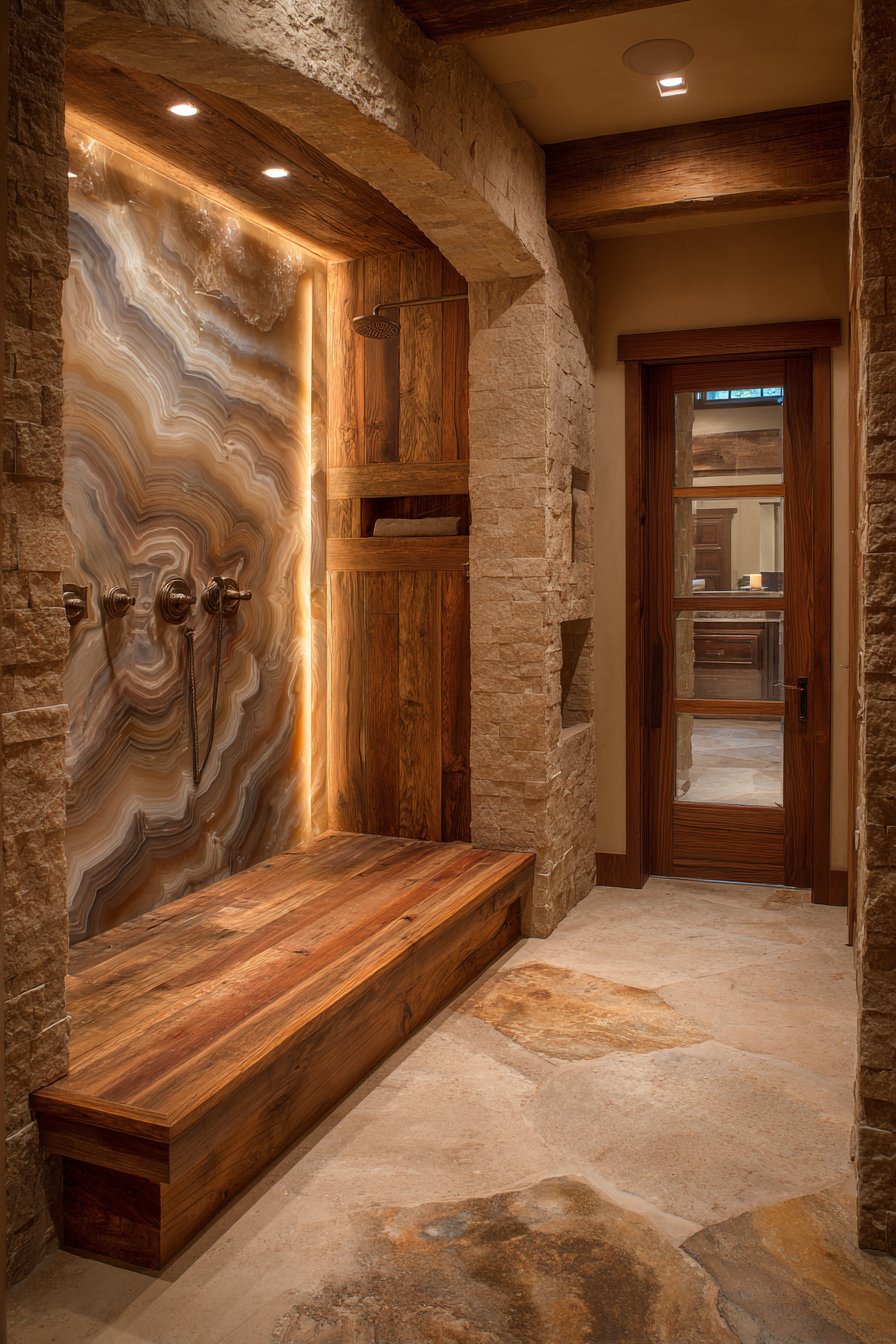
Interior photography focuses on efficient space utilization and authentic stone texture within practical residential scale, demonstrating how thoughtful design creates character even in space-challenged bathrooms. The camera captures how the stone feature wall creates depth and interest while the simpler surrounding surfaces keep the space feeling open rather than cluttered.
Important implementation considerations include: selecting stone pieces with relatively consistent thickness to ensure proper installation in the compact space where protruding stones could create collision hazards, ensuring proper waterproofing behind all stone installation despite the small scale, treating the reclaimed wood bench top with marine-grade sealer suitable for constant moisture exposure and regular reapplication, positioning the shower valve and handheld bar to ensure adequate elbow room despite the compact dimensions, and installing adequate ventilation even more critical in smaller spaces where moisture concentrates more quickly. The cream subway tile should use consistent grout width and color for professional appearance. This rustic shower idea proves that limited square footage needn’t limit character—strategic use of statement materials creates memorable spaces regardless of size.
22. Backlit Luxury with Onyx and Brass Glamour
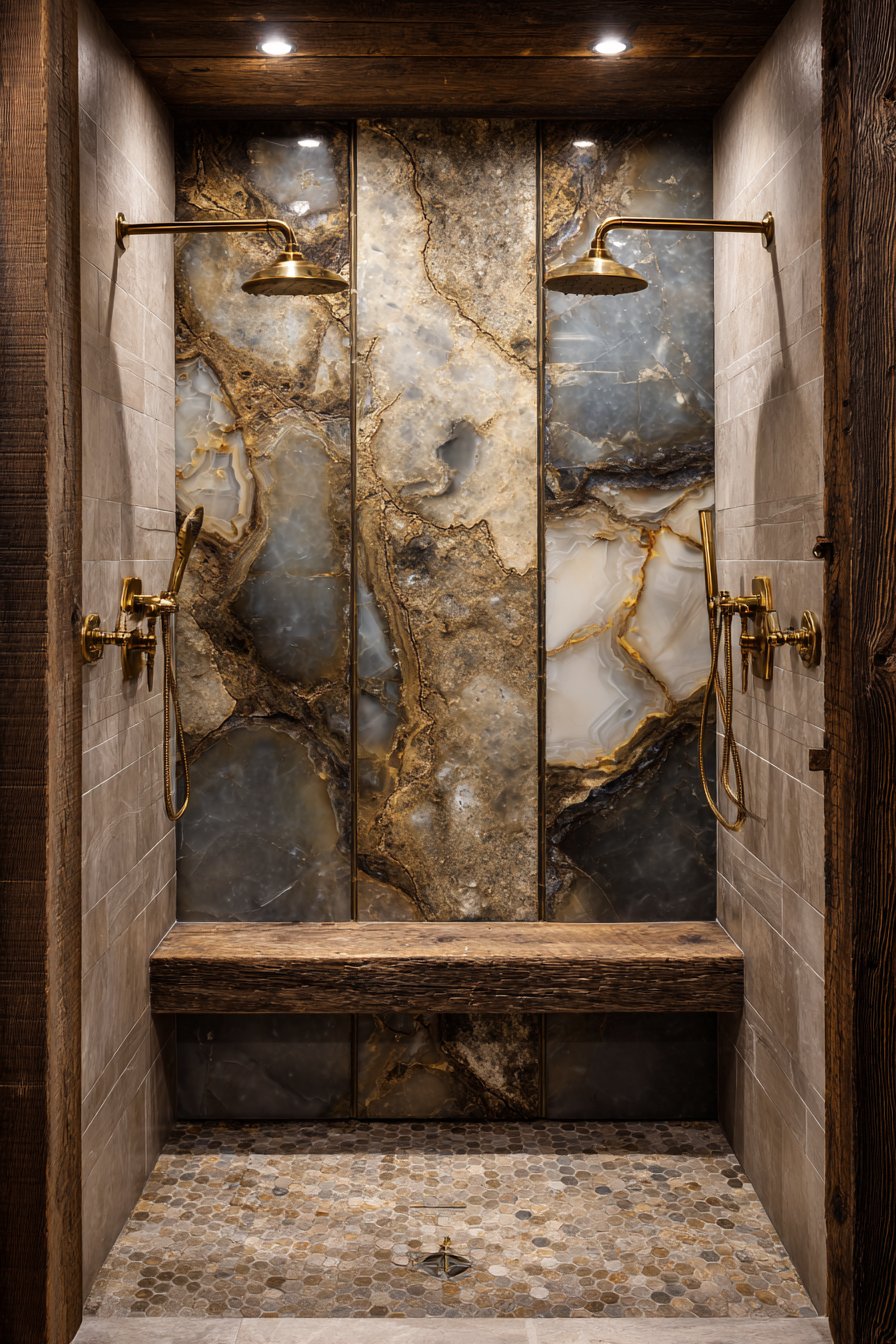
Dramatic lighting elevates this luxurious rustic shower idea featuring a book-matched onyx accent panel backlit to highlight the stone’s natural veining and translucent properties. The onyx, carefully selected and matched to create symmetrical patterns, displays warm amber and cream tones with distinctive veining that becomes luminous when backlit. This treatment transforms the stone from merely decorative to truly transcendent, creating a glowing focal point unlike anything standard tile installations can achieve. The onyx panel receives framing in rustic wood trim that grounds the luxury material with natural character while creating defined boundaries that emphasize the panel’s importance.
Surrounding walls feature neutral travertine tile displaying subtle texture and natural pitting characteristic of this sedimentary stone. The travertine’s warm neutral tones and organic character provide sophisticated backdrop for the dramatic onyx panel without competing for attention. Polished brass rainfall and handheld fixtures add glamour through their reflective finish and warm golden tone, their polished surface creating jewel-like accents that catch and reflect light throughout the space. A teak wood fold-down bench with brass hardware provides practical seating when needed while folding up against the wall when not in use—an elegant solution for maximizing space while maintaining function. The brass hardware echoes the fixtures’ finish, creating material cohesion throughout the design.
Professional interior photography requires careful exposure balancing to capture both the backlit onyx feature and the overall rustic-elegant composition without blowing out highlights or losing shadow detail. The photographer must navigate the challenging contrast between the glowing onyx and the more subdued surrounding surfaces.
Critical design elements include: ensuring electrical rough-in for LED backlighting occurs during initial framing before stone installation, selecting onyx slabs with appropriate translucency that allows light to penetrate while maintaining color and pattern visibility, working with experienced stone fabricators capable of achieving precise book-matching and thin-cutting necessary for backlighting, ensuring the wood frame receives marine-grade sealing to prevent warping or deterioration in the humid environment, and maintaining the polished brass fixtures with appropriate cleaners to prevent tarnishing while avoiding overly aggressive products that could damage the finish. The teak bench should fold smoothly with quality hinges rated for the weight and moisture exposure. This rustic shower idea demonstrates how rustic elements can successfully integrate with luxury materials and dramatic lighting, creating spaces that feel both grounded and glamorous.
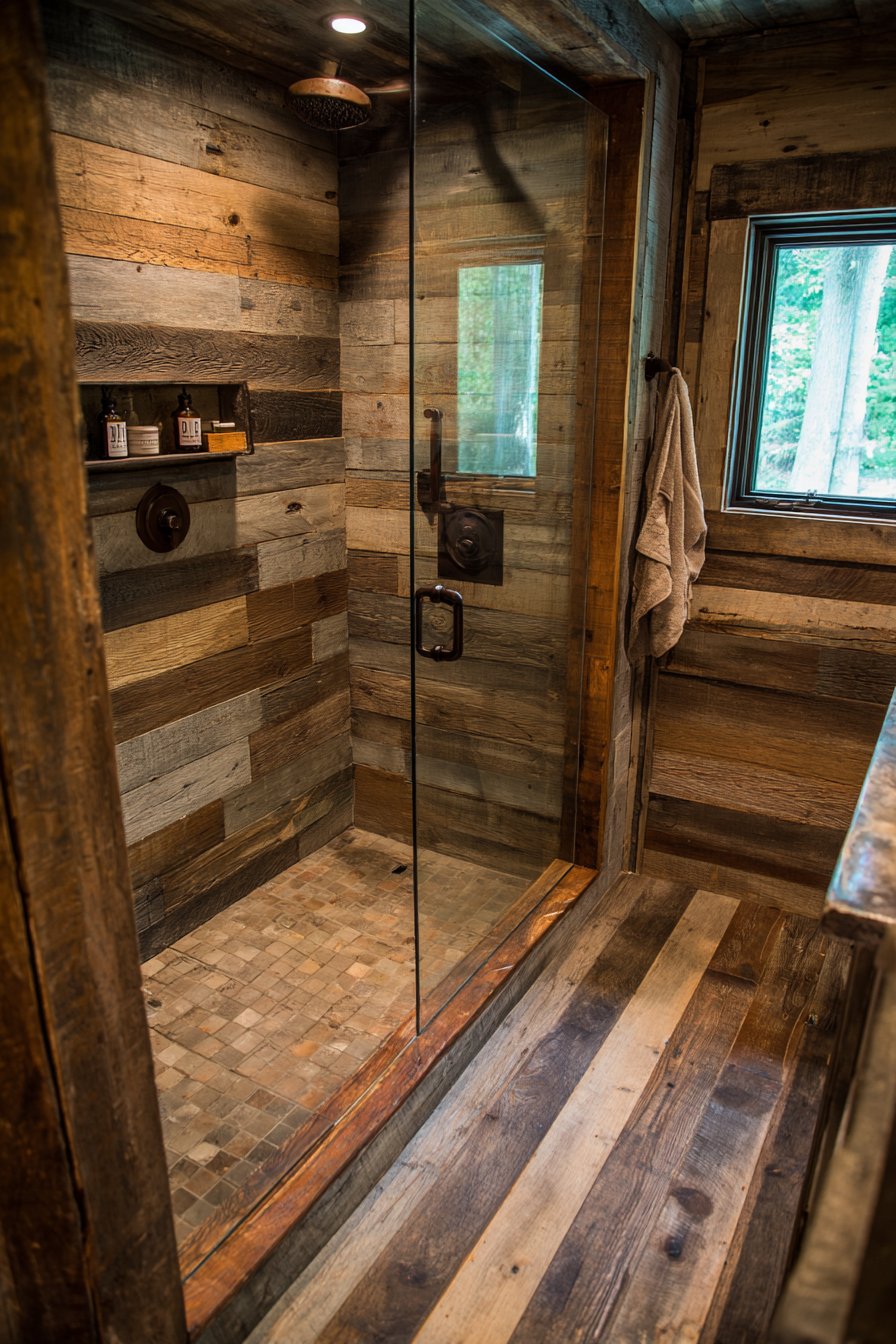
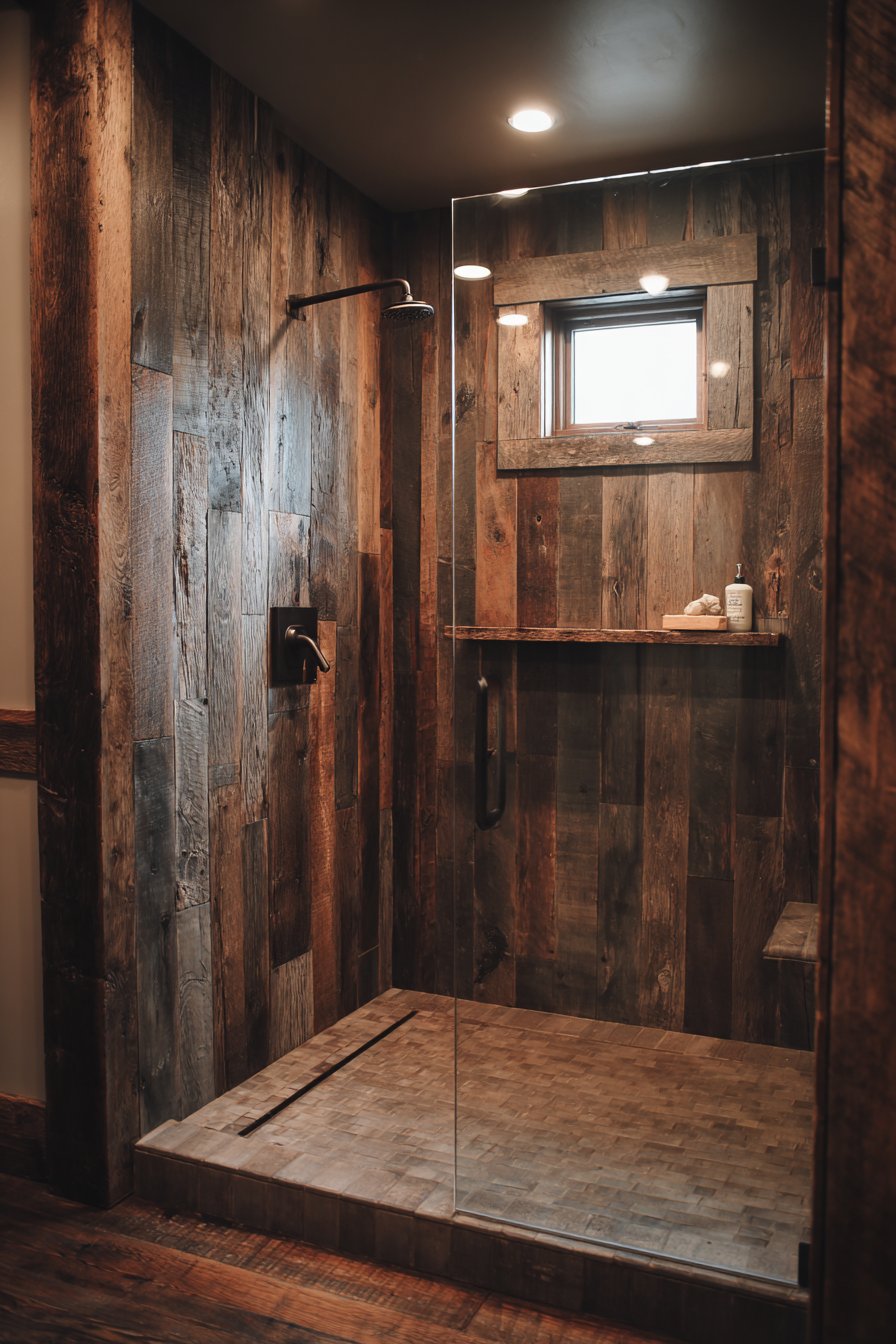
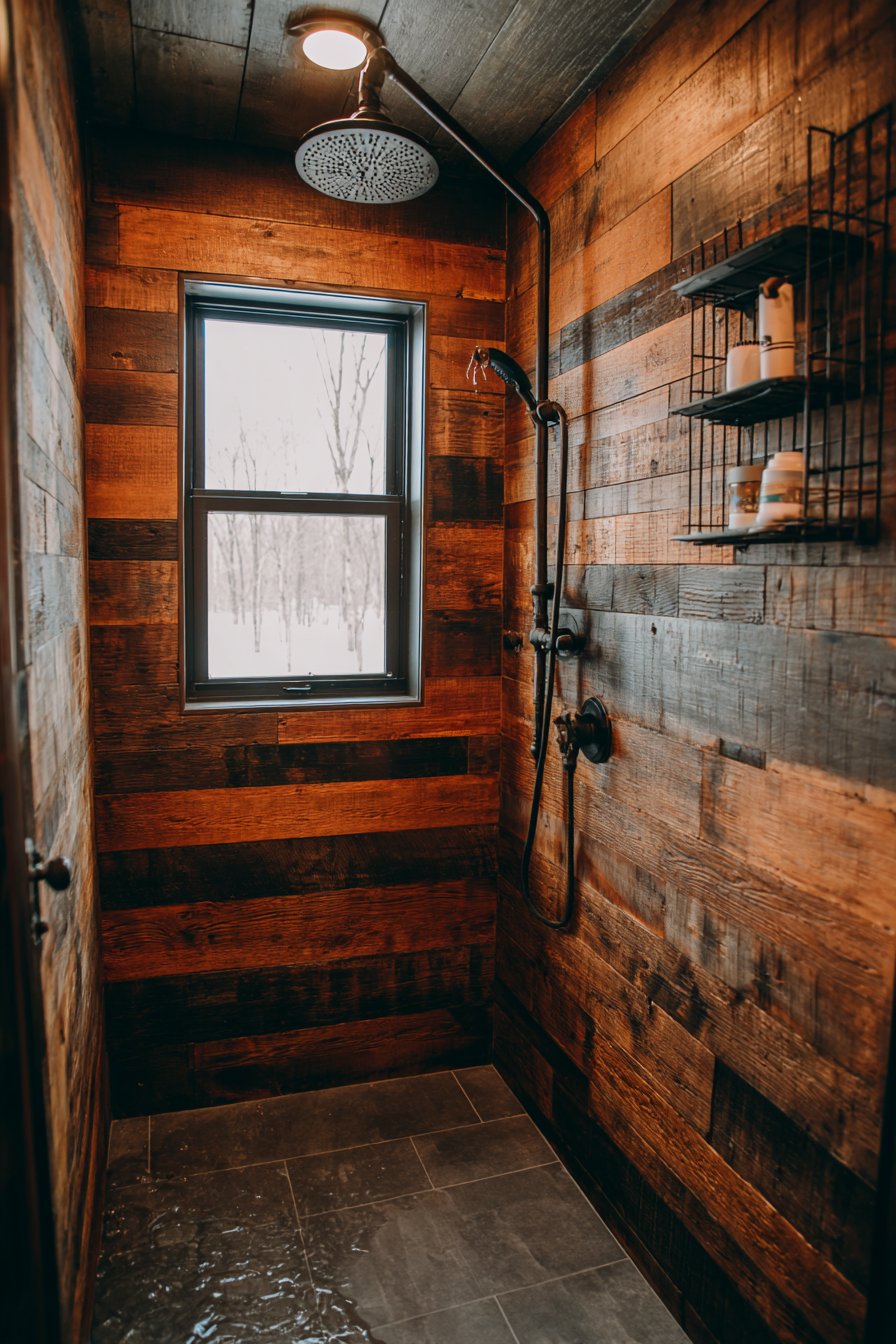
23. Industrial-Rustic Fusion with Mixed-Width Barn Wood
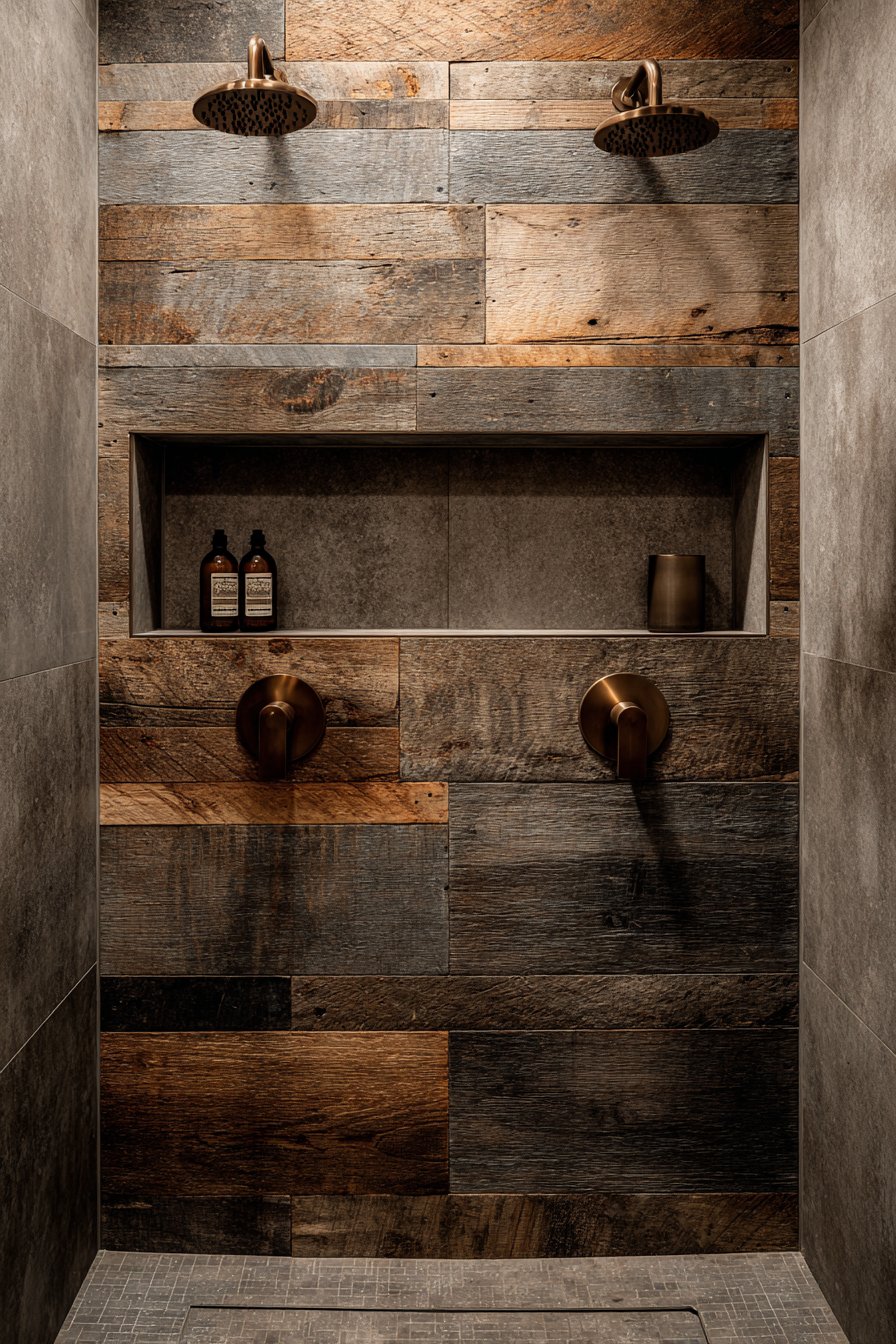
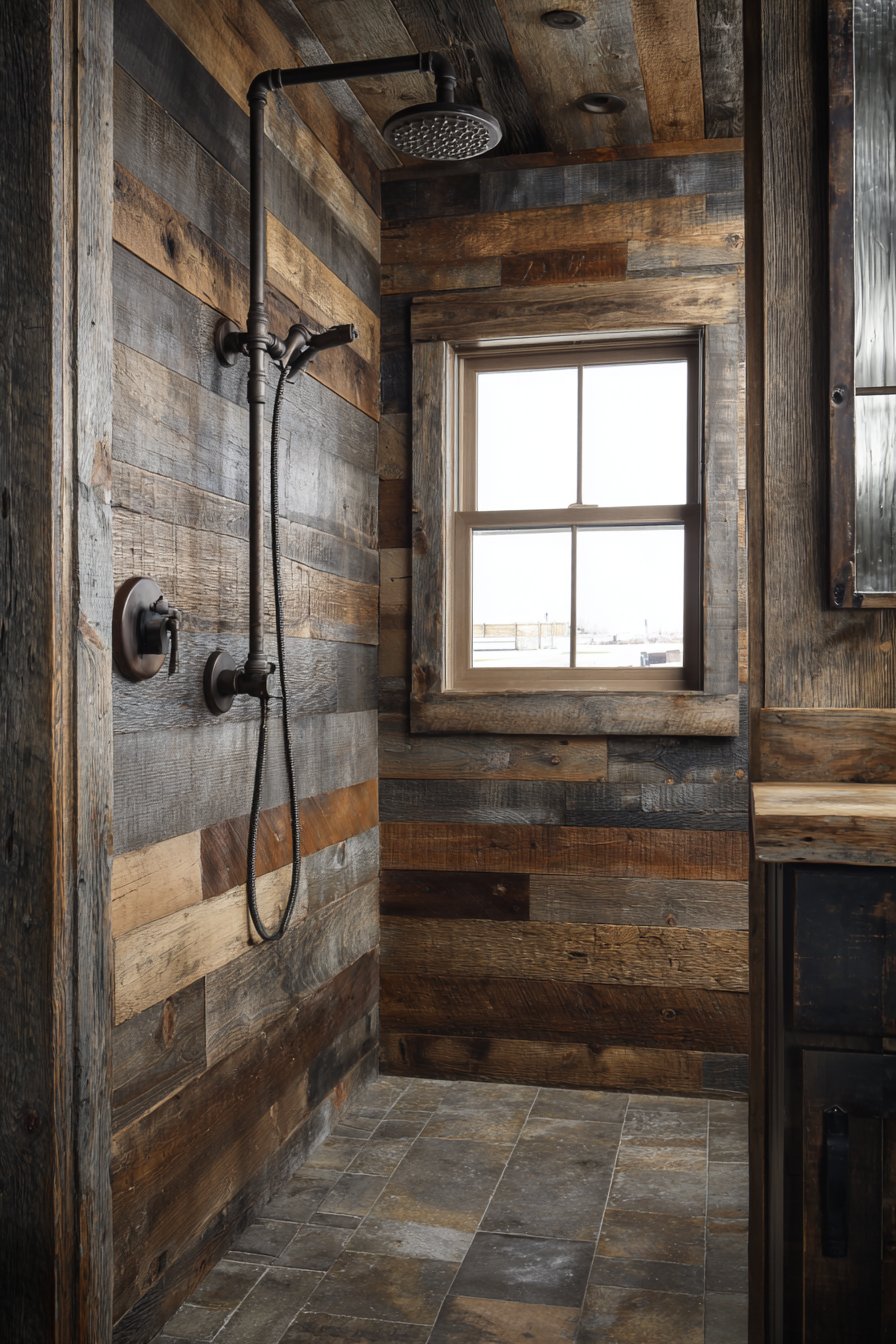
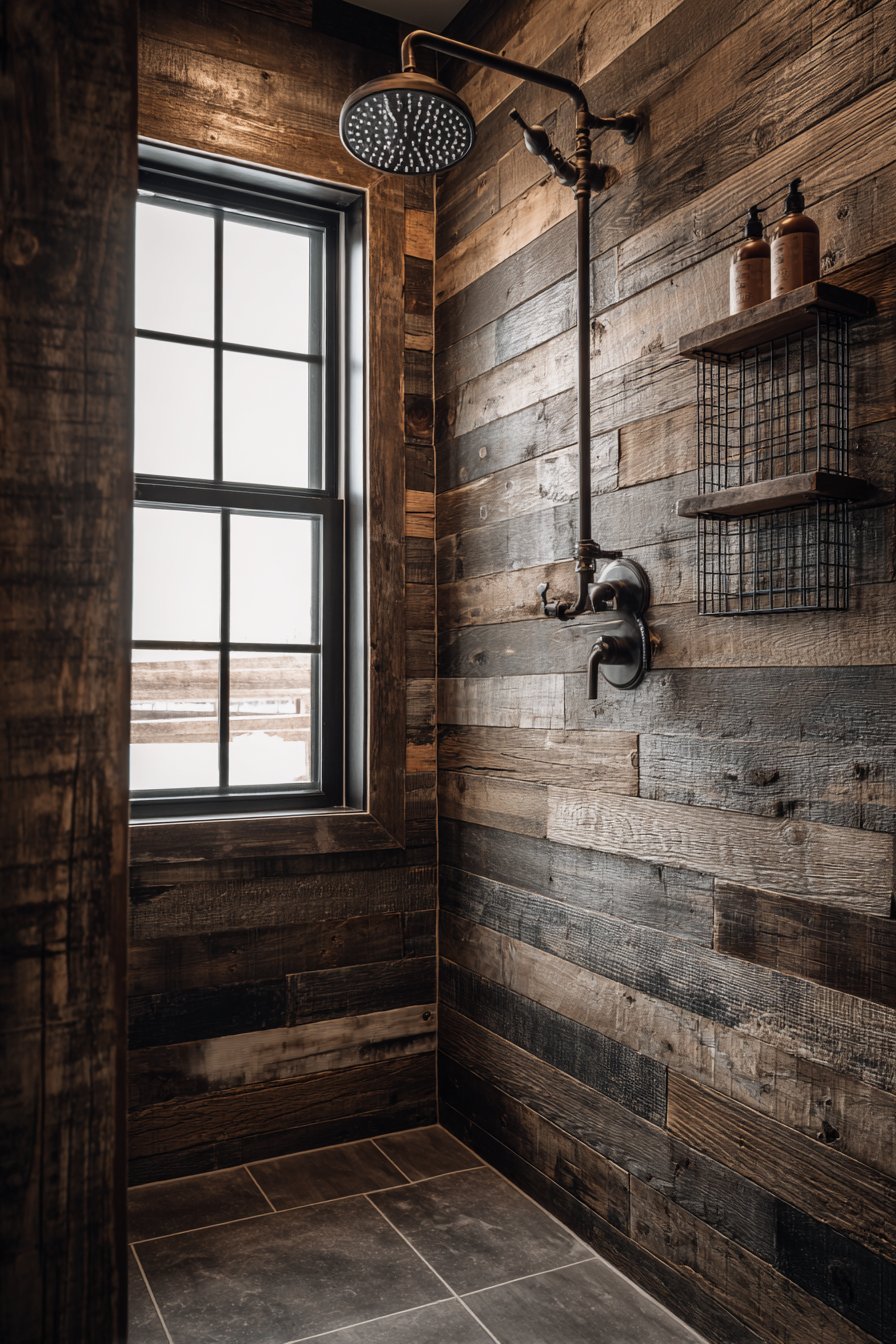
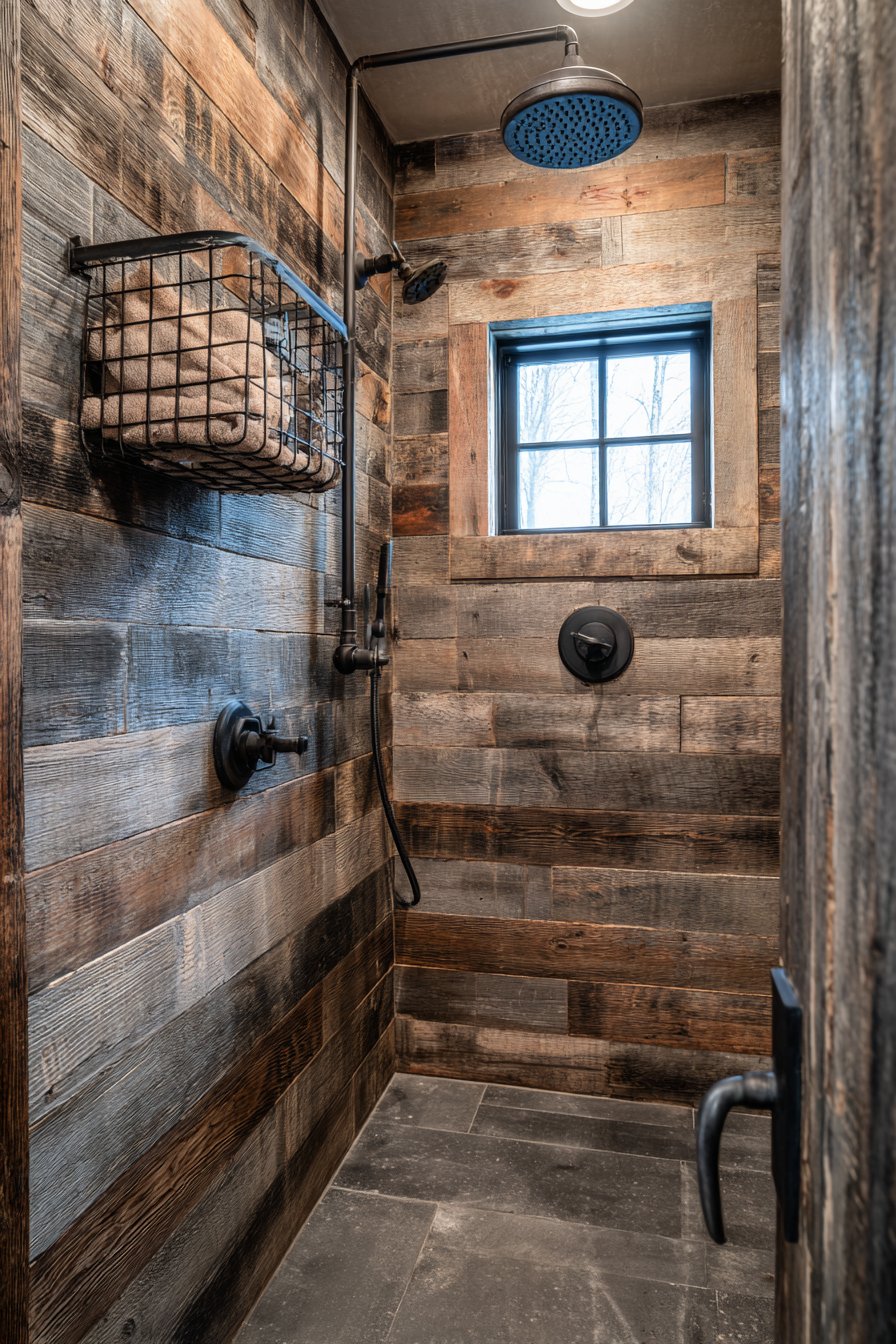
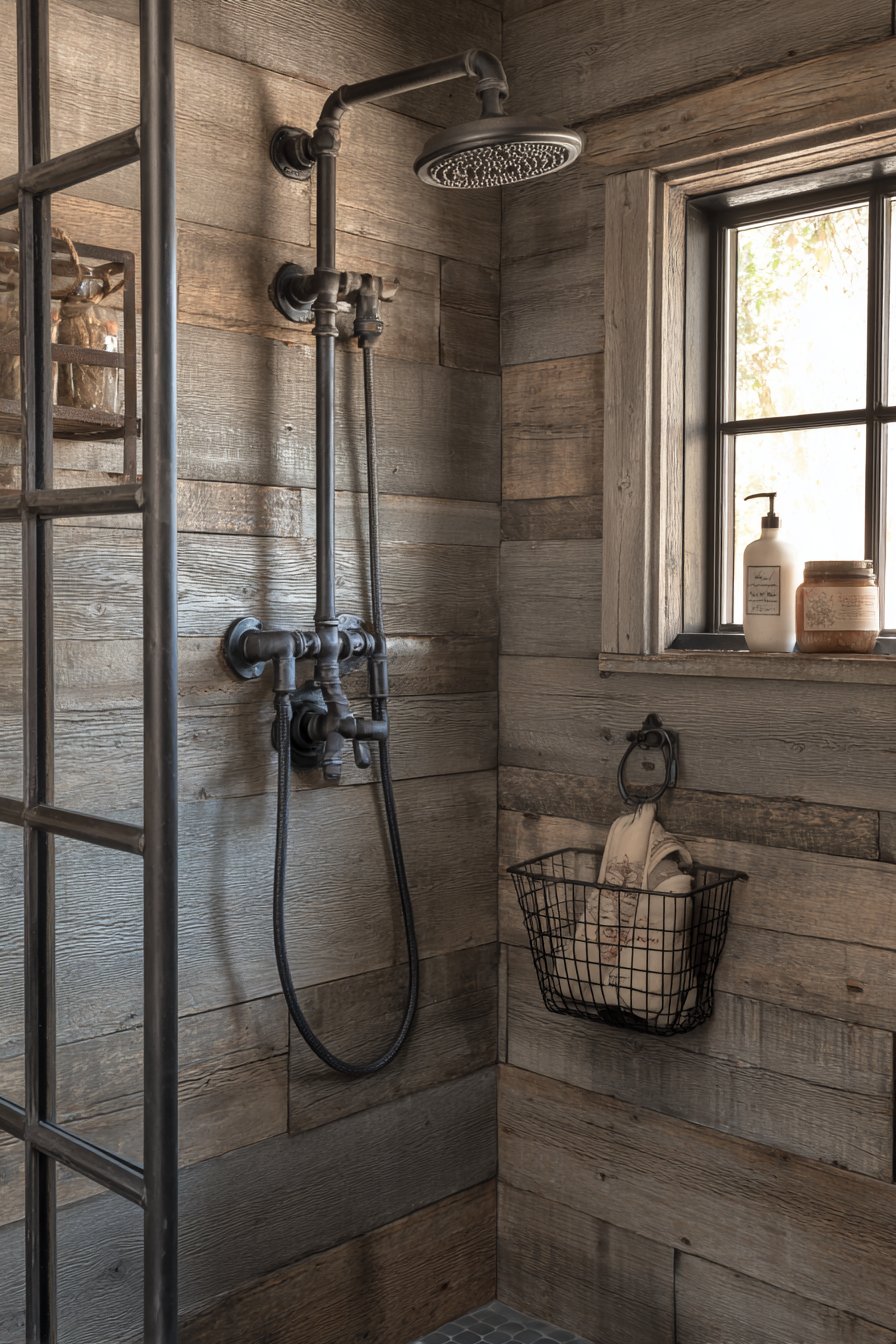
The ultimate expression of industrial-rustic fusion, this shower design features horizontal wood plank walls in mixed-width barn wood style that celebrates authentic reclaimed materials while proper sealing and treatment ensure appropriate performance in shower environments. The mixed widths—typically ranging from four to twelve inches—create visual rhythm and authentic character impossible to achieve with uniform-width modern materials. The varied weathered gray and brown tones display the natural aging and patina developed over decades of previous use, each board telling its own story through color shifts, nail holes, and wear patterns. Concrete-look porcelain tile floor in charcoal provides industrial counterpoint while offering superior water resistance and slip resistance essential for safe showering.
An exposed black iron pipe shower system with industrial valve handles and rainfall head celebrates utilitarian aesthetics while providing modern functionality behind its vintage appearance. The matte black iron creates powerful contrast against the varied wood tones, its strong visual presence anchoring the design while the deliberately visible plumbing celebrates honest functionality. A small window with black steel frame maintains consistency with the exposed pipe system while providing natural ventilation and light. A vintage-style wire basket mounted directly on the wood wall provides clever storage that reinforces the industrial aesthetic while solving the practical challenge of shower accessory organization.
Interior design photography with natural lighting emphasizes authentic reclaimed wood character and the successful fusion of industrial and rustic design vocabularies. The camera captures how natural light creates different effects on the varied wood surfaces throughout the day, highlights emphasizing grain patterns and shadow defining board edges.
Essential implementation factors include: properly sealing all reclaimed wood with multiple coats of marine-grade epoxy or sealant to prevent moisture absorption despite the wood’s previous exposure history, ensuring adequate backing and waterproof membrane installation behind wood walls to protect structural walls from moisture, using quality black iron pipe and fittings to prevent rust despite the moisture exposure, installing proper drainage in the concrete-look tile floor to prevent water pooling, and treating the wire basket with rust-resistant coating suitable for constant moisture exposure. The wood should be inspected for loose knots or damaged areas that could worsen with moisture exposure. This final rustic shower idea represents the culmination of industrial and rustic aesthetics, proving that seemingly disparate design vocabularies can unite to create compelling, character-filled spaces.
Why These Rustic Shower Ideas Represent the Best in Bathroom Design
These twenty-three rustic shower ideas collectively demonstrate why rustic design remains one of the most enduring and beloved approaches to bathroom spaces. The emphasis on authentic materials—natural stone, reclaimed wood, aged metals—creates connections to nature and history that manufactured alternatives simply cannot replicate. Each design proves that rustic aesthetics work across all budget levels and space constraints, from compact corner showers maximizing every inch to luxurious double-shower installations rivaling high-end spas. The rustic bathroom design philosophy celebrates imperfection and authenticity, finding beauty in weathered wood grain, natural stone variation, and the living patina of aged bronze and copper fixtures that develop character over time rather than appearing permanently new.
The versatility demonstrated across these bathroom shower ideas shows how rustic design successfully partners with complementary aesthetics—industrial elements like exposed piping and matte black fixtures, modern conveniences like thermostatic controls and rainfall showerheads, and even luxurious materials like marble and onyx. This adaptability ensures rustic shower design remains relevant regardless of broader design trend shifts. The rustic style bathroom approach emphasizes sustainability through reclaimed and natural materials, aligning with contemporary environmental consciousness while delivering timeless aesthetic appeal. These shower remodel ideas prove that rustic doesn’t mean dated—careful material selection and thoughtful integration of modern fixtures create spaces that feel both grounded in tradition and appropriately contemporary.
The practical advantages of rustic materials deserve recognition alongside their aesthetic appeal. Natural stone offers exceptional durability and water resistance when properly sealed, aging gracefully over decades rather than showing wear. Properly treated wood brings irreplaceable warmth to spaces often dominated by cold, hard surfaces. Bronze and brass fixtures develop living patinas that add character rather than appearing worn, unlike chrome that shows every water spot and scratch. These rustic shower designs demonstrate superior longevity compared to trend-driven designs relying on materials and finishes that quickly date. The investment in authentic materials and quality craftsmanship pays dividends through decades of beautiful performance, making these rustic master bathroom ideas economically sound alongside their aesthetic superiority.
The sensory experience created by rustic materials elevates daily showering from routine to ritual. The tactile pleasure of smooth river rocks underfoot, the visual interest of varied stone textures catching changing light throughout the day, the warmth of wood against the hand—these sensory elements transform utilitarian bathroom fixtures into experiential spaces. The rustic walk-in shower ideas featuring natural materials create spa-like atmospheres without requiring exotic materials or excessive budgets. The farmhouse shower aesthetic particularly resonates with contemporary homeowners seeking authenticity and character in increasingly standardized housing, offering personalization through unique material choices and custom craftsmanship impossible to replicate exactly.
These rustic tile ideas demonstrate how traditional materials remain supremely relevant in contemporary contexts when applied with thoughtful design sensibility. The combination of stacked stone, river rock, slate, and wood-look porcelain offers diverse aesthetic possibilities while maintaining the essential rustic character. The small rustic bathroom ideas prove that limited square footage actually benefits from rustic materials’ strong character—a stone accent wall or reclaimed wood ceiling creates significant impact even in compact spaces. The rustic modern bathroom fusion represented in several designs shows how rustic materials successfully ground more contemporary elements, preventing modern fixtures and clean lines from feeling cold or institutional.
The country bathroom design elements throughout these ideas—shiplap walls, subway tile, vintage fixtures—celebrate American design heritage while adapting to contemporary lifestyles and expectations. These aren’t museum recreations but living, functional spaces that honor traditional materials and techniques while embracing modern performance and convenience. The rustic cabin bathroom aesthetic appears in several designs, demonstrating how this approach creates retreat-like spaces even in suburban or urban homes far from actual cabins. The psychological impact of natural materials and rustic character creates environments that reduce stress and promote relaxation—essential qualities in bathroom spaces where we prepare for the day and unwind in the evening.
Conclusion
These twenty-three rustic shower ideas demonstrate the remarkable versatility and enduring appeal of design that celebrates authentic materials, honest craftsmanship, and connection to natural beauty. From compact corner showers maximizing character in minimal square footage to luxurious double-shower installations rivaling resort spas, rustic design proves adaptable to any space, budget, or lifestyle. The common thread connecting these diverse approaches is respect for materials’ inherent qualities—allowing stone to show its natural variation, celebrating wood’s organic grain patterns, and embracing the living patinas of aged metal fixtures that develop character over time.
The practical advantages of rustic materials combine with their aesthetic appeal to create spaces of lasting value. Natural stone’s exceptional durability, properly sealed wood’s warmth and character, and bronze fixtures’ graceful aging ensure these investments deliver decades of beautiful performance. Beyond function and longevity, rustic showers provide daily sensory experiences that elevate routine into ritual—the tactile pleasure of varied textures, the visual interest of natural materials catching changing light, and the psychological comfort of spaces that feel grounded and authentic.
As you consider implementing these ideas in your own home, remember that successful rustic design requires commitment to quality materials and skilled installation. Proper waterproofing, appropriate sealants, and professional craftsmanship ensure your rustic shower performs beautifully while maintaining its character. Don’t hesitate to start small—even a single stone accent wall or reclaimed wood shelf can introduce rustic warmth to existing spaces. Whether you’re planning a complete bathroom renovation or a targeted refresh, these rustic shower ideas offer inspiration for creating personal sanctuaries that honor traditional materials and timeless design principles while meeting contemporary expectations for performance and style. Let these designs inspire you to create a shower space that brings natural beauty and authentic character into your daily routine.
