
In the world of interior design, few elements offer the perfect marriage of form and function quite like well-designed shelving. Room shelf ideas have evolved far beyond simple storage solutions, becoming integral design features that define spaces, showcase personality, and solve practical challenges with style. Whether you’re working with a sprawling home library or a compact studio apartment, the right shelving can transform ordinary walls into extraordinary focal points while keeping your belongings organized and accessible.
The beauty of thoughtful shelf design lies in its versatility and adaptability to any aesthetic preference or spatial constraint. From floating minimalist platforms that seem to defy gravity to robust industrial pipe installations that make bold architectural statements, shelving solutions reflect our individual tastes while addressing the universal need for organization. In today’s homes, where every square foot matters and multifunctionality reigns supreme, creative shelving has become more than a design afterthought—it’s often the cornerstone of intelligent space planning.
This comprehensive guide explores twenty-five distinctive room shelf ideas that span various design styles, room types, and functional needs. Each concept demonstrates how strategic shelf placement, material selection, and thoughtful styling can elevate your interior while providing practical storage. Whether you’re drawn to the clean lines of Scandinavian minimalism, the warmth of farmhouse rustics, or the sleek sophistication of contemporary design, you’ll discover inspiring approaches to integrating shelving into your home. These ideas prove that shelves are not merely utilitarian necessities but powerful design tools that can redefine how we experience and interact with our living spaces.
1. Asymmetric Floating Wood Wall Display
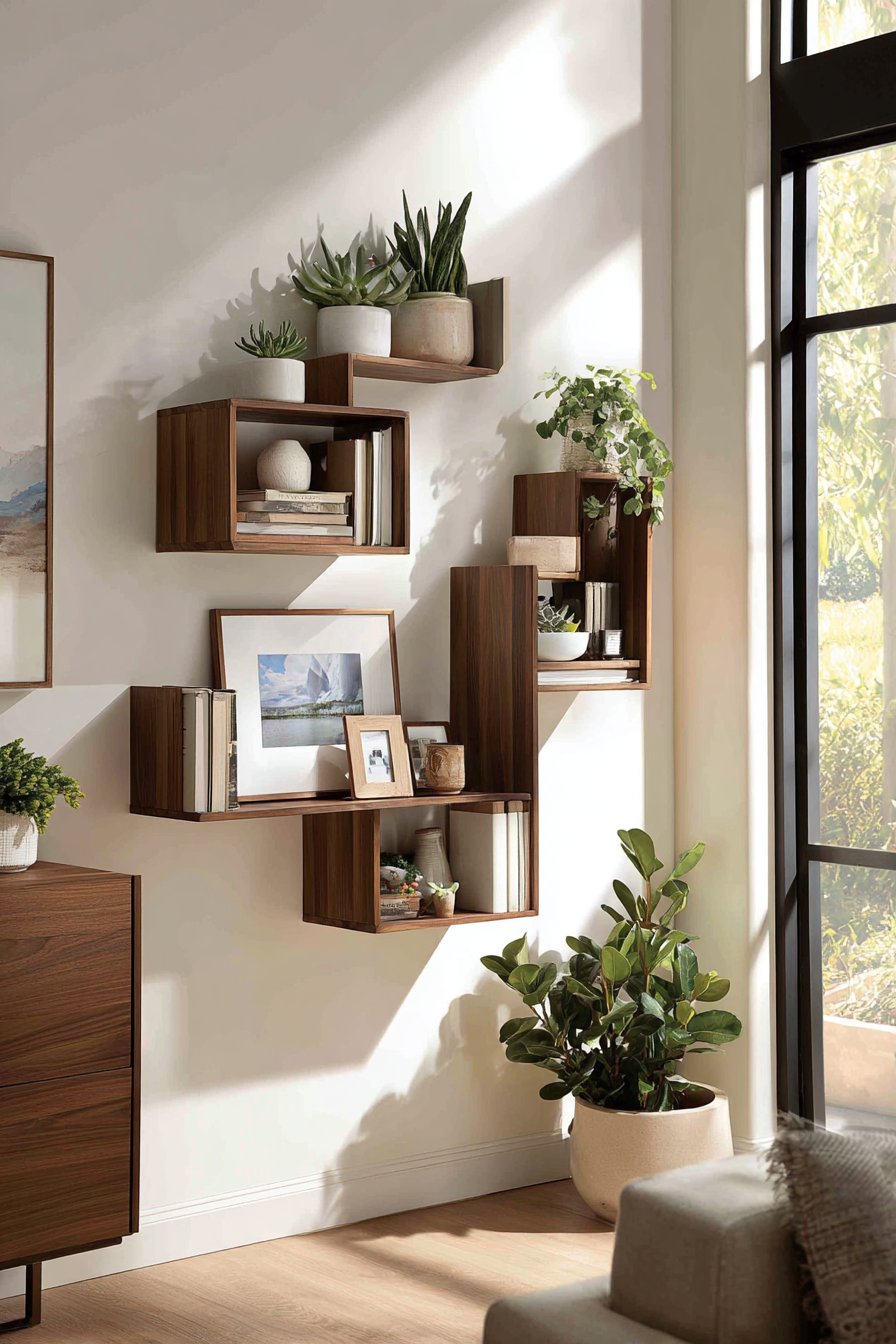
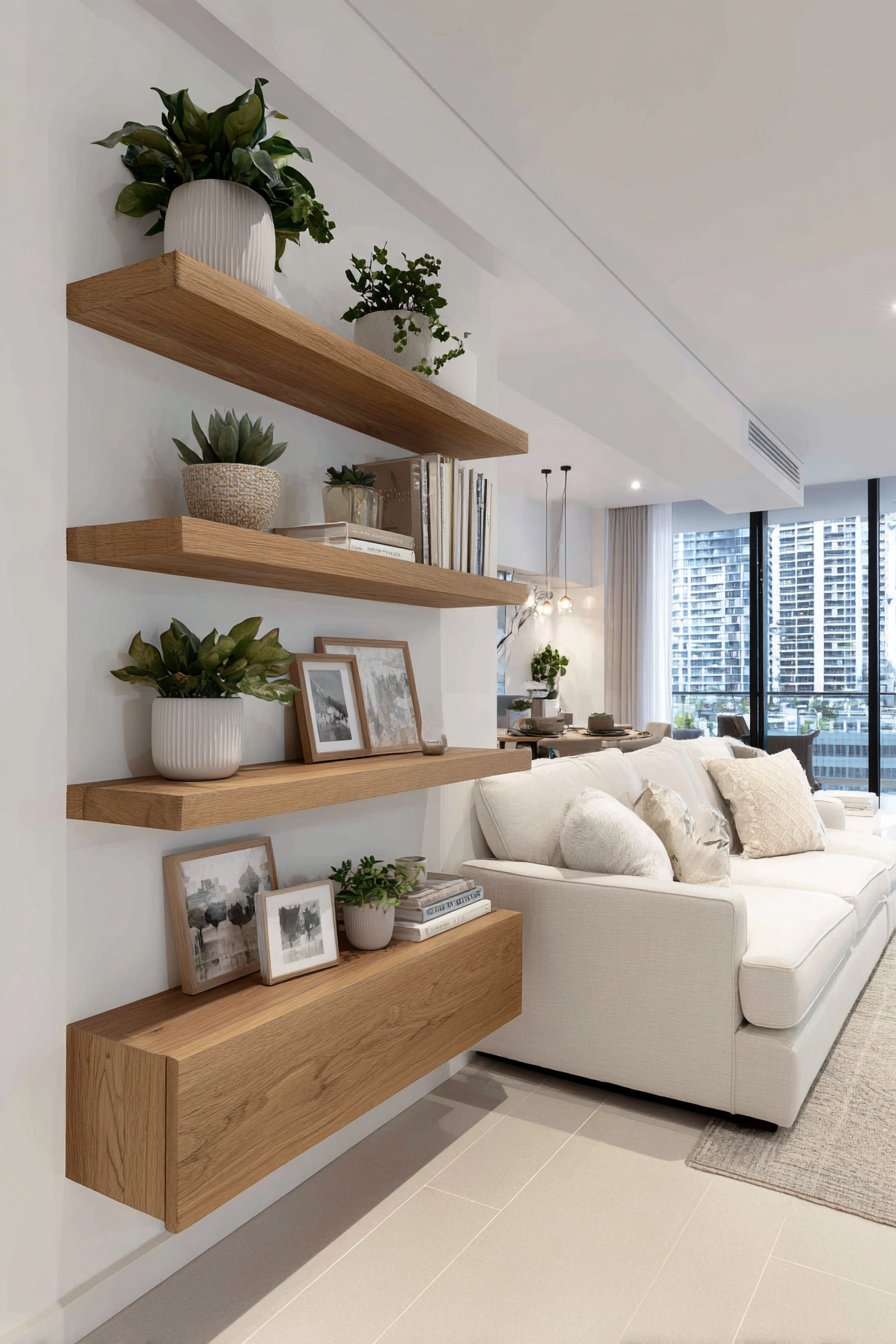
The modern living room finds its perfect complement in floating wooden shelves arranged in an asymmetric pattern that breaks away from traditional symmetrical designs. These natural walnut-finished shelves create visual interest through their staggered placement, each platform carefully positioned to form a dynamic composition against a crisp white wall. The organic warmth of the wood grain becomes a focal point, with each shelf displaying a curated selection of succulent plants in minimalist ceramic pots, hardcover books arranged with deliberate casualness—some vertical, others horizontal—and intimate framed photographs that tell personal stories.
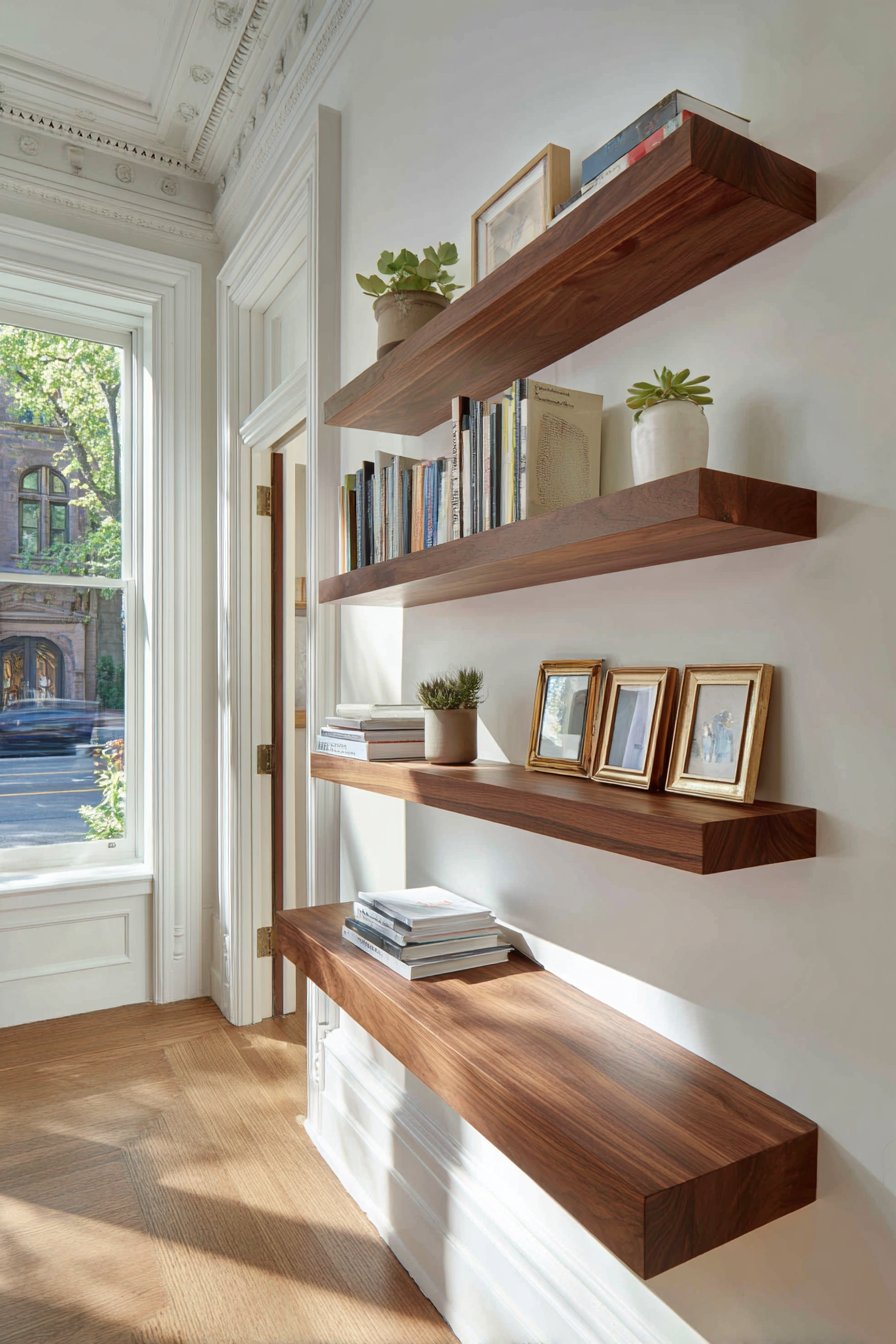
Natural daylight streaming from nearby windows plays across the wooden surfaces, highlighting the subtle variations in grain patterns and creating gentle shadows beneath each shelf that emphasize their floating appearance. This interplay of light and shadow adds depth and dimension to what might otherwise be a flat wall surface. The contrast between the warm wood tones and the neutral white backdrop creates a contemporary yet inviting atmosphere that feels both sophisticated and approachable.
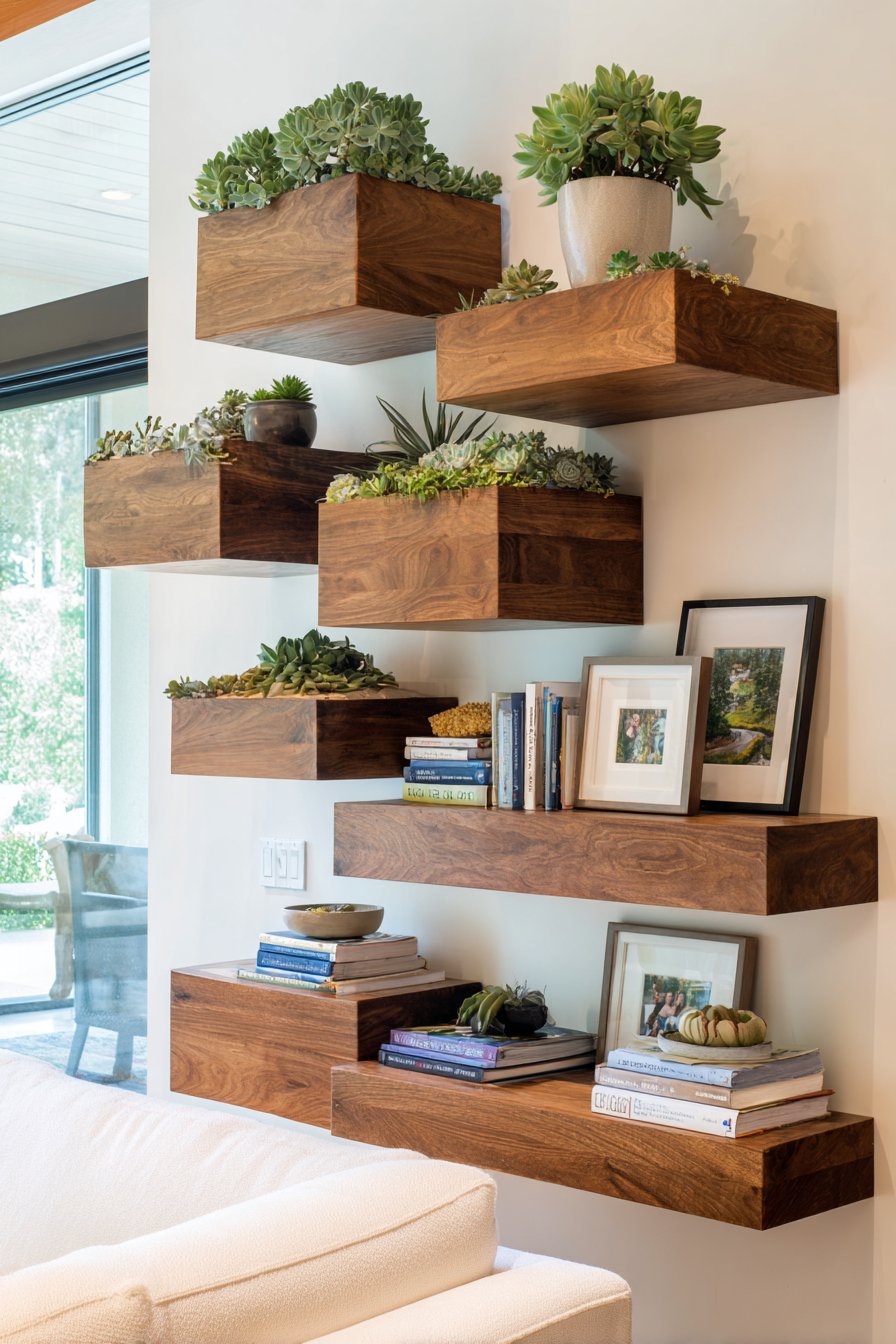
The genius of this design lies in its apparent simplicity—the asymmetric arrangement prevents the eye from settling into predictable patterns, encouraging visual exploration and making the display feel organic rather than forced. The varying heights and depths of the shelves accommodate different object sizes while maintaining visual balance through careful compositional planning. Each shelf becomes a miniature vignette, yet together they form a cohesive narrative that reflects the homeowner’s aesthetic sensibilities and personal interests.
Key Design Tips:
- Install shelves at varying heights and horizontal positions to create dynamic visual flow rather than rigid lines
- Limit your color palette on displayed items to maintain cohesion—here, natural wood, white ceramics, and green plants work harmoniously
- Use the rule of thirds when arranging objects, leaving intentional negative space to prevent visual clutter
- Choose shelf depths based on what you’ll display—deeper for books, shallower for small decorative objects
- Position shelves to interact with natural light sources, maximizing the play of shadows and highlights throughout the day
2. Sage Green Alcove Built-In Bedroom Storage
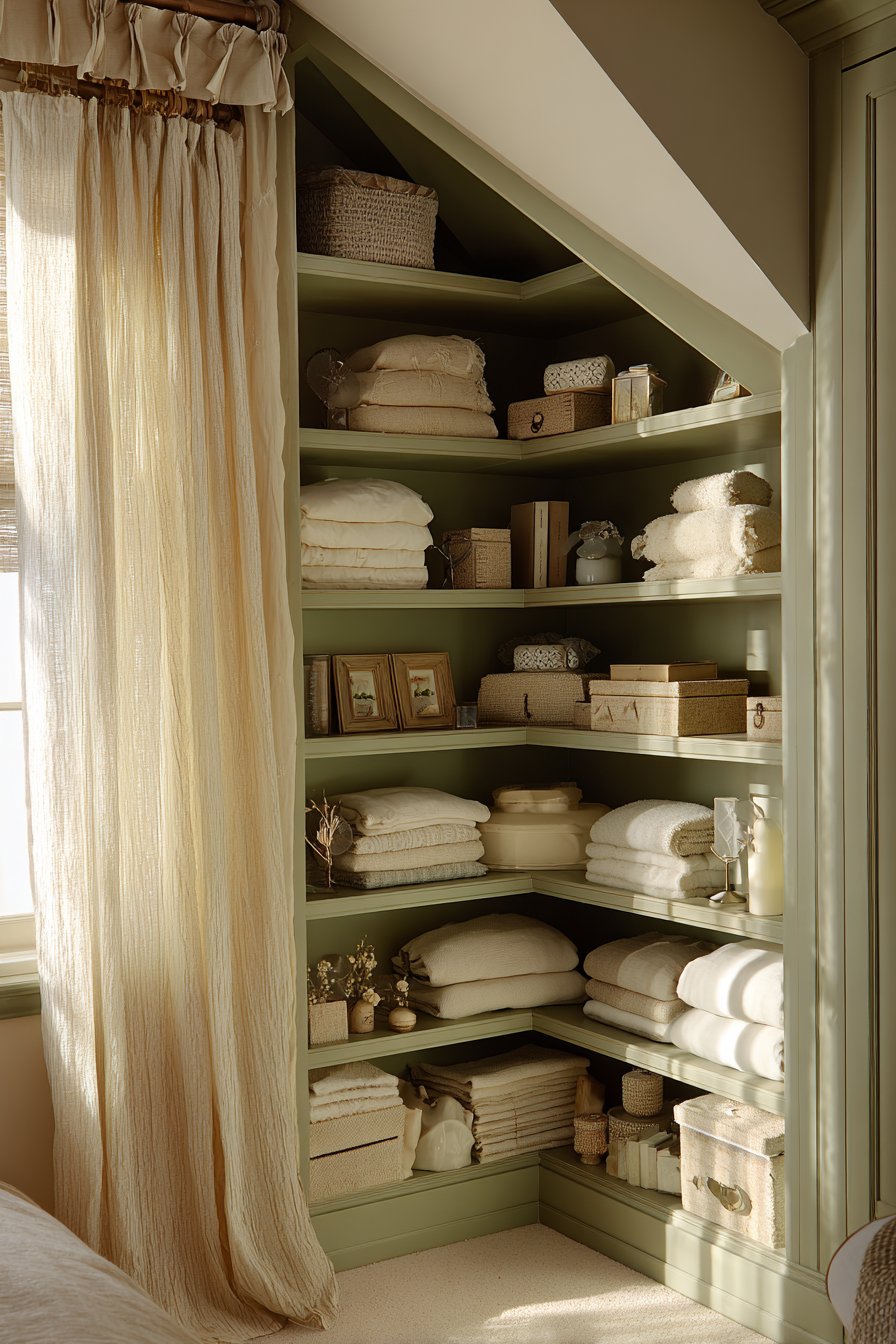
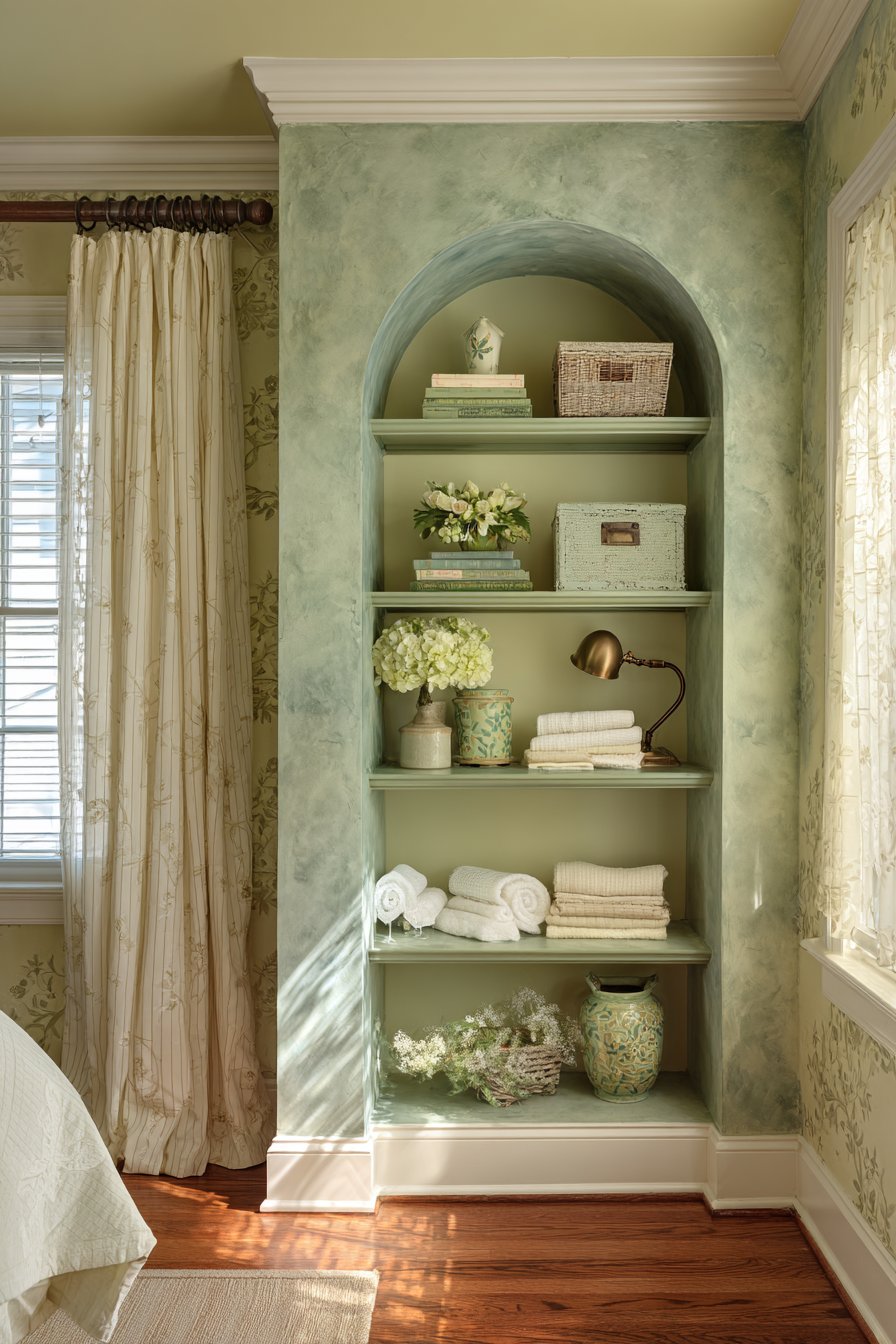
Transforming an architectural alcove into a custom built-in shelving unit demonstrates how existing structural features can become design opportunities rather than limitations. Painted in a sophisticated sage green that brings nature’s calming influence indoors, this bedroom shelving solution converts previously underutilized space into highly functional storage. The soft, muted green tone creates a serene backdrop that complements cream-colored walls while adding subtle color interest to the sleeping space.
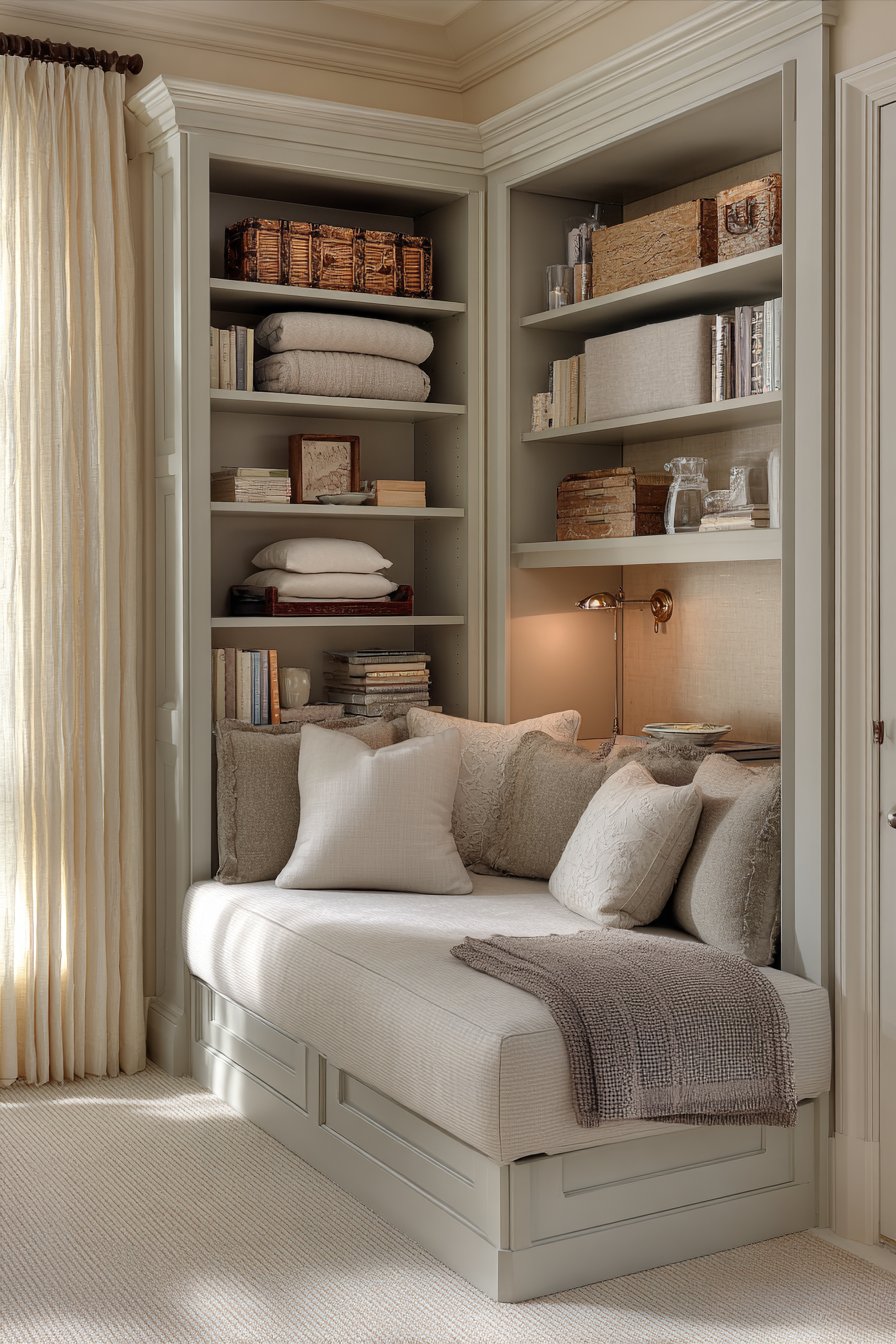
The adjustable shelf configuration within the alcove provides remarkable flexibility, accommodating everything from neatly folded linens and decorative storage boxes to a small reading lamp that adds both function and ambiance. This thoughtful organization keeps bedroom essentials accessible yet visually contained, preventing the chaotic feeling that often accompanies open storage. The custom paint treatment makes the built-in shelving feel intentional and integrated rather than like an afterthought, demonstrating how color can unify architectural elements with overall room design.
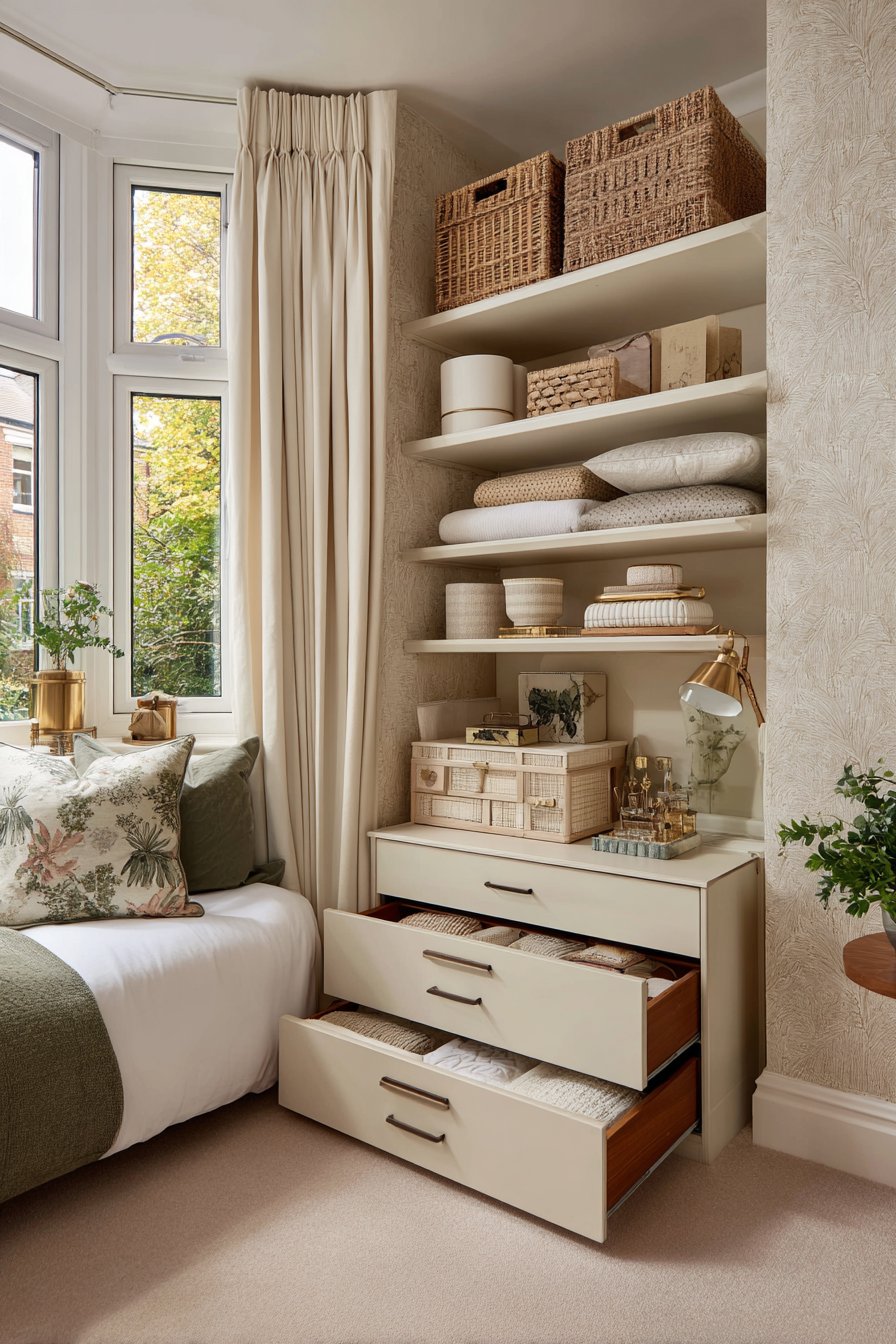
Morning light filtering through sheer curtains bathes the alcove in gentle illumination that enhances the sage green’s subtle warmth while highlighting the practical beauty of well-organized storage. The surrounding cream walls provide breathing room, preventing the colored shelving from overwhelming the space while maintaining a cohesive, restful color scheme appropriate for a bedroom retreat. Texture becomes important here—the smooth painted surface of the shelves contrasts beautifully with fabric textures of stored linens and the woven or cardboard construction of decorative boxes.
Key Design Tips:
- Measure alcove dimensions precisely before building or installing shelving to ensure a perfect custom fit
- Choose paint colors that complement but don’t exactly match wall colors—subtle contrast adds depth
- Install adjustable shelving tracks to allow configuration changes as storage needs evolve
- Incorporate a mix of open and closed storage with decorative boxes to hide less attractive necessities
- Add small task lighting within built-ins to improve functionality while creating ambient glow
- Select storage containers in neutral tones or materials that coordinate with the shelf color for visual continuity
3. Floor-to-Ceiling Scandinavian Home Office Organization
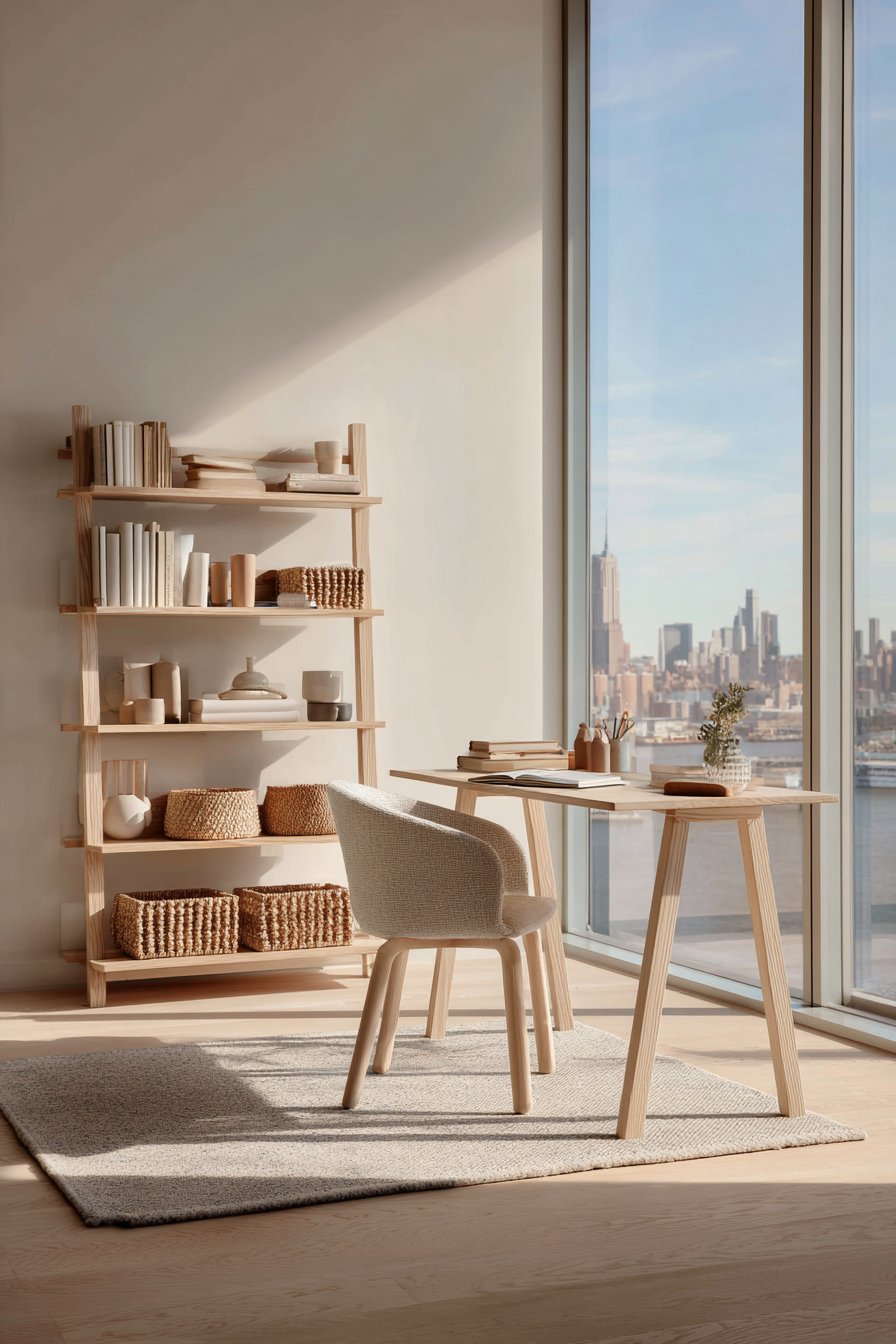
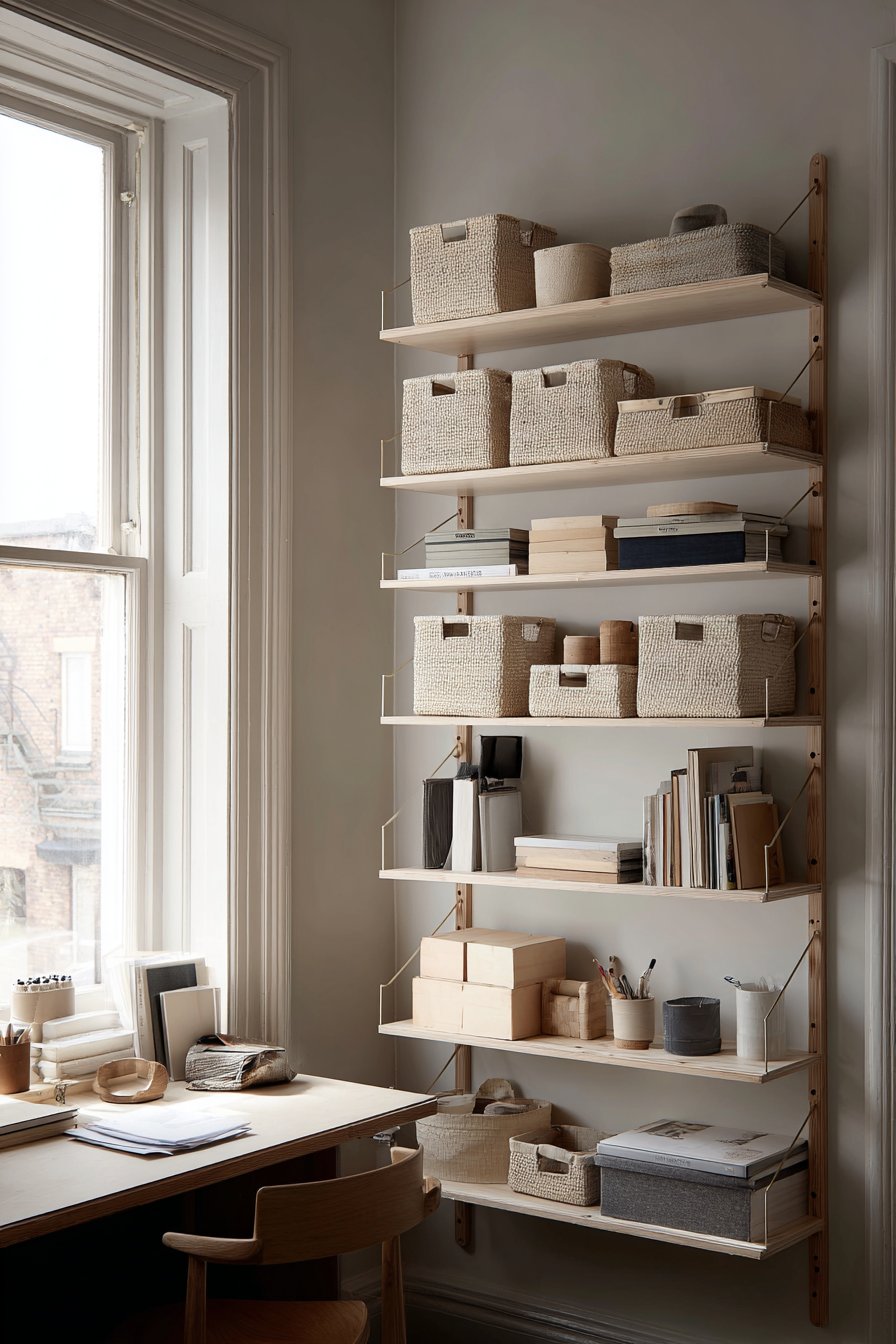
The Scandinavian approach to workspace design emphasizes light, functionality, and natural materials, all perfectly embodied in this floor-to-ceiling open shelving system crafted from pale ash wood. This impressive vertical storage solution maximizes wall space while maintaining the airy, uncluttered aesthetic that defines Nordic interiors. The light wood tone reflects available light, making the room feel more spacious and bright—a crucial consideration in home offices where productivity depends partly on environmental comfort.
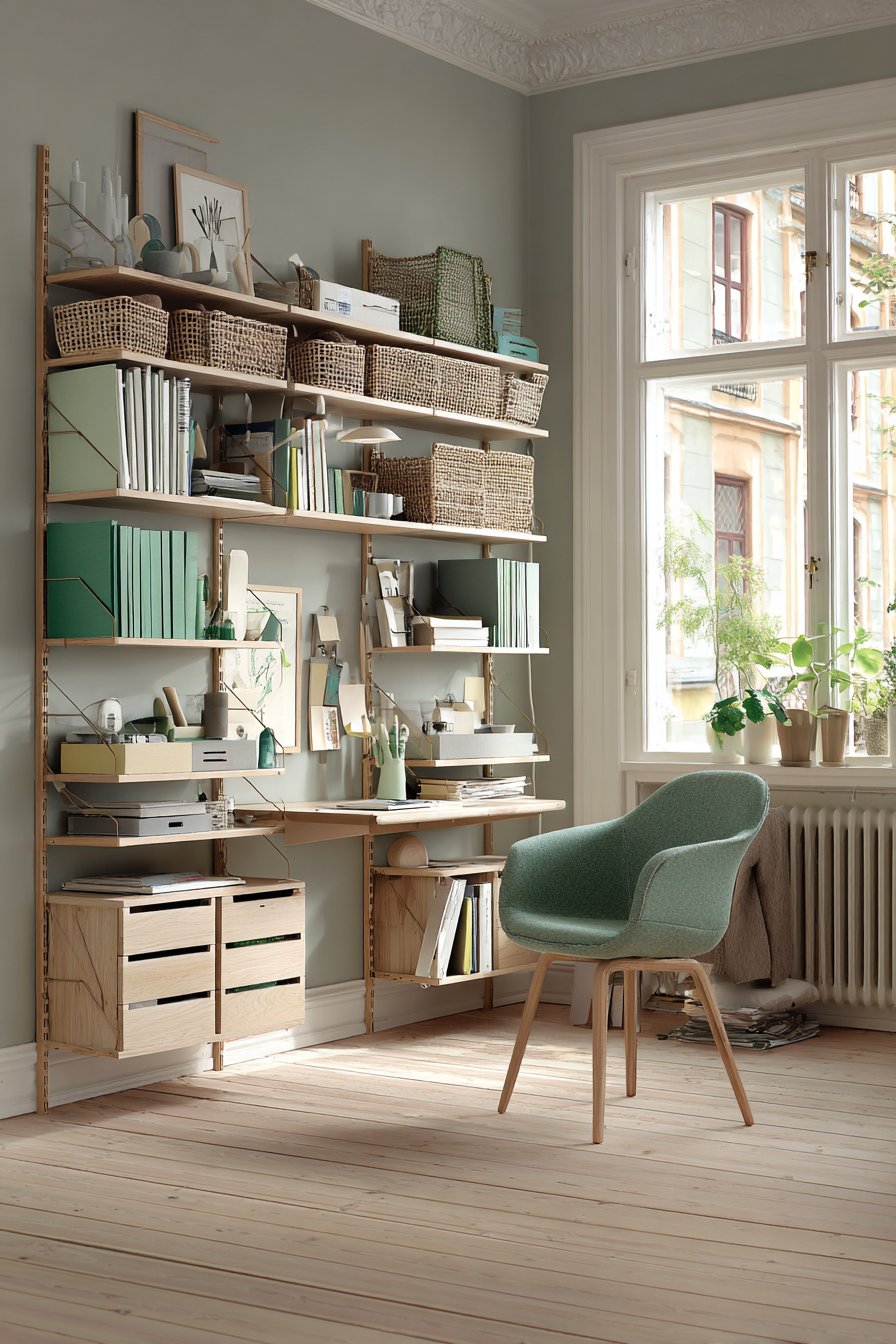
Organization becomes an art form in this setup, with woven baskets containing office supplies, books arranged by color creating rainbow-graduated visual interest, and minimal desk accessories maintaining clean work surfaces. The integration of workspace within the shelving system itself—a desk-height surface built into the overall unit—demonstrates intelligent space planning that eliminates furniture redundancy while creating workflow efficiency. This unified approach where storage and workspace merge seamlessly exemplifies the Scandinavian principle of purposeful design where every element serves multiple functions.
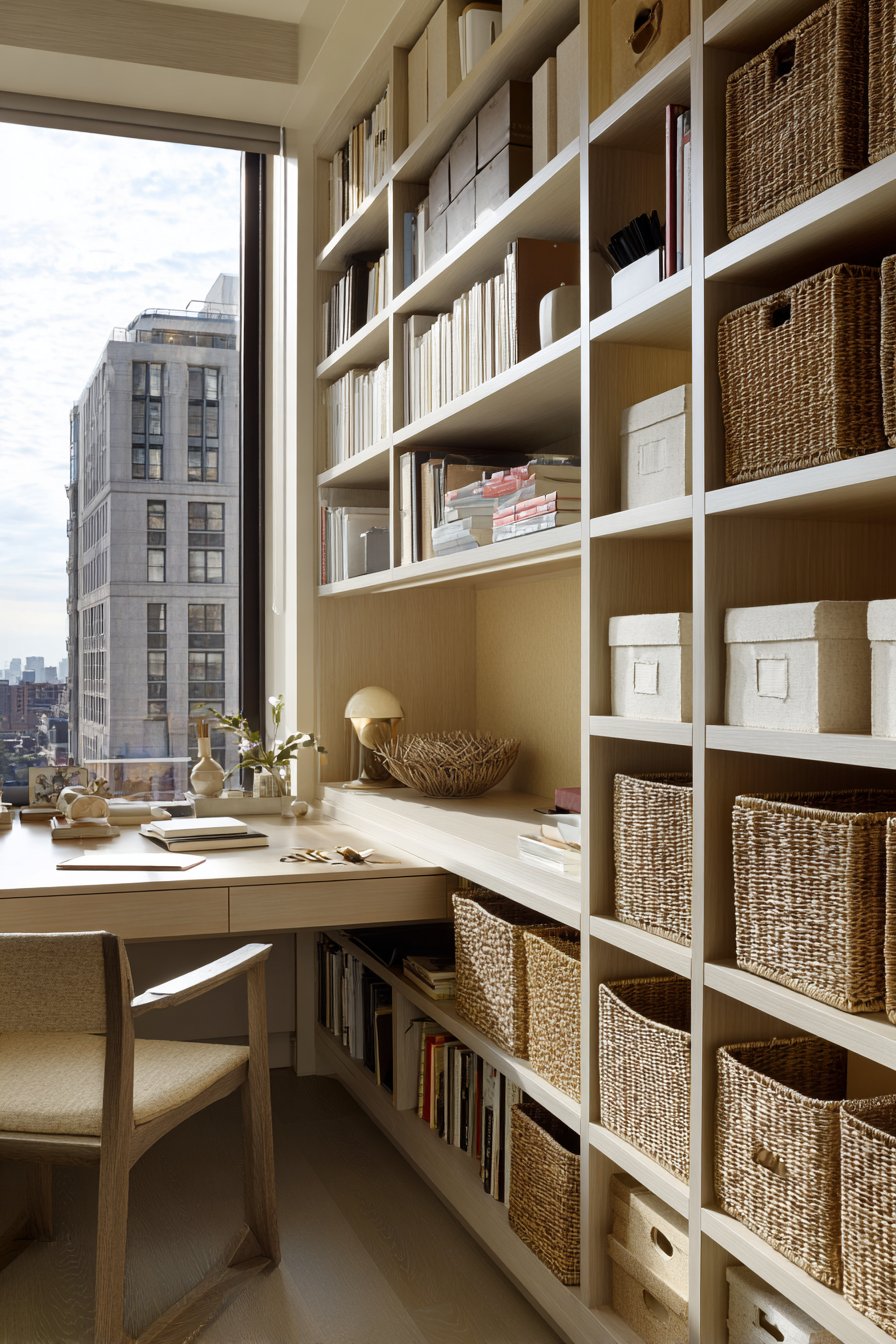
Soft, diffused window light creates the ideal working environment, reducing eye strain while illuminating the shelving’s clean lines and functional organization. The wide-angle perspective reveals how this comprehensive shelving solution doesn’t just store items but actively shapes the room’s character and defines its purpose. The natural wood grain adds subtle texture and warmth that prevents the minimalist aesthetic from feeling cold or sterile, instead creating an inviting environment that encourages focused work.
Key Design Tips:
- Extend shelving to ceiling height to maximize vertical storage in offices with limited floor space
- Use color-coding systems for book organization that create visual appeal beyond mere function
- Integrate desk surfaces directly into shelving units to save space and create cohesive design
- Choose natural materials like ash, oak, or birch for Scandinavian-inspired spaces—they reflect light and age beautifully
- Incorporate woven baskets or fabric bins to soften the linear nature of shelving while hiding clutter
- Position the desk component near windows to maximize natural light for workspace comfort
- Maintain negative space—resist filling every shelf to preserve the airy Scandinavian aesthetic
4. Reclaimed Pine Open Kitchen Shelving
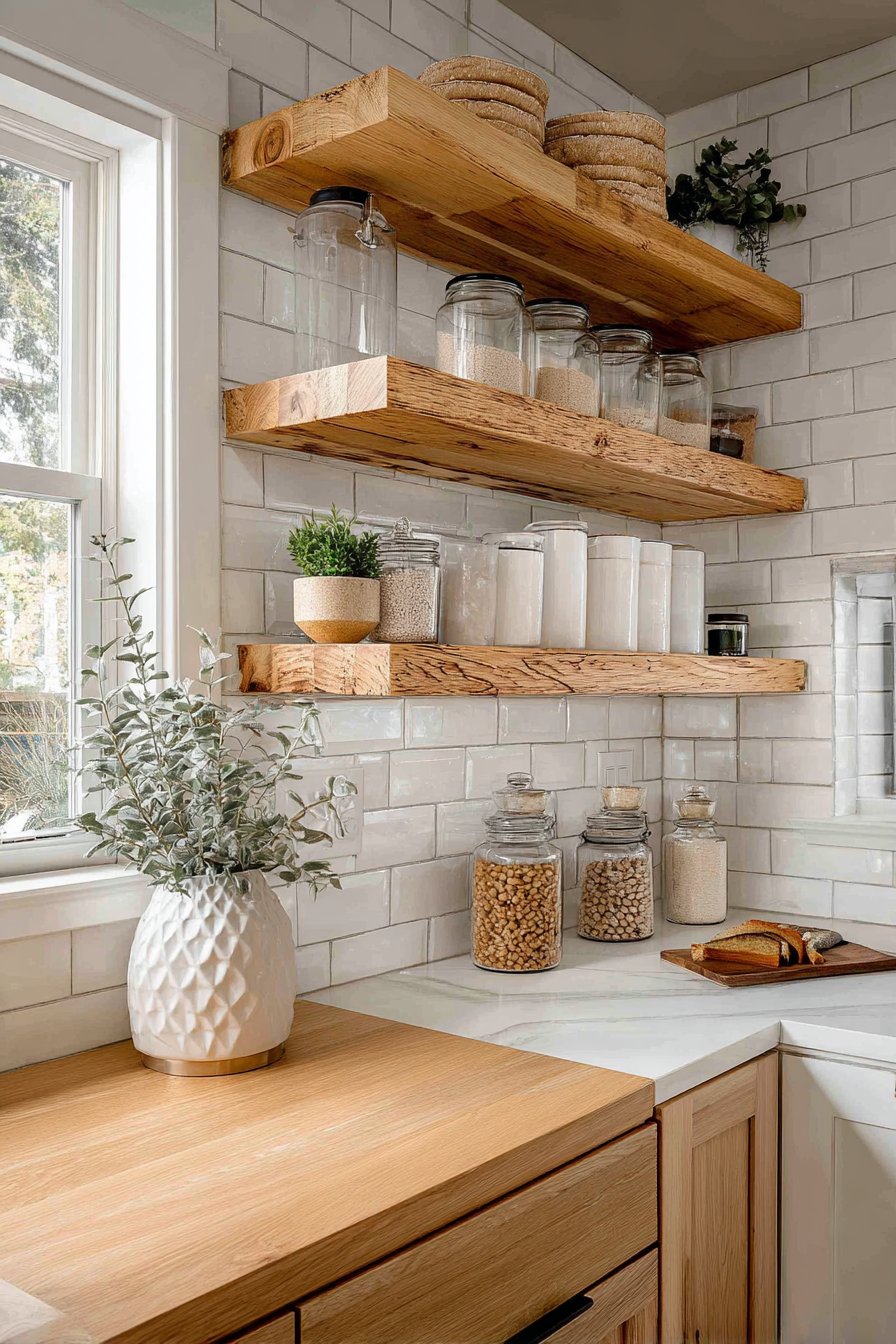
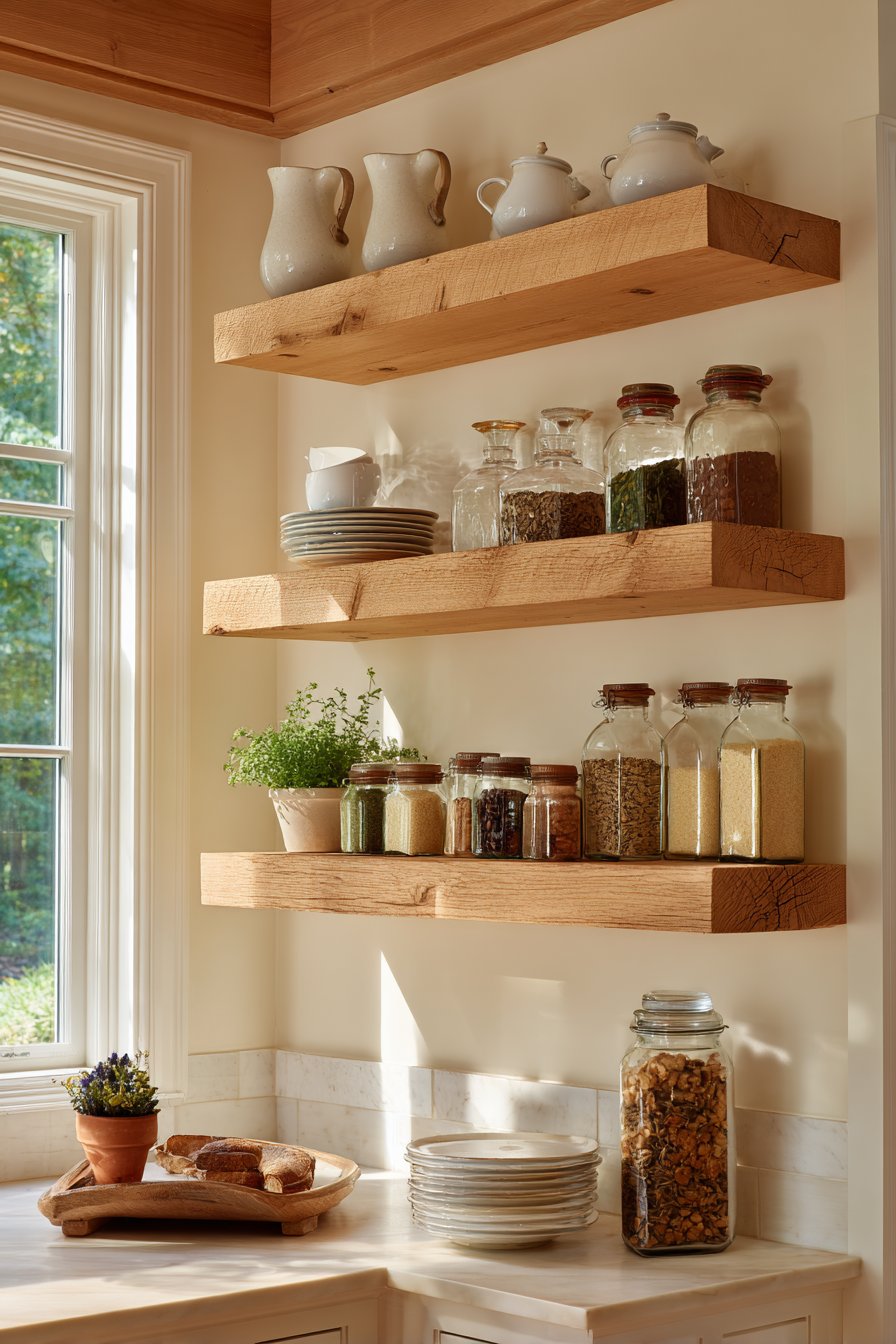
Challenging the convention of closed upper cabinetry, this compact kitchen embraces the openness and accessibility of exposed shelving constructed from reclaimed pine. The three sturdy shelves replace traditional cabinets entirely, displaying white ceramic dishes, glass storage jars filled with colorful pantry staples, and small potted herbs that bring living green elements into the cooking space. This approach transforms everyday kitchen items from hidden necessities into curated displays that add character and personality to the room.
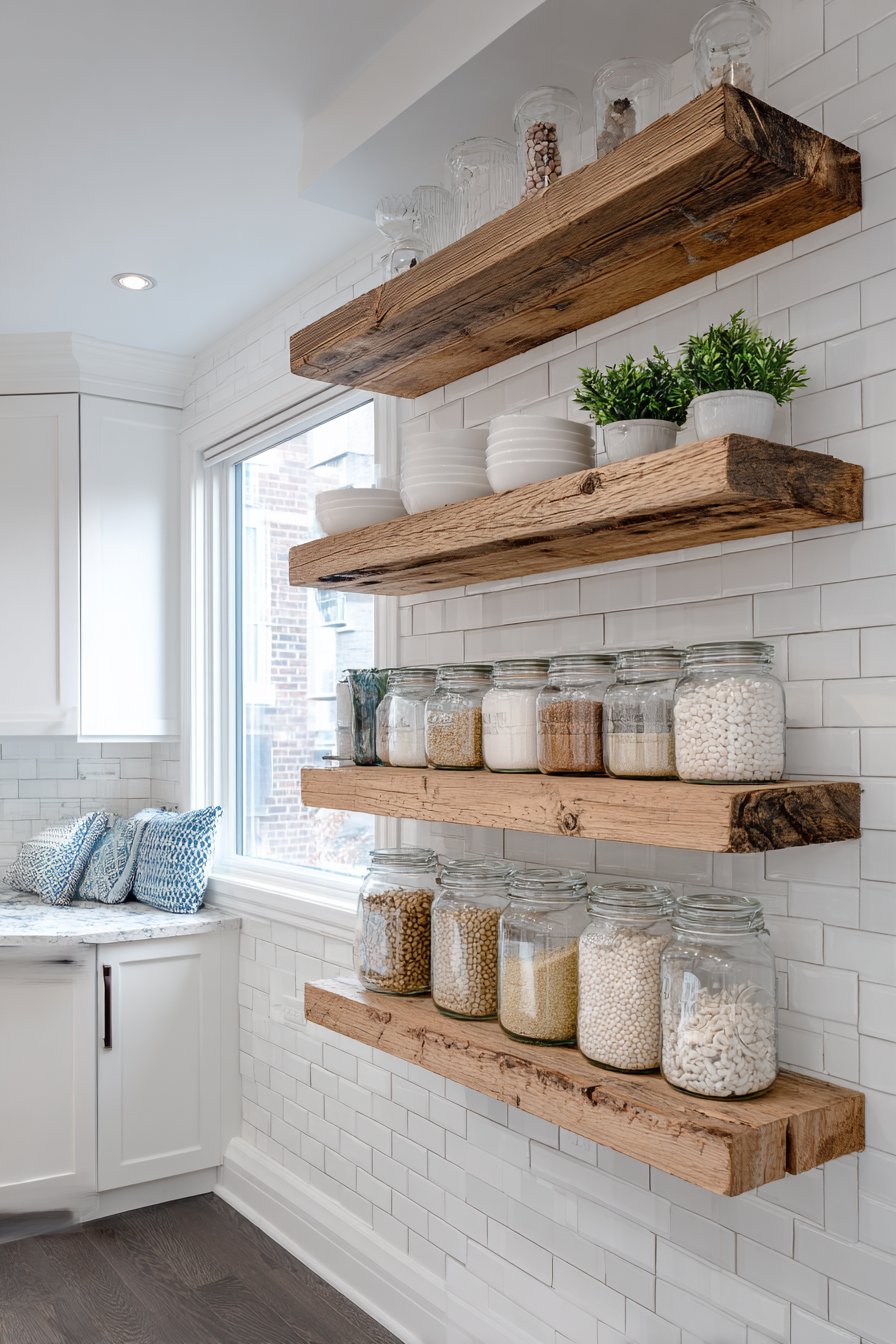
The warm honey tones of reclaimed pine create beautiful contrast against a white subway tile backsplash, establishing a visual dialogue between rustic and refined elements that defines transitional kitchen design. Each piece of reclaimed wood tells a story through its grain patterns, knots, and subtle color variations—imperfections that add authenticity and warmth impossible to replicate with new materials. The exposed shelving concept demands thoughtful organization and maintenance but rewards that effort with unparalleled convenience and visual interest.
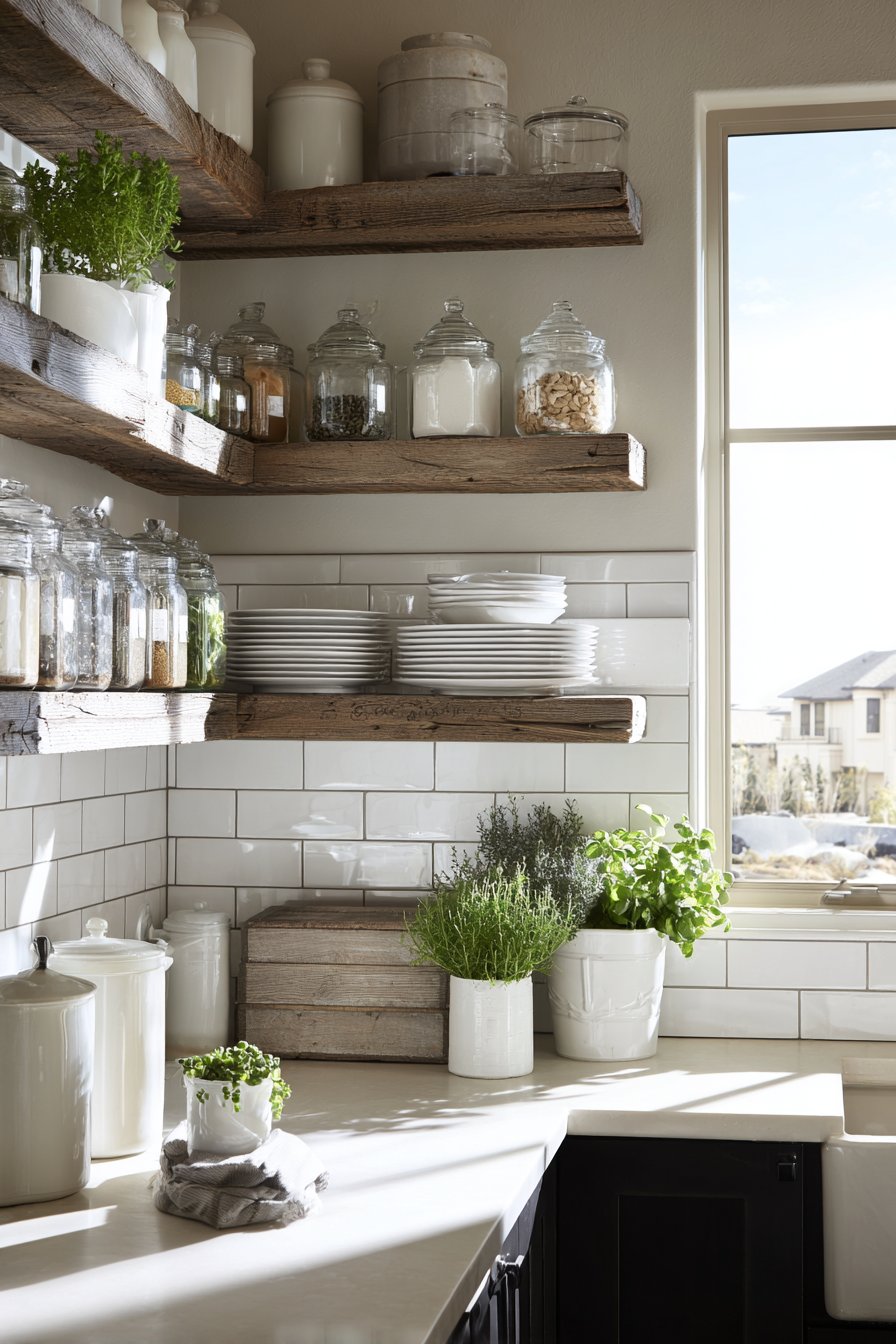
Natural light from the kitchen window illuminates the practical storage solution, catching the glass jars and creating sparkle while highlighting the rich texture of the reclaimed wood. The white dishes create clean visual breaks between shelves, preventing the open concept from feeling cluttered while maintaining a cohesive color scheme that feels fresh and timeless. This design proves that practical kitchen storage can be beautiful, accessible, and environmentally conscious through material reuse.
Key Design Tips:
- Treat reclaimed wood with food-safe sealant before use in kitchens to protect against moisture and grease
- Display only items you use regularly—open shelving works best when it’s functional, not just decorative
- Group similar items together (all glasses, all plates) for visual coherence and practical accessibility
- Choose uniform storage containers for pantry items to create order amid variety
- Install shelves at heights that allow easy reaching without requiring step stools for daily tasks
- Grow small herb gardens on kitchen shelves near windows where they’ll receive adequate light
- Plan for regular dusting and cleaning—open shelves accumulate more visible dust than closed cabinets
5. Minimalist Glass Bathroom Shelving
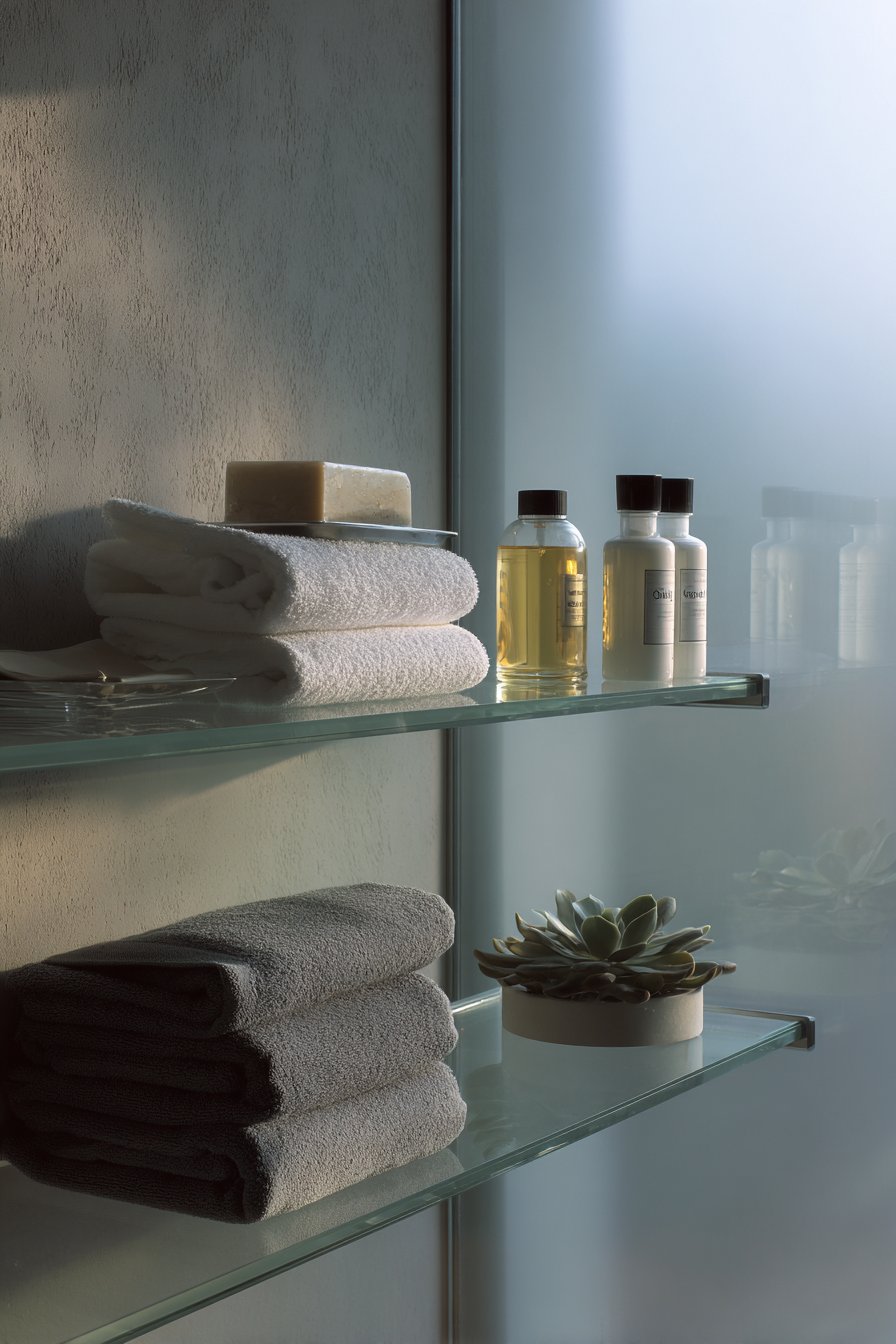
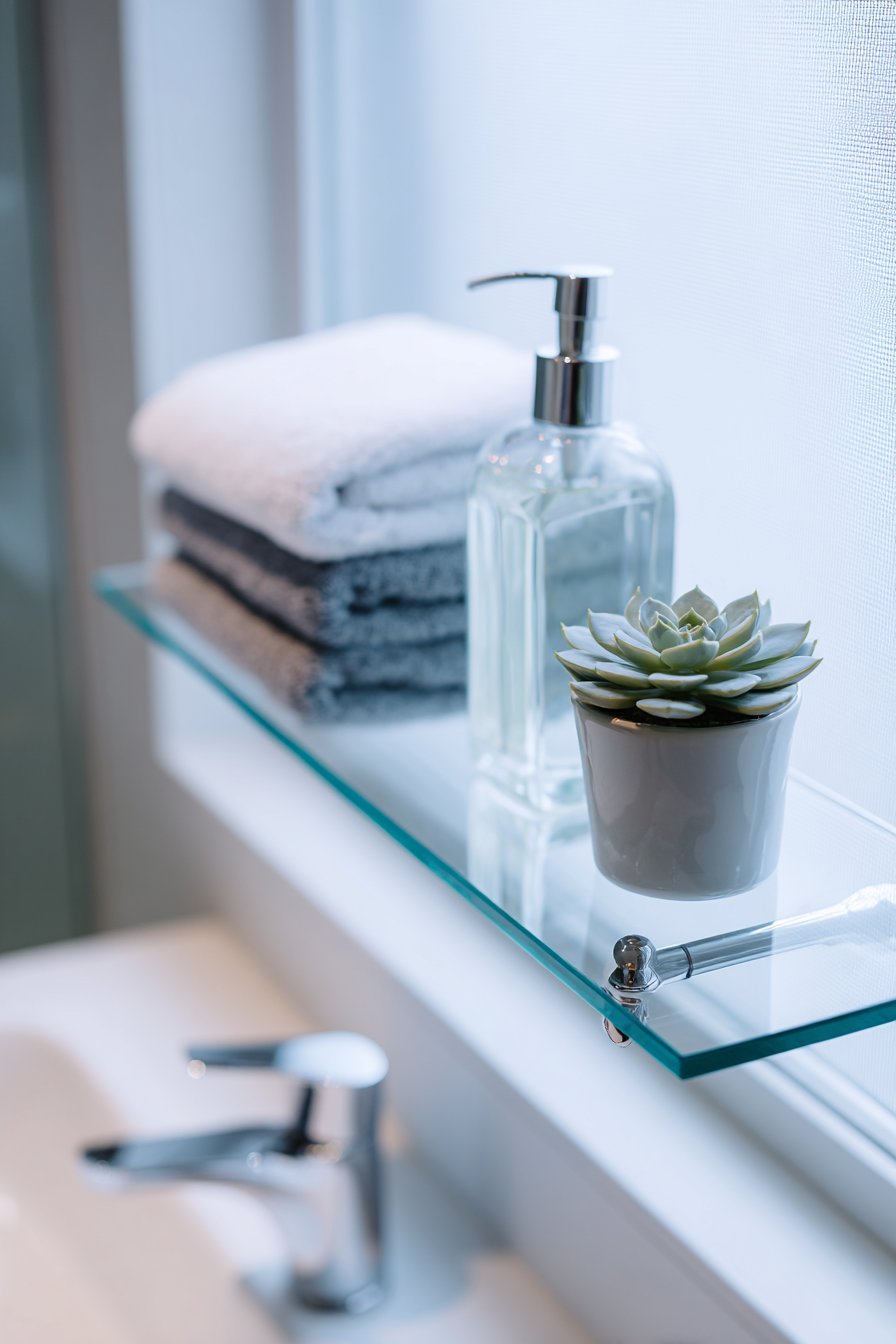
Transparency becomes a design feature in this modern bathroom where floating glass shelves mounted above a pedestal sink offer storage without visual weight. The crystal-clear shelves seem to disappear, allowing neatly folded towels in white and gray, apothecary-style toiletry bottles, and a small succulent to float suspended in space. Chrome mounting brackets provide minimal but necessary support, their metallic finish catching light and adding subtle sparkle to the clean composition.
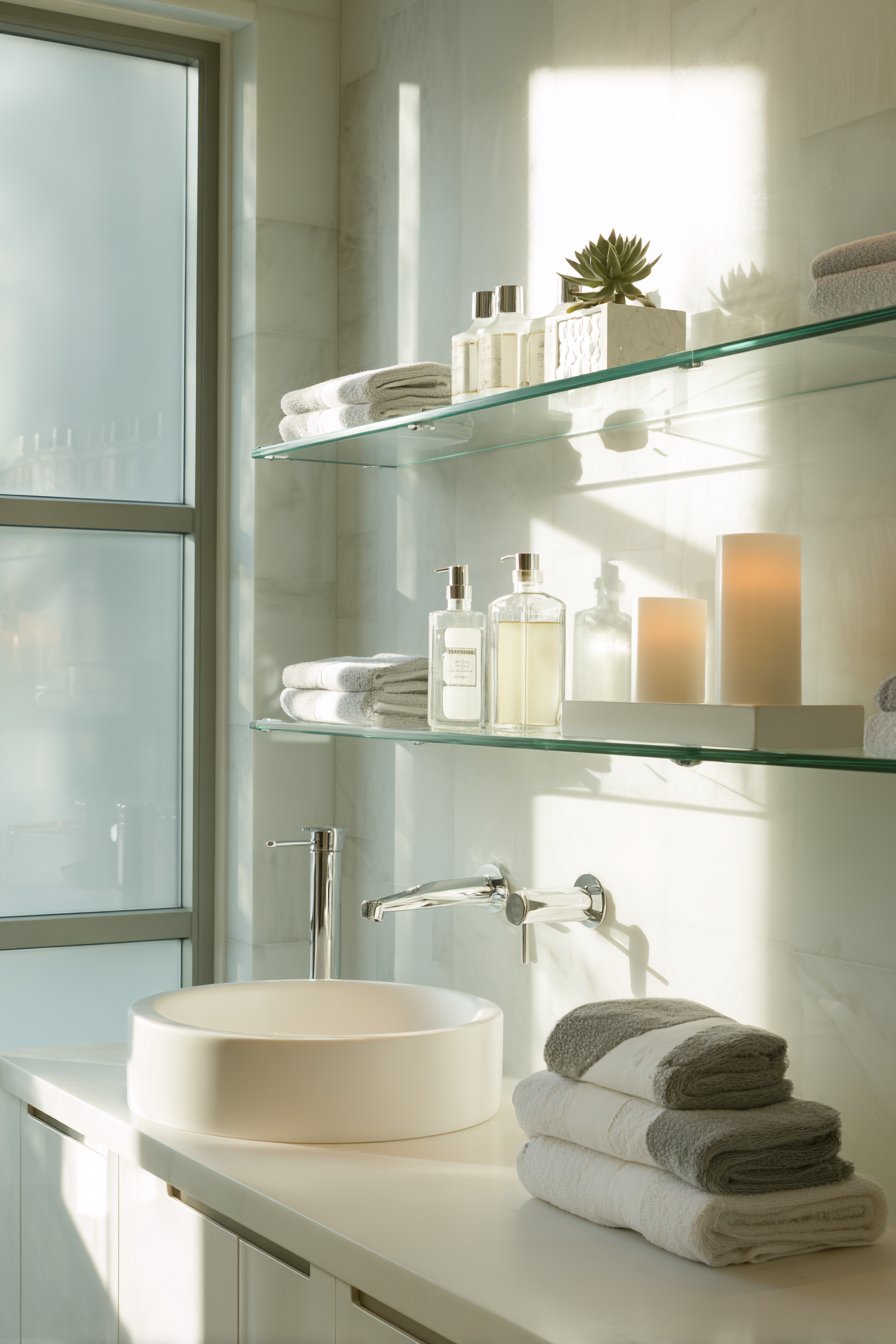
The genius of glass shelving in bathrooms extends beyond aesthetics to practical concerns—unlike wood which can warp with moisture or metal which may rust, glass remains impervious to humidity while maintaining its clarity and structural integrity. The transparent quality allows light to pass through rather than being blocked, crucial in bathrooms where natural light is often limited. Soft illumination from a frosted window creates subtle reflections on glass surfaces, adding depth and dimension while the monochromatic gray and white color scheme maintains the spa-like tranquility.
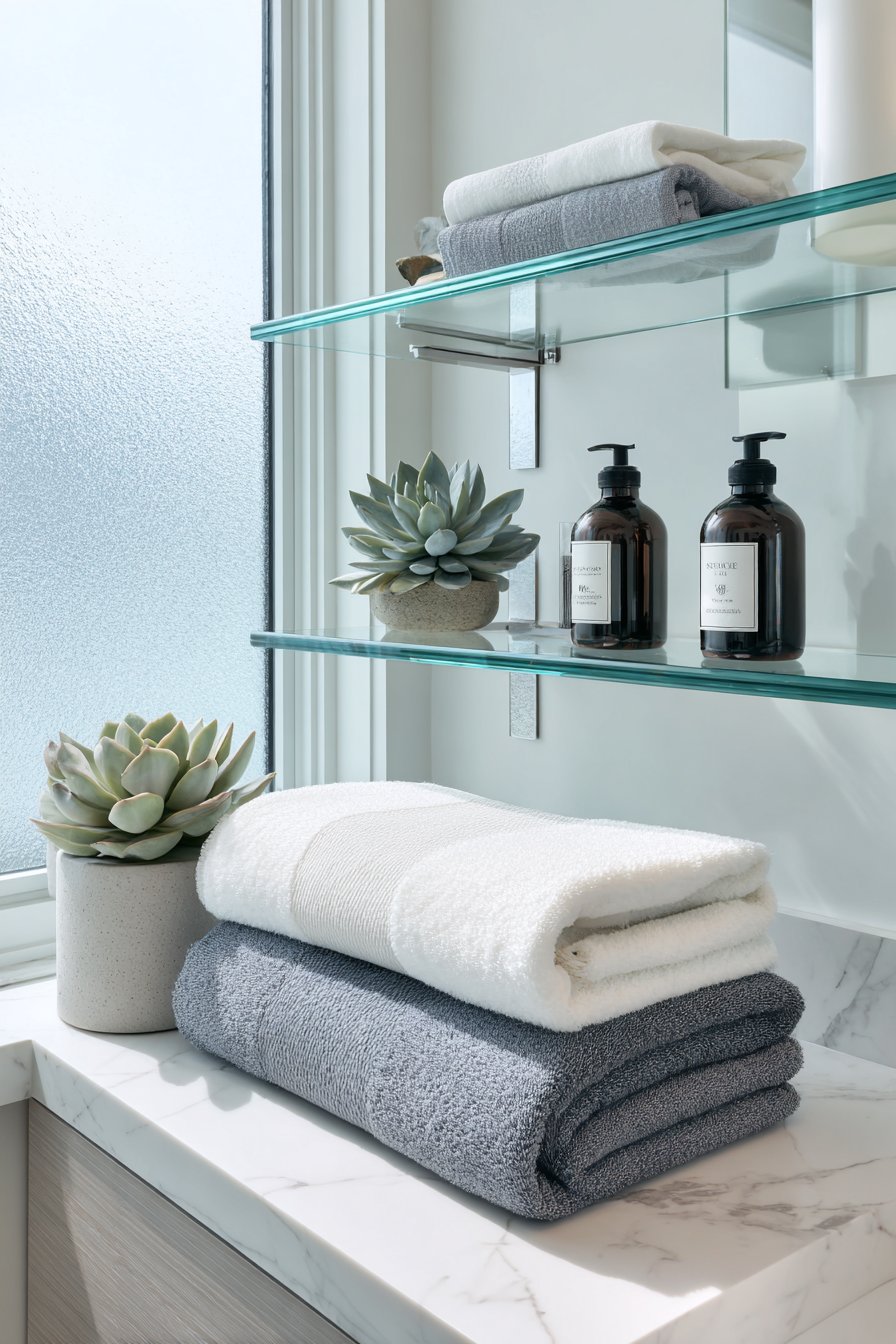
This minimalist approach to bathroom storage demonstrates that less can indeed be more—by reducing visual clutter and maintaining clean lines, the space feels larger and more serene. The carefully edited selection of displayed items maintains the uncluttered aesthetic while providing necessary storage for bathroom essentials. Each object becomes more significant when not competing with visual noise, turning simple rolled towels into design elements that contribute to the overall composition.
Key Design Tips:
- Choose tempered glass for bathroom shelves—it’s significantly stronger and safer than regular glass
- Install glass shelves with high-quality chrome or brushed nickel brackets that won’t corrode in humid environments
- Limit displayed items to create breathing room—glass shelves work best with minimal, carefully curated contents
- Coordinate towel colors with overall bathroom palette for cohesive design
- Use matching containers for toiletries to maintain visual order on transparent surfaces
- Clean glass regularly with streak-free cleaner to maintain clarity and sparkle
- Consider shelf thickness—thicker glass (3/8″ to 1/2″) feels more substantial and can support more weight safely
6. Reclaimed Wood Rustic Dining Room Wall Unit
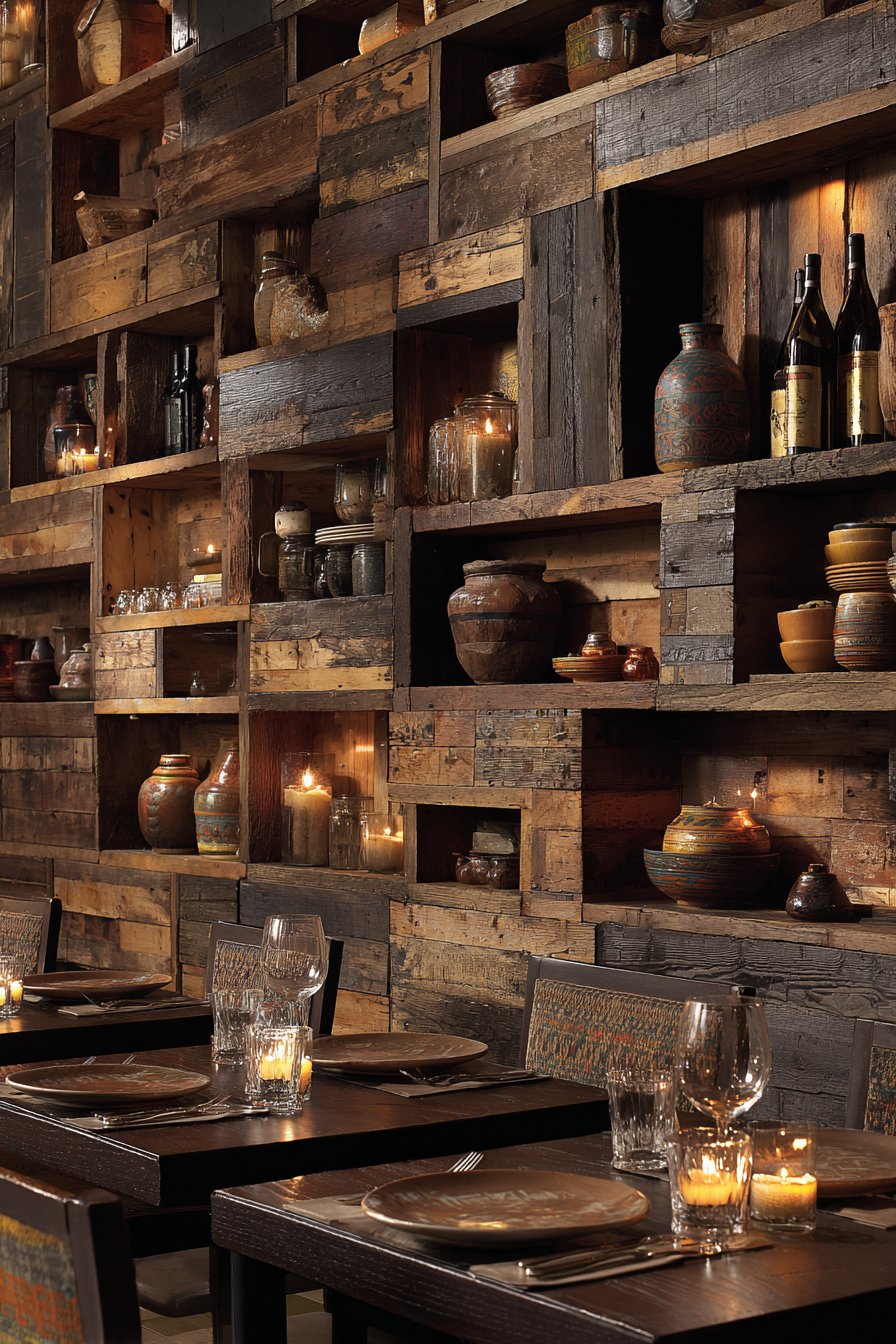
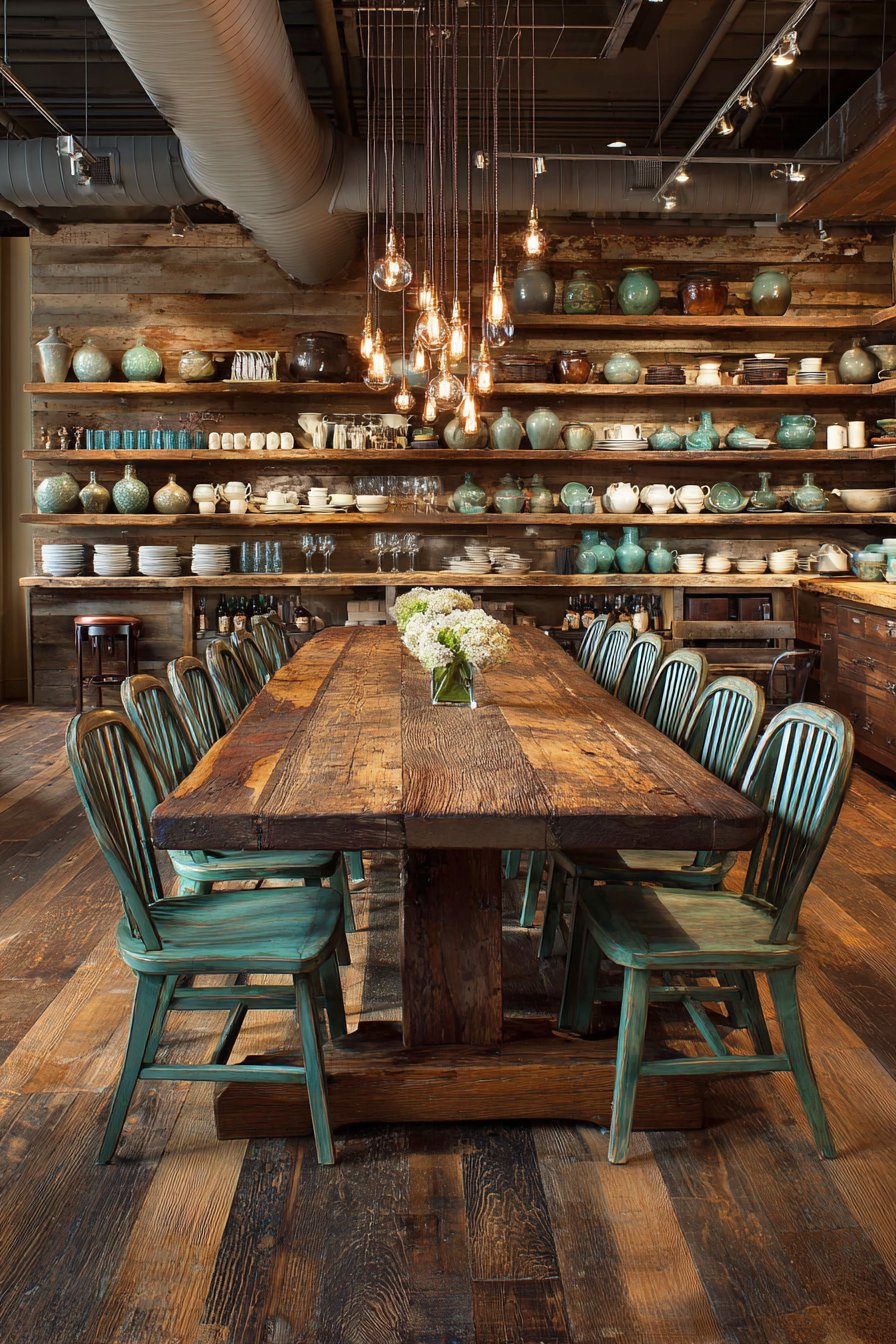
A full-wall shelving installation constructed from reclaimed wood transforms an entire dining room wall into a stunning focal point that doubles as extensive storage and display space. The shelving system showcases an eclectic collection accumulated over time—vintage dishware with patina and history, wine bottles ready for special occasions, and decorative pottery pieces that add artistic interest. The varying depths and heights of individual shelves create visual rhythm and accommodate objects of different sizes, from delicate teacups to substantial serving platters.
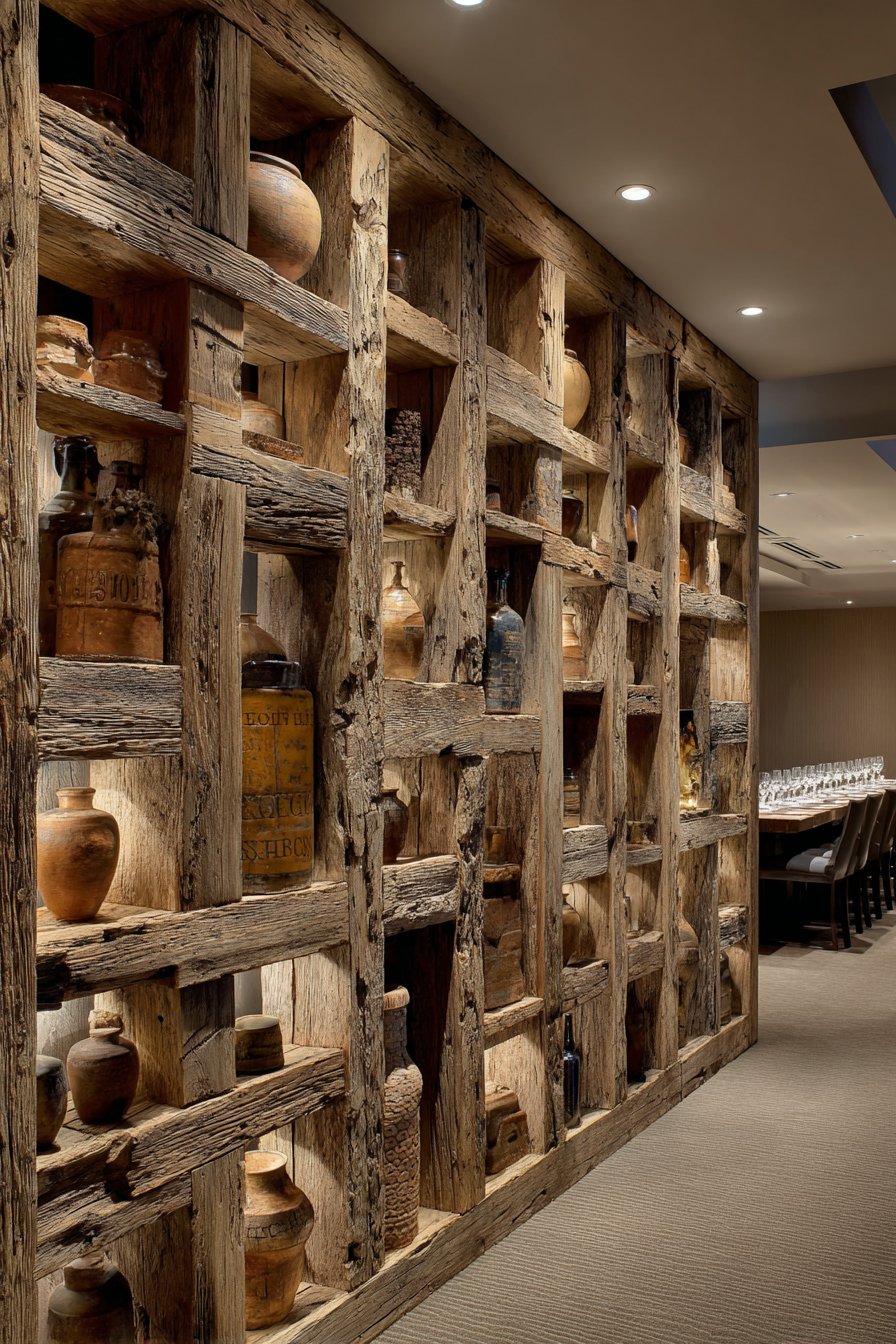
The character inherent in reclaimed wood—visible nail holes, weathered surfaces, natural color variations—provides texture and warmth that new materials simply cannot replicate. Each board carries evidence of its previous life, whether as barn siding, factory flooring, or architectural salvage, making the shelving itself a conversation piece beyond what it displays. This celebration of imperfection and history aligns with current design trends favoring authenticity and sustainability over pristine perfection.
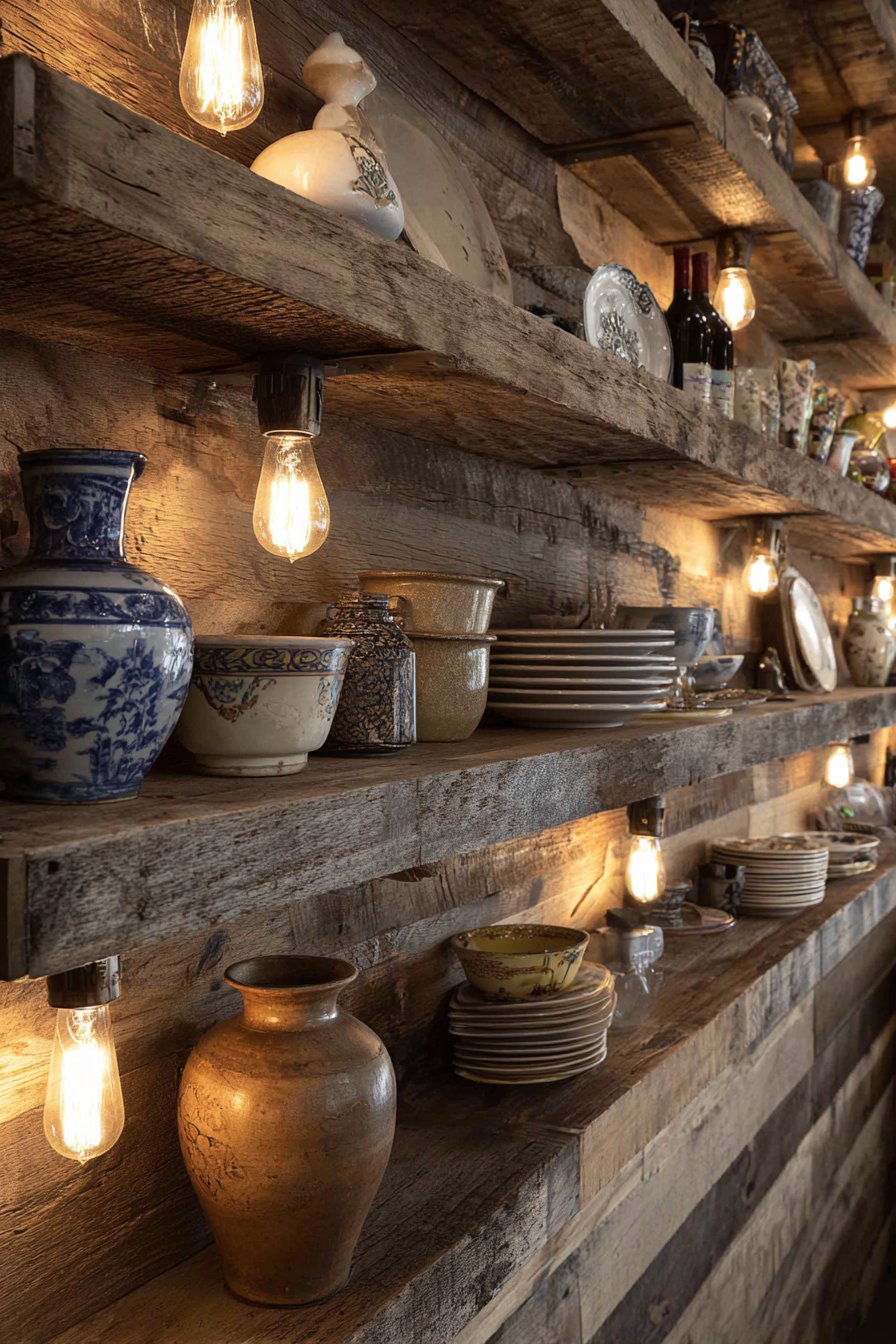
Warm Edison bulb lighting mounted beneath select shelves creates ambient illumination that transforms the practical storage wall into an atmospheric design feature, especially effective during evening dining. The strategic under-shelf lighting highlights displayed items while casting gentle shadows that emphasize depth and dimension. This combination of natural wood texture, curated collections, and thoughtful lighting creates a dining environment rich in character and warmth, perfect for gatherings centered around food and conversation.
Key Design Tips:
- Source reclaimed wood from architectural salvage companies or deconstruction projects to ensure authentic aged character
- Vary shelf depths—use deeper shelves for plates and serving ware, shallower ones for decorative displays
- Install shelving with appropriate weight-bearing hardware, especially important when displaying heavy dishware
- Incorporate low-voltage LED Edison bulbs for under-shelf lighting—they provide warmth without excessive heat
- Arrange displays with varying heights and visual weights to create dynamic compositions
- Leave some shelves partially empty to prevent overwhelming the visual field
- Group similar items together while varying textures and colors within those groupings for cohesion with interest
7. Matte Black Steel Minimalist Entryway Shelf
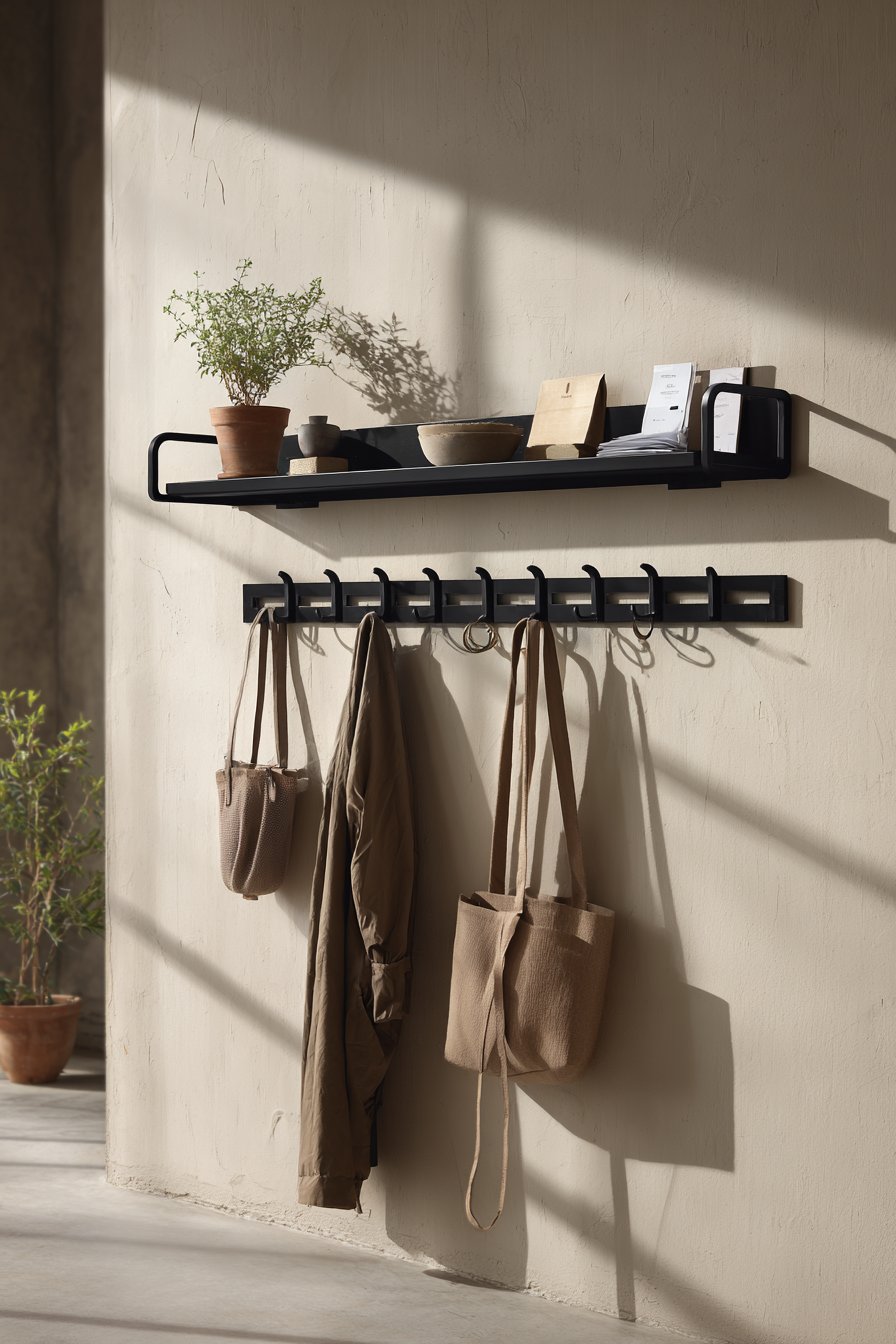
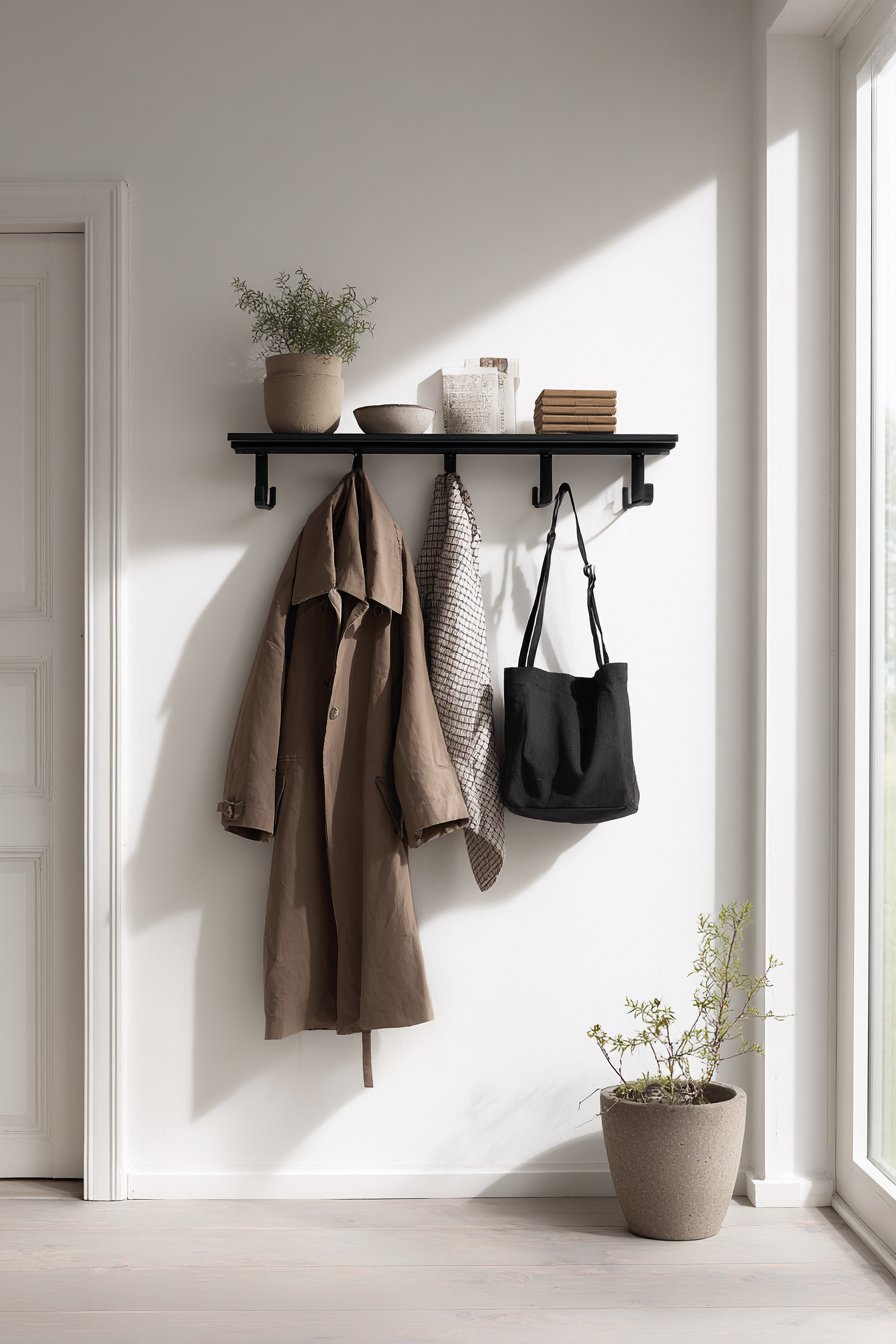
The entryway sets the tone for an entire home, and this narrow wall-mounted shelf in matte black steel makes a powerful first impression through its refined minimalism and practical functionality. Serving as a dedicated drop zone, the slim profile accommodates daily essentials—a ceramic key bowl, small potted plant adding life, and a designated spot for outgoing mail—without encroaching on limited entryway space. The integrated hooks beneath the shelf extend functionality vertically, providing hanging storage for coats and bags that would otherwise require floor space.
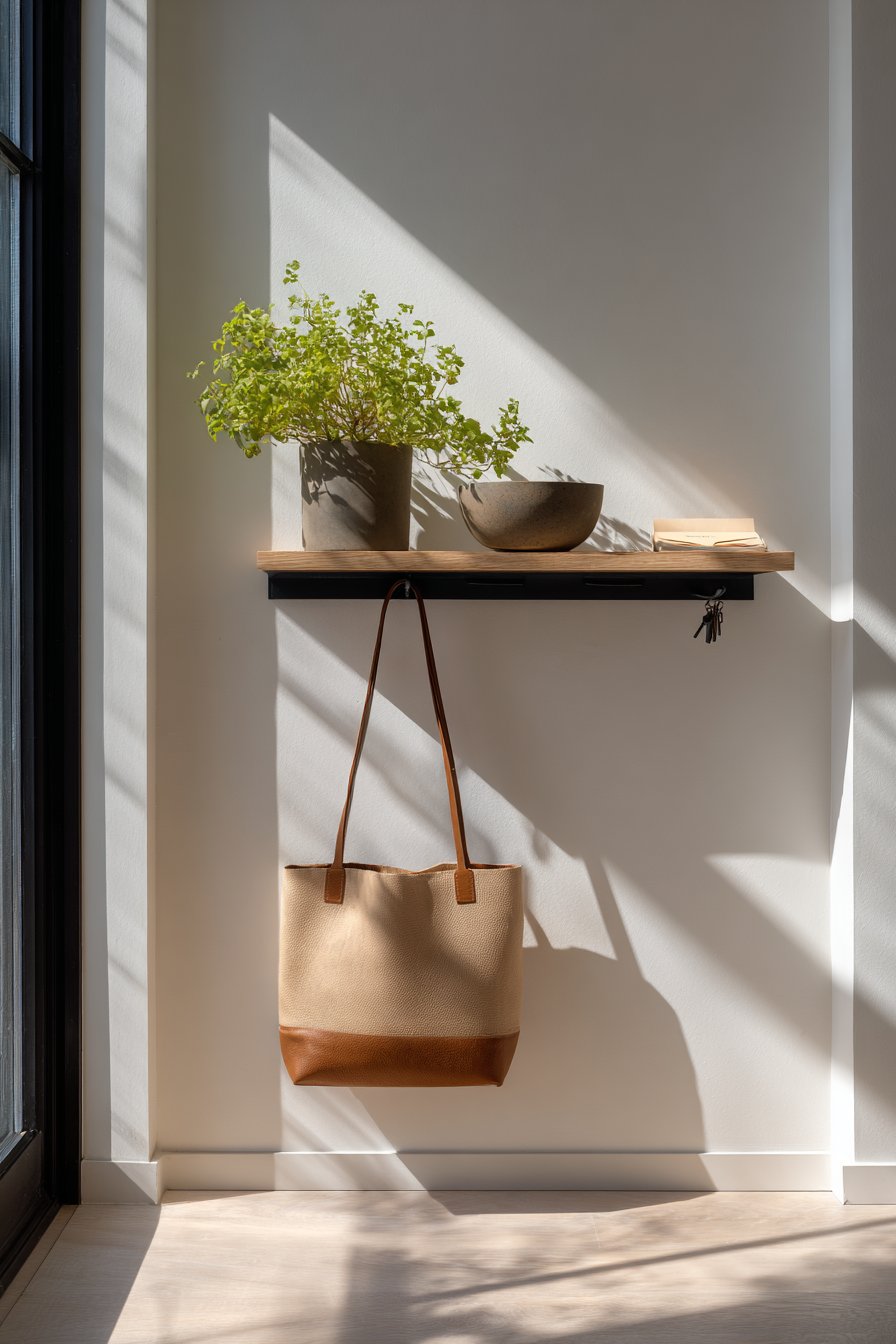
The matte black finish provides sophisticated contrast against lighter wall colors while its powder-coated steel construction ensures durability in a high-traffic area subject to daily use and abuse. This material choice represents the industrial influence in contemporary design, where utilitarian materials typically reserved for commercial or warehouse settings find refined application in residential interiors. The clean lines and geometric simplicity embody minimalist principles where every element serves a purpose and nothing extraneous remains.
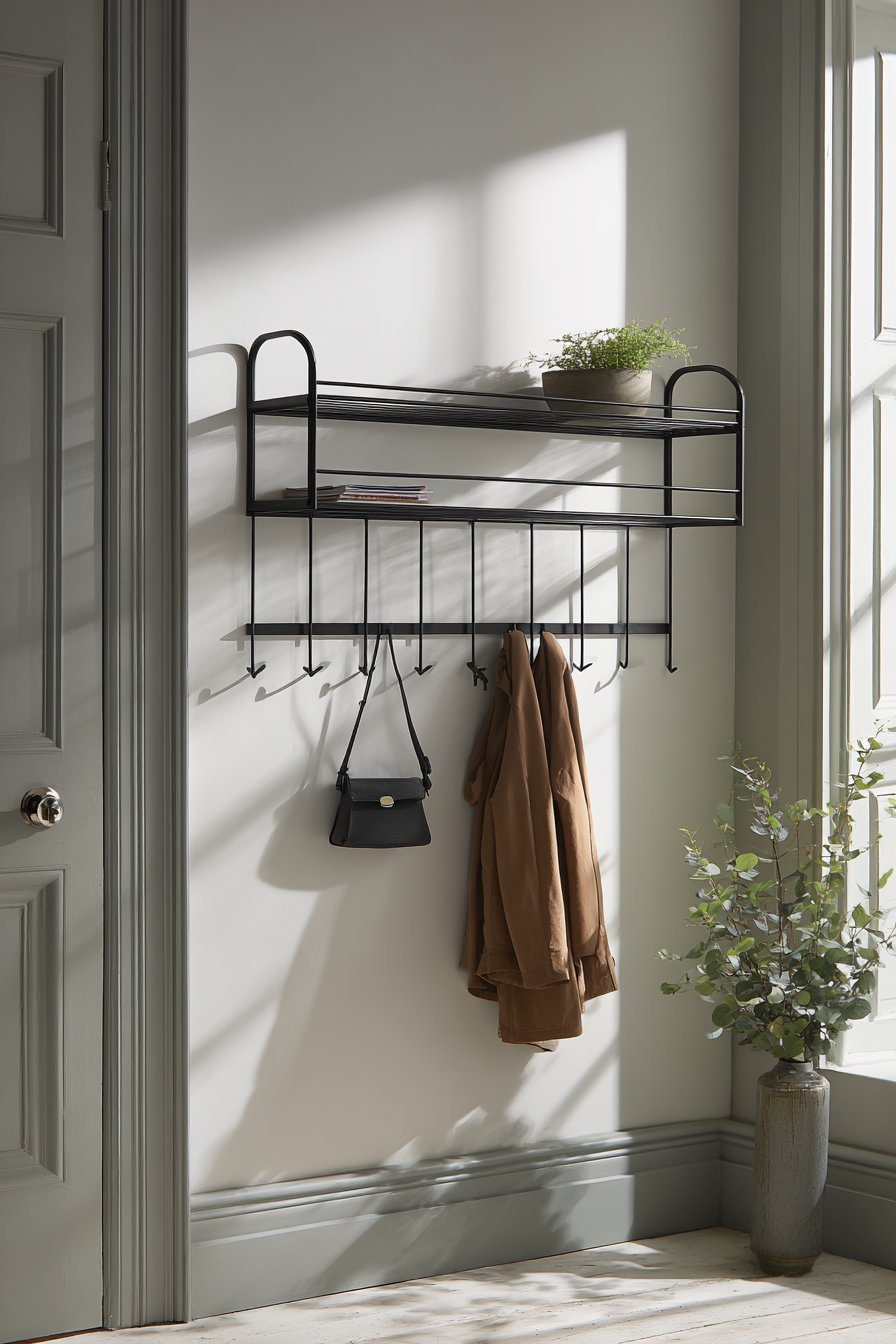
Natural light from a side window creates clean, defined shadows that emphasize the shelf’s simple geometric form and slender profile. The shadows themselves become part of the design, changing throughout the day as light angles shift. This dynamic quality keeps the simple installation visually interesting despite its minimal composition. The dark finish grounds the entryway while the sparse display prevents the practical zone from reading as cluttered or chaotic.
Key Design Tips:
- Choose matte finishes over glossy for entryway metal fixtures—they hide fingerprints and wear better
- Mount entryway shelves at comfortable reach height, typically 60-65 inches from floor to shelf top
- Limit displayed items to true necessities to maintain the clean minimalist aesthetic
- Add integrated hooks 6-8 inches apart for optimal coat and bag hanging
- Select a shelf depth of 6-8 inches for entryways—deep enough for function, shallow enough to avoid obstruction
- Coordinate the shelf finish with other entryway hardware like door handles and light fixtures
- Place a small dish or bowl near the shelf’s end as a designated drop spot for keys and small items
8. White Cube Storage for Children’s Rooms
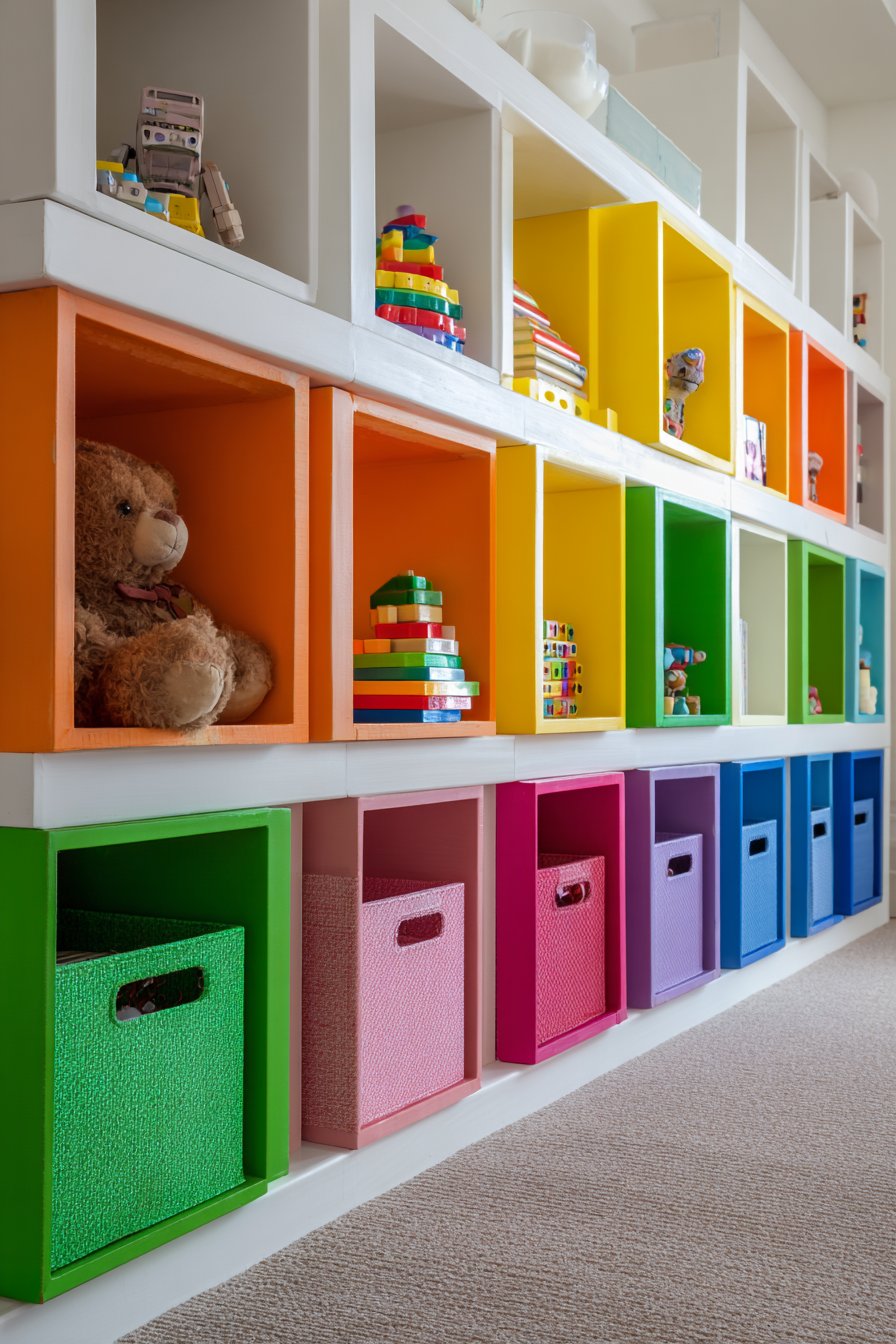
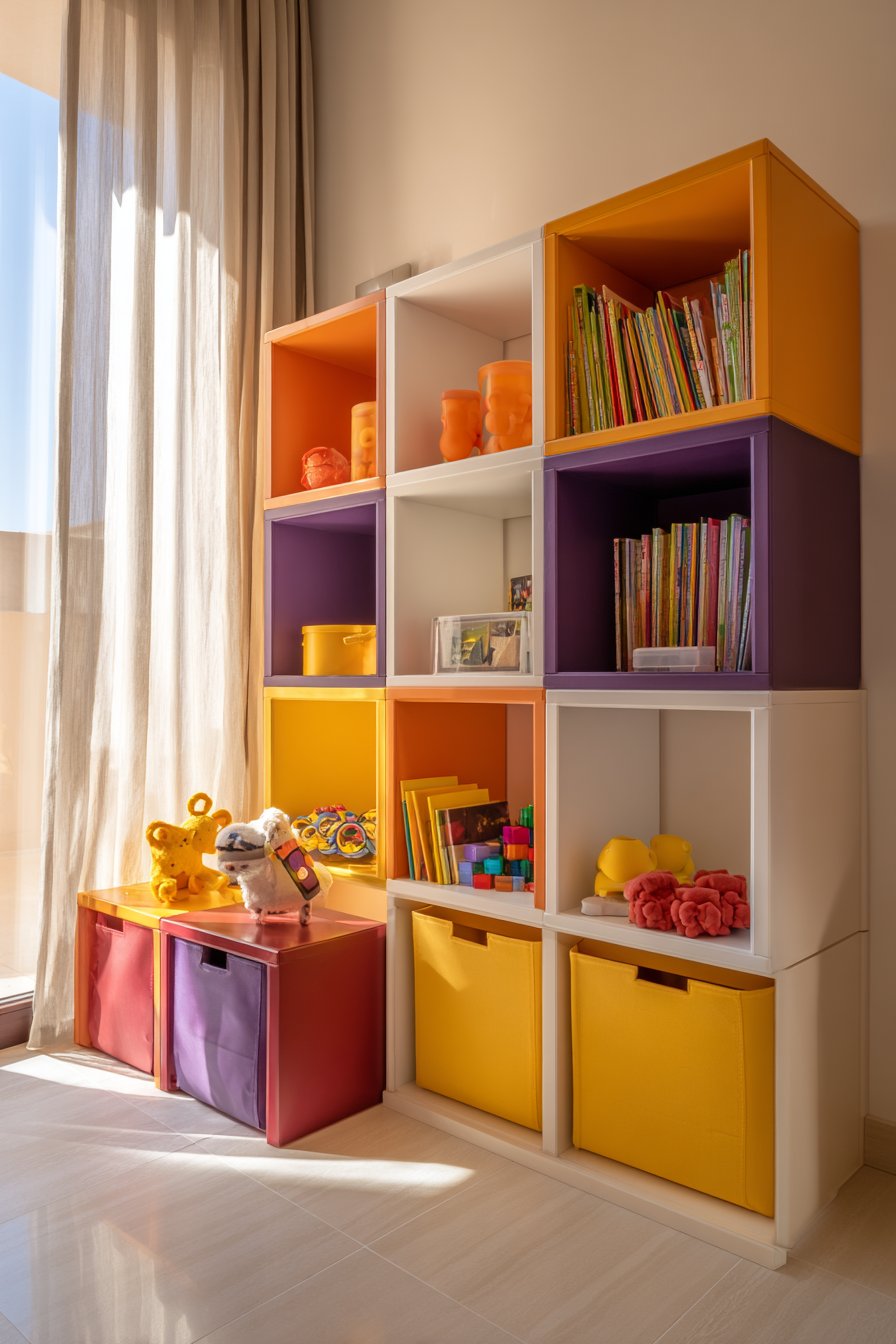
Modular cube shelving systems offer unparalleled flexibility for children’s spaces where needs and interests change rapidly as kids grow. This white-painted wood configuration arranges individual cubes in an offset pattern that creates visual interest beyond standard grid layouts. The open framework displays toys in coordinating storage bins, children’s books standing upright for easy title recognition, and small decorative items positioned at child-friendly heights that encourage independence and ownership of their space.
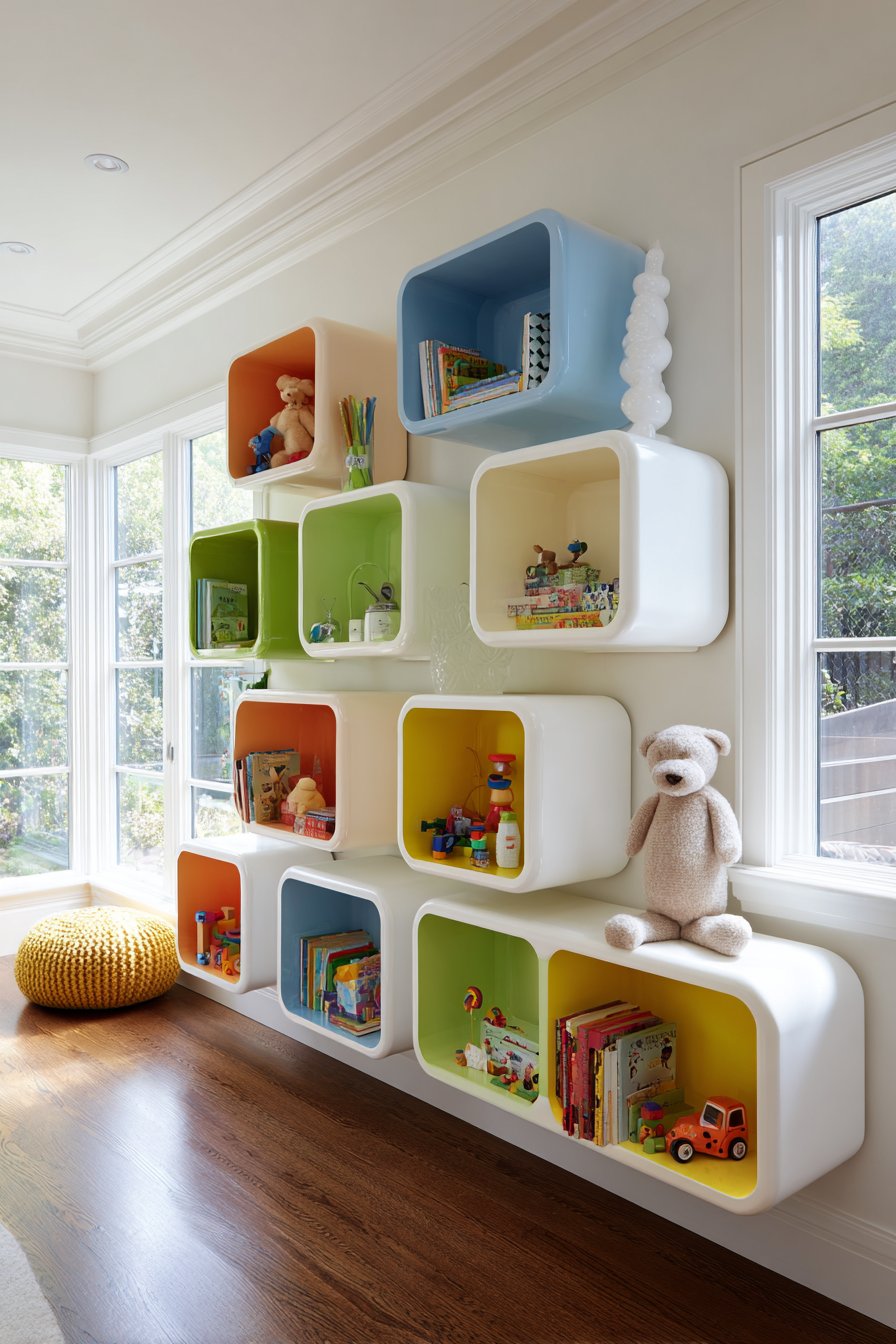
The dual nature of these modular units—some cubes left open for display, others containing closed storage bins—addresses the reality of children’s rooms where complete openness leads to visual chaos but complete closure hinders accessibility and use. This balance allows frequently used items to remain visible and within reach while less attractive necessities hide away in attractive bins. The white finish creates a neutral foundation that adapts to changing color schemes and interests as children mature from toddlers through teenage years.
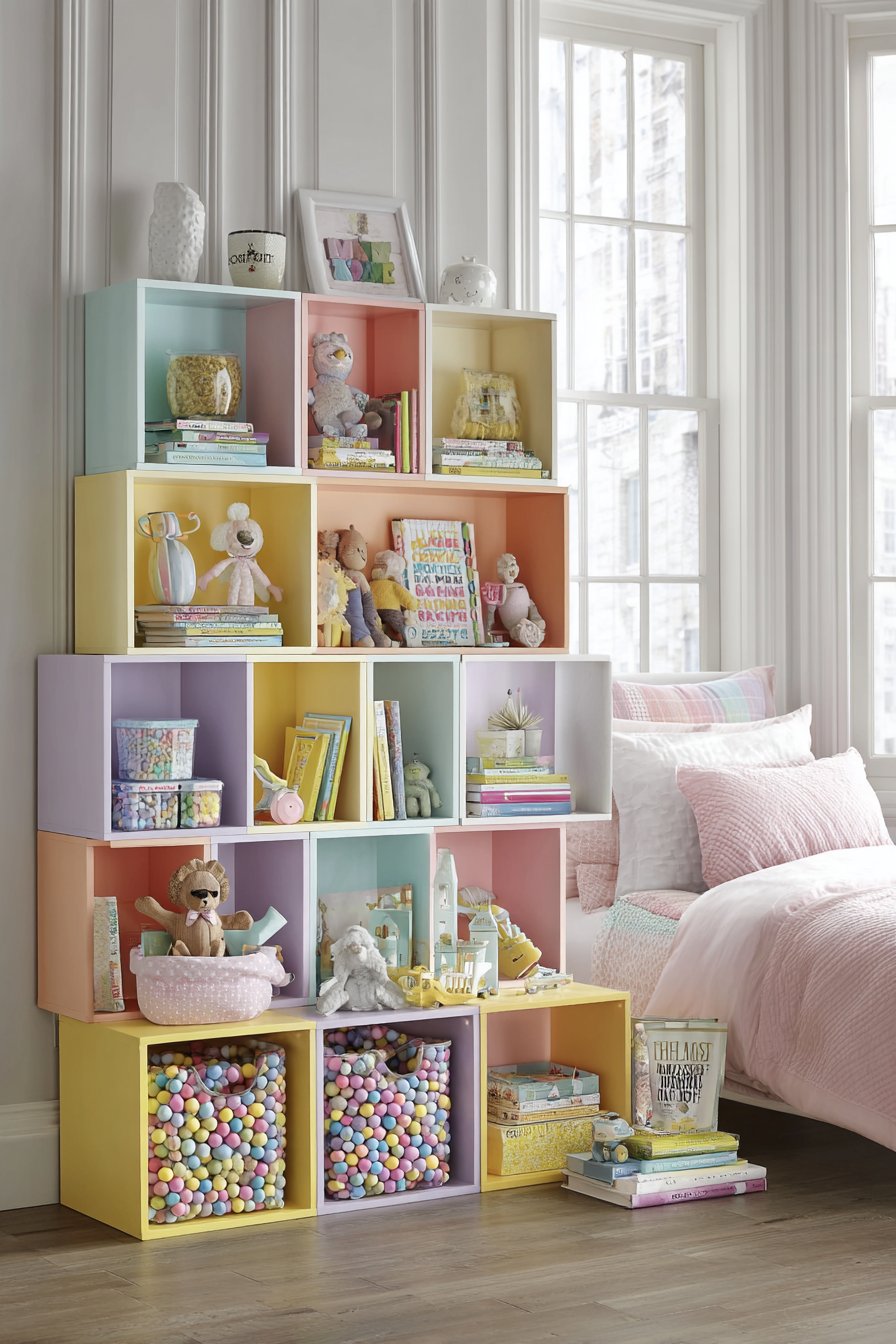
Bright natural daylight floods the room, creating a cheerful atmosphere conducive to play and learning while illuminating the practical organization system that teaches children valuable lessons about maintaining order. The modular nature means the configuration can be reconfigured as needs change—starting low for toddlers’ safety and gradually growing taller, or shifting from toy storage to book storage to hobby supplies as interests evolve.
Key Design Tips:
- Secure modular cube units to walls with appropriate anchors to prevent tipping accidents, especially crucial in children’s rooms
- Choose storage bins that coordinate in color or material even if they’re not identical—unity with slight variation prevents monotony
- Position heavier items and bins in lower cubes for stability and safe access
- Leave some cubes empty or with minimal contents—children need flexibility for evolving collections
- Label bins with pictures for pre-readers, words for early readers to support literacy development
- Select wipeable painted finishes for easy cleaning in spaces prone to spills and sticky fingers
- Involve children in organization decisions to foster ownership and maintenance of their space
9. Upholstered Headboard with Integrated Shelving
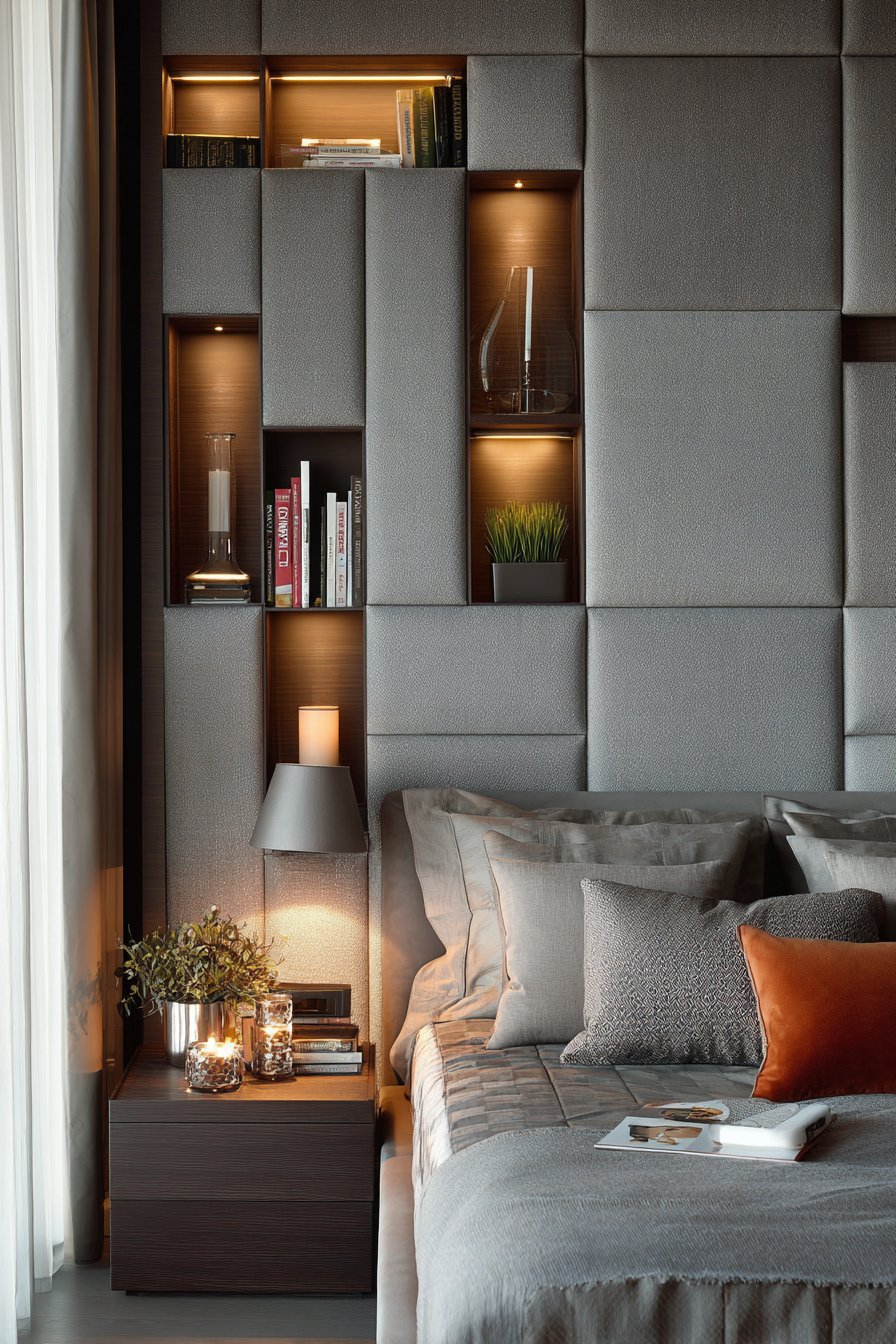
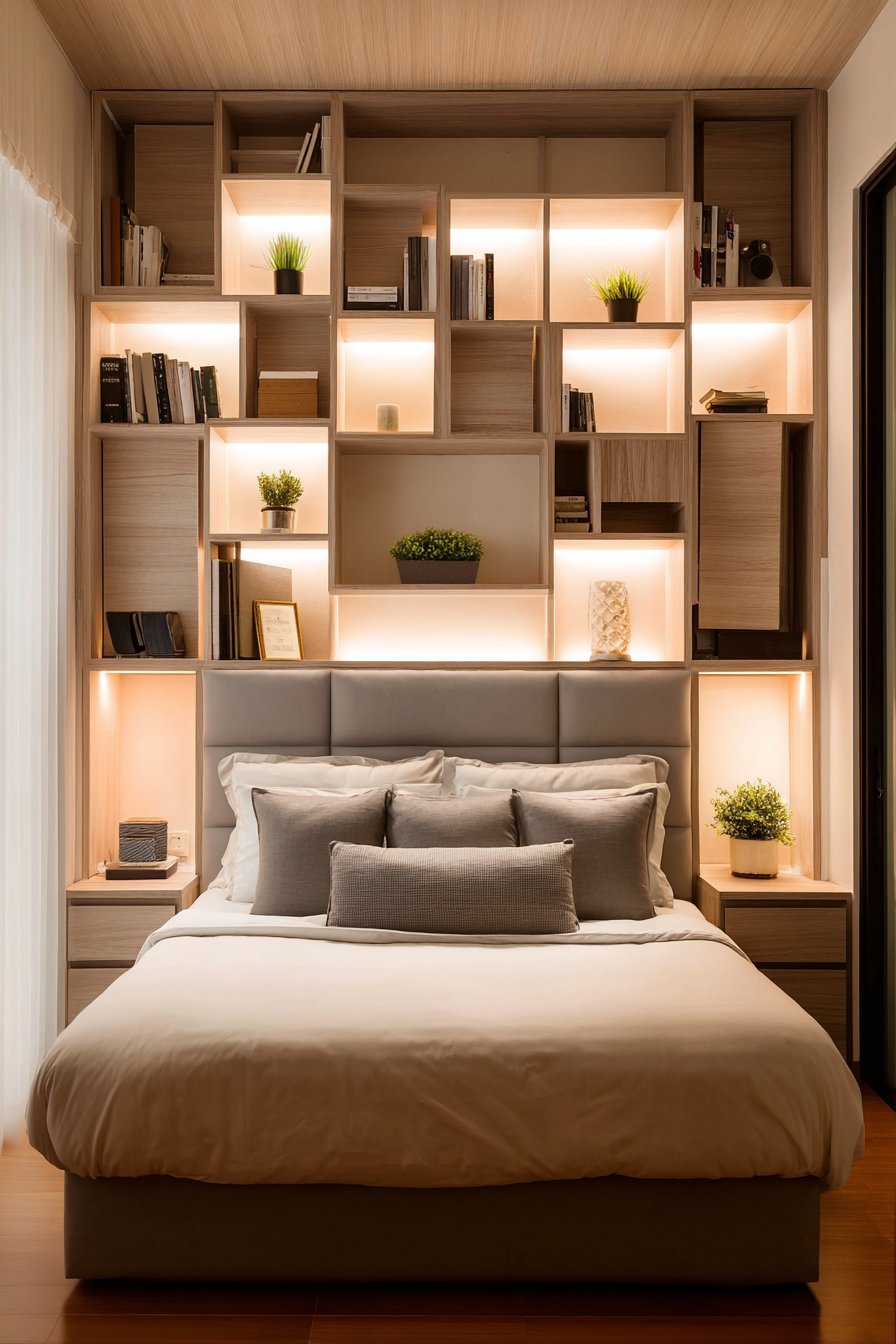
Contemporary bedroom design increasingly incorporates storage directly into headboard walls, creating seamless integration of sleep and storage functions. This built-in solution features shallow recessed compartments flanking the sleeping area, perfect for nighttime essentials like books, reading glasses, phones, and small plants that add life without requiring floor space for nightstands. The integrated LED lighting within these compartments serves dual purposes—providing reading light and creating ambient illumination that transforms the headboard into a glowing architectural feature.
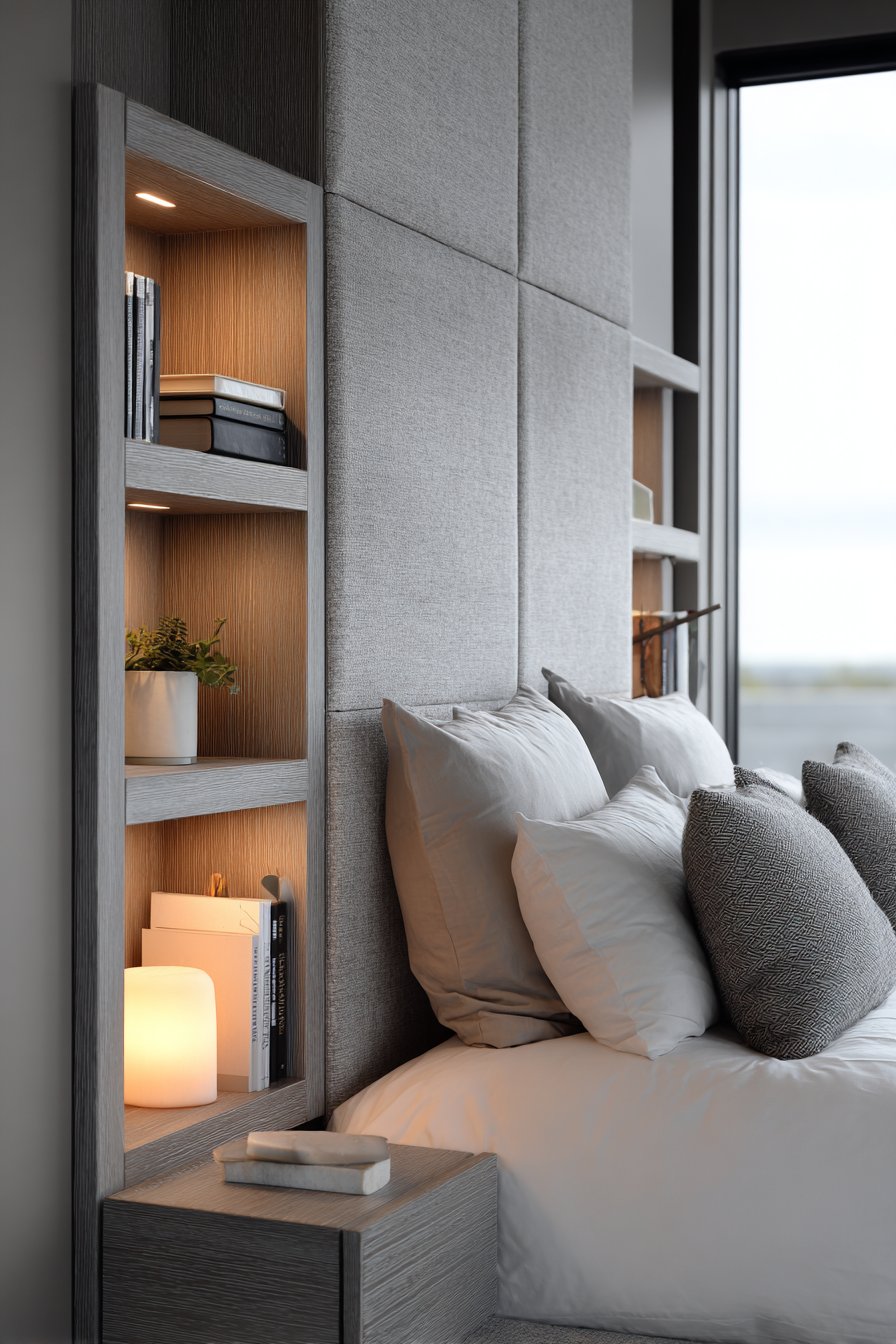
The soft gray paint unifying the shelving with surrounding walls creates a cocoon-like effect where the storage becomes part of the wall itself rather than furniture placed against it. This built-in approach maximizes floor space while providing personalized storage exactly where needed in the sleep environment. The upholstered portion of the headboard adds comfort for those who enjoy reading or watching television in bed, while the hard shelving surfaces provide practical storage that soft upholstery cannot.
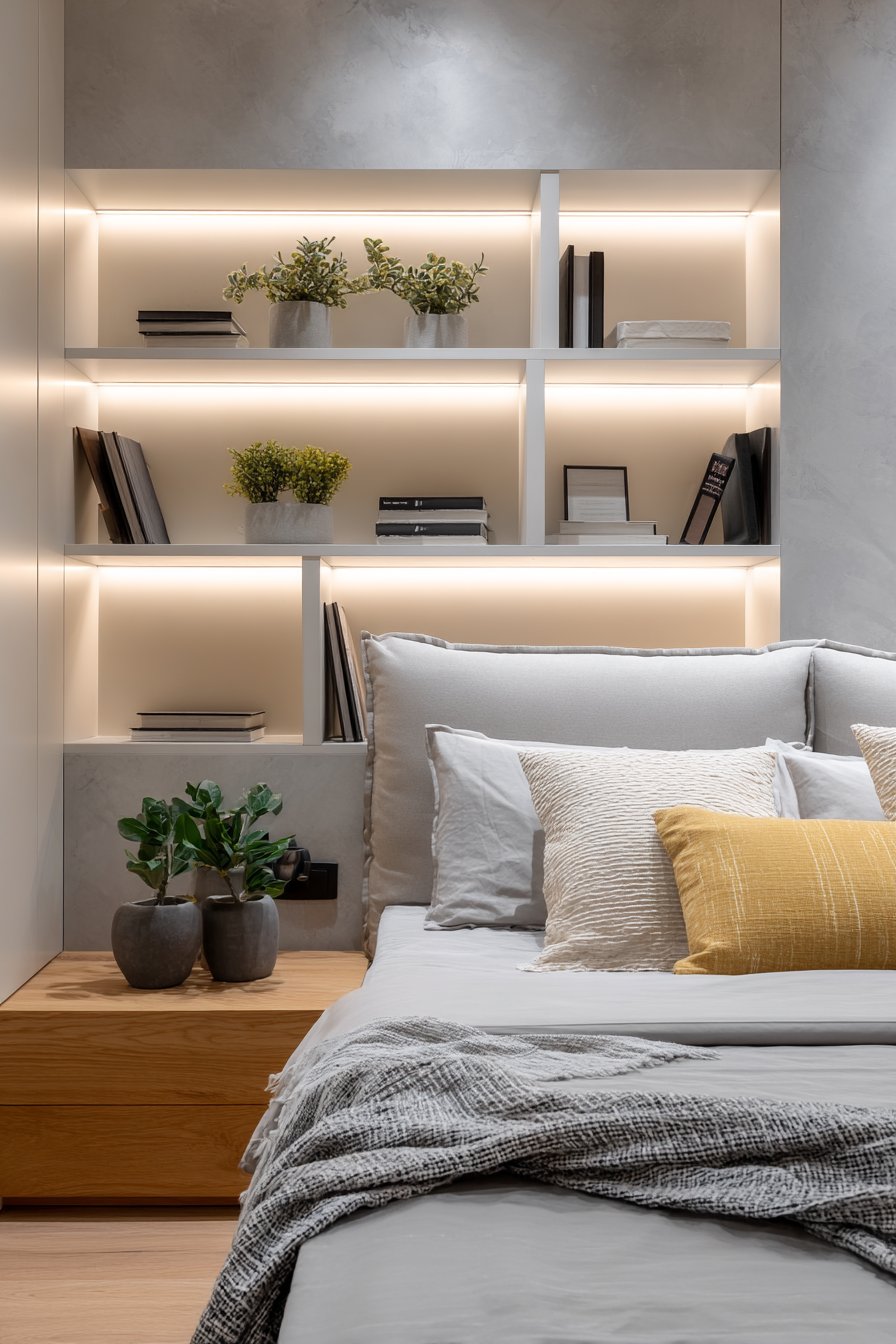
Warm accent lighting on dimmer controls allows adjustment from bright task lighting for reading to soft ambient glow for relaxation before sleep. This lighting flexibility acknowledges that bedrooms serve multiple functions throughout the day and different activities require different light levels. The marriage of comfort, storage, and lighting in a single integrated wall treatment represents sophisticated space planning that prioritizes both aesthetics and functionality.
Key Design Tips:
- Plan headboard shelf depth at 4-6 inches—deep enough for phones and books, shallow enough to avoid overwhelming
- Install LED strip lighting with warm color temperature (2700-3000K) for bedroom-appropriate ambiance
- Include dimmer switches or smart controls for lighting flexibility throughout the day
- Coordinate upholstery fabric with bedding for cohesive color schemes
- Position shelves at arm’s reach from sleeping position—typically 18-24 inches above mattress height
- Use the same wall color for built-in shelving to create seamless integration
- Consider USB charging ports built into the shelf structure for modern device charging needs
10. Traditional Mahogany Library with Rolling Ladder
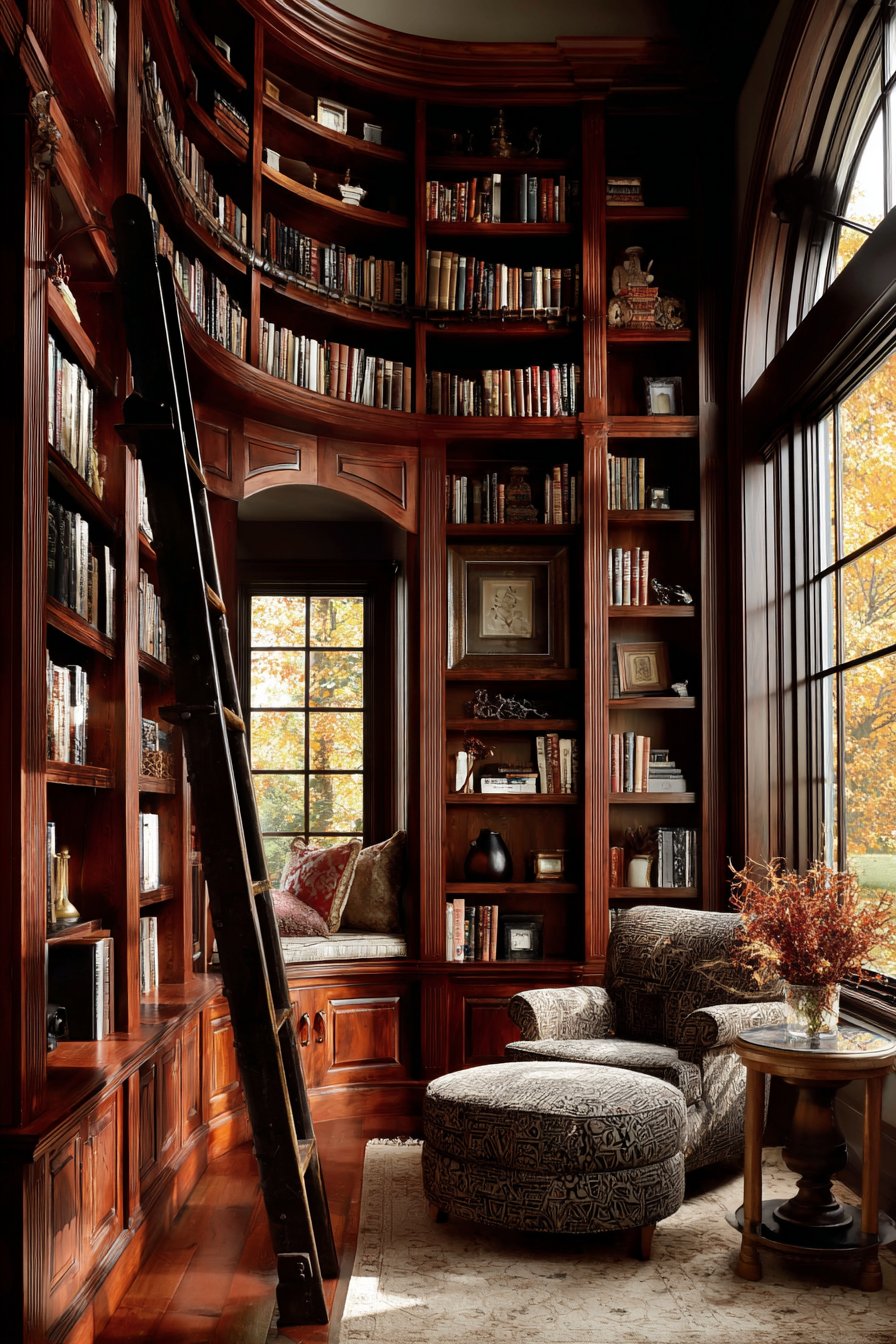
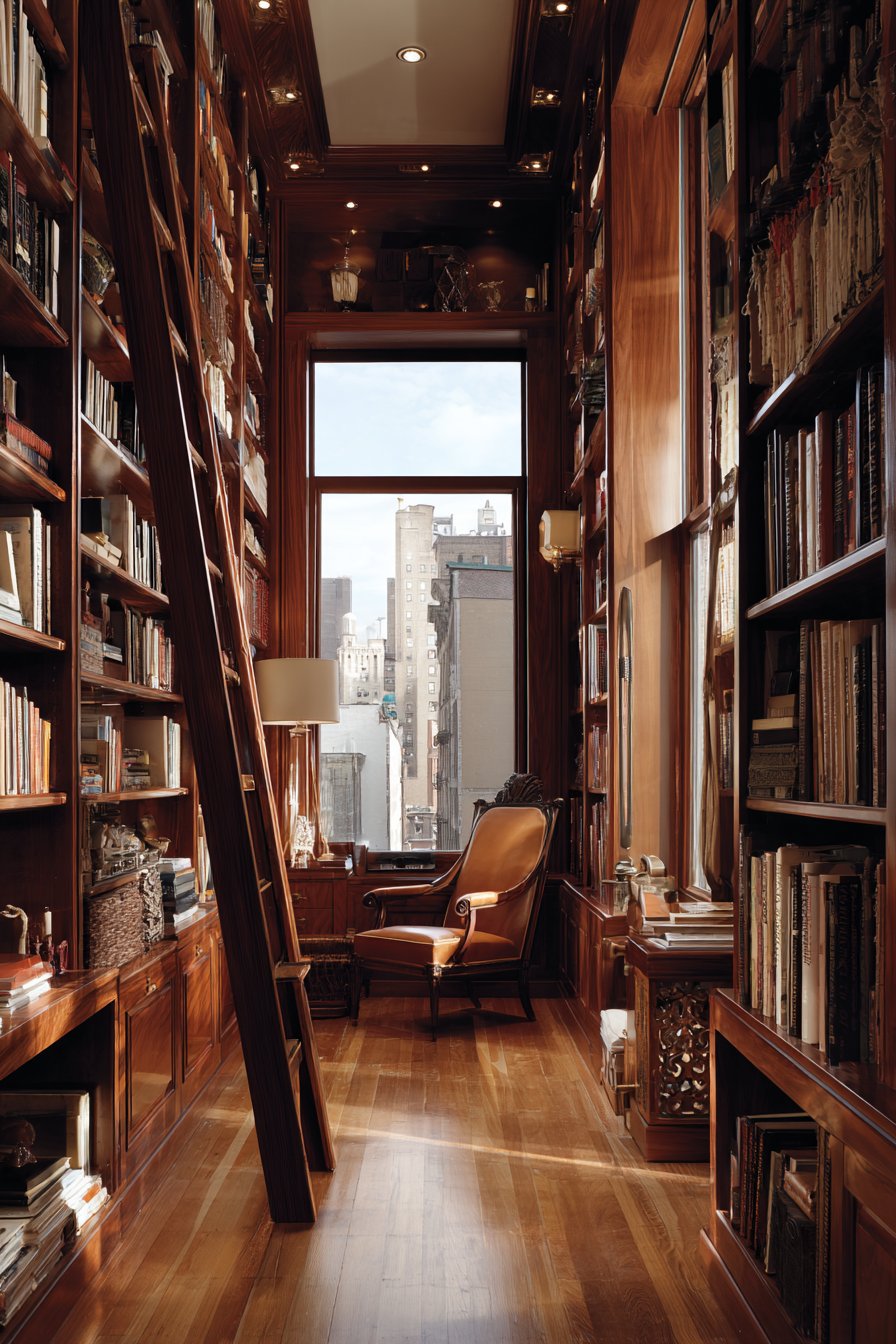
The home library represents the pinnacle of aspirational residential spaces, and this floor-to-ceiling installation in rich mahogany embodies traditional luxury and scholarly refinement. Custom wooden bookshelves line walls from floor to ceiling, housing an extensive collection organized by subject matter that transforms personal interests into architectural features. The inclusion of a rolling library ladder—both functional necessity and romantic nod to historic libraries—solves the practical challenge of accessing upper shelves while adding vintage charm and visual interest.
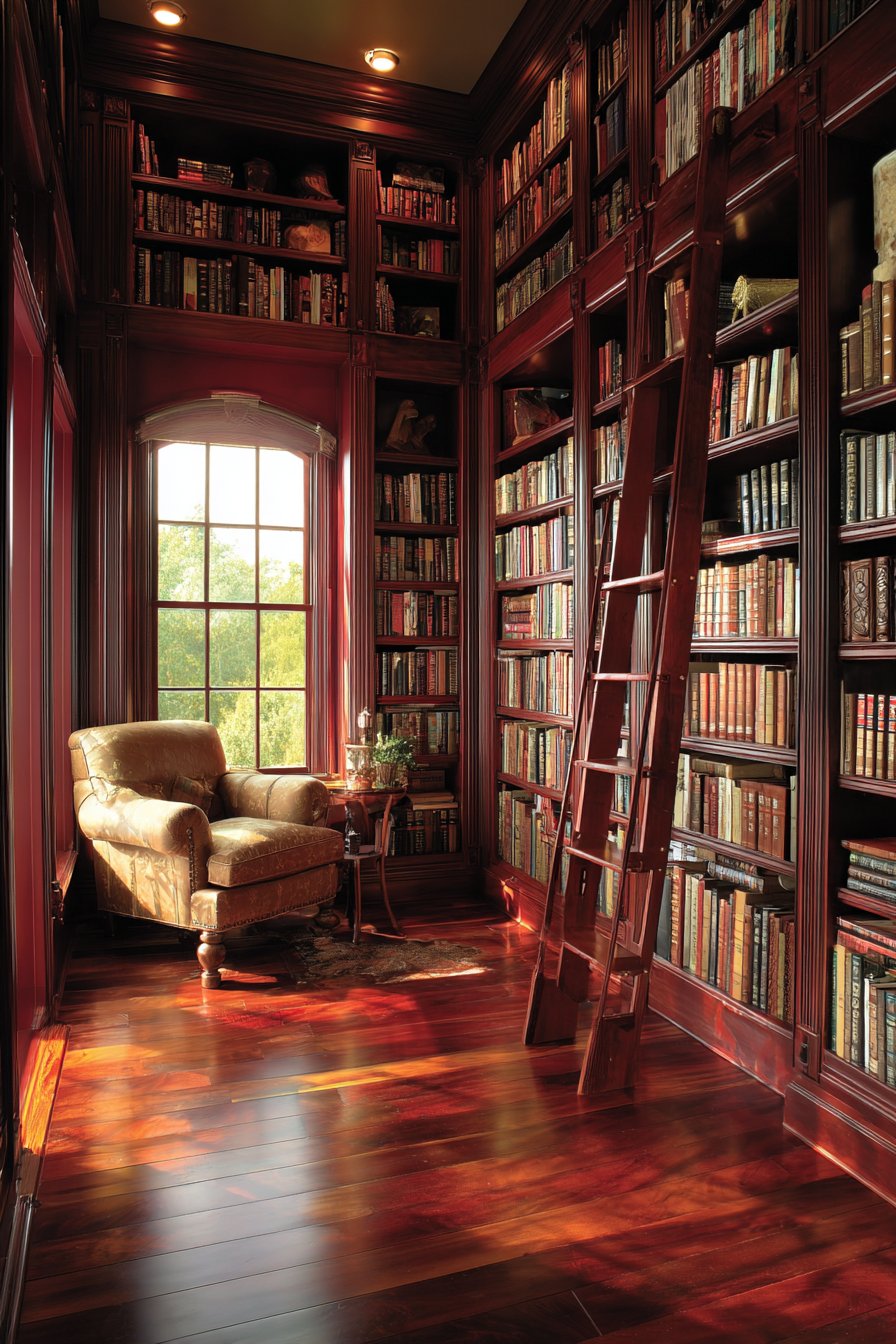
Adjustable shelving throughout the unit accommodates everything from tall art books to small paperbacks, with carefully planned shelf spacing that maximizes storage capacity while maintaining appropriate proportions. A reading chair nestled within a shelving alcove near the window creates an intimate reading nook where natural light provides ideal conditions for extended reading sessions. This integration of seating within the shelving architecture demonstrates thoughtful spatial planning that considers how the room will actually be used rather than simply maximized for storage.
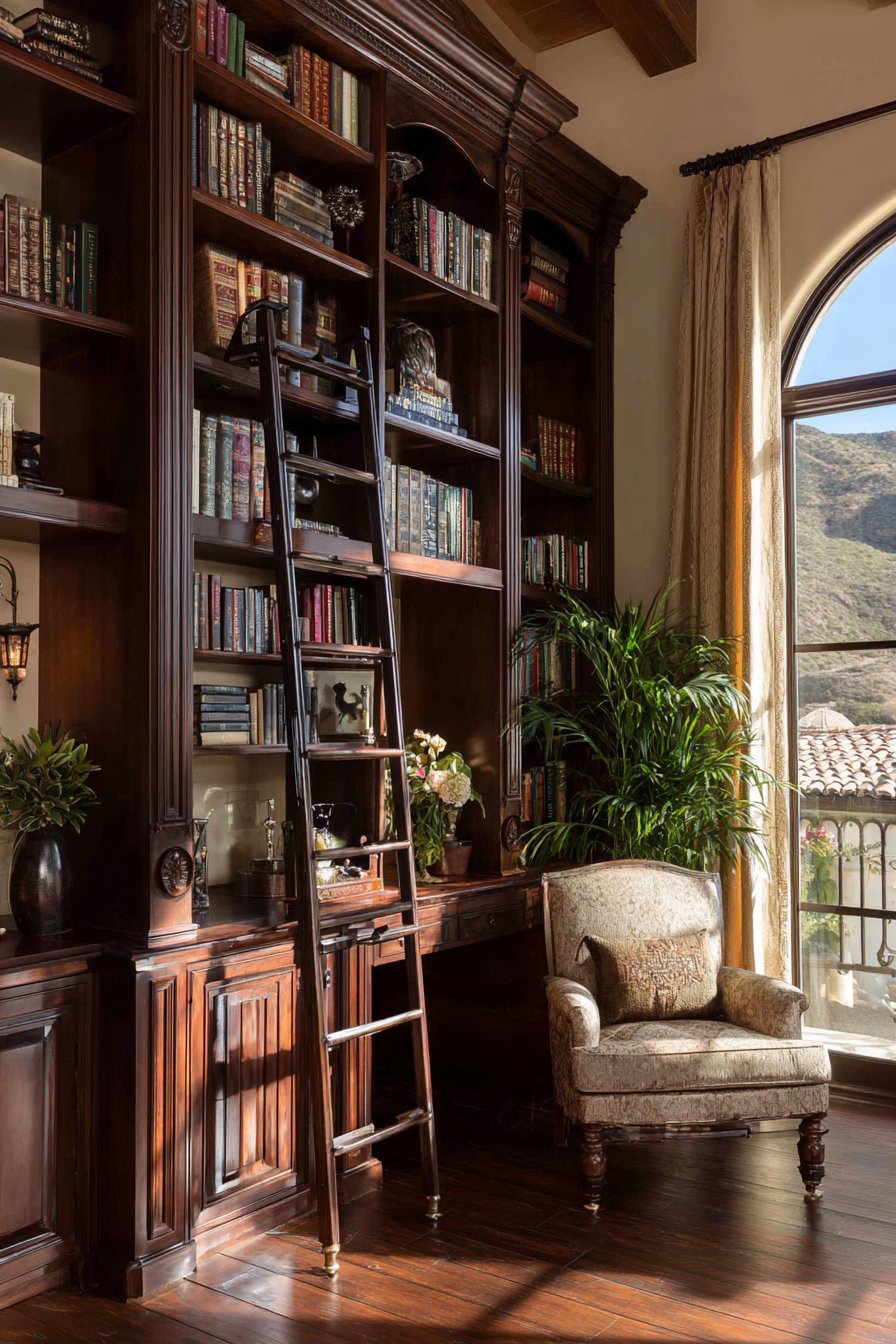
Natural afternoon light streaming through the window illuminates warm tones in the mahogany stain, creating an atmosphere of intellectual comfort and timeless elegance. The rich wood grain becomes increasingly prominent in angled sunlight, highlighting the quality of materials and craftsmanship. This type of extensive custom woodwork represents significant investment but creates irreplaceable value—both monetary and experiential—that mass-produced furniture cannot approach.
Key Design Tips:
- Work with experienced carpenters or millworkers for floor-to-ceiling custom installations to ensure structural integrity
- Install library ladders on heavy-duty tracks rated for human weight plus movement forces
- Plan adequate spacing between shelf tracks (typically 10-12 inches for standard books, more for oversized volumes)
- Include lighting above or within shelving—halogen or LED spotlights highlight book spines while providing task light
- Finish wood with products appropriate for the species—oil-based polyurethane for mahogany protects while enhancing color
- Design alcoves or recessed areas within shelving for reading chairs to create intimate zones
- Consider climate control—extensive book collections benefit from consistent temperature and humidity
11. White-Washed Oak Corner Bathroom Storage
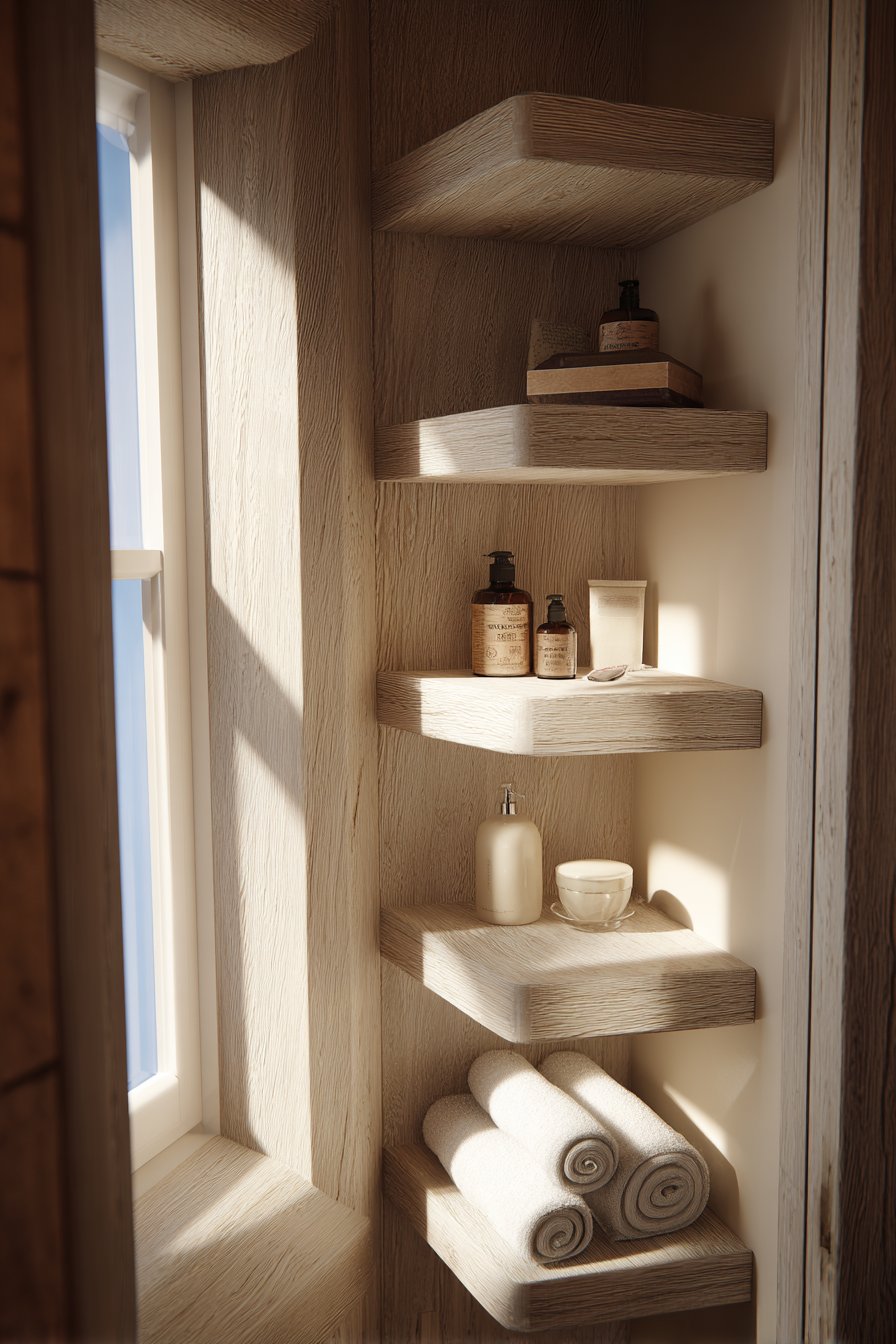
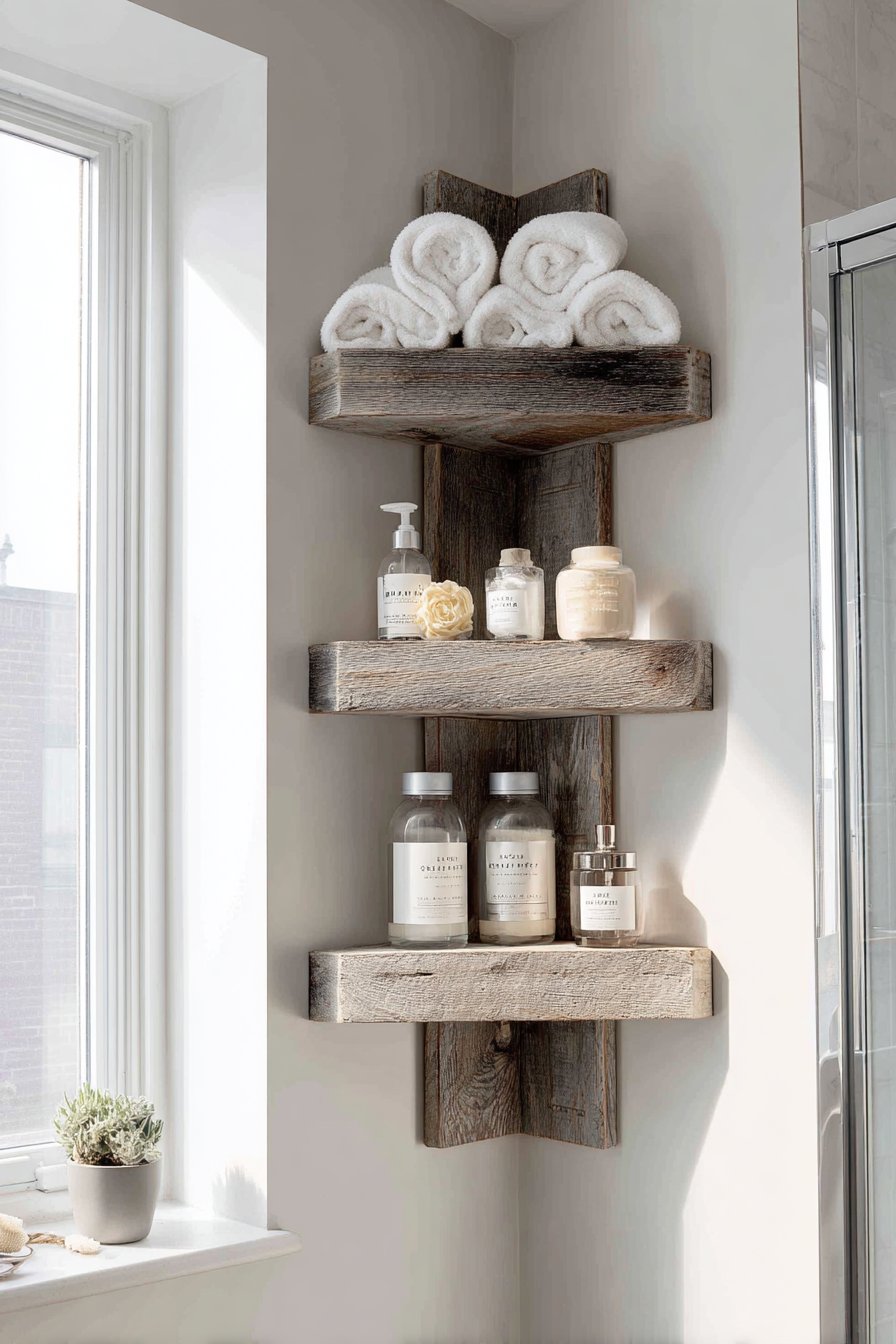
Corner spaces in bathrooms often go underutilized, but this vertical floating shelf system transforms awkward geometry into practical storage advantage. The white-washed oak triangular shelves ascend the corner in graduated sizes, utilizing space that typically houses nothing more than cobwebs. Each shelf displays rolled towels, bathroom essentials, and small decorative elements that turn functional storage into visual composition that draws the eye upward, emphasizing ceiling height.
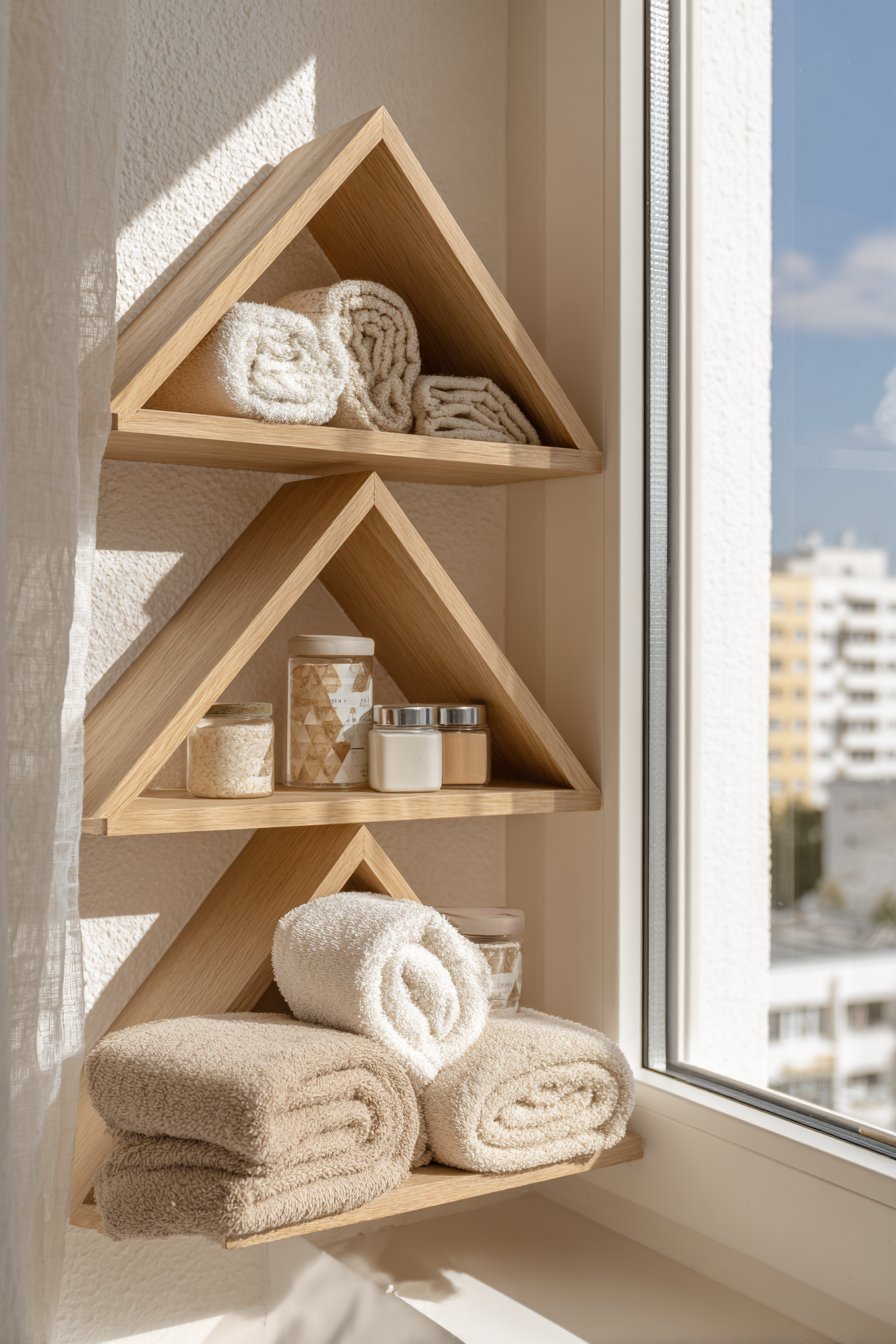
The white-washed finish on oak maintains wood’s natural grain texture and warmth while brightening the treatment to coordinate with typical bathroom white fixtures and light color schemes. This finish technique represents a middle ground between fully painted surfaces that obscure wood character and natural finishes that might feel too dark or heavy for smaller bathrooms. Chrome mounting hardware provides sleek contemporary support that complements modern bathroom fixtures while ensuring structural stability for loaded shelves.
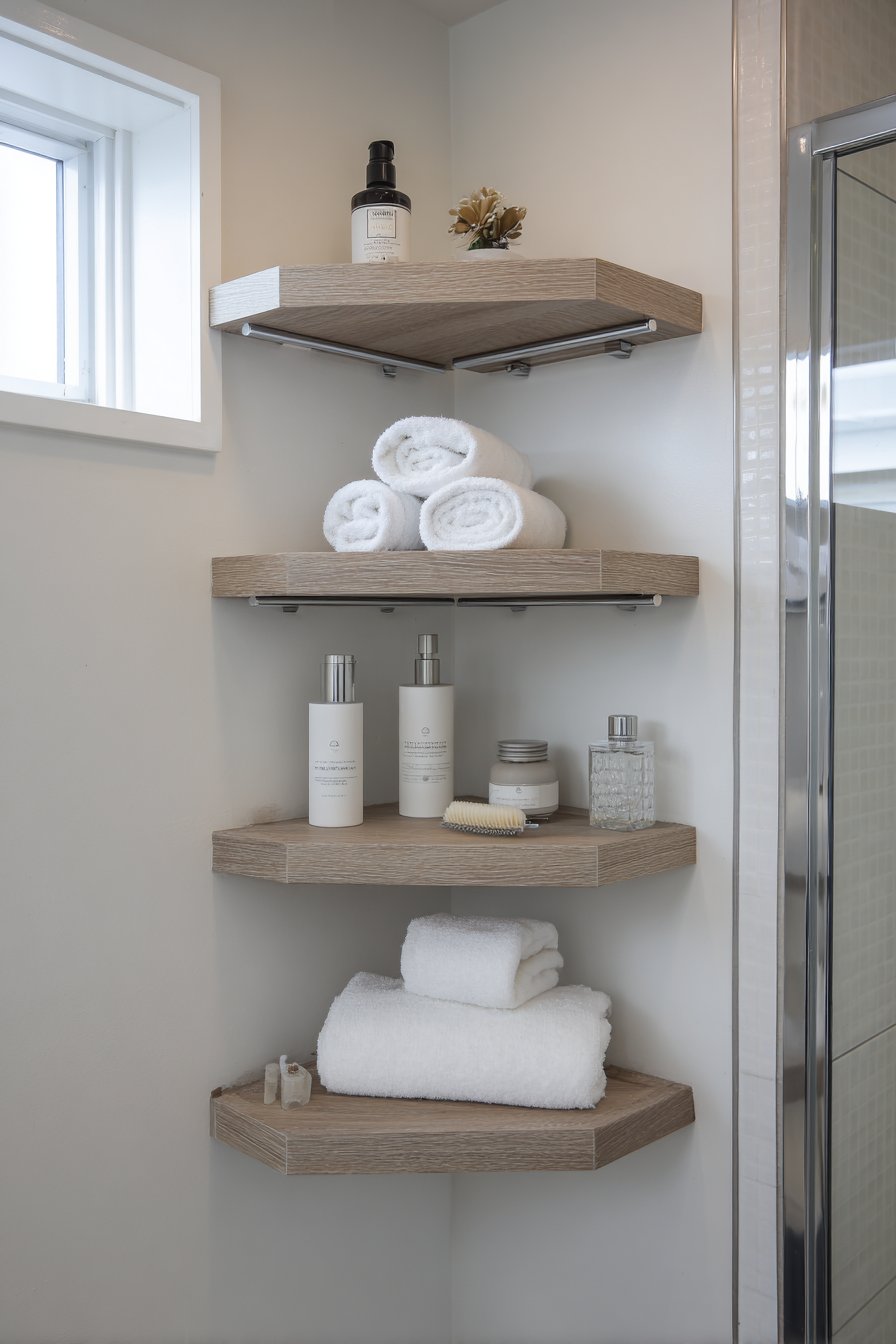
Natural light from a small bathroom window—often limited in bathrooms prioritizing privacy—creates soft highlights on the wood texture and rolled towel surfaces. The vertical arrangement makes even a small bathroom feel taller and more spacious by emphasizing vertical rather than horizontal dimensions. This clever space utilization demonstrates that creative thinking about typically ignored areas can yield both practical storage and aesthetic improvement.
Key Design Tips:
- Measure corner angles precisely—most corners aren’t perfect 90 degrees, requiring custom shelf cuts
- Decrease shelf size as you move upward for visual lightness and practical access—larger items go lower
- Use waterproof wood sealant in bathroom environments to protect against moisture damage
- Install chrome or stainless steel mounting brackets that resist bathroom humidity and maintain finish
- Roll rather than fold towels on display shelves for spa-like aesthetic and efficient space use
- Limit upper shelf contents to lighter weight items for safety and structural considerations
- Position the lowest shelf at comfortable reach height—usually 40-50 inches from floor
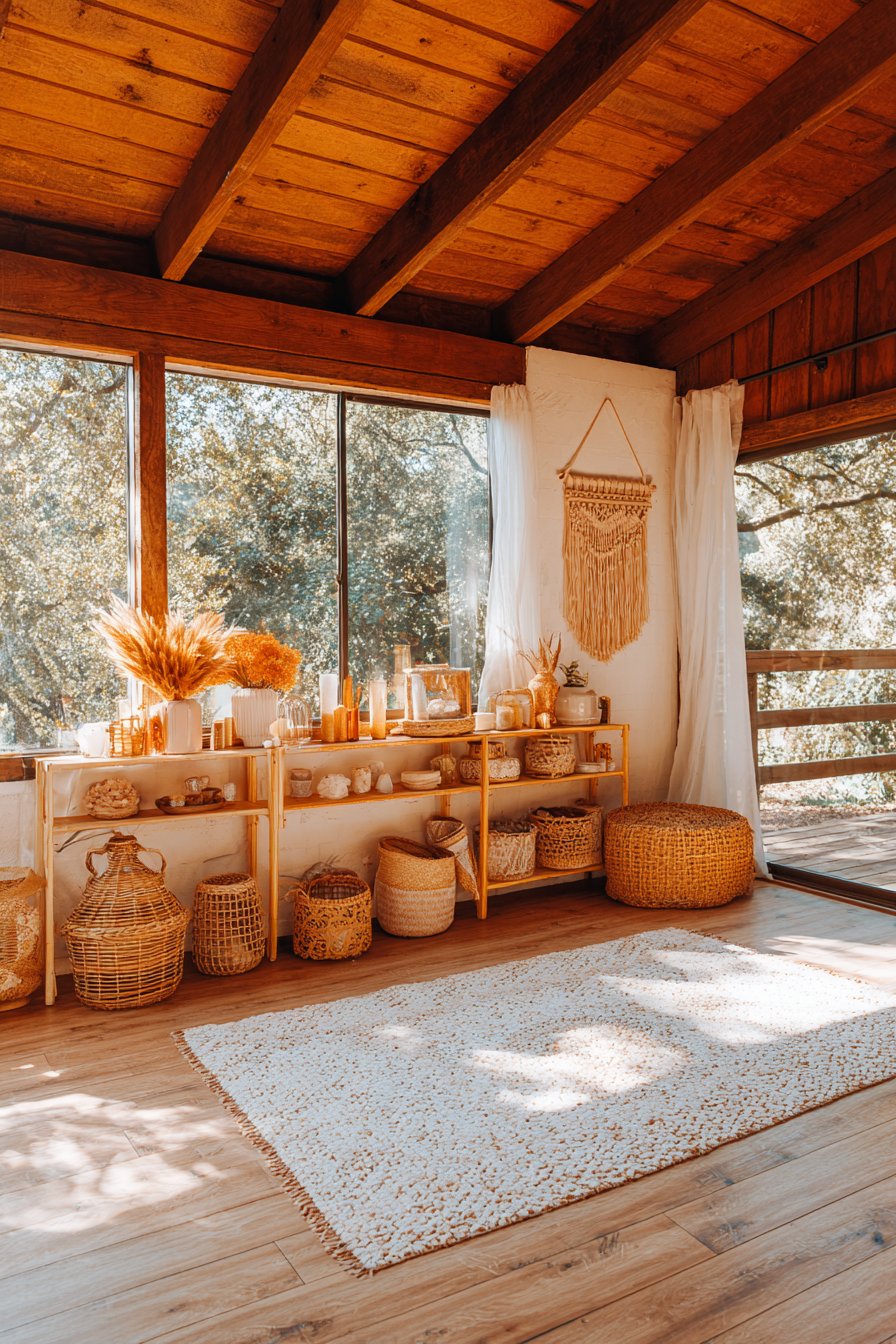
12. Bohemian Layered Wall with Mixed Shelving
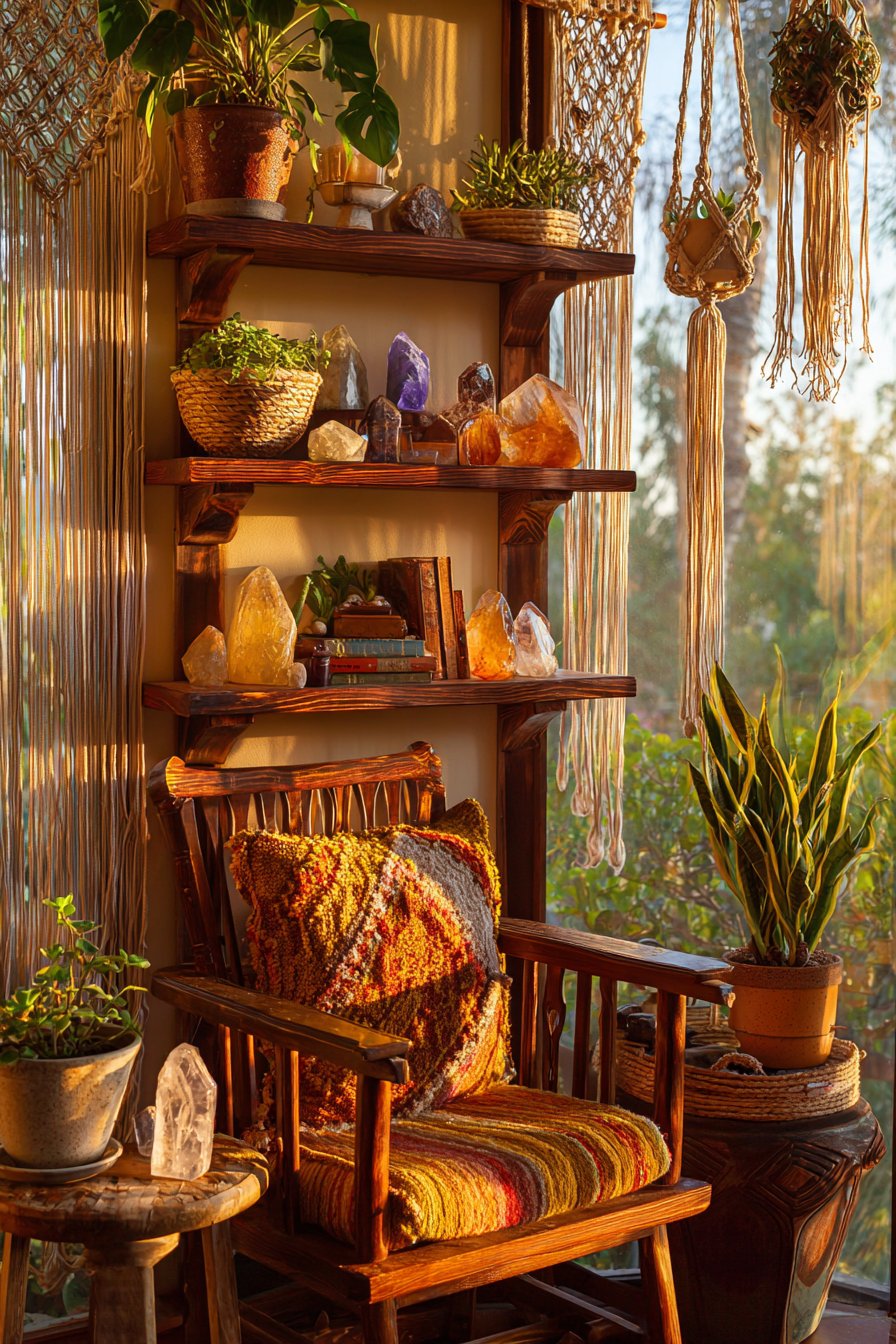
Eclectic bohemian design celebrates collected-over-time aesthetics rather than coordinated room packages, perfectly embodied in this layered wall display combining macramé hanging shelves with wooden floating platforms. The mix of materials—natural jute rope, reclaimed wood, woven baskets—creates rich textural interest that defines boho style. This intentionally uncoordinated approach showcases plants in ceramic planters of varying sizes and styles, crystals and geodes from travels, and vintage books with aged leather bindings and weathered cloth covers.
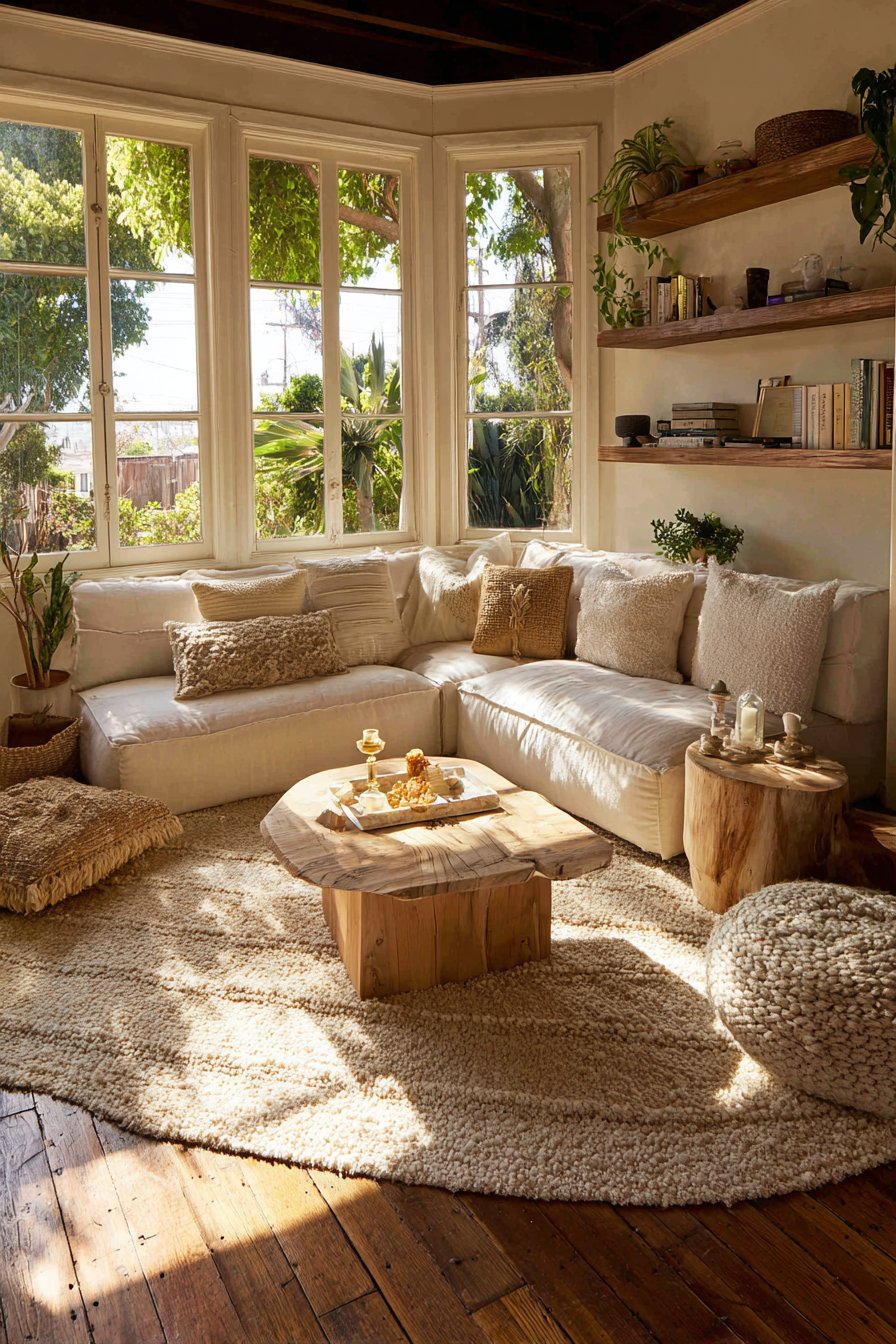
The layering technique—placing some shelves higher, others lower, some extending further from the wall—creates three-dimensional depth that prevents the display from reading as flat or one-dimensional. This spatial variation allows smaller items on forward shelves to coexist visually with larger pieces on rear shelving without creating competition or confusion. Each element maintains its individual character while contributing to an overall impression of curated abundance rather than cluttered chaos.
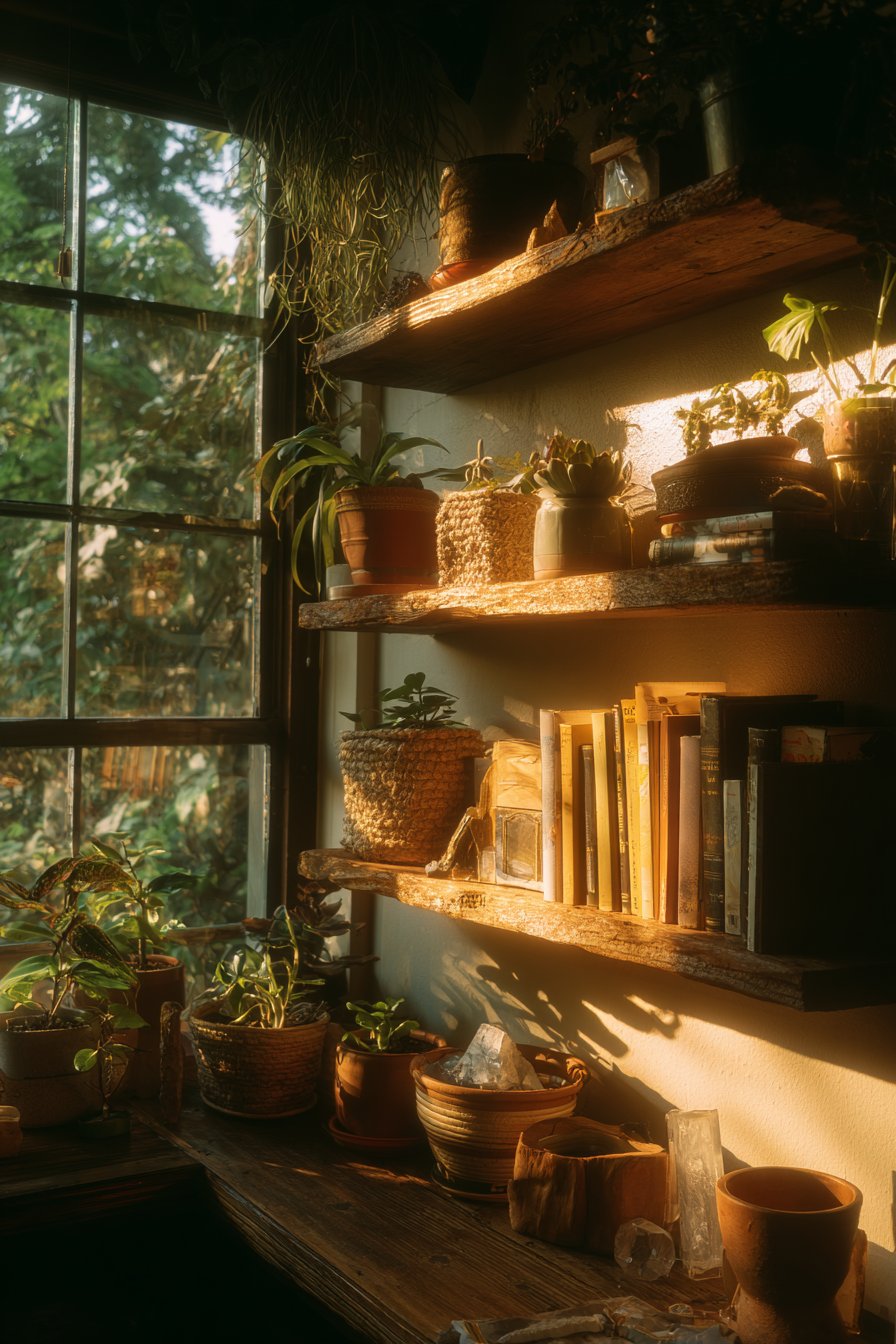
Warm golden hour lighting streaming through large windows illuminates organic materials from behind and beside, creating glowing halos around macramé fringe and highlighting plant leaves until they appear translucent. This quality of natural light is essential to bohemian interiors, which prioritize connection to natural cycles and organic materials. The overall effect feels personally collected rather than professionally designed, exactly the relaxed, authentic vibe bohemian style pursues.
Key Design Tips:
- Mix manufactured floating shelves with handcrafted macramé hangers for authentic bohemian variety
- Create visual triangles when arranging objects—eye naturally follows triangular compositions
- Incorporate living plants extensively—boho style celebrates nature and organic growth
- Choose vintage books for display based on cover aesthetics—weathered cloth and leather add texture
- Layer items at varying depths to create three-dimensional interest rather than flat wall displays
- Use warm-toned woods and natural fiber materials to maintain bohemian’s organic foundation
- Embrace imperfection—boho thrives on collected-over-time rather than all-at-once design
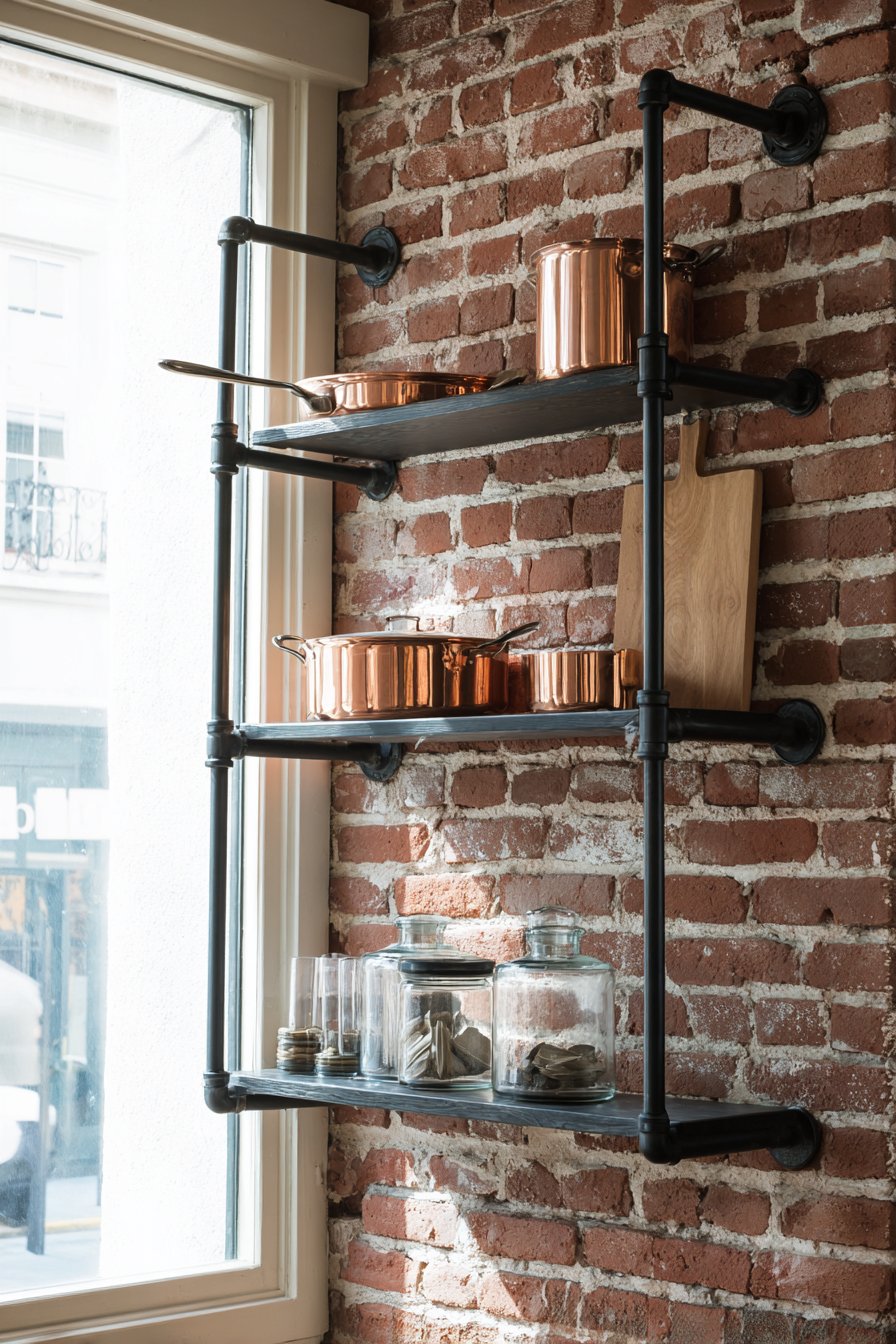
13. Industrial Black Pipe Kitchen Display
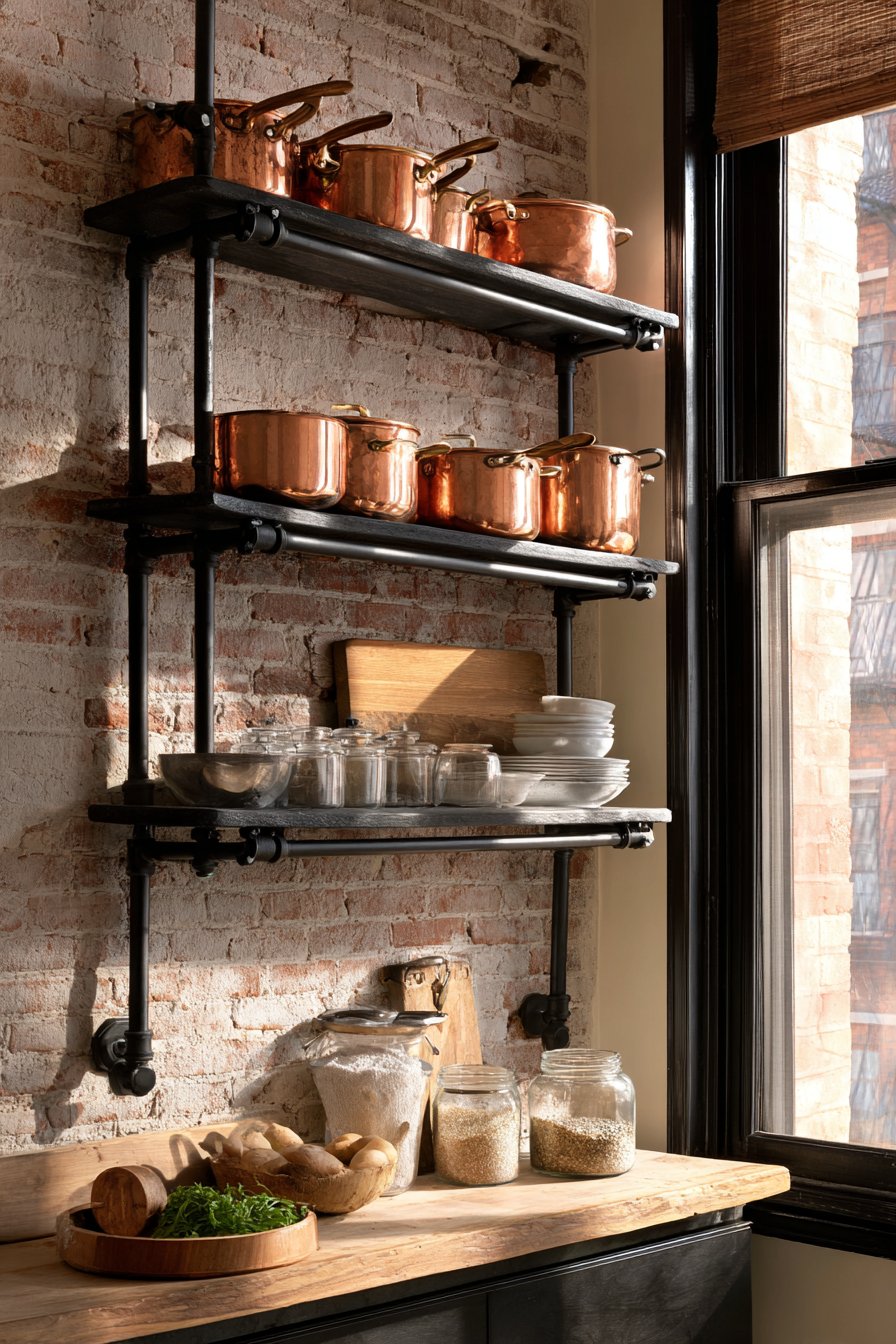
Industrial design brings commercial and warehouse aesthetics into residential contexts, brilliantly demonstrated in this kitchen shelving constructed from black iron pipe mounted against exposed brick. The raw materials create powerful visual contrast—the matte black metal against red-orange brick, smooth painted surfaces against rough masonry texture. Sturdy wooden shelves rest on the pipe framework, displaying copper cookware that adds warm metallic tones, wooden cutting boards showing natural grain and use marks, and glass storage containers that introduce transparency and sparkle.
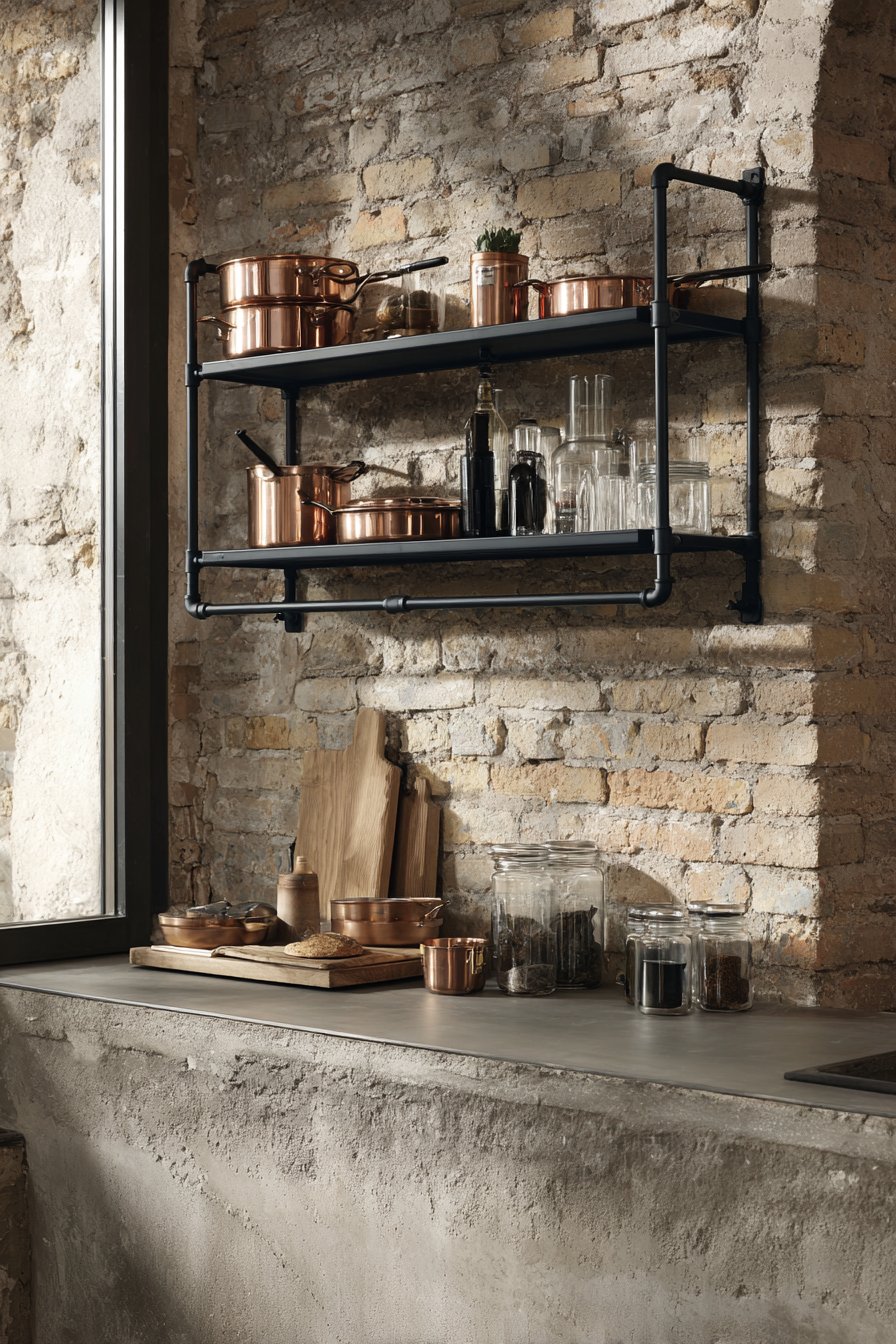
The functional nature of displayed items reinforces industrial design’s utilitarian philosophy—nothing purely decorative, everything serves purpose even when beautiful. Copper pots and pans aren’t hidden in cabinets but celebrated as sculptural objects that happen to cook food. This honest approach to materials and function defines industrial aesthetics, where beauty emerges from utility rather than applied decoration. The exposed brick wall provides historically industrial context while adding texture and warmth that prevents the metal and glass from feeling cold or sterile.
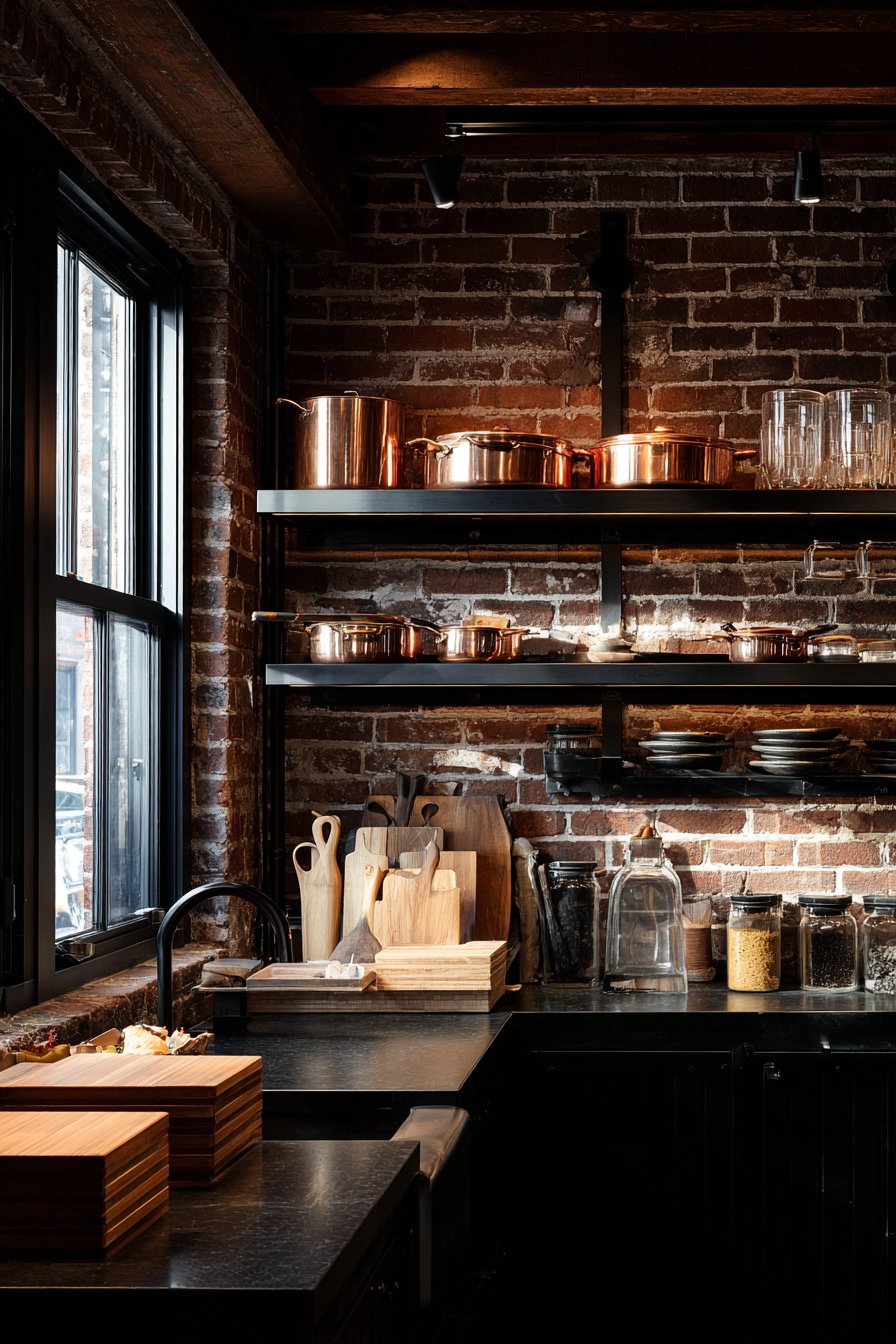
Natural light from nearby windows highlights brick texture while creating reflections on copper surfaces and glass containers. The interplay between matte black pipe, reflective copper, transparent glass, and textured brick demonstrates how combining different material properties creates visual richness. This kitchen treatment works equally well in genuine loft spaces with existing industrial features or conventional homes seeking edgy contemporary character.
Key Design Tips:
- Use black iron pipe and fittings rated for shelving—they’re stronger than standard plumbing pipes
- Seal exposed brick with clear masonry sealer to prevent dust while maintaining authentic texture
- Install pipes into wall studs or use heavy-duty anchors appropriate for masonry—filled shelves are heavy
- Choose wood shelf boards at least 1 inch thick for appropriate industrial scale and weight capacity
- Display items in coordinating metallic finishes—copper, bronze, brass—for warmth against black
- Embrace the raw nature of materials—don’t try to hide pipe joints, they’re part of the aesthetic
- Maintain the balance between industrial edge and livability—too much metal and exposed material feels harsh
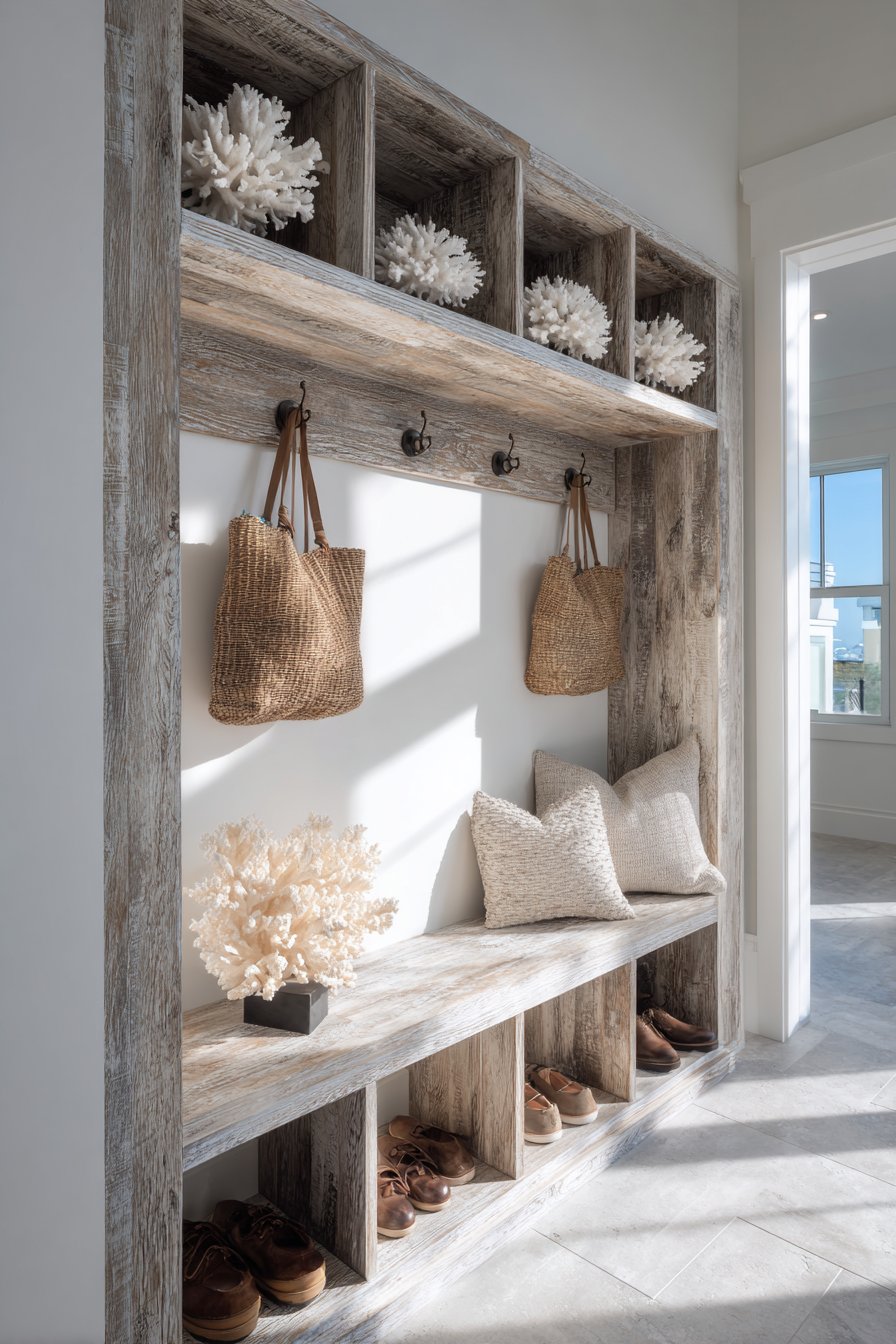
14. Coastal Whitewashed Mudroom Organization
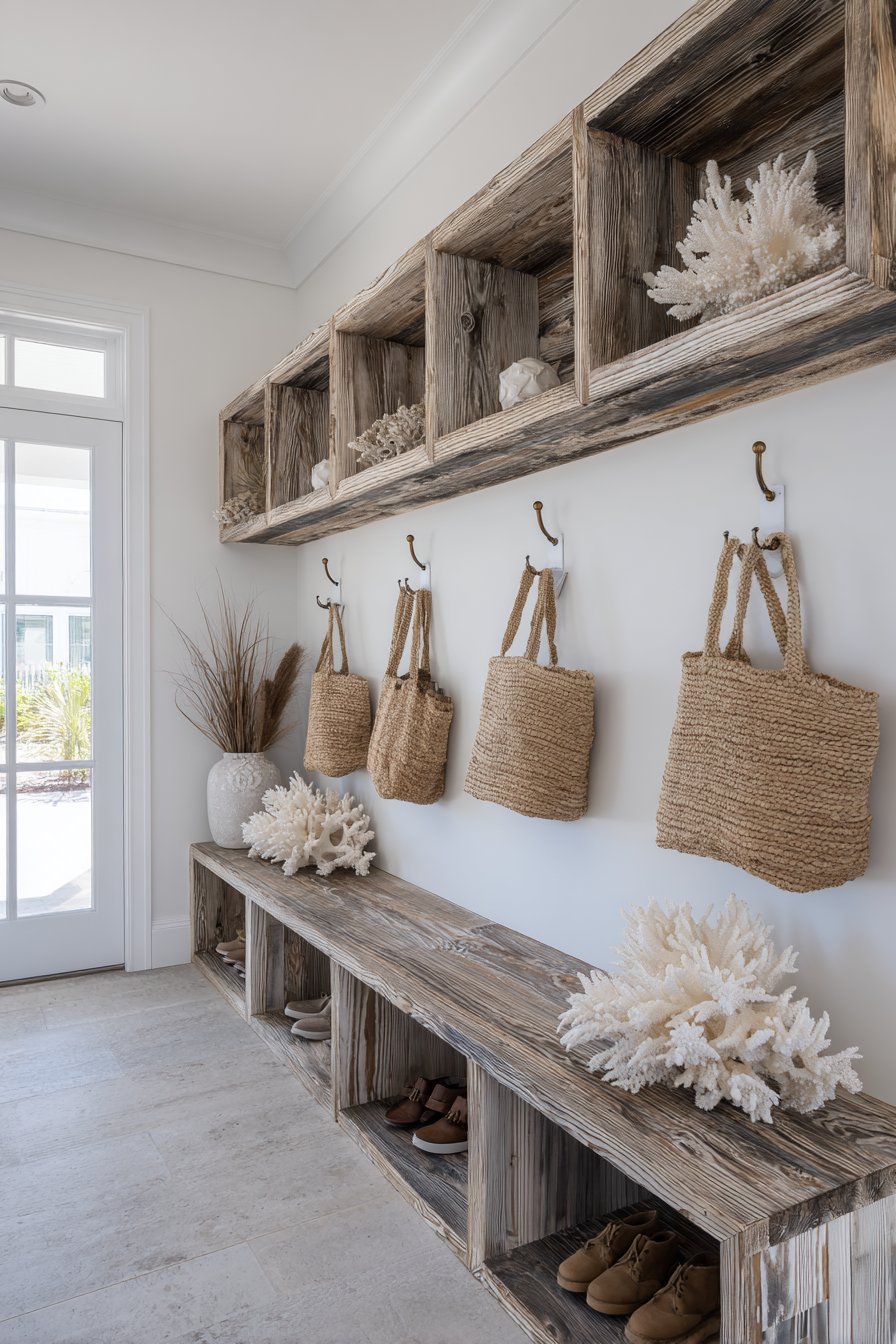
Coastal design evokes relaxed beach living through weathered materials and breezy color palettes, perfectly captured in this mudroom featuring whitewashed wooden shelves above individual family cubbies. The open shelving displays woven beach bags ready for sandy adventures, decorative coral pieces bringing ocean elements indoors, and organized shoe storage below that keeps sandy footwear contained. Brass hooks provide additional hanging storage for bags and light jackets, their warm metallic tone complementing the whitewashed wood without competing with it.
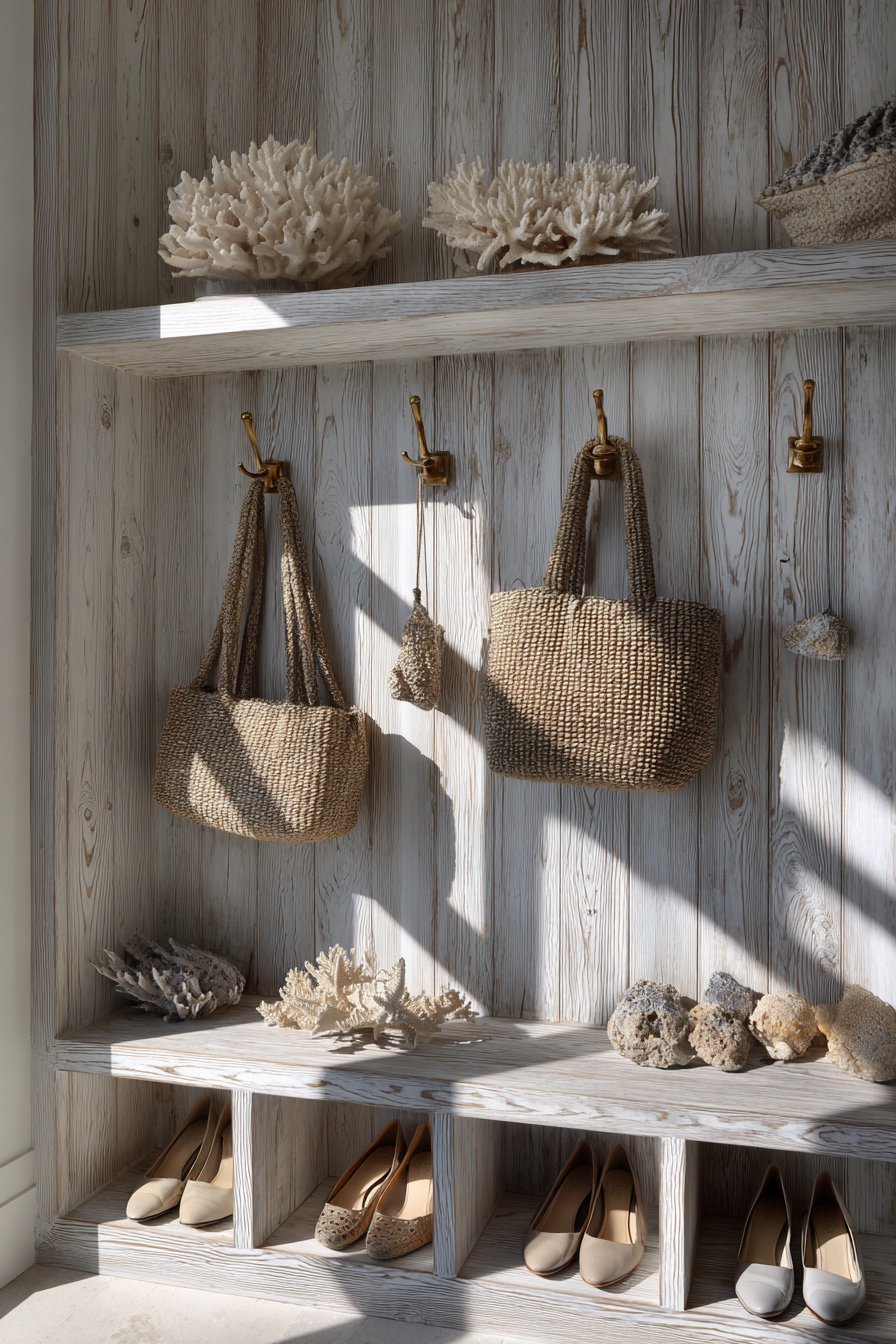
The whitewashed treatment on wood mimics driftwood naturally bleached by sun and saltwater exposure, creating instant coastal connection even in landlocked homes. This finish technique allows wood grain to show through while brightening the overall appearance, ideal for mudrooms which often lack abundant natural light. The organizational system—dedicated cubbies for each family member—prevents the common mudroom problem of everyone’s belongings mixing into chaos while teaching children responsibility for their own areas.
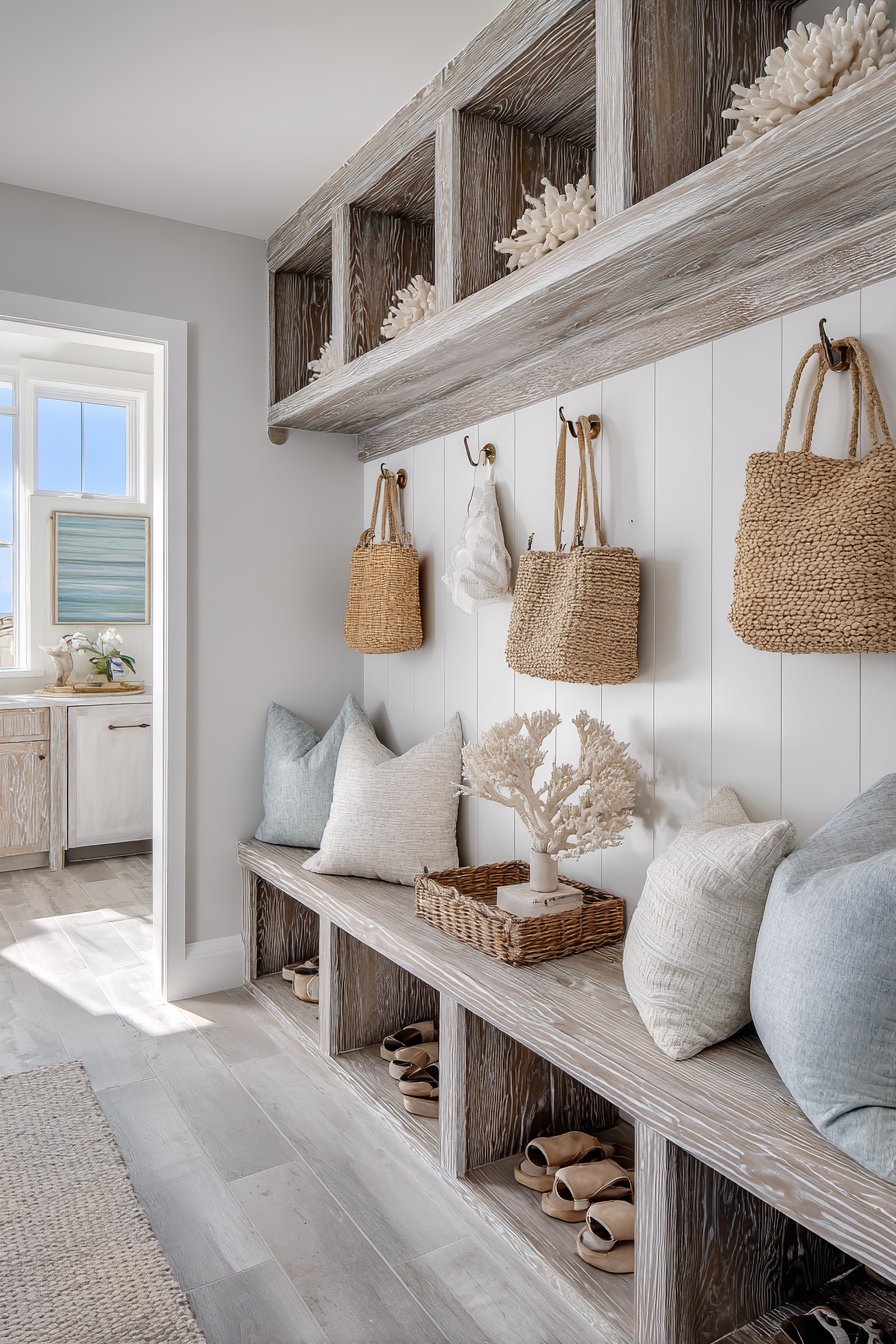
Natural light creates a bright, airy feeling essential to coastal aesthetics that celebrate openness and connection to outdoor environments. The weathered wood texture, natural fiber woven bags, and organic coral elements combine to create tactile richness while maintaining the light, breathable quality that defines successful coastal interiors. This mudroom manages the difficult balance between practical family function and designed aesthetic, proving that hardworking spaces can also be beautiful.
Key Design Tips:
- Create whitewash by mixing white paint with water in 1:1 ratio, or purchase pre-mixed whitewash stain
- Apply whitewash in direction of wood grain using cloth or brush, wiping back to desired opacity
- Assign each family member their own cubby clearly marked with names or personalized hooks
- Choose brass or bronze hardware in coastal spaces—they develop natural patina echoing aged beach finds
- Include both upper open shelving and lower closed or semi-closed cubbies for storage variety
- Position hooks at varying heights to accommodate adults and children without step stools
- Incorporate washable floor materials—tile or sealed concrete—that handle wet, sandy traffic
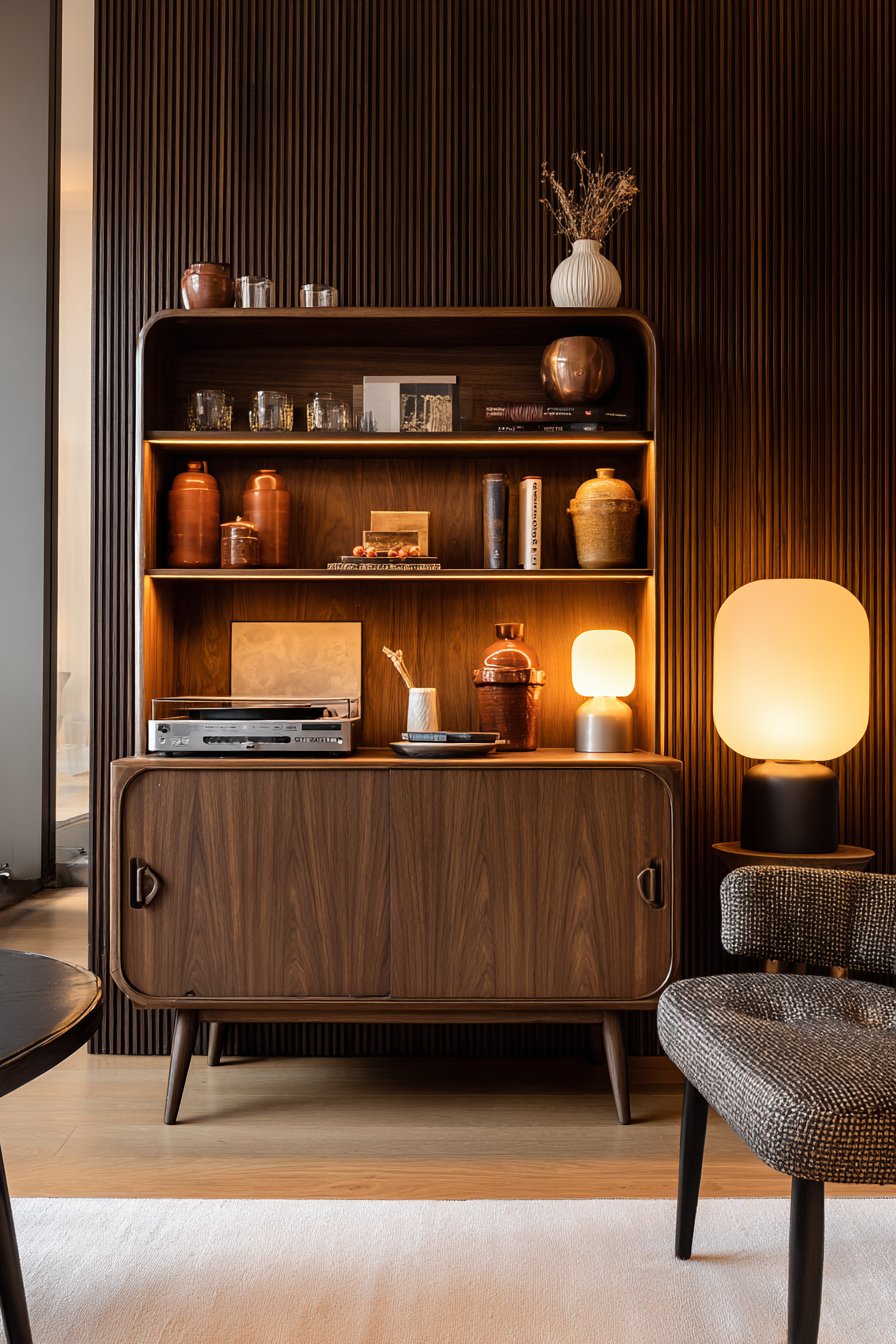
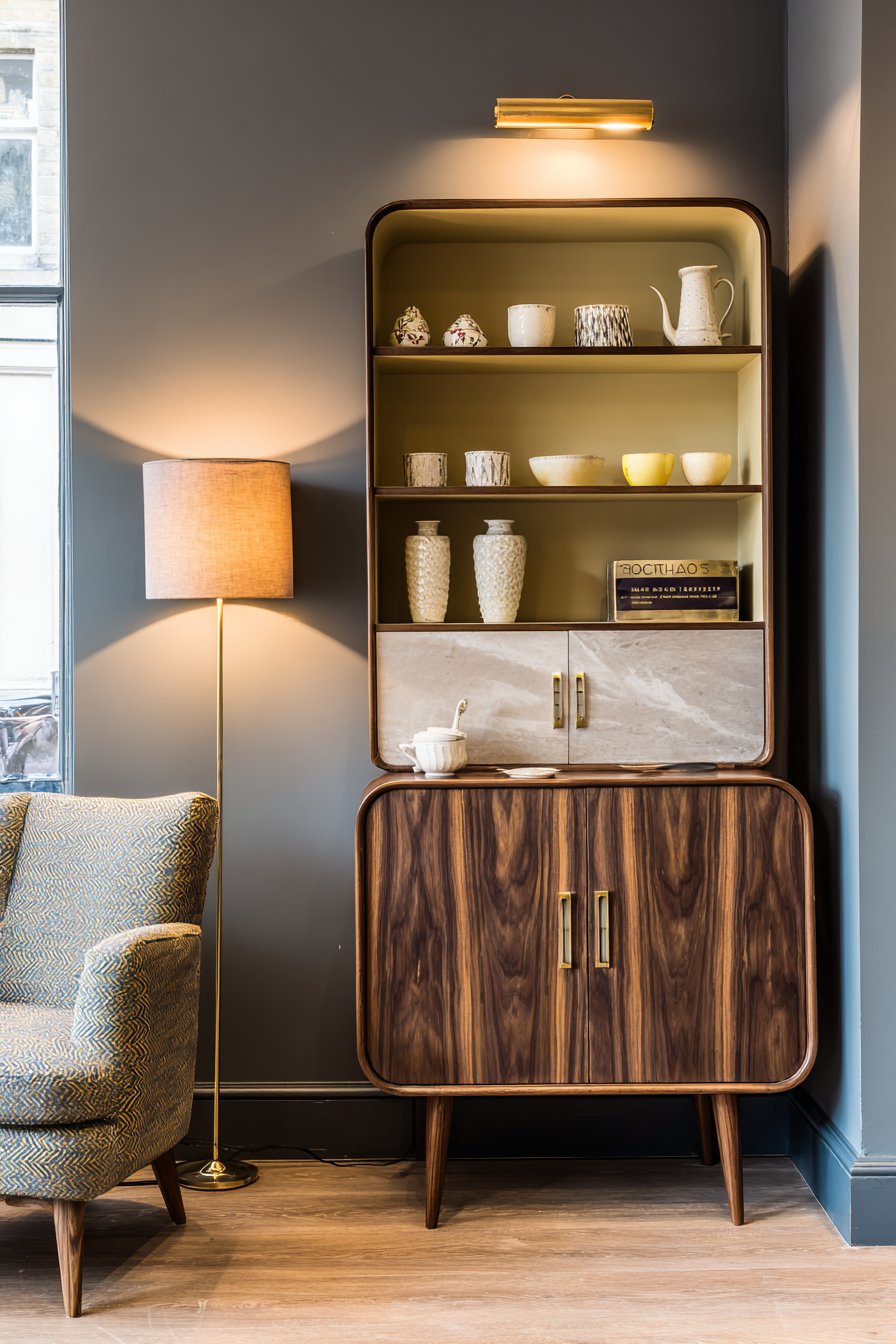
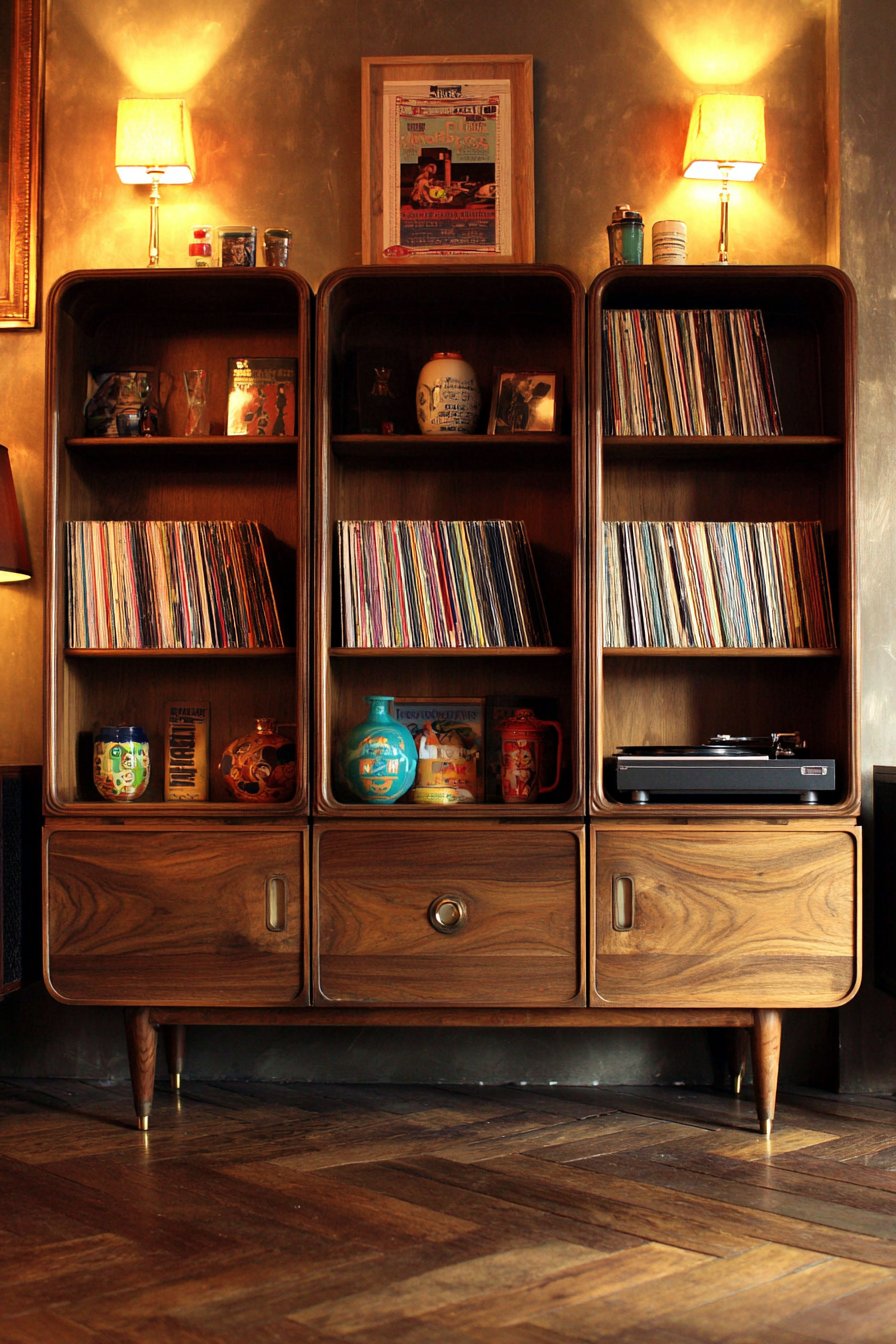
15. Mid-Century Modern Teak Wall Unit
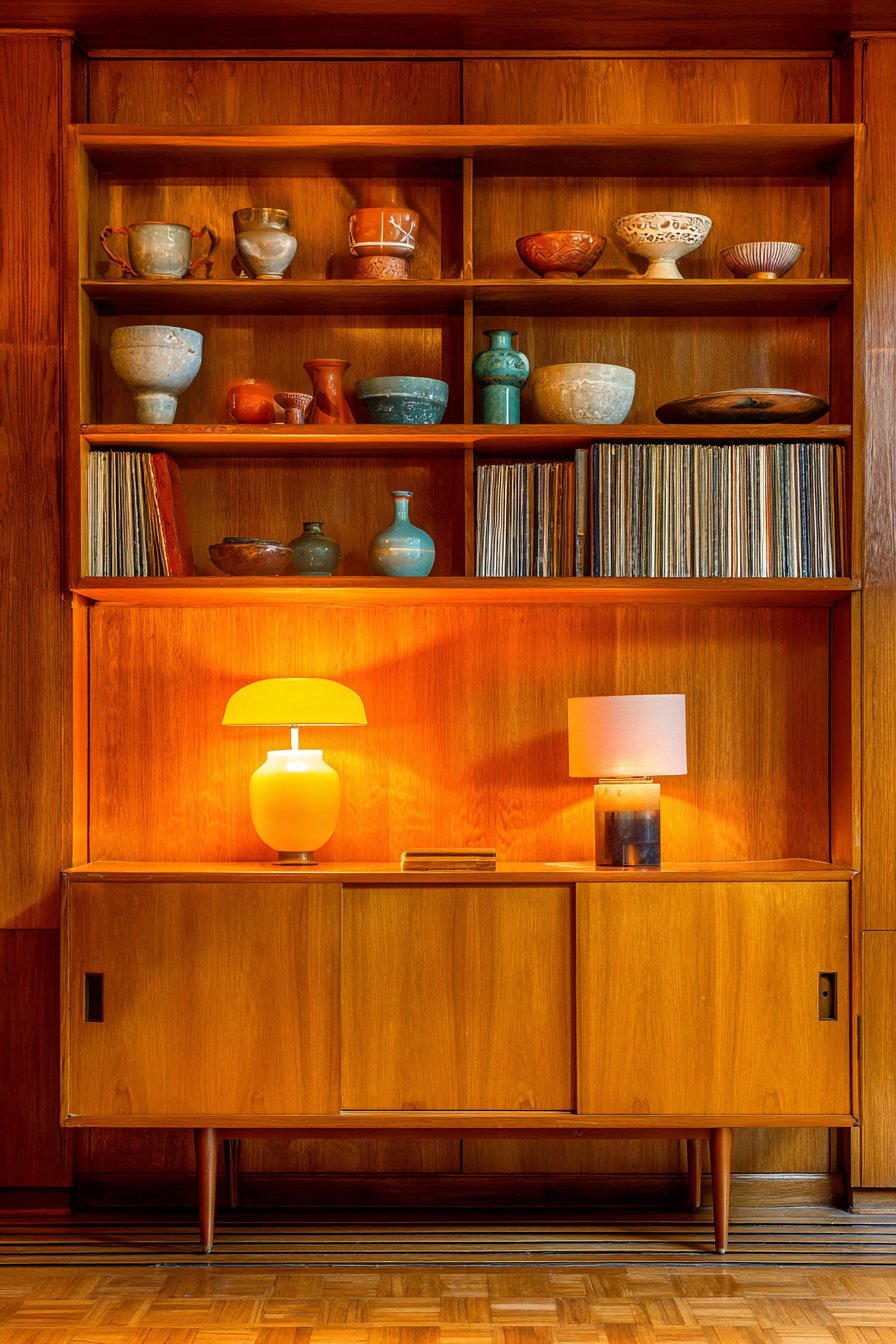
Mid-century modern design from the 1950s-60s continues to captivate with its clean lines, organic forms, and masterful woodworking, exemplified in this teak wall unit combining open shelving with closed cabinet sections. The tapered wooden legs elevate the unit visually and physically, creating lightness despite substantial storage capacity. Open shelves display vintage ceramics in period-appropriate forms and glazes, a vinyl record collection in original sleeves, and modern accessories carefully selected to complement rather than clash with the retro aesthetic.
Authentic period hardware—typically brass or bronze in slim, understated forms—provides functional cabinet access while maintaining design purity. The rich teak wood with its straight grain and warm golden-brown tones represents mid-century design’s preference for showcasing beautiful wood species in honest, minimally processed applications. This appreciation for material integrity connects mid-century modernism to earlier Arts and Crafts movements while the streamlined forms and rejection of applied ornamentation look forward to contemporary minimalism.
Warm ambient lighting from period-appropriate table lamps creates nostalgic atmosphere while highlighting the teak’s inherent warmth and subtle grain patterns. The combination of open display and closed storage addresses practical needs—some items deserve showcase, others need concealment—while maintaining the clean aesthetic mid-century design demands. This balance between function and form, between display and discretion, epitomizes the thoughtful design approach that makes mid-century modern enduringly relevant.
Key Design Tips:
- Authenticate vintage mid-century pieces by examining joinery—quality examples show dovetails and precise craftsmanship
- Maintain teak with occasional application of teak oil to preserve color and prevent drying
- Style shelves with actual vintage items when possible—period ceramics, original album covers, classic design objects
- Keep displays curated and minimal—mid-century aesthetic values breathing room and restraint
- Pair with period-appropriate lighting—arc floor lamps, cone pendants, or sculptural table lamps
- Position the unit against neutral walls that don’t compete with the wood’s rich tones
- Include closed storage to maintain the clean lines essential to mid-century modern style
16. Farmhouse Reclaimed Barn Wood Kitchen Display
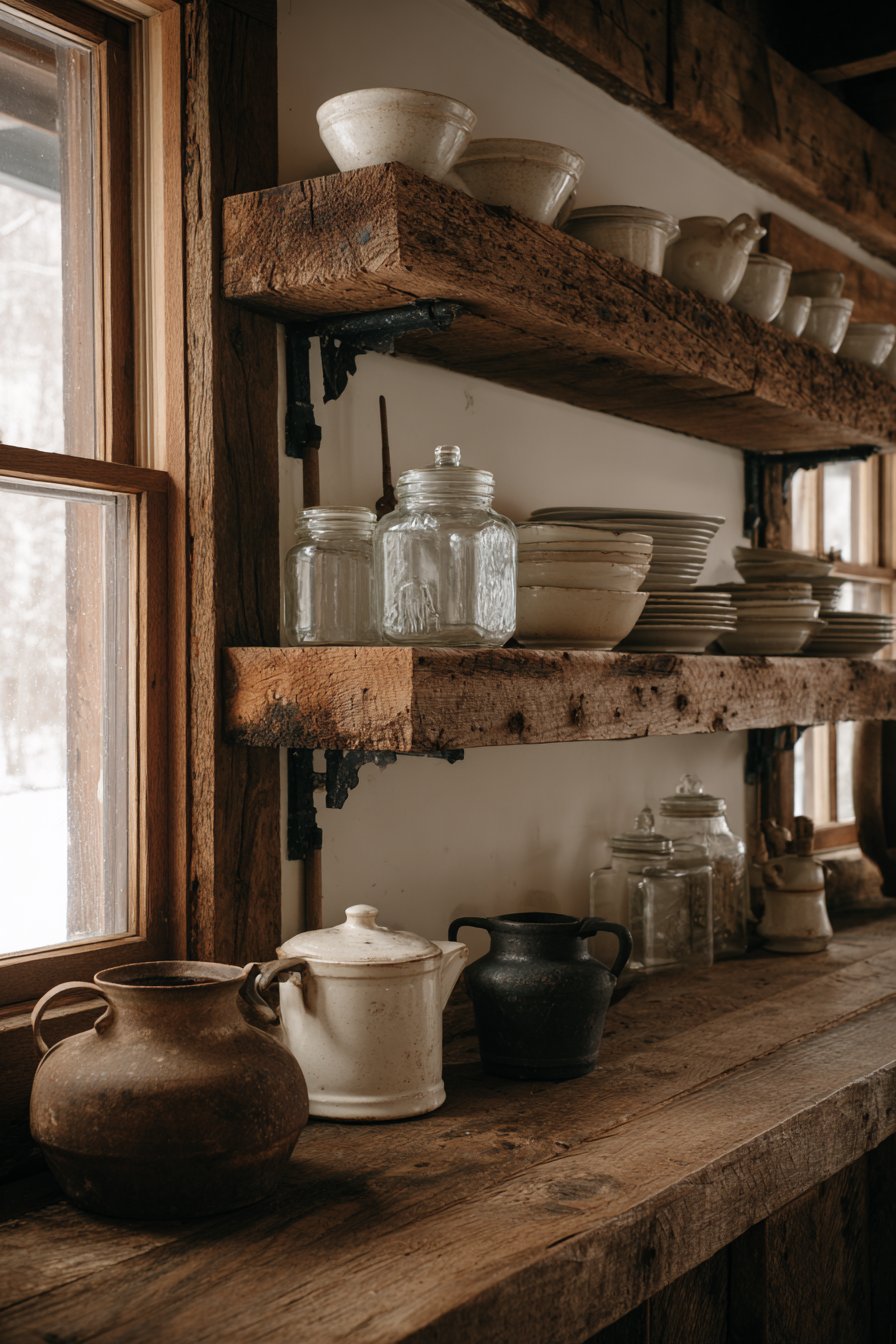
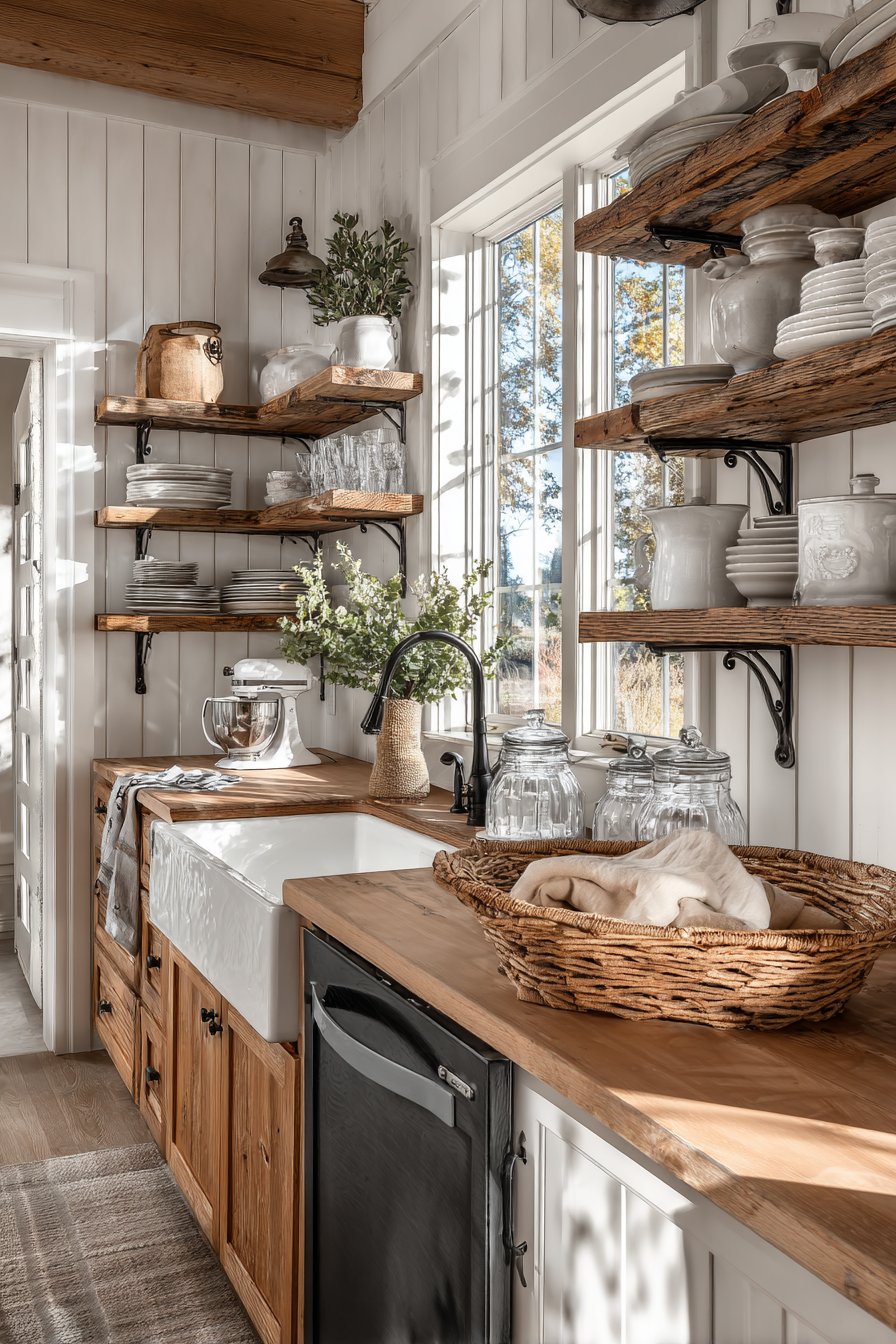
Authentic farmhouse style draws from rural agricultural heritage, celebrating materials with history and handcrafted quality. This kitchen shelving constructed from thick reclaimed barn wood with visible saw marks and natural imperfections embodies farmhouse authenticity. The chunky shelves—substantially thicker than typical modern shelving—display white ironstone dishes whose simple, sturdy forms echo farmhouse practicality, vintage glass jars perfect for pantry storage, and farmhouse crocks originally designed for butter or pickles now holding utensils or flowers.
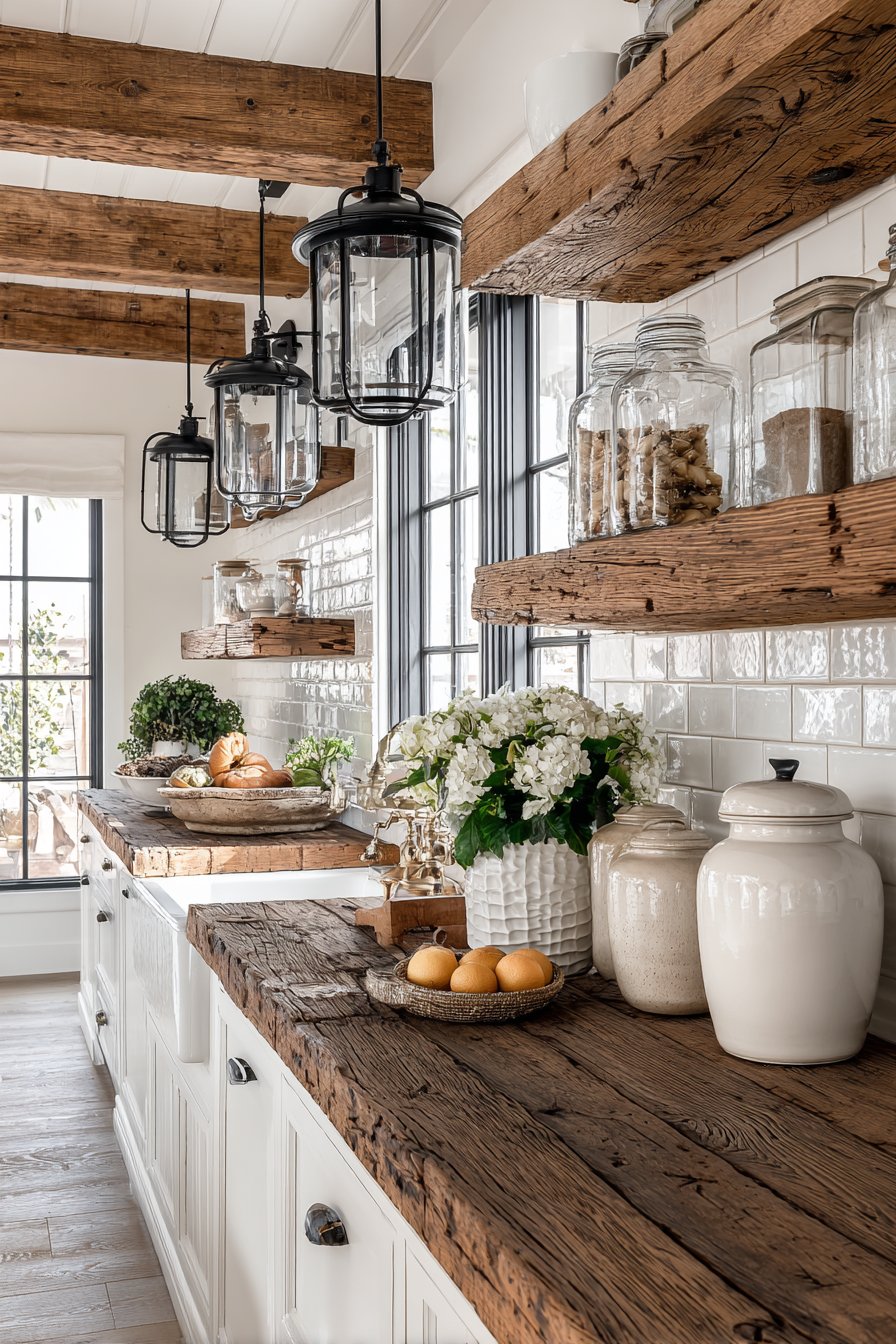
Black iron bracket supports provide sturdy mounting while their heavy, handcrafted appearance complements the substantial wood shelves. These aren’t delicate floating brackets but honest, visible supports that acknowledge weight and gravity rather than attempting to hide structural necessities. The combination of weathered wood, simple white dishes, and black iron creates the classic farmhouse palette that feels simultaneously timeless and currently fashionable.
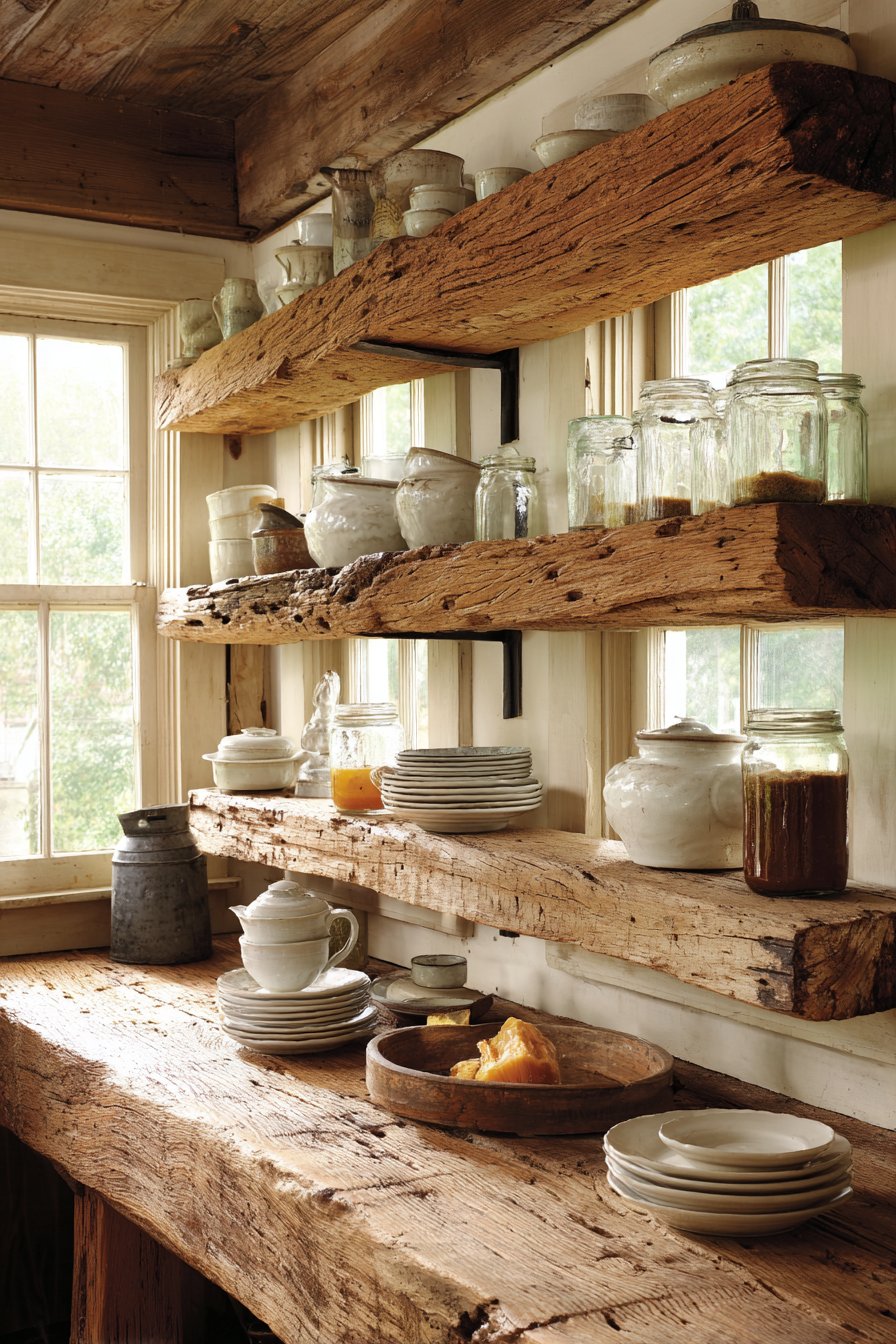
Natural morning light through farmhouse windows—often characterized by simple trim and generous size to illuminate working spaces—highlights the authentic aged wood character including grain variation, natural checking, and color inconsistencies that new wood cannot replicate. The realistic material wear patterns tell stories of previous lives, whether decades in barns protecting livestock or centuries in homes sheltering families. This history embedded in materials creates emotional resonance and authenticity that new construction struggles to achieve.
Key Design Tips:
- Source barn wood from reputable salvage companies that verify wood age and origin
- Inspect reclaimed wood carefully for nails, which should be removed before installation
- Seal barn wood with food-safe finish approved for kitchen use—raw wood harbors bacteria
- Choose substantial bracket supports—farmhouse aesthetic values visible structure over hidden mounting
- Display ironstone or simple white ceramic dishes for authentic farmhouse look
- Include vintage glass jars for functional pantry storage that doubles as decoration
- Embrace natural wood imperfections—checks, knots, and color variation add character essential to farmhouse style
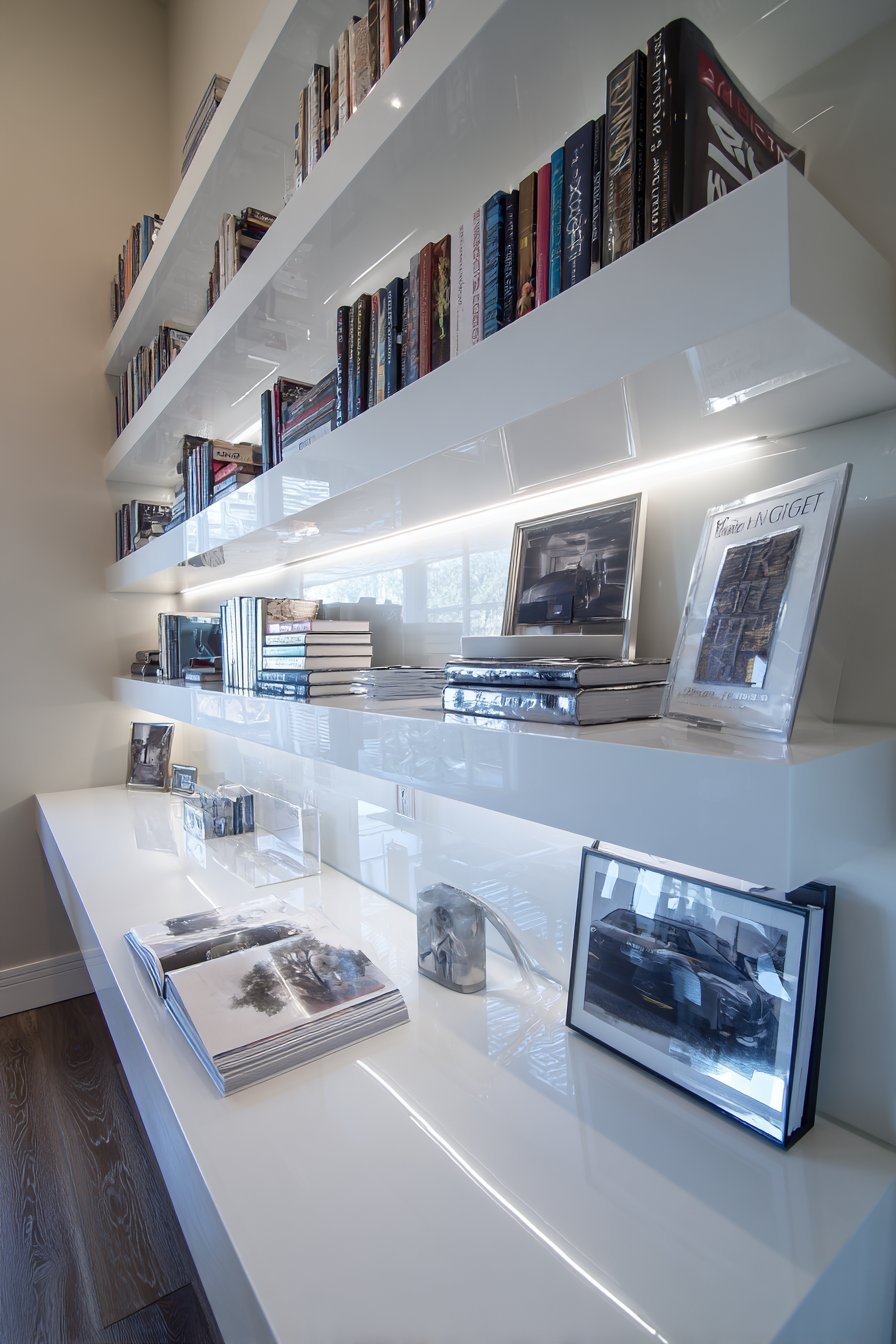
17. High-Gloss White Contemporary Office Shelving
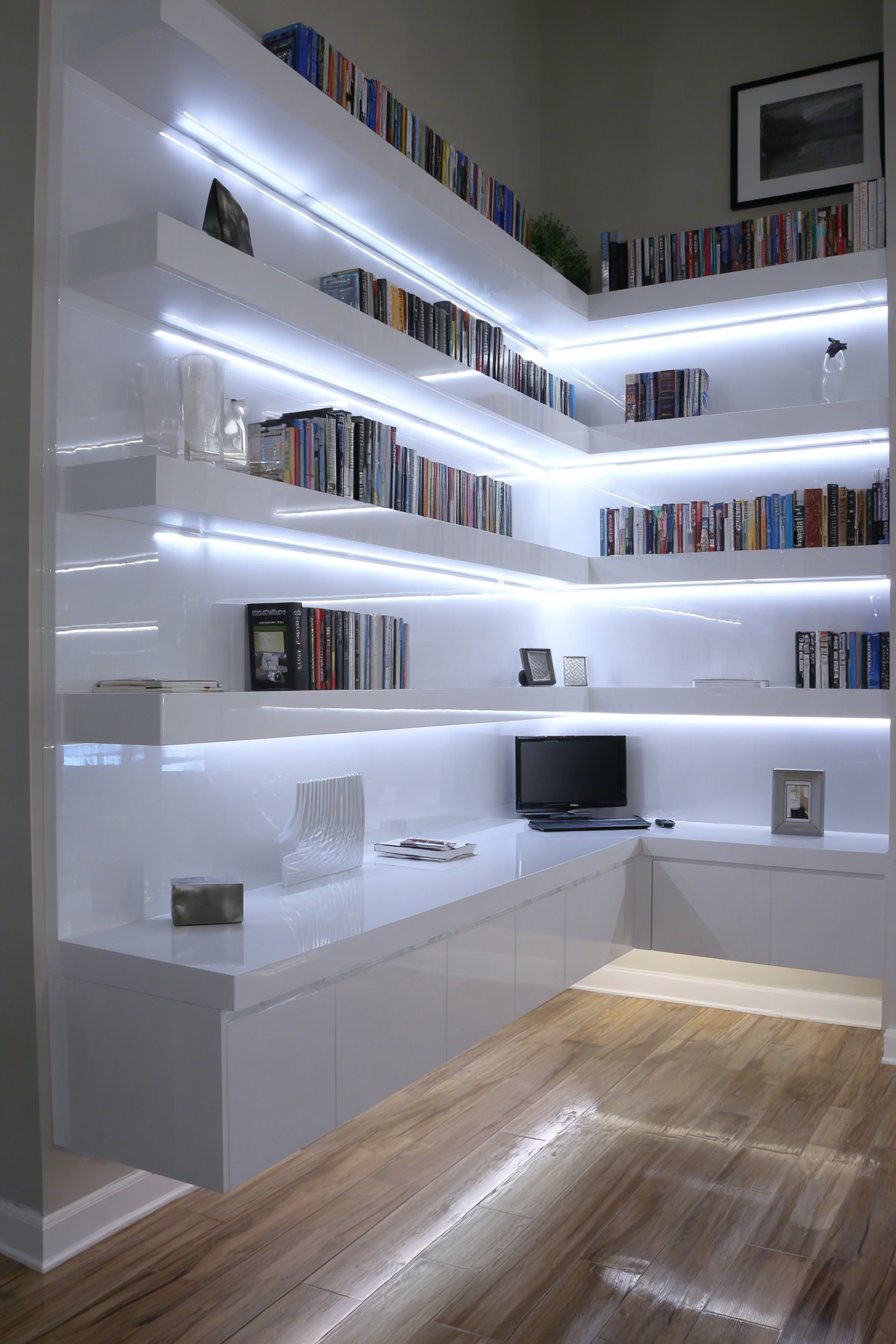
Contemporary minimalist design reaches its most refined expression in this wall-to-wall floating shelf installation finished in high-gloss white lacquer. The seamless, streamlined appearance creates modern sophistication through material excellence and precise installation rather than ornamental details. The reflective surface quality adds visual depth, bouncing light around the office and making the space feel larger while the pure white maintains the neutral foundation minimalism requires.
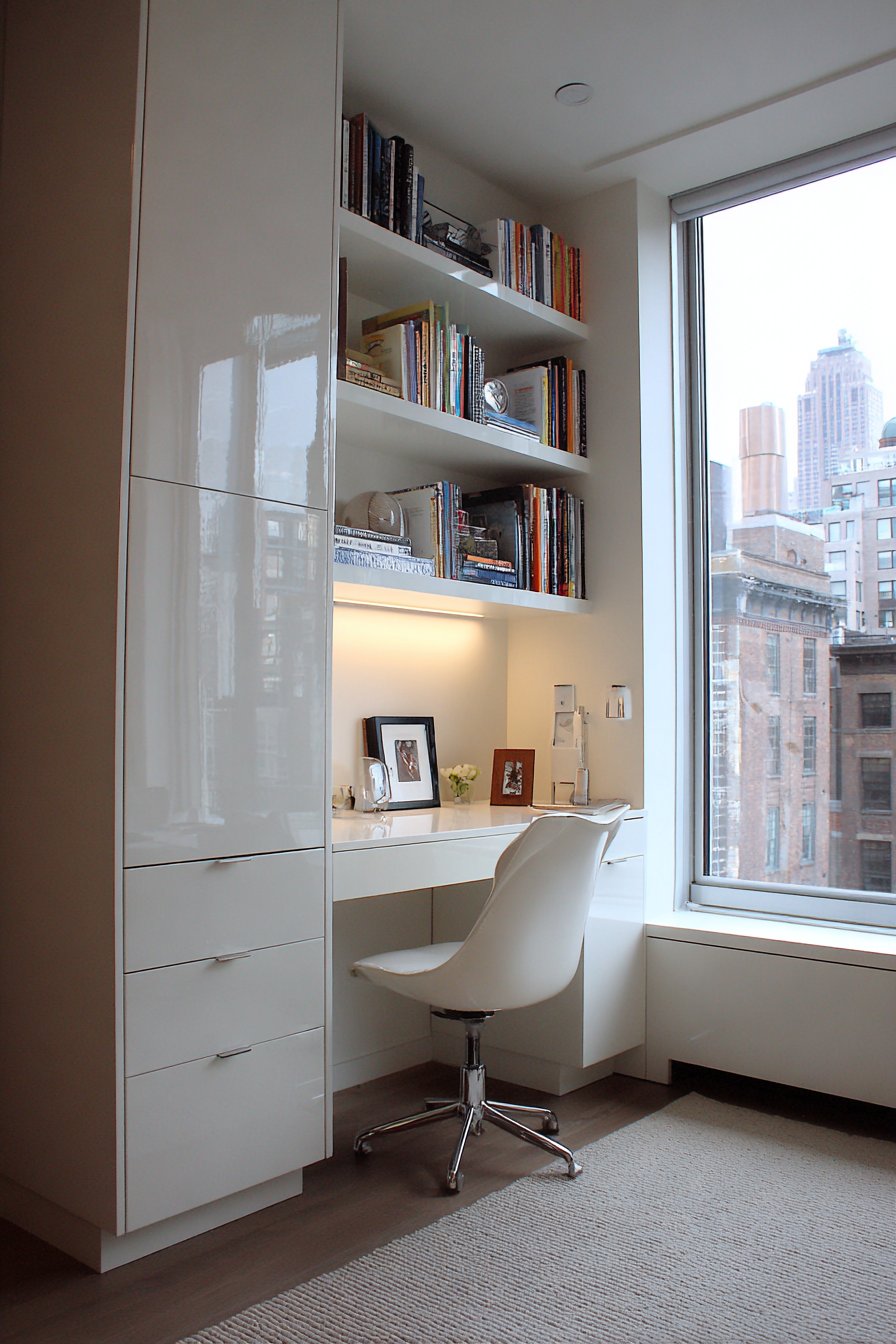
Organization becomes visual art in this system, with books color-coordinated to create rainbow gradients, modern desk accessories in complementary minimal forms, and carefully edited decorative objects that maintain rather than disrupt the clean aesthetic. Every item earns its place through both function and appearance—nothing purely decorative without utility, nothing purely utilitarian without visual consideration. This rigorous editing process defines minimalist success, where “less is more” guides every decision.
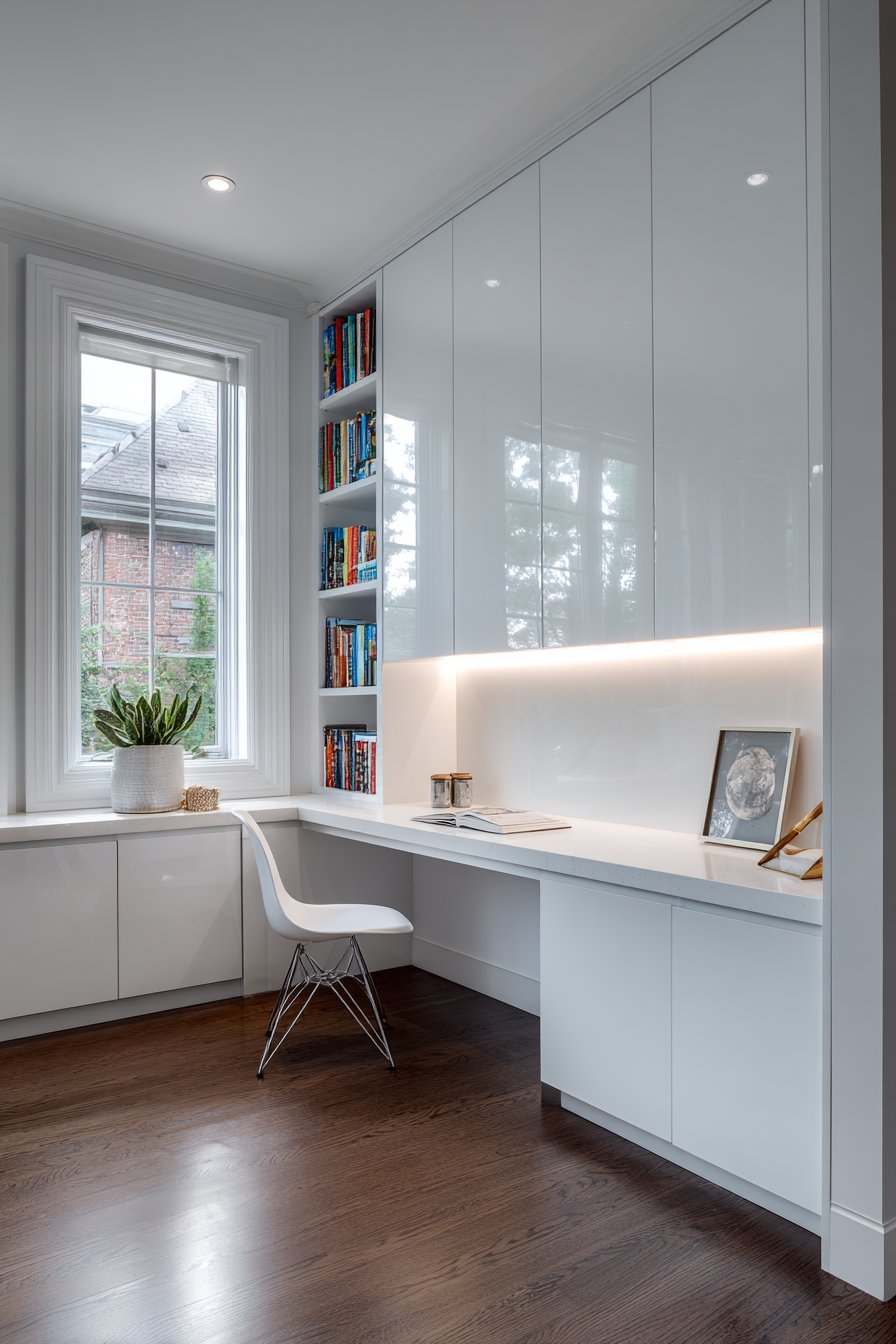
Integrated LED strip lighting beneath each shelf provides both task illumination for work surfaces and accent lighting that emphasizes the shelving’s precision installation and floating appearance. The cool white light typical of LED technology complements the high-gloss white finish, creating a bright, energetic workspace appropriate for focused productivity. The overall effect is crisp, efficient, and uncompromisingly modern—a workspace for the digital age that prioritizes clarity and function.
Key Design Tips:
- Invest in professional installation for high-gloss floating shelves—imperfect mounting shows prominently
- Specify automotive-grade lacquer for truly mirror-like finish that resists scratches
- Plan integrated LED lighting during installation for cleanest appearance without visible wires
- Maintain strict color coordination in displayed items—minimalism demands visual discipline
- Choose accessories in complementary materials—brushed metal, clear acrylic, natural wood—for subtle contrast
- Keep surfaces pristine—fingerprints show prominently on high-gloss white finishes
- Install dimmer controls for LED lighting to adjust brightness for different tasks and times of day
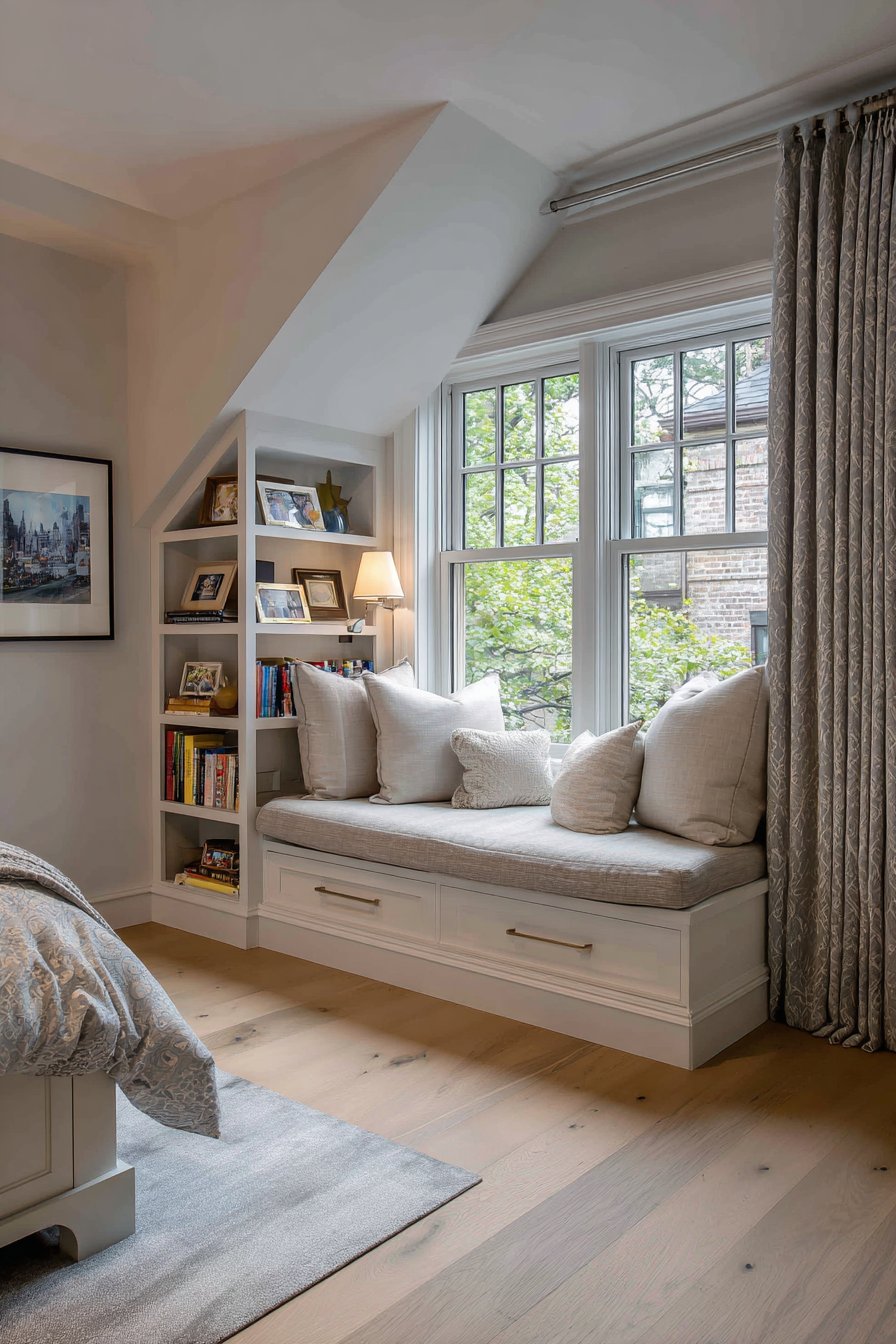
18. Window Seat with Flanking Built-In Shelving
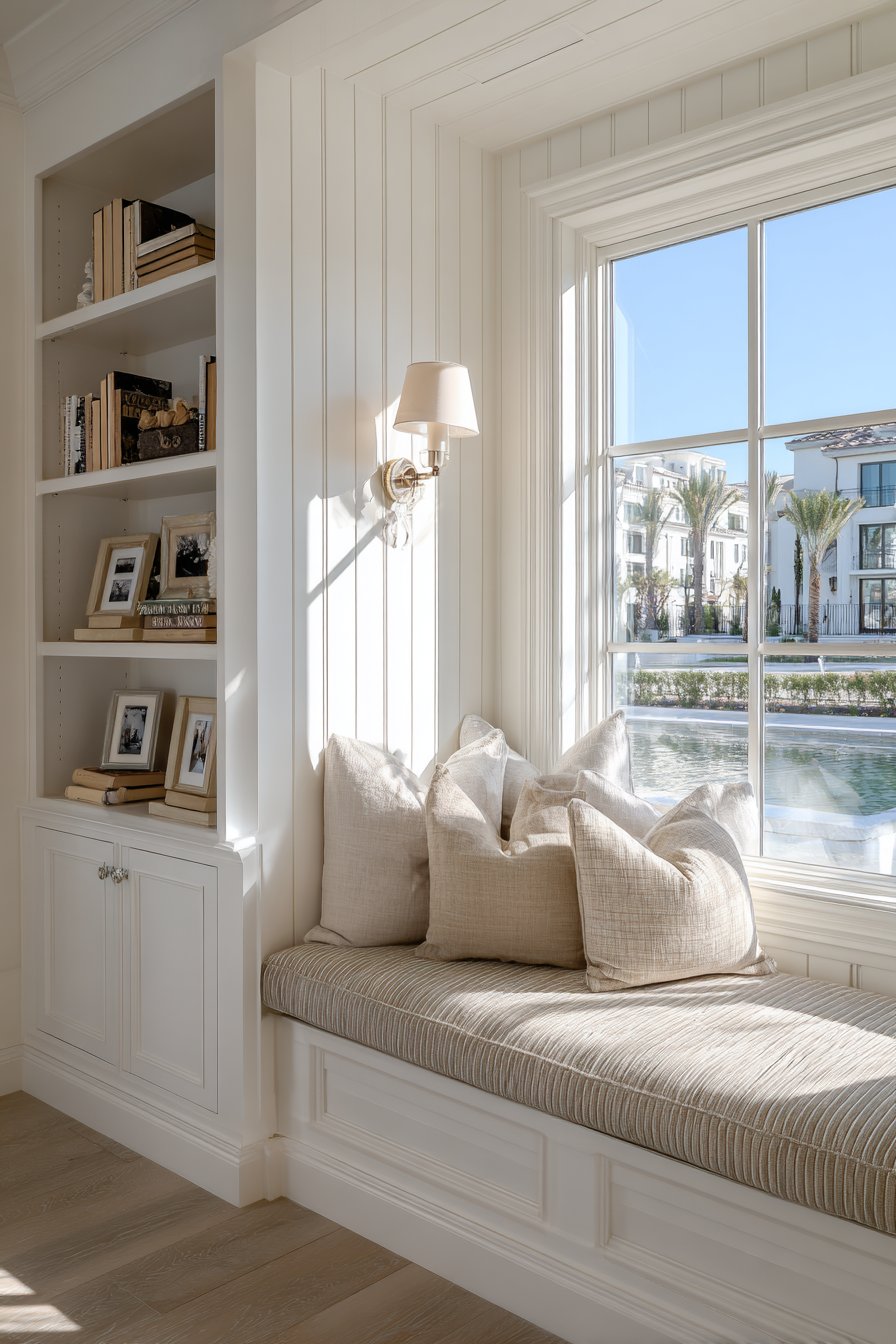
Transitional design bridges traditional and contemporary aesthetics, combining classic architectural elements with updated materials and simpler ornamentation. This bedroom window seat achieves this balance perfectly, incorporating built-in storage beneath cushioned seating with open shelves flanking the window alcove. The architectural integration—building shelving into the room’s structure rather than placing furniture against walls—recalls traditional built-in millwork while the clean lines and minimal ornamentation feel current and fresh.
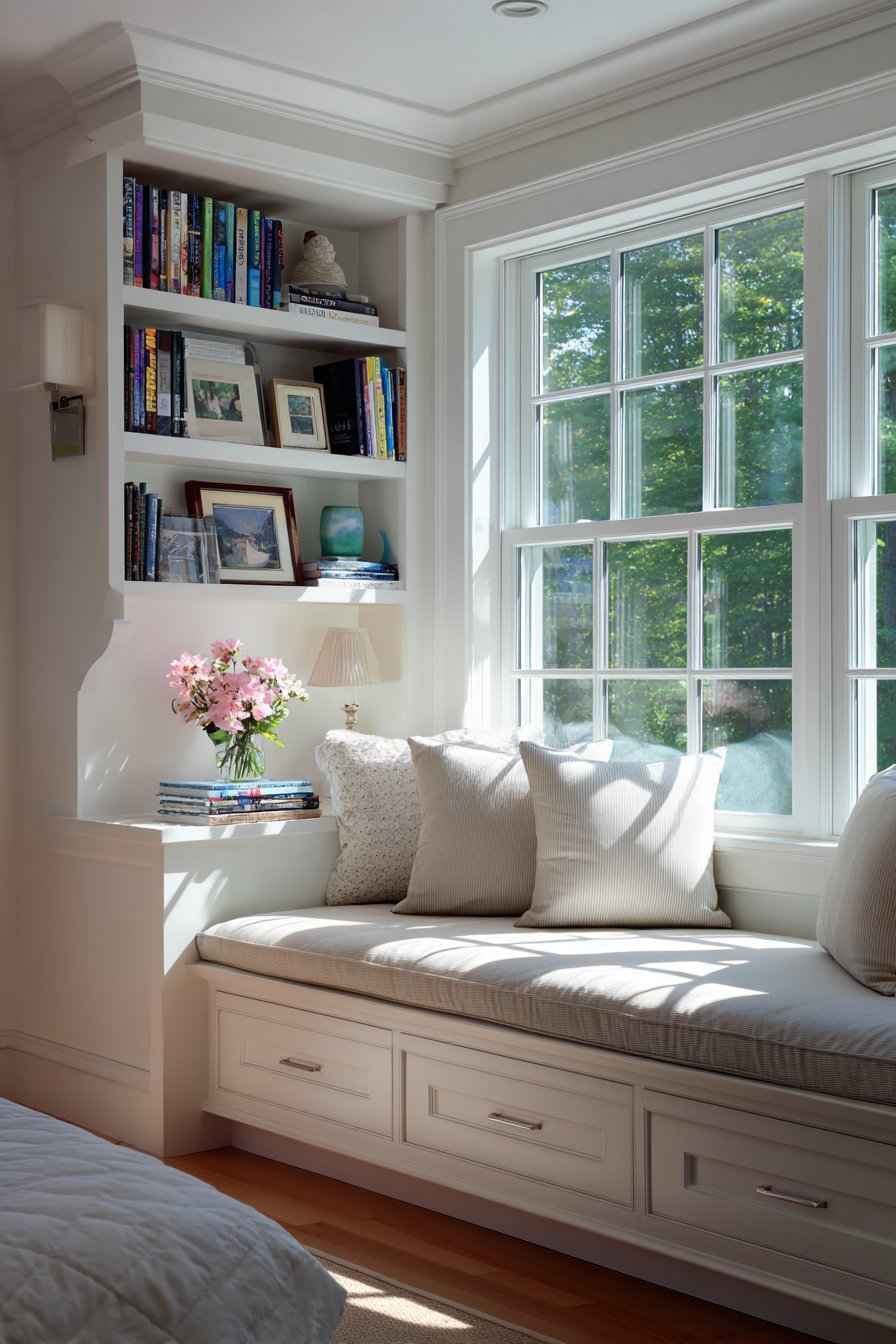
The window seat shelving holds curated selections of books, family photographs in simple frames that don’t compete with content, and a small table lamp providing reading light during darker hours. Soft linen cushions in neutral tones create comfortable seating that invites extended reading sessions or quiet contemplation while maintaining the refined color palette. This marriage of beauty and utility—creating attractive space that genuinely functions for daily living—exemplifies successful transitional design.
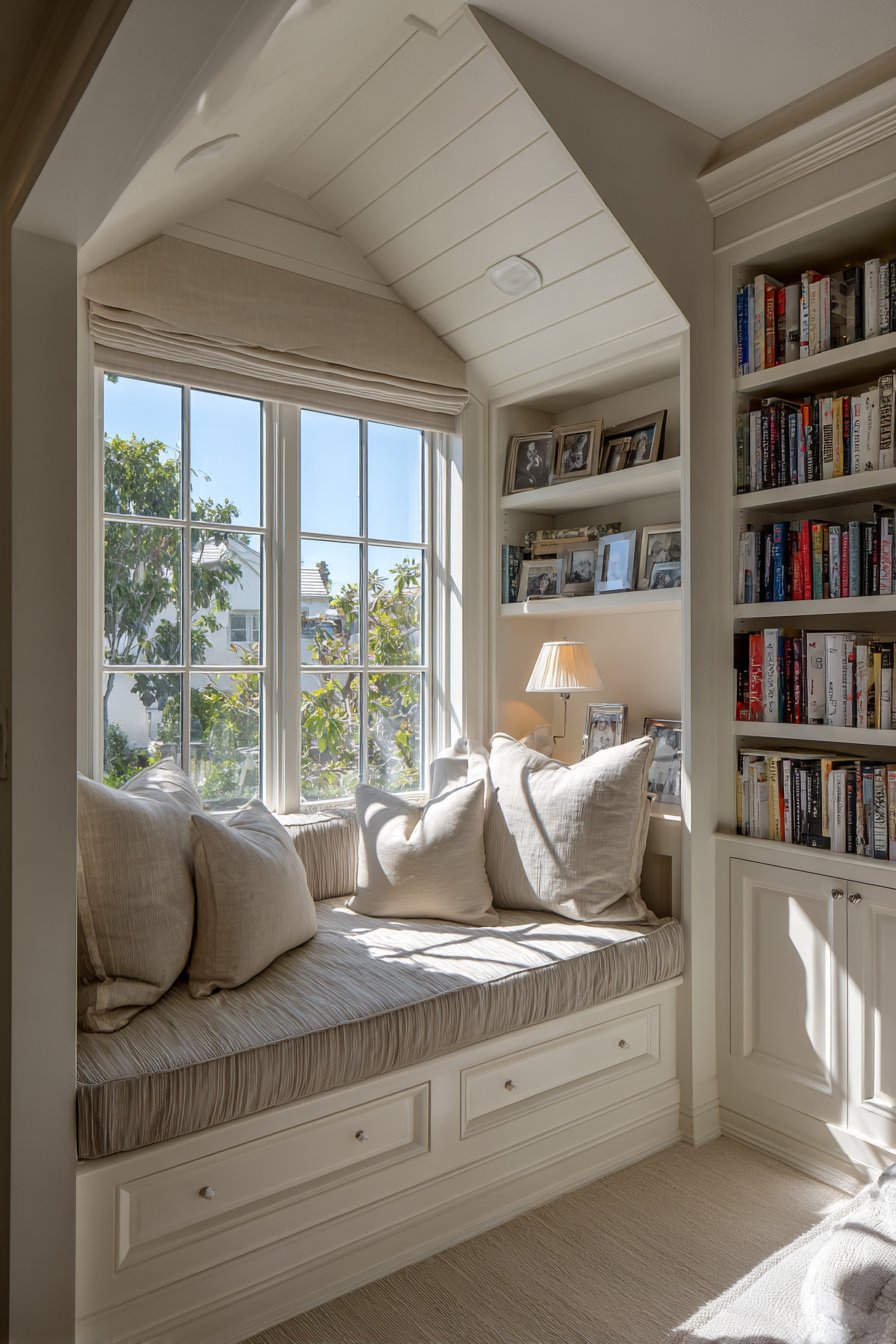
Natural light flooding the alcove through the window highlights painted white woodwork details while illuminating fabric textures in the cushions and throws. The soft natural shadows created throughout the day add dimension and visual interest to what could otherwise be a simple architectural feature. This integration of seating, storage, and natural light creates a micro-environment within the larger bedroom—a personal retreat for reading, thinking, or simply watching the world outside.
Key Design Tips:
- Build window seats at comfortable sitting height—typically 18-20 inches from floor to cushion top
- Include lift-up seat cushions or drawer storage beneath seating for hidden storage
- Plan shelf depths at 10-12 inches for books and photos without excessive protrusion into the room
- Choose cushion fabrics in durable, cleanable materials—window seats see real use and abuse
- Install adequate electrical outlets for reading lamps and device charging
- Position flanking shelves symmetrically for traditional balance essential to transitional style
- Add window treatments that can be adjusted—reading near windows requires light control options
19. Scandinavian Birch Nursery Display Shelving
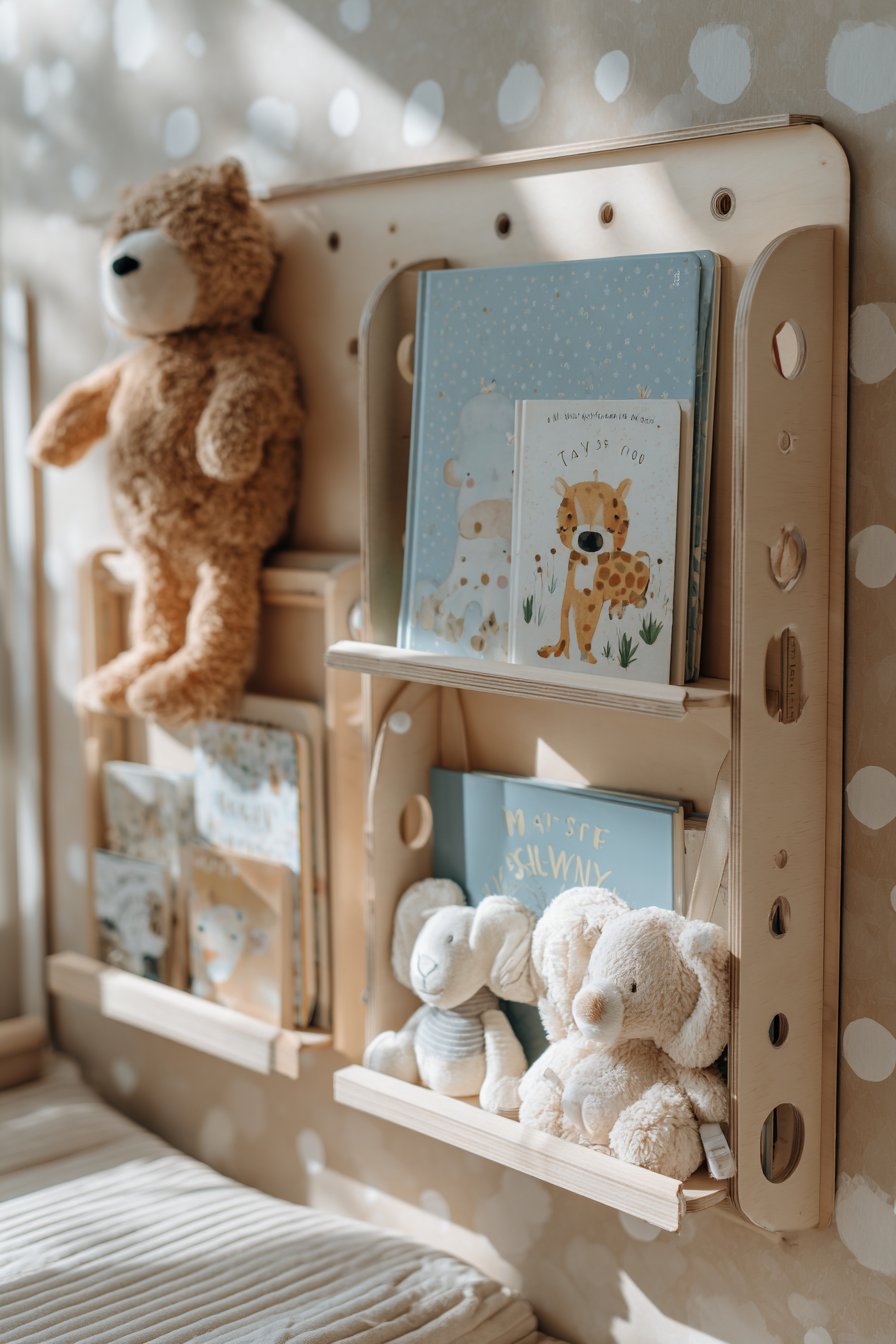
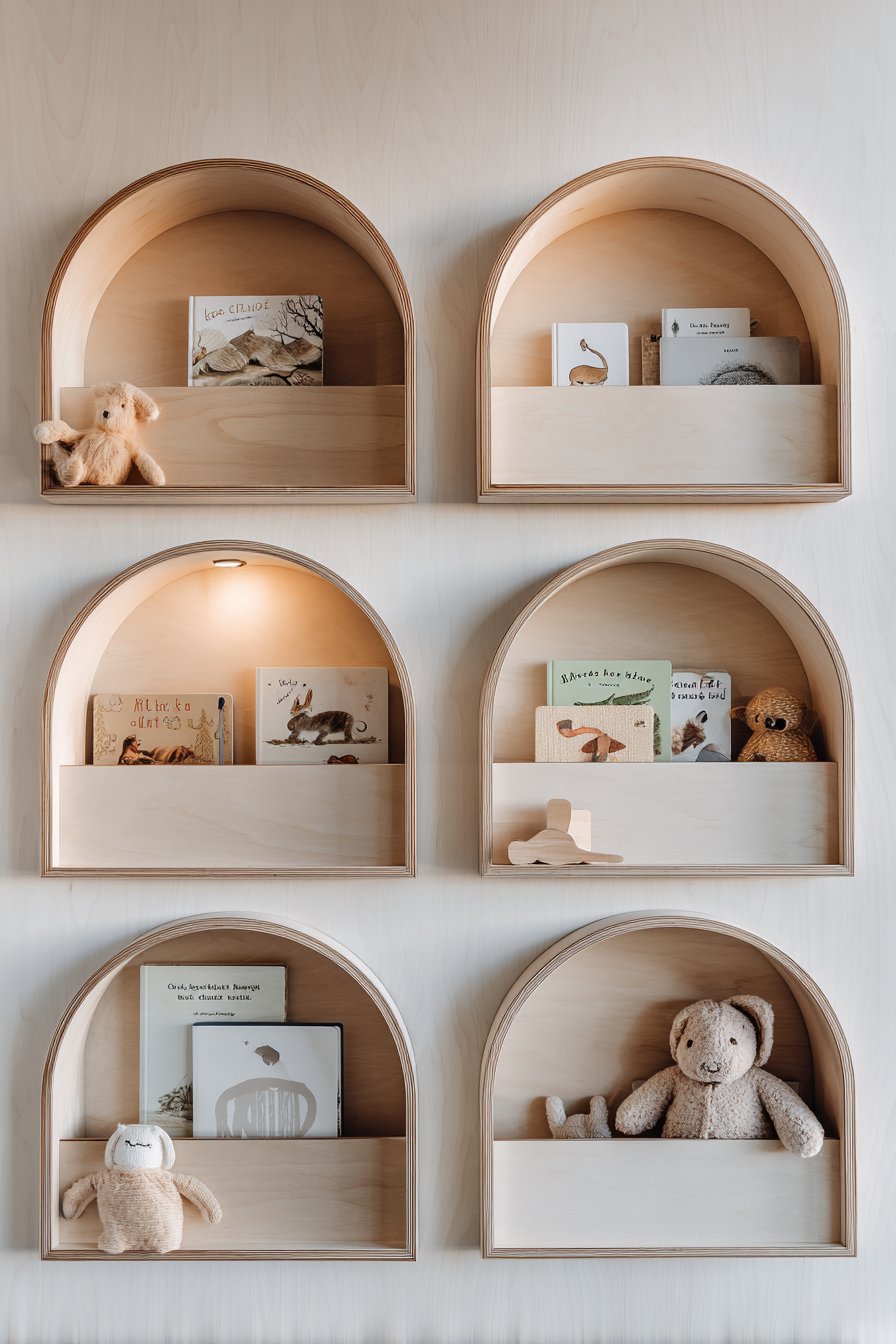
Nursery design prioritizes safety, functionality, and creating calm environments conducive to sleep and care routines. This Scandinavian-inspired approach uses wall-mounted birch shelving with rounded edges eliminating sharp corners that pose injury risks. The shelves display children’s books with covers facing forward—showing illustrations rather than just spines—creating engaging visual displays that encourage early literacy and make book selection easy for children and caregivers alike.
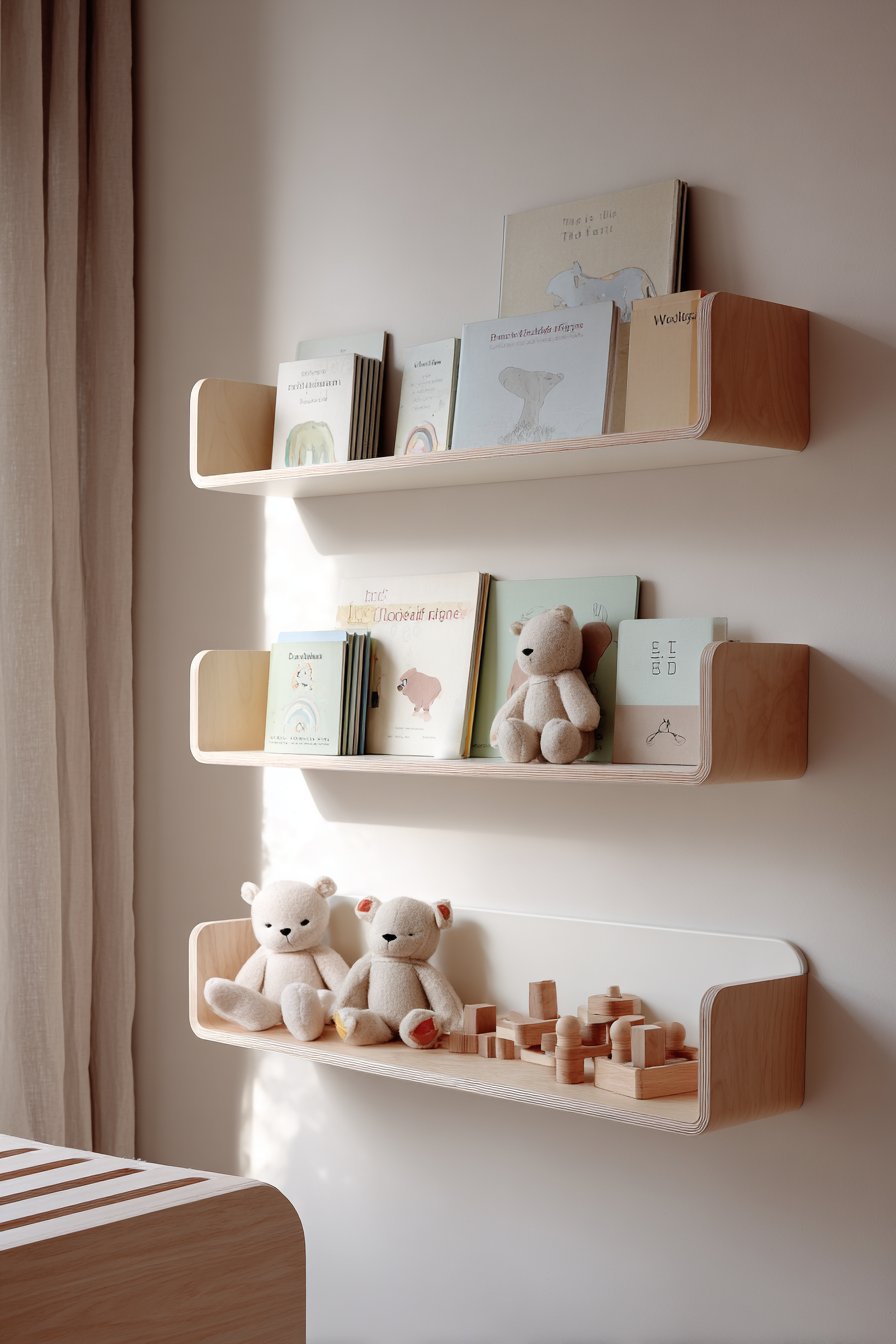
The forward-facing book display technique transforms children’s literature’s beautiful illustrations into room decoration, celebrating artistry while promoting reading culture from birth. Soft toys, simple decorative elements, and storage baskets in gentle pastel tones complement the light birch wood without overwhelming the sensory environment. The mounting height places books and toys at accessible levels for toddlers learning independence while keeping potentially dangerous items higher and out of reach.
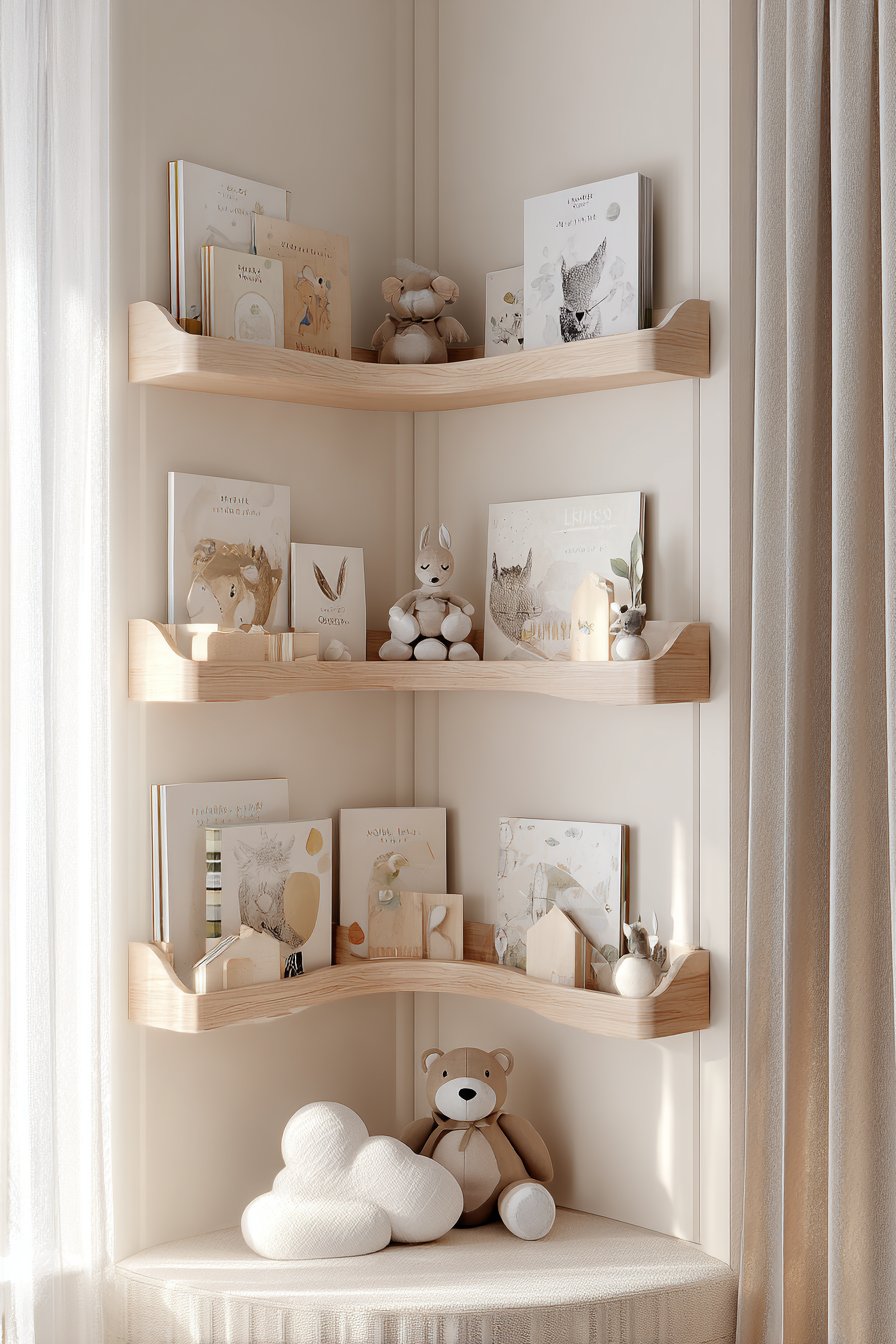
Soft diffused natural daylight creates the calm, soothing atmosphere essential for nursery spaces where overstimulation can disrupt sleep and routines. The gentle Scandinavian palette—natural pale wood, soft pastels, white backgrounds—promotes tranquility while providing adequate visual interest for developing vision. This thoughtful design considers how the space will actually be used—during 3 AM feedings, during active play periods, during bedtime routines—and creates an environment supportive of all these functions.
Key Design Tips:
- Select shelving with rounded or bullnose edges to minimize injury risk in children’s spaces
- Mount shelves securely into studs using appropriate hardware—children may pull or climb
- Install picture book shelves at 24-36 inches high for toddler accessibility and engagement
- Limit bright colors and busy patterns—babies and young children benefit from calmer visual environments
- Choose natural, non-toxic finishes on all nursery furniture and shelving
- Include some higher shelves for items requiring adult supervision or access
- Create defined zones—sleeping area, play area, care area—with shelving helping establish boundaries
20. Heavy-Duty Garage Workshop Shelving
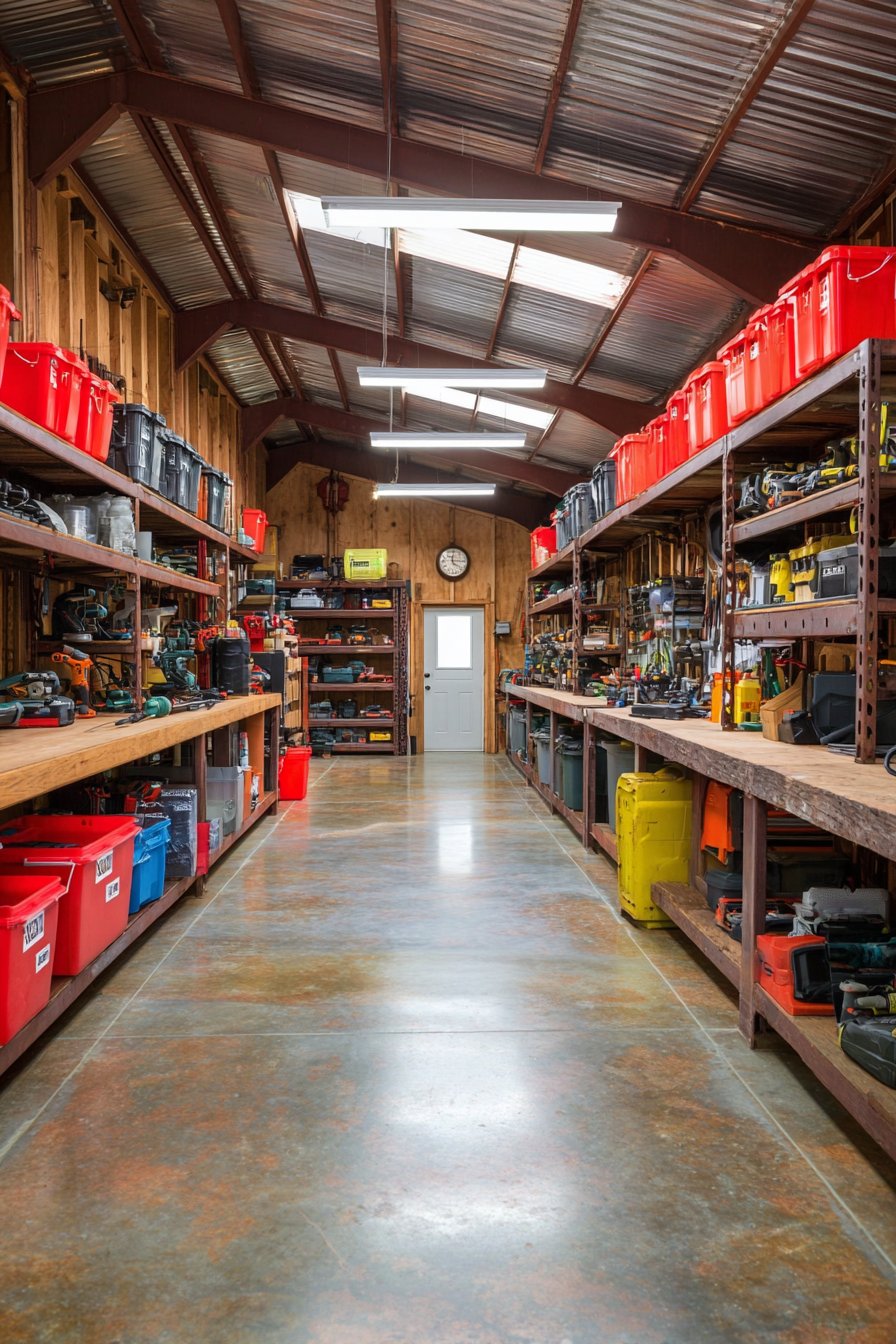
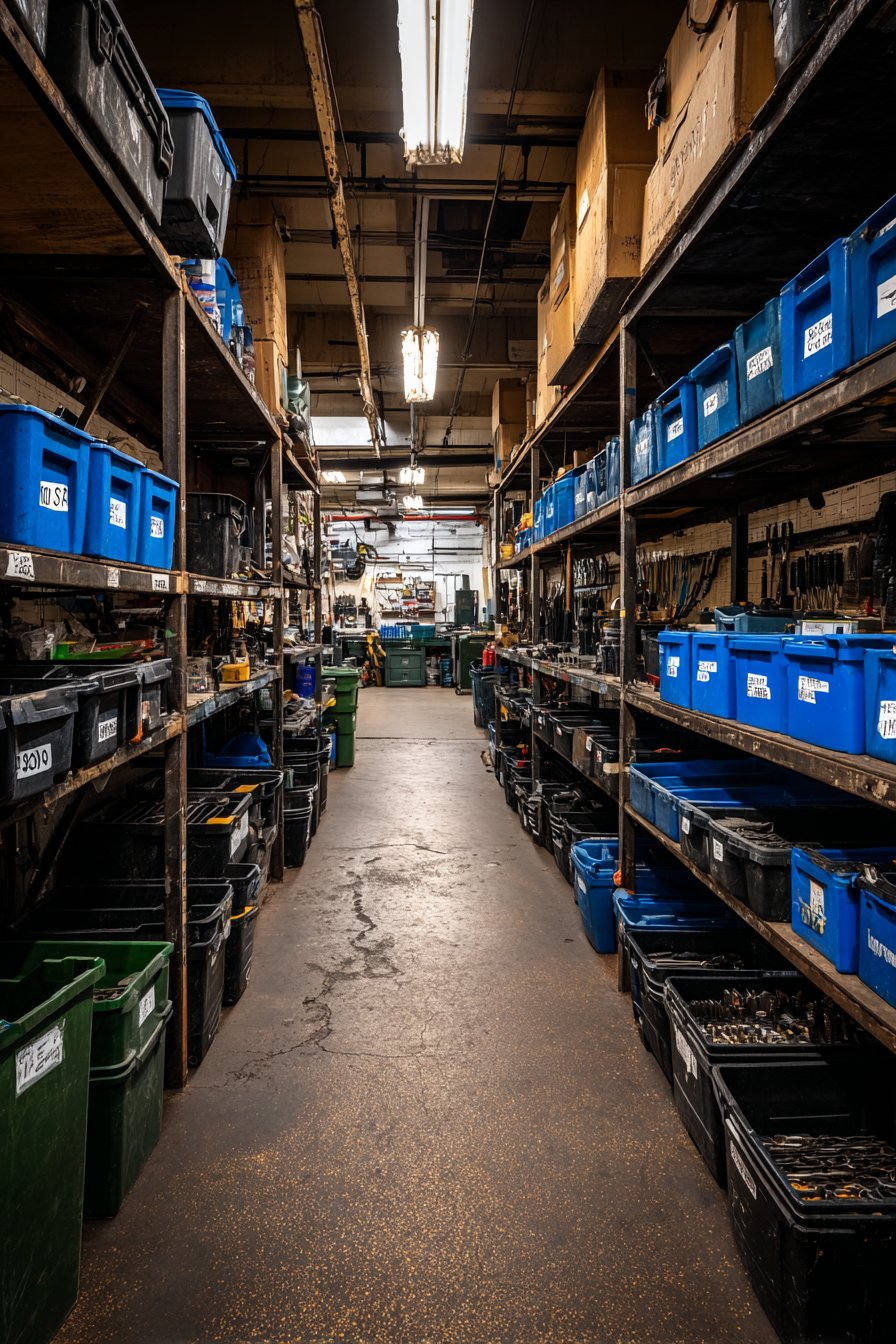
Not all shelving serves aesthetic purposes—sometimes pure function drives design, as in this garage workshop featuring heavy-duty metal shelving units providing organized tool storage. The industrial-grade galvanized steel construction handles significant weight while resisting the moisture, temperature fluctuations, and general abuse common in garage environments. Labeled storage bins, systematically arranged power tools, and organized hardware containers demonstrate that functionality and organization create their own beauty through efficiency and order.
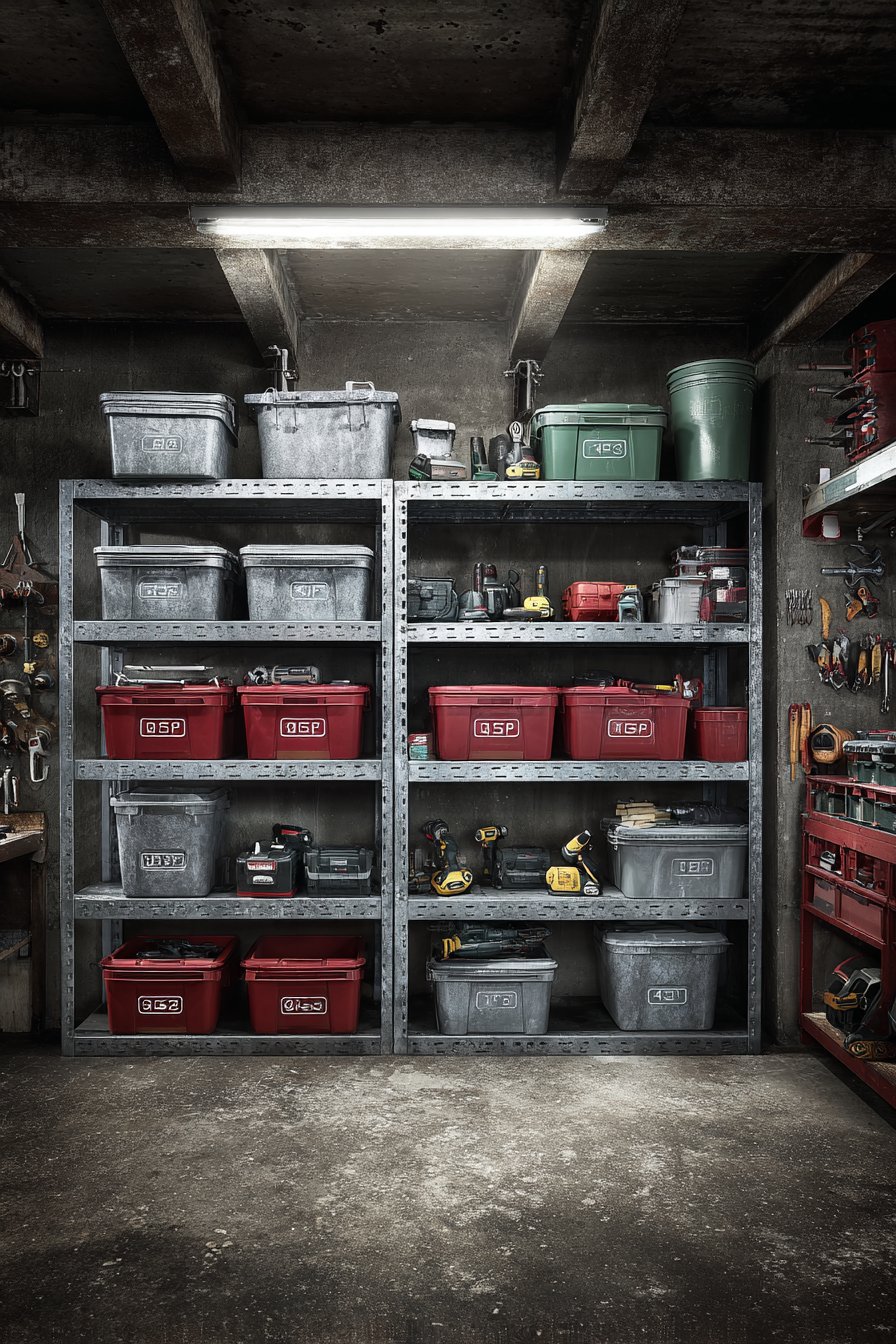
The methodical organization—everything has its place, everything in its place—transforms potentially chaotic workshop storage into a well-ordered system where tools can be located quickly when needed. This practical organization saves time, prevents tool loss, and creates safer working conditions by eliminating trip hazards and keeping sharp objects properly stored. The slight wear visible on galvanized surfaces reflects regular use, honest evidence that this storage system works daily rather than existing as decorative installation.
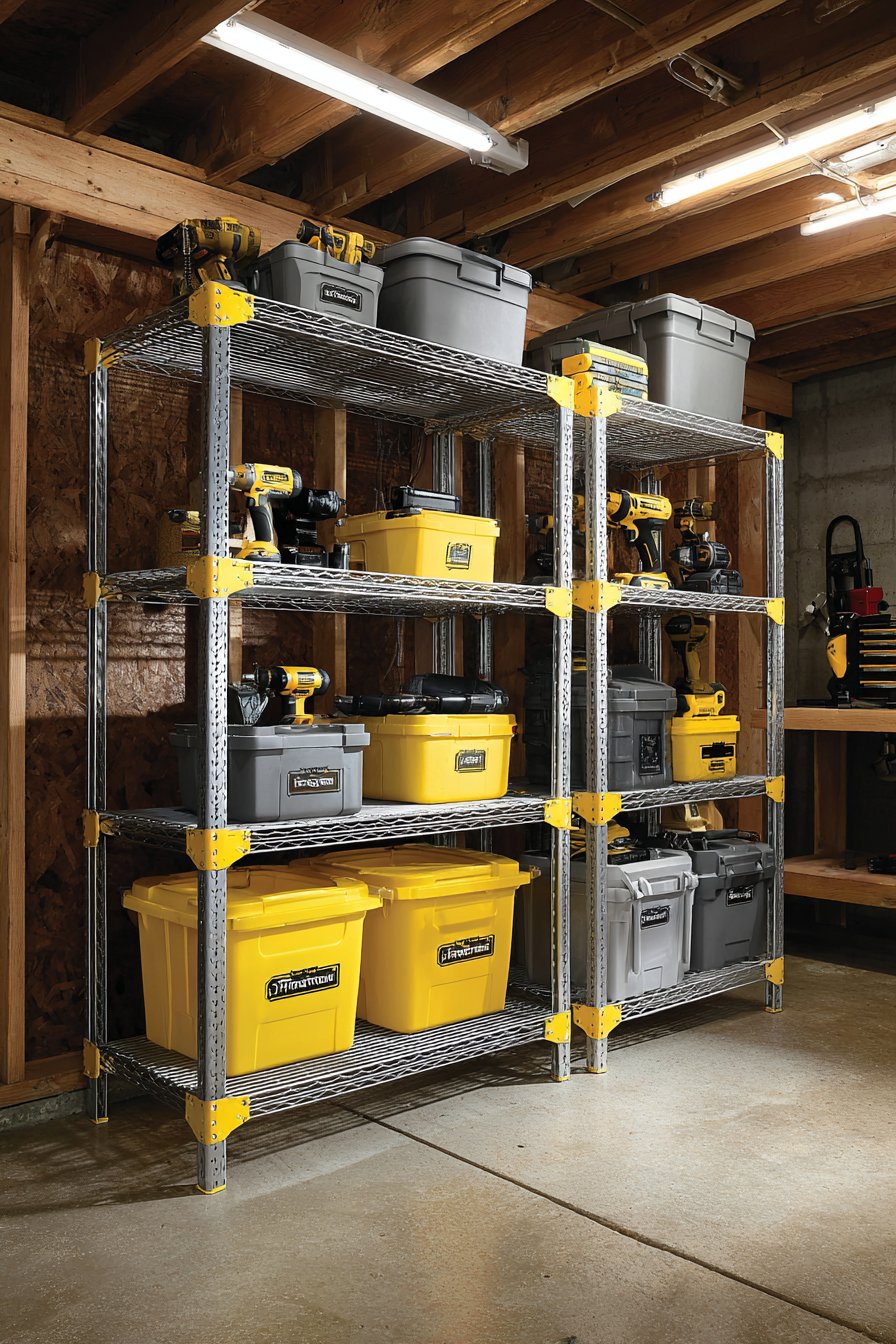
Overhead fluorescent lighting creates clear, shadowless visibility essential for workshop tasks where precision and safety depend on seeing clearly. The utilitarian lighting choice prioritizes function over ambiance, appropriate for a space defined by work rather than relaxation. This honest approach to workshop storage—valuing organization and accessibility over appearance—demonstrates that different spaces demand different design priorities.
Key Design Tips:
- Choose shelving rated for expected weight loads—garage storage often holds heavy tools and materials
- Opt for galvanized steel or powder-coated metal that resists rust in humid garage environments
- Install adequate lighting directly above shelving areas for safe tool identification and use
- Label everything—bins, shelves, sections—to maintain organization over time
- Position frequently used items at waist height for ergonomic access without bending or reaching
- Anchor heavy shelving units to walls even though they may seem stable—safety first
- Create specific zones for different tool categories—electrical, woodworking, automotive—for logical organization
21. Adjustable Track Art Studio Shelving
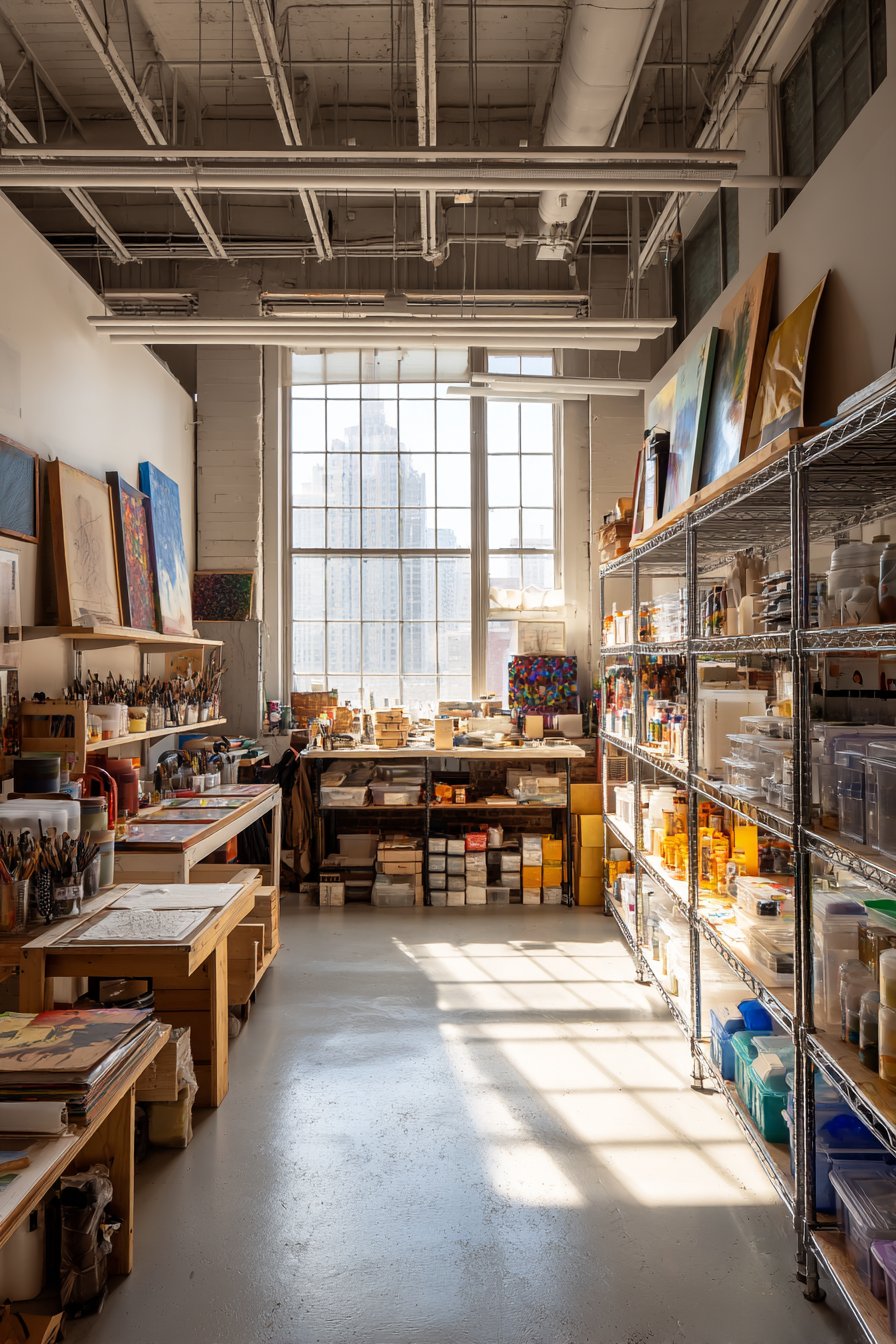
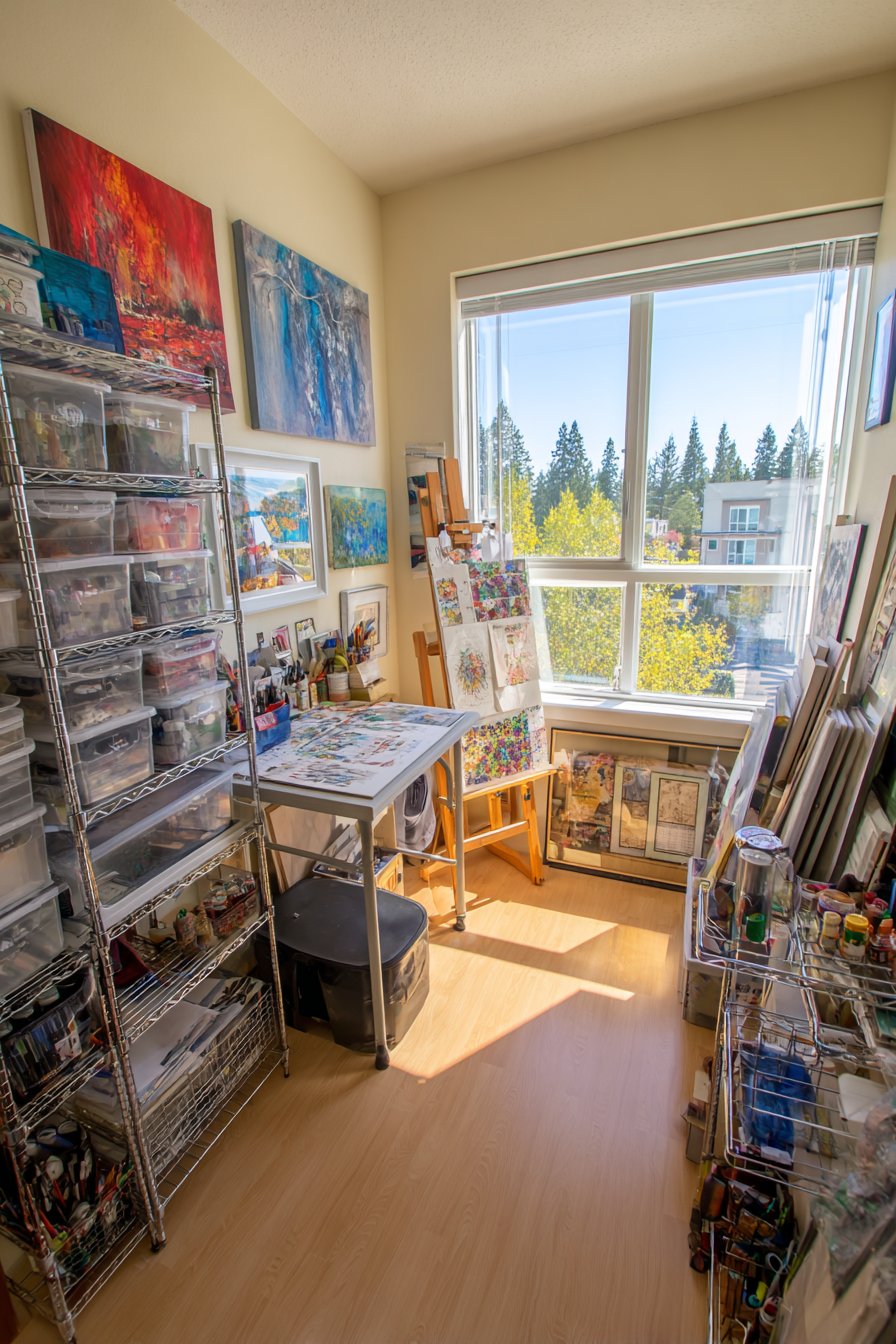
Creative spaces require flexible organization systems that adapt to changing needs and evolving projects, perfectly embodied in this art studio’s adjustable track shelving. The powder-coated metal track system allows shelf positions to be reconfigured without tools, accommodating everything from small supply containers to large canvases to inspiration boards at varying heights. This flexibility proves essential in working studios where yesterday’s watercolor project gives way to today’s sculpture endeavor, each requiring different storage configurations.
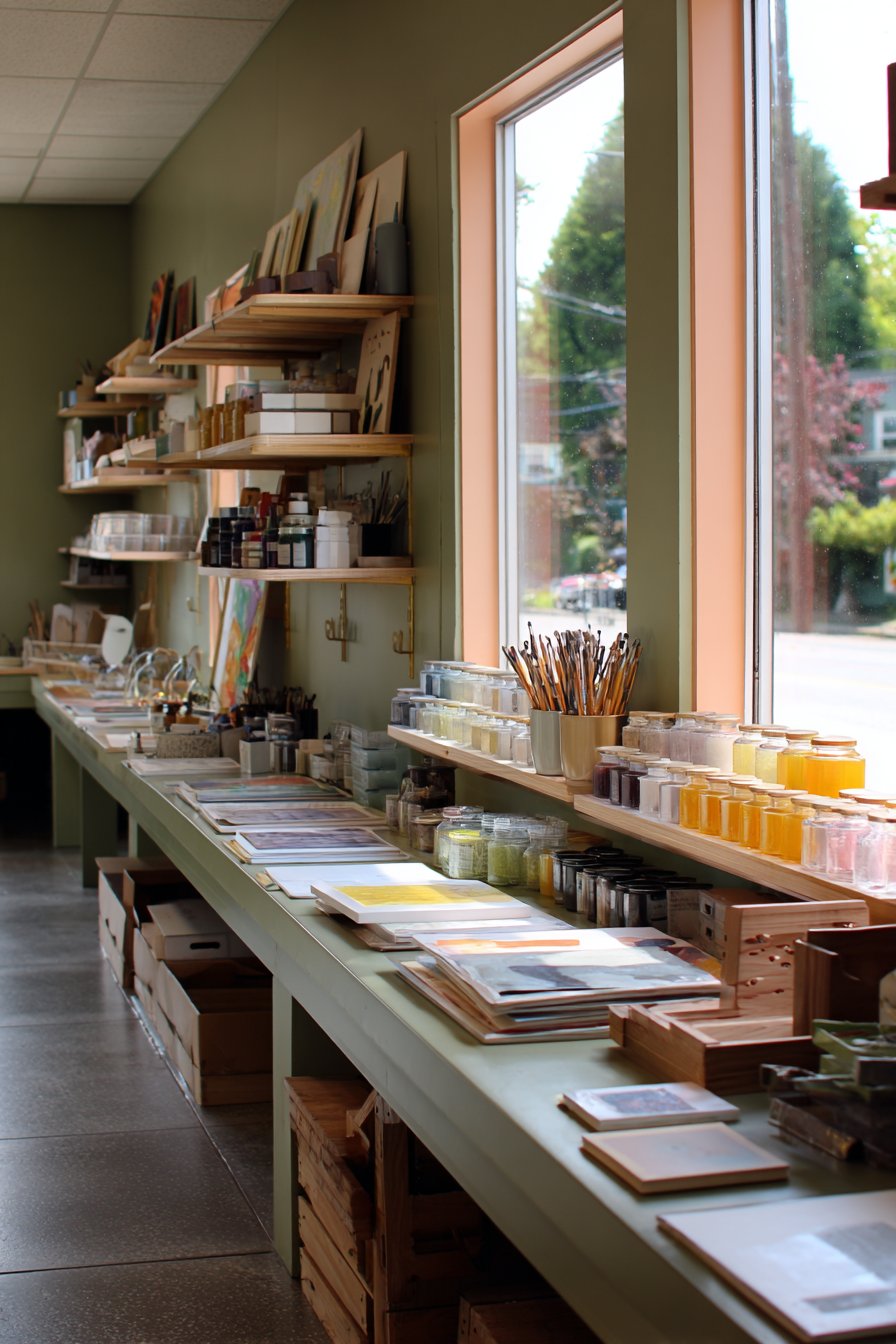
The clear storage containers on adjustable shelves provide visibility of art supplies—seeing available materials often sparks creative ideas while preventing wasteful duplicate purchases of already-owned supplies. Works in progress displayed at various heights allow artists to step back and evaluate compositions from different perspectives, essential to creative process. The modular system adapts not just to different projects but to different stages within single projects, truly growing and changing with the creative work.
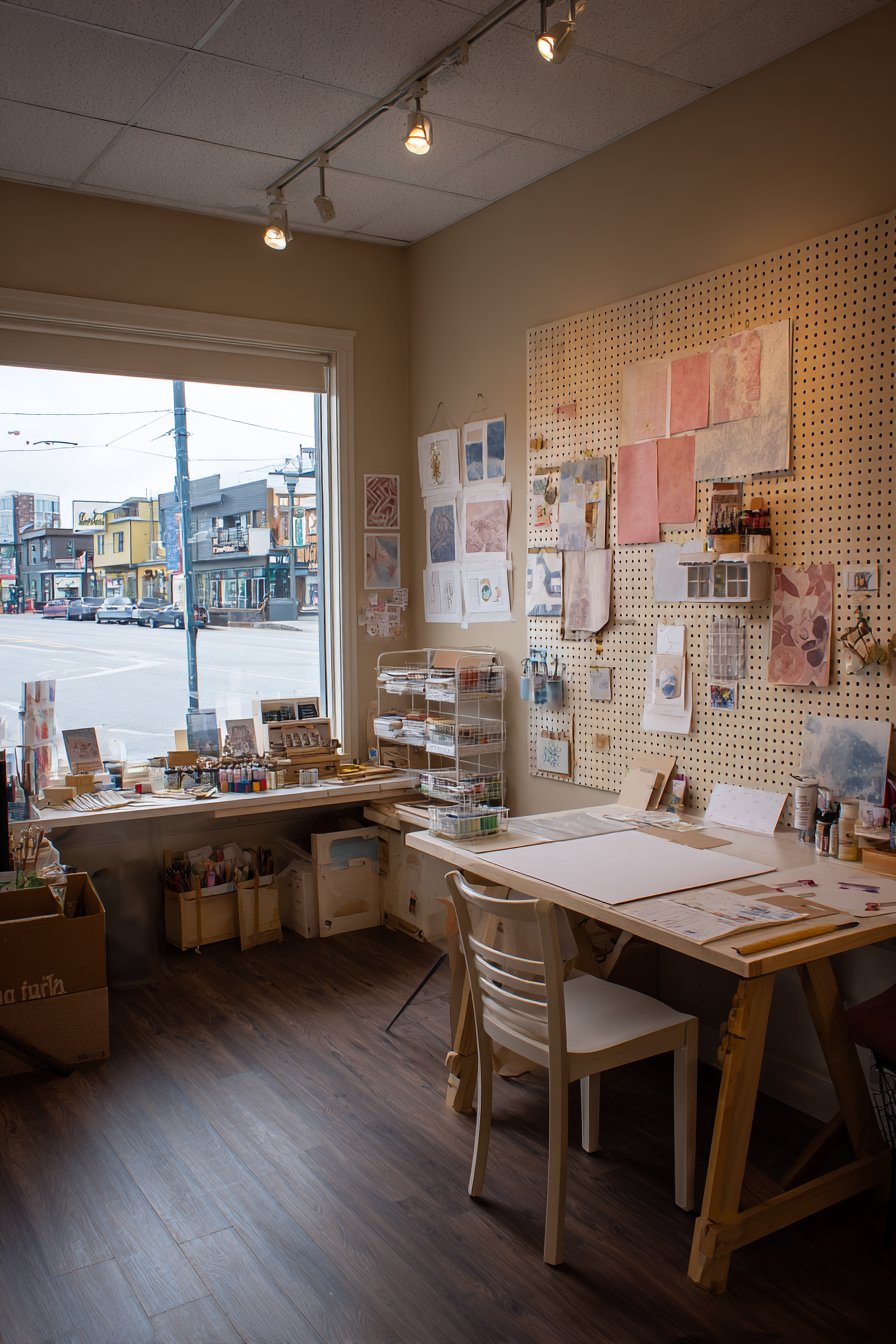
Natural north-facing window light provides the consistent, even illumination artists prize for color-accurate work—northern light changes less dramatically throughout the day compared to southern exposure. This quality of light combined with the flexible organization system creates an environment supporting rather than hindering creative work. The functional workspace celebrates process over perfection, work over appearance, perfectly appropriate for spaces dedicated to making rather than displaying.
Key Design Tips:
- Choose track systems with frequent adjustment points for maximum configuration flexibility
- Install tracks vertically over maximum wall height to accommodate future needs
- Use clear or translucent storage containers for art supplies to identify contents without opening
- Position works-in-progress at eye level where they can be evaluated from working distance
- Provide adequate electrical outlets along shelving runs for equipment or additional lighting
- Select powder-coated finishes that resist paint spills and solvent exposure common in studios
- Maintain some permanent shelving for heavy equipment while keeping other areas adjustable for evolution
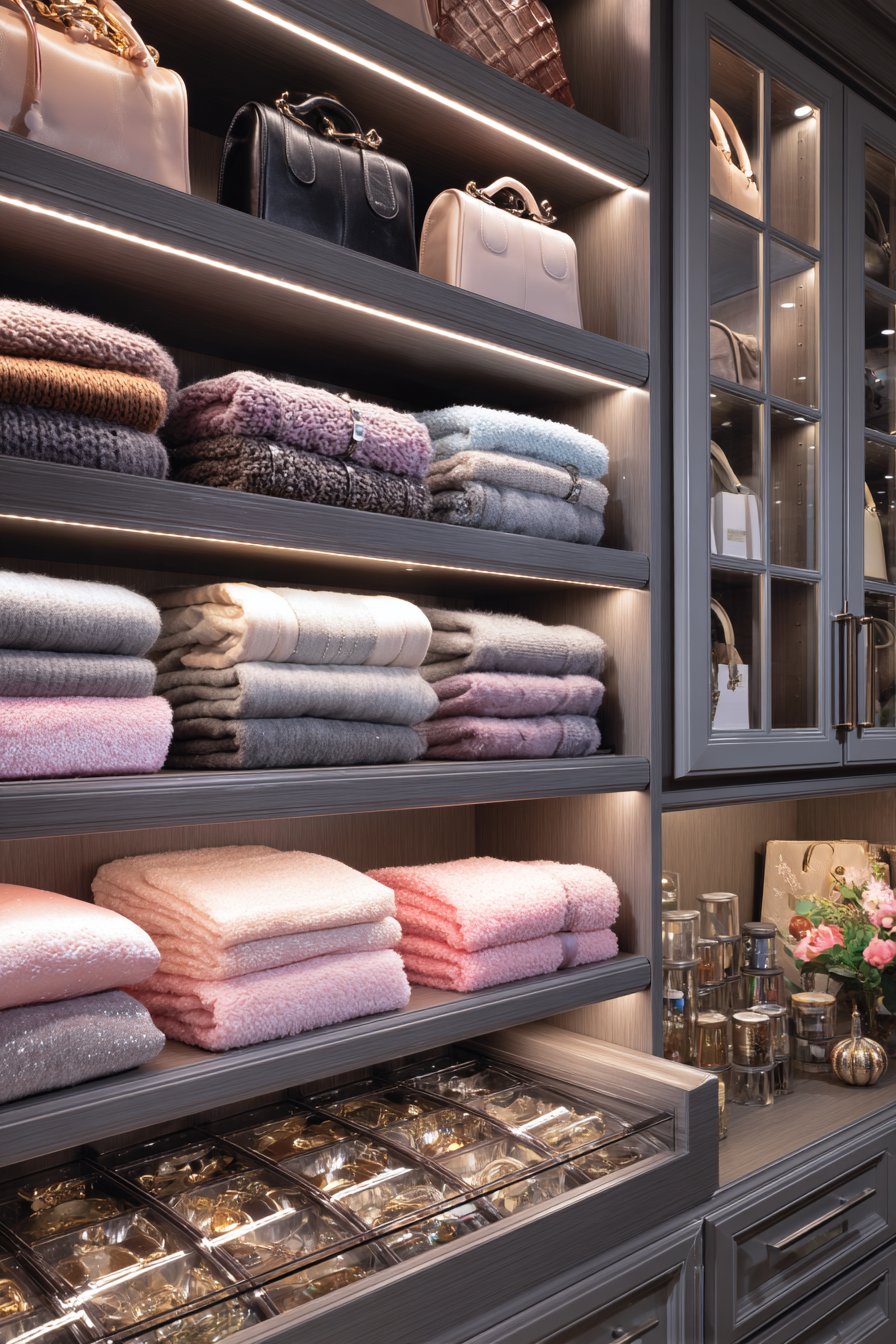
22. Luxury Closet with LED-Integrated Custom Shelving
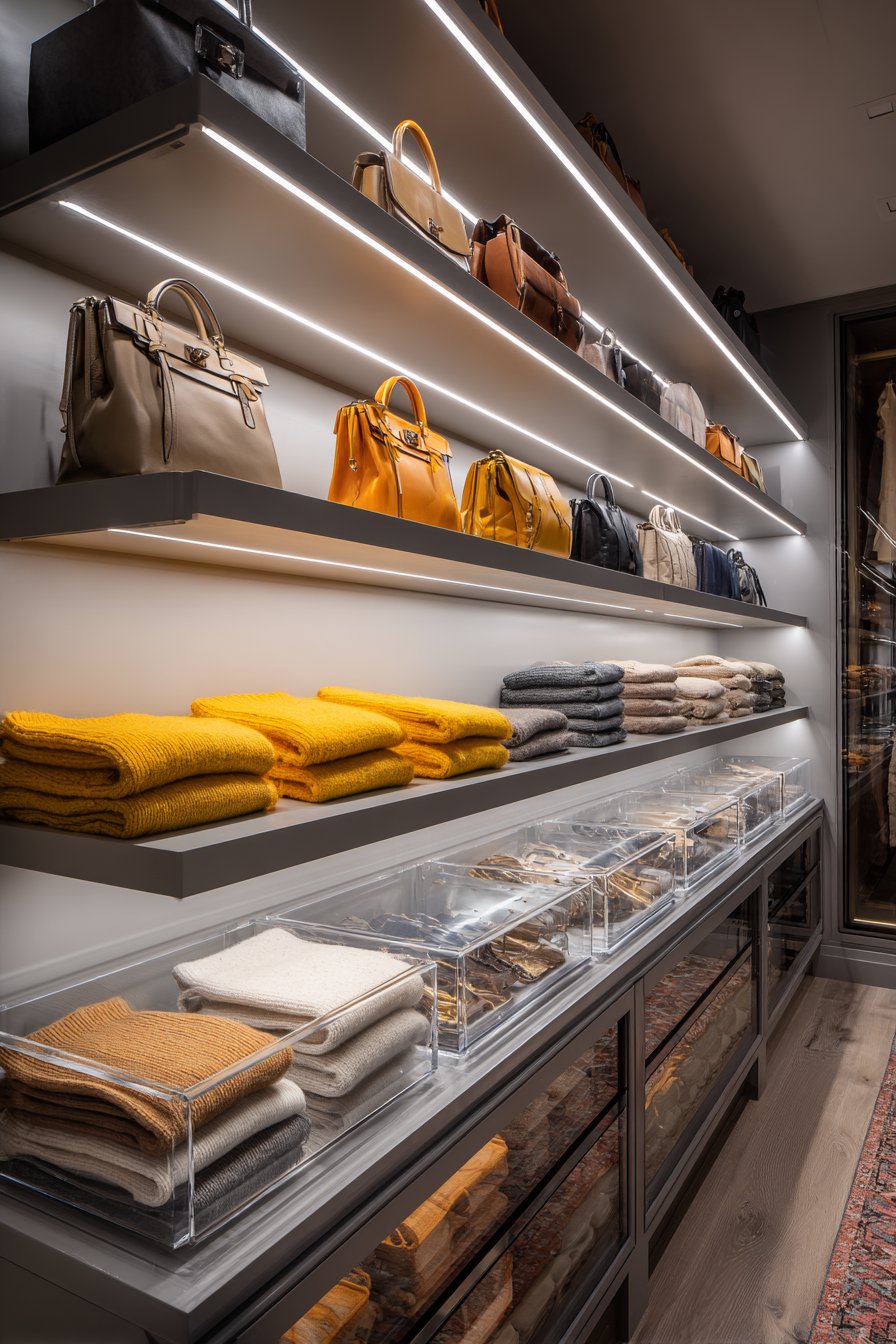
High-end custom closets transform utilitarian storage into luxury experiences through meticulous planning, quality materials, and integrated technology. This walk-in closet features built-in shelving in sophisticated soft gray finish with LED lighting integrated into each shelf level, eliminating shadows while adding ambient luxury. The shelves display handbag collections, folded sweaters color-organized for easy selection, and shoe storage with clear acrylic dividers maintaining visibility while preventing shifting and damage.
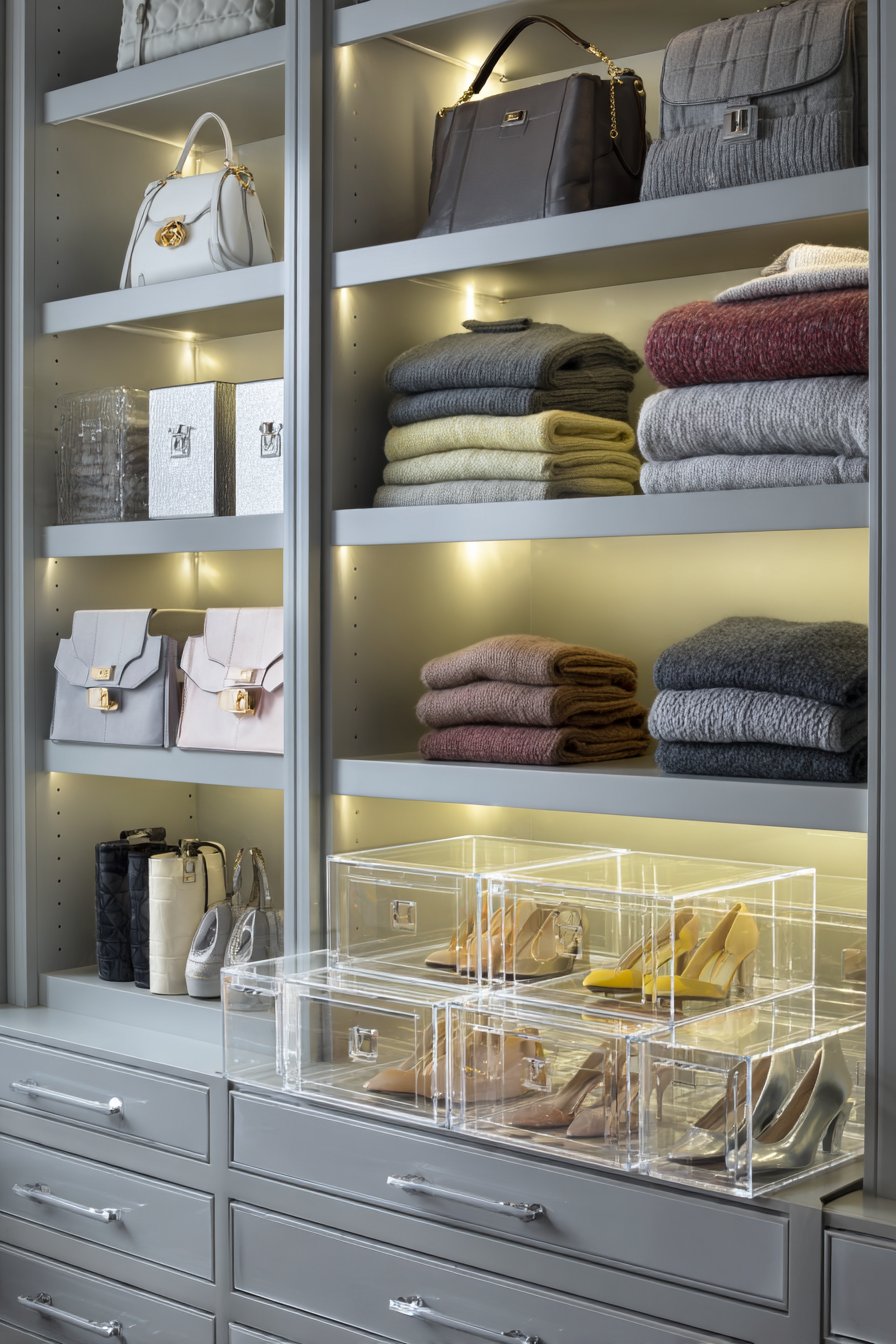
Velvet-lined drawers protect delicate items while adding tactile luxury, while glass-front cabinets allow seeing stored items without opening doors, making getting dressed more efficient. The warm accent lighting transforms functional storage into boutique-like display, elevating daily routines into more pleasurable experiences. This attention to detail—from drawer liners to lighting temperature to finish quality—distinguishes truly custom installations from builder-grade storage.
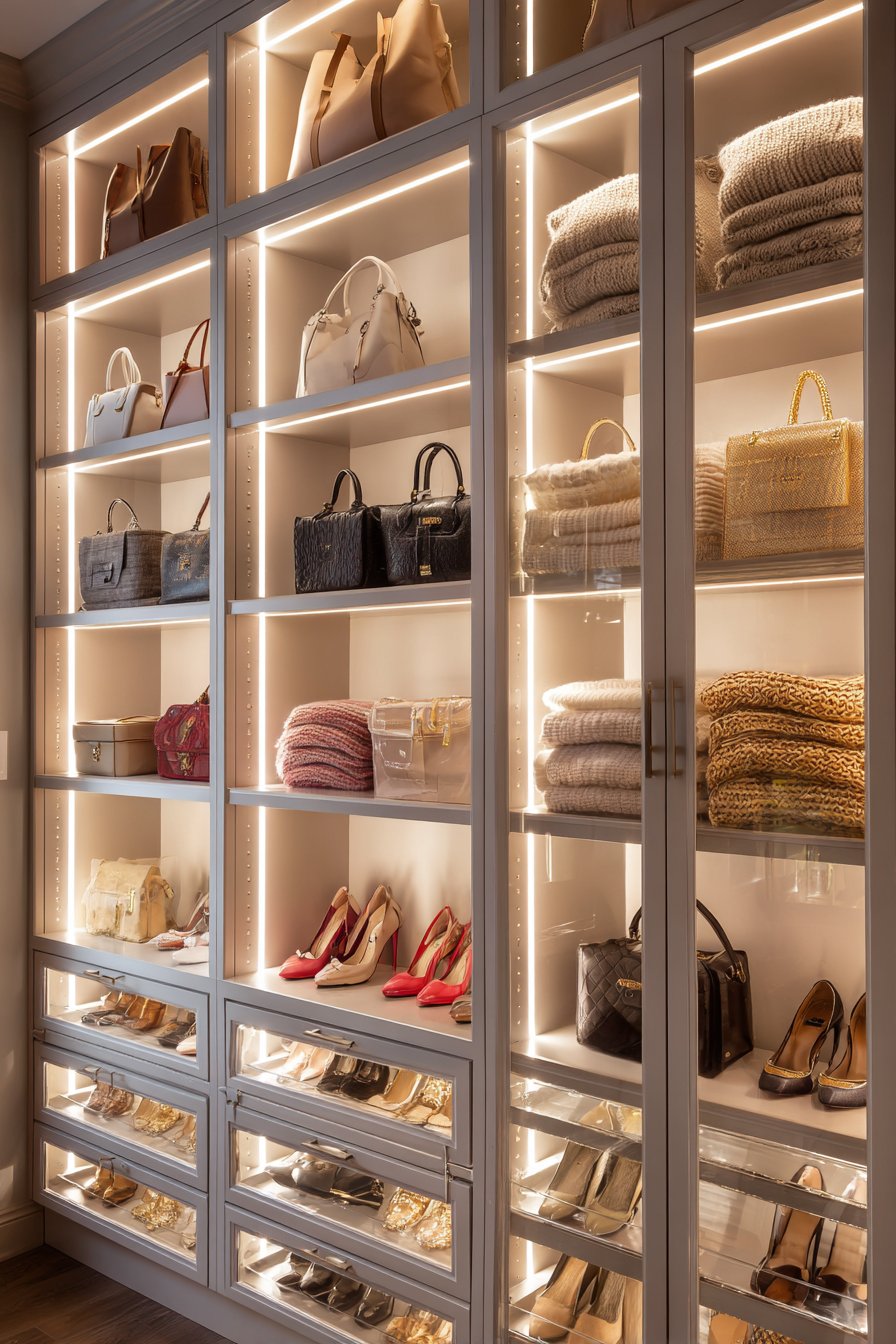
Professional interior photography captures the high-end custom installation with balanced exposure showcasing material quality and precise craftsmanship invisible in lesser work. Every joint aligns perfectly, every finish coat applied flawlessly, every integrated technology functioning seamlessly—this level of execution requires skilled craftspeople and cannot be achieved through DIY or budget solutions. The investment creates daily luxury and typically adds property value exceeding installation costs.
Key Design Tips:
- Work with certified closet designers who understand clothing storage requirements and industry standards
- Specify LED lighting with appropriate color temperature—warm white (3000K) flatters clothing colors
- Include mix of hanging, folding, and drawer storage to accommodate different garment types
- Install lighting on dimmer controls for ambiance adjustment and energy conservation
- Choose velvet or felt drawer liners that protect delicate items while adding luxury feel
- Integrate full-length mirrors in optimal positions for complete outfit evaluation
- Plan for future needs—adjustable systems accommodate changing wardrobes over time
23. Double-Sided Room Divider Shelving for Studios
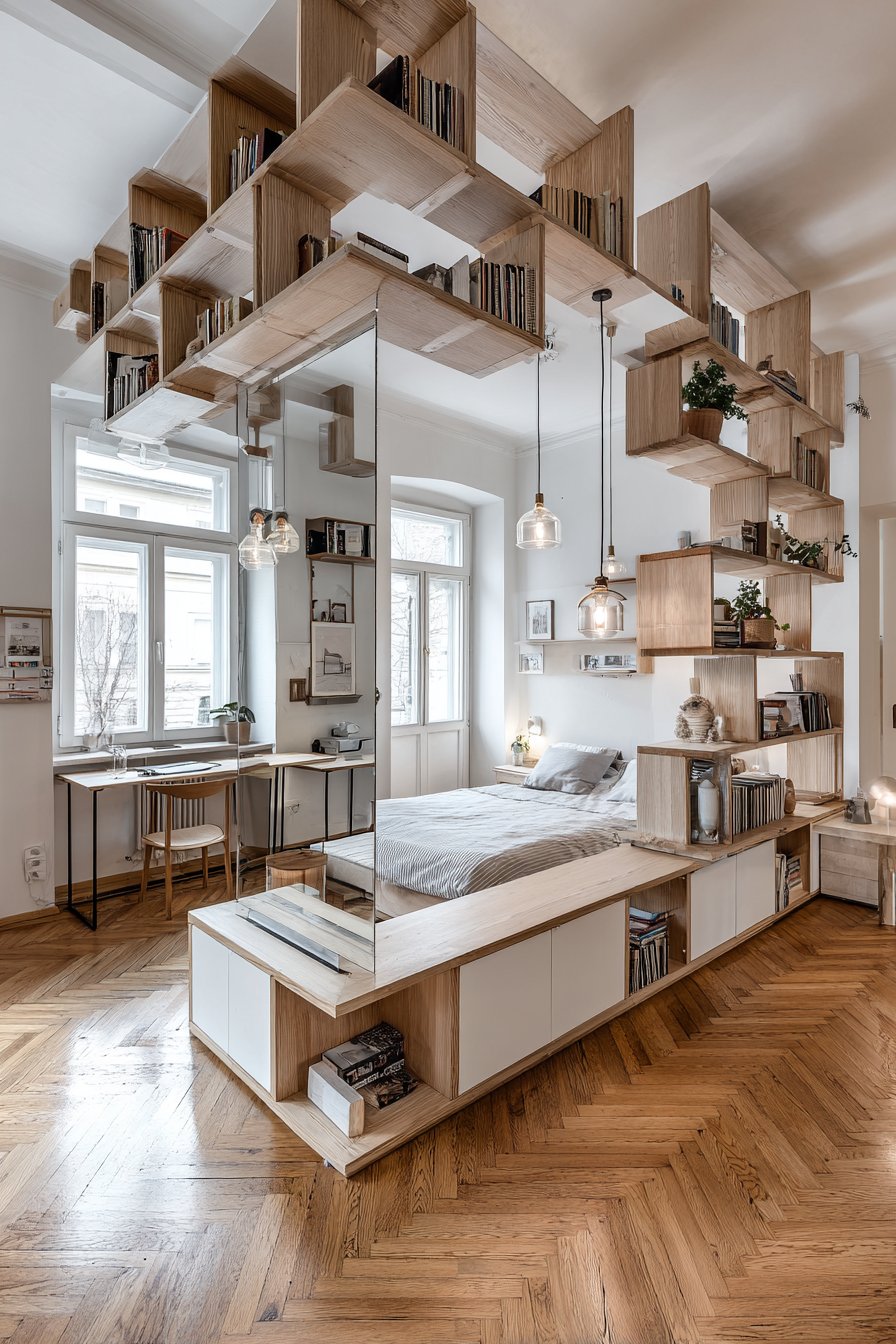
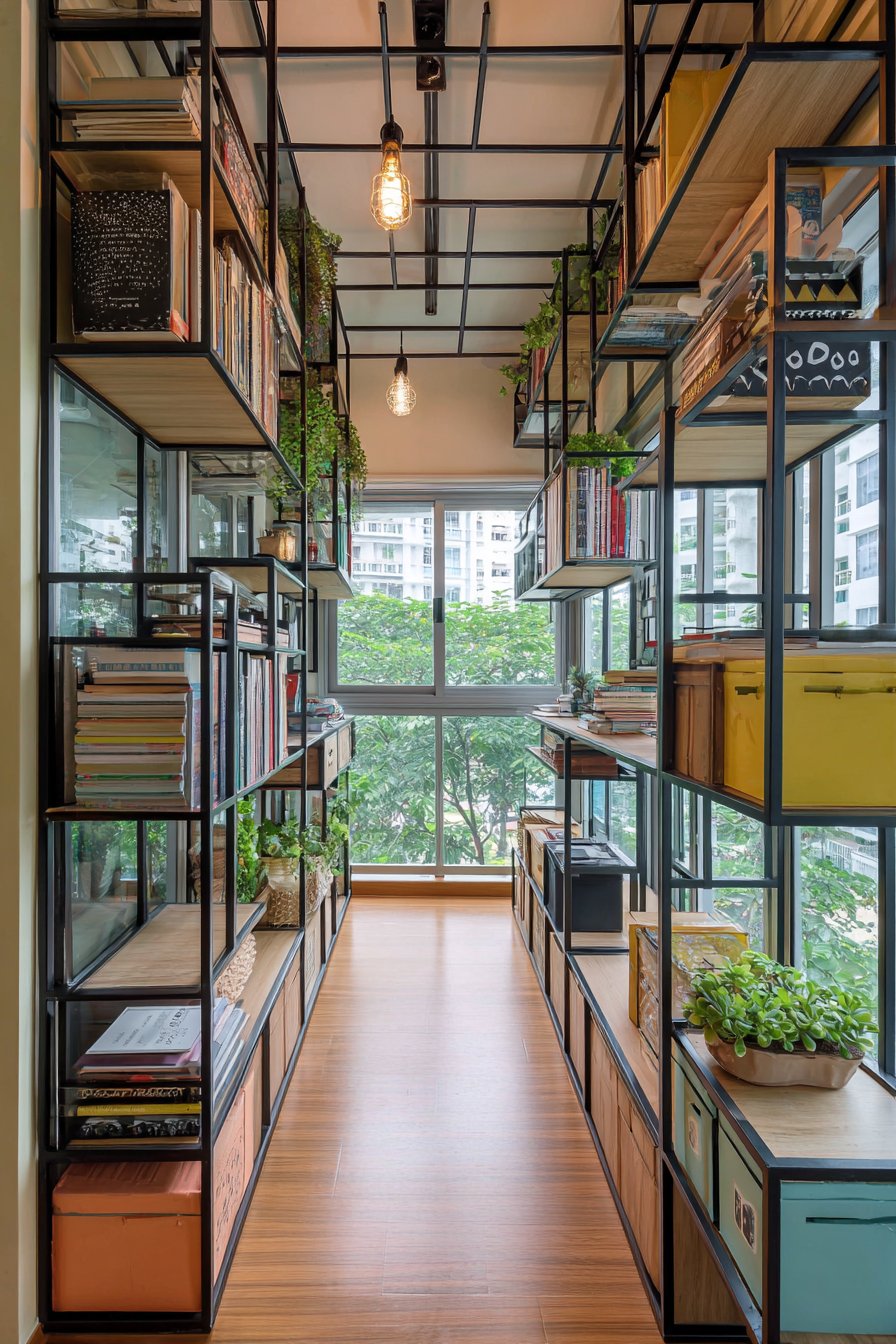
Small studio apartments require creative solutions that maximize limited square footage while creating functional zones within open layouts. This floor-to-ceiling room divider shelving unit serves as both storage and spatial definition, accessible from both sides while maintaining visual connection through its open framework. Books, plants, and decorative storage boxes displayed on double-sided shelves create semi-privacy while avoiding the closed-in feeling solid walls would create.
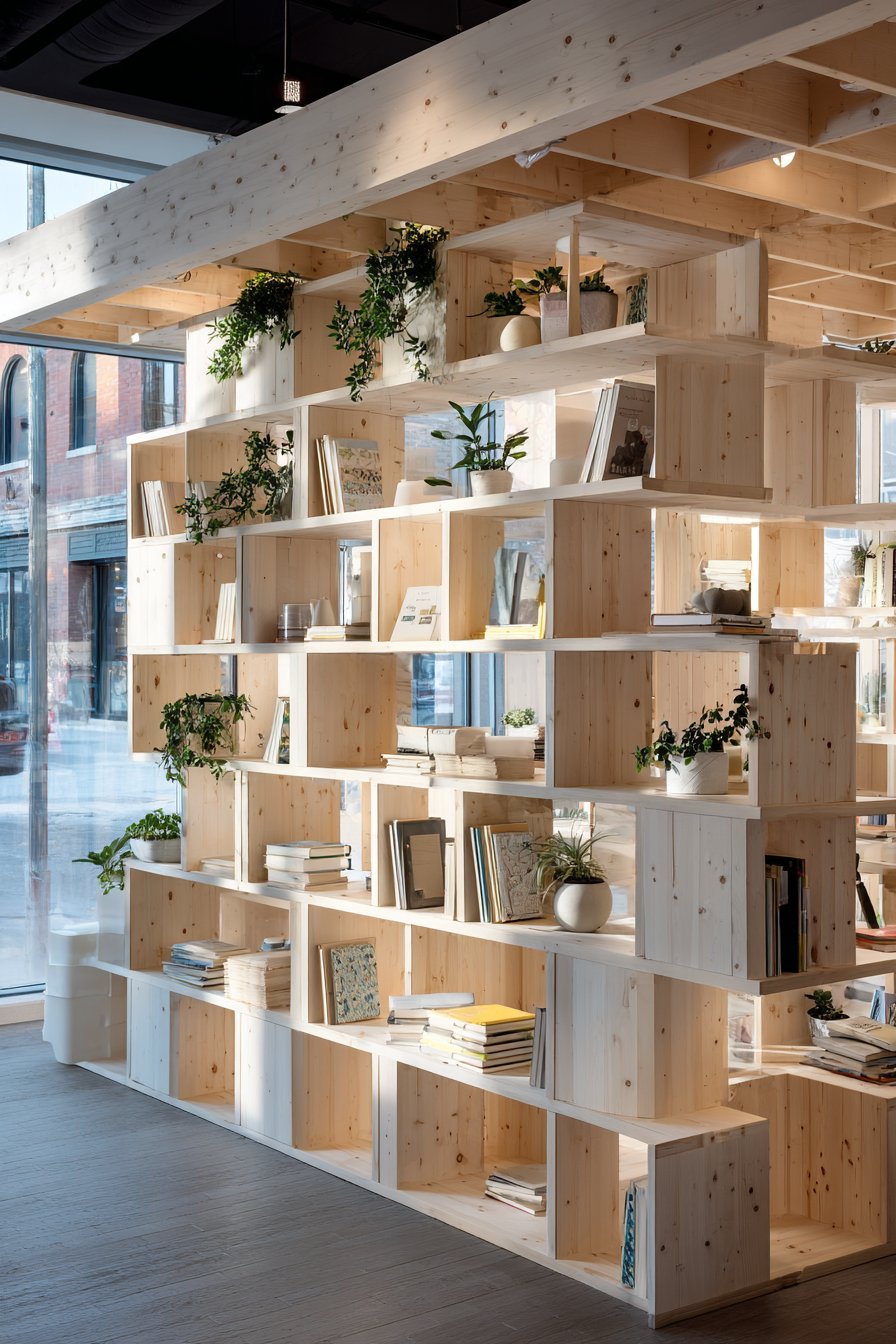
The open framework maintains visual and physical connection between zones—light passes through from windows on either side, sight lines remain open—while psychologically defining separate areas for sleeping, working, or living. This perceptual division proves surprisingly effective at creating distinct spaces even though no actual barriers exist. The dual accessibility means items stored on the unit remain reachable from either side, maximizing utility in the small footprint.
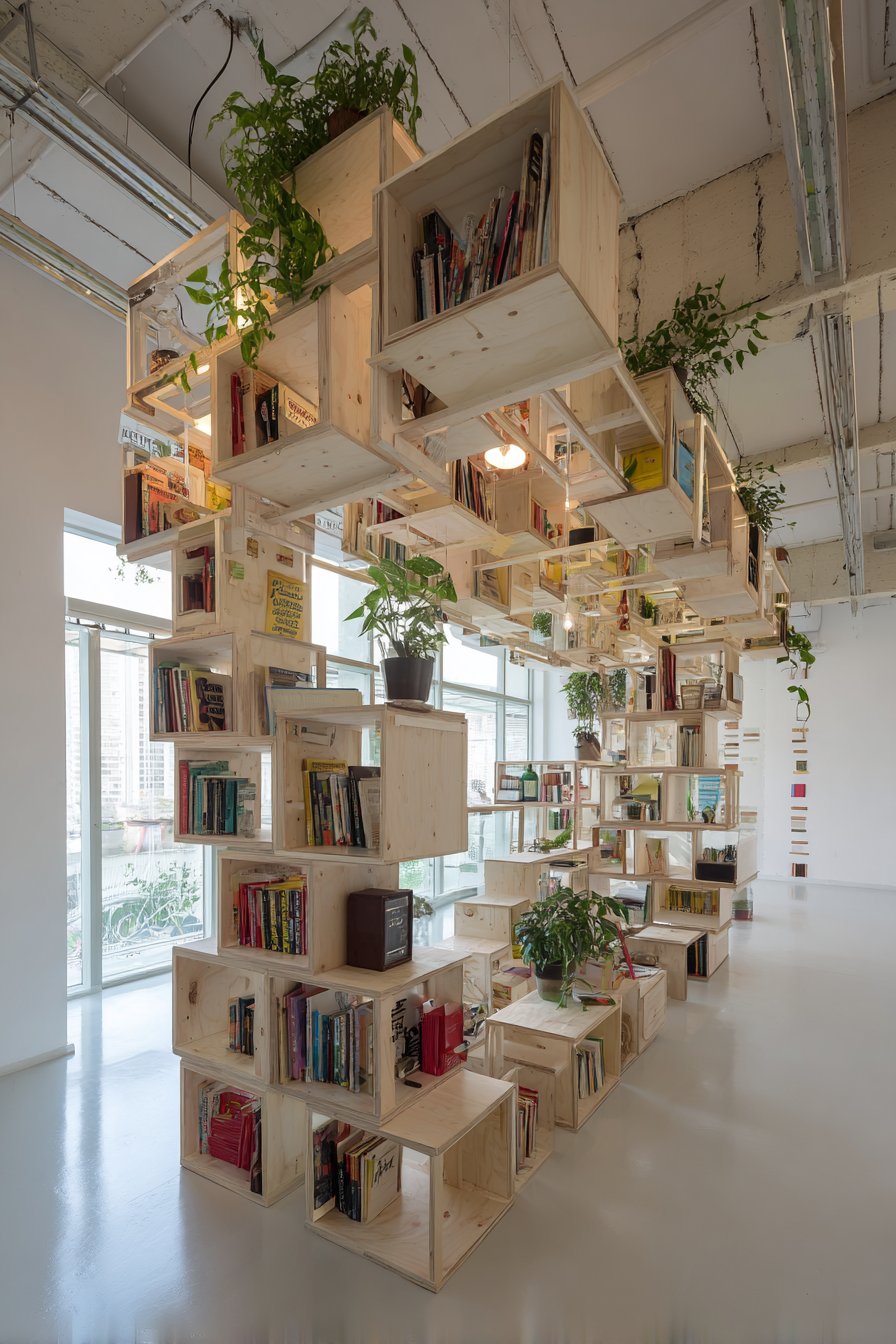
Natural light passing through the unit from windows on either side prevents the divider from creating dark zones that would make the studio feel smaller and more closed. The strategic use of plants on multiple shelf levels adds living elements that improve air quality while creating natural green screens adding privacy without blocking light. This multi-functional approach—storage plus spatial division plus light transmission—demonstrates the creative problem-solving small space living demands.
Key Design Tips:
- Secure floor-to-ceiling dividers properly to prevent tipping—they’re not against walls for support
- Plan shelf depths accessible from both sides—typically 10-12 inches allows comfortable reach
- Style both sides of divider shelving thoughtfully since both remain visible
- Include mix of open and closed storage using boxes or baskets for items requiring concealment
- Position heavier items lower for stability in freestanding units not attached to walls
- Use the divider to carry utilities—lighting, electrical outlets—to zones they create
- Choose open framework designs that maintain light flow and visual connection between spaces
24. Traditional China Cabinet Built-In Display
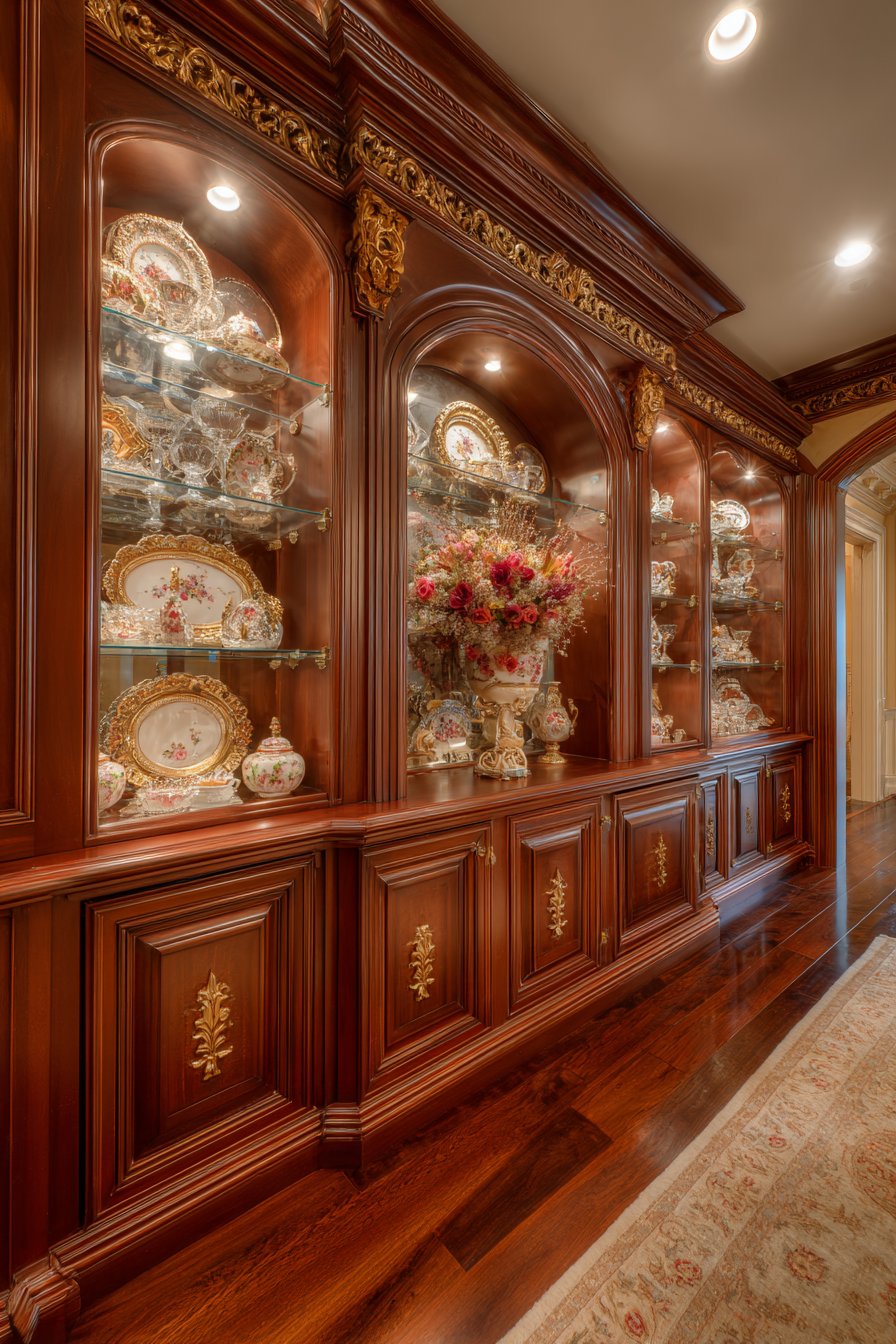
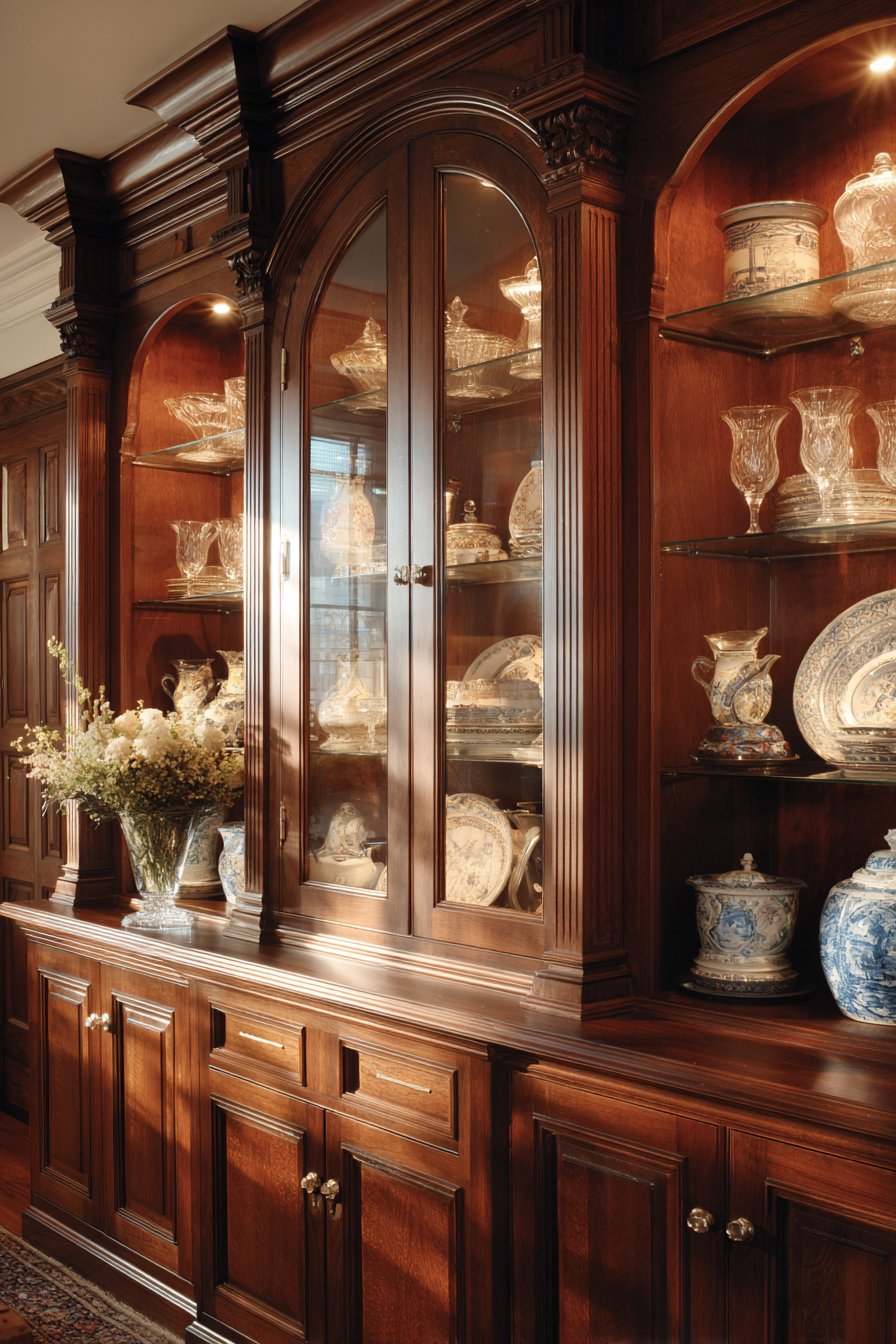
Formal dining rooms in traditional homes often feature built-in china cabinets combining glass-front display shelving with closed lower storage. These architectural installations showcase heirloom dishes, crystal stemware, and serving pieces accumulated over generations or carefully collected over time. The glass doors protect valuable contents from dust while allowing visual appreciation of fine china patterns, cut crystal facets, and silver serving pieces that represent both monetary and sentimental value.
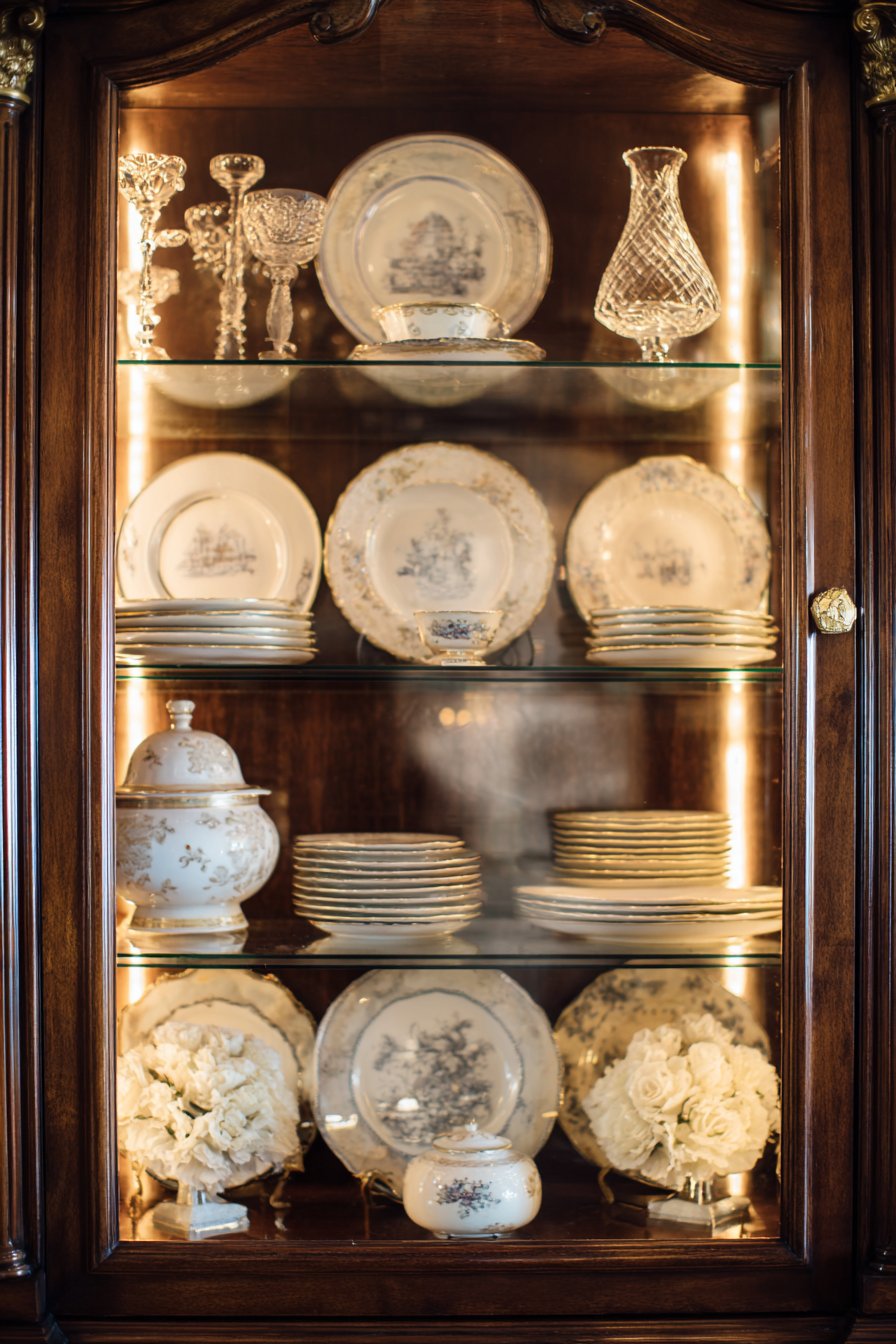
Interior shelf lighting on dimmer switches creates elegant display illumination that can be adjusted from dramatic highlighting during dinner parties to soft ambient glow during everyday family meals. The rich wood tone—here cherry with its fine grain and reddish-brown color—adds warmth while the traditional styling with raised panel doors and architectural moldings creates formal character appropriate to the room’s function. The lower closed cabinets conceal everyday dishes, table linens, and serving pieces that don’t merit display but require accessible storage.
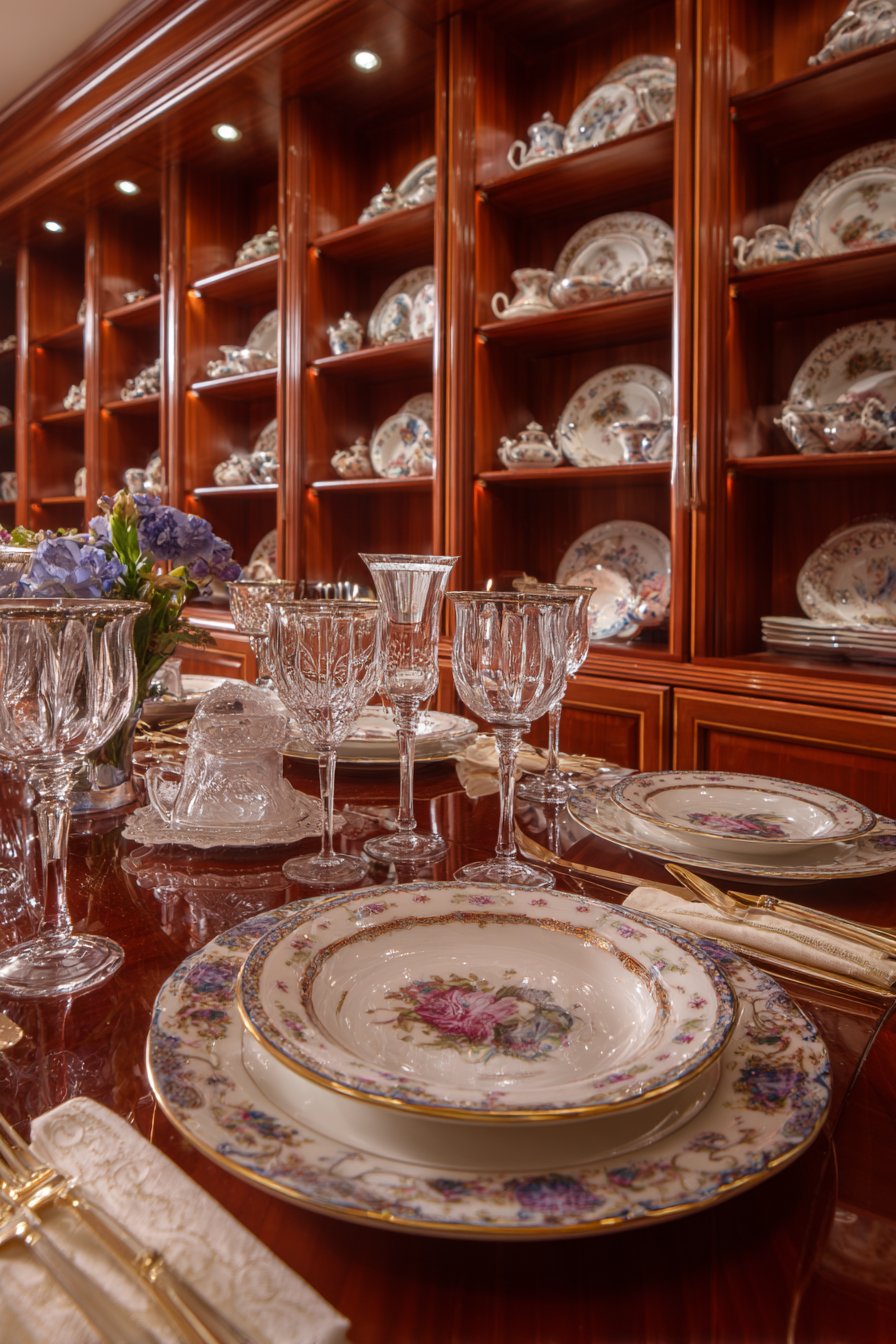
Professional interior photography captures the formal traditional aesthetic with attention to how glass reflects and refracts light, how cabinet lighting creates depth within the display, and how ambient room lighting interacts with accent lighting to create dimensional interest. The interplay between these light sources—natural daylight from windows, overhead ambient fixtures, and integrated cabinet lighting—creates a dynamic display that changes throughout the day and evening, keeping the traditional installation feeling alive rather than static.
Key Design Tips:
- Specify tempered glass for cabinet doors—it’s safer if broken and more durable long-term
- Include glass shelves within display cabinets to maximize light transmission to lower levels
- Install cabinet lighting with LED puck lights or strip lights for energy efficiency and low heat
- Choose dimmer controls allowing lighting adjustment for different occasions and times
- Polish or clean displayed items regularly—glass cabinets showcase dust prominently
- Arrange items with varying heights and visual weights creating dynamic compositions
- Include plate rail details on shelves for secure vertical plate display showing decorative faces
25. Modern Laundry Room Wire Shelving Organization
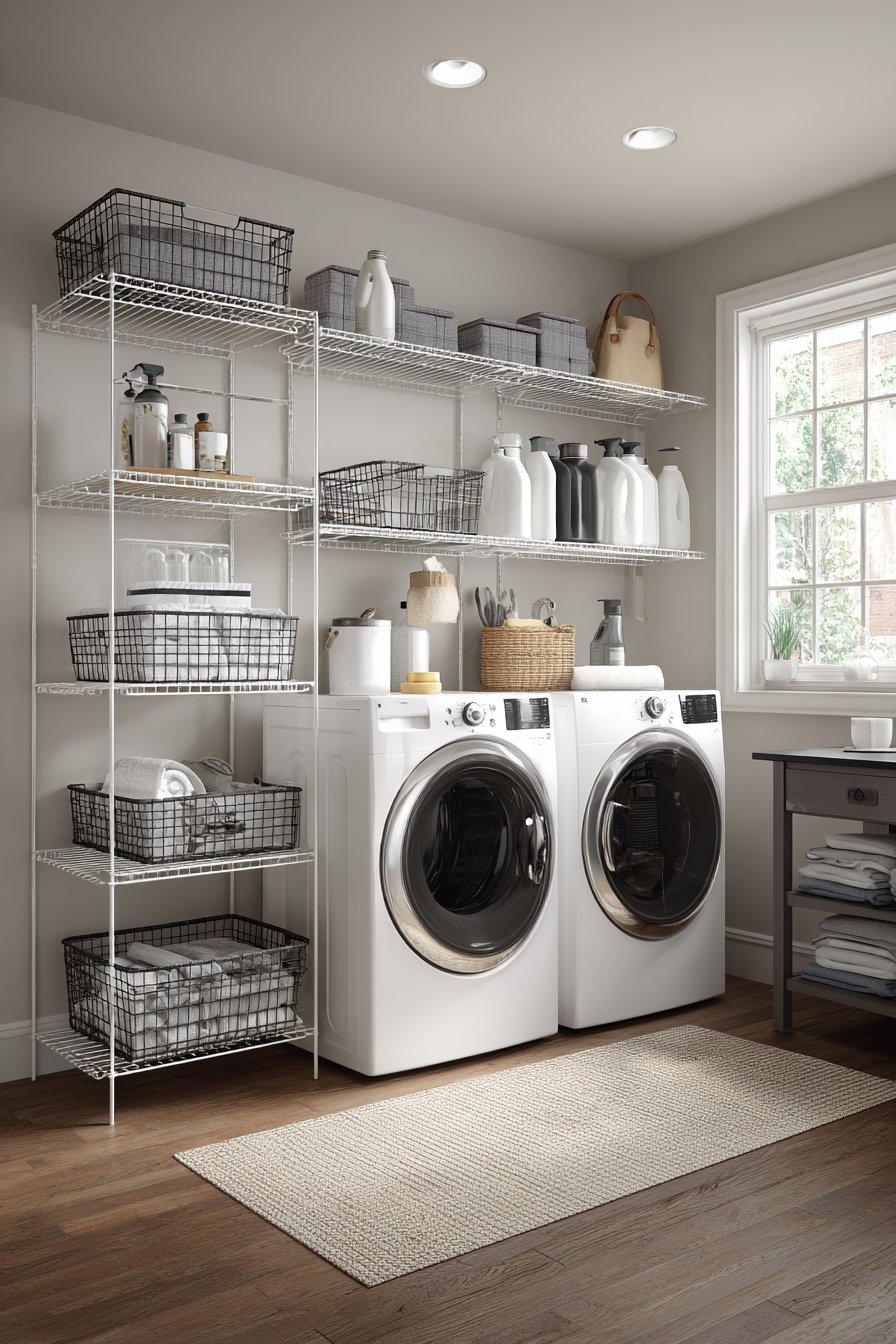
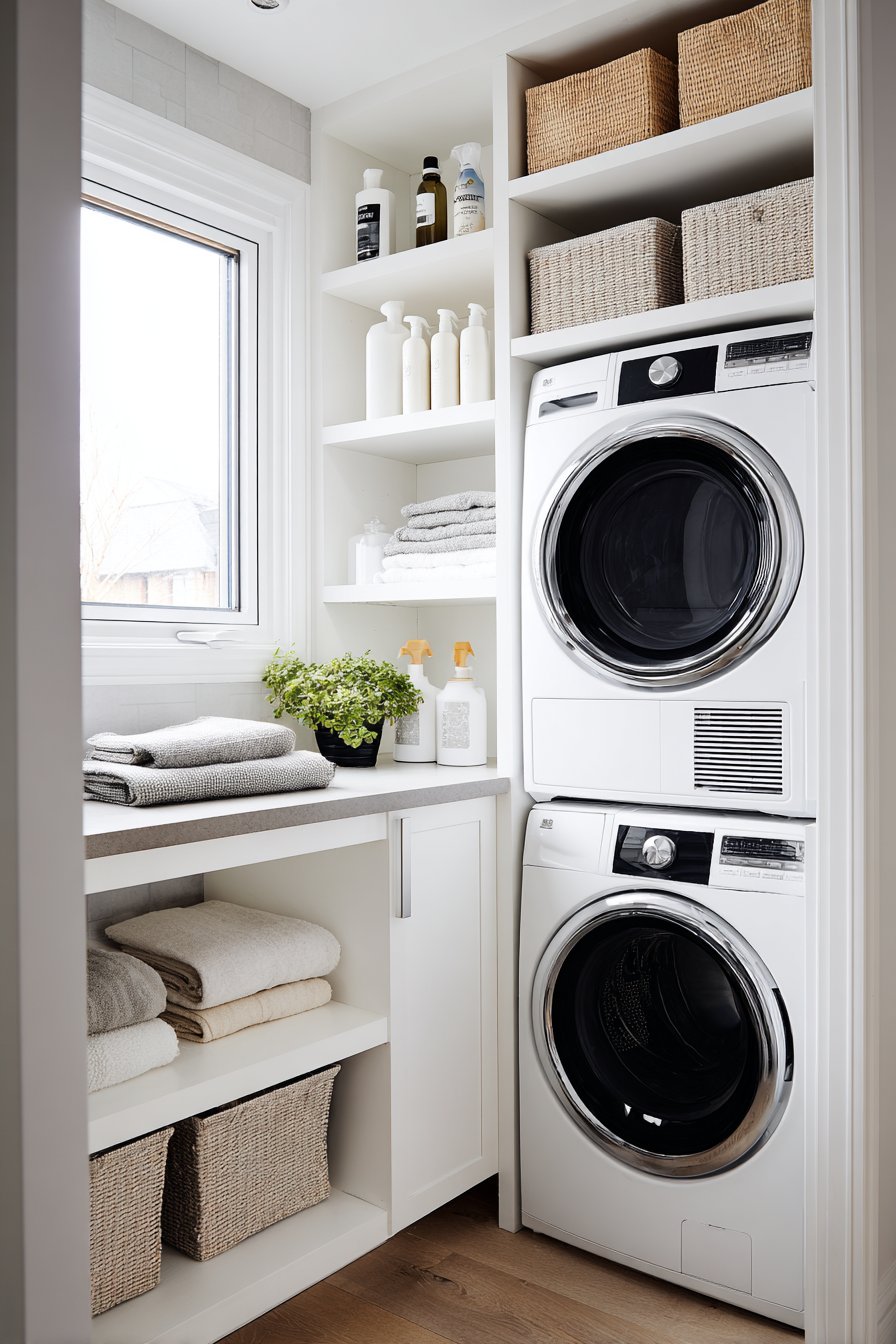
Laundry rooms represent pure utility, but even the most functional spaces benefit from thoughtful organization creating efficiency and visual order. This modern laundry room features white wire shelving providing ventilated storage essential in potentially humid environments where solid shelves might trap moisture. Laundry supplies in matching containers, cleaning products organized by type, and folded linens create visual order that makes tasks easier and faster.
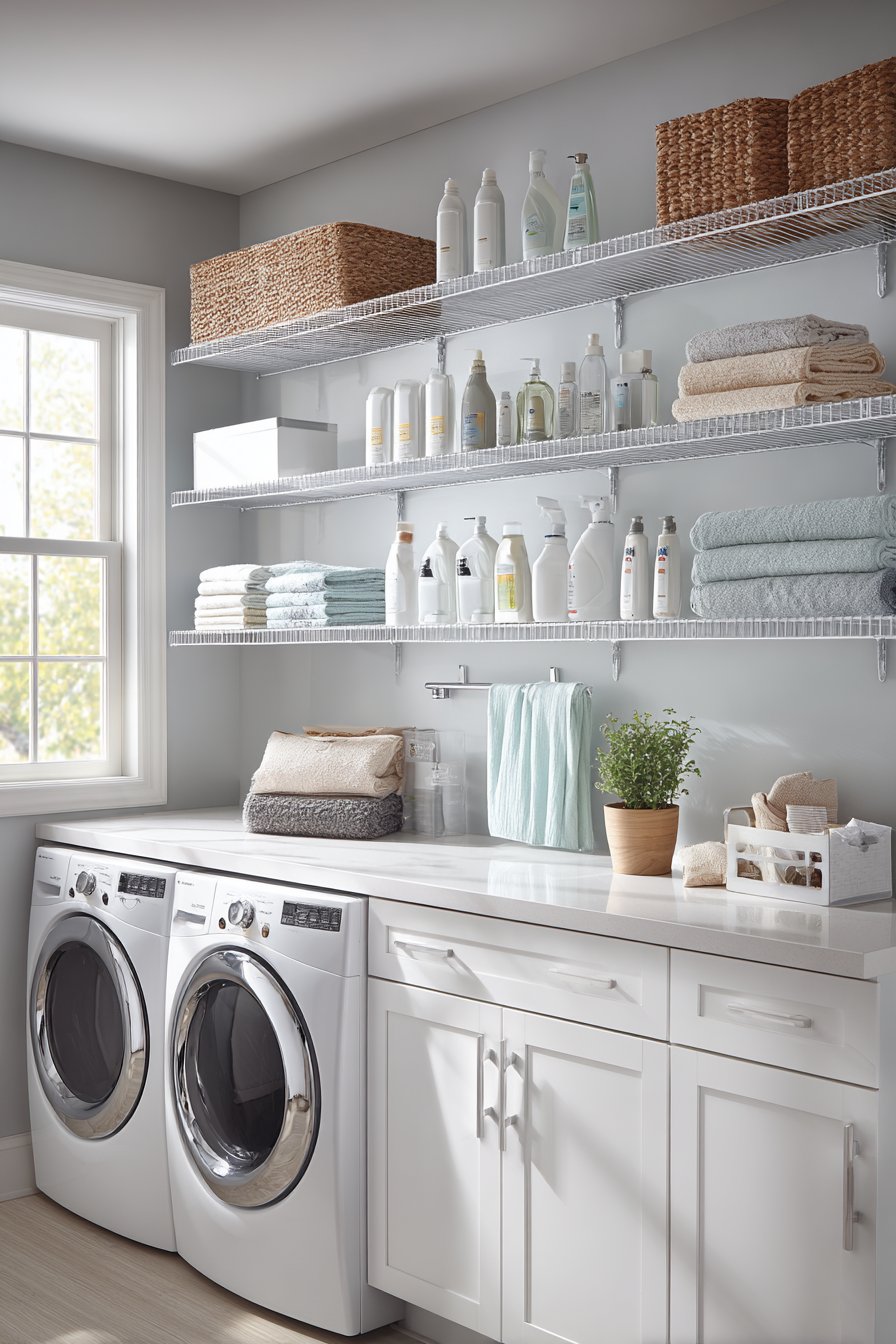
The ventilated wire construction allows air circulation preventing musty odors in stored linens while the white powder-coated finish brightens the utilitarian space and resists rust better than bare metal. The practical shelving system includes adjustable shelf heights accommodating bottles of various sizes—from compact stain removers to tall detergent containers—demonstrating how flexibility improves function. The clean white finish creates cohesive appearance with typical laundry appliances and brightens spaces that often lack abundant natural light.
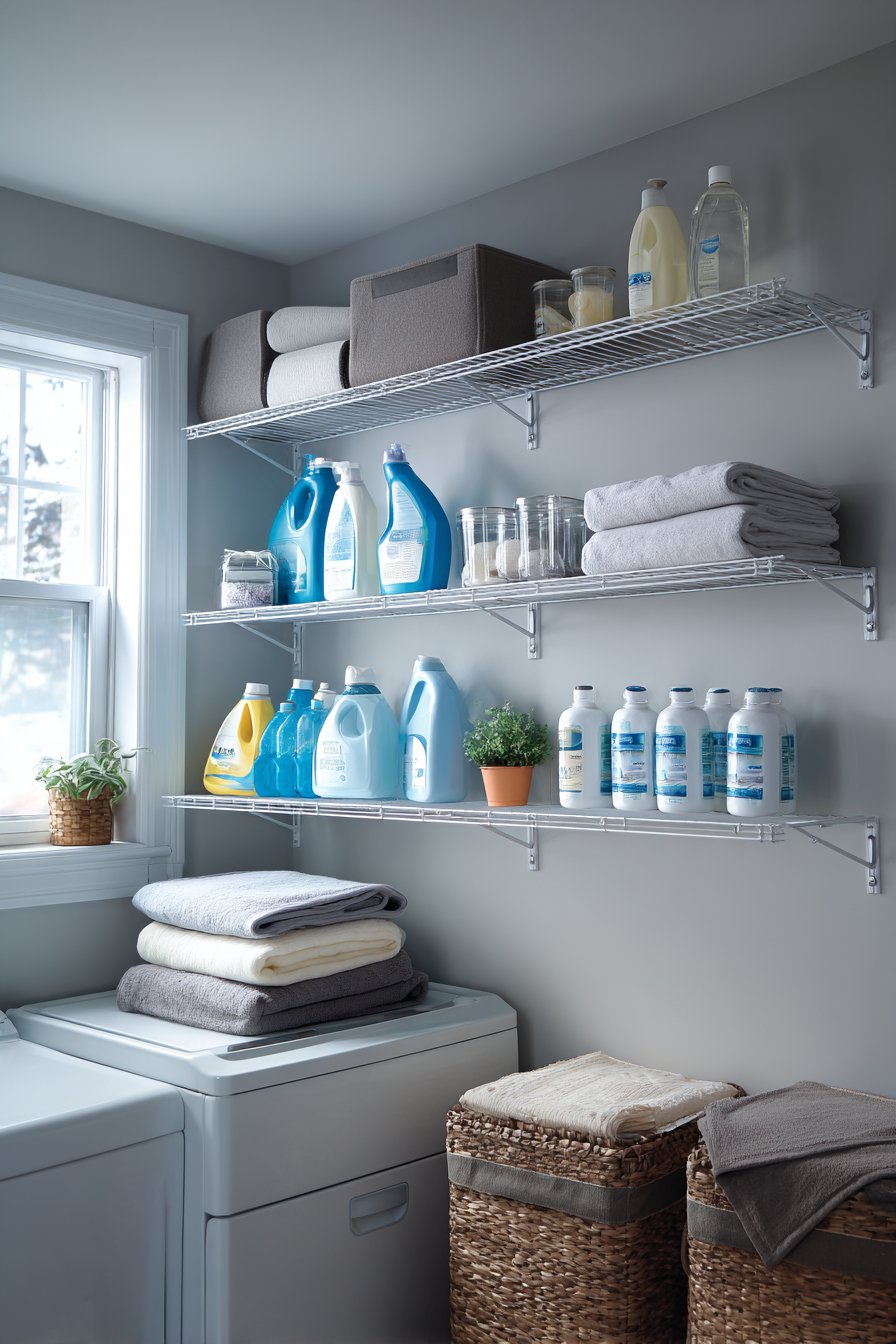
Natural light from a small window combines with overhead LED task lighting creating clear visibility essential for laundry tasks requiring stain inspection, sorting, and folding precision. The organized functional space proves that even mundane household tasks feel more manageable in thoughtfully designed environments. Matching storage containers transform necessary but unattractive products into cohesive displays while uniform labels identify contents quickly when rushing through chores.
Key Design Tips:
- Choose wire shelving with moisture-resistant coating appropriate for laundry room humidity
- Install adjustable shelf tracks allowing height modification as storage needs change
- Transfer products into uniform containers with clear labels for cohesive appearance and easy identification
- Position frequently used items at comfortable reach height between waist and shoulder level
- Include tall shelf positions for items like mops, brooms, and ironing boards
- Maximize vertical space in typically small laundry rooms with floor-to-ceiling shelving
- Maintain adequate electrical outlets near shelving for charging vacuums or other tools
Why These Room Shelf Ideas Represent the Best in Contemporary Storage Design
The twenty-five room shelf ideas presented throughout this comprehensive guide represent the full spectrum of contemporary storage solutions, from pure functionality to design-forward installations that transform ordinary walls into architectural features. Each concept addresses specific needs while demonstrating core principles that distinguish exceptional shelving from merely adequate storage. Understanding why these particular approaches excel helps homeowners make informed decisions when planning their own spaces.
Material selection proves fundamental to shelving success, with each featured design choosing materials appropriate to both functional requirements and aesthetic goals. Reclaimed wood brings sustainability credentials and authentic character impossible to manufacture, while glass provides transparency that maintains openness in small spaces. Powder-coated metal offers industrial edge and exceptional durability, and custom-finished wood in everything from high-gloss white lacquer to traditional cherry stain demonstrates wood’s remarkable versatility. These material choices aren’t arbitrary but thoughtfully matched to room function—moisture-resistant finishes in bathrooms, food-safe sealants in kitchens, child-safe rounded edges in nurseries.
The integration of lighting within shelving systems elevates simple storage to architectural features that function at multiple levels. Integrated LED strips beneath floating shelves create ambient glow transforming walls into light sources, while interior cabinet lighting makes fine china collections into illuminated displays worthy of galleries. Task lighting integrated into home office shelving improves workspace functionality, and dimmer controls allow lighting adjustment matching changing needs throughout the day. This lighting sophistication demonstrates understanding that shelving interacts with room illumination in complex ways—blocking light, reflecting light, or actively generating light depending on design approach.
Flexibility and adjustability feature prominently in the most successful storage solutions, acknowledging that needs change over time and rigid systems become obsolete. Modular cube storage in children’s rooms reconfigures as kids grow, adjustable track systems in studios adapt to evolving creative projects, and removable storage bins in closets accommodate seasonal wardrobe rotations. This design flexibility respects the reality that homes and lives aren’t static, and storage systems must evolve accordingly or require expensive replacement.
The balance between open and closed storage threads through multiple featured designs, recognizing that complete openness leads to visual chaos while total concealment creates accessibility problems. The most thoughtful installations combine display shelving for curated items with closed cabinets or concealed bins for necessary but unattractive items. This mixed approach maintains visual interest through displayed collections while preventing the cluttered appearance that undermines good design. Glass-front cabinets represent a middle ground, protecting contents from dust while maintaining visibility.
Scale and proportion considerations distinguish professional-quality installations from amateur efforts. Floating shelves maintain appropriate depth preventing excessive wall protrusion, floor-to-ceiling units use graduated sizing with larger sections below and smaller above maintaining visual lightness, and shelf spacing accommodates actual stored items rather than arbitrary dimensions. The featured designs demonstrate that proper scaling makes shelving feel integrated and intentional rather than added as afterthought.
The spatial integration of shelving into room architecture rather than merely against walls represents sophisticated design thinking. Built-in alcove shelving utilizes otherwise wasted space, window seat flanking shelves create cohesive architectural features, and headboard integrated storage eliminates redundant furniture. This integrated approach maximizes functionality while creating custom appearance typically associated with much higher budgets. The difference between furniture placed against walls and built-in architectural elements significantly impacts perceived room quality and property value.
Color strategy in shelving design proves more nuanced than simply matching existing room colors. Contrasting shelving creates focal points and visual interest, monochromatic treatments allow shelving to recede emphasizing displayed contents, and coordinating tones maintain cohesion without exact matching that feels flat. The featured designs demonstrate all these approaches, from dramatic black steel against white walls to sage green alcoves against cream backgrounds to glass shelving that virtually disappears. Understanding when to blend versus contrast distinguishes thoughtful color planning from random choices.
The recognition that different rooms demand different storage approaches pervades these twenty-five concepts. Garage workshops prioritize durability and weight capacity over aesthetics, luxury closets emphasize boutique-quality finishes and integrated technology, children’s rooms require safety features like rounded edges and tip-over prevention, and formal dining rooms showcase traditional craftsmanship and display lighting. This room-specific thinking prevents one-size-fits-all solutions that inevitably compromise either function or aesthetics.
Conclusion
The journey through these twenty-five distinctive room shelf ideas reveals that exceptional storage design requires balancing numerous considerations—aesthetics and function, flexibility and permanence, display and concealment, investment and value. The most successful shelving solutions don’t simply hold objects but actively shape how we experience and use our spaces. They transform walls from passive boundaries into active participants in room function and character.
Whether you’re drawn to the authentic character of reclaimed barn wood in farmhouse kitchens, the sophisticated simplicity of Scandinavian floating shelves in home offices, the industrial edge of black pipe installations against exposed brick, or the traditional elegance of mahogany library walls with rolling ladders, the fundamental principles remain consistent. Choose materials appropriate to the space and use, plan lighting that enhances both function and atmosphere, maintain proportions that feel balanced and intentional, and design for evolution as needs change over time.
The investment in thoughtful shelving design yields returns far exceeding simple storage capacity. Well-designed shelving increases property value, improves daily function, reduces clutter and stress, showcases personal collections and interests, and creates beauty in everyday life. These aren’t merely utilitarian necessities but opportunities to express personal style while solving practical challenges creatively.
As you consider implementing room shelf ideas in your own spaces, remember that the best installations grow from careful consideration of specific needs, honest assessment of available space and budget, and willingness to prioritize quality over quantity. A few exceptional custom shelves provide more value than numerous mediocre mass-produced units. Take time to plan properly, invest in quality materials and installation, and design systems that can evolve with your changing needs. Your walls offer tremendous potential—transform them from empty planes into functional, beautiful storage that enhances your daily life.
