
The walls of a restaurant are far more than mere boundaries—they are canvases for storytelling, mood-setting, and creating unforgettable dining experiences. In the competitive hospitality industry, where first impressions can make or break a business, thoughtful wall design has emerged as a critical element in establishing brand identity and enhancing customer satisfaction. Whether you’re launching a new establishment or refreshing an existing space, the right wall treatment can transform an ordinary dining room into an extraordinary destination that keeps guests returning time and again.
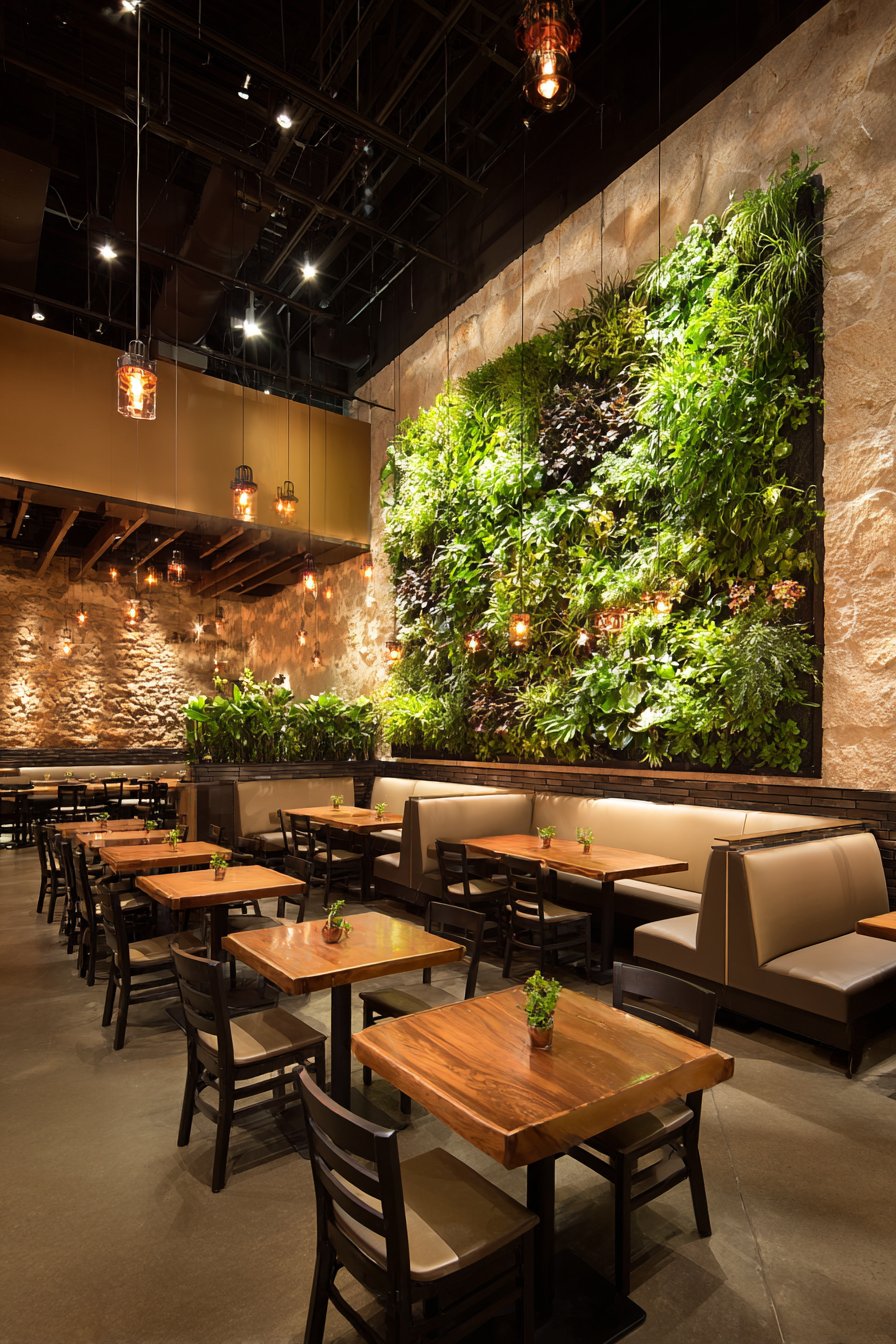
Restaurant wall design ideas encompass an incredible spectrum of possibilities, from living green walls that bring nature indoors to vintage gallery displays that evoke nostalgia, from industrial exposed brick that celebrates architectural heritage to sophisticated leather panels that whisper luxury. Each approach offers unique advantages, addressing not only aesthetic concerns but also practical considerations such as acoustics, maintenance, and spatial perception. The modern restaurateur understands that walls serve multiple functions: they can visually expand cramped quarters, dampen noise in bustling dining rooms, reinforce thematic concepts, and provide Instagram-worthy backdrops that amplify social media marketing efforts organically.
This comprehensive guide explores twenty-nine distinctive restaurant wall design ideas, each carefully selected to inspire and inform your design journey. From dramatic botanical installations to minimalist concrete panels, from eclectic mural art to refined mirror arrangements, these concepts span diverse styles, budgets, and spatial requirements. Whether your establishment embodies rustic farmhouse charm, sleek contemporary sophistication, or vibrant eclectic energy, you’ll discover wall treatments that align perfectly with your vision while addressing the unique challenges of commercial dining environments.
1. Curated Gallery Wall with Vintage Photography
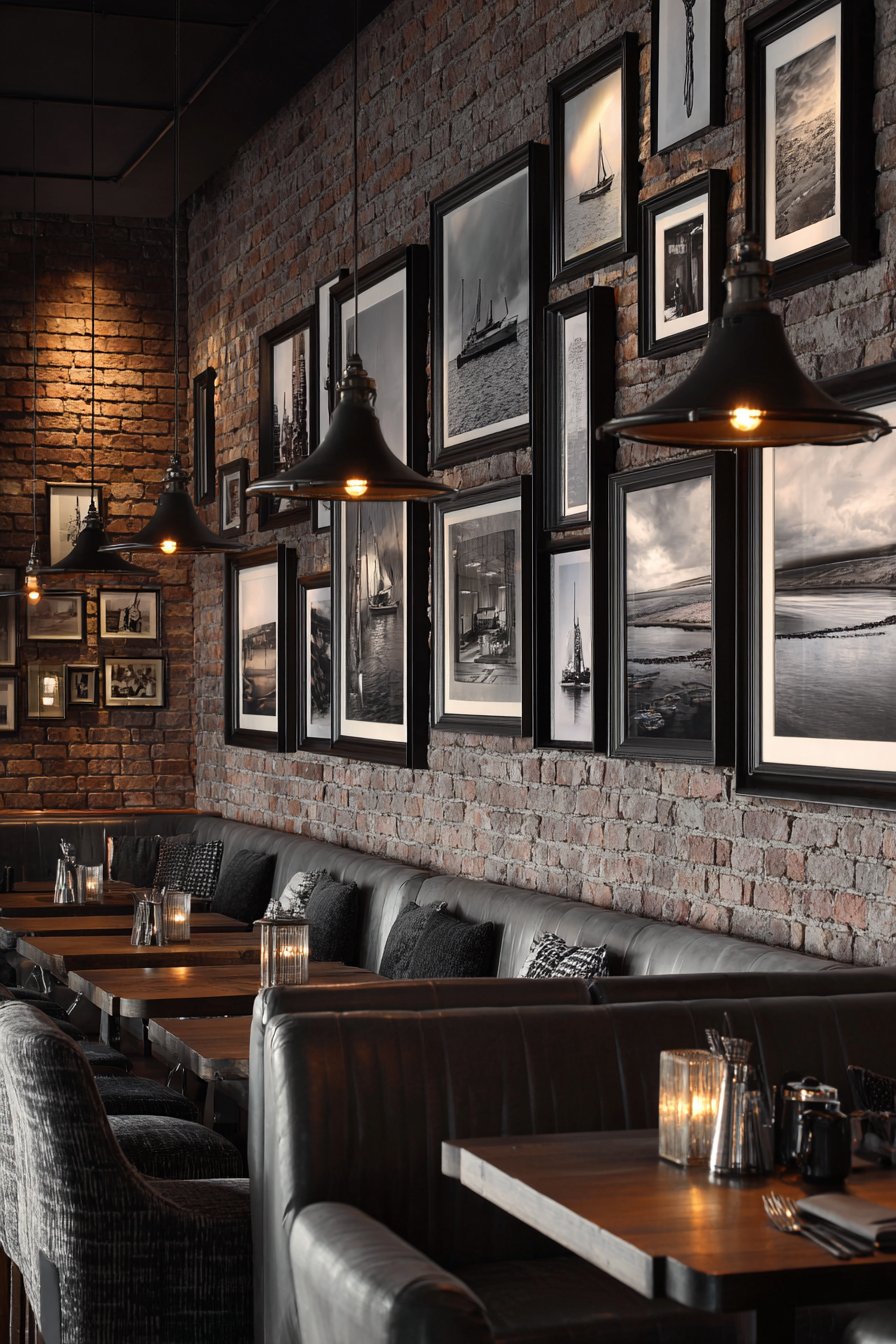
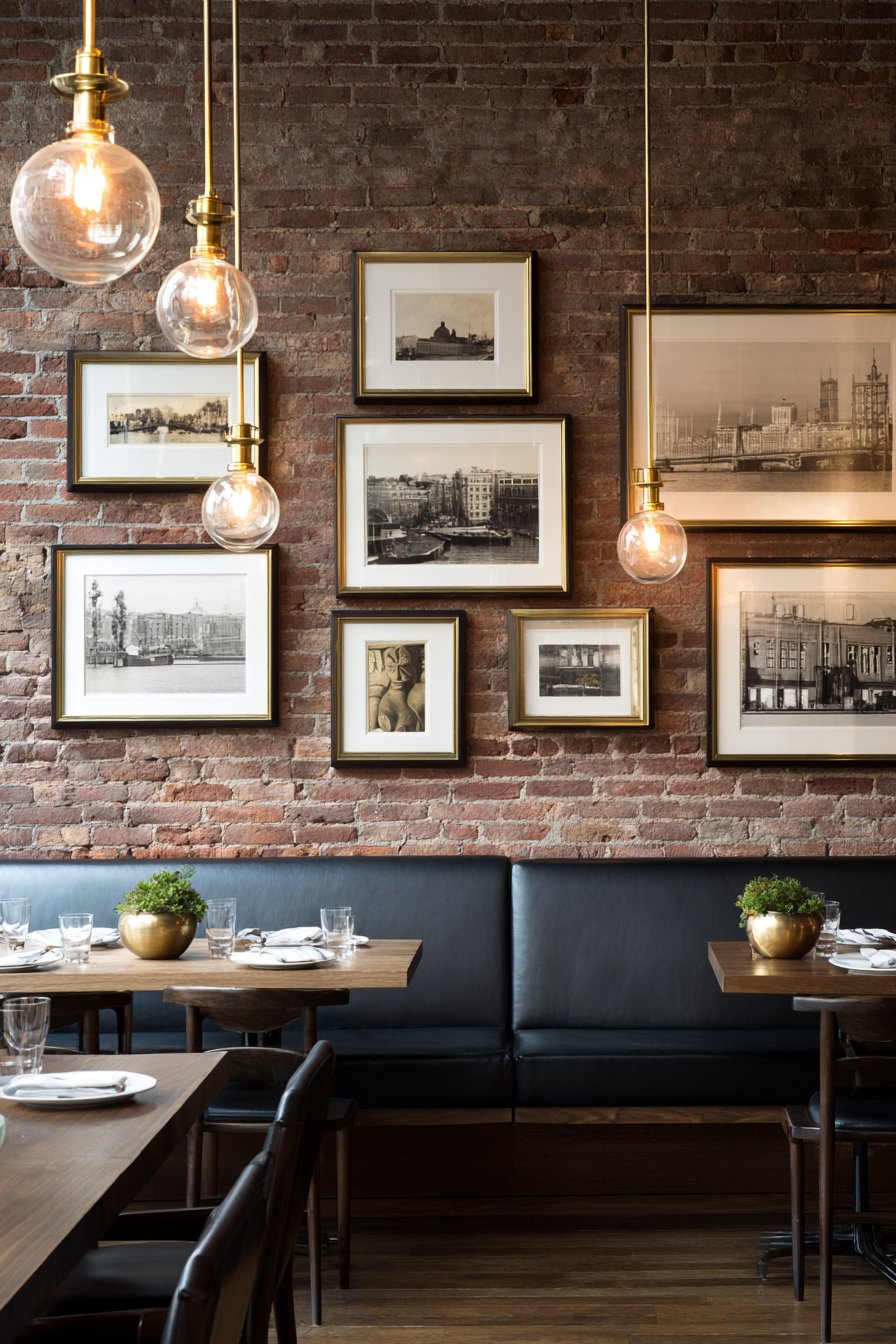
A sophisticated gallery wall arrangement featuring black and white vintage photography brings artistic credibility and cultural depth to restaurant spaces, particularly those with an emphasis on craft, tradition, or local heritage. The careful curation of photographic prints in varied frame sizes creates visual rhythm and movement along the wall, with alternating finishes between matte black wood and brushed brass adding subtle luxury without overwhelming the imagery. When installed against exposed brick, the contrast between the refined framed photographs and the raw, textured brick surface creates compelling visual tension that engages viewers and encourages closer examination.
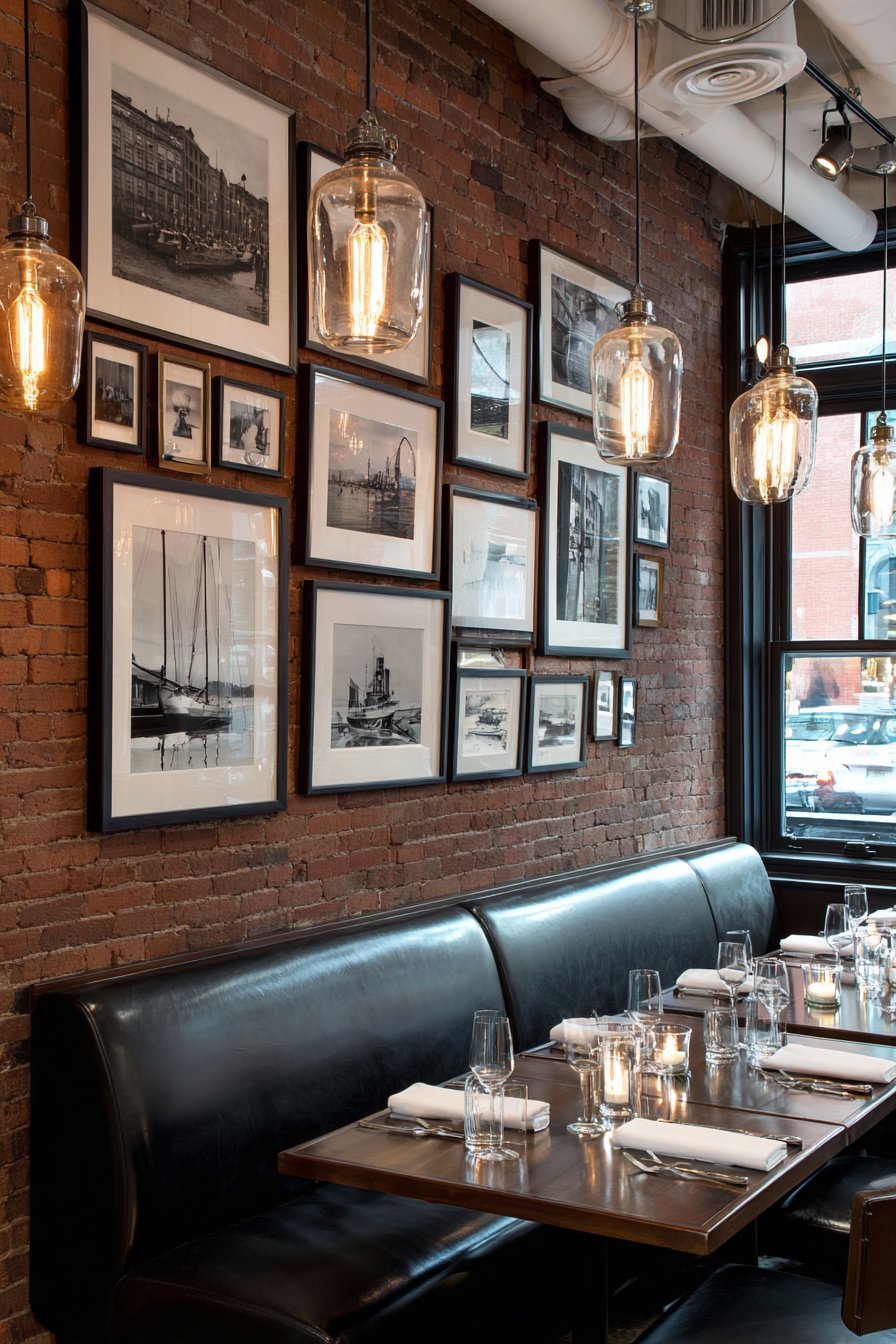
The arrangement strategy for a successful gallery wall requires thoughtful planning rather than random placement. Professional designers often create full-scale templates on the floor before installation, ensuring balanced negative space, appropriate sight lines from various seating positions, and logical visual flow that guides the eye across the collection. Warm Edison bulb pendant lights hung at staggered heights add dimensional lighting that prevents the gallery from appearing flat or static, with light pools highlighting specific images while creating gentle shadows that add depth and drama during evening service.
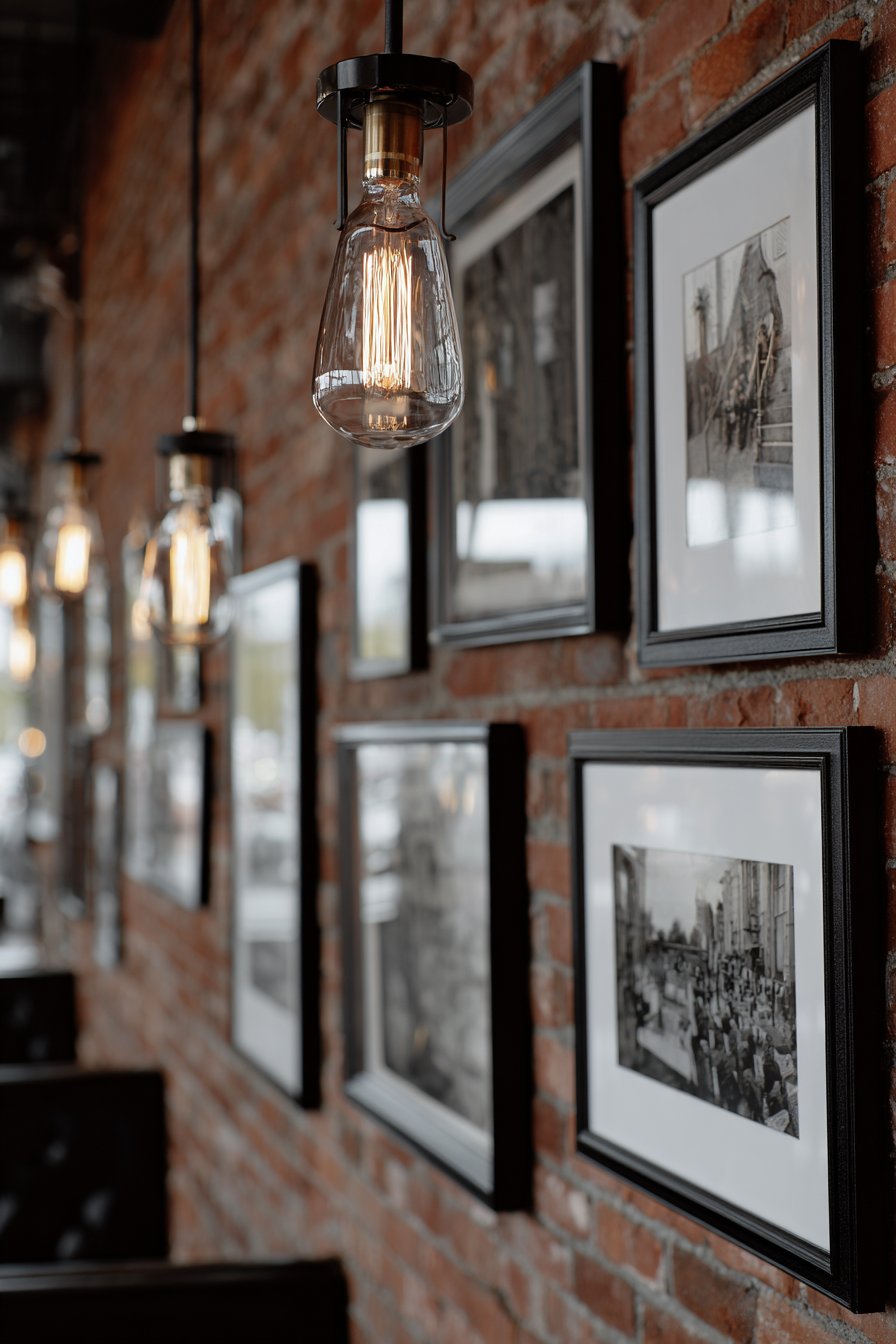
This restaurant wall design idea works exceptionally well in booth seating areas, where diners have extended viewing opportunities during their meals. The photography selection itself becomes an extension of the restaurant’s storytelling—whether showcasing the local area’s history, the evolution of culinary traditions, portraits of farmers and artisans who supply ingredients, or abstract compositions that simply provide visual interest. The monochromatic palette ensures the gallery wall complements rather than competes with the food presentation, allowing colorful dishes to remain the primary visual focus.
Key Design Tips:
- Maintain consistent matting dimensions across all frames to create cohesion despite varying frame sizes
- Limit the gallery to two or three frame finishes maximum to avoid visual chaos
- Position the gallery wall at eye level when seated, as this is where diners will view it most frequently
- Include a mix of horizontal and vertical orientations to create dynamic visual rhythm
- Choose photography with varying depths of field and compositional styles to maintain viewer interest across multiple visits
2. Reclaimed Wood Plank Installation
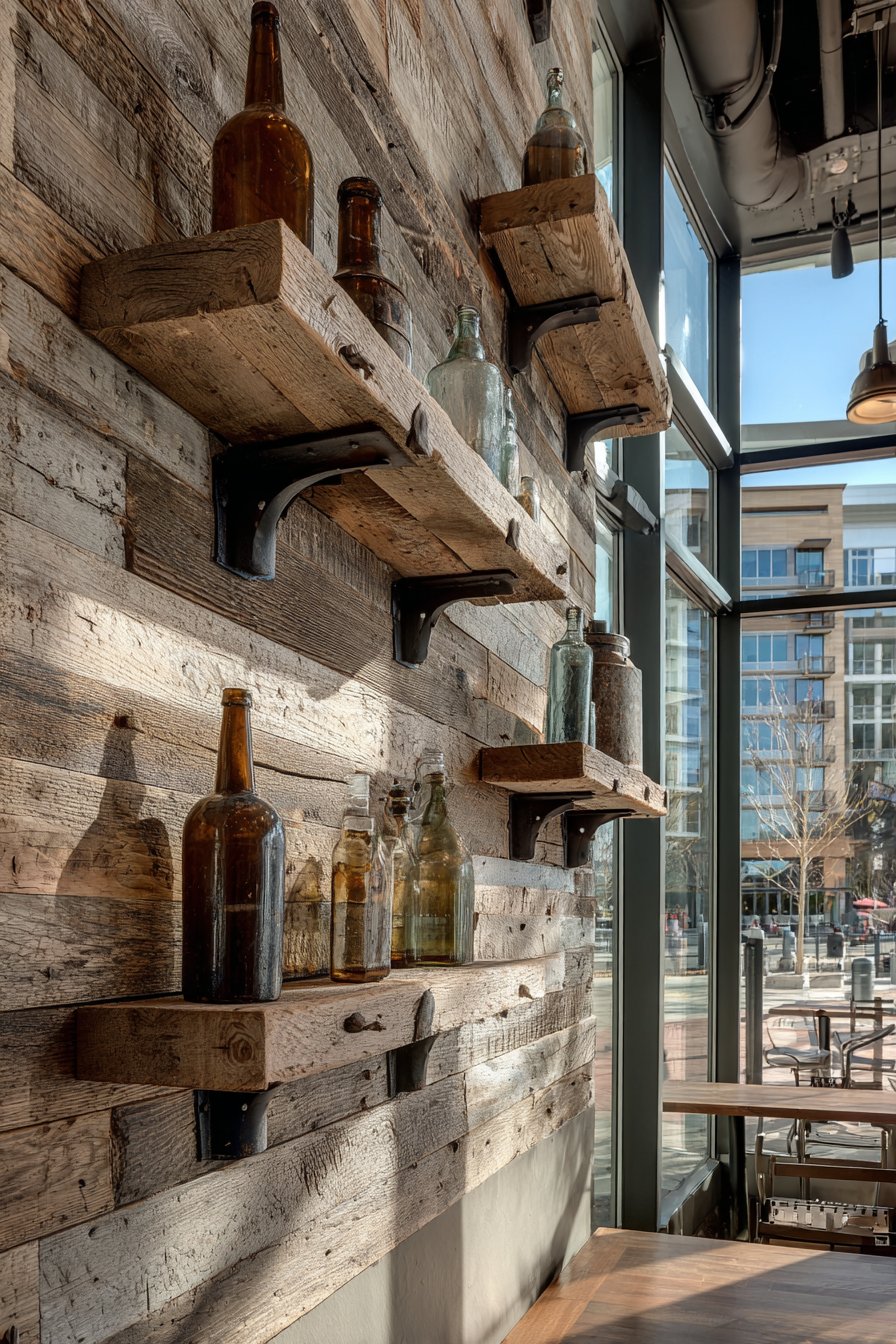
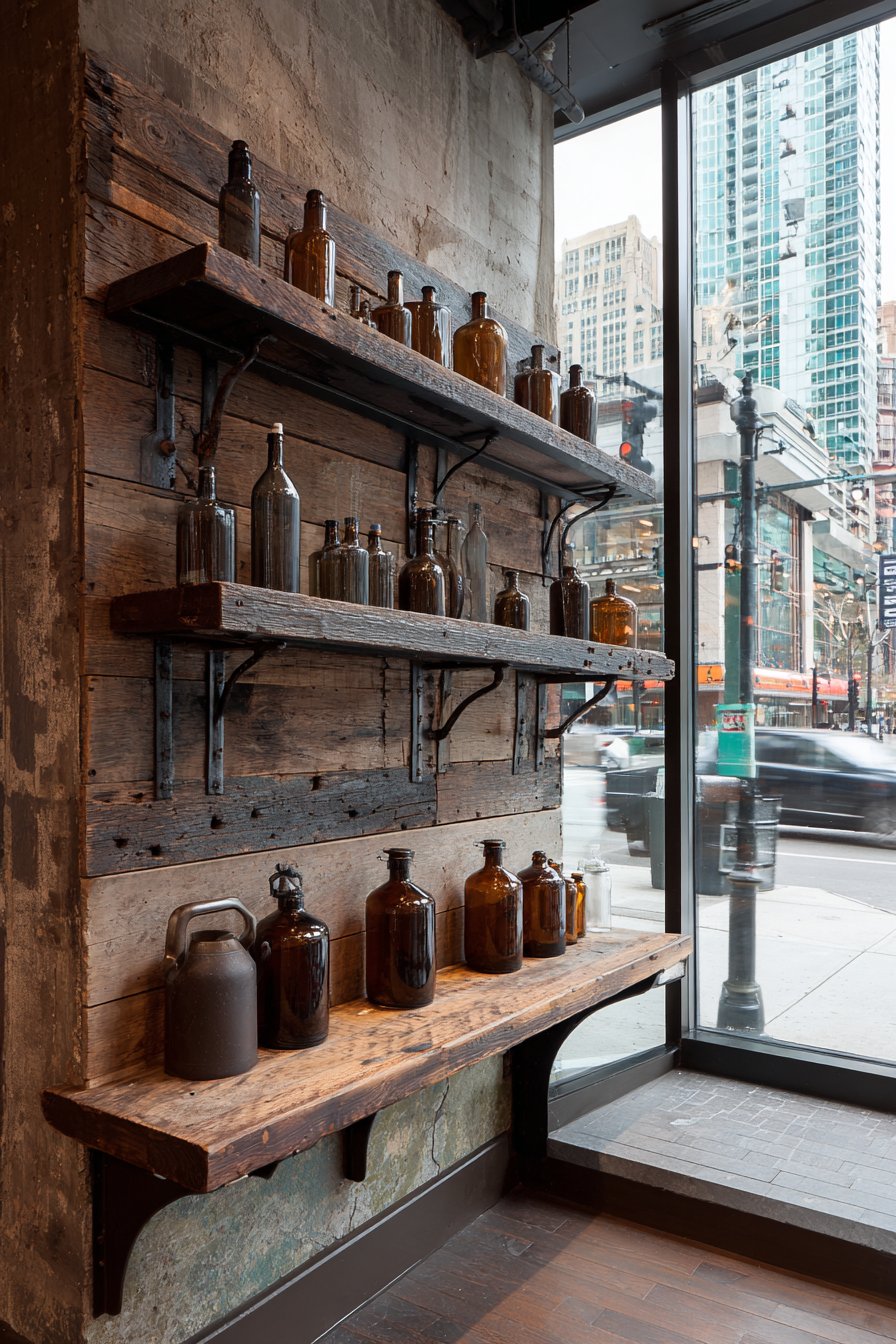
An industrial-style accent wall constructed from reclaimed wooden planks delivers instant character and authenticity to restaurant spaces, particularly those embracing rustic-modern, farmhouse, or industrial design aesthetics. The horizontal installation of planks in varying widths creates visual interest through pattern variation, while the natural weathered finishes—ranging from honey tones to deep walnut—tell stories of the wood’s previous life. Authentic details such as nail holes, saw marks, and natural color variations should be celebrated rather than concealed, as these imperfections provide the genuine patina that distinguishes reclaimed materials from manufactured alternatives.
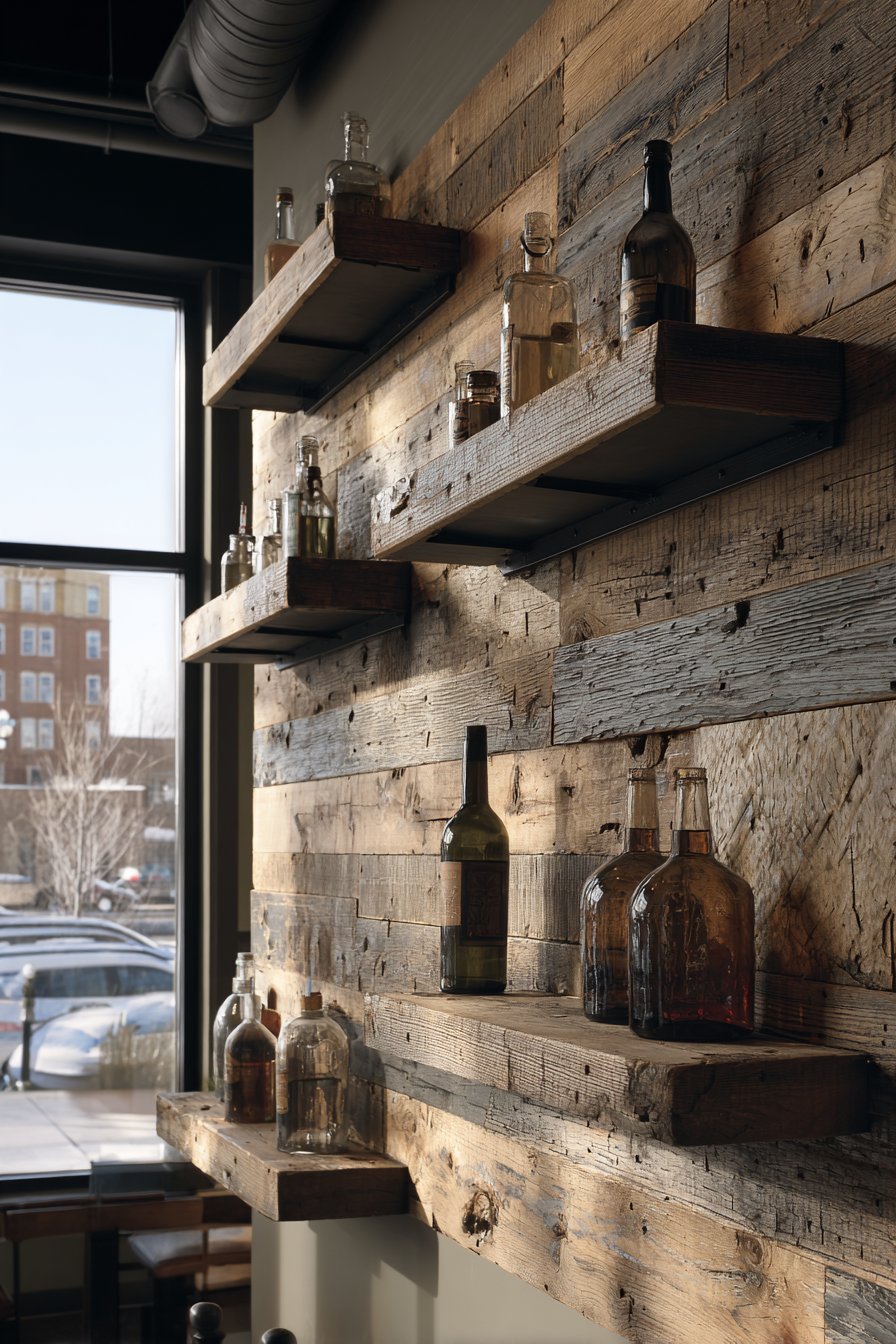
The textural quality of reclaimed wood offers exceptional versatility in restaurant settings. The material reads as warm and approachable, softening contemporary interiors that might otherwise feel too sleek or cold, while simultaneously providing structural visual weight that grounds more eclectic or bohemian designs. Black metal shelf brackets supporting floating shelves create functional display opportunities for curated decorative elements—vintage industrial artifacts, artisanal bottles, potted plants, or rotating seasonal displays that keep the wall treatment fresh and engaging across multiple visits.
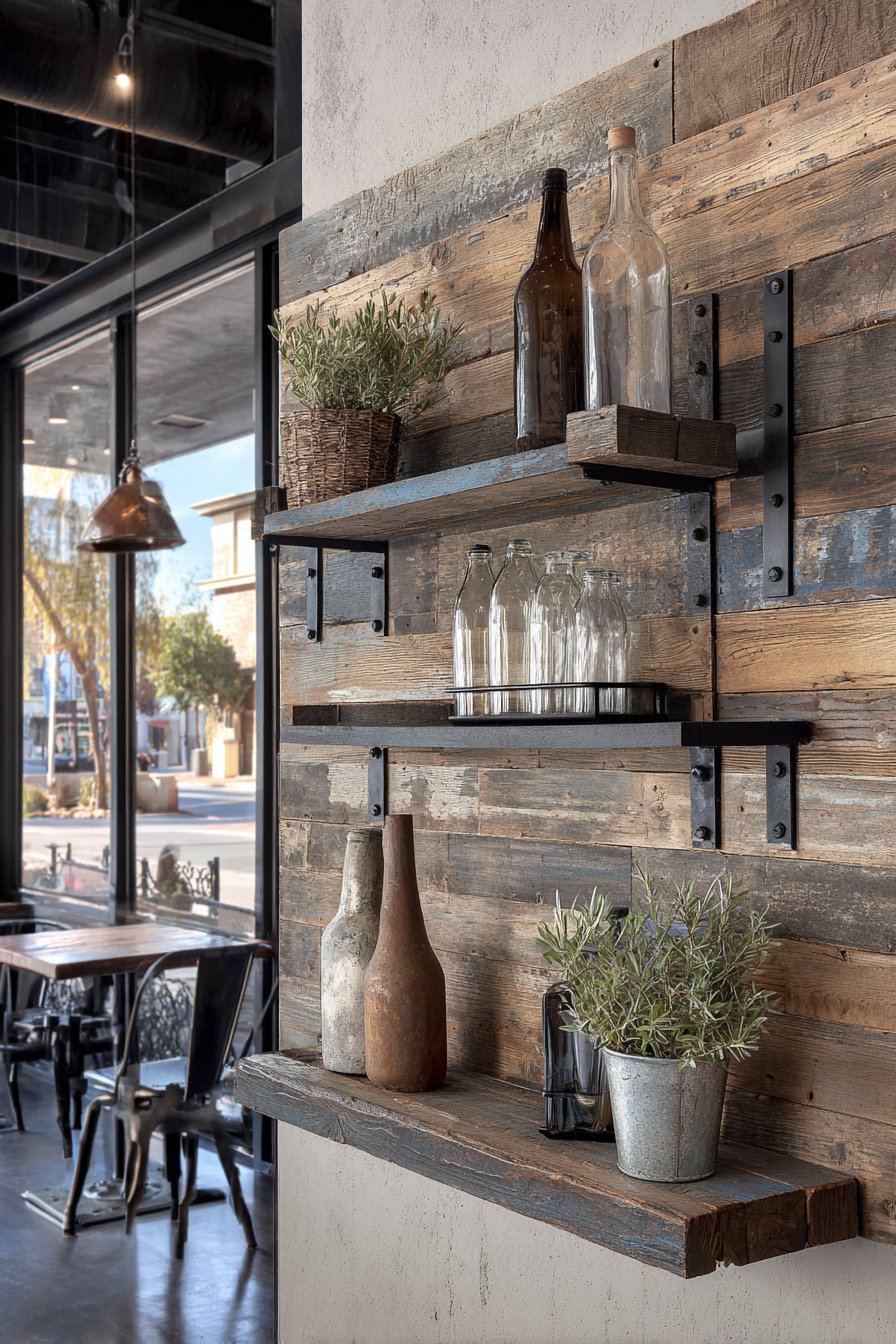
Lighting plays a crucial role in maximizing the impact of reclaimed wood walls. Soft natural light from large windows creates constantly shifting shadow patterns that emphasize the wood’s dimensional qualities and surface texture throughout the day. During evening service, warm artificial lighting should be positioned to graze across the wood surface at oblique angles, highlighting grain patterns and the subtle topography created by weathering and age. This approach creates visual warmth that enhances the dining atmosphere while showcasing the material’s authentic character.
Key Design Tips:
- Source reclaimed wood from reputable suppliers who can verify origin and ensure proper cleaning and treatment
- Vary plank widths systematically rather than randomly to create intentional rhythm rather than chaotic appearance
- Apply a clear matte sealer to protect the wood while maintaining its natural appearance and preventing dust accumulation
- Install planks over moisture-resistant backing material if the wall is near kitchen areas or exposed to humidity
- Consider incorporating subtle LED strip lighting behind select planks to create unexpected glow effects and additional dimensional depth
3. Art Deco Geometric Wallpaper
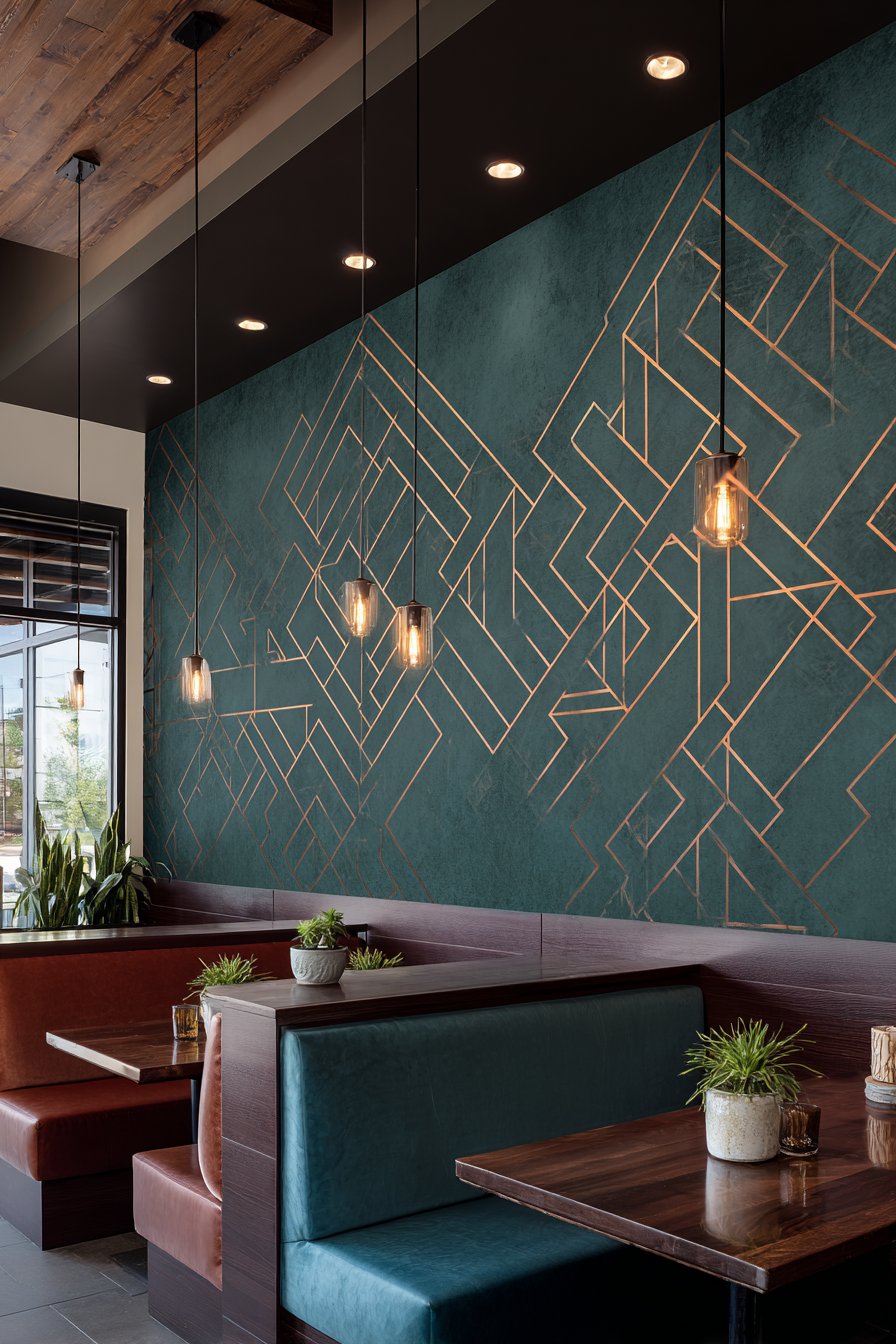
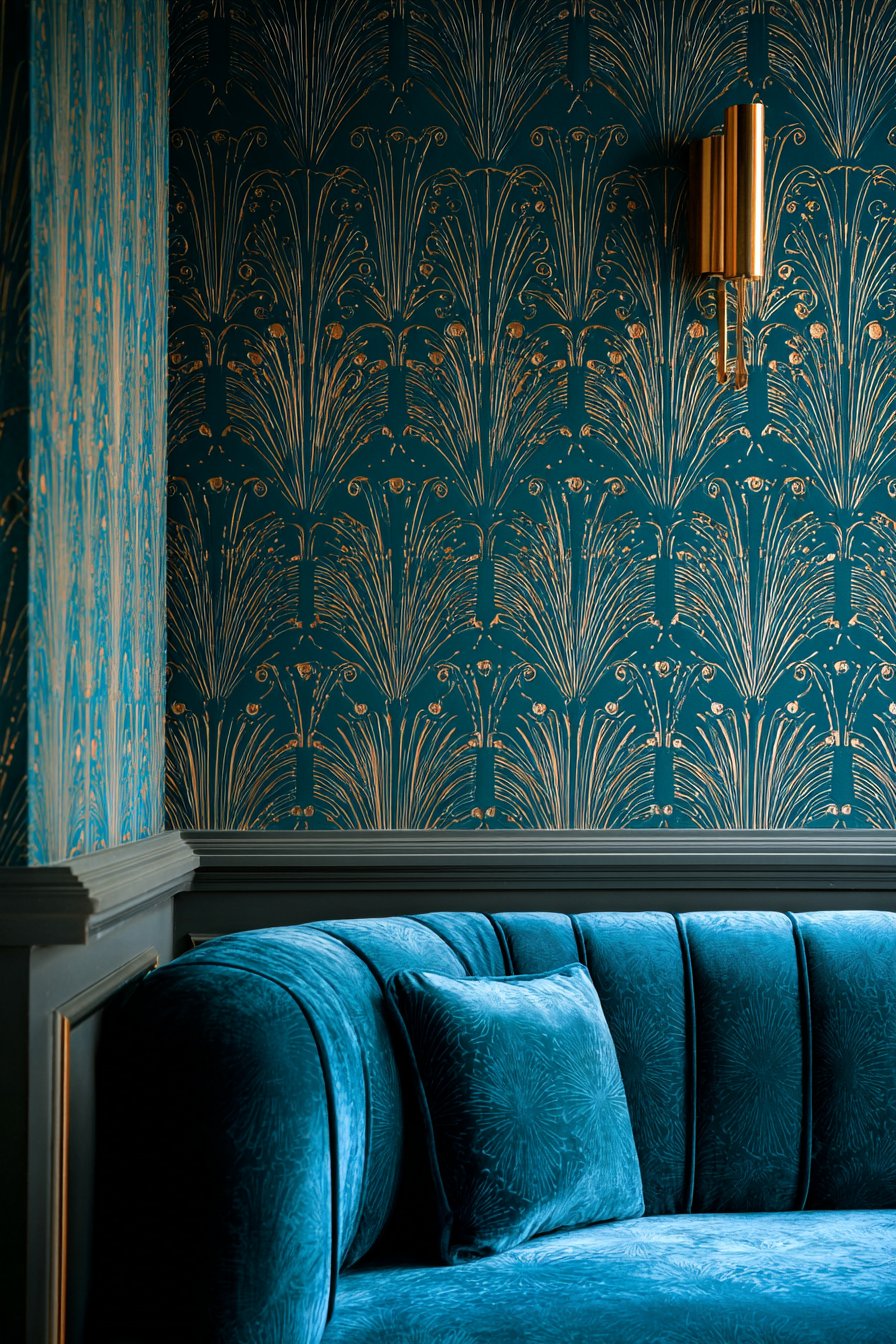
Contemporary geometric wallpaper in deep emerald green with gold metallic accents creates an instantly luxurious atmosphere that transports diners into a refined, glamorous environment reminiscent of 1920s elegance. The bold pattern covering a feature wall makes an unambiguous design statement that establishes the restaurant’s commitment to sophisticated aesthetics and attention to detail. When combined with warm brass light fixtures that echo the wallpaper’s metallic elements and dark wood wainscoting that provides visual grounding, the composition achieves the balanced opulence characteristic of art deco design.
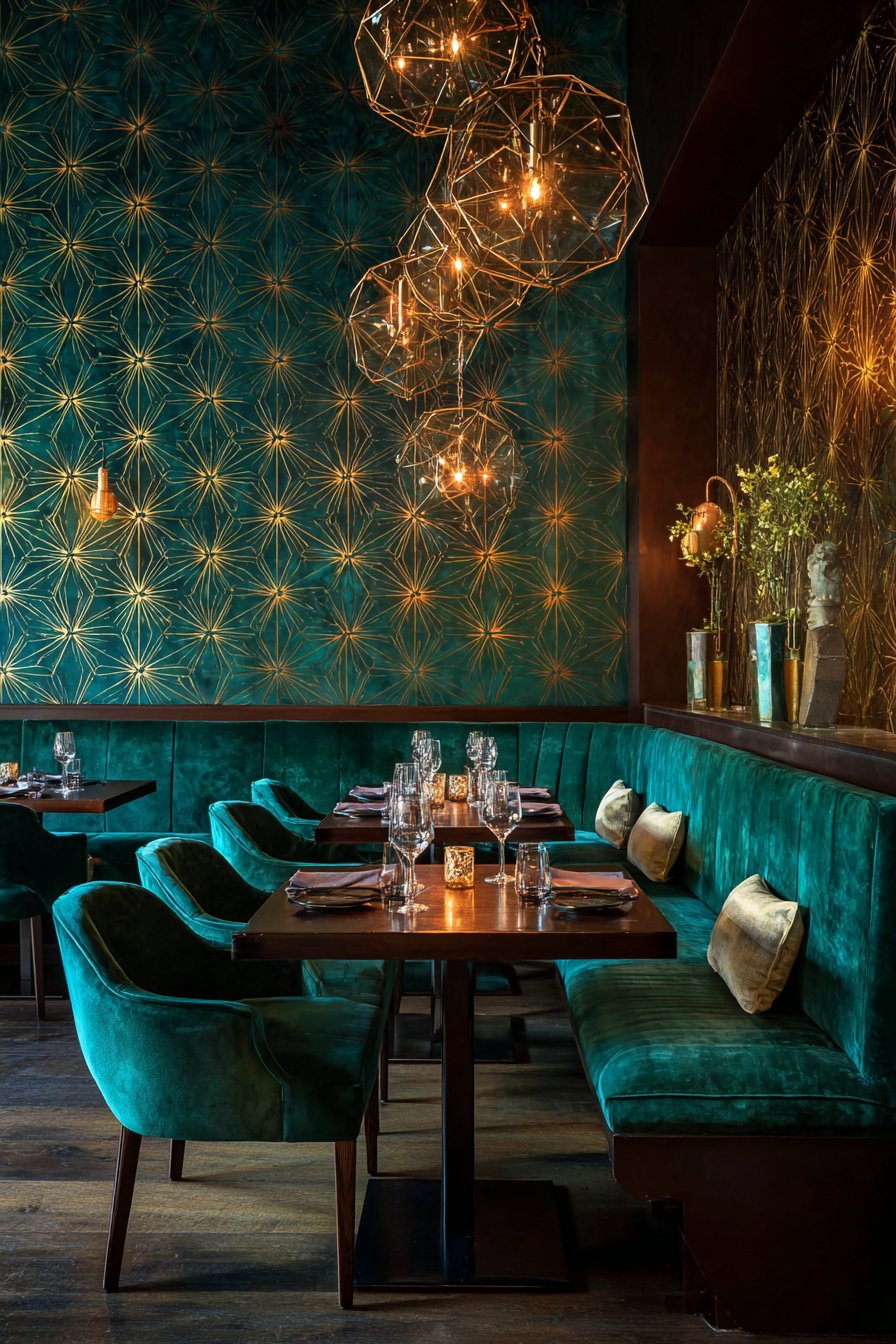
The strategic application of patterned wallpaper as a feature wall rather than throughout the entire space prevents visual overwhelm while creating clear focal points that organize the room and guide traffic flow. Velvet upholstered banquette seating in coordinating jewel tones—perhaps sapphire blue, deep ruby, or rich amethyst—extends the luxurious material palette while providing textural variation that prevents the space from feeling one-dimensional. The reflective quality of the metallic pattern elements interacts dynamically with both natural daylight and artificial evening lighting, creating a wall surface that appears to shift and shimmer as light conditions change.
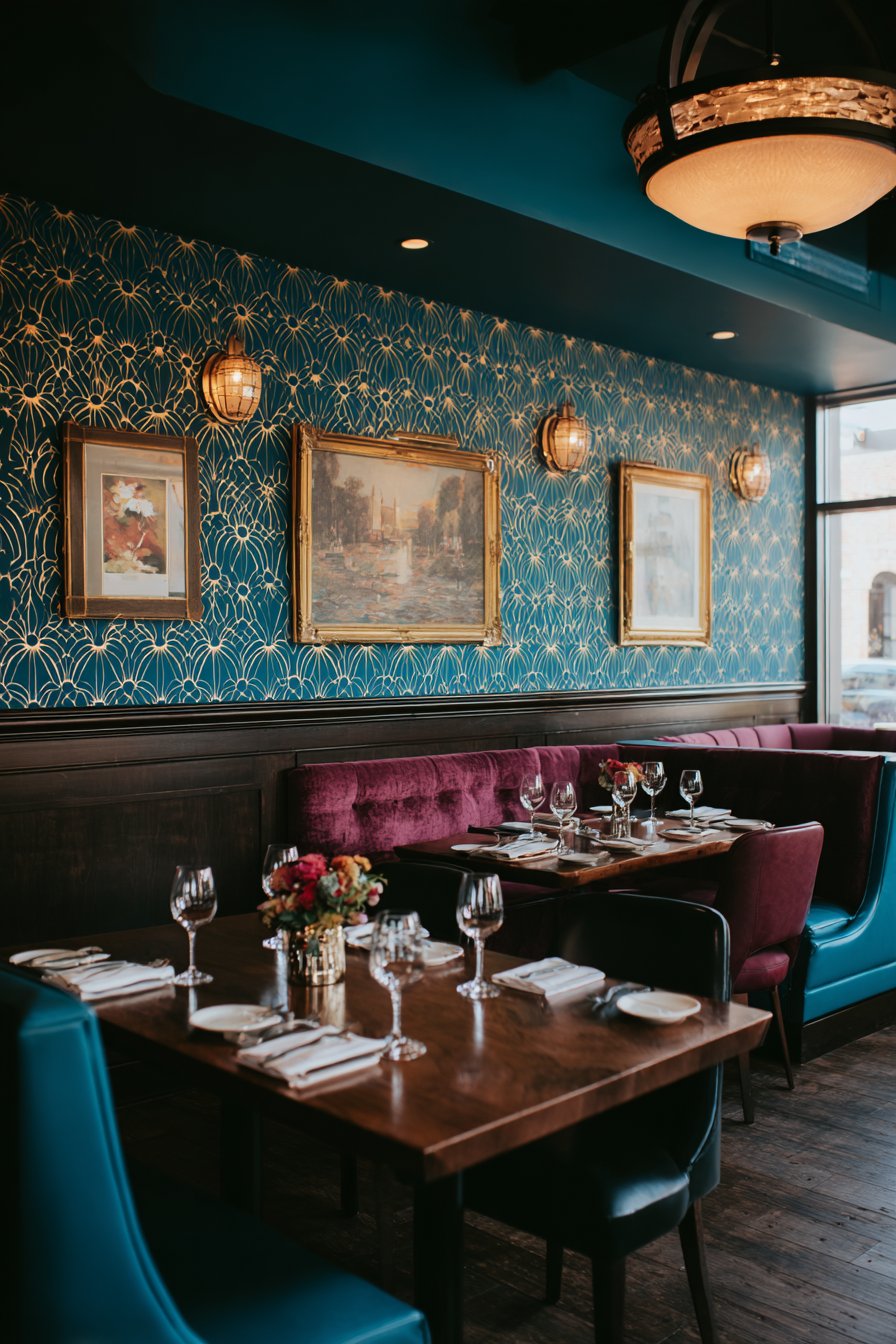
This approach to restaurant wall design works particularly well in establishments with evening-focused service, cocktail lounges, or special occasion dining rooms where elevated aesthetics justify premium pricing. The pattern’s geometric precision provides structure and formality, while the rich color palette creates enveloping warmth that encourages guests to settle in for extended dining experiences. The wallpaper also offers practical advantages, including ease of cleaning compared to fabric wall treatments and the ability to conceal minor wall imperfections that might be visible with simpler paint treatments.
Key Design Tips:
- Select commercial-grade wallpaper with vinyl coating or acrylic finish for durability and cleanability in restaurant environments
- Install wallpaper professionally to ensure pattern alignment and prevent bubbling or peeling in high-humidity areas
- Limit metallic wallpaper to accent walls rather than entire rooms to prevent sensory overload
- Coordinate lighting fixture finishes precisely with wallpaper metallics—mixing brass with gold tones works, but avoid combining warm and cool metals
- Consider the wallpaper’s scale relative to viewing distance; larger patterns work better on walls viewed from across the room
4. Minimalist Concrete Panel Wall
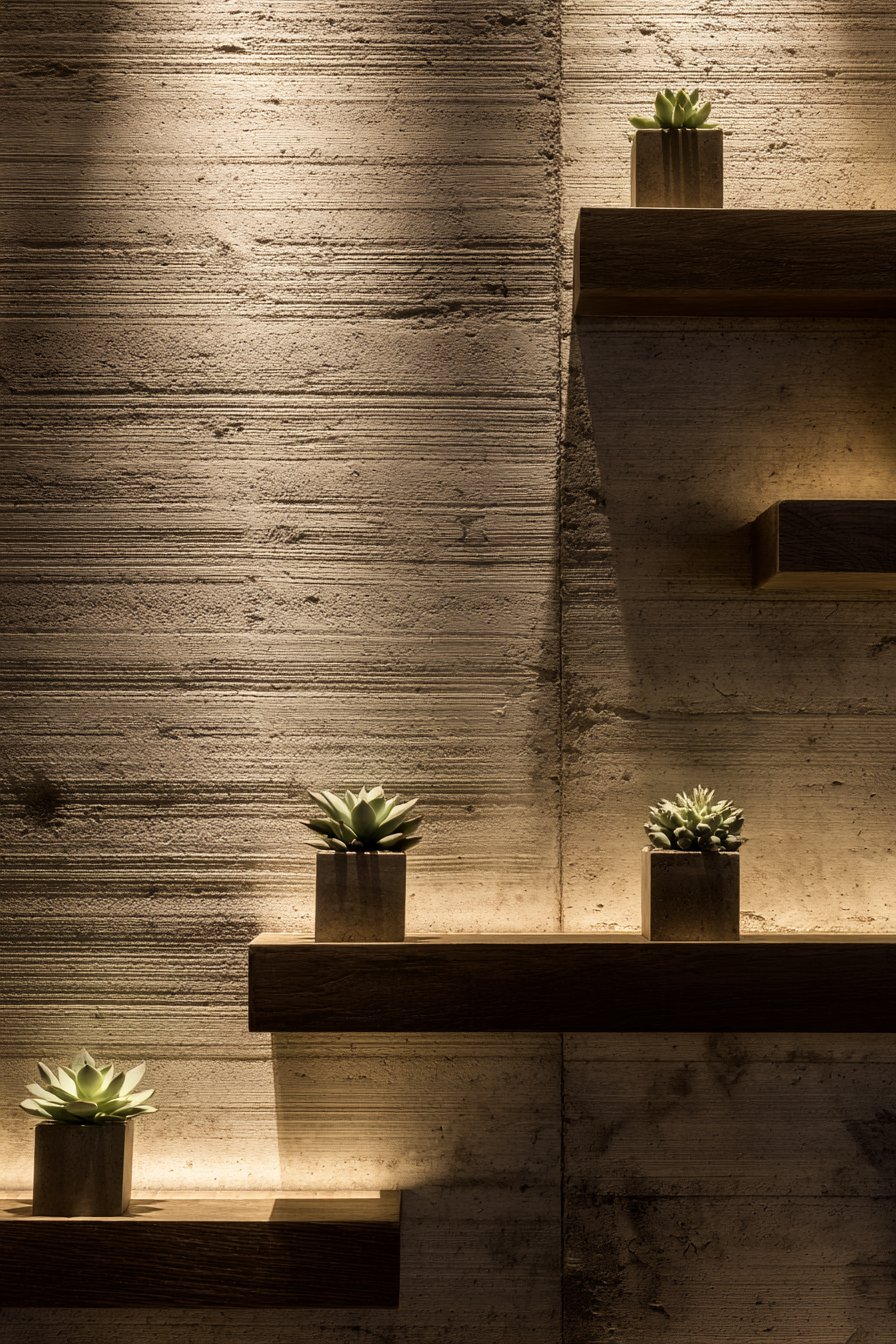
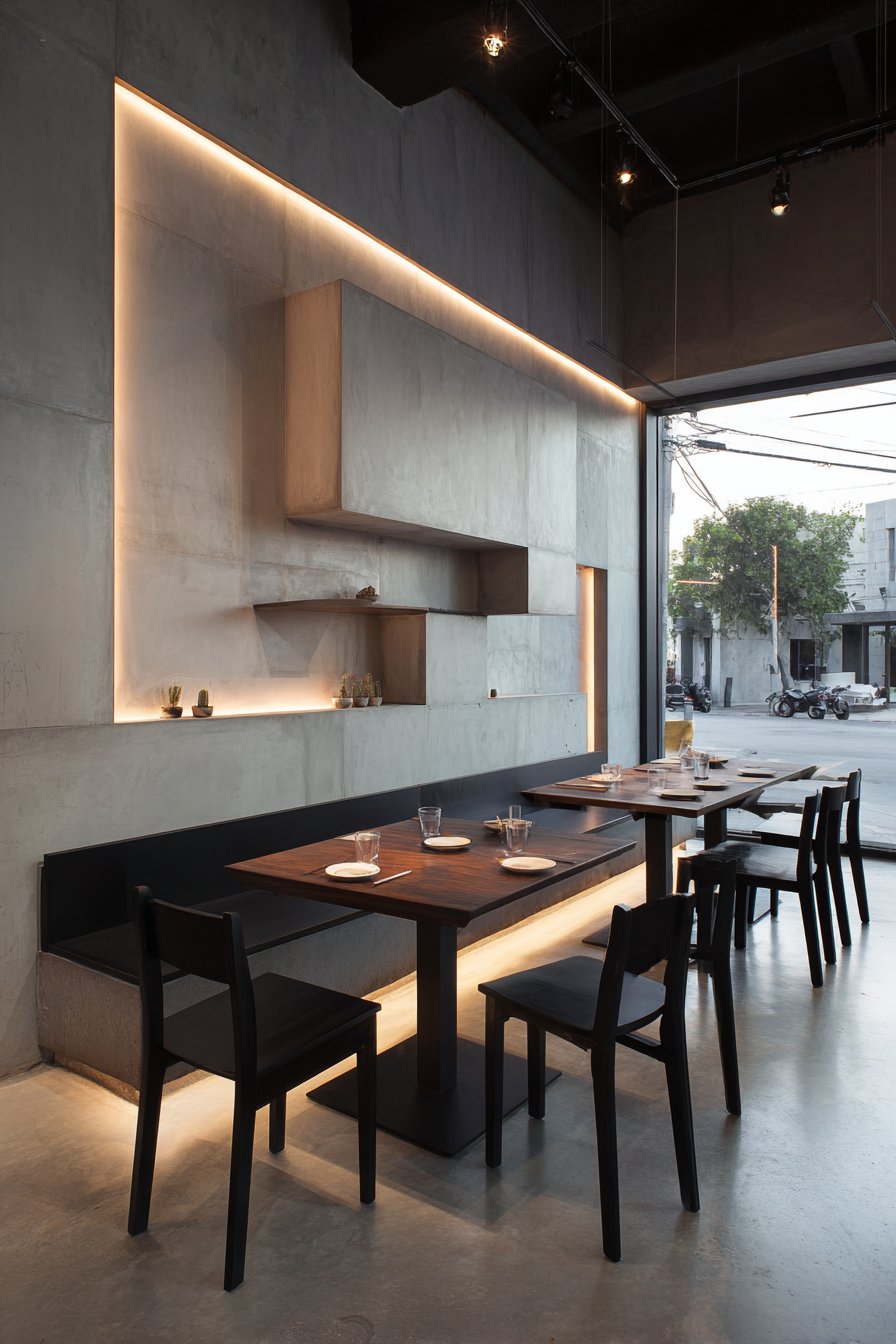
A minimalist concrete panel wall with subtle horizontal striations represents the epitome of contemporary industrial chic, offering a sophisticated alternative to traditional plaster or painted surfaces. The smooth matte finish and monolithic appearance create calm, uncluttered backdrops that allow food presentation and guest interactions to take center stage. Integrated LED strip lighting installed in recessed channels transforms the functional wall surface into an architectural sculpture, with dramatic uplighting effects that emphasize the concrete’s texture and create striking shadow patterns that shift throughout the evening.
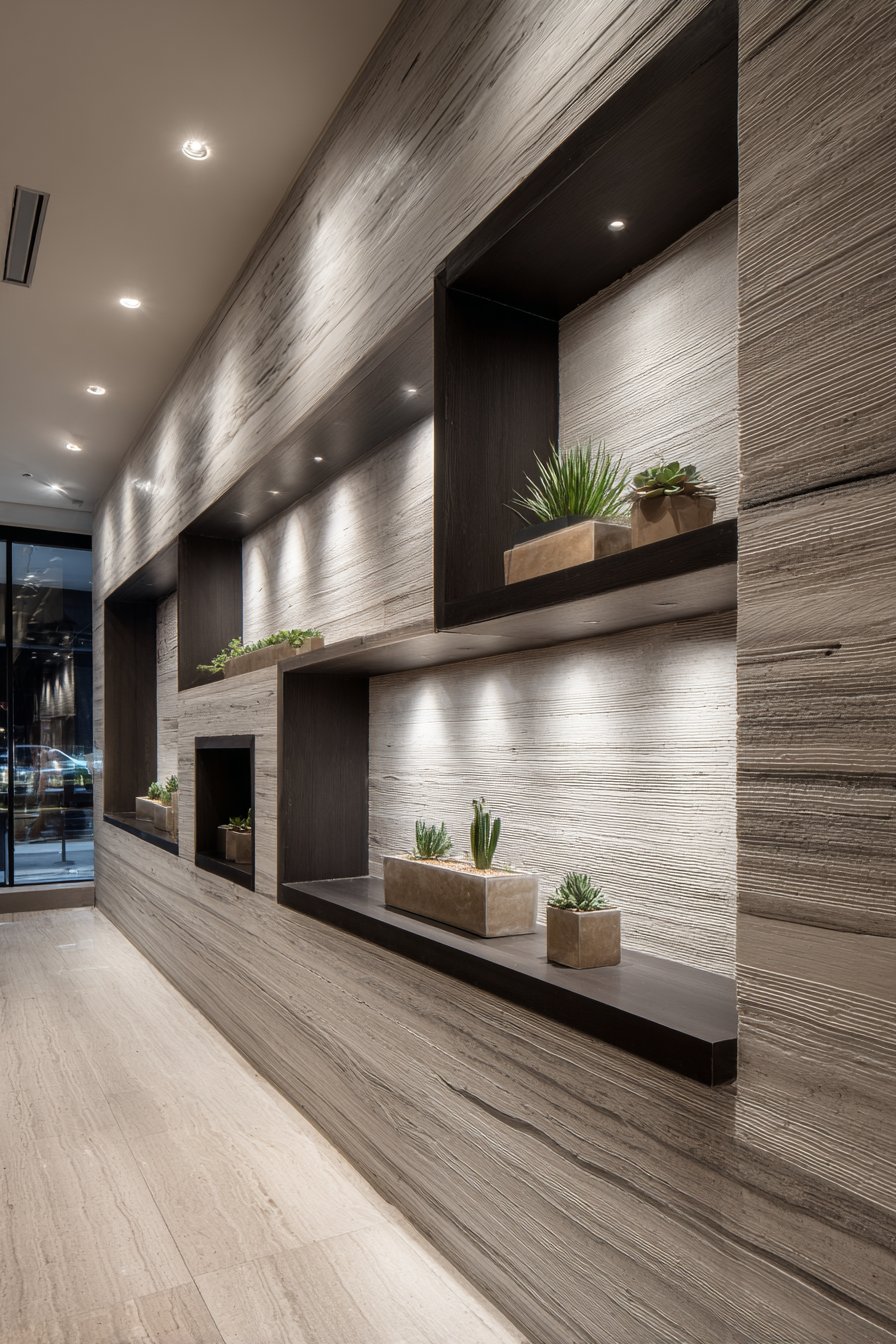
The beauty of concrete as a wall material lies in its honest simplicity and substantial physical presence. Unlike imitation finishes or printed materials attempting to replicate industrial aesthetics, actual concrete panels provide authentic material character that sophisticated diners recognize and appreciate. The subtle color variations within the concrete—from cool grays to warmer tones depending on aggregate composition—create visual interest without pattern or decoration, embodying minimalist design principles that value restraint and intentionality.
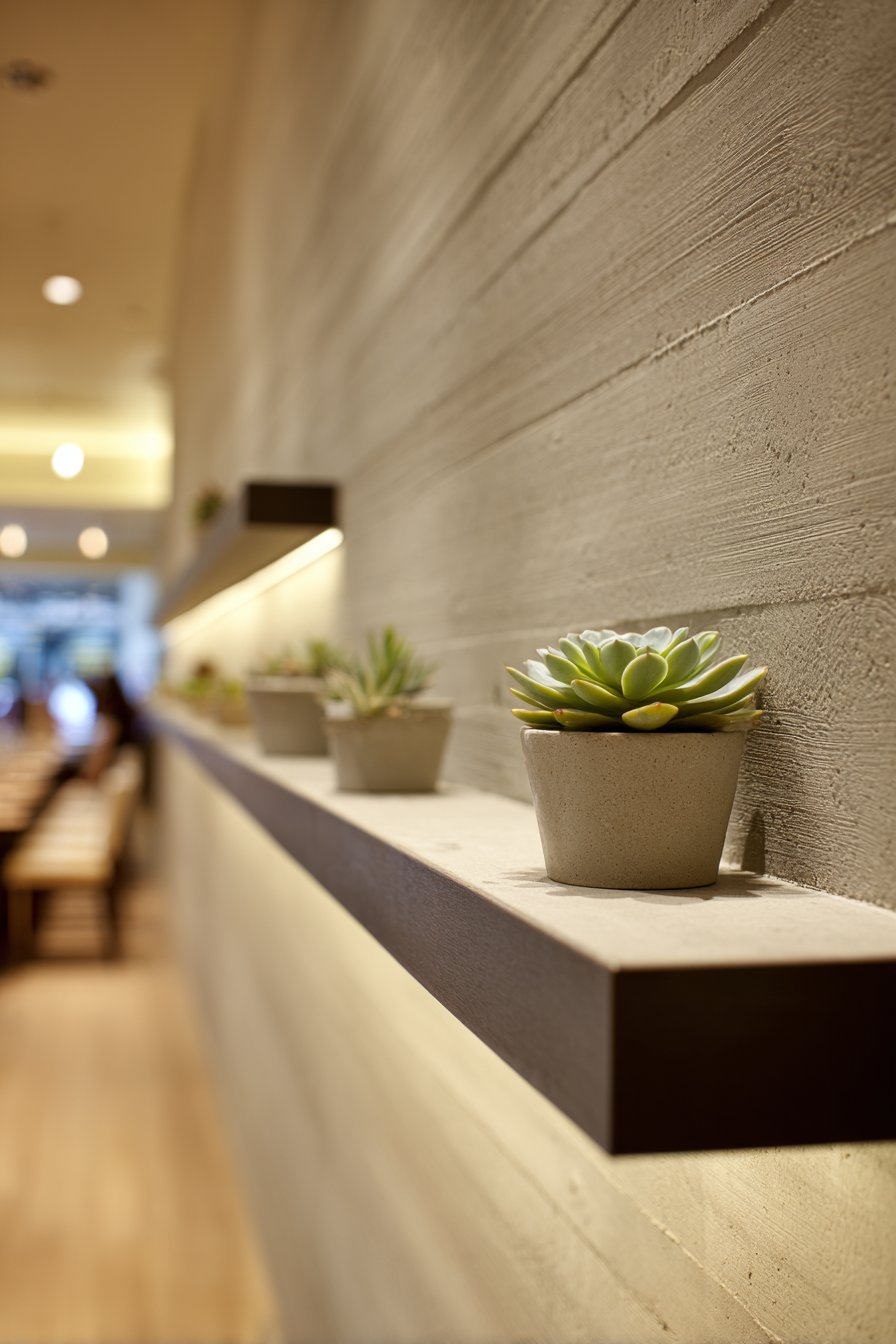
Matching concrete floating shelves extend the material vocabulary while providing functional display space for small succulent arrangements or minimalist ceramic vessels that complement rather than compete with the wall’s austere beauty. This restaurant wall design idea works exceptionally well in contemporary spaces featuring clean-lined furniture, neutral color palettes, and cuisine presentations that emphasize artful plating and ingredient purity. The concrete’s inherent durability also offers practical advantages in high-traffic restaurant environments, resisting damage from chair backs, server carts, and general wear that might mark softer wall treatments.
Key Design Tips:
- Specify concrete panels with sealed surfaces to prevent dusting and facilitate easy cleaning
- Design recessed lighting channels during wall construction rather than attempting to retrofit afterward
- Maintain concrete in its natural gray state or consider integral color additives for subtle warmth without applied finishes
- Pair concrete walls with natural wood, soft textiles, or living plants to prevent spaces from feeling cold or institutional
- Install acoustic panels strategically elsewhere in the room to compensate for concrete’s sound-reflective properties
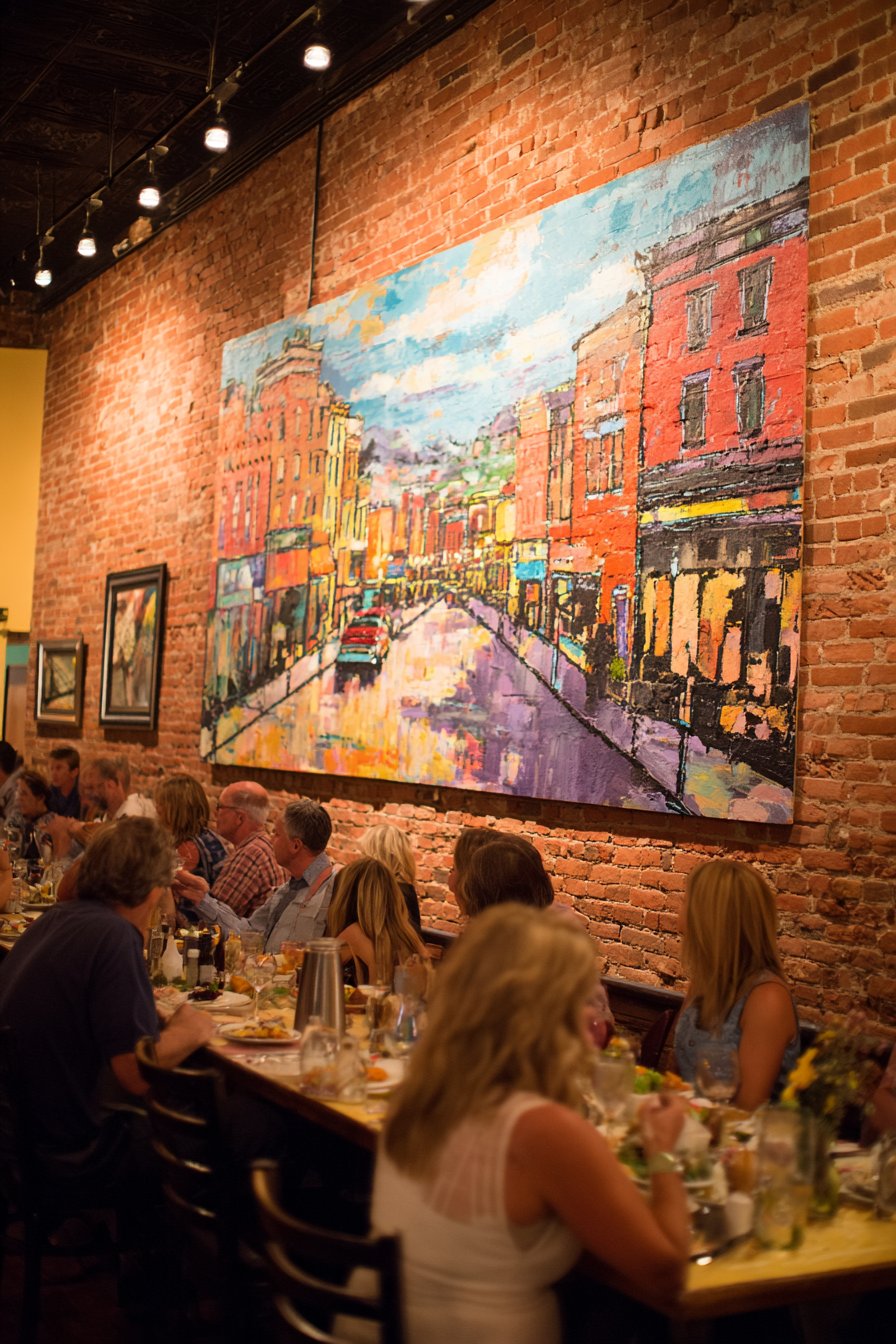
5. Urban Street Art Mural
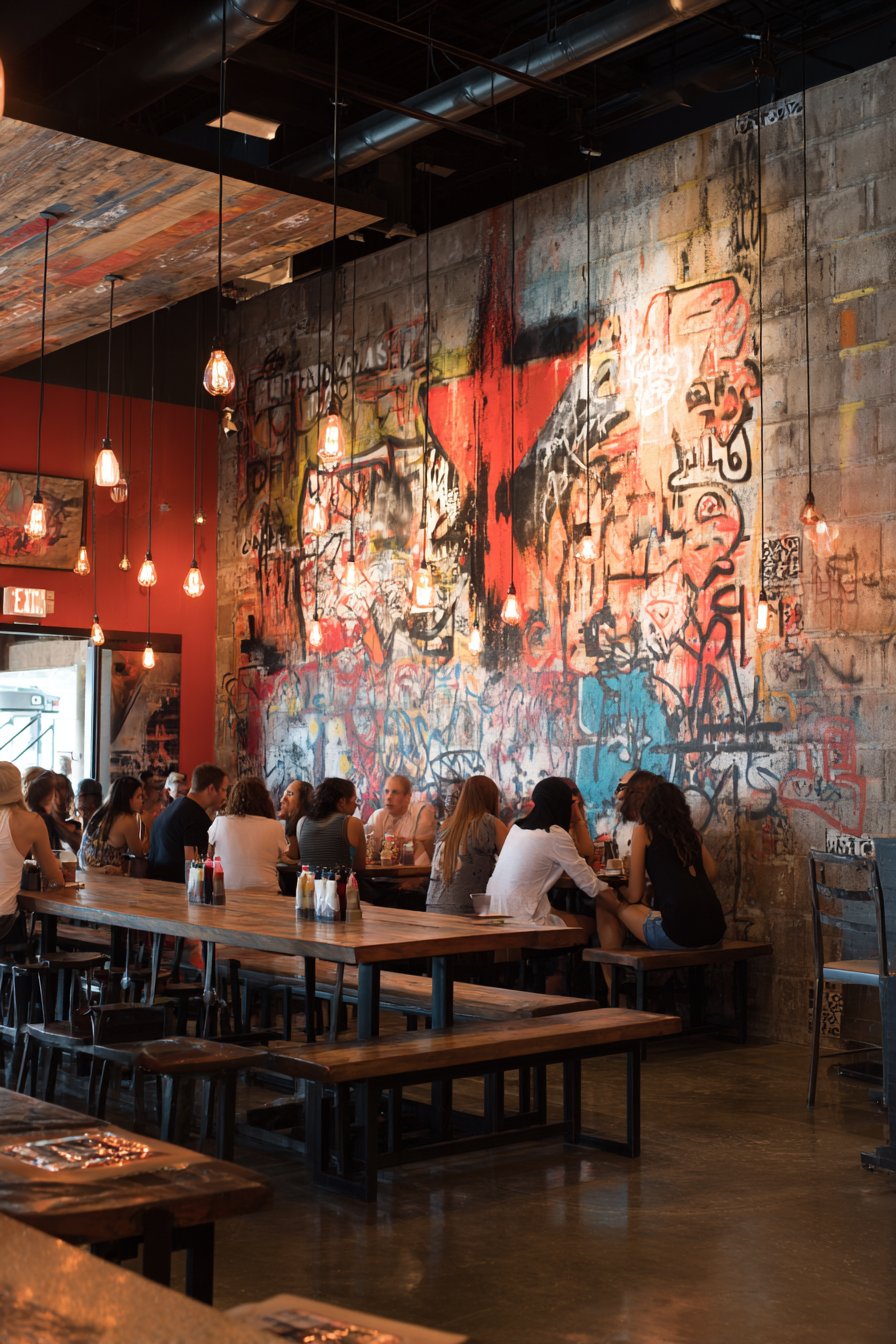
An eclectic mural painted directly on exposed brick brings vibrant energy and urban authenticity to restaurant spaces, particularly those targeting younger demographics or locations in arts districts and culturally dynamic neighborhoods. The artistic wall treatment depicting urban street scenes with layered graffiti-style artwork creates visual complexity and narrative depth that rewards repeated viewing. Spanning the full height of a double-story dining space, the mural becomes an immersive environmental artwork that transforms the dining experience into something more akin to visiting an art gallery where exceptional food happens to be served.
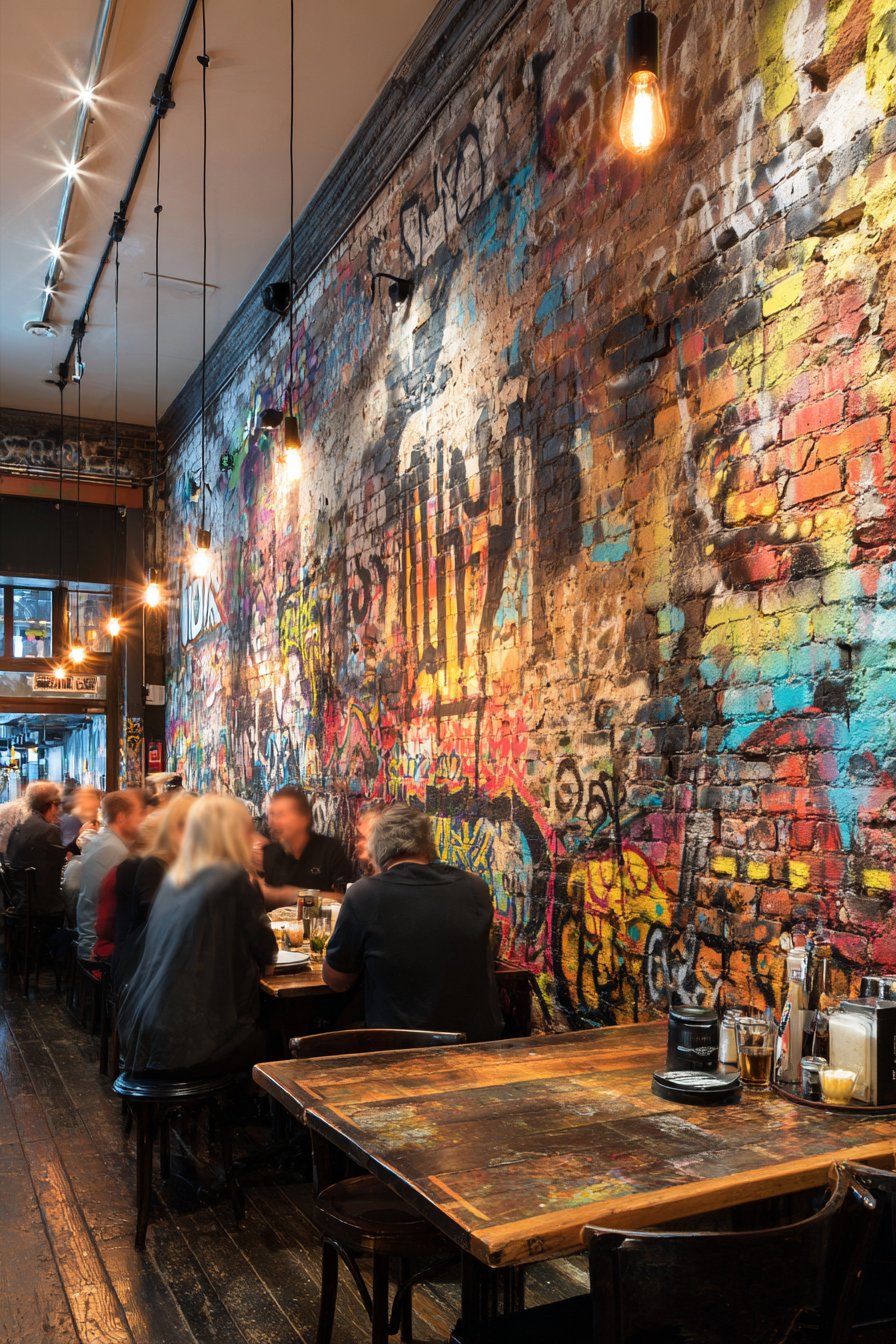
The incorporation of the brick’s natural texture into the mural design creates dimensional variation impossible to achieve on smooth drywall, with the relief of mortar joints and individual brick faces adding tactile authenticity that distinguishes the artwork from printed wall graphics. Industrial pendant lights with Edison bulbs hang strategically in front of the mural, providing necessary illumination while respecting the artwork’s composition and ensuring key visual elements remain unobscured. The lighting’s warm tones complement the mural’s color palette during evening service, creating atmosphere while maintaining artwork visibility.
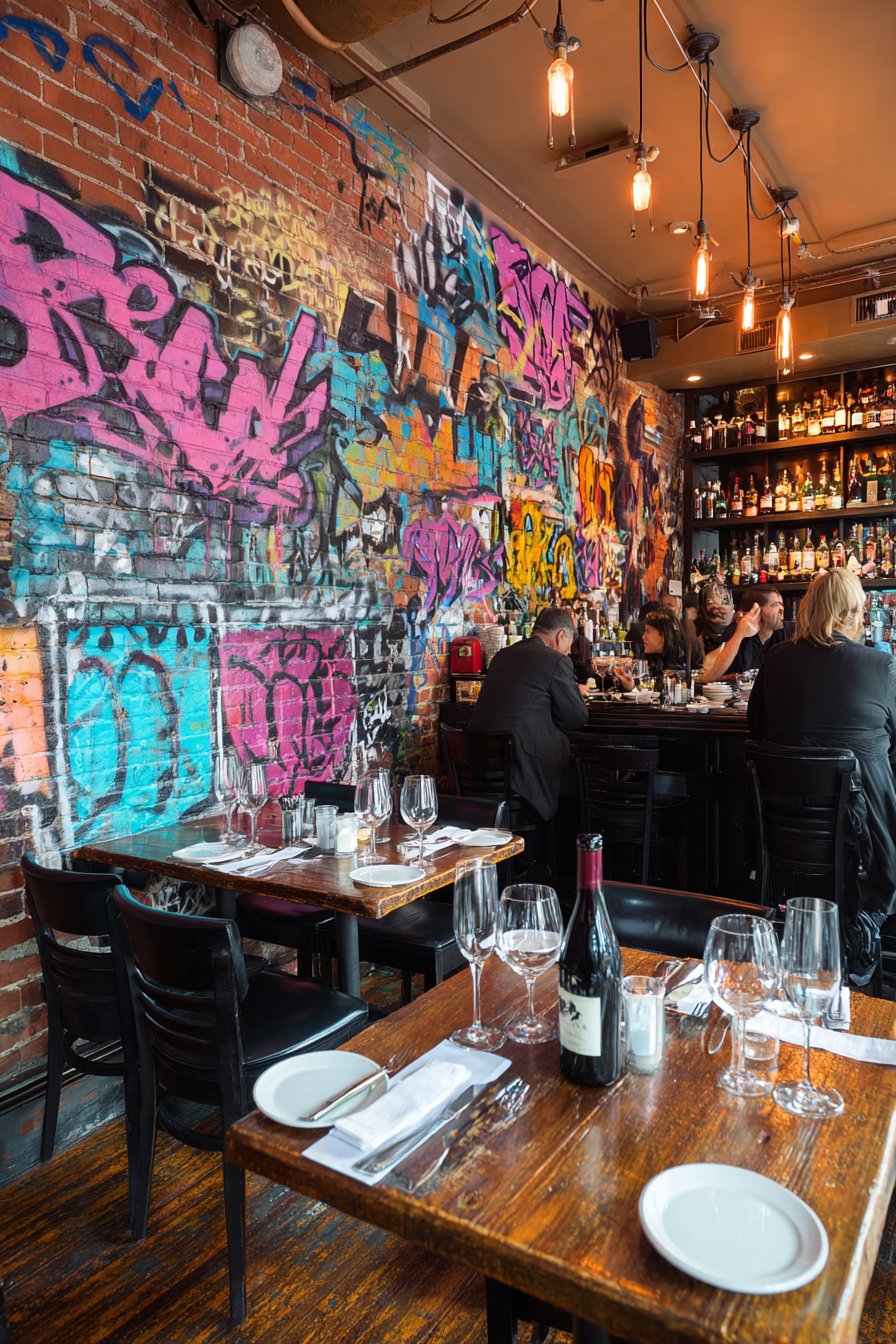
This approach to restaurant wall design offers unique marketing advantages, as distinctive murals become social media phenomena that generate organic publicity through guest photography and shares. The artwork communicates personality, creativity, and cultural awareness—values increasingly important to conscious consumers seeking dining experiences that align with their lifestyle aspirations. From a practical perspective, murals on brick walls require minimal maintenance beyond occasional dusting and can be refreshed or completely reimagined as the restaurant evolves, providing design flexibility that static architectural elements cannot match.
Key Design Tips:
- Commission murals from recognized local artists to build community connections and ensure artistic credibility
- Seal brick walls with clear matte coating before painting to prevent moisture issues and facilitate future changes
- Design lighting placement in conjunction with mural composition to ensure proper illumination without creating hot spots or shadows on key elements
- Include contract terms for mural modifications or removal if restaurant concept changes
- Document the mural creation process through photography and video for marketing content and social media engagement
6. Antiqued Mirror Panel Grid
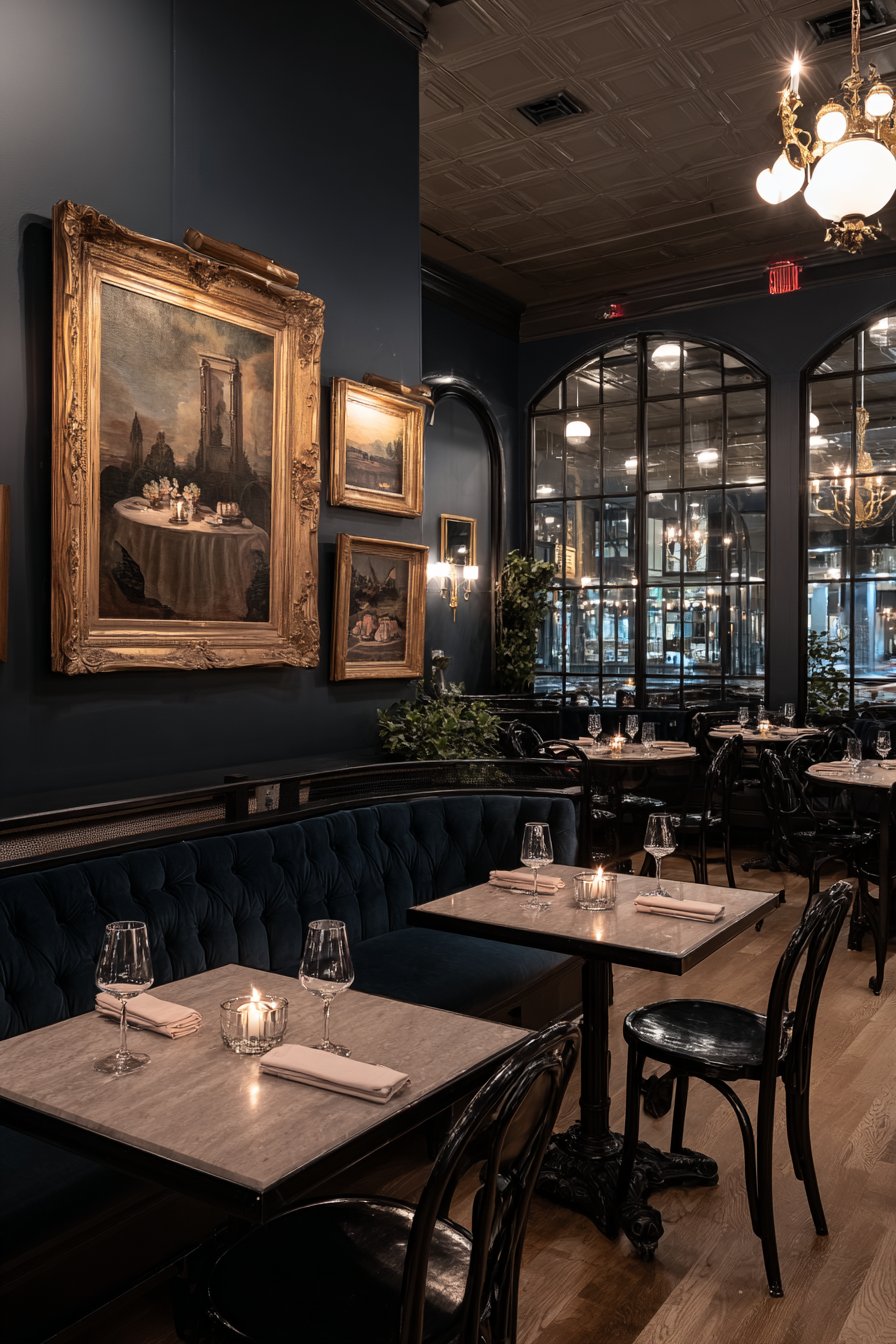
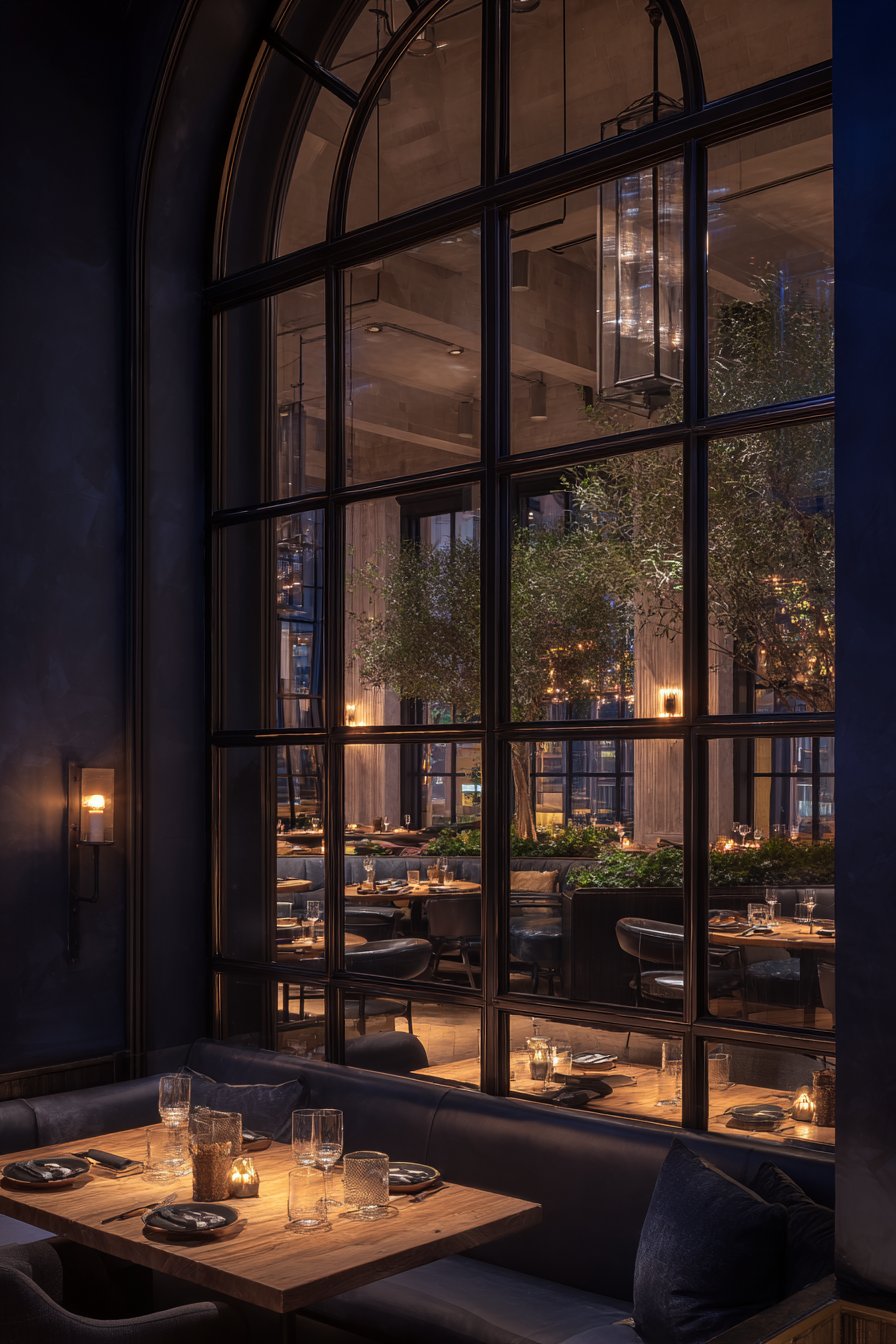
A sophisticated mirror panel installation featuring antiqued bronze frames arranged in a precise grid pattern delivers both functional and aesthetic value in restaurant design. The mirrors create crucial visual depth in narrow dining rooms where physical expansion is impossible, effectively doubling the perceived width of the space while reflecting candlelight from tables and ambient pendant fixtures to amplify overall illumination. The antiqued finish on both mirrors and frames introduces subtle texture and vintage character that prevents the reflective surfaces from reading as stark or coldly modern.
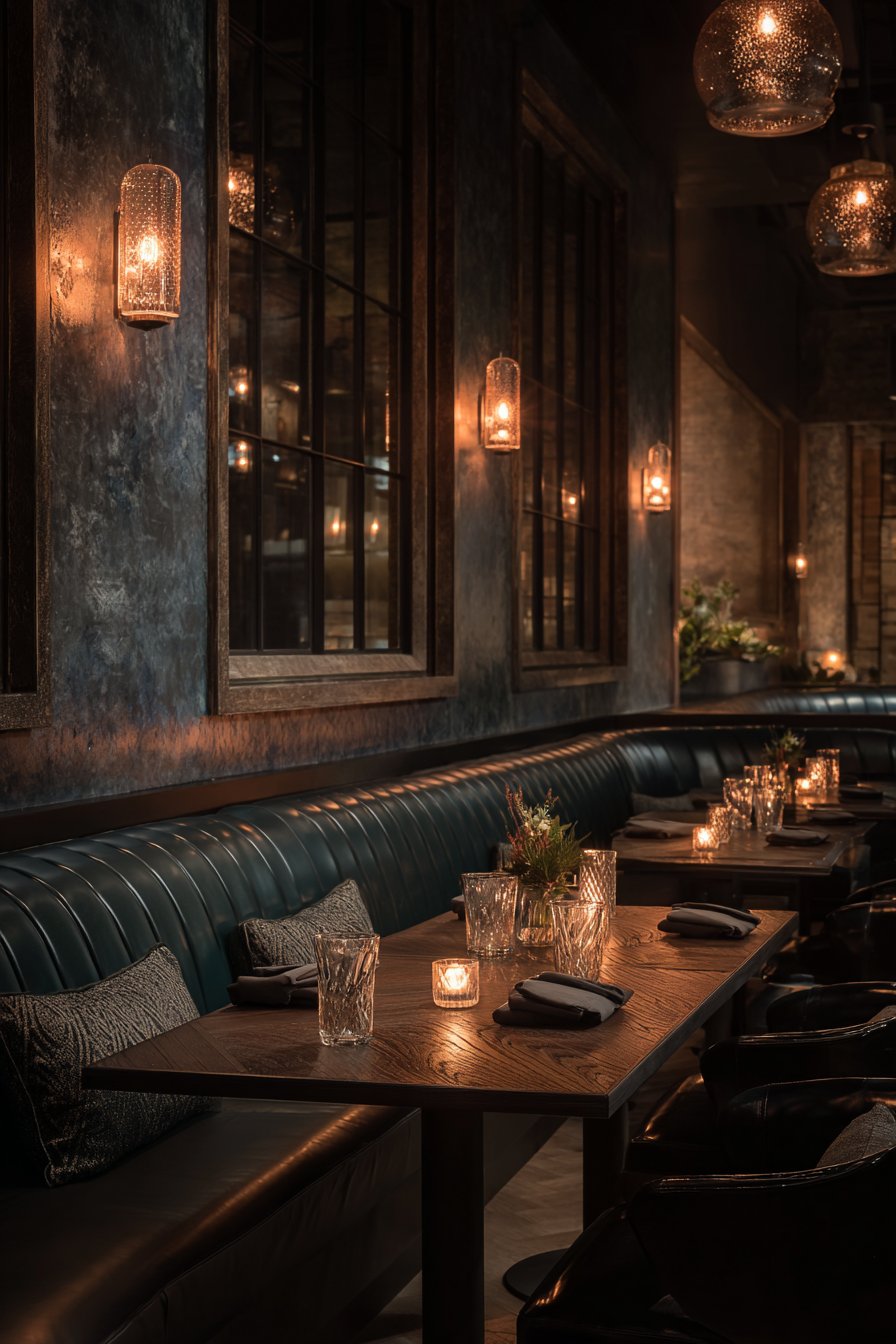
The surrounding walls finished in rich navy blue plaster with subtle texture provide dramatic contrast that makes the mirror installation pop visually while creating an enveloping, intimate atmosphere particularly suited to evening dining. The deep blue reads as sophisticated and calming, a psychological effect that can encourage guests to linger longer and order additional courses or cocktails. The combination of reflective surfaces and dark matte walls creates dynamic visual interest as perspectives shift with guest movement and changing light conditions throughout service.
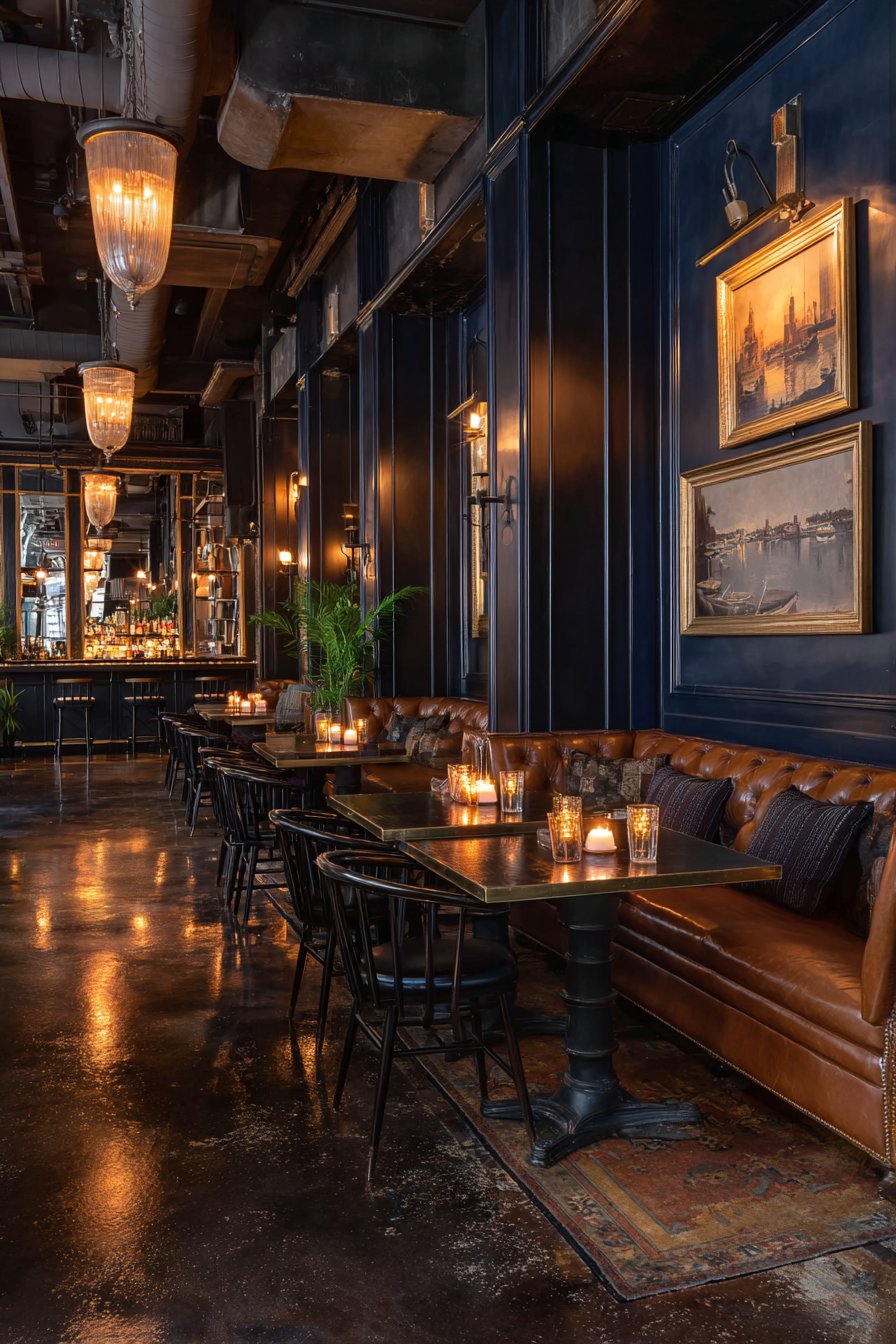
Professional interior photography techniques are essential to capture the complex interplay of reflection and direct lighting that makes mirror installations compelling. Balanced exposure settings prevent blown-out highlights from reflective surfaces while maintaining detail in darker wall areas. This restaurant wall design idea works particularly well in upscale establishments where spatial intimacy is desired but physical space limitations must be addressed creatively. The mirrors also serve practical functions, allowing guests to discreetly observe the room and fellow diners while maintaining privacy at their own tables.
Key Design Tips:
- Use actual antiqued glass mirrors rather than applied distressing treatments for authentic appearance and durability
- Maintain consistent spacing between mirror panels to create orderly visual rhythm
- Position mirrors to reflect attractive views—architectural details, artwork, or attractive dining areas—while avoiding kitchen doors, service stations, or unappealing sight lines
- Install mirrors securely with professional-grade adhesives and mechanical fasteners rated for commercial applications
- Clean mirrors regularly with appropriate products to maintain clarity without damaging antiqued finishes
7. Backlit Wine Wall Display
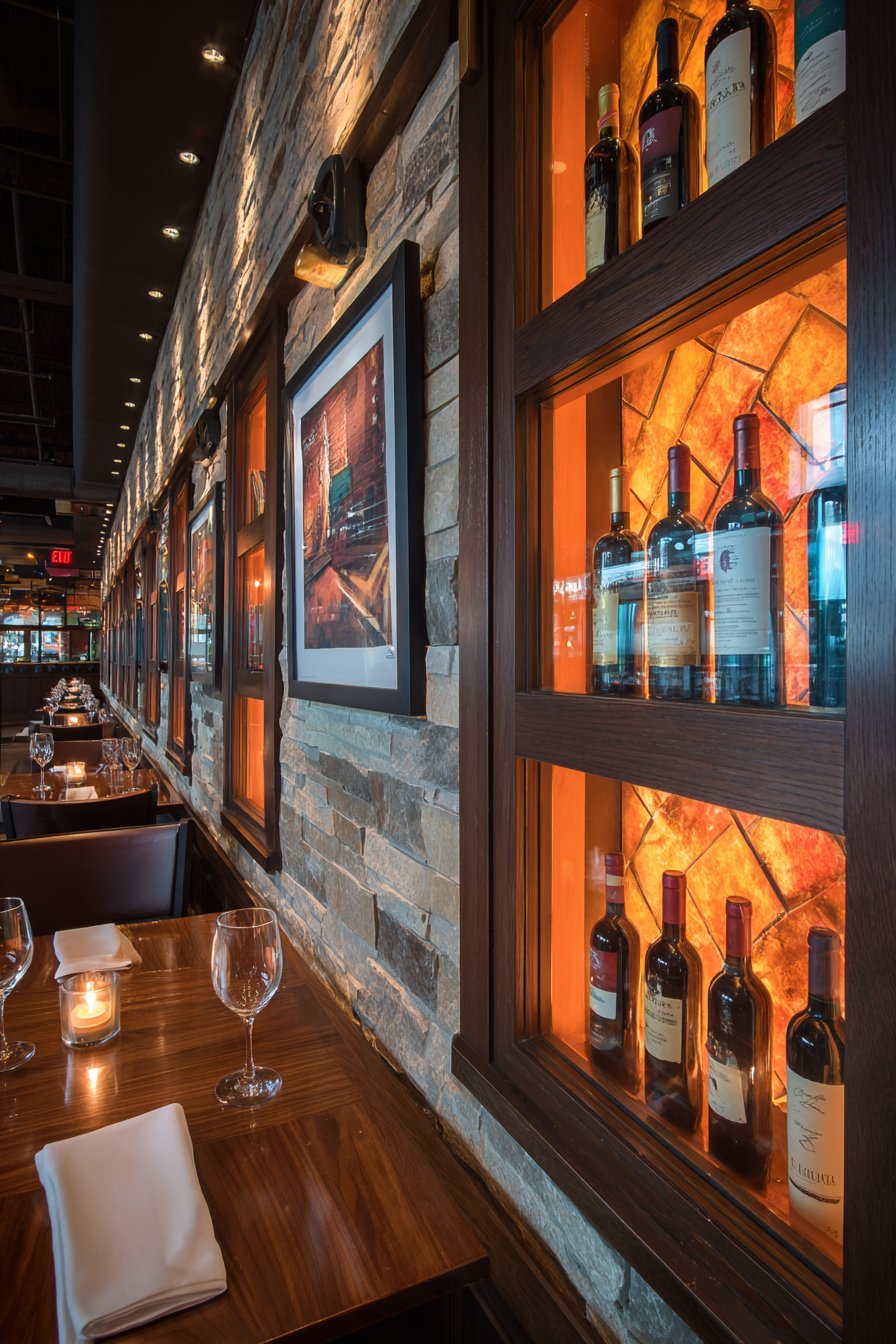
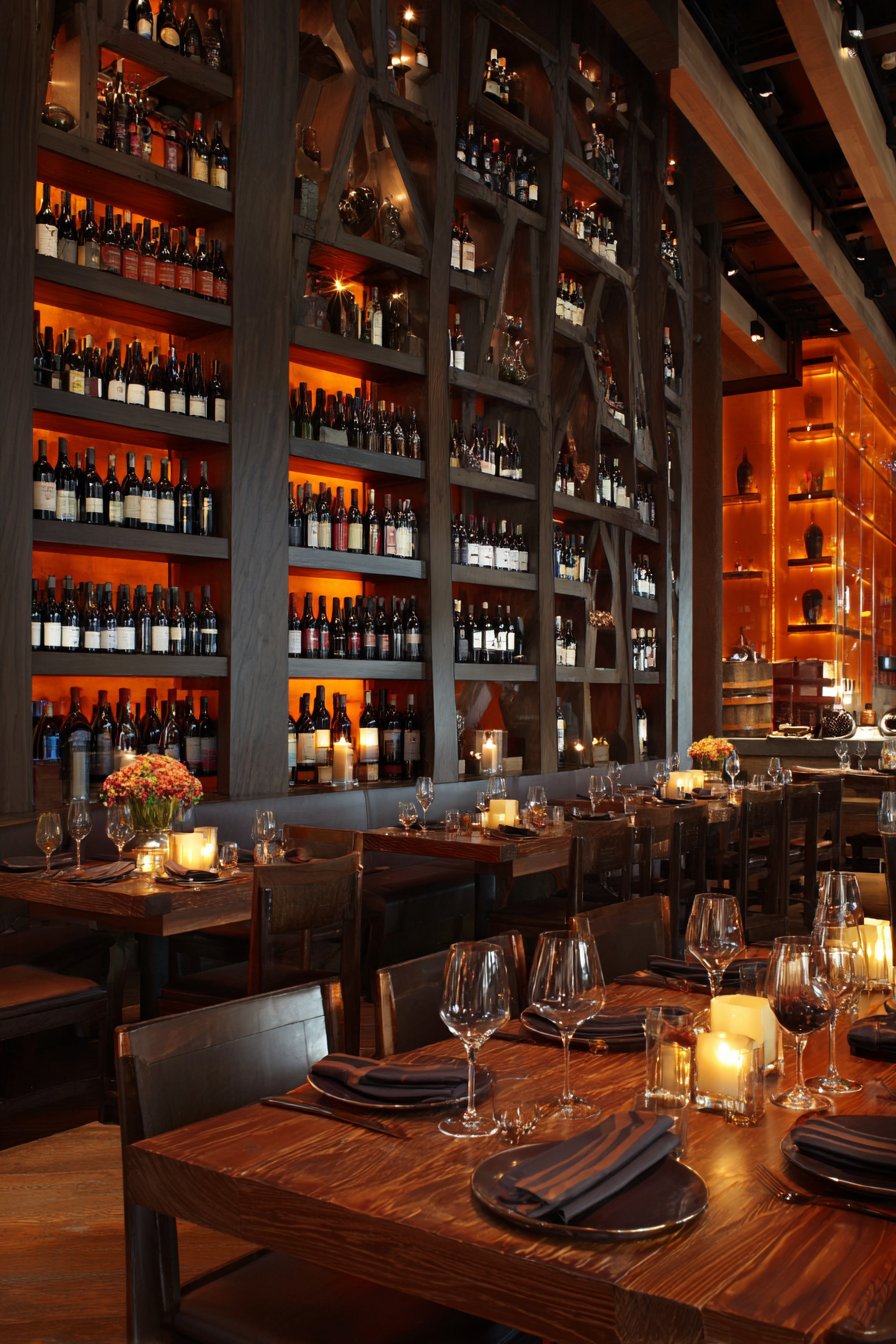
A custom-built wine storage wall integrated into a full-height display with backlit glass shelving and dark stained wood framing transforms functional wine storage into spectacular architectural artwork. Floor-to-ceiling installations holding hundreds of bottles organized by region create impressive visual impact while demonstrating the restaurant’s commitment to serious wine programs. Warm LED backlighting creates an amber glow that highlights the bottles’ shapes and liquid colors, transforming the wine collection into a luminous focal point that draws attention across the dining room.
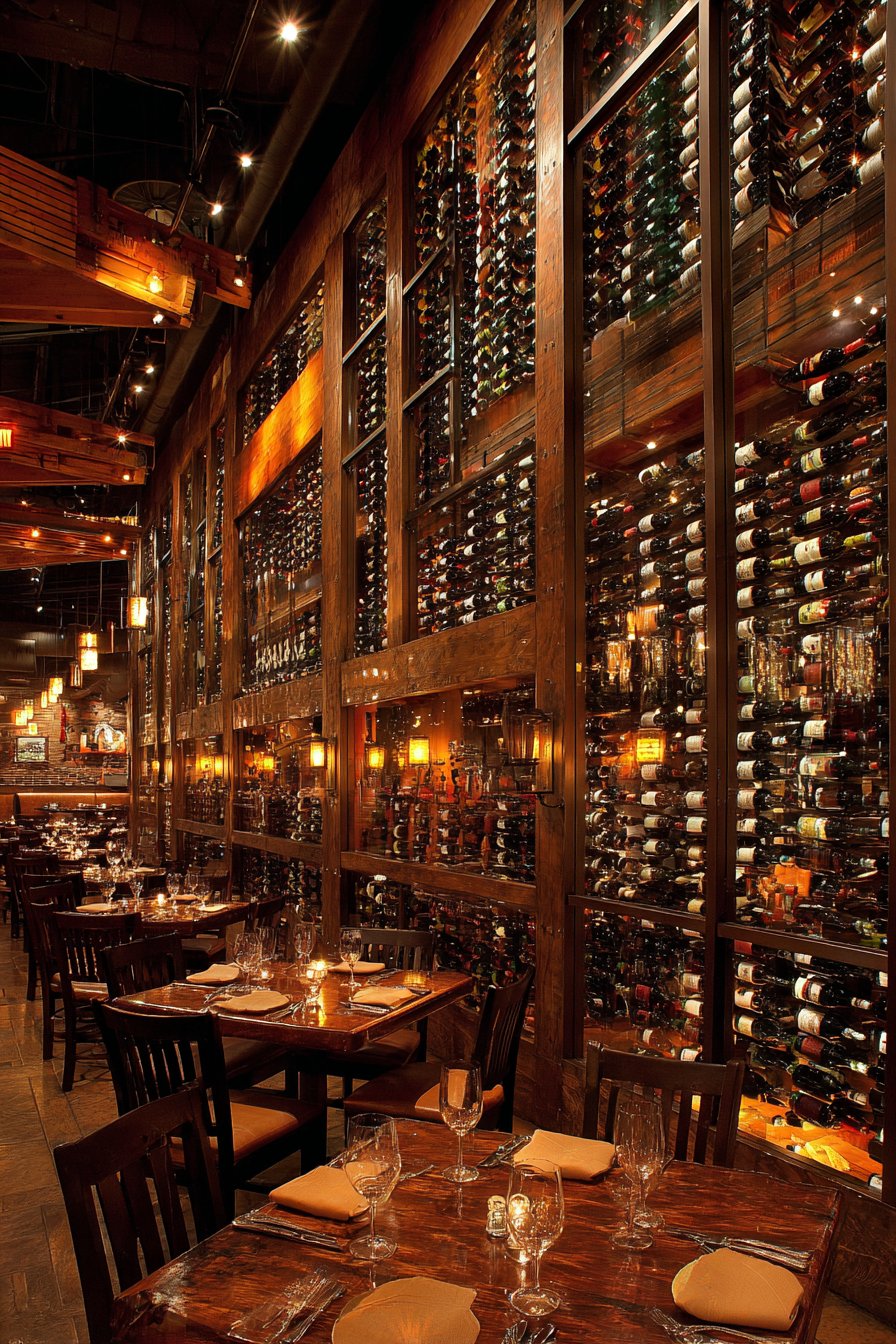
The dark stained wood framing provides structural definition and visual weight that prevents the backlit wall from appearing too ethereal or insubstantial. Brass hardware and label holders add refined metallic details that catch and reflect light, introducing additional sparkle and luxury cues. The combination of functional storage and dramatic presentation serves dual purposes—wine display enhances the dining atmosphere while the accessibility supports efficient service and encourages wine sales through visual suggestion.
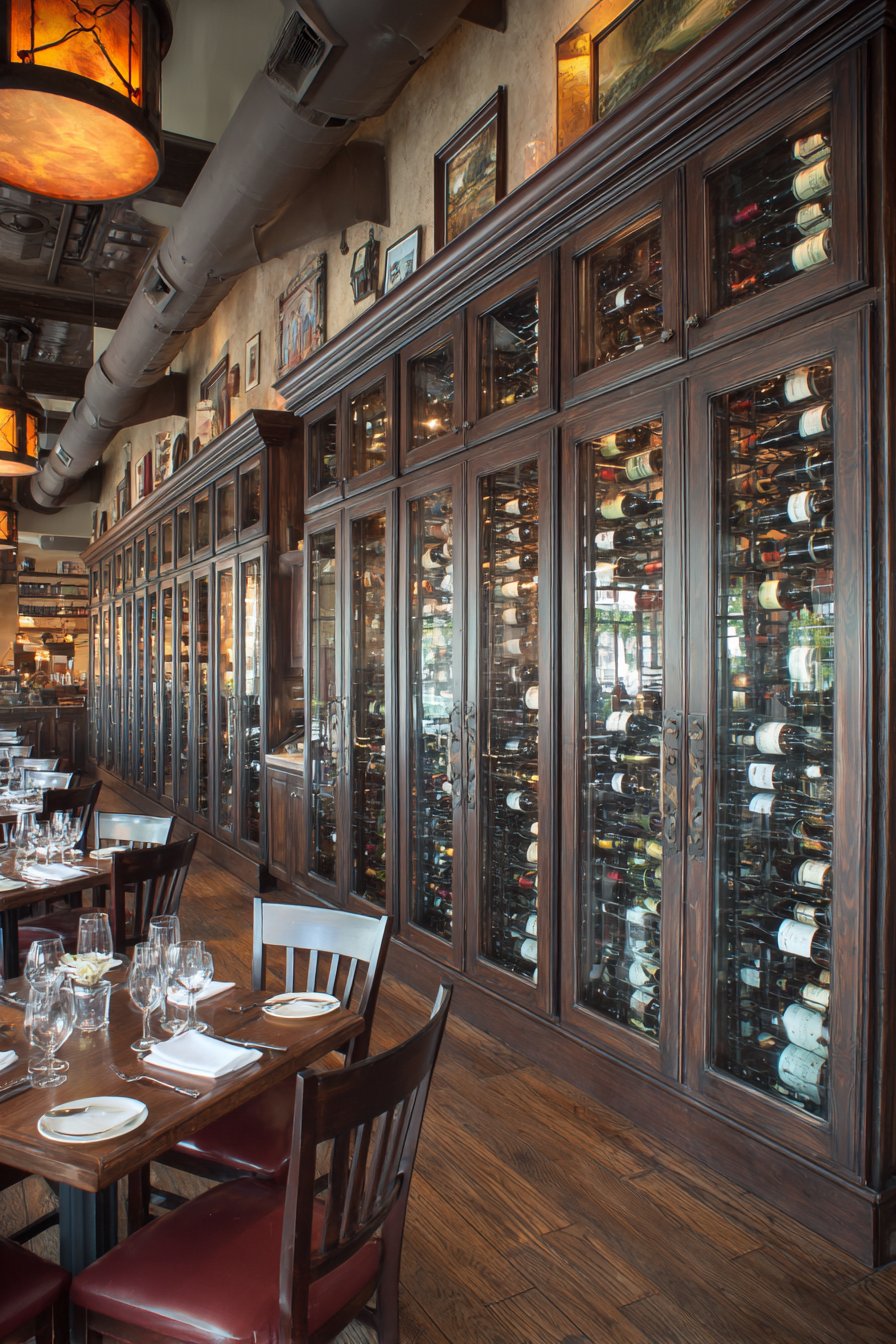
Wide-angle interior design photography captures the installation’s impressive scale while including intimate table settings in the foreground, demonstrating how the restaurant wall design idea integrates with the overall dining environment. The wine wall works particularly well in steakhouses, Italian restaurants, and other establishments where wine service represents significant revenue. From a practical standpoint, the display also facilitates staff training, as servers can easily reference the collection when making recommendations, and wine inventory management becomes simplified through visible organization.
Key Design Tips:
- Install climate control systems behind wine walls to maintain proper temperature and humidity for bottle storage
- Use UV-filtering glass or low-UV LED lighting to protect wines from light damage during extended display
- Design bottle slots to accommodate various bottle sizes and shapes found across different wine regions
- Incorporate security features such as lockable glass doors or security cameras to protect valuable inventory
- Position the wine wall where it’s visible from entrance areas to create immediate impressive impact
8. Dimensional White Ceramic Tile
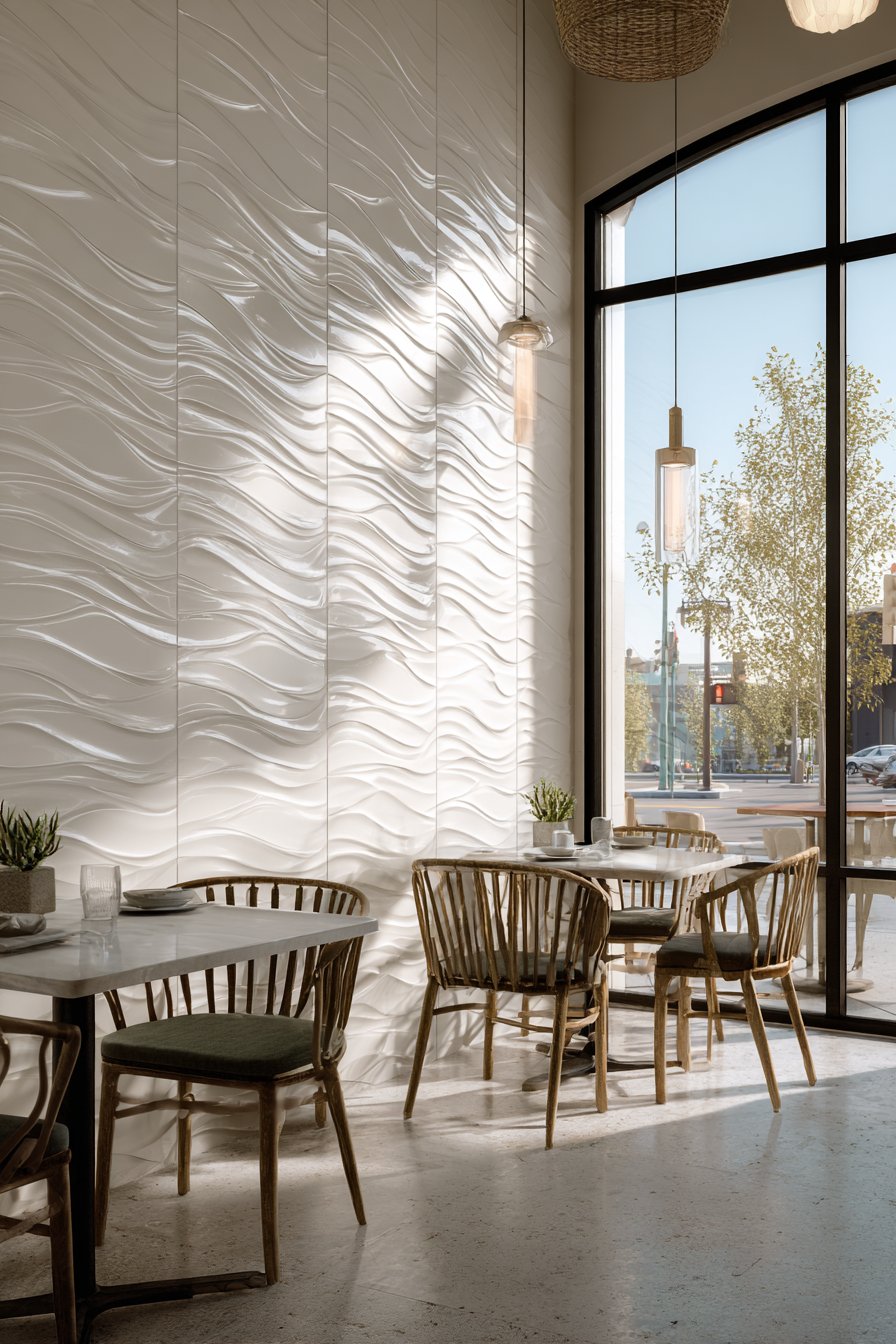
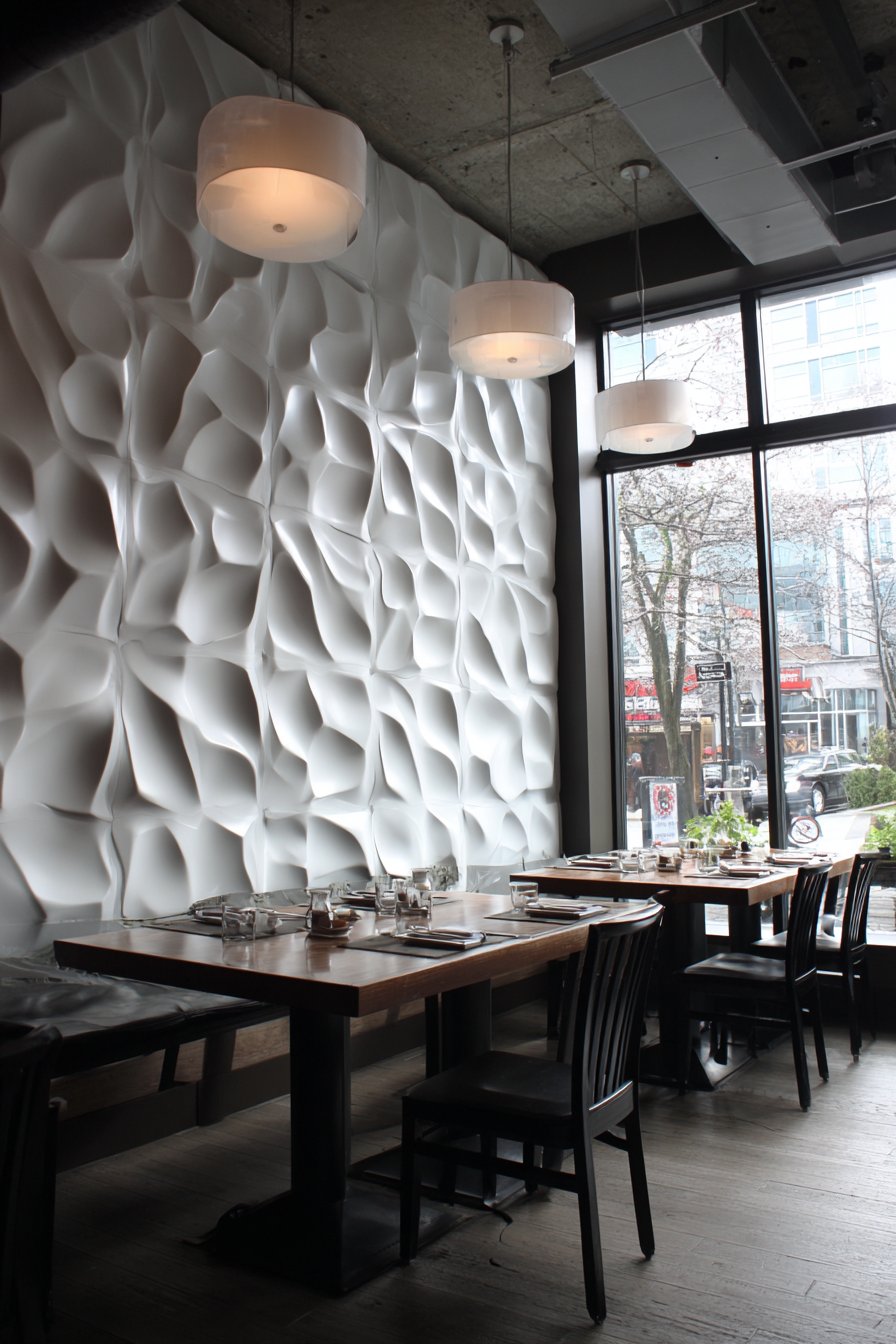
A textured three-dimensional tile installation in matte white ceramic brings sculptural artistry to restaurant walls through wave-like undulations that catch and reflect light dynamically throughout the day. The dimensional tiles create constantly shifting shadow patterns as natural light angles change, providing visual interest that evolves from breakfast through dinner service. This subtle animation maintains guest engagement during extended dining periods while supporting mindful, present-moment awareness through its meditative quality.
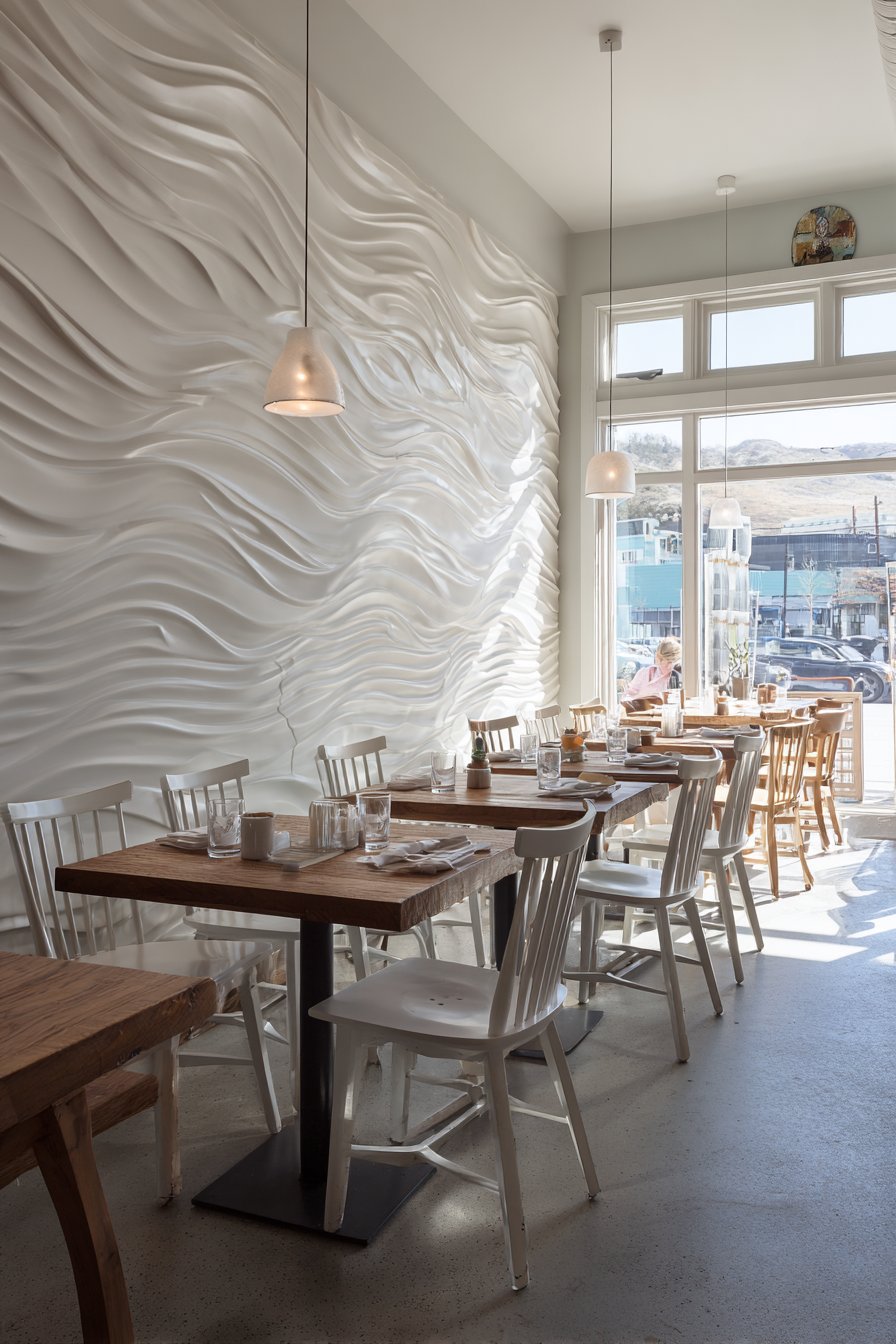
The sculptural tiles covering the main dining room wall require no additional decoration or artwork, as the surface itself provides sufficient visual complexity and aesthetic interest. Simple modern light fixtures in brushed nickel complement the minimalist aesthetic without competing for attention, allowing the textured wall to remain the focal point. The monochromatic white palette creates clean, fresh impressions particularly suited to coastal restaurants, modern cafés, or health-focused establishments where cleanliness and purity are brand values.
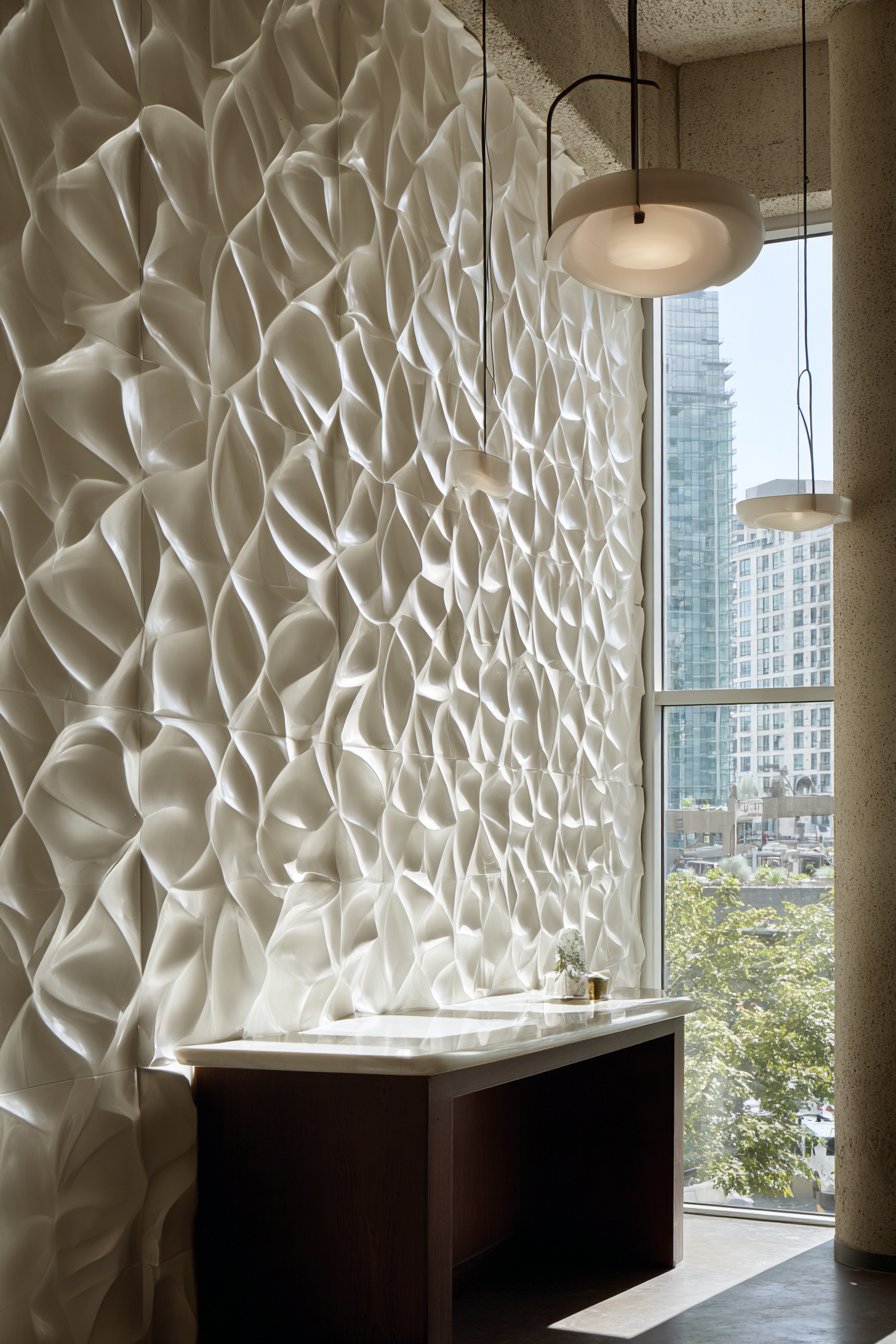
Professional photography capturing the subtle play of light and shadow across the dimensional surface requires careful timing and lighting control. The resulting images demonstrate how the restaurant wall design idea creates visual interest through texture and form rather than color or pattern, appealing to design-conscious diners who appreciate restraint and sophistication. The tiles also offer practical advantages including ease of cleaning, exceptional durability, and the ability to conceal minor wall imperfections beneath their articulated surfaces.
Key Design Tips:
- Specify commercial-grade ceramic tiles with proper slip resistance ratings if installation extends to floor areas
- Install tiles with consistent orientation to maintain pattern continuity across large surfaces
- Use bright white grout that matches tile color to create seamless monolithic appearance
- Position lighting to graze across tile surfaces at low angles, maximizing shadow depth and dimensional effect
- Consider acoustic properties and add sound-dampening materials elsewhere if tiles create excessive sound reflection
9. Functional Chalkboard Wall
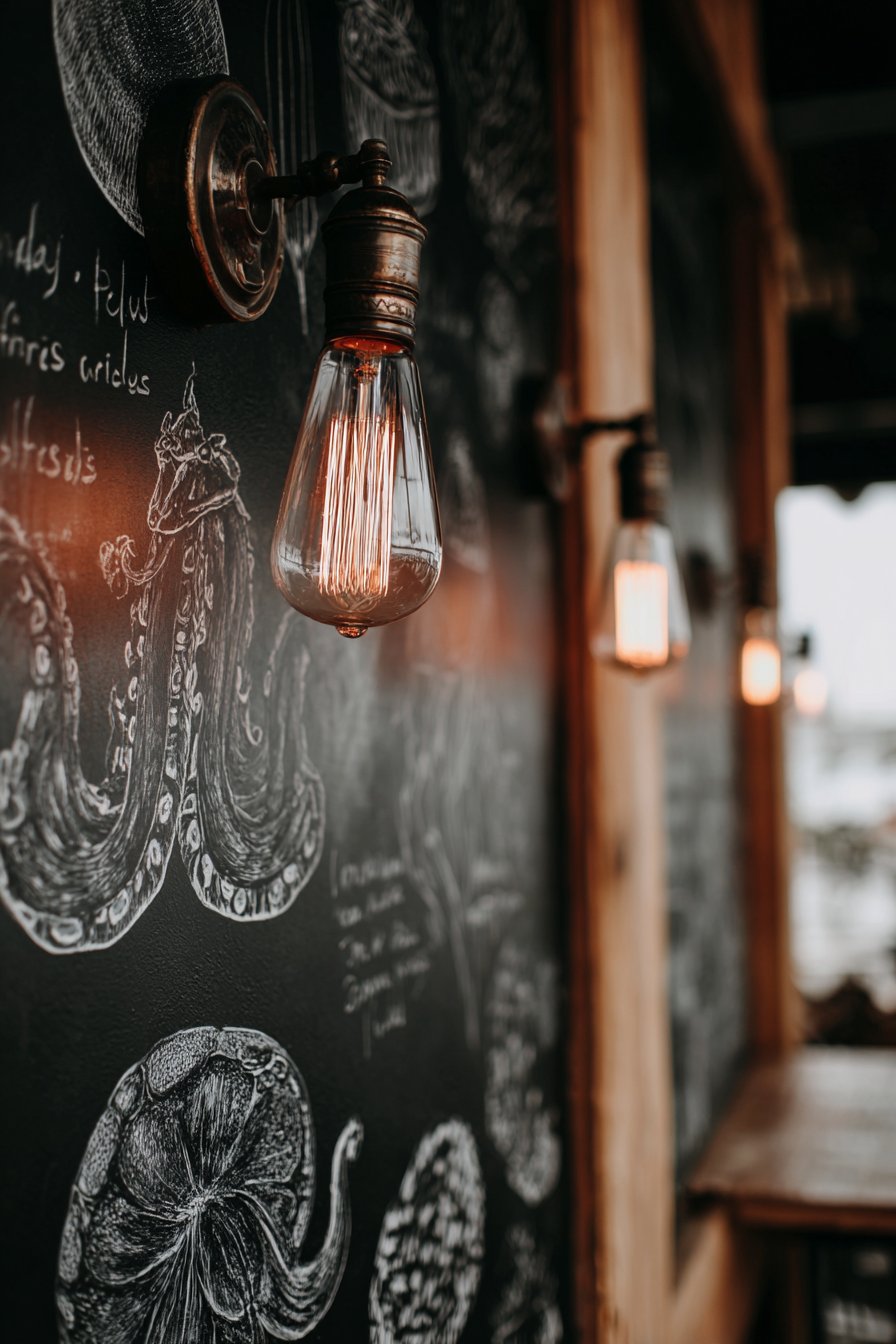
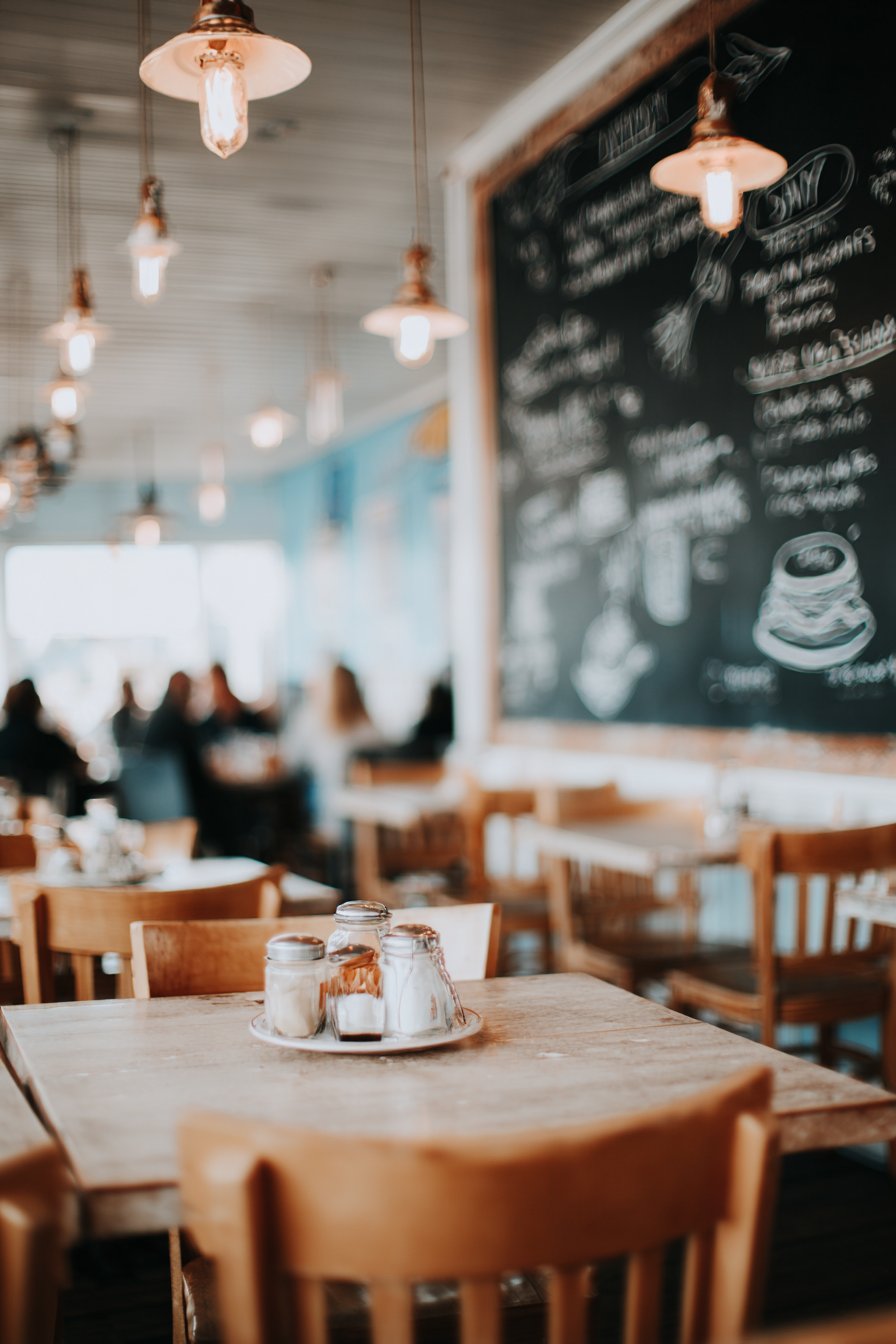
A rustic chalkboard wall treatment with hand-lettered daily specials and artistic food illustrations creates approachable, casual atmosphere while serving important functional purposes in restaurant operations. The matte black chalkboard paint covering one full wall provides substantial surface area for menu communication, seasonal messaging, or playful customer engagement. Decorative wood trim framing the chalkboard edges in natural oak adds warmth and visual finish while creating clear boundaries that prevent the large dark surface from overwhelming the space.
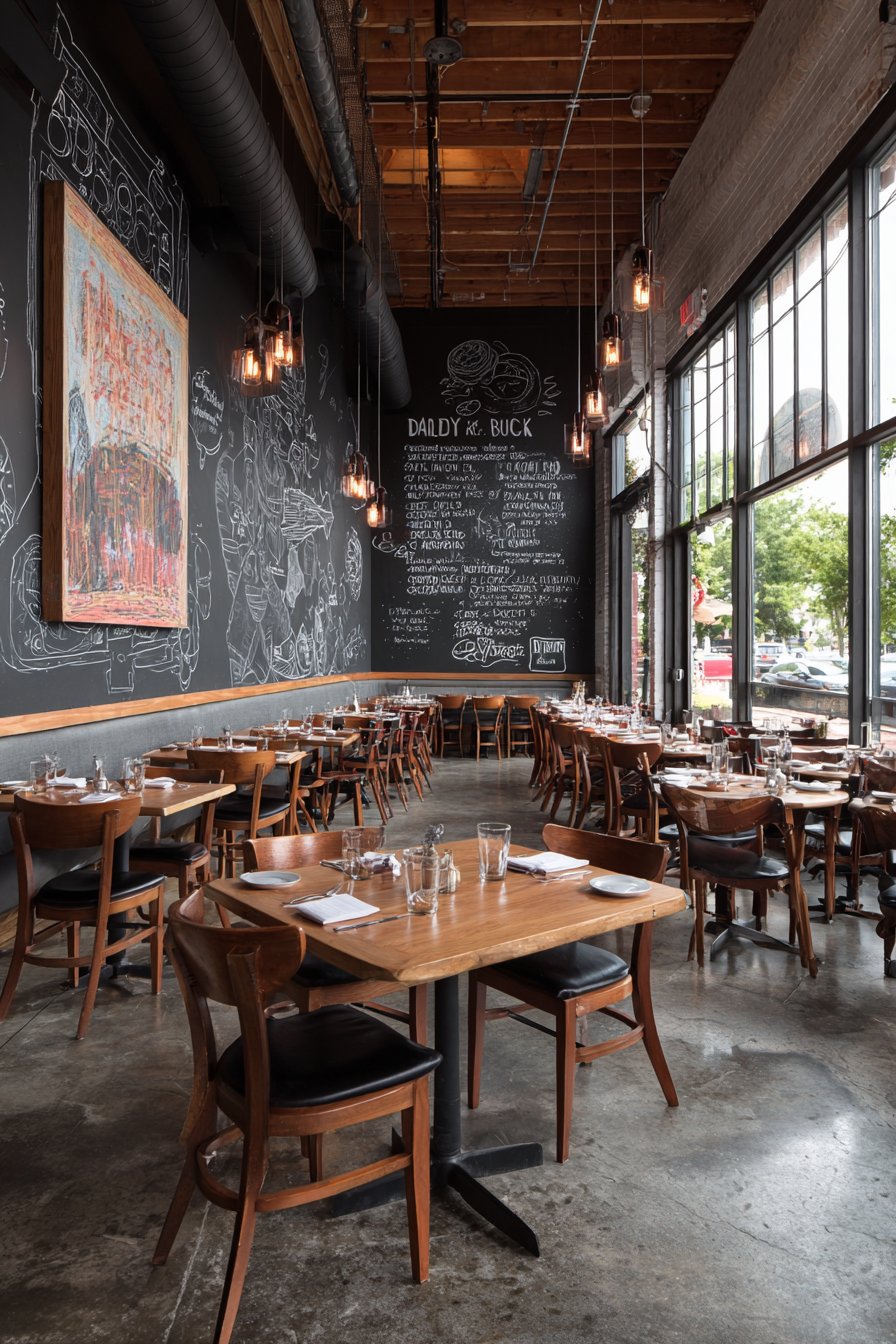
Vintage-style wall sconces with exposed filament bulbs flank the chalkboard, providing necessary illumination for reading while contributing to the overall rustic-industrial aesthetic. The warm light from Edison bulbs creates inviting glow without creating glare on the chalkboard surface, ensuring text remains clearly legible from all seating positions. Professional lettering—whether executed by skilled staff or commissioned from professional sign painters—elevates the chalkboard from utilitarian communication tool to artistic feature that demonstrates craftsmanship and attention to detail.
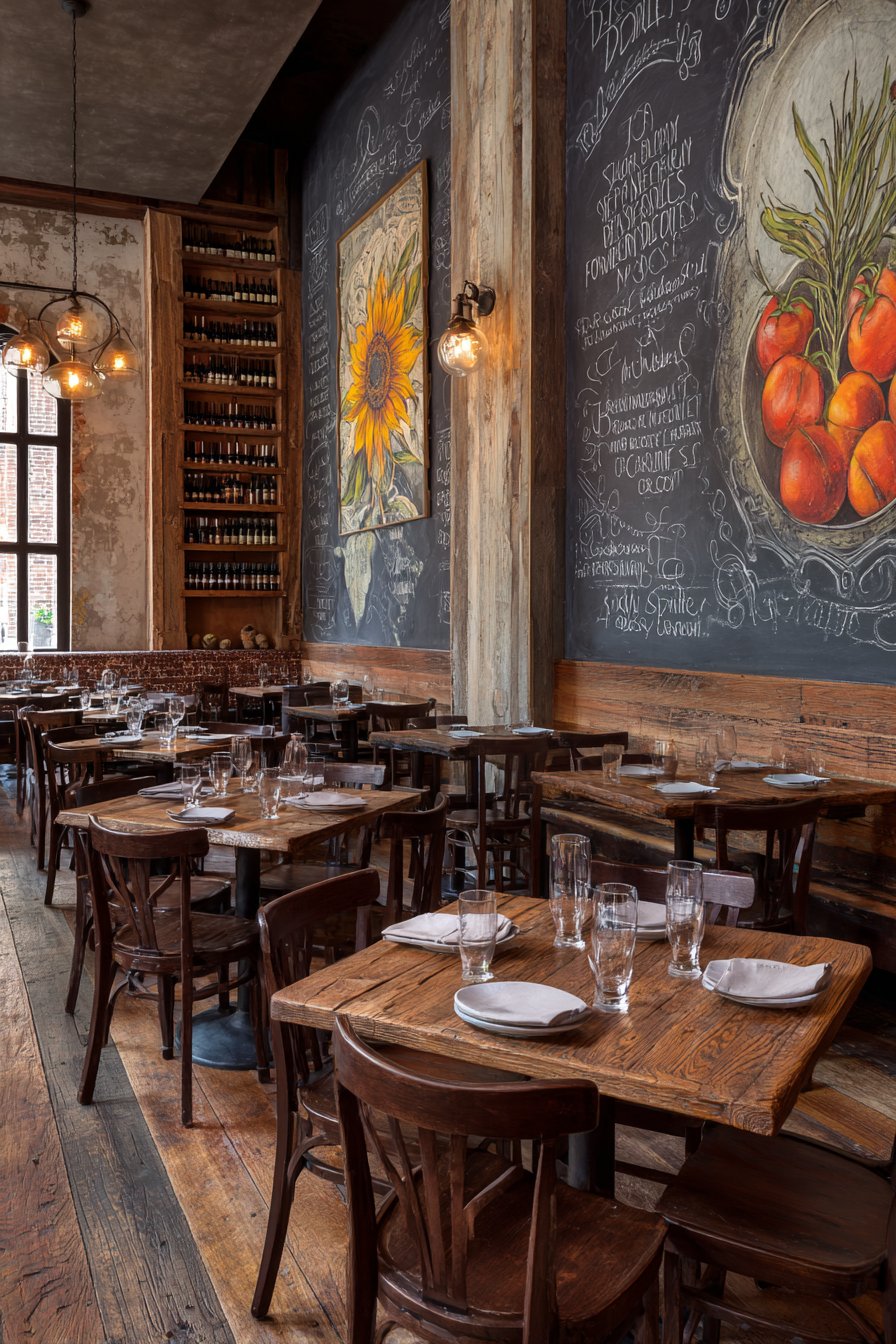
Interior design photography showing the casual bistro atmosphere must manage exposure carefully to prevent glare on the chalkboard surface while highlighting chalk typography details and artistic embellishments. This restaurant wall design idea works exceptionally well in cafés, farm-to-table restaurants with frequently changing menus, neighborhood bistros, and anywhere authenticity and flexibility are valued over formal polish. The chalkboard can be updated daily, seasonally, or as needed, providing design versatility that static wall treatments cannot match.
Key Design Tips:
- Use actual chalkboard paint rather than adhesive chalkboard surfaces for authentic appearance and better durability
- Season new chalkboard surfaces by rubbing chalk over the entire area and erasing before first use to prevent ghosting
- Establish consistent typography styles and layout grids to maintain professional appearance despite frequent updates
- Assign chalkboard maintenance to artistically inclined staff members or budget for professional chalk artists
- Photograph chalkboard content regularly for social media marketing before erasing and updating
10. Vertical Wood Slat Accent Wall
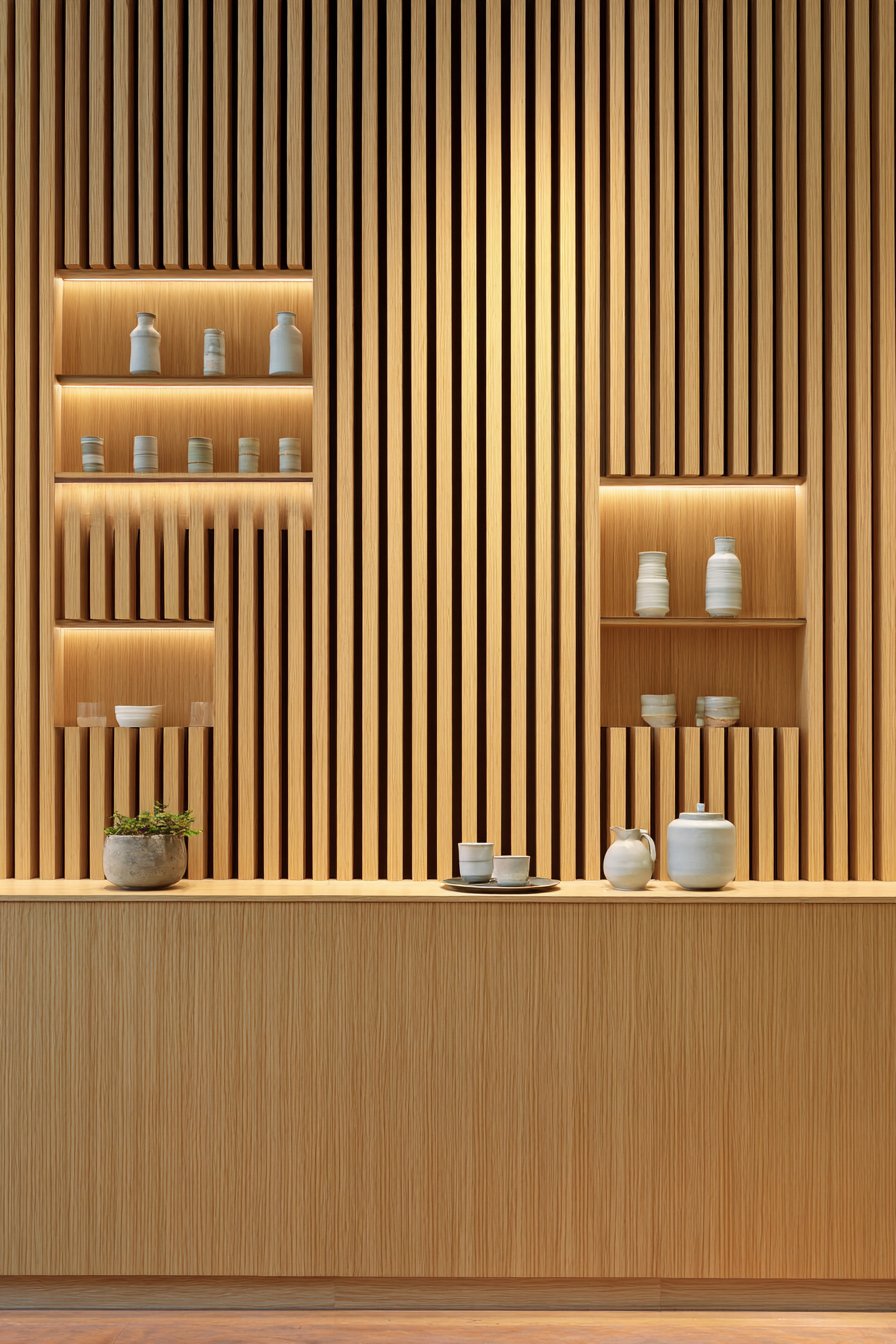
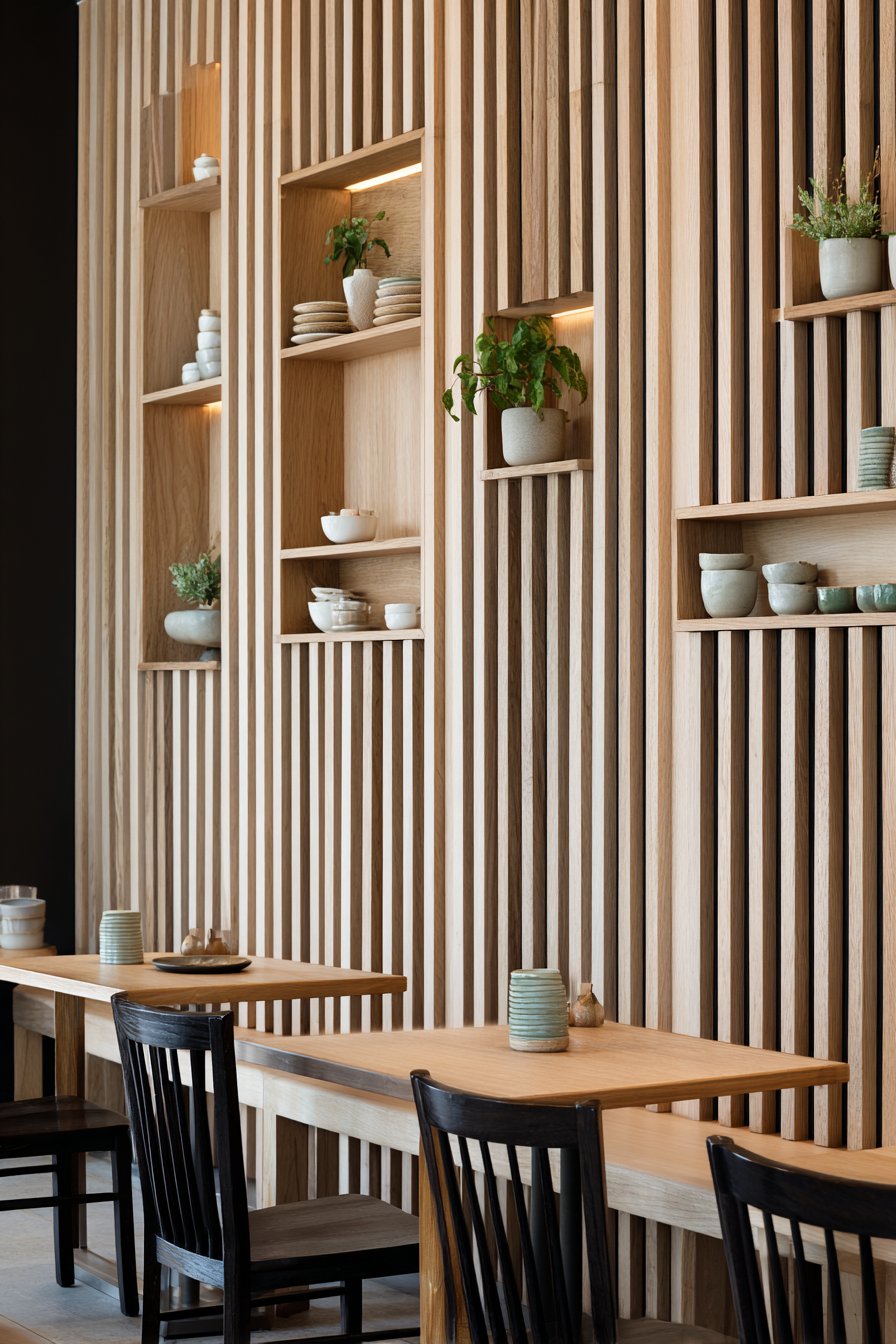
A modern slat wall installation using vertical wooden battens in light oak finish creates sophisticated rhythmic patterns through the interplay of solid wood and negative space. The even spacing between battens generates shadow lines that shift throughout the day as light angles change, providing subtle visual animation without requiring electronic displays or mechanical movement. Integrated shelving slots between select battens offer functional display opportunities for minimalist ceramics and small plants without disrupting the overall linear composition.
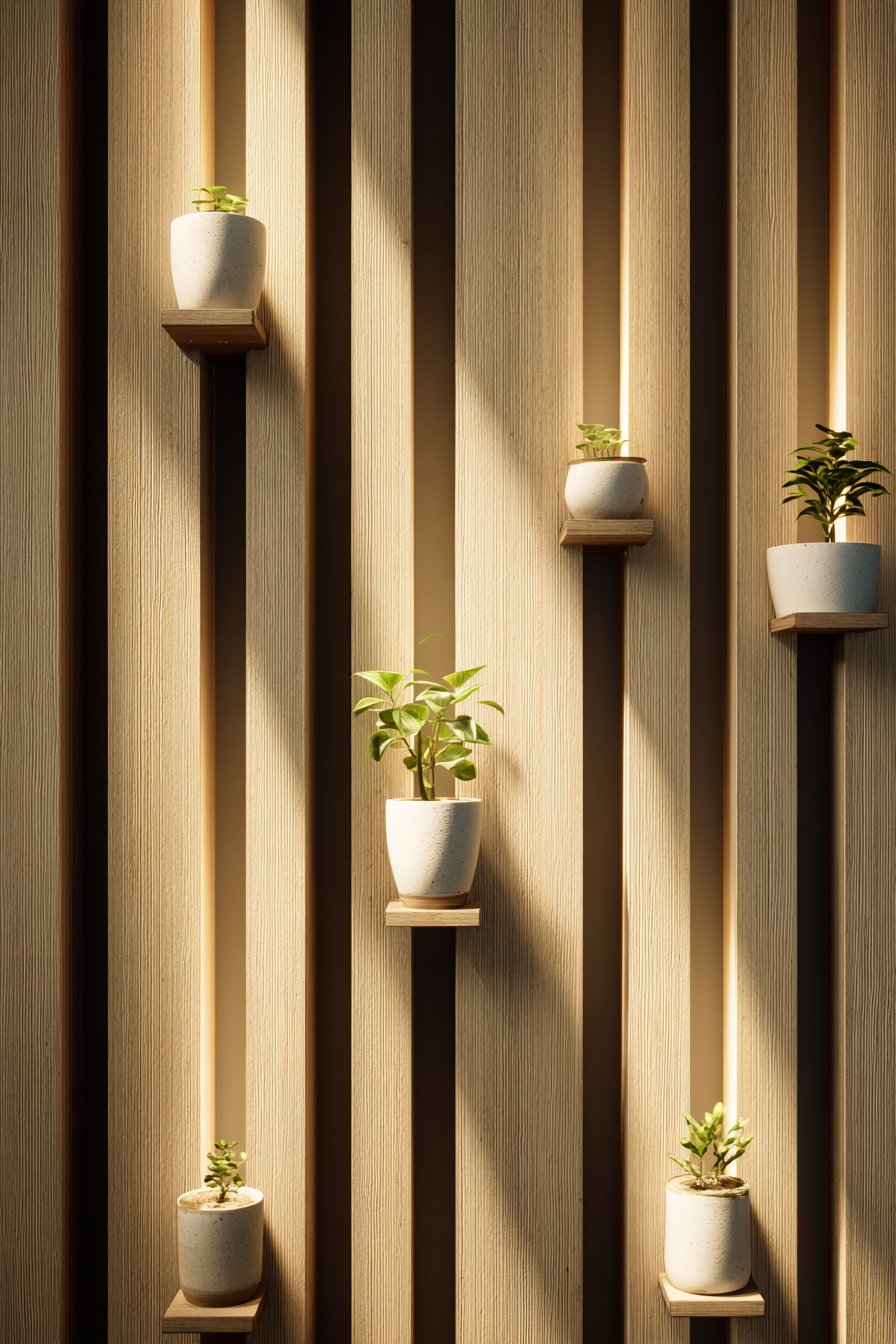
Warm downlighting emphasizes the slat wall’s linear pattern and natural wood grain, creating vertical emphasis that makes ceilings appear higher—a valuable effect in restaurants with standard ceiling heights. The Scandinavian-inspired design aesthetic communicates values of simplicity, quality craftsmanship, and natural materials that resonate with contemporary consumers seeking authentic, sustainable dining experiences. The light oak finish provides warmth without heaviness, working particularly well in spaces with abundant natural light or northern exposures where warmer wood tones help compensate for cool daylight quality.
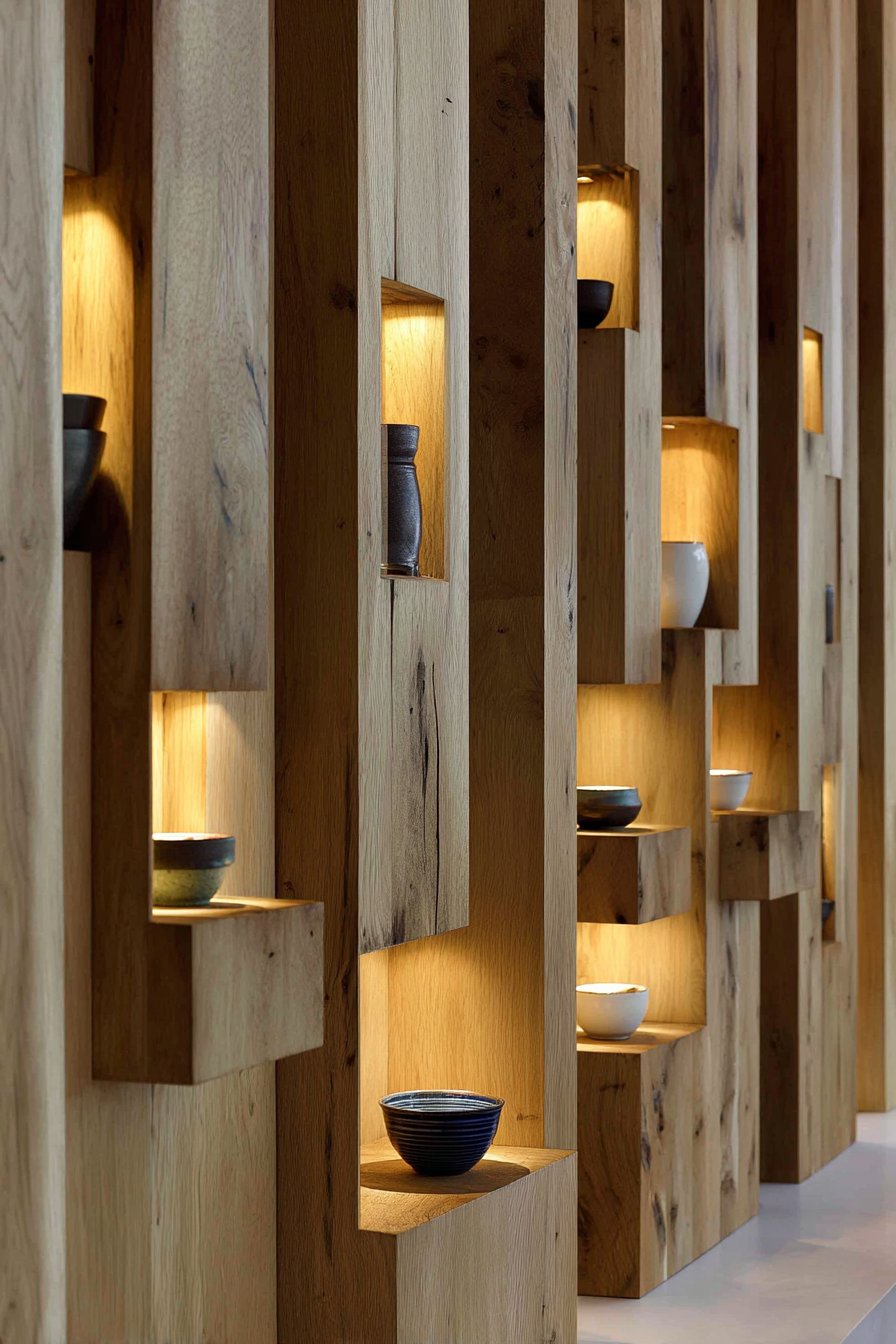
Wide-angle professional photography captures the slat wall providing textural warmth while maintaining clean lines, showing balanced exposure of both shadow details within the battens and illuminated wood surfaces. This restaurant wall design idea excels in contemporary Nordic-inspired restaurants, health-focused cafés, or any establishment where minimalist aesthetics align with brand positioning. The installation also offers acoustic benefits, as the gaps between battens and any backing material can be filled with sound-absorbing material to reduce noise levels in busy dining environments.
Key Design Tips:
- Maintain precise spacing consistency across the entire installation using jigs or spacers during installation
- Select wood with minimal knots and color variation for contemporary minimalist aesthetics
- Apply matte or satin finish rather than high-gloss to prevent reflective hotspots and maintain natural appearance
- Incorporate LED strip lighting within select gaps between battens for unexpected glow effects during evening service
- Design batten dimensions proportional to wall height—taller walls require wider battens to maintain visual balance
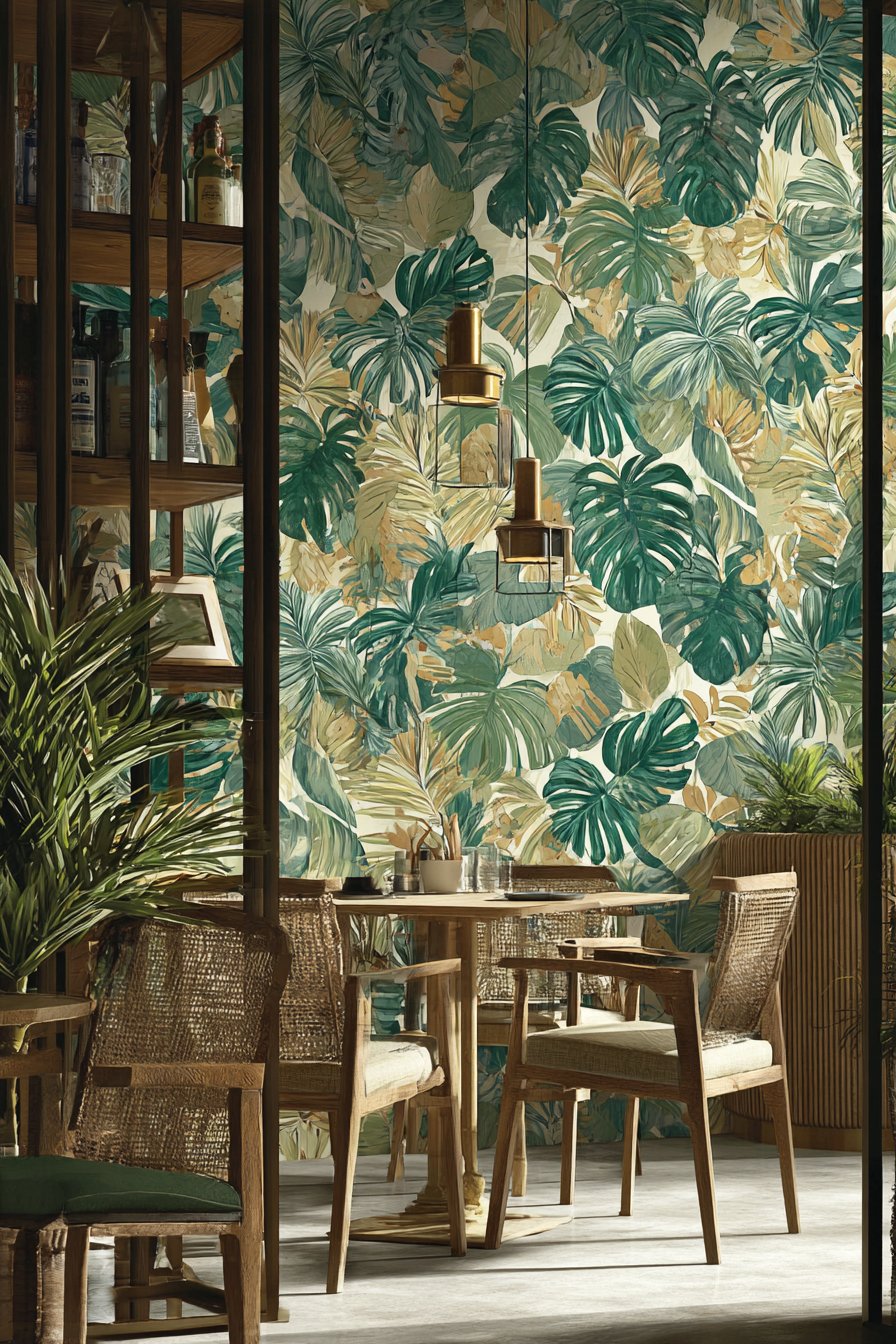
11. Tropical Botanical Wallpaper
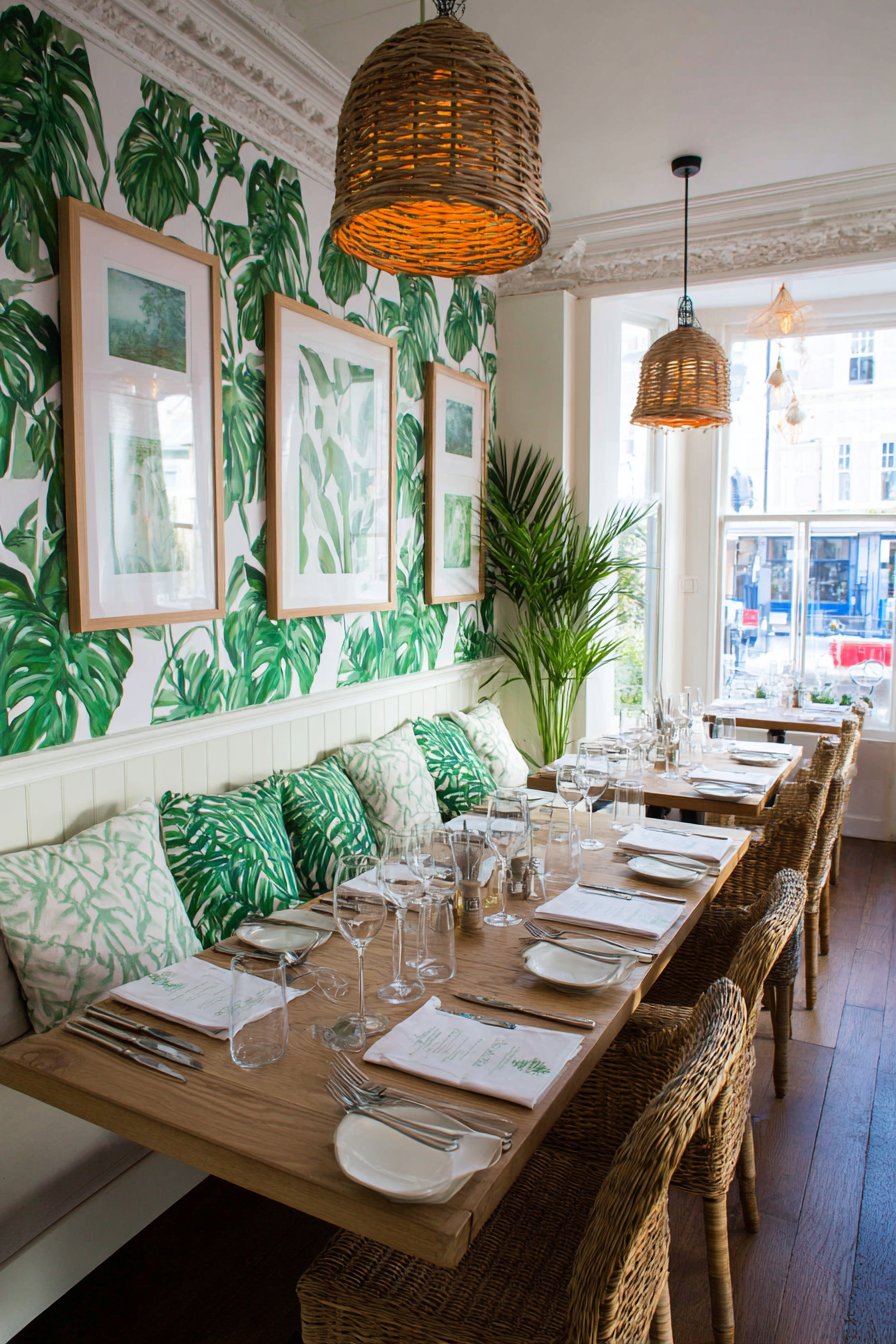
Bold graphic wallpaper featuring oversized tropical leaf patterns in deep greens and gold on cream backgrounds creates lush, immersive environments that transport diners to exotic destinations. The large-scale botanical patterns add immediate visual impact and establish strong thematic identity for restaurants focusing on tropical cuisine, Caribbean flavors, or vacation-inspired dining concepts. Natural rattan furniture and brass pendant lights extend the tropical aesthetic through materiality and finish, creating cohesive environments where every element reinforces the central theme.
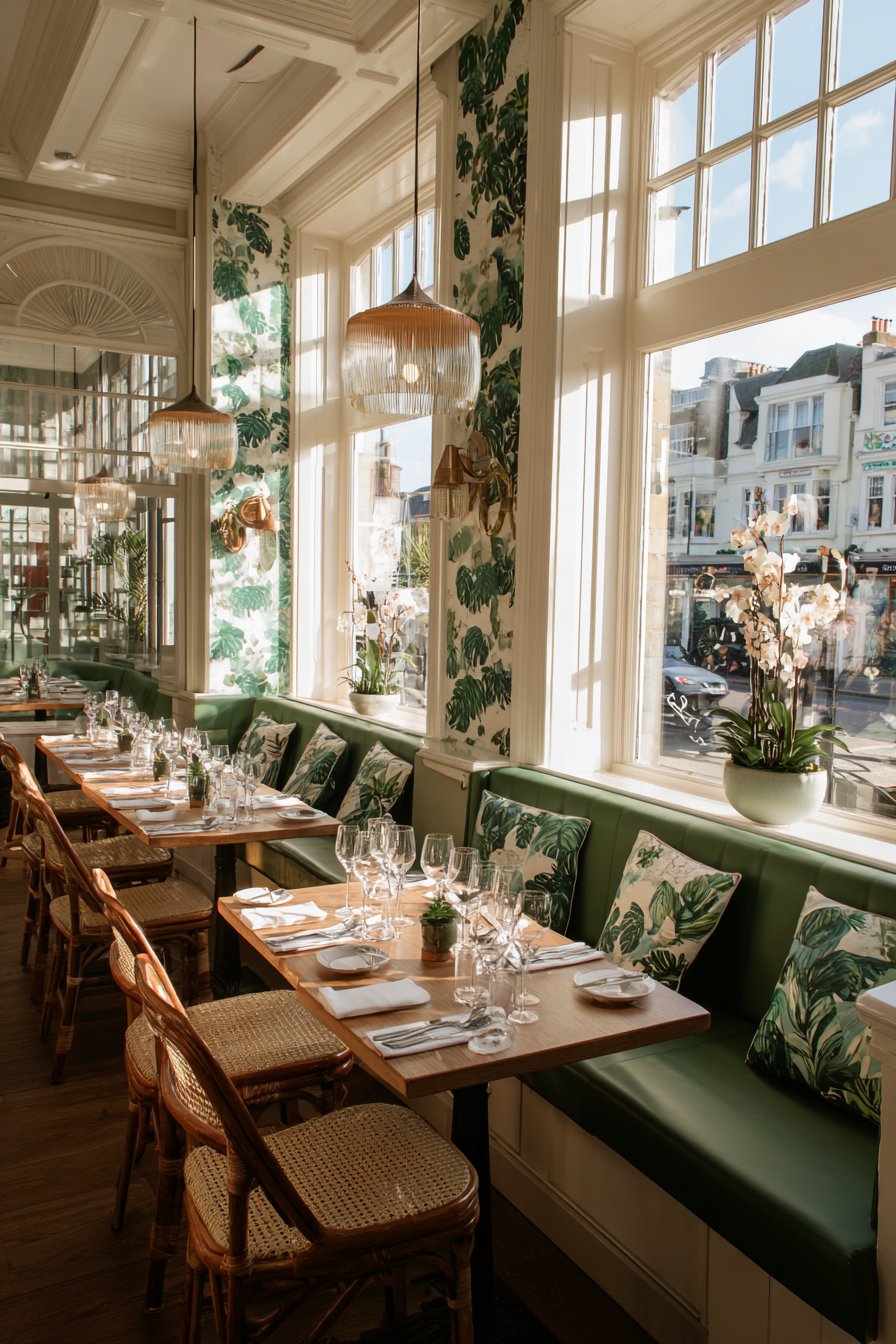
Crown molding in crisp white frames the wallpaper’s top edge, providing visual termination and architectural refinement that prevents the bold pattern from feeling unfinished or overwhelming. The contrast between elaborate patterned walls and simpler ceiling treatments creates balanced visual hierarchy, ensuring the space reads as sophisticated rather than chaotic. Interior photography captures the restaurant’s fresh, vibrant aesthetic with natural daylight highlighting the wallpaper’s color richness and intricate pattern details.
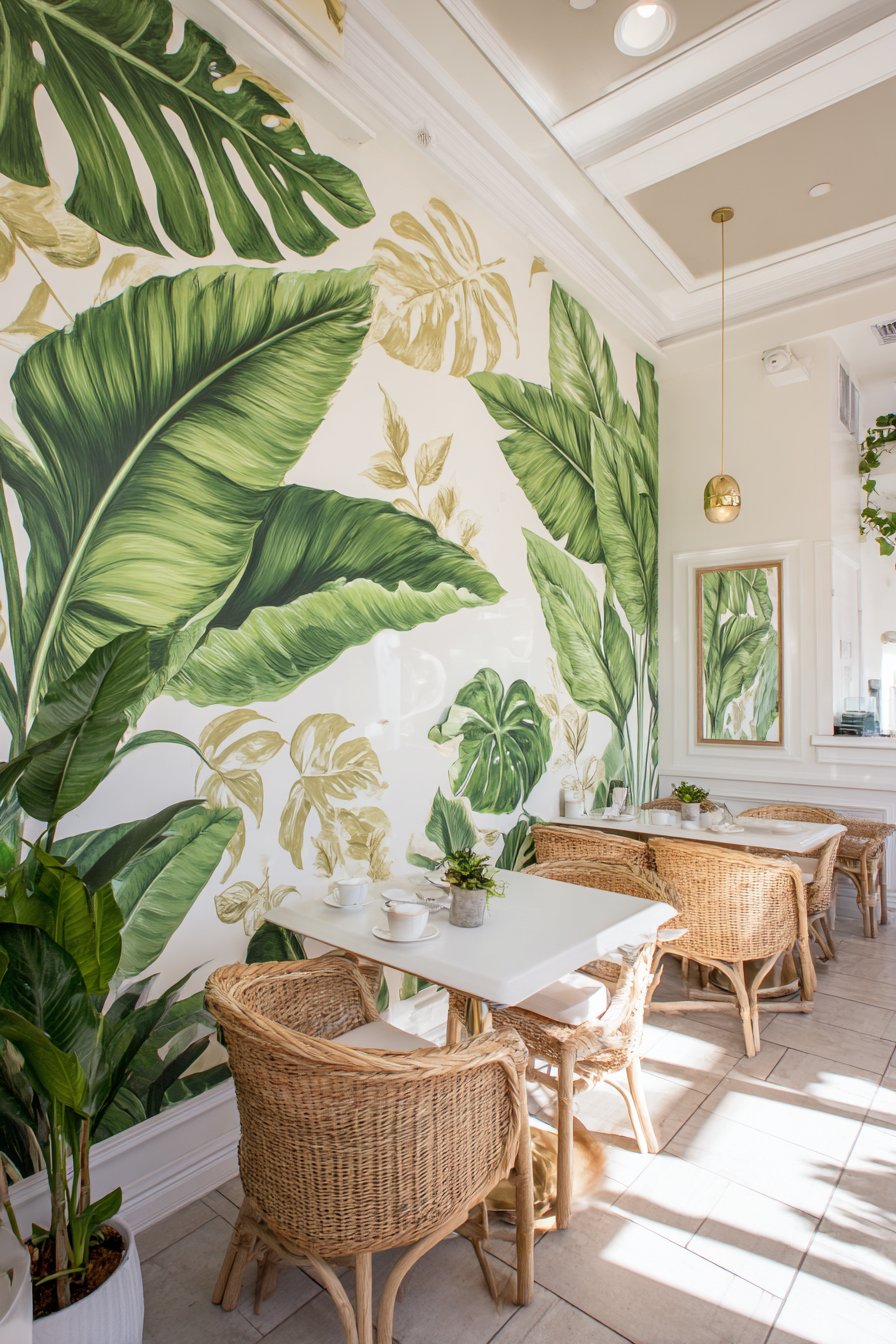
This restaurant wall design idea works exceptionally well in brunch-focused establishments, coastal locations, or urban restaurants seeking to provide escapist atmospheres. The tropical theme offers year-round appeal while providing obvious seasonal marketing opportunities during winter months when guests particularly crave warm-weather associations. The wallpaper also facilitates merchandising opportunities, as the distinctive aesthetic creates strong brand recognition that translates well to packaging, social media branding, and promotional materials.
Key Design Tips:
- Select wallpapers with stain-resistant coatings suitable for commercial restaurant environments
- Balance bold patterned walls with solid-colored furnishings to prevent visual competition
- Consider wallpaper scale relative to room size—larger patterns work better in spacious dining rooms
- Coordinate wallpaper installation with electrical work to ensure light fixtures, outlets, and switches integrate seamlessly with pattern repeats
- Plan for wallpaper replacement every 5-7 years in high-traffic areas where cleaning and wear affect appearance
12. Vintage Advertising Memorabilia Display
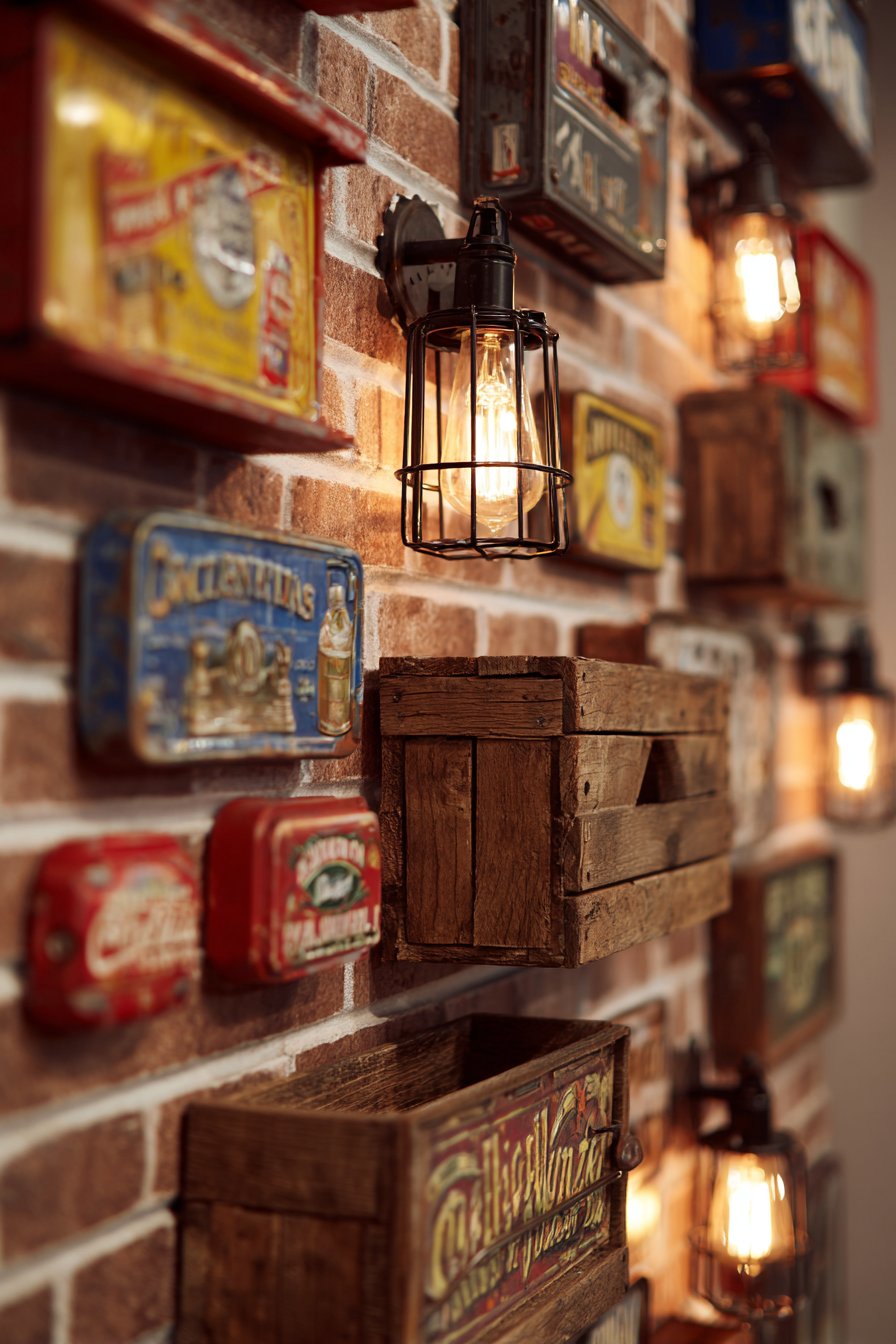
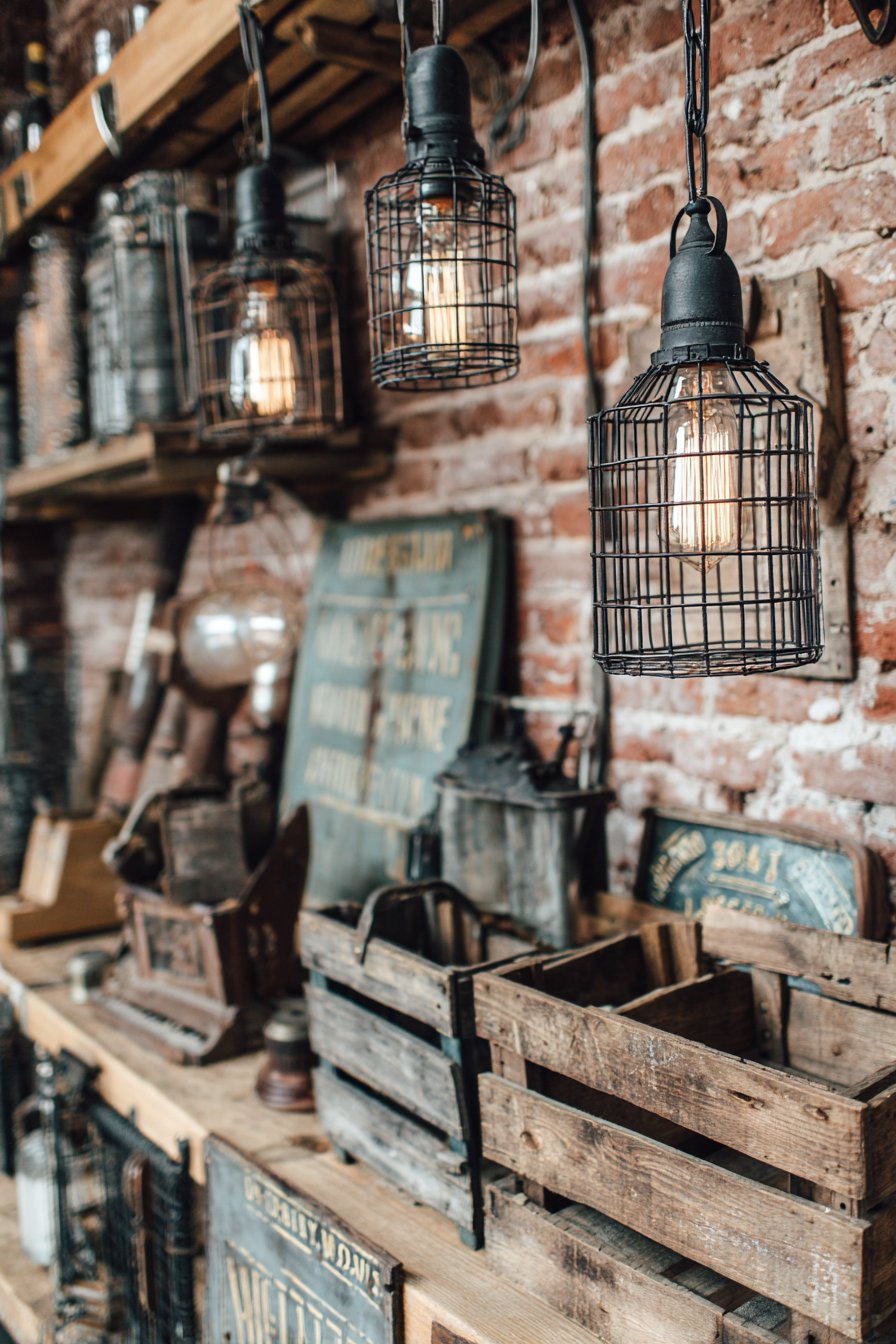
A collection of vintage metal signs and antique advertising memorabilia arranged in asymmetric salon-style layout creates nostalgic, conversation-starting atmosphere that encourages guest engagement and extended dining sessions. The aged brick wall provides authentic backdrop for the eclectic collection of enamel signs, wooden crates, and industrial artifacts, with the contrast between polished collectibles and raw masonry creating appealing visual tension. Warm Edison bulbs in cage fixtures illuminate the nostalgic display while reinforcing the vintage-industrial aesthetic through lighting design.
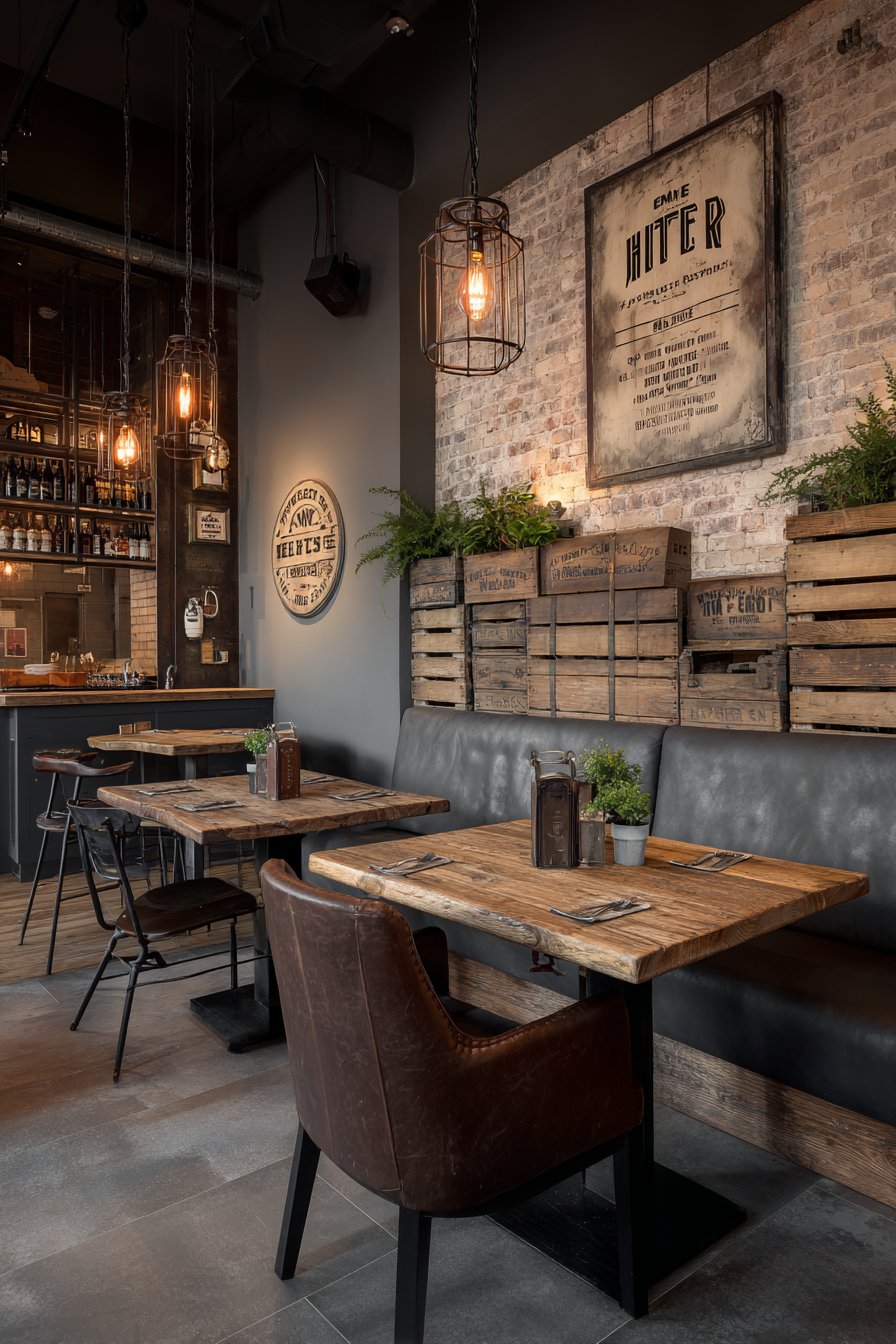
Professional interior photography shows how the restaurant wall design idea creates storytelling elements that give guests talking points and shareable social media content. Each piece in the collection can have its own history and significance, whether genuine vintage advertising from the restaurant’s neighborhood, collectibles related to the cuisine type, or artifacts representing the owner’s personal interests and travels. The asymmetric arrangement prevents the display from feeling too formal or museum-like, maintaining approachable casualness appropriate for dining environments.
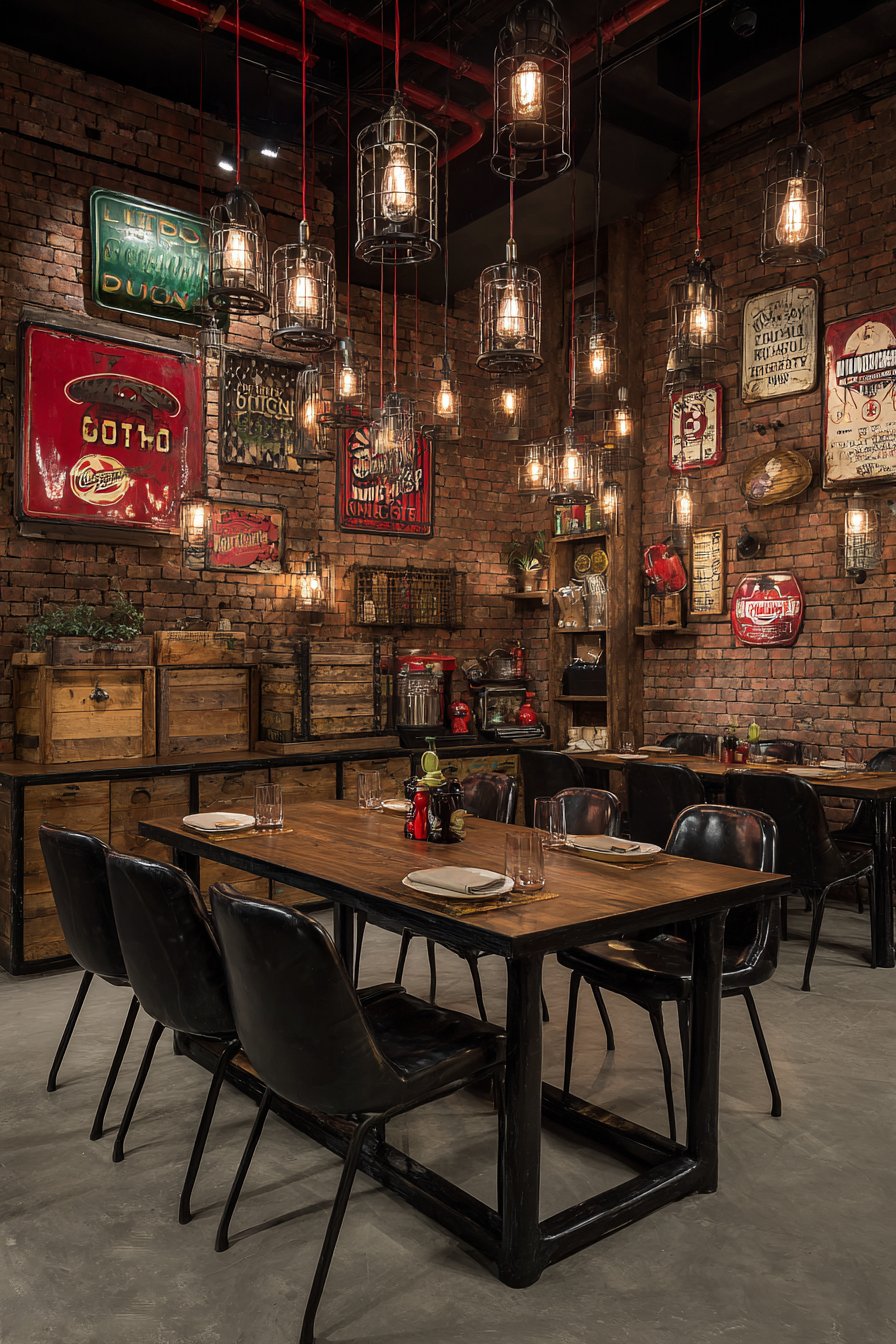
This approach works particularly well in gastropubs, barbecue restaurants, burger joints, and other casual dining concepts where authenticity and character matter more than refined polish. The memorabilia collection can be expanded or rotated over time, keeping the wall treatment fresh for regular customers while providing collecting activities that engage ownership beyond typical restaurant management duties. The vintage pieces also typically appreciate in value, making the wall treatment a form of investment rather than pure expense.
Key Design Tips:
- Source authentic vintage pieces from reputable dealers or estate sales rather than mass-produced reproductions
- Arrange items on the floor in full-scale template before wall installation to ensure balanced composition
- Use appropriate hanging hardware rated for the weight of metal signs and framed pieces
- Create subtle hierarchy by positioning larger, more visually striking pieces at eye level with smaller items filling surrounding areas
- Document the collection with descriptions and provenance information that staff can share with interested guests
13. Quilted Leather Panel Wall
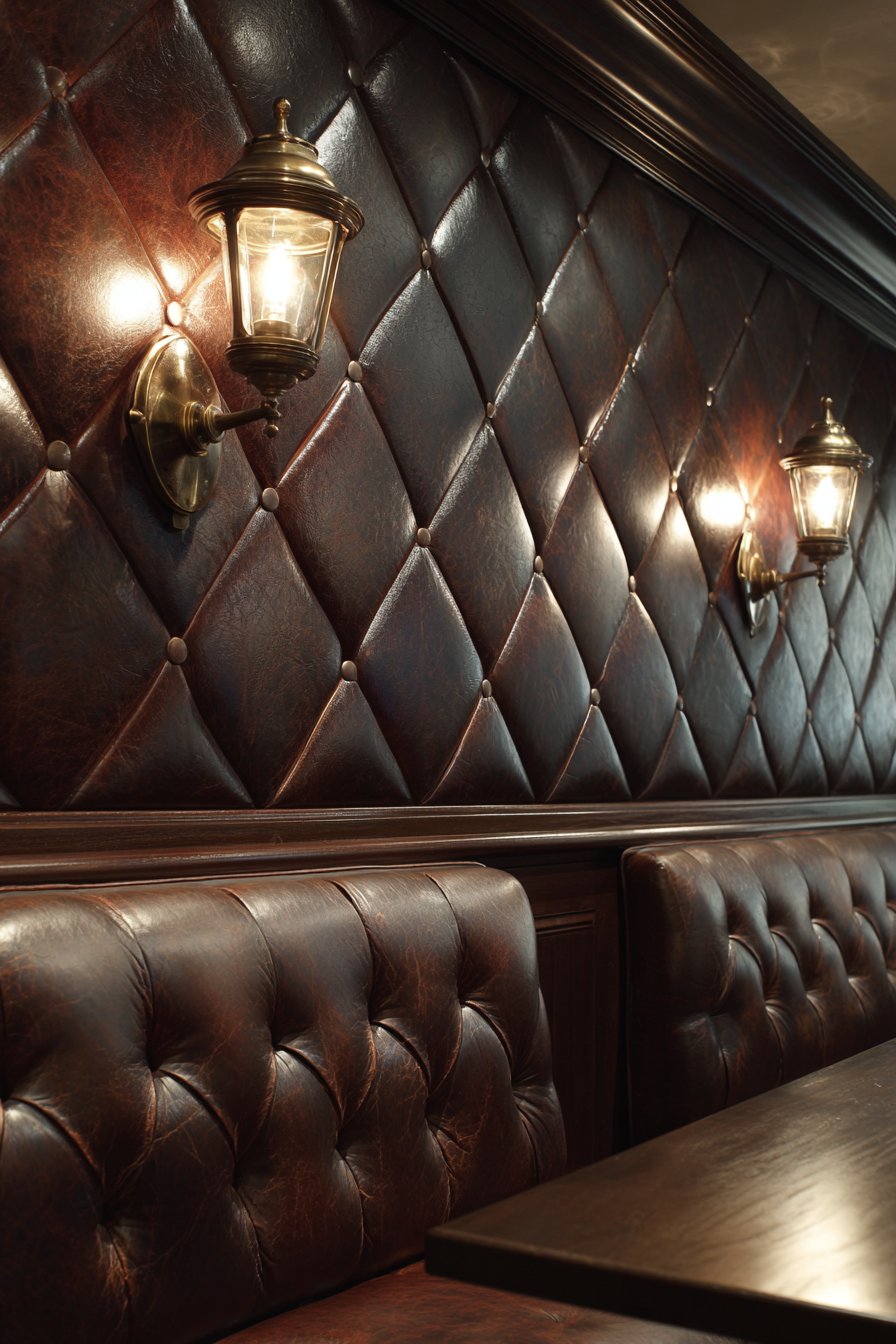
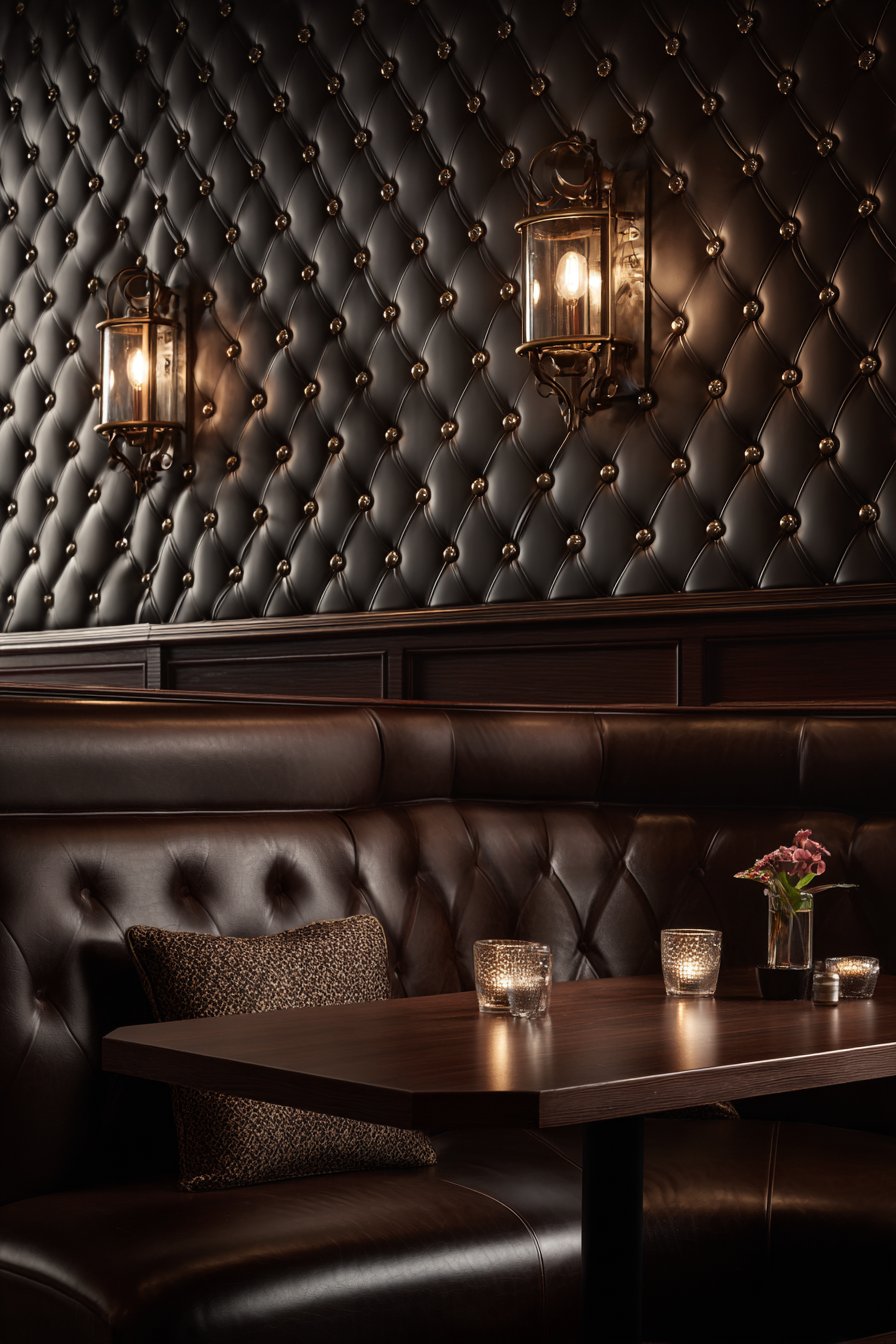
A sophisticated leather panel wall installation using quilted cognac-colored leather tiles with subtle button tufting transforms dining spaces into upscale environments reminiscent of exclusive private clubs and speakeasy lounges. The luxurious leather wall treatment adds significant acoustic dampening while creating sophisticated visual texture and warm color saturation. Antique brass wall sconces provide warm accent lighting that highlights the leather’s rich texture and natural sheen without creating harsh glare on the reflective surface.
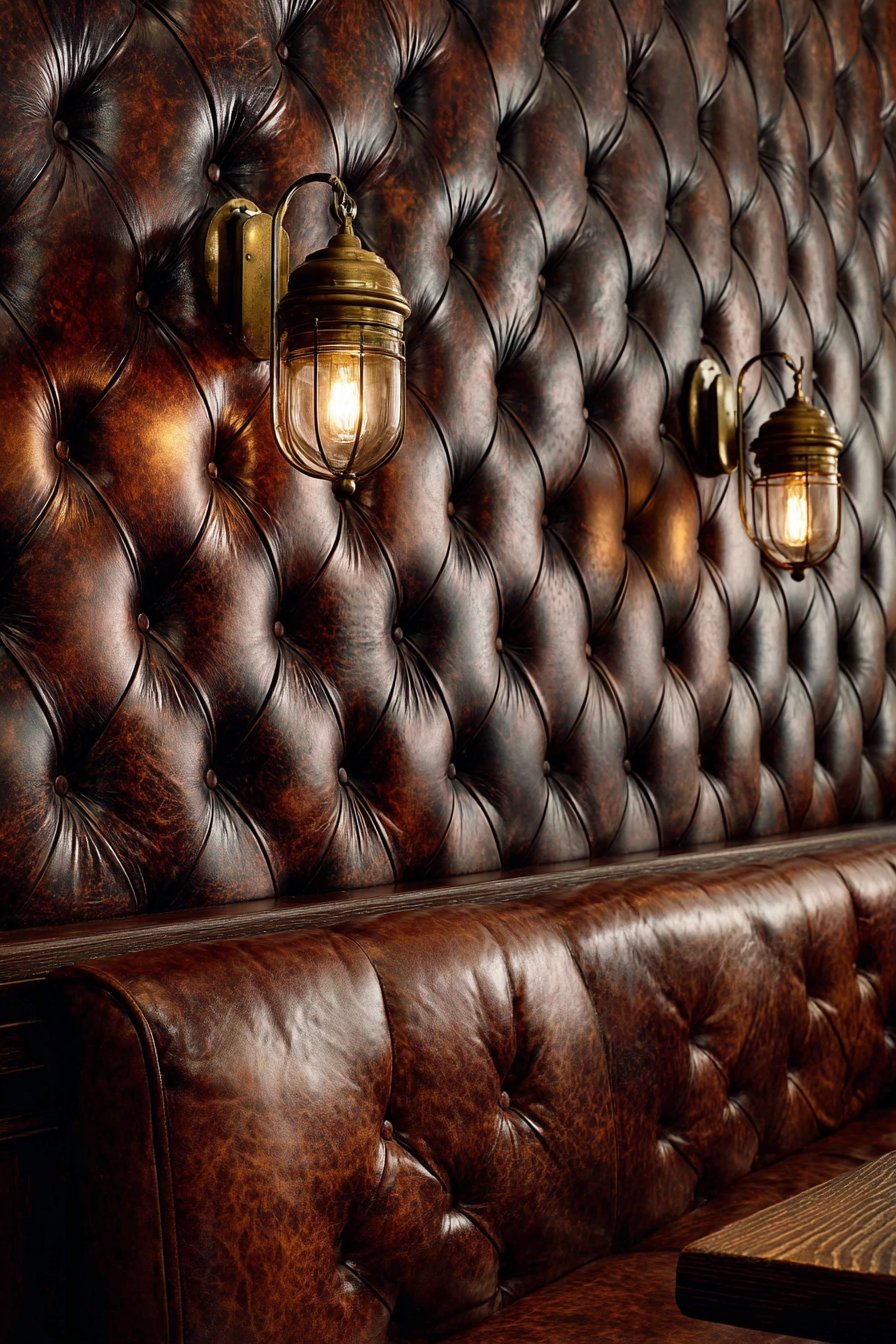
The leather’s supple appearance and warm color create psychological effects of comfort and exclusivity that justify premium pricing and encourage guests to perceive their dining experience as special occasion worthy. Interior design photography capturing intimate booth seating areas demonstrates how the restaurant wall design idea elevates perceptions of quality and attention to detail. The leather’s natural variations and subtle sheen create dimensional interest that evolves under changing light conditions, rewarding attentive viewing during extended dining sessions.
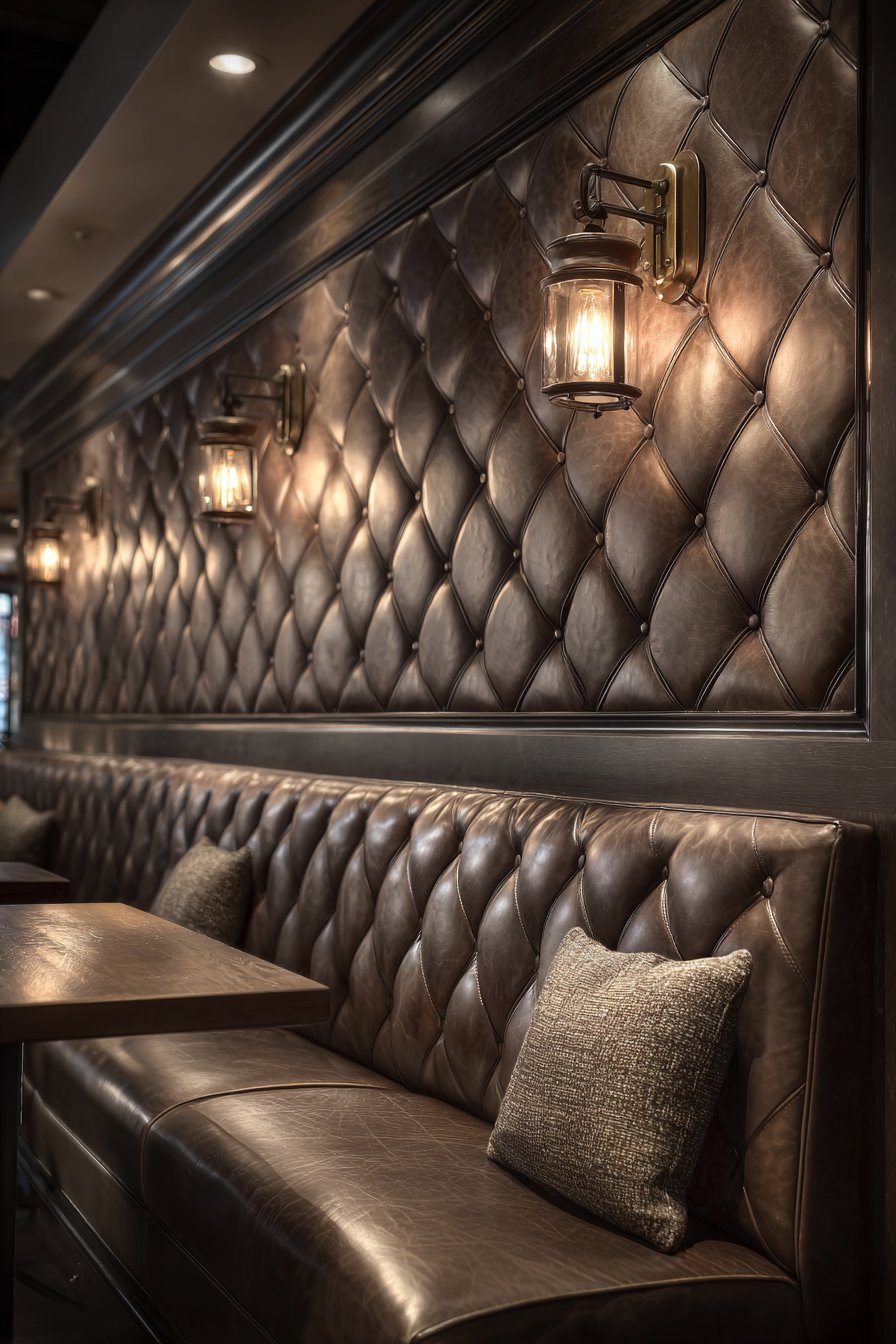
This wall treatment works particularly well in steakhouses, whiskey bars, hotel restaurants, and other establishments where traditional luxury signaling remains important to target demographics. The leather also offers practical advantages including ease of cleaning, exceptional durability when properly maintained, and the graceful aging that adds character rather than appearing worn or damaged. The acoustic benefits prove especially valuable in high-energy dining environments where conversation remains important despite ambient noise levels.
Key Design Tips:
- Specify commercial-grade leather with protective finishes suitable for high-traffic restaurant environments
- Install leather panels over sound-absorbing substrate to maximize acoustic benefits
- Establish professional cleaning and conditioning protocols to maintain leather’s appearance and prevent cracking
- Position leather walls away from direct sunlight or heat sources that may cause fading or damage
- Consider fire rating requirements and specify leather treatments meeting local commercial building codes
14. Geometric Acoustic Panel Installation
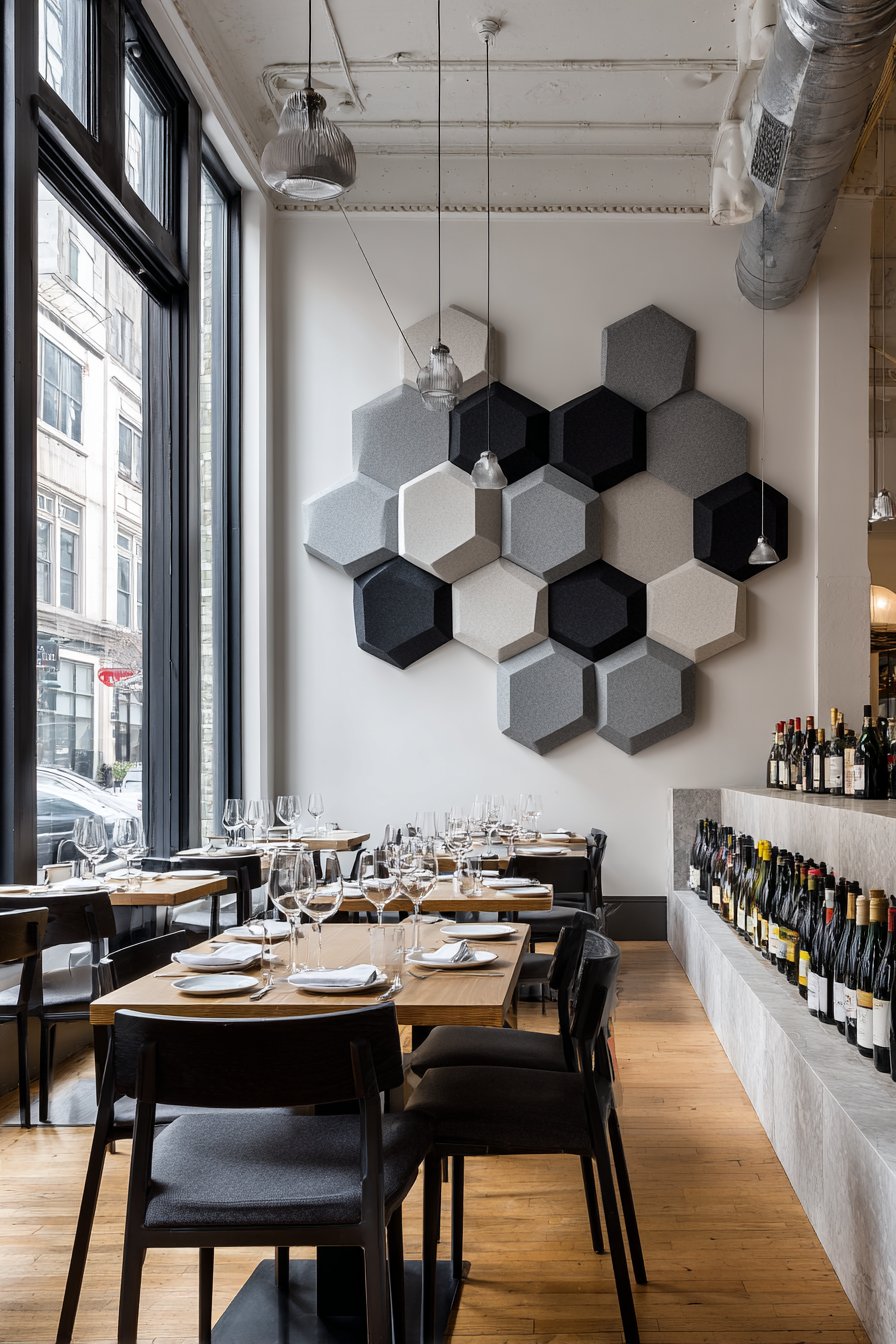
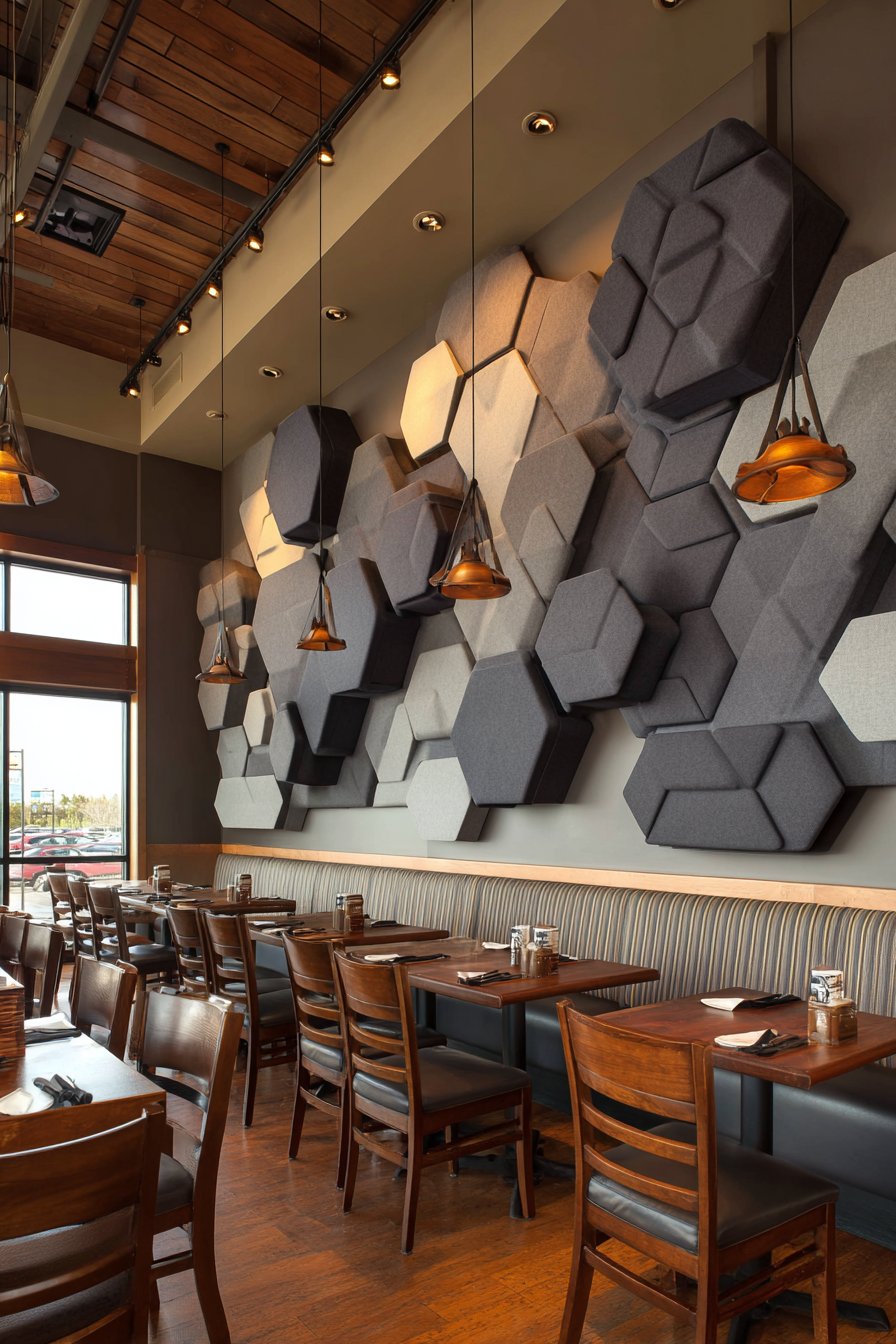
Modern acoustic panel installation using fabric-wrapped sound-absorbing panels in geometric hexagonal shapes demonstrates how functional requirements can inspire attractive design solutions. The ombre pattern arrangement from charcoal to light gray creates visual interest while the panels address practical acoustic challenges in busy dining rooms. The dimensional installation provides textural variety as individual hexagons project at slightly different depths, creating subtle shadow patterns that prevent the acoustic treatment from reading as flat or utilitarian.
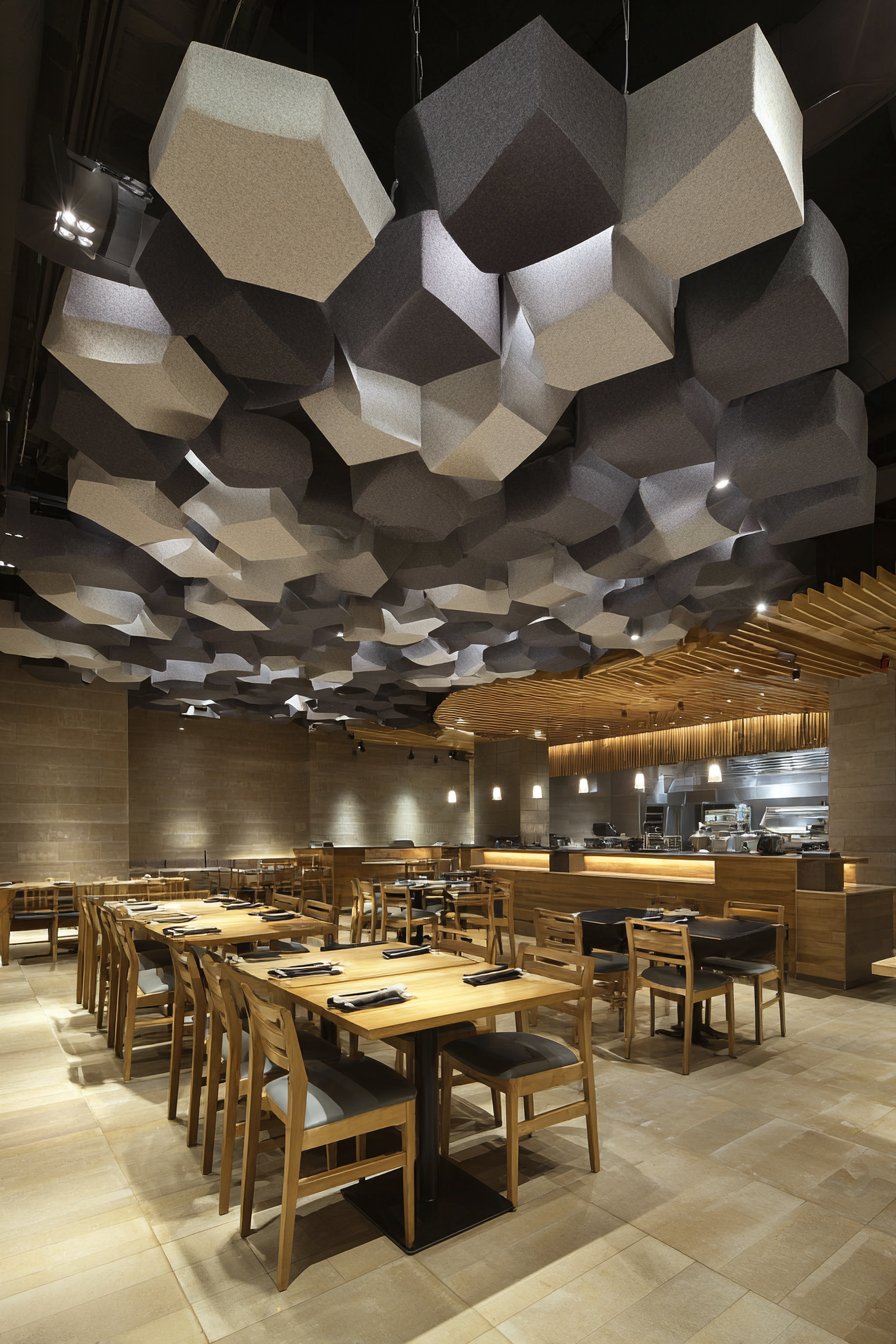
Minimal track lighting emphasizes the dimensional installation without overwhelming the subtle color gradation, while the neutral gray palette ensures the acoustic panels complement rather than compete with other design elements and food presentation. Wide-angle photography demonstrates how the restaurant wall design idea addresses practical concerns while maintaining contemporary aesthetic appeal, captured during active service showing the panels’ effectiveness in reducing noise levels and improving conversation quality.
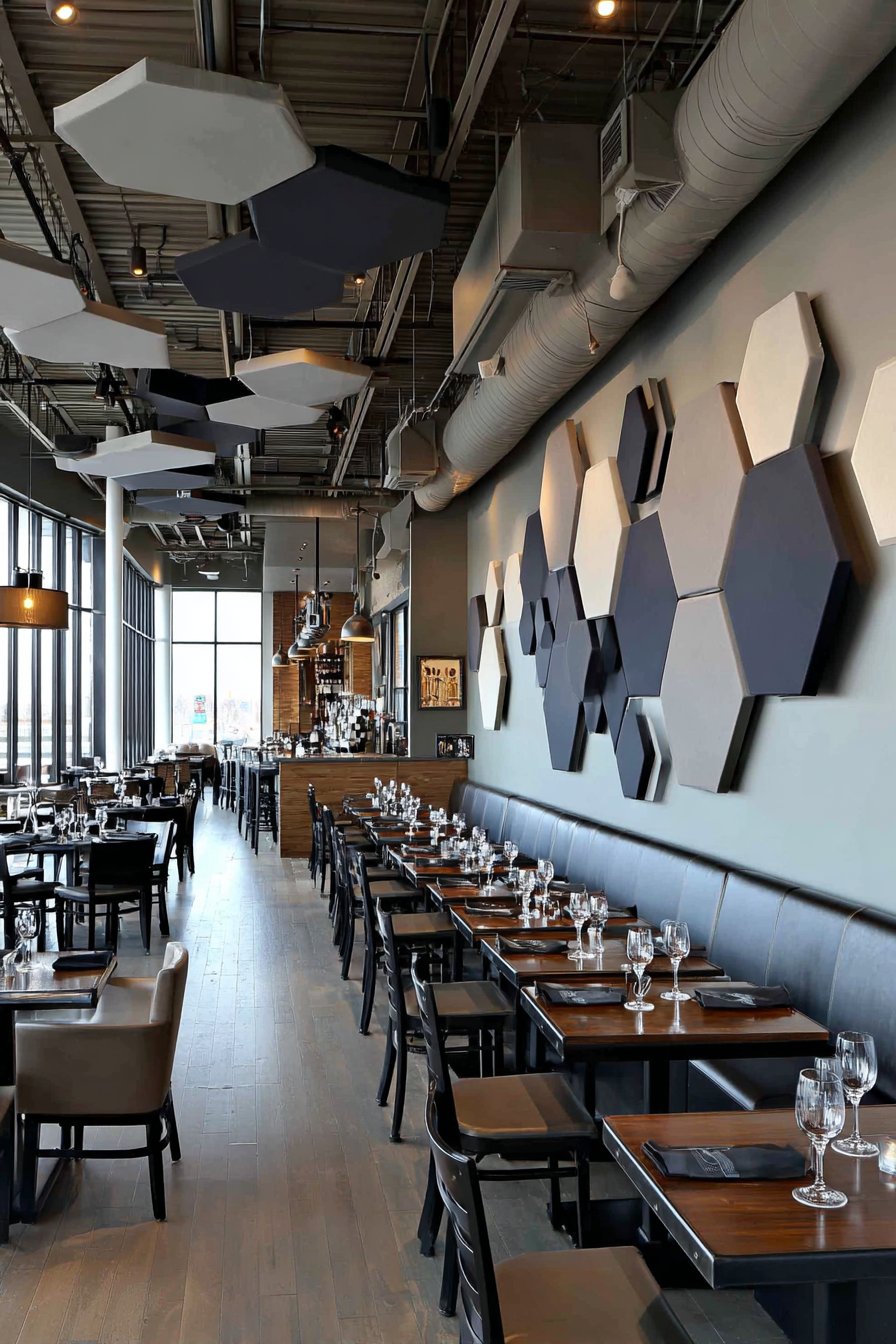
This approach proves particularly valuable in restaurants with hard surface floors, minimal soft furnishings, and architectural acoustics that create excessive noise during busy service periods. The hexagonal shape references natural patterns found in honeycombs, adding organic visual interest to geometric precision. The fabric-wrapped panels also offer opportunities for subtle branding through custom fabric colors or patterns that reinforce restaurant identity while solving functional problems.
Key Design Tips:
- Work with acoustic consultants to determine optimal panel coverage, placement, and absorption coefficients for specific space requirements
- Select commercial-grade fabrics with stain-resistant treatments suitable for restaurant environments
- Create layout templates ensuring even distribution across wall surfaces for balanced acoustic performance
- Install panels with adequate air gap behind them to maximize low-frequency absorption
- Consider coordinating panel colors with seasonal decor updates while maintaining acoustic performance
15. Custom Neon Sign Installation
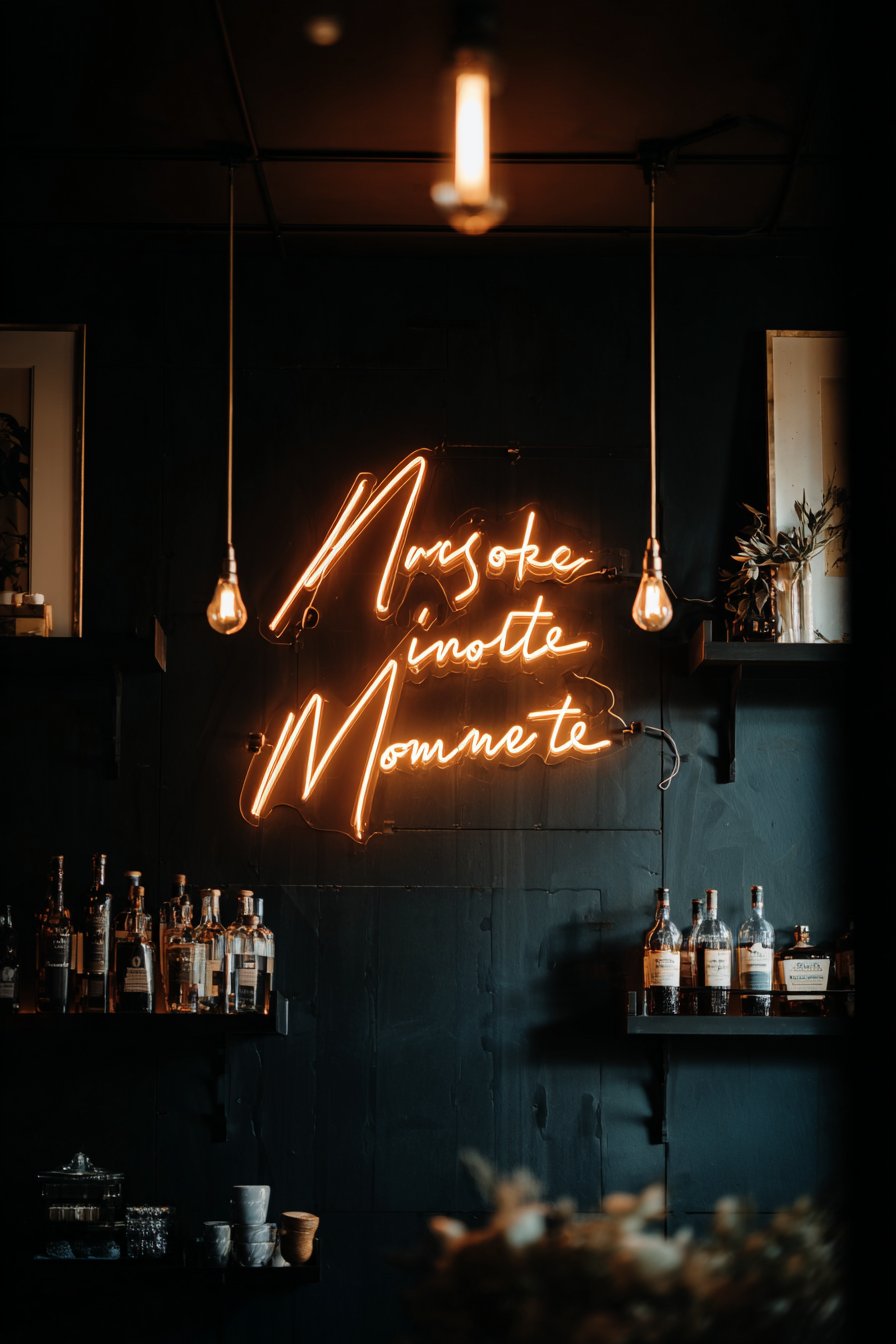
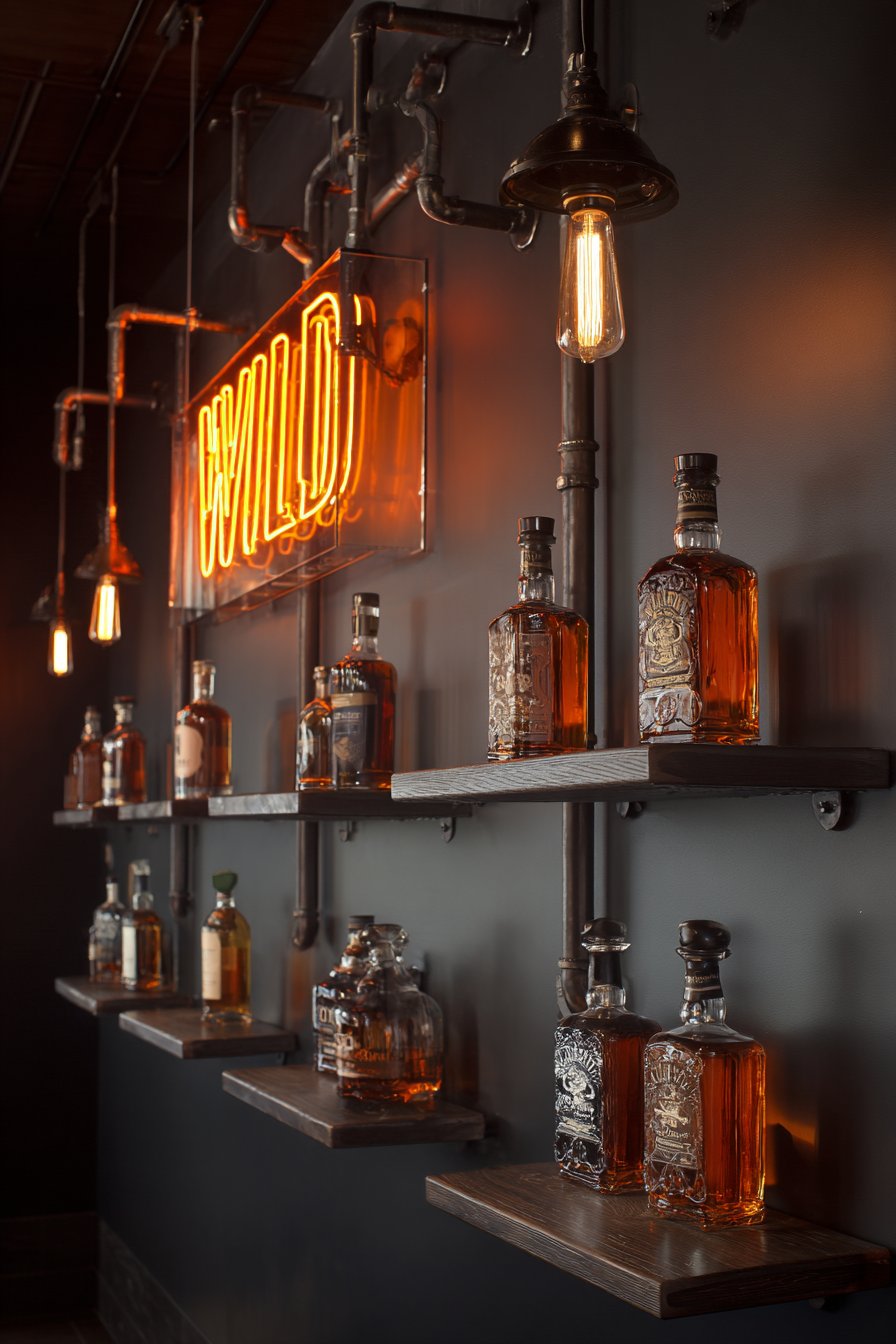
A custom neon sign installation spelling out inspirational quotes or restaurant mottos in warm amber-toned neon tubing creates glowing focal points that serve both branding and atmospheric purposes. The neon mounted against dark matte charcoal painted walls creates maximum visual contrast and impact, with the warm glow radiating outward to softly illuminate surrounding areas. Floating shelves displaying liquor bottles strategically positioned to catch and reflect the neon glow multiply the lighting effect while creating opportunities for premium spirit merchandising.

The vintage-industrial aesthetic incorporating exposed conduit and Edison bulb fixtures extends the neon’s retro-modern appeal while adding authentic industrial detailing. Professional interior photography captures the moody ambiance created by the restaurant wall design idea, showing how neon creates magnetic focal points and Instagram-worthy backdrops that guests naturally gravitate toward for photography. The warm amber tones prove particularly flattering for food photography and guest selfies, indirectly enhancing social media marketing through better looking casual content.

Custom neon allows restaurants to communicate brand personality, values, or signature phrases that become associated with the establishment. The signs become landmarks within the dining room that facilitate wayfinding (“meet me at the neon”) and create sub-zones within larger spaces. The warm glow also contributes to overall ambient lighting during evening service, reducing reliance on overhead fixtures and creating more intimate, layered lighting schemes.
Key Design Tips:
- Work with experienced neon fabricators who understand commercial installation requirements and safety codes
- Specify LED neon alternatives for lower energy consumption, cooler operation, and reduced maintenance compared to traditional gas-filled tubes
- Design neon placement considering viewing angles from various seating positions and entrance sight lines
- Install neon on dimmer circuits allowing brightness adjustment for different service periods and ambient light conditions
- Plan electrical infrastructure during construction or renovation rather than attempting to retrofit complex neon installations
16. Stacked Stone Veneer Feature Wall
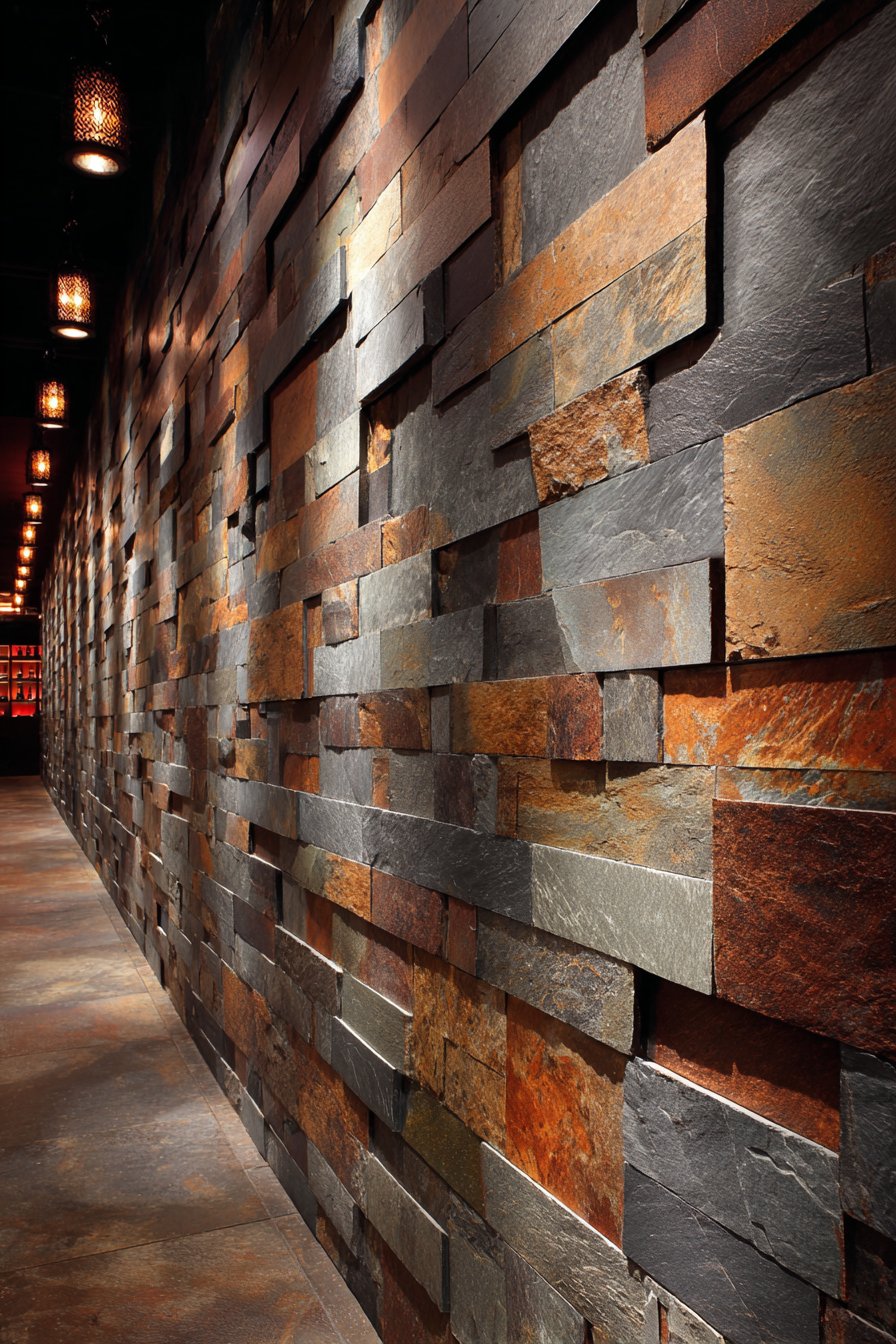
Natural stone veneer installation using stacked slate in varied earth tones creates dramatic textural feature walls that bring organic materiality and substantial physical presence to restaurant interiors. The irregular stone surfaces catch light from overhead spotlights, emphasizing depth through shadow and highlighting natural color variations ranging from cool grays to warm rust tones. Linear fireplace inserts integrated into stone walls add functional heating while creating mesmerizing focal points that draw guests’ attention and encourage lingering.
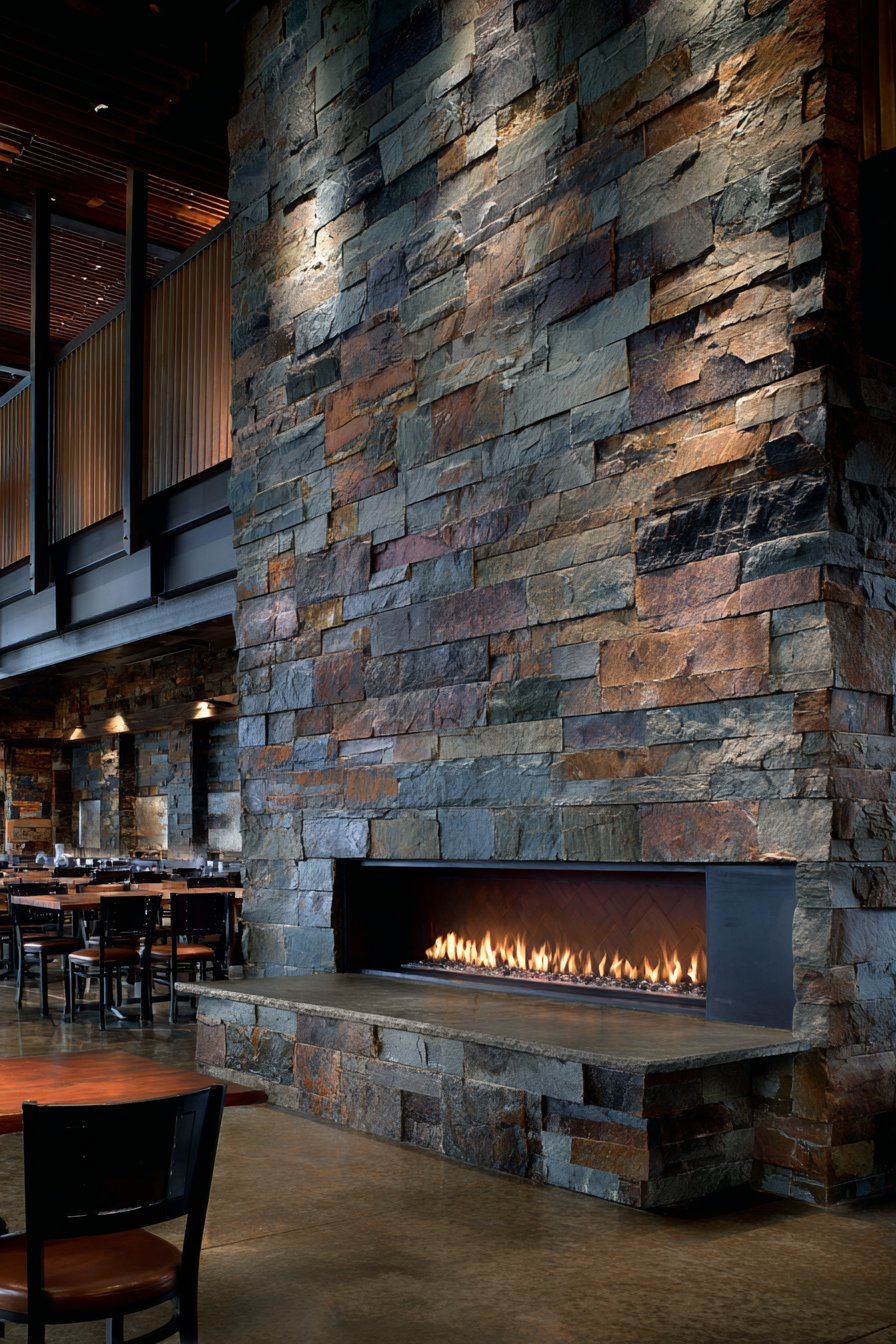
Interior photography shows the restaurant’s mountain lodge-inspired aesthetic with the restaurant wall design idea anchoring cozy dining spaces through material authenticity and natural beauty. Lighting positioned to graze across stone surfaces at oblique angles maximizes textural drama and creates constantly changing shadow patterns as guests move through the space. The stone’s inherent durability and timeless appeal ensure the installation maintains visual impact for decades without appearing dated or requiring significant maintenance.
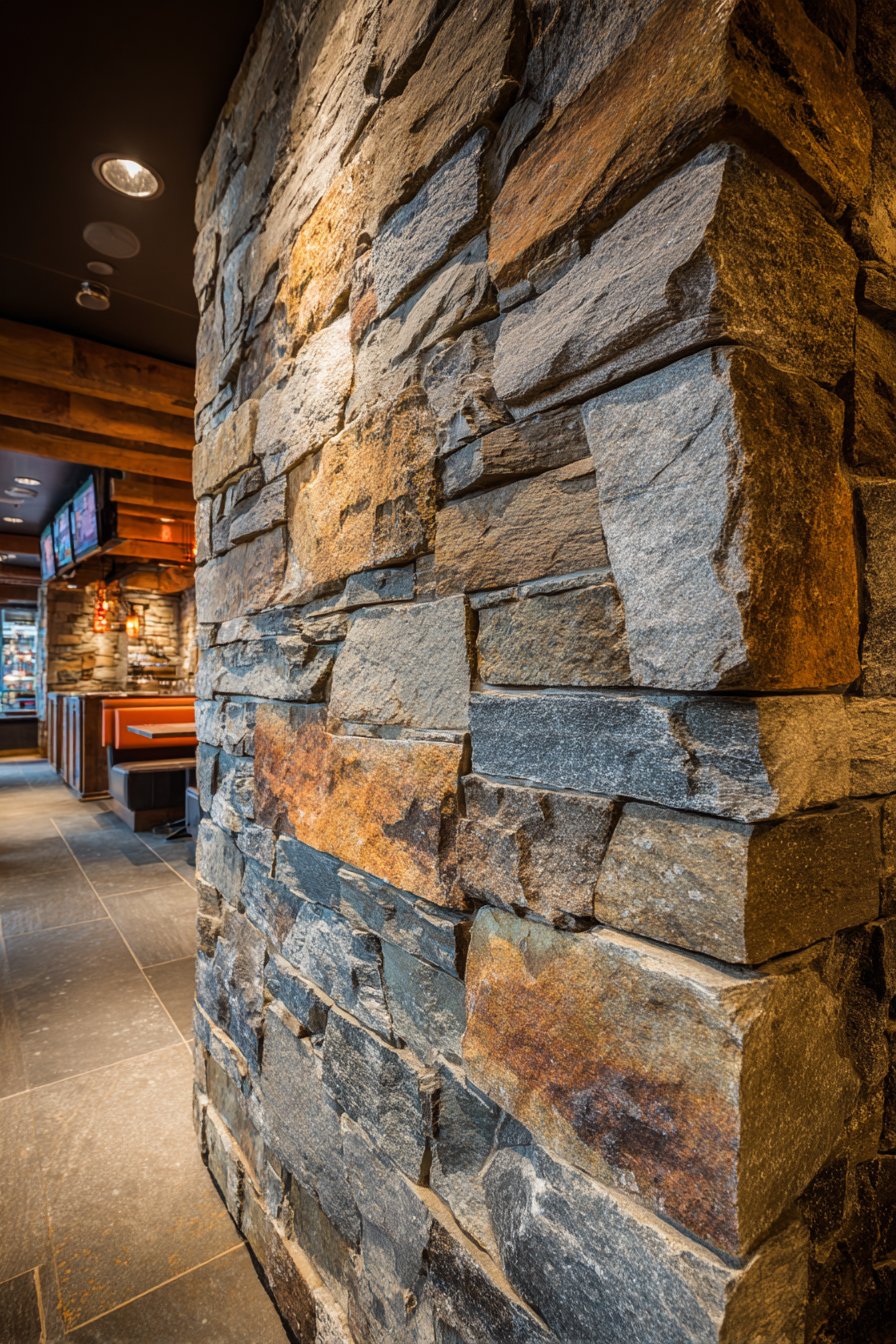
This wall treatment works exceptionally well in establishments featuring rustic cuisine, hearth-cooked dishes, or mountain/wilderness themes where natural materials reinforce conceptual narratives. The stone also provides excellent acoustic properties, absorbing sound rather than reflecting it, contributing to comfortable noise levels during busy service. The installation’s substantial weight requires proper structural support, making it most practical to plan during initial construction or major renovation rather than as cosmetic updates to existing spaces.
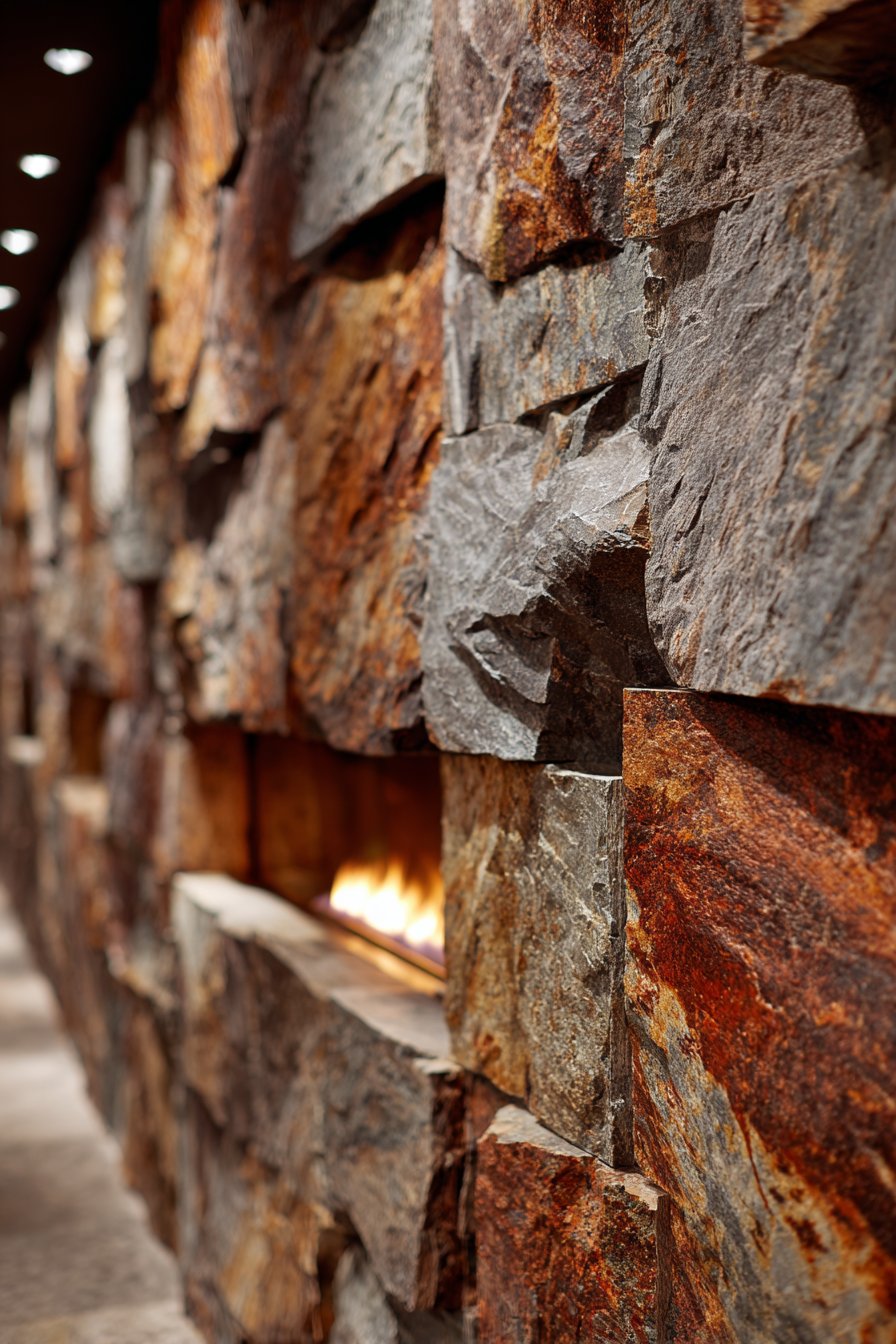
Key Design Tips:
- Specify stone veneer rather than full-thickness stone to reduce weight and installation complexity while maintaining authentic appearance
- Select stone colors and textures that complement rather than match other materials in the space
- Install stone walls with proper moisture barriers and weep systems if near kitchen areas or exterior walls
- Design fireplace integration with certified professionals ensuring proper venting, clearances, and code compliance
- Consider maintenance requirements including occasional sealing and cleaning protocols appropriate for specific stone types
17. Symmetrical Botanical Print Gallery
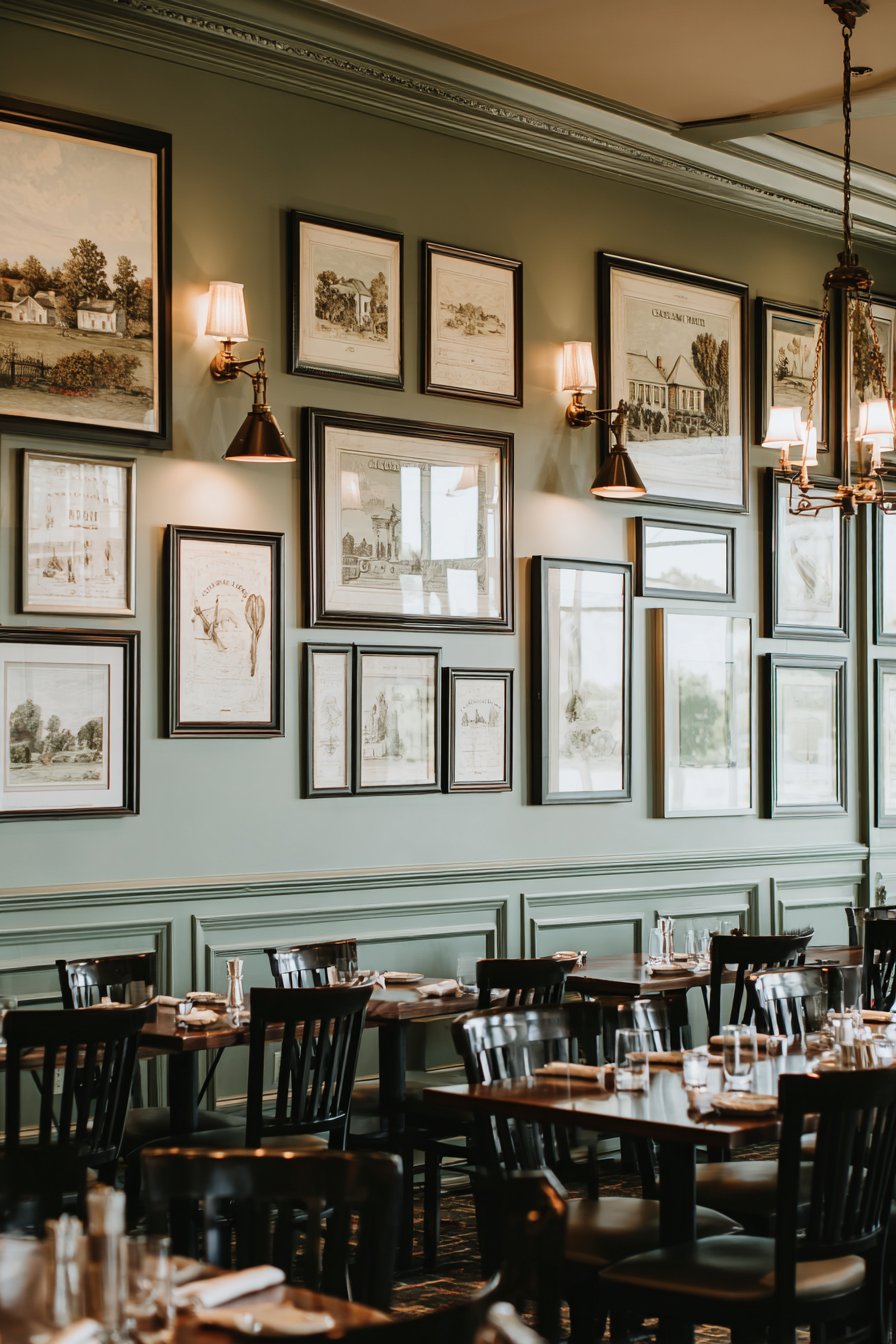
A gallery of framed vintage botanical prints arranged in symmetrical rows with consistent spacing and matching dark wood frames creates refined traditional atmosphere suited to formal dining establishments. The classic arrangement covering walls above sage green wainscoting establishes clear visual hierarchy while adding historical depth and cultural sophistication. Brass picture lights illuminate each print individually, creating gallery-like presentation that elevates the overall dining experience and signals attention to detail.
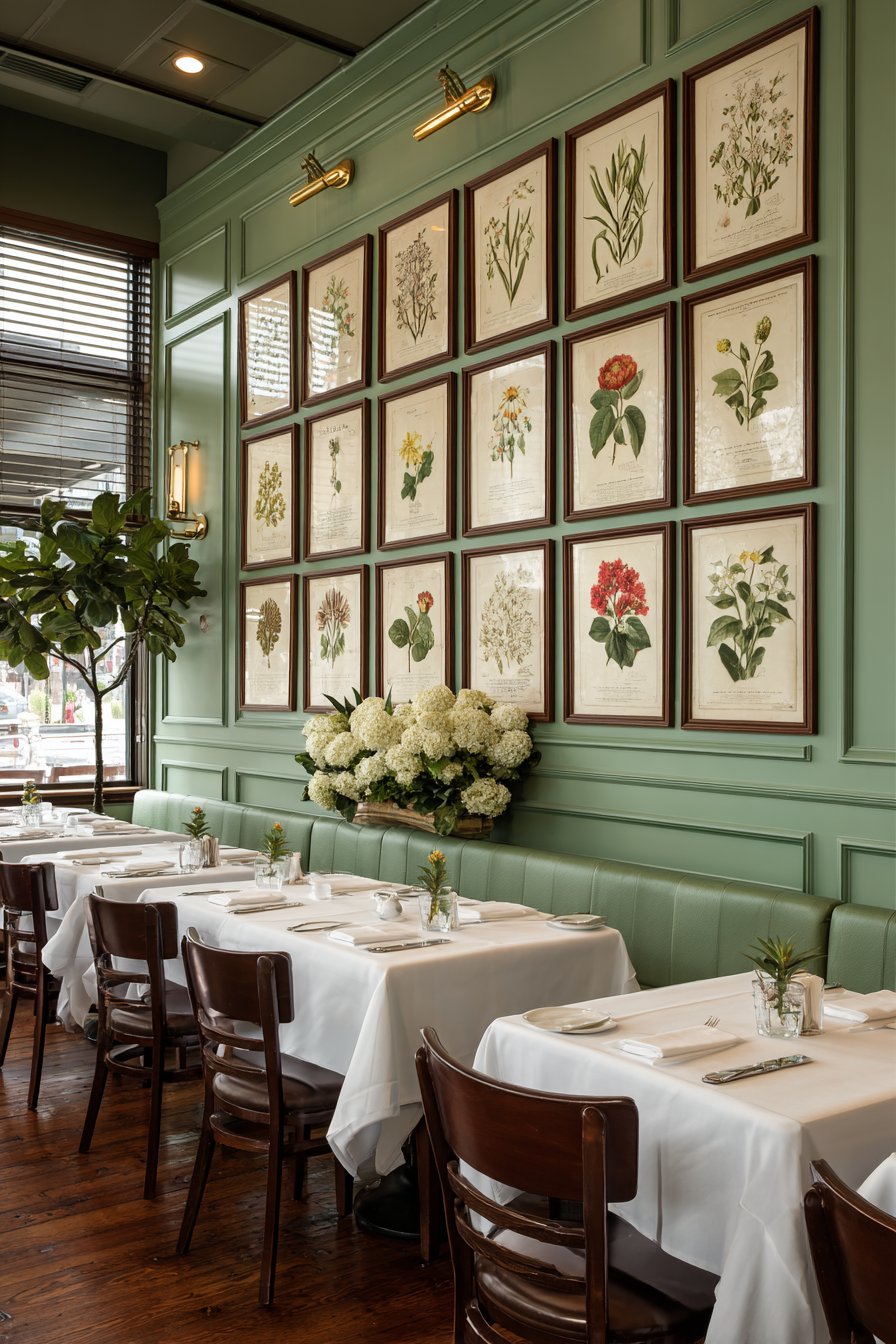
Wide-angle interior design photography captures the formal dining room setting where the restaurant wall design idea contributes to elegant, timeless atmosphere. The botanical subject matter provides natural world connection without the maintenance requirements of living plants, while the vintage aesthetic suggests tradition, craftsmanship, and respect for historical beauty. The symmetrical arrangement communicates order and refinement, appealing to guests who appreciate classical design principles and formal dining traditions.
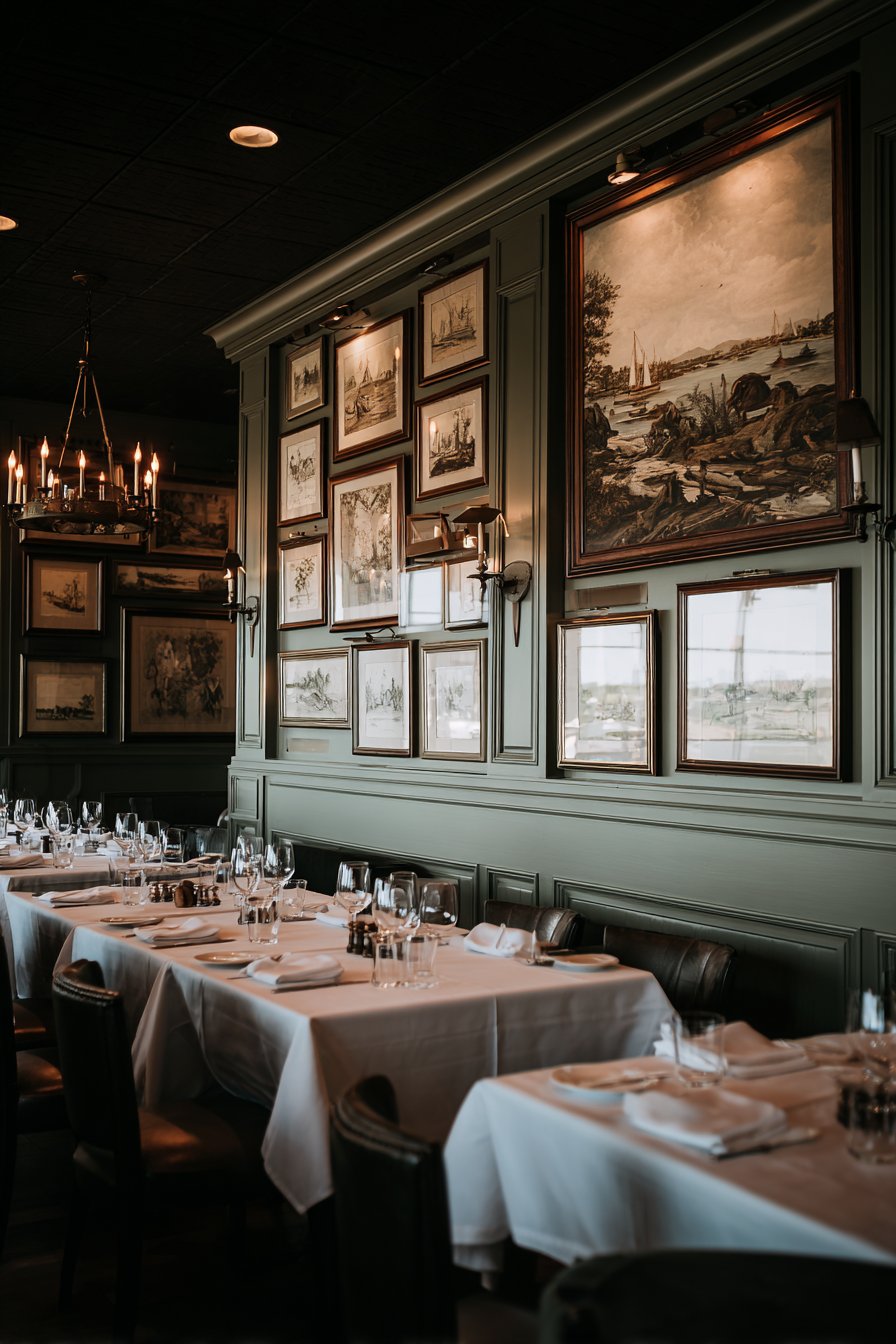
This approach works particularly well in country club restaurants, hotel dining rooms, afternoon tea services, and other establishments where traditional luxury and formality remain valued. The framed botanical prints also facilitate seasonal rotation, as different plant species can be featured to align with menu changes or holidays. The investment in quality framing and professional prints maintains value over time, with the collection potentially appreciating if authentic antique prints are selected.
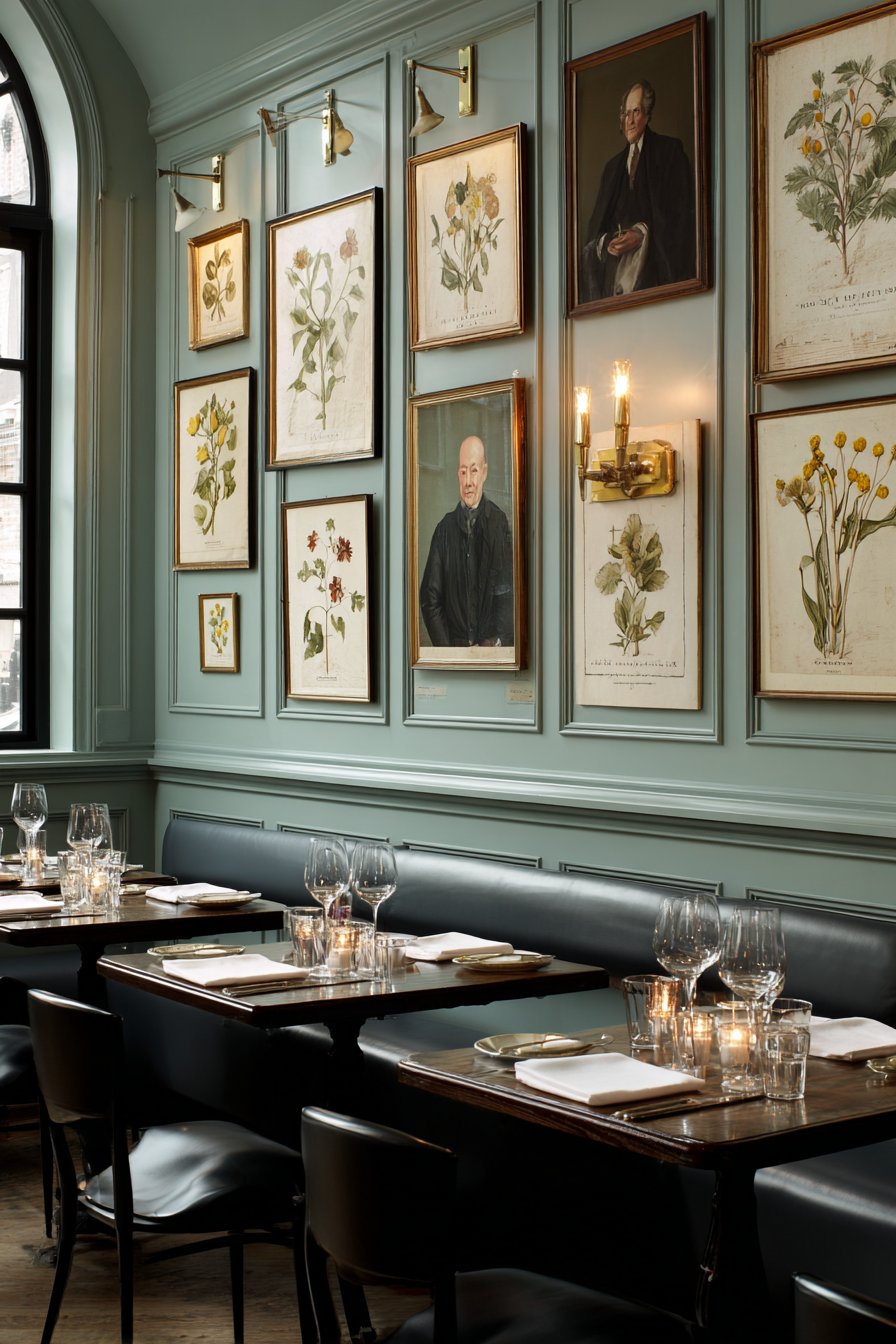
Key Design Tips:
- Source high-quality reproductions of historical botanical illustrations from reputable print dealers or museums
- Maintain strict symmetry in arrangement using measuring tools and level to ensure professional appearance
- Select frames with conservation-grade materials including acid-free matting and UV-protective glass to prevent print deterioration
- Position picture lights to illuminate prints without creating glare or hot spots
- Create documentation of each botanical print including species names and historical context that staff can share with interested guests
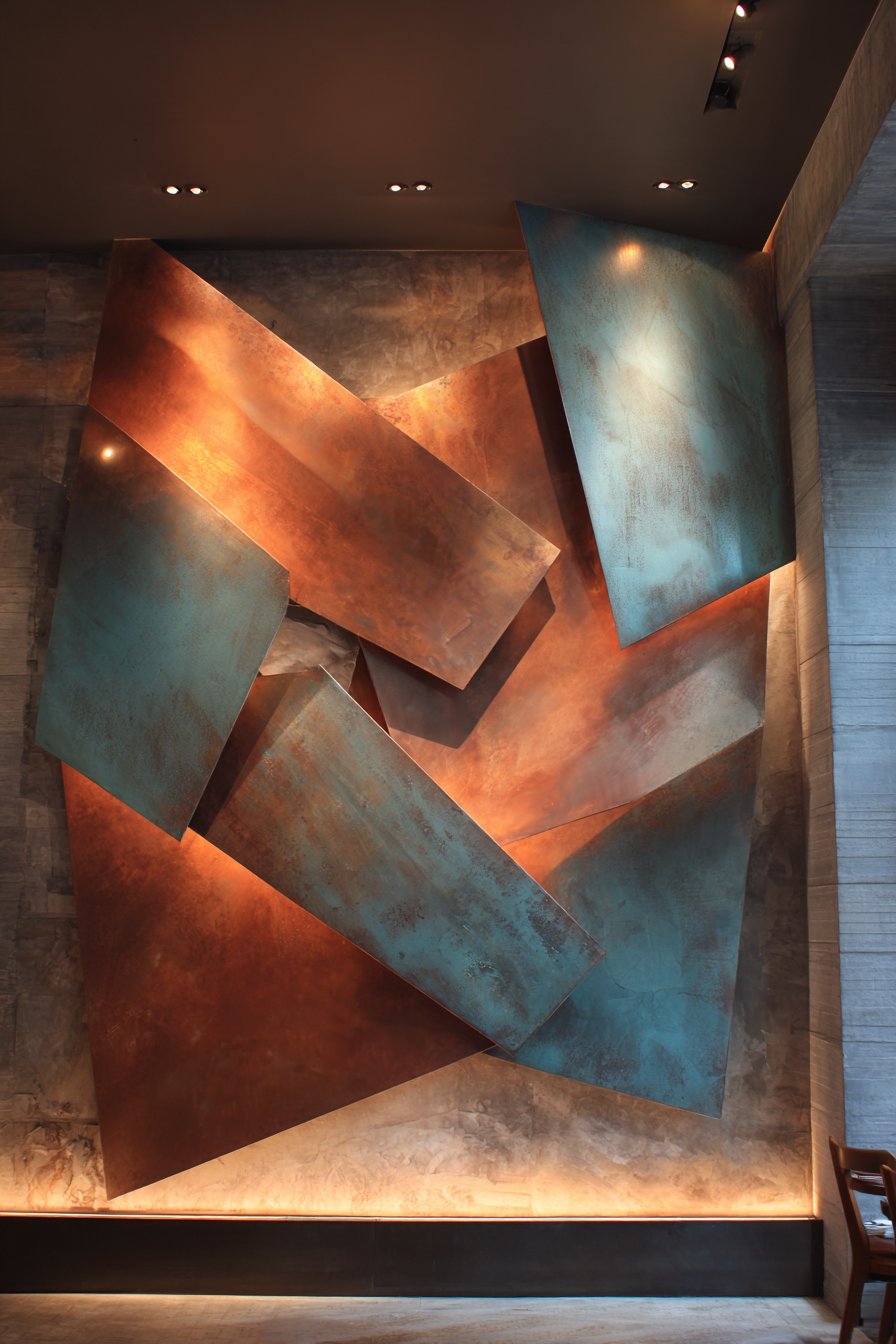
18. Abstract Metal Sculpture Installation
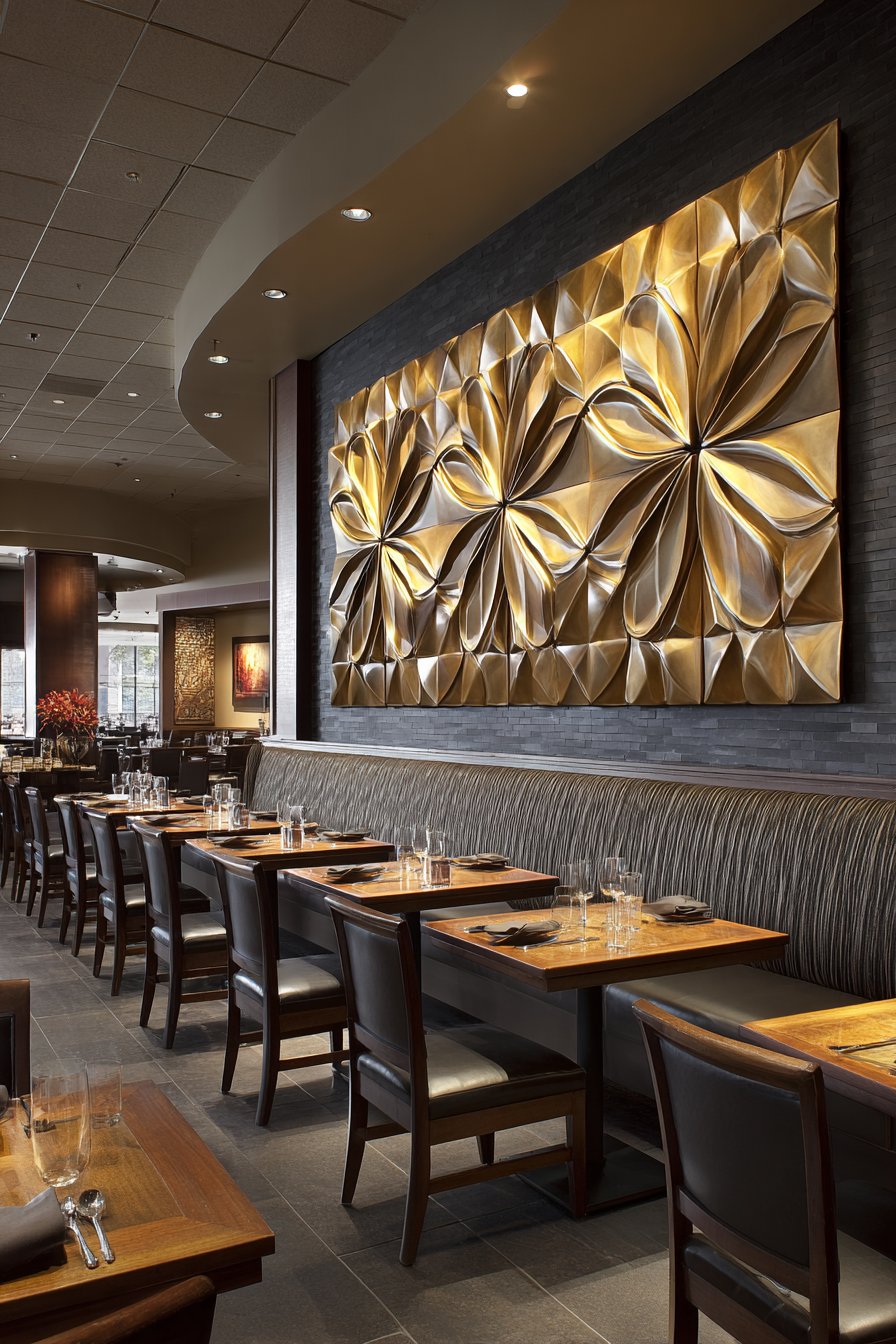
Contemporary metal wall sculpture installation featuring abstract geometric forms in oxidized copper and brushed steel brings museum-quality art into dining environments, elevating restaurants to cultural destinations rather than merely functional eating establishments. The large-scale three-dimensional artwork creates dramatic shadows and reflects ambient lighting throughout the day, with its appearance constantly evolving based on viewing angle and lighting conditions. Minimalist recessed lighting highlights the sculpture’s dimensional qualities without creating harsh glare or competing with the artwork’s inherent visual interest.
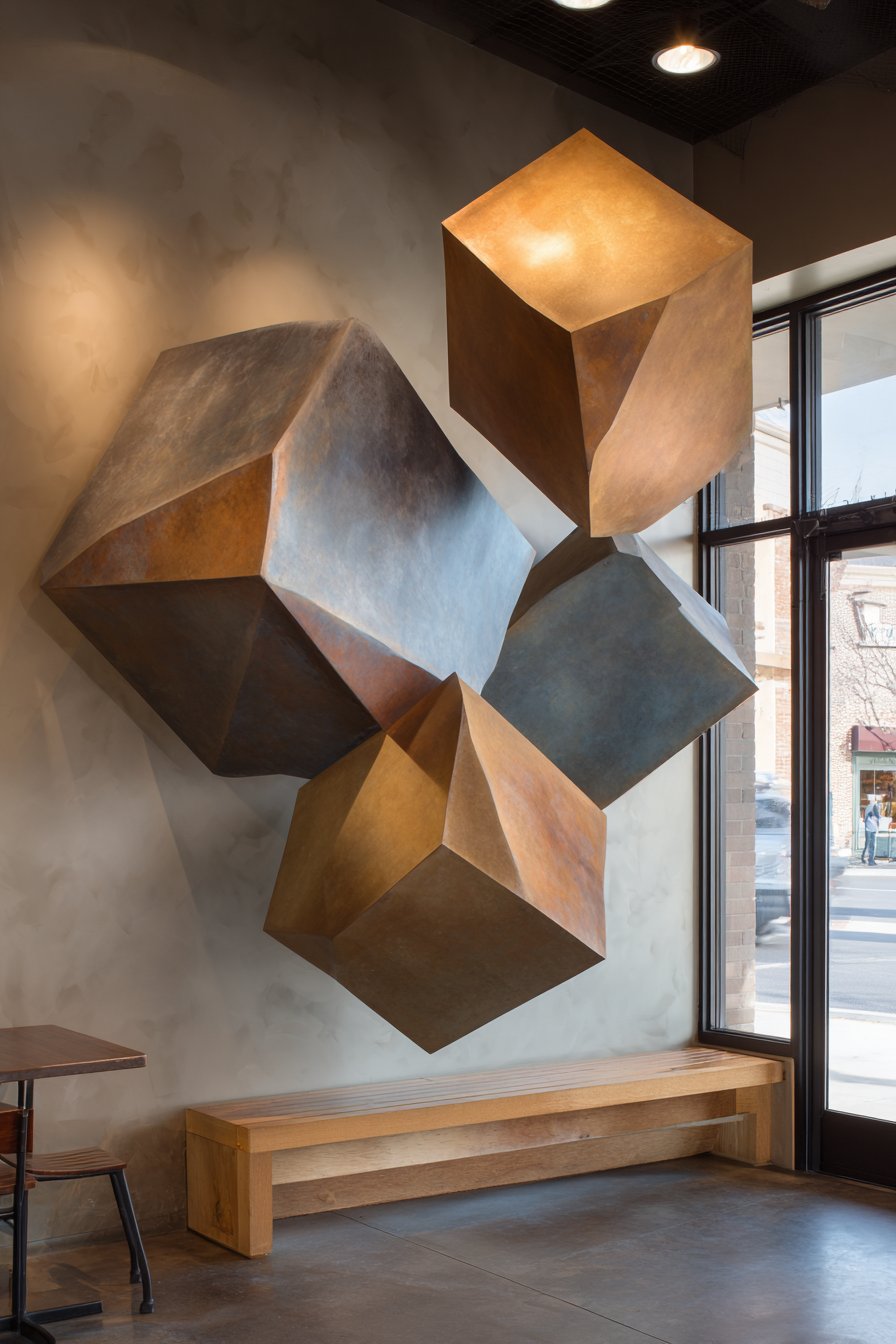
Professional photography demonstrates how the restaurant wall design idea serves as sophisticated focal point art, captured from multiple angles showing the sculpture’s changing appearance under different lighting conditions. The abstract geometric forms provide visual interest without narrative content, allowing diners to project their own interpretations while avoiding potentially controversial figurative or political imagery. The combination of oxidized copper’s warm tones and brushed steel’s cool industrial character creates balanced contrast that works with diverse interior color schemes.
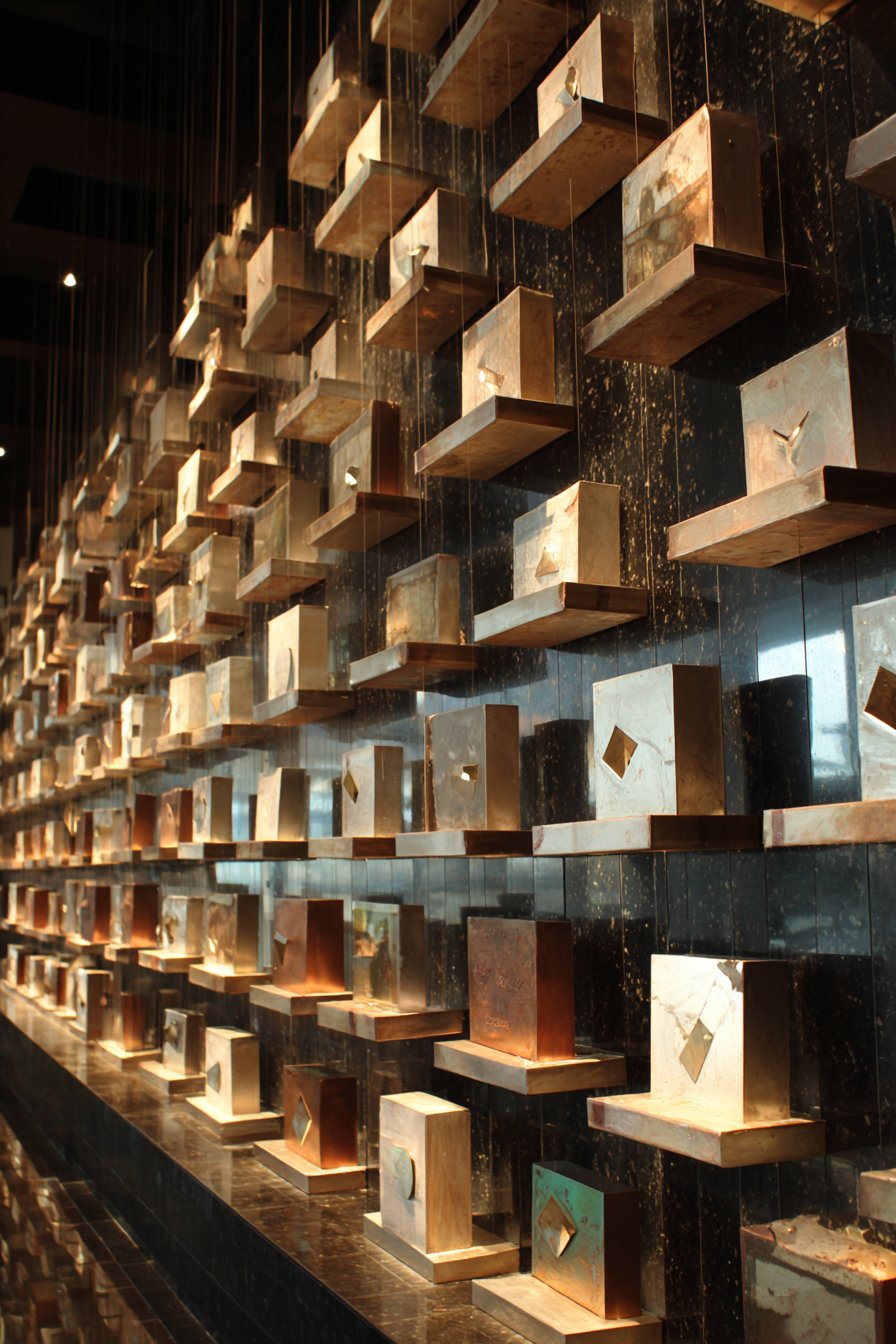
This wall treatment works particularly well in upscale contemporary restaurants where artistic credibility supports premium positioning and justifies higher price points. The sculpture becomes a signature element that distinguishes the restaurant from competitors and provides a memorable visual anchor in guests’ memories. Commission relationships with recognized sculptors can also generate publicity through artist receptions, media coverage, and cultural community connections that extend marketing reach beyond traditional restaurant promotion.
Key Design Tips:
- Commission sculptures from recognized artists with proven installation experience and structural engineering knowledge
- Specify appropriate mounting systems rated for sculpture weight and ensuring secure attachment to structural building elements
- Position sculptures considering viewing angles from entrance areas, waiting areas, and primary seating zones
- Coordinate sculpture lighting with artwork early in design process to ensure proper highlighting and shadow effects
- Establish cleaning and maintenance protocols appropriate for specific metal finishes and patinas
19. Industrial Pipe Shelving Display
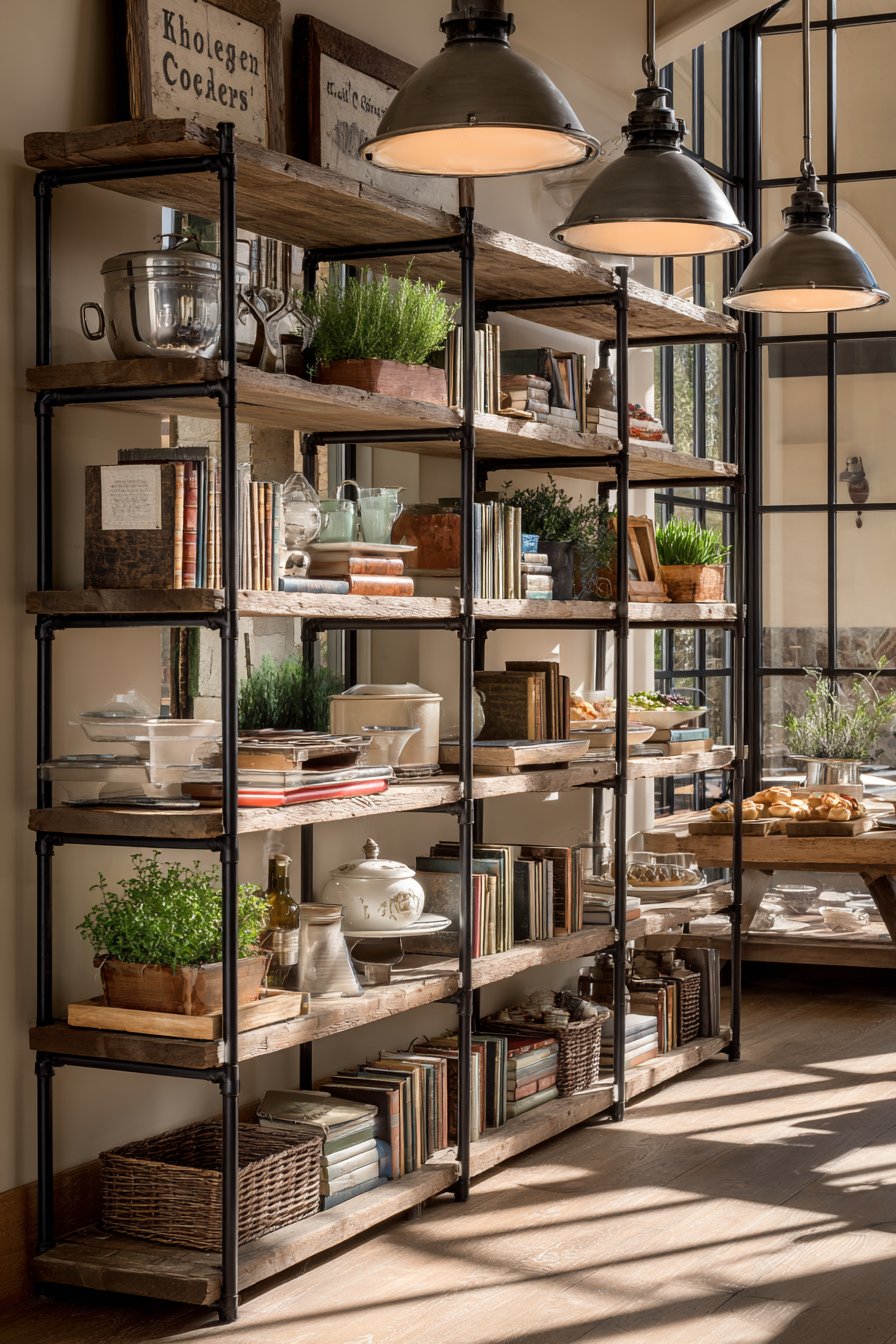
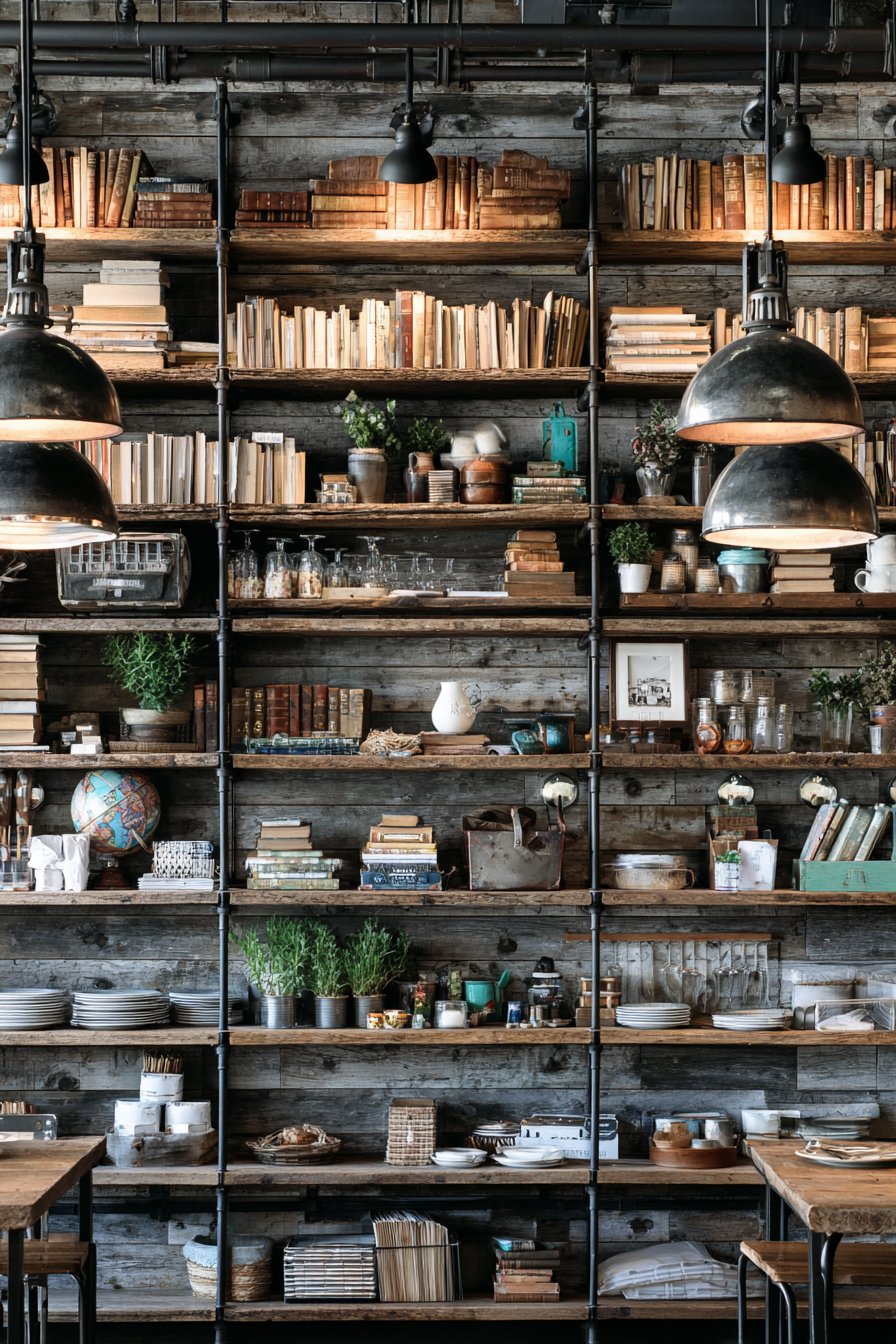
A full wall of open shelving constructed from reclaimed scaffolding planks and black iron pipe fittings creates functional storage while delivering authentic industrial-farmhouse aesthetic. The eclectic display of vintage cookbooks, ceramic dishware, and potted herbs communicates values of craftsmanship, culinary tradition, and ingredient freshness that resonate with contemporary farm-to-table dining movements. Industrial pendant lights with metal shades illuminate the shelving while reinforcing the utilitarian-chic design vocabulary established by the pipe and plank construction.
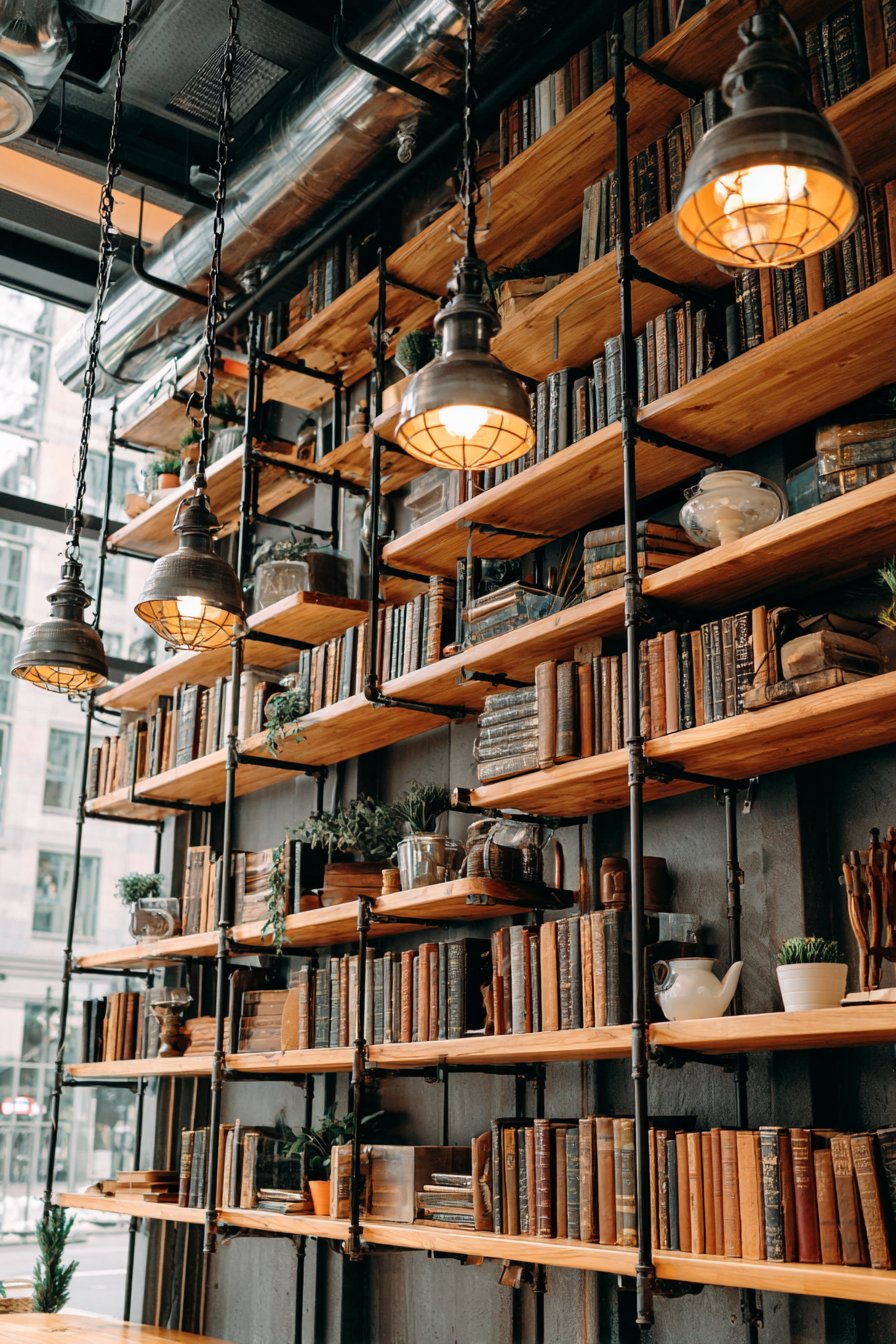
Interior design photography shows the casual yet curated restaurant wall design idea creating depth and personality through thoughtful object arrangement and material authenticity. The open shelving provides opportunities for seasonal rotation and thematic displays that keep the wall treatment fresh across multiple visits. Potted herbs visible on shelving subtly communicate ingredient quality and freshness while adding living elements that soften industrial materials’ inherent hardness.
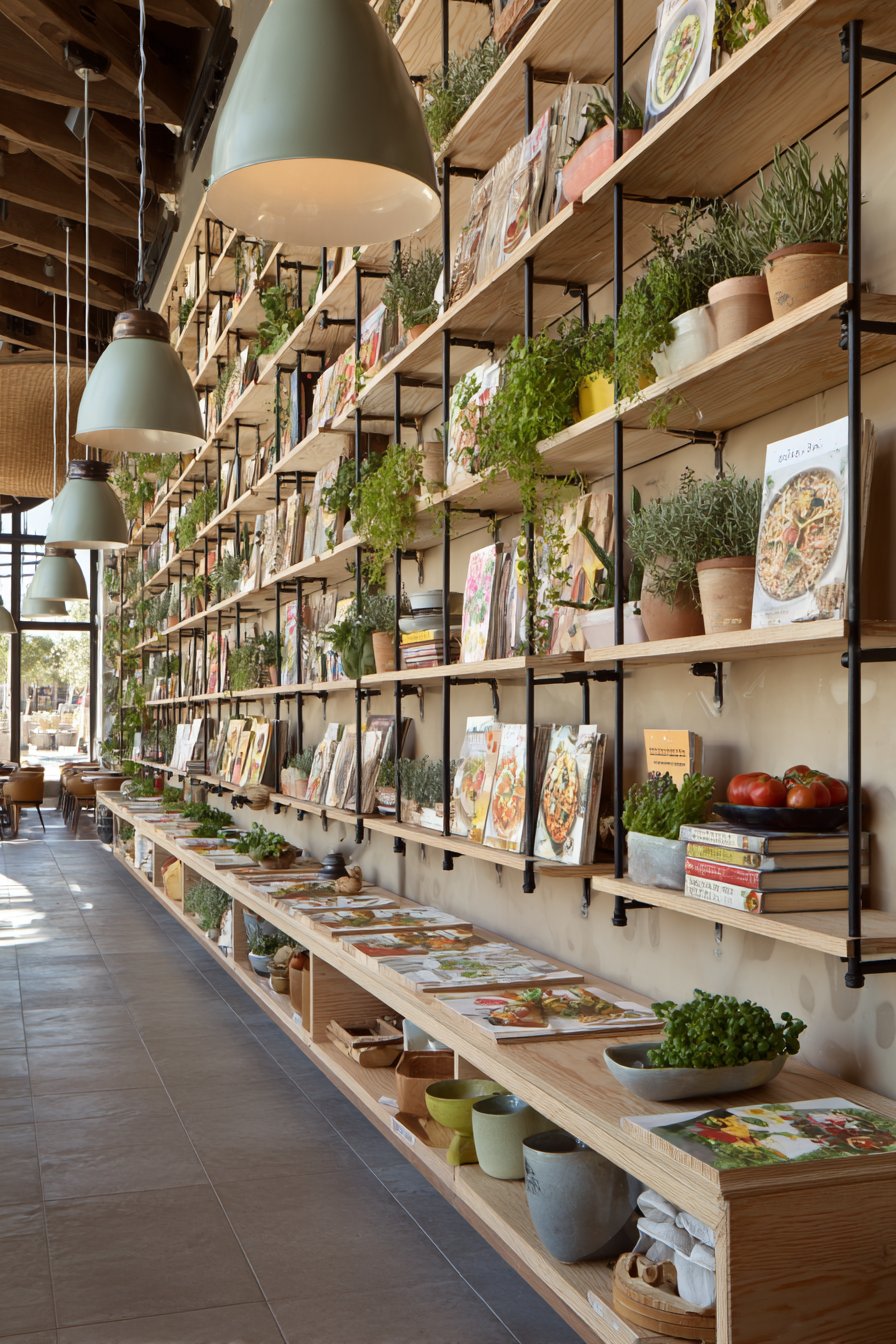
This approach works exceptionally well in farm-to-table restaurants, gastropubs, artisanal pizza restaurants, and other establishments where authenticity and transparency are brand values. The shelving serves practical functions including cookbook reference for staff, dishware storage that doubles as display, and herb cultivation that may actually supply kitchen needs. The DIY-inspired aesthetic also creates approachable, unpretentious atmosphere that helps guests feel comfortable and welcome.
Key Design Tips:
- Use actual iron pipe fittings rather than decorative alternatives for authentic weight, patina, and structural integrity
- Source reclaimed planks with interesting history and patina, ensuring proper cleaning and treatment before installation
- Arrange objects with intentional casual curation—not so perfect it appears untouchable, not so haphazard it appears messy
- Incorporate subtle backlighting behind shelving to highlight objects and create dimensional depth
- Establish rotation schedules for displayed objects maintaining fresh appearance while avoiding constant complete overhauls
20. Textured Linen Fabric Wall Covering
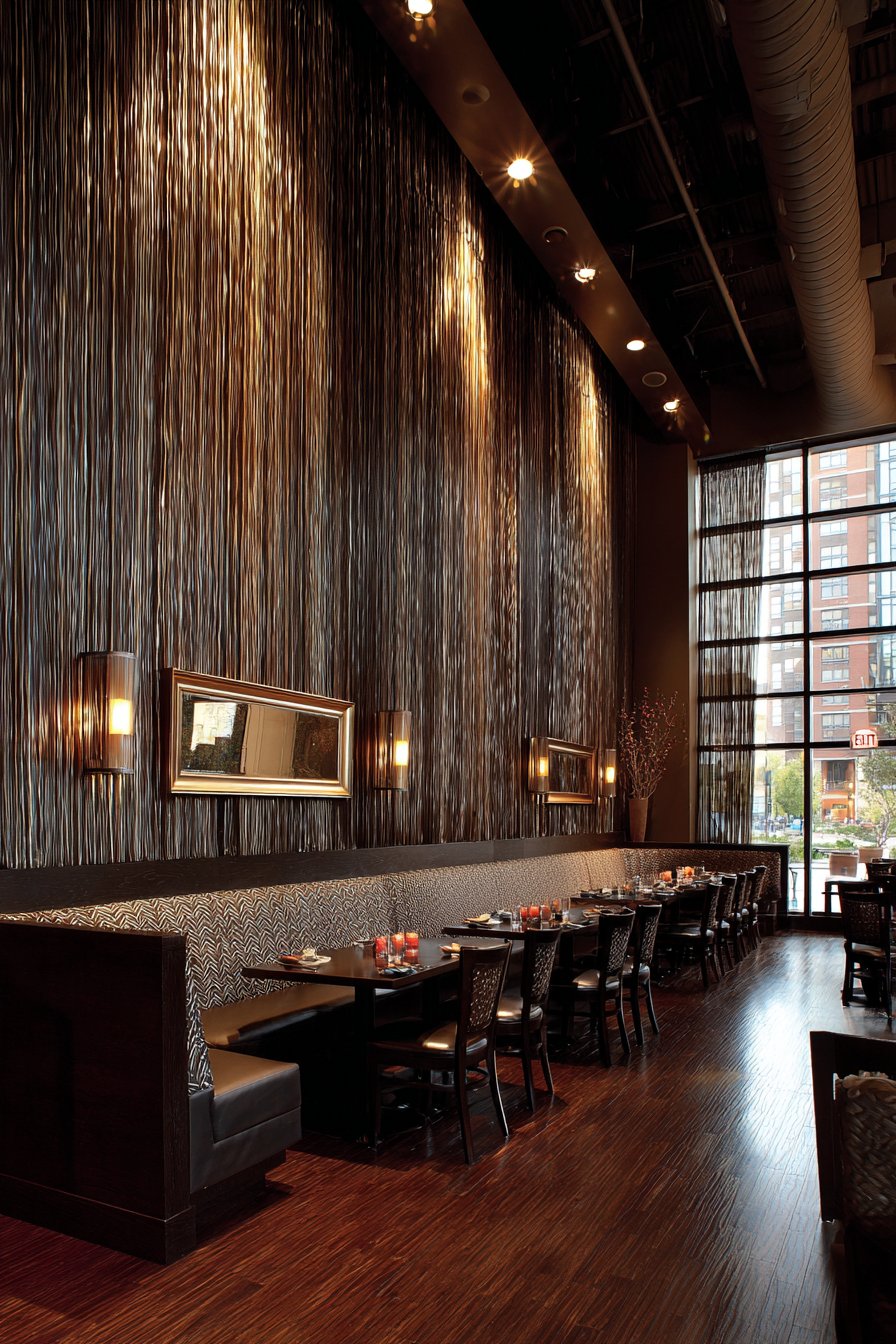
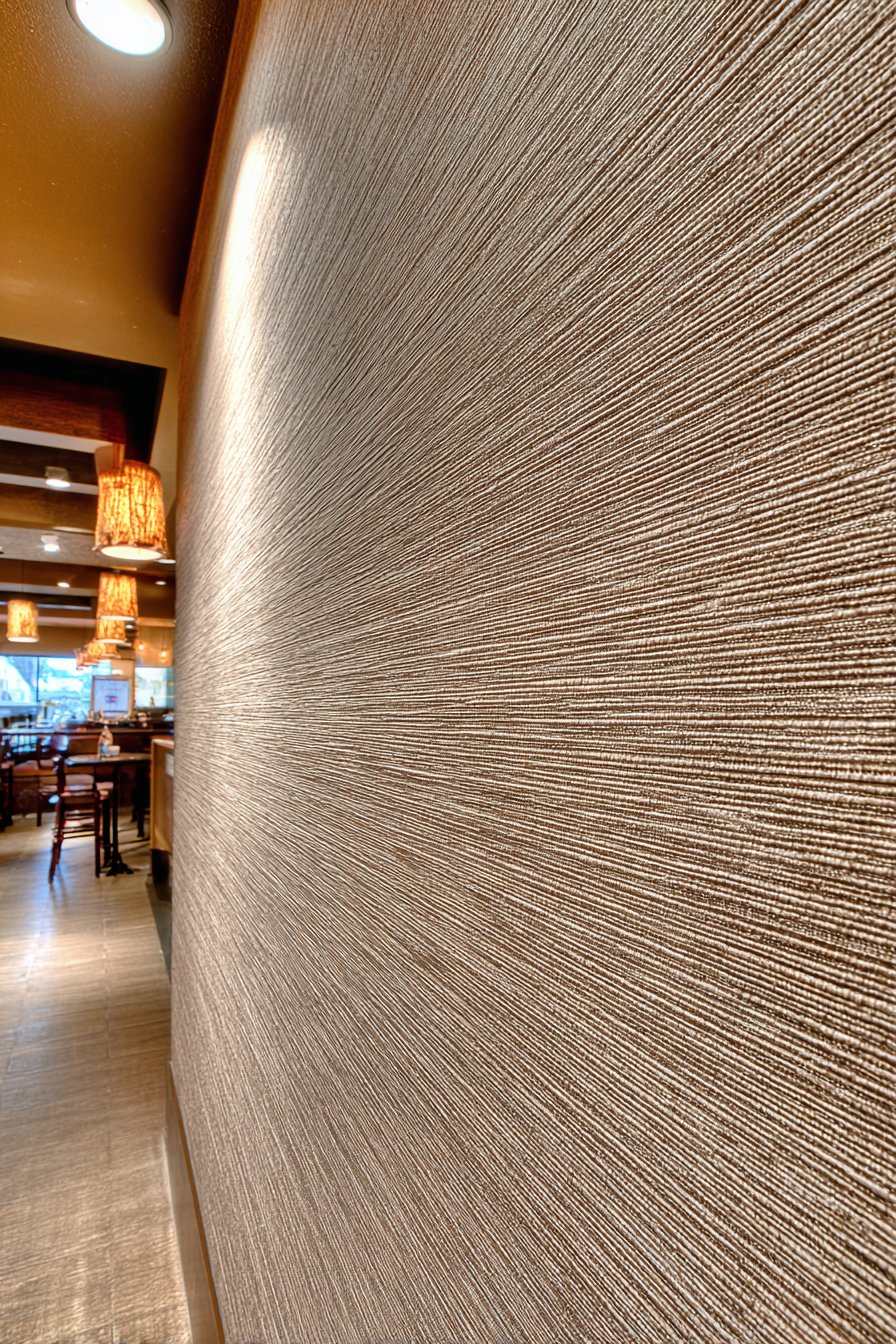
Sophisticated fabric wall covering in textured linen weave with subtle vertical ribbing brings tactile luxury and acoustic benefits to dining rooms. The floor-to-ceiling fabric installation in warm taupe tones provides sound absorption that significantly improves conversation quality in busy restaurants while adding visual warmth through material softness. Gold-framed mirrors and contemporary sconces punctuate the fabric wall, creating focal points and visual interest without overwhelming the refined backdrop.
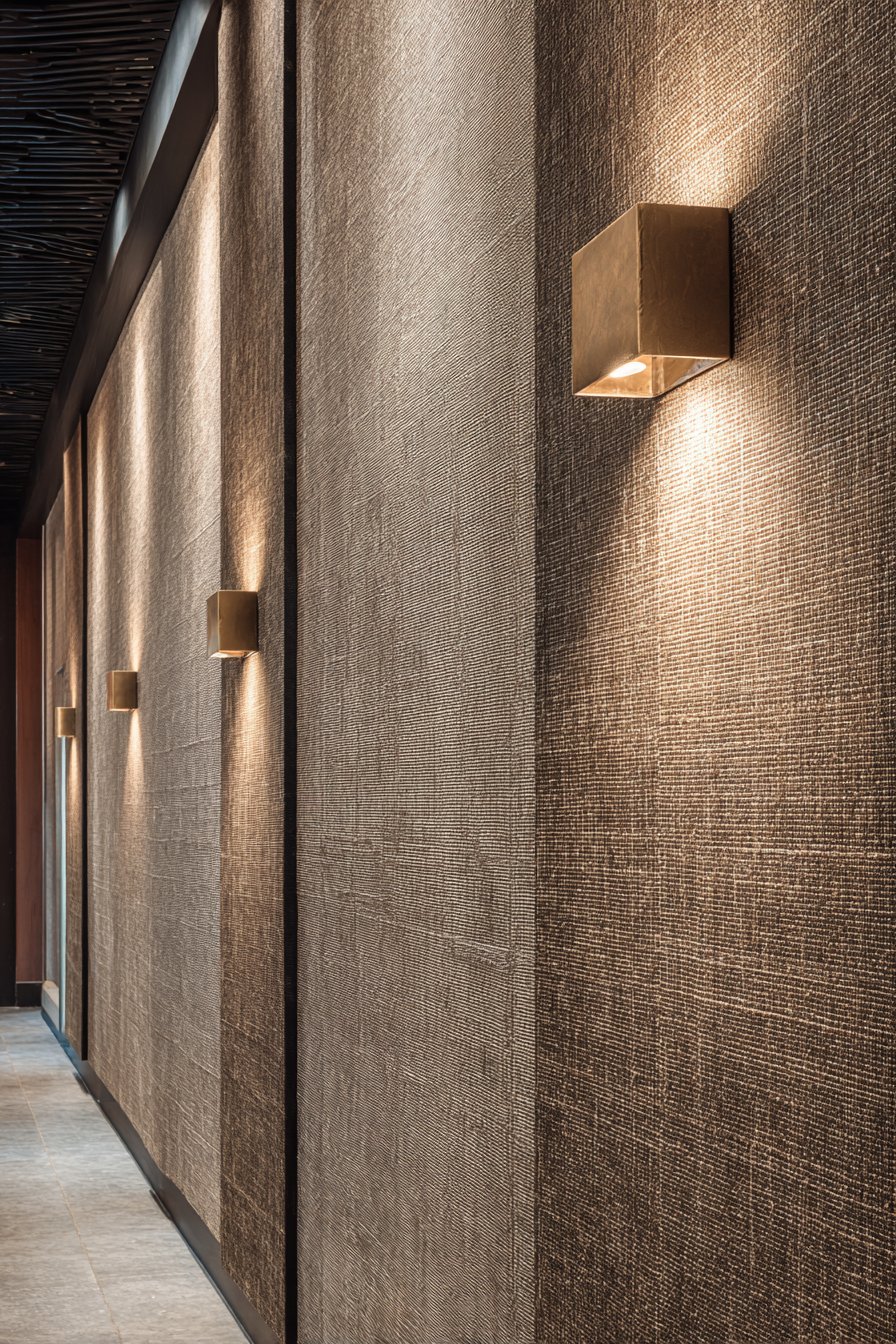
Wide-angle professional photography captures how the restaurant wall design idea creates warmth and sound control simultaneously in busy dining environments. Soft lighting highlights the fabric’s natural texture and weave pattern without creating harsh reflections, demonstrating the material’s subtle sophistication. The neutral taupe color provides versatile backdrop that complements diverse cuisines and plating styles without competing for visual attention.
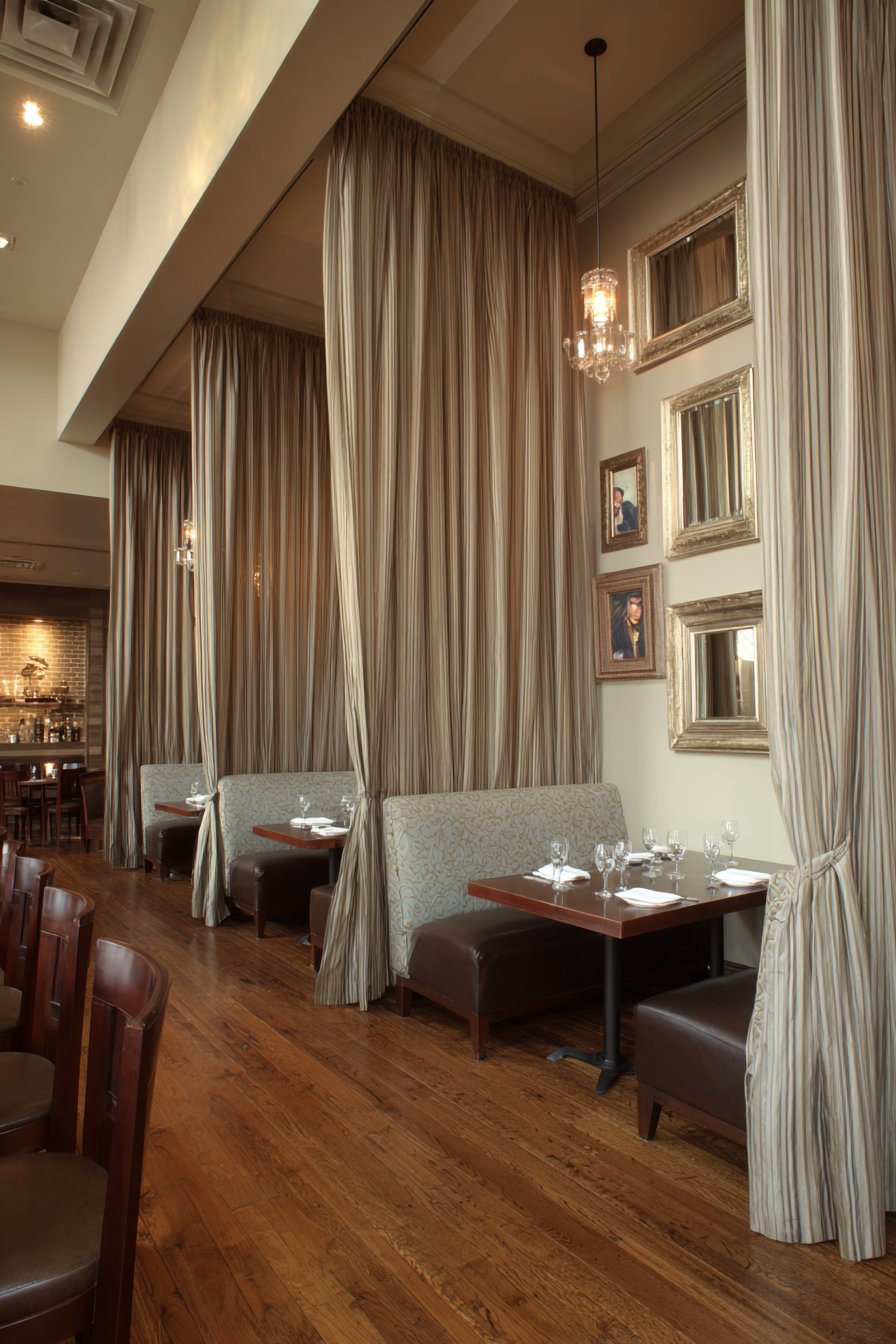
This wall treatment works particularly well in upscale establishments where conversation quality directly impacts guest satisfaction and where refined aesthetics justify premium pricing. The fabric’s acoustic properties prove especially valuable in restaurants with hard surface floors and minimal soft furnishings where noise levels might otherwise become uncomfortable. The installation also adds thermal insulation properties that can improve energy efficiency in exterior wall applications.
Key Design Tips:
- Specify commercial-grade fabrics with stain-resistant treatments and appropriate fire ratings for restaurant applications
- Install fabric over acoustic padding substrate to maximize sound absorption performance
- Establish professional cleaning protocols using specialized fabric cleaning services rather than attempting in-house maintenance
- Position fabric walls away from kitchen doors and high-splash areas where staining risk is elevated
- Consider removable panel systems allowing fabric replacement without complete wall reconstruction
21. Modular Living Herb Wall
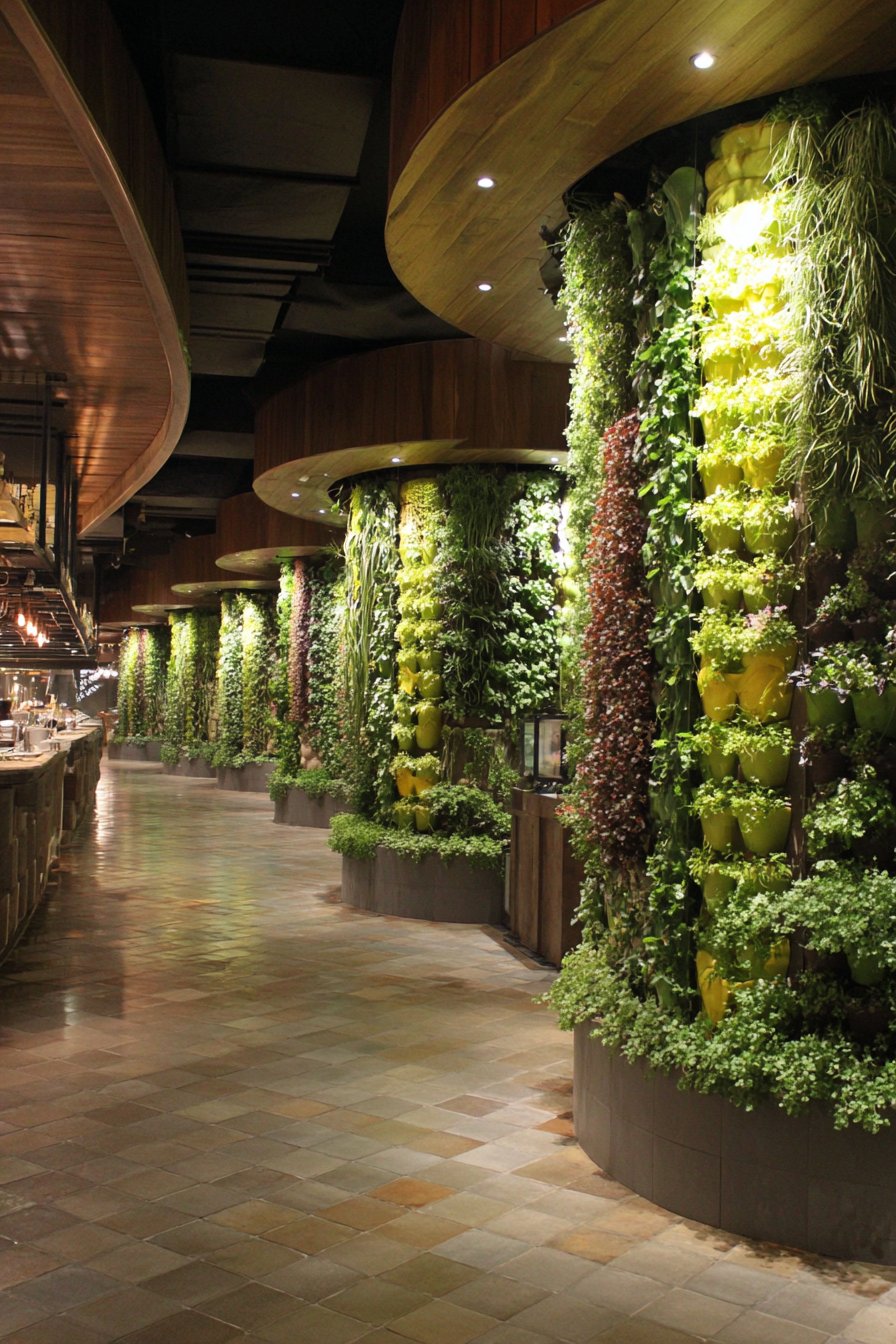
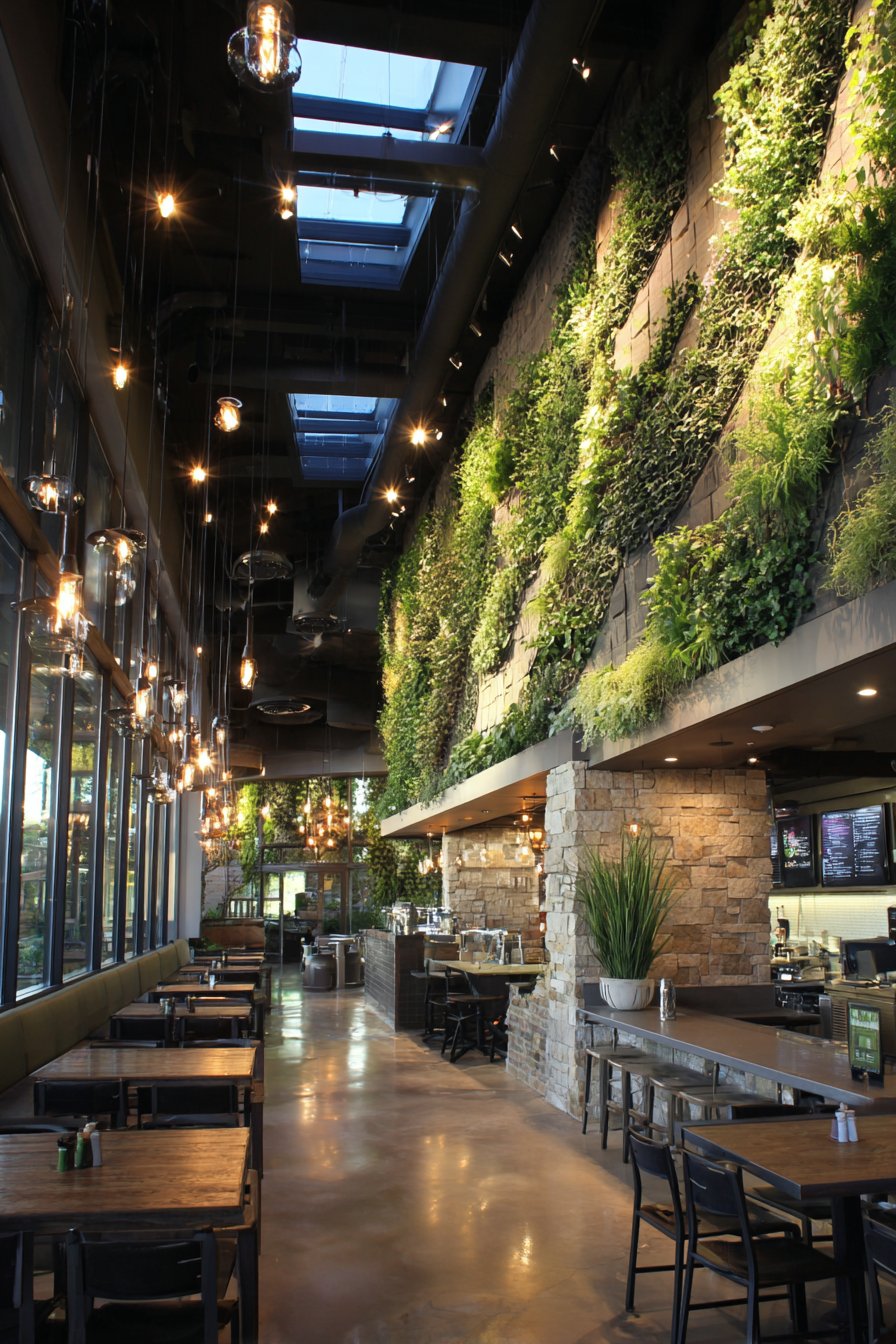
A striking vertical garden wall system with live plants arranged in modular planters creates lush green tapestry while providing fresh ingredients for kitchen use. The automated irrigation system keeps herbs and trailing plants thriving while integrated grow lights ensure healthy growth regardless of natural light availability. The farm-to-table concept visualized through the restaurant wall design idea creates powerful marketing narrative demonstrating ingredient sourcing transparency and commitment to freshness.
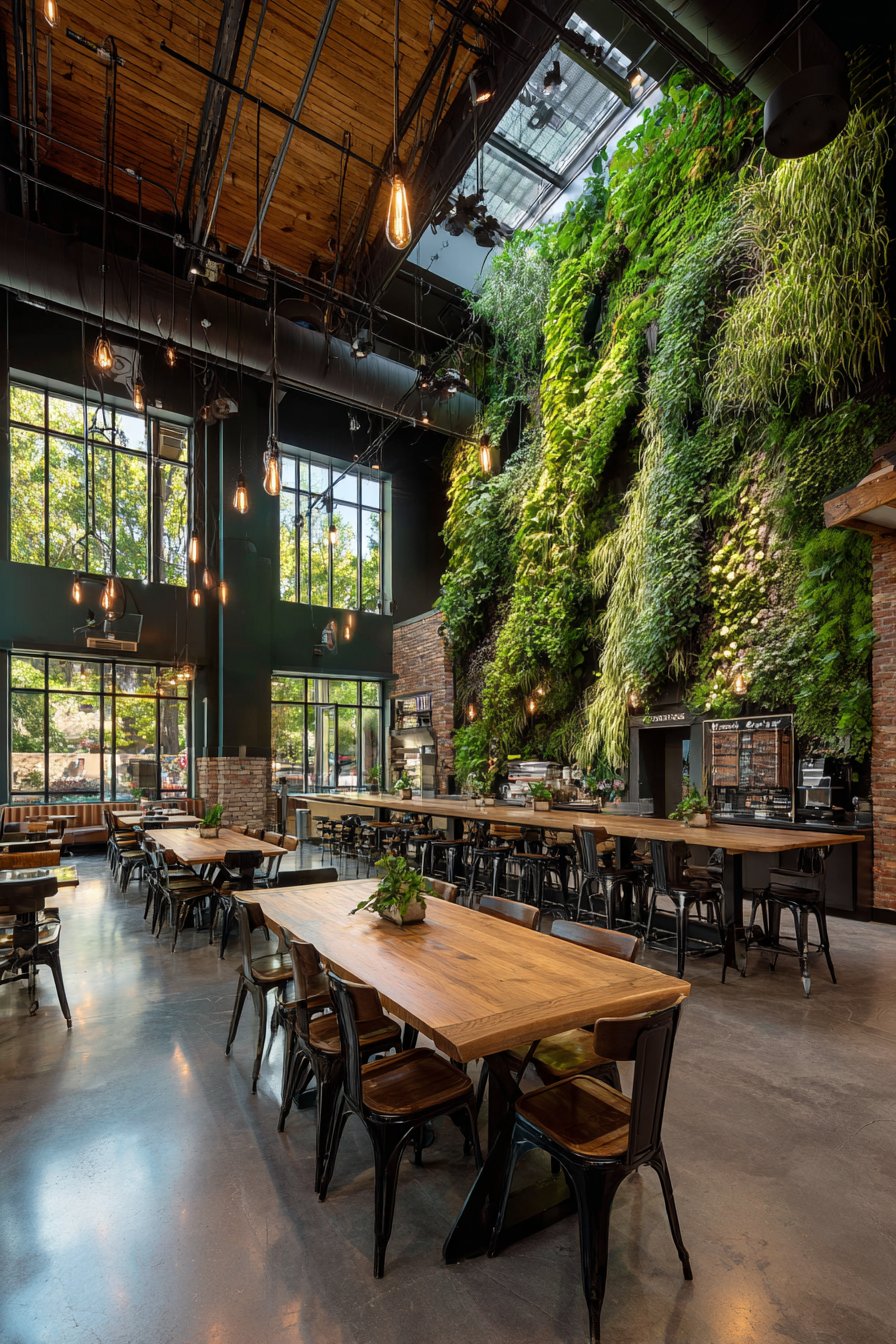
Interior photography shows vibrant plant life without washing out natural green colors and varied textures, capturing the living wall as dynamic, evolving element rather than static decoration. The herb selection can include culinary varieties used in menu items, allowing servers to reference the wall when describing dishes and creating direct visual connections between growing ingredients and finished plates. The living installation provides seasonal variation as different herbs thrive and some varieties are rotated based on menu changes.
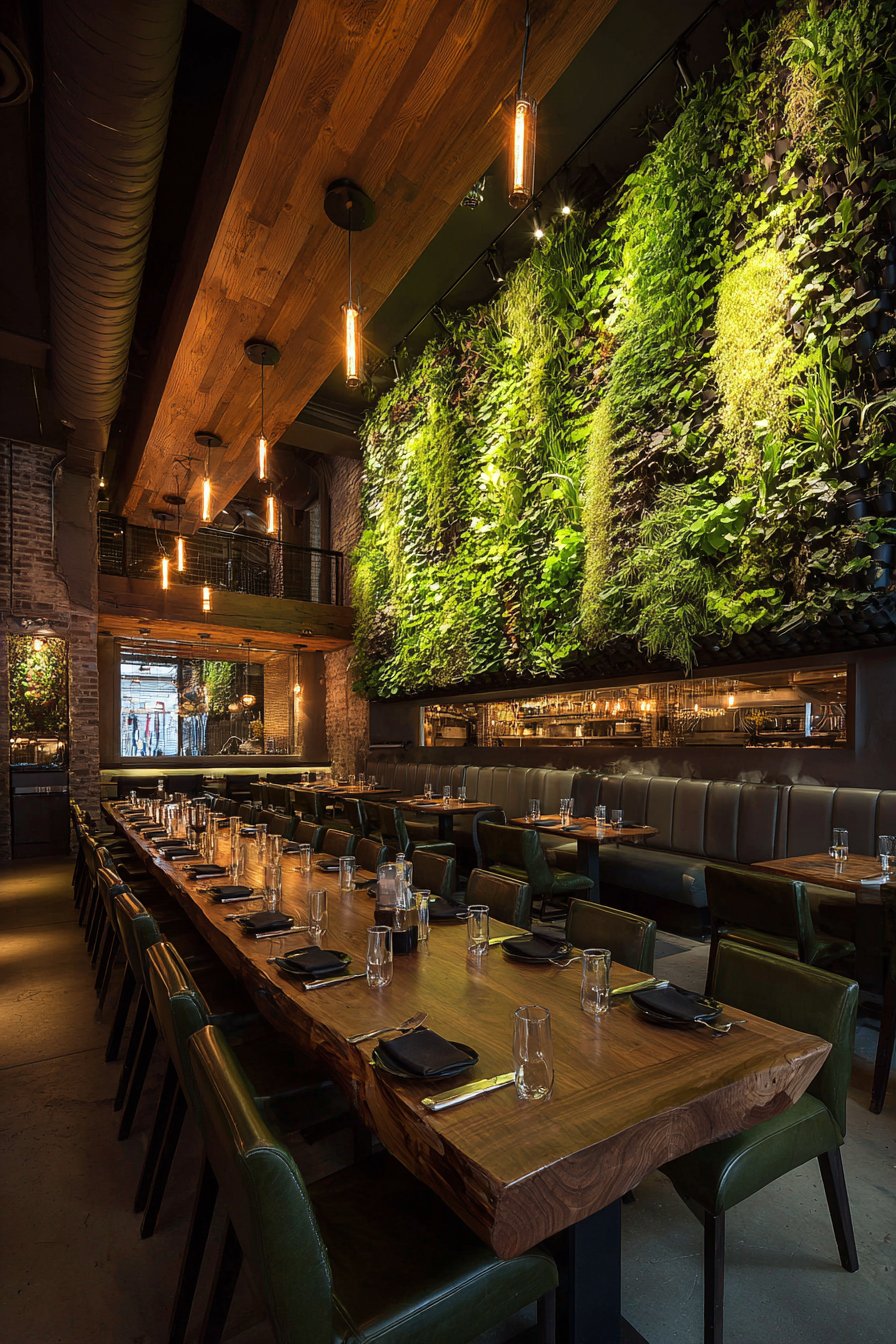
This approach works exceptionally well in restaurants emphasizing local sourcing, organic ingredients, and sustainable practices where the herb wall reinforces brand promises through visible demonstration. The installation also offers practical benefits including improved air quality, natural aromatics that enhance dining ambiance, and potential ingredient cost savings if production scales sufficiently. The maintenance requirements, while significant, can be managed through specialized horticultural service contracts.
Key Design Tips:
- Select herbs and plants appropriate for indoor cultivation and consistent with menu ingredients to maximize authenticity
- Install professional automated irrigation with backup systems preventing plant loss during equipment failures
- Incorporate full-spectrum LED grow lights with timers ensuring adequate light for photosynthesis
- Design modular systems allowing individual planter replacement without dismantling entire installation
- Partner with local horticultural services for regular maintenance, pruning, fertilization, and plant rotation
22. Eclectic Vintage Mirror Collection
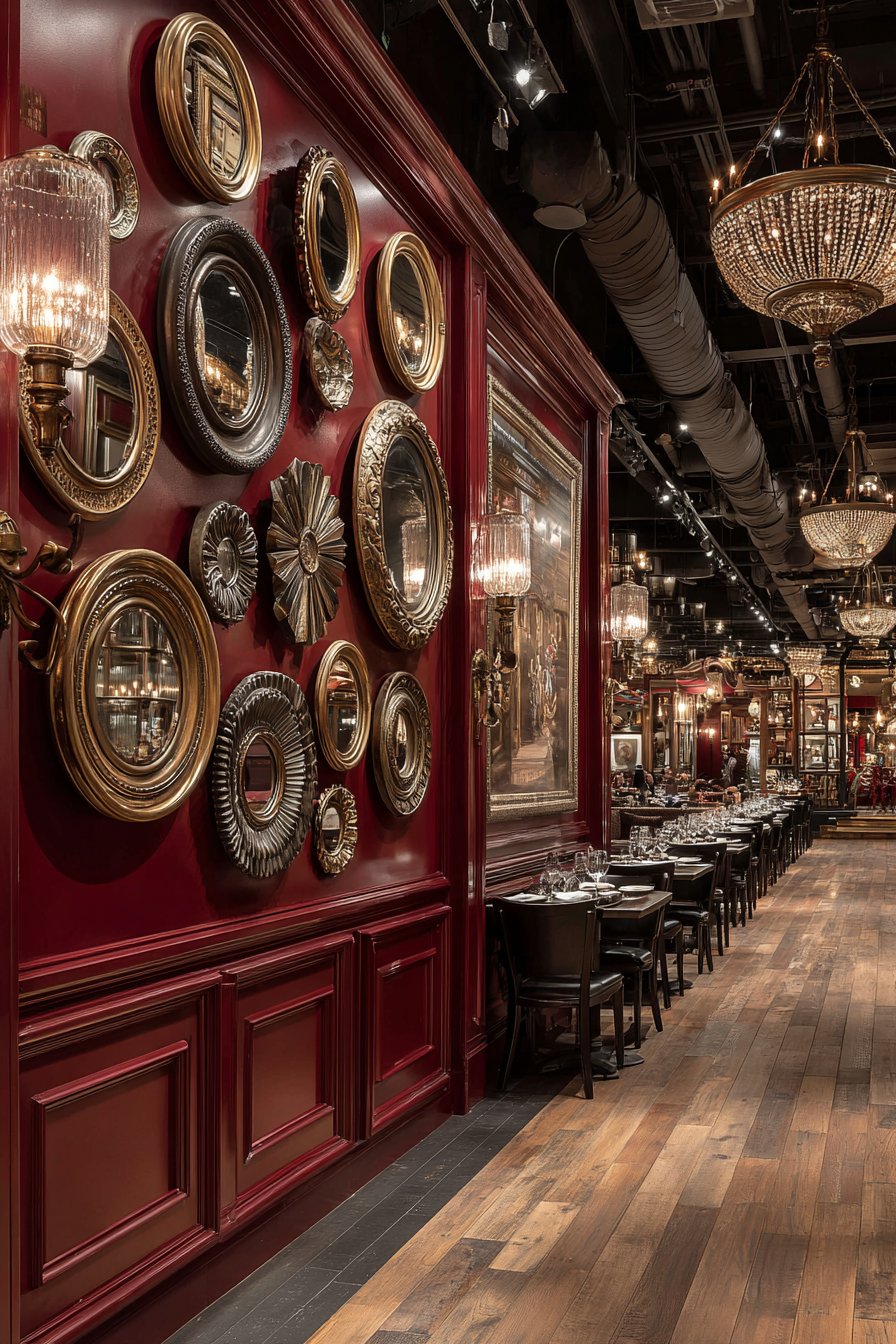
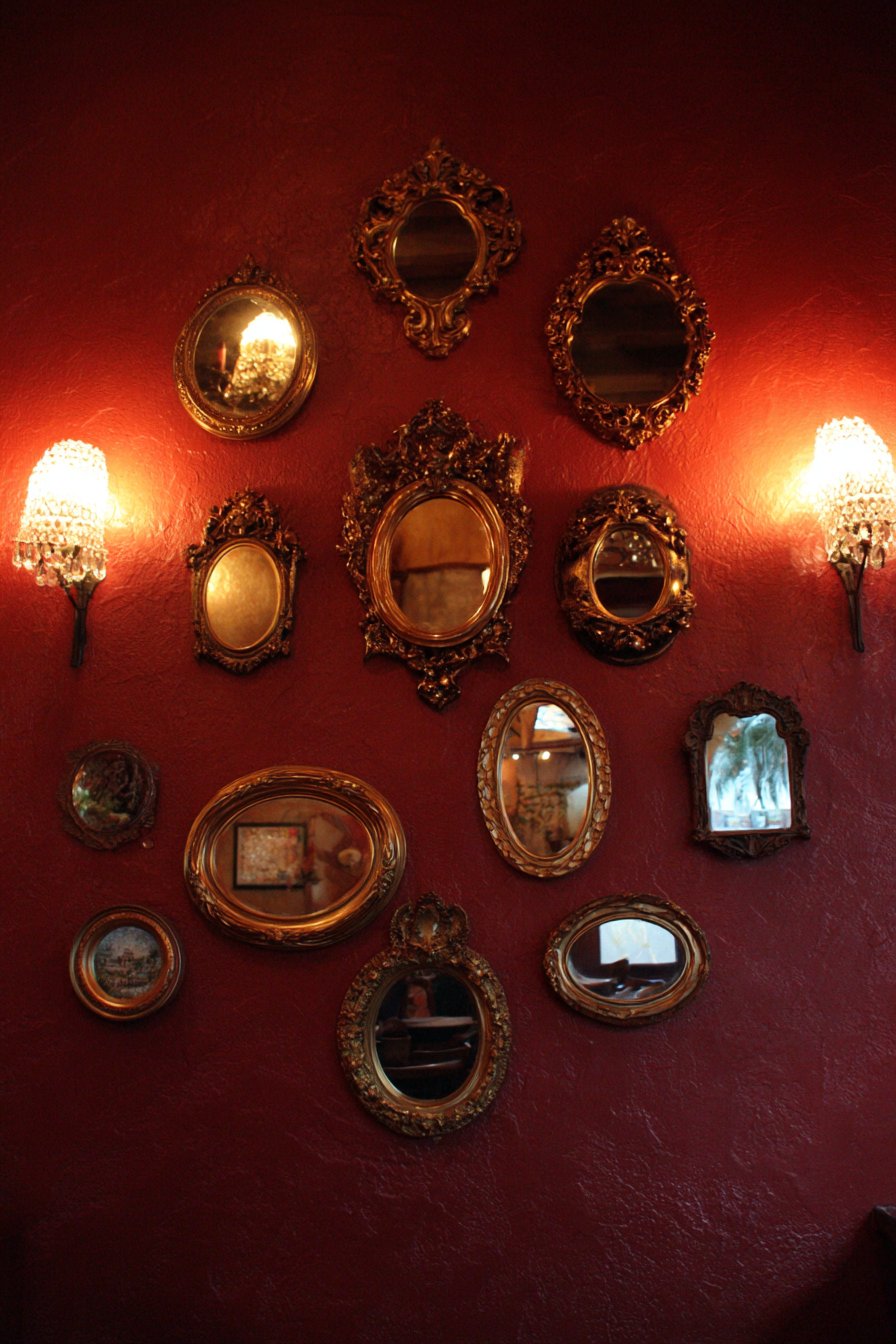
A collection of ornate vintage mirrors in mixed metallic finishes including gold, silver, and bronze creates glamorous, light-multiplying installation when arranged in eclectic cluster on deep burgundy painted walls. The mirrors vary in size and style from baroque to art deco, creating visual intrigue through reflection multiplication and stylistic diversity. Crystal sconces add sparkle and ambient lighting while complementing the mirrors’ ornate detailing and metallic finishes.
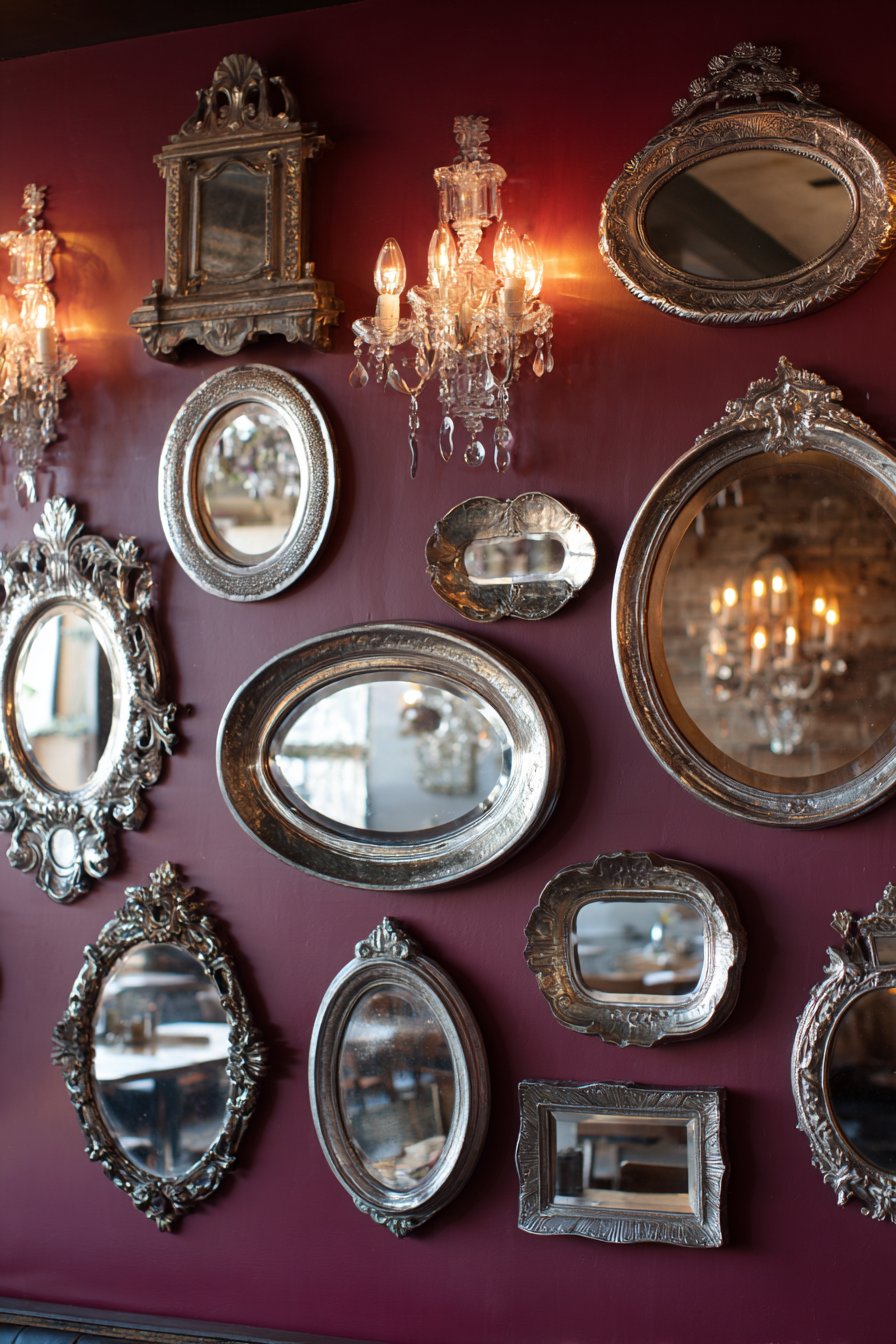
Professional interior photography demonstrates how the restaurant wall design idea adds glamour and light multiplication to intimate dining spaces, captured with balanced exposure showing both reflected and direct light sources. The burgundy wall color provides dramatic backdrop that makes metallic frames pop visually while creating enveloping, sophisticated atmosphere particularly suited to evening dining. The multiple reflections create spatial complexity and visual interest that rewards extended viewing during multi-course meals.
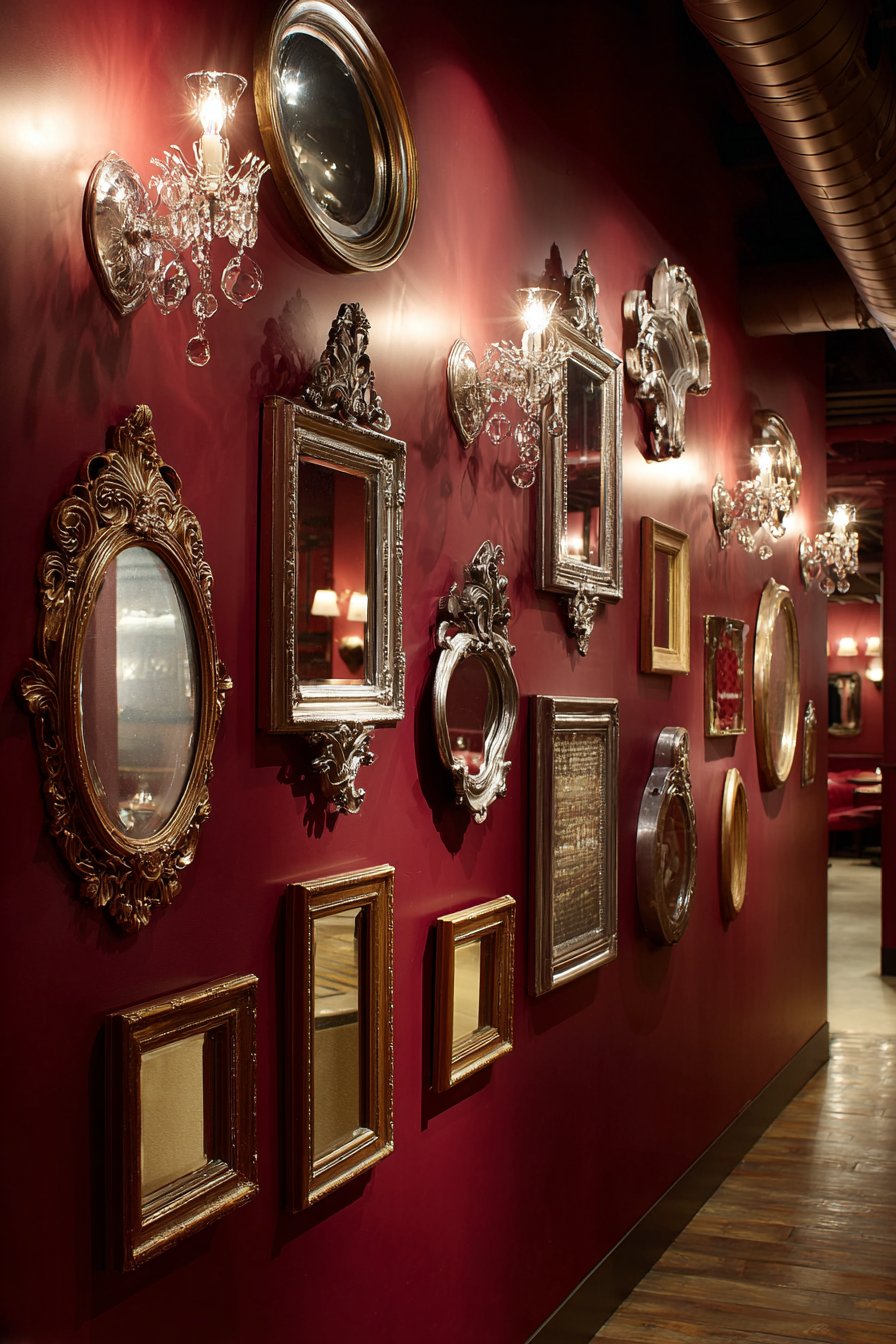
This wall treatment works particularly well in wine bars, romantic date-night restaurants, French bistros, and other establishments where Old World glamour and theatrical decor enhance brand positioning. The vintage mirrors can be sourced over time from estate sales, antique dealers, and specialty suppliers, with the collection building gradually to create authentic rather than manufactured eclecticism. The mirrors’ reflective properties also serve practical functions, increasing perceived space and ambient lighting levels.
Key Design Tips:
- Source authentic vintage mirrors rather than new pieces with distressed finishes for genuine patina and character
- Arrange mirrors with intentional asymmetry avoiding rigid grids or overly planned compositions
- Clean antique mirrors carefully using appropriate products that won’t damage silvering or frame finishes
- Secure mirrors properly using appropriate weight-rated hardware and ensuring attachment to wall studs
- Consider sight lines ensuring mirrors reflect attractive views rather than unappealing areas like restrooms or service stations
23. Portuguese Azulejo Tile Feature Wall
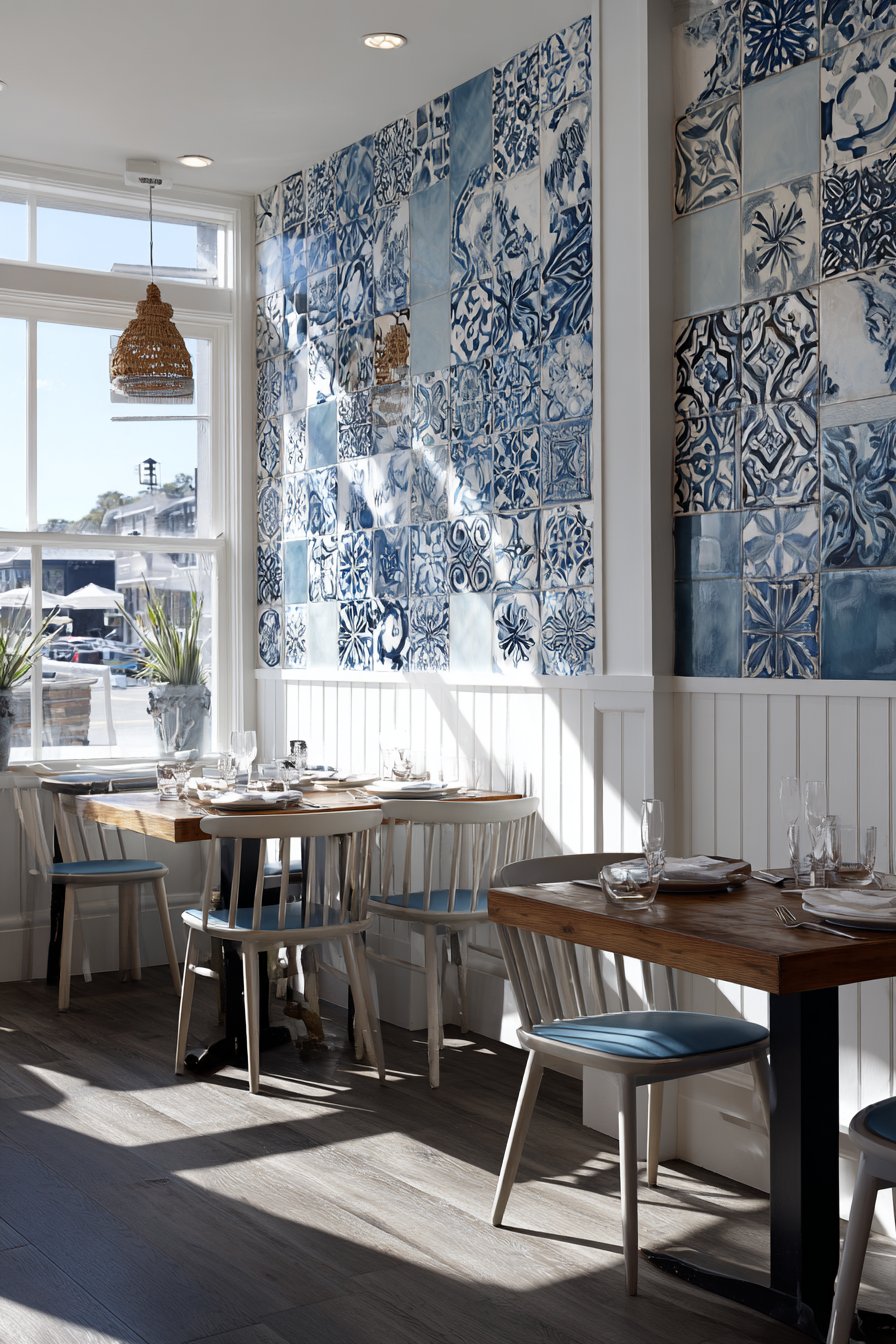
Hand-painted decorative tiles in traditional Portuguese azulejo patterns create authentic Mediterranean atmosphere through intricate geometric and floral motifs in classic blue and white color schemes. The glazed tile surface covering one feature wall provides cultural authenticity while offering exceptional durability and easy maintenance appropriate for commercial restaurant environments. Simple wooden chairs and tables complement the ornate tilework without competing visually, allowing the tiles’ detailed patterns to remain focal points.
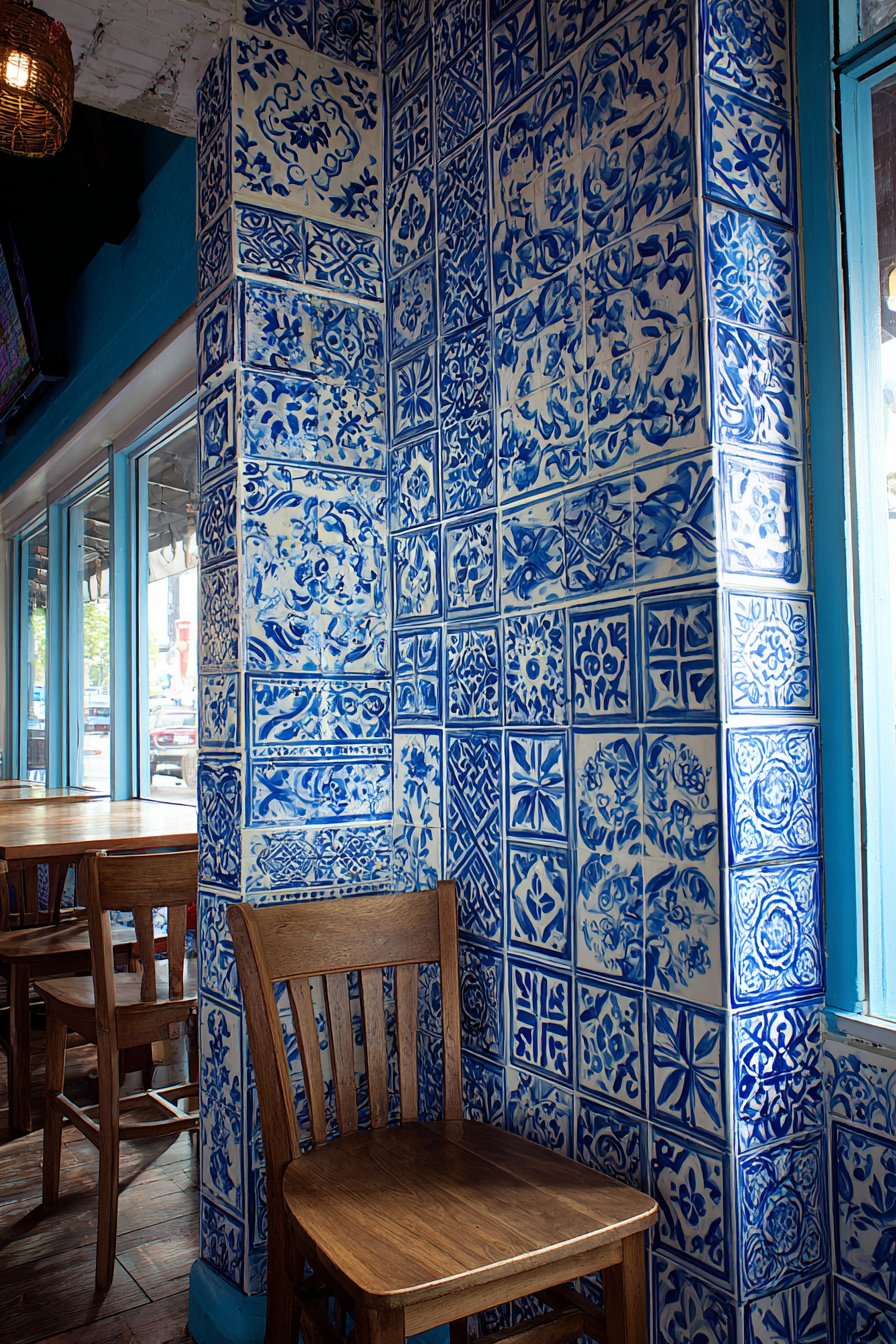
Natural light from windows highlights the glazed tile surface, creating subtle reflections and emphasizing the hand-painted patterns’ slight variations that indicate artisanal craftsmanship. Interior design photography captures the restaurant’s cultural aesthetic with the restaurant wall design idea providing authentic charm that transports diners to Portuguese cafés and coastal villages. The blue and white color scheme creates fresh, clean impressions while remaining timeless and avoiding trendy aesthetics that might date quickly.
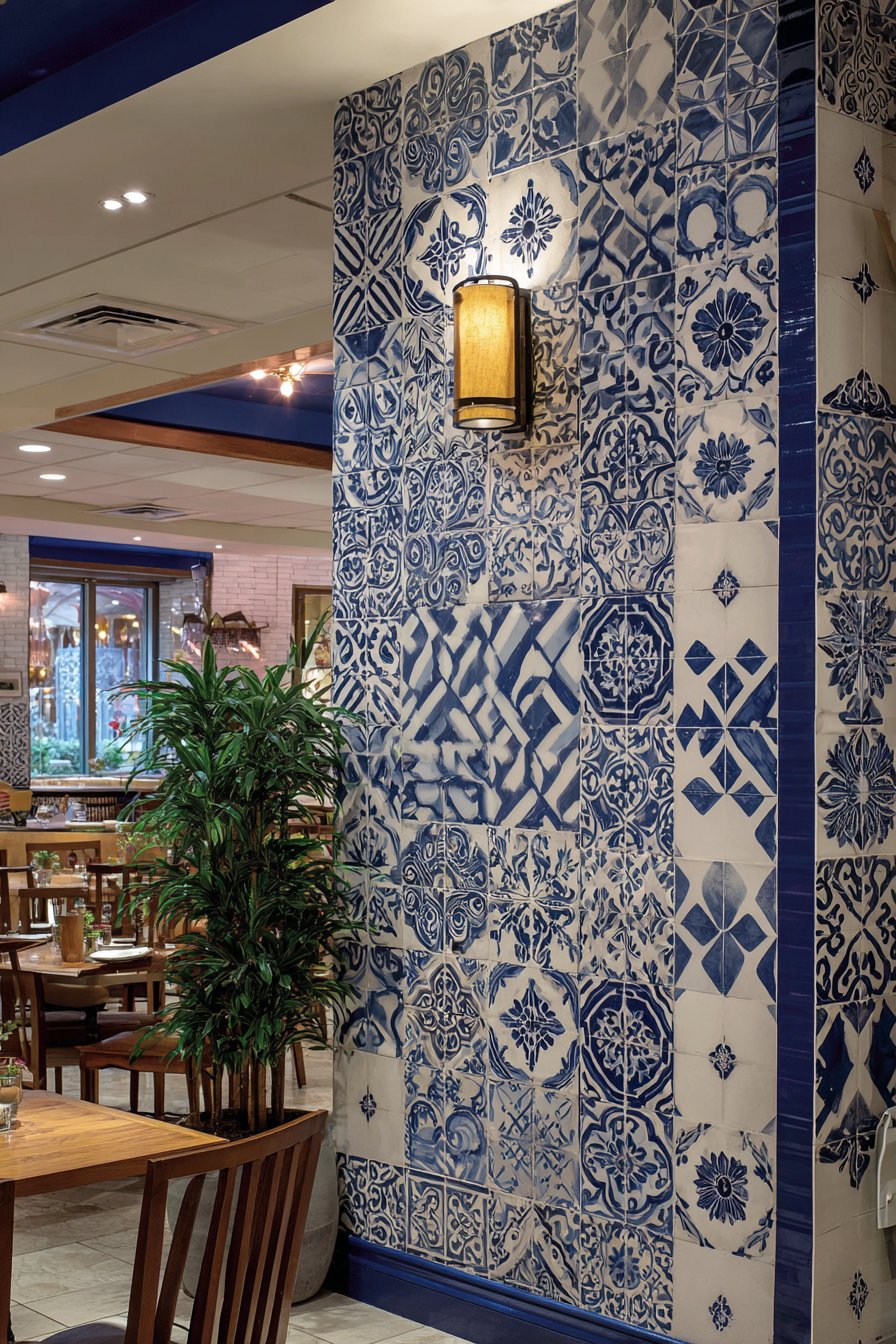
This wall treatment works particularly well in Portuguese restaurants, seafood establishments, Mediterranean-themed dining rooms, and coastal locations where the tile’s cultural associations align with cuisine and setting. The tiles also offer practical advantages including resistance to moisture, ease of cleaning, and exceptional longevity. Investment in authentic hand-painted tiles rather than printed alternatives communicates quality commitment that discerning guests recognize and appreciate.
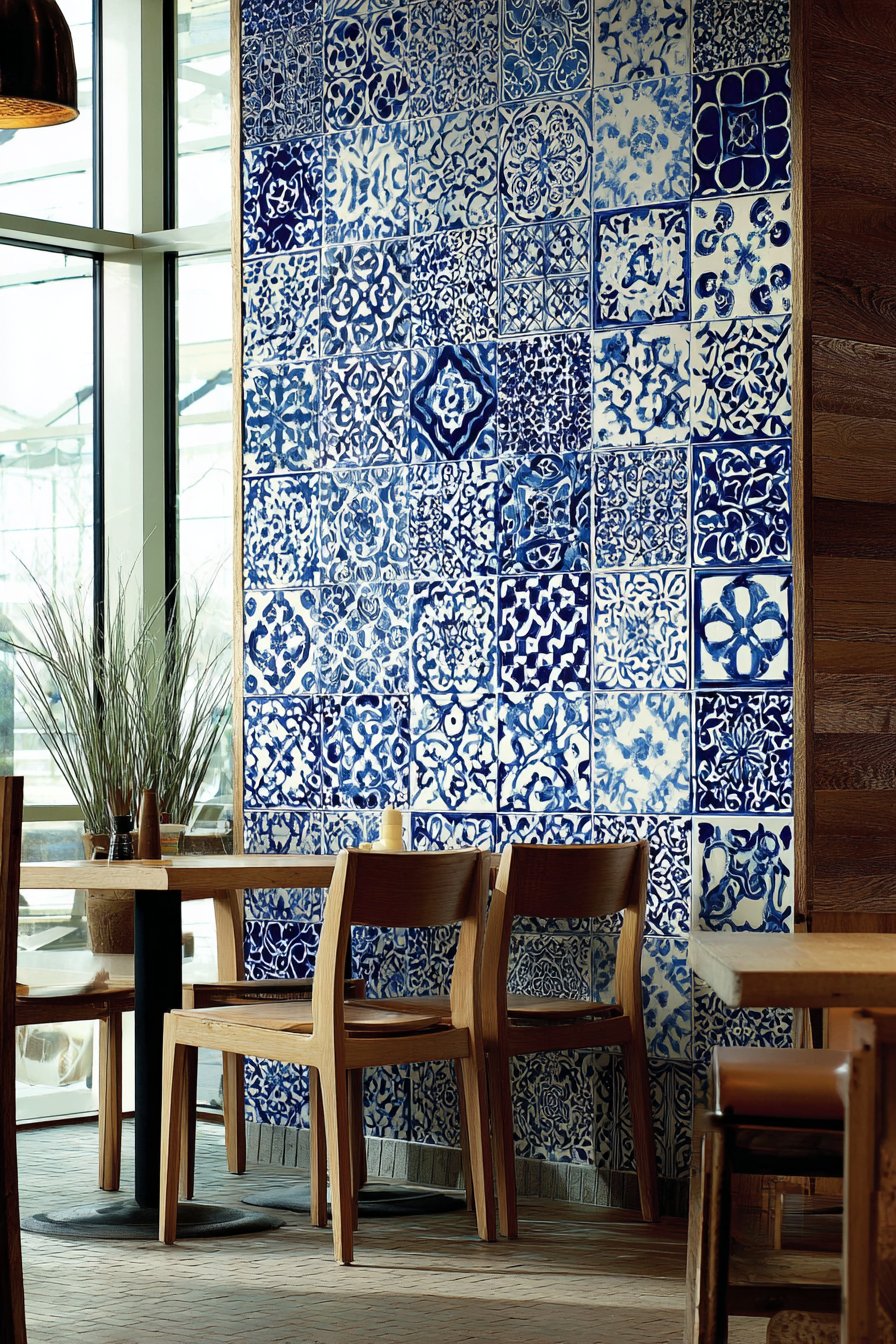
Key Design Tips:
- Source tiles from Portuguese artisans or reputable importers specializing in authentic azulejo work
- Install tiles professionally ensuring proper substrate preparation, waterproofing, and grouting
- Embrace slight variations in hand-painted patterns as signs of authenticity rather than defects
- Coordinate grout color carefully—bright white maintains traditional appearance while gray tones can modernize the look
- Consider tile placement protecting high-impact areas from damage while showcasing patterns in prime viewing zones
24. Natural Cork Panel Wall
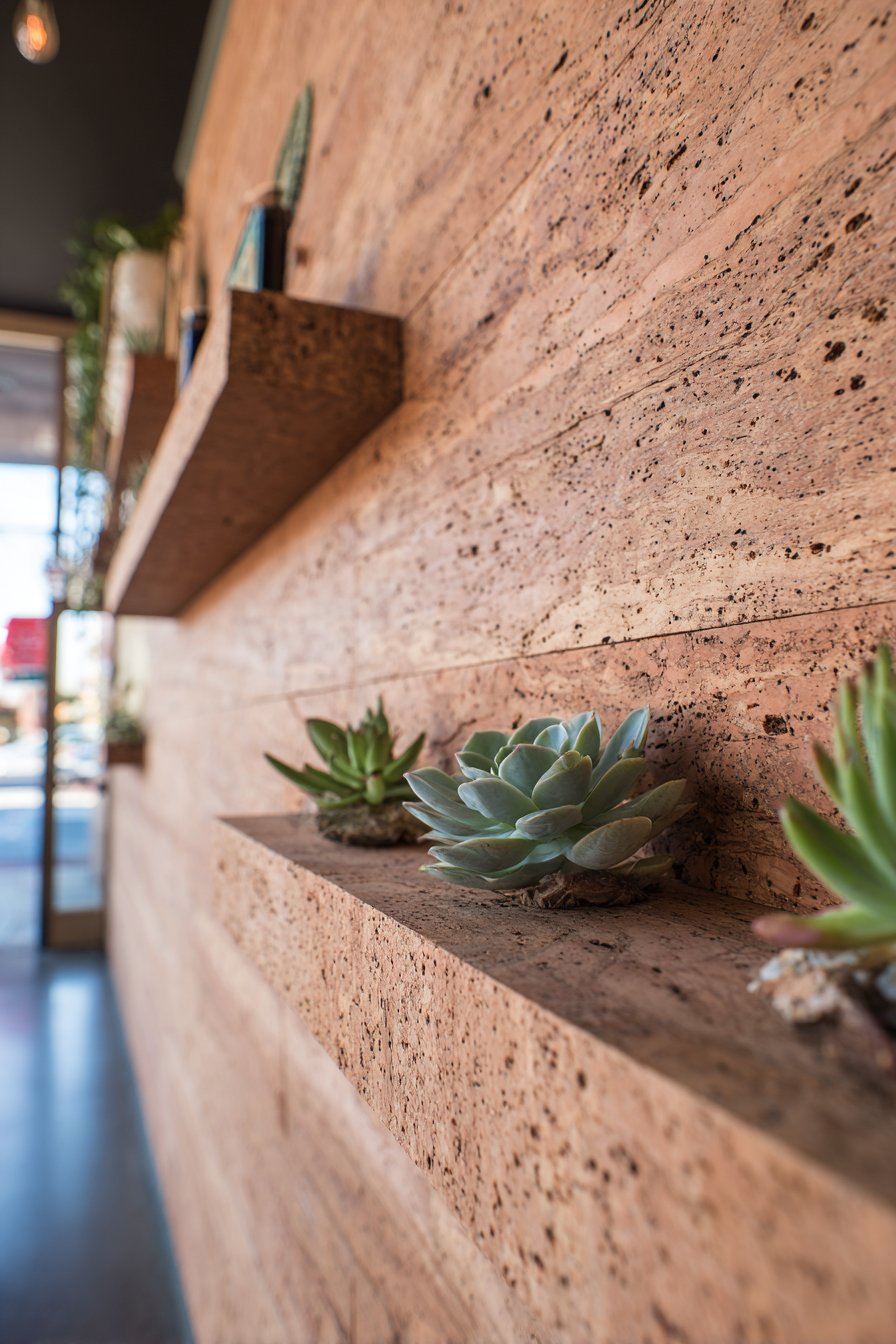
Modern cork wall installation using large-format cork panels in natural honey tones creates warm, sustainable, and acoustic-friendly surfaces that align with contemporary environmental values. The cork’s organic texture provides visual interest through natural grain patterns while absorbing sound to improve conversation quality in busy dining areas. Simple floating shelves in matching cork hold small succulents, extending the natural material vocabulary while adding living elements that enhance biophilic design principles.
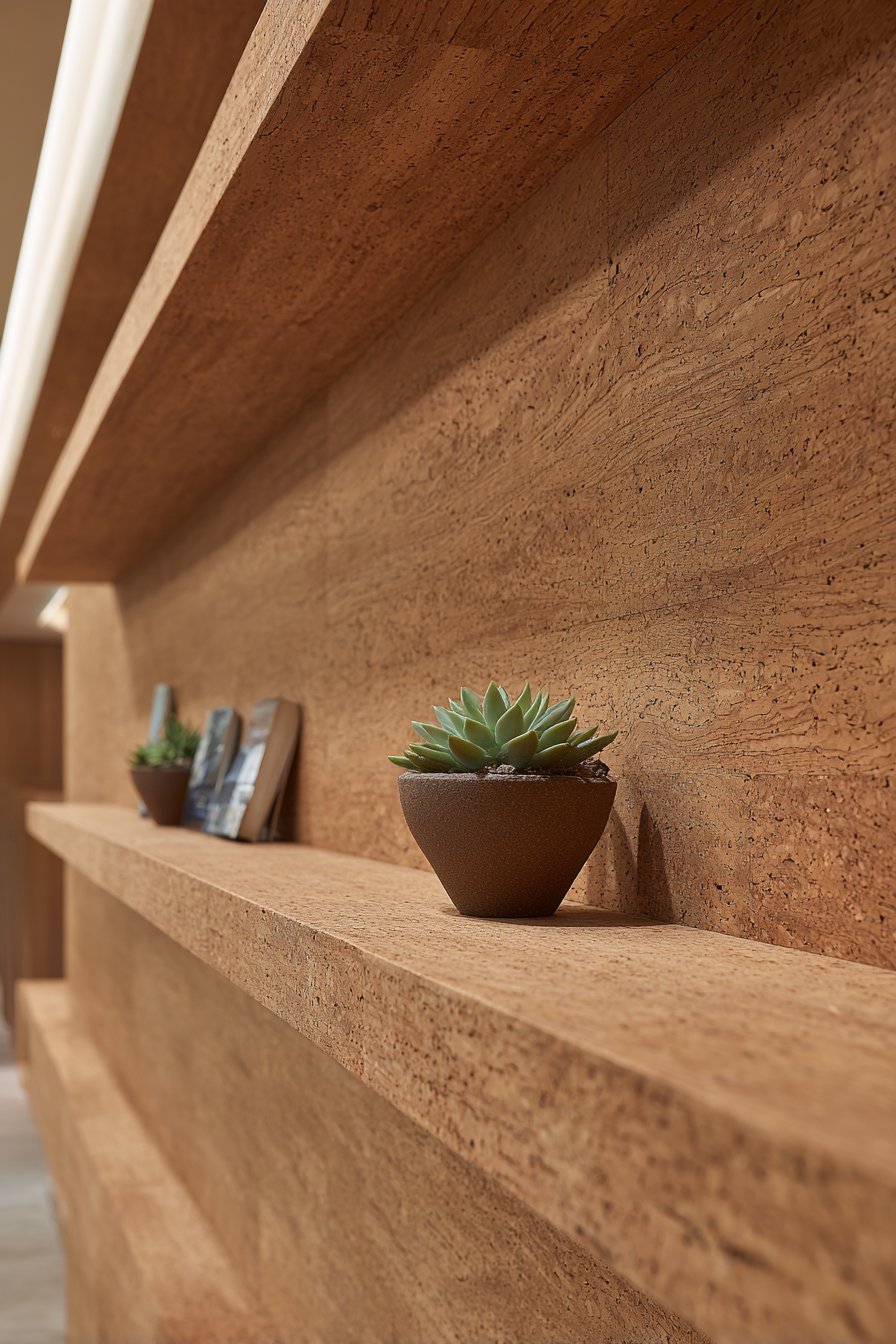
Wide-angle photography shows how the restaurant wall design idea balances contemporary minimalism with natural material warmth, captured with soft lighting that emphasizes the cork’s subtle grain patterns and matte finish. The sustainable material choice appeals to environmentally conscious diners while providing practical benefits including thermal insulation, acoustic dampening, and exceptional durability. The natural honey tone creates visual warmth without requiring intense color that might overwhelm spaces or compete with food presentation.
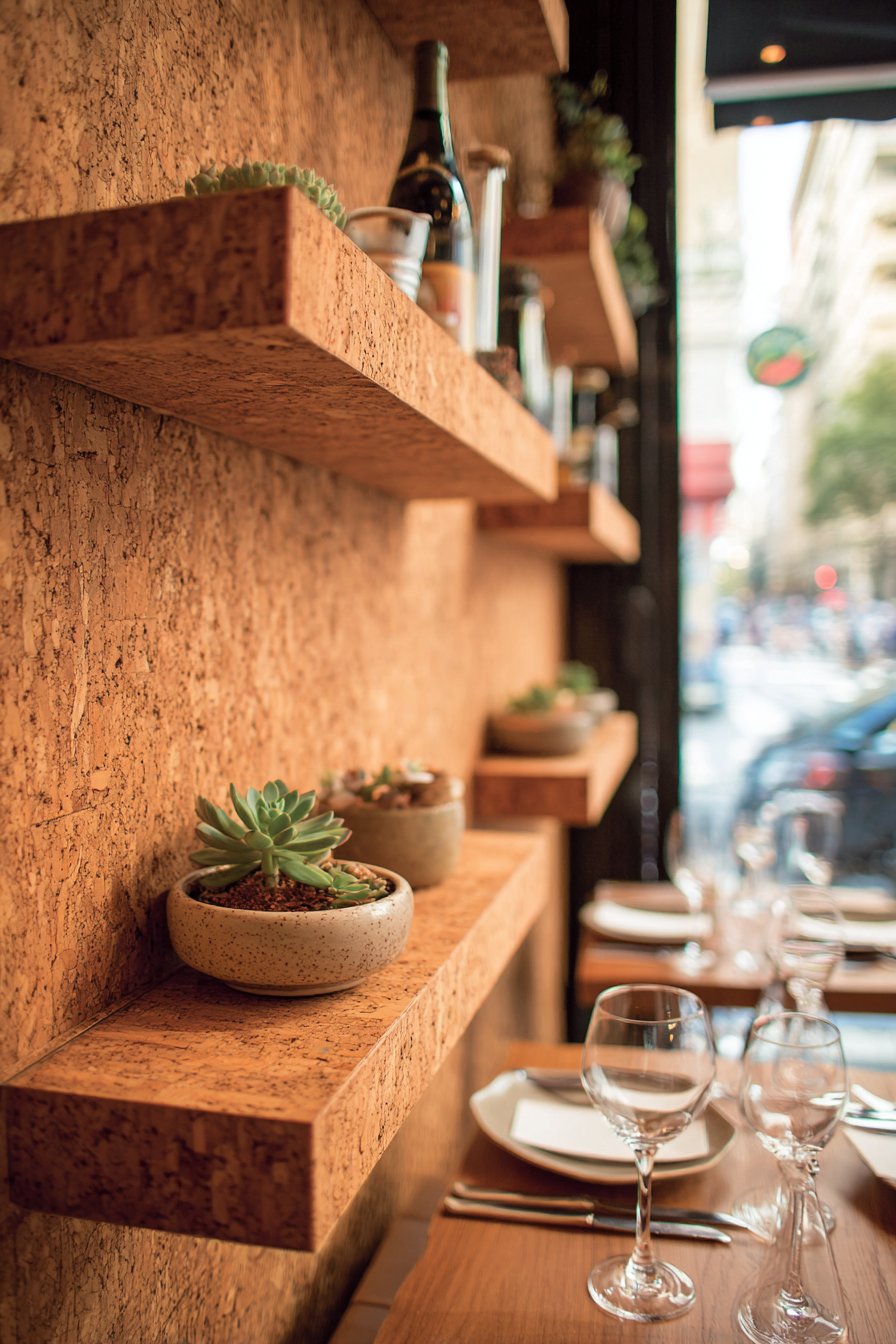
This wall treatment works particularly well in health-focused cafés, sustainable restaurants, vegetarian establishments, and other concepts where environmental values are central to brand identity. The cork’s renewable, recyclable nature provides genuine sustainability credentials rather than superficial green-washing, supporting authentic marketing narratives. The material also offers practical advantages including resistance to moisture, mold, and bacterial growth, making it particularly hygienic for food service environments.
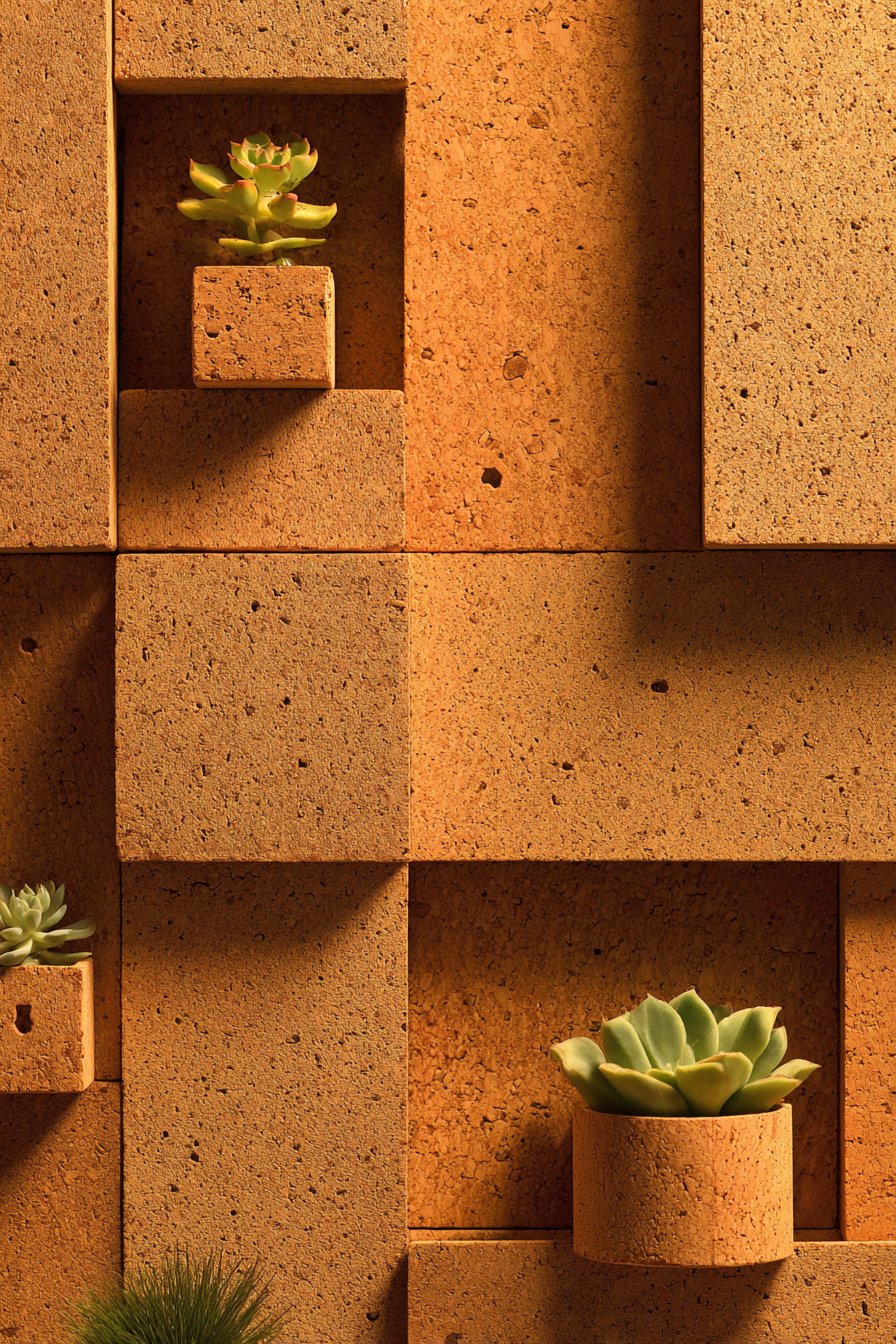
Key Design Tips:
- Source cork from sustainably managed forests with appropriate certifications verifying environmental claims
- Specify large-format panels rather than smaller tiles to minimize visible seams and create more unified appearance
- Apply protective sealers maintaining cork’s natural appearance while preventing staining and facilitating cleaning
- Install cork with appropriate adhesives and backing systems ensuring long-term adhesion and preventing warping
- Educate staff about cork’s sustainable properties enabling them to share information with environmentally conscious guests
25. Bold Striped Wallpaper Statement
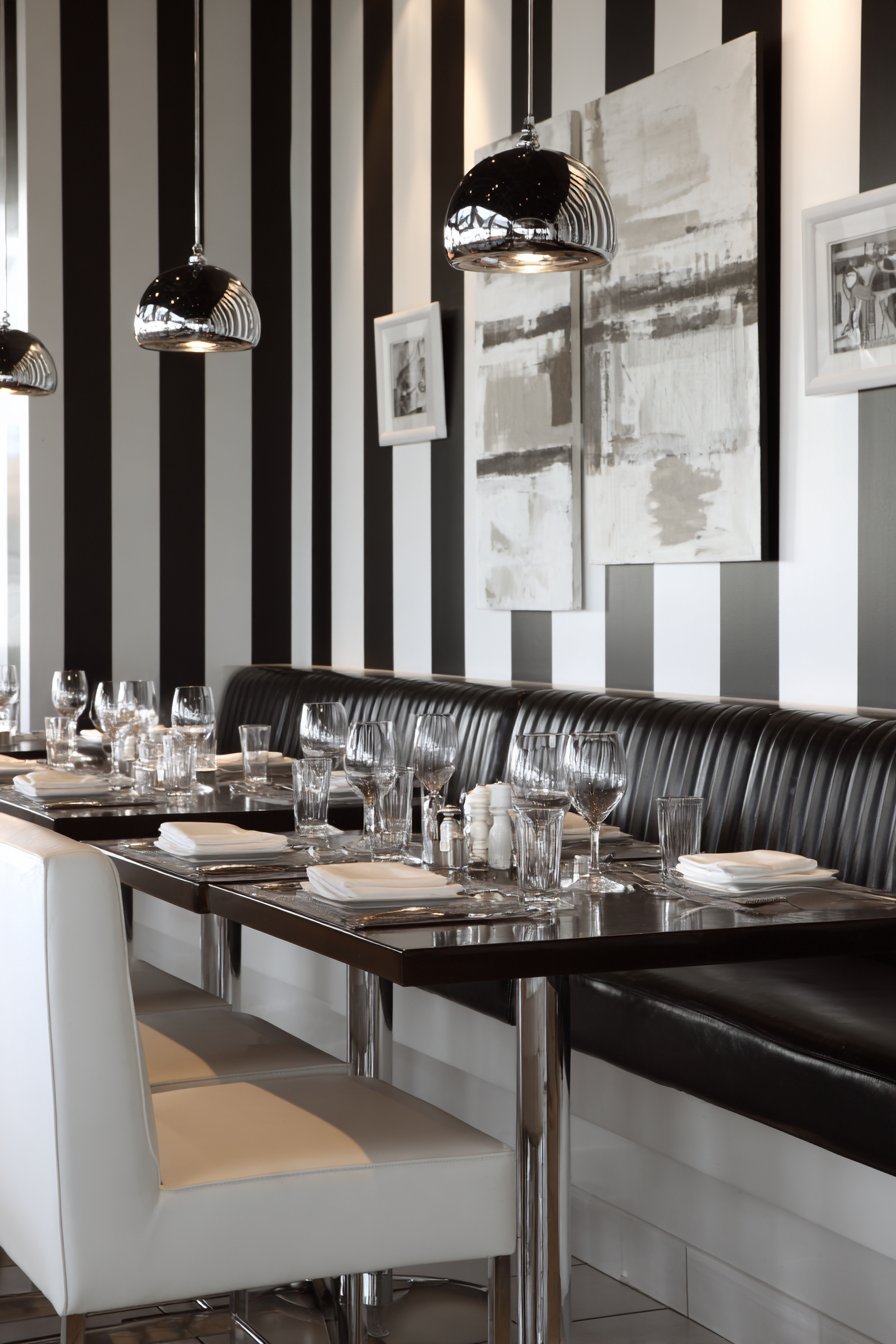
Dramatic black and white striped wallpaper installation with bold vertical stripes creates striking graphic statement walls that energize dining rooms through high-contrast visual impact. The vertical pattern adds perceived height to rooms with standard ceiling heights while the monochromatic scheme maintains sophisticated restraint despite bold pattern scale. Contemporary furniture in crisp white and black leather extends the high-contrast aesthetic while chrome fixtures and pendant lights add metallic sparkle.
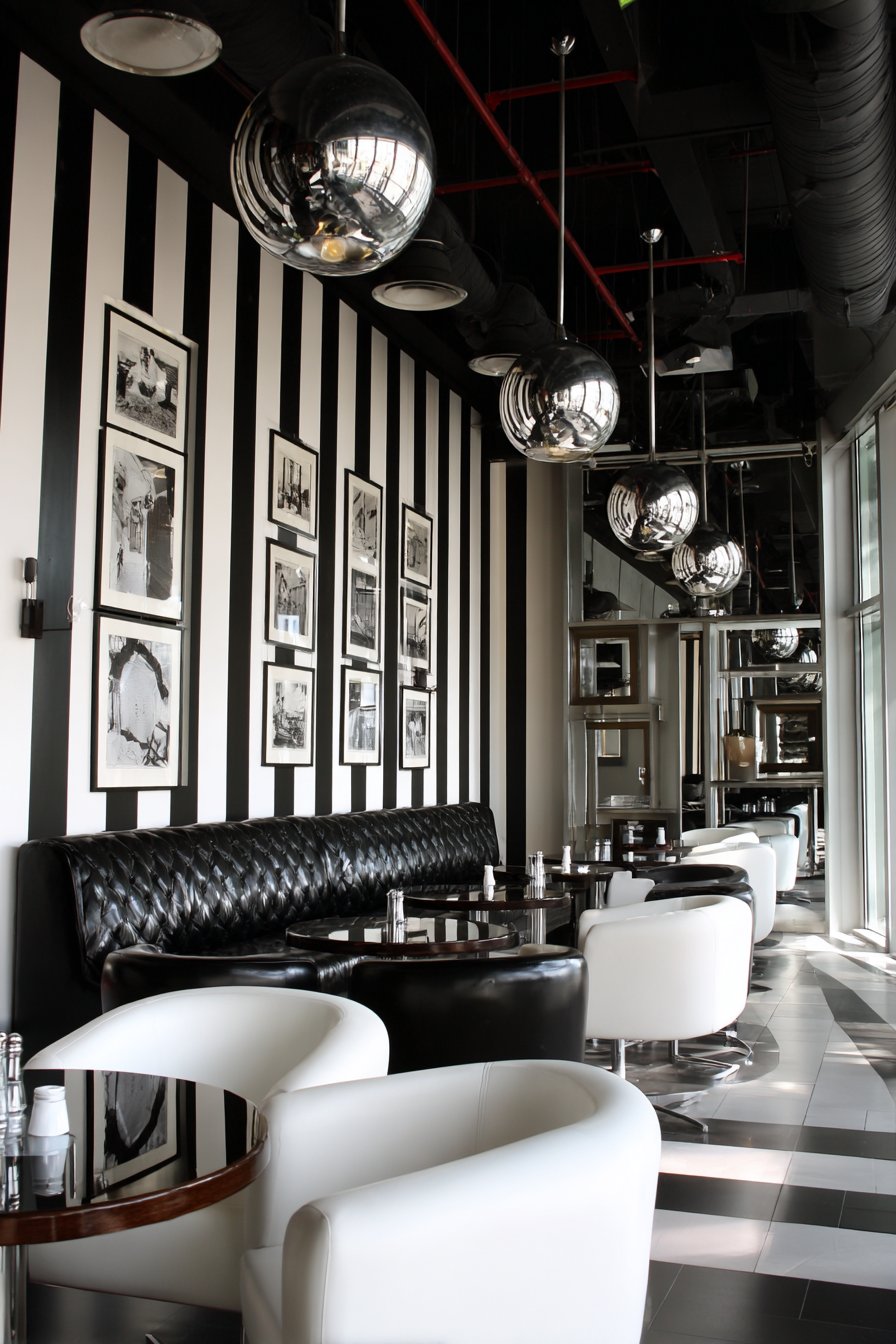
Professional interior photography captures the bold restaurant wall design idea creating memorable visual impact, showing balanced exposure that prevents the high contrast from appearing harsh while maintaining pattern clarity and definition. The graphic wallpaper works particularly well in contemporary bistros, modern cafés, and establishments targeting design-conscious urban demographics who appreciate bold aesthetic choices. The pattern also photographs exceptionally well, creating Instagram-worthy backgrounds that encourage social media sharing and organic marketing.
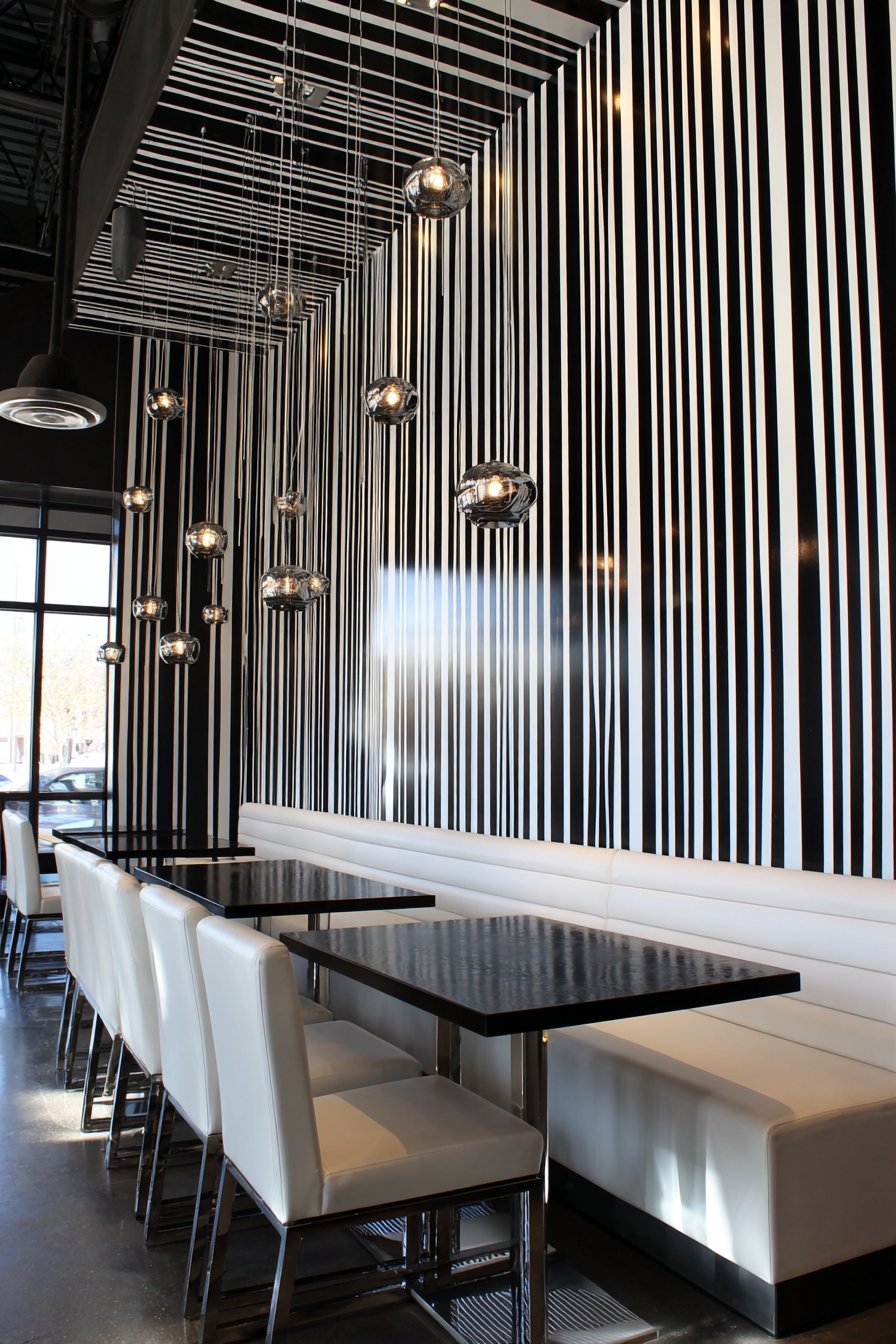
This wall treatment makes strong design statements that distinguish restaurants from competitors while creating memorable visual experiences that aid brand recognition and recall. The stripes can be oriented vertically to increase perceived height or horizontally to expand perceived width, providing flexibility based on specific spatial challenges. The timeless black and white palette ensures the bold pattern remains sophisticated rather than trendy, supporting longevity despite strong visual impact.
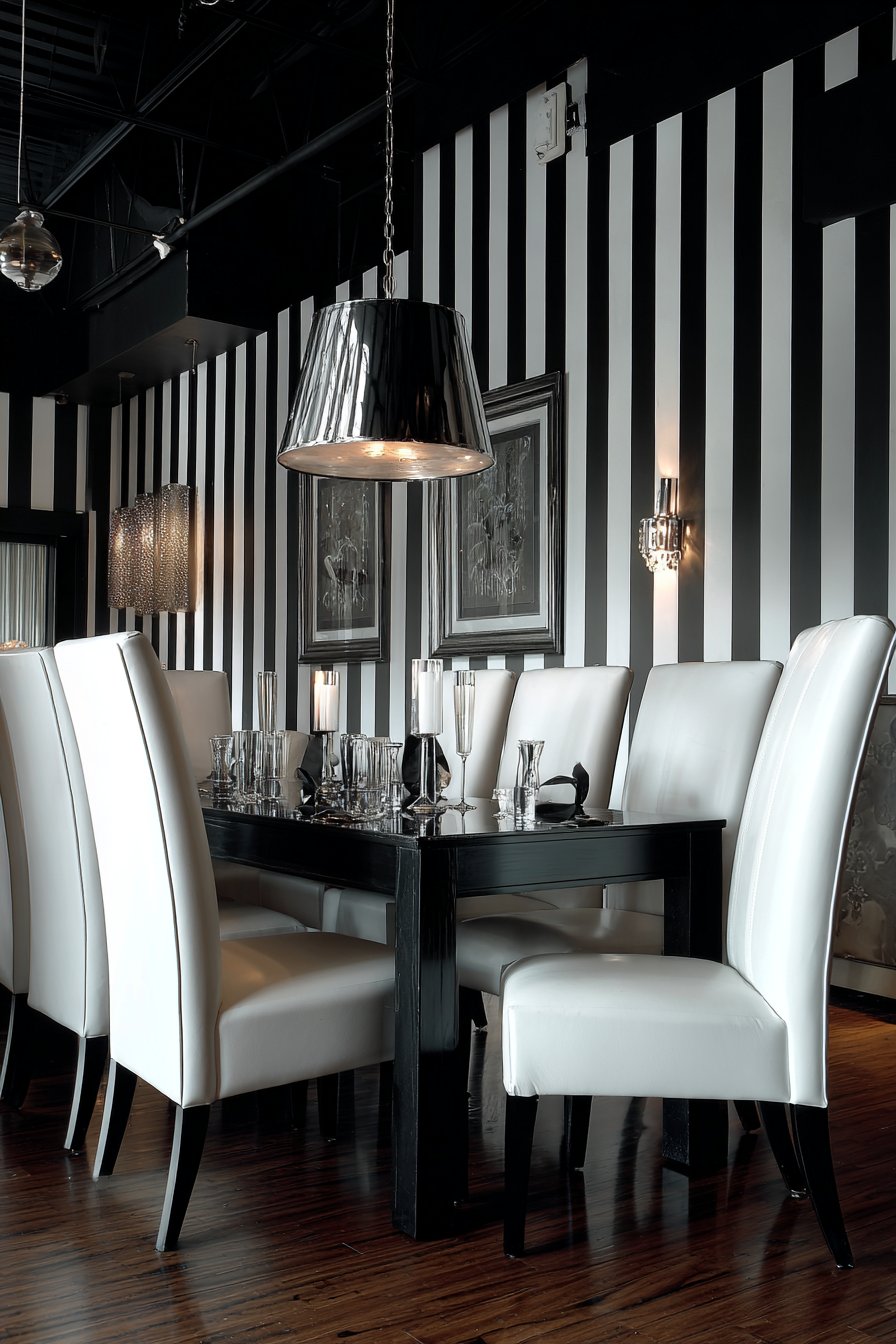
Key Design Tips:
- Select commercial-grade wallpaper with appropriate durability and cleanability for restaurant environments
- Consider stripe width relative to viewing distance—wider stripes work better on walls viewed from across rooms
- Limit striped wallpaper to accent walls rather than entire rooms to prevent visual overwhelm and dizziness
- Coordinate lighting to avoid creating moiré patterns or visual vibration from stripe interaction with certain lighting types
- Balance bold patterned walls with solid-colored furnishings and minimal additional patterns
26. Restored Exposed Brick Character
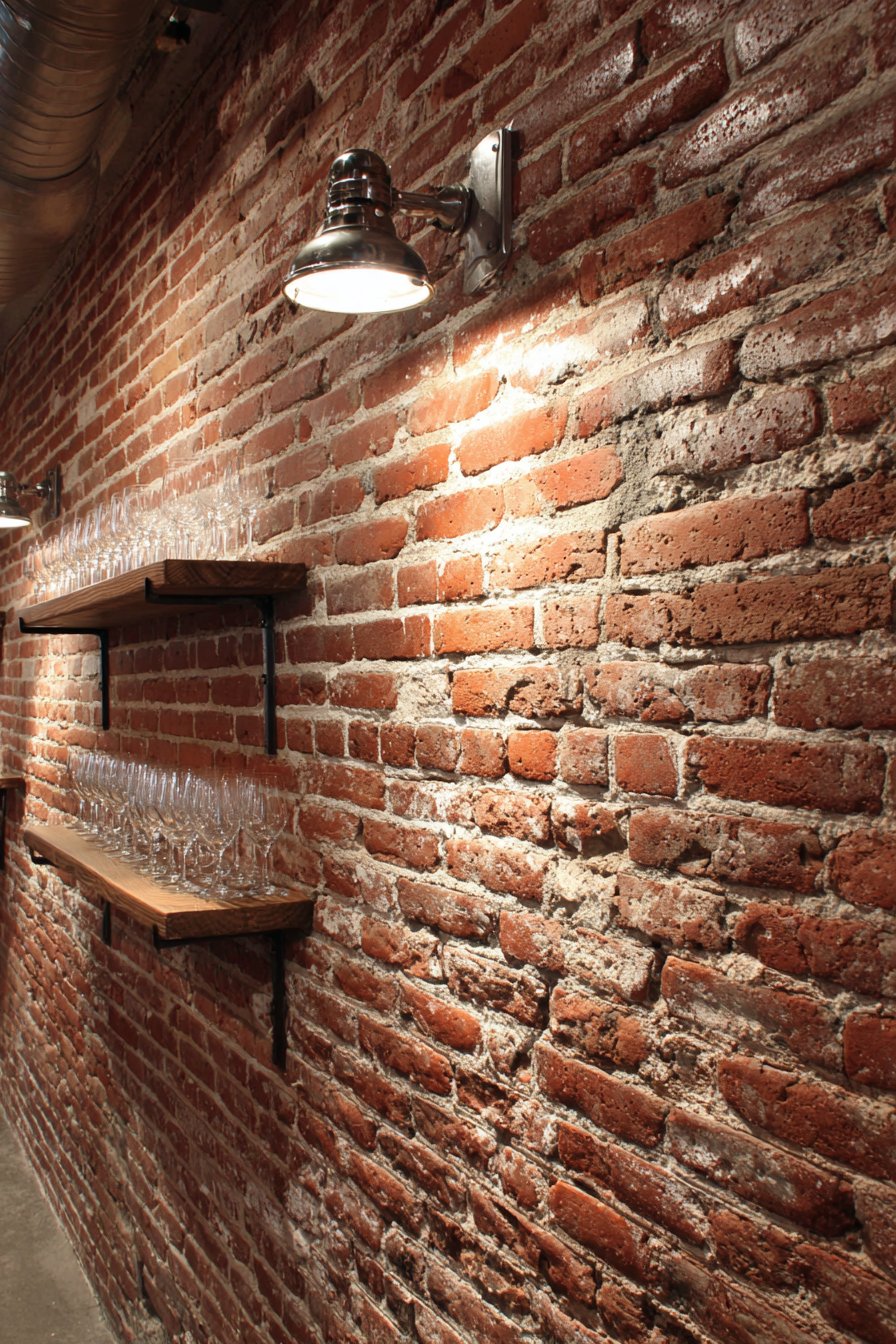
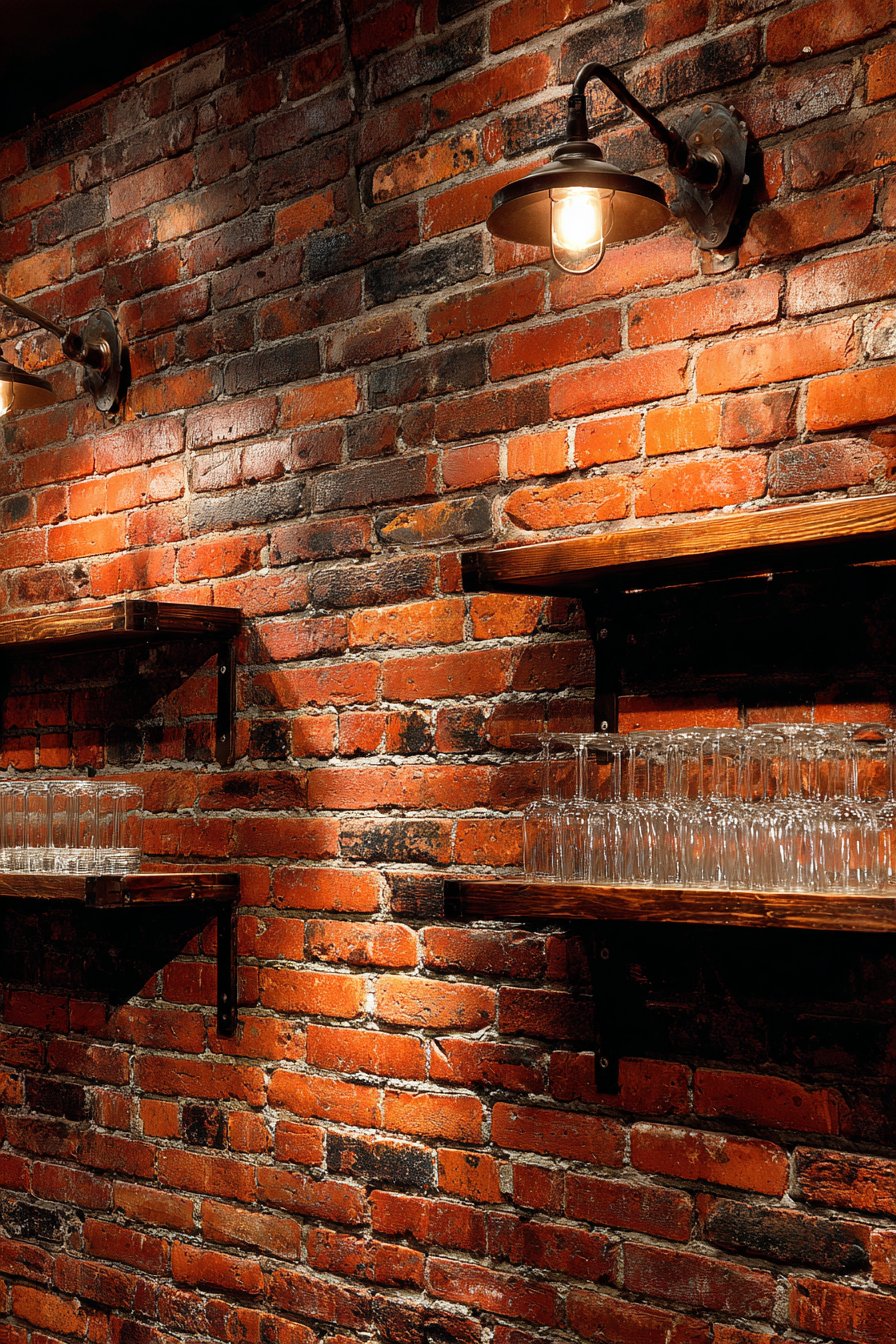
Exposed brick that has been carefully restored and sealed maintains authentic industrial character while meeting commercial building requirements for cleanliness and durability. The preservation of visible mortar lines and natural color variations from deep red to orange-brown celebrates architectural history while providing warm, textured backdrop. Vintage industrial lighting fixtures mounted directly to brick provide task and ambient lighting while emphasizing the wall’s authentic character.
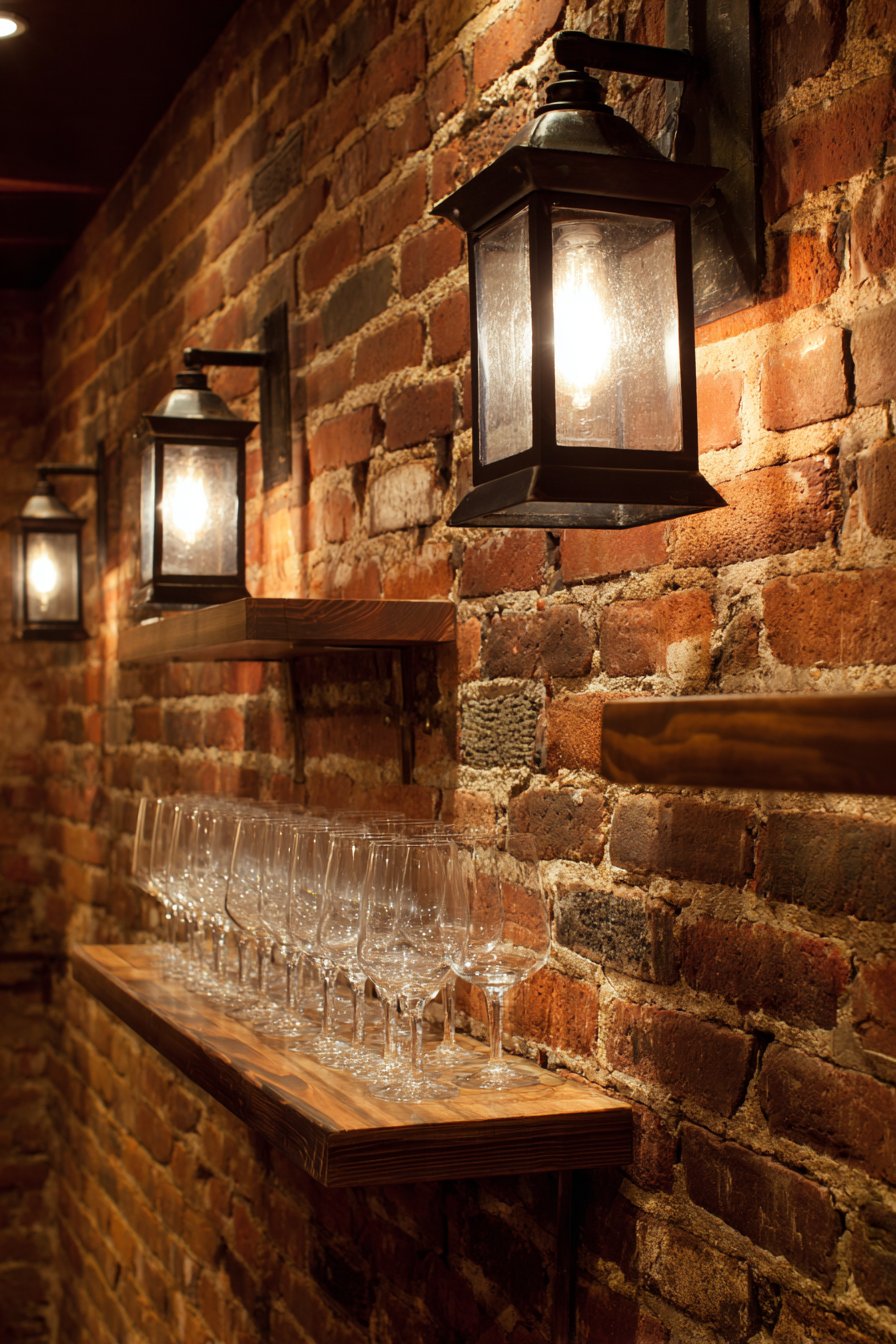
Simple metal shelf brackets supporting wooden shelves create functional display opportunities for wine glasses, bottles, or decorative objects without concealing the brick’s appeal. Interior photography demonstrates how the restaurant wall design idea celebrates architectural history while providing warm atmosphere, captured with lighting that enhances the brick’s dimensional quality and aged patina. The exposed brick communicates authenticity, permanence, and connection to building history that resonates with guests seeking genuine rather than manufactured character.
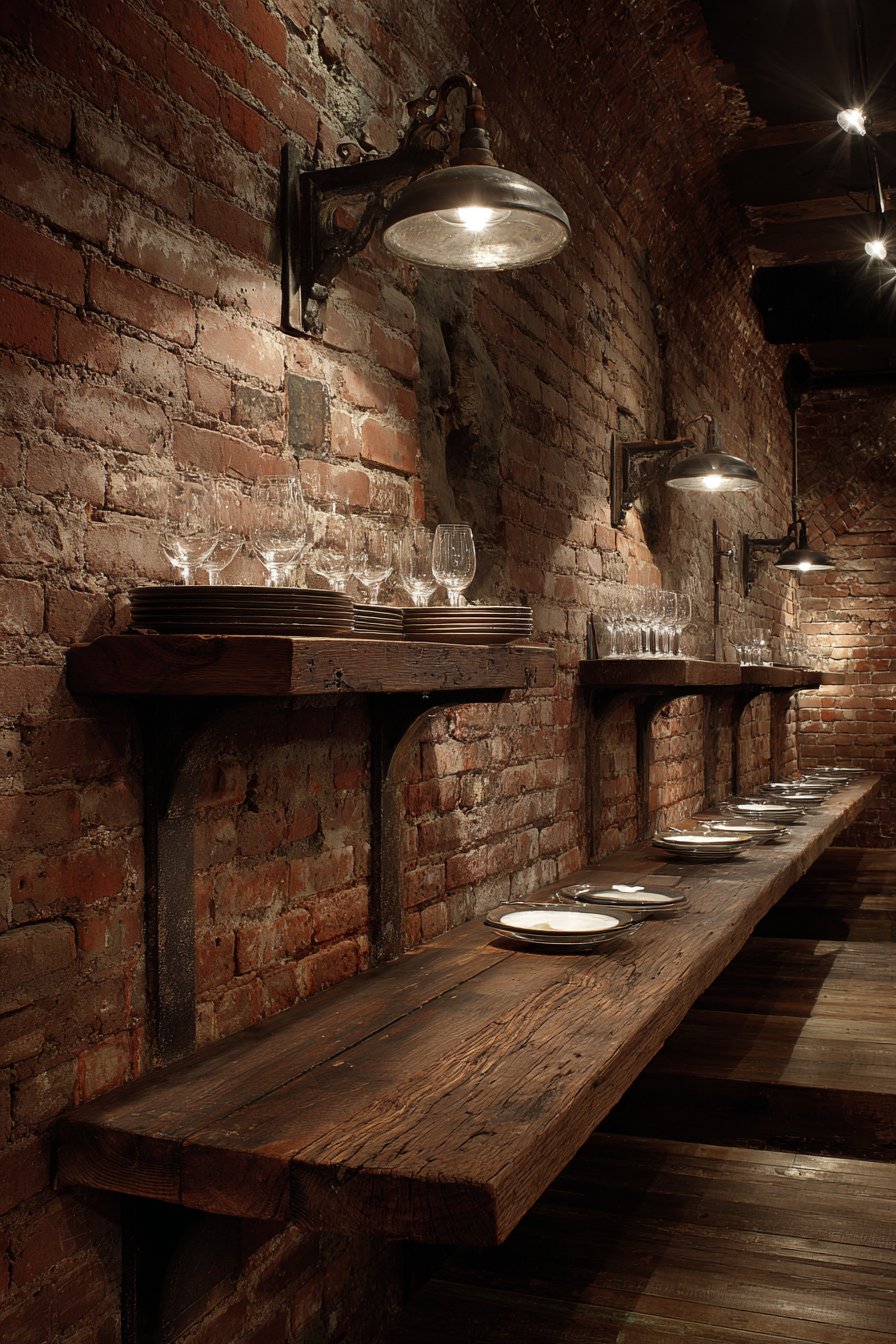
This wall treatment works particularly well in converted industrial buildings, historic structures, urban lofts, and any location where building heritage deserves celebration rather than concealment. The brick’s thermal mass also provides passive climate benefits, moderating temperature fluctuations and potentially improving energy efficiency. The maintenance requirements remain minimal once properly sealed, with occasional cleaning maintaining appearance without extensive ongoing investment.
Key Design Tips:
- Clean and seal brick professionally using appropriate products that protect while maintaining natural appearance
- Repair damaged mortar joints through professional repointing matching original materials and techniques
- Mount objects directly to brick using appropriate masonry anchors rated for expected loads
- Preserve brick’s natural color variations rather than attempting uniform appearance through painting or staining
- Incorporate adequate lighting to prevent dark brick from making spaces feel cave-like or oppressive
27. Library-Style Built-In Bookshelf
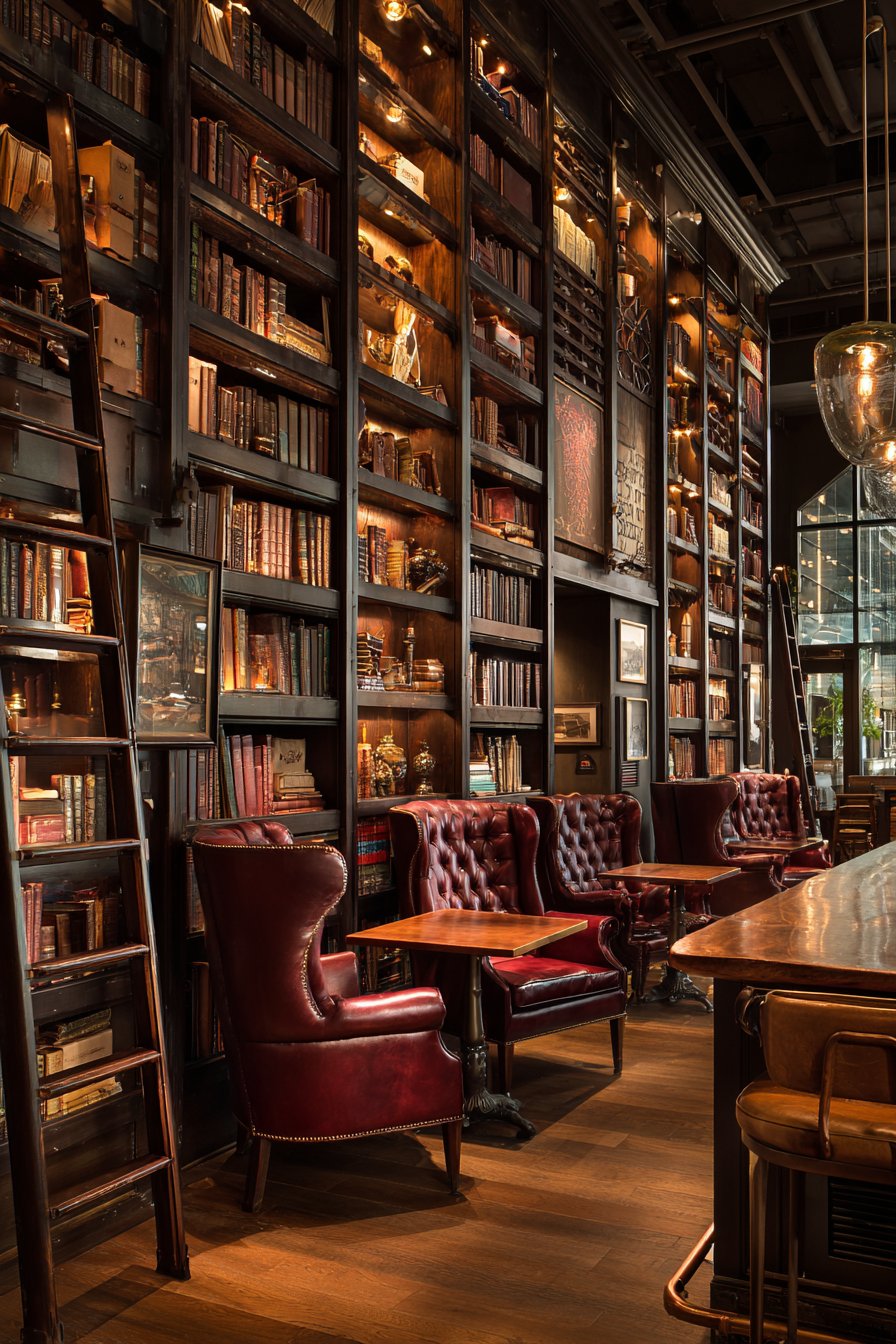
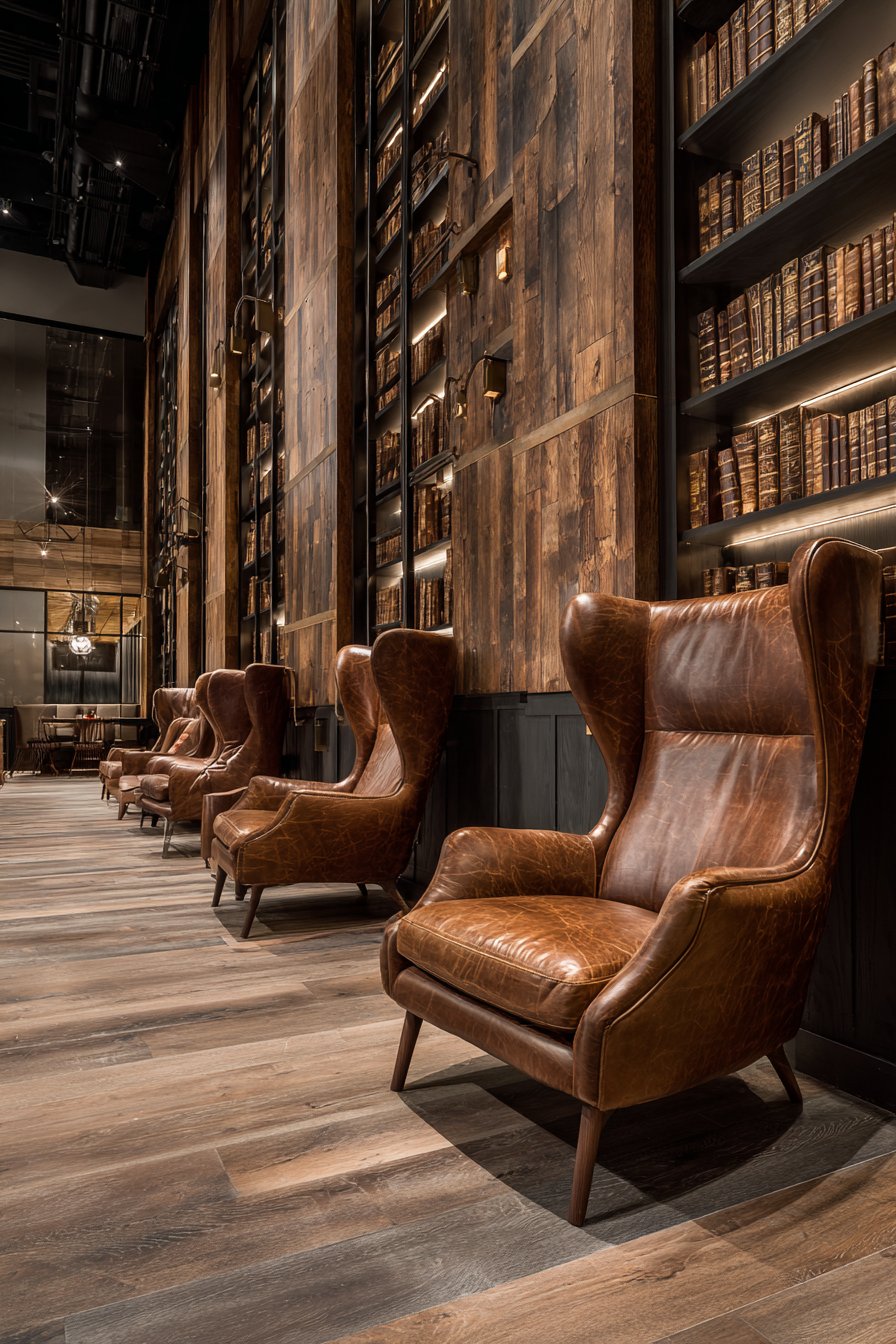
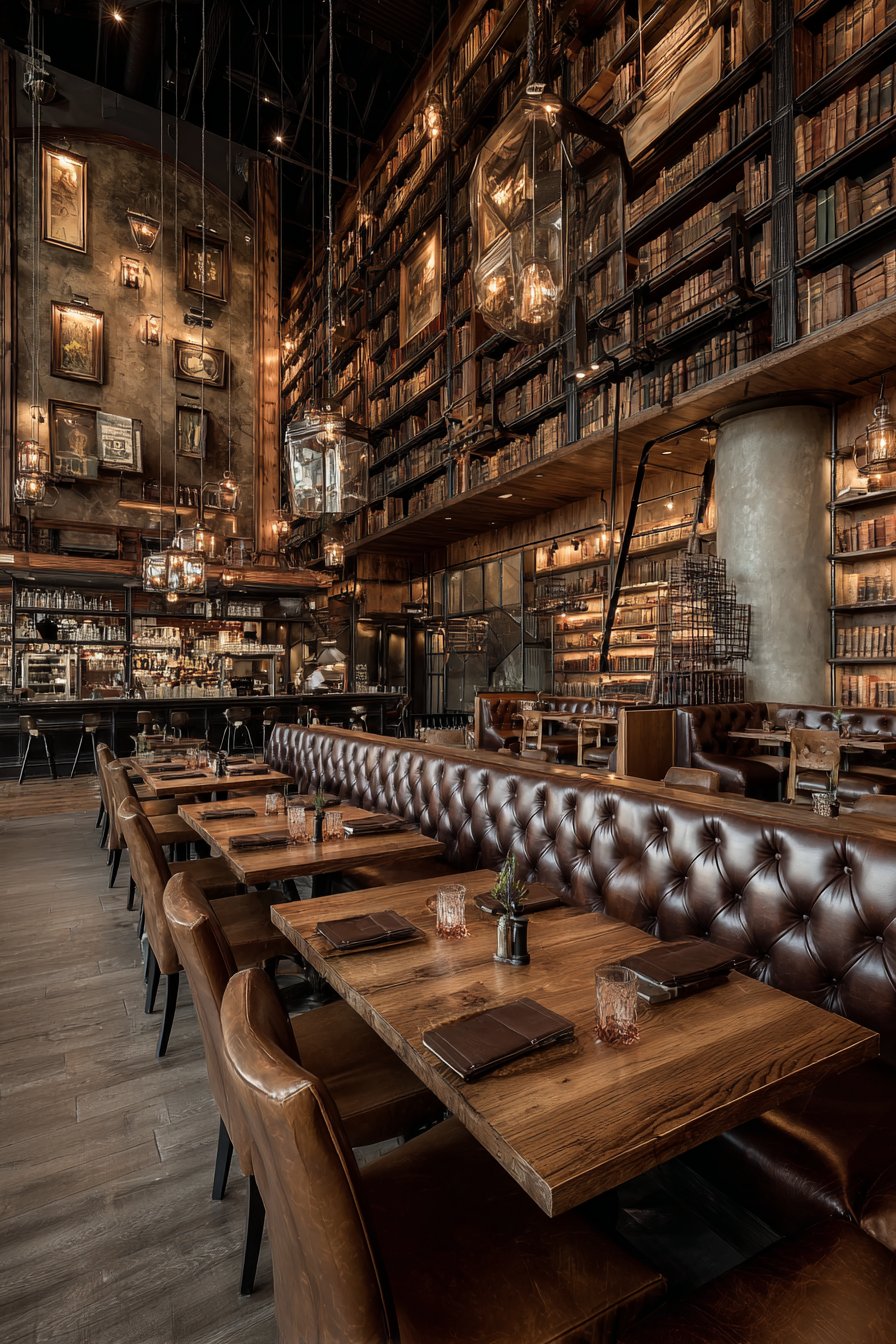
Custom-built bookshelf wall filled with vintage books, decorative objects, and subtle integrated lighting creates sophisticated library-like atmosphere that elevates dining to intellectual pursuit. The floor-to-ceiling built-in shelving in dark stained wood includes ladder access rails and brass library lights creating authentic library detailing. Leather wingback chairs positioned in front of bookshelf walls extend the intellectual aesthetic while providing comfortable waiting or lounge seating.
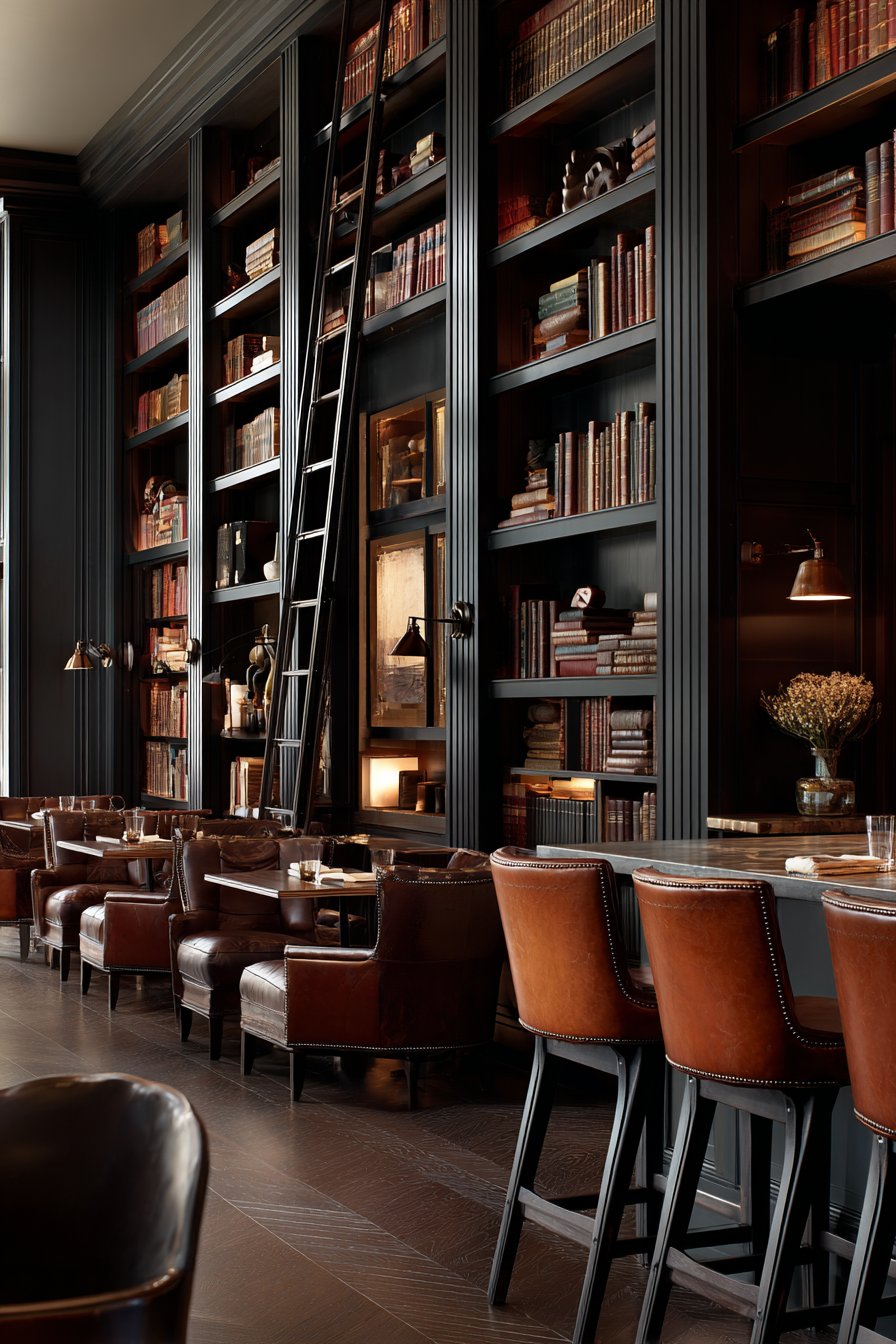
Wide-angle interior design photography shows how the restaurant wall design idea transforms dining space into intellectual retreat, captured with warm lighting that highlights leather book spines and creates cozy reading nook atmosphere. The bookshelf wall works particularly well in hotel restaurants, wine bars, after-dinner cognac lounges, and establishments targeting sophisticated demographics who appreciate literary culture. The books can include actual culinary references, wine guides, and local history adding functional value beyond pure decoration.
This approach creates destination dining environments where the experience extends beyond food to encompass cultural enrichment and intellectual stimulation. The bookshelf can include restaurant-related materials such as vintage cookbooks, wine references, or books about local history and culture, providing conversation starters and educational resources. The installation also serves practical purposes including sound absorption, visual warmth, and spatial definition in open floor plans.
Key Design Tips:
- Source books strategically combining attractive vintage volumes with actual culinary and cultural references
- Design built-in shelving with professional carpenter ensuring proper proportions, material quality, and structural integrity
- Incorporate library ladder systems with proper safety features and smooth operation
- Install dedicated lighting for book spines and shelf contents using low-heat LED sources preventing damage
- Establish maintenance protocols including dusting schedules and periodic book rotation maintaining fresh appearance
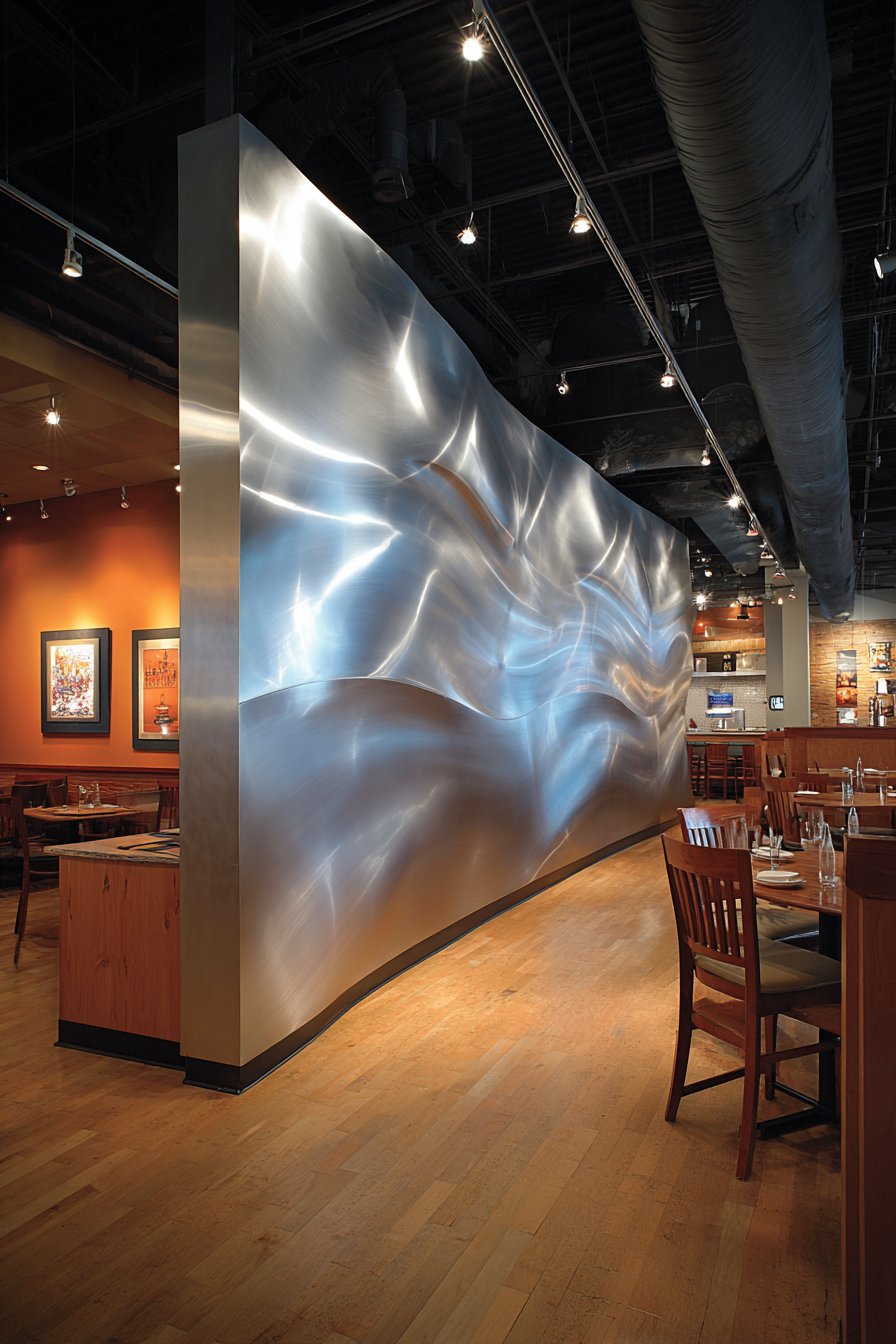
28. Brushed Stainless Steel Subway Tile
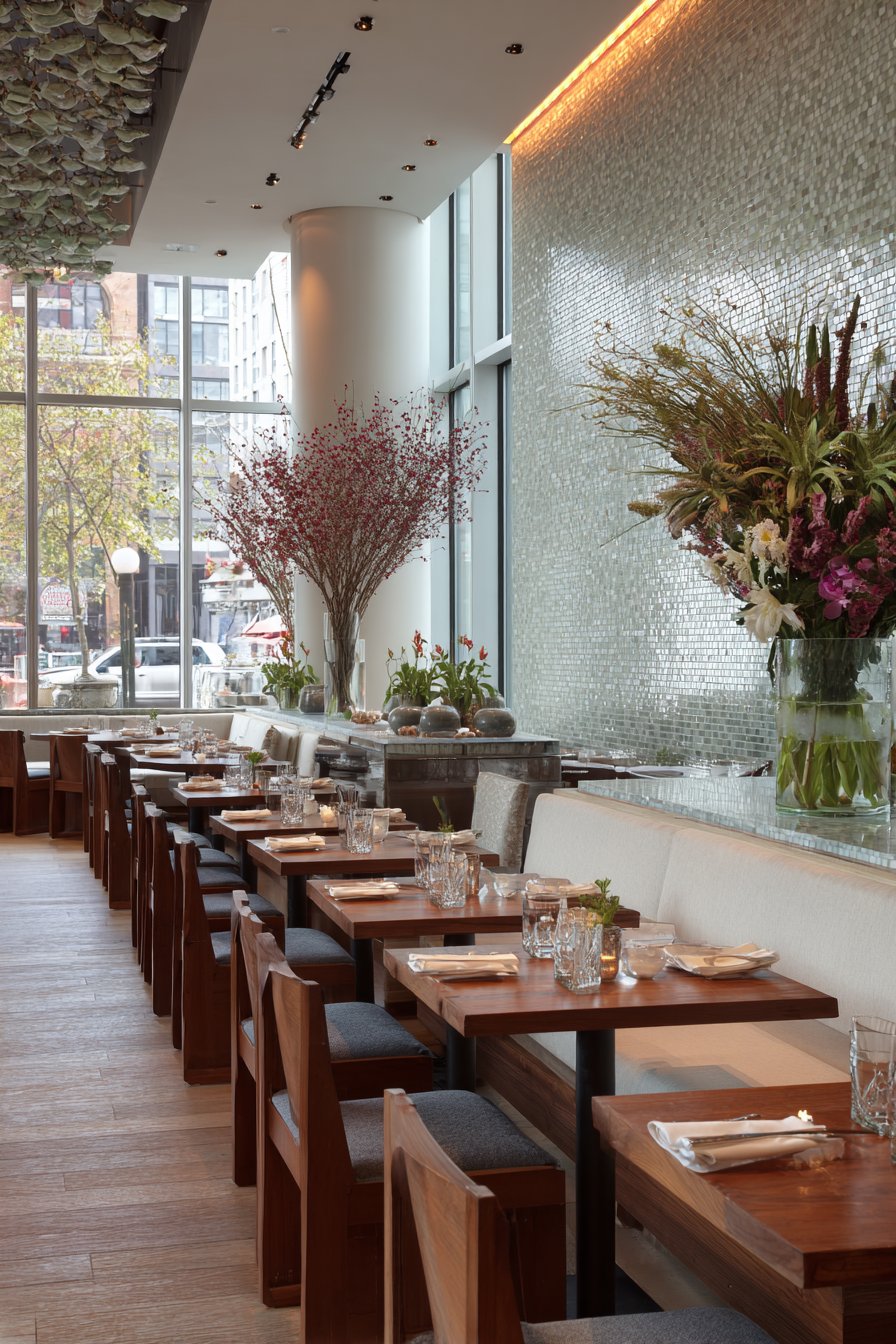
A metallic tile installation using brushed stainless steel subway tiles creates ultra-modern, reflective surfaces that amplify light throughout dining spaces while delivering contemporary edge. The sleek tiles contrast effectively with warm wood furniture and soft textile elements, balancing industrial modernity with organic warmth. LED strip lighting installed at ceiling lines creates subtle glow across metallic surfaces, emphasizing the tiles’ dimensional quality and reflective properties.
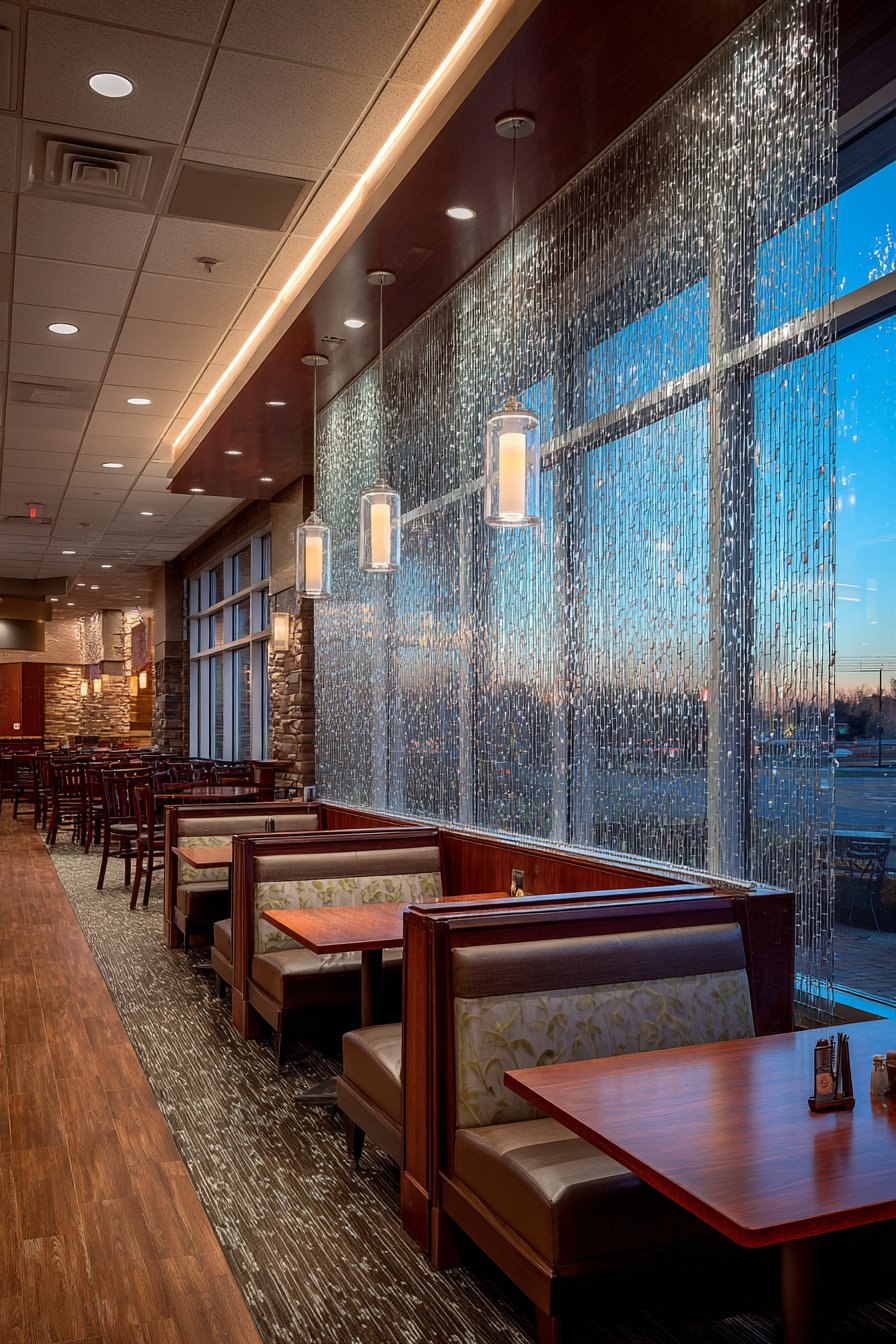
Professional photography demonstrates how the restaurant wall design idea adds contemporary sophistication while maintaining warmth through material balance, captured with careful exposure control showing tiles’ subtle reflections without glare or hotspots. The stainless steel provides exceptional durability and hygienic properties particularly appropriate for areas visible from open kitchens or exhibition cooking stations. The reflective quality also multiplies perceived space and light, valuable in smaller dining rooms or spaces with limited natural light.
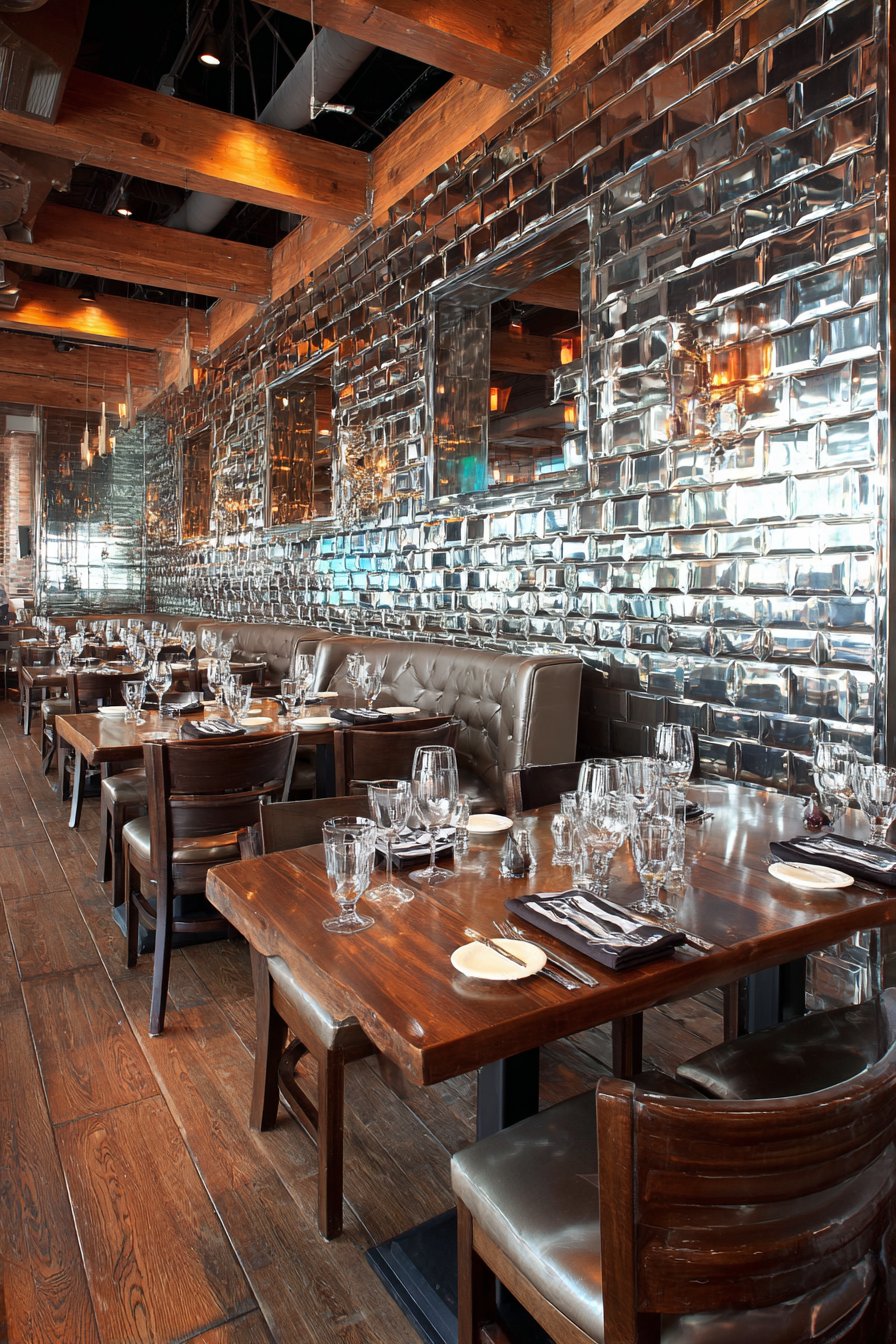
This wall treatment works particularly well in contemporary restaurants, sushi bars, modern steakhouses, and establishments where sleek aesthetics align with precision cooking and attention to detail. The material’s commercial kitchen associations subtly communicate professional competence and cleanliness standards. The installation also offers practical advantages including resistance to staining, exceptional cleanability, and virtually unlimited lifespan when properly maintained.
Key Design Tips:
- Specify commercial-grade stainless steel tiles with appropriate finishes for restaurant environments
- Install tiles over proper substrate with appropriate adhesives rated for metal tile applications
- Design lighting carefully to prevent excessive glare from reflective surfaces
- Balance metallic tiles with warm materials elsewhere preventing spaces from feeling cold or institutional
- Establish cleaning protocols using appropriate products that maintain brushed finish without creating visible streaking
29. Antique Kitchen Implement Display
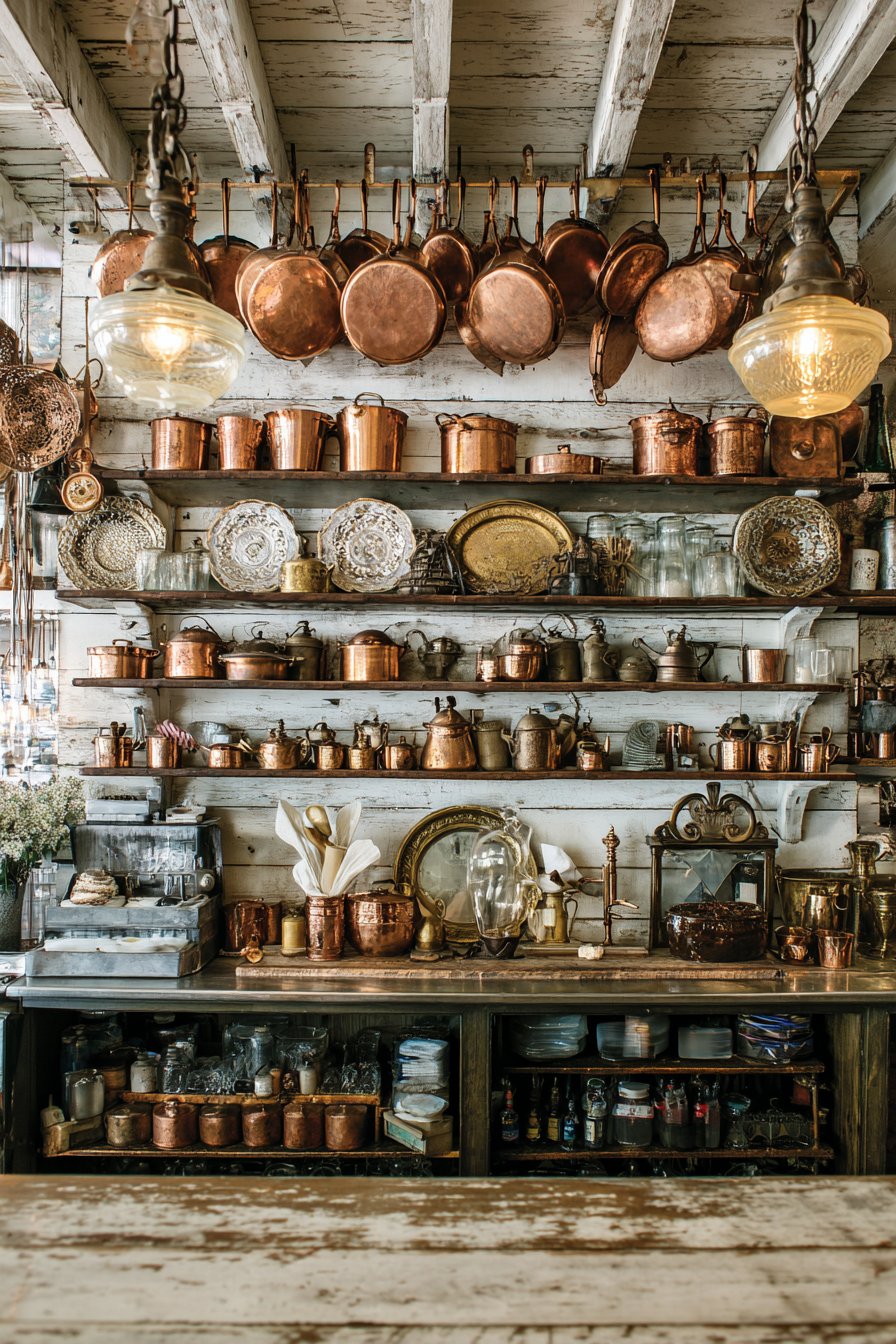
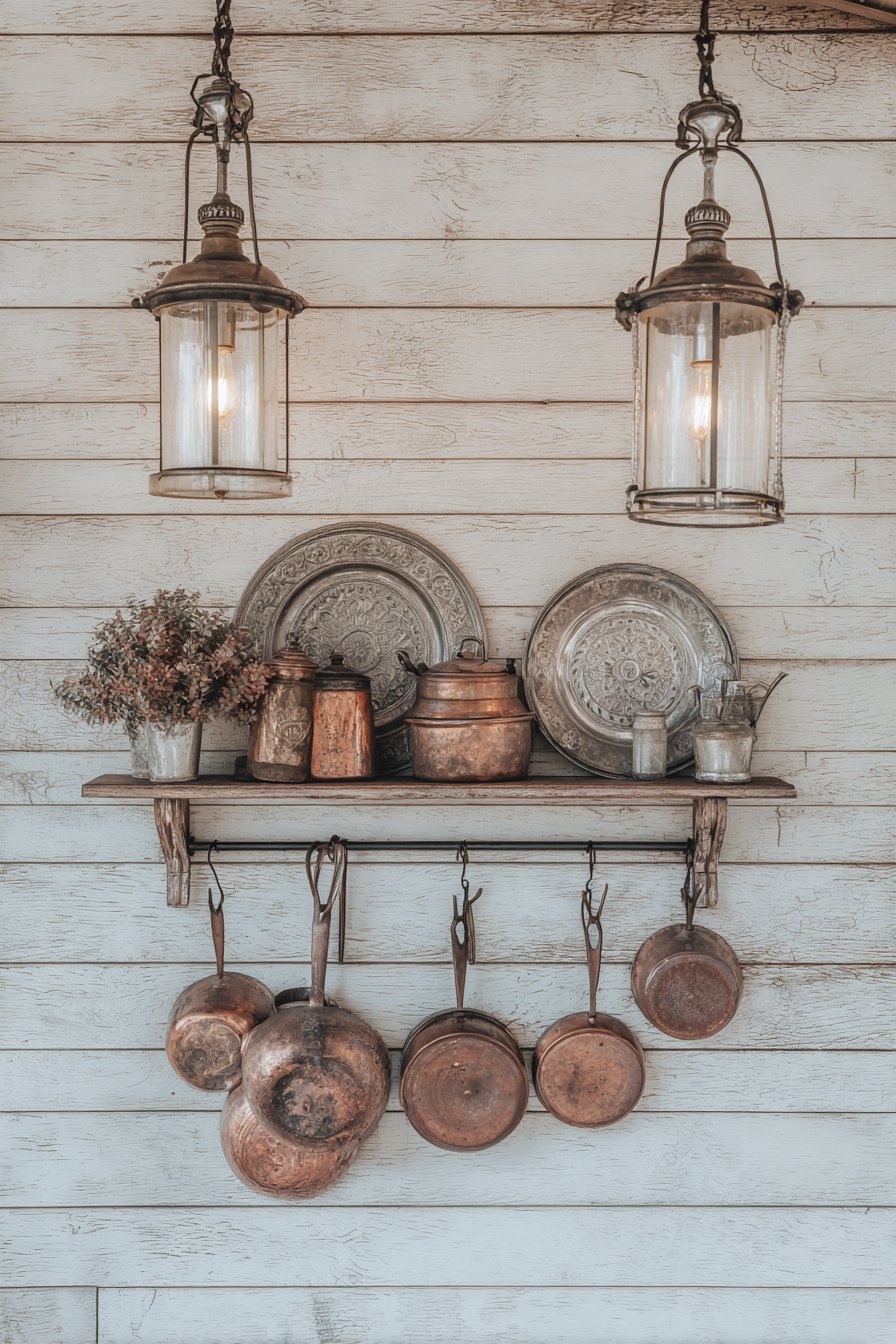
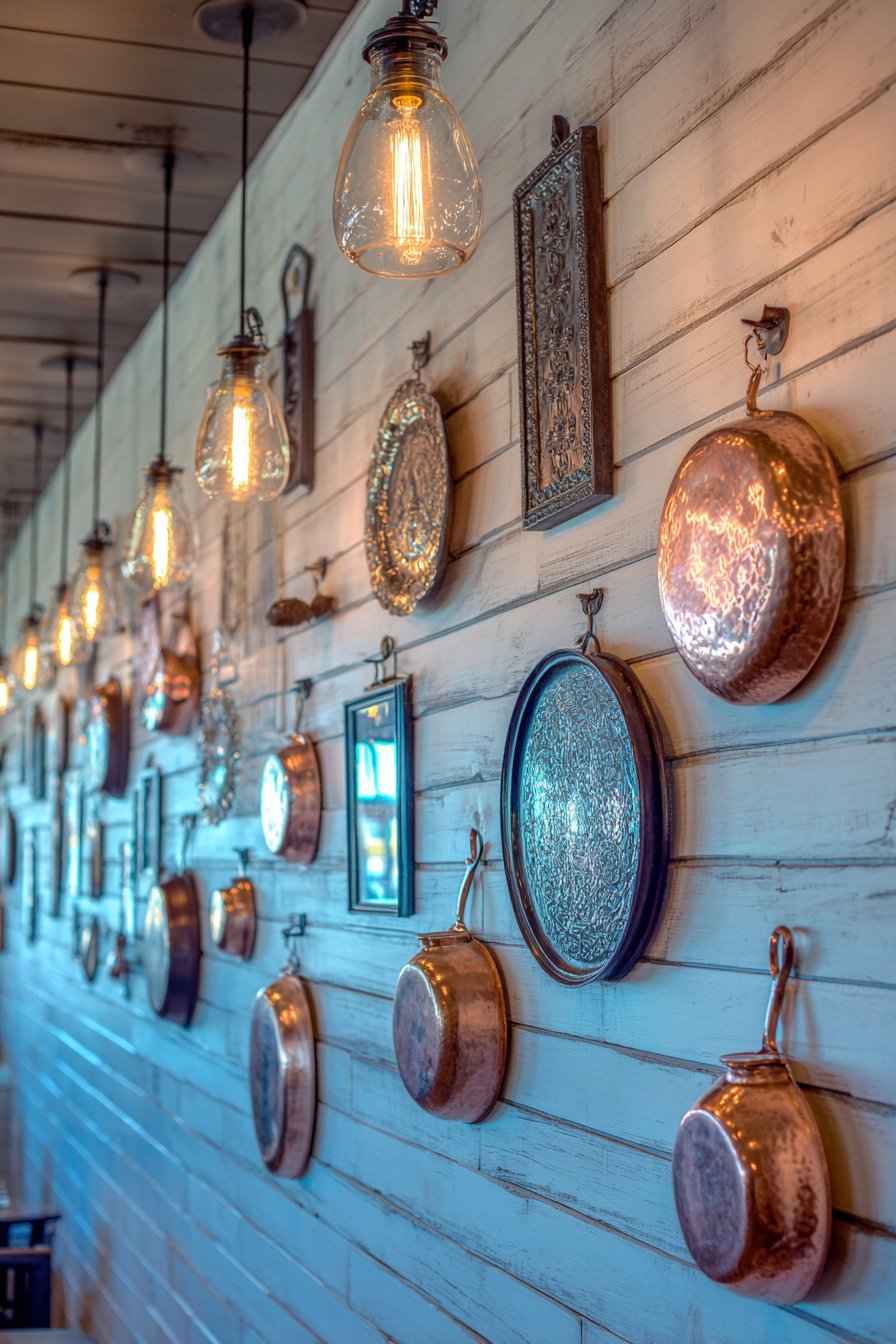
A curated display of antique serving platters, copper pots, and vintage kitchen implements mounted on whitewashed shiplap walls creates country-kitchen aesthetic celebrating culinary tradition. The functional items become decorative art arranged in organized yet organic patterns that appear collected over time rather than purchased as coordinated sets. Farmhouse-style pendant lights with seeded glass shades illuminate the collection while reinforcing the rustic-traditional design vocabulary.
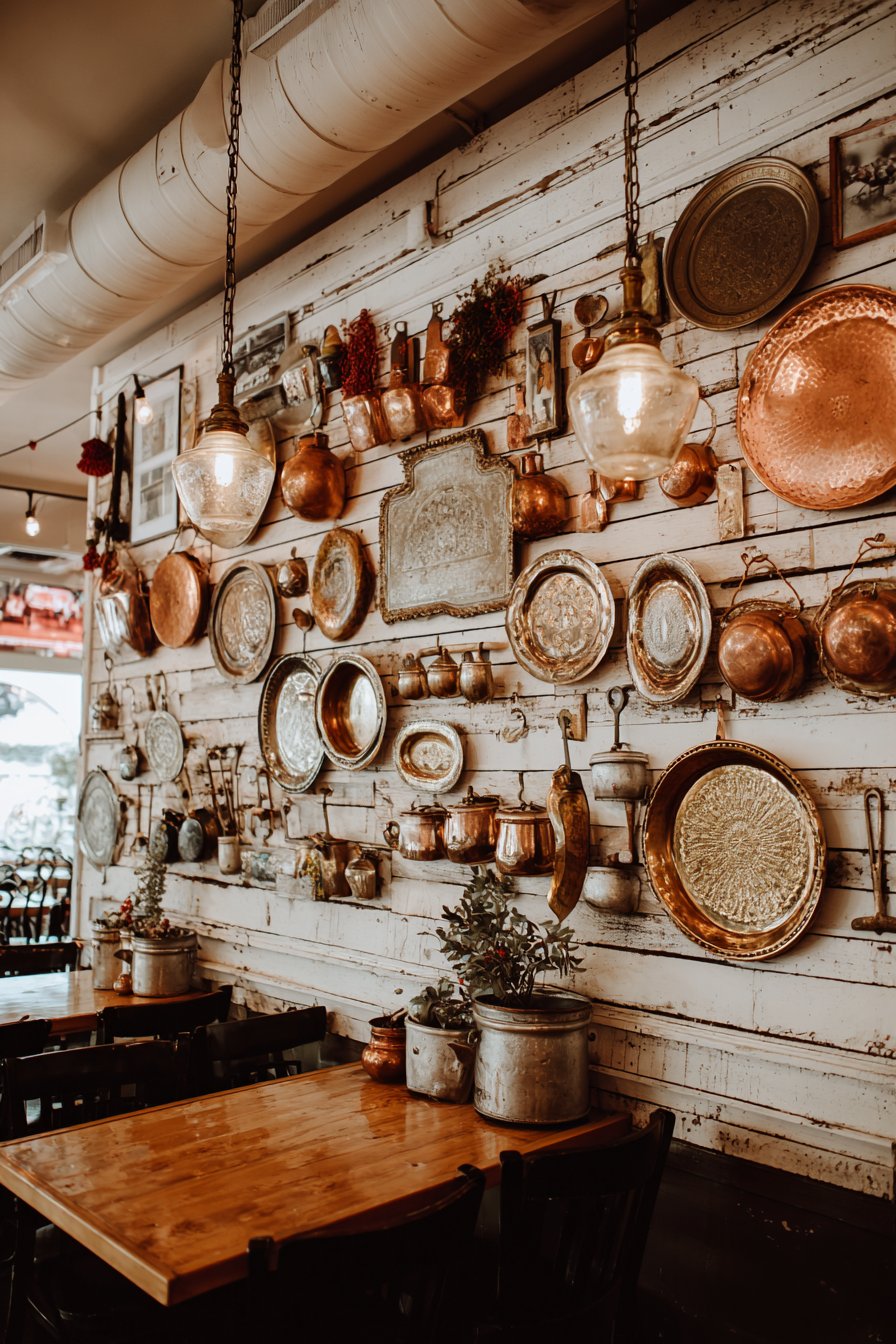
Interior design photography captures the restaurant’s country-kitchen aesthetic with the restaurant wall design idea celebrating culinary heritage, showing natural lighting that highlights copper’s warm patina and items’ authentic age. The whitewashed shiplap provides neutral backdrop that allows the copper and ceramic pieces’ colors and forms to stand out while adding textural interest through wood grain. The arrangement communicates values of tradition, craftsmanship, and respect for culinary history that resonate with guests seeking authentic rather than manufactured dining experiences.
This wall treatment works exceptionally well in farm-to-table restaurants, country inns, bed and breakfast dining rooms, and establishments emphasizing traditional cooking methods and heritage recipes. The antique implements can include pieces actually used in the restaurant’s cooking processes, creating direct connections between display and kitchen practices. The collection also provides conversation starters and opportunities for storytelling that enhance guest engagement and create memorable dining experiences.
Key Design Tips:
- Source authentic antique implements from estate sales, antique dealers, and specialized culinary collectible dealers
- Clean and treat antique pieces appropriately for display while preserving authentic patina and character
- Mount items securely using appropriate hardware rated for each piece’s weight and configuration
- Arrange displays with intentional asymmetry avoiding rigid grids while maintaining visual balance
- Rotate selected pieces seasonally or periodically maintaining fresh appearance for regular guests
Why These Restaurant Wall Design Ideas Represent the Best Choices
These twenty-nine restaurant wall design ideas represent carefully curated solutions addressing the diverse challenges and opportunities facing modern restaurateurs. Each approach balances aesthetic impact with practical functionality, understanding that successful restaurant design must satisfy multiple simultaneous requirements: creating memorable visual experiences, supporting operational efficiency, controlling acoustic environments, maintaining durability under heavy use, and aligning with brand narratives that differentiate establishments in competitive markets.
The living wall botanical installations and modular herb gardens represent the intersection of biophilic design principles with farm-to-table marketing narratives, creating immersive natural environments while demonstrating ingredient sourcing transparency. These installations address contemporary diners’ desires for wellness-supportive environments and sustainable practices, transforming functional walls into powerful brand statements that communicate values through design rather than words alone.
The vintage photography galleries, antique memorabilia collections, and library-style bookshelves speak to guests’ appetite for authenticity and storytelling in an era of mass-produced uniformity. These curated displays create conversation starters, provide visual interest that rewards repeated visits, and establish cultural credibility that elevates restaurants beyond simple food service to destination dining experiences. The careful selection and arrangement of display elements demonstrates curatorial sophistication that sophisticated diners recognize and value.
The architectural material installations—exposed brick, reclaimed wood, concrete panels, stone veneer, and cork walls—celebrate honest materiality and craftsmanship in opposition to superficial decoration. These approaches resonate with contemporary values favoring sustainability, authenticity, and quality construction over disposable trends. The materials’ inherent durability also addresses practical commercial requirements, providing wall surfaces that age gracefully rather than appearing worn, maintaining value throughout decades of service.
The acoustic solutions including fabric walls, dimensional tiles, and geometric panels demonstrate sophisticated understanding that successful restaurant design must address multiple sensory dimensions simultaneously. Comfortable conversation quality directly impacts guest satisfaction and duration, affecting both revenue per table and likelihood of return visits. These installations prove that functional requirements need not compromise aesthetic appeal when approached thoughtfully.
The bold pattern installations—tropical wallpapers, geometric art deco designs, striped statements, and Portuguese tiles—serve restaurants targeting specific demographics and style preferences, creating distinctive visual identities that facilitate brand recognition and social media marketing. These high-impact walls become signature elements that guests associate with specific restaurants, building brand equity through memorable visual experiences.
Conclusion
Restaurant wall design ideas encompass far more than superficial decoration—they represent strategic investments in creating comprehensive dining experiences that engage multiple senses, communicate brand values, and address practical operational requirements. The twenty-nine approaches detailed in this guide demonstrate the remarkable range of possibilities available to restaurateurs willing to think creatively about their spaces’ vertical surfaces.
From living walls that literally bring nature indoors to vintage collections that celebrate culinary heritage, from high-tech acoustic solutions to timeless natural materials, these restaurant wall design ideas prove that every establishment can find approaches aligned with their specific concept, budget, target demographic, and spatial constraints. The most successful implementations balance aesthetic impact with practical durability, creating walls that maintain visual appeal despite the demanding conditions of commercial food service environments.
As you consider which restaurant wall design ideas best suit your establishment, remember that walls represent opportunities to tell your story, reinforce your brand identity, solve practical problems, and create memorable experiences that distinguish your restaurant in increasingly competitive markets. Whether you’re planning a new restaurant from the ground up or refreshing an existing space, thoughtful wall design investments generate returns through enhanced guest satisfaction, organic social media marketing, improved operational functionality, and the creation of truly distinctive dining destinations that guests eagerly recommend to others. The walls of your restaurant are valuable real estate—use them wisely to create spaces as memorable as the meals you serve.
