
In the ever-evolving world of interior design, few architectural features offer the perfect blend of form and function quite like recessed wall niches. These carved-out spaces within your walls serve as both practical storage solutions and stunning visual focal points, transforming ordinary walls into dynamic, three-dimensional canvases. Whether you’re looking to display cherished collectibles, organize everyday essentials, or simply add architectural interest to a flat surface, recessed wall niches provide an elegant answer that transcends traditional shelving and cabinetry.
The beauty of recessed wall niches lies in their versatility and timeless appeal. From minimalist modern spaces to rustic farmhouse interiors, these built-in features adapt seamlessly to any design aesthetic while maximizing space efficiency. Unlike protruding shelves that consume valuable square footage, niches work within the existing wall structure, creating storage and display opportunities without sacrificing floor space. This makes them particularly valuable in smaller homes, apartments, and bathrooms where every inch counts. The strategic incorporation of lighting, varied depths, and thoughtful placement can elevate these simple recesses into architectural statements that define and enhance entire rooms.
Throughout this comprehensive guide, we’ll explore twenty-seven innovative recessed wall niche ideas that showcase the remarkable range of applications for this design element. From spa-inspired bathroom retreats featuring illuminated shower niches to sophisticated living room gallery walls, from practical home office organization systems to cozy bedroom reading nooks with integrated storage, each concept demonstrates how recessed niches can be tailored to meet specific functional needs while contributing to the overall aesthetic vision of your space. Whether you’re planning a complete renovation or seeking subtle ways to enhance your current home, these ideas will inspire you to look at your walls in an entirely new light.
1. Asymmetric Living Room Feature Wall with Illuminated Display Niches
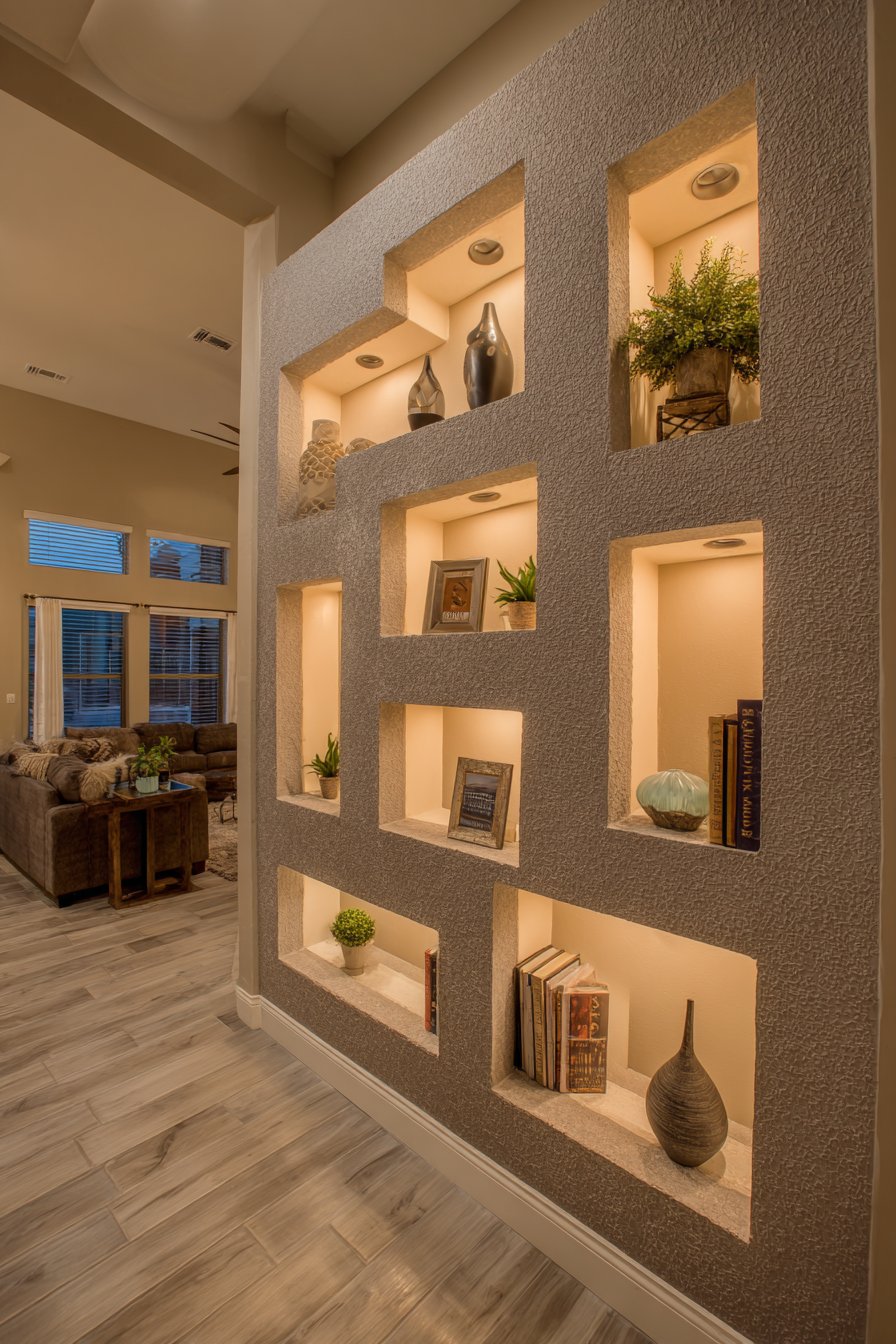
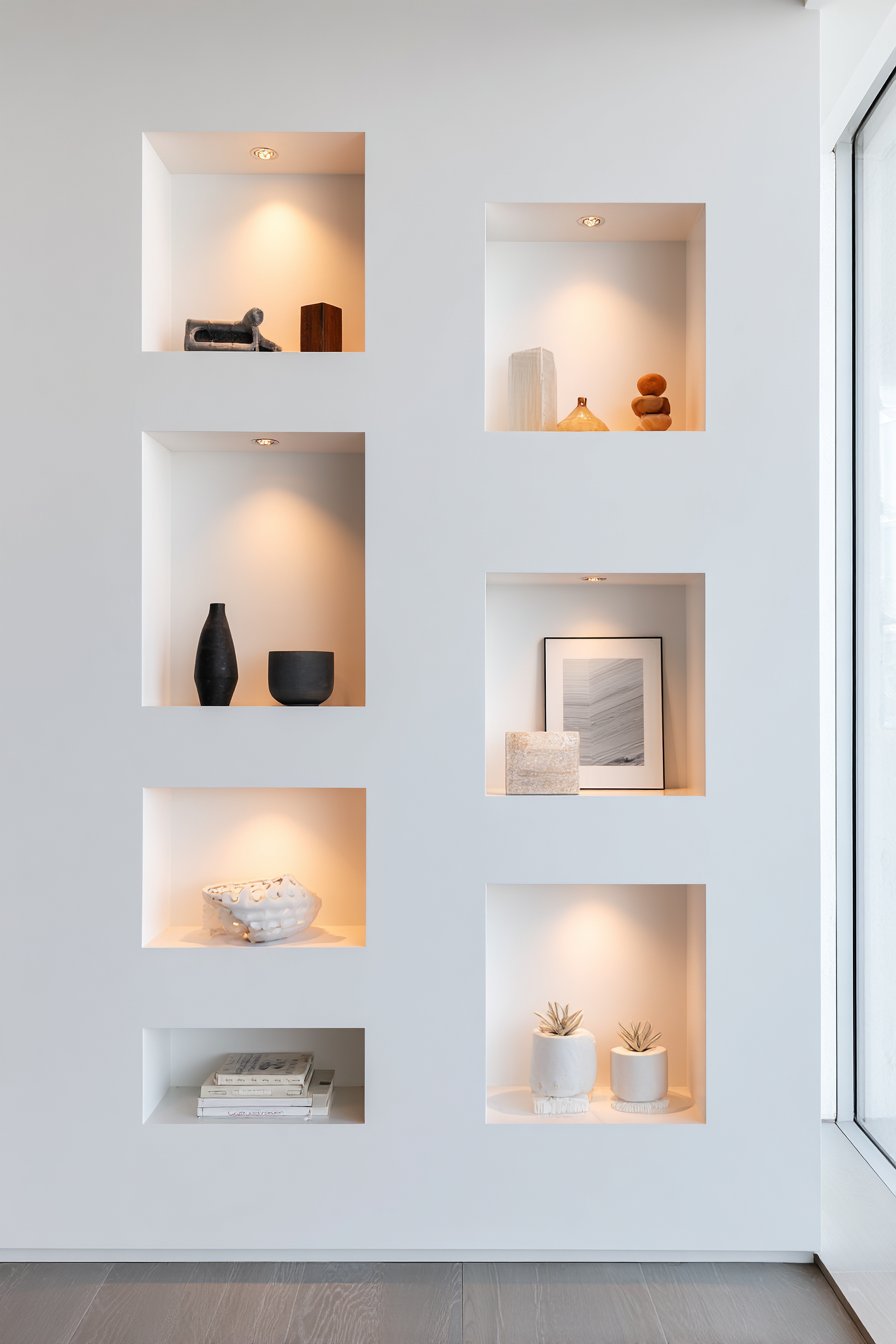
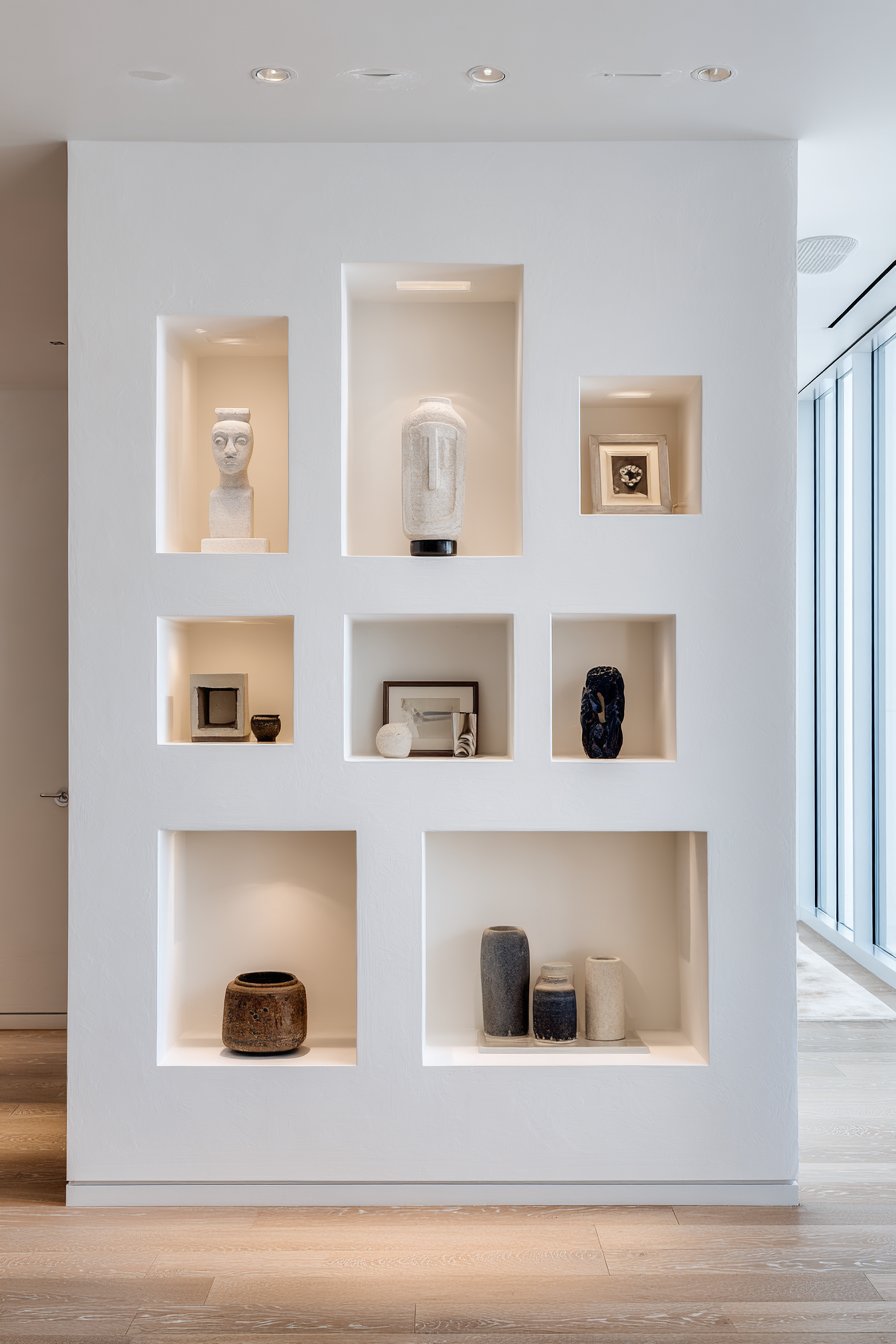
The contemporary living room reaches new heights of sophistication when featuring a stunning arrangement of recessed wall niches in varying sizes across a textured gray plaster wall. This asymmetric composition creates visual drama through its carefully orchestrated chaos, with each niche serving as a illuminated frame for curated decorative objects. The integrated warm LED strip lighting along the top and sides of each recess doesn’t merely illuminate—it transforms these architectural elements into glowing jewel boxes that command attention whether day or night.
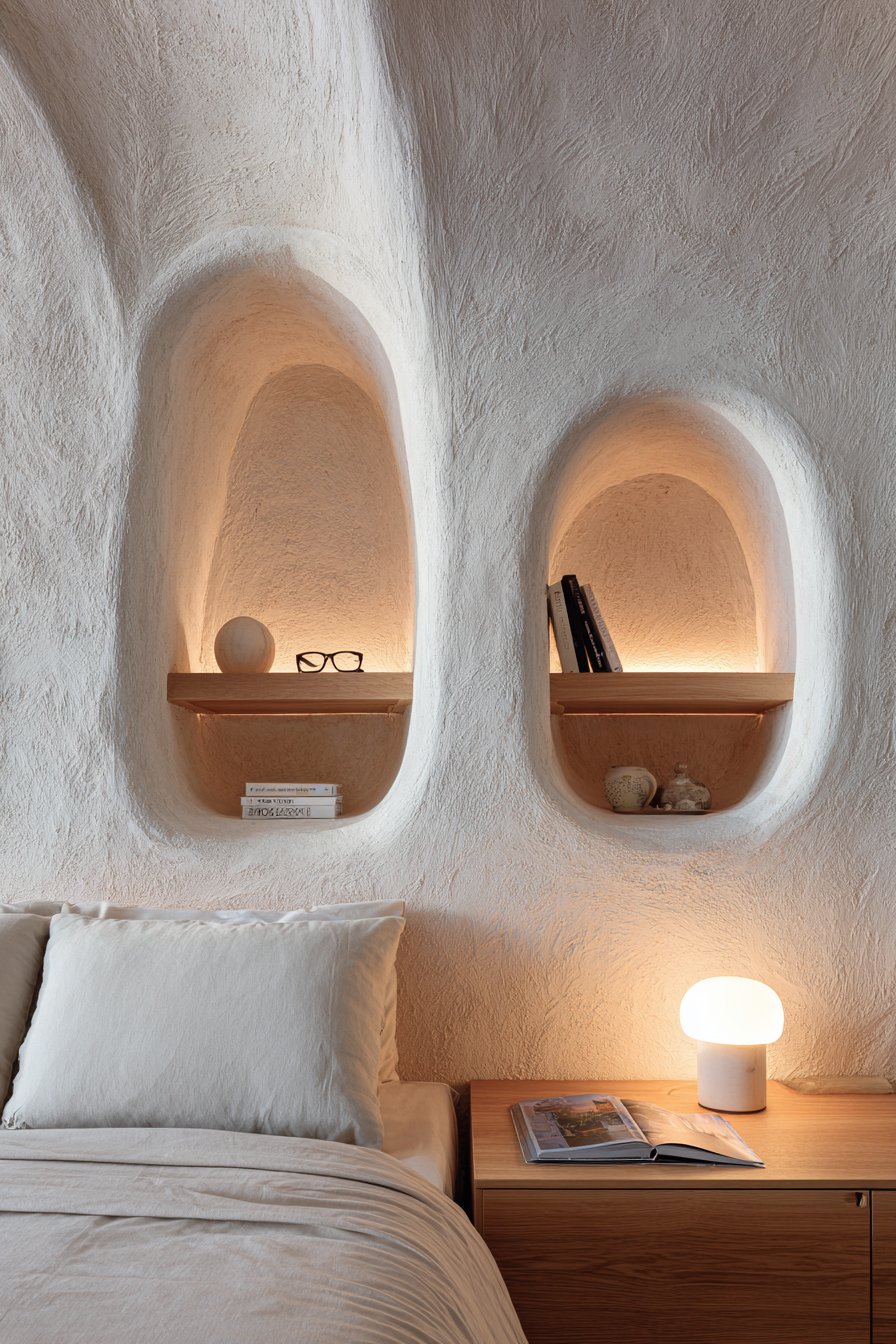
The genius of this design lies in its combination of functional display and ambient lighting. Each niche becomes a miniature stage where sculptural ceramic vases, carefully stacked art books, small potted succulents, and modern decorative objects perform for viewers. The varied depths and sizes prevent monotony while allowing for diverse display options—larger niches accommodate substantial statement pieces, while smaller recesses highlight delicate treasures. The textured gray plaster wall provides a sophisticated neutral backdrop that allows the displayed items to truly shine without competing for attention.
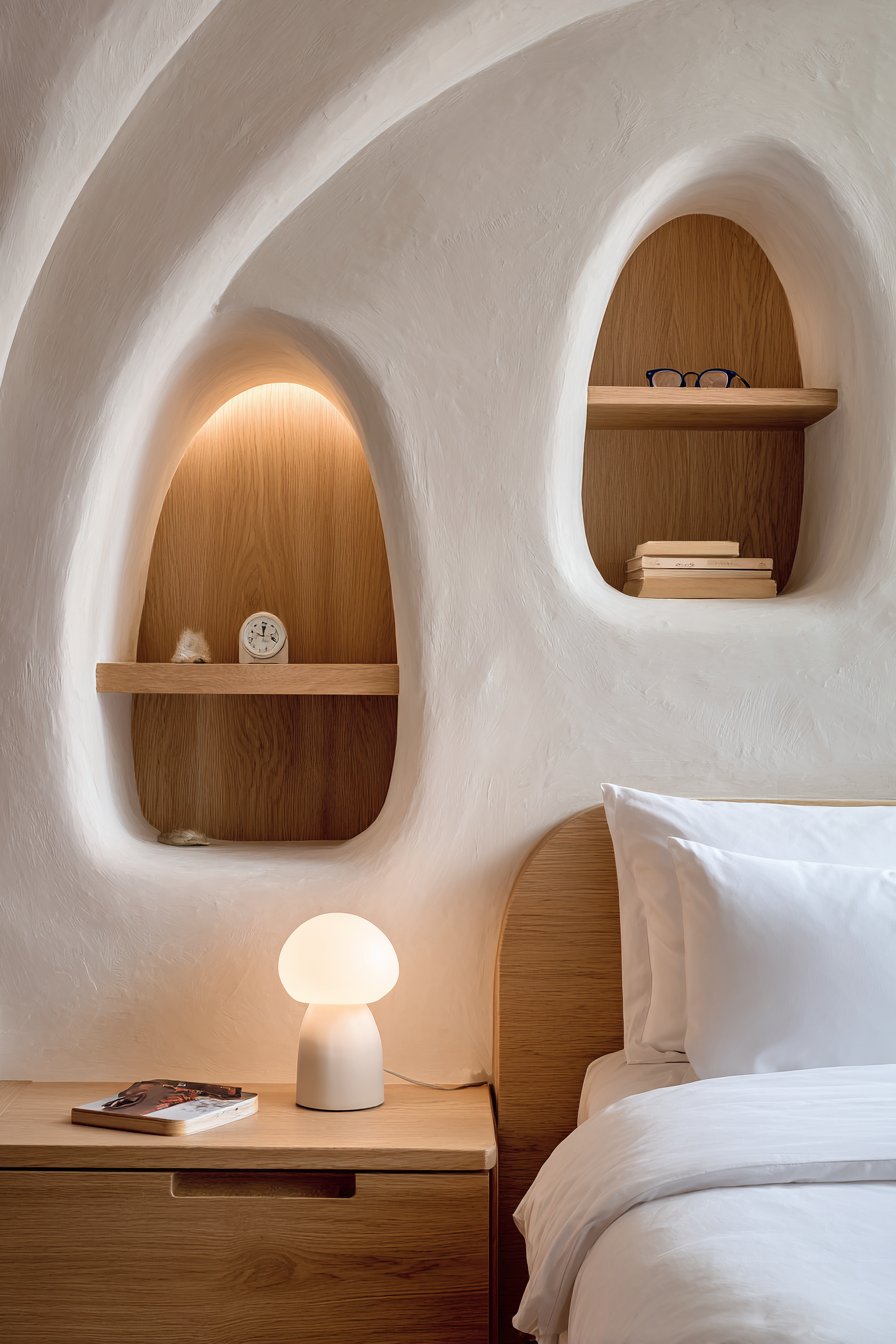
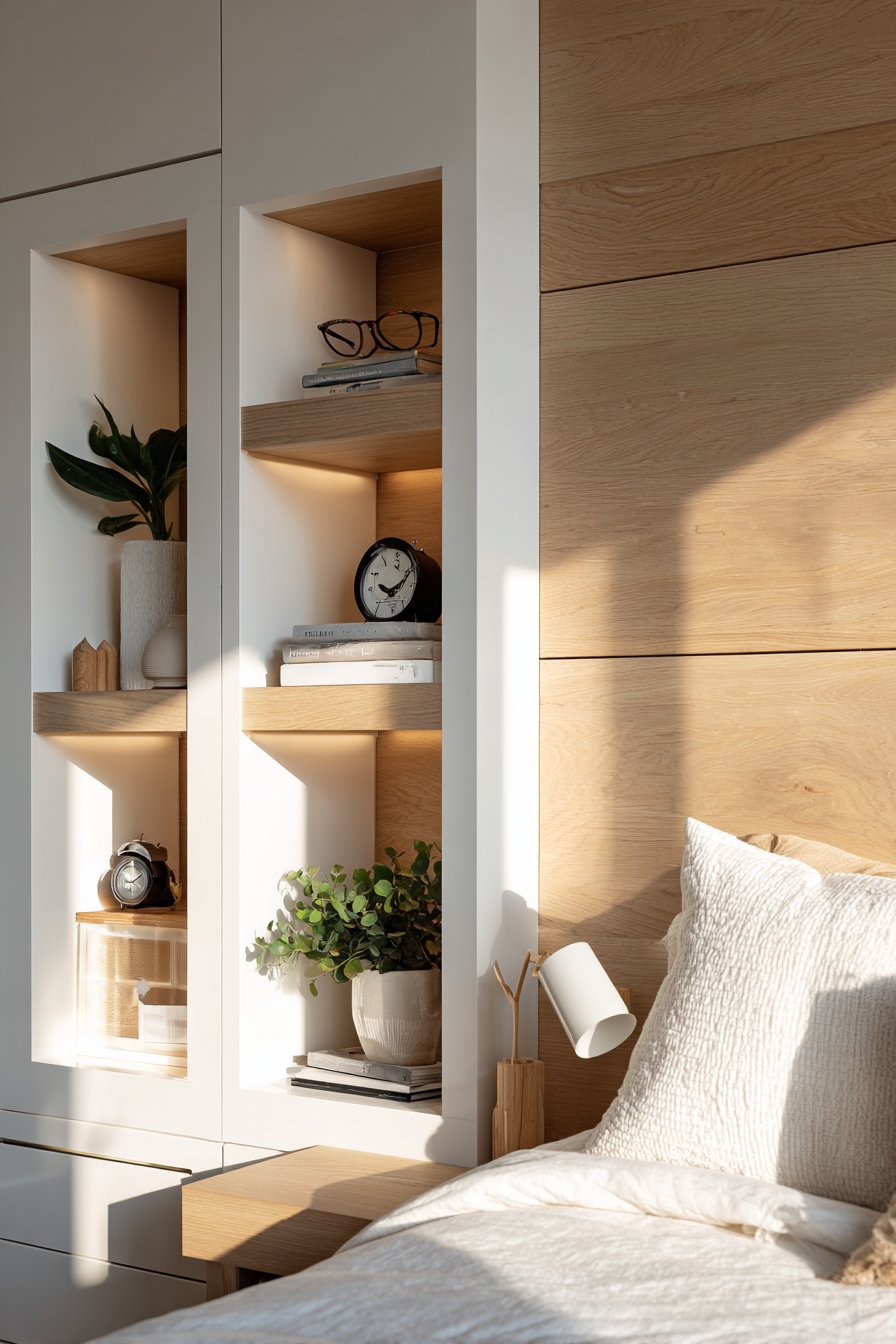
The interplay of light and shadow created by the recessed planes adds remarkable depth to what would otherwise be a flat wall surface. During daylight hours, natural light interacts with the niches to create subtle shadows that emphasize their dimensional quality. As evening approaches and the integrated LED lighting activates, the wall transforms into a luminous focal point that provides both functional illumination and atmospheric ambiance. This dynamic quality ensures the feature wall remains engaging throughout the day’s changing light conditions.
Key Design Tips:
- Vary niche sizes and positions to create visual interest while maintaining overall balance
- Install LED strip lighting on dimmers to control intensity and mood
- Curate displayed items by color, texture, and scale for cohesive visual impact
- Consider the wall’s proportions when planning niche placement to avoid overcrowding
- Use the textured wall finish to add subtle depth that complements the recessed geometry
2. Minimalist Bedroom Niches as Nightstand Alternatives
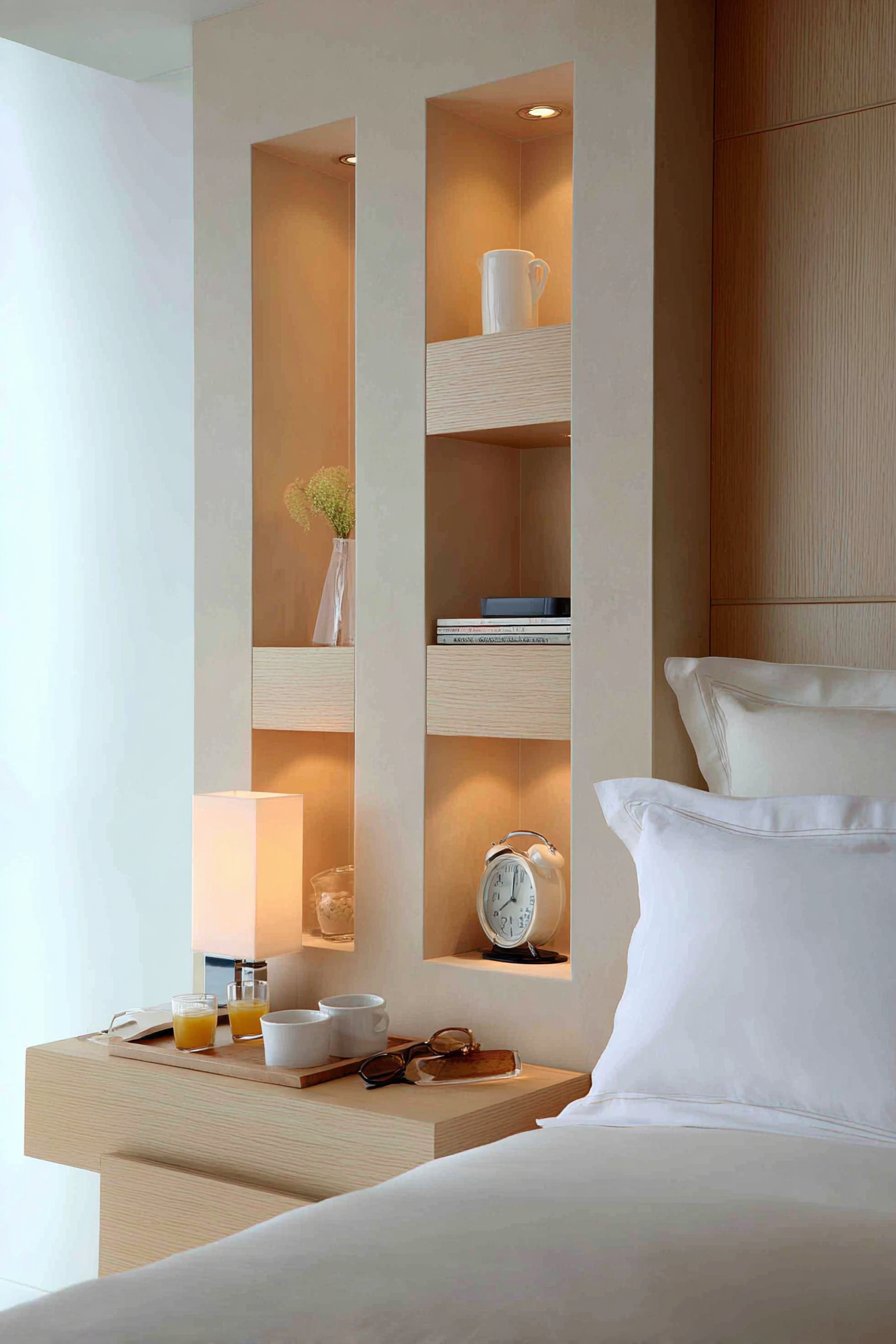
The modern bedroom embraces simplicity and functionality with symmetrical recessed wall niches that replace traditional nightstands entirely. Carved directly into soft white plaster walls flanking the bed, these niches represent the ultimate expression of minimalist design philosophy—eliminating furniture while maintaining essential bedside functionality. The integrated LED backlighting creates a gentle, ambient glow that serves as a sophisticated alternative to table lamps, providing just enough illumination for late-night reading or early morning routines without harsh overhead lighting.
Each niche features natural oak wood shelving that introduces warmth to the otherwise monochromatic palette, creating a pleasing contrast between the cool white walls and organic wood tones. This material choice connects the architectural feature to the broader bedroom design while providing a stable, attractive surface for bedside essentials. The depth of each recess has been carefully calculated to accommodate reading glasses, a small alarm clock, and a minimalist table lamp without items protruding beyond the wall plane, maintaining the clean lines that define the space.
The practical benefits extend beyond aesthetics—these built-in niches eliminate the floor space typically consumed by nightstands, making the bedroom feel more spacious and easier to navigate. The absence of furniture legs creates seamless floor-to-wall transitions that simplify cleaning and contribute to the room’s serene, uncluttered atmosphere. Morning light filtering through nearby windows highlights the crisp architectural details and casts soft shadows within the niches, emphasizing their dimensional quality while bathing the bedroom in natural warmth.
Key Design Tips:
- Position niches at comfortable reaching height from the bed, typically 18-24 inches above mattress level
- Install dimmable LED backlighting to adjust brightness for different times of day
- Choose wood shelf inserts that complement other wood tones in the bedroom
- Ensure niche depth accommodates typical bedside items (6-8 inches is usually sufficient)
- Paint niche interiors in the same color as walls for seamless integration
- Consider adding small felt or cork liners to shelf surfaces to prevent items from sliding
3. Contemporary Bathroom Shower Storage with Horizontal Niches
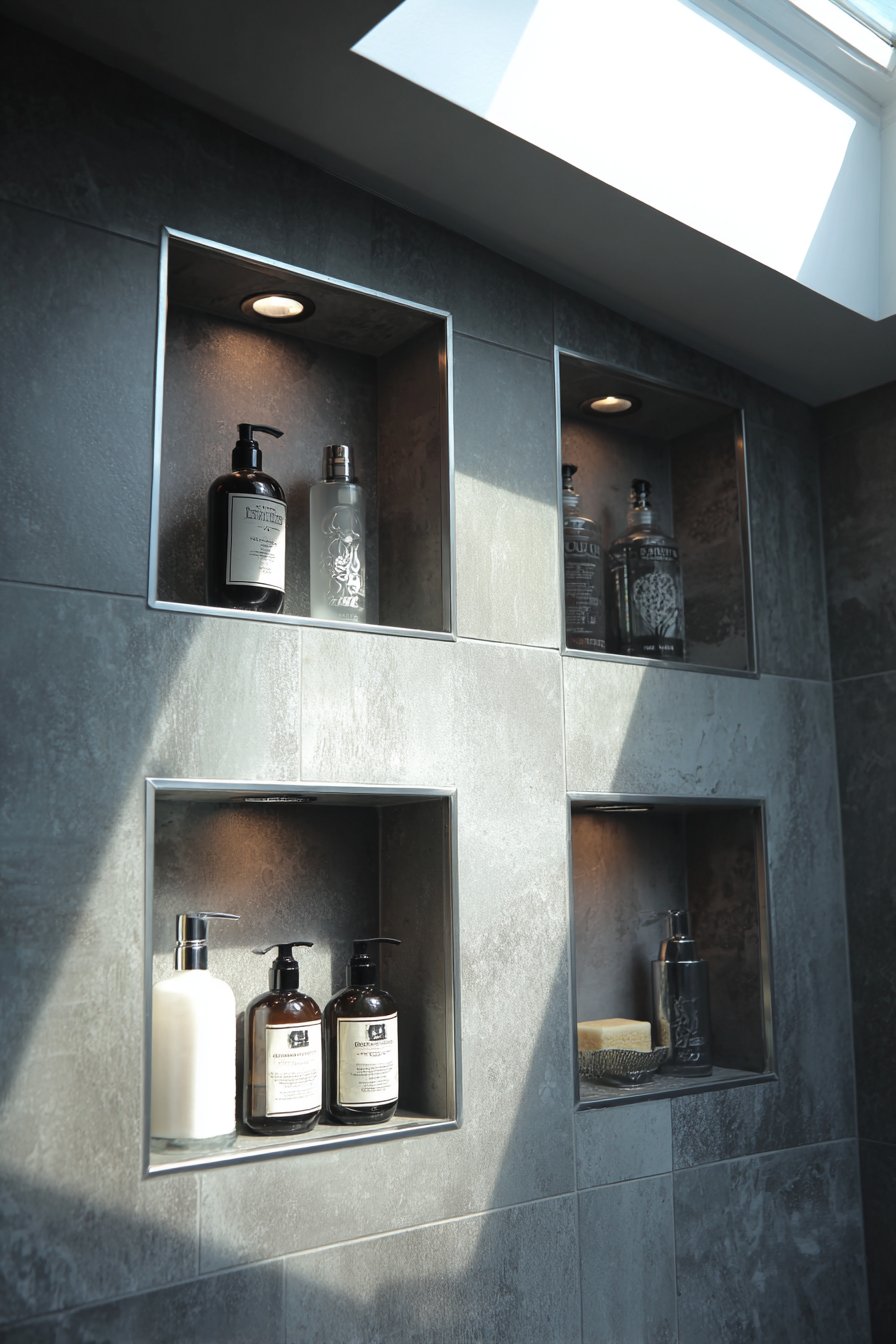
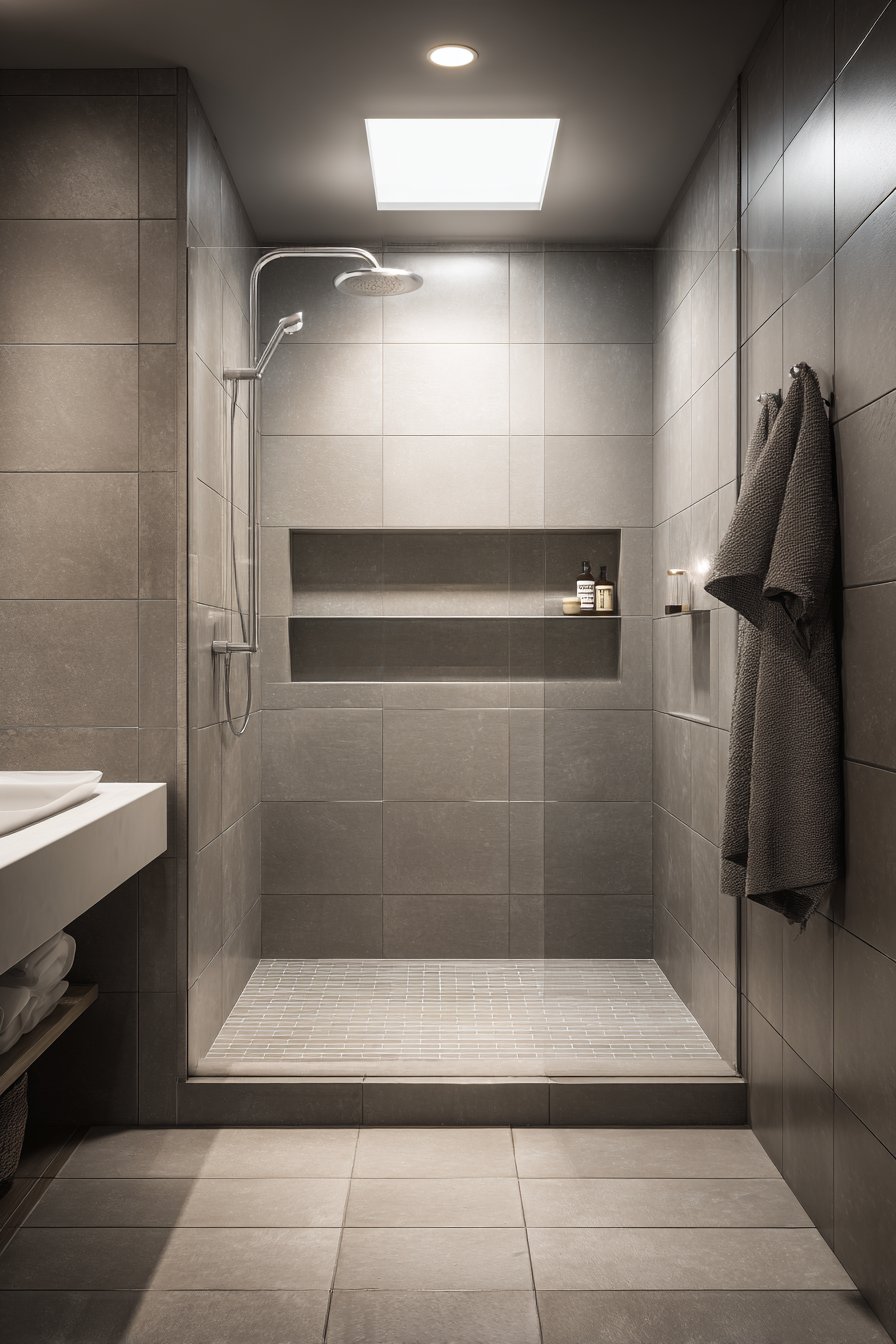
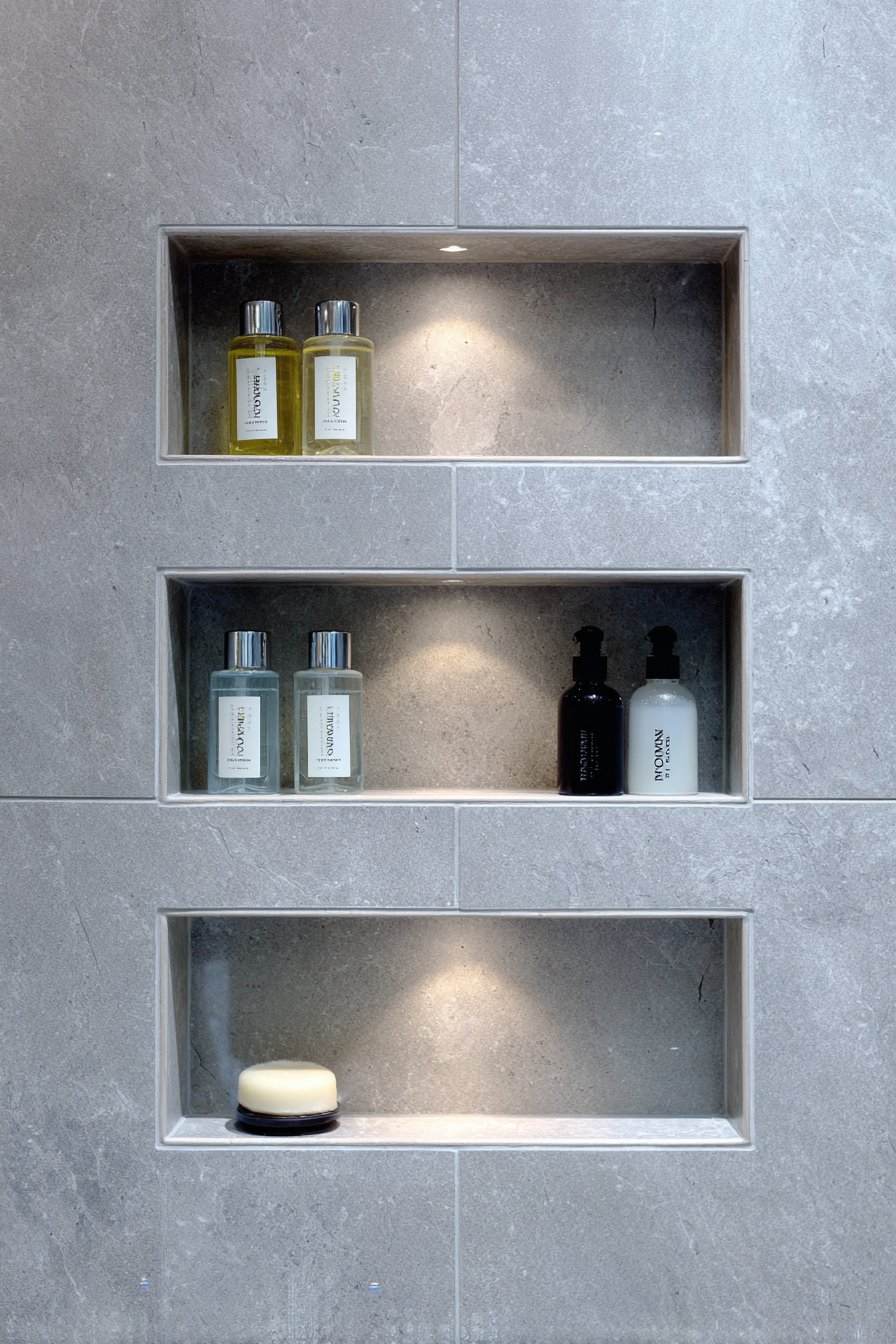
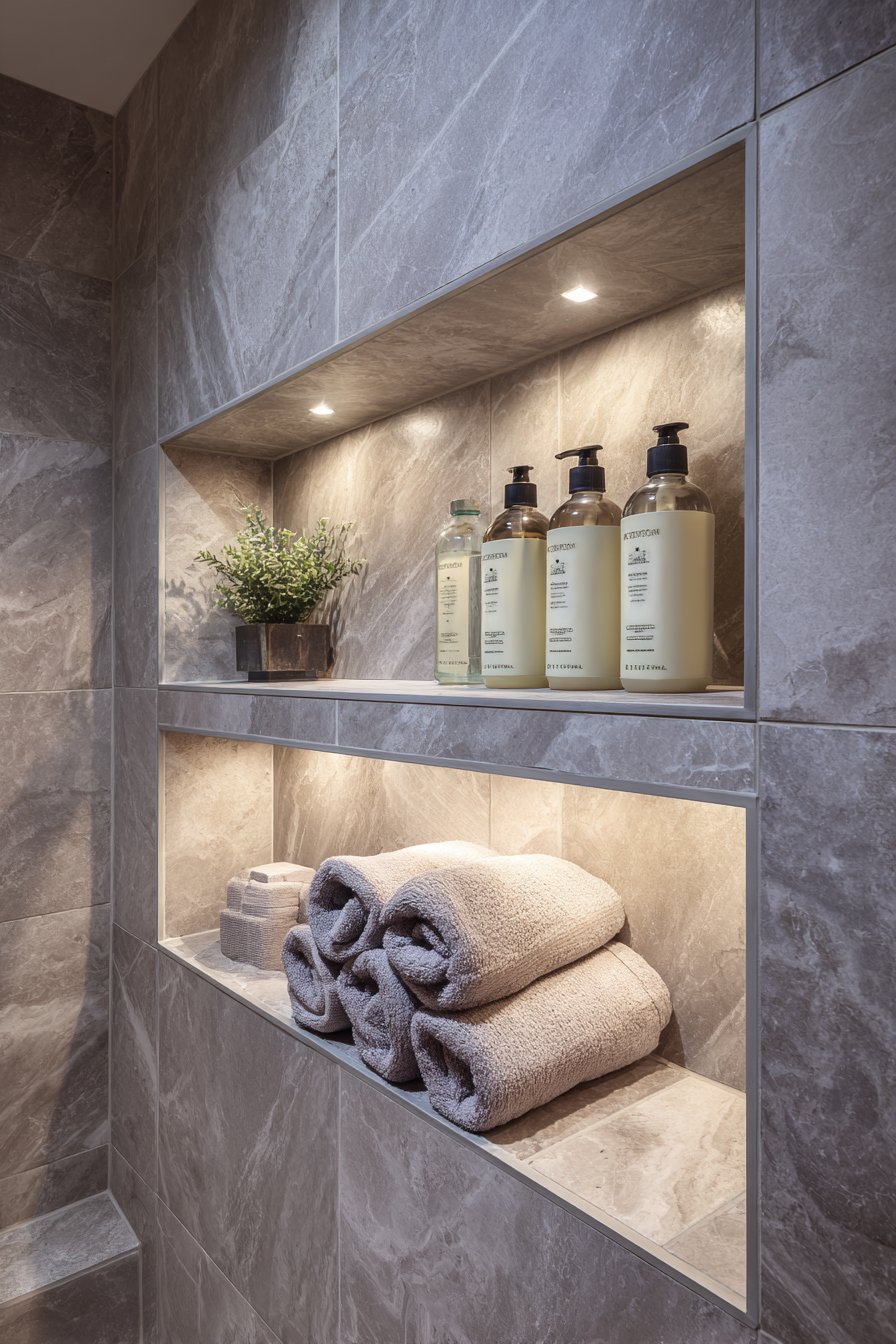
The modern shower experience reaches new levels of convenience and style with strategically placed recessed wall niches built directly into gray porcelain tile walls. These three horizontal niches of varying widths provide practical storage for shampoo bottles, soap, conditioners, and bath accessories while eliminating the clutter of hanging caddies or corner shelves. The genius of this design lies in its integration into the shower’s permanent structure—what was once an afterthought becomes an intentional architectural element that enhances both function and aesthetic appeal.
Each niche features a subtle slope engineered for water drainage, ensuring that soap residue and standing water don’t accumulate on horizontal surfaces. This thoughtful detail, combined with matching tile trim that creates seamless visual continuity with the surrounding walls, demonstrates how practical considerations can be elegantly addressed without compromising design integrity. The gray porcelain tiles extend into the niche interiors, creating a monochromatic envelope that feels cohesive and intentional rather than like an added feature.
Natural light streaming through a skylight creates soft shadows that emphasize the dimensional depth of each recess, transforming simple storage into a sculptural wall feature. The varying widths of the three niches serve different functional purposes—the widest accommodates larger bottles and containers, while narrower versions hold soap bars and smaller items. This variety prevents the wall from appearing too uniform while maximizing storage efficiency within the available space.
Key Design Tips:
- Install niches between wall studs to avoid structural complications (typically 14.5 inches wide)
- Create a slight forward slope (approximately 2 degrees) to prevent water pooling
- Use matching tile for niche interiors to maintain design cohesion
- Position the primary niche at shoulder height for easiest access
- Seal all niche edges thoroughly to prevent water infiltration behind tiles
- Consider installing a linear drain across the bottom of larger niches for superior drainage
4. Minimalist Grid-Pattern Living Room Display Niches
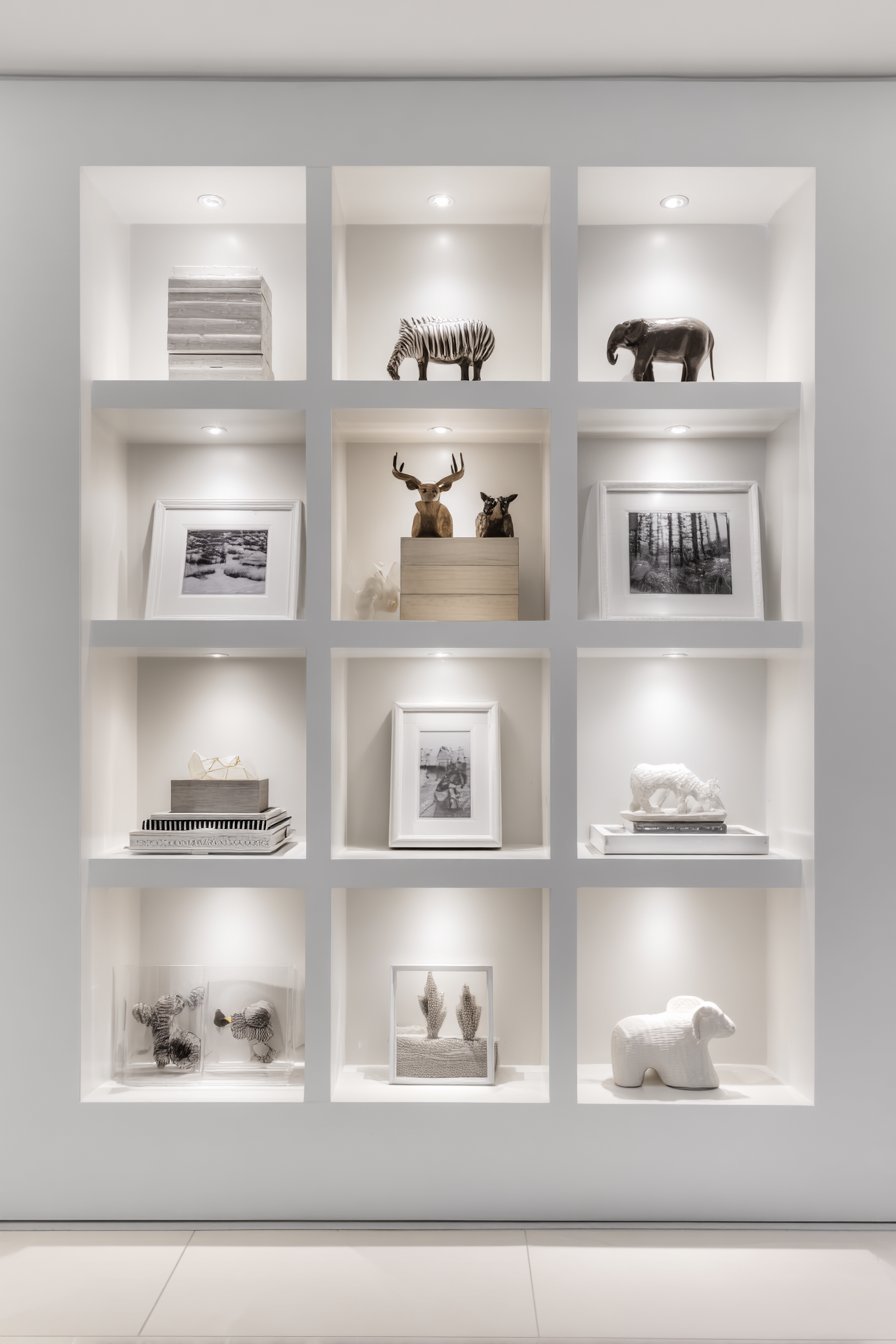
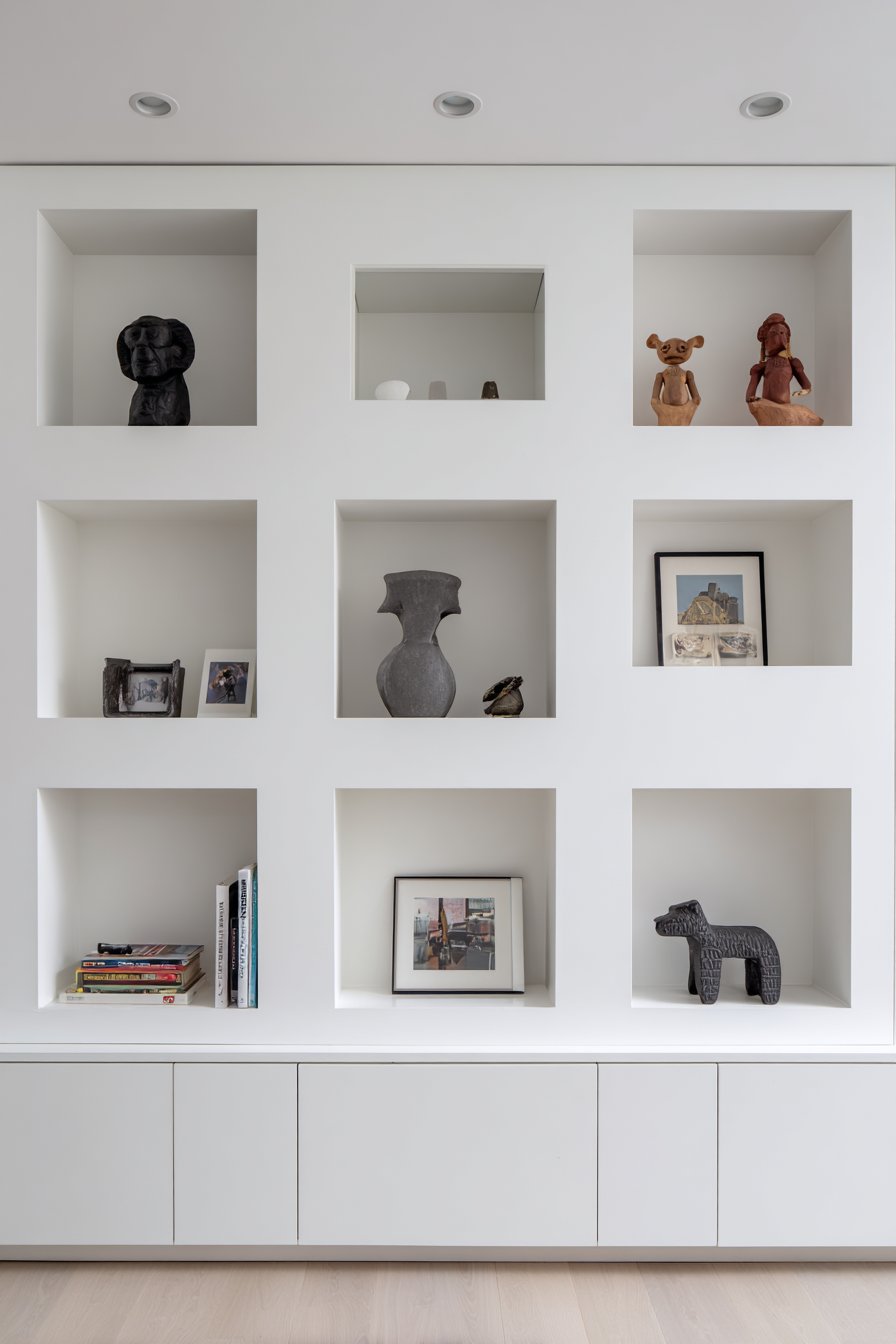
The contemporary living room wall transforms into a gallery-worthy display system through six equally sized square niches arranged in a precise grid pattern. Carved into pristine white drywall, these uniform recesses create a sense of order and intentionality that appeals to minimalist sensibilities while providing ample opportunity for creative expression. The contrast between the white outer wall and soft gray painted interiors adds subtle depth without overwhelming the clean aesthetic, allowing displayed objects to become the primary focus.
Each niche functions as a carefully curated display case, housing small sculptures, framed photographs, and decorative objects with generous negative space surrounding each item. This restrained approach to styling prevents visual clutter and allows viewers to appreciate individual pieces without distraction. The uniformity of the grid provides structure and predictability, while the variety of displayed objects introduces personality and visual interest. Recessed LED puck lights installed at the top of each niche cast downward illumination that highlights textures and creates dramatic shadows, transforming simple display into theatrical presentation.
The geometric precision of this installation creates a focal point that draws the eye and anchors the living room’s design scheme. Unlike traditional shelving that can appear heavy or cluttered, these flush-mounted niches maintain the wall’s clean plane while adding three-dimensional interest. The grid arrangement provides flexibility for rearranging displays or rotating seasonal objects while maintaining the overall architectural integrity of the feature.
Key Design Tips:
- Maintain consistent spacing between niches (typically 4-6 inches) for visual harmony
- Keep niche interiors relatively shallow (4-6 inches deep) for minimalist aesthetic
- Limit displayed items to one or two per niche to prevent overcrowding
- Use museum-quality LED puck lights to avoid heat damage to displayed items
- Paint niche interiors in a contrasting but complementary tone to add subtle depth
- Consider installing glass shelves within some niches for displaying smaller items at varied heights
5. Scandinavian Entryway Vertical Storage Niche
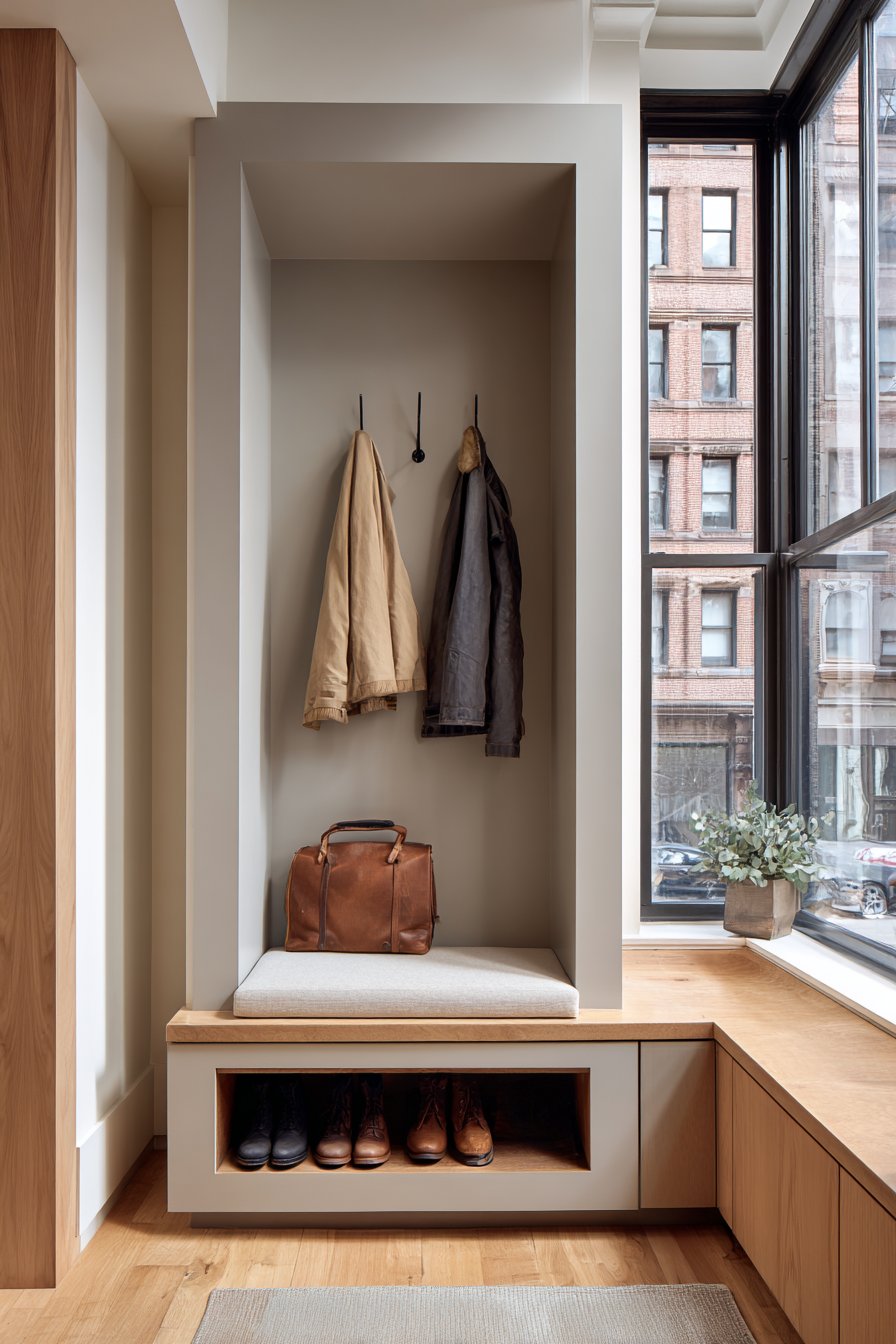
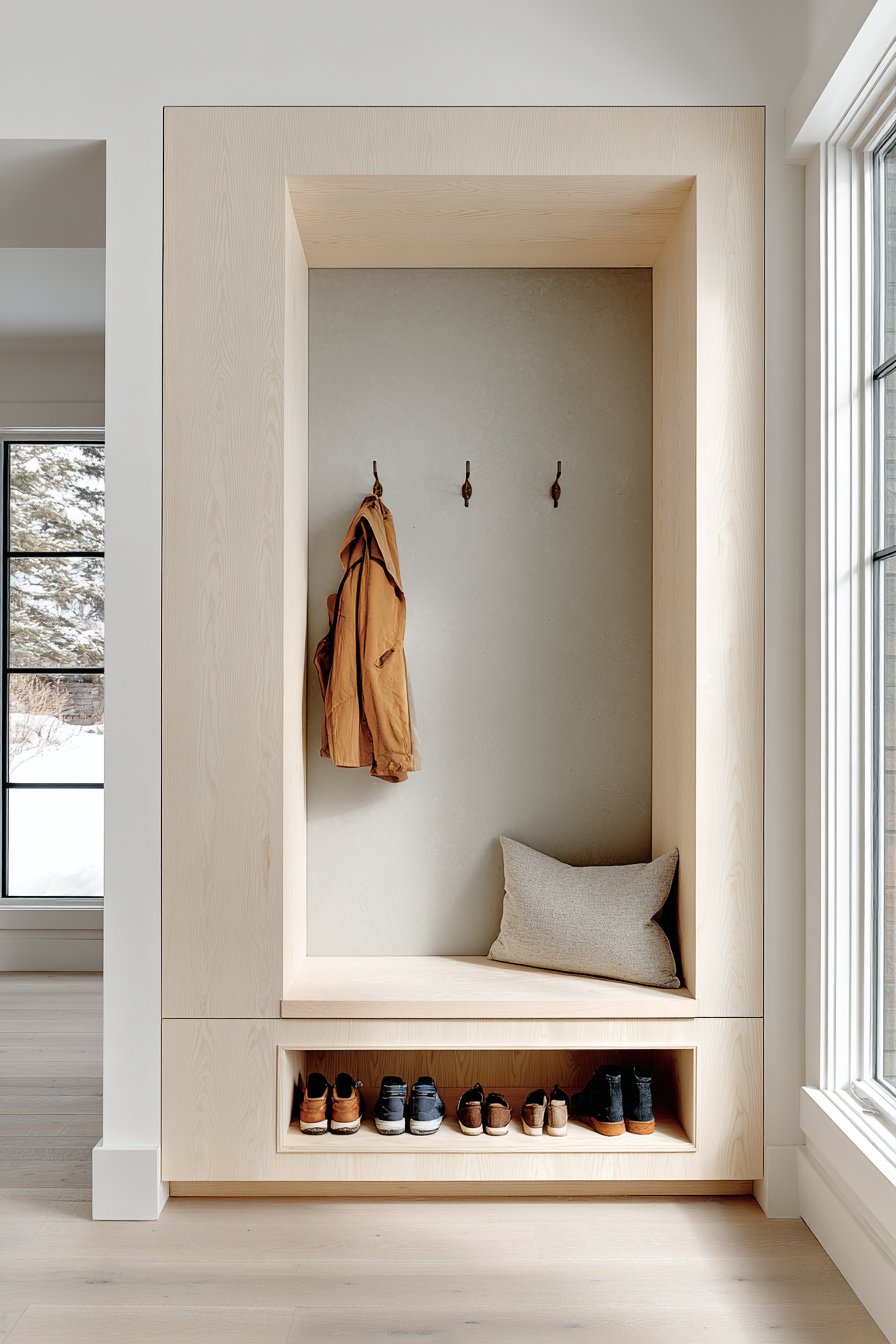
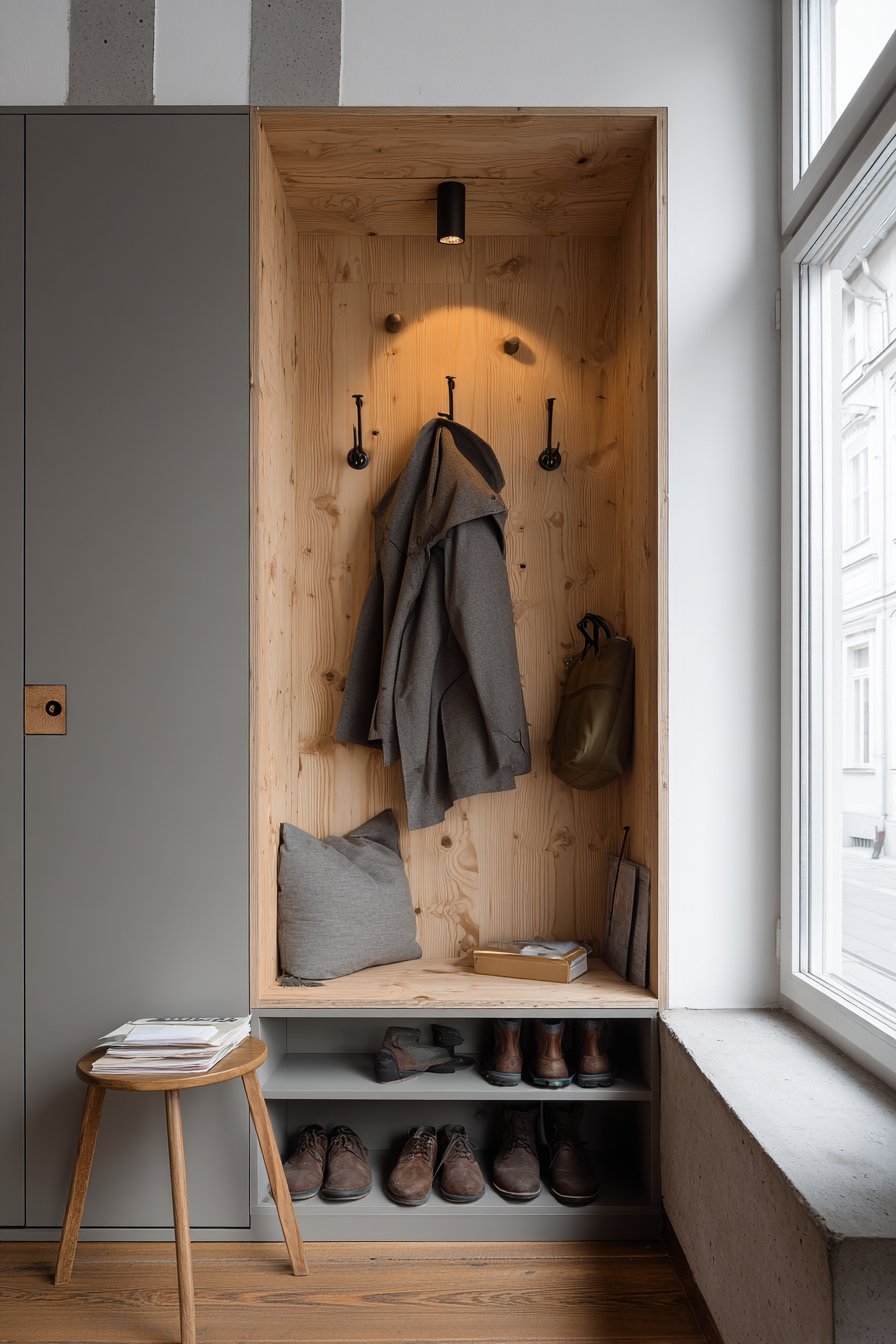
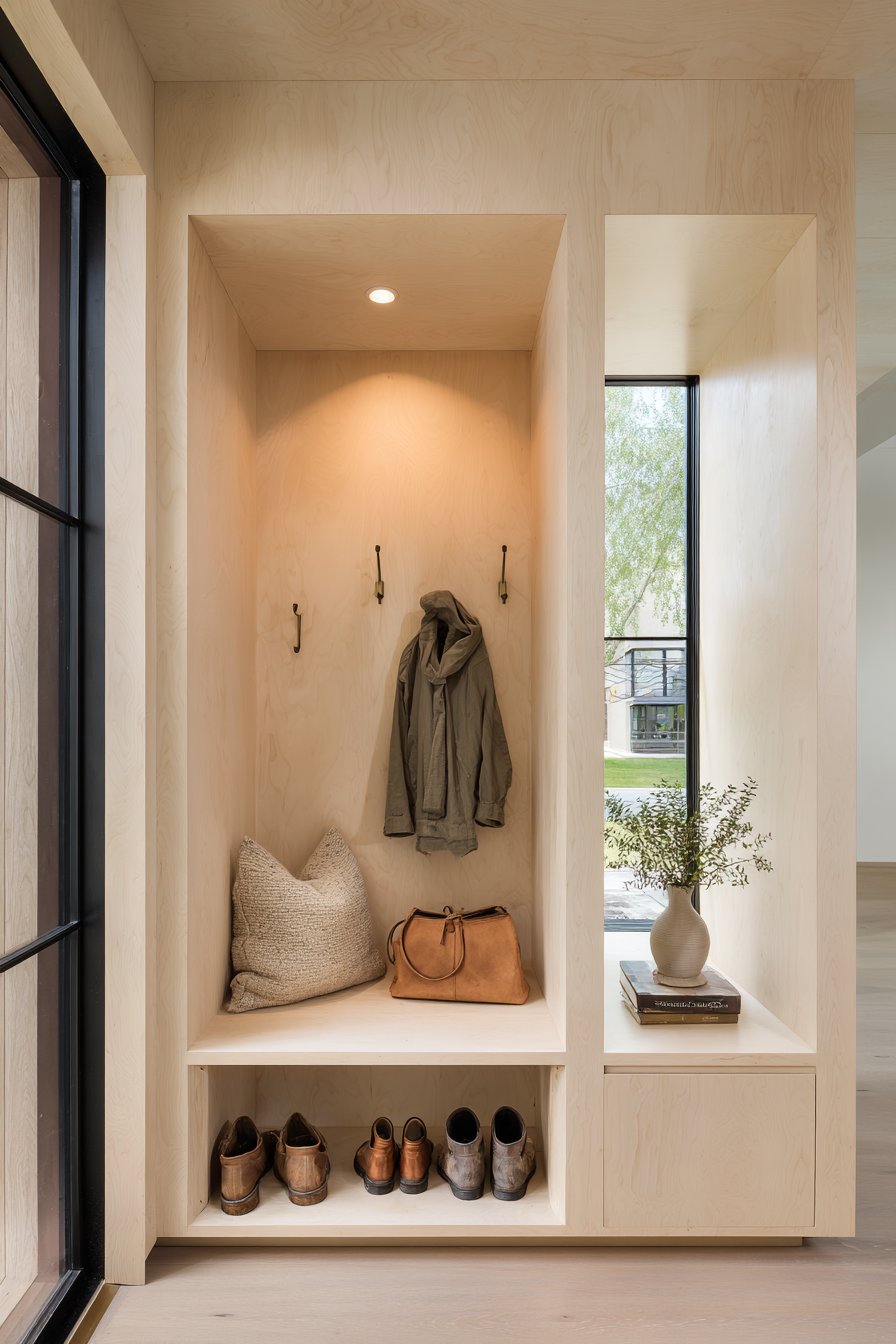
The Scandinavian-inspired entryway embraces both beauty and functionality through a tall vertical niche built directly into a light wood panel wall. This floor-to-ceiling recess serves as a dedicated coat storage solution that eliminates the need for freestanding furniture while maintaining the clean, uncluttered aesthetic characteristic of Nordic design. The integration of hooks for hanging coats and a lower shelf recess for shoes demonstrates how a single architectural feature can address multiple functional needs without sacrificing visual appeal.
The warm gray interior paint creates a soft contrast against the natural birch surround, adding depth while maintaining the light, airy quality essential to Scandinavian interiors. This color choice prevents the niche from appearing as a dark void while providing enough tonal variation to define the recessed space. Soft diffused daylight from a nearby window bathes the entryway in natural illumination, highlighting the beautiful grain patterns in the birch wood and creating gentle shadows that emphasize the niche’s dimensional quality.
The vertical orientation maximizes storage capacity while minimizing floor space consumption—a critical consideration in entryways where square footage is often limited. The lower shelf recess keeps shoes organized and off the floor, improving both aesthetics and cleanliness. The upper hooks provide convenient access to frequently worn coats and bags, streamlining daily routines. This thoughtful integration of storage within the wall structure exemplifies the Scandinavian principle of designing for life’s practical needs while maintaining beauty and simplicity.
Key Design Tips:
- Install heavy-duty hooks rated for coat weight, spacing them 8-10 inches apart
- Position hooks at varied heights to accommodate both adult and children’s coats
- Ensure lower shelf sits 4-6 inches above floor level for easy shoe access and cleaning
- Apply durable, washable paint to niche interior for easy maintenance
- Consider adding a slim LED light strip along the top edge for visibility in darker months
- Use wood species that complement existing flooring or furniture for design cohesion
6. Luxury Bathroom Niches Flanking Freestanding Tub
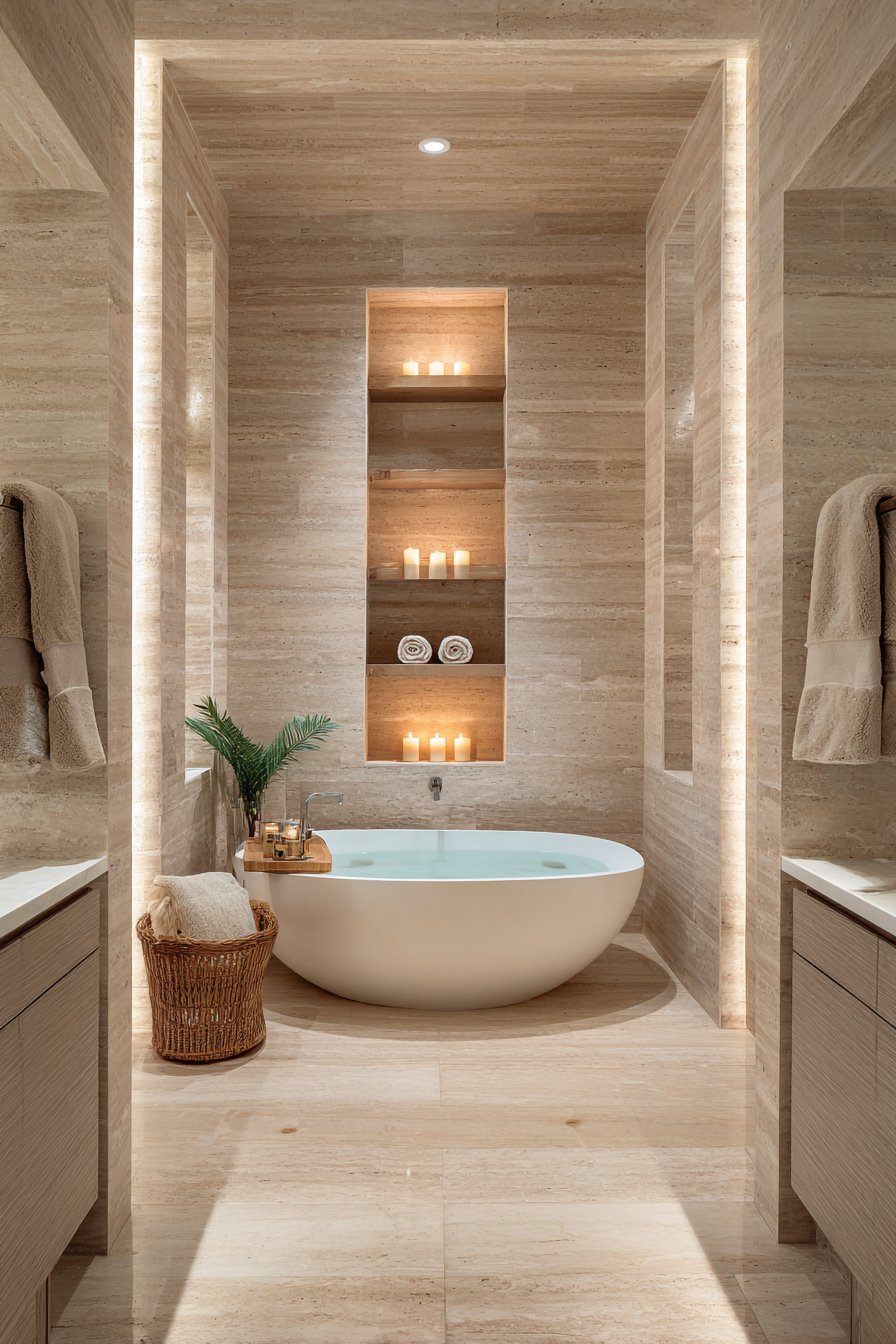
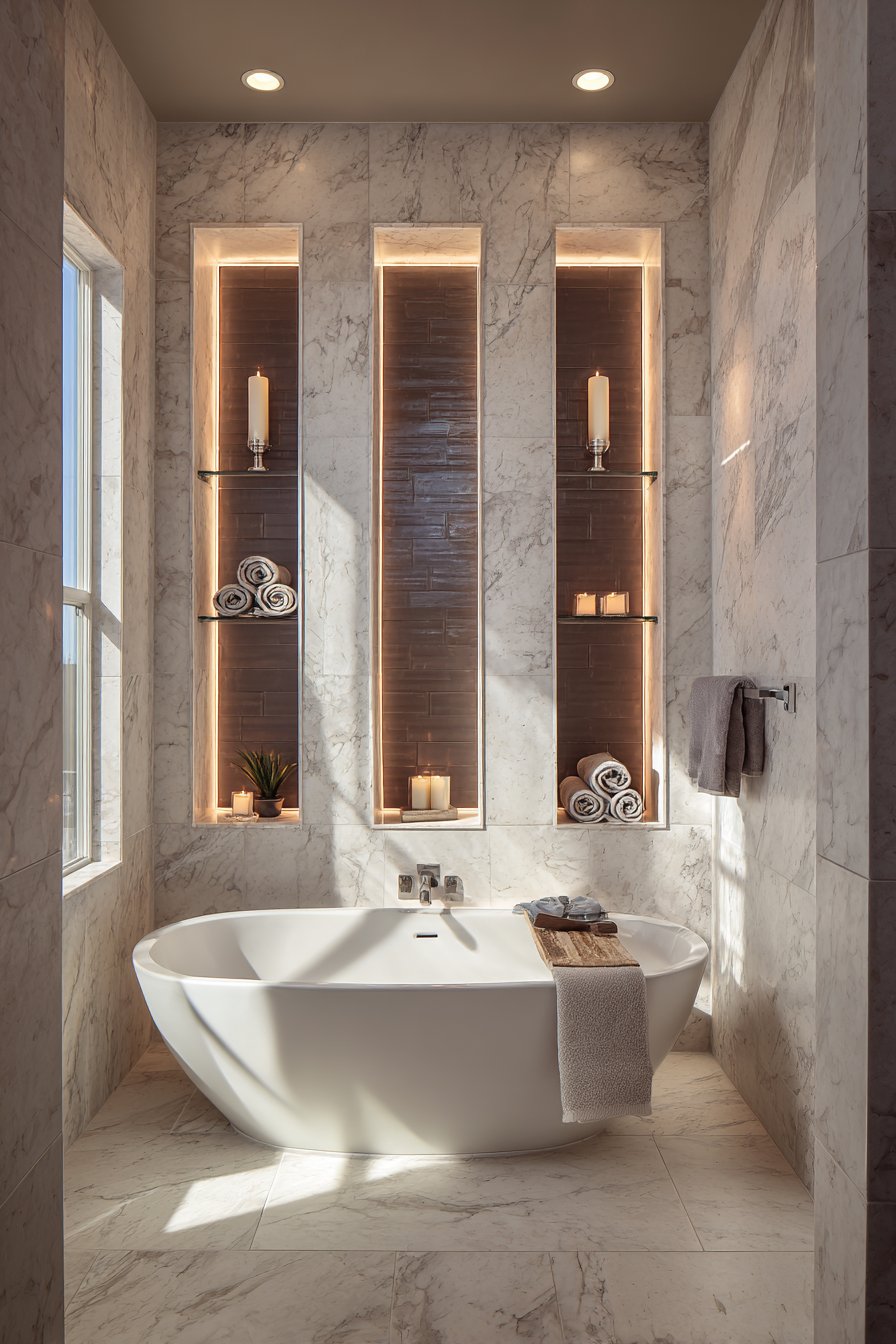
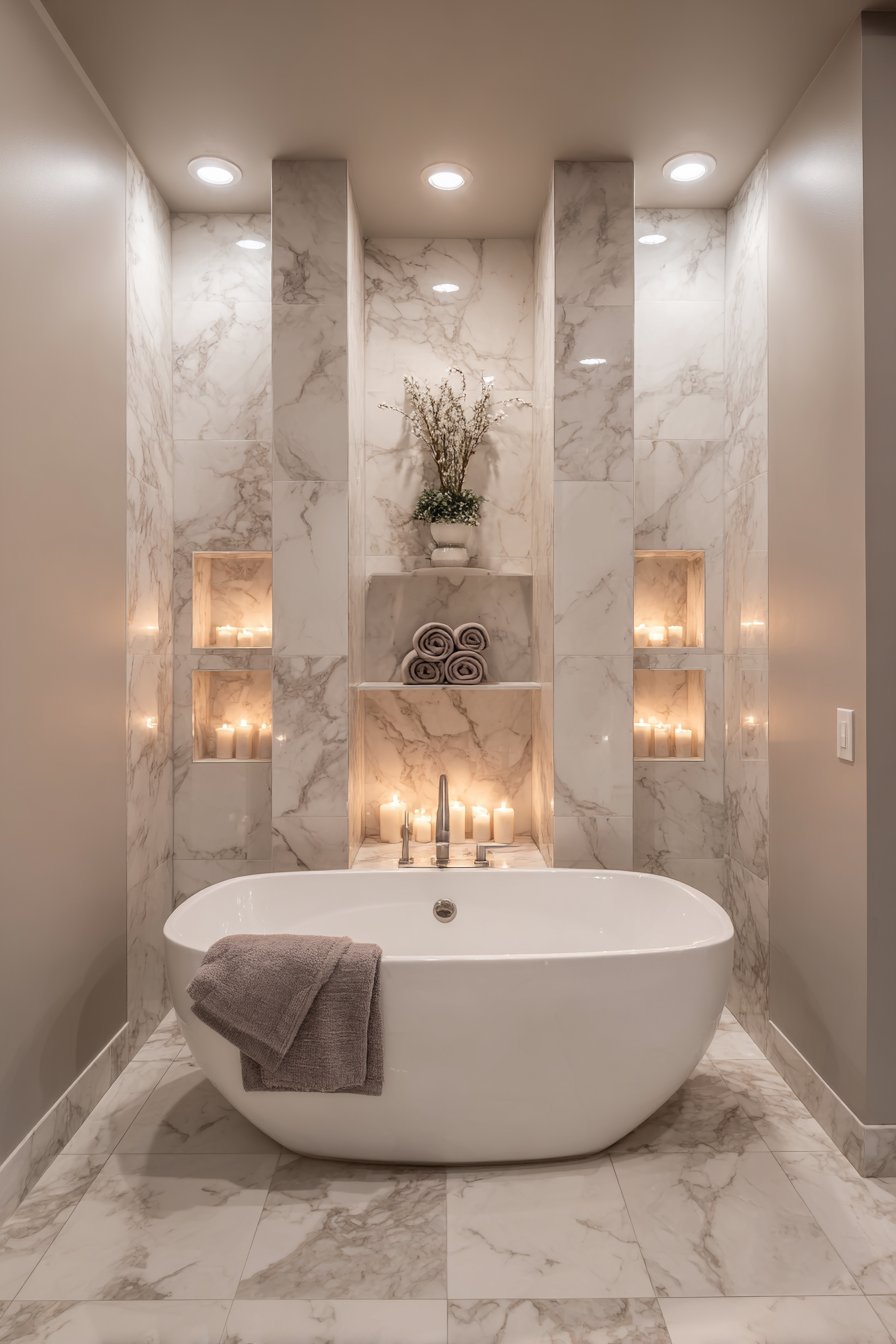
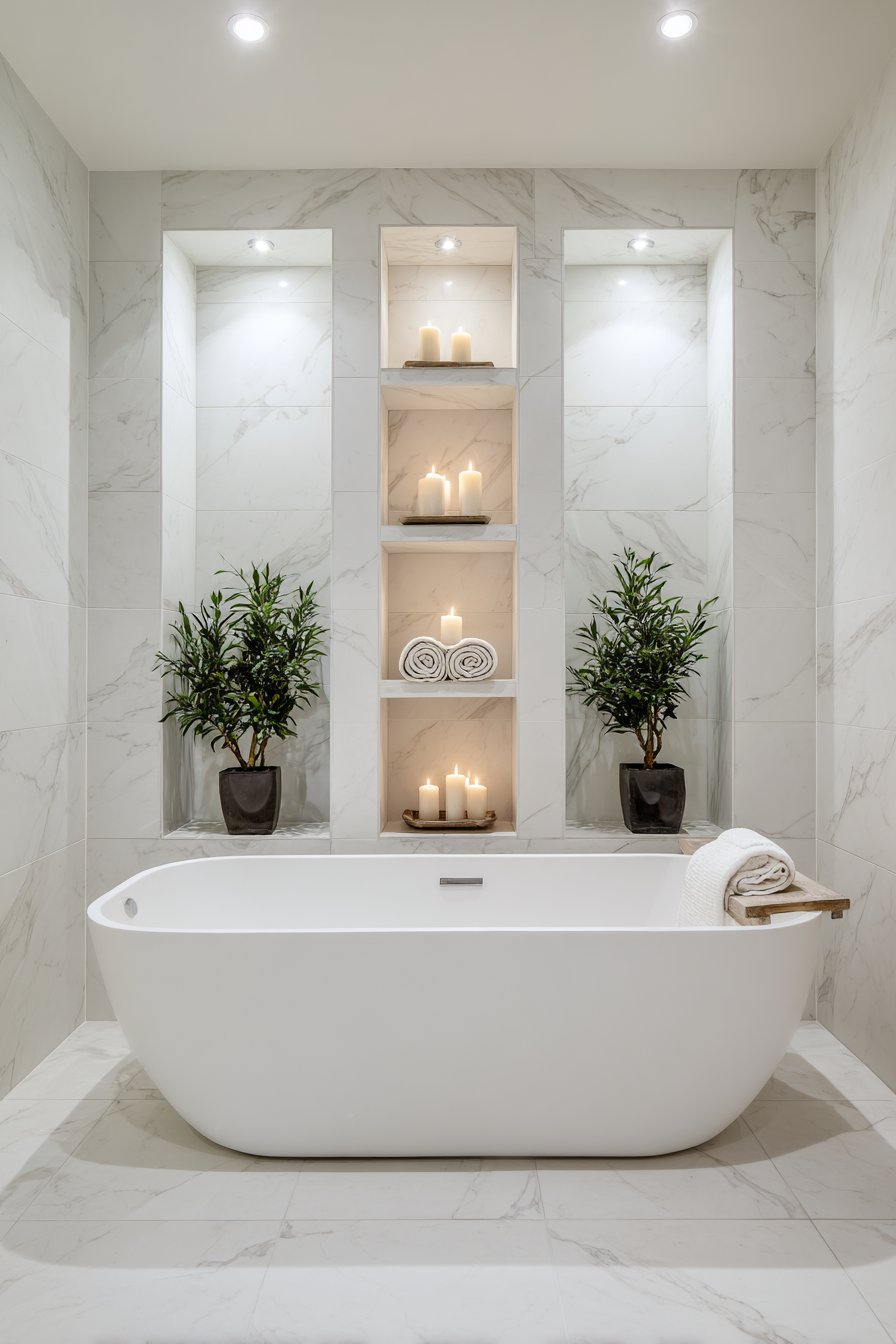
The master bathroom achieves spa-like sophistication through symmetrical vertical niches flanking a luxurious freestanding soaking tub. These deep recesses carved into marble-look porcelain tile walls serve both aesthetic and functional purposes, providing convenient storage for rolled towels, aromatic candles, and spa accessories while creating architectural interest that elevates the bathing area into a true sanctuary. The three evenly spaced internal shelves within each niche allow for organized display that remains accessible yet visually appealing.
Warm LED strip lighting integrated along the vertical edges of each niche creates an ambient glow that transforms the bathroom into a relaxation haven during evening soaks. This indirect lighting strategy avoids harsh overhead illumination while providing enough visibility for safe navigation and creating a soft, flattering atmosphere conducive to unwinding. The marble-look porcelain tiles extend seamlessly into the niche interiors, maintaining the luxurious material palette throughout the space and reinforcing the high-end aesthetic.
The symmetrical placement of niches on either side of the tub creates visual balance while ensuring that bathing essentials remain within arm’s reach from any position in the tub. The vertical orientation and generous depth accommodate everything from oversized bath sheets to decorative elements like flowering branches in tall vases. Natural shadows cast by the three-dimensional recesses add depth and visual interest to what might otherwise be flat, featureless walls, while the professional lighting design ensures these architectural details remain highlighted regardless of time of day.
Key Design Tips:
- Position shelf heights to accommodate folded towels (12-14 inches between shelves works well)
- Install waterproof LED strips rated for bathroom humidity levels
- Use slip-resistant shelf materials or add rubber shelf liners to prevent items from sliding
- Ensure niche depth accommodates rolled bath sheets (minimum 10-12 inches deep)
- Seal all tile joints and edges meticulously to prevent moisture infiltration
- Consider adding a subtle lip at the front edge of shelves to prevent items from falling
7. Modern Kitchen Open Shelving Alternative with Tile Niches
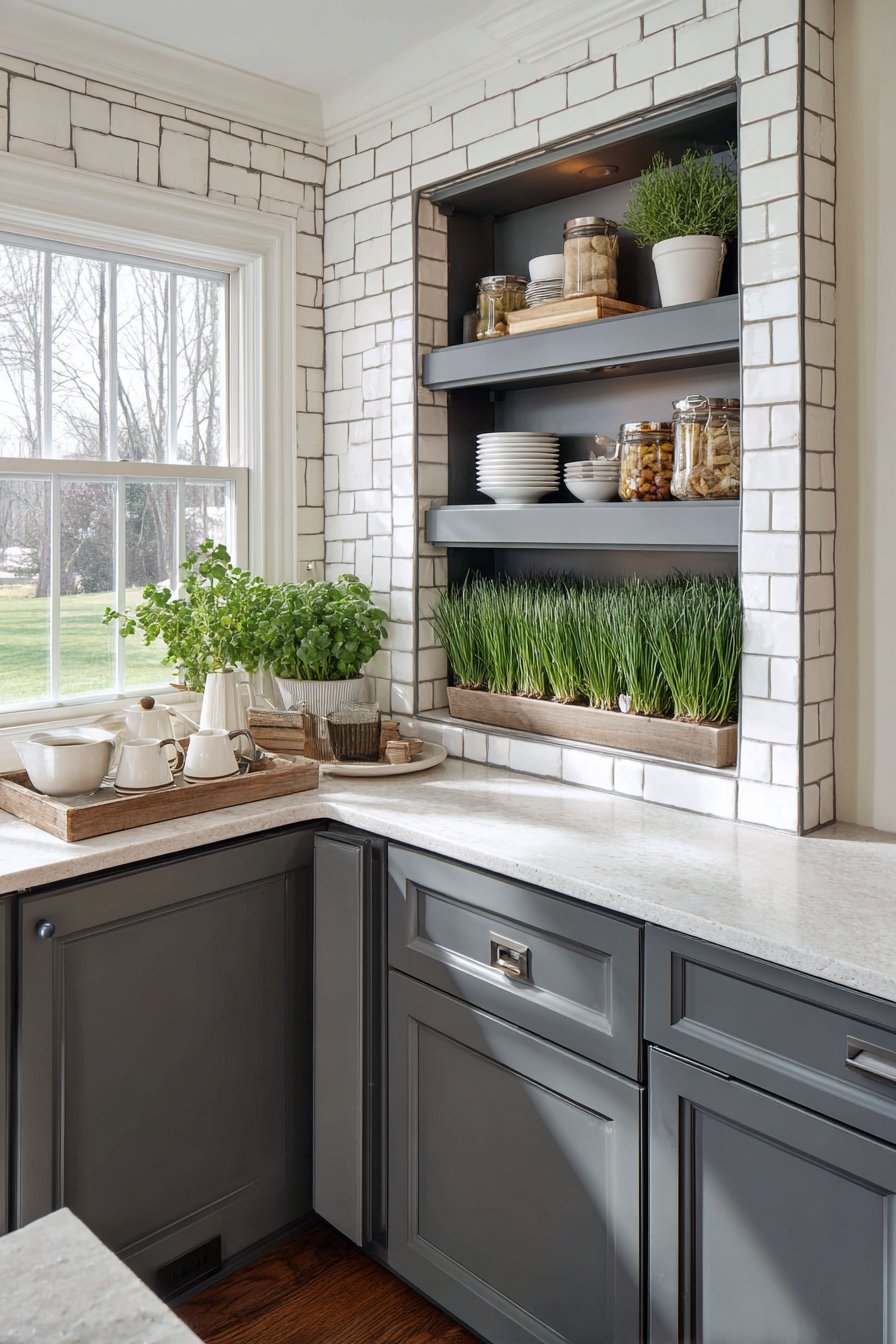
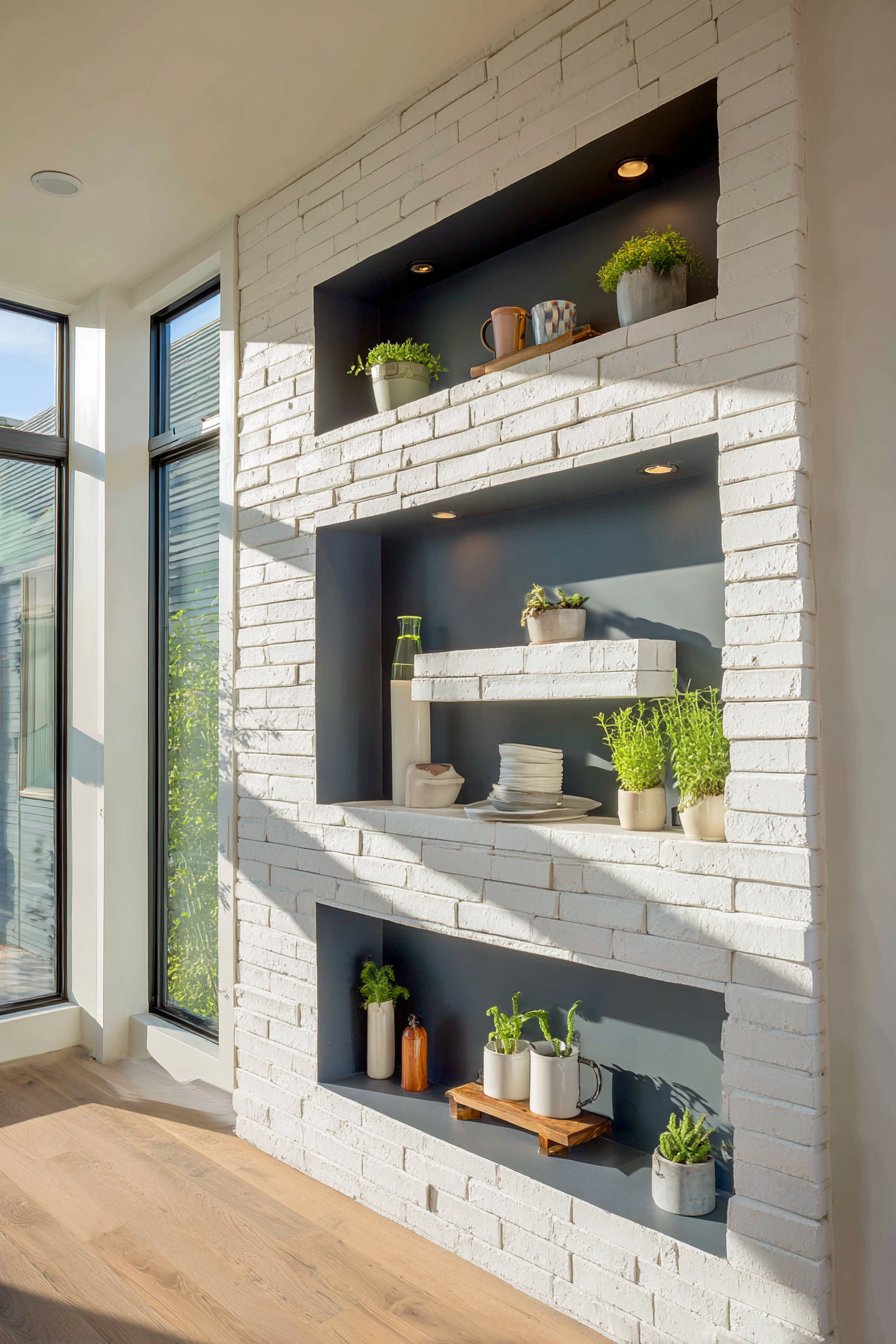
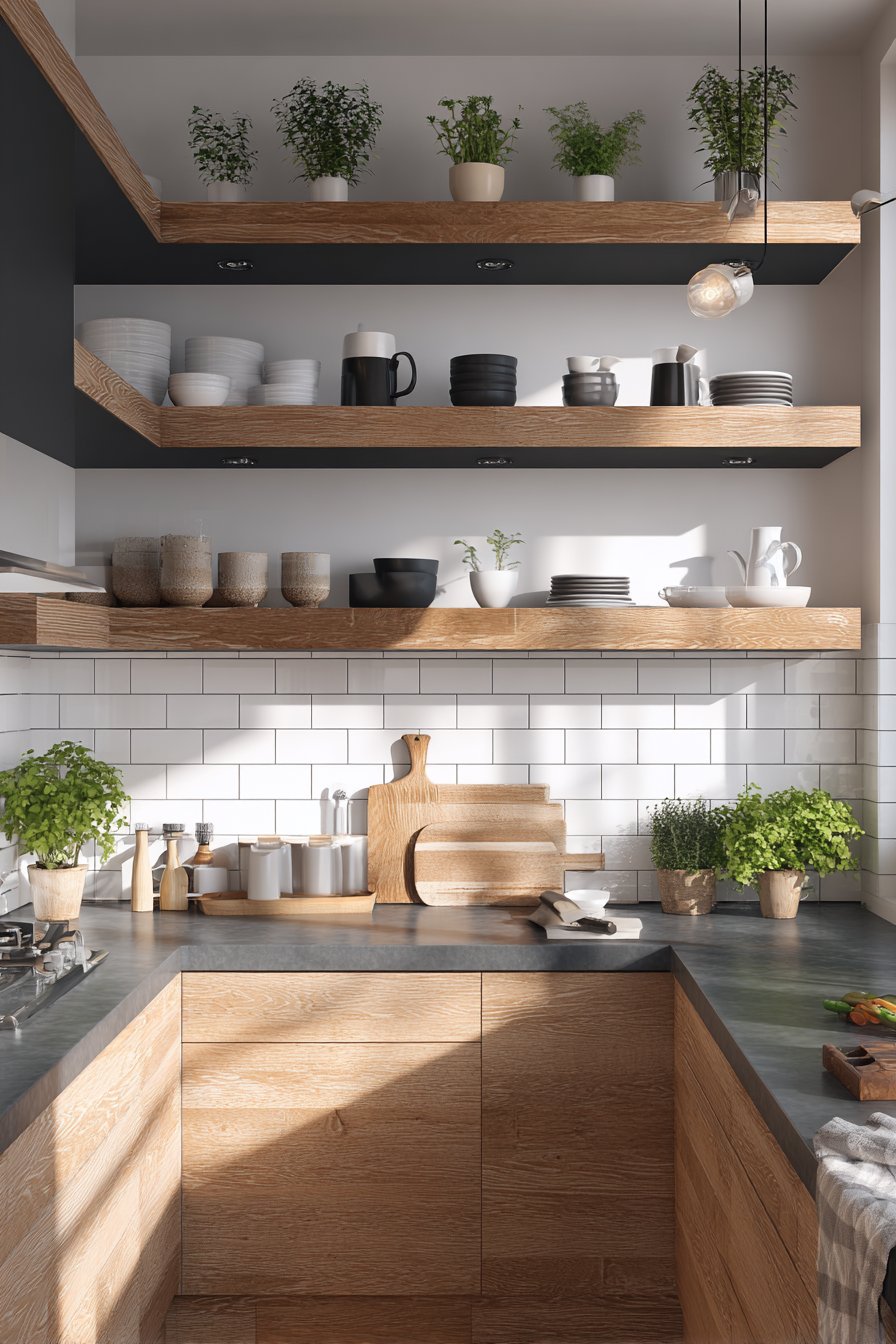
The contemporary kitchen breaks from traditional upper cabinetry by incorporating three staggered horizontal niches built directly into a white subway tile backsplash. This innovative approach to kitchen storage creates open display opportunities that feel more integrated and intentional than standard floating shelves. Each niche showcases everyday dishes, coffee mugs, and small potted herbs, transforming functional storage into decorative display while keeping frequently used items easily accessible during meal preparation.
The contrasting dark gray interiors of each niche provide visual depth and prevent the white dishes and cups from visually blending into the background. This color strategy creates definition and makes displayed items appear more intentional and curated rather than simply stored. Integrated under-shelf lighting illuminates the contents while casting a warm glow across the backsplash, enhancing the kitchen’s ambient lighting and making the space feel welcoming during evening hours.
Natural light streaming through a nearby window creates realistic shadows that emphasize the dimensional quality of the recesses, while the staggered arrangement prevents the installation from appearing too rigid or formal. The niches are positioned at comfortable reaching height, ensuring that grabbing a coffee mug or checking on herb growth requires minimal effort. This practical accessibility combined with the aesthetic appeal demonstrates how recessed niches can replace traditional storage solutions while actually improving both function and visual interest.
Key Design Tips:
- Size niches to accommodate standard dinnerware (typically 12-16 inches wide, 10-12 inches tall)
- Install between wall studs to simplify construction and maintain structural integrity
- Use contrasting grout color to define niche boundaries within the surrounding tile field
- Position niches away from the cooktop to avoid grease splatter on displayed items
- Install dimmable LED strips beneath shelves to control lighting intensity
- Limit displayed items to everyday essentials to maintain the clean, functional aesthetic
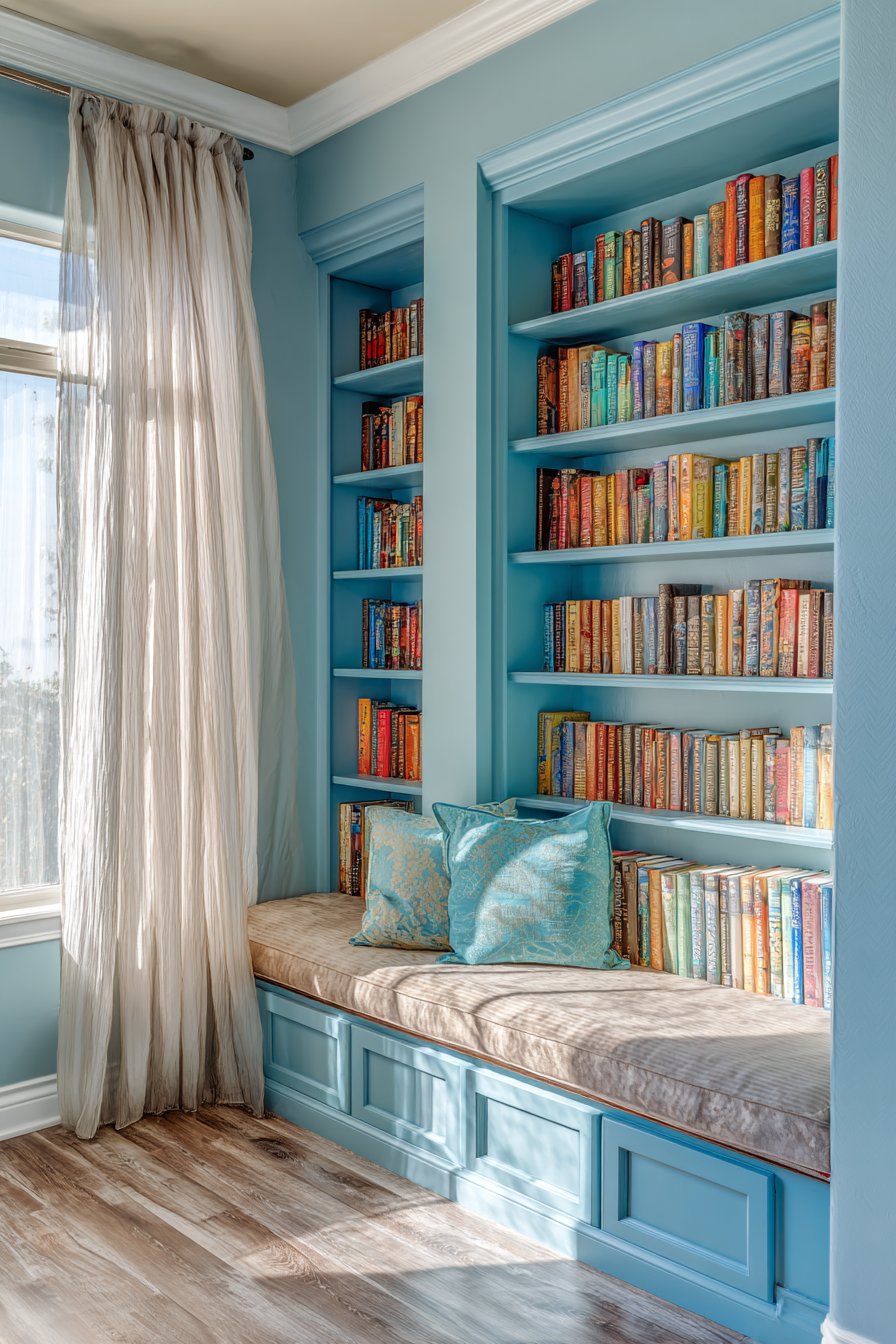
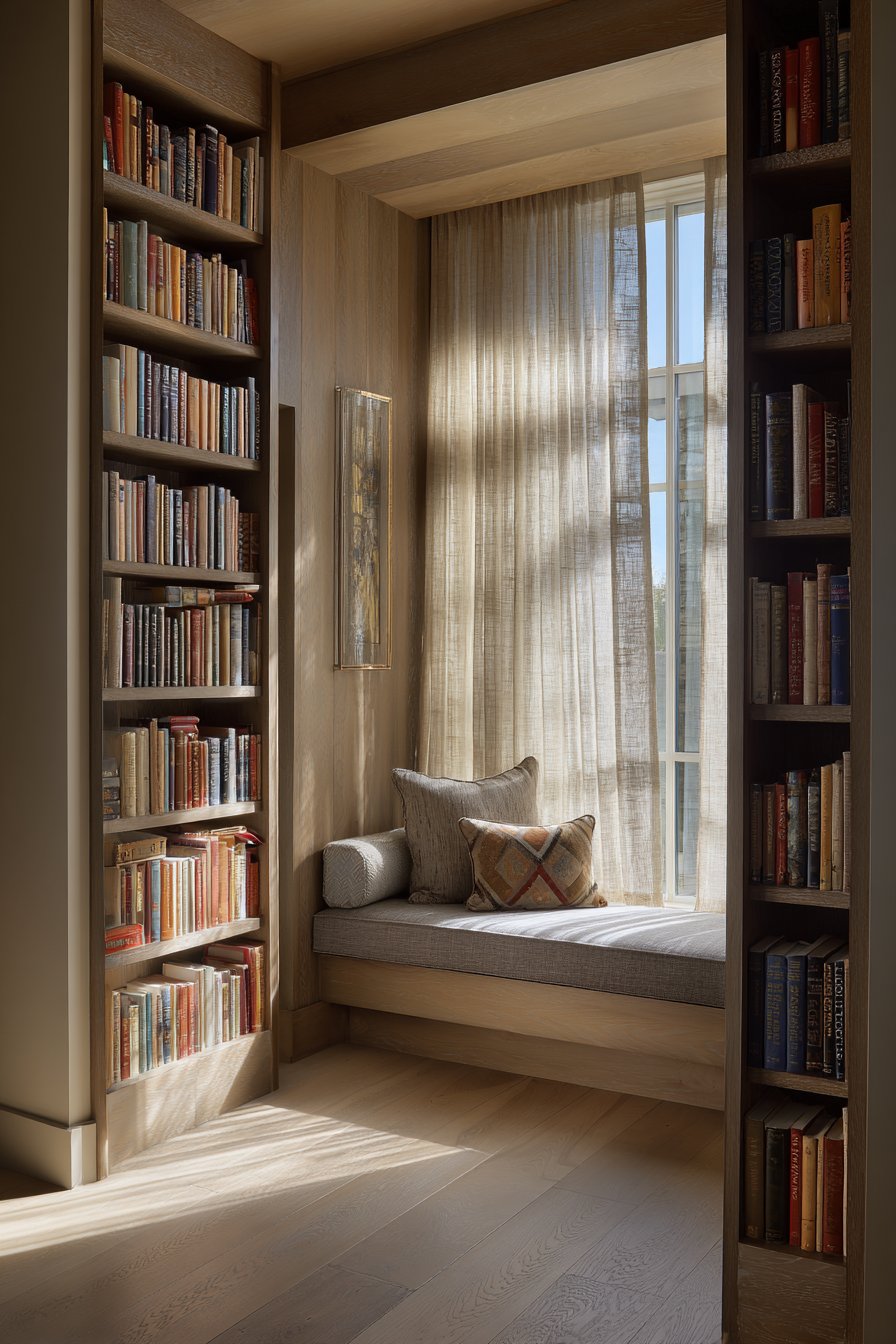
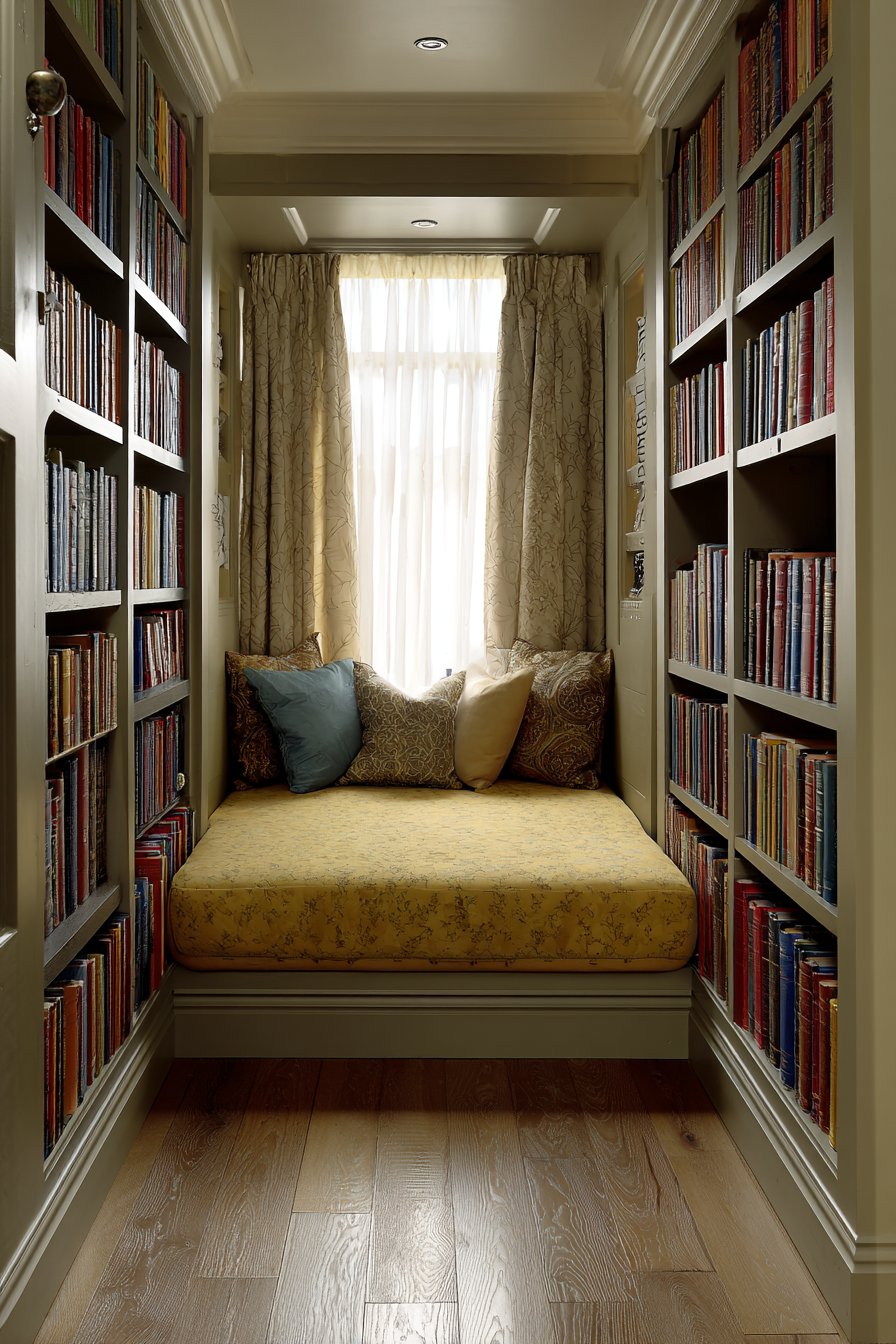
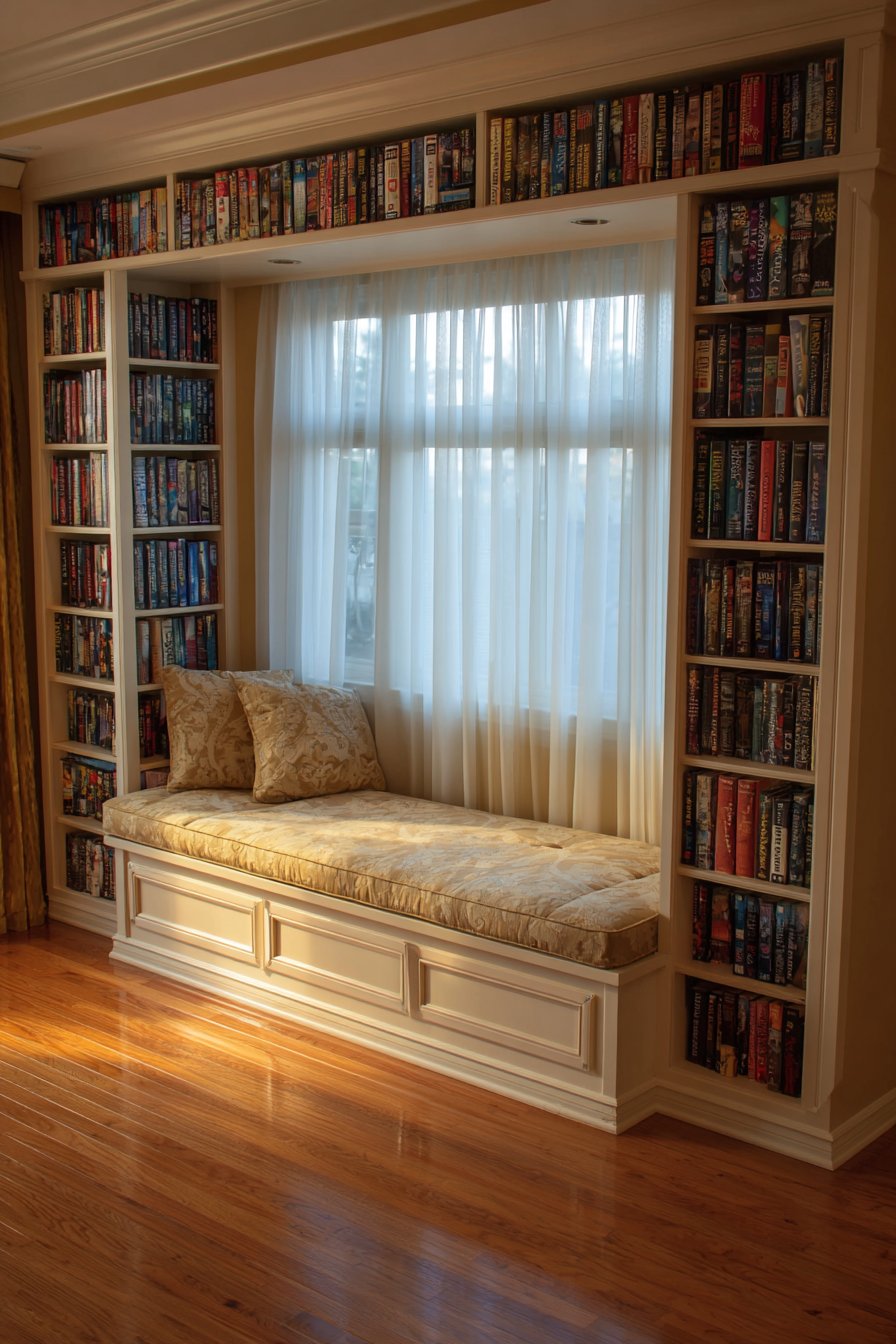
8. Cozy Reading Nook with Floor-to-Ceiling Book Storage Niches
The window alcove transforms into an inviting reading sanctuary through floor-to-ceiling vertical niches built directly into both walls flanking a cushioned window seat. These book-filled recesses replace traditional bookcases while maximizing storage capacity within the architectural bones of the space. Colorful book spines arranged by height create a vibrant, lived-in appearance that celebrates the homeowner’s literary collection while providing easy access to favorite titles without leaving the comfortable reading perch.
Natural wood trim framing each recess introduces warmth and definition, complementing the oak flooring and creating visual continuity throughout the space. The wood’s natural grain patterns add organic texture that contrasts beautifully with the smooth painted walls and uniform rows of books. Soft afternoon sunlight filtering through sheer curtains bathes the entire nook in diffused natural light, highlighting the varied textures of book covers, wood grain, and fabric cushions while creating an inviting glow that beckons readers to settle in with a good book.
The floor-to-ceiling height maximizes storage capacity while creating dramatic vertical emphasis that draws the eye upward and makes the alcove feel more spacious despite its compact footprint. The symmetrical placement of niches on both sides creates balance and ensures that books remain within easy reach regardless of which direction the reader is facing. This integration of storage within the reading nook’s architecture eliminates the need for freestanding furniture, creating a cleaner, more cohesive space that feels purpose-built for literary enjoyment.
Key Design Tips:
- Vary shelf spacing to accommodate different book heights (8-12 inches between shelves is typical)
- Install adjustable shelving if possible to allow future reconfiguration
- Consider adding a library ladder for accessing upper shelves in tall installations
- Use durable, stain-resistant wood finishes to protect against wear and sunlight exposure
- Position lower shelves to remain accessible from seated position on window seat
- Add bookends within niches to prevent books from falling forward
9. Contemporary Dining Room Statement Niche with Dramatic Lighting
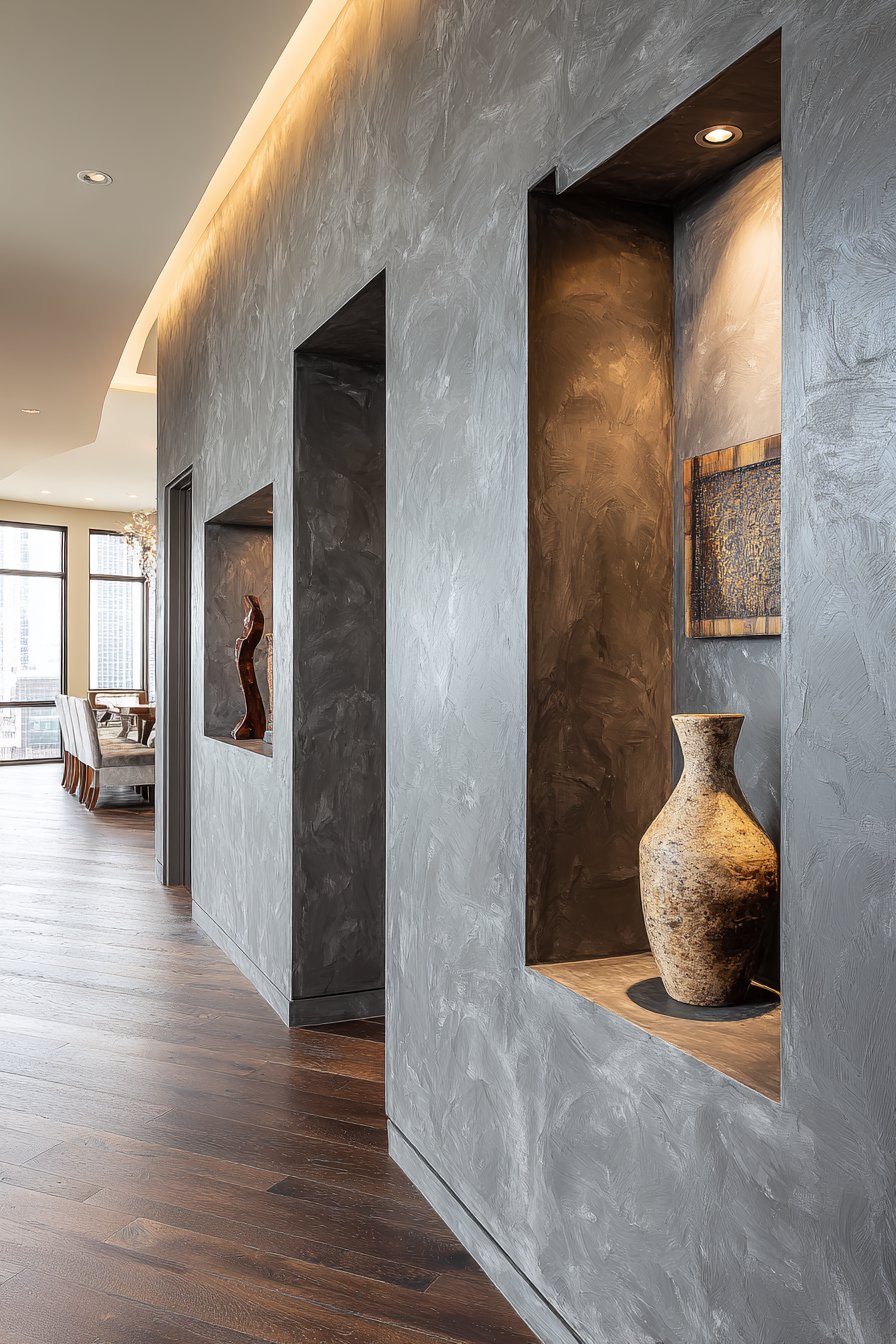
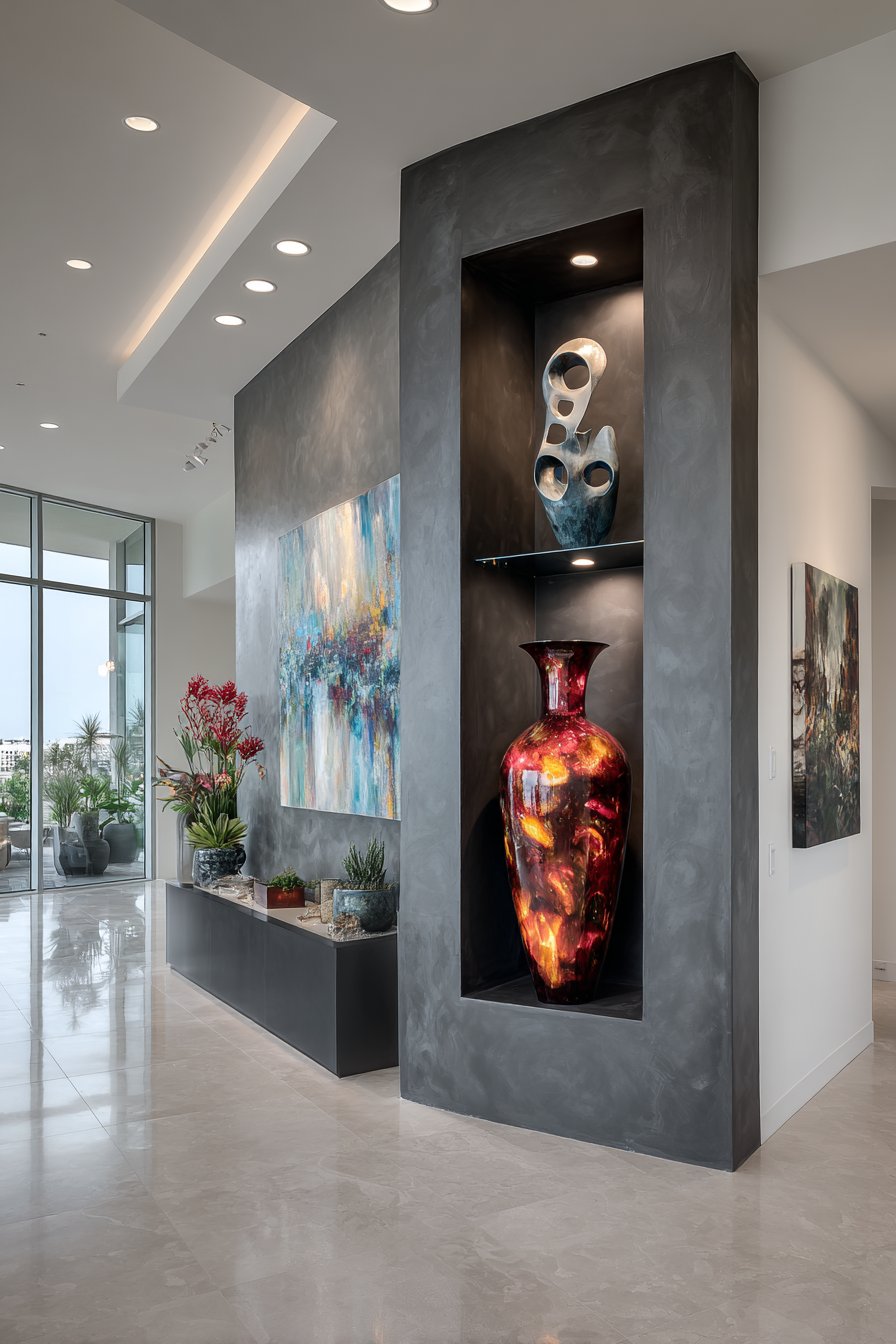
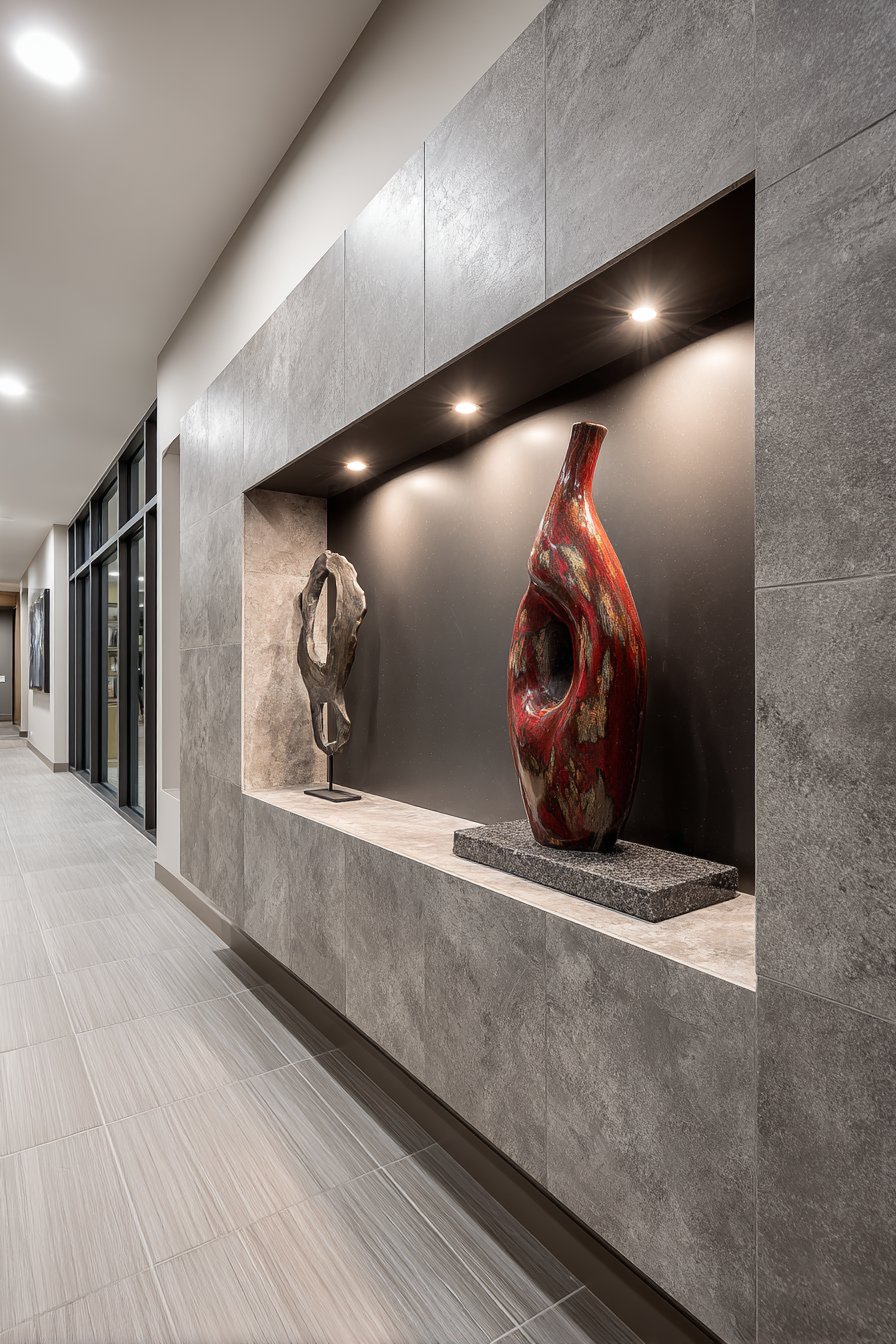
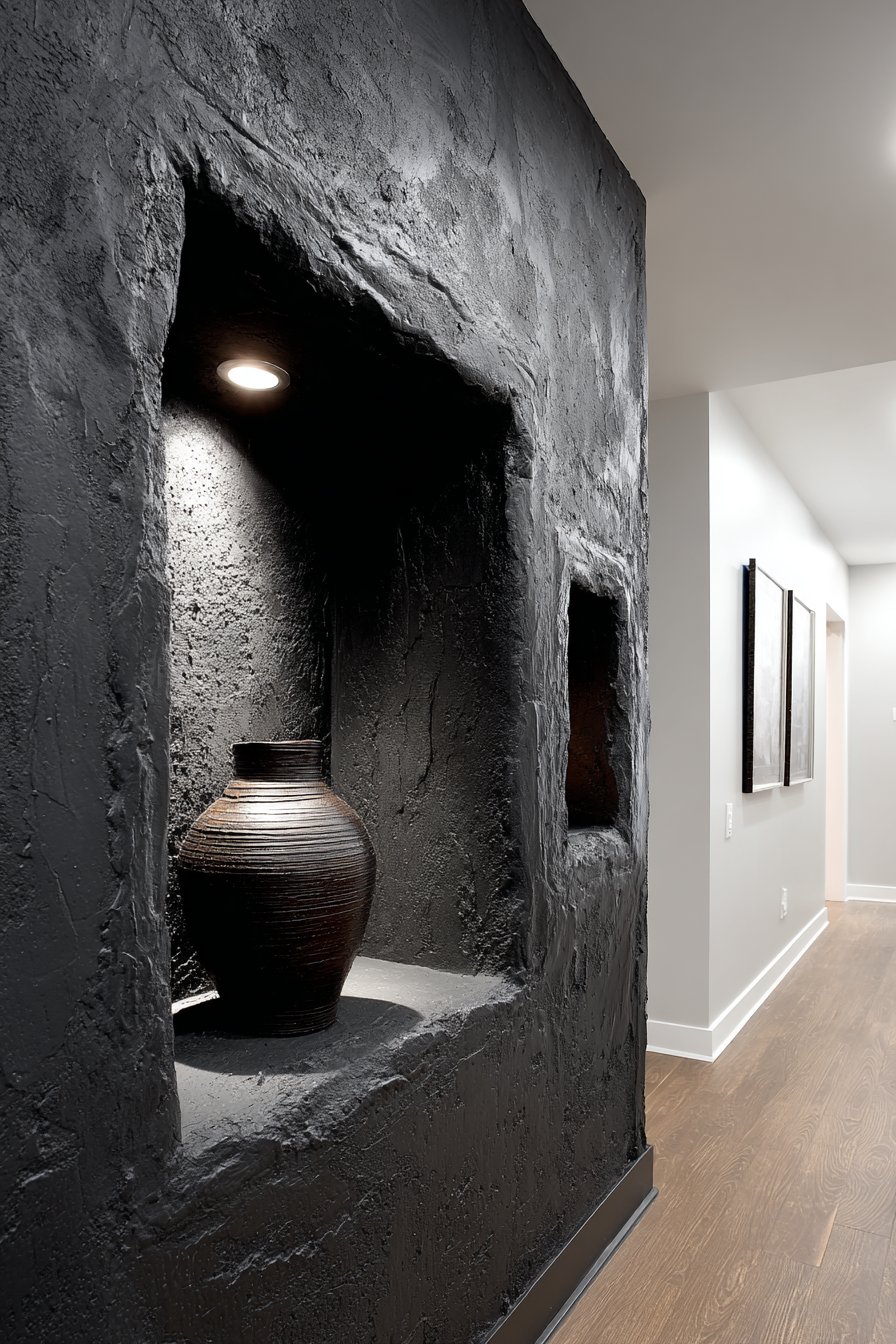
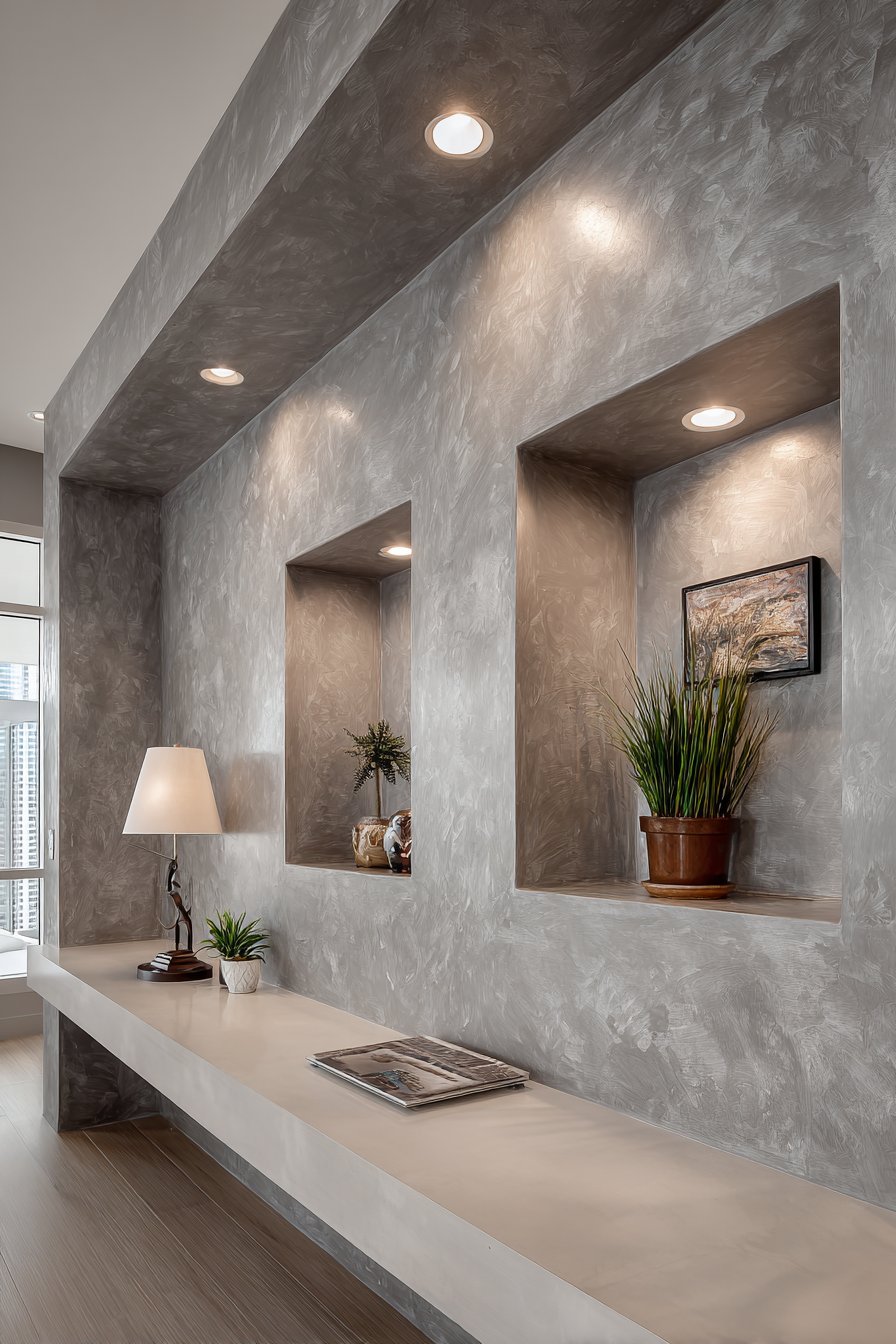
The dining room wall commands attention through a large rectangular niche carved into a textured concrete-look wall, creating a dramatic focal point that anchors the entire space. Painted in deep charcoal gray, the niche interior creates striking contrast against the lighter surrounding wall while providing a sophisticated backdrop for displayed art and collectibles. Concealed LED lighting washing down the back wall transforms the niche into a illuminated shadow box that highlights textures and forms while adding ambient lighting to the dining area.
The substantial scale of this single niche makes a bolder statement than multiple smaller recesses might achieve, demonstrating how sometimes restraint and focus create more impact than abundance. A statement ceramic vase and abstract sculpture inhabit the space with room to breathe, their forms silhouetted against the dramatic dark background and highlighted by the carefully designed lighting. The concrete-look wall finish adds industrial edge and contemporary sophistication, its subtle texture creating visual interest that rewards closer inspection.
The architectural depth of the niche creates dramatic shadows that change throughout the day as natural light angles shift, ensuring the feature remains dynamic and engaging rather than static. Professional lighting design ensures that after dark, the niche becomes even more prominent as the concealed LEDs activate, creating a soft glow that provides ambient illumination for dinner parties while showcasing the displayed objects as sculptural art. This transformation from daytime architectural feature to evening focal point demonstrates the versatility and impact of well-designed recessed niches.
Key Design Tips:
- Size the niche to accommodate statement pieces (minimum 24 inches wide and tall)
- Install LED strips on dimmer switches to adjust lighting intensity for different occasions
- Choose dark interior colors to create maximum contrast and drama
- Position niches at eye level (typically 60 inches to center) for optimal viewing
- Limit displayed items to allow each piece room to shine
- Consider the viewing angles from dining chairs and seating areas when planning placement
10. Compact Powder Room Space-Saving Storage Niche
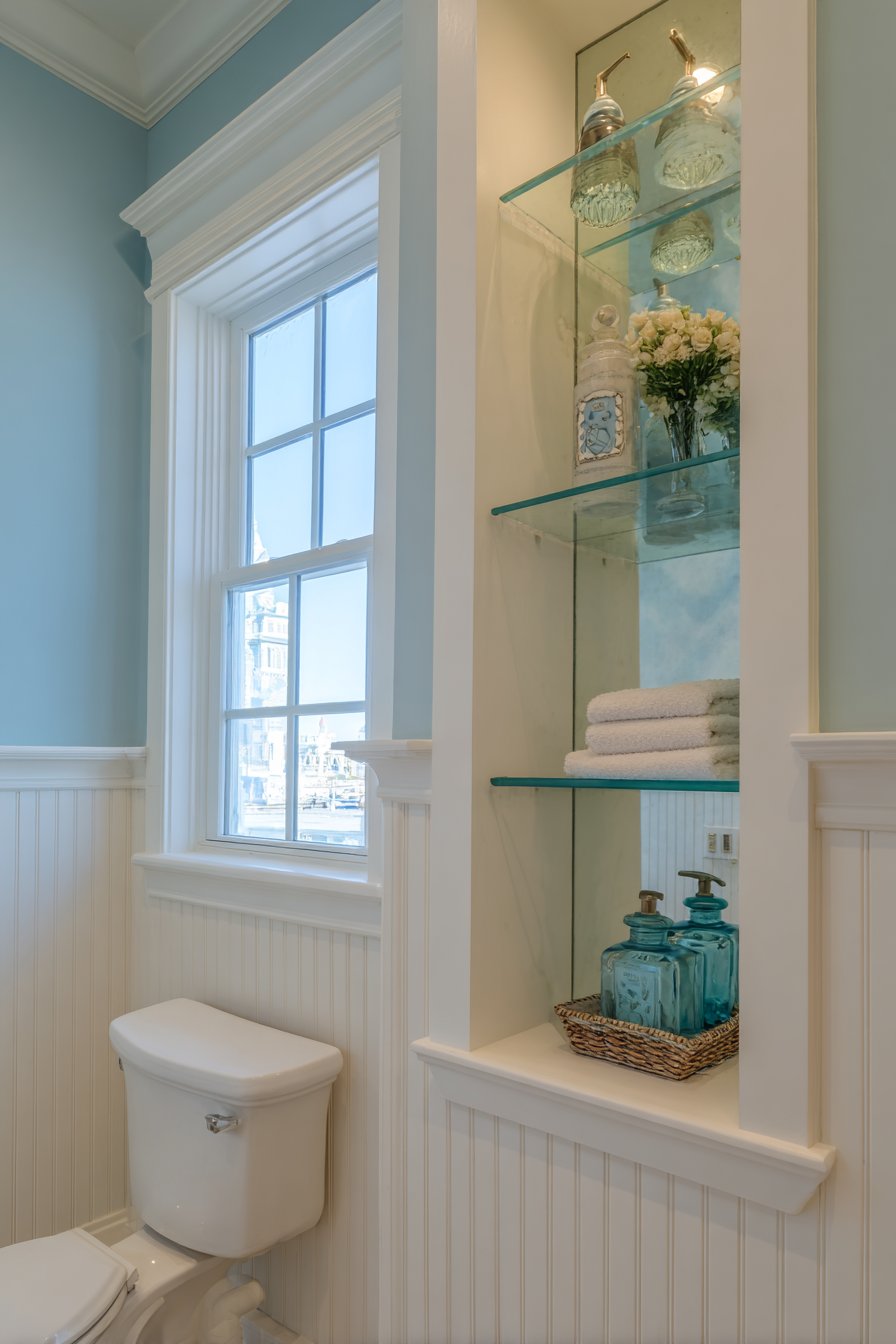
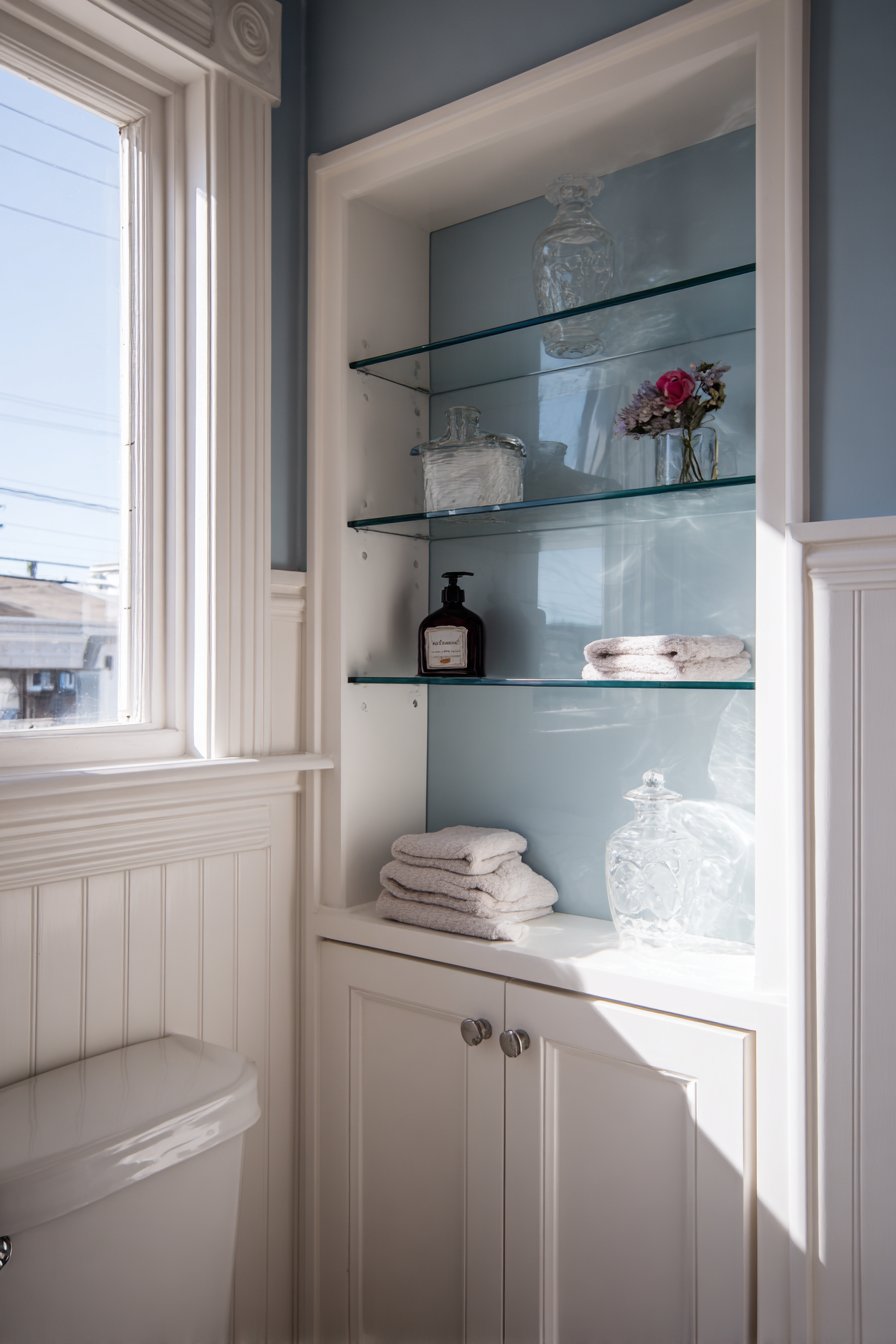
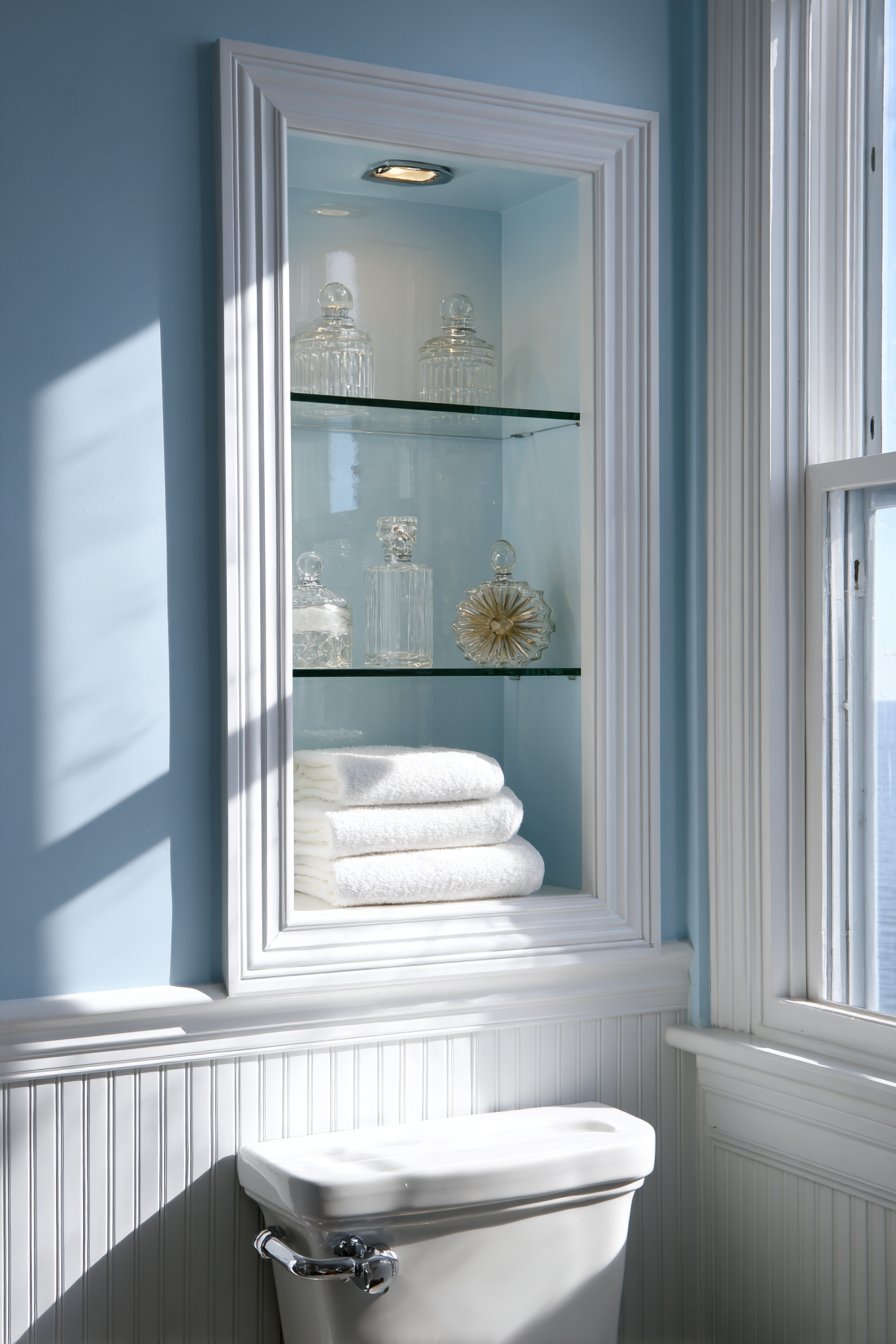
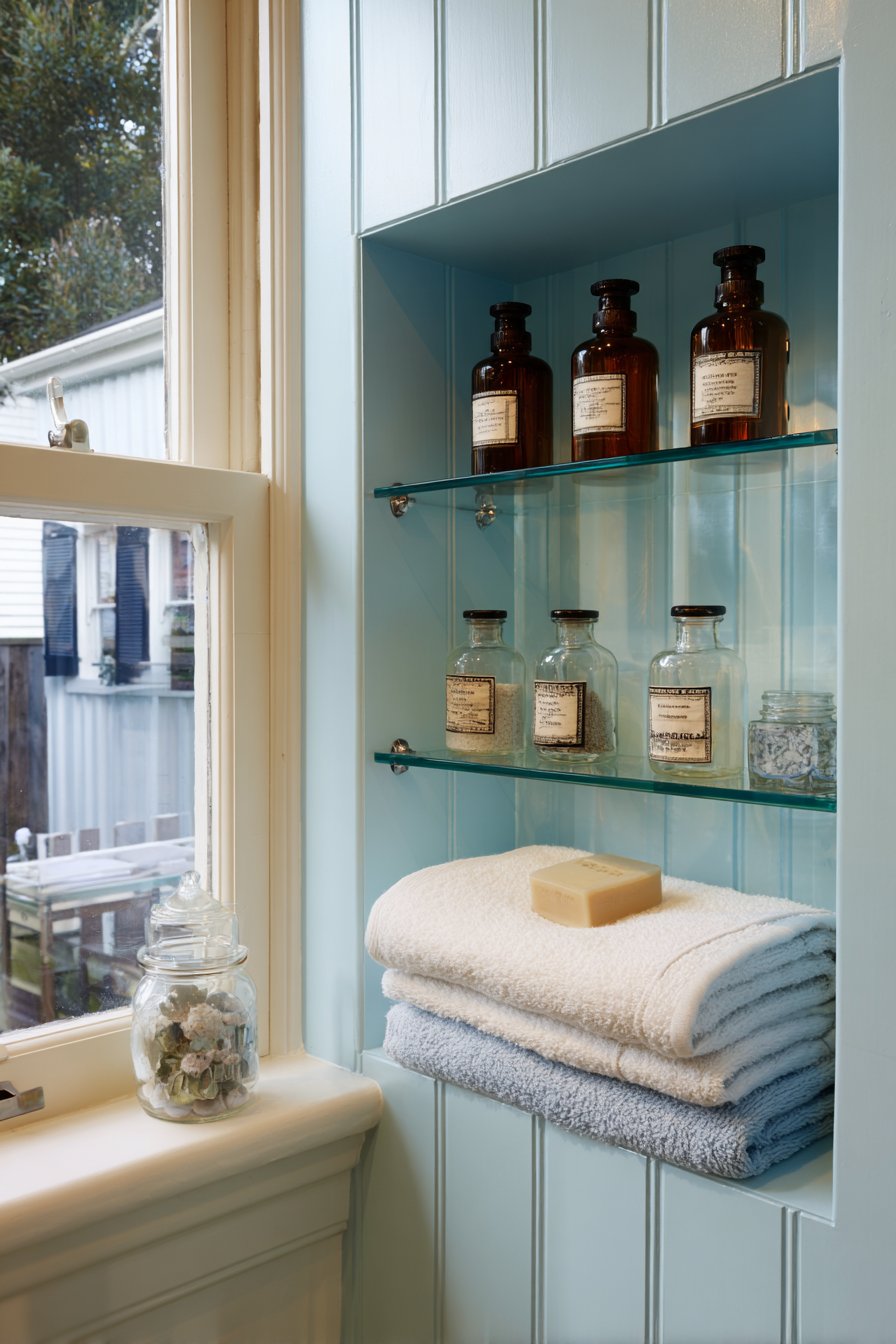
The small powder room maximizes every inch through a thoughtfully designed deep niche built into the wall beside the toilet. This single recess eliminates the need for freestanding storage furniture while providing organized space for neatly folded hand towels and decorative soap dispensers. The three internal glass shelves create vertical organization that keeps essentials accessible and visible while maintaining the open, airy quality crucial in compact bathrooms where traditional cabinets might feel overwhelming.
Carved into classic white beadboard wainscoting, the niche feels integrated into the room’s coastal-inspired architecture rather than appearing as an afterthought. The soft blue interior paint introduces a subtle pop of color that reinforces the seaside aesthetic while preventing the niche from disappearing into the white surroundings. Natural light from a small window creates gentle highlights on the glass shelves, making them appear to float within the recess while the translucent materials maintain visual lightness essential in space-constrained environments.
The strategic placement beside the toilet ensures that fresh towels remain within easy reach while the niche’s depth keeps items from protruding into the limited floor space. The glass shelving allows light to pass through multiple levels, preventing the niche from creating a dark void that might make the small room feel even more cramped. This thoughtful integration of storage within the existing wall structure demonstrates how recessed niches can solve functional challenges in small spaces without compromising aesthetic appeal or consuming precious square footage.
Key Design Tips:
- Position niches within easy reach of the toilet (typically 18-24 inches from floor)
- Use tempered glass shelves to maximize light transmission and maintain airiness
- Choose waterproof paint for niche interiors to withstand bathroom humidity
- Install shelves at heights that accommodate folded towel dimensions (8-10 inches apart)
- Consider adding a subtle lip or small towel bar at the front of shelves to prevent items from falling
- Keep displayed items minimal and coordinated for cohesive visual impact in small spaces
11. Modern Home Office Desk Organization with Modular Wall Niches
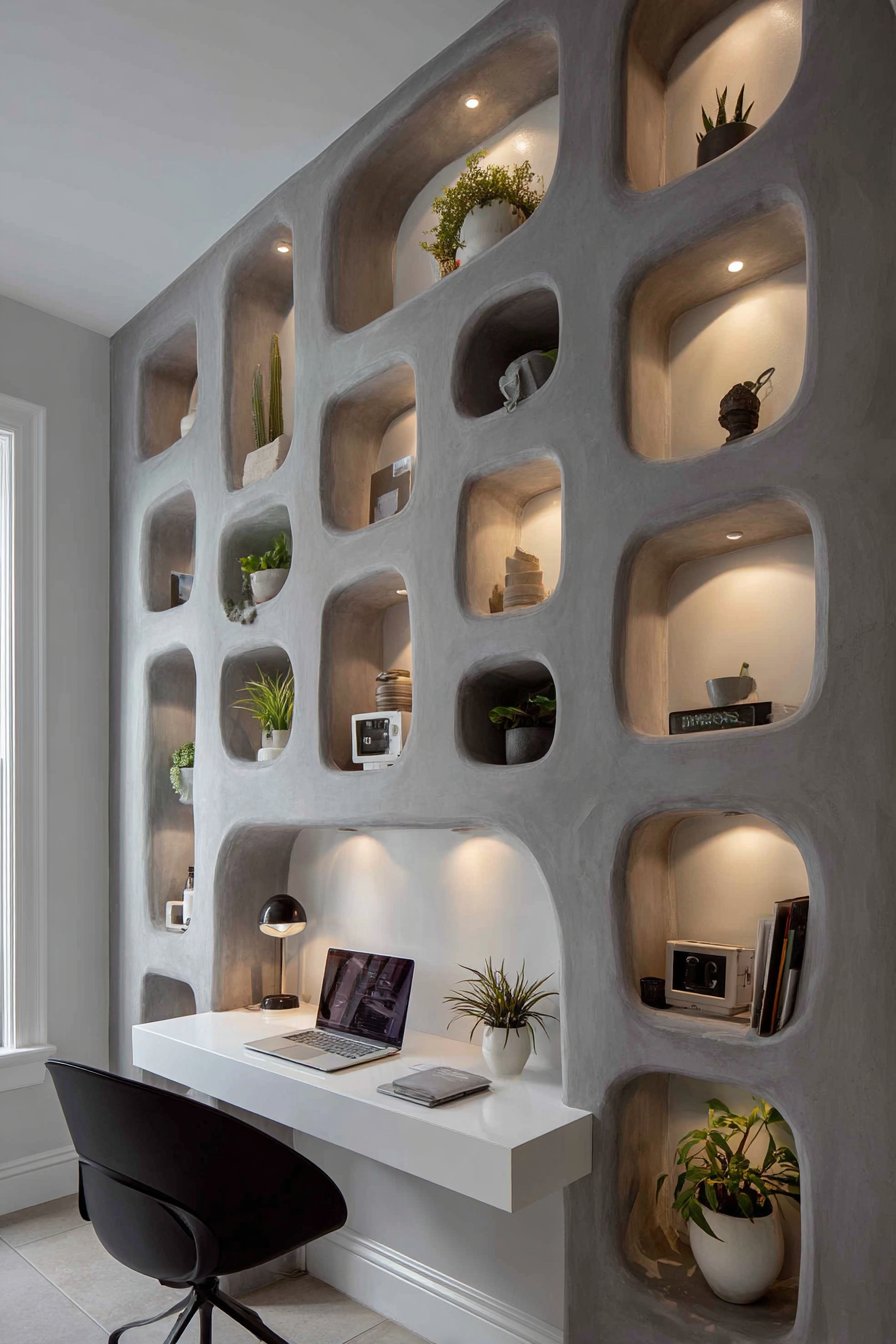
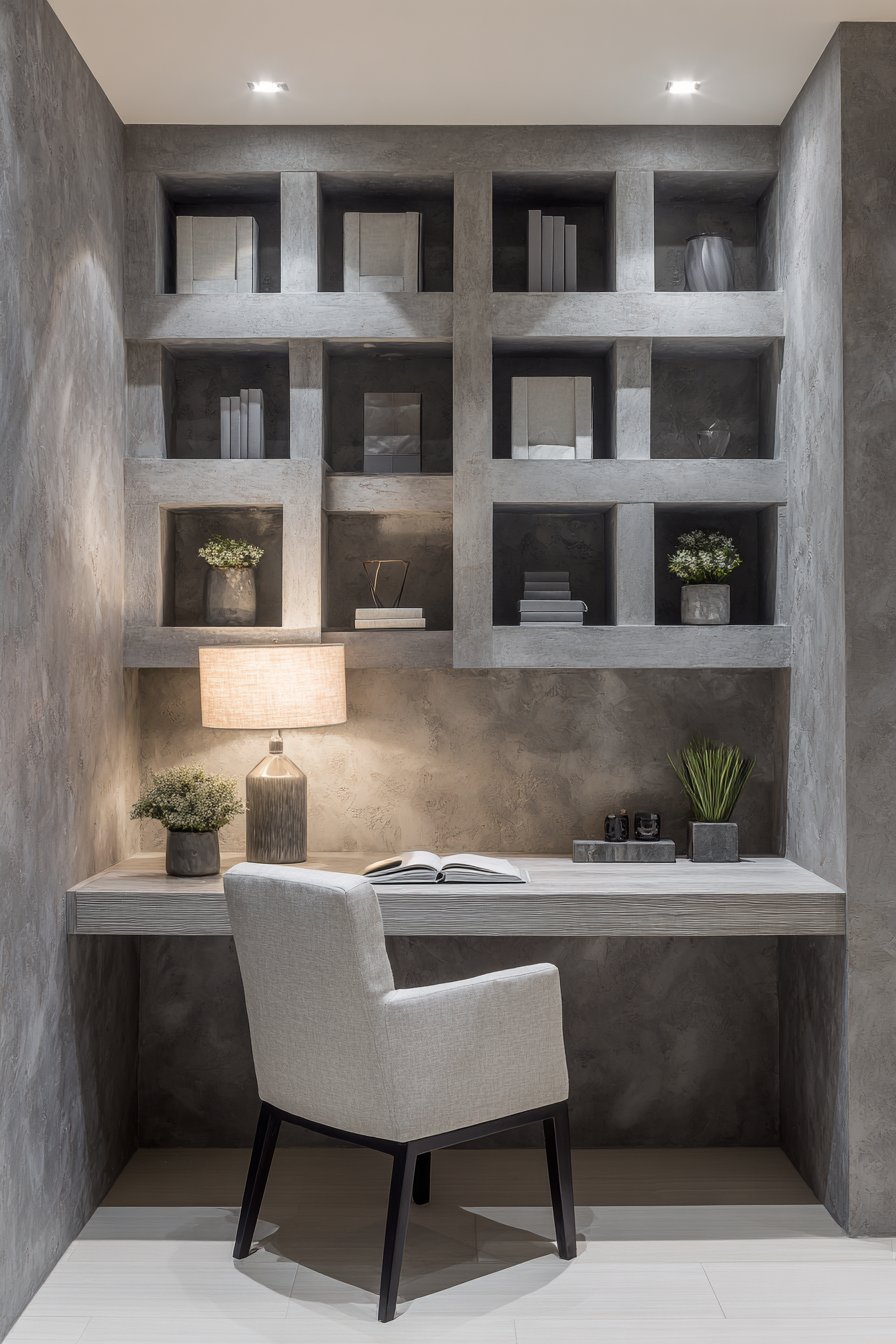
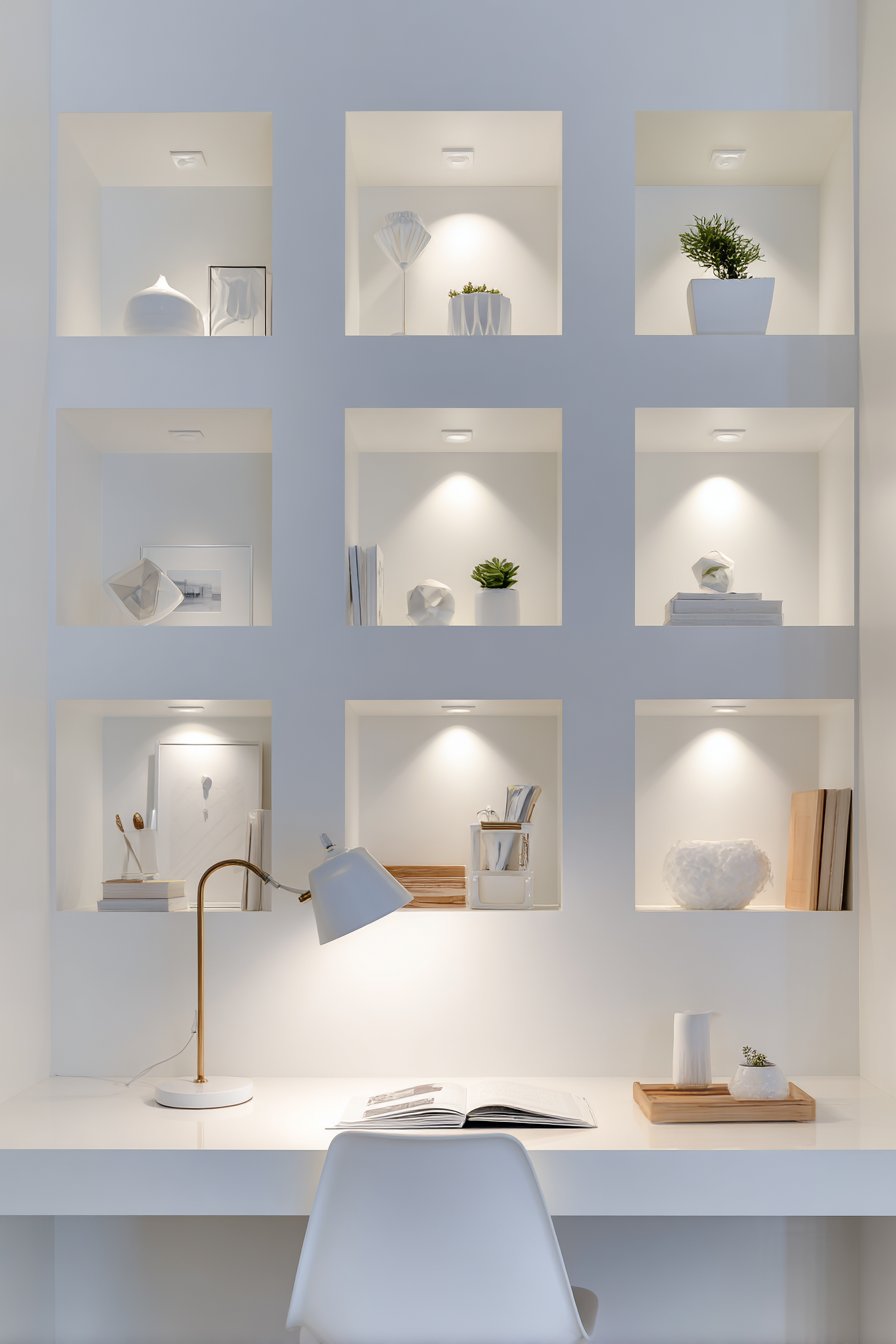
The contemporary home office revolutionizes workspace organization through multiple small square niches built into the wall above a floating desk. This modular storage system eliminates desktop clutter while keeping office supplies, small plants, and decorative objects visible and accessible. Each niche functions as a designated home for specific items—one for pens and pencils, another for notepads, others for small succulents or inspirational objects—creating an organized system that streamlines workflow while maintaining visual appeal.
Carved into smooth gray plaster with crisp white painted interiors, the niches create a clean, modern aesthetic that promotes focus and productivity. The contrast between the gray wall and white niches adds subtle visual interest without becoming distracting during work hours. Desk lamp lighting creates shadows that enhance the dimensional quality of the recesses, while the varied contents introduce personality and color to the otherwise neutral palette. The grid-like arrangement provides structure and predictability that many people find mentally organizing and conducive to concentrated work.
The elevated position above the desk keeps these storage solutions within the peripheral vision and arm’s reach without consuming valuable desktop real estate. This vertical organization strategy is particularly valuable in compact home offices where floor space is limited and every surface must serve multiple purposes. The clean, modern lines of the installation complement contemporary office furniture while the functional design supports efficient work habits by providing a designated place for everything.
Key Design Tips:
- Size niches to accommodate standard office supplies (6-8 inch squares work well)
- Maintain 2-3 inches of spacing between niches for clean, organized appearance
- Position the lowest row of niches 12-18 inches above desk surface for comfortable reach
- Use LED puck lights in some niches to highlight decorative items and add task lighting
- Paint niche interiors in bright white to maximize light reflection and visibility
- Consider adding small drawer inserts or organizer boxes within niches for smaller items
12. Rustic Farmhouse Living Room with Exposed Brick Arched Niches
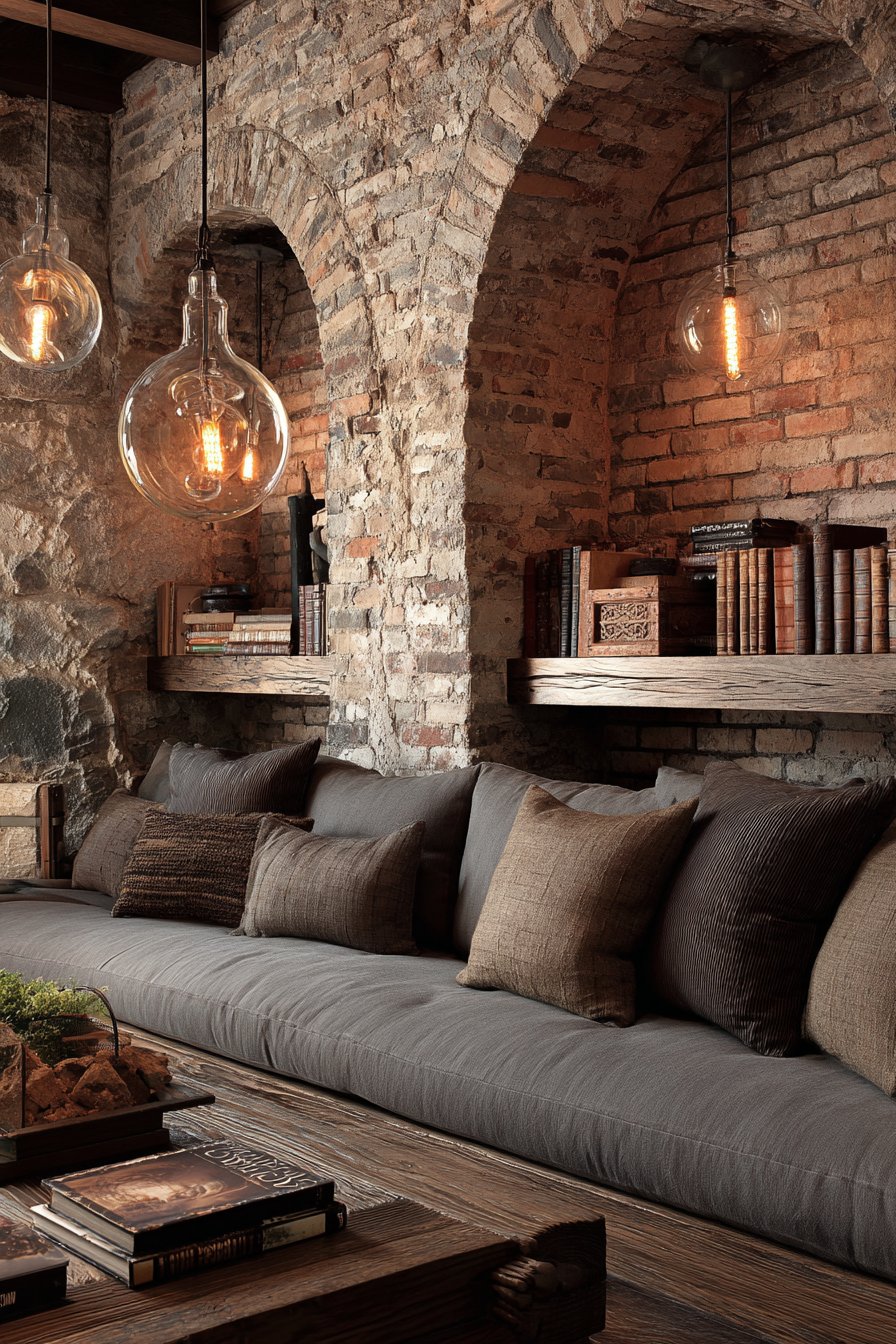
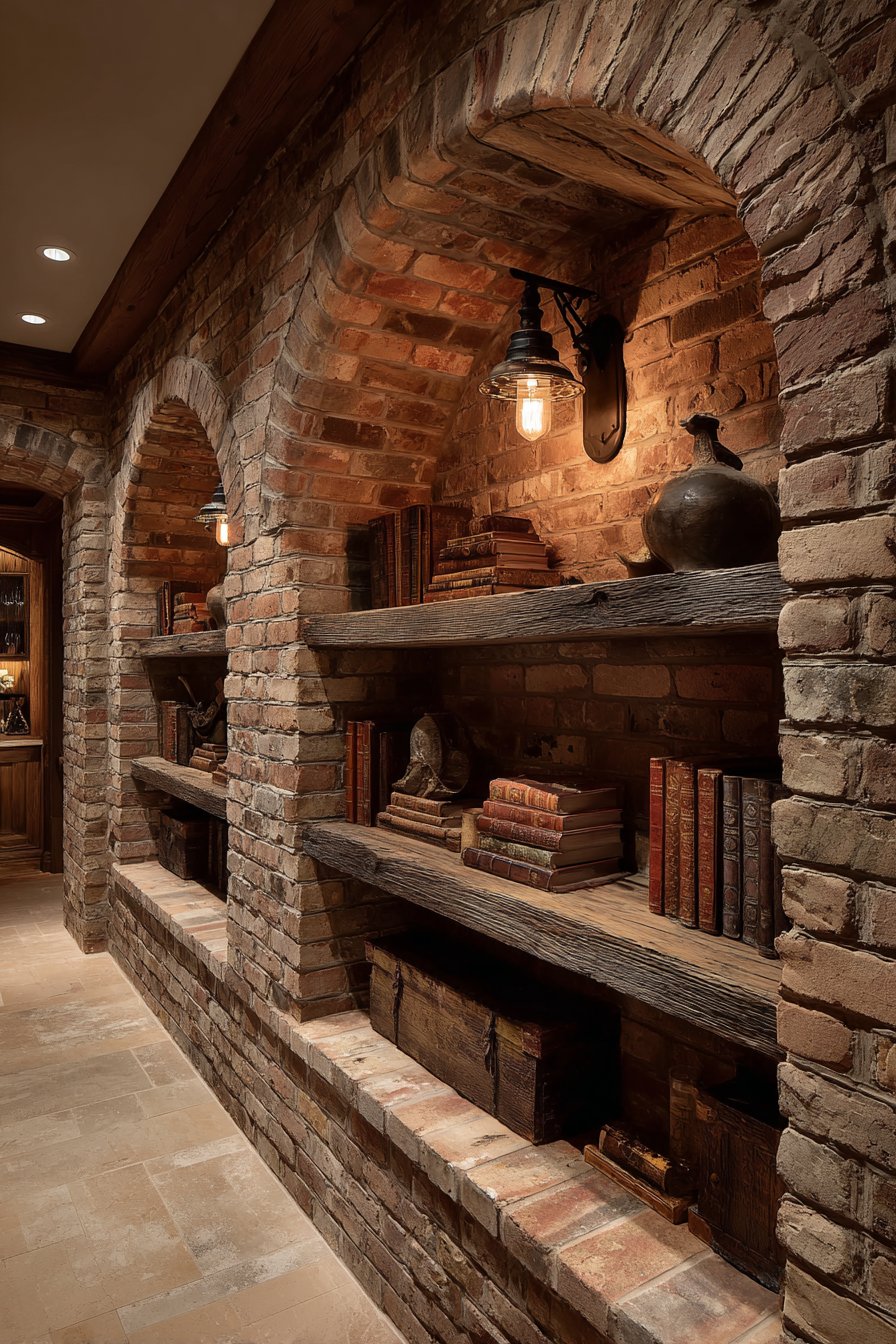
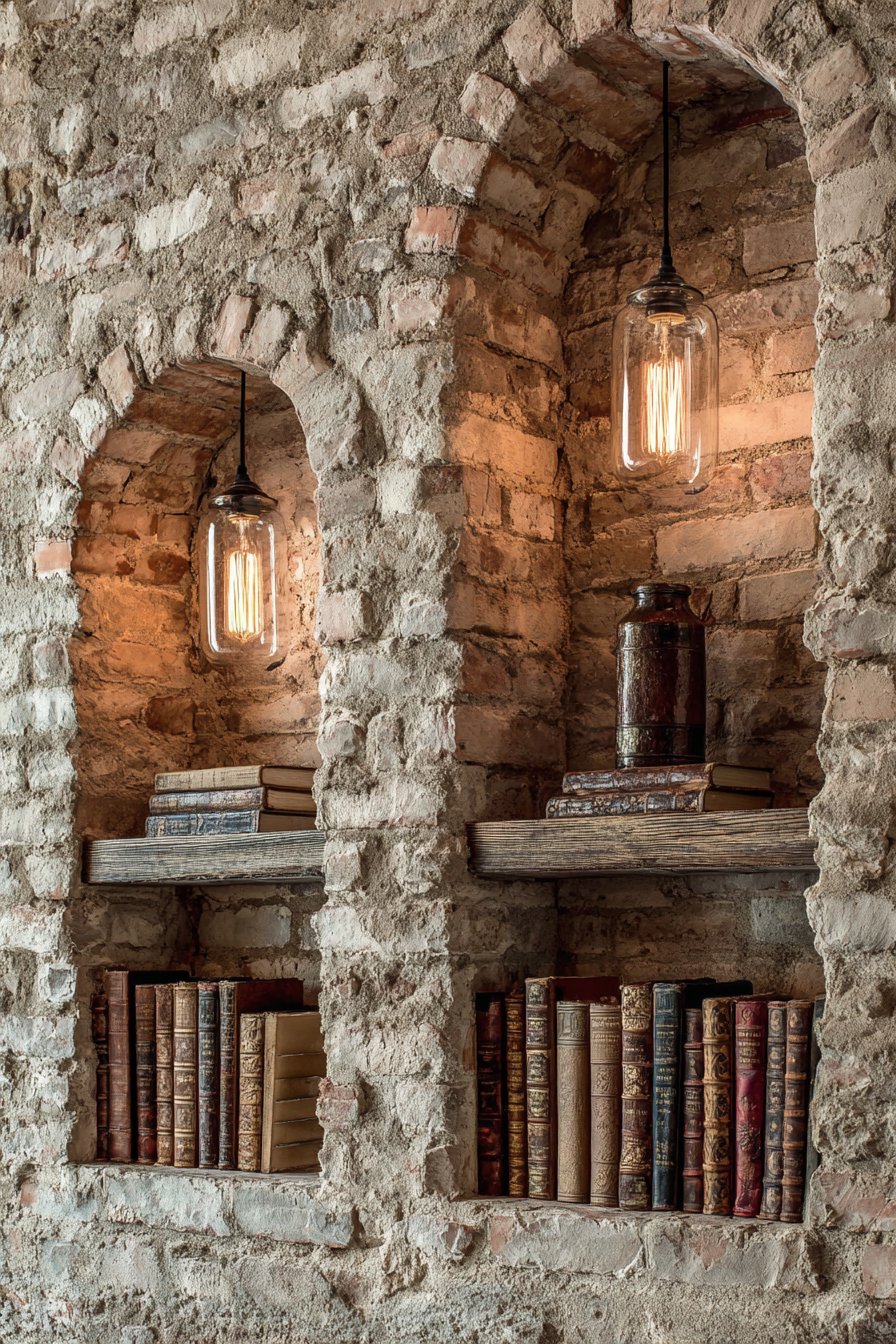
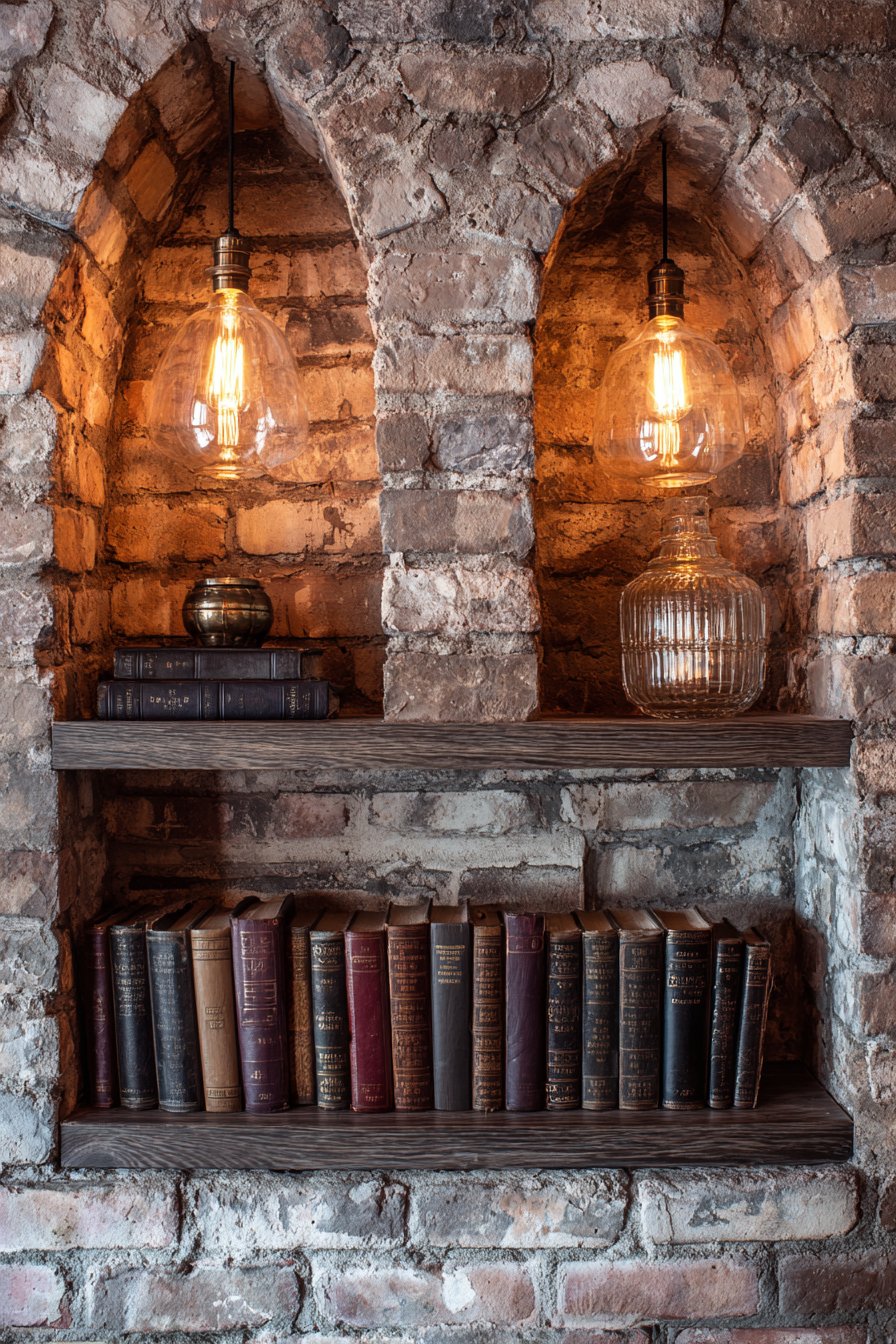
The farmhouse living room celebrates architectural history through two arched niches revealing the beauty of exposed brick texture. These recessed alcoves feel discovered rather than created, as if the removal of plaster revealed the structure’s original character beneath. Reclaimed wood shelves within each niche bridge the gap between historical authenticity and functional display, providing stable surfaces for vintage books and antique decorative items that reinforce the rustic aesthetic.
Warm Edison bulb pendant lights suspended within each niche create inviting pools of amber light that emphasize the brick’s natural color variation and authentic weathering. The arched openings soften the geometric rigidity of the brick pattern while adding classical architectural detail that elevates the rustic aesthetic beyond casual farmhouse into something more refined and intentional. The brick’s varied tones—ranging from deep red to warm orange to weathered gray—create visual richness that no painted surface could replicate.
The interplay between rough brick texture and smooth reclaimed wood shelving creates tactile contrast that invites closer inspection and appreciation of materials. Each brick shows the marks of age and use, with chipped edges, mortar variations, and color inconsistencies that tell stories of the building’s past. This embrace of imperfection and history stands in stark contrast to the polished perfection of modern construction, offering visual warmth and character that resonates with those seeking authentic, lived-in spaces rather than showroom-perfect interiors.
Key Design Tips:
- Expose existing brick carefully to avoid structural damage; consult professionals if uncertain
- Seal brick surfaces to prevent dust and deterioration while maintaining natural appearance
- Choose reclaimed wood shelves with visible grain and natural imperfections for authentic rustic character
- Install pendant lights on dimmers to control ambiance and prevent harsh lighting
- Style niches with vintage or antique items that complement the historical aesthetic
- Consider adding backing boards behind shelves for additional stability and finished appearance
13. Spa-Like Bathroom with Wide Horizontal Shower Storage Niche
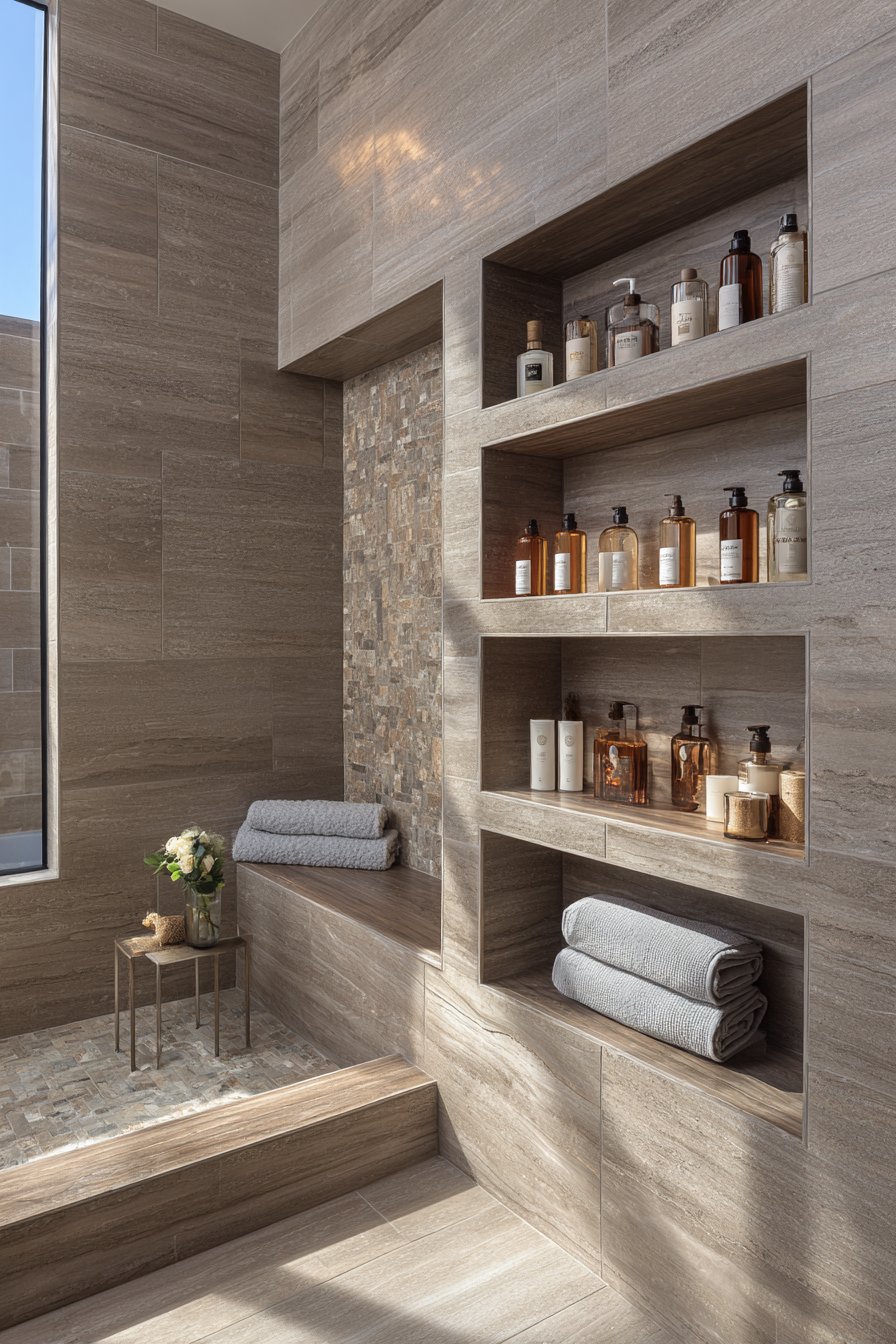
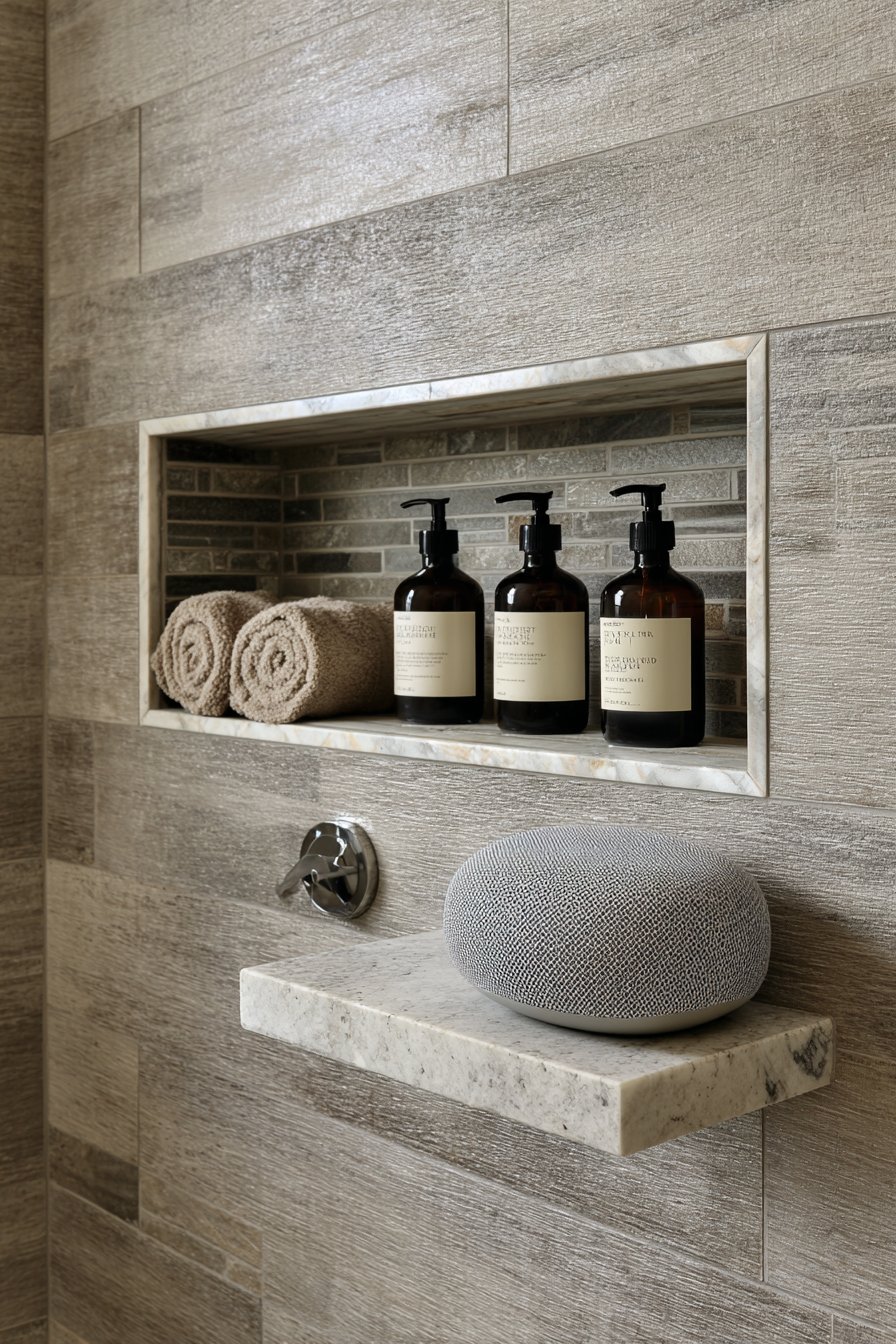
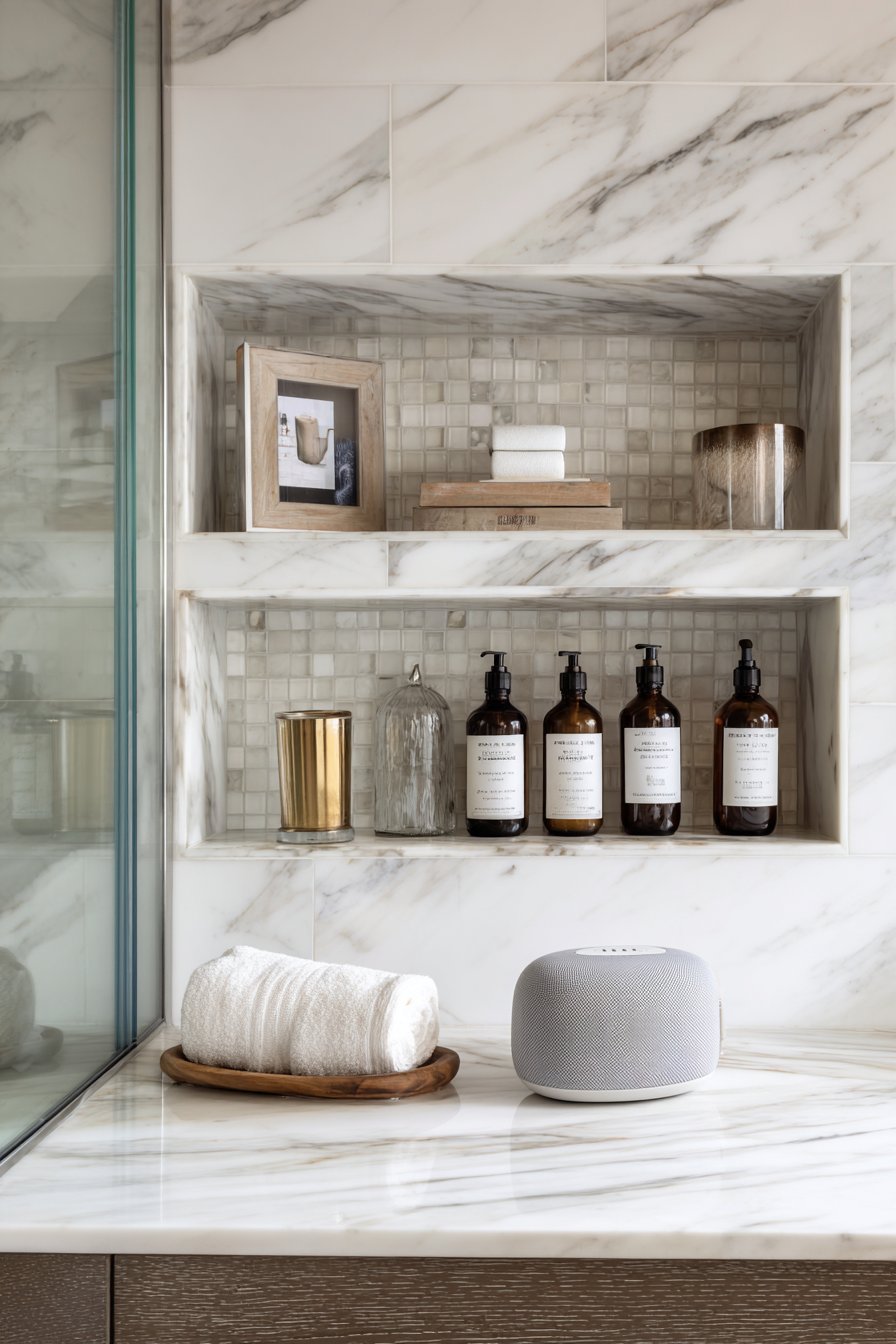
The luxurious master bathroom shower elevates daily routines into spa experiences through a horizontal niche spanning the entire length of one wall at shoulder height. This generous recessed shelf, lined with matching marble-look porcelain and featuring a slight forward slope, provides ample storage for luxury bath products, rolled washcloths, and even a waterproof bluetooth speaker. The substantial scale eliminates the need for multiple smaller niches or hanging organizers, creating a cleaner, more elegant aesthetic that befits the bathroom’s upscale design.
The forward-sloping bottom ensures water drainage and prevents soap buildup, demonstrating how practical engineering can be seamlessly integrated into beautiful design. The marble-look porcelain creates visual continuity with the surrounding shower walls while introducing subtle veining patterns that add organic interest to the geometric recess. Natural lighting from a nearby window highlights the varied tones within the faux marble, creating depth and dimension that makes the niche feel like an intentional design feature rather than simple storage.
High-end bath products in uniform bottles create a curated, boutique-hotel appearance that transforms everyday toiletries into decorative elements. The rolled washcloths add softness and texture while remaining easily accessible during shower use. The bluetooth speaker integration acknowledges modern lifestyle needs, demonstrating how traditional architectural features can adapt to contemporary technology without compromising aesthetic integrity. This marriage of luxury materials, practical function, and modern amenities creates a shower experience that rivals high-end hotel accommodations.
Key Design Tips:
- Span the entire wall width (or minimum 36 inches) for generous storage and visual impact
- Install with a 2-3 degree forward slope to prevent water pooling
- Use large-format tiles to minimize grout lines and simplify cleaning
- Position at comfortable reaching height (typically 48-54 inches from shower floor)
- Apply high-quality waterproof membrane behind all tile surfaces
- Consider adding a subtle linear drain along the front edge for superior water management
14. Minimalist Bedroom Headboard Alternative with Integrated Lighting
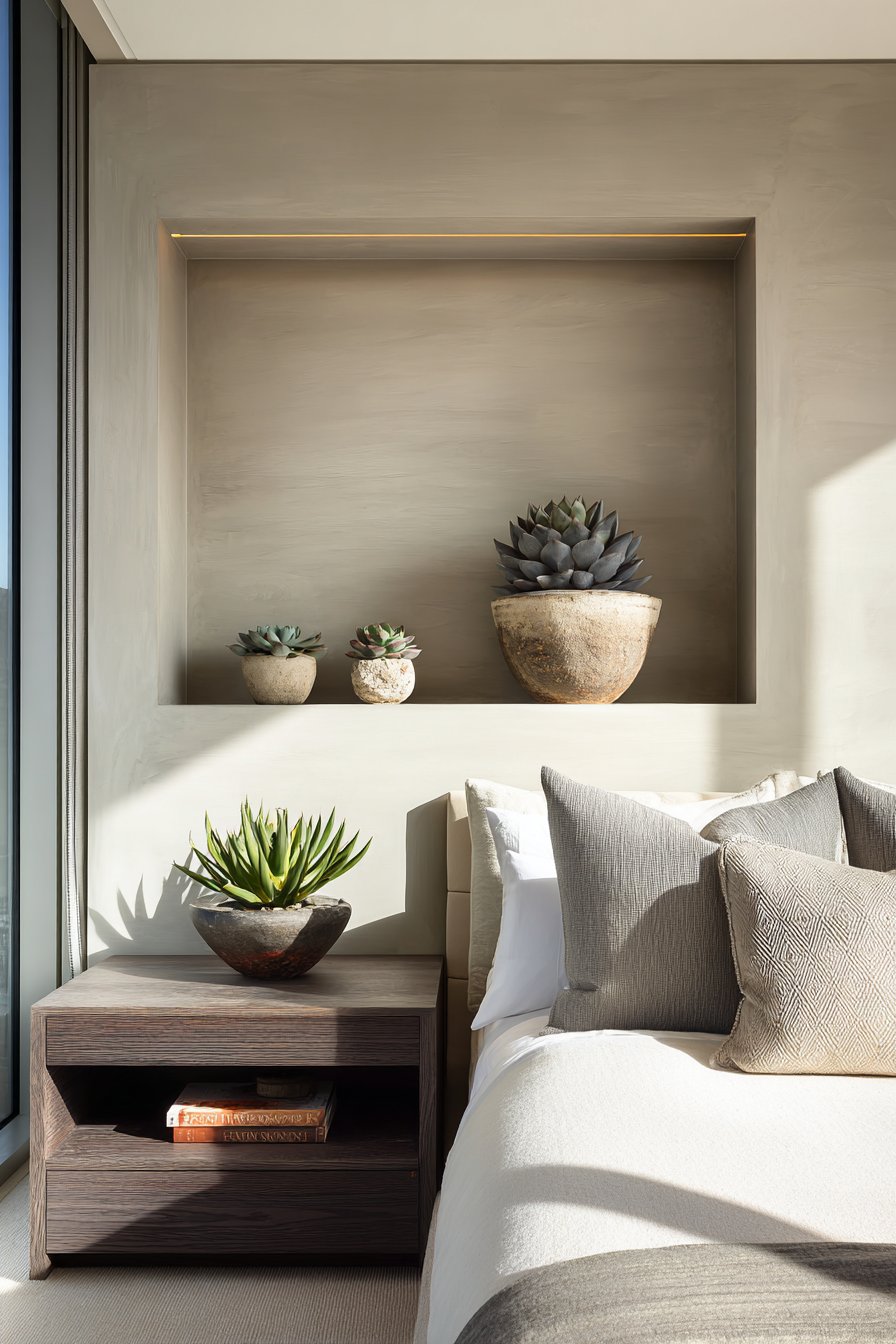
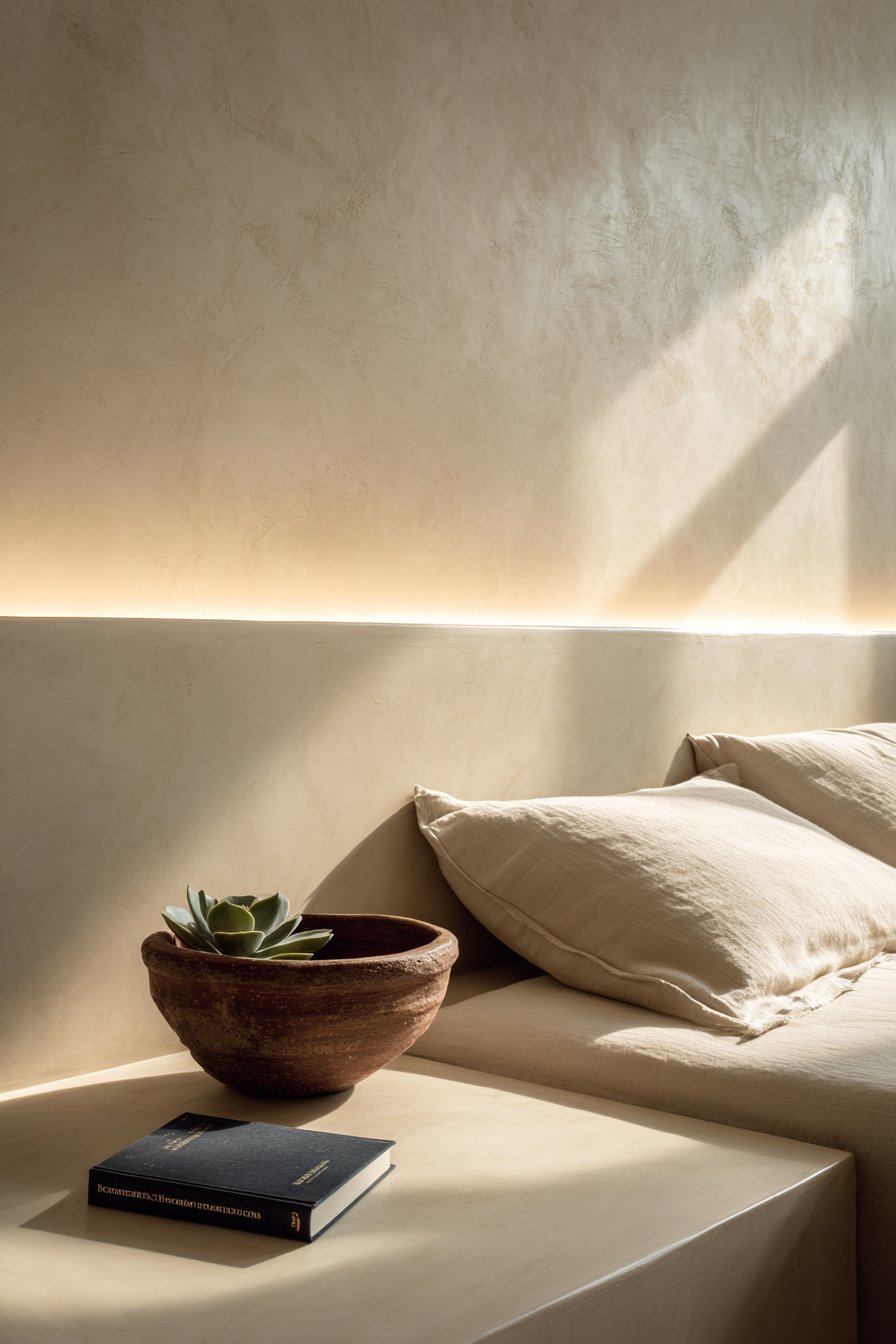
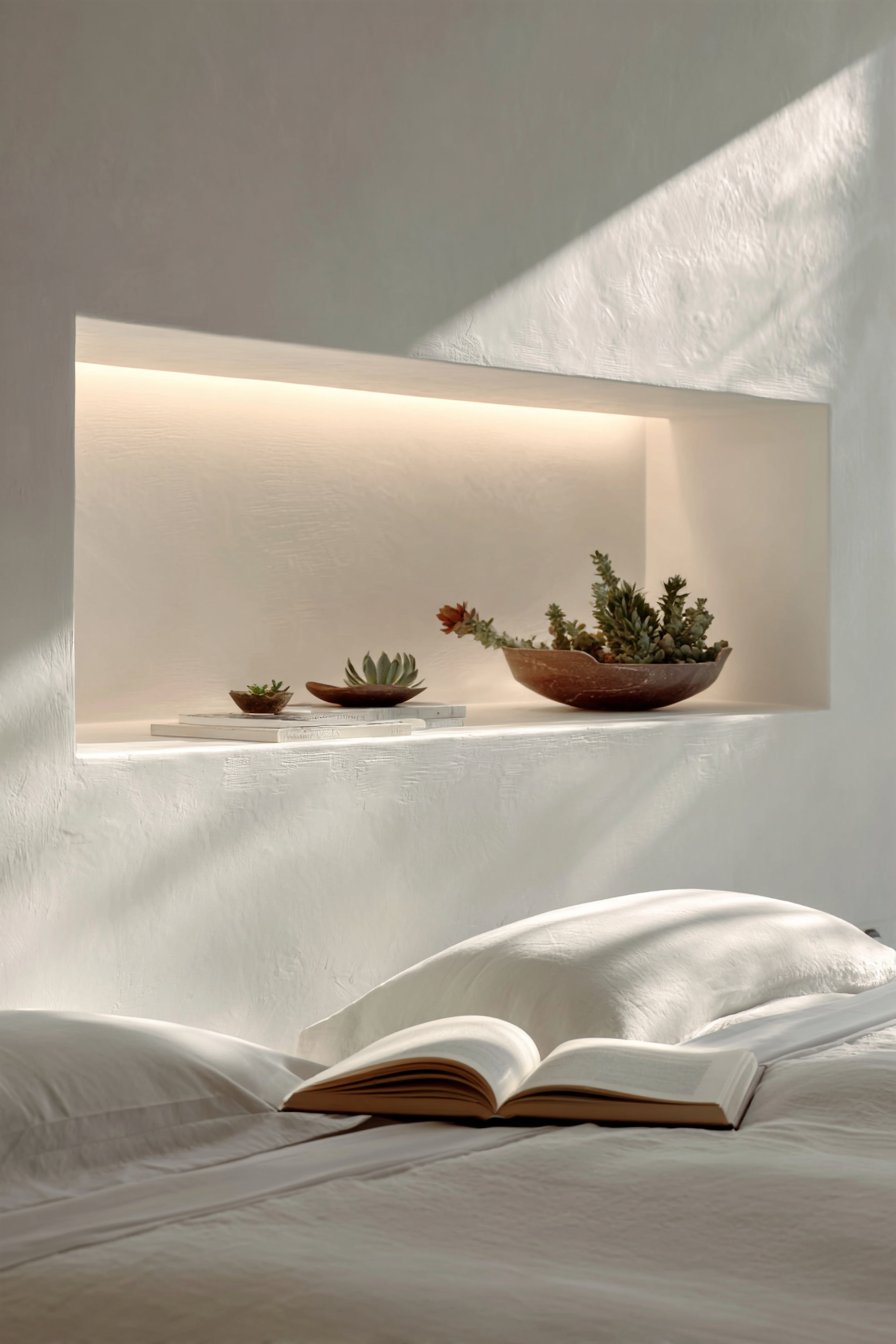
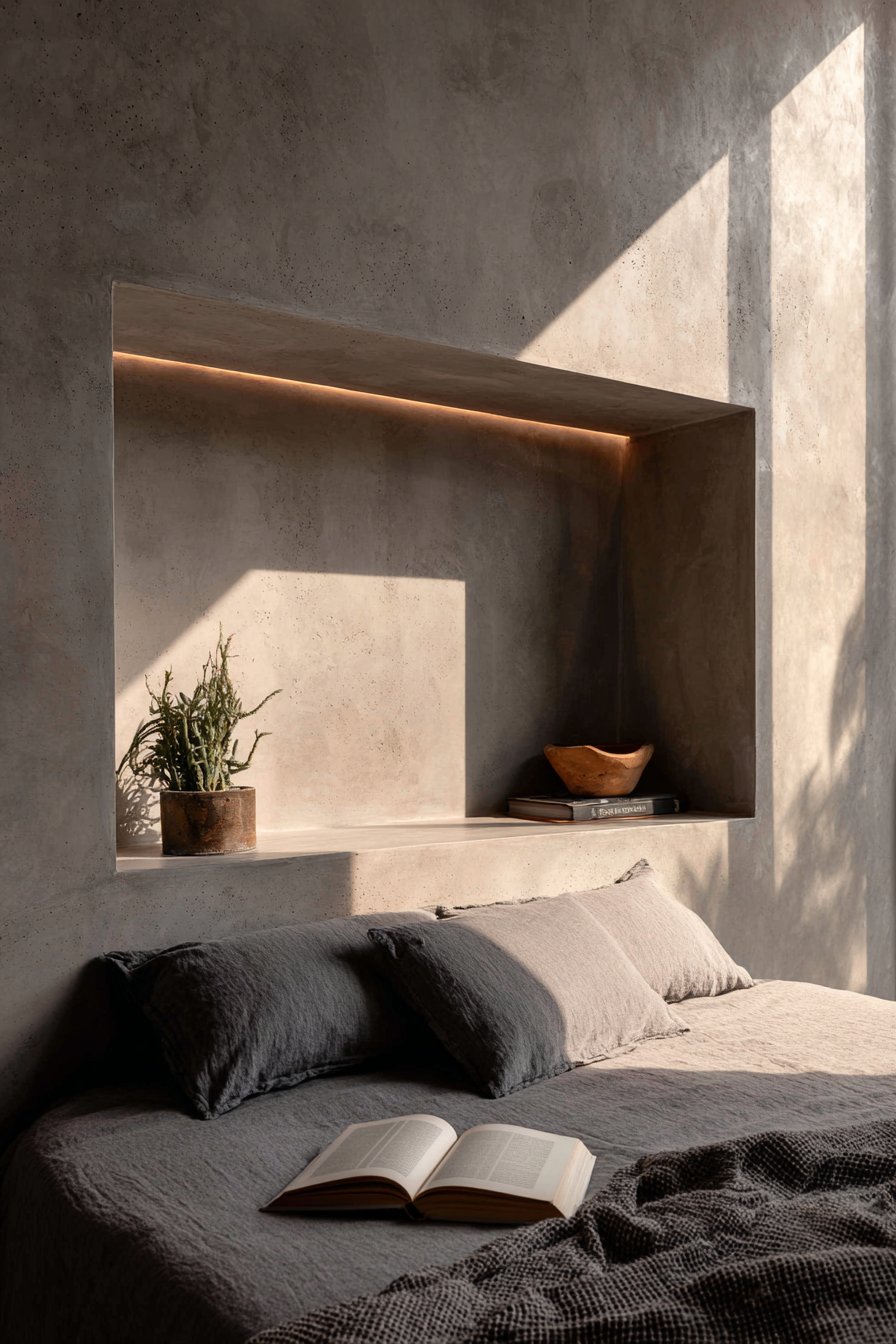
The serene bedroom embraces minimalist principles through a large horizontal niche spanning the bed’s width, eliminating the need for a traditional headboard while providing subtle storage and ambient lighting. Carved into a soft taupe plaster wall, the deep recess creates architectural interest through pure form and shadow rather than decorative embellishment. Integrated warm LED strip lighting along the top edge provides gentle illumination perfect for bedtime reading while creating a soft glow that enhances the room’s peaceful atmosphere.
The carefully curated contents reflect minimalist discipline—a small succulent in a simple ceramic pot, an artisan bowl with organic forms, and a single hardcover book. This restrained approach to styling prevents the niche from becoming cluttered storage and instead presents it as a intentional design element that adds dimension without visual noise. The deep recess allows these few items to sit well within the wall plane, maintaining the clean lines and uncluttered surfaces essential to minimalist aesthetics.
Soft morning light filtering through nearby windows interacts with the niche’s dimensional form, creating natural shadows that shift throughout the day and ensure the feature remains dynamic despite its simplicity. The taupe wall color provides warmth without overwhelming the space, creating a backdrop that feels peaceful and grounding. The elimination of the traditional headboard reduces visual weight and creates a floating quality for the bed, making the room feel more spacious while the illuminated niche provides a subtle focal point that anchors the sleeping area.
Key Design Tips:
- Size the niche to span the bed width plus 12-24 inches on each side for visual balance
- Keep depth substantial (8-12 inches) to prevent displayed items from appearing precariously placed
- Install LED strips on dimmer switches to adjust light levels for different activities
- Choose warm white LEDs (2700-3000K) for relaxing bedroom ambiance
- Limit displayed items to 3-5 carefully selected pieces to maintain minimalist aesthetic
- Position niche bottom edge 18-24 inches above mattress for comfortable viewing and reaching
15. Dynamic Stairway Wall with Graduated Niche Display
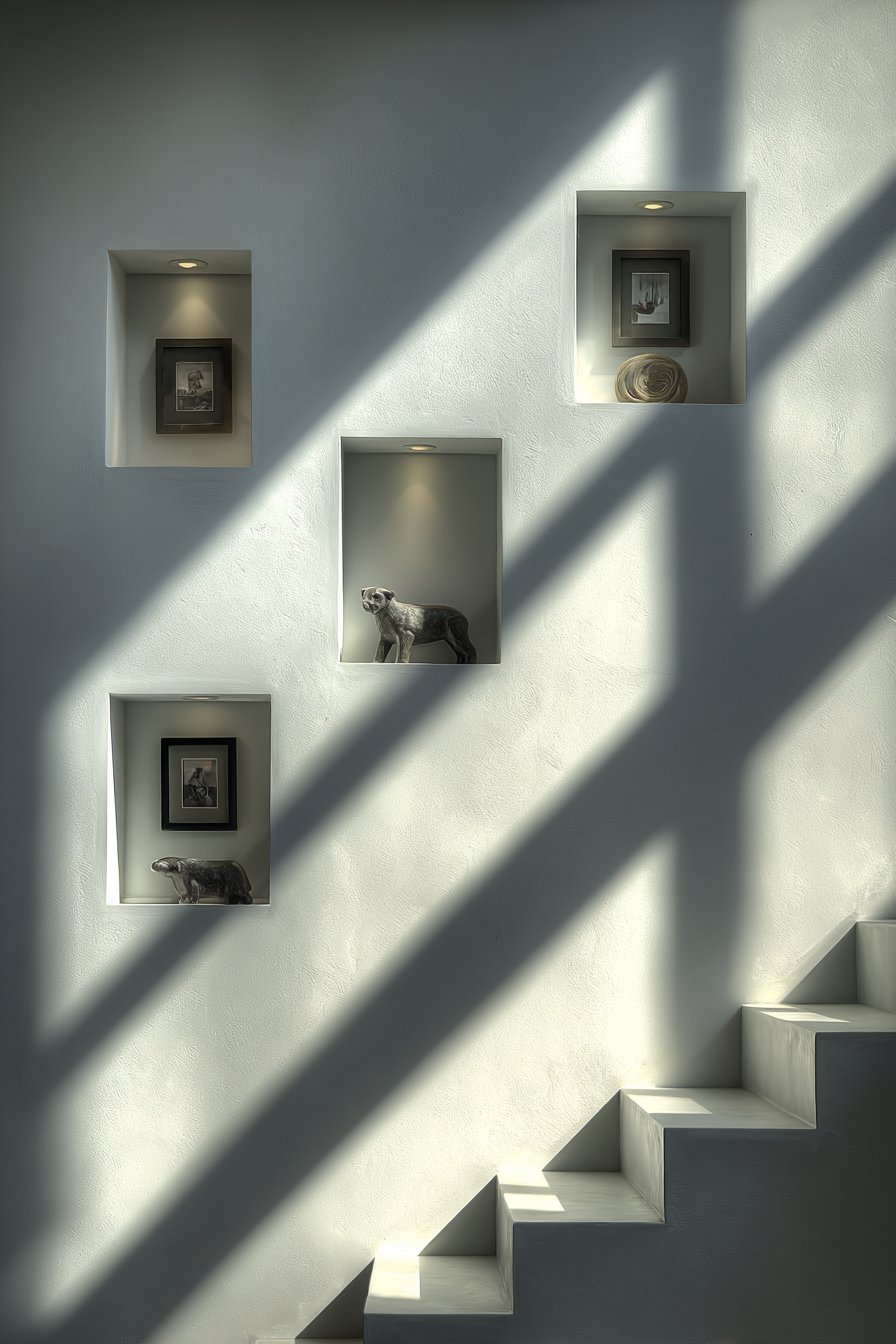
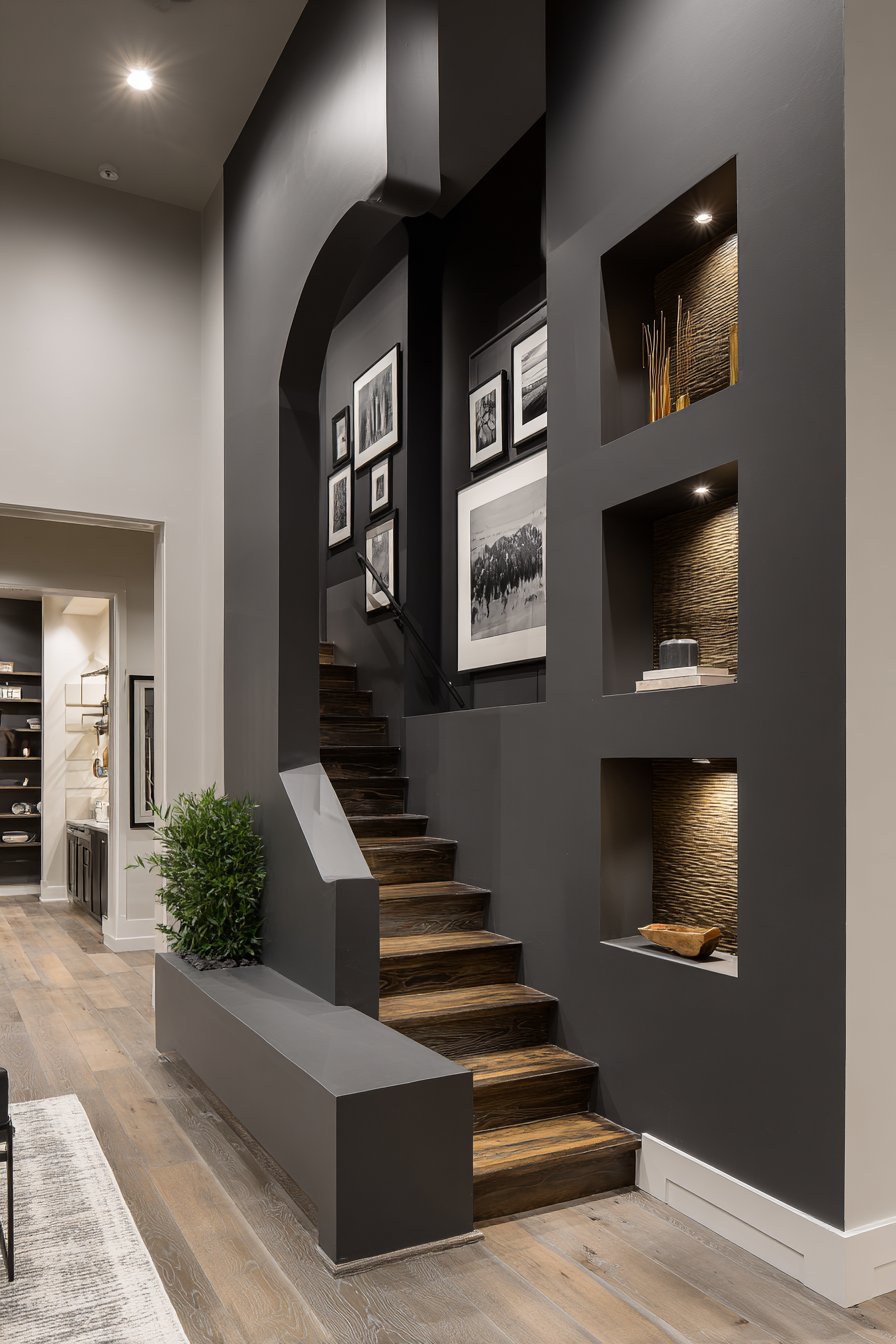
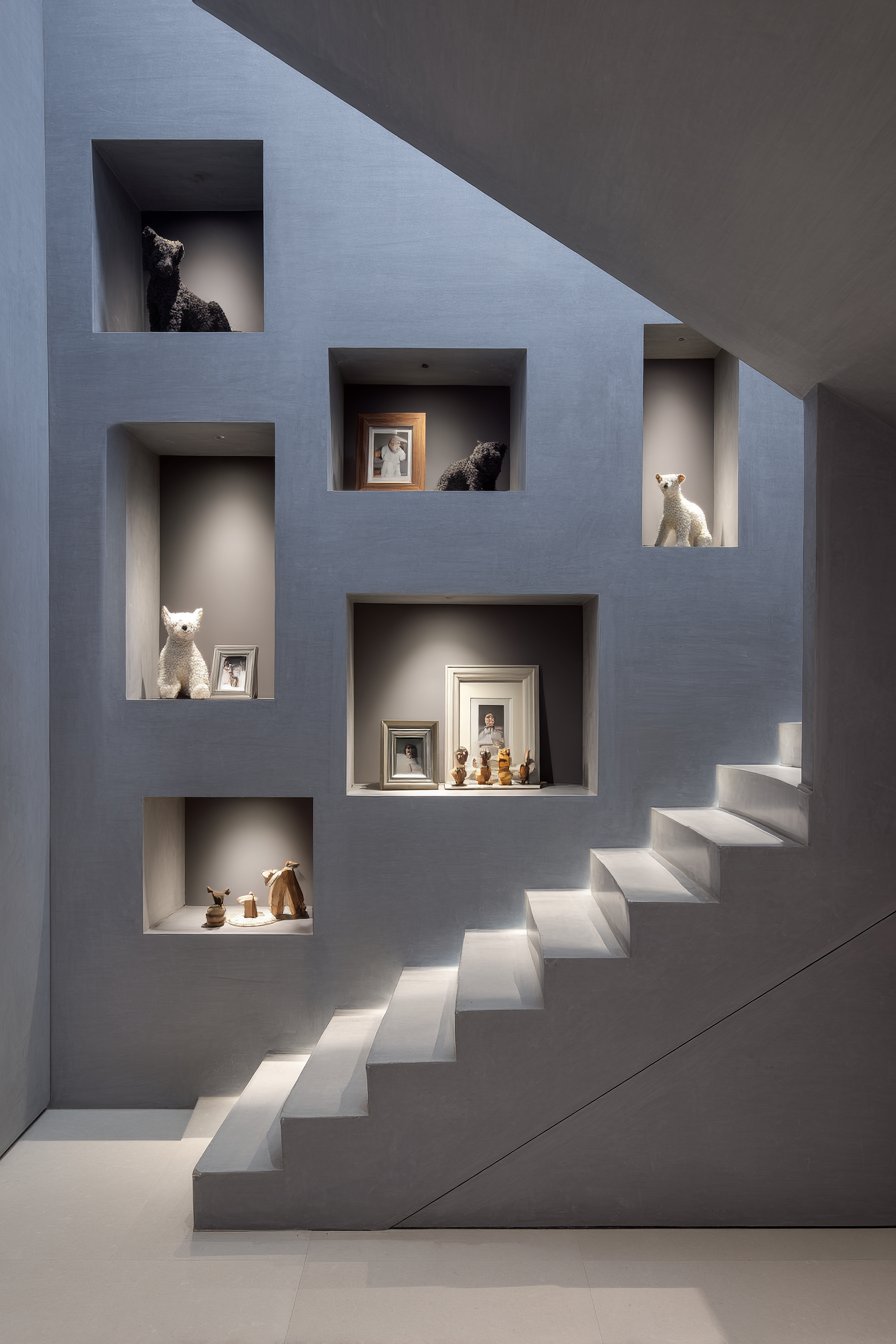
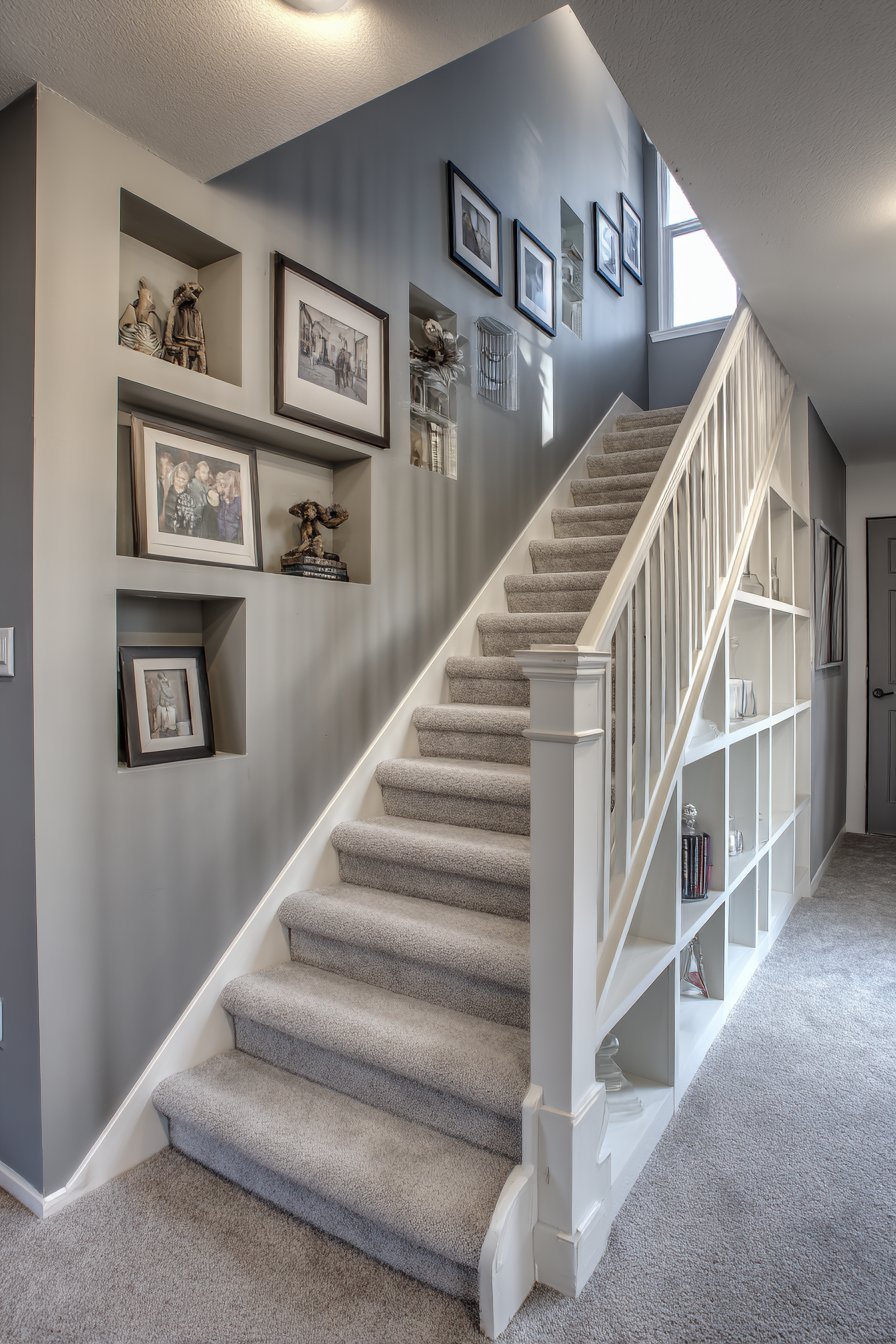
The contemporary stairway transforms vertical circulation space into an art gallery through five recessed niches following the ascending angle of the stairs. This creative installation maximizes otherwise underutilized wall space while creating visual interest that draws the eye upward and makes the climb more engaging. The graduating sizes and progressively darker shades of gray—from light at the bottom to deep charcoal at the top—create a sophisticated ombre effect that adds dimension and movement to the composition.
Family photographs in simple frames and small sculptural objects inhabit each niche, creating a personalized gallery that celebrates memories and artistic taste. The varied sizes of the niches accommodate different frame dimensions and object scales, preventing the installation from feeling too rigid or formulaic. Overhead recessed lighting casts dramatic downward shadows that emphasize the three-dimensional quality of each recess while providing functional illumination for safe stair navigation during evening hours.
The diagonal arrangement creates dynamic energy that complements the upward movement inherent in stair design, making the architectural feature feel integrated rather than applied. The color graduation provides visual wayfinding that subtly encourages upward movement while the personal nature of displayed items makes the journey more meaningful. This transformation of transitional space into meaningful display demonstrates how recessed niches can activate any wall surface, regardless of its primary architectural function.
Key Design Tips:
- Space niches to align with stair tread rhythm for visual harmony (typically one per 2-3 steps)
- Vary niche sizes to accommodate different frame and object dimensions
- Use progressively darker colors to create visual movement that complements stair ascent
- Install motion-sensor lighting for safe evening navigation
- Secure all displayed items well to prevent falls if bumped during stair use
- Consider the viewing angles from both ascending and descending positions when arranging displays
16. Child-Friendly Nursery with Safe, Accessible Storage Niches
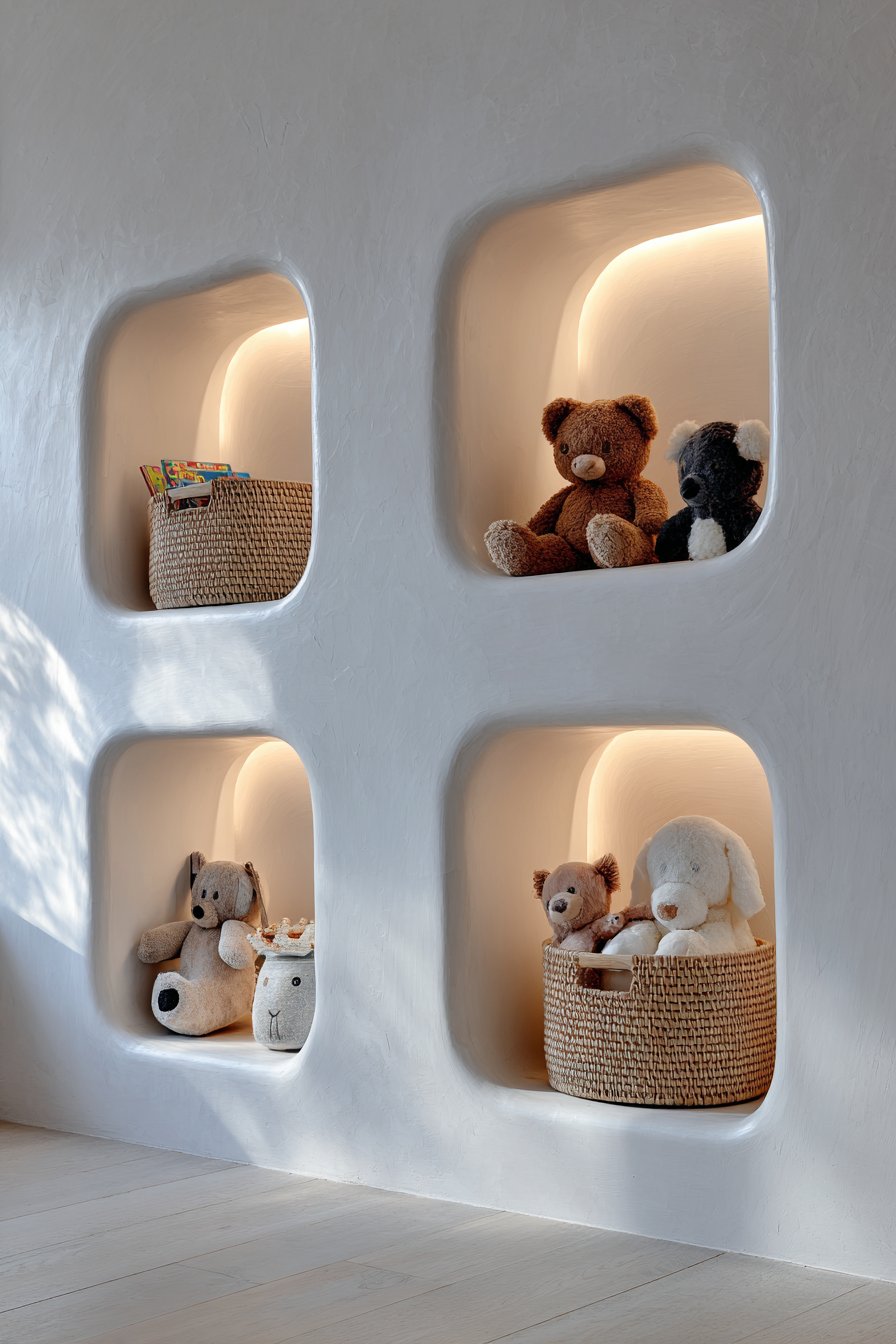
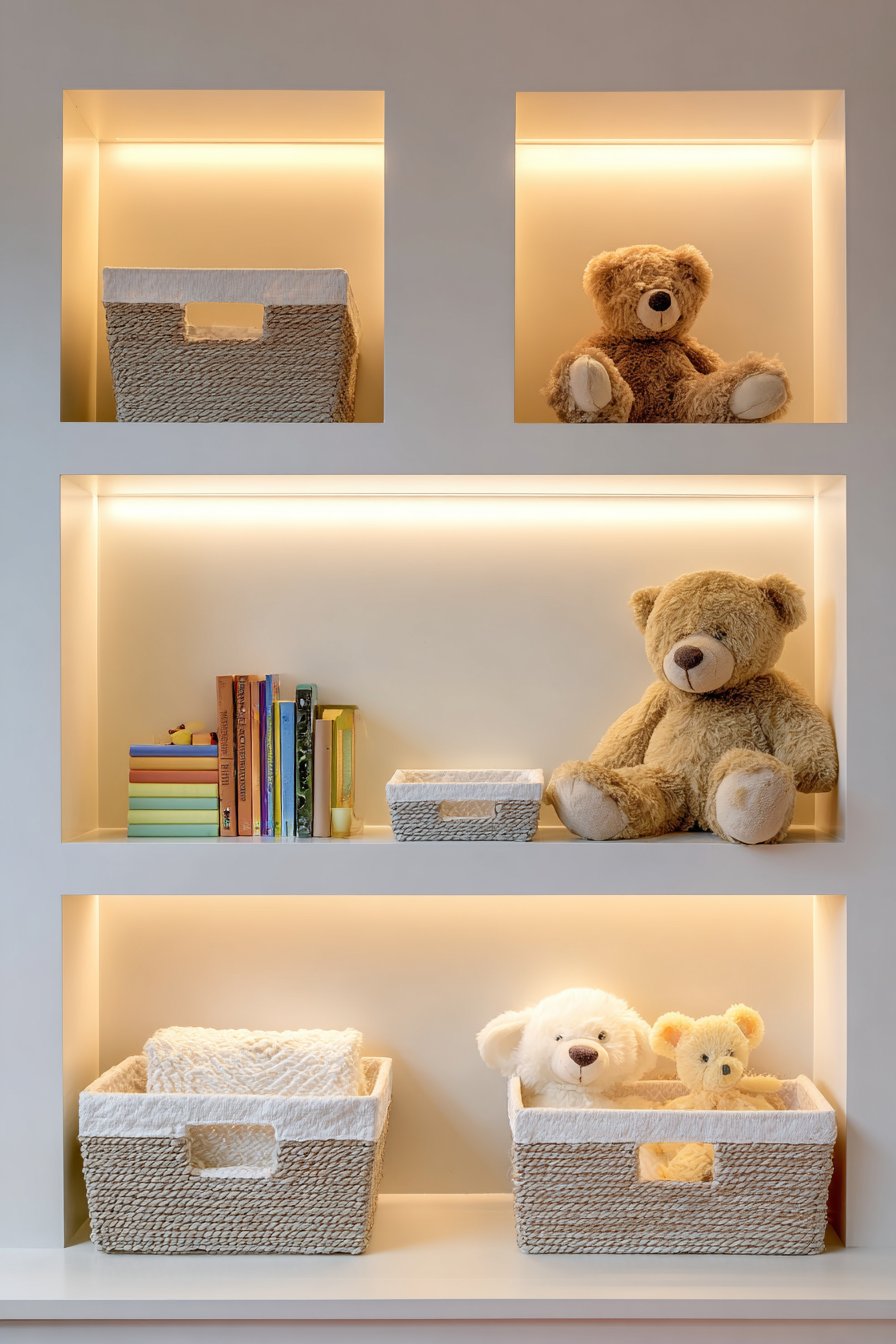
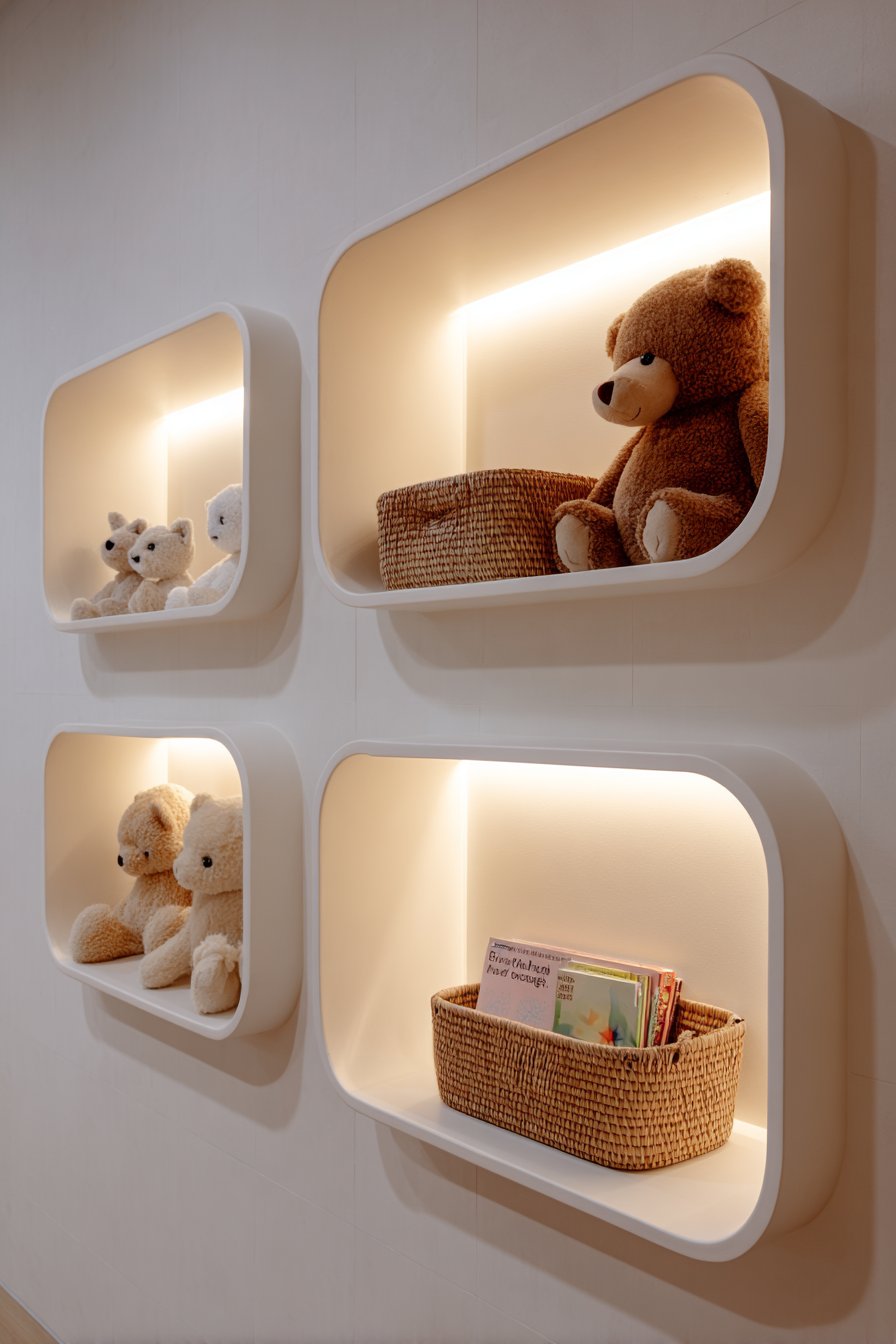
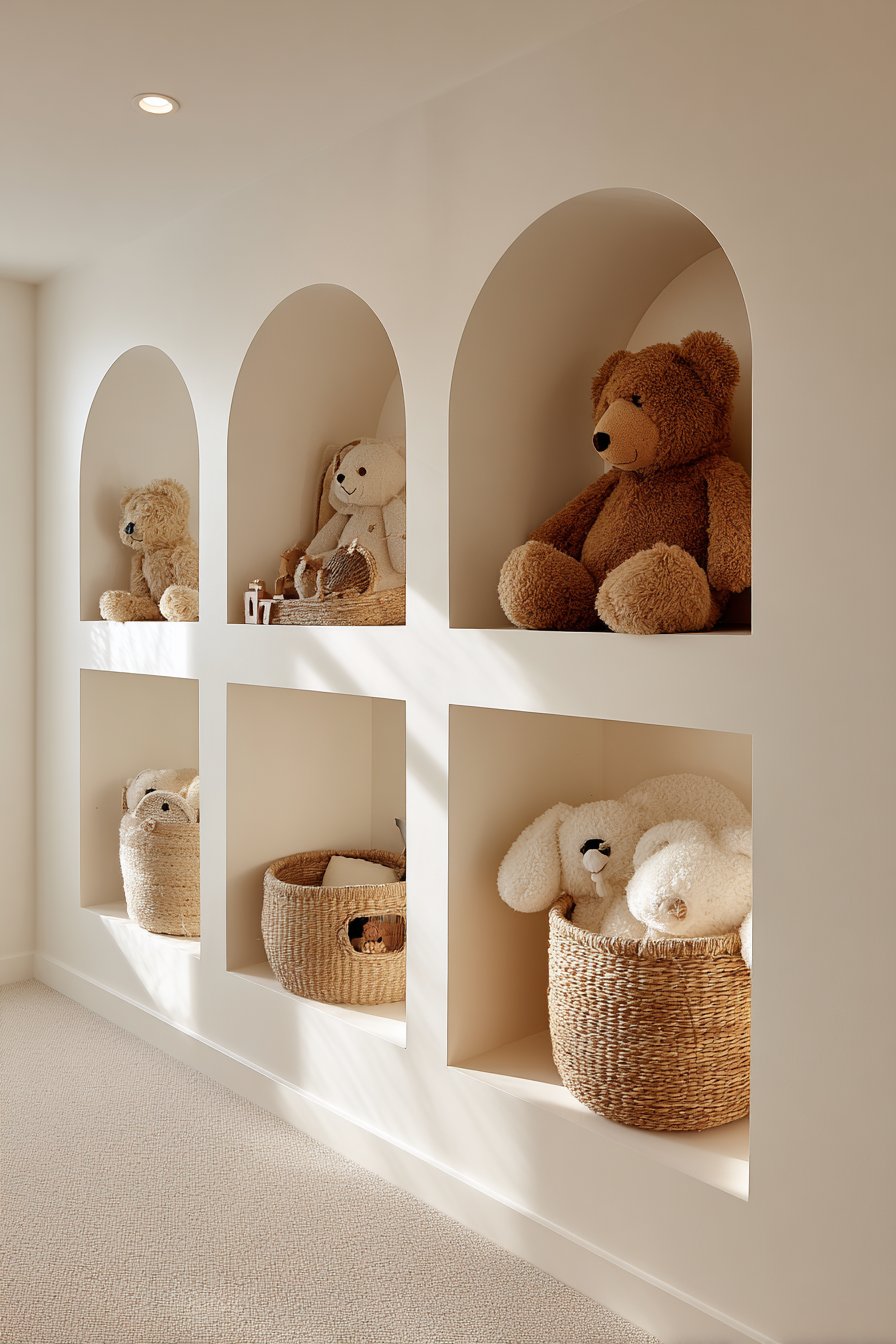
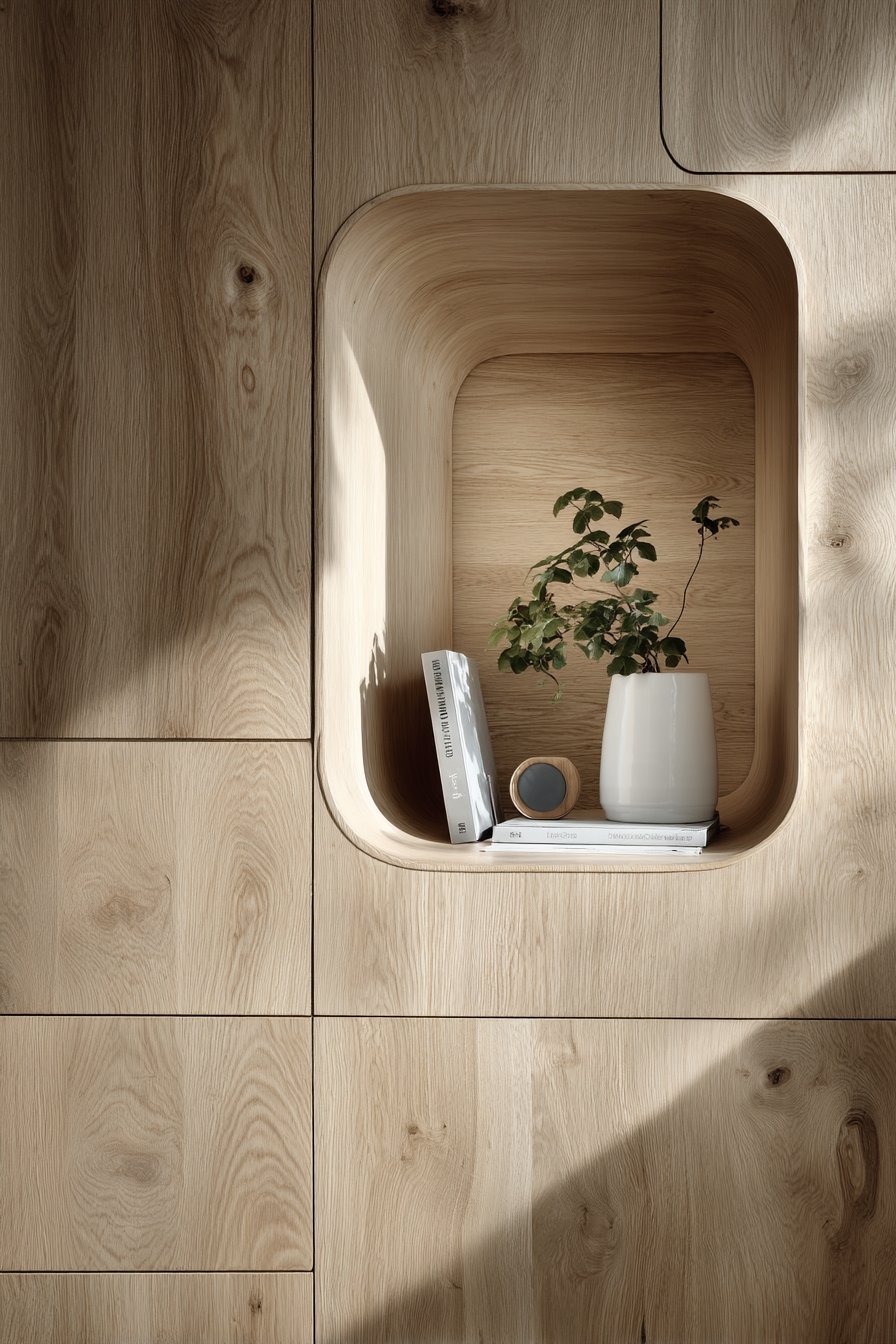
The thoughtfully designed nursery prioritizes safety and accessibility through three large square niches built into soft white walls at child height. The rounded interior corners eliminate sharp edges that could pose injury risks, demonstrating how design choices can promote both aesthetics and wellbeing. These low-positioned recesses allow young children to independently access toys, board books, and stuffed animals stored in woven baskets, fostering autonomy and encouraging organizational habits from an early age.
Gentle LED backlighting in warm white creates a soft nightlight effect that provides enough illumination for evening diaper changes or soothing middle-of-the-night awakenings without the harsh brightness that might fully wake a sleeping child. The woven baskets introduce natural texture and hide visual clutter while remaining easy for small hands to pull in and out. The low positioning ensures that even toddlers can reach their favorite items, reducing frustration and supporting developmental independence.
Natural daylight streaming through windows bathes the room in soft, comfortable light that showcases the child-friendly design while highlighting the various textures of woven baskets, soft toys, and board book covers. The white walls create a clean, peaceful backdrop that allows colorful toys and books to provide visual interest without overwhelming the space. This practical yet beautiful approach to storage demonstrates how functional requirements and safety considerations can be elegantly addressed without sacrificing design quality.
Key Design Tips:
- Position niches with bottom edges 12-18 inches above floor for toddler accessibility
- Round all interior corners to minimum 0.5-inch radius to eliminate sharp edges
- Use washable, non-toxic paint for all niche surfaces that children might touch
- Choose baskets and storage containers without small parts or choking hazards
- Install LED lights with cool-running technology to prevent burn risks
- Anchor all heavy items within niches to prevent tipping if children pull on them
17. Boutique Bathroom Vanity with Symmetrical Display Niches
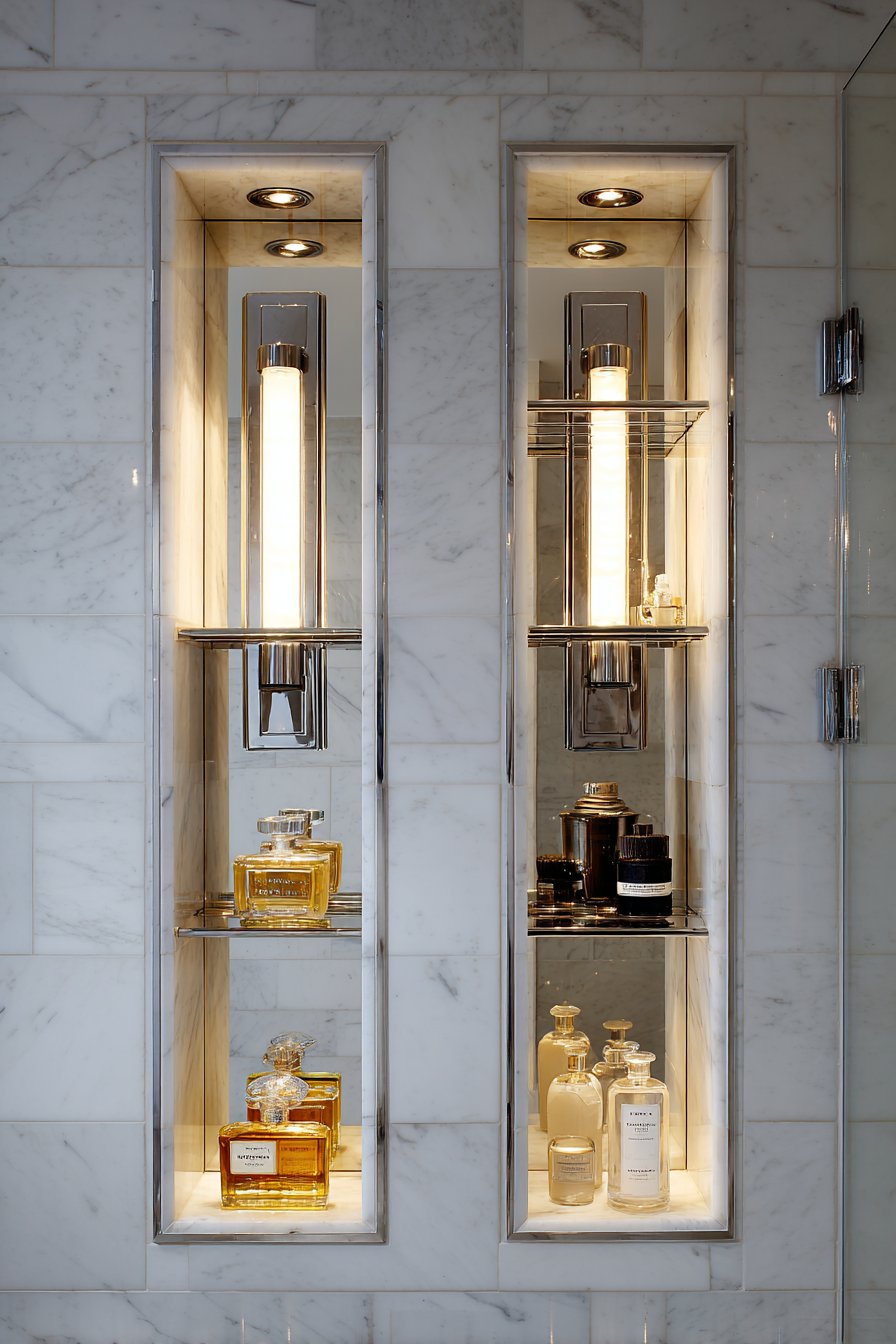
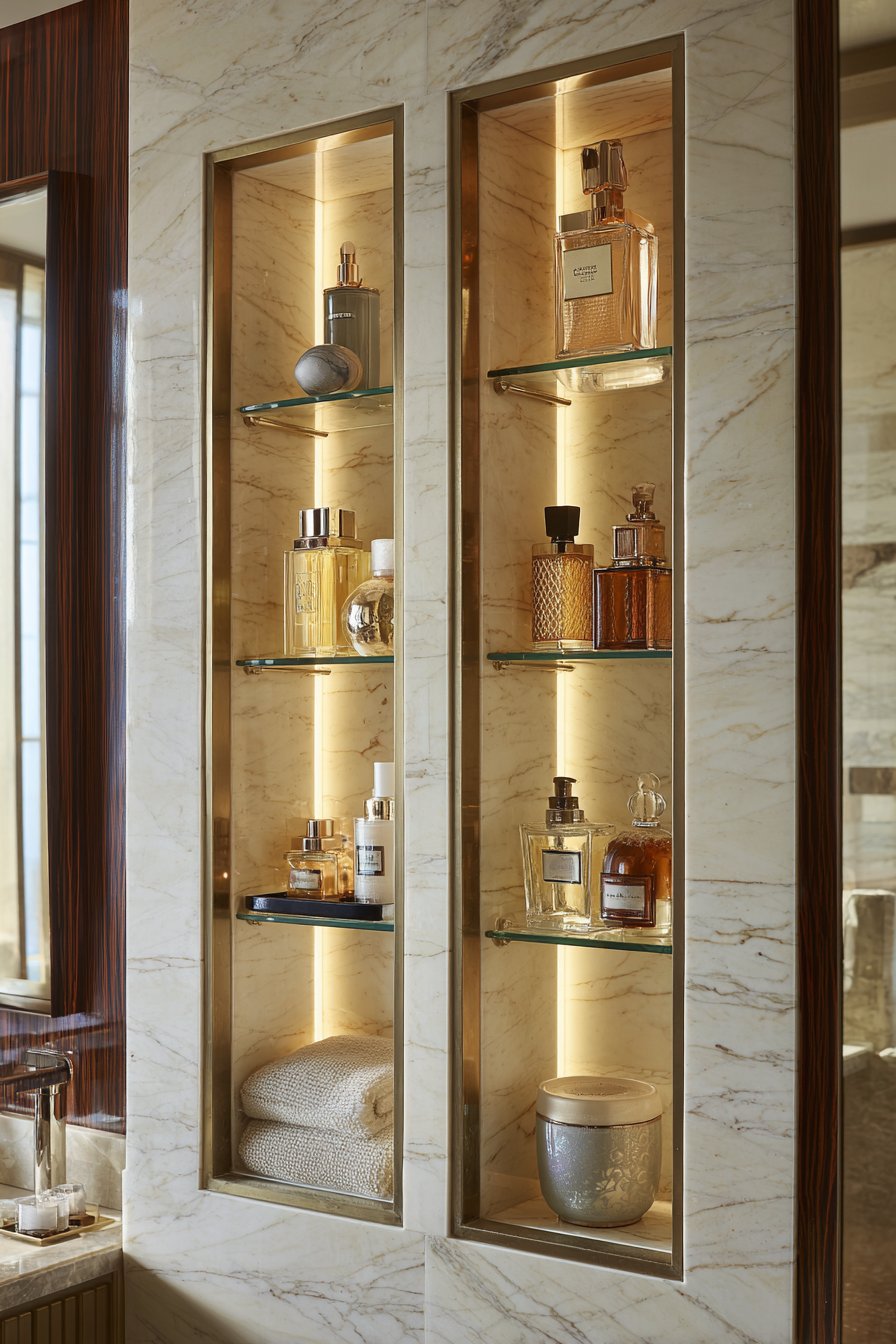
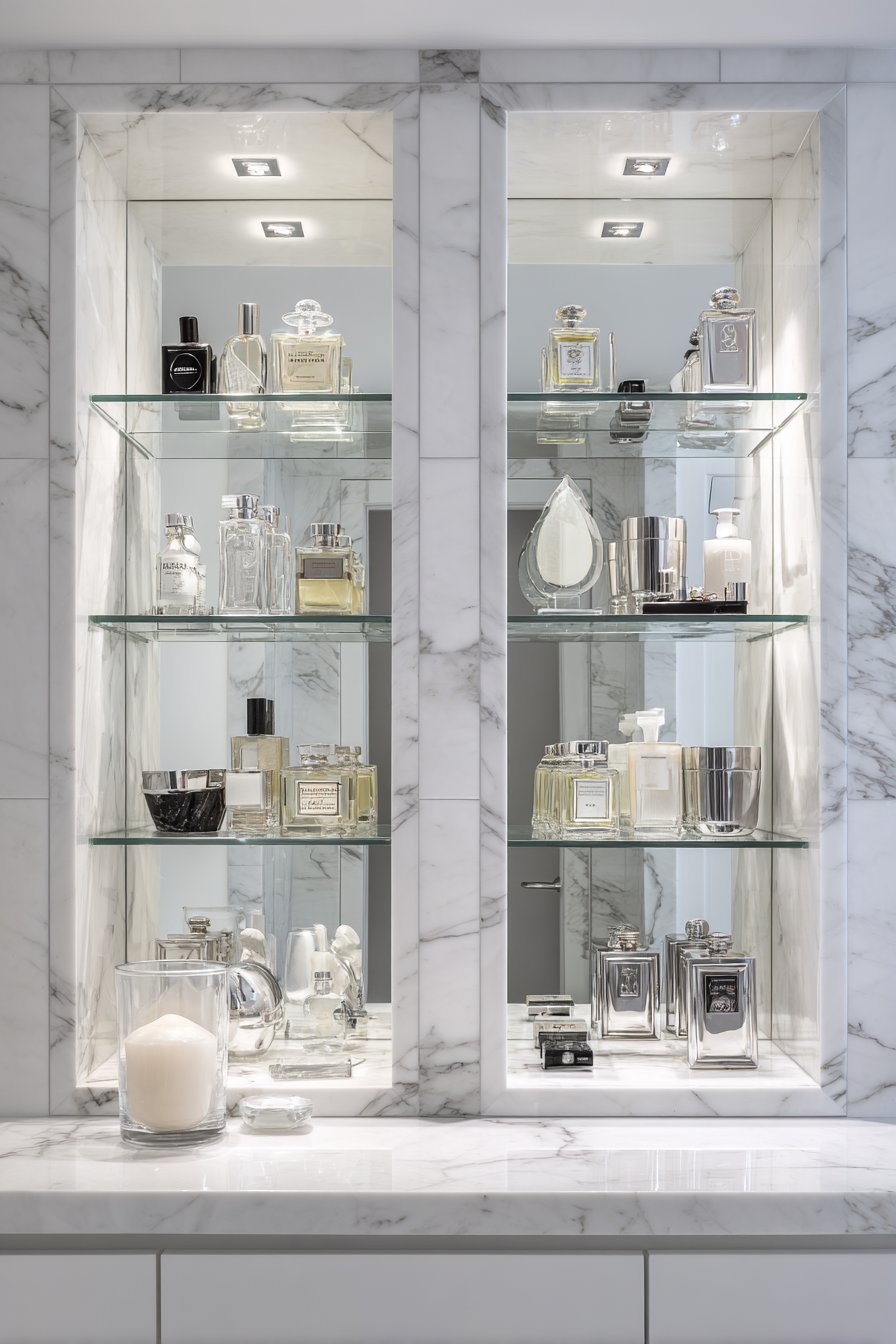
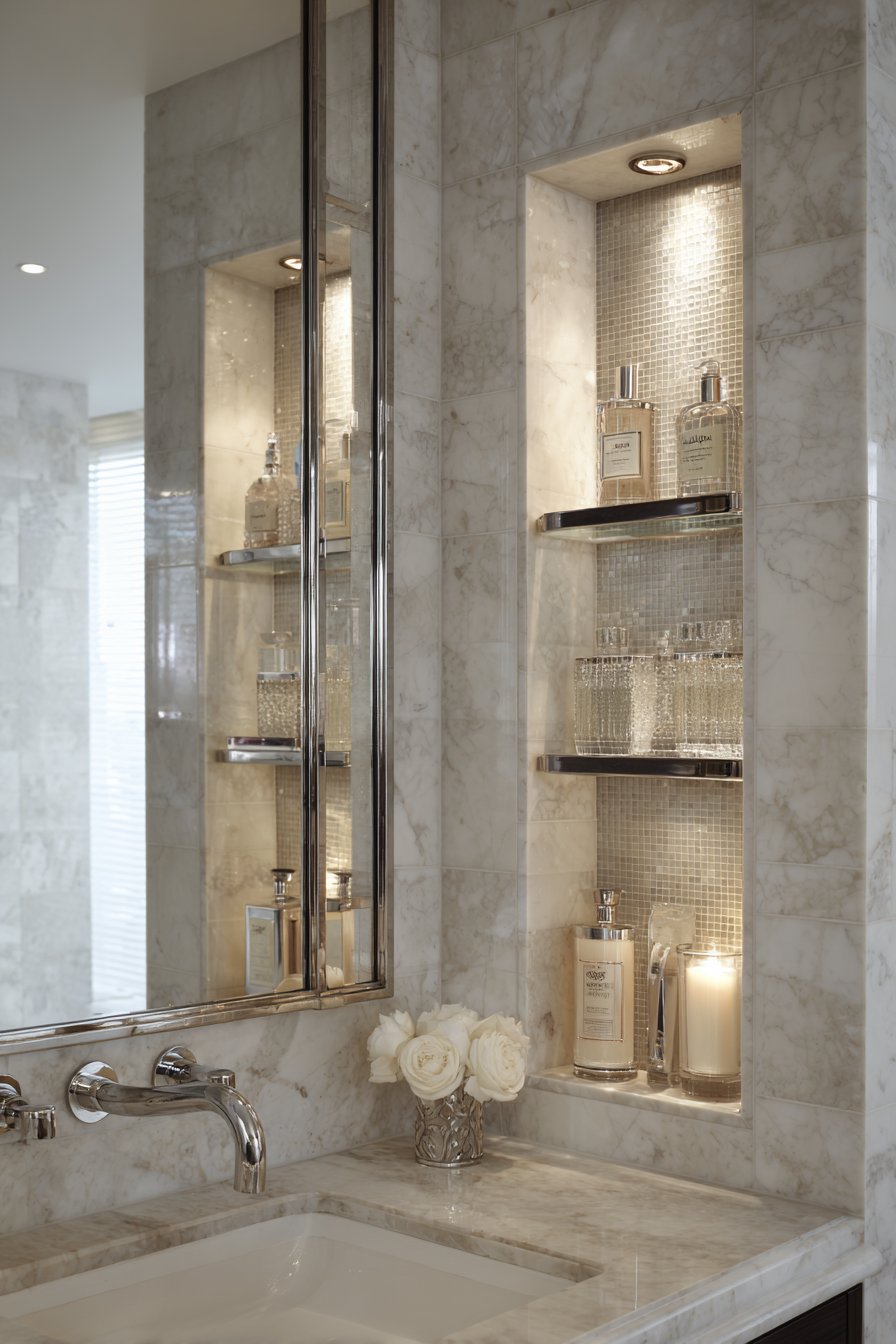
The luxury bathroom vanity area achieves boutique-hotel elegance through narrow vertical niches flanking a large mirror. These slender recesses carved into white marble tile walls create symmetrical focal points that frame the central mirror while providing practical storage for skincare products, perfume bottles, and decorative containers. The four glass shelves within each niche create organized display that transforms everyday toiletries into carefully curated collections worthy of appreciation.
Integrated LED lighting running vertically along the back of each niche creates even, flattering illumination that eliminates shadows and provides task lighting for grooming activities. The polished chrome fixtures catch and reflect this light, creating sparkles and highlights that add luxury and visual interest. The glass shelving allows light to pass through multiple levels, creating a luminous quality that makes the niches appear to glow from within while maintaining the open, airy feeling essential in bathroom design.
The symmetrical placement creates visual balance and formality that elevates the bathroom beyond purely functional space into something more refined and intentional. The white marble tiles introduce natural veining patterns that add organic interest to the geometric recesses, while the vertical orientation draws the eye upward and makes the vanity area feel more spacious. The careful curation of displayed items—coordinated bottles, thoughtfully arranged containers—demonstrates attention to detail that characterizes luxury hospitality design.
Key Design Tips:
- Size niches to accommodate standard toiletry bottle heights (shelves 8-10 inches apart)
- Install moisture-resistant LED strips rated for bathroom use
- Use tempered glass shelving to support bottle weight safely
- Position niches to avoid interference with plumbing and electrical runs
- Coordinate displayed items by color and container style for cohesive appearance
- Consider adding small lips at shelf fronts to prevent bottles from sliding off during daily use
18. Scandinavian Living Room with Natural Wood Niche Feature
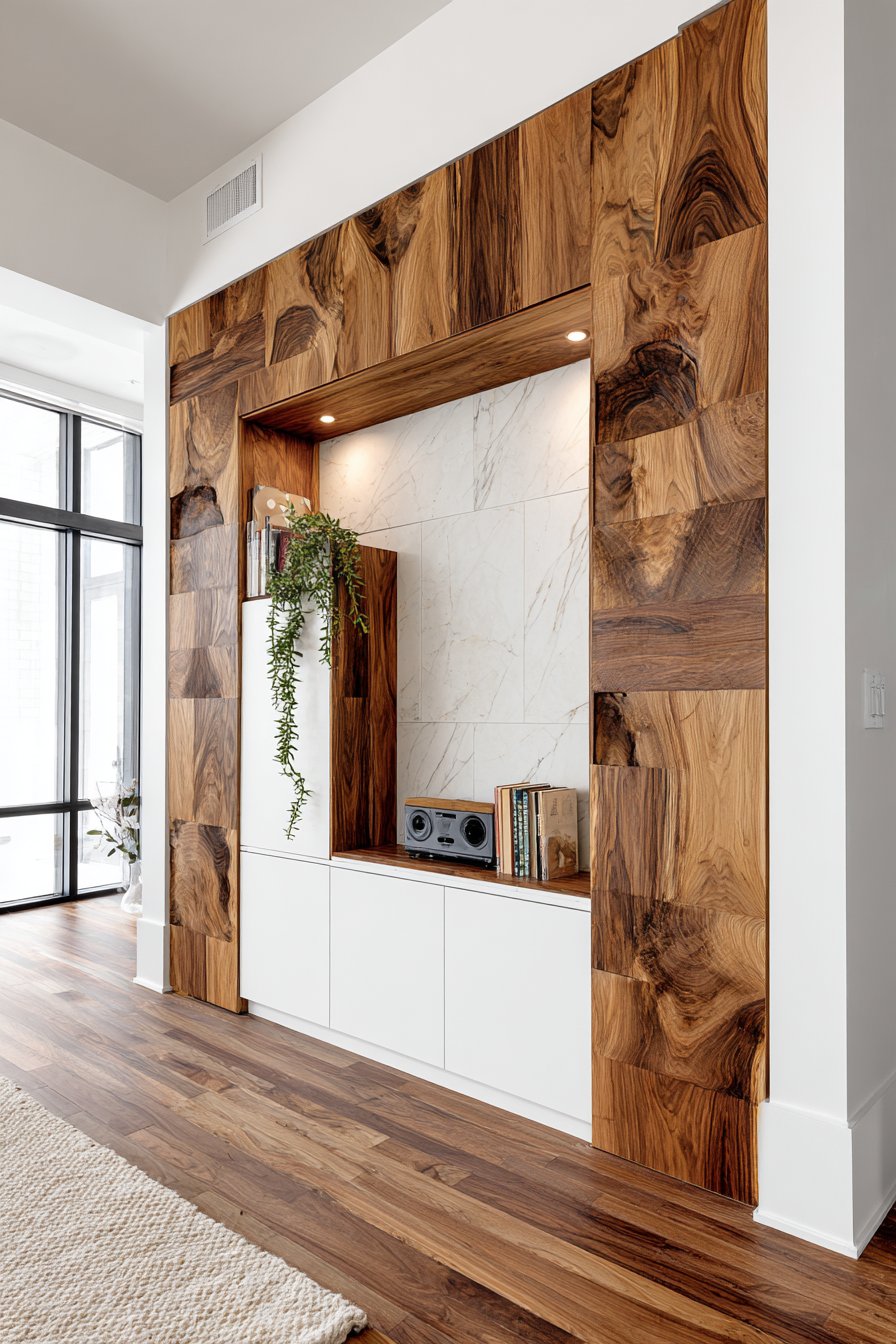
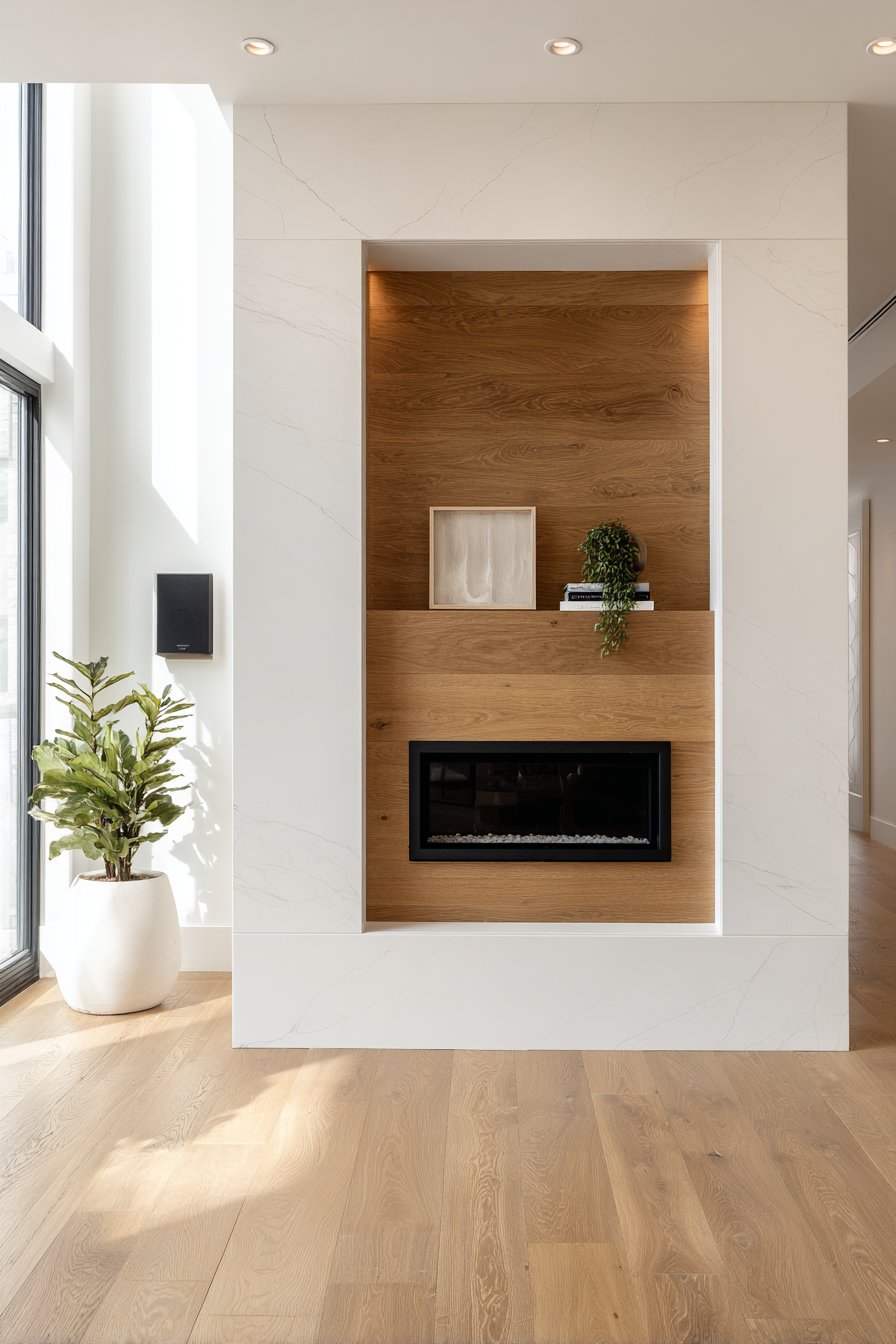
The warm, inviting living room celebrates natural materials through a large rectangular niche built into a floor-to-ceiling white oak panel wall. The contrasting darker walnut interior creates depth and visual interest while highlighting the beautiful grain patterns of both wood species. This juxtaposition of light and dark wood tones adds sophisticated dimension that rewards closer inspection while maintaining the clean, organic aesthetic characteristic of Scandinavian design philosophy.
The niche displays a minimalist sound system, a few carefully selected design books, and a single trailing plant, demonstrating the Nordic principle of carefully editing possessions to include only what serves function or brings joy. The restraint in styling prevents visual clutter while allowing each item to be appreciated individually. Soft indirect LED lighting hidden within the niche highlights the beautiful wood grain variations and creates a warm glow that enhances the room’s inviting atmosphere during evening hours.
Natural afternoon light streaming through windows creates gentle shadows that emphasize the dimensional quality of the recess while bathing the wood surfaces in warm illumination that brings out their natural honey and chocolate tones. The organic variations in grain patterns—swirls, knots, and color shifts—provide visual interest that no manufactured material could replicate. This celebration of natural materials and simple forms creates a living room that feels grounded, peaceful, and authentically connected to the natural world.
Key Design Tips:
- Choose wood species with complementary grain patterns and color contrast
- Apply durable, low-VOC finishes to protect wood while maintaining natural appearance
- Size the niche to accommodate entertainment equipment while allowing ventilation
- Install indirect LED lighting to avoid heat buildup near wood surfaces
- Consider adding felt or cork backing to prevent scratches if items slide
- Position the niche at comfortable viewing height for seated positions (typically 24-36 inches from floor)
19. Modern Kitchen Breakfast Nook Coffee Station Niche
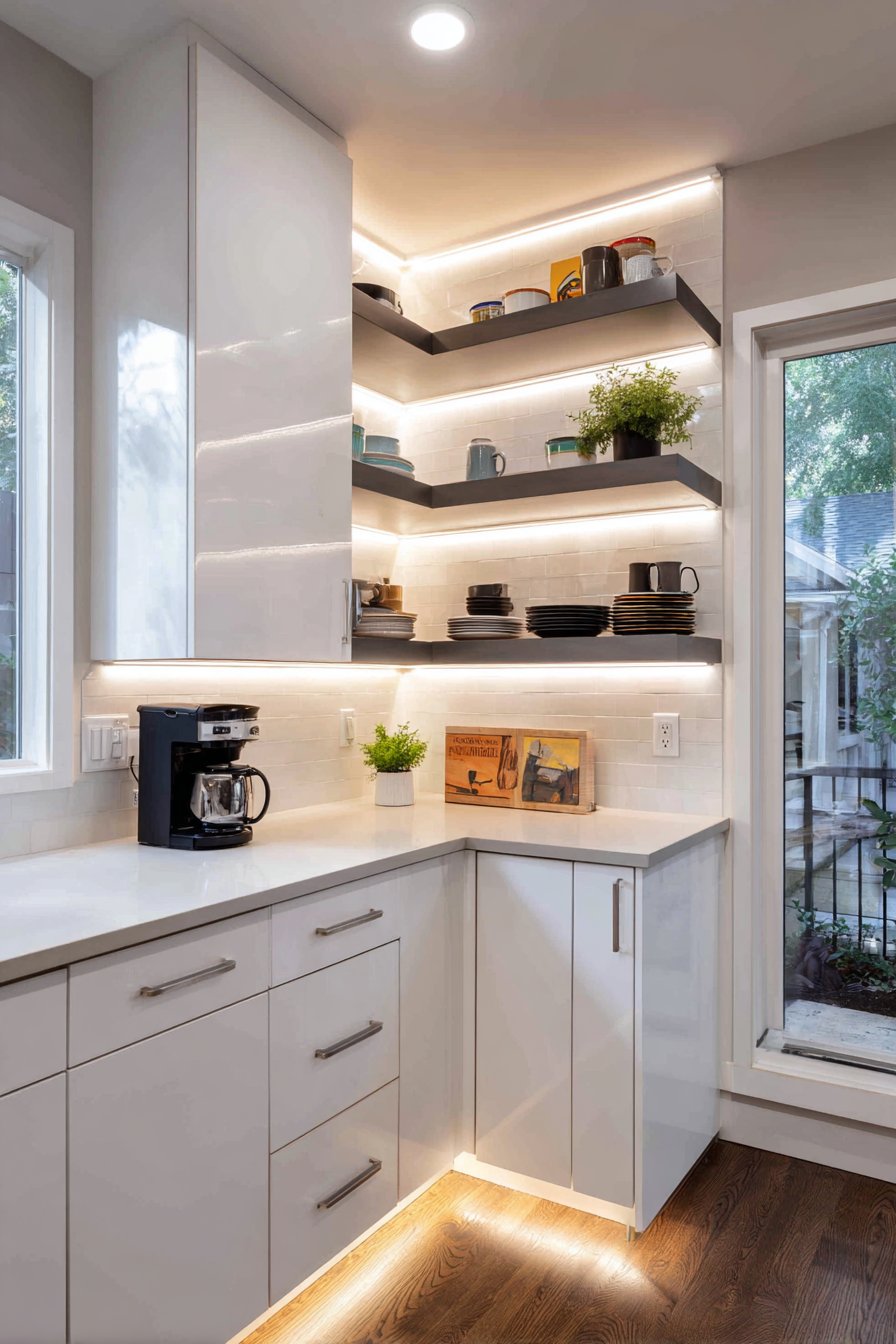
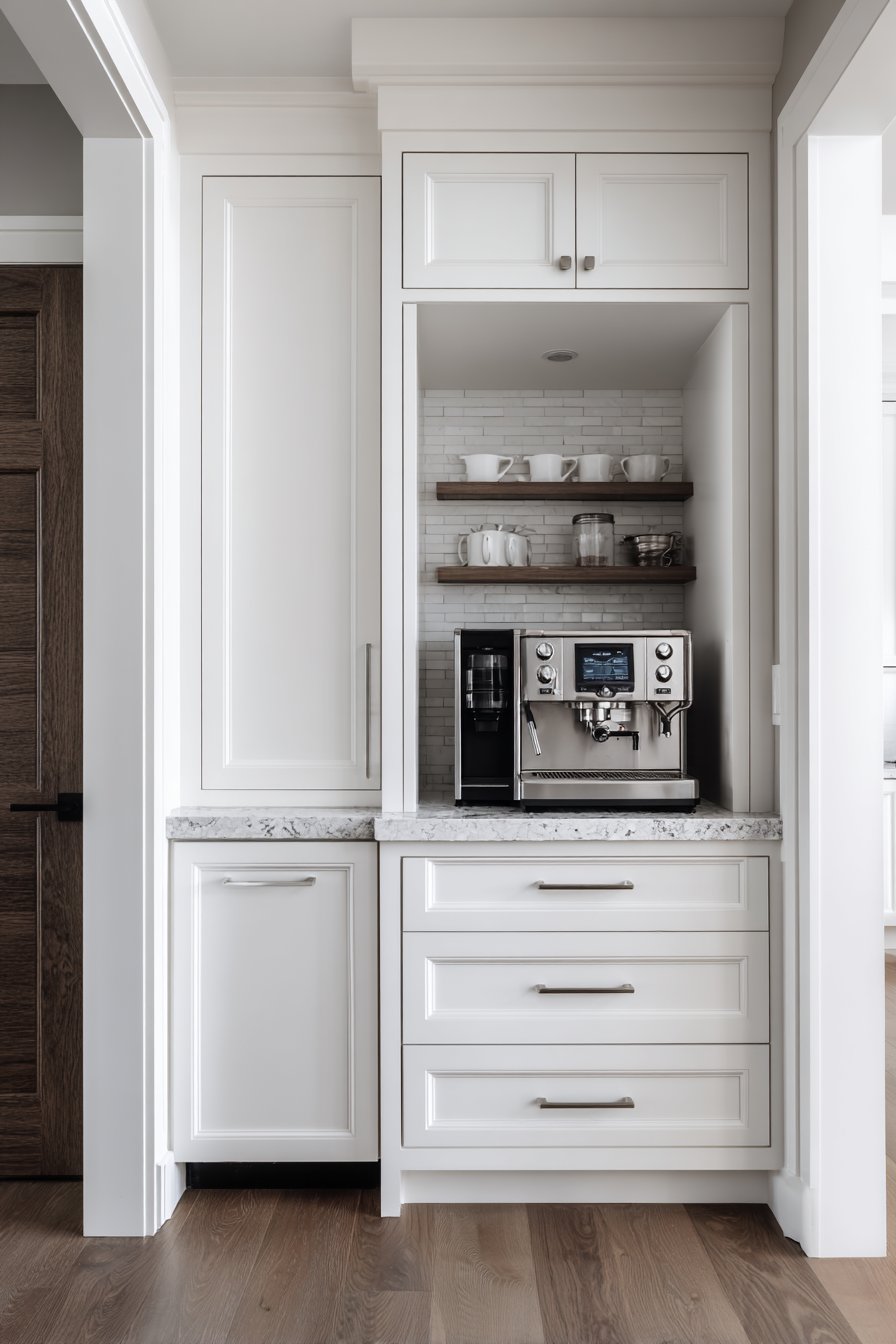
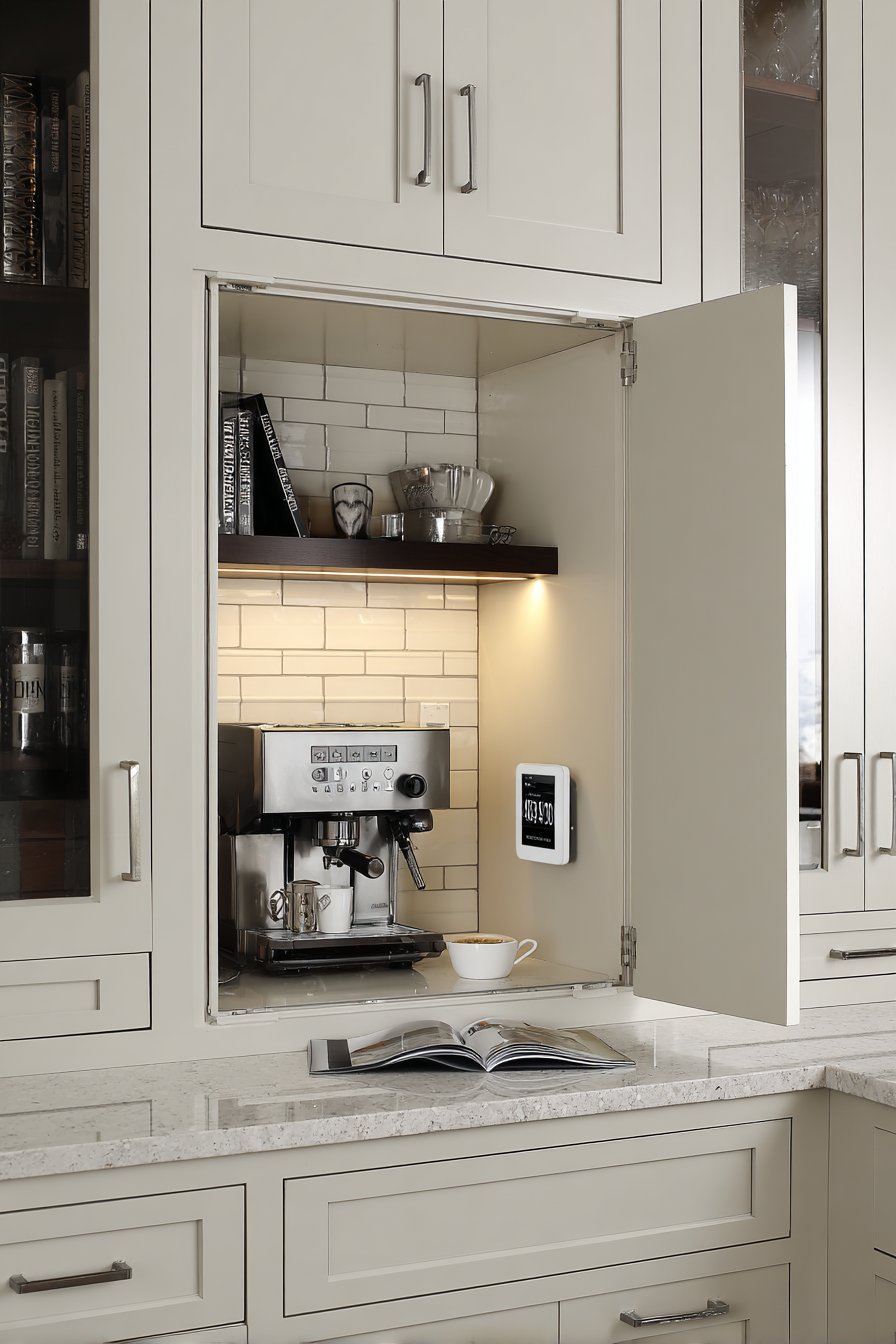
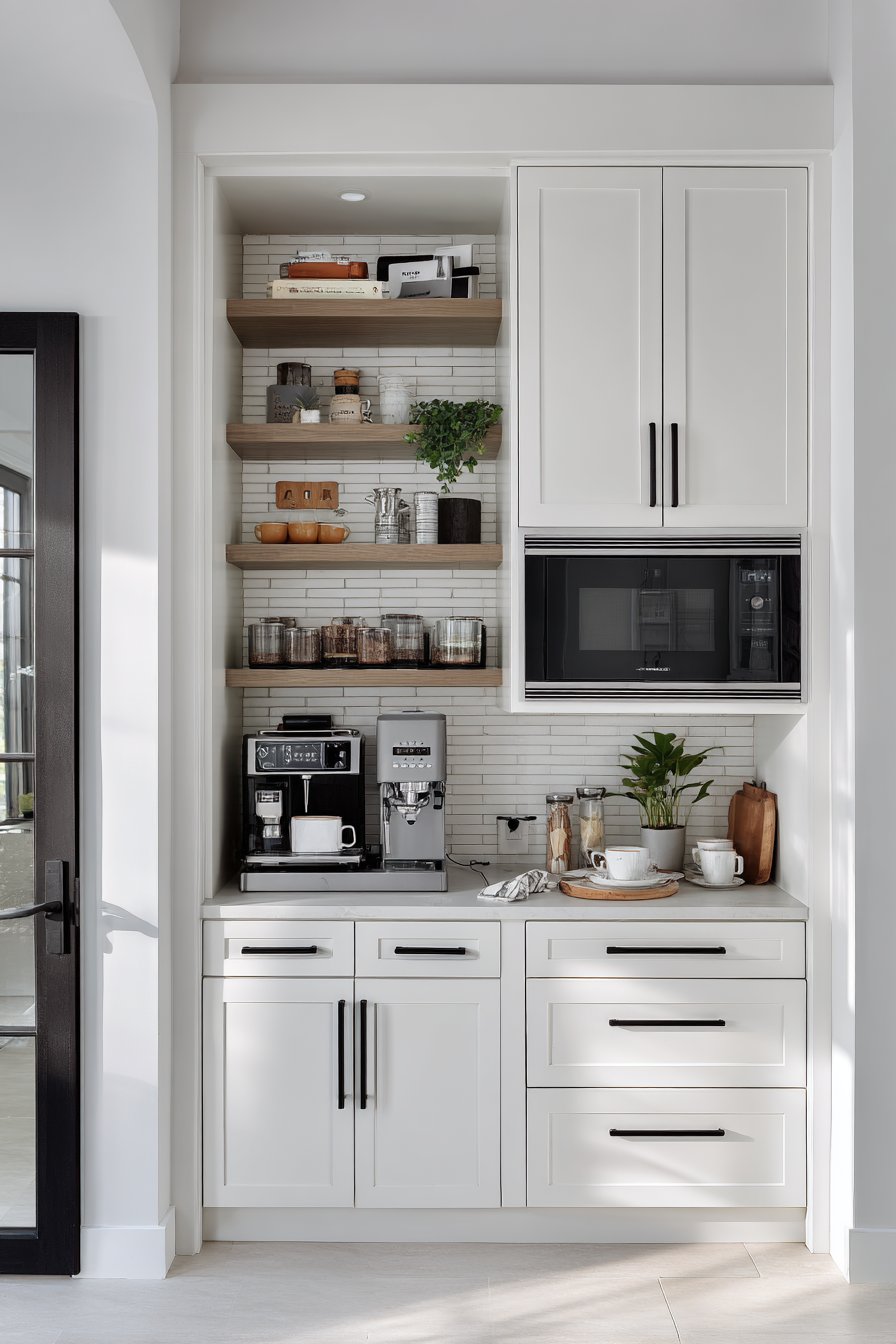
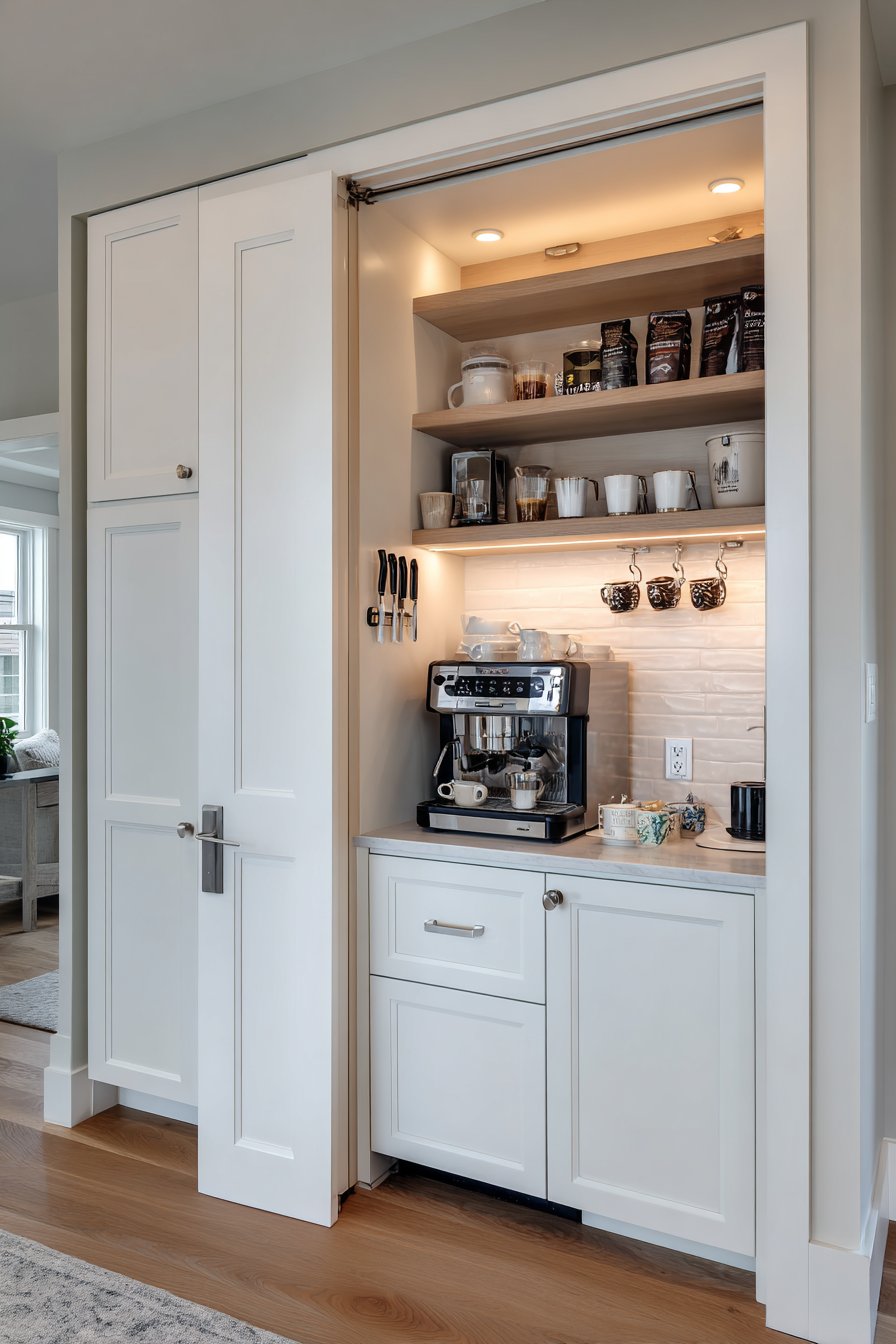
The thoughtfully designed breakfast nook incorporates a deep horizontal niche built into white shaker-style cabinetry, creating a dedicated coffee station that streamlines morning routines. This built-in alcove accommodates an espresso machine, cup storage hooks, and organized space for coffee beans and accessories, transforming a daily ritual into a pleasure rather than a chore. The counter-height placement ensures comfortable operation while the niche’s depth keeps equipment and supplies neatly contained rather than cluttering valuable counter space.
The white subway tile lining the niche interior provides a clean, easily maintained surface that withstands coffee splashes and steam exposure. Integrated electrical outlets eliminate unsightly cords running across countertops while enabling convenient appliance operation. The surrounding shaker-style cabinetry creates architectural continuity, making the niche feel like an intentional part of the kitchen design rather than an afterthought. Task lighting illuminates the practical workspace, ensuring proper visibility for measuring grounds, frothing milk, and other coffee preparation activities.
The dedicated nature of this niche elevates the simple act of making coffee into something more ceremonial and enjoyable. Everything needed resides in one organized location—no more searching through cupboards for filters or measuring spoons. The visual containment prevents the breakfast nook from feeling cluttered even when the coffee station is in active use, maintaining the clean aesthetic that characterizes modern kitchen design. This thoughtful integration of function within architectural features demonstrates how good design can improve daily life in subtle but meaningful ways.
Key Design Tips:
- Size the niche to accommodate your specific coffee equipment (measure before construction)
- Install dedicated electrical circuits to handle appliance power requirements
- Use water-resistant tile or solid surface materials for easy cleaning
- Position outlets above counter height to keep cords neat and away from water
- Include a small pull-out shelf or drawer below for coffee supplies and accessories
- Consider adding a small towel bar or hooks for hanging coffee scoops and dish towels
20. Contemporary Hallway Art Gallery with Museum-Quality Lighting
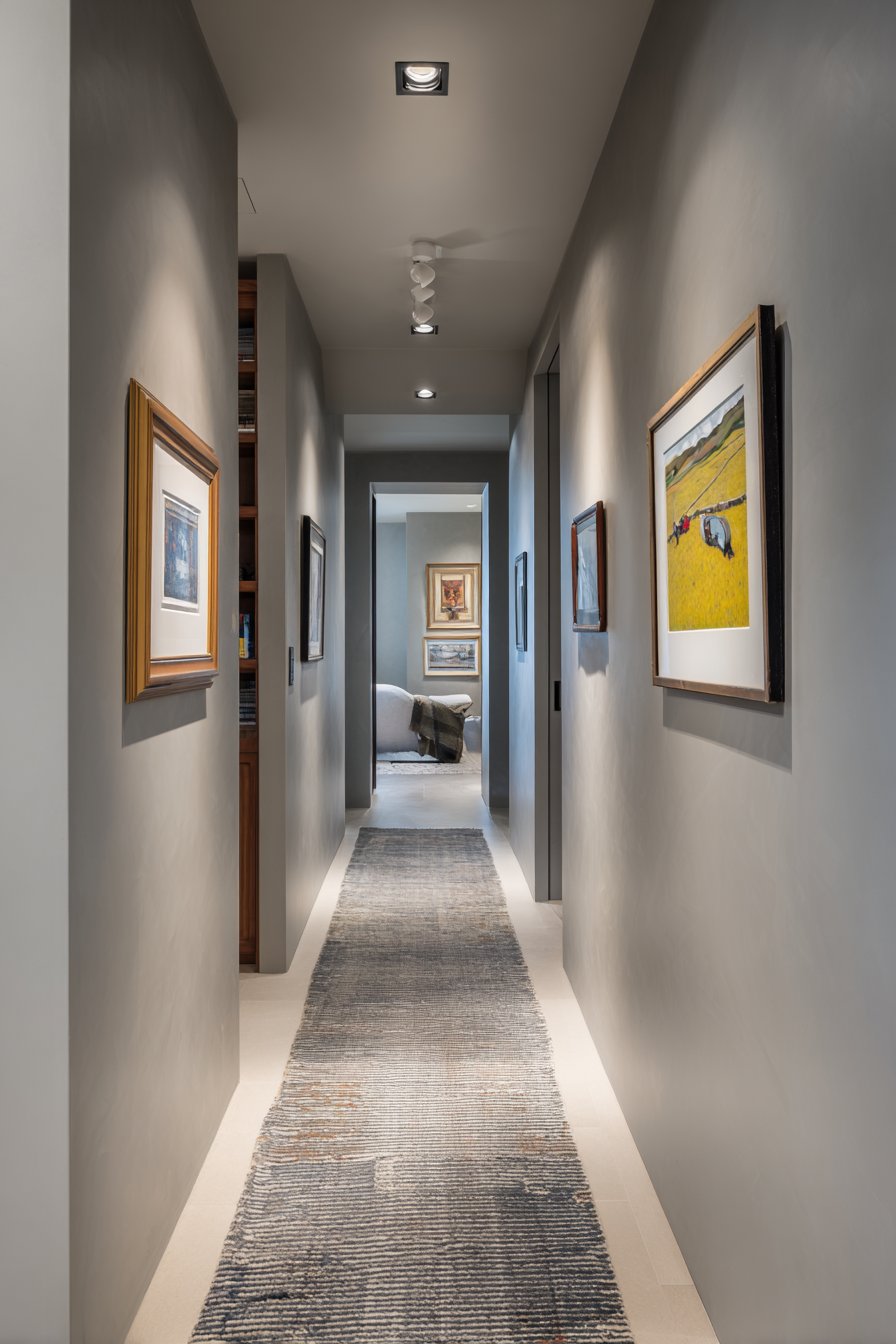
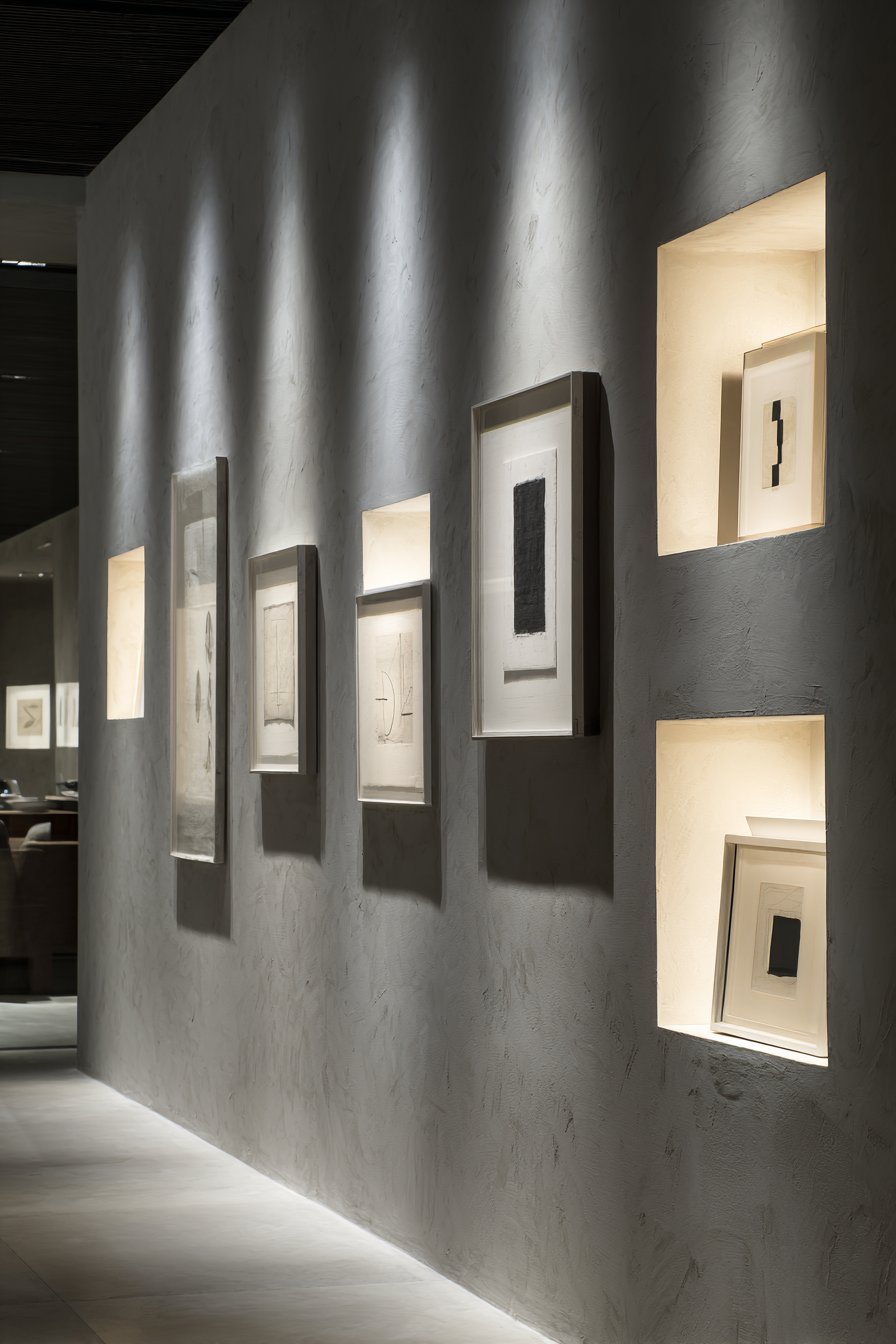
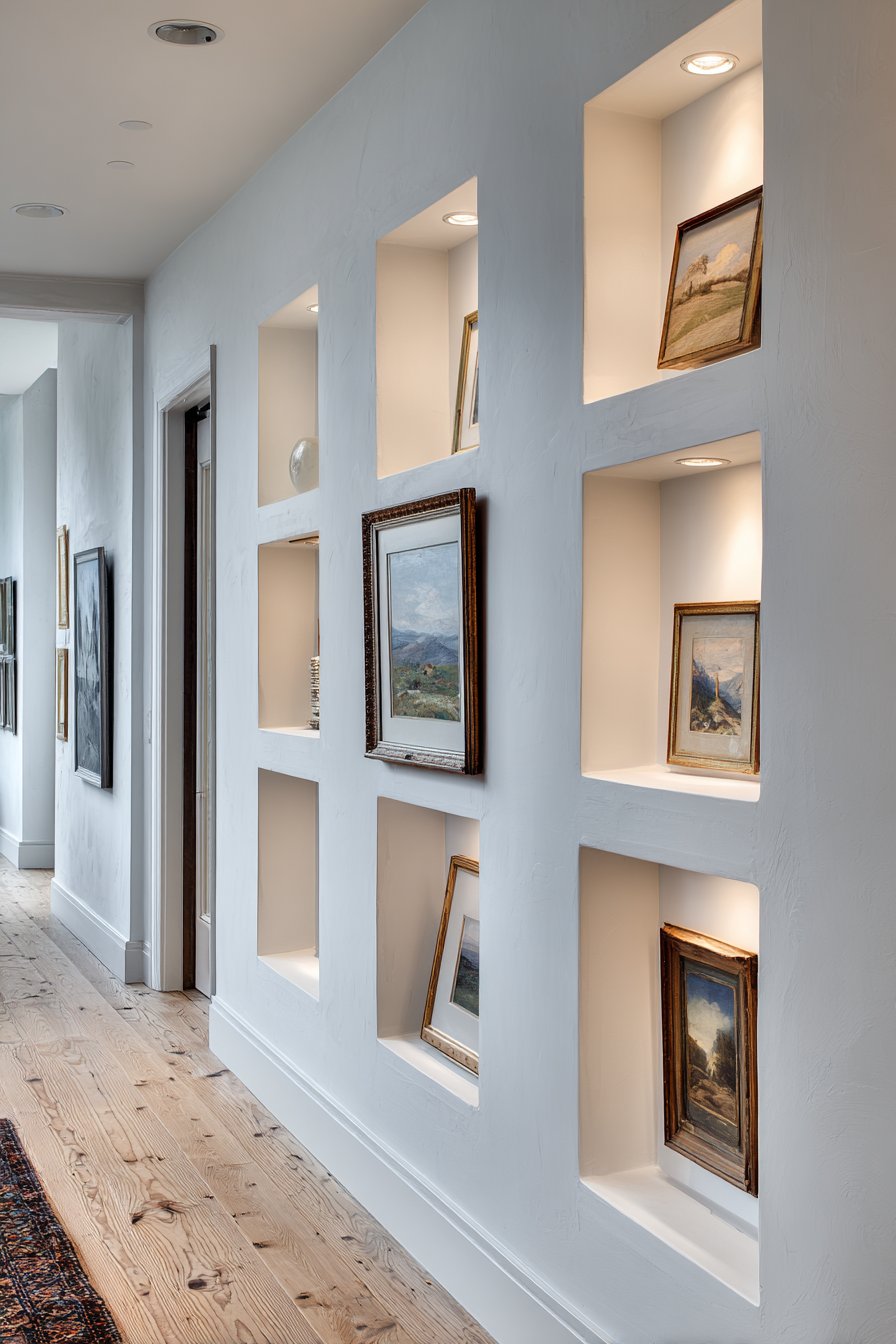
The sophisticated hallway transforms into a private art gallery through five shallow square niches built into smooth gray plaster at eye level. Each recess is perfectly sized to display a single framed artwork or photograph, creating a curated presentation that gives each piece the individual attention it deserves. The uniform sizing and precise alignment create visual rhythm that guides viewers down the hallway while the varied artwork introduces personality and color to the neutral architectural backdrop.
Museum-quality LED spotlights installed at the top of each niche cast focused illumination that highlights artwork while creating dramatic shadows that emphasize the dimensional depth of the recesses. This professional lighting approach transforms casual display into serious presentation, elevating personal photographs and collected art into museum-worthy exhibits. The gray plaster walls provide a sophisticated neutral backdrop that allows artwork to shine without color competition, while the smooth finish ensures nothing distracts from the displayed pieces.
The hallway, often overlooked in home design, becomes a destination worthy of slow appreciation rather than merely a path between rooms. The gallery presentation encourages residents and guests to pause and engage with the artwork, creating moments of beauty and contemplation within daily routines. The flexibility to rotate artwork seasonally or as collections grow ensures the display remains fresh and personally meaningful over time.
Key Design Tips:
- Size niches to accommodate standard frame dimensions (typically 12×12 or 16×16 inches)
- Install niches at 60 inches to center (standard museum height for optimal viewing)
- Use warm white LED spotlights (3000K) to accurately render colors without harsh blue tones
- Apply UV-filtering coatings to light sources to protect artwork from fading
- Space niches evenly (typically 24-36 inches apart) for visual rhythm
- Include picture-hanging hardware within niches to simplify artwork changes
21. Transitional Bathroom with Classic Vertical Shower Niche
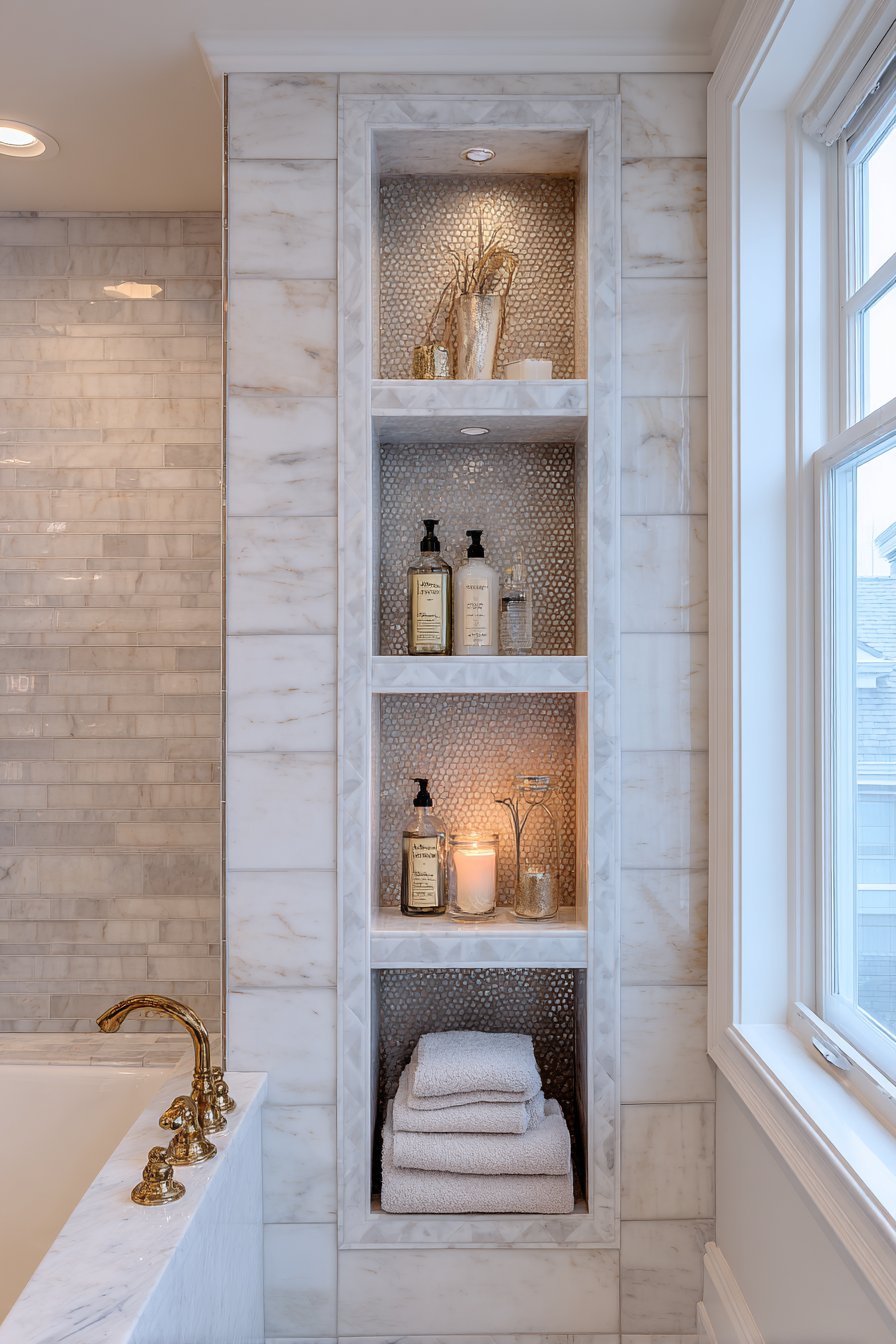
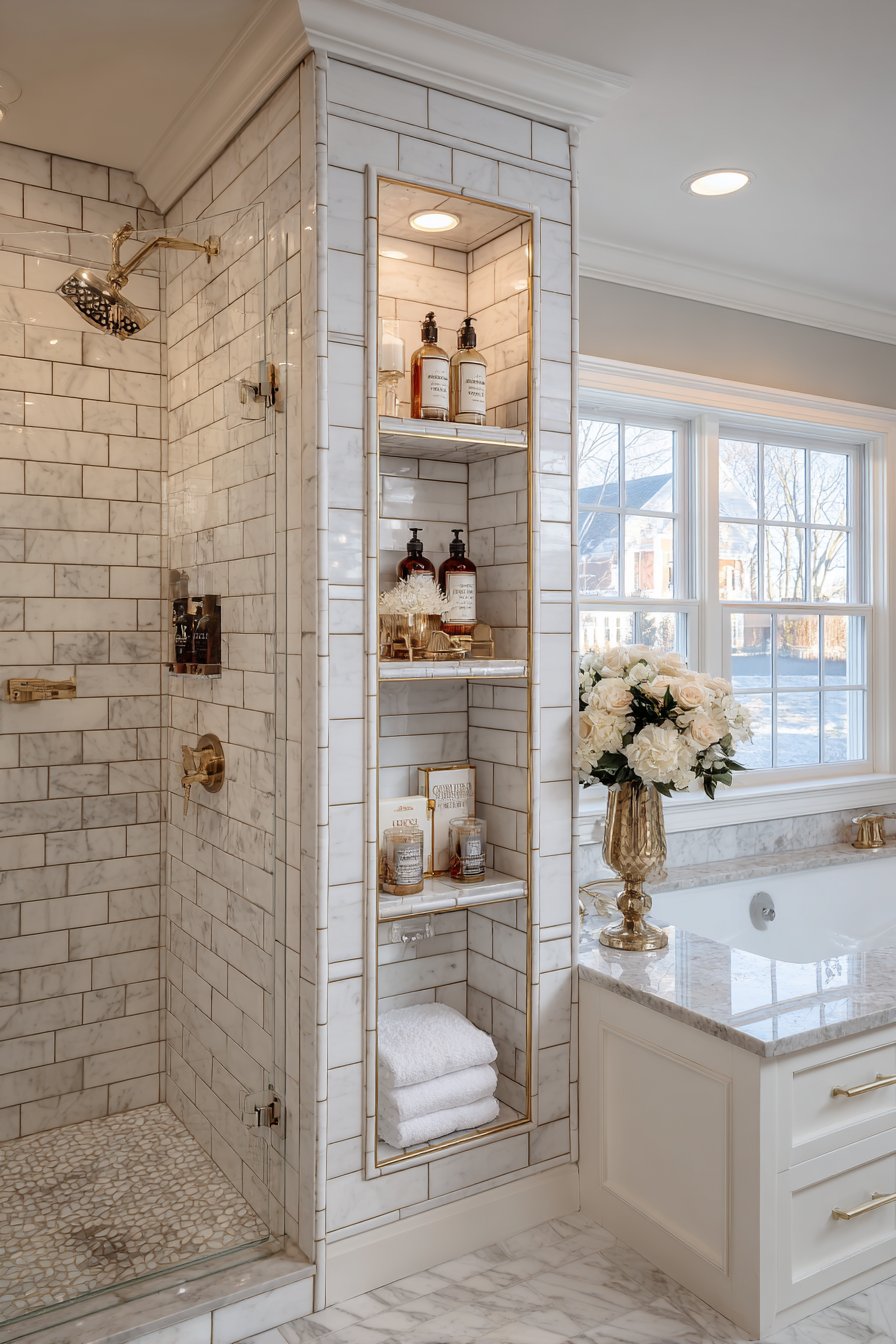
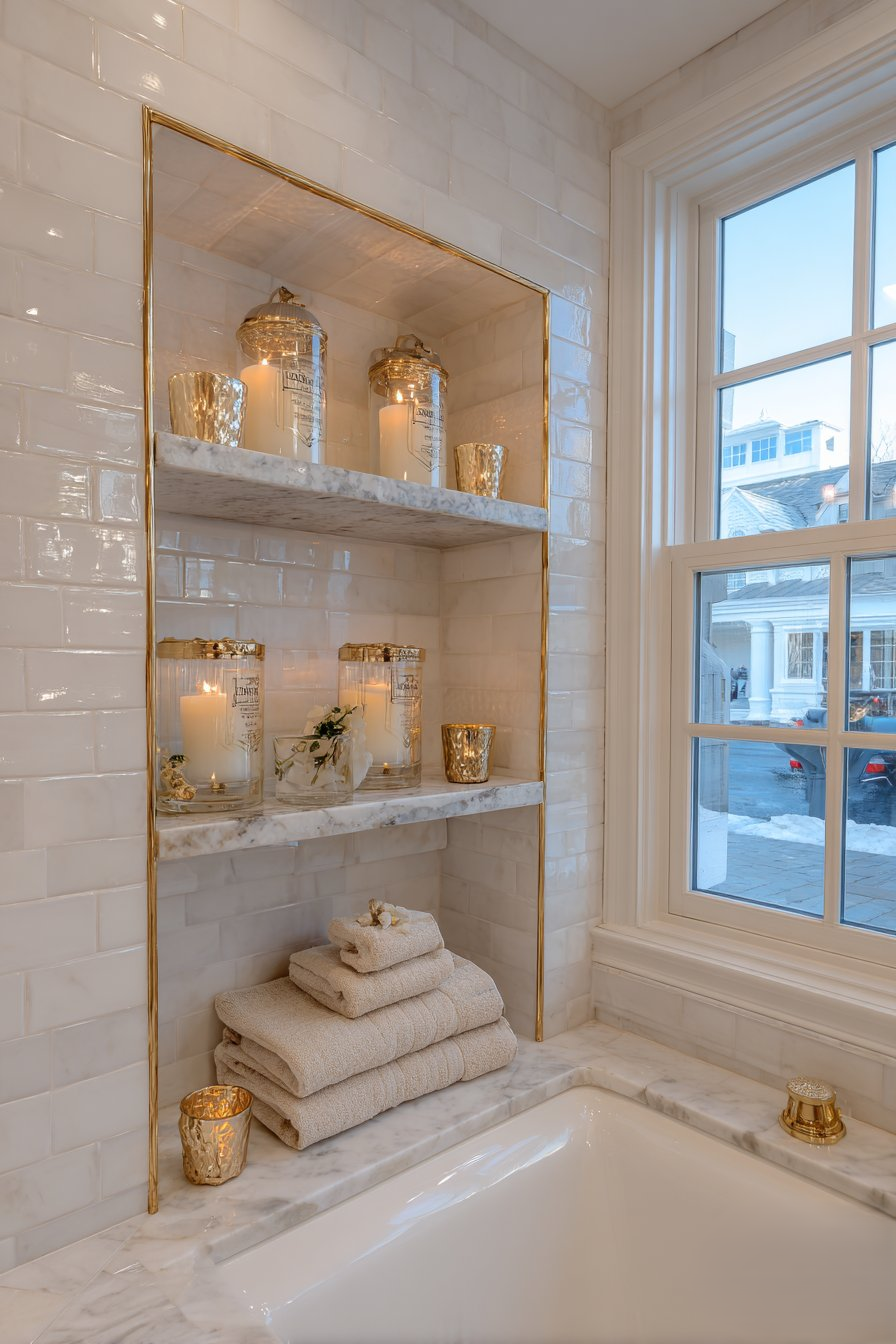
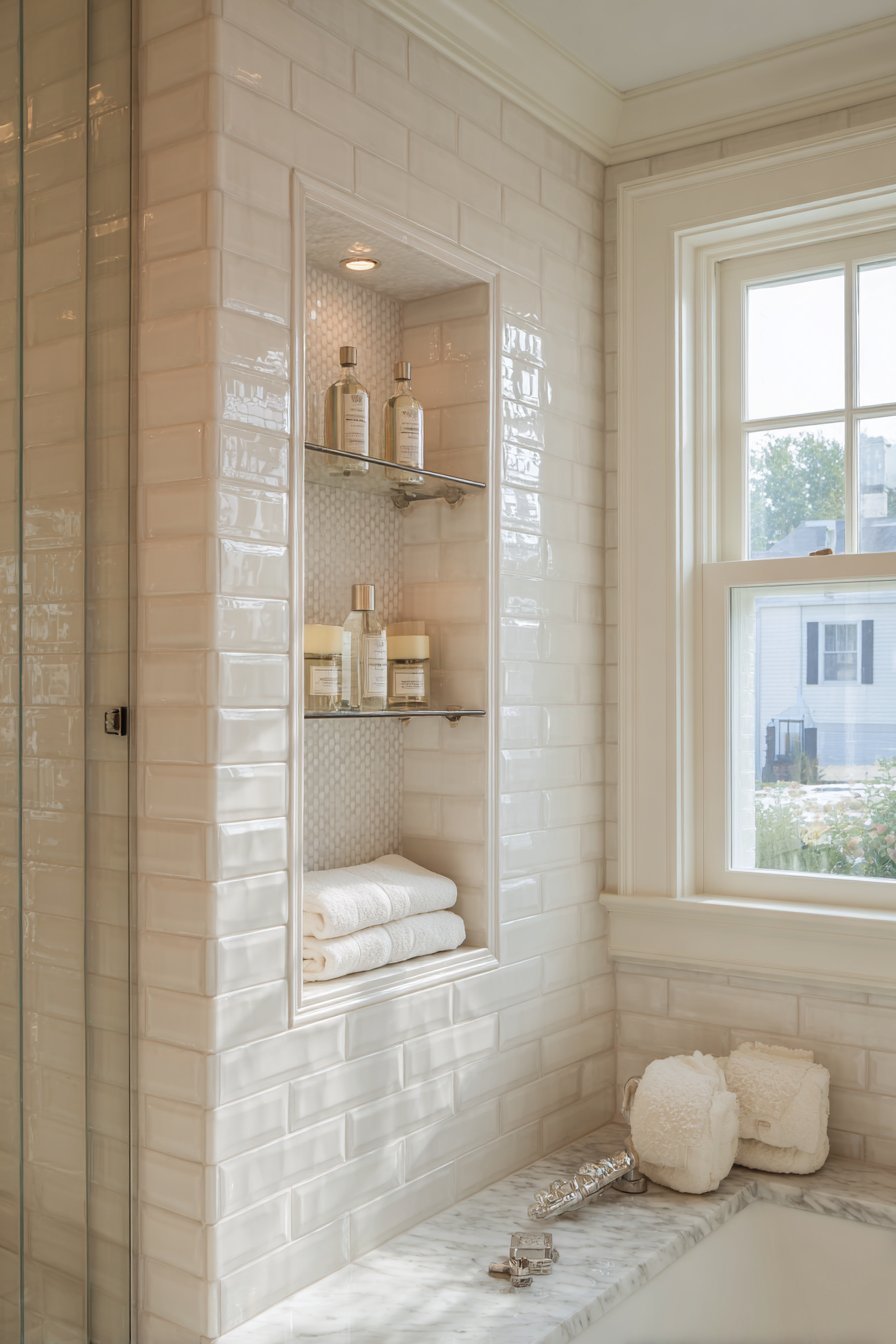
The timeless bathroom design incorporates a vertical niche built into white subway tile between the shower and bathtub area, providing accessible storage that serves both fixtures. Four evenly spaced marble shelves create organized display for luxury bath products, folded washcloths, and aromatic candles, transforming functional storage into an elegant design feature. The brushed gold tile trim framing the niche opening introduces warmth and luxury while creating clear definition between the recess and surrounding tile field.
The vertical orientation maximizes storage capacity within a relatively narrow footprint, making efficient use of the wall space between fixtures. The marble shelves introduce natural stone beauty and durability while their polished surfaces resist water staining and remain easy to clean. Natural light from a nearby window creates highlights on the varied textures—the glossy subway tile, smooth marble, glass bottles, and soft fabric—while emphasizing the dimensional quality of the recess through gentle shadow play.
The transitional style bridges traditional and contemporary aesthetics, with the classic subway tile and marble materials grounding the space in timeless design while the clean lines and minimal ornamentation keep the look fresh and current. The brushed gold trim adds just enough decorative detail to prevent starkness without overwhelming the space with unnecessary embellishment. This balanced approach creates a bathroom that will remain beautiful and relevant for decades rather than appearing dated after a few years.
Key Design Tips:
- Position niches to remain accessible from both shower and bathtub if serving dual purposes
- Use marble or other non-porous stone for shelves to resist water damage
- Install shelves with slight forward cant (1-2 degrees) to prevent water pooling
- Choose metal trim finishes that coordinate with plumbing fixtures for cohesive design
- Space shelves at heights appropriate for stored items (8-12 inches typically works well)
- Seal all stone surfaces to prevent staining from bath products
22. Luxury Closet Jewelry Display with Boutique-Style Niches
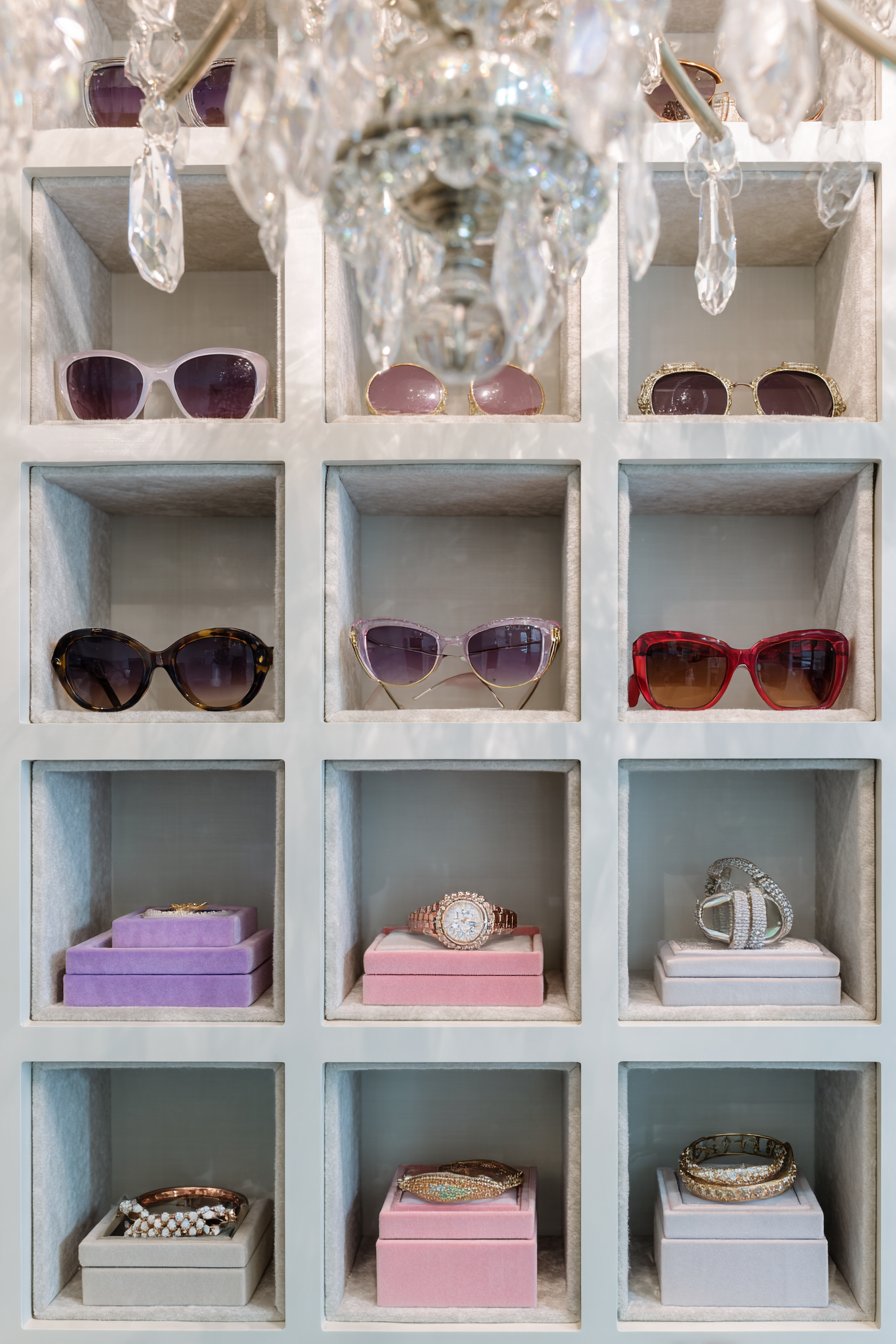
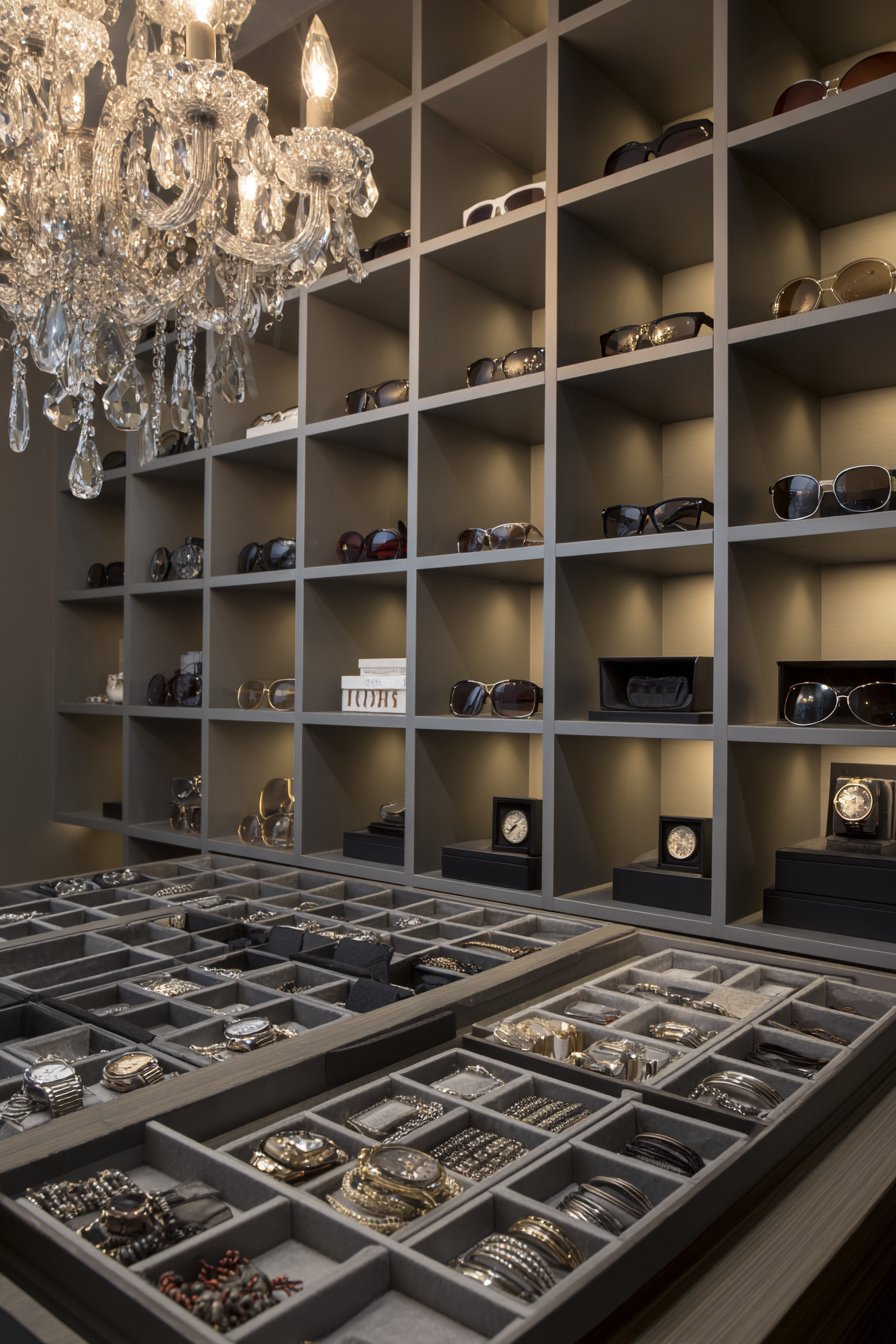
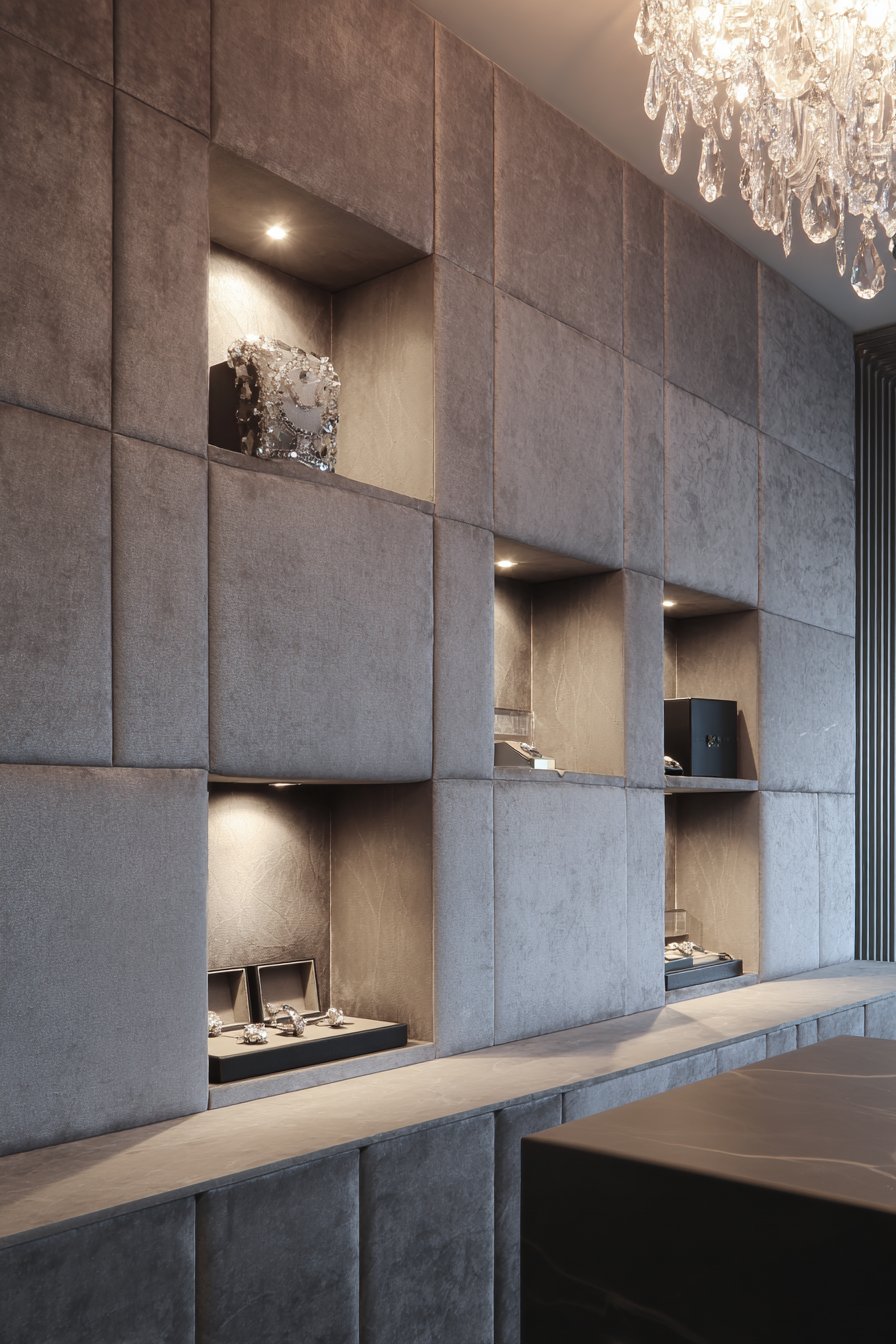
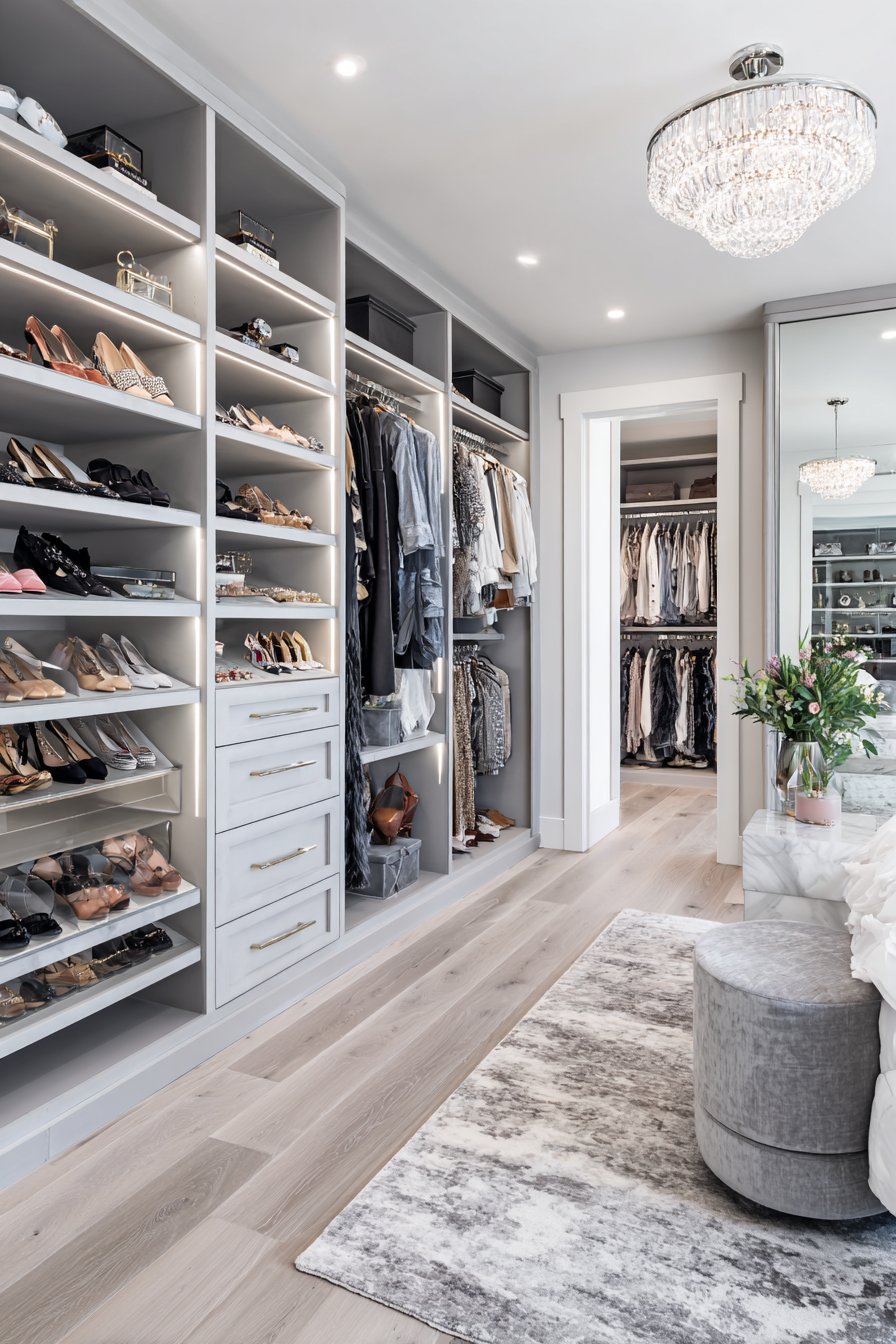
The master closet achieves boutique sophistication through multiple small square niches built into a fabric-wrapped accent wall. These velvet-lined recesses transform jewelry and accessory storage from hidden drawers into beautiful display, allowing daily selection to become a more enjoyable, visually engaging experience. Each niche holds watches, sunglasses, and small jewelry boxes, with carefully positioned items creating an organized yet personal presentation that resembles high-end retail displays.
The soft gray velvet lining provides gentle cushioning that protects delicate items from scratches while introducing luxurious texture that elevates utilitarian storage into sensory experience. Hidden LED backlighting creates a subtle glow that highlights the jewelry’s metallic surfaces and gemstone facets, adding drama and making it easier to see details when selecting pieces. A crystal chandelier provides ambient lighting that sparkles and reflects off displayed items, creating an atmosphere of luxury and indulgence.
The boutique-inspired organization system transforms the daily routine of selecting accessories into a pleasure rather than a chore, with every piece visible and easily accessible. The fabric-wrapped wall creates a soft, luxurious backdrop that feels more residential than typical closet organization systems while the velvet-lined niches provide practical protection. This integration of beauty and function demonstrates how storage solutions can enhance daily life while expressing personal style and values.
Key Design Tips:
- Size niches to accommodate specific jewelry types (watches, sunglasses, rings require different dimensions)
- Use anti-tarnish velvet linings to protect silver and other sensitive metals
- Install cool LED lighting to prevent heat damage to delicate items
- Position niches at comfortable viewing and reaching height (typically 48-66 inches from floor)
- Consider adding small hooks within some niches for hanging necklaces or bracelets
- Include locking glass doors on some niches for securing high-value items
23. Minimalist Entryway Key Drop with Integrated Mail Slots
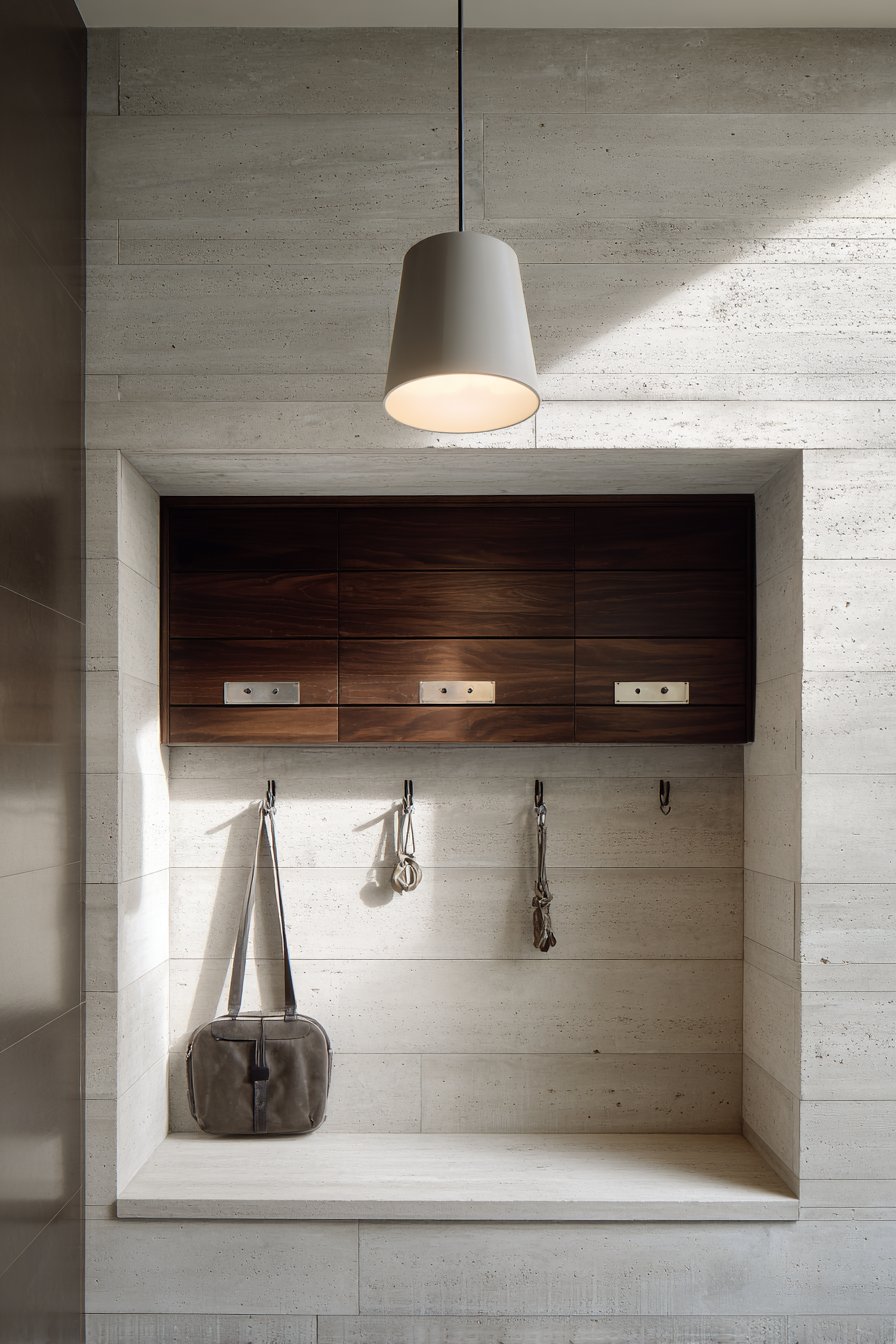
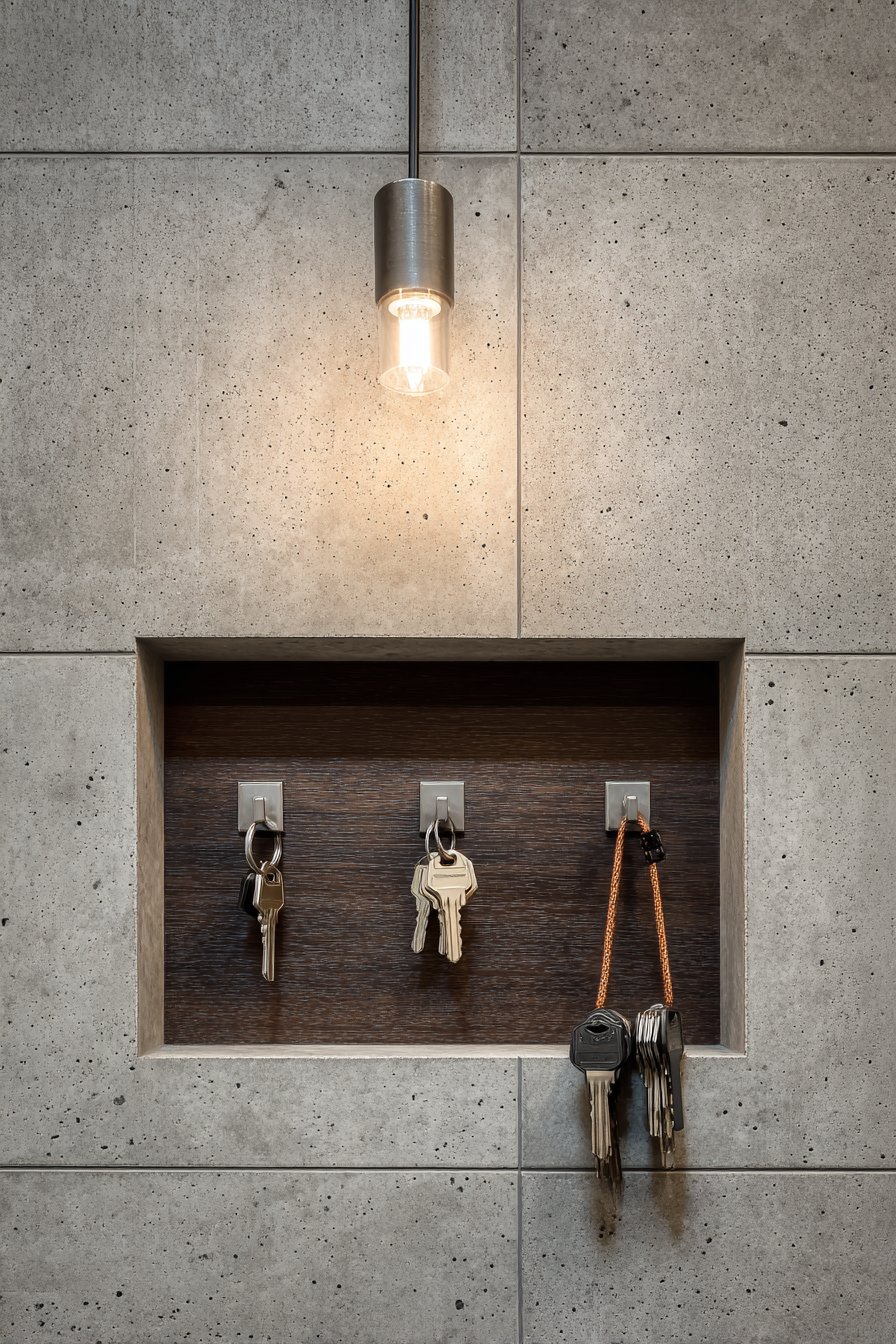
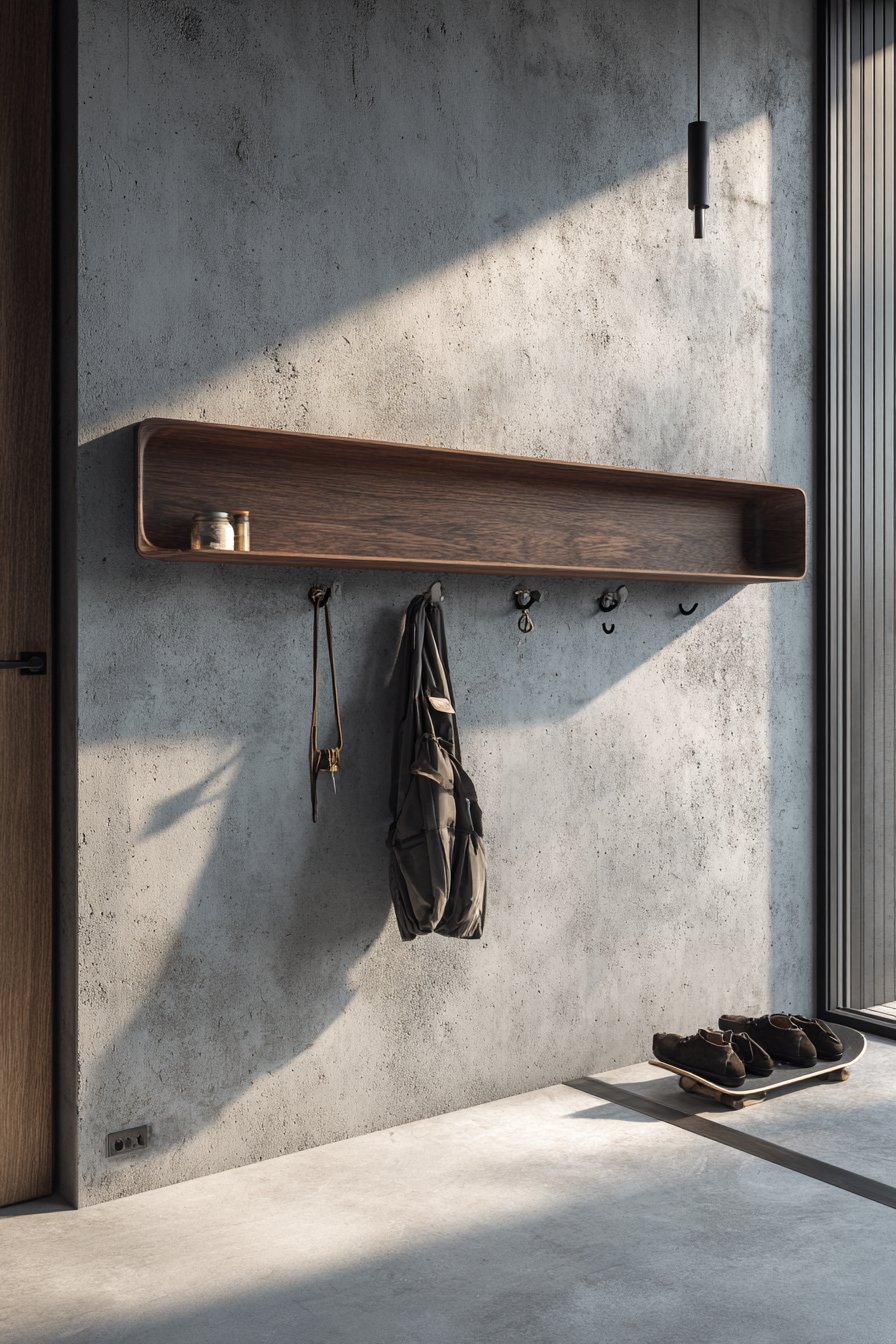
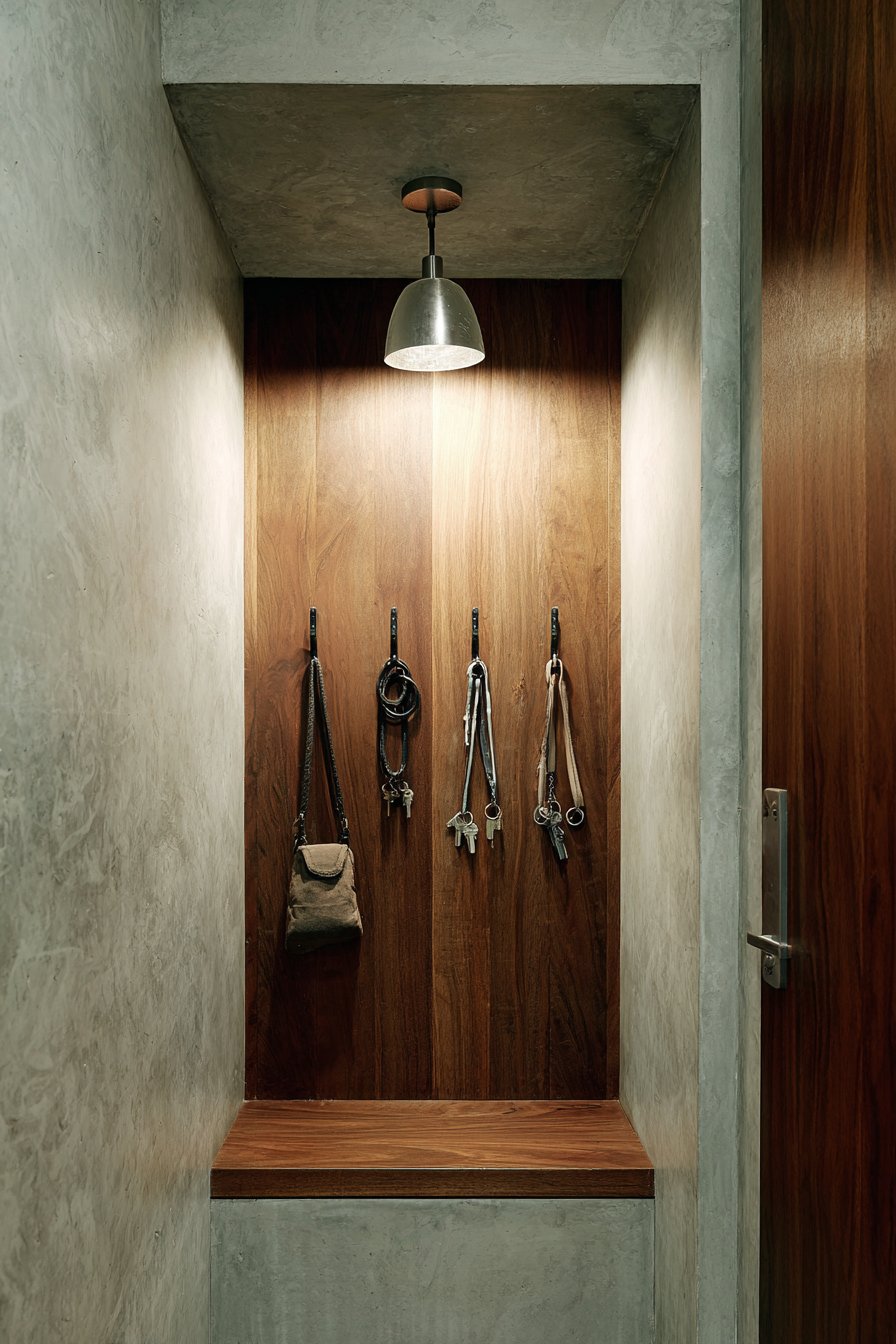
The streamlined entryway eliminates clutter through a single deep horizontal niche carved into smooth concrete-look wall at waist height. This multipurpose recess serves as the household’s command center, with a dark walnut interior shelf providing a dedicated landing spot for keys, wallets, and phones. Integrated mail slots keep incoming correspondence organized and contained, while small hooks mounted inside accommodate keys and dog leashes. Simple pendant lighting overhead creates downward illumination that ensures the niche remains functional even in dimly lit entryways.
The concrete-look wall finish introduces industrial edge and durability appropriate for high-traffic areas, while its neutral gray tone provides a sophisticated backdrop that complements various decor styles. The warm walnut wood interior creates pleasing contrast and introduces organic warmth that prevents the concrete aesthetic from feeling cold or institutional. The horizontal orientation at waist height ensures comfortable access when arriving home with arms full of groceries or packages.
This centralized drop zone streamlines daily routines by providing a designated home for items that might otherwise accumulate on random surfaces throughout the house. The visual containment prevents entryway clutter while the thoughtful organization features—mail slots, hooks, shelf—address specific functional needs. The simple, refined design demonstrates how minimalist principles can create spaces that work better while requiring less visual and mental energy from inhabitants.
Key Design Tips:
- Position niche at 36-42 inches from floor for comfortable standing access
- Include electrical outlet within niche for charging phones and devices
- Size mail slots to accommodate standard envelope dimensions
- Use durable wood finishes that resist scratches and water marks
- Install hooks rated for weight of key rings and bags
- Consider adding a small tray or dish on shelf to corral smaller items like coins
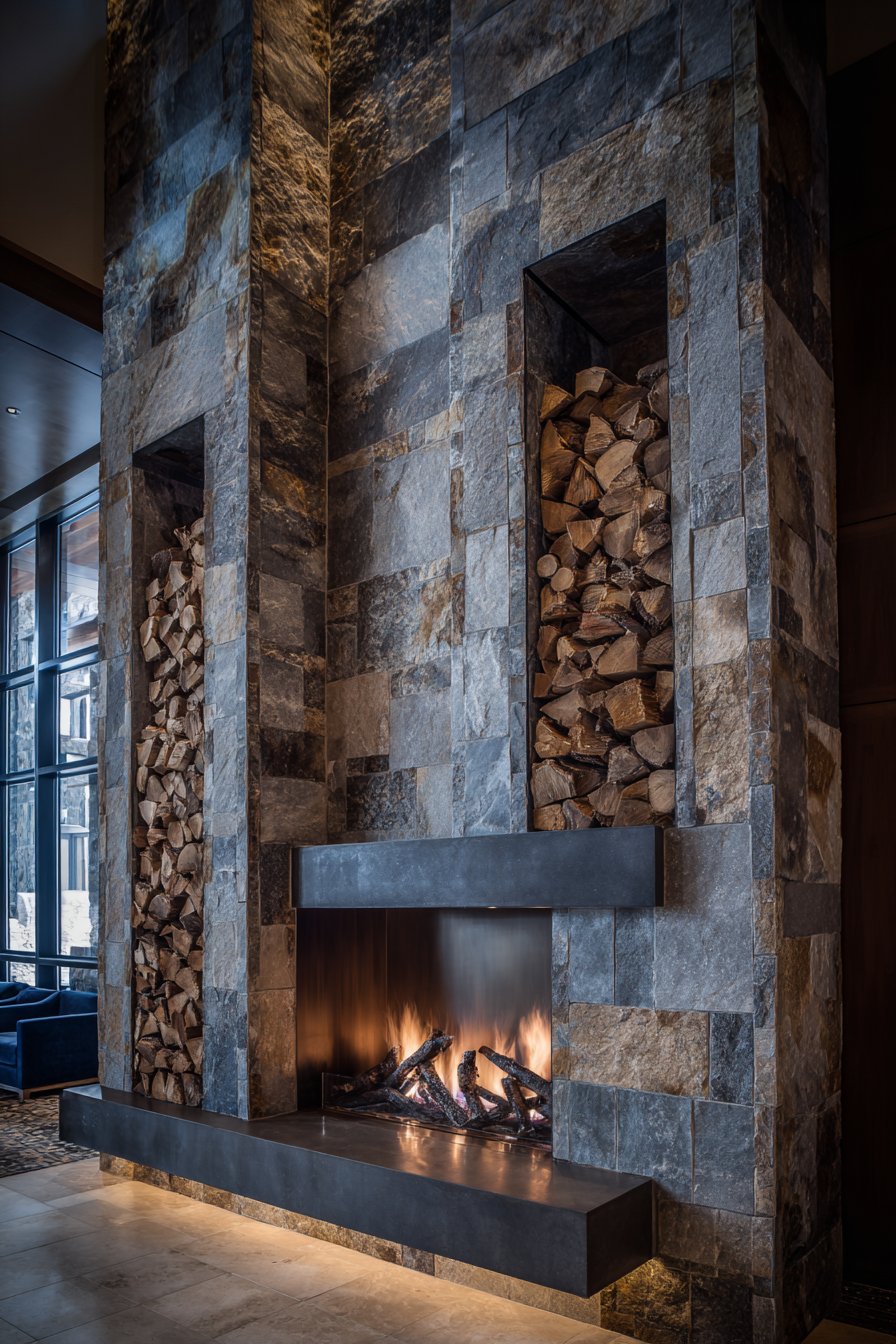
24. Contemporary Living Room Fireplace with Flanking Firewood Storage
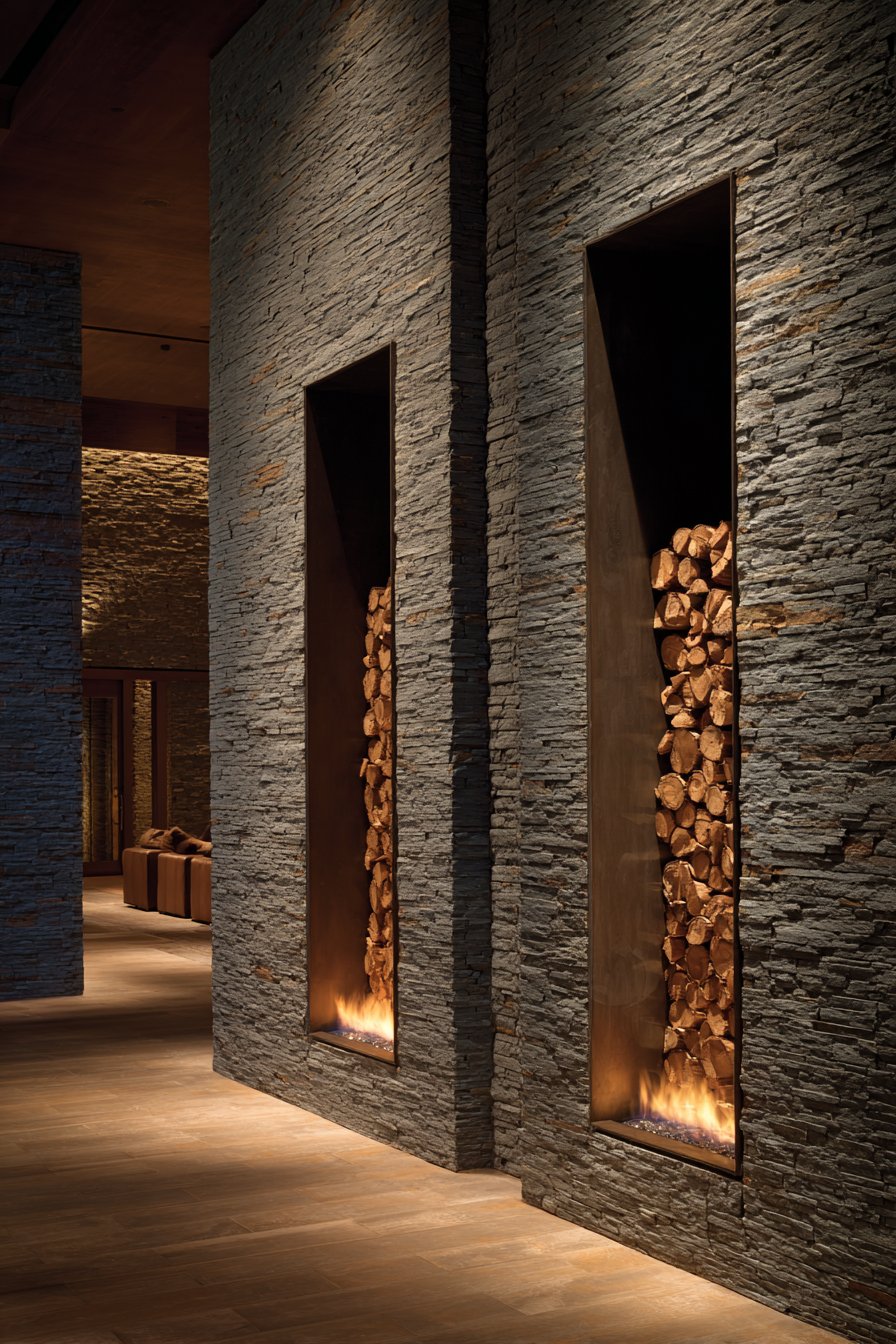
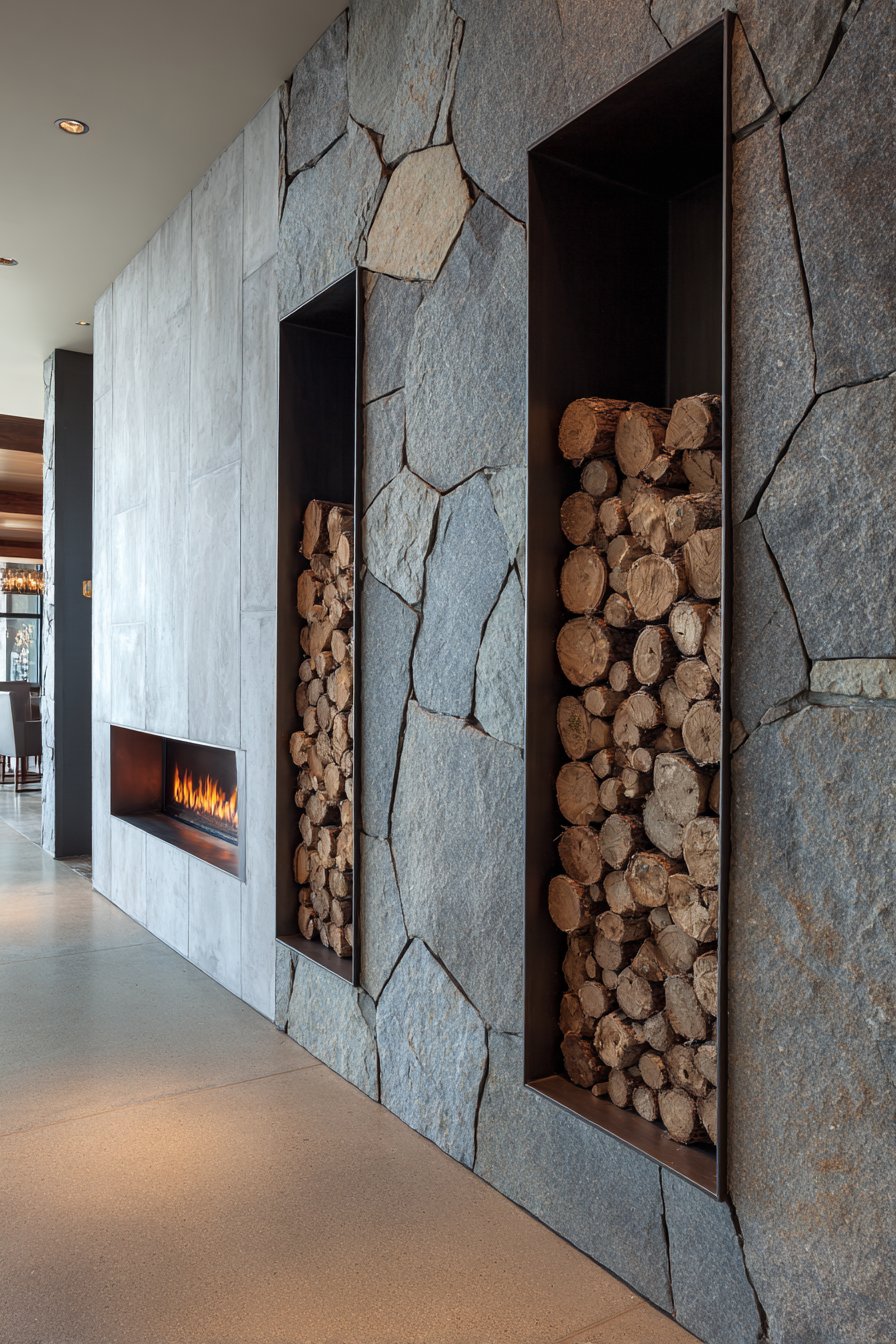
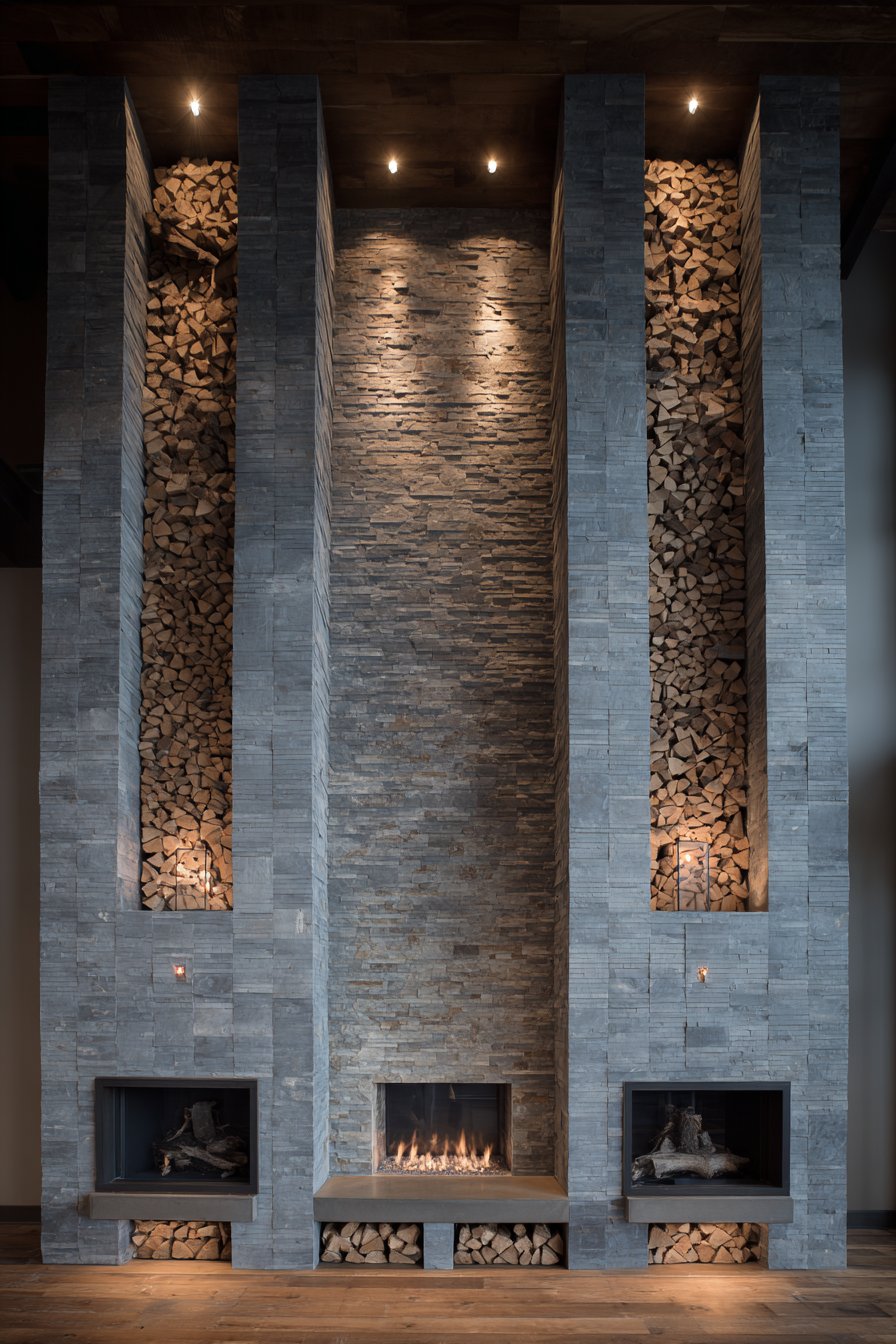
The dramatic living room fireplace becomes a three-part composition through large vertical niches flanking a modern linear gas fireplace. These substantial recesses built into a floor-to-ceiling stacked stone accent wall provide practical storage for neatly stacked firewood logs while creating textural and visual interest that enhances the fireplace’s impact. The deep niches accommodate substantial wood quantities, ensuring the supply remains readily accessible during cold months without requiring outdoor trips during cozy evenings.
The stacked stone shows natural color variation in warm grays and taupes, with each stone displaying unique patterns, textures, and mineral inclusions that create organic visual richness. The dimensional quality of the stone surface—some pieces protruding slightly, others recessed, all creating shadow play—adds depth that rewards closer inspection. The vertical niches interrupt the stone field’s horizontal coursing, creating contrast through their strong vertical emphasis while their substantial size balances the fireplace’s horizontal linearity.
Evening firelight creates warm ambient glow that dances across the stone surfaces and illuminates the stacked wood within the niches, transforming functional storage into decorative element. The carefully arranged logs—bark sides facing outward, cut ends creating geometric patterns—become sculptural features that celebrate natural materials and traditional heating methods even though the gas fireplace provides the actual warmth. This juxtaposition of modern convenience and traditional aesthetic demonstrates how contemporary design can honor historical precedents while embracing current technology.
Key Design Tips:
- Size niches to accommodate standard firewood lengths (typically 16-18 inches deep)
- Ensure adequate floor support for wood weight (seasoned firewood is heavy)
- Install moisture barriers behind stone to prevent water damage from damp wood
- Position niches to maintain symmetry with fireplace placement
- Consider adding bottom drainage or ventilation to prevent moisture accumulation
- Stack wood with cut ends facing outward for more refined, architectural appearance
25. Spa Bathroom with Waterfall-Edge Detail Shower Niche
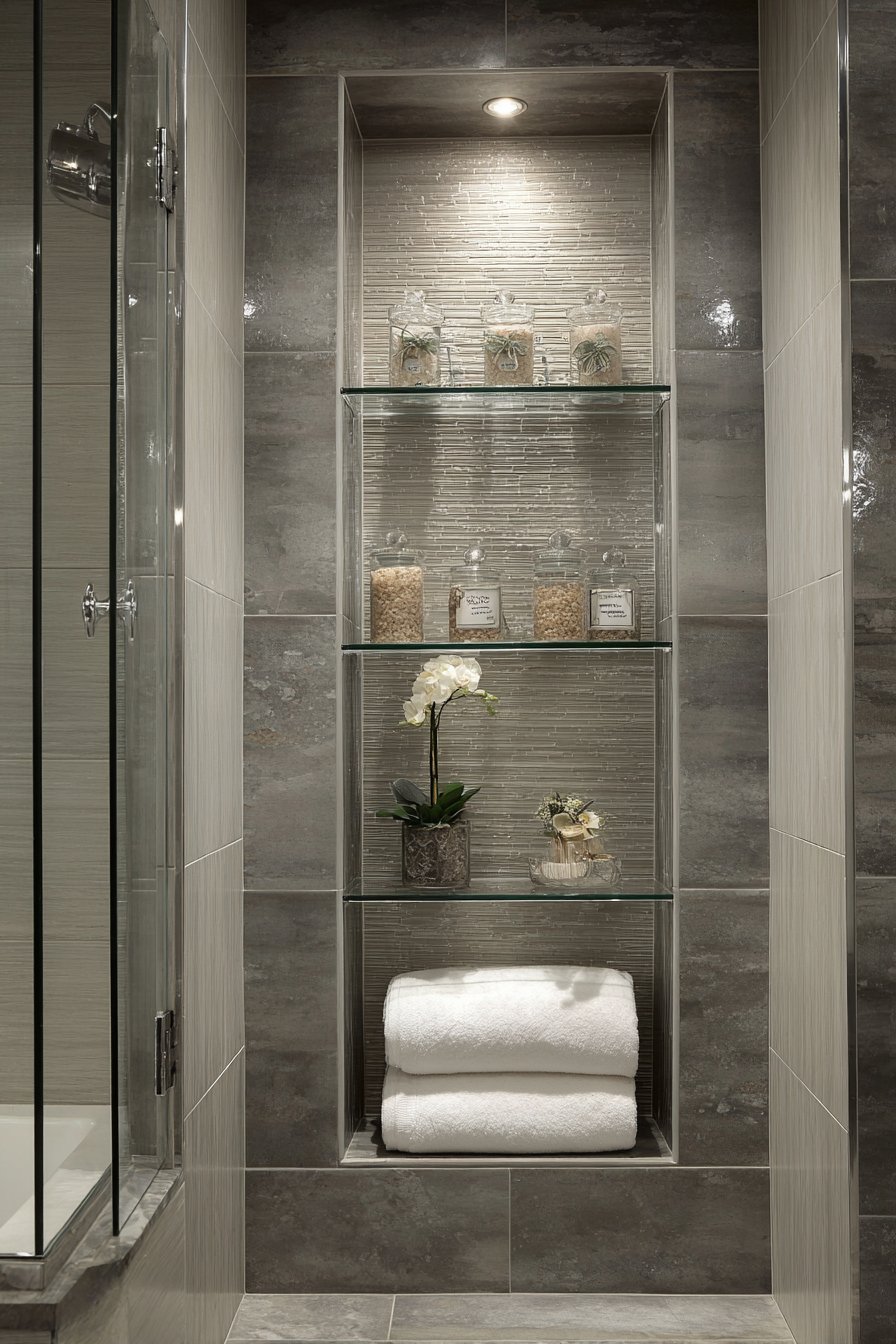
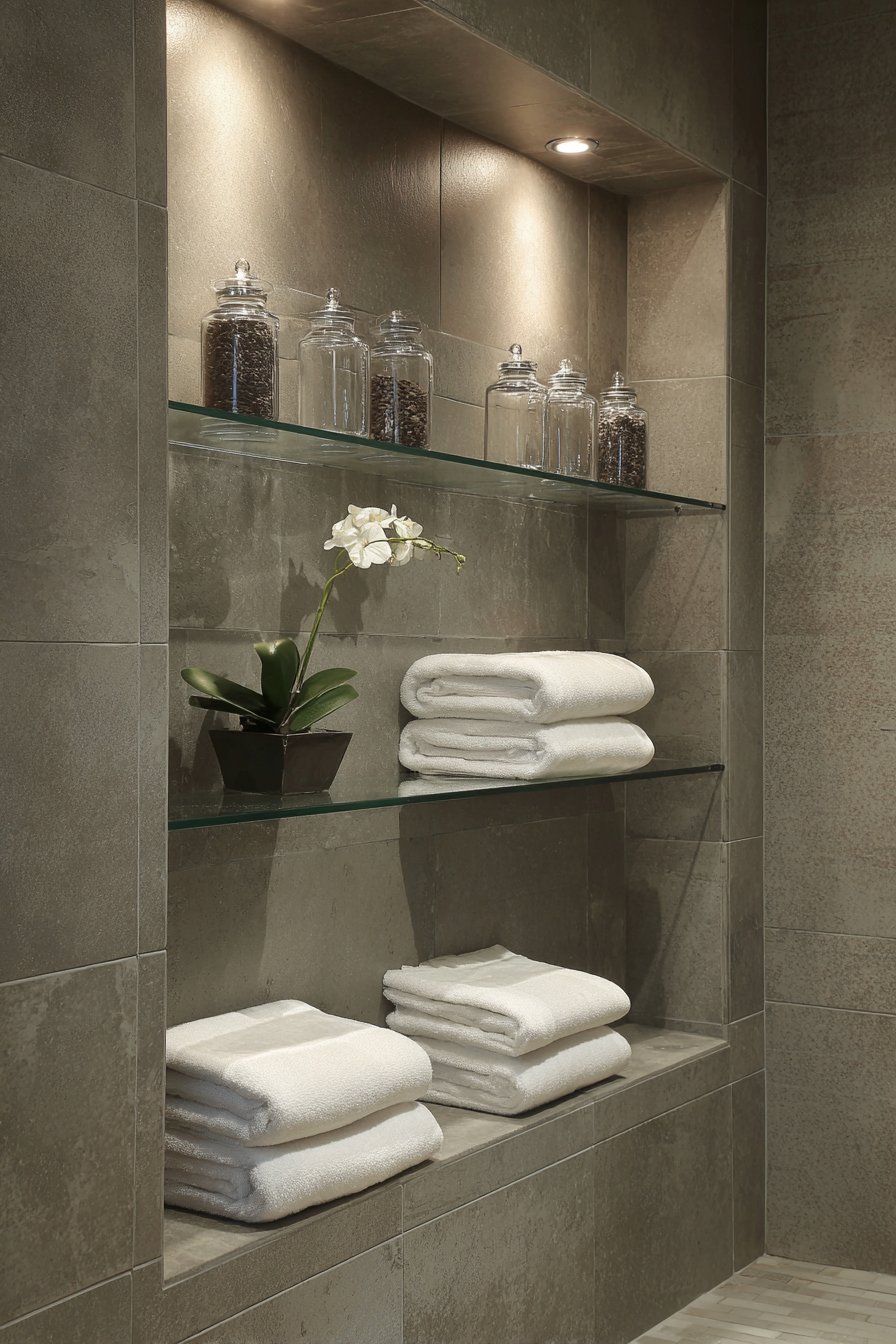
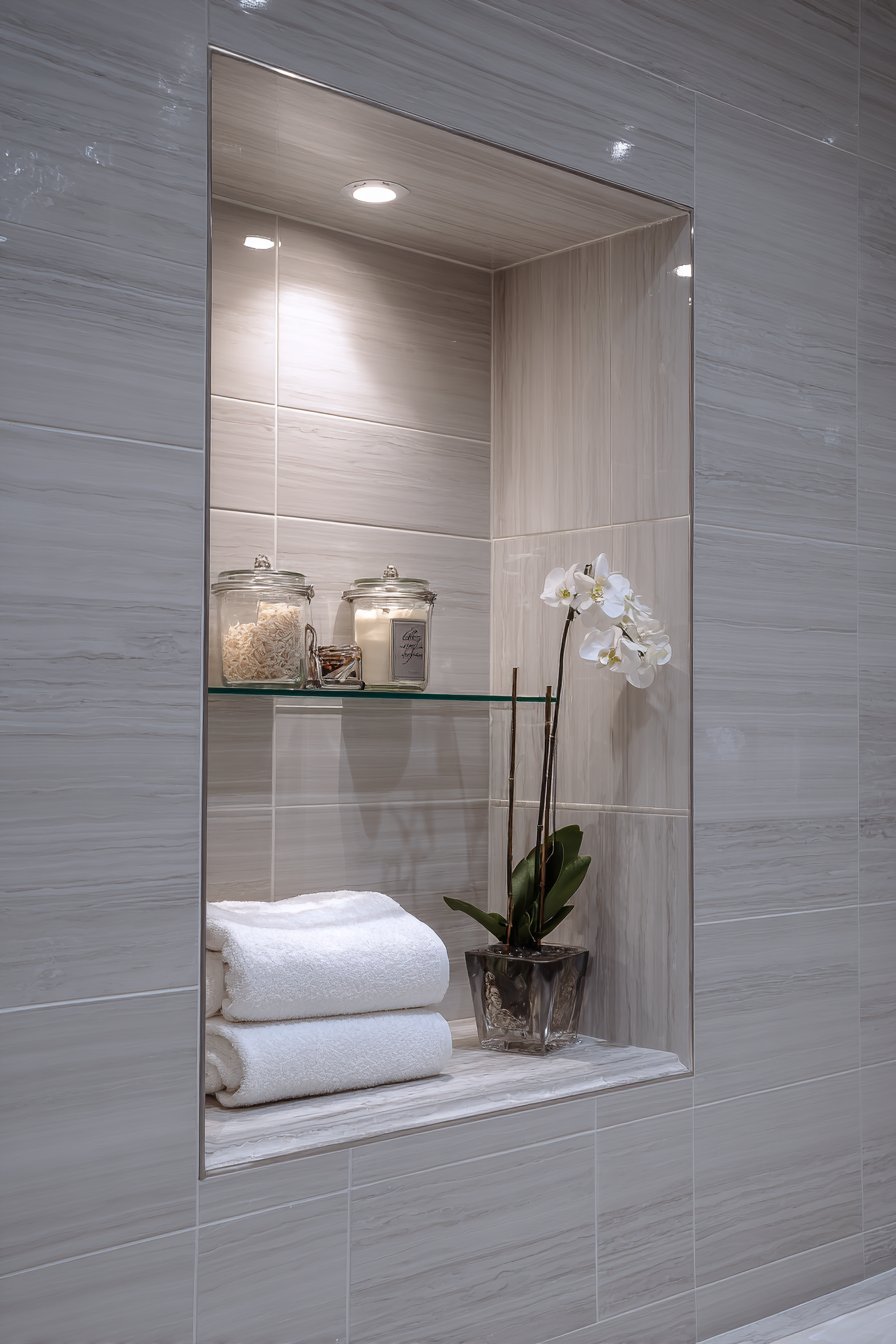
The refined bathroom showcases exceptional attention to detail through a horizontal shower niche featuring a subtle beveled waterfall profile along the bottom edge. This sophisticated detail transforms a simple storage recess into a piece of architectural sculpture, with the beveled edge creating clean water runoff while adding visual refinement. Built into large format gray porcelain tile, the niche features three glass shelves that divide the space while maintaining visual lightness and allowing light to penetrate multiple levels.
The carefully curated contents—white towels, glass apothecary jars with bath salts, a small orchid plant—create a spa-like atmosphere that elevates daily showering into a wellness ritual. The monochromatic color palette of grays and whites promotes calm and relaxation, while the varied textures—smooth glass, soft terry cloth, organic flower petals—provide subtle visual interest without overwhelming the serene aesthetic. Vertical LED strip lighting along both sides creates even illumination that prevents shadows and highlights the beautiful materials.
The waterfall edge detail demonstrates how small refinements can significantly impact overall design quality and perceived luxury. This level of finish detail signals quality and care throughout the installation, creating an environment that feels special and valuable. The soft diffused lighting creates a gentle glow perfect for evening soaks while the carefully organized products and fresh orchid reinforce the spa atmosphere that transforms the bathroom from purely functional space into a personal sanctuary.
Key Design Tips:
- Work with experienced tile installers to achieve clean waterfall edge detail
- Use large-format tiles (minimum 12×24 inches) to minimize grout lines
- Install tempered glass shelves to support product weight safely
- Position LED strips behind waterproof diffusers to protect from direct water contact
- Limit displayed items to maintain clean, uncluttered spa aesthetic
- Choose live plants that tolerate high humidity (orchids, ferns, air plants work well)
26. Traditional Dining Room Built-In with Arched Display Niche
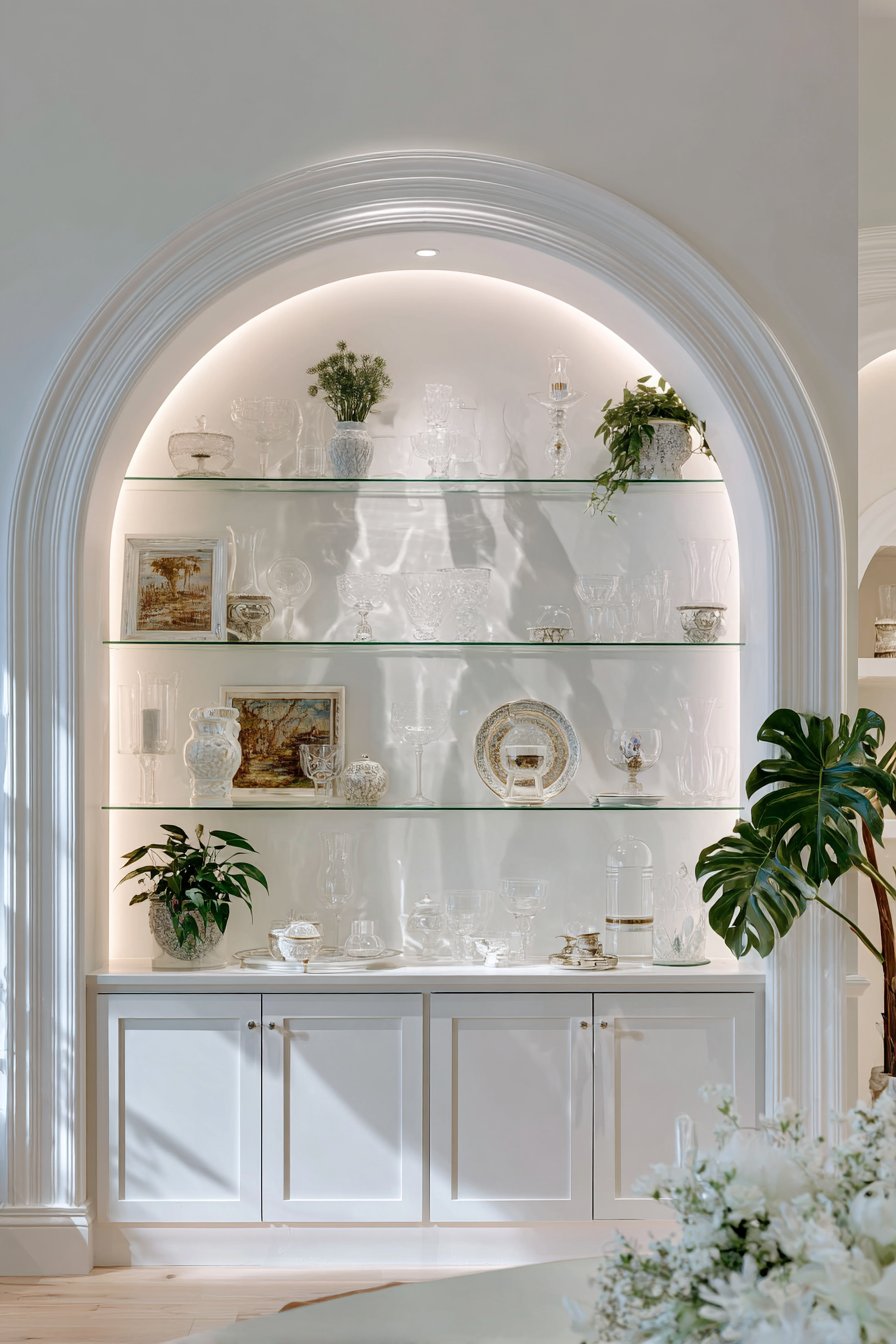
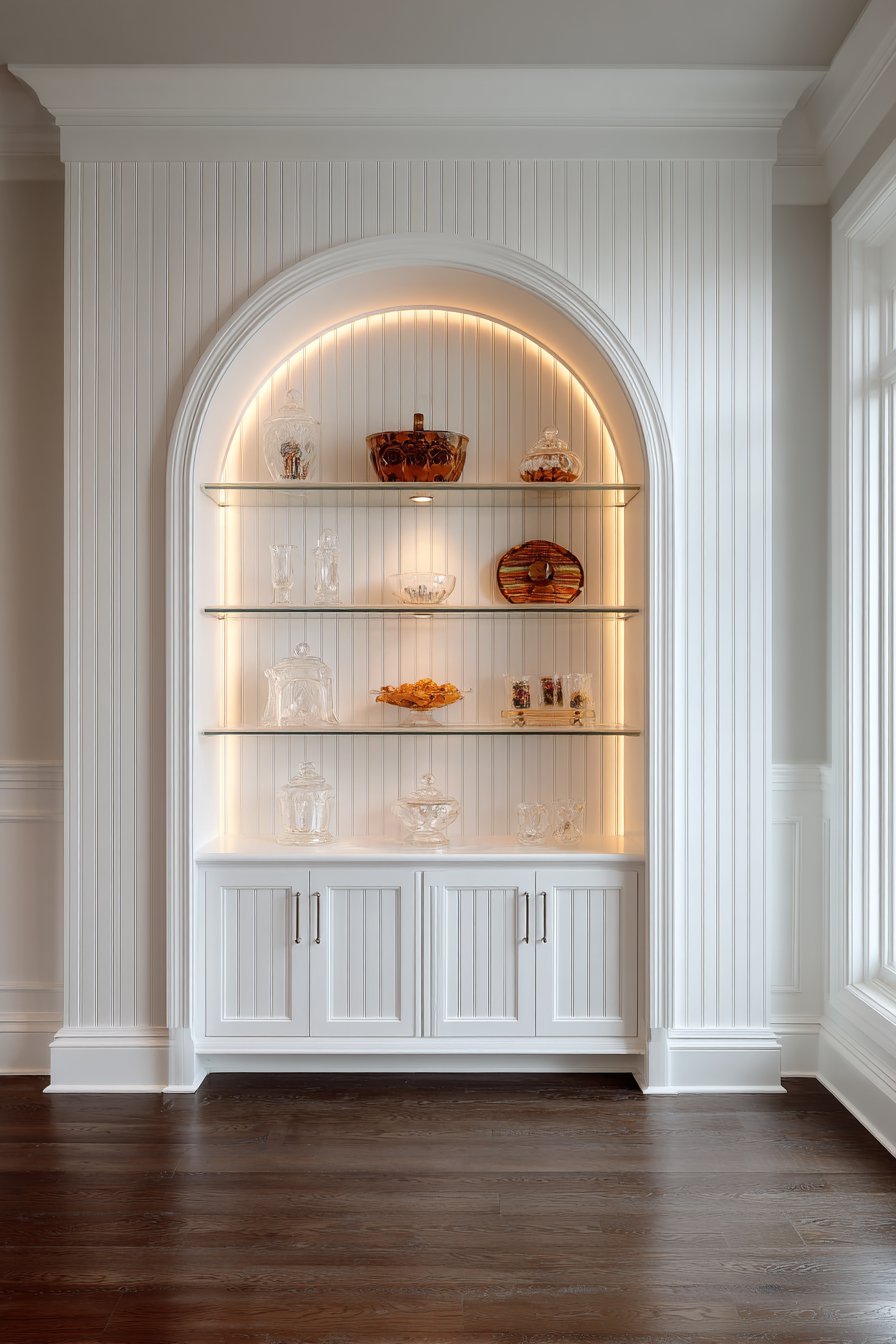
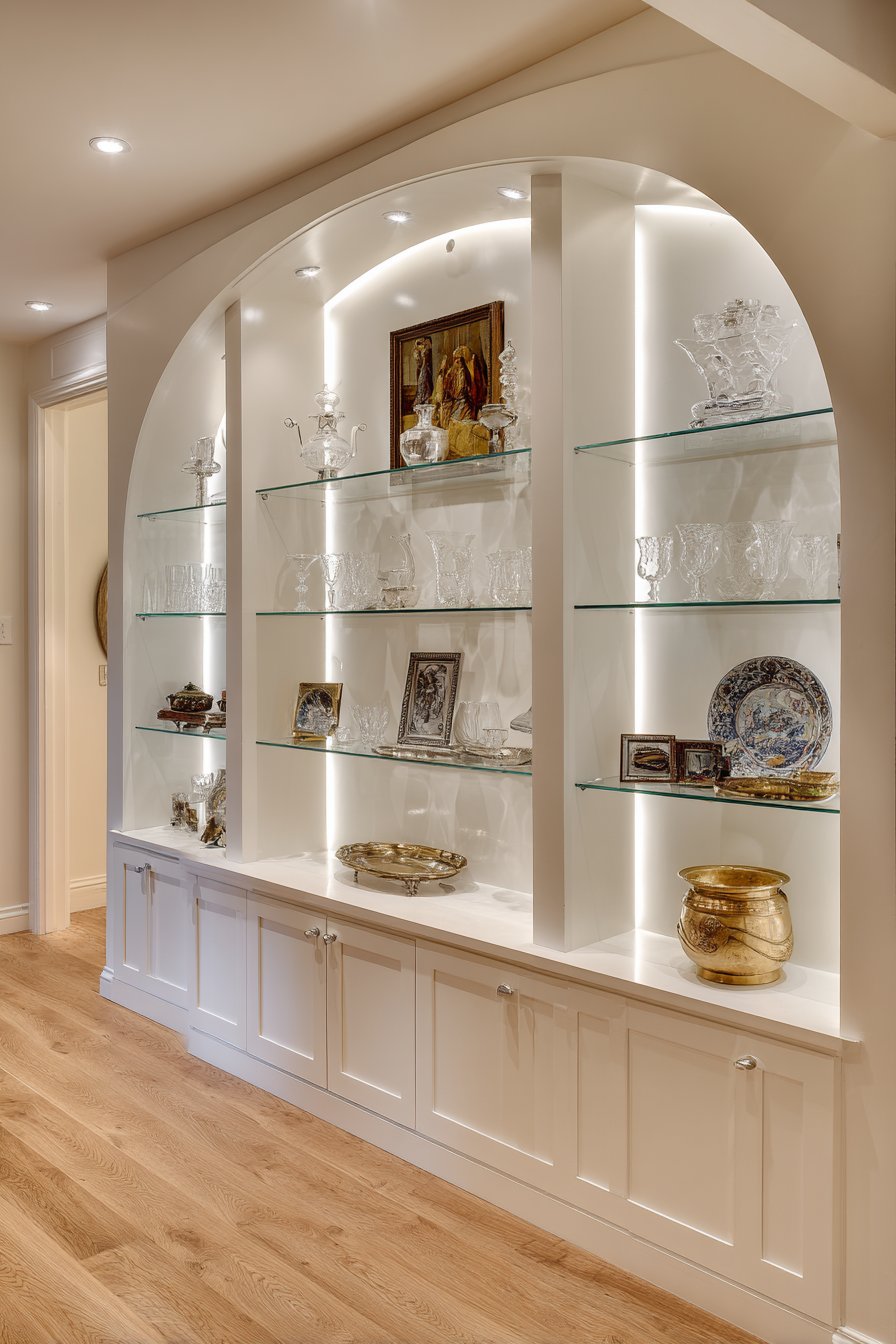
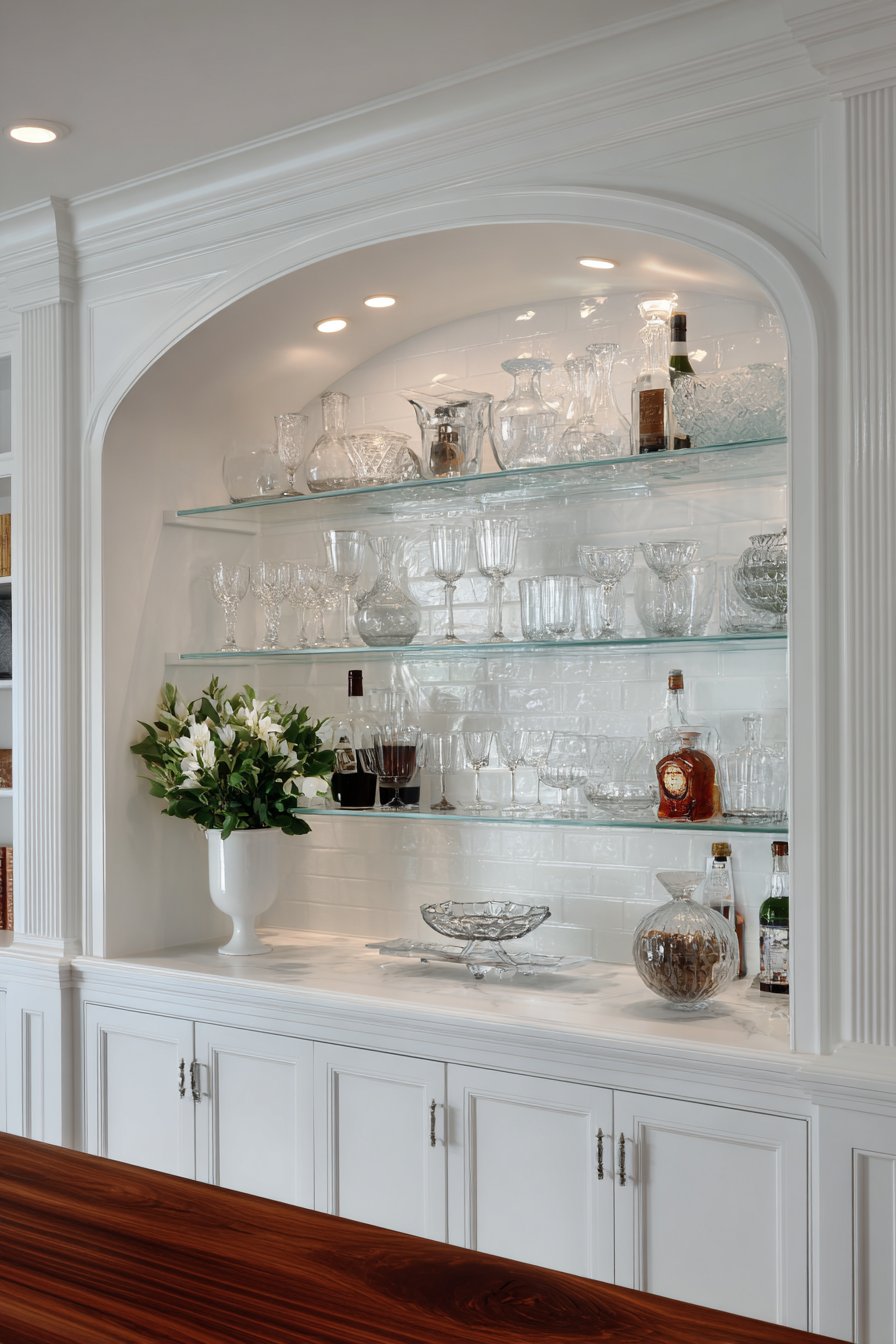
The elegant dining room celebrates classical architecture through a large arched niche carved into white painted millwork. This prominent recess features three adjustable glass shelves displaying a treasured collection of vintage glassware and serving pieces, transforming functional storage into beautiful display. The integrated LED strip lighting along the arch perimeter creates a warm glow that highlights the translucent qualities of glass while casting subtle shadows that emphasize the dimensional depth of the recess.
The surrounding cabinetry provides closed storage below, creating a balanced composition that addresses both display and concealed storage needs. The white painted finish maintains the bright, clean aesthetic appropriate for dining spaces while the traditional millwork details—the graceful arch, the simple moldings, the adjustable shelving—reference historical precedents and create timeless appeal. The arched opening softens the geometric rigidity of the rectangular cabinetry while adding architectural interest that elevates the built-in beyond mere storage furniture.
The glass shelving allows light to pass through multiple levels while showcasing collected items from multiple viewing angles. Vintage glassware catches and refracts the integrated lighting, creating sparkles and highlights that add life and energy to the display. The adjustable shelf positioning accommodates items of various heights and allows for collection changes over time. This marriage of traditional form and functional display demonstrates how built-in features can address practical needs while contributing significant aesthetic value.
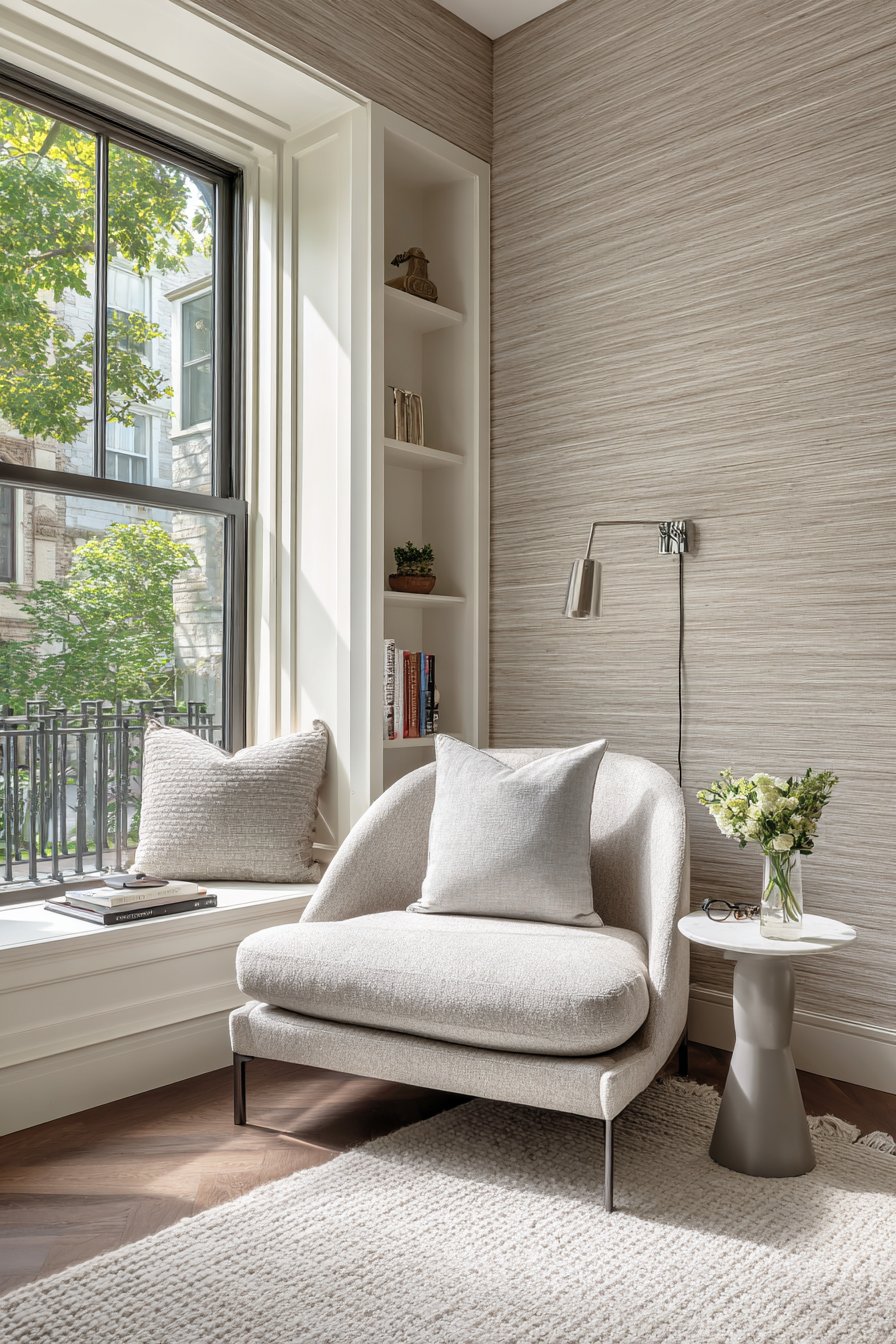
Key Design Tips:
- Size the arch opening in proportion to surrounding cabinetry (typically 2/3 to 3/4 of cabinet height)
- Install adjustable shelf supports to allow future reconfiguration
- Use beveled or polished-edge glass shelving for refined appearance
- Position LED strips behind decorative trim to conceal light source
- Display items with sufficient space between pieces to prevent visual clutter
- Consider adding mirrored backing to enhance light reflection and create depth
27. Contemporary Bedroom Reading Niche with Integrated Task Lighting
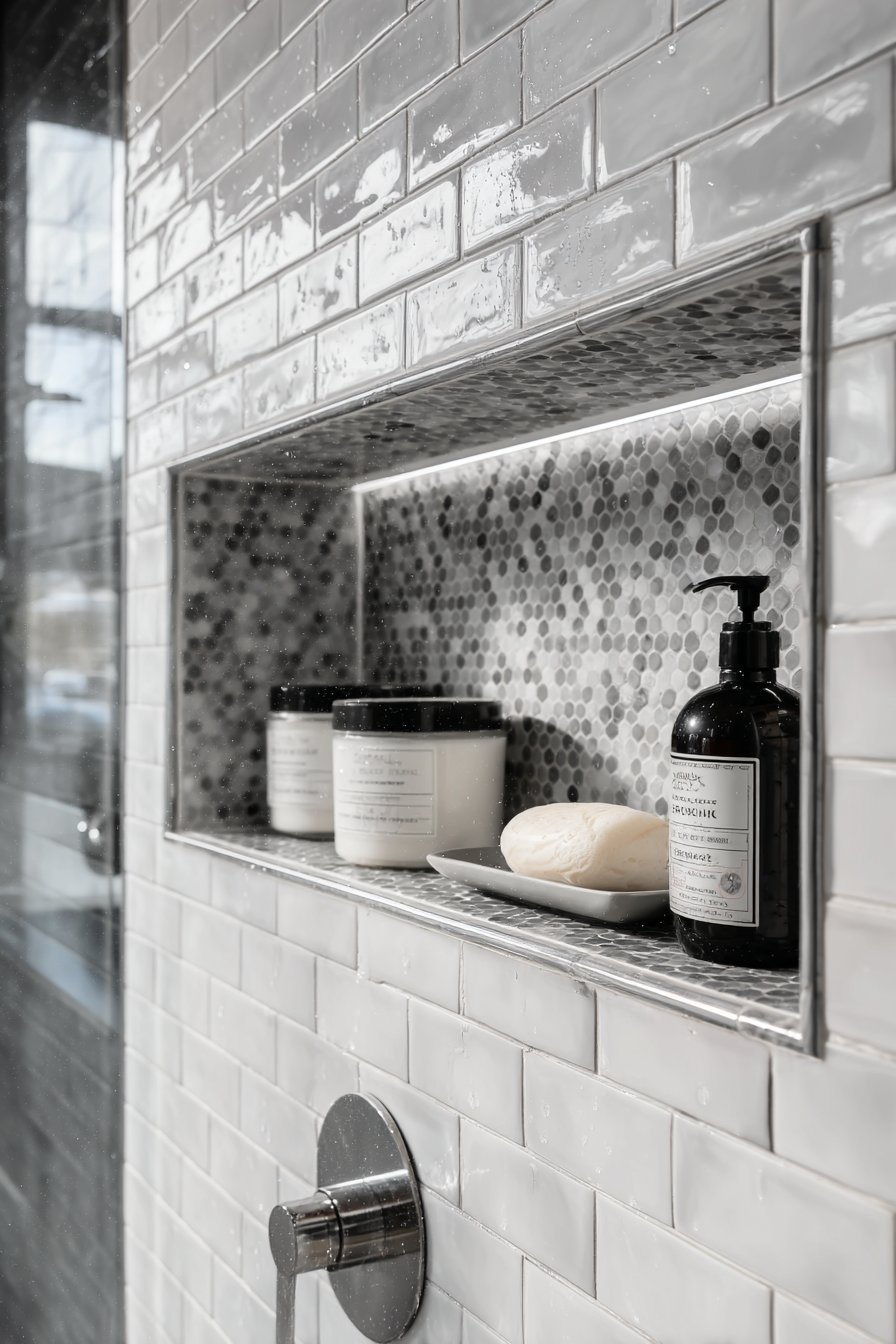
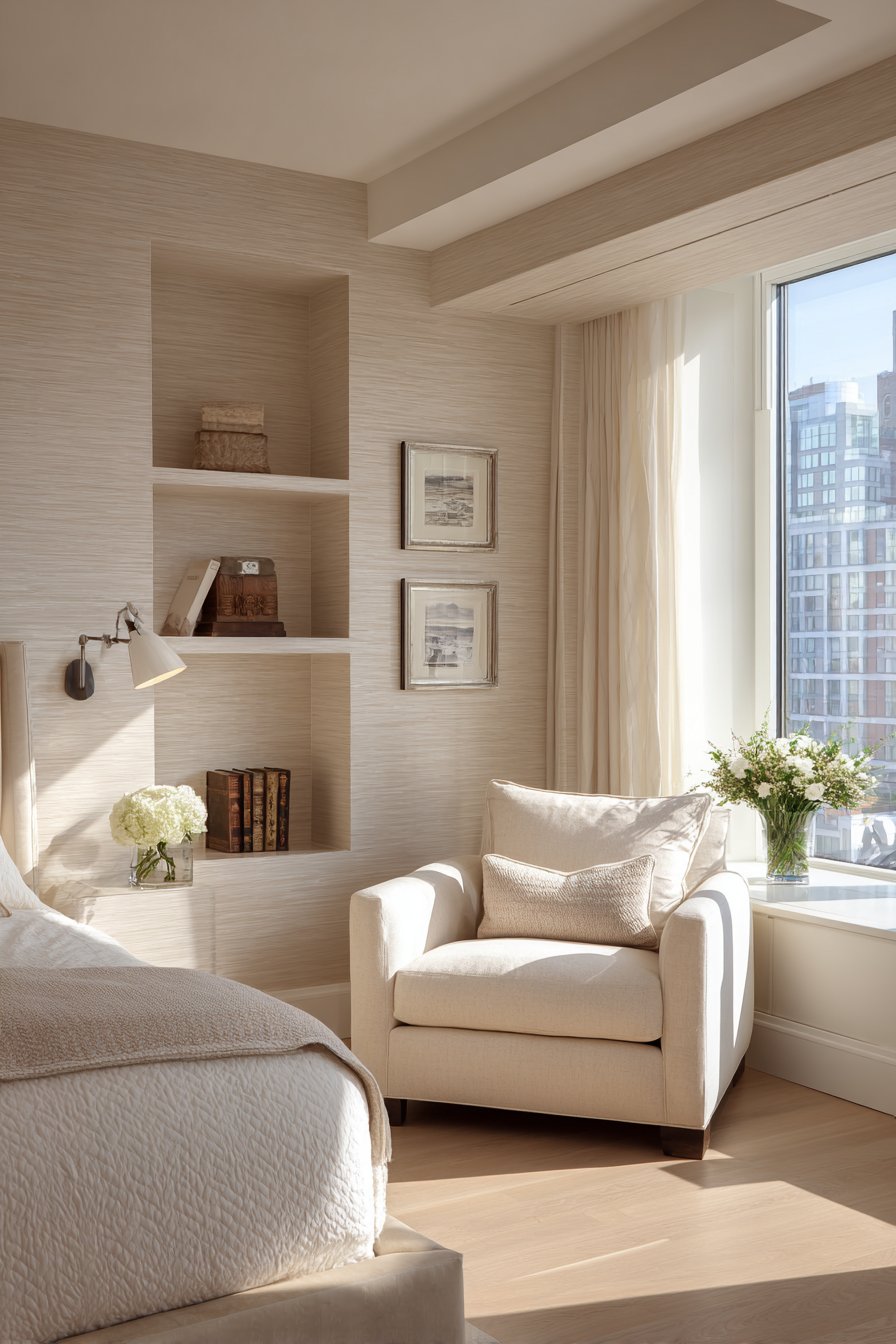
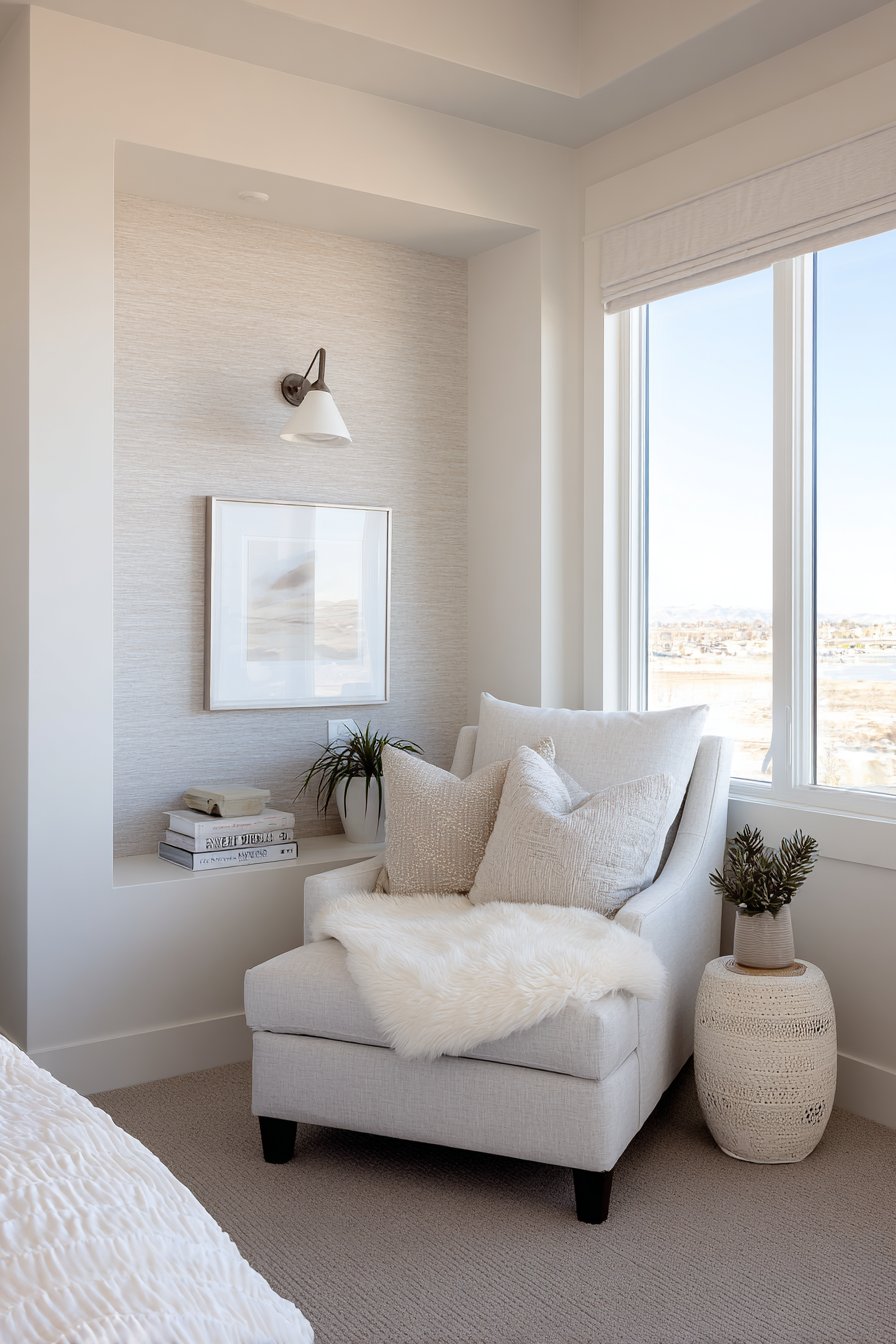
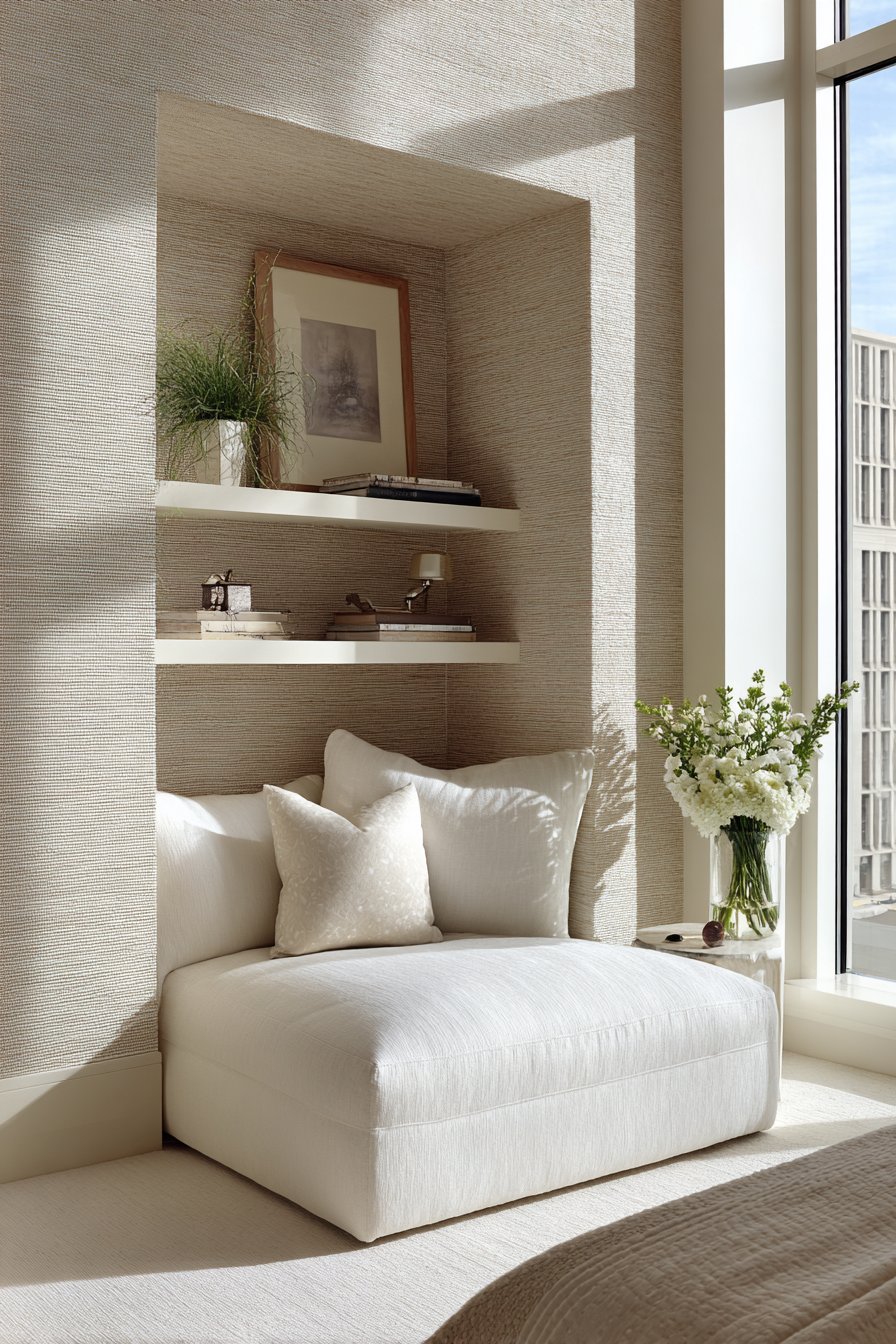
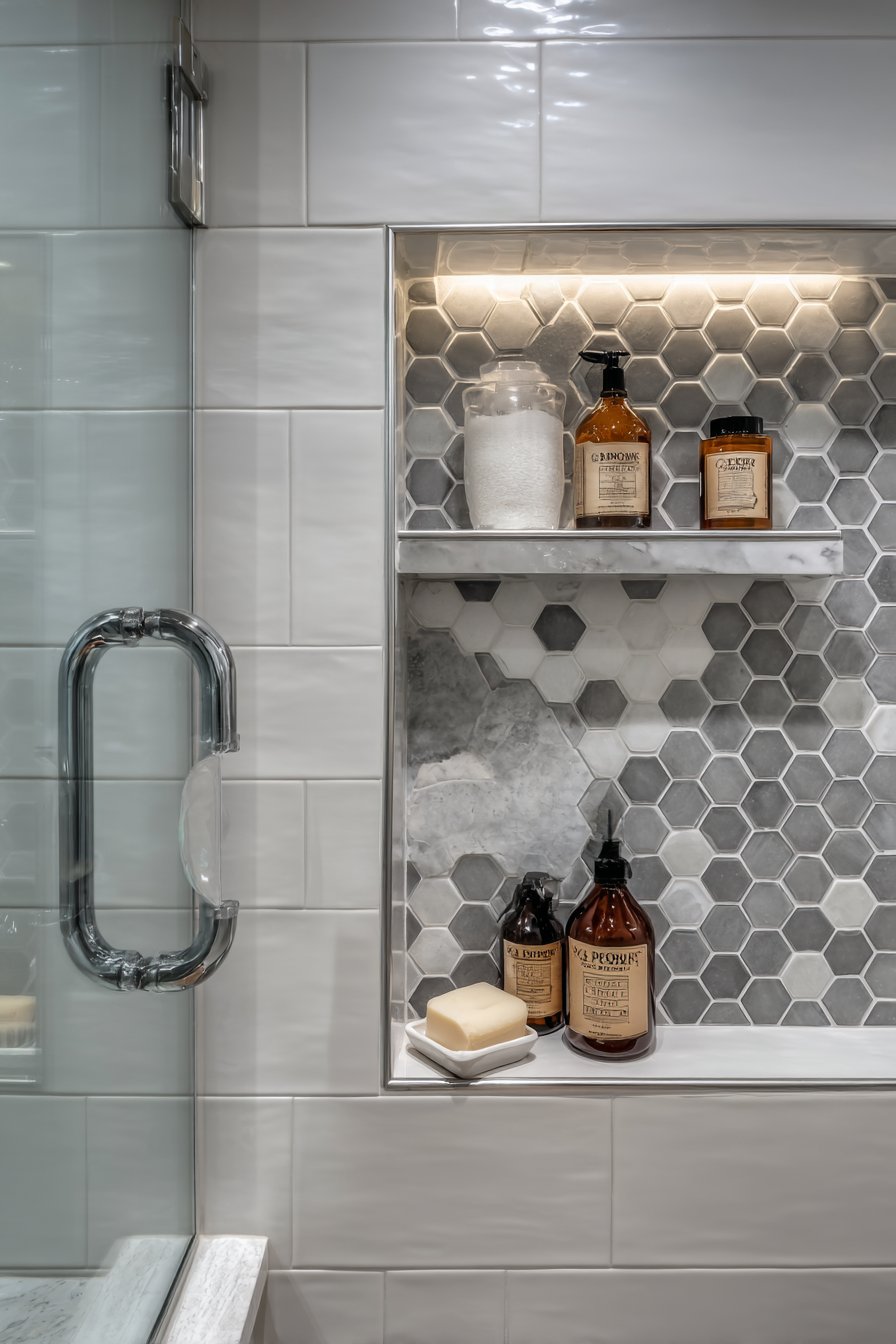
The thoughtfully designed bedroom sitting area incorporates small horizontal niches flanking an upholstered reading chair. These practical recesses built into textured linen wallpaper each contain a simple swing-arm reading lamp and a small shelf for books and reading glasses, creating a dedicated reading environment without the visual clutter of floor or table lamps. The painted white interiors create clean backdrops for the functional elements while the surrounding wallpaper texture adds subtle pattern and visual interest.
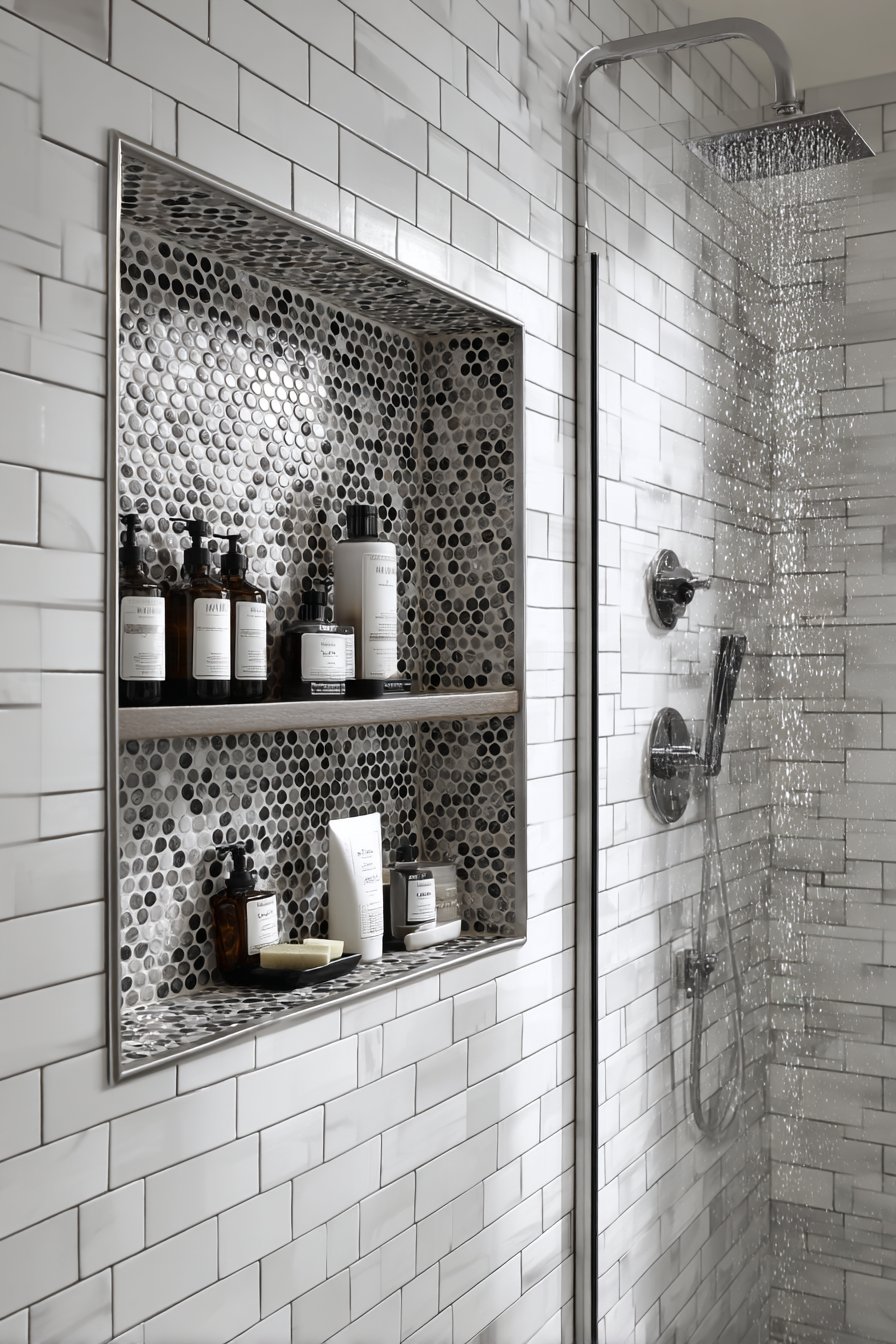
The swing-arm lamps provide adjustable, directed light perfect for extended reading sessions without eye strain, while their recessed mounting eliminates the need for side tables or floor space that would be required for traditional lamp placement. The small shelves keep current reading material and eyeglasses within easy reach, streamlining the transition from daily activities to focused reading time. Soft afternoon light filtering through nearby windows creates natural shadows within the niches, emphasizing their dimensional quality while providing general illumination during daytime reading.
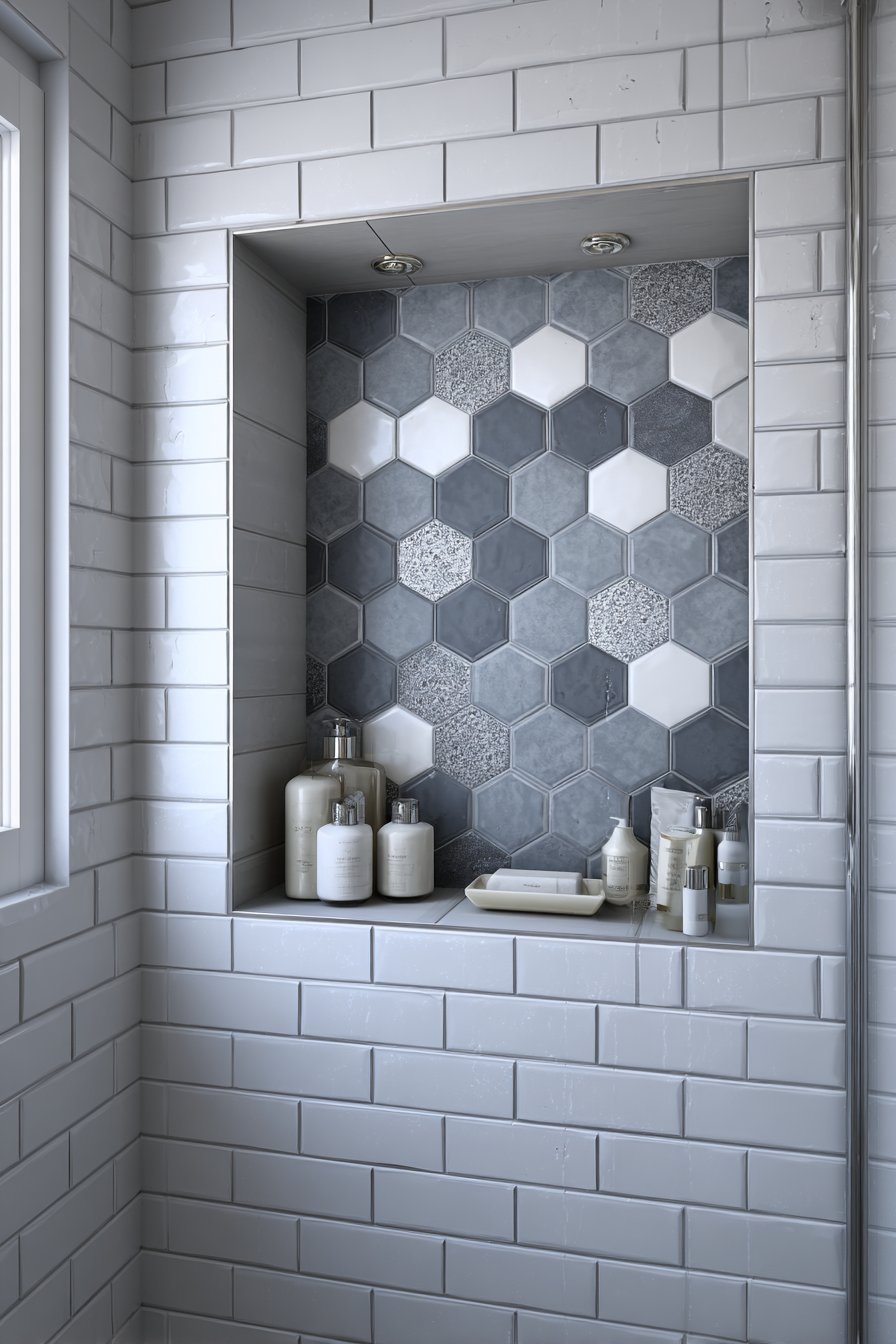
This space-saving design solution proves particularly valuable in smaller bedrooms where dedicating floor space to side tables might make the room feel cramped. The symmetrical placement of niches on both sides of the chair creates visual balance while ensuring that lighting remains optimal regardless of which direction the reader faces. The integration of task lighting within the architecture demonstrates how good design can improve daily activities while contributing to overall aesthetic cohesion.
Key Design Tips:
- Position niches at comfortable reaching height from seated position (typically 36-42 inches from floor)
- Install swing-arm lamps with adjustable arms for directional lighting control
- Size shelves to accommodate typical book dimensions (minimum 8 inches deep)
- Include electrical outlets within niches to avoid visible cords
- Choose dimmable LED bulbs for adjustable reading light intensity
- Consider adding small lips at shelf fronts to prevent items from sliding off
Why These Recessed Wall Niche Ideas Represent the Best in Contemporary Design
The twenty-seven recessed wall niche concepts presented throughout this article represent the pinnacle of contemporary interior design thinking, successfully marrying form and function in ways that traditional storage and display solutions simply cannot match. These designs demonstrate how architectural features can simultaneously address practical needs while contributing significant aesthetic value to residential spaces. From minimalist bedroom niches that eliminate furniture while maintaining functionality to luxurious bathroom installations that rival high-end spa environments, each concept showcases the remarkable versatility of this timeless design element.
What distinguishes these particular niche implementations as exceptional examples is their thoughtful consideration of context, materials, and user experience. The shower storage niches address real-world bathroom organization challenges while maintaining waterproof integrity through sloped surfaces and proper tile installation. The reading nook book storage maximizes vertical space in compact alcoves while creating library-like atmosphere through natural wood trim and abundant natural light. The kitchen coffee station niche streamlines morning routines by consolidating equipment and supplies in a dedicated, well-equipped location. Each design solves specific problems while elevating the overall aesthetic of its host space.
The integration of sophisticated lighting strategies throughout these concepts transforms simple recesses into dynamic features that adapt to changing needs and times of day. Museum-quality LED spotlighting in hallway gallery niches creates professional art presentation, while gentle LED backlighting in bedroom niches provides ambient illumination perfect for nighttime reading. The warm Edison bulbs in rustic farmhouse niches create inviting pools of amber light that emphasize brick texture and natural materials, while waterproof LED strips in shower niches ensure functional visibility without creating harsh glare. This thoughtful approach to illumination demonstrates how lighting design can dramatically enhance architectural features.
Material selection plays a crucial role in the success of these niche designs, with each concept carefully pairing surface finishes, trim details, and interior treatments to create cohesive, high-quality results. The marble-look porcelain tiles in luxury bathroom niches introduce stone’s natural beauty while providing superior water resistance and durability. The contrasting wood species in Scandinavian living room niches celebrate natural grain patterns while creating visual depth through color variation. The velvet linings in closet jewelry niches provide protective cushioning while introducing tactile luxury that elevates functional storage into sensory experience. These material choices demonstrate how thoughtful specification can enhance both performance and aesthetics.
The spatial efficiency demonstrated throughout these niche concepts addresses one of modern life’s most pressing challenges—maximizing function within limited square footage. The vertical orientation of entryway coat storage eliminates the need for freestanding furniture while providing hooks and shelving within a narrow wall thickness. The grid-pattern home office niches organize supplies above the desk, keeping work surfaces clear without consuming precious desktop real estate. The child-height nursery niches provide accessible toy storage that encourages independence without requiring floor space for bins or shelving units. This strategic use of otherwise underutilized wall cavity space creates storage and display opportunities without sacrificing room to move and live comfortably.
Color strategy proves equally important in these successful niche implementations, with interior paint colors creating contrast, definition, and mood appropriate to each space’s function. The soft blue interiors in coastal powder room niches reinforce seaside aesthetic while preventing the recesses from disappearing into white surroundings. The deep charcoal interiors in contemporary dining room niches create dramatic contrast that makes displayed sculptures appear more prominent and intentional. The white interiors in minimalist grid niches maintain clean aesthetic while providing bright backdrops for colorful displayed objects. These thoughtful color selections demonstrate how simple paint choices can significantly impact architectural features’ visual effectiveness.
The symmetrical versus asymmetric arrangements represented in these concepts show how compositional strategy affects spatial perception and aesthetic impact. The symmetrical bathroom niches flanking freestanding tubs create formal balance and visual harmony appropriate to luxury bathroom design. The asymmetric living room feature wall niches generate dynamic energy and contemporary edge through varied sizes and positions. The graduated stairway niches create progressive rhythm that complements upward movement while preventing visual monotony. These compositional approaches demonstrate how arrangement strategy can reinforce or contrast with surrounding architectural elements.
The practical accessibility considerations integrated throughout these designs ensure that beautiful features remain genuinely useful in daily life. Shower niches positioned at shoulder height keep products within comfortable reach during bathing. Kitchen coffee station niches at counter height enable ergonomic operation without awkward reaching. Child-height nursery niches allow young children independent access to toys and books. These user-centered design decisions demonstrate how aesthetic excellence and practical functionality can coexist and reinforce each other rather than competing for priority.
The variety of design styles represented—from rustic farmhouse to contemporary minimalist, from traditional transitional to industrial modern—demonstrates how recessed niches adapt to virtually any aesthetic direction. The exposed brick arched niches celebrate historical materials and classical forms. The sleek glass-shelved bathroom niches embrace contemporary transparency and clean lines. The natural wood Scandinavian niches highlight organic materials and simple forms. This stylistic range proves that recessed niches function as design chameleons, adapting to express whatever aesthetic vision guides the overall space.
The integration of modern technology within these traditional architectural features shows how contemporary design successfully bridges historical precedents and current lifestyles. Bluetooth speakers incorporated into shower niches acknowledge how music enhances bathing experiences. Electrical outlets within entryway niches enable phone charging in convenient locations. LED lighting throughout multiple concepts provides energy-efficient illumination with superior color rendering and longevity. These technological integrations demonstrate how classic design elements can evolve to accommodate modern life without sacrificing timeless appeal.
The attention to construction details throughout these concepts—from waterfall tile edges to rounded safety corners, from proper drainage slopes to structural reinforcement—demonstrates how quality execution separates exceptional results from mediocre outcomes. Professional installation ensuring proper waterproofing in bathroom niches prevents costly water damage and material deterioration. Precise drywall finishing creating crisp edges around living room niches contributes to polished, high-end appearance. Structural reinforcement supporting heavy stone shelving in fireplace niches ensures safety and longevity. These technical considerations prove that beautiful design requires both creative vision and skilled execution.
Conclusion
The twenty-seven recessed wall niche ideas explored throughout this comprehensive guide demonstrate the remarkable potential of this architectural feature to transform residential spaces through the perfect union of beauty and function. From the dramatic asymmetric living room display wall with integrated lighting to the practical child-friendly nursery storage, from the luxurious spa bathroom installations to the space-saving bedroom headboard alternatives, each concept proves that thoughtful design can address real-world needs while creating visually stunning results that enhance daily life.
The versatility of recessed wall niches makes them suitable for virtually every room in the home and compatible with any design aesthetic. Whether your personal style leans toward minimalist contemporary, rustic farmhouse, traditional transitional, or industrial modern, these architectural features adapt seamlessly while providing practical storage, beautiful display, and dimensional interest that flat walls simply cannot achieve. The integration of sophisticated lighting strategies, carefully selected materials, and thoughtful color choices elevates these simple recesses into architectural statements that define and enhance their surrounding spaces.
As you consider implementing recessed wall niches in your own home, remember that successful results require careful planning, quality materials, and skilled execution. Consider the specific functional needs each niche will address, the appropriate size and placement for your particular space, and how lighting can enhance both visibility and atmosphere. Work with experienced contractors who understand proper waterproofing for bathroom installations, structural requirements for deep recesses, and finishing techniques that create the crisp, professional results these features deserve. With thoughtful design and quality implementation, recessed wall niches can transform your home’s walls from simple barriers into dynamic, functional, and beautiful architectural features that enhance daily living while expressing your personal style and values for years to come.
