
Moving into a paying guest accommodation often means compromising on space, dealing with rental restrictions, and working within a tight budget. However, these limitations shouldn’t prevent you from creating a comfortable, personalized space that truly feels like home. Whether you’re a student, young professional, or someone transitioning between homes, your PG room deserves thoughtful decoration that reflects your personality while maximizing functionality.
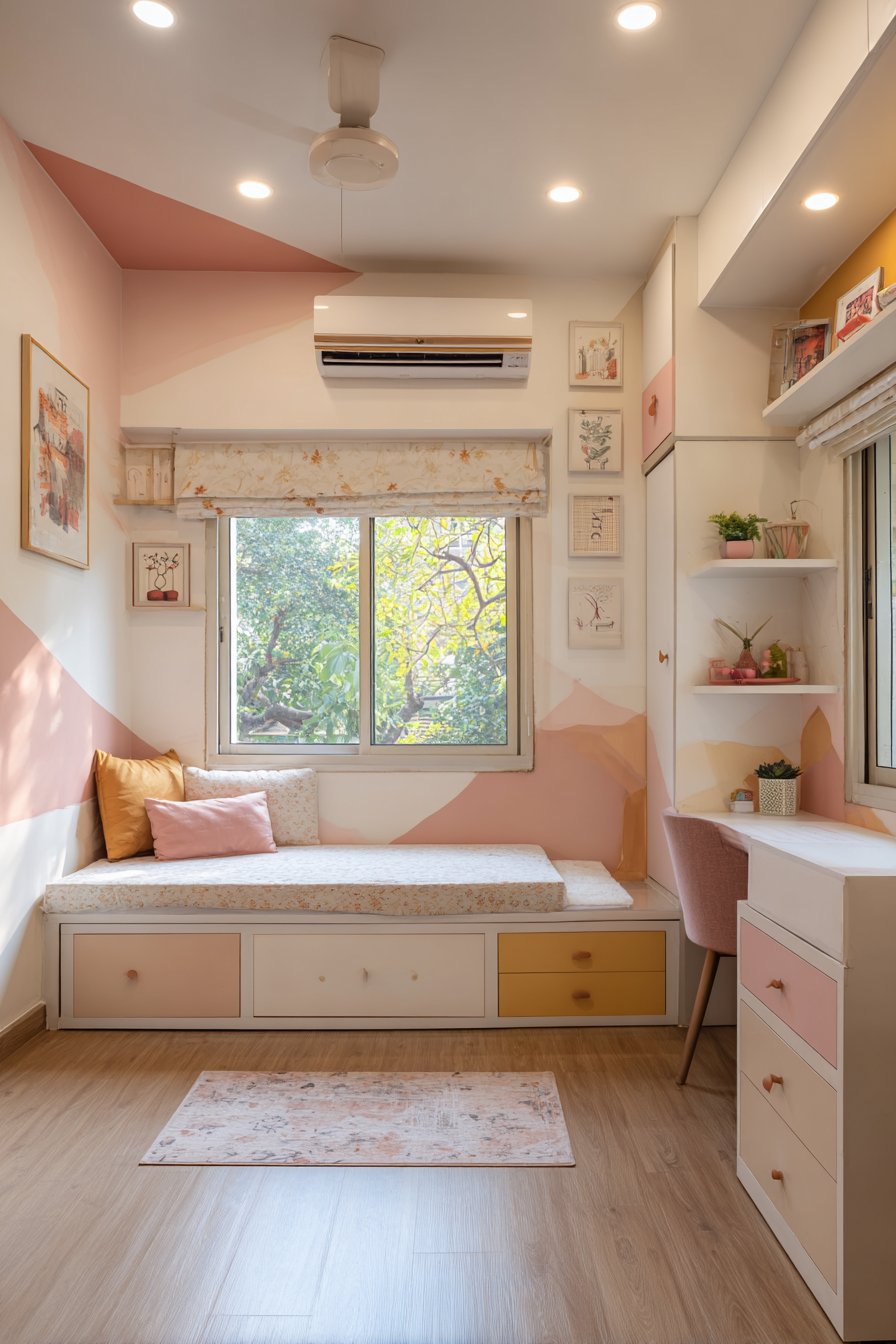
The art of decorating a PG room lies in striking the perfect balance between practicality and aesthetics. Unlike permanent residences, PG accommodations require creative solutions that don’t involve major renovations or permanent modifications. From multi-functional furniture and vertical storage solutions to removable wall decor and strategic lighting, there are countless ways to transform even the smallest, most basic room into an inviting personal retreat. The key is understanding how to make every square inch count while keeping your design flexible enough to adapt as your needs change.
In this comprehensive guide, we’ll explore 23 innovative PG room decoration ideas that cater to various styles, budgets, and spatial constraints. Each concept has been carefully curated to address common challenges faced by PG residents, including limited floor space, inadequate storage, poor lighting, and the need for privacy in shared accommodations. Whether you’re drawn to minimalist aesthetics, bohemian comfort, or functional modernism, you’ll discover practical inspiration that can be implemented immediately, transforming your temporary living space into a personalized sanctuary that supports your lifestyle and well-being.
1. Vertical Living: Loft Bed with Integrated Study Space
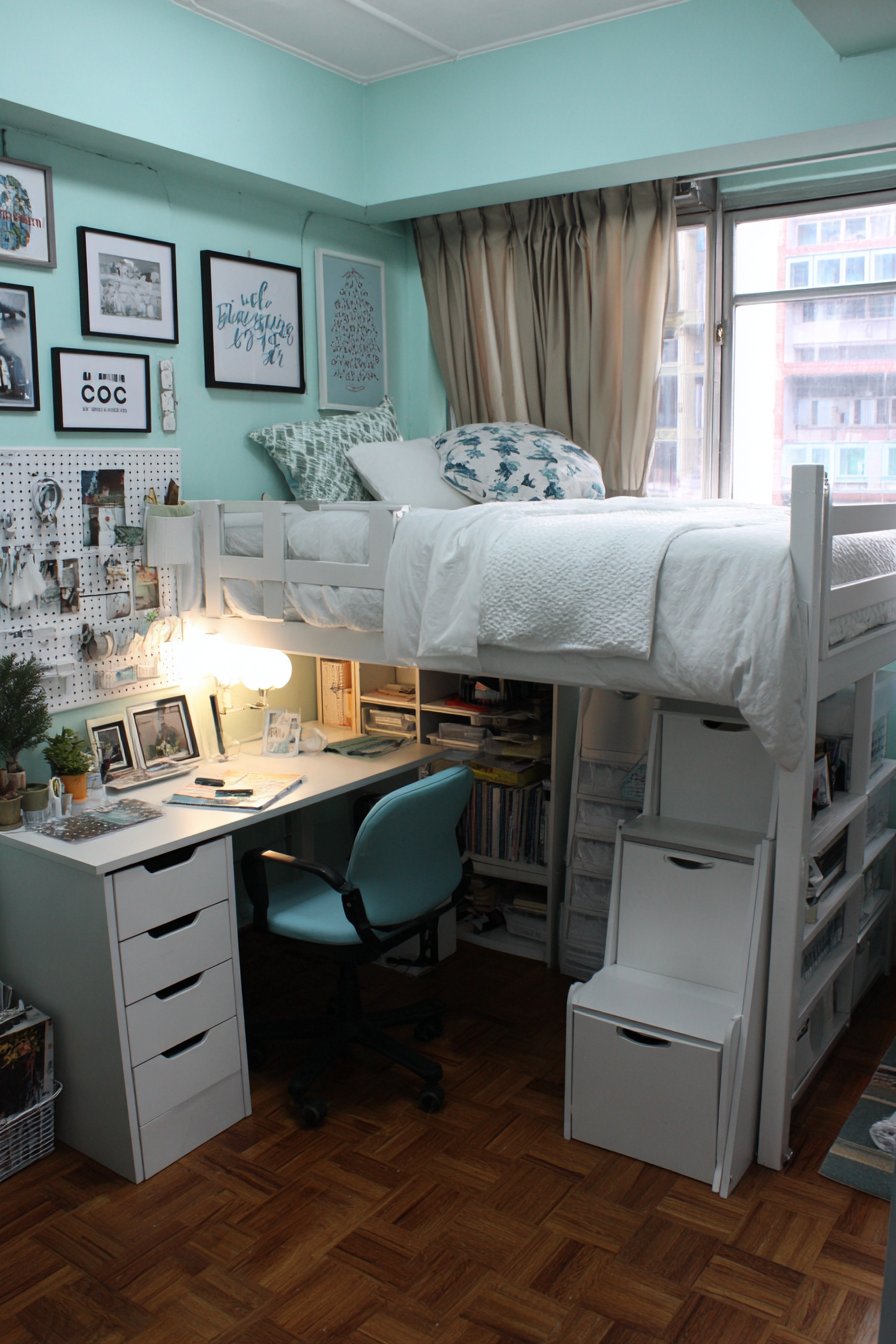
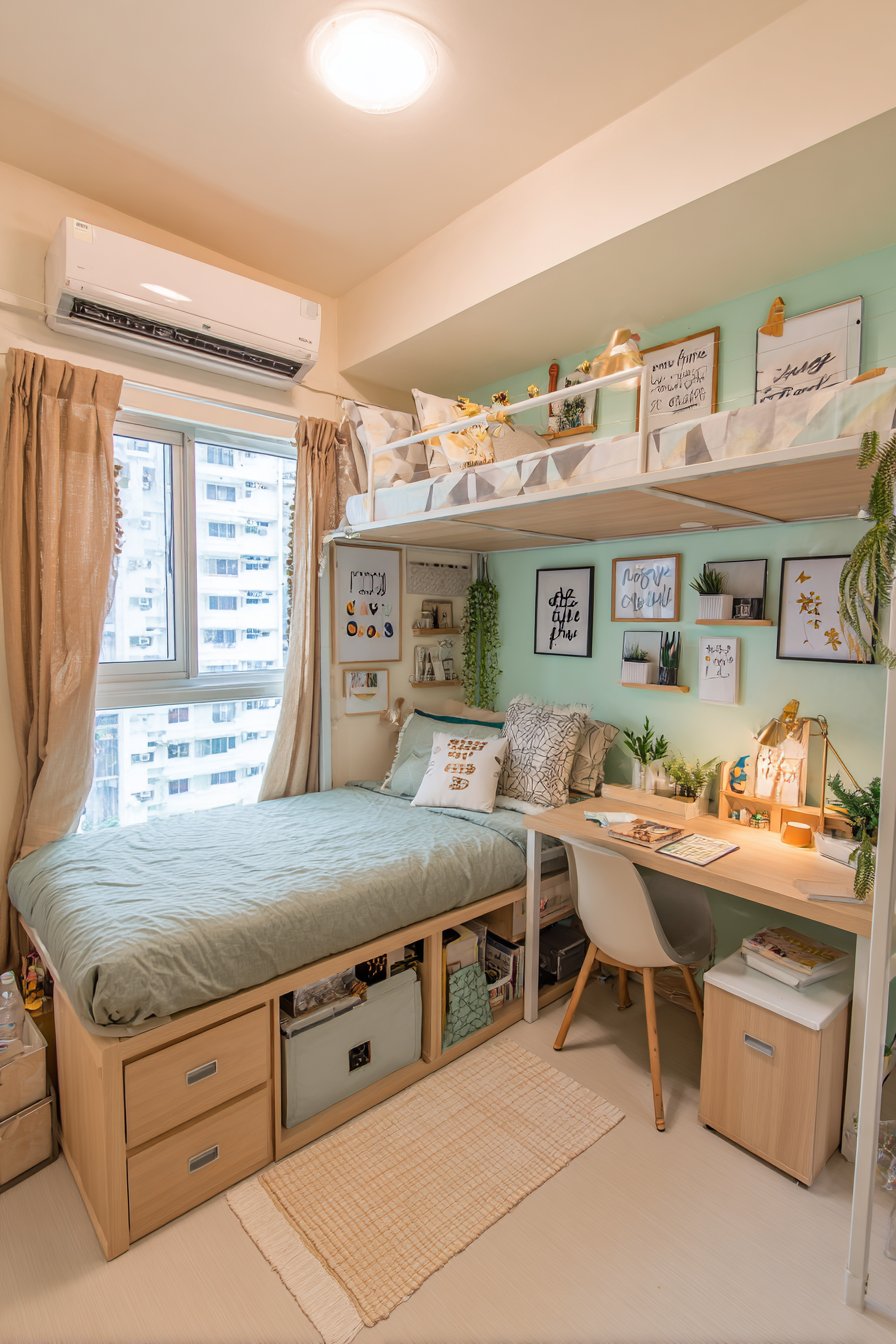
Maximizing vertical space is perhaps the most transformative strategy for small PG rooms, and the loft bed concept exemplifies this principle beautifully. Picture a thoughtfully designed elevated sleeping platform that opens up the entire floor area beneath for a comprehensive study zone. The bed frame, constructed from sturdy metal or solid wood, sits approximately five to six feet above the ground, creating a spacious work environment underneath. Integrated storage compartments within the loft structure hold bedding, books, and personal items, eliminating the need for additional furniture that would consume precious floor space.
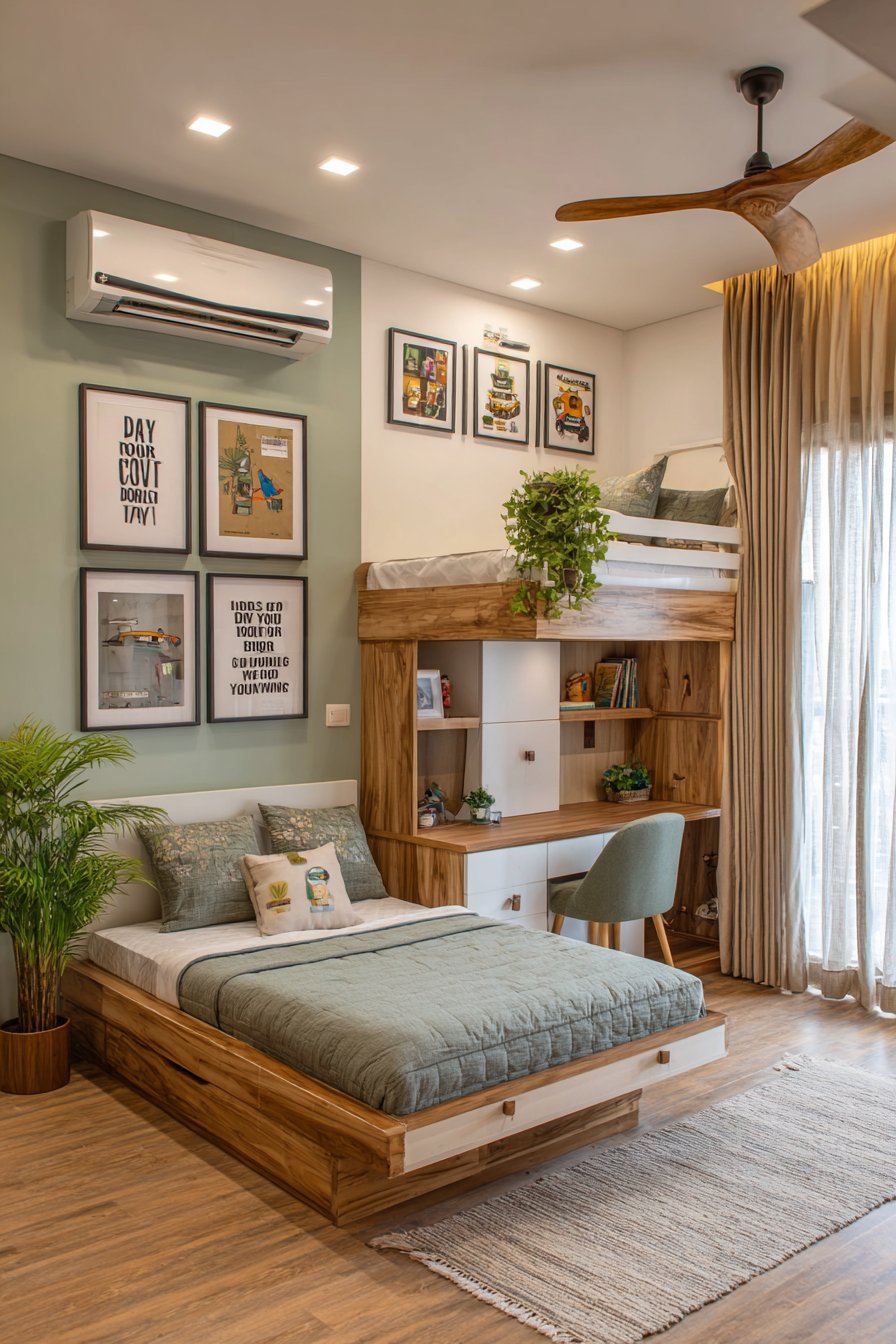
The study area beneath showcases intelligent organization with a built-in desk spanning the width of the loft, equipped with cable management solutions and adequate surface area for a laptop, notebooks, and desk accessories. Floating shelves mounted on the surrounding walls provide easy access to frequently used items while maintaining an uncluttered aesthetic. The soft mint green walls create a calming backdrop that enhances concentration, while the white accent wall serves as a gallery space for motivational prints in simple black frames, adding personality without overwhelming the compact space.
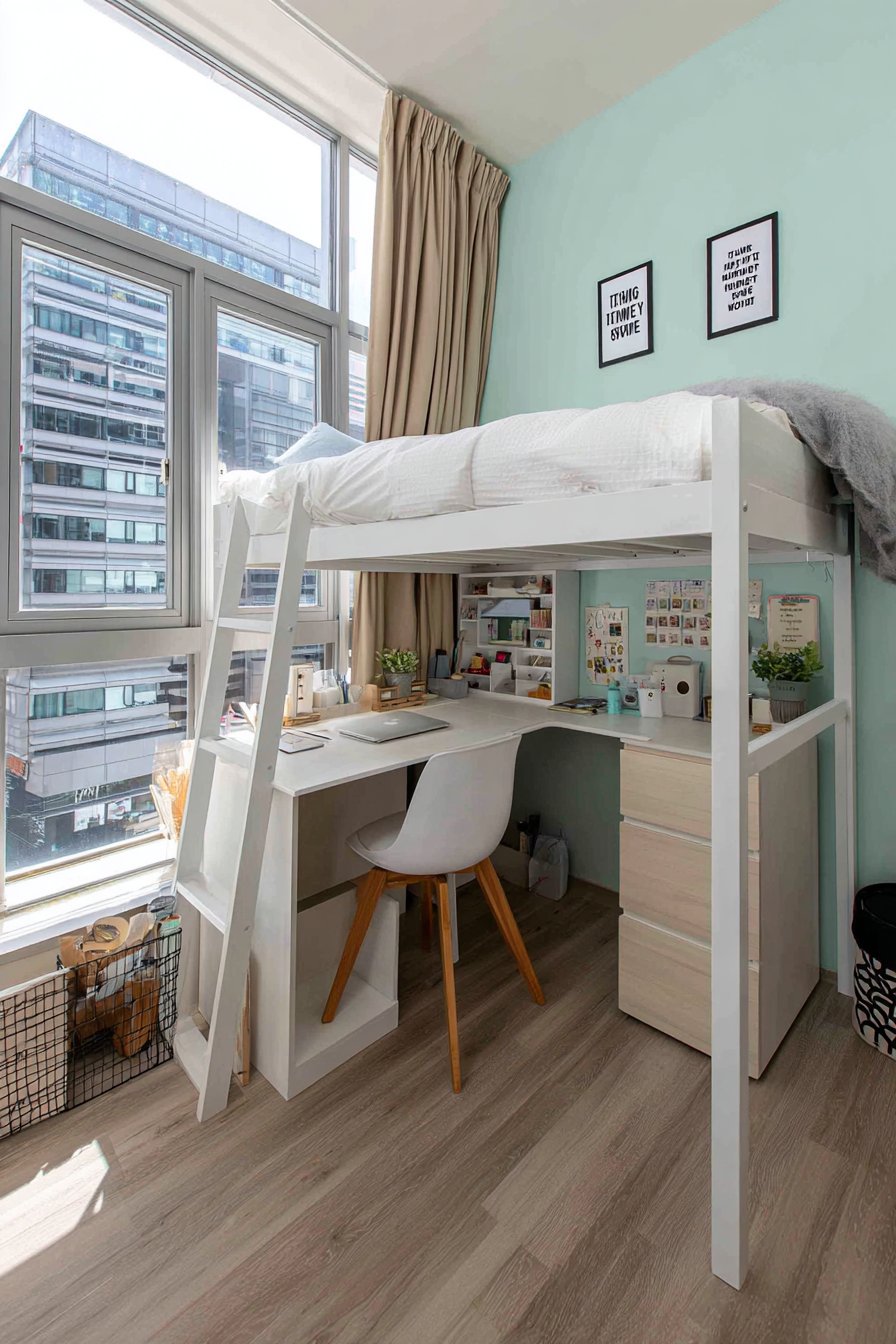
Natural light plays a crucial role in this design, with jute curtains filtering morning sunlight to create a gentle, productive atmosphere. A small pothos or snake plant on the desk introduces a touch of nature, improving air quality and adding visual interest. The beauty of this setup lies in its ability to completely separate sleeping and working zones within a single room, providing psychological boundaries that help maintain work-life balance even in limited quarters.
Key Design Tips:
- Ensure the loft bed structure is professionally installed or rated for adult weight capacity, prioritizing safety over aesthetics
- Install adequate lighting both above (reading light near the bed) and below (task lighting for the desk area)
- Choose a ladder design that’s comfortable to climb and doesn’t take up excessive floor space, such as a vertical ladder with wide, flat steps
- Maintain at least 3 feet of clearance between the mattress and ceiling to avoid feeling claustrophobic
- Use the vertical space on the loft’s exterior walls for additional hooks, small shelves, or a hanging organizer
2. Cozy Corner Reading Retreat
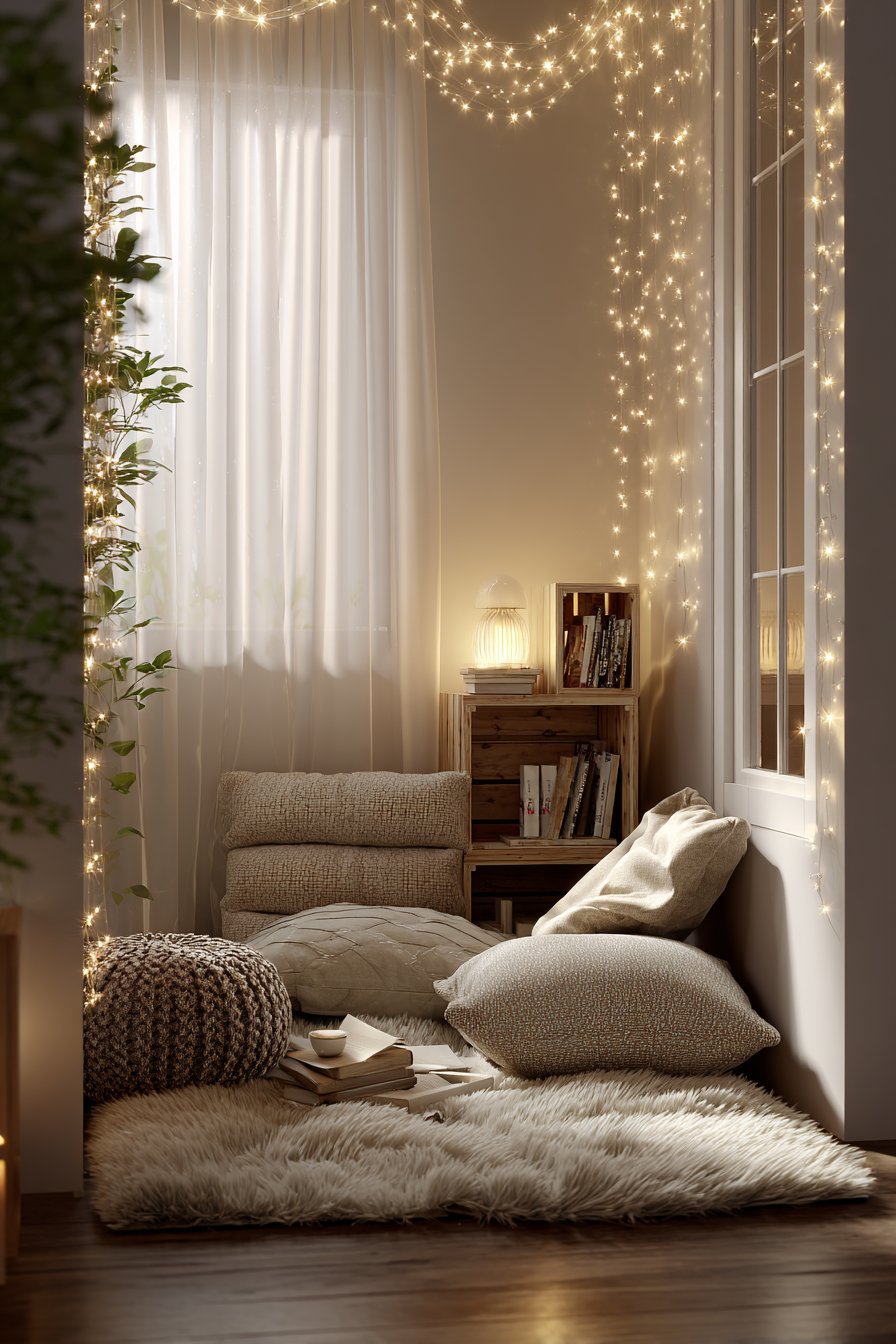
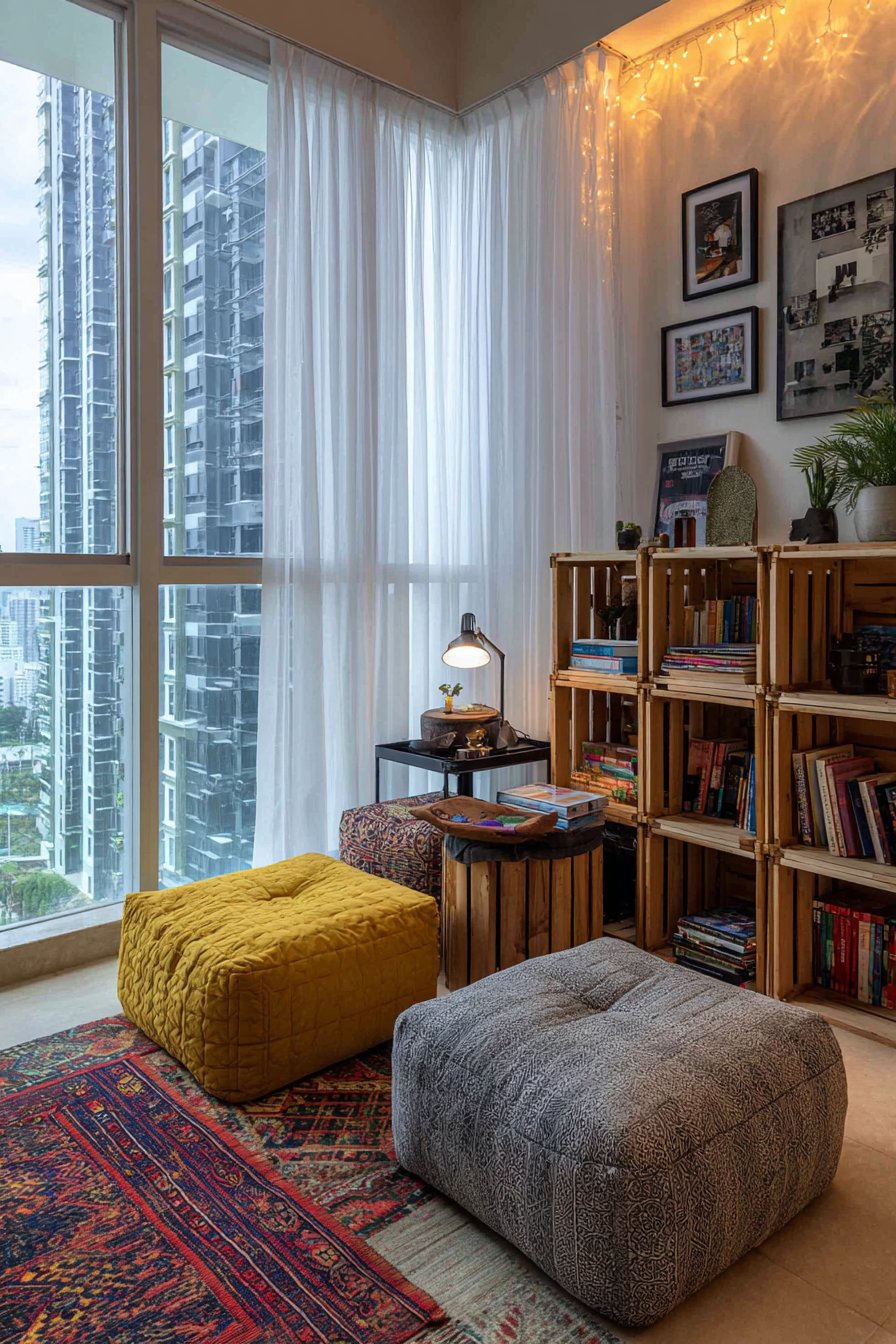
Creating a dedicated reading nook transforms an underutilized corner into a personal escape that encourages relaxation and mindfulness. This design centers around comfortable floor seating with oversized cushions in earthy tones—think terracotta, olive green, and warm beige—arranged on a soft area rug that defines the space. The modular crate bookshelf, stacked in an asymmetrical pattern, adds rustic character while providing ample storage for your growing book collection. Each crate can be positioned differently, creating visual interest and allowing for creative display of books, small plants, and treasured objects.
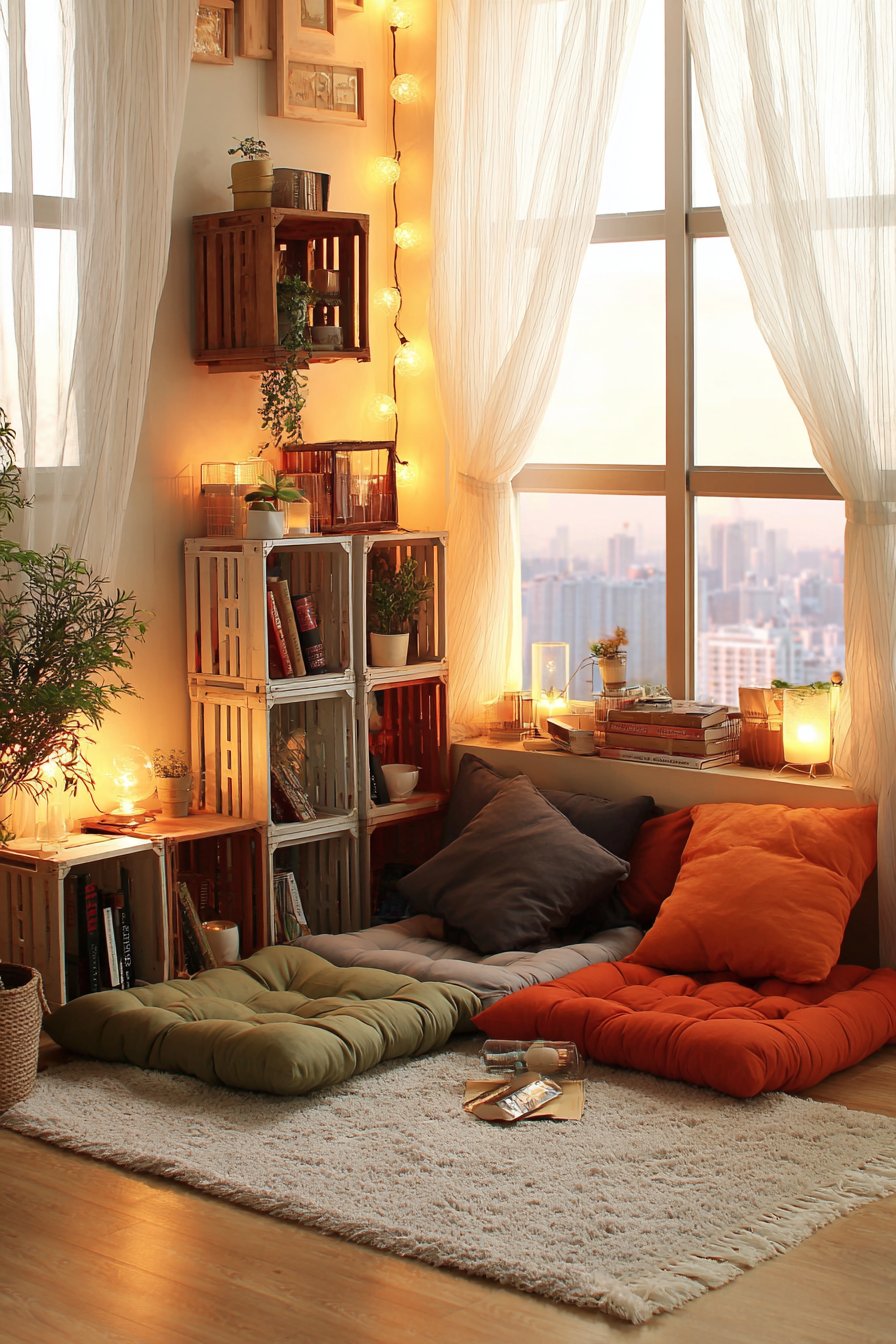
String lights draped along the adjacent walls create enchanting ambient lighting that’s perfect for evening reading sessions. Unlike harsh overhead lighting, these warm-toned fairy lights cast a gentle glow that reduces eye strain and establishes a soothing atmosphere. A compact side table, perhaps repurposed from a vintage wooden stool or a small plant stand, holds a reading lamp with adjustable brightness, ensuring adequate illumination for detailed reading without disturbing roommates in shared accommodations.
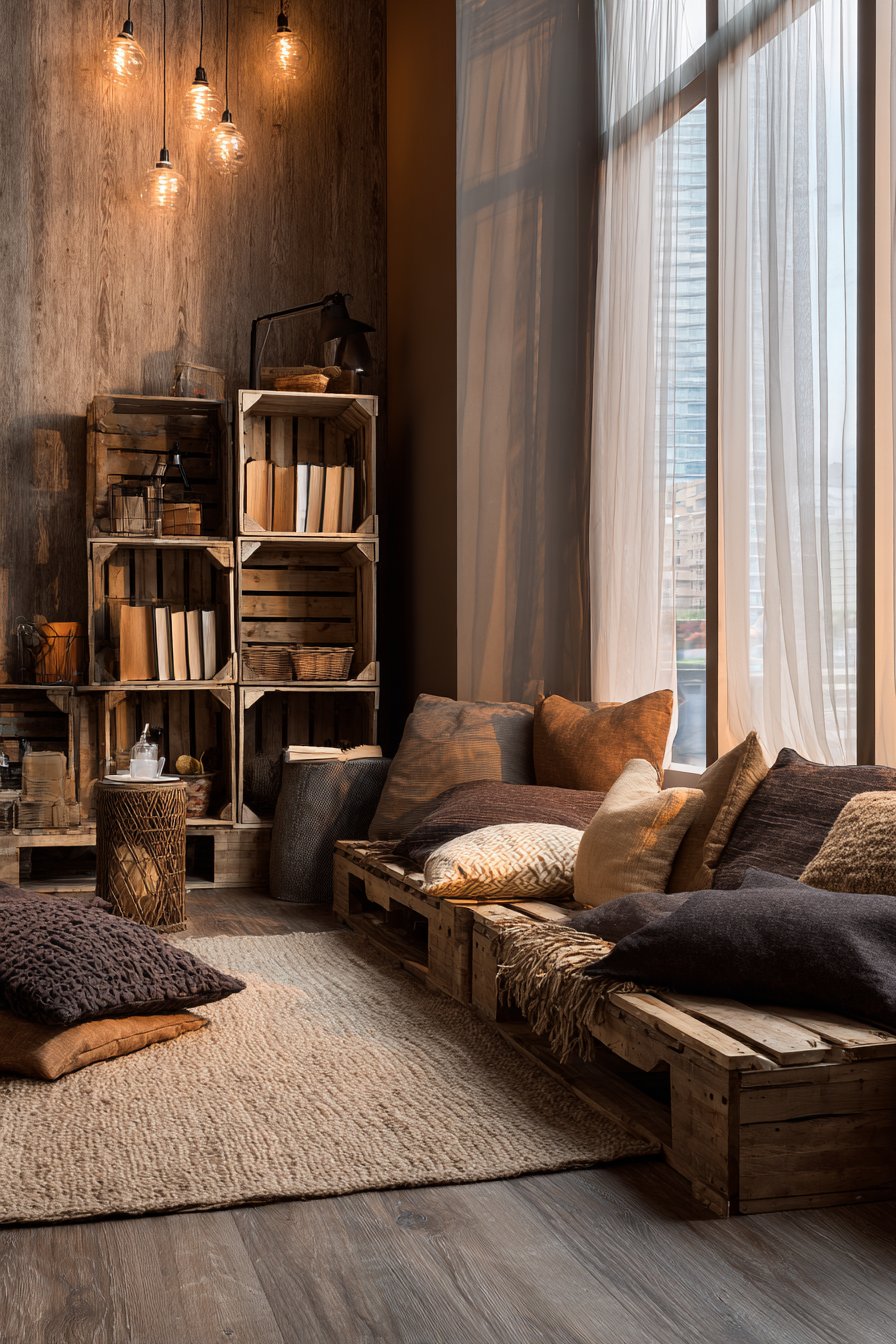
The strategic positioning near a window is essential, as natural daylight provides the best reading conditions during daytime hours. Sheer white curtains soften the incoming light, preventing glare on book pages while maintaining privacy. The textural variety in this corner—from the woven cushion covers to the rough wood of the crates and the soft cotton curtains—creates a rich sensory experience that makes the space feel intentionally designed rather than hastily assembled.
Key Design Tips:
- Invest in high-quality, firm floor cushions with removable, washable covers to maintain freshness in a compact space
- Arrange crate shelves at varying heights to create dynamic visual interest and accommodate books of different sizes
- Use battery-operated string lights to avoid dependence on nearby outlets and maintain flexibility in positioning
- Add a small basket or tray to keep bookmarks, reading glasses, and current reads organized and within easy reach
- Consider a lap desk or reading pillow with armrests for extended reading sessions in floor seating arrangements
3. Minimalist Wall-Mounted Study Station
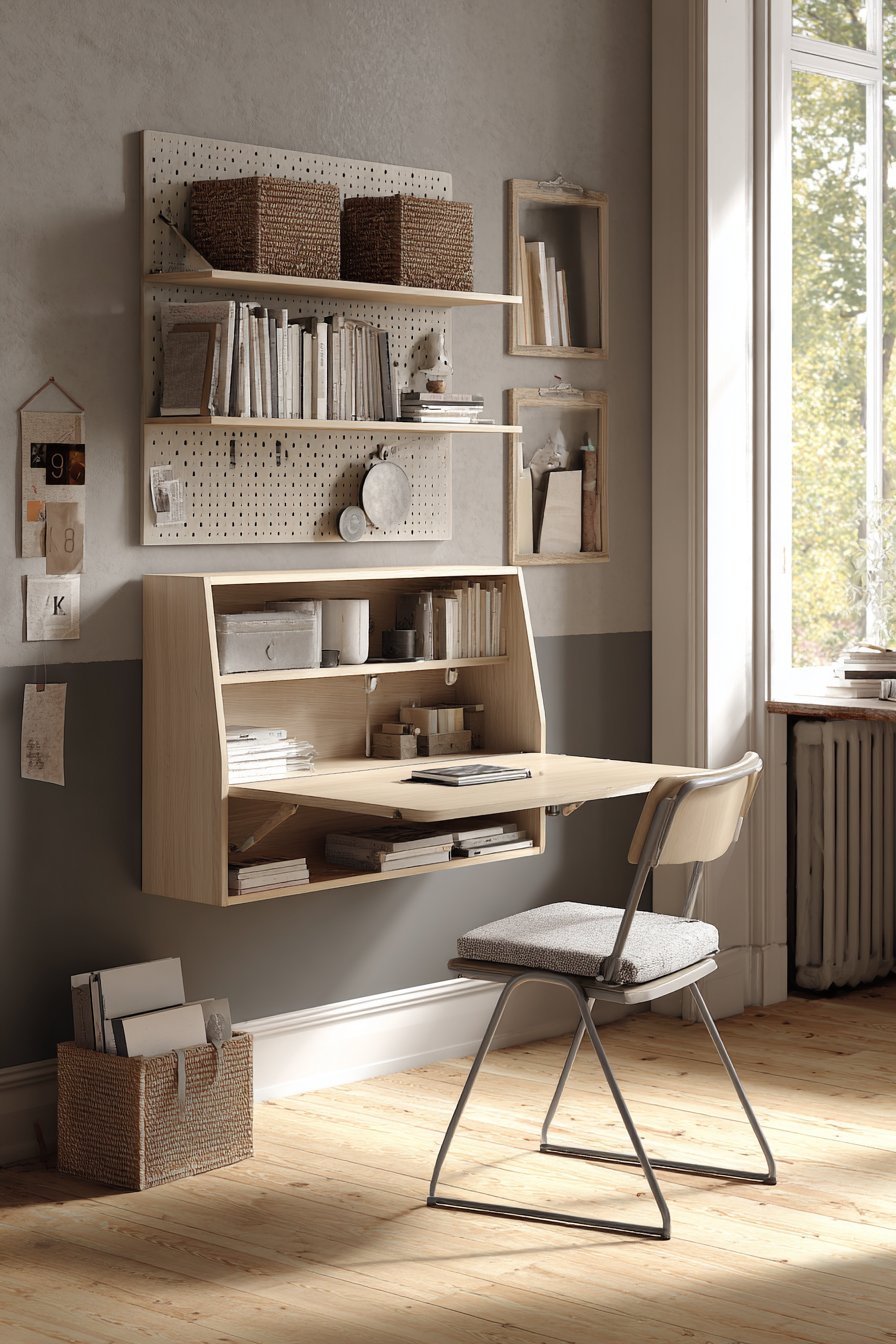
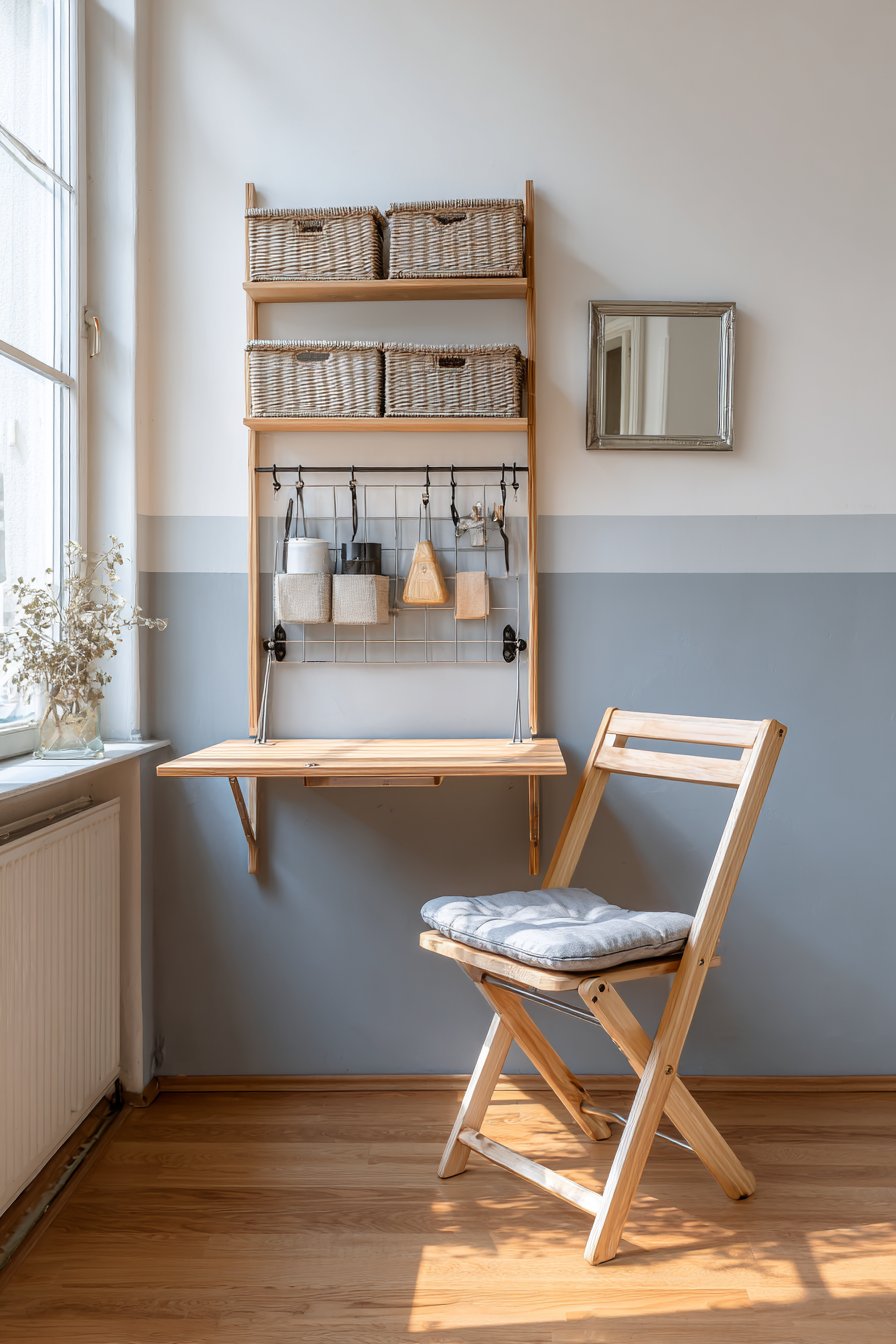
The wall-mounted foldable desk represents the epitome of space-saving innovation for PG rooms where every square foot matters. This sleek setup features a light oak desk surface that folds flat against the wall when not in use, instantly transforming a study area into open floor space. When deployed, the desk provides a surprisingly spacious work surface, sufficient for a laptop, notebook, and a cup of coffee. The mounting hardware must be installed into wall studs for maximum stability, ensuring the desk can support the weight of your work materials without wobbling or sagging.
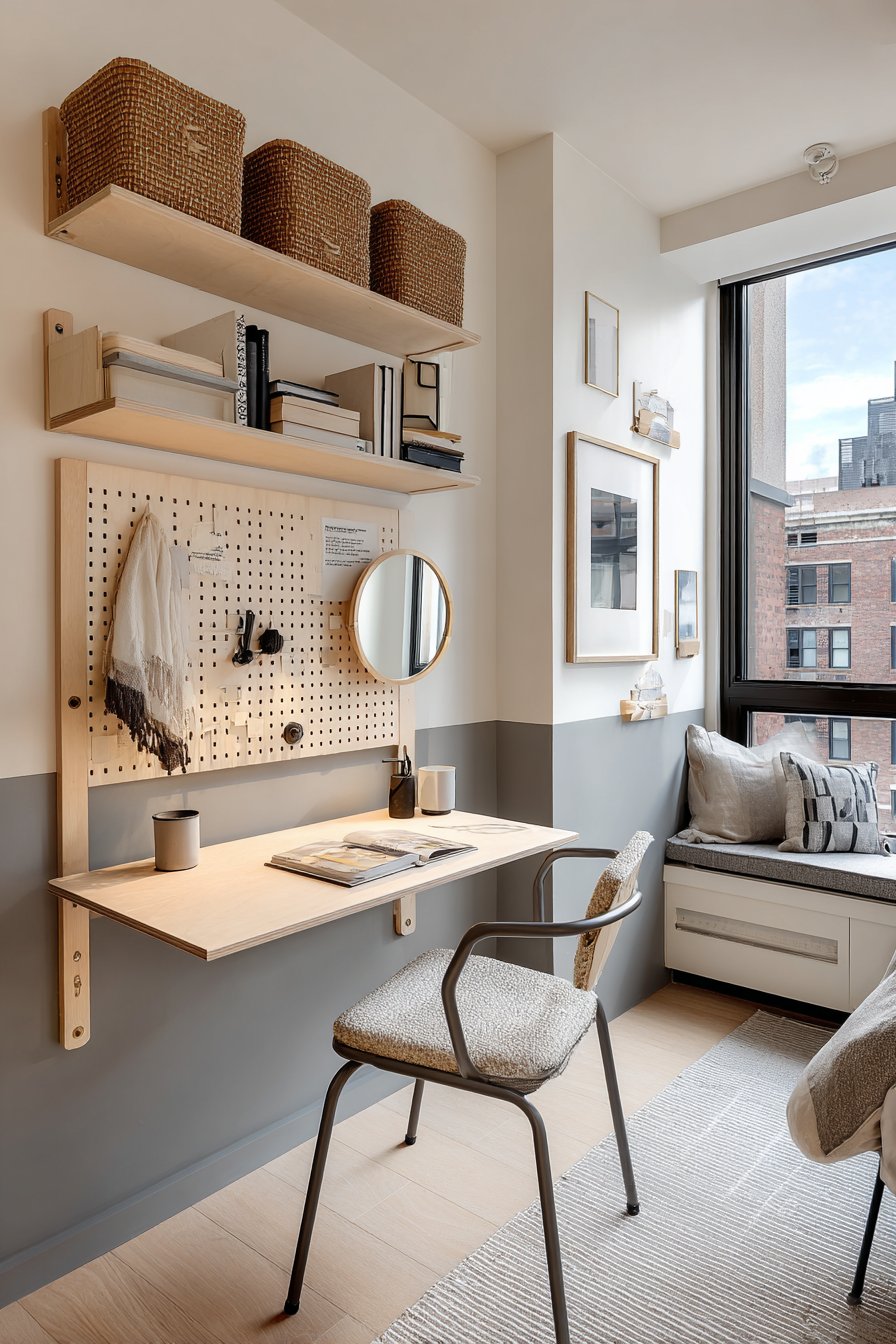
Above the desk, open shelving creates a organized display for academic materials, reference books, and decorative elements. Matching woven baskets on these shelves conceal office supplies, charging cables, and miscellaneous items that would otherwise create visual clutter. The pegboard installation adjacent to the desk serves multiple functions—it holds daily essentials like headphones, a small mirror for quick appearance checks before video calls, keys, and even a small calendar or to-do list. The beauty of pegboard lies in its adaptability; hooks and small shelves can be rearranged as your needs evolve.
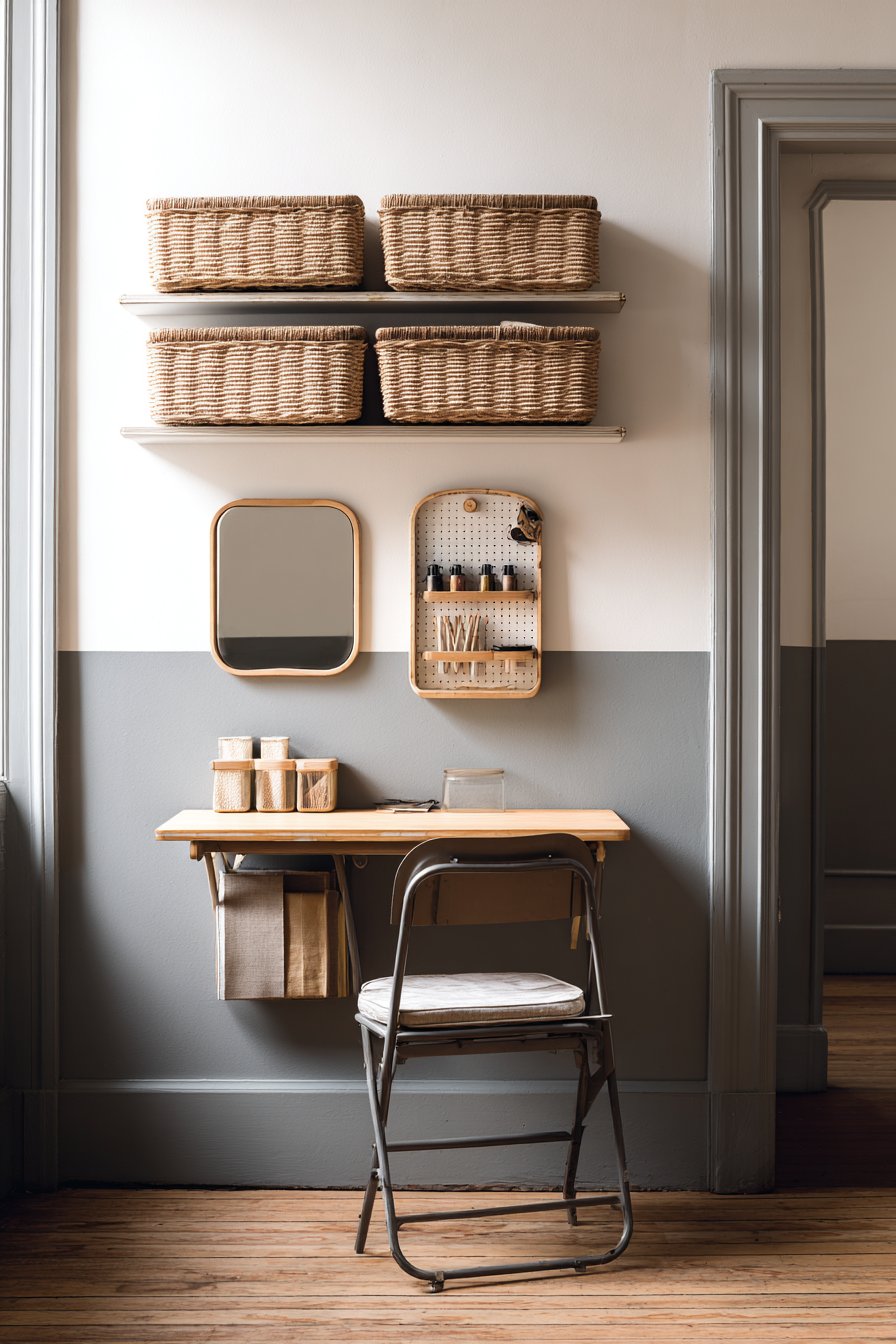
The two-tone paint scheme divides the wall horizontally, with grey covering the lower portion and crisp white above the desk area. This visual technique grounds the workspace while preventing the walls from feeling too stark or clinical. The simple metal chair with a cushioned seat can be tucked completely under the desk when folded up, maintaining clear pathways in the room. Natural window light illuminates the workspace during daytime hours, reducing reliance on artificial lighting and creating an energizing environment for productivity.
Key Design Tips:
- Verify wall construction before installing fold-down desks; drywall alone won’t support the weight and requires reinforcement or stud mounting
- Choose a desk with built-in cable management clips or add adhesive cable organizers to keep cords neat when the desk is in use
- Install the desk at a comfortable height (typically 28-30 inches from the floor) to prevent neck and shoulder strain during extended work sessions
- Use uniform baskets or storage containers on open shelving to maintain visual coherence and prevent the space from appearing chaotic
- Add a small desk lamp with adjustable positioning to supplement natural light during evening study sessions
4. Serene Platform Bed Sanctuary
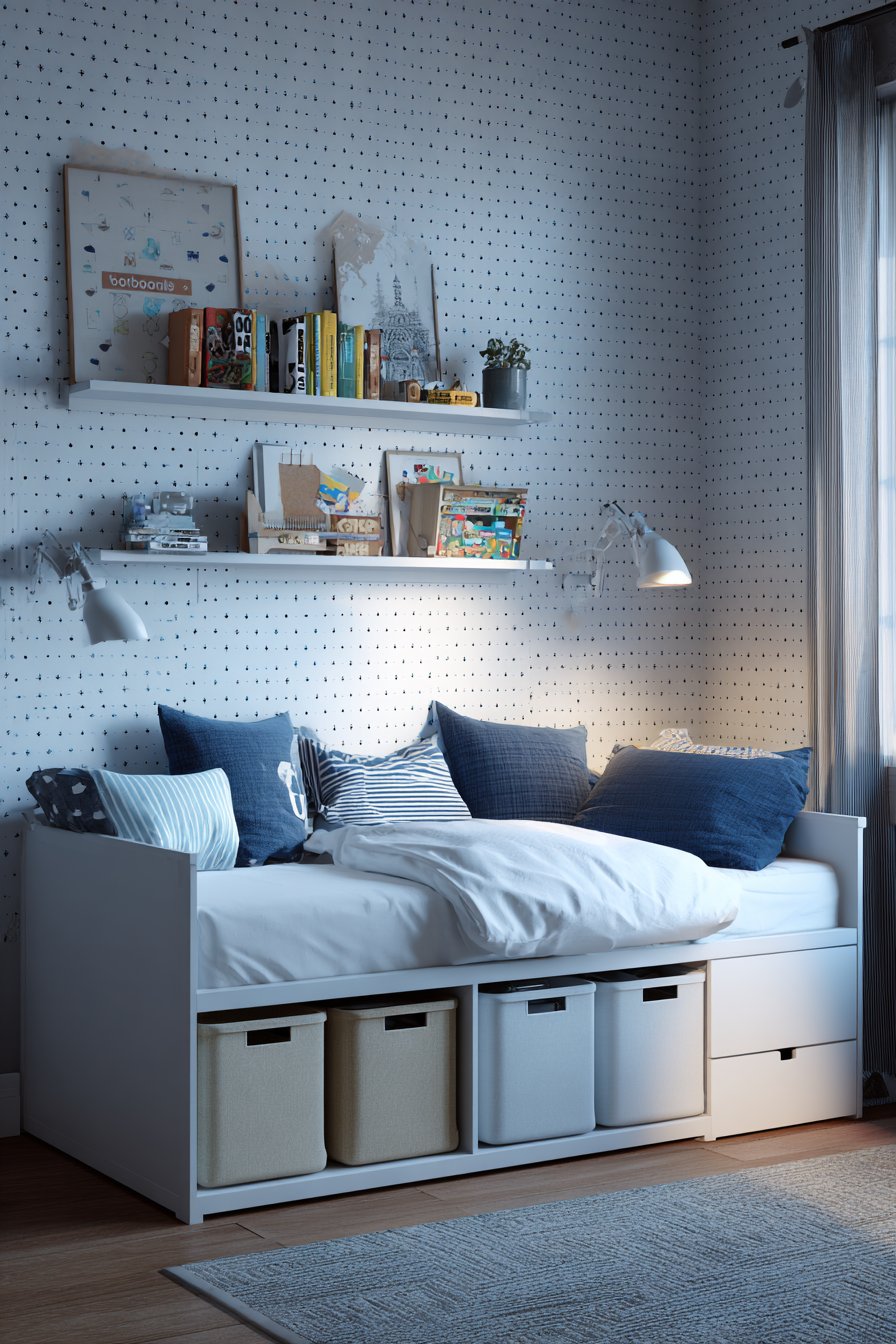
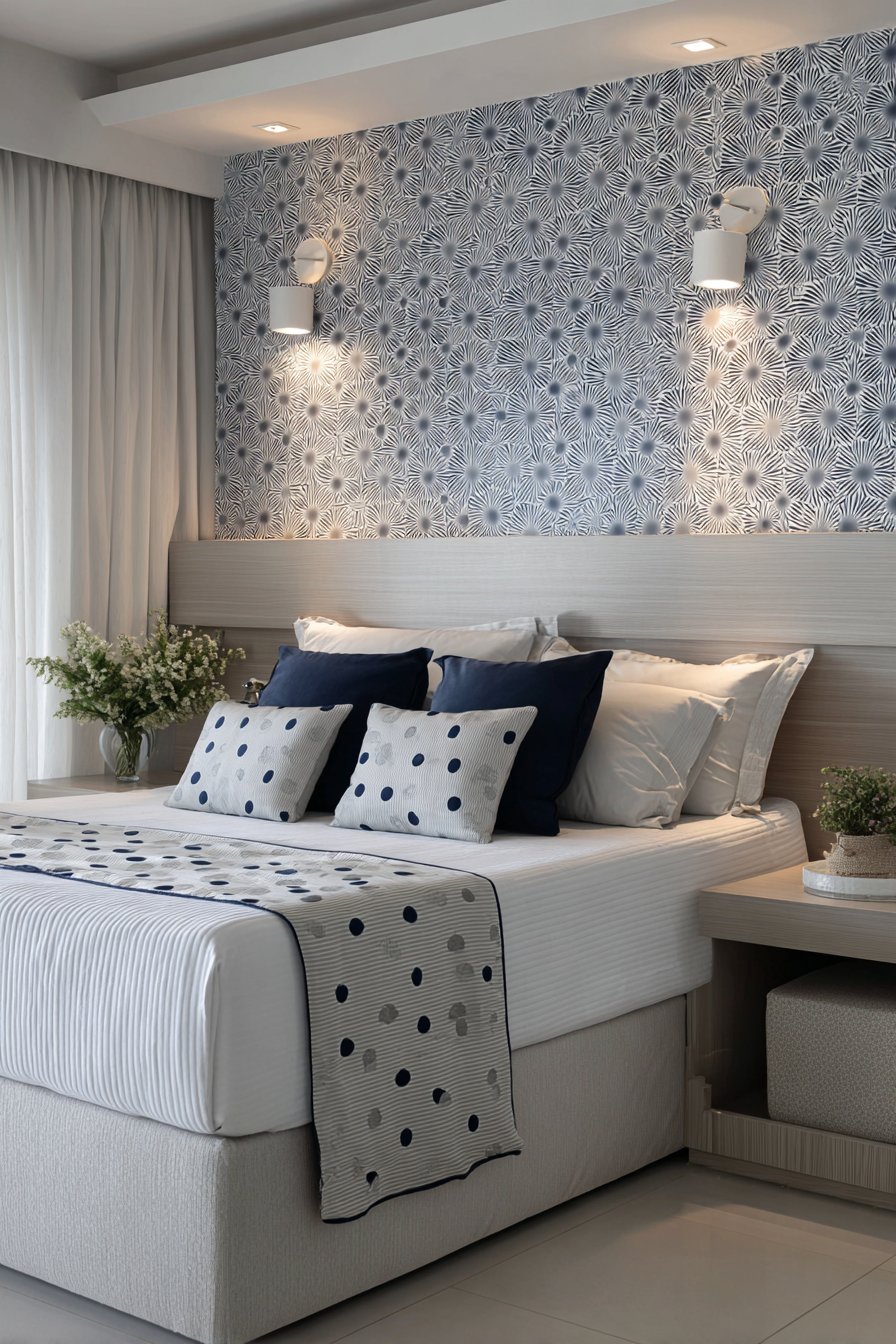
The platform bed design creates an elevated sleeping experience both literally and aesthetically, serving as the room’s focal point while providing practical built-in storage solutions. This low-profile bed frame sits directly on the floor or on short legs, with integrated side tables that eliminate the need for separate nightstands. These built-in surfaces hold reading lamps, alarm clocks, water bottles, and bedtime essentials, keeping everything within arm’s reach without cluttering the surrounding floor area.
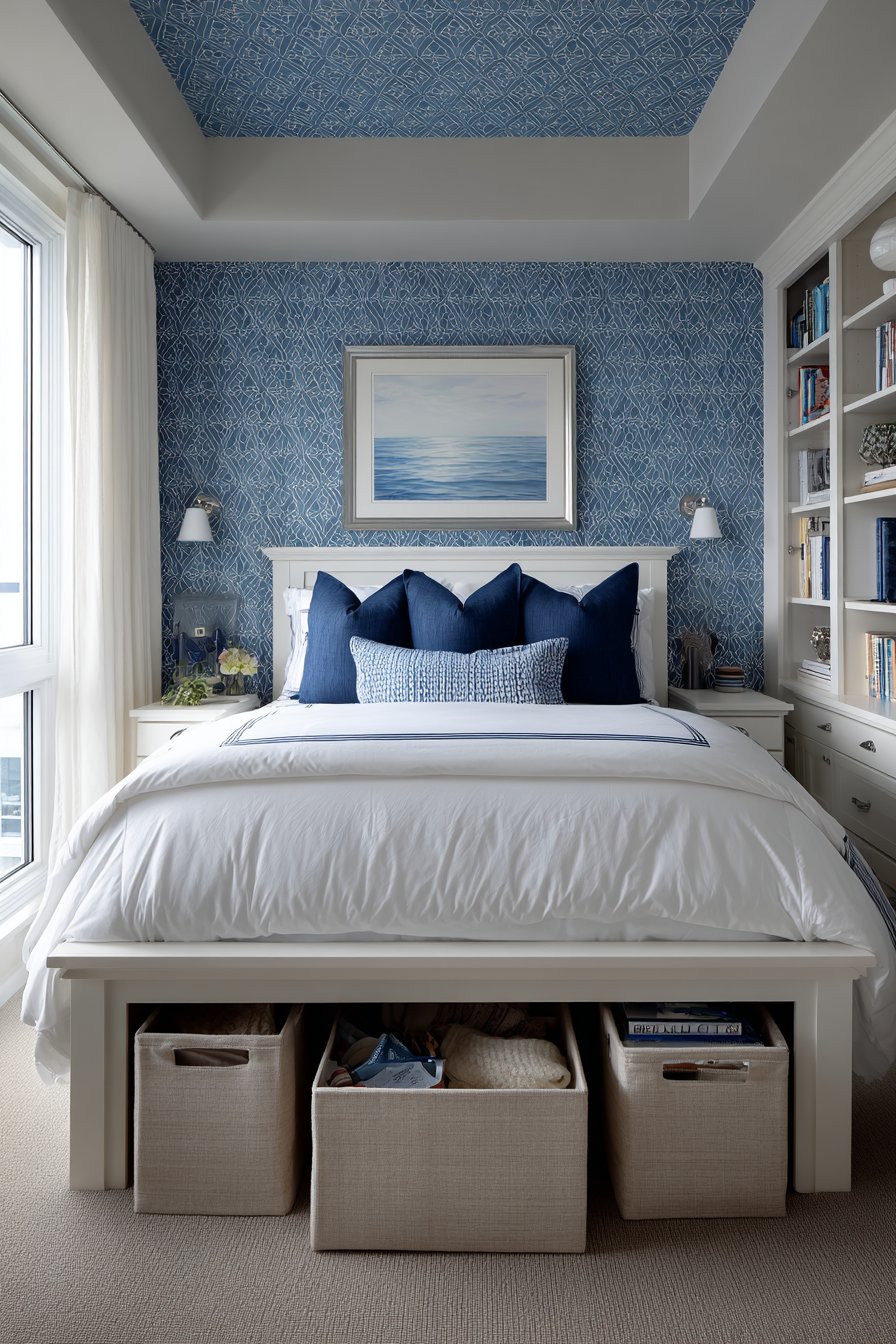
The headboard wall becomes a statement feature with removable peel-and-stick wallpaper in a subtle geometric pattern combining navy blue and white. This contemporary design adds visual interest and depth without overwhelming the space, and its removable nature means you can change the look as trends evolve or when moving out without losing your security deposit. The coordinating bedding—crisp white duvet with navy accent pillows—creates a hotel-like freshness that makes crawling into bed at the end of a long day feel truly restorative.
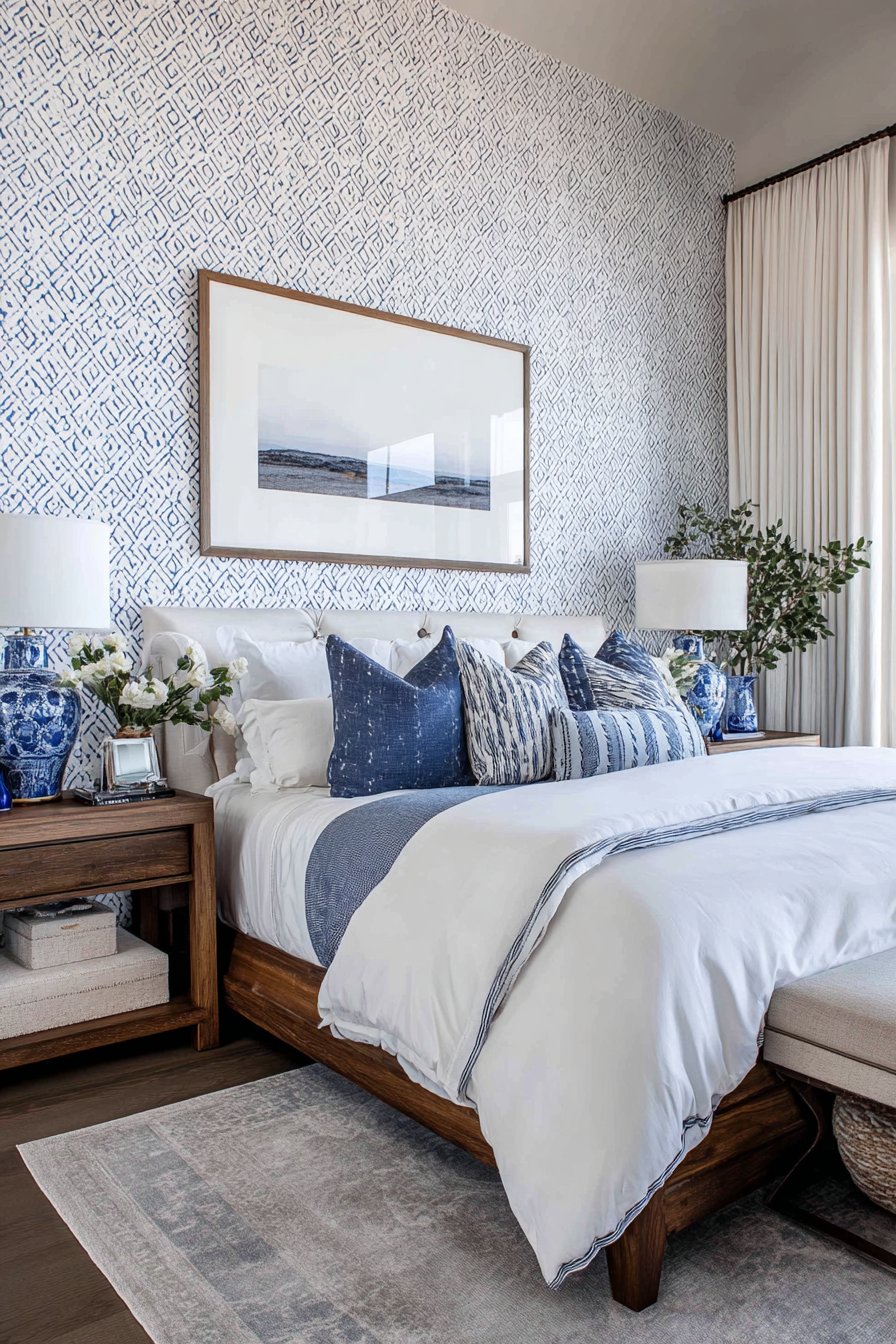
Under-bed storage represents one of the most underutilized spaces in any bedroom, and this design maximizes that potential with neutral-toned storage boxes on wheels. These containers hold off-season clothing, extra linens, shoes, and other items that don’t require daily access. The rolling mechanism ensures easy retrieval without having to move heavy furniture or strain your back reaching into dark corners. The overall effect is a sleeping area that feels thoughtfully curated, peaceful, and remarkably organized despite the limited square footage.
Key Design Tips:
- Measure your ceiling height before choosing a platform bed; rooms with lower ceilings benefit from lower-profile designs to maintain spatial proportions
- Select removable wallpaper specifically rated for rental applications, ensuring clean removal without surface damage
- Opt for storage boxes with transparent sides or clear labeling to quickly identify contents without pulling everything out
- Install reading lights with individual switches on each side of the bed to avoid disturbing a sleeping roommate in shared accommodations
- Choose bedding in fabrics that resist wrinkles and are machine washable for easy maintenance in busy PG life
5. Efficient Open Wardrobe System
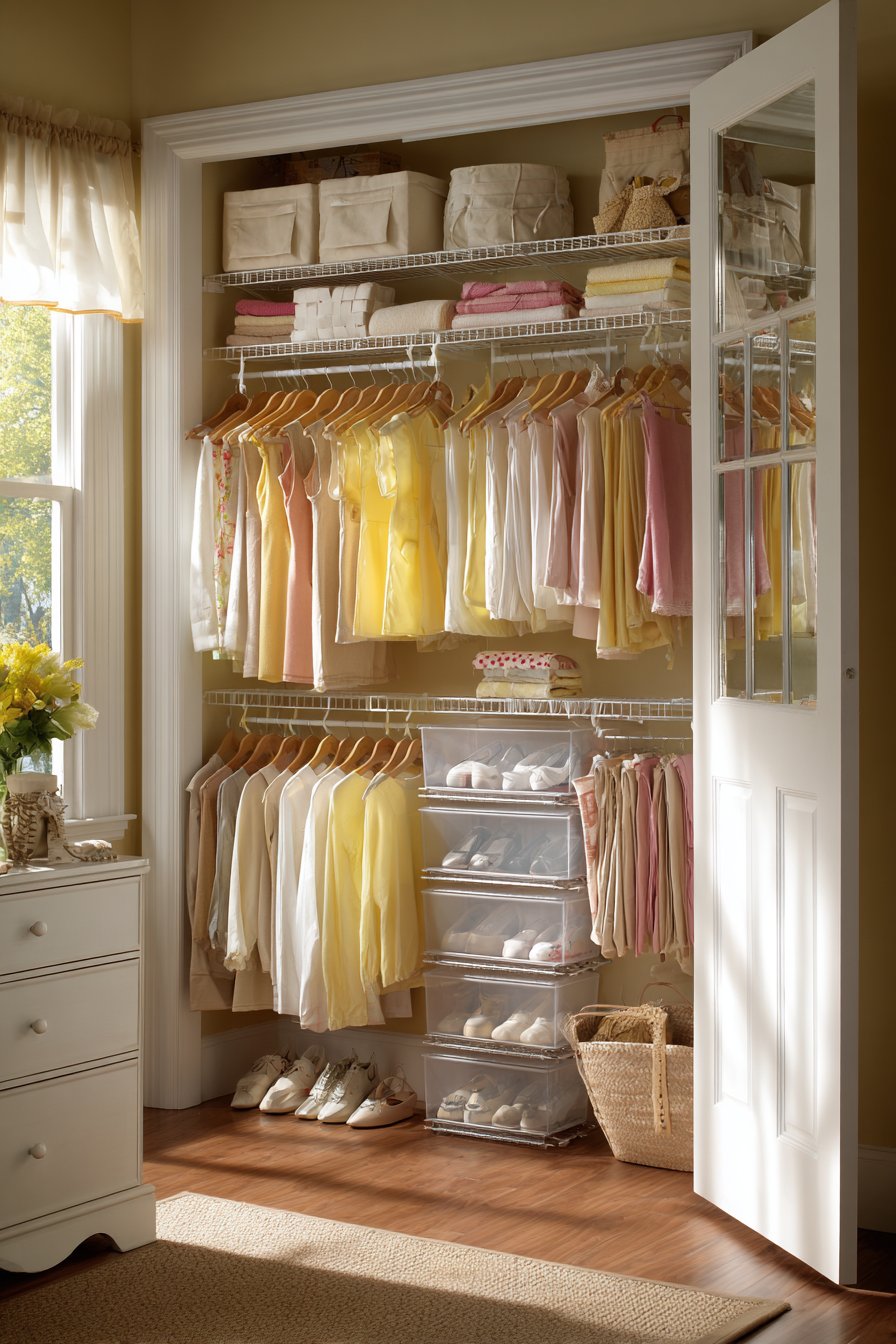
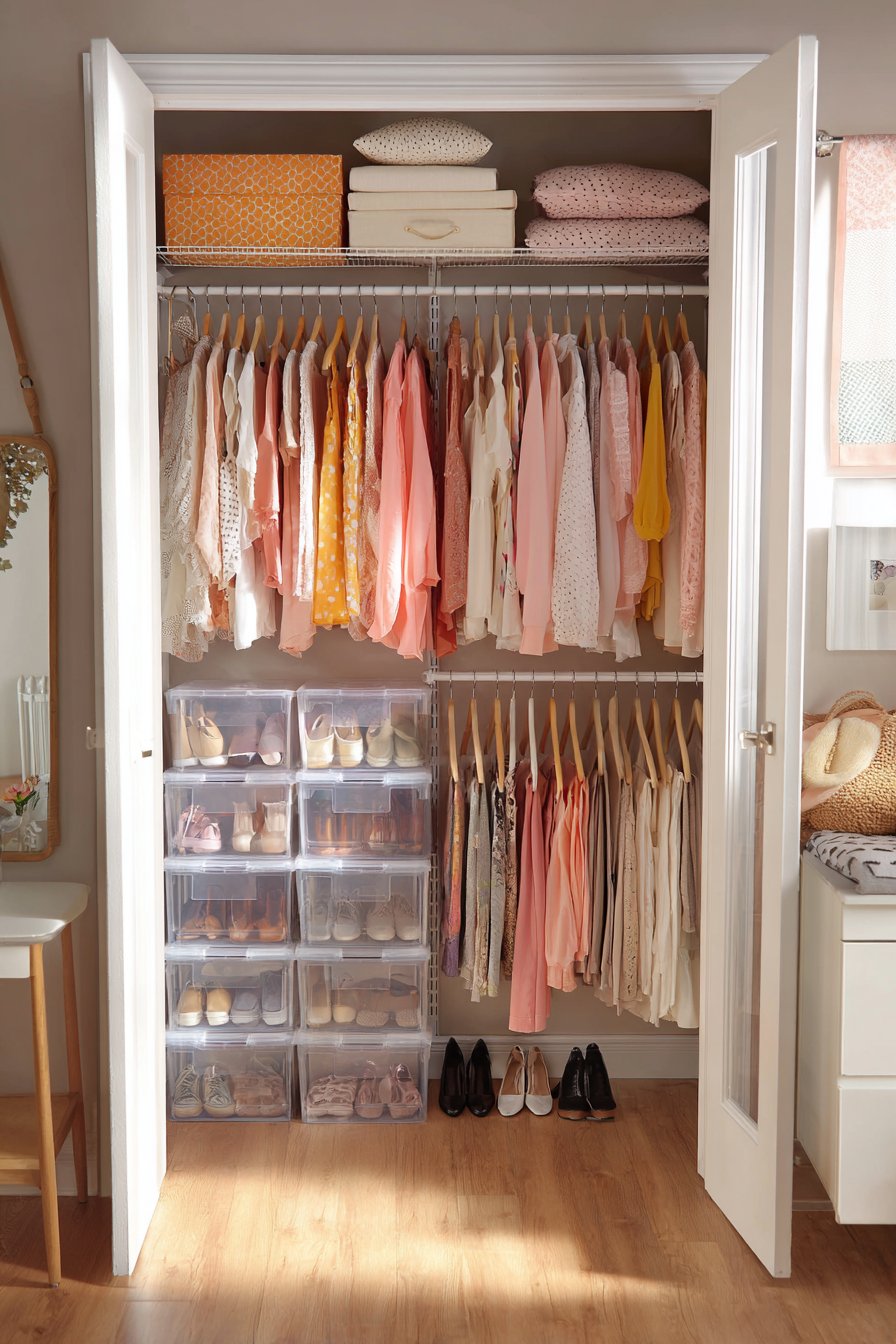
Moving away from traditional bulky closets, the open wardrobe concept embraces minimalism while maximizing accessibility and visual appeal. This system centers on sleek hanging racks made from metal or wood, displaying a curated clothing collection on matching wooden hangers. The uniformity of hangers creates an instantly more polished appearance, transforming everyday clothing storage into an aesthetic display. Organizing garments by color or type (all shirts together, followed by pants, then dresses) creates visual harmony and makes getting dressed significantly more efficient.
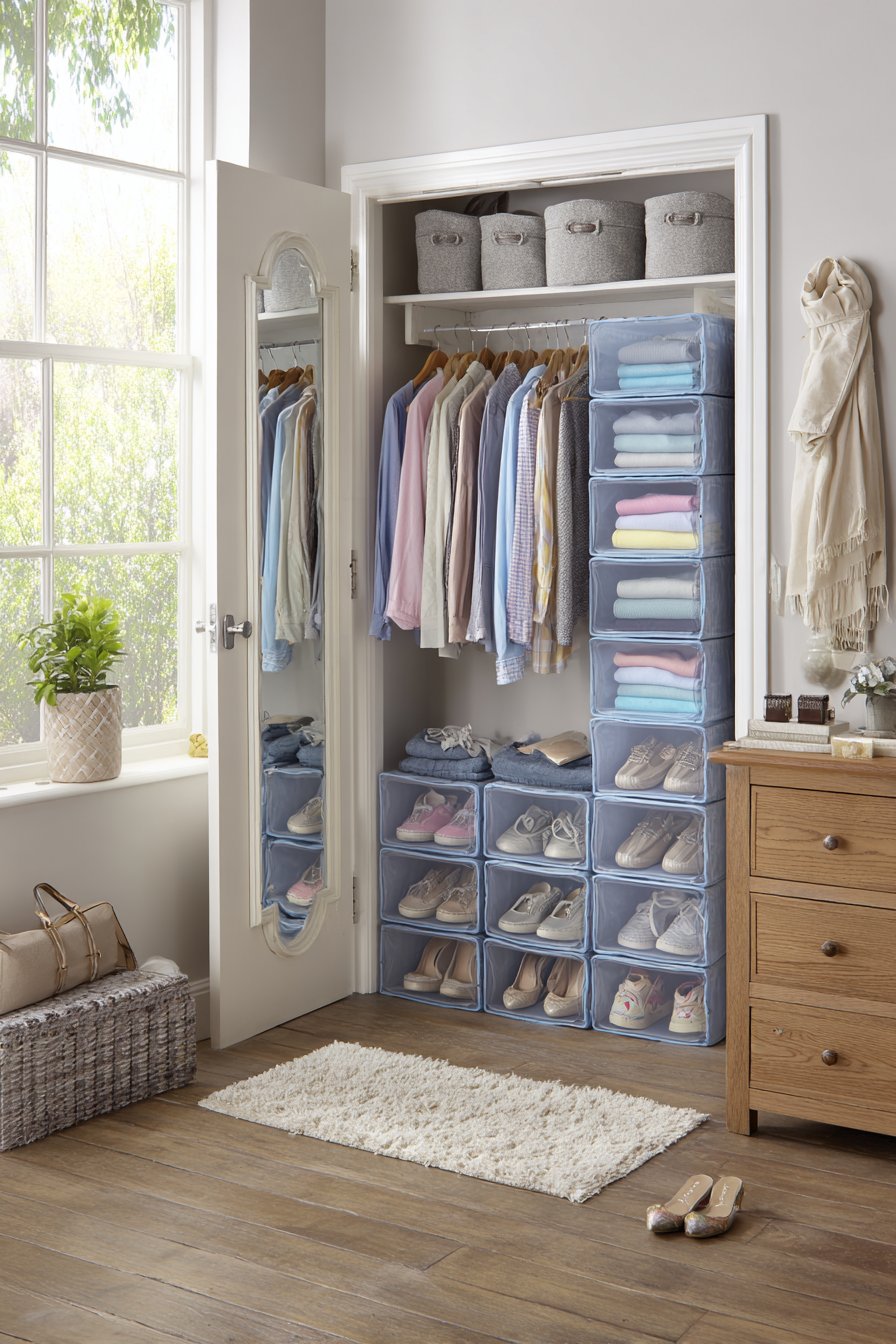
Below the hanging section, woven baskets in natural materials like seagrass or water hyacinth store folded items such as sweaters, activewear, accessories, and undergarments. The texture these baskets introduce adds warmth to what could otherwise feel like a utilitarian storage solution. A full-length mirror positioned strategically near the wardrobe serves both functional and spatial purposes—it allows for outfit checks while reflecting light to make the room feel larger and brighter.
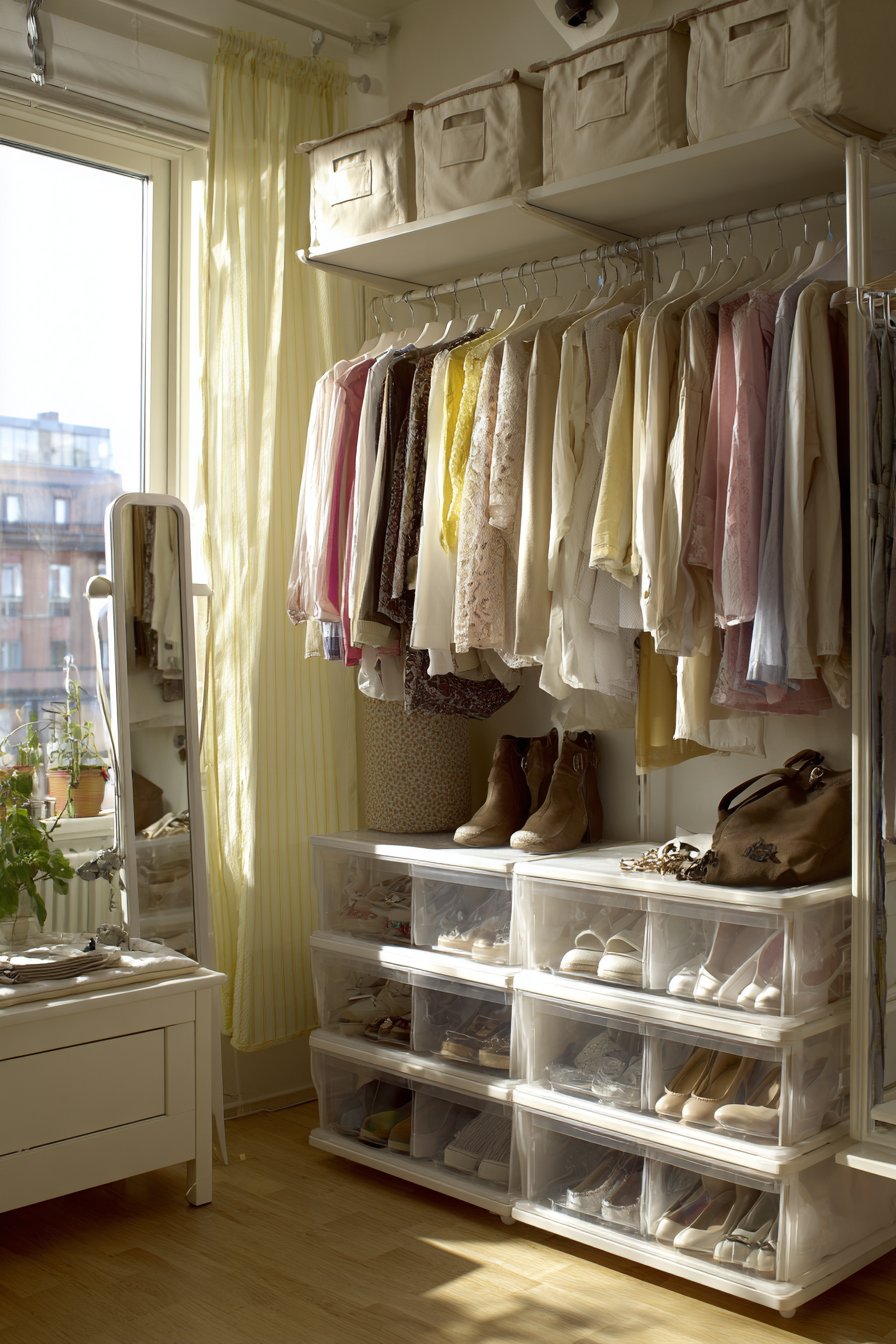
The backdrop of clean white walls prevents the exposed clothing from creating visual chaos, allowing the organized wardrobe to appear intentional rather than cluttered. This approach to clothing storage works particularly well in PG rooms where built-in closets may be inadequate or shared among multiple residents. The open nature also encourages maintaining a capsule wardrobe of versatile, well-loved pieces rather than accumulating clothing that sits unworn, promoting both sustainability and simplified daily routines.
Key Design Tips:
- Invest in a sturdy garment rack rated for the weight of your full wardrobe to prevent sagging or collapse
- Implement the “one in, one out” rule to maintain a curated collection that fits your storage capacity
- Use matching hangers throughout—velvet hangers prevent clothes from slipping, while wooden hangers add upscale aesthetics
- Place the most frequently worn items at eye level for easy access, storing occasional pieces higher or lower
- Add a small step stool nearby if using vertical space for higher hanging rods or upper storage baskets
6. Personal Gallery Wall Expression
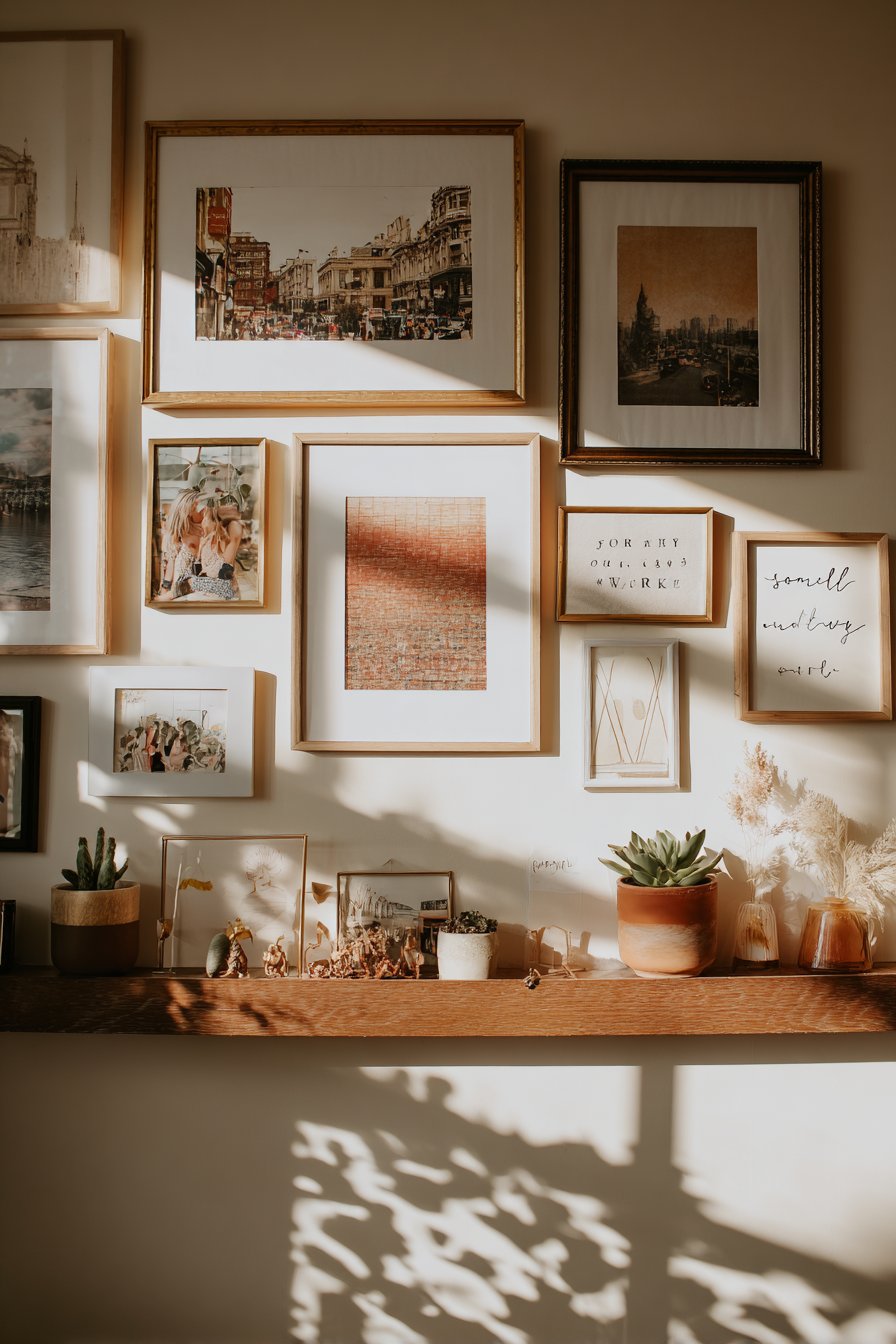
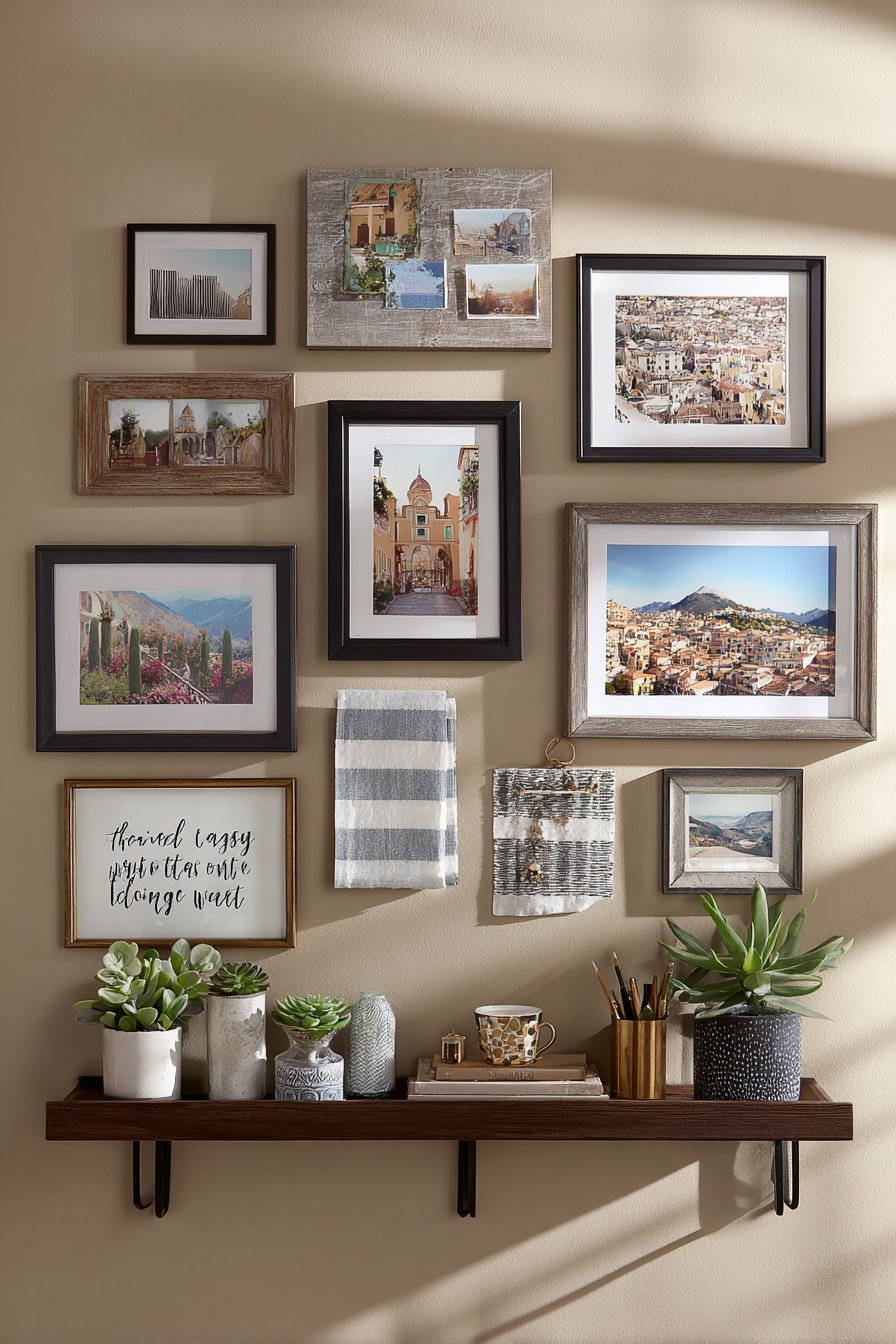
Creating a personalized gallery wall transforms blank rental walls into a meaningful display of your life, aspirations, and aesthetic preferences. This curated collection combines family photos, travel prints, inspirational quotes, and perhaps some original artwork or postcards in an eclectic mix of frame styles and sizes. The mismatched frames—vintage gold, sleek black, rustic wood, simple white—create visual interest that feels collected over time rather than purchased as a matching set. The warm beige wall color provides a neutral canvas that allows the varied frame styles to coexist harmoniously without competing for attention.
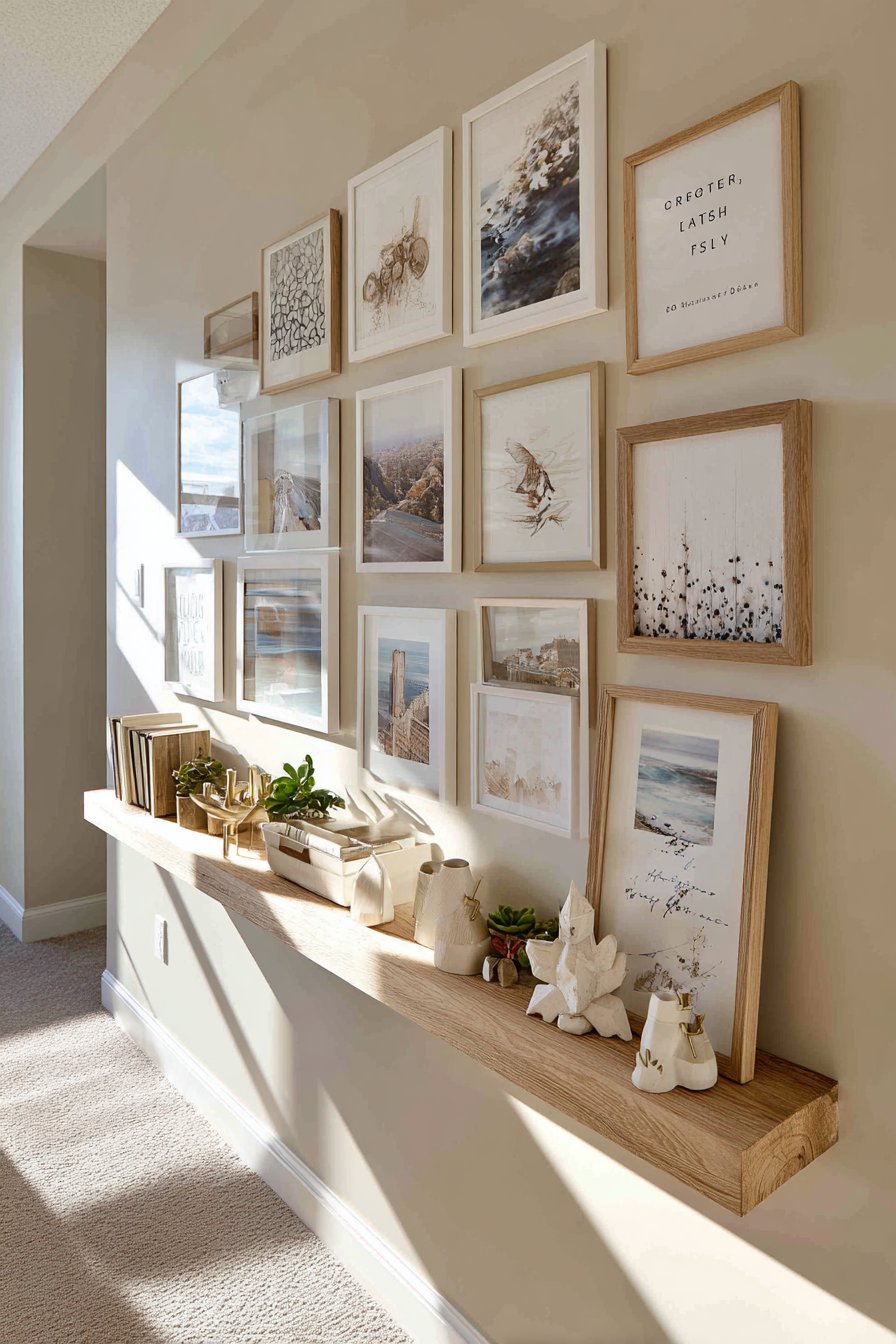
A frame shelf mounted below the main gallery grouping adds dimensional variety and provides space for three-dimensional objects like small potted succulents, decorative figurines, travel souvenirs, or a small clock. This ledge breaks up the flat wall surface and creates opportunities for seasonal updates or thematic displays without requiring new nail holes. The arrangement follows the principle of asymmetrical balance, where larger frames anchor the composition while smaller pieces fill gaps, creating an organic, unplanned appearance despite careful planning.
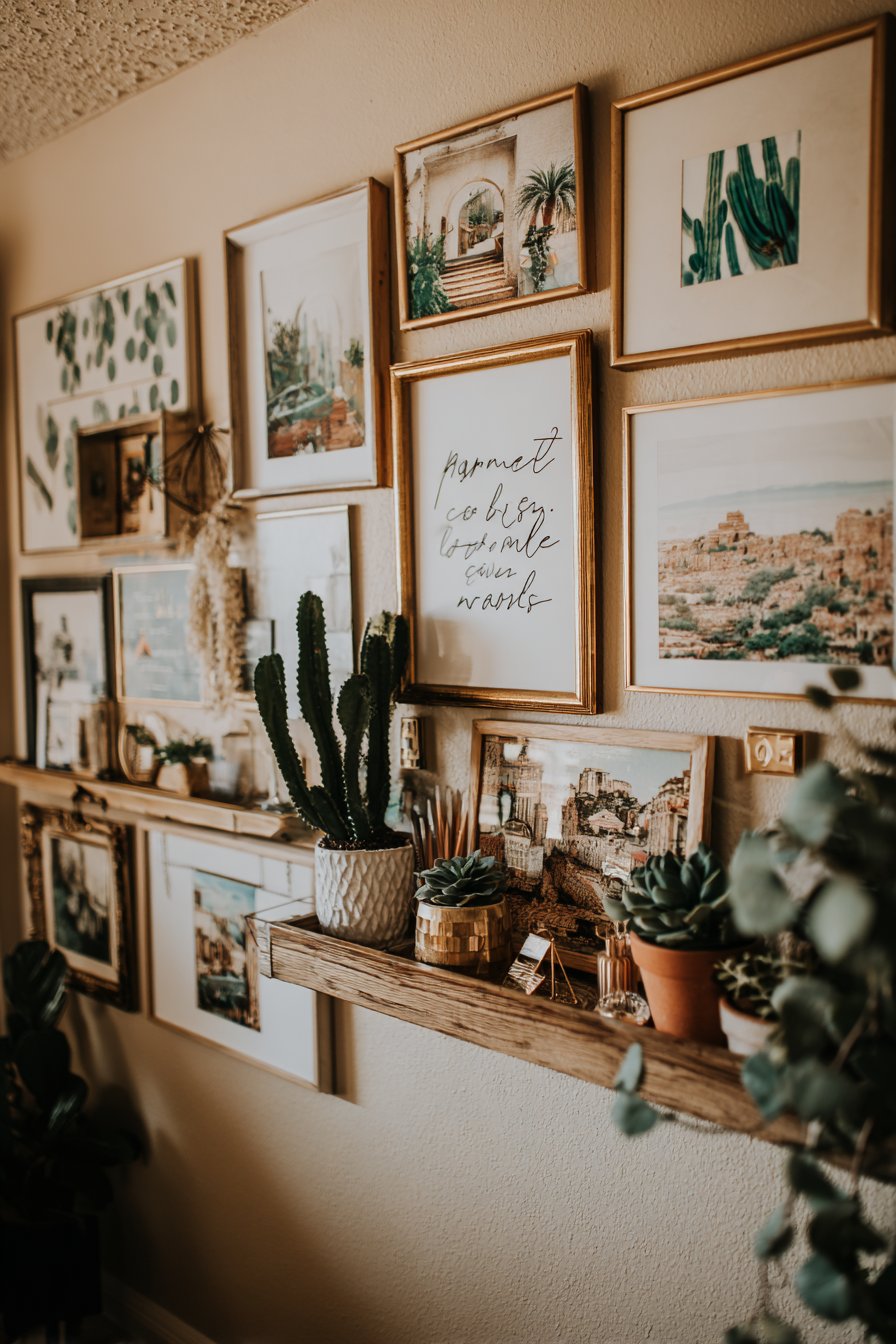
Soft afternoon light casting natural shadows adds depth to the gallery, making the wall feel dynamic throughout the day as light angles shift. This ever-changing interplay between light and shadow gives the display a living quality that flat wall art alone cannot achieve. For PG residents cautious about wall damage, using removable adhesive strips rated for picture hanging provides secure mounting without the permanent holes traditional nails create.
Key Design Tips:
- Start by laying out the entire arrangement on the floor to experiment with composition before making any wall commitments
- Maintain 2-3 inches of space between frames for visual breathing room that prevents the display from appearing crowded
- Include a mix of orientations (horizontal, vertical, square) and sizes to create dynamic visual flow
- Use a level and measuring tape to ensure proper alignment, especially for frames positioned in rows or columns
- Update the gallery periodically by swapping out a few pieces to keep the display fresh and reflective of your current interests
7. Smart Room Division with Bookshelf Partition
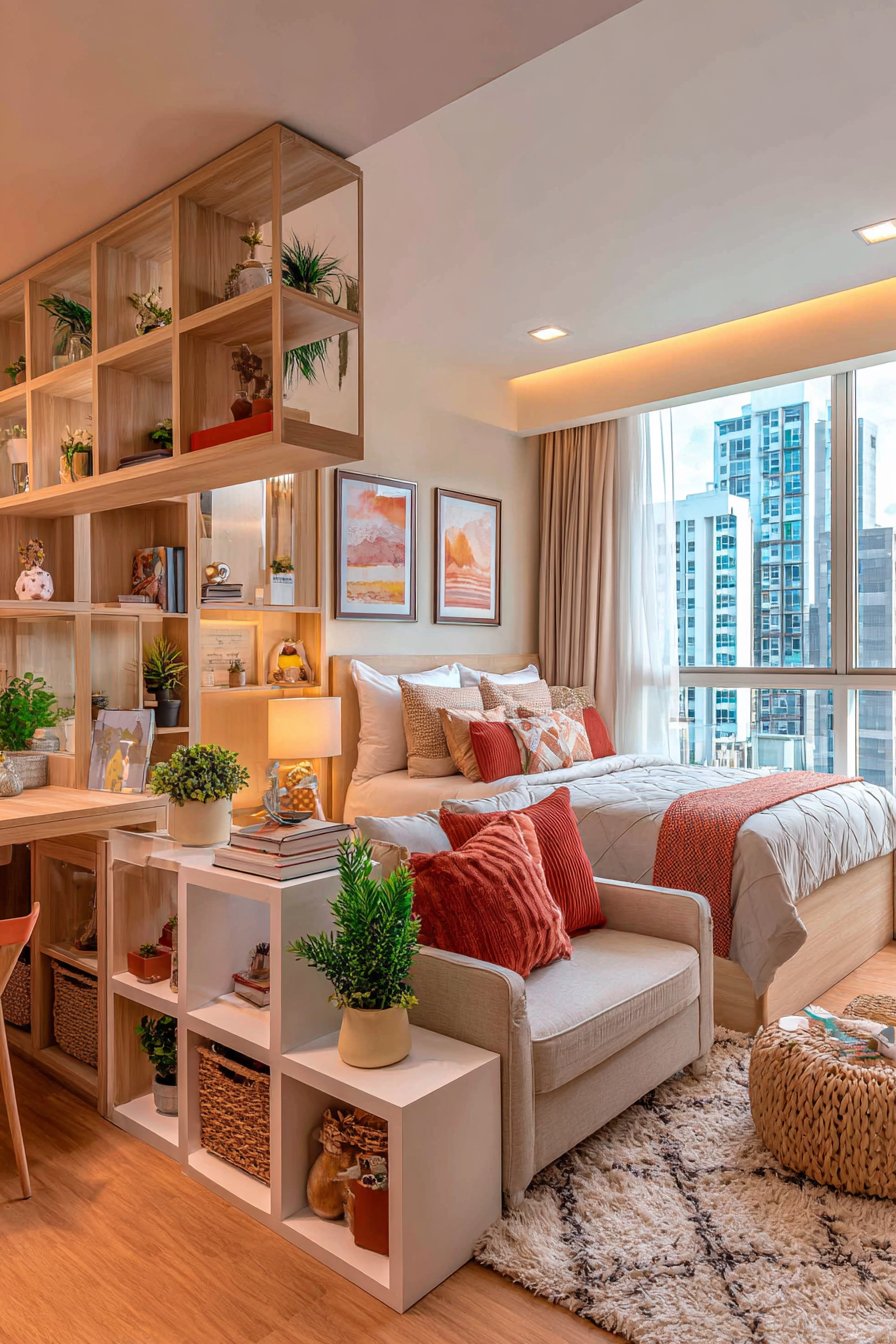
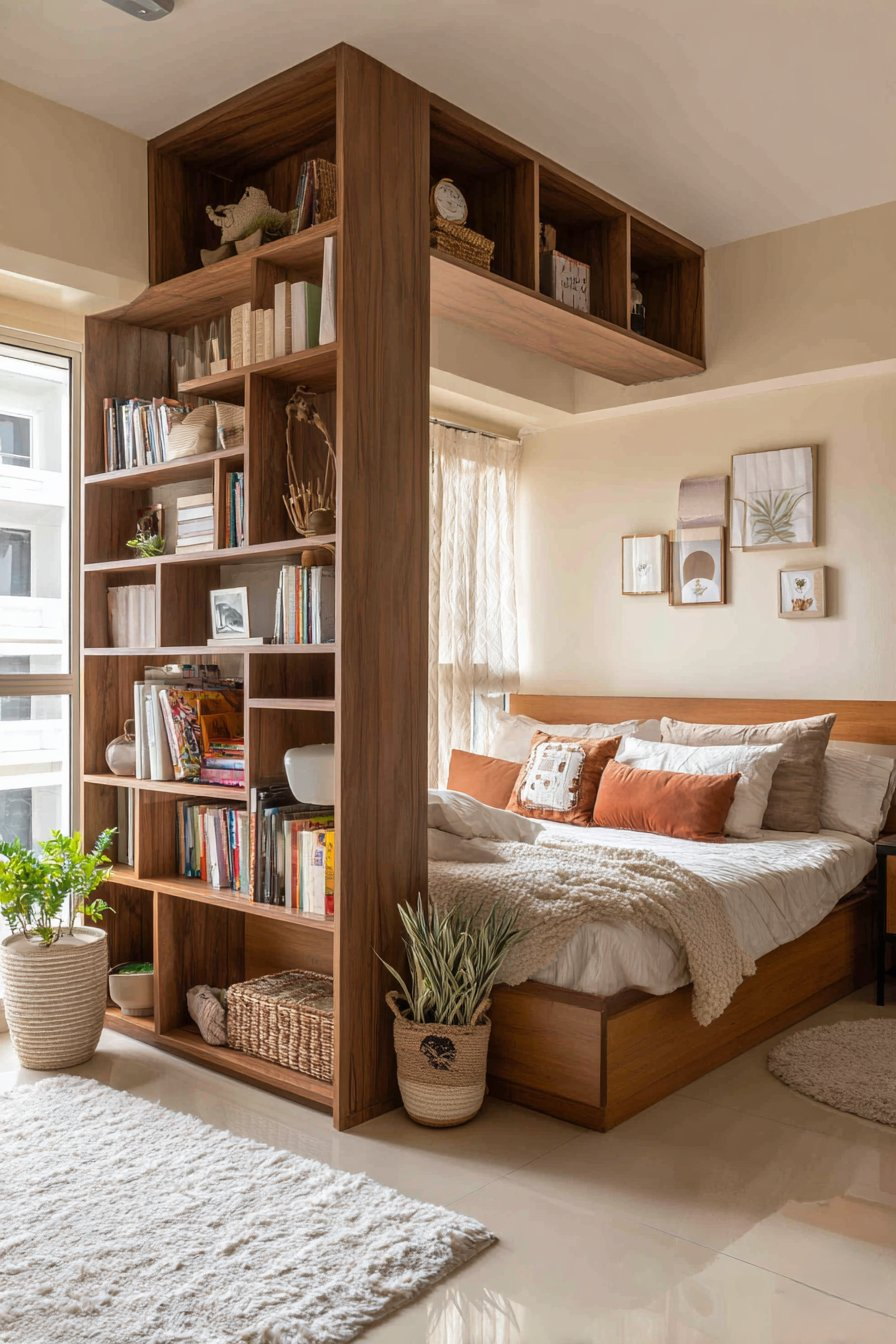
In studio-style PG accommodations or large shared rooms, creating distinct zones for different activities is essential for mental well-being and functionality. A bookshelf room divider offers an ingenious solution that provides separation without the permanence of walls or the visual heaviness of curtains. The open-back bookshelf allows light to flow through while still defining separate areas for sleeping and studying, creating psychological boundaries that help your brain distinguish between rest time and work time.
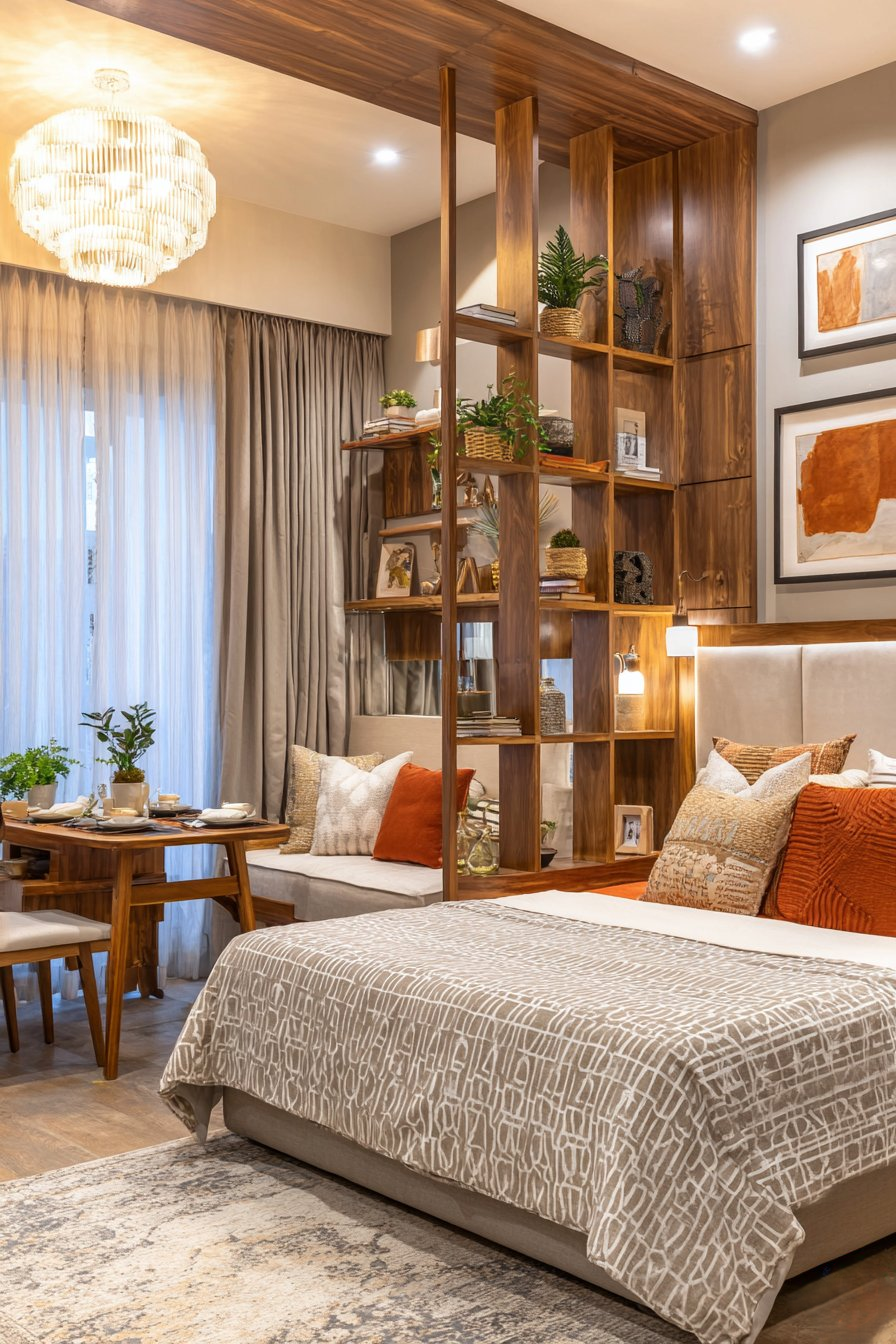
The divider itself becomes a functional and decorative element, styled with books arranged both vertically and horizontally, interspersed with small plants that thrive in indirect light, decorative baskets holding miscellaneous items, and perhaps a few meaningful objects that spark joy. Both sides of the divider are accessible and styled, ensuring the arrangement looks intentional from every angle. The coordinating neutral color palette with strategic pops of terracotta creates cohesion between the separated zones, maintaining visual flow while still distinguishing distinct purposes for each area.
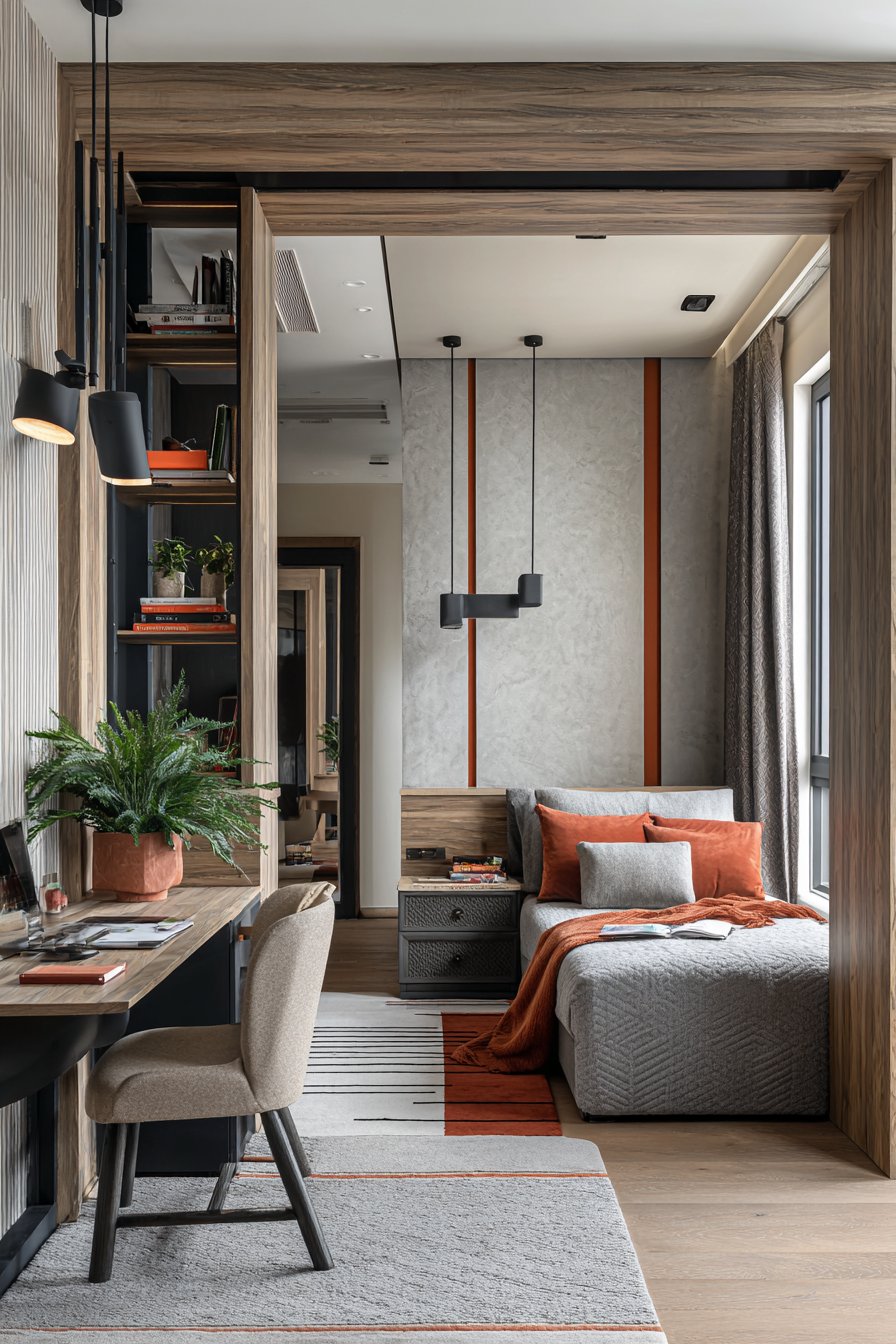
This design particularly shines in maximizing natural light distribution. Unlike solid walls or heavy curtains, the open shelving allows sunlight from windows to penetrate throughout the entire room, preventing either zone from feeling dark or isolated. The bookshelf can be positioned perpendicular to a wall, creating an alcove effect, or float in the center of the room for more dramatic separation depending on your specific layout and needs.
Key Design Tips:
- Choose a bookshelf that’s taller than seated eye level (minimum 5 feet) to provide adequate visual privacy without requiring ceiling height
- Anchor the bookshelf securely to prevent tipping, especially if it’s freestanding in the room center rather than against a wall
- Style both sides thoughtfully since the divider will be viewed from multiple angles throughout daily activities
- Leave the bottom shelf less densely packed to maintain an airy feel and prevent the divider from appearing too heavy or imposing
- Consider adding a small rug on each side of the divider to further define the separate zones and add textural warmth
8. Glamorous Compact Vanity Station
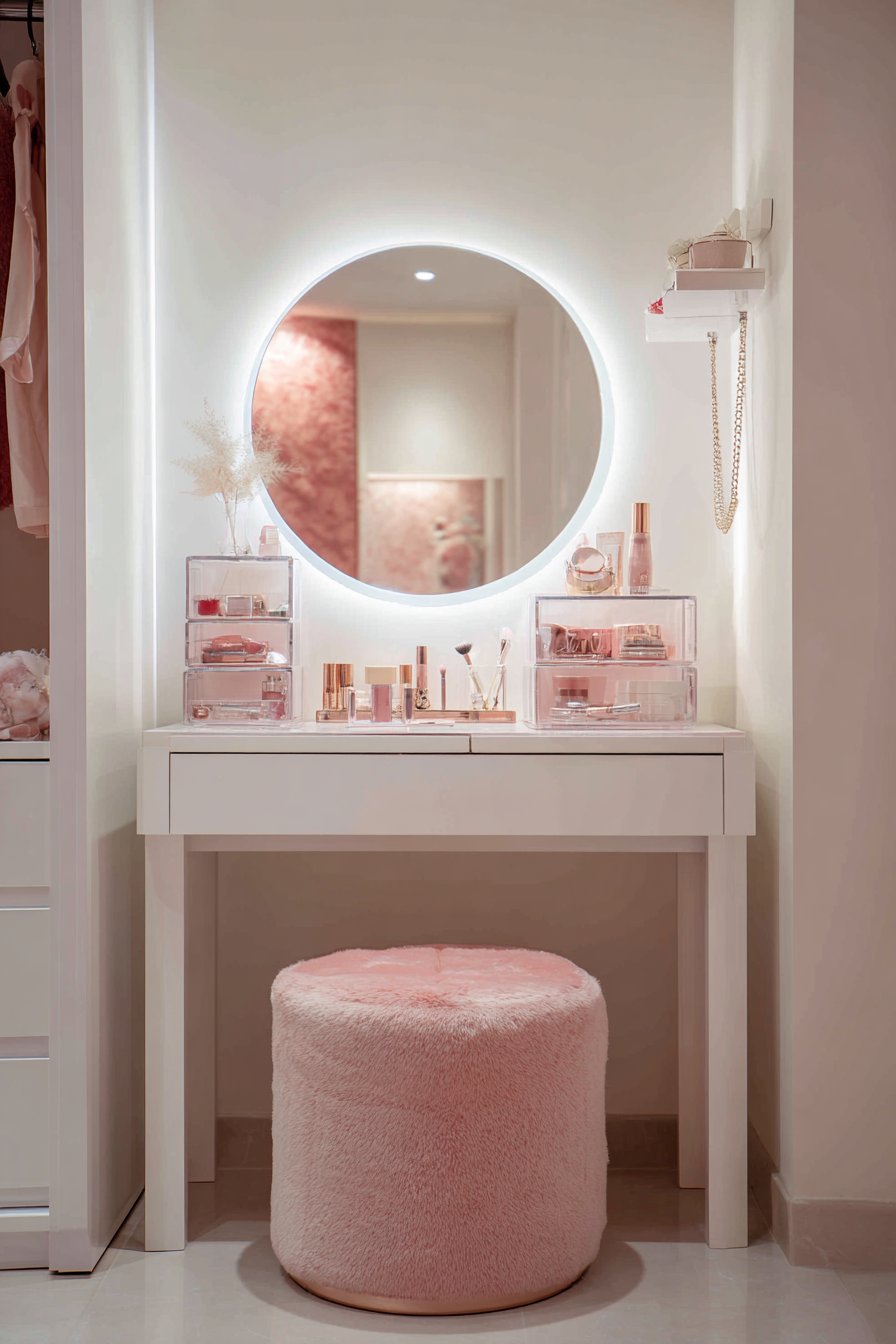
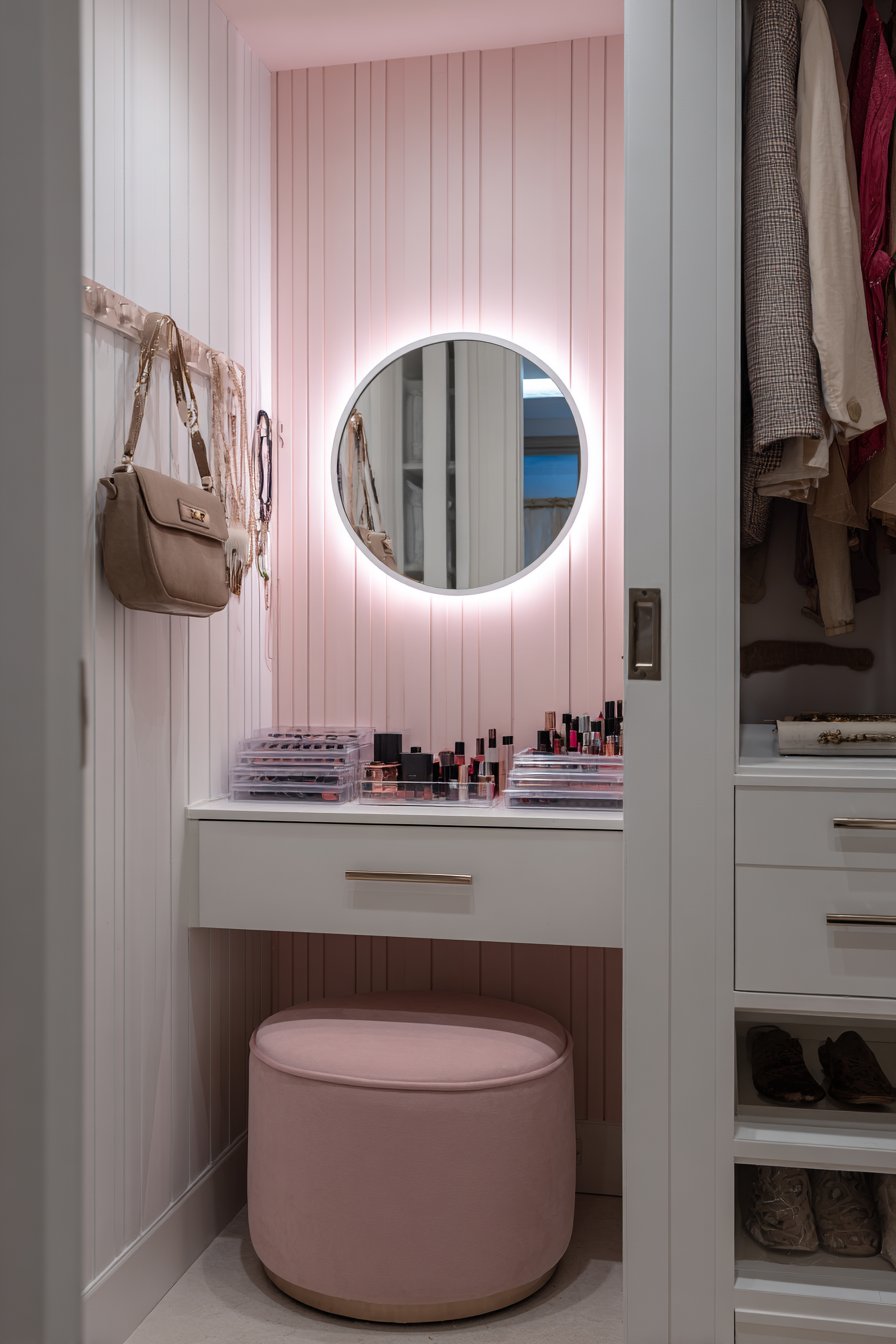
Every person deserves a dedicated space for personal grooming and self-care, and a compact vanity station fulfills this need without consuming excessive floor space. The small vanity table, perhaps in a delicate design with slim legs and a drawer for storage, serves as the anchor for this feminine corner. The round mirror with integrated LED lights provides even, shadow-free illumination crucial for makeup application, skincare routines, and detailed grooming tasks. The adjustable brightness typical of LED mirror designs allows you to simulate different lighting conditions—bright daylight for morning routines or softer evening light.
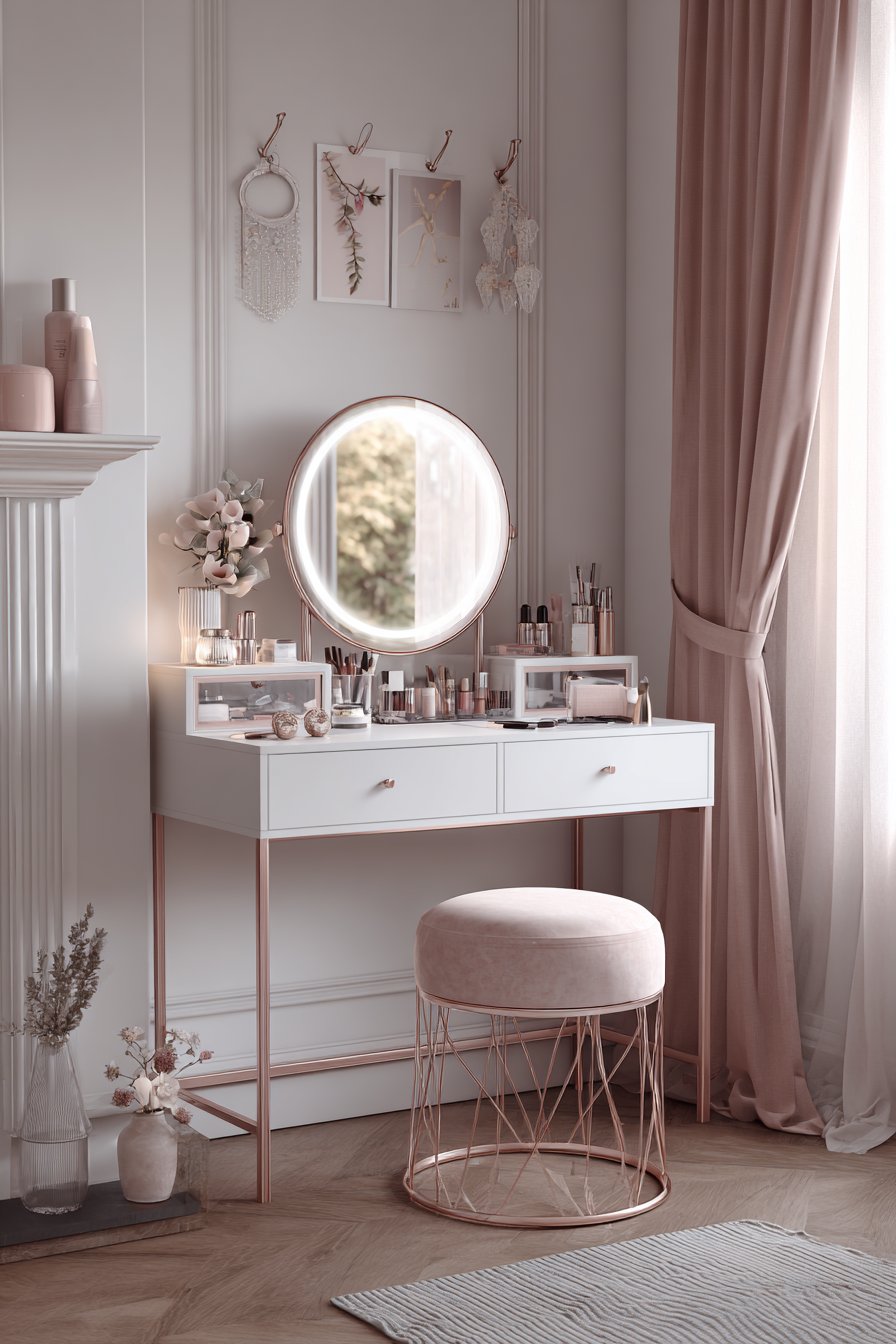
Organization is paramount in limited space, and clear acrylic storage containers arranged on the vanity surface keep makeup, brushes, skincare products, and beauty tools both visible and accessible. The transparency prevents the area from feeling cluttered while making it easy to locate specific items quickly during rushed morning preparations. Wall-mounted hooks flanking the vanity hold jewelry, bags, hair accessories, and other frequently used items, utilizing vertical space that would otherwise remain empty.
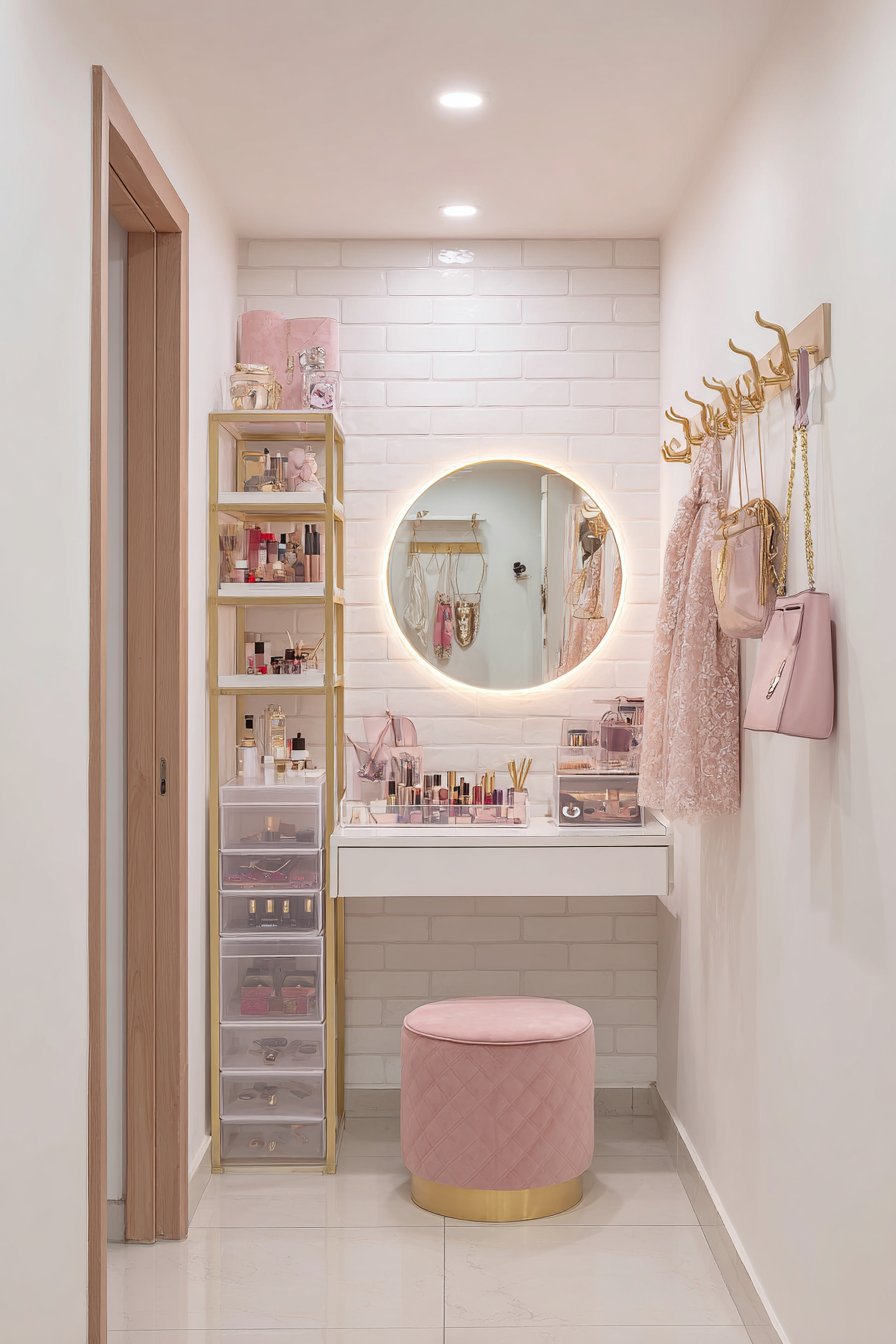
The soft pink accent elements—perhaps through a cushioned stool, a small vase with flowers, or decorative containers—add gentle personality against the clean white walls without overwhelming the compact area. This touch of color creates a dedicated feminine retreat within the larger room, establishing a corner that feels special and intentionally designed for self-care rituals. The cushioned stool tucks completely under the vanity when not in use, maintaining clear floor space for movement.
Key Design Tips:
- Position the vanity near natural light sources when possible to supplement artificial lighting for the most accurate color rendering
- Choose an LED mirror with adjustable color temperature settings to accommodate different makeup looks and preferences
- Implement drawer dividers or small organizers to prevent the vanity drawer from becoming a jumbled catch-all
- Keep the vanity surface minimalist by storing infrequently used products in the drawer or nearby storage, displaying only daily essentials
- Add a small tray or dish specifically for jewelry removal to prevent losing small items on a cluttered surface
9. Luxuriously Layered Bed Styling
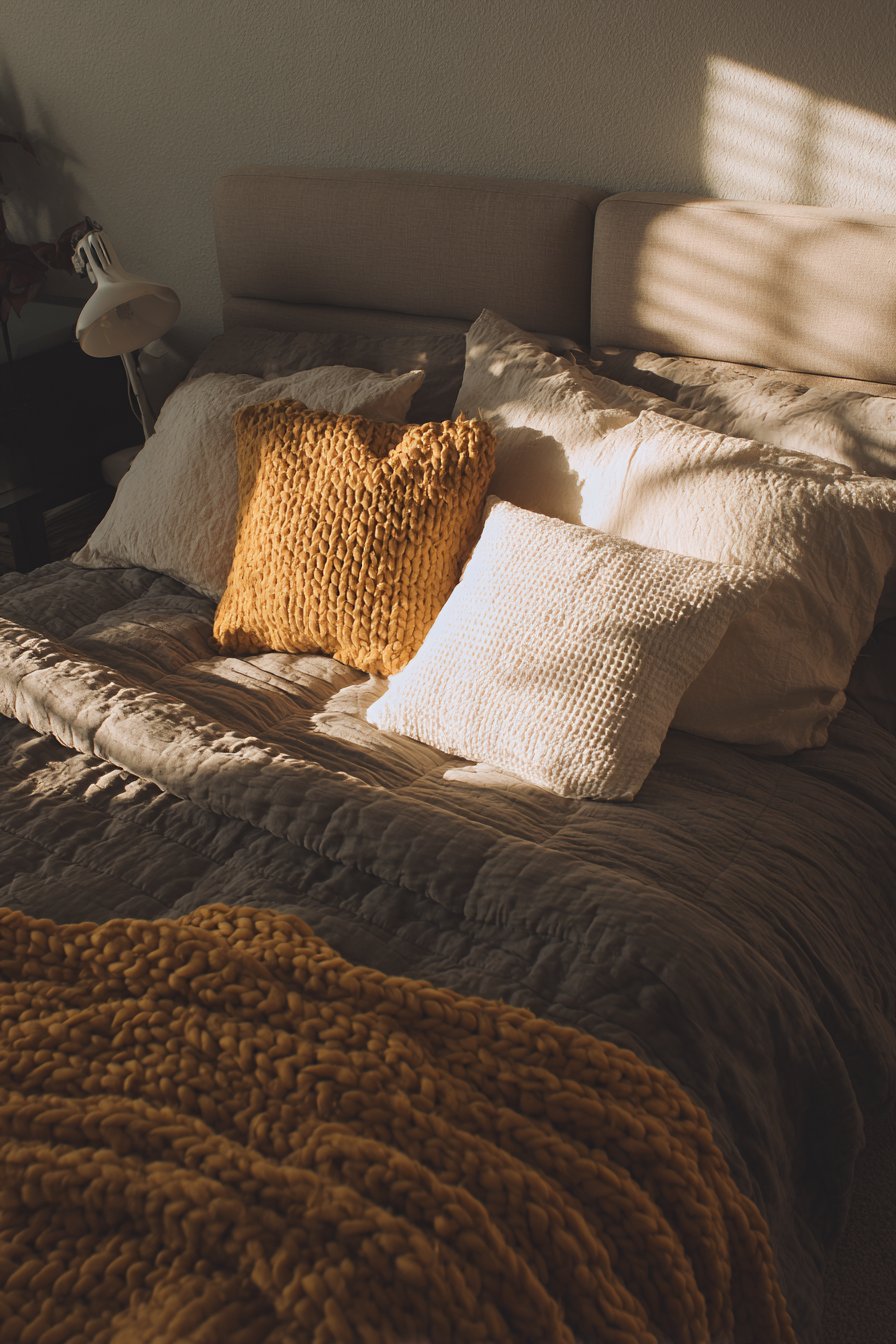
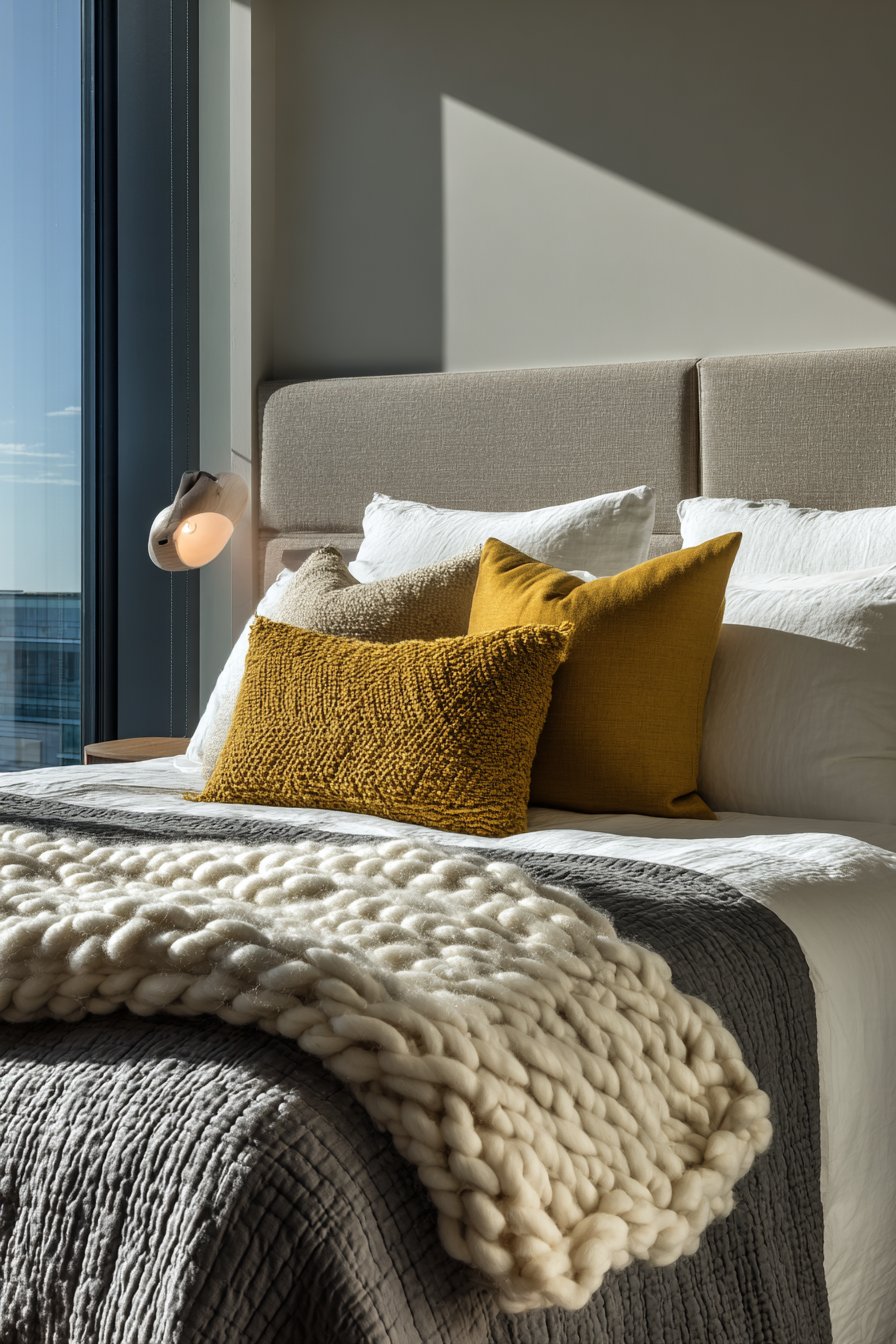
The bed often occupies the largest visual footprint in a PG room, making its styling critically important to the overall aesthetic. This approach to bed dressing embraces the principle of layering multiple textures to create depth, warmth, and visual interest. The foundation begins with a quilted bedspread in sophisticated grey, providing subtle pattern and dimension. Decorative pillows in mustard yellow and crisp white introduce color contrast that energizes the neutral base while remaining sophisticated and versatile.
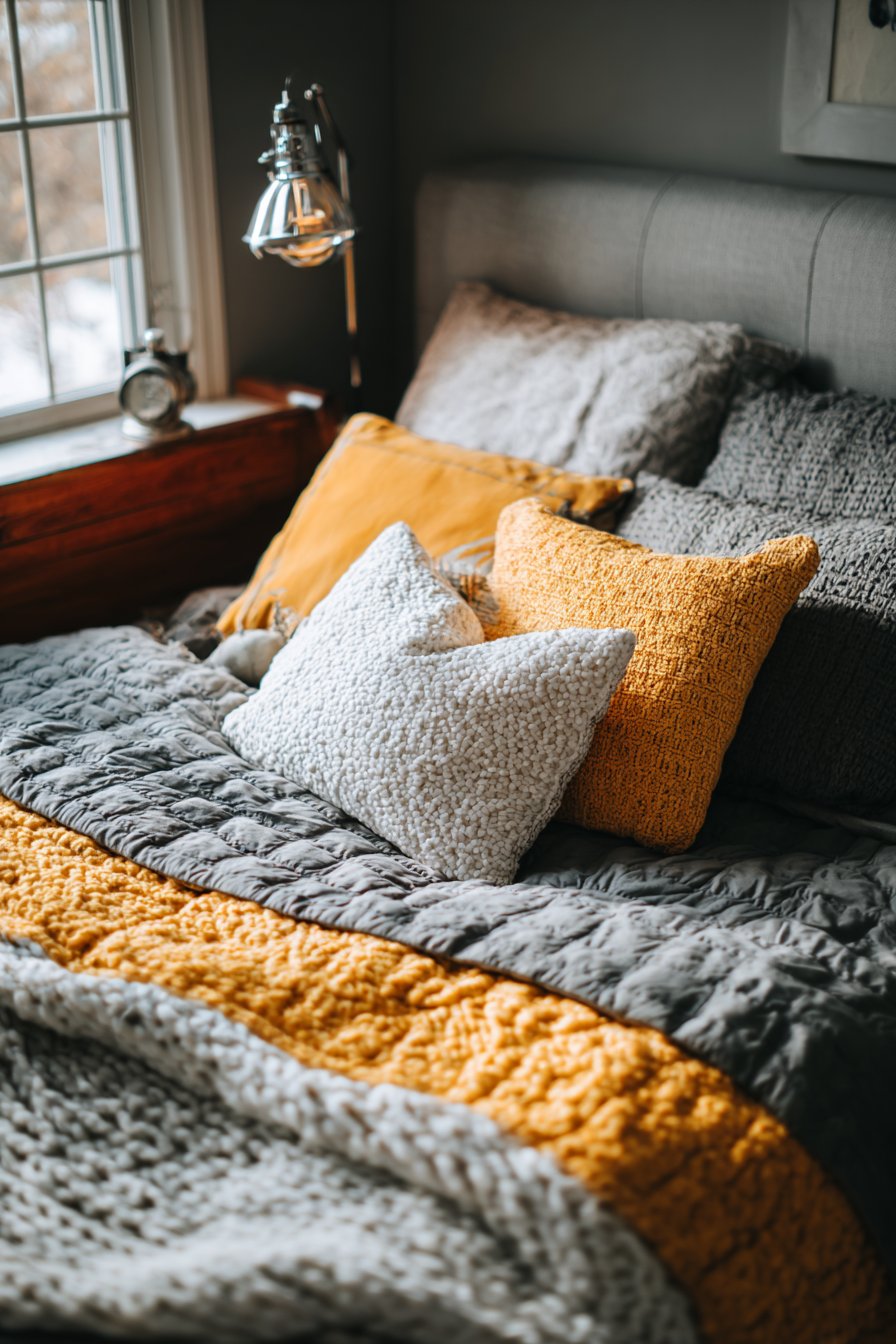
The chunky knit throw blanket positioned at the foot of the bed serves multiple purposes—it adds another textural layer, provides warmth for cool evenings, and creates a polished, “made bed” appearance even when the rest of the bedding isn’t perfectly arranged. The fabric-covered foam panels creating the headboard offer a soft, upholstered look without the expense or permanence of traditional upholstered furniture. These panels can be created with foam board from craft stores, wrapped in neutral fabric, and mounted to the wall with removable adhesive strips.
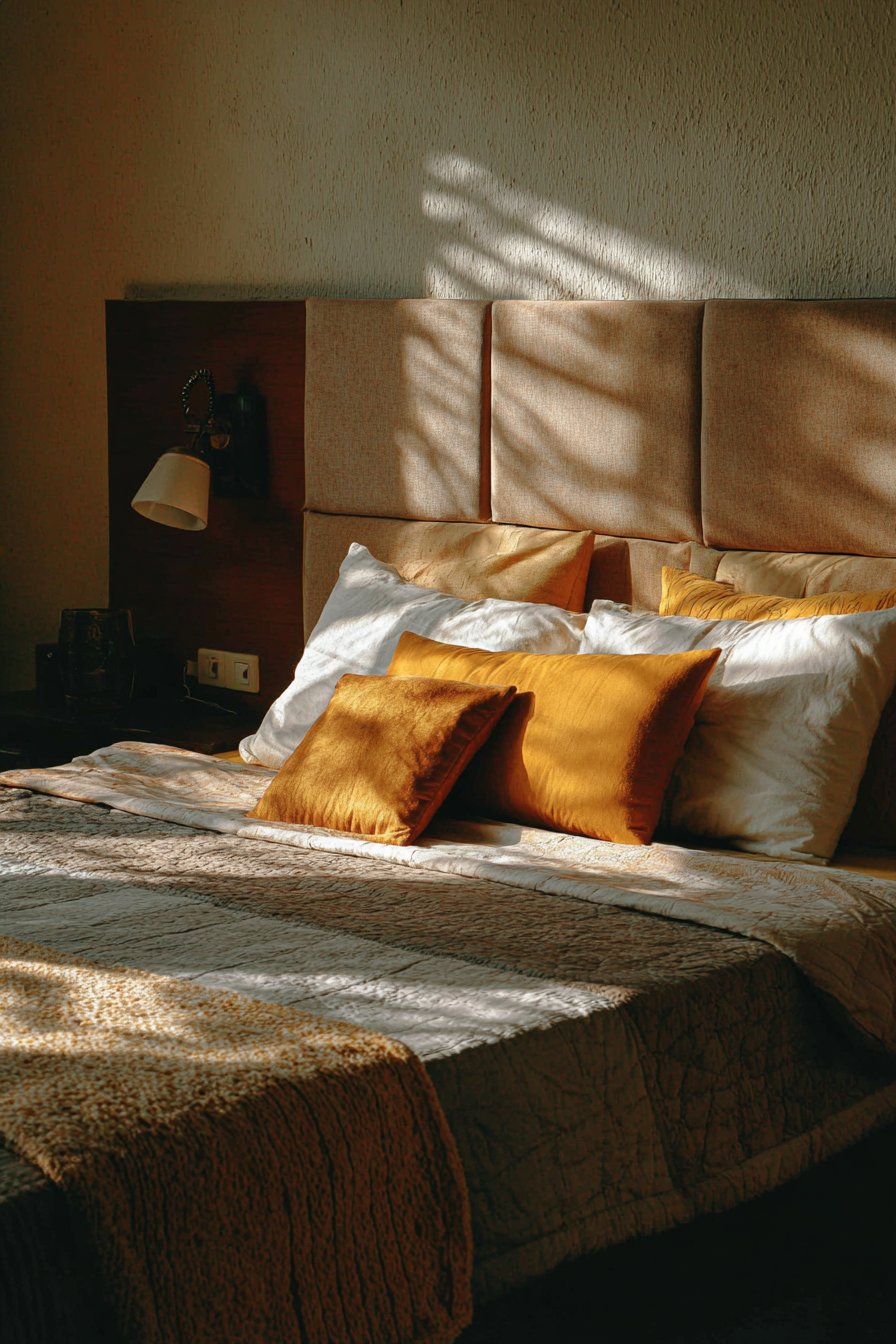
Bedside lighting from a clip-on reading lamp provides focused illumination without requiring a nightstand or floor lamp, saving precious space. The adjustable arm allows you to direct light exactly where needed for reading without disturbing others. Natural window light during daytime hours creates soft shadows across the layered textiles, highlighting the various textures and creating an inviting appearance that makes the bed the room’s undeniable focal point.
Key Design Tips:
- Choose bedding materials that are machine washable and relatively wrinkle-resistant for practical maintenance in busy PG life
- Layer patterns and textures rather than multiple bold colors to create visual interest without overwhelming a small space
- Invest in quality pillows with good support for sleeping, using decorative shams or covers to maintain aesthetic appeal
- Rotate decorative throw pillows to a closet or basket during sleep to prevent them from ending up on the floor or creating clutter
- Select a throw blanket in a contrasting texture to the bedspread—pair smooth fabrics with chunky knits or quilted materials with smooth velvets
10. Vertical Garden Living Wall
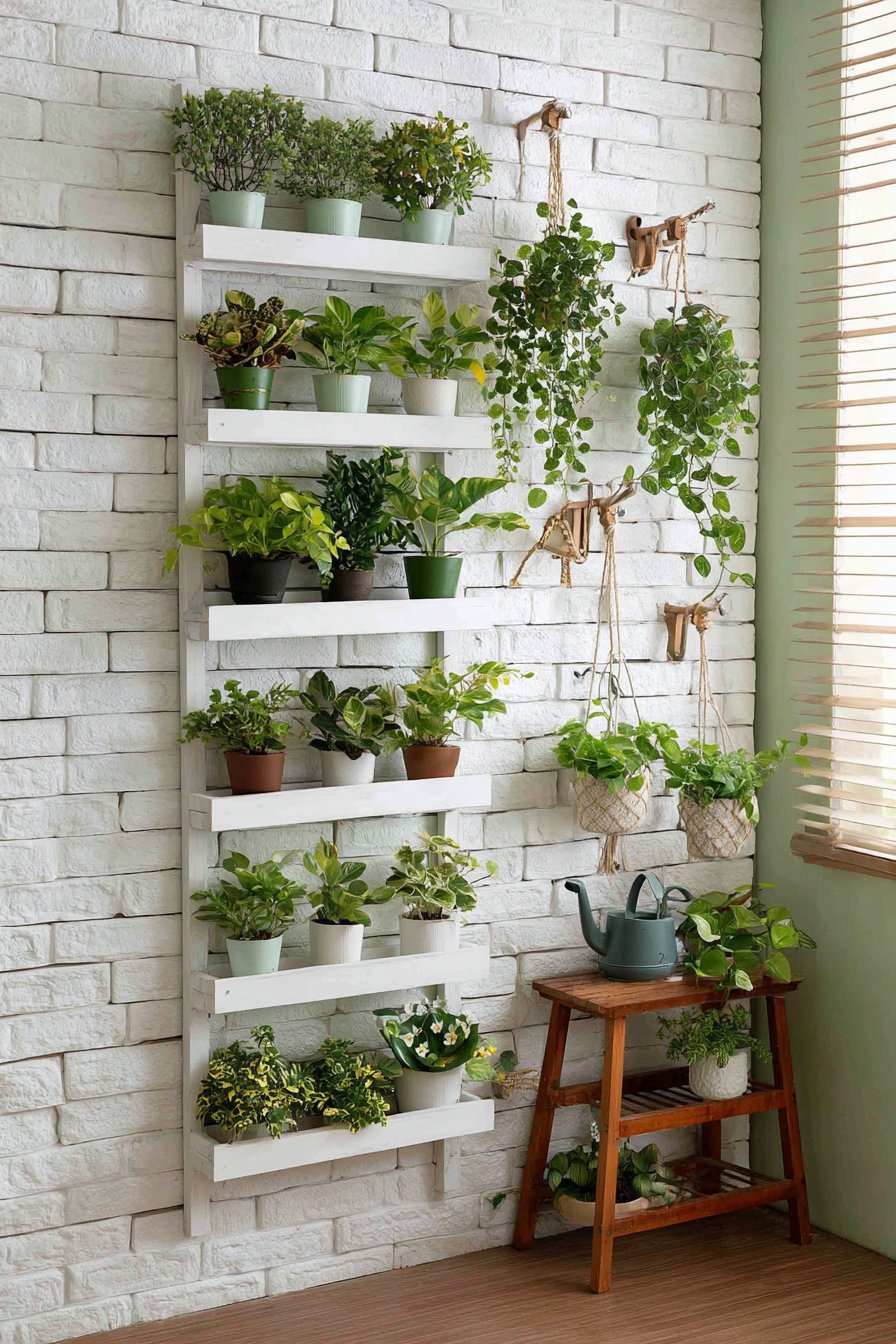
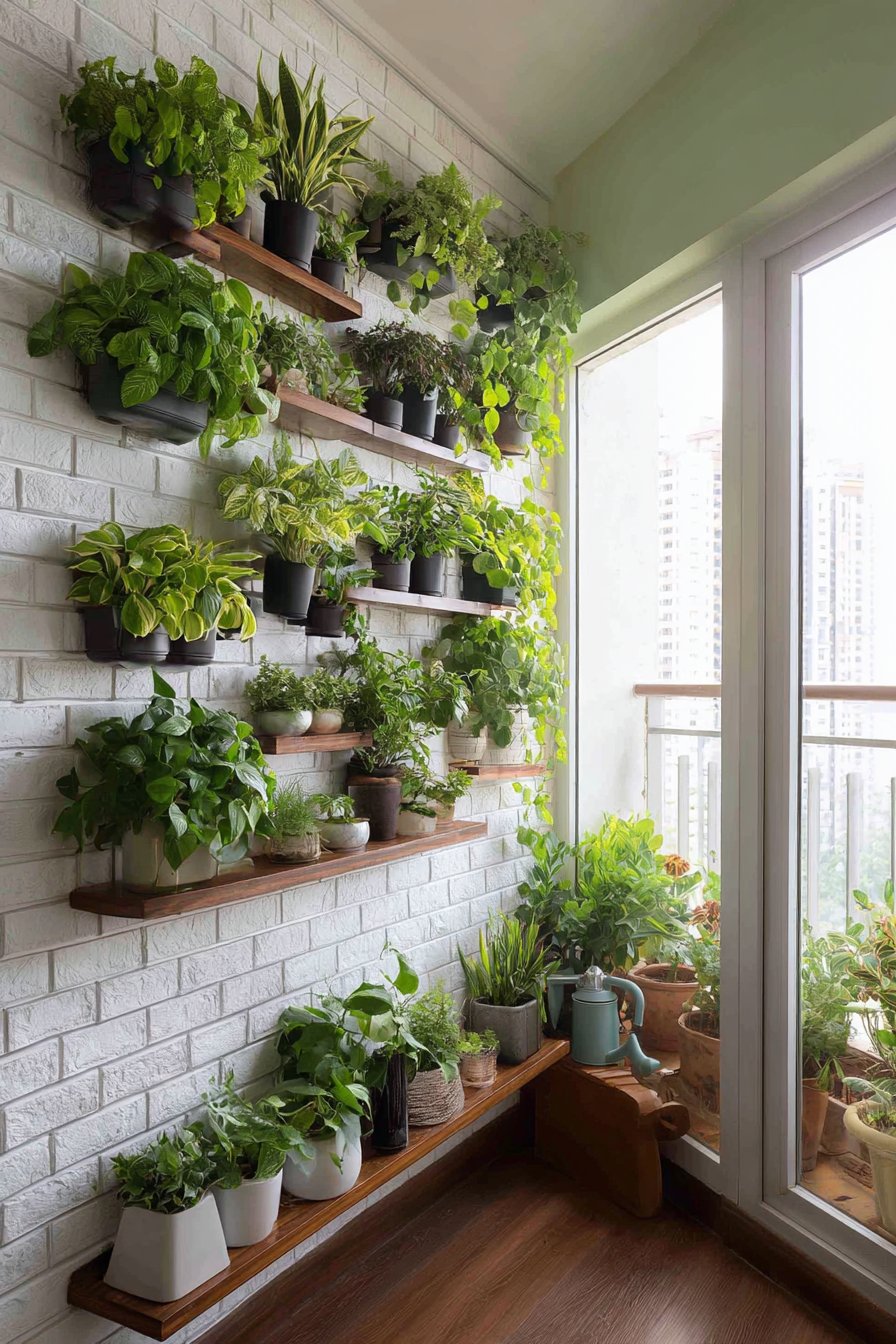
Bringing nature indoors dramatically improves air quality, reduces stress, and adds vibrant life to static spaces, but floor space for plants is often limited in PG rooms. A vertical garden wall solves this challenge by utilizing wall space to create a lush display of greenery. Mounted planters and hanging pots arranged in an artistic pattern showcase easy-care varieties like trailing pothos with cascading vines, structural snake plants with dramatic upright leaves, and spider plants producing charming offshoots.
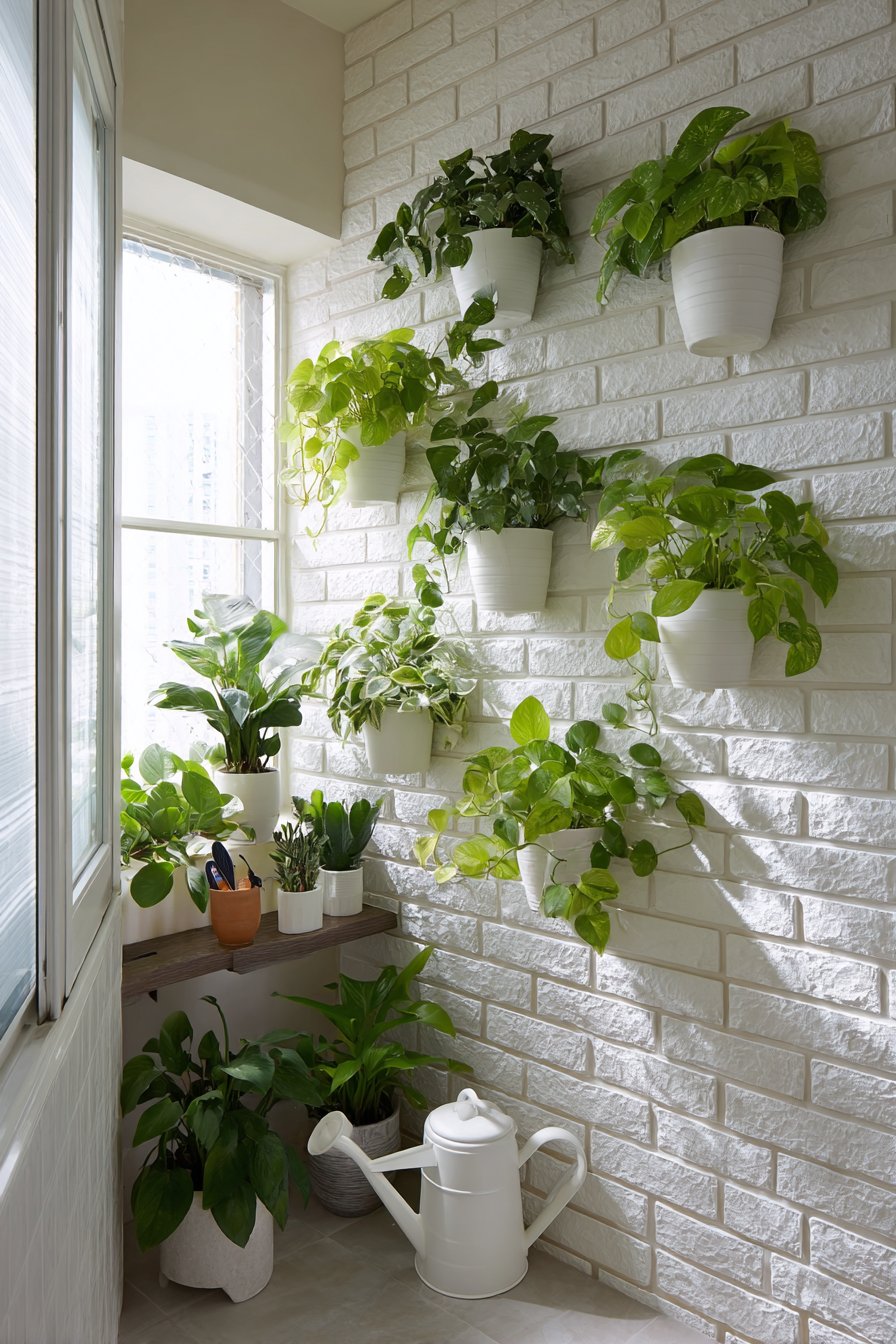
The backdrop of white brick-textured wallpaper creates architectural interest that complements the organic plant shapes while providing a clean, modern canvas. The wallpaper’s textured surface adds dimension without competing with the plants for visual attention. Positioning this living wall near a window ensures adequate natural light for plant health, though most of the recommended varieties tolerate lower light conditions, making them perfect for PG rooms where window access may be limited.
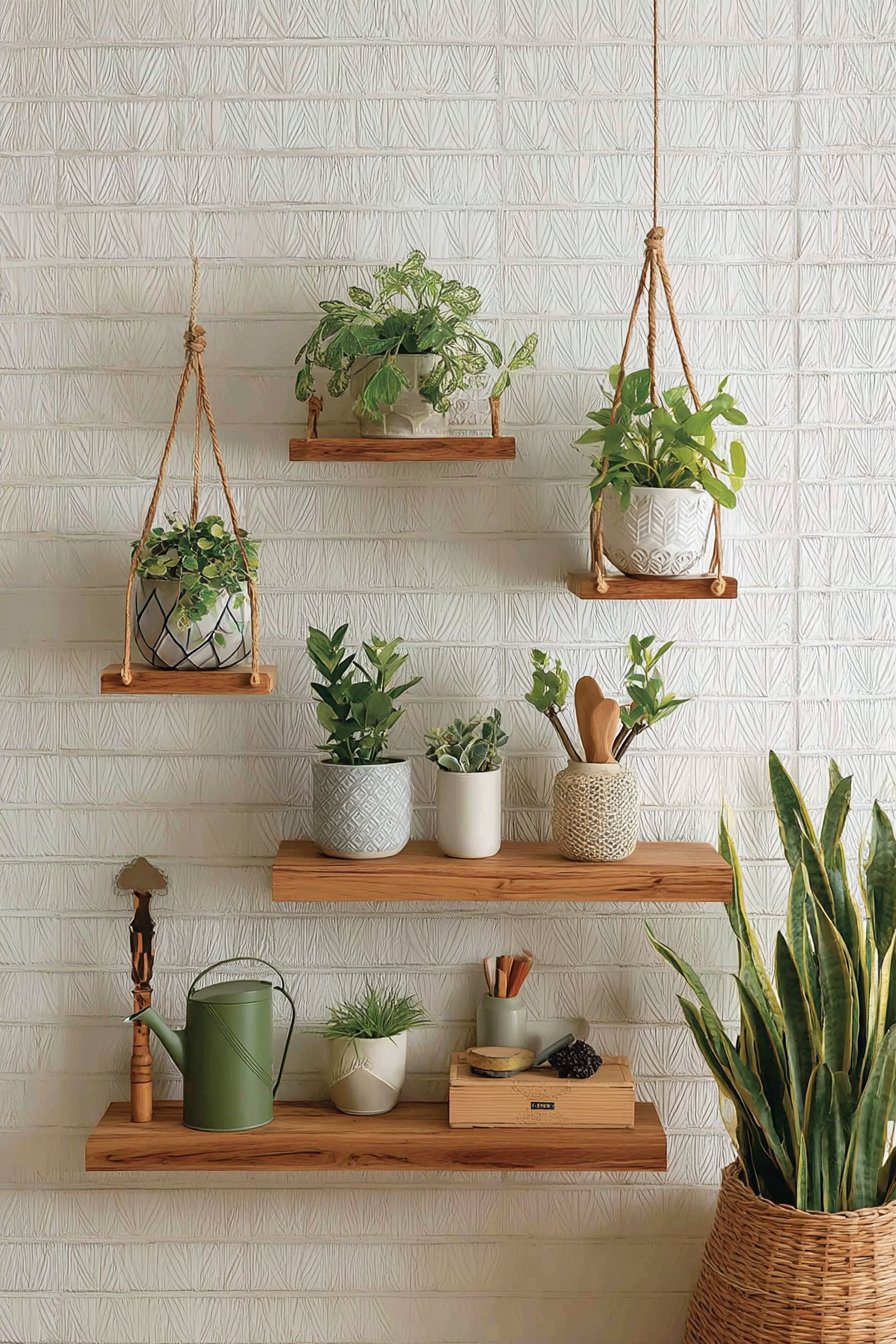
A narrow shelf installed below the plant wall holds watering essentials—a small watering can, plant food, pruning scissors, and perhaps a moisture meter for beginner plant parents. This dedicated plant care station ensures you have everything needed to maintain your green companions without scattering supplies throughout the room. The psychological benefits of caring for living things cannot be overstated, especially for those living away from family and seeking connection and routine.
Key Design Tips:
- Start with truly low-maintenance plants if you’re new to plant care; pothos, snake plants, and ZZ plants tolerate neglect better than most
- Group plants with similar watering needs together to simplify care routines and prevent over or under-watering
- Use a consistent planter style or color scheme to create visual cohesion despite varied plant types and sizes
- Install mounting hardware into wall studs or use appropriate anchors rated for the weight of water-filled planters
- Set phone reminders for watering schedules until plant care becomes habitual, preventing both under and over-watering
11. Ambient Multi-Source Lighting Design
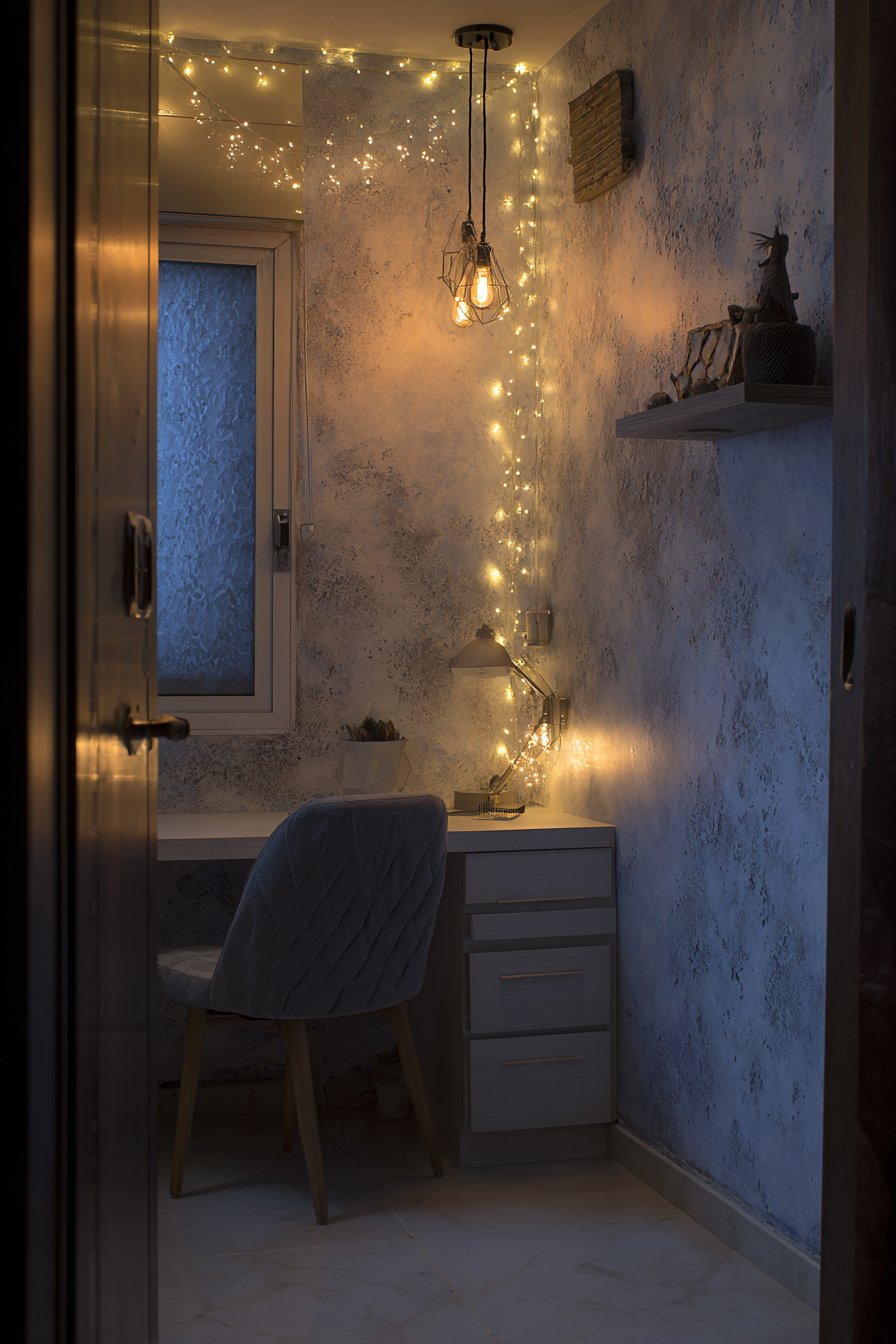
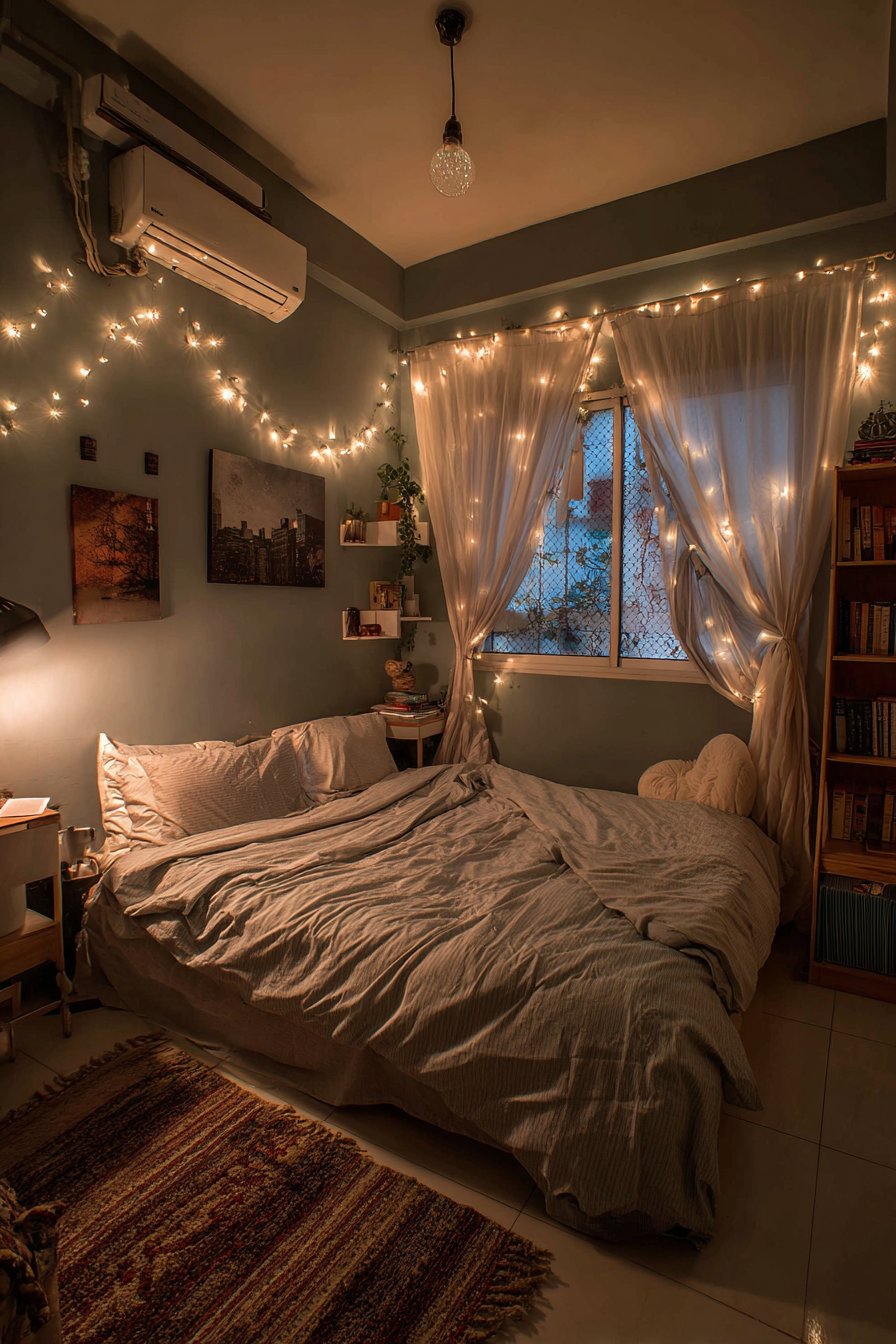
Lighting transforms room ambiance more dramatically than any other single design element, yet it’s often overlooked in PG room decoration. This comprehensive lighting scheme layers three distinct sources to create flexibility and atmosphere. The ceiling pendant light with an Edison bulb provides general ambient illumination with vintage charm, its warm glow distributing light throughout the room for general navigation and basic tasks.
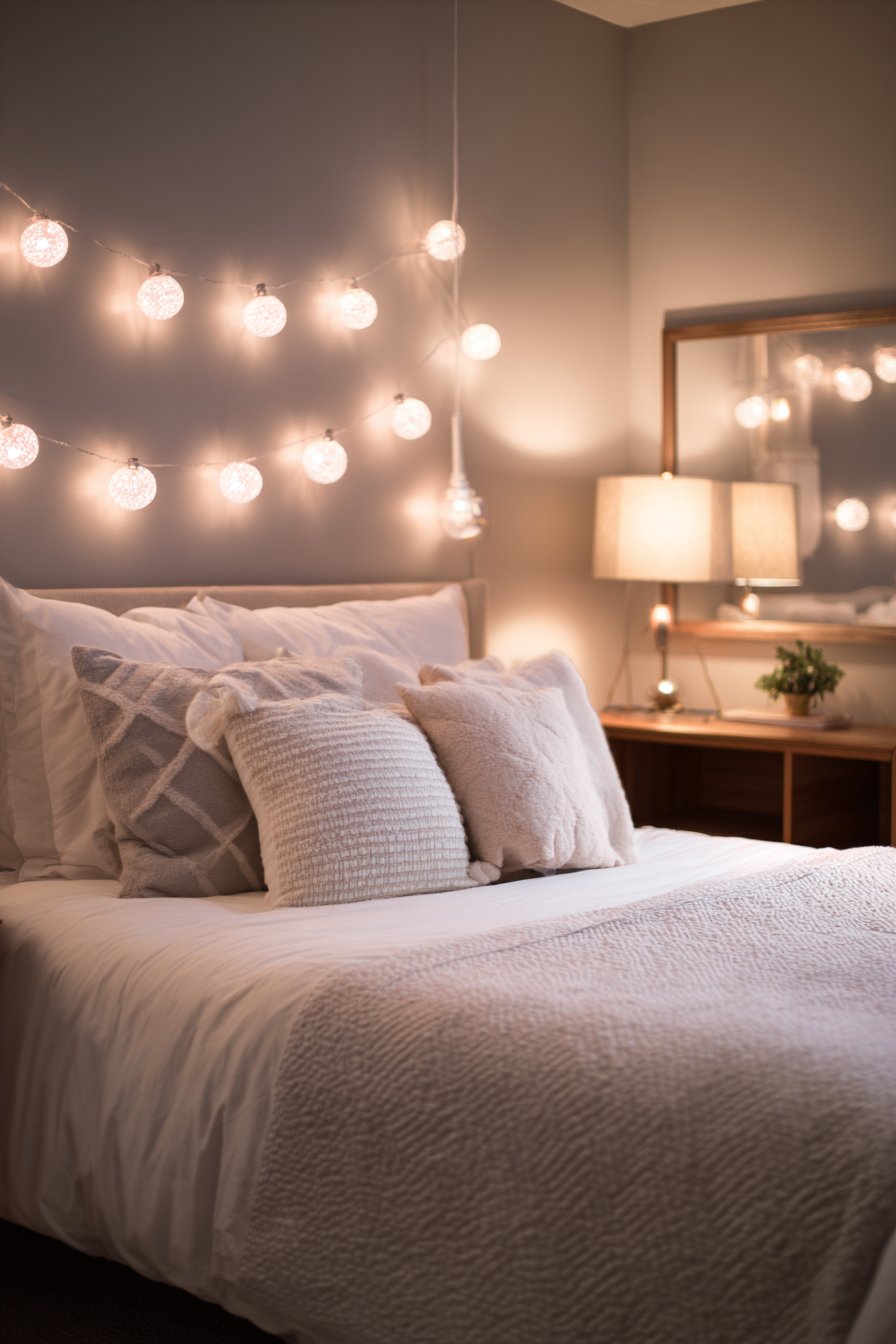
Fairy lights strung artistically across one wall add magical ambient lighting perfect for evening relaxation. These lights create gentle pools of warm illumination that reduce harsh shadows while establishing a cozy, intimate atmosphere. Their low energy consumption allows them to remain lit for extended periods without concern about electricity bills. The task lamp positioned on the desk provides focused, bright light essential for detailed work like reading, writing, or computer tasks that require reduced eye strain.
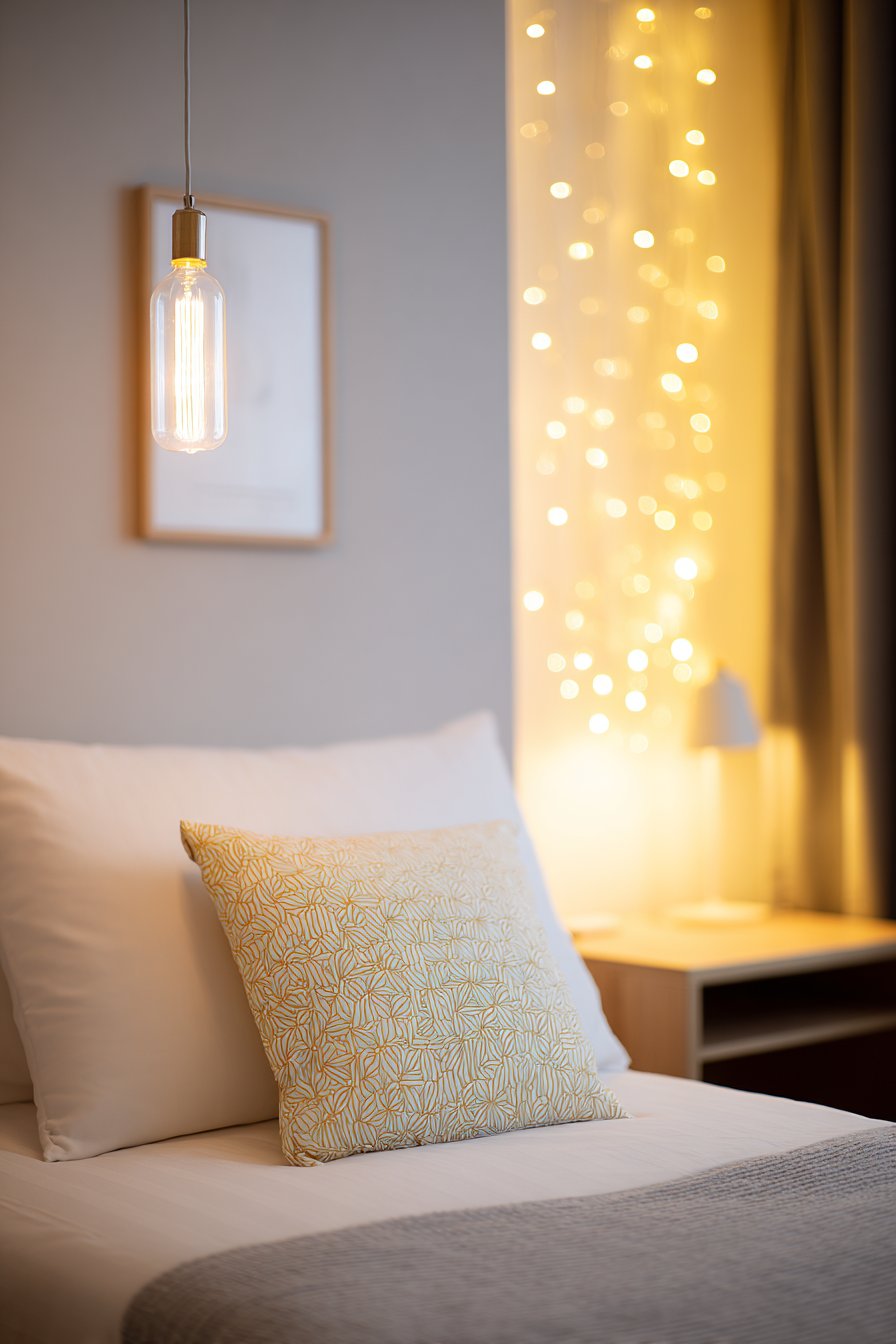
The soft grey walls provide an ideal backdrop for this layered lighting approach, reflecting and diffusing light without the glare that stark white walls can create. The composition demonstrates how lighting can define room mood—bright and energizing during productive daytime hours, then soft and relaxing for evening wind-down. This flexibility is particularly valuable in PG accommodations where a single room must serve multiple functions throughout the day.
Key Design Tips:
- Install dimmer switches or use smart bulbs with dimming capabilities to adjust lighting intensity for different activities and times of day
- Choose warm white bulbs (2700-3000K) for living spaces to create inviting ambiance, reserving cool white for task lighting only
- Position task lighting to eliminate shadows on work surfaces—for right-handed people, place lights on the left side and vice versa
- Use battery-operated fairy lights to avoid cord management issues and maintain flexibility in placement
- Consider the height of pendant lights carefully; they should provide adequate clearance for movement while distributing light effectively
12. Bohemian Floor Seating Social Space
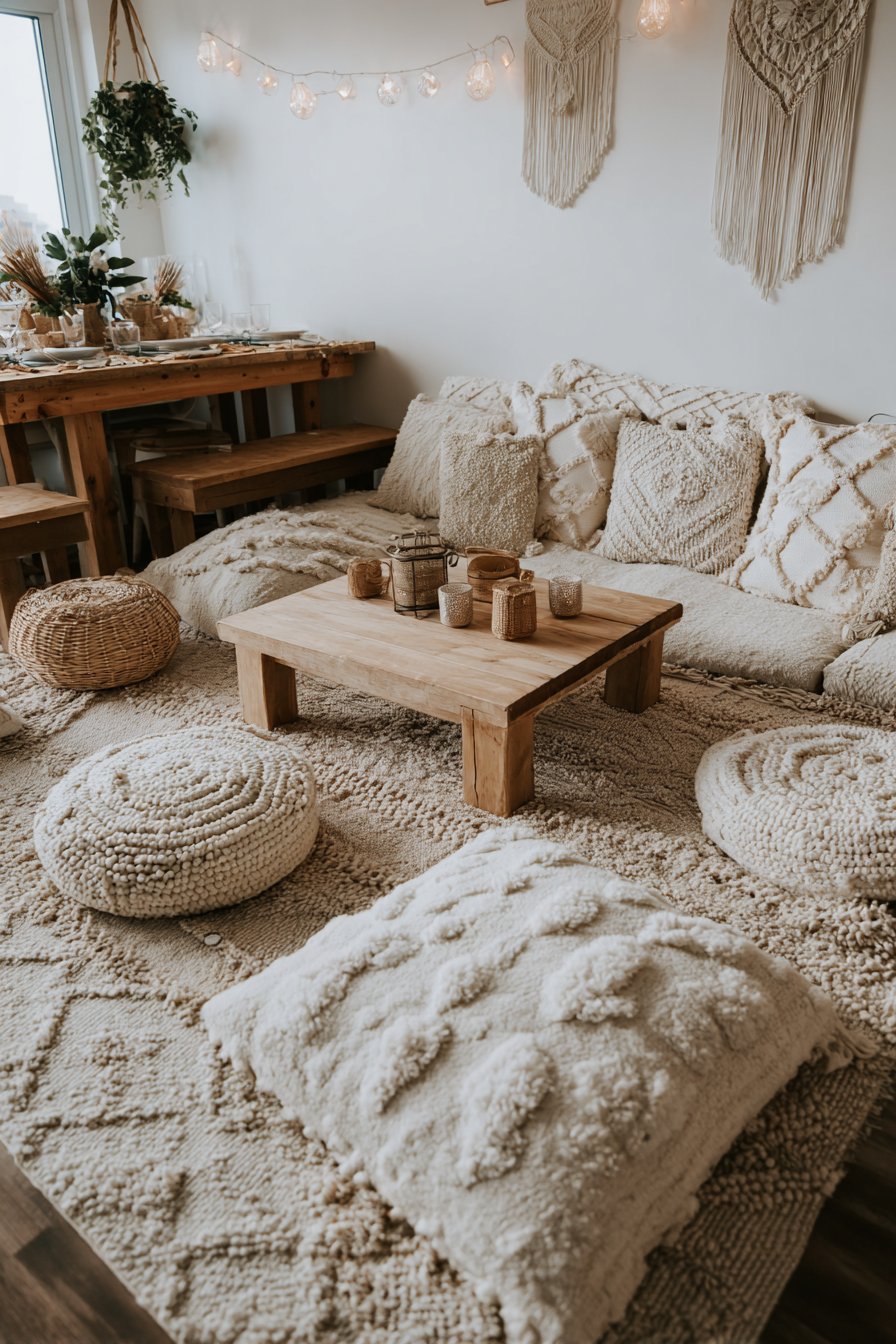
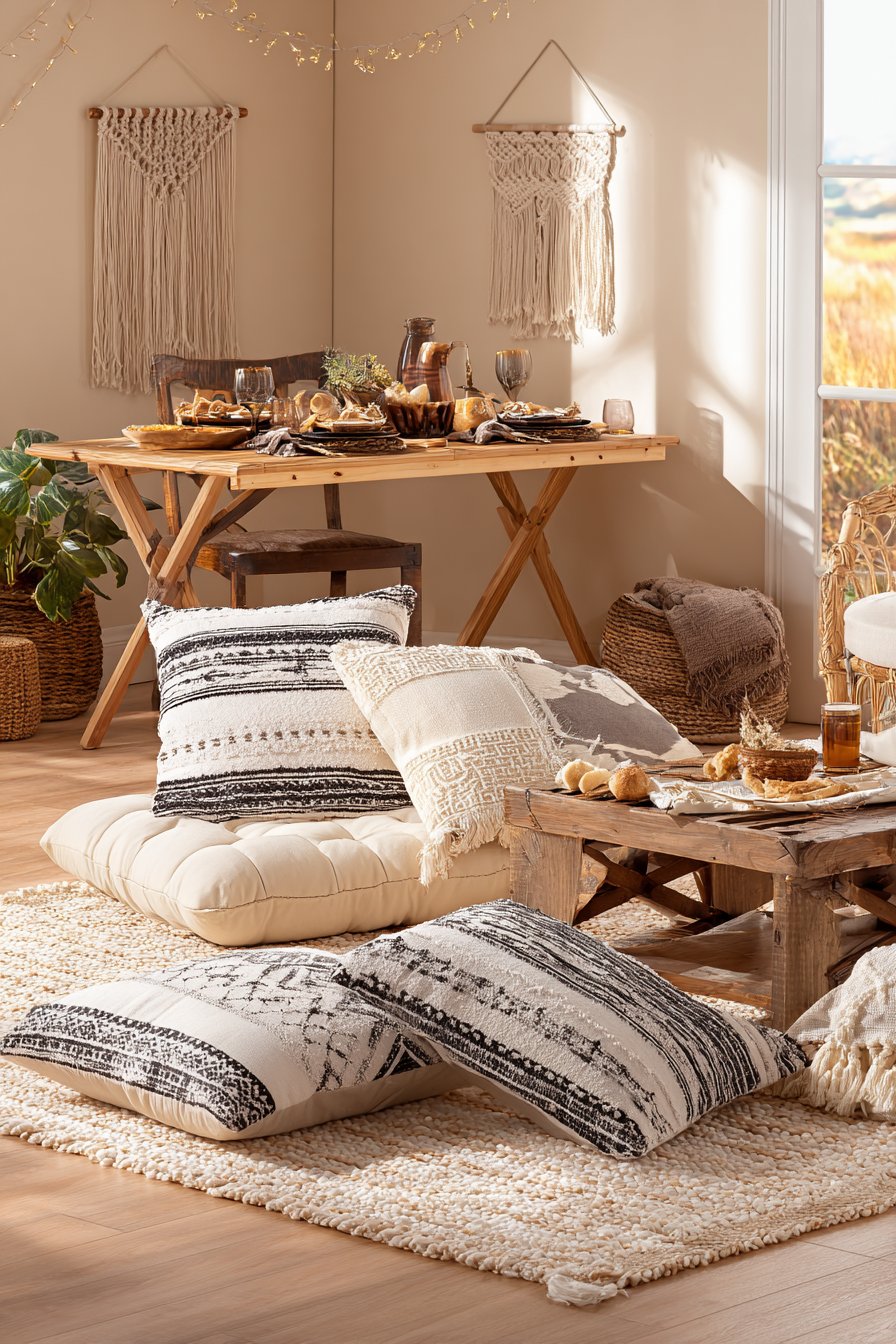
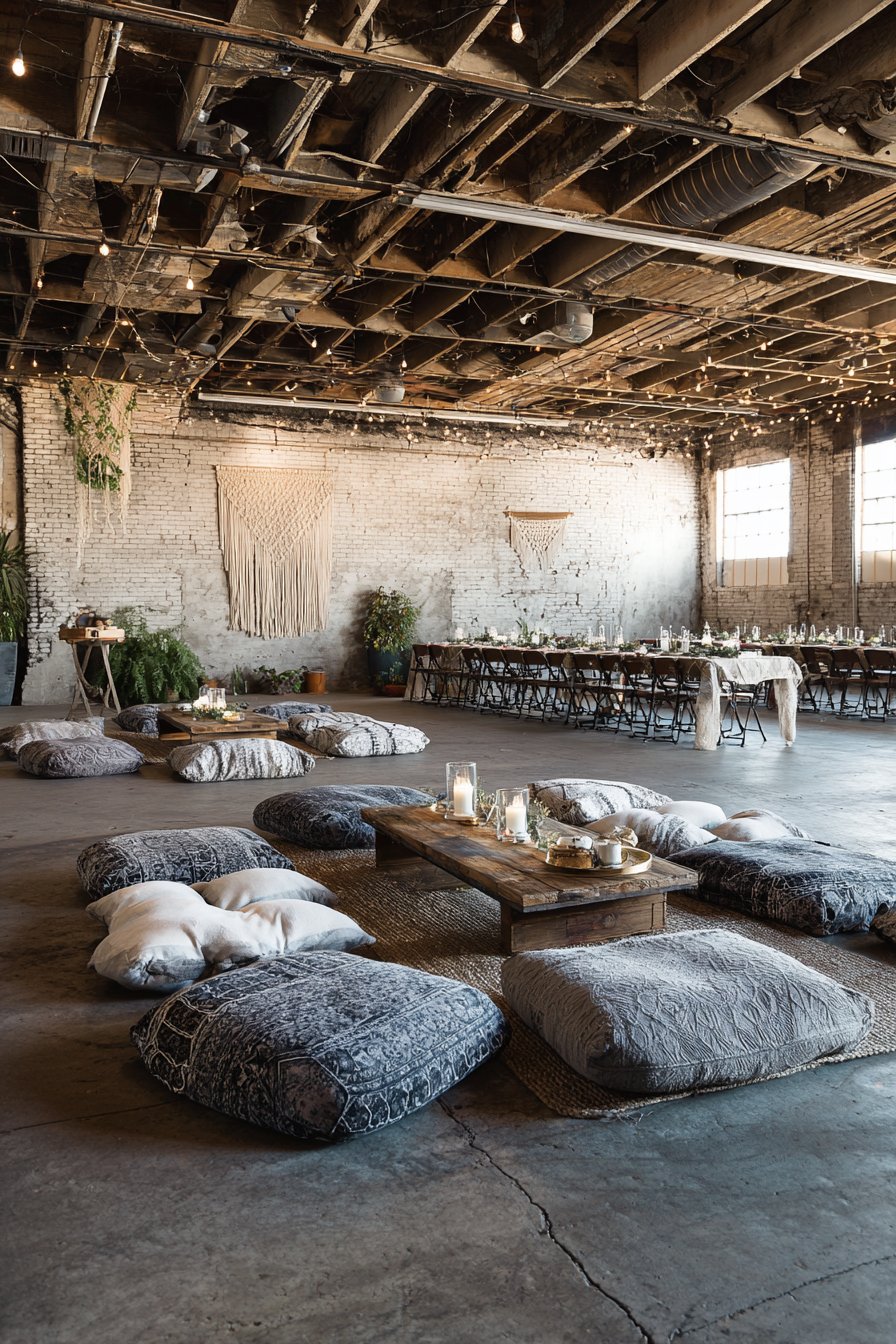
Moving away from conventional furniture arrangements, this bohemian-inspired design embraces floor seating to create an intimate, casual atmosphere perfect for entertaining guests or personal relaxation. Large floor cushions in eclectic patterns—perhaps incorporating ikat prints, geometric designs, and rich textiles—scatter across a textured area rug that defines the social zone. The low wooden coffee table, possibly a vintage piece or a simple DIY creation from repurposed wood, provides surface space for drinks, snacks, or decorative objects without obstructing sightlines.
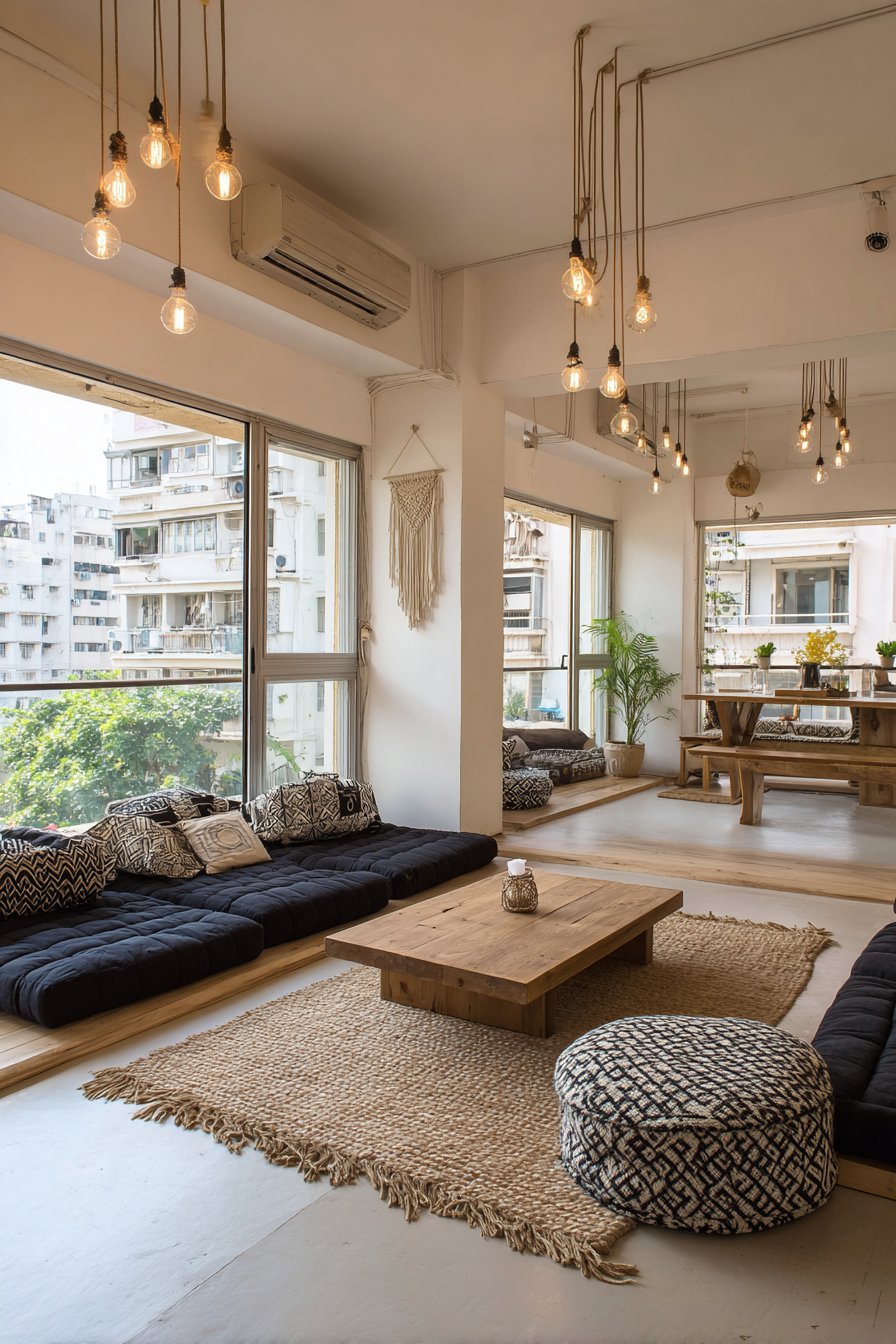
The wall-mounted folding table represents ingenious space-saving innovation, remaining flat against the wall when not needed but lowering to create additional surface area for dining or working. This flexibility allows the floor seating area to transform from conversation space to dining room to work zone as needs shift throughout the day. Macrame wall hangings add textural bohemian character while string lights draped overhead create ambient illumination that feels festive and welcoming.
This arrangement particularly excels in creating an informal atmosphere that encourages connection and conversation. Guests naturally gather closer in floor seating arrangements, fostering more intimate interactions than traditional sofa setups. The casual vibe also makes the space feel less precious—people relax more easily when they’re not worried about formal furniture protocols or maintaining perfect posture.
Key Design Tips:
- Choose floor cushions with firm fill that provides adequate support; overly soft cushions become uncomfortable during extended sitting
- Ensure the area rug extends beyond the furniture grouping to visually anchor the space and define boundaries
- Test the folding table’s mounting hardware with weight before relying on it for meals or heavy objects
- Mix cushion sizes and shapes—combine large floor pillows with smaller accent cushions and perhaps a pouf for varied seating heights
- Keep a small basket nearby for storing cushions or throws when you need to clear the floor space for other activities
13. Layered Window Treatment Solution
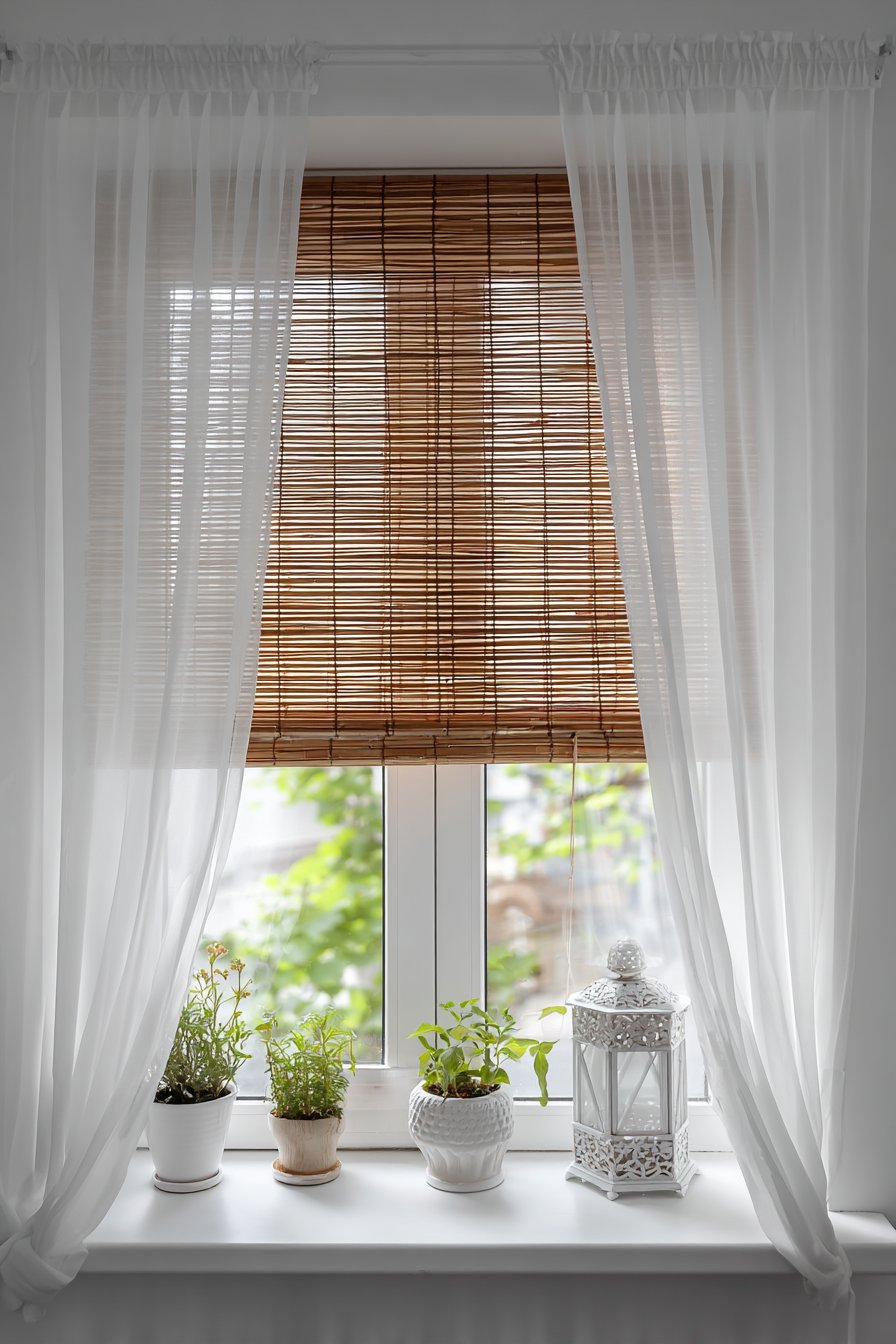
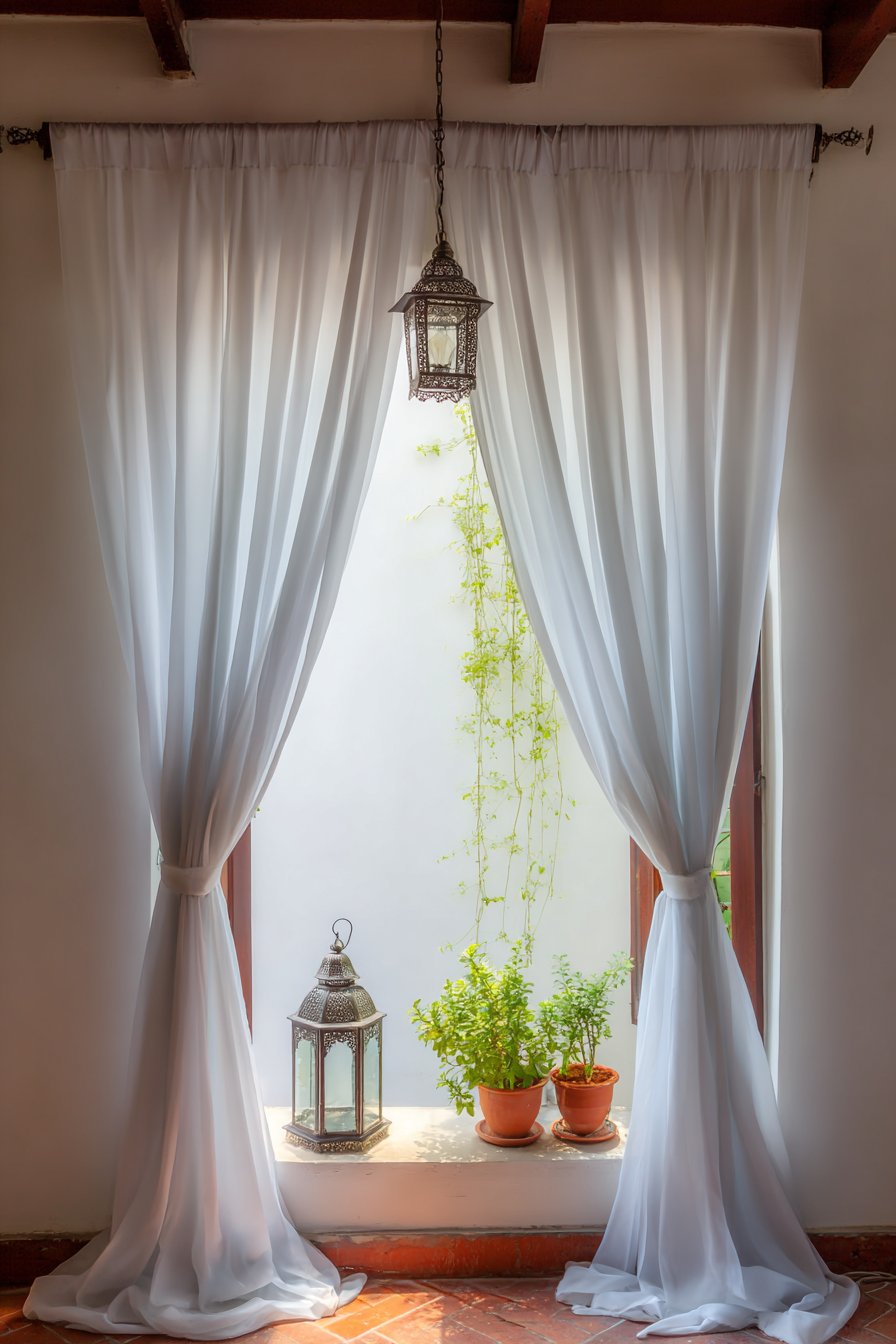
Windows provide essential natural light and ventilation, but they also present challenges regarding privacy, light control, and aesthetic integration. This layered window treatment approach combines practical bamboo roller blinds with flowing white cotton curtains to address multiple needs simultaneously. The bamboo blinds provide precise light control and daytime privacy, their natural texture adding organic warmth that complements various decor styles from minimalist to bohemian.
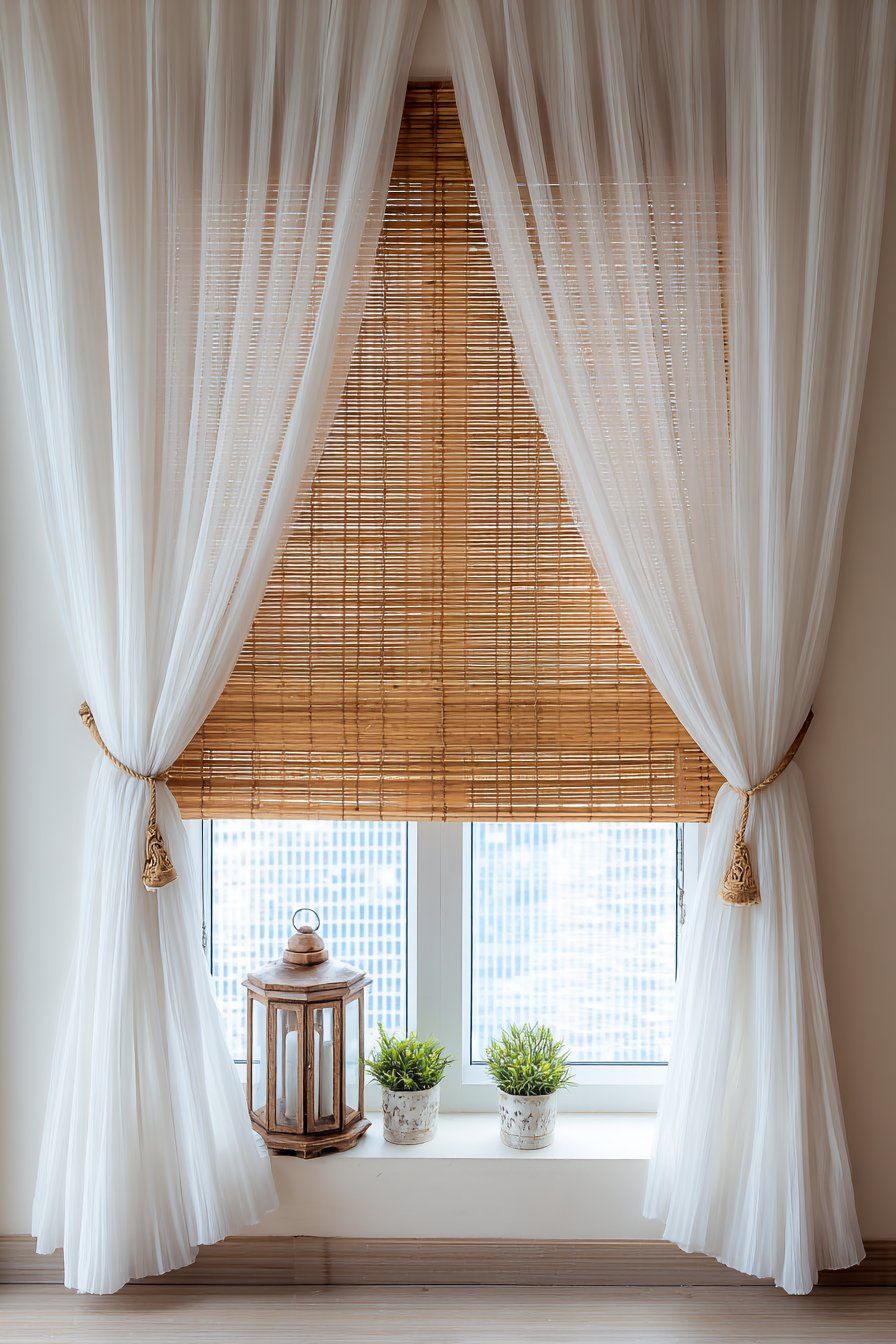
The flowing white cotton curtains on a simple tension rod soften the window’s hard edges and create a romantic, airy quality. When opened, they frame the window beautifully; when closed, they provide an additional privacy layer for evening hours. The tension rod installation requires no wall damage, making this solution ideal for rental situations where permanent hardware isn’t permitted. The curtains’ lightweight fabric allows breeze penetration while still obscuring direct views into the room.
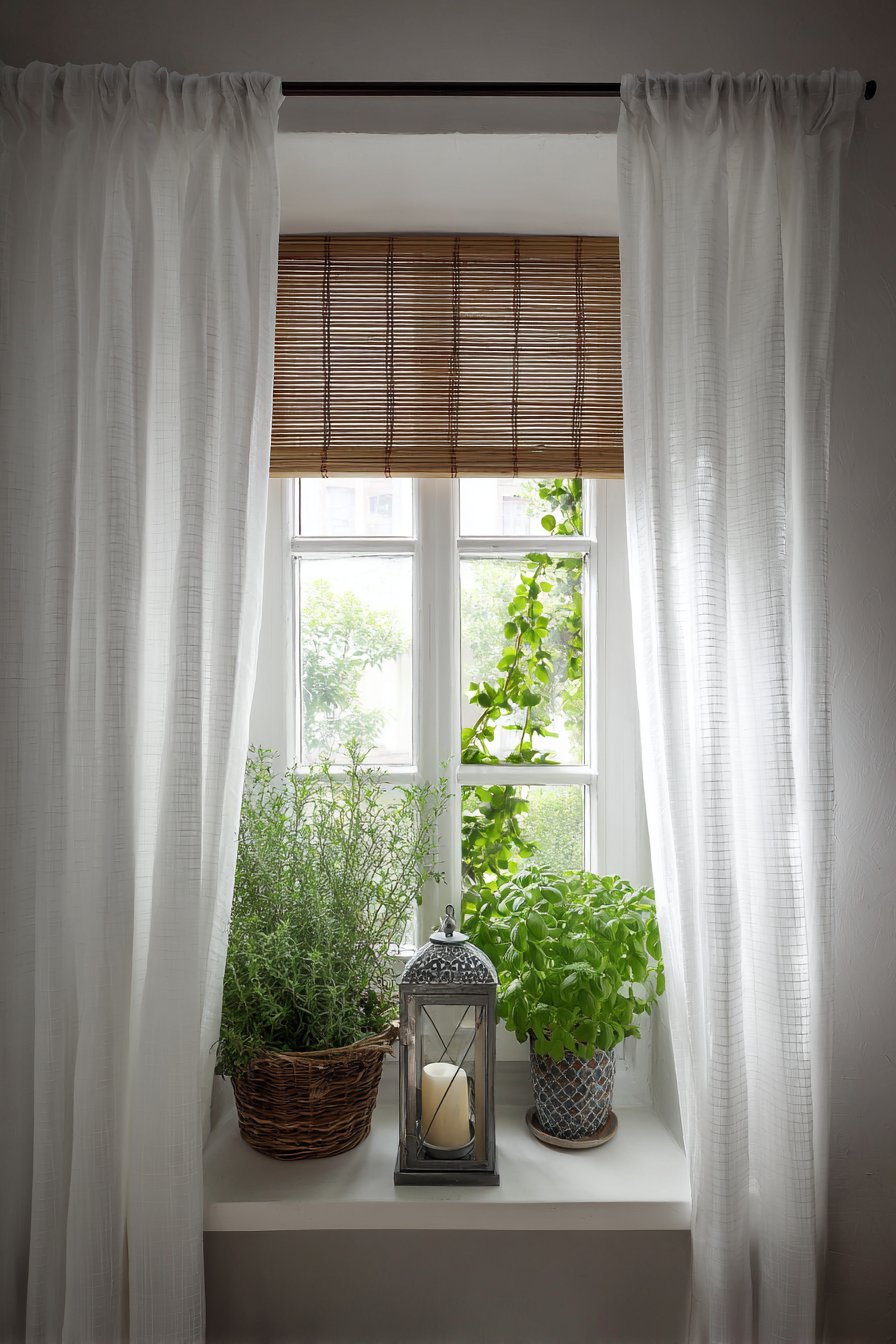
The narrow window sill becomes a styled vignette with small potted herbs like basil, mint, or parsley that thrive in direct sunlight while providing fresh ingredients for cooking. A decorative lantern or small candle holder adds ambient lighting potential and decorative interest. This thoughtful styling transforms the functional window area into an attractive focal point rather than leaving it as dead space.
Key Design Tips:
- Measure window dimensions precisely before purchasing blinds; even small measurement errors can result in gaps that compromise light control and privacy
- Choose curtain rods that extend several inches beyond the window frame on each side to allow curtains to stack completely off the glass when open, maximizing light
- Install curtain rods high above the window frame (near the ceiling if possible) to create the illusion of taller windows and higher ceilings
- Select machine-washable curtain fabrics to maintain freshness without the expense of professional cleaning
- Consider blackout liner clips that can be added to decorative curtains for complete darkness when needed without permanent alterations
14. Innovative Crate Headboard Storage
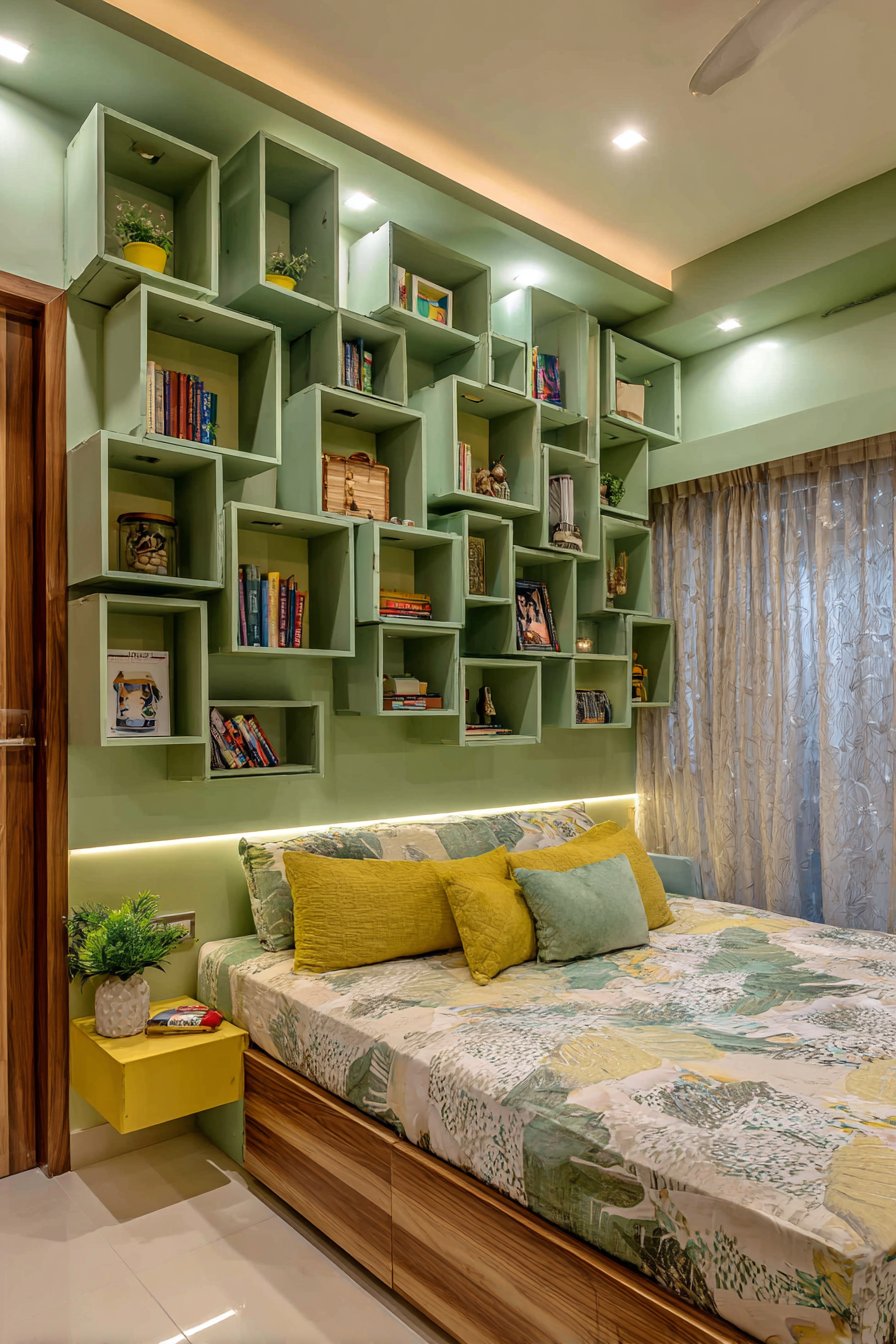
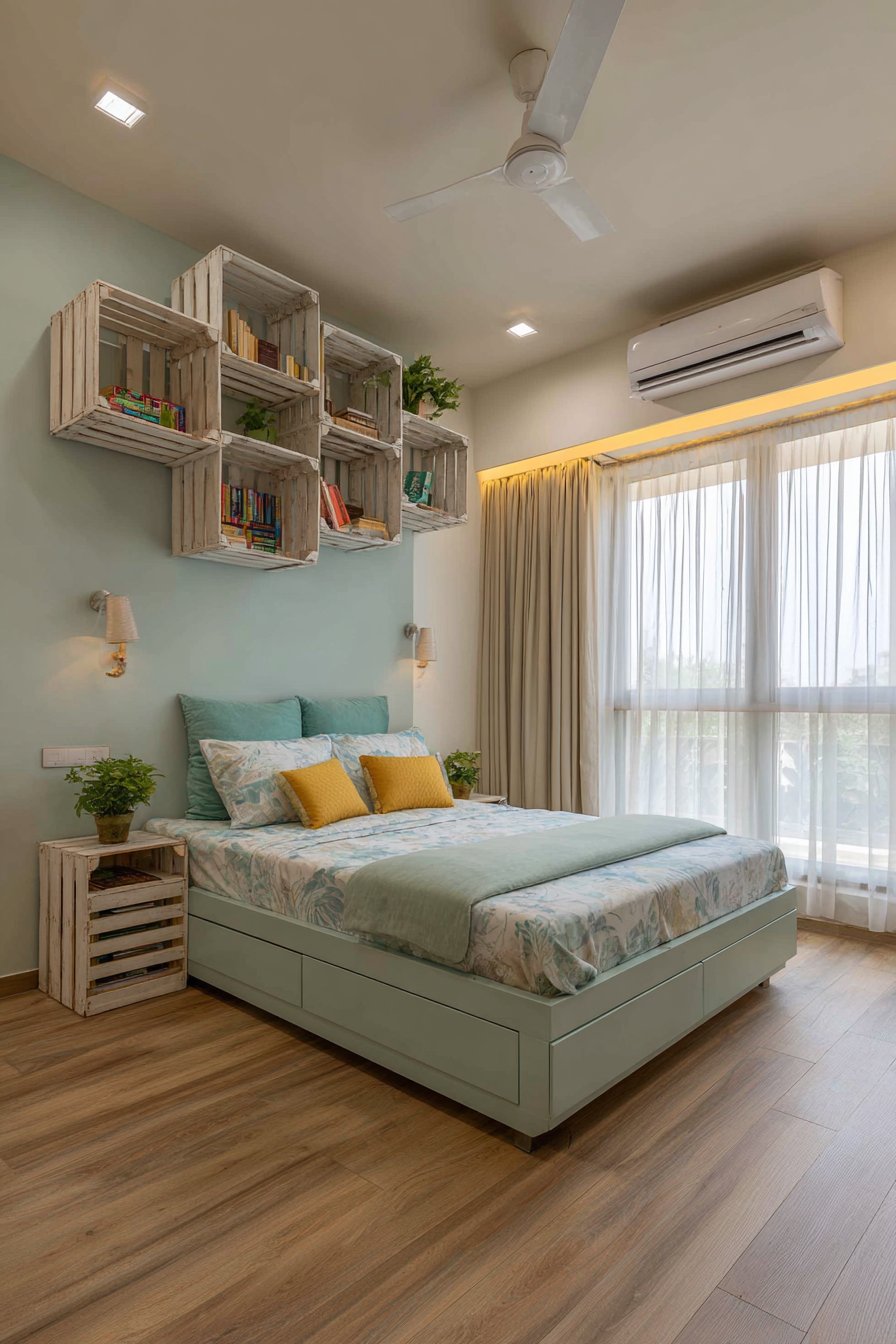
Repurposing humble wooden crates into a functional headboard demonstrates creativity, resourcefulness, and sustainable design thinking—all values increasingly important to conscious consumers. This DIY headboard consists of wooden crates mounted horizontally on the wall behind the bed, creating compartments perfectly sized for books, phone charging stations, glasses, medications, and other nighttime essentials. The crates painted in soft sage green introduce subtle color that coordinates with accent pillows and other room elements.
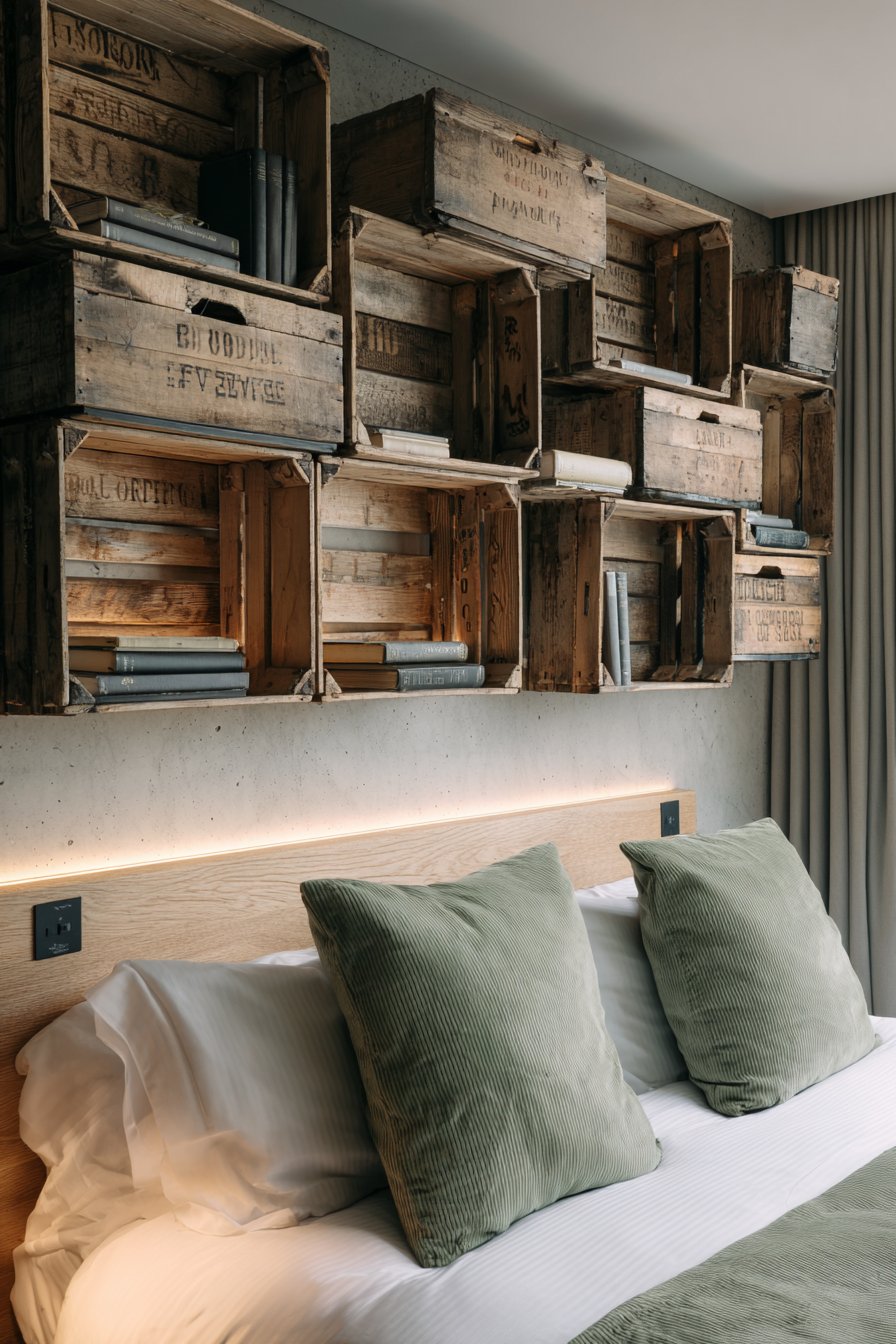
LED strip lighting installed within the crate compartments provides ambient backlighting that serves as gentle nighttime illumination. This soft glow allows you to navigate the room during nighttime bathroom trips without harsh overhead lights that destroy sleep quality. The lighting also highlights the three-dimensional quality of the crate storage, creating visual interest and displaying stored items attractively. The horizontal mounting pattern creates strong visual lines that make the bed area feel wider and more substantial.
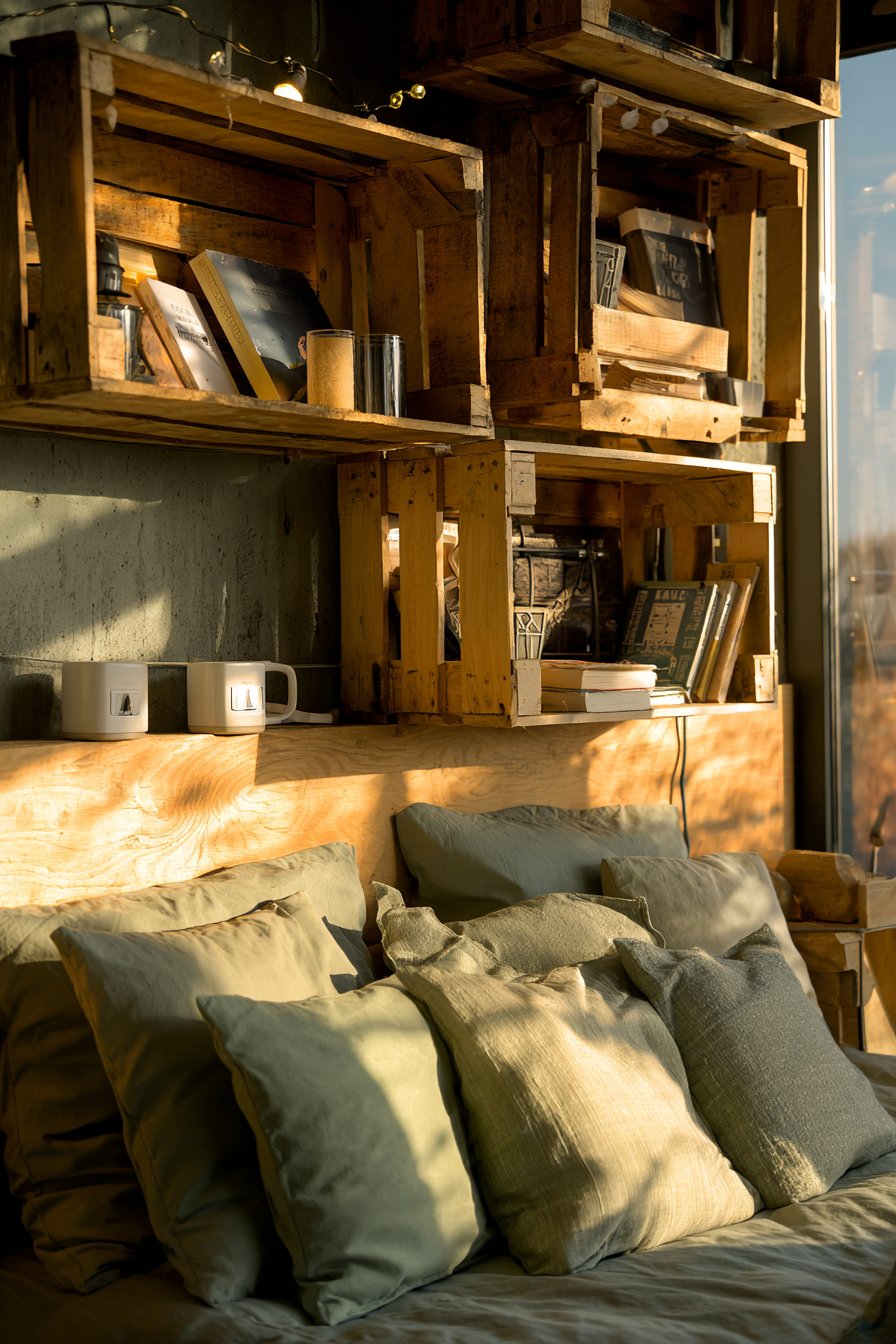
This project represents an accessible entry point into DIY home improvement for those without extensive tools or skills. Wooden crates are widely available at craft stores or can be sourced from farmers’ markets or grocery stores. The painting process allows complete color customization, and mounting requires only basic tools—a drill, level, and appropriate wall anchors. The result is a completely unique piece that reflects personal style while solving real storage challenges.
Key Design Tips:
- Sand crates thoroughly before painting to ensure smooth surfaces without splinters and to help paint adhere properly
- Mount crates securely into wall studs or use heavy-duty anchors rated for the weight of crates plus contents
- Install small surge protector strips within crates to create hidden charging stations for multiple devices
- Line crate interiors with decorative paper or fabric for a finished look that conceals raw wood
- Vary the contents of each crate—mix practical items with decorative objects to prevent the headboard from appearing purely utilitarian
15. Corner Desk Workspace Transformation
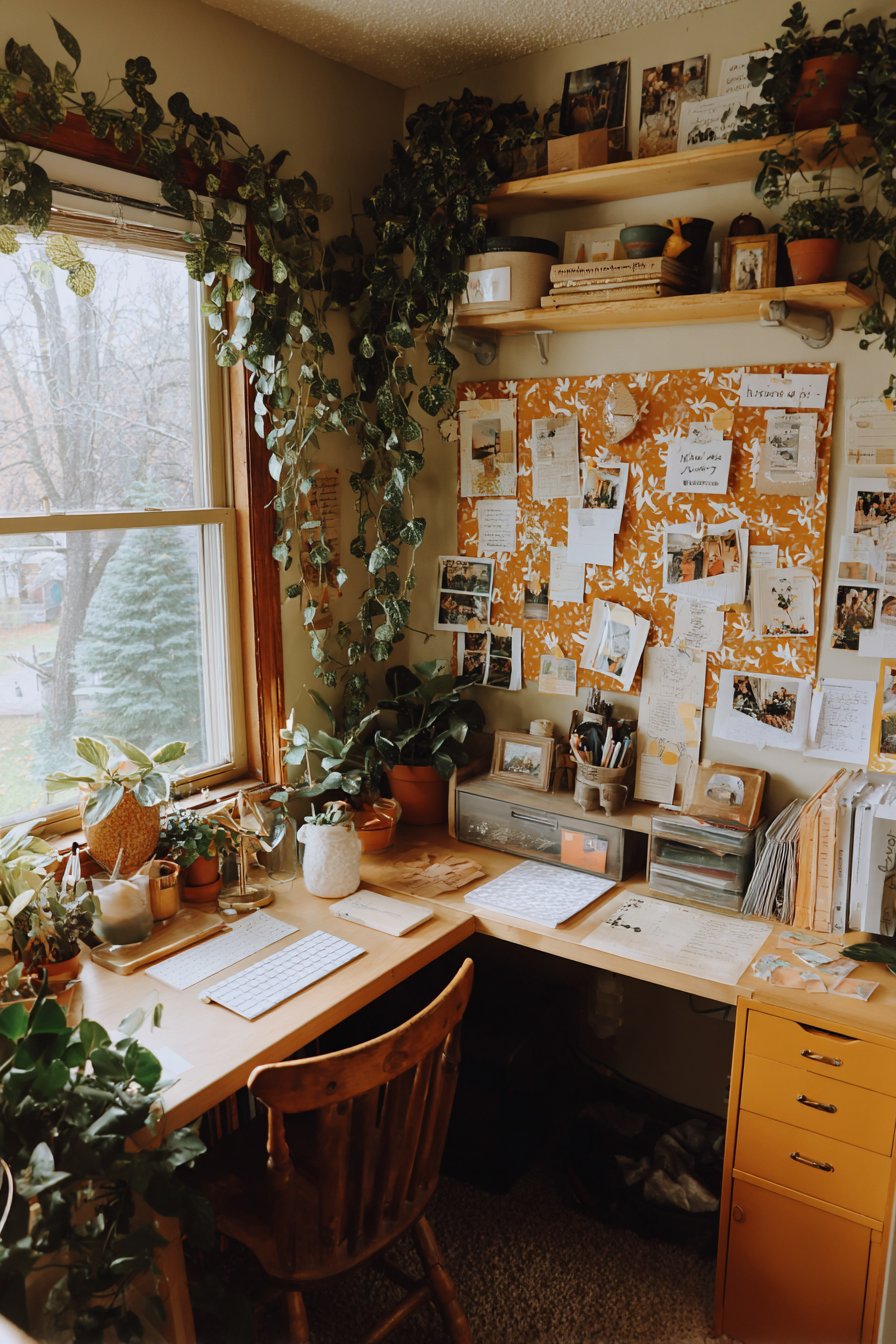
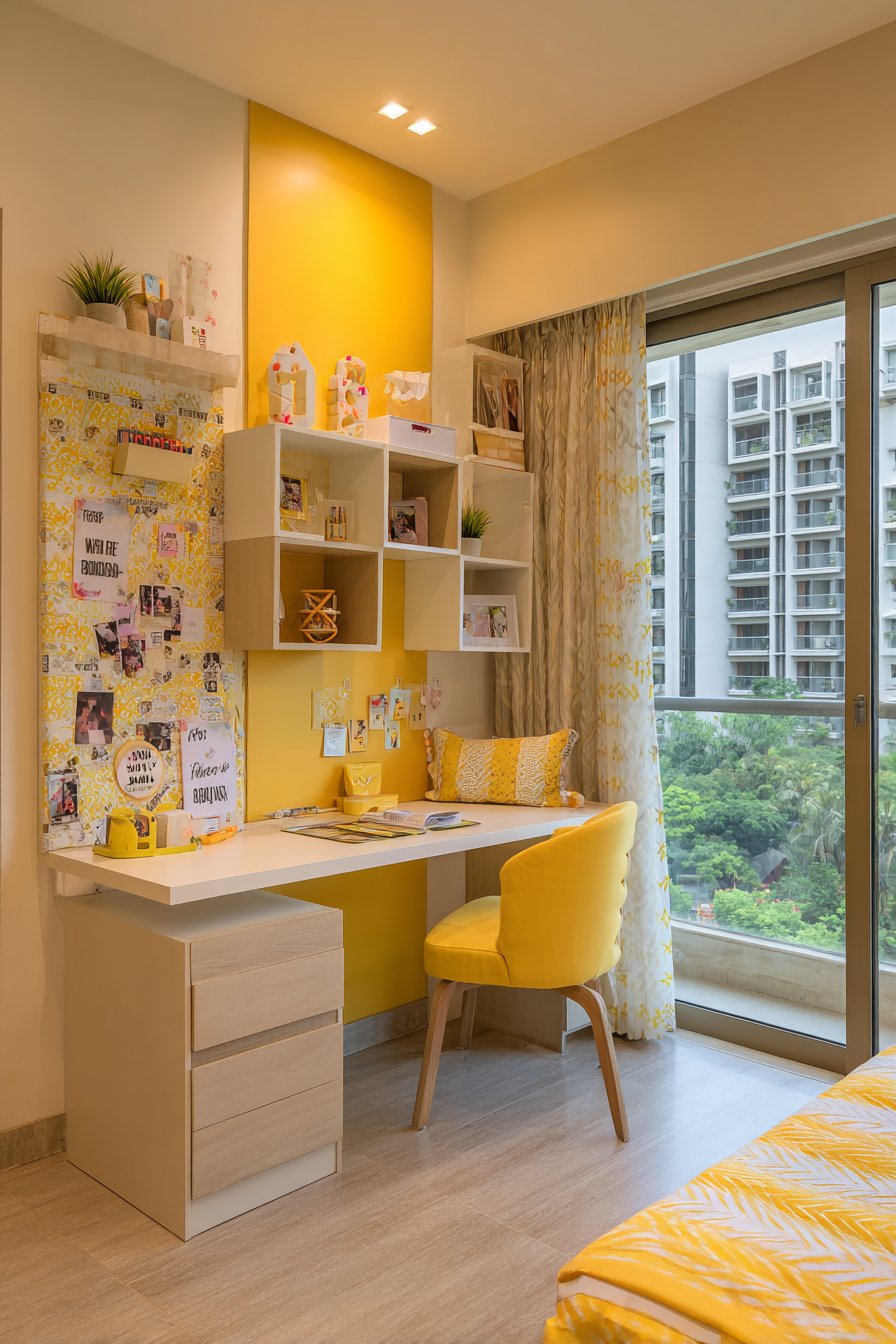
Dead corners represent some of the most underutilized space in rectangular rooms, yet they offer significant potential for functional zones. This corner desk setup maximizes awkward angular space by installing a custom corner desk or positioning an L-shaped desk configuration. Floating shelves arranged in an asymmetric pattern above create visual interest while providing graduated storage that accommodates various item sizes from small office supplies to larger reference books.
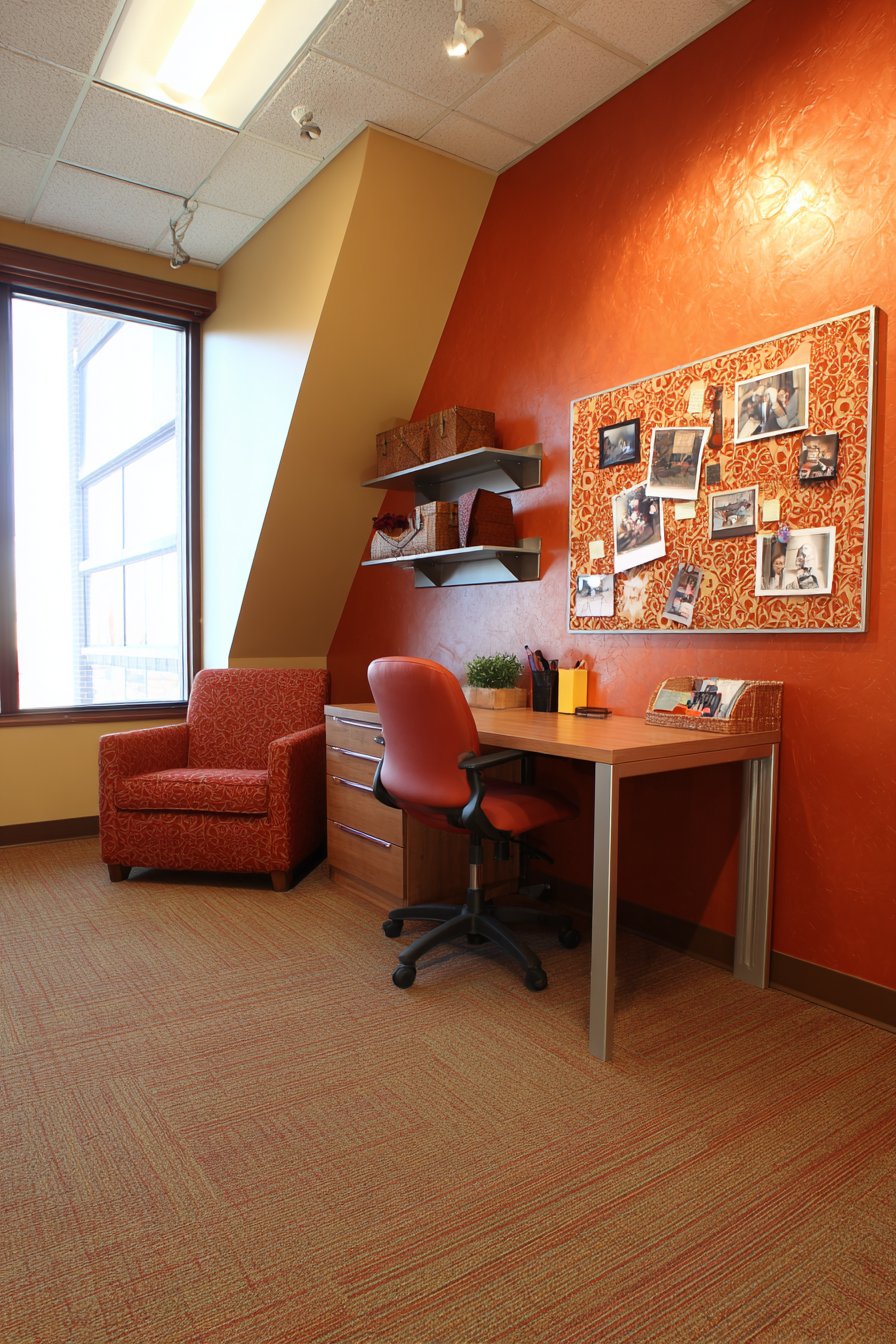
A bulletin board covered in patterned fabric transforms a utilitarian organizational tool into a decorative element. The fabric covering can be changed seasonally or whenever inspiration strikes, providing an easy refresh without replacing the entire board. The bulletin board displays notes, inspiration photos, calendar pages, and deadline reminders, keeping important information visible and top-of-mind. A desk organizer corrals pens, scissors, tape, and other supplies in one defined location, preventing the dreaded desk drawer junk accumulation.
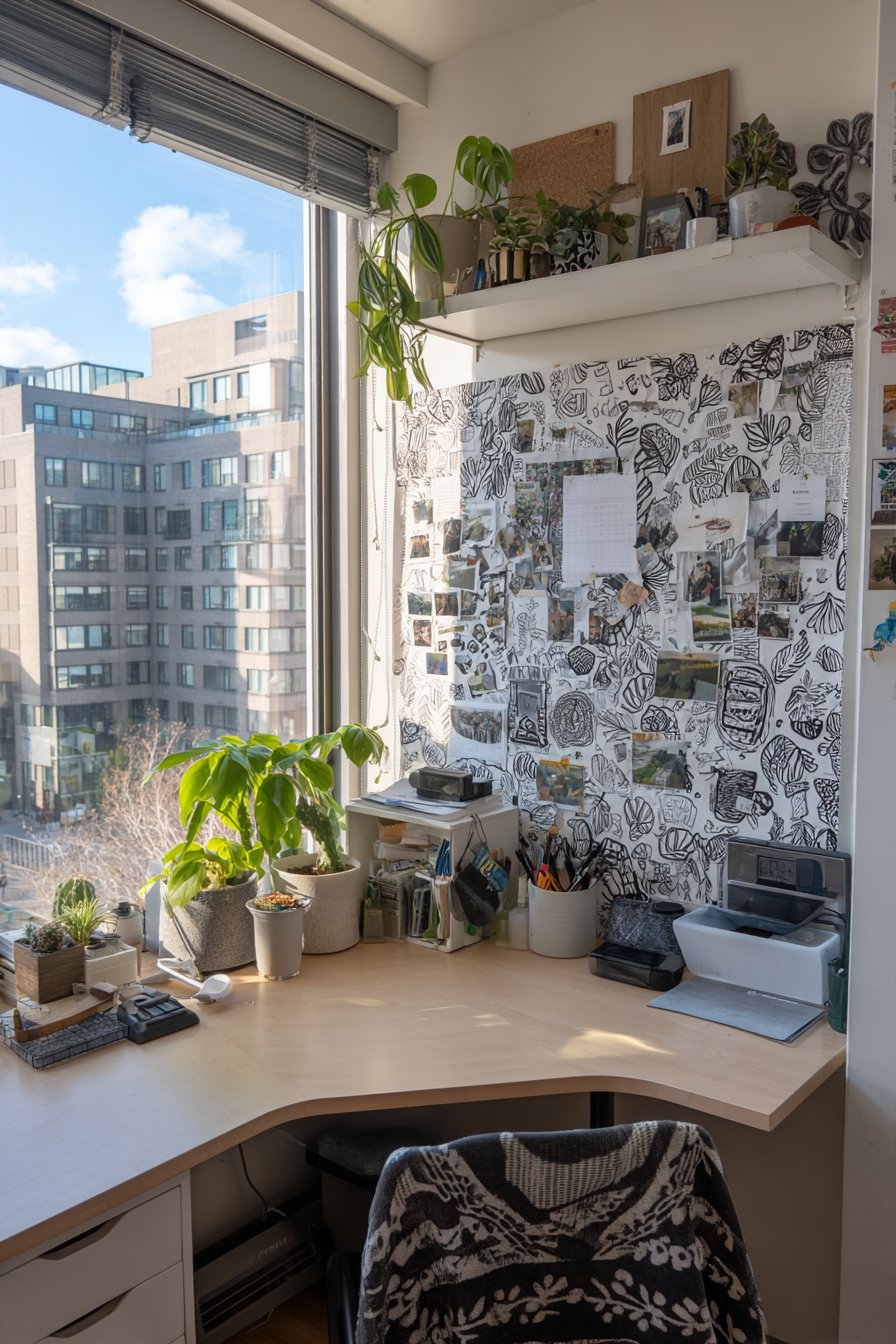
Painting the corner in a contrasting accent color—perhaps a rich terracotta, deep teal, or warm mustard—creates visual differentiation that psychologically separates the workspace from the rest of the room. This color-blocking technique helps your brain recognize when you’ve entered work mode versus relaxation mode, improving focus during study sessions and allowing better disconnection during rest times. A small desk plant adds life and air-purifying benefits without consuming significant surface space.
Key Design Tips:
- Ensure adequate lighting from multiple angles in corner setups to prevent your body from casting shadows on your work surface
- Use the corner walls for vertical storage to keep the desk surface clear and maintain productive workspace
- Position your computer screen to avoid window glare while allowing periodic breaks to look at distant objects through the window (20-20-20 rule)
- Add a small footrest or textured mat under your desk to promote circulation and comfort during extended sitting
- Implement cable management solutions immediately when setting up the workspace to prevent cord tangles from developing
16. Minimalist Capsule Wardrobe Display
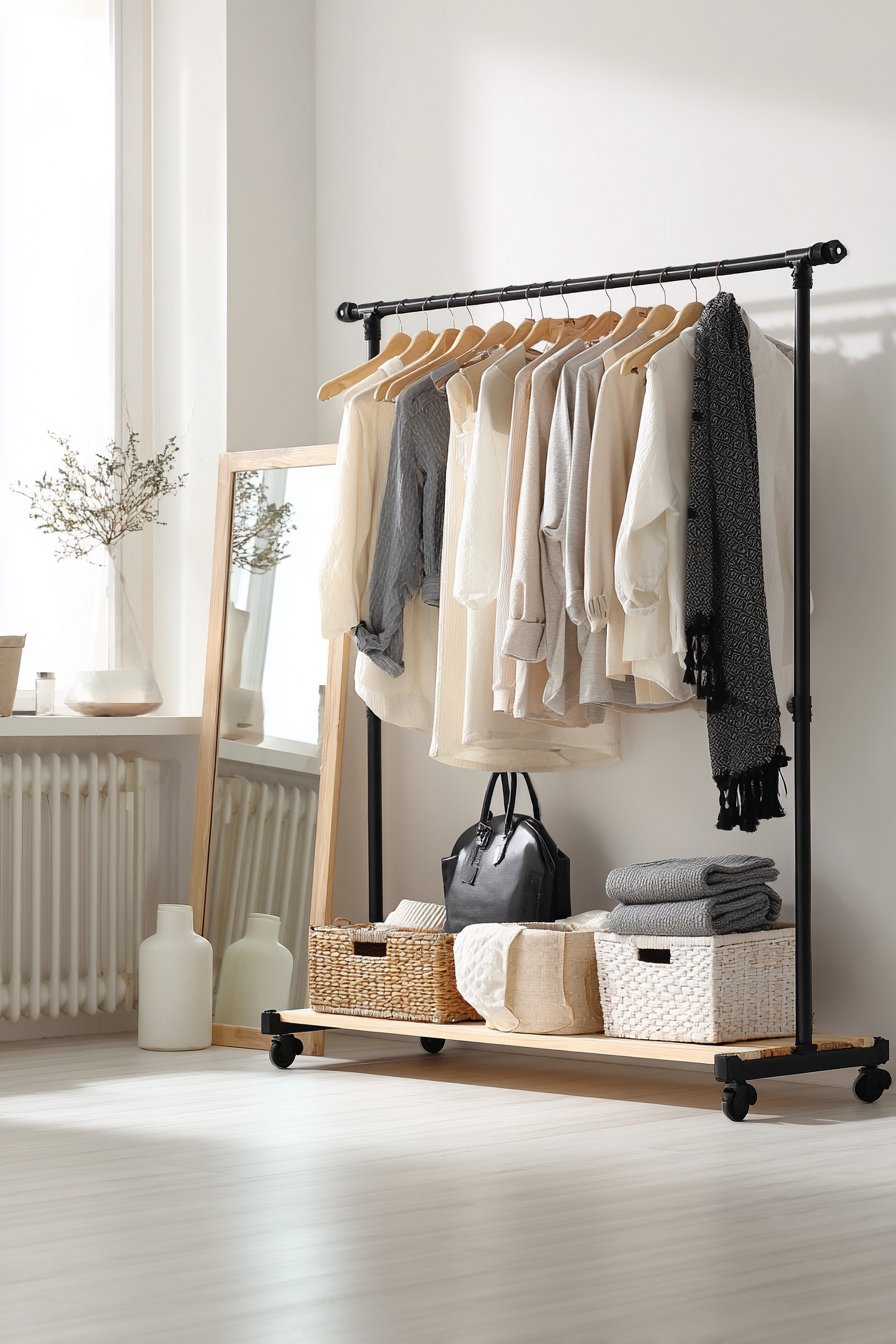
The capsule wardrobe philosophy emphasizes quality over quantity, focusing on versatile pieces in a cohesive color palette that mix and match effortlessly. This design showcases that intentional approach through a rolling garment rack displaying a carefully curated clothing collection on wooden hangers. The uniform hangers create immediate visual order, while organizing garments by type or color creates a pleasing gradient effect that’s both practical and aesthetically pleasing.
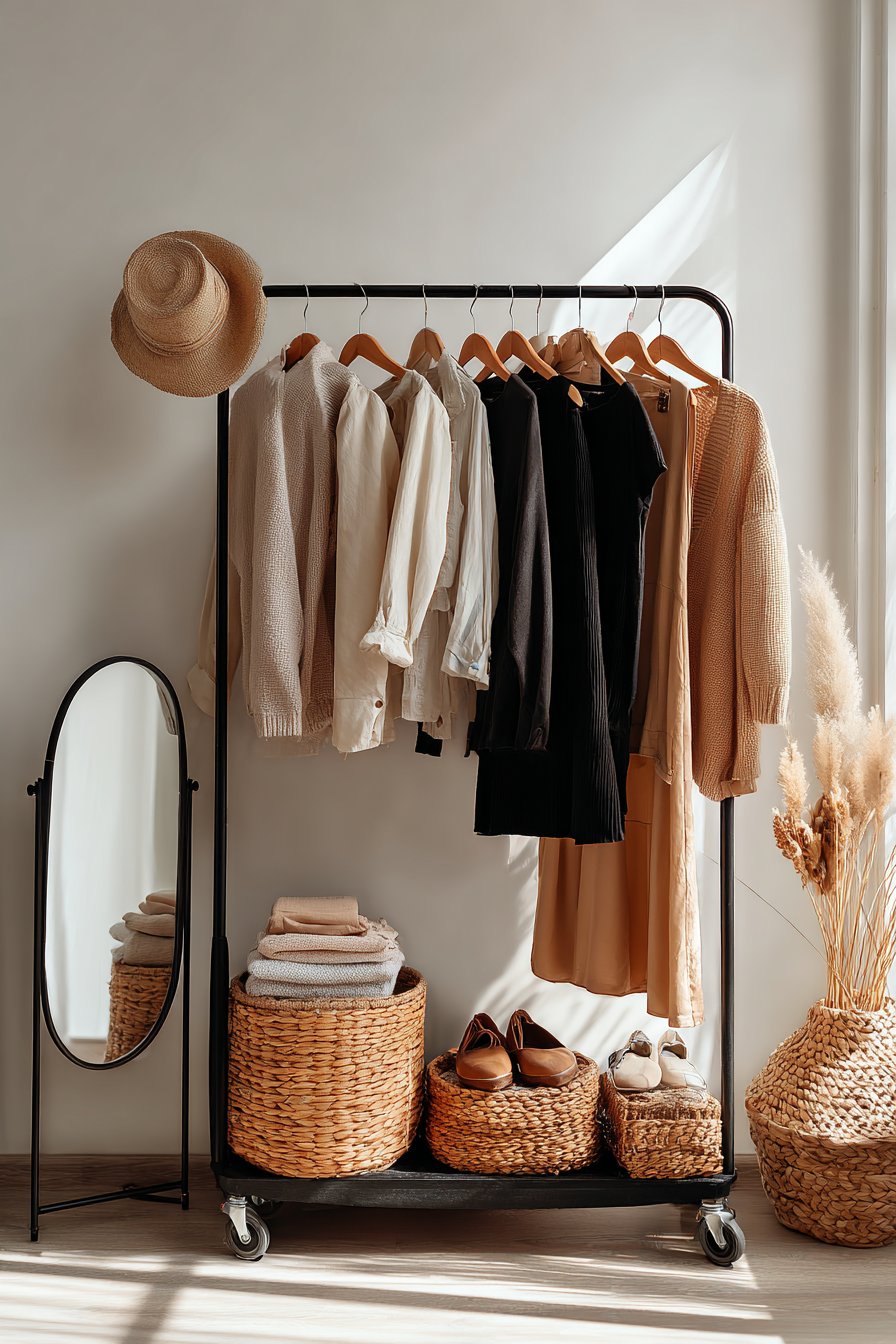
Below the rack, woven baskets in graduated sizes store folded items like sweaters, activewear, loungewear, and accessories. The natural texture of the baskets adds organic warmth while concealing contents that would create visual chaos if openly displayed. A full-length standing mirror positioned nearby serves essential functional purposes while reflecting light to brighten the corner and create the illusion of expanded space—a crucial benefit in small PG rooms.
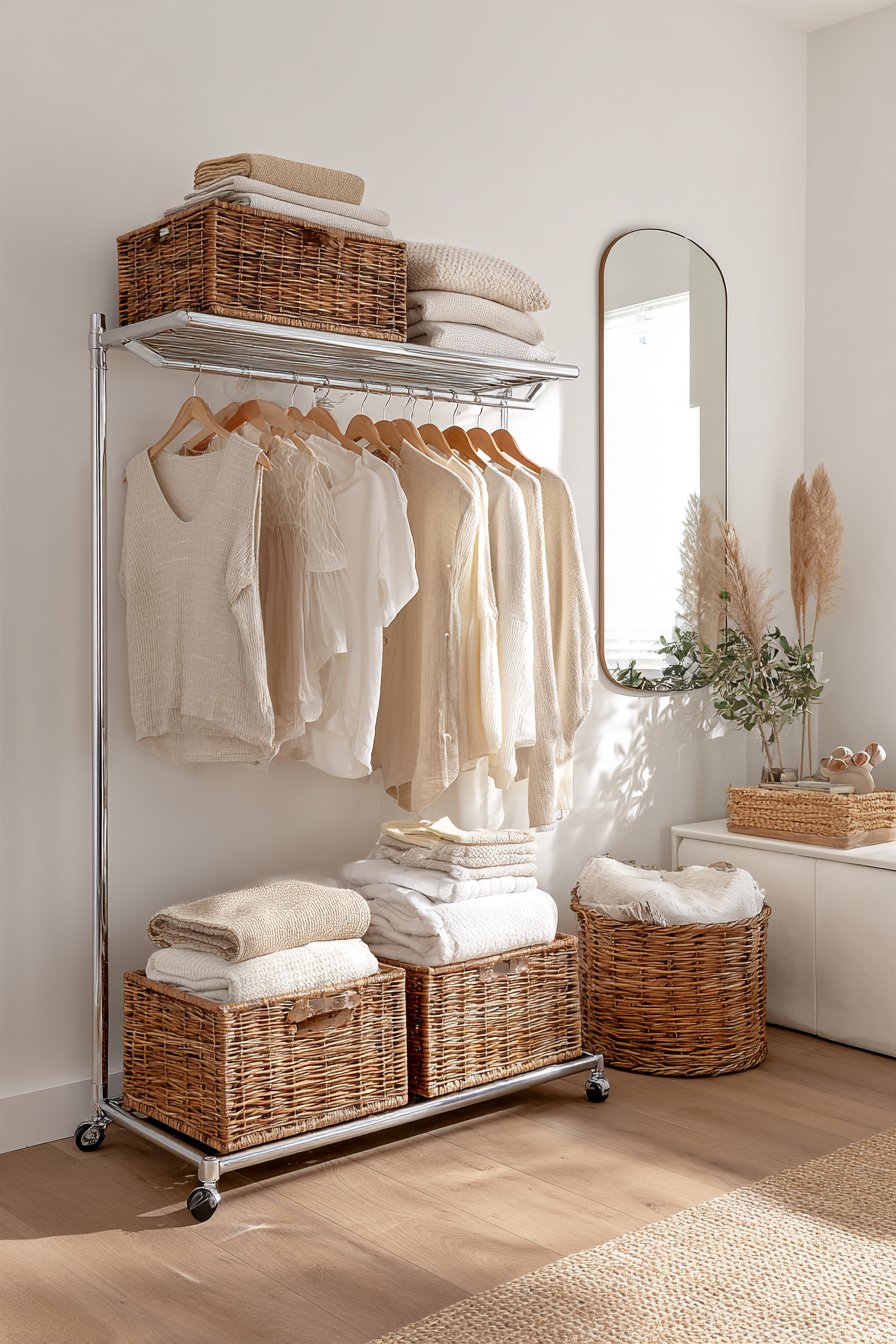
The clean white wall backdrop prevents the displayed clothing from overwhelming the space, allowing the organized wardrobe to appear intentional and curated rather than cluttered or messy. This approach to clothing storage encourages mindful consumption—when every piece is visible, you become more aware of what you own, what you actually wear, and what simply occupies space. The rolling rack’s mobility allows for easy rearrangement or temporary relocation when you need to clear floor space for yoga, exercise, or hosting guests.

Key Design Tips:
- Limit your wardrobe to pieces you’ve worn within the past 3-6 months, storing or donating items that no longer serve your lifestyle
- Choose a neutral color palette with a few accent colors to maximize outfit combinations from minimal pieces
- Invest in quality basics—well-made tees, classic jeans, versatile blazers—that form the foundation of endless outfit variations
- Rotate seasonal items, storing off-season clothing under the bed or in upper storage to keep only currently relevant pieces accessible
- Implement a “one in, one out” policy to maintain your curated collection and prevent accumulation creep
17. Removable Washi Tape Wall Art
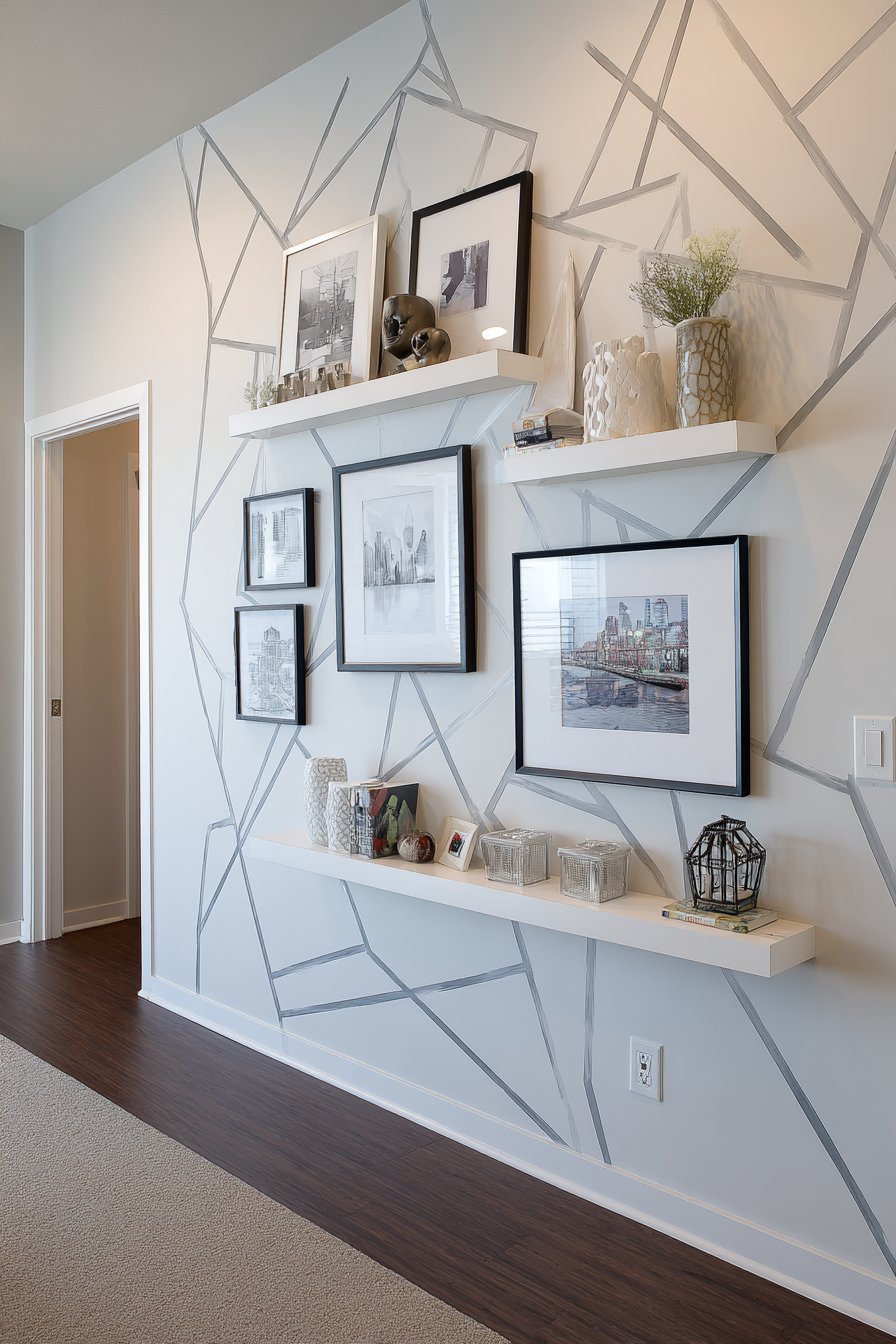
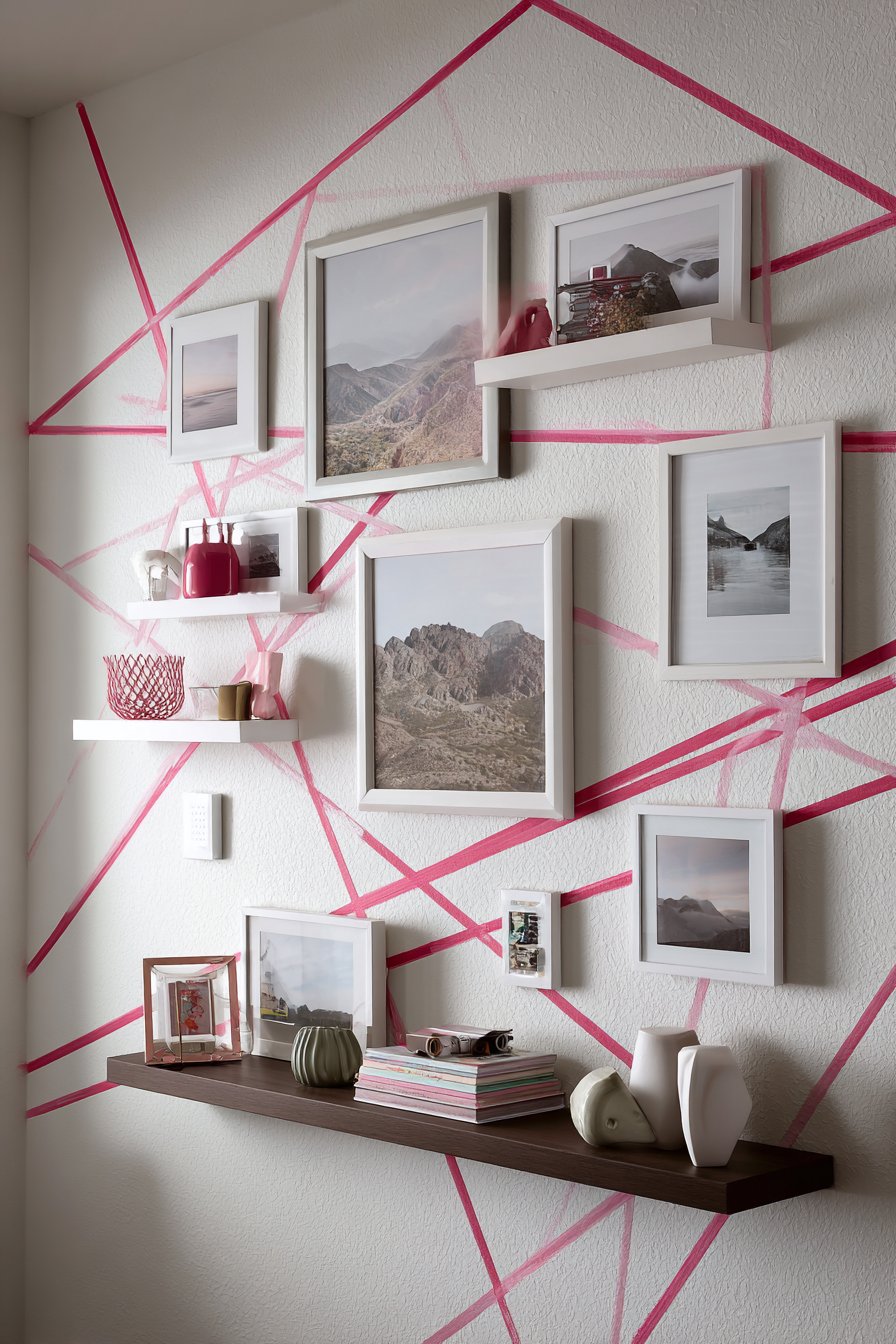
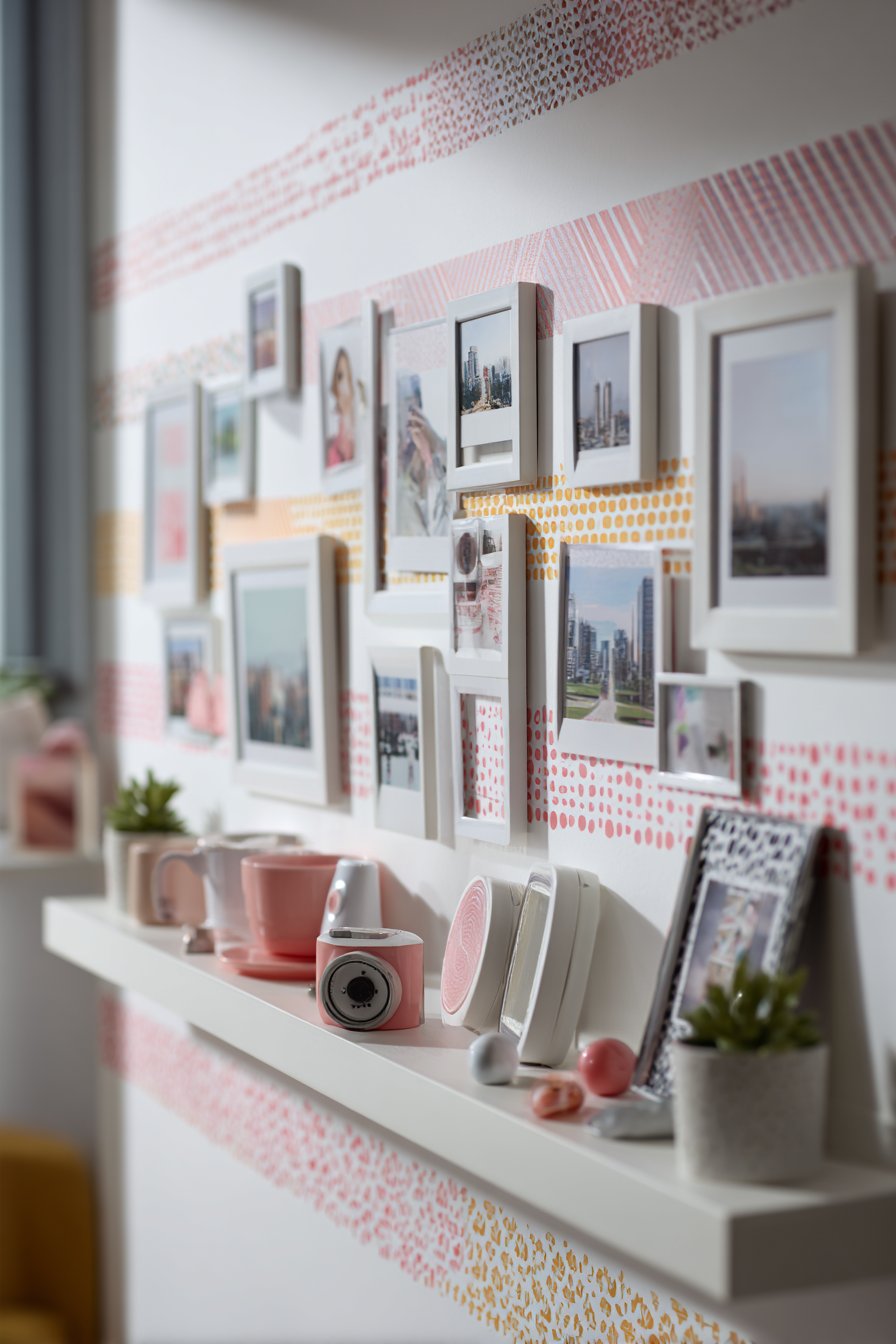
Rental restrictions often prohibit wall modifications, leaving PG residents feeling powerless to personalize their spaces. Washi tape wall art provides an ingenious workaround, using decorative tape to create geometric patterns, frames, and designs directly on walls without paint or permanent adhesives. This technique allows complete creative freedom—you can outline faux frames, create geometric accent walls, design inspirational word art, or form patterns that complement your decor style.
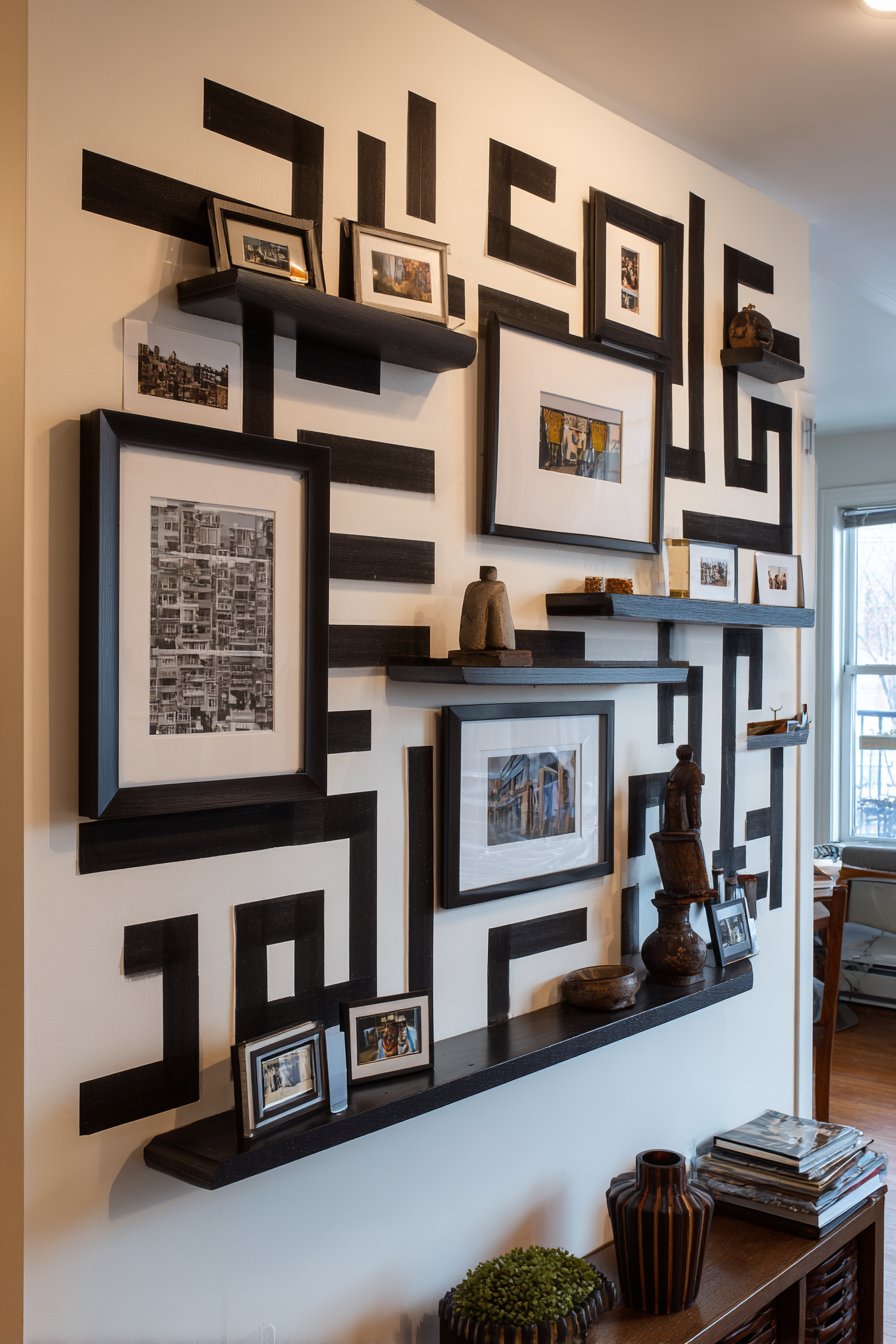
Within the washi tape frames, lightweight prints and polaroid photos create a dynamic gallery that can be updated constantly without additional wall damage. The tape frames can be any size or shape—mixing squares, rectangles, and circles creates visual interest and modern appeal. A floating shelf integrated into the composition displays small three-dimensional objects like succulents, small sculptures, or meaningful souvenirs that add depth to the otherwise flat wall surface.
This approach particularly appeals to those who enjoy frequent decor changes or haven’t yet committed to a specific aesthetic. When you’re ready for something new, the washi tape peels off cleanly without leaving residue or damaging paint, and you can immediately create an entirely different design. The standard rental white wall color actually works perfectly as a neutral backdrop for washi tape art, allowing colors and patterns to pop without clashing.
Key Design Tips:
- Test washi tape on a small, inconspicuous wall area before covering large sections to ensure it removes cleanly from your specific paint type
- Use a level and measuring tape when creating geometric patterns or faux frames to ensure professional-looking straight lines
- Remove and replace washi tape every 6-12 months to prevent adhesive degradation that might make removal more difficult
- Combine multiple complementary washi tape colors and patterns for added visual interest and dimension
- Press tape firmly against walls during application to prevent peeling at edges, but avoid excessive pressure that might remove paint when removed
18. Peaceful Wellness and Meditation Corner
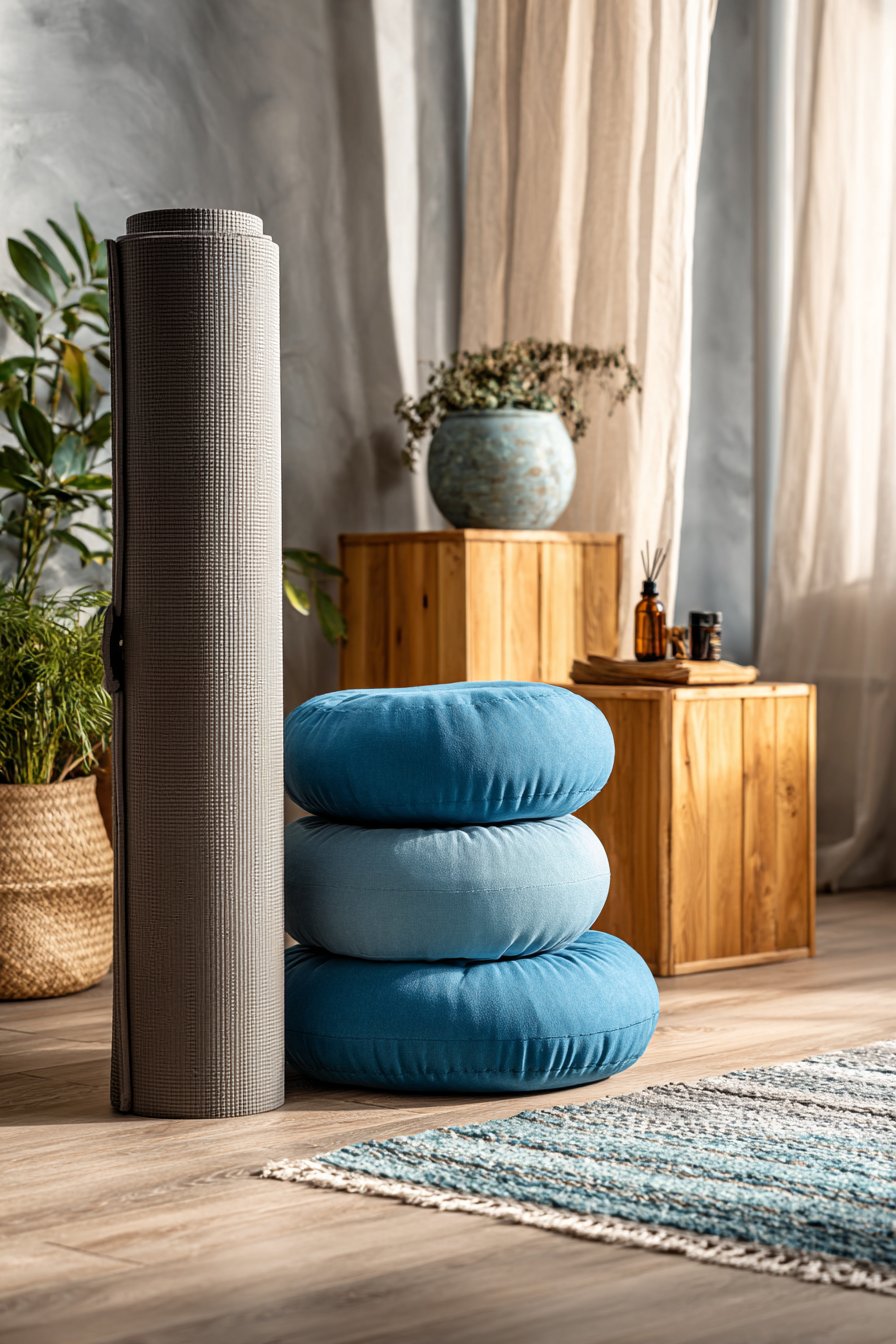
Mental health and self-care have rightfully become priorities, especially for young people navigating the stresses of education, early careers, and independent living. This dedicated wellness corner creates a sanctuary for mindfulness practices, yoga, meditation, and quiet reflection. A vertical yoga mat holder stores your mat compactly when not in use, while meditation cushions in calming blue tones provide comfortable seating for seated meditation or breathwork practices.
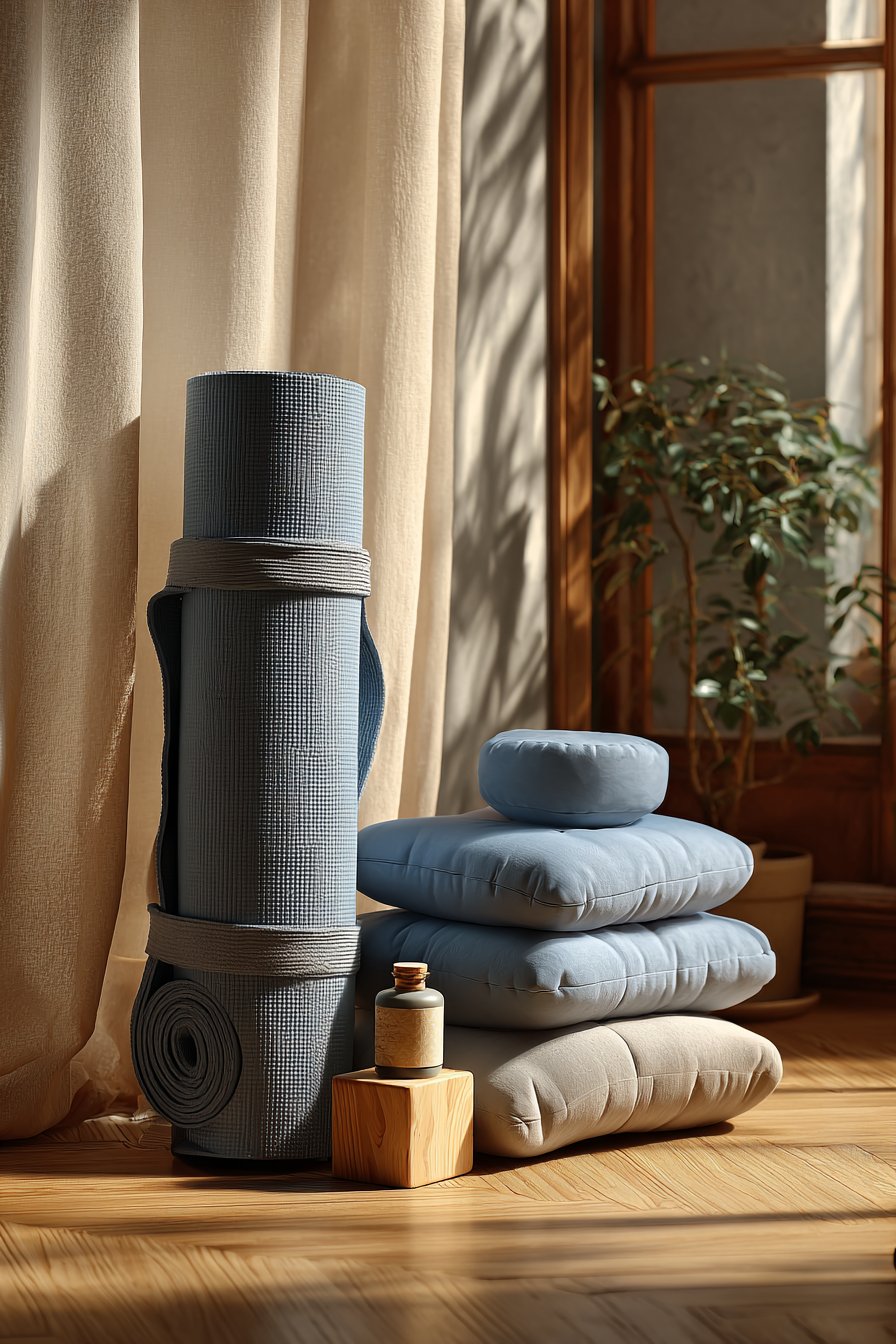
A small essential oil diffuser resting on a simple wooden block disperses calming scents like lavender, eucalyptus, or sandalwood, engaging the olfactory sense to deepen relaxation. The area positioned near natural light harnesses the proven psychological benefits of sunlight exposure, while sheer curtains create soft, filtered illumination that prevents harsh glare during meditation. A small plant—perhaps a peace lily or snake plant known for air-purifying properties—connects the space to nature and reinforces the wellness intention.
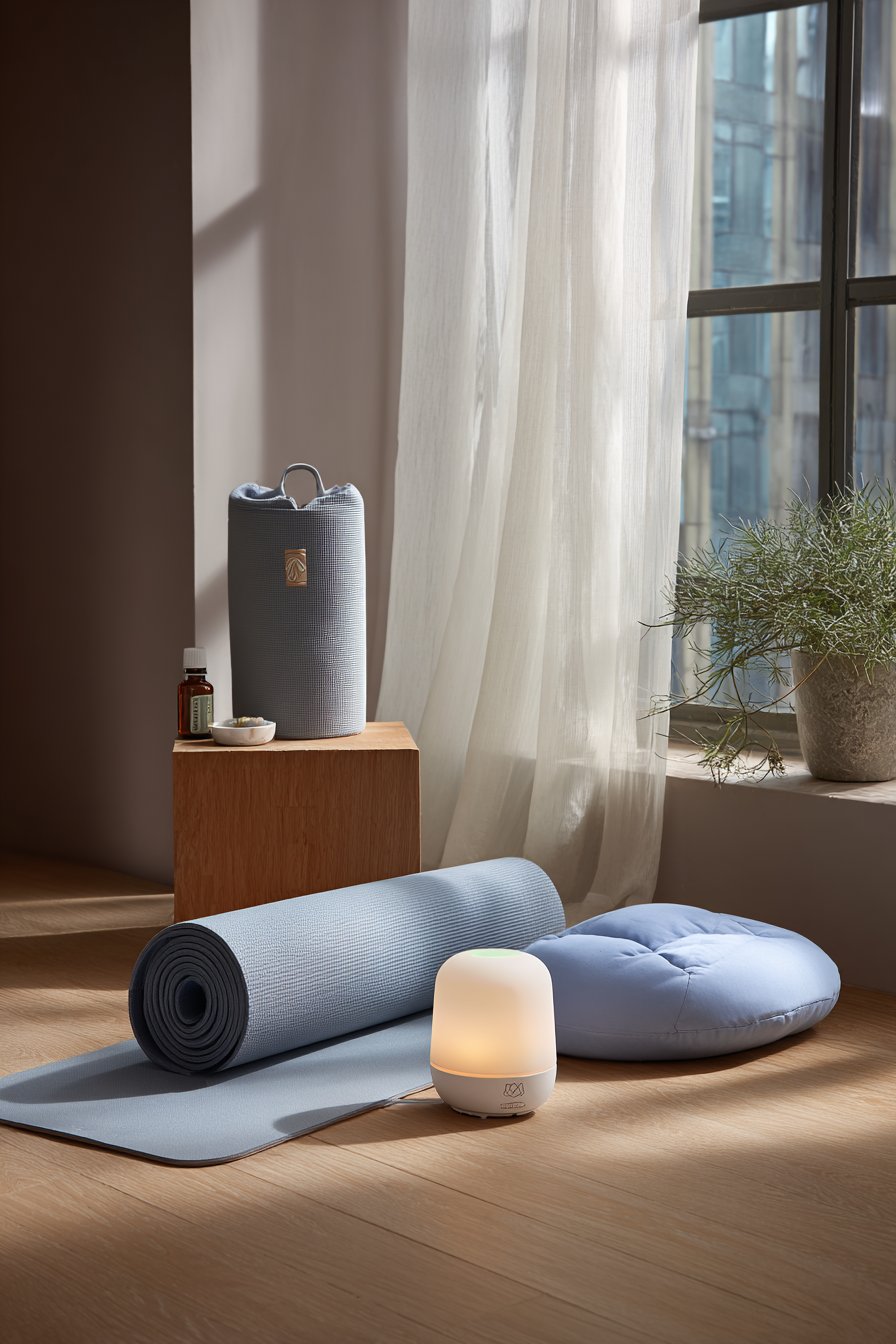
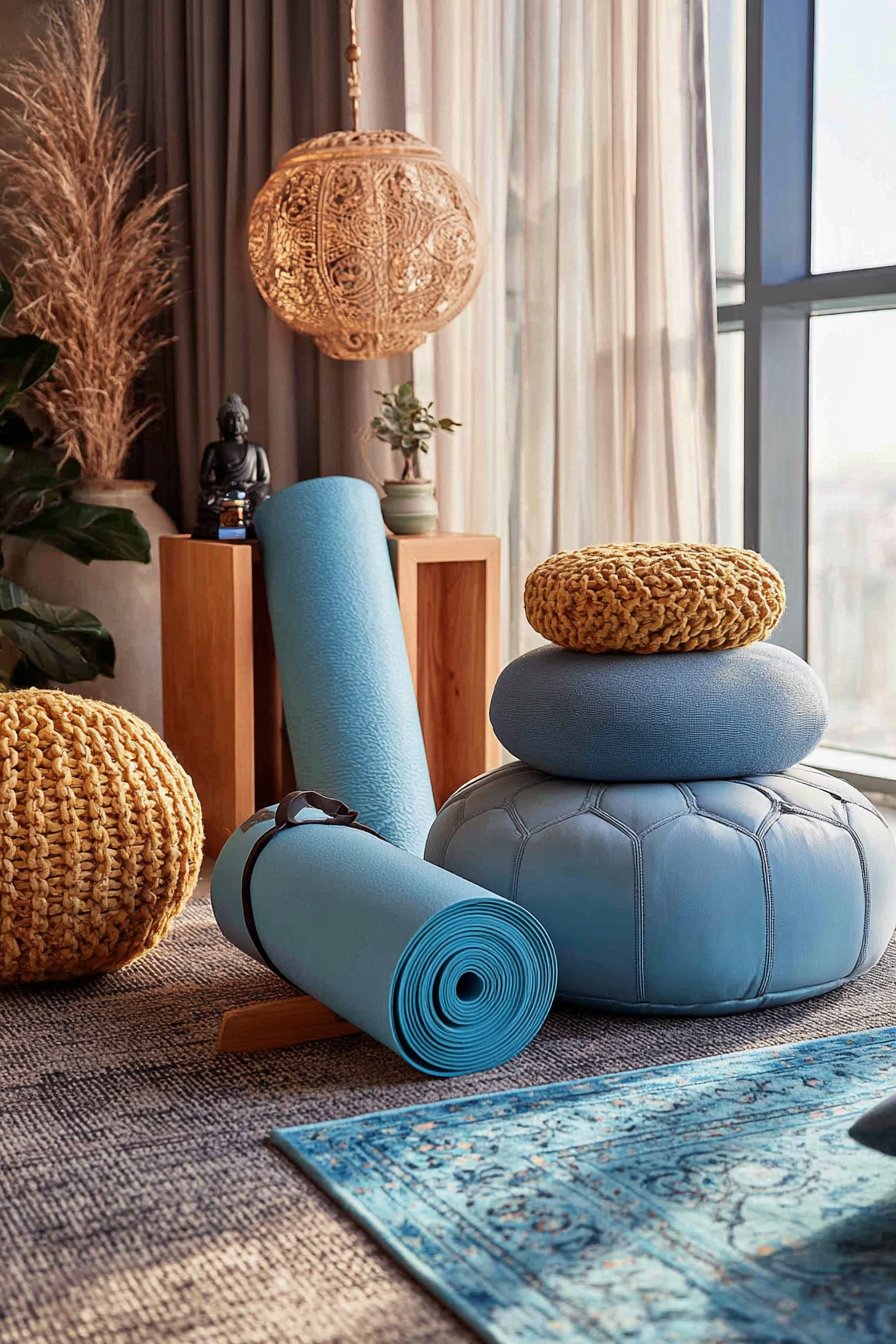
The minimal clutter in this corner is intentional, reflecting meditation principles of simplicity and mindfulness. Every object serves a clear purpose, and the serene color palette of soft blues, whites, and natural wood tones creates visual calm that supports the space’s contemplative purpose. Even spending just 5-10 minutes daily in this dedicated corner can significantly impact stress levels, sleep quality, and overall well-being.
Key Design Tips:
- Position your meditation corner away from high-traffic areas and digital distractions to support focus and tranquility
- Choose cushions with appropriate firmness to support extended seated meditation without discomfort or circulation issues
- Keep a small basket nearby for storing meditation accessories like guided meditation cards, journals, or inspiring books
- Set boundaries with roommates about respecting this space during your designated practice times
- Consider adding gentle background sound through a small bluetooth speaker playing nature sounds, binaural beats, or meditation music
19. Repurposed Ladder Nightstand Alternative
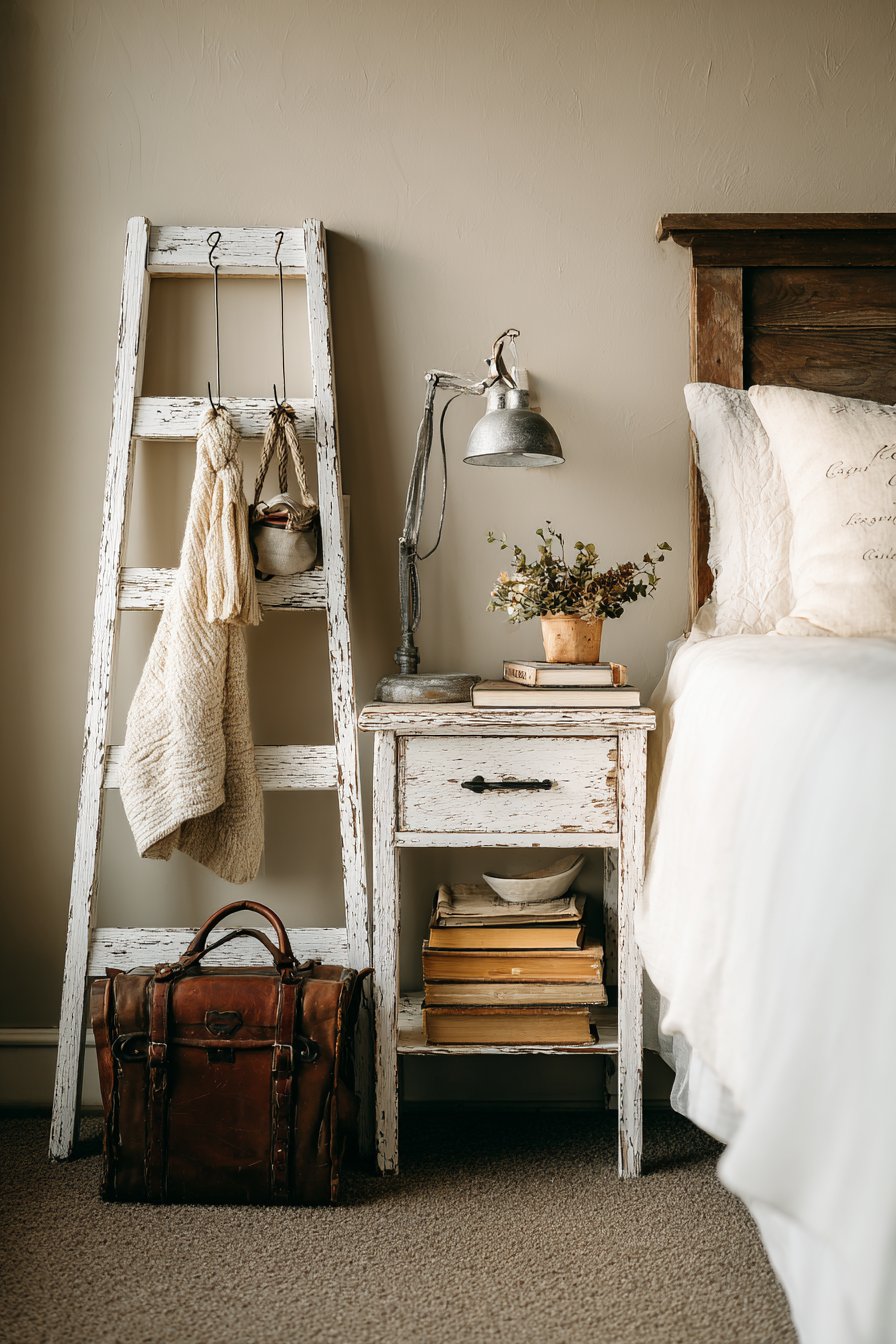
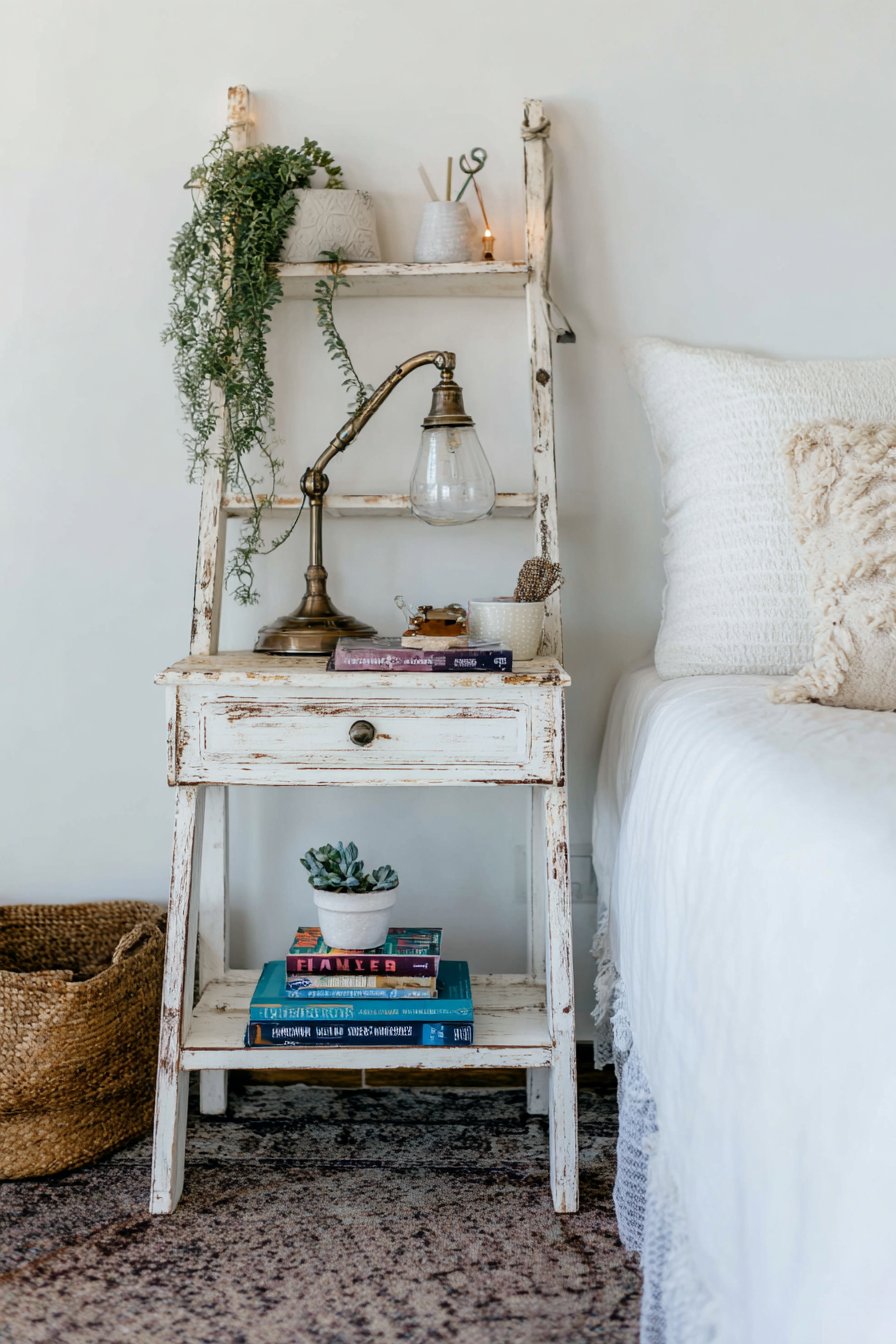
Creative repurposing transforms ordinary objects into unique furniture pieces that add character while solving functional challenges. A vintage wooden ladder leaned against the wall beside your bed becomes an unexpectedly charming nightstand alternative. Each rung holds different items—a reading lamp with a curved arm perched on the bottom rung, books stacked on the middle rungs, and a small potted plant near the top adding greenery at varied heights.
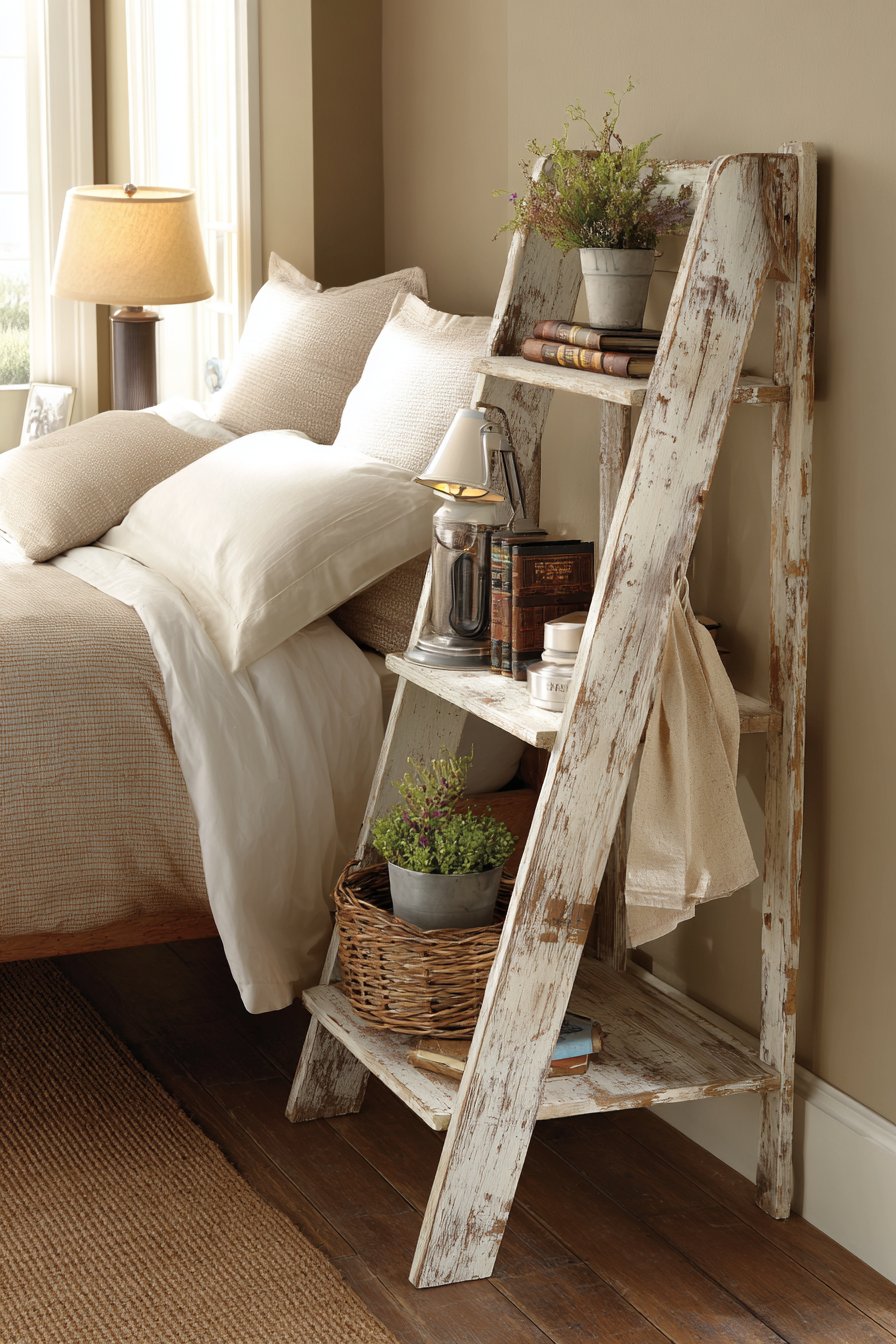
The ladder painted in distressed white finish introduces rustic farmhouse charm that contrasts beautifully with more modern room elements, creating an eclectic collected-over-time aesthetic. S-hooks attached to the rungs hold items like charging cables, reading glasses, a sleep mask, or a small basket containing nighttime essentials. This vertical storage solution occupies minimal floor space while providing surprising storage capacity across its multiple rungs.
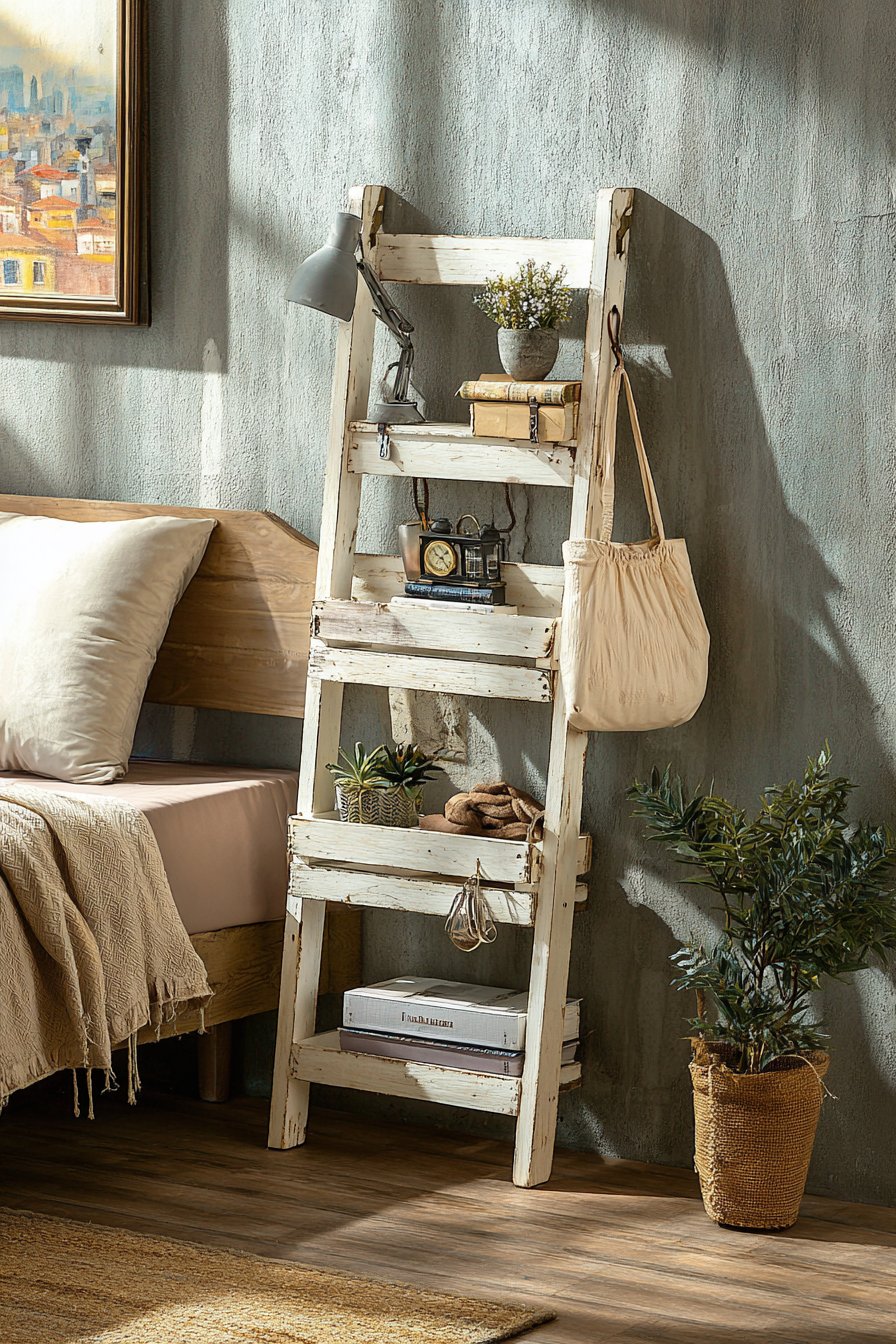
The ladder’s lean angle creates dynamic visual interest that breaks up the perpendicular lines dominating most room furniture. Its imperfect, worn appearance tells a story and introduces authentic character that mass-produced furniture cannot replicate. For safety, ensure the ladder is securely positioned against the wall and won’t slide when items are removed or replaced.
Key Design Tips:
- Source vintage ladders from thrift stores, salvage yards, or online marketplaces for authentic character at affordable prices
- Sand and refinish the ladder if needed to remove any rough spots that could snag bedding or scratch skin
- Secure the ladder top to the wall with brackets or hooks to prevent accidents if someone bumps it during nighttime navigation
- Distribute weight evenly across rungs and avoid placing heavy items on upper rungs where they’re less stable
- Add small decorative elements like fairy lights woven through rungs or a small garland for seasonal festivity
20. Organized Tech Charging Station
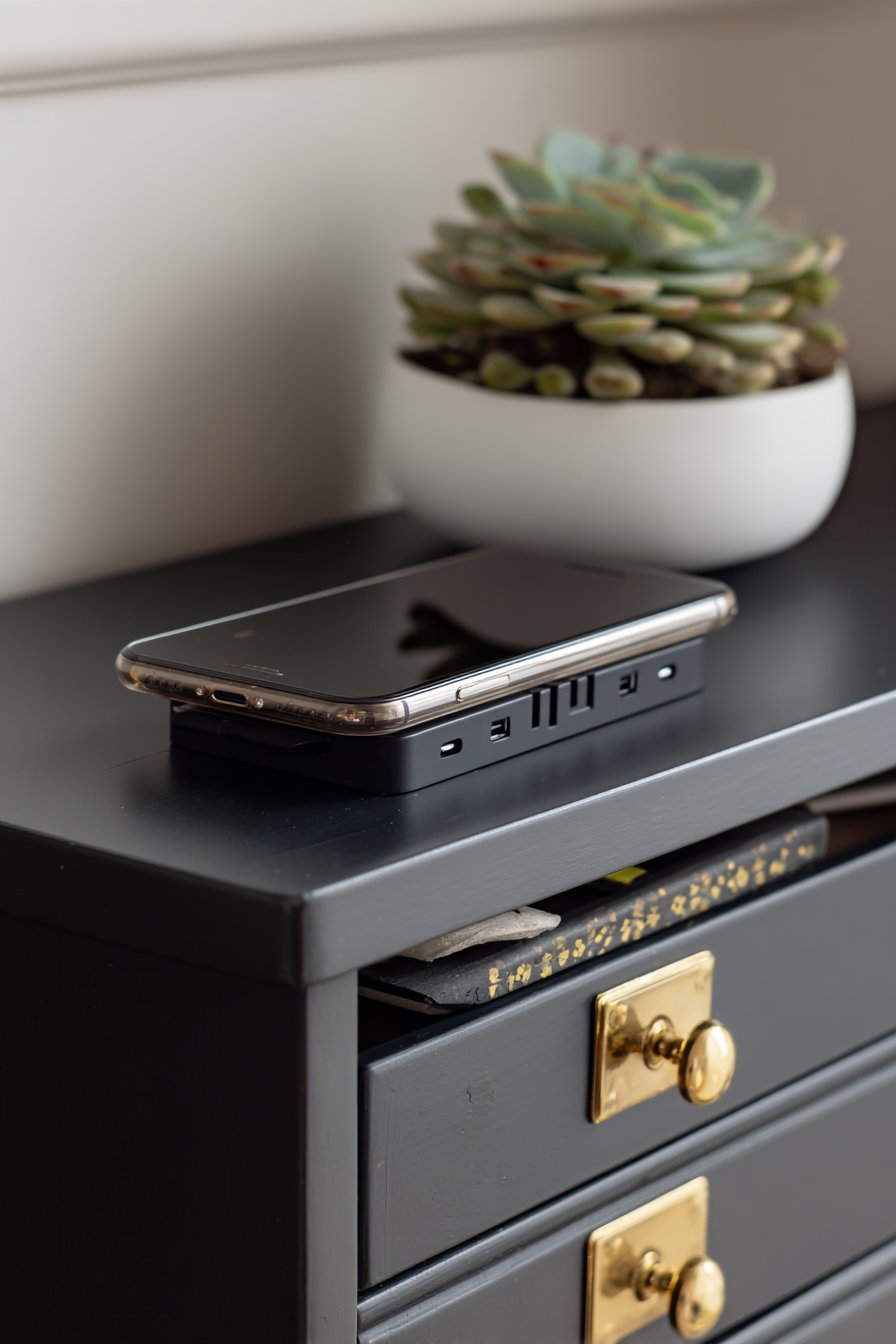
In our hyper-connected world, managing multiple devices and their charging needs creates both functional and aesthetic challenges. This dedicated charging station transforms potential cord chaos into an organized system. A small nightstand with a power strip mounted inside its drawer or back panel keeps electrical connections hidden while remaining accessible. Cable management clips route cords neatly along furniture edges, preventing the tangled mess that typically accompanies multiple charging devices.
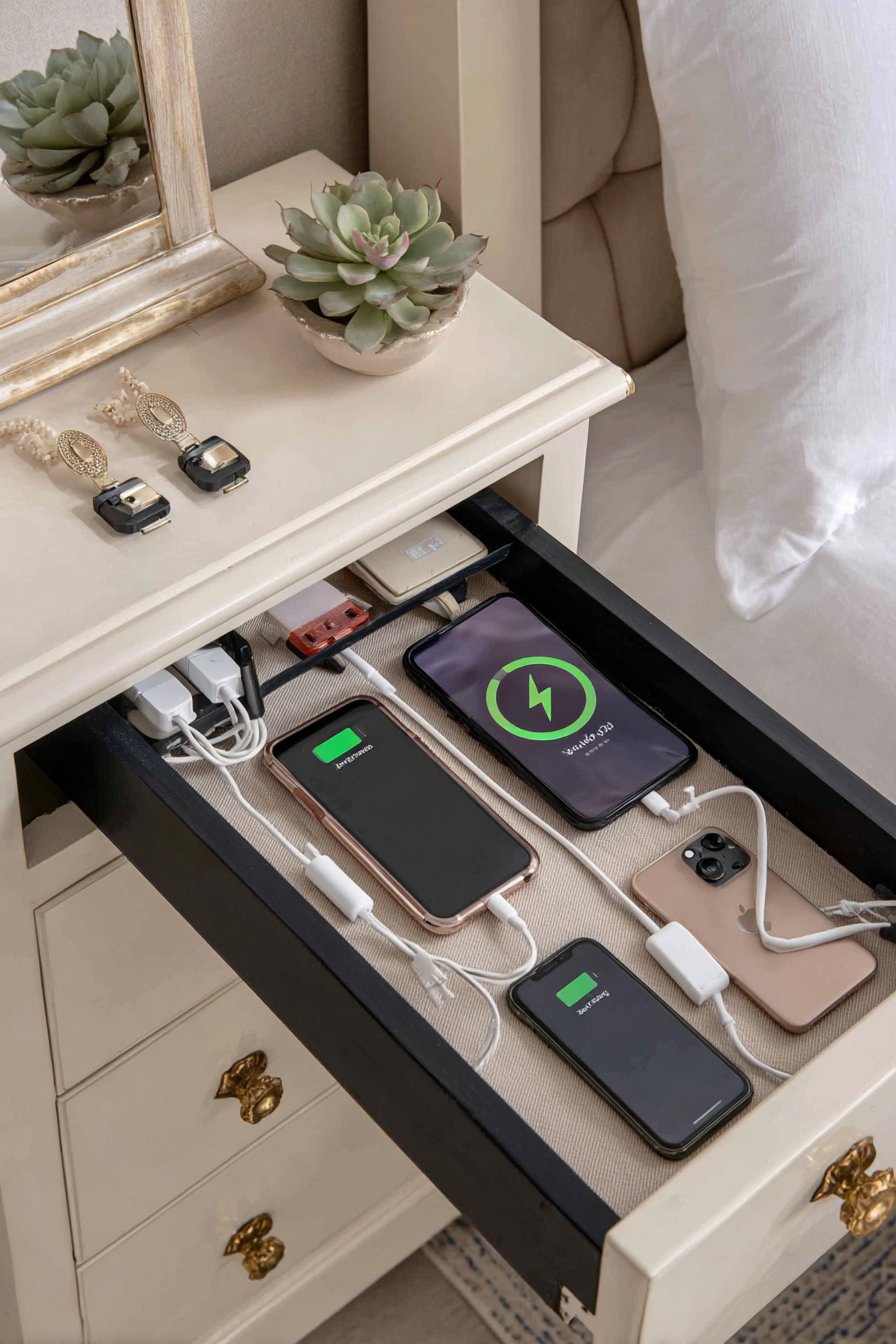
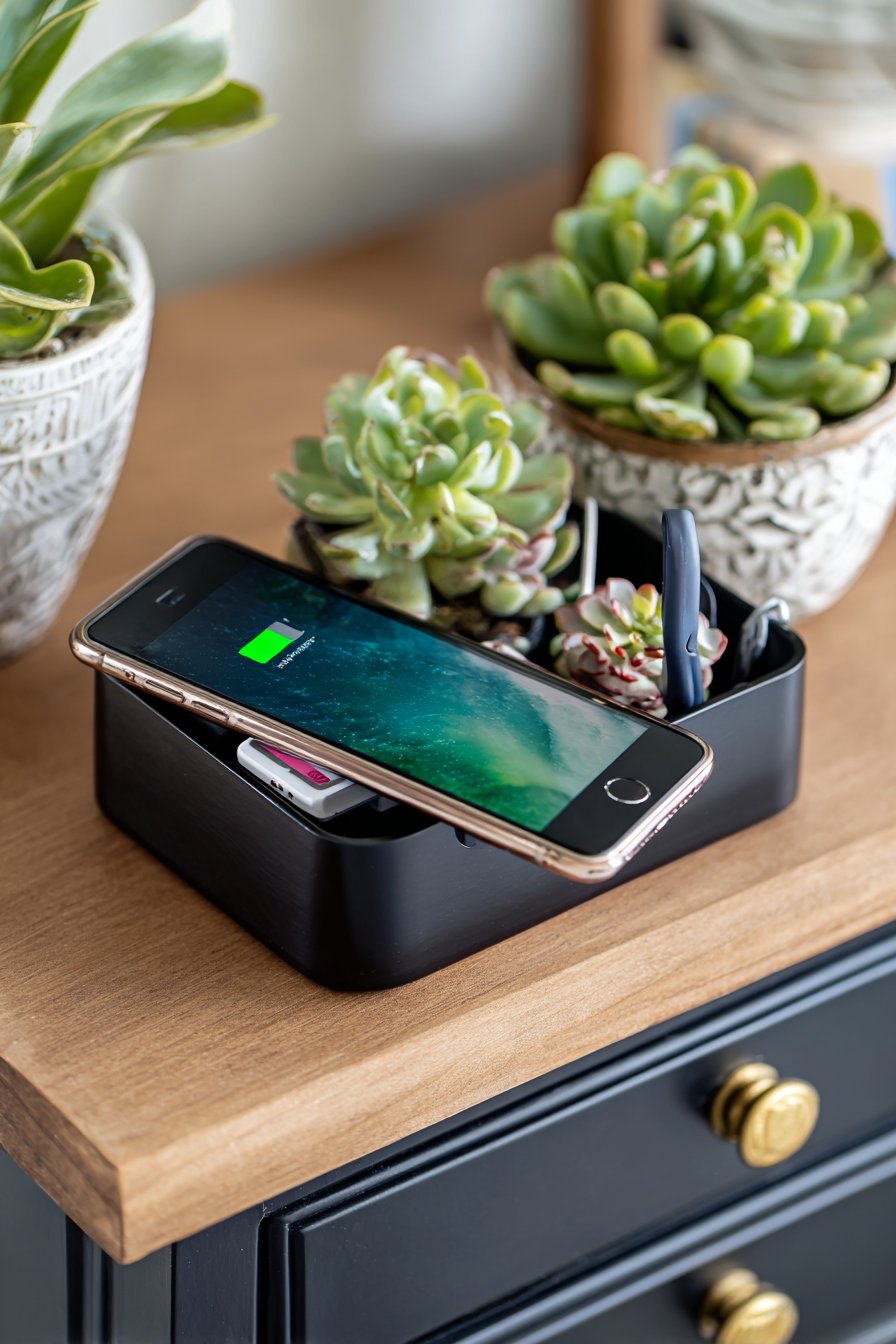
The nightstand surface holds a phone stand positioned for optimal viewing angles during charging, while a small succulent adds life without requiring frequent watering. The minimalist styling prevents the tech-focused station from appearing cluttered or industrial. The nightstand painted in matte black with brass drawer pulls creates sophisticated contrast while providing concealed storage for charging cables, adapters, and other tech accessories not currently in use.
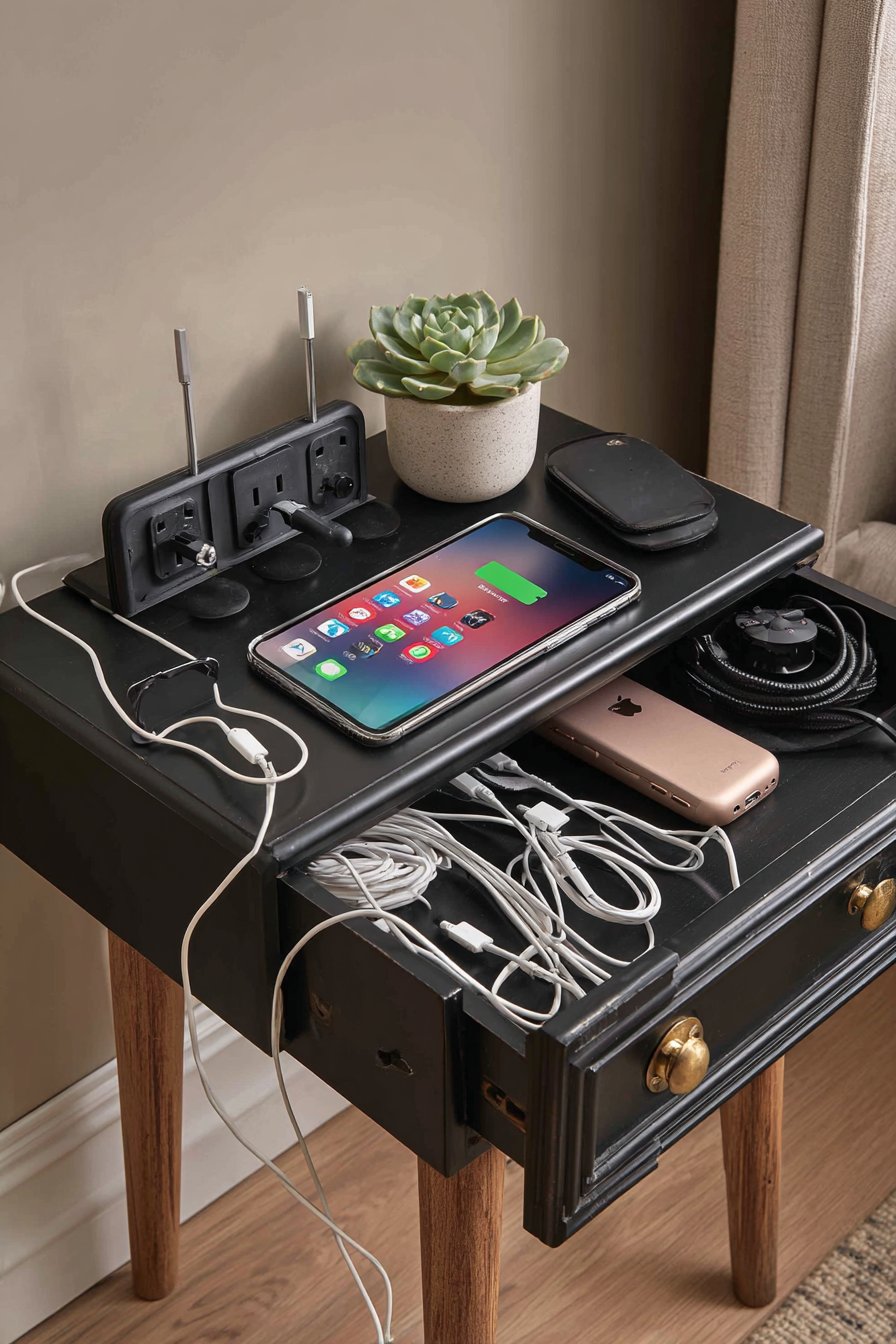
This charging station approach centralizes device management, preventing the search for chargers throughout the room and reducing wear on charging ports from repeatedly plugging and unplugging. Setting phones and tablets to charge overnight in one designated location also supports better sleep hygiene by keeping devices physically separated from the sleep environment, reducing nighttime screen time temptation.
Key Design Tips:
- Use a power strip with surge protection to safeguard expensive devices from electrical spikes
- Label cables with tape or tags to quickly identify which charger belongs to which device
- Include a small drawer organizer for storing extra cables, adapters, and old chargers you’re keeping as backups
- Position the charging station near your bed but not so close that device notifications disrupt sleep
- Consider a charging station with wireless charging capability to reduce cable wear and simplify daily charging routines
21. Transformable Multipurpose Space
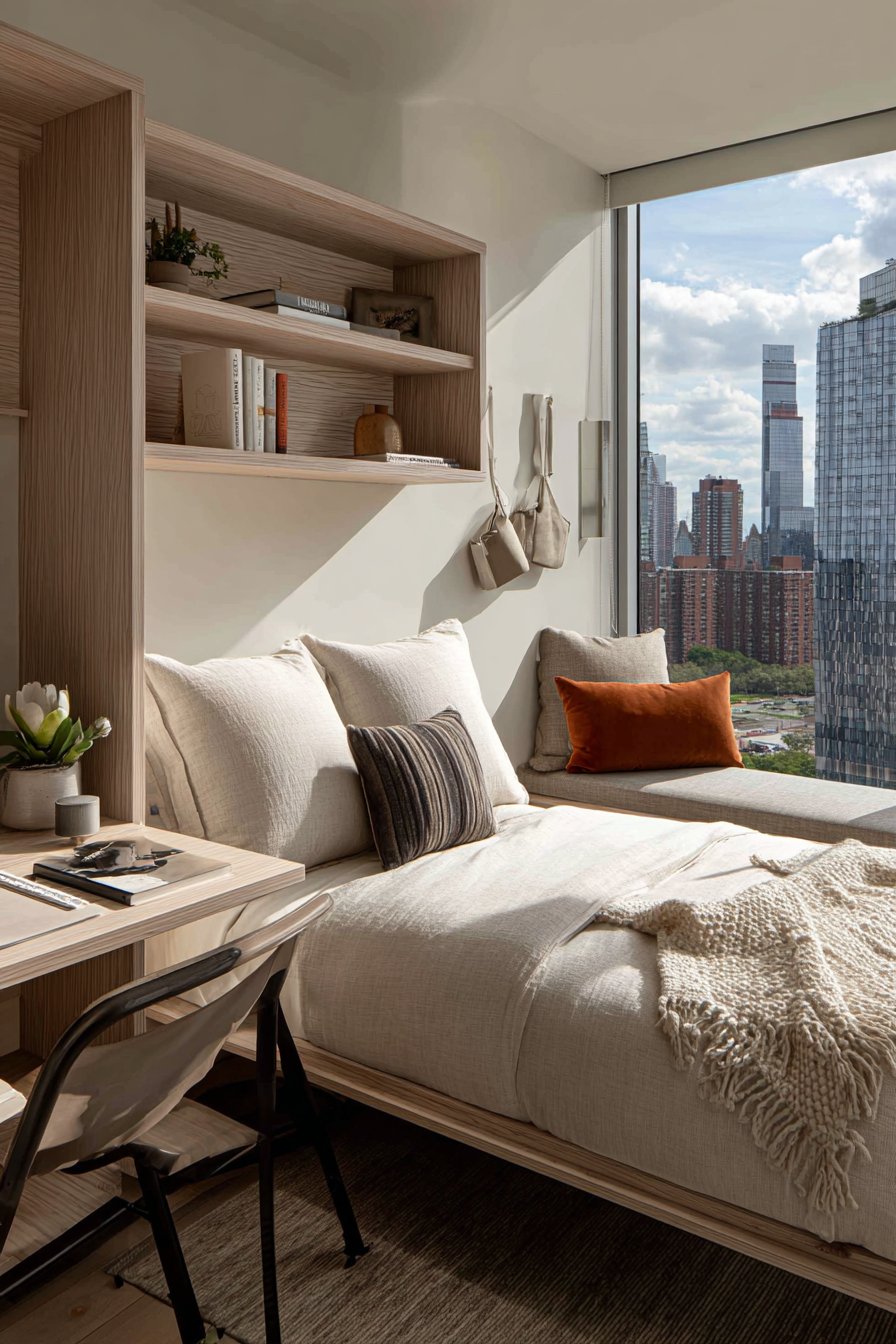
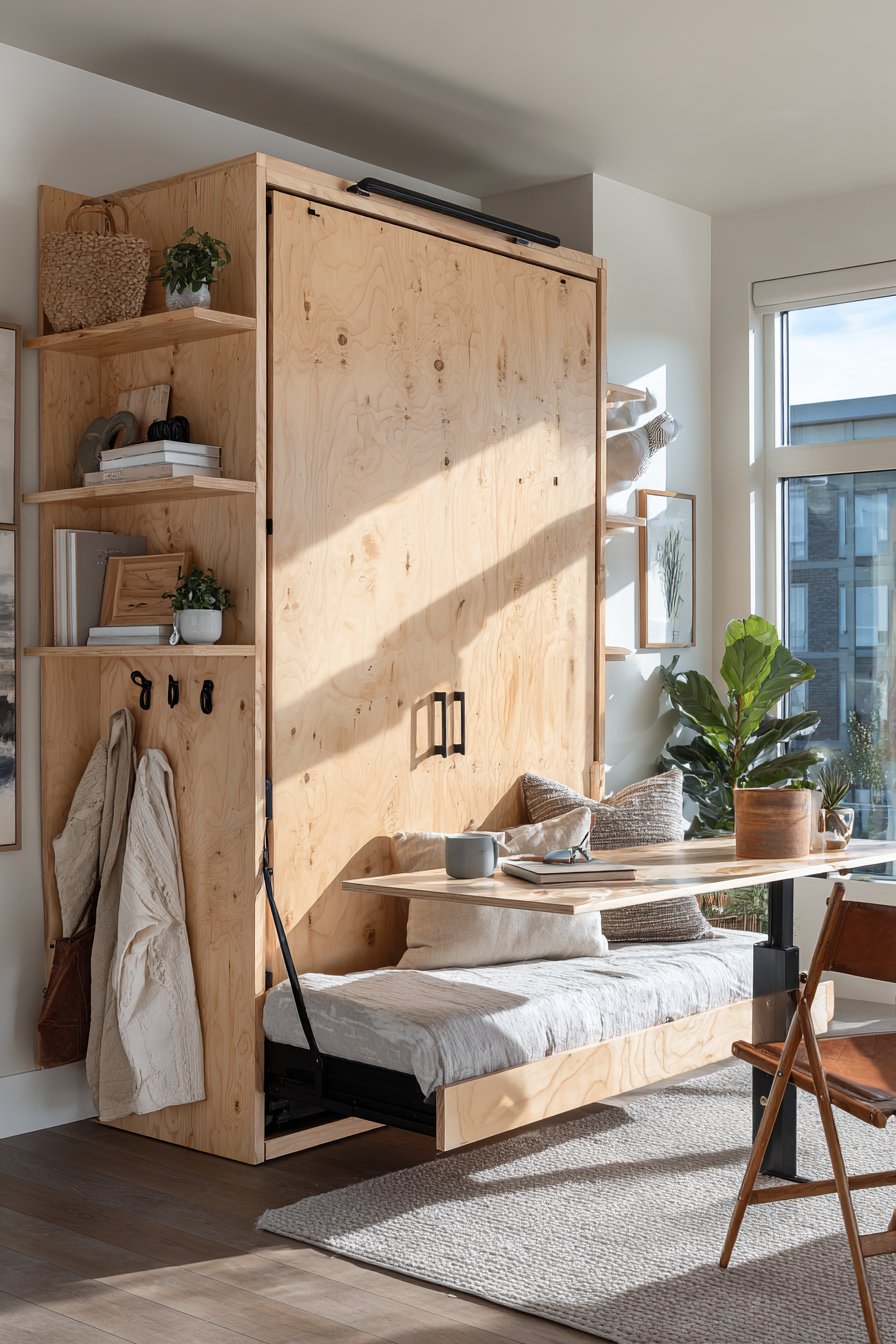
Studio apartments and single-room PG accommodations require furniture that serves multiple functions throughout the day, transforming the space to meet changing needs. This design features a folding wall-mounted desk that stows flat when not in use, folding chairs hung on wall hooks appearing as decorative elements rather than utilitarian storage, and a murphy bed that reveals a small seating area when raised to the upright position.
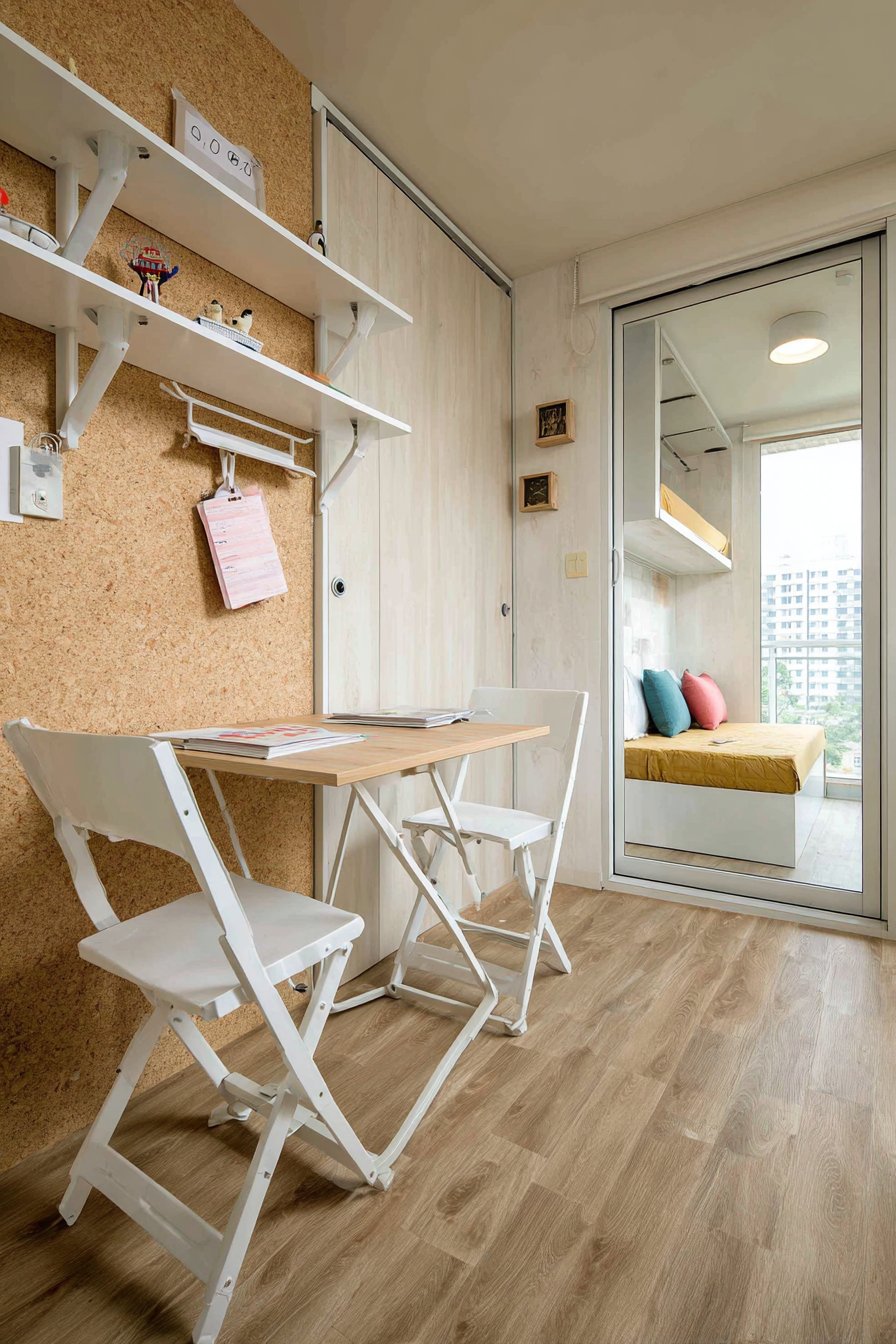
The light wood finishes and white walls create an airy Scandinavian aesthetic that prevents the mechanical elements of transforming furniture from feeling cold or industrial. The multi-functional nature means one room can shift from bedroom to home office to entertaining space throughout a single day. Morning routines might begin with the bed upright and desk deployed for email checking, transition to lowering the bed for an afternoon nap, then finish with the bed raised again to create seating area for evening socializing.
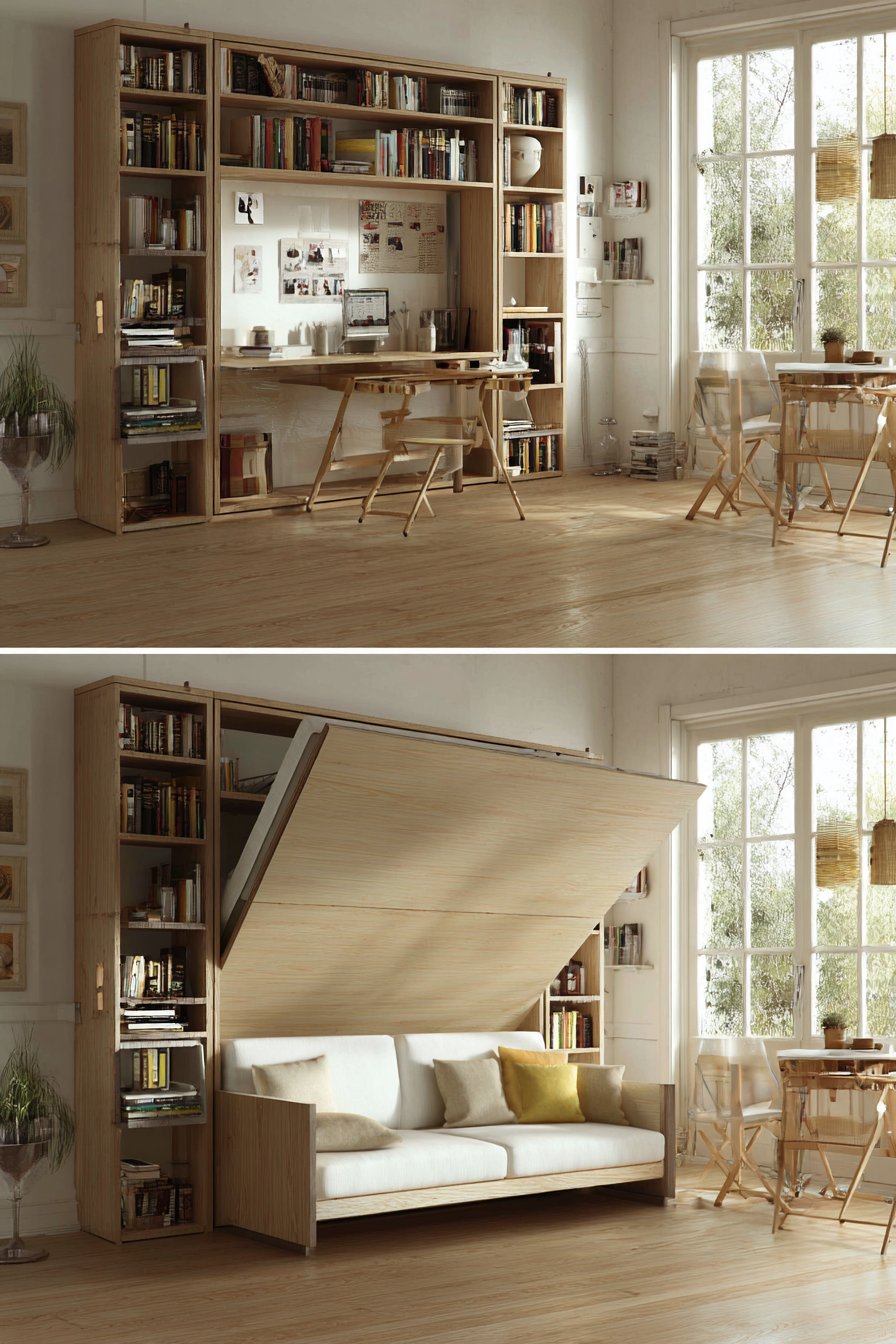
This approach requires initial investment in quality multi-functional furniture, but the spatial flexibility it provides in limited square footage is invaluable. The clean aesthetic and clever engineering create a living environment that feels spacious and adaptable rather than cramped and constrained. Professional interior photography captures these transformations, illustrating how strategic furniture choices can make even compact accommodations feel remarkably livable.
Key Design Tips:
- Test transforming furniture mechanisms repeatedly before purchasing to ensure smooth operation and long-term durability
- Create a daily routine that includes “transforming” your space at set times to maintain organization and prevent setup fatigue
- Choose murphy beds with proper counterbalancing systems that allow easy raising and lowering without excessive physical effort
- Implement storage solutions for items that must be cleared before transforming the space, preventing setup obstacles
- Add area rugs to define different zones even when furniture transforms, maintaining visual boundaries that support distinct activities
22. Functional Entryway Organization Zone
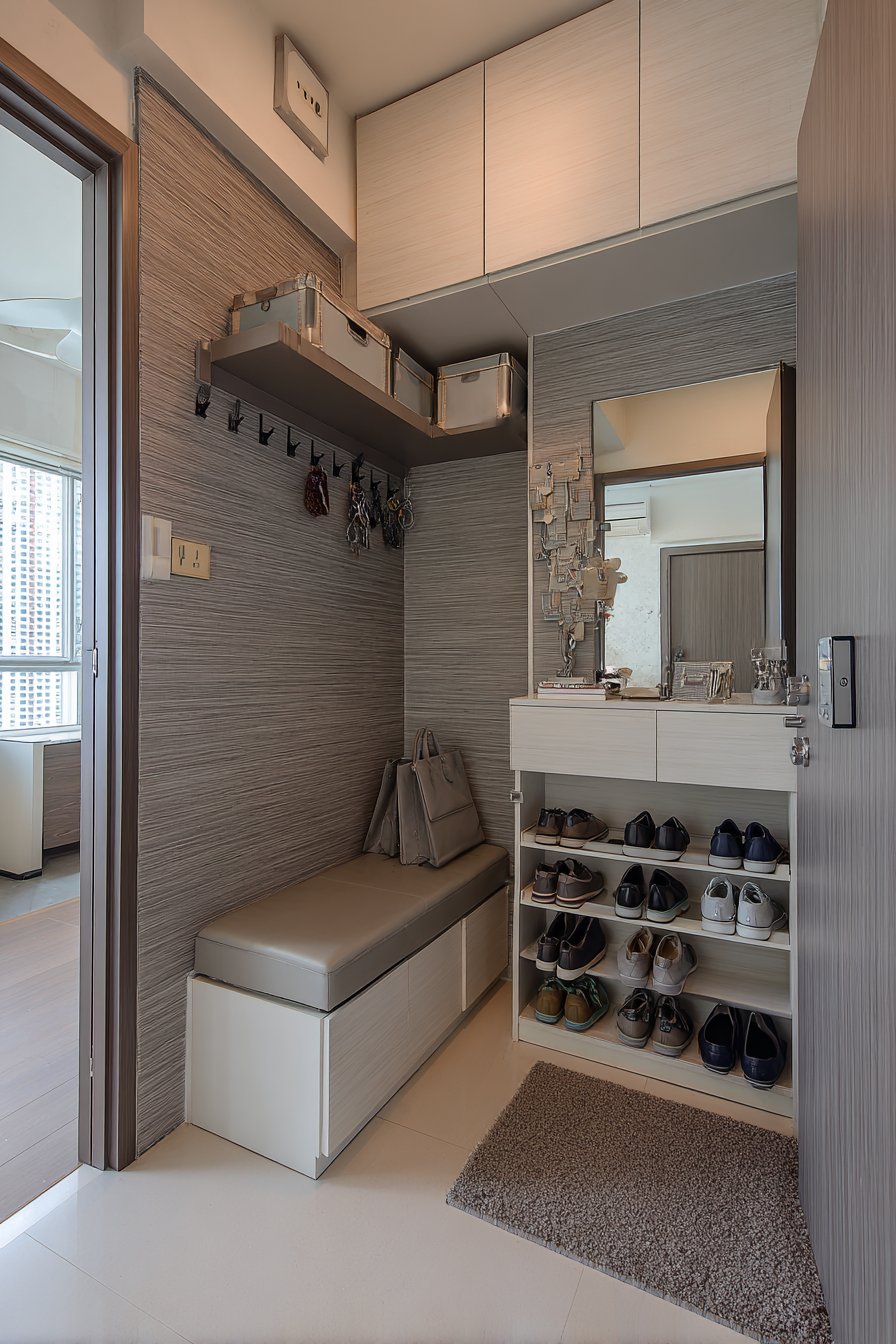
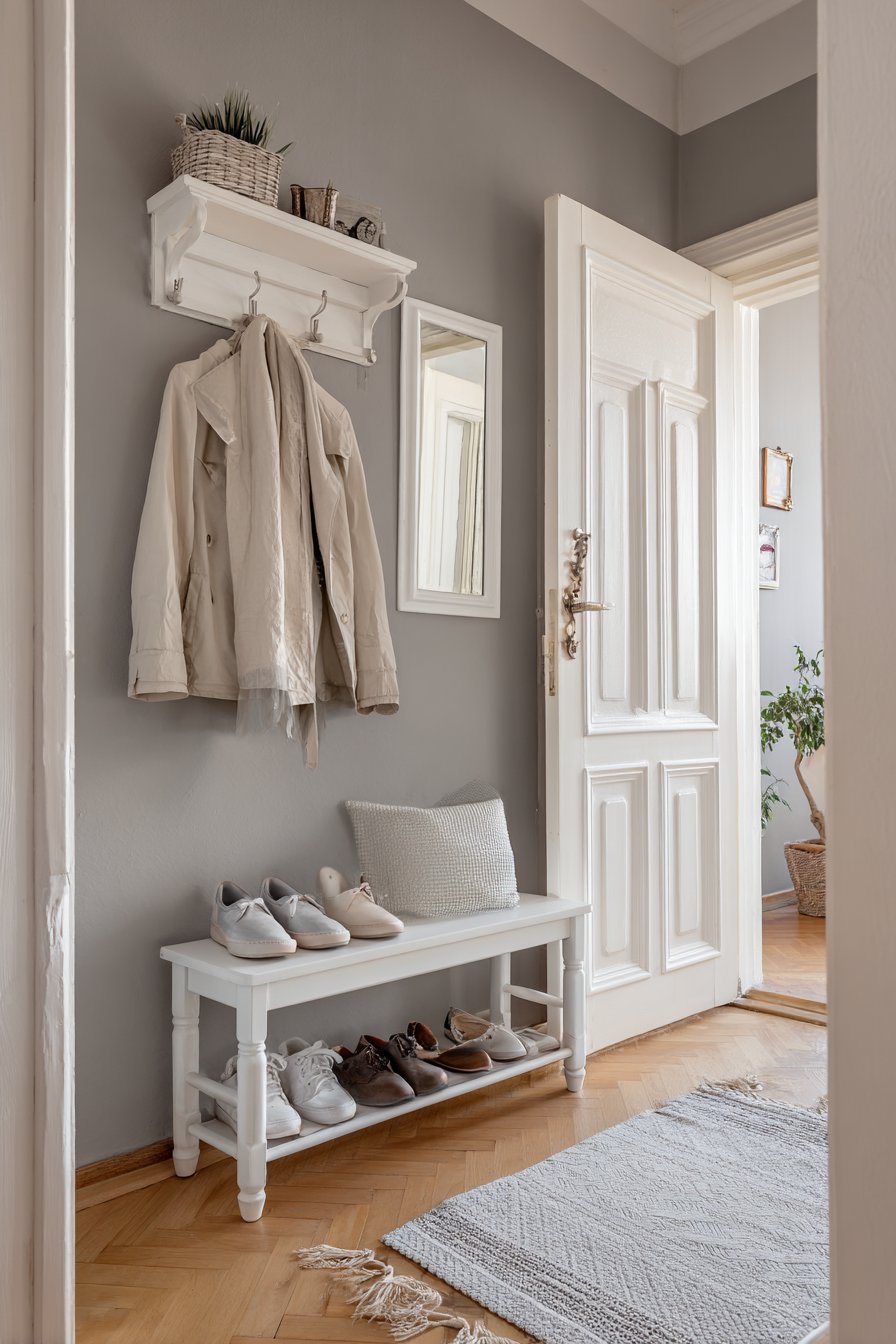
The often-overlooked entry area near your room door sets the tone for your entire space while serving critical organizational functions. This design creates a dedicated entryway zone with a wall-mounted coat rack providing hooks for jackets, bags, and frequently worn accessories, a narrow shoe rack with capacity for six pairs positioned to contain footwear immediately upon entering, and a small mirror with a shelf for keys, sunglasses, and other items that need a designated home.
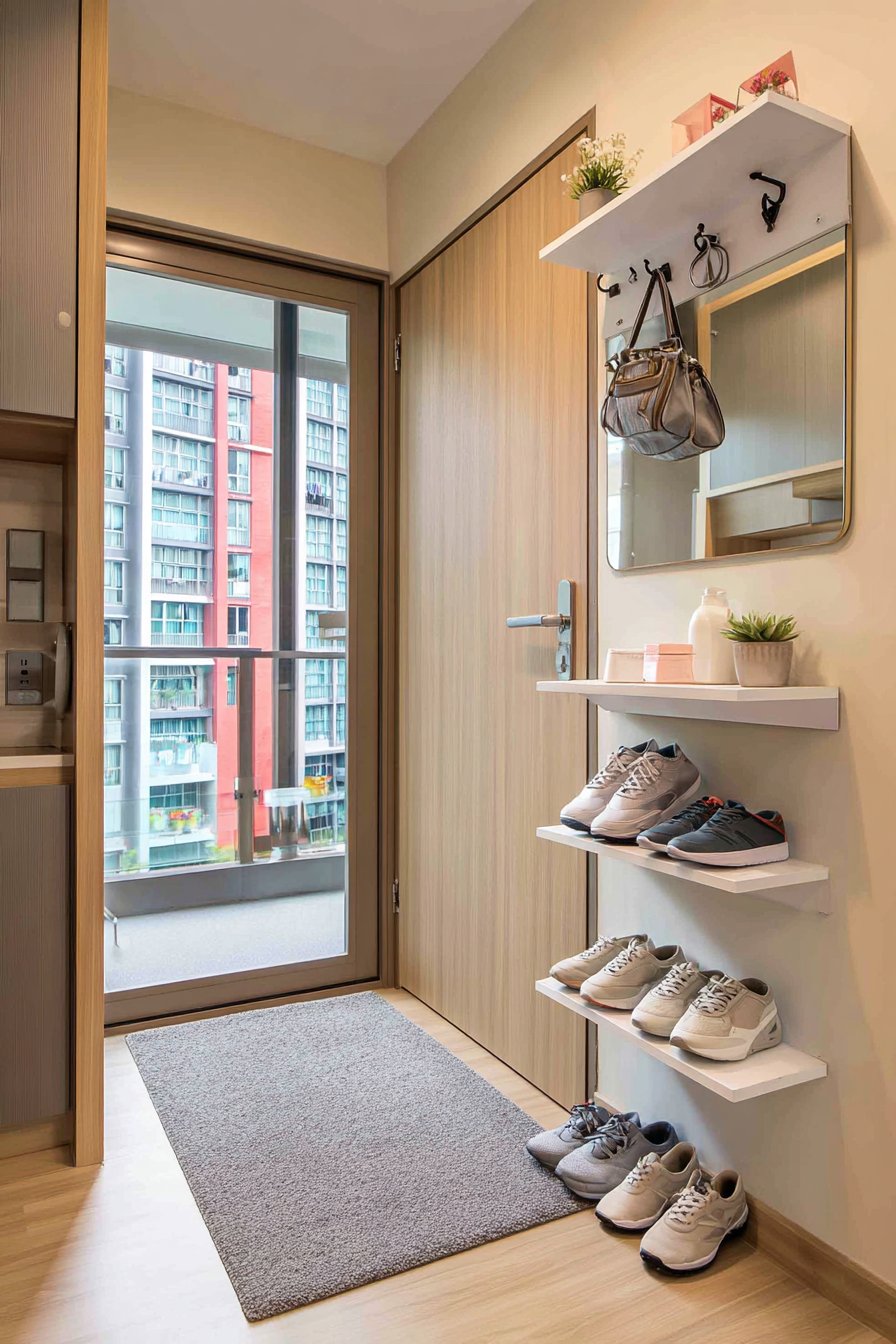
The coordinated grey and white color scheme matches the broader room palette, creating visual flow from entry to interior. This immediate organization system prevents the common problem of dropping items wherever you enter, which quickly creates clutter that spreads throughout the room. Everything has a designated spot immediately inside the door, making both departure preparation and arrival routines significantly smoother.
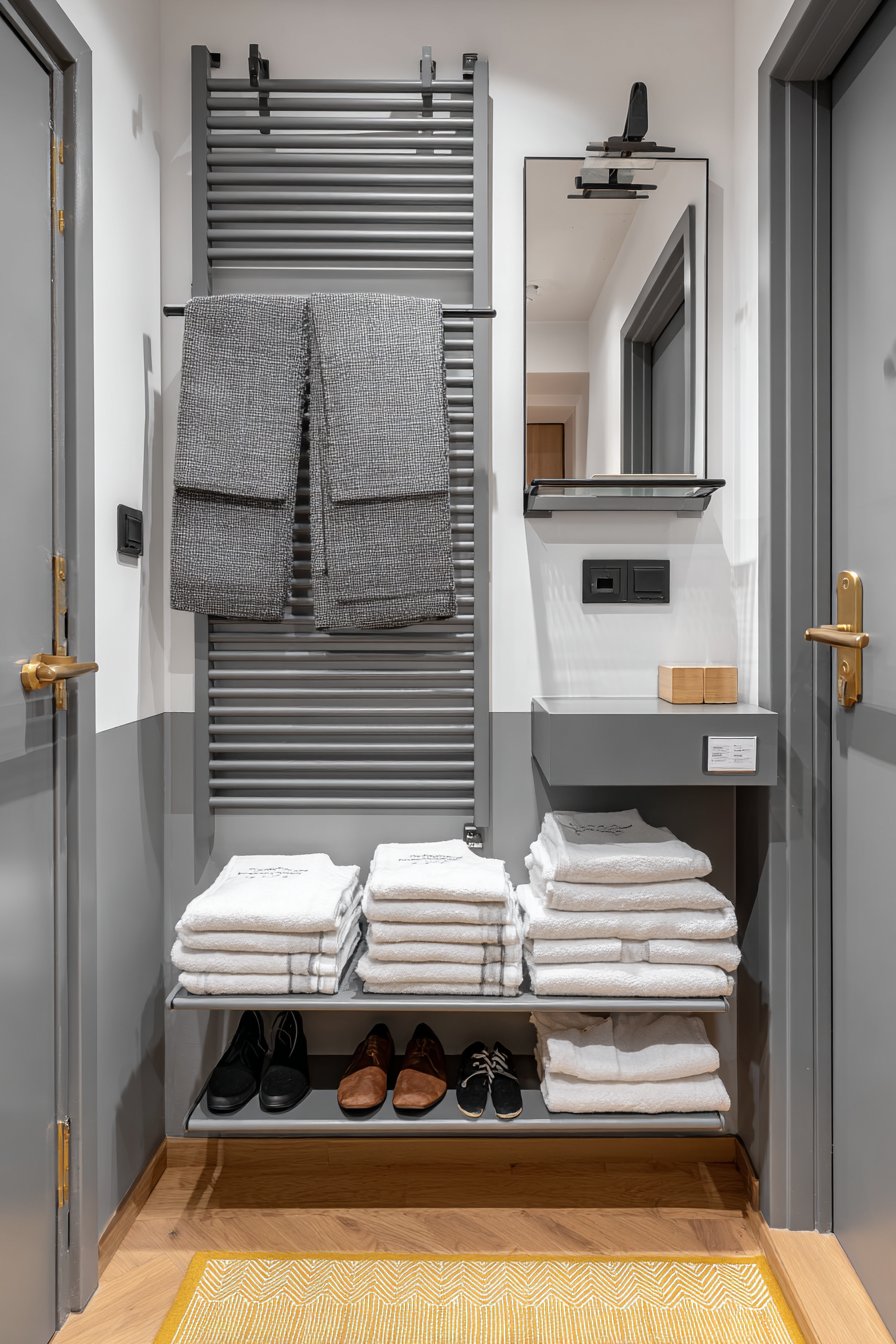
The narrow shoe rack’s vertical design keeps footwear contained without consuming significant floor space, while the higher positioning of hooks and mirrors makes the entry feel taller and more spacious. This organization system particularly benefits PG residents sharing rooms or common spaces, as it maintains clear boundaries between personal items and communal areas while presenting an organized, respectful appearance to roommates.
Key Design Tips:
- Install hooks at varied heights to accommodate different outerwear lengths from short jackets to long coats
- Choose a shoe rack design that allows air circulation to prevent odor buildup in stored footwear
- Mount the mirror at appropriate height for standing viewing rather than too low where it loses functionality
- Add a small catchall dish or basket on the key shelf for miscellaneous pocket contents like coins, receipts, or parking passes
- Implement a weekly routine for returning items that have accumulated in the entryway to their proper homes elsewhere in the room
23. Texture-Rich Cozy Ambiance Creation
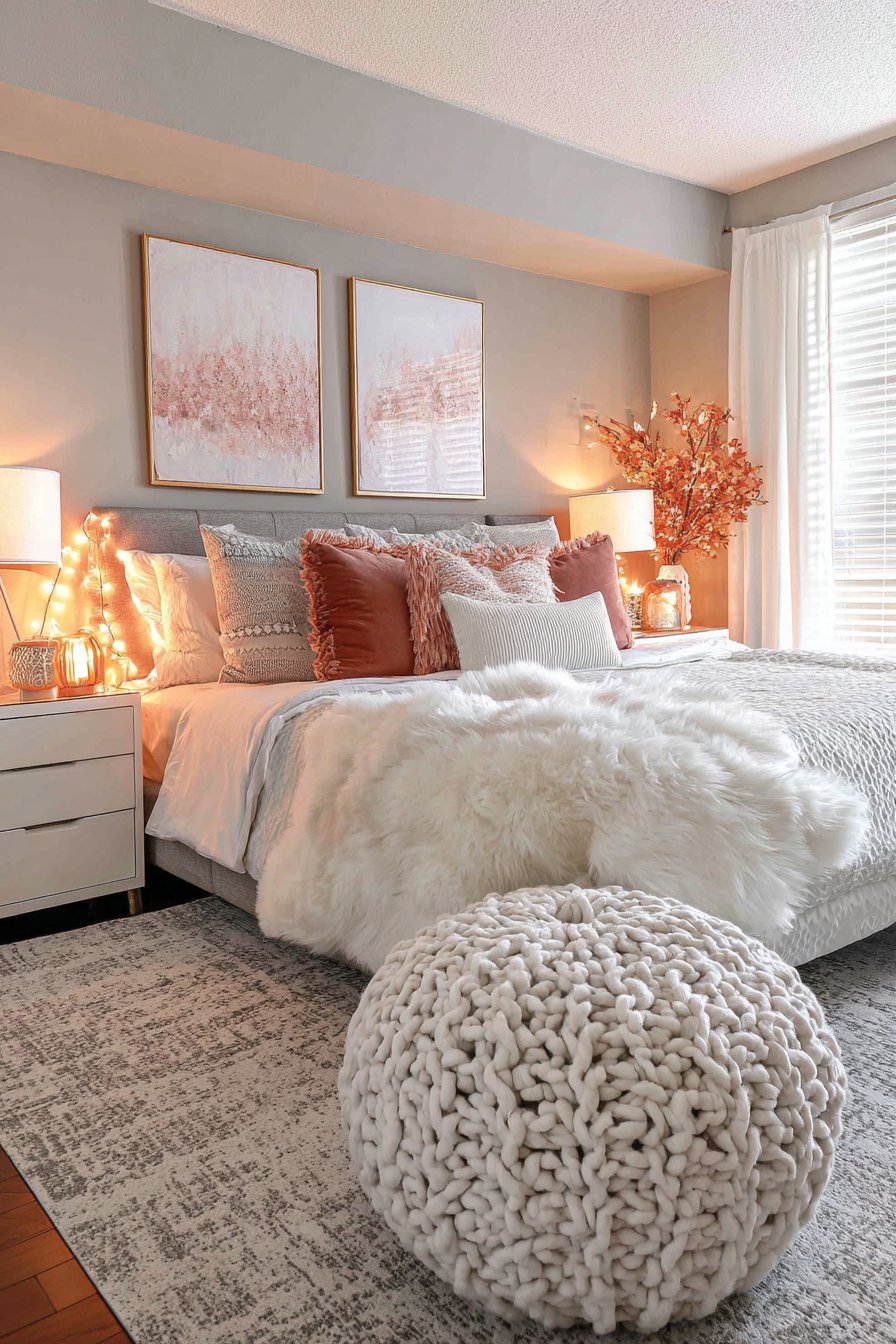
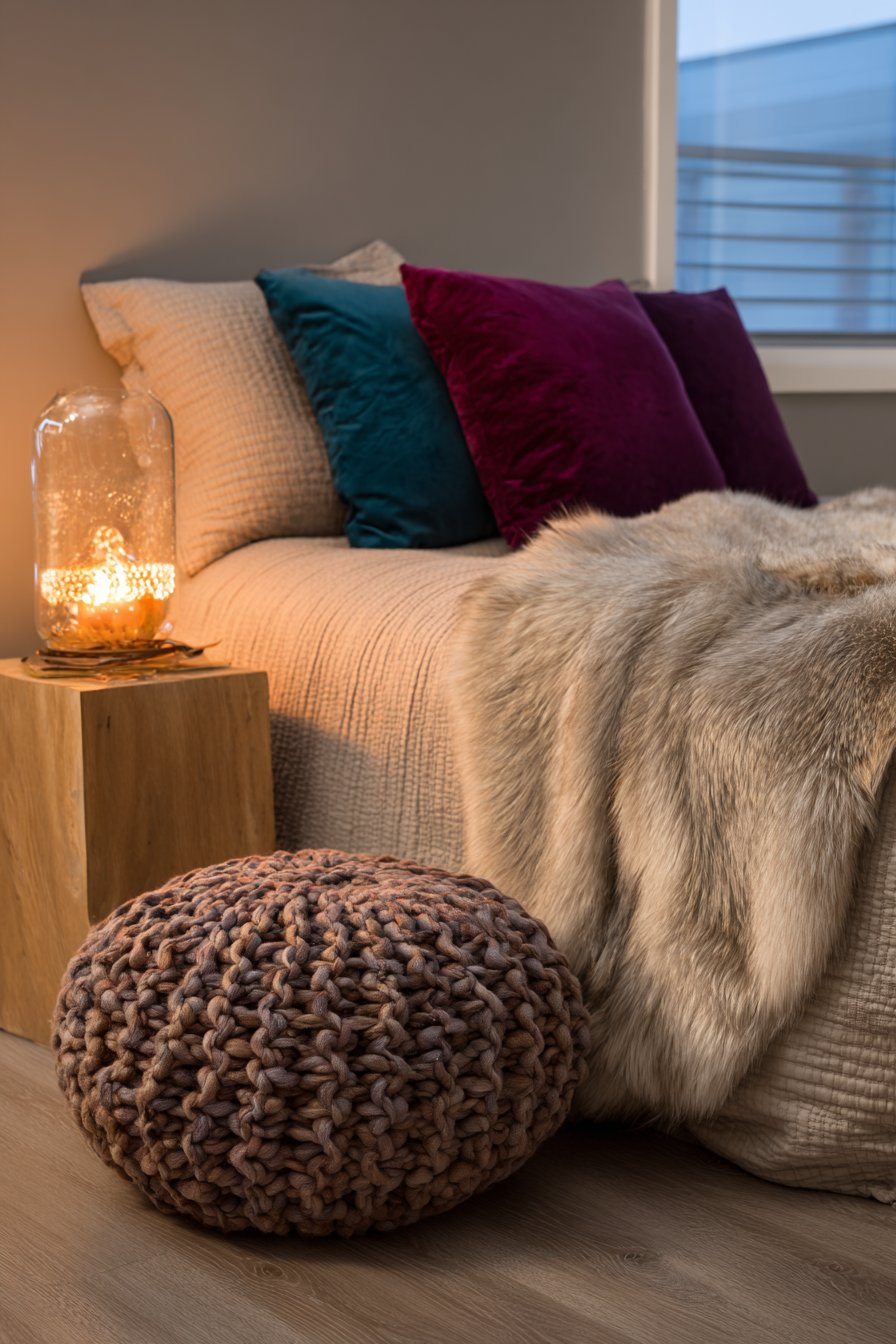
Creating genuine coziness in a PG room requires layering various textures that engage multiple senses and establish warmth beyond simple visual aesthetics. This design embraces tactile richness through a faux fur rug positioned beside the bed where feet first touch floor each morning, velvet throw pillows in jewel tones like emerald, sapphire, and ruby scattered across neutral bedding, and a chunky knit pouf providing extra seating while introducing substantial texture.
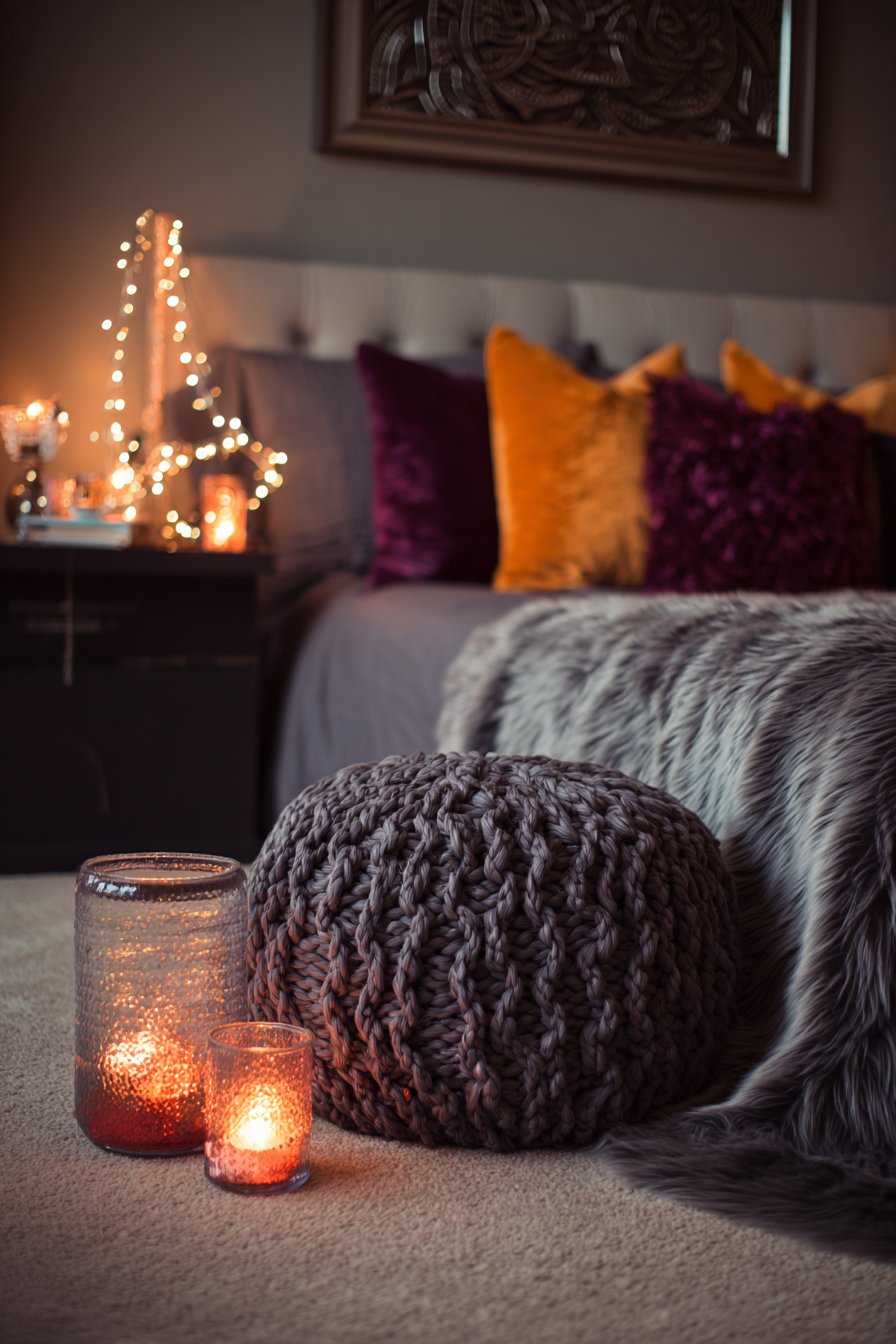
Warm ambient lighting from carefully positioned string lights and candles in protective glass holders creates atmosphere that transcends the basic function of illumination. The soft grey walls with white trim provide a sophisticated neutral backdrop that allows these rich textures and warm lighting to take center stage. The golden hour photography captures how natural sunlight streaming through windows interacts with the layered textiles, creating depth and visual interest throughout the day.
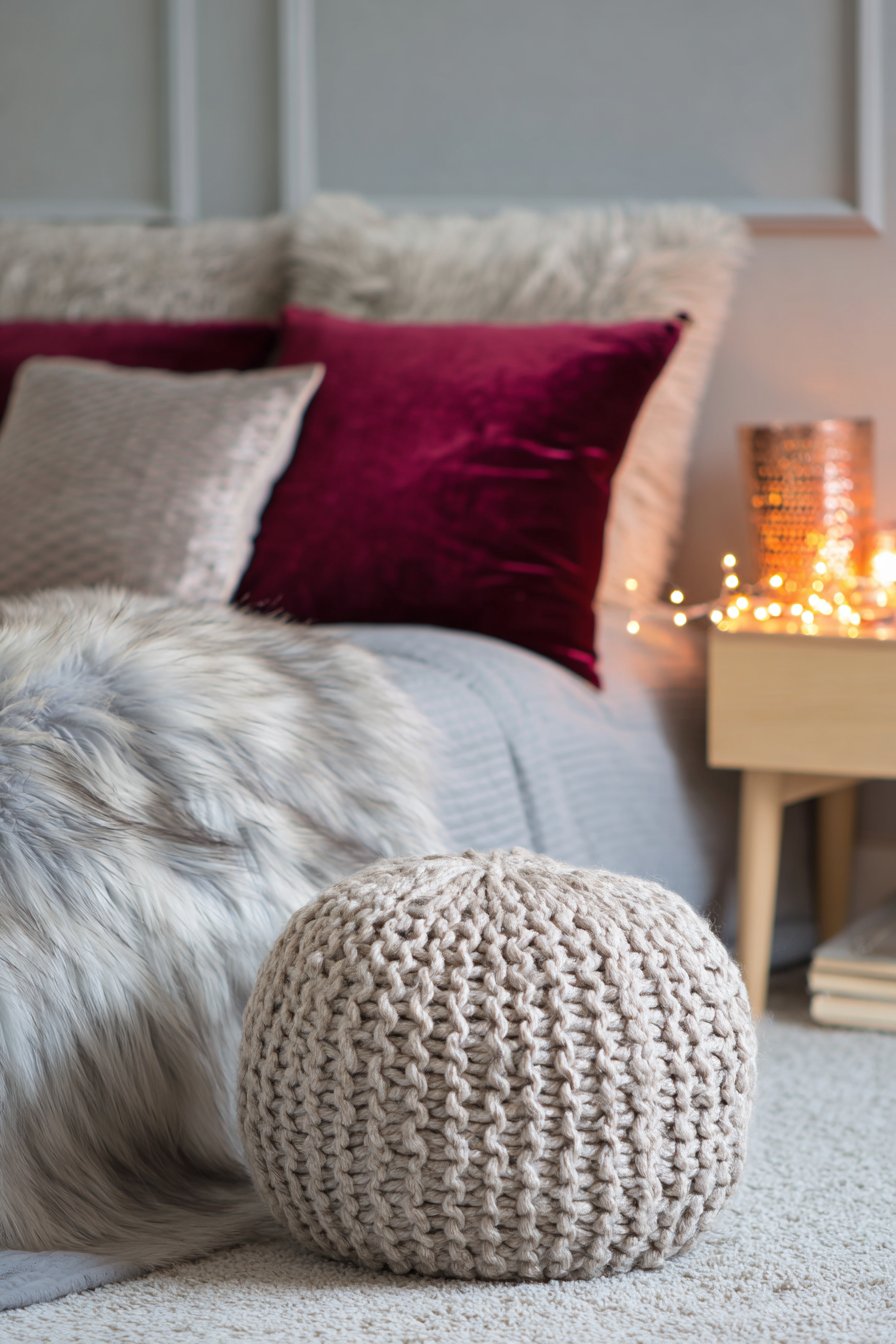
This approach to decoration emphasizes sensory experience over visual perfection. The room invites touch and interaction—you want to sink into the plush rug, run fingers across the velvet pillows, and wrap yourself in the textured throw. These tactile elements create genuine comfort that makes coming home to your PG room feel restorative rather than merely functional. The layered lighting ensures the space feels welcoming regardless of time of day or natural light conditions.
Key Design Tips:
- Select textiles in fabrics that are both aesthetically pleasing and practically maintainable, avoiding high-maintenance materials requiring special cleaning
- Layer lighting at three levels—ambient (ceiling or string lights), task (reading lamps), and accent (candles)—for maximum flexibility and atmosphere
- Use battery-operated flameless candles if open flame isn’t permitted in your PG accommodation
- Add texture through unexpected elements like a woven wall hanging, macrame plant hanger, or textured throw blanket in addition to traditional pillows and rugs
- Rotate decorative textiles seasonally—lighter materials in summer, heavier, plushier textures in winter—to maintain freshness and appropriate seasonal comfort
Why These PG Room Decoration Ideas Work: Design Principles for Successful Small-Space Living
The twenty-three room decoration concepts presented above succeed because they address the fundamental challenges of PG accommodation living: limited space, rental restrictions, budget constraints, and the need for personalization in temporary housing. These designs share common threads that make them particularly effective for paying guest rooms, student accommodations, and transitional living situations.
Space Optimization Through Vertical Thinking
Nearly every successful PG room decoration idea maximizes vertical space rather than consuming precious floor area. From loft beds with integrated study zones to wall-mounted desks and vertical garden installations, these designs recognize that upward expansion provides the greatest opportunity for increased functionality without sacrificing livability. Traditional furniture approaches designed for spacious homes simply don’t translate to compact PG rooms, necessitating creative solutions that challenge conventional furniture placement and room organization.
Flexibility and Adaptability as Core Values
The most effective PG room decorations embrace transformation and flexibility. Folding furniture, removable decor, and multi-functional pieces acknowledge that needs change throughout the day and across life phases. A room that serves as bedroom, office, dining area, and social space requires furniture and organization systems that adapt seamlessly. Murphy beds, fold-down desks, and rolling storage units allow residents to reconfigure their space based on immediate needs rather than committing to static arrangements that limit functionality.
Budget-Conscious Creativity
Financial constraints represent reality for most PG residents, yet these limitations inspire remarkable creativity. DIY projects like crate headboards, washi tape wall art, and repurposed ladder nightstands demonstrate that impactful design doesn’t require expensive furniture or professional installation. The use of affordable materials—wooden crates, removable wallpaper, basic hardware store finds—proves that thoughtful creativity trumps unlimited budgets. These budget-friendly approaches also build practical skills and confidence, empowering residents to take ownership of their living environment.
Respecting Rental Restrictions While Personalizing Space
Perhaps the greatest challenge of PG room decoration involves personalizing space without permanent modifications that violate rental agreements or forfeit security deposits. The designs presented prioritize removable solutions—peel-and-stick wallpaper, tension rods, command hooks, freestanding furniture—that allow complete customization while remaining fully reversible. This approach acknowledges the temporary nature of PG living while refusing to accept that temporariness must mean sterile, impersonal spaces devoid of character.
Psychological Well-Being Through Intentional Design
Beyond aesthetic appeal and functional efficiency, these decoration ideas prioritize mental health and psychological well-being. Dedicated zones for different activities help brains distinguish between work time and rest time, supporting productivity and relaxation alike. The inclusion of plants, natural materials, proper lighting, and personal meaningful objects creates environments that feel nurturing rather than merely utilitarian. In the stress of educational pursuits or early career challenges, having a room that truly feels like a personal sanctuary significantly impacts overall quality of life.
Sustainable and Conscious Consumption
Many of these designs emphasize sustainability through repurposing, capsule wardrobe approaches, and choosing quality over quantity. The vertical garden introduces living plants that improve air quality, while strategies like the capsule wardrobe challenge excessive consumption. Using reclaimed materials, shopping secondhand, and maintaining long-lasting pieces rather than following fast furniture trends reflects growing awareness about environmental impact and conscious consumer choices.
Cultural and Personal Identity Expression
While maintaining practical functionality, these decoration approaches allow for significant personal expression. The gallery wall displays meaningful photos and art, the bohemian floor seating reflects specific aesthetic preferences, and the meditation corner acknowledges spiritual or wellness practices. PG room decoration transcends mere problem-solving to become an expression of identity, values, and aspirations—particularly important for young people establishing independence and defining personal style.
Conclusion: Creating Home in Temporary Spaces
Transforming a PG room from basic accommodation into a personalized sanctuary requires creativity, resourcefulness, and willingness to think beyond conventional furniture arrangements. The twenty-three decoration ideas explored throughout this article demonstrate that space limitations, rental restrictions, and budget constraints need not prevent you from creating an environment that genuinely feels like home. Whether you’ve implemented vertical storage solutions, embraced multi-functional furniture, or simply added personal touches through gallery walls and textile layers, each design choice contributes to a space that supports your lifestyle, reflects your personality, and nurtures your well-being.
The most successful PG room decorations balance practicality with personality, creating spaces that work efficiently throughout daily routines while still sparking joy when you walk through the door. They acknowledge the temporary nature of PG living without accepting that temporariness must mean sacrificing comfort, style, or individuality. Through removable decor, flexible furniture, and creative problem-solving, these spaces prove that you can build a genuine home anywhere, regardless of how long you plan to stay.
As you embark on your own PG room transformation, remember that decoration is an evolving process rather than a single project with a defined endpoint. Start with the changes that address your most pressing needs—perhaps storage solutions if clutter overwhelms you, or lighting improvements if your room feels dark and unwelcoming. Build gradually, experiment with different approaches, and don’t hesitate to adjust elements that aren’t working. Your PG room should ultimately serve you, supporting your goals, reflecting your values, and providing the foundation for this chapter of your life’s journey. With thoughtful planning and creative implementation of these decoration ideas, even the smallest, most basic PG room can become a space you’re genuinely excited to call home.
