
The art of outdoor design has evolved dramatically, with homeowners increasingly recognizing that exterior spaces deserve the same thoughtful attention as interior rooms. Among the most transformative elements in outdoor design, wall tiles stand out as a versatile solution that combines aesthetic appeal with practical durability. Whether you’re creating an intimate courtyard, a luxurious poolside retreat, or a functional outdoor kitchen, the right tile selection can elevate your space from ordinary to extraordinary while withstanding the elements year-round.
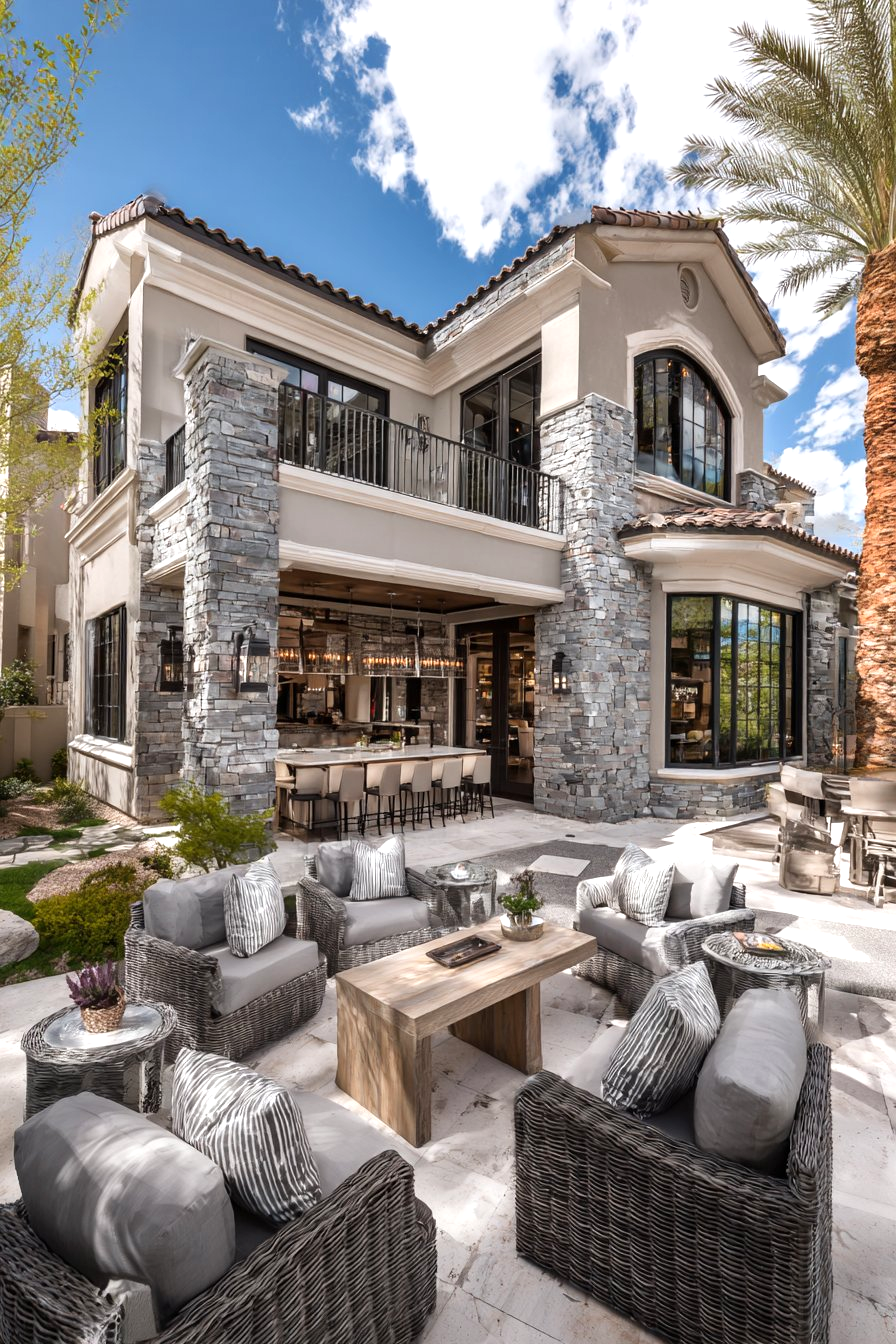
Outdoor wall tiles offer endless possibilities for expressing personal style while addressing the unique challenges of exterior environments. From weather-resistant porcelain that mimics natural stone to vibrant hand-painted ceramics that inject personality, modern tile options allow homeowners to create cohesive outdoor living areas that seamlessly extend their interior design aesthetic. The beauty of tile lies not only in its visual impact but also in its low-maintenance properties, making it an investment that continues to deliver value and beauty for decades.
This comprehensive guide explores twenty-three distinctive outdoor wall tile concepts, each showcasing different styles, materials, and applications. From minimalist Scandinavian designs to bold Mediterranean patterns, from rustic farmhouse aesthetics to sleek contemporary installations, you’ll discover inspiring ideas that cater to diverse tastes and architectural contexts. These designs demonstrate how strategic tile placement can transform blank exterior walls into stunning focal points, create functional zones within outdoor spaces, and enhance the overall ambiance of your home’s exterior living areas.
1. Modern Travertine-Inspired Patio Elegance
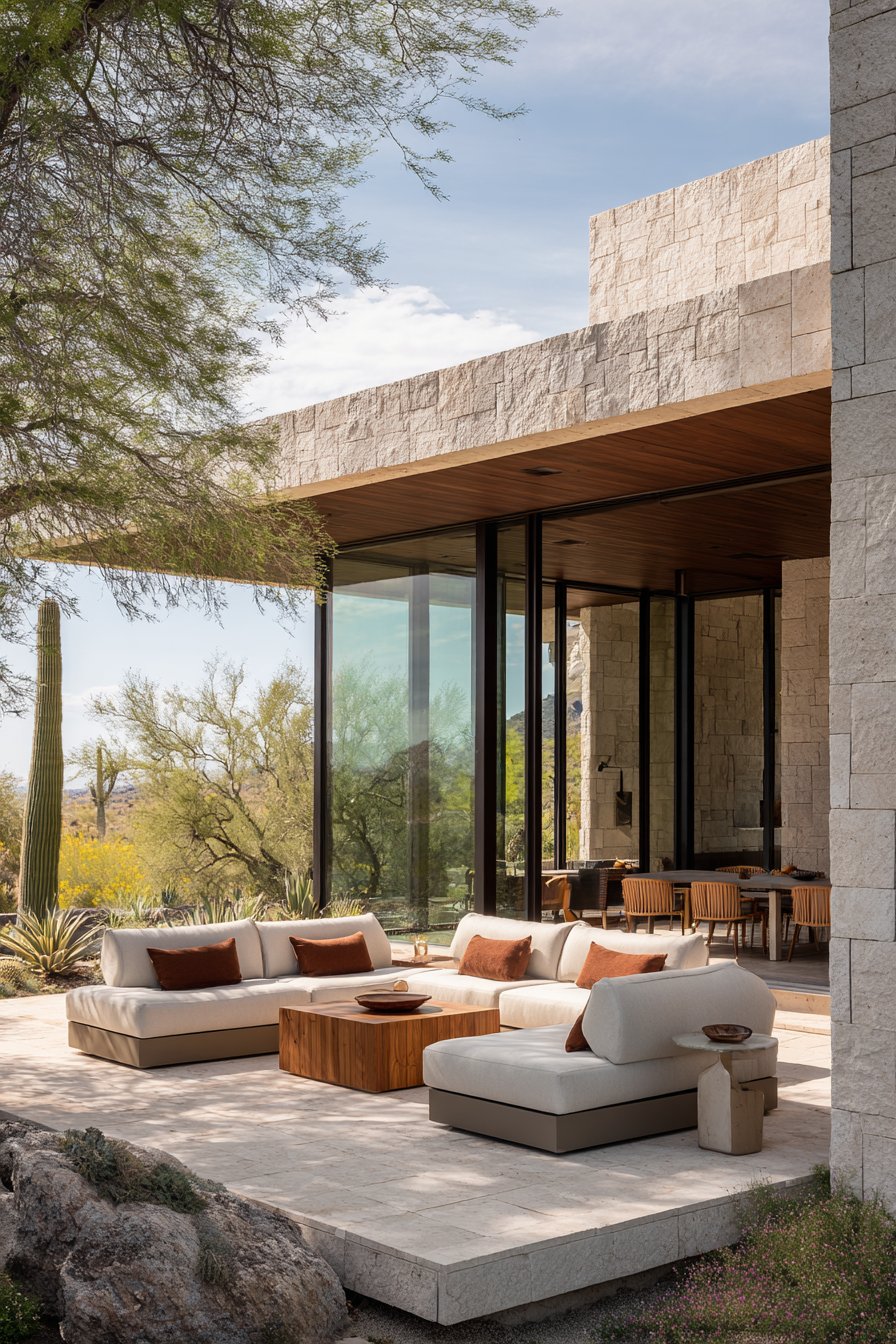
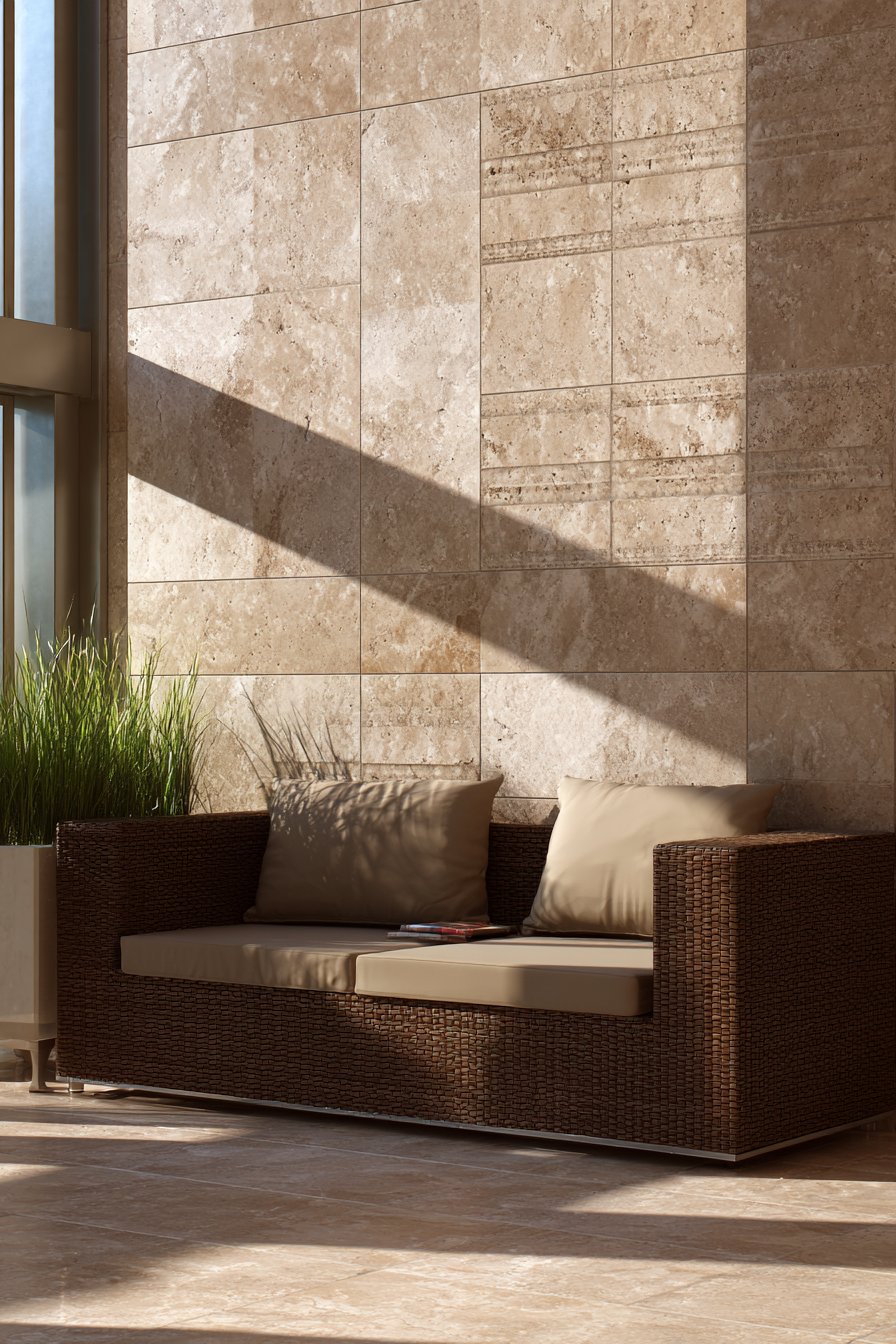
The timeless beauty of travertine finds new expression in contemporary porcelain tiles that capture the stone’s warm, earthy character without the maintenance demands of natural material. Large-format tiles in creamy beige tones with subtle variations create a seamless backdrop that elevates any outdoor seating area. The textured surface mimics travertine’s characteristic pitted appearance, adding tactile interest while maintaining the slip-resistance essential for outdoor applications. When sunlight plays across the surface, these tiles reveal depth and dimension that rivals authentic stone.
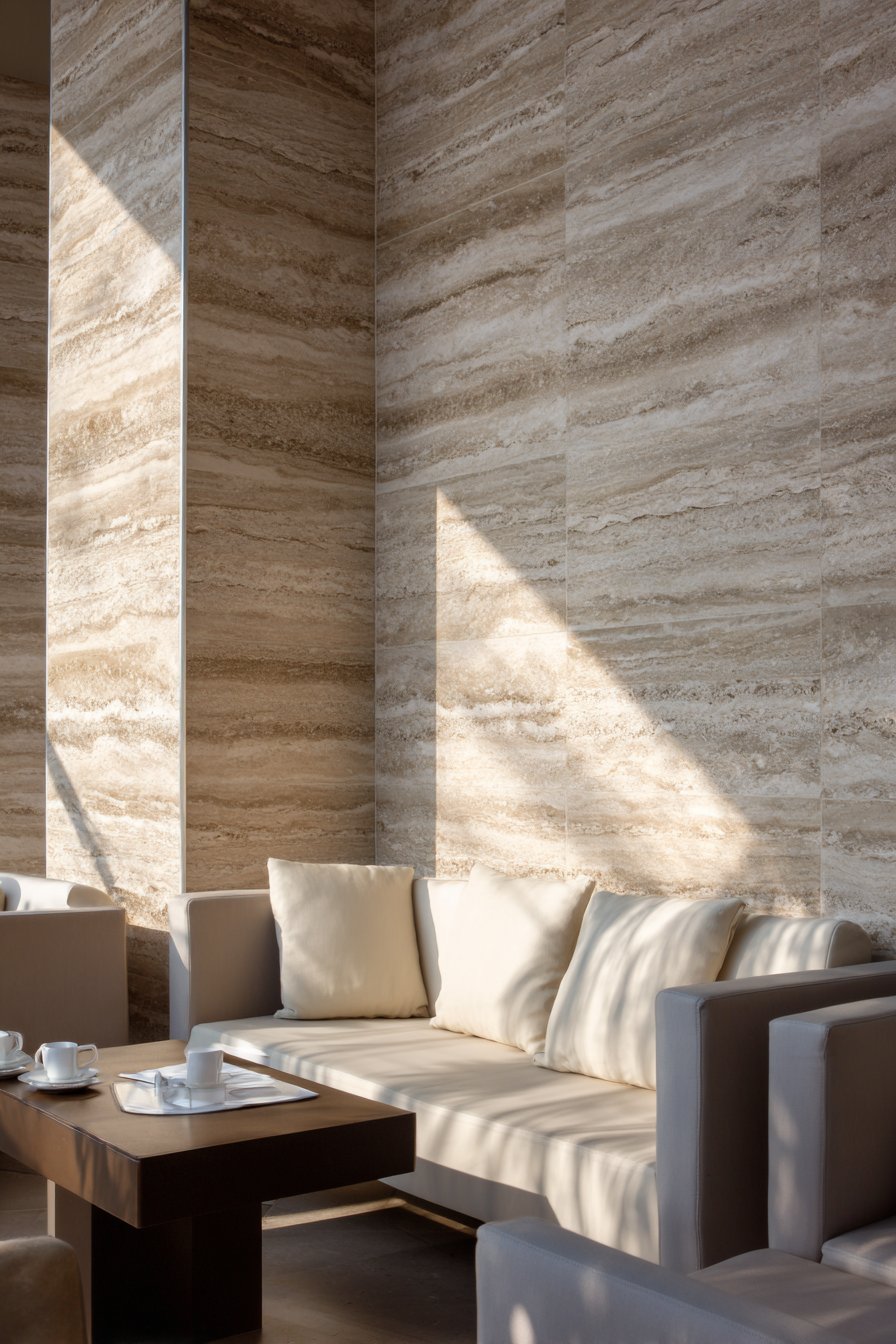
The versatility of travertine-look tiles makes them ideal for creating sophisticated outdoor rooms that feel both elegant and approachable. Position weather-resistant furniture against this neutral backdrop, and watch how the warm tones complement everything from deep charcoal cushions to natural linen fabrics. The large format reduces grout lines, creating a clean, contemporary aesthetic that makes outdoor spaces feel more expansive and cohesive.
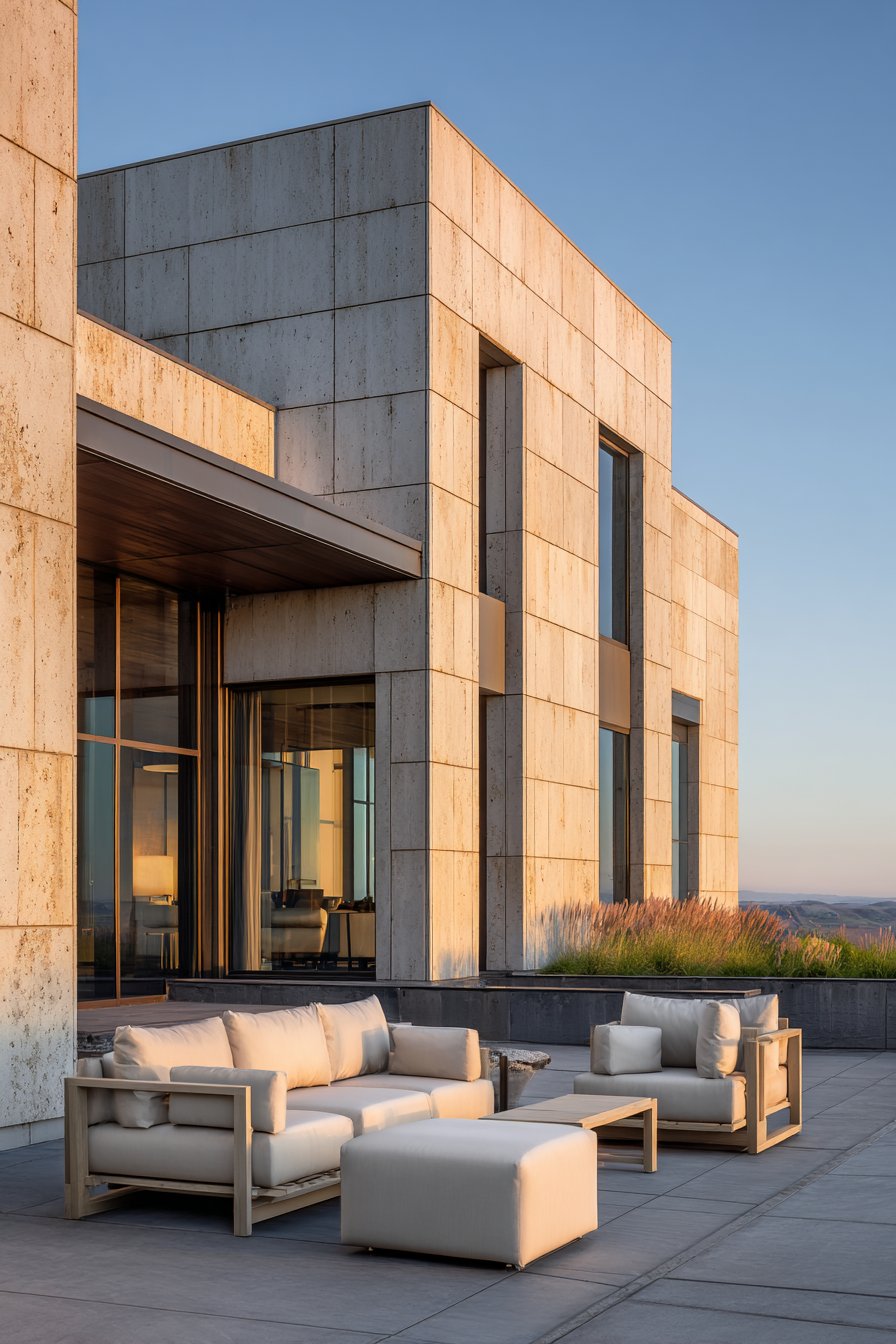
Installation on a feature wall behind a seating area transforms a simple patio into a designed destination. The natural color variations within the tiles prevent monotony while maintaining visual harmony, and the porcelain material ensures these tiles will resist frost damage, UV fading, and moisture penetration. During afternoon hours, observe how shadows cast by overhead structures or nearby plantings create ever-changing patterns across the textured surface.
Key Design Tips:
- Select large-format tiles (24×48 inches or larger) to minimize grout lines and create a more seamless appearance
- Choose porcelain over natural travertine for superior weather resistance and lower maintenance requirements
- Pair warm travertine tones with natural materials like teak, wicker, or stone for a cohesive outdoor aesthetic
- Install tiles with slight texture for slip resistance while maintaining the sophisticated look of smooth stone
- Consider extending the same tile to horizontal surfaces like planter caps for design continuity
2. Industrial-Chic Charcoal Slate Installation
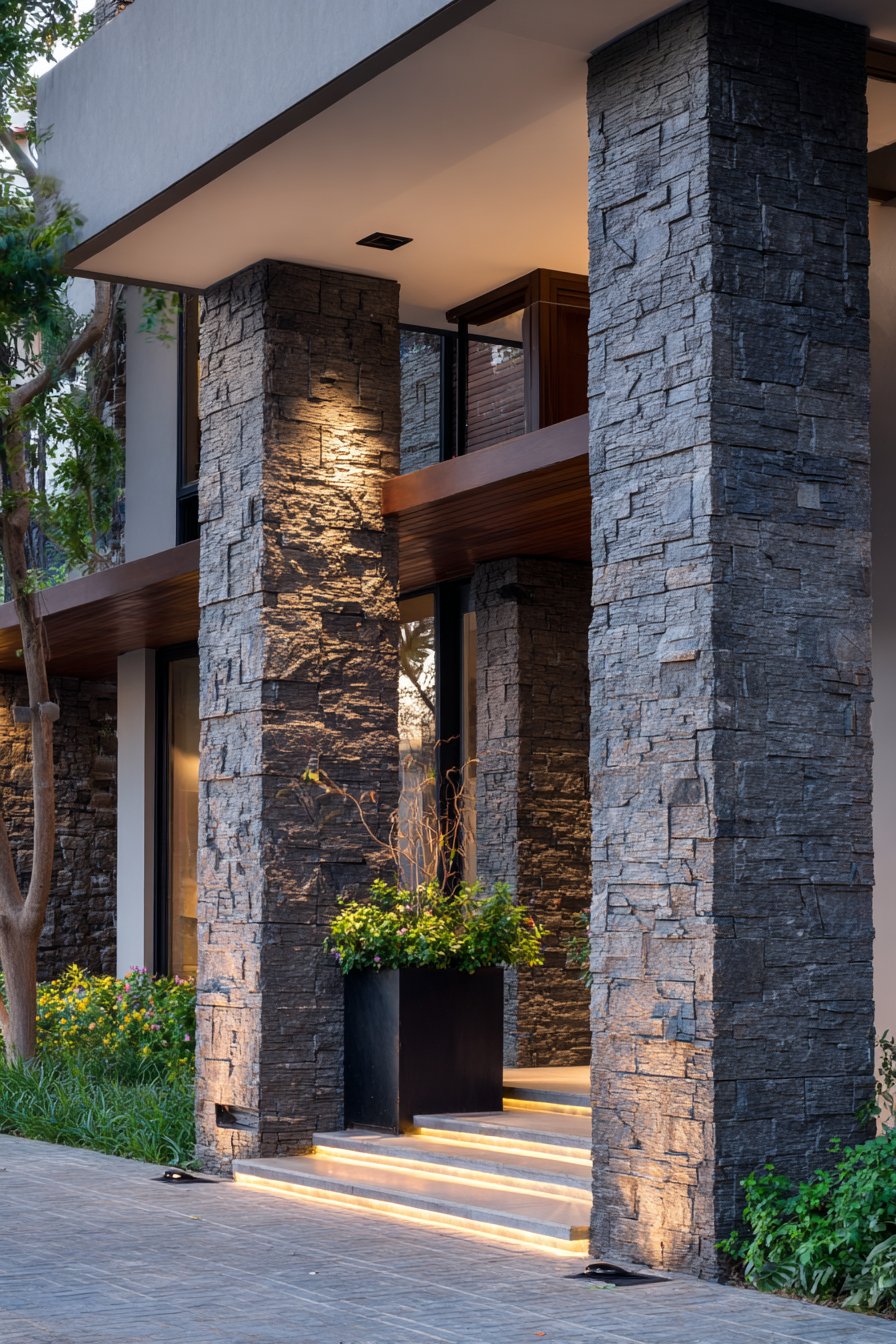
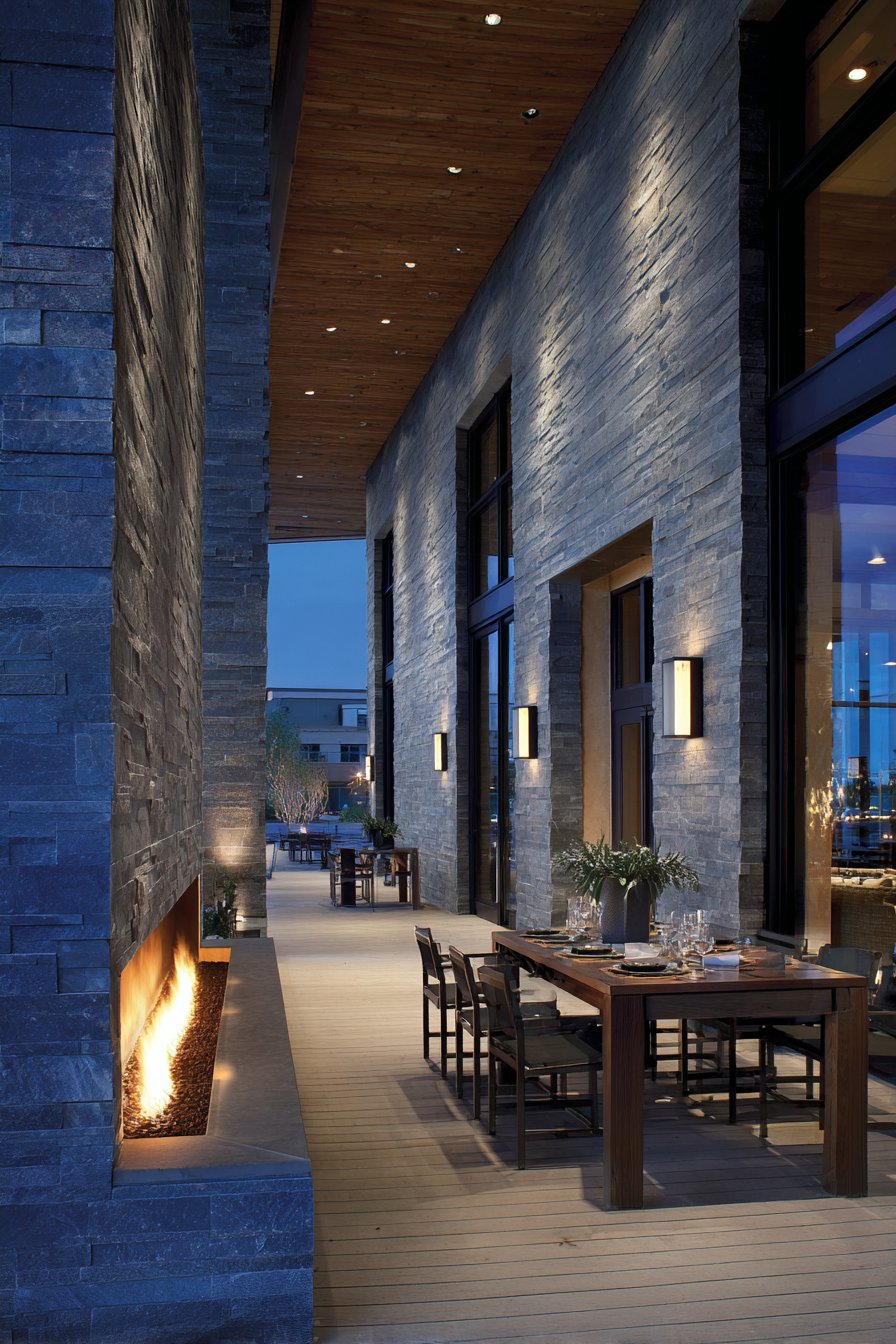
Charcoal-toned ceramic tiles with slate-inspired texture bring sophisticated drama to covered terraces and outdoor living areas. The deep gray coloration provides a striking contrast to natural greenery while creating a moody, contemporary atmosphere that feels both urban and refined. These tiles feature the characteristic cleft surface of natural slate, complete with subtle striations and dimensional variations that catch and reflect light throughout the day. The vertical installation emphasizes ceiling height, making covered outdoor spaces feel more expansive and architecturally significant.
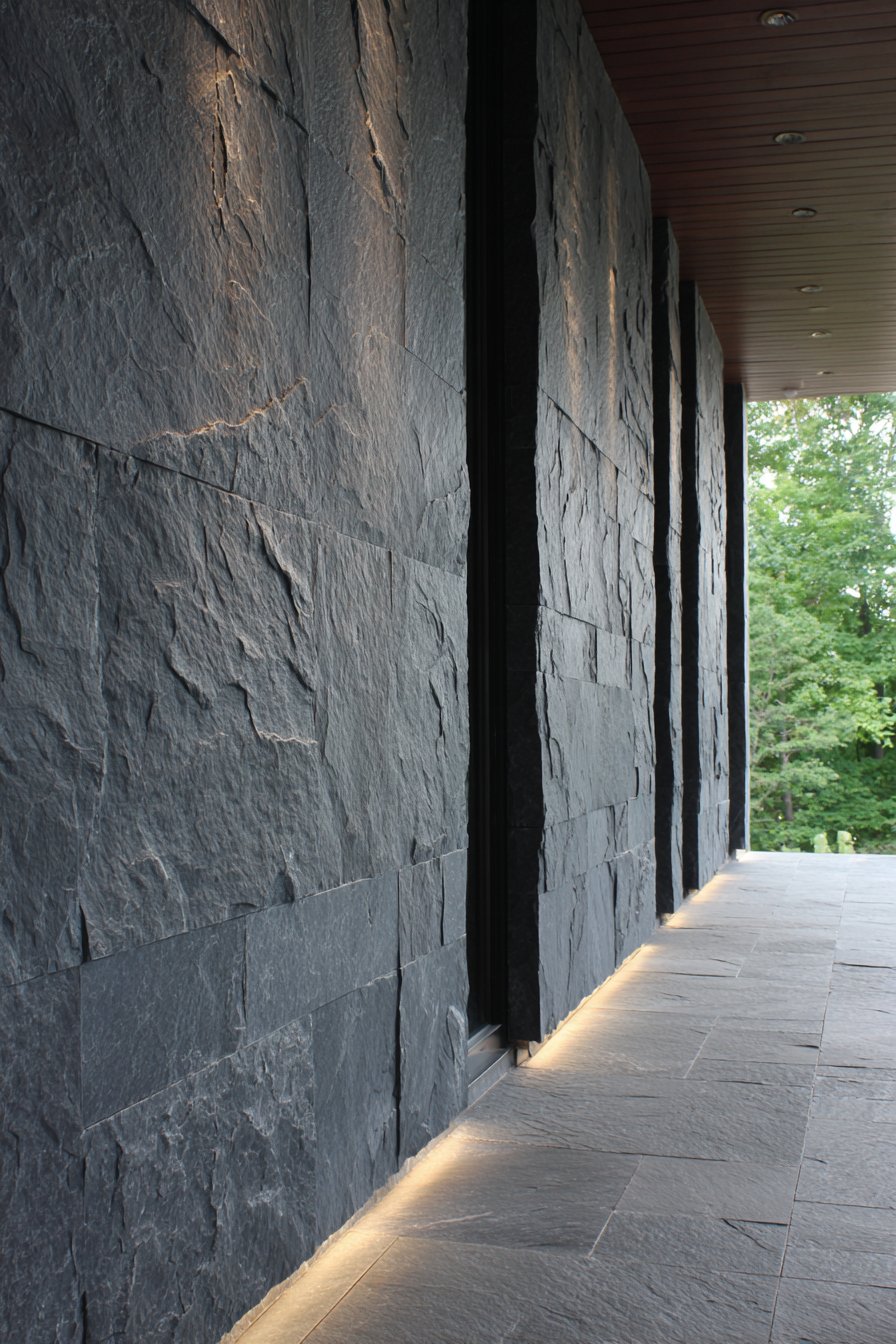
The beauty of slate-look ceramics lies in their ability to deliver authentic stone aesthetics with enhanced durability and easier maintenance. Unlike natural slate, which can flake or absorb stains, ceramic versions maintain their appearance through years of exposure to weather and use. The dark coloration naturally conceals minor dirt or weathering, making these tiles particularly practical for high-traffic outdoor dining areas or entertainment spaces.
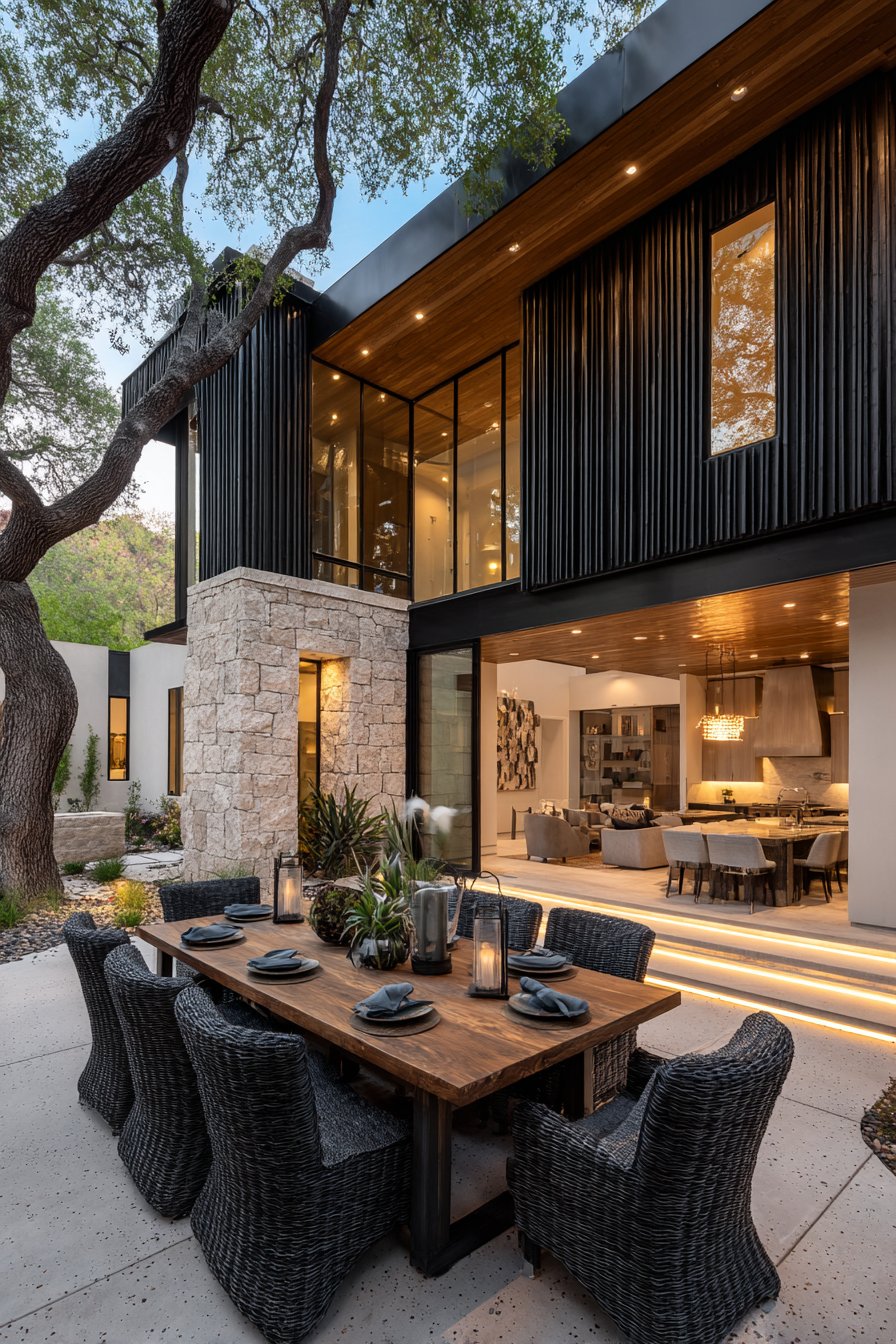
Integrated LED strip lighting at the tile base creates stunning evening ambiance, washing the textured surface with subtle illumination that highlights every ridge and valley in the tile’s relief. This combination of dramatic color, authentic texture, and strategic lighting transforms ordinary covered patios into sophisticated outdoor rooms worthy of any interior space. Consider how the charcoal tones provide a perfect backdrop for both modern metal furniture and more traditional wooden pieces.
Key Design Tips:
- Install tiles vertically to maximize the perception of height in covered outdoor areas
- Incorporate LED strip lighting at the base or top of the tile installation for dramatic evening effects
- Choose matte or textured finishes over glossy surfaces to maintain an authentic stone appearance
- Pair charcoal tiles with warm wood tones or brass accents to prevent the space from feeling too cold
- Ensure proper installation with weather-appropriate adhesives and grout formulated for outdoor use
3. Coastal White-Washed Brick Aesthetic
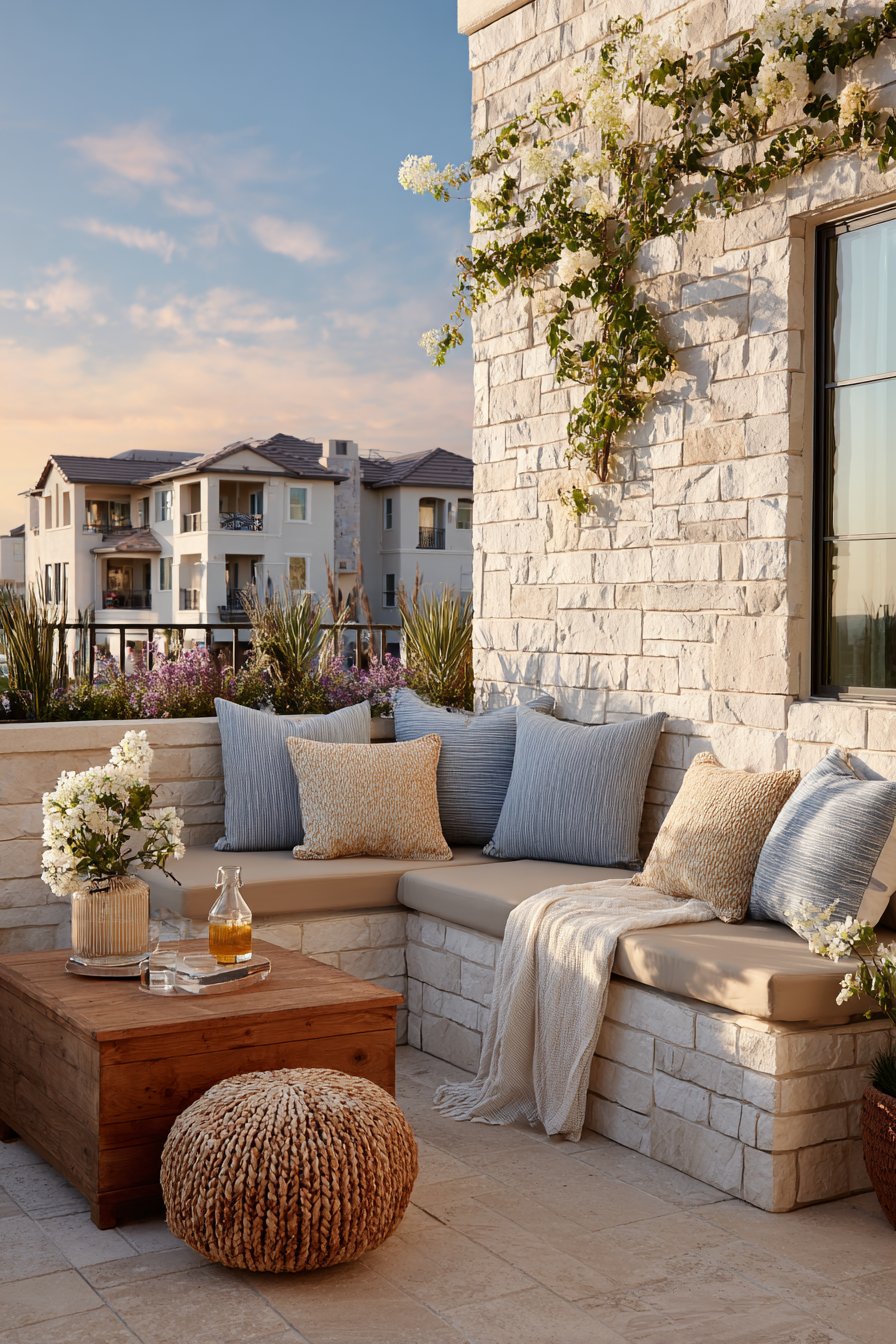
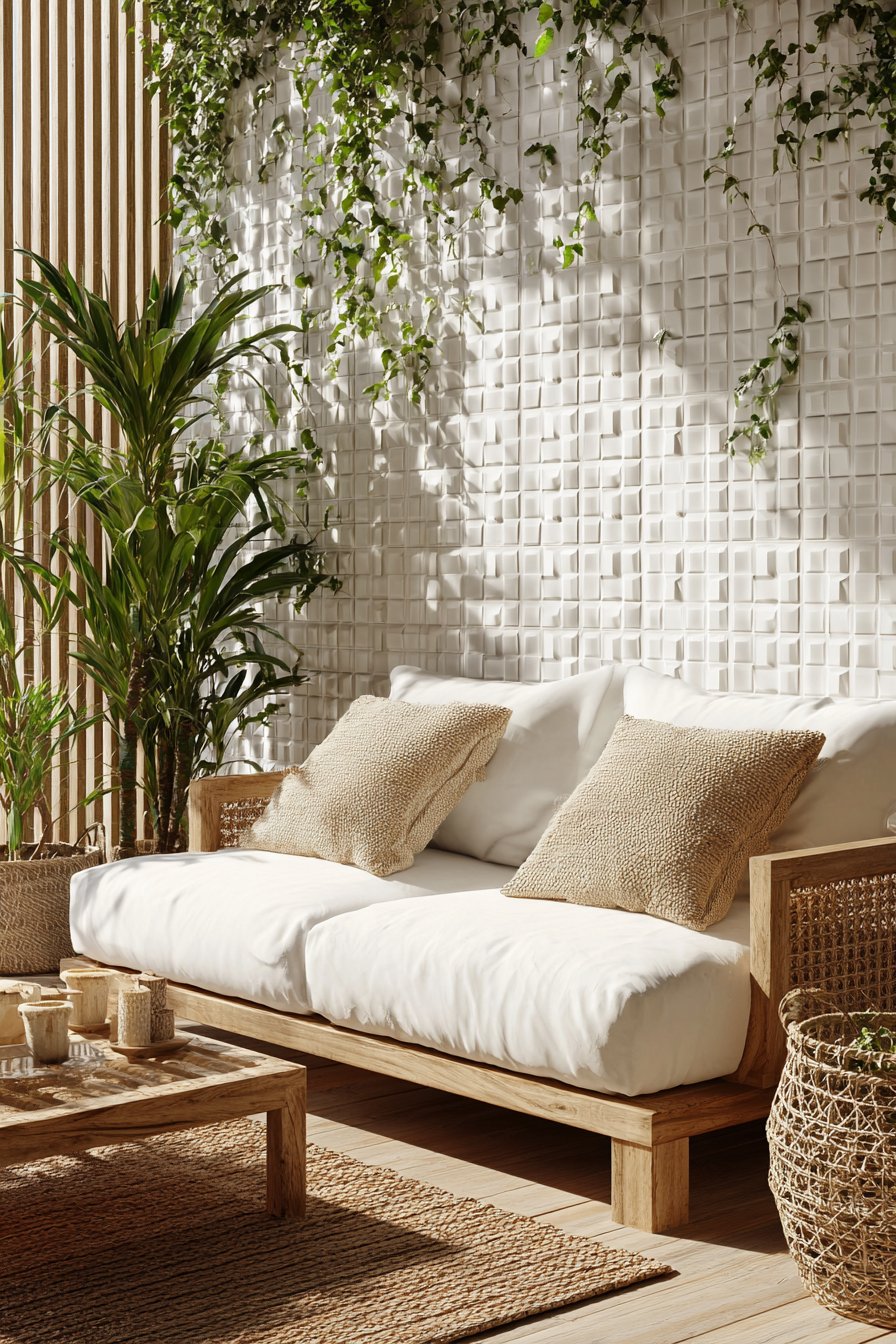
Nothing captures the relaxed elegance of coastal living quite like white-washed brick-style tiles that evoke beachside cottages and seaside retreats. These porcelain tiles replicate the dimensional quality of stacked brick while offering the durability and weather resistance required for outdoor applications. The soft white finish, complete with subtle color variations and authentic weathering effects, creates a bright, airy backdrop that amplifies natural light and visually expands outdoor spaces.
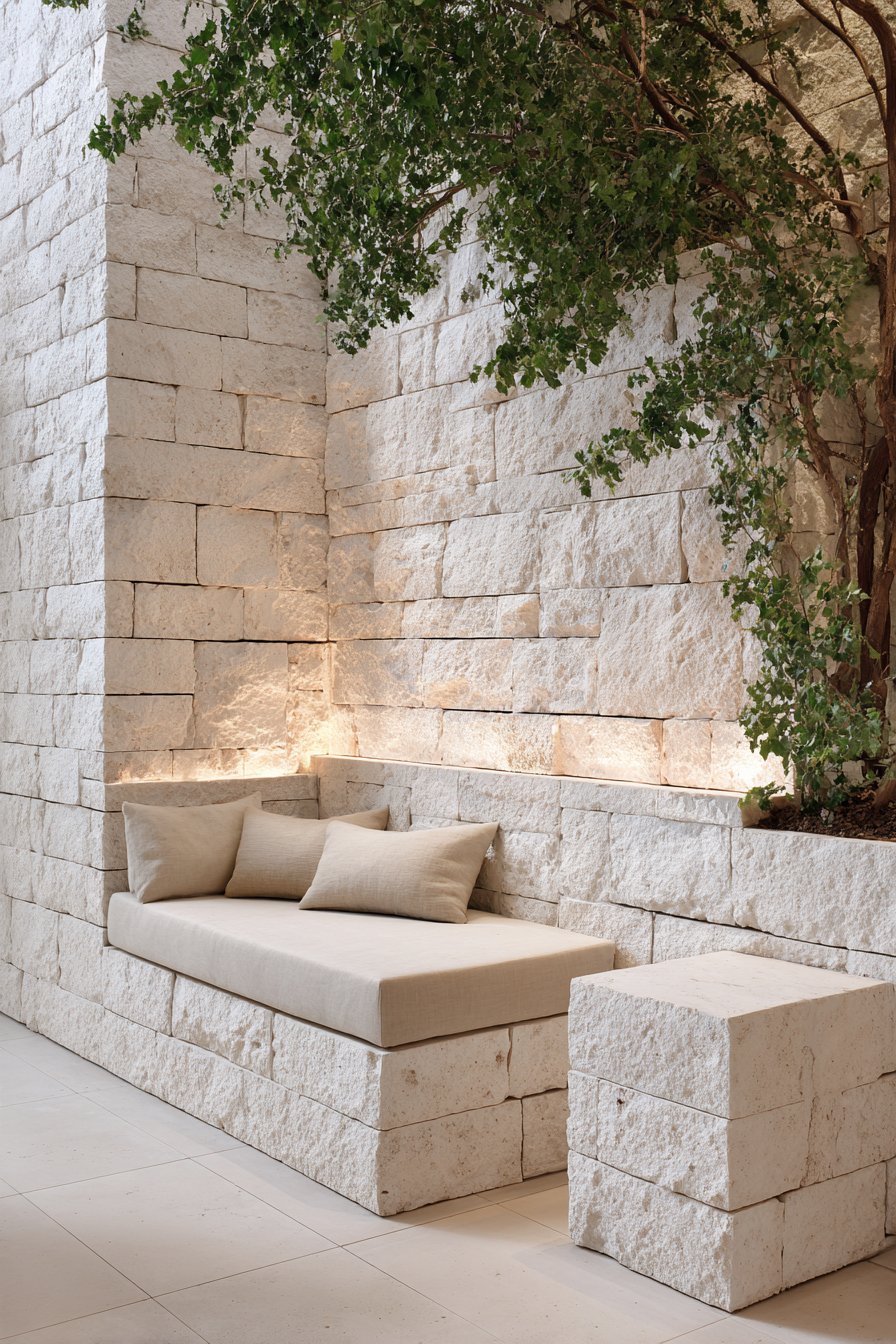
The irregular surface texture of brick-look tiles adds tactile interest without compromising the clean, uncluttered aesthetic essential to coastal design. These tiles work beautifully as privacy walls, creating intimate seating areas that feel both secluded and breezy. The white-washed finish reflects heat rather than absorbing it, making these tiles particularly practical for sunny locations where temperature control matters for comfort.
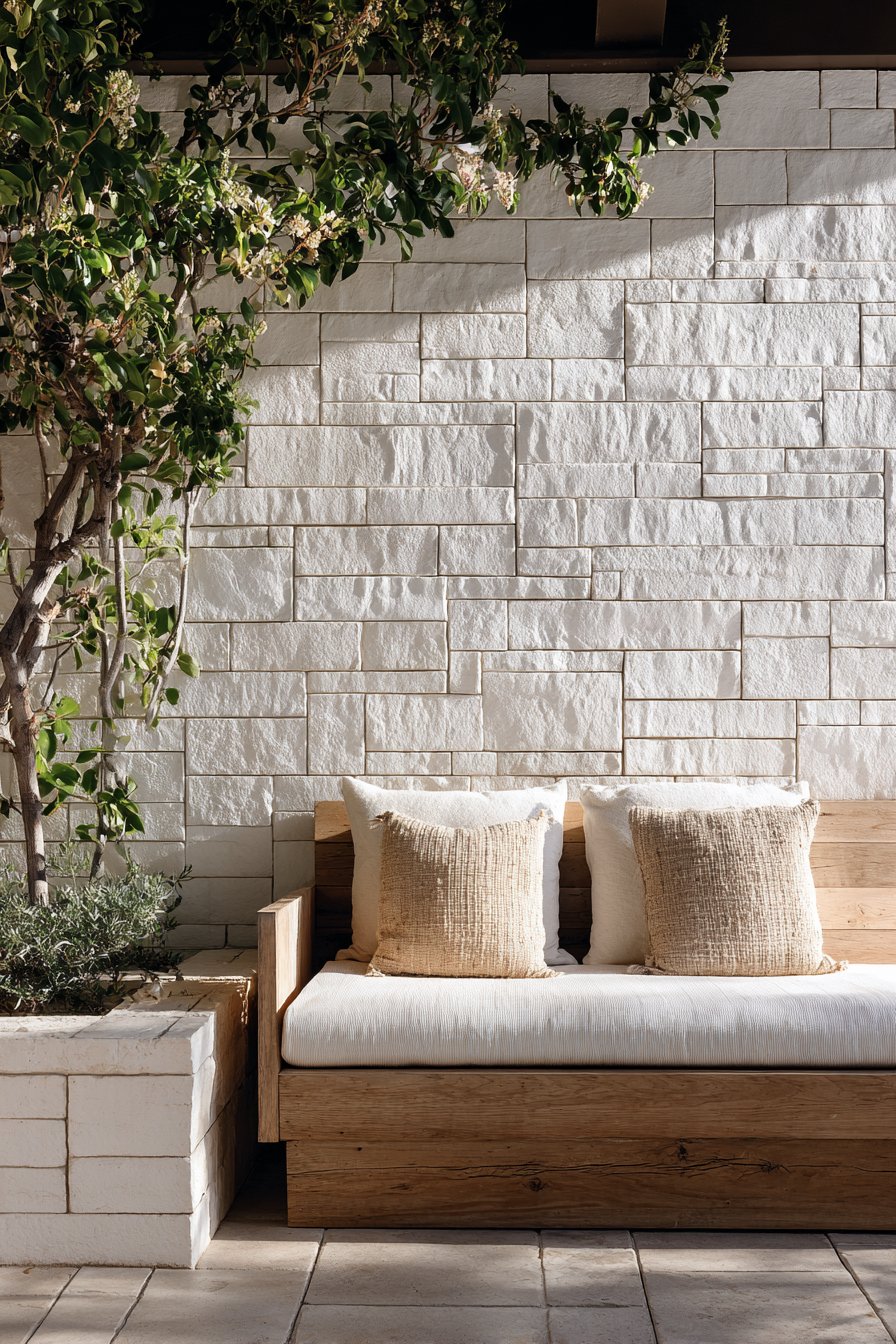
Allow climbing vines or flowering plants to frame the tile installation, creating a romantic interplay between architectural elements and organic growth. The neutral white canvas highlights the vibrant greens of foliage and the brilliant colors of flowering plants, turning your outdoor wall into a living art installation. Natural fiber cushions, weathered wood furniture, and nautical accents complete the coastal narrative established by these versatile tiles.
Key Design Tips:
- Select tiles with varied white tones rather than pure white for a more authentic weathered brick appearance
- Position tiles to create privacy walls around intimate seating areas without blocking airflow
- Incorporate natural fiber textiles and driftwood-toned furniture to reinforce the coastal aesthetic
- Allow strategic gaps in tile coverage for climbing plants to soften the architectural elements
- Use white-washed brick tiles to brighten shaded outdoor areas that receive limited natural light
4. Contemporary Sage Green Subway Tile Feature
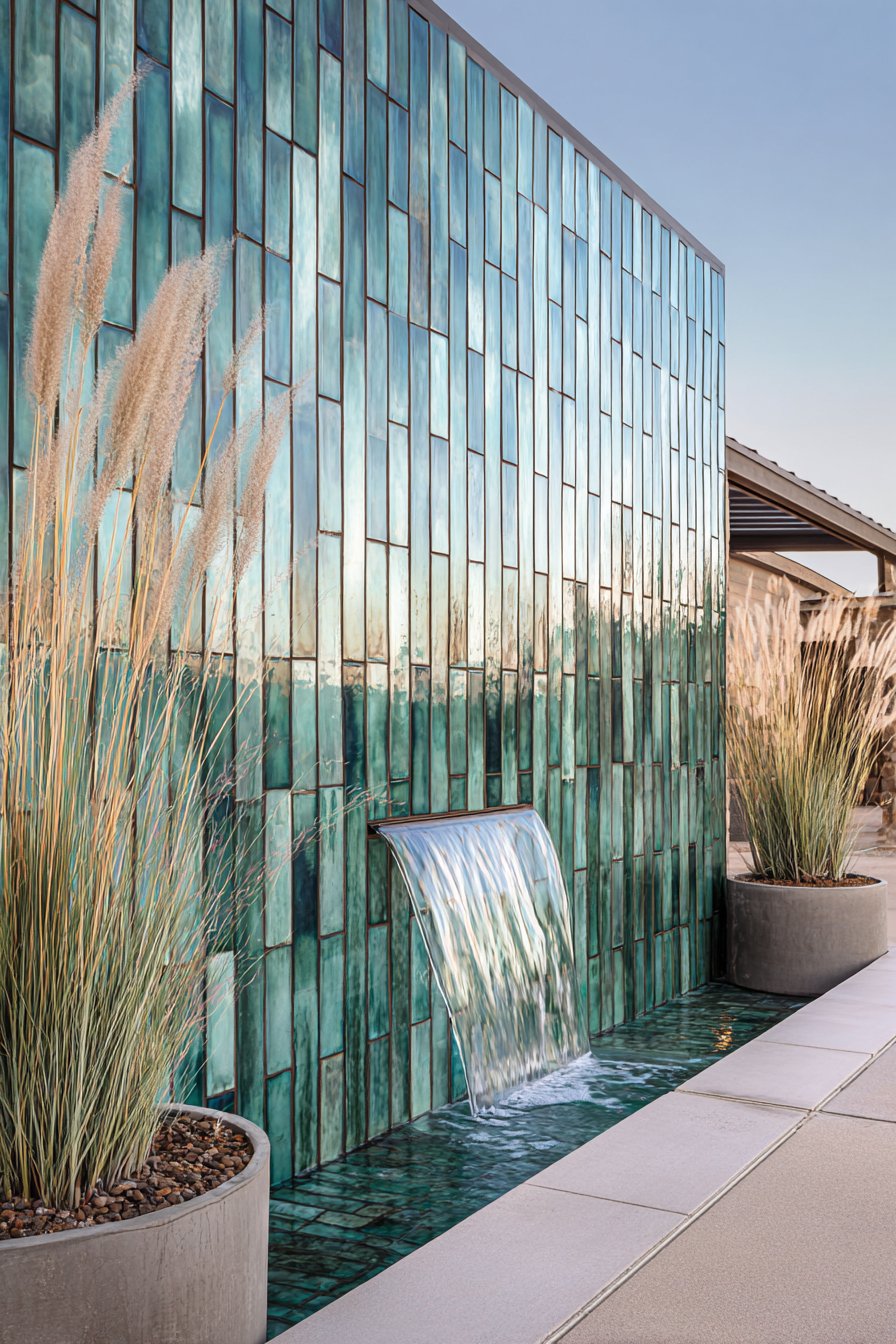
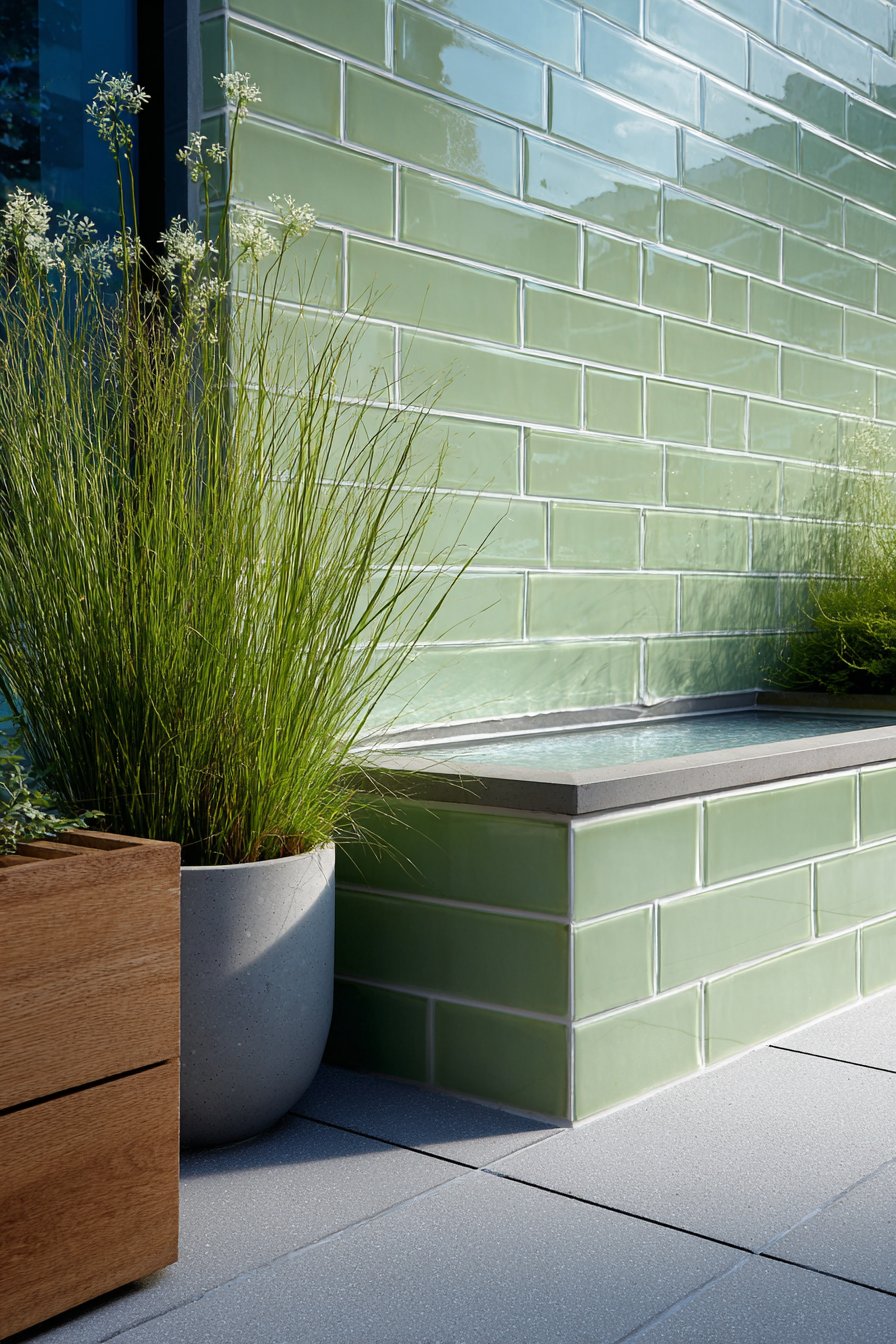
Sage green subway tiles bring unexpected sophistication to garden walls and outdoor living spaces, combining the classic appeal of subway tile layout with an on-trend botanical color. The matte ceramic finish in this muted green tone creates visual interest without overwhelming surrounding landscape elements. Installed vertically, these tiles provide a contemporary backdrop that complements both ornamental grasses and more formal plantings, bridging the gap between architectural elements and natural landscaping.
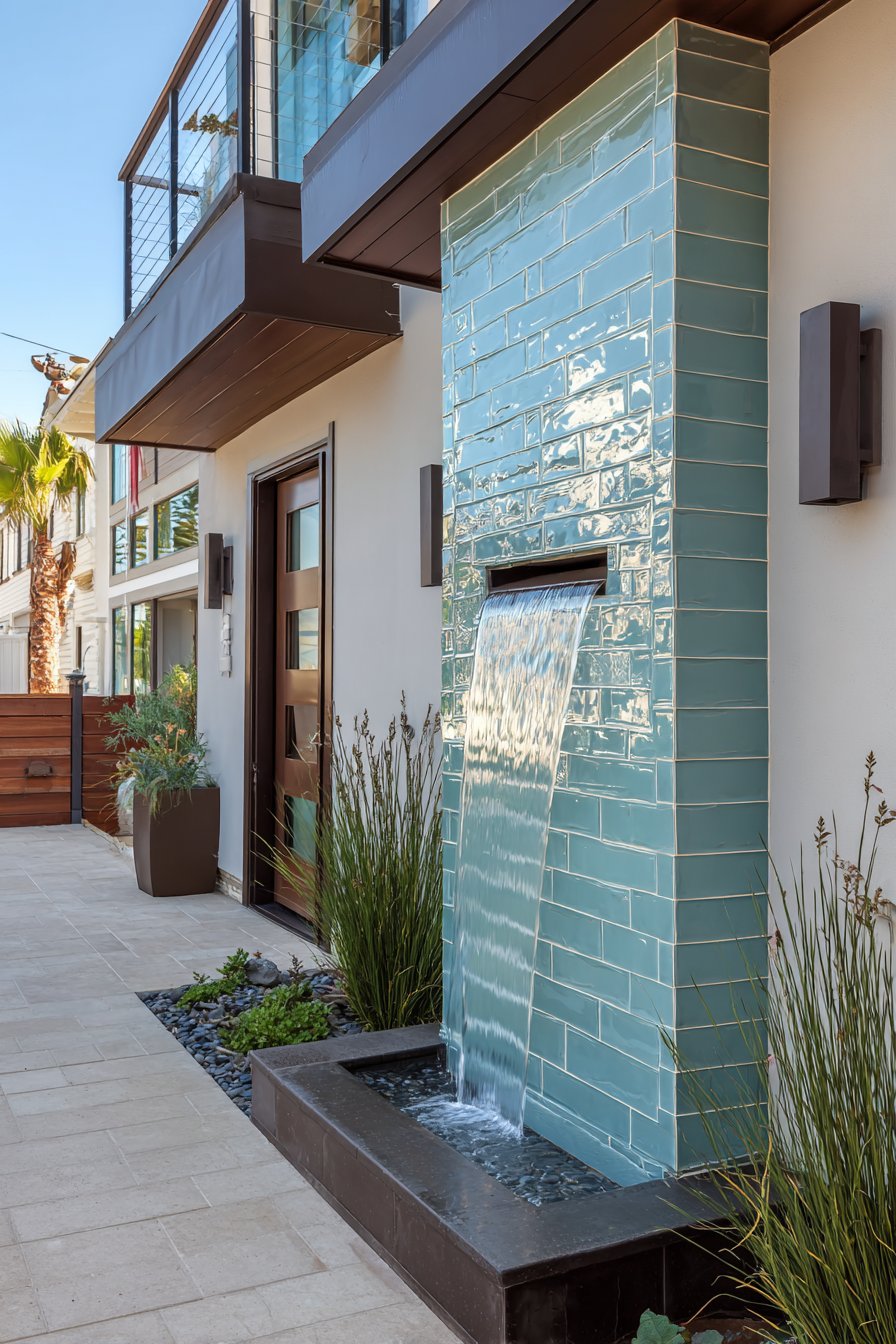
The beauty of colored subway tiles lies in their ability to inject personality into outdoor spaces while maintaining design restraint. Unlike bold patterns or multiple colors, the monochromatic sage application feels calm and grounded, allowing other design elements to shine. The subtle color variations within the ceramic glaze prevent the surface from appearing flat or artificial, instead creating depth that responds beautifully to changing natural light throughout the day.
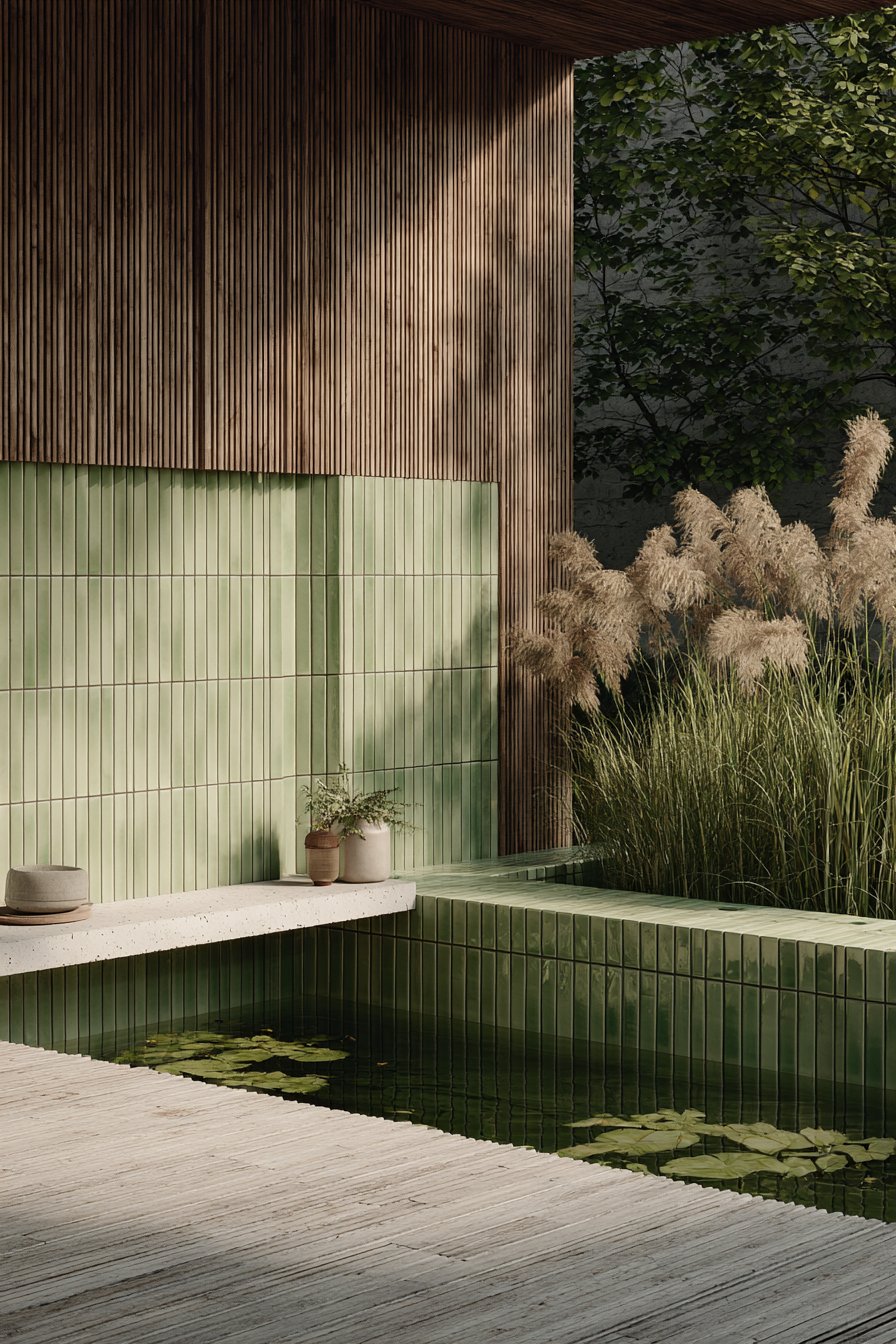
Consider incorporating a small water feature against the tiled wall, where the sound of trickling water and the gentle green backdrop create a sensory experience that promotes relaxation. Ornamental grasses in modern planters soften the geometric precision of the subway layout while reinforcing the connection to nature. This design approach works particularly well in urban gardens where green space is limited but the desire for natural elements remains strong.
Key Design Tips:
- Choose matte finishes over glossy surfaces for a more sophisticated, contemporary appearance
- Install subway tiles in vertical or herringbone patterns for visual interest beyond standard horizontal stacking
- Pair sage green with natural materials like stone, concrete, and unstained wood for organic cohesion
- Position water features or planted areas adjacent to tiled walls to create focal points within the design
- Select grout colors slightly darker than the tile for definition without harsh contrast
5. Mediterranean Terracotta Courtyard Warmth
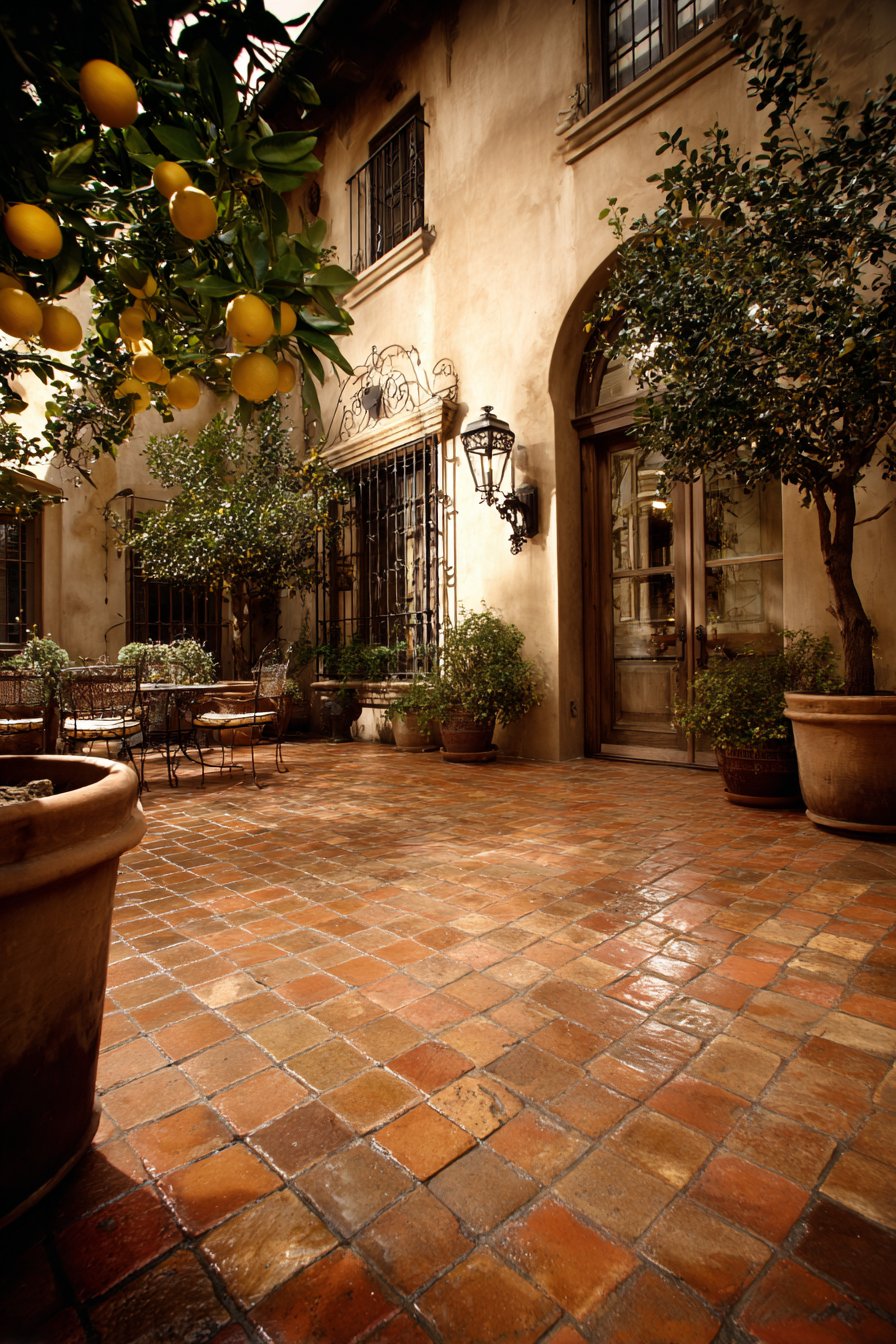
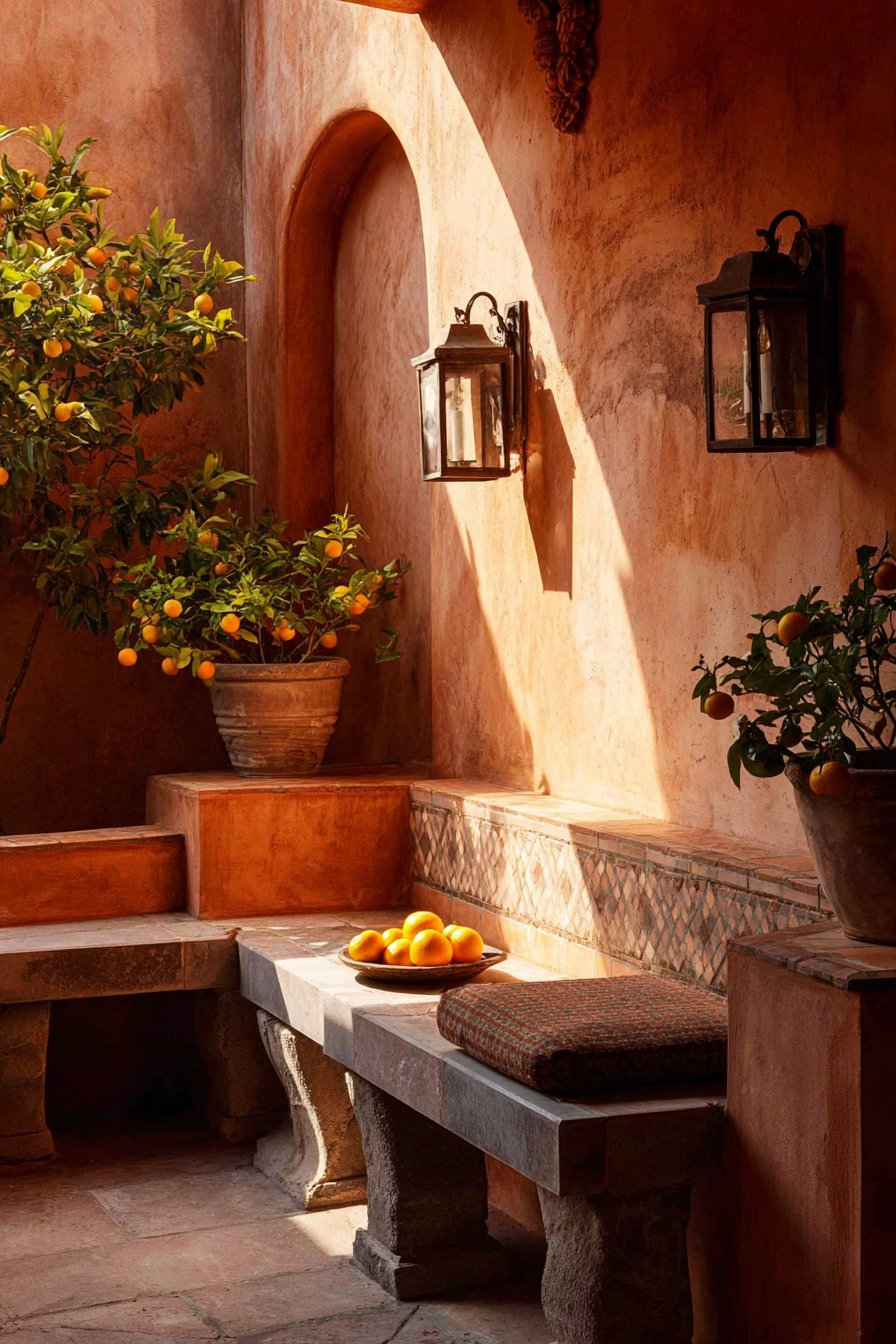
Hand-crafted terracotta tiles transport any outdoor space to sun-drenched Mediterranean courtyards, bringing warmth, texture, and timeless appeal to residential patios. These clay tiles showcase the authentic irregularities of artisan production, with slight variations in size, color, and texture that prevent the mechanical uniformity of mass-produced materials. The rich orange-red tones evoke earthenware pottery and ancient architecture, creating an immediate sense of history and place that grounds outdoor designs in tradition.
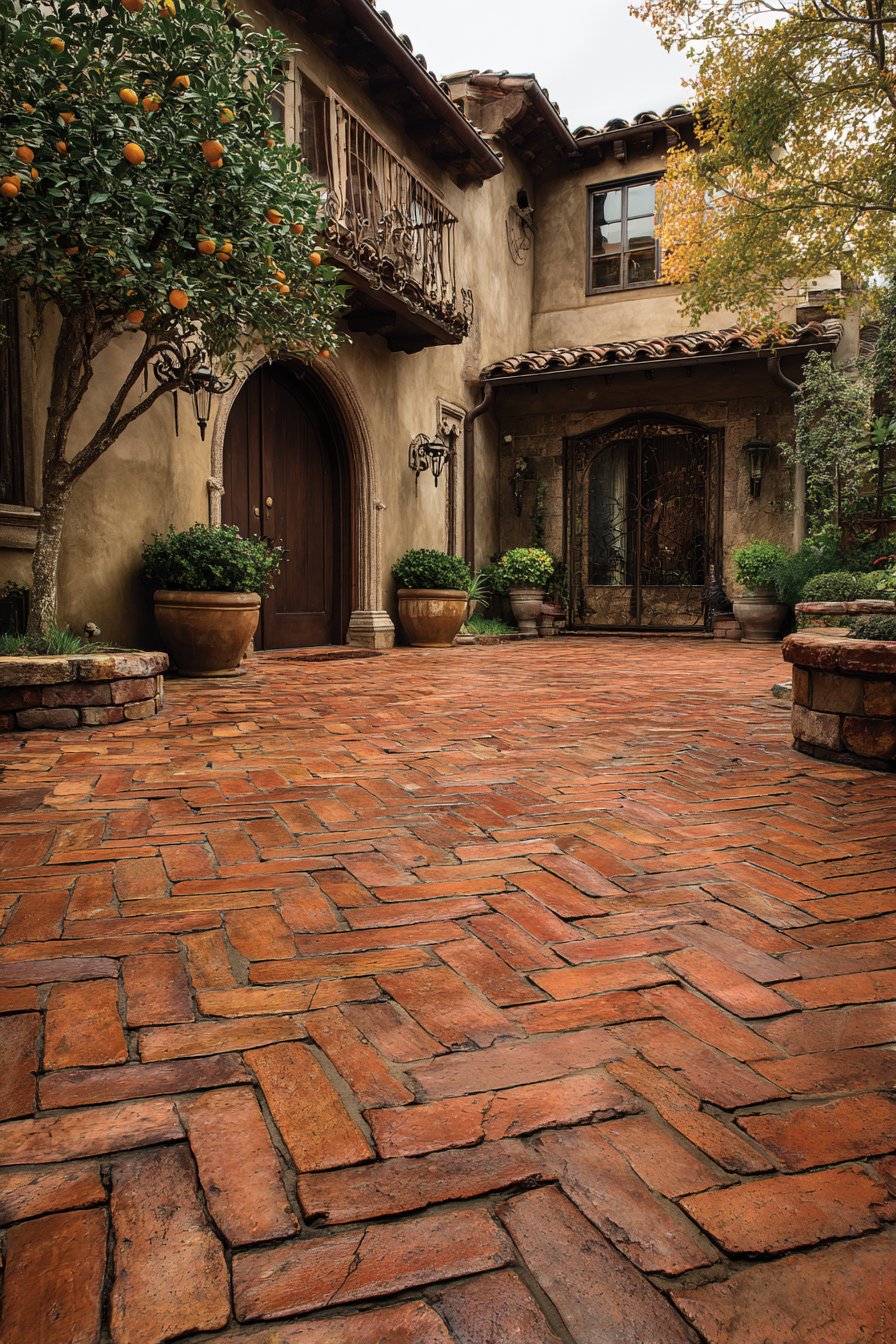
The beauty of authentic terracotta extends beyond aesthetics to include its practical thermal properties. Clay tiles naturally regulate temperature, remaining cool underfoot during hot days while releasing stored warmth during cooler evenings. This makes terracotta-clad walls particularly comfortable in outdoor rooms used for extended periods. The porous nature of traditional terracotta also allows walls to breathe, preventing moisture buildup that can compromise other materials.
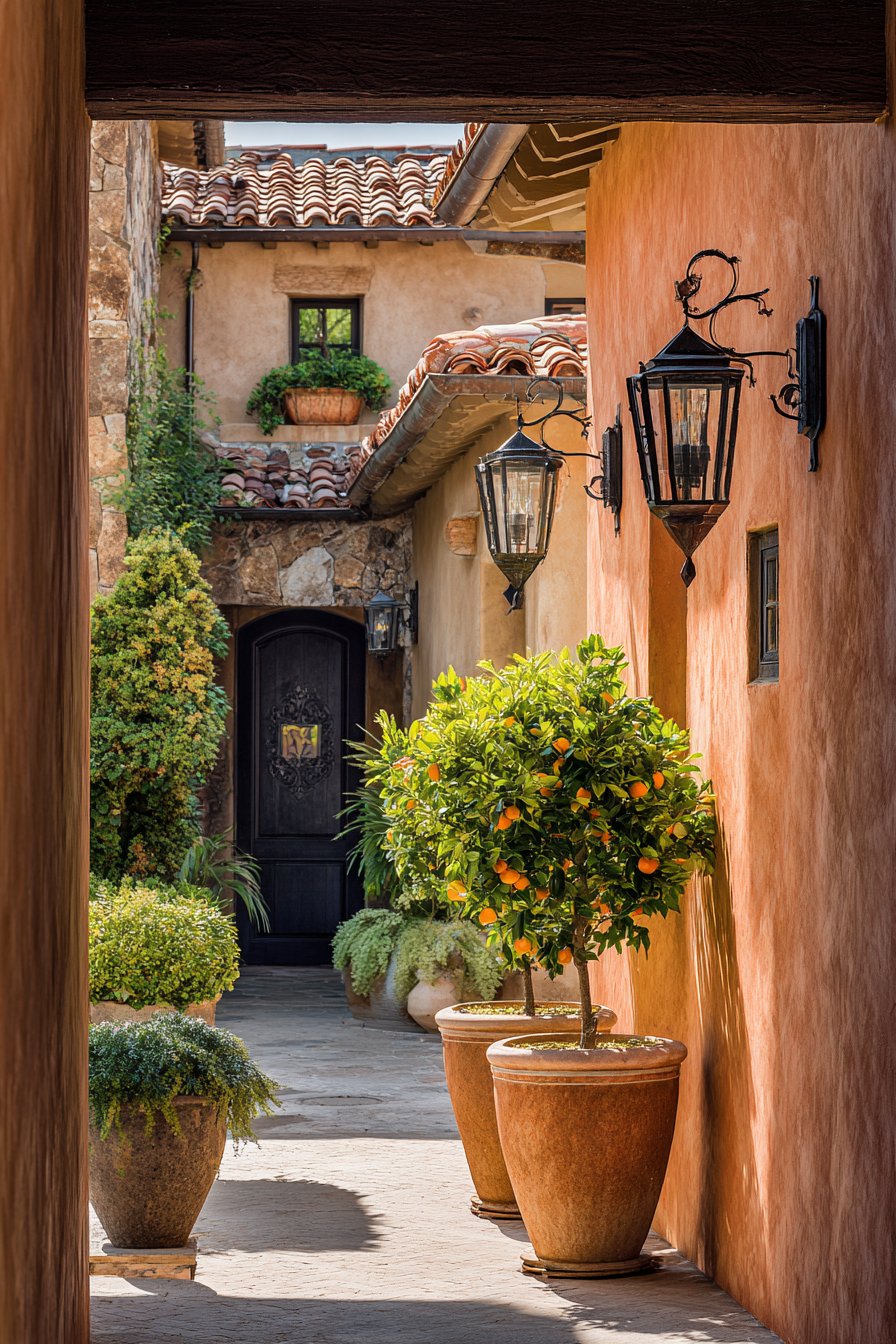
Style terracotta walls with wrought iron wall sconces that cast romantic shadows across the uneven surface, and position potted citrus trees nearby to complete the Mediterranean narrative. The warm earth tones serve as the perfect backdrop for the deep greens of olive trees, lavender, and rosemary, creating a sensory garden that engages sight and smell. Morning light reveals the tiles’ texture and color depth, while evening illumination from lanterns creates an intimate, convivial atmosphere perfect for outdoor dining.
Key Design Tips:
- Embrace slight imperfections in handmade terracotta tiles as evidence of authentic craftsmanship
- Install tiles in traditional square or rectangular formats to honor Mediterranean design heritage
- Pair terracotta with wrought iron hardware, fixtures, and furniture for stylistic consistency
- Incorporate Mediterranean plants like citrus, olive, lavender, and herbs to complete the regional aesthetic
- Allow natural patina development over time rather than sealing tiles for a pristine appearance
6. Geometric Navy and White Hexagonal Design
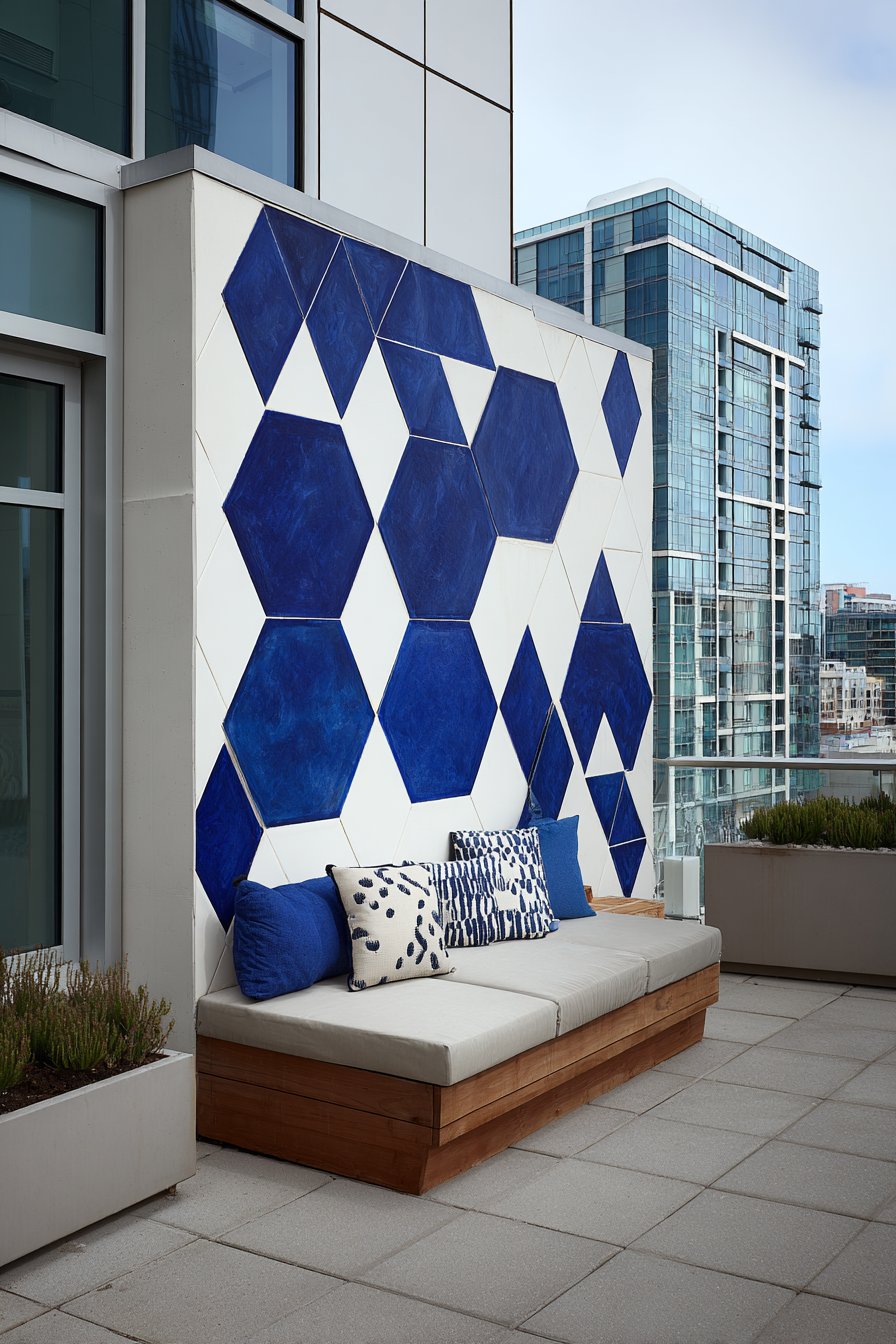
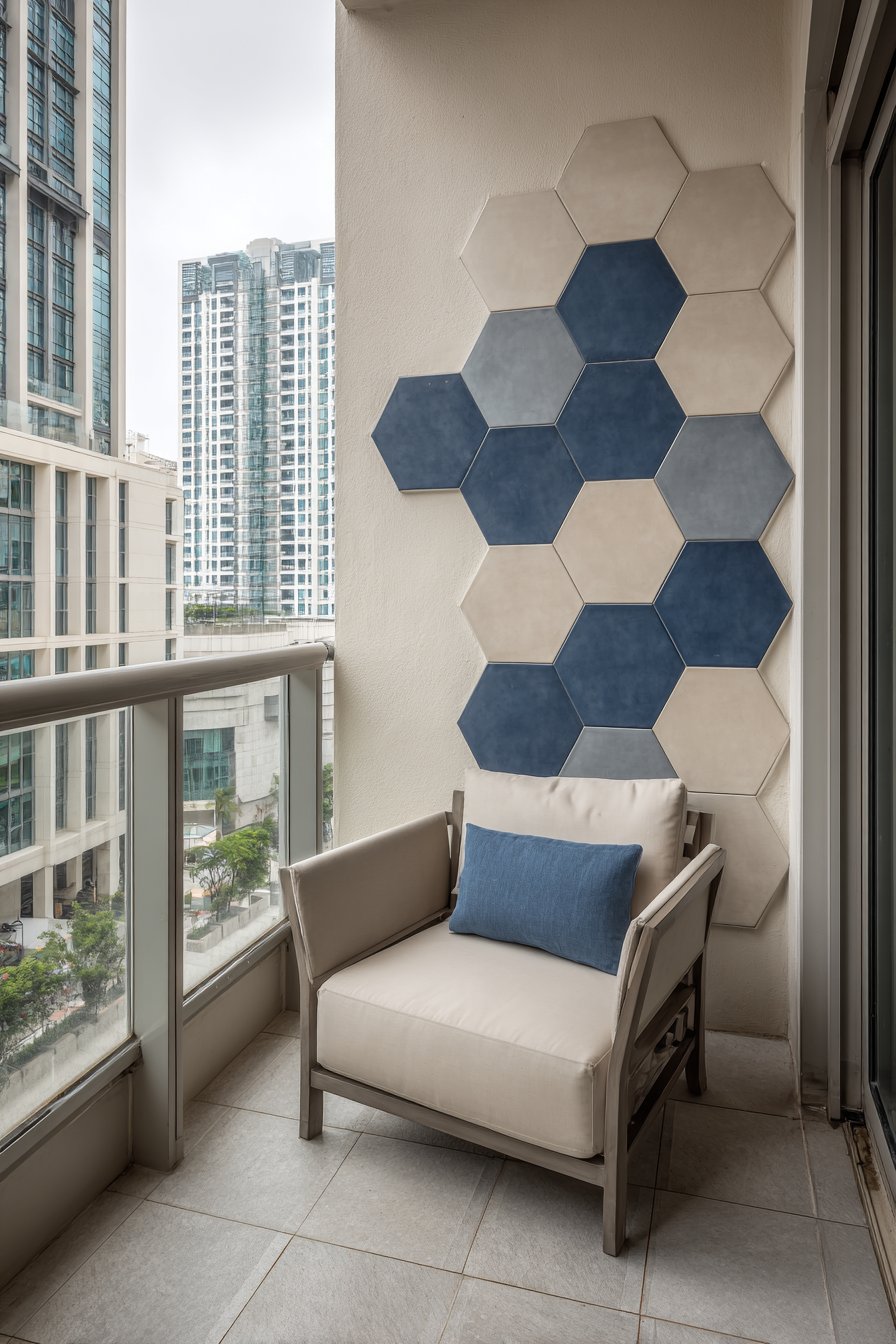
Bold geometric patterns make dramatic statements in outdoor spaces, and hexagonal cement tiles in navy blue and white deliver visual impact while maintaining contemporary sophistication. This honeycomb arrangement creates movement and interest across wall surfaces, transforming blank vertical spaces into attention-commanding focal points. The strong color contrast between deep navy and crisp white ensures the pattern remains clearly defined even in varied lighting conditions, while the cement material provides the durability required for exterior applications.
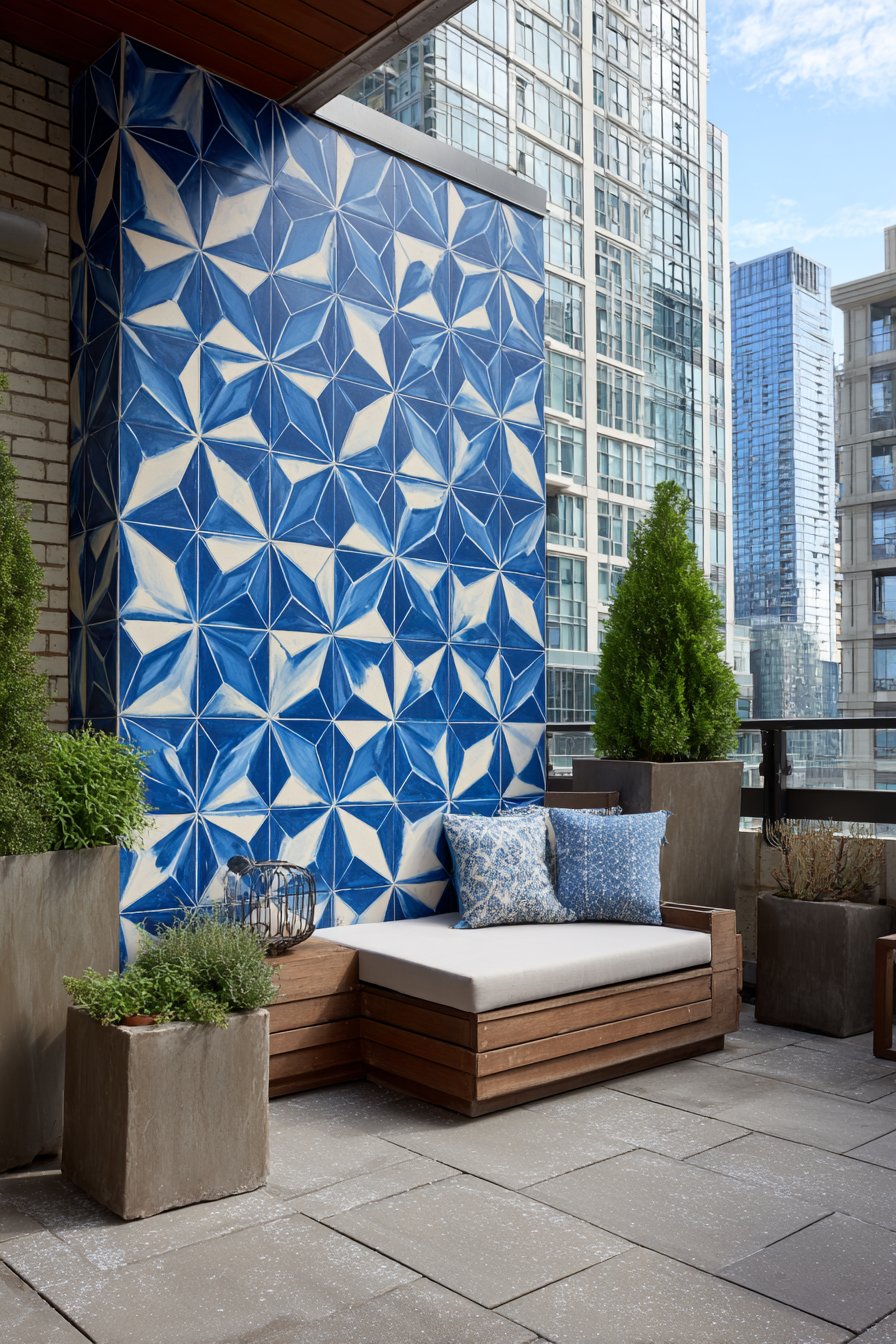
The geometric pattern works particularly well in compact outdoor areas where every design element must earn its place. On small urban balconies, a single accent wall of hexagonal tiles can define the space and create the illusion of greater depth. The repeating pattern draws the eye across the surface, while the dimensional quality of individual hexagons creates subtle shadows that add complexity to the overall composition.
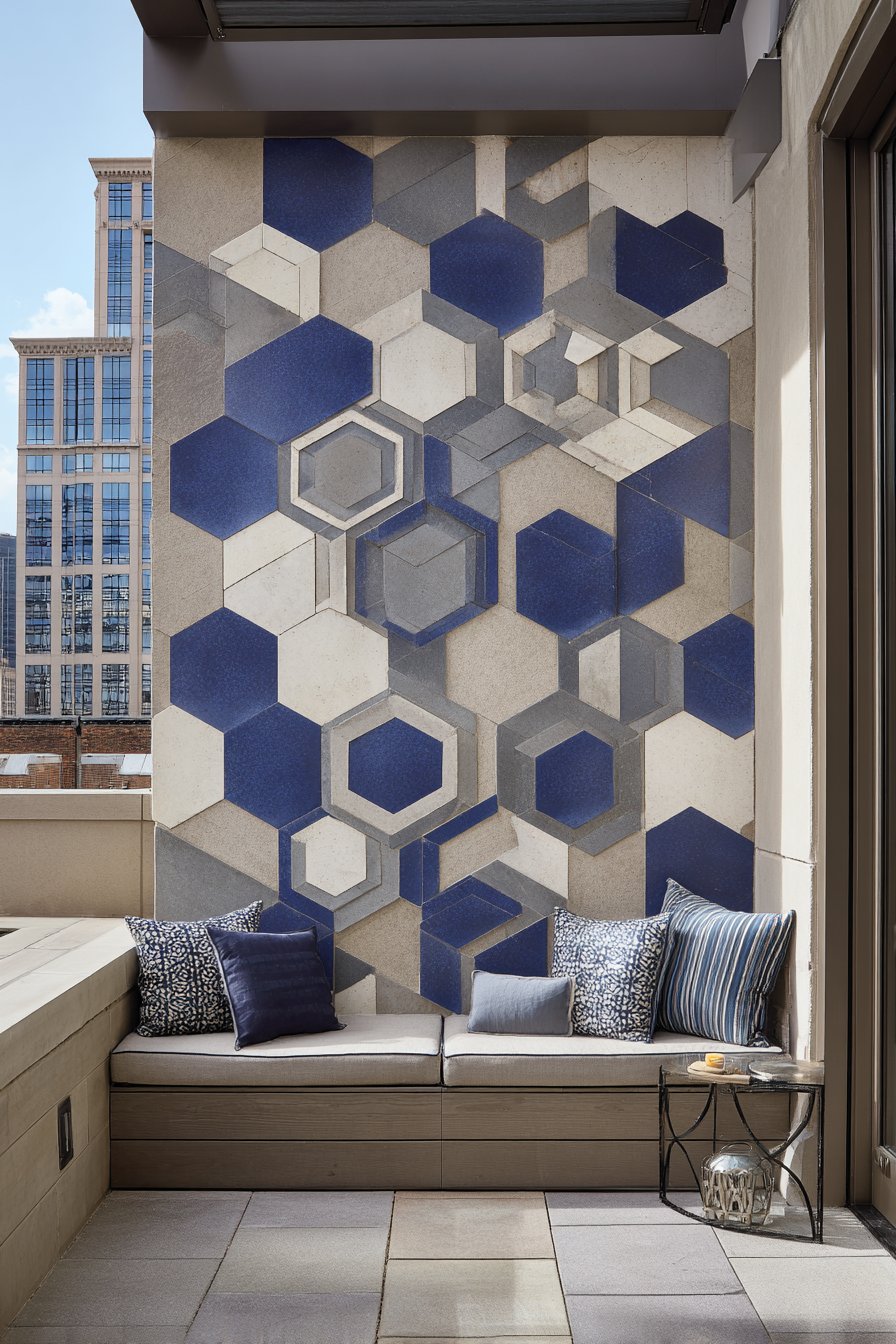
Cement tiles offer unique advantages for outdoor use, including superior durability and slip resistance. Unlike ceramic or porcelain alternatives, cement tiles develop character over time, with gentle patina adding to their appeal rather than detracting from it. The matte finish prevents glare while maintaining color vibrancy, and the material’s natural porosity allows it to shed water effectively. Pair these striking tiles with simple, modern furniture in neutral tones to prevent visual competition between pattern and furnishings.
Key Design Tips:
- Use bold geometric patterns as accent walls rather than covering all vertical surfaces to prevent overwhelming the space
- Select cement tiles for their authentic material properties and improved outdoor performance
- Limit furniture colors to neutrals when using high-contrast tile patterns to maintain visual balance
- Consider the scale of the hexagon size relative to your space—larger hexagons suit bigger areas while smaller patterns work in compact zones
- Seal cement tiles periodically to protect against staining while maintaining their characteristic matte appearance
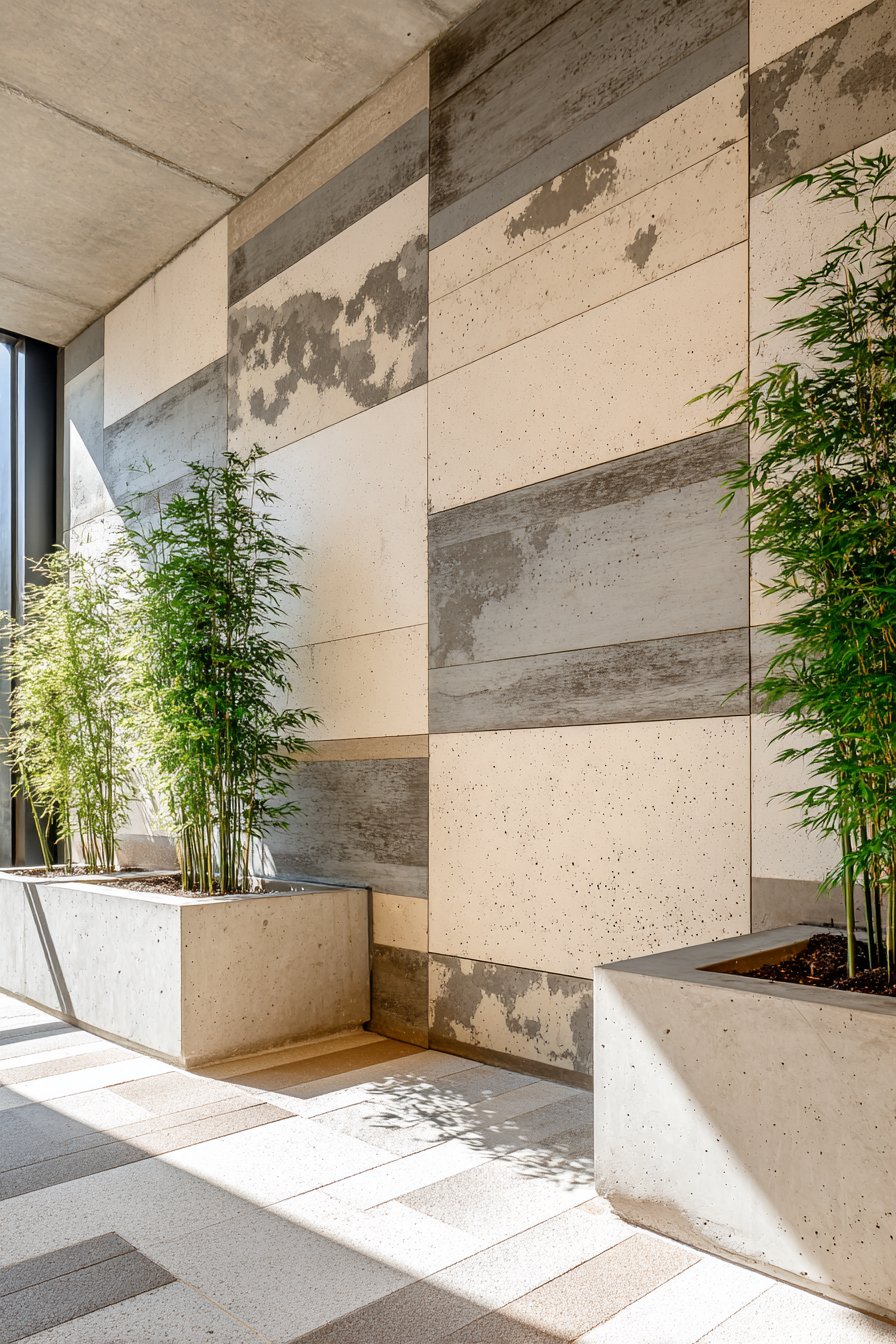
7. Zen Natural Stone Meditation Space
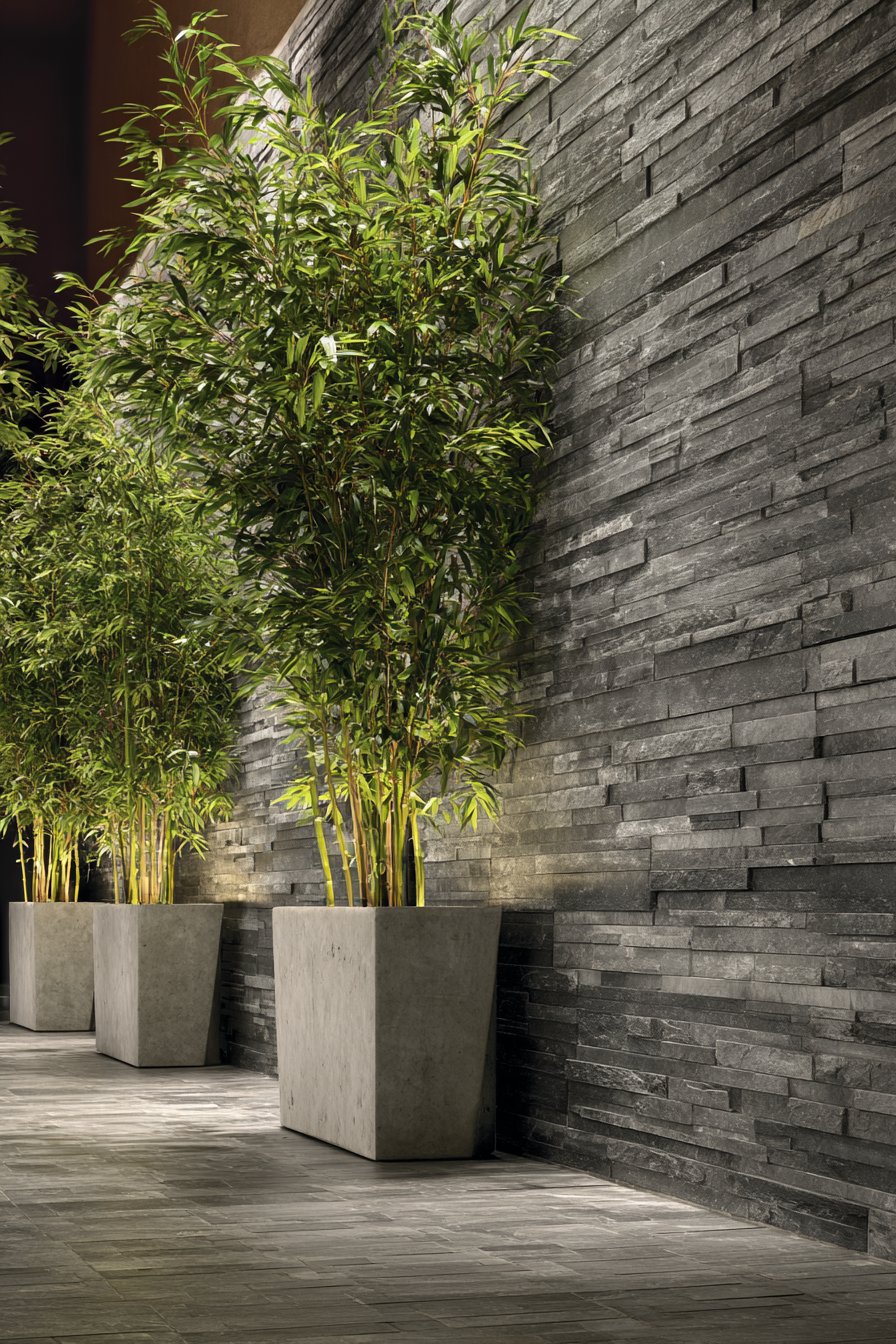
Natural stone tiles in mixed gray tones create the foundation for tranquil outdoor meditation areas that promote mindfulness and connection with nature. The varied coloration within each stone tile—from pale silver to deep charcoal—provides visual interest without the distraction of bold patterns or artificial colors. Installed in a stacked horizontal pattern, these tiles create subtle linear movement that guides the eye across the wall while maintaining the calm essential to contemplative spaces.
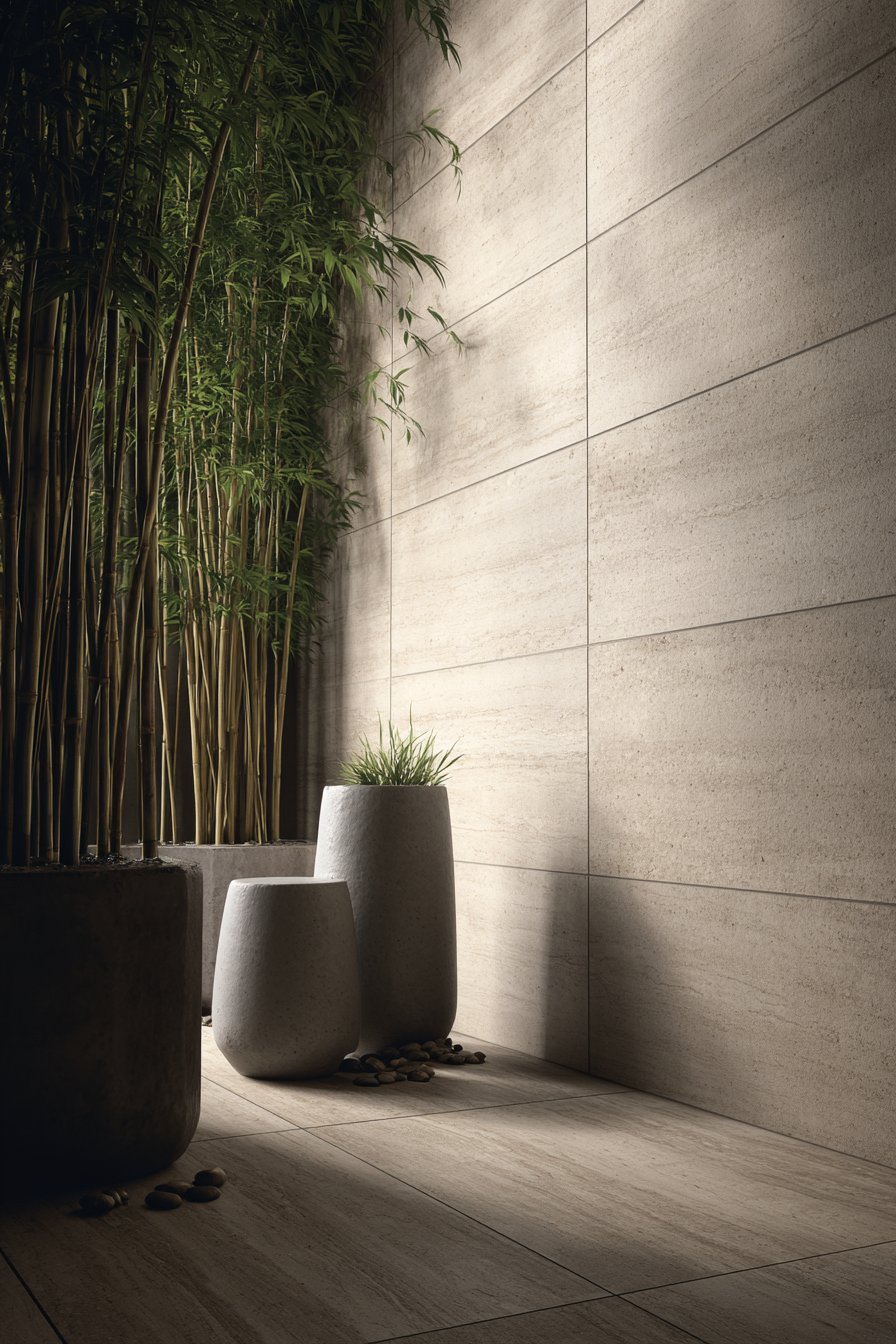
The authentic texture of natural stone adds tactile dimension that invites touch and closer inspection. Each tile’s unique mineral composition creates one-of-a-kind patterns and color variations, ensuring no two walls look identical. This natural variability prevents the monotony that can occur with manufactured materials while reinforcing the connection to earth elements central to Zen philosophy. The stone’s thermal mass helps moderate temperature fluctuations, creating more comfortable microclimates in outdoor meditation areas.
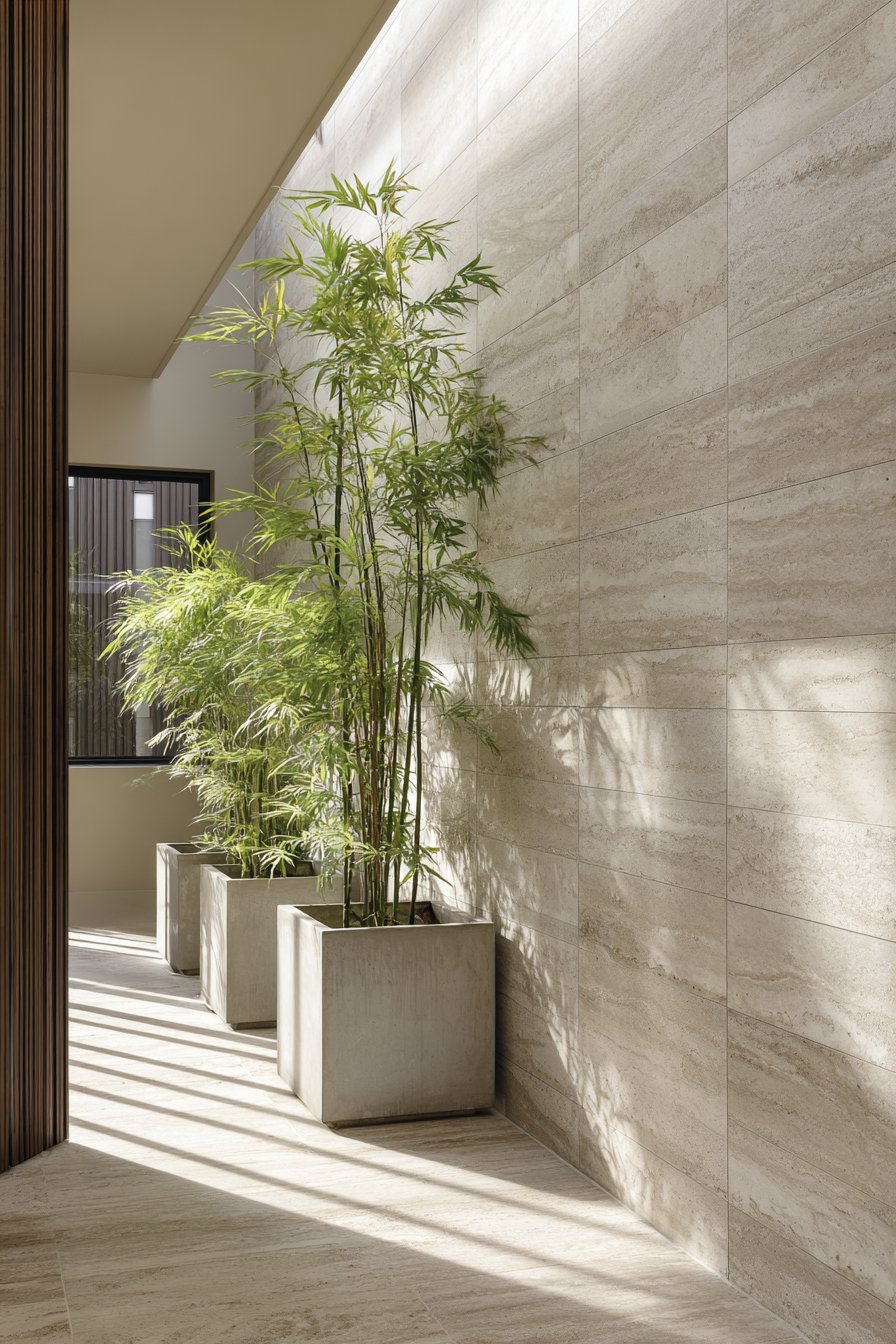
Complement stone walls with carefully selected plants that reinforce the minimalist aesthetic—consider bamboo varieties in sleek concrete planters that echo the tiles’ gray tones. Position floor cushions or a low meditation bench in front of the stone feature, creating a dedicated space for practice that feels removed from daily concerns. Overhead structures that create dappled shade enhance the interplay between light and shadow on the stone surface, adding dynamic visual interest throughout the day.
Key Design Tips:
- Select natural stone tiles with minimal veining or busy patterns to maintain the calm required for meditation spaces
- Arrange tiles in horizontal stacking patterns to promote visual flow and tranquility
- Limit plant selections to species with simple forms and restrained growth habits like bamboo, ornamental grasses, or Japanese maples
- Create seating areas directly in front of stone features to establish clear zones for meditation or contemplation
- Allow natural weathering and patina development to enhance the authentic character of stone installations
8. Farmhouse Wood-Look Porcelain Charm
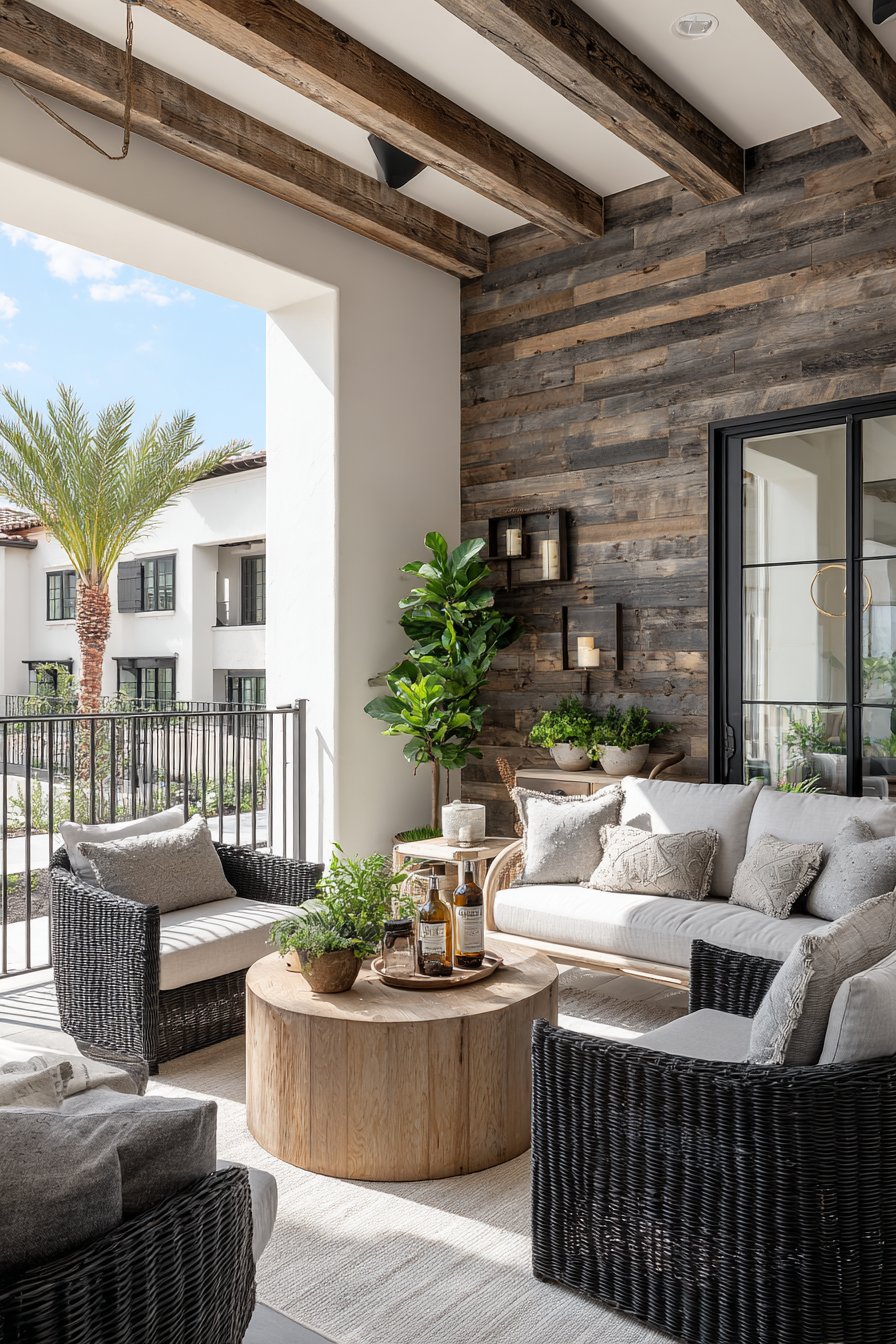
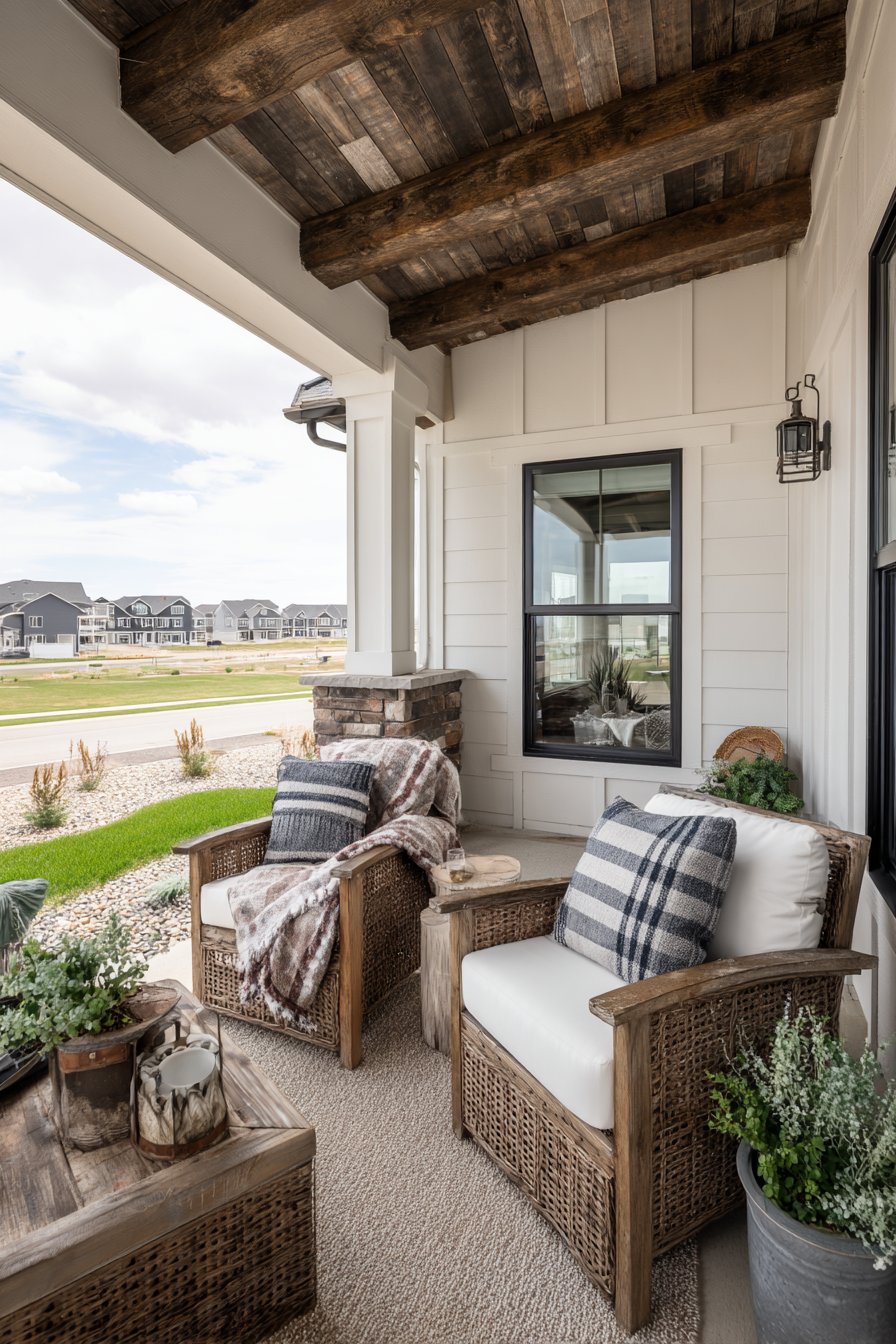
Reclaimed wood aesthetics meet modern durability in porcelain tiles that convincingly replicate weathered barn siding while withstanding outdoor exposure. These wood-look tiles capture every detail of authentic lumber—from natural grain patterns and knot holes to the silvered patina of weather-worn boards. The varied plank widths and lengths create visual interest that prevents the repetitive appearance common in some tile installations, while the porcelain composition ensures these “boards” will never rot, warp, or harbor pests.
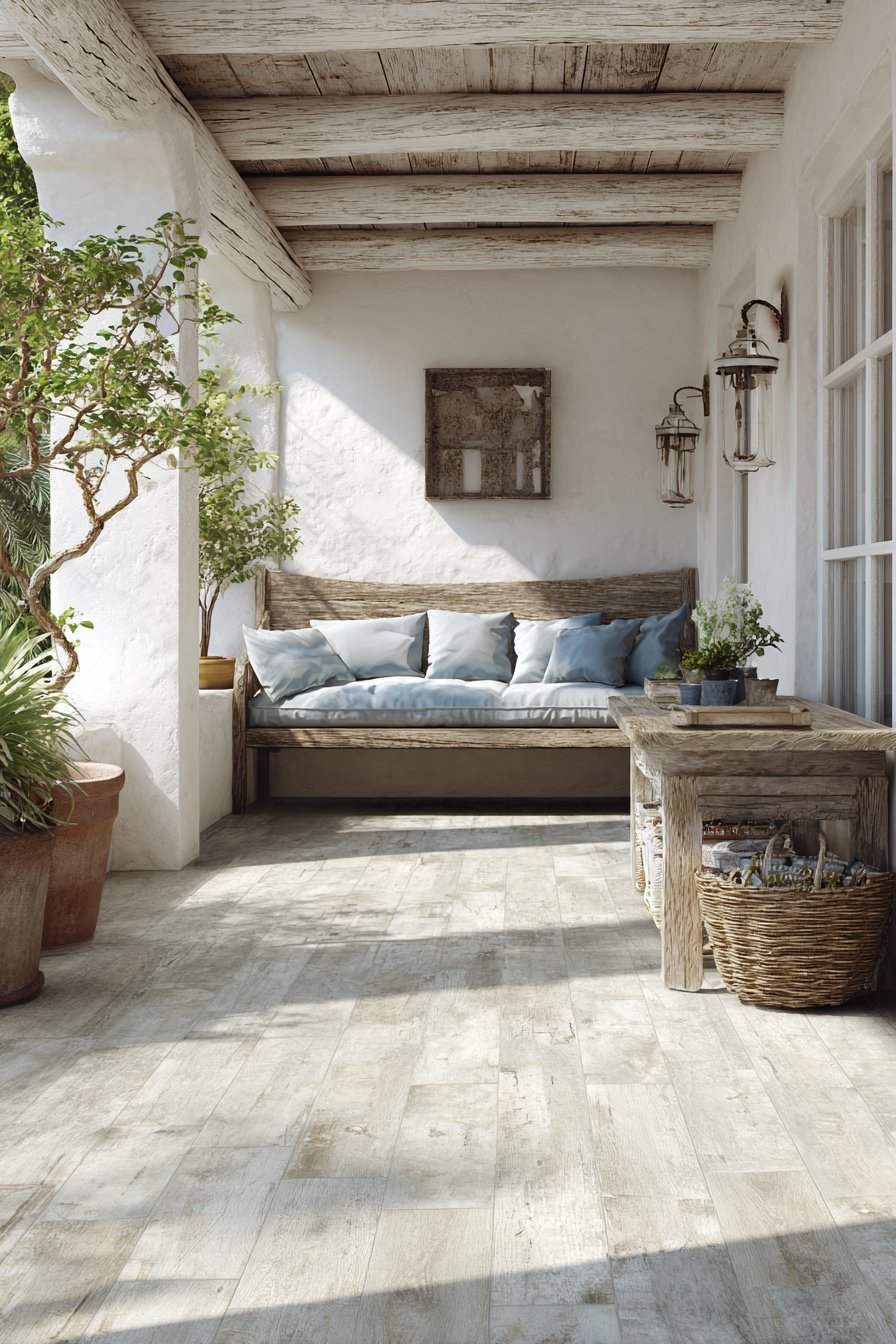
The rustic charm of weathered wood creates instant warmth in outdoor covered porches and patio areas. When installed on exterior walls beneath white-washed beams or corrugated metal roofing, these tiles complete the modern farmhouse aesthetic that remains popular across diverse regions. The neutral gray-brown tones provide a versatile backdrop that complements vintage-style outdoor furniture, galvanized metal accents, and the mix of old and new elements characteristic of farmhouse design.
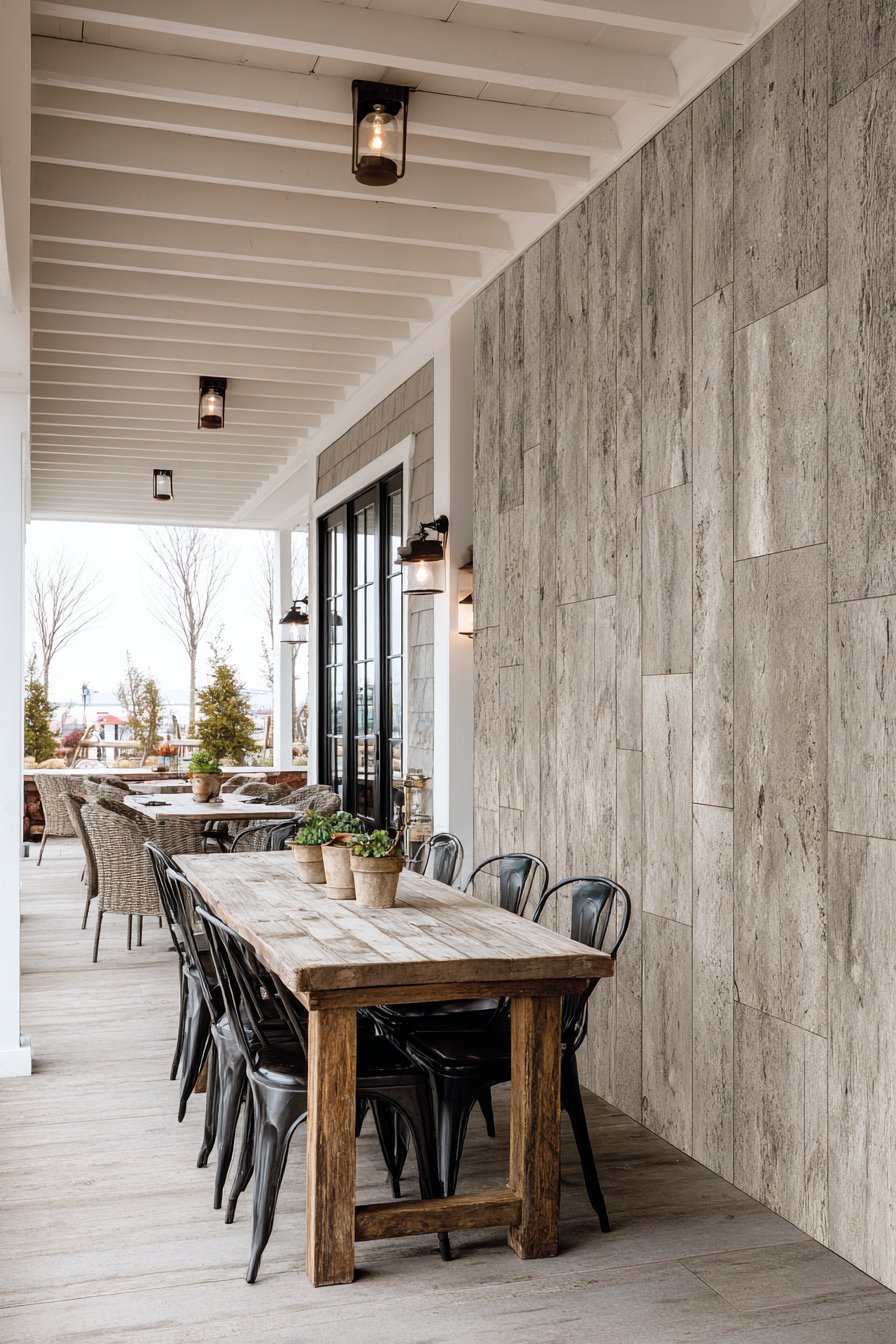
Unlike natural wood siding that requires regular maintenance including staining, sealing, and insect treatment, porcelain wood-look tiles deliver farmhouse aesthetics without the associated upkeep. The tiles maintain their appearance through years of sun exposure, moisture, and temperature fluctuations that would destroy authentic wood. This makes them particularly practical for regions with harsh weather conditions or for homeowners seeking low-maintenance design solutions without sacrificing aesthetic appeal.
Key Design Tips:
- Choose tiles with varied plank dimensions to replicate the random-width board installations found in authentic barn structures
- Select weathered gray or silvered finishes rather than fresh wood tones for a more authentic reclaimed appearance
- Pair wood-look tiles with white-washed architectural elements and vintage-style furniture to complete the farmhouse aesthetic
- Install tiles vertically to echo traditional board-and-batten siding patterns
- Incorporate galvanized metal, wrought iron, and distressed wood accessories to reinforce the rustic narrative
9. Professional Outdoor Kitchen Backdrop
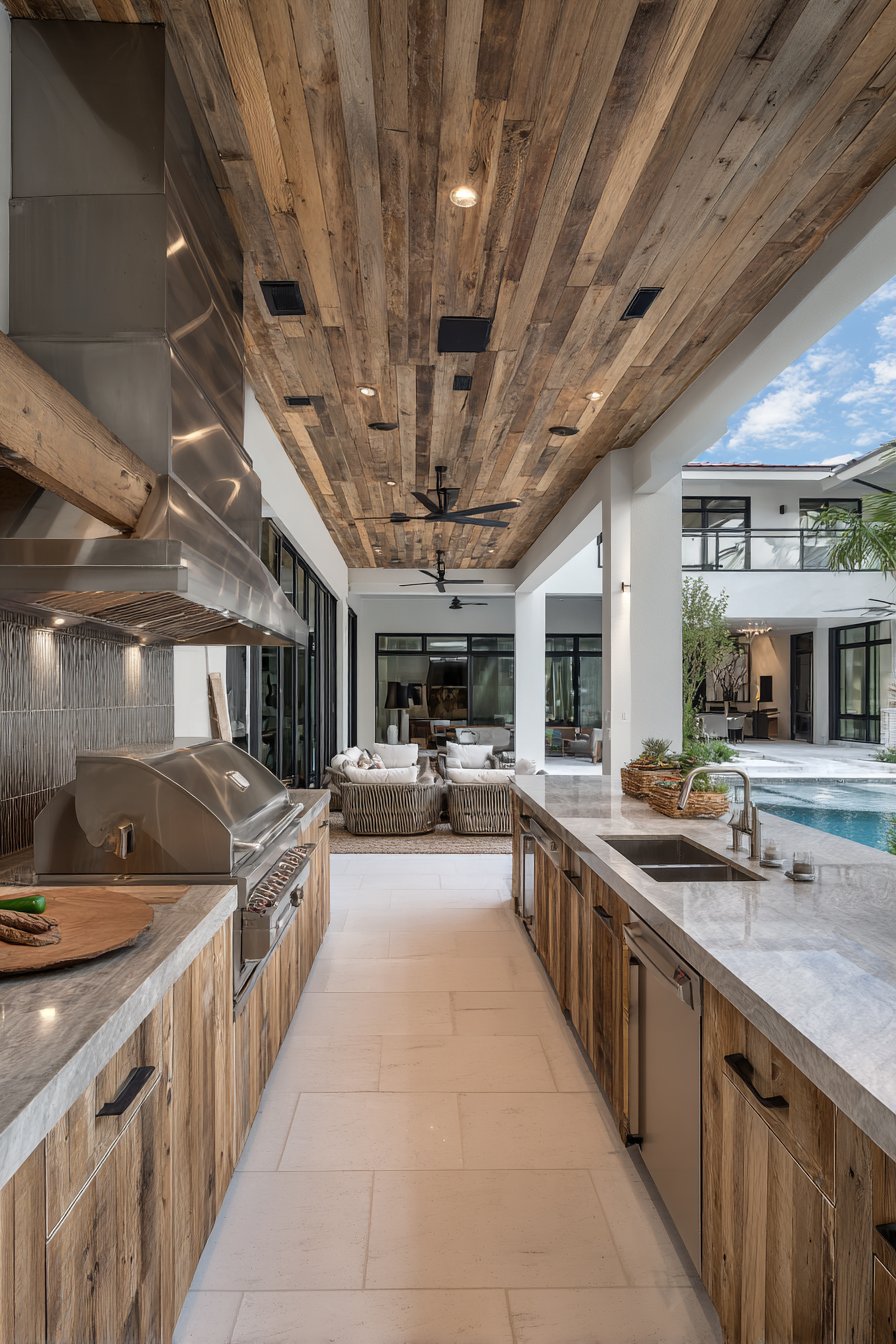
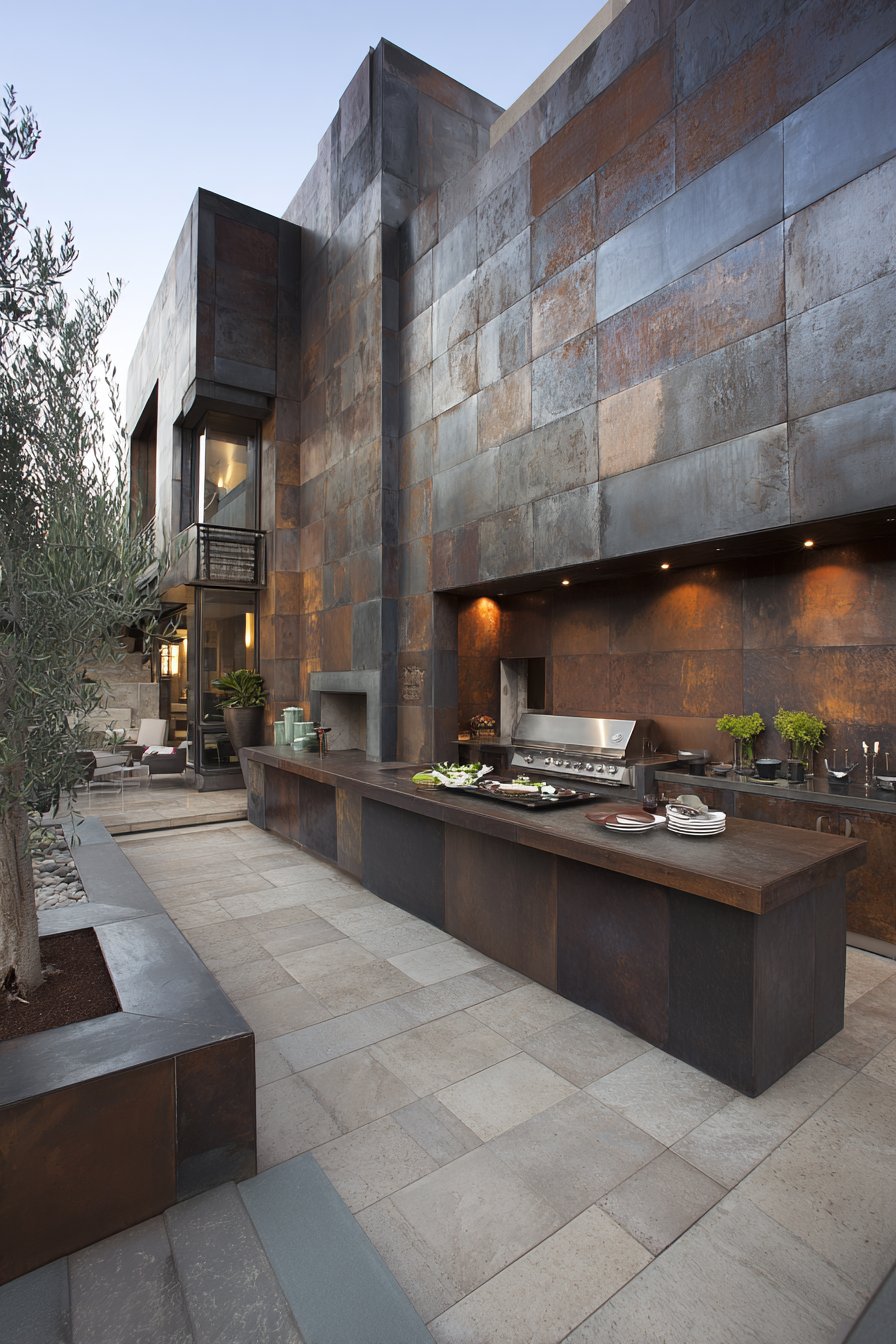
Stainless steel-look porcelain tiles create the ultimate backdrop for outdoor kitchens, combining restaurant-grade aesthetics with residential approachability. The metallic finish reflects light beautifully while providing an easy-to-clean surface behind grills, food prep areas, and outdoor sinks. These tiles replicate the industrial appearance of commercial kitchens while offering superior outdoor durability compared to actual metal panels that can show water spots, rust, or heat damage over time.
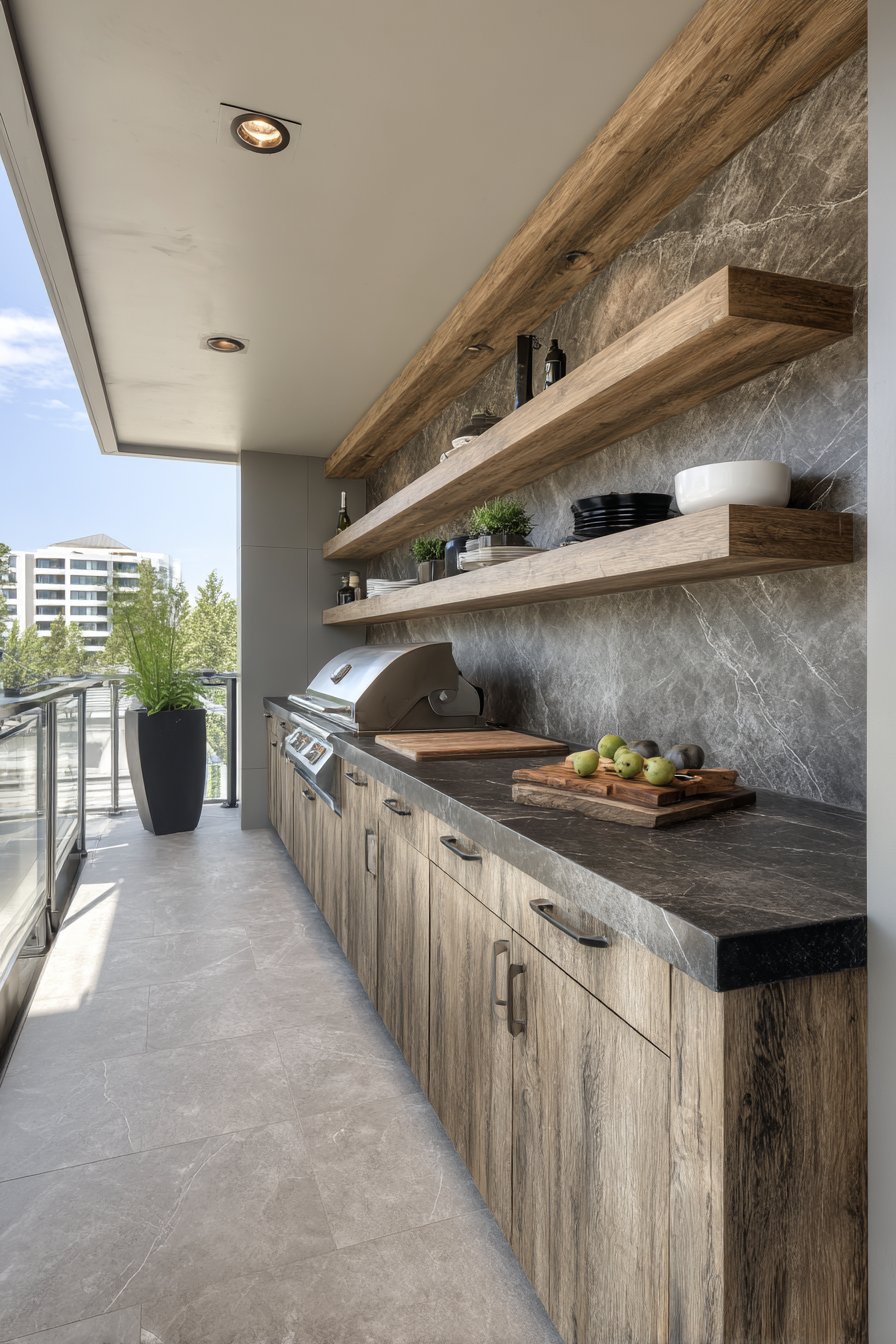
The reflective quality of steel-look tiles helps bounce light throughout outdoor cooking areas, improving visibility for food preparation while creating a sense of spaciousness. The neutral metallic tone coordinates effortlessly with stainless steel appliances and hardware, creating visual cohesion across all kitchen elements. Built-in shelving against tiled walls provides practical storage for outdoor dinnerware, serving pieces, and cooking implements while maintaining the clean, professional aesthetic.
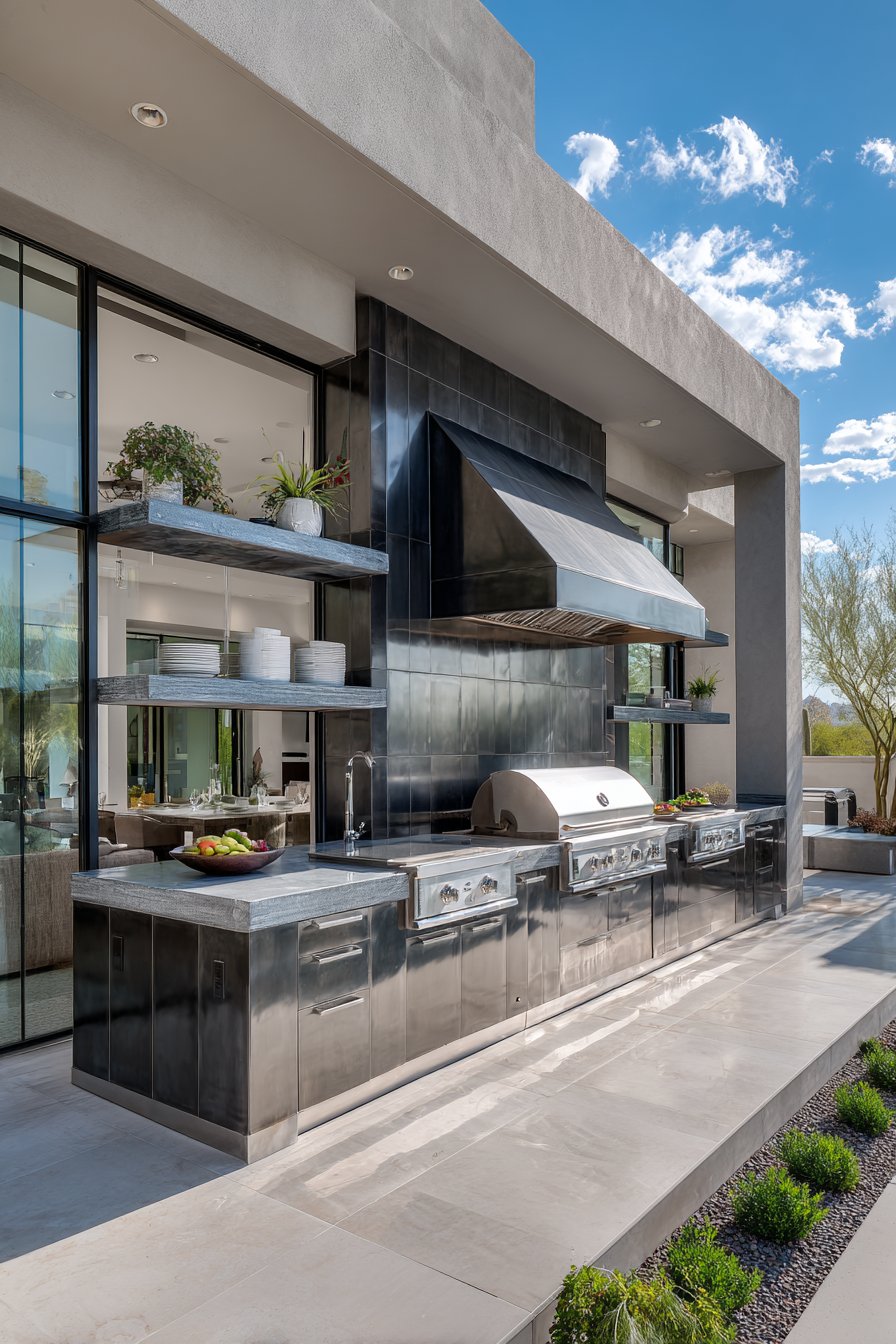
Consider the functional advantages beyond aesthetics—porcelain tiles behind cooking areas resist heat, repel grease, and clean easily with simple soap and water. Unlike painted walls or other materials that can discolor from heat exposure or grease splatter, these tiles maintain their appearance through years of heavy use. The seamless installation with minimal grout lines prevents dirt accumulation while creating the sleek, contemporary look essential to modern outdoor kitchen design.
Key Design Tips:
- Install tiles on all walls adjacent to cooking areas for maximum protection and easy cleaning
- Incorporate integrated LED task lighting above food prep zones to ensure adequate illumination for cooking
- Select large-format tiles to minimize grout lines and create a more seamless, professional appearance
- Coordinate tile finish with the specific grade of stainless steel used in appliances for perfect color matching
- Design built-in shelving systems that integrate with tiled walls for cohesive, custom-looking storage solutions
10. Tropical Coral Stone Paradise
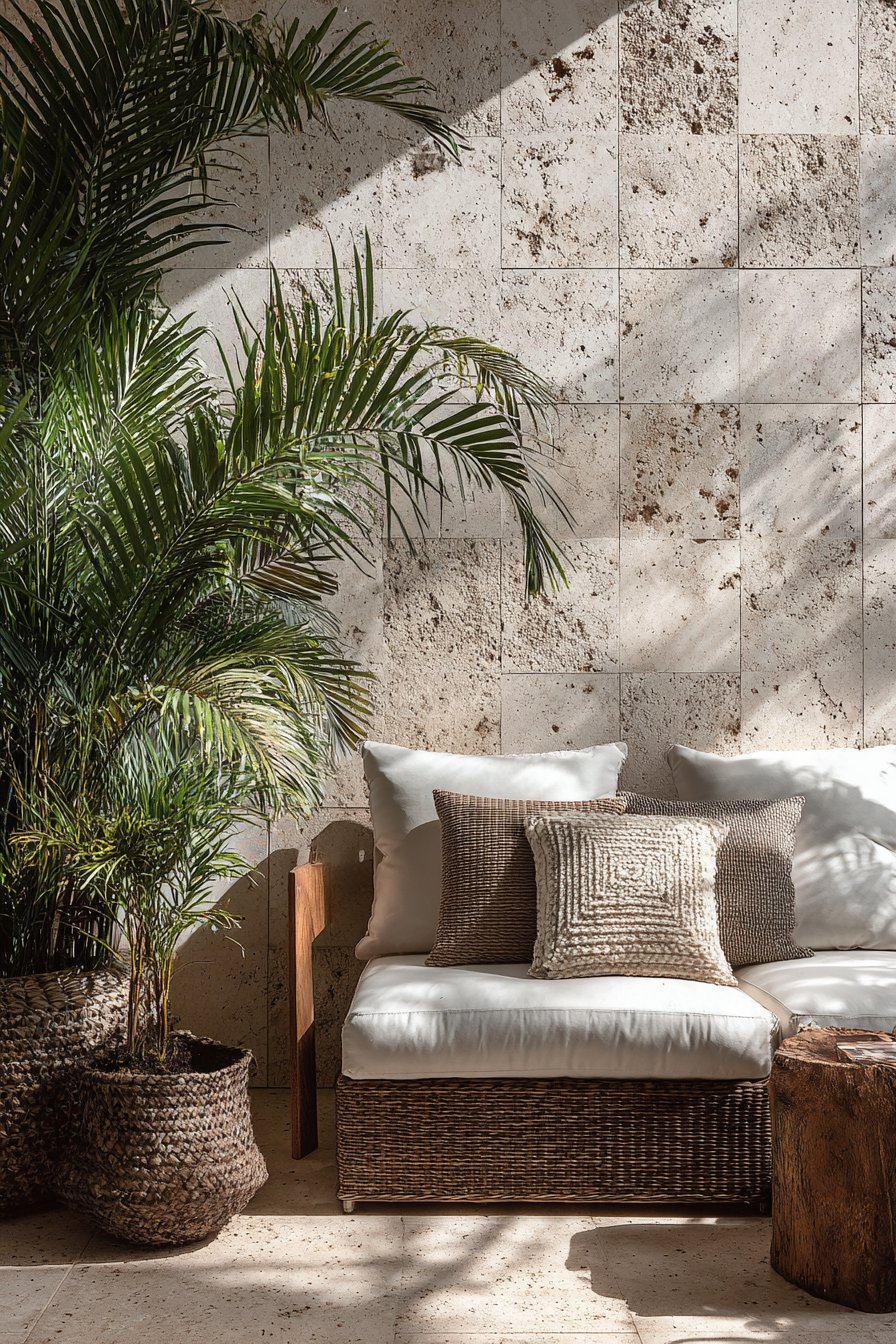
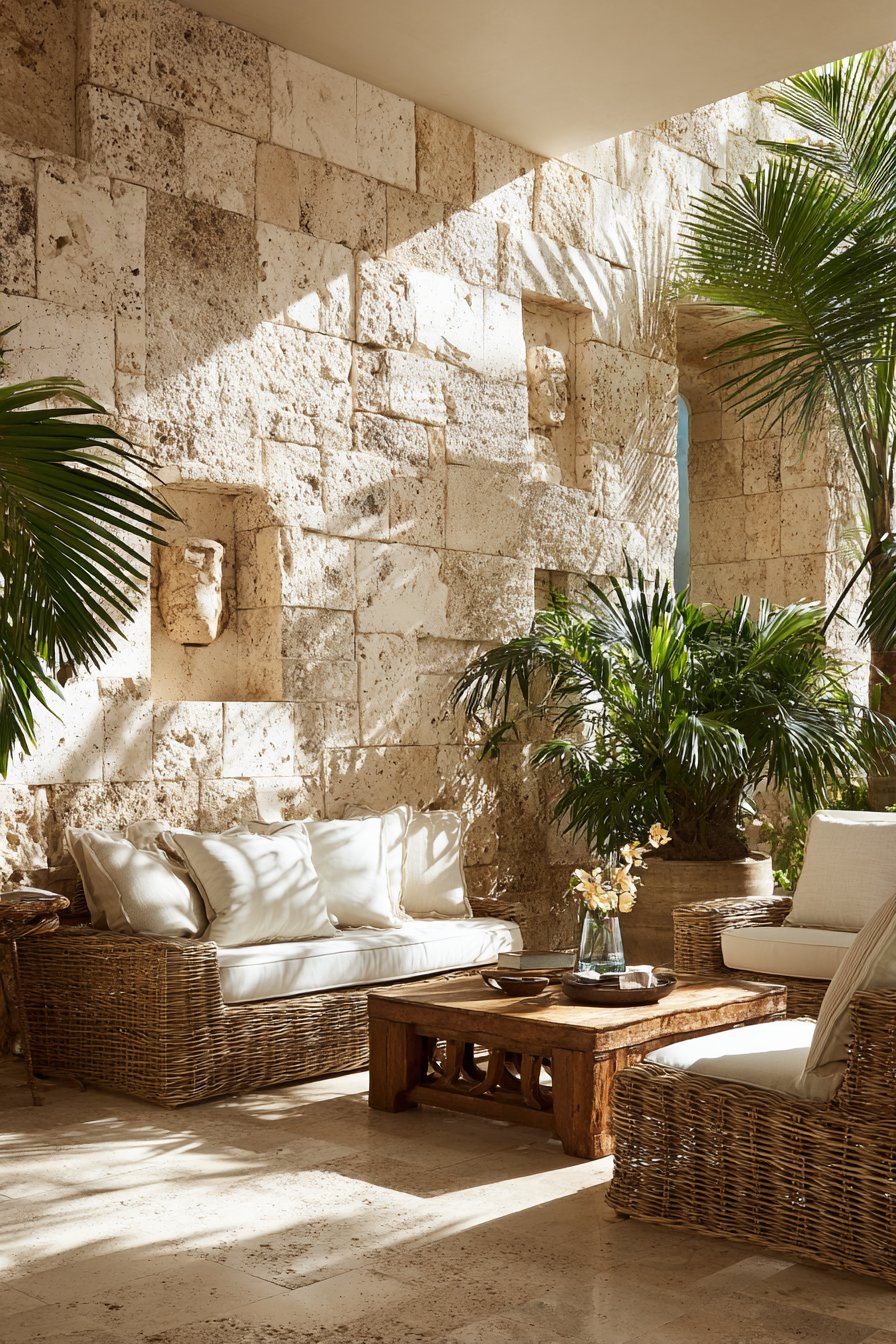
Natural coral stone tiles bring organic beauty and textural richness to tropical-inspired outdoor spaces, with their cream and beige tones evoking sandy beaches and sun-bleached shells. The porous surface texture reveals the stone’s marine origins, with small fossil impressions and natural pitting adding authentic character. These tiles create immediate visual warmth that complements lush tropical plantings while providing neutral backgrounds that allow vibrant foliage colors to truly shine.
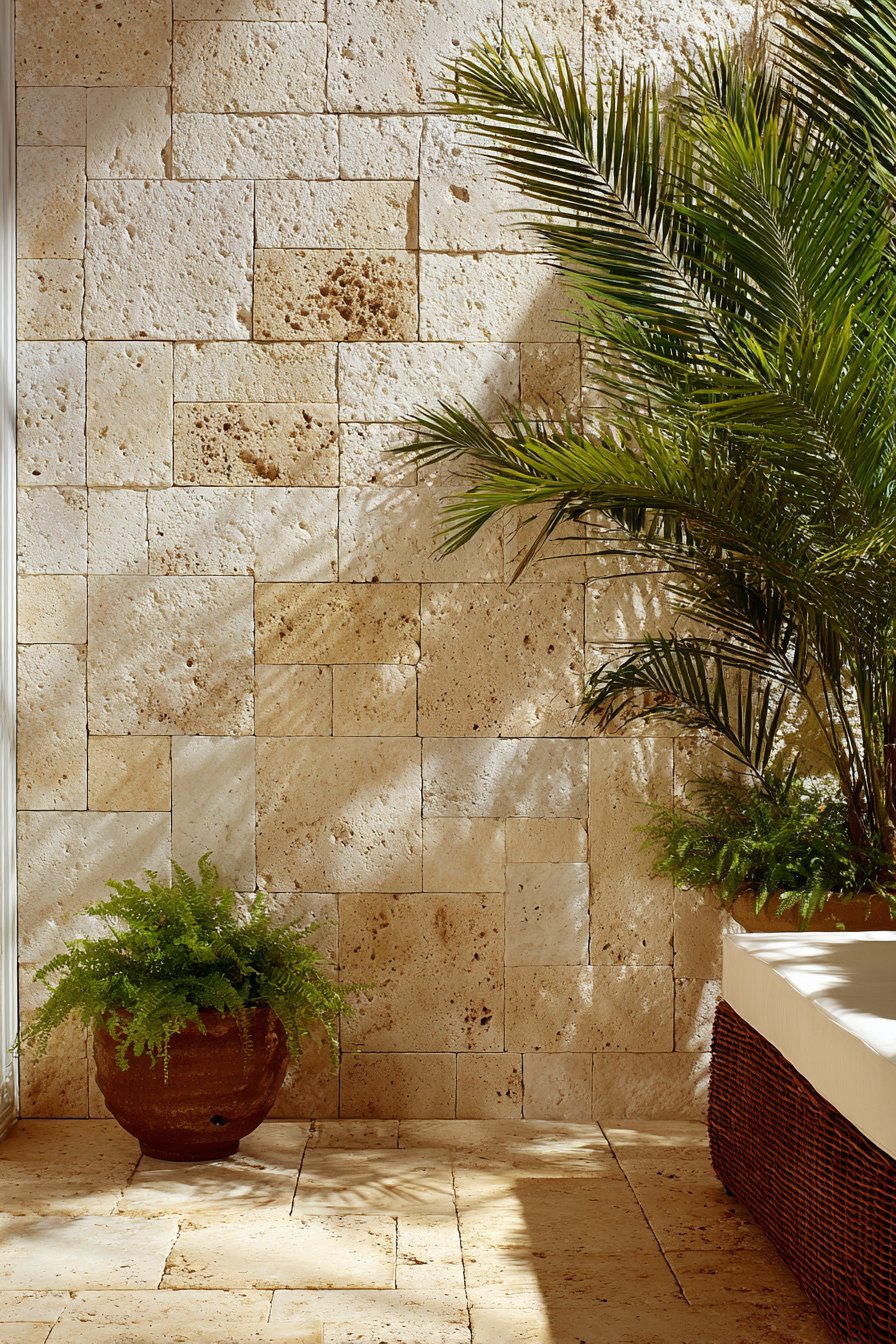
The dimensional quality of coral stone creates fascinating shadow play throughout the day as sunlight moves across the textured surface. Unlike smooth tiles that present flat, uniform appearances, coral stone’s irregular surface catches light at varying angles, creating depth and visual interest that changes hour by hour. This dynamic quality ensures the wall remains visually engaging without requiring additional decorative elements or busy patterns.
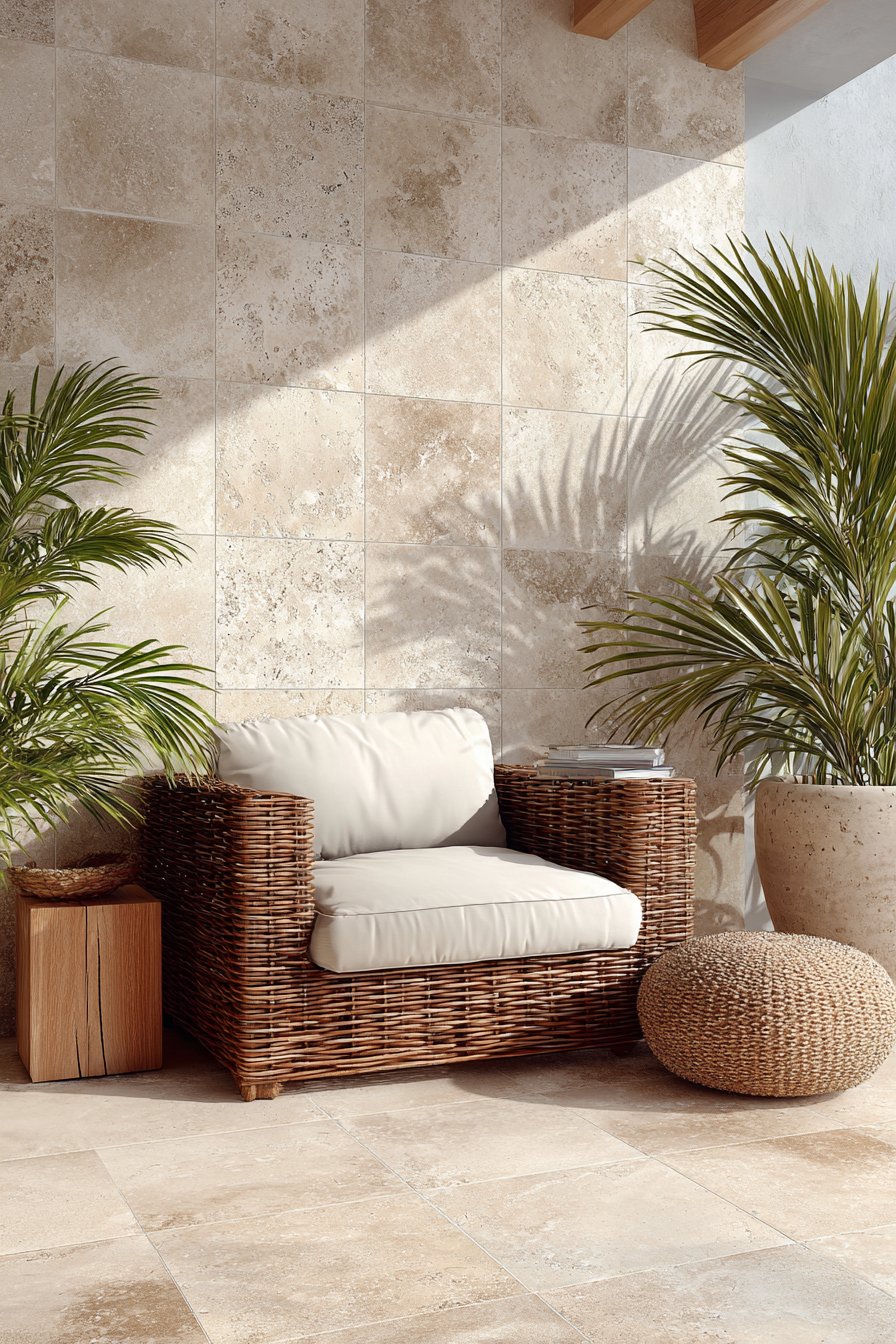
Pair coral stone walls with oversized palm plants in terracotta containers and natural rattan furniture to complete the resort-inspired aesthetic. The stone’s neutral palette serves as the perfect backdrop for the deep greens of tropical foliage and the vibrant colors of flowering plants like hibiscus, bird of paradise, or bougainvillea. Dappled sunlight filtering through palm fronds creates ever-changing patterns on the stone surface, enhancing the sense of tropical sanctuary. The porous nature of coral stone provides excellent drainage, making it particularly suitable for poolside applications or areas exposed to rain.
Key Design Tips:
- Select coral stone tiles with visible fossil impressions and natural pitting for the most authentic tropical appearance
- Position tiles in locations where dappled sunlight will highlight the stone’s texture throughout the day
- Pair with oversized tropical plants in natural materials like terracotta, basket weave, or raw concrete planters
- Accept and embrace the natural variations in color and texture rather than seeking uniformity
- Consider the stone’s porosity when choosing installation locations—seal tiles near water features to prevent algae growth
11. Urban Jewel-Box Balcony Transformation
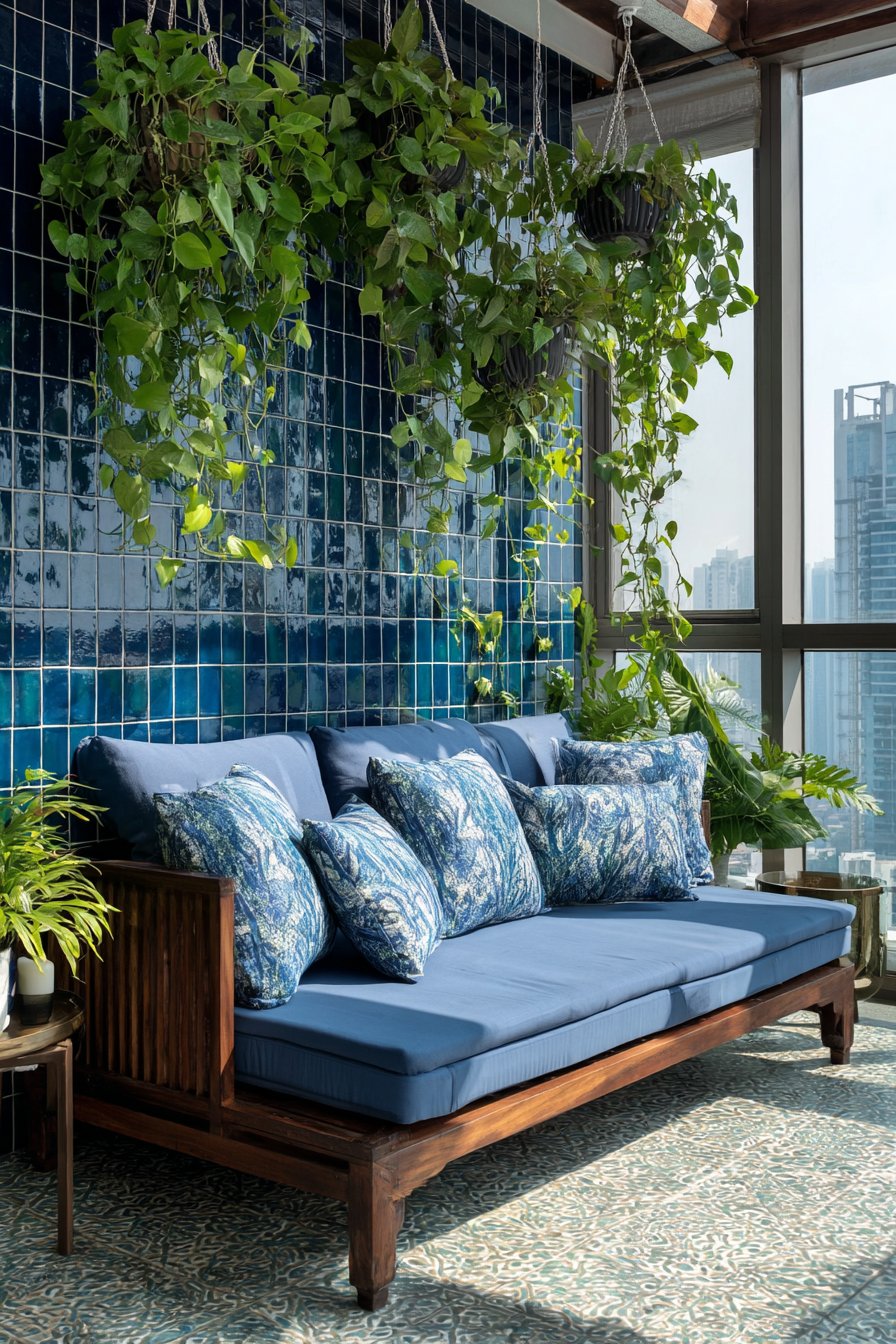
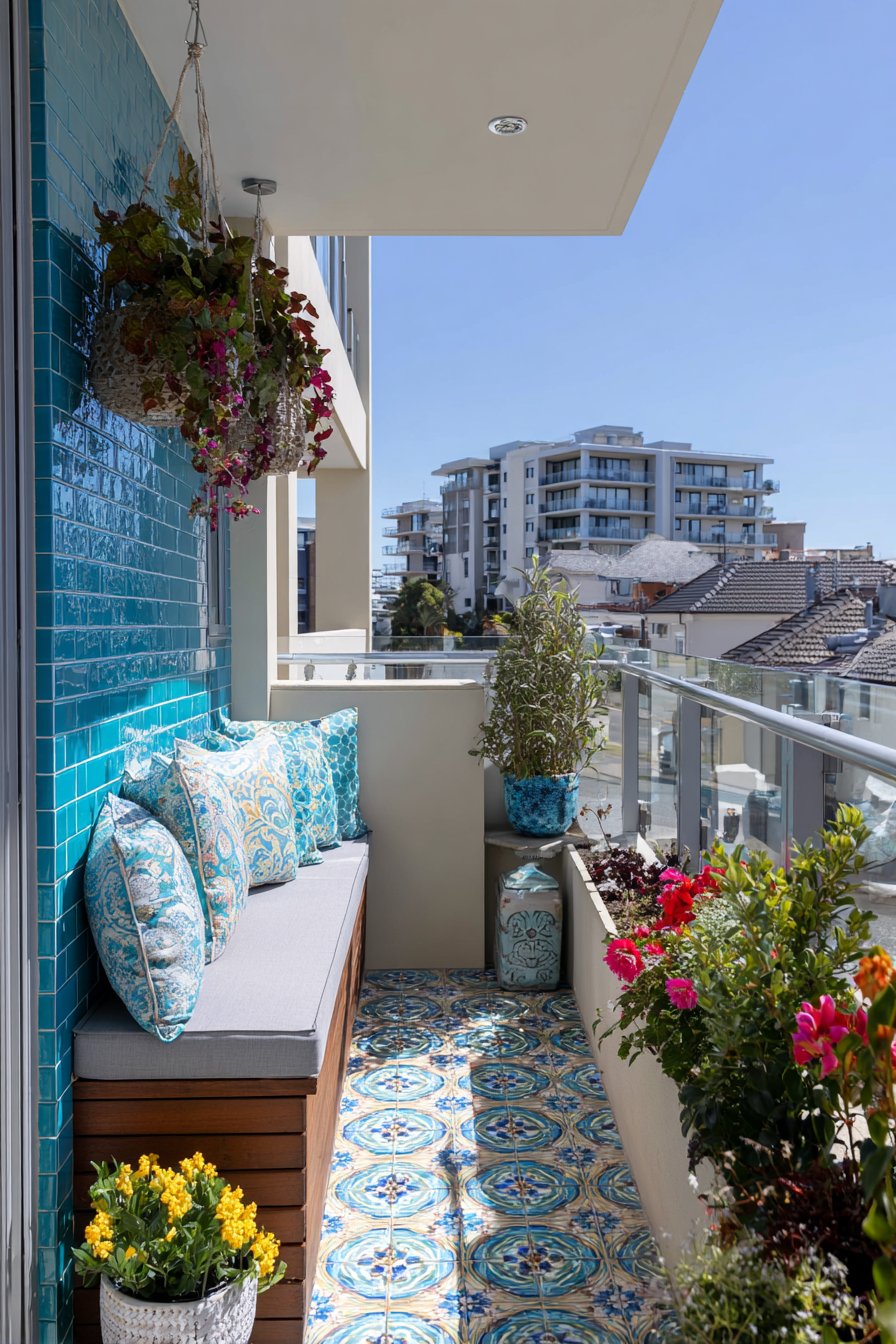
Glossy subway tiles in deep teal blue transform compact urban balconies into jewel-box retreats that maximize visual impact in limited square footage. The rich color saturation provides personality and style while the reflective glaze bounces light around the space, creating the illusion of greater depth. This smart design choice proves that small outdoor areas can deliver just as much style as expansive patios when thoughtful tile selection creates focus and drama.
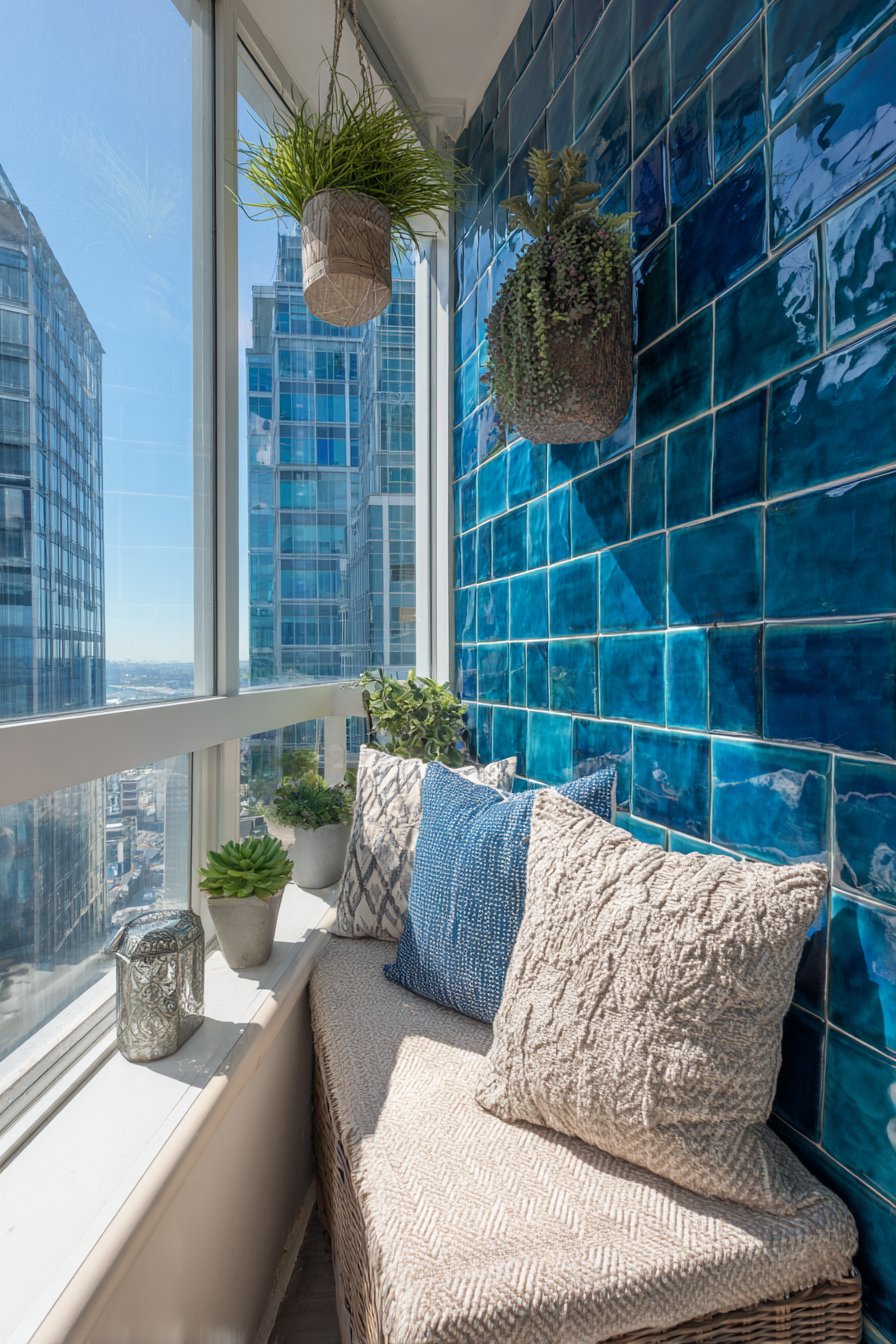
The vertical orientation of subway tiles draws the eye upward, emphasizing the balcony’s height rather than its limited width or depth. This perceptual trick makes compact spaces feel more generous while providing the clean lines characteristic of contemporary urban design. The teal color choice feels fresh and modern without veering into overly bold territory—it’s sophisticated enough for adult spaces while remaining playful and energizing.
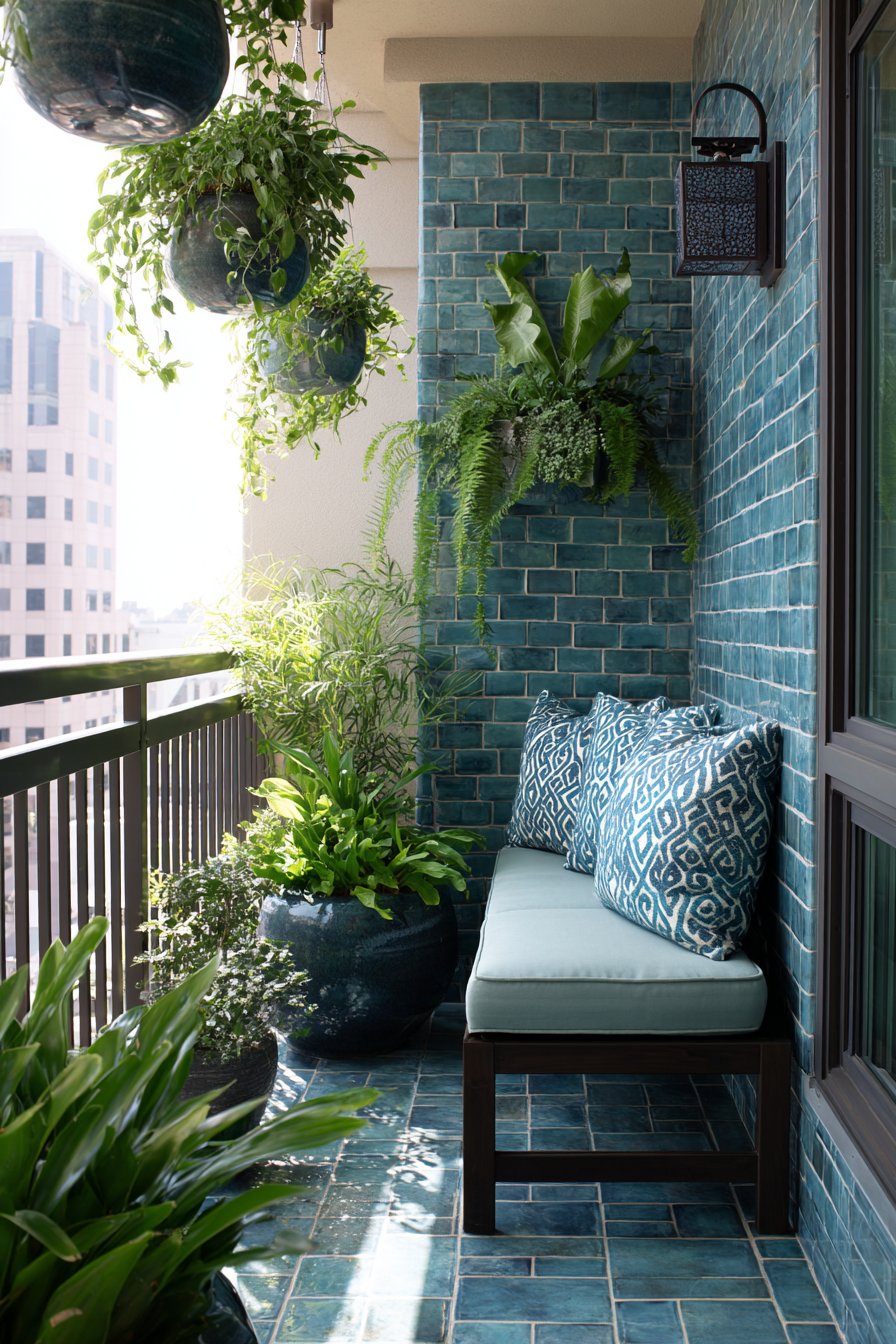
Furnish teal-tiled balconies with simple, space-efficient pieces like narrow benches with weatherproof cushions and vertical hanging planters that don’t consume precious floor space. The bold backdrop allows furnishings to remain minimal and neutral, with the wall providing all the color and personality the space requires. Evening lighting creates magical effects as the glossy tiles reflect string lights or lanterns, turning the small balcony into an illuminated retreat perfect for unwinding after urban workdays.
Key Design Tips:
- Choose glossy finishes in small spaces to maximize light reflection and create the illusion of greater depth
- Install tiles on the most visible wall to create a focal point that draws attention away from size limitations
- Select bold, saturated colors to inject personality without requiring large-scale installations
- Keep furniture minimal and neutral when walls provide strong color impact
- Incorporate vertical gardens and hanging plants to add greenery without consuming floor space
12. Moroccan Hand-Painted Ceramic Artistry
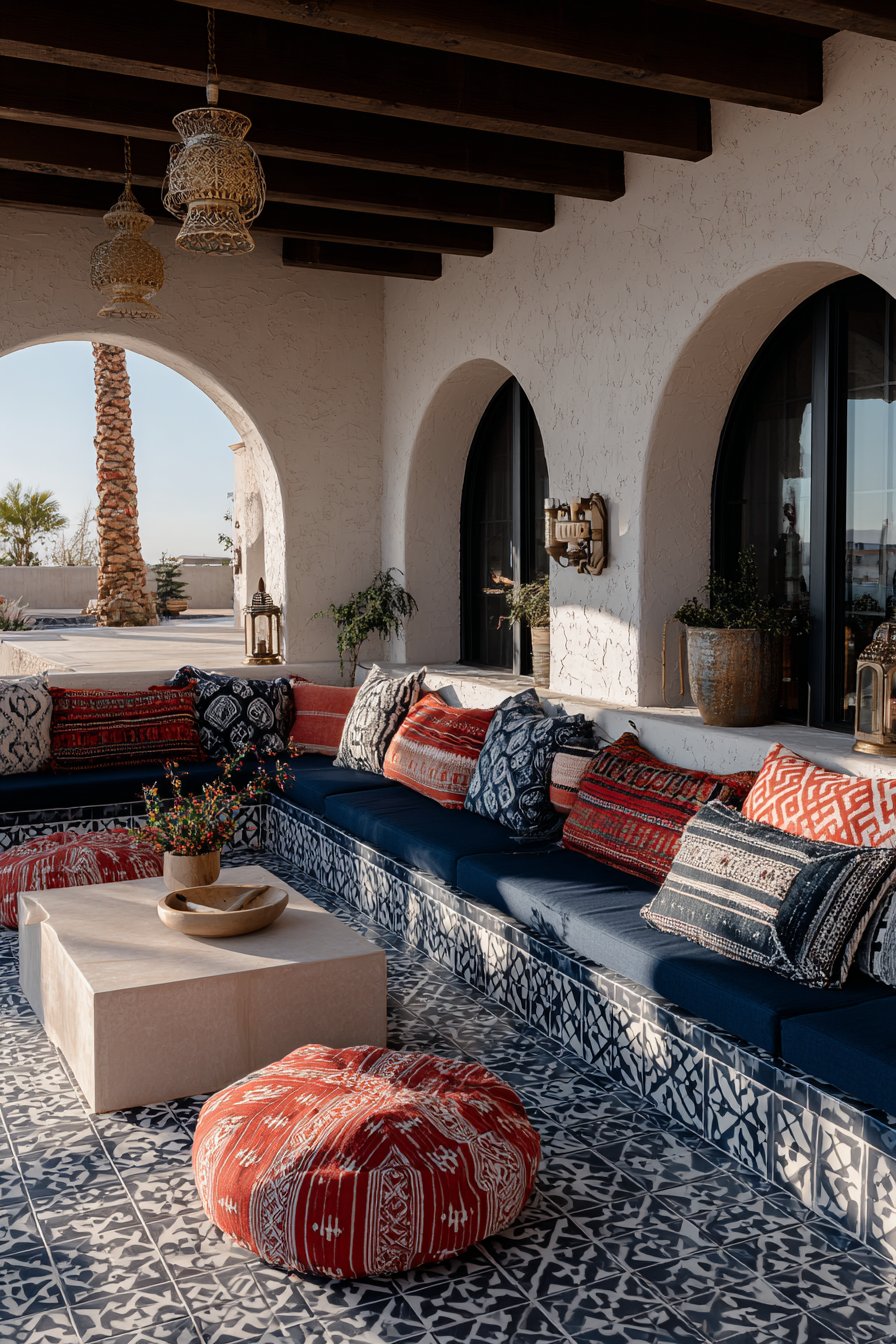
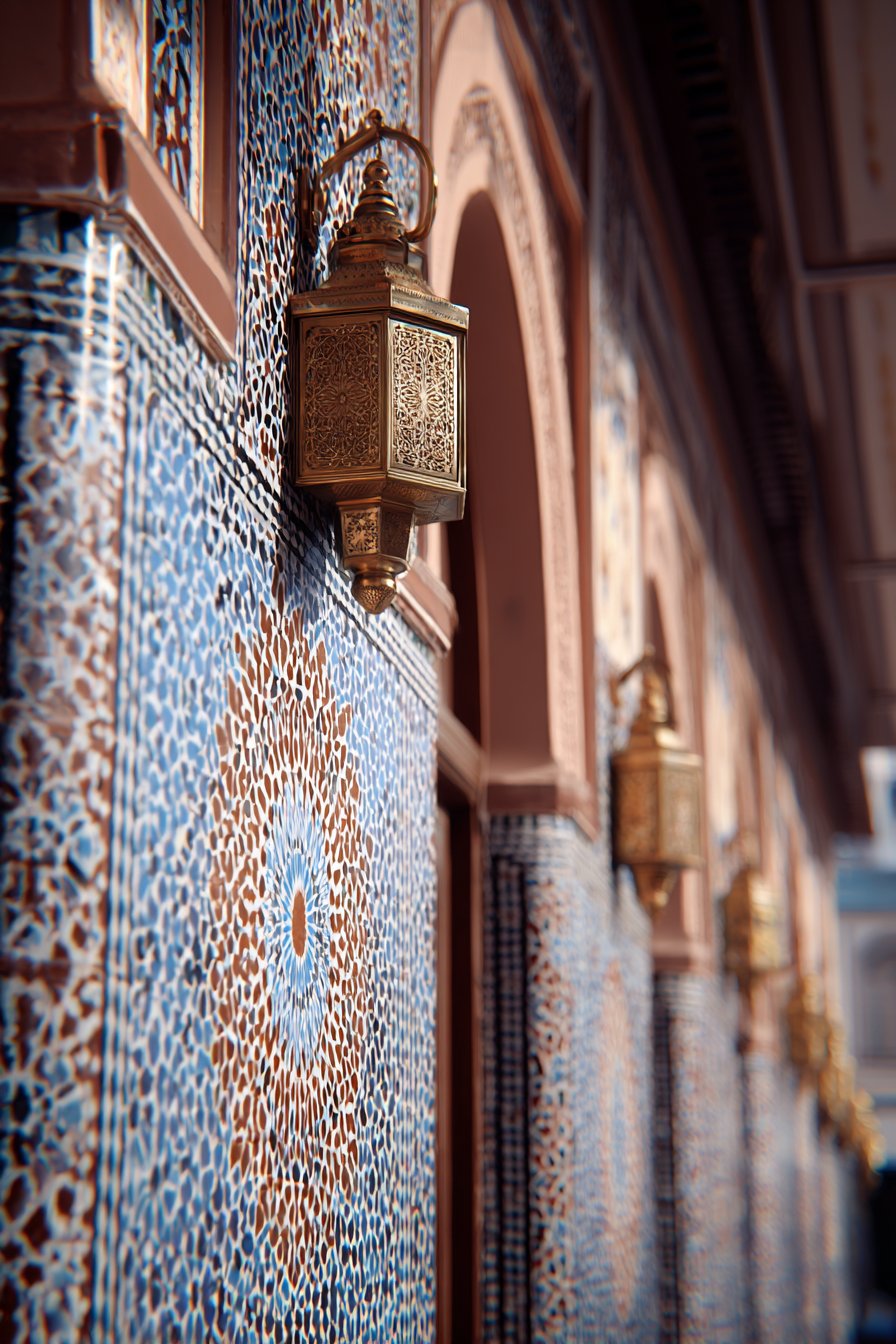
Hand-painted Moroccan tiles transform ordinary outdoor walls into exotic works of art, with intricate geometric patterns in cobalt blue, white, and terracotta creating visual complexity that rewards close inspection. These artisan-crafted tiles showcase traditional North African motifs passed down through generations, with each tile contributing to larger repeating patterns that create hypnotic visual rhythm. The hand-painted quality ensures slight variations that prevent mechanical uniformity, adding authenticity and character to the installation.
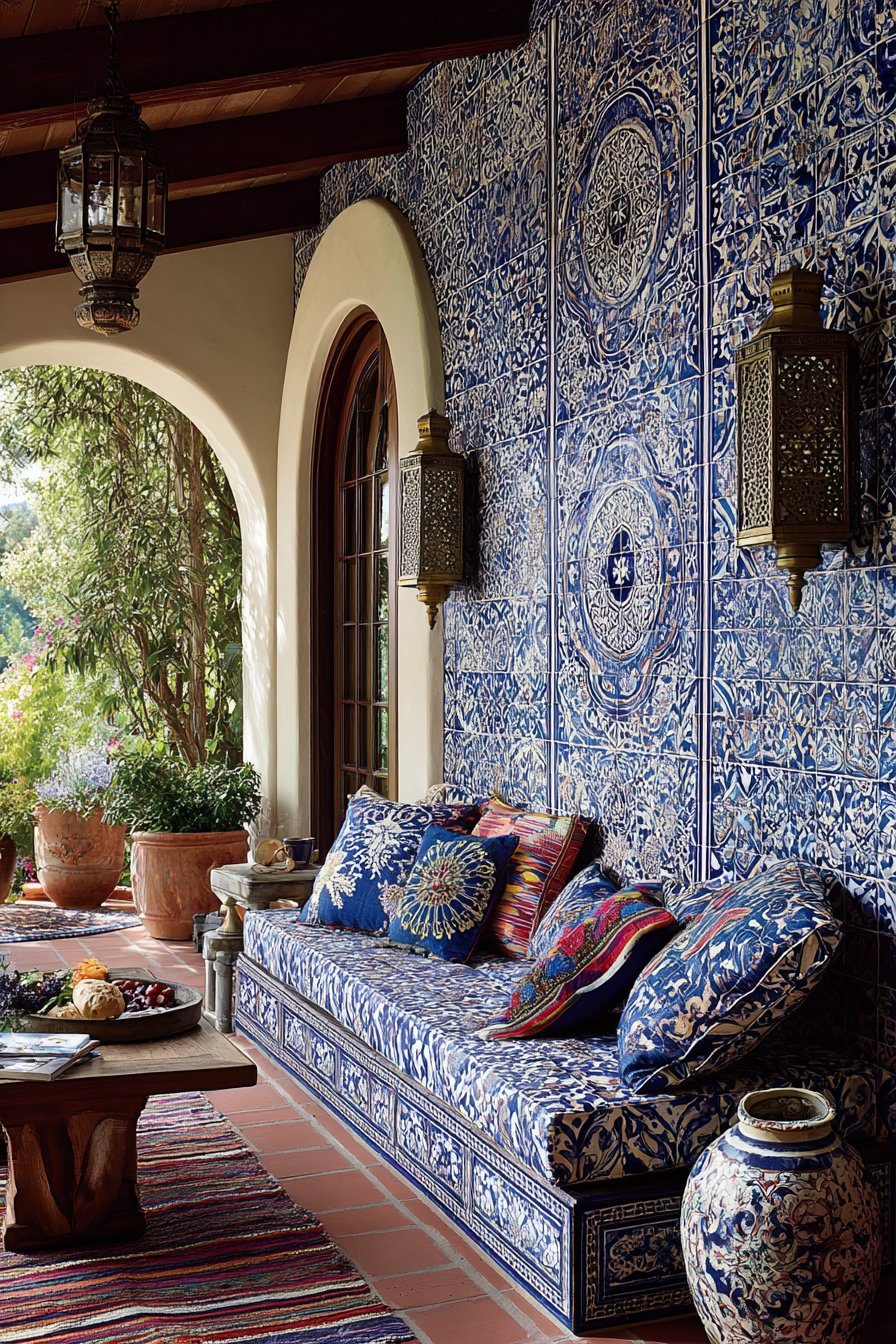
The cultural richness of Moroccan tilework elevates outdoor spaces beyond simple functionality, creating environments that tell stories and transport inhabitants to distant places. When installed on accent walls in covered outdoor living areas or around arched openings, these tiles establish strong design statements that influence all surrounding choices. The complex patterns command attention while the traditional color palette—dominated by various blues against warm earth tones—creates sophisticated restraint.
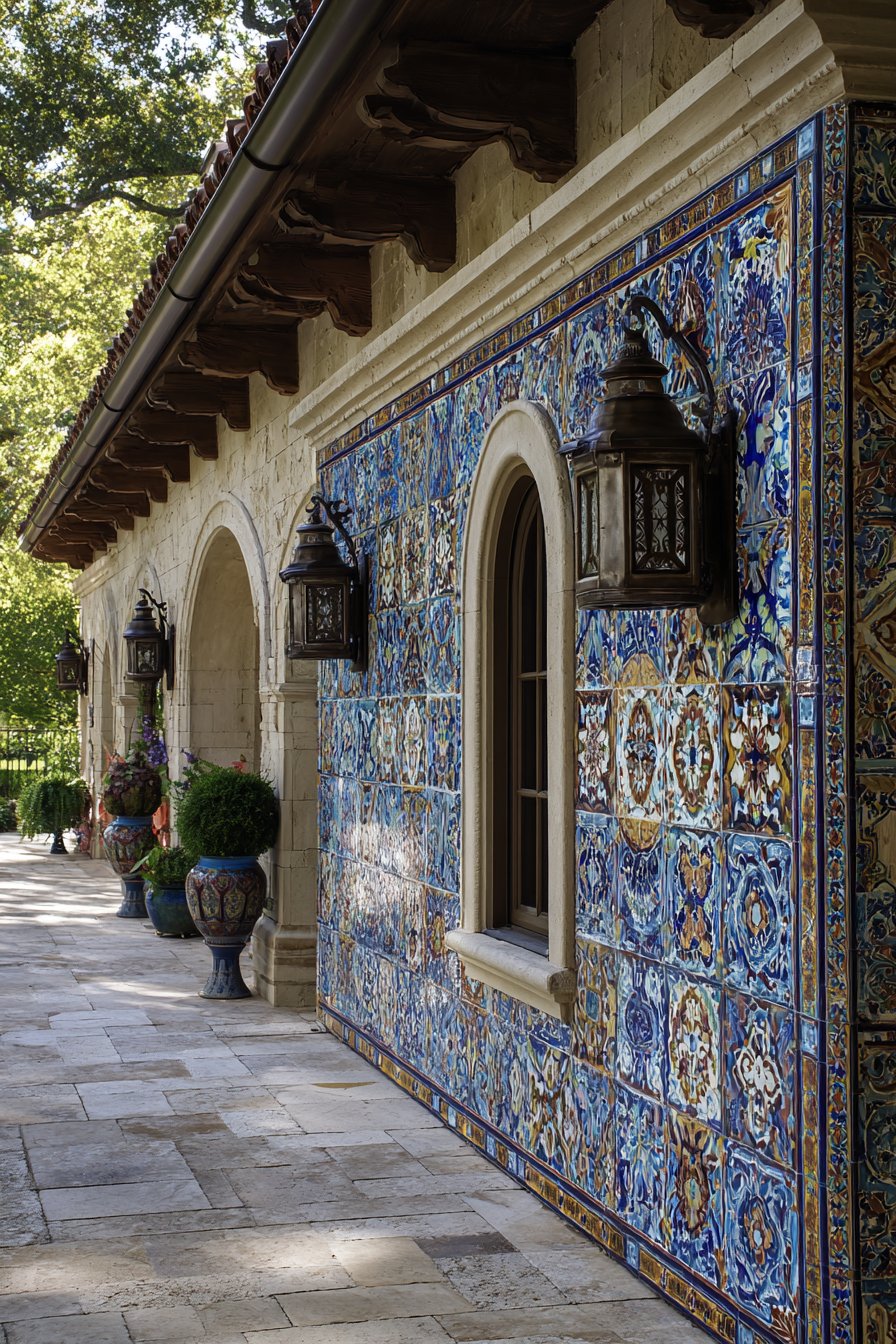
Complement Moroccan tile installations with brass lanterns that cast intricate shadow patterns, colorful textiles featuring similar geometric motifs, and carved wood furniture that echoes the artisan quality of the tiles themselves. The combination of handcrafted elements creates cohesive design narratives that feel collected rather than purchased all at once. Natural daylight reveals the subtle variations in glaze application and the hand-painted details that distinguish artisan tiles from printed alternatives, while evening lighting creates romantic ambiance perfect for entertaining.
Key Design Tips:
- Invest in authentic hand-painted tiles rather than printed reproductions for the most compelling visual impact
- Use Moroccan tiles as accent installations rather than covering all surfaces to prevent visual overwhelm
- Coordinate surrounding décor with the tile’s color palette, incorporating brass, copper, and carved wood elements
- Position tiles in covered areas to protect the hand-painted details from direct weather exposure
- Allow the tile pattern to be the primary decorative element, keeping surrounding walls and furnishings relatively simple
13. Minimalist Outdoor Shower Sanctuary
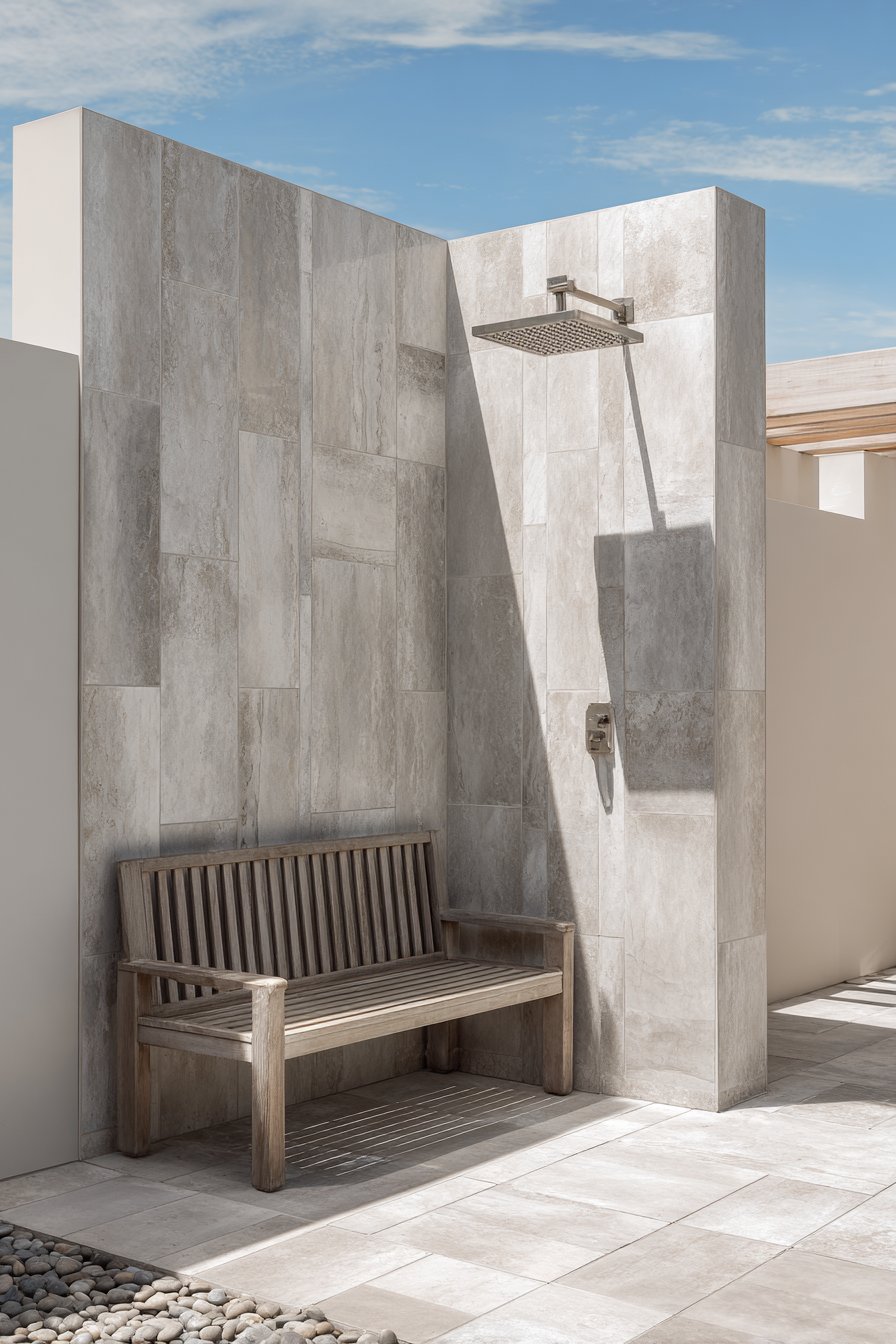
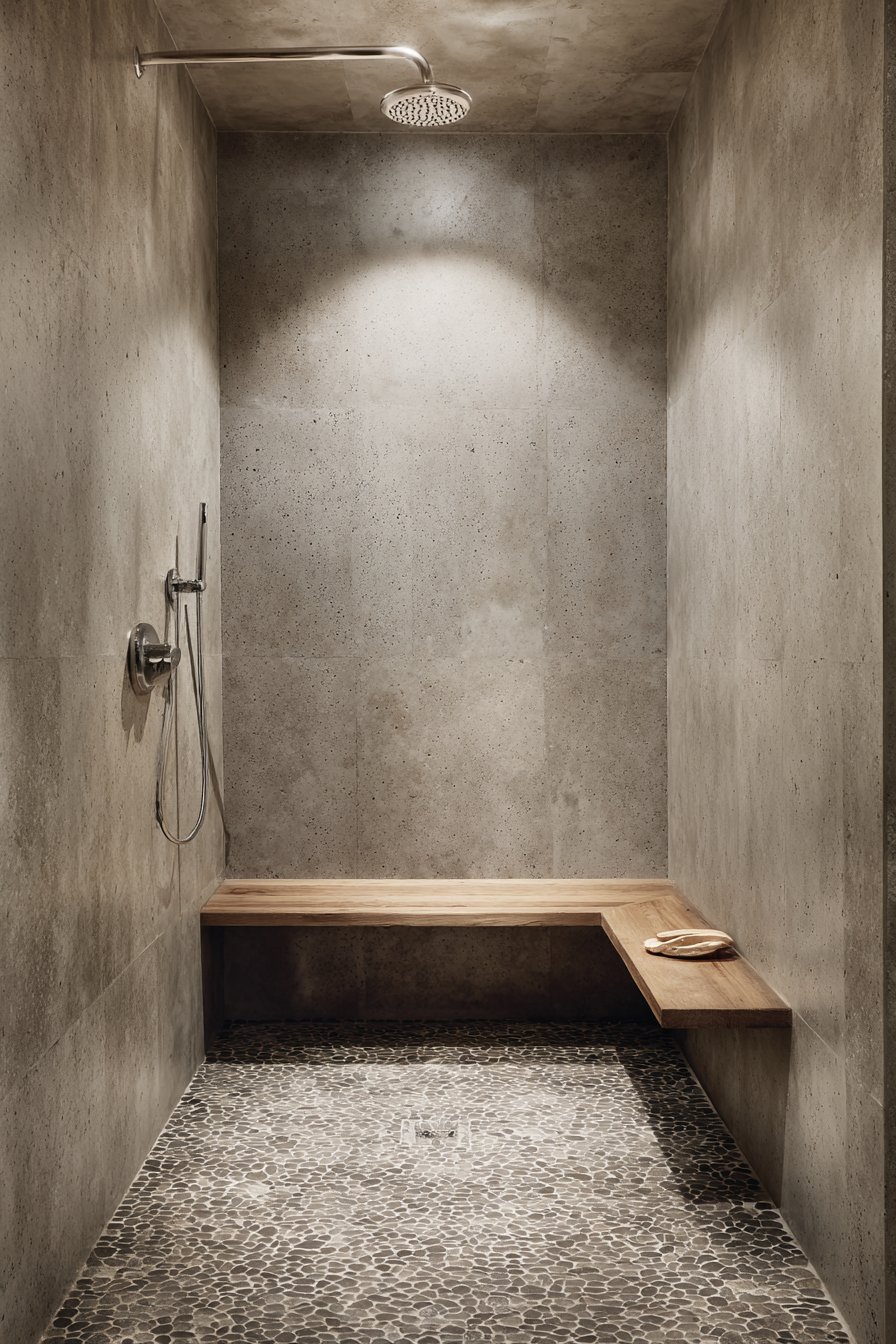
Large-format concrete-look tiles in soft gray create spa-like outdoor shower enclosures that prioritize simplicity, function, and serene beauty. The seamless installation with minimal grout lines emphasizes the monolithic quality of poured concrete while offering superior waterproofing and easier maintenance. The light gray coloration feels clean and fresh without the clinical quality of pure white, creating calm environments ideal for the meditative ritual of outdoor bathing.
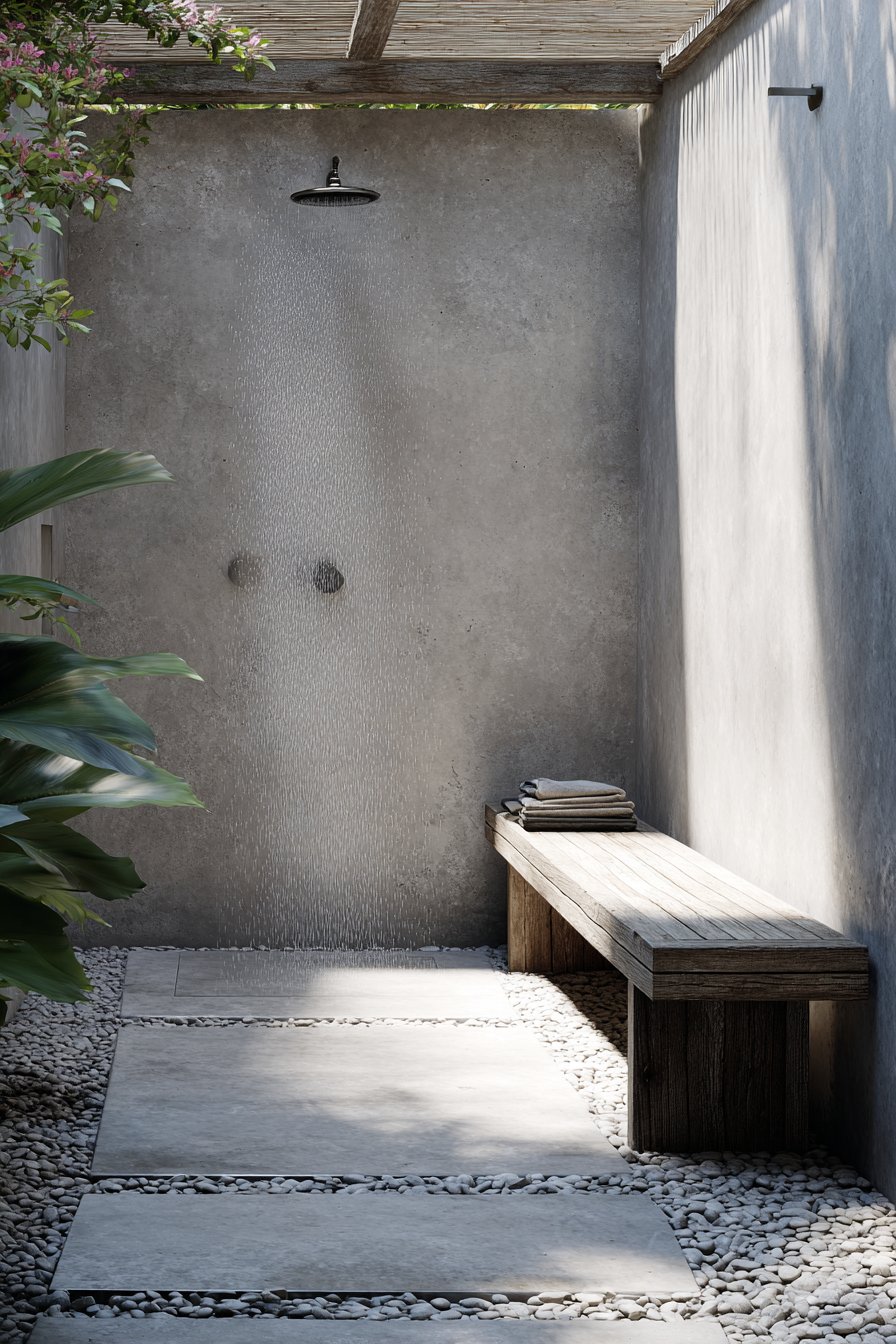
The smooth, uniform surface of concrete-look porcelain provides the perfect backdrop for minimalist design where every element serves clear purpose. Rainfall showerheads, simple teak benches, and perhaps a single shelf for natural soap and shampoo containers comprise the only necessary elements. This restraint allows the architecture itself to shine—the play of water against tile, the contrast between smooth porcelain and natural wood, the interplay of light and shadow within the enclosure all become the design focus.
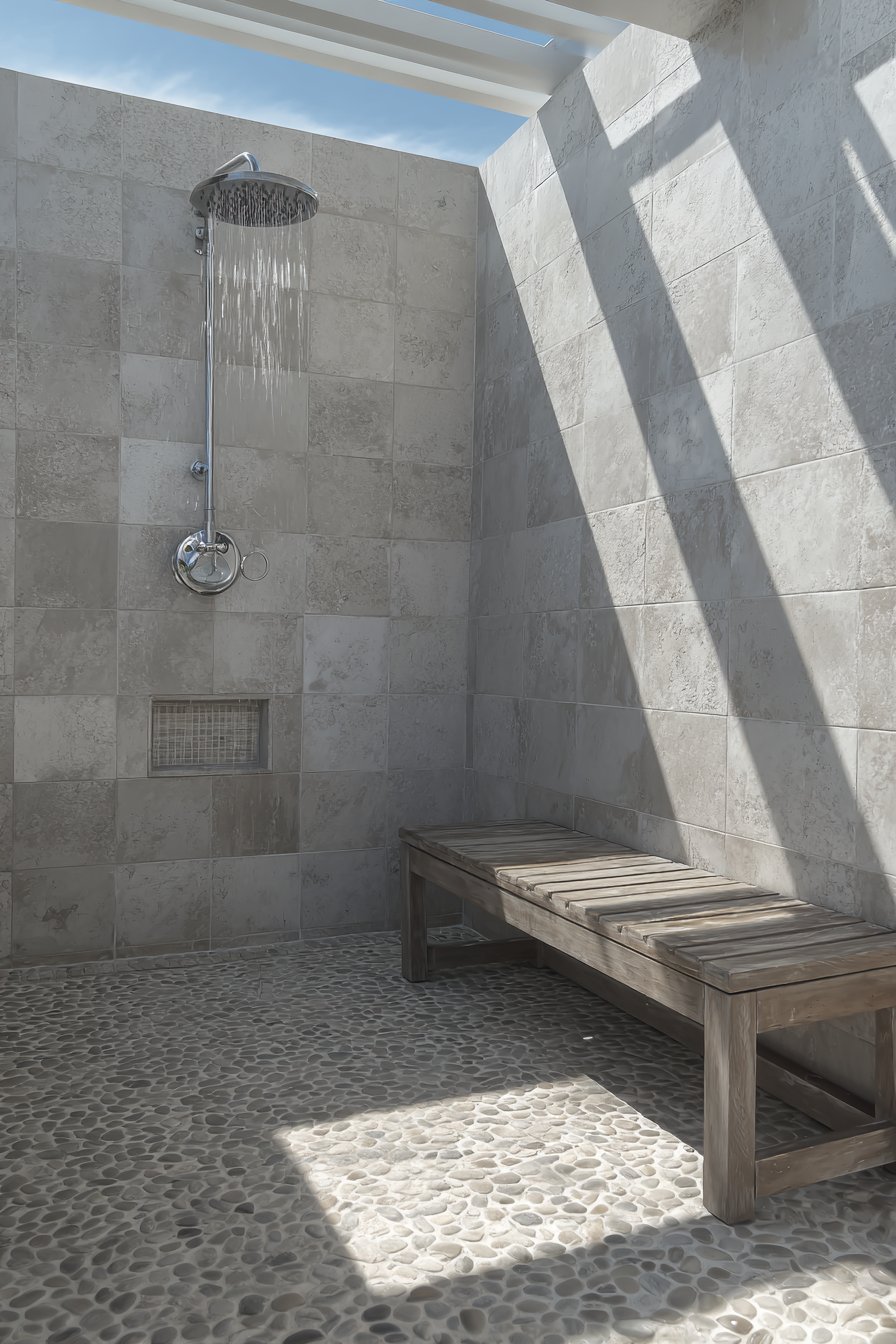
Consider the sensory experience beyond visual aesthetics—pebble flooring provides textural contrast underfoot while promoting drainage, and the enclosure’s relationship to surrounding plantings creates privacy without complete isolation. Overhead openings or strategic gaps in walls allow natural light and fresh air while maintaining appropriate seclusion. The resulting space feels like a private outdoor spa, transforming a functional necessity into a daily luxury.
Key Design Tips:
- Choose large-format tiles (minimum 24×48 inches) to minimize grout lines and create seamless wall surfaces
- Select light to mid-tone grays for a spa-like ambiance that feels clean without appearing cold
- Incorporate teak or cedar accents for warmth and water resistance in humid shower environments
- Design proper drainage systems including floor pitch and catch basins to prevent water accumulation
- Position showers to receive morning or late afternoon sun while maintaining privacy through strategic landscaping or wall placement
14. Mid-Century Modern Color Block Design
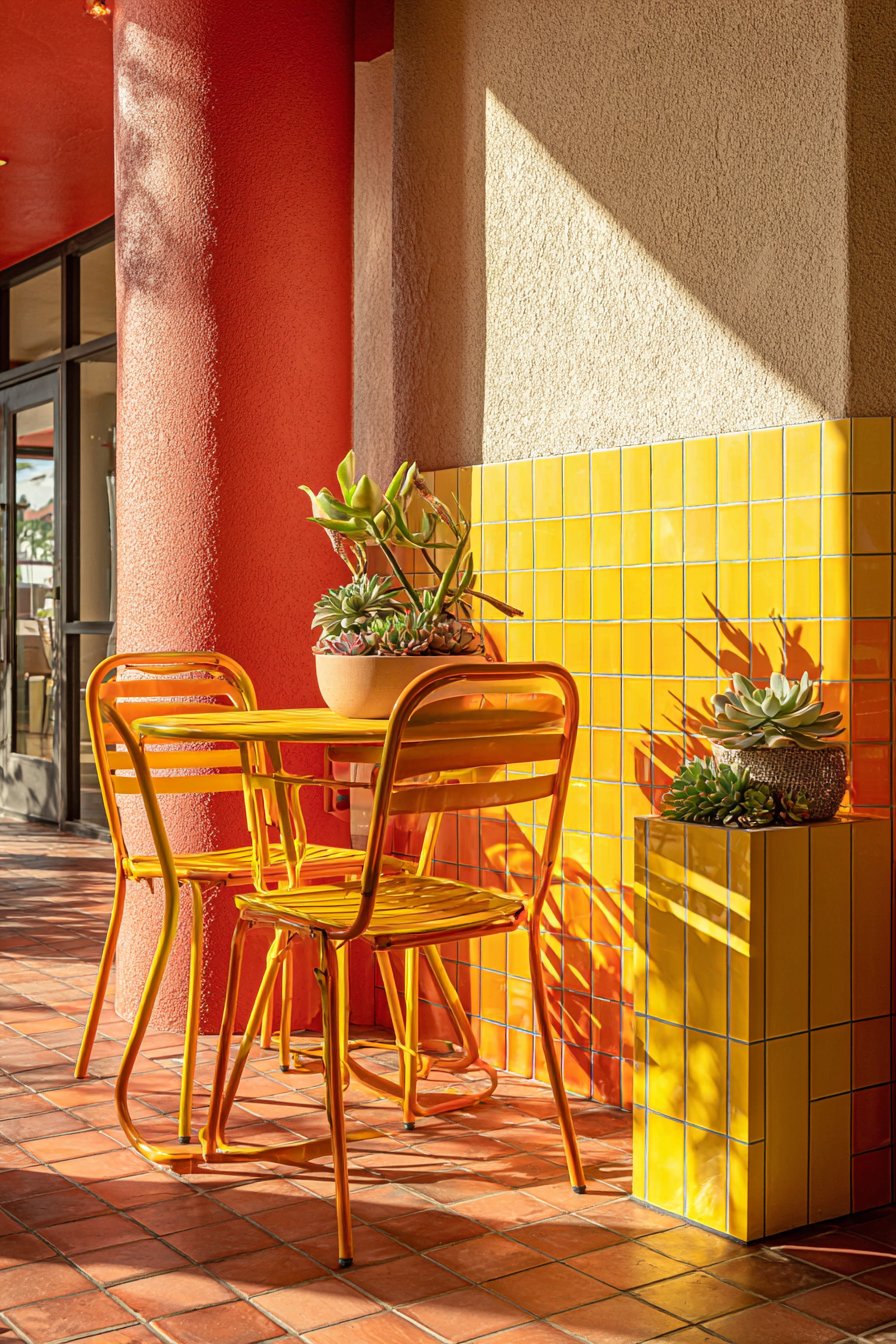
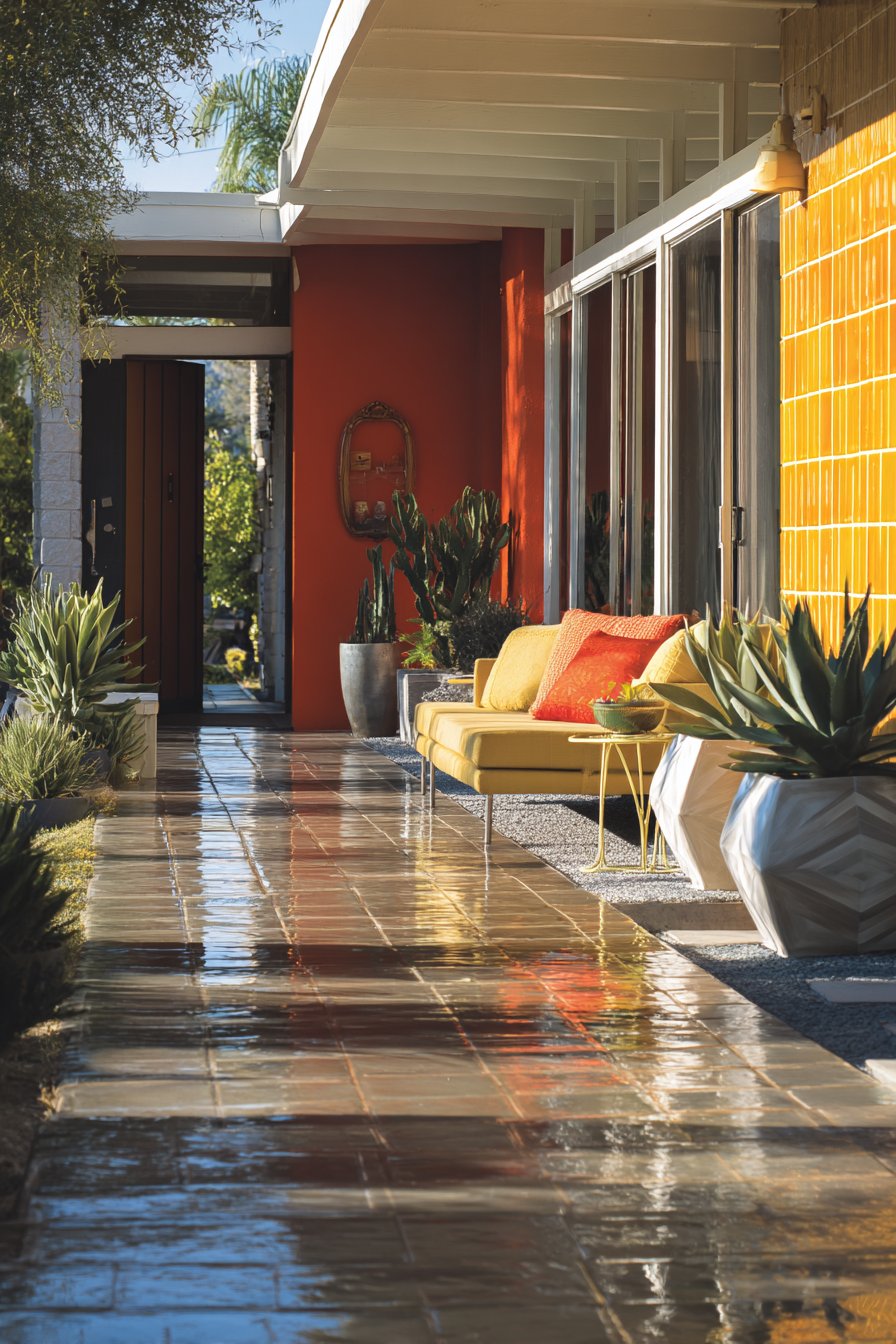
Vibrant orange and yellow gradient tiles create bold retro-inspired outdoor walls that celebrate mid-century modern’s optimistic color sensibilities. These glossy tiles transition from deep burnt orange through tangerine to sunny yellow, creating visual movement and energy that transforms patios into conversation pieces. The warm color progression evokes sunset hues, establishing immediate emotional connections and creating backdrops that feel inherently welcoming and social.
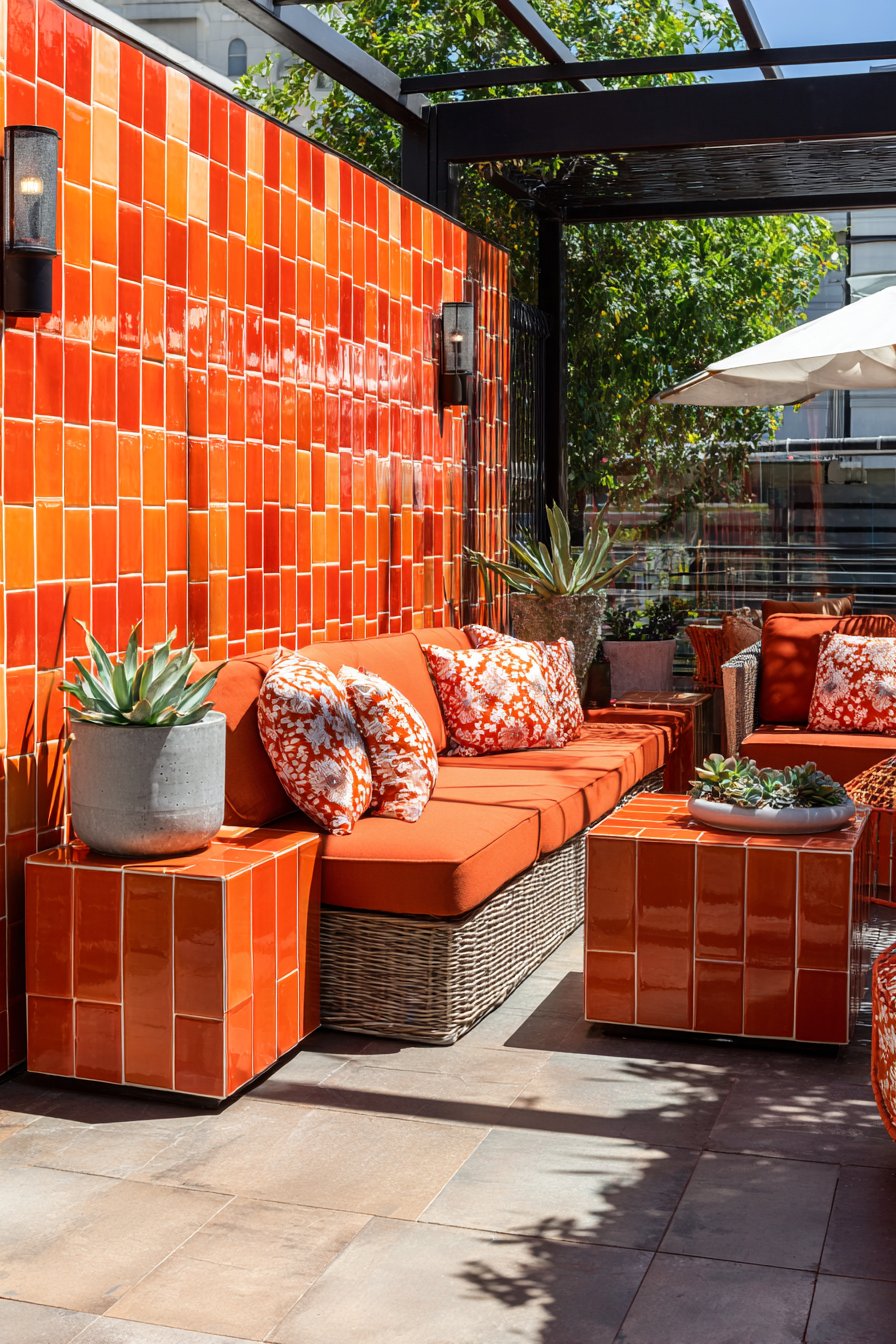
The reflective glaze on gradient tiles intensifies color saturation while creating fascinating light effects throughout the day. Morning sunlight reveals different color notes than afternoon illumination, and the transition from one hue to another creates subtle variations across the wall surface. This dynamic quality ensures the installation never looks static or boring, instead providing ever-changing visual interest that responds to environmental conditions.
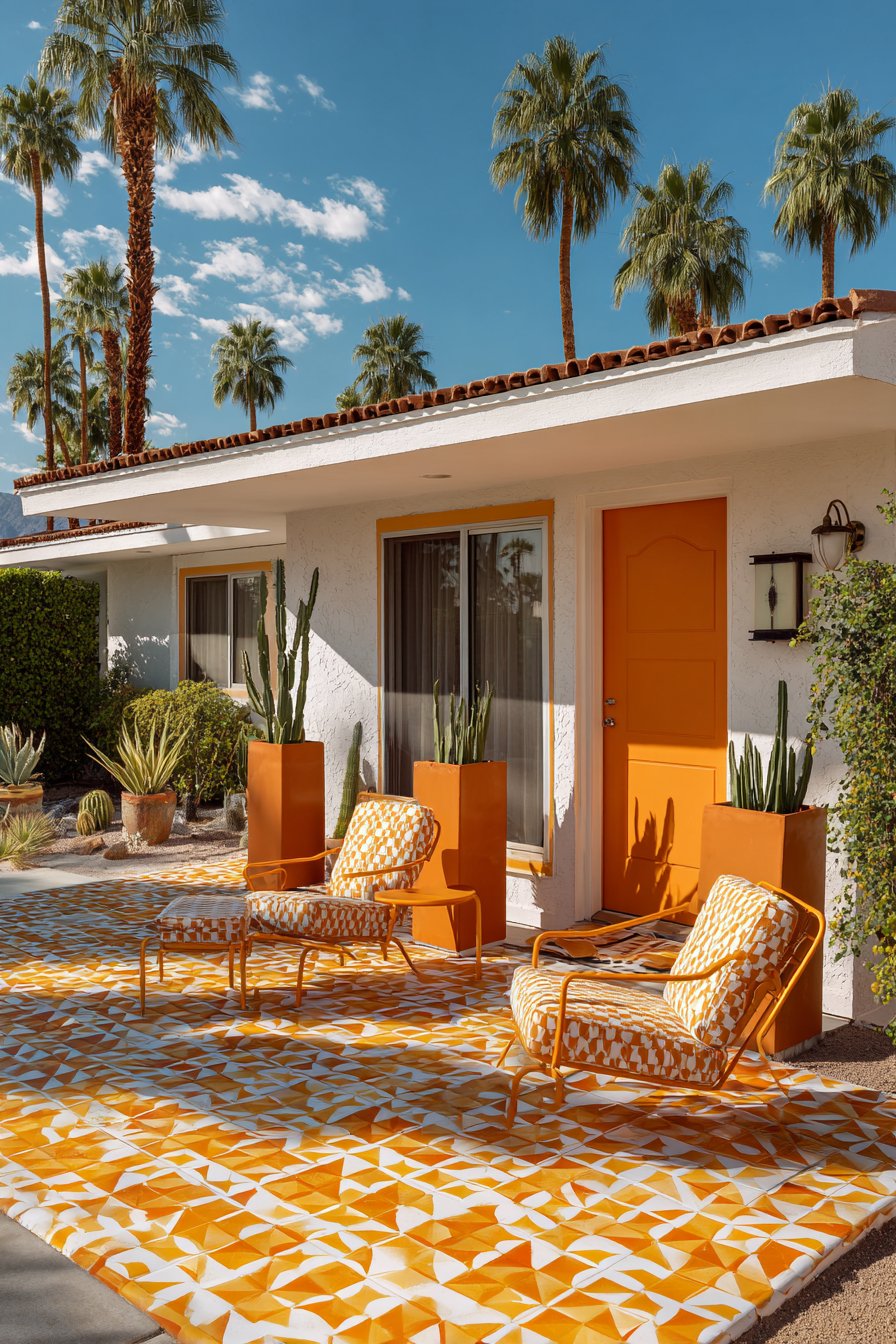
Style gradient tile installations with vintage metal patio furniture—think powder-coated chairs in complementary colors or wire mesh designs in chrome or brass. Geometric planters filled with succulents or cacti reinforce the mid-century aesthetic while requiring minimal maintenance. The bold wall allows furnishings to remain relatively simple, letting the tile installation provide the primary color and personality. String lights or period-appropriate atomic-age light fixtures complete the nostalgic scene while providing practical evening illumination.
Key Design Tips:
- Select glossy finishes to intensify color saturation and create authentic mid-century aesthetic
- Position gradient tiles where afternoon sunlight will maximize the warm color impact
- Coordinate vintage or vintage-style furniture in complementary colors without exact color matching
- Incorporate geometric patterns in accessories and planters to reinforce the retro design narrative
- Balance bold wall colors with simpler surrounding elements to prevent visual chaos
15. Rustic Outdoor Fireplace Centerpiece
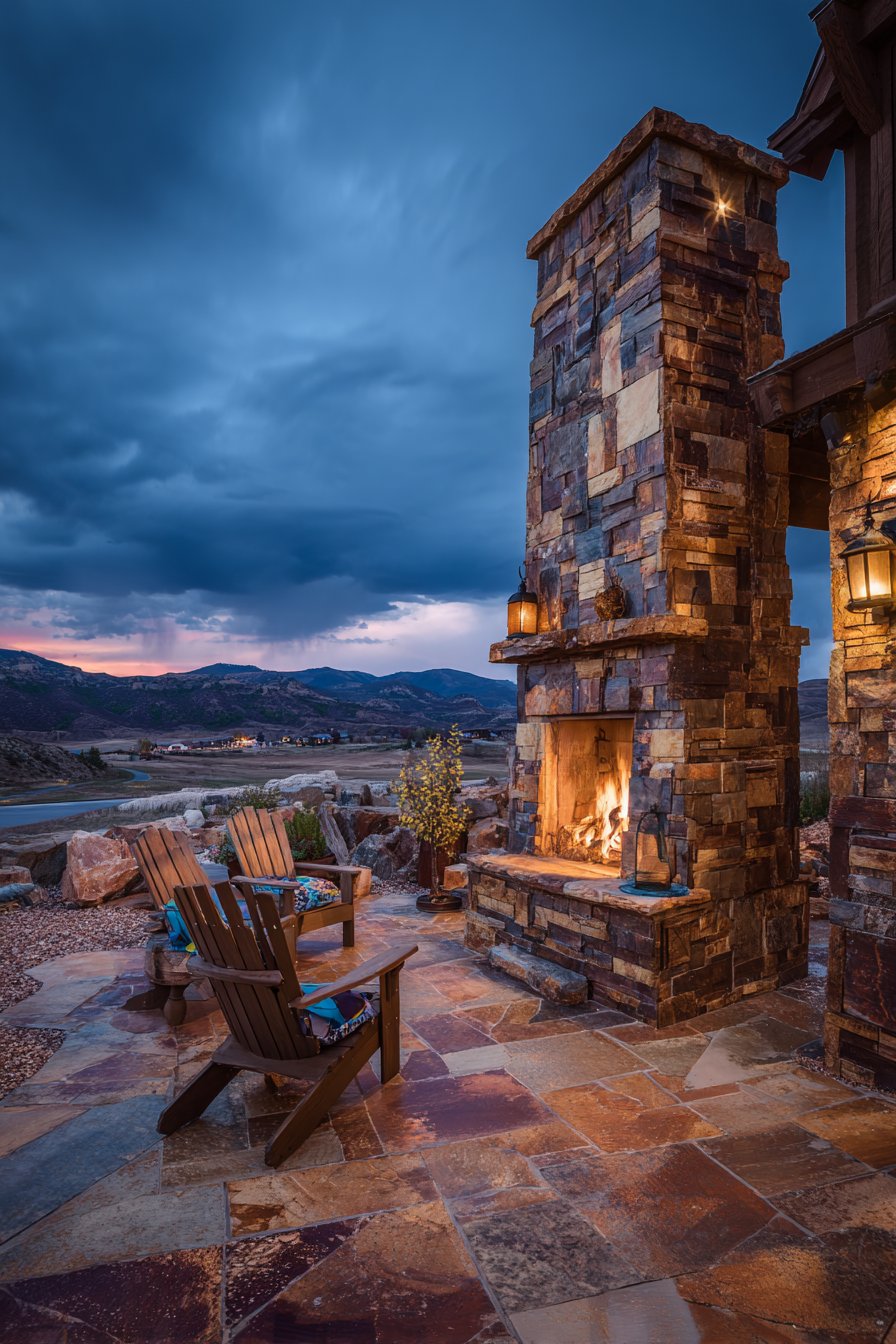
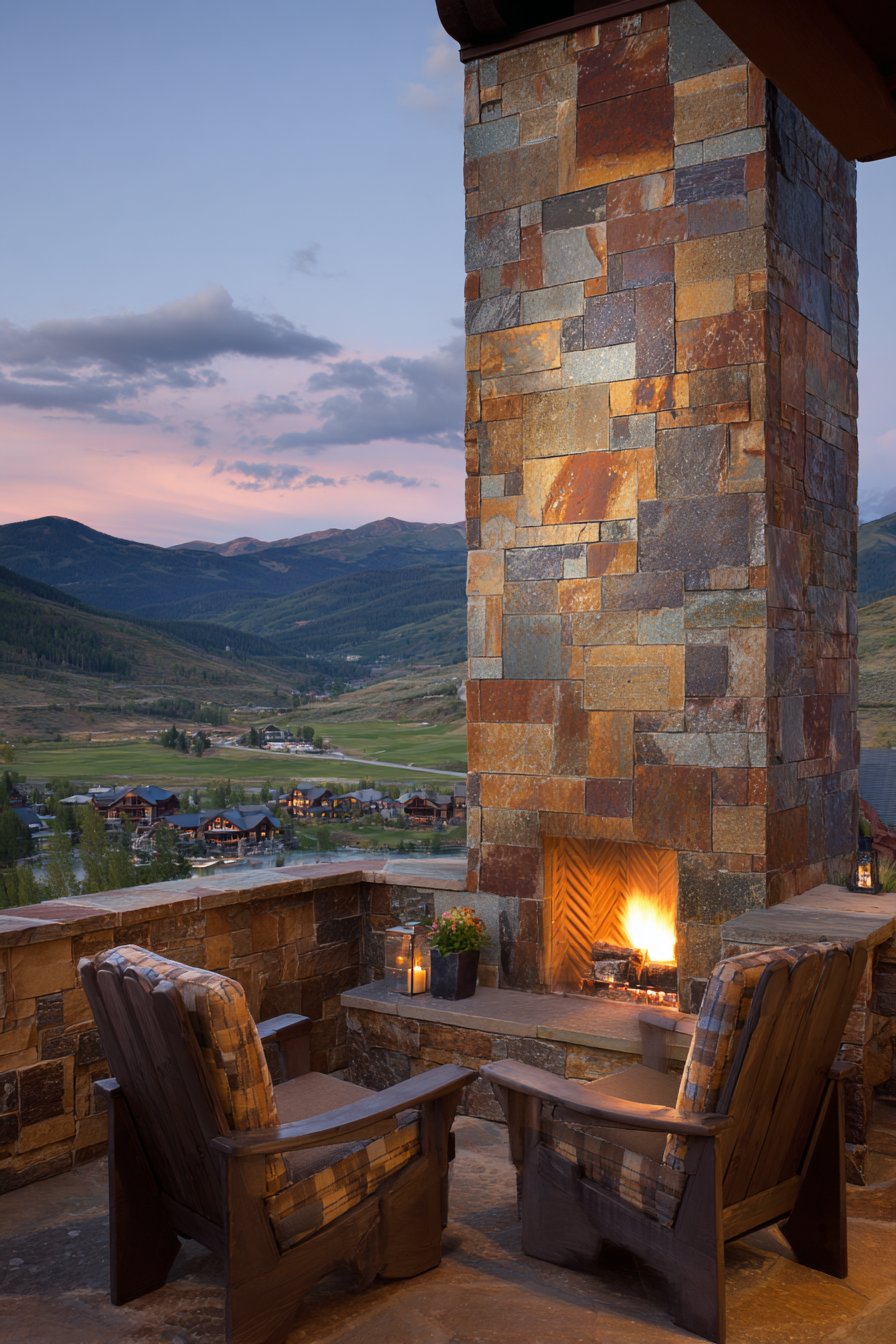
Stacked ledger stone tiles in mixed earth tones create dramatic outdoor fireplaces that serve as natural gathering focal points. The dimensional installation—with stones projecting at varying depths—creates strong vertical interest while showcasing the material’s natural beauty. Color variations from warm tans and browns through gray and charcoal add visual complexity that prevents monotony, while the rough texture contrasts beautifully with smooth elements like metal fire screens or glass wind guards.
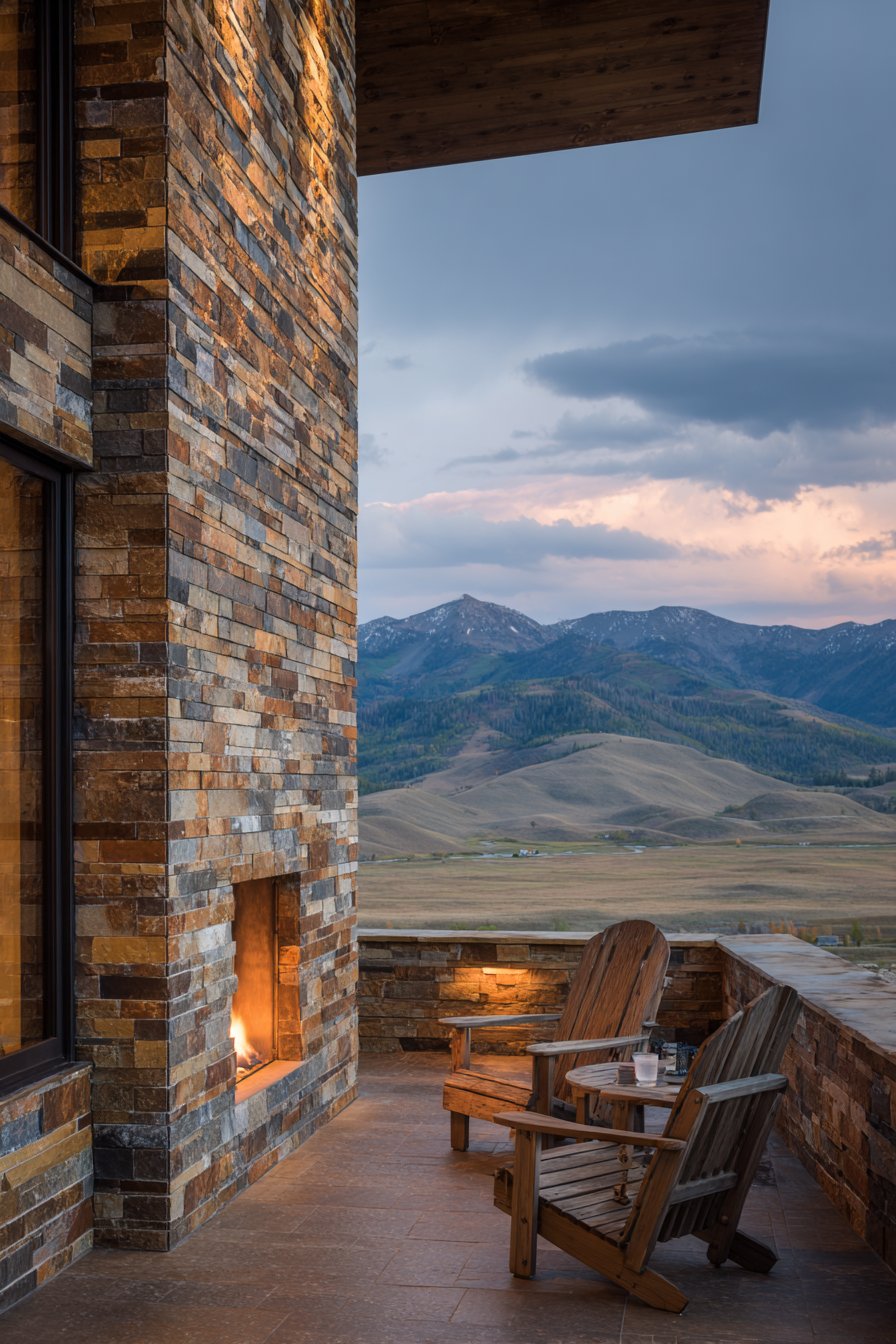
The vertical emphasis of stacked stone draws eyes upward, making outdoor fireplaces appear more substantial and architecturally significant. This installation style particularly suits tall chimney designs where the stone surround becomes a sculptural element in its own right. The natural materials connect outdoor living spaces to their surroundings, creating harmonious transitions between built structures and natural landscapes.
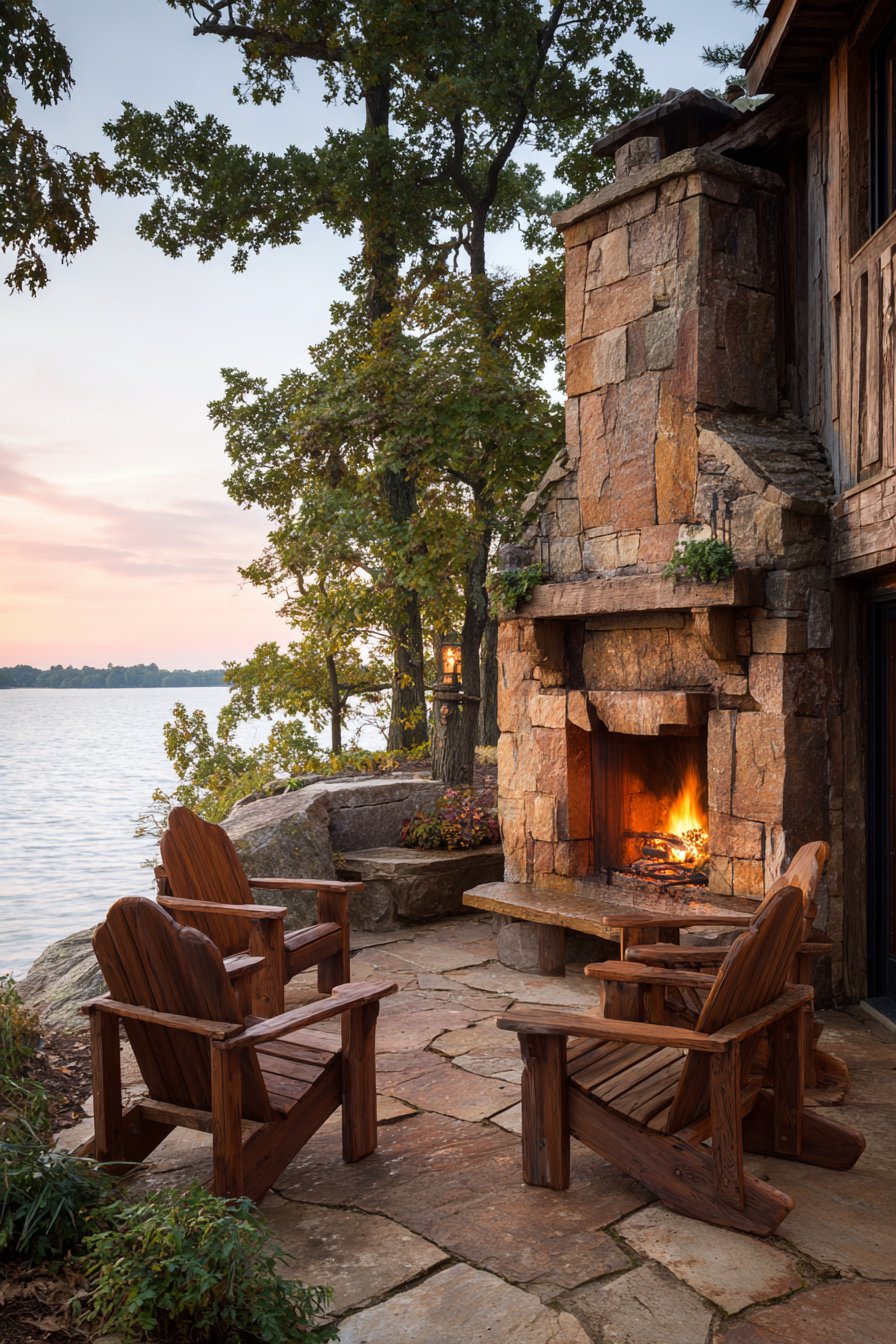
Position Adirondack chairs or rustic benches in semicircles around the stone fireplace, creating defined gathering zones perfect for cool evenings. The rough stone texture contrasts with smooth chair surfaces, while warm firelight dancing across the varied stone colors creates ambiance impossible to replicate with artificial lighting. The heat-resistant properties of natural stone make it ideal for fireplace surrounds, while its durability ensures the installation will maintain beauty through decades of use and weather exposure.
Key Design Tips:
- Choose natural stone tiles with varied colors and textures rather than uniform materials for the most authentic appearance
- Install ledger stone in vertical patterns to emphasize fireplace height and create architectural drama
- Position seating in semicircles or U-shapes around the fireplace to create natural conversation areas
- Incorporate task lighting around seating areas while allowing firelight to illuminate the stone feature
- Select stone colors that complement your home’s exterior materials for visual cohesion across the property
16. Sculptural Three-Dimensional Wave Patterns
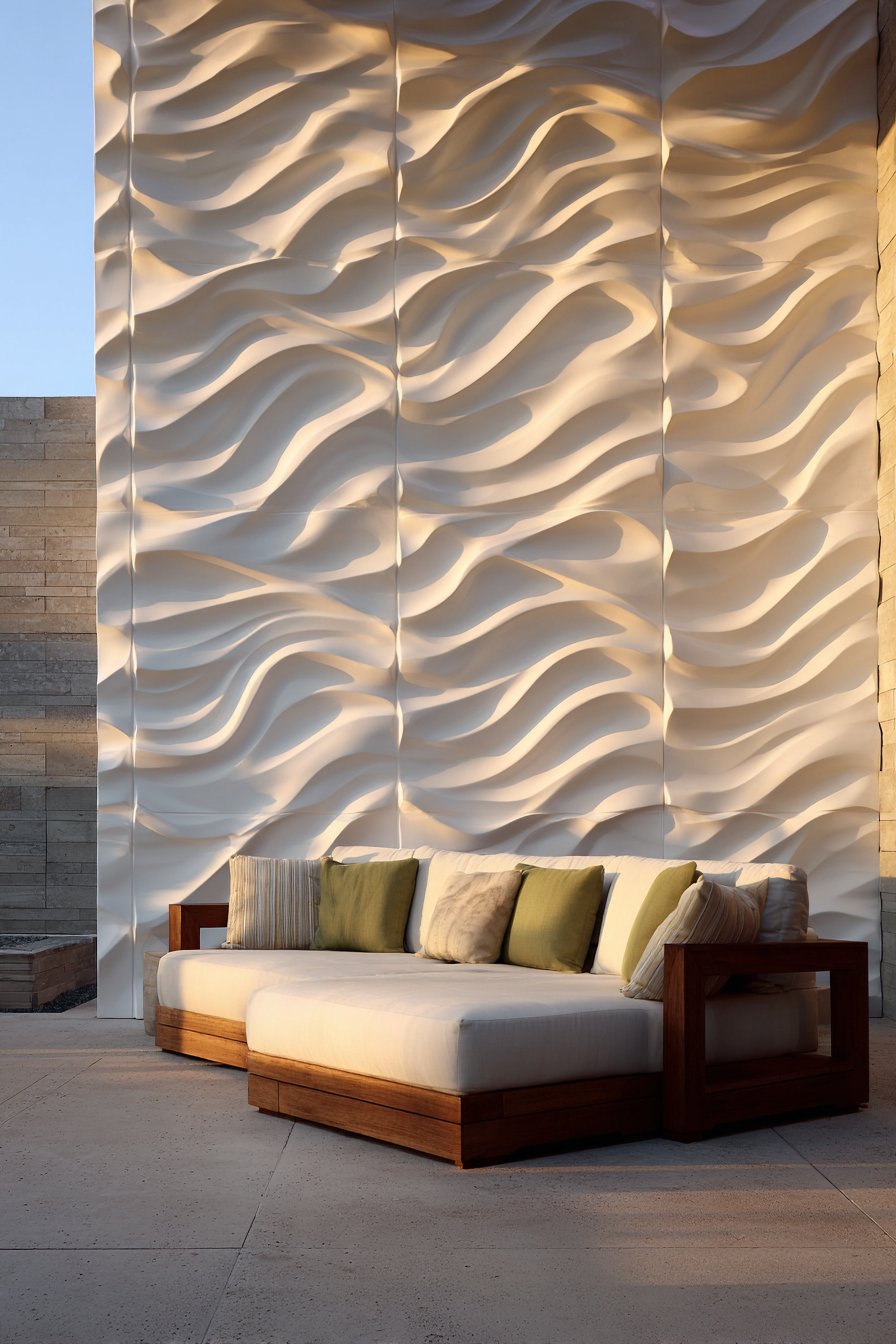
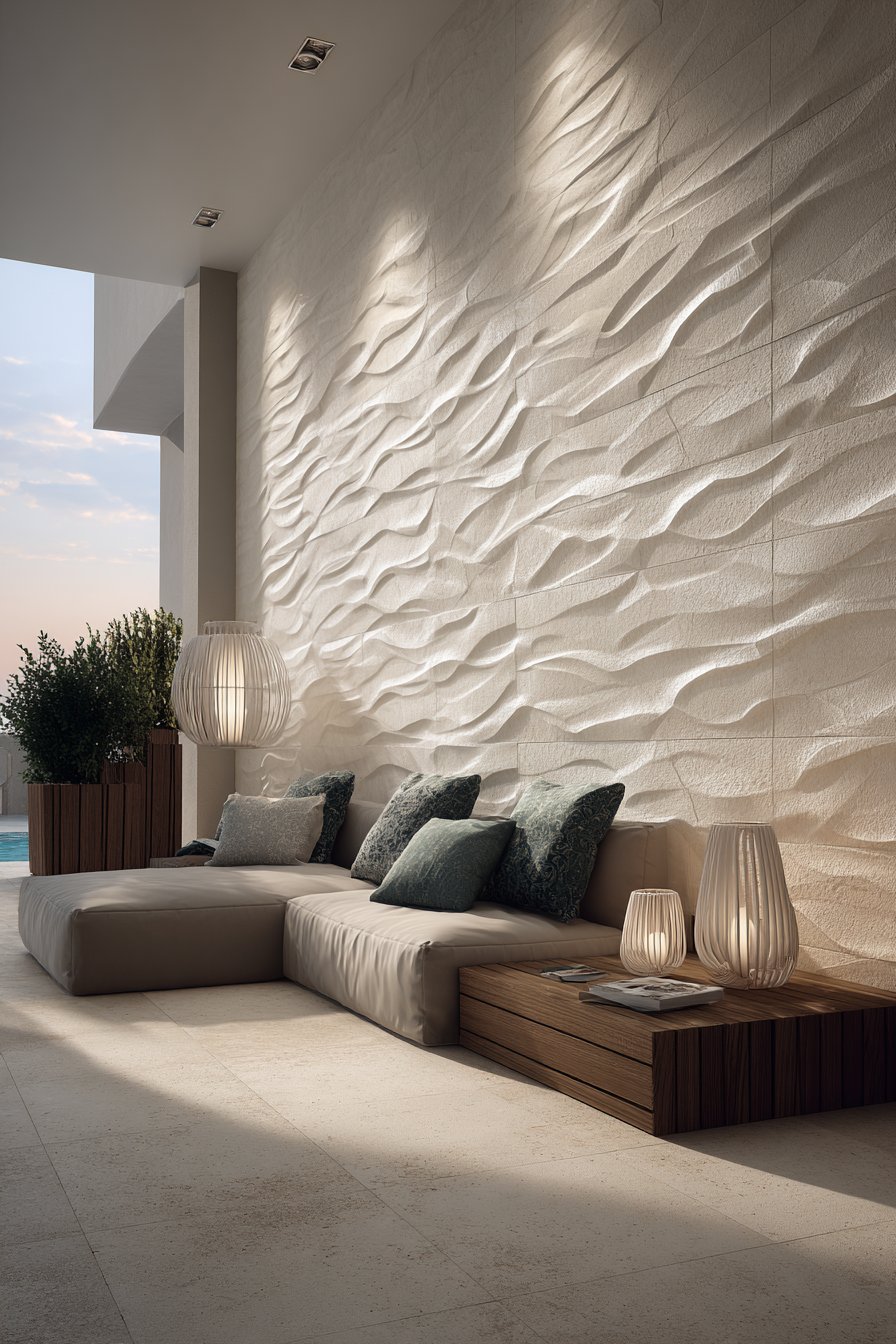
Matte white tiles with three-dimensional wave patterns transform ordinary walls into sculptural art installations that redefine outdoor wall tiles beyond their practical functions. The relief pattern creates constantly changing shadow effects as sunlight moves across the surface throughout the day, ensuring the wall never appears static or one-dimensional. These tiles prove that outdoor surfaces can provide both function and artistic impact, turning utilitarian walls into focal points worthy of gallery spaces.
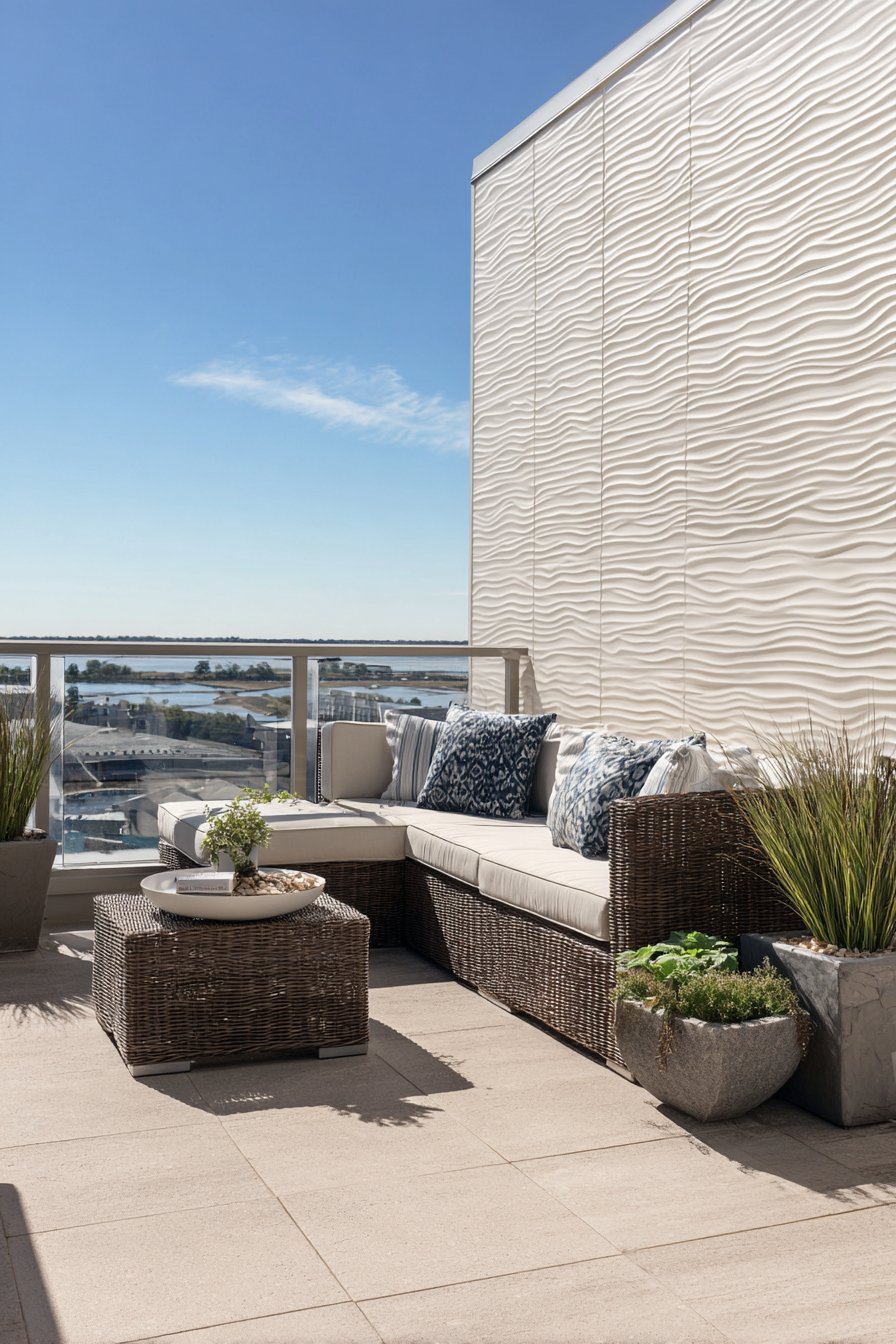
The geometric precision of repeating wave patterns creates visual rhythm that the eye finds naturally pleasing, while the white coloration ensures the dimensional effects remain clearly visible in all lighting conditions. Unlike flat tiles where color provides interest, these sculptural surfaces rely on form and shadow, creating sophisticated elegance through shape alone. This approach suits minimalist design philosophies where restraint and subtle details matter more than bold colors or busy patterns.
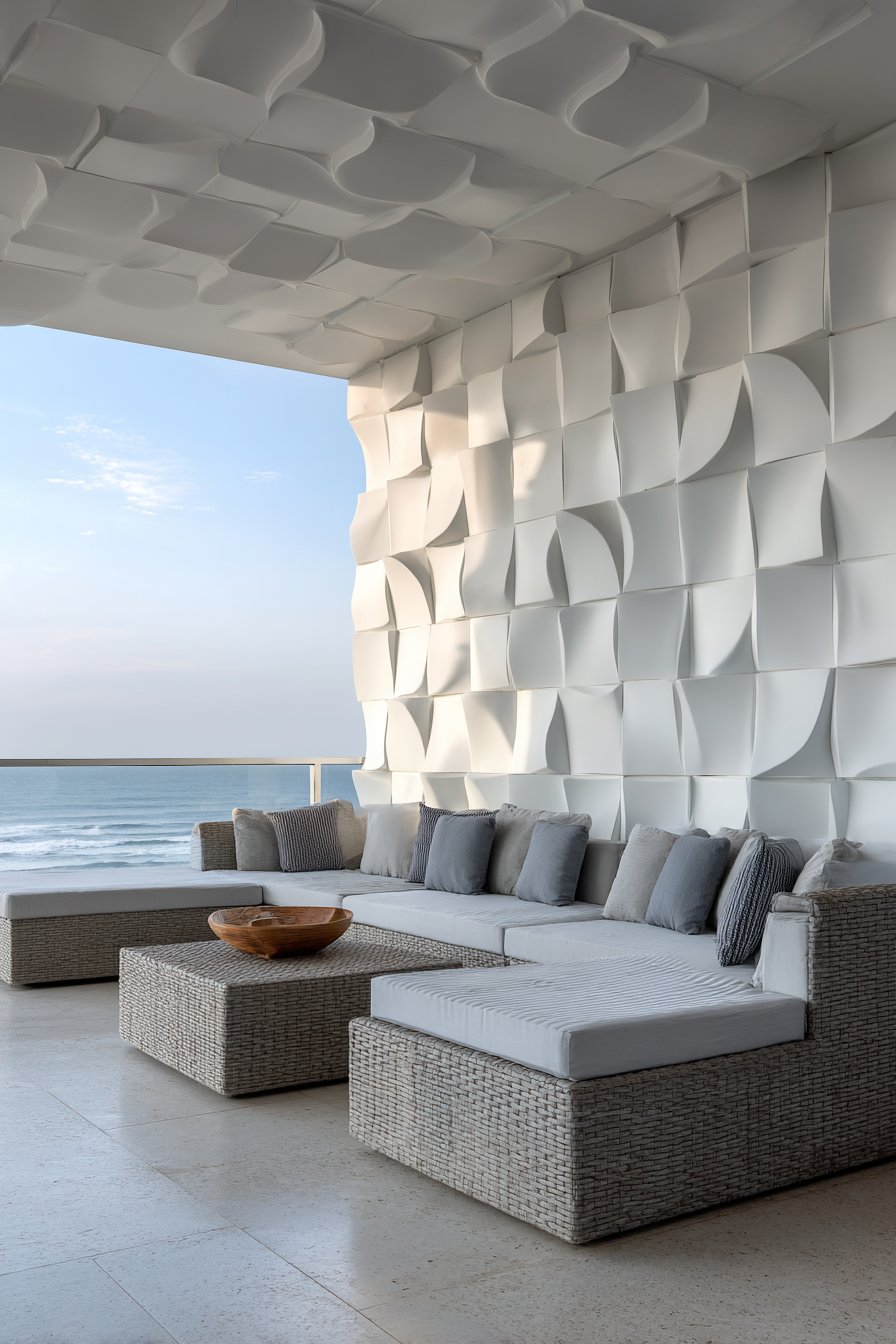
Position modern sectional sofas or contemporary chairs against wave-pattern walls to create outdoor living rooms with gallery-level design. The sculptural backdrop elevates even simple furniture into statements, while the white color ensures compatibility with any cushion colors or textile patterns. Strategic lighting design becomes critical—uplighting from the base or angled illumination from above can be adjusted to create dramatically different shadow patterns, allowing homeowners to modify the wall’s appearance based on mood or occasion.
Key Design Tips:
- Install three-dimensional tiles where changing natural light will reveal their sculptural qualities throughout the day
- Choose matte finishes over glossy surfaces to prevent glare while emphasizing shadow patterns
- Design uplighting or directional spotlights to dramatically highlight dimensional elements during evening hours
- Keep surrounding décor minimal to allow the wall’s sculptural qualities to serve as the primary design statement
- Consider extending dimensional tiles to cover large wall sections for maximum architectural impact
17. Iridescent Glass Mosaic Poolside Luxury
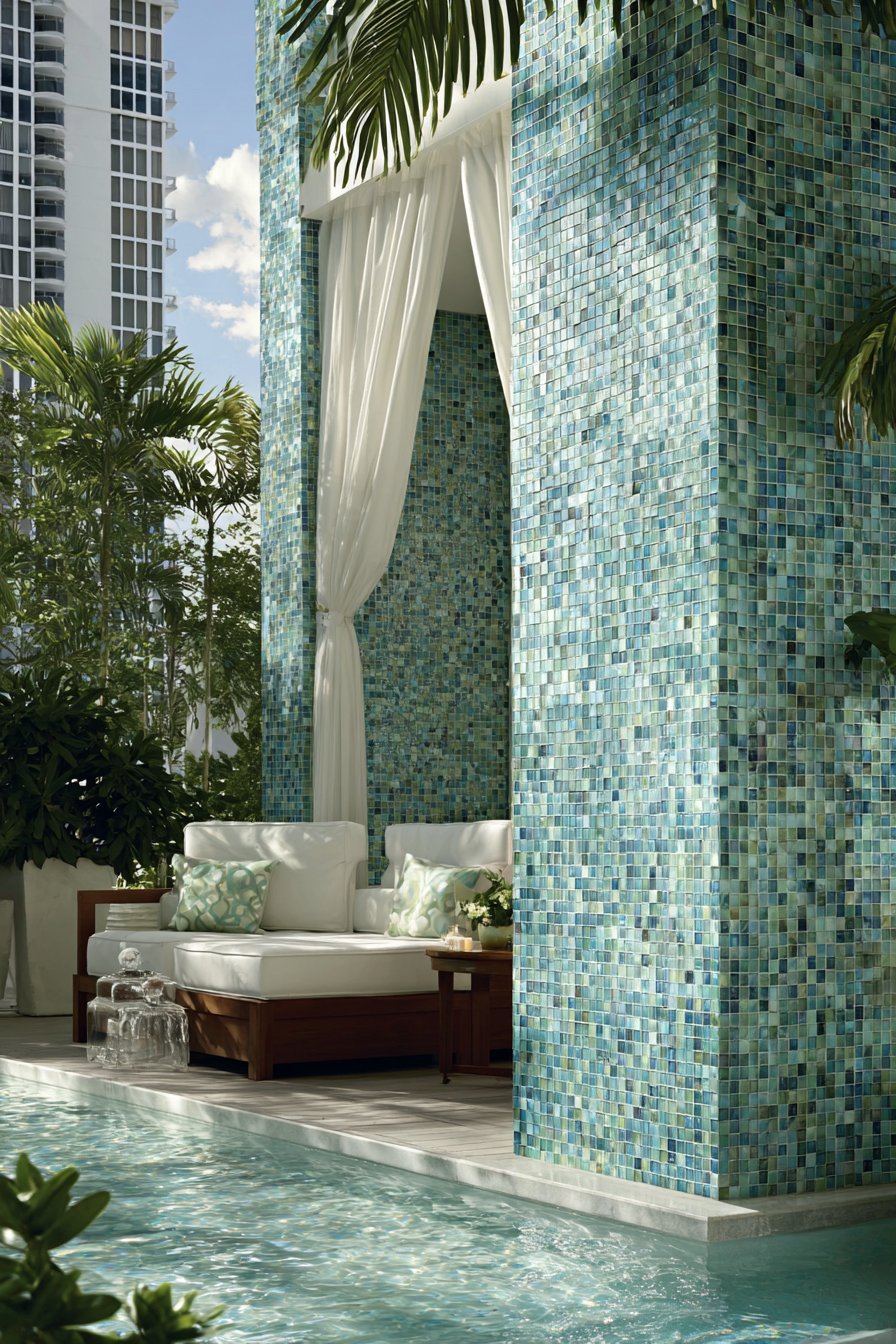
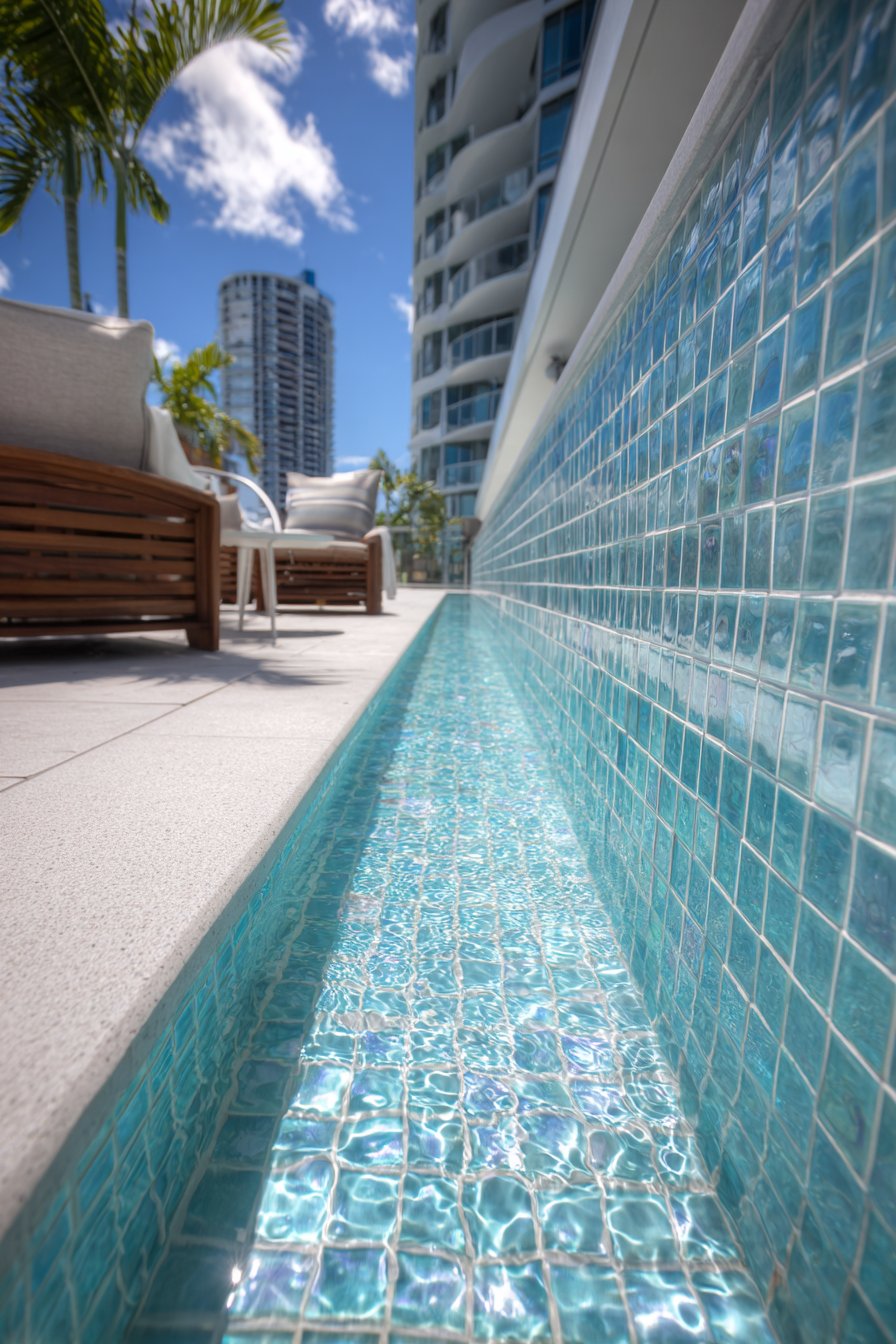
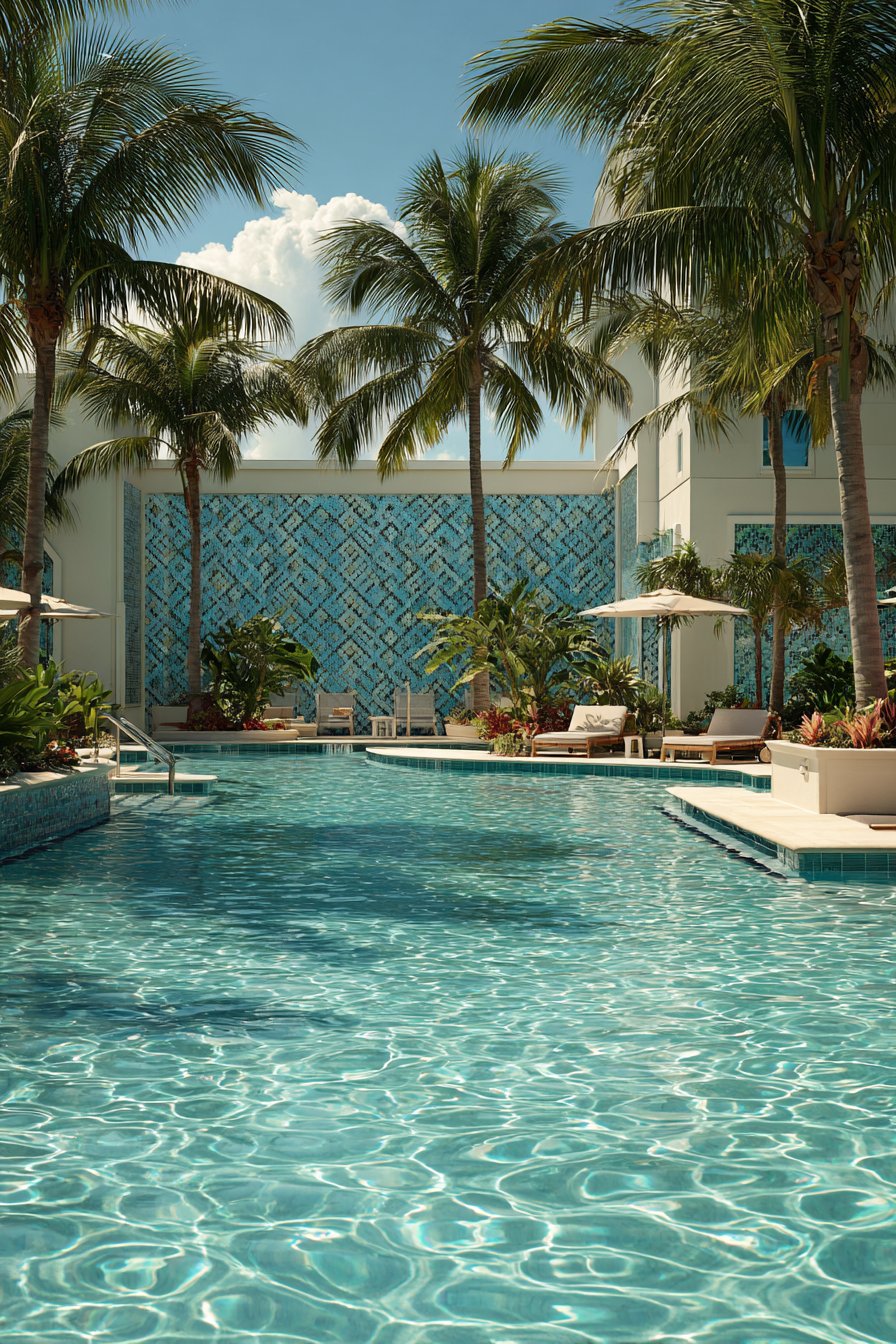
Iridescent glass mosaic tiles in ocean blues and turquoises create shimmering water-inspired walls that transform pool areas into resort-like destinations. These translucent tiles catch and refract sunlight, creating color-shifting effects that respond to viewing angles and lighting conditions. The dynamic quality mimics water’s movement and light reflection, establishing immediate connections between the tiled feature and the adjacent pool while creating visual continuity across the outdoor space.
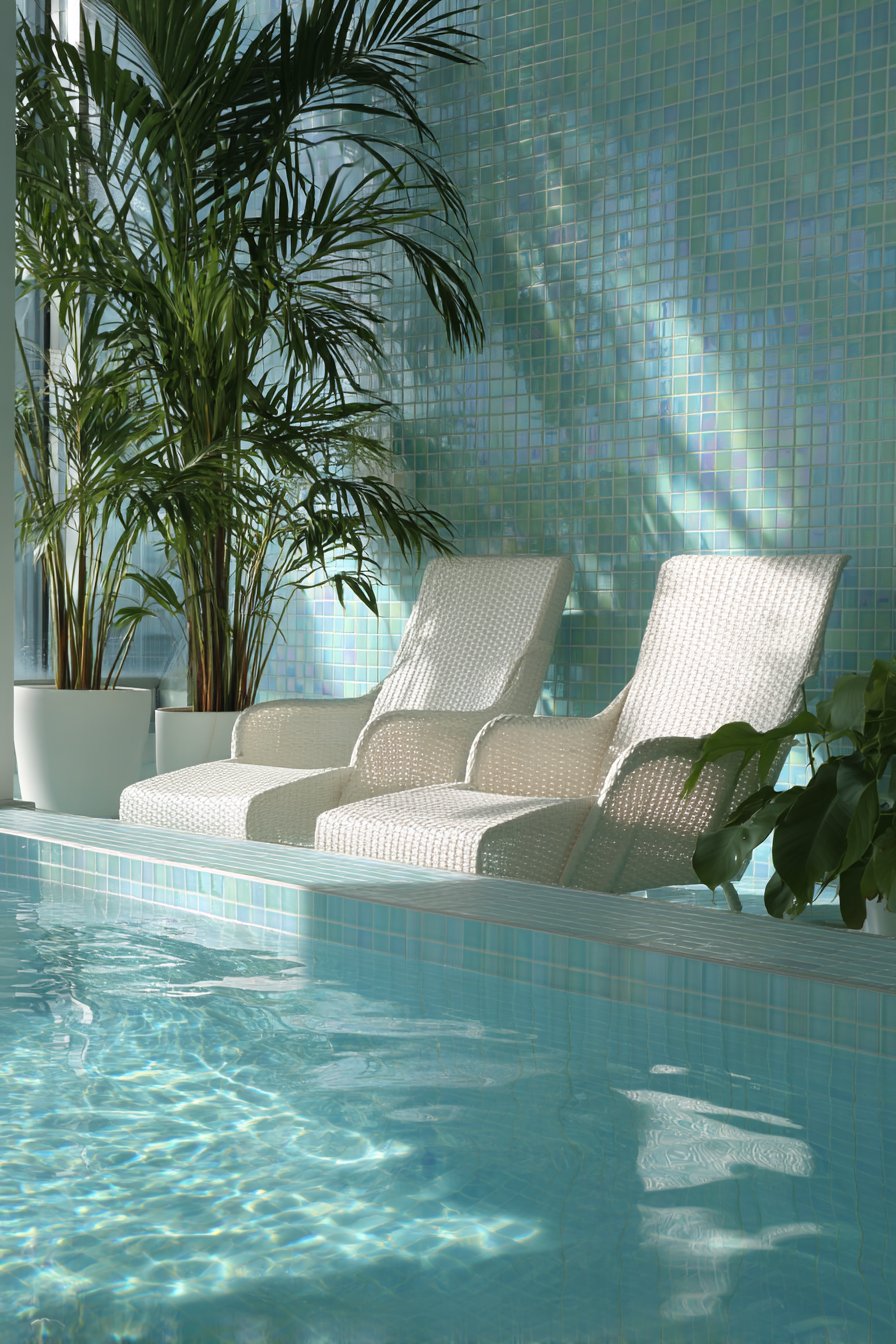
The magic of iridescent glass lies in its ability to create luxury through material properties rather than expensive scale or elaborate patterns. Even modest installations of these tiles deliver high-impact results as reflected pool water creates dancing light patterns across the glass surface. This interplay between water, sunlight, and reflective tile creates mesmerizing effects that captivate attention and enhance the sensory experience of poolside relaxation.
Furnish iridescent tile areas with modern lounge chairs in white or neutral tones that won’t compete with the wall’s color-shifting beauty. Add tropical plants in sleek containers for organic contrast against the ultra-contemporary glass tiles, and consider underwater pool lighting that will illuminate the glass wall after dark for truly magical evening effects. The resort-style atmosphere created by these tiles elevates residential pools to vacation-worthy destinations perfect for entertaining or personal escape.
Key Design Tips:
- Install glass mosaic tiles on walls directly adjacent to pools where reflected water patterns will activate the surface
- Choose tile colors that complement pool water—blues and turquoises create cohesive aquatic color stories
- Design coordinated underwater pool lighting to illuminate glass walls after dark for dramatic evening effects
- Keep furniture neutral and simple to allow the dynamic tile installation to provide color and visual interest
- Incorporate stainless steel or glass furniture elements that echo the contemporary quality of glass tiles
18. Scandinavian White Hexagonal Simplicity
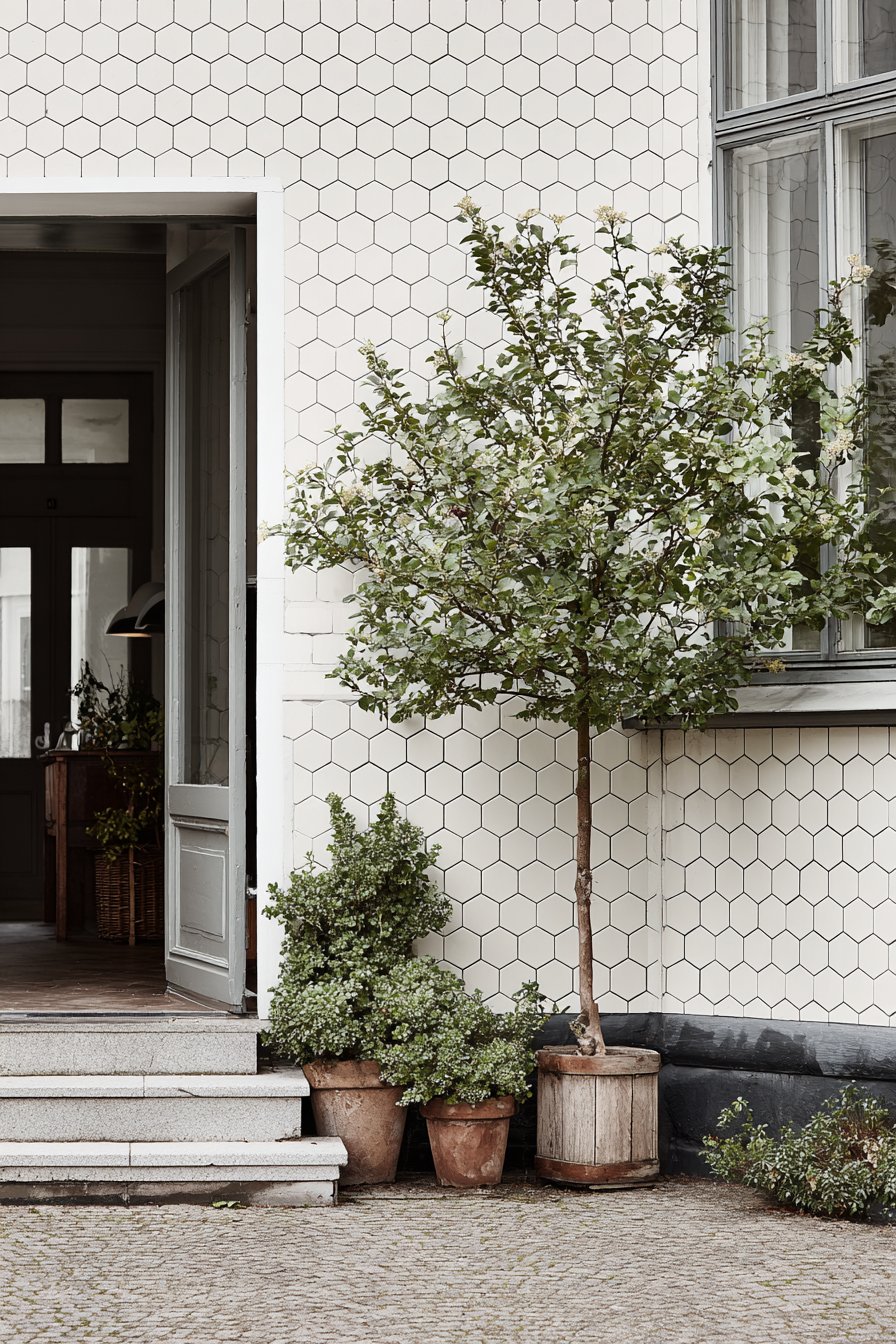
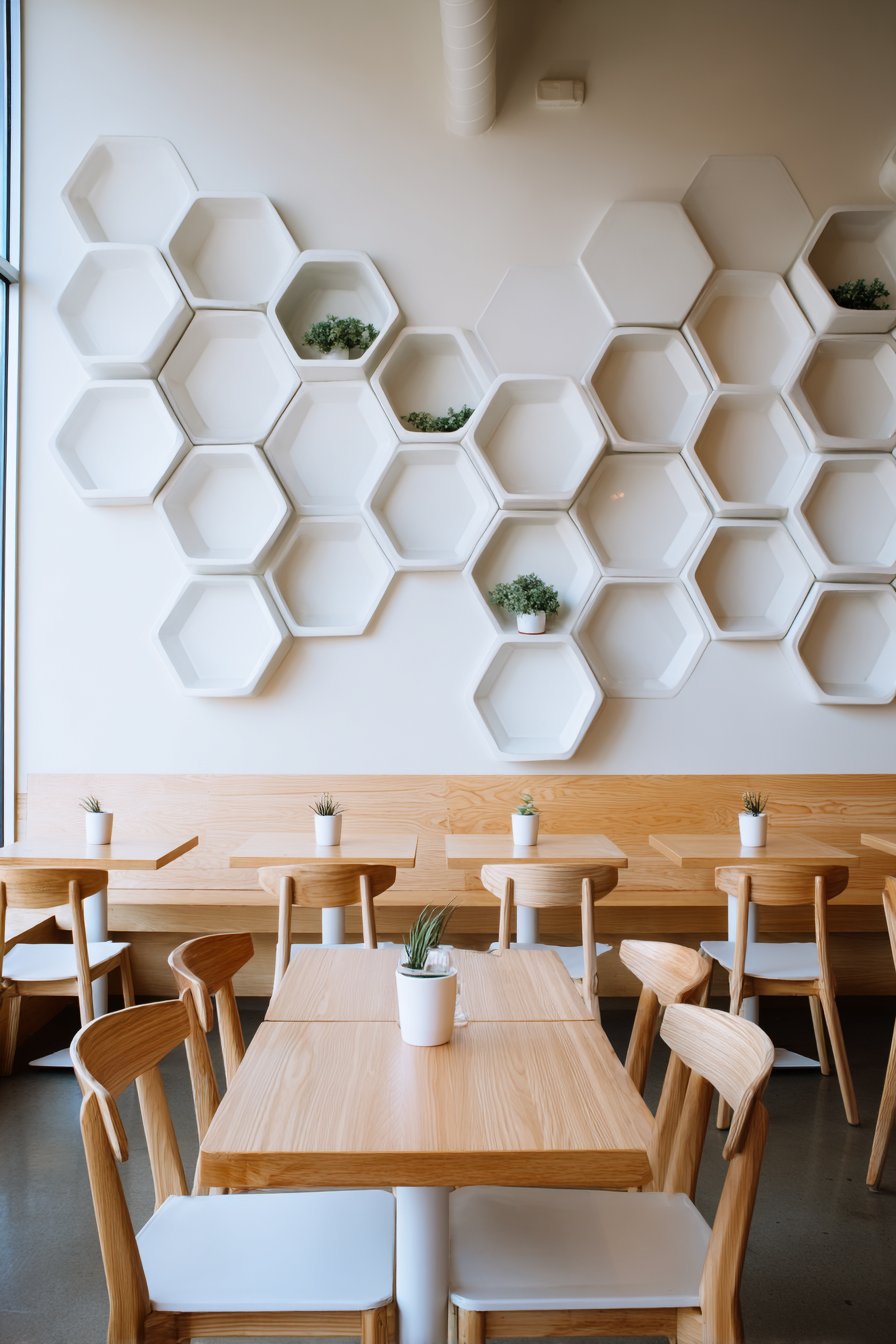
Matte white hexagonal tiles embody Scandinavian design principles, creating serene outdoor walls through geometric form and tonal restraint. The honeycomb pattern adds visual interest without color or decoration, proving that sophisticated design can emerge from simple shapes arranged thoughtfully. The subtle texture of matte surfaces prevents sterile appearances while maintaining the cleanliness central to Nordic aesthetics, and the white coloration maximizes light reflection in regions where extended darkness makes every photon precious.
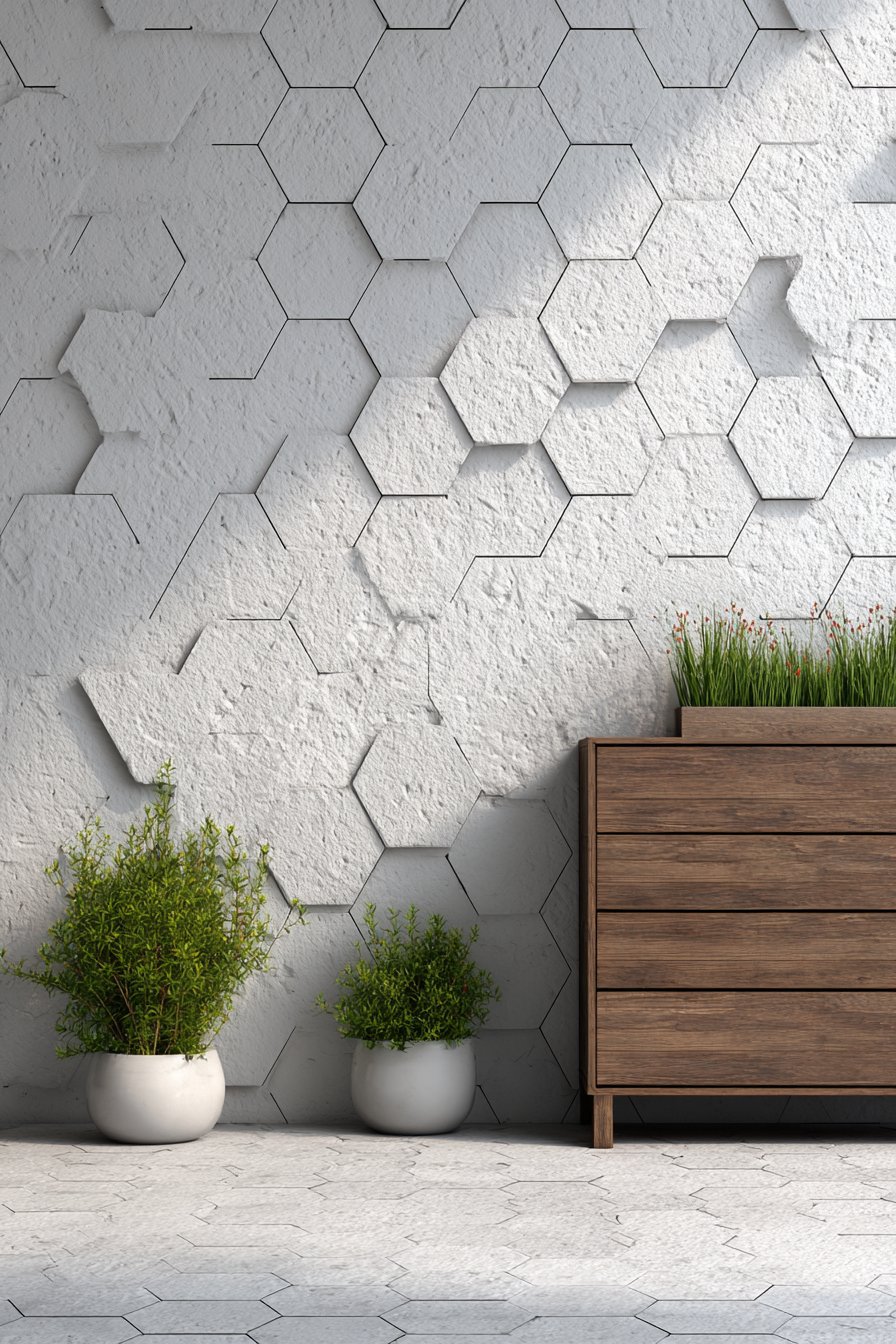
The hexagonal format creates gentle visual movement that guides eyes across wall surfaces without demanding attention or creating distraction. This quiet sophistication suits Scandinavian philosophy that values calm, uncluttered environments where people can think clearly and relax completely. The geometric regularity provides structure and order, while the slight dimensional quality of individual hexagons creates delicate shadow play that adds life to monochromatic installations.
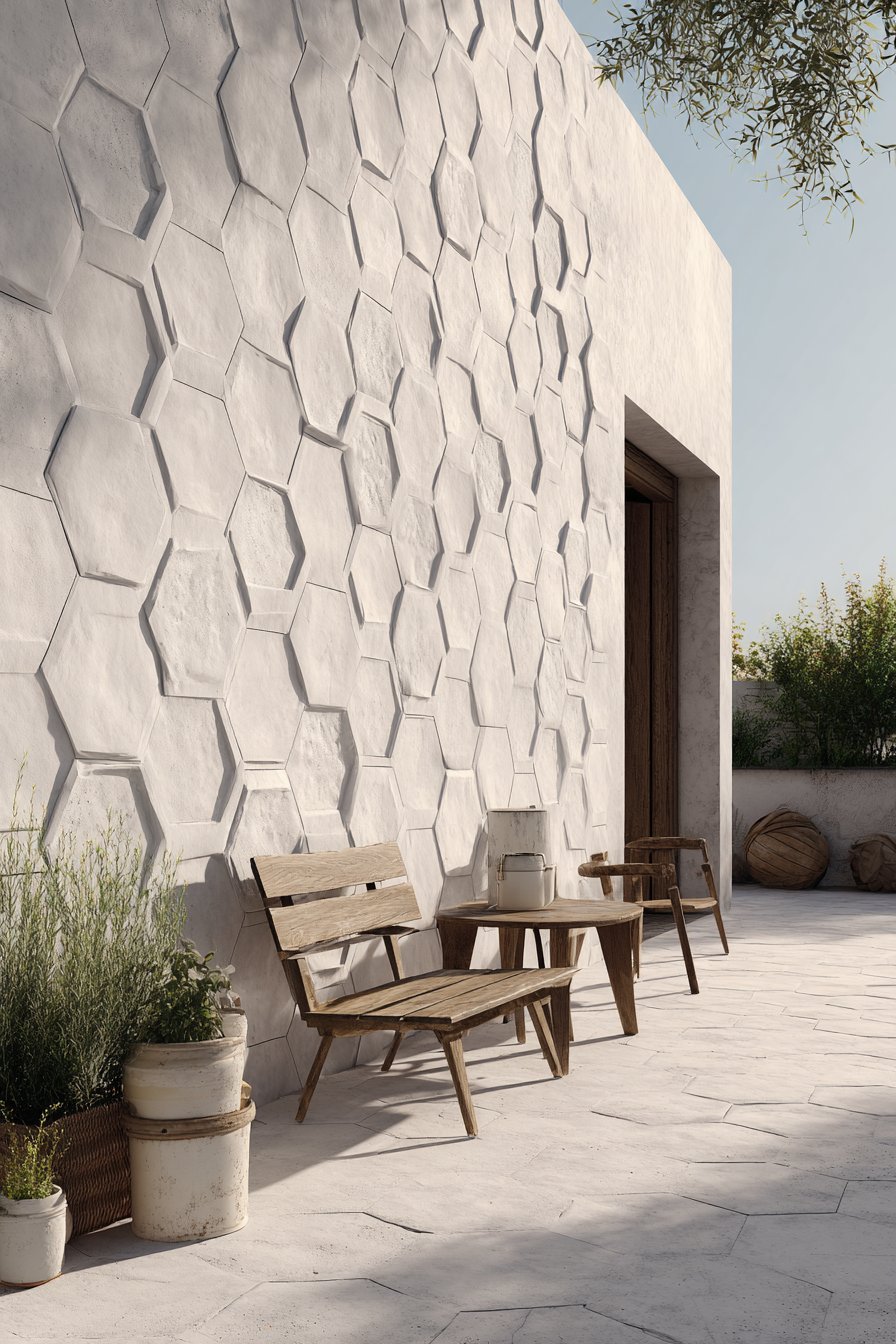
Complement white hexagonal tiles with natural wood furniture in light oak or ash, simple greenery in ceramic pots, and textiles in muted natural tones like flax, oatmeal, or soft gray. The restrained color palette creates tranquil environments that feel effortlessly elegant without pretension. Soft diffused northern light enhances the gentle shadow effects within each hexagonal recess, while the overall brightness of white surfaces helps outdoor spaces feel larger and more open despite potentially compact dimensions.
Key Design Tips:
- Choose matte finishes to create authentic Scandinavian aesthetic and prevent glare in bright outdoor conditions
- Pair white tiles exclusively with natural materials like untreated wood, linen, and ceramic to maintain design purity
- Keep surrounding décor minimal with carefully edited selections rather than abundant accessories
- Incorporate simple, functional lighting that provides illumination without becoming decorative focal points
- Select furniture with clean lines and light-toned woods to reinforce Nordic design principles
19. Bohemian Vintage Encaustic Patchwork
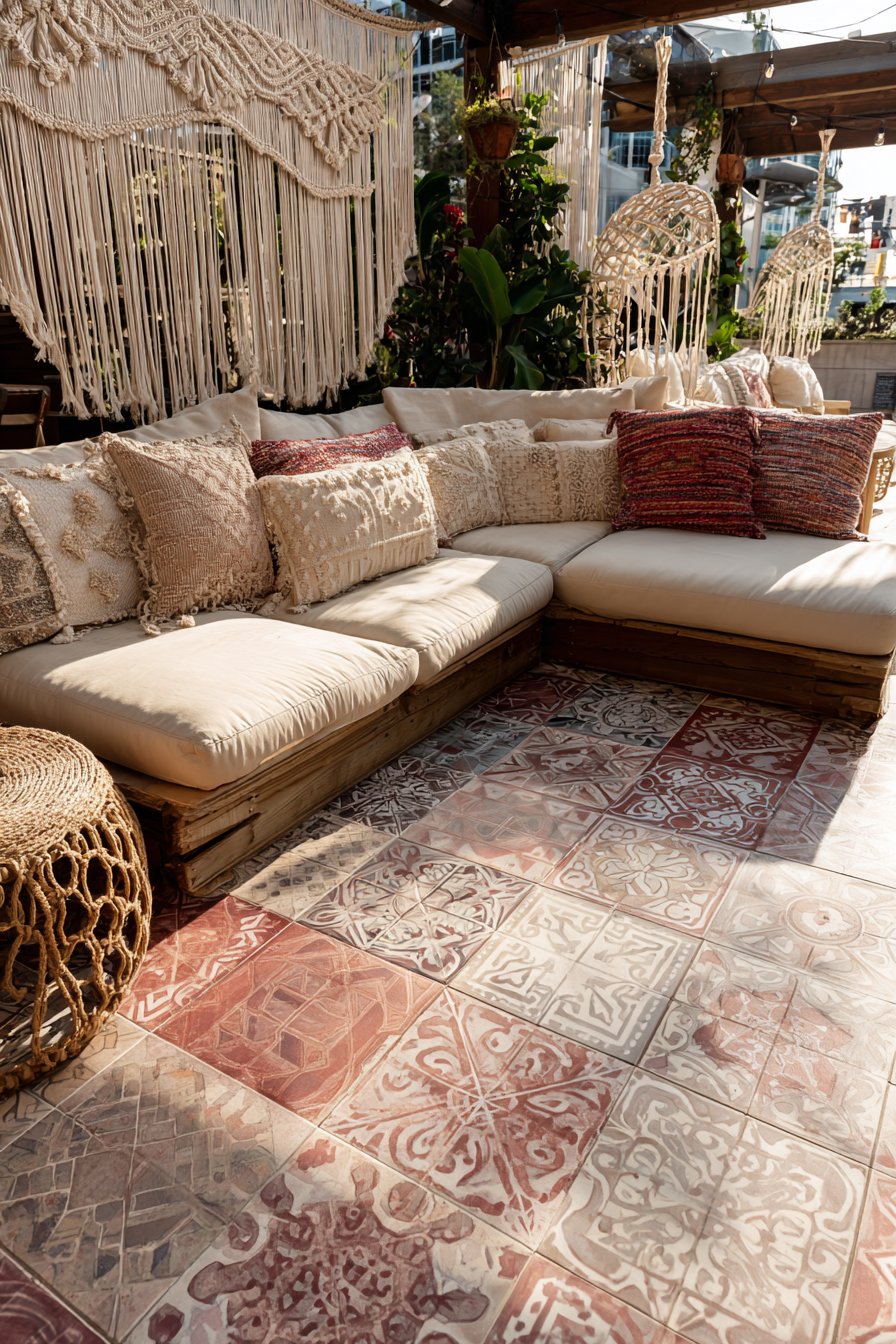
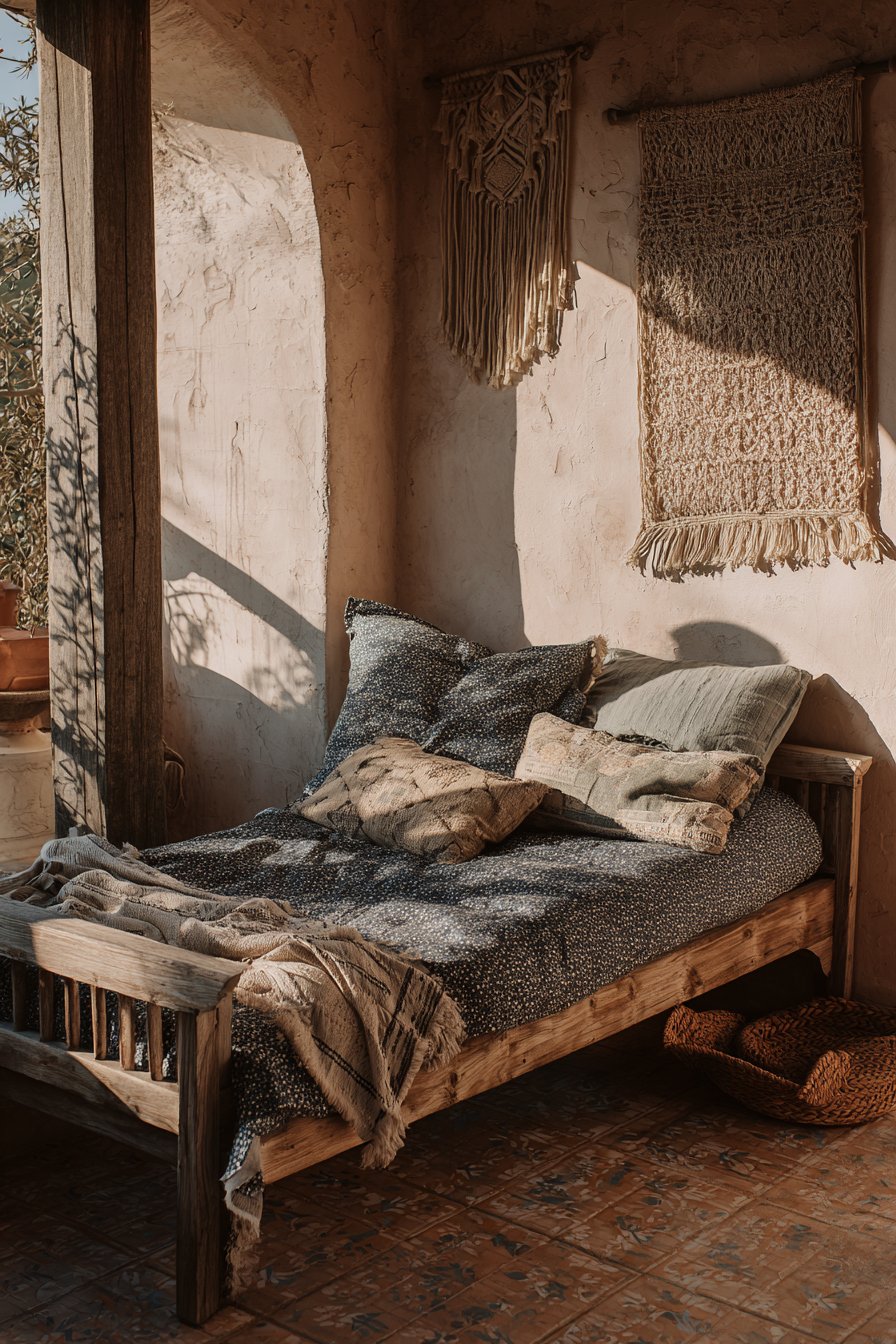
Vintage-style encaustic cement tiles in faded terracotta, cream, and sage create eclectic outdoor walls that celebrate artistic expression and collected character. These decorative tiles feature worn patterns that suggest decades of Mediterranean sun and weather, with intentionally imperfect appearances that reject modern uniformity. The varied designs—florals, geometrics, and abstract motifs—create patchwork effects that tell visual stories and provide endless details to discover upon repeated viewing.
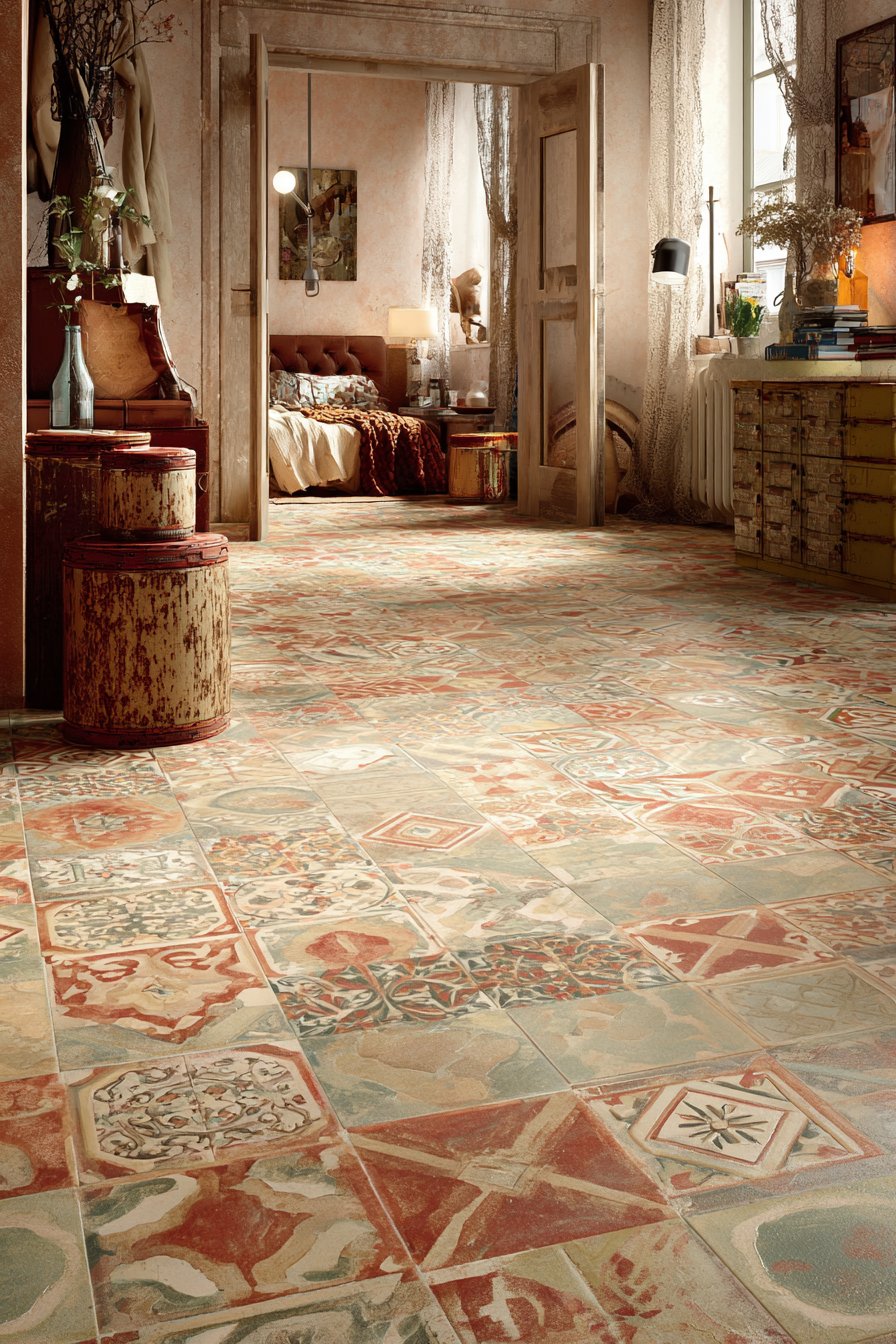
The bohemian aesthetic embraces mixing patterns, colors, and textures that might clash in more formal design approaches. Encaustic tile walls establish this eclectic foundation, providing richly patterned backdrops against which layered textiles, macramé wall hangings, and mixed-material furniture feel perfectly at home. The faded quality of vintage-look tiles prevents patterns from appearing too crisp or new, instead creating the collected-over-time appearance essential to authentic bohemian style.
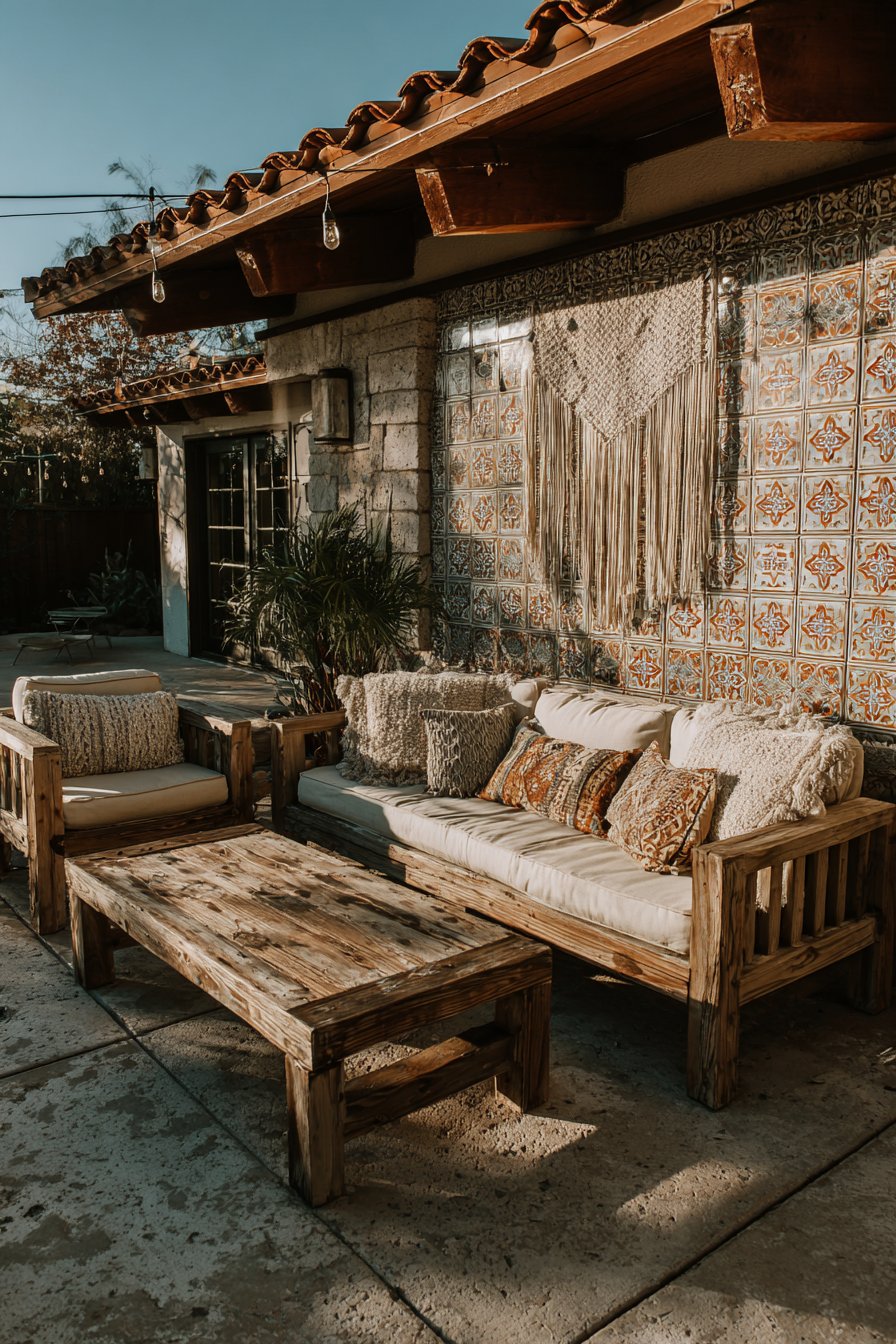
Furnish bohemian tiled spaces with an intentional mix of seating types—perhaps a vintage rattan peacock chair, floor cushions in global textiles, and a weathered wooden bench. Add hanging plants in macramé holders, colorful Moroccan lanterns, and an array of potted plants in mismatched containers. The resulting space feels personal, artistic, and welcoming, with the patterned tile wall serving as the foundation for layers of texture, color, and self-expression.
Key Design Tips:
- Mix multiple encaustic tile patterns rather than using a single design for authentic bohemian eclecticism
- Select tiles with faded or weathered appearances rather than crisp new patterns for collected character
- Layer multiple textile patterns in global-inspired designs without worrying about perfect coordination
- Incorporate handcrafted elements like macramé, pottery, and woven baskets to reinforce artisan aesthetic
- Embrace asymmetry and intentional imperfection rather than seeking balanced, formal arrangements
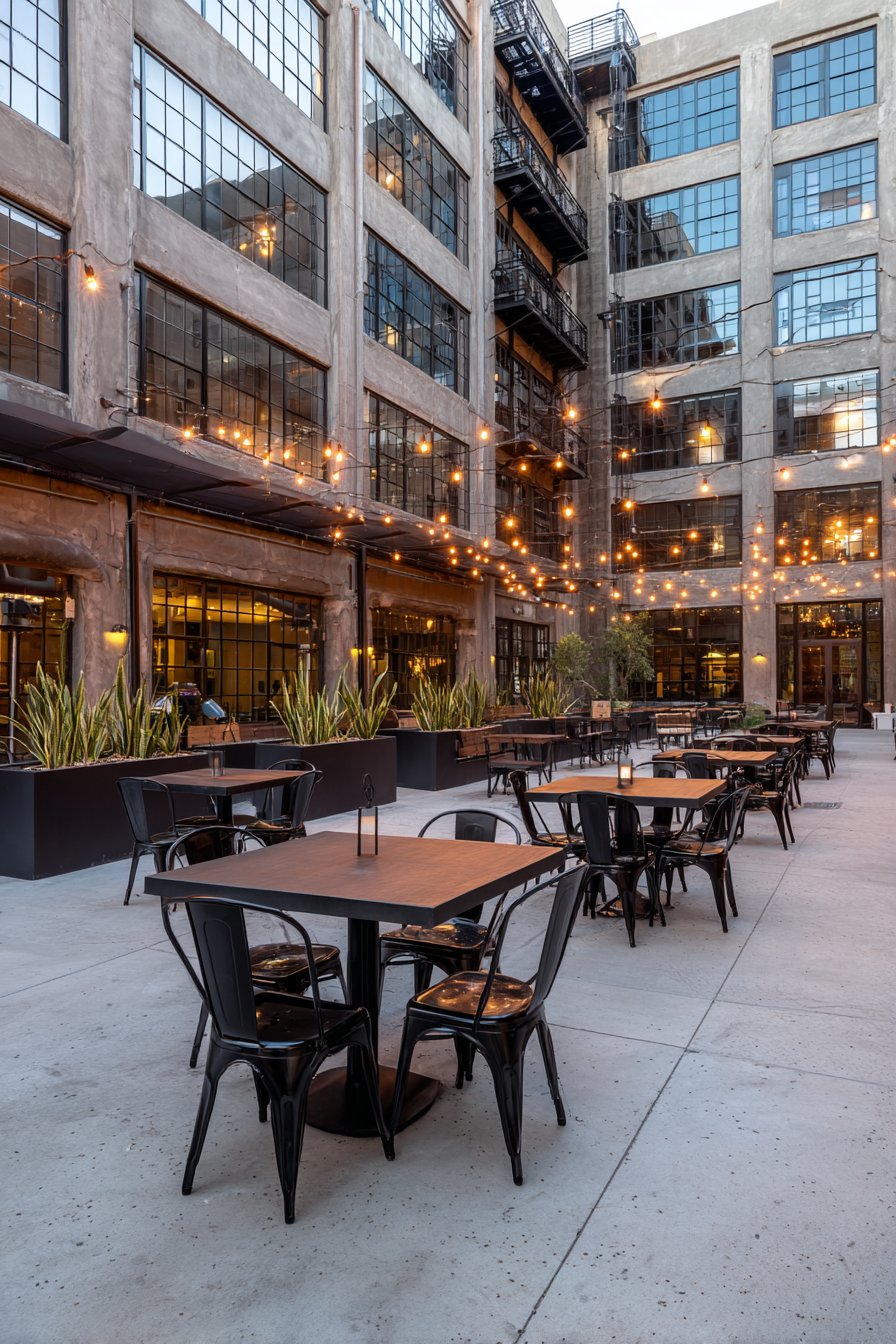
20. Industrial Urban Exposed Aggregate
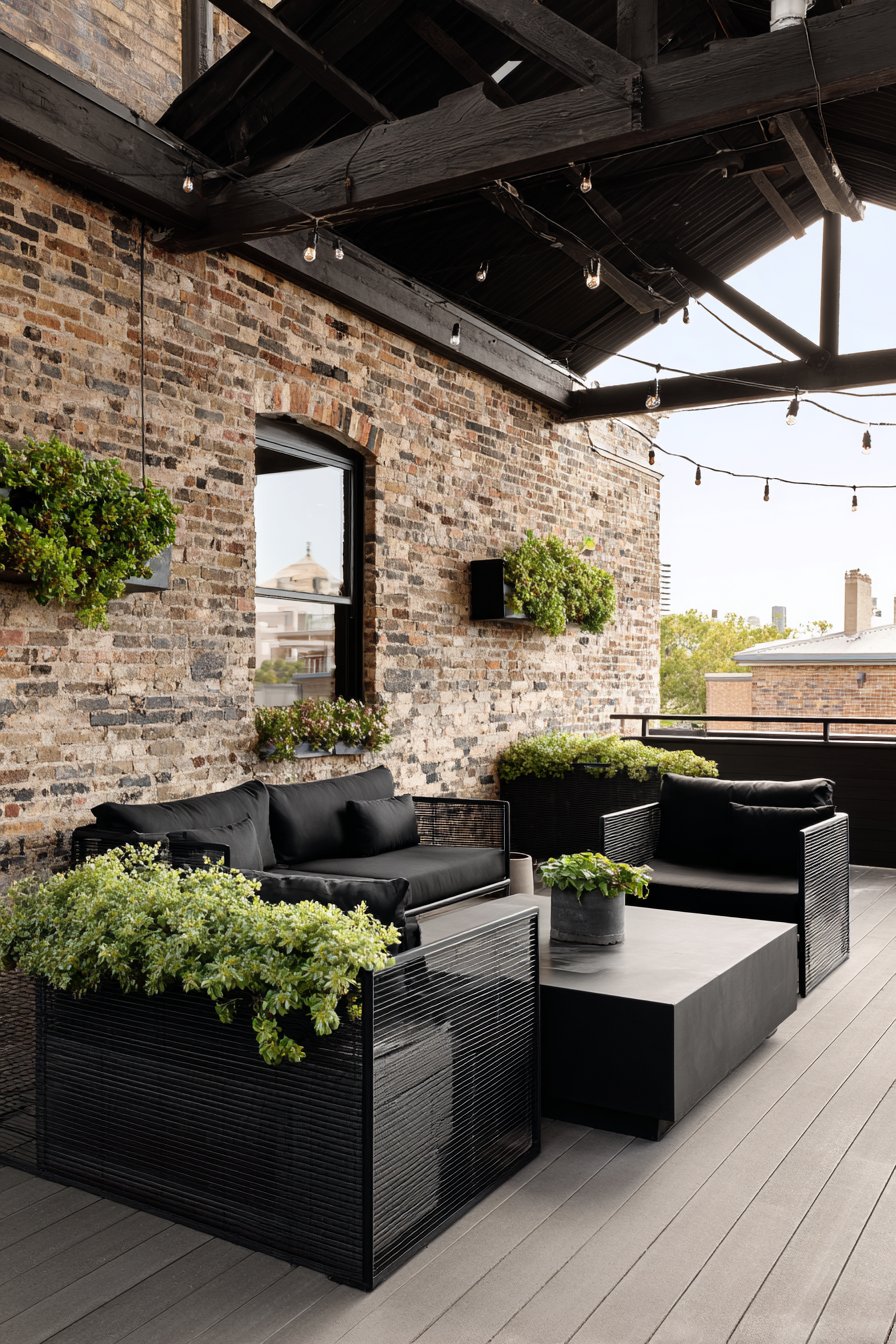
Charcoal concrete tiles with exposed aggregate finish bring raw industrial beauty to contemporary patios and urban outdoor rooms. The textured surface reveals varied stone pieces within the concrete matrix, creating visual complexity through honest material expression rather than applied decoration. This approach celebrates the authentic properties of construction materials, turning utilitarian concrete into sophisticated design elements that bridge exterior and interior industrial aesthetics.
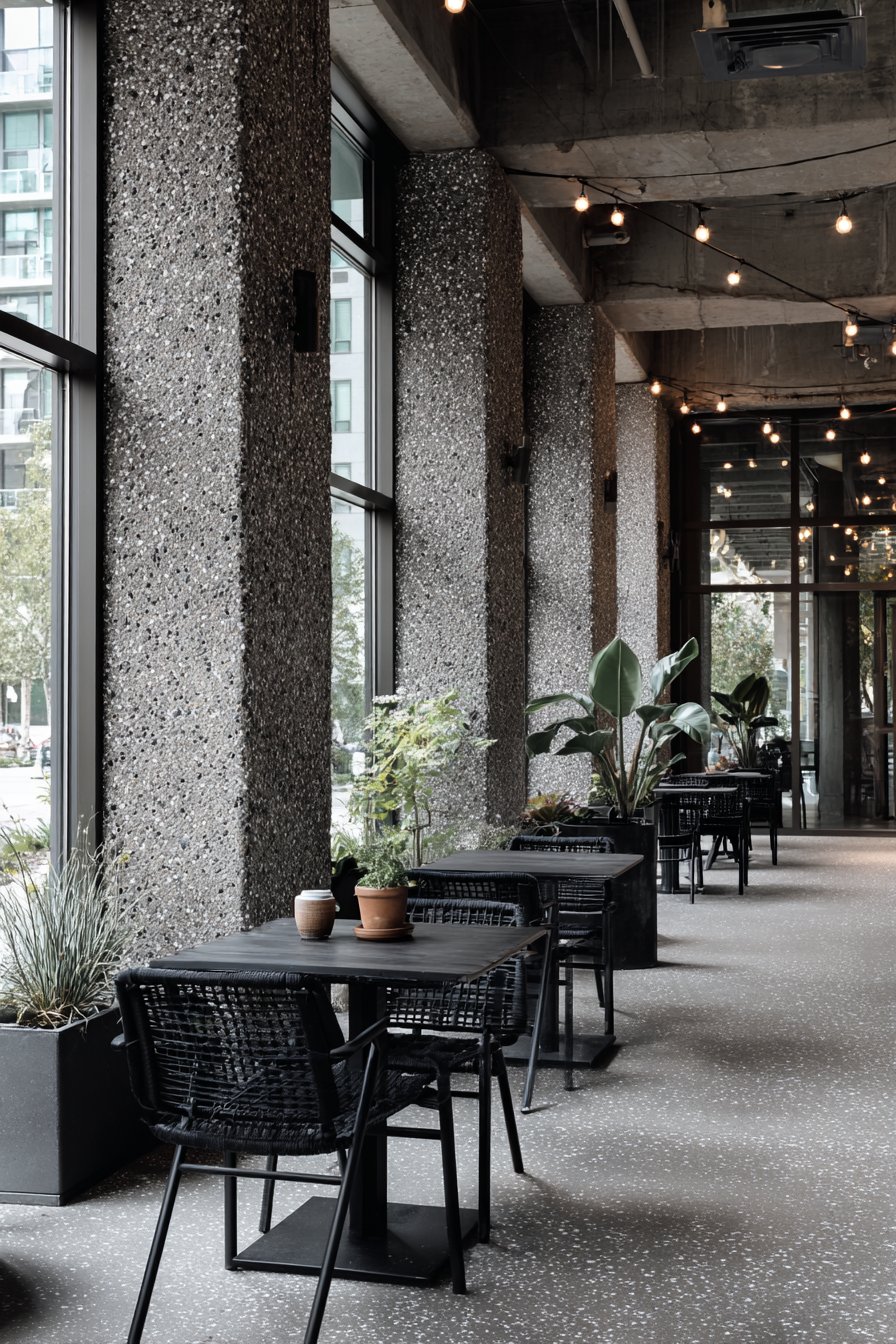
The dark charcoal coloration provides dramatic backdrop for modern furniture while naturally concealing dirt and weathering better than lighter tones. The rough texture creates tactile interest that contrasts beautifully with smooth metal furniture, sleek planters, and refined accessories, establishing the material tension central to successful industrial design. Exposed aggregate also provides excellent slip resistance, making these tiles practical for outdoor applications where moisture or debris could create safety concerns.
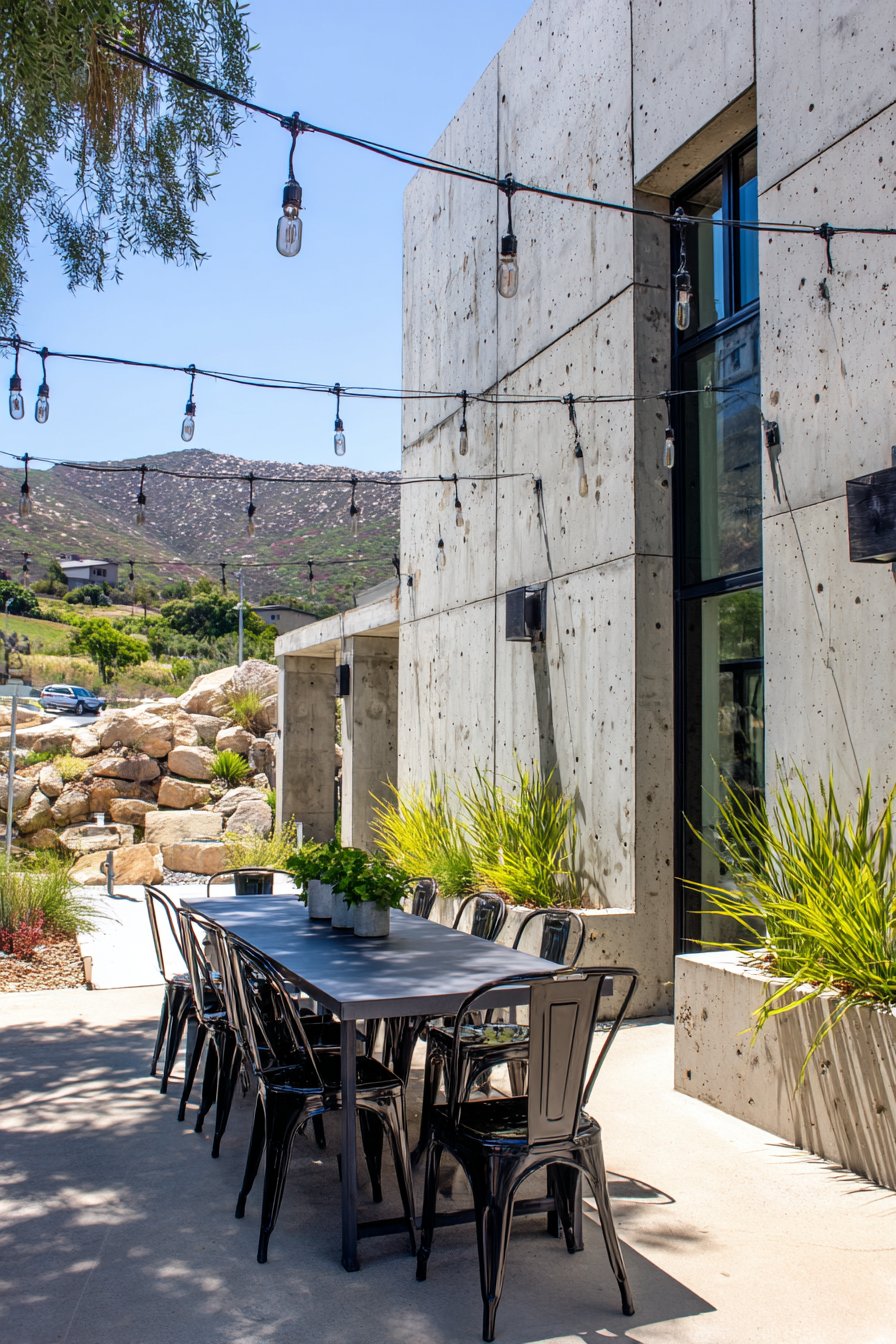
Style exposed aggregate walls with black metal furniture, Edison bulb string lights, and architectural plants like ornamental grasses or sculptural agaves in concrete planters. The deliberately unfinished quality of the concrete pairs perfectly with raw steel, reclaimed wood accents, and utilitarian elements like metal grating or pipe fittings used decoratively. The resulting space feels urban, contemporary, and sophisticated while maintaining the approachability of honest materials and straightforward construction.
Key Design Tips:
- Choose charcoal or dark gray concrete tones for authentic industrial aesthetic and practical dirt concealment
- Pair concrete tiles with matte black metal furniture and fixtures to create cohesive industrial color palette
- Incorporate Edison-style bulb lighting strung overhead or in vintage industrial fixtures for period-appropriate illumination
- Select plants with strong architectural forms like grasses, succulents, or structural foliage to complement industrial hardscape
- Embrace the raw, unfinished quality of exposed aggregate rather than attempting to polish or refine its appearance
21. Japanese Wabi-Sabi Natural Slate
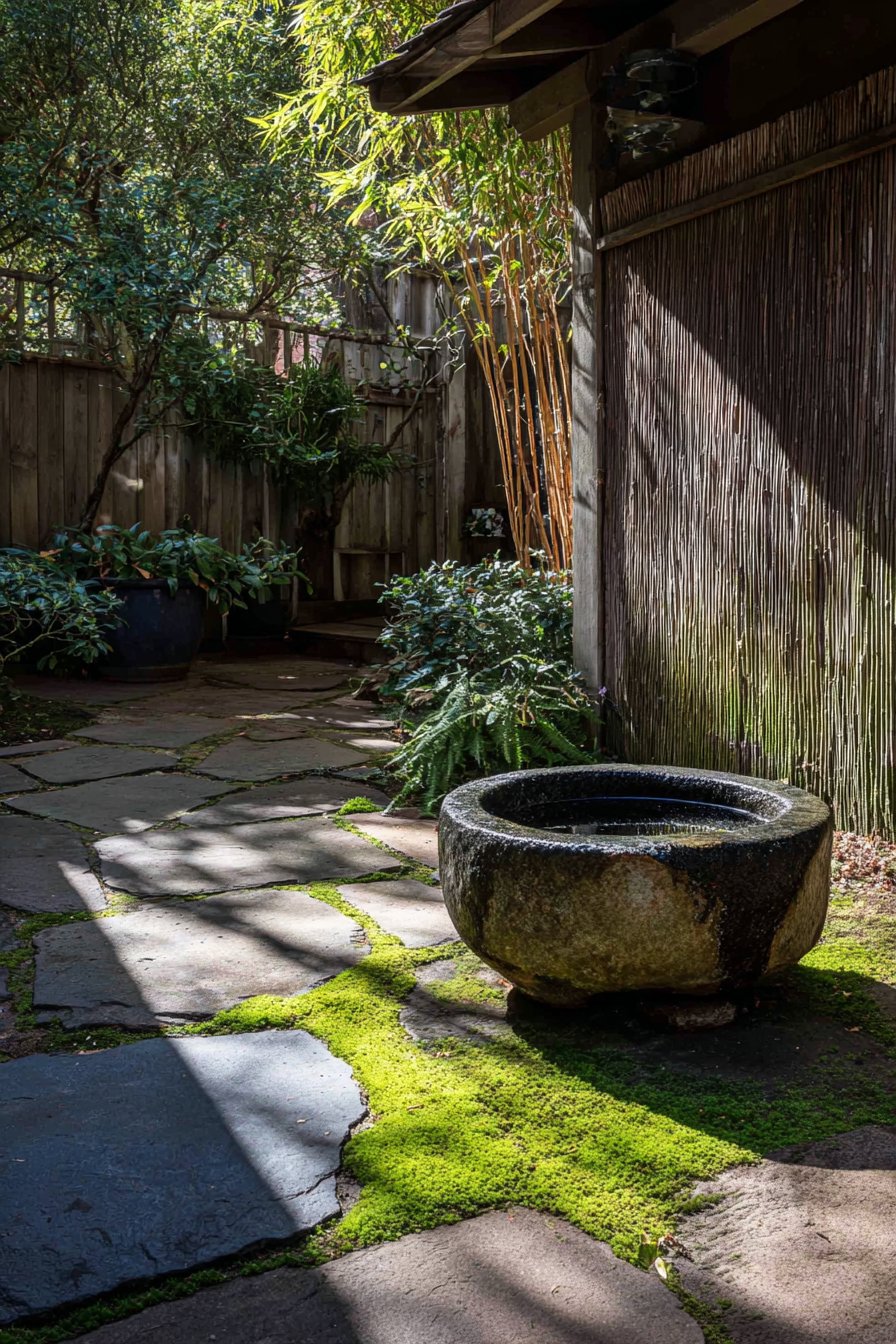
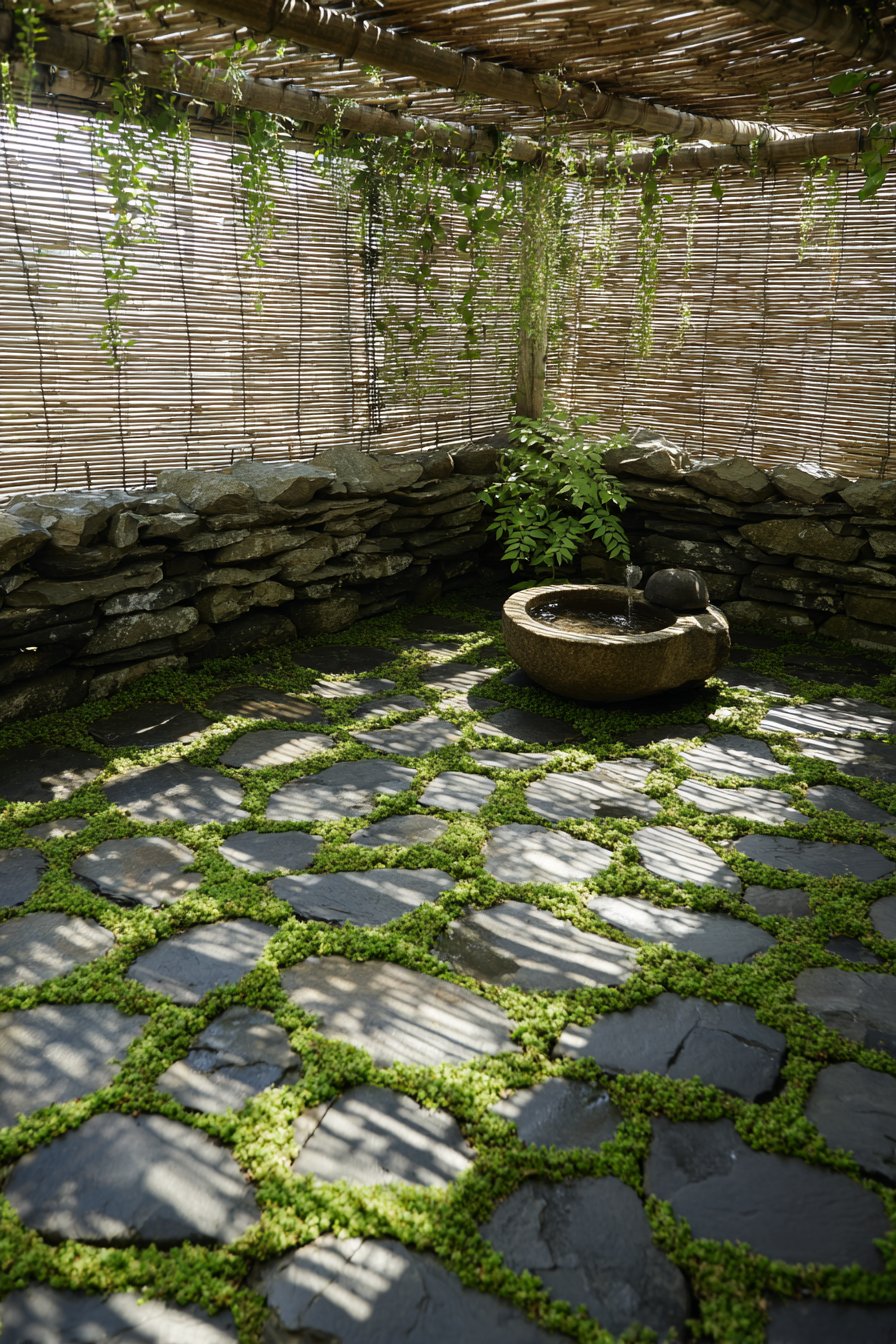
Dark gray slate tiles installed with deliberate irregular spacing embrace Japanese wabi-sabi philosophy, finding beauty in imperfection and impermanence. The natural moss growth encouraged between tiles adds organic softness to the hard stone surface, creating living installations that change with seasons and weather. This approach rejects the Western preference for pristine maintenance, instead celebrating the natural processes of weathering, aging, and gradual transformation that connect outdoor spaces to nature’s rhythms.
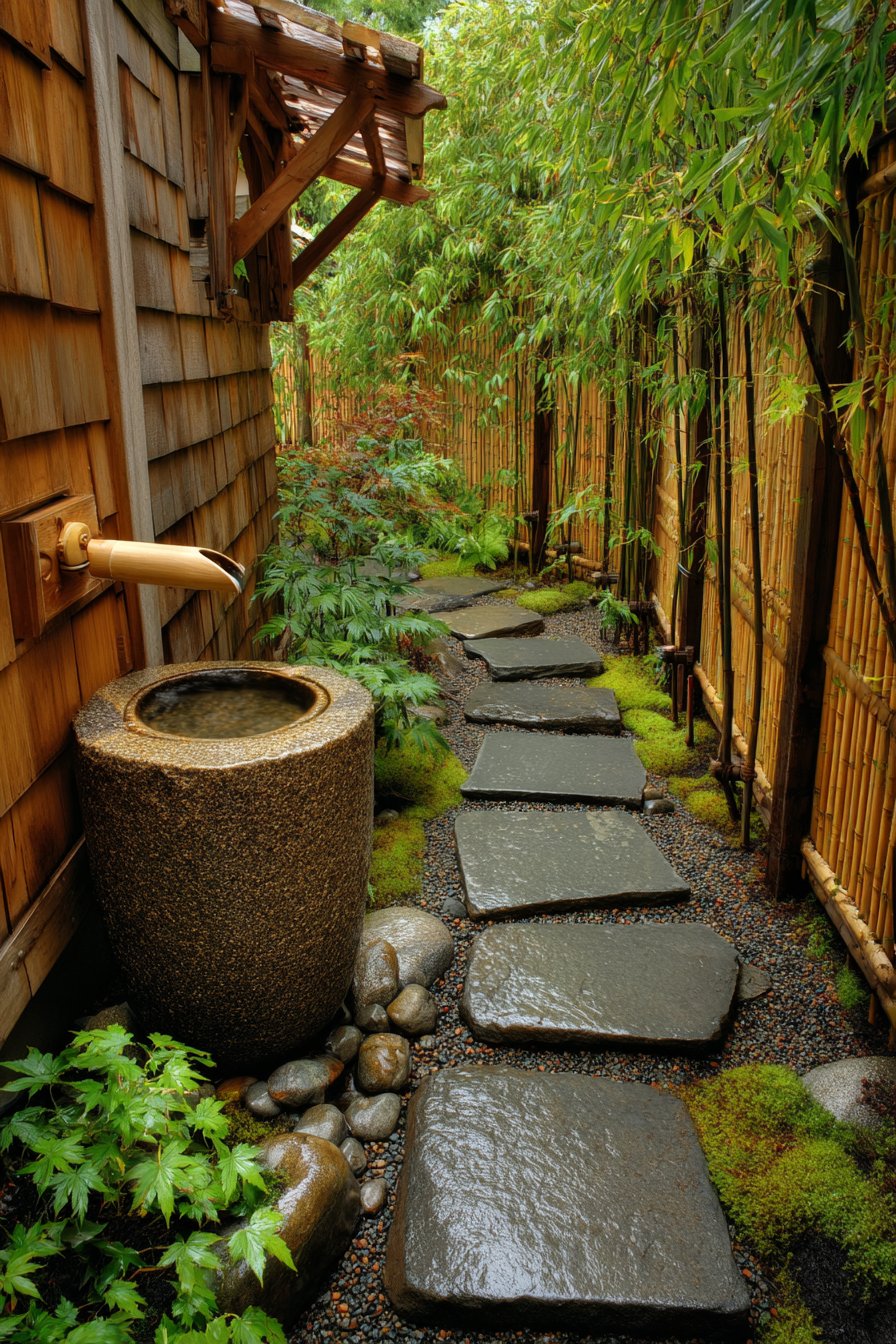
The irregular installation pattern—with varied spacing and intentional asymmetry—prevents the mechanical appearance of standard tile layouts. Some gaps remain wide enough for moss and small ferns to establish, while others close tightly together, creating visual rhythm through difference rather than uniformity. The dark slate provides contemplative calm that suits meditation gardens and quiet reflection spaces, while the textured surface reveals the stone’s natural layering and mineral composition.
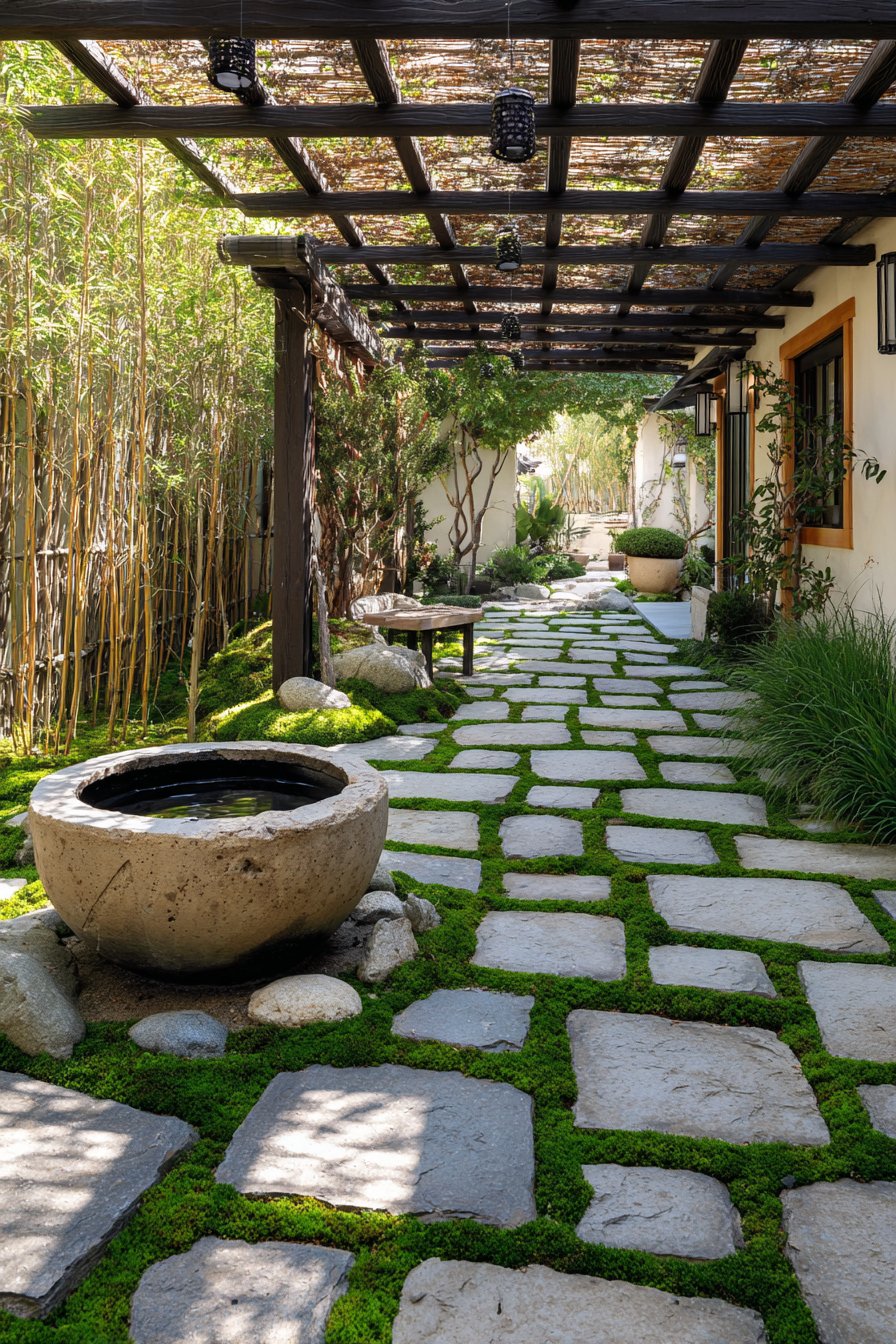
Complement slate installations with bamboo fencing, stone water basins, and carefully placed rocks that suggest natural landscapes in miniature. Position weathered wood benches or stone seats where one can contemplate the wall and its gradual transformation over time. Overhead pergolas create dappled shade that enhances the interplay of light and shadow on the slate surface while supporting climbing vines that further soften architectural edges. The resulting space encourages mindfulness and appreciation for nature’s patient artistry.
Key Design Tips:
- Install slate tiles with intentionally varied spacing rather than uniform grout lines for authentic wabi-sabi aesthetic
- Encourage moss growth in wider gaps by keeping areas moist and partially shaded
- Embrace natural weathering, patina development, and organic growth rather than pursuing pristine maintenance
- Incorporate natural elements like stone, bamboo, and water features that age gracefully alongside the tile installation
- Position seating to encourage contemplation of the wall’s details and gradual transformation over seasons
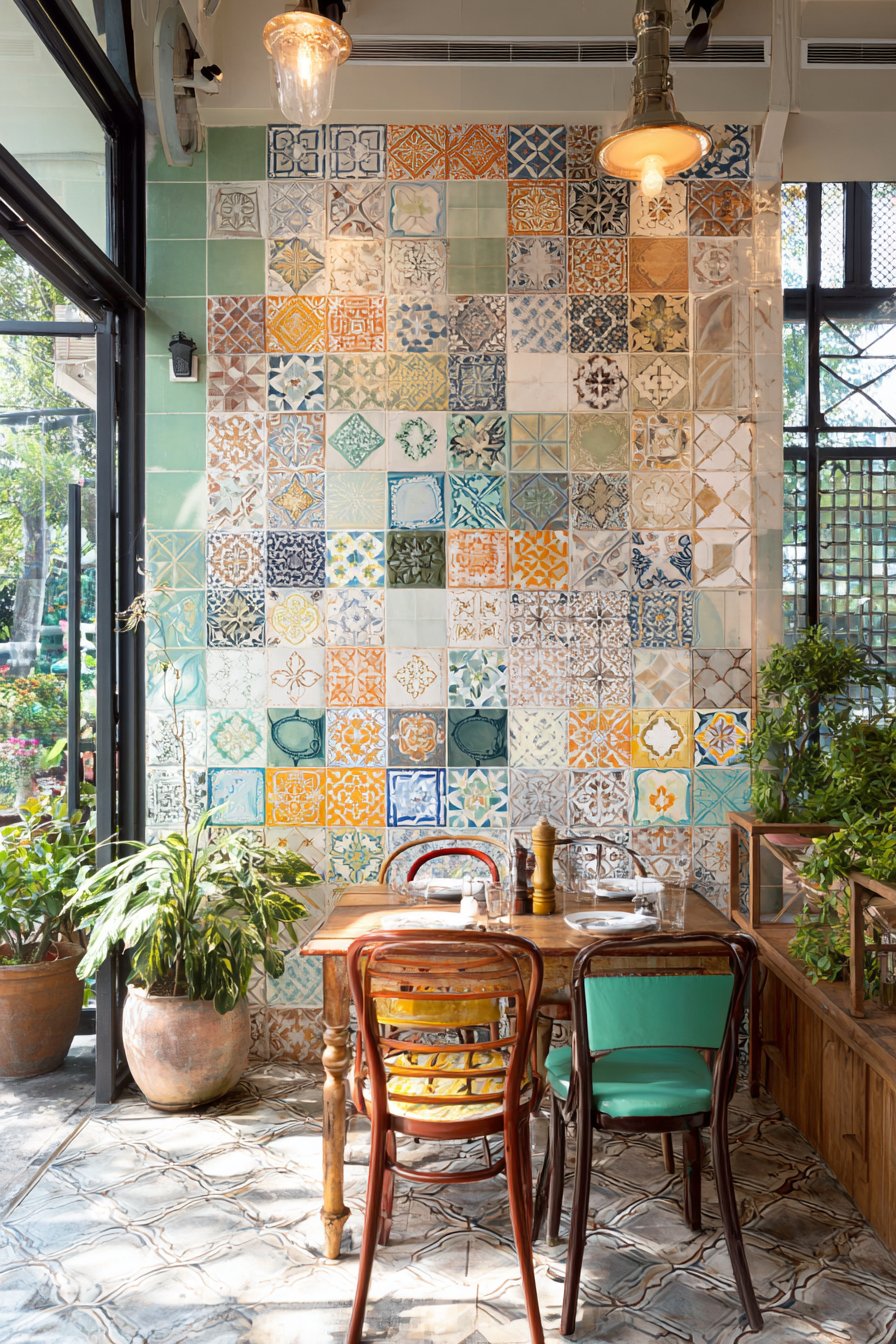
22. Eclectic Colorful Patchwork Expression
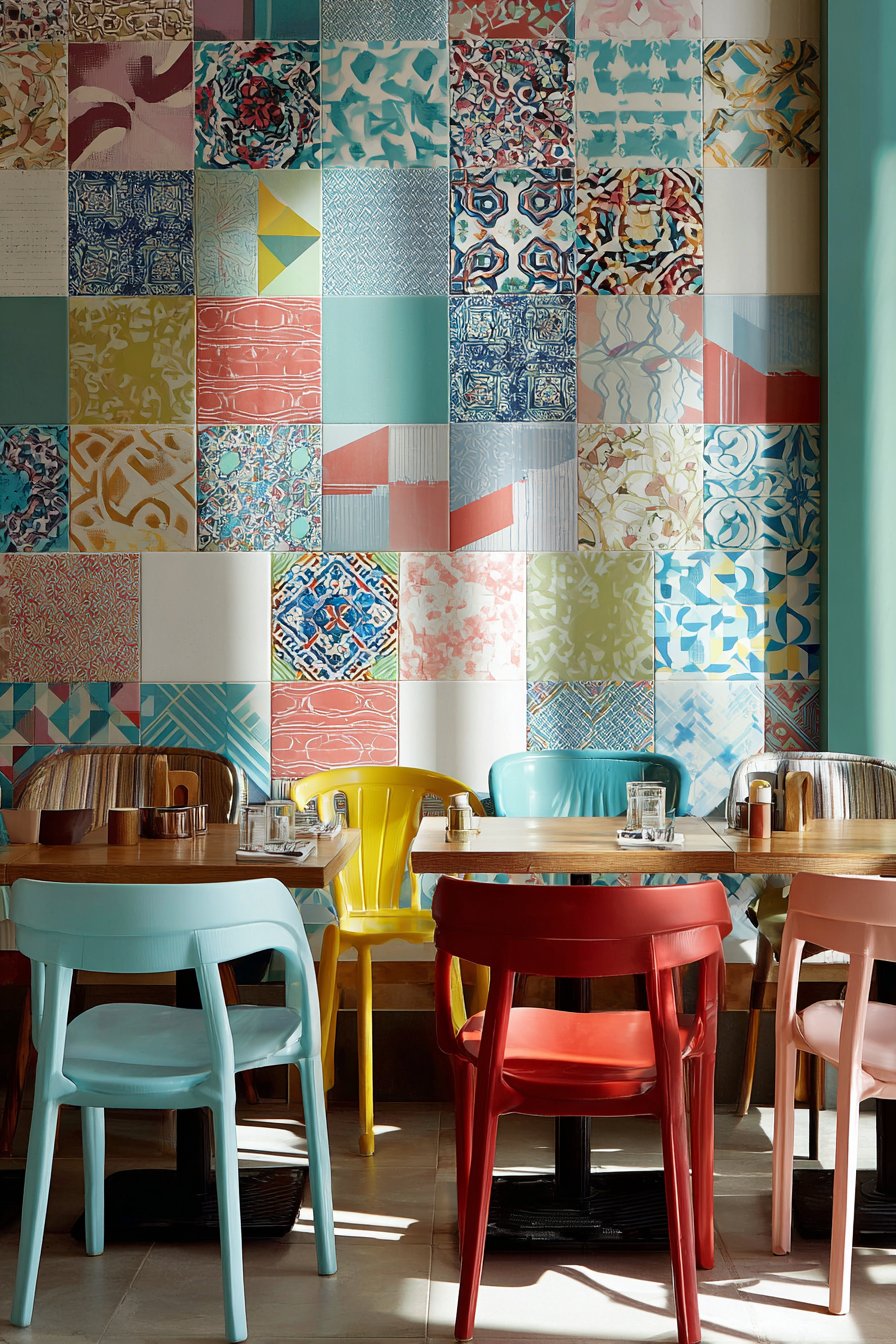
Mixed patchwork tiles in vibrant corals, turquoises, yellows, and whites create joyful outdoor walls that celebrate color, pattern, and artistic freedom. This fearless approach to tile design rejects matching sets and coordinated palettes in favor of cheerful eclecticism that reflects individual personality. Each tile contributes unique pattern—perhaps florals, geometrics, or abstract designs—while the collective installation creates cohesive energy through shared commitment to color and playfulness.
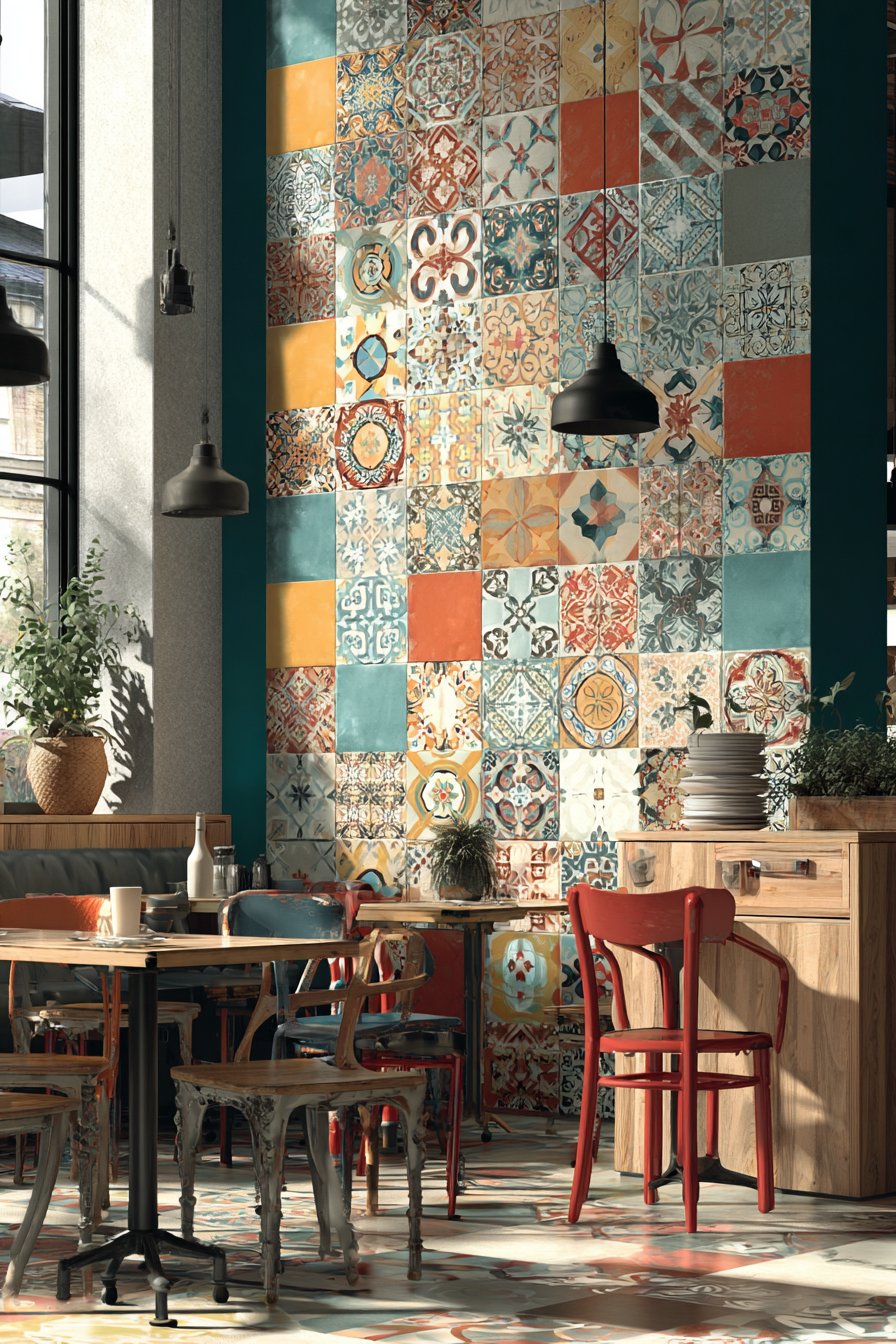
The beauty of patchwork tile walls lies in their one-of-a-kind nature—no two installations will ever look identical, ensuring your outdoor space possesses unique character impossible to replicate. This approach particularly suits creative individuals who reject design rules and prefer spaces that reflect personal joy over magazine-perfect coordination. The mixed patterns provide endless visual interest, with new details revealing themselves during each encounter with the wall.
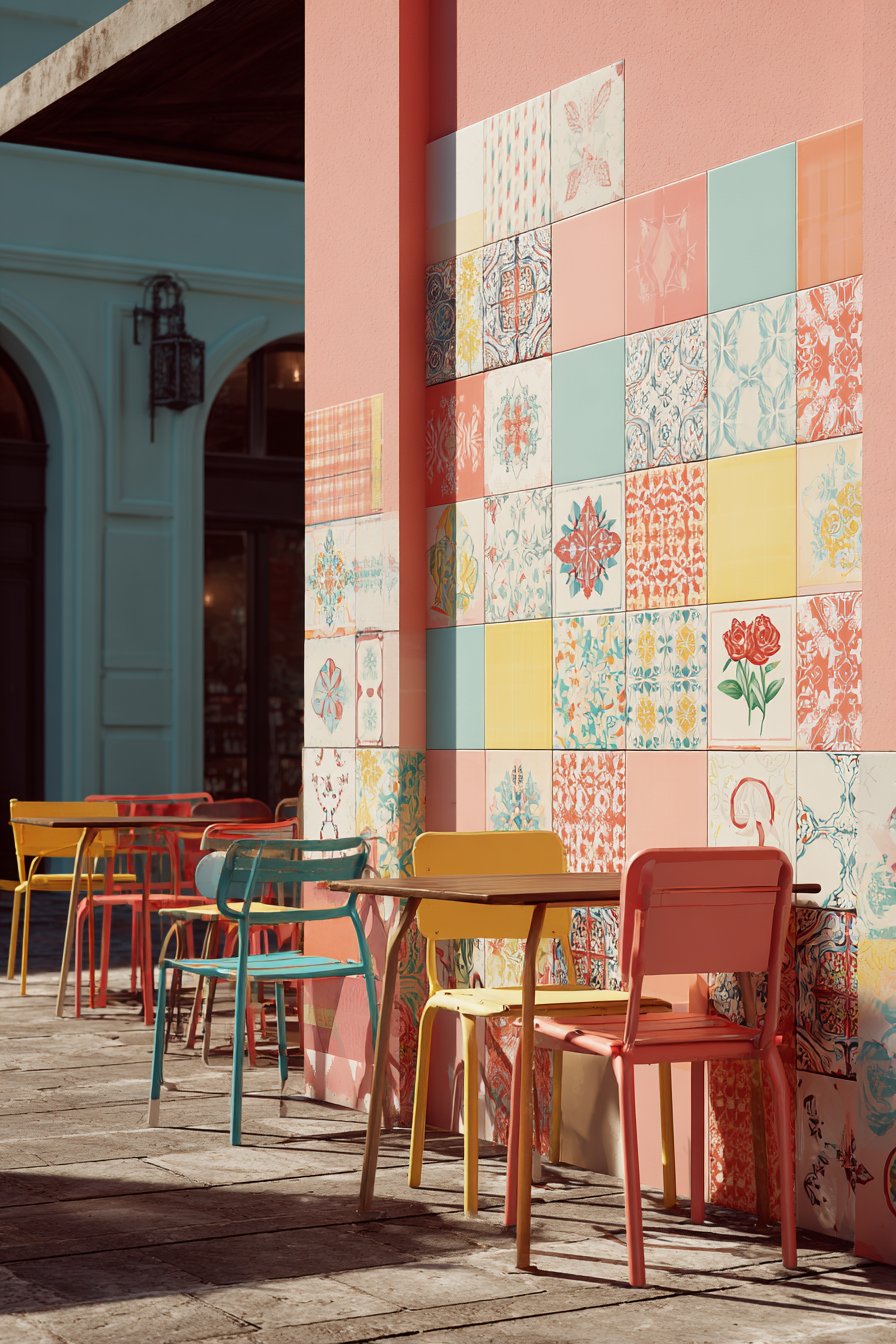
Furnish patchwork-tiled areas with vintage mismatched chairs painted in complementary colors, creating casual dining zones that feel collected rather than purchased all at once. Add colorful cushions, eclectic planters, and whimsical accessories that share the tile wall’s playful spirit without attempting to match it precisely. Bright natural sunlight intensifies the cheerful color palette, while strategic outdoor lighting ensures the vibrant installation remains visible during evening gatherings.
Key Design Tips:
- Source tiles from multiple collections or manufacturers to achieve authentic patchwork diversity
- Balance busy patterns with some solid-color tiles to prevent visual overwhelm
- Coordinate a color palette (even if eclectic) to ensure the mix feels intentional rather than chaotic
- Pair colorful tile installations with mismatched vintage furniture to reinforce collected aesthetic
- Position patchwork walls in well-lit areas where natural sunlight will showcase the varied colors and patterns
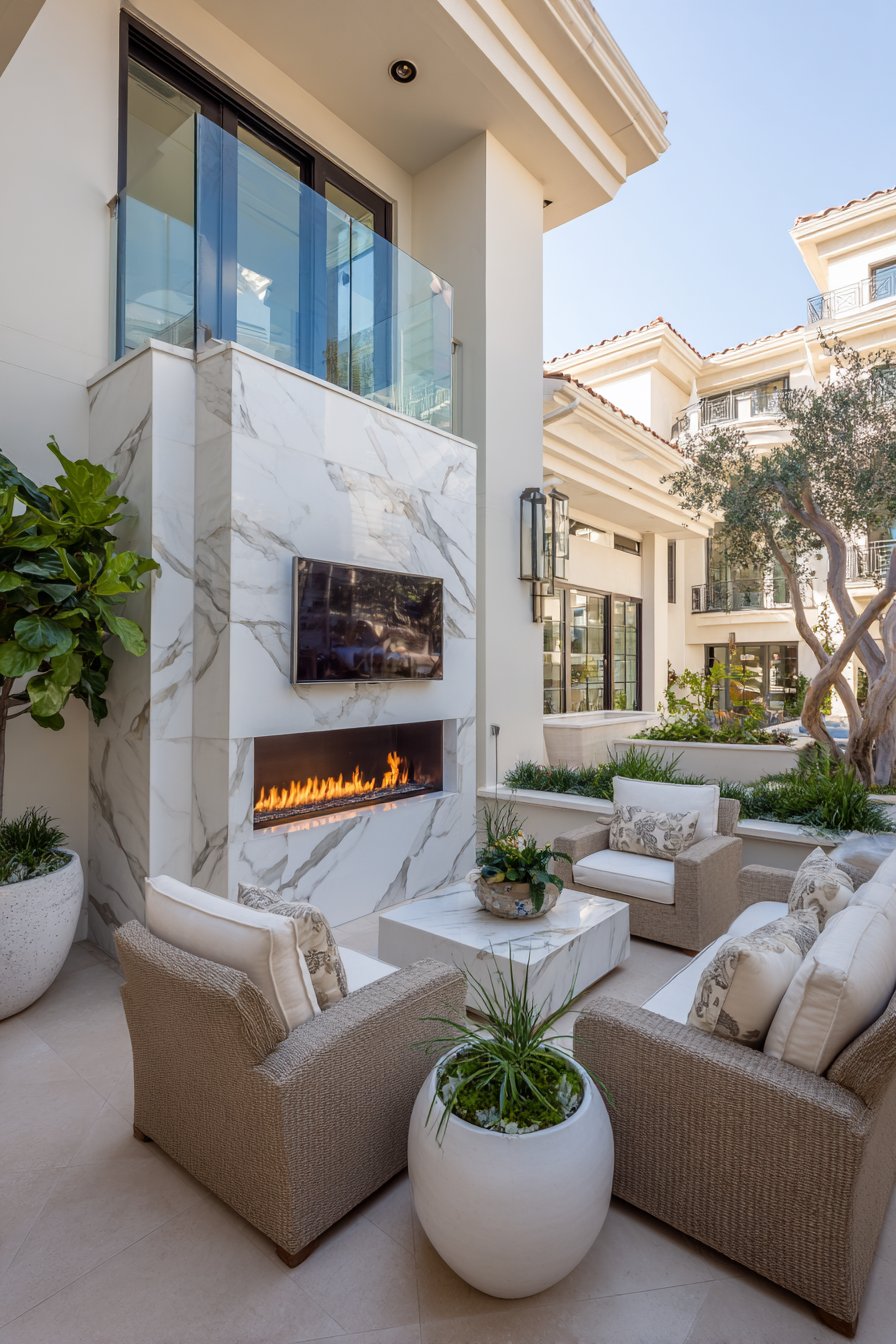
23. Luxury Marble-Look Porcelain Sophistication
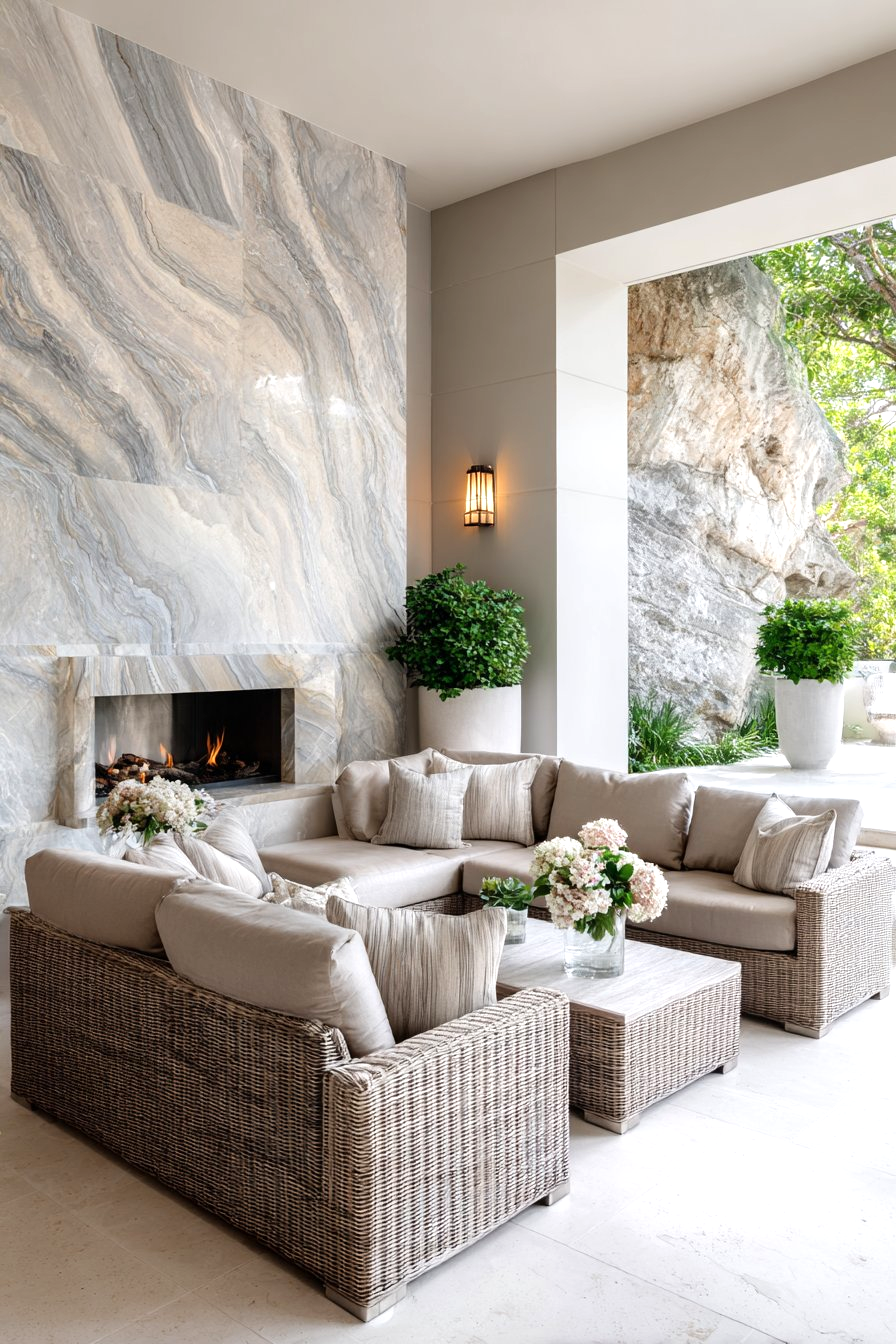
Book-matched marble-look porcelain slabs create ultra-luxurious outdoor feature walls that rival high-end interior installations. These large-format tiles—often 5 feet tall or larger—minimize grout lines while showcasing dramatic gray veining on white backgrounds. The book-matching technique mirrors veining patterns across adjacent slabs, creating symmetrical designs that emphasize the stone’s natural beauty while demonstrating installation craftsmanship. This approach brings interior luxury standards to exterior spaces, creating outdoor rooms worthy of the most sophisticated homes.
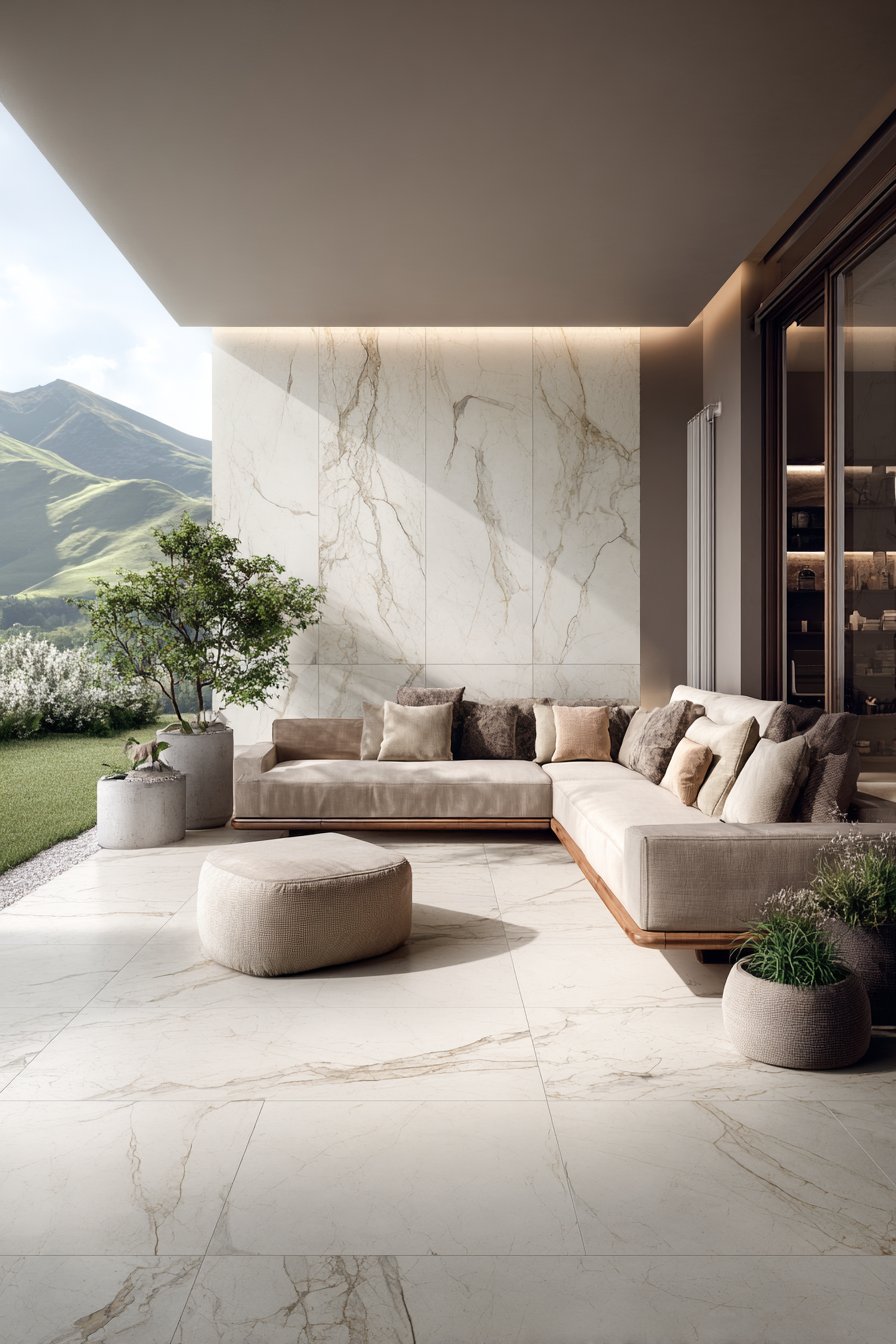
The advantage of porcelain over natural marble becomes clear in outdoor applications—porcelain resists staining, requires no sealing, never etches from acidic substances, and maintains appearance through years of weather exposure that would damage authentic marble. The polished finish reflects light beautifully, creating brightness and visual spaciousness while the large format creates seamless, sophisticated surfaces that feel custom and high-end.
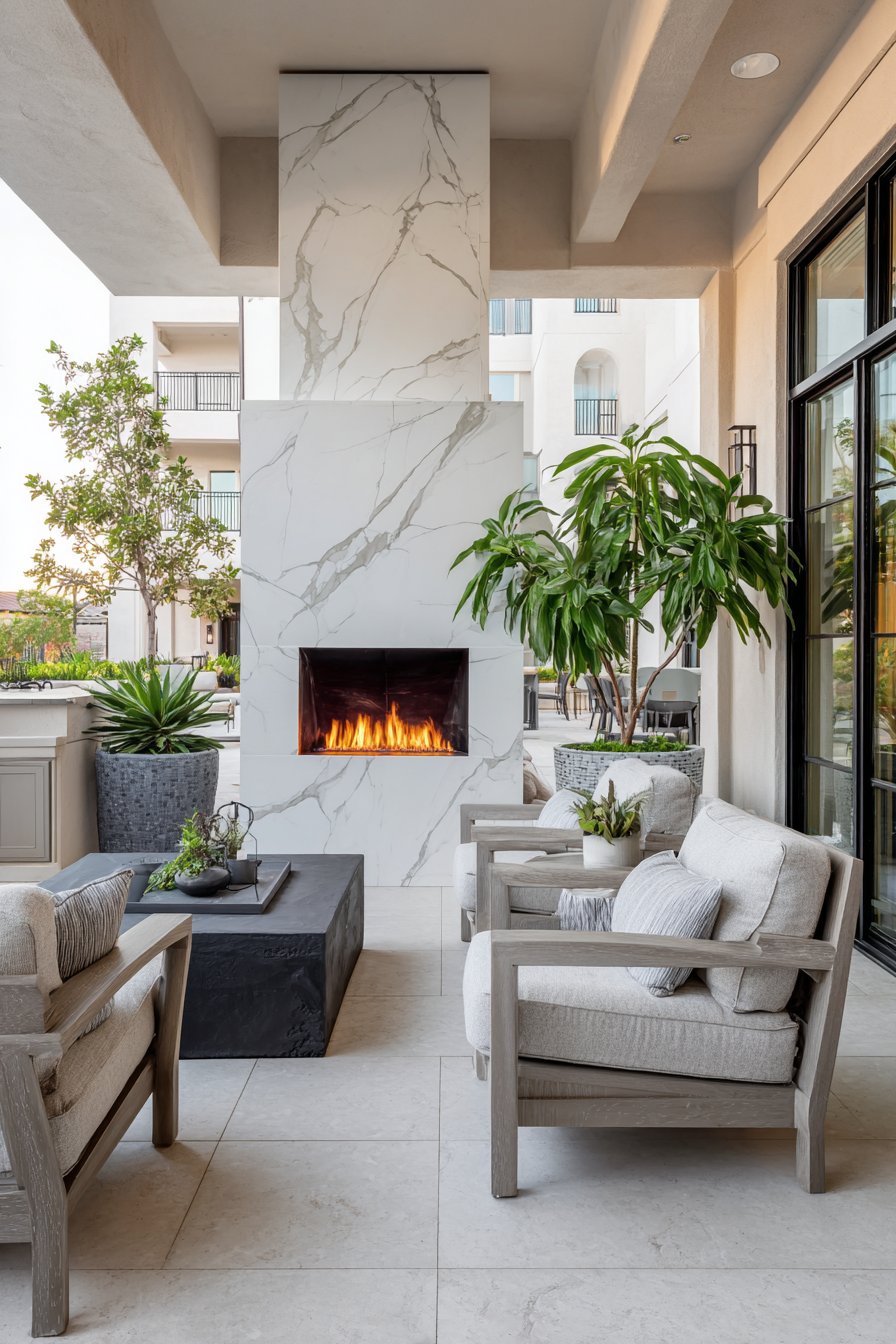
Style marble-look walls with upscale outdoor furniture in neutral linen or performance fabrics, sleek modern planters in complementary gray tones, and minimal accessories that allow the stone-look installation to command attention. The refined elegance established by marble-look tiles elevates entire outdoor spaces, creating environments suitable for formal entertaining or quiet luxury. Strategic lighting highlights the veining patterns while creating evening ambiance worthy of five-star resorts.
Key Design Tips:
- Invest in large-format slabs rather than standard tiles to minimize grout lines and create seamless luxury appearance
- Specify book-matched installation where adjacent slabs mirror each other’s veining patterns for maximum visual impact
- Choose polished finishes for authentic marble aesthetics and superior light reflection
- Keep surrounding elements refined and minimal to maintain the sophisticated atmosphere established by marble-look walls
- Design integrated lighting that highlights veining patterns while providing ambient illumination for evening use
Why These Outdoor Wall Tile Designs Represent the Best in Exterior Design
The twenty-three outdoor wall tile concepts presented throughout this comprehensive guide represent the pinnacle of contemporary exterior design, each offering unique advantages that address specific aesthetic preferences, functional requirements, and architectural contexts. These designs succeed because they balance multiple considerations simultaneously—visual appeal, practical durability, maintenance requirements, climate appropriateness, and budget accessibility—while delivering transformative results that elevate outdoor living spaces from afterthoughts to primary destinations.
The diversity of styles showcased demonstrates that successful outdoor tile design transcends any single aesthetic movement. From the minimalist restraint of Scandinavian white hexagons to the exuberant pattern mixing of eclectic patchwork installations, from the rustic authenticity of farmhouse wood-look tiles to the sleek sophistication of marble-look porcelain—each approach serves different homeowners’ needs while maintaining design excellence. This variety ensures that regardless of personal taste, architectural style, or regional context, appropriate tile solutions exist to transform exterior walls into design assets.
Material innovation drives many of these designs’ success, with advanced porcelain and ceramic technologies delivering natural material aesthetics without associated drawbacks. Wood-look tiles provide reclaimed lumber charm without rot or insect damage. Marble-look porcelain delivers luxury stone beauty without staining or weather deterioration. Slate-look ceramics replicate authentic stone texture with improved durability and easier installation. These technological advances democratize high-end aesthetics, making previously inaccessible looks available to broader audiences while actually improving performance compared to the natural materials they emulate.
The functional superiority of properly specified outdoor tiles cannot be overstated. Weather resistance, UV stability, frost tolerance, easy cleaning, and dimensional stability ensure these installations maintain beauty through decades of exposure to elements that would destroy lesser materials. When homeowners invest in quality outdoor tile installations, they’re purchasing not just immediate visual transformation but long-term performance that protects underlying structures while requiring minimal maintenance. This combination of beauty and practicality explains tiles’ enduring popularity in exterior applications across diverse climates and architectural contexts.
Color psychology and spatial perception play crucial roles in these designs’ effectiveness. Light colors like white hexagons and travertine-look porcelain maximize brightness and create spacious feelings in compact areas. Dark charcoals and slate tones provide dramatic sophistication while concealing dirt in high-traffic zones. Vibrant colors like teal subway tiles or gradient oranges inject energy and personality without requiring large installations. Understanding how color affects mood and perception allows designers to strategically deploy tiles that serve psychological as well as aesthetic functions.
Texture contributes equally to these designs’ success, with dimensional variations engaging multiple senses simultaneously. Three-dimensional wave patterns create ever-changing shadow play that prevents visual monotony. Exposed aggregate concrete reveals material honesty that appeals to those valuing authenticity. Natural stone’s irregular surfaces invite touch while creating visual complexity impossible with smooth materials. Glossy finishes reflect light to expand spaces, while matte surfaces prevent glare and create sophisticated restraint. Matching texture to specific design goals ensures tile installations deliver intended experiential results.
Pattern usage demonstrates sophistication in these featured designs, with geometric arrangements, organic variations, and cultural motifs each serving distinct purposes. Moroccan hand-painted tiles celebrate artisan traditions while creating focal points of exceptional beauty. Hexagonal layouts add visual interest through shape rather than color. Patchwork mixing creates joyful eclecticism that reflects individual personality. Even “patternless” designs like minimalist concrete or elegant marble-look installations make deliberate pattern choices—in these cases, selecting restraint and subtlety over overt decoration.
Installation techniques significantly impact final results, with details like book-matching, vertical orientation, irregular spacing, or dimensional stacking transforming identical tiles into vastly different aesthetic outcomes. These nuanced approaches demonstrate that outdoor tile design extends beyond product selection to encompass thoughtful installation planning. Professional execution ensures grout lines remain consistent, patterns align correctly, and proper waterproofing protects underlying structures—details invisible when done correctly but catastrophic when overlooked.
Cultural influences enrich these designs, drawing inspiration from Mediterranean courtyards, Japanese gardens, Moroccan riads, Scandinavian restraint, and American farmhouse tradition. This global perspective acknowledges that design excellence emerges across cultures and eras, with each tradition offering valuable lessons about creating outdoor spaces that serve human needs while expressing cultural values. Homeowners benefit from this cross-cultural pollination, accessing design vocabulary that transcends regional limitations while adapting global concepts to local contexts.
Sustainability considerations increasingly influence outdoor tile selection, with long-lasting materials reducing replacement frequency, locally sourced options minimizing transportation impacts, and permeable installations allowing water infiltration. Many featured designs utilize porcelain manufactured from natural clay and minerals, avoiding synthetic materials while delivering exceptional durability. The decades-long lifespan of properly installed outdoor tiles means their environmental impact amortizes across extended use periods, ultimately creating more sustainable solutions than short-lived alternatives requiring frequent replacement.
Budget flexibility makes these designs accessible across economic ranges, from affordable ceramic subway tiles to premium hand-painted Moroccan installations, from DIY-friendly large-format planks to professional-installation-only book-matched slabs. This economic diversity ensures outdoor tile transformations remain achievable regardless of project budget, with strategic planning allowing homeowners to prioritize visible areas with premium materials while using budget-friendly options in secondary locations.
Lifestyle compatibility ensures these designs serve real families’ needs rather than existing solely for visual appeal. Easy-clean surfaces near outdoor kitchens prevent grease buildup. Slip-resistant textures provide safety around pools and showers. Heat-resistant materials surround fireplaces and cooking areas. Durable finishes withstand children’s play and pet traffic. These practical considerations ensure tile installations deliver lasting satisfaction rather than beautiful-but-impractical installations that frustrate daily use.
The transformative power of outdoor wall tiles extends beyond individual properties to influence neighborhood aesthetics and property values. Well-designed exterior tile installations signal attention to detail and quality that positively impacts curb appeal and resale potential. When prospective buyers encounter thoughtfully tiled outdoor spaces, they perceive overall property quality more favorably, making outdoor tile investments smart financial decisions beyond their immediate aesthetic benefits.
Conclusion
Outdoor wall tiles represent one of the most versatile and impactful tools available for transforming exterior spaces from utilitarian necessities into designed destinations that extend indoor living comfort and style outdoors. The twenty-three concepts explored throughout this guide demonstrate the remarkable range of aesthetics, materials, and applications possible with contemporary tile technology—from rustic farmhouse charm to sleek contemporary sophistication, from bold colorful statements to serene minimalist retreats.
The key to successful outdoor tile installations lies in thoughtful planning that considers architectural context, personal style preferences, practical requirements, and long-term maintenance realities. By understanding how material choices, color psychology, texture applications, and installation techniques influence final results, homeowners can make informed decisions that deliver both immediate visual impact and lasting performance. Whether you’re creating an intimate courtyard sanctuary, a functional outdoor kitchen, a luxurious poolside retreat, or a cozy fireplace gathering area, appropriate tile selections can elevate your vision from ordinary to extraordinary.
We encourage you to view these concepts not as prescriptive formulas to replicate exactly but as inspiration for developing personalized outdoor spaces that reflect your unique lifestyle and aesthetic sensibilities. Mix elements from multiple designs, adapt ideas to suit your climate and architecture, scale concepts to fit your available space and budget, and most importantly, trust your instincts about what will bring you joy. The best outdoor spaces emerge when thoughtful design meets personal expression, creating environments where you’ll genuinely want to spend time enjoying fresh air, natural light, and the satisfaction of beautiful surroundings you’ve created.
Start your outdoor tile transformation today by identifying which design concepts resonate most strongly, consulting with tile professionals about product options and installation requirements, and developing realistic budgets and timelines. Remember that even modest tile installations can deliver outsized impact when executed thoughtfully, so don’t let limited resources prevent you from beginning your outdoor design journey. With proper planning and quality execution, your outdoor walls can become the stunning backdrops and functional surfaces that transform your property into the outdoor oasis you’ve always envisioned.
