
The challenge of decorating narrow walls often leaves homeowners scratching their heads, staring at those slim strips of space between doorways, windows, or architectural features. These overlooked areas—sometimes measuring just 12 to 18 inches wide—present unique opportunities for creative expression and functional design. Far from being limitations, narrow walls can become striking focal points that add character, personality, and practical value to your home. Whether you’re dealing with a tight hallway, a slim section beside a fireplace, or that awkward space between two windows, the right approach can transform these challenging areas into design triumphs.
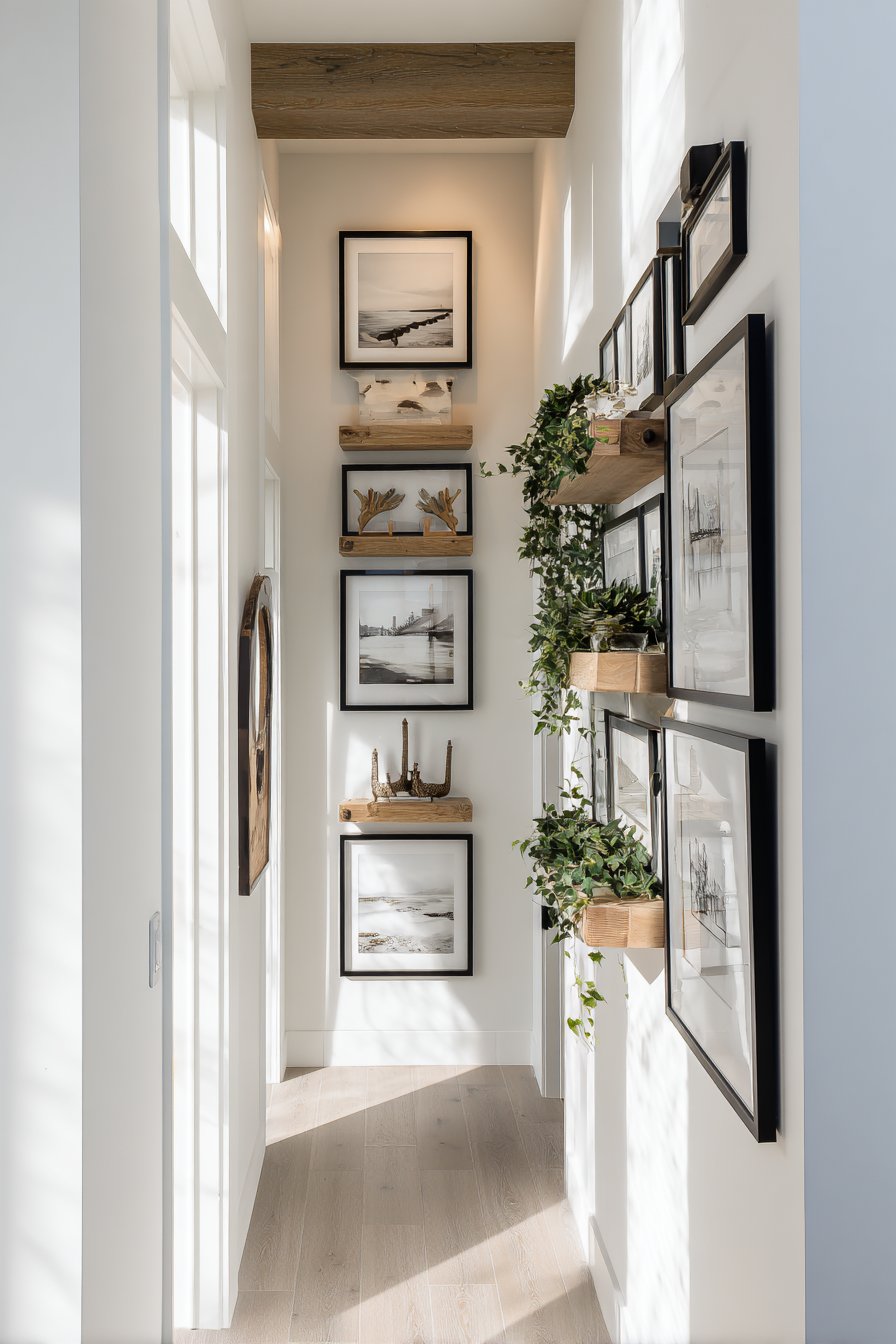
In today’s homes where every square inch matters, mastering the art of narrow wall decor isn’t just about aesthetics—it’s about maximizing your living space intelligently. From vertical gallery walls that draw the eye upward to slim floating shelves that provide both storage and display opportunities, the possibilities are endless. This comprehensive guide explores 25 innovative approaches to decorating narrow walls, each offering practical solutions backed by professional design principles. We’ll journey through botanical galleries, functional organizing stations, artistic collections, and clever storage solutions that prove narrow walls are anything but limiting.
Whether your style leans toward bohemian eclecticism, modern minimalism, or classic traditionalism, you’ll discover approaches that resonate with your aesthetic while solving real-world spatial challenges. These ideas aren’t just aspirational—they’re achievable solutions that real homeowners can implement, transforming forgotten wall space into purposeful, beautiful design elements that enhance daily living.
1. Vertical Botanical Gallery Between Windows
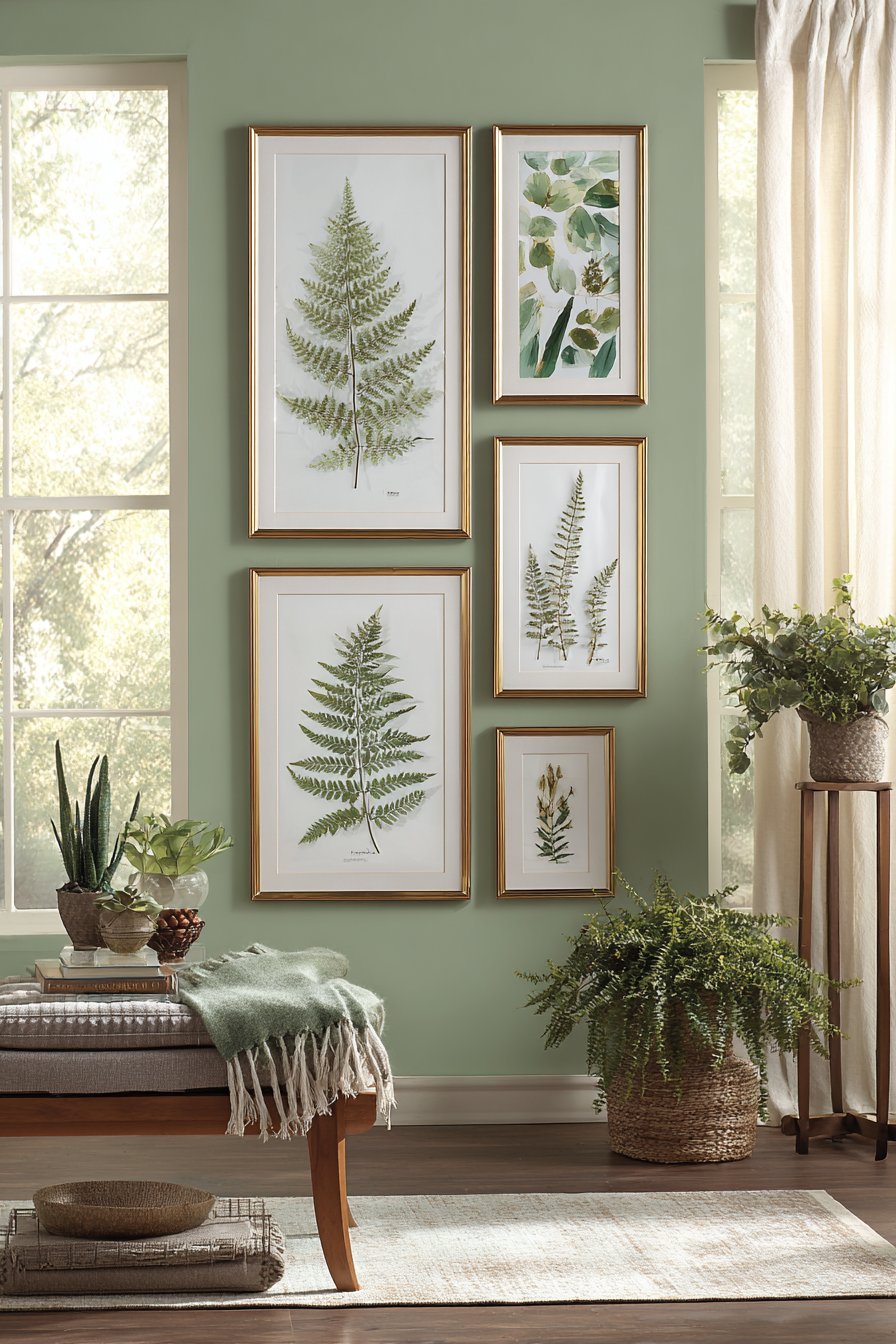
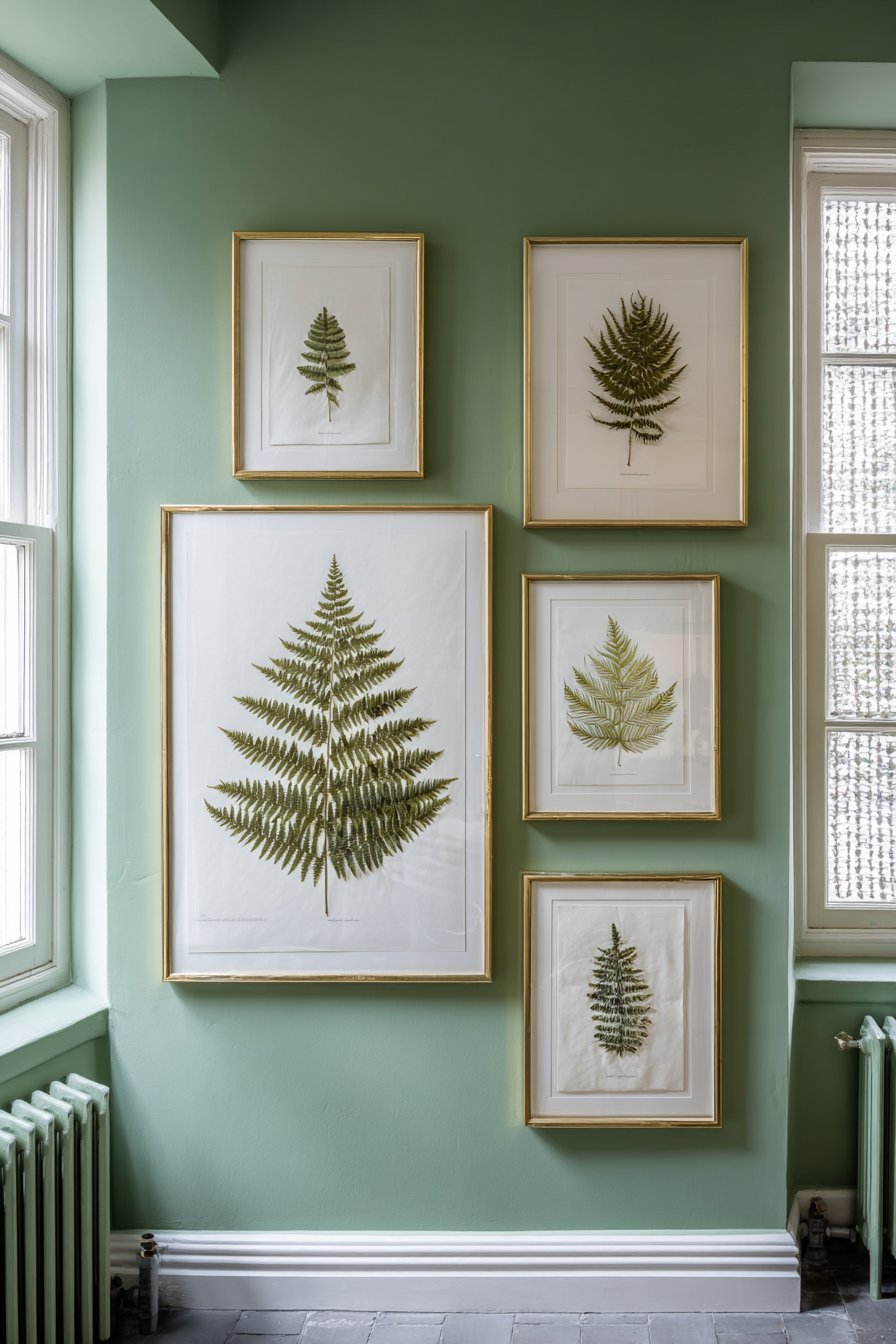
Picture a narrow 16-inch wall section nestled between two windows, transformed into a sophisticated botanical display that brings nature’s elegance indoors. Five carefully curated frames, each containing pressed fern and leaf specimens, ascend the wall in a deliberate progression of sizes. The white matting creates breathing room around each delicate botanical, while thin gold borders add just enough refinement without overwhelming the organic subjects. Against a soft sage green wall, this arrangement creates a cohesive story about bringing the outdoors in, with each frame contributing to a larger narrative about natural beauty and scientific curiosity.
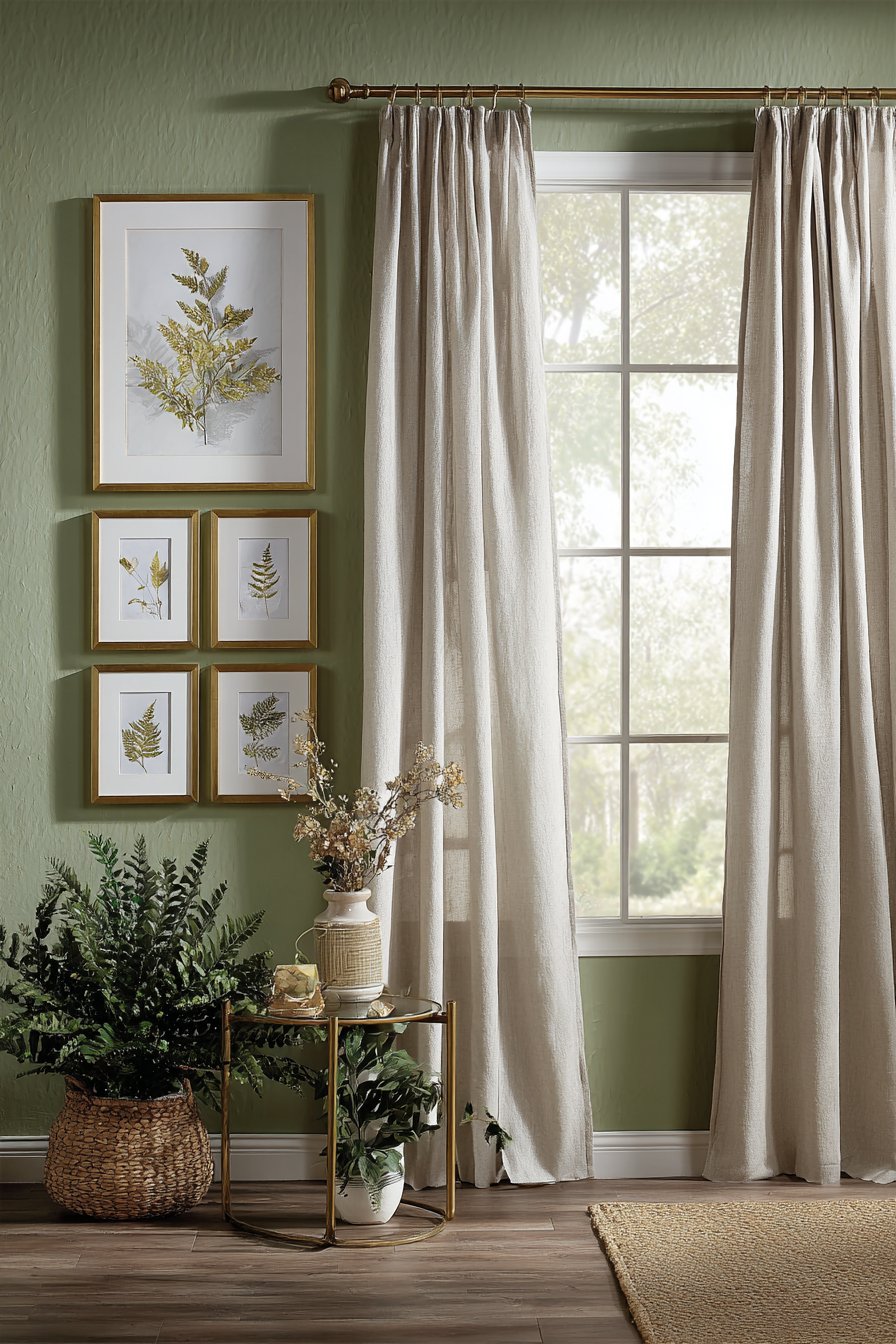
The genius of this approach lies in its restraint and vertical emphasis. Rather than trying to expand horizontally—an impossibility given the narrow space—the design embraces verticality, guiding the eye upward and creating the illusion of greater height. The ascending size order provides visual rhythm, while the monochromatic green palette unifies the entire composition. Natural daylight from adjacent windows bathes the display in soft, even illumination throughout the day, causing the pressed specimens to glow with botanical beauty and the gold frames to catch subtle highlights.
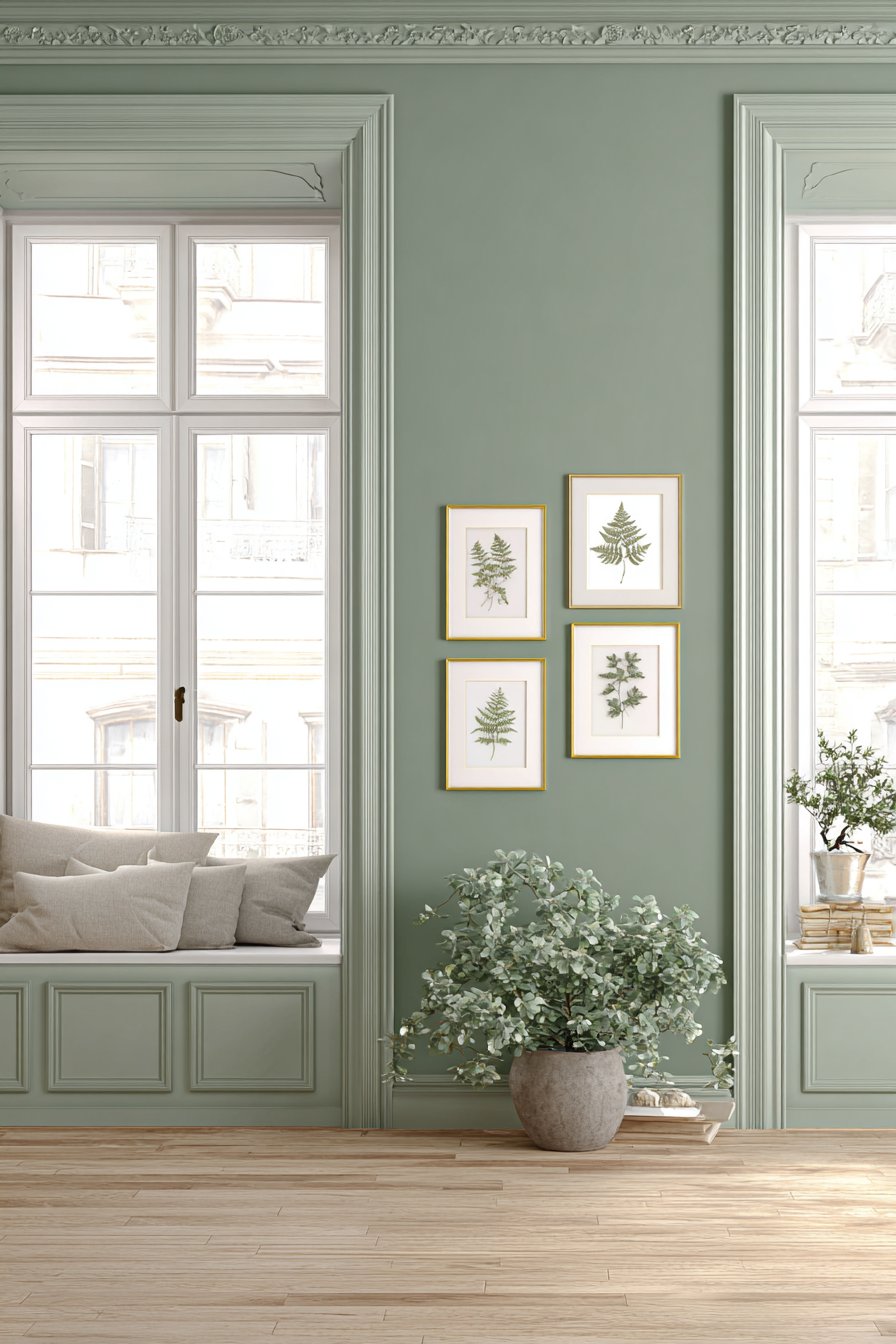
This type of narrow wall treatment works particularly well in spaces where you want to create interest without adding visual weight. The transparency of the white matting and the delicate nature of the pressed botanicals keep the display feeling light and airy rather than cluttered. It’s a perfect solution for hallways, breakfast nooks, or any transitional space where you want to add personality without overwhelming the senses.
Key Design Tips:
- Select frames in uniform style but varying sizes to create visual progression without chaos
- Use white or cream matting to provide breathing room and highlight the botanical specimens
- Choose a wall color that complements your botanicals—sage green, soft gray, or cream work beautifully
- Space frames evenly to create rhythm, measuring precisely before hanging
- Source pressed botanicals from nature walks, botanical shops, or create your own using flower presses
2. Reclaimed Wood Floating Shelf System
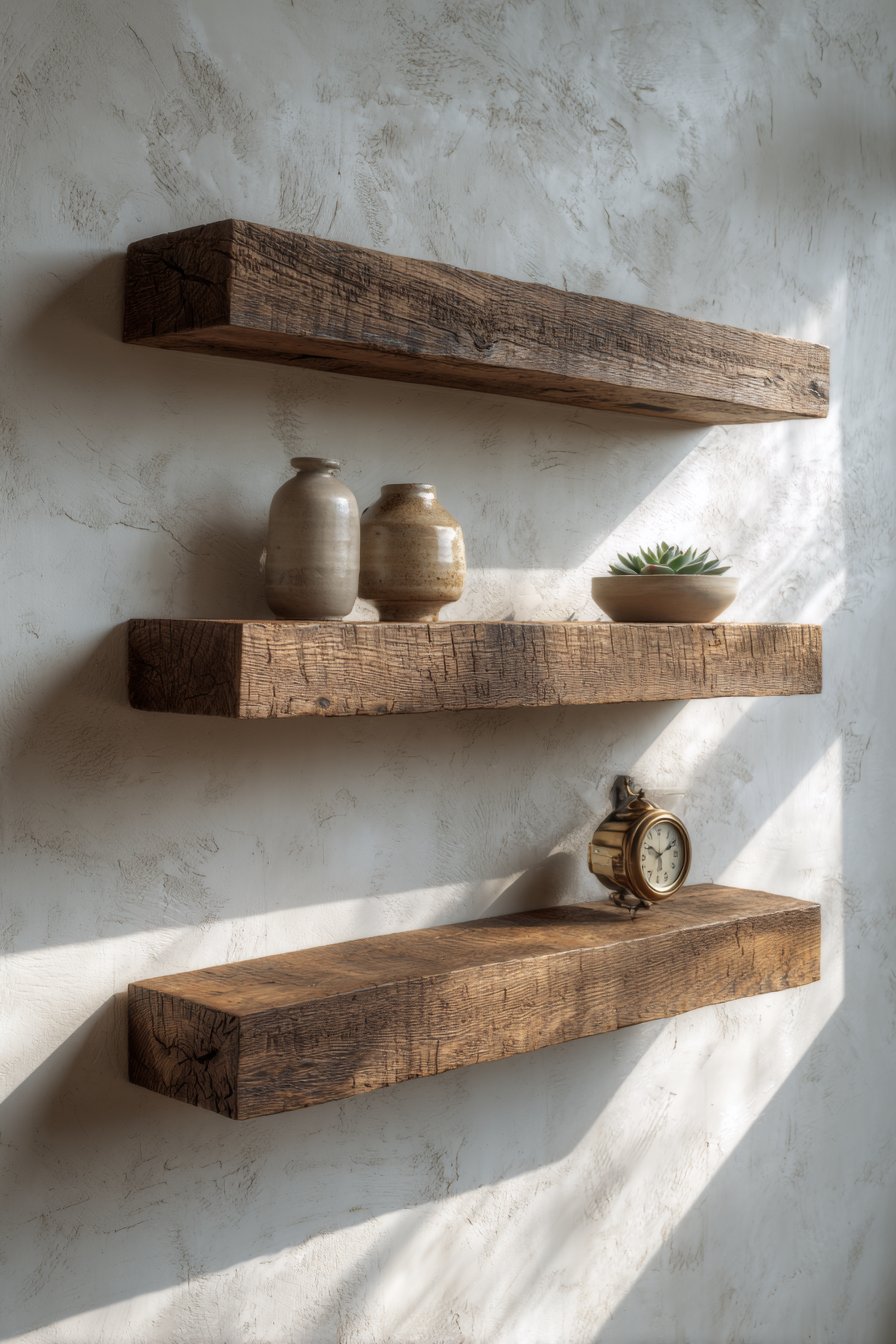
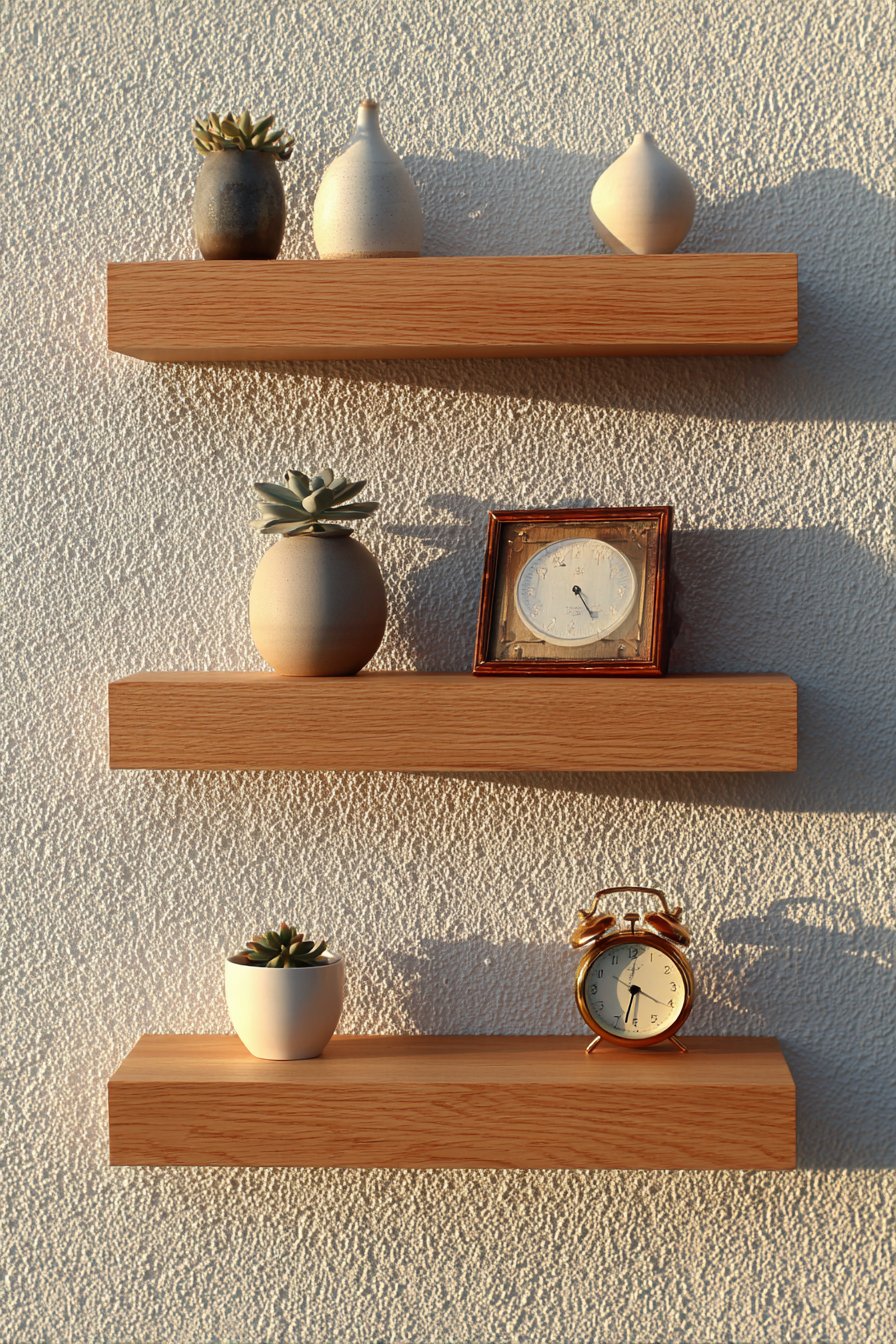
A narrow entryway wall becomes a story of sustainable design with three staggered floating shelves crafted from reclaimed barnwood. Each 8-inch deep shelf showcases the wood’s authentic history—visible grain patterns, natural color variations, and the gentle patina of age. The arrangement isn’t uniform; shelves are positioned at thoughtfully irregular heights, creating visual interest while serving distinct purposes. The top shelf holds a collection of ceramic vessels in soft whites and taupes, their organic shapes echoing the natural quality of the wood. The middle shelf provides a home for a compact succulent arrangement in a handmade pottery container, while the lowest shelf displays a vintage brass clock that adds both function and vintage charm.
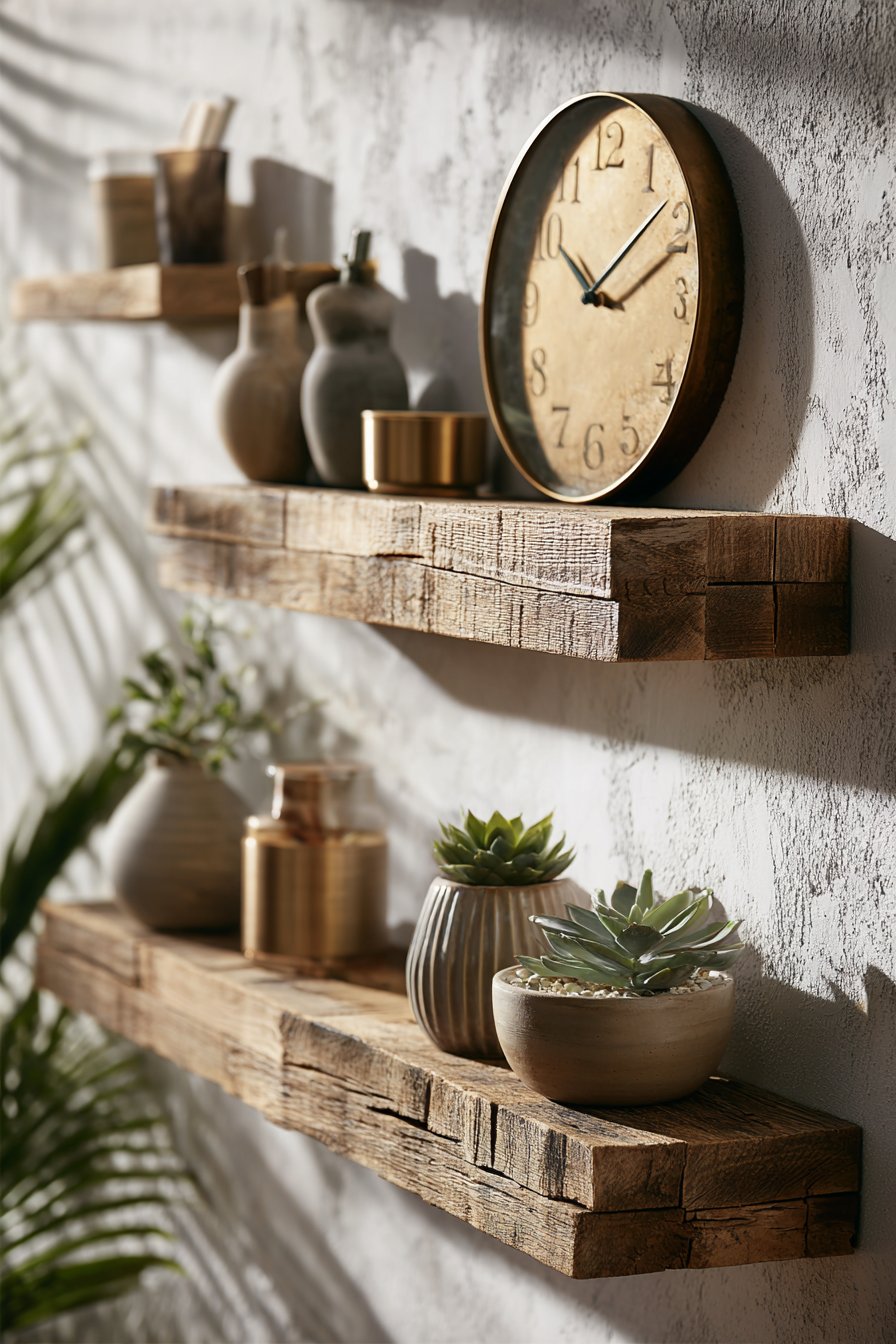
The beauty of this approach extends beyond aesthetics to embrace sustainability and storytelling. Reclaimed barnwood carries history in every knot and grain line—perhaps from a century-old barn or an abandoned warehouse—giving your narrow wall instant character and conversation-starting appeal. Against textured white plaster walls, the warm wood tones create striking contrast while maintaining an overall sense of calm. Morning light streaming through nearby windows or doors creates dramatic shadows that emphasize the dimensional quality of the staggered arrangement, making the display feel dynamic throughout the day.
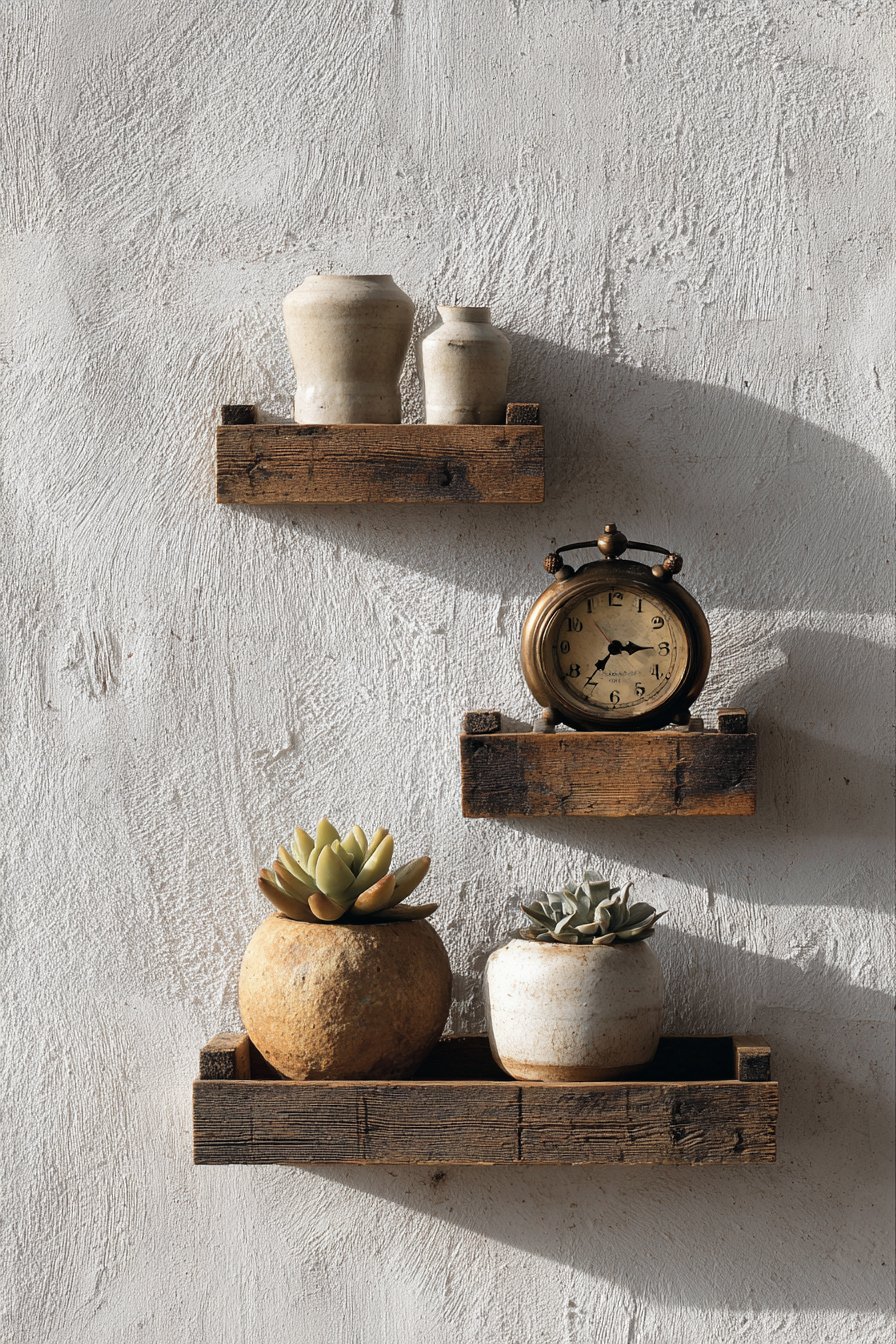
This solution exemplifies how narrow walls can become functional storage while maintaining design integrity. The 8-inch depth provides genuine utility without protruding awkwardly into walkways, while the minimal styling prevents the space from feeling cluttered. It’s an approach that works equally well in modern farmhouse, industrial, or transitional interiors, adapting to various aesthetics while maintaining its essential character.
Key Design Tips:
- Source reclaimed wood from architectural salvage stores or specialty lumber yards for authentic patina
- Stagger shelf heights asymmetrically for dynamic visual interest rather than predictable symmetry
- Limit displayed objects to 2-3 items per shelf to avoid visual clutter on narrow walls
- Choose vessels and objects in complementary neutral tones that don’t compete with the wood
- Install shelves with heavy-duty brackets rated for the wood’s weight plus decorative items
3. Floor-to-Ceiling Mirror Magic
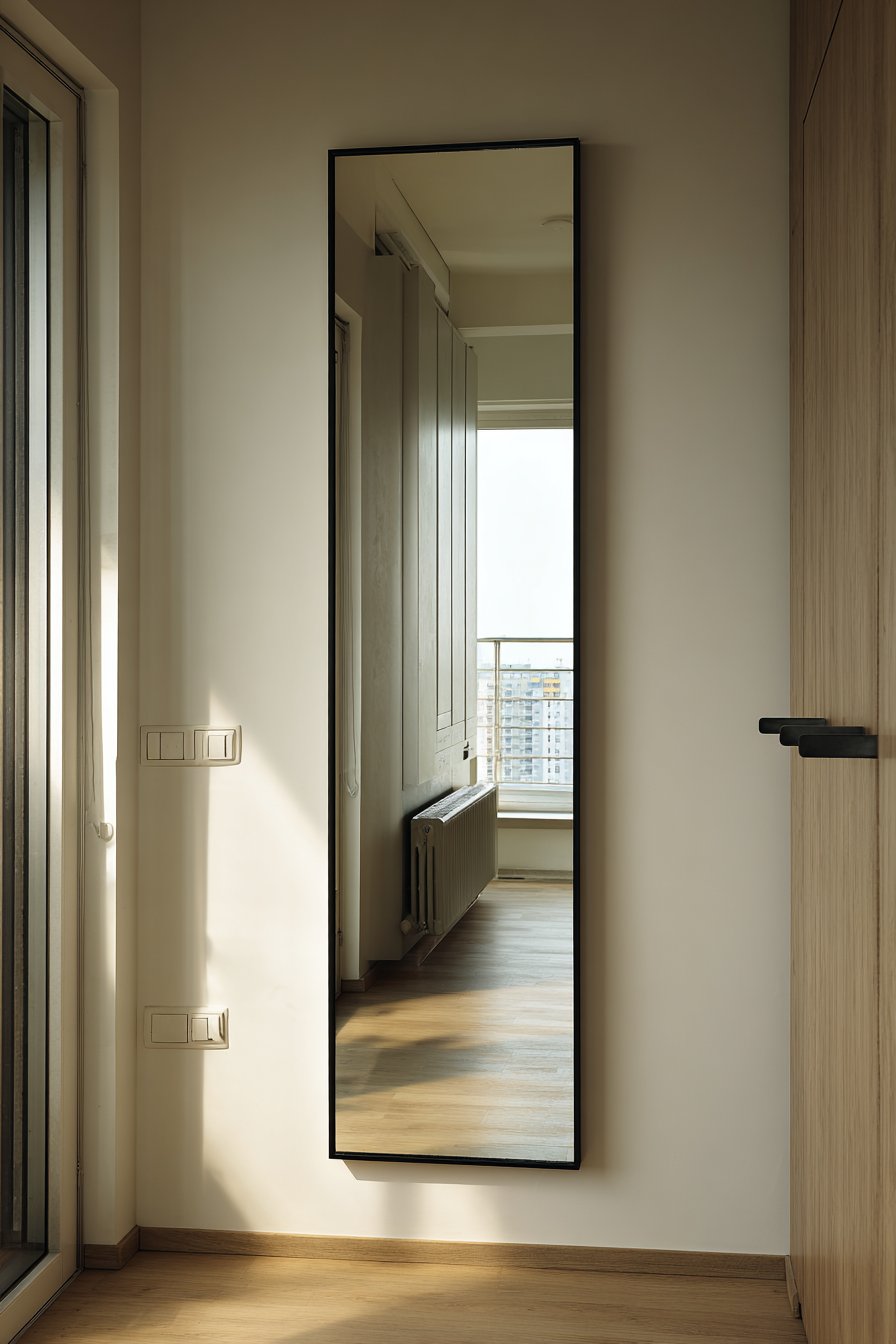
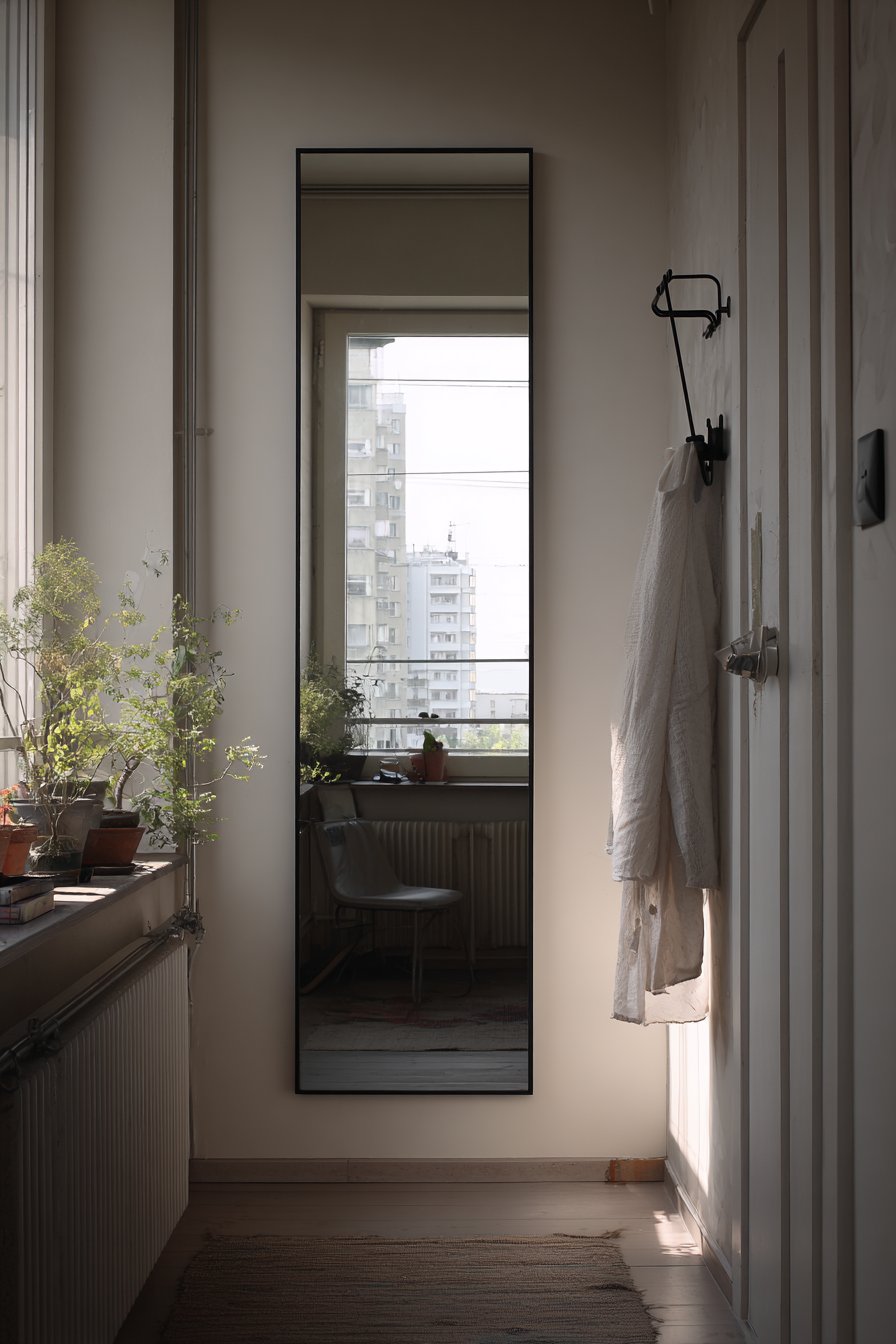
Transform a cramped hallway with a floor-to-ceiling mirror installation on a mere 14-inch wide wall strip, creating an optical illusion that fundamentally alters spatial perception. The full-length mirror, enclosed in a simple black metal frame, performs double duty by both decorating and functionally expanding the space. Its reflective surface captures light from an opposite window, bouncing illumination throughout the hallway and effectively doubling the perceived width of the narrow corridor. At the base, a practical touch—a small wall-mounted hook rail in matte black—provides convenient hanging space for bags, scarves, or dog leashes without compromising the mirror’s visual impact.
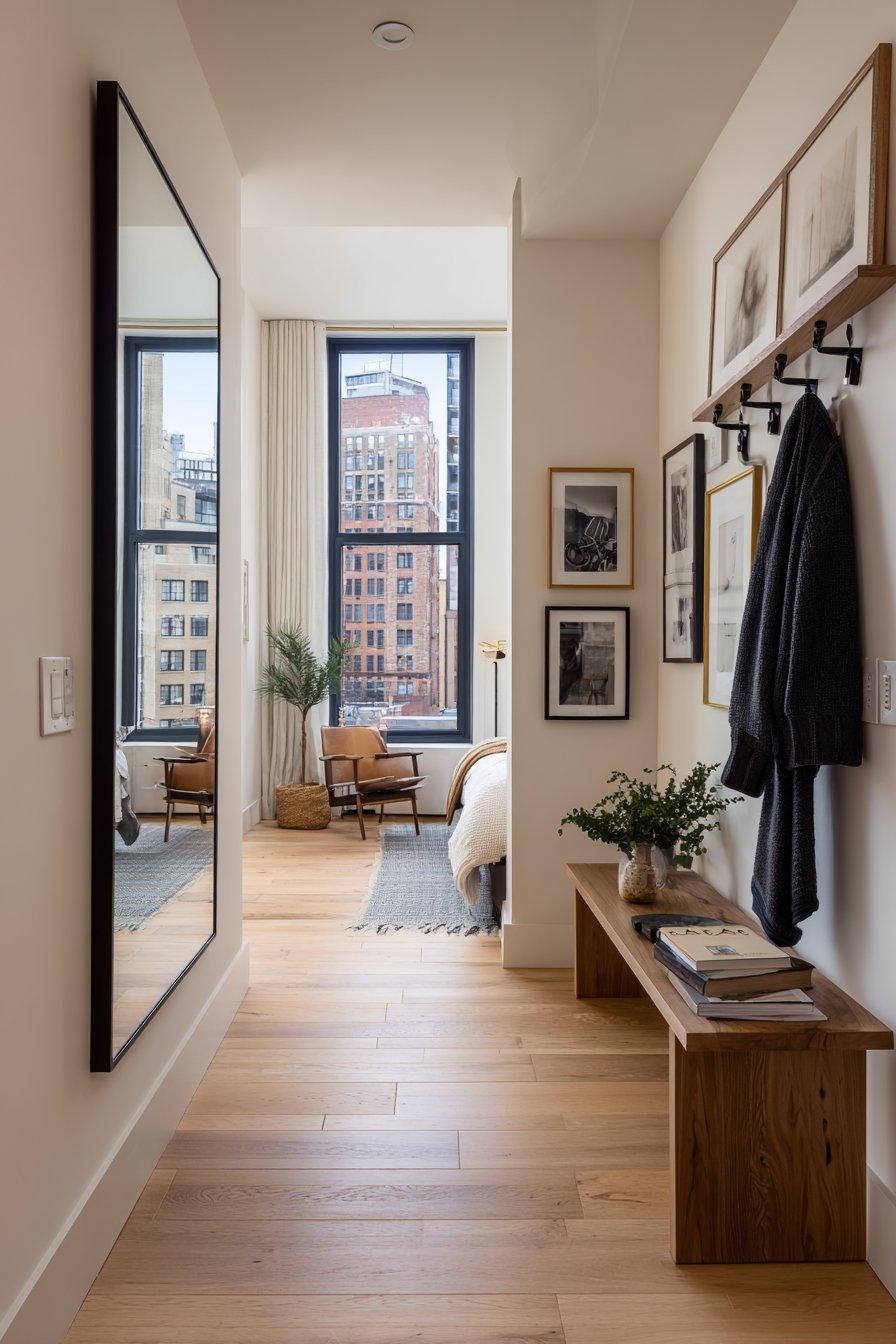
This solution addresses one of the most common challenges in apartment living: how to make narrow, dark hallways feel more spacious and welcoming. The mirror accomplishes this through pure optical trickery, reflecting the space back on itself and creating depth where none physically exists. The black metal frame grounds the mirror visually while maintaining clean, modern lines that don’t overwhelm the narrow wall. The matte finish prevents the frame from being too shiny or distracting, keeping focus on the reflective surface itself.
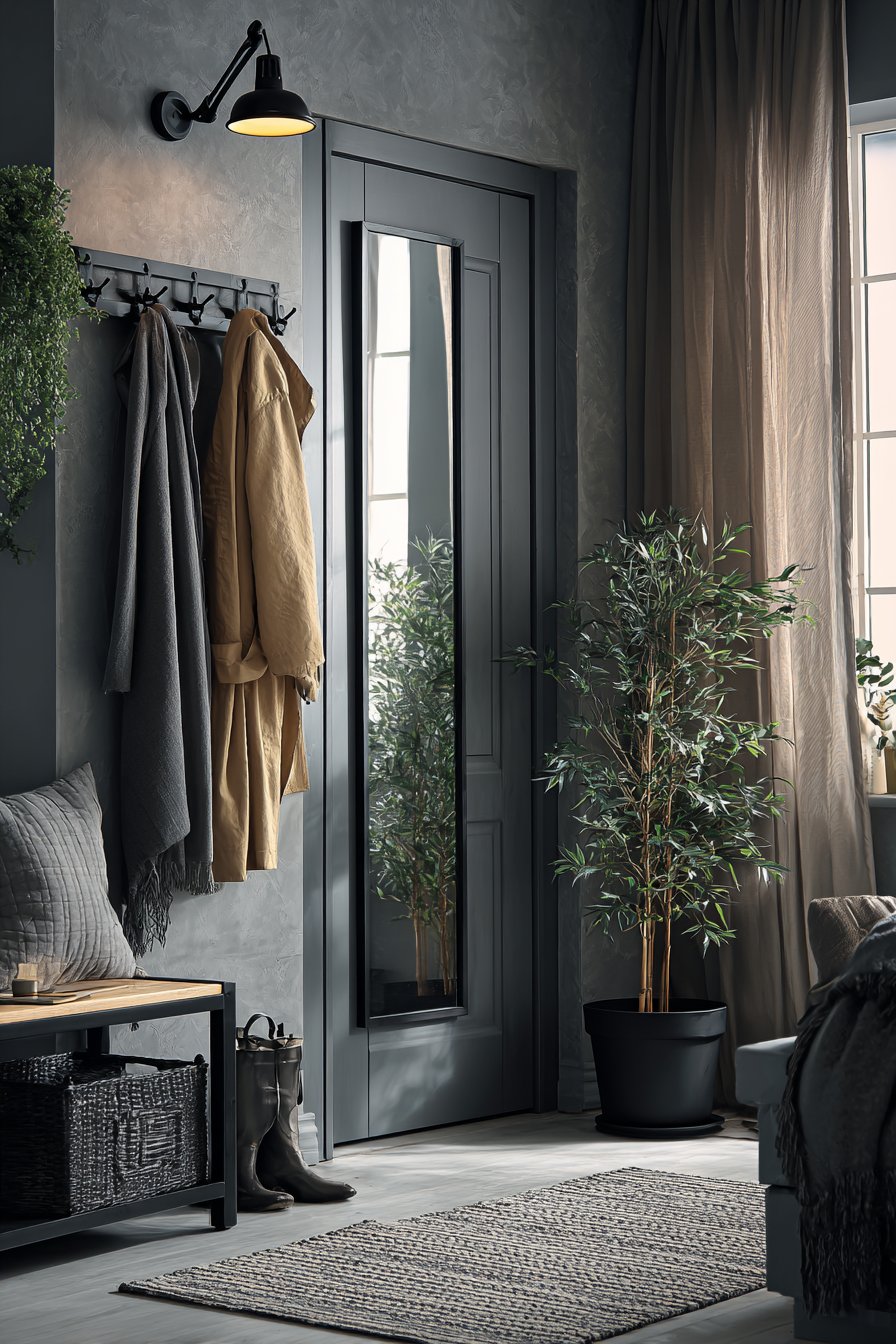
Beyond aesthetics, this approach solves practical problems. The full-length mirror provides a final check before leaving home, while the hook rail below adds functionality exactly where it’s needed—near the door. The combination demonstrates how narrow walls can serve multiple purposes simultaneously, merging decoration, spatial enhancement, and utility into a single elegant solution.
Key Design Tips:
- Measure carefully to ensure the mirror extends as close to floor and ceiling as safely possible for maximum impact
- Choose a thin frame profile to maximize reflective surface on narrow walls
- Position mirrors opposite windows or light sources to multiply natural illumination
- Add practical elements like hooks or small shelves at functional heights
- Ensure professional installation with appropriate wall anchors for safety, especially for floor-to-ceiling pieces
4. Bohemian Macramé Vertical Statement
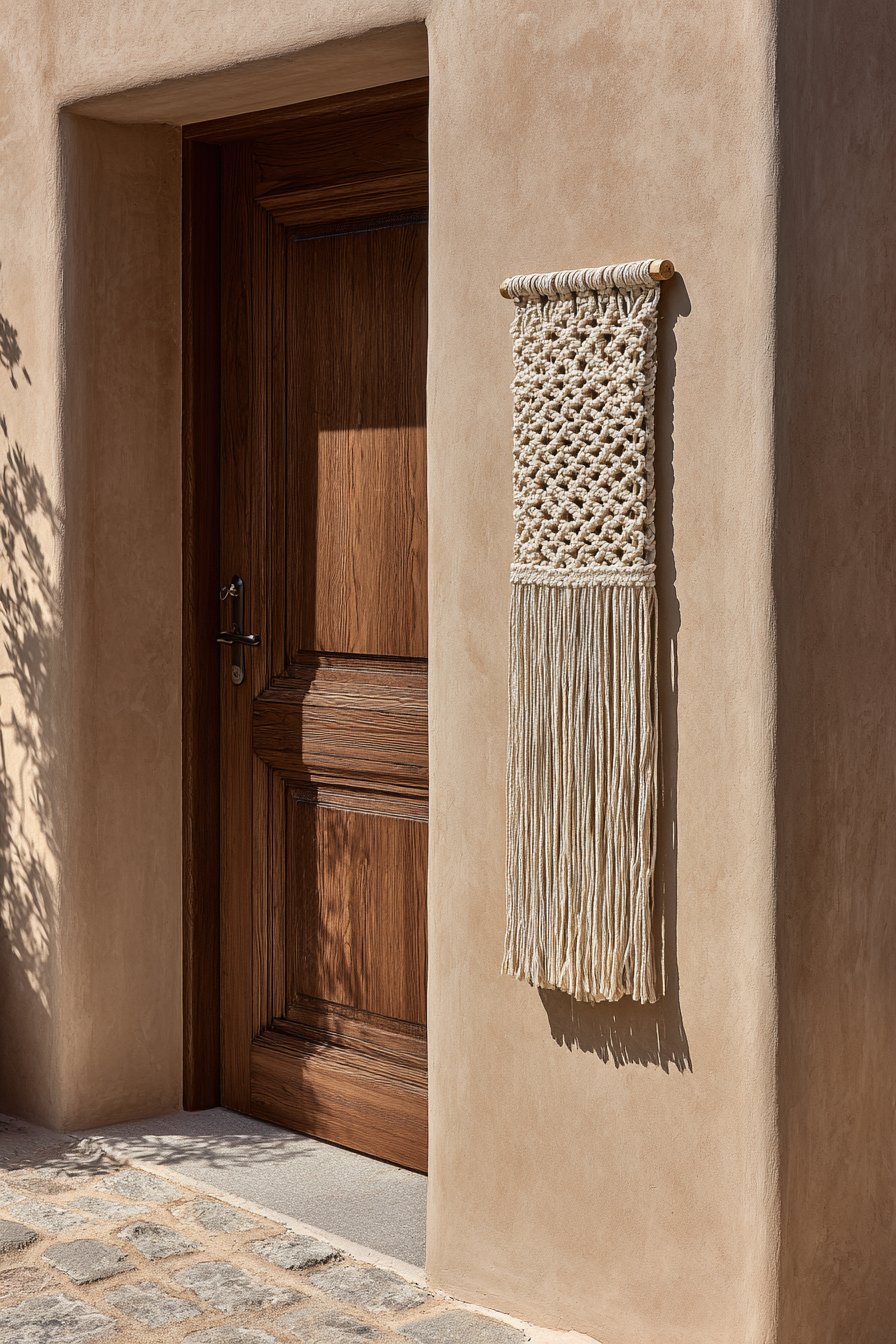
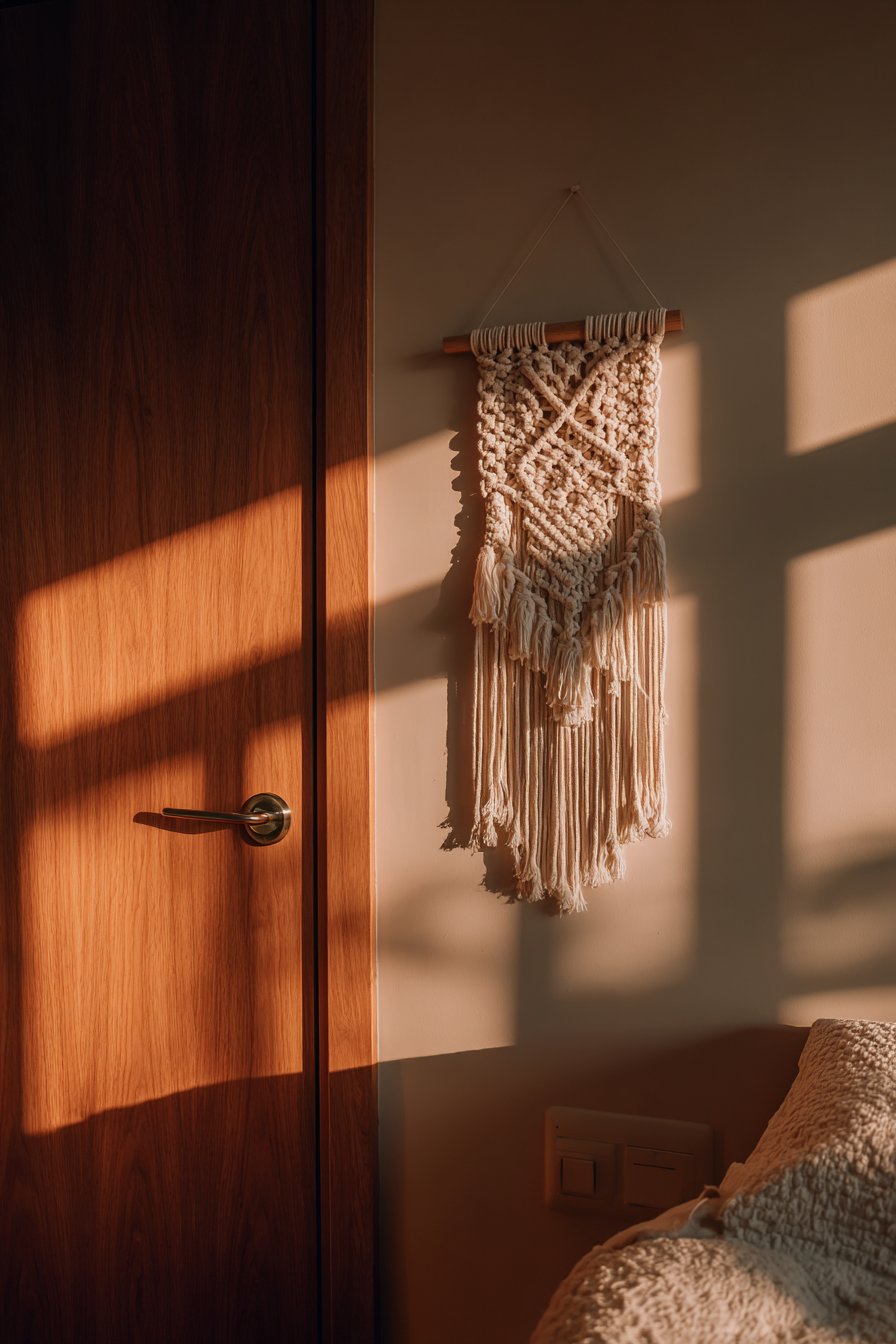
A handcrafted macramé wall hanging becomes the focal point on a narrow bedroom wall, spanning an impressive 48 inches vertically while maintaining a svelte 10-inch width that perfectly suits the slim space beside a doorframe. Natural cotton rope, worked into intricate knots and patterns, creates dimensional texture that plays beautifully against warm beige walls. Wooden beads incorporated throughout the design add weight and visual interest, while long fringe at the bottom creates movement and softness. This piece isn’t just decoration—it’s functional art that brings bohemian warmth and handcrafted authenticity to the space.
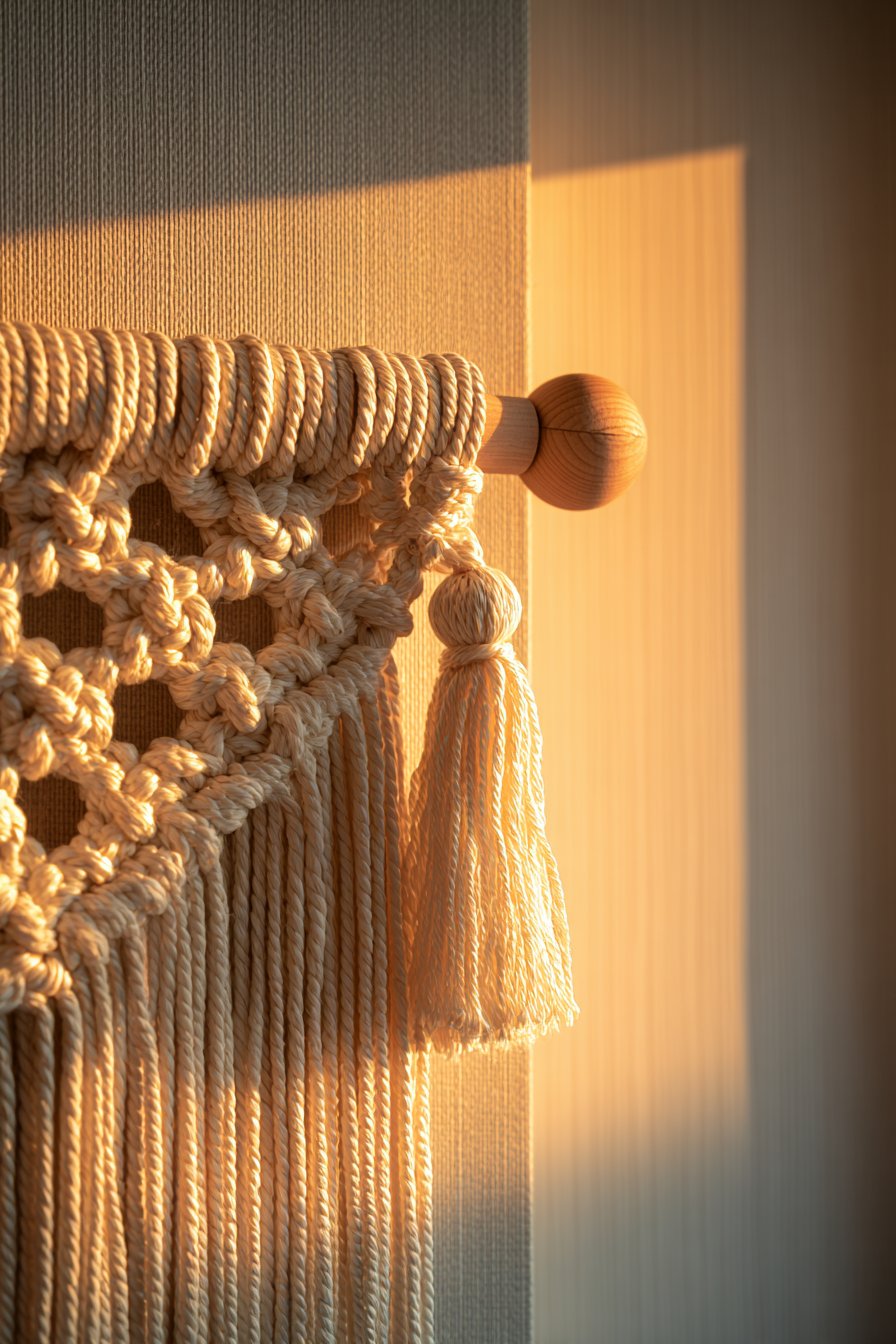
The magic happens during golden hour when afternoon light streams through nearby windows, casting dramatic shadows that emphasize every knot and twist in the macramé work. These shadows add another layer of visual interest, making the piece feel alive and dynamic rather than static. The vertical orientation is crucial—it draws the eye upward, making ceilings feel higher while perfectly proportioning to the narrow wall without overwhelming it. The natural fiber texture introduces an organic element that softens the room and provides tactile appeal.
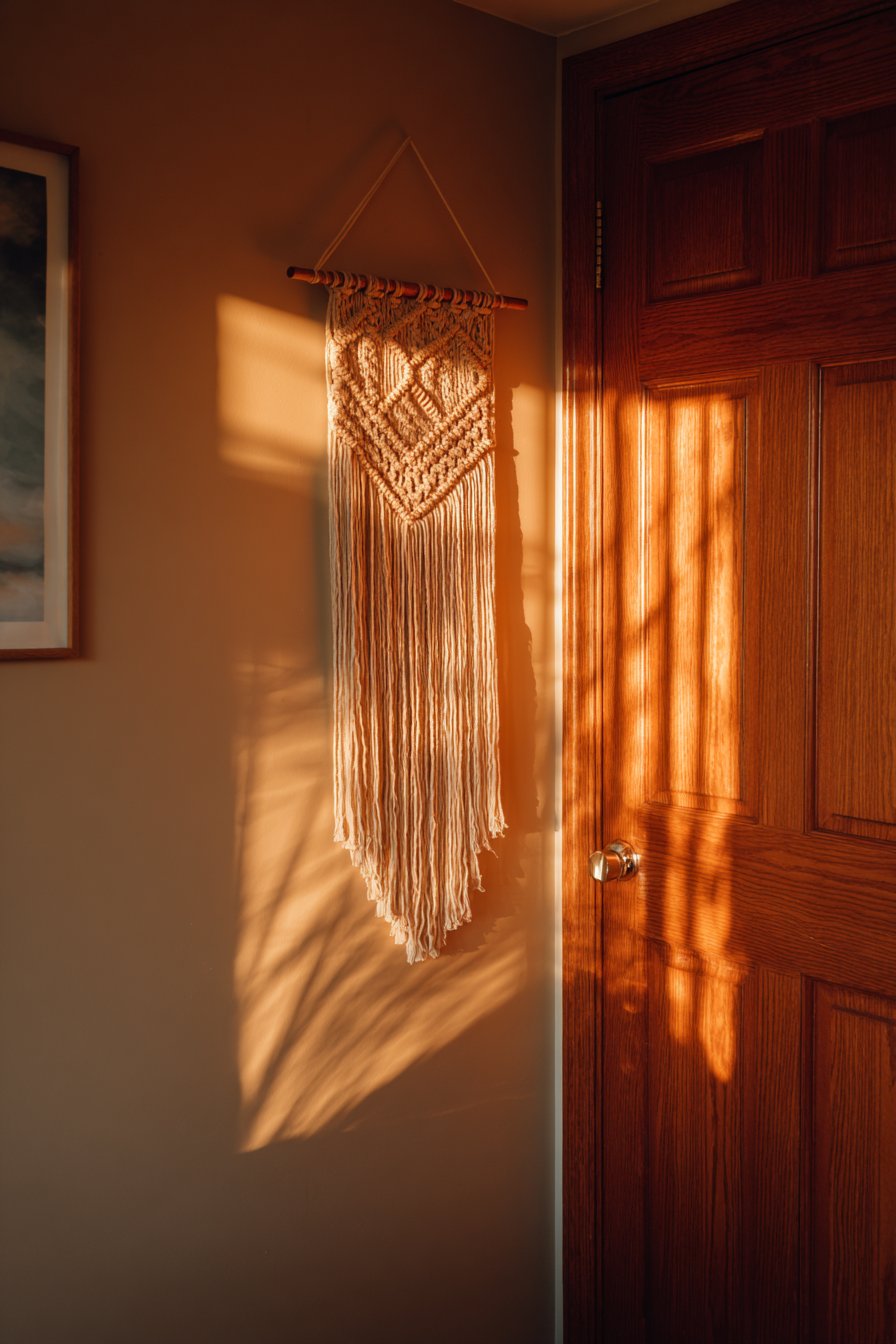
Macramé has experienced a renaissance in recent years, moving beyond its 1970s associations to become a staple of modern bohemian design. On narrow walls, it offers advantages over traditional art: it’s lightweight, doesn’t require framing, creates significant visual impact, and can be customized to exact dimensions. Whether purchased from artisan makers or created as a personal project, macramé transforms narrow walls into textural showcases.
Key Design Tips:
- Choose macramé pieces with vertical emphasis and narrow widths specifically designed for slim walls
- Hang using a sturdy dowel rod or wooden branch for added natural appeal
- Position in areas with natural light to maximize shadow play and dimensional effects
- Select natural fiber colors that complement your existing wall tones—cream, tan, or natural cotton
- Consider the bottom fringe length to ensure it hangs clear of furniture or floor
5. Vintage Brass Sconce Trio
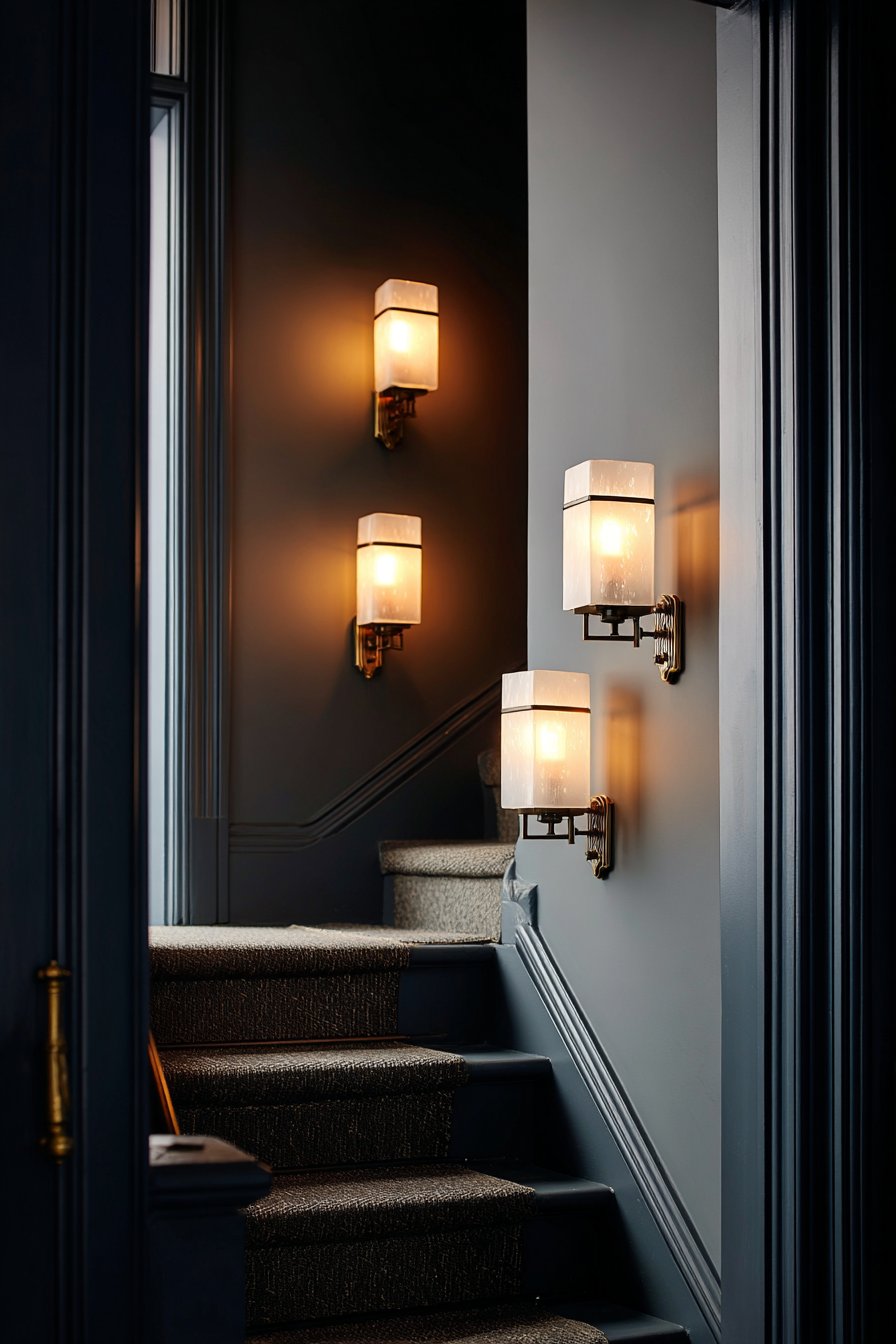
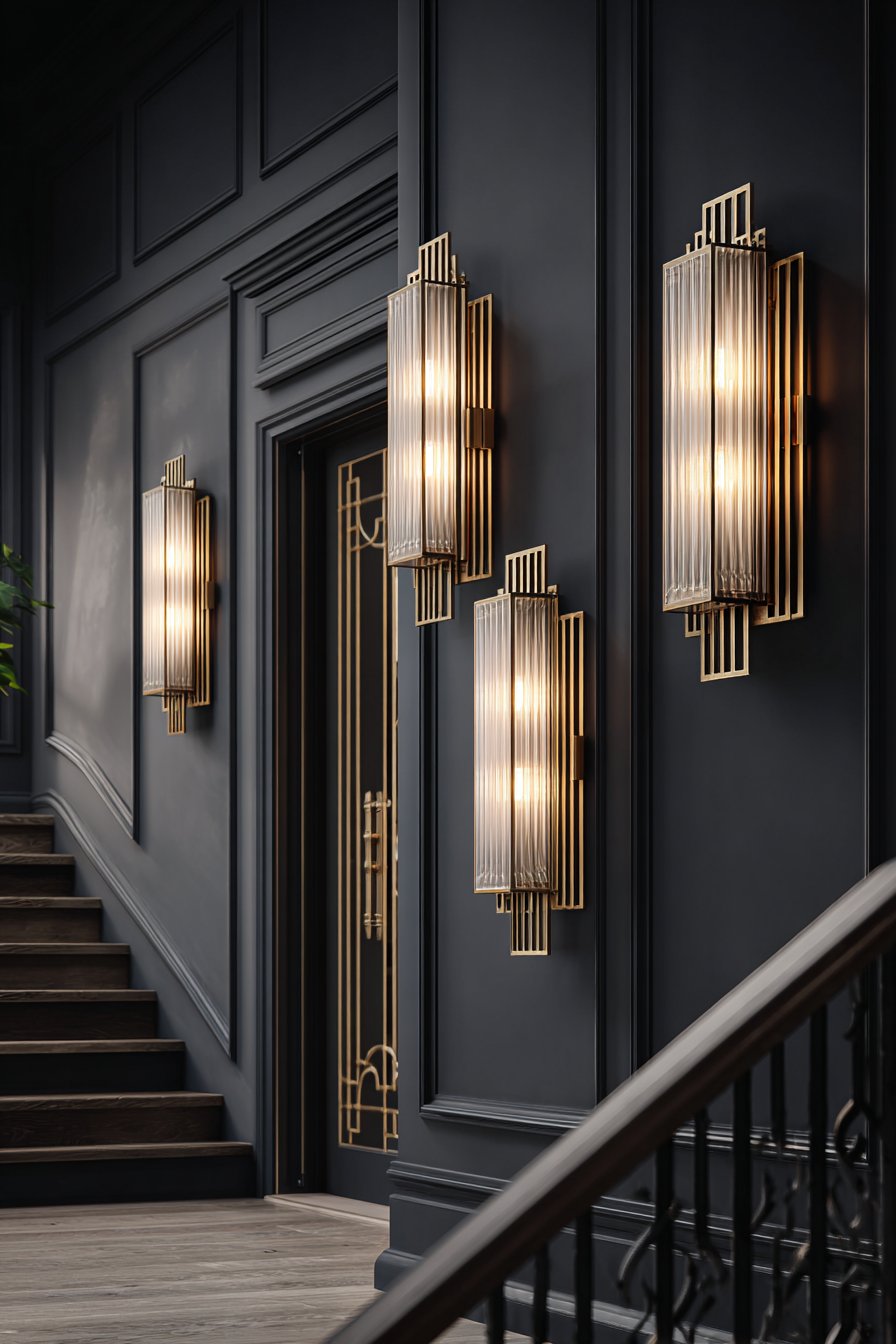
Three vintage-inspired Art Deco brass wall sconces march vertically up a narrow 12-inch wall between a staircase and doorframe, creating both illumination and architectural interest. Each sconce features frosted glass shades that diffuse light softly, while the brass finish gleams with warm metallic luster against deep charcoal gray walls. The staggered heights—positioned at approximately 24-inch intervals—create visual rhythm while providing layered ambient lighting that transforms the narrow space from forgotten to featured. This isn’t merely decoration; it’s functional lighting that solves the common problem of dark, awkward spaces between architectural elements.
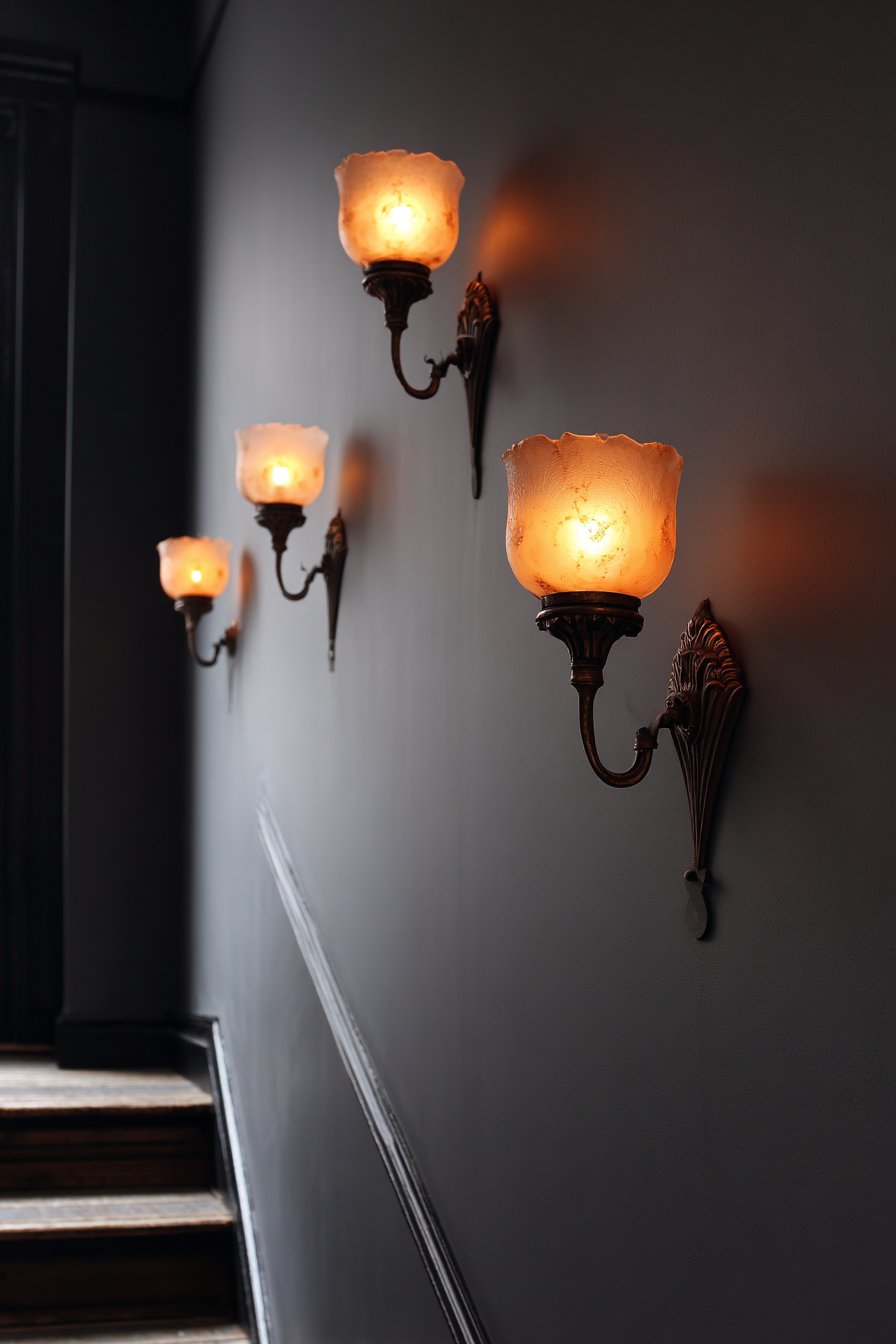
The drama intensifies in evening hours when the sconces are illuminated. Warm light glows through frosted glass, creating halos of illumination that highlight the brass fixtures’ intricate details and cast gentle pools of light up and down the charcoal walls. The contrast between warm brass, soft light, and dark walls creates sophisticated ambiance that elevates the entire area. During daylight hours, the sconces function as sculptural elements, their Art Deco geometry adding vintage glamour even when unlit.
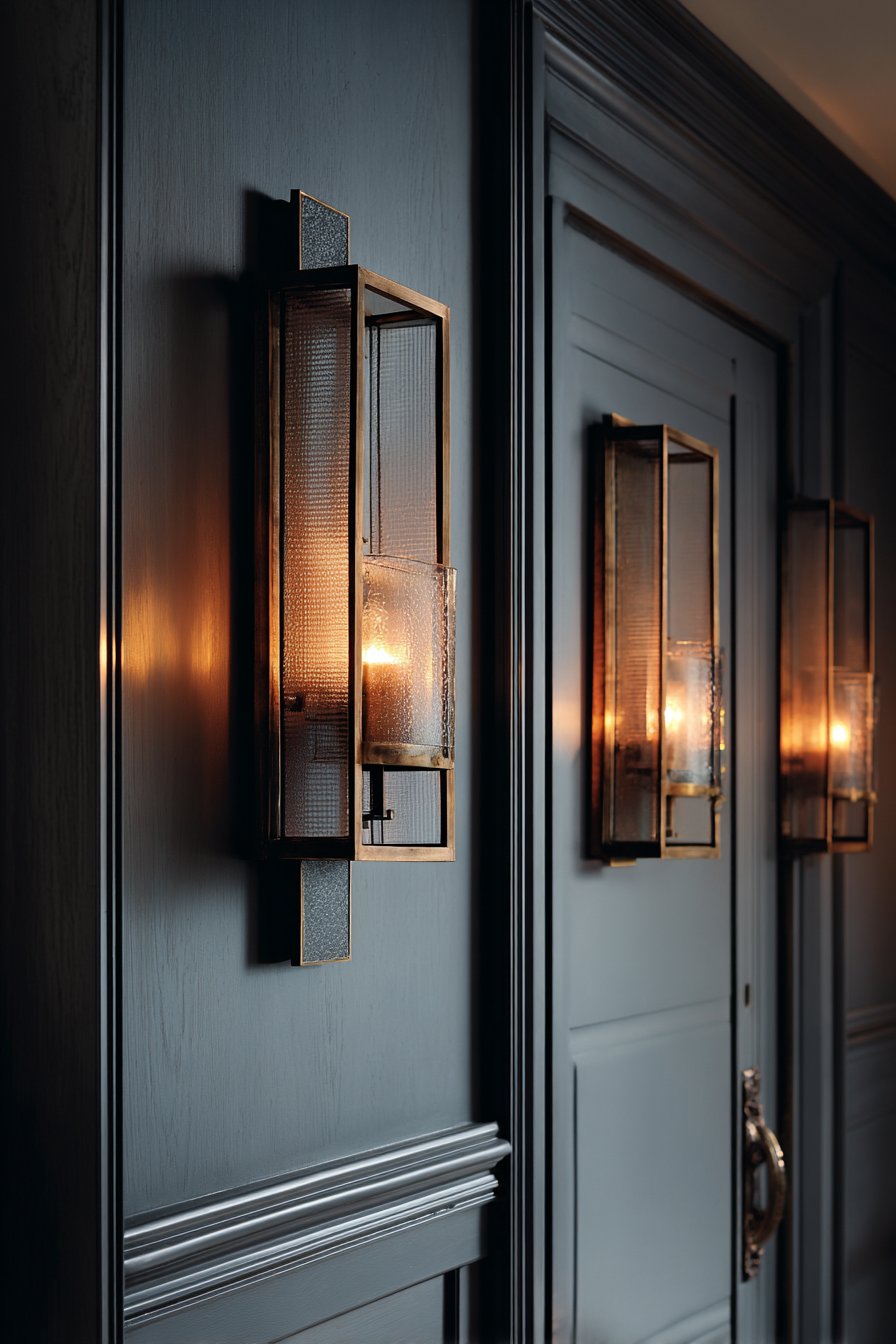
This approach demonstrates how narrow walls can become opportunities for creative lighting solutions. Rather than relying solely on overhead fixtures, vertical sconce arrangements add layers of light at various heights, creating depth and visual interest. The brass finish introduces warmth that prevents the gray walls from feeling cold, while the vintage styling adds character and personality that new fixtures often lack.
Key Design Tips:
- Wire sconces properly with an electrician to ensure safe, code-compliant installation
- Choose sconces with a shallow profile (4-6 inches) to avoid protruding into walkways
- Space fixtures evenly using precise measurements for professional appearance
- Select bulbs with warm color temperature (2700K-3000K) to enhance the brass tones
- Consider dimmer switches to adjust lighting levels for different times of day and moods
6. Functional Mail Station Organizer
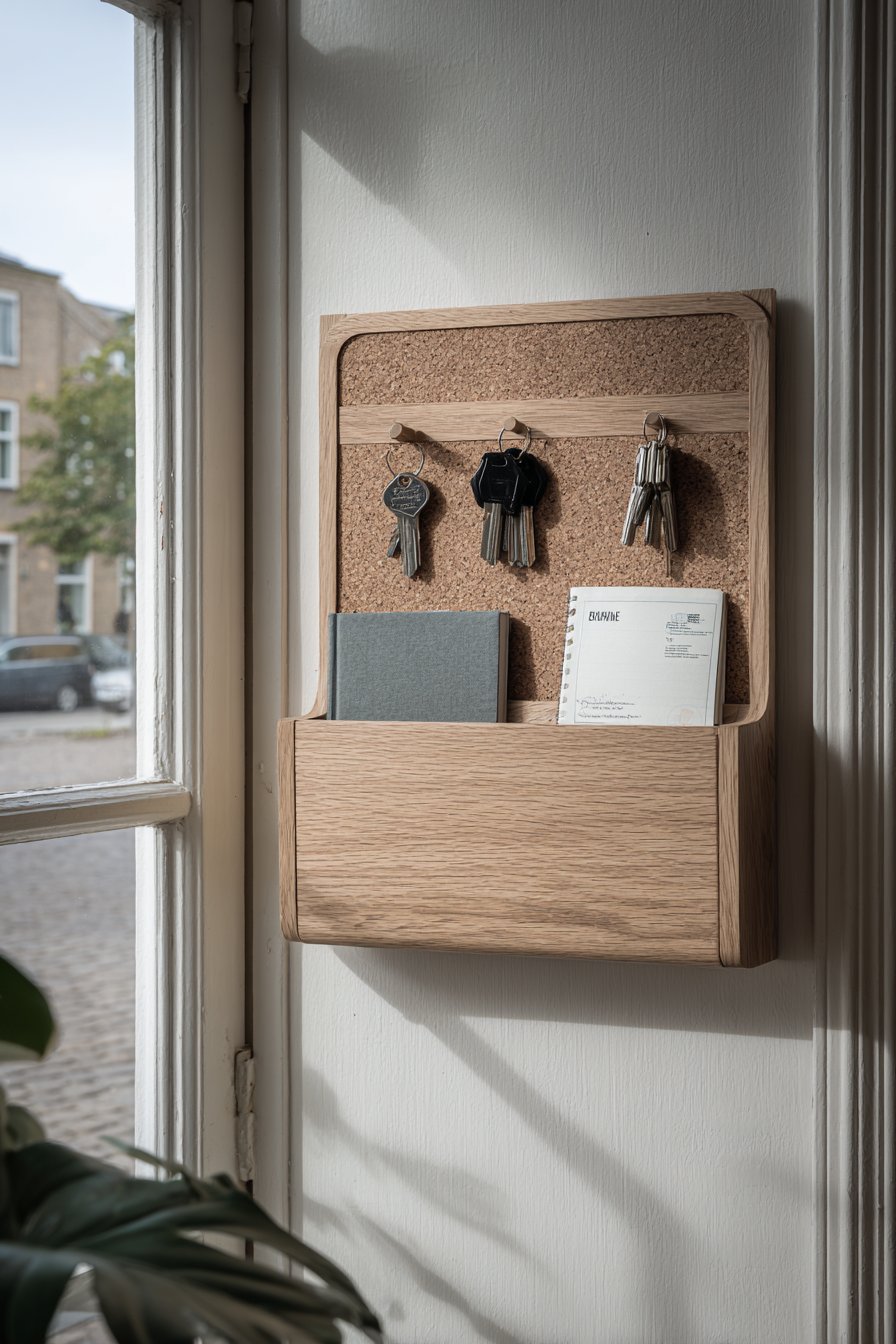
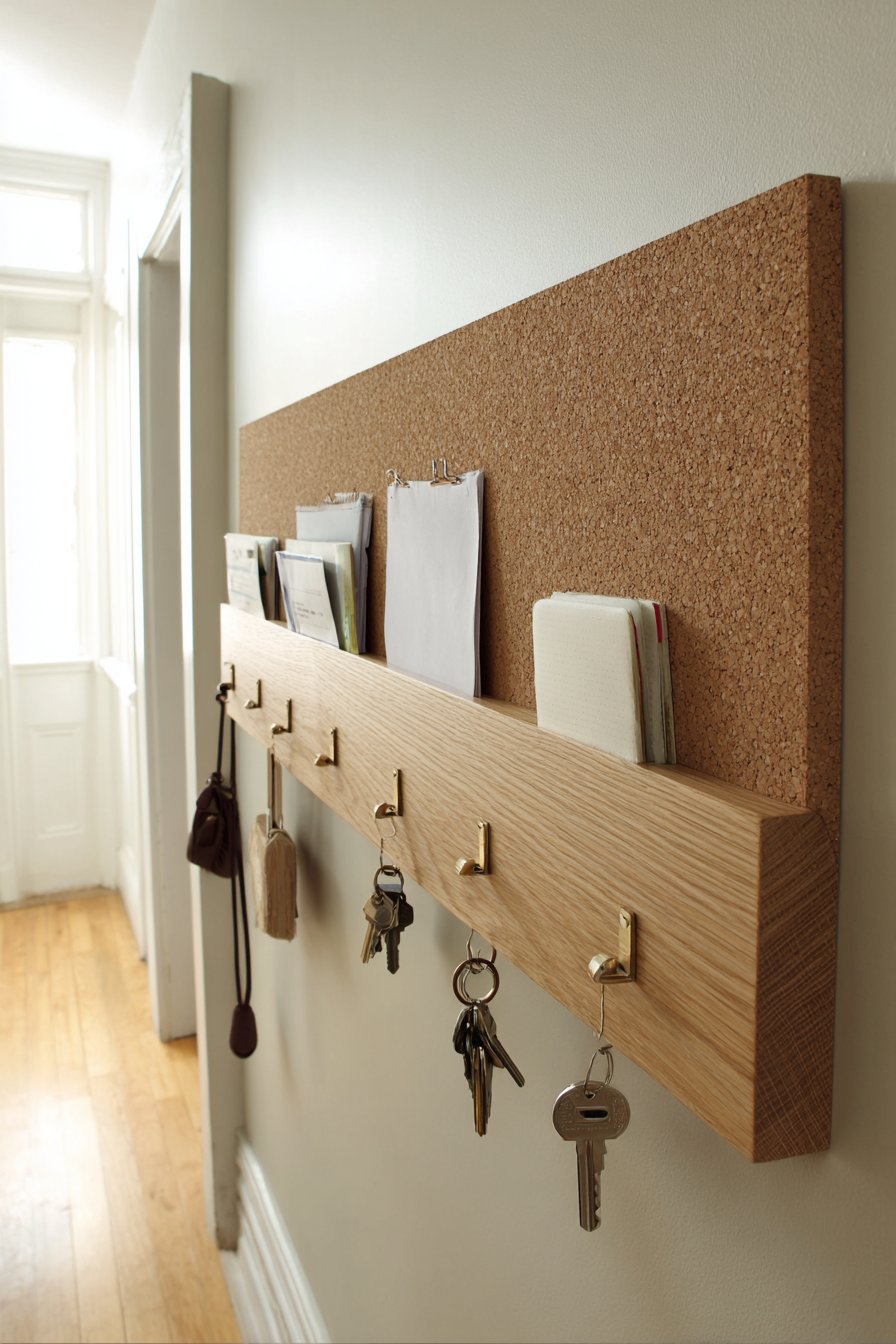
A slim 15-inch wide wall near the front door transforms into command central for household organization with a custom wooden panel that combines multiple functions seamlessly. This isn’t just decoration—it’s practical design that solves daily challenges. A cork board section provides space for pinning important reminders, school notices, and appointment cards. A magnetic strip holds keys securely within easy reach. Small brass hooks offer hanging space for dog leashes, reusable shopping bags, or umbrellas. The natural oak finish brings Scandinavian simplicity and warmth, while the minimal hardware maintains clean lines that don’t visually clutter the narrow space.
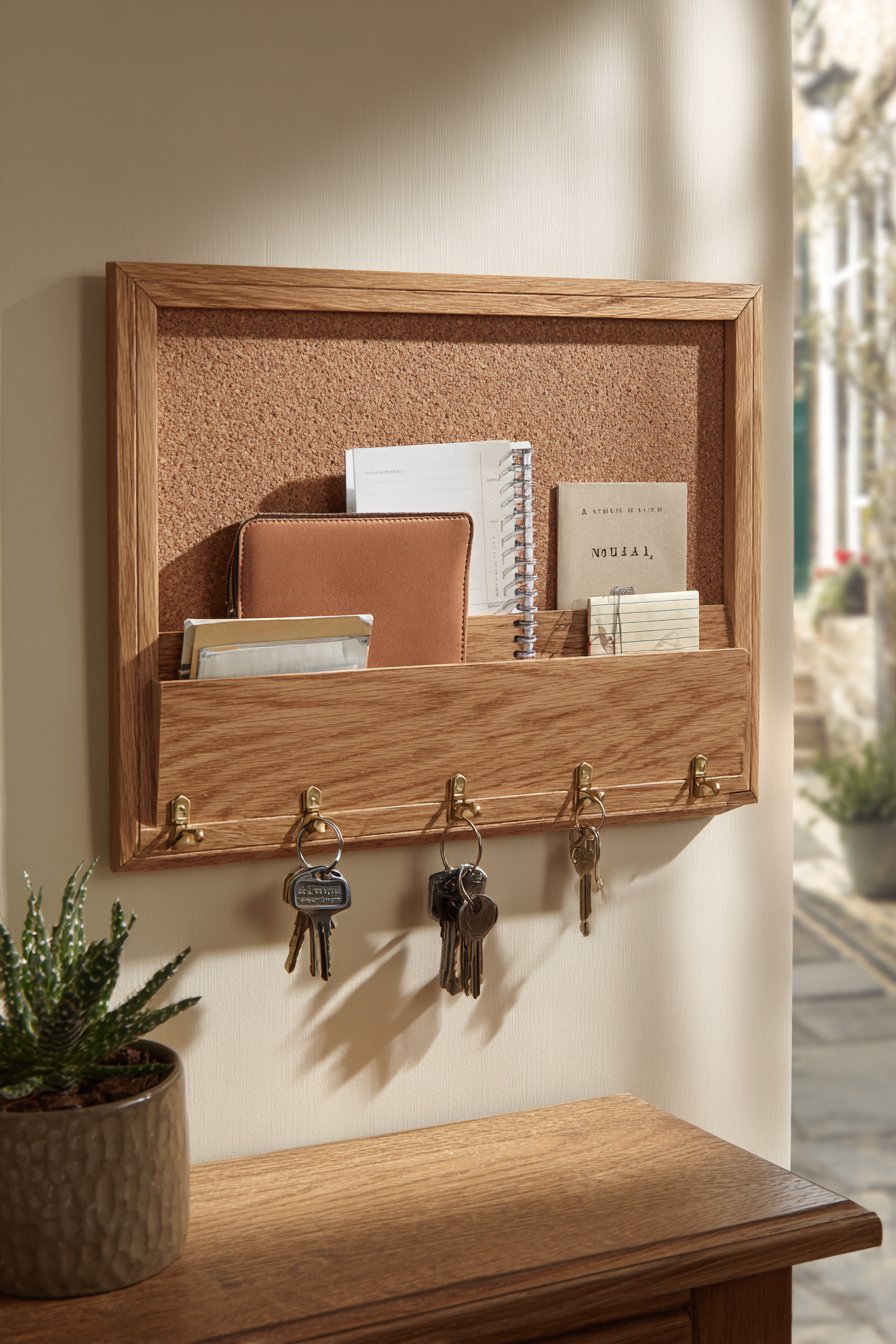
What makes this solution brilliant is how it addresses real-world needs while maintaining aesthetic appeal. Every family struggles with the daily chaos of keys, mail, and miscellaneous items that accumulate near entryways. By dedicating a narrow wall to organization, you create a specific home for these items, reducing clutter elsewhere while keeping essentials accessible. The vertical orientation maximizes storage without consuming valuable floor space, while the oak finish ensures the organizer feels like intentional furniture rather than utilitarian afterthought.
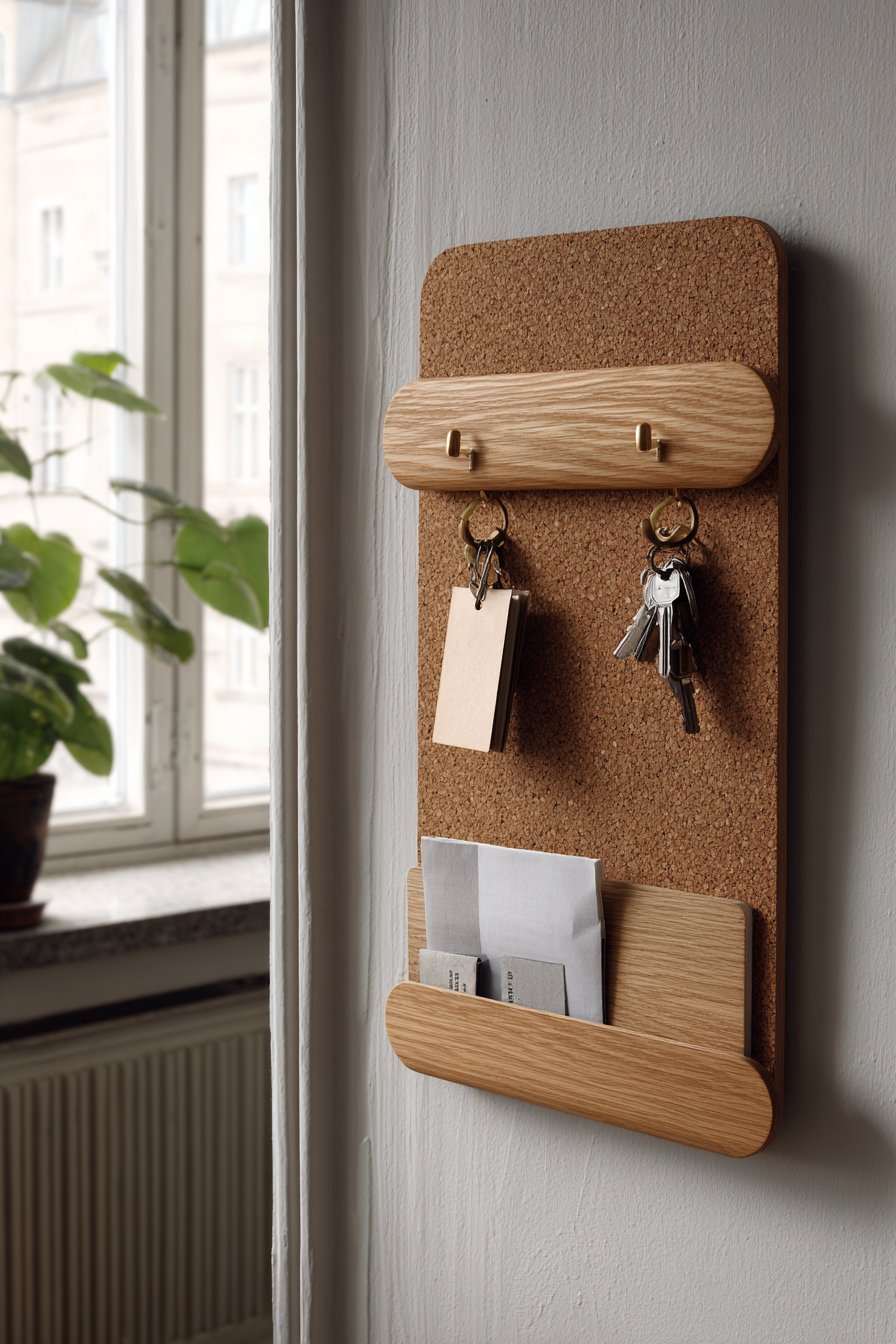
Natural light from a nearby entryway window illuminates the panel throughout the day, making it easy to spot what you need while highlighting the beautiful wood grain. The cork board section can be customized with fabric or painted to match your color scheme, while the magnetic strip and hooks provide flexibility to adjust as needs change. This narrow wall solution proves that the smallest spaces can deliver the biggest impact on daily functionality.
Key Design Tips:
- Mount the panel securely to wall studs to support the weight of items that will hang from it
- Include a small tray or basket at the bottom for collecting pocket contents and loose change
- Choose brass or copper hardware for warmth, or matte black for modern minimalism
- Position at a comfortable height for all family members, typically 48-60 inches from floor to center
- Add a small notepad holder or chalkboard section for leaving messages
7. Triple Rattan Mirror Arrangement
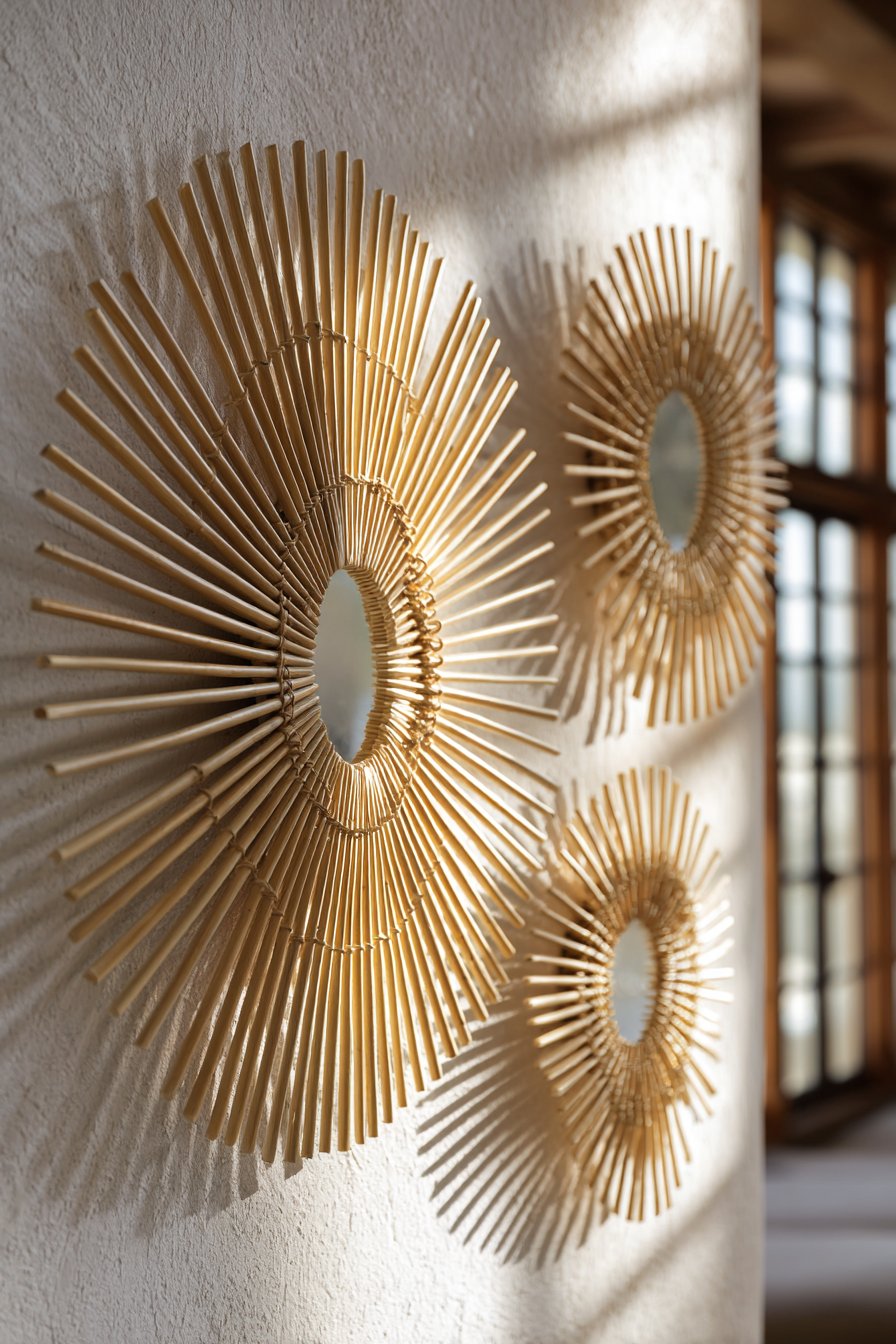
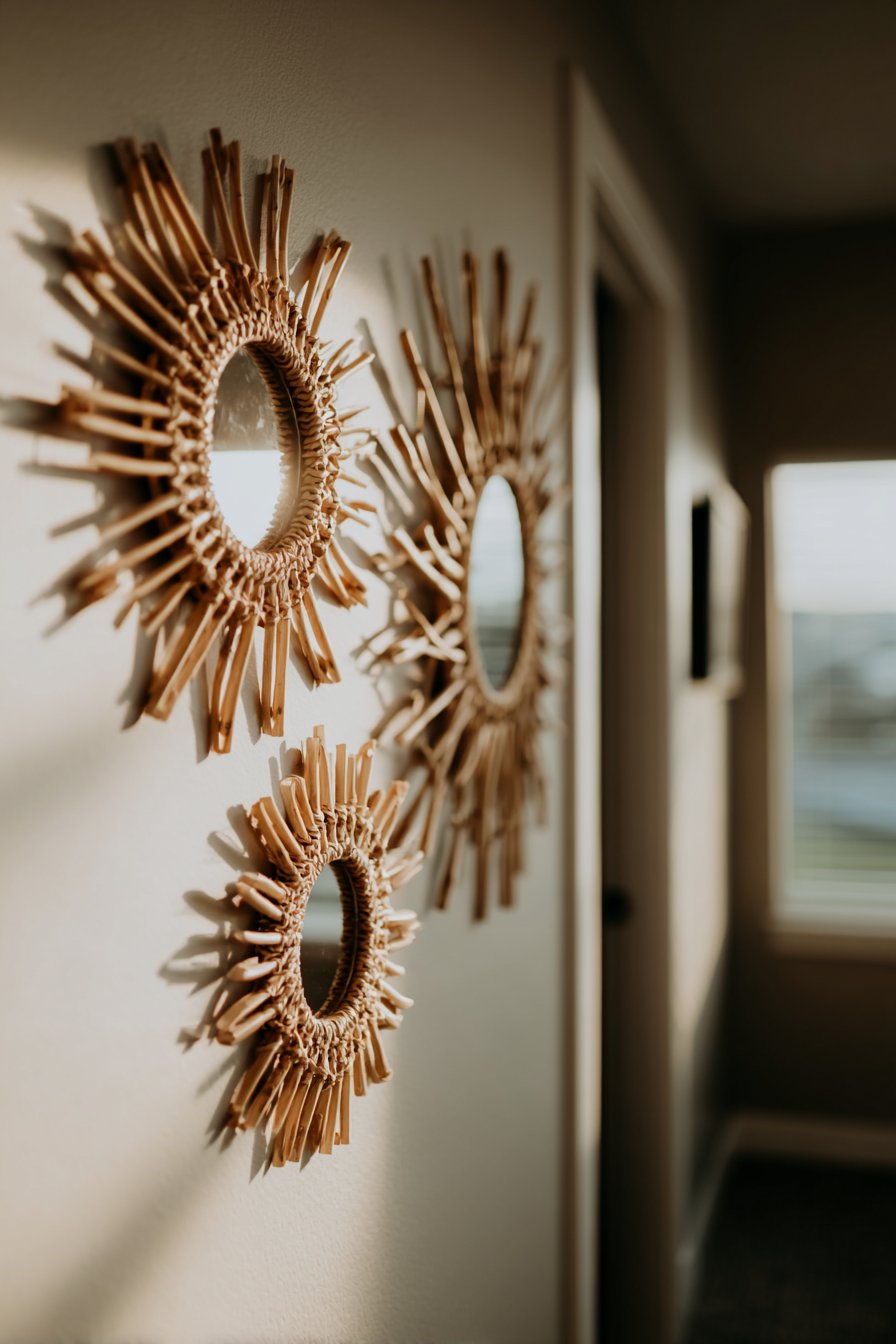
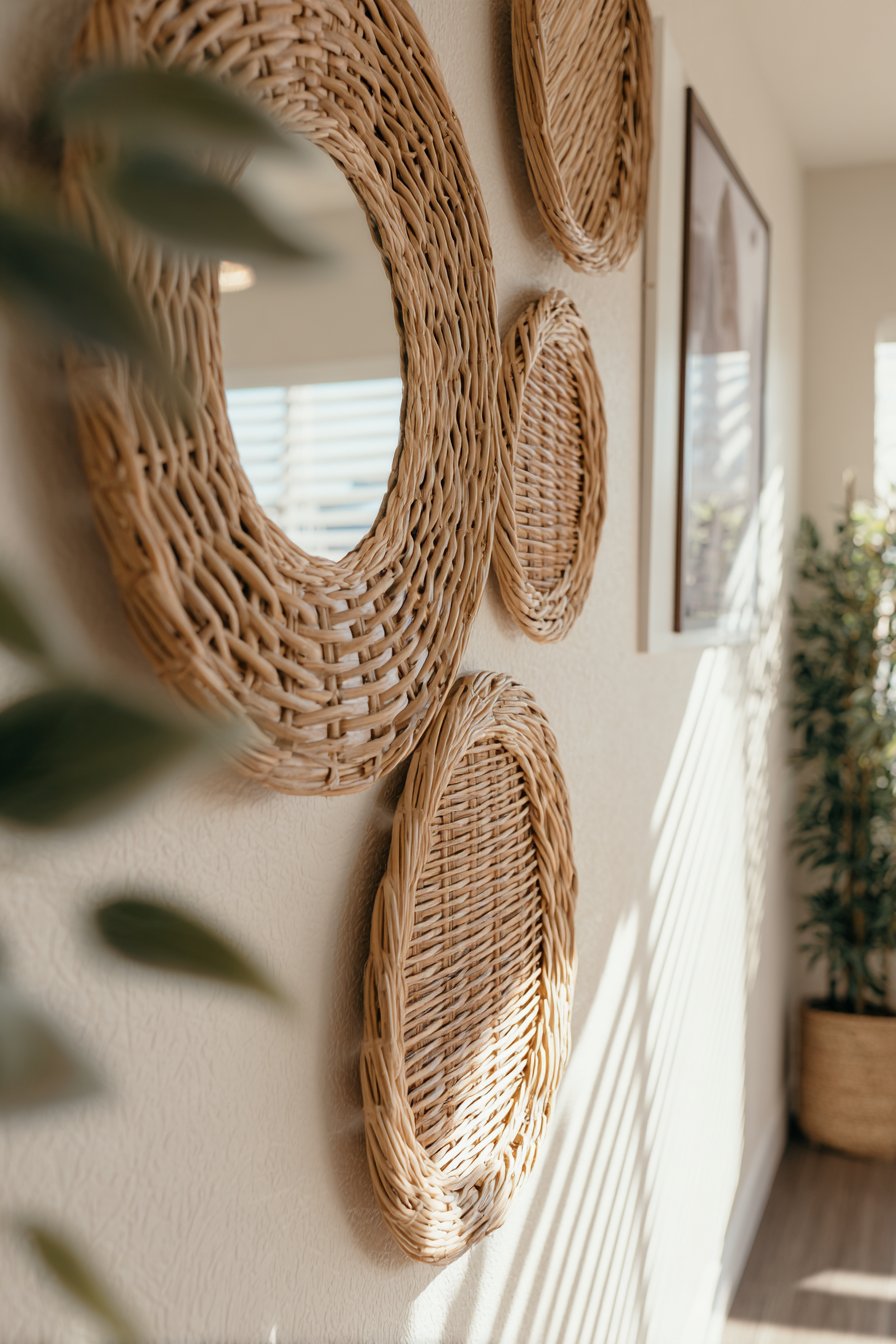
Three round rattan mirrors in graduated sizes create a sculptural focal point on a narrow 18-inch hallway wall, demonstrating how simple geometric repetition can deliver sophisticated results. The mirrors range from 8 to 14 inches in diameter, arranged vertically with consistent 6-inch spacing that creates visual rhythm without monotony. Each mirror’s natural woven frame brings bohemian texture and warm neutral tones that glow against crisp white walls, while the reflective surfaces capture and multiply light throughout the space. This arrangement feels curated and intentional—the kind of thoughtful detail that elevates a home from simply decorated to genuinely designed.
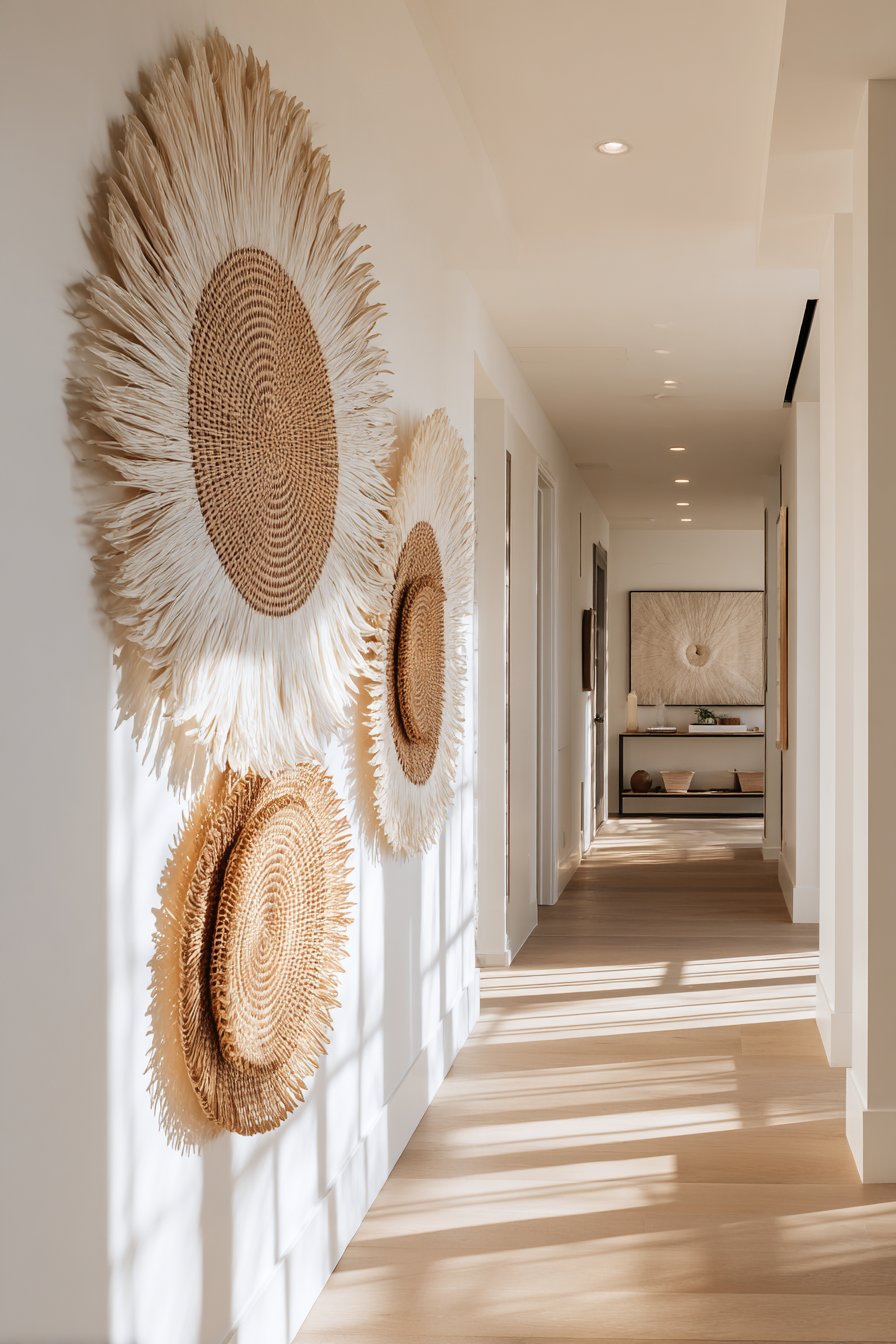
The beauty of this approach lies in its simplicity and accessibility. Rattan mirrors are widely available at various price points, making this an achievable project for any budget. The natural material introduces organic warmth that prevents the white walls from feeling sterile, while the circular shapes create soft contrast against typical rectangular architecture. As light shifts throughout the day, the mirrors catch and reflect it differently, making the display feel dynamic and alive. The woven texture of the rattan frames adds visual interest that invites closer inspection, revealing the craftsmanship of natural materials.
This solution works particularly well in bohemian, coastal, or Scandinavian-inspired interiors, but its neutral palette allows it to adapt to various styles. The vertical arrangement makes ceilings feel higher—a valuable trick in narrow hallways or compact spaces—while the mirrors themselves create the illusion of greater width through their reflective properties. It’s a perfect example of how narrow walls can showcase collections that would feel cramped elsewhere.
Key Design Tips:
- Use a level and measuring tape to ensure perfectly aligned vertical spacing between mirrors
- Choose mirrors with similar frame thickness for cohesion, even if sizes vary
- Hang on white or light neutral walls to maximize the warm contrast of natural rattan
- Consider the graduated size arrangement with largest mirror at eye level for best visual balance
- Group in odd numbers (3 or 5) for more dynamic, less formal compositions
8. Built-In Book Niche with LED Lighting
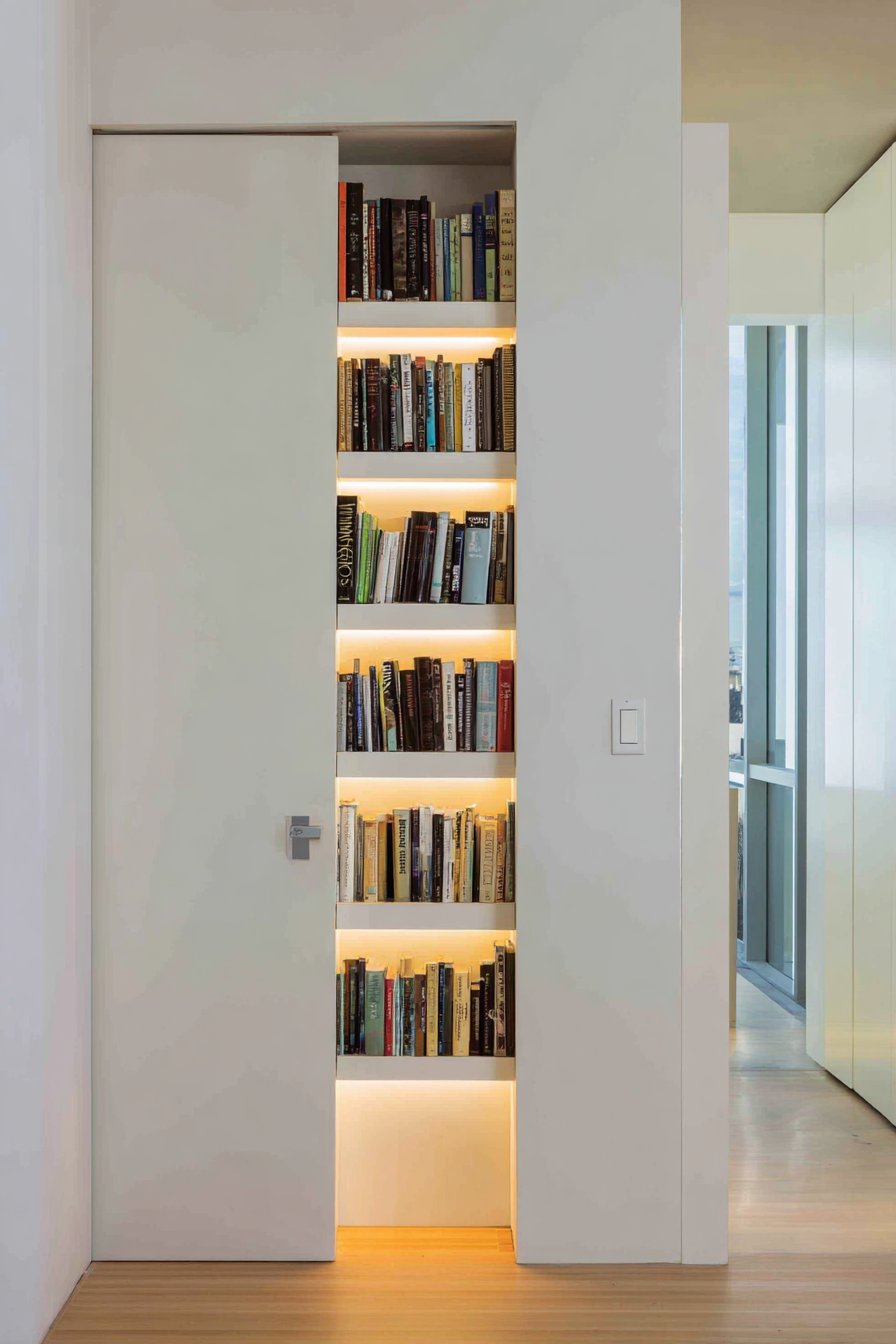
A narrow wall between two rooms becomes a architectural feature with a slim built-in book niche, only 8 inches deep but visually rich with integrated LED strip lighting. Four floating shelves in crisp white paint display a carefully curated collection of hardcover books arranged vertically—their spines creating an unintentional color gradient from deep blues to warm terracottas. The recessed design creates shadow and depth, making the narrow wall feel like an intentional architectural element rather than leftover space. LED lighting illuminates each shelf from behind, creating a gallery-like presentation that highlights the books while providing soft ambient illumination to surrounding areas.
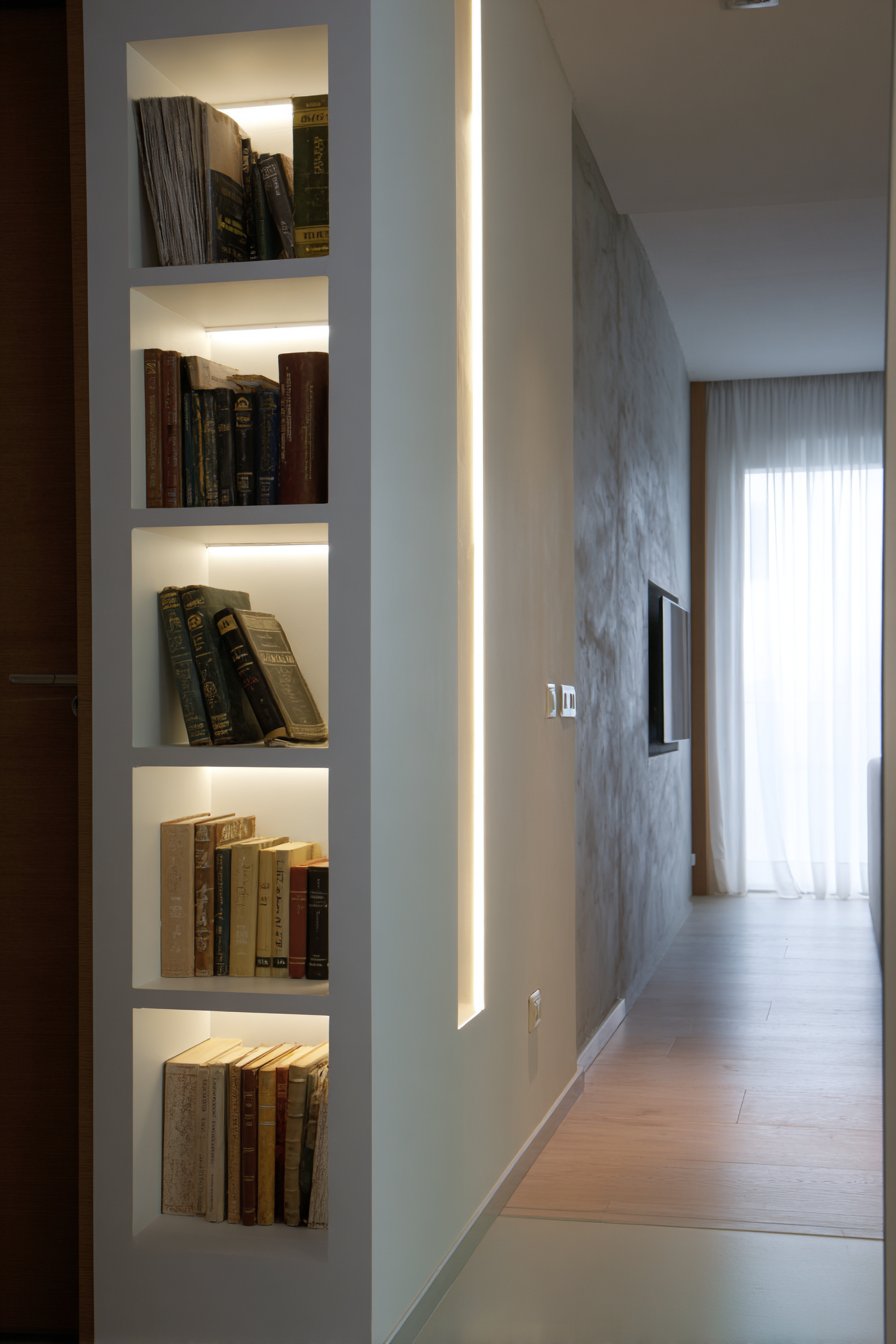
This solution exemplifies how narrow walls can be enhanced through built-in architectural details that add value beyond simple decoration. The recessed niche creates depth where none existed, while the integrated lighting transforms books into illuminated art objects. The vertical book arrangement maximizes display capacity while maintaining the narrow profile, and the color-coordinated spines create visual harmony that feels both intentional and effortless. During evening hours, the lit shelves become a focal point that draws the eye and adds warmth to the space.
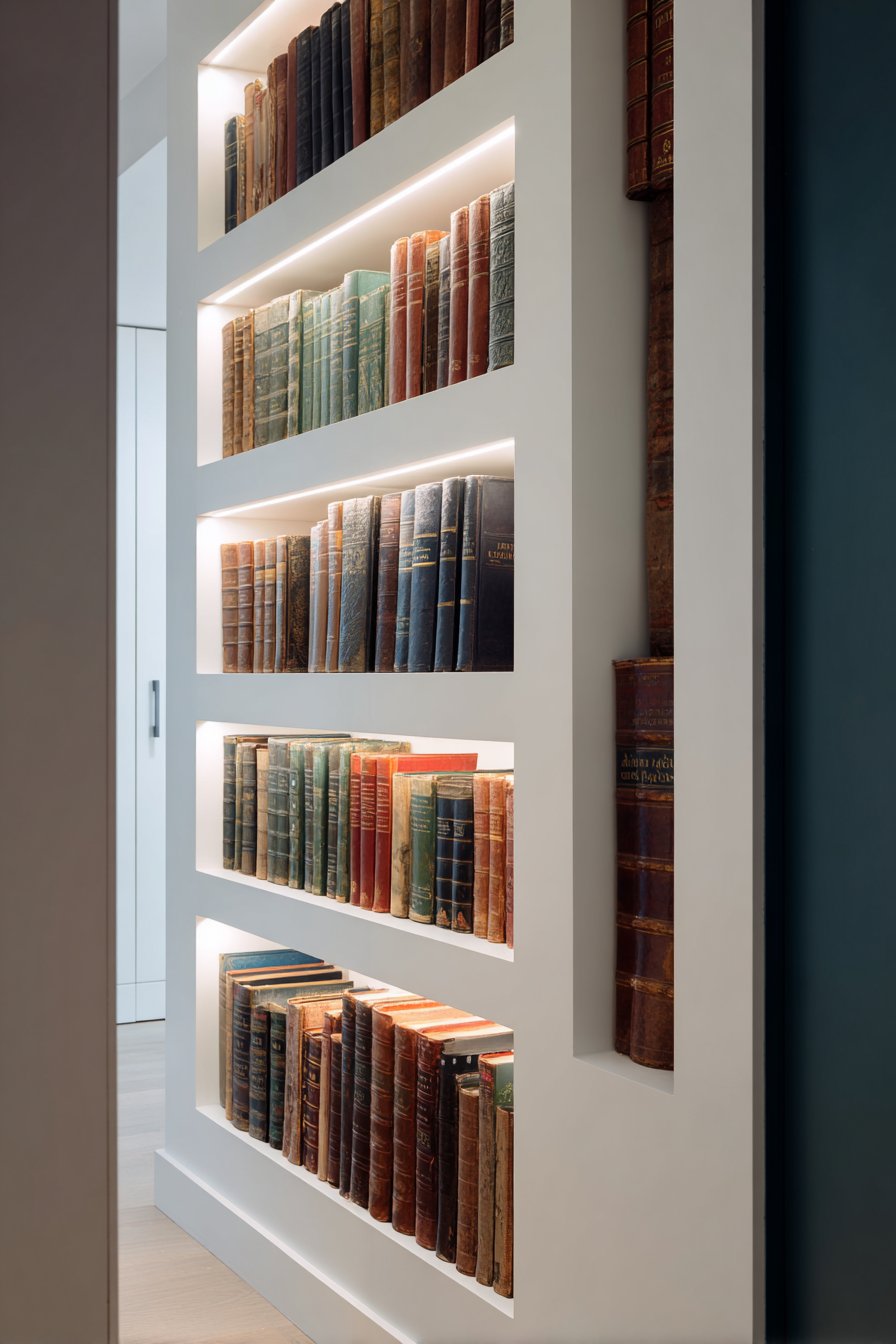
Beyond aesthetics, this approach demonstrates intelligent space utilization in modern apartments where every inch counts. The 8-inch depth is perfect for standard hardcover books without protruding into walkways or feeling bulky. The white shelves and surrounding white walls create a clean gallery aesthetic that makes the colorful book spines pop with maximum impact. This is narrow wall decor that serves both form and function—providing storage, display, lighting, and architectural interest simultaneously.
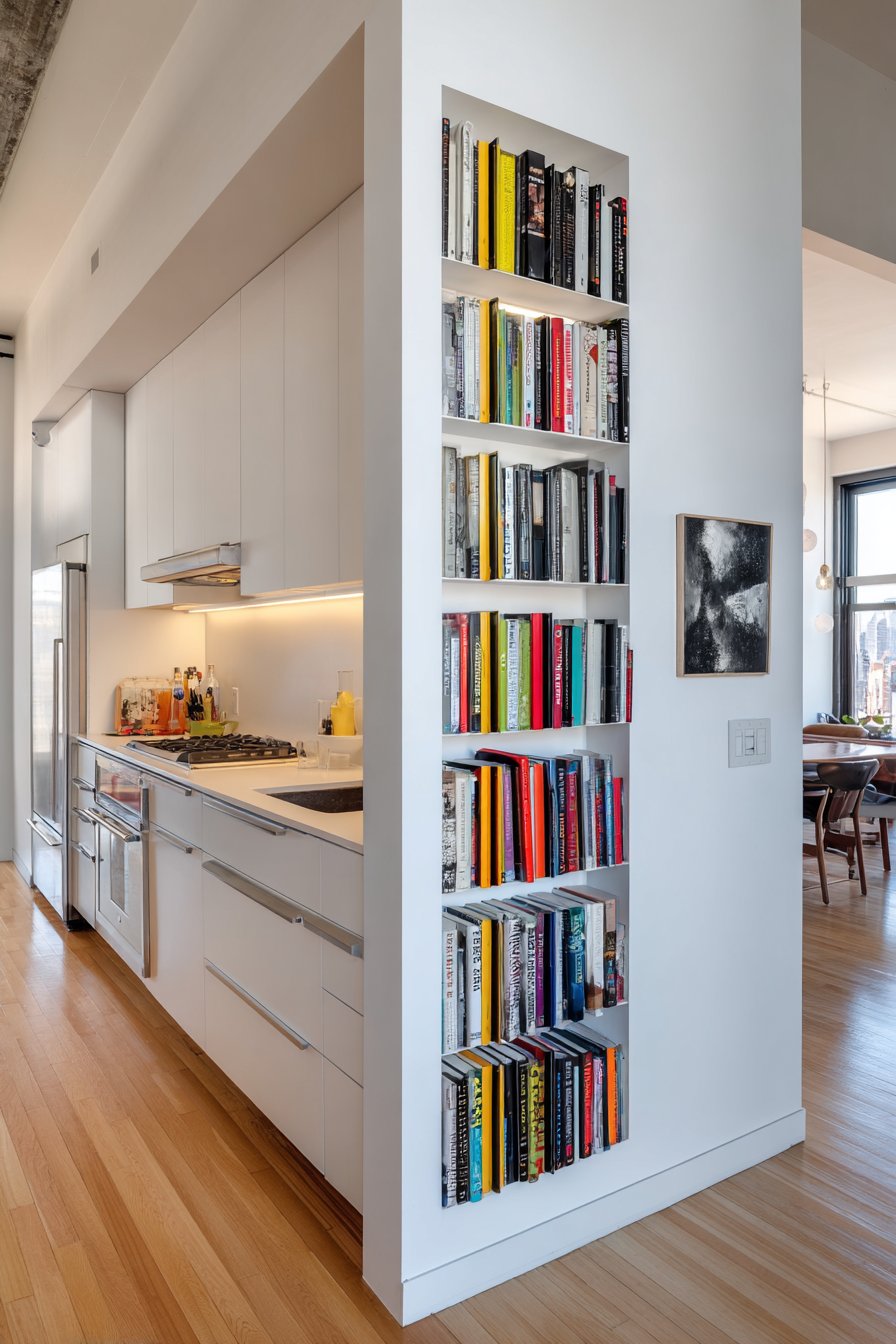
Key Design Tips:
- Plan the recess depth based on standard book sizes—8 inches accommodates most hardcovers comfortably
- Install LED strip lighting on dimmable switches to control ambiance and reduce energy costs
- Paint interior walls and shelves in white or light gray to maximize light reflection
- Curate book selections by color for visual impact, treating spines as part of the design
- Consider adding small art objects or sculptural pieces between books to break up the linear arrangement
9. Dynamic Photo Ledge System
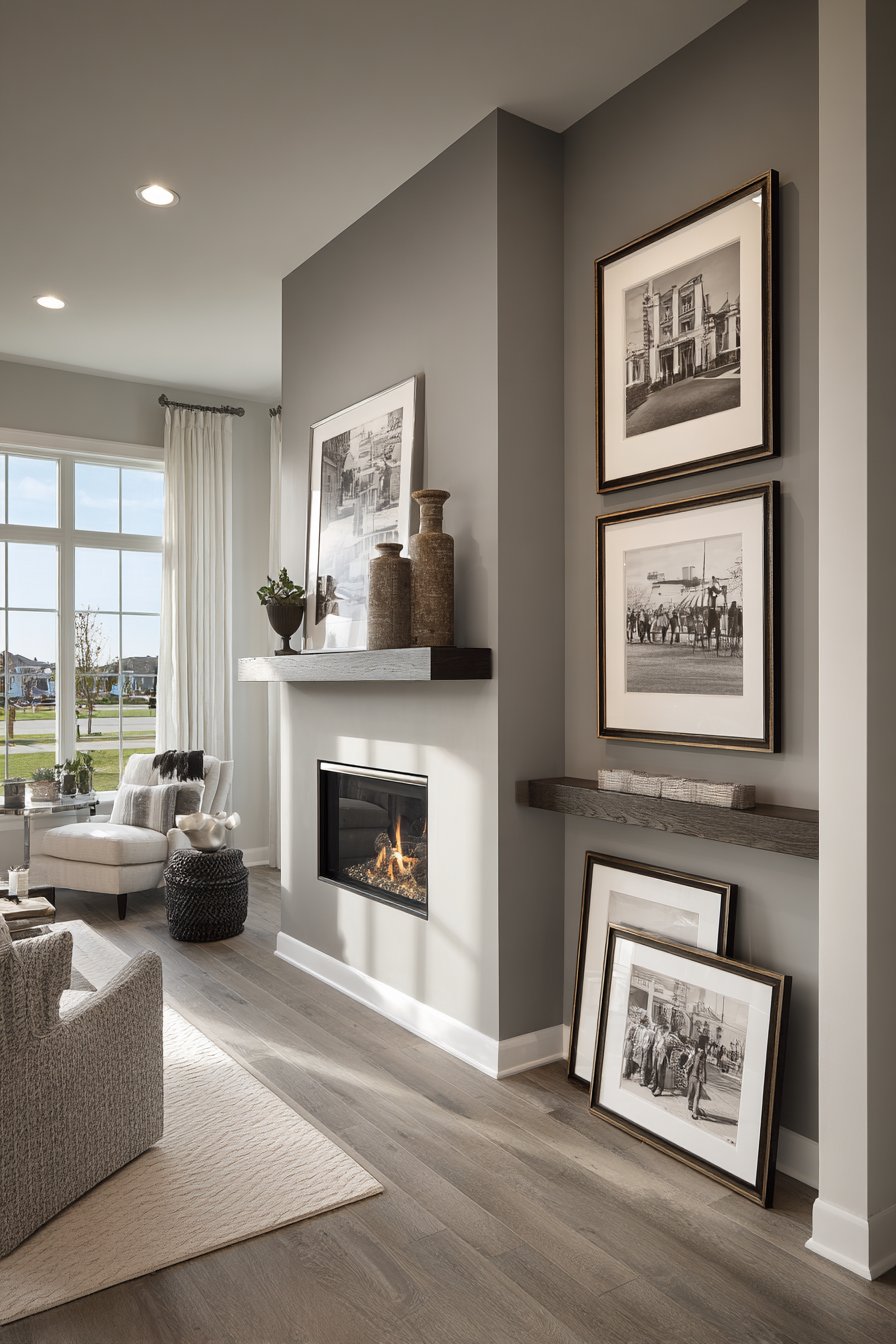
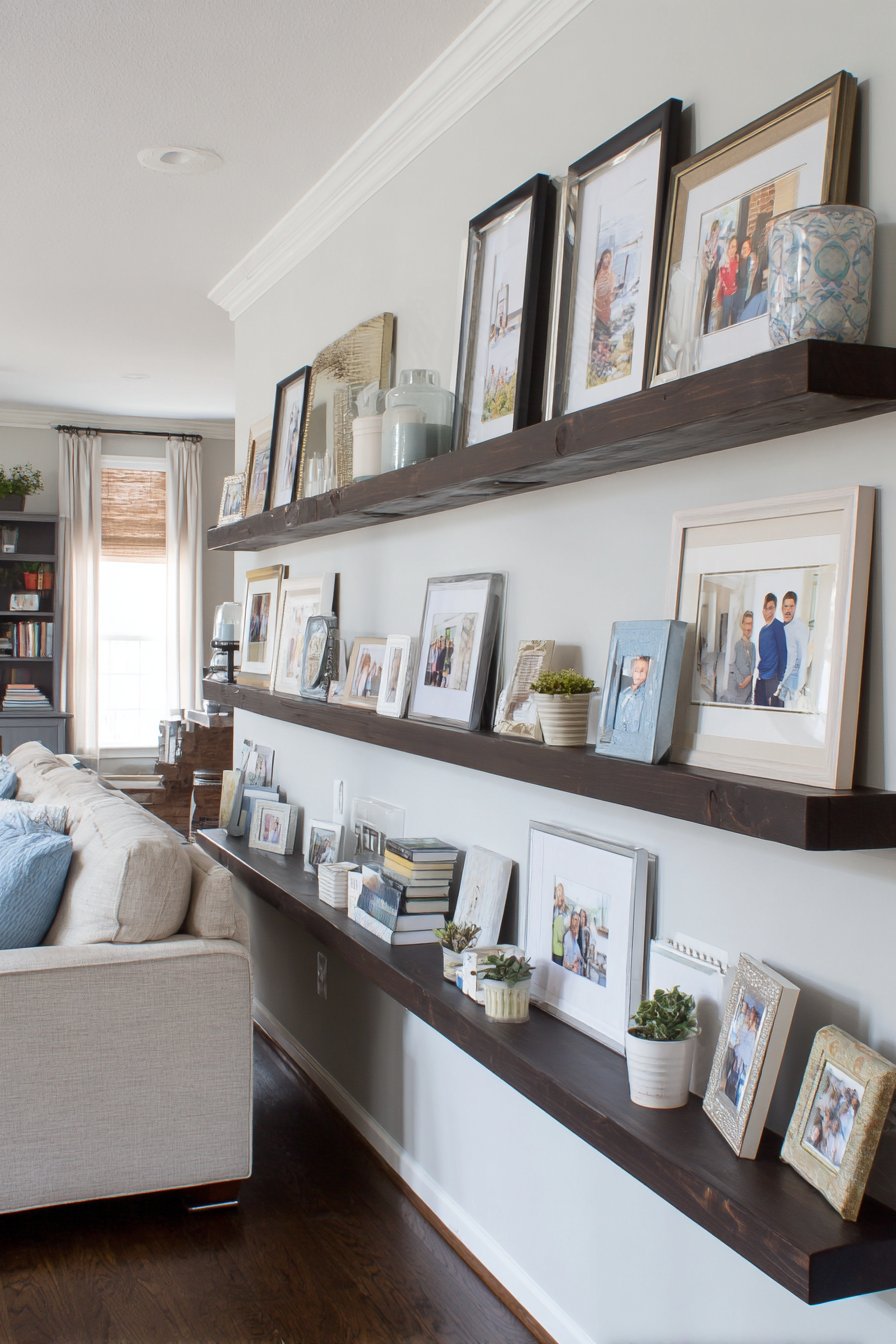
Transform a 14-inch wide wall beside a fireplace into a dynamic family photo gallery using three thin floating ledges in dark walnut finish. Unlike traditional gallery walls where photos are permanently mounted, this system allows for constant evolution—frames simply lean against the wall on the ledges, making it easy to rotate images seasonally or as your collection grows. Matching black frames in various sizes create cohesion while offering flexibility, and the natural wood ledges add warmth that complements the fireplace’s cozy ambiance. This isn’t a static display; it’s a living gallery that evolves with your family’s story.
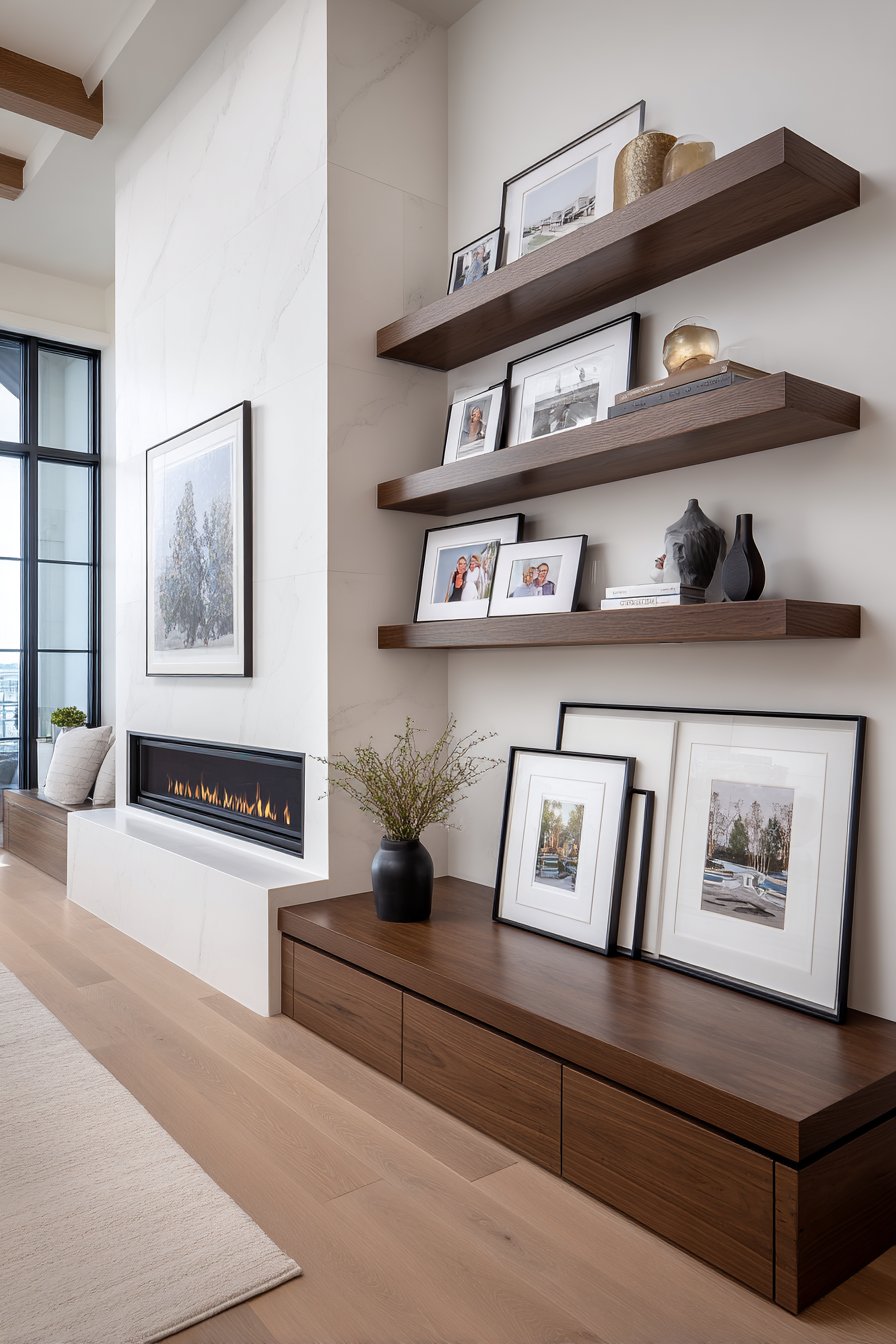
The genius of ledge-style displays lies in their adaptability and low commitment. No nail holes, no permanent decisions, no measuring and remeasuring frame arrangements. Simply place frames on ledges and adjust until the composition feels right. Layer smaller frames in front of larger ones for depth, or keep arrangements simple and clean. Natural lighting from nearby windows creates authentic interior ambiance, with sunlight playing across the frames throughout the day and casting gentle shadows that emphasize the dimensional quality of the layered arrangement.
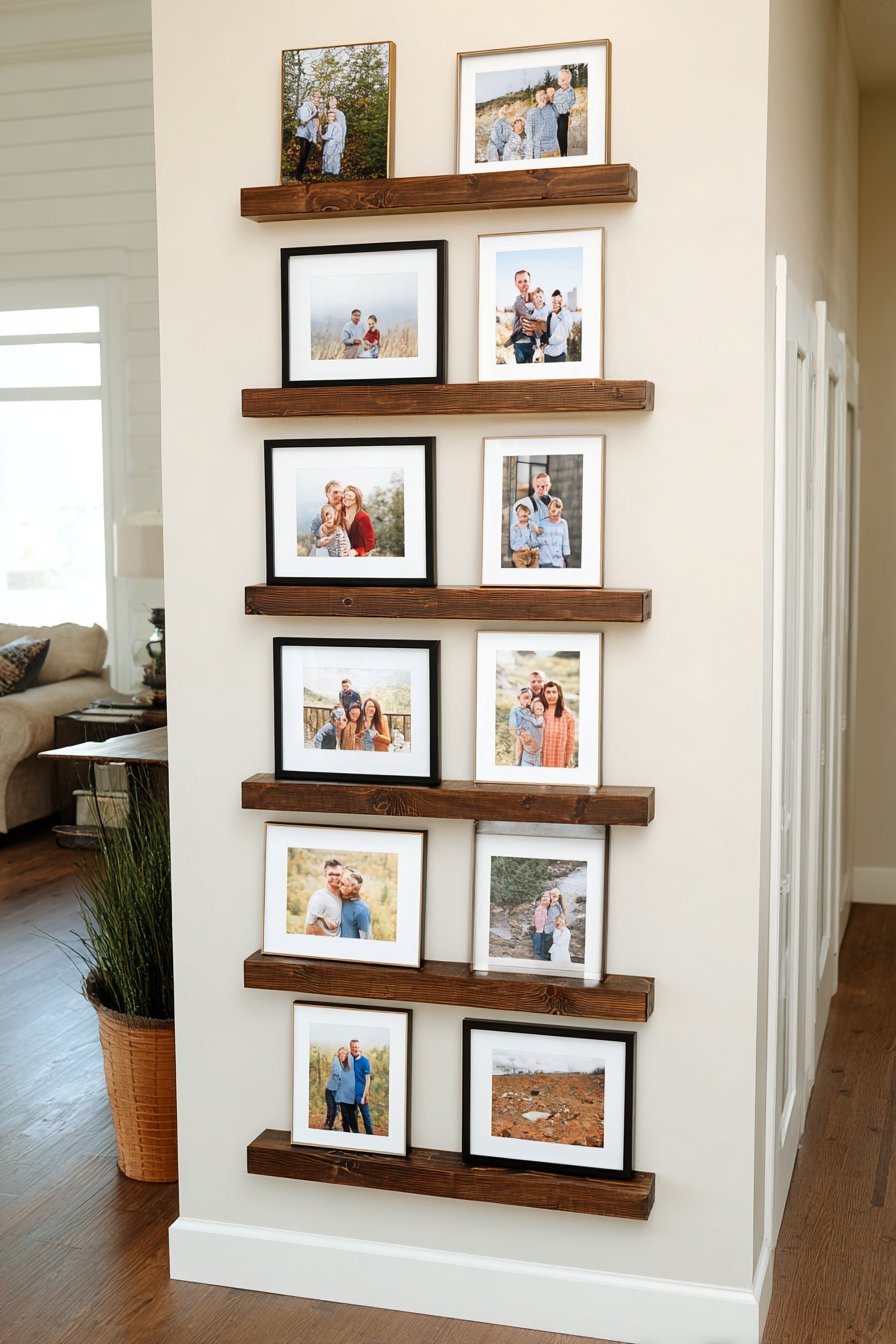
This approach works beautifully on narrow walls that might otherwise be awkward to decorate. The ledges themselves create strong horizontal lines that visually widen the narrow space, while the flexibility of the system means you’re never locked into one arrangement. Change photos with the seasons, feature vacation memories, or rotate children’s artwork—the possibilities are endless and endlessly adaptable.
Key Design Tips:
- Install ledges with a small lip (1/2 inch) at the front to prevent frames from sliding off
- Vary frame sizes but maintain consistent style and color for cohesive appearance
- Space ledges 12-16 inches apart vertically to allow room for various frame heights
- Layer frames by placing smaller ones in front of larger ones for dimensional depth
- Include a mix of horizontal and vertical orientations for visual interest
10. Oversized Vertical Abstract Canvas
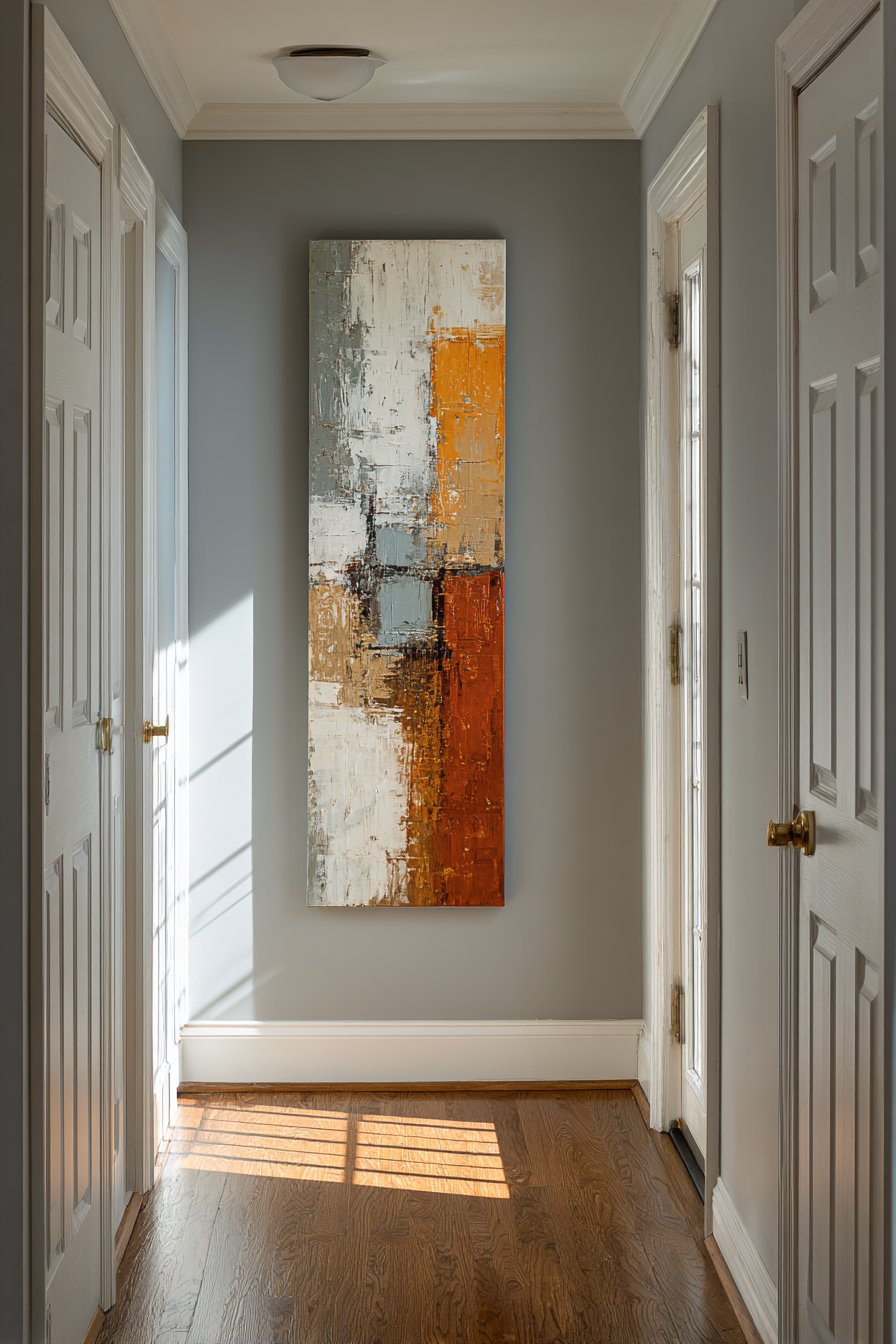
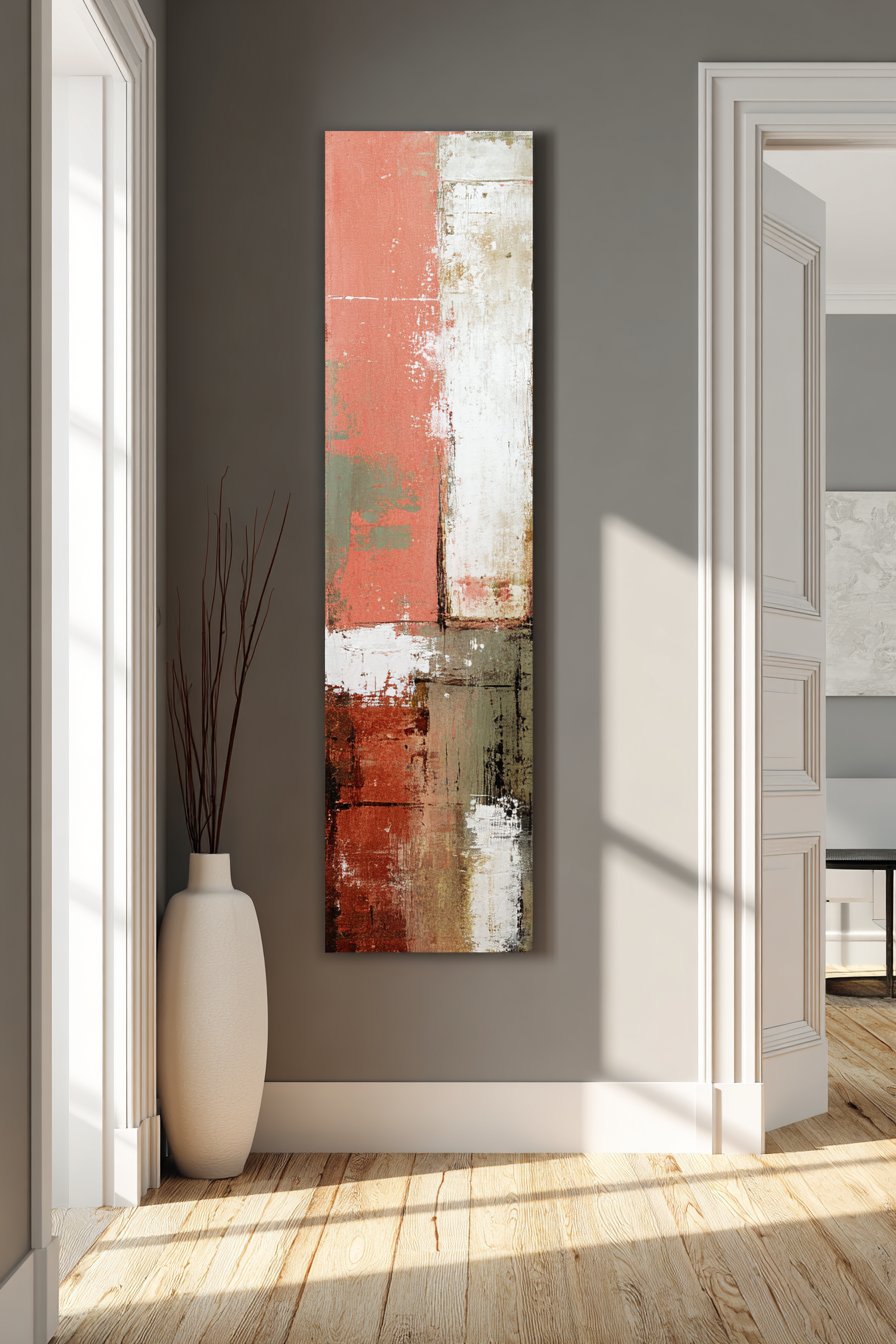
A single oversized vertical painting in muted earth tones makes a bold statement on a narrow 16-inch wall between two doorways, proving that sometimes the simplest solution is the most effective. The 12×60 inch canvas features minimalist brushstrokes in terracotta, sage green, and cream—colors that create soothing harmony while providing enough visual interest to command attention. The vertical format perfectly complements the narrow wall’s proportions, creating a window-like effect that draws the eye upward and makes ceilings feel higher. Against soft gray walls, the artwork’s earth tones create warm contrast that grounds the space with natural elegance.
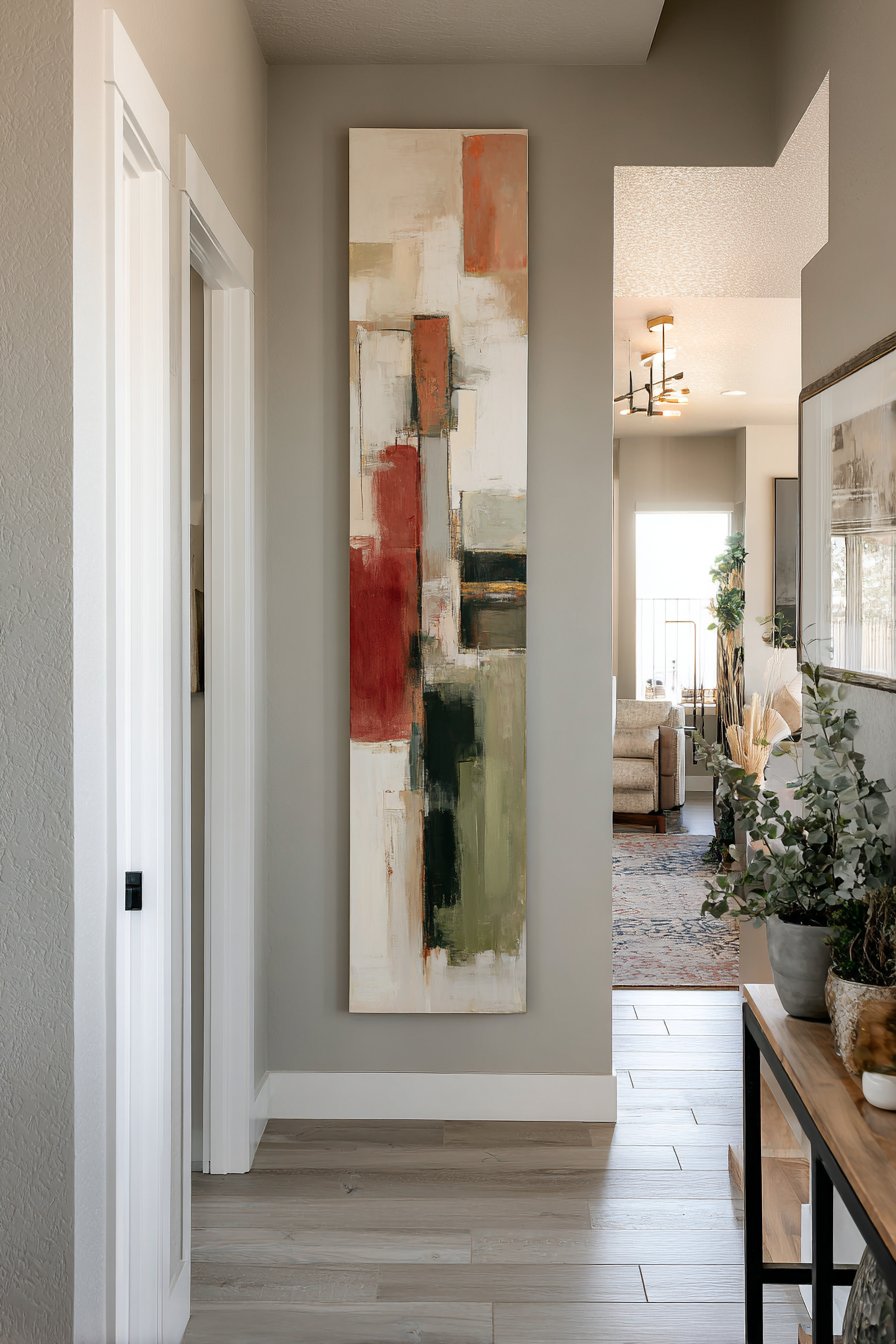
The beauty of this approach lies in its restraint. Rather than trying to fill the narrow wall with multiple elements, a single substantial piece creates impact through scale and presence. The abstract nature of the work allows it to complement rather than dominate the space, while the muted color palette ensures it enhances rather than overwhelms the room’s existing design. As natural daylight shifts throughout the day, the painting’s colors subtly transform—sage appearing more blue in morning light, terracotta warming in afternoon sun—creating an ever-changing focal point that never feels static.
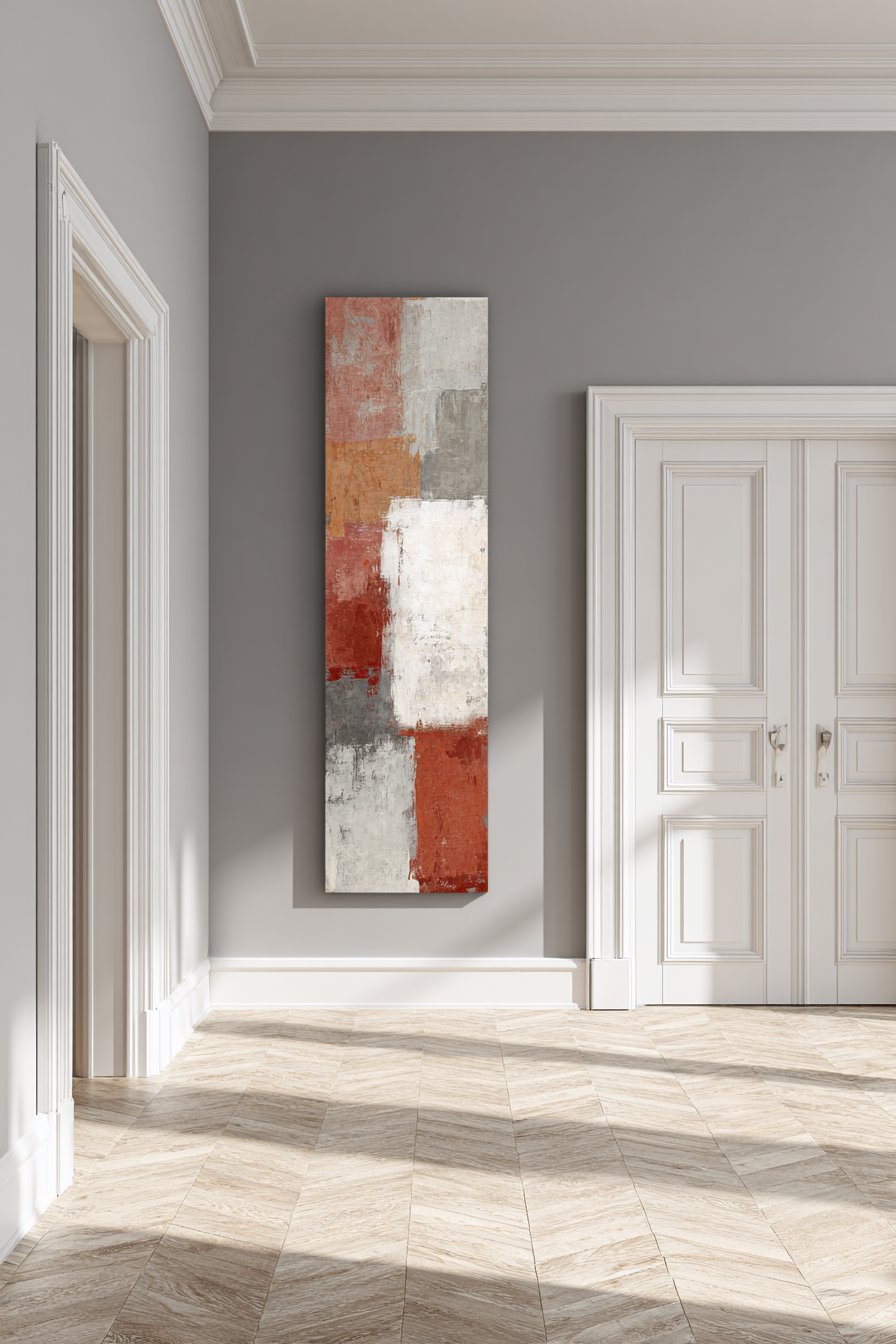
This solution works particularly well in bedrooms, where the calming earth tones and abstract forms contribute to a serene atmosphere conducive to rest. The vertical canvas creates visual height in the room while the narrow width ensures it doesn’t overwhelm the wall space. It’s a perfect example of how narrow walls can showcase statement pieces that would feel oversized elsewhere, turning a design challenge into an opportunity for impact.
Key Design Tips:
- Choose vertical canvases with 4:1 or 5:1 height-to-width ratios for narrow walls
- Select abstract or minimalist artwork that doesn’t require viewing distance to appreciate detail
- Consider the room’s existing color palette when selecting artwork to ensure harmony
- Hang at proper height—typically with the center at 57-60 inches from floor
- Ensure the canvas depth doesn’t protrude too far from the wall, affecting door clearance
11. Geometric Hexagonal Shelf Display
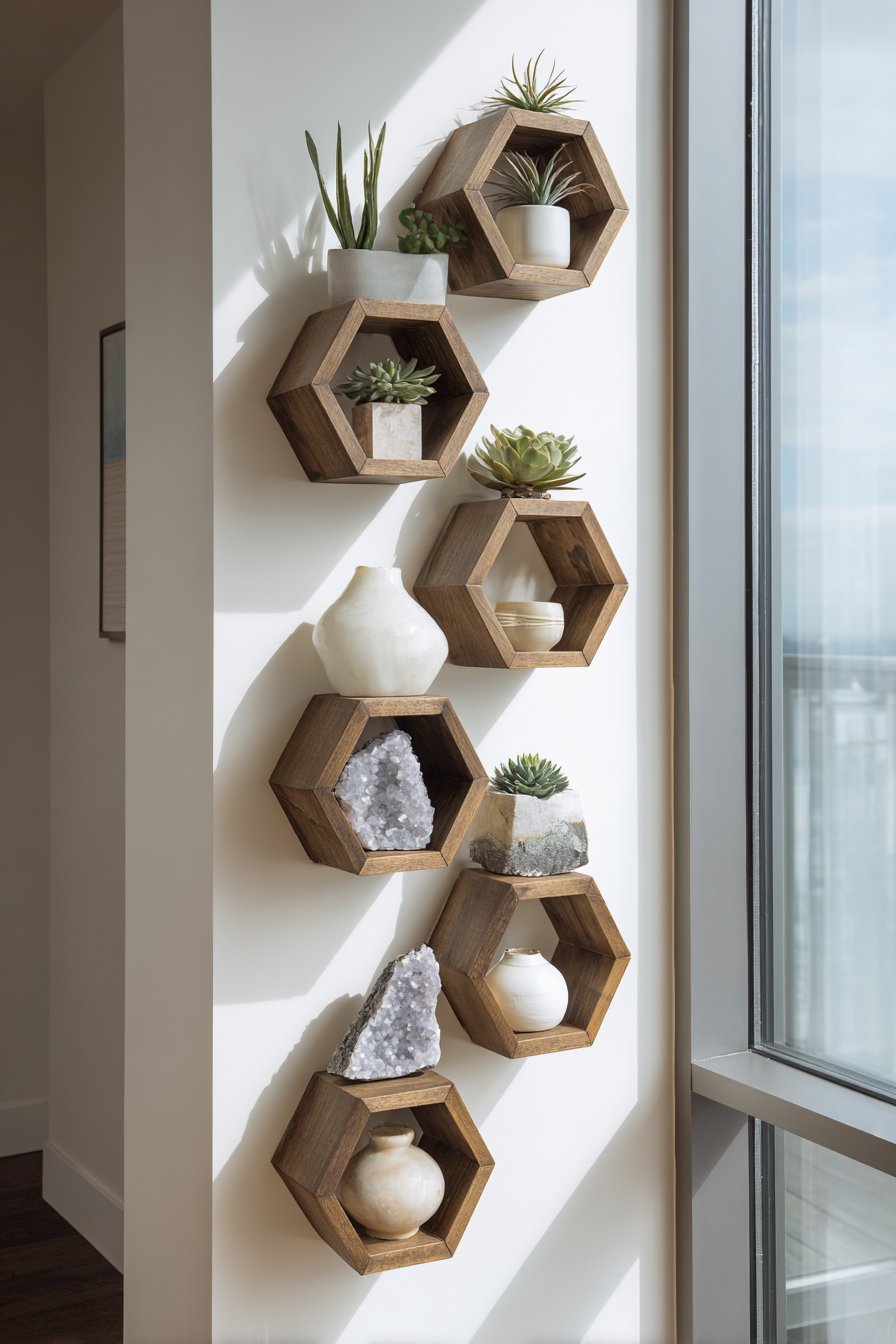
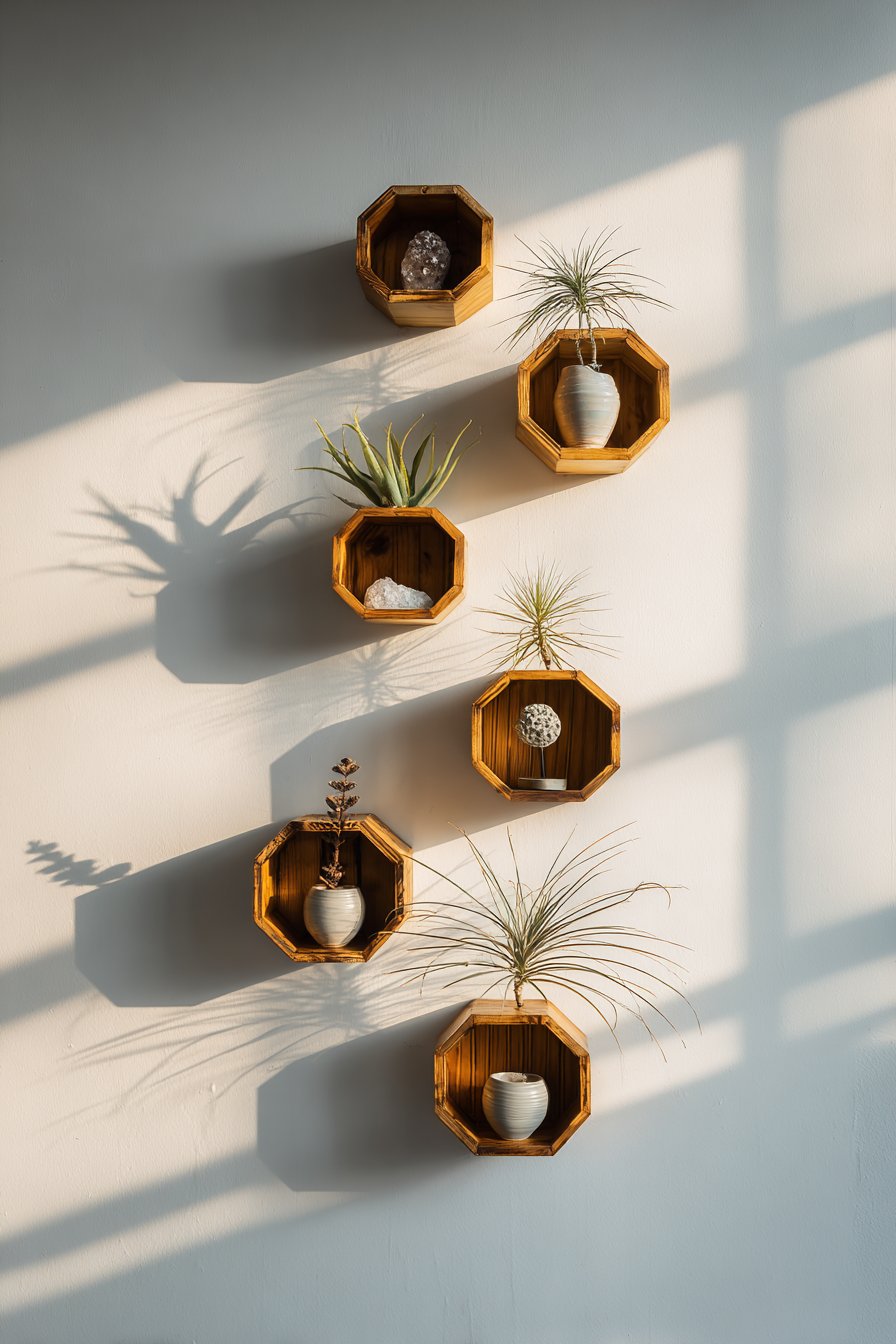
Five hexagonal shelves in natural light wood create modern geometric interest on a 14-inch wide wall, each 6-inch hexagon mounted in a carefully offset pattern that balances structure with organic flow. This arrangement transforms the narrow wall into a three-dimensional sculpture that’s both functional and artistic. Each hexagon cradles small treasures—potted air plants that require minimal care, interesting geodes with crystalline centers, and minimalist ceramic pieces in soft whites and grays. Against crisp white walls, the light wood creates warm contrast while the geometric shapes introduce contemporary edge. Soft natural lighting highlights the dimensional quality, with each shelf casting subtle shadows that emphasize the three-dimensional aspect.
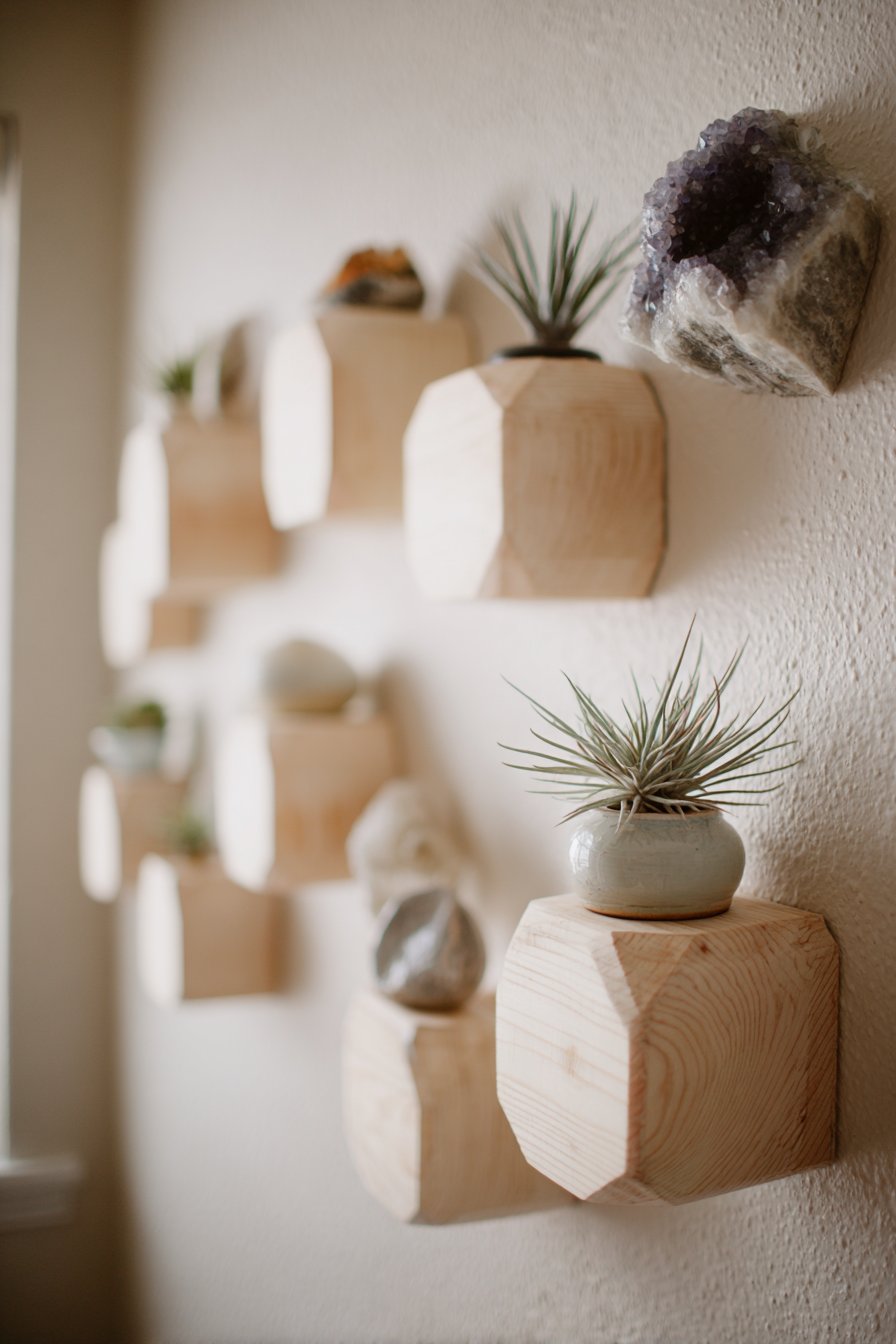
The hexagonal shape has become increasingly popular in modern design, and for good reason—it offers more visual interest than standard rectangular shelves while maintaining clean, contemporary lines. On narrow walls, this shape works particularly well because the angles create visual movement that draws the eye across and up the display, making the narrow space feel more dynamic. The offset pattern prevents the arrangement from feeling too rigid or mathematical, adding an organic quality that makes the display feel curated rather than calculated.
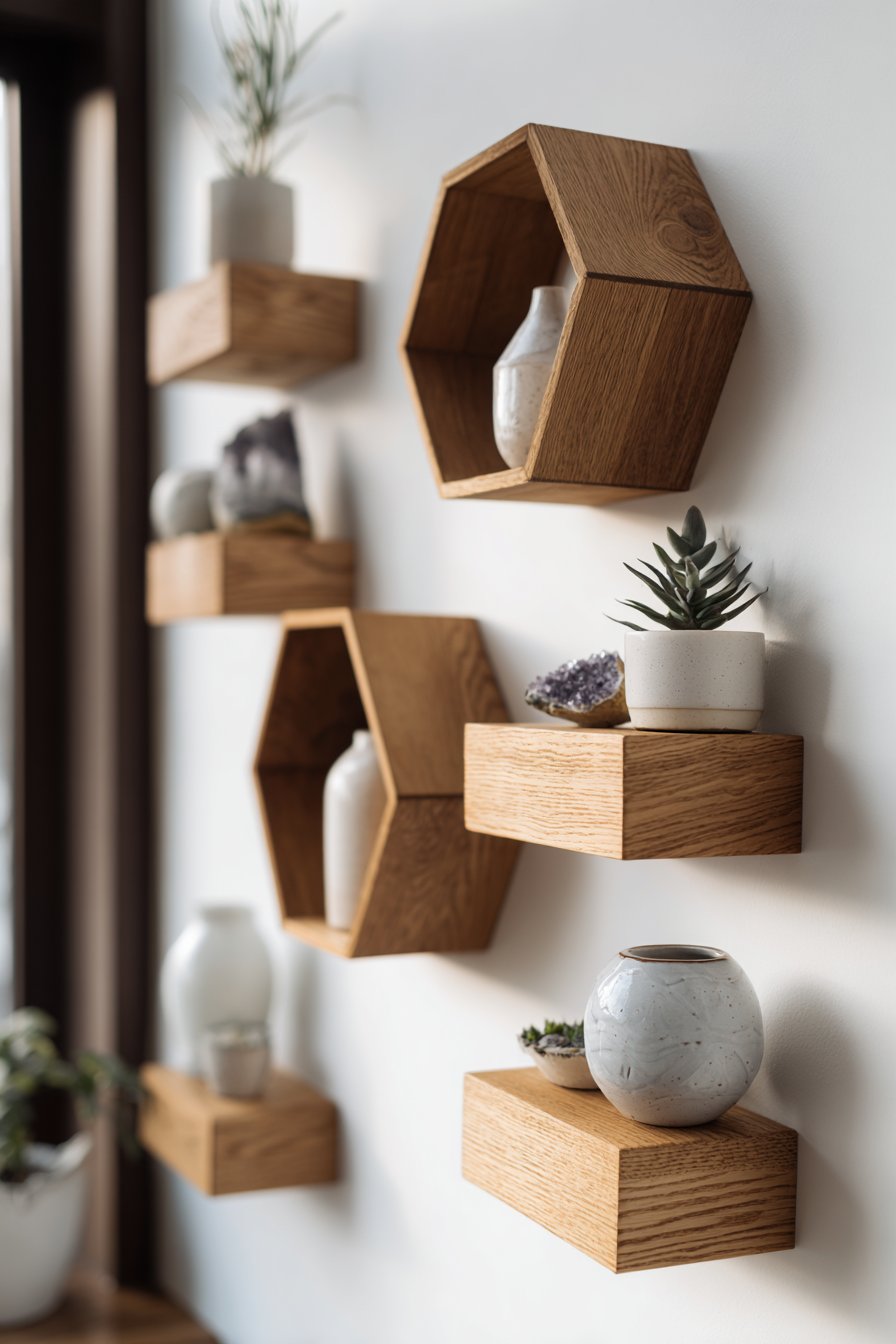
This solution demonstrates how narrow walls can showcase collections of small objects that might get lost elsewhere. The defined hexagonal spaces create natural boundaries for styling, preventing the tendency toward clutter that open shelving sometimes encourages. Each hexagon becomes a miniature vignette, thoughtfully composed with items that complement rather than compete with each other. The result is sophisticated, modern, and surprisingly versatile—adapting easily to various interior styles from Scandinavian minimalism to modern farmhouse.
Key Design Tips:
- Plan the offset pattern on paper before mounting to visualize the final arrangement
- Keep displayed items small-scale to maintain the shelves’ geometric impact
- Choose objects with varying heights and textures for visual interest within each hexagon
- Mount shelves securely with appropriate anchors—hexagonal shapes can be less stable than rectangular
- Limit color palette of displayed items to 2-3 tones for cohesive, uncluttered appearance
12. Geometric Wallpaper Accent Wall
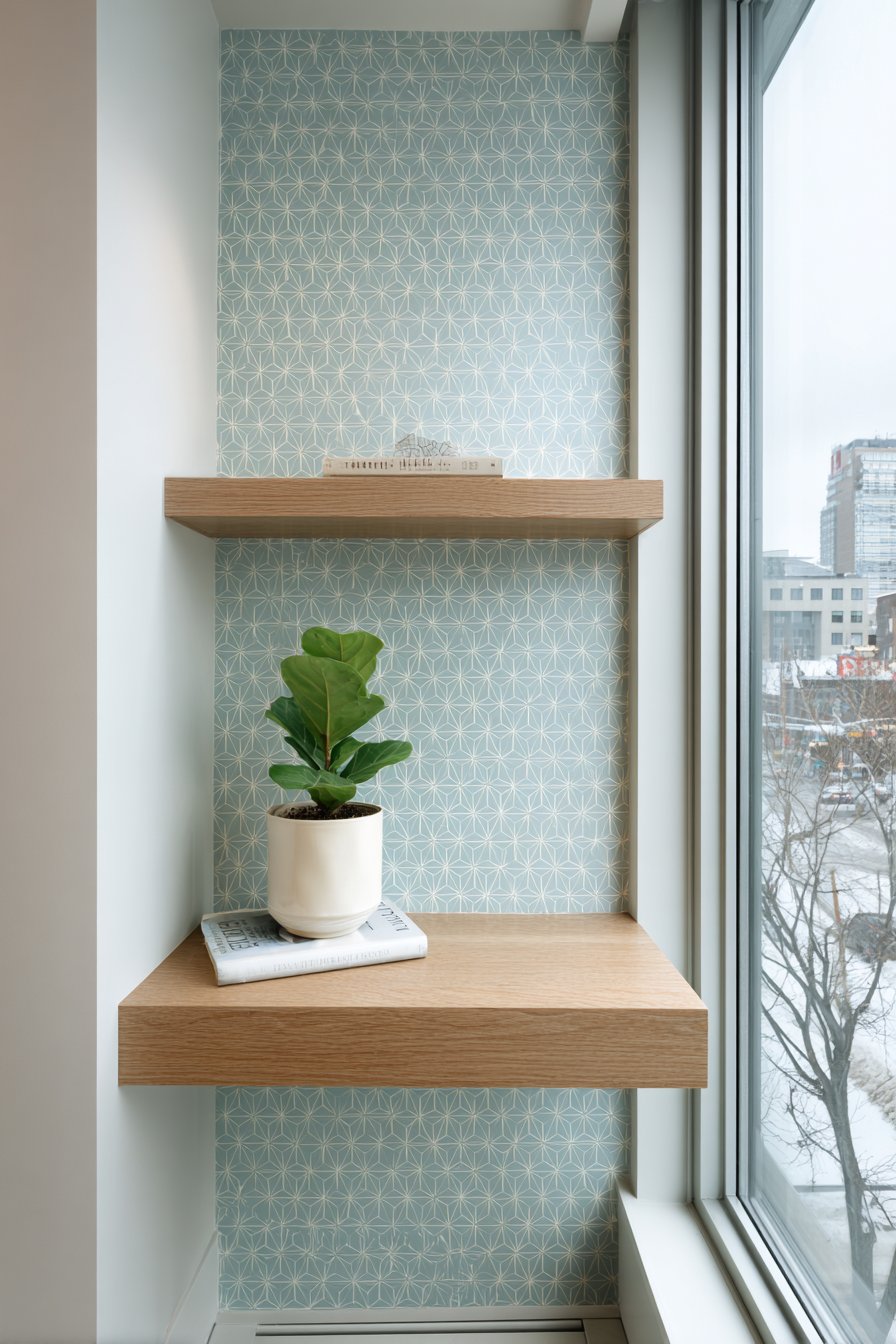
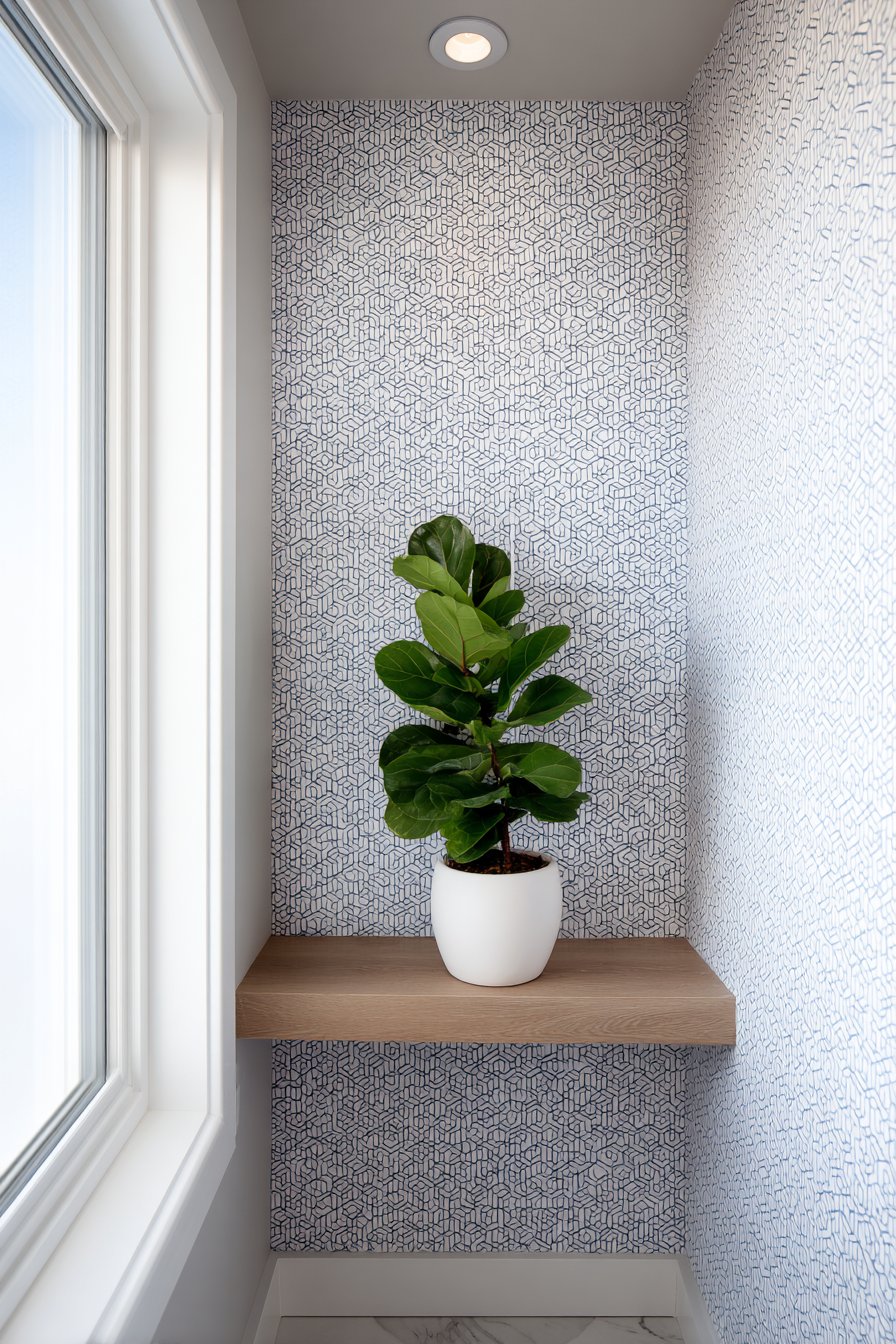
A narrow 18-inch wall between a window and corner becomes a jewel-box accent wall with peel-and-stick wallpaper featuring a subtle hexagonal pattern in soft blue and white. This approach proves that wallpaper isn’t just for large expanses—it can define and enhance even the narrowest spaces. The geometric pattern creates visual texture without overwhelming, while the soft blue introduces a calming color element. A single floating shelf in white oak provides a landing spot for a small potted fiddle leaf fig, its large leaves creating organic contrast against the geometric background. Natural light from the adjacent window illuminates the pattern throughout the day, making the blue tones shift subtly from cool to warm.
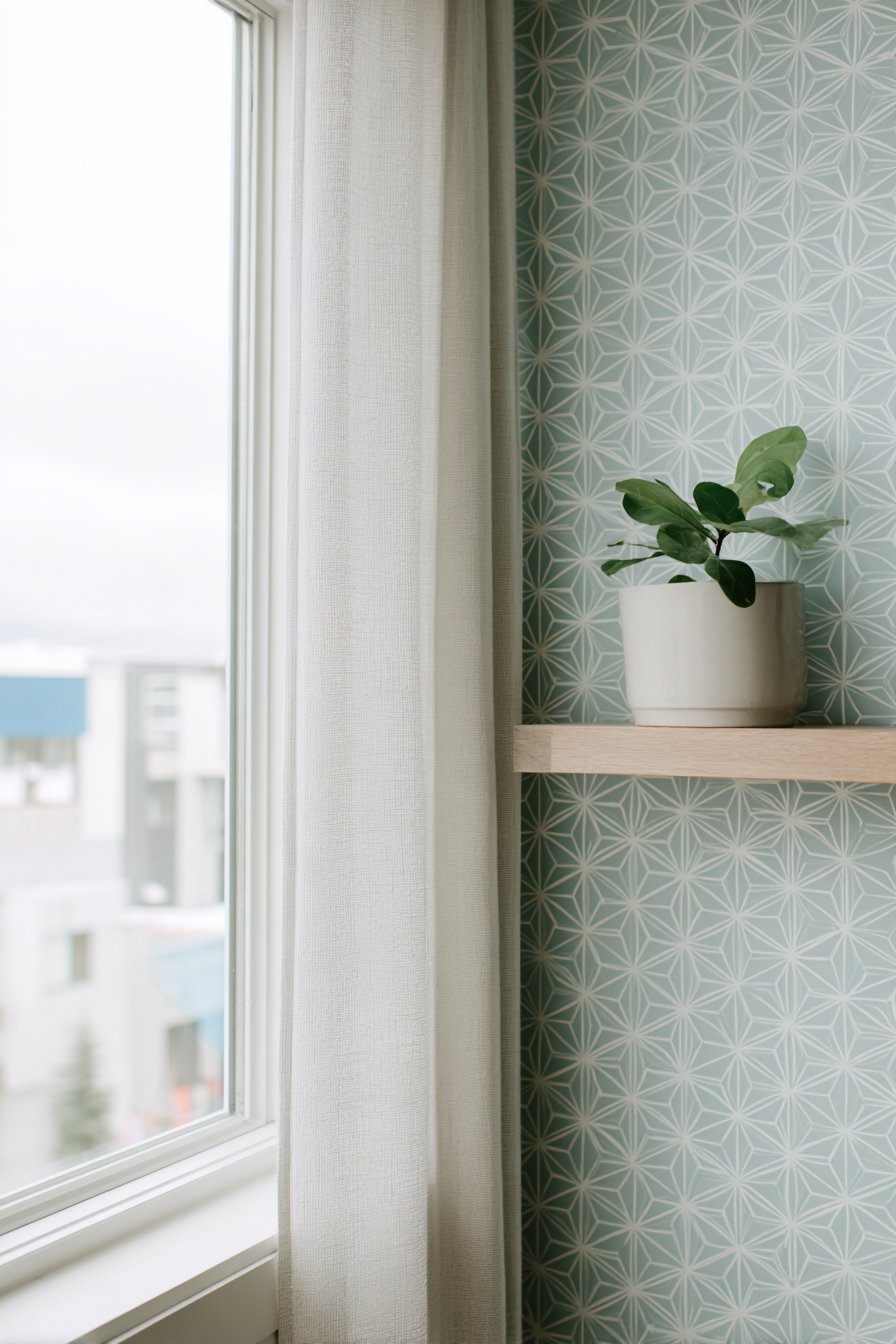
The revolutionary aspect of modern peel-and-stick wallpaper is how it democratizes dramatic design changes. No professional installation, no permanent commitment, no paste or mess—just peel, stick, and transform. For narrow walls, this is particularly valuable because the small surface area makes experimentation low-risk and affordable. If you decide you don’t love the pattern, simply remove it without damaging walls. The geometric design adds visual complexity that makes the narrow wall feel intentional and designed rather than leftover.
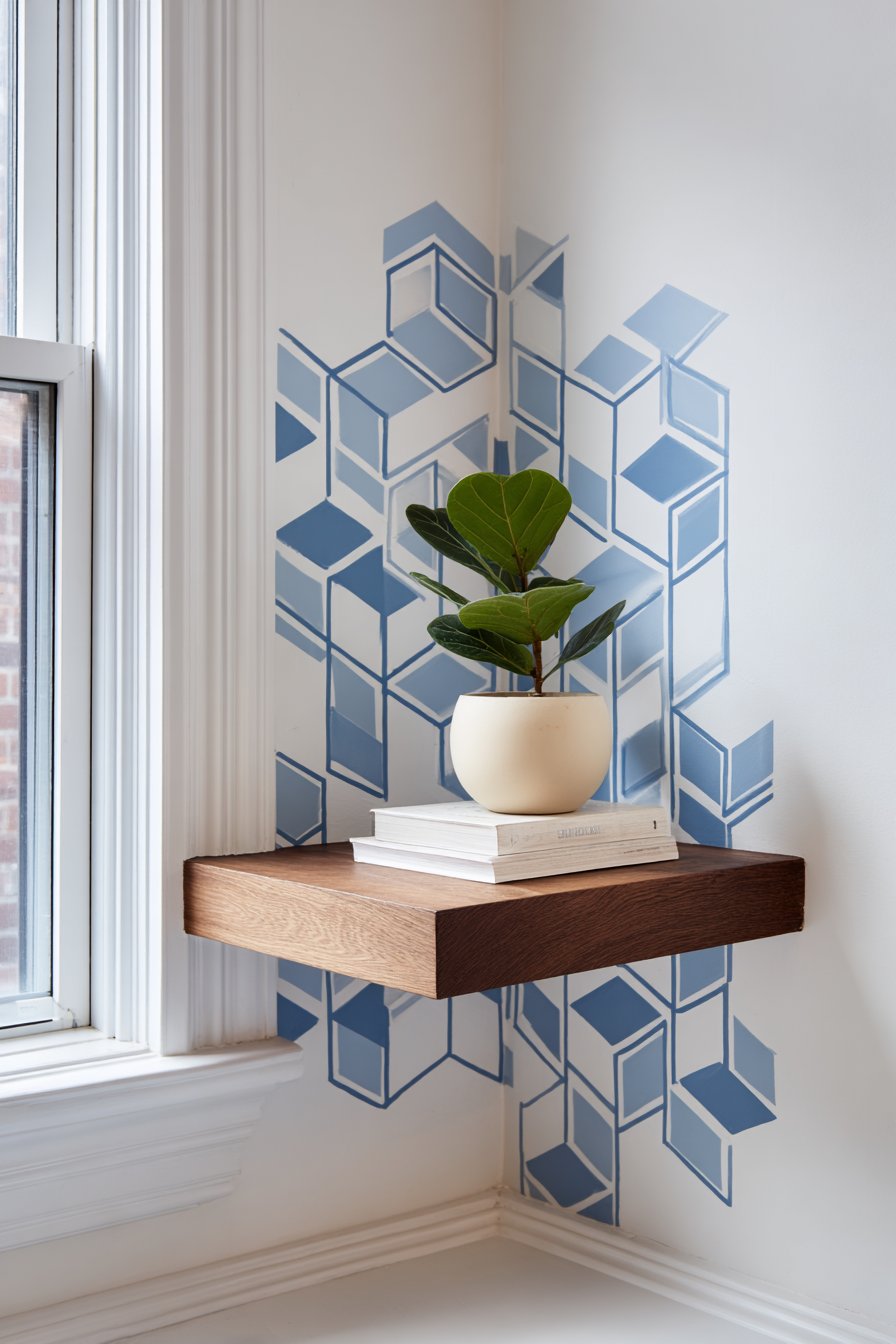
This solution works beautifully in spaces where you want to add pattern and color without committing to painting entire rooms. The narrow wall becomes a design statement—a controlled dose of pattern that creates interest without overwhelming. The floating shelf grounds the wallpaper with functional purpose while the fiddle leaf fig softens the geometric precision with organic form. Together, these elements create a narrow wall moment that feels complete and purposeful.
Key Design Tips:
- Clean walls thoroughly before applying peel-and-stick wallpaper for best adhesion
- Order extra wallpaper to account for pattern matching and potential mistakes
- Use a smoothing tool to eliminate air bubbles during application for professional results
- Choose patterns with small to medium scale—large-scale patterns can overwhelm narrow walls
- Coordinate wallpaper colors with adjacent walls and decor for cohesive flow
13. Vertical Wine Rack Kitchen Storage
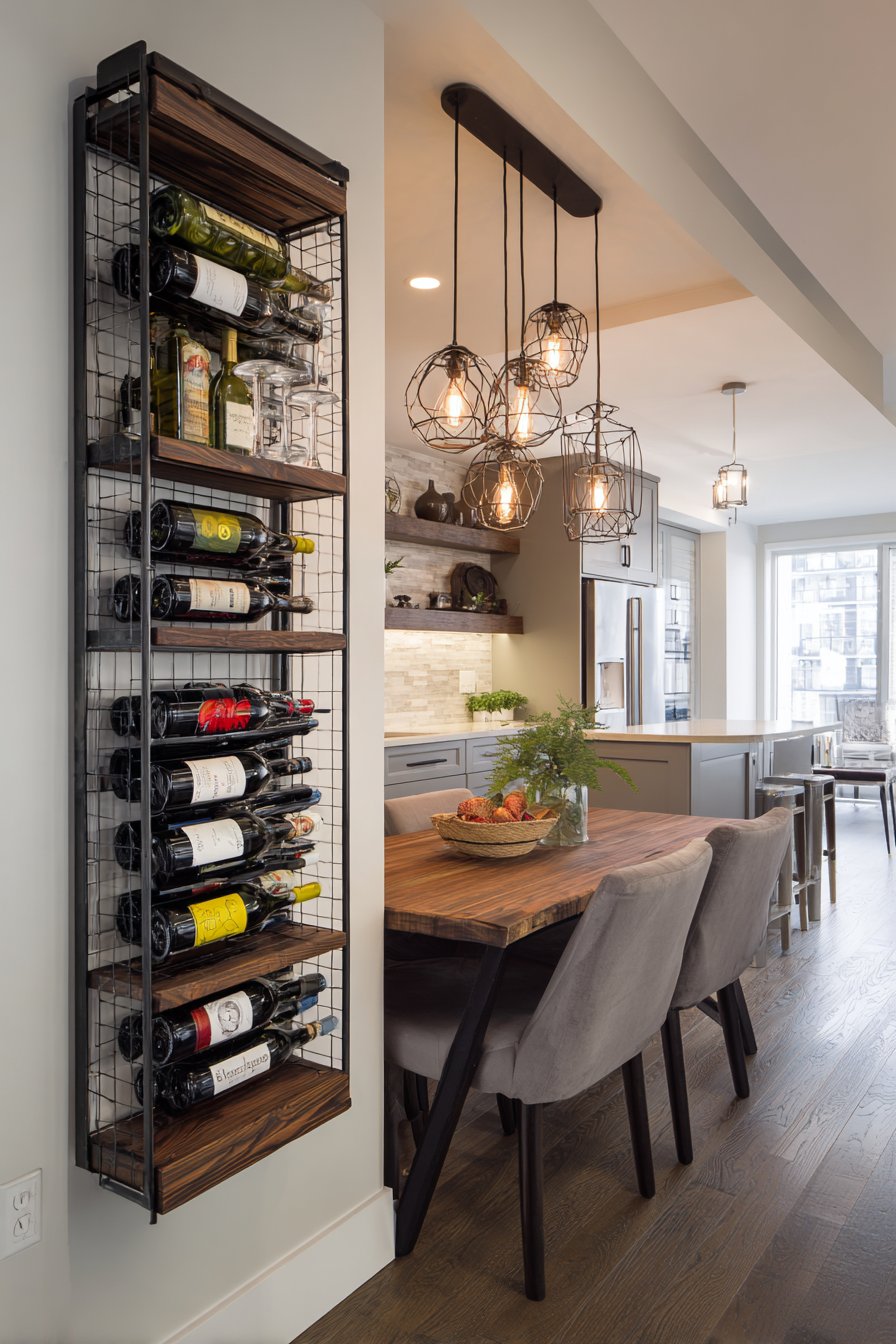
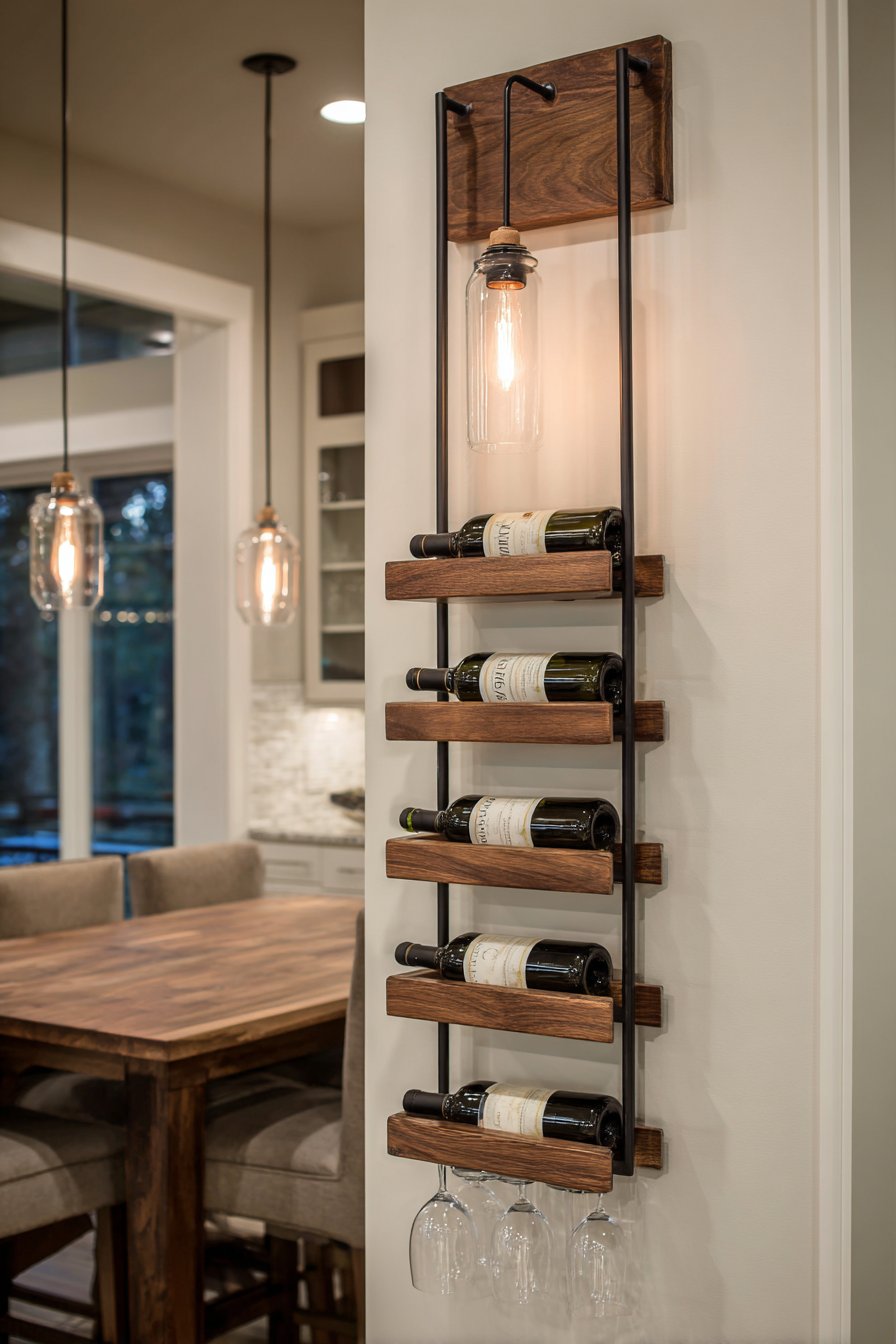
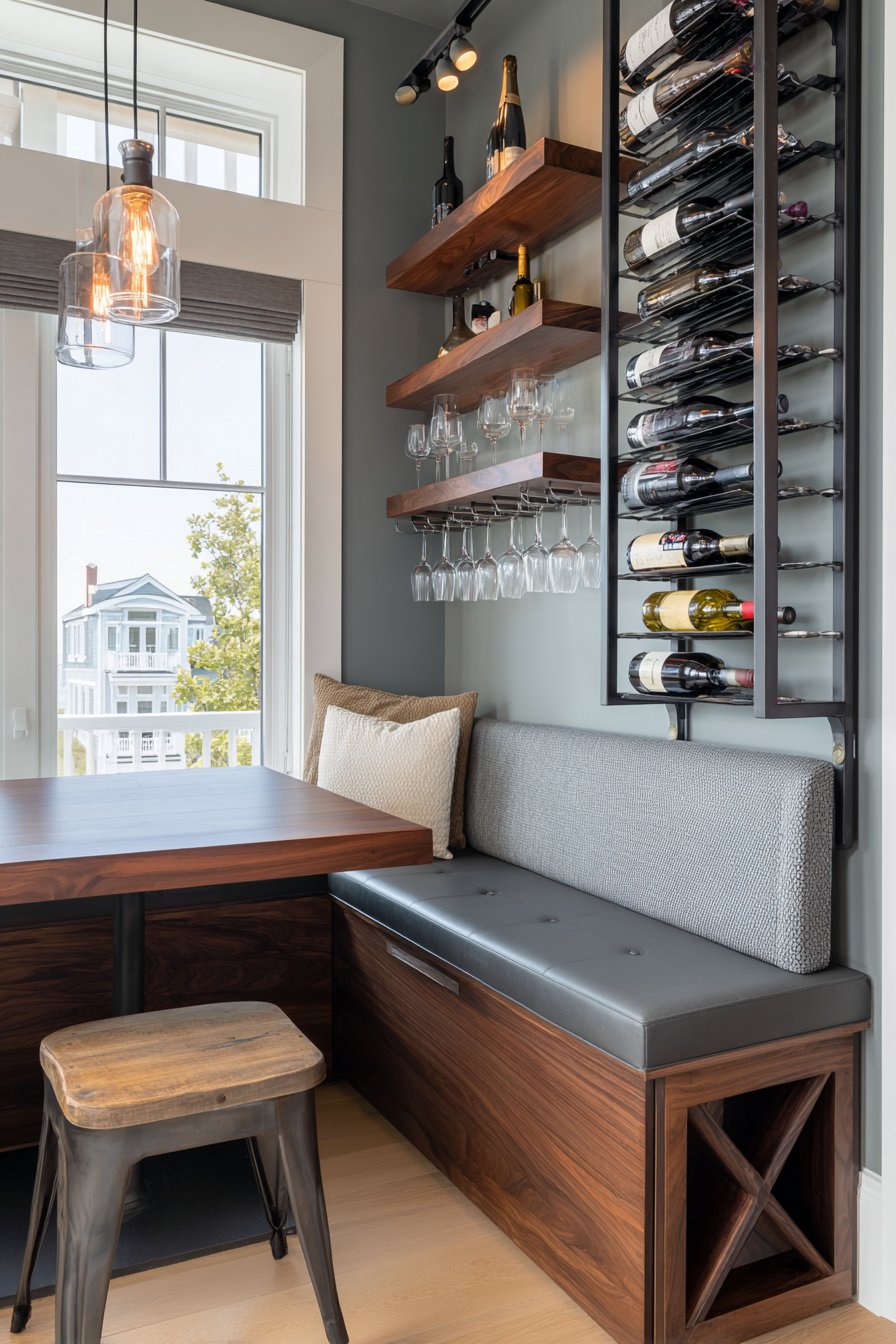
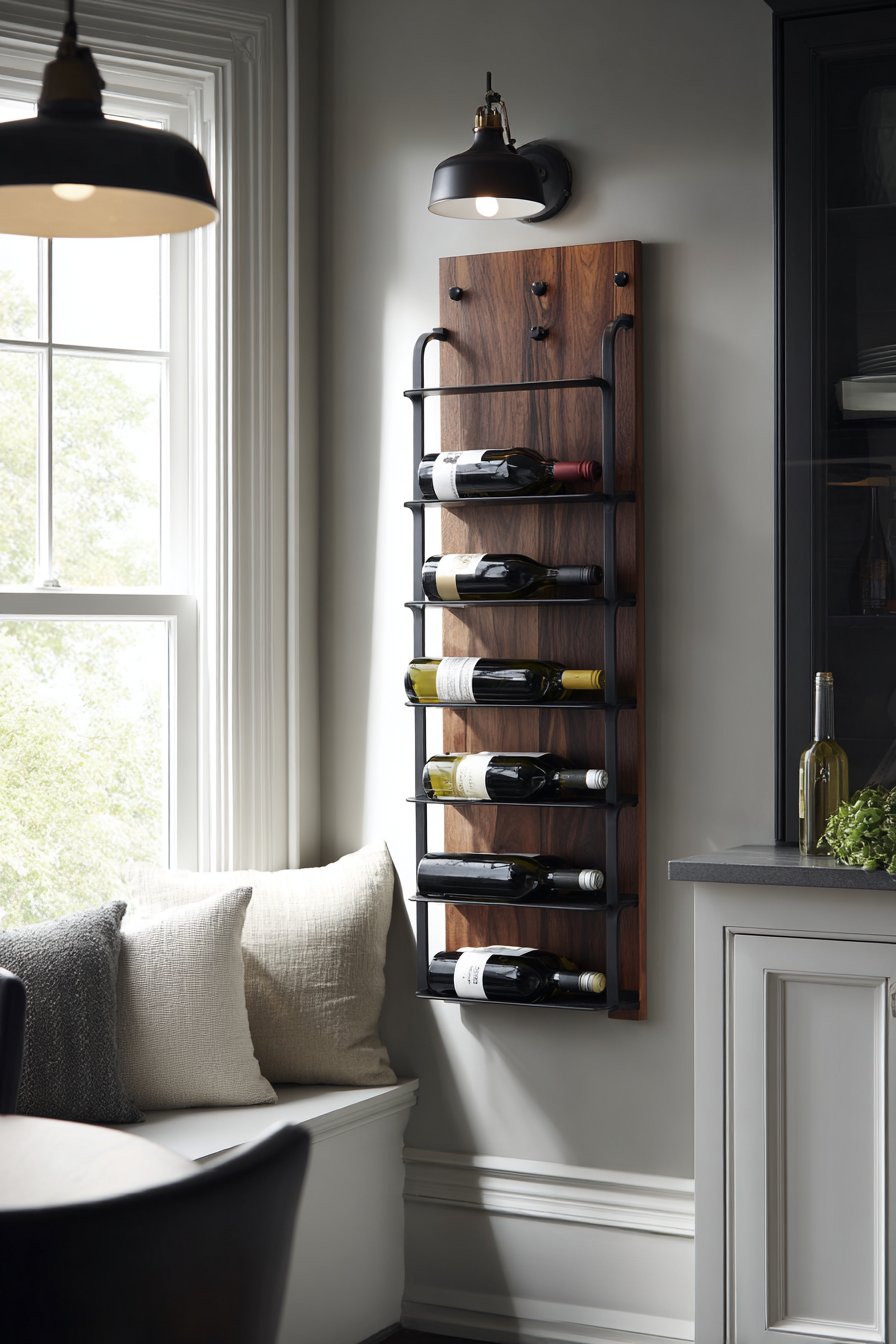
A narrow wall in a kitchen breakfast nook gains sophisticated functionality with a vertical wine rack that’s only 10 inches deep but makes maximum use of vertical space. The slim rack, constructed from matte black metal and warm walnut wood, stores nine wine bottles vertically with accompanying stemware holders that dangle glasses by their stems. This industrial-modern styling transforms the narrow wall beside the dining table into functional storage that’s also visually striking. Pendant lighting from above creates warm highlights on wine bottles—reds glowing jewel-toned, whites gleaming coolly—turning everyday storage into an illuminated display.
The brilliance of this solution extends beyond wine storage to demonstrate how narrow walls can provide serious functionality without consuming precious floor space. In kitchens and dining areas where cabinet and counter space is premium, vertical wall storage becomes invaluable. The metal and wood combination creates an aesthetic that bridges industrial and modern farmhouse styles, while the open design keeps the display feeling light rather than heavy or bulky. The vertical bottle storage is more space-efficient than traditional horizontal racks, allowing more bottles in less space.
This approach also creates an instant entertaining focal point. Guests naturally gravitate toward areas where drinks are displayed, and the illuminated wine rack becomes a conversation piece as well as a functional element. The stemware holders eliminate the need for dedicated glass storage elsewhere, demonstrating the space-saving efficiency of well-designed vertical storage. It’s narrow wall decor that works as hard as it looks good.
Key Design Tips:
- Ensure the wine rack is mounted to wall studs or with heavy-duty anchors to support bottle weight
- Position at comfortable reaching height—typically with center bottles at 48-54 inches from floor
- Choose racks with protective bottle cradles that hold bottles securely without risk of sliding
- Coordinate metal finish with other kitchen hardware for cohesive design flow
- Consider racks with enclosed backs to protect walls from condensation and bottle abrasion
14. Vintage Mirror Collection Display
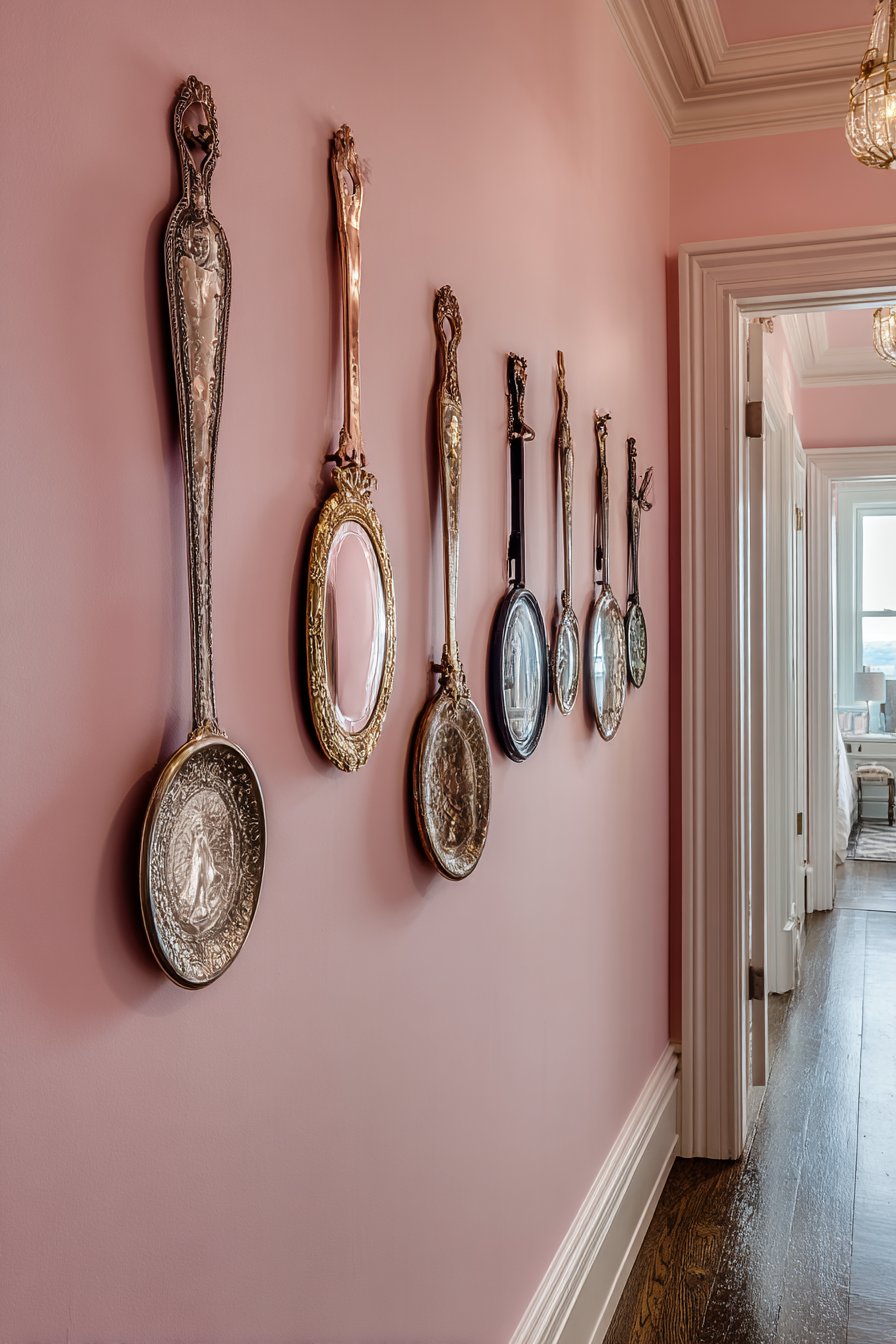
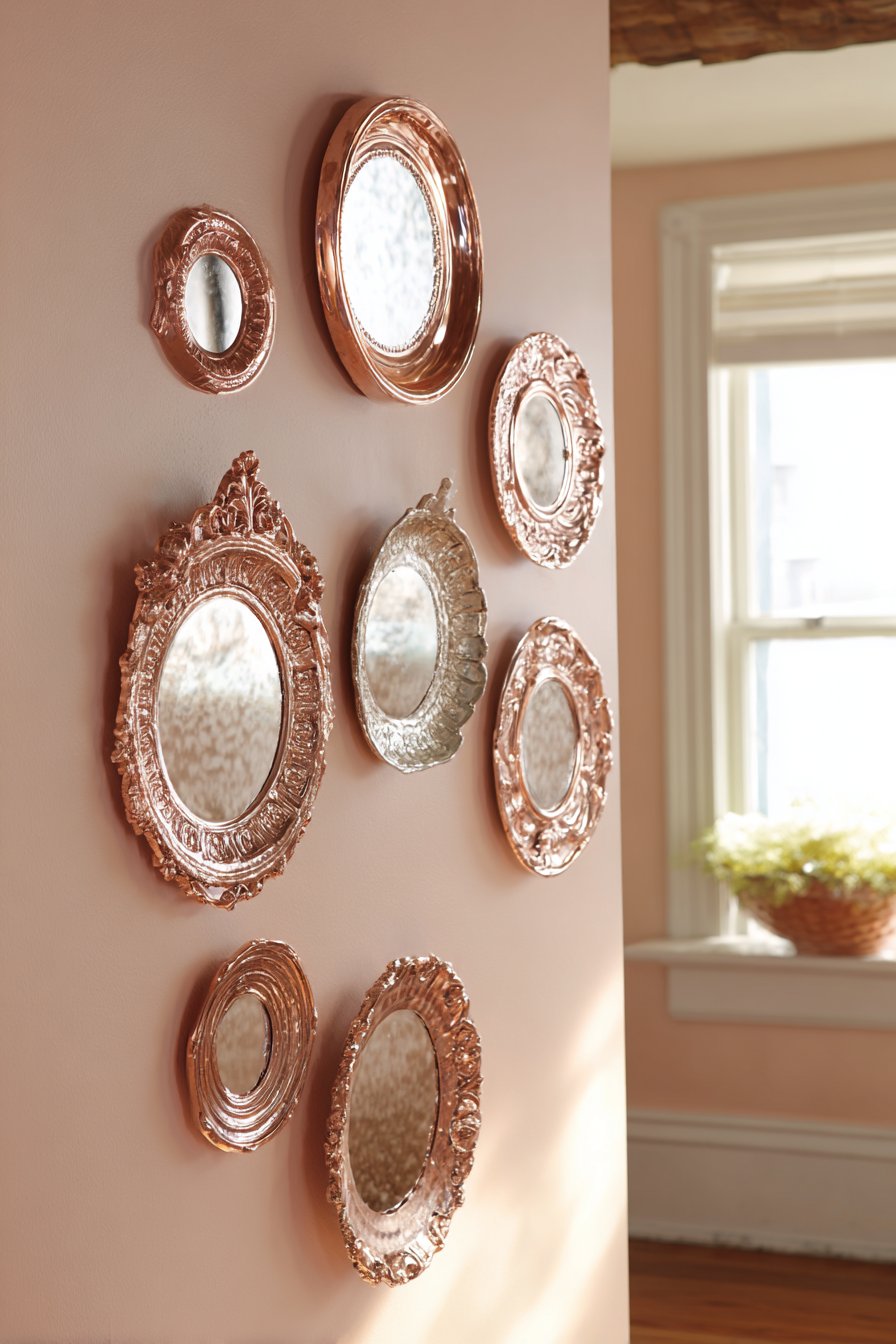
Seven ornate hand mirrors in mixed metals—brass, copper, and silver—create a whimsical vintage-inspired focal point on a 15-inch wide bedroom wall. Each mirror features decorative details: scrolled handles, embossed patterns, ornate borders that speak to different eras and styles. Arranged in an organic pattern that feels collected over time rather than purchased all at once, the mirrors create visual interest through their varying sizes, shapes, and metallic finishes. Against pale pink walls, the warm metal tones create a romantic, feminine aesthetic that feels both nostalgic and fresh. Soft natural lighting from a nearby window creates gentle reflections that dance across the wall, with each mirror catching light differently throughout the day.
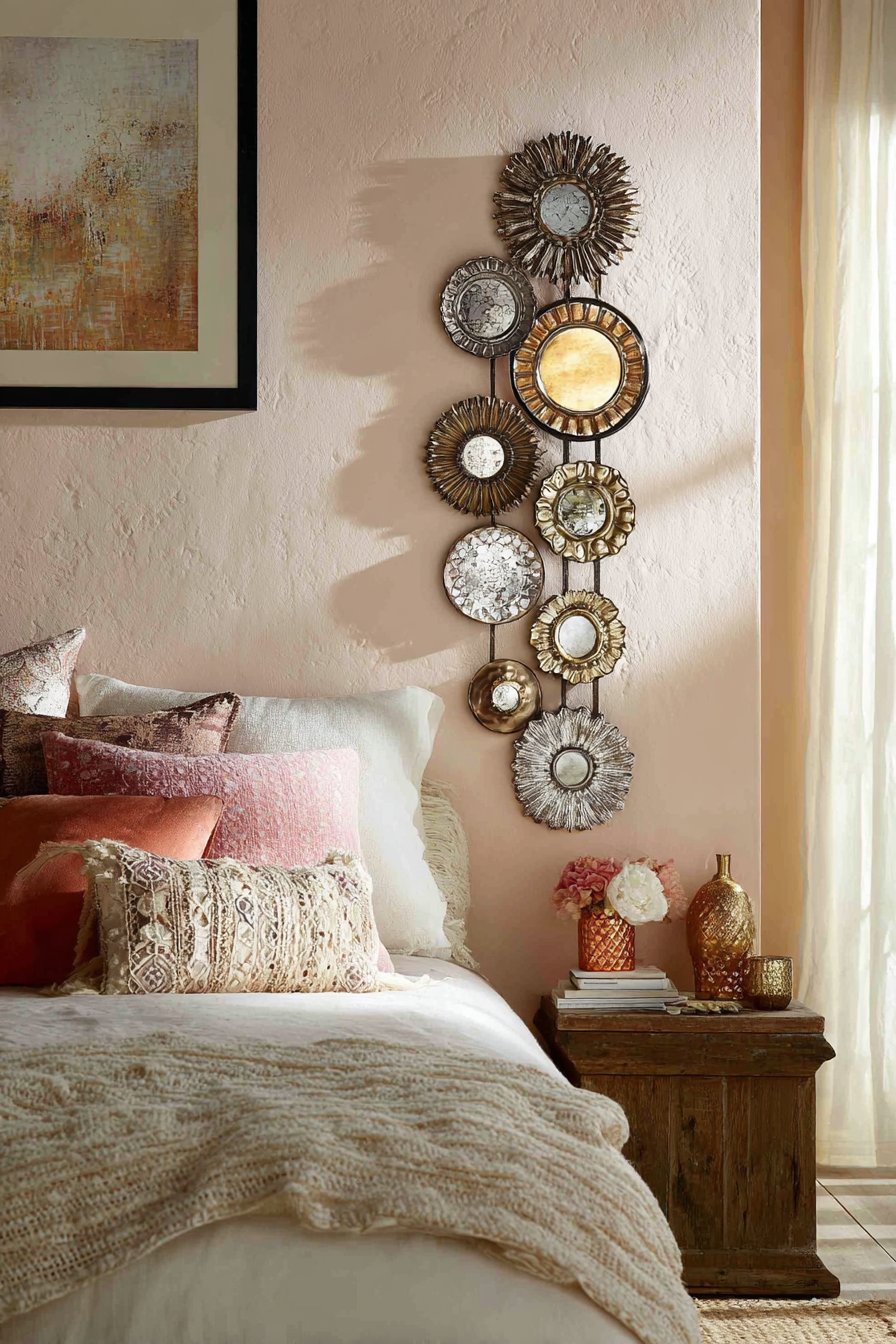
This eclectic approach celebrates the joy of collected treasures and personal history. Each mirror tells a story—perhaps inherited from grandmothers, discovered at estate sales, or gathered from travels. Unlike matchy-matchy decor that feels purchased in one shopping trip, this curated collection has personality and depth. The narrow wall becomes a display case for these small treasures, giving them prominence they might not achieve elsewhere. The varying metal finishes create visual richness without requiring color, while the reflective surfaces add light and dimension to the space.
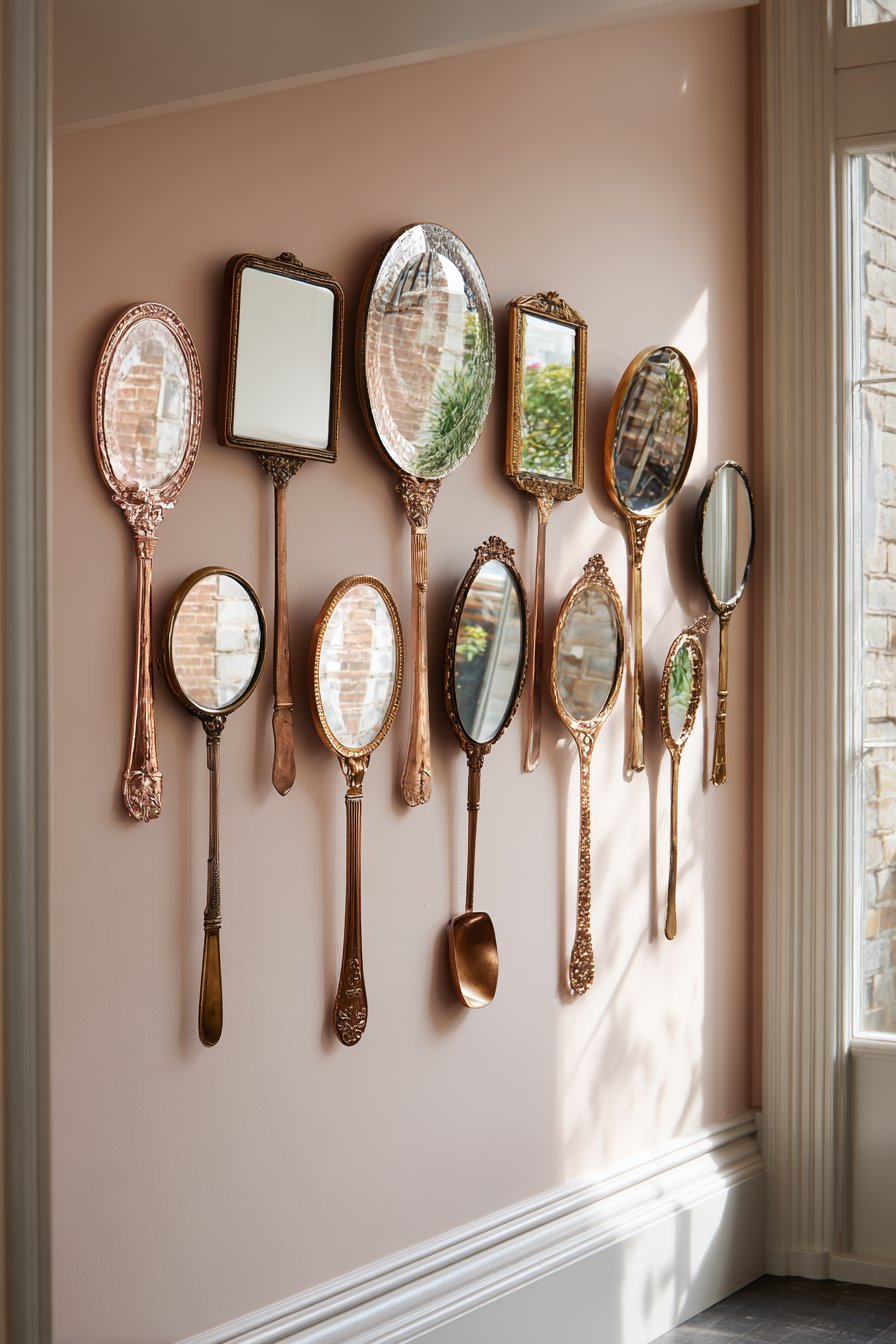
The whimsical nature of using hand mirrors as wall decor exemplifies creative thinking about narrow walls. Rather than traditional framed art, this approach repurposes functional objects as decorative elements. It’s an approach that works beautifully in bedrooms, dressing rooms, or bathrooms—spaces where the mirror theme feels particularly appropriate. The collection can grow and evolve over time, with new treasures joining the arrangement as you discover them.
Key Design Tips:
- Use a variety of hanging methods—some mirrors may need wire, others can use existing handles
- Create a paper template arrangement on the floor before committing to wall placement
- Mix metals intentionally—combine warm (brass, copper) and cool (silver, chrome) for depth
- Vary mirror sizes significantly—include both small (4-inch) and larger (8-inch) pieces
- Leave some breathing room between mirrors—crowding reduces individual impact
15. Vertical Kitchen Herb Garden
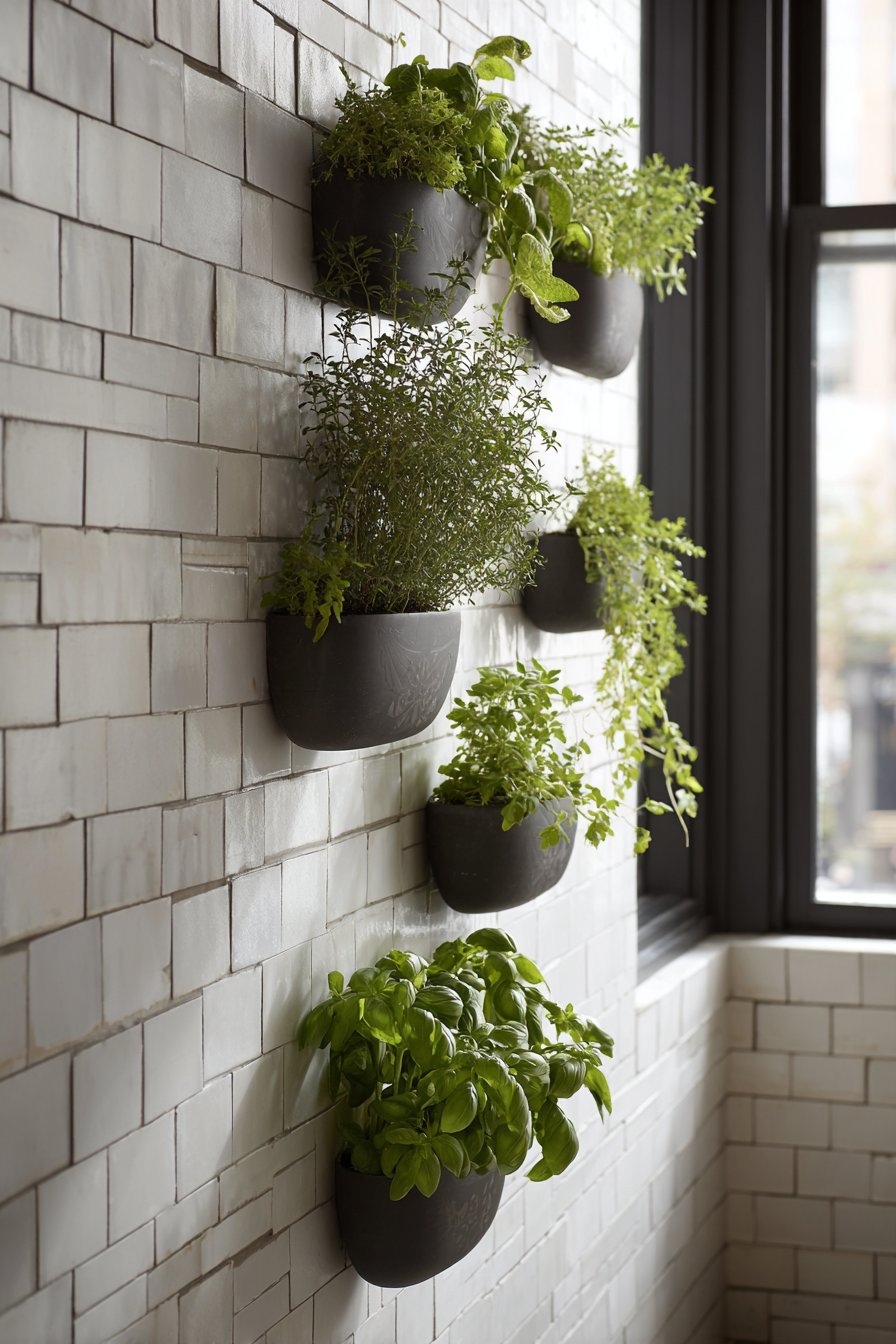
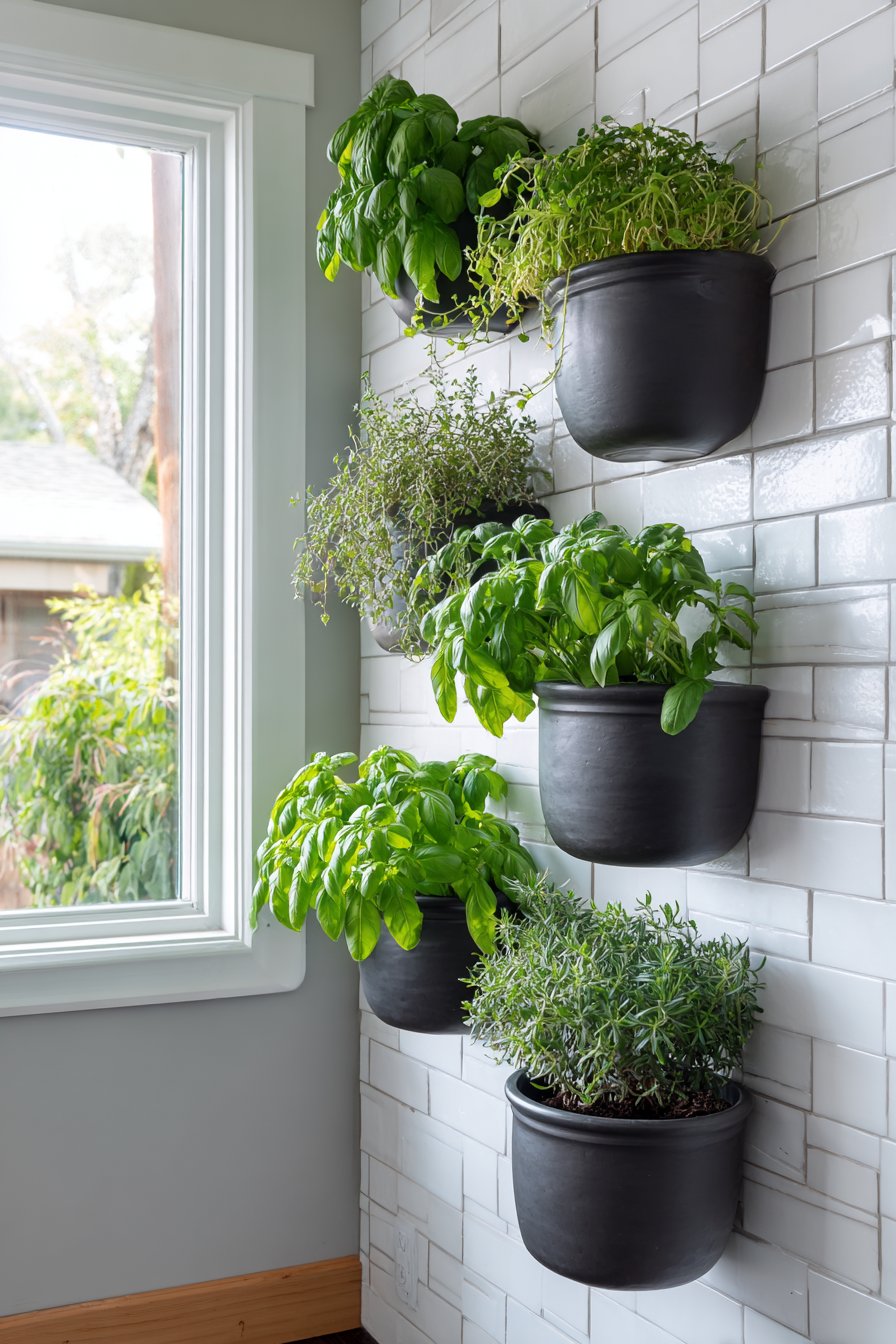
A narrow 14-inch wall near a kitchen window transforms into a living vertical garden with five matte black metal planters mounted vertically, growing fresh herbs that are both beautiful and functional. Basil, thyme, mint, rosemary, and oregano create a cascade of green textures and fragrances against white subway tile walls. This isn’t just decoration—it’s practical urban farming that puts fresh herbs within arm’s reach of food preparation areas. The matte black planters create strong graphic lines that pop against the white tile, while the vibrant green plants soften the industrial edge with organic life. Natural light from the nearby window provides essential illumination for plant health while highlighting the lush greenery.
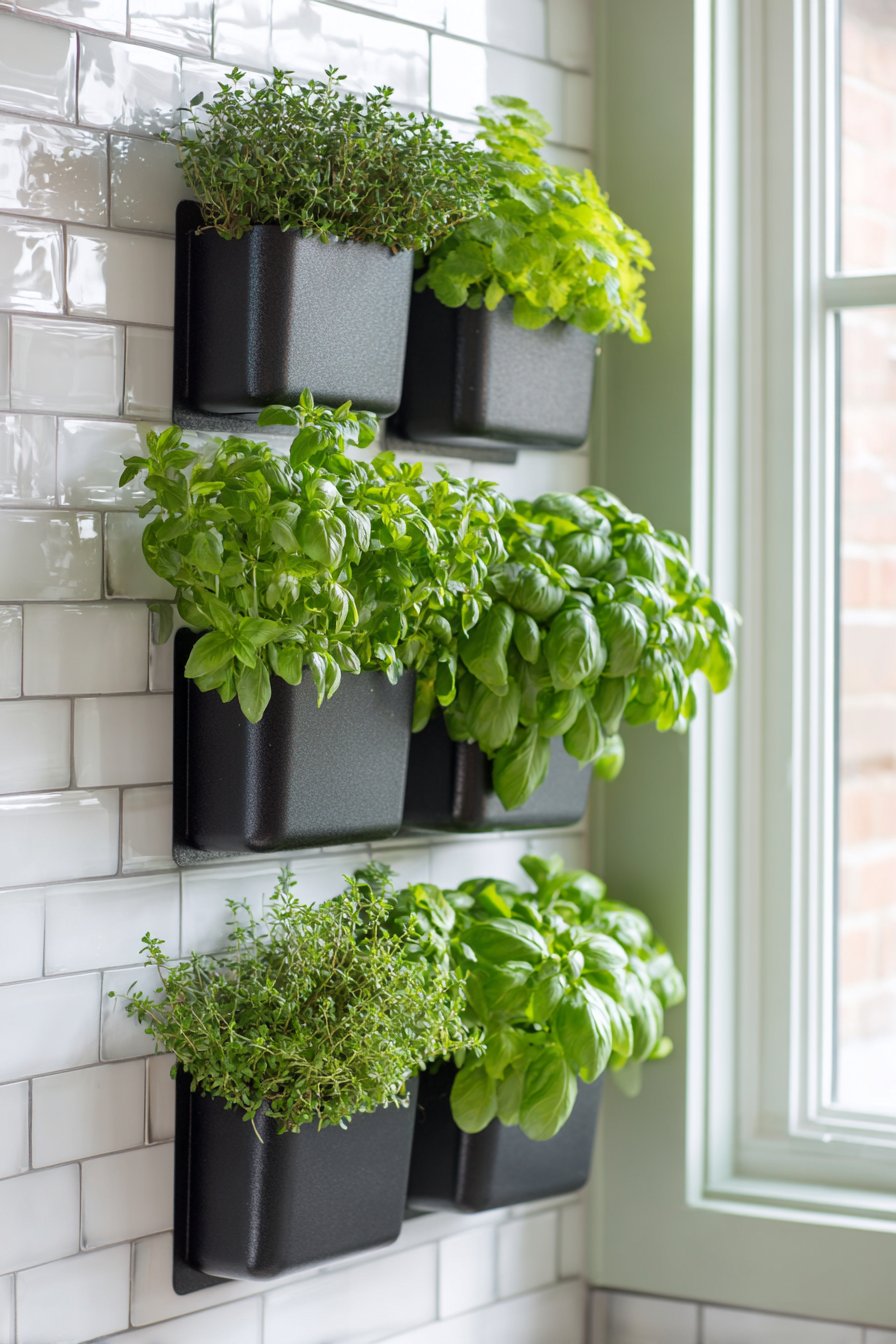
The farm-to-table movement has made kitchen herb gardens increasingly popular, and vertical wall gardens offer solutions for small urban kitchens where counter space is limited. By utilizing a narrow wall, you gain fresh herb access without sacrificing valuable prep surfaces. The visual impact is substantial—living plants bring energy and life to kitchens in ways that static decor cannot. As you cook, simply snip what you need, enjoying the ultimate in fresh ingredients while the plants release subtle fragrances that enhance the sensory experience of your kitchen.
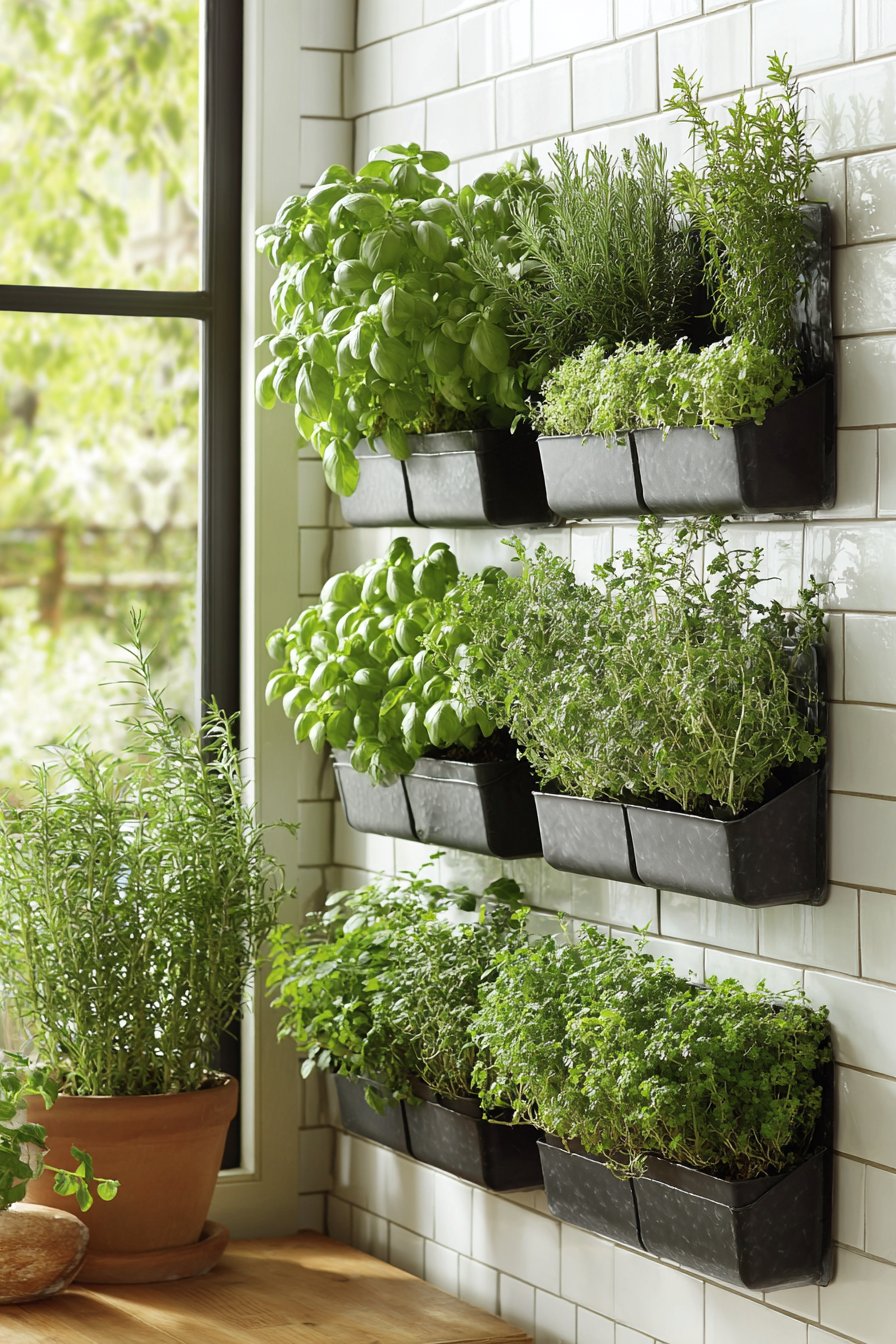
This solution demonstrates perfect marriage of form and function. The vertical arrangement creates a living art installation that’s constantly changing as plants grow and are harvested. The consistent planter style maintains visual order despite the organic chaos of growing plants, while the black containers ground the design with bold graphic presence. It’s an approach that appeals to both design enthusiasts and home cooks—proving that narrow walls can nurture life while looking stunning.
Key Design Tips:
- Choose a wall location with access to natural light—most herbs need 4-6 hours daily
- Install planters with adequate drainage holes and catch trays to protect walls from water damage
- Select herbs based on your cooking habits—grow what you’ll actually use
- Prune herbs regularly to encourage bushy growth and prevent leggy, sparse plants
- Consider a small drip irrigation system for consistent watering if you travel frequently
16. Southwestern Textile Wall Hanging
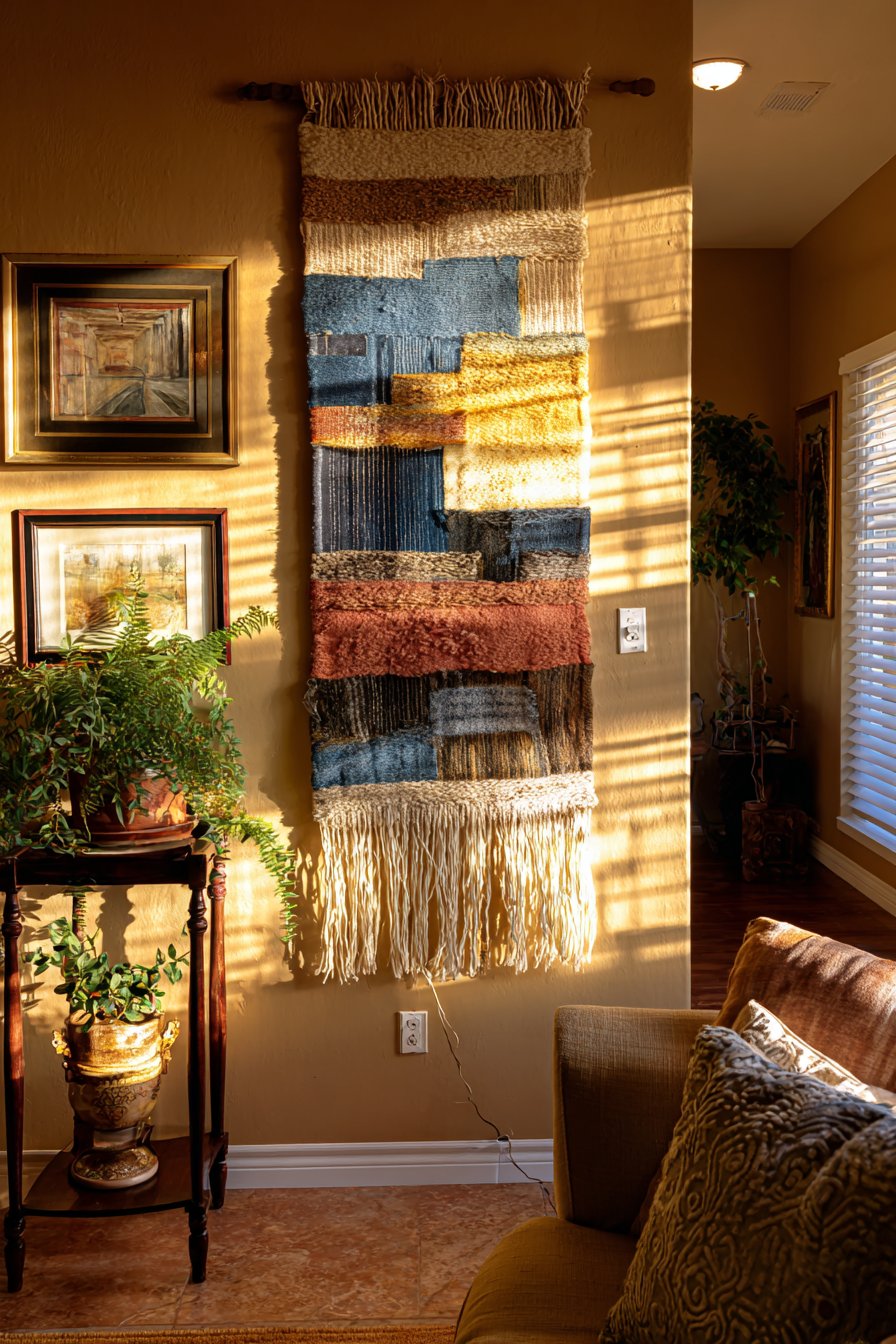
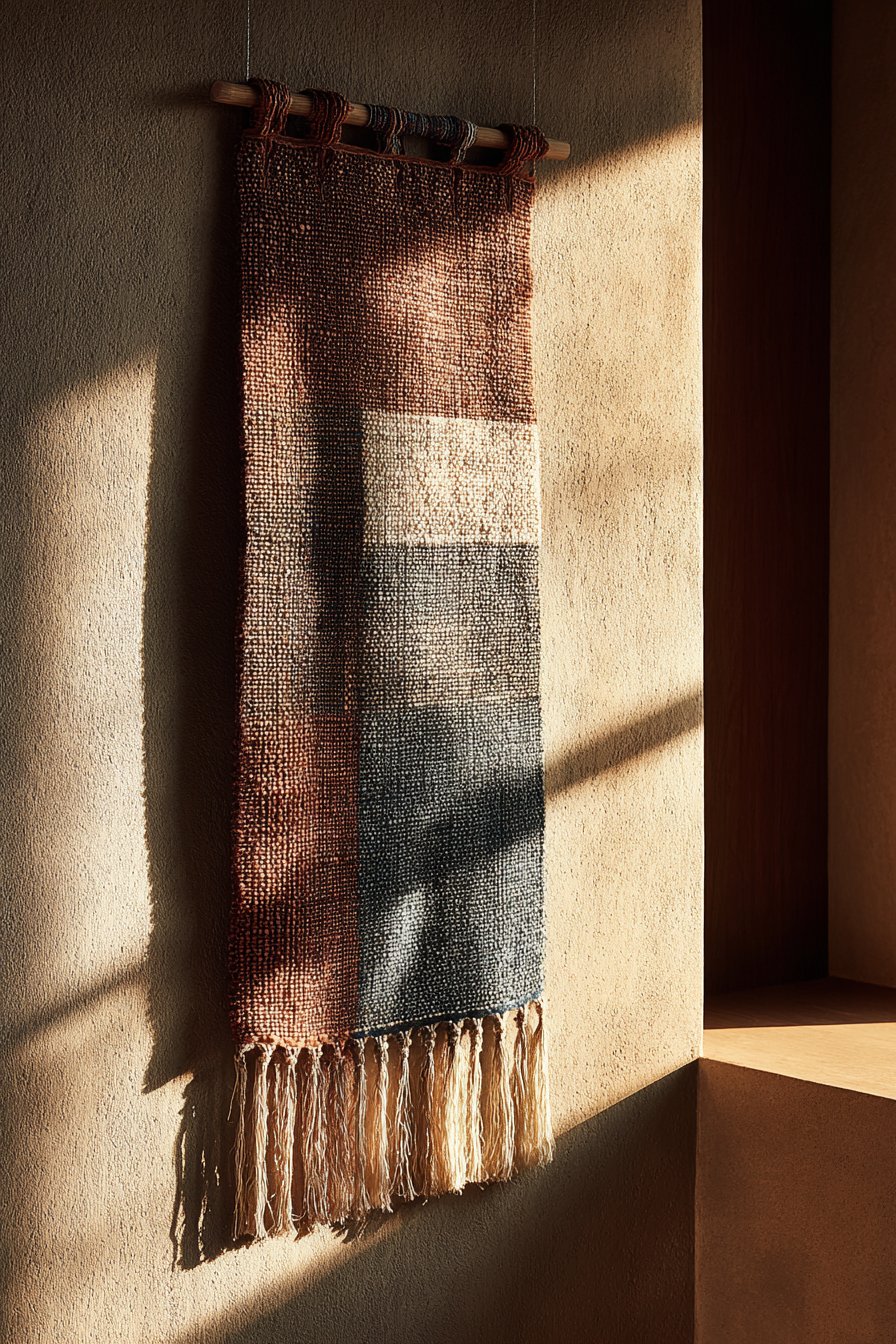
A tall vertical tapestry in muted southwestern colors—terracotta, cream, and indigo—brings handwoven artistry to a narrow 12-inch wide wall beside a sofa. The textile spans 54 inches in length, perfectly proportioned for the slim space while creating significant visual impact. Natural cotton fibers display traditional southwestern weaving patterns: geometric diamonds, stepped patterns, and horizontal stripes that reflect indigenous textile traditions. Natural cotton fringe at the bottom adds textural movement and softness, swaying gently with air currents. Against warm beige walls, the tapestry’s earth tones create layered warmth that enhances the room’s cozy, grounded feeling. Golden hour lighting creates dimensional shadows that emphasize the weave pattern and texture, making the piece feel alive and dynamic.
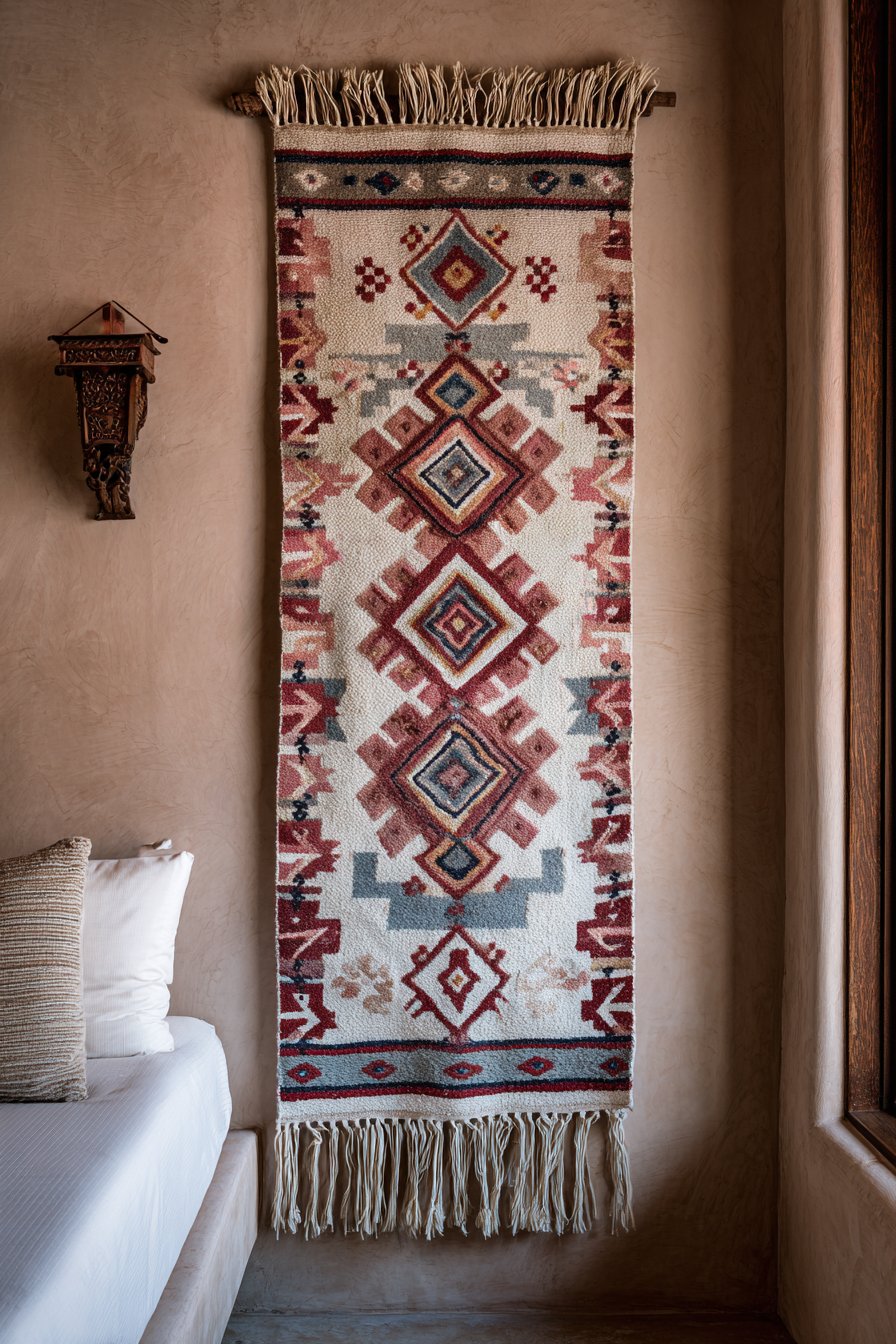
Textile wall hangings offer advantages over traditional art for narrow walls—they’re lightweight, forgiving of imperfect wall surfaces, and introduce softness that contrasts beautifully with hard architectural elements. The southwestern aesthetic has experienced renewed appreciation as designers embrace global influences and handcrafted authenticity. These textiles carry cultural significance and artisanal skill, each piece representing hours of hand-weaving that creates one-of-a-kind patterns and subtle color variations that machine-made textiles cannot replicate.
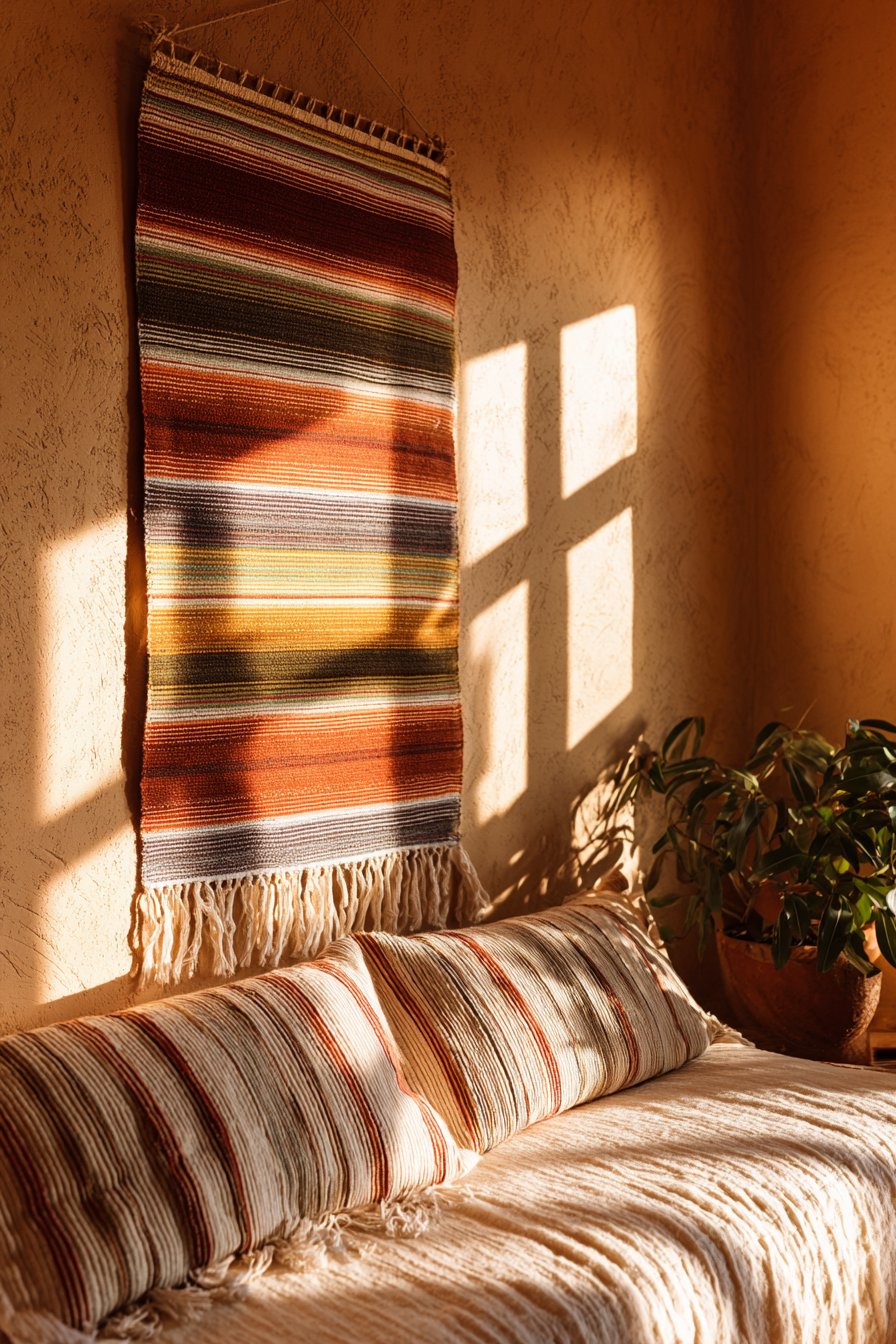
This bohemian approach works particularly well in living rooms, bedrooms, or any space where you want to introduce warmth, texture, and cultural richness. The vertical orientation suits narrow walls perfectly while the earth-tone palette ensures versatility—coordinating easily with various furniture styles and color schemes. The natural fibers add organic quality that brings balance to rooms with lots of hard surfaces or synthetic materials.
Key Design Tips:
- Hang textiles using a wooden dowel rod that extends slightly beyond the weaving’s width for proper display
- Rotate the hanging seasonally to prevent uneven fading from sun exposure
- Choose handwoven pieces for authentic texture and one-of-a-kind appeal
- Position away from direct moisture sources as natural fibers can develop mildew
- Vacuum gently with a soft brush attachment to maintain the textile and remove dust
17. Floating Shelf Entry Station
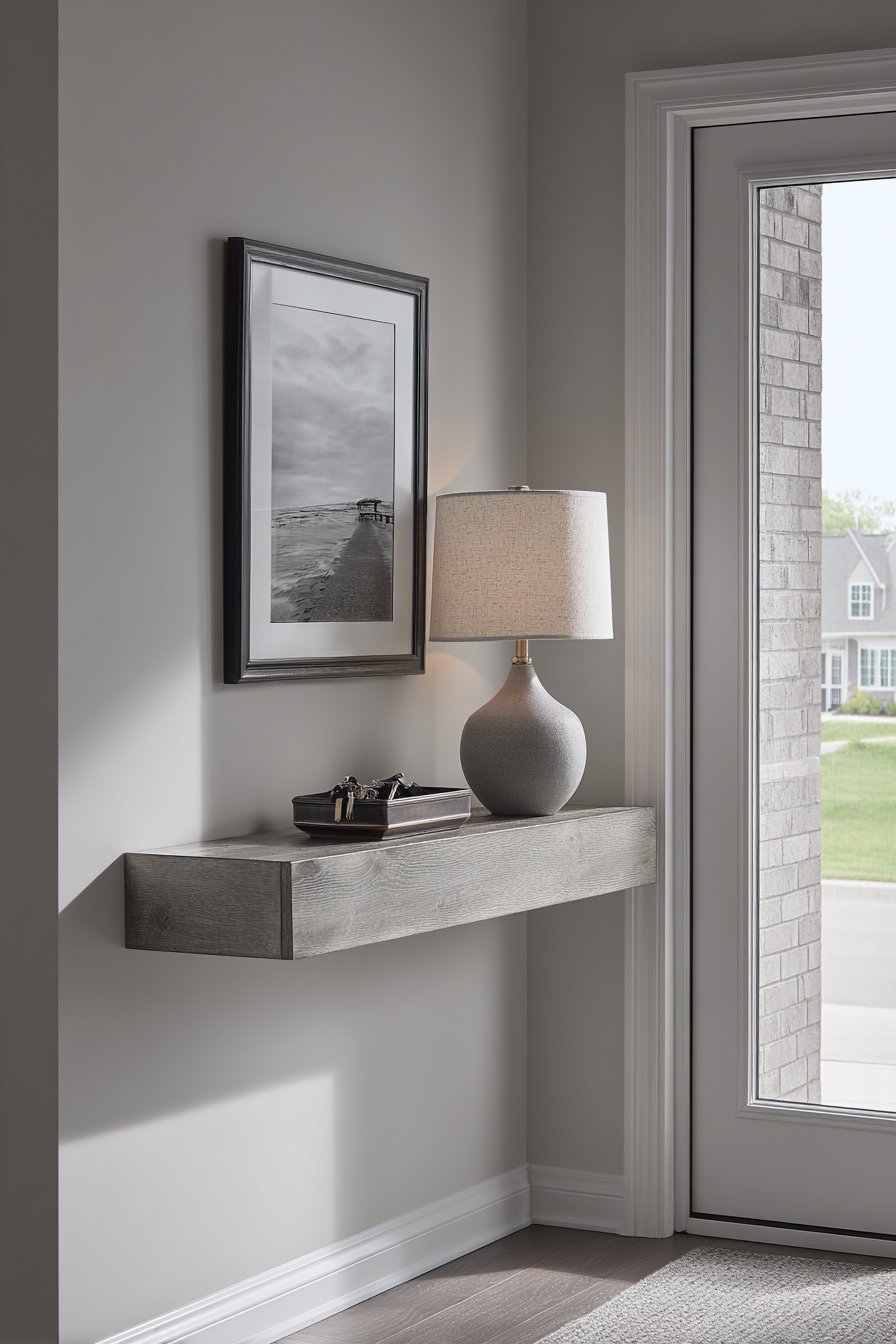
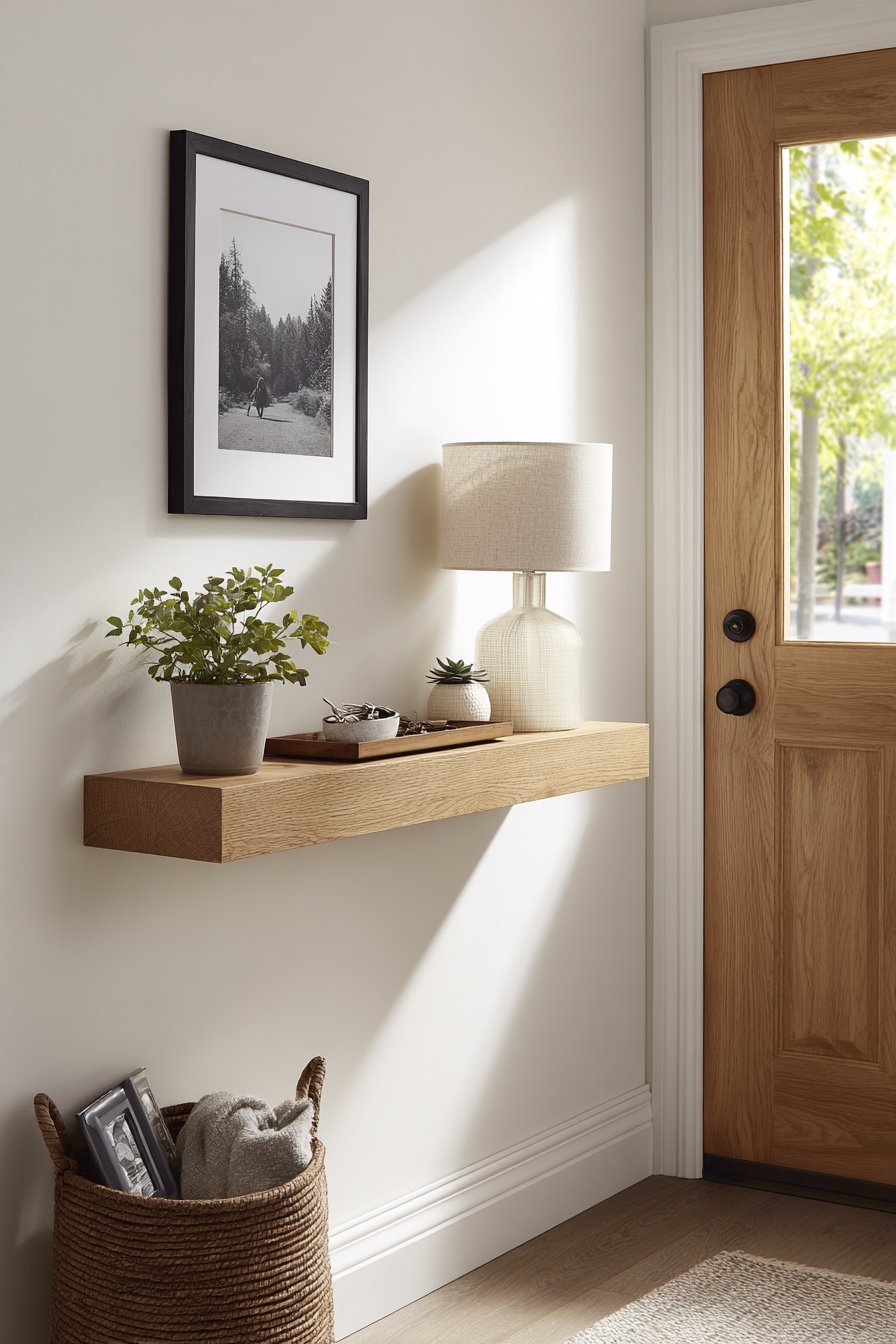
An 8-inch deep floating shelf in gray-washed oak transforms a 16-inch wide entryway wall into a practical catchall station that manages daily chaos with style. The slim shelf creates a horizontal plane at a comfortable height—styled with a table lamp featuring a natural linen shade that provides ambient lighting, a small ceramic tray that corrals keys and loose change, and a framed black and white photograph that adds personal touch. Natural daylight from a nearby door with sidelights illuminates the arrangement throughout the day, while the lamp provides warm evening illumination. The gray-washed oak finish brings subtle color and natural wood grain that adds warmth without overwhelming the narrow space.
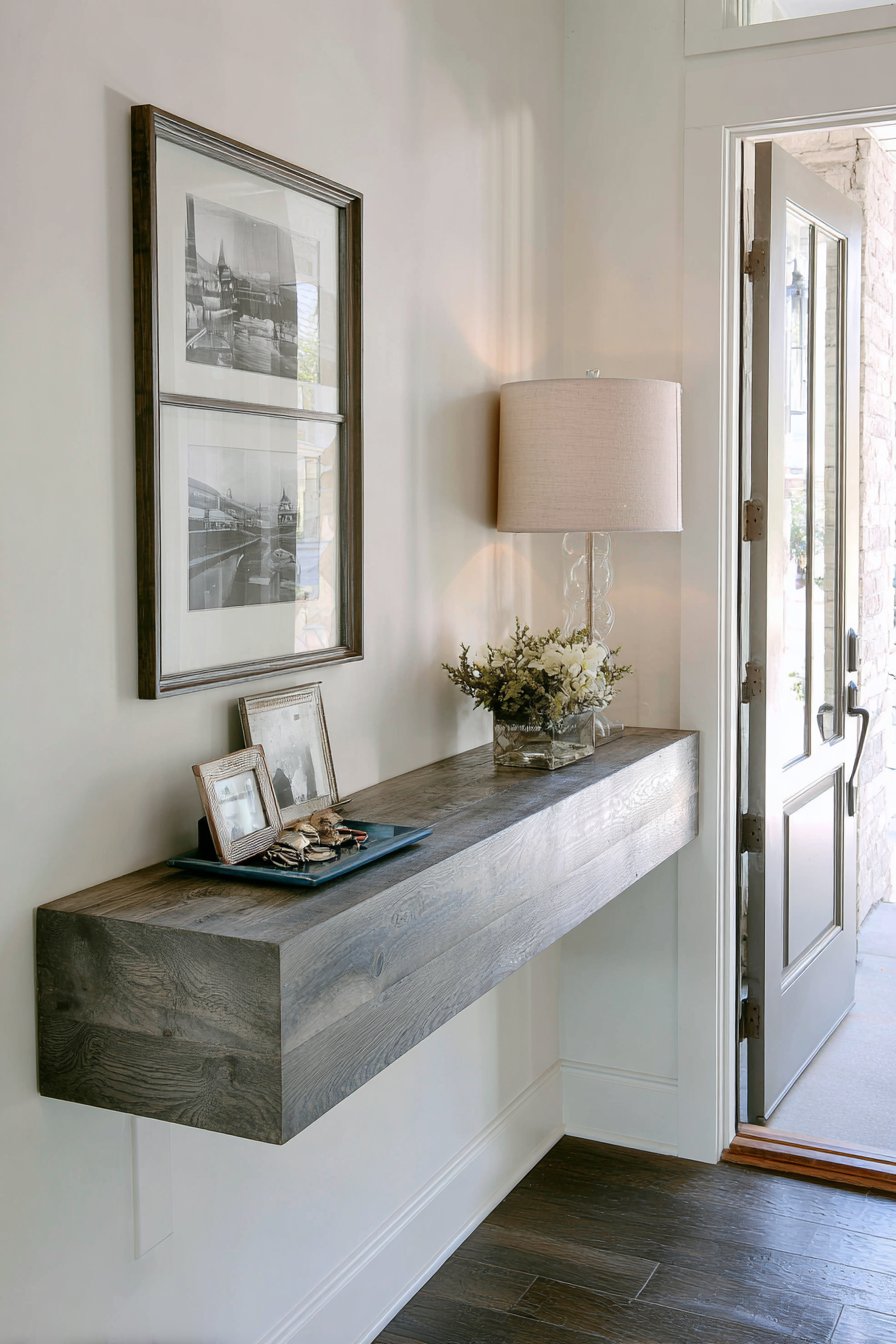
This solution addresses the universal problem of entry clutter—the accumulation of items we need to grab on our way out but struggle to keep organized. By creating a designated landing spot, the floating shelf brings order to chaos while maintaining aesthetic appeal. Unlike bulky console tables that consume floor space, the wall-mounted shelf provides functionality without encroaching on narrow entryway circulation. The lamp serves double duty by both decorating the shelf and providing practical task lighting for finding keys in early morning darkness.
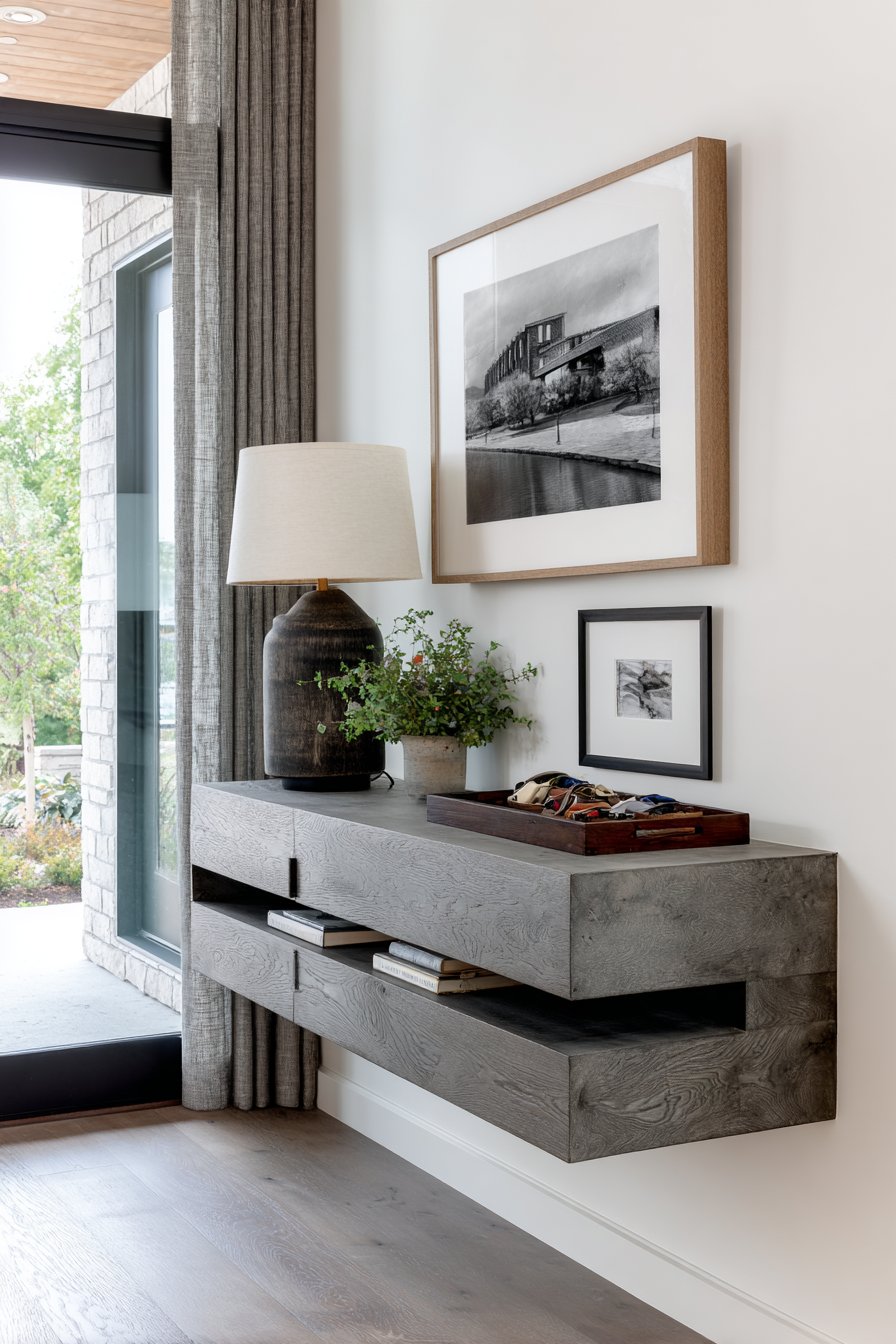
The styling strikes a perfect balance between functional and decorative. Every item serves a purpose—the lamp provides light, the tray organizes small items, the photograph adds personality—yet the overall arrangement feels curated and intentional rather than cluttered. This demonstrates the key principle of narrow wall decor: every element must earn its place through either beauty or utility, preferably both.
Key Design Tips:
- Mount the shelf at 42-48 inches from floor for comfortable access without reaching
- Choose a lamp with a narrow base that won’t overwhelm the shelf’s limited depth
- Use a decorative tray to corral small items and prevent them from looking scattered
- Include one personal element (photo, small plant, or art object) to make the space feel welcoming
- Install the shelf over wall studs or with heavy-duty anchors to support lamp weight
18. Decorative Plate Collection Wall
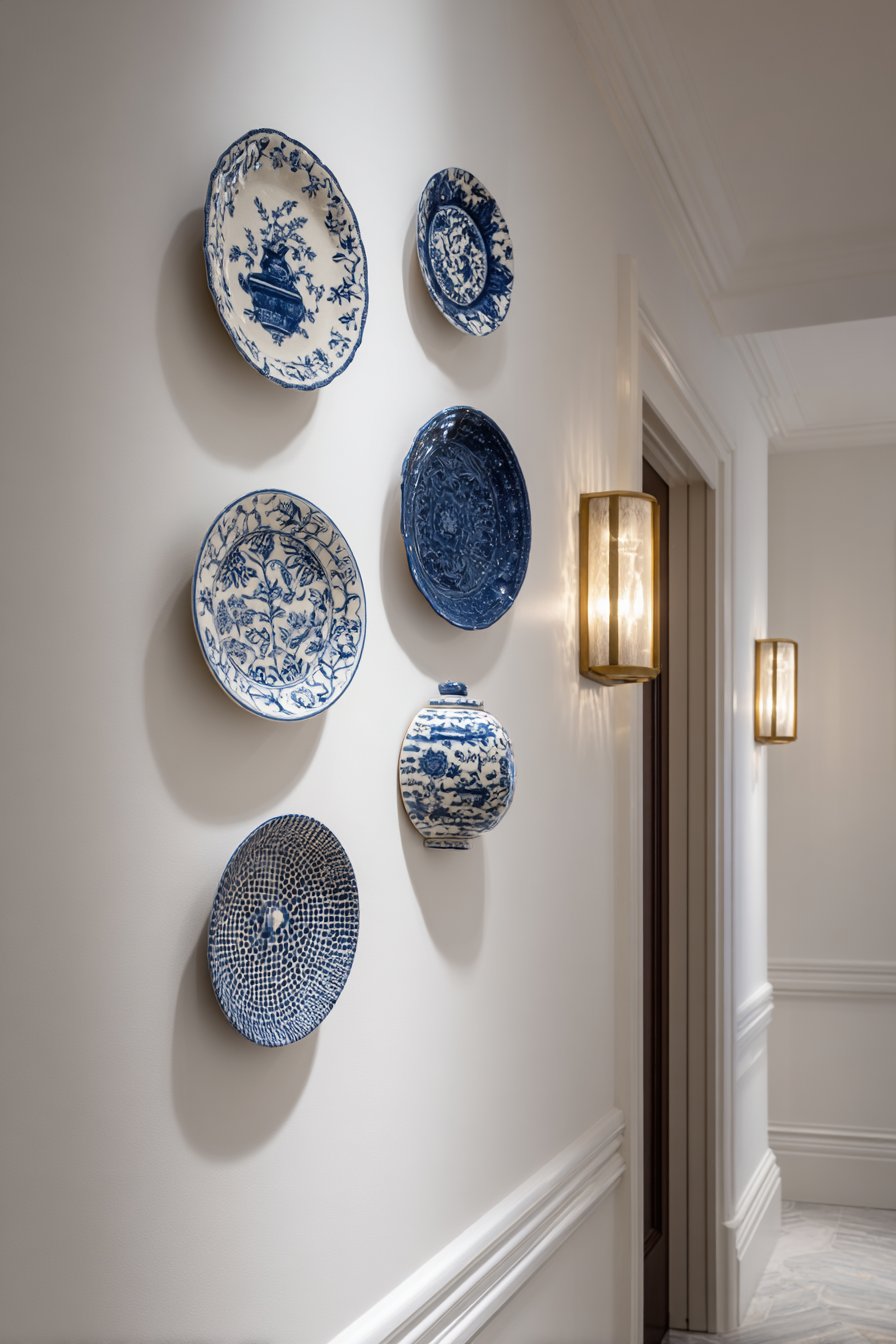
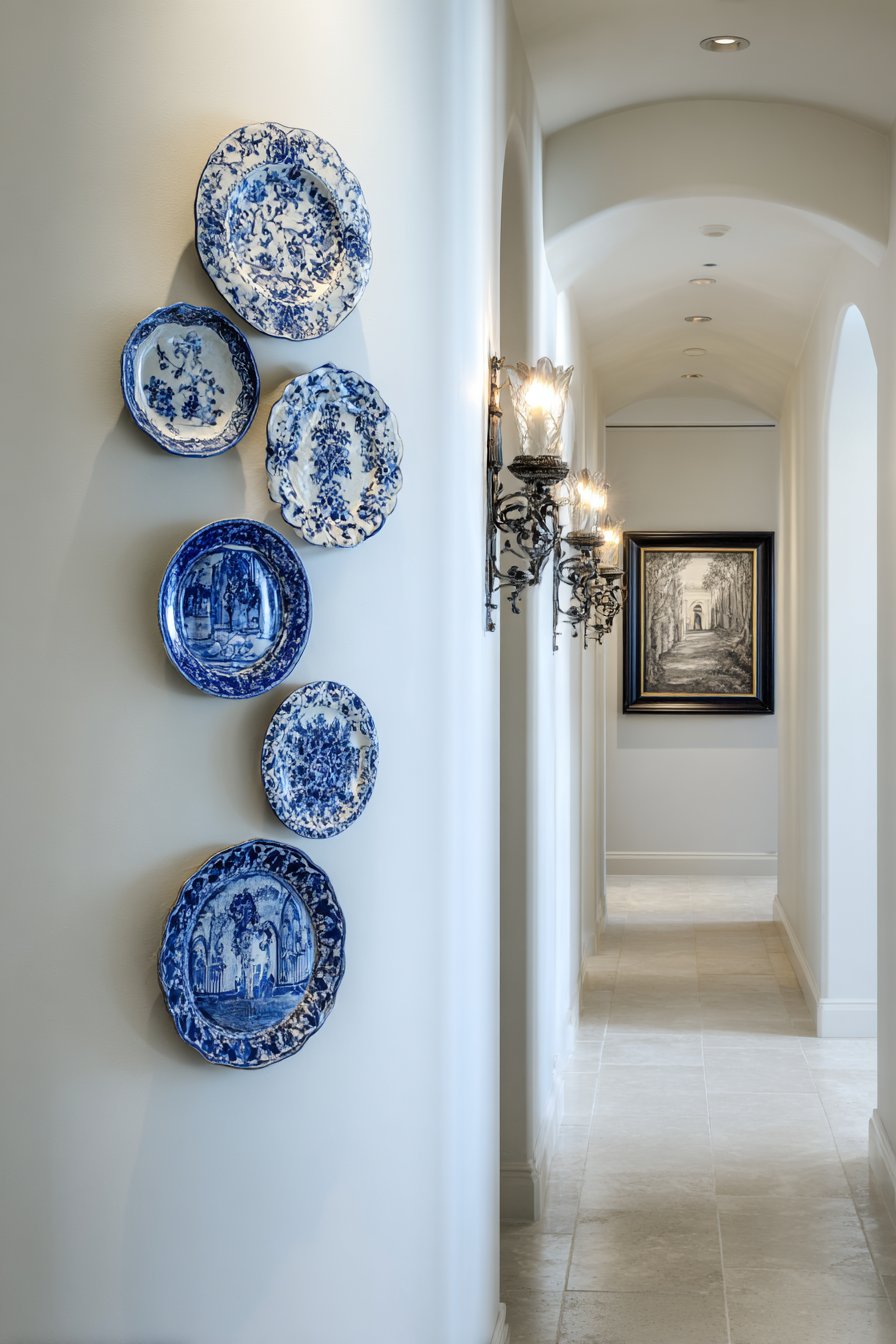
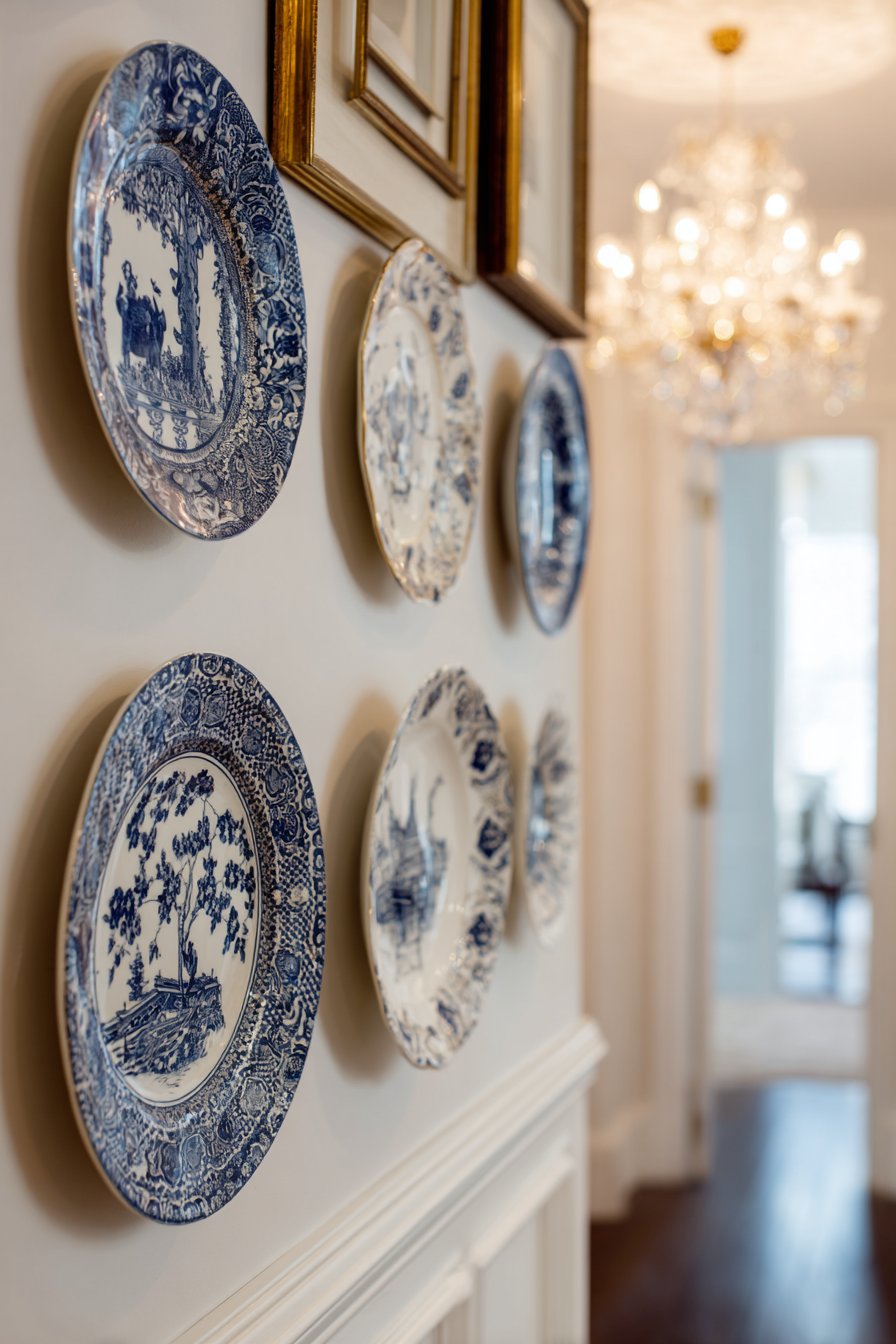
Six ceramic plates in coordinating blue and white designs create a classic gallery wall on a 14-inch narrow dining room wall, mounted using invisible plate hangers that let the plates appear to float against crisp white walls. The collection includes varying sizes from 8 to 12 inches in diameter, each featuring intricate patterns—some with delicate floral motifs, others with geometric designs, all unified by the traditional blue and white color scheme. The arrangement creates visual interest through the interplay of pattern and scale, with larger plates anchoring the composition while smaller ones fill spaces between. Soft ambient lighting from a nearby chandelier highlights the dimensional quality of the raised ceramic patterns, creating subtle shadows that emphasize texture and craftsmanship.
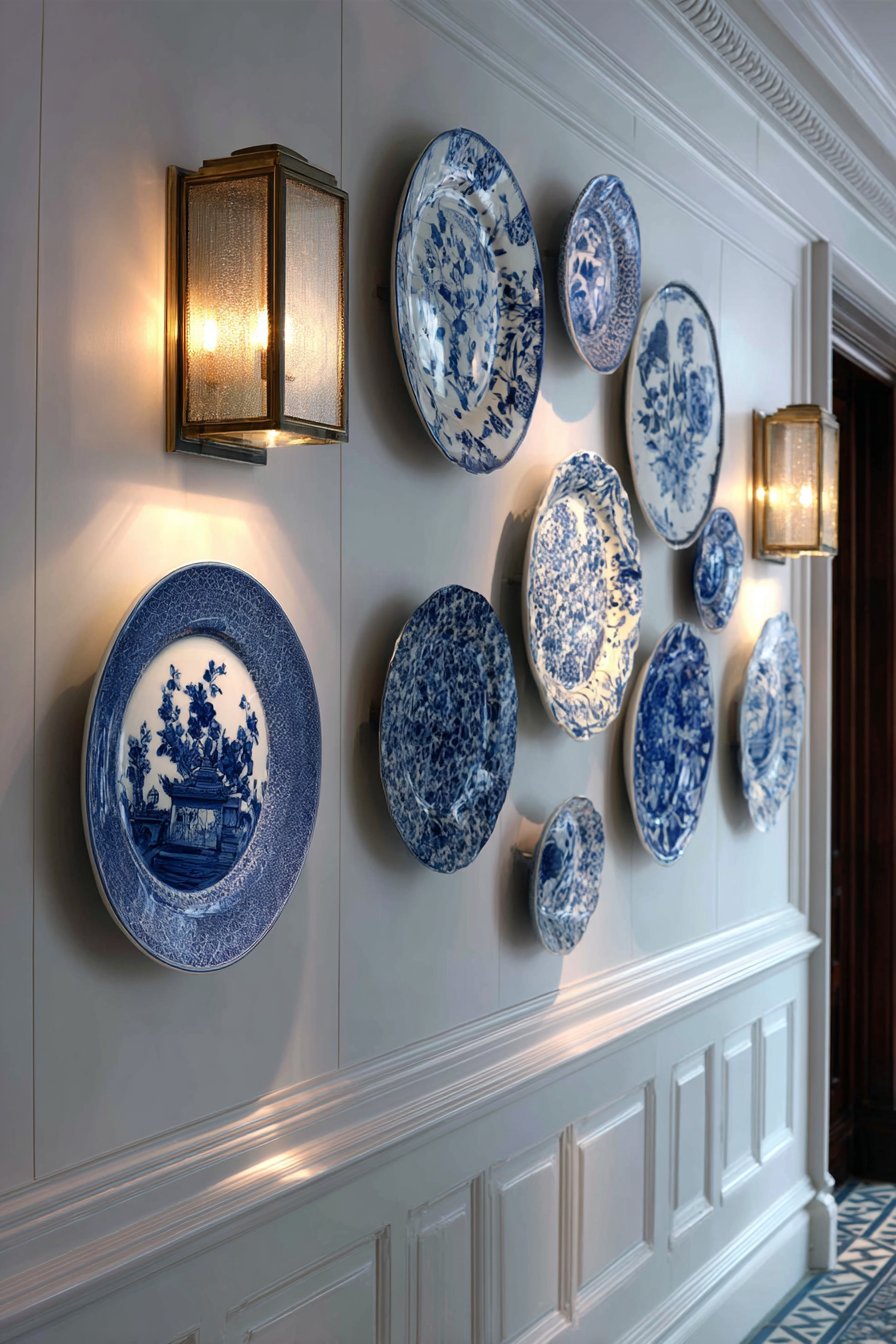
Plate walls have decorated homes for centuries, representing a collecting tradition that spans cultures from English country manors to Chinese ceramics enthusiasts. On narrow walls, plates offer unique advantages—their circular shapes create soft contrast against rectangular architecture, while their thin profiles keep the display from protruding awkwardly. The blue and white palette is eternally classic, coordinating with countless design styles from traditional to transitional to coastal. Each plate becomes a miniature work of art, its patterns and motifs inviting close inspection while contributing to the larger composition.
This approach works beautifully in dining rooms where the plate theme feels contextually appropriate, but it’s equally effective in kitchens, breakfast nooks, or even entryways. The collection can be assembled over time—starting with a few inherited pieces and growing through antique store discoveries and travel souvenirs. Each plate can carry a story, making the narrow wall not just decorative but personally meaningful.
Key Design Tips:
- Use spring-loaded plate hangers for secure mounting that’s invisible from the front
- Arrange plates on the floor first to determine the most pleasing composition before hanging
- Maintain consistent spacing between plates—typically 2-4 inches—for cohesive appearance
- Mix plate sizes but keep patterns within a similar style family for unity
- Consider odd numbers (3, 5, or 7 plates) for more dynamic, less formal compositions
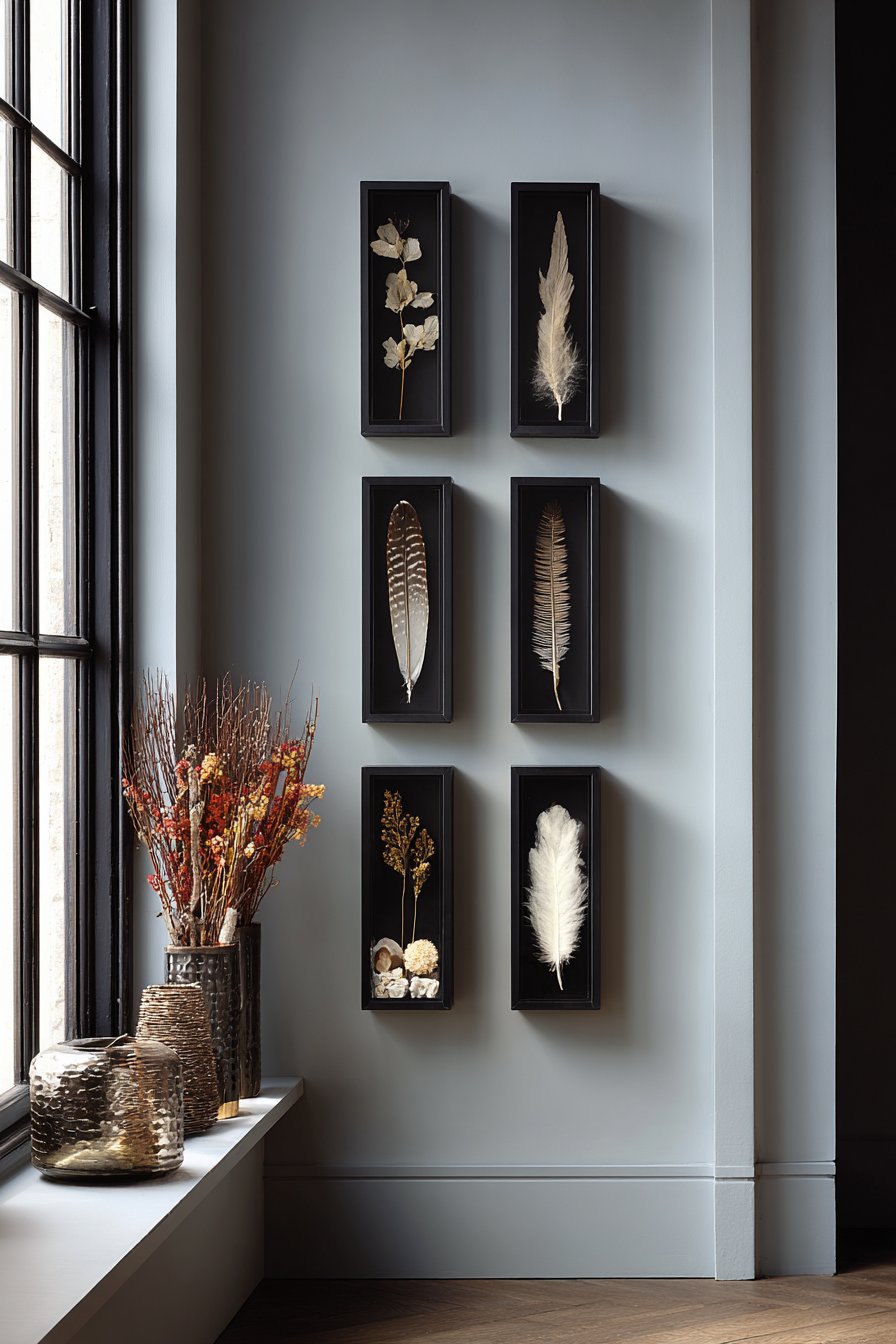
19. Natural Specimen Shadow Box Collection
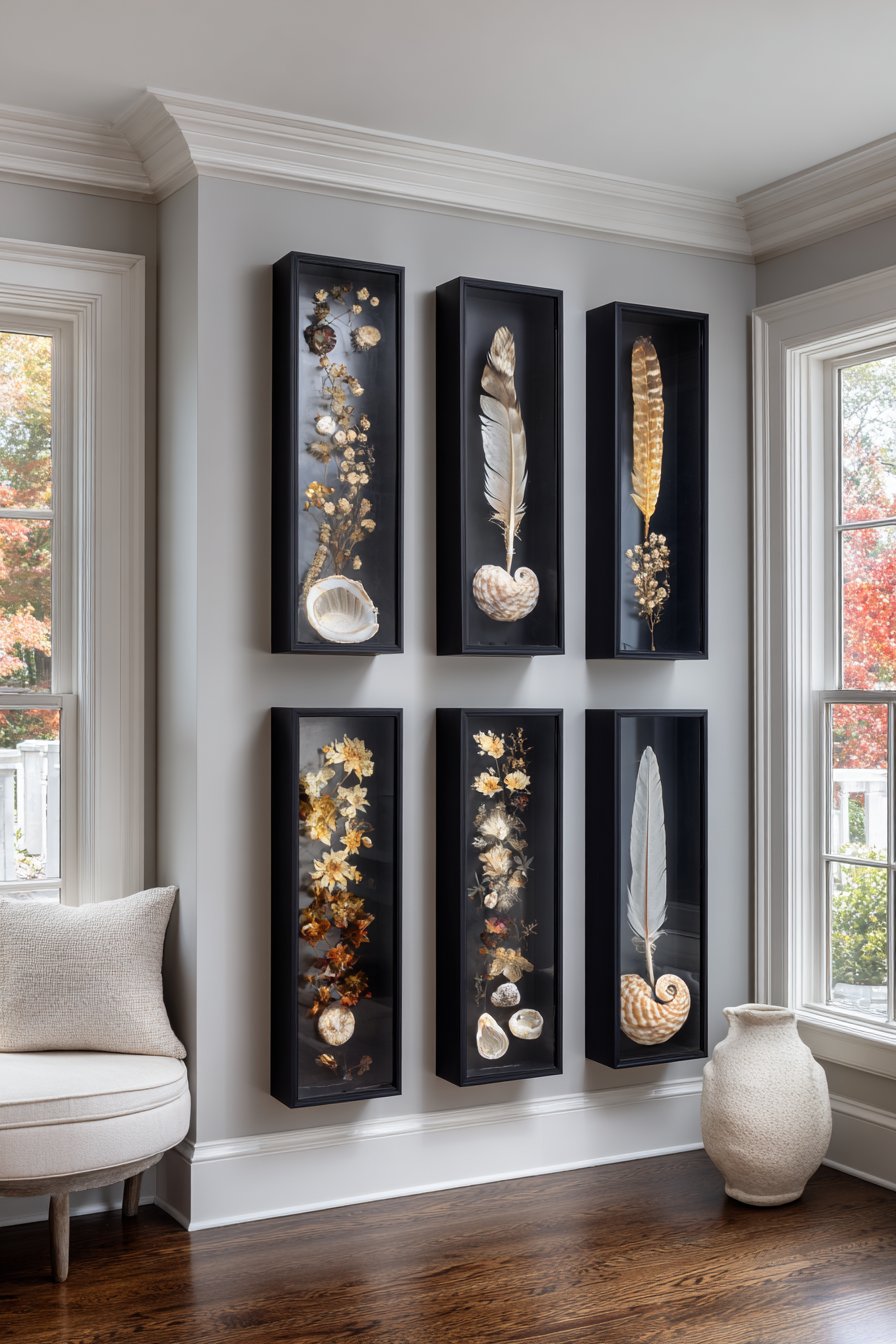
Four 8×8 inch black shadow boxes create a nature-inspired vertical gallery on a 15-inch narrow wall, each containing carefully preserved natural specimens—pressed flowers, delicate feathers, collected shells, and dried botanical specimens. These three-dimensional displays transform found objects into art, celebrating natural beauty through thoughtful curation and preservation. The black frames create strong graphic presence against soft gray walls while providing dark backgrounds that make the pale specimens pop with dramatic contrast. Natural window light streams across the display, highlighting delicate details and creating depth within the shadow boxes that emphasizes their dimensional quality.
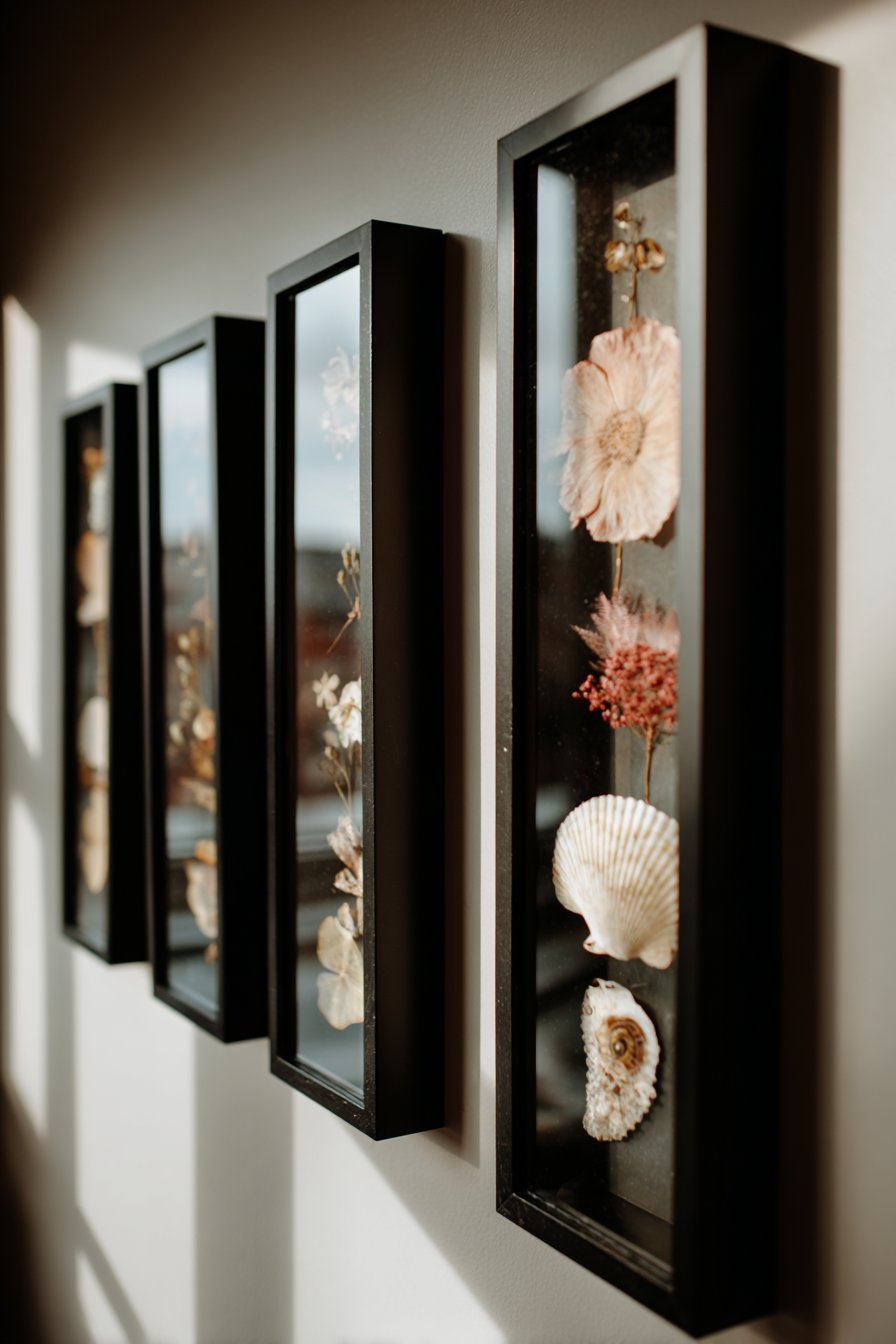
This approach combines the collecting impulse with artistic display, turning nature walks and beach trips into opportunities to gather materials for your narrow wall gallery. Each shadow box becomes a memory keeper—shells from a beach vacation, wildflowers from a mountain hike, feathers found on morning walks. The preservation of these ephemeral natural objects freezes them in time, creating permanent reminders of temporary moments. The scientific quality of the display—with specimens carefully mounted and labeled if desired—adds intellectual interest beyond pure decoration.
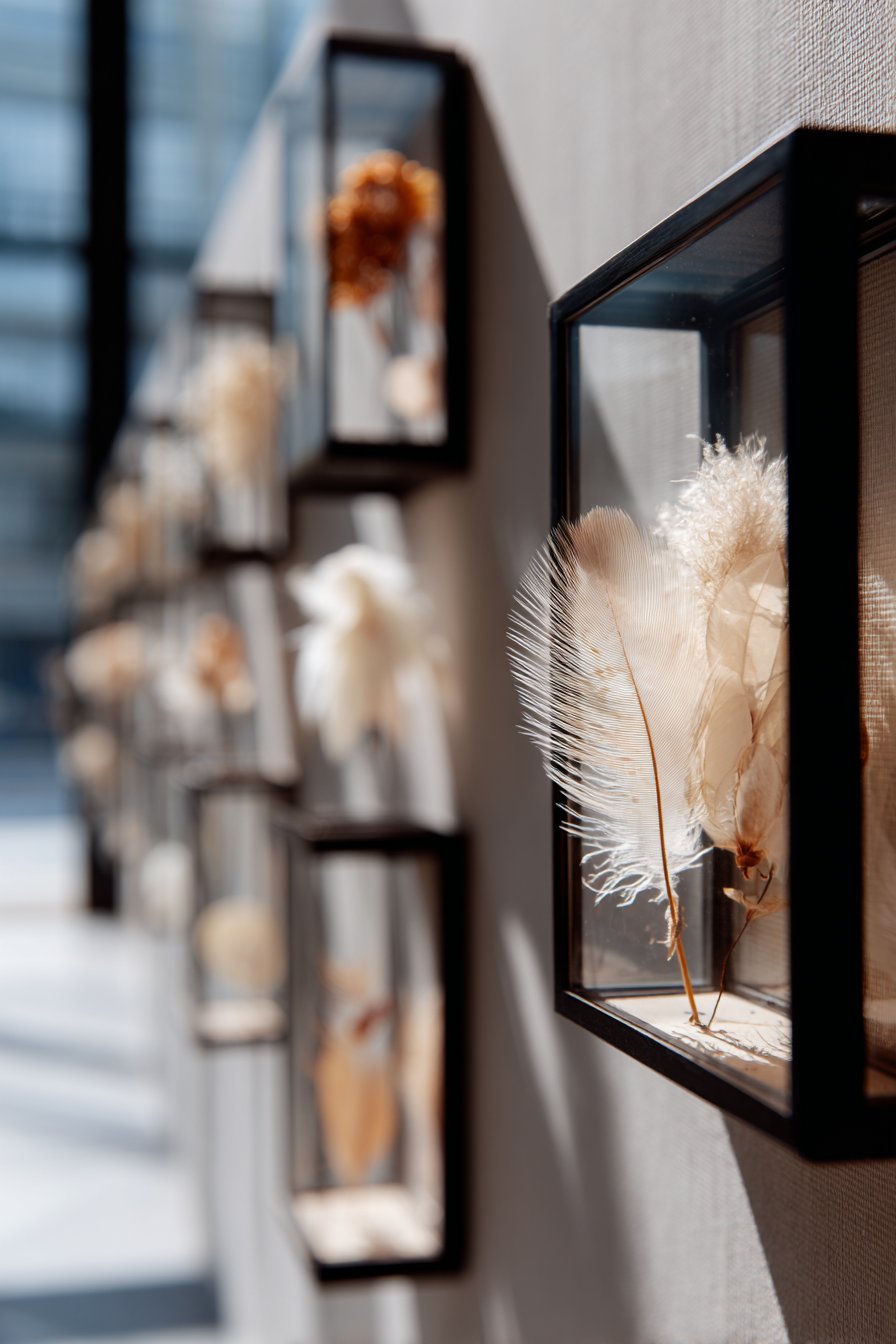
Shadow boxes work particularly well on narrow walls because their compact square format fits slim spaces while their depth creates visual interest without requiring width. The contained nature of each box prevents the display from feeling chaotic despite the organic irregularity of natural specimens. This is narrow wall decor that evolves with your experiences, growing and changing as you discover new specimens to preserve and display.
Key Design Tips:
- Use acid-free materials for mounting specimens to prevent yellowing and deterioration
- Press flowers and leaves between heavy books for 2-3 weeks before framing for best preservation
- Mount delicate specimens with tiny straight pins or archival adhesive to secure without damage
- Include small labels with species names and collection locations for added interest
- Protect from direct sunlight which can fade colors and damage delicate organic materials
20. Bamboo Ladder Shelf Lean
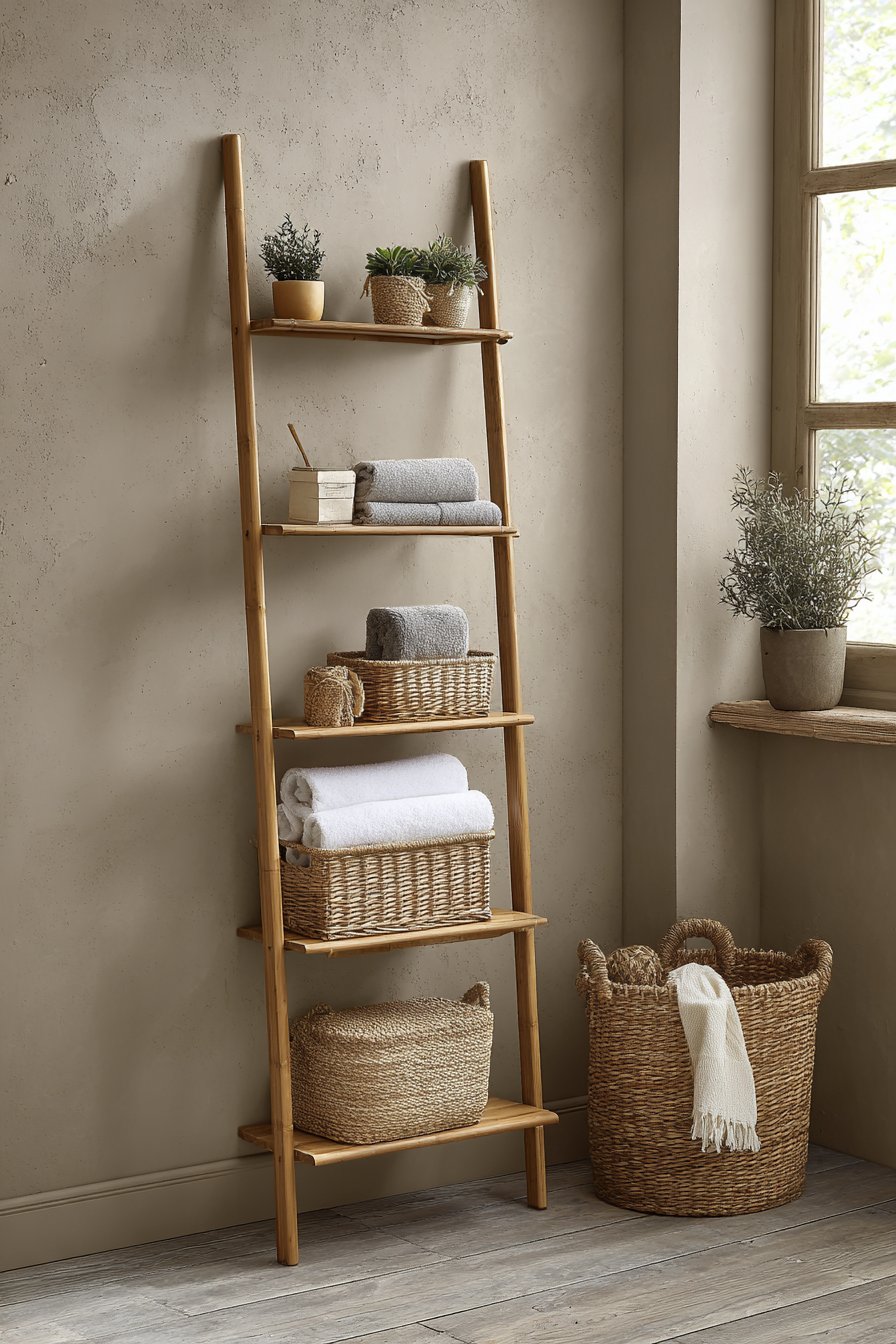
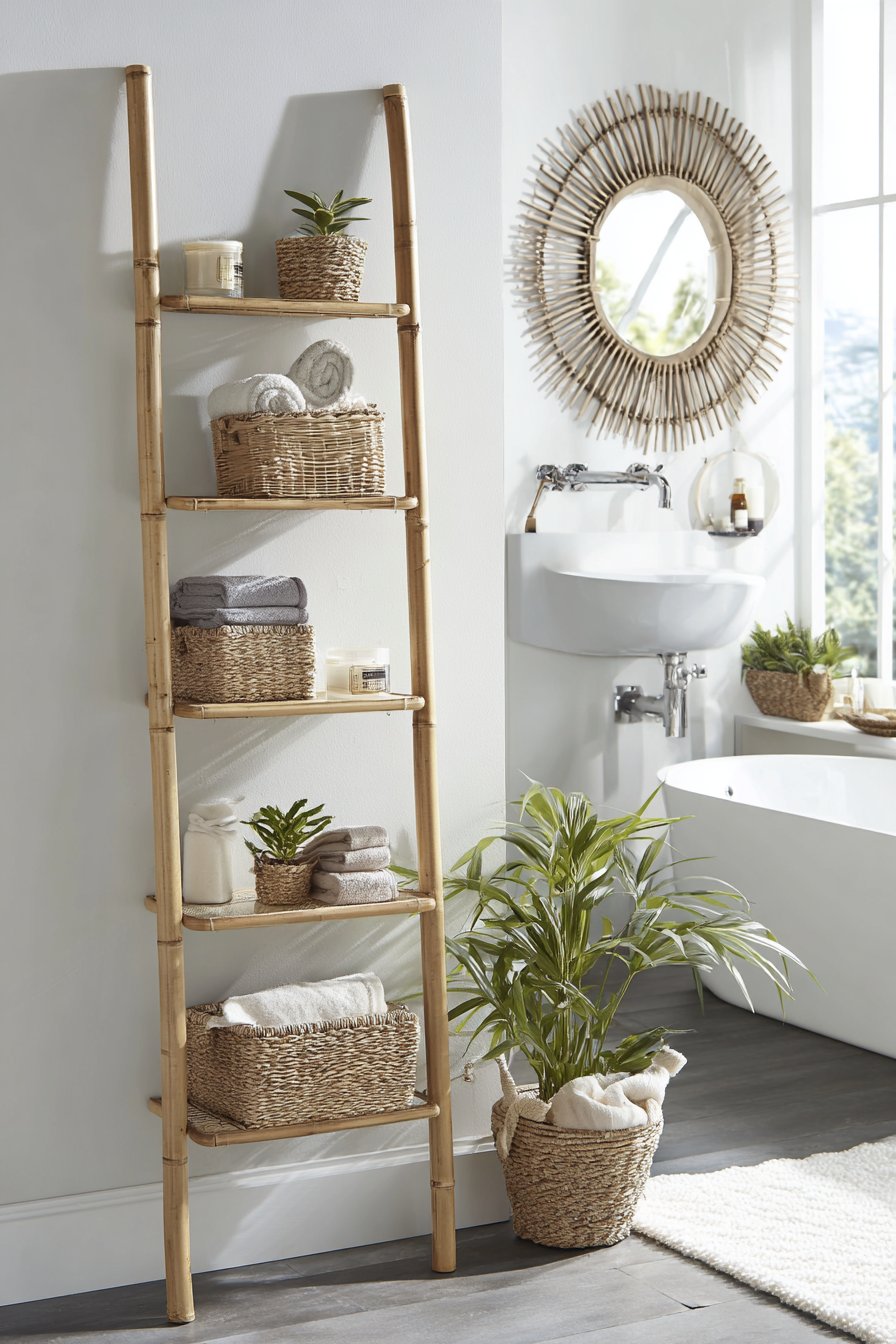
A 14-inch deep bamboo ladder shelf leans casually against an 18-inch wide bathroom wall, transforming vertical space into tiered storage that balances function with spa-like aesthetic. The four-tier ladder design creates staggered platforms that display rolled towels—some in crisp white, others in soft gray—alongside small potted plants that thrive in bathroom humidity and woven baskets that corral toiletries and bathroom essentials. The natural bamboo brings warm organic texture while the open design keeps the display feeling light and airy rather than heavy or cluttered. Soft natural lighting from a frosted bathroom window creates calm ambiance that enhances the spa-inspired aesthetic.
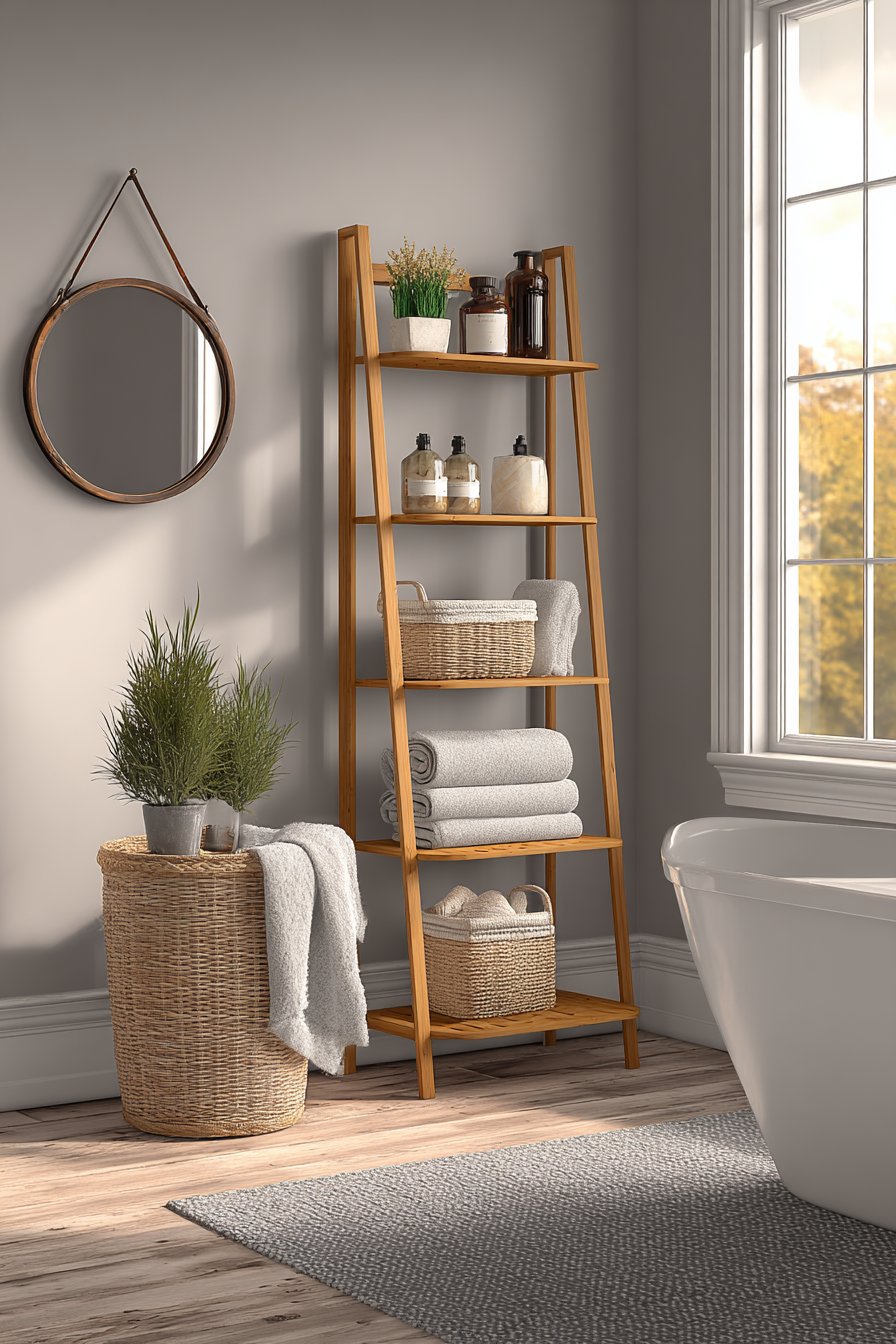
Ladder shelves have become increasingly popular because they offer substantial storage capacity without requiring permanent installation or commitment. For renters or those who frequently rearrange, this flexibility is invaluable. The leaning design creates a relaxed, casual vibe that feels less formal than built-in shelving while the tiered structure provides natural separation between different types of items. In bathrooms, this vertical approach solves the common problem of limited storage—particularly in older homes where built-in storage is minimal or nonexistent.
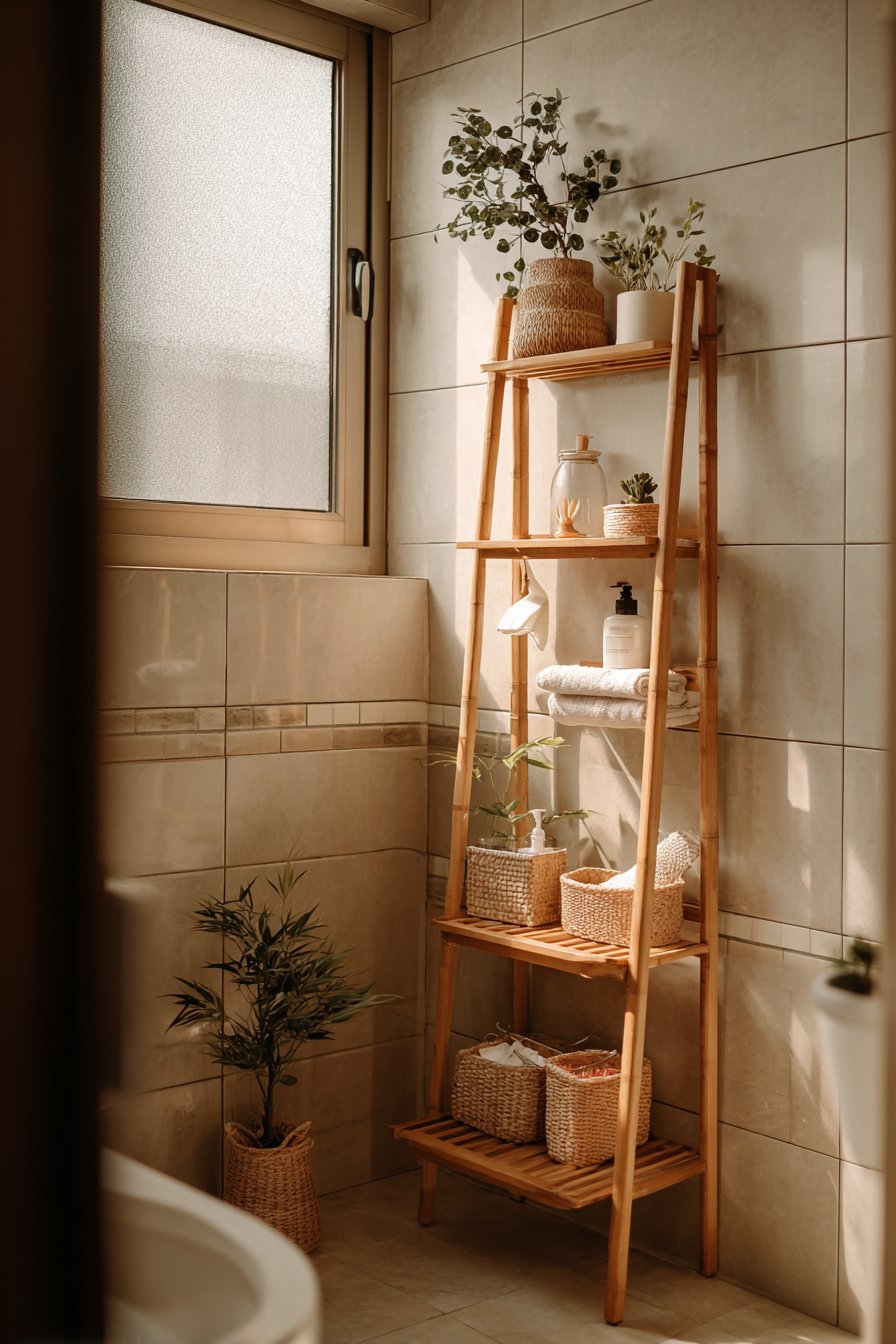
The spa-like styling elevates the ladder shelf from purely utilitarian to genuinely decorative. Rolled towels become sculptural elements, their cylindrical forms creating visual rhythm along the shelves. Woven baskets add texture while concealing less-attractive necessities. Small plants introduce life and freshness that transforms bathroom atmosphere from clinical to serene. Together, these elements create narrow wall storage that feels like thoughtful design rather than afterthought necessity.
Key Design Tips:
- Choose bamboo or wood ladder shelves for moisture resistance in bathroom environments
- Angle the ladder slightly for stability—most designs lean at 10-15 degrees from vertical
- Roll towels tightly and secure with ribbon or place in open baskets to maintain neat appearance
- Select plants suited to bathroom conditions—humidity-loving varieties like pothos or ferns
- Weight the bottom shelf with heavier items to prevent tipping, keeping lighter items on upper tiers
21. Woven Basket Wall Trio
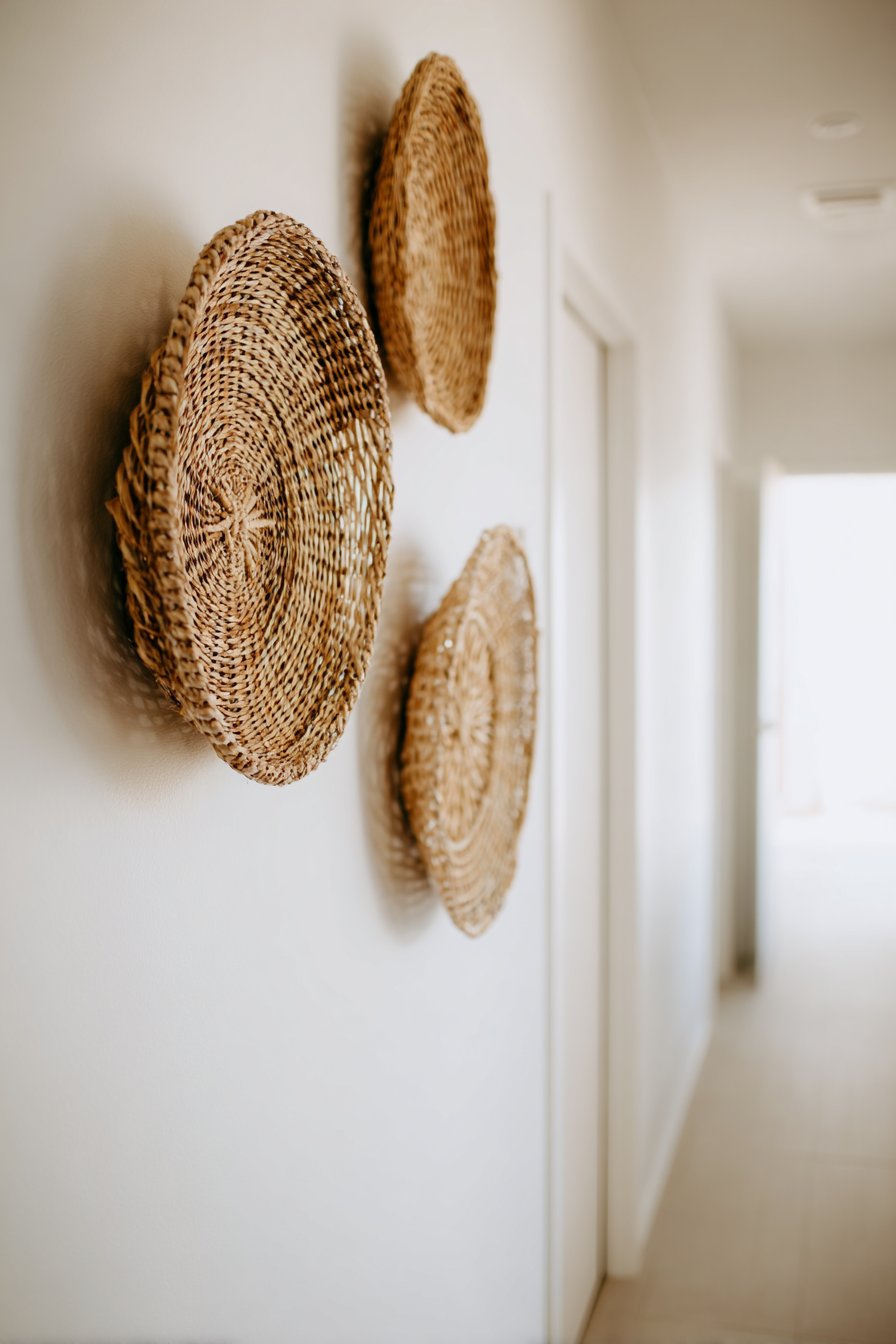
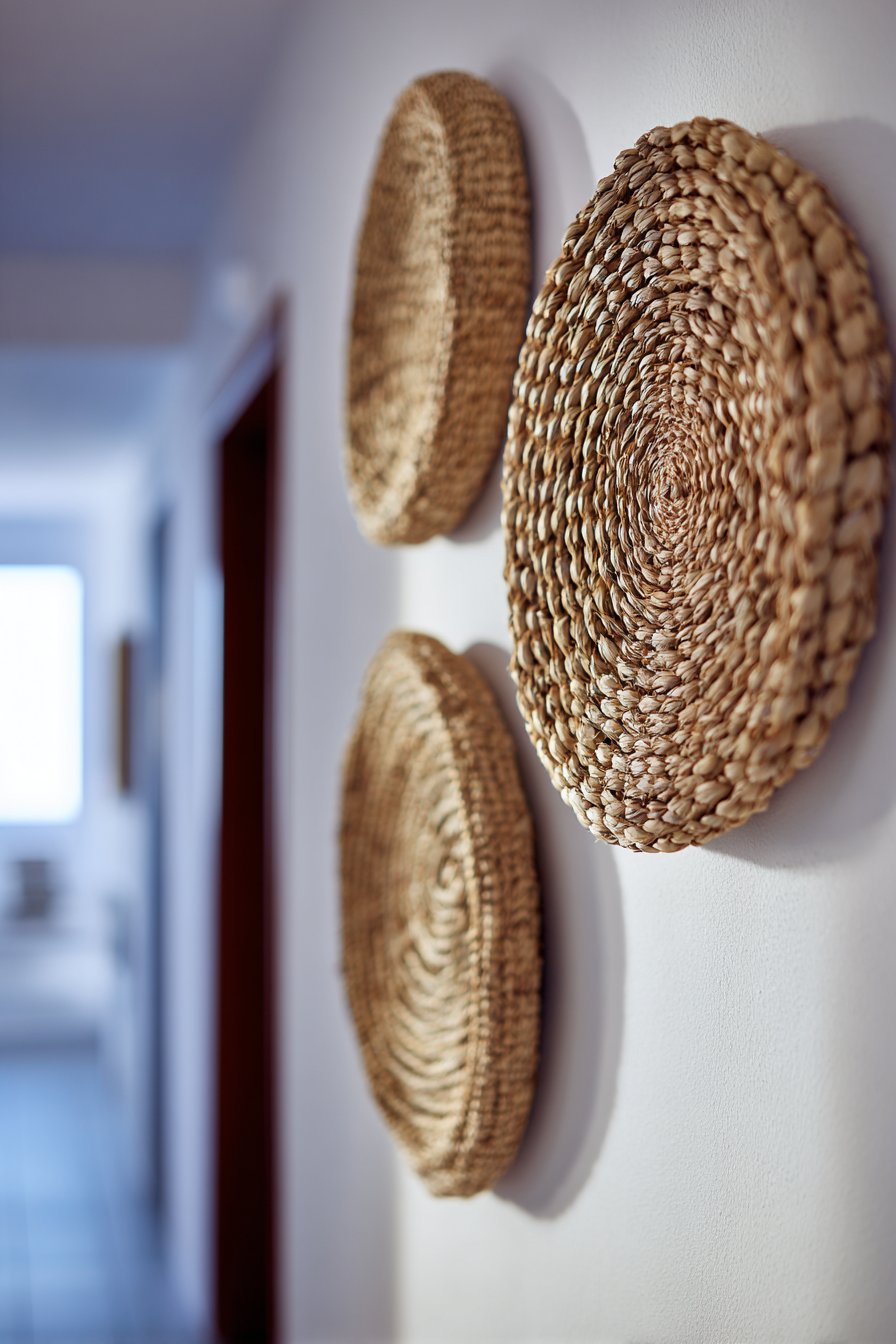
Three seagrass baskets in graduated sizes create bohemian texture on a 14-inch narrow wall, their natural woven patterns adding organic warmth to crisp white walls. The baskets range from 10 to 16 inches in diameter, mounted with even vertical spacing that creates rhythm without rigidity. Each basket’s tightly woven construction creates intricate texture that invites close inspection—the natural color variations in the seagrass create subtle striping, while the handcrafted quality ensures each basket has slight irregularities that prove human craftsmanship. Soft diffused daylight highlights the dimensional weave patterns, with light catching on raised portions while shadows settle into woven valleys.
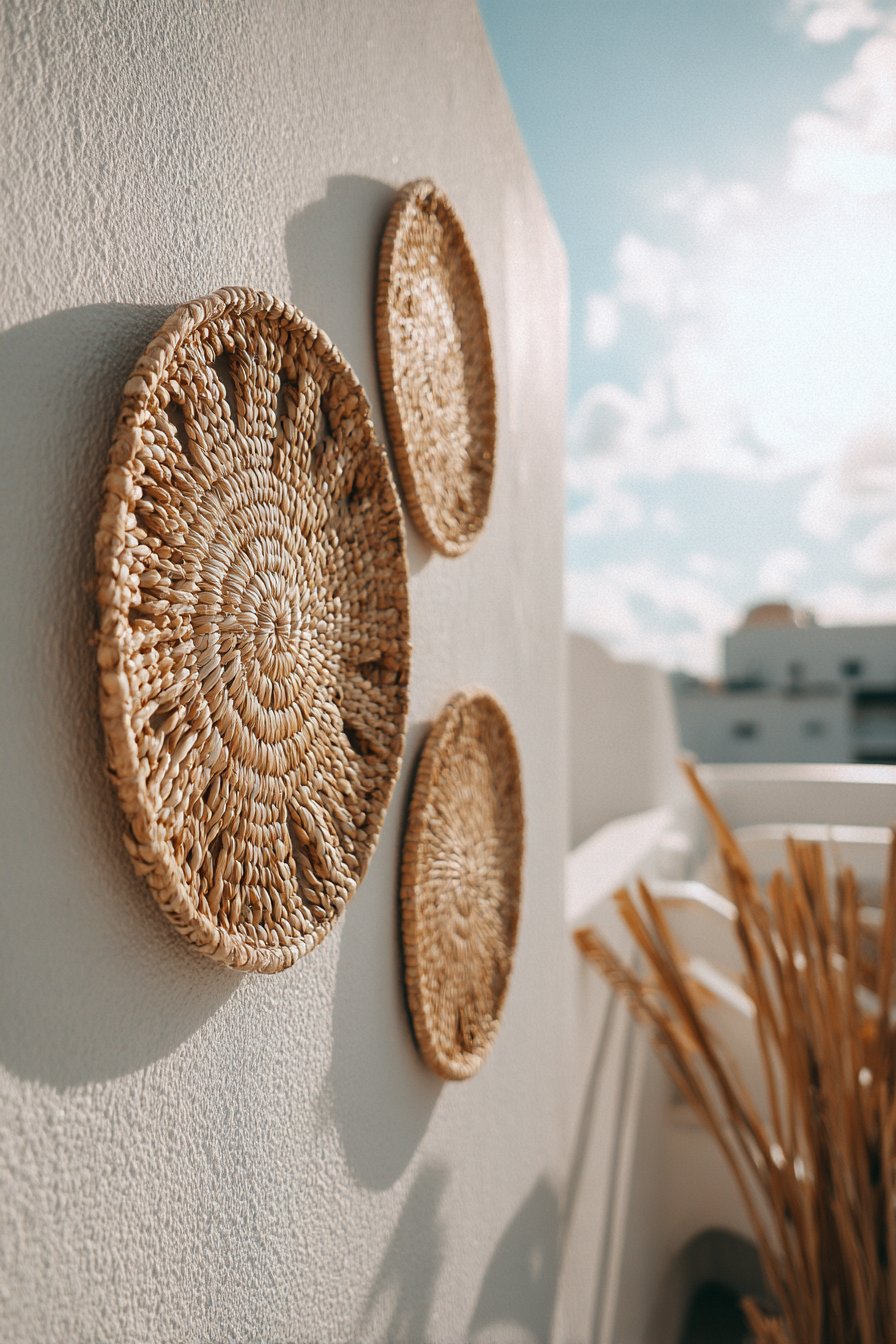
Basket walls represent an affordable, accessible approach to narrow wall decoration. Natural fiber baskets are widely available at various price points, making this a budget-friendly project that doesn’t sacrifice style. The circular shapes create soft contrast against typical rectangular architecture, while the natural materials bring organic warmth that prevents white walls from feeling sterile. The graduated sizing creates visual hierarchy—the eye naturally travels from larger to smaller baskets, creating movement and flow despite the static nature of wall-mounted decor.
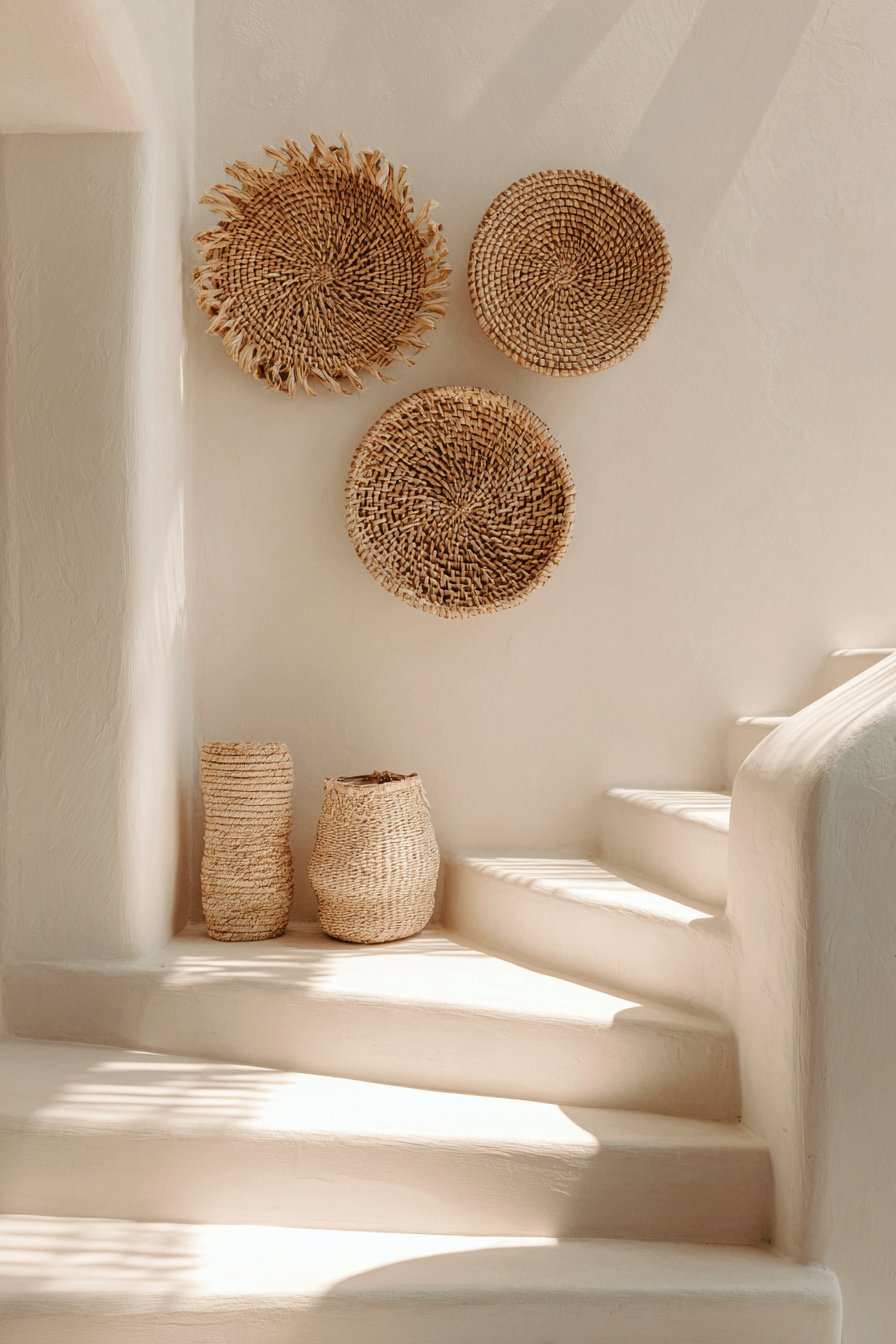
This solution works beautifully in bohemian, coastal, or global-inspired interiors where natural materials and handcrafted objects are celebrated. The baskets can remain functional—remove them to use for picnics or storage, then return them to the wall. This flexibility adds practical value beyond pure decoration. The neutral palette ensures versatility, coordinating with virtually any color scheme while adding texture that enriches minimal or monochromatic interiors.
Key Design Tips:
- Mount baskets using picture-hanging wire secured to the basket’s back woven structure
- Maintain consistent spacing—6-8 inches between baskets creates balanced vertical rhythm
- Choose baskets with tight, even weaving for most refined appearance and durability
- Group in odd numbers (3 or 5) for more dynamic, visually interesting compositions
- Position the largest basket at eye level (approximately 60 inches from floor) for proper visual anchoring
22. Charcoal Pegboard Organization System
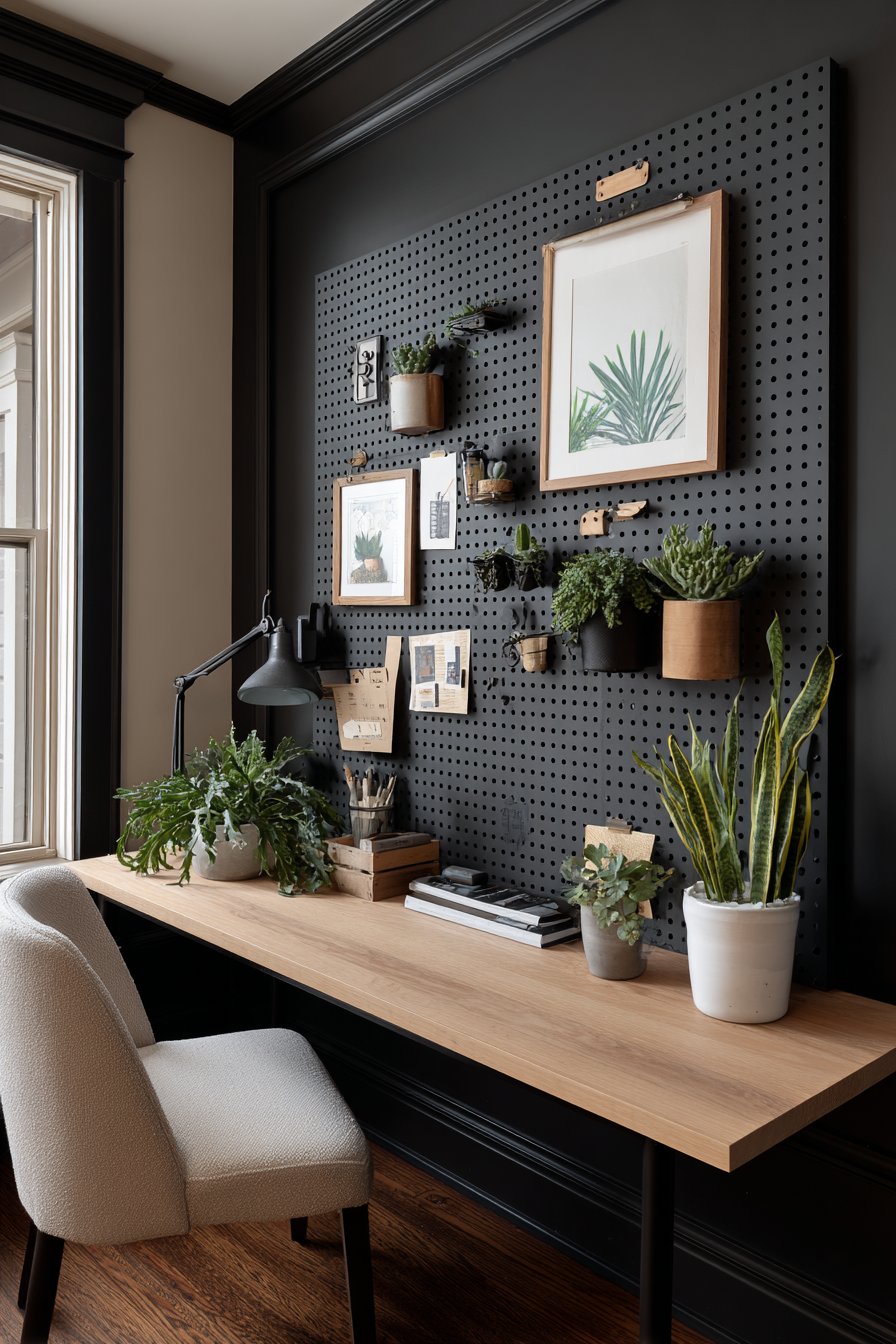
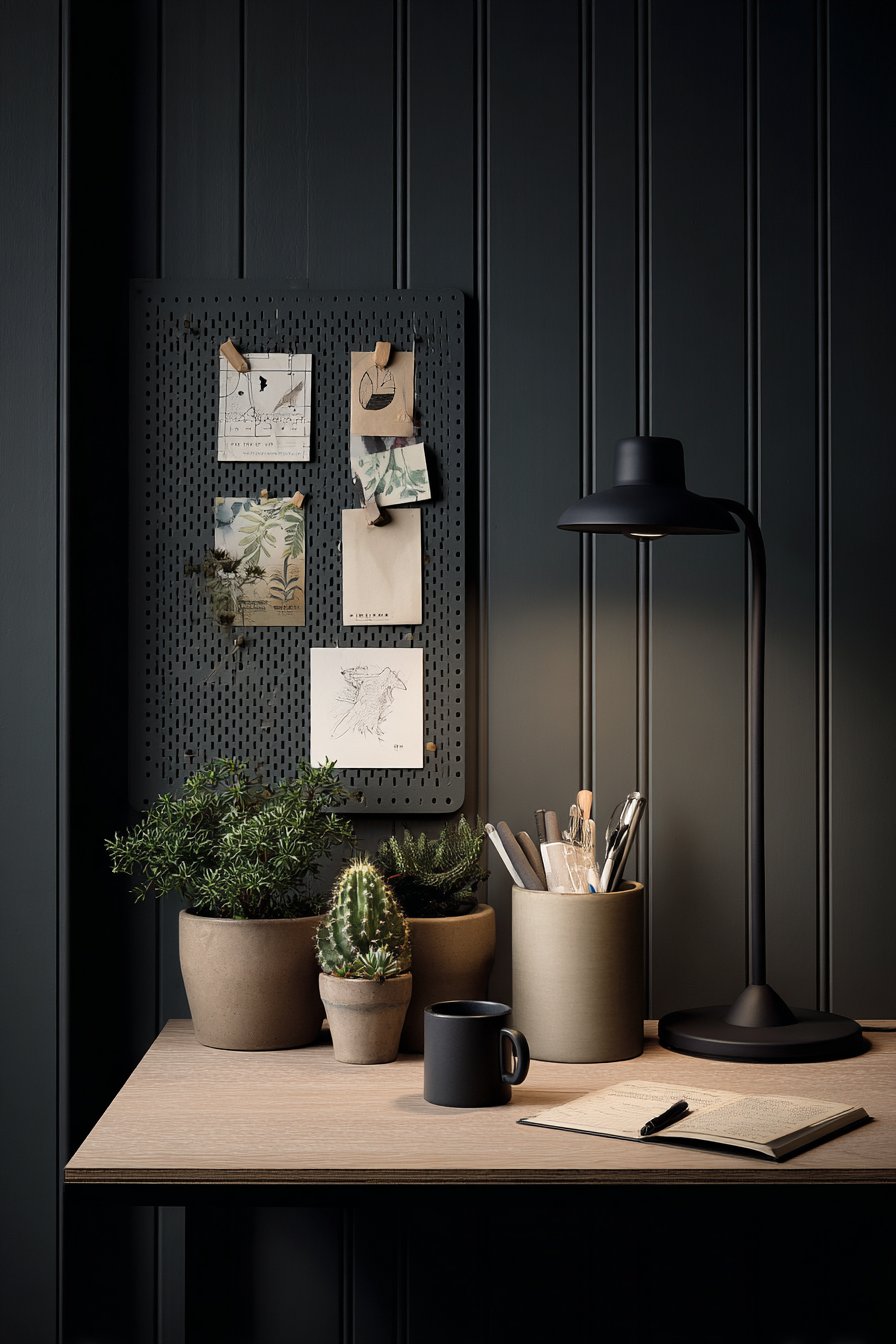
A matte charcoal gray pegboard transforms a narrow 12-inch home office wall into adaptable organization that’s both functional and stylish. Wooden pegs in natural finish create warm contrast against the dark background, holding an ever-changing array of items: small potted succulents in minimal concrete planters, essential office supplies within easy reach, and inspirational postcards that provide creative motivation. The narrow wall becomes a living, breathing organization system that adapts to changing needs—simply move pegs to reconfigure the arrangement. Natural desk lamp lighting creates practical illumination while highlighting the three-dimensional quality of the pegboard’s texture and the objects it displays.
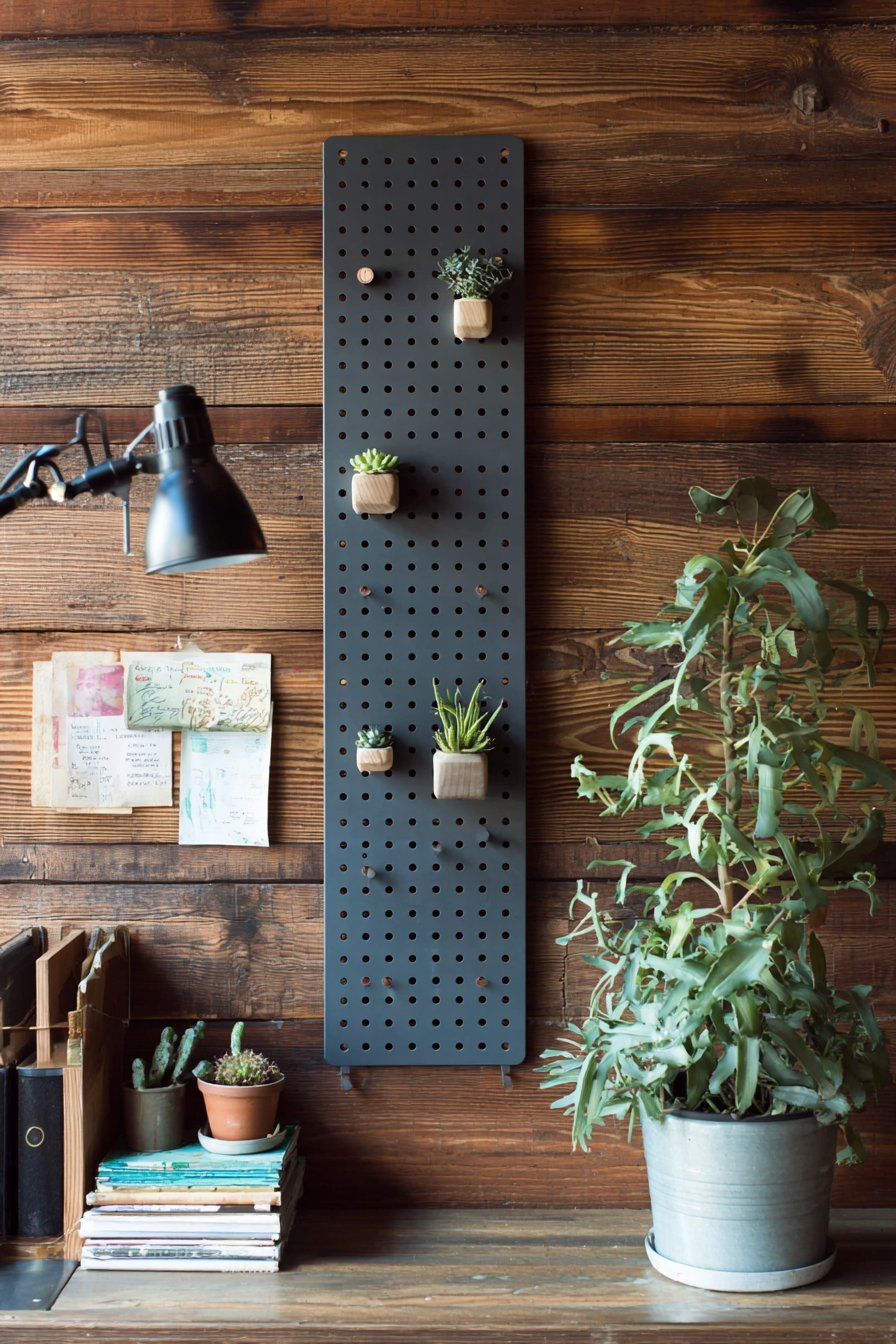
Pegboard has evolved beyond garage workshops to become a legitimate design element in modern homes. The key is thoughtful finishing—painting in sophisticated colors like charcoal or navy—and selective styling that curates rather than clutters. On narrow walls, pegboard offers unique advantages: it provides flexible storage without consuming floor space, it adapts as needs change, and it creates visual texture through its perforated pattern and dimensional pegs. The utilitarian aesthetic has become fashionable, particularly in industrial and Scandinavian-inspired interiors where functionality and honest materials are celebrated.
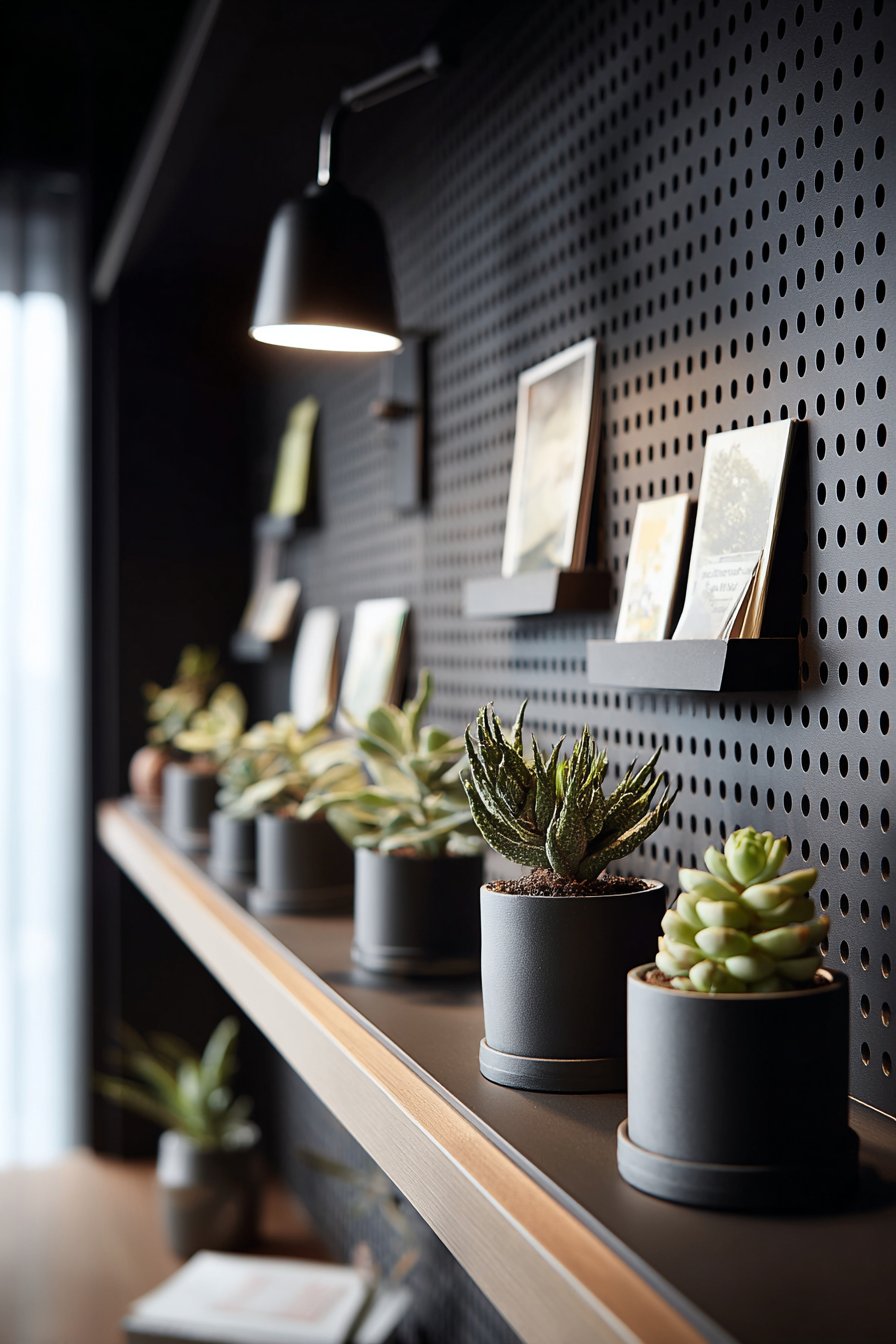
This solution demonstrates how narrow walls can provide serious organizational capacity while maintaining aesthetic appeal. By limiting displayed items to essential, attractive pieces—succulents, minimal supplies, inspirational images—the pegboard avoids the cluttered workshop appearance while maintaining full functionality. It’s an approach that works equally well in home offices, craft rooms, kitchens, or anywhere adaptable storage adds value.
Key Design Tips:
- Sand and prime pegboard before painting for smooth, professional finish without visible grain
- Choose wooden pegs over metal for warmth and to avoid scratching delicate items
- Limit displayed items to essential, attractive pieces to prevent cluttered appearance
- Create zones on the pegboard—plants in one area, supplies in another—for visual organization
- Consider magnetic paint under pegboard paint for additional hanging flexibility using magnets
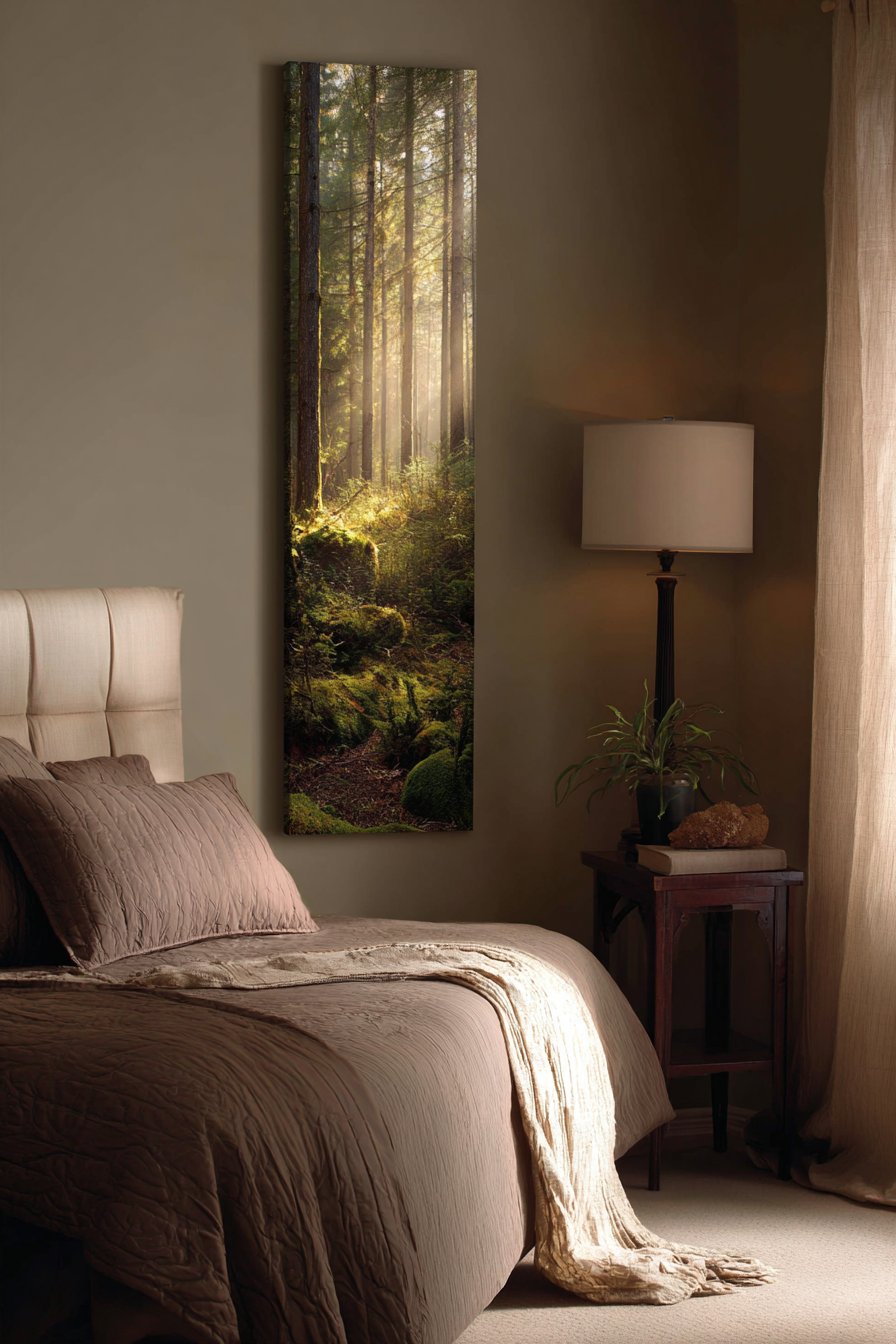
23. Forest Scene Vertical Canvas Print
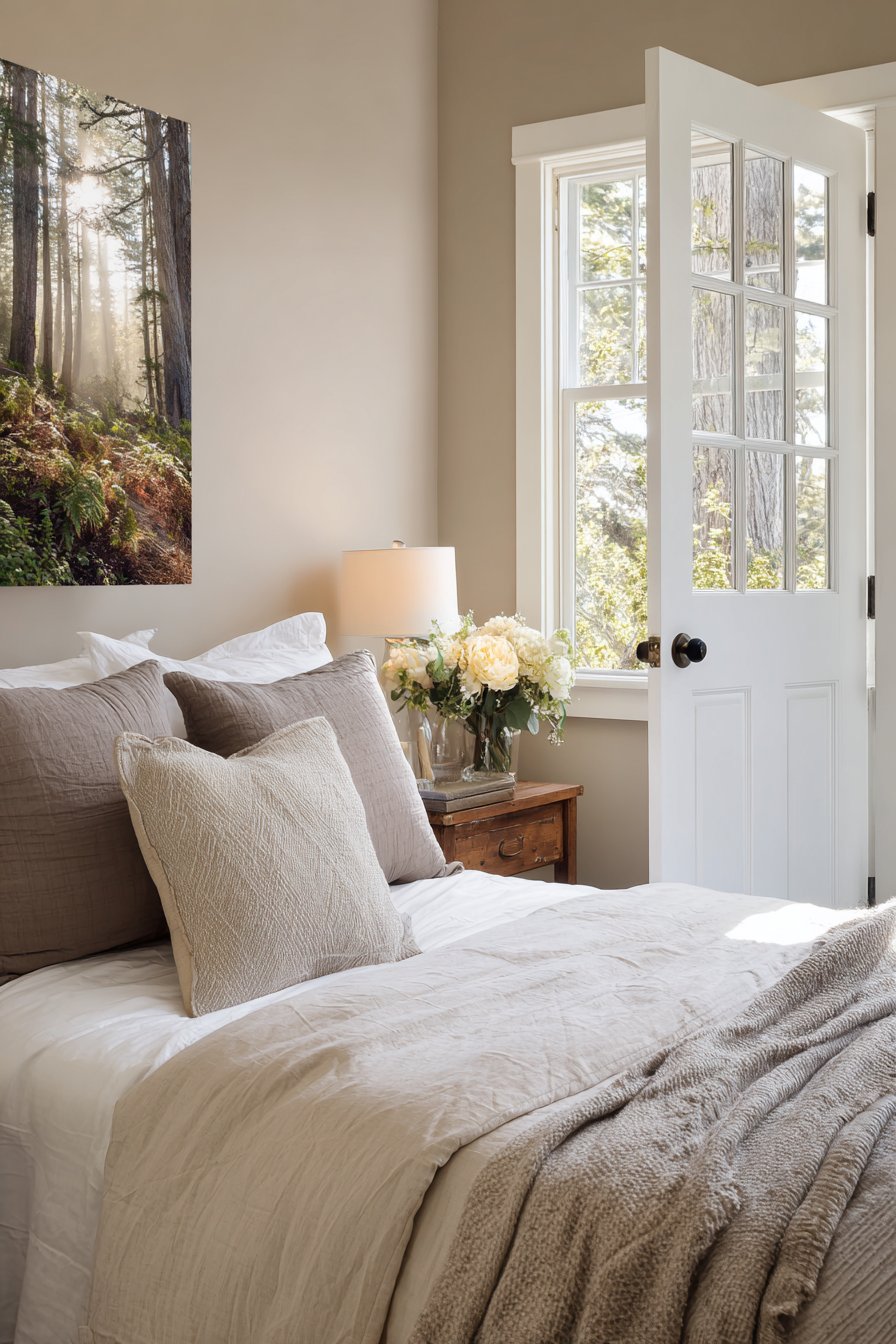
A 16×48 inch vertical nature photograph transforms a narrow bedroom wall into a window to the forest, bringing outdoor serenity indoors through the power of large-scale nature imagery. The muted greens and browns of a peaceful woodland scene create calming atmosphere perfect for bedroom tranquility. Tall trees stretch upward through the vertical frame, their trunks creating strong vertical lines that emphasize the canvas’s height while their leafy canopy softens the top. Against soft taupe walls, the nature print’s earth tones create harmonious color relationships that feel grounded and peaceful. Morning light through bedroom windows creates gentle illumination that makes the forest scene feel alive, as if you could step through the canvas into the woods beyond.
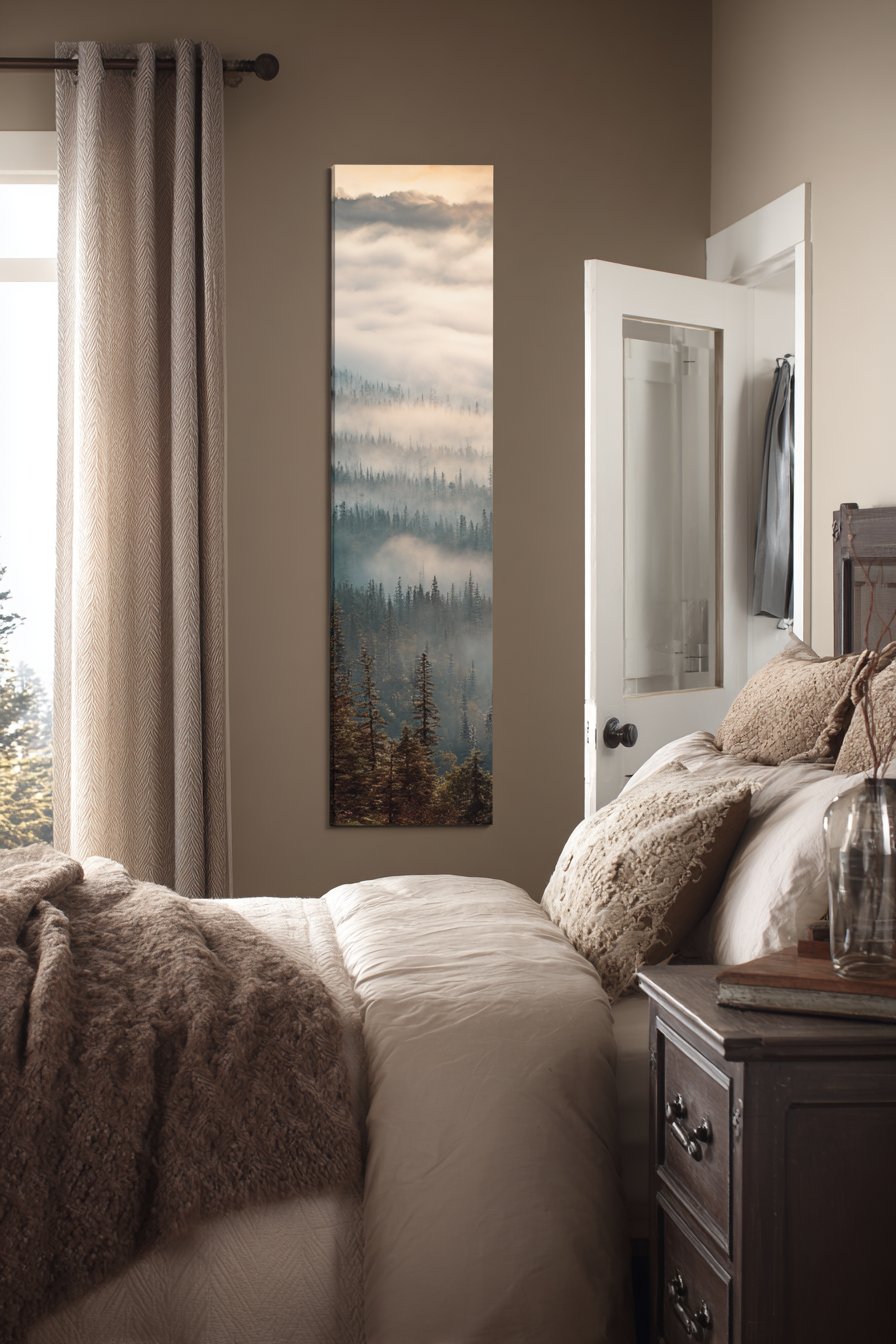
Nature photography has become increasingly popular in interior design as urban dwellers seek to maintain connection with the natural world. Large vertical prints create immersive experiences, particularly when scaled appropriately to the viewing space. On narrow walls, vertical nature scenes work beautifully because they mirror how we actually experience forests—looking up through trees toward the sky—creating intuitive visual relationships. The calming greens and browns provide scientifically proven stress reduction benefits, making this approach particularly valuable in bedrooms where relaxation is paramount.
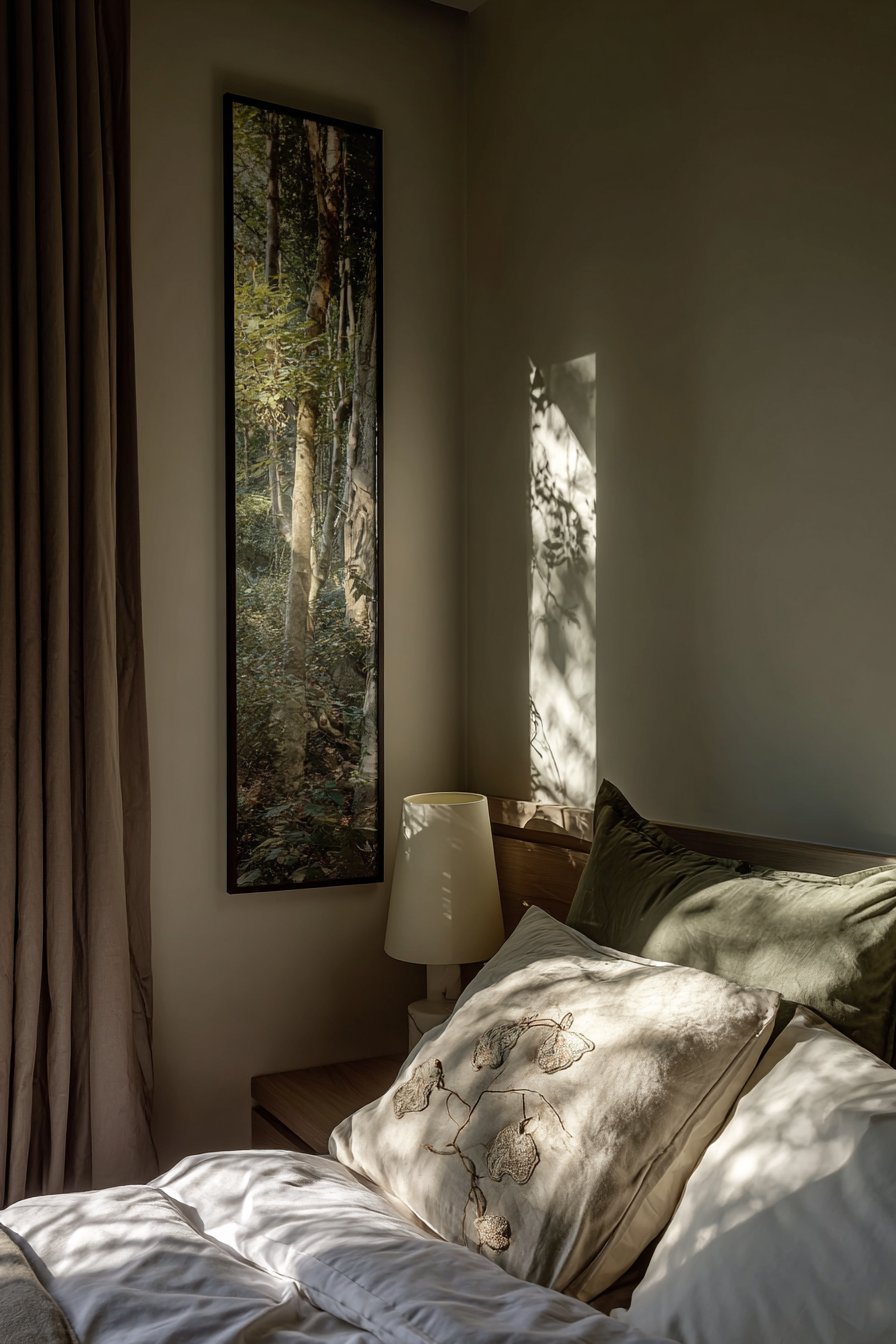
This solution demonstrates how single statement pieces can transform narrow walls more effectively than multiple smaller items. The scale creates impact and presence, while the subject matter introduces specific mood and atmosphere. The vertical orientation draws eyes upward, making ceilings feel higher while the nature imagery brings psychological benefits of outdoor connection without requiring actual windows or views.
Key Design Tips:
- Choose high-resolution images printed on quality canvas for professional appearance without pixelation
- Select scenes with strong vertical elements (trees, waterfalls, cliffs) that complement the format
- Frame in simple black or natural wood frames that don’t compete with the image content
- Position at appropriate height—center should be at 57-60 inches from floor for optimal viewing
- Consider LED picture lights to illuminate the canvas in evening hours, creating ambiance
24. Vintage Letterpress Block Typography
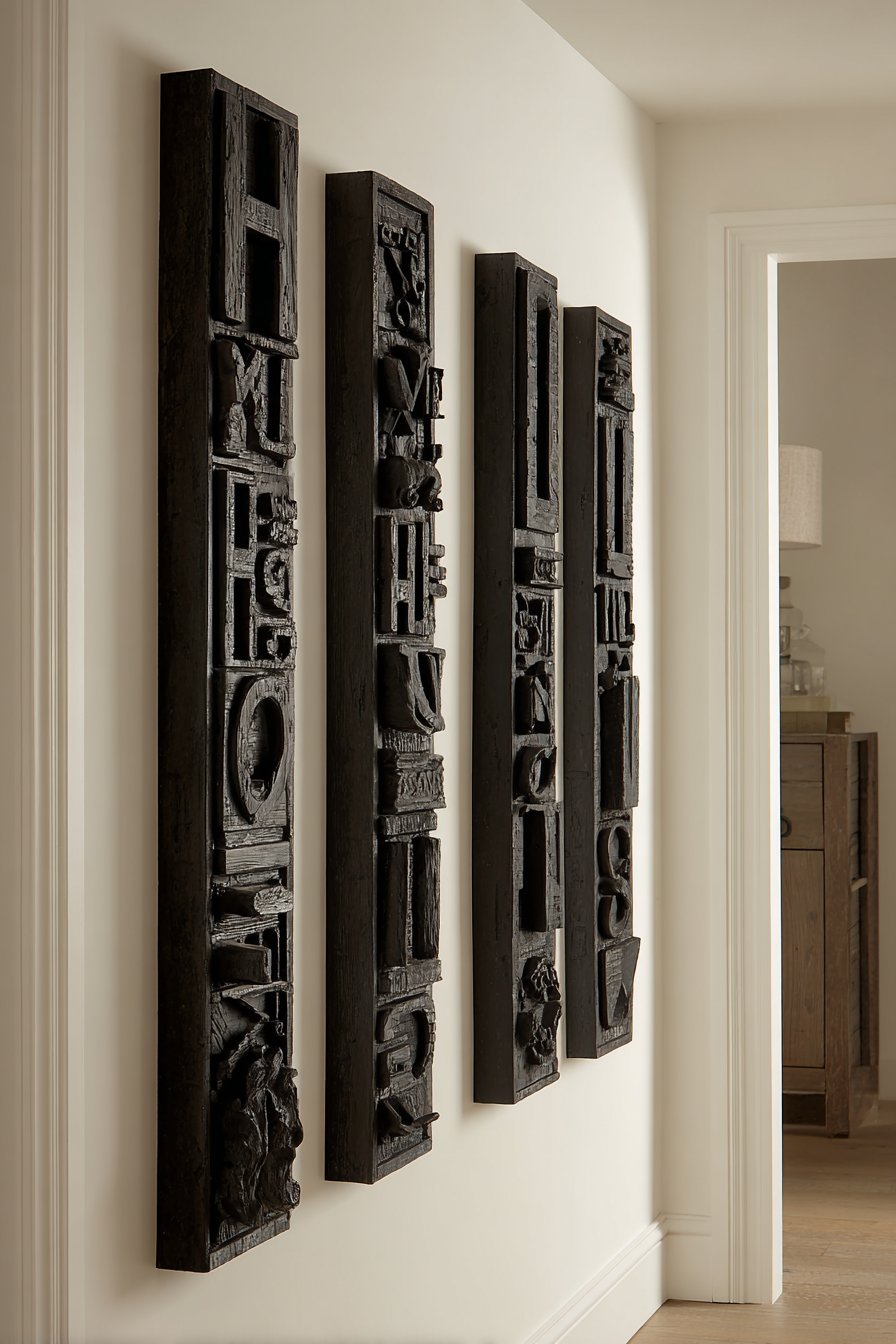
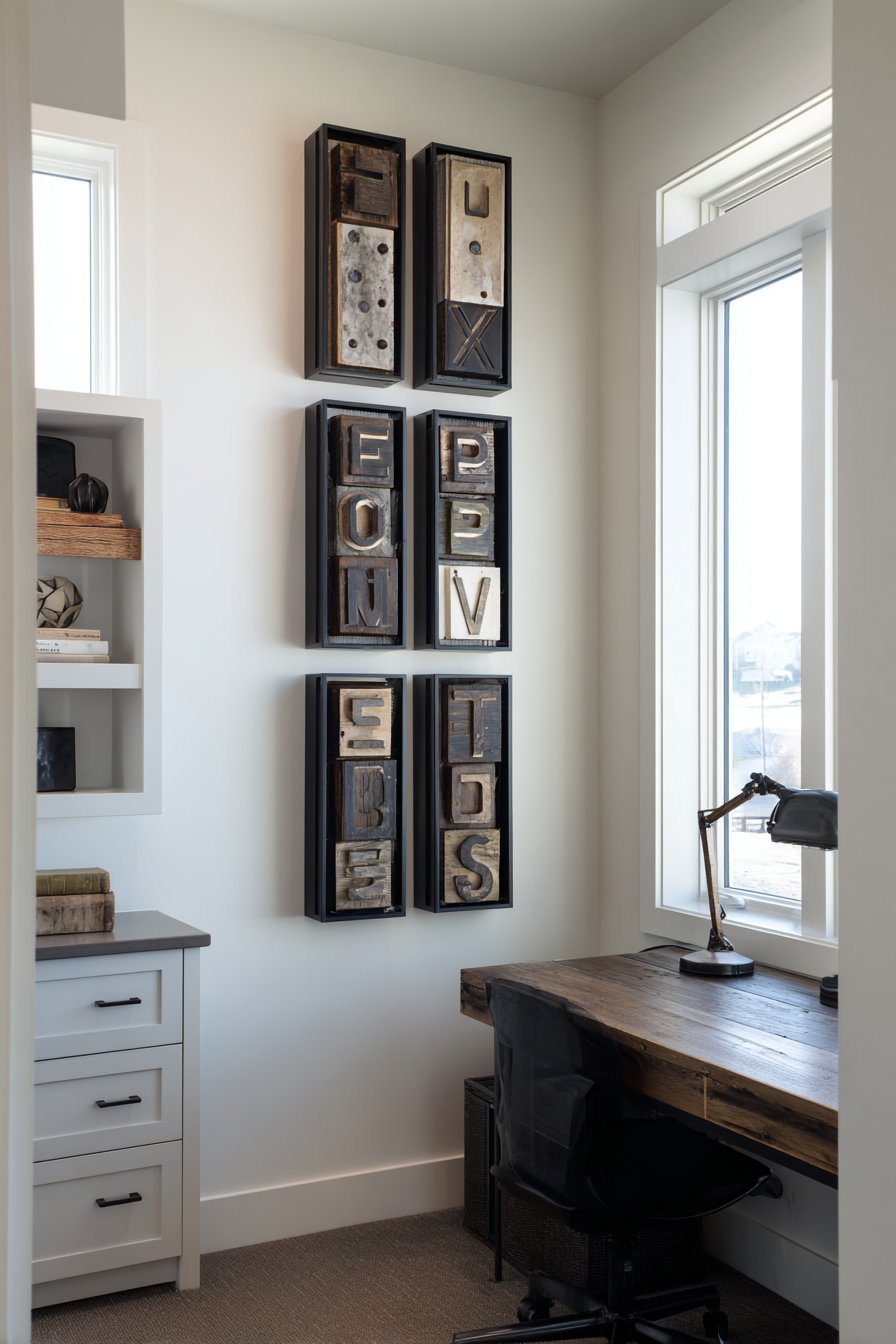
Four vintage wooden letterpress blocks mounted as wall art create an industrial-vintage focal point on a 14-inch narrow home office wall. Each block, approximately 6×8 inches, features decorative typographic elements—ornate letters, printer’s marks, or decorative borders—raised in relief that creates dimensional texture and shadow. Mounted in matte black frames with museum-style spacing against white walls, the collection feels curated and intentional, like pieces from a design museum. Balanced interior lighting highlights the dimensional letterpress relief, creating shadows that emphasize the physical depth of carved wood and raised type. The typography itself becomes art, celebrating the craft of pre-digital printing and the beauty of letterform design.
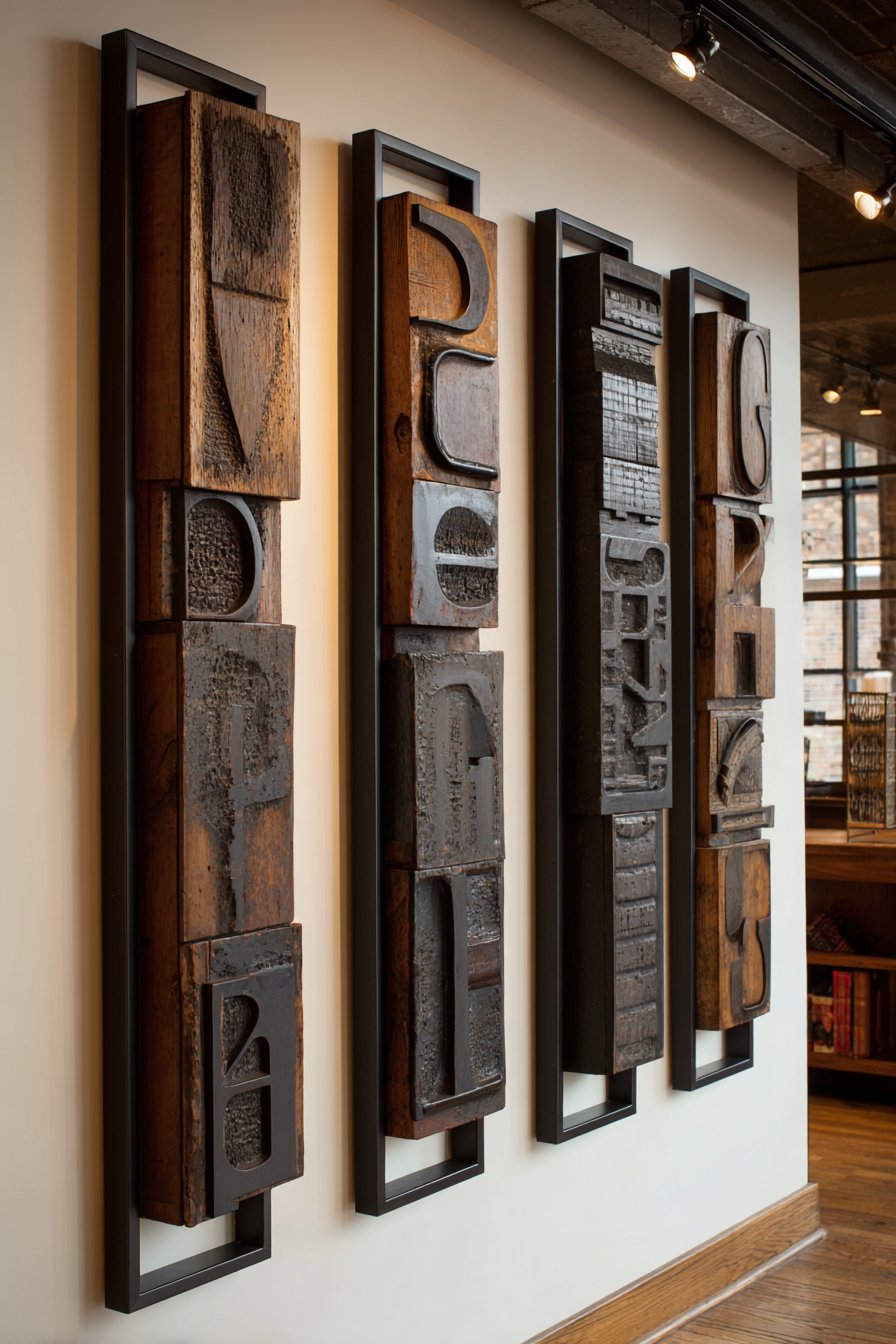
Letterpress blocks represent tangible history from the era when printing required physical type carved from wood or cast in metal. Each block carries the traces of its working life—ink stains, worn edges, and the patina of age—that make them authentic artifacts rather than mere decorations. For home offices, creative spaces, or anywhere typography and design are appreciated, these blocks create meaningful focal points that celebrate craft tradition and the evolution of visual communication. The narrow wall format works perfectly for this type of linear collection where individual pieces are relatively small but collectively create substantial impact.
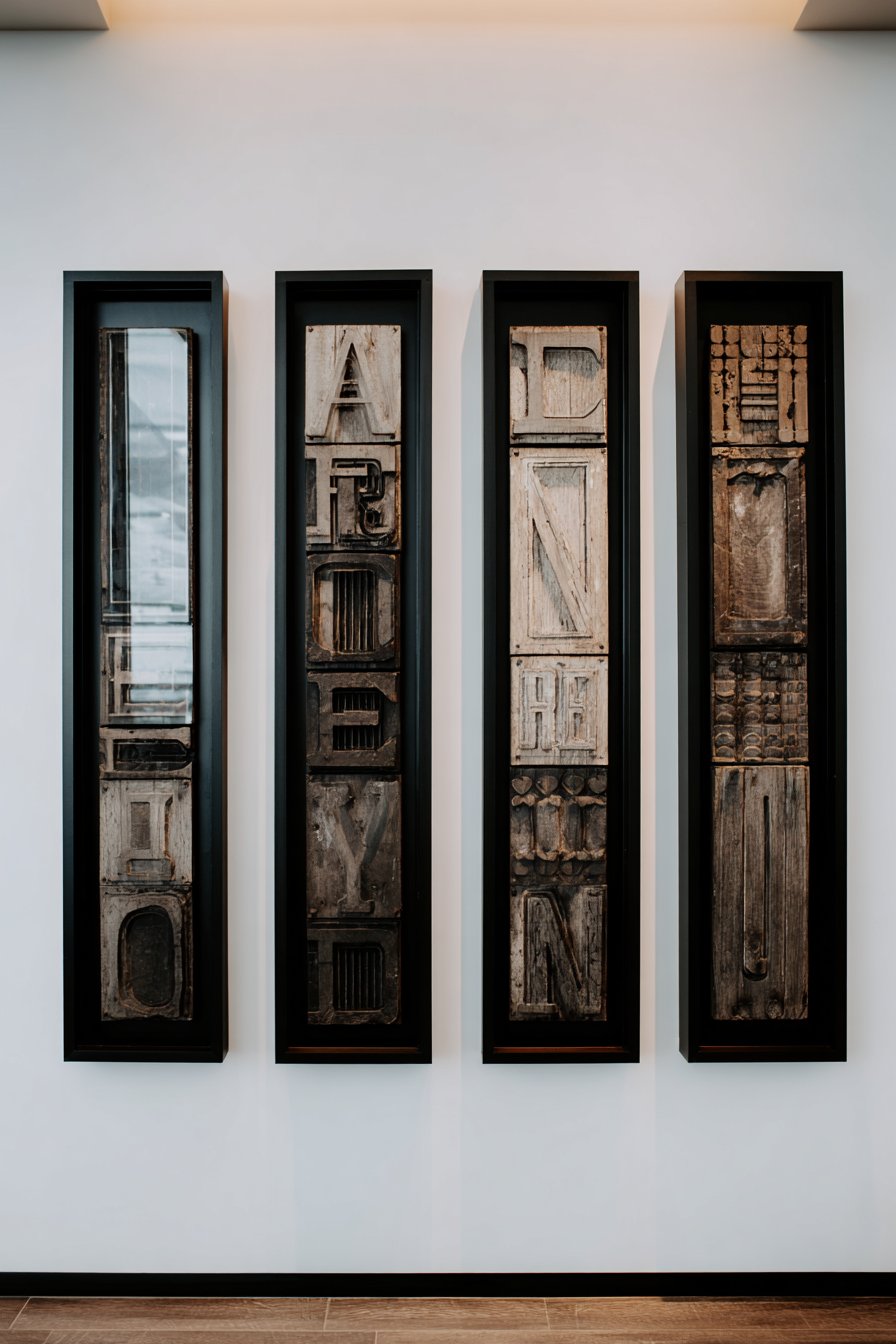
This approach demonstrates how repurposed objects can become art through thoughtful presentation. The museum-quality framing elevates utilitarian printing blocks to gallery-worthy pieces, while the narrow wall provides the perfect scale for displaying them without overwhelming. It’s an solution that appeals to designers, writers, and anyone who appreciates typography’s visual power and historical significance.
Key Design Tips:
- Source authentic letterpress blocks from antique stores, print shops, or online vintage marketplaces
- Frame each block individually in deep shadow box frames that accommodate the block’s thickness
- Use museum-grade mounting that doesn’t damage the blocks for preservation and potential reuse
- Arrange with consistent spacing and alignment for gallery-style presentation
- Choose blocks with varied but complementary typography styles to create visual interest without chaos
25. Cascading Fairy Light Installation

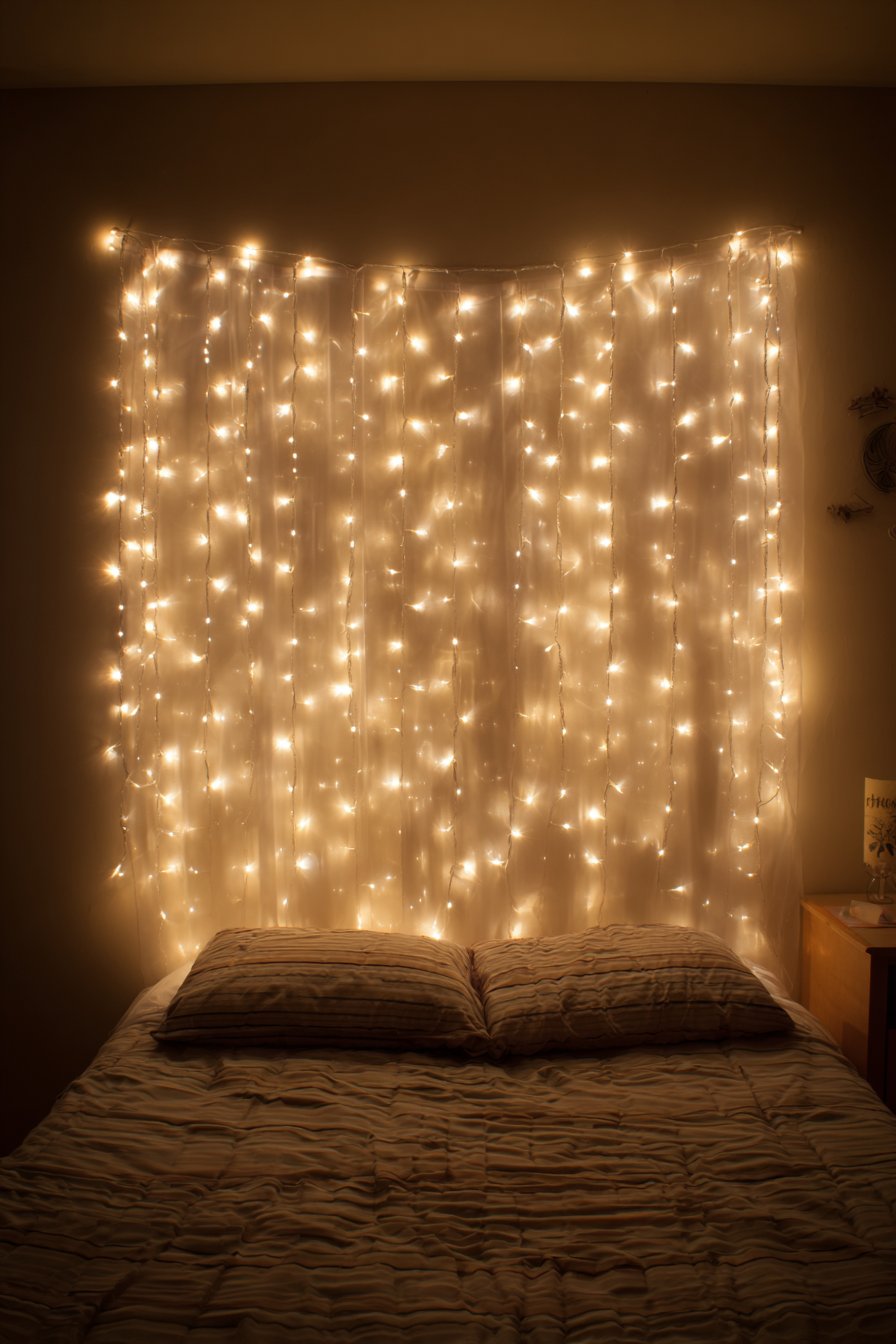
Delicate copper wire fairy lights create magical ambient lighting on a narrow 16-inch wall behind a bed headboard, arranged in vertical cascading lines secured with small clear hooks. Tiny warm white LED lights twinkle like captured stars against deep navy walls, creating ethereal atmosphere that transforms the narrow wall into a luminous focal point. The copper wire virtually disappears in daylight, leaving only the small LED points visible, but evening brings transformation as the lights glow softly, casting gentle ambient illumination that creates romantic, restful mood perfect for bedrooms. The vertical cascading arrangement draws eyes upward while the narrow width ensures the installation enhances rather than overwhelms the space.
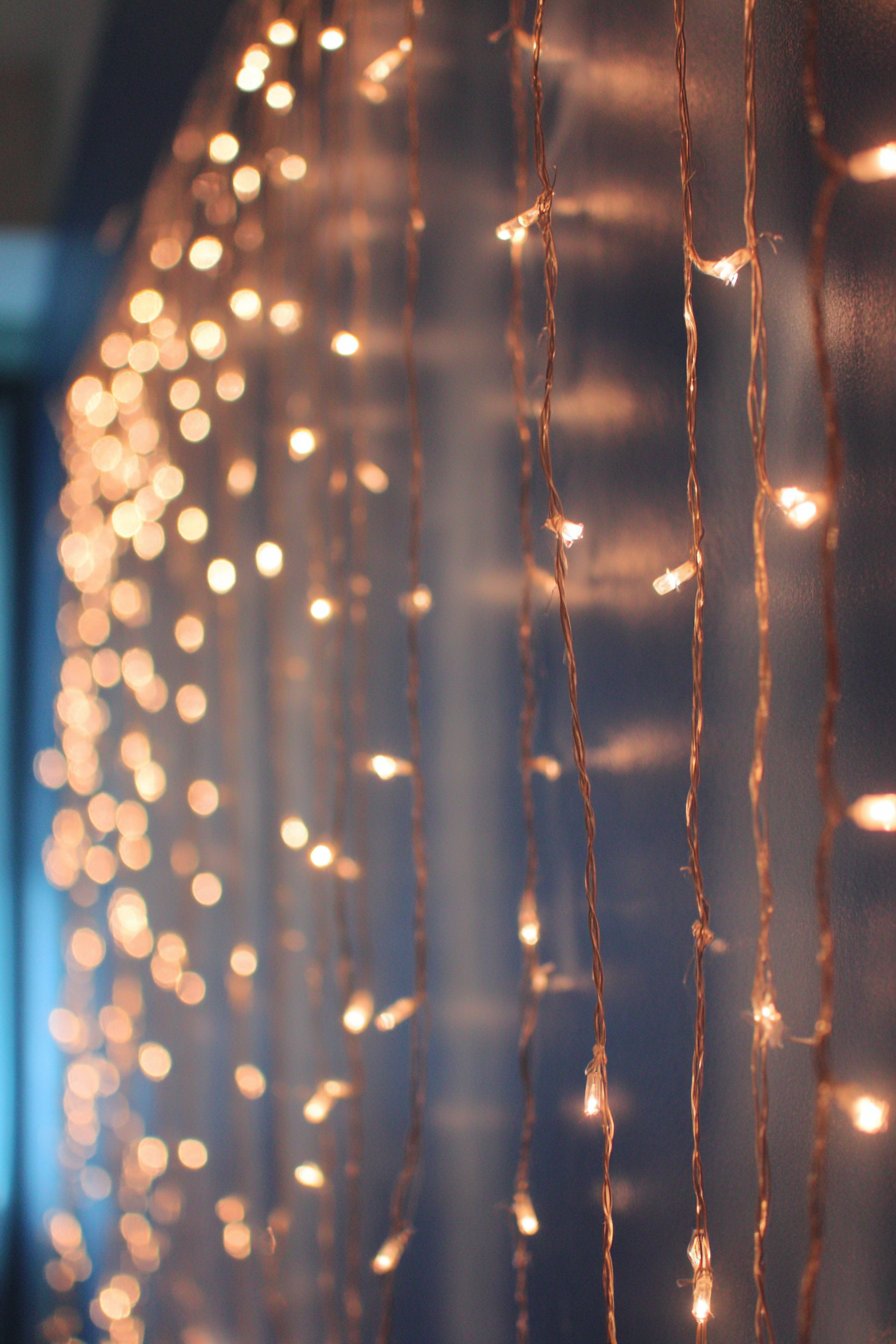
String lights have evolved far beyond holiday decoration to become legitimate design elements in contemporary interiors. The key is thoughtful installation—intentional patterns, quality fixtures, appropriate scale—that elevates them from dorm-room temporary to genuine permanent design. On narrow walls, fairy lights offer unique advantages: they’re lightweight, requiring only small hooks for installation; they create impact through light rather than physical mass; and they introduce ambiance that static decor cannot provide. The transformation between day and night creates two distinct experiences from a single installation.

This solution demonstrates how lighting can become decor, transforming narrow walls into sources of both illumination and atmosphere. The navy wall color intensifies the effect—the dark background makes lights appear brighter and more magical while during daylight hours provides dramatic color that anchors the bedroom’s design. It’s an approach that combines practical lighting with emotional impact, creating spaces that feel truly special.
Key Design Tips:
- Choose LED fairy lights for energy efficiency and reduced heat generation near walls and fabrics
- Secure lights with adhesive hooks designed for painted walls that remove without damage
- Plan the cascading pattern—typically 3-5 vertical lines with consistent spacing between drops
- Use battery-powered lights with timers for automatic on/off or hard-wire for permanent installation
- Select warm white (2700K) LED color temperature for most flattering, cozy bedroom ambiance
Conclusion: Maximizing the Potential of Every Narrow Wall
Throughout these 25 narrow wall decor ideas, we’ve explored how seemingly challenging spaces can become opportunities for creative expression and practical functionality. From botanical galleries that bring nature indoors to vertical wine storage that combines utility with style, from mirror arrangements that expand spatial perception to textile hangings that introduce global artistry, each approach demonstrates that narrow walls deserve the same design consideration as their larger counterparts. The key insight is that narrow walls require vertical thinking—emphasizing height rather than breadth, using scale and proportion strategically, and carefully curating what’s displayed to avoid clutter while maximizing impact.
These solutions share common principles that translate across various styles and spaces: embrace vertical arrangements that draw eyes upward, select pieces proportioned to the wall’s dimensions, balance functional needs with aesthetic goals, and remember that sometimes a single substantial element creates more impact than multiple smaller pieces. Whether you’re working with 12 inches or 18 inches of wall width, the approaches outlined here prove that narrow spaces can deliver outsized results when approached with creativity and intentionality.
As you consider your own narrow walls, remember that these spaces are assets, not limitations. They provide opportunities to showcase collections, add architectural interest, solve storage challenges, and express personality in focused, impactful ways. Start by measuring your narrow walls accurately, considering their lighting and surroundings, then select approaches that resonate with your style while addressing your needs. Experiment, adjust, and most importantly, view these narrow spaces as canvases waiting for your creative vision. With thoughtful planning and bold execution, your narrow walls can become some of the most memorable and successful design elements in your home.
