
The entryway of your home serves as the crucial transition between the outside world and your personal sanctuary. It’s the first impression guests receive and the last space you see before stepping out into your day. Yet, many homes feature narrow entryways that present unique design challenges—limited floor space, restricted wall area, and the constant struggle between functionality and aesthetics. However, a compact entryway doesn’t mean you have to sacrifice style or practicality. With thoughtful planning and creative solutions, even the most confined corridor can become a beautifully organized and welcoming space that sets the tone for your entire home.
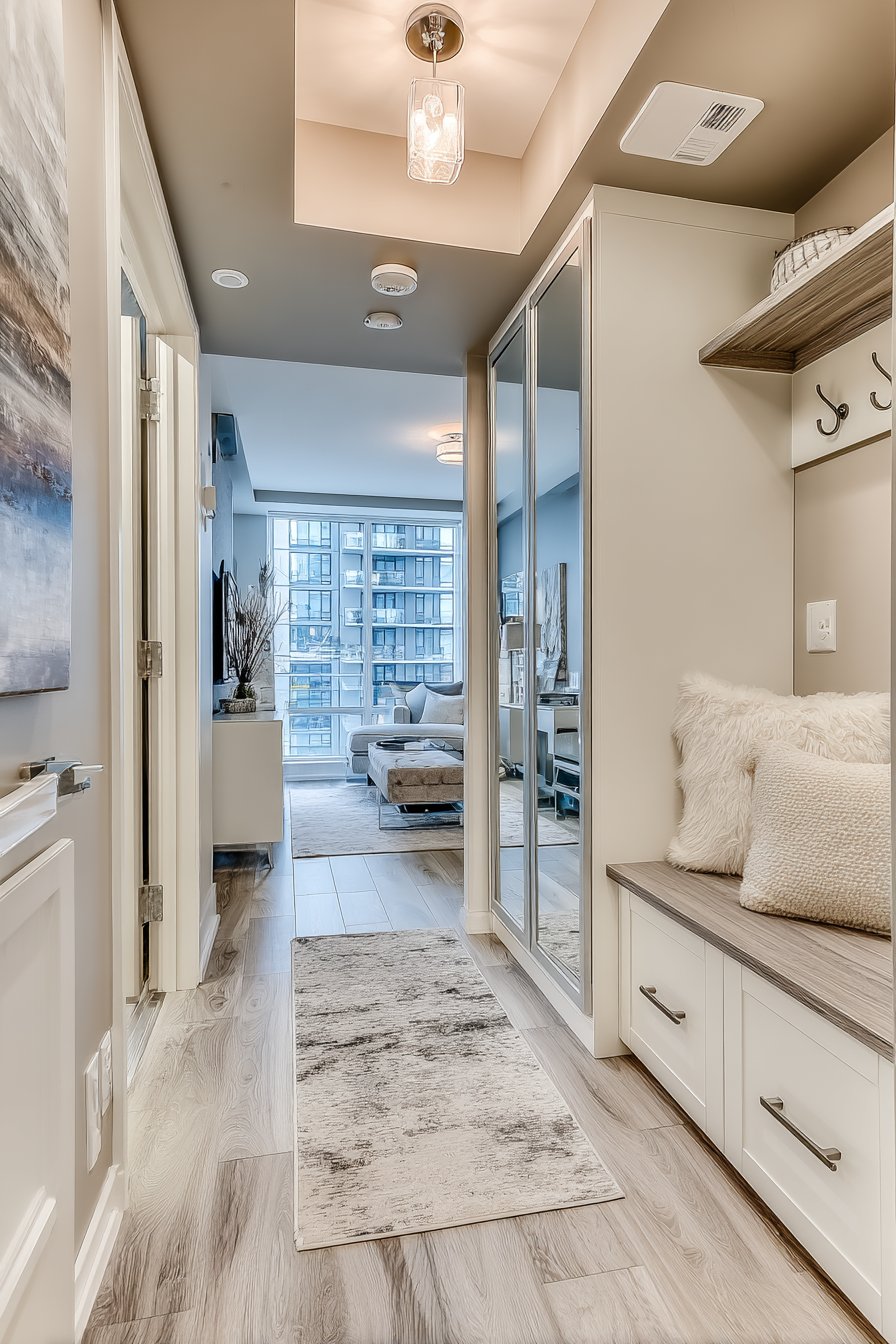
The beauty of narrow entryway design lies in its ability to maximize every inch while maintaining an open, breathable atmosphere. Unlike spacious foyers that can accommodate grand furniture pieces and elaborate decor, narrow entryways demand intentional choices—each element must earn its place by serving both form and function. This constraint, rather than being a limitation, becomes an opportunity for innovative thinking and smart design solutions that can inspire the rest of your home’s organization.
In this comprehensive guide, we’ll explore twenty-nine distinct narrow entryway ideas that demonstrate how limited space can yield unlimited possibilities. From minimalist Scandinavian approaches to rustic farmhouse charm, from tech-integrated modern designs to bohemian eclecticism, each concept offers unique solutions tailored to different lifestyles, aesthetic preferences, and functional needs. Whether you’re working with a two-foot corridor in a city apartment or a three-foot passage in a suburban home, you’ll discover actionable strategies, design principles, and inspiration to transform your narrow entryway into a space that’s as beautiful as it is functional.
1. Vertical Storage Mastery with Floating Walnut Console
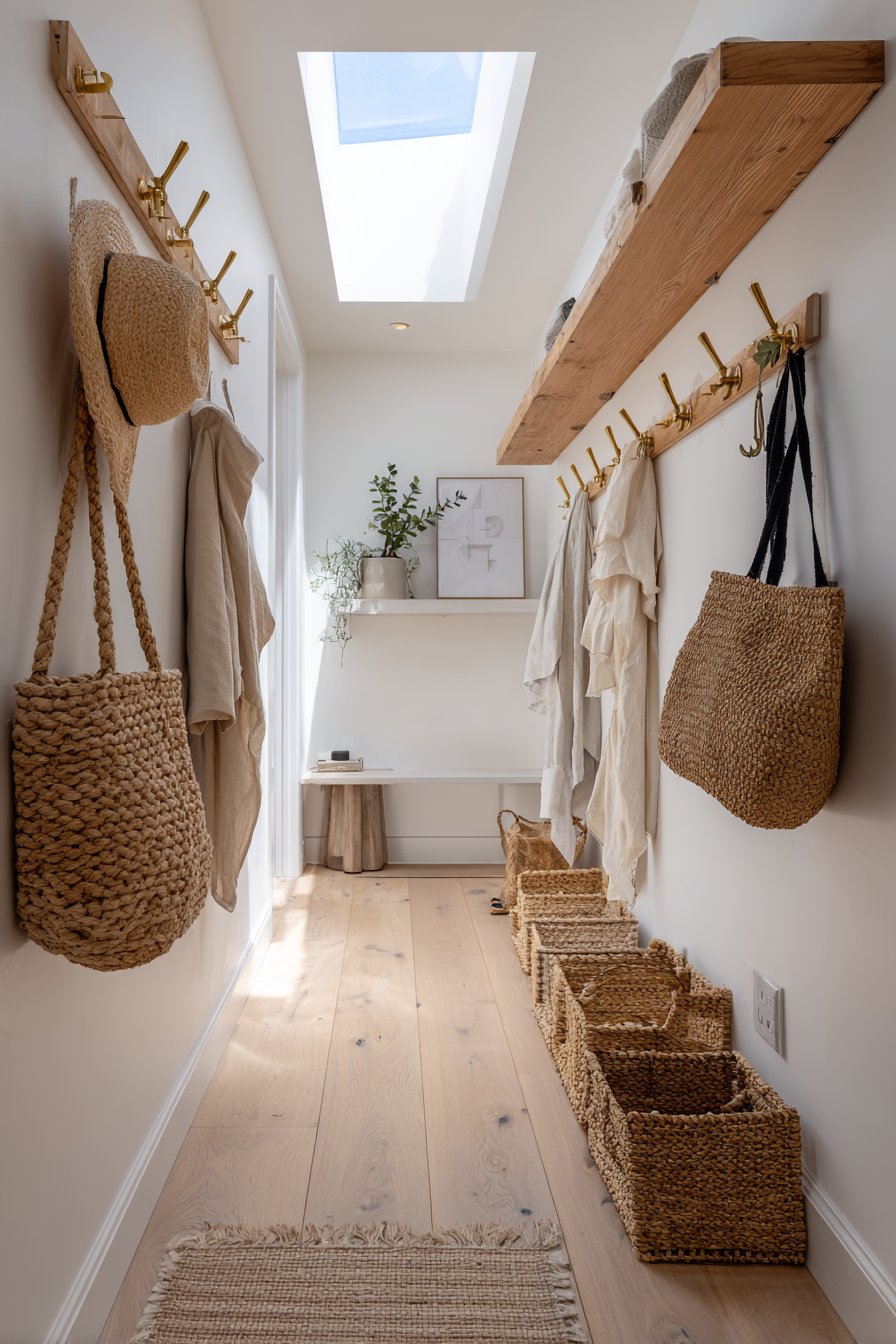
This narrow entryway demonstrates the power of thinking vertically when horizontal space is at a premium. A wall-mounted floating shelf console crafted from natural walnut extends only ten inches from the wall, preserving precious walkway clearance while providing essential functionality. The rich, warm tones of the walnut bring organic beauty to the space, with visible grain patterns adding textural interest that catches the eye without overwhelming the senses. Below the console, a woven basket sits discreetly on the floor, offering convenient shoe storage that keeps clutter contained yet accessible.
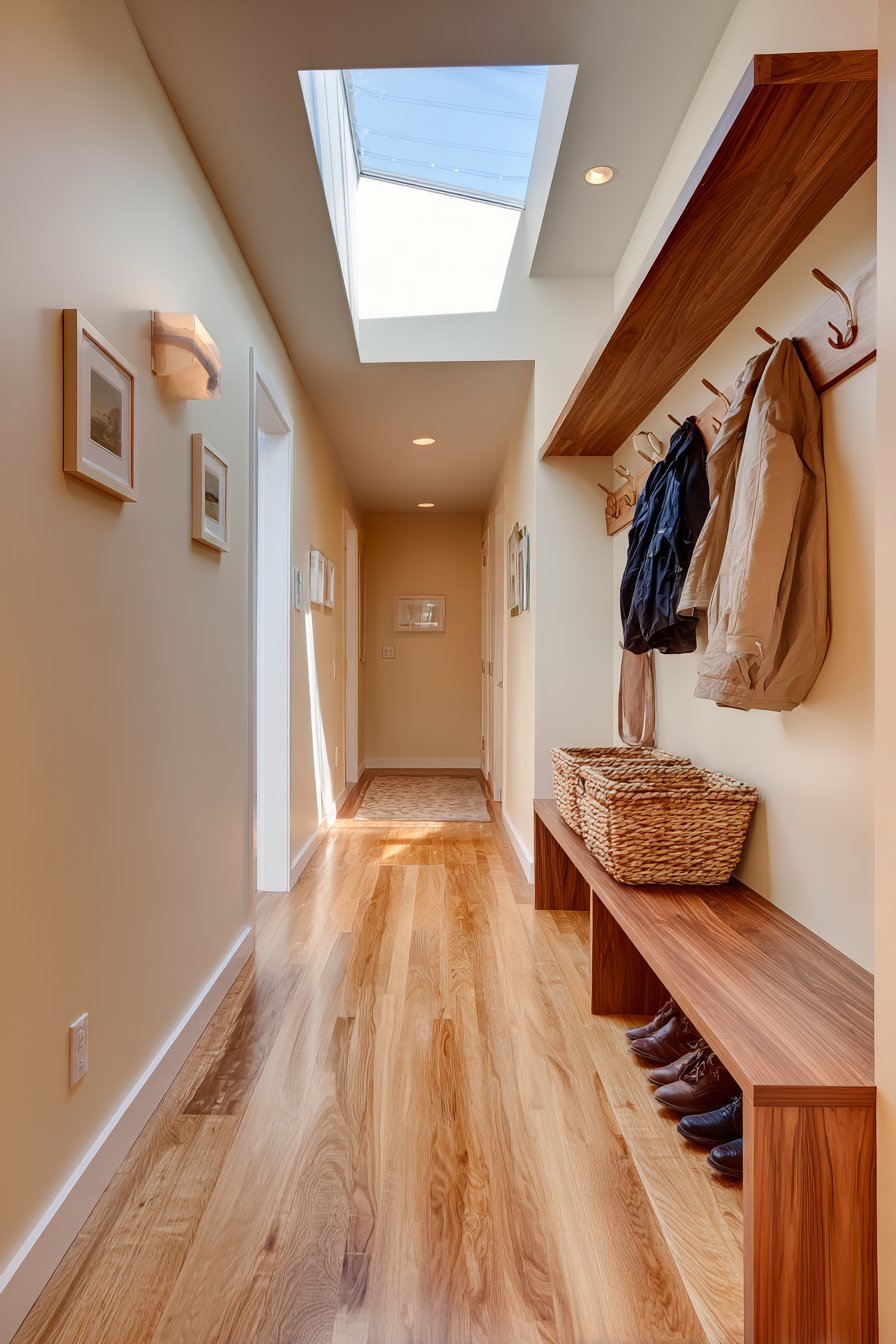
The genius of this design lies in its vertical rail system—a brass-finished mounting solution that allows hooks to be positioned at varying heights along the wall. This flexible arrangement accommodates everything from children’s backpacks to adult coats, ensuring every family member has accessible storage. The brass finish adds a touch of sophistication while complementing the warmth of the walnut, creating a cohesive material palette that feels intentional and refined.
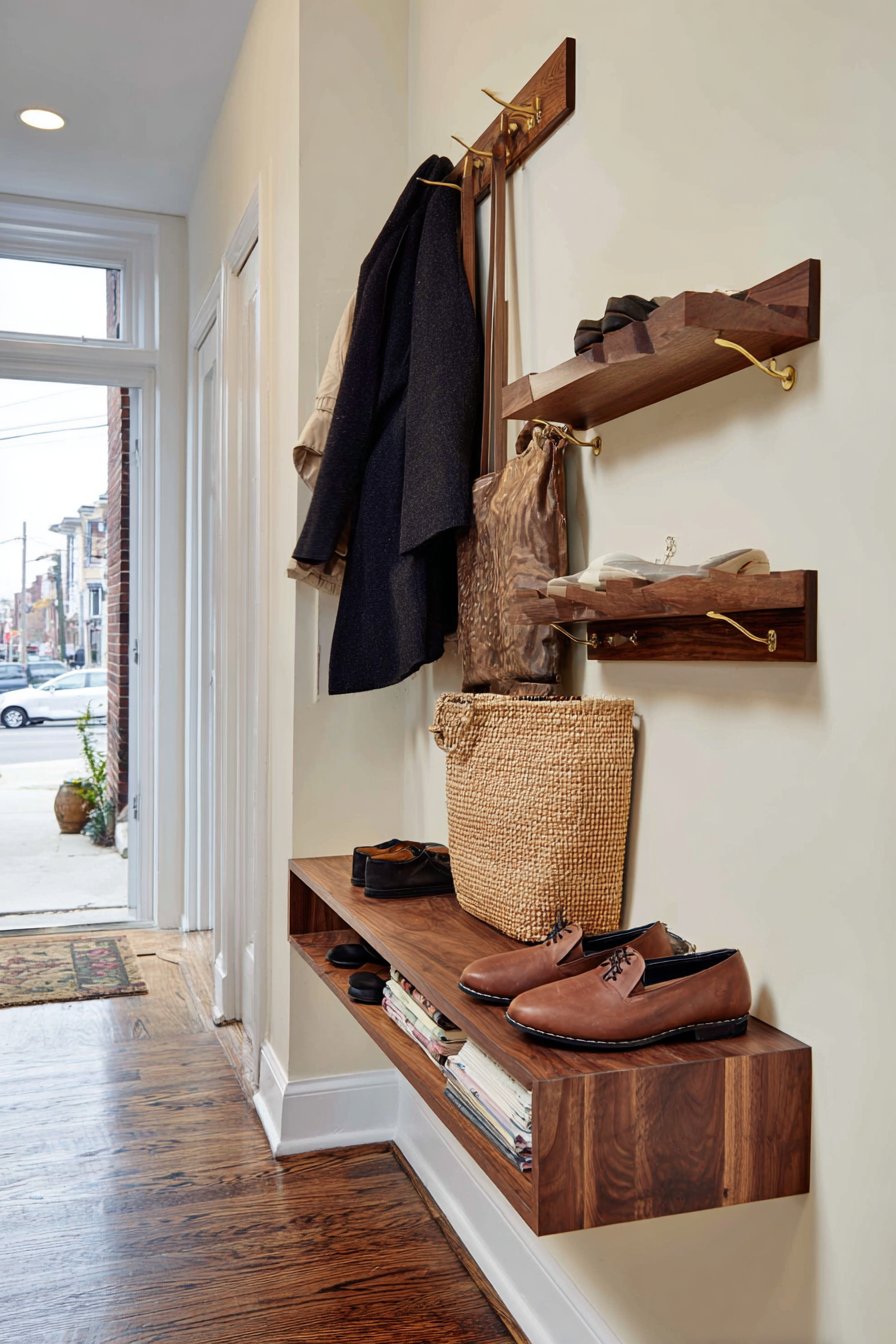
Pale cream walls form the backdrop for this functional display, their light-reflective quality essential in maintaining an open, airy atmosphere. Natural light filters down from a skylight positioned above, illuminating the space with soft, diffused daylight that eliminates the tunnel effect common in narrow corridors. The hardwood flooring beneath showcases its own natural grain patterns, creating visual continuity with the walnut console above and grounding the design in natural materials that age beautifully over time.
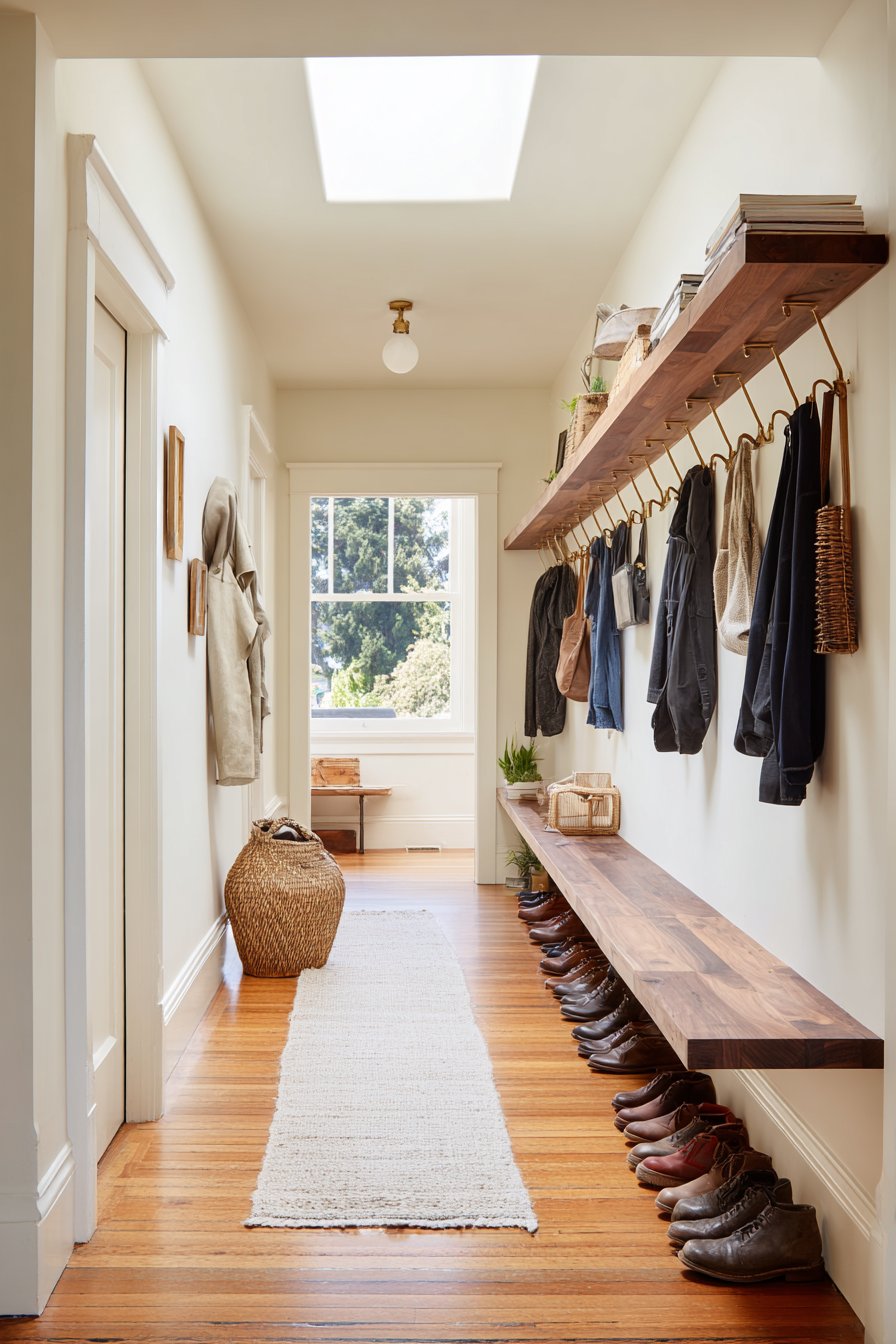
Key Design Tips: Select floating shelves no deeper than 10-12 inches to maintain adequate walkway clearance in narrow spaces. Install vertical rail systems that allow flexible hook placement, accommodating varying heights and seasonal storage needs. Choose light-reflective wall colors to maximize natural light distribution. Incorporate woven baskets and natural materials to add warmth without visual heaviness. Consider overhead lighting solutions like skylights when wall space is limited.
2. Compact Mudroom Functionality with Lift-Top Storage
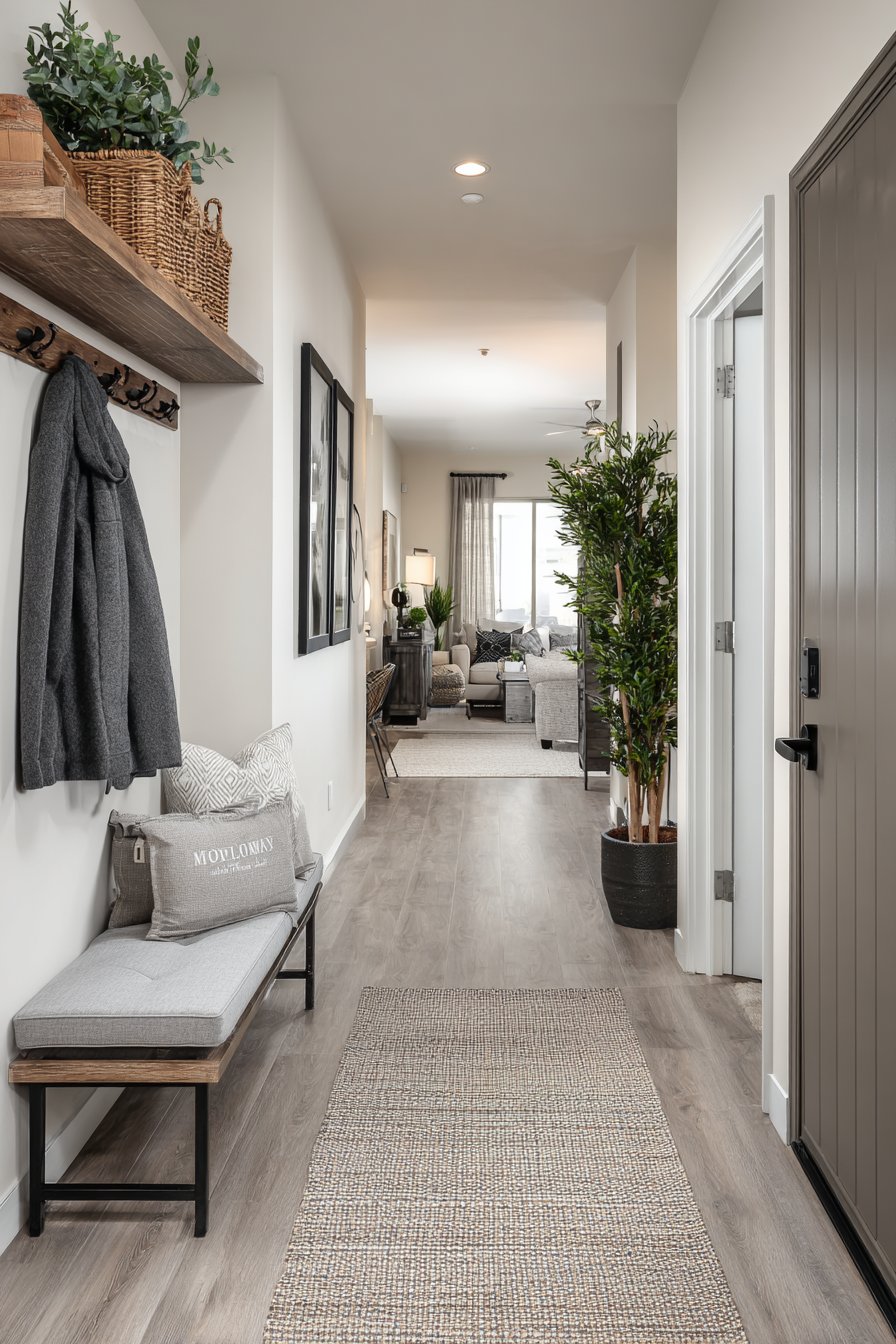
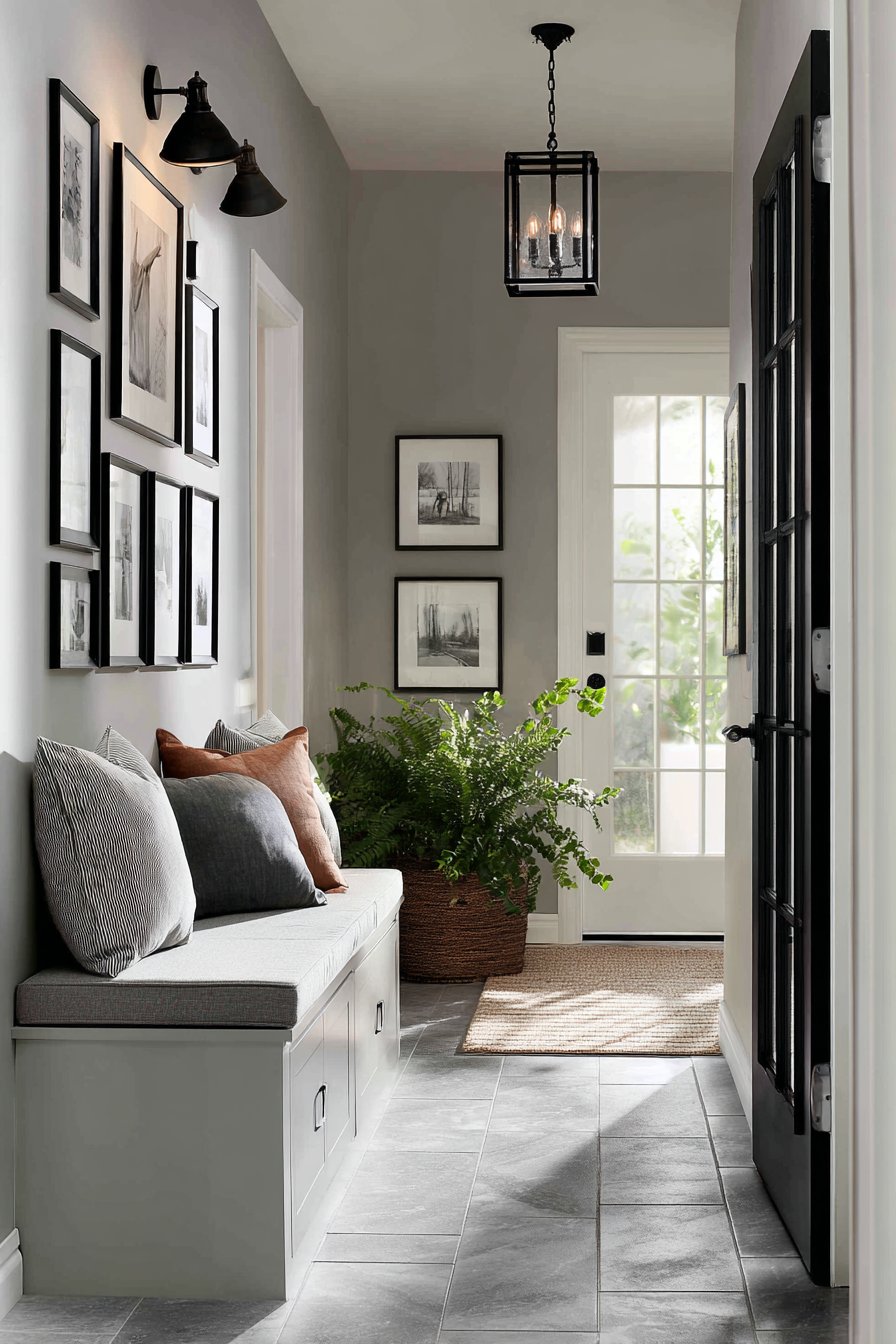
This practical narrow entryway showcases how a single well-designed piece of furniture can address multiple functional needs simultaneously. A slim mudroom bench measuring just fourteen inches deep becomes the cornerstone of the space, featuring a lift-top design that conceals storage for seasonal items, sports equipment, or extra linens. The cushioned seat is upholstered in soft gray linen, providing comfortable seating for putting on or removing shoes while adding a refined textile element to the space.
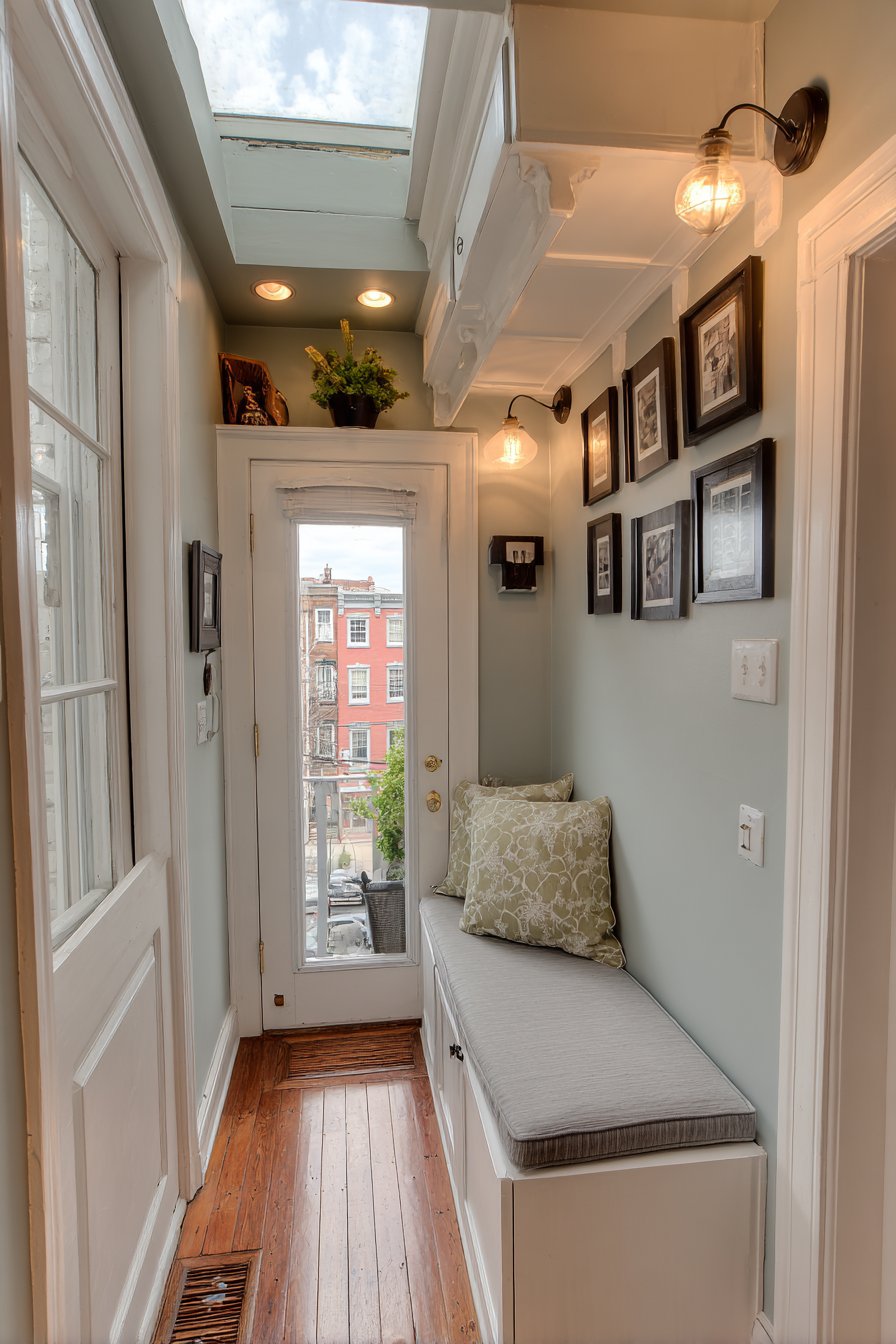
Above the bench, a carefully curated gallery wall transforms what could be dead space into a personal showcase of family memories. Black frames in matching styles create visual unity while the personal photographs within add warmth and personality. The gallery arrangement is strategically planned to create visual interest without protruding into the limited walkway—each frame carefully positioned to maintain the flow of traffic while drawing the eye upward, emphasizing vertical space rather than the corridor’s narrowness.
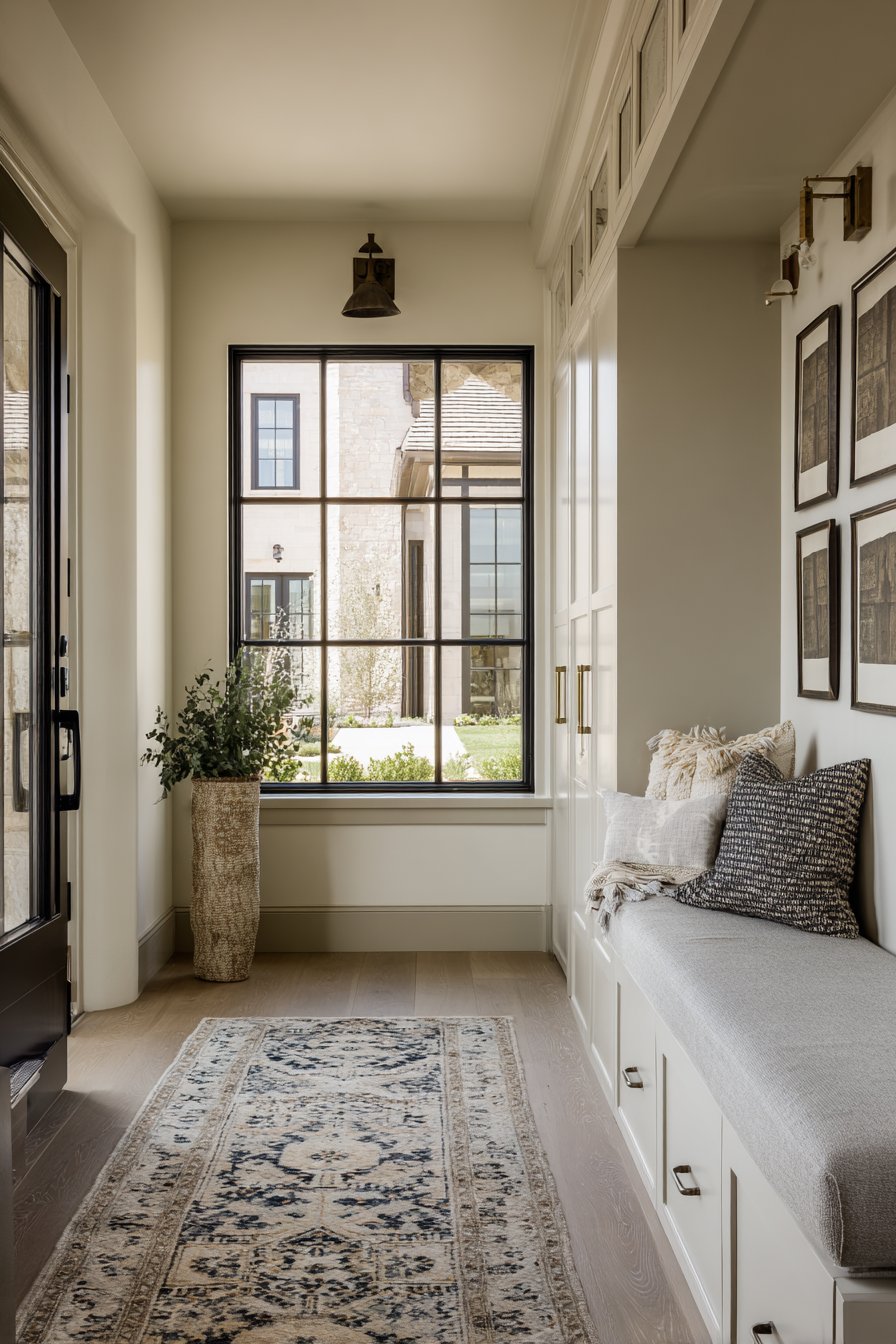
The overall composition demonstrates sophisticated space planning where every element serves a purpose. The bench provides seating, hidden storage, and a visual anchor. The gallery wall adds personality without requiring floor space. Together, they create a welcoming first impression that balances practical needs with aesthetic desires, proving that small spaces can achieve big impact through thoughtful design choices.
Key Design Tips: Choose bench seating no deeper than 14-16 inches to preserve walkway accessibility while providing adequate seating comfort. Select lift-top storage designs to maximize hidden storage capacity for seasonal items. Create gallery walls with matching frames to maintain visual cohesion in tight spaces. Position artwork and photographs at eye level to draw attention upward and away from narrow dimensions. Upholster seating in durable, cleanable fabrics suitable for high-traffic entryway use.
3. Minimalist Mirror Magic for Visual Expansion
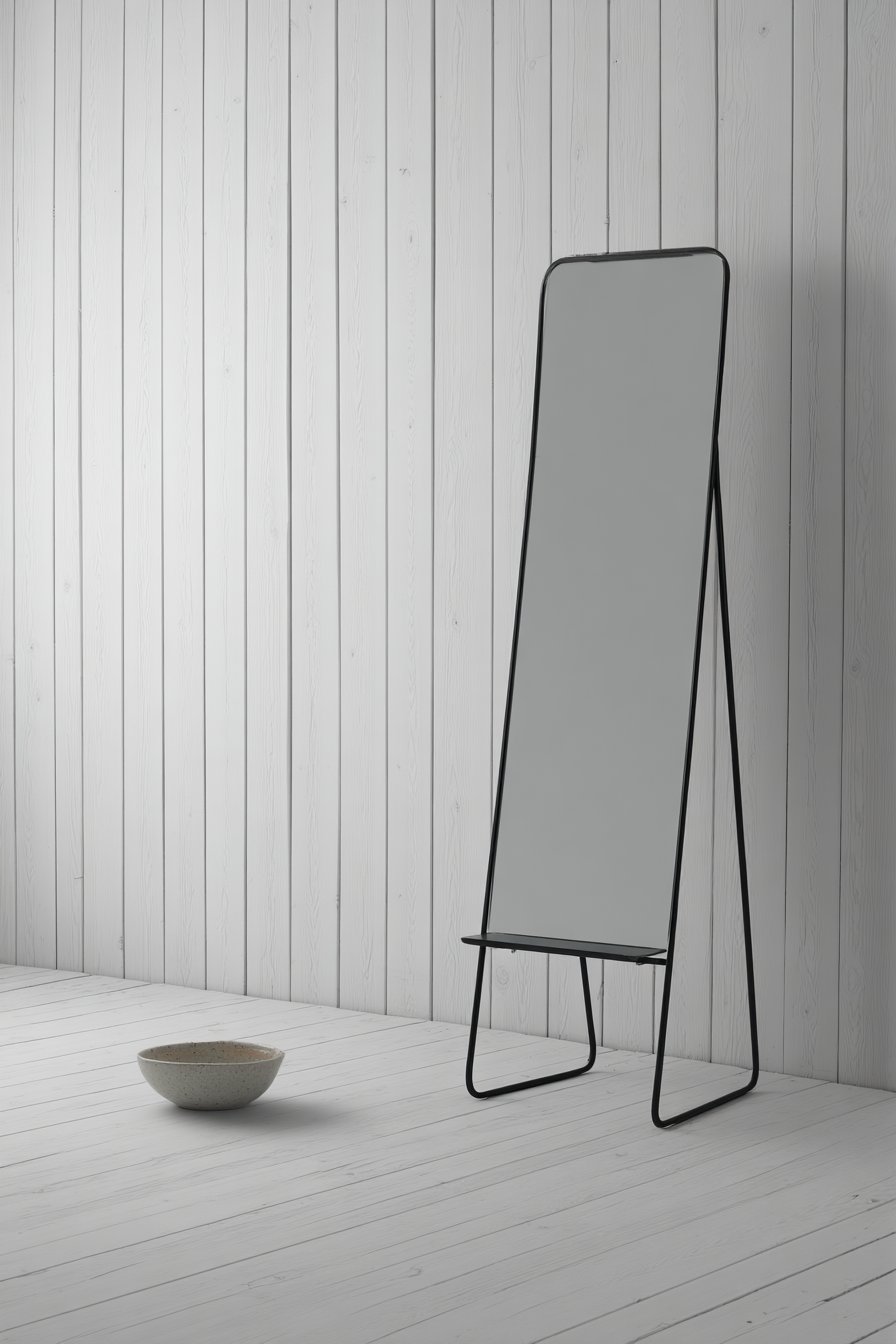
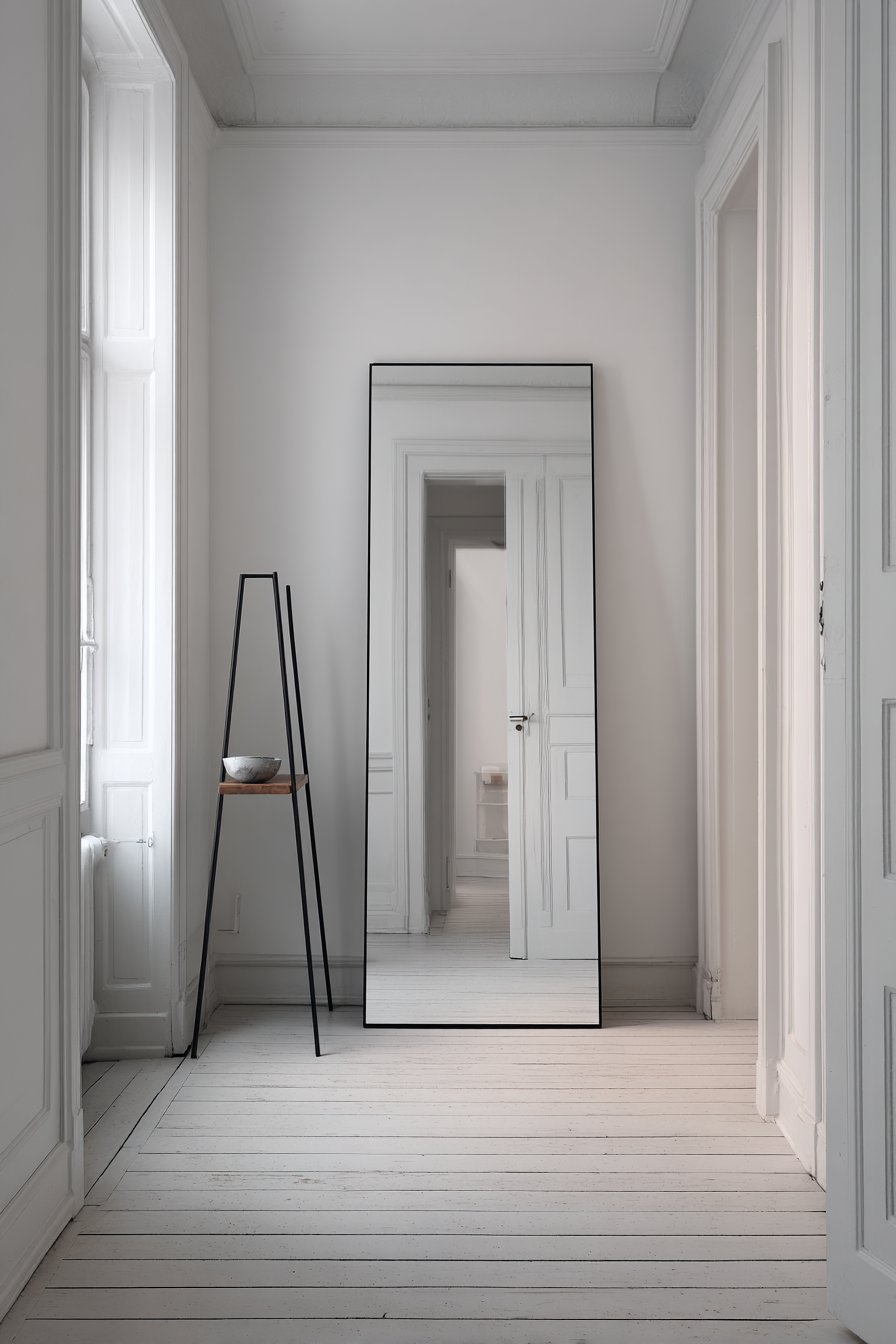
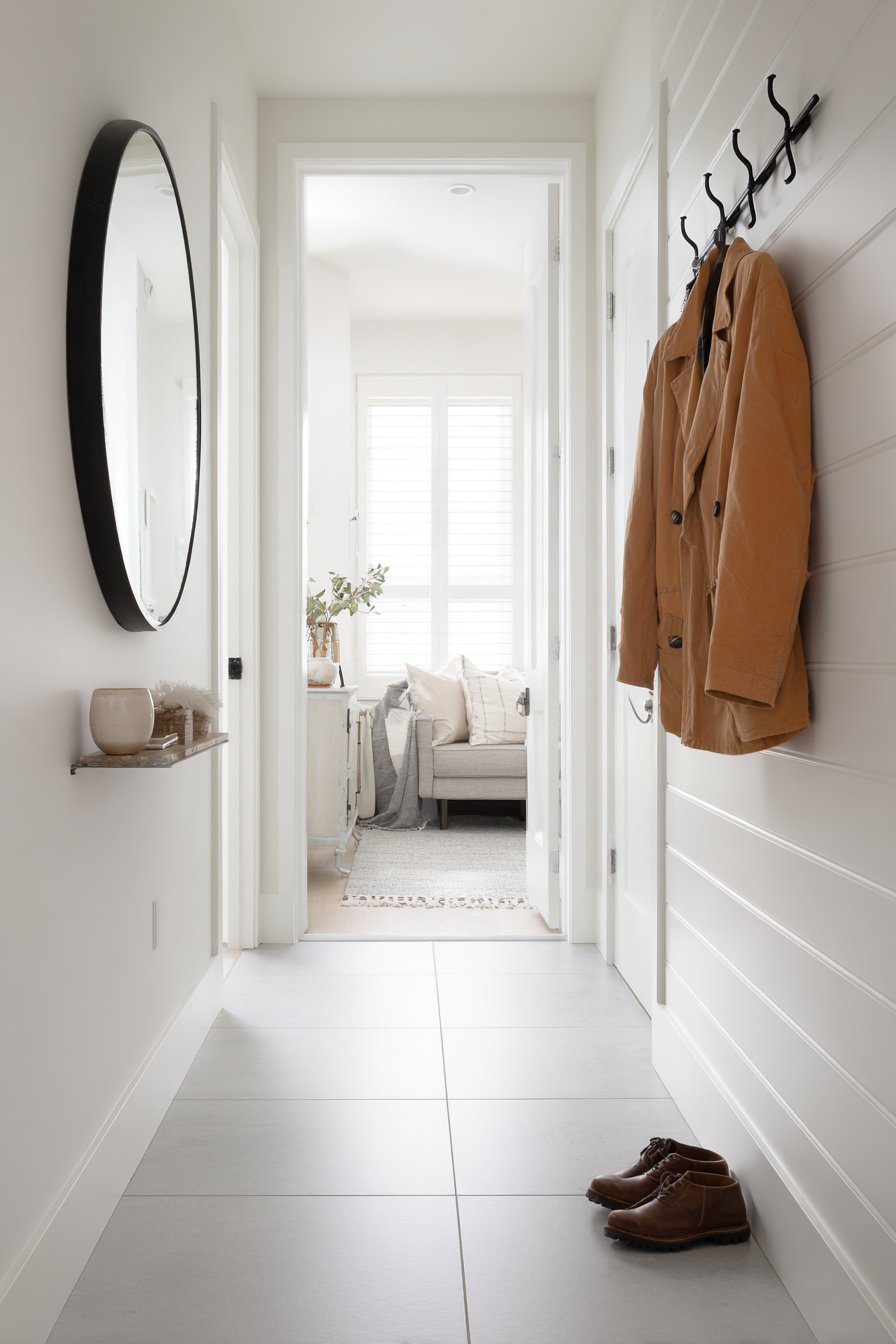
This narrow entryway embraces the minimalist philosophy that less is more, creating an exercise in restraint that yields maximum visual impact. A floor-to-ceiling mirror leans casually against one wall, its substantial presence serving a crucial design function—doubling the perceived depth of the space through reflection. This simple addition transforms a potentially claustrophobic two-and-a-half-foot-wide corridor into a visually expansive entry that feels open and breathable.
Opposite the mirror, a single streamlined coat rack in matte black metal provides essential functionality without cluttering the space. Its slender profile and vertical orientation make it nearly invisible when not in use, yet it offers multiple hanging points for daily essentials. A small ceramic bowl rests on a narrow ledge, creating a designated catch-all for keys, mail, and other pocket items—proof that even the smallest surfaces can serve important organizational functions.
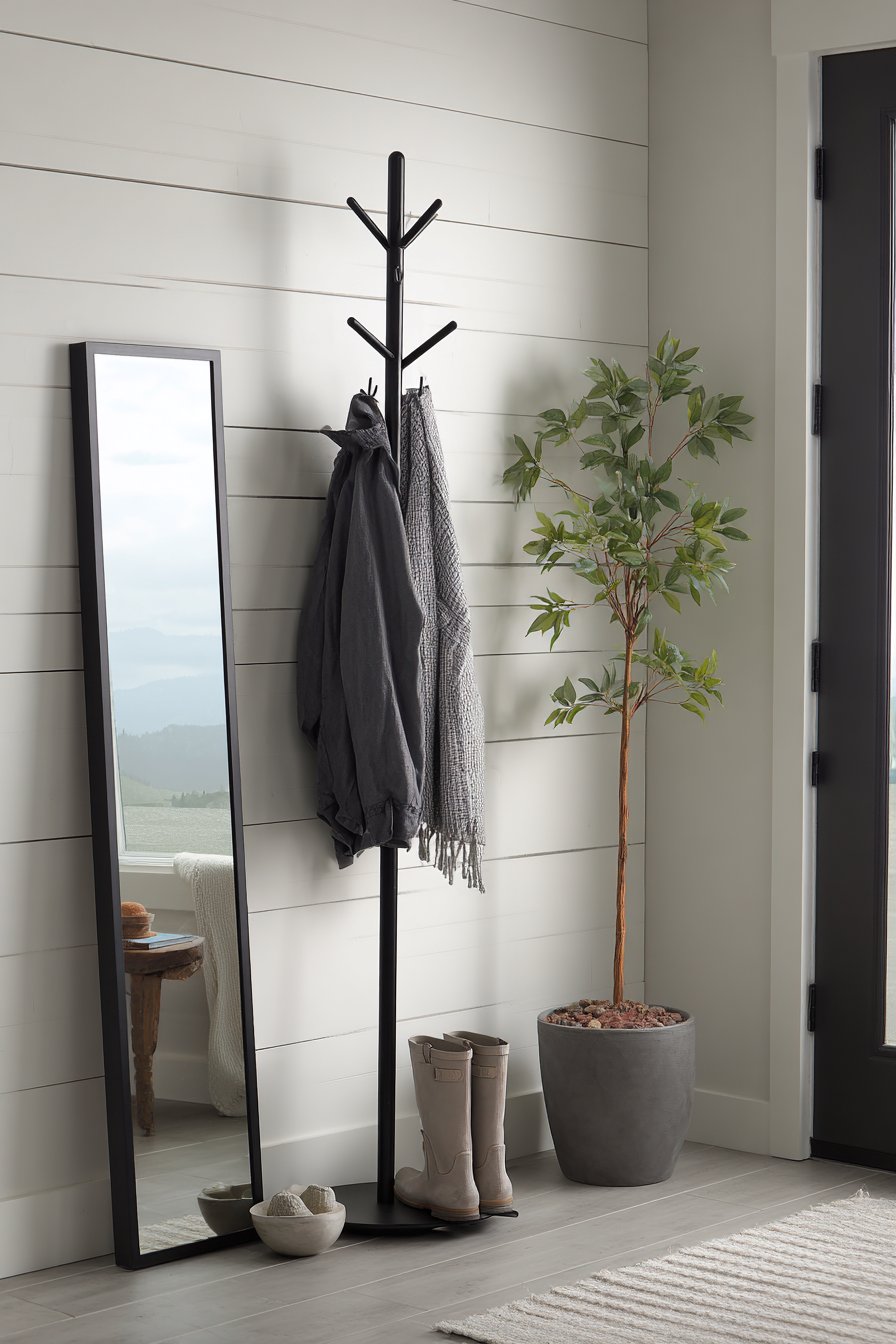
The material palette reinforces the minimalist aesthetic with white shiplap walls and light gray painted floors creating a bright, neutral foundation. These light surfaces maximize the reflection and distribution of available light, while the textured shiplap adds subtle visual interest that prevents the space from feeling stark or cold. The overall effect is serene and uncluttered, demonstrating how strategic minimalism can make confined spaces feel surprisingly spacious.
Key Design Tips: Incorporate large mirrors to visually double narrow spaces through reflection and light distribution. Choose leaning mirrors rather than mounted ones for flexibility and a more casual, lived-in aesthetic. Paint floors in light colors to maximize brightness and create visual continuity with walls. Select single-function furniture pieces with minimal footprints to avoid visual clutter. Create designated spots for daily essentials like keys to prevent counter clutter accumulation.
4. Scandinavian Simplicity with Functional Flexibility
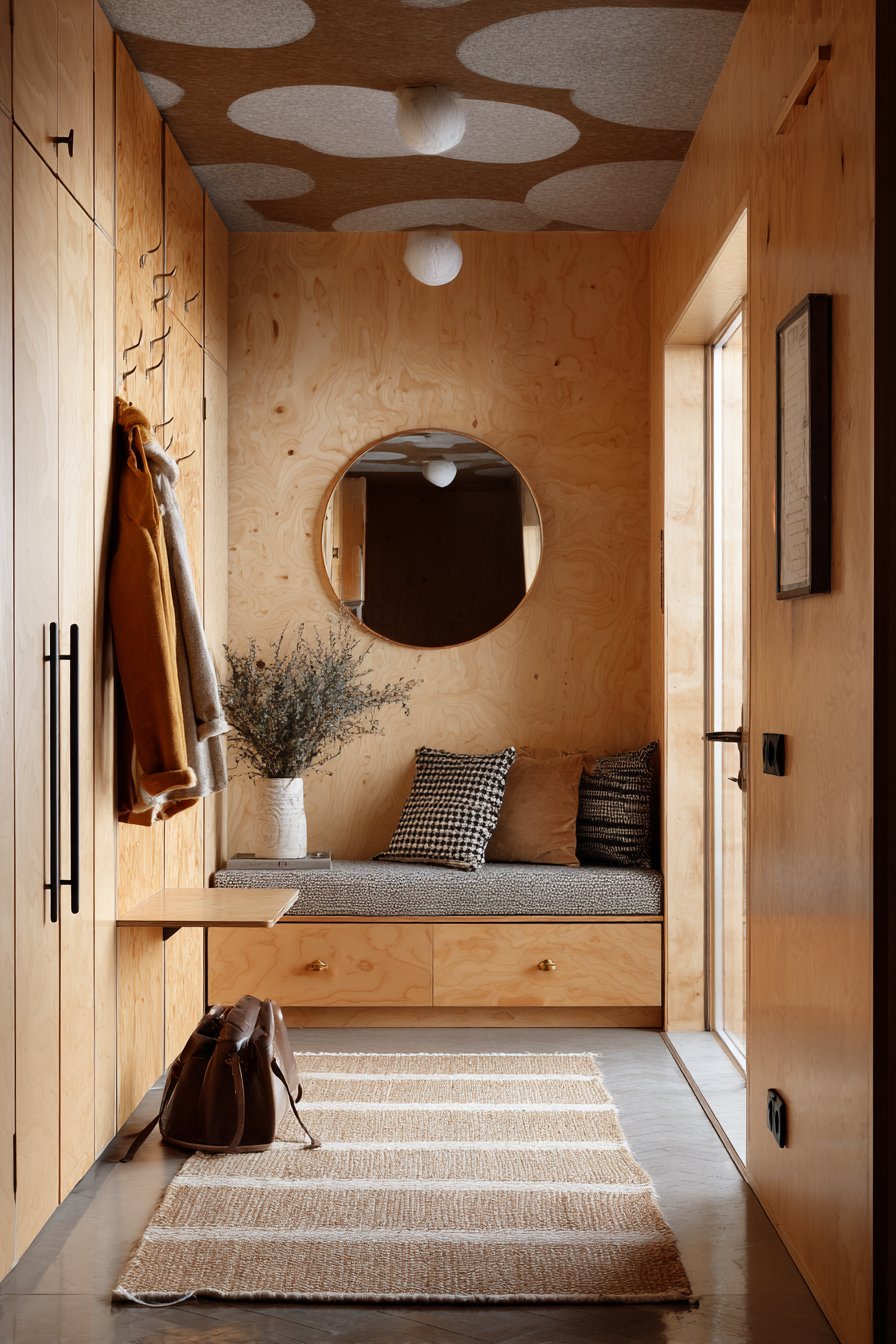
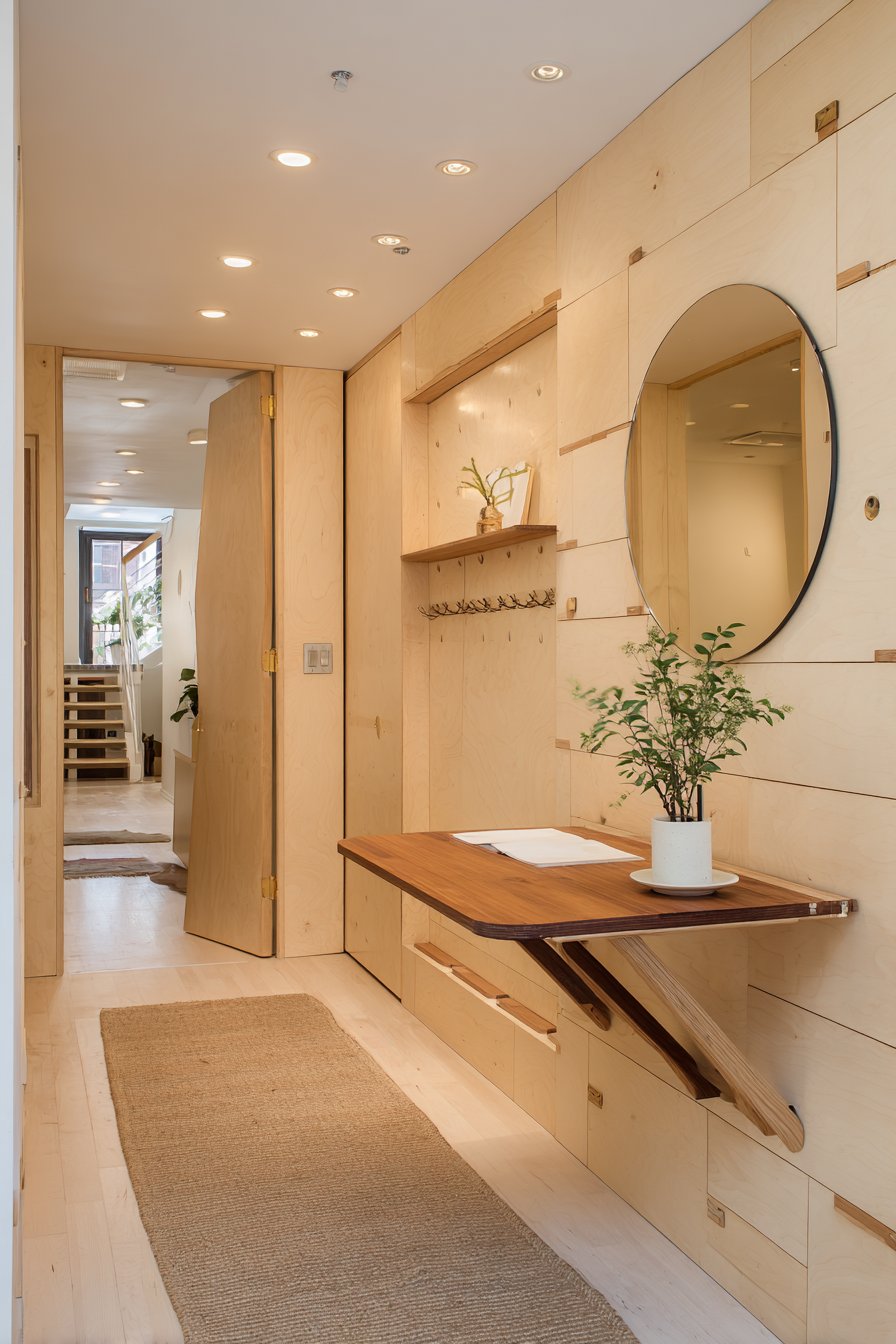
This narrow entryway embodies Scandinavian design principles—functionality, simplicity, and natural materials combine to create a space that’s both beautiful and supremely practical. Light birch wood elements throughout establish the characteristic Nordic aesthetic, their pale honey tones bringing warmth without darkness. The centerpiece is a wall-mounted drop-leaf table that demonstrates ingenious space-saving design—when folded up, it presents a clean, unobtrusive profile; when dropped down, it provides a convenient surface for setting down bags, sorting mail, or staging items going in and out of the home.
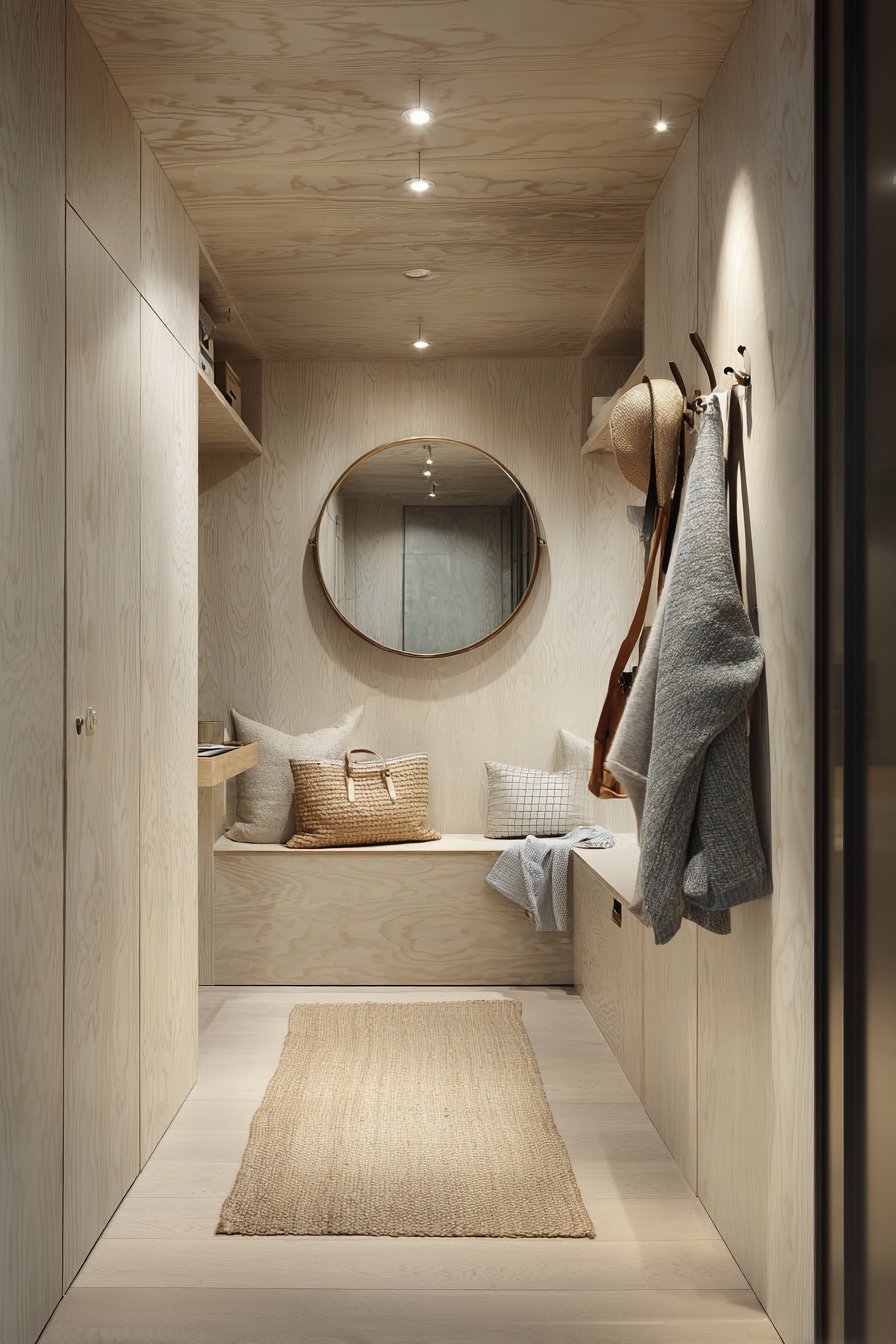
The hidden functionality continues with concealed hooks revealed beneath the table when it’s raised, offering hanging storage that disappears from view when not needed. This double-duty design maximizes utility while maintaining the clean lines essential to Scandinavian aesthetics. Above the drop-leaf table, a round mirror with a thin brass frame adds just enough metallic accent to create visual interest without overwhelming the natural wood palette.
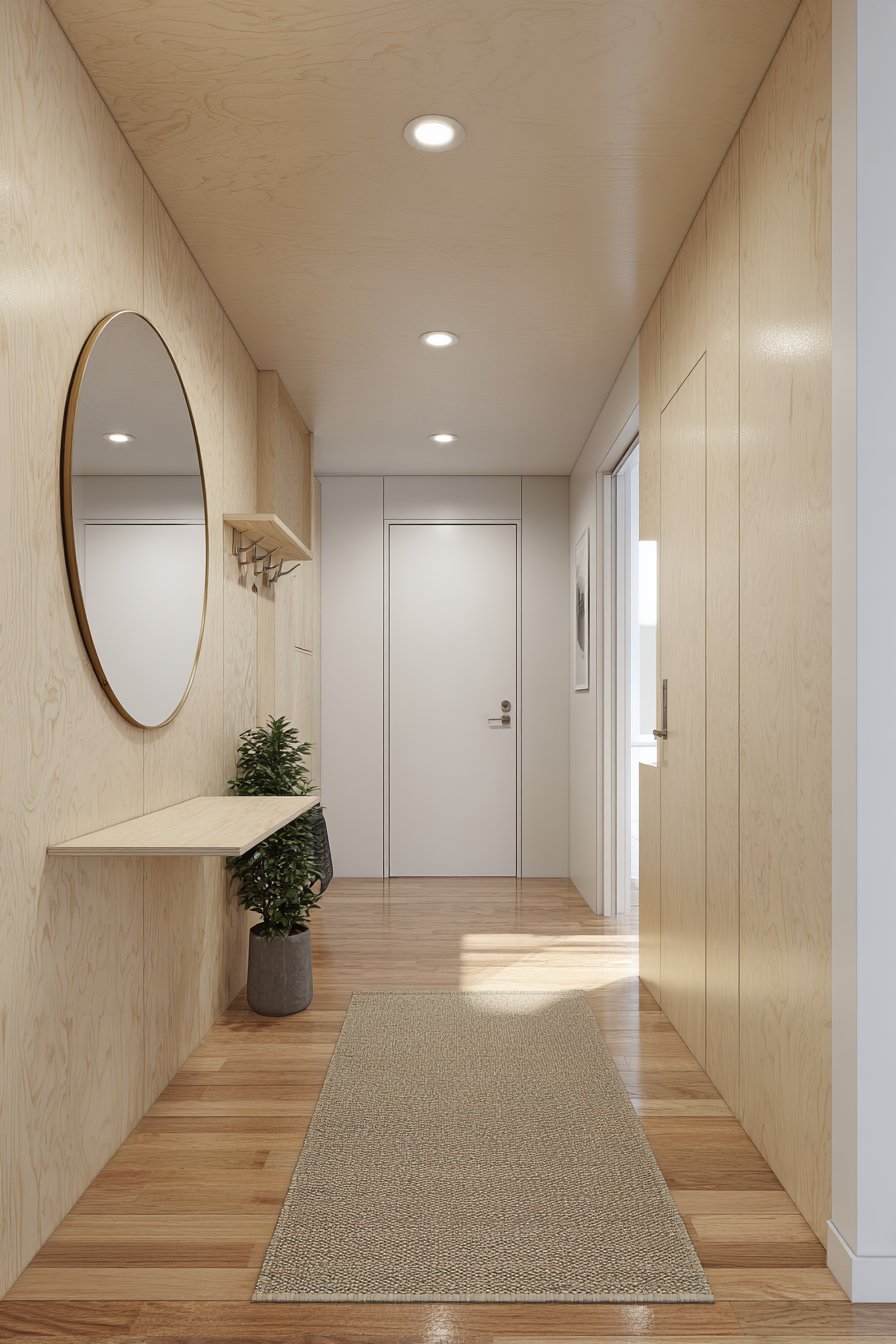
Underfoot, a simple jute runner protects the flooring while adding organic texture that grounds the design. Recessed lighting eliminates the need for space-consuming lamps or fixtures, providing even illumination that highlights the natural beauty of the birch wood and creates no visual clutter. The overall composition demonstrates how thoughtful Scandinavian design can make narrow spaces feel both functional and serene.
Key Design Tips: Install drop-leaf or fold-down tables to create flexible surface space that disappears when not needed. Choose light-colored natural woods like birch or ash to brighten narrow spaces while adding warmth. Incorporate hidden storage solutions that maintain clean visual lines when closed. Use recessed lighting to provide illumination without consuming precious wall or ceiling space. Add natural fiber rugs for texture and floor protection without visual heaviness.
5. Architectural Built-In Storage Solutions
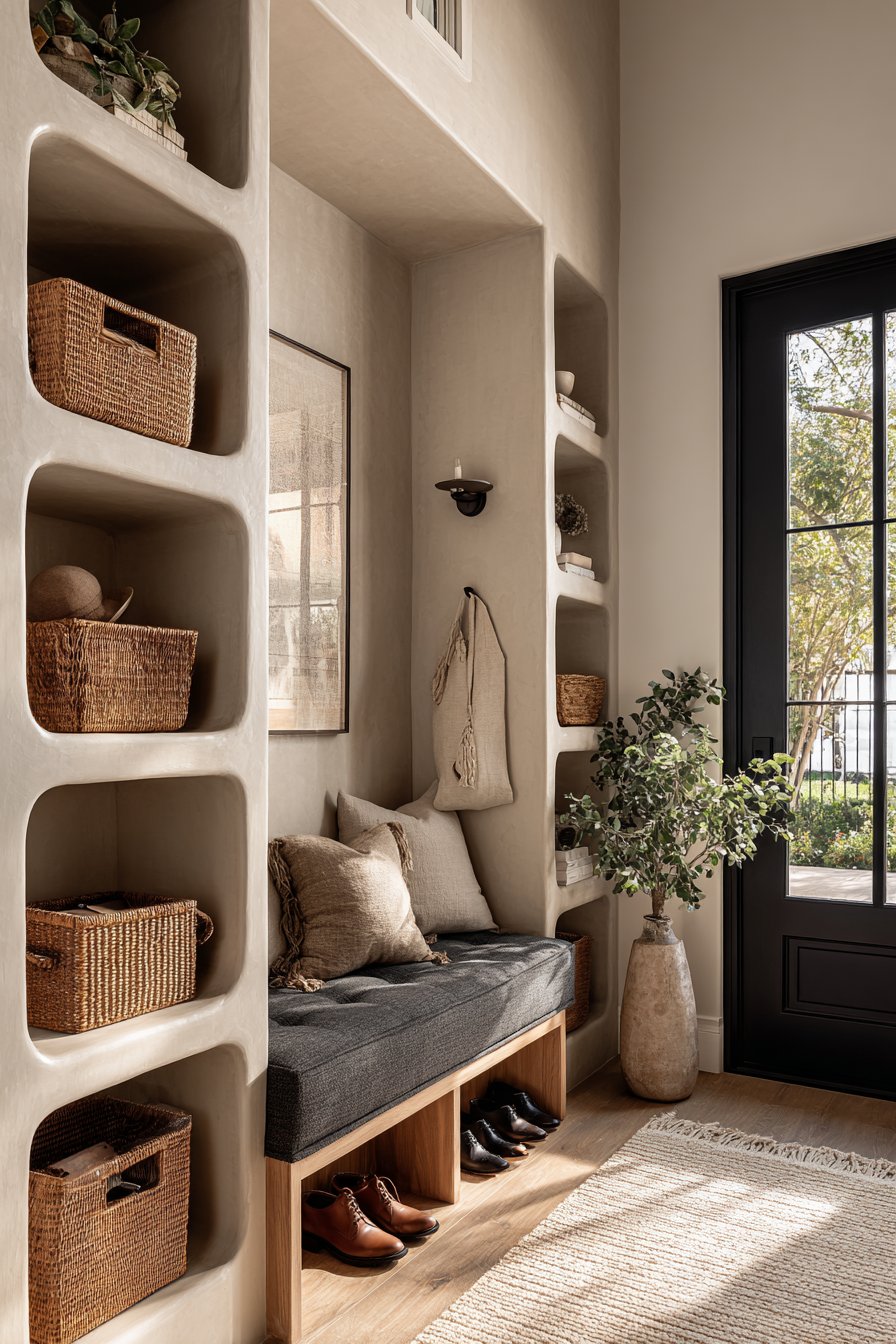
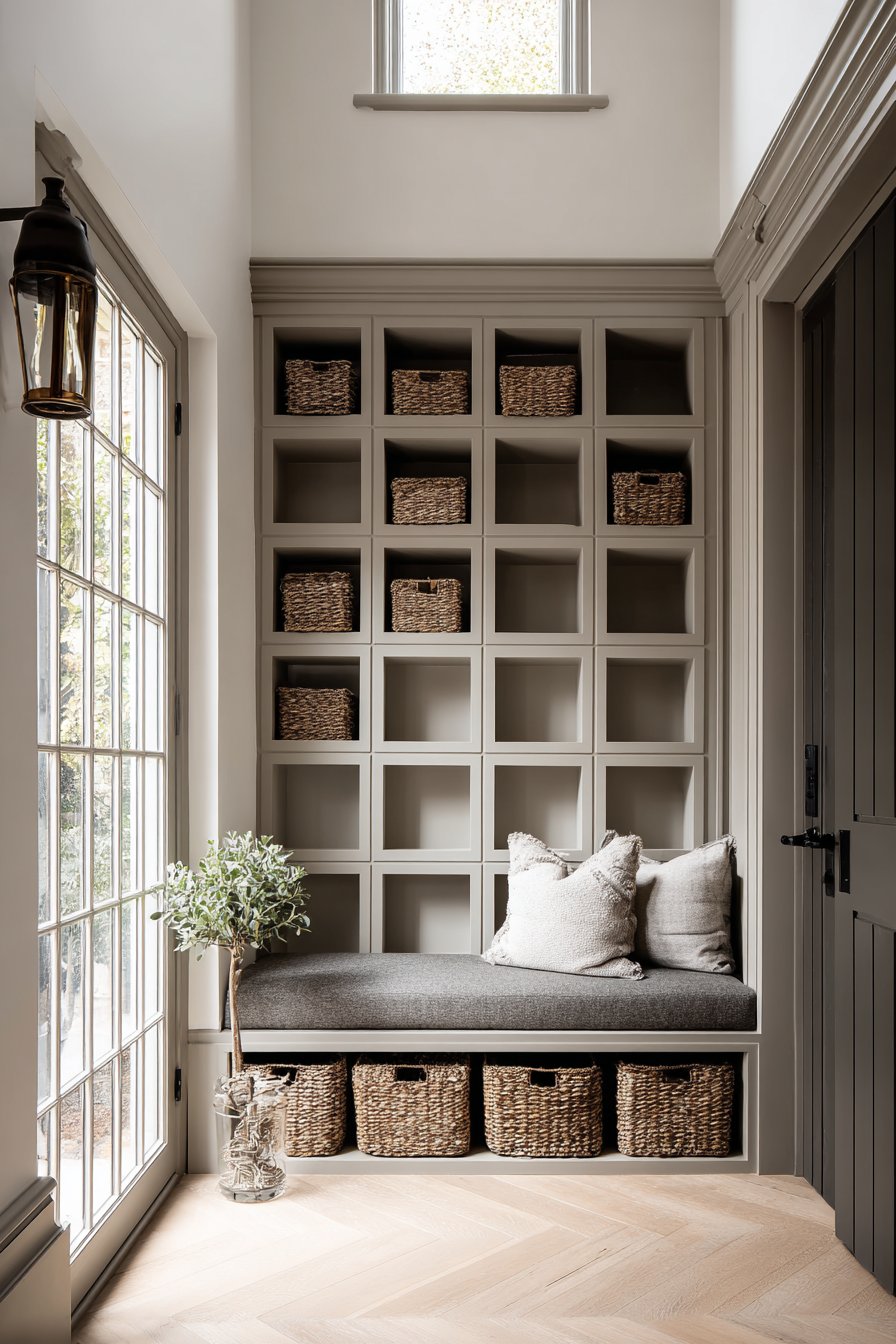
This narrow entryway takes a more permanent approach to space challenges through custom architectural solutions. Built-in storage niches are carved directly into one wall, painted in a warm greige tone that adds depth without darkness. Each niche houses a woven basket, creating an organized storage system that maintains a clean, uniform facade while hiding the inevitable clutter of daily life. This approach transforms the wall itself into functional storage, eliminating the need for furniture that would protrude into the walkway.
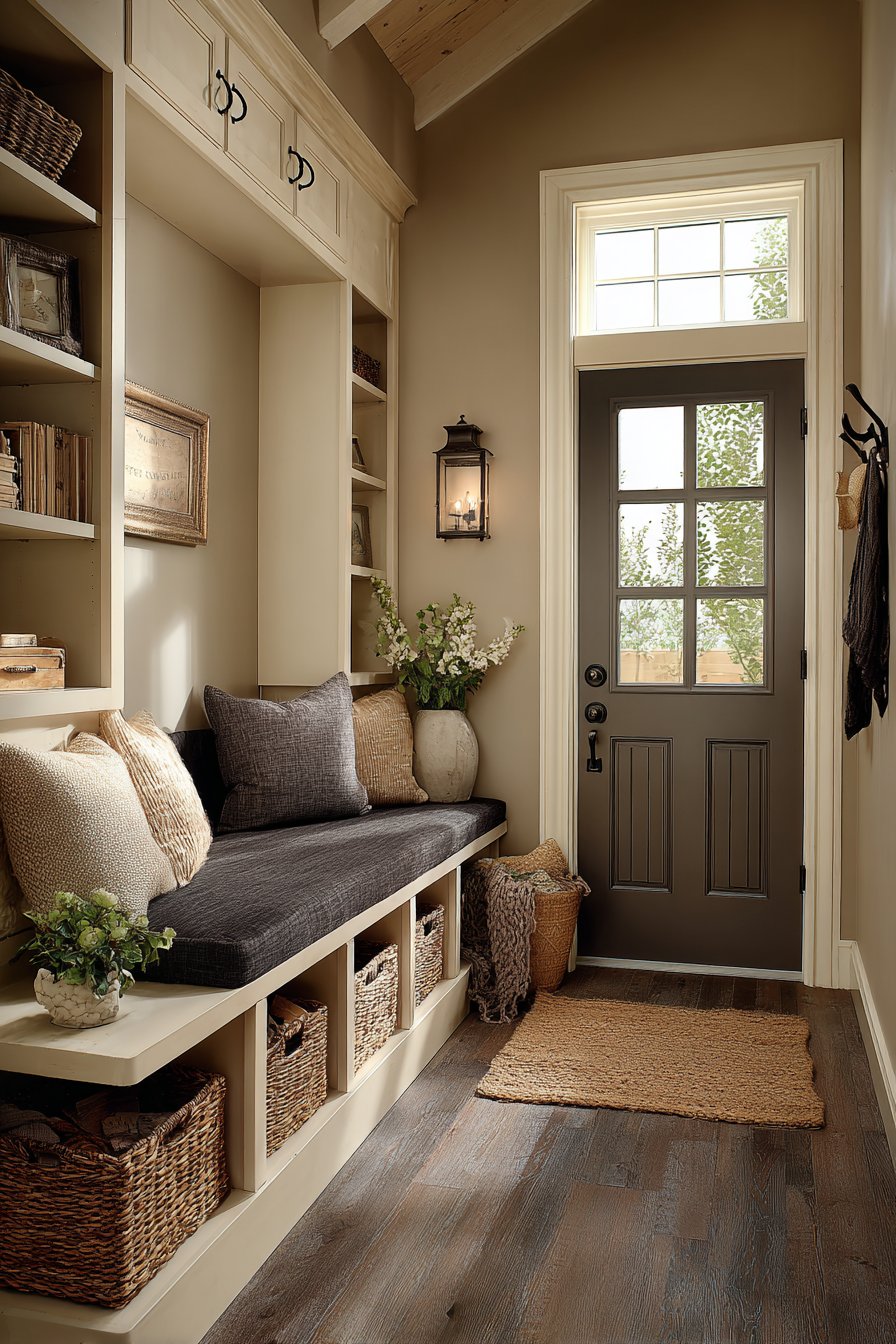
A slim upholstered bench in charcoal linen provides seating for two people, its fourteen-inch depth maintaining adequate passage while offering necessary functionality. Open cubbies below the bench keep frequently used shoes organized and easily accessible, demonstrating the layered storage approach essential in narrow spaces—vertical stacking of functions allows multiple storage types within a minimal footprint.
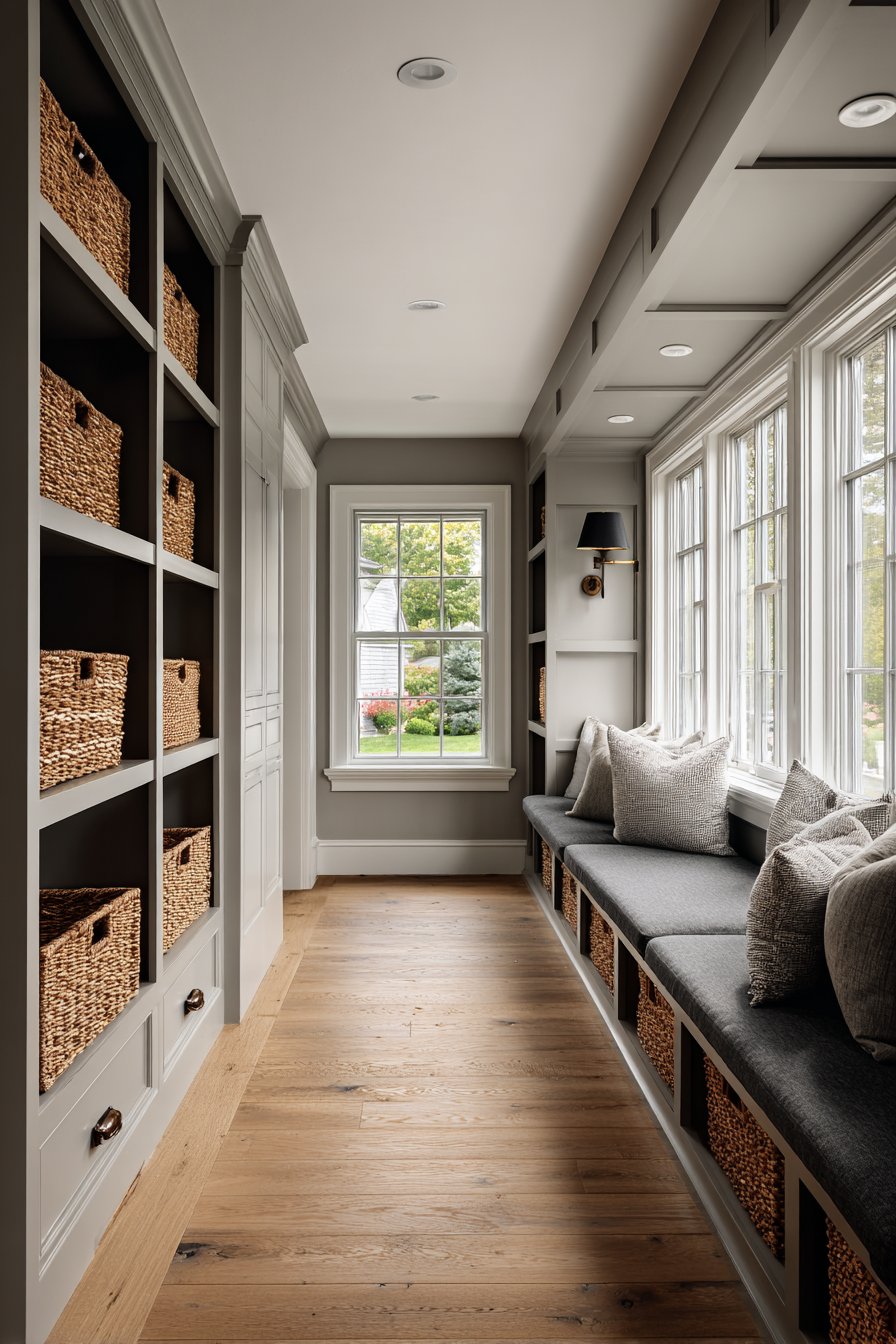
Natural light streams through a transom window above the door, a architectural feature that brings illumination to the space without sacrificing wall space for a traditional window. This overhead light source bathes the built-in niches and bench in soft, diffused daylight that highlights the textural warmth of the woven baskets and linen upholstery. The professional composition captures these material details with careful attention to how light interacts with different surfaces, from the matte finish of the painted niches to the subtle sheen of the linen fabric.
Key Design Tips: Consider built-in niches to create storage without reducing walkway space in narrow entryways. Use uniform storage containers like matching baskets to maintain visual cohesion across multiple storage areas. Install transom windows above doors to bring natural light without consuming wall space. Select bench seating with open storage below to double functionality within a single footprint. Paint built-ins in warm neutrals rather than stark white to add depth and sophistication.
6. Coastal-Inspired Relaxed Elegance
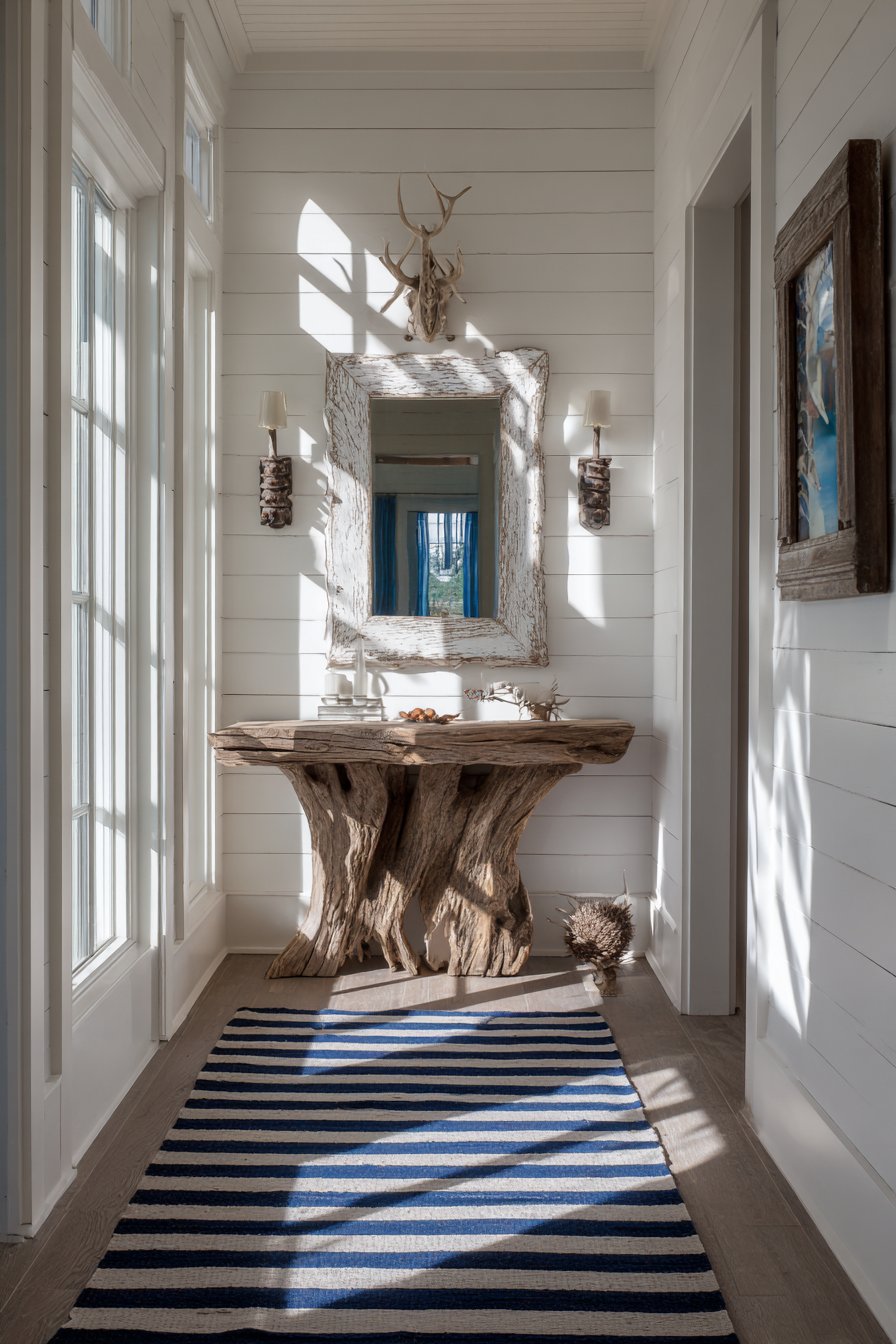
This narrow entryway channels the relaxed sophistication of coastal design, immediately transporting you to a breezy seaside retreat. Whitewashed shiplap walls create textured interest while reflecting maximum light, their horizontal lines subtly widening the perceived space. A narrow console table crafted from reclaimed pine with a driftwood finish serves as the focal point, its weathered appearance telling stories of past lives and adding instant character to the space.
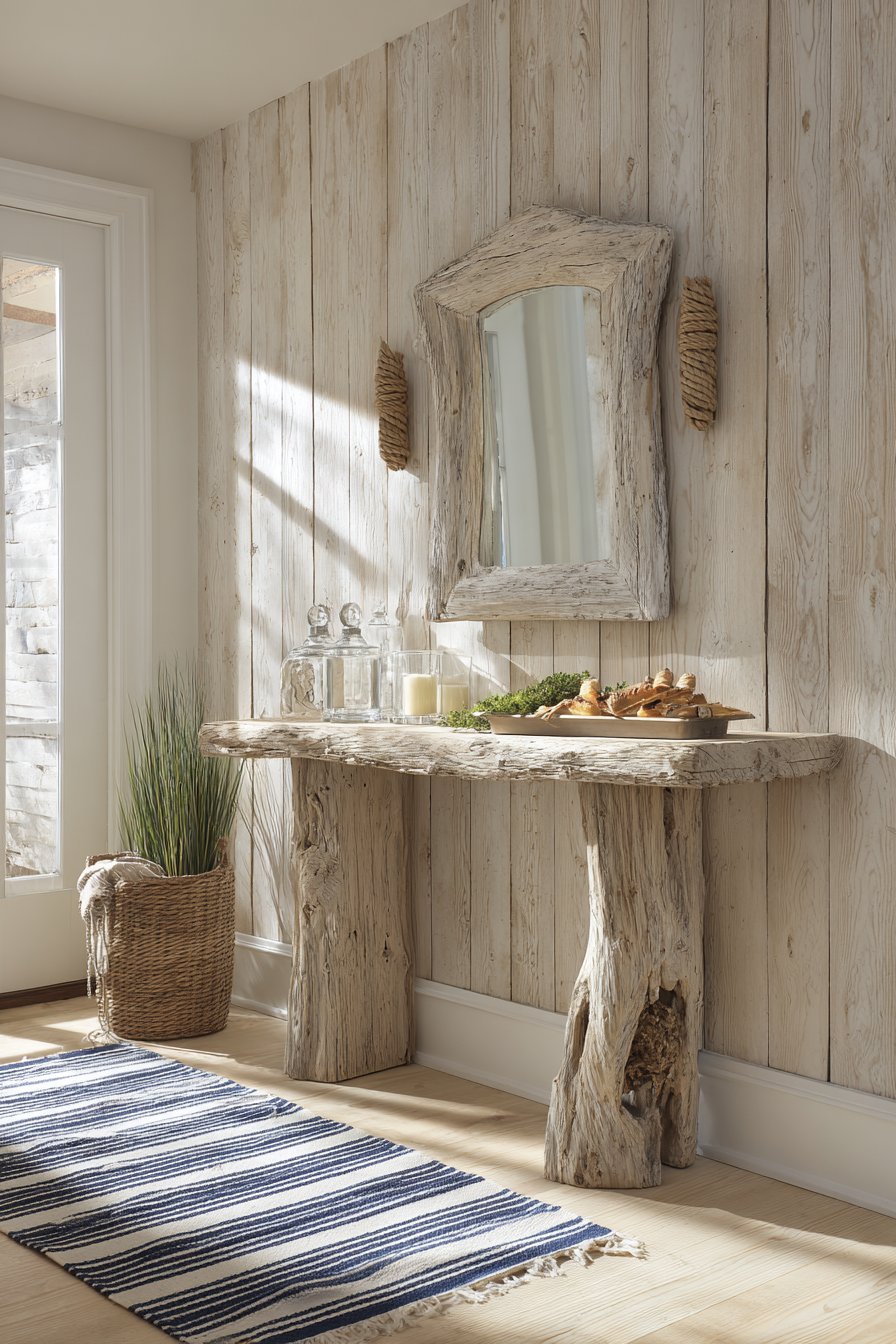
Above the console, a vintage-inspired mirror with a weathered white frame continues the coastal theme, its distressed finish suggesting years of salt air and sea spray. Flanking the mirror, simple rope-style wall sconces provide ambient lighting that casts gentle shadows across the textured shiplap, creating depth and dimension. These nautical-inspired fixtures add functionality while reinforcing the coastal aesthetic through their maritime design details.
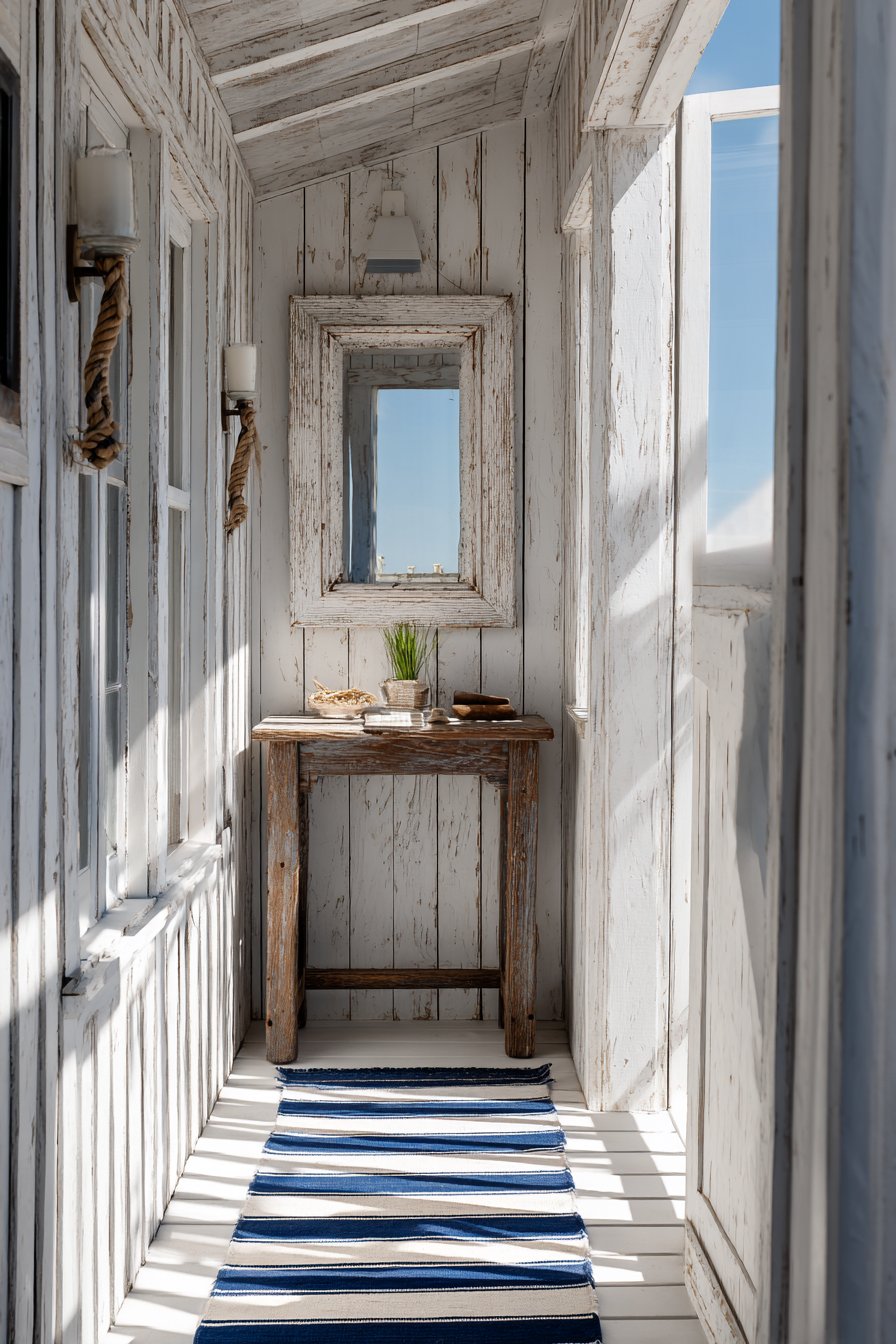
A striped cotton runner in navy and white grounds the space underfoot, its classic pattern introducing visual movement that guides visitors through the narrow corridor. The runner’s durable cotton construction suits the high-traffic nature of entryways while its nautical stripes maintain the cohesive coastal theme. Natural afternoon light filters through, highlighting the silvery tones of the driftwood console and creating the bright, airy atmosphere essential to coastal design.
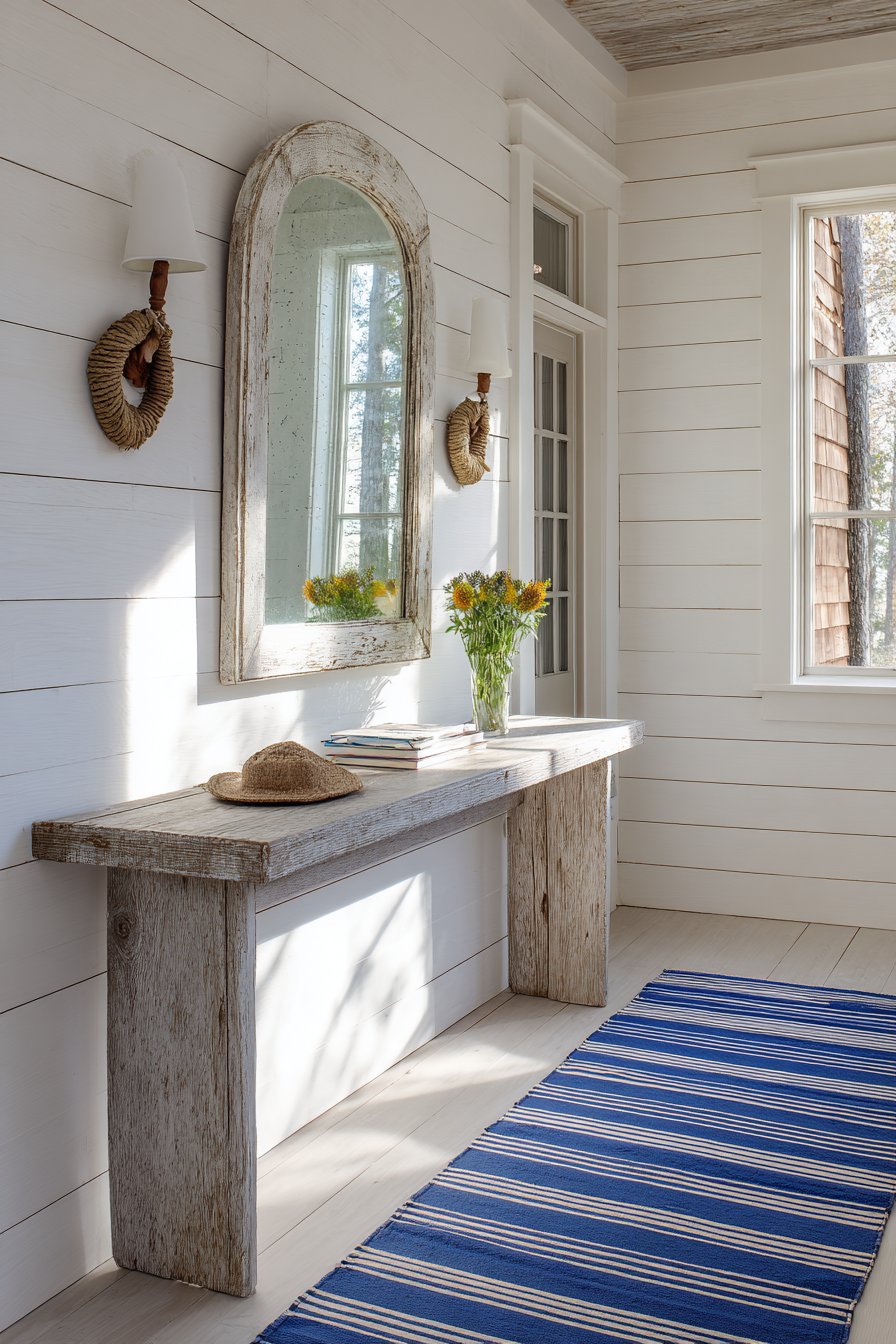
Key Design Tips: Use whitewashed or painted shiplap to add texture while maintaining brightness in narrow coastal entryways. Select furniture with weathered or driftwood finishes to add instant character and coastal authenticity. Incorporate rope or nautical elements in lighting fixtures to reinforce the theme without overwhelming the space. Choose striped runners in classic navy and white to add pattern while maintaining a clean aesthetic. Position mirrors to reflect natural light and visually expand the narrow space.
7. Modern Farmhouse Character with Board-and-Batten Details
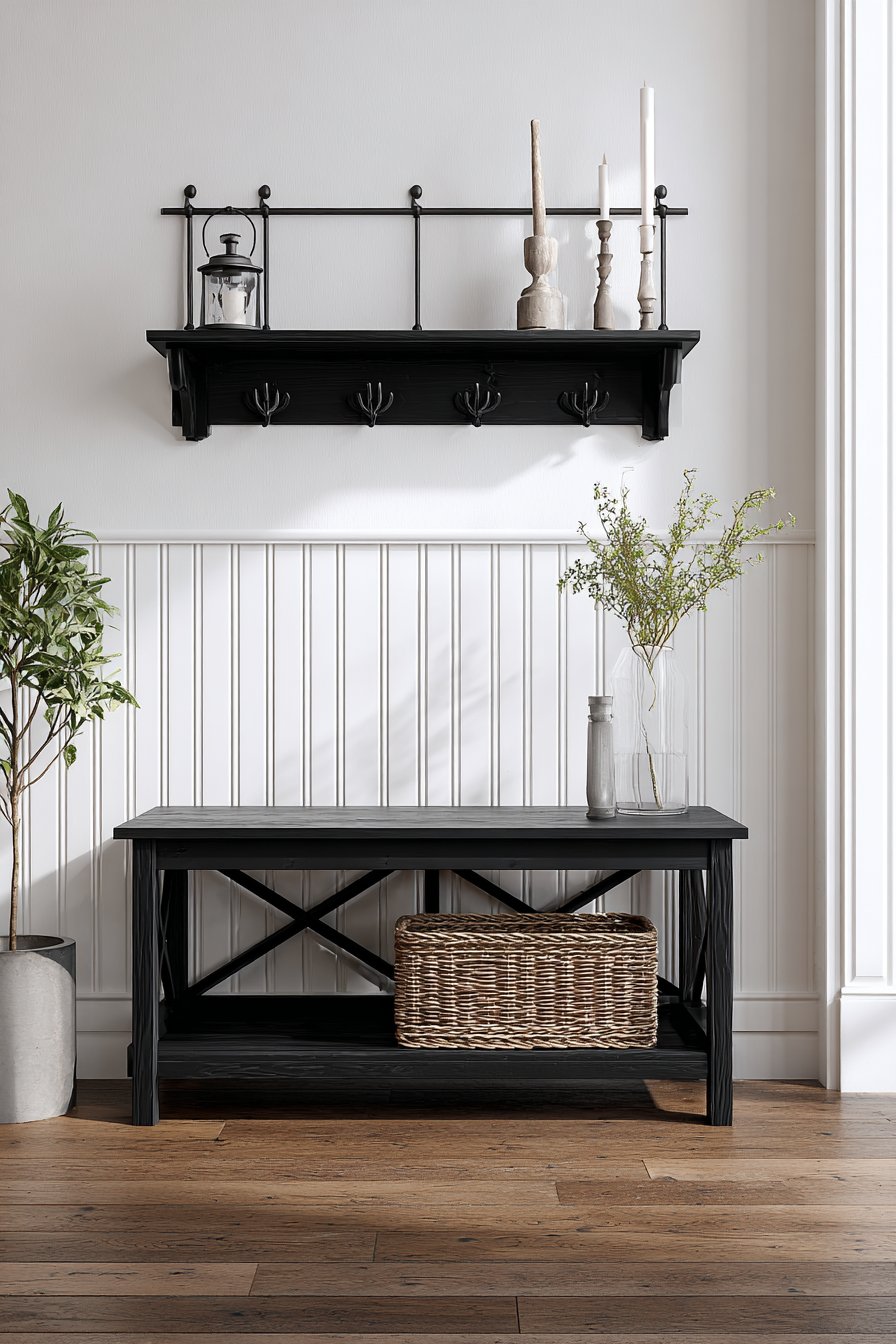
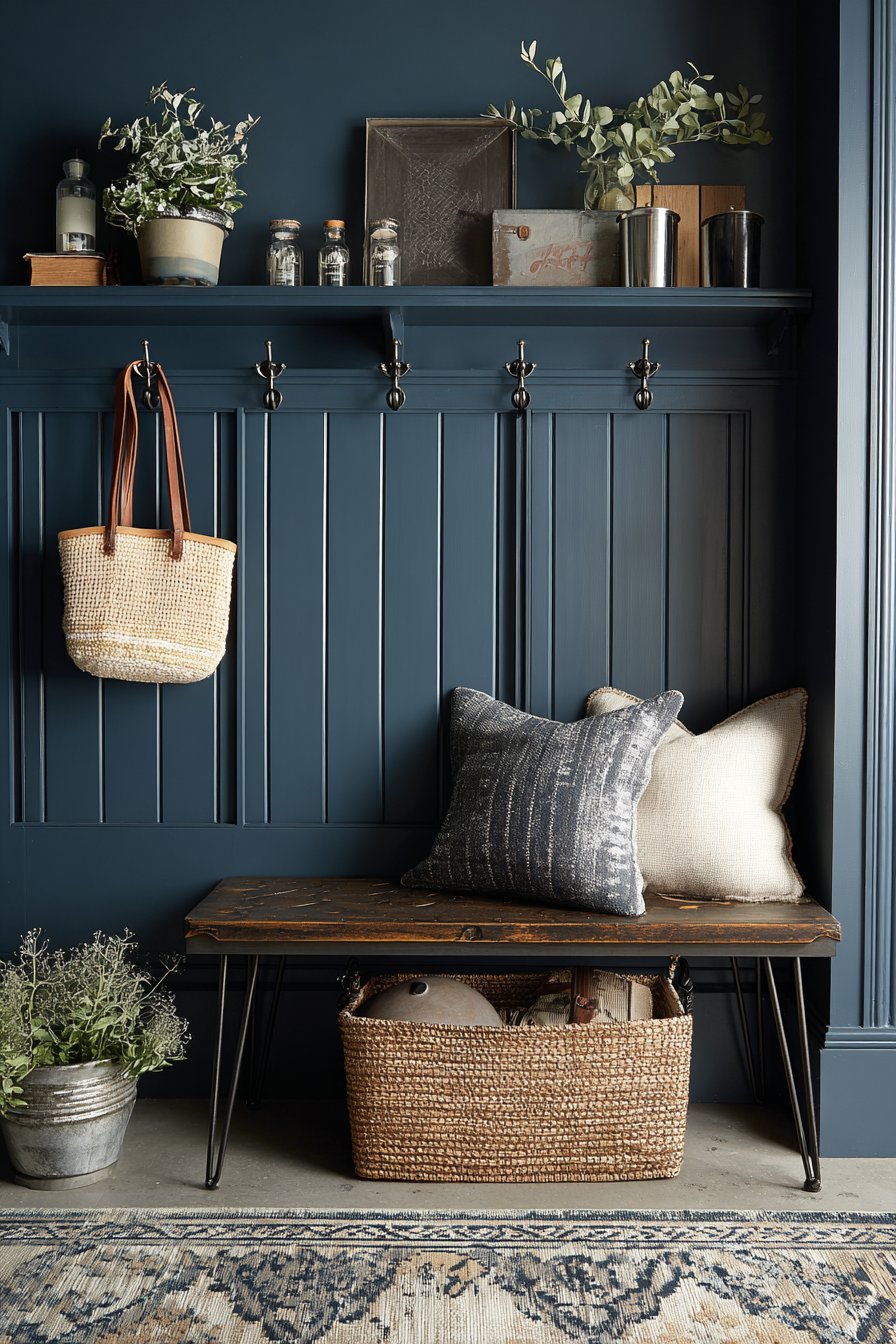
This narrow entryway perfectly captures the modern farmhouse aesthetic that balances rustic charm with contemporary clean lines. Black board-and-batten wainscoting covers the lower half of the walls, creating dramatic contrast against crisp white upper walls. This two-tone approach adds architectural interest while the vertical lines of the batten visually heighten the space, drawing the eye upward and away from the narrow footprint.
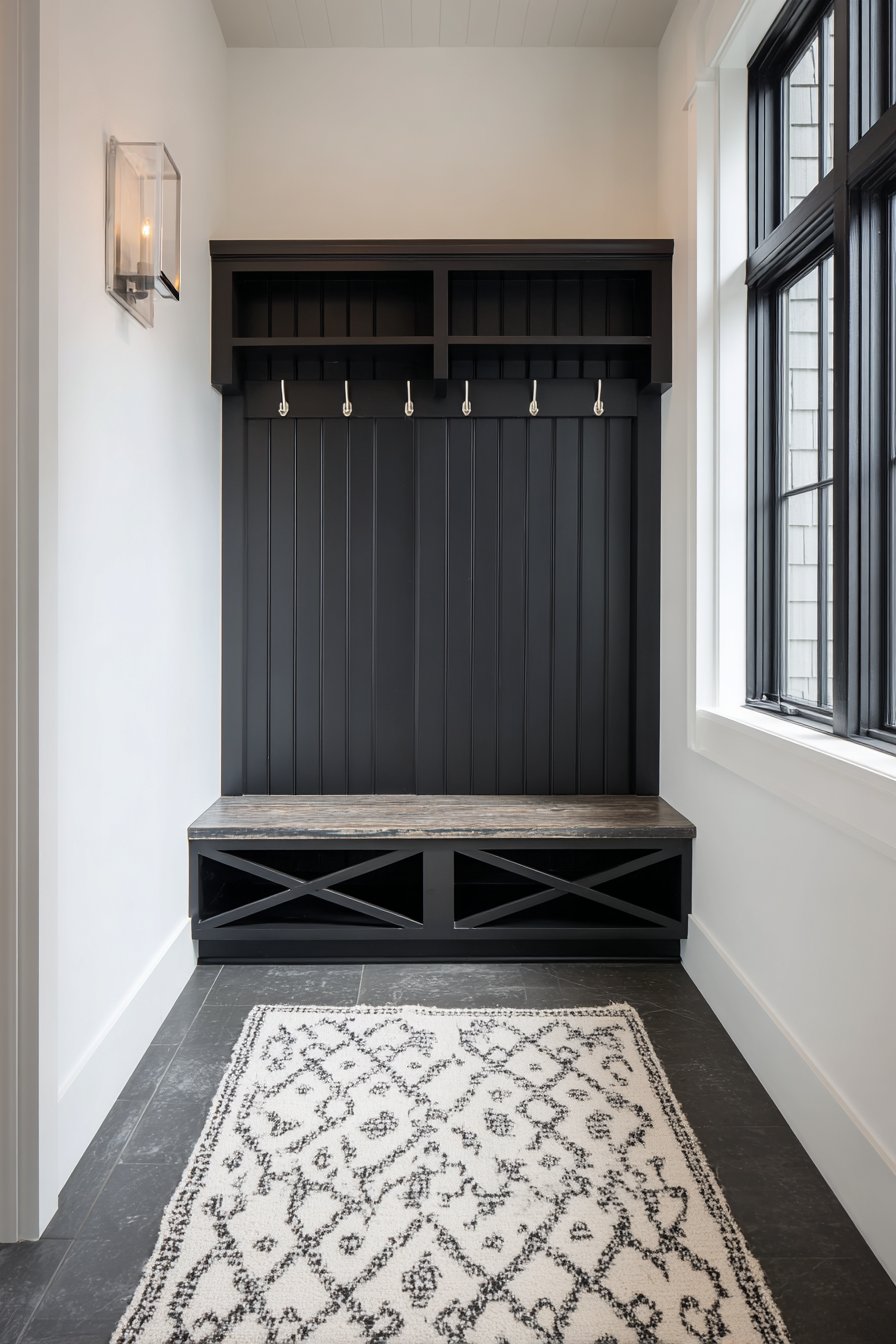
A narrow bench with distinctive X-pattern legs in distressed black finish provides seating while maintaining the farmhouse aesthetic. Its weathered appearance suggests age and history, while the geometric X-bracing adds structural visual interest. An open shelf below offers practical shoe storage that remains easily accessible, demonstrating the modern farmhouse principle of combining beauty with everyday functionality.
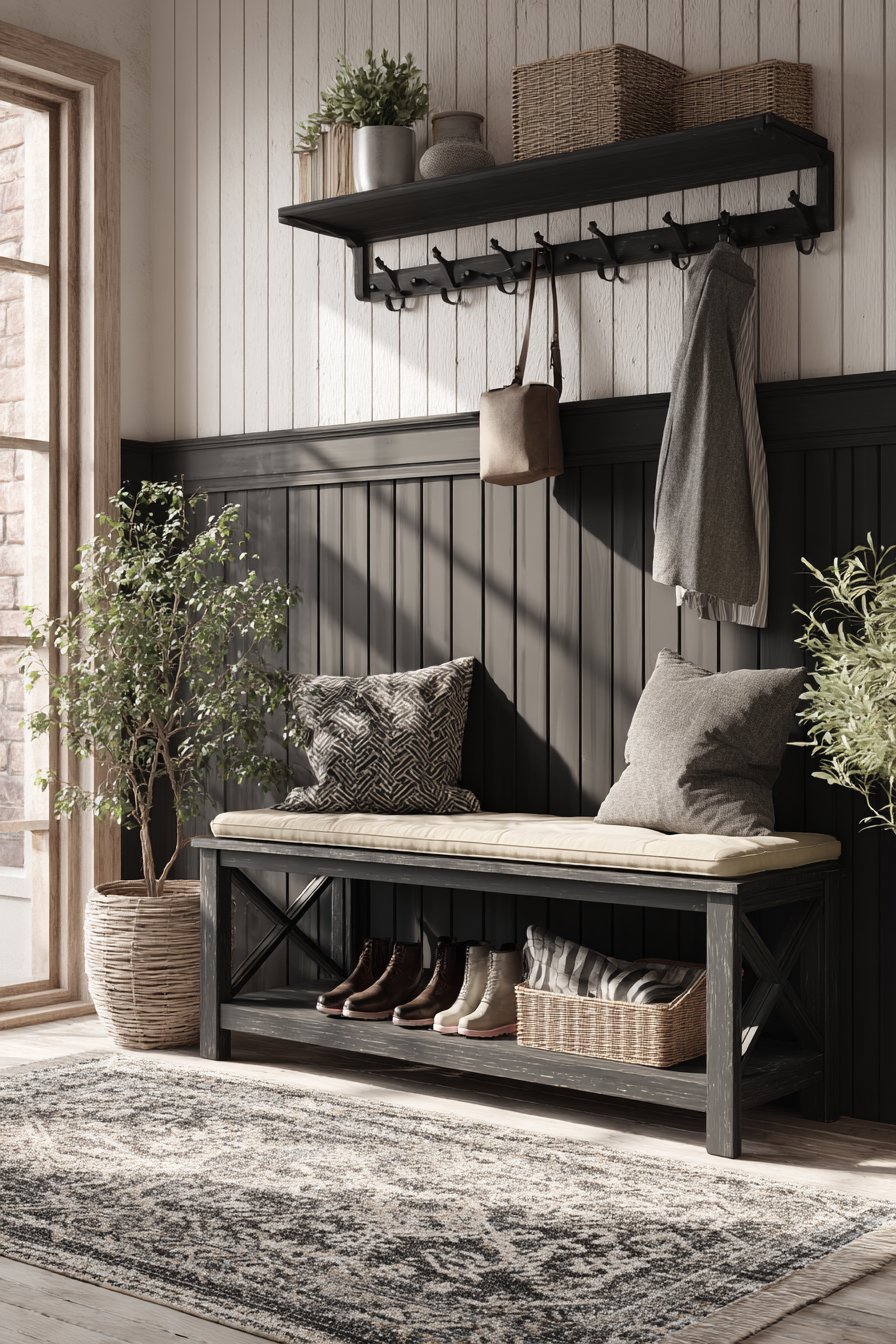
Industrial-style metal hooks mount on a horizontal rail above the bench, their matte black finish coordinating with the board-and-batten below while providing essential hanging storage. The rail system allows flexibility in hook placement and can accommodate seasonal changes in storage needs. Soft diffused lighting from a nearby window illuminates the space, highlighting the contrast between the black and white elements while creating gentle shadows that emphasize the dimensional board-and-batten treatment.
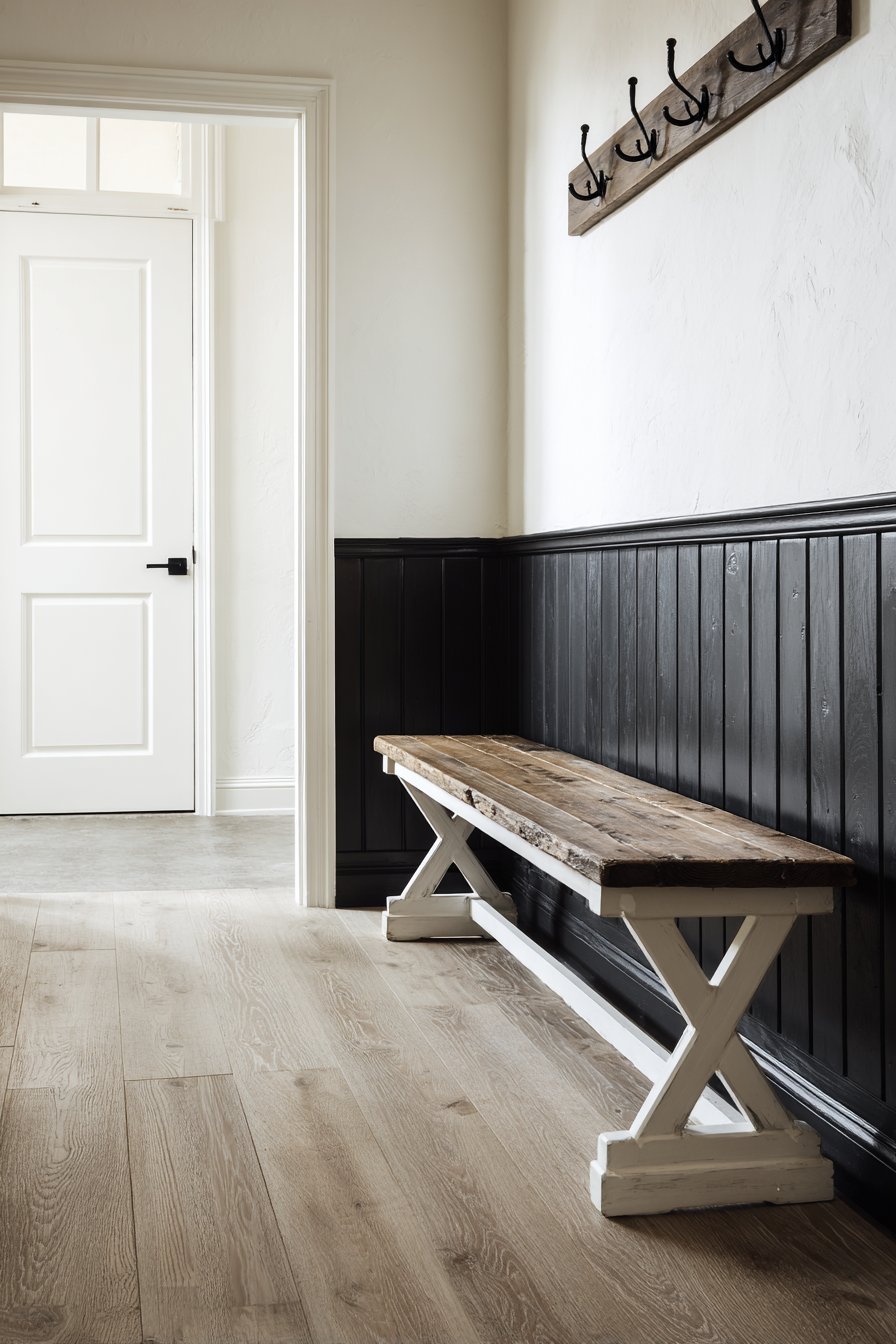
Key Design Tips: Install board-and-batten wainscoting to add architectural detail and visual interest to plain walls in narrow entryways. Use contrasting colors between upper and lower walls to create dynamic visual impact and apparent height. Select furniture with distinctive leg details like X-patterns to add character without requiring additional floor space. Mount rail systems for flexible hook placement that adapts to changing storage needs. Choose distressed finishes to add instant patina and farmhouse authenticity.
8. Corner-Optimizing Triangular Innovation
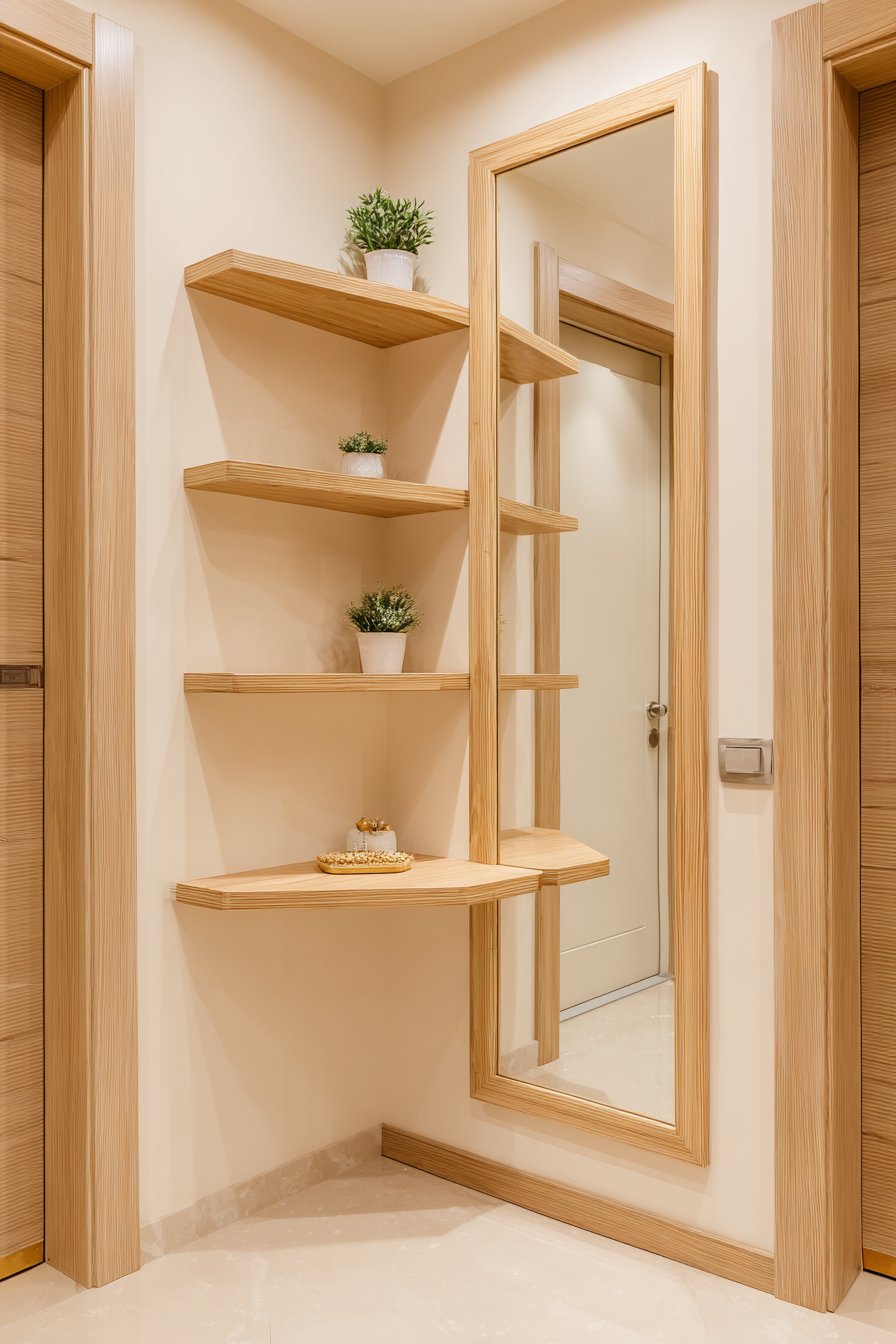
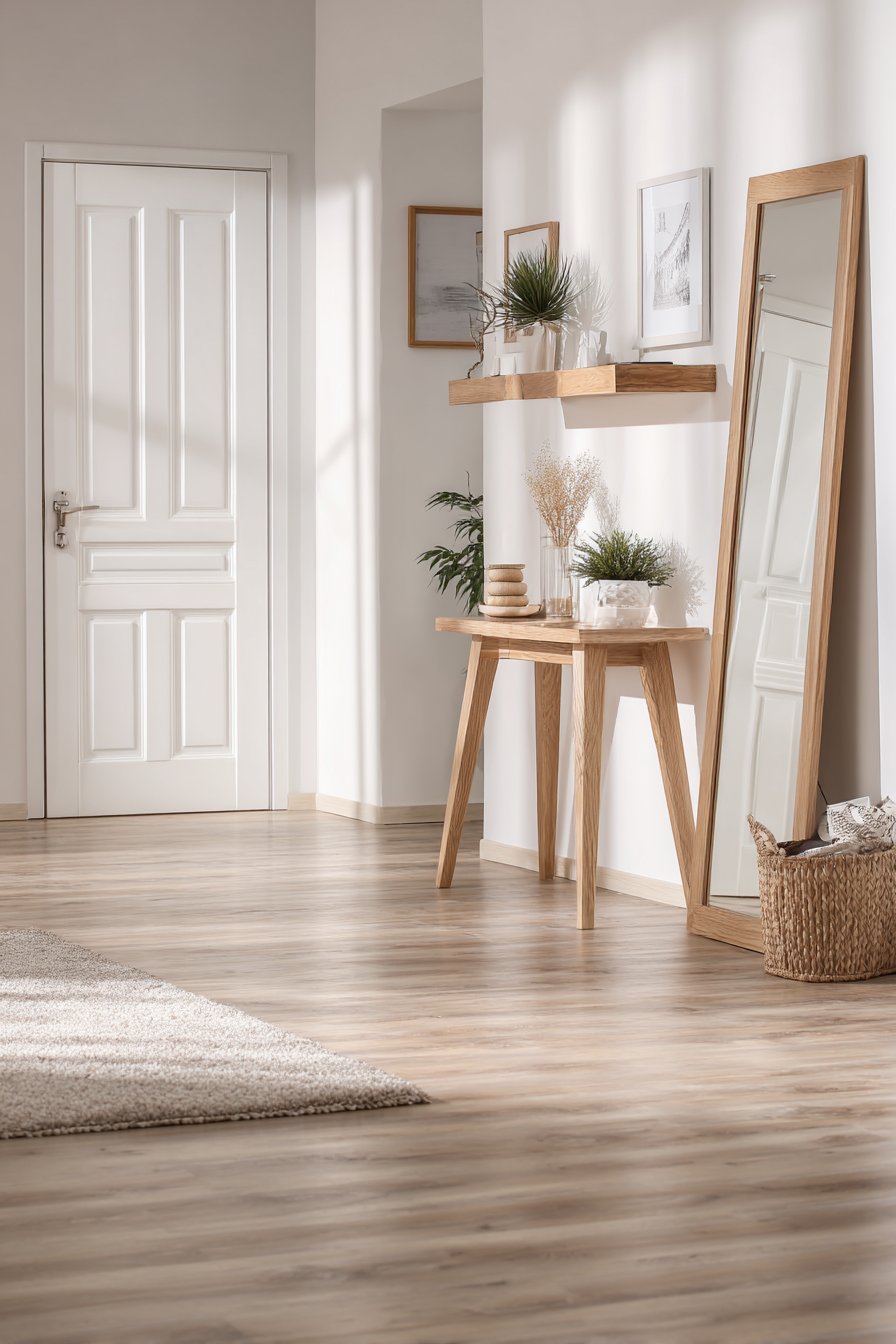
This narrow entryway demonstrates creative problem-solving by addressing one of the most challenging aspects of tight spaces—awkward corner areas. A custom triangular console table in light oak fits perfectly where two walls meet, transforming dead space into functional surface area. This innovative approach proves that furniture doesn’t need to follow conventional rectangular forms, especially when working with architectural constraints.
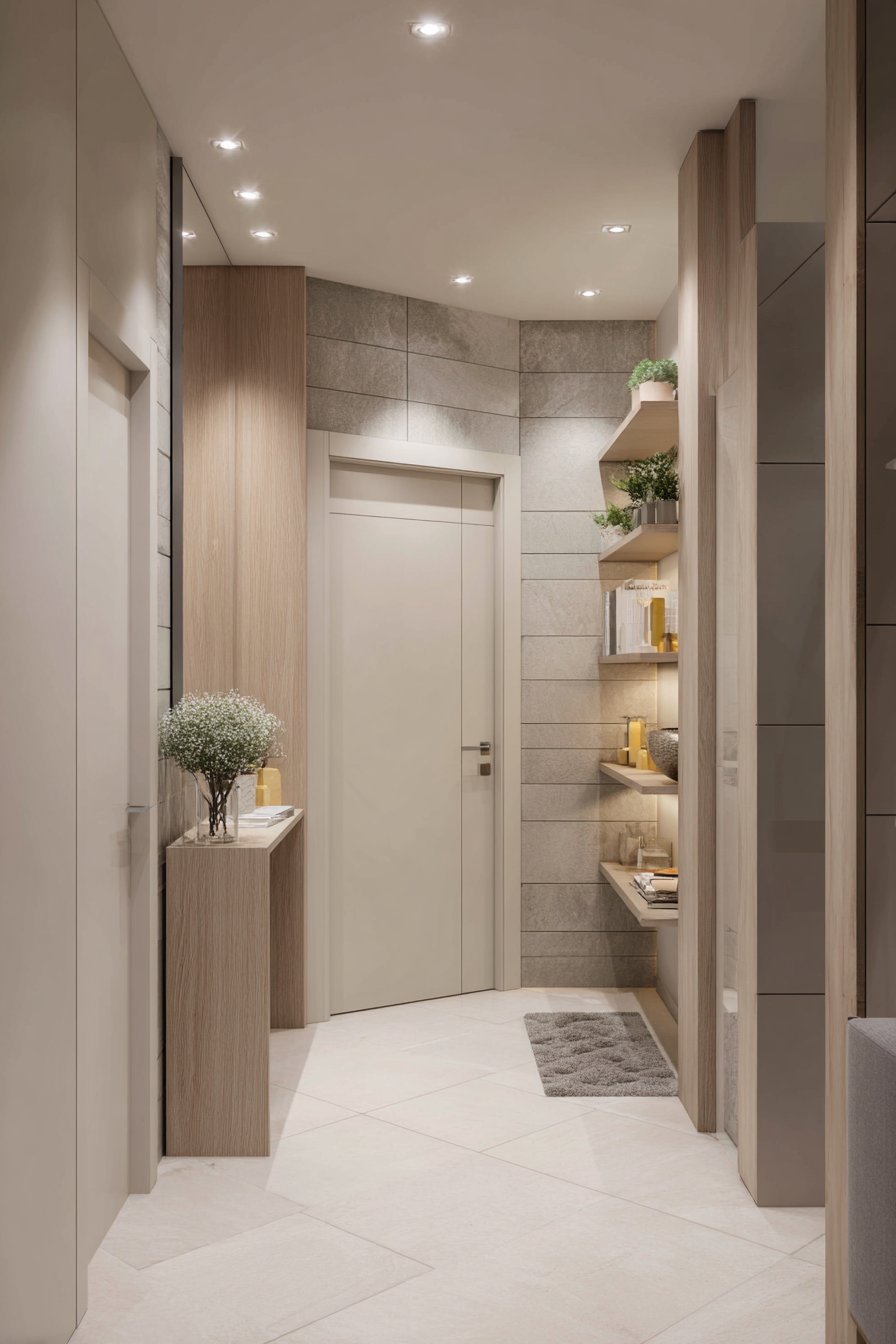
Floating shelves wrap around the adjacent wall at eye level, creating a continuous display surface that follows the room’s natural geometry. These shelves showcase small potted plants that add life and color to the space, along with a practical catch-all tray for keys and daily essentials. The wrapped shelf design maintains visual flow while maximizing usable surface area in a space where traditional furniture placement would be impossible.
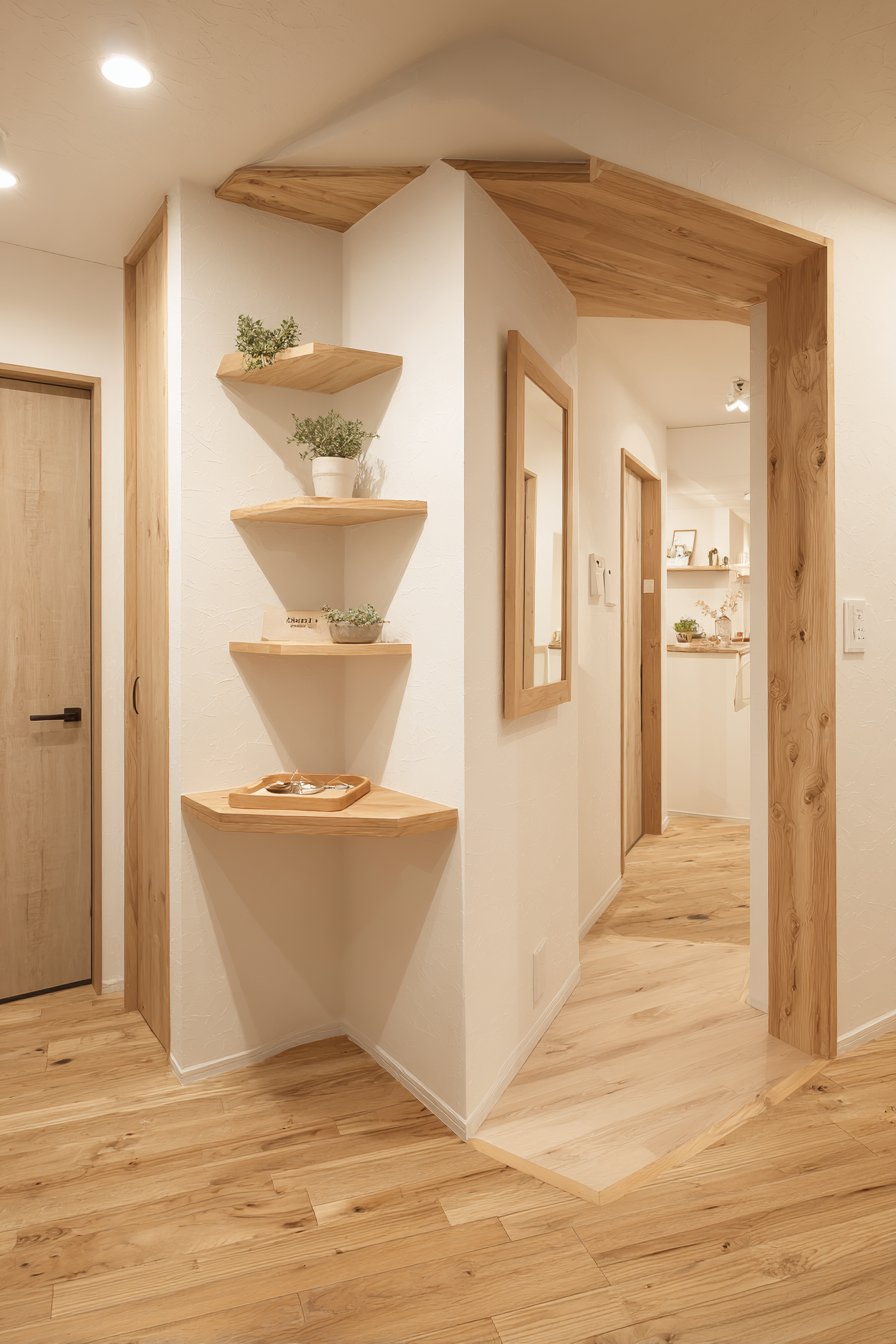
In the opposite corner, a tall narrow mirror with a simple wooden frame leans casually against the wall, its angle creating an interesting visual counterpoint to the geometric precision of the corner console. The mirror’s placement captures and reflects light from multiple angles, further expanding the perceived space while adding a relaxed, uncontrived element to the carefully planned geometry of the other pieces.
Key Design Tips: Commission custom triangular or corner-fitted furniture to utilize awkward spaces that won’t accommodate standard rectangular pieces. Install wrapped or continuous shelving that follows wall angles to maximize surface area without protruding into walkways. Use corner spaces for mirror placement to capture and reflect light from multiple directions. Select light wood tones to keep corner installations from feeling heavy or overwhelming. Incorporate living plants to add color and life without consuming floor space.
9. Industrial Edge with Raw Material Authenticity
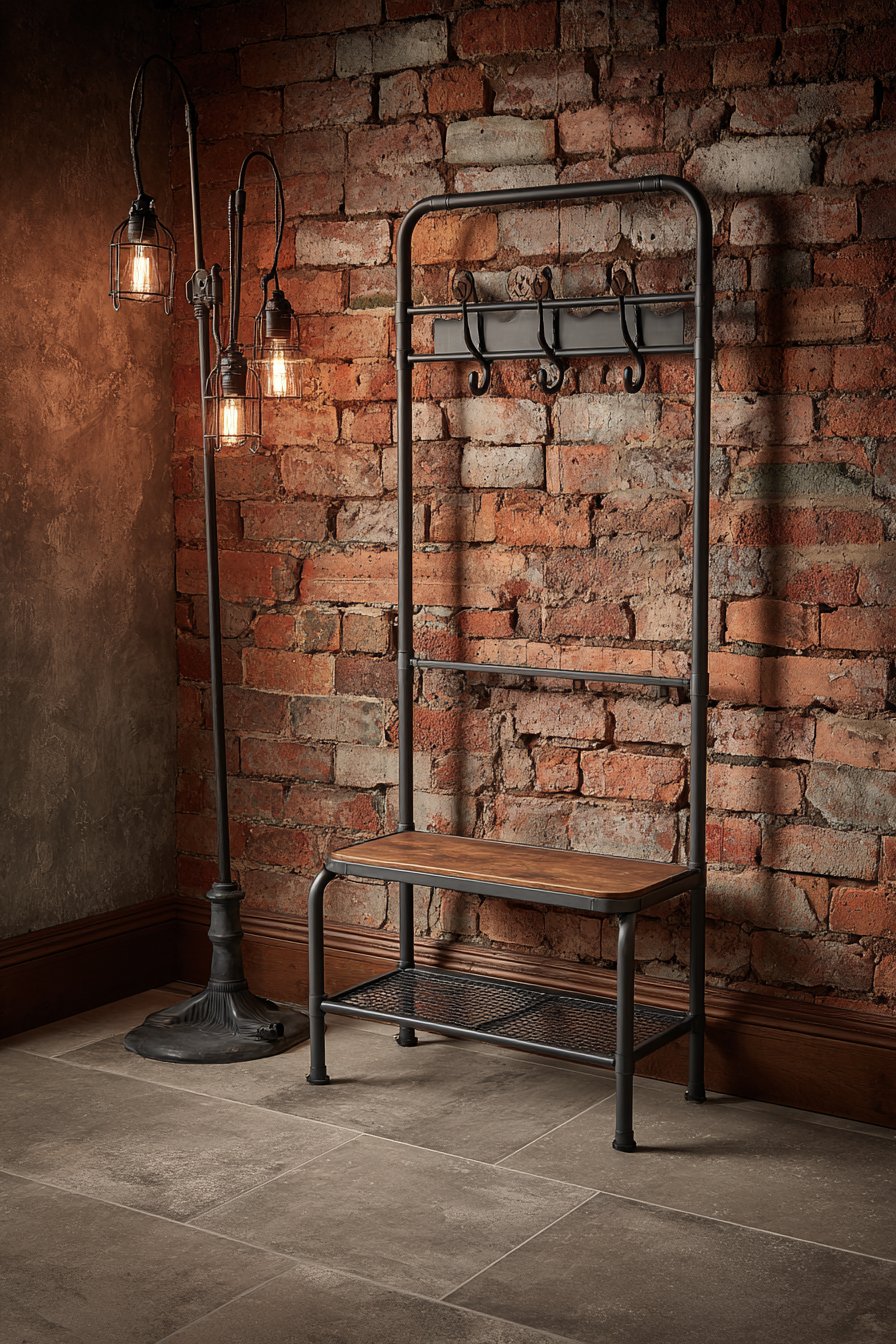
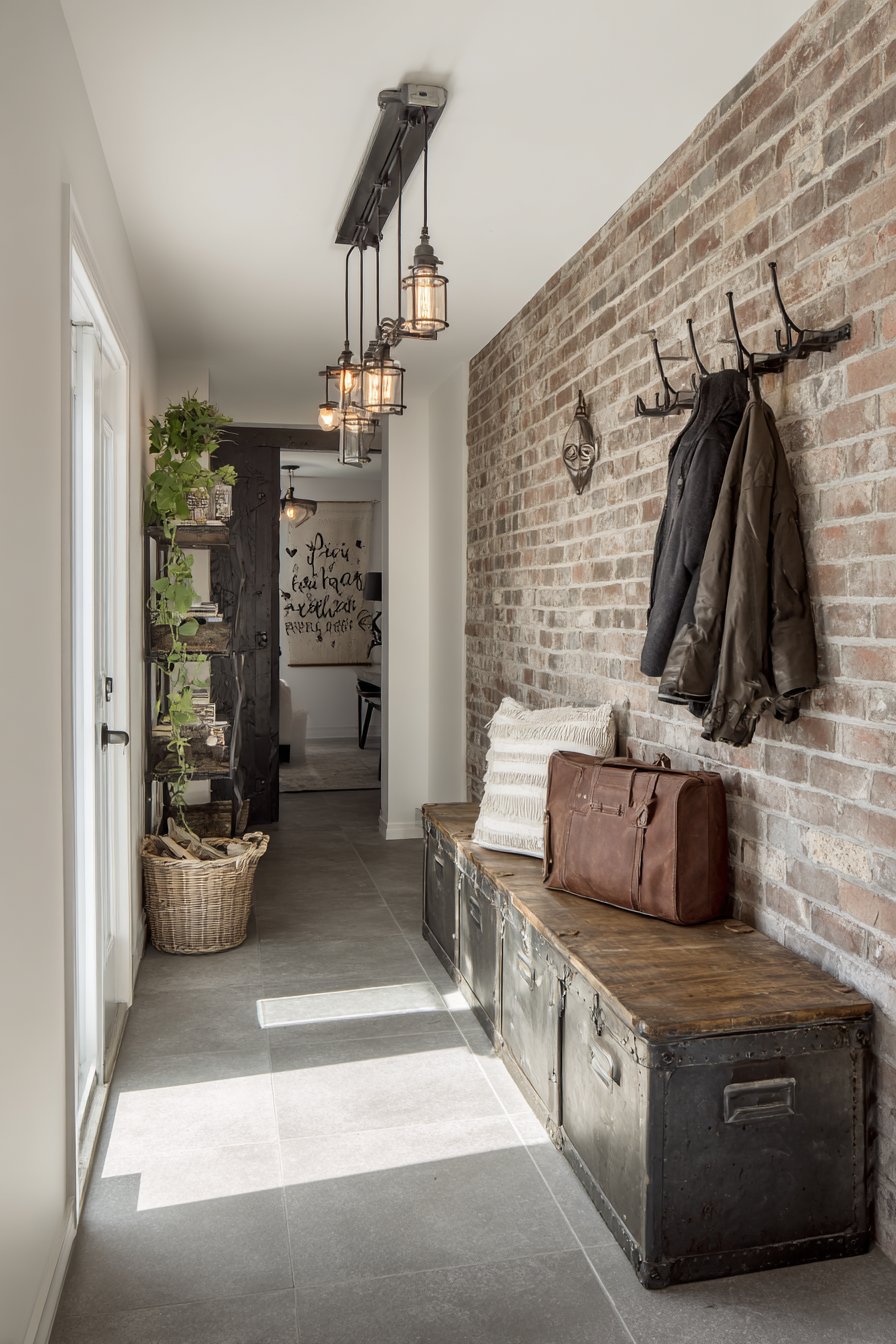
This narrow entryway embraces industrial design’s celebration of raw, honest materials and utilitarian aesthetics. Exposed brick on one wall provides instant texture and character, its warm red-brown tones softening what could otherwise be a harsh industrial palette. The brick’s irregular surface catches light and shadow throughout the day, creating ever-changing visual interest that prevents the narrow space from feeling static or monotonous.
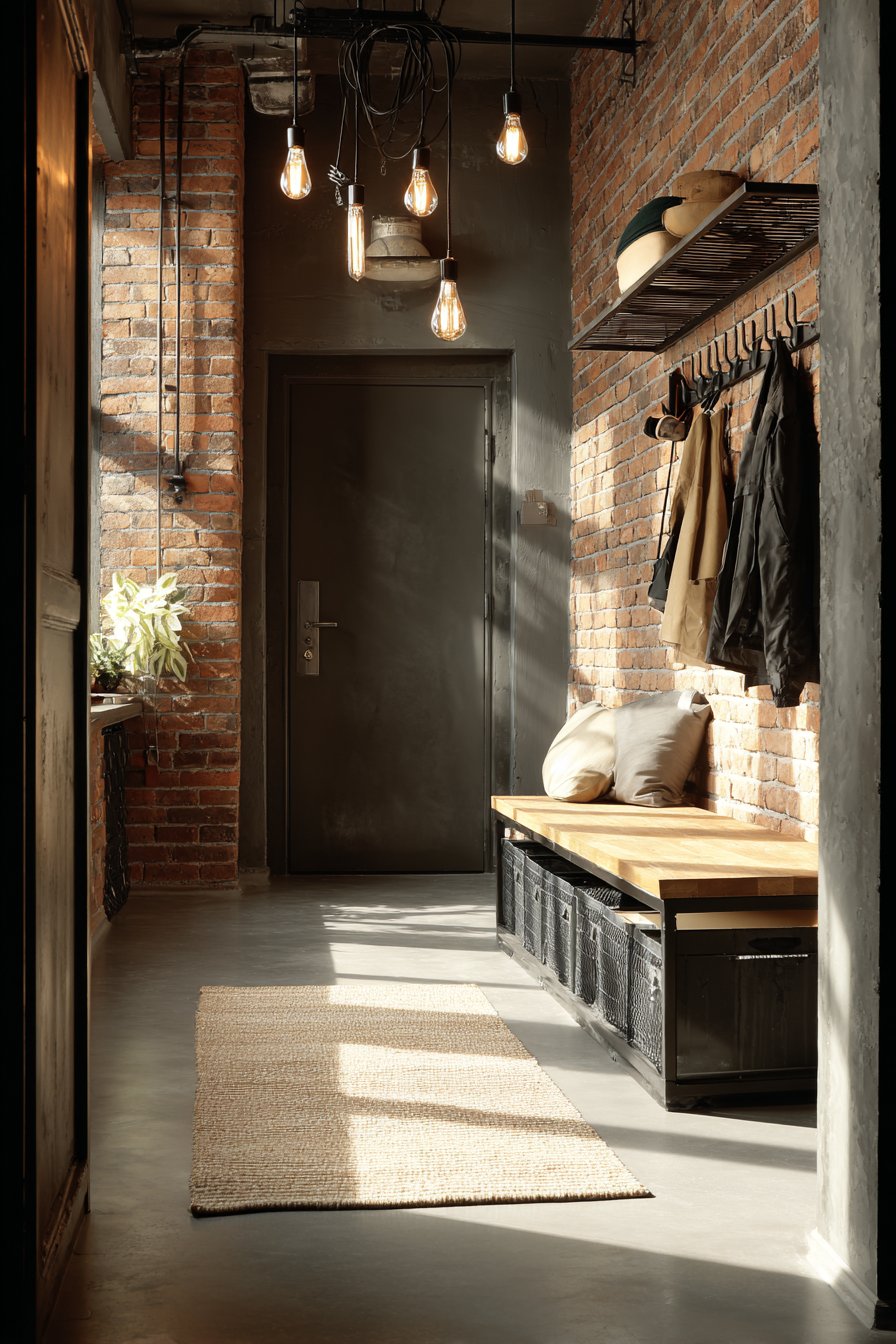
Concrete-look porcelain flooring extends the industrial theme underfoot, its gray tones and subtle variation mimicking the appearance of actual poured concrete while offering superior durability and easier maintenance. A wrought iron coat stand with multiple hooks utilizes vertical space efficiently, its black metal frame and honest construction details epitomizing industrial design principles. Beside it, a galvanized metal storage bench with a wooden seat combines materials in the characteristic industrial manner—hard metal paired with warm wood creates visual and tactile contrast.
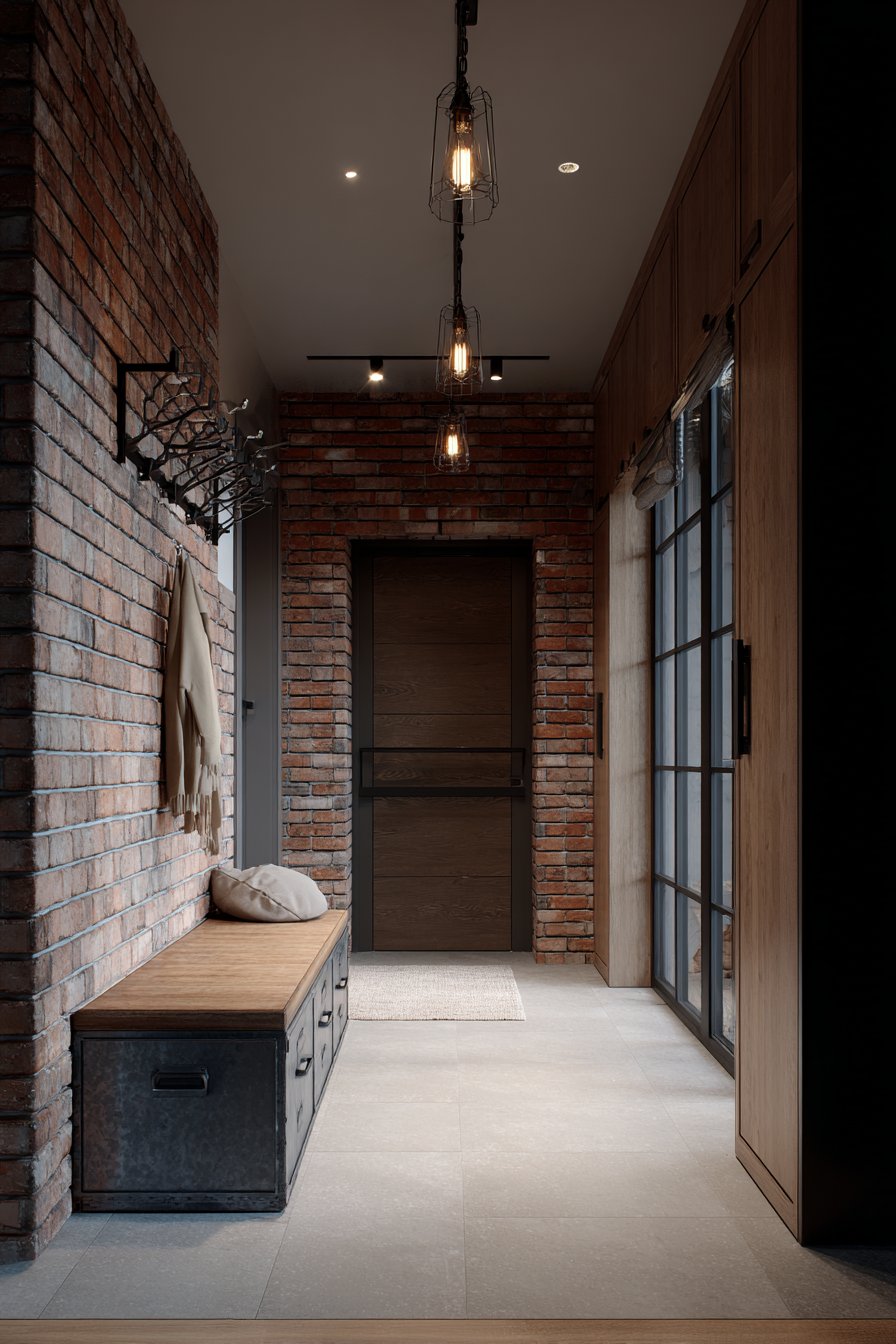
Edison bulb pendants hang from a simple track system, their visible filaments and amber glow adding warmth to the industrial materials while providing practical illumination. The dramatic shadows cast by these fixtures emphasize the texture of the exposed brick and create depth in the narrow corridor. This lighting choice demonstrates how industrial design can be both aesthetically striking and functionally effective.
Key Design Tips: Expose or install brick walls to add instant texture and warmth to industrial-style narrow entryways. Choose concrete or concrete-look flooring for authentic industrial aesthetics and superior durability in high-traffic areas. Select wrought iron or metal furniture pieces with visible construction details that celebrate utilitarian design. Combine hard materials like metal with warm elements like wood to prevent spaces from feeling cold. Install Edison bulb lighting to provide warm illumination while maintaining industrial authenticity.
10. Pegboard System for Ultimate Customization
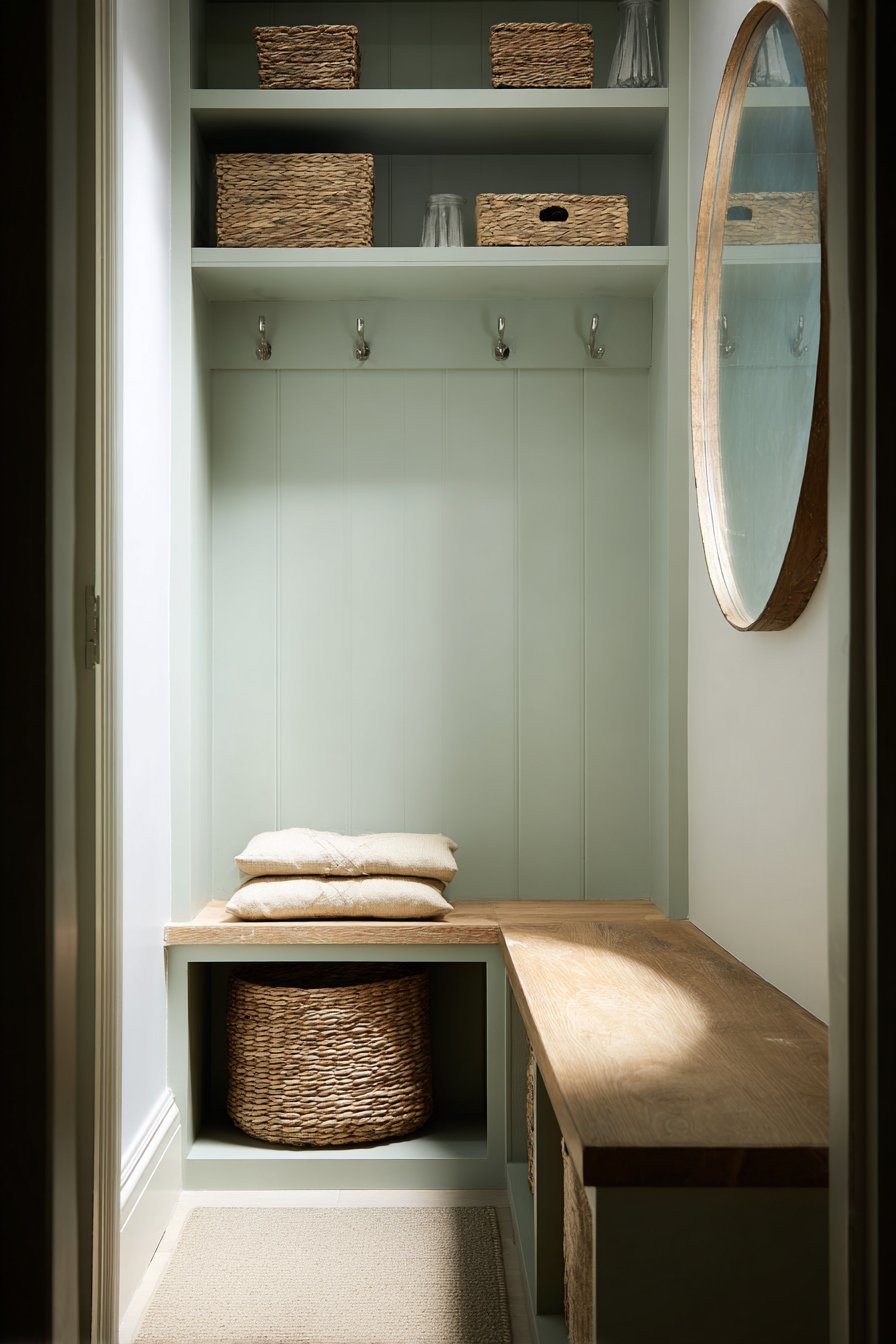
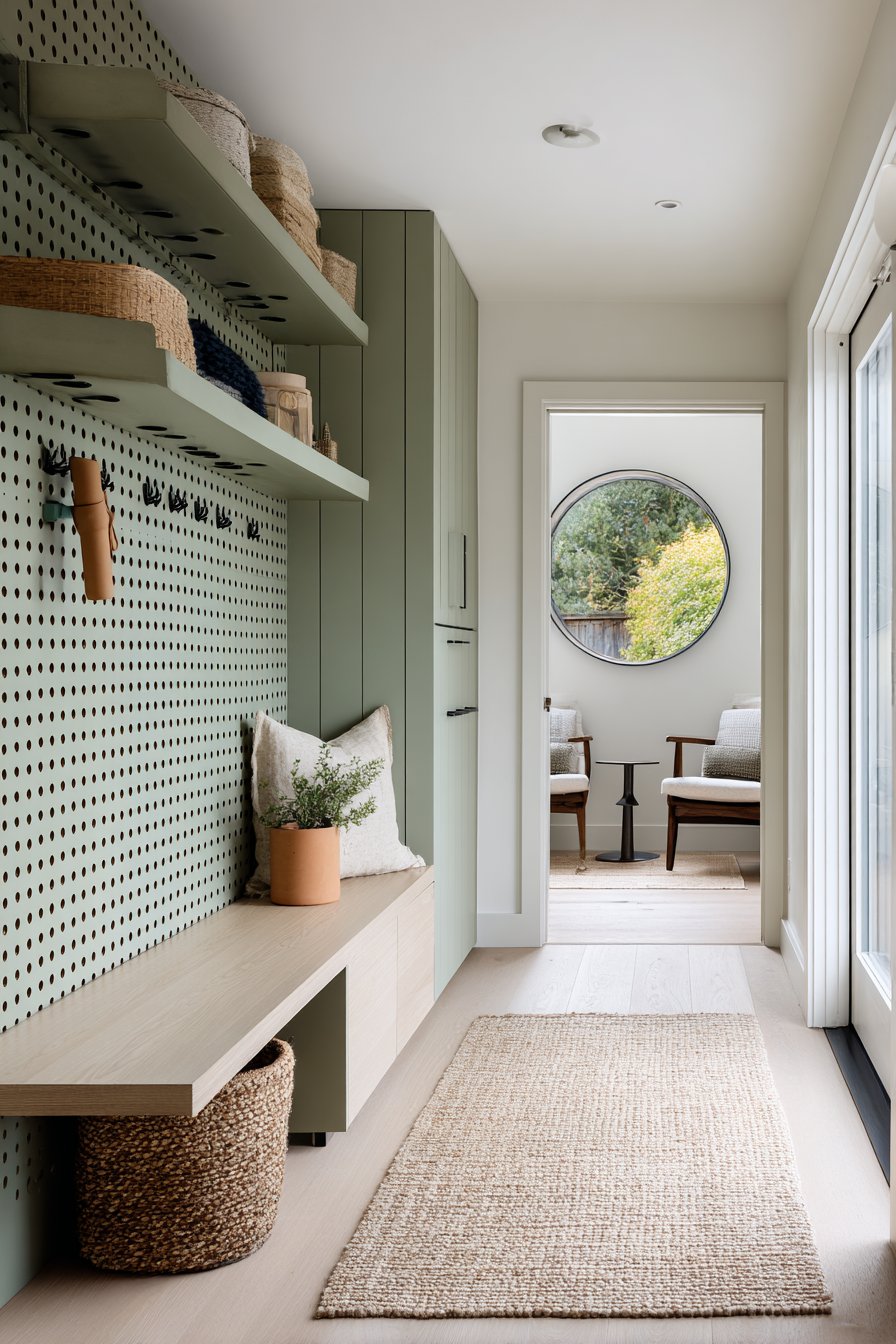
This narrow entryway showcases one of the most adaptable storage solutions available—a pegboard system that transforms ordinary wall space into endlessly configurable organization. Painted in soft sage green, the pegboard becomes an attractive design element rather than merely functional hardware. Various hooks, small shelves, and baskets attach to the board, creating a storage system that can be reorganized as needs change—a crucial feature in narrow entryways where flexibility is paramount.
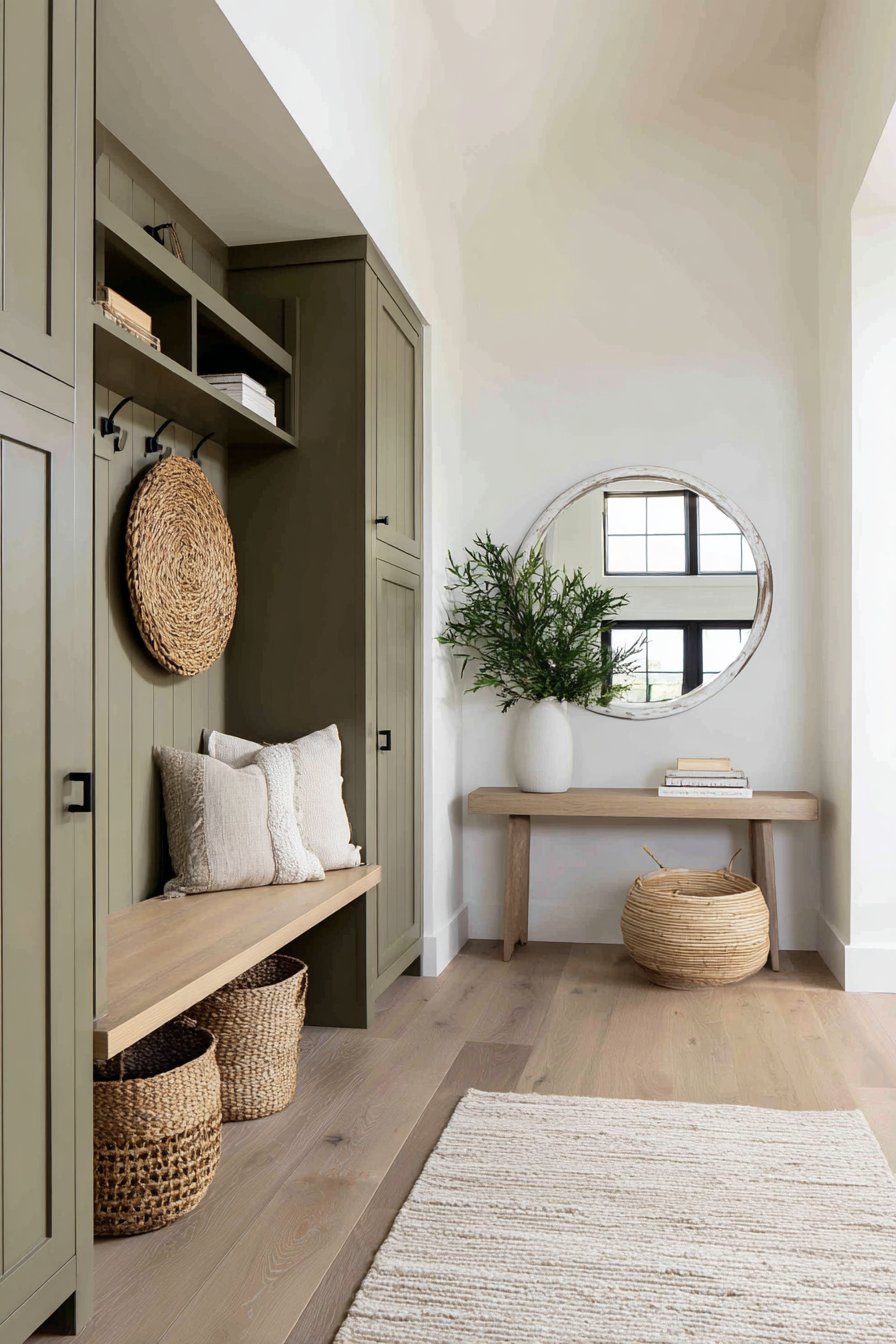
Below the pegboard, a slim bench in natural ash wood provides seating while maintaining the light, organic aesthetic. The pale tone of ash wood prevents the bench from creating visual weight, keeping the space feeling open despite the substantial pegboard storage above. A woven seagrass basket slides underneath the bench, offering additional concealed storage for shoes or seasonal items while maintaining the natural material palette.
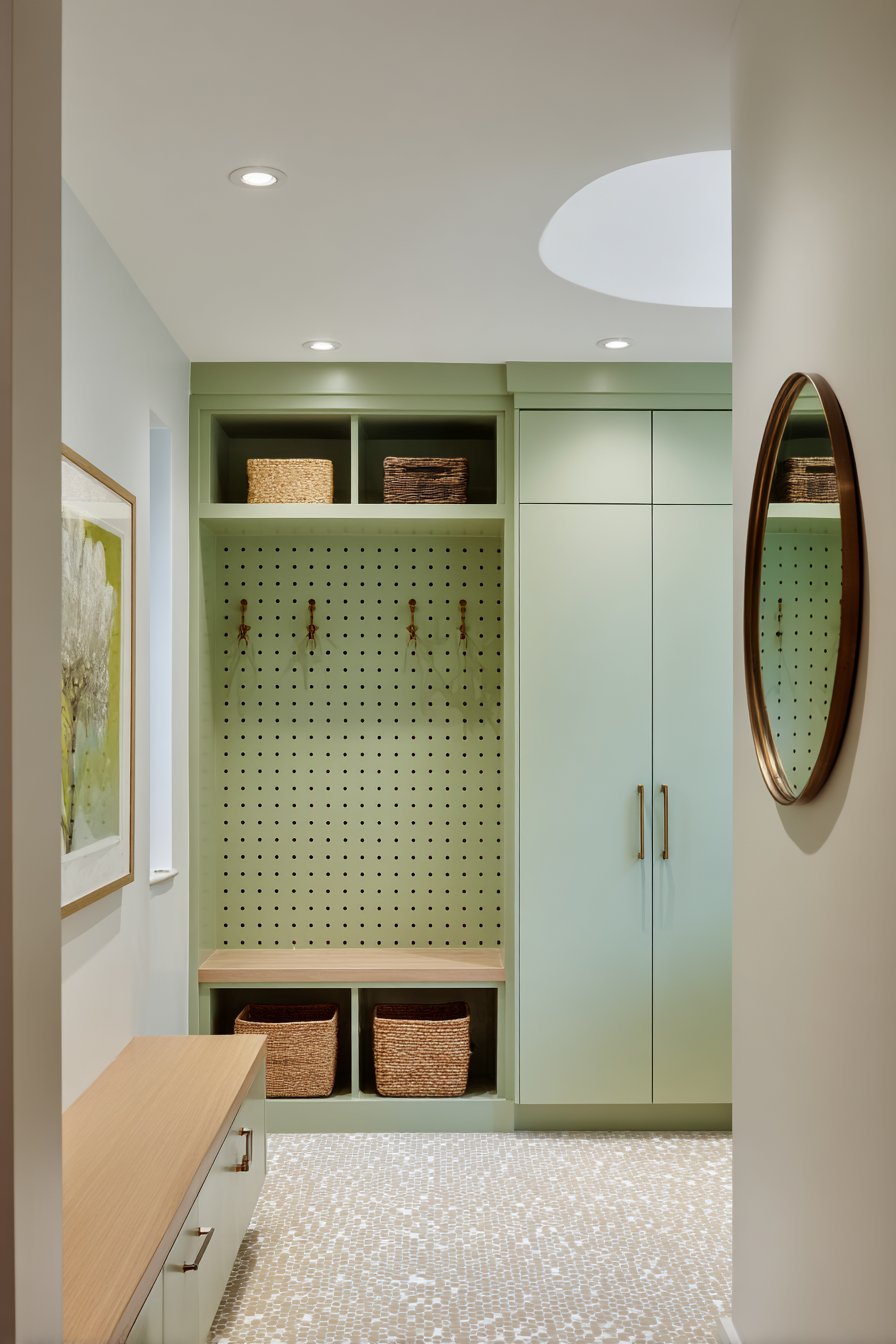
The opposite wall remains intentionally clear except for a round convex mirror that expands the visual field through its curved, wide-angle reflection. This strategic restraint prevents the space from feeling cluttered despite the detailed pegboard organization across from it. The balanced composition demonstrates how narrow entryways can incorporate substantial storage on one side as long as the opposite side remains relatively minimal.
Key Design Tips: Install pegboard systems for ultimate storage flexibility that adapts to changing seasonal and daily needs. Paint pegboards in colors that complement your decor scheme rather than leaving them natural wood or standard gray. Balance detailed storage on one wall with minimal treatment on the opposite wall to prevent visual overwhelming. Choose light wood tones for seating to minimize visual weight in small spaces. Use round convex mirrors for maximum field-of-view expansion in narrow corridors.
11. Transitional Elegance with Refined Material Choices
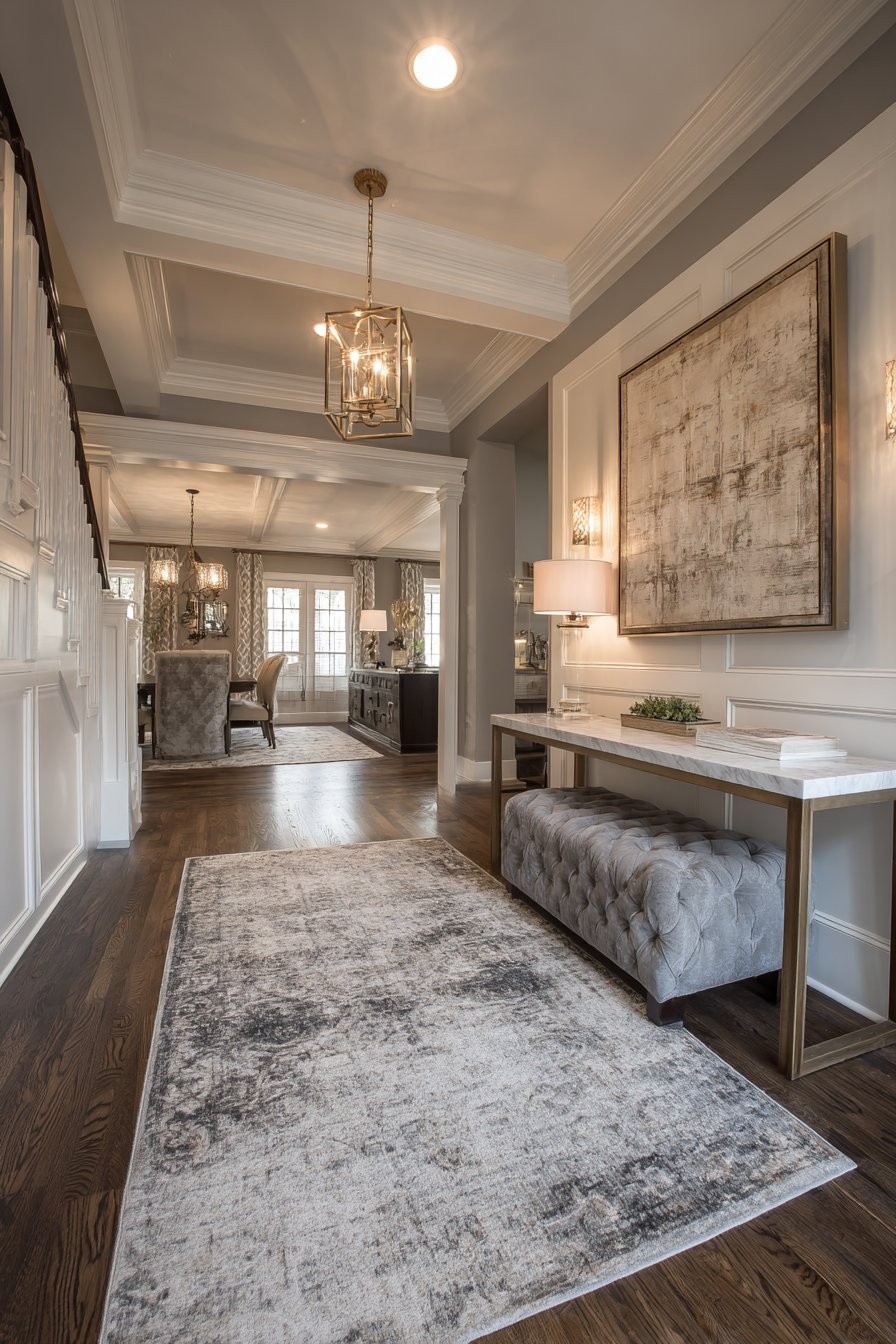
This narrow entryway embodies transitional design’s ability to bridge traditional and contemporary aesthetics through refined material choices and balanced composition. Soft gray walls provide a sophisticated backdrop while white crown molding adds architectural detail that references classical design without appearing fussy or dated. This combination creates visual interest through subtle contrast rather than bold statements, perfectly suited to a narrow space that could easily feel overwhelming.
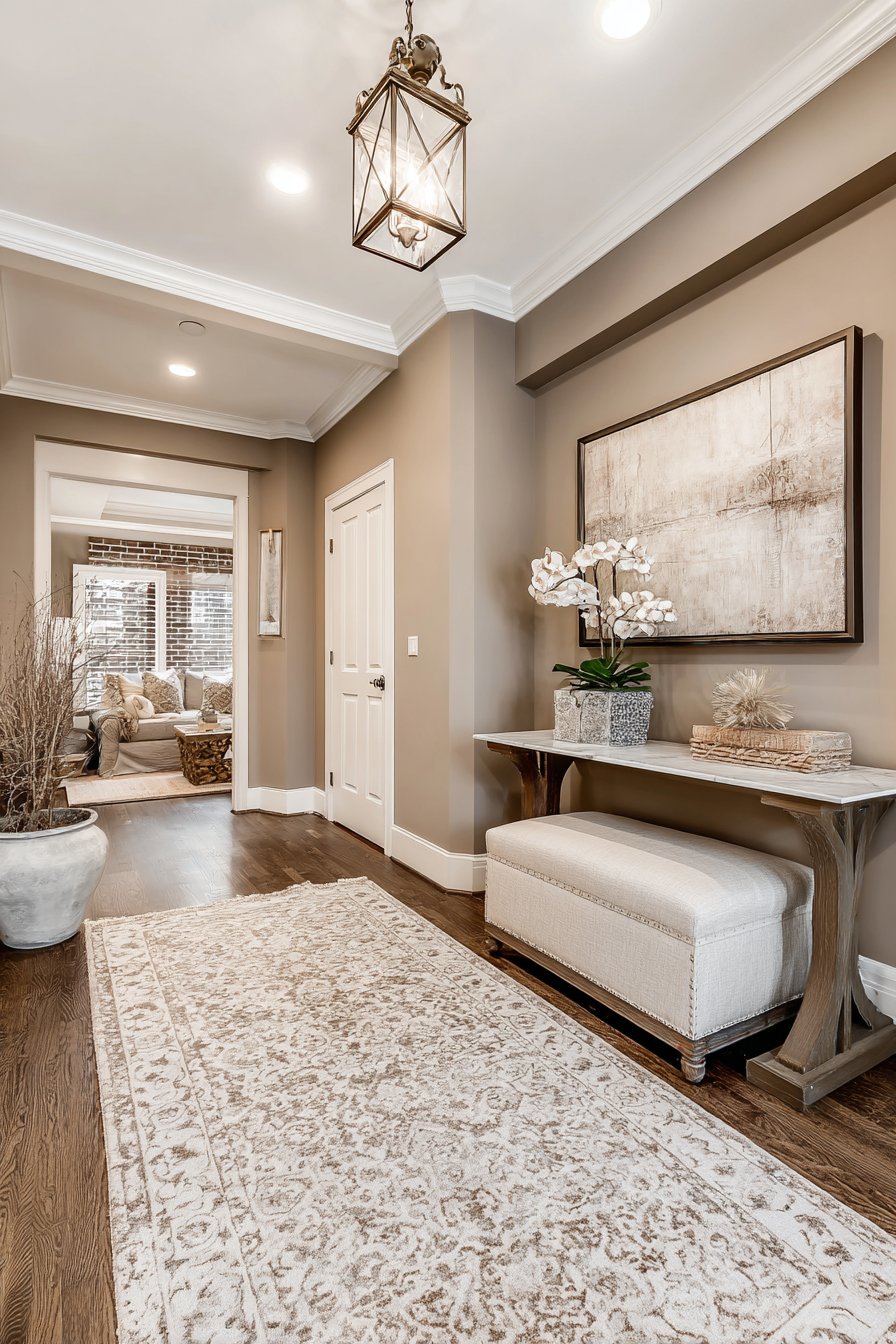
The console table exemplifies transitional design principles with its modest twelve-inch depth, marble top, and tapered legs in antique brass finish. The marble brings natural beauty and timeless elegance, while the brass legs add warmth and a subtle metallic accent. An upholstered ottoman with hidden storage demonstrates the transitional approach to functionality—it slides underneath the console when not needed, concealing storage while maintaining clean lines and an uncluttered appearance.
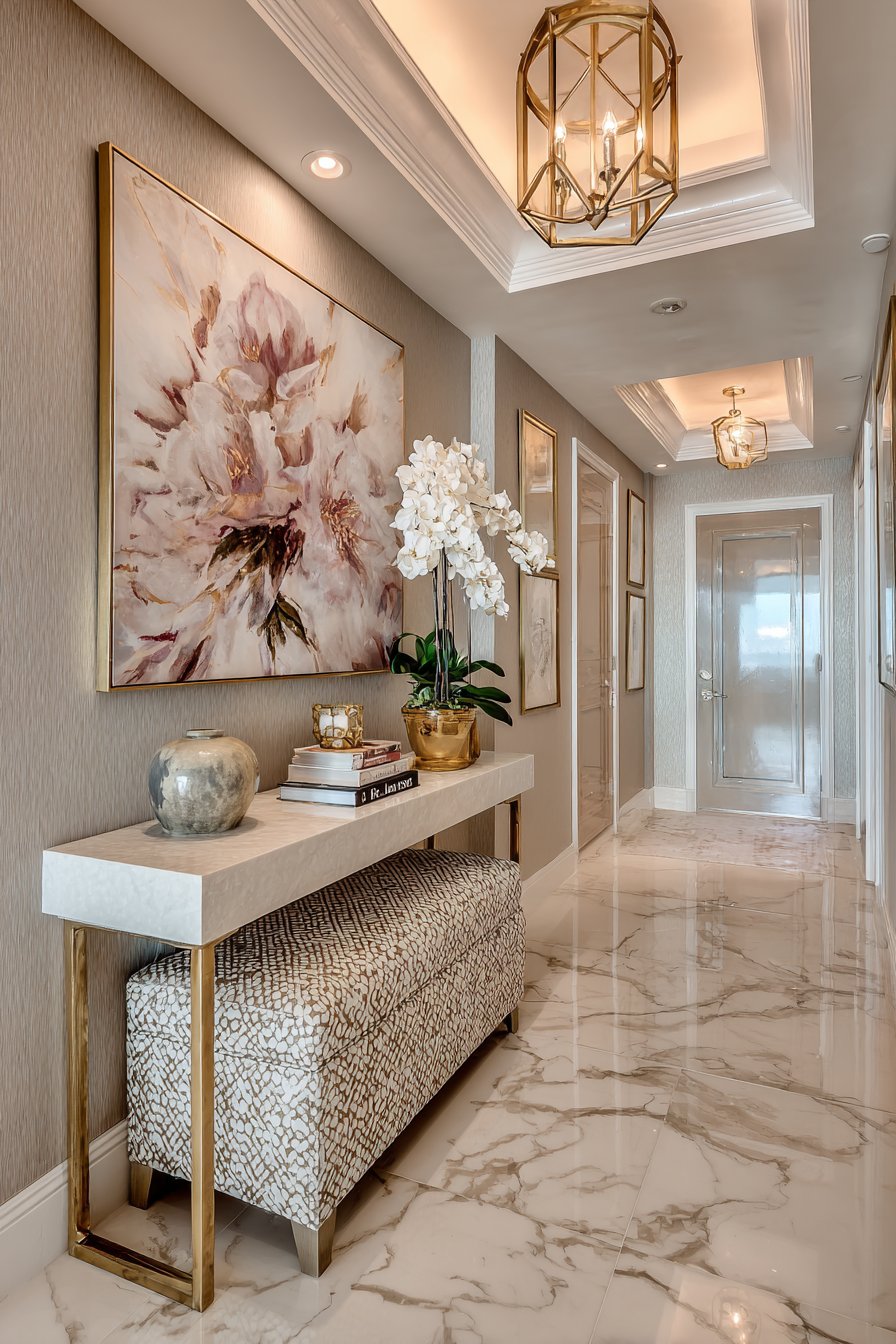
Recessed downlighting and a decorative lantern-style pendant provide layered illumination that serves both practical and aesthetic purposes. The recessed fixtures ensure even, shadow-free light for daily tasks, while the decorative pendant adds visual interest and ambient glow for a welcoming atmosphere. This dual-lighting approach exemplifies how thoughtful design can meet multiple needs within a single, cohesive solution.
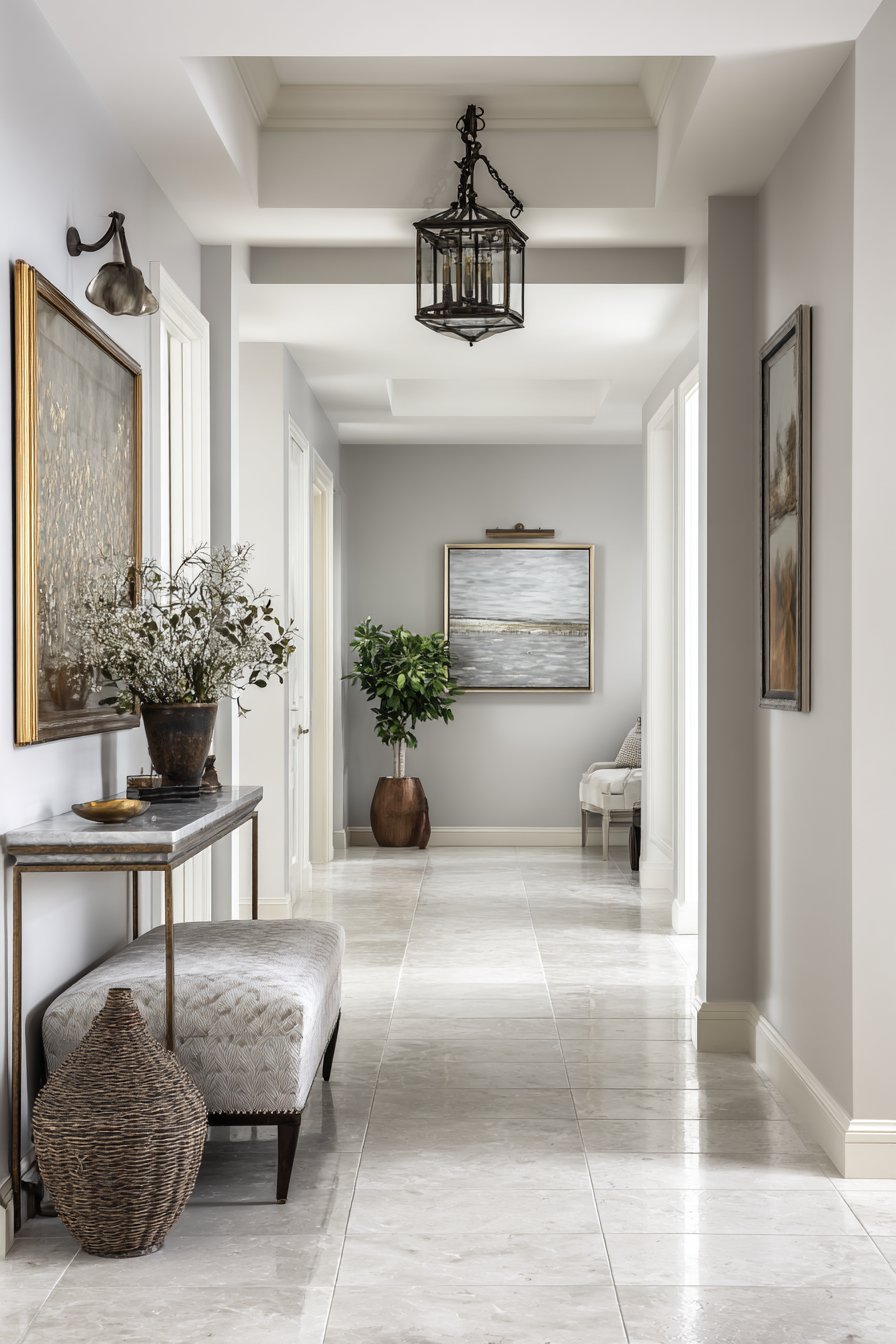
Key Design Tips: Use soft gray paint colors to create sophisticated backgrounds that work with both traditional and contemporary elements. Install crown molding to add architectural interest without consuming floor or wall space. Choose console tables no deeper than 12 inches with refined details like marble tops and brass legs. Select storage ottomans that slide under consoles for hidden functionality. Implement layered lighting with both recessed and decorative fixtures for flexibility and ambiance.
12. Family-Friendly Organization with Individual Zones
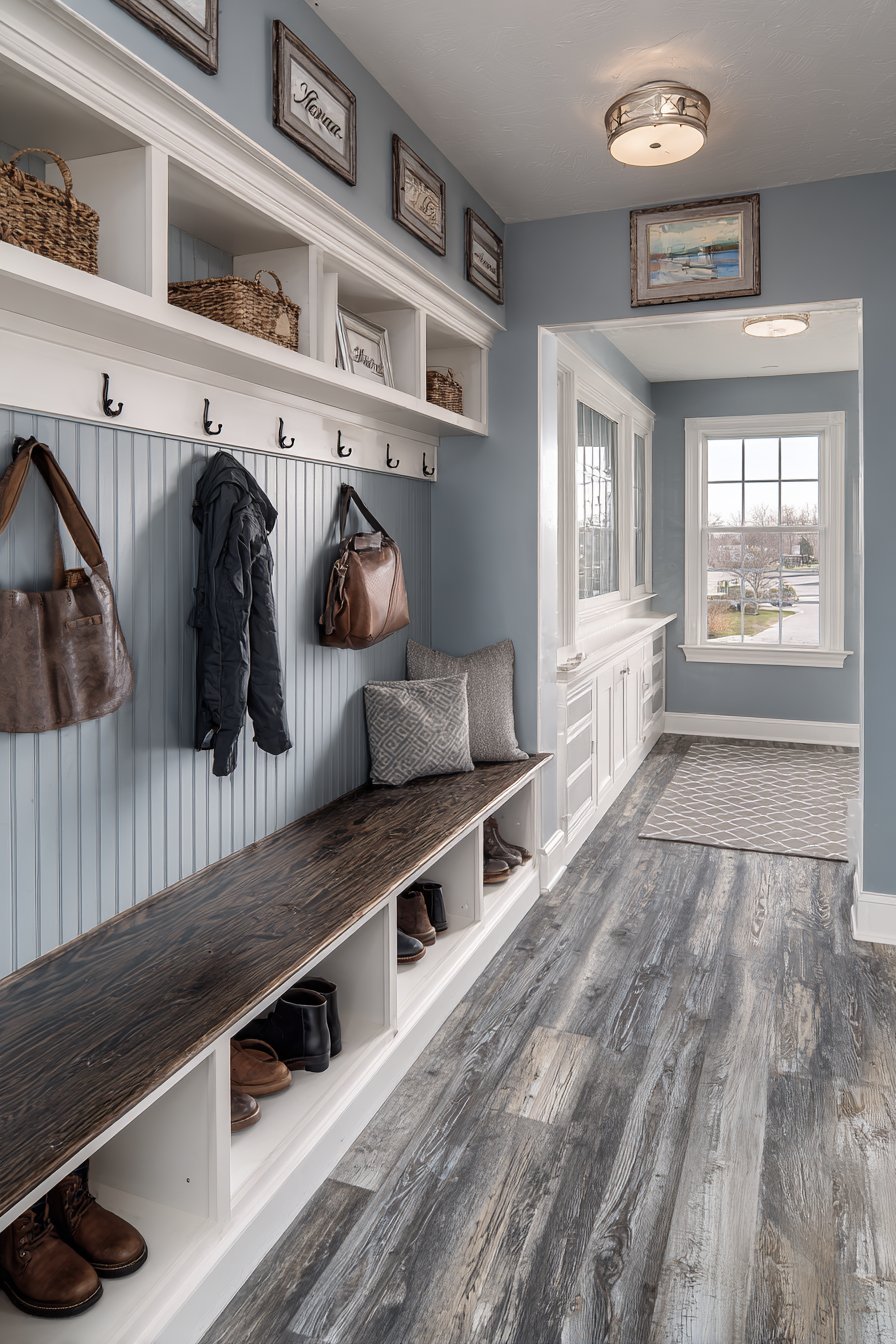
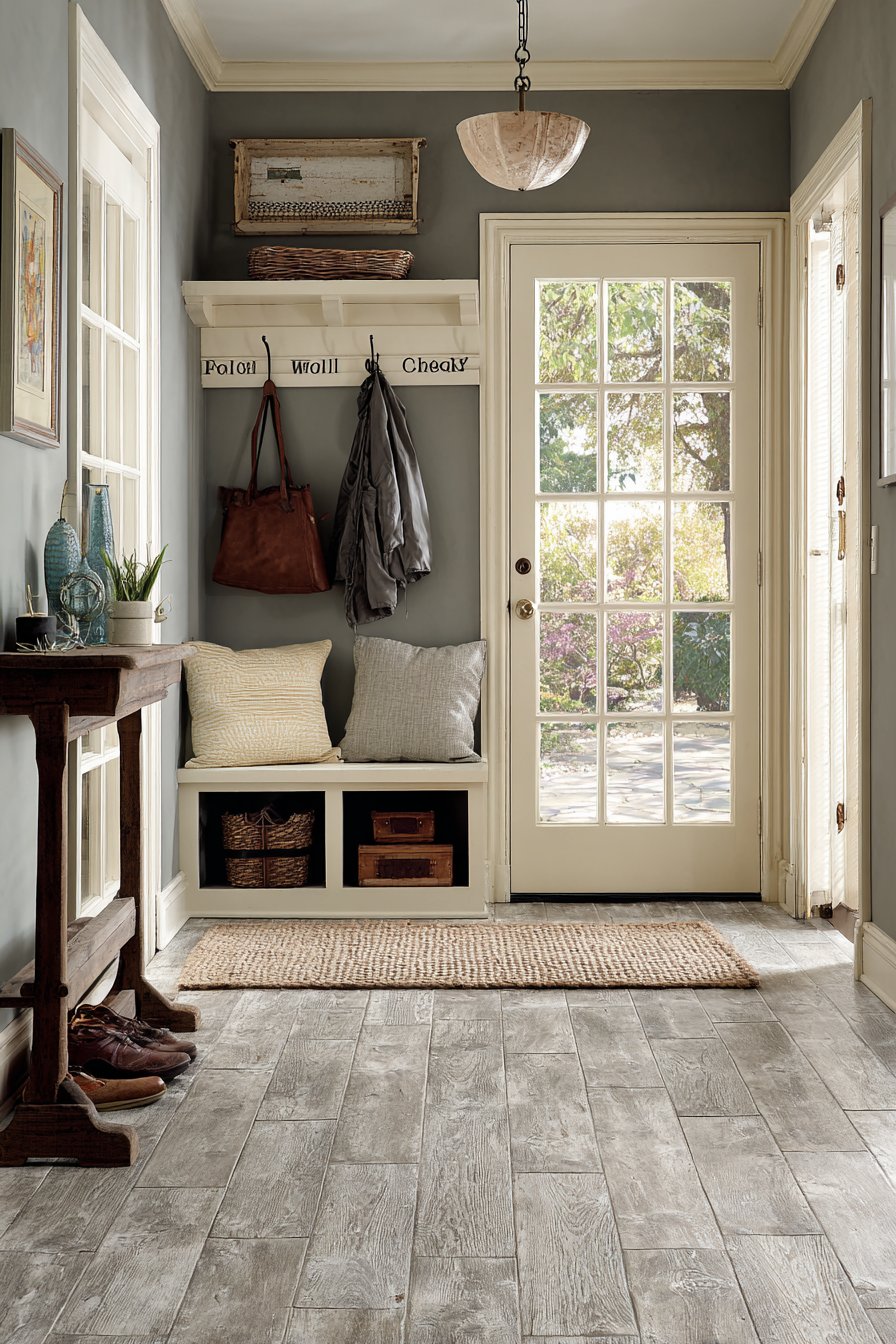
This narrow entryway addresses the specific challenges of family households through thoughtful zoning and age-appropriate design. A low bench positioned at child height features individual cubbies labeled for each family member, creating personal ownership zones that encourage children to maintain their own organization. This democratic approach to storage prevents the “dumping ground” phenomenon common in family entryways, where items pile up because there’s no clear home for them.
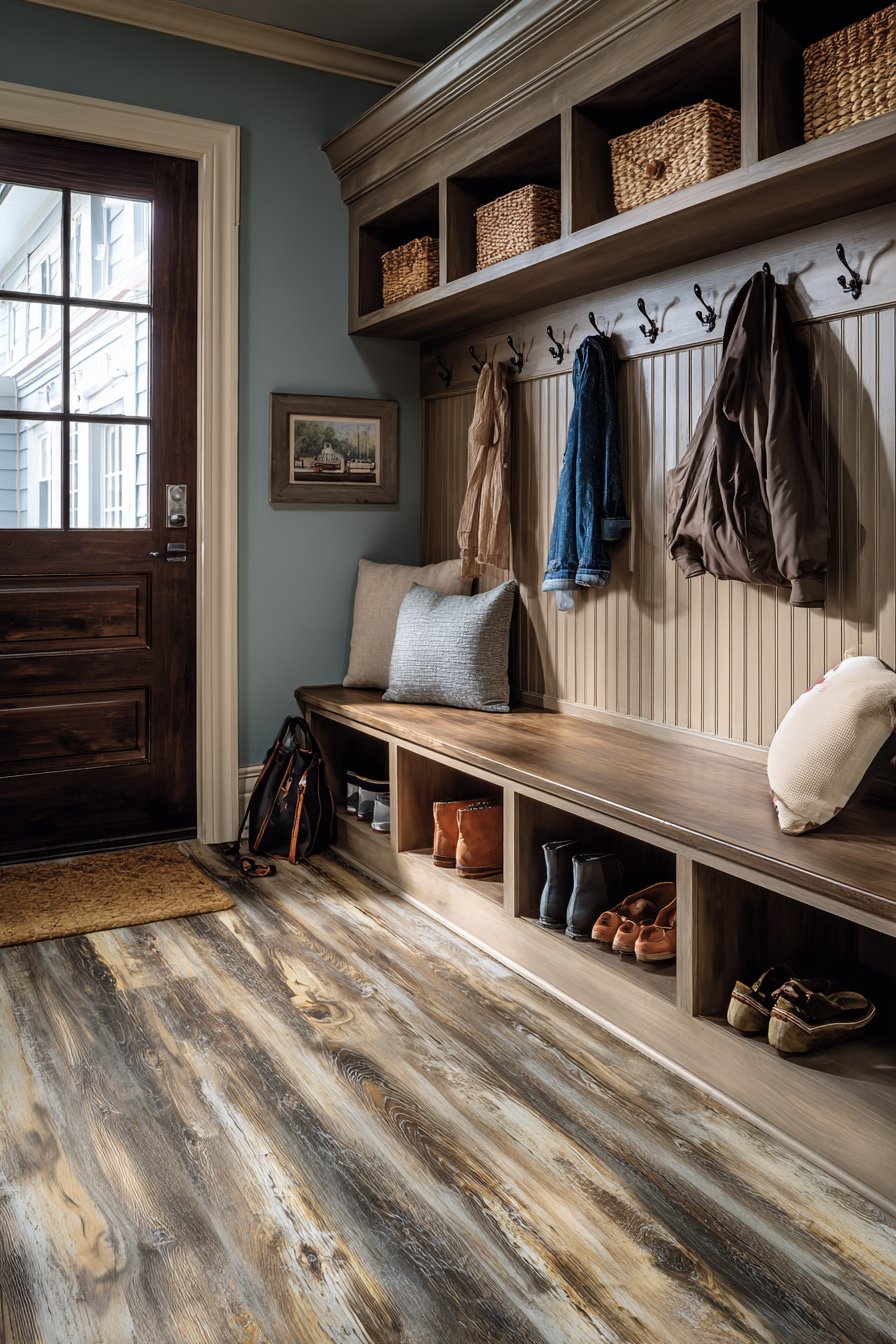
Above the children’s bench, adult-height hooks mount on a continuous rail, ensuring parents have their own accessible storage without competing for the same space as their children. This vertical layering of storage zones accommodates the entire family’s needs within a narrow footprint, demonstrating how thoughtful planning can make limited space serve multiple users effectively.
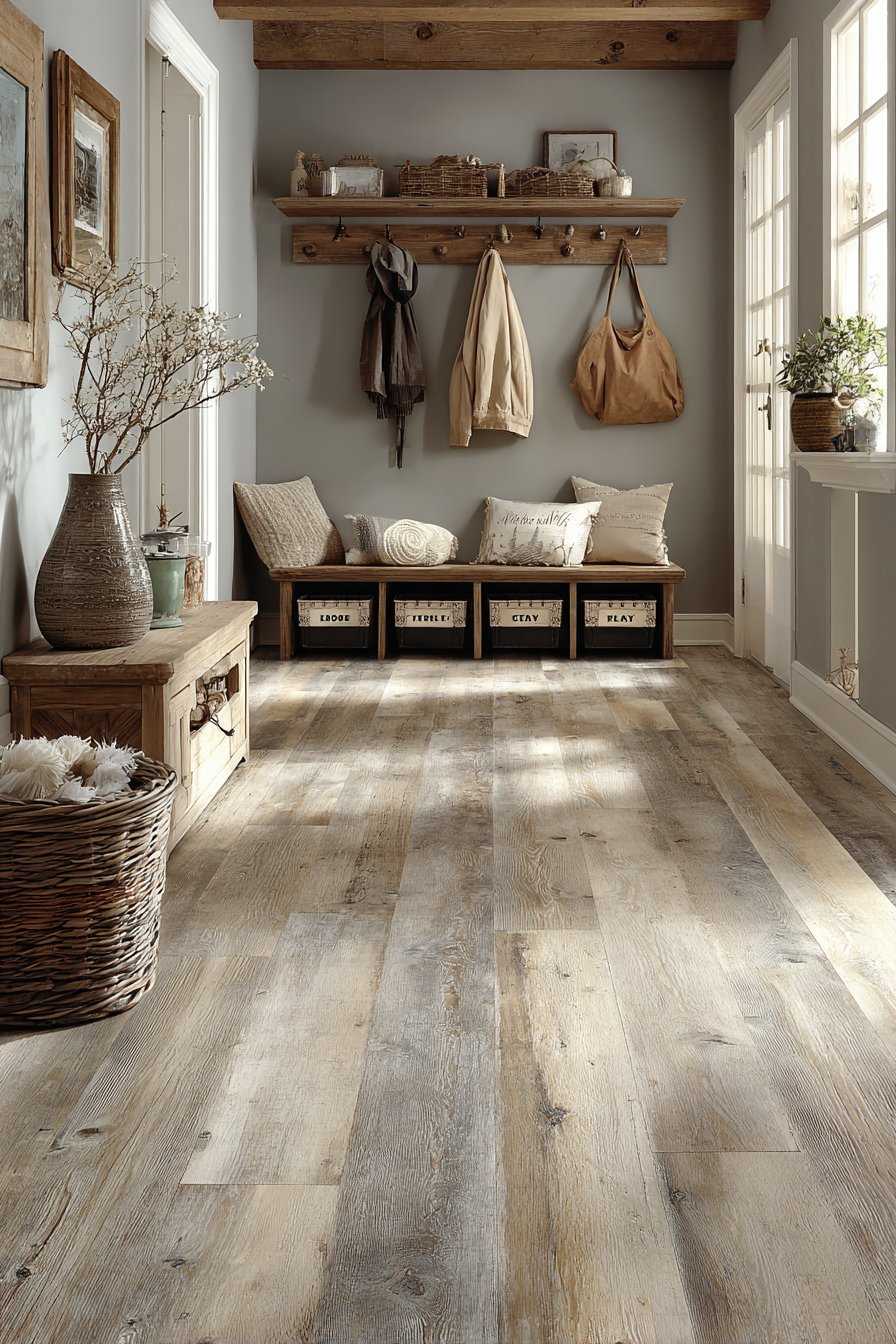
Durable luxury vinyl plank flooring in a weathered oak finish provides the resilience necessary for high-traffic family use while maintaining attractive appearance. This practical material choice acknowledges the reality of muddy shoes, dropped backpacks, and daily wear, selecting function over fashion without sacrificing aesthetic appeal. The wide-angle interior photography captures the comprehensive organizational system, showing how intentional design can transform a narrow corridor into a hardworking family hub.
Key Design Tips: Install multi-height storage solutions that accommodate both children and adults in family entryways. Create individual labeled zones for each family member to encourage personal organization and reduce clutter. Choose durable flooring materials like luxury vinyl plank that withstand heavy traffic while maintaining attractive appearance. Position children’s storage at accessible heights to promote independence and self-sufficiency. Use continuous rail systems to provide flexible hanging storage that adapts as family needs change.
13. Concealed Storage with Louvered Cabinet Doors
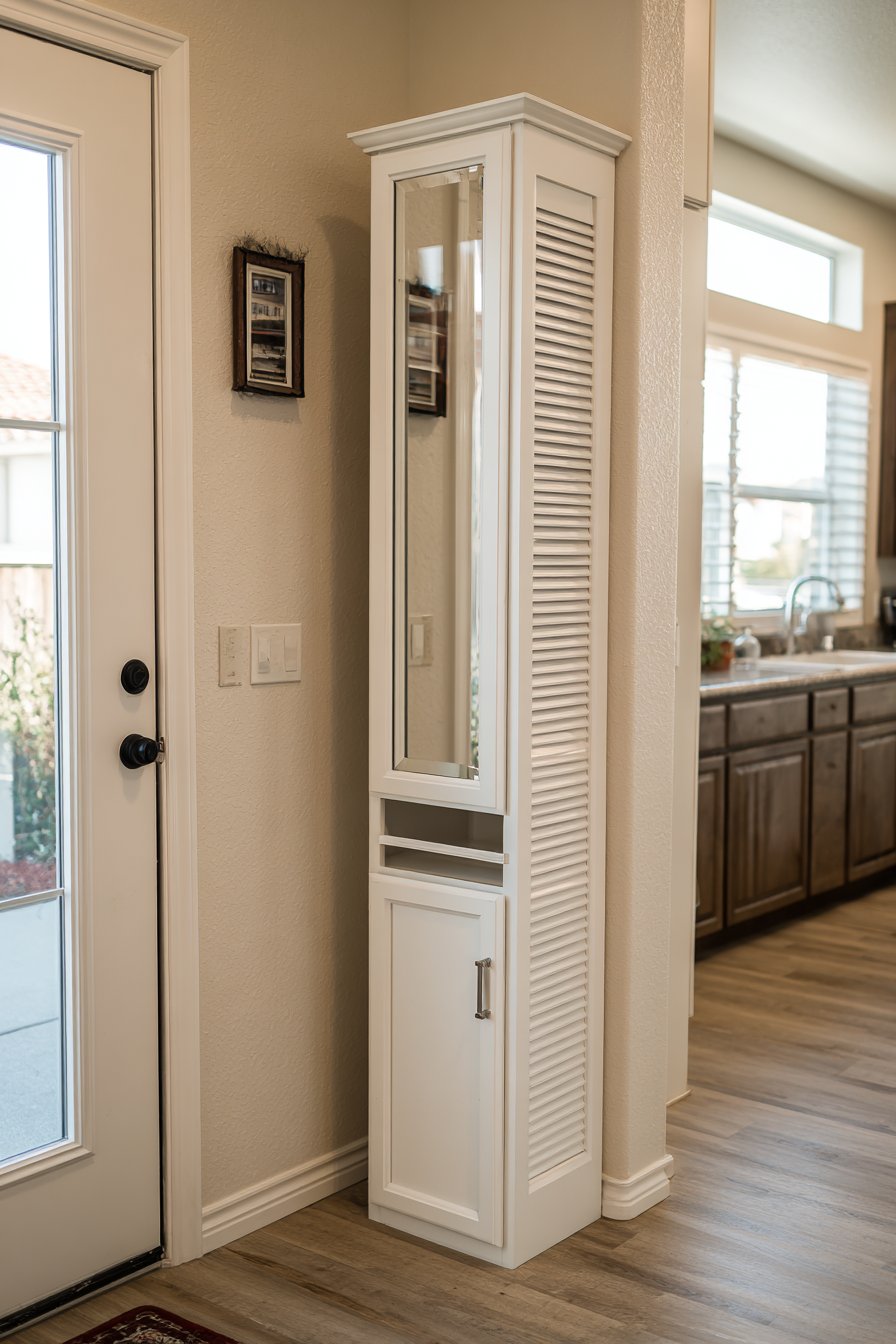
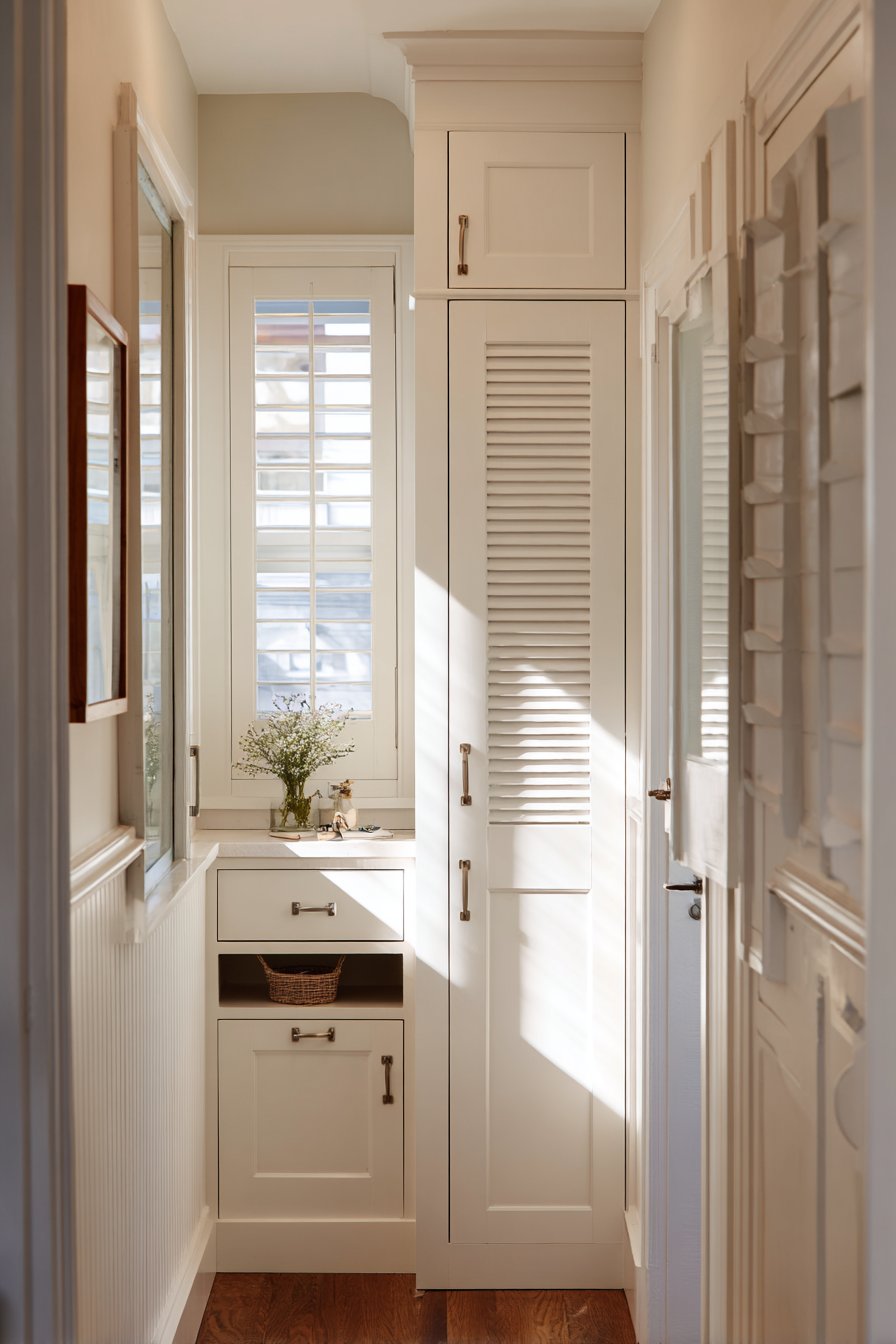
This narrow entryway demonstrates the power of concealment in maintaining visual calm within tight quarters. A tall cabinet reaching from floor to ceiling measures only sixteen inches deep, yet provides substantial hidden storage capacity behind louvered doors in crisp white finish. The louvered treatment adds textural interest through its parallel slats while maintaining the clean, airy aesthetic essential in narrow spaces—unlike solid cabinet doors that could feel heavy or imposing.
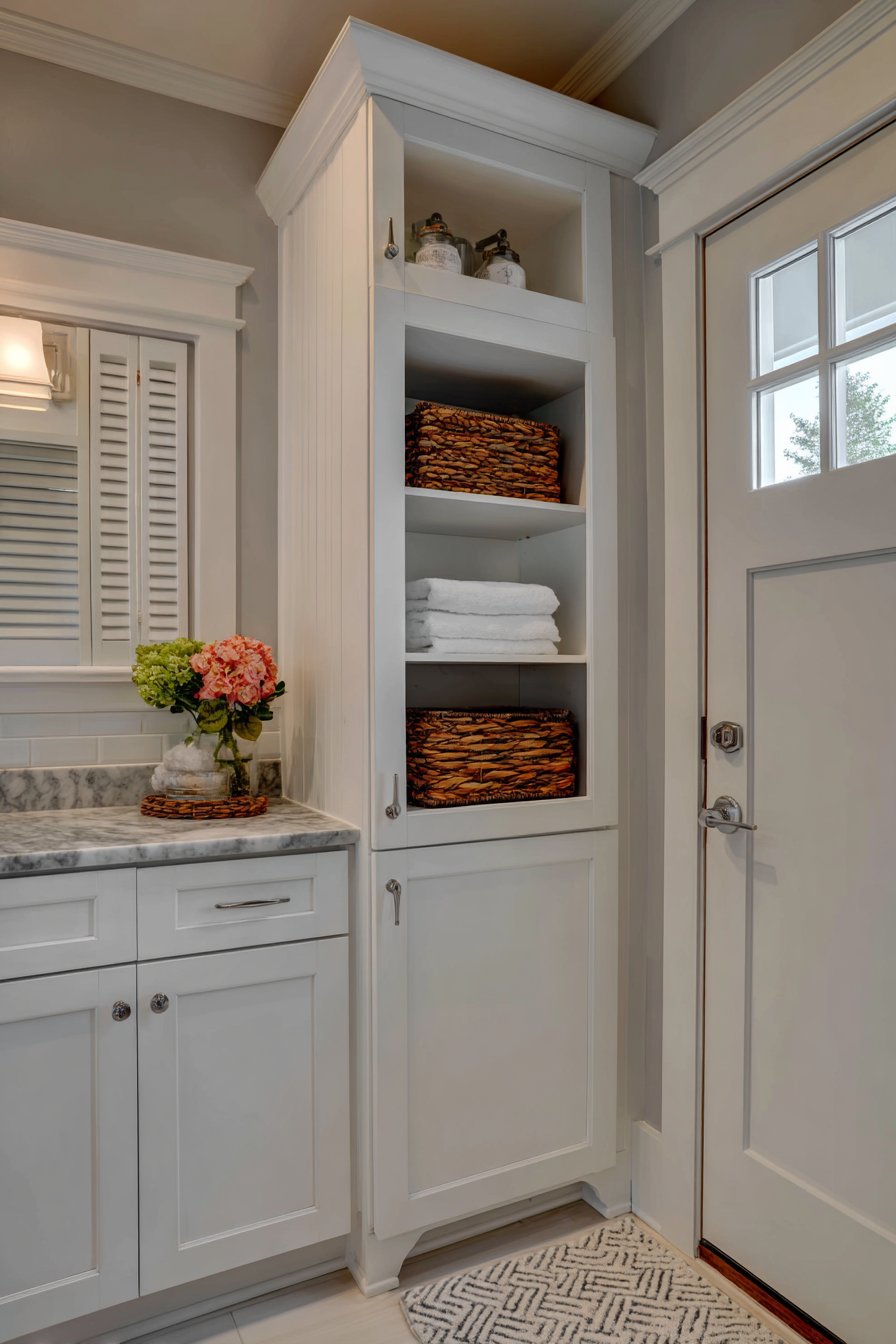
At counter height, a small open niche interrupts the cabinet’s vertical expanse, creating a practical landing spot for keys, mail, and other daily necessities. This open element provides visual relief from the expanse of cabinet doors while ensuring frequently needed items remain accessible rather than hidden behind closed doors. The brushed nickel hardware maintains a refined, contemporary appearance while providing easy operation.
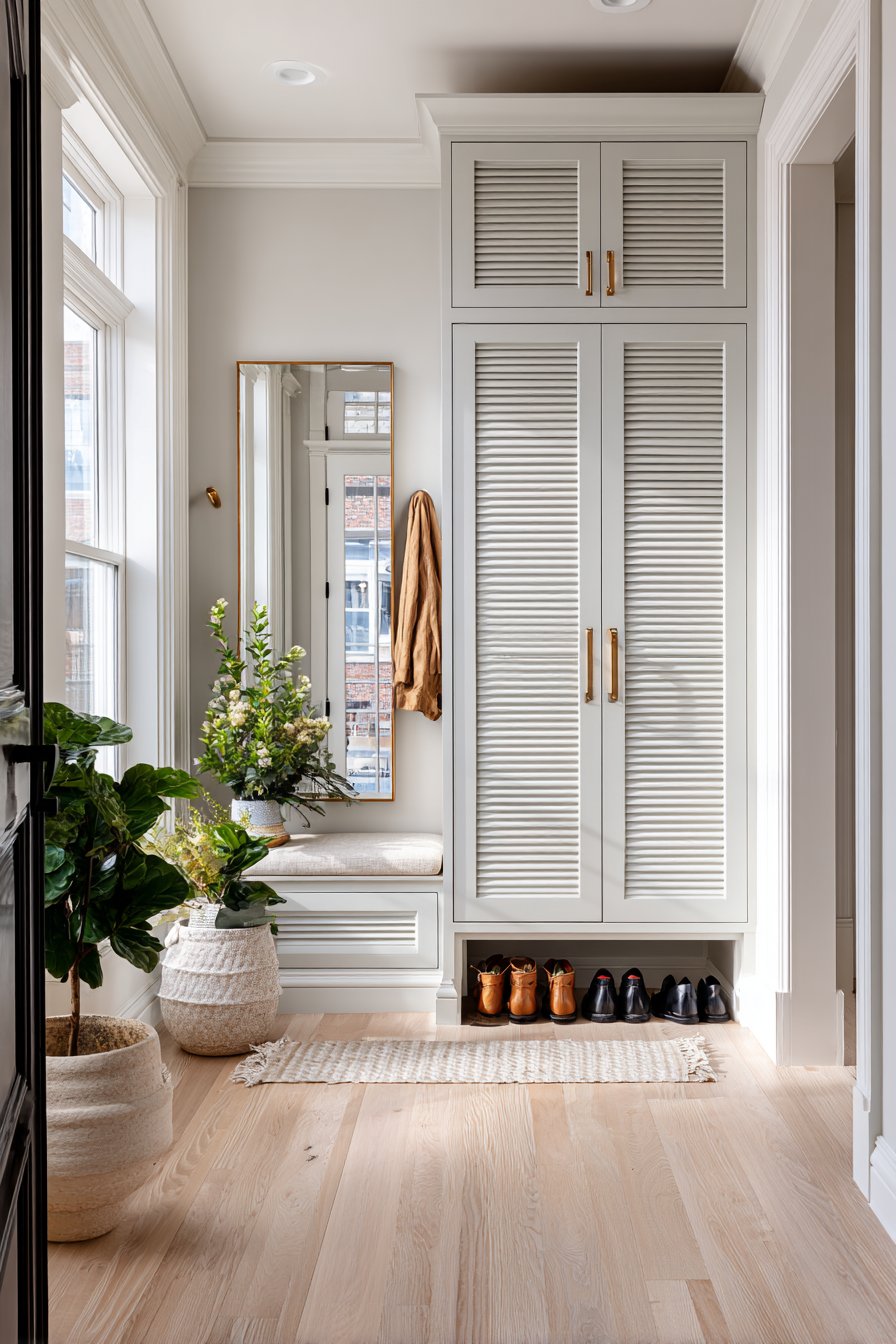
Adjacent to the tall cabinet, a slim full-length mirror mounts to the wall, serving the practical function of last-minute appearance checks before heading out. The mirror’s narrow profile and simple frame ensure it doesn’t compete with the cabinet for visual attention, instead complementing the clean-lined aesthetic. Soft morning light filters through from a nearby source, highlighting the subtle texture of the louvered doors and creating gentle shadows that add dimension to the otherwise flat surfaces.
Key Design Tips: Install tall, shallow cabinets to maximize storage capacity without reducing walkway clearance in narrow entryways. Choose louvered cabinet doors to add texture and visual interest while maintaining a light, airy appearance. Incorporate open niches at functional heights within closed storage systems for frequently accessed items. Select brushed nickel or chrome hardware for refined contemporary detailing. Position full-length mirrors adjacent to storage systems for convenient before-leaving appearance checks.
14. Contemporary Floating Minimalism
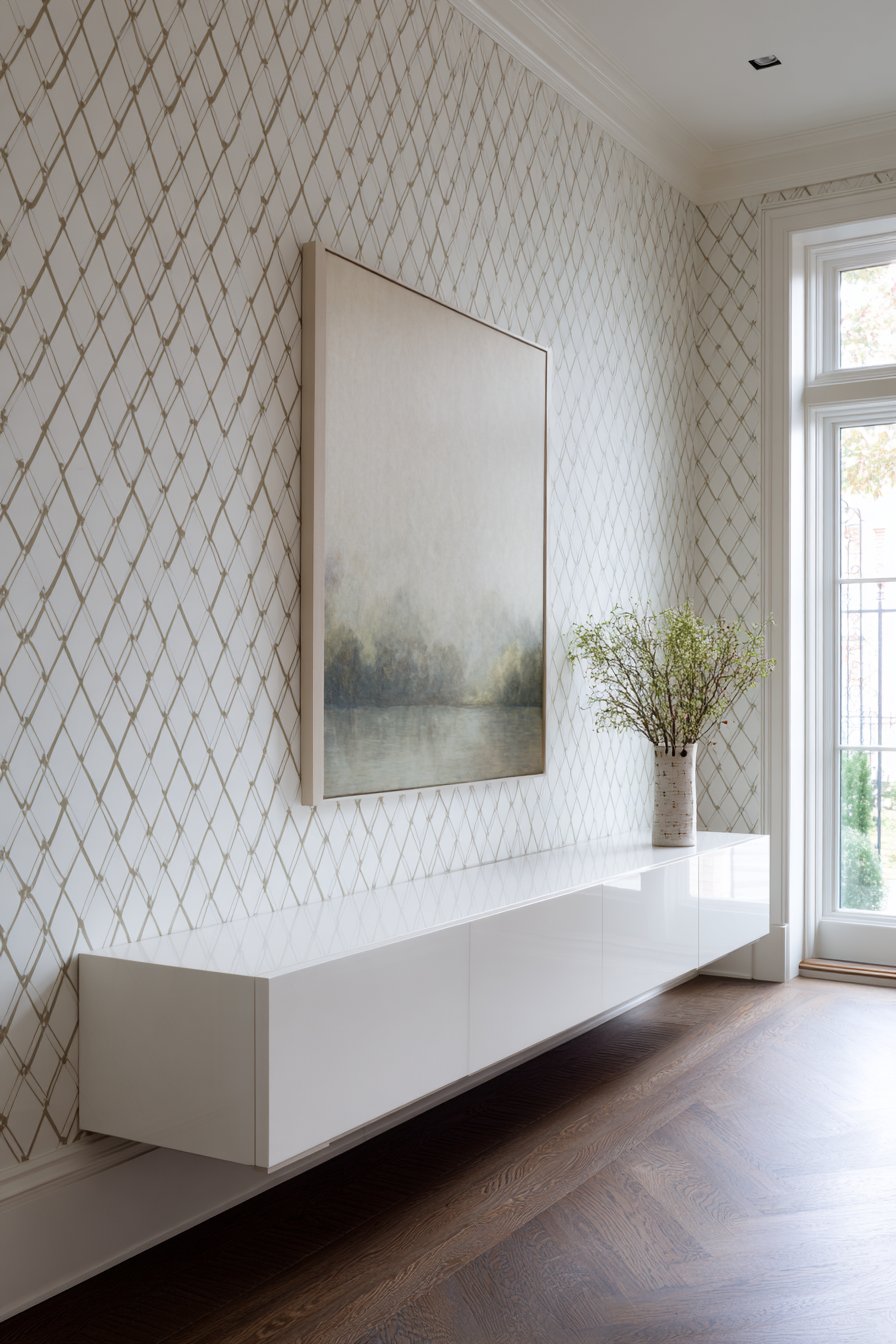
This narrow entryway embraces contemporary minimalism through its use of floating elements that create visual lightness despite providing substantial functionality. A floating credenza in high-gloss white lacquer mounts to the wall at thirty inches height, appearing to hover above the floor. This elevation serves both aesthetic and practical purposes—visually, it maintains sight lines and prevents the narrow space from feeling blocked; practically, it allows easy floor cleaning beneath and prevents the accumulation of clutter that often gathers under floor-mounted furniture.
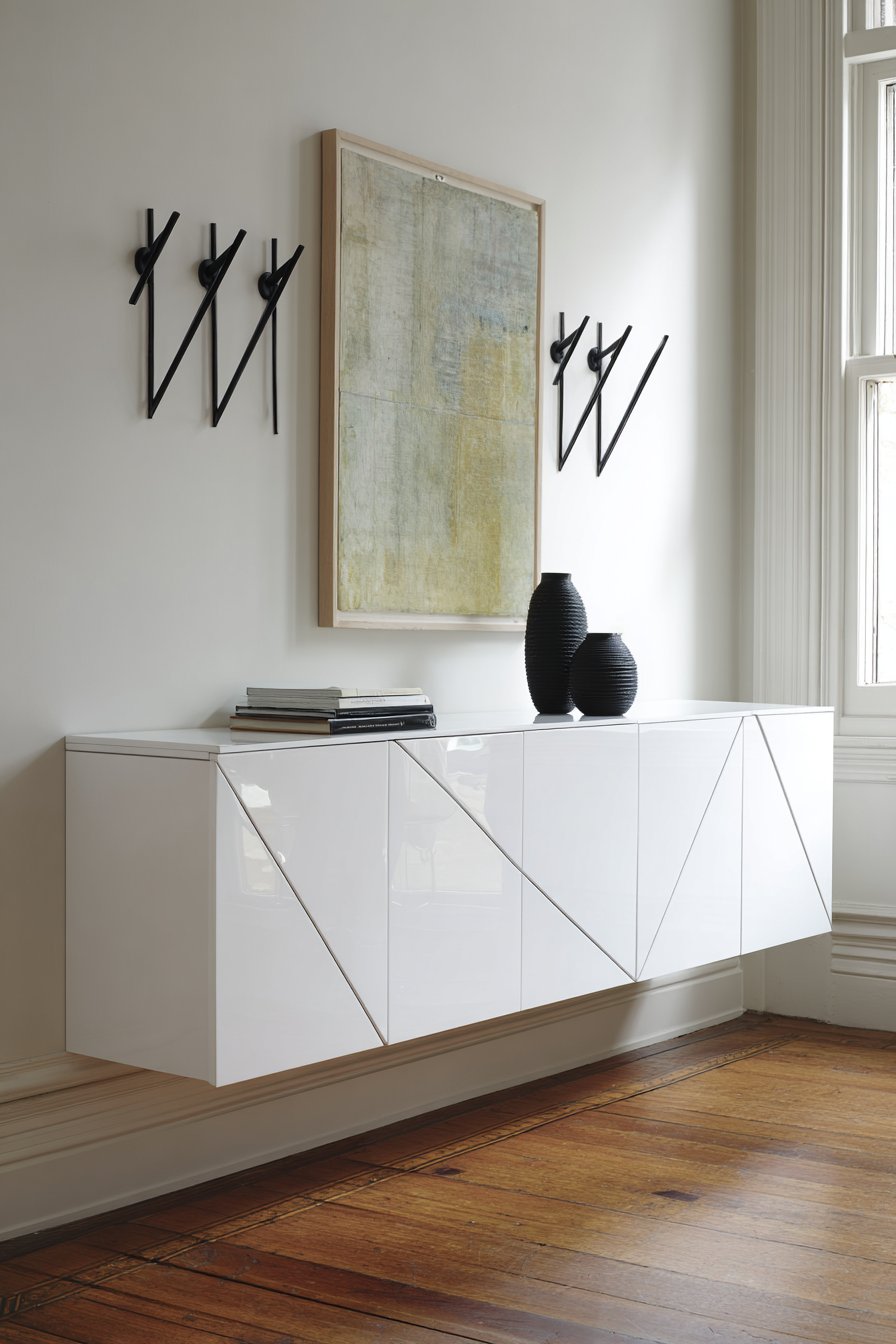
Minimalist coat hooks in matte black mount directly to the wall in a geometric pattern that turns functional hardware into artistic composition. The deliberate spacing and arrangement of these hooks demonstrates how even utilitarian elements can contribute to the overall design aesthetic when approached with intentional creativity. Their stark black finish creates striking contrast against white walls, adding graphic punch to the minimalist palette.
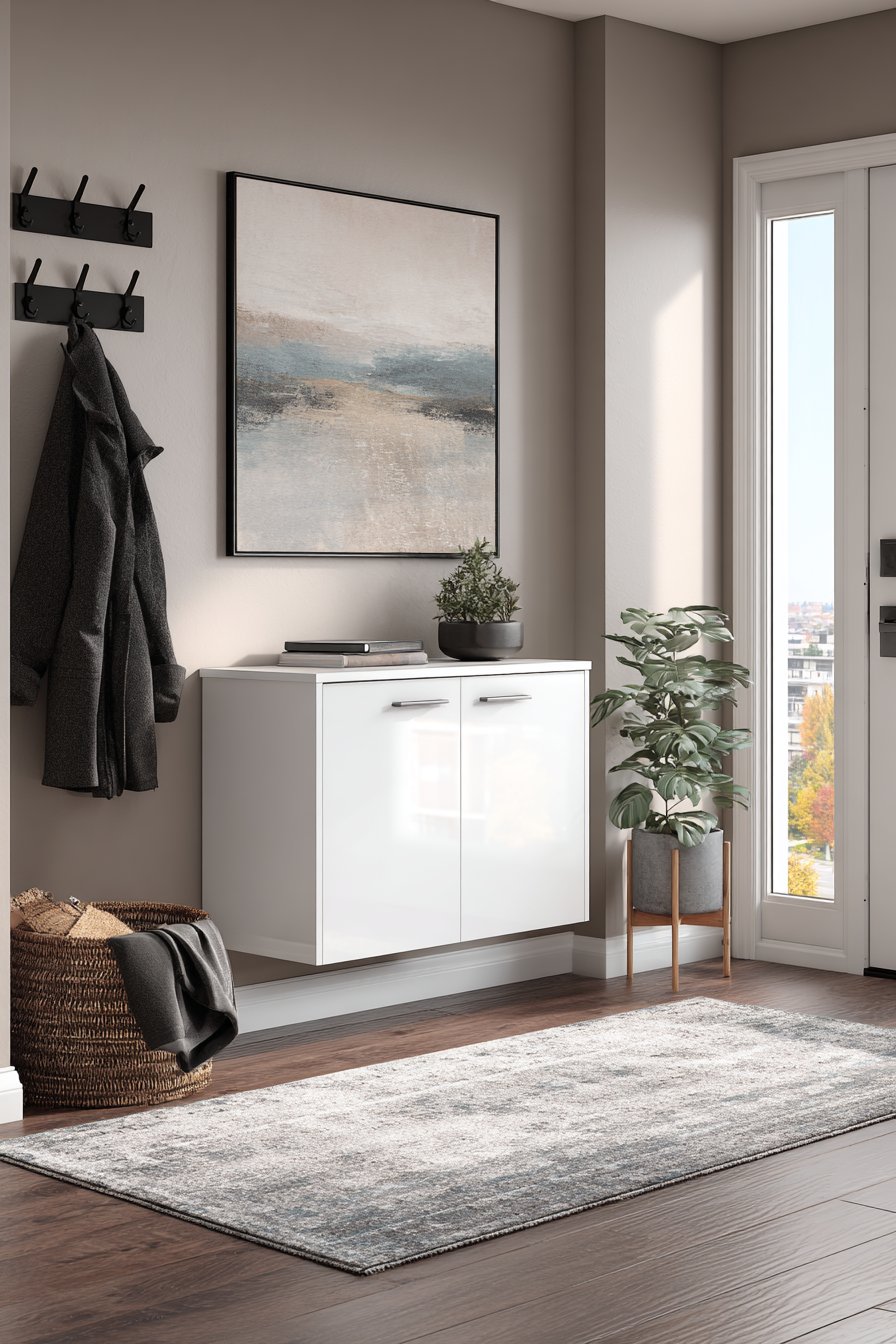
Abstract artwork in muted tones provides personality and visual interest without overwhelming the space’s restrained aesthetic. The artwork’s soft colors and undefined forms complement rather than compete with the bold geometry of the hook arrangement and the clean lines of the floating credenza. Interior design photography techniques capture the space’s sleek modernity with particular attention to how light interacts with the glossy credenza surface, creating subtle reflections and highlights.
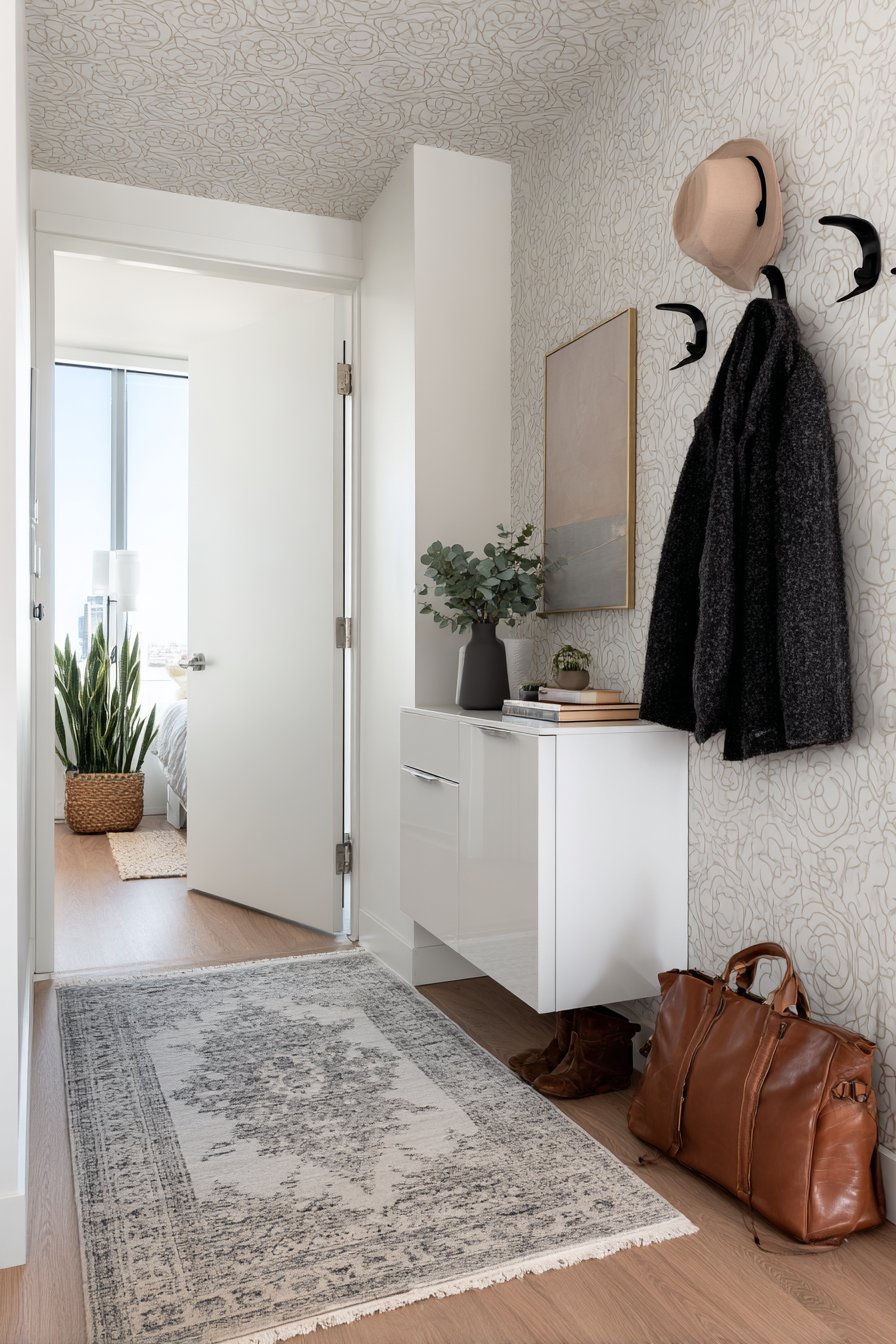
Key Design Tips: Install floating furniture to maintain visual openness and sight lines in narrow entryways. Choose high-gloss finishes to reflect light and create a sense of spaciousness through surface shine. Arrange functional hardware like hooks in geometric patterns to turn necessity into design feature. Select matte black elements as graphic accents against predominantly white palettes. Incorporate abstract artwork with muted tones to add personality without visual competition.
15. Ladder-Style Leaning Versatility
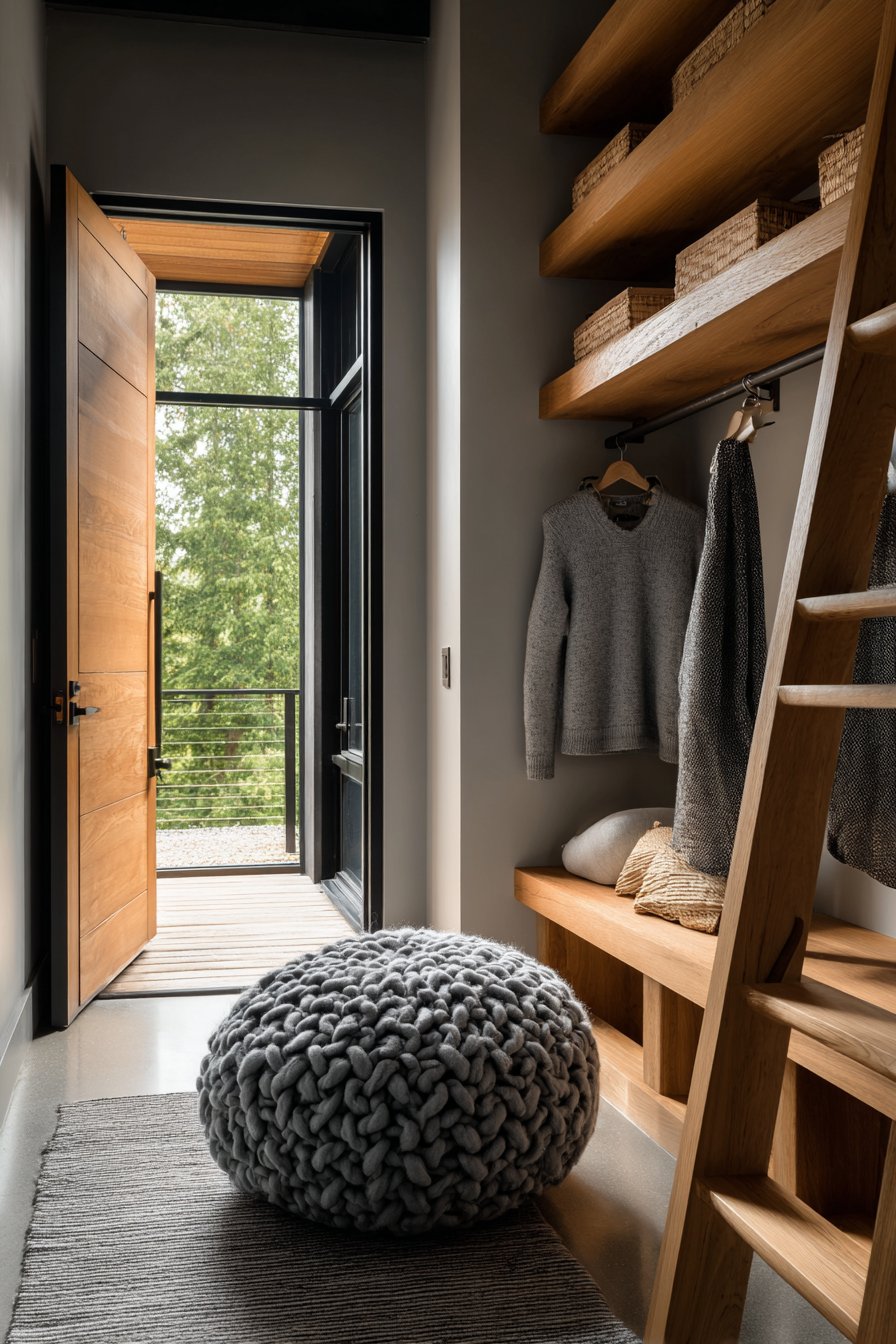
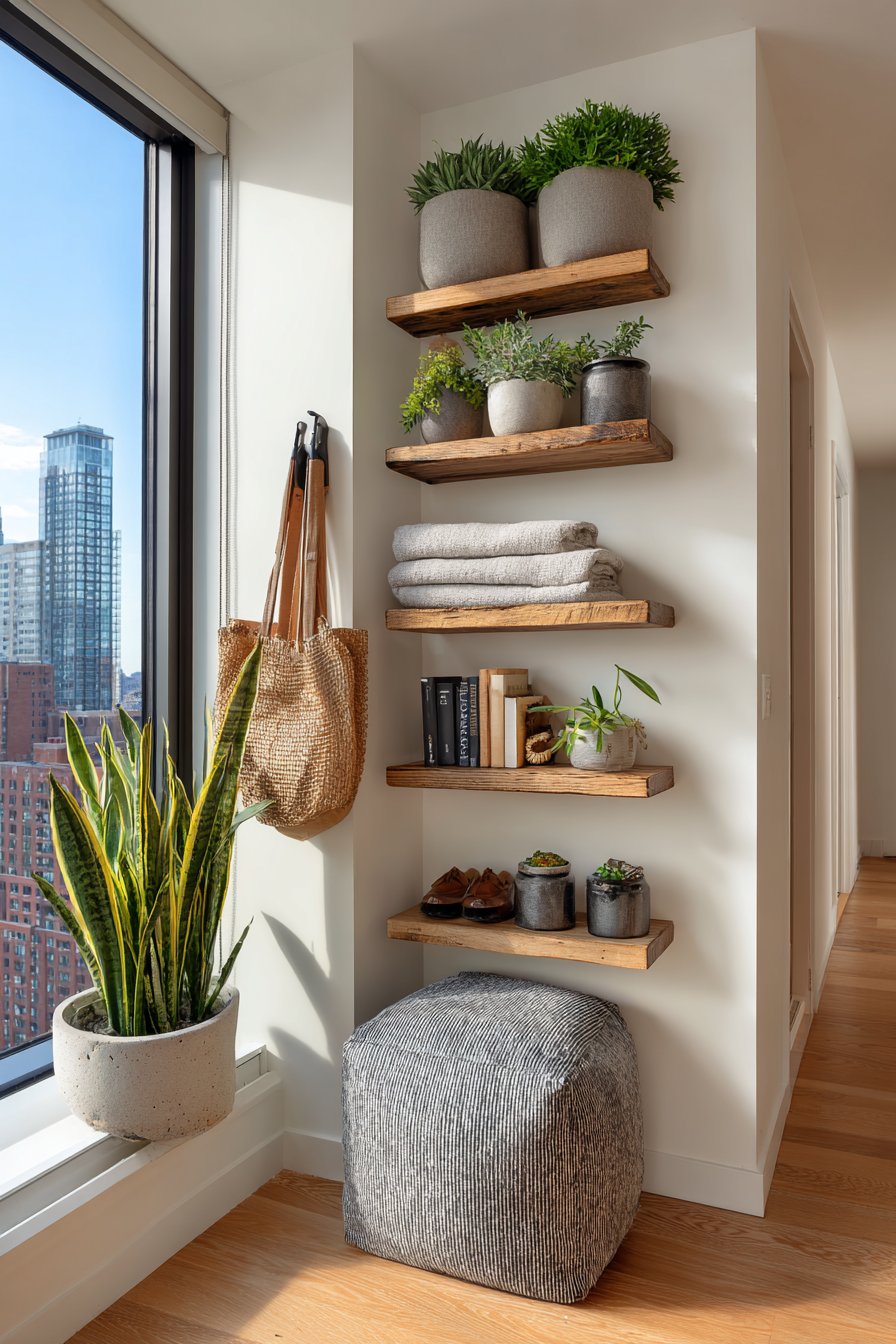
This narrow entryway features a ladder-style leaning shelf system that proves vertical storage solutions can be both functional and aesthetically interesting. Crafted from natural oak, the graduated shelves maintain a slim overall profile while providing multiple levels for storage, display, and hanging items. The ladder design leans against the wall rather than requiring mounting, offering flexibility to relocate or adjust as needs change—a valuable feature in rental situations or for those who frequently refresh their spaces.
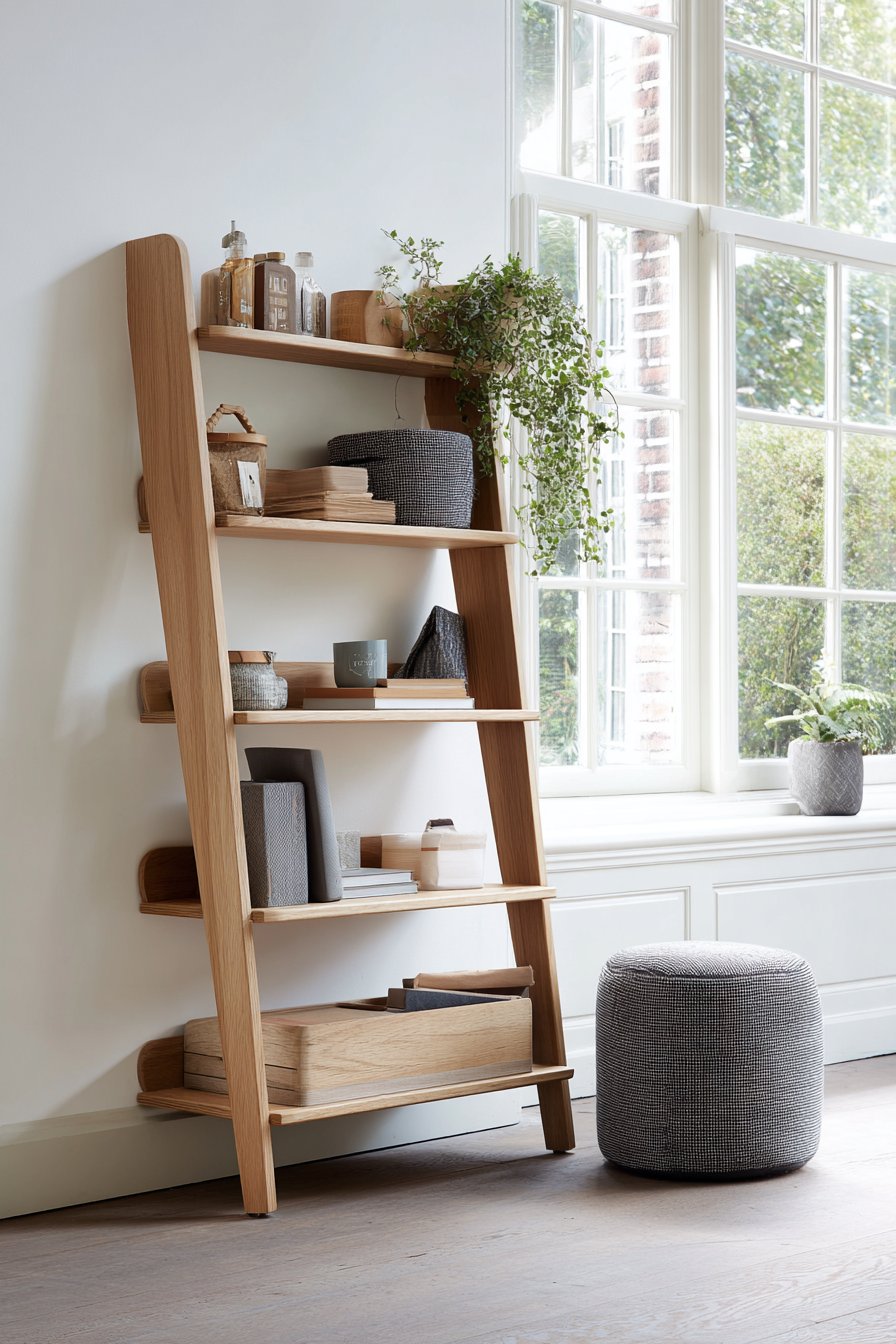
The graduated design means wider shelves at the bottom provide substantial storage capacity, while narrower upper shelves accommodate lighter display items and seasonal decorations. This thoughtful progression ensures stability while maximizing usefulness across all levels. Hooks can be added to the ladder’s frame for hanging bags, scarves, or keys, transforming the piece from simple shelving into a comprehensive organization system.
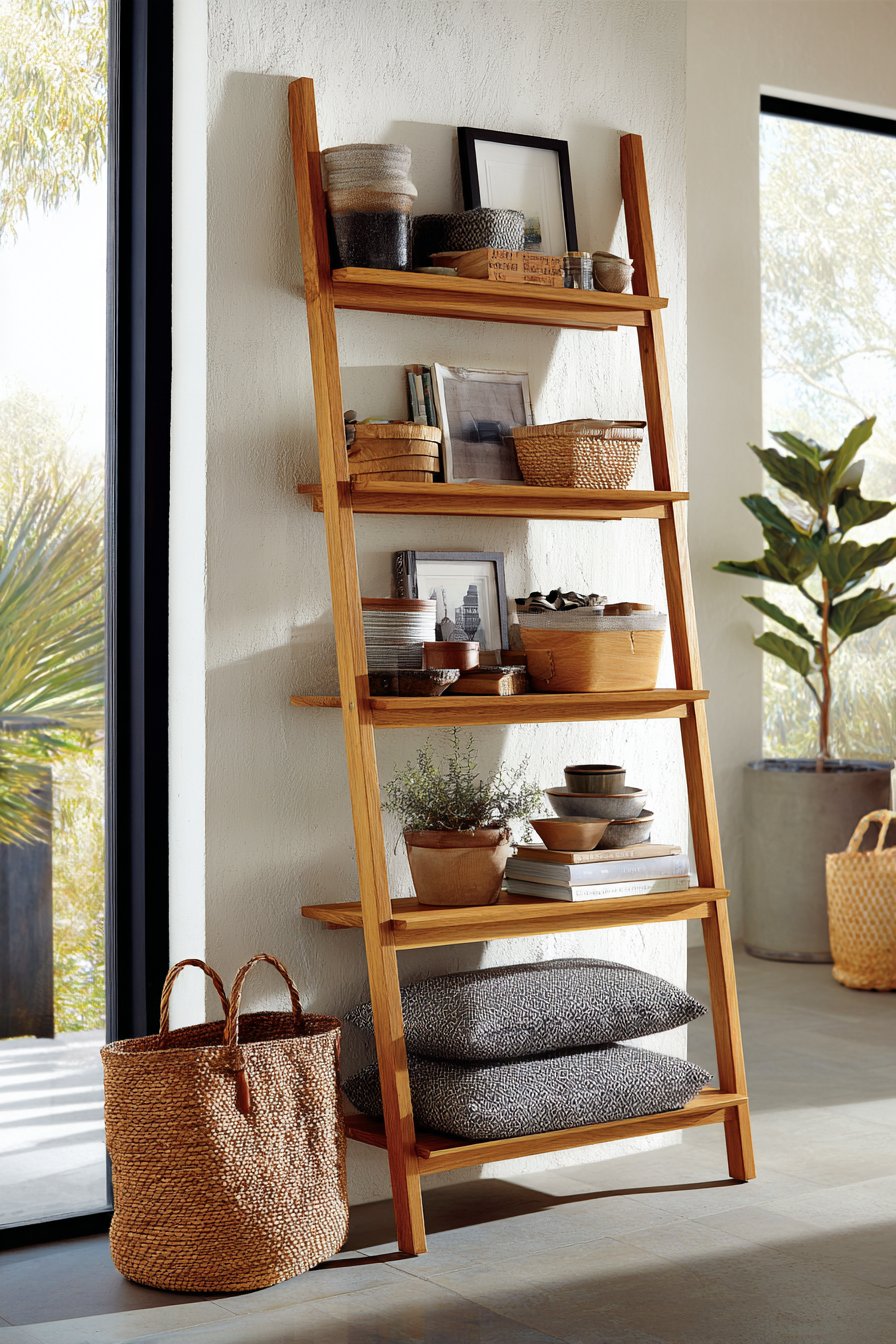
A small upholstered pouf in textured gray fabric tucks underneath the bottom shelf, providing portable seating that can be pulled out when needed and stored away when not in use. This space-saving approach acknowledges that narrow entryways may not accommodate permanent seating while ensuring the option remains available. Natural lighting from a nearby window creates depth and dimension across the ladder shelving, highlighting the warm tones of the oak and the varied textures of stored items.
Key Design Tips: Choose leaning ladder shelves for flexible vertical storage that doesn’t require wall mounting or permanent installation. Select graduated shelf depths with wider lower shelves for stability and varied storage options. Add hooks to ladder frames to increase functionality beyond traditional shelf storage. Incorporate portable seating like poufs that store beneath shelving when not needed. Position leaning systems near natural light sources to highlight wood tones and display items.
16. Built-In Bench with Cottage Charm
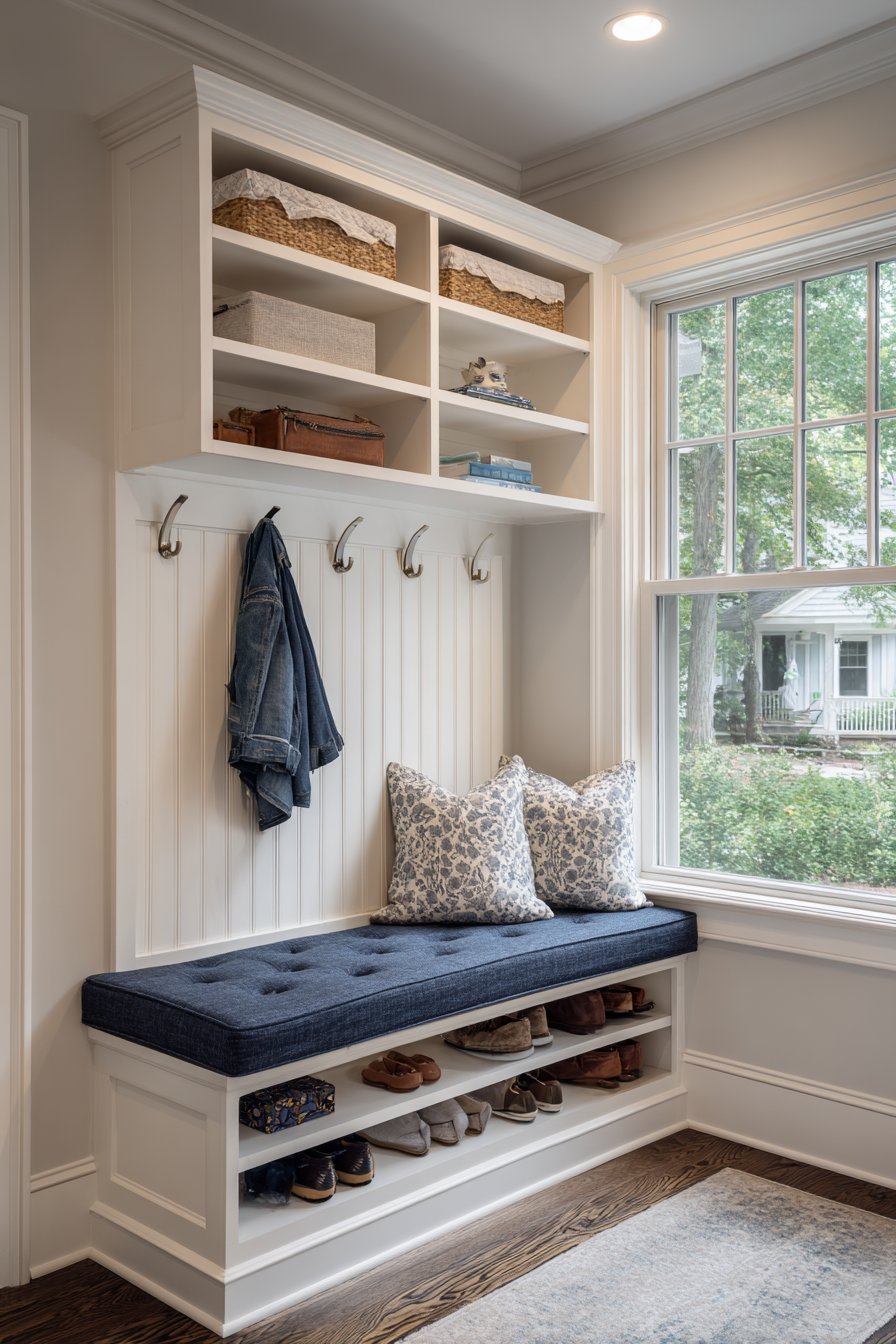
This narrow entryway demonstrates how built-in furniture can maximize functionality while adding architectural character. A built-in bench seat features a hinged top that reveals generous storage for out-of-season items like winter boots, summer sports equipment, or guest bedding. The bench cushion, upholstered in navy blue performance fabric with subtle tufting, provides comfortable seating while the durable material resists the stains and wear inevitable in high-traffic entryways.
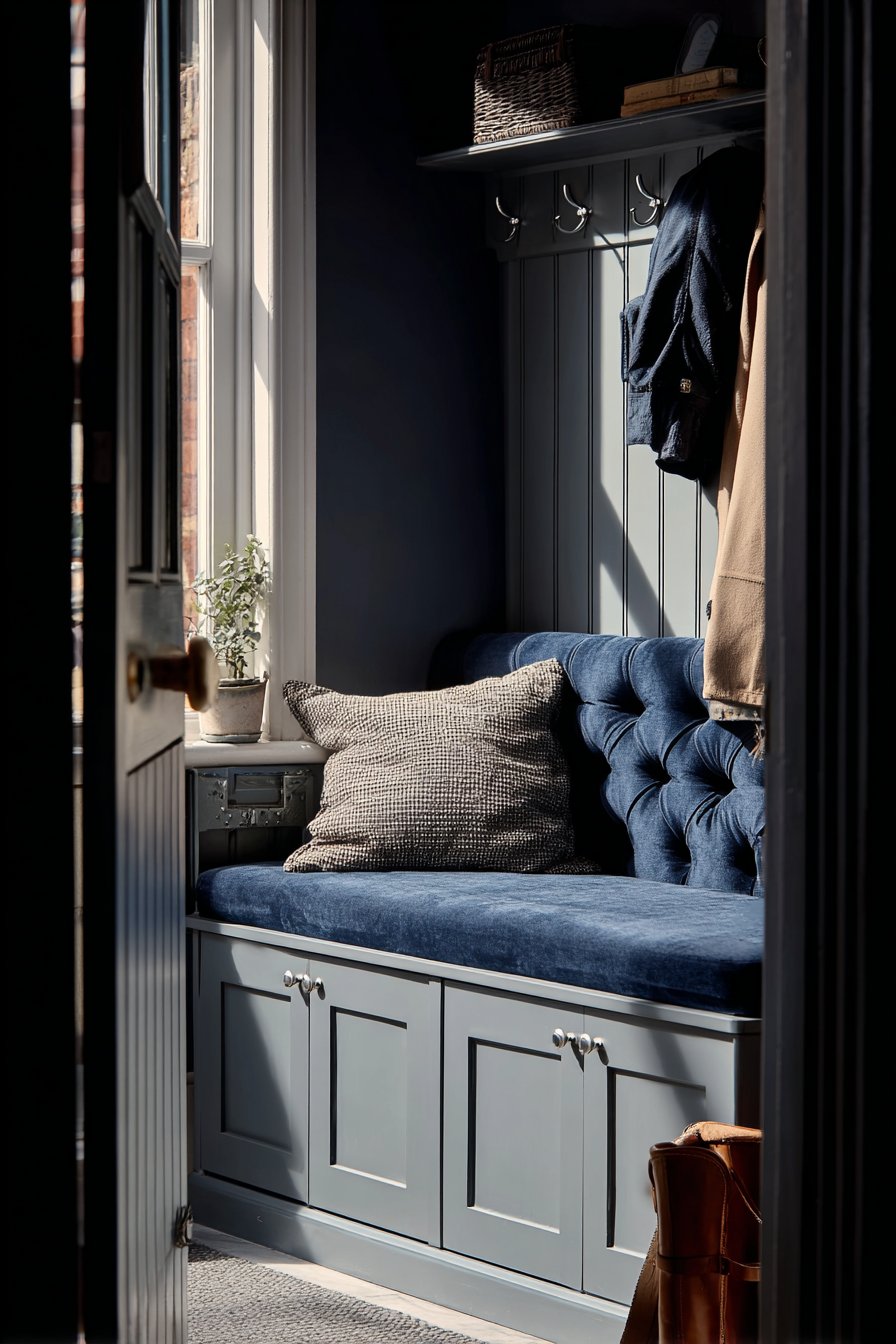
Open cubbies below the hinged seat organize everyday shoes, keeping them accessible yet contained. This two-tier storage approach—hidden storage above, open storage below—accommodates both seasonal items and daily necessities within the same furniture footprint. The open cubbies maintain visual accessibility, preventing the “out of sight, out of mind” problem that can occur with completely enclosed storage.
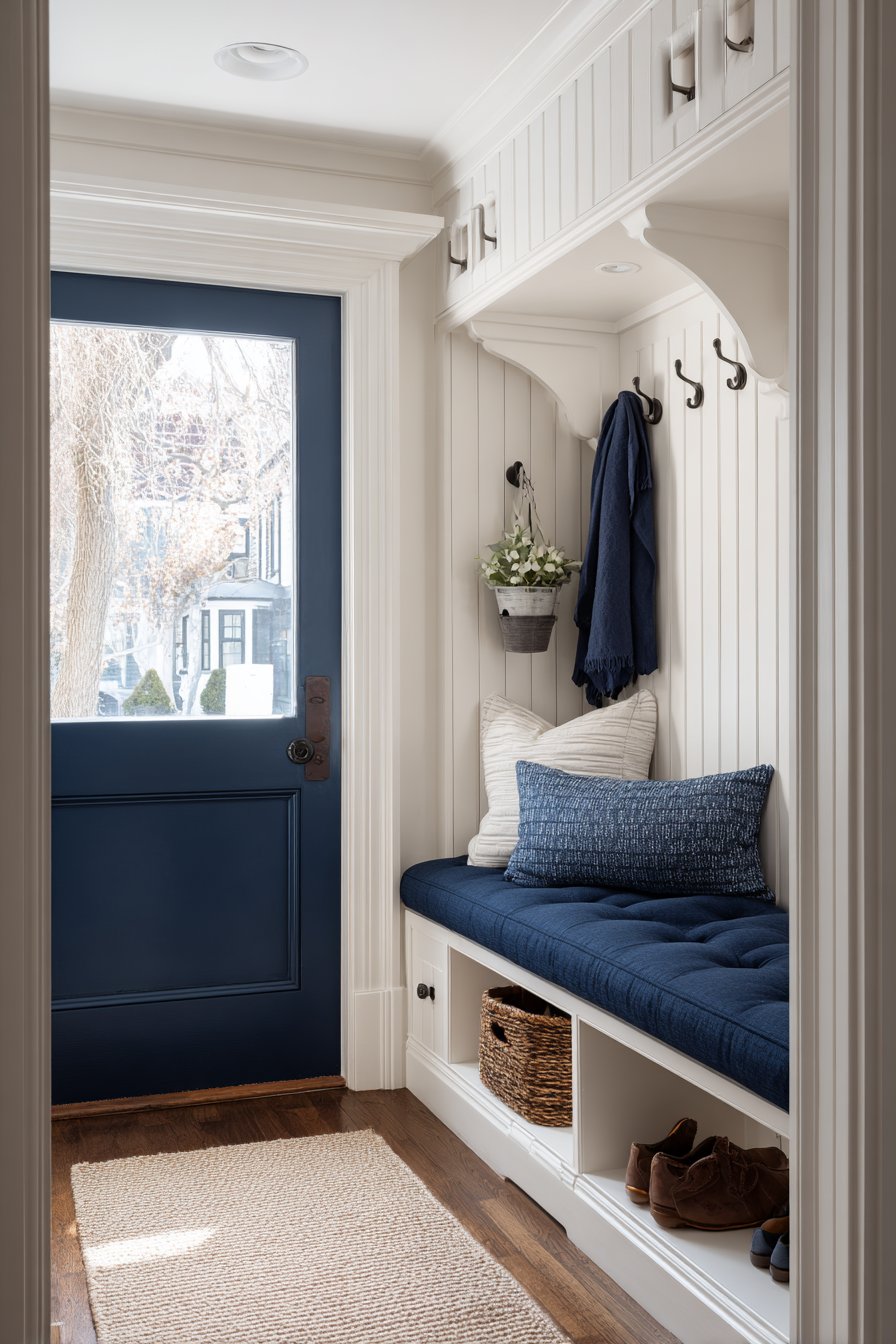
Coat hooks mount on beadboard backing above the bench, adding cottage charm through the vertical paneling’s traditional detailing. The beadboard creates a defined zone for hanging items while protecting the wall from damage caused by hook hardware. Soft diffused daylight illuminates the space, highlighting the practical functionality and traditional styling details that make this built-in system both beautiful and hardworking.
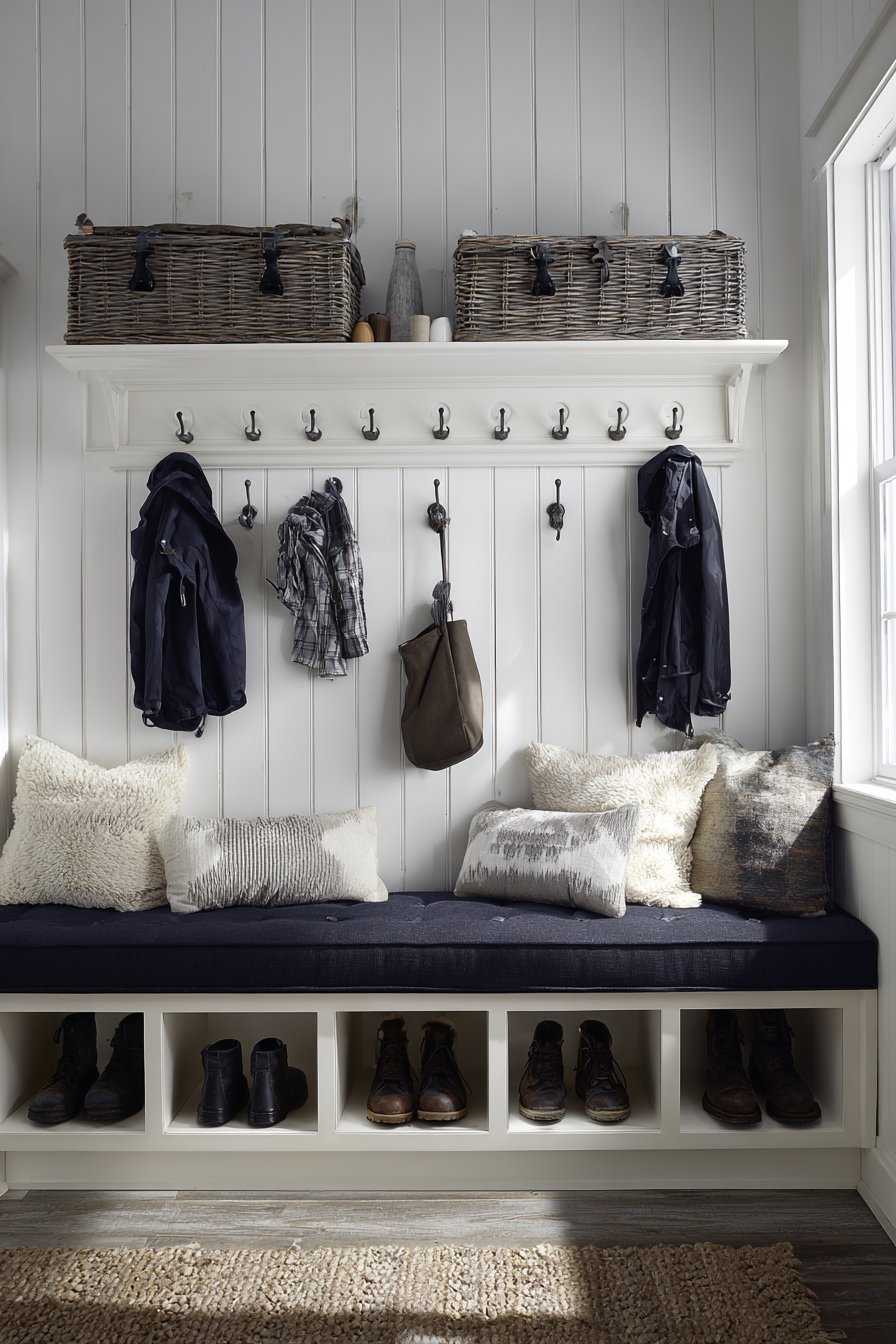
Key Design Tips: Design built-in bench seating with hinged lids to maximize hidden storage capacity in narrow entryways. Upholster bench cushions in performance fabrics that resist staining and wear in high-traffic areas. Include open cubbies below seating for everyday item storage that remains visible and accessible. Install beadboard backing behind hooks to create defined hanging zones while protecting walls. Choose subtle tufting details to add visual interest without creating cleaning challenges.
17. Mid-Century Modern Retro Sophistication
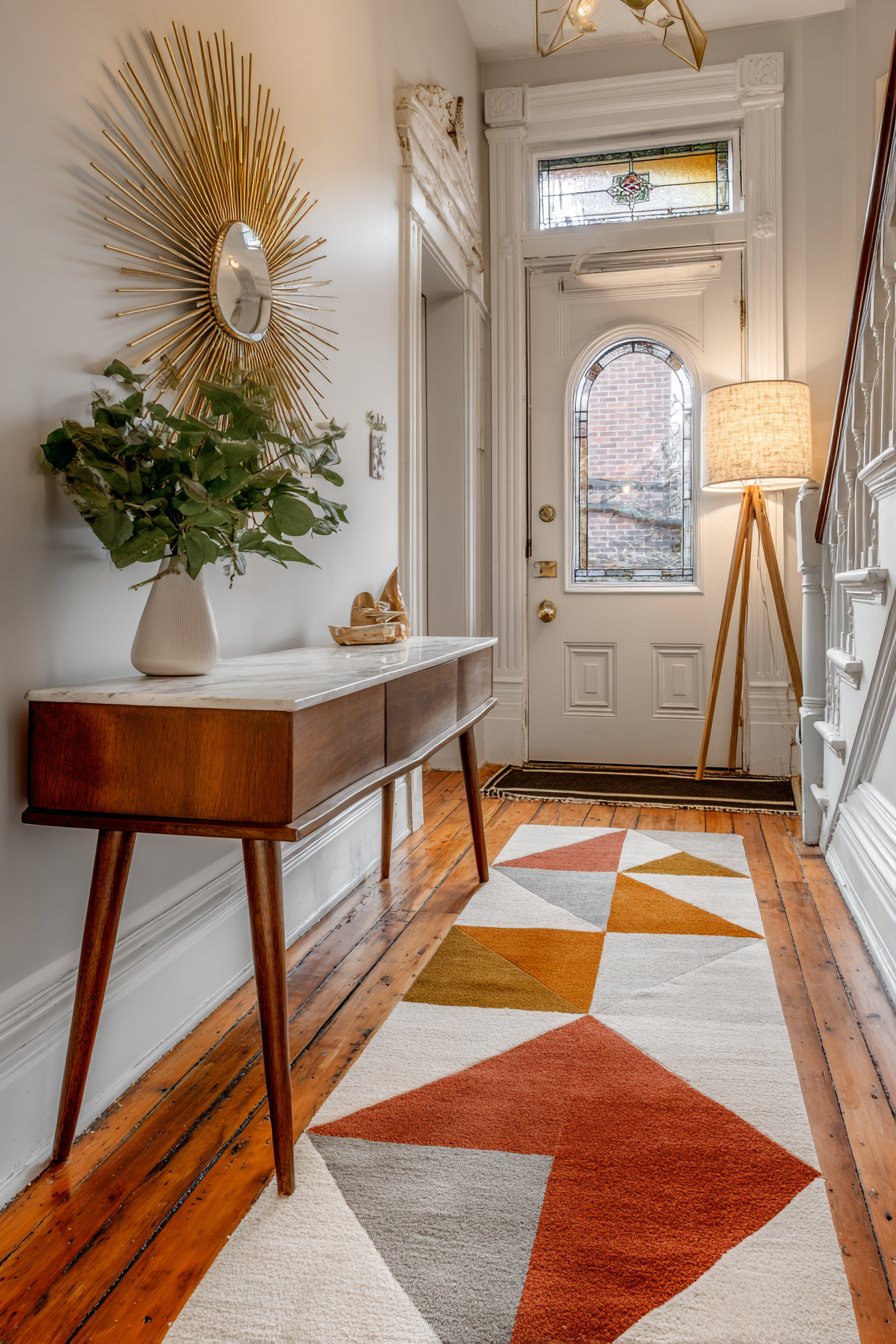
This narrow entryway channels mid-century modern design’s emphasis on clean lines, organic forms, and functional beauty. A sleek console table with angled tapered legs in warm walnut wood exemplifies the period’s furniture design principles—the tapered legs create visual lightness while the slim marble top provides practical surface space. This combination of natural wood and stone represents the mid-century appreciation for honest materials used in their most essential forms.
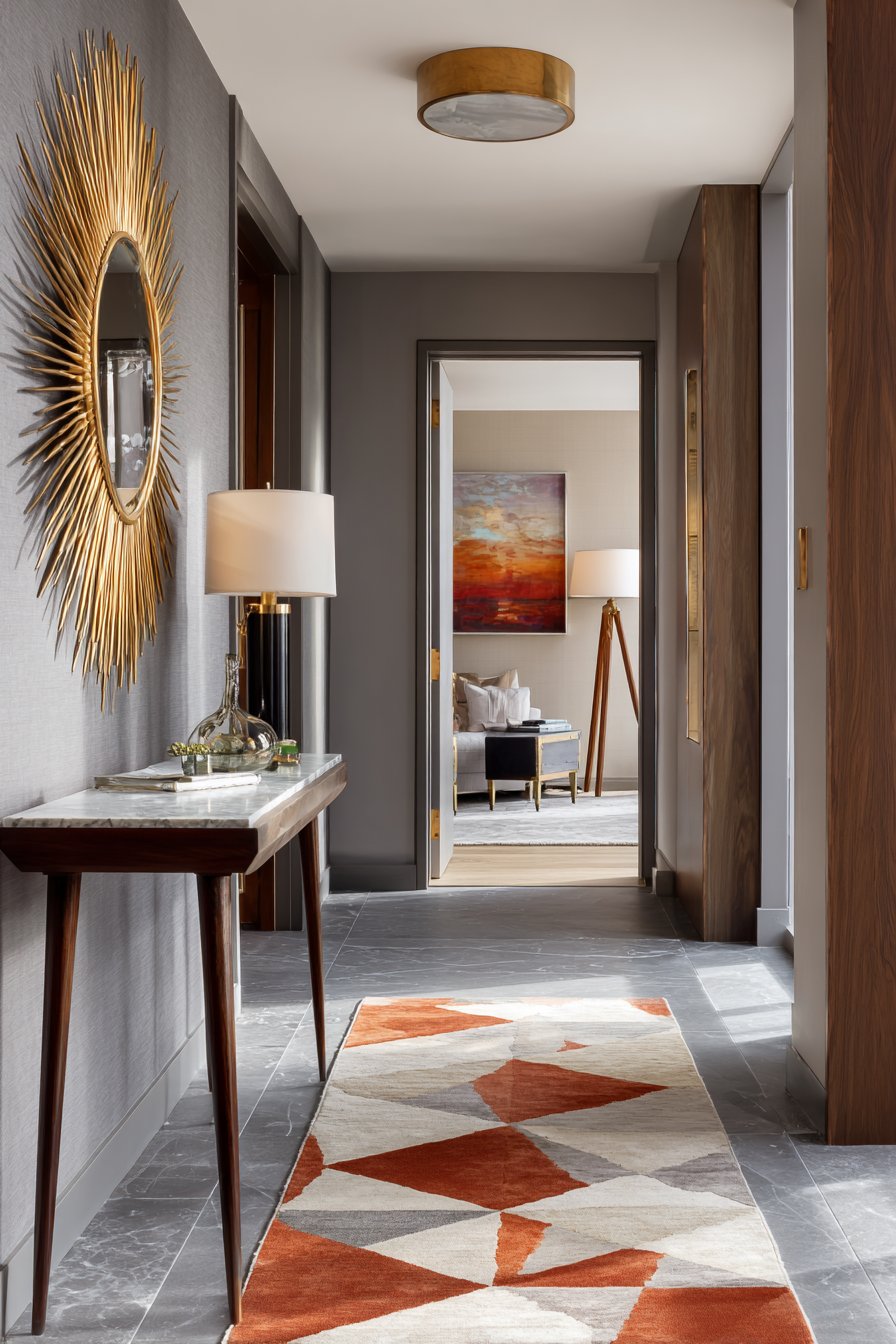
Above the console, a sunburst mirror in brass finish serves as the focal point, its radiating design bringing the optimistic energy characteristic of mid-century aesthetics. The mirror’s sculptural quality transforms a functional item into art, demonstrating how thoughtful accessory choices can elevate everyday objects. The brass finish adds warmth and period authenticity while coordinating with the walnut’s rich tones.
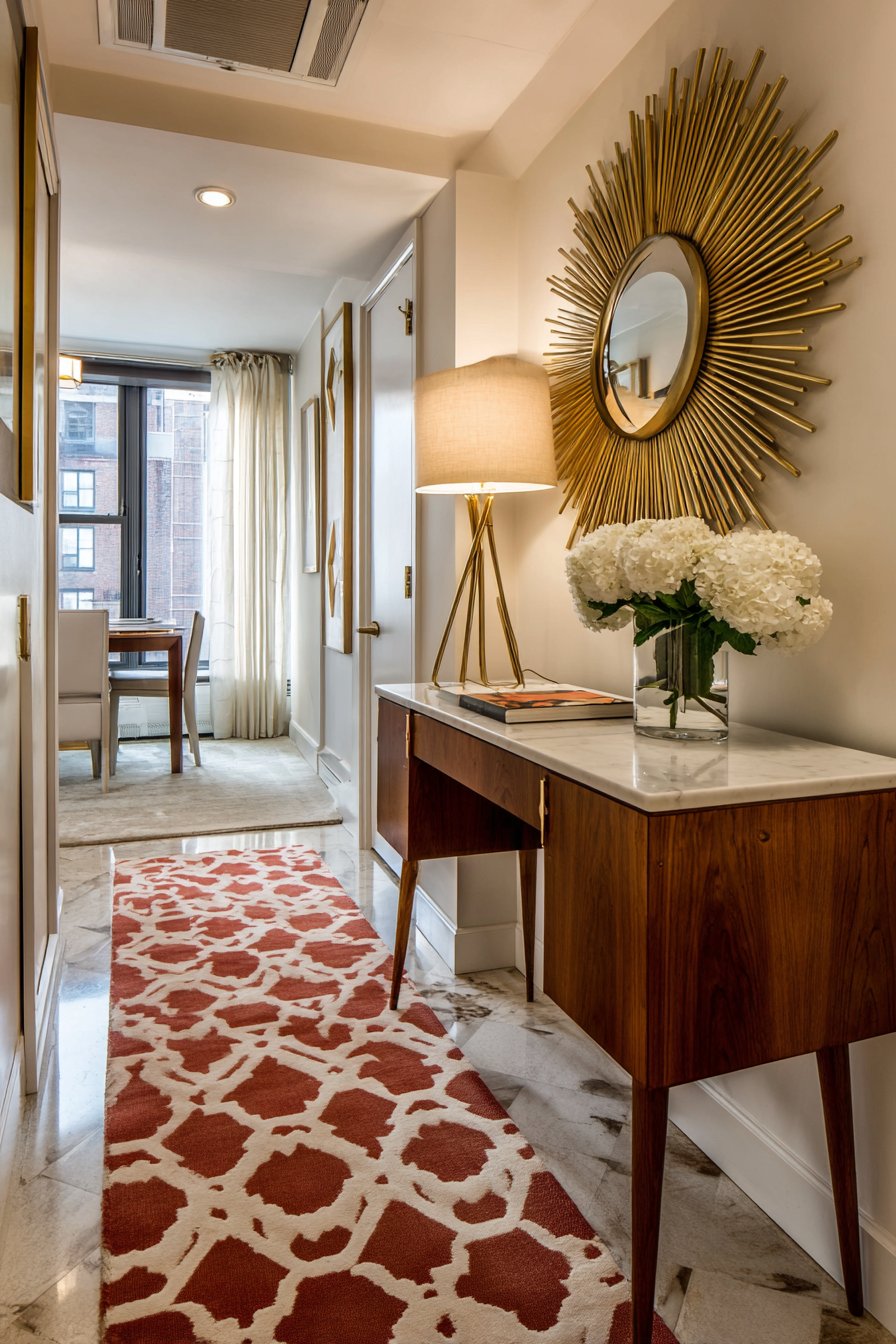
A geometric print runner in rust and cream tones grounds the space while introducing the bold patterns and warm colors popular in mid-century design. The runner’s abstract geometric motif references the era’s fascination with atomic age forms and modernist art. A tripod floor lamp with linen shade provides ambient lighting, its three-legged stance another signature mid-century design element that combines functionality with distinctive form.
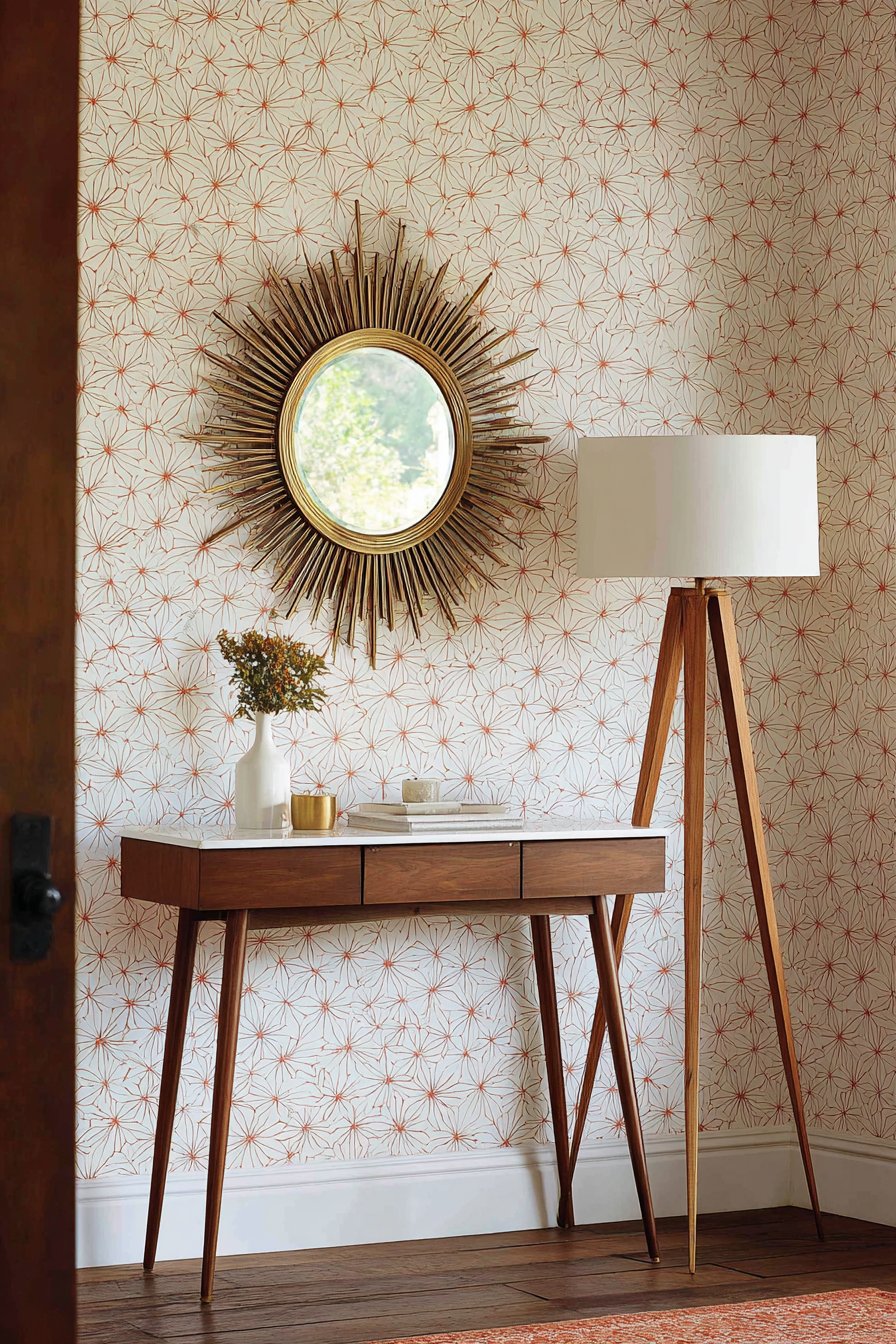
Key Design Tips: Select console tables with tapered legs and mixed materials like wood and marble for authentic mid-century modern style. Use sunburst mirrors as focal points to capture the era’s optimistic design spirit. Introduce geometric patterns through runners or textiles in period-appropriate color palettes. Choose tripod lamps to add ambient lighting while maintaining the era’s distinctive furniture forms. Coordinate warm wood tones with brass or copper metallic accents throughout the space.
18. Magnetic Panel System for Maximum Adaptability
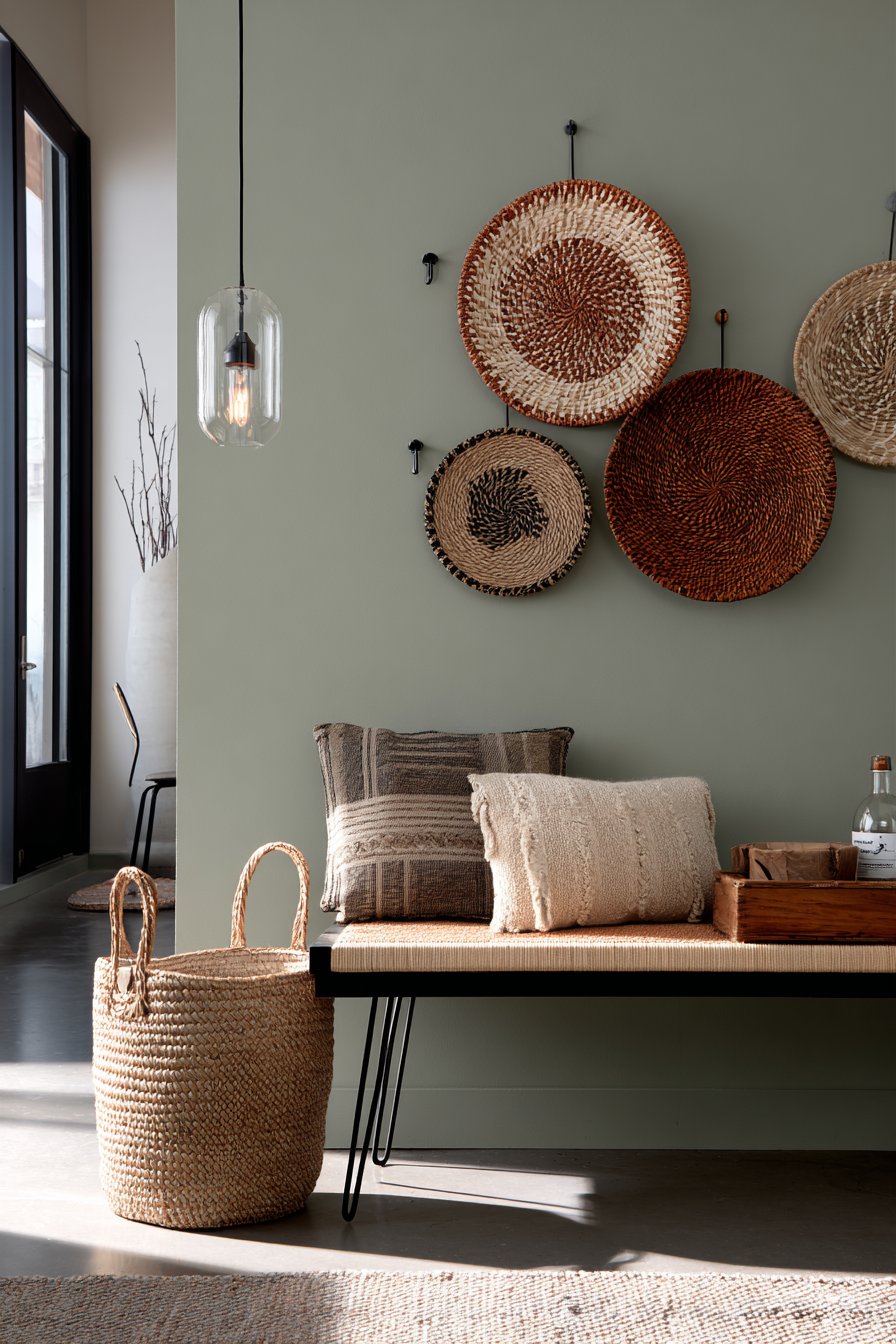
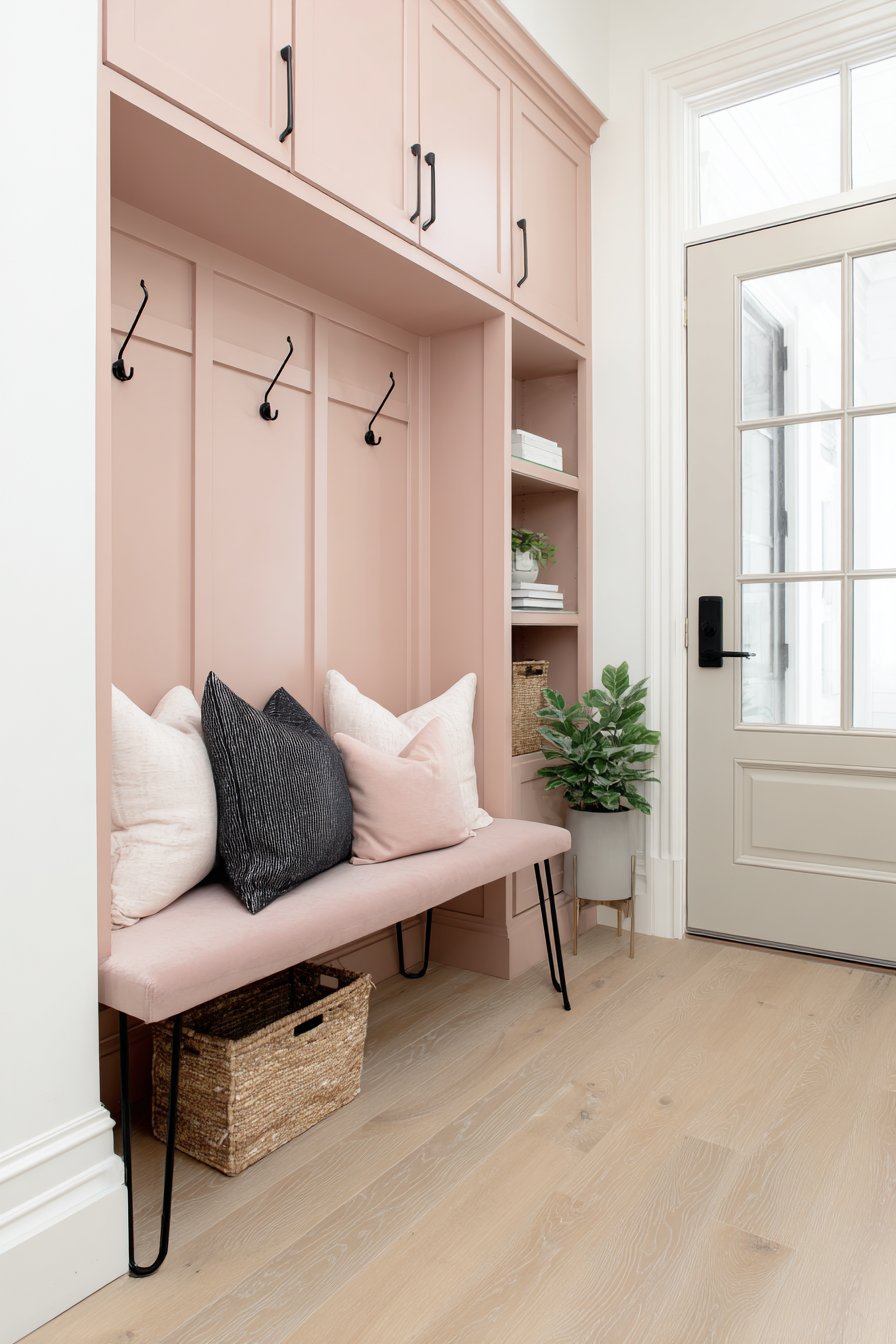
This narrow entryway showcases innovative thinking through a magnetic panel system that revolutionizes traditional storage approaches. Painted to match the wall color, the magnetic panel becomes an invisible infrastructure that allows hooks, shelves, and containers to attach and reposition magnetically. This flexibility means the storage configuration can change daily, weekly, or seasonally without any tools, hardware, or wall damage—perfect for renters or those who frequently reorganize.
The magnetic system accommodates varying storage needs throughout the year. During winter, multiple hooks can be positioned for heavy coats and scarves; in summer, they can be reduced and replaced with small magnetic shelves for sunglasses and lightweight accessories. This adaptability ensures the entryway always meets current needs rather than being locked into a static configuration determined during initial setup.
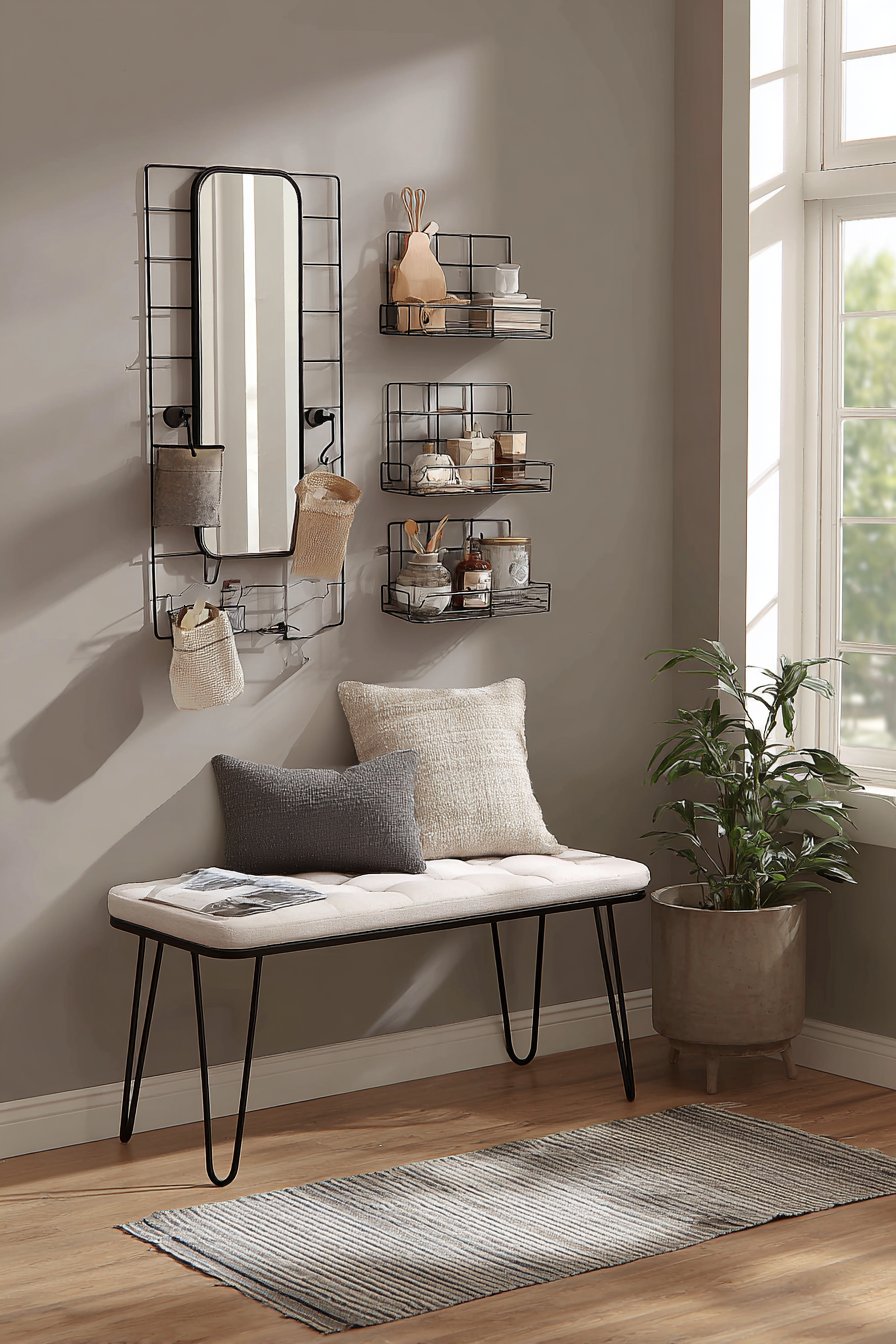
A narrow bench with hairpin legs in matte black provides seating while maintaining the space’s open, airy feel. The slender legs create minimal visual obstruction, allowing sight lines to flow through rather than stopping at a solid furniture base. The open space beneath prevents the closed-in feeling that can occur with solid-based furniture in tight quarters, while the bench’s narrow depth preserves essential walkway clearance.
Key Design Tips: Install magnetic panel systems for tool-free storage reconfiguration that adapts to seasonal and changing needs. Paint magnetic panels to match wall colors for invisible infrastructure that supports visible organization. Use hairpin-leg furniture to maintain open sight lines and visual flow in narrow spaces. Select narrow bench depths that provide seating without compromising walkway clearance. Combine flexible wall storage with minimal floor furniture for maximum adaptability.
19. Reclaimed Barn Wood Rustic Authenticity
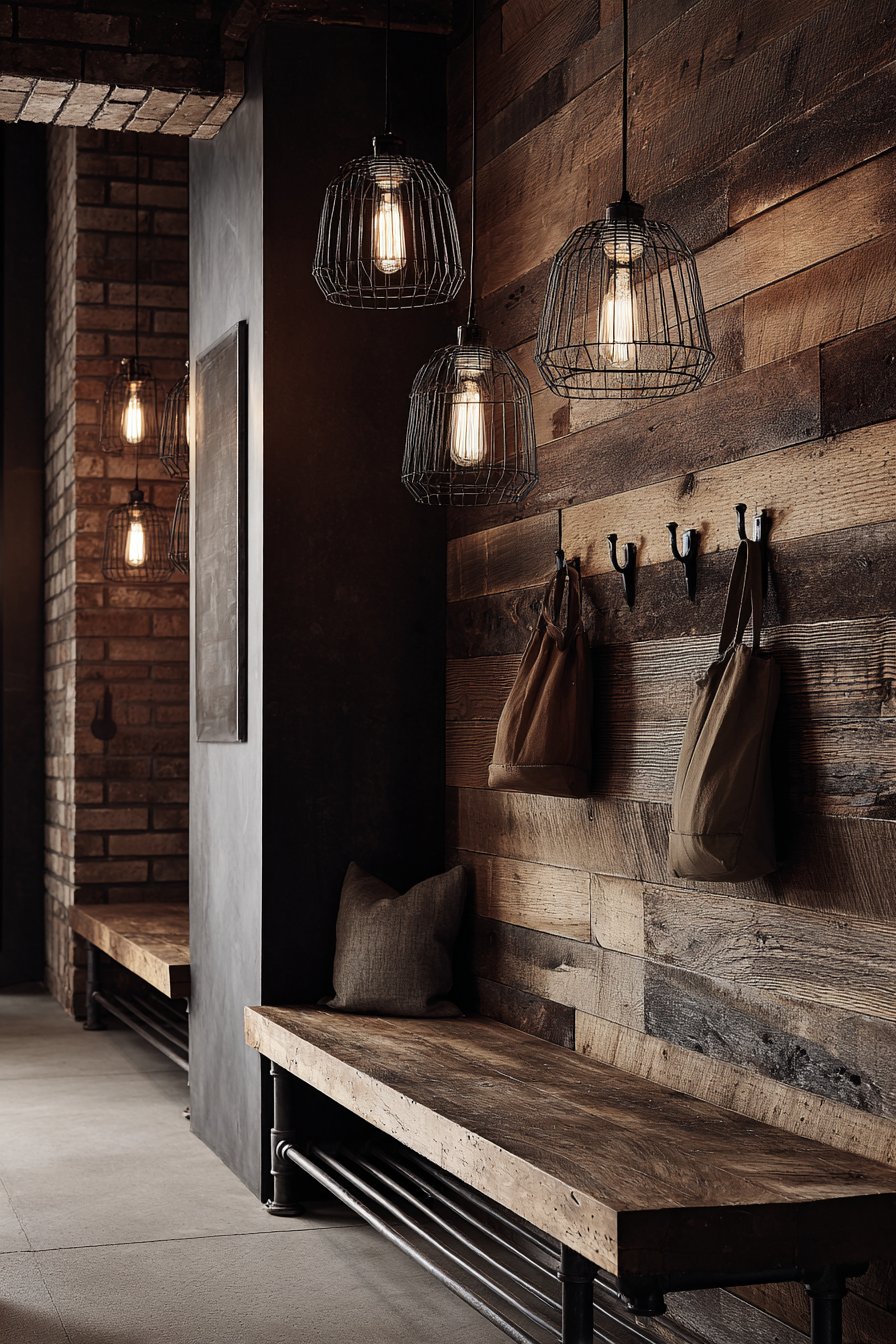
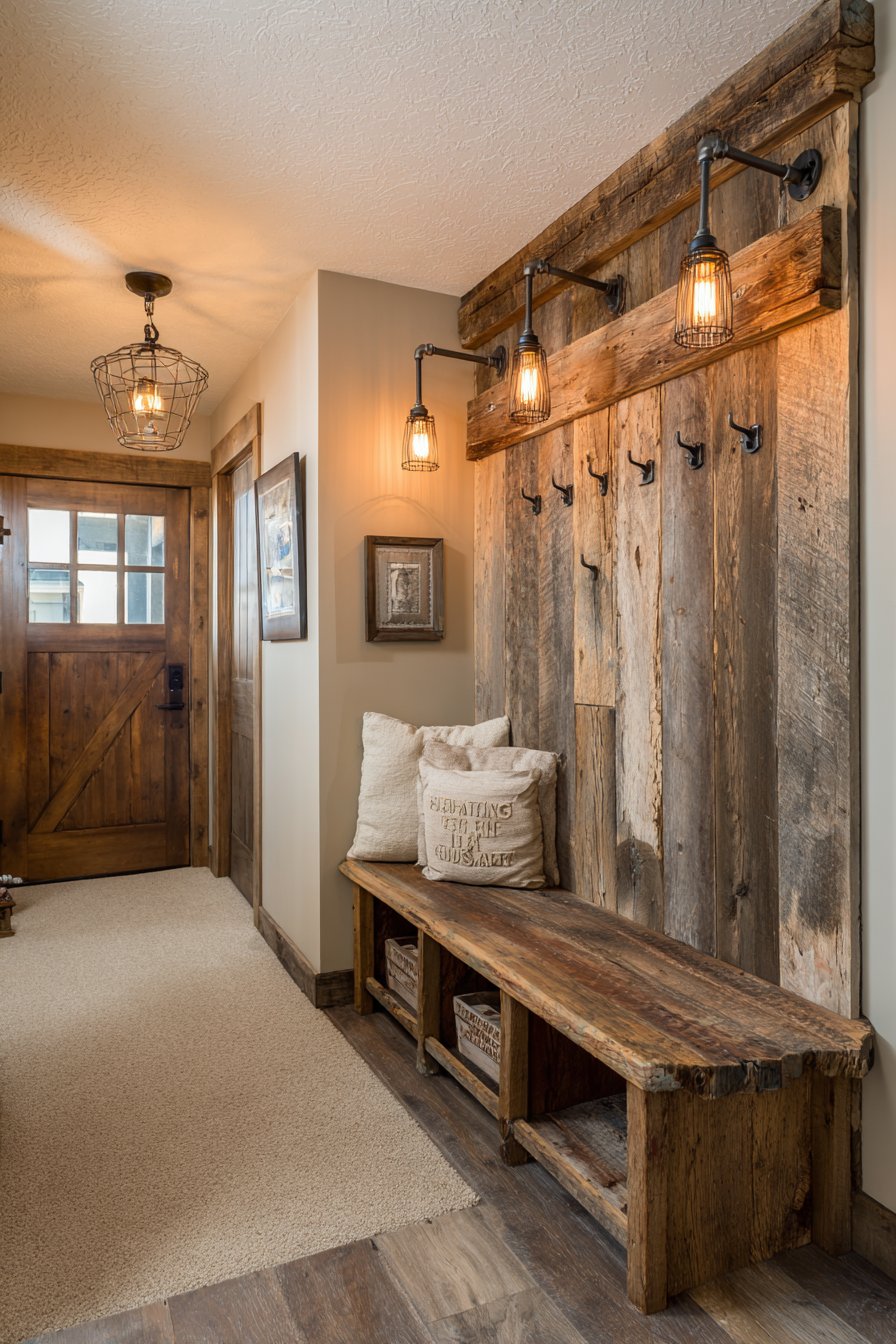
This narrow entryway celebrates rustic design through the use of authentic reclaimed materials that bring history and character to the space. Reclaimed barn wood planks cover one wall as an accent treatment, their weathered surfaces showing the patina of decades of exposure to the elements. Each plank tells a story through nail holes, color variation, and surface texture—imperfections that become beautiful in the rustic design philosophy. Large iron hooks mount directly into the substantial wood, their oversized scale and rough finish complementing the rugged aesthetic.
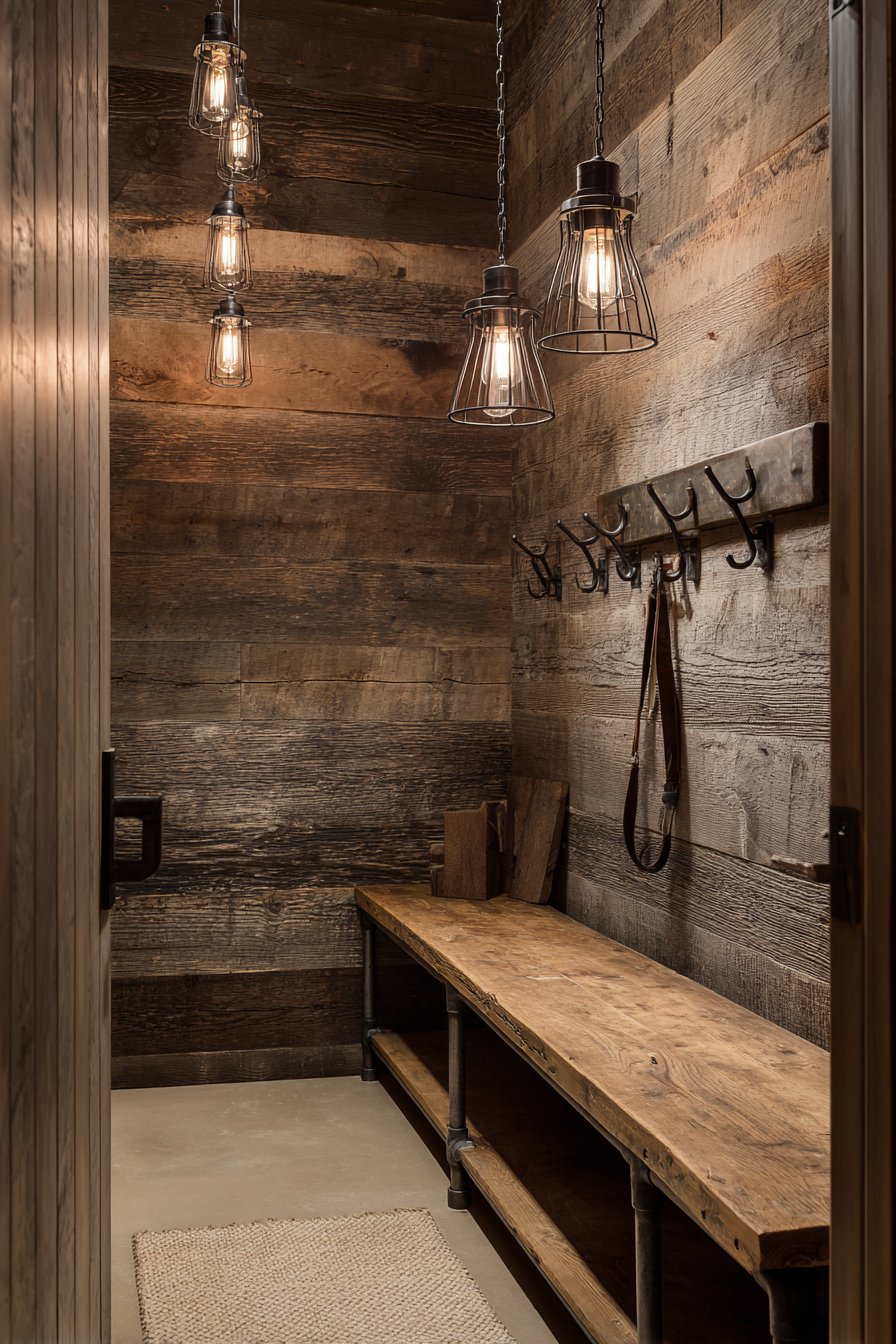
A simple bench crafted from a thick pine slab with metal pipe legs offers seating with an honest, utilitarian appearance. The substantial wood seat shows natural characteristics like knots and grain variation, while the industrial pipe legs create an interesting material juxtaposition. An open shelf below, constructed from the same materials, provides practical shoe storage while maintaining the cohesive design language of reclaimed wood and metal.
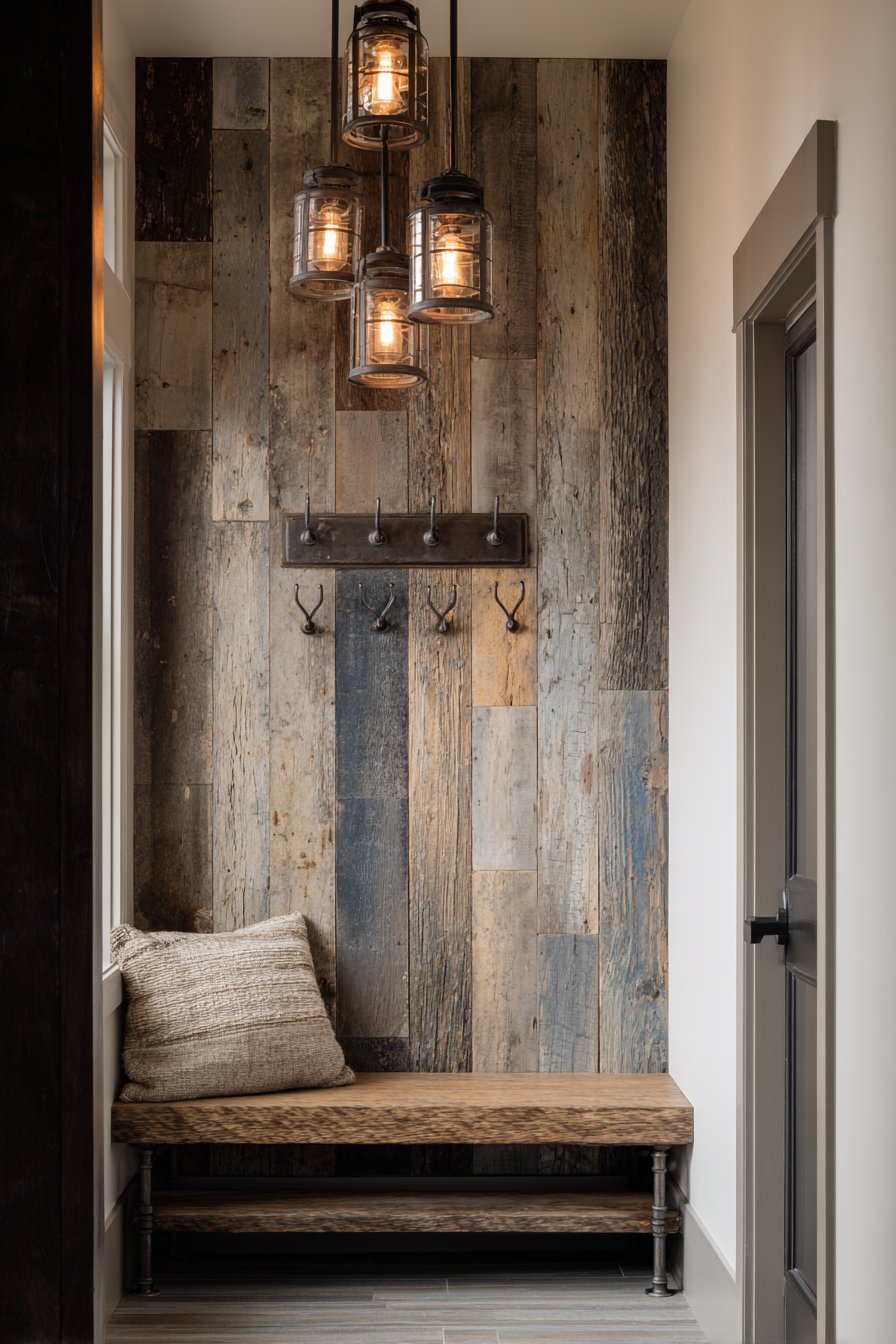
Vintage-style Edison bulbs in cage pendants provide warm ambient light that enhances the rustic atmosphere. The caged fixtures reference industrial work lights while their amber-glowing Edison bulbs create intimate, welcoming illumination. Interior design photography captures the authentic character of the weathered wood, highlighting natural imperfections, color variations, and textural details that distinguish genuine reclaimed materials from manufactured distressed finishes.
Key Design Tips: Source authentic reclaimed barn wood for accent walls to add genuine character and historical patina. Mount large iron or metal hooks directly into substantial wood for rustic functionality and aesthetic. Combine wood elements with metal pipe furniture legs to create industrial-rustic material combinations. Choose Edison bulbs in cage fixtures for period-appropriate lighting that adds warmth and ambiance. Embrace natural wood imperfections like knots and color variations as design features rather than flaws.
20. Symmetrical Balance for Visual Harmony
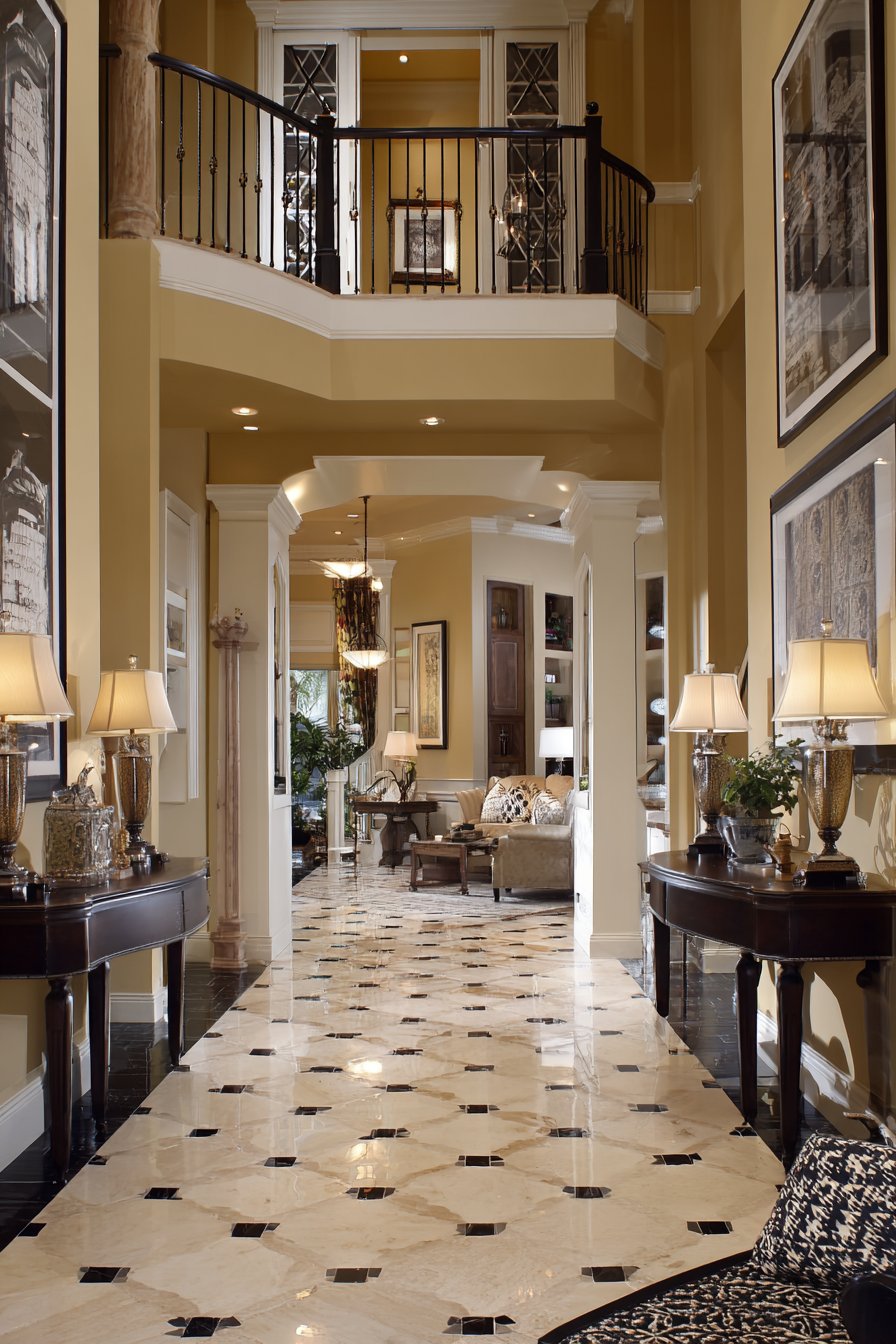
This narrow entryway employs symmetry to create a sense of order and visual calm within the confined space. Matching wall-mounted cabinets with glass-front doors flank the walkway at upper level, their symmetrical placement creating balance and formality. The glass doors allow glimpses of organized contents while containing potential clutter, striking a middle ground between completely open and completely closed storage. This matched pair approach transforms ordinary storage into architectural feature.
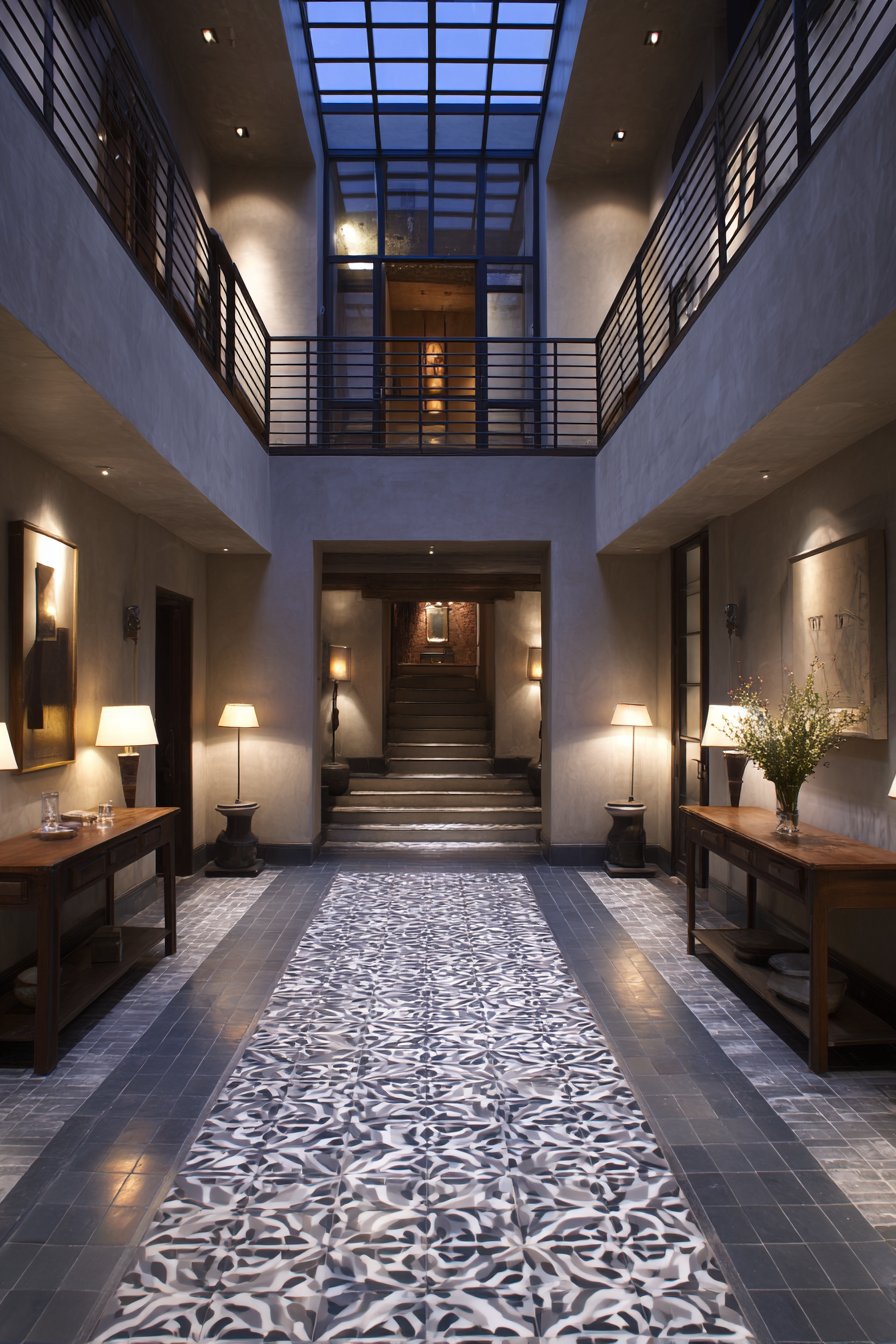
Below, identical narrow console tables in espresso finish sit on either side of the corridor, maintaining the symmetrical composition at functional height. Coordinating table lamps provide balanced lighting, their matching shades and bases reinforcing the formal symmetry. This mirror-image arrangement creates a sense of intentional design and visual stability that can make narrow spaces feel more substantial and deliberate rather than merely squeezed.
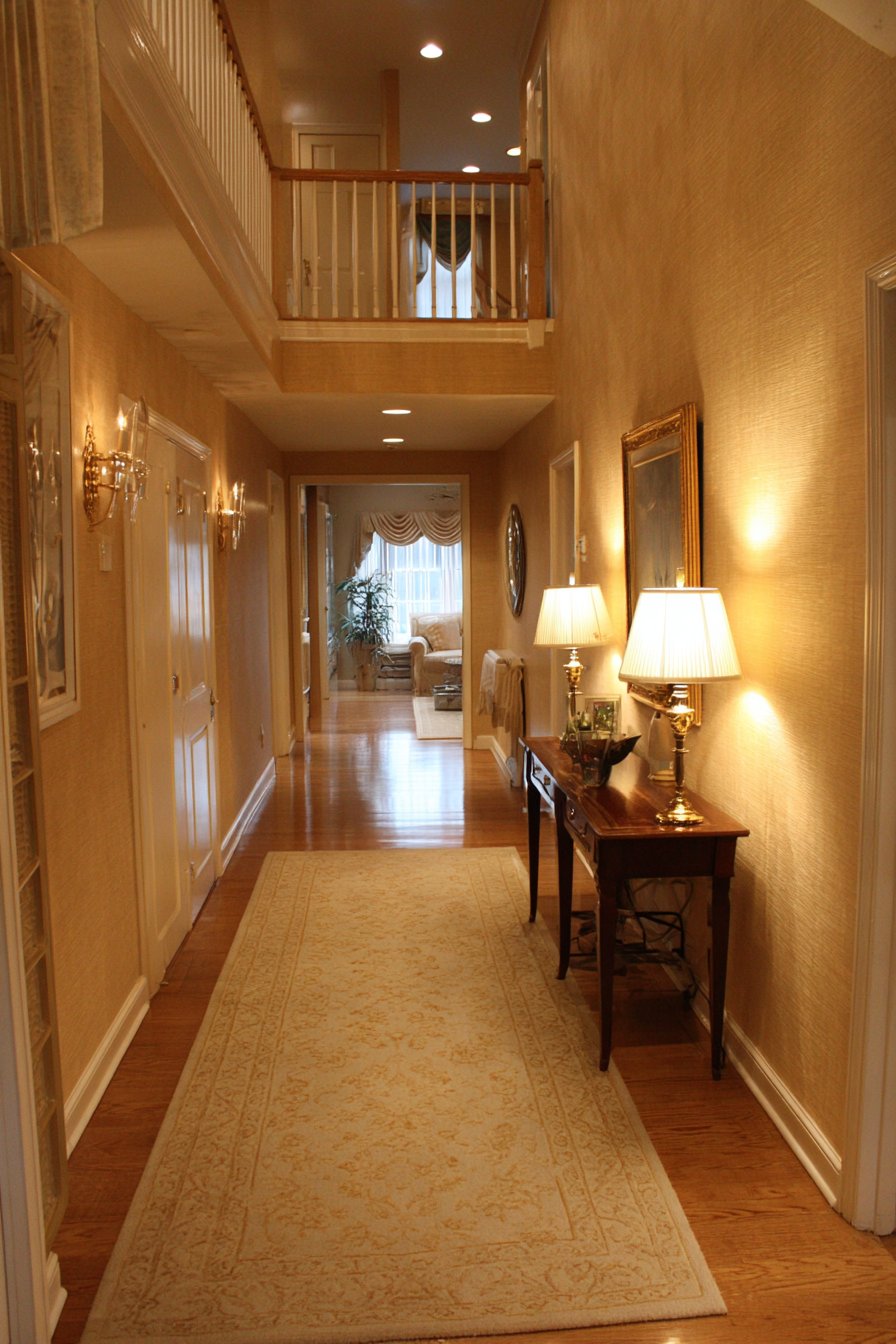
A runner in a classic medallion pattern centers the space, grounding the symmetrical composition while adding traditional pattern and warmth. The medallion’s centered design reinforces the axis of symmetry, guiding the eye through the space while the runner’s borders define the walkway edges. Wide-angle photography captures the harmonious balance, while professional lighting creates visual equilibrium through careful illumination of both sides.
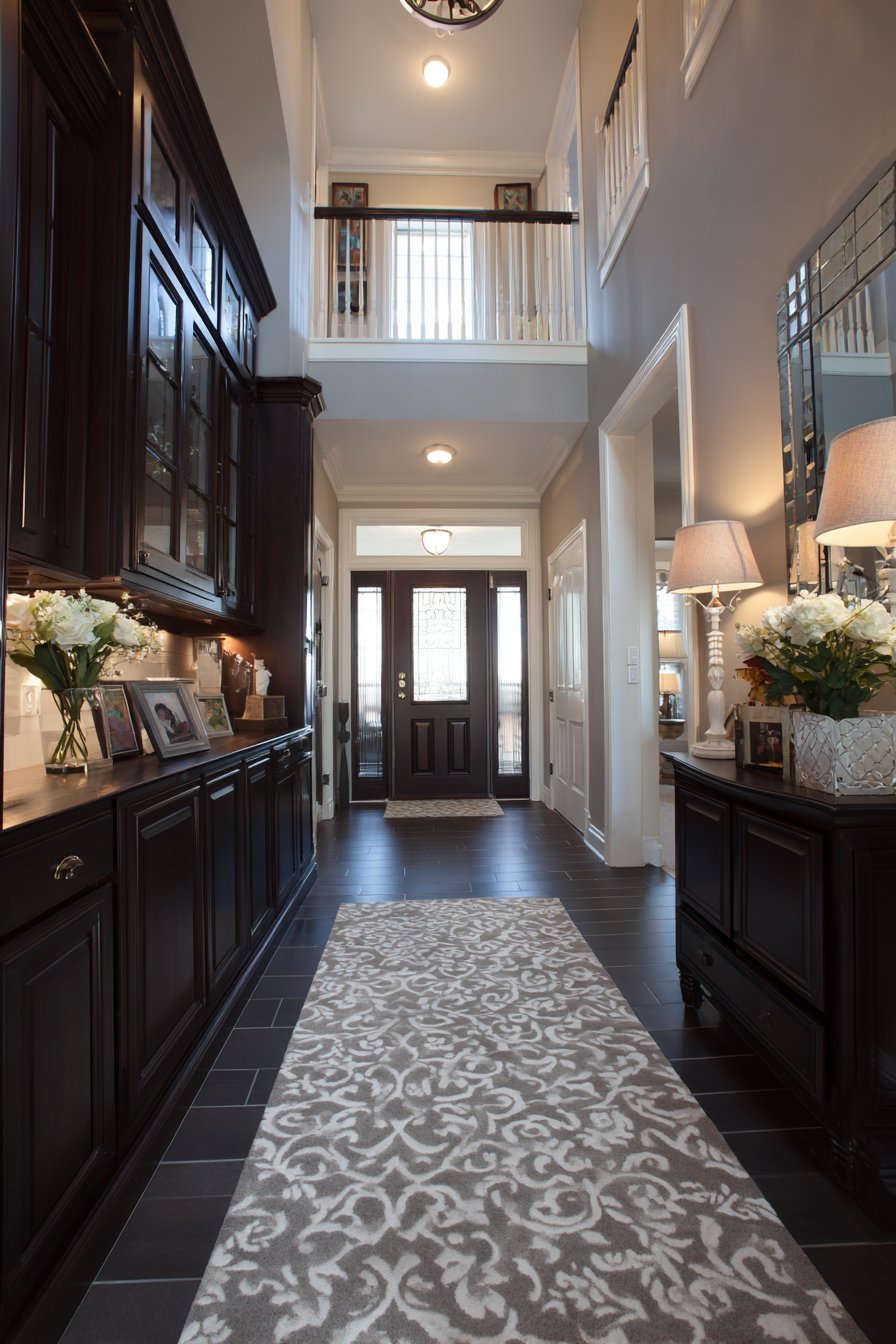
Key Design Tips: Use symmetrical furniture placement to create visual balance and formal order in narrow entryways. Install matching wall-mounted cabinets at upper levels to add storage without reducing floor space. Choose glass-front cabinet doors to display organized contents while containing clutter. Select matching lighting pairs to reinforce symmetrical composition and provide balanced illumination. Center runners with medallion or symmetrical patterns to emphasize the design axis and guide movement.
21. Over-Door Storage for Hidden Functionality
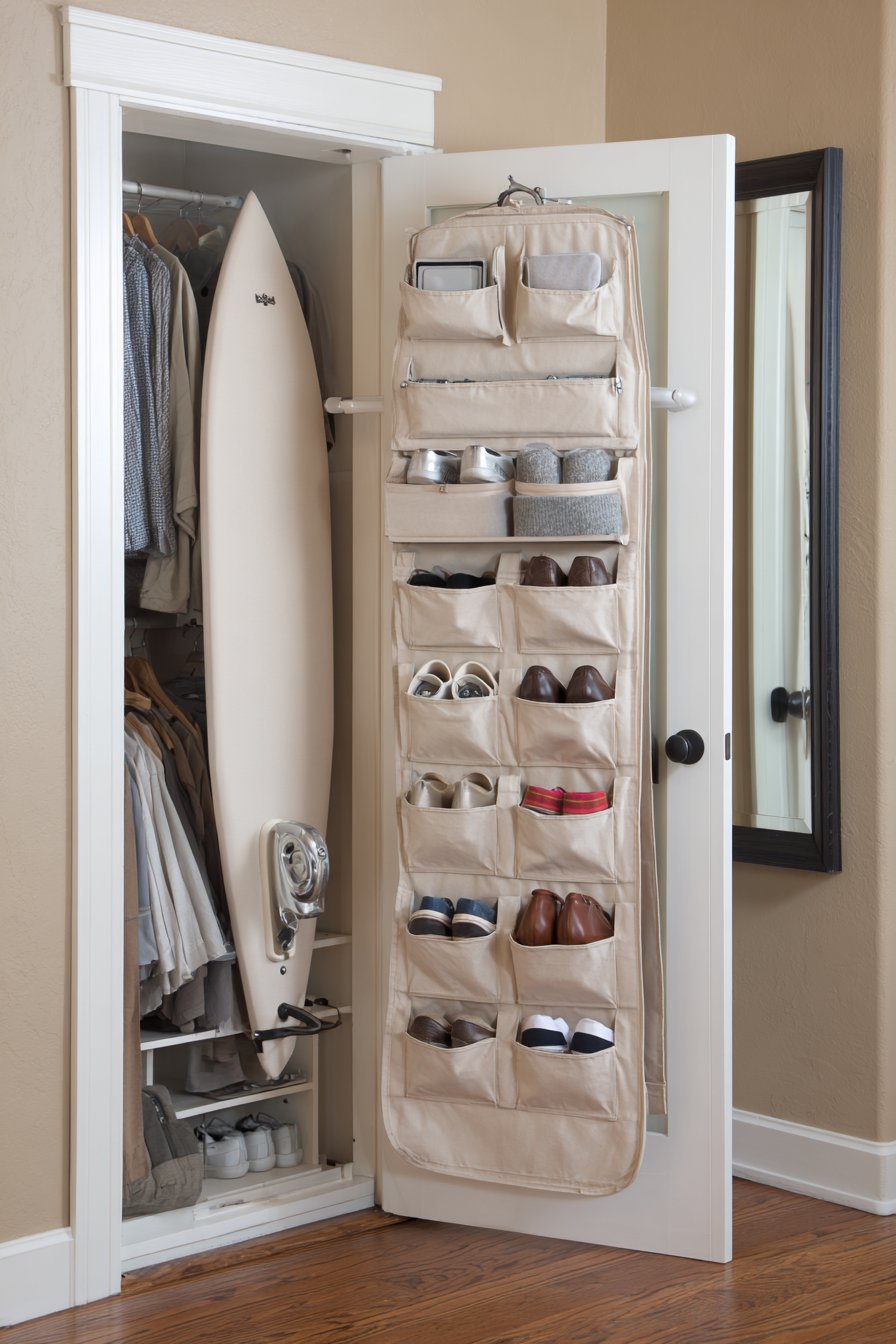
This narrow entryway maximizes every available surface, including the often-overlooked back of the entry door. An over-the-door organizer in natural canvas features multiple pockets sized for shoes, accessories, and small items. This hanging system transforms unused door surface into valuable storage without requiring any floor or wall space, demonstrating how creative thinking can find storage opportunities in unexpected locations.
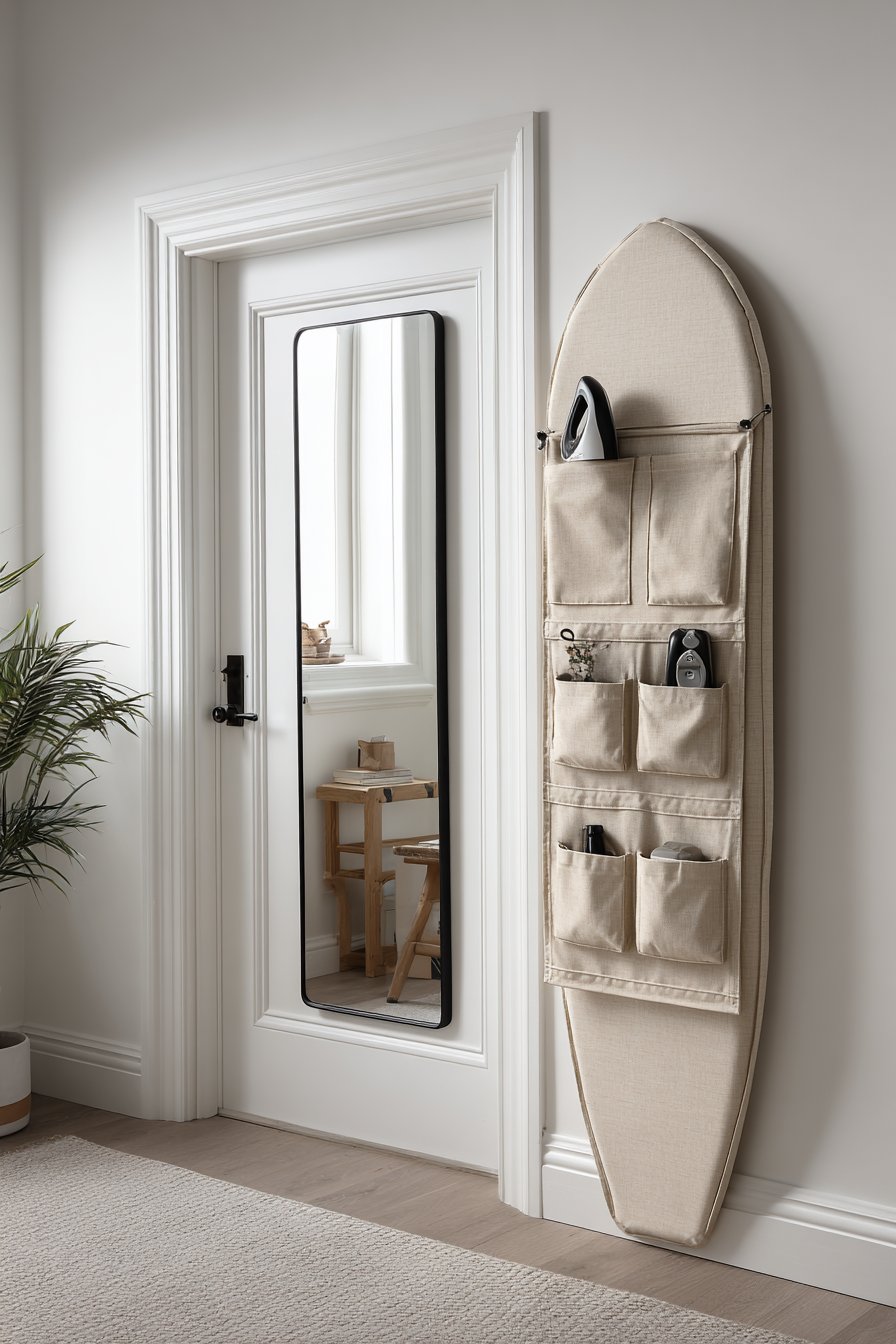
Opposite the door, a wall-mounted fold-down ironing board conceals behind a narrow cabinet door, its presence completely invisible when closed. This hidden functionality exemplifies smart space planning—accommodating occasional-use items without dedicating permanent space to them. When needed, the ironing board folds down for use; when not, it disappears behind a door that looks like simple cabinetry.
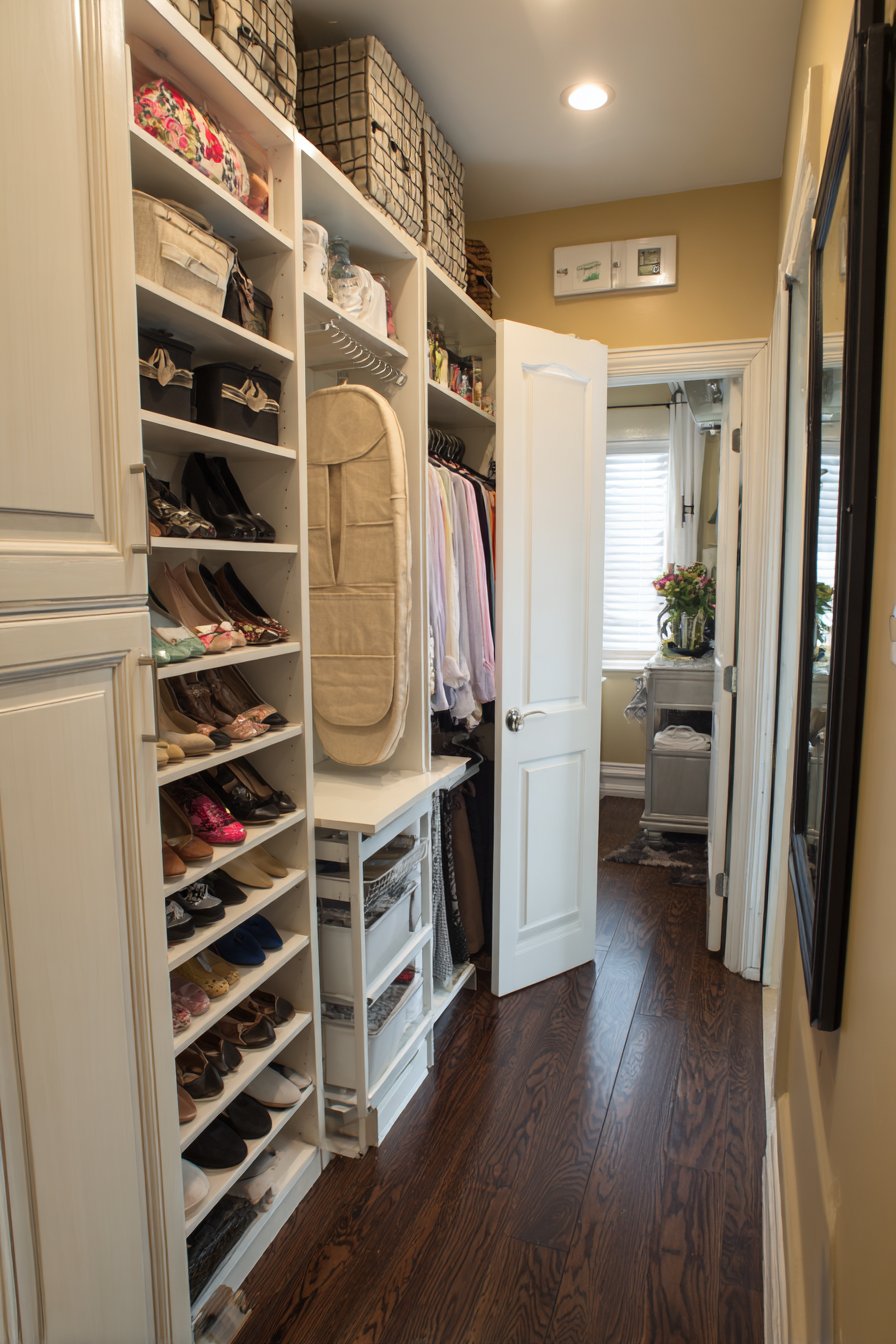
A full-length mirror with a simple black frame mounts to the remaining wall space, providing the functionality of a last-minute appearance check while visually expanding the space through reflection. The mirror’s slim black frame adds graphic definition without consuming significant visual space or competing with other elements. Interior photography demonstrates how these space-saving solutions work together to provide comprehensive functionality within an extremely limited footprint.
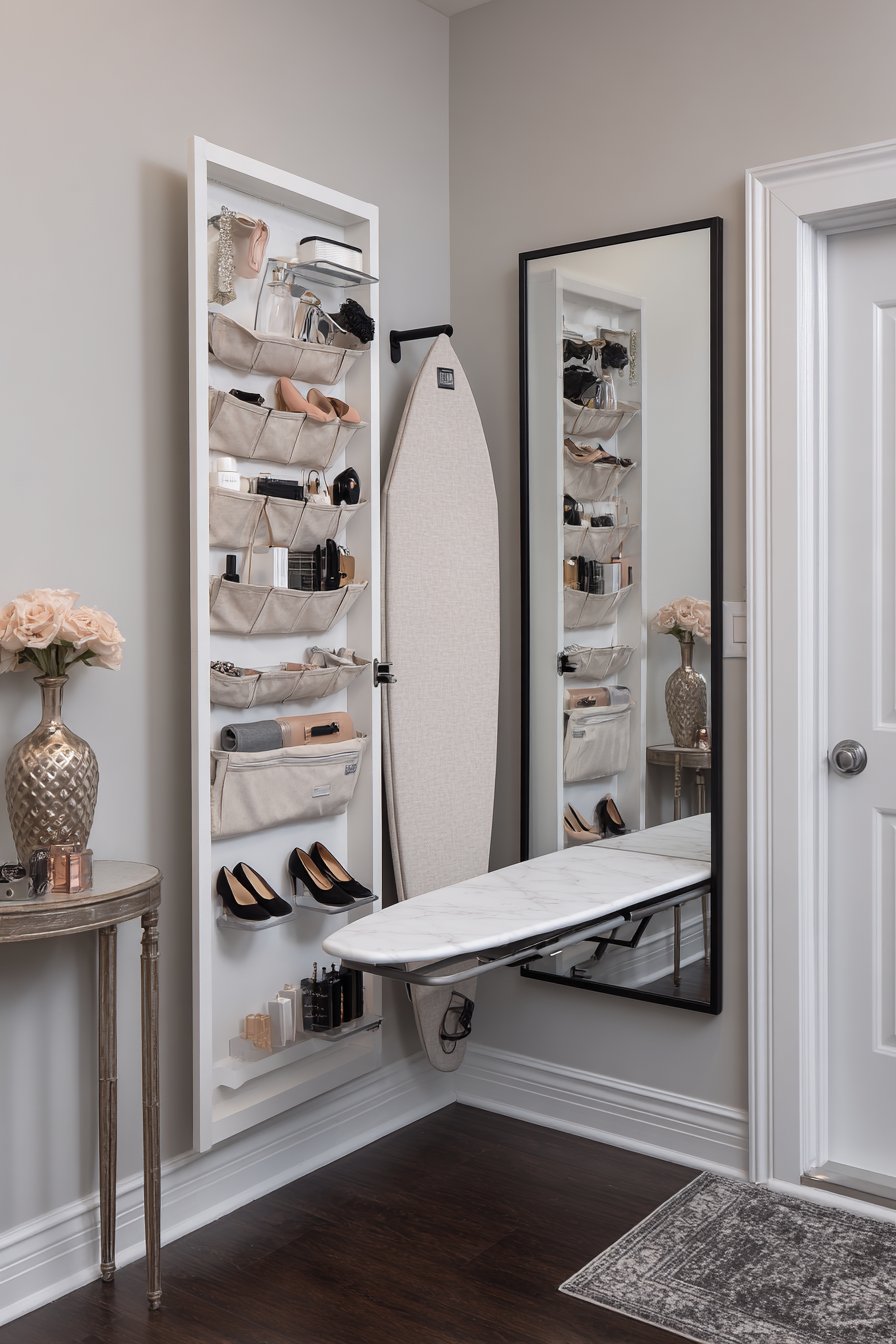
Key Design Tips: Utilize over-the-door organizers to capture unused door-back surface for storage without consuming floor or wall space. Conceal occasional-use items like ironing boards behind cabinet doors to keep them accessible but invisible. Choose natural canvas organizers that soften the look of visible storage solutions. Install full-length mirrors to serve both functional and space-expanding purposes. Select simple black frames for mirrors to add definition without visual heaviness.
22. Bohemian Eclecticism with Layered Textures
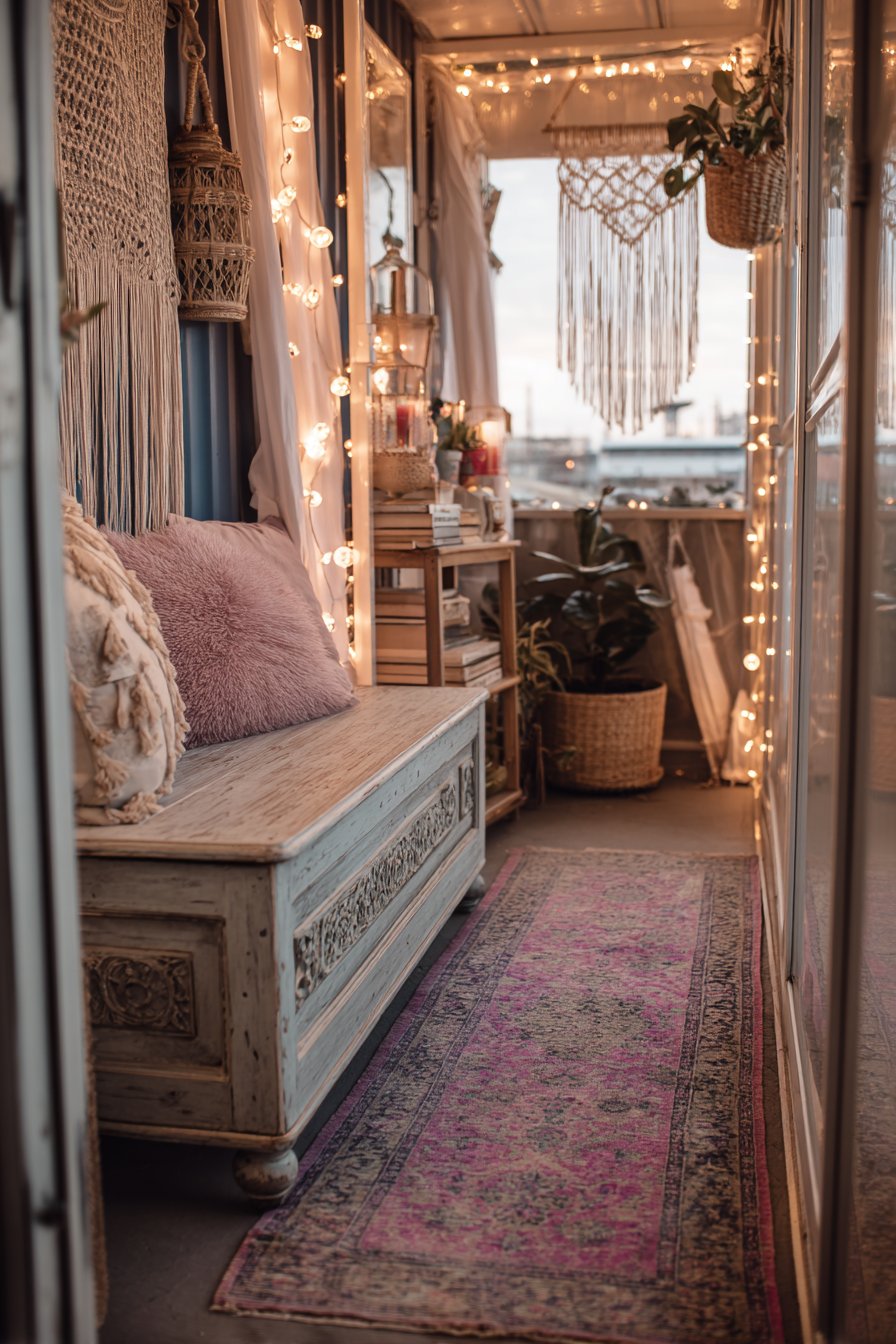
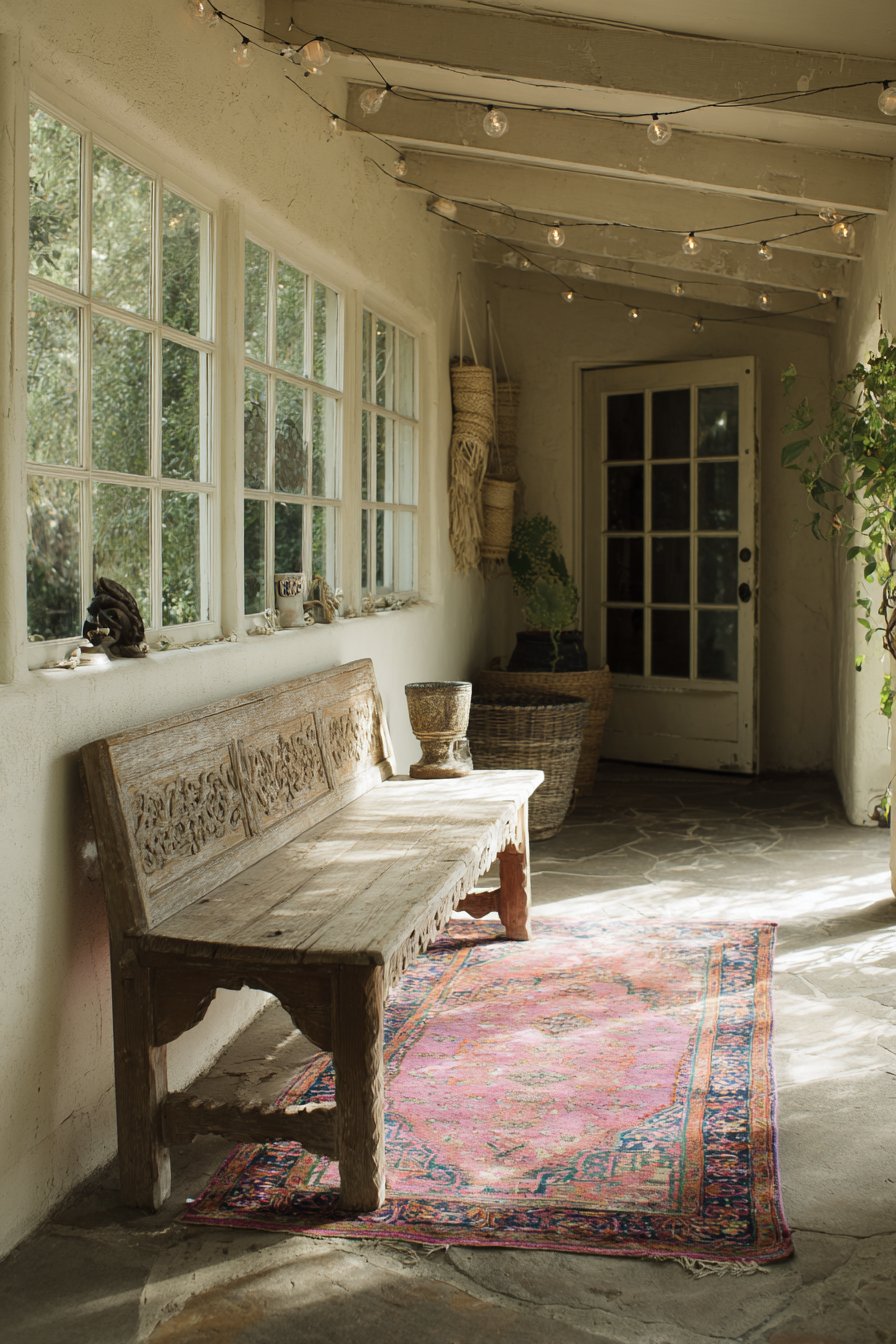
This narrow entryway embraces bohemian design’s love of collected elements, varied textures, and global influences. A vintage wooden bench featuring carved details and worn paint patina serves as the seating element, its aged appearance suggesting a piece with history and stories. The imperfect paint wear reveals layers of color beneath, creating the authentic vintage look that cannot be replicated through distressing new pieces.
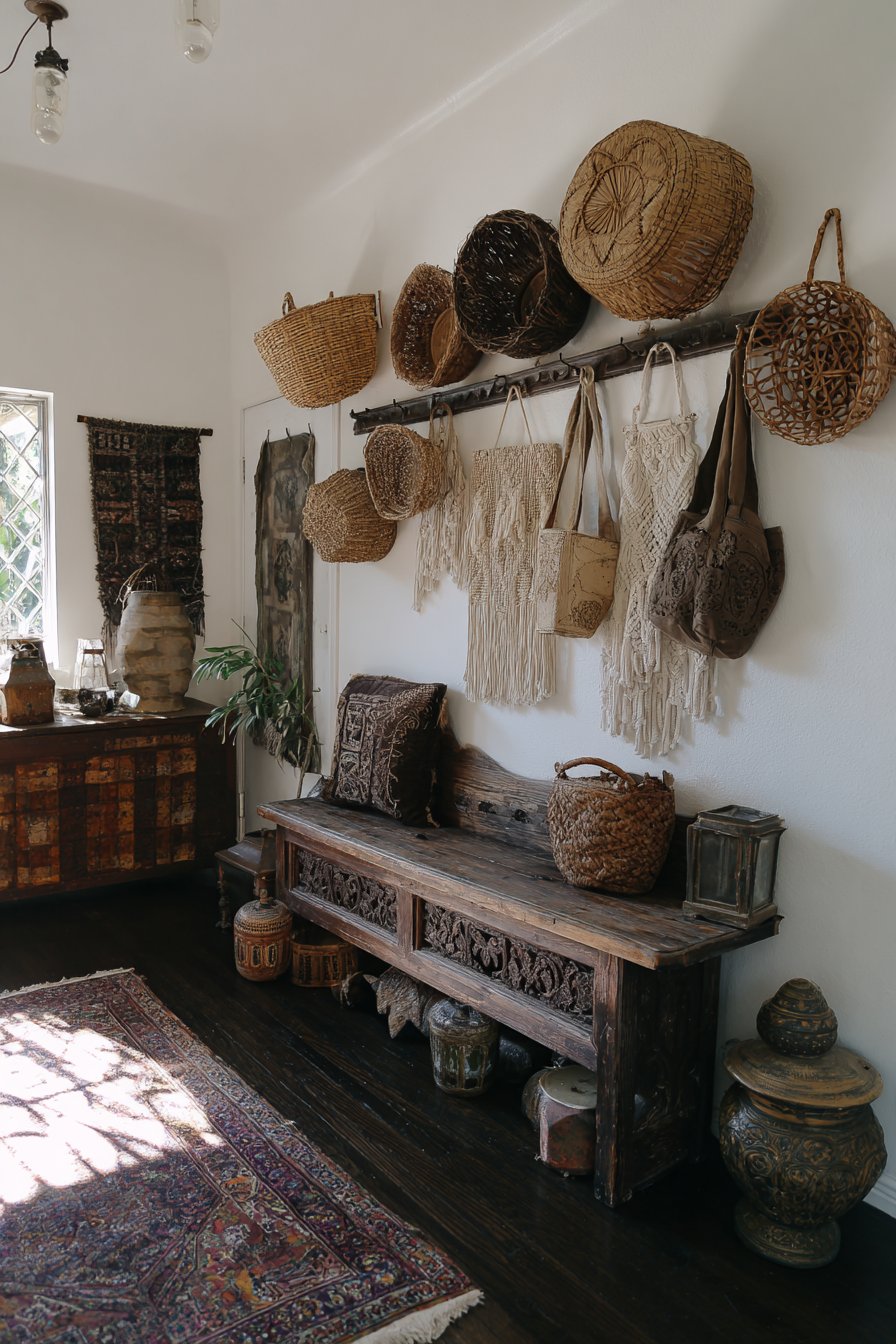
Macramé wall hangings and woven baskets mount at various heights, adding textural interest while providing practical storage. The handcrafted quality of these elements embodies the bohemian appreciation for artisanal work and global craft traditions. Each piece brings its own character while contributing to the layered, collected-over-time aesthetic that defines bohemian interiors.
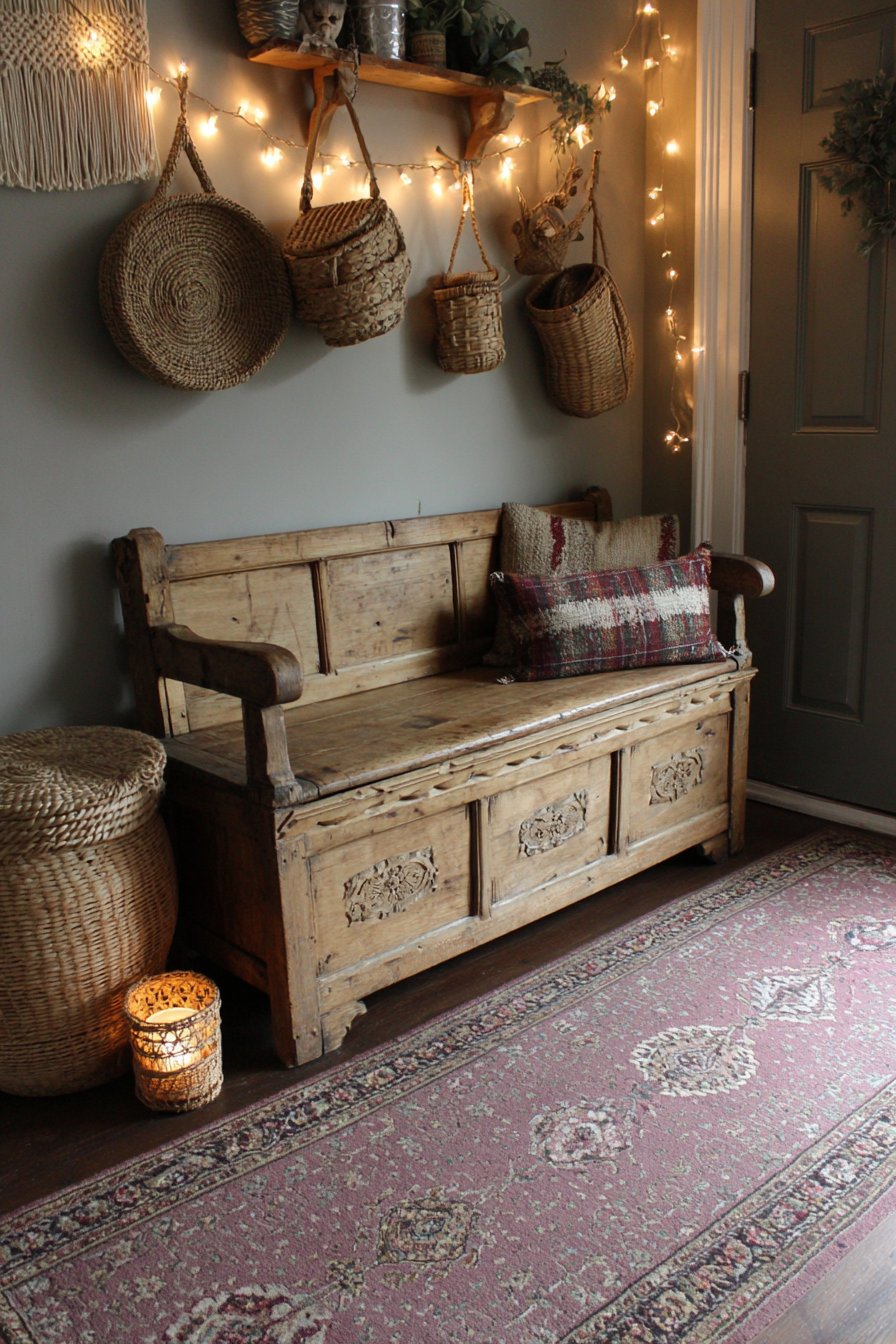
A vintage Persian-style runner in faded jewel tones adds pattern and color underfoot, its worn appearance adding to the space’s overall patina of age and authenticity. String lights create ambient glow, bringing the casual, creative spirit characteristic of bohemian design. The composition captures the eclectic mix with natural light emphasizing the varied textures of macramé, woven baskets, carved wood, and textile patterns—demonstrating how bohemian design celebrates variety and handcrafted beauty.
Key Design Tips: Source authentic vintage furniture with genuine wear and patina rather than artificially distressed new pieces. Layer multiple textures through macramé, woven baskets, carved wood, and textiles for bohemian richness. Display items at varying heights to create visual interest and dynamic composition. Choose runners with faded vintage appearance and complex patterns for authentic bohemian character. Add string lights for casual ambient lighting that enhances the relaxed, creative atmosphere.
23. Smart Home Integration for Modern Convenience
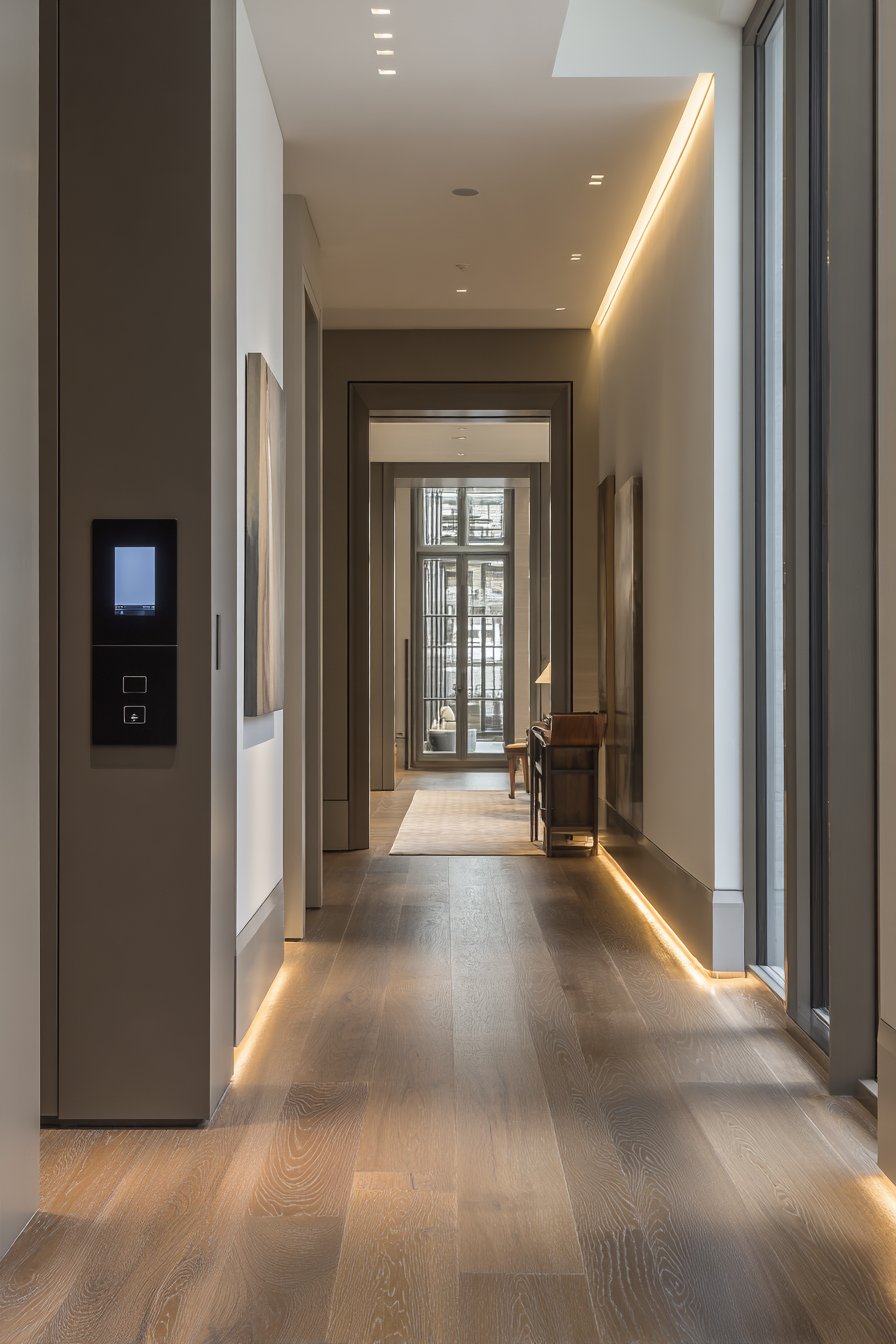
This narrow entryway represents the intersection of design and technology through thoughtful smart home integration. A wall-mounted tablet controls lighting, locks, and security systems, integrated into a sleek black panel that maintains clean aesthetic while providing comprehensive home control. The centralized interface means all home systems can be managed from the entryway—perfect for last-minute adjustments before leaving or immediate control upon arriving.
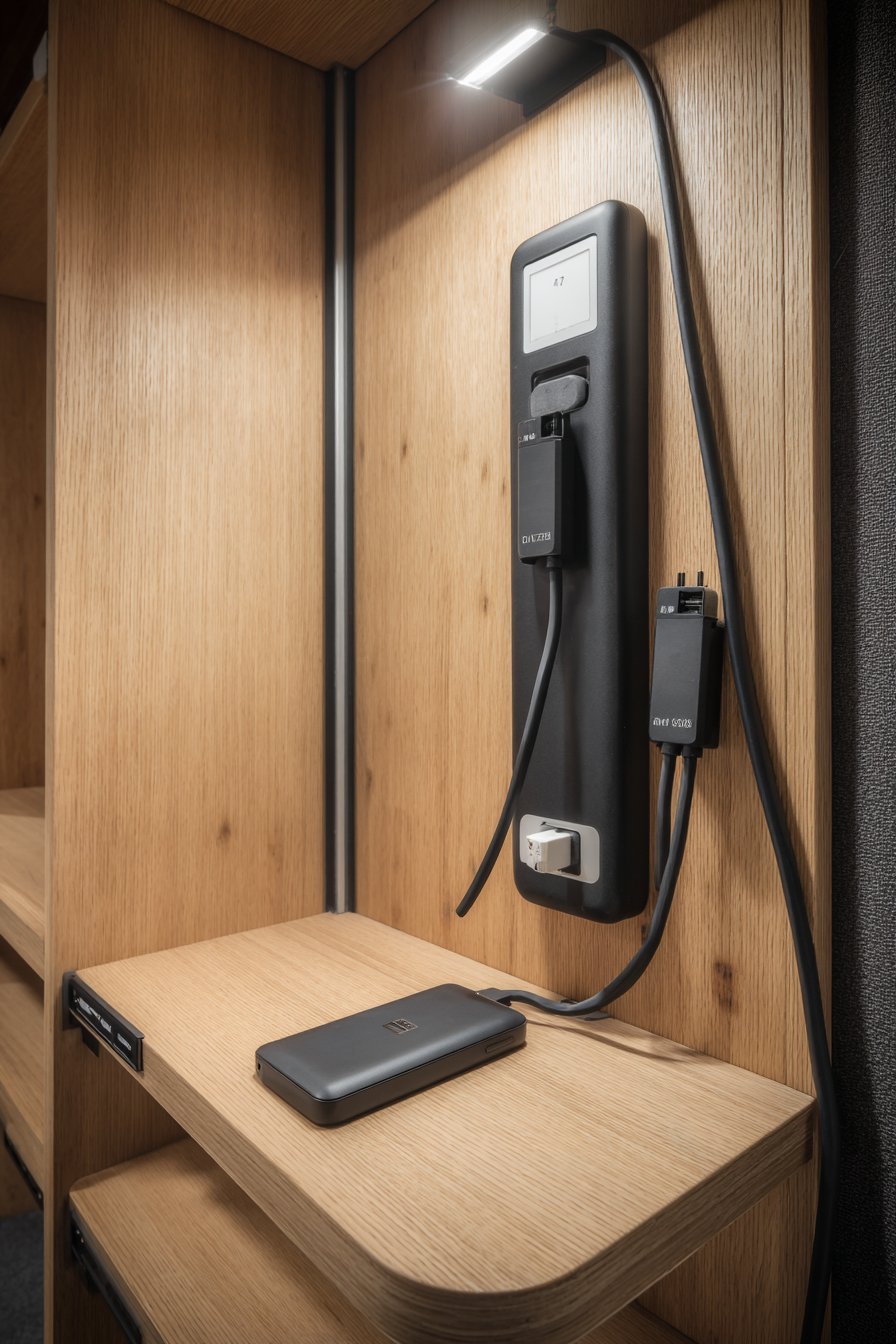
Below the control panel, a charging station built into a slim console keeps devices organized and powered. Multiple USB ports and wireless charging surfaces accommodate various device types while cable management systems keep cords contained and invisible. This dedicated charging zone prevents the counter clutter that occurs when devices charge in random locations throughout the home.
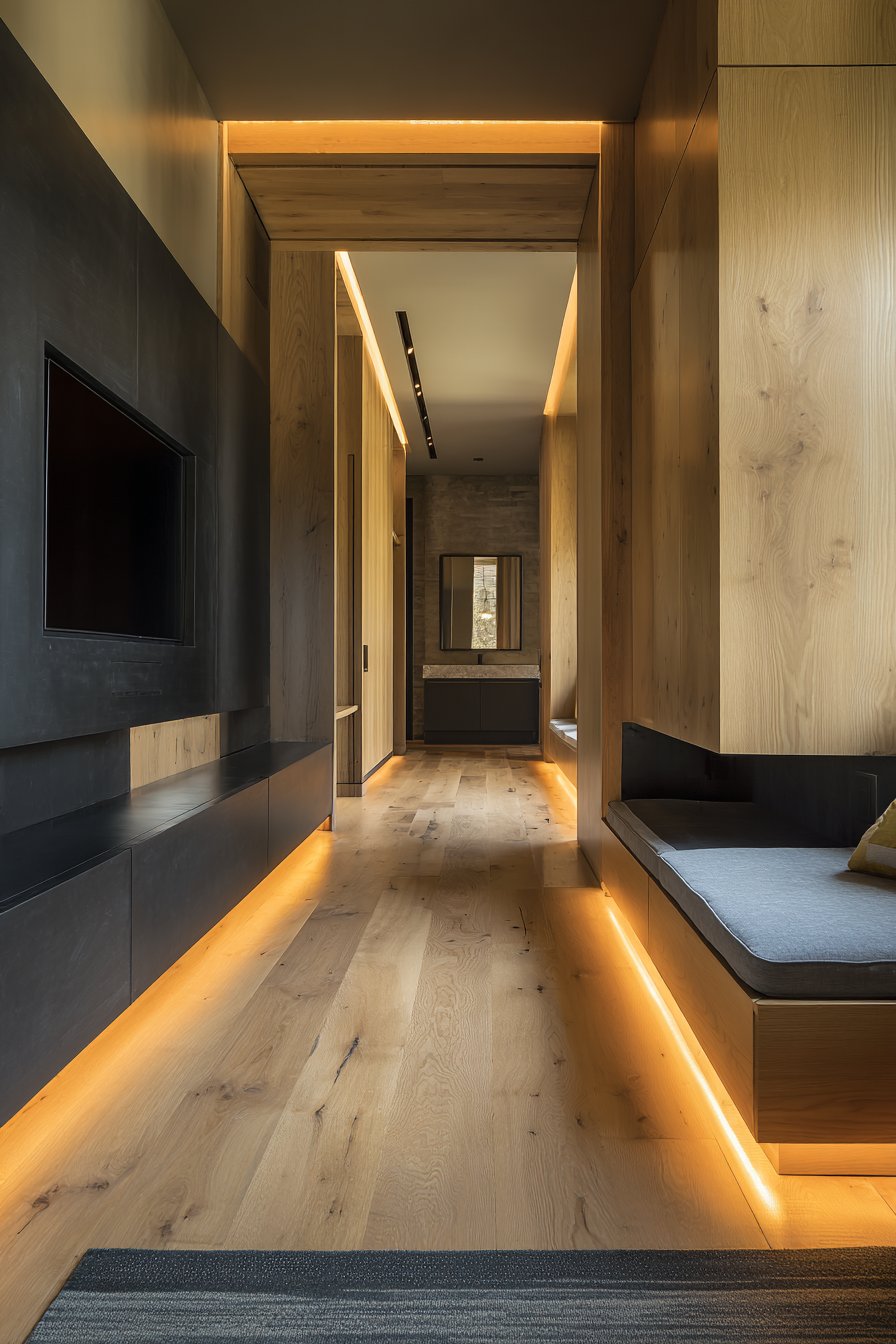
Motion-sensor LED strips along the baseboards provide automatic pathway lighting that activates when someone approaches. This thoughtful feature eliminates fumbling for light switches in the dark while adding a modern, sophisticated lighting element that requires no manual operation. Professional interior photography showcases these tech-forward solutions within clean modern aesthetic, demonstrating how technology can enhance functionality without compromising design integrity.
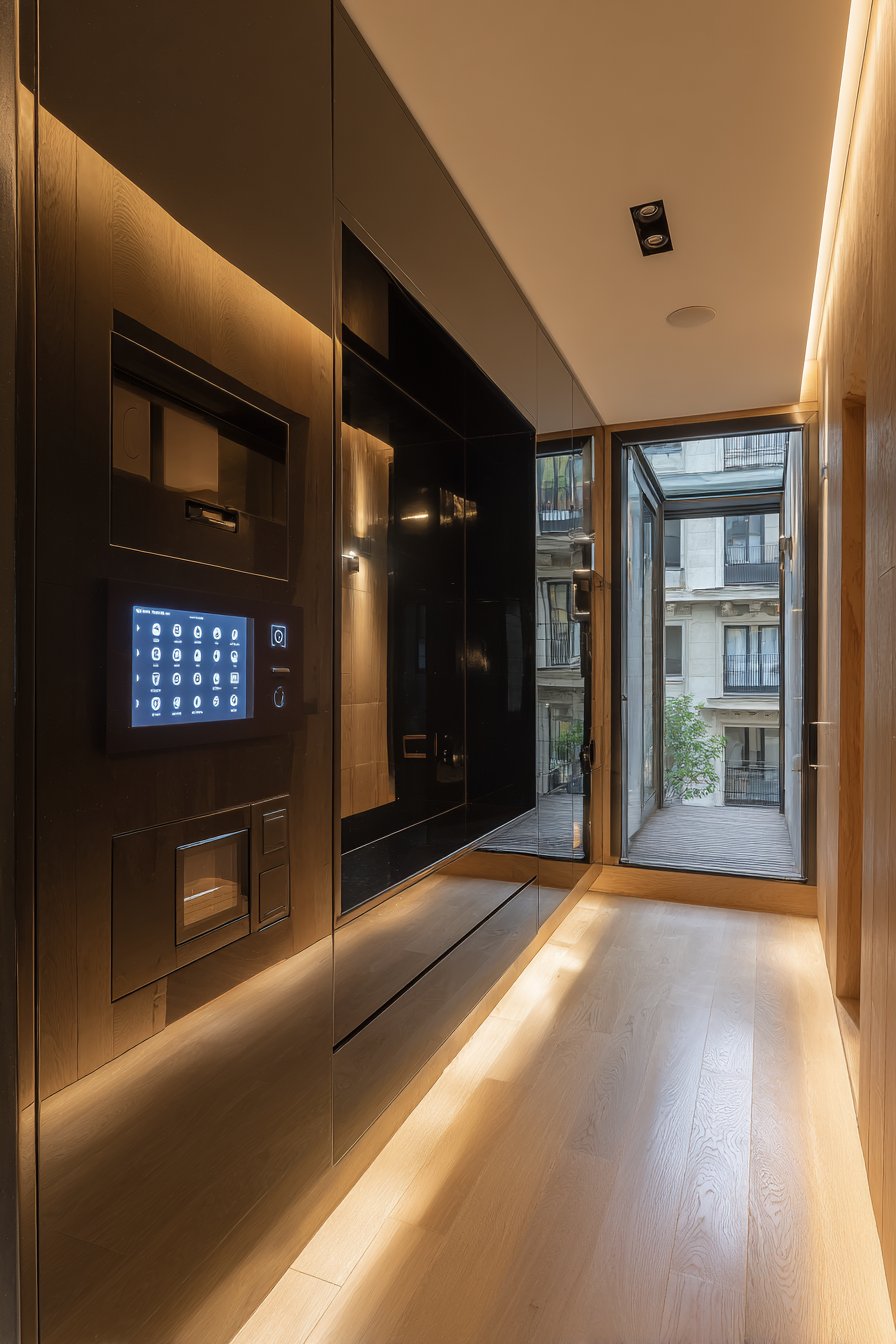
Key Design Tips: Integrate wall-mounted tablets or control panels for centralized smart home system management in entryways. Build charging stations into console furniture with multiple port types and wireless charging surfaces. Install motion-sensor LED strips along baseboards for automatic pathway lighting that requires no switches. Implement cable management systems to keep charging cords organized and invisible. Choose sleek black panels for technology interfaces to maintain sophisticated aesthetic integration.
24. Japanese-Inspired Minimalist Zen
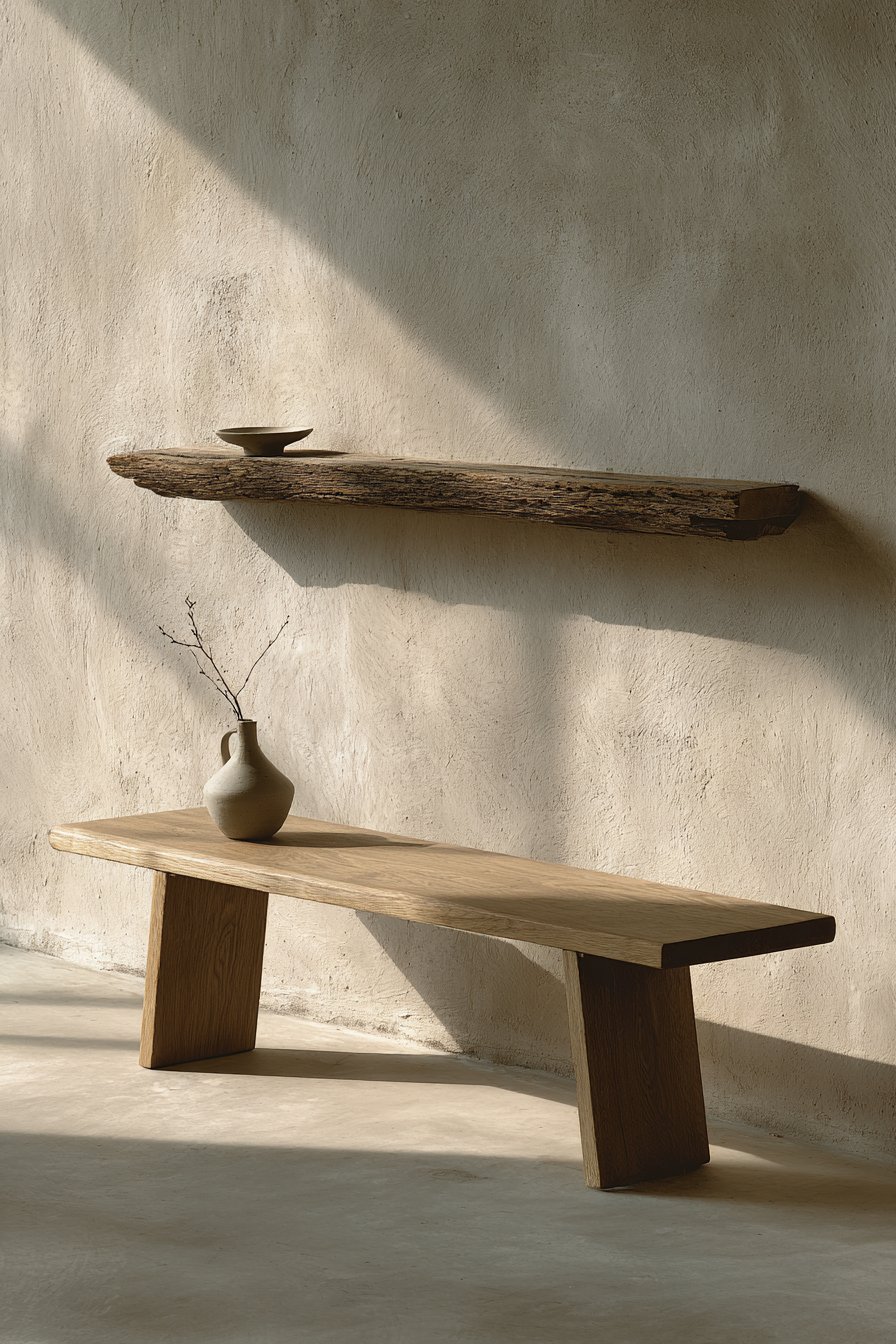
This narrow entryway channels Japanese design principles of restraint, natural materials, and intentional emptiness. A low platform bench in natural ash with simple lines and no visible hardware exemplifies the Japanese appreciation for pure form and honest construction. The bench sits close to the floor, creating a grounded, stable presence that encourages the mindful transition between outside and inside—the entryway as threshold deserving ritualistic respect.
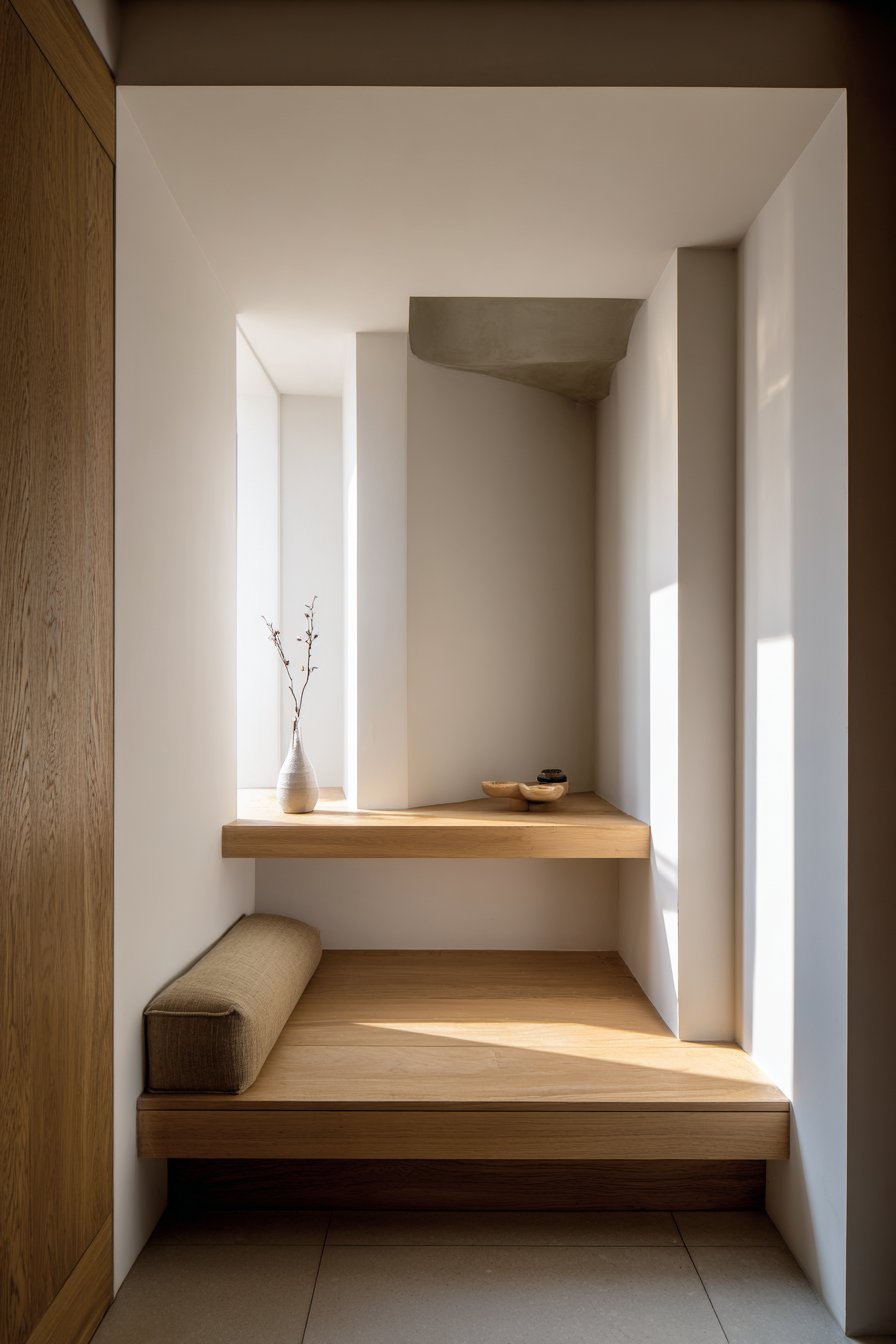
A single horizontal shelf in matching ash floats above at precise height, its exact placement demonstrating the Japanese attention to proportion and spatial relationships. The shelf holds minimal decoration—a small ceramic dish for keys and a single stem vase with one flower. This restraint embodies the Japanese concept of “ma” or negative space, where emptiness is valued as much as objects themselves.
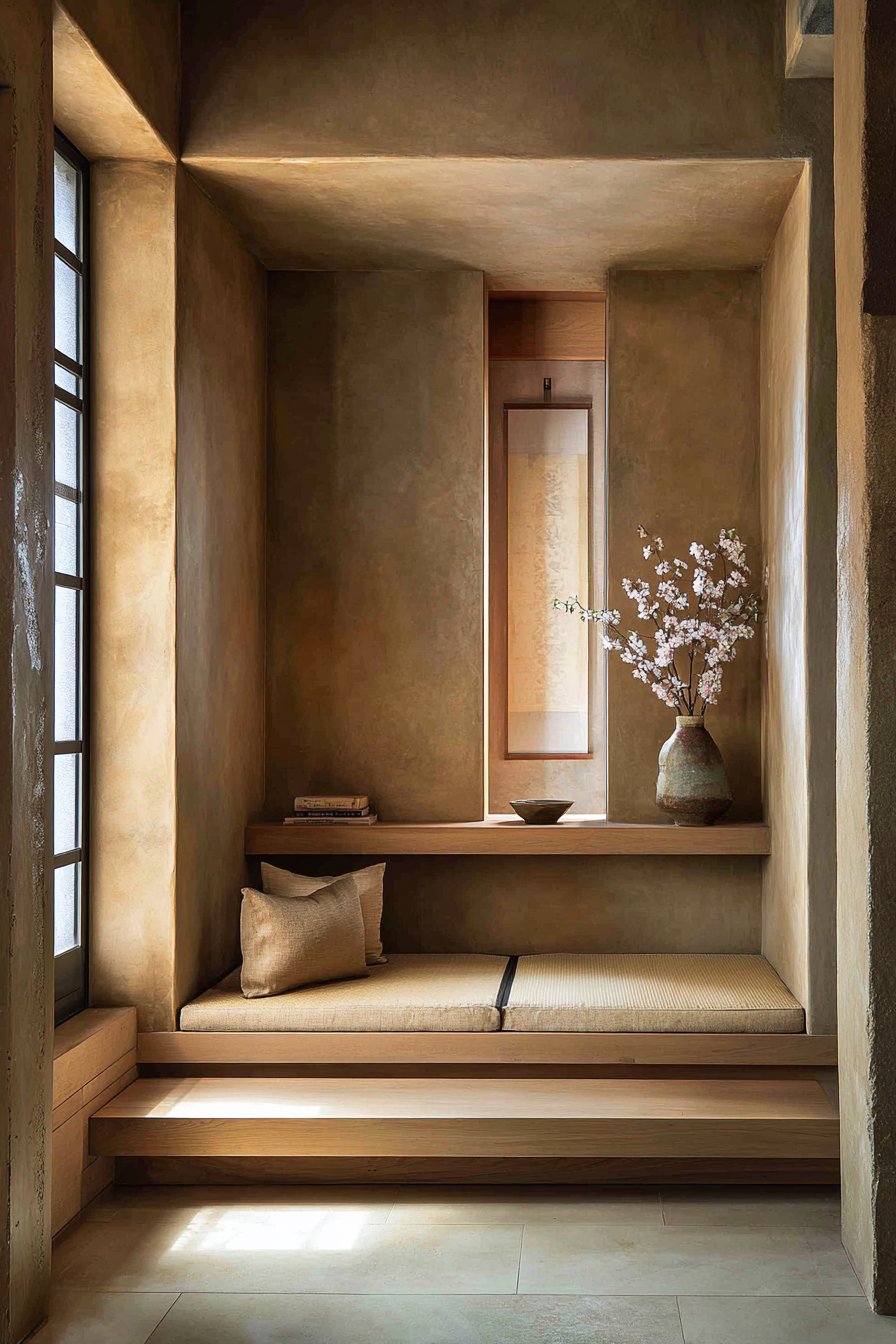
The stark simplicity is captured through interior design photography that emphasizes the interplay of light, shadow, and negative space. Soft natural lighting highlights the ash wood’s grain while casting gentle shadows that add depth without clutter. The overall composition demonstrates how Japanese-inspired design can make narrow spaces feel serene and intentional through the strategic use of emptiness and the careful placement of few, perfect elements.
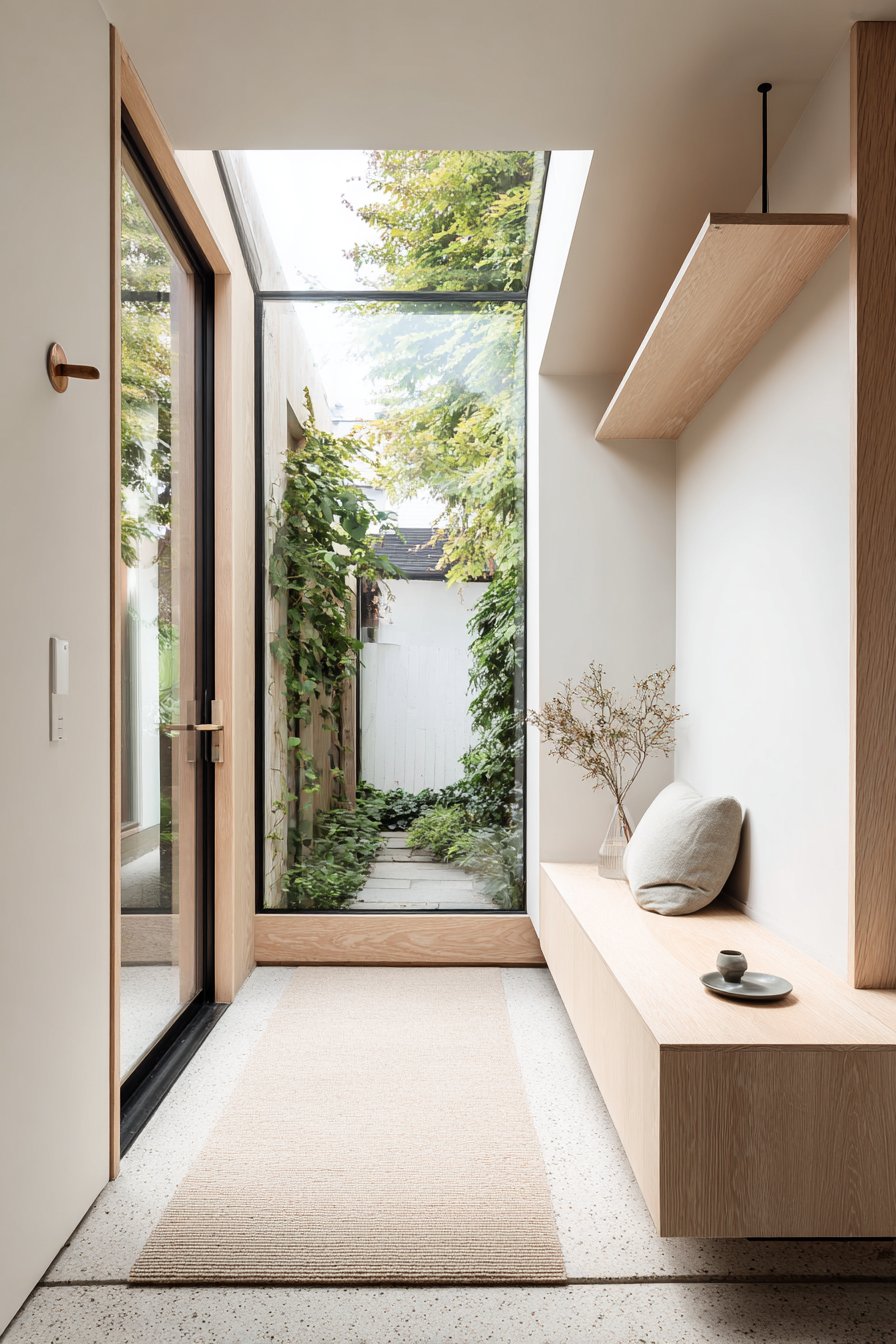
Key Design Tips: Choose low platform benches in natural light woods for Japanese-inspired calm and grounded presence. Eliminate visible hardware and construction details to achieve pure, simple forms. Display minimal objects with intentional placement that respects negative space as design element. Select natural ash or light woods that highlight grain patterns and natural beauty. Use single-stem flower arrangements to bring nature indoors with restraint and elegance.
25. Pet-Friendly Functional Design
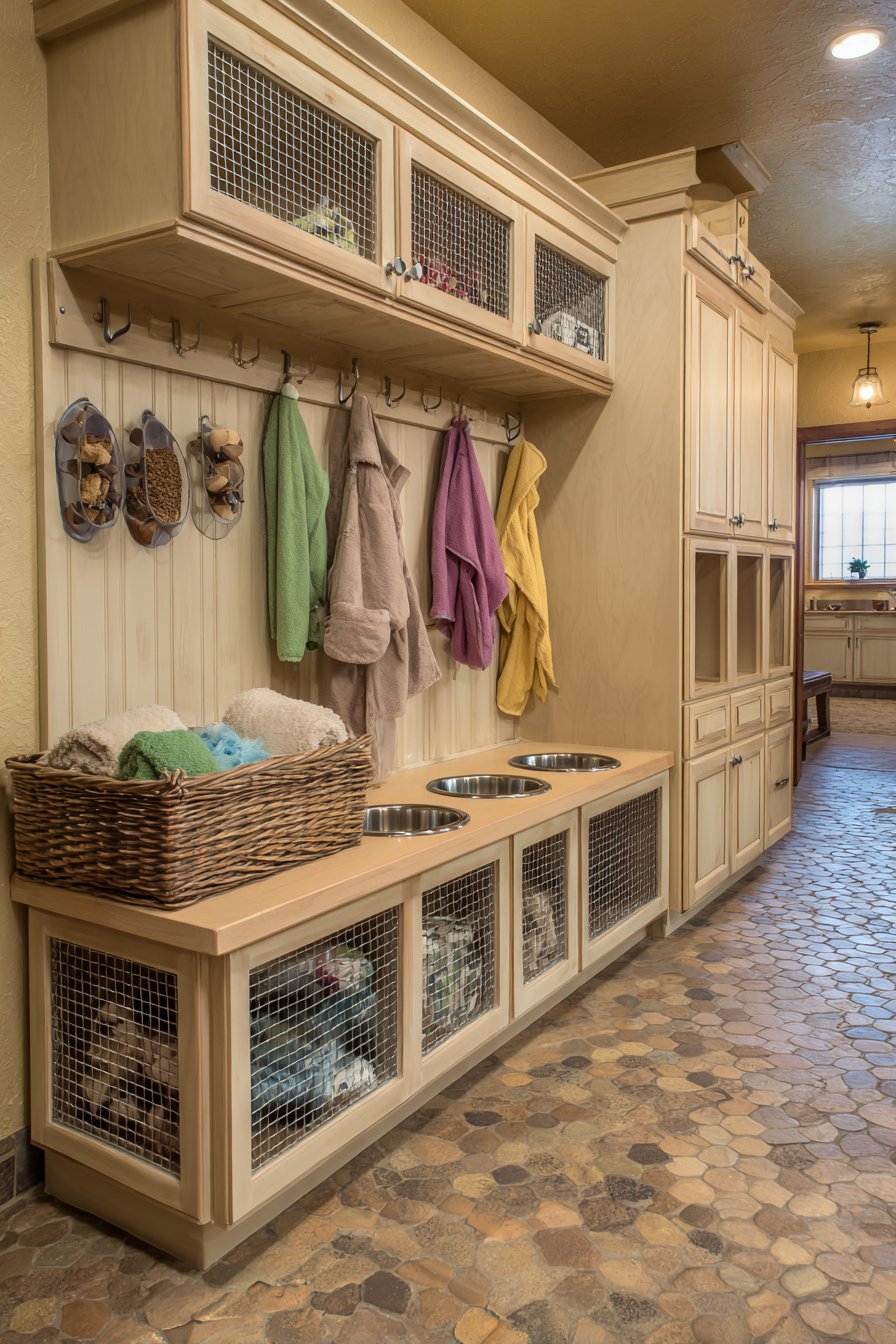
This narrow entryway addresses the specific needs of households with pets through thoughtfully integrated animal-friendly features. A built-in feeding station at floor level includes pull-out bowls that slide back into concealed compartments when not in use, keeping pet dining areas tidy and out of the walkway. This clever design acknowledges pets as family members deserving their own designated spaces while maintaining the overall organization and aesthetic of the home.
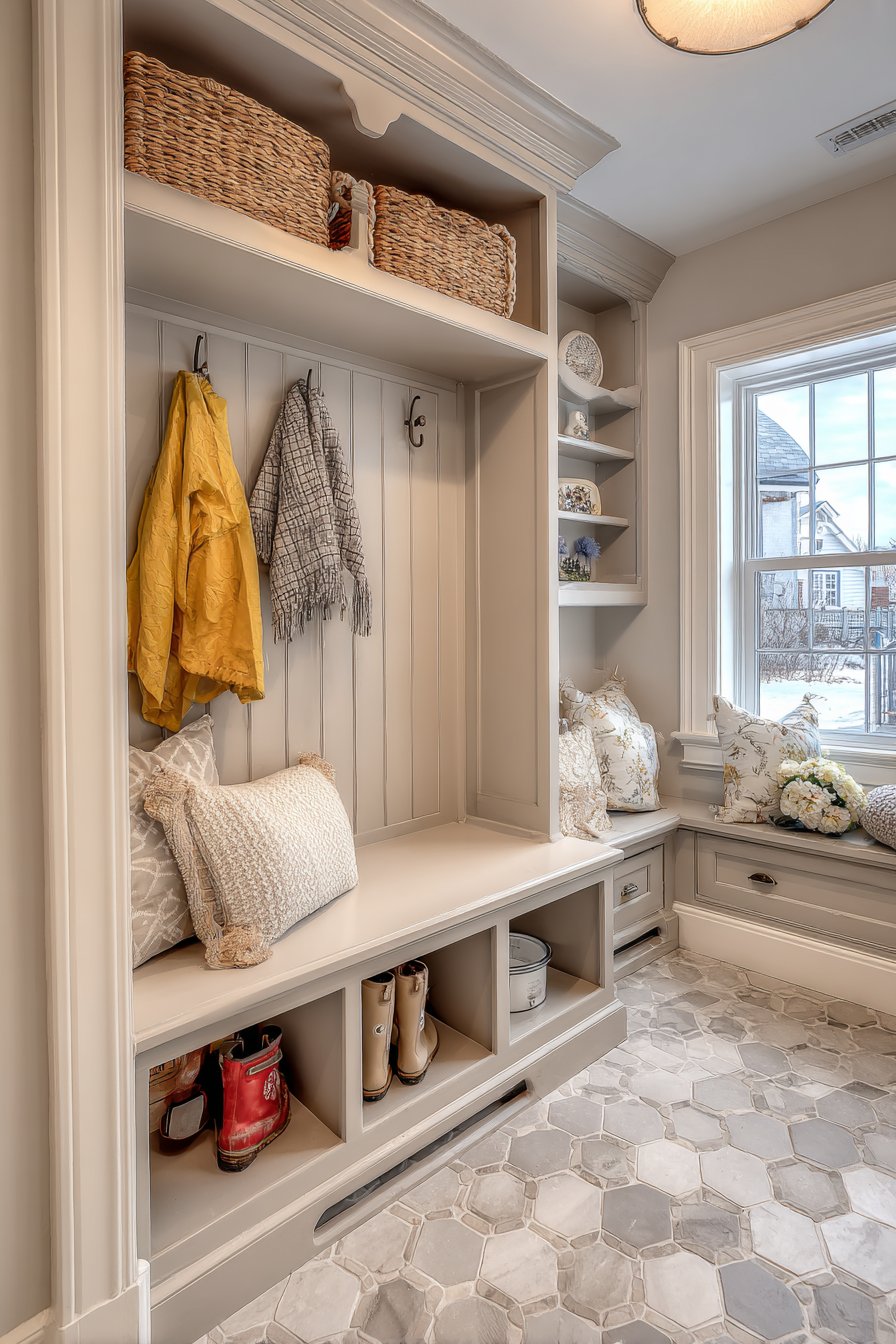
A low cubby provides dedicated storage for leashes, toys, and grooming supplies, positioned at a height where both humans can access items easily and dogs can’t reach and scatter contents. The cubby’s open design allows quick access when heading out for walks or playtime, eliminating the frustration of searching for necessary items. Wall-mounted hooks hold towels specifically for post-walk paw cleaning or rainy day fur drying.
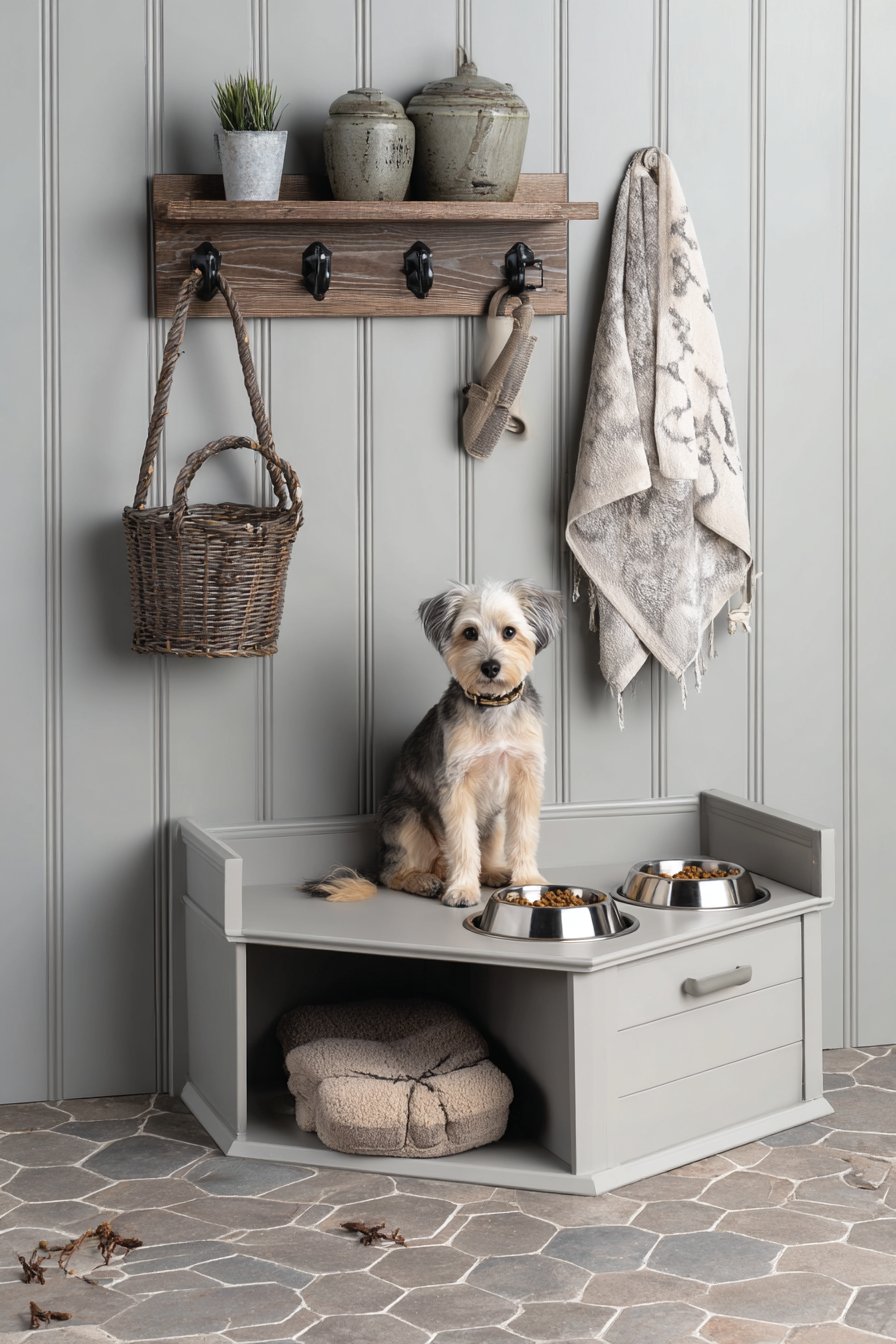
Durable tile flooring in a hexagonal pattern withstands muddy paws, water, and the general wear that pets bring to entryways. The hexagonal tiles create visual interest while their sealed surface provides easy cleaning—essential for spaces that regularly handle outdoor dirt and moisture. Wide-angle photography captures these thoughtful pet-focused details while showing how specialized features integrate seamlessly into the overall design.
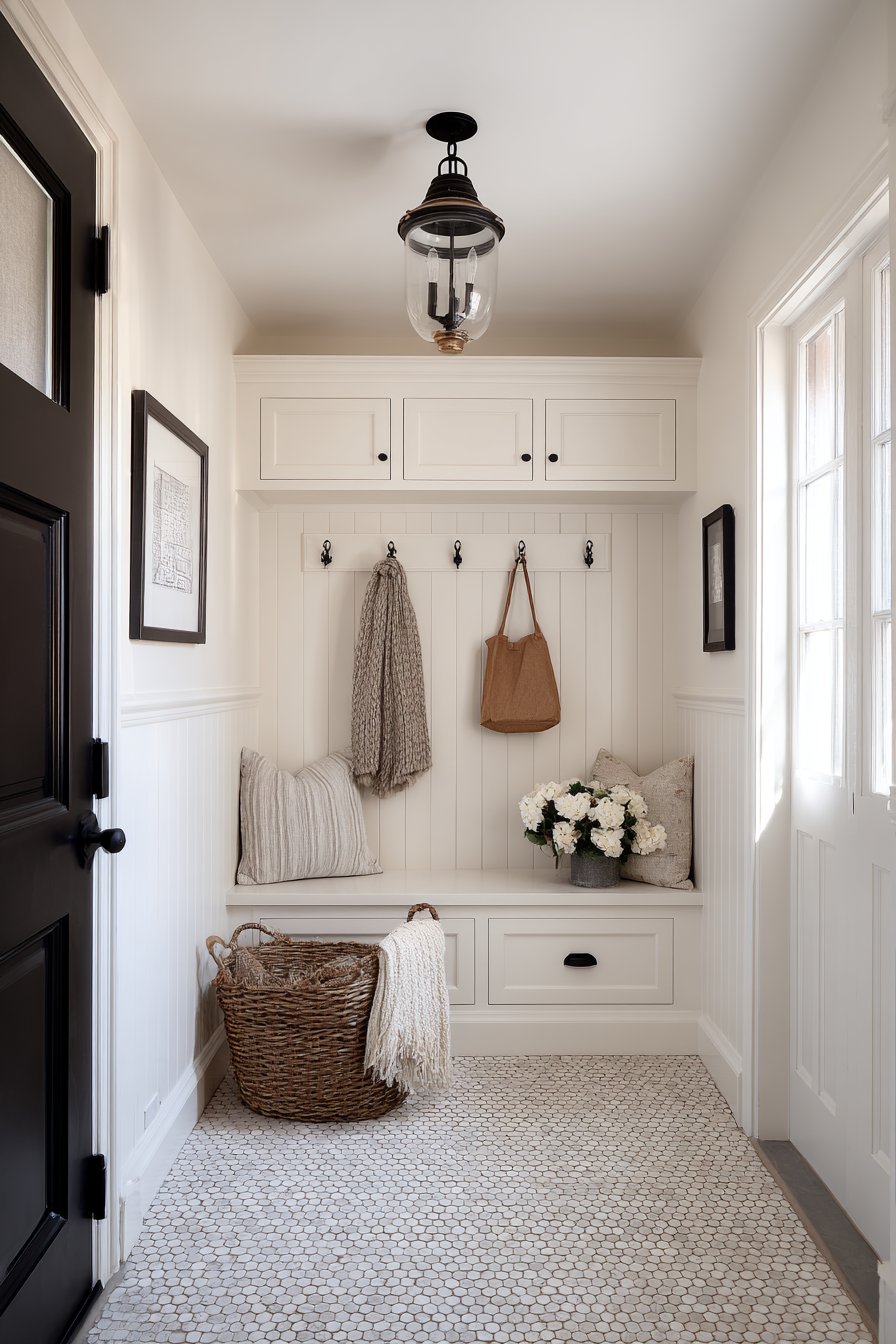
Key Design Tips: Install pull-out pet feeding stations that conceal when not in use to maintain clean walkways and organized appearance. Create dedicated low storage for pet supplies including leashes, toys, and grooming items. Select durable, water-resistant flooring materials that withstand muddy paws and frequent cleaning. Position wall-mounted hooks for pet towels at convenient heights near the entry door. Choose tile flooring with sealed surfaces for easy cleanup of tracked-in dirt and moisture.
26. Murphy-Style Transformable Workspace
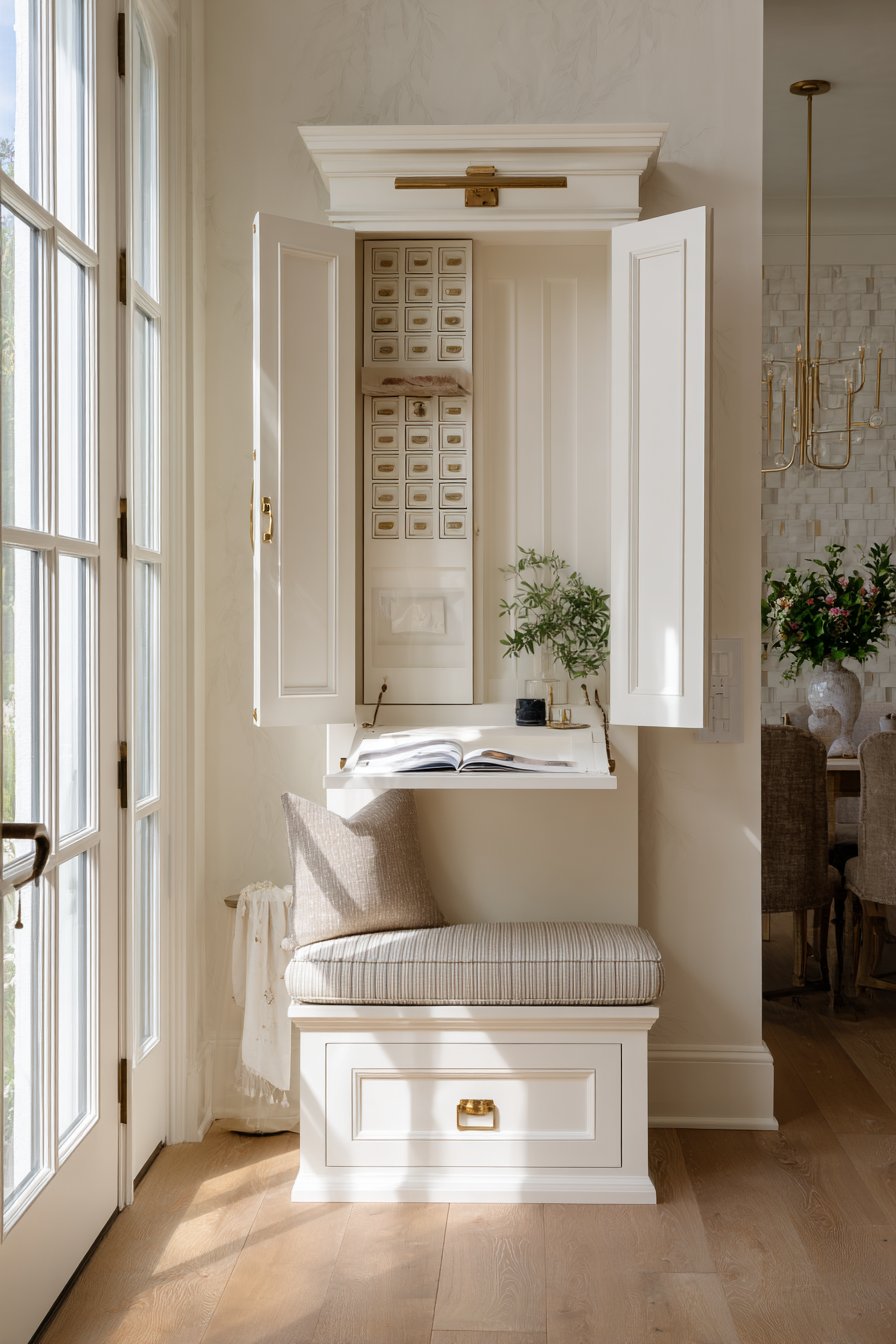
This narrow entryway demonstrates how a single wall can serve multiple functions through transformable furniture design. A murphy-style drop-down desk folds flat against the wall when not in use, painted in soft white with elegant gold hardware. When folded up, it presents as a decorative panel; when dropped down, it reveals small compartments for mail sorting, bill organization, and key storage, transforming the entryway into a functional command center.
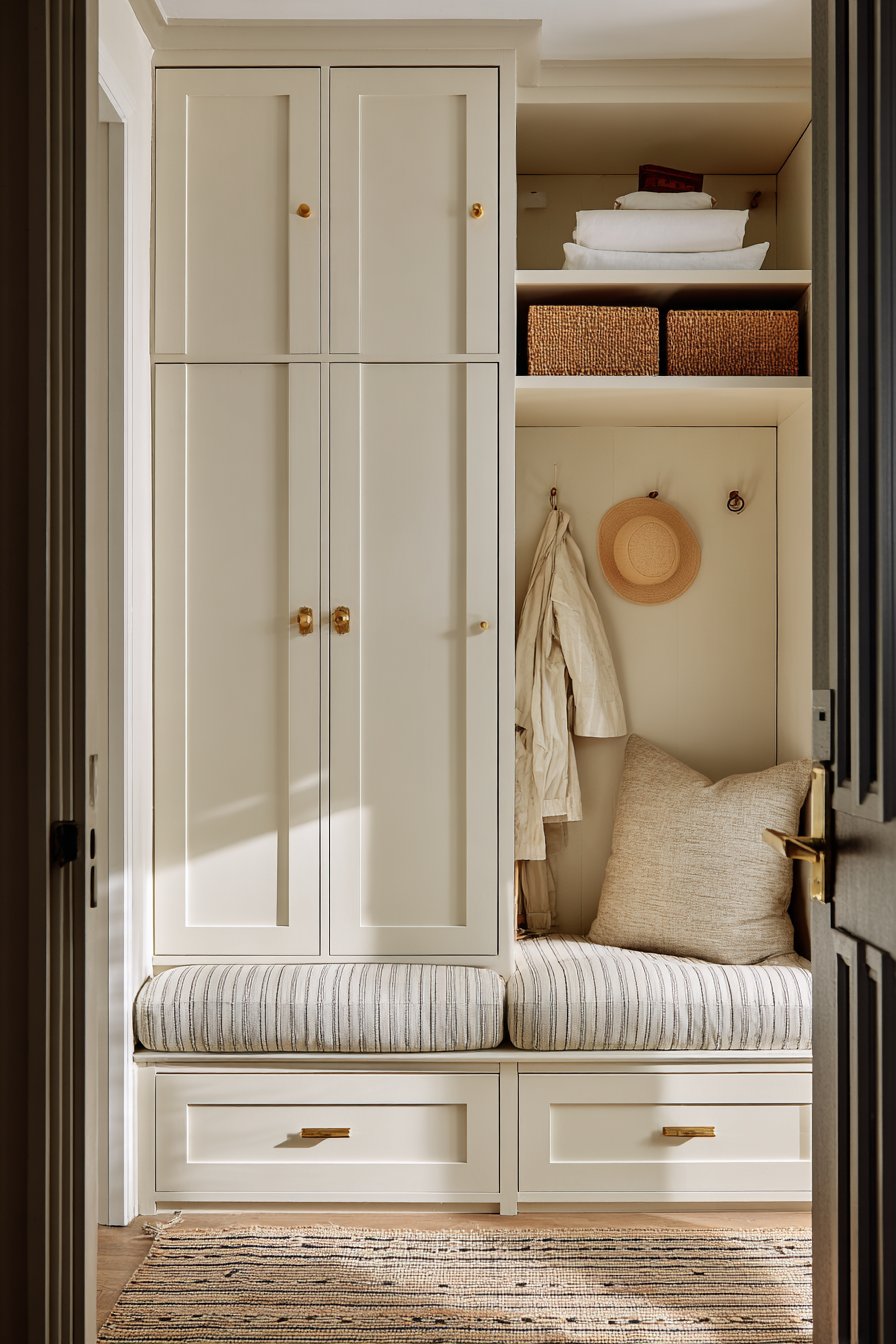
The genius of this design lies in its flexibility—the space can shift from pure circulation corridor to working surface and back again within seconds. This adaptability makes it perfect for small homes where dedicated office space doesn’t exist, allowing the entryway to occasionally function as a mail sorting station, homework spot, or quick work-from-home perch.
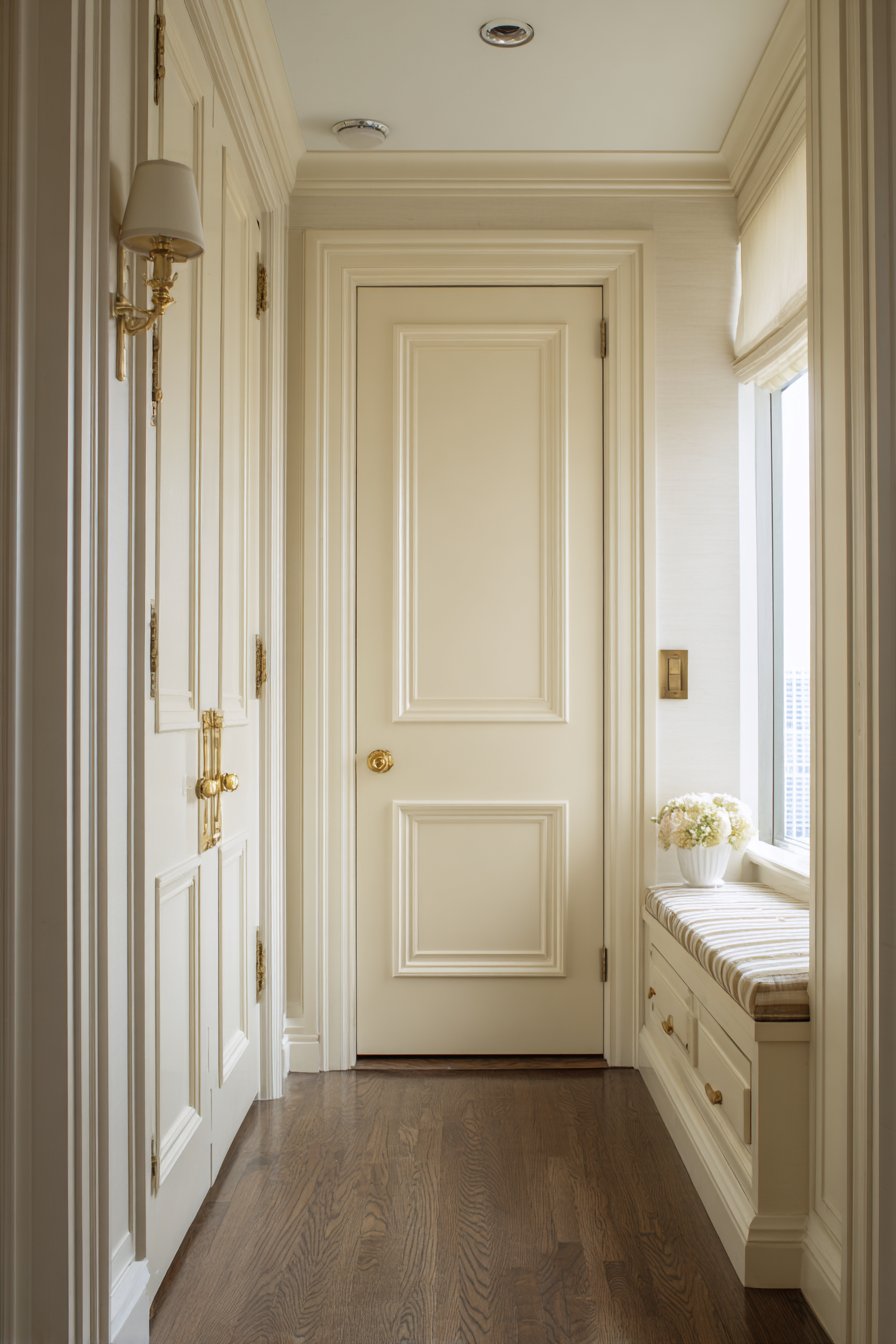
Below the drop-down desk, a narrow storage bench provides seating while its lift-top cushion in striped linen conceals additional storage. The bench maintains functionality whether the desk is deployed or folded away, ensuring the space always serves multiple purposes. Interior photography highlights both configurations, showing how the transformable elements work seamlessly to provide comprehensive functionality within minimal square footage.
Key Design Tips: Install murphy-style fold-down desks that disappear against walls when not needed for flexible space usage. Include organizational compartments within fold-down surfaces for mail, keys, and small items. Paint transformable furniture in light colors to minimize visual impact when deployed. Choose elegant hardware details in gold or brass to elevate utilitarian furniture pieces. Position storage benches below fold-down surfaces for complementary functionality that works in all configurations.
27. Dramatic Dark Walls with Jewel Tone Accents
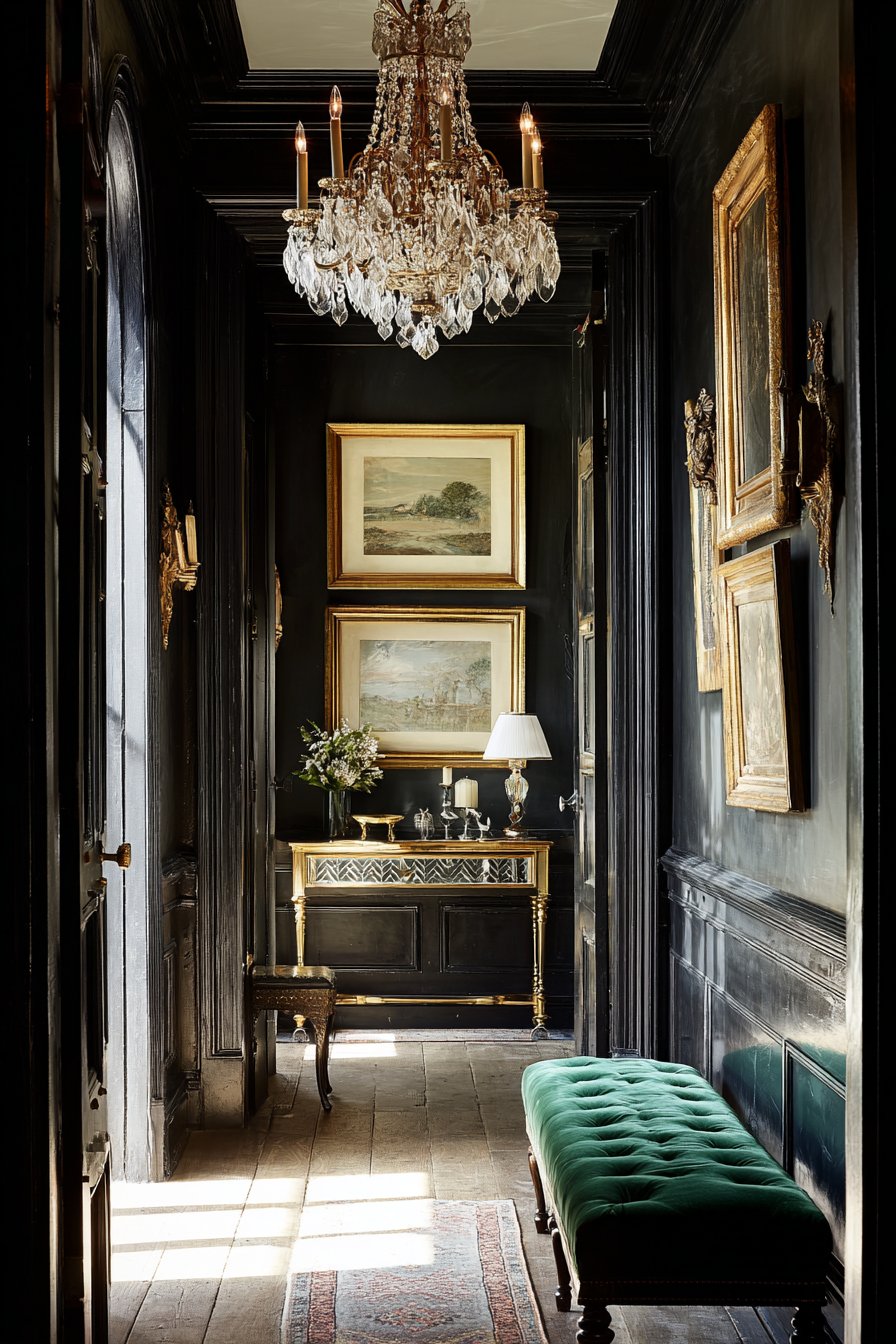
This narrow entryway proves that small spaces don’t always require light colors, demonstrating how dramatic choices can create intimate, sophisticated atmospheres. Black walls create enveloping ambiance that transforms the narrow corridor from potential liability into intentional drama. This bold choice works because metallic and reflective elements bounce light throughout the space, preventing it from feeling like a dark tunnel.
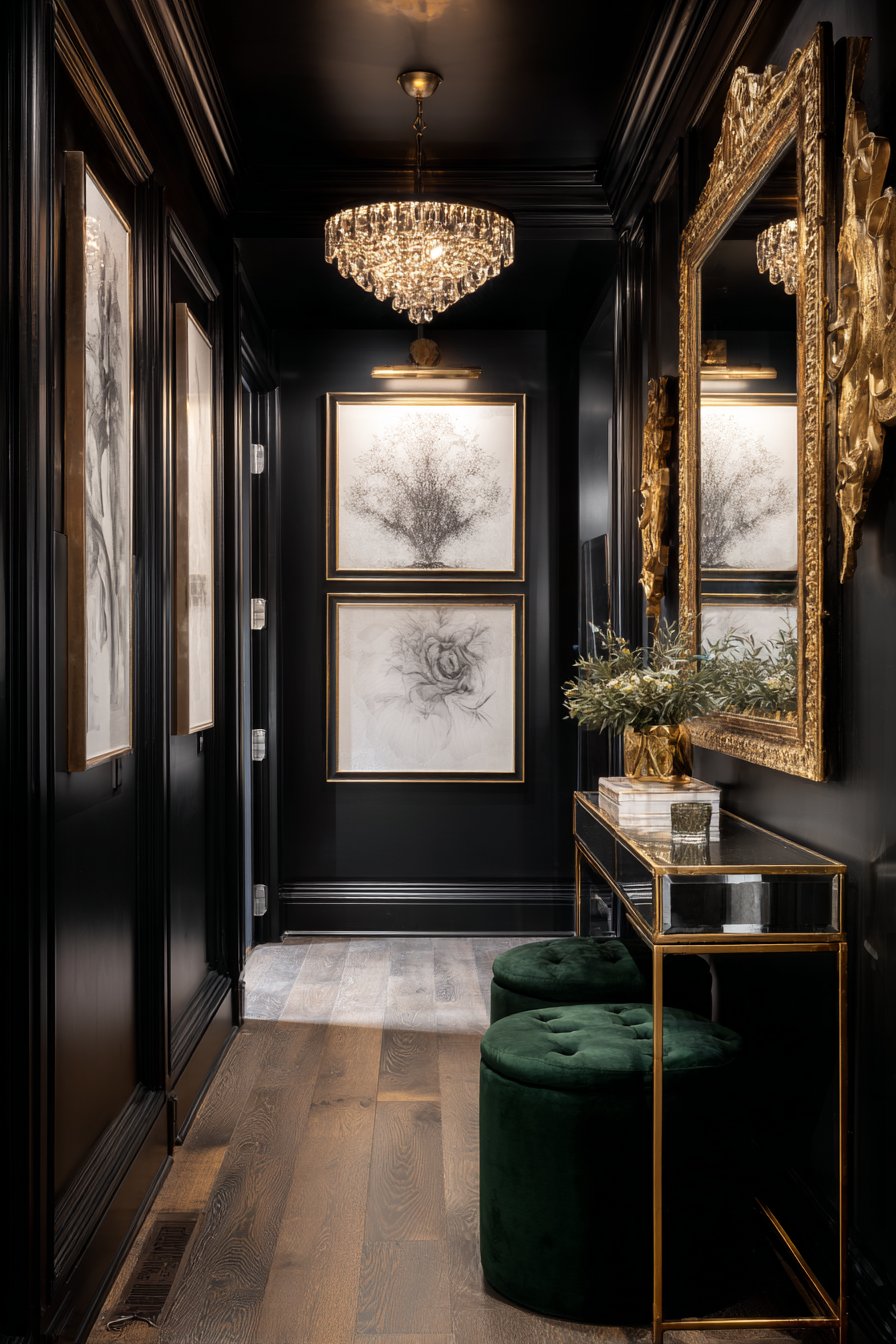
A brass console table with glass top and mirrored backing reflects and multiplies available light, its transparent and reflective surfaces ensuring the dark walls don’t create oppressive closure. The brass frame adds warm metallic glow while the glass top maintains visual openness. Gold-framed artwork continues the metallic theme, adding glamour and visual interest against the dramatic black backdrop.
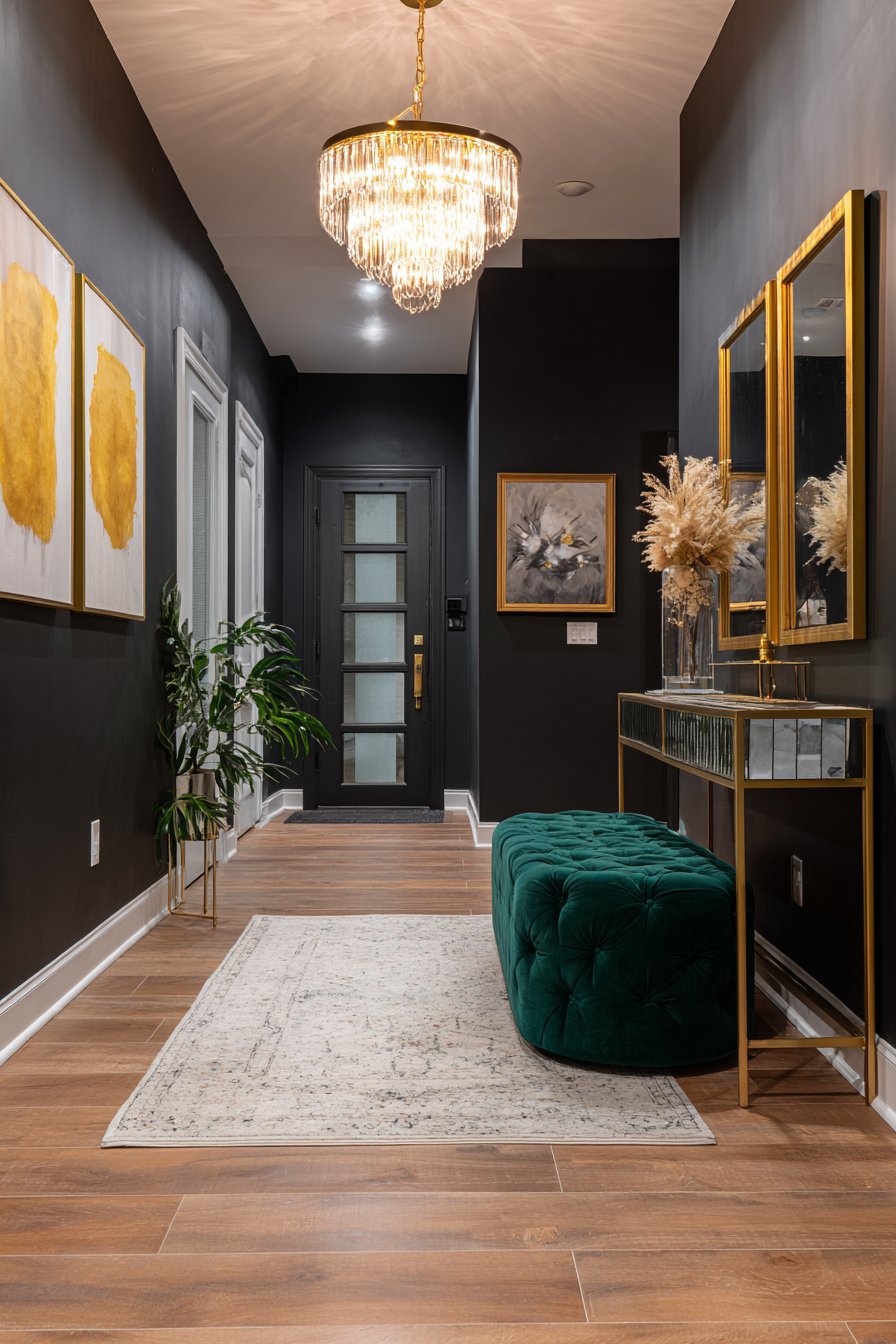
A statement chandelier with crystal accents serves as the jewelry of the space, its prismatic elements catching and scattering light throughout the narrow corridor. A plush velvet ottoman in emerald green provides jewel-tone contrast, its rich color singing against the black walls while its sumptuous fabric invites touch. Professional interior photography captures this bold approach with dramatic lighting that emphasizes luxury details and the interplay between dark surfaces and reflective elements.
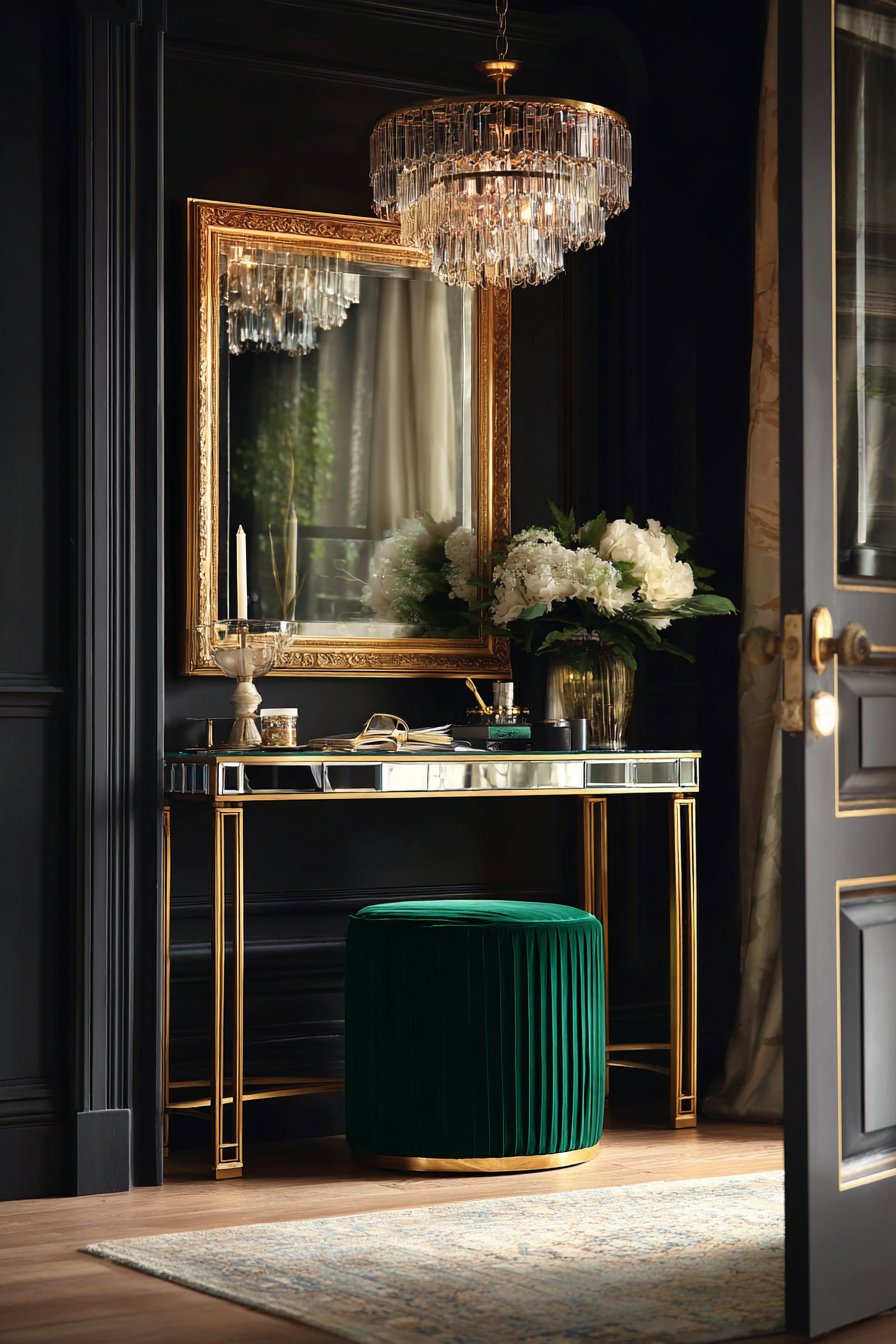
Key Design Tips: Use dramatic dark wall colors in narrow entryways when incorporating substantial metallic and reflective elements to bounce light. Choose furniture with glass tops and mirrored elements to maintain visual openness despite dark backgrounds. Add statement lighting with crystal or glass elements to scatter and multiply available light. Introduce jewel-tone accents through upholstery or accessories for vibrant color contrast against dark walls. Select brass or gold metallic finishes to add warmth and glamorous glow.
28. Comprehensive Mudroom System Integration
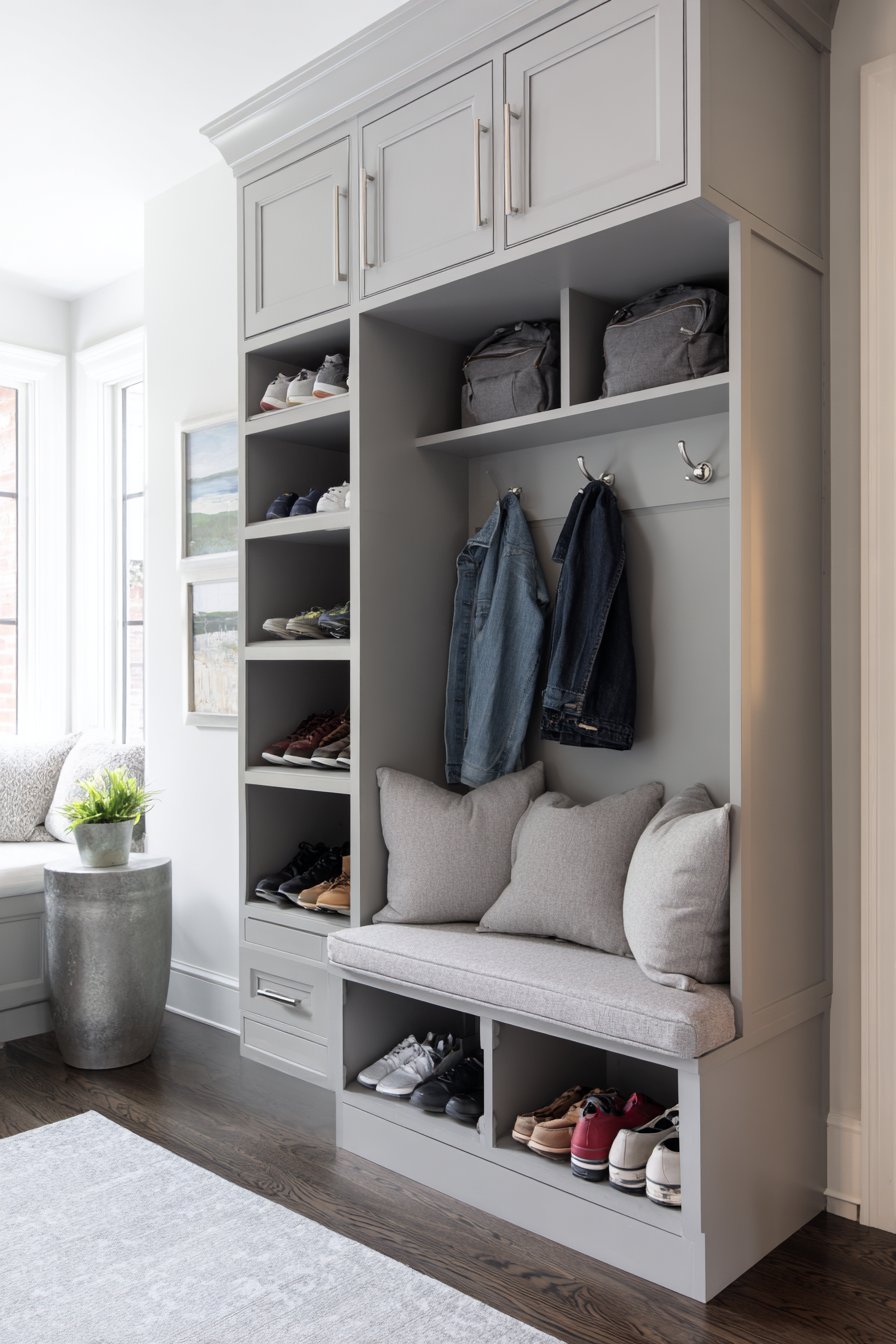
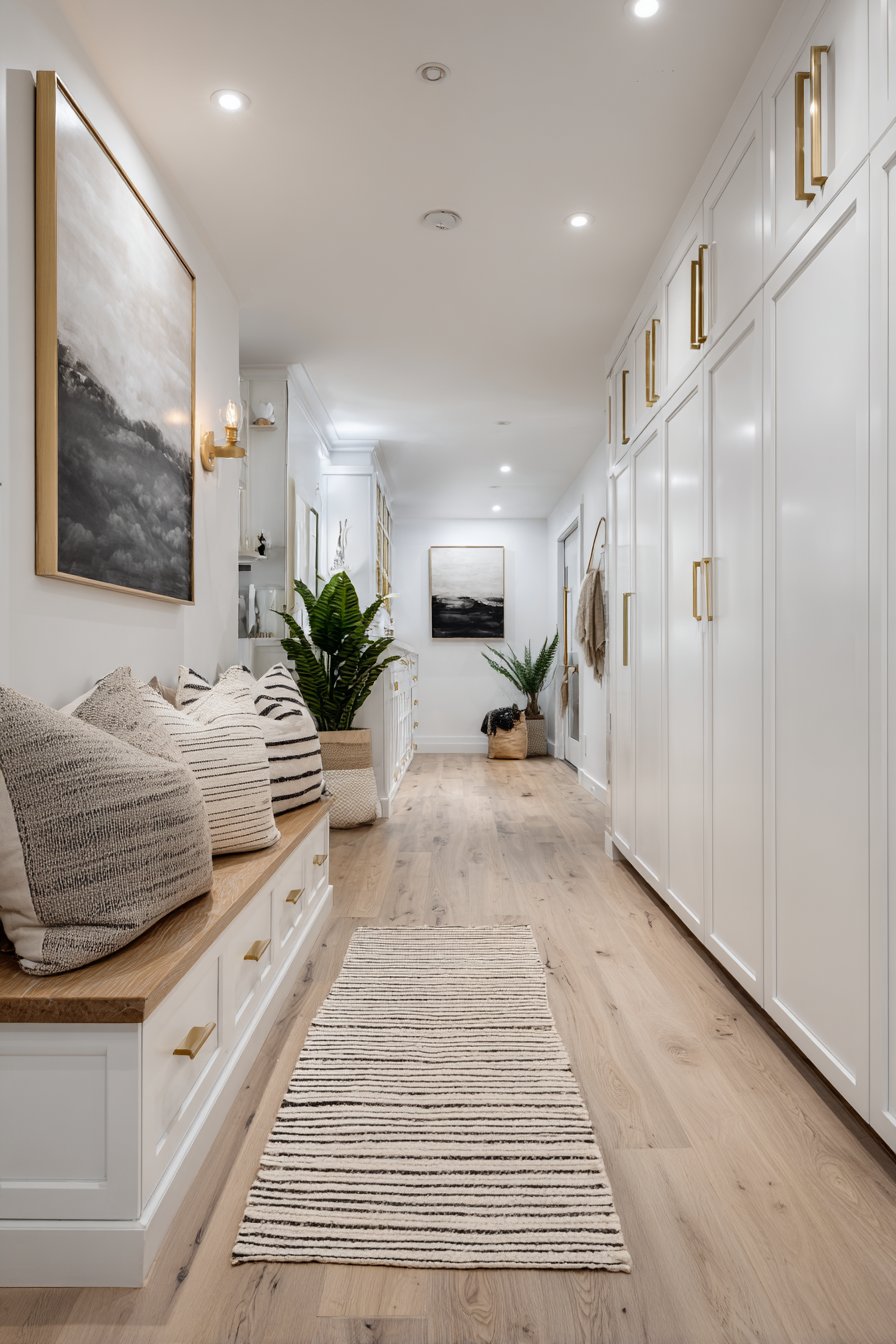
This narrow entryway features a custom built-in mudroom system that demonstrates how professional-level organization can be achieved even in confined corridors. The floor-to-ceiling system spans one full wall, incorporating closed upper cabinets for seasonal storage, open cubbies at mid-level with individual hooks for daily items, and lower drawers for shoe organization. This vertical stacking of storage types maximizes capacity while maintaining a slim overall profile that preserves walkway clearance.
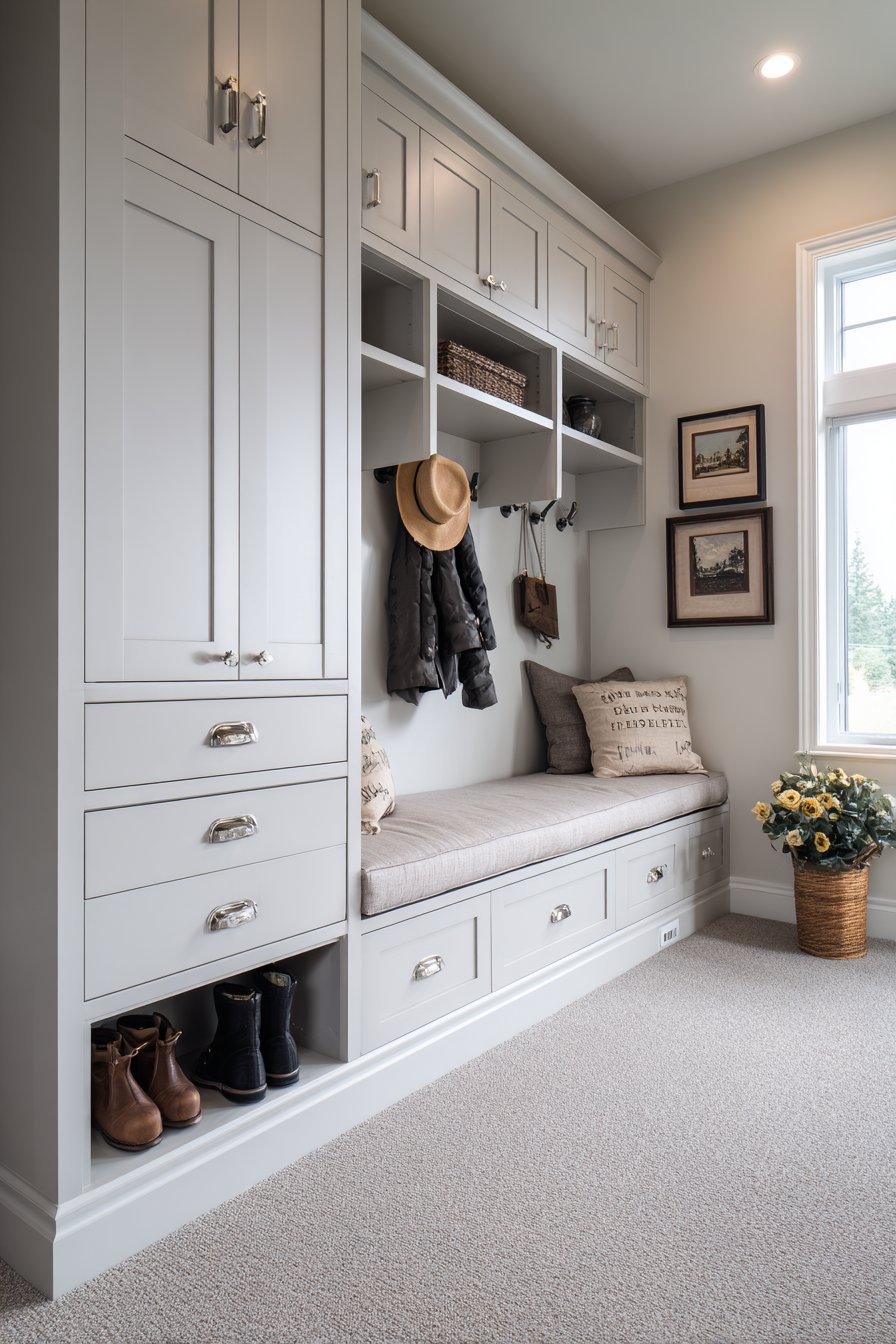
The system is finished in soft dove gray, a sophisticated neutral that creates visual calm despite the storage density. Brushed nickel hardware provides refined detailing while offering easy operation. Each family member can have designated cubbies and hooks, preventing the territorial disputes and organizational chaos that often characterize shared entryway spaces.
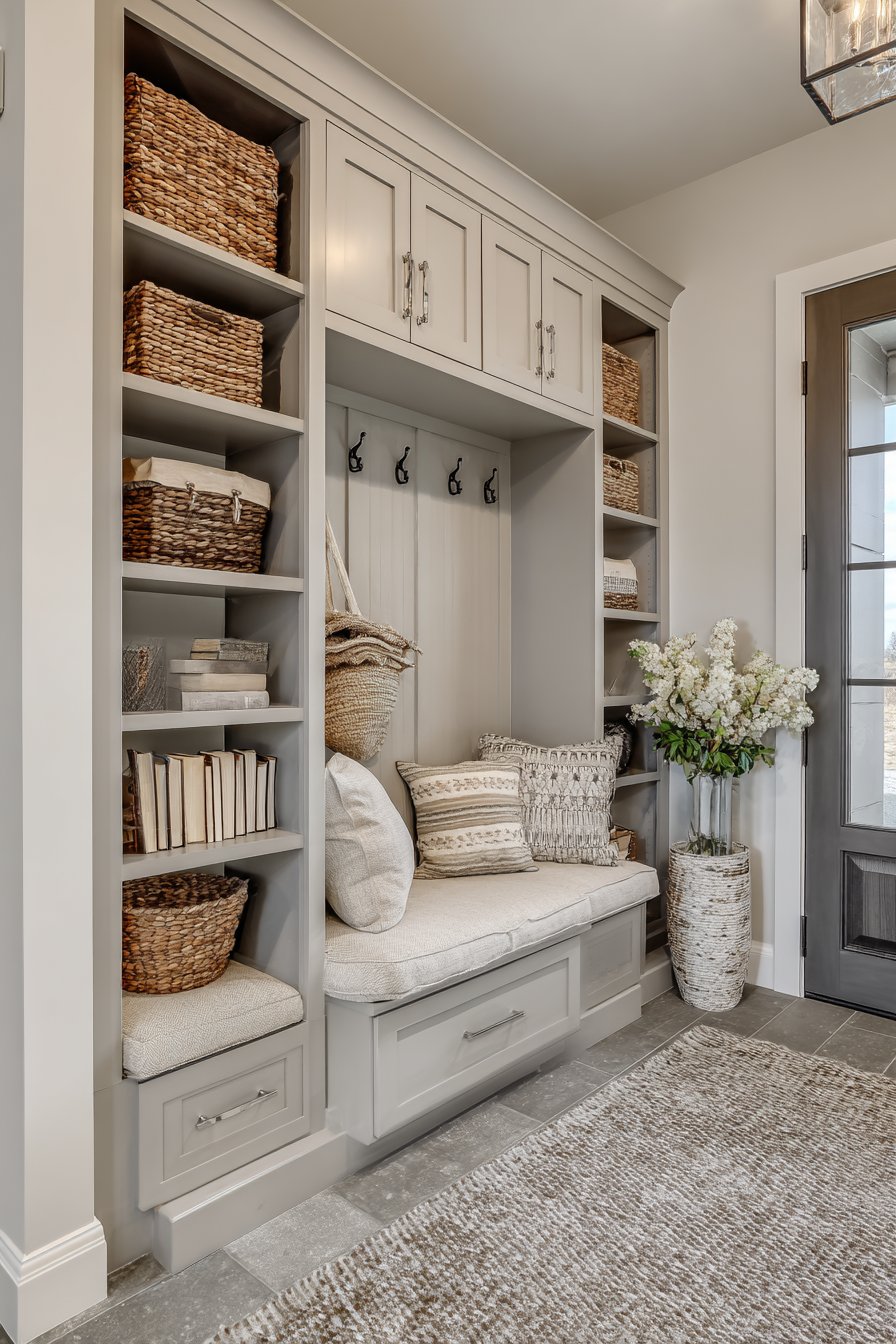
A padded bench cushion in durable canvas creates a cohesive look while providing comfortable seating integrated into the storage system. The cushion’s neutral tone matches the cabinet finish, maintaining visual unity across the comprehensive system. Interior design photography captures the system with wide-angle perspective that shows the full extent of the organizational solution while highlighting individual functional elements and the quality of construction and finish details.
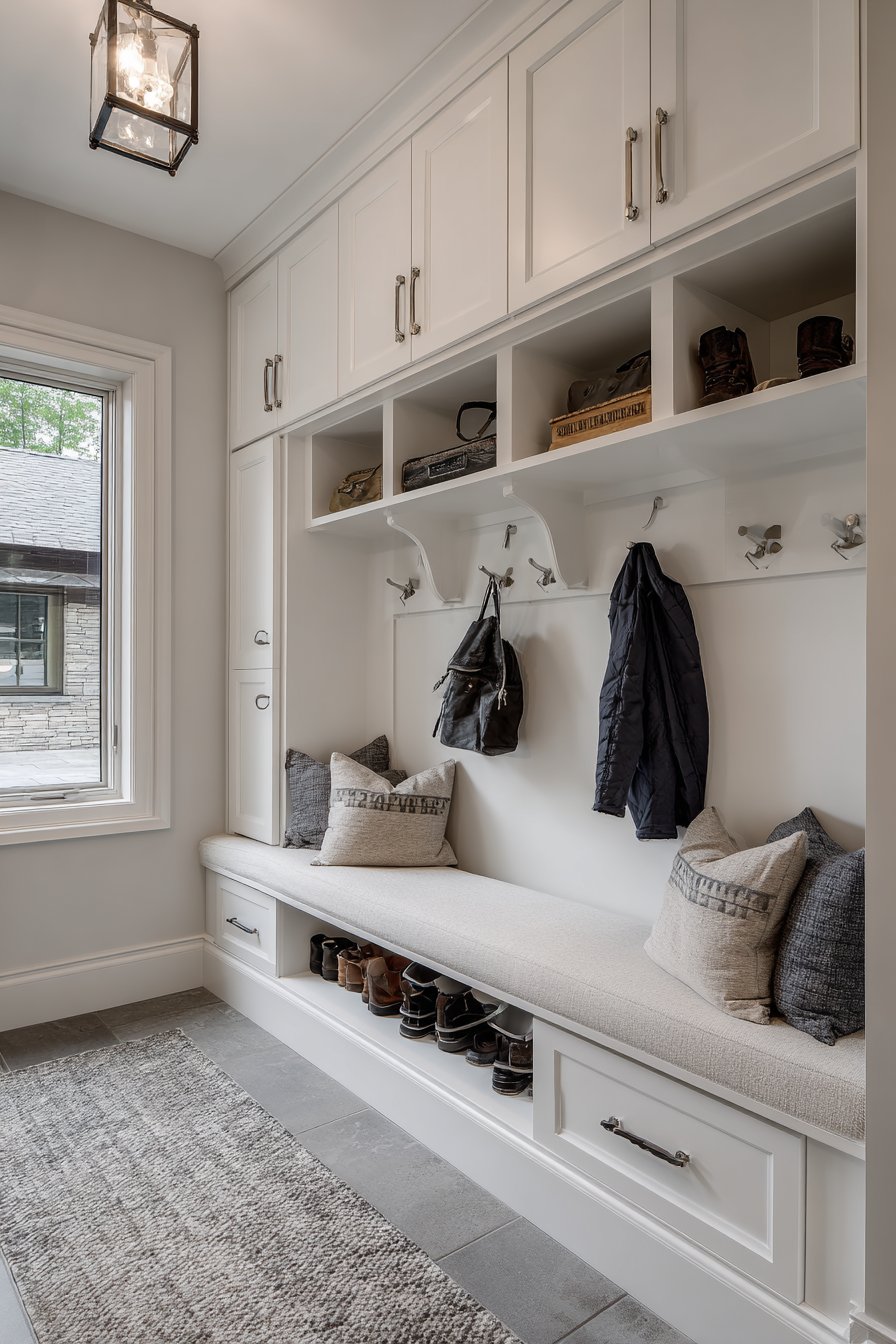
Key Design Tips: Design floor-to-ceiling built-in systems to maximize storage capacity while maintaining narrow profiles in confined entryways. Stack different storage types vertically including closed cabinets, open cubbies, and drawer systems. Finish built-ins in sophisticated neutrals like soft gray to create calm despite storage density. Assign individual cubbies and hooks to each household member to prevent organizational chaos. Integrate padded seating into built-in systems for cohesive appearance and space efficiency.
29. Gallery Wall with Strategic Spacing
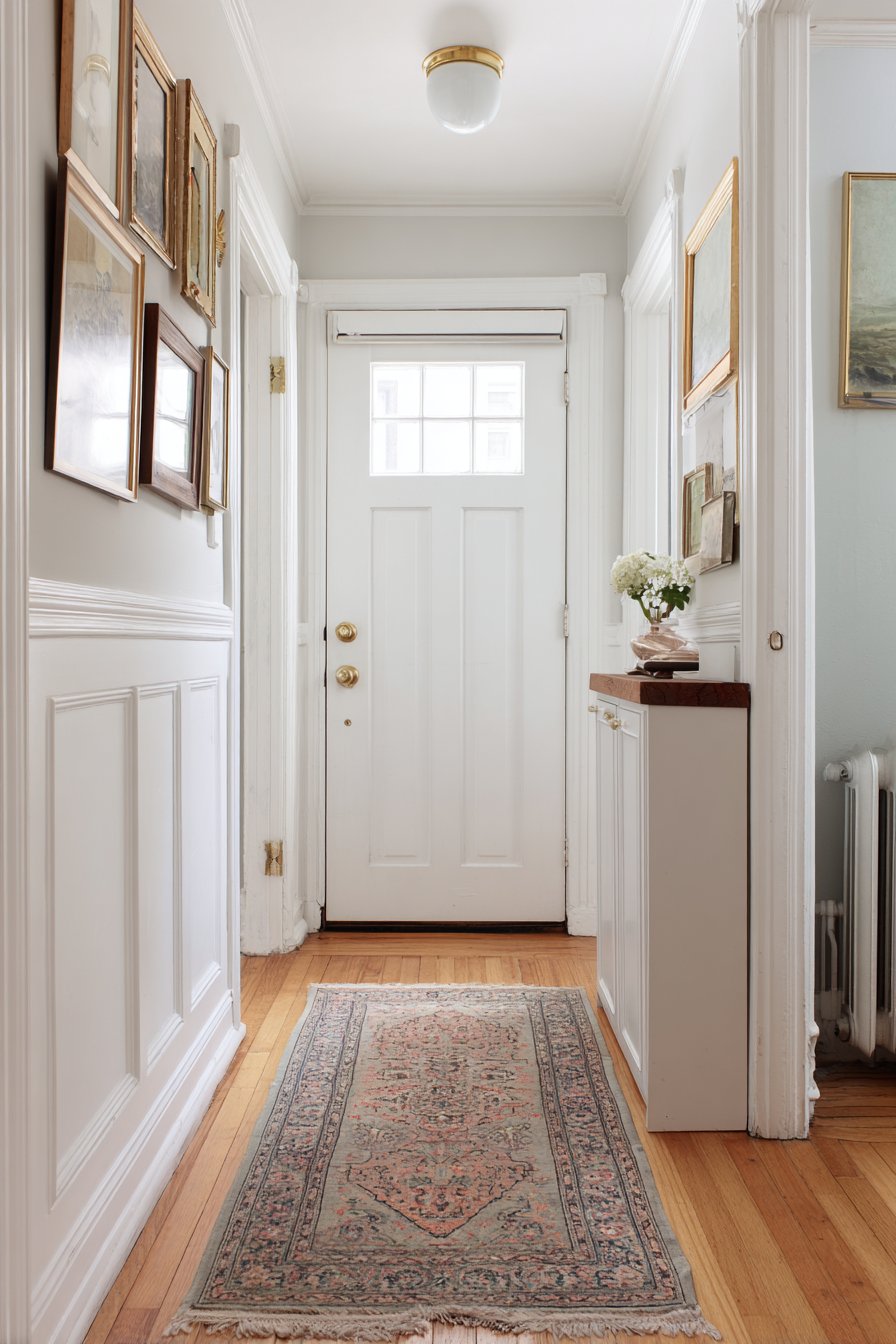
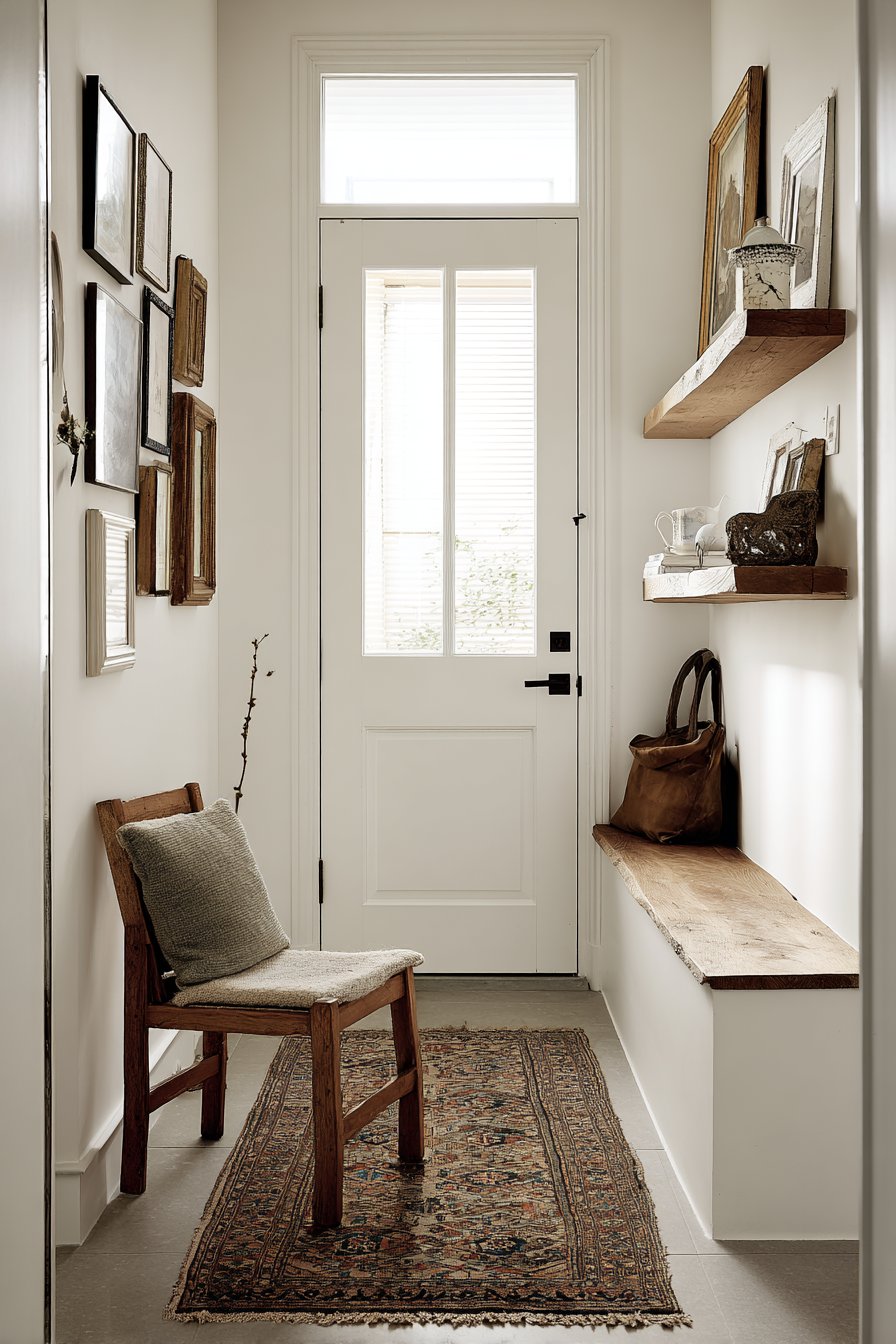
This narrow entryway transforms one long wall into a personal art gallery through carefully arranged frames of varying sizes and styles. The gallery wall creates visual interest and personality without requiring any floor space—proving that vertical surfaces offer prime real estate in narrow corridors. Strategic spacing between frames prevents the wall from feeling cluttered or overwhelming, maintaining breathing room that’s essential in tight quarters.
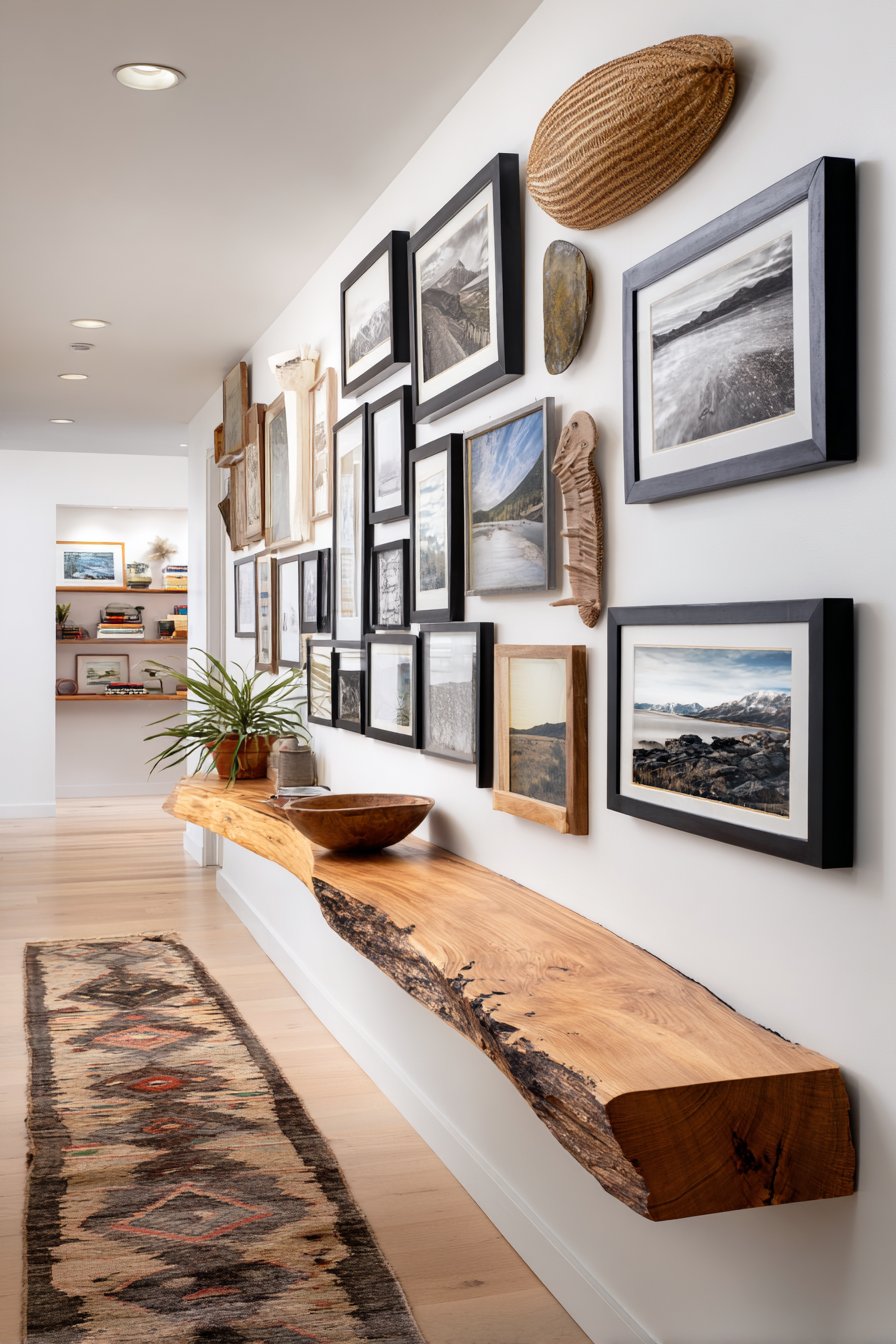
Opposite the gallery wall, a single floating shelf in live-edge walnut provides a landing spot for keys, mail, and daily essentials. The natural edge of the wood brings organic beauty and textural contrast to the more formal arrangement of framed art across from it. This asymmetrical approach balances detailed visual interest on one side with minimal functional elements on the other, preventing the space from feeling busy or overwhelming.
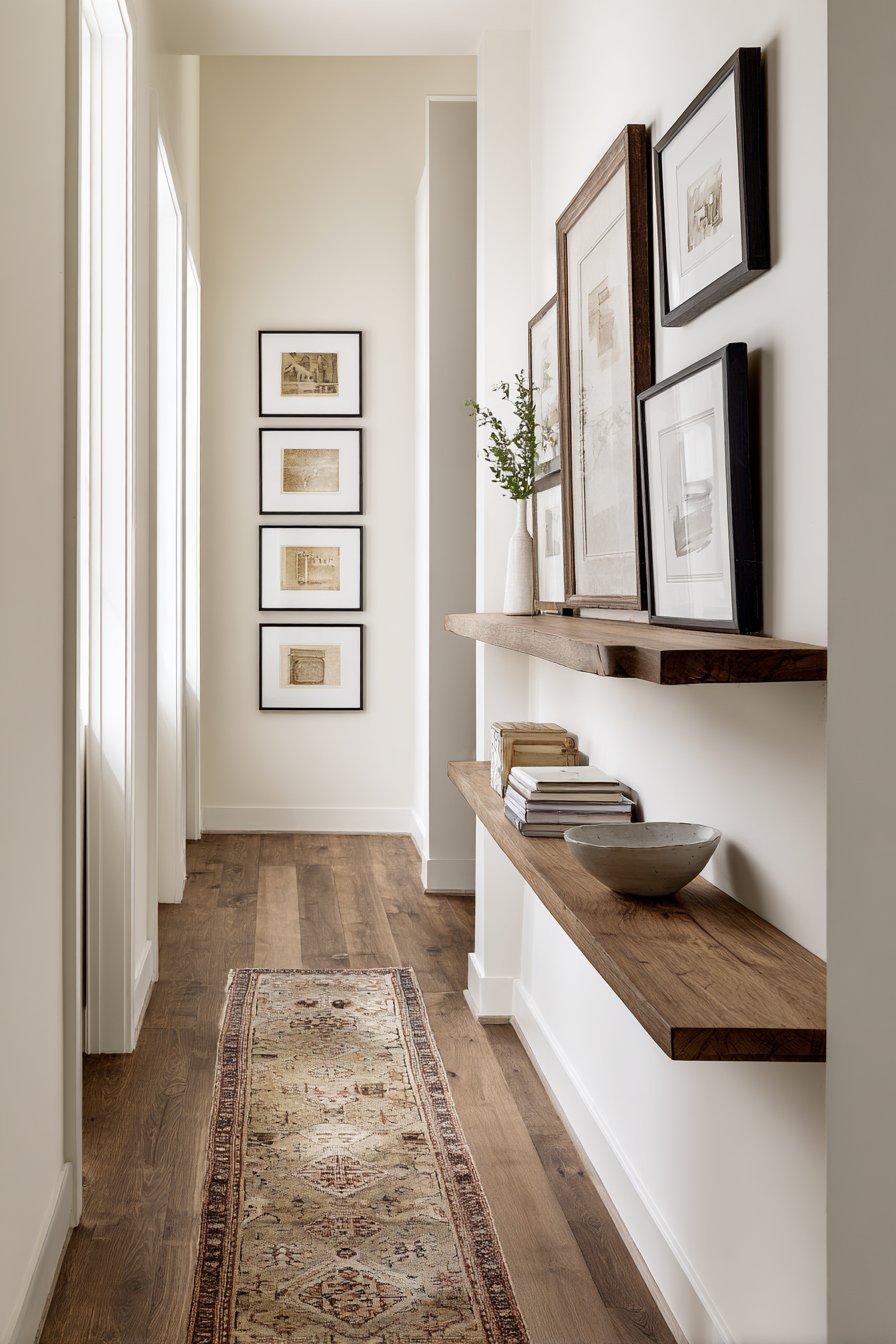
A vintage Turkish runner in muted earth tones adds warmth underfoot, its complex pattern providing visual interest at floor level without competing with the gallery wall above. The runner’s subdued colors allow it to complement rather than compete with the varied artwork. Natural lighting from nearby windows illuminates both the gallery wall and the live-edge shelf, creating interplay between the curated art collection and the natural beauty of the wood grain.
Key Design Tips: Create gallery walls with strategic spacing between frames to maintain visual breathing room in narrow corridors. Mix frame sizes and styles for collected-over-time authenticity rather than overly matched uniformity. Balance detailed gallery walls with minimal opposite walls to prevent visual overwhelming. Use live-edge wood shelving to add organic beauty and textural contrast to formal framed art. Choose vintage runners with muted colors that complement rather than compete with wall displays.
Why These Narrow Entryway Ideas Represent the Best Design Solutions
The twenty-nine narrow entryway ideas presented in this comprehensive guide represent the pinnacle of small-space design thinking, each addressing the unique challenges of confined corridors while offering distinct aesthetic and functional advantages. These designs succeed because they embrace fundamental principles that make narrow entryway design effective: vertical maximization, strategic storage solutions, visual expansion techniques, and the careful balance between functionality and beauty.
The most successful narrow entryway designs understand that vertical space is precious real estate. Ideas like the vertical storage mastery with floating walnut console, the comprehensive mudroom system integration, and the concealed storage with louvered cabinets demonstrate how building upward rather than outward allows maximum storage capacity without sacrificing walkway clearance. These approaches utilize the full height of walls, transforming what would be unused upper space into valuable organizational zones that keep floor areas clear and movement unimpeded.
Material selection plays a crucial role in narrow entryway success, as evidenced by designs incorporating natural woods, strategic metallics, and light-reflective surfaces. The Scandinavian simplicity with birch wood, the mid-century modern walnut console, and the coastal-inspired driftwood pieces all showcase how warm natural materials prevent narrow spaces from feeling cold or institutional. Meanwhile, the dramatic dark walls with brass accents and the contemporary floating minimalism demonstrate how strategic use of reflective materials and metallics can bounce light throughout confined spaces, preventing them from feeling like dark tunnels.
Flexibility emerges as a consistent theme among the best narrow entryway ideas. The magnetic panel system, the murphy-style transformable workspace, and the ladder-style leaning shelving all recognize that needs change—seasonally, daily, and as households evolve. These adaptable solutions provide infrastructure that can be reconfigured without tools, renovations, or permanent commitments, making them particularly valuable for renters or those who frequently refresh their spaces. This flexibility ensures the entryway continues serving effectively regardless of lifestyle changes.
The psychological impact of visual expansion techniques cannot be overstated in narrow entryway design. The minimalist mirror magic, the symmetrical balance approach, and the gallery wall with strategic spacing all employ methods that make confined corridors feel more spacious than their actual dimensions. Mirrors multiply perceived space through reflection, symmetry creates order and intention, and strategic vertical arrangements draw the eye upward and away from narrow horizontal dimensions. These techniques prove that perceived spaciousness often matters more than actual square footage.
Style-specific solutions demonstrate that narrow entryways need not sacrifice aesthetic personality for functionality. The modern farmhouse character with board-and-batten, the industrial edge with raw materials, the bohemian eclecticism, and the Japanese-inspired zen minimalism all show how distinct design philosophies can be adapted to narrow spaces. These approaches prove that limited square footage doesn’t mean limited style options—instead, it requires thoughtful interpretation of aesthetic principles within spatial constraints.
Family-friendly and pet-friendly designs address the reality that narrow entryways serve diverse household needs. The family-friendly organization with individual zones and the pet-friendly functional design acknowledge that effective entryways must accommodate all household members, including four-legged ones. These practical approaches incorporate age-appropriate storage heights, durable material selections, and specialized features like feeding stations and paw-cleaning zones, proving that narrow entryways can be both beautiful and supremely functional for real-life households.
Technology integration represents the evolution of narrow entryway design into the smart home era. The smart home integration design shows how narrow entryways can become command centers managing lighting, security, climate, and communication systems. Built-in charging stations, automated lighting, and centralized controls transform entryways from merely transitional spaces into active participants in whole-home management, demonstrating how thoughtful technology integration enhances rather than complicates narrow space design.
The success of these narrow entryway ideas ultimately derives from their understanding that small spaces demand discipline—every element must justify its presence through either function, beauty, or ideally both. Unlike spacious foyers that can accommodate decorative excess, narrow entryways require editing and intentionality. The best designs achieve this through multi-functional furniture like lift-top benches with shoe storage, transformable elements like drop-down desks, and architectural solutions like built-in niches that provide storage without consuming floor space.
Color and lighting strategies prove equally important across successful narrow entryway designs. Light neutrals, strategic dark drama, and two-tone approaches all demonstrate how color can manipulate perception in confined spaces. Similarly, layered lighting combining recessed fixtures with decorative elements, natural light maximization through skylights and transom windows, and automated motion-sensor systems all show how thoughtful illumination prevents narrow corridors from feeling dark or uninviting while serving practical wayfinding functions.
Conclusion
Narrow entryways present design challenges that, when approached thoughtfully, become opportunities for creative problem-solving and innovative spatial solutions. The twenty-nine ideas explored in this comprehensive guide demonstrate that limited width doesn’t limit possibilities—instead, it requires intentional design choices that maximize vertical space, embrace multi-functional furniture, employ visual expansion techniques, and maintain disciplined editing where every element serves a purpose.
From floating Scandinavian simplicity to dramatic dark sophistication, from industrial raw authenticity to coastal relaxed elegance, these diverse approaches prove that narrow entryways can accommodate any aesthetic preference while serving the practical demands of daily life. The key lies in understanding fundamental small-space principles: building upward rather than outward, selecting furniture scaled appropriately for the available footprint, using mirrors and reflective surfaces strategically, and implementing flexible systems that adapt to changing needs.
As you consider transforming your own narrow entryway, remember that the most successful designs balance three essential elements—functionality that serves your household’s specific needs, beauty that reflects your aesthetic preferences, and spatial intelligence that makes the confined corridor feel open rather than claustrophobic. Start by assessing your priorities: Do you need maximum storage? Does your household include children or pets requiring specialized solutions? Are you drawn to minimalist restraint or layered eclecticism?
The narrow entryway ideas presented here offer frameworks and inspiration, but the best solution will be one customized to your unique circumstances, preferences, and lifestyle. Don’t be afraid to combine elements from multiple approaches—perhaps pairing the vertical storage efficiency of the magnetic panel system with the material warmth of reclaimed wood, or merging the clean lines of contemporary minimalism with the flexible functionality of transformable furniture. Your narrow entryway can become not just a functional necessity but a beautiful, welcoming threshold that sets the perfect tone for your entire home.
