
The bathroom has evolved from a purely utilitarian space into a personal sanctuary where we begin and end each day. In our increasingly cluttered world, minimal bathroom ideas offer a refreshing antidote to the chaos of modern living. These designs embrace the philosophy that less is truly more, creating environments that are not only visually stunning but also deeply calming and remarkably functional. The minimalist approach to bathroom design strips away the unnecessary, leaving only what serves a purpose or brings genuine joy, resulting in spaces that feel both spacious and intentional.
Minimalist bathrooms are characterized by clean lines, uncluttered surfaces, restrained color palettes, and a thoughtful selection of materials that speak for themselves. This design philosophy isn’t about deprivation or cold sterility—it’s about creating breathing room, both physically and mentally. When executed properly, minimal bathroom ideas can transform even the smallest powder room into a spa-like retreat. The key lies in understanding that every element must earn its place through either function or beauty, and ideally both. From floating vanities that create an illusion of more space to seamless shower enclosures that eliminate visual barriers, these designs prove that simplicity can be the ultimate form of sophistication.
In this comprehensive guide, we’ll explore 25 distinctive minimal bathroom ideas that demonstrate the versatility and beauty of minimalist design. Whether you’re working with a compact ensuite or a spacious master bathroom, you’ll discover how strategic material choices, intelligent lighting solutions, and disciplined editing can create bathrooms that are as practical as they are peaceful. Each design showcases different interpretations of minimalism, from Japanese-inspired zen spaces to industrial-chic wet rooms, proving that minimal doesn’t mean monotonous. Let these ideas inspire your own journey toward creating a bathroom that embodies the essence of calm, clarity, and intentional living.
1. The Essence of Minimalism: A Serene Sanctuary
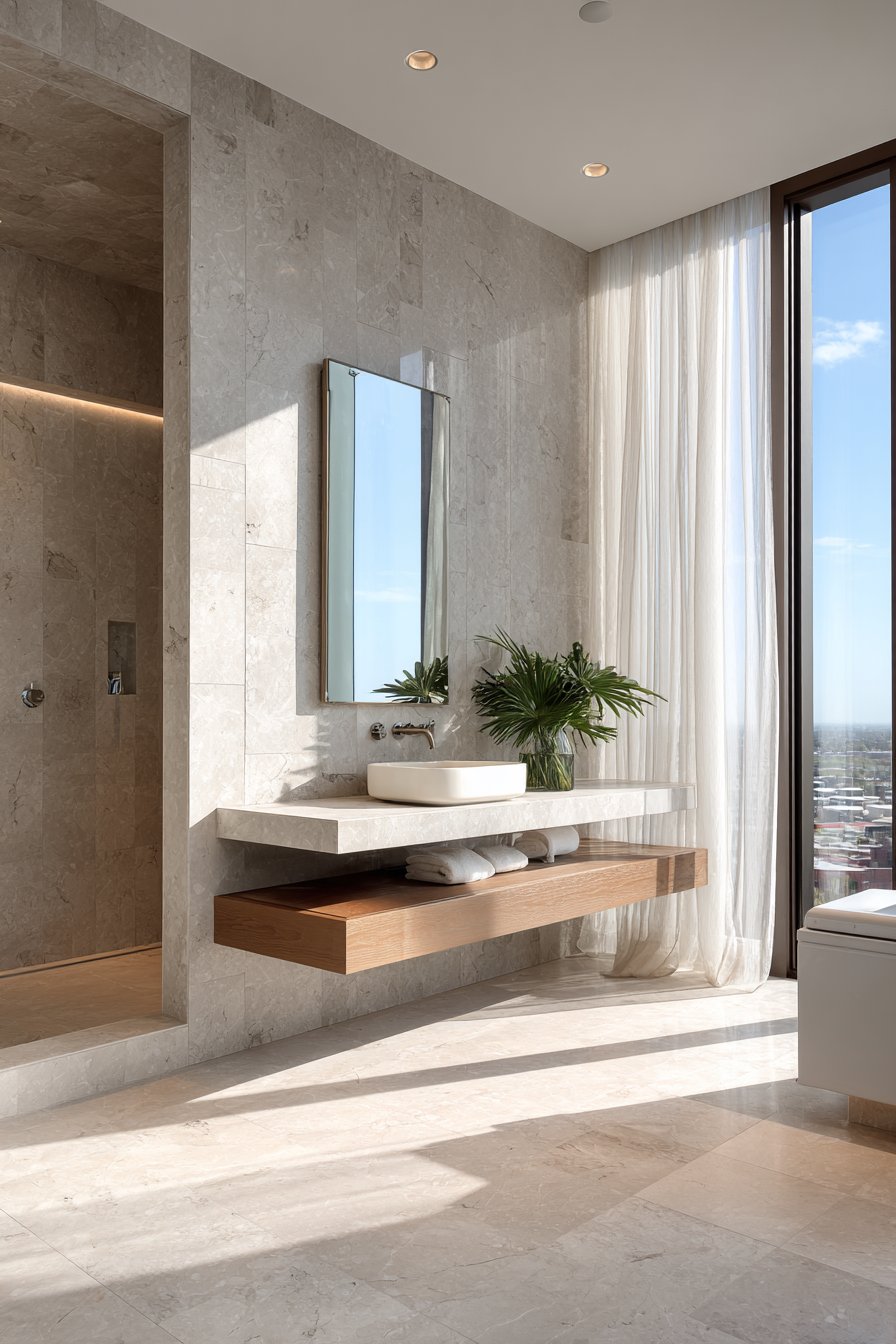
This stunning minimal bathroom captures the very soul of minimalist design philosophy, where every element has been carefully considered and purposefully placed. The space features a wall-mounted floating vanity crafted from white oak, its natural grain adding warmth and organic texture without overwhelming the senses. The integrated vessel sink creates a seamless flow, eliminating the visual clutter of traditional basin-and-counter combinations. A frameless walk-in shower enclosure with crystal-clear glass maintains the room’s sense of openness, while large format grey porcelain tiles establish visual continuity across both floors and walls, creating an envelope of calm.
The genius of this design lies in its restraint. A single geometric mirror provides functional necessity while serving as a subtle focal point, its clean lines echoing the overall aesthetic. One carefully selected green plant introduces a touch of life and color, proving that minimalism doesn’t require complete sterility. The floor-to-ceiling window, dressed with a sheer white linen curtain, floods the space with soft natural light that changes throughout the day, creating an ever-shifting ambiance that keeps the space from feeling static or cold.
The material palette demonstrates sophisticated restraint—white oak for warmth, grey porcelain for contemporary elegance, and pristine white surfaces for brightness. This combination creates visual interest through subtle variations in tone and texture rather than through decorative excess. The floating vanity not only looks stunning but also serves a practical purpose by making floor cleaning easier and creating the illusion of more square footage, a valuable trick in any bathroom regardless of actual size.
Key Design Tips:
- Install floating vanities to maximize floor visibility and create spaciousness
- Choose large format tiles to minimize grout lines and maintain visual simplicity
- Limit your color palette to three complementary tones for cohesion
- Incorporate one natural element like a plant to soften hard surfaces
- Prioritize natural light sources and complement with layered artificial lighting
2. Bathtub Beneath the Window: Natural Light Sanctuary
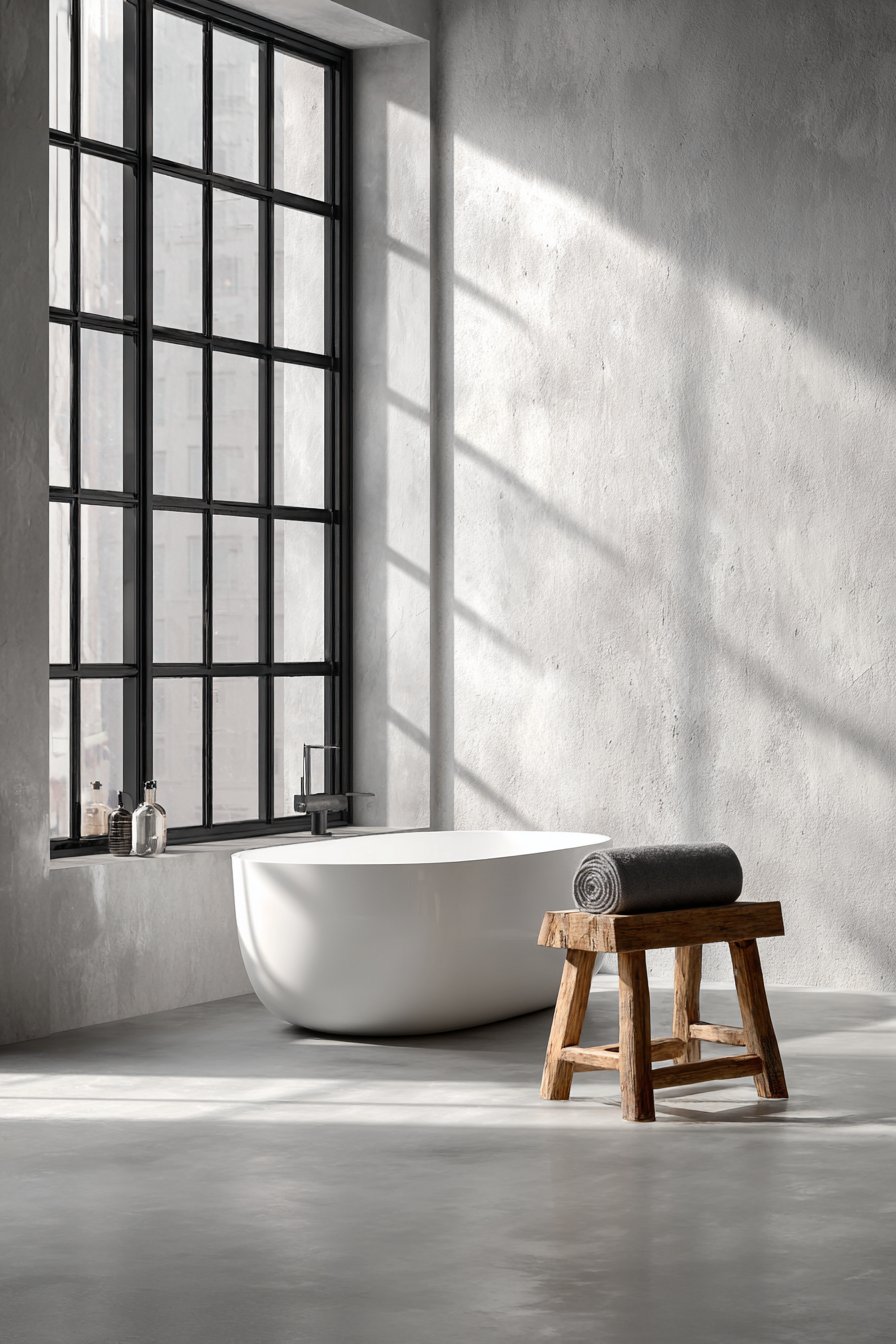
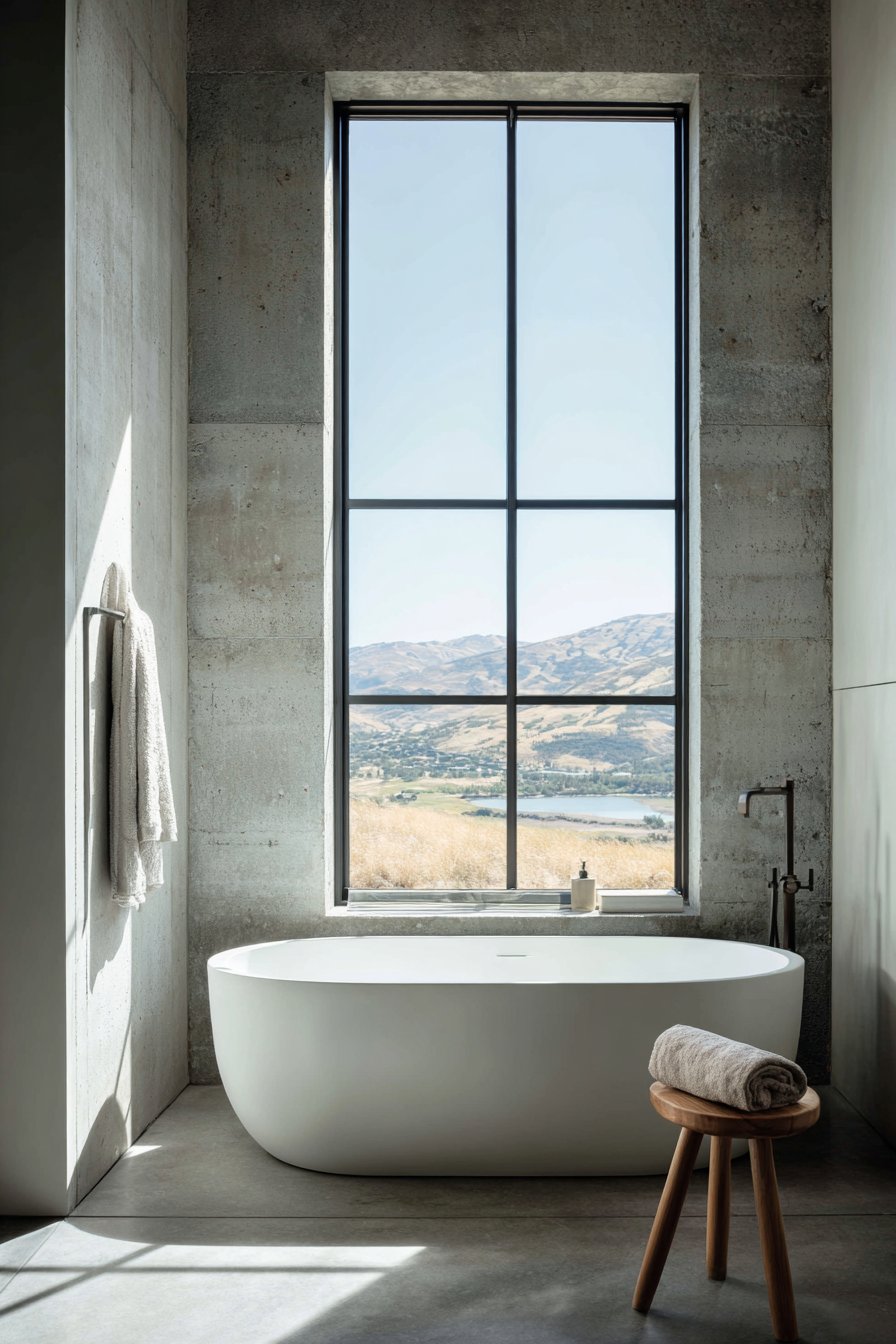
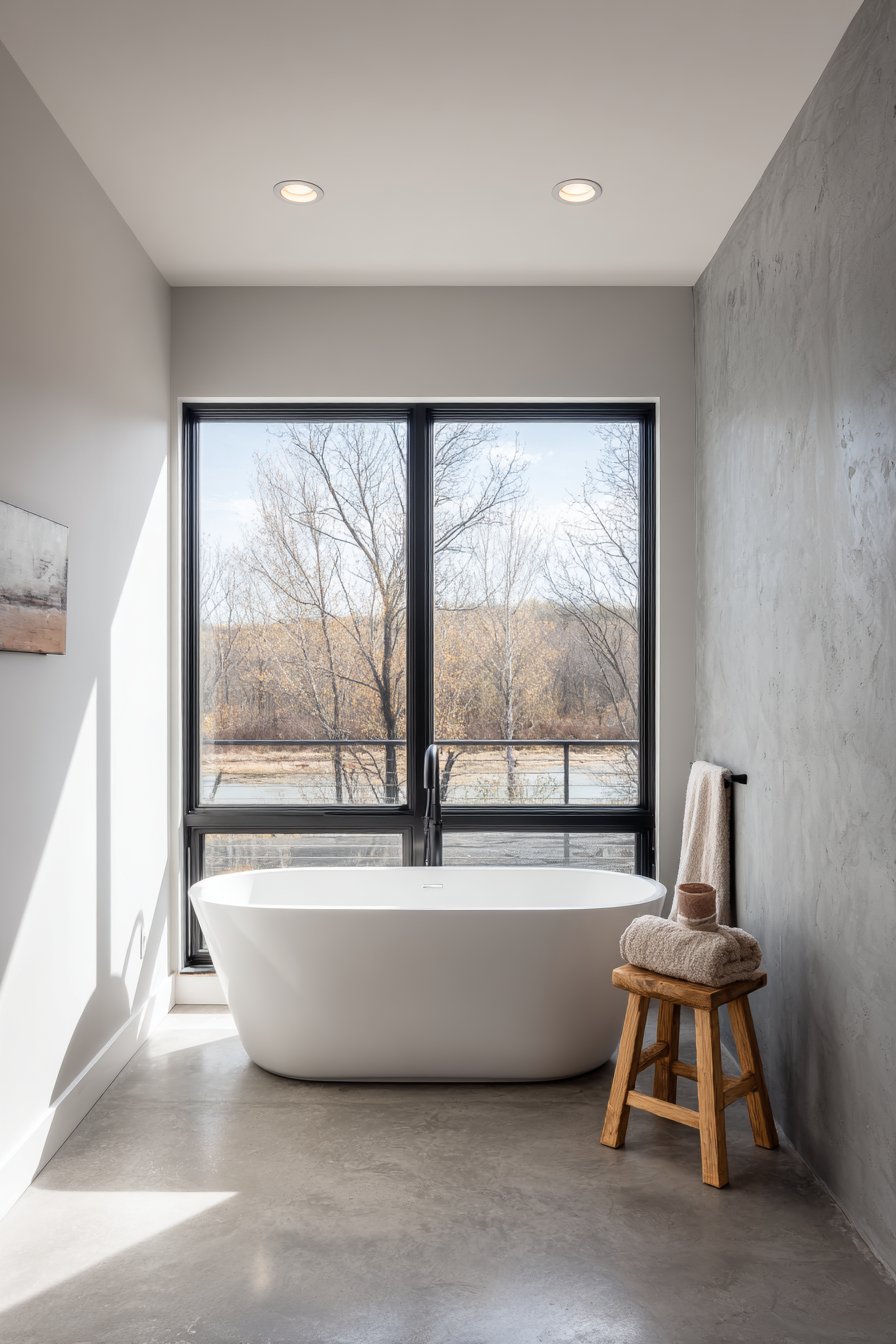
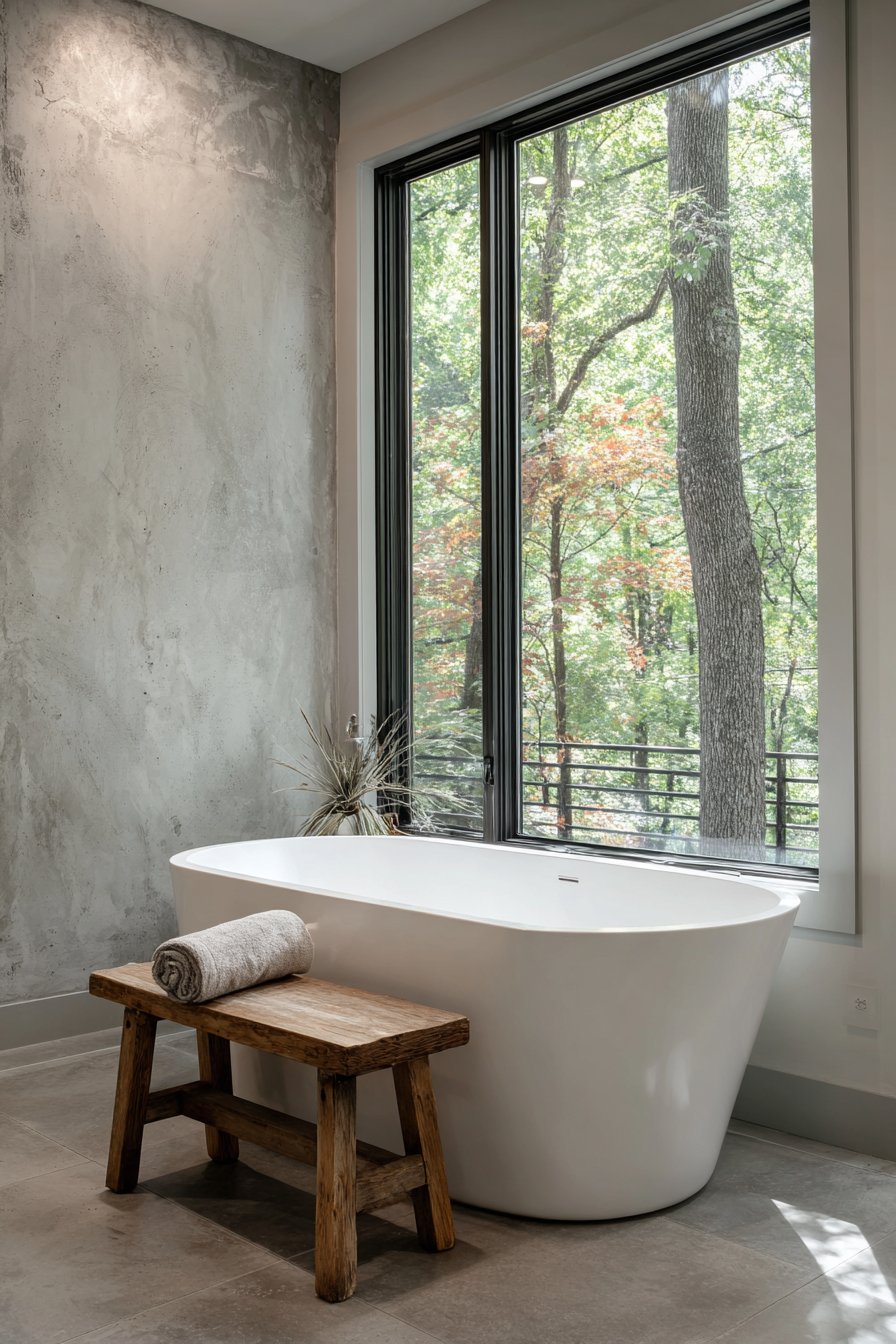
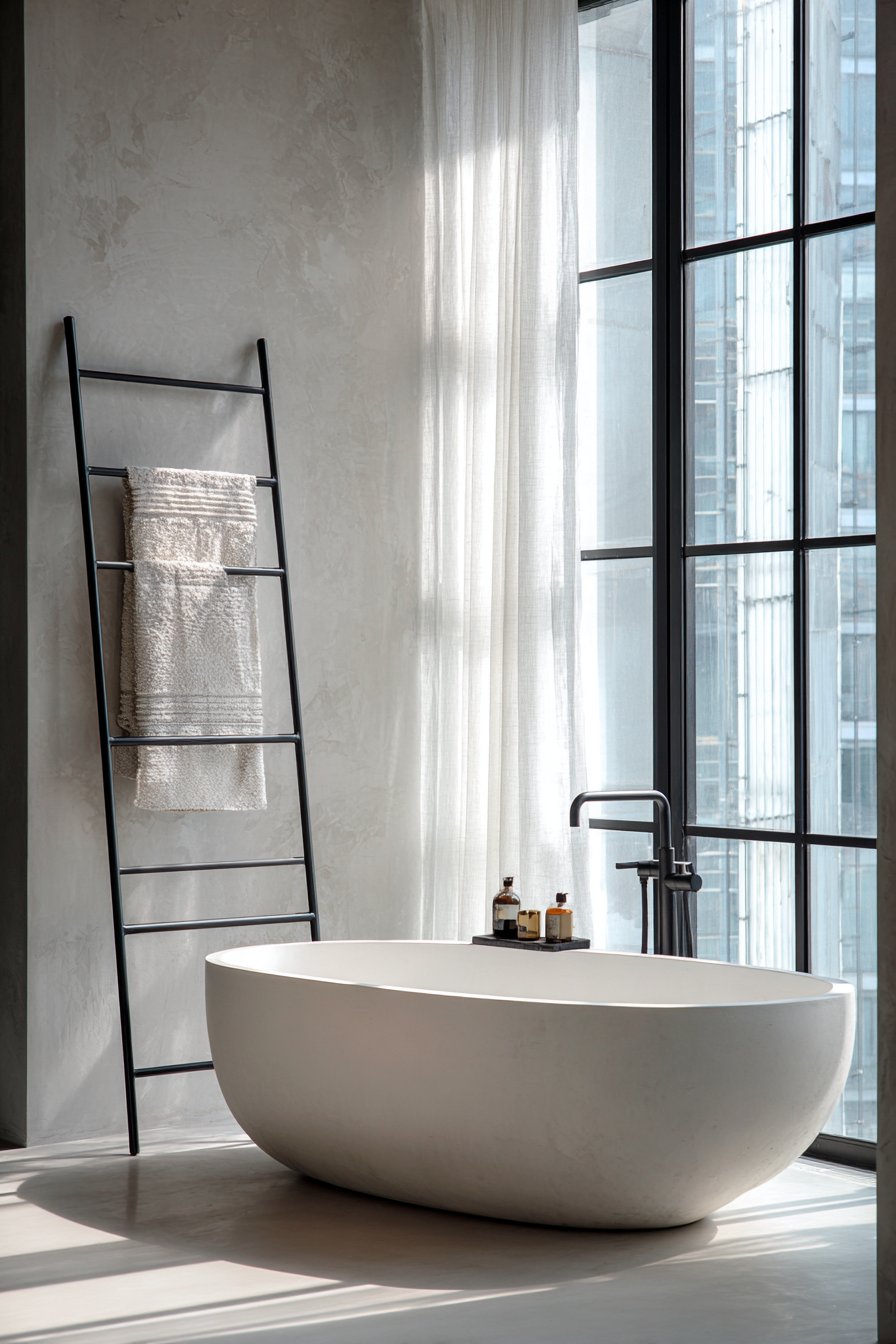
Positioning a freestanding white ceramic bathtub directly beneath a large picture window with a black metal frame creates an instantly memorable focal point in this minimal bathroom idea. The contrast between the pristine white tub and the bold black window framing demonstrates how minimalism can incorporate dramatic elements without sacrificing serenity. The smooth white plaster walls provide a neutral backdrop that allows the architectural features to shine, while one accent wall finished in light grey concrete texture adds depth and interest without disrupting the cohesive aesthetic.
The beauty of this design lies in its simplicity and the thoughtful consideration of the bathing experience. Imagine sinking into warm water while natural daylight washes over you, connecting you to the outdoors while maintaining privacy. The simple wooden stool holding a single rolled towel exemplifies the minimalist principle of functional beauty—it serves a purpose while adding an organic element that softens the space. Natural daylight creates soft shadows throughout the day, emphasizing the clean geometric forms of the tub and window, turning the bathroom into a constantly evolving canvas of light and shadow.
This minimal bathroom idea proves that luxury doesn’t require ornate decoration or excessive fixtures. The freestanding bathtub becomes a sculptural element in its own right, its curves providing visual relief against the angular window frame. The unadorned surfaces allow the quality of materials and the purity of form to take center stage, creating an environment that feels both aspirational and achievable for real homeowners.
Key Design Tips:
- Position freestanding tubs near natural light sources for enhanced ambiance
- Use black metal framing to add definition without visual weight
- Introduce one textured accent wall to prevent monotony in all-white spaces
- Keep tub-side accessories to an absolute minimum for uncluttered appeal
- Choose simple wooden elements to add warmth to predominantly white palettes
3. Seamless Wet Room: Monolithic Simplicity
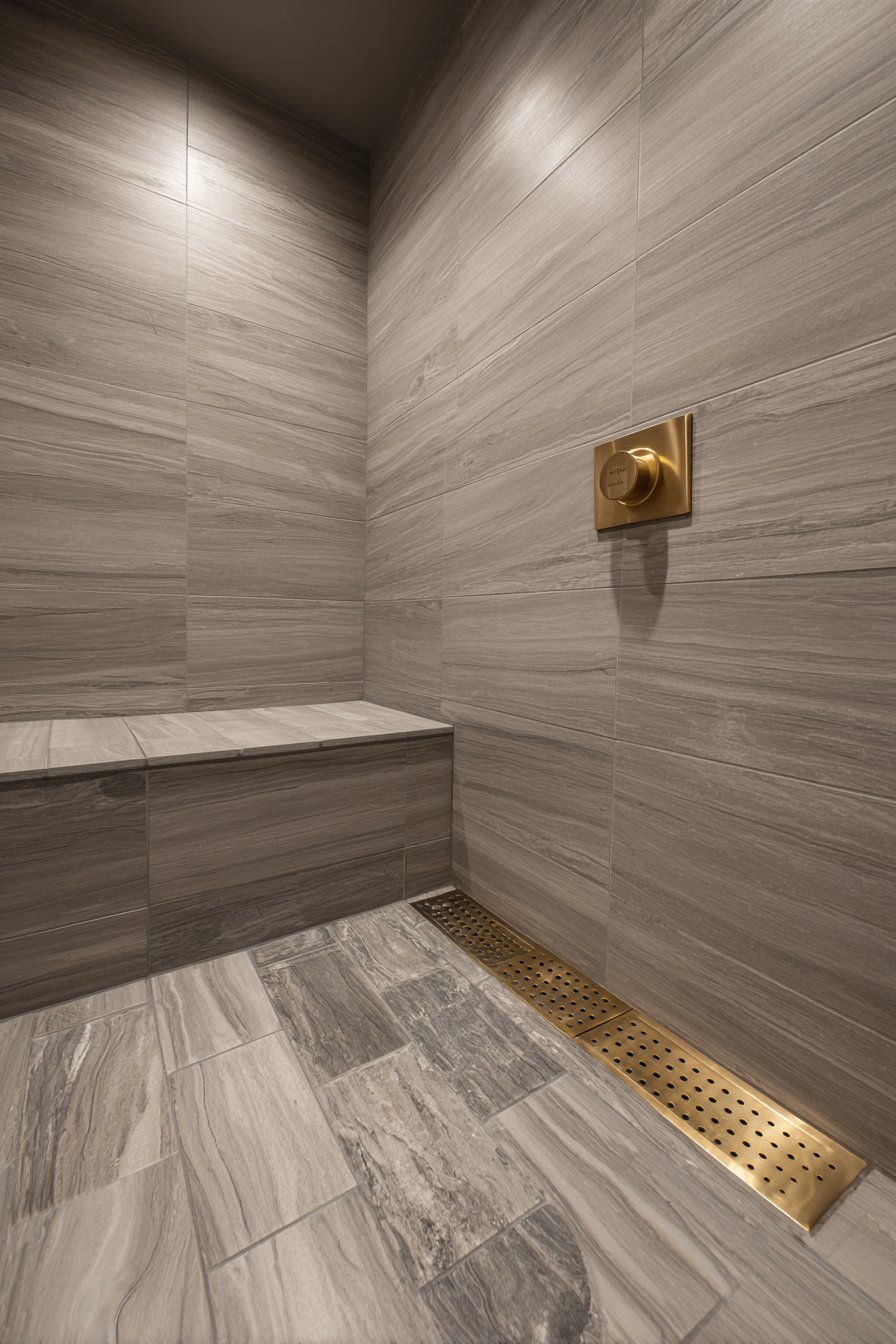
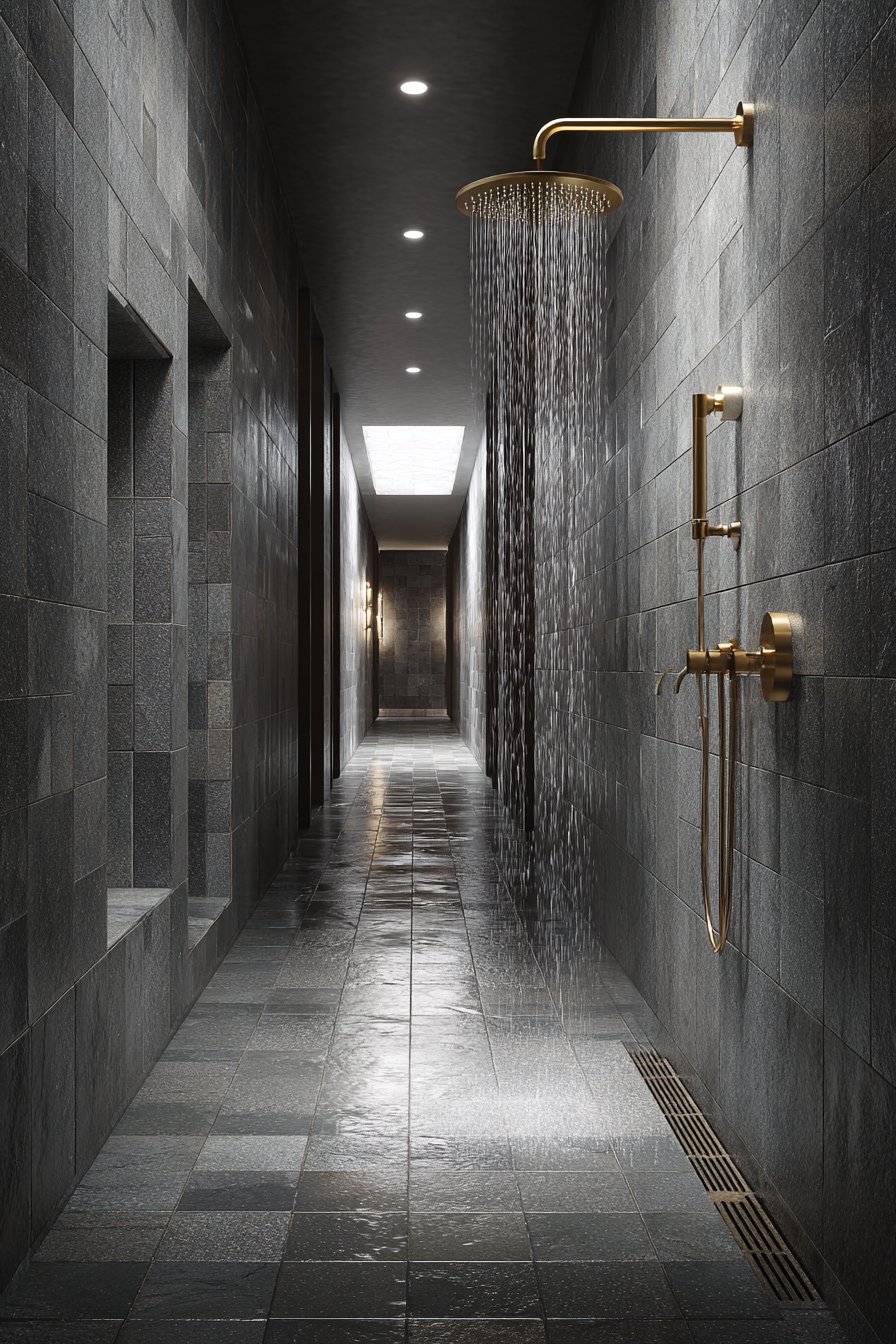
The wet room design represents minimalism at its most pure and functional, eliminating traditional shower enclosures entirely in favor of a seamless, waterproofed space. This minimal bathroom idea features continuous grey porcelain floor tiles that extend up the shower wall, creating a monolithic appearance that feels both modern and timeless. The linear drain runs elegantly along one edge, disappearing into the floor and maintaining the clean lines that define this aesthetic. A wall-mounted rainfall showerhead with brushed brass finish provides the only decorative element, its warm metallic tone adding just enough visual interest against the cool grey surfaces.
The genius of wet room design lies in its ability to make small bathrooms feel significantly larger by removing visual barriers. Without glass enclosures or shower curtains breaking up the space, the eye travels uninterrupted across the entire room, creating an impression of openness that traditional bathrooms cannot achieve. The grey porcelain tiles, with their subtle variations in tone, provide enough visual interest to prevent the space from feeling flat while maintaining the minimalist commitment to simplicity.
Recessed lighting creates subtle ambient illumination that enhances the sense of calm, casting soft pools of light without the visual clutter of traditional light fixtures. The brushed brass finish of the showerhead introduces warmth into what could otherwise feel like a cold space, demonstrating how even minimal bathrooms benefit from thoughtful material mixing. This design proves that functional elegance can be achieved through subtraction rather than addition.
Key Design Tips:
- Ensure proper waterproofing across all surfaces in wet room designs
- Install linear drains for the cleanest aesthetic and efficient drainage
- Use large format tiles to minimize grout lines and maintenance
- Add one warm metal finish to balance cool stone surfaces
- Consider floor heating for comfort in fully-tiled spaces
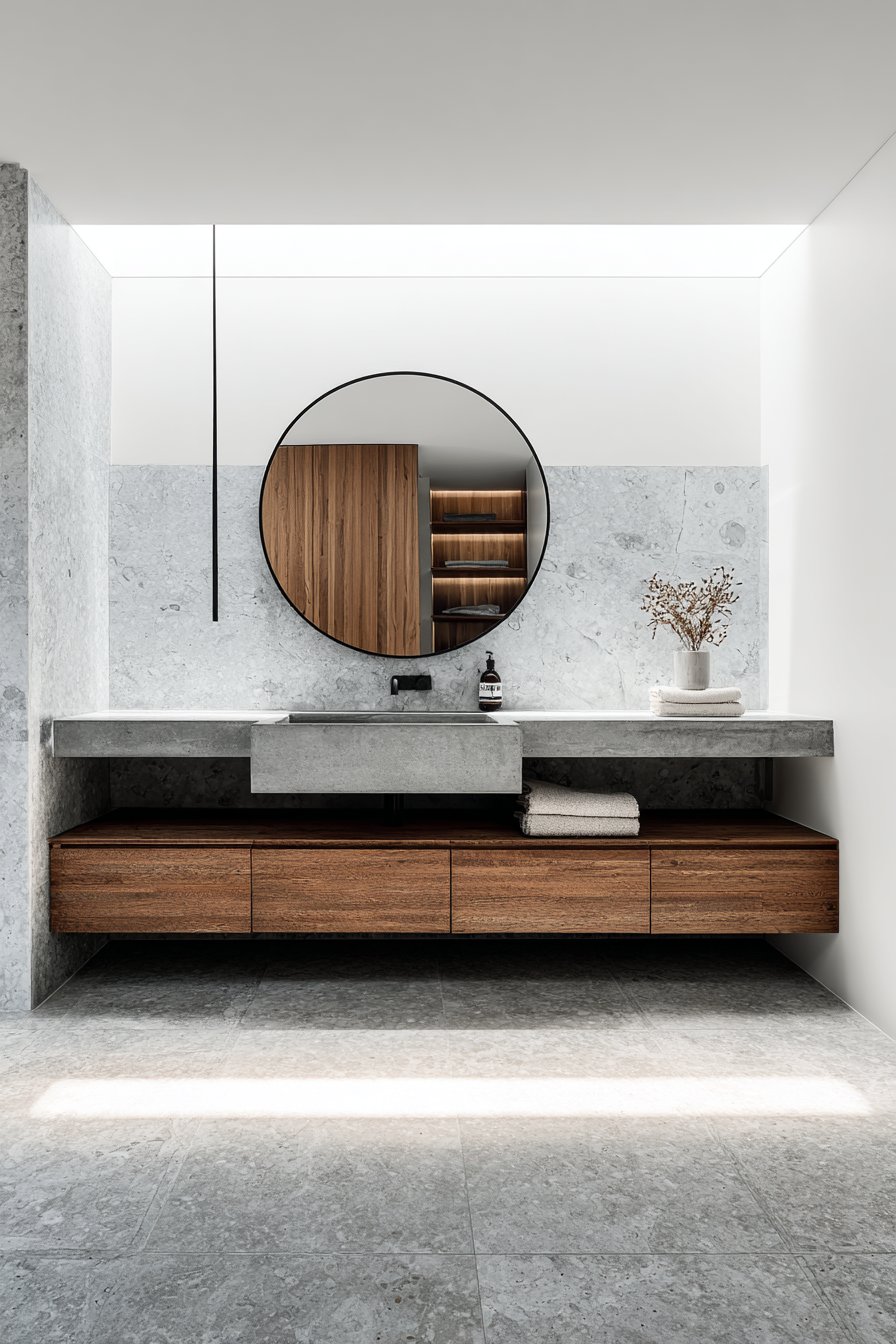
4. Floating Concrete Vanity: Industrial Minimalism
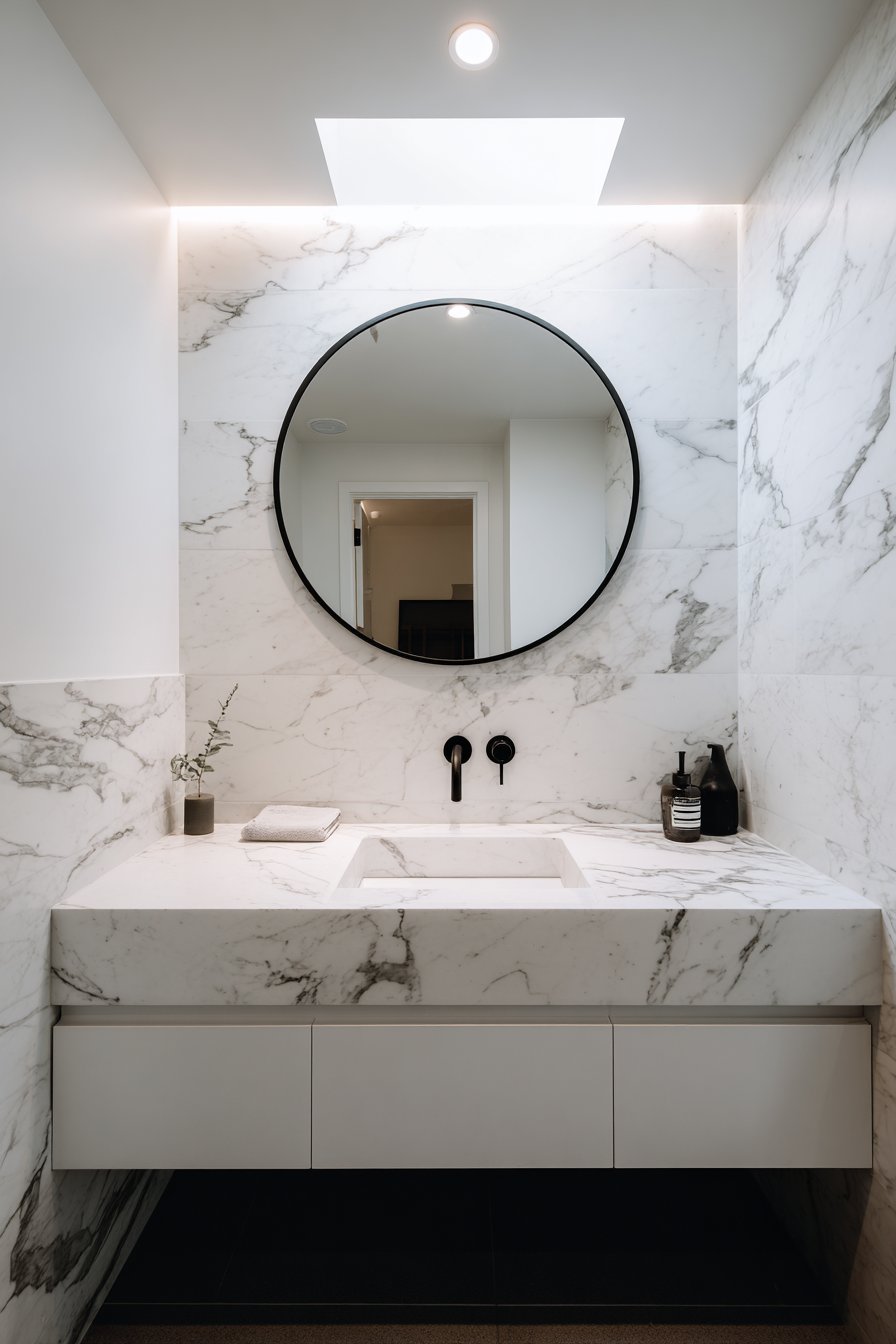
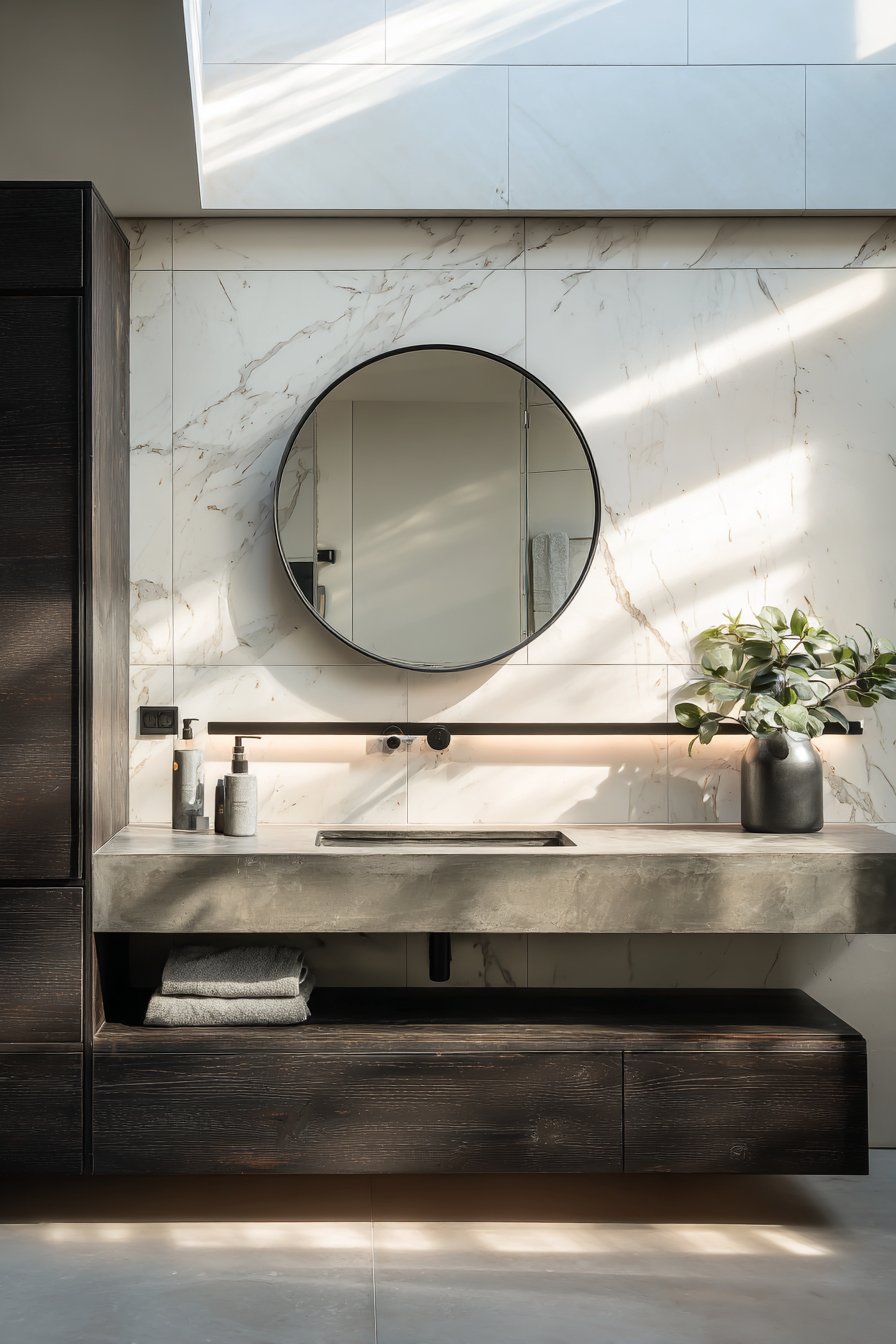
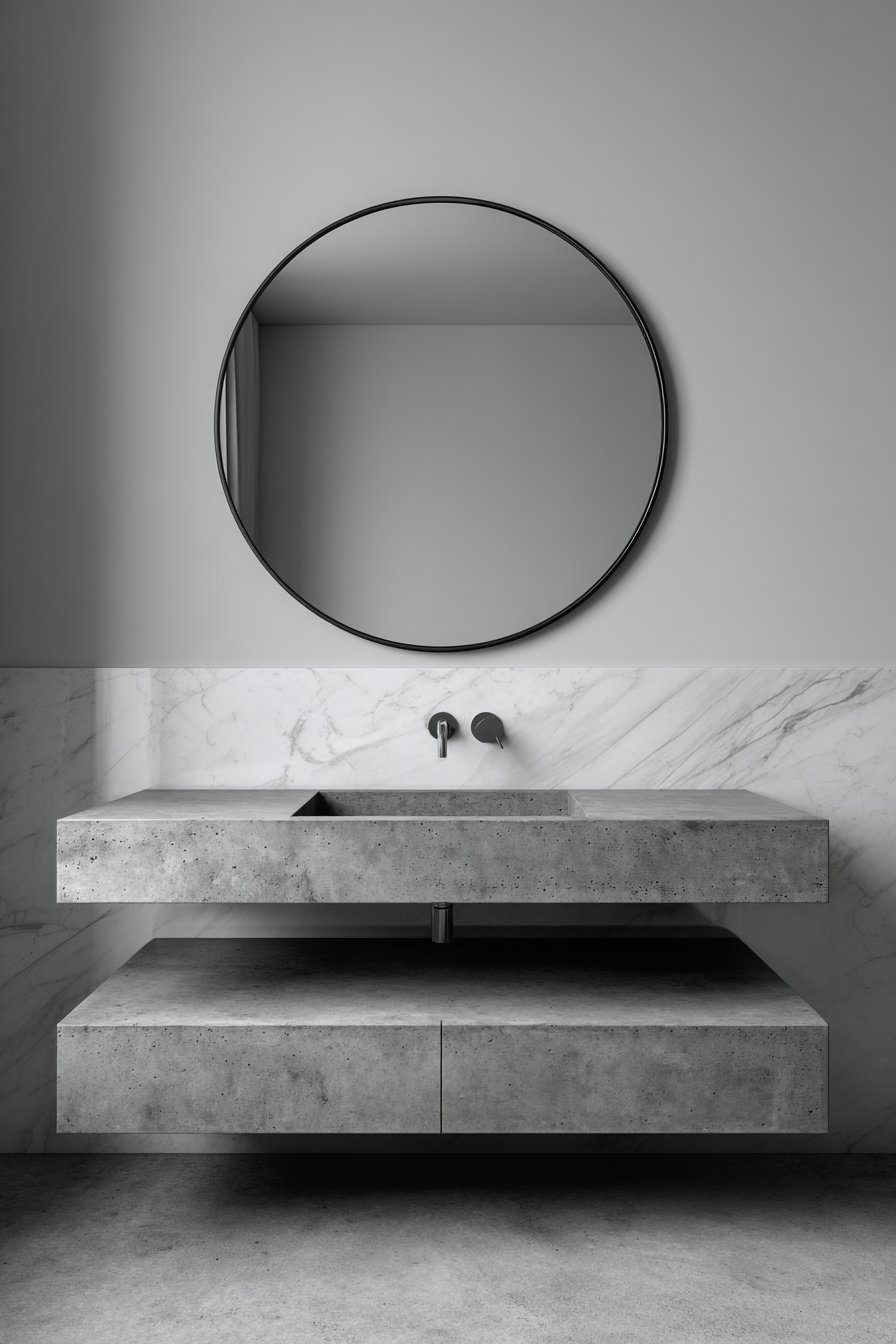
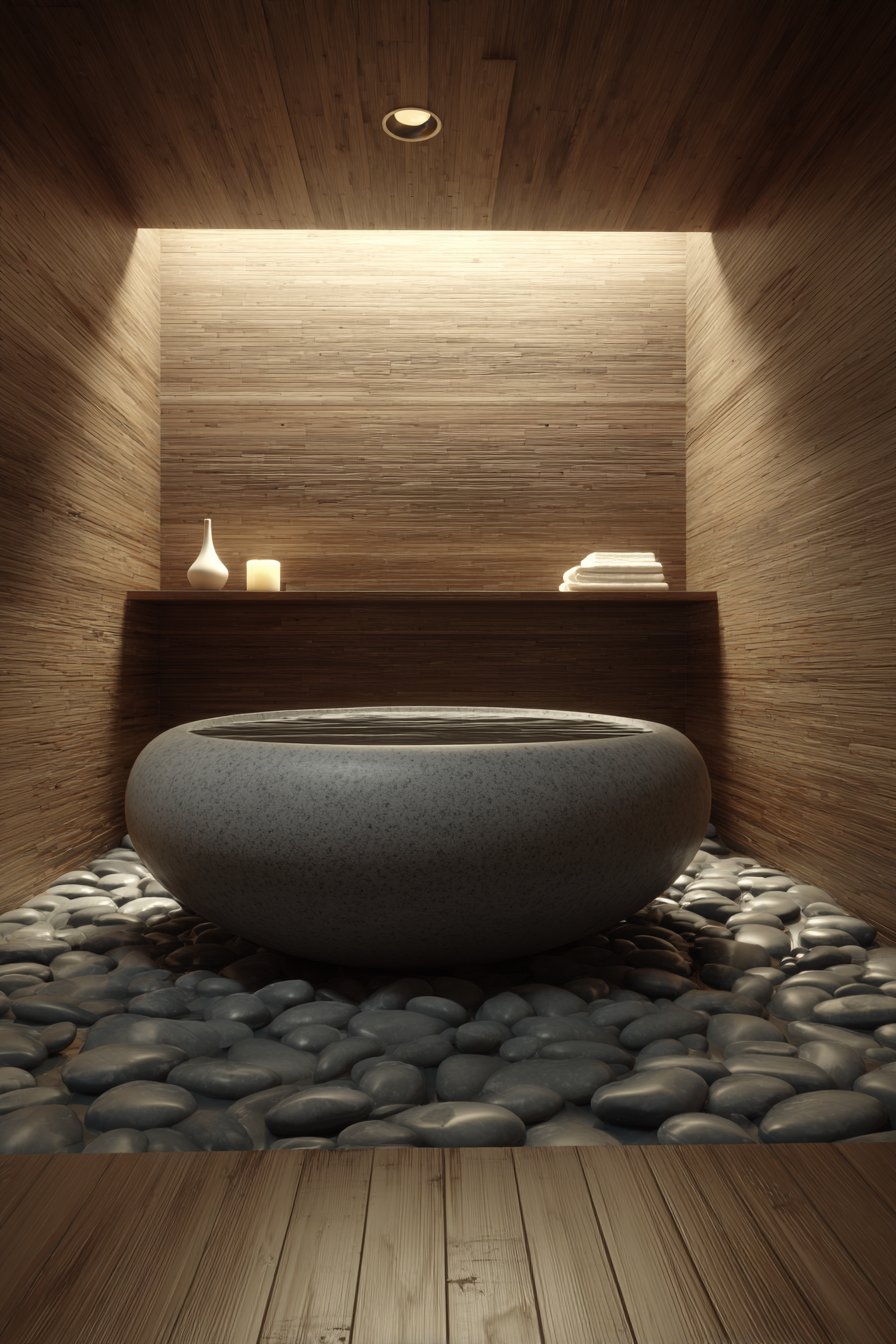
A floating concrete vanity with an integrated rectangular sink represents the marriage of industrial aesthetics and minimalist principles. This minimal bathroom idea showcases the raw beauty of concrete—a material that speaks of strength and permanence while offering surprising versatility in finish and form. The integrated sink eliminates the visual break between counter and basin, creating a sculptural piece that functions as both furniture and art. The hidden drawer storage maintains the clean lines by concealing everyday necessities behind seamless fronts, proving that minimalism and practicality can coexist beautifully.
The backsplash features large format white marble tiles with minimal veining, introducing natural pattern without overwhelming the space. The organic movement in the marble provides a soft counterpoint to the concrete’s industrial character, creating visual dialogue between natural and manufactured materials. A simple round mirror with a thin black frame hangs centered above the vanity, its circular form offering geometric contrast to the rectangular elements dominating the space. The black frame echoes potential black fixtures and creates a cohesive design thread throughout the bathroom.
Soft natural light from a skylight illuminates the restrained material palette, highlighting the concrete’s subtle texture variations and the marble’s delicate veining. This top-down lighting creates dramatic shadows that change throughout the day, adding dynamism to the minimal composition. The floating installation of the vanity creates valuable floor space beneath, making the bathroom easier to clean and visually lighter despite the concrete’s substantial appearance.
Key Design Tips:
- Choose concrete with a smooth, sealed finish for easy maintenance
- Install skylights to provide natural light without sacrificing wall space
- Pair industrial materials with softer elements like marble for balance
- Use integrated sinks to eliminate seams and maintain clean lines
- Ensure floating vanities are properly anchored to support heavy materials
5. Vertical Subway Tiles: Compact Elegance
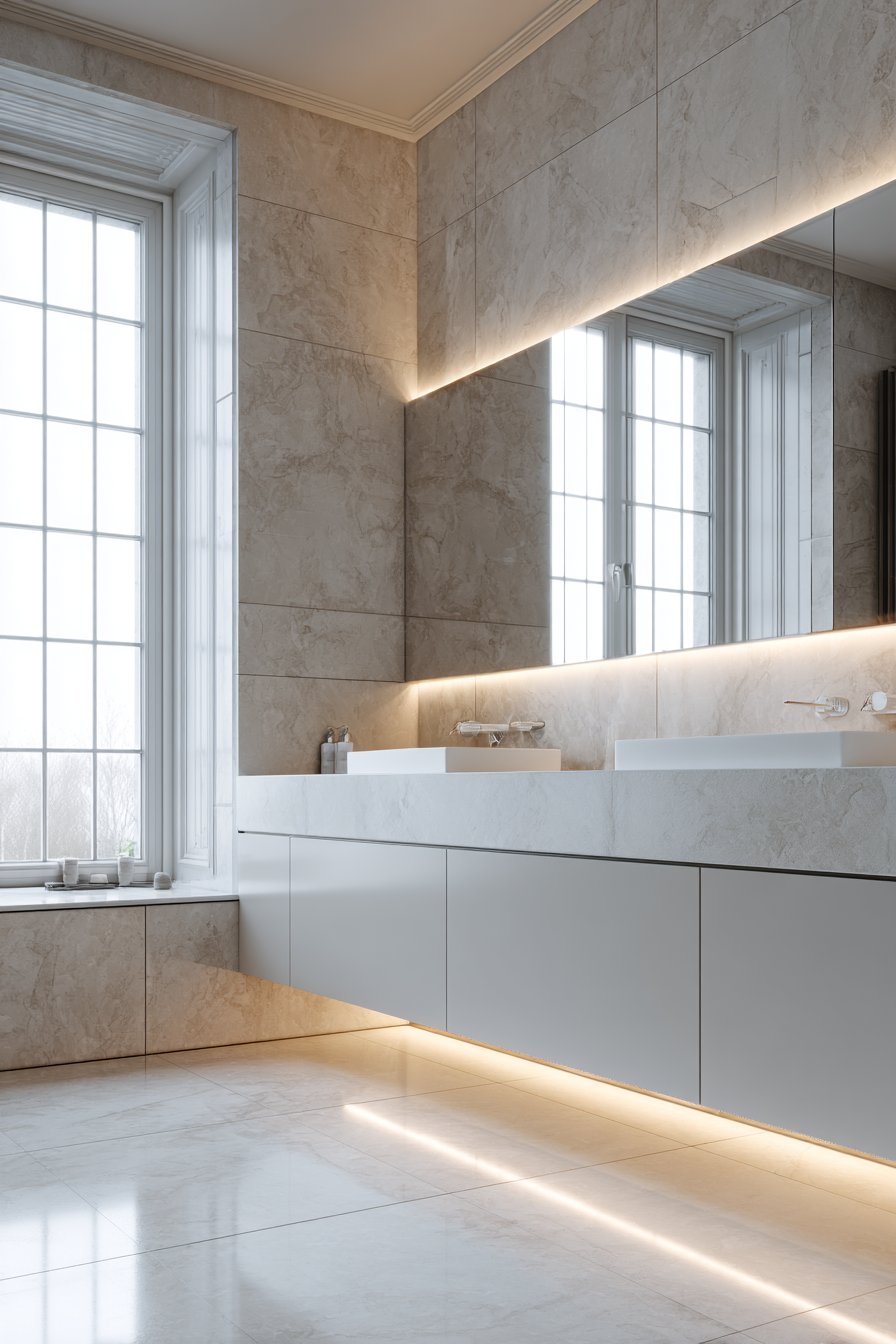
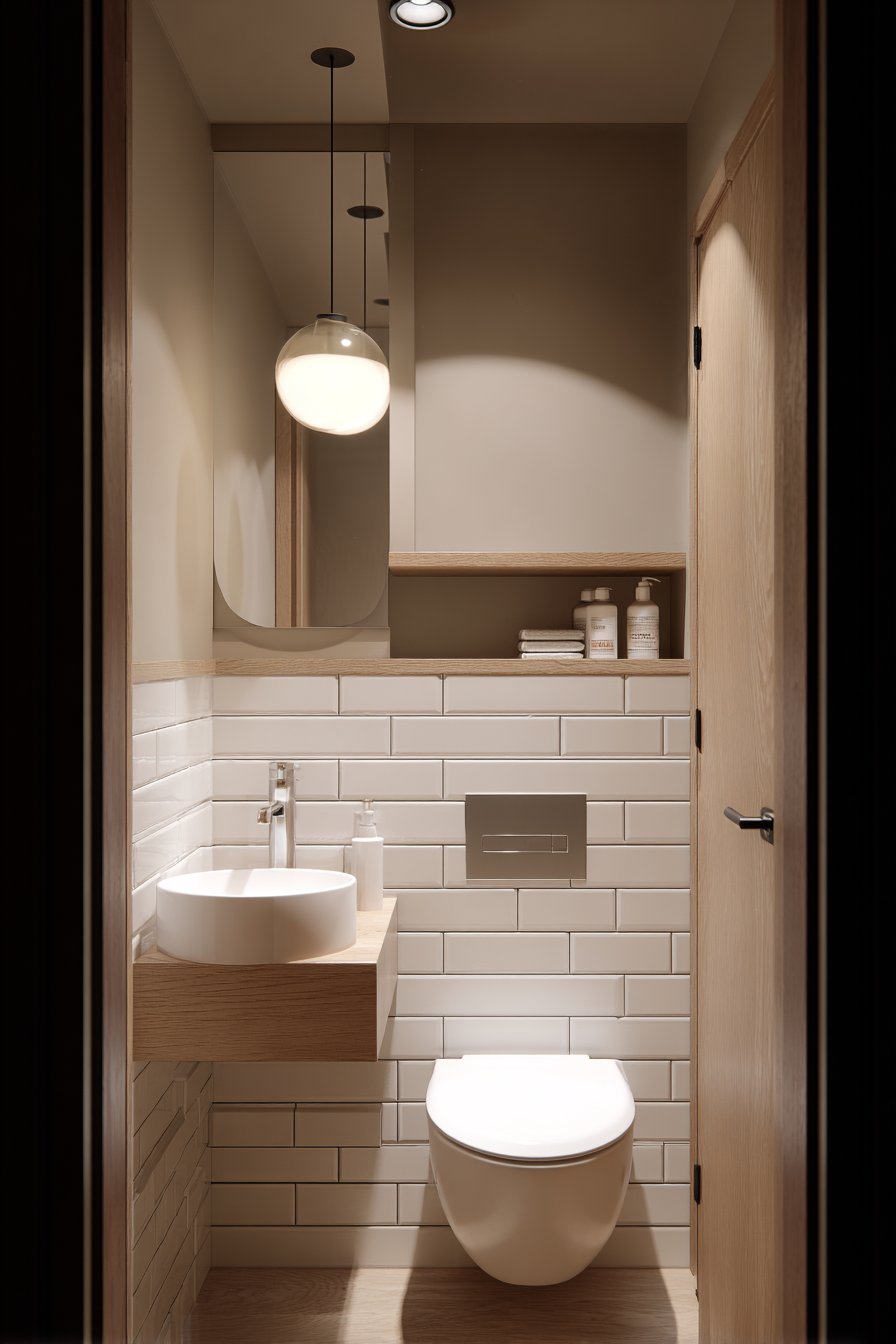
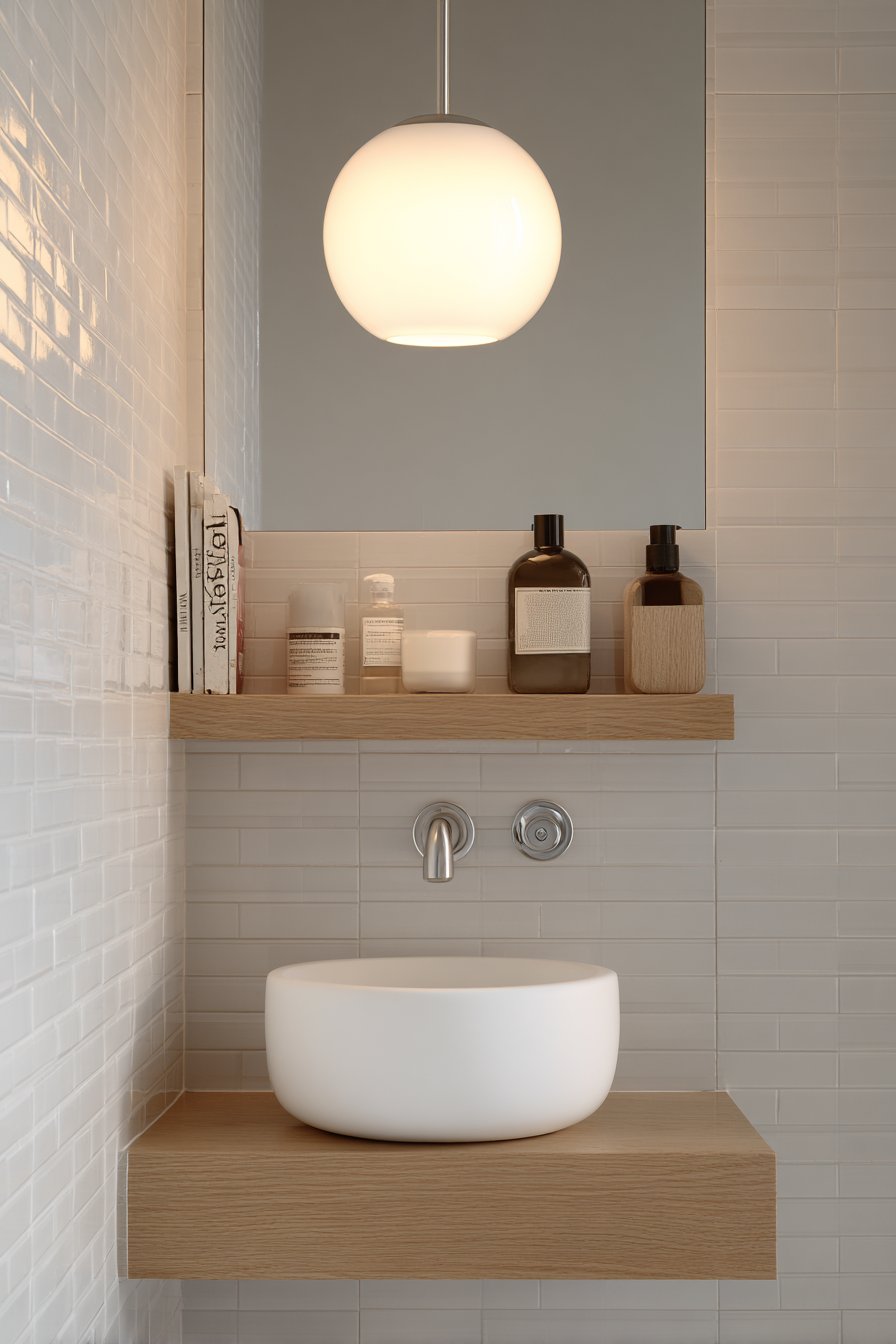
The classic white subway tile receives fresh interpretation in this minimal bathroom idea through vertical stack pattern application from floor to ceiling. This vertical orientation creates an optical illusion that makes the compact powder room feel taller and more spacious than its actual dimensions. The wall-mounted oval porcelain sink with chrome fixtures maintains the streamlined aesthetic while freeing up valuable floor space—crucial in smaller bathrooms where every inch counts. One floating shelf in natural oak provides essential storage without the visual weight of traditional cabinets, demonstrating how minimalism solves space challenges through smart design choices.
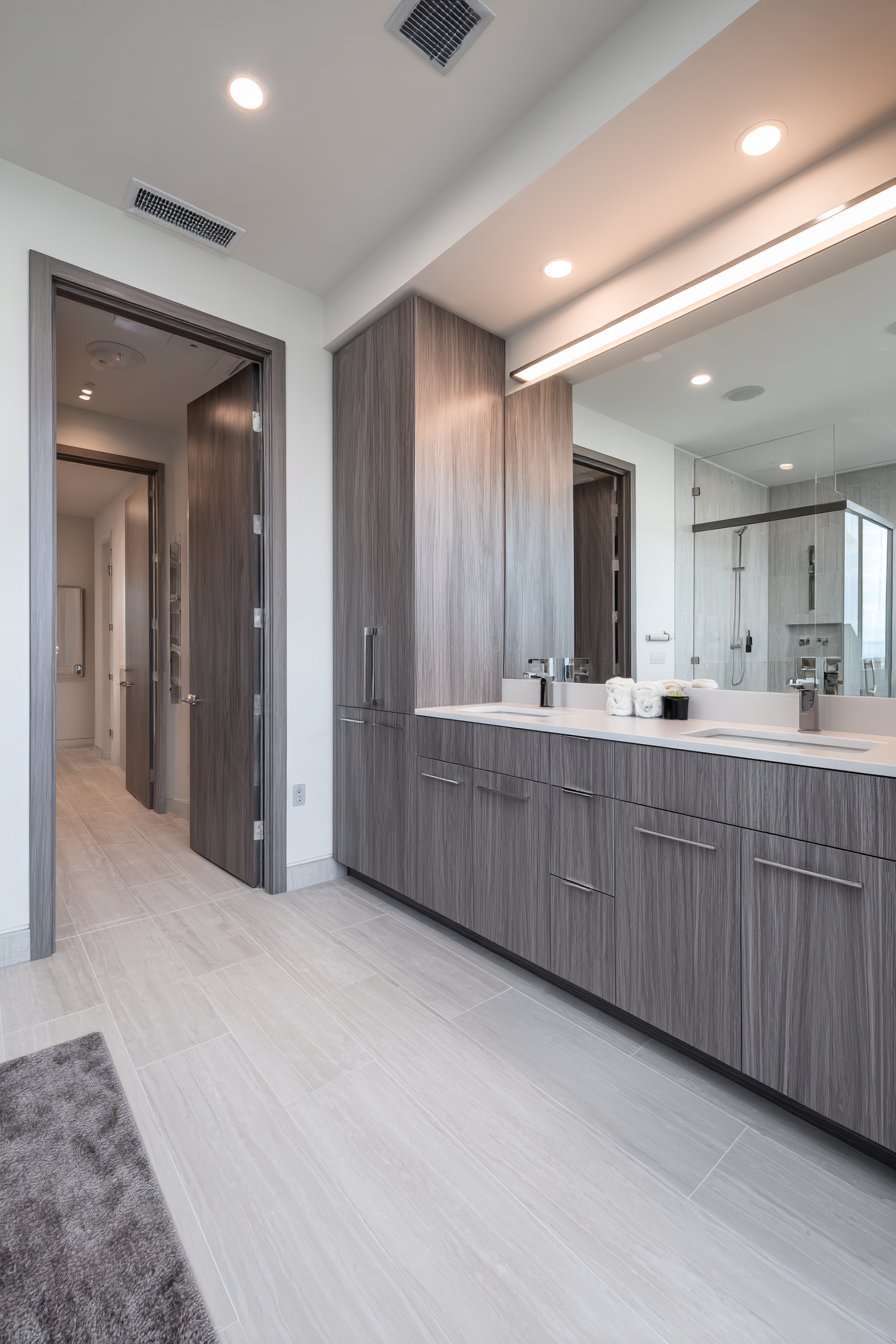
The beauty of this design lies in its timeless simplicity and the subtle sophistication of the vertical tile pattern. While horizontal subway tile installation is traditional, the vertical stack creates strong upward lines that draw the eye toward the ceiling, making the space feel more generous. The all-white palette reflects light beautifully, further enhancing the sense of brightness and cleanliness that defines successful powder room design. The oval sink adds a soft, organic shape that prevents the rectangular tiles and architecture from feeling too rigid or institutional.
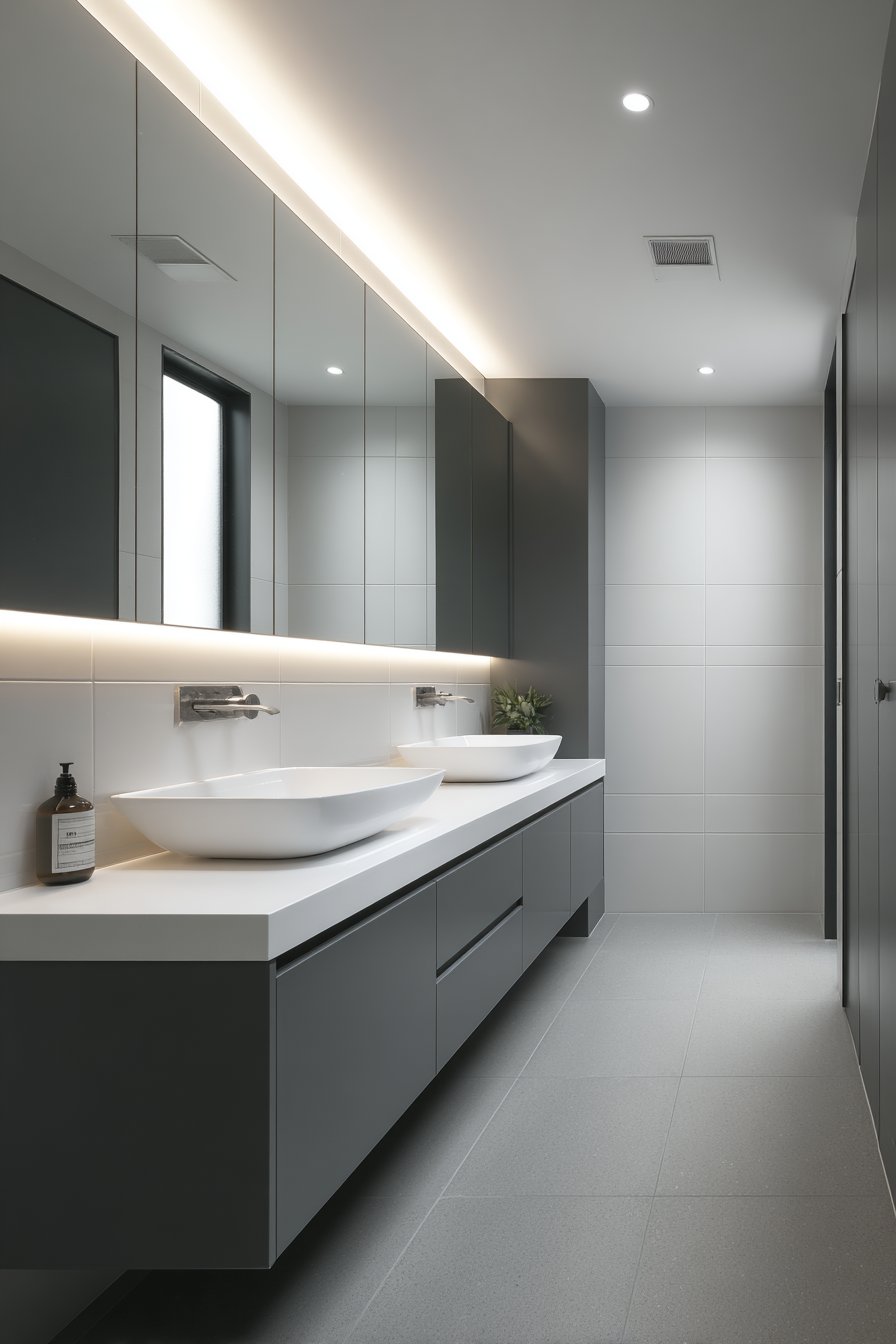
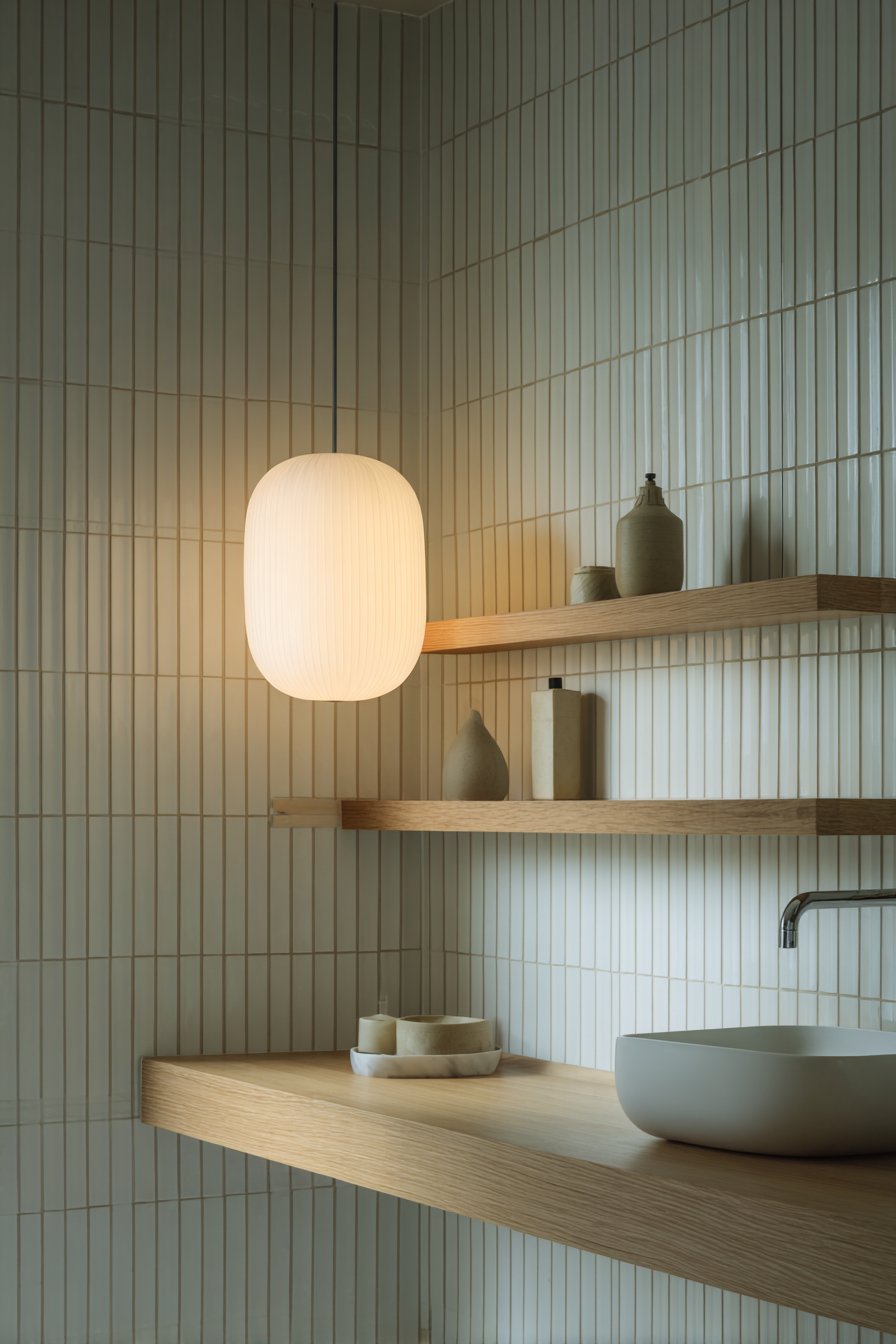
Soft diffused lighting from a frosted glass pendant creates gentle shadows and prevents harsh contrasts that could make the small space feel claustrophobic. The natural oak floating shelf introduces necessary warmth, its wood grain and honey tones providing visual relief from the predominantly white surfaces. This minimal bathroom idea proves that small spaces can feel luxurious and serene when designed with restraint and intention.
Key Design Tips:
- Use vertical tile patterns to visually increase ceiling height
- Install wall-mounted sinks to maximize floor space in powder rooms
- Choose oval or round sinks to soften rectangular architectural elements
- Add one wooden element to prevent all-white spaces from feeling clinical
- Use frosted glass for light fixtures to create soft, flattering illumination
6. Frameless Glass Simplicity: Light and Space
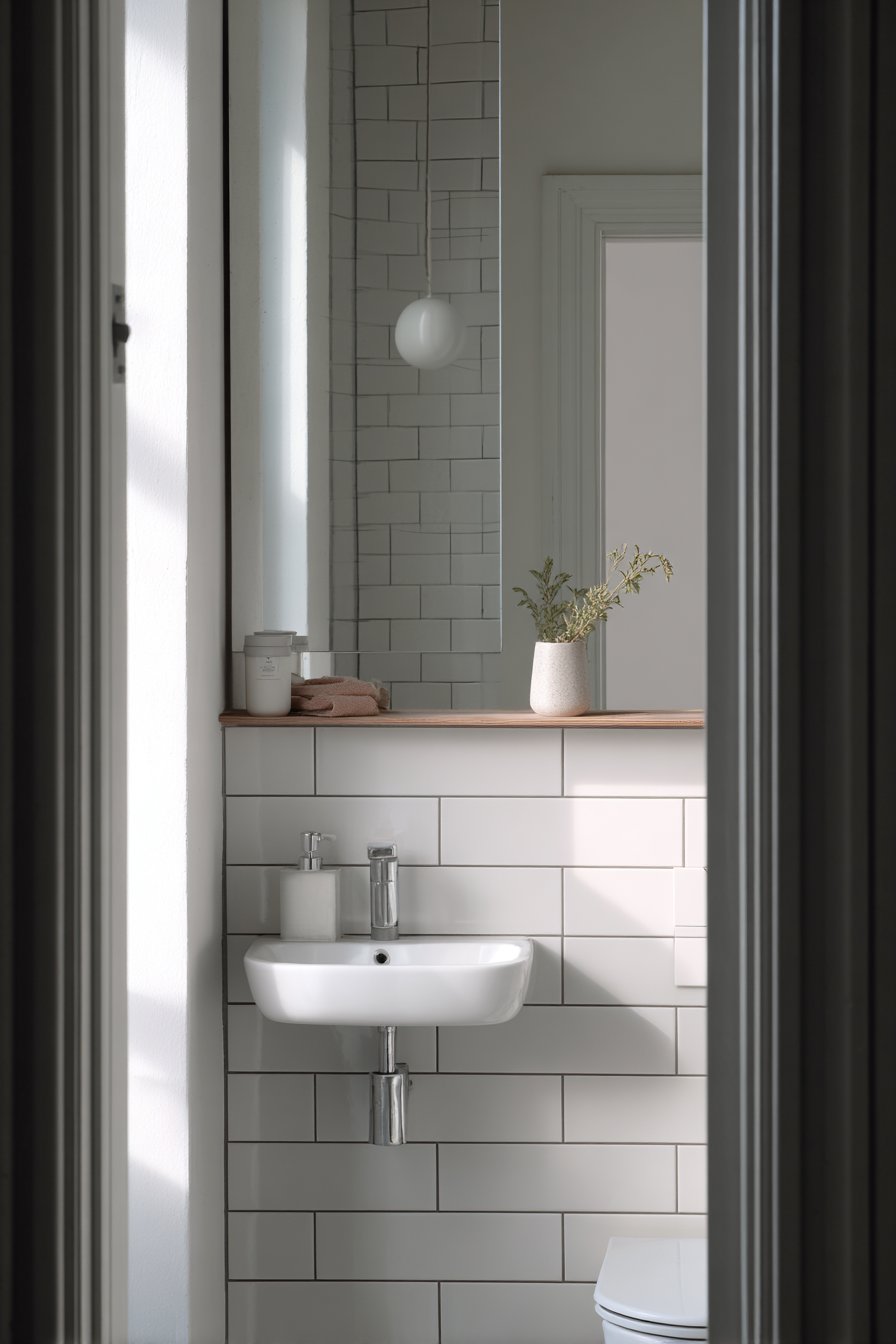
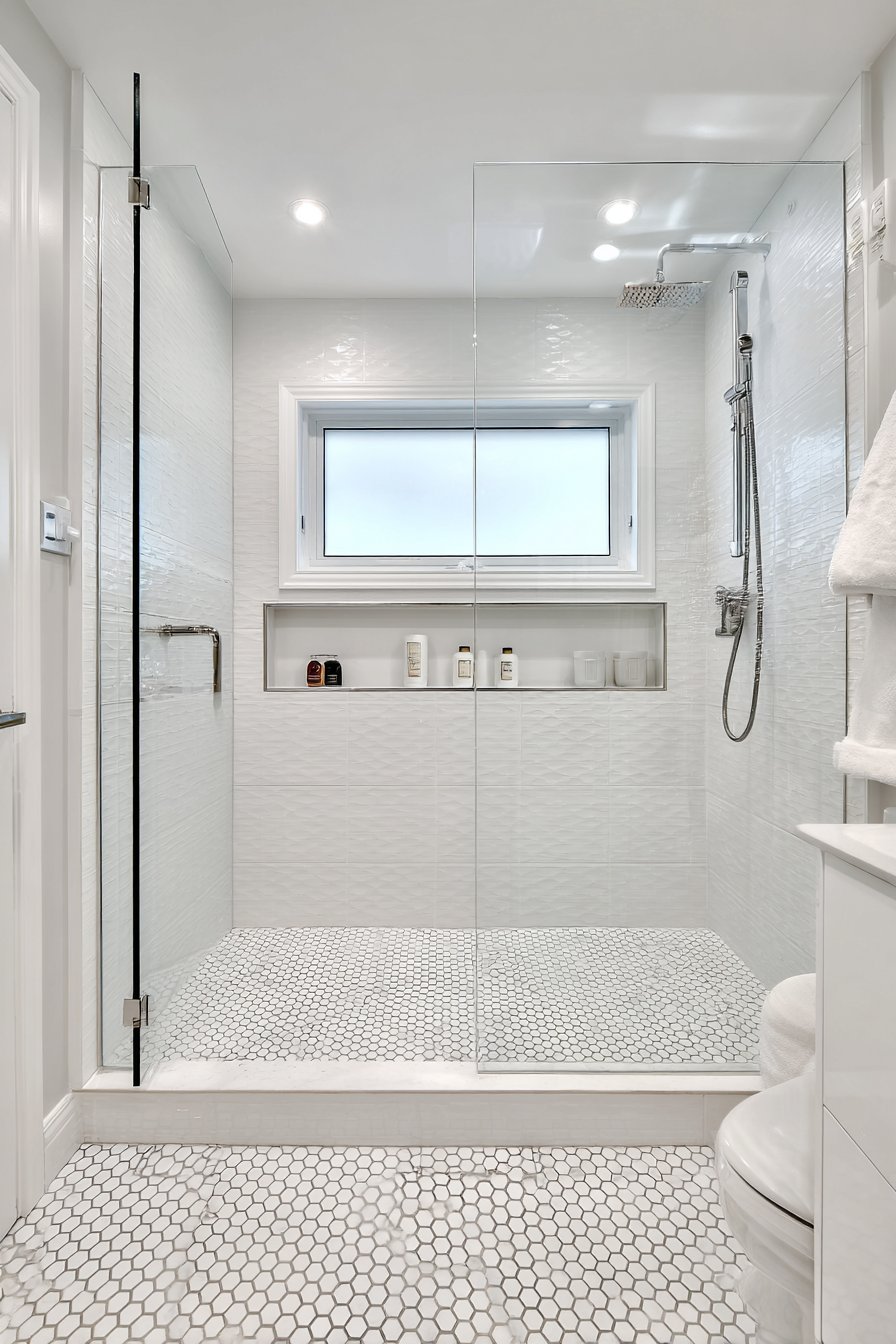
A spacious shower enclosure with clear frameless glass exemplifies how minimal bathroom ideas can create openness through transparency. The white hexagonal floor tiles add subtle geometric interest while maintaining the clean aesthetic, their small scale providing textural contrast to the smooth white waterproof plaster walls. A recessed niche with linear shelving holds minimal toiletries in matching white containers, demonstrating the minimalist principle that even functional storage should contribute to the overall aesthetic rather than detract from it. Natural light entering through a frosted transom window creates a soft, diffused glow that eliminates the need for harsh artificial lighting during daylight hours.
The frameless glass is the hero of this design, its transparency allowing light to travel freely throughout the space and eliminating the visual barriers that traditional shower curtains or framed enclosures create. This openness makes even modest-sized bathrooms feel significantly larger and more luxurious. The decision to continue the white plaster finish into the shower area rather than introducing tile creates seamless visual flow, with the hexagonal floor tiles providing just enough pattern to define the shower zone without disrupting the cohesive whole.
The recessed niche represents thoughtful planning—it provides necessary storage without protruding into the space or requiring additional shelving units that would clutter the clean lines. By storing toiletries in uniform white containers, this design maintains the monochromatic palette even within functional areas. The frosted transom window solves the challenge of bringing natural light into the shower while maintaining privacy, a practical consideration that enhances both the aesthetics and functionality of this minimal bathroom idea.
Key Design Tips:
- Invest in quality frameless glass for the cleanest, most transparent appearance
- Use hexagonal tiles for subtle pattern without visual complexity
- Create recessed niches during construction for integrated storage
- Choose uniform containers for toiletries to maintain the minimal aesthetic
- Install frosted windows for natural light with privacy
7. Japanese Zen: Natural Materials and Meditation
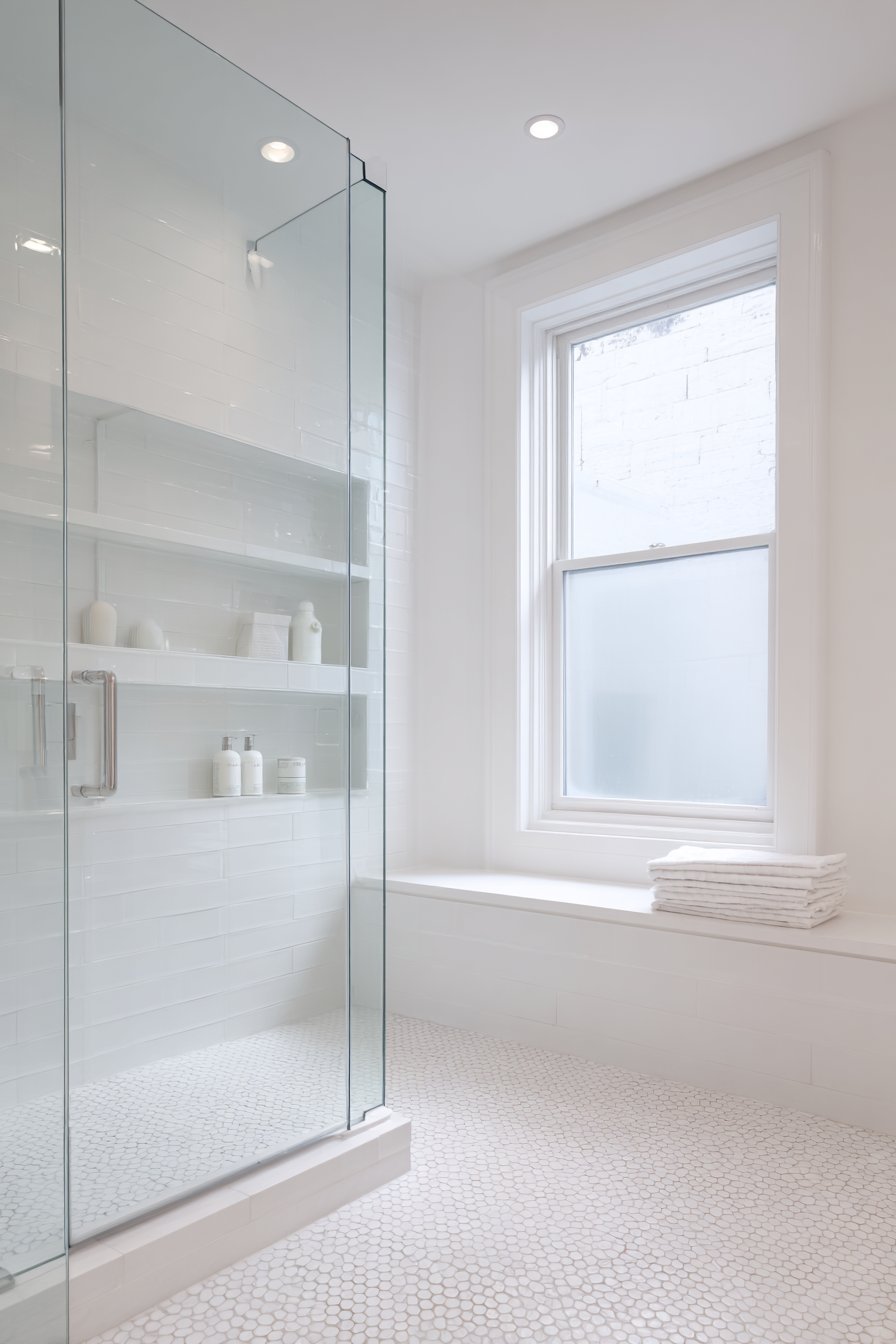
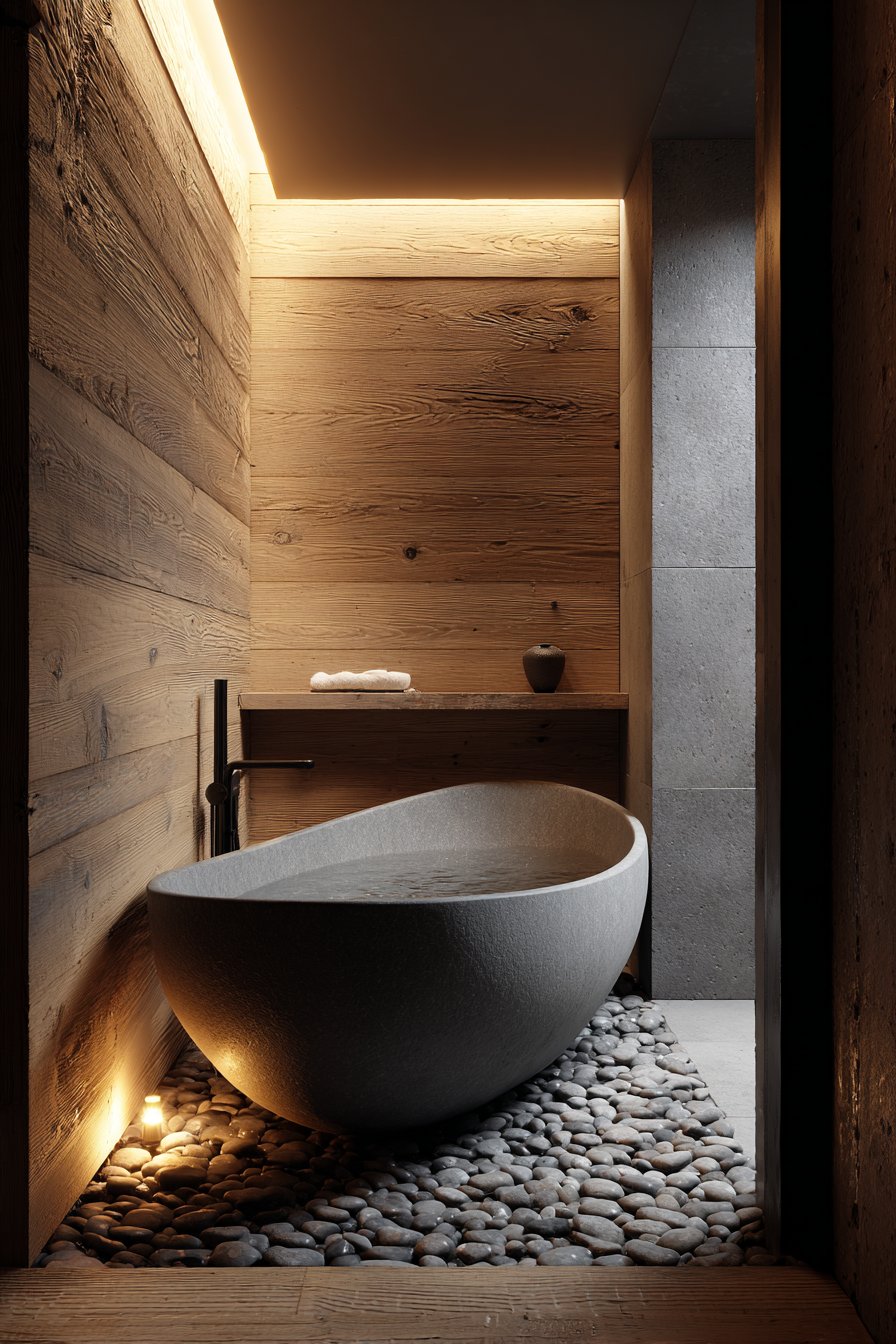
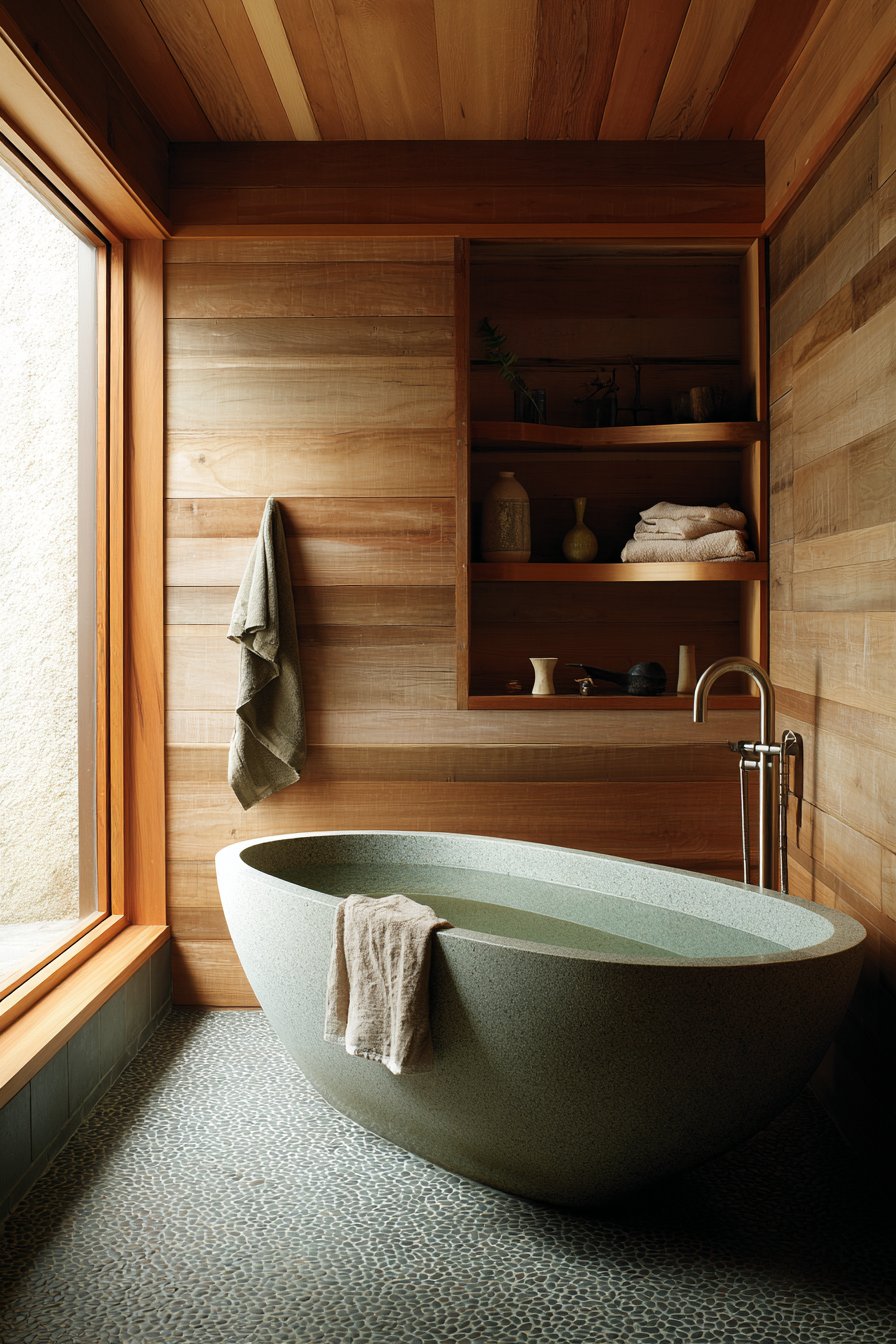
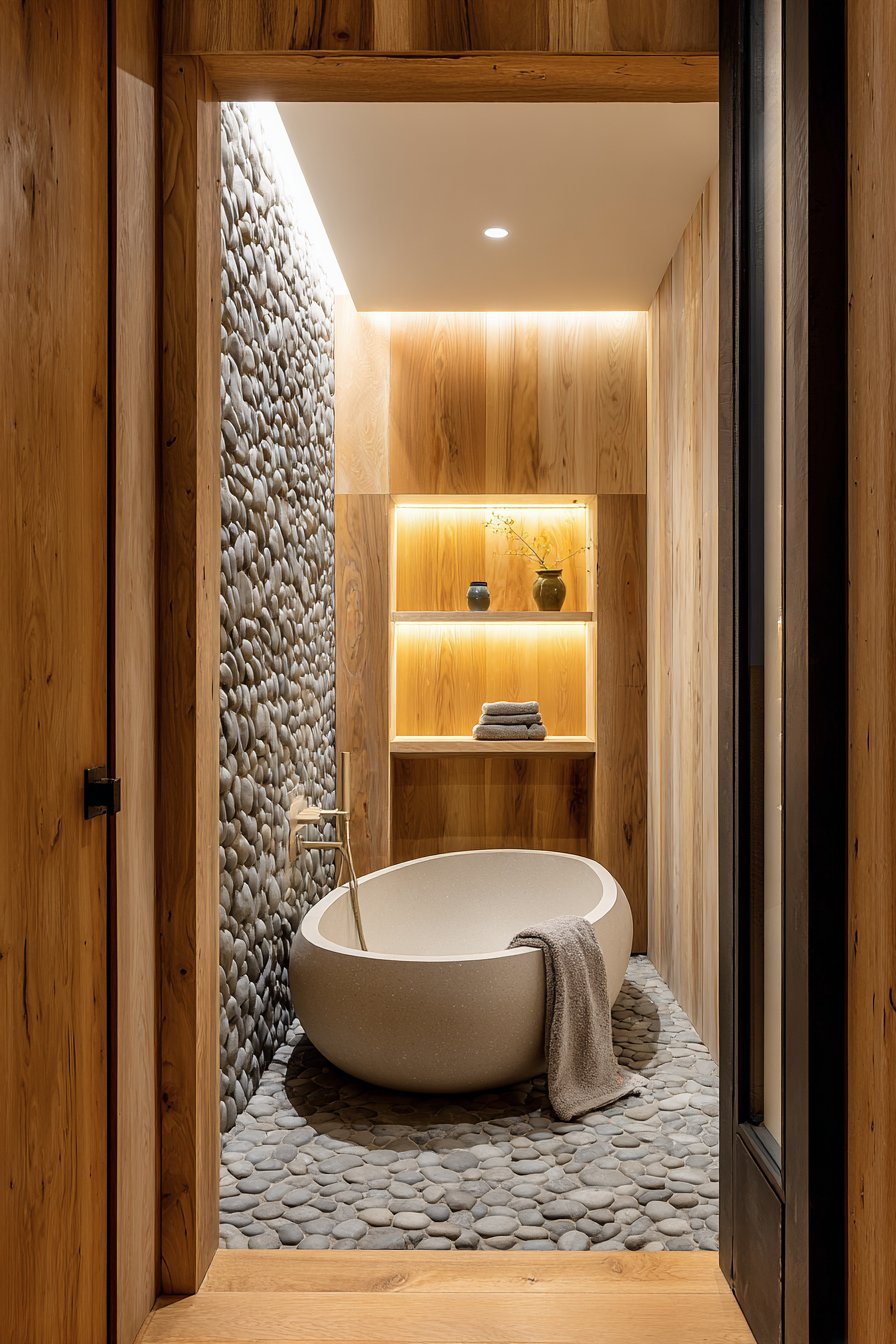
Drawing inspiration from traditional Japanese bathing culture, this minimal bathroom idea features a white ceramic soaking tub positioned within an alcove finished with smooth grey pebble tile flooring. The walls showcase natural cedar wood planks with horizontal grain patterns that introduce warmth and organic beauty while maintaining the clean lines essential to minimalist design. A single shelf holds one folded towel and a small ceramic vessel, exemplifying the Japanese aesthetic principle of displaying only what is essential and beautiful. Indirect lighting creates a meditative atmosphere, casting a soft glow that encourages relaxation and mindfulness.
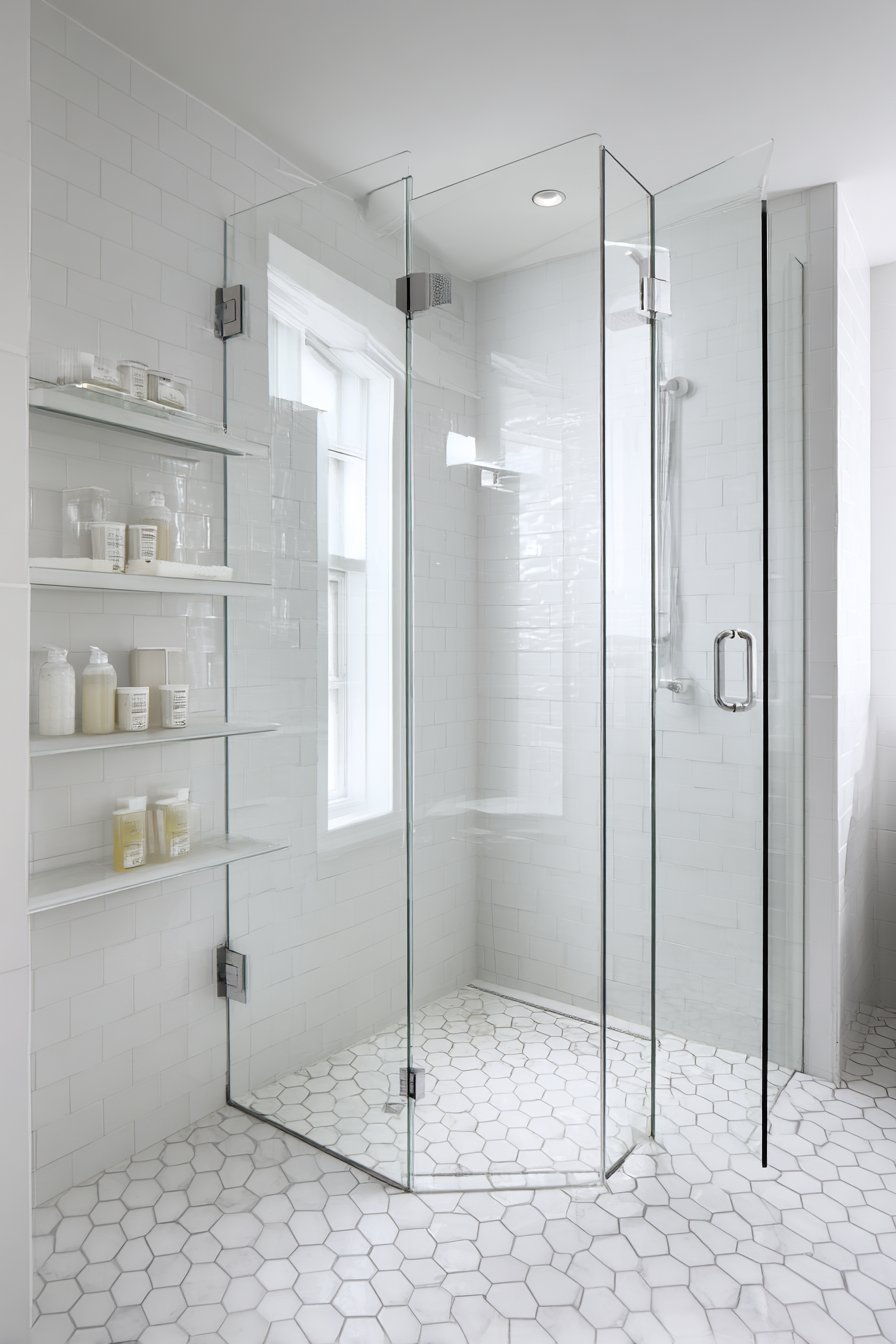
The Japanese approach to minimalism differs from Western interpretations by emphasizing the spiritual and meditative aspects of simplified spaces. The soaking tub, deeper than typical Western bathtubs, encourages a different kind of bathing experience—one focused on relaxation and contemplation rather than quick efficiency. The grey pebble tiles underfoot provide a tactile massage, connecting the bather to natural elements even within an enclosed space. The cedar wood releases subtle aromatherapy benefits when exposed to steam and humidity, engaging multiple senses in the bathing ritual.
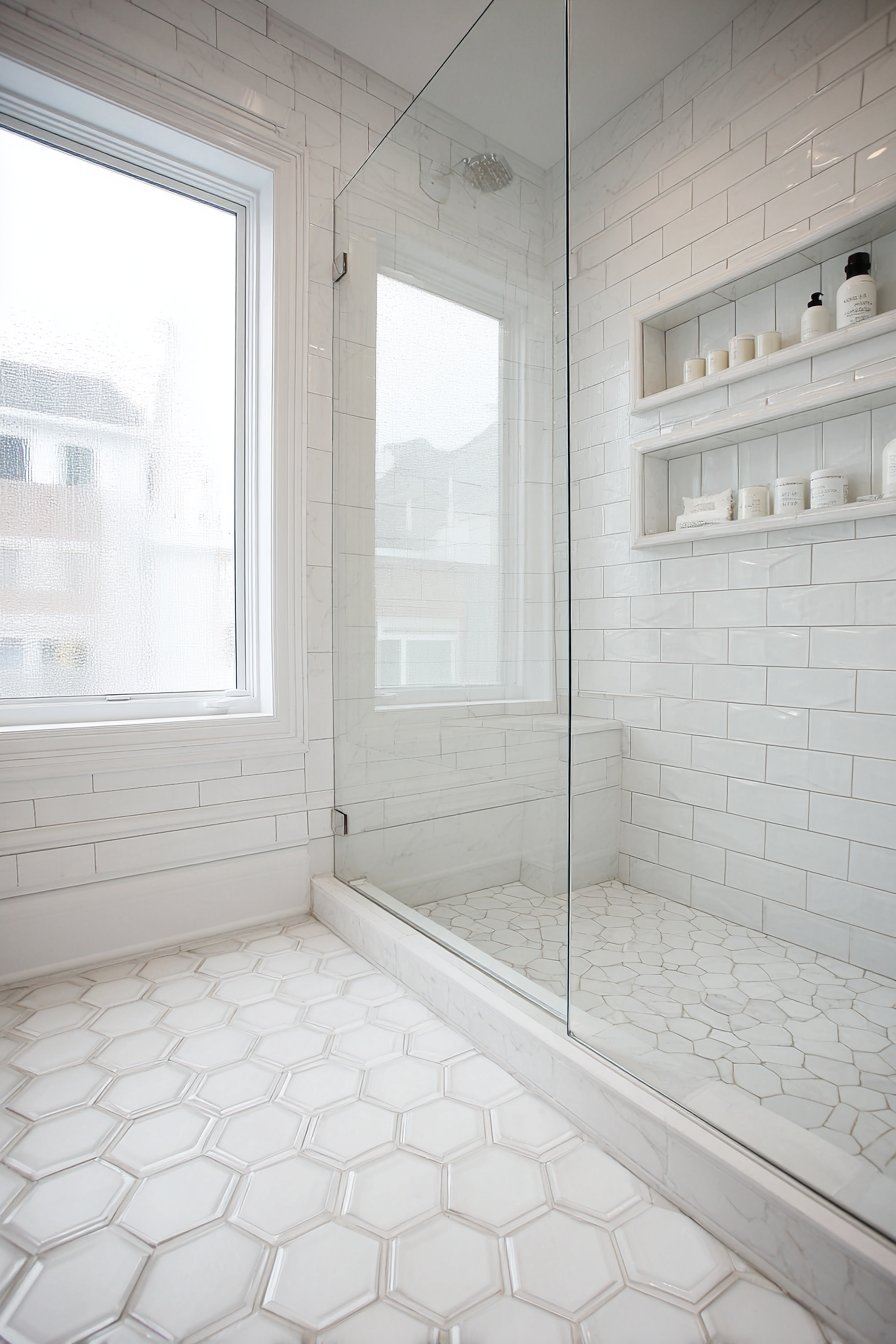
The horizontal grain of the cedar planks creates calming visual rhythm, their repetitive pattern soothing the mind and encouraging the mental quietude that defines successful meditation spaces. The restrained color palette—grey, natural wood tones, and white ceramic—creates harmony without monotony, each element distinct yet cohesive. This minimal bathroom idea demonstrates how minimalism can serve emotional and spiritual needs beyond mere aesthetics.
Key Design Tips:
- Choose natural cedar for its aromatic properties and moisture resistance
- Install deeper soaking tubs for authentic Japanese bathing experiences
- Use pebble tiles for textural variation and subtle foot massage
- Implement indirect lighting to create soft, meditative ambiance
- Limit displayed items to only one or two carefully chosen pieces
8. Symmetrical Sophistication: Twin Sinks with Restraint
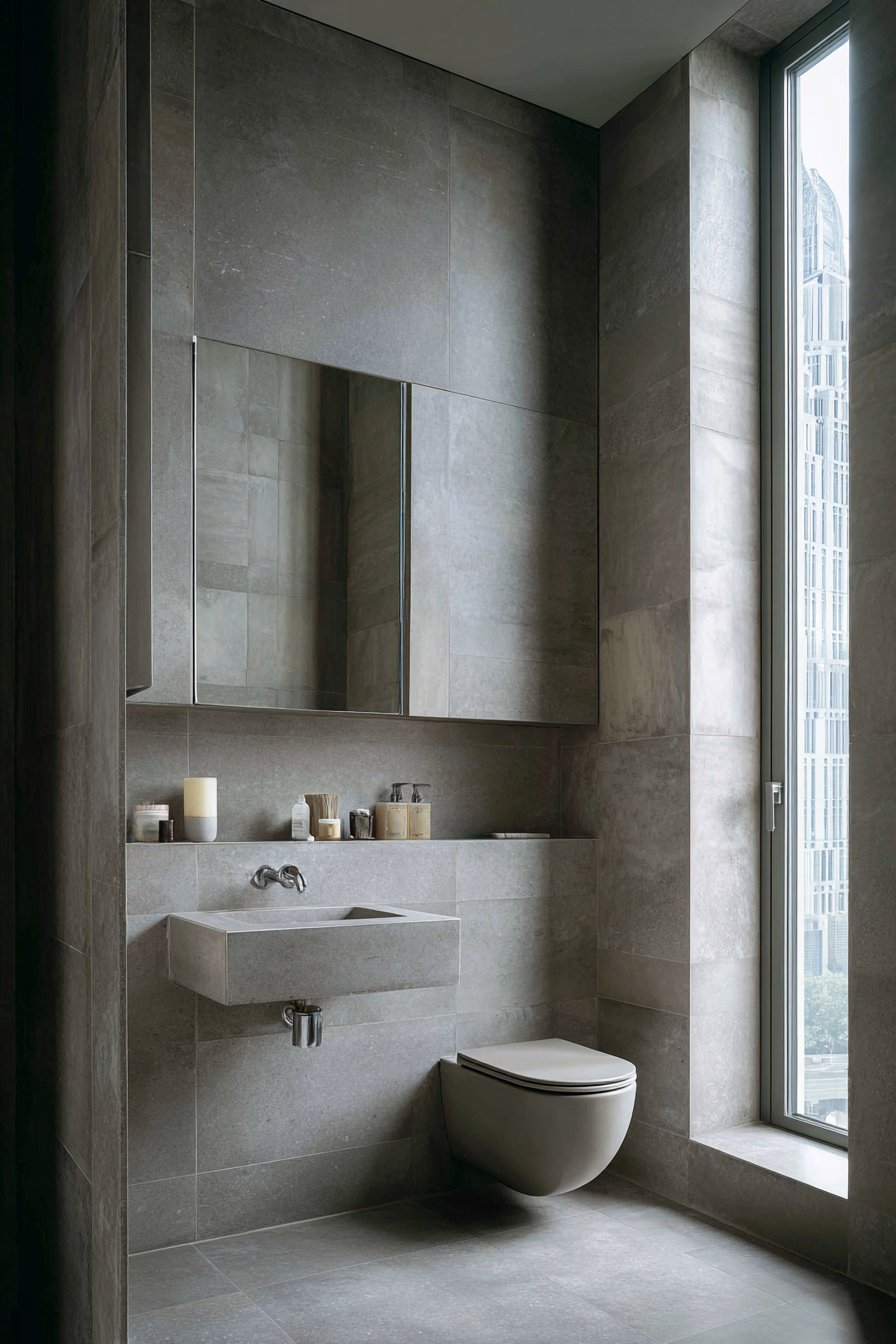
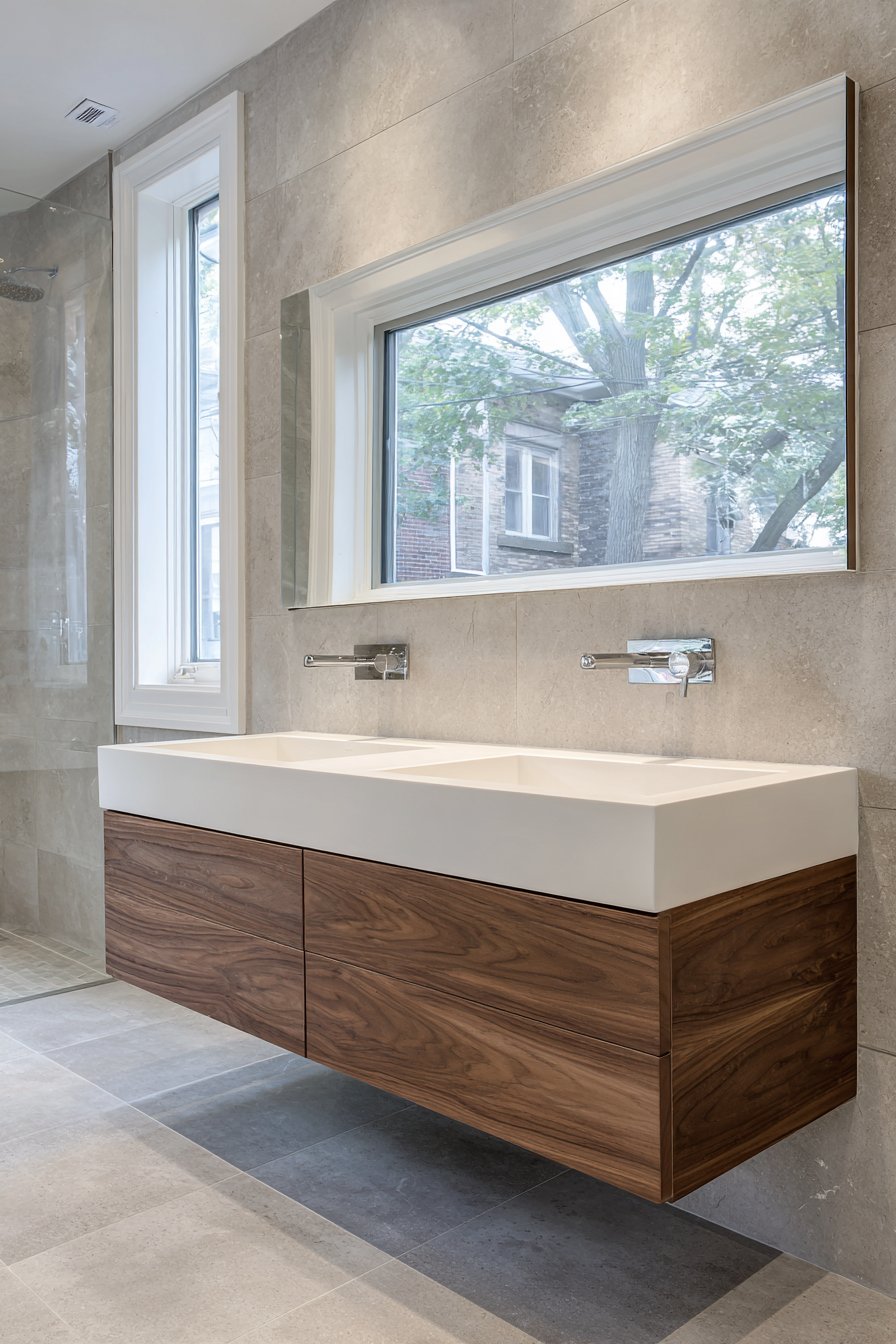
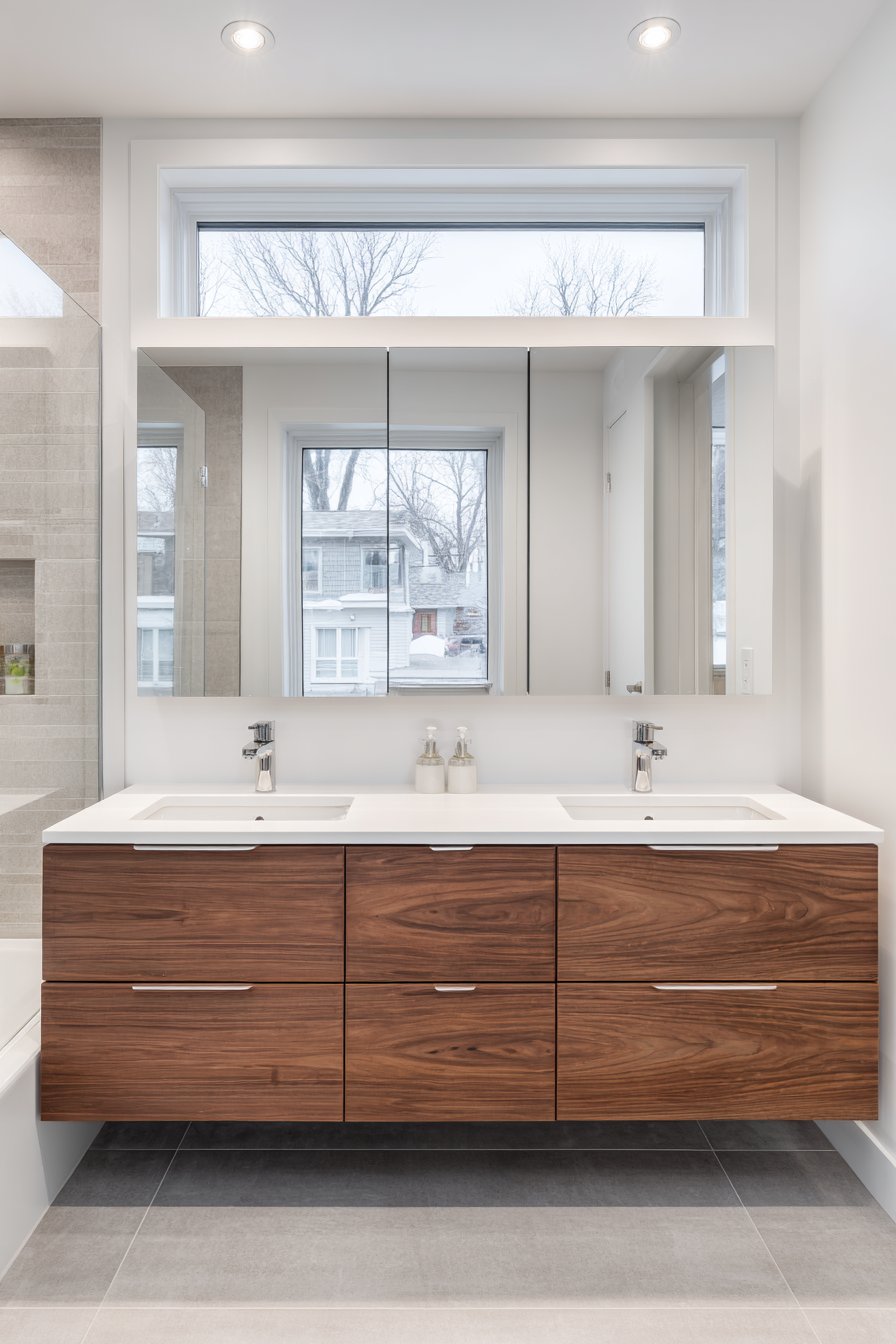
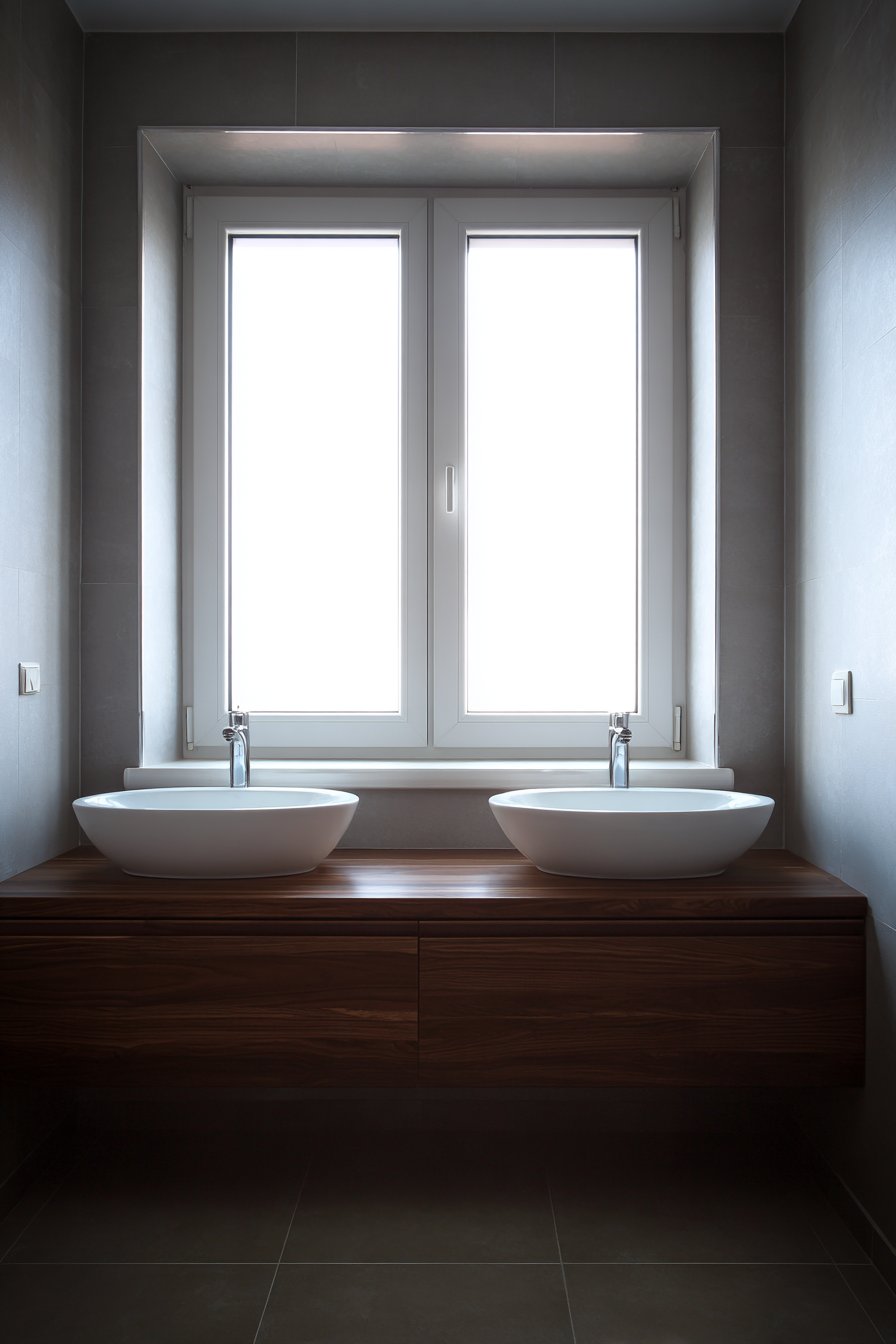
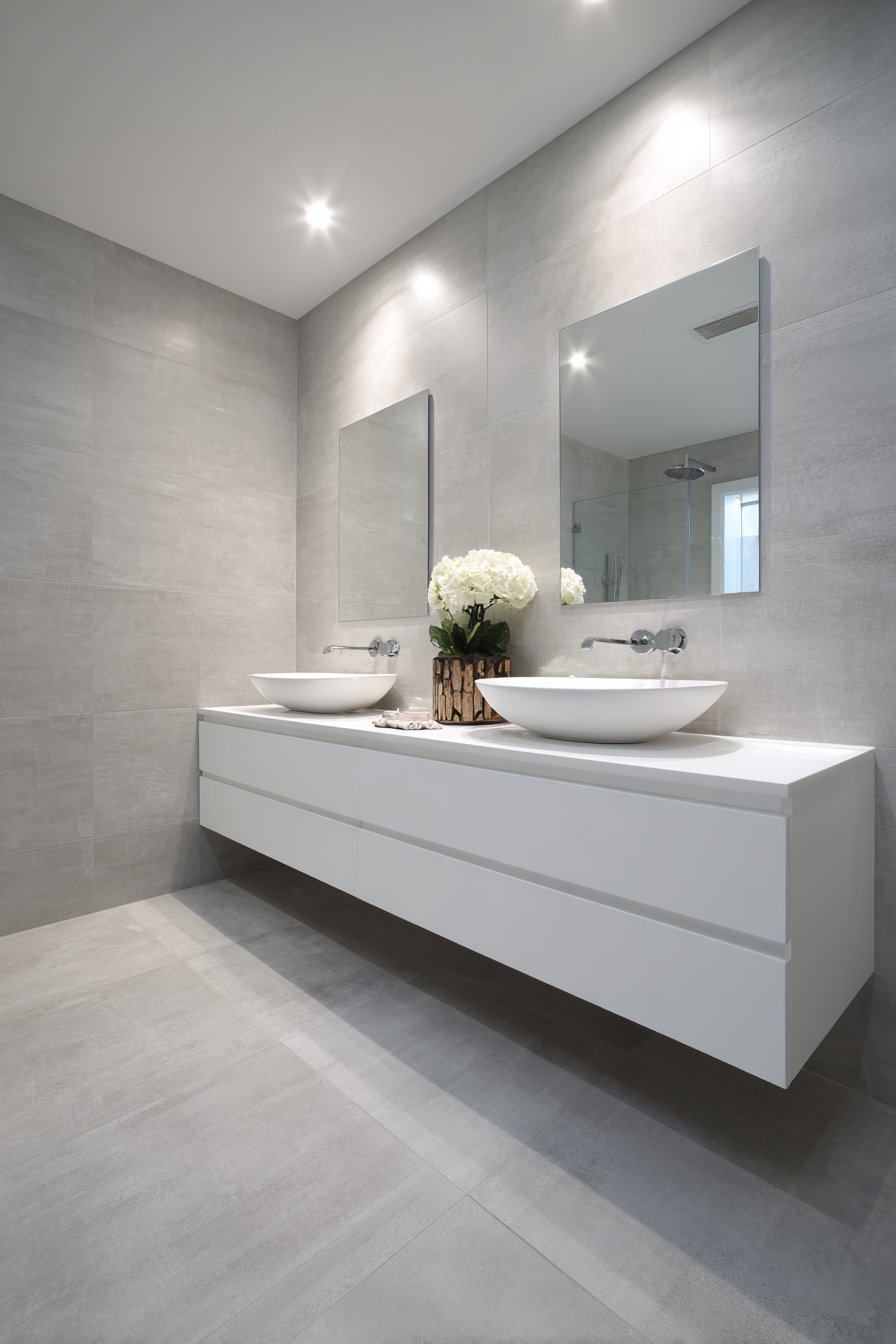
Perfect symmetry defines this minimal bathroom idea featuring twin wall-mounted sinks in white ceramic with sleek chrome faucets. The vanity consists of a single floating walnut wood slab with invisible drawer fronts, demonstrating how clever hardware choices can maintain clean lines while providing necessary storage. Large format light grey tiles cover the floor with minimal grout lines, creating an uninterrupted visual plane that makes the space feel more expansive. A horizontal window with frosted glass provides privacy while admitting natural light, positioned perfectly to illuminate the vanity area during morning routines.
Symmetry brings a sense of order and calm to bathroom design, particularly in shared spaces where two people need equal access to sinks and storage. The twin sinks create balance without requiring separate vanity units, keeping the design streamlined and cohesive. The walnut wood slab brings warmth and natural beauty, its continuous grain pattern flowing beneath both sinks and creating visual unity. The invisible drawer fronts—achieved through touch-latch mechanisms or recessed pulls—maintain the slab’s uninterrupted appearance, allowing the wood’s beauty to remain the focal point.
The horizontal window introduces an interesting architectural element, its unusual proportions creating visual interest while serving practical purposes. The frosted glass treatment ensures privacy without sacrificing natural light, a crucial balance in bathroom design. The chrome faucets add refined detail without introducing visual weight, their reflective surfaces catching and dispersing light throughout the space. This minimal bathroom idea proves that shared bathrooms can be both functional and beautiful.
Key Design Tips:
- Create symmetry in shared bathrooms for visual harmony and fairness
- Use continuous countertop slabs rather than separate vanity units
- Choose invisible hardware to maintain clean, uninterrupted surfaces
- Install horizontal windows for architectural interest and natural light
- Limit grout lines by using large format floor tiles
9. Concrete and Glass: Open Plan Luxury
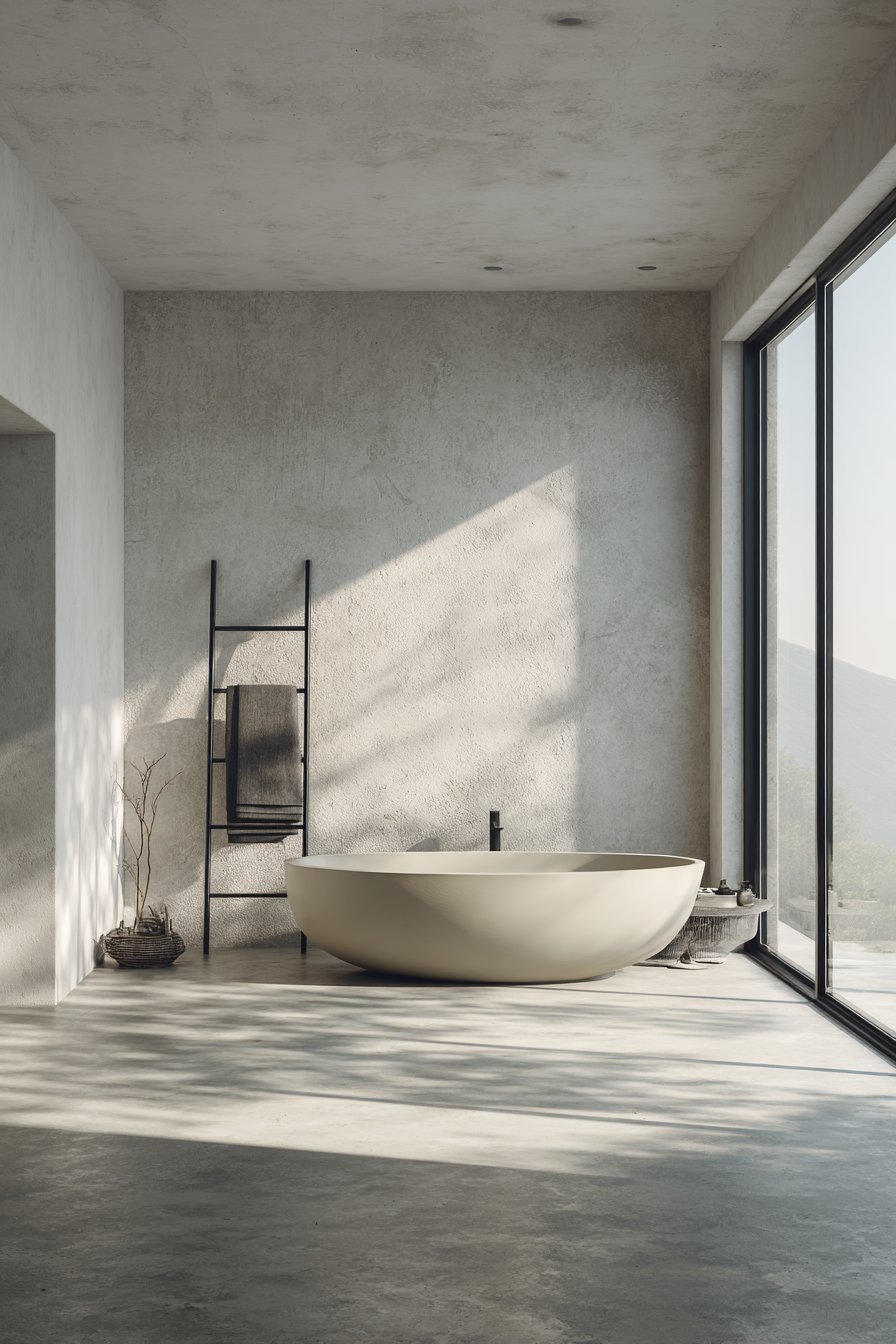
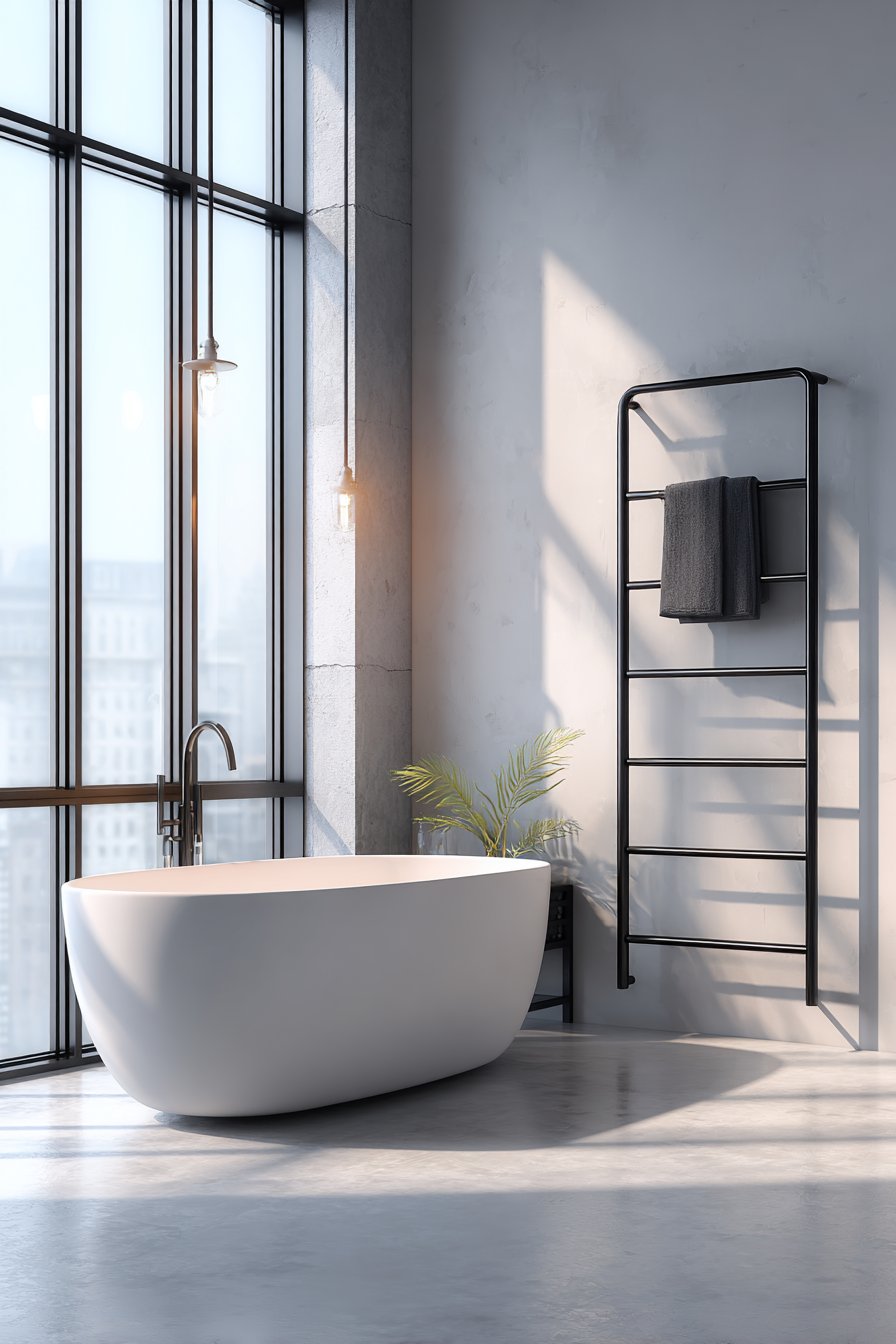
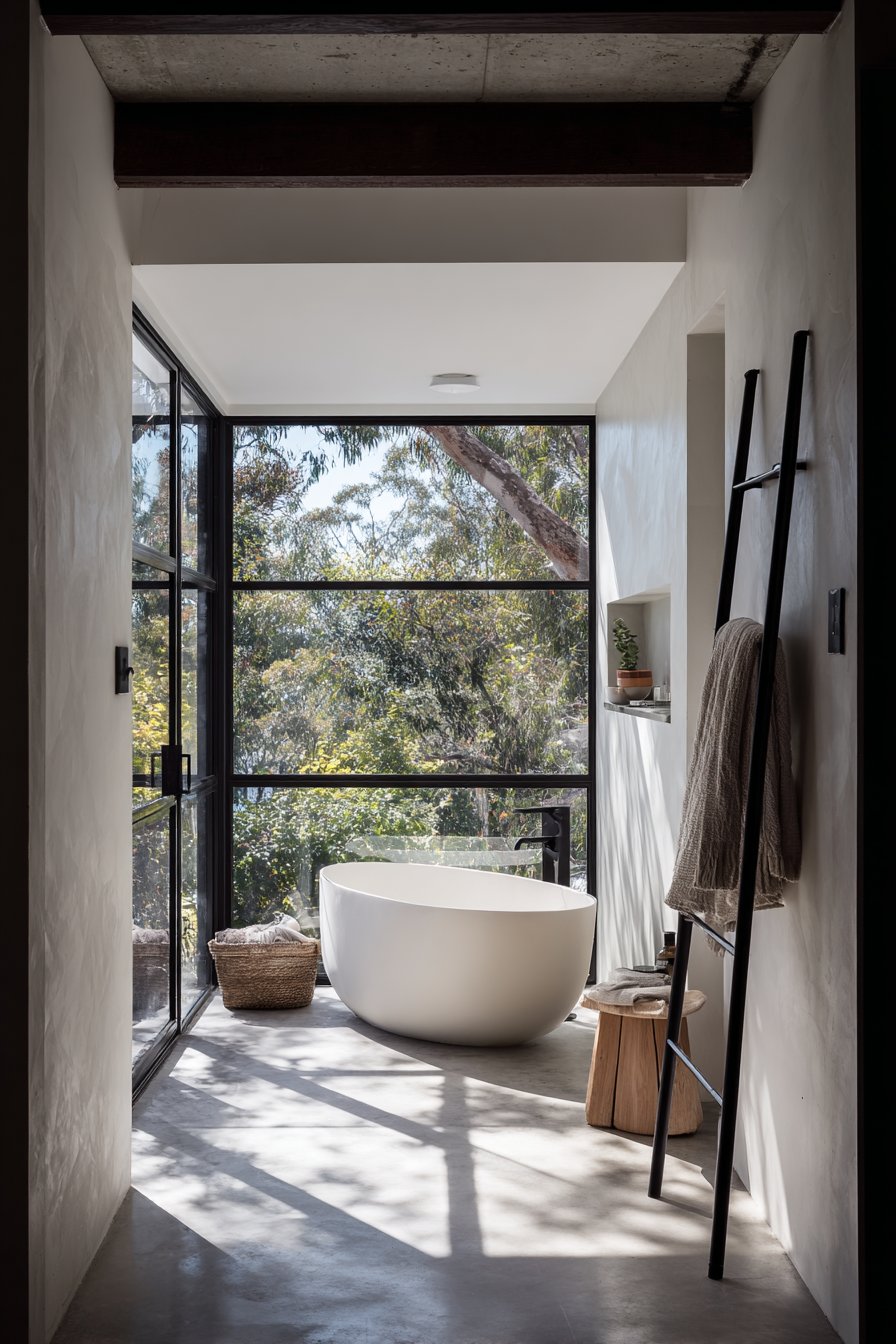
An open-plan bathroom design with a freestanding oval tub positioned on polished concrete flooring represents minimalism at its most confident and spacious. The white walls with subtle texture variation provide soft visual interest without introducing pattern or decoration, allowing the architectural elements and spatial quality to dominate the experience. A simple black metal towel ladder leans casually against the wall, its industrial character and utilitarian function perfectly aligned with minimalist principles. Abundant natural light from floor-to-ceiling windows creates dynamic shadows throughout the day, transforming the space into an ever-changing environment that never feels static.
The polished concrete flooring brings industrial sophistication to this minimal bathroom idea, its subtle sheen reflecting light and adding depth to the grey tones. Concrete’s thermal mass also provides practical benefits—it can be heated from below and will retain warmth, making the bathroom comfortable even in cooler climates. The freestanding tub becomes sculptural when placed on this continuous floor plane, its white curves contrasting beautifully with the linear architectural elements surrounding it.
The openness of this design requires confidence—there are no walls or partitions to hide behind, no cabinets to conceal clutter. This forces intentional living, where only essential items are kept in the space and everything must have a designated place. The floor-to-ceiling windows connect the bathroom to the outdoors or surrounding architecture, making the space feel less like a closed utility room and more like a living area dedicated to personal care and relaxation.
Key Design Tips:
- Polish concrete floors for sheen and easier cleaning
- Install radiant floor heating beneath concrete for comfort
- Use freestanding tubs as sculptural elements in open plans
- Position tubs to take advantage of views while maintaining privacy
- Choose leaning rather than wall-mounted towel storage for flexibility
10. Glass Panel and Penny Tiles: Corner Efficiency
A corner shower with white penny round tiles and a single glass panel partition demonstrates how minimal bathroom ideas can maximize space efficiency while maintaining aesthetic appeal. The smooth white plaster on remaining walls creates visual simplicity, allowing the penny tiles’ subtle geometric pattern to provide just enough interest. A built-in corner bench finished in matching tile offers functional seating for shaving or simply relaxing under the water flow, proving that minimalism doesn’t require sacrificing comfort or practicality. Recessed ceiling lighting maintains the clean lines by eliminating the need for protruding fixtures.
Penny round tiles offer a classic aesthetic that feels both vintage and contemporary, their circular forms creating flowing visual texture that contrasts beautifully with the angular corner placement. The white-on-white color scheme keeps the focus on form and shadow rather than color contrast, allowing the dimensional quality of the tile installation to shine. The single glass panel provides splash protection while maintaining the visual openness that defines successful minimal design—it’s precisely enough enclosure and not one inch more.
The built-in corner bench represents thoughtful planning, utilizing dead corner space that often goes unused in traditional shower designs. By finishing the bench in the same penny tiles, the design maintains cohesion and avoids introducing a jarring material change within the small shower enclosure. The recessed ceiling lighting provides even, shadow-free illumination for safety and function while keeping the ceiling plane clean and uninterrupted.
Key Design Tips:
- Use penny tiles to add subtle pattern without visual complexity
- Install single glass panels rather than full enclosures when possible
- Build corner benches to utilize awkward corner spaces functionally
- Choose recessed lighting to maintain clean ceiling planes
- Match bench materials to wall finishes for cohesive appearance
11. Terrazzo Minimalism: Space-Saving Efficiency
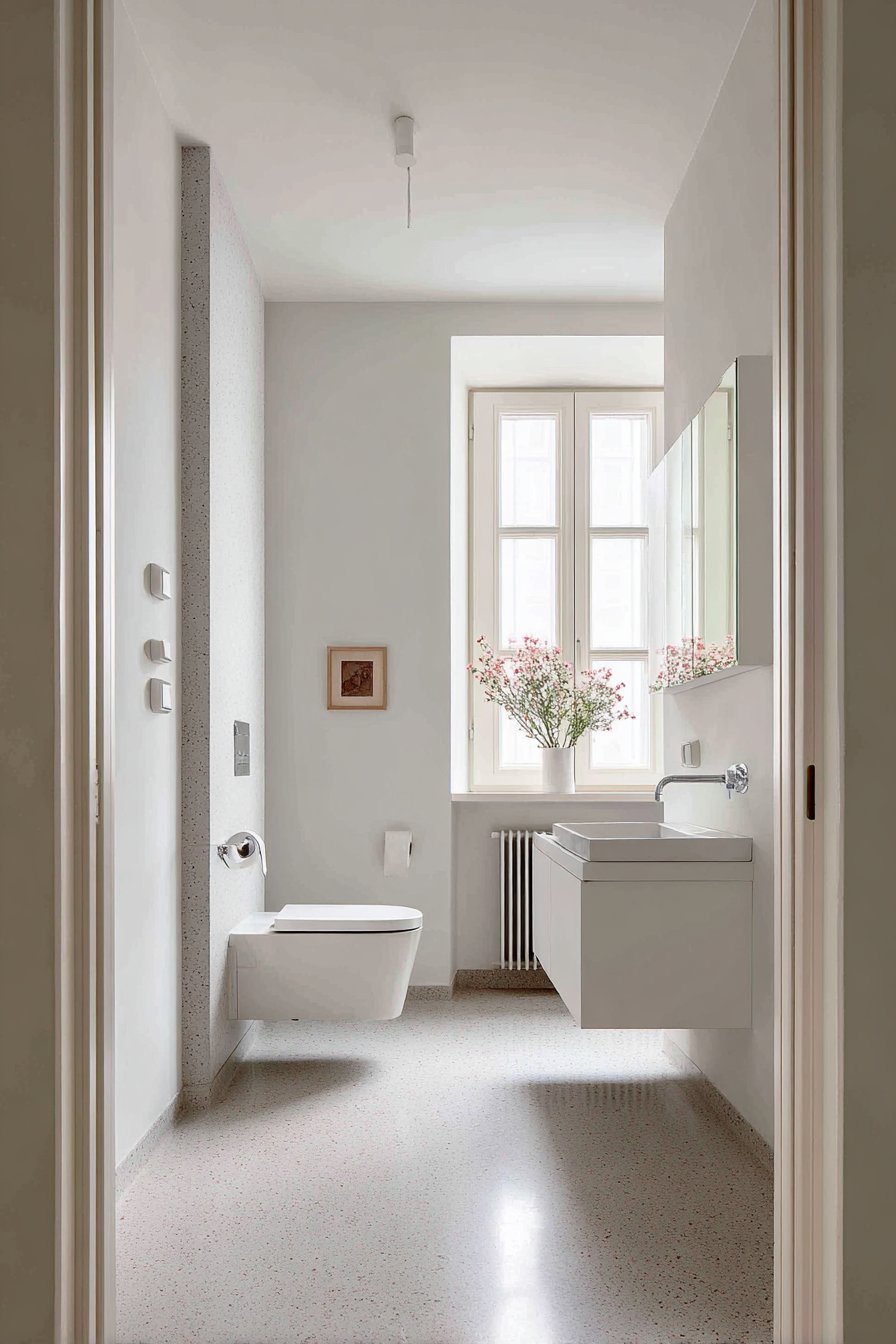
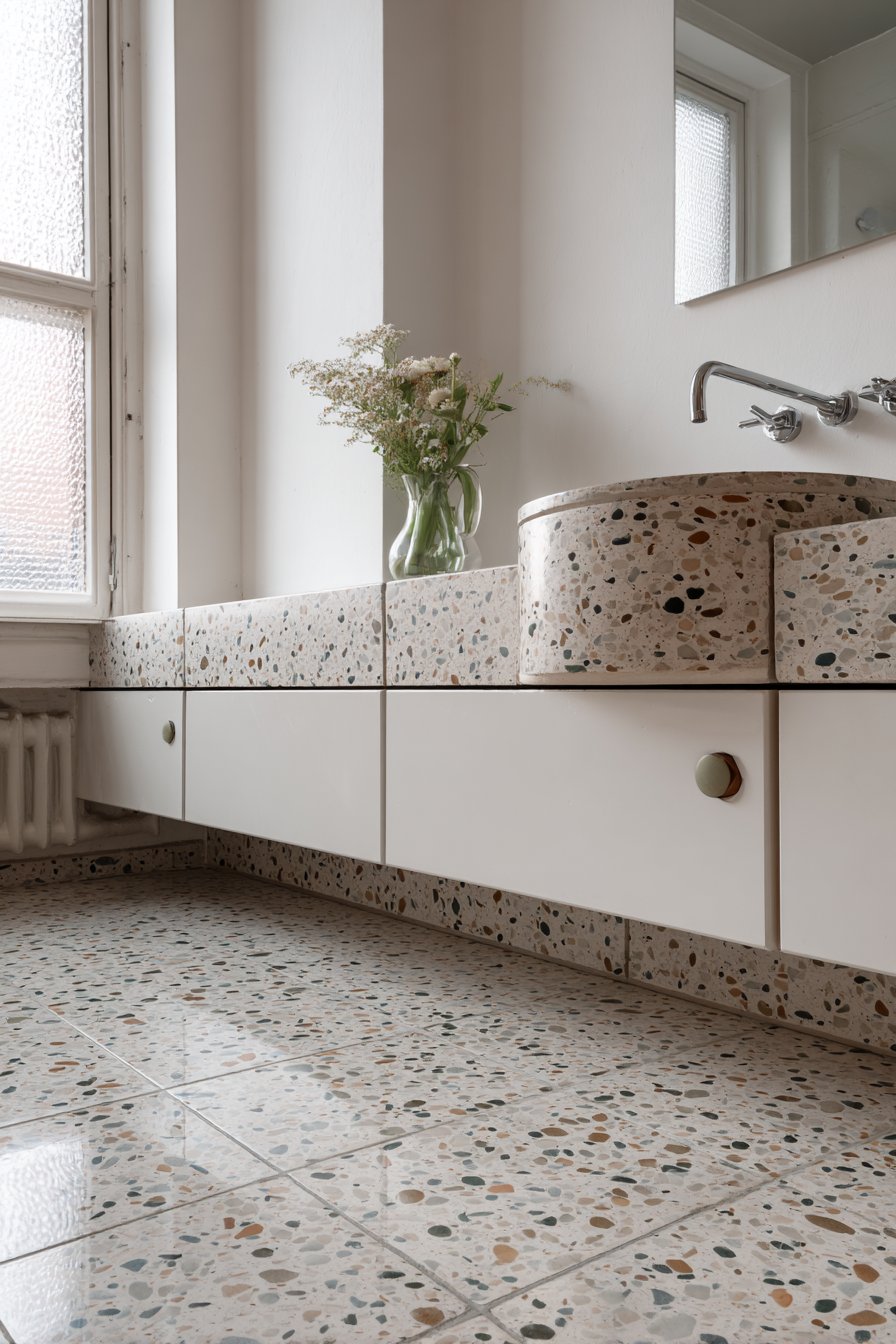
Designed for narrow or compact bathrooms, this minimal bathroom idea features continuous terrazzo flooring in soft grey tones that creates visual flow despite limited square footage. A wall-mounted toilet and compact floating sink preserve precious floor space, their wall-hung installation making the small bathroom feel less cramped and significantly easier to clean. Simple chrome fixtures provide functional elegance without demanding attention, their reflective surfaces catching and dispersing available light. One recessed medicine cabinet with a frameless mirror maintains the uninterrupted wall plane, providing essential storage without the visual bulk of traditional cabinets.
Terrazzo flooring brings subtle visual interest through its aggregated composition—small chips of marble, quartz, granite, or glass suspended in a cement or resin base. This creates a softly speckled appearance that hides dirt better than solid-colored flooring while maintaining the minimal aesthetic. The grey tone palette ensures the terrazzo doesn’t overwhelm the small space with pattern or color, instead providing a sophisticated neutral foundation. The material’s durability and water resistance make it ideal for bathroom applications where moisture and foot traffic are constant concerns.
The wall-mounted toilet represents a significant space-saving innovation, eliminating the floor-mounted footprint of traditional toilets and creating more perceived floor space. This installation requires proper structural support and in-wall plumbing, but the visual and practical benefits justify the additional installation complexity. The compact floating sink continues this space-maximizing philosophy, providing essential handwashing function without dominating the limited square footage. The frameless recessed medicine cabinet offers storage without protruding into the already tight space, demonstrating how minimal bathroom ideas solve practical challenges through smart design rather than decorative distraction.
Key Design Tips:
- Choose terrazzo in neutral tones for subtle pattern in small spaces
- Install wall-mounted toilets to maximize floor visibility
- Use compact floating sinks proportioned to room size
- Specify frameless recessed medicine cabinets for hidden storage
- Keep fixture finishes consistent throughout for visual cohesion
12. Integrated Corian: Seamless Sophistication
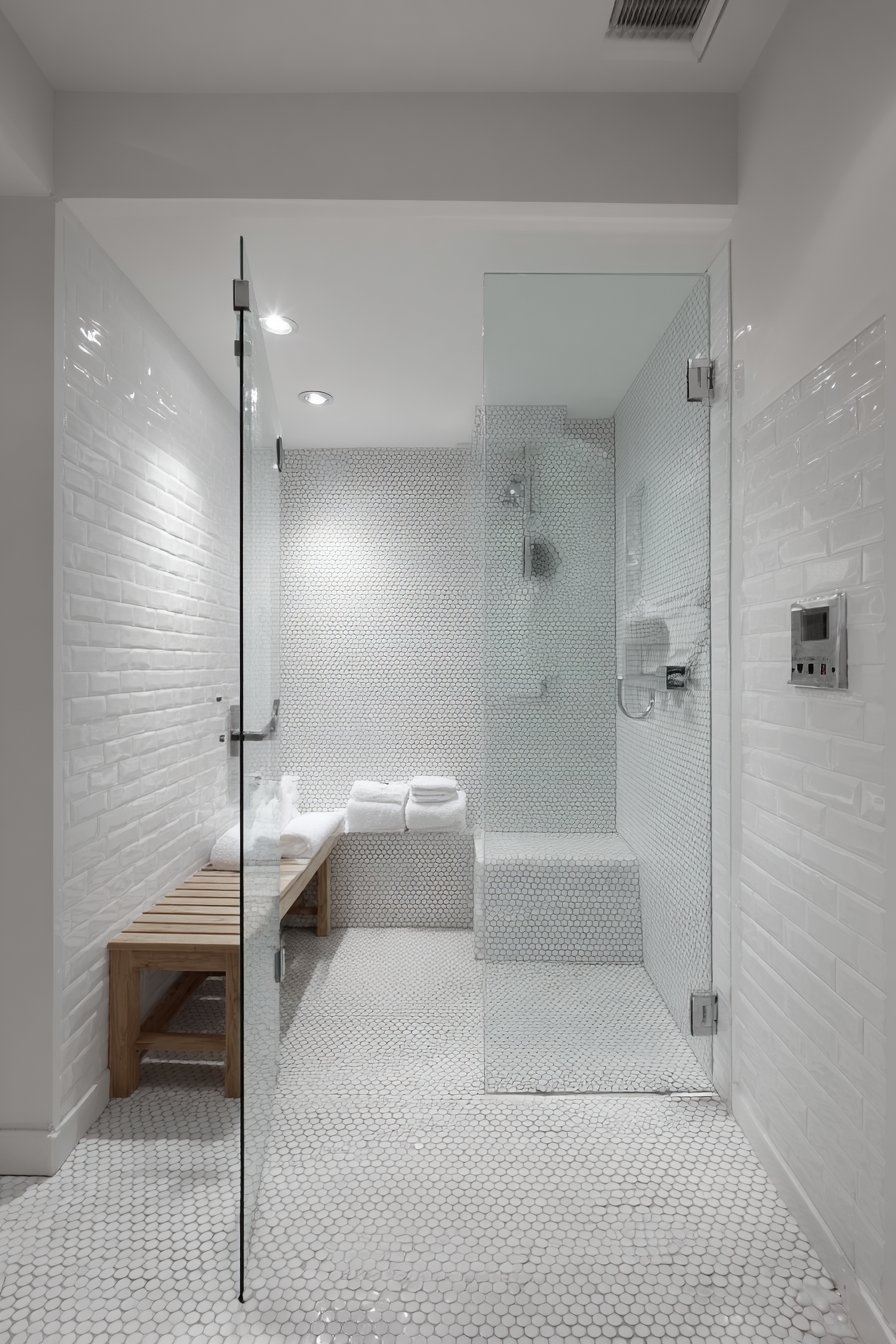
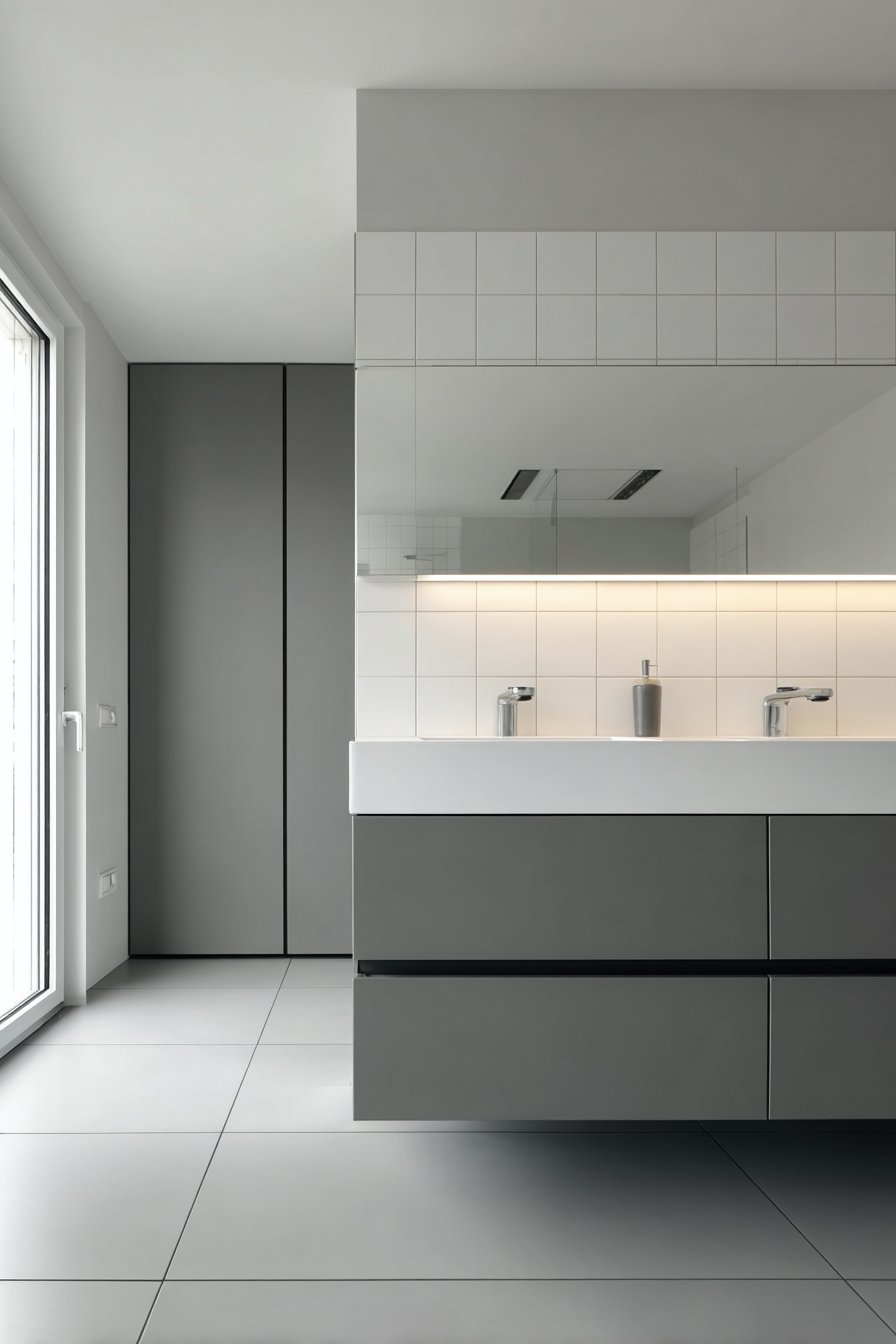
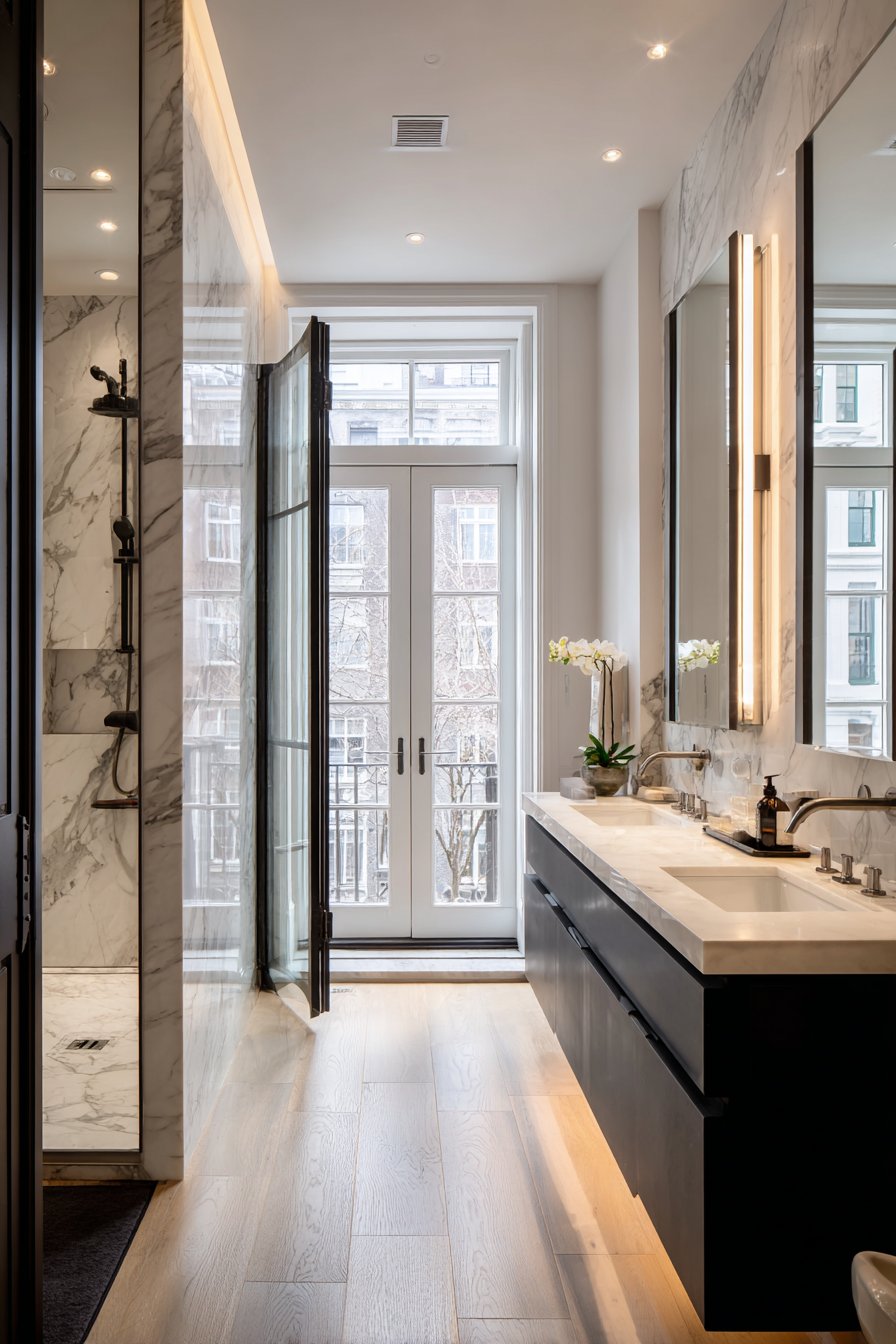
A double vanity featuring integrated white Corian countertop and undermount sinks represents minimalism’s commitment to seamless design and continuous surfaces. The handleless grey lacquer cabinet doors with push-to-open mechanisms maintain perfectly smooth fronts, eliminating the visual interruption of traditional hardware. Large format white tiles extend from floor to ceiling, creating visual continuity that makes the bathroom feel larger and more cohesive. A horizontal LED light strip behind the mirror provides even, shadow-free illumination perfect for grooming tasks while adding a subtle design detail.
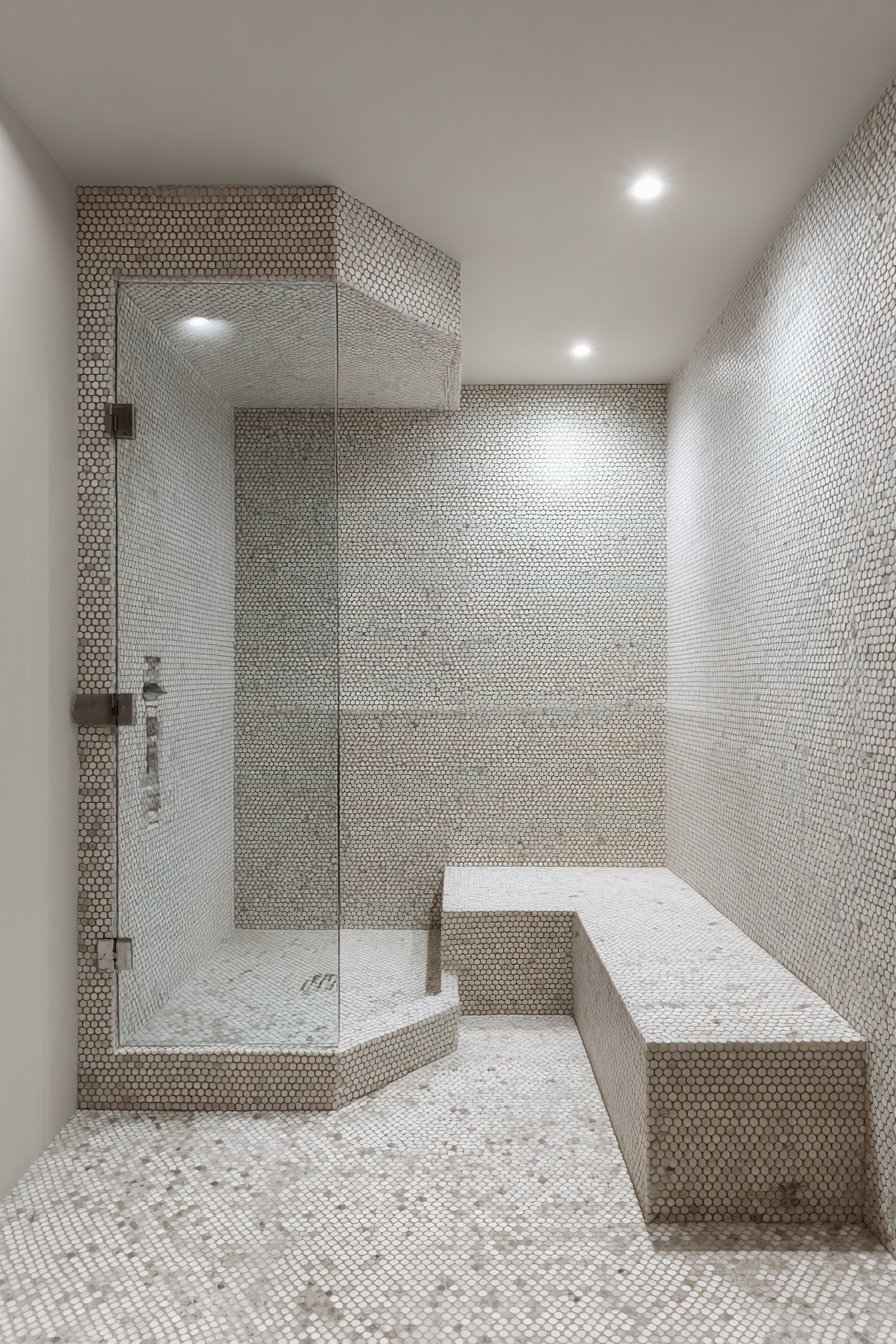
Corian and similar solid surface materials excel in minimal bathroom ideas because they can be formed with integral sinks, creating one continuous piece from backsplash to basin with no seams or joints to interrupt the flow. This seamless construction isn’t just visually appealing—it’s also more hygienic, as there are no seams where water, soap, and bacteria can accumulate. The material’s non-porous nature makes it resistant to stains and easy to clean, practical considerations that matter in real-world bathroom use.
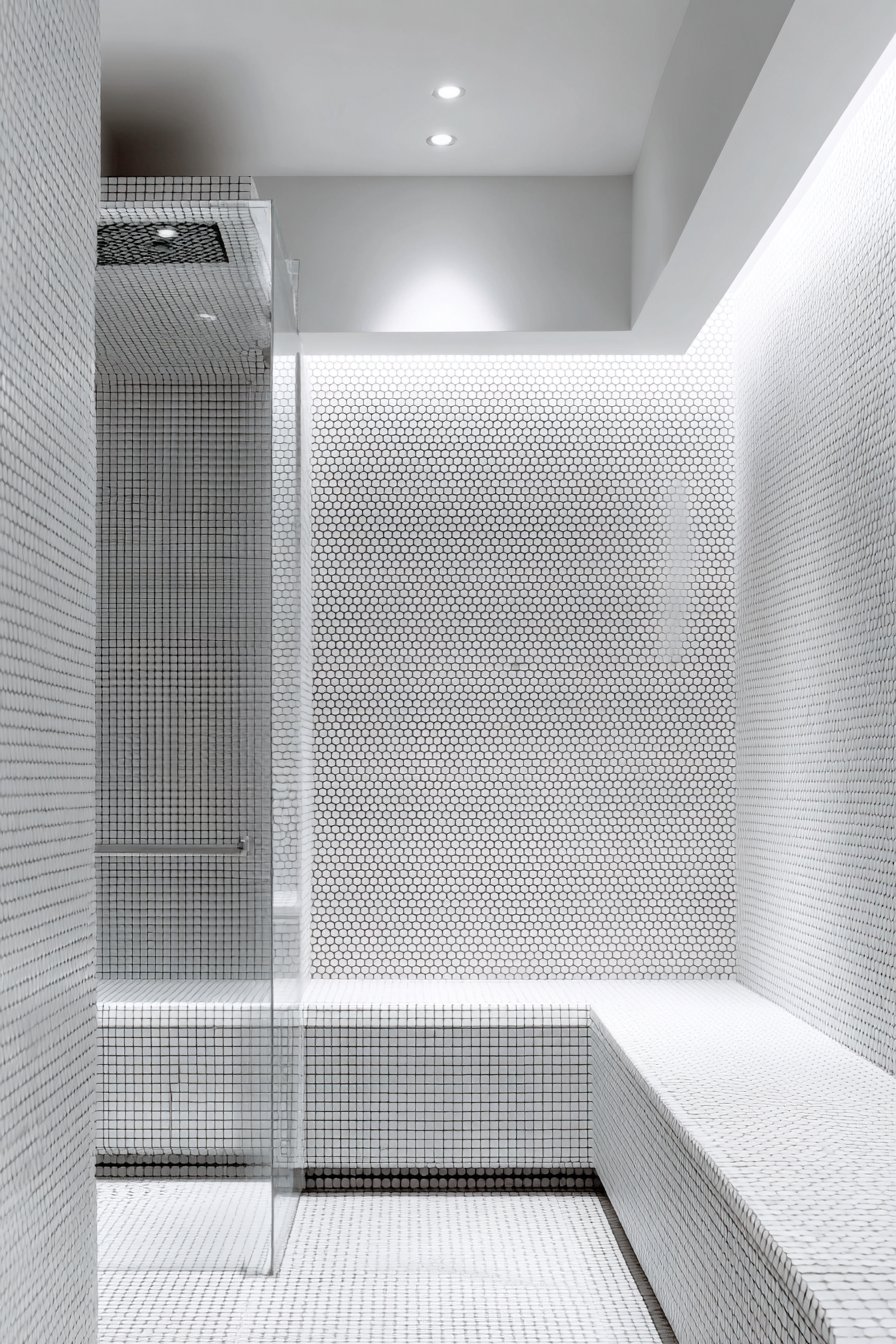
The handleless grey lacquer cabinets represent a higher level of minimalist commitment, where even the small detail of drawer pulls is eliminated to maintain perfectly smooth surfaces. The push-to-open mechanism provides access when needed while preserving the clean aesthetic when closed. The grey tone adds visual weight and grounding to the predominantly white space, preventing it from feeling too ethereal or impractical. The horizontal LED strip behind the mirror creates a floating effect while providing the even facial lighting essential for makeup application and grooming.
Key Design Tips:
- Specify integrated solid surface sinks for seamless appearance
- Choose push-to-open mechanisms for handleless cabinet fronts
- Use large format tiles from floor to ceiling for maximum continuity
- Install LED strip lighting behind mirrors for modern illumination
- Select muted cabinet colors to ground predominantly white spaces
13. Slate Spa: Natural Stone Serenity
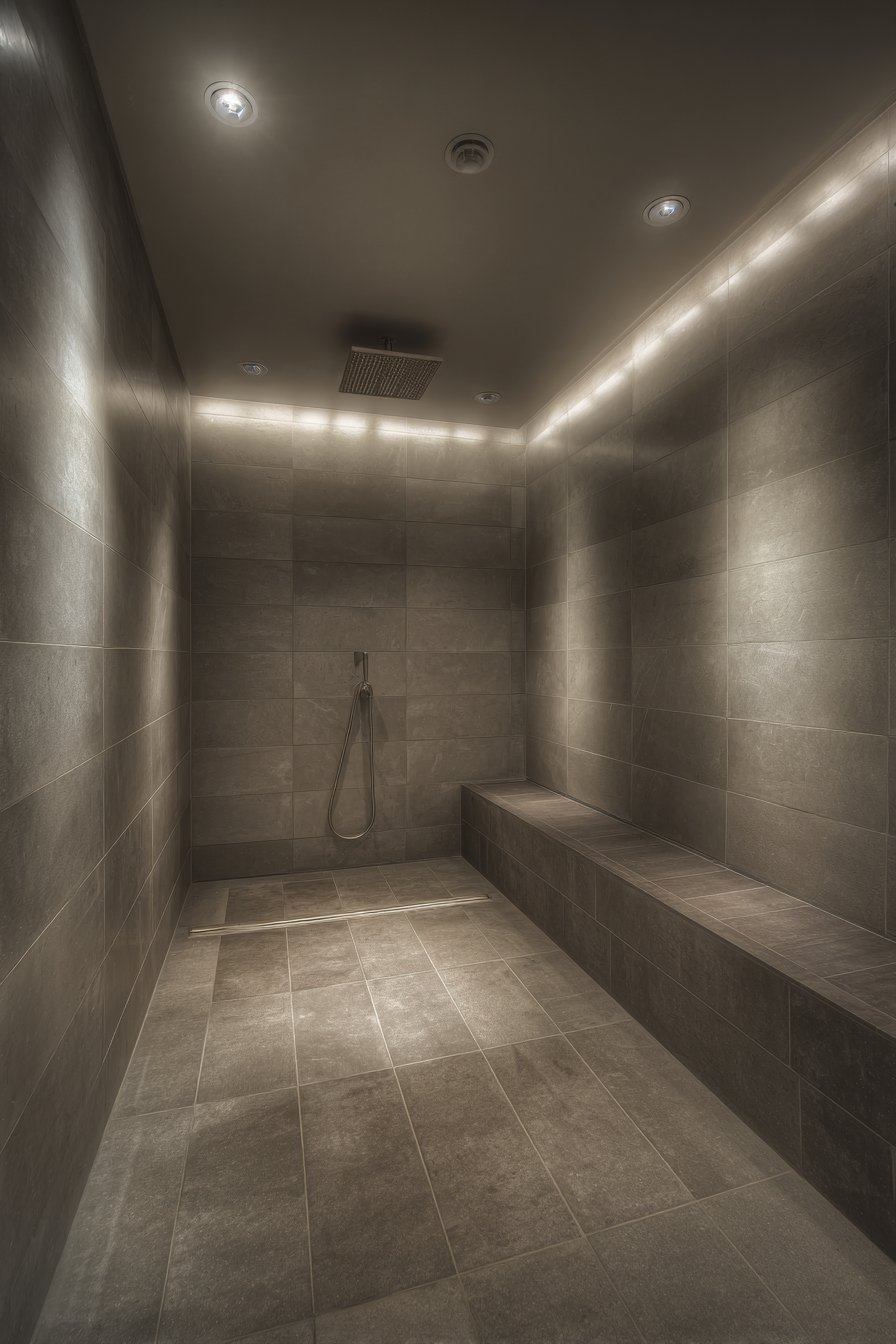
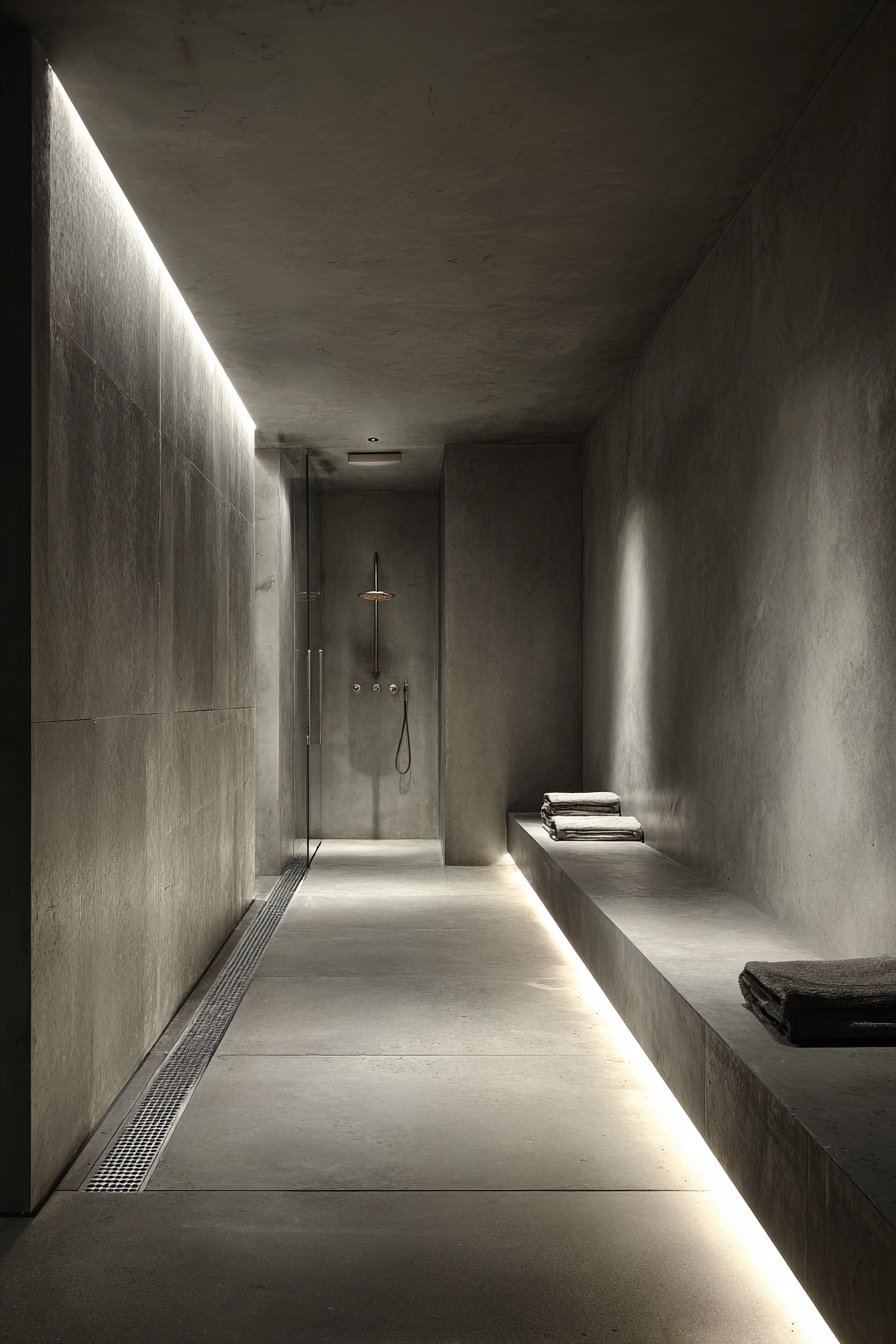
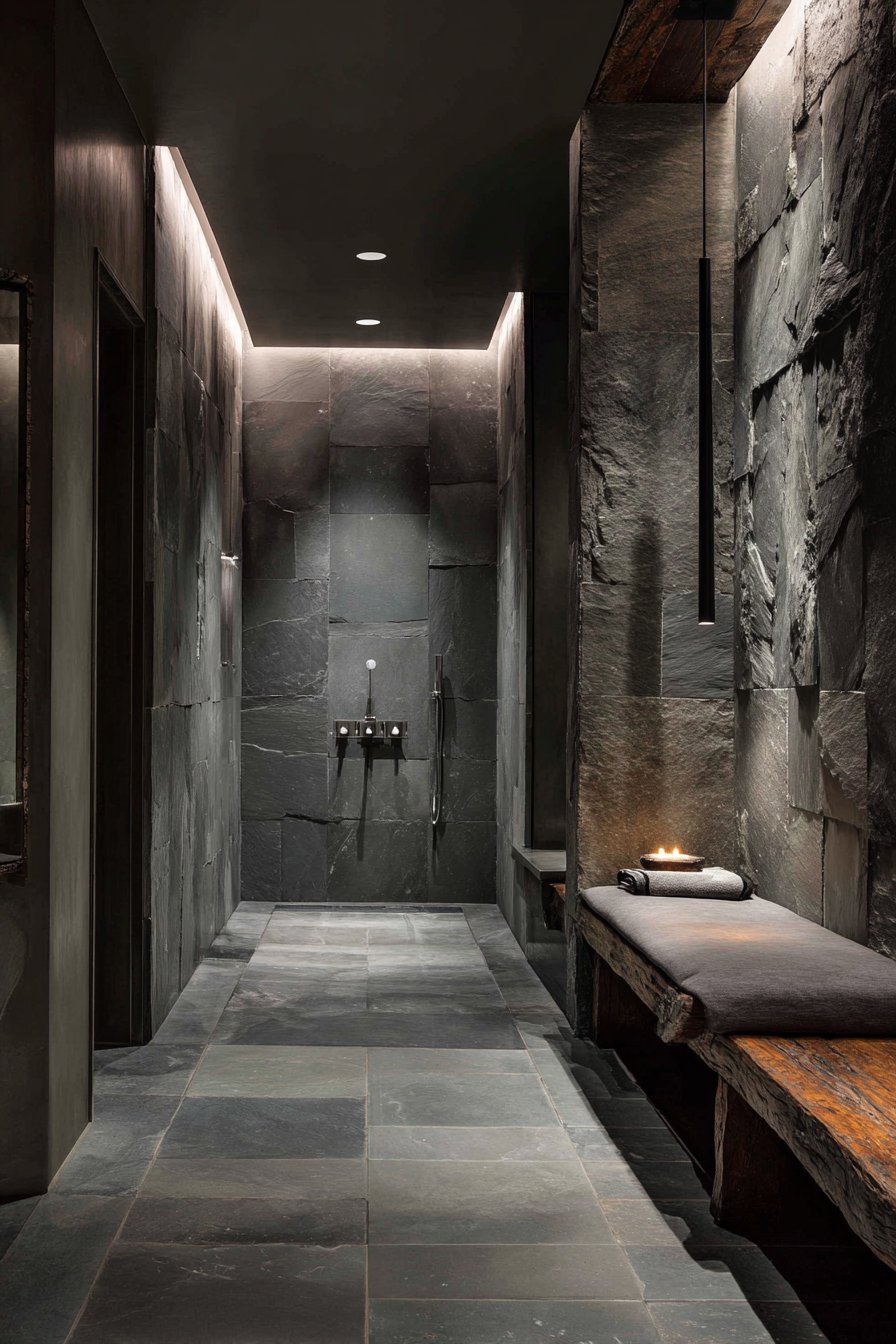
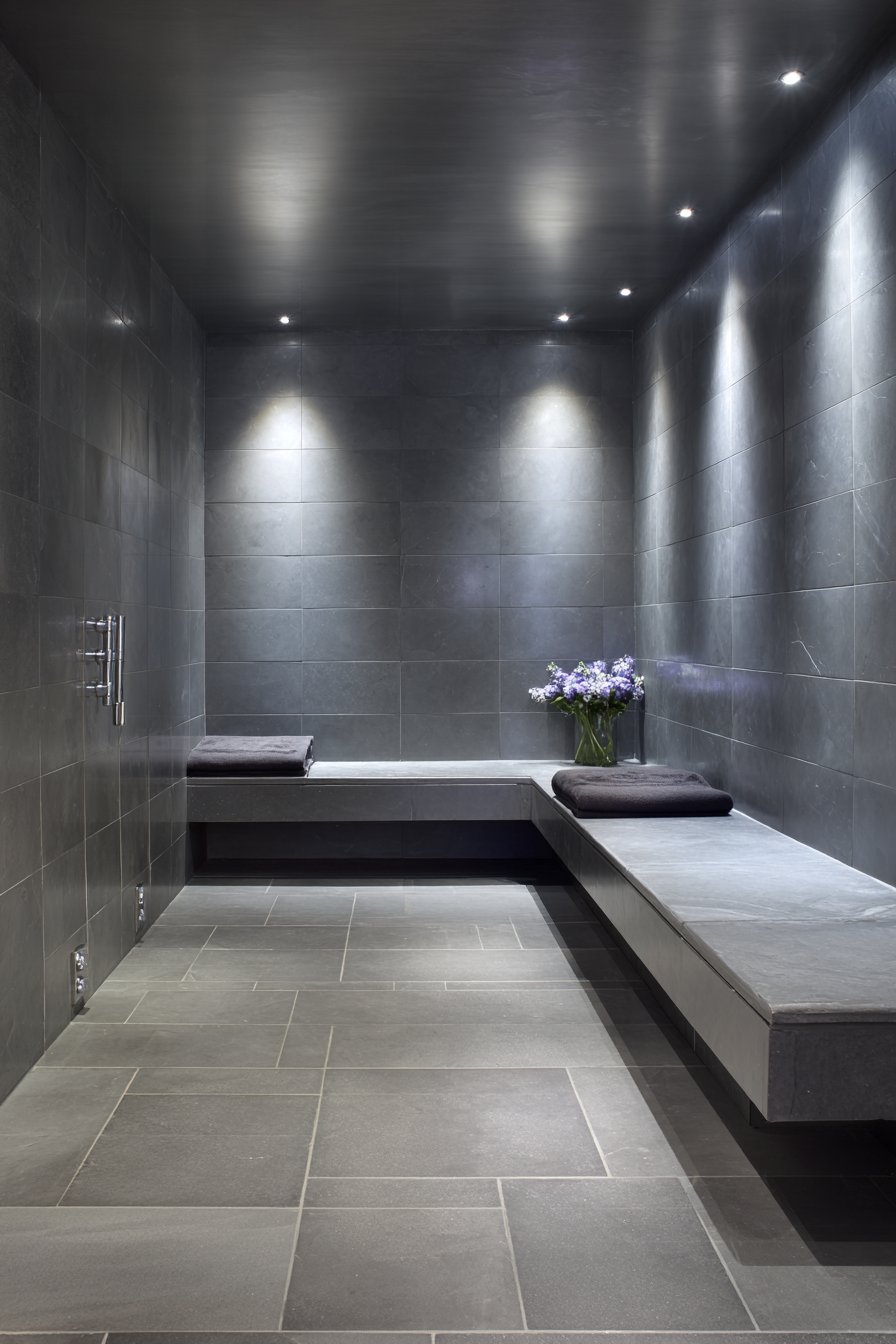
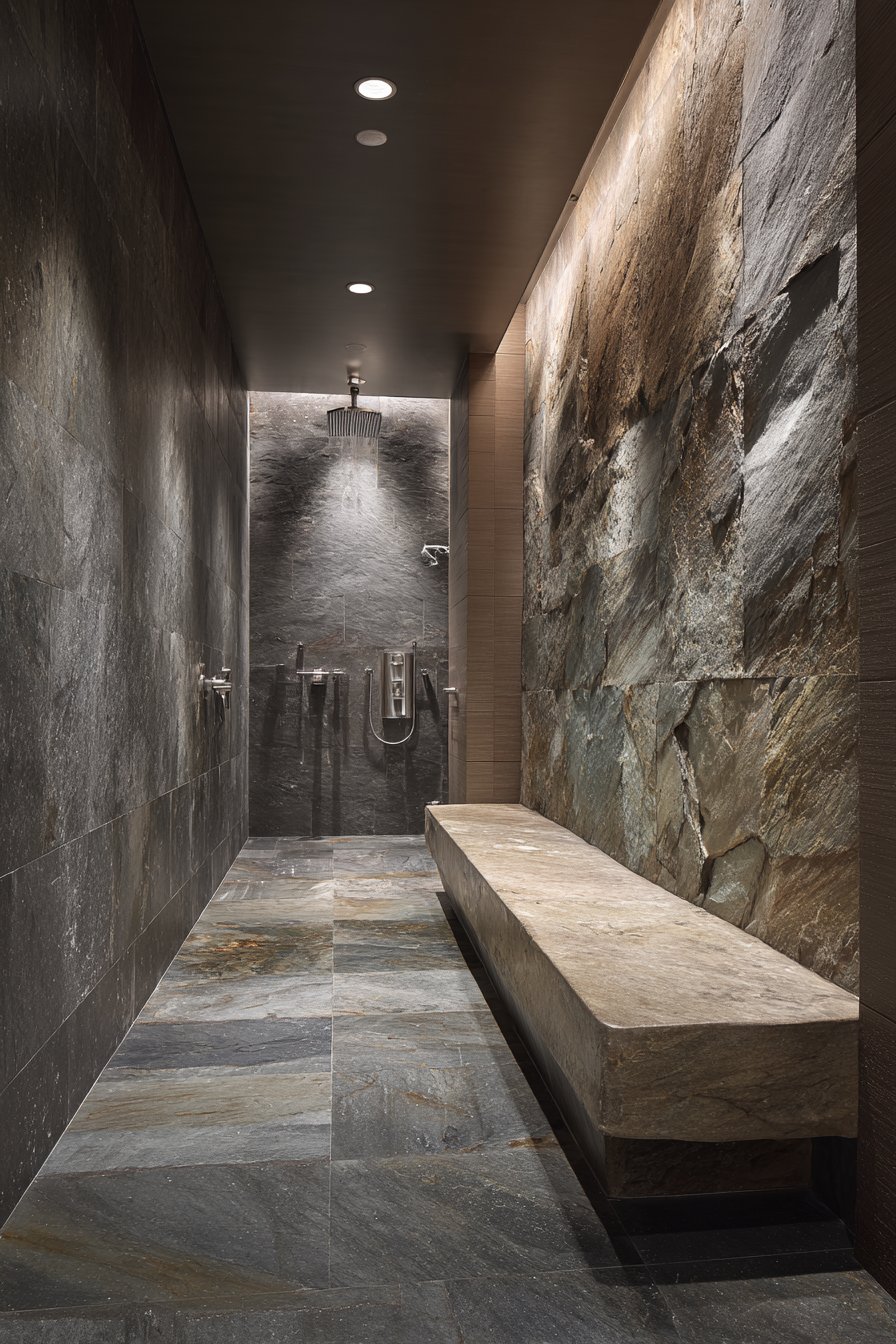
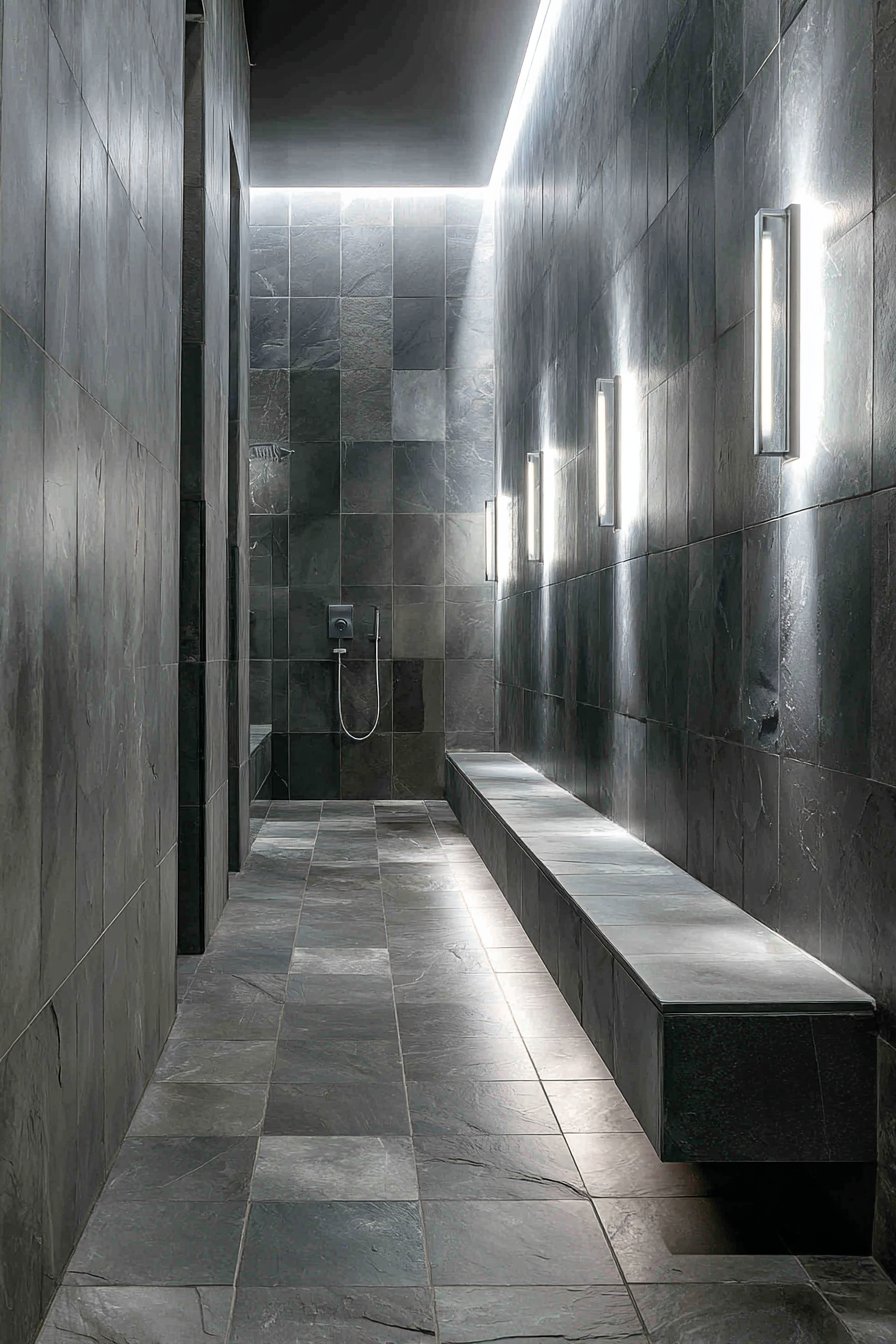
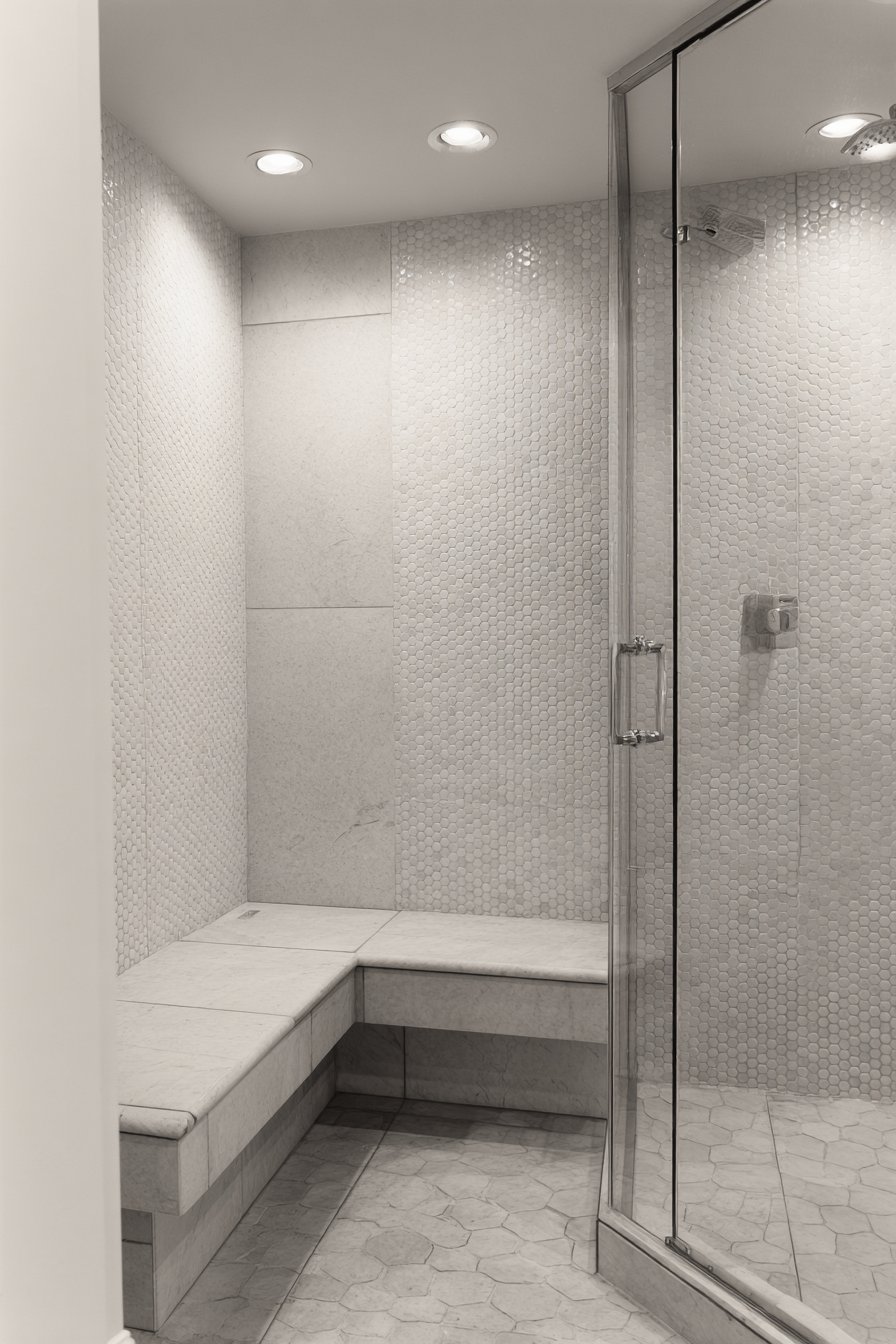
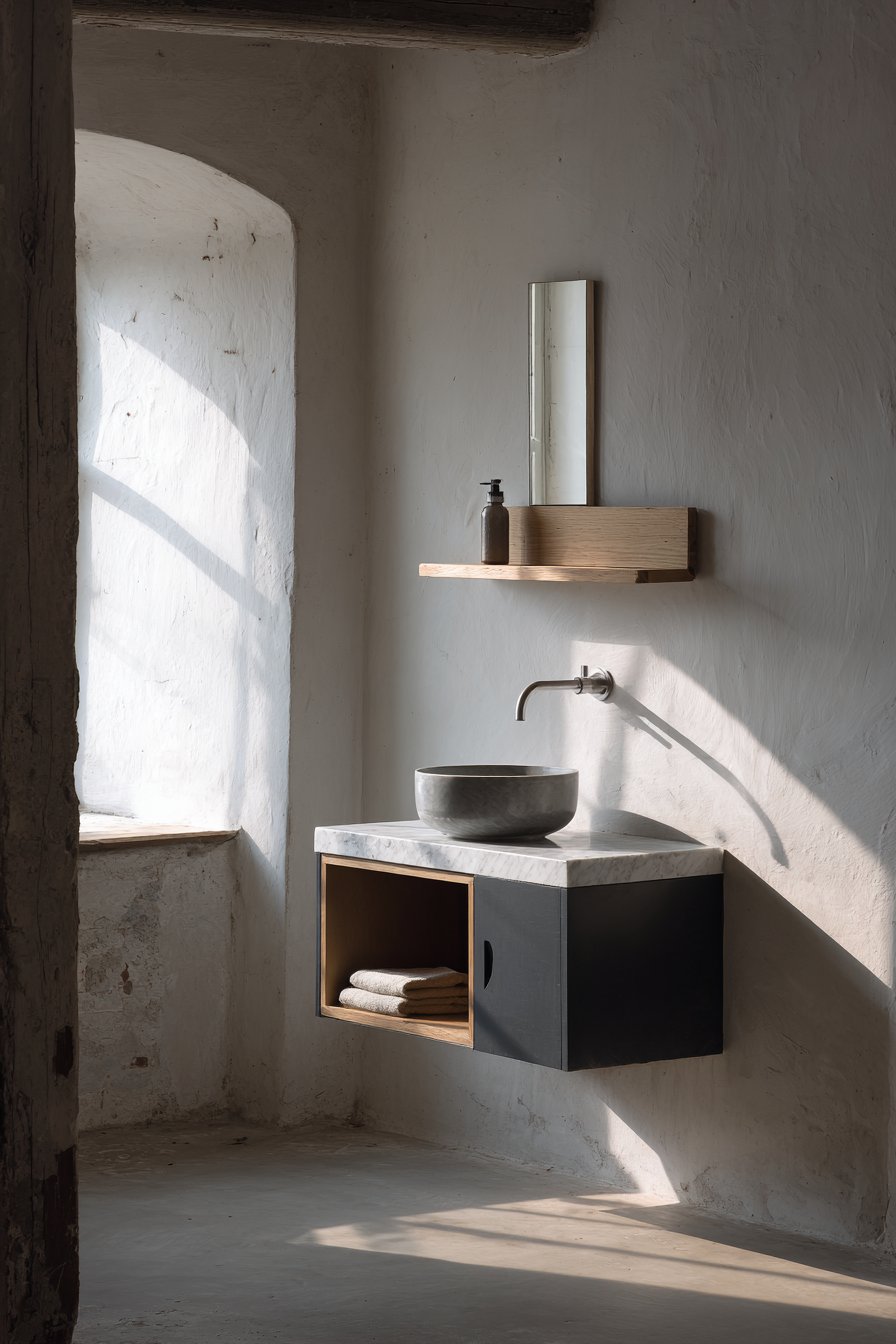
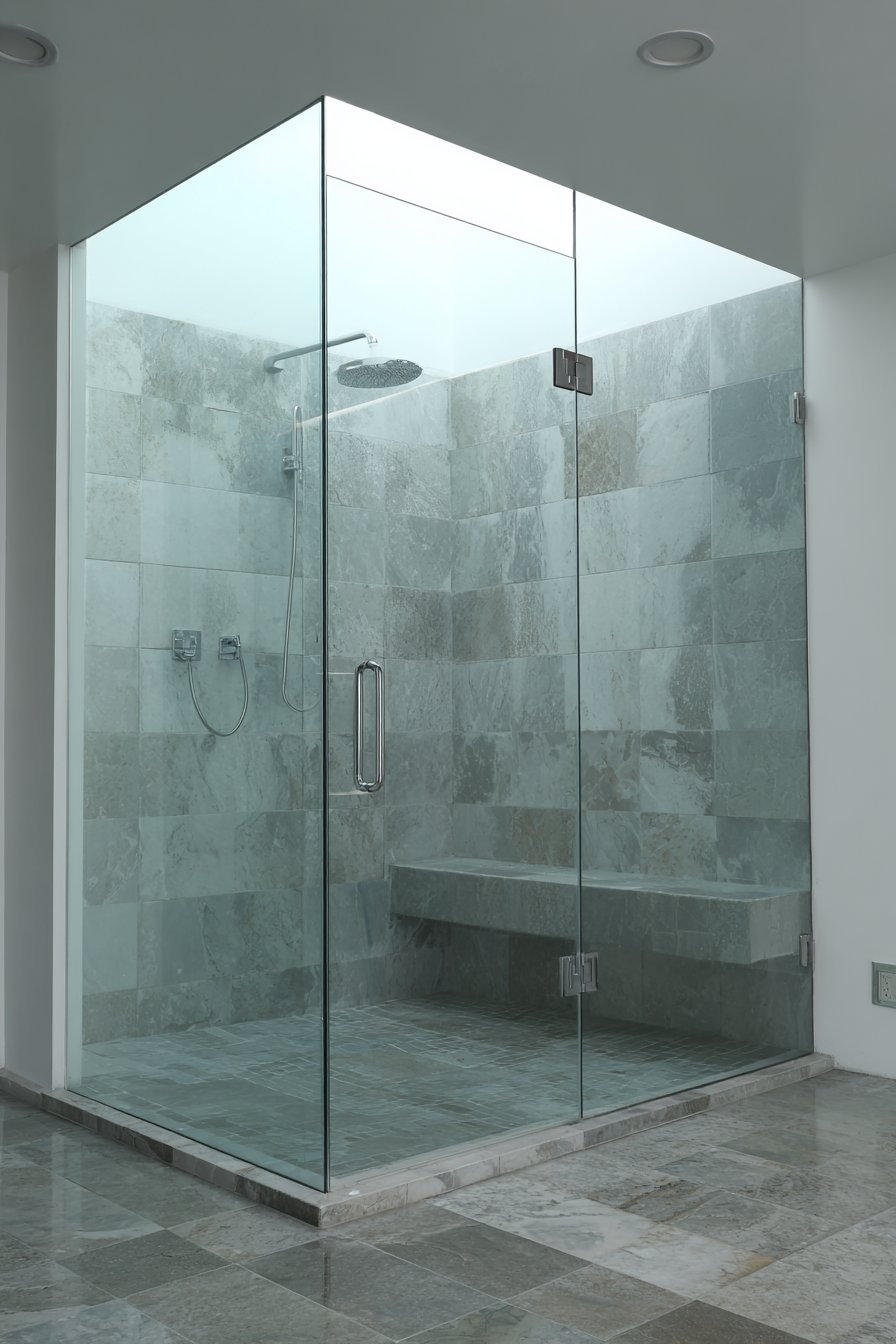
Transforming a bathroom into a spa-like retreat, this minimal bathroom idea showcases floor-to-ceiling grey slate tiles with subtle natural variation that brings organic beauty into the daily routine. A bench-height seating area finished in matching stone provides a place to rest during long showers or steam sessions, elevating the utilitarian shower into a wellness destination. Wall-mounted chrome fixtures maintain clean lines without visual clutter, their simple forms allowing the stone’s natural beauty to remain the focal point. Indirect lighting along the ceiling perimeter creates ambient glow that enhances the serene atmosphere without harsh direct illumination.
Natural stone brings authenticity and connection to the earth that manufactured materials cannot replicate. Each slate tile features unique color variation, subtle texture, and natural cleft that tells the story of its geological formation. These variations prevent the monochromatic grey space from feeling flat or lifeless—instead, the stone creates a richly textured environment that engages the eye and touch. The slate’s natural slip resistance when wet makes it ideal for shower applications where safety is paramount.
The bench-height seating transforms the shower from a purely functional space into a place where one might linger, relax, and decompress. This elevation of the showering experience reflects spa design principles where bathing is treated as a ritual of self-care rather than a rushed necessity. The indirect ceiling lighting creates soft, diffused illumination that mimics natural daylight filtering through clouds, supporting the meditative quality this minimal bathroom idea cultivates.
Key Design Tips:
- Choose slate tiles with natural texture for grip and visual interest
- Install benches at comfortable sitting height for relaxation
- Use wall-mounted fixtures to avoid interrupting stone surfaces
- Implement indirect lighting for soft, spa-like ambiance
- Seal natural stone properly to protect against water and staining
14. Black Contrast: Modern Material Mix
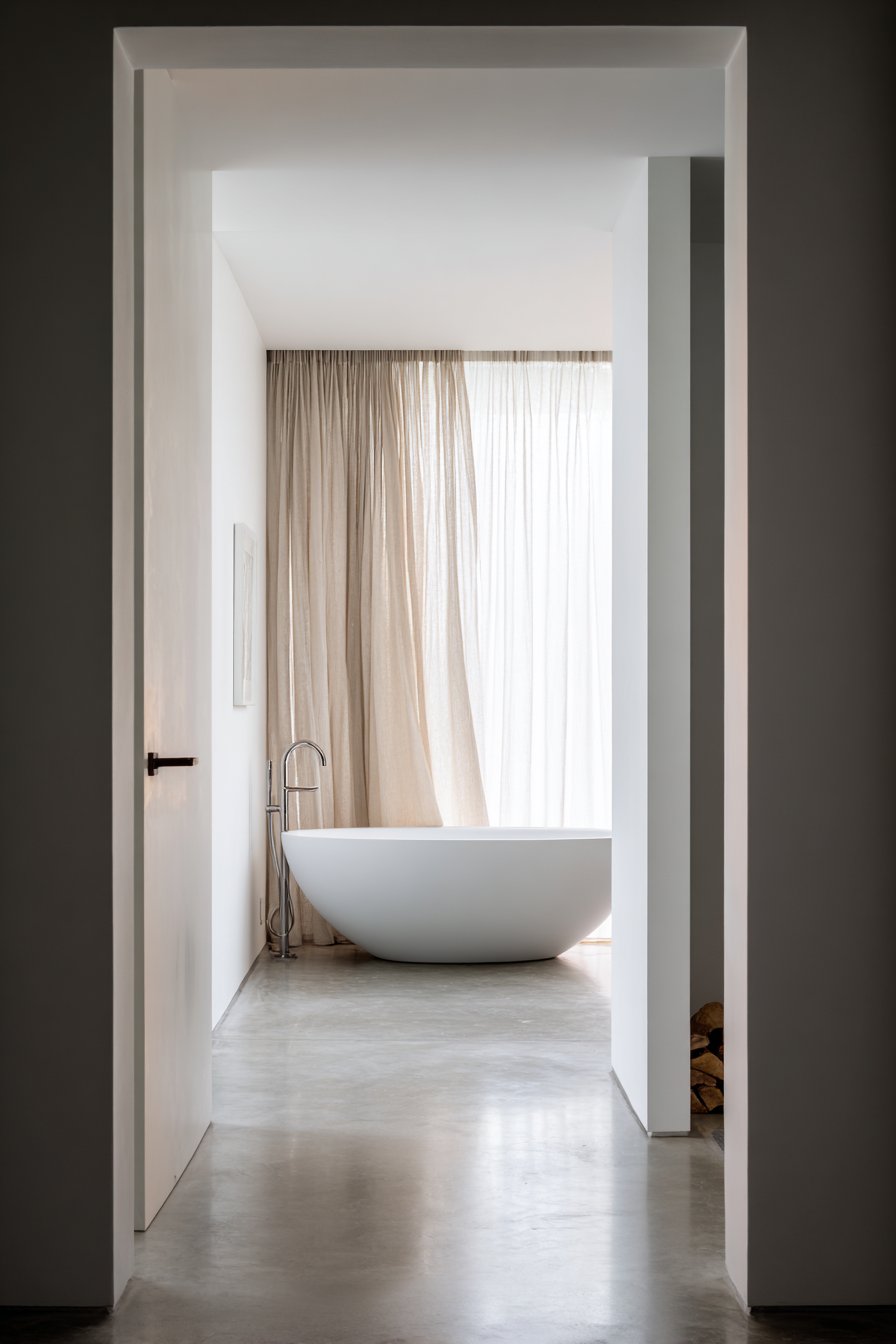
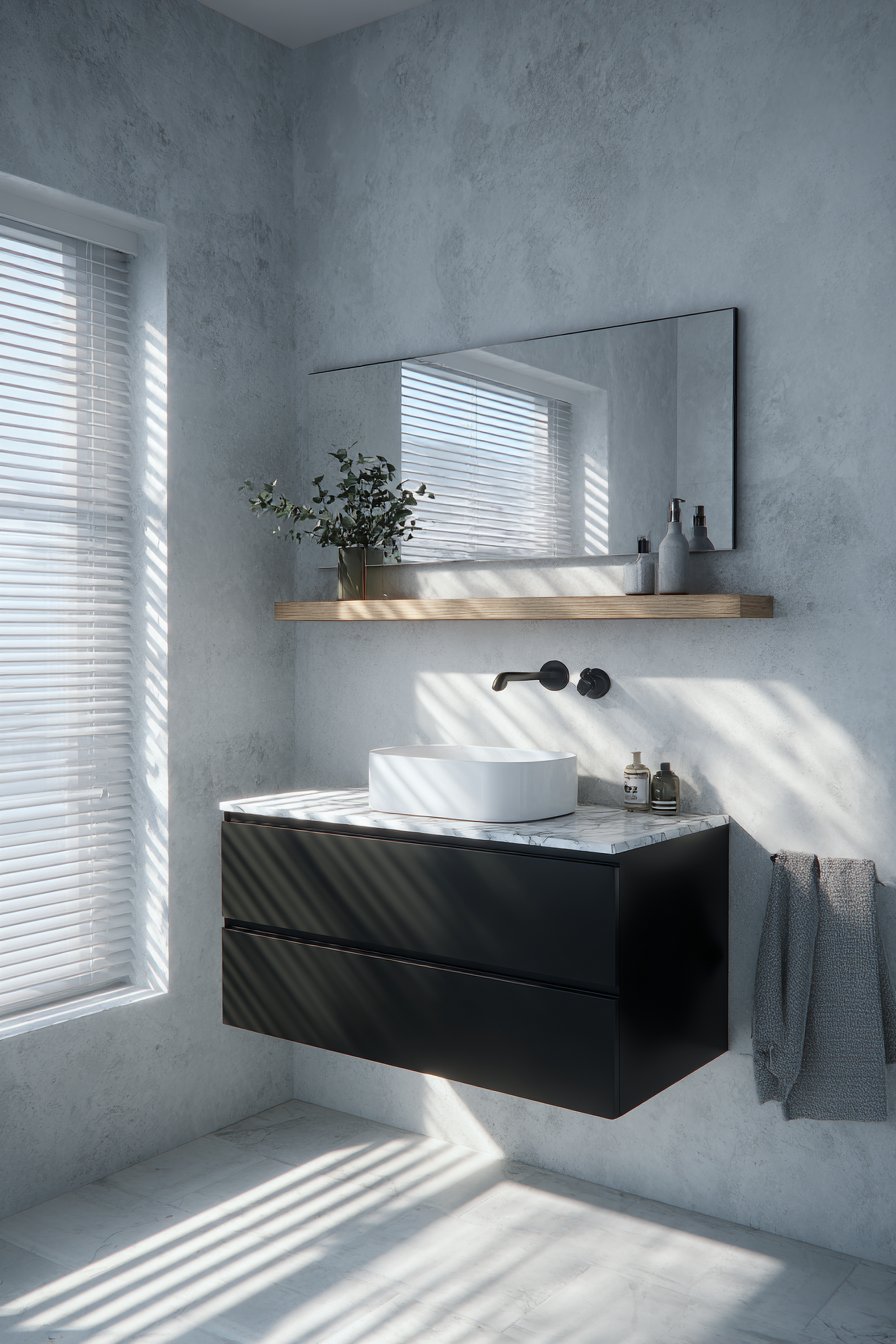
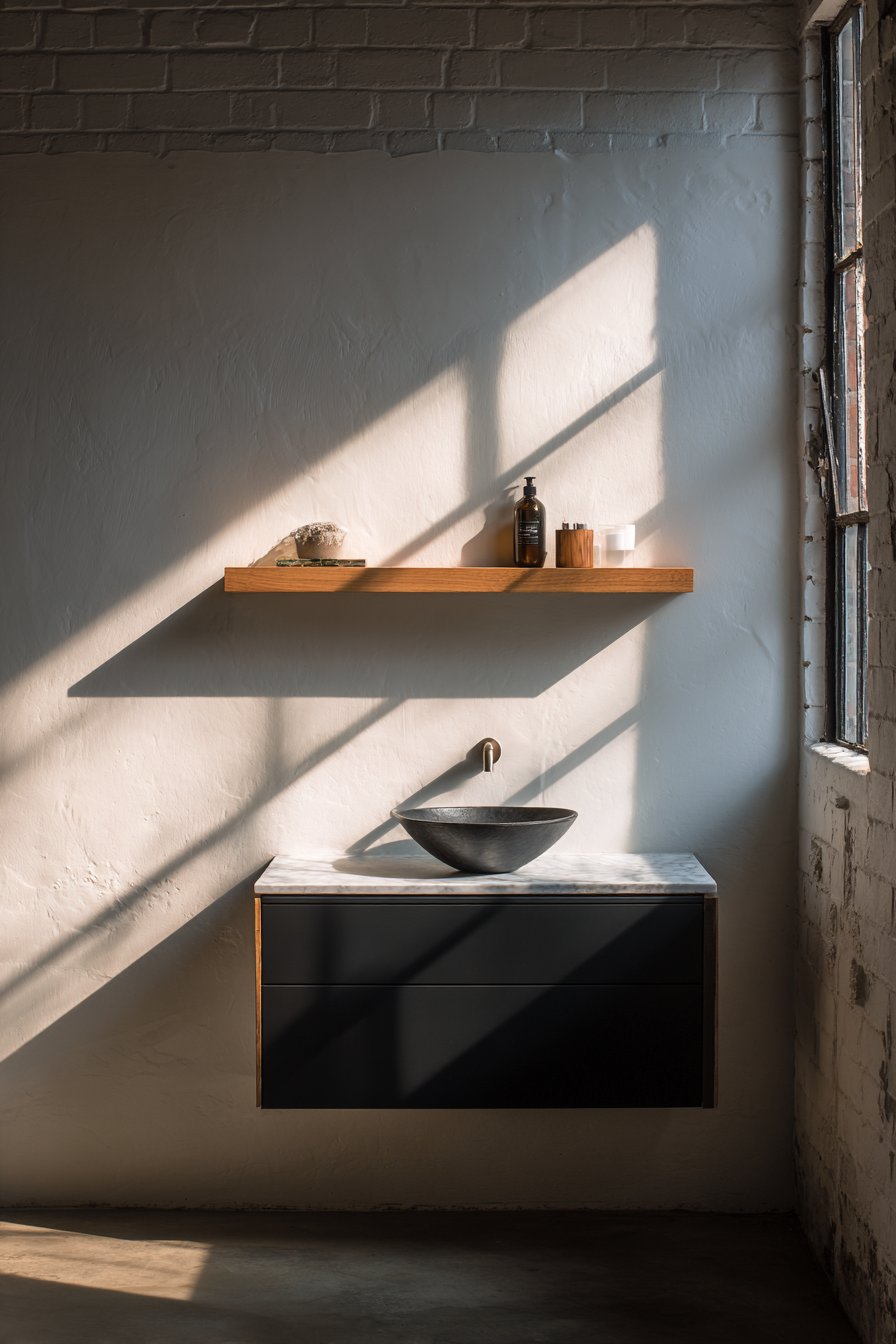
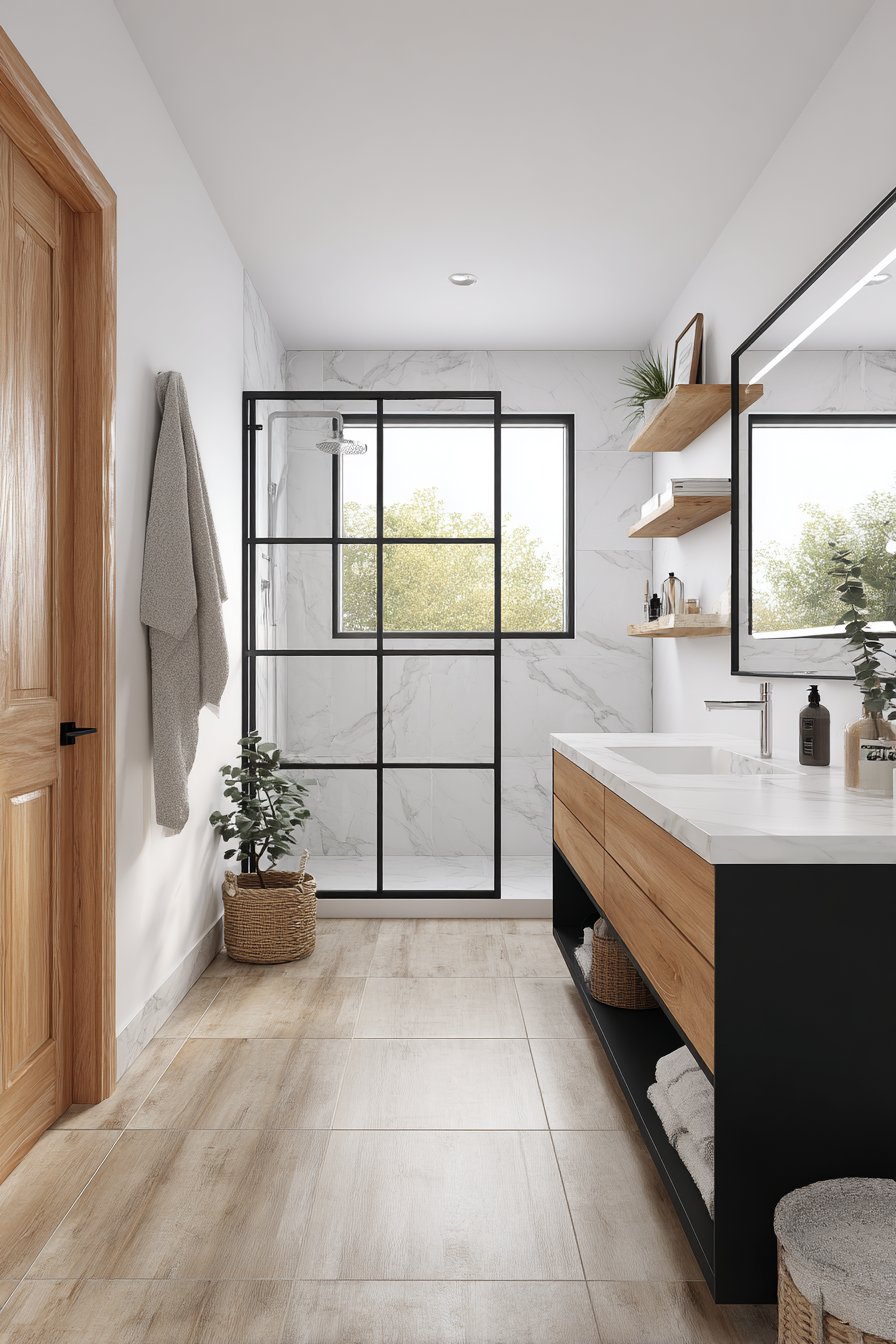
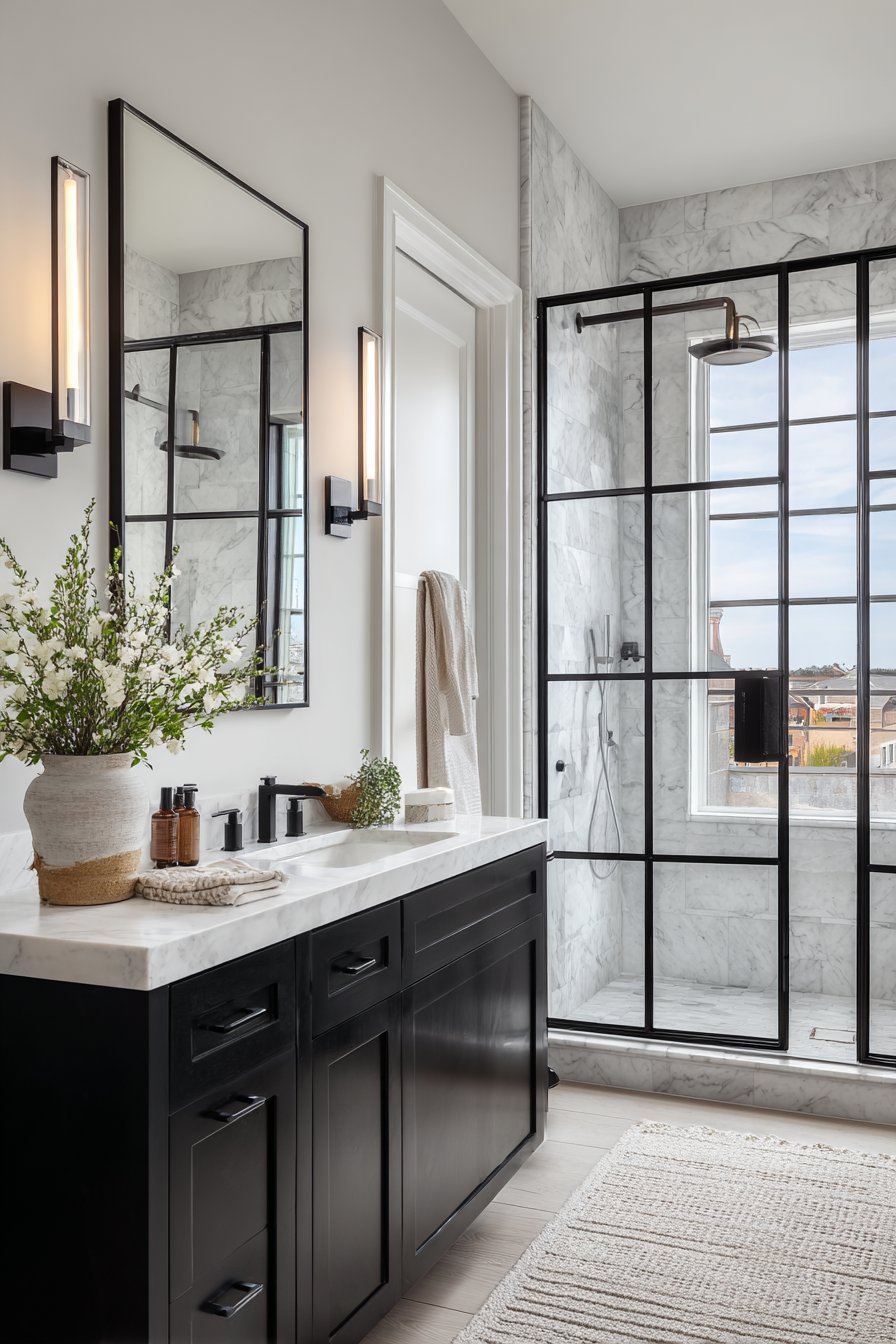
A wall-hung vanity in matte black paired with white marble countertop creates striking contrast in this minimal bathroom idea, proving that minimalism doesn’t require avoiding bold choices. The smooth white lime plaster walls with soft texture provide a neutral backdrop that allows the black-and-white material pairing to dominate the visual experience. One floating wooden shelf in light oak holds minimal accessories, introducing warmth and organic texture that prevents the high-contrast palette from feeling too stark or cold. Natural daylight from a square window creates geometric shadow patterns that change throughout the day, adding dynamism to the minimal composition.
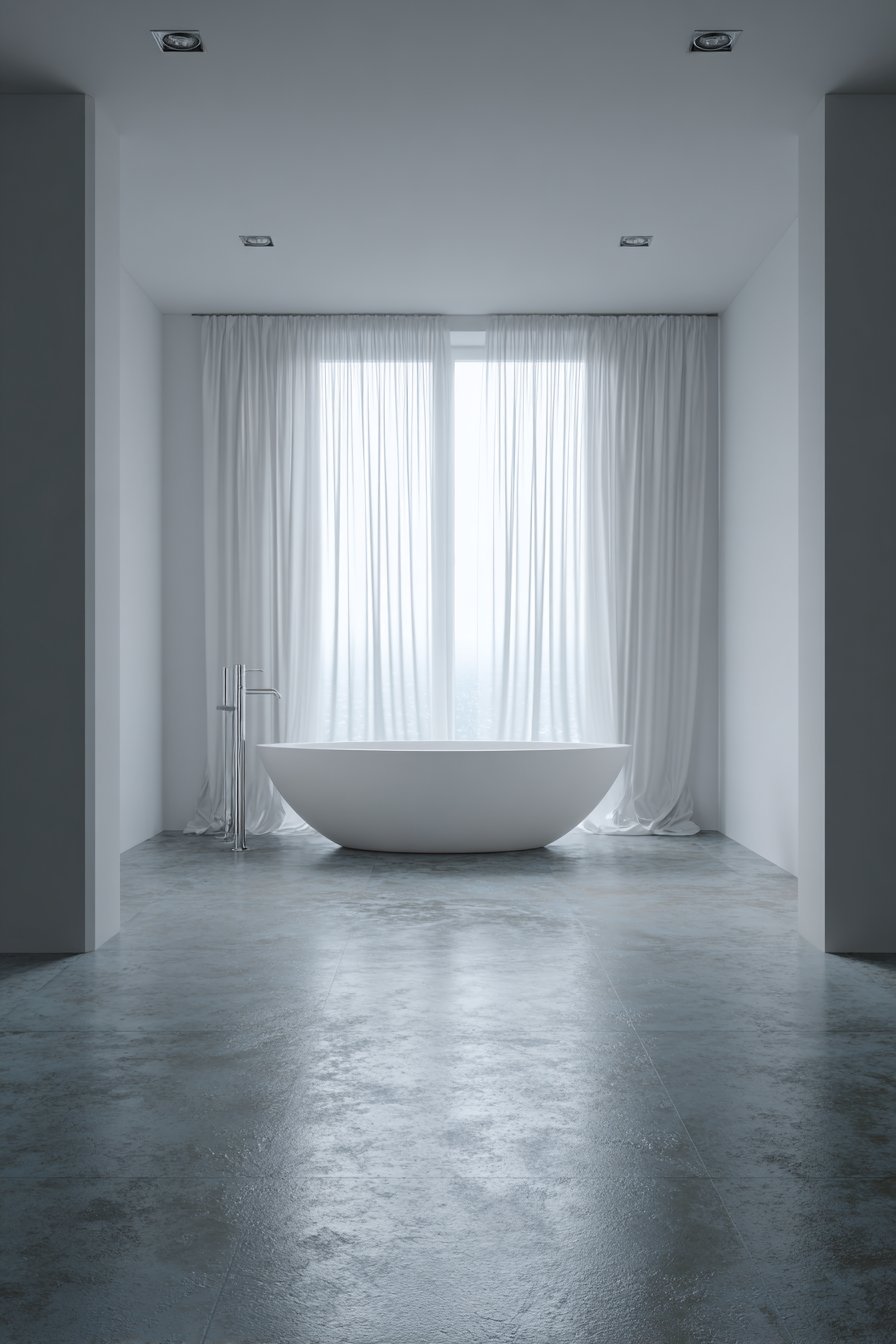
The matte black vanity makes a confident statement, its dark presence grounding the space and providing visual weight that balances the ethereal quality of white walls and marble. Matte finishes are particularly suited to minimal bathrooms because they avoid the visual noise of reflective surfaces while still reading as sophisticated and intentional. The single vessel sink rising from the white marble creates a sculptural moment, its pure form emphasized by the dark cabinet beneath. The veining in the marble introduces natural pattern without requiring decorative accessories or artwork.
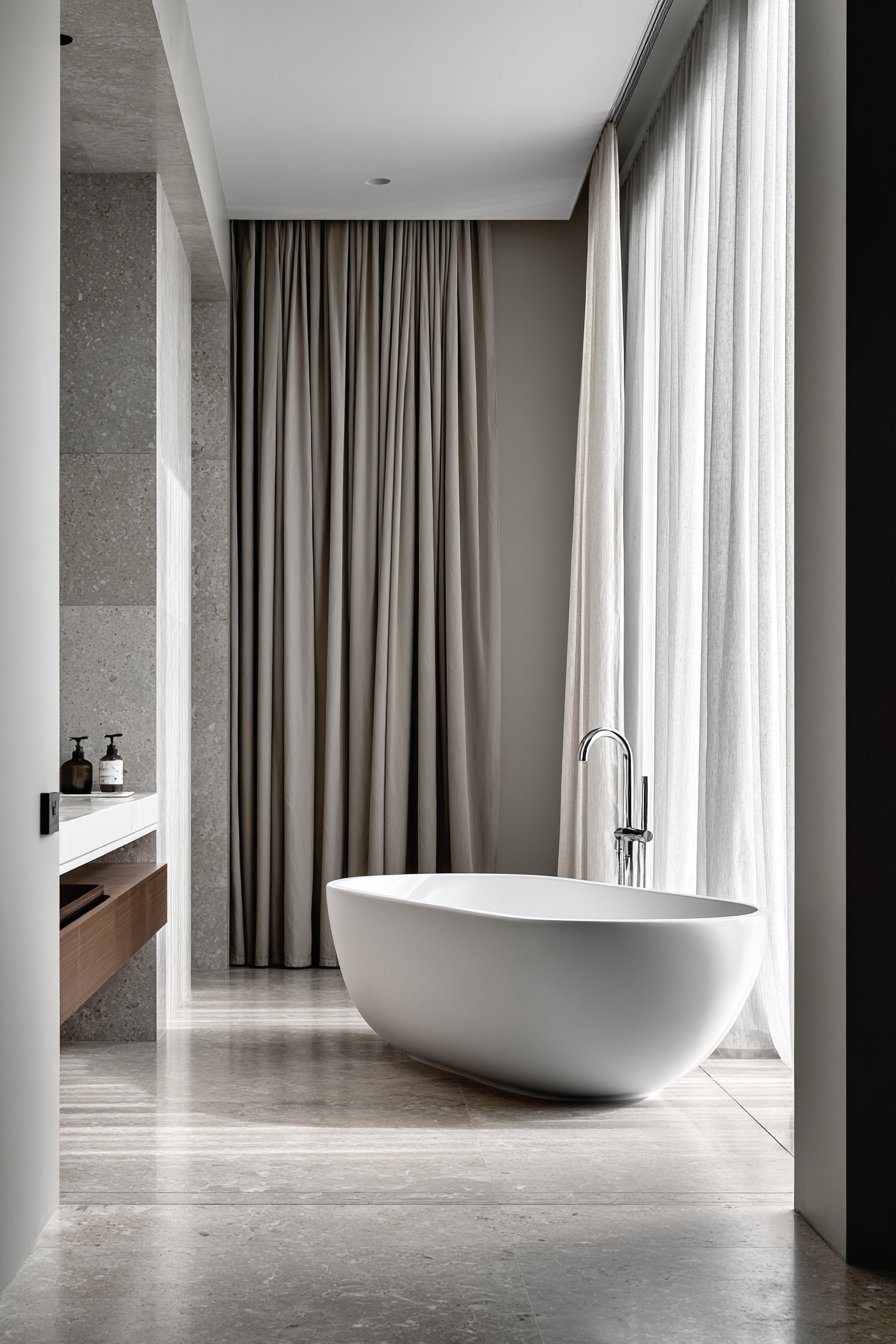
The light oak floating shelf serves multiple purposes in this design—it provides necessary storage for daily essentials, introduces the warmth of natural wood, and creates a horizontal line that breaks up the vertical elements of the composition. The square window’s geometric precision echoes the angular qualities of the vanity and shelf, creating visual harmony through repeated forms. The shadow patterns cast by this window add an ever-changing element that prevents the static materials from feeling too fixed or predictable.
Key Design Tips:
- Use matte black finishes for sophistication without reflective distraction
- Pair dark cabinets with light countertops for balanced contrast
- Introduce one wood element to warm high-contrast palettes
- Position windows to create interesting shadow play
- Choose marble with subtle veining for natural pattern
15. Poured Concrete: Industrial Bathing
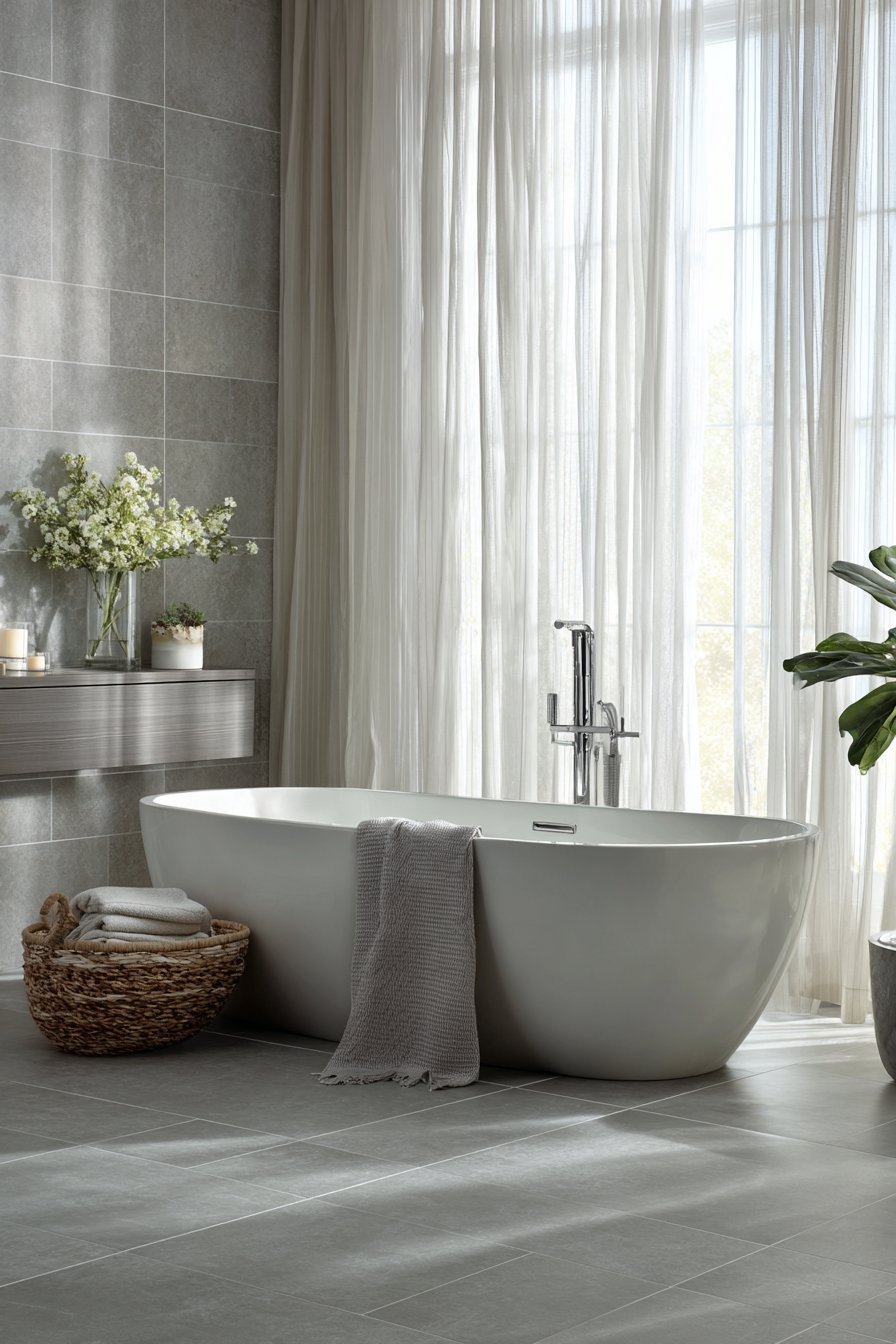
A master bathroom featuring a freestanding bathtub positioned on large grey porcelain tiles demonstrates how minimal bathroom ideas can feel luxurious through spatial generosity and material quality. White walls meet poured concrete flooring, creating material contrast that defines different zones within the open plan. A simple chrome floor-mounted tub filler stands beside the bath like a piece of sculpture, its form following function with elegant simplicity. Soft natural light filters through sheer linen curtains, creating a gentle, diffused glow that enhances the serene atmosphere without harsh glare.
The poured concrete floor brings industrial authenticity to this minimal bathroom idea, its smooth surface and subtle color variations reading as contemporary luxury rather than unfinished utility. Modern concrete treatments can be polished to various sheens, sealed for water resistance, and even embedded with radiant heating for comfort. The material’s thermal mass helps regulate bathroom temperature, staying cool in summer and retaining warmth in winter when heated. The large grey porcelain tiles under the tub create a defined zone, their cooler grey tones contrasting with the warmer concrete tones.
The freestanding tub filler eliminates the need for deck-mounted fixtures or wall-mounted plumbing, allowing the tub to be positioned anywhere in the room without constraint. This freedom creates opportunities for placing the tub near windows for views, in the center of the room as a sculptural focal point, or against a wall to preserve floor space for other functions. The floor-mounted filler’s vertical form adds architectural interest while maintaining the minimal aesthetic through its simple, unadorned design.
Key Design Tips:
- Polish and seal concrete floors for water resistance and sheen
- Use large porcelain tiles to define zones within open plans
- Choose floor-mounted tub fillers for installation flexibility
- Filter natural light through sheer curtains for soft, flattering glow
- Create material contrast between walls and floors for visual interest
16. Glass Mosaic: Seamless Flow
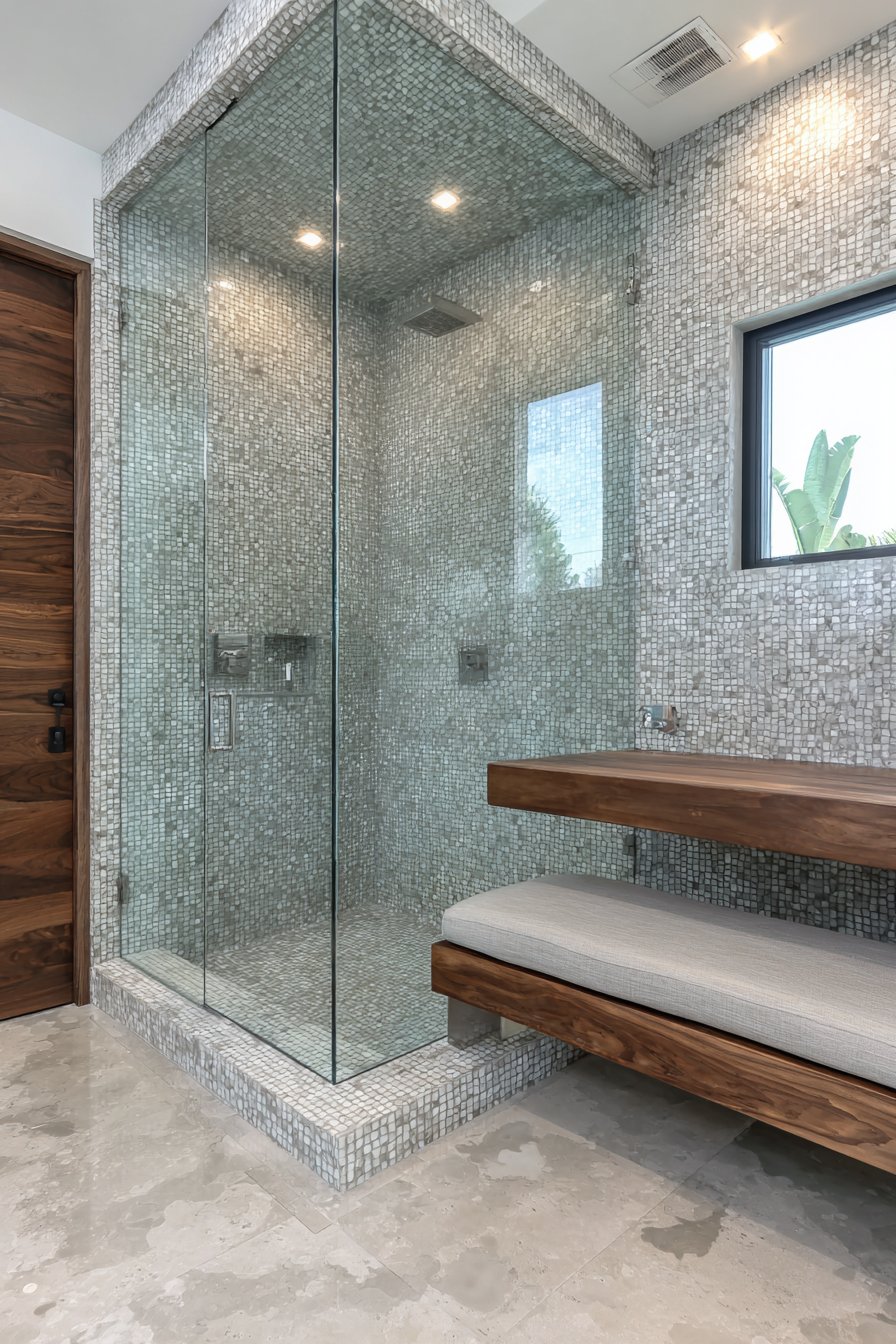
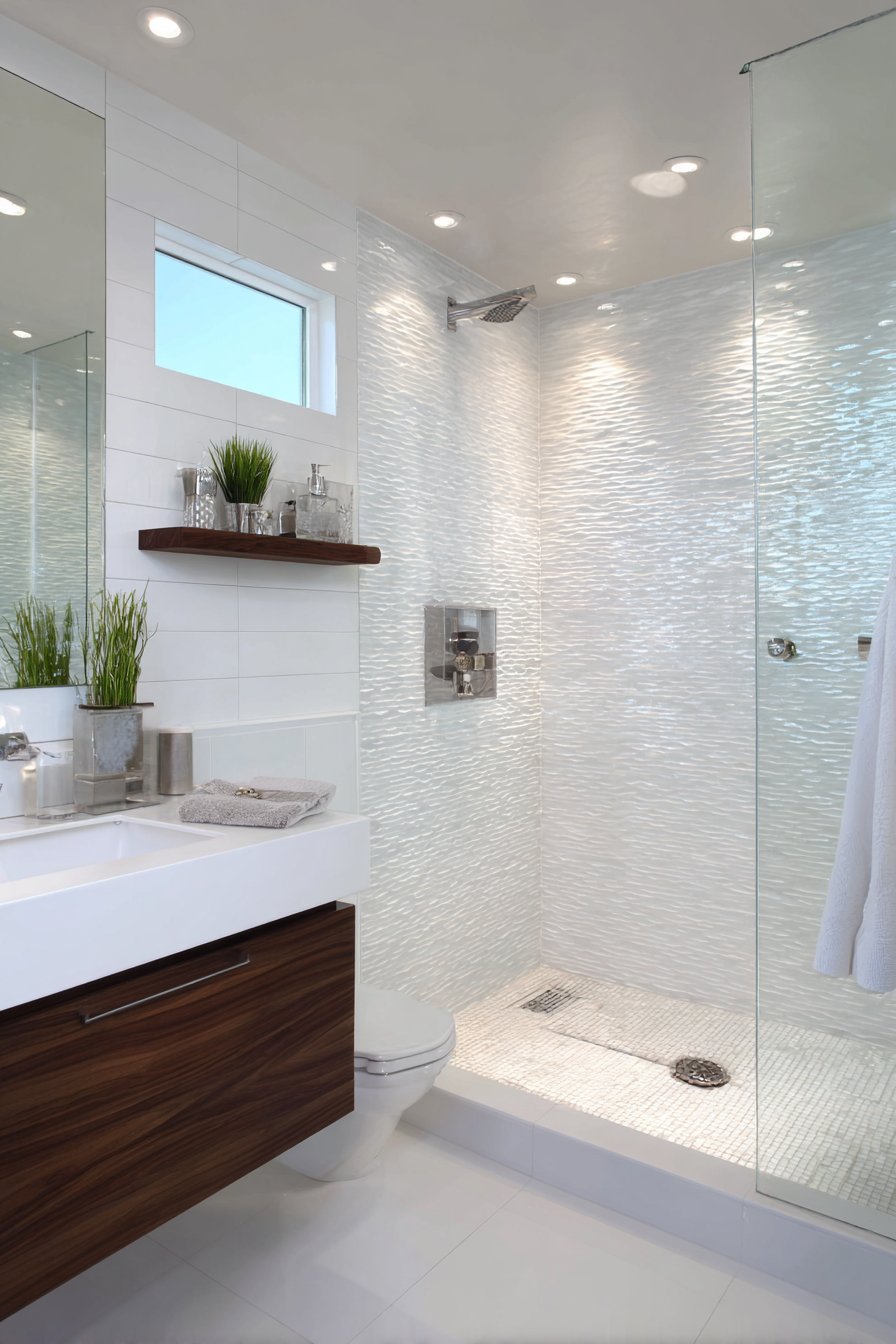
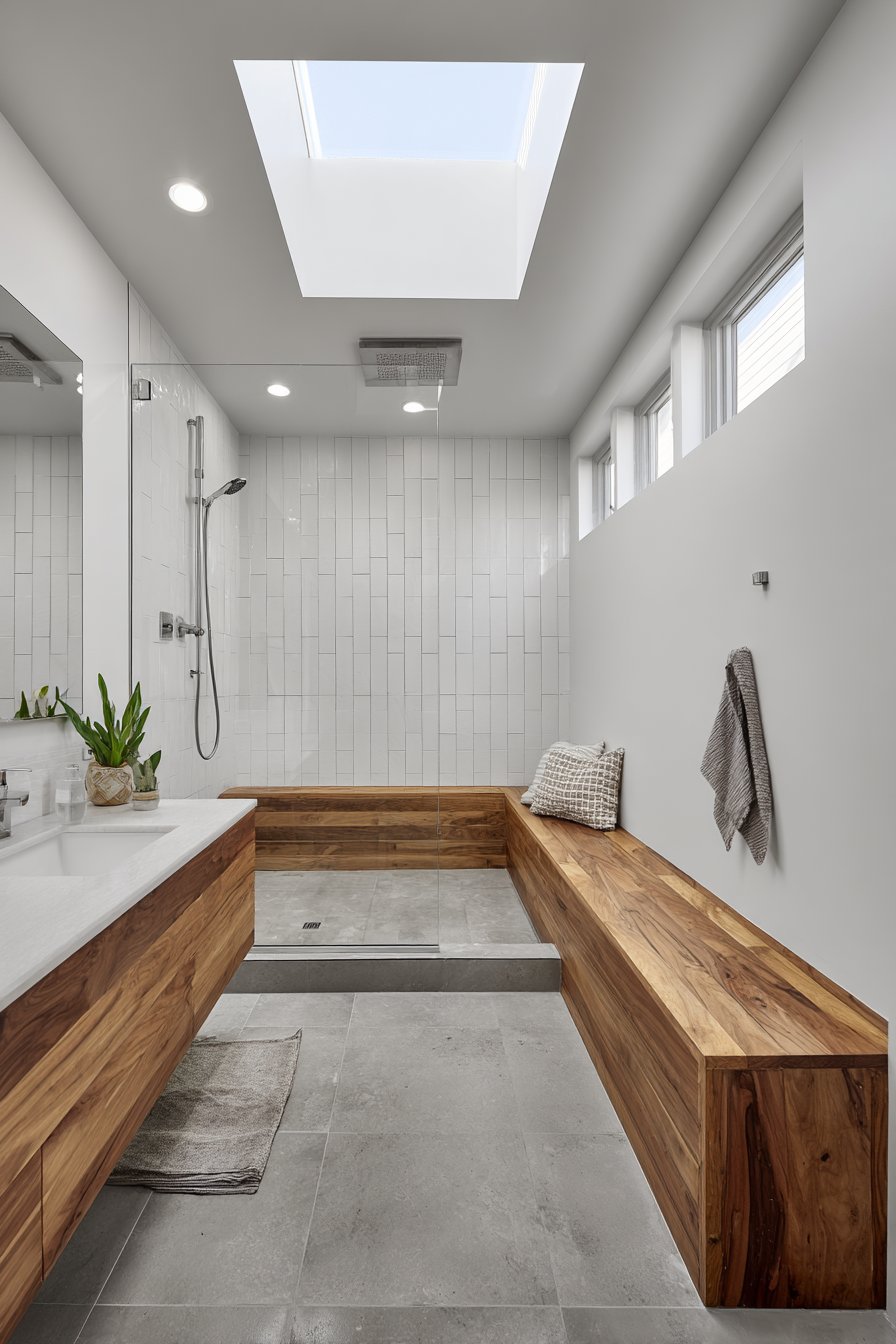
A walk-in shower featuring white glass mosaic tiles and a linear drain positioned along the entrance creates seamless flow in this minimal bathroom idea. The frameless glass panel separates the wet area from the vanity space with barely-there transparency, maintaining visual openness while providing necessary splash protection. The wall-mounted white oak vanity with integrated sink continues the clean aesthetic, its natural wood grain adding warmth without introducing pattern complexity. Recessed lighting and one small window provide illumination that’s both practical and atmospheric.
White glass mosaic tiles bring luminosity and subtle texture to shower walls, their small scale creating a gently shimmering surface that catches and reflects light beautifully. Unlike ceramic or porcelain tiles, glass mosaics have a depth and translucency that adds richness to monochromatic bathrooms. The small tile size also provides excellent slip resistance when wet—the numerous grout lines create traction underfoot while the modular size allows for proper shower pan slopes. The linear drain positioned at the entrance threshold allows water to flow efficiently without interrupting the visual sweep of the tile floor.
The integration of shower and dry areas through minimal separation represents a sophisticated approach to bathroom layout. Rather than fully enclosing the shower with walls or curtains, this design uses just enough glass to protect the vanity area while maintaining the sense that both zones belong to one cohesive space. The white oak vanity picks up on the organic warmth introduced by natural light from the window, creating a thread of natural elements that prevents the predominantly white space from feeling sterile.
Key Design Tips:
- Choose glass mosaic for subtle texture and light-reflective qualities
- Position linear drains at entrance thresholds for clean floor appearance
- Use minimal glass panels rather than full enclosures when practical
- Integrate sinks into floating vanities for seamless design
- Combine recessed and natural light for layered illumination
17. White Marble Effect: Compact Efficiency
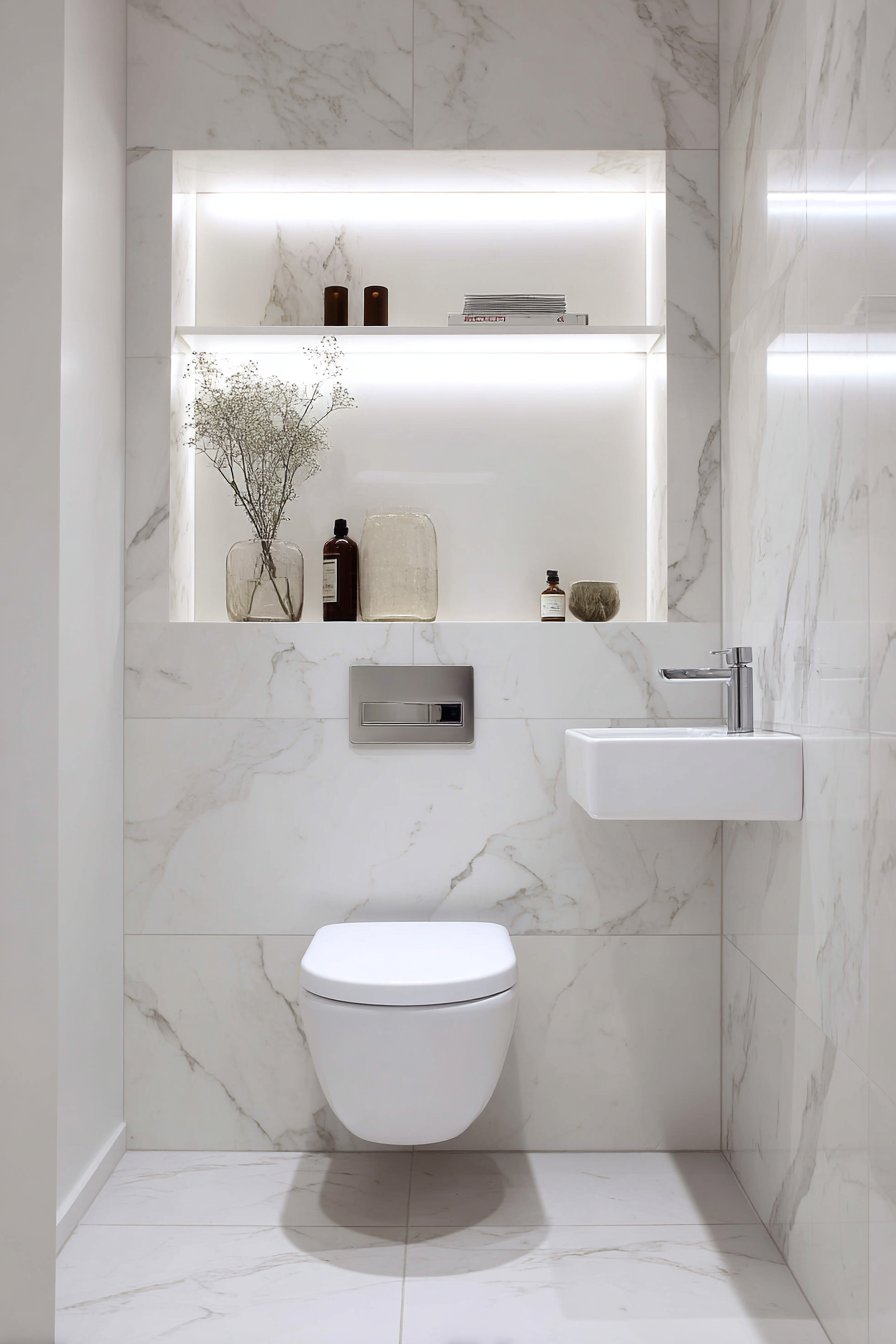
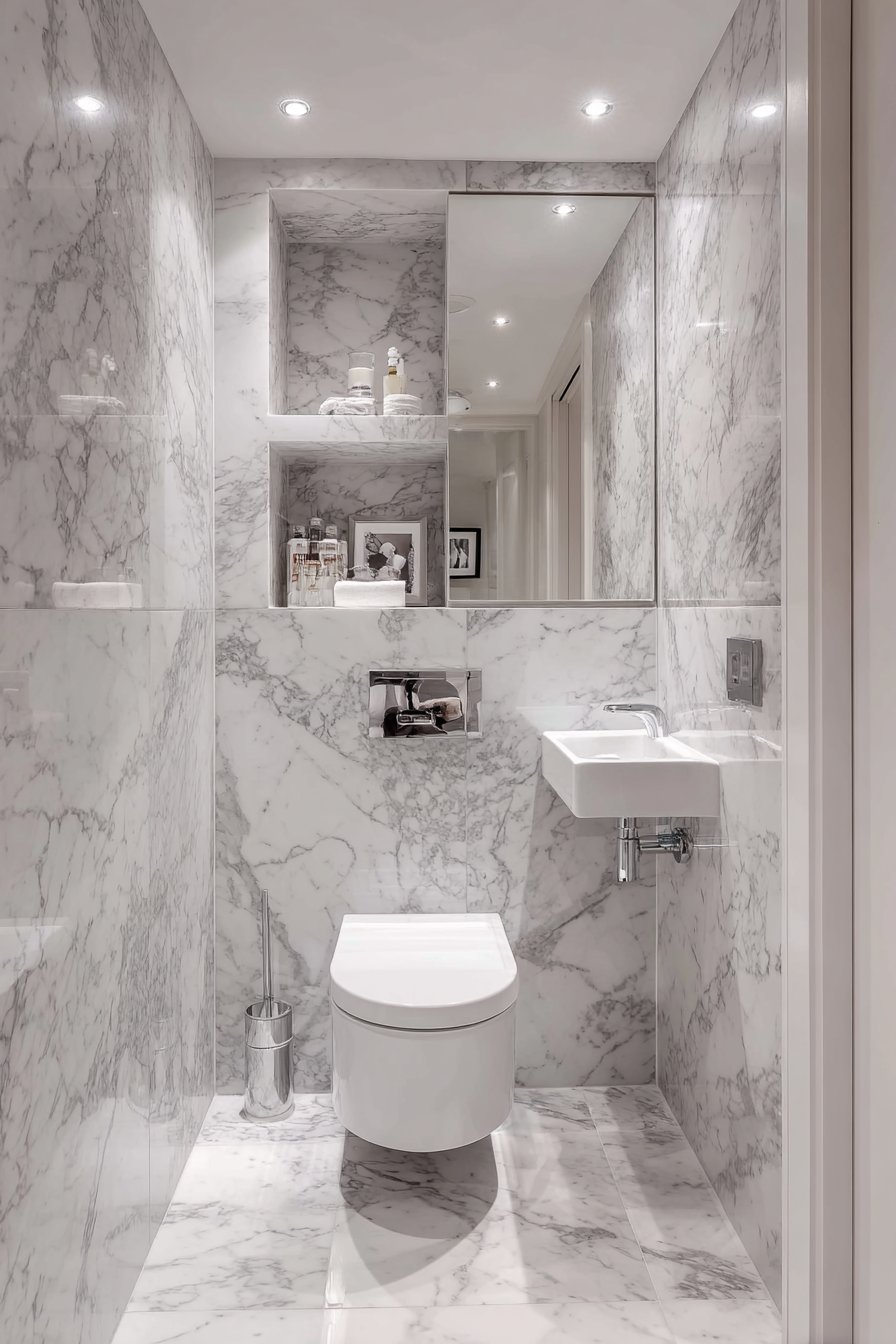
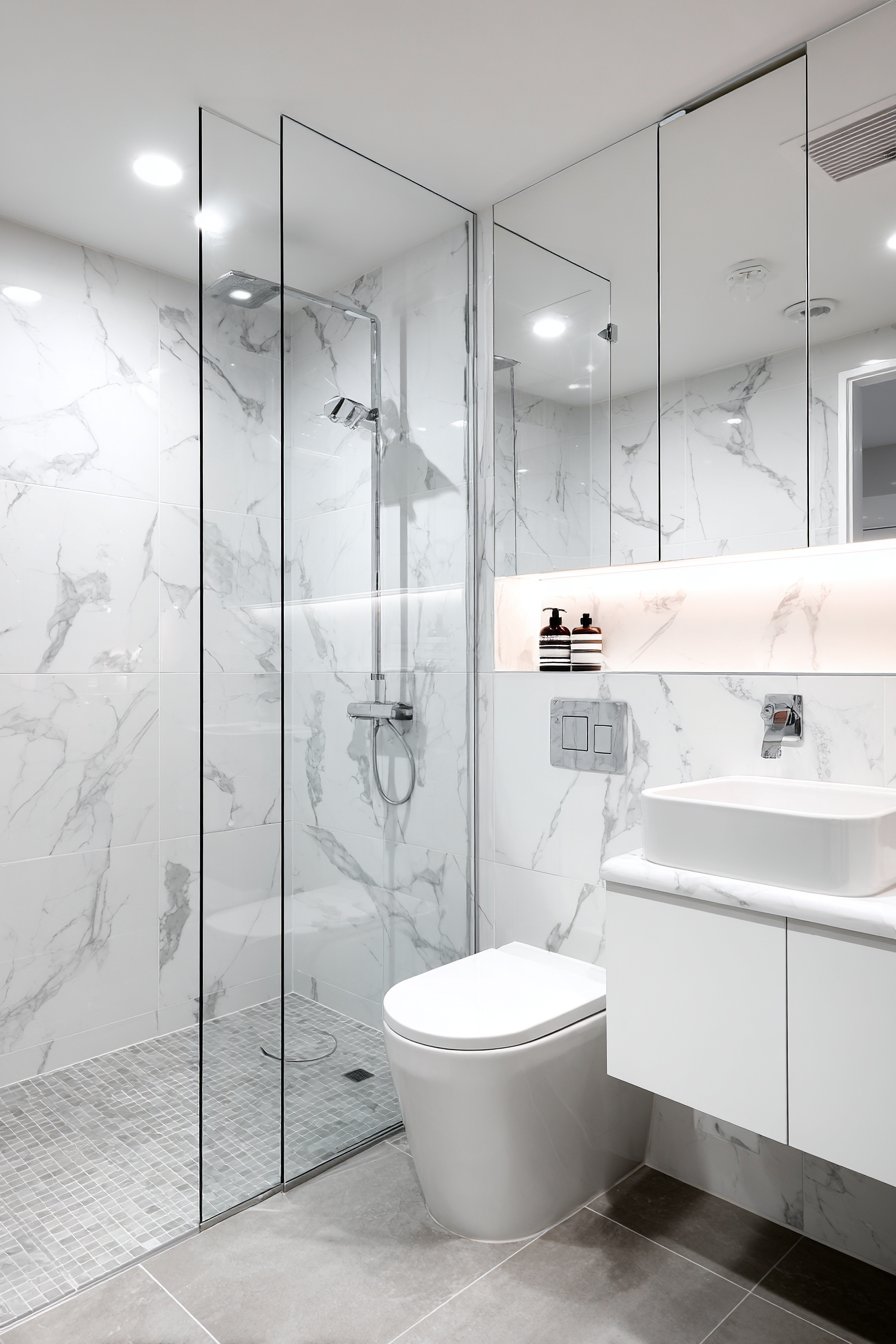
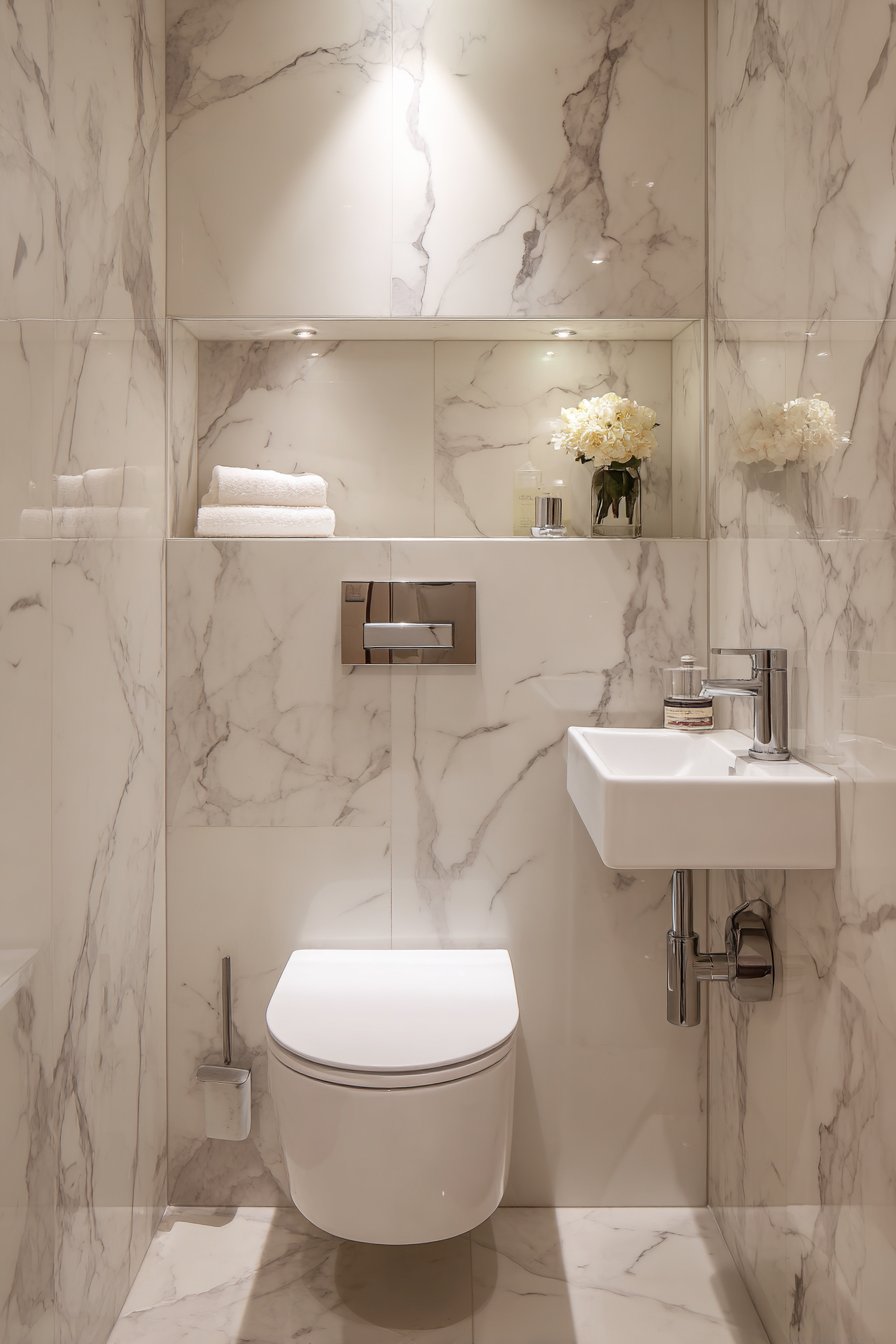
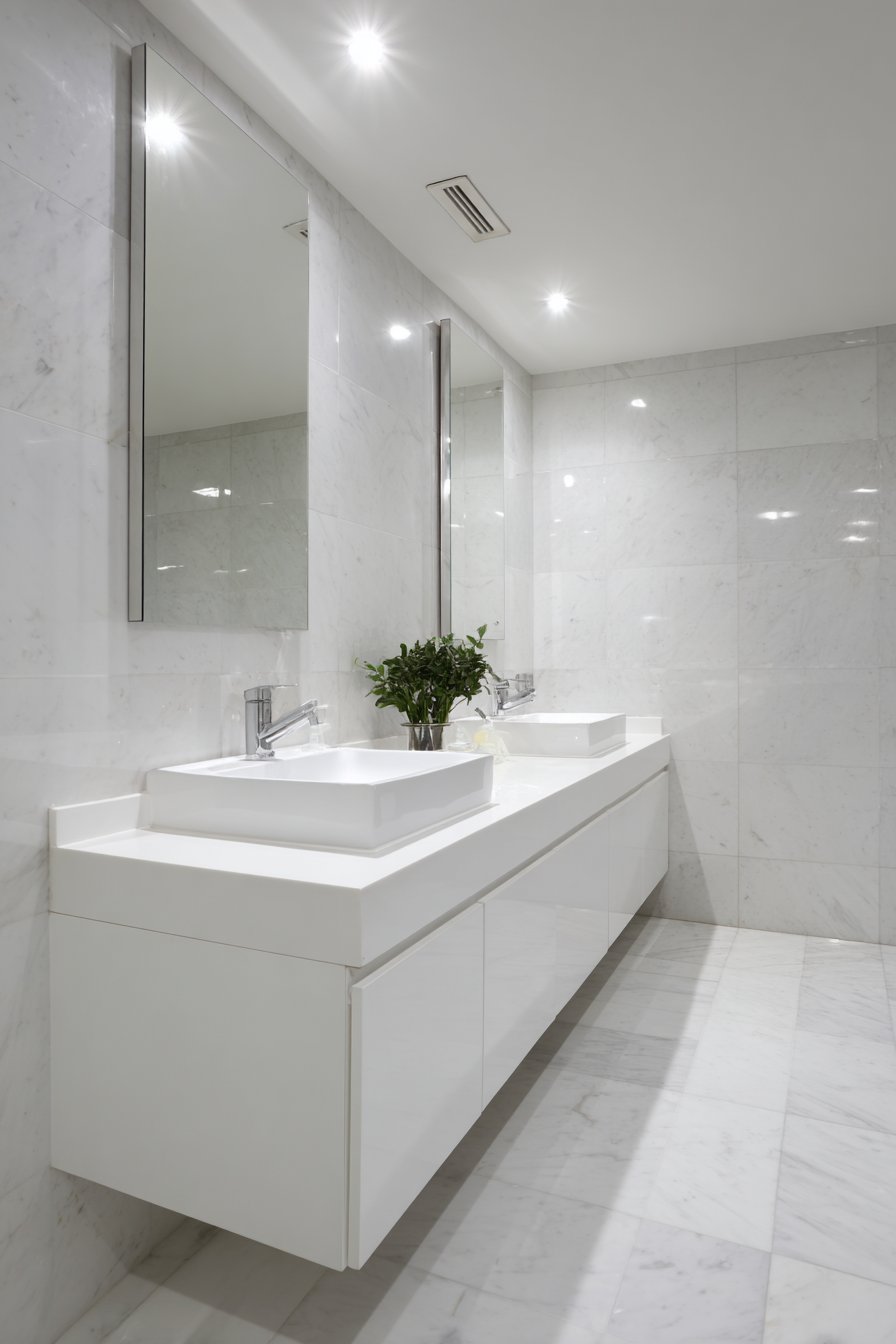
Designed for small ensuite bathrooms, this minimal bathroom idea maximizes every inch through wall-to-wall white marble effect porcelain tiles that create visual continuity and brightness. A floating toilet and small corner sink maximize space efficiency, their compact proportions and wall-mounted installation making the tiny bathroom feel less cramped than traditional floor-mounted fixtures would allow. Simple chrome fixtures maintain the streamlined aesthetic while providing necessary function. One recessed shelf niche holds essential items without protruding into the limited space, demonstrating how built-in storage solutions serve minimalist design better than added furniture.
Porcelain tiles that replicate marble’s appearance offer practical advantages for small bathrooms—they’re more affordable than natural stone, more water-resistant, easier to maintain, and available in consistent patterns that simplify installation. The white marble effect brightens the compact space through light reflection while adding visual interest through subtle veining. The floor-to-ceiling installation eliminates horizontal breaks that would visually chop the space, instead creating continuous vertical flow that makes the room feel taller.
The corner sink represents smart space planning, utilizing an awkward corner that might otherwise go unused while keeping the center of the small room open. Every fixture choice in this minimal bathroom idea prioritizes space efficiency—the floating toilet conceals the tank within the wall, the corner sink minimizes protrusion, and the recessed niche provides storage without reducing floor area. Soft LED lighting creates even illumination that eliminates shadows and dark corners that would make the space feel smaller.
Key Design Tips:
- Use marble-effect porcelain for maintenance-free beauty
- Install corner sinks to utilize awkward spaces efficiently
- Choose floating toilets to maximize floor visibility in small rooms
- Build recessed niches for storage without space reduction
- Implement even LED lighting to eliminate shadows in compact spaces
18. Curbless Accessibility: Universal Design
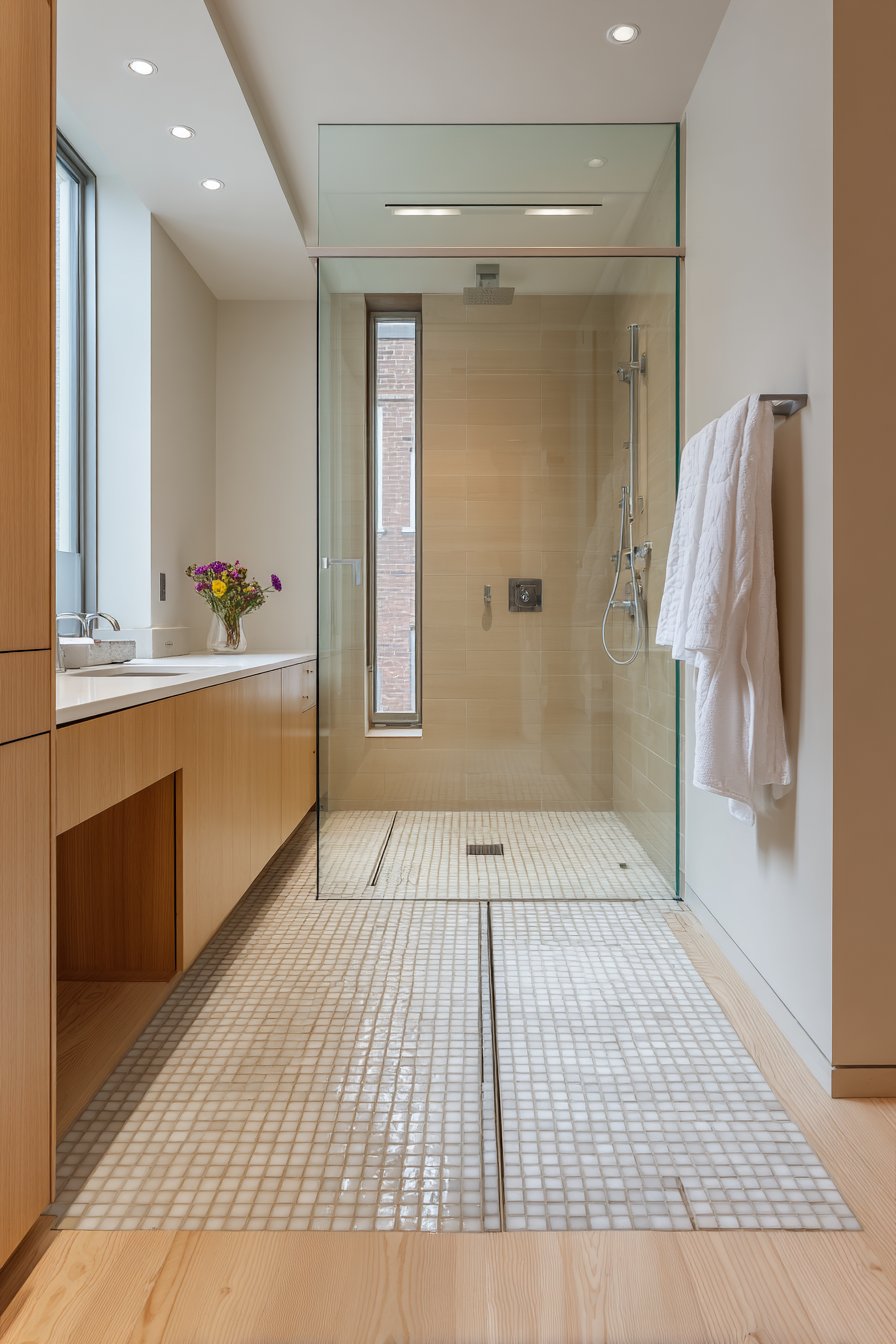
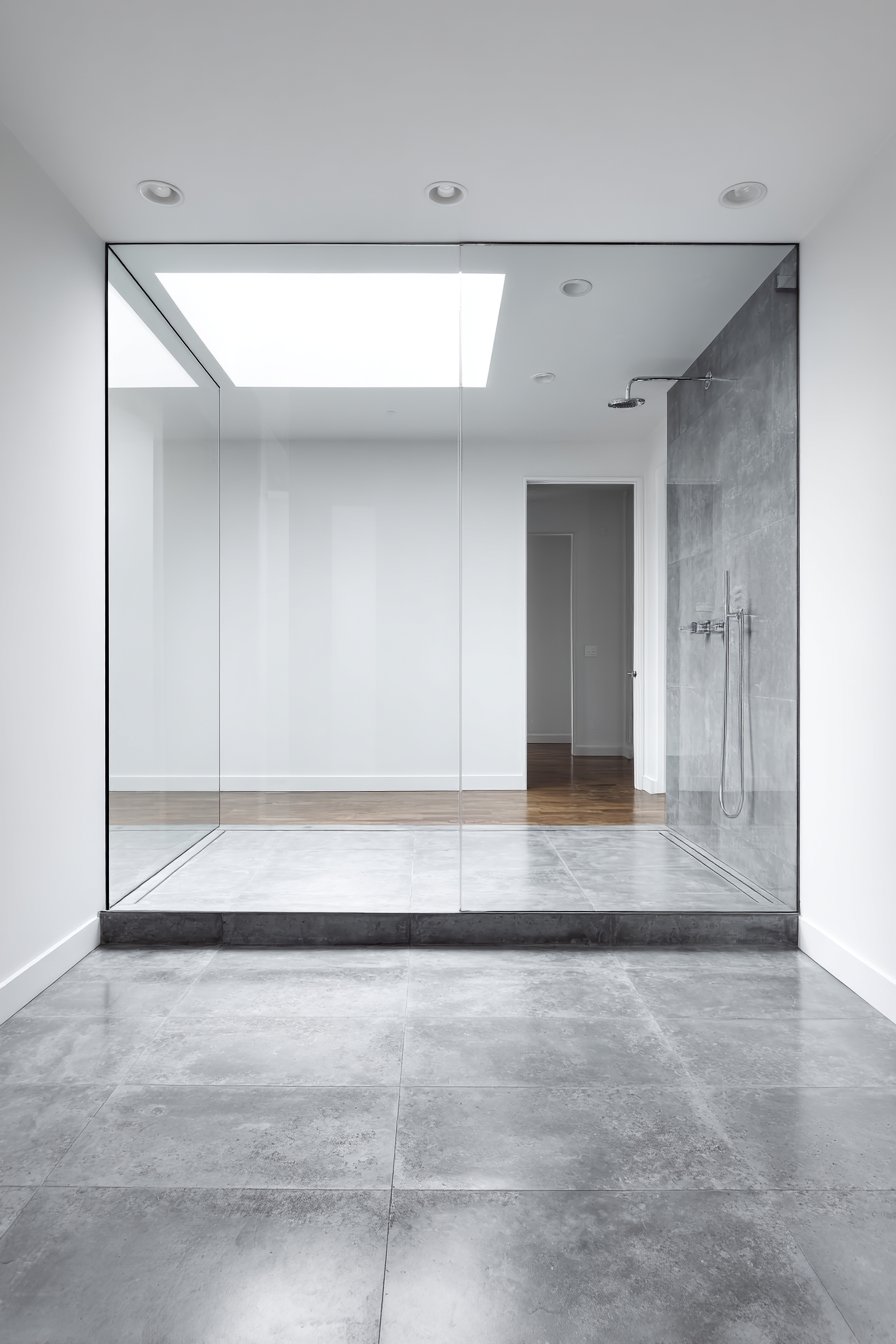
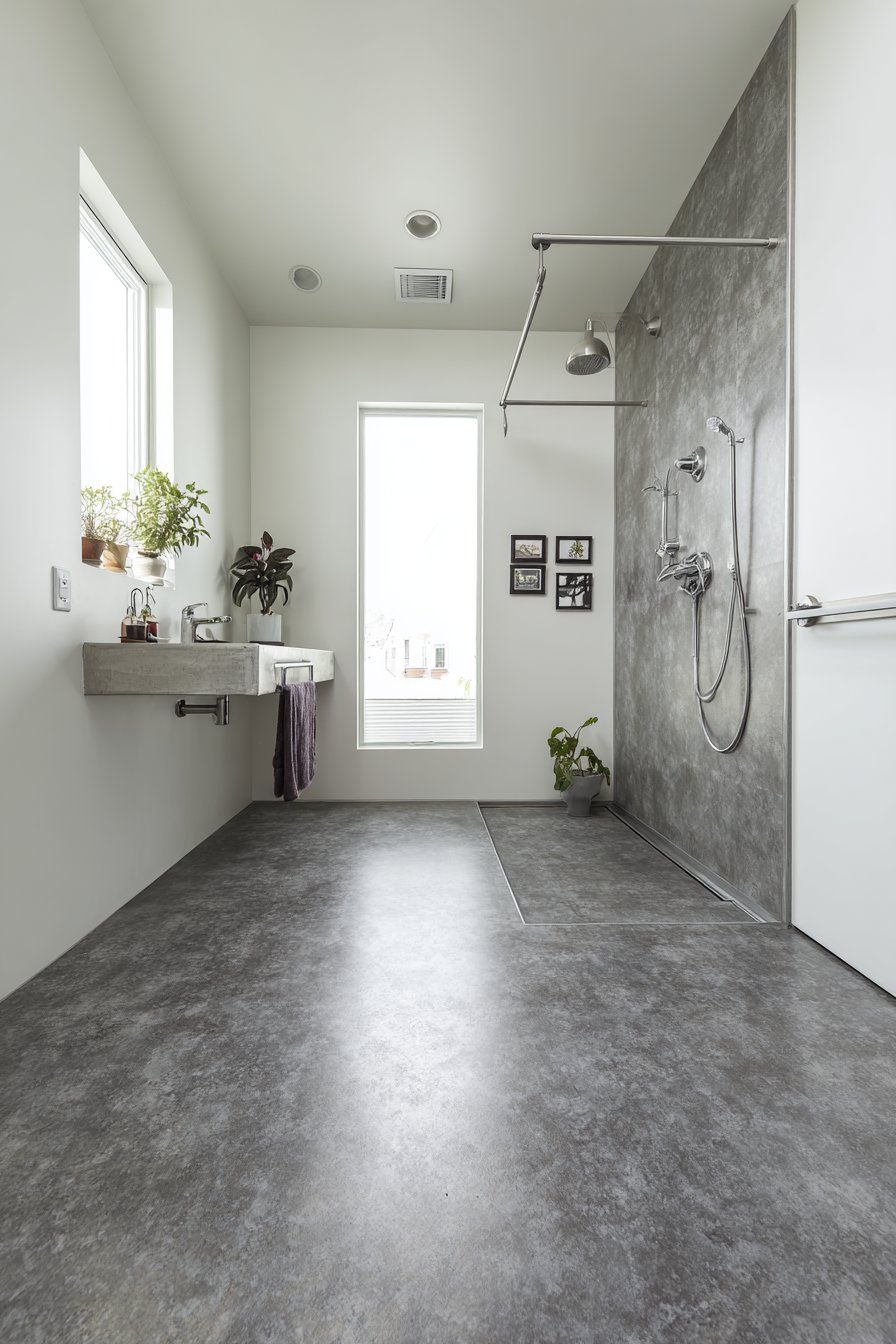
A curbless shower entry with continuous grey cement tile flooring throughout represents minimal bathroom ideas at their most inclusive, demonstrating how universal design principles align naturally with minimalist aesthetics. White walls provide contrast to the grey floor, their smooth finish maintaining visual simplicity while creating clear definition between vertical and horizontal planes. A single fixed glass panel offers splash protection without creating barriers or visual interruption. Wall-mounted rainfall shower and handheld unit provide functional options for different users and preferences. Natural light from clerestory windows illuminates the space from above, creating dramatic top-down lighting without compromising privacy.
The curbless or “zero-entry” shower design eliminates the raised threshold that traditional showers require, creating barrier-free access that benefits people of all ages and abilities. This accessibility feature happens to align perfectly with minimalist design principles—fewer elements, cleaner lines, more continuous surfaces. The grey cement tiles flow seamlessly from the dry bathroom area into the shower zone, unified through material continuity rather than separated by physical barriers. Proper floor slope ensures water drains toward the shower drain without flooding the dry areas.
Clerestory windows—high windows placed near the ceiling—solve the challenge of bringing abundant natural light into bathrooms without compromising privacy or wall space needed for fixtures and storage. The top-down lighting they create is particularly flattering and dramatic, casting light downward in ways that enhance the minimal aesthetic. The combination of rainfall and handheld shower fixtures provides options without visual clutter—both mount to the wall with minimal profile, and the handheld stores on a simple sliding bar when not in use.
Key Design Tips:
- Install curbless showers with proper floor slope for drainage
- Use continuous flooring to unite shower and dry zones visually
- Position fixed glass panels strategically for splash protection
- Include both rainfall and handheld shower options for versatility
- Install clerestory windows for natural light with maintained privacy
19. Pivot Mirror Statement: Monochromatic Drama
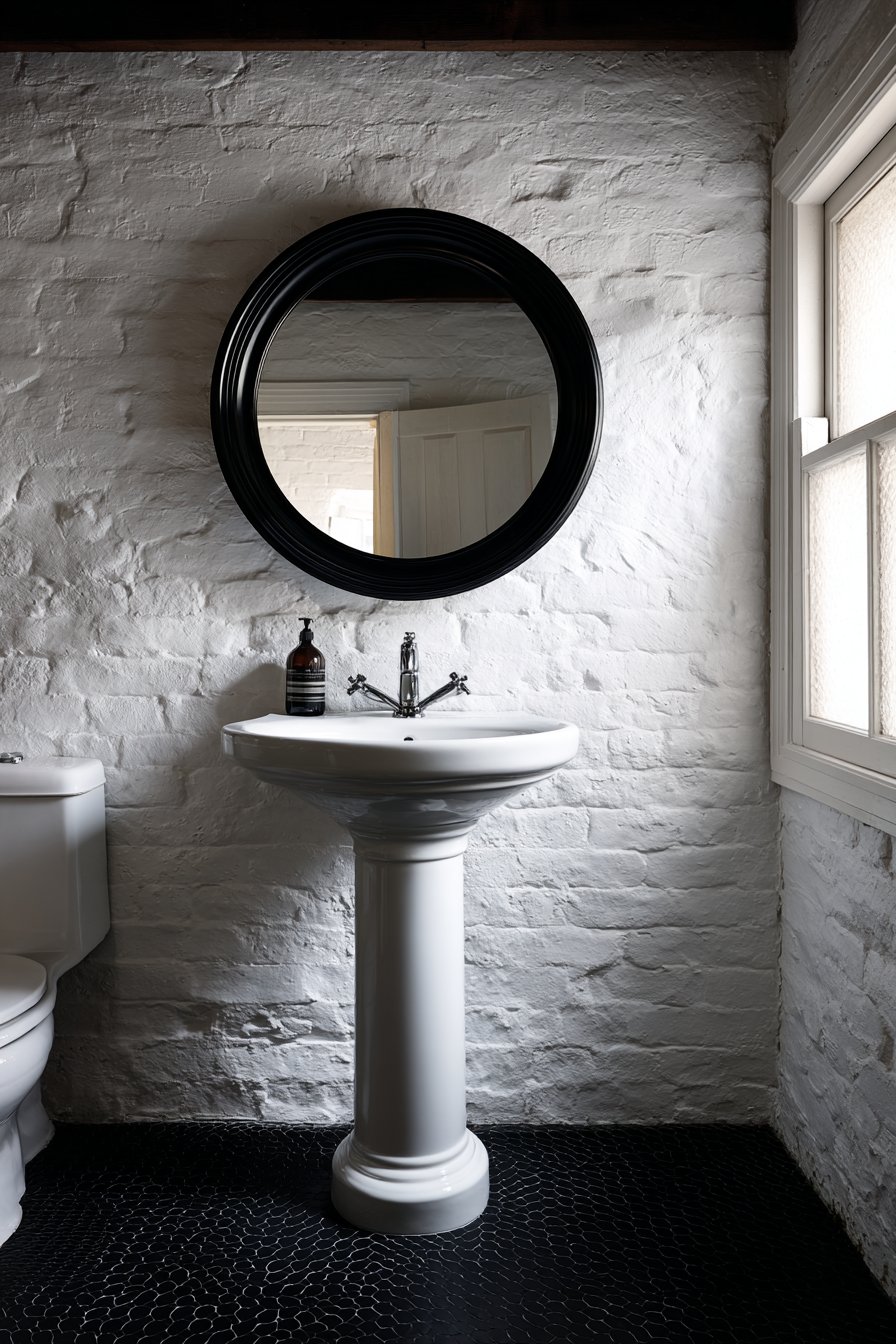
A powder room featuring a statement black framed pivot mirror above a white pedestal sink demonstrates how minimal bathroom ideas can incorporate dramatic elements while maintaining restraint. Walls finished in smooth white Venetian plaster create subtle texture and depth, their softly reflective surface catching and dispersing light in ways that flat paint cannot achieve. Black hexagonal floor tiles create subtle pattern interest through shape rather than color, their geometric precision echoing the angular quality of the mirror frame. One small window with frosted glass provides natural light while maintaining privacy, its proportions carefully considered to balance the bold mirror above.
The oversized pivot mirror becomes the focal point of this compact powder room, its black frame creating strong contrast against white walls while its ability to tilt provides functional advantages for users of different heights. The pedestal sink maintains a traditional form that feels timeless rather than trendy, its white ceramic material and simple lines allowing it to recede visually behind the commanding mirror. The monochromatic black-and-white palette creates drama through contrast rather than color, a sophisticated approach that ensures the design won’t feel dated as color trends change.
Venetian plaster brings subtle luxury to walls, its application technique creating variations in sheen and tone that add depth without pattern. This traditional Italian wall treatment develops a soft patina over time, gaining character rather than showing wear. The black hexagonal floor tiles provide just enough visual interest to prevent the white-dominated space from feeling blank, their small scale appropriate to the powder room’s compact dimensions. The geometric precision of both the hexagonal tiles and rectangular mirror frame creates visual harmony through repeated angular forms.
Key Design Tips:
- Use pivot mirrors for function and architectural presence
- Apply Venetian plaster for subtle wall texture and depth
- Create drama through black-and-white contrast in small spaces
- Choose hexagonal tiles for geometric interest without color complexity
- Balance bold elements with simple fixtures for cohesive design
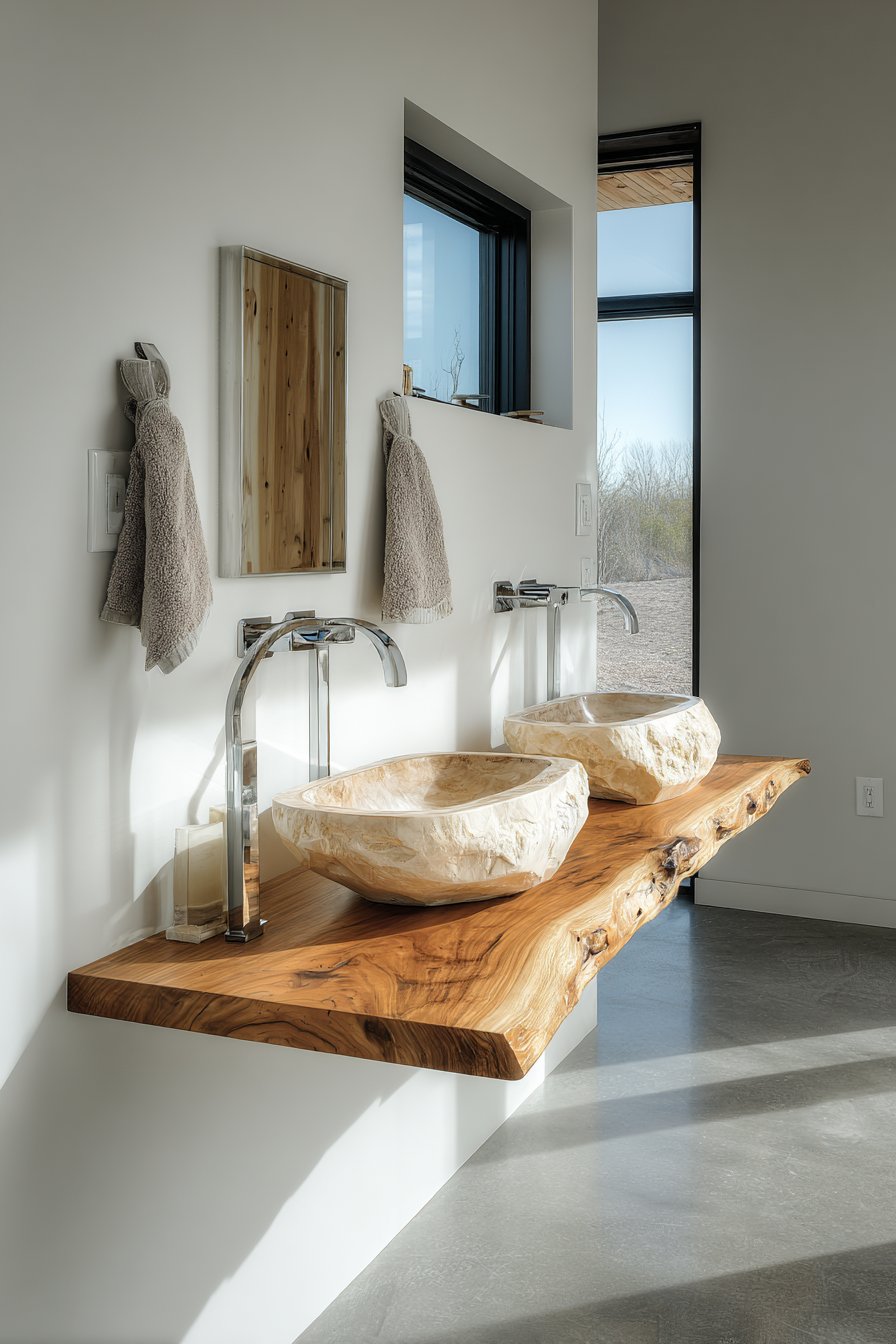
20. Carved Stone Trough: Natural Authenticity
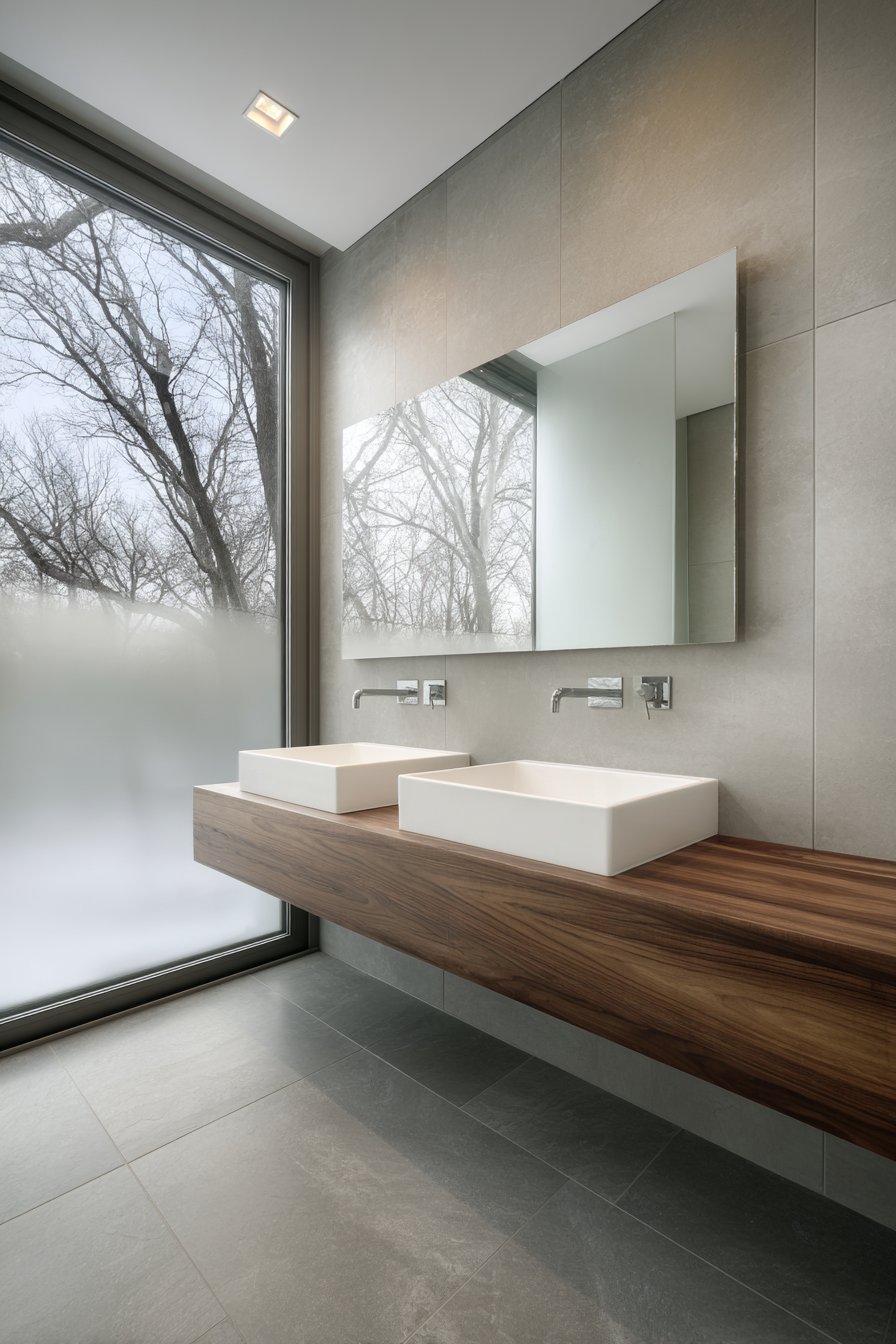
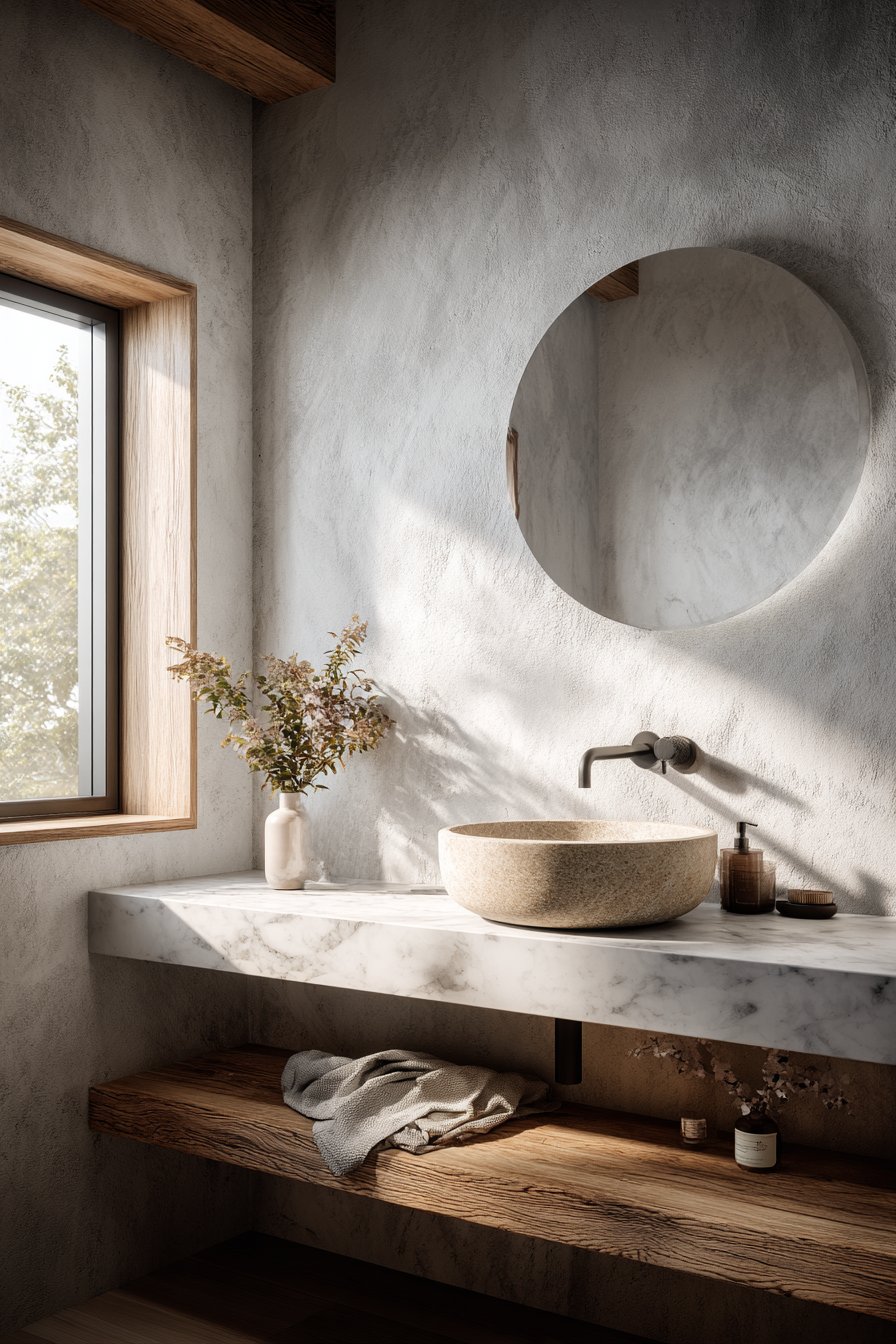
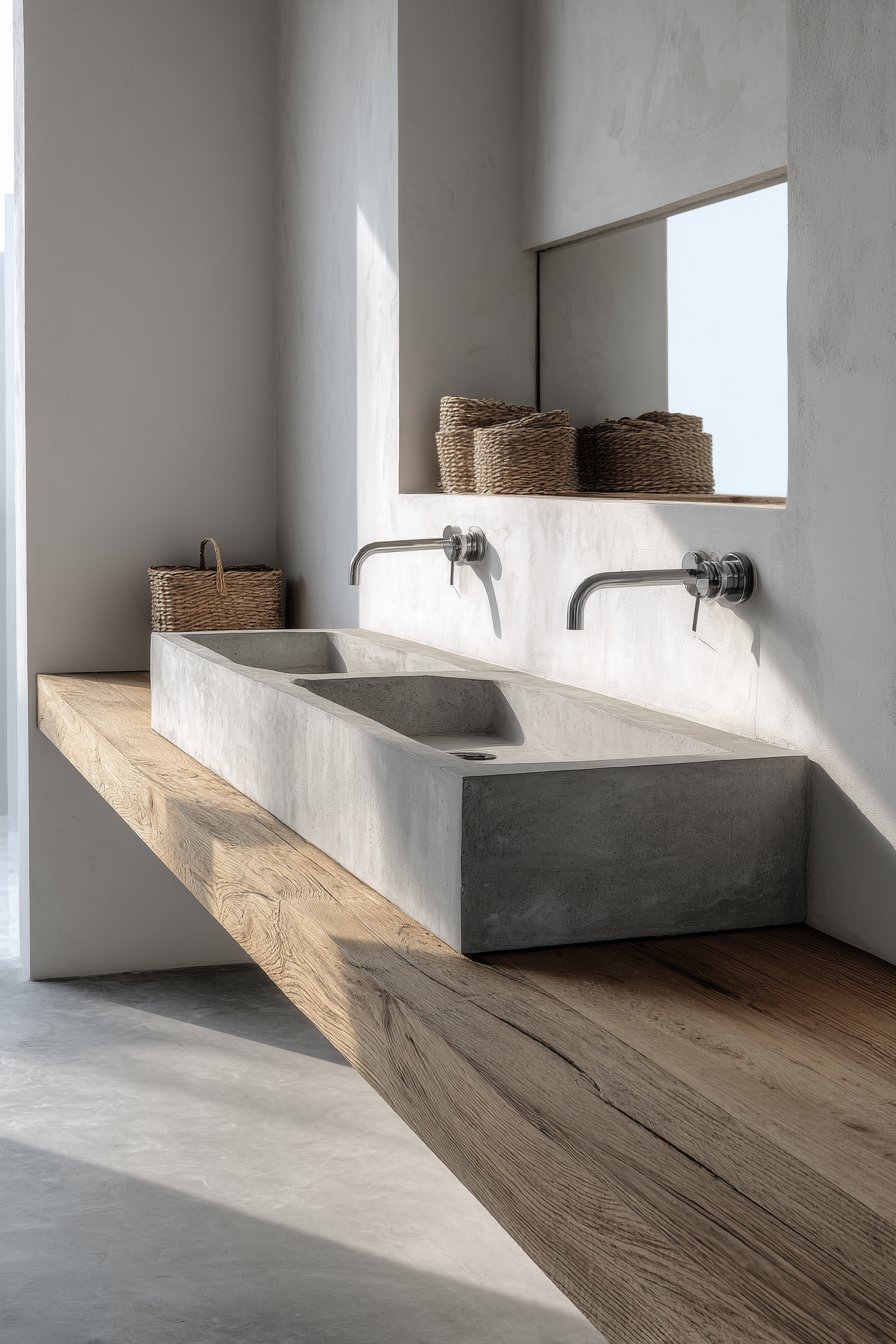
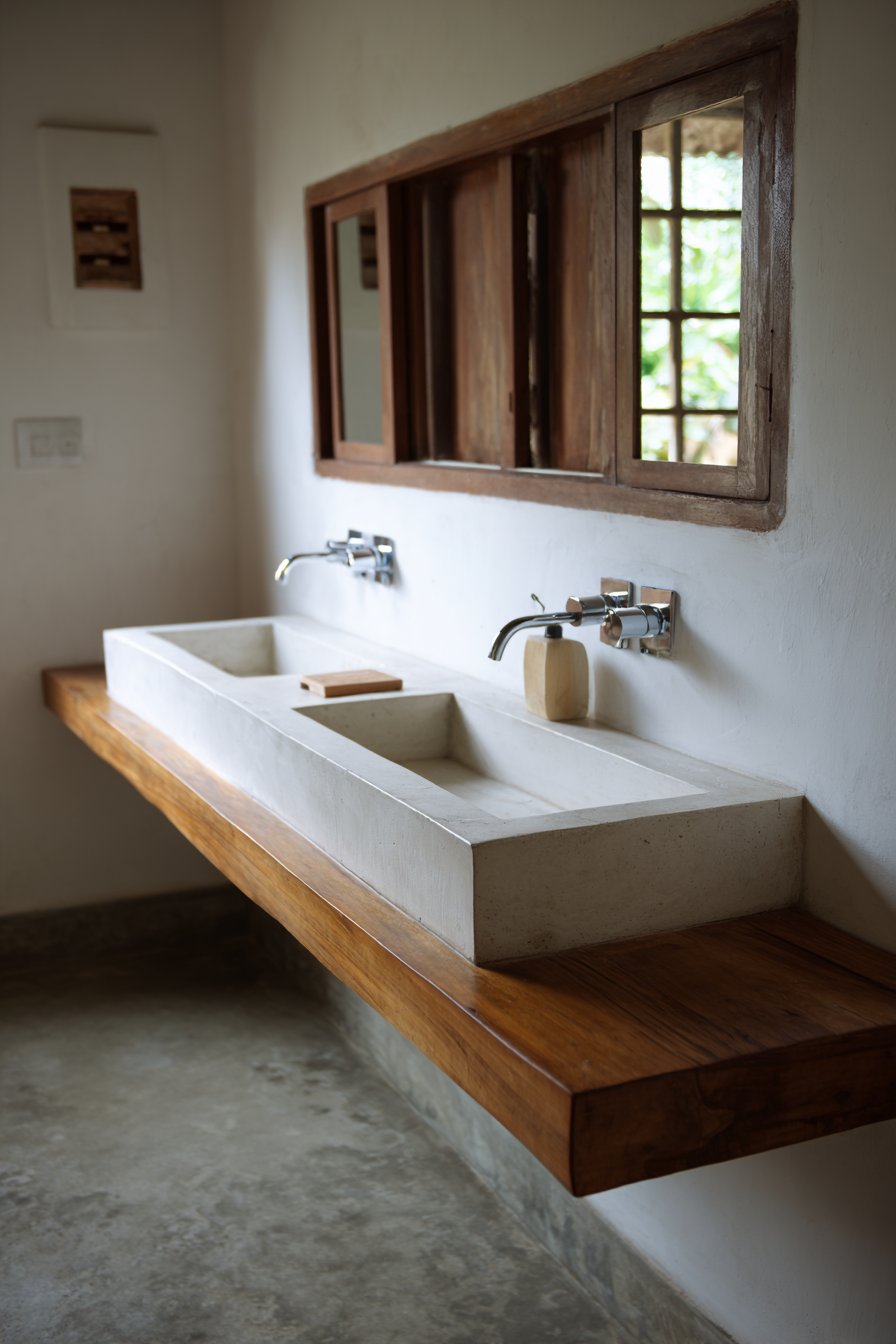
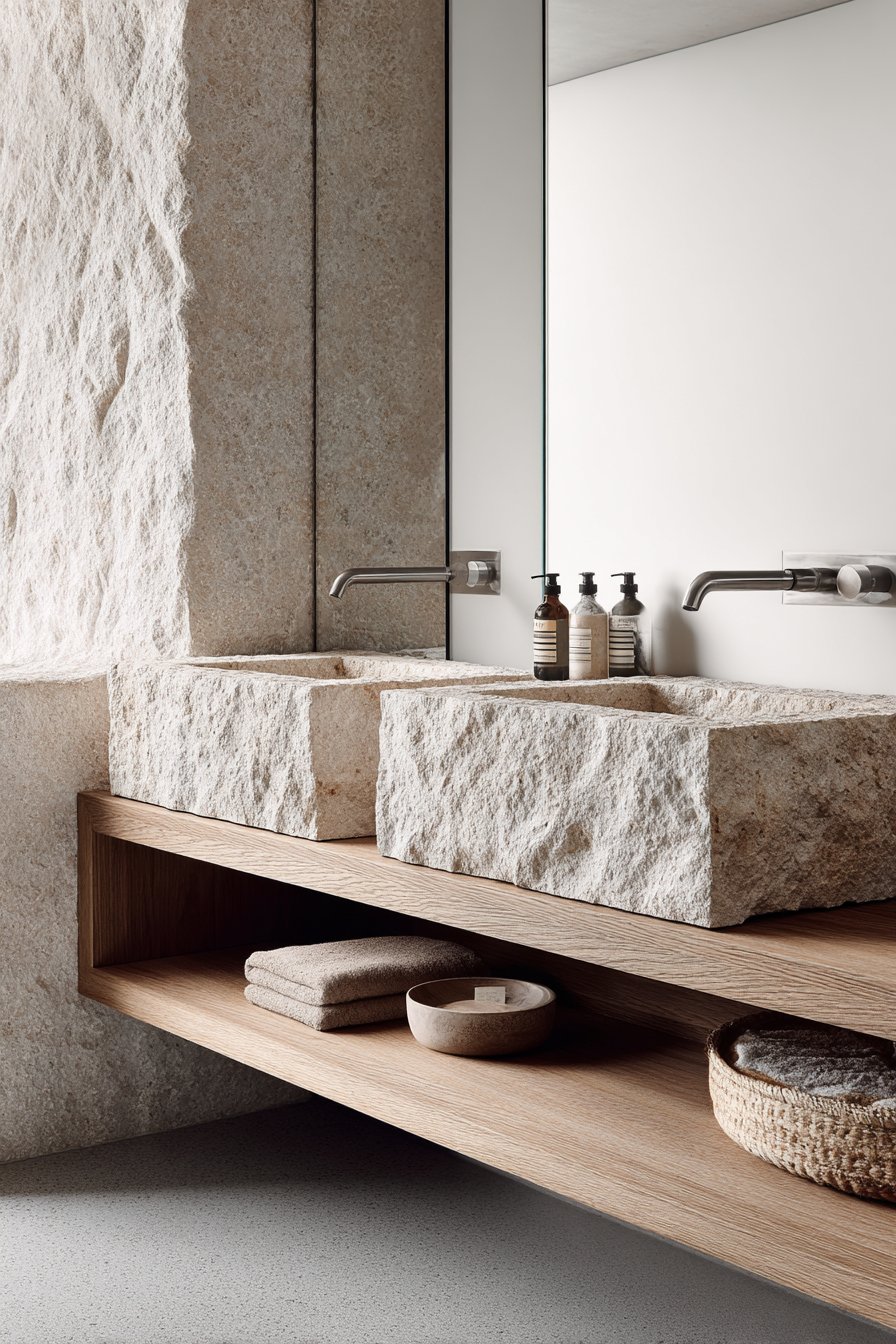
A trough-style double sink carved from a single piece of white stone represents minimalism’s appreciation for natural materials and honest craftsmanship. The vanity consists of a floating shelf in natural teak with visible wood grain, its warm honey tones contrasting beautifully with the cool white stone. White walls and grey concrete flooring maintain the minimal palette while allowing the sculptural sink to command attention as the room’s focal point. Chrome wall-mounted faucets preserve clean lines by eliminating deck-mounted plumbing, their simple forms serving function without demanding visual attention. Soft natural light from a horizontal window highlights material authenticity, emphasizing the stone’s subtle variations and the wood’s organic patterns.
The carved stone trough sink represents a significant investment and statement piece, its creation requiring skilled craftspeople who understand how to work with natural stone. Each piece will be unique, bearing the individual characteristics of the stone from which it was carved—subtle color variations, natural veining, and the marks of the carving process itself. This authenticity aligns with minimalist values that prioritize quality and truth to materials over mass-produced uniformity. The double-trough design provides two basins within one continuous piece, eliminating the seam that would exist if two separate sinks were installed.
The floating teak shelf serves as both support structure and storage surface, its natural water resistance making it ideal for bathroom applications where humidity is constant. Teak’s rich grain patterns and warm tones provide visual interest without requiring decorative carving or applied ornamentation—the wood’s inherent beauty is sufficient. The wall-mounted faucets eliminate the need for penetrations in the stone sink, preserving its sculptural integrity while creating the floating effect where water appears to emerge from the wall itself.
Key Design Tips:
- Invest in carved stone sinks as heirloom-quality focal points
- Choose teak for bathroom wood applications due to water resistance
- Install wall-mounted faucets to preserve sink sculpture integrity
- Use horizontal windows to create interesting lighting on textured materials
- Allow natural material beauty to serve as primary decoration
21. White Beveled Classics: Timeless Simplicity
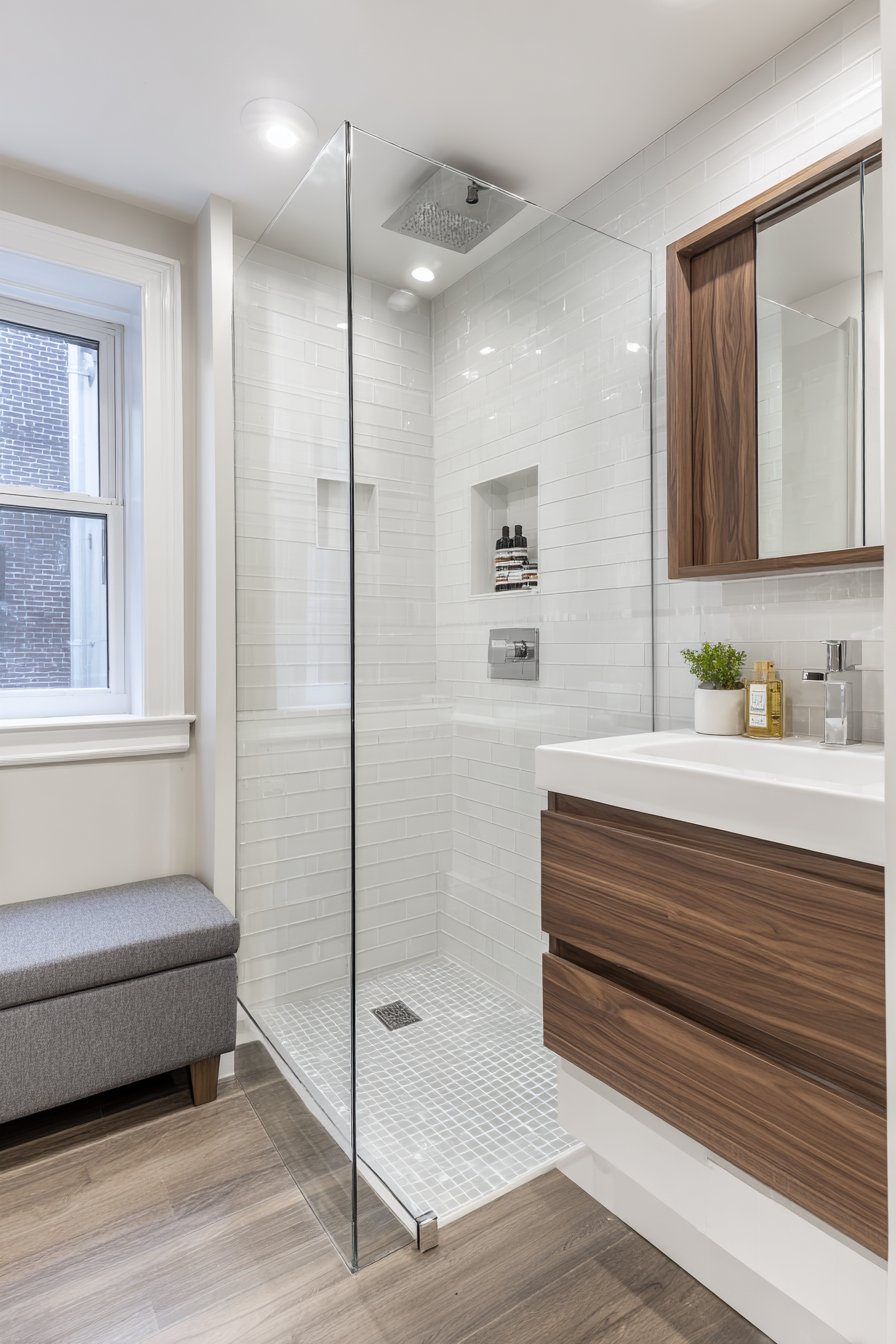
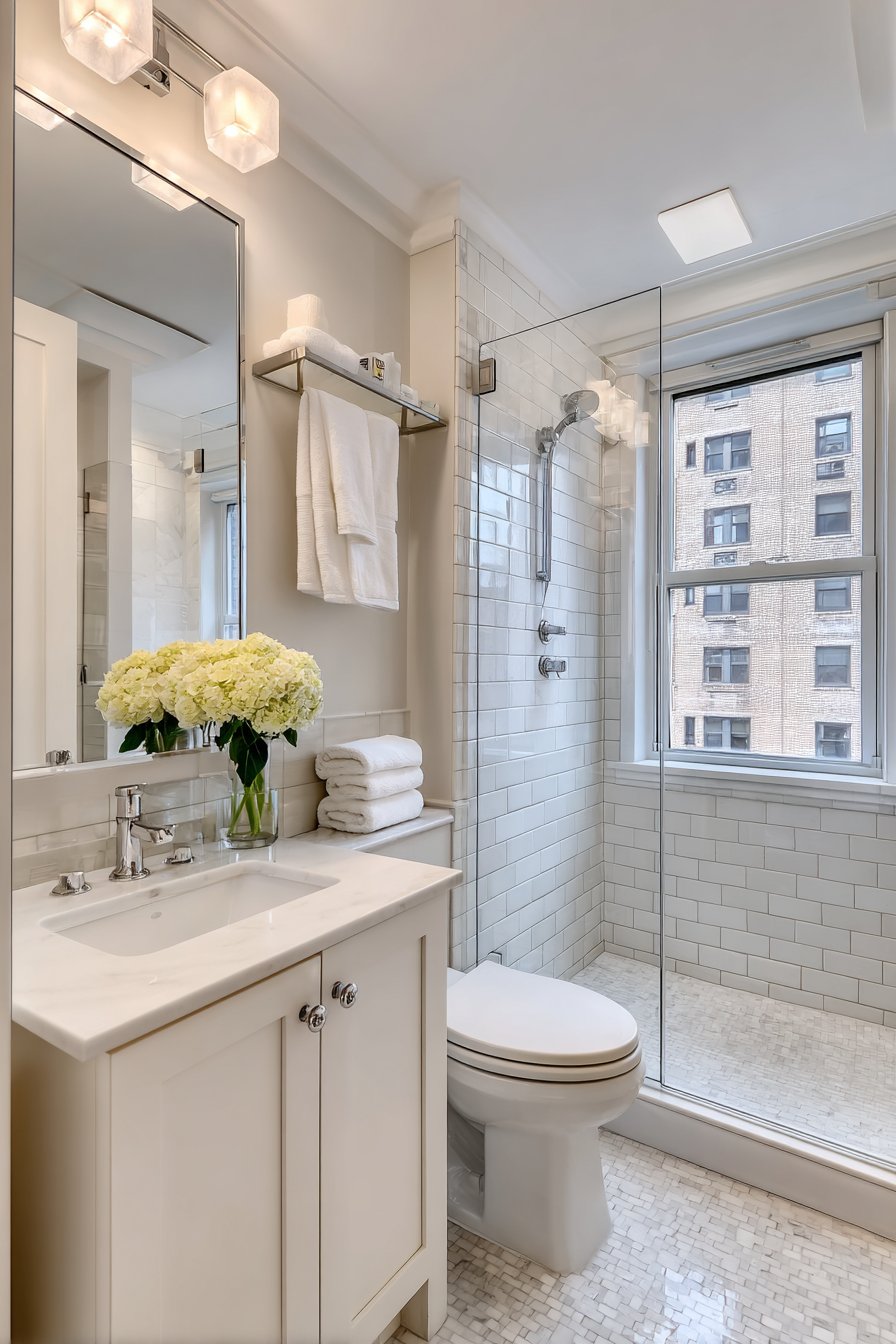
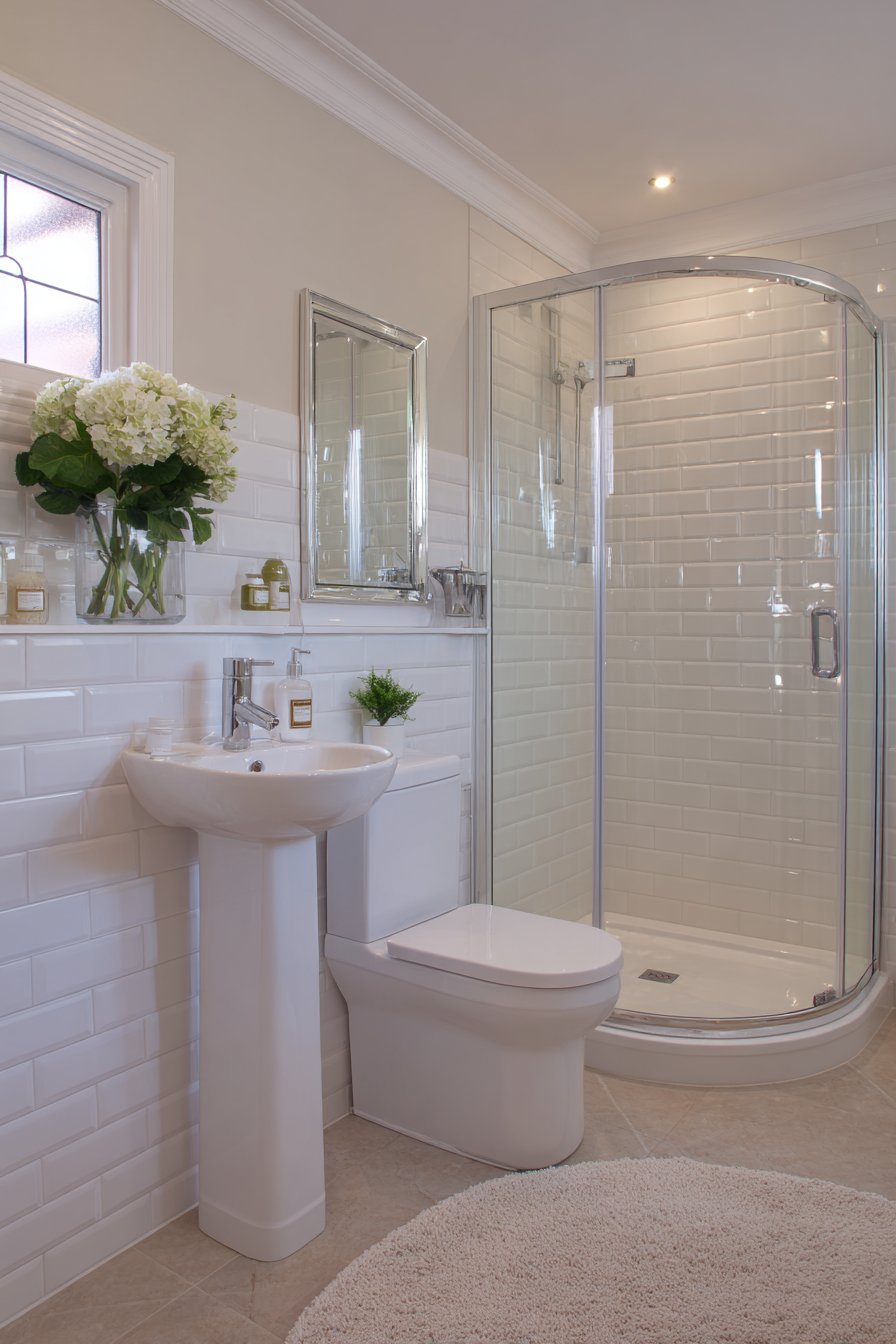
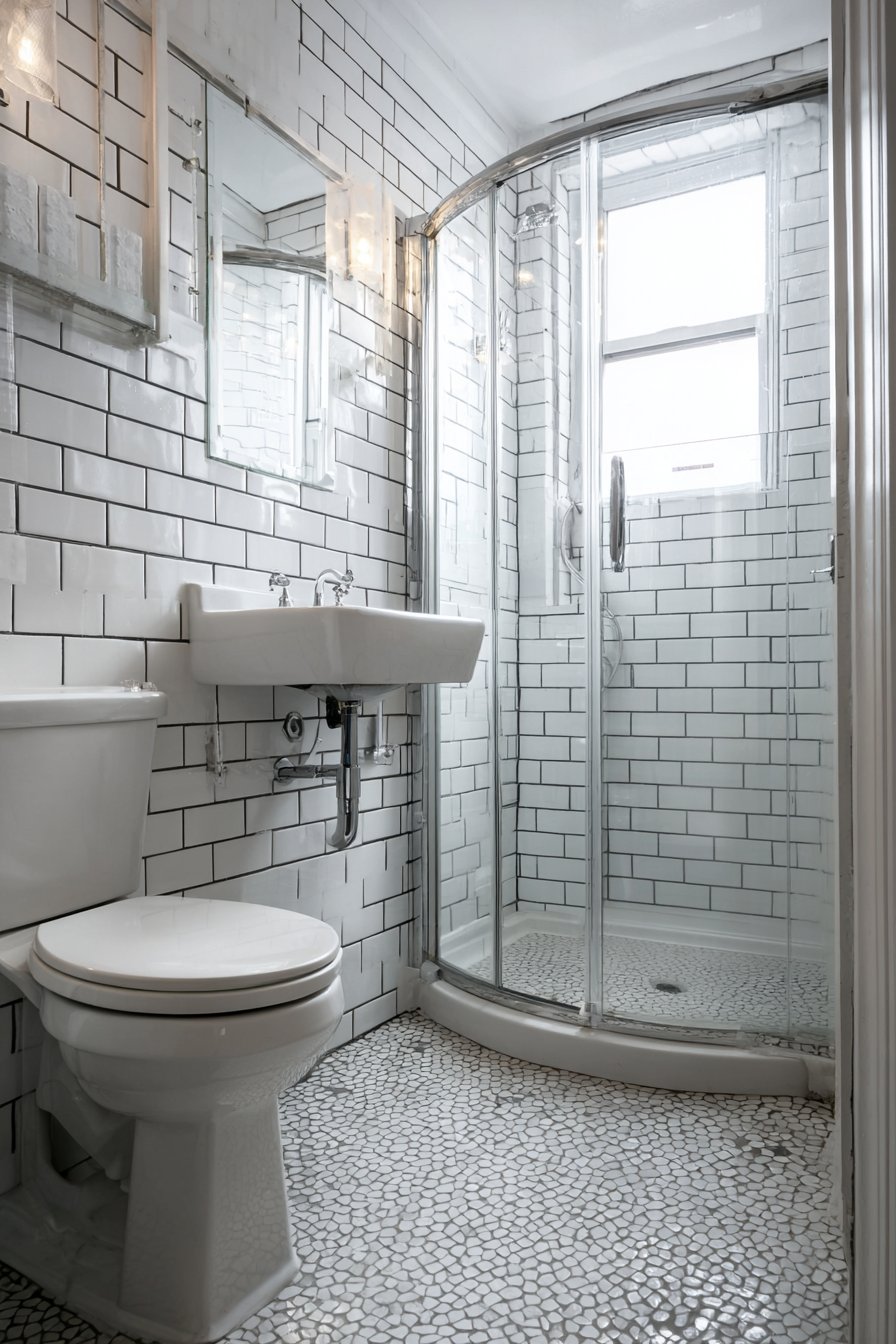
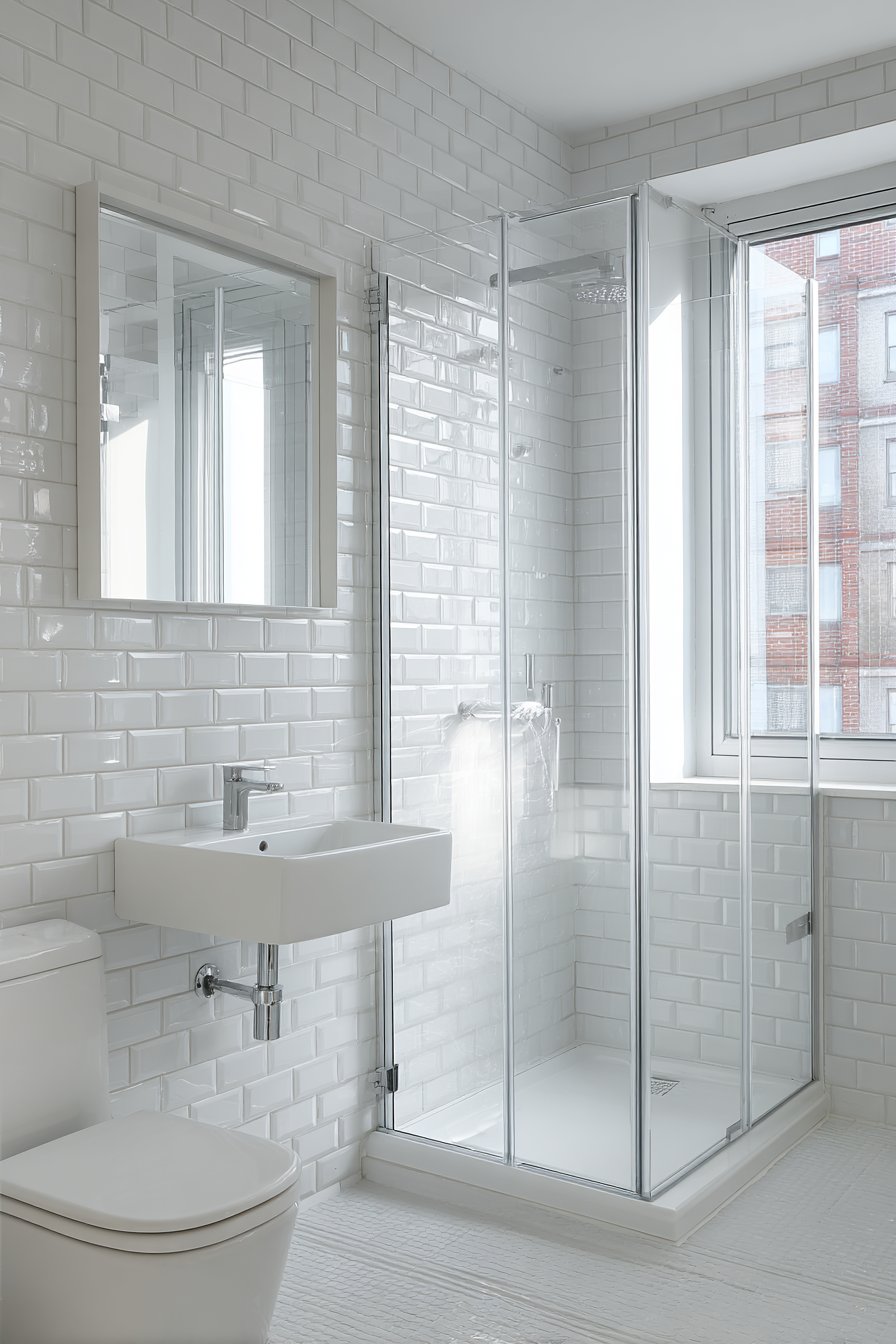
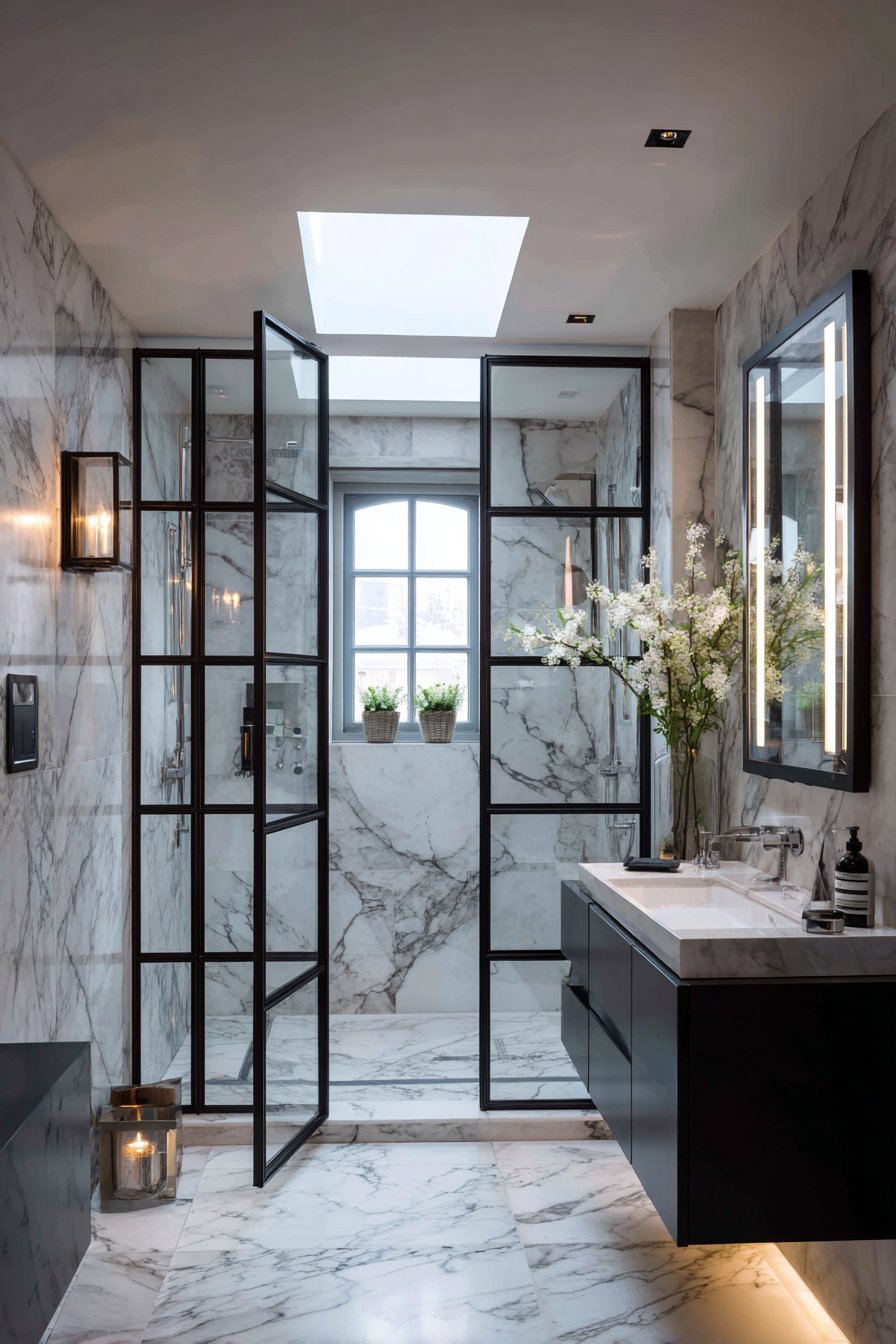
A small bathroom featuring floor-to-ceiling white beveled subway tiles in classic brick pattern demonstrates how minimal bathroom ideas can embrace traditional materials in contemporary ways. A compact corner shower with clear glass enclosure maximizes floor space, its efficient footprint proving that even tiny bathrooms can include proper shower facilities. Wall-mounted white ceramic sink and toilet maintain openness by eliminating floor-mounted bases that would crowd the limited square footage. Simple chrome fixtures throughout create cohesive material consistency. Natural light from a small window creates brightness that makes the compact space feel more generous.
Beveled subway tiles bring dimensional interest to walls through their angled edges, which create subtle shadow lines that add depth to monochromatic installations. The classic brick pattern—offset by half a tile length—provides familiar comfort while the all-white palette keeps the look fresh and contemporary. Floor-to-ceiling installation eliminates the horizontal break that partial tile work would create, maintaining visual continuity that helps the small bathroom feel taller. The beveled edges catch and reflect light in ways that flat tiles cannot, creating a gently shimmering surface that enhances brightness.
The corner shower placement represents strategic space planning, utilizing the room’s corner while keeping the center area open for movement. The clear glass enclosure maintains visual openness—you can see through to the back wall of the shower, which makes the room appear larger than it actually is. Wall-mounted fixtures throughout continue the space-maximizing strategy, their clean lines and minimal profiles appropriate to both the room’s small scale and the overall minimalist aesthetic.
Key Design Tips:
- Choose beveled tiles for dimensional interest in monochromatic schemes
- Install tiles floor-to-ceiling to maximize perceived height
- Place showers in corners to preserve central floor space
- Use clear glass enclosures to maintain visual openness
- Mount all fixtures to walls in small bathrooms to maximize floor area
22. Monolithic Wet Room: Industrial Minimalism
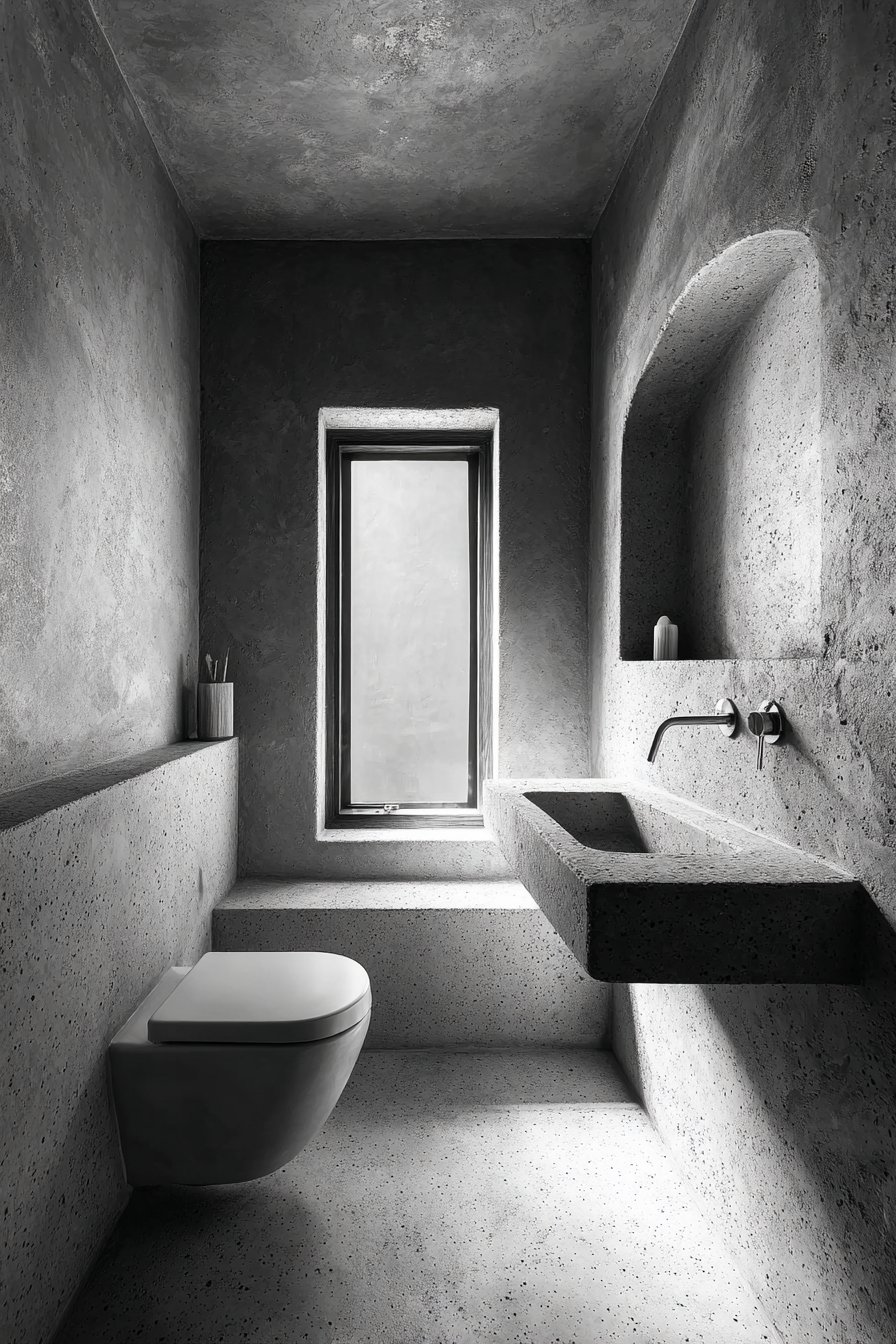
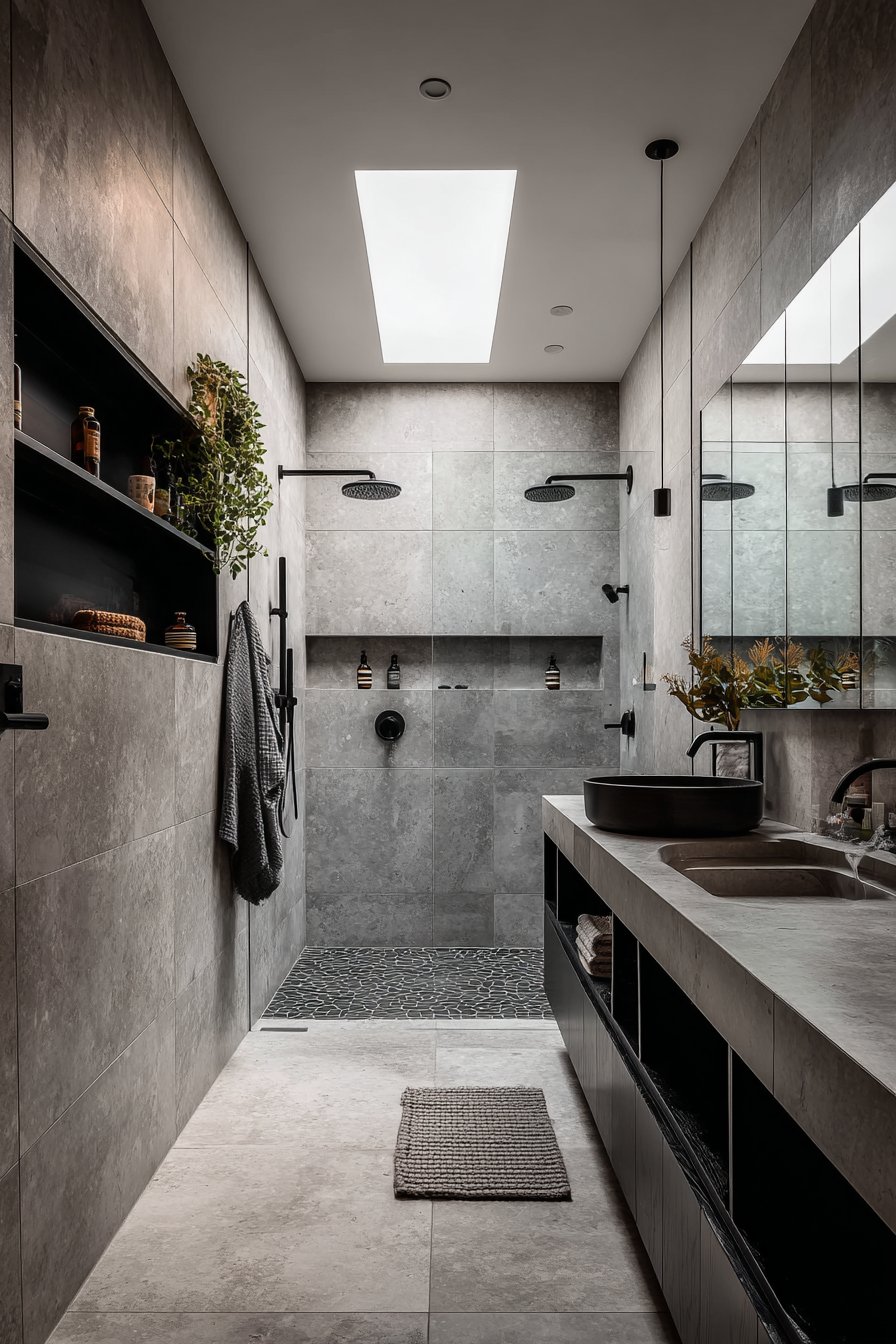
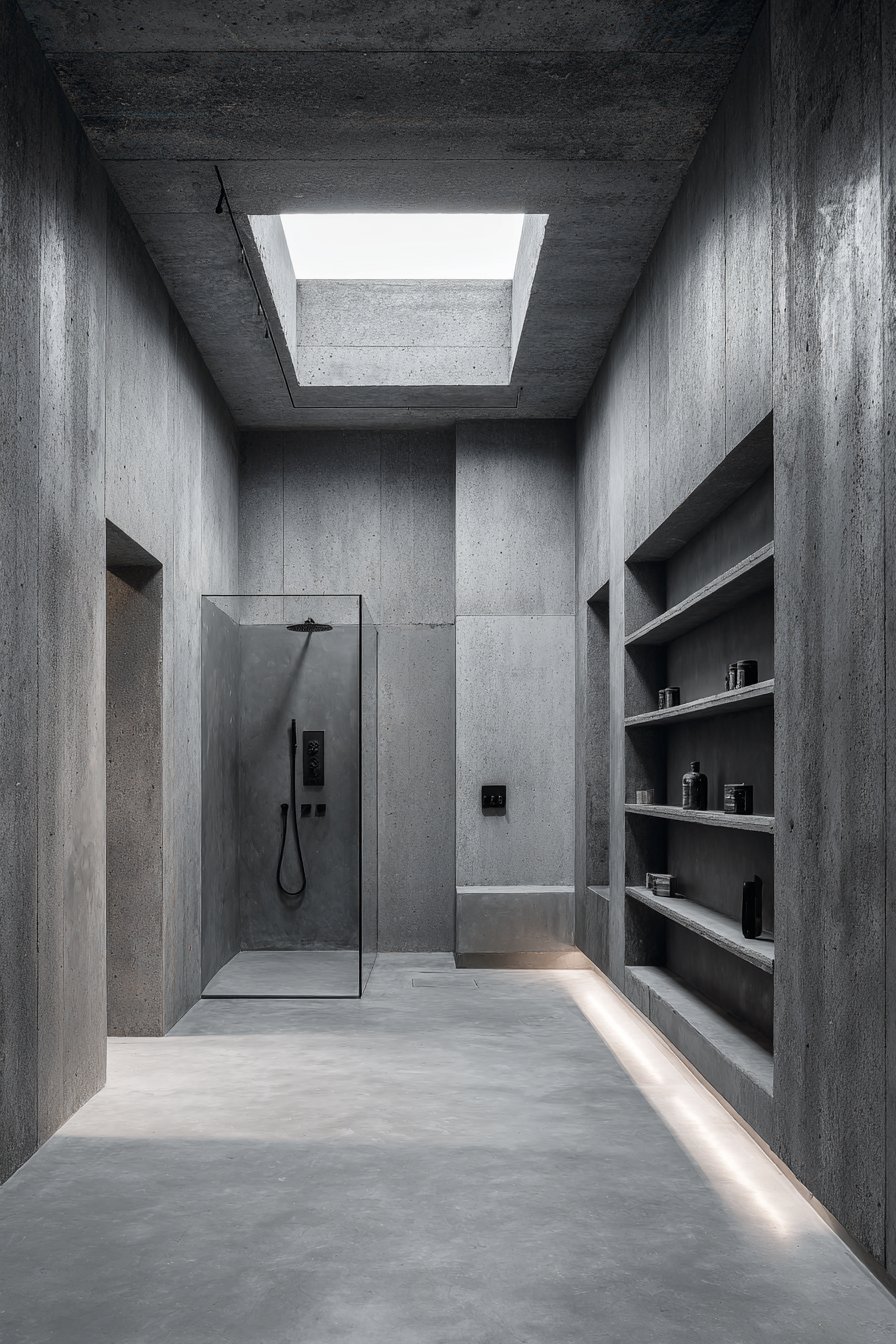
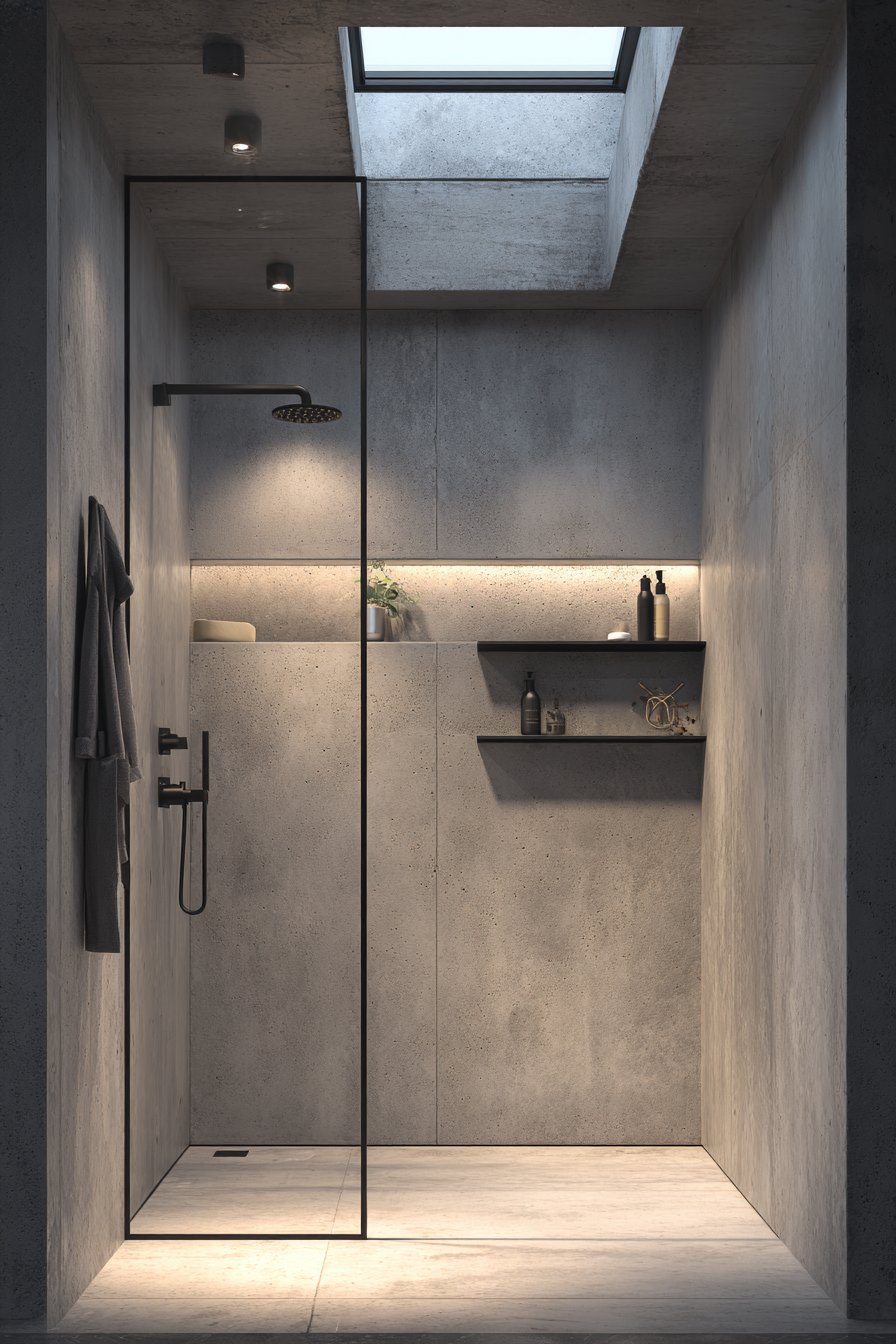
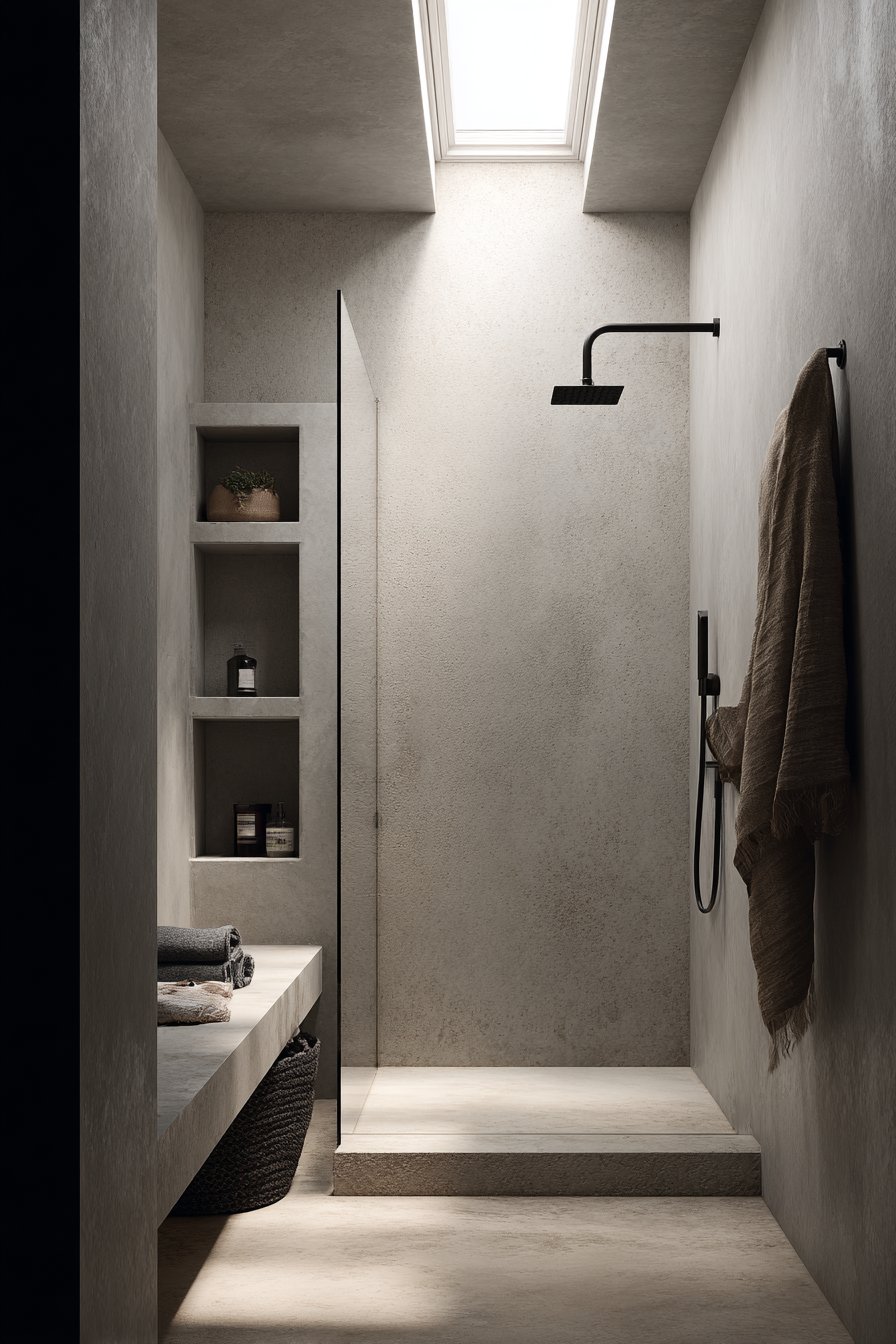
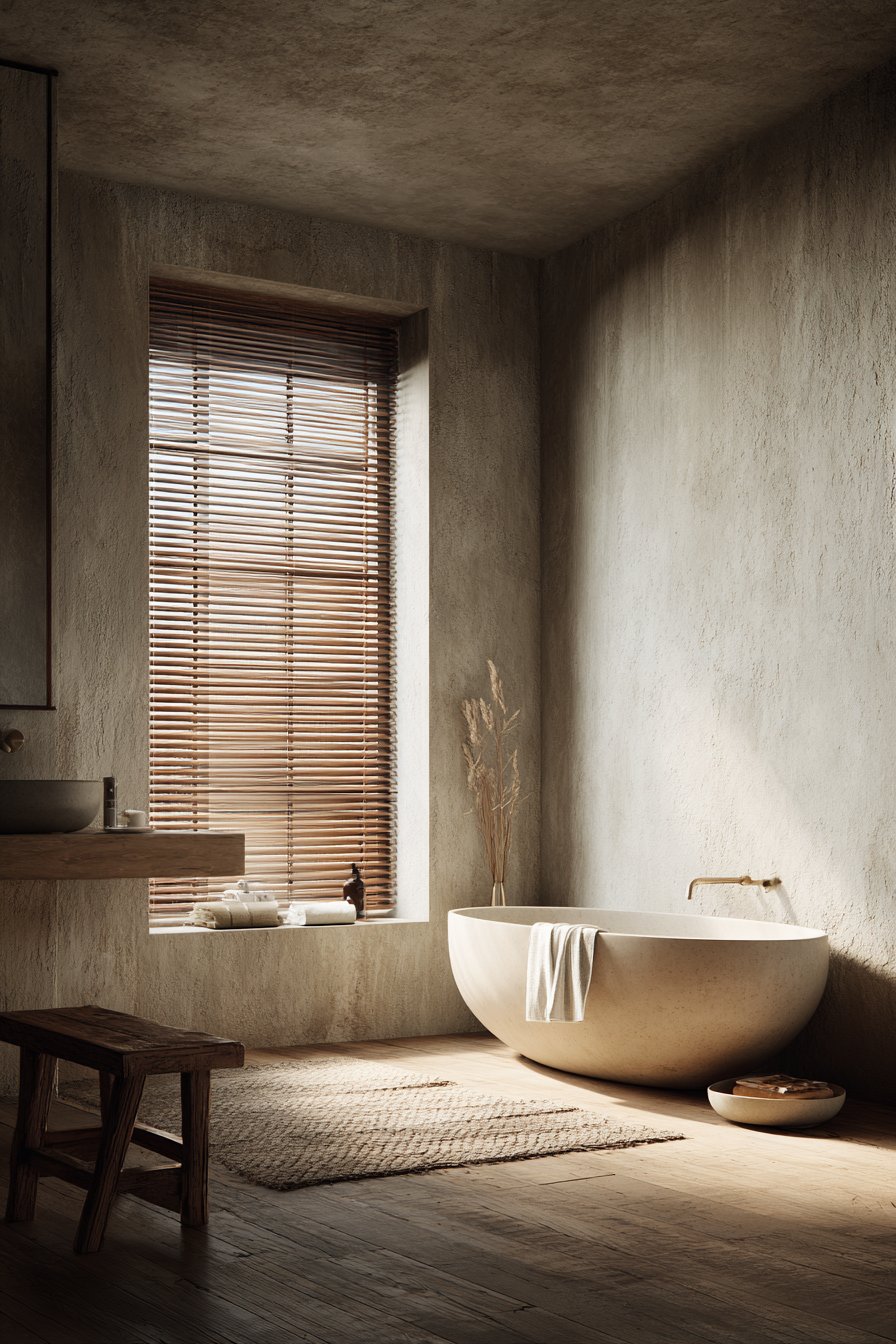
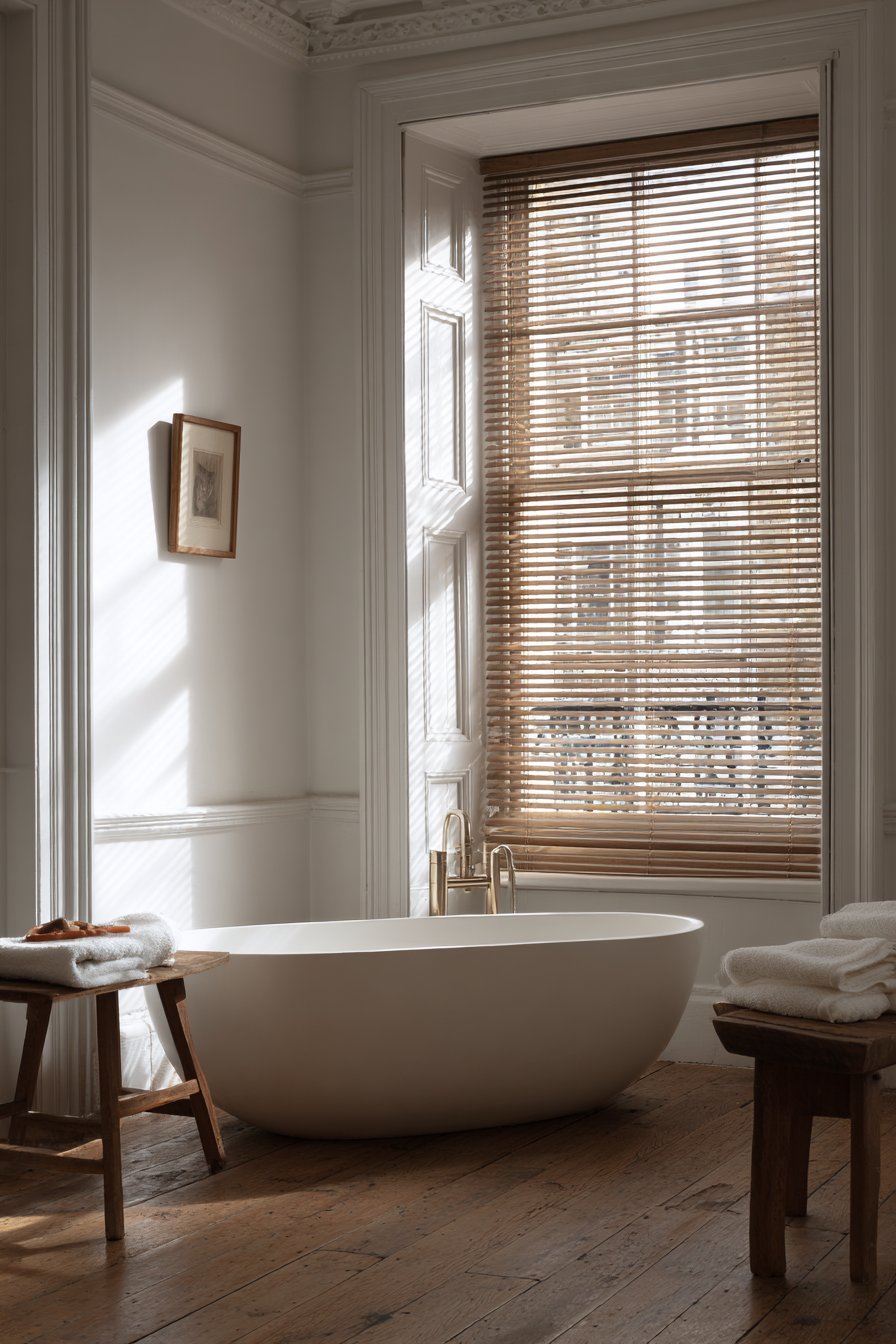
A wet room featuring poured concrete walls and floor in a soft grey tone represents minimalism at its most bold and uncompromising. A single glass panel defines the shower zone with barely-there transparency, providing necessary splash containment while maintaining the open, loft-like quality of the space. Black matte fixtures provide striking contrast against grey surfaces, their dark presence creating visual anchors in the monochromatic environment. Built-in recessed shelving holds minimal essentials, carved directly into the concrete during construction to maintain the monolithic appearance. A skylight provides natural illumination from above, its top-down lighting creating dramatic shadows and highlighting the concrete’s subtle texture.
Poured concrete creates truly seamless spaces—walls flow into floors without joints or transitions, curved corners eliminate hard edges, and the entire bathroom becomes one continuous surface. This monolithic quality represents the ultimate expression of minimal design, where separate elements are unified into one coherent whole. The soft grey concrete feels contemporary and sophisticated rather than cold or industrial, especially when properly sealed with modern treatments that enhance water resistance and create subtle sheen.
The black matte fixtures create essential contrast in this grey-on-grey environment, their dark presence preventing the space from feeling too nebulous or undefined. Matte black has become popular in minimal bathrooms because it provides impact without the reflective distraction of chrome or the warmth of brass—it simply exists as pure form and function. The skylight transforms the concrete’s appearance throughout the day as the sun’s angle changes, proving that minimalist spaces aren’t static but dynamic environments that evolve with natural light.
Key Design Tips:
- Use poured concrete for ultimate seamless, monolithic appearance
- Install skylights for dramatic top-down natural lighting
- Choose matte black fixtures for contrast in grey environments
- Build recessed storage during concrete pouring phase
- Seal concrete properly for water resistance and easier cleaning
23. White Lacquer Linear: Family Functionality
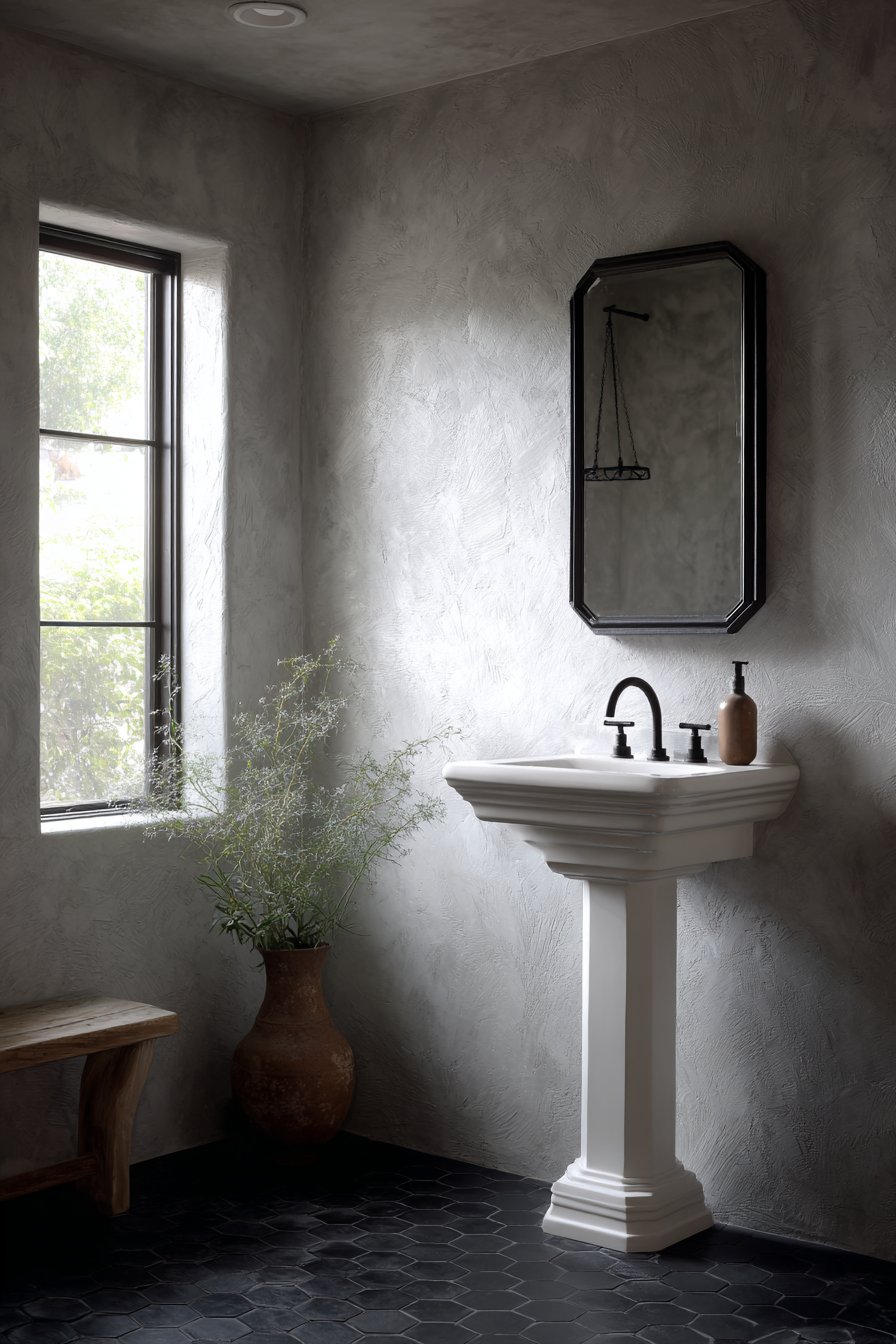
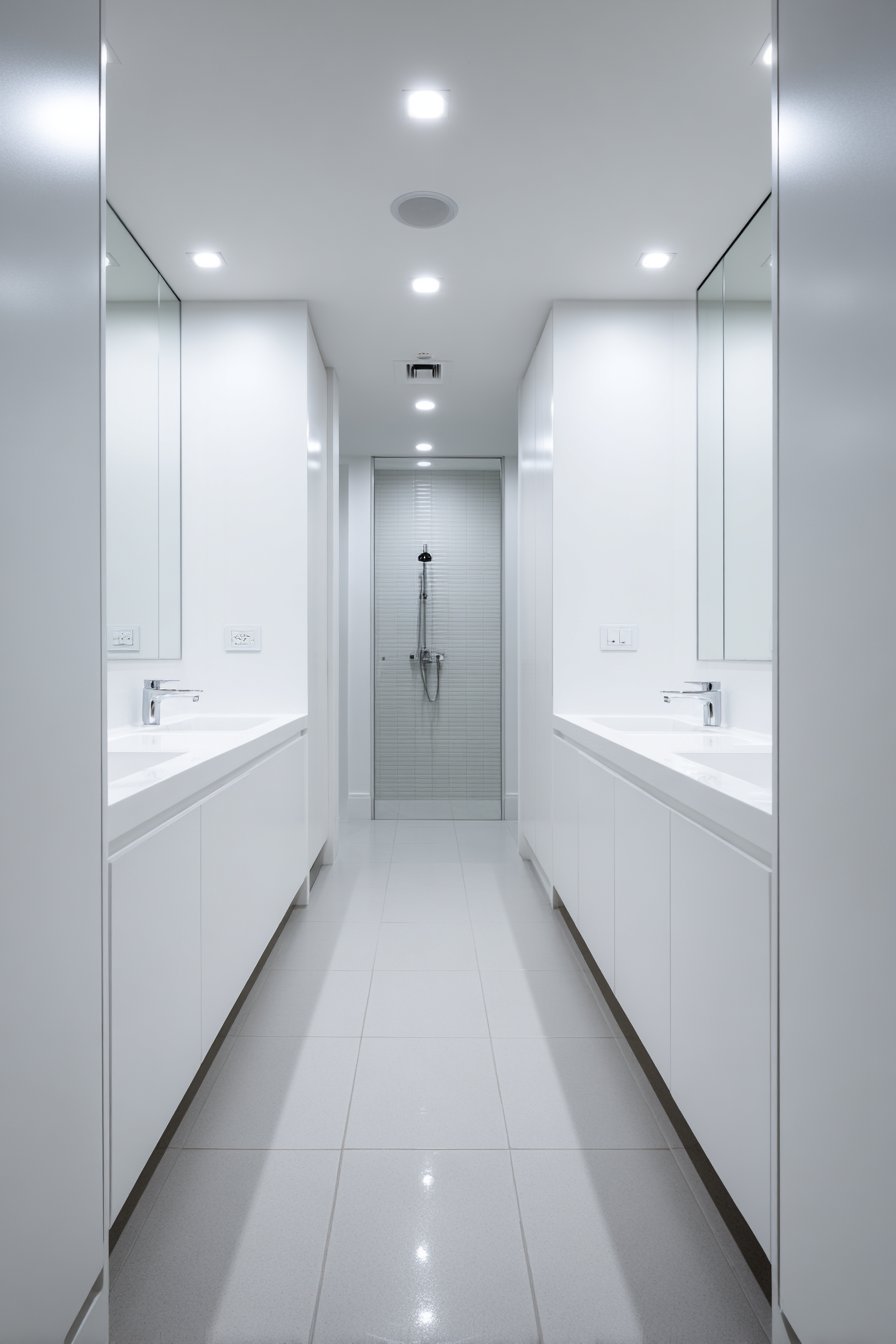
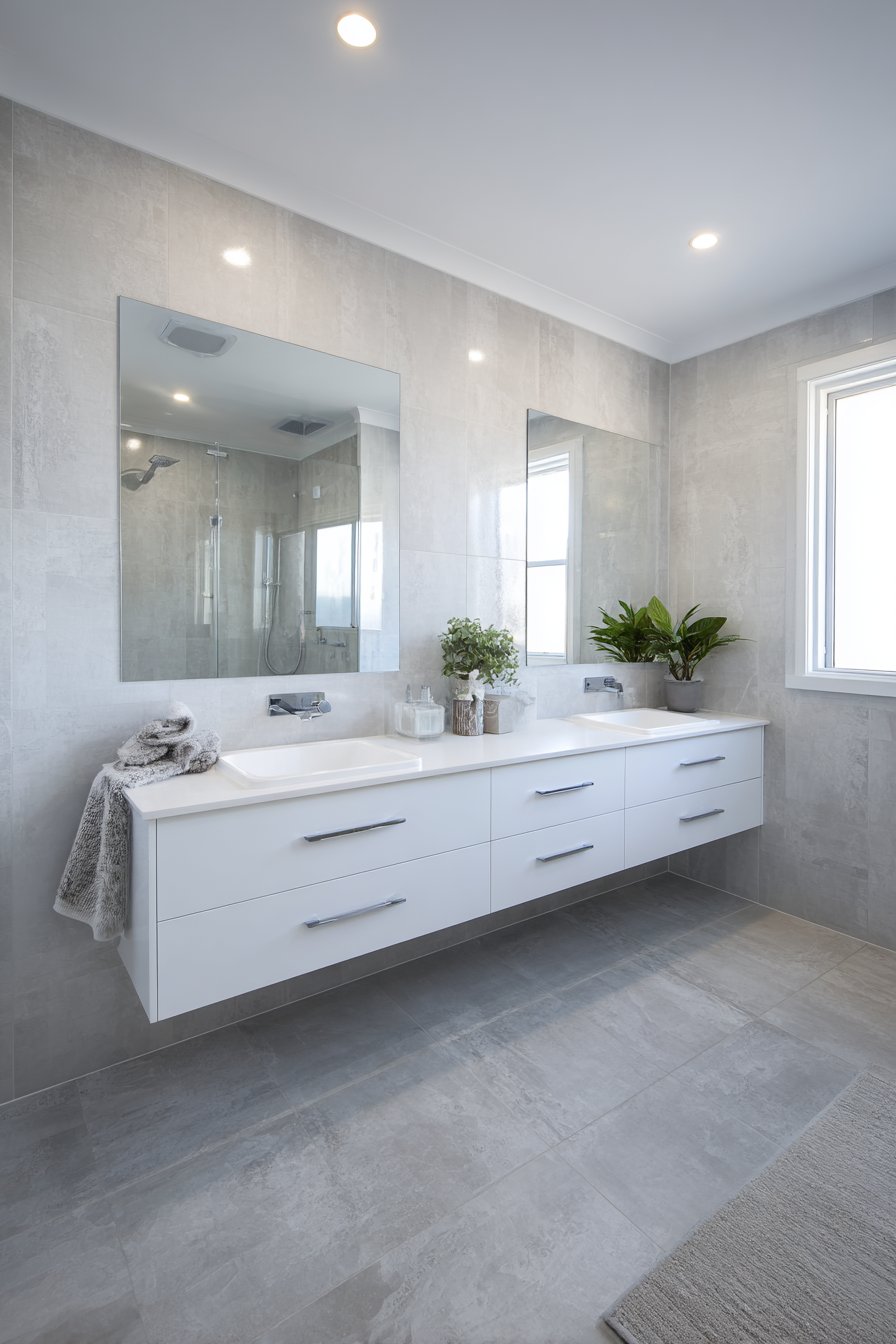
Designed for family bathrooms where multiple people need access simultaneously, this minimal bathroom idea features a long floating vanity in white lacquer with two undermount sinks. Large format light grey tiles cover walls and floor with minimal grout lines, creating continuous surfaces that simplify cleaning—an important consideration in family spaces. Two frameless mirrors hang above each sink, providing individual space without the visual weight of traditional medicine cabinets. Recessed ceiling lighting maintains the clean ceiling plane while providing even, shadow-free illumination perfect for morning routines.
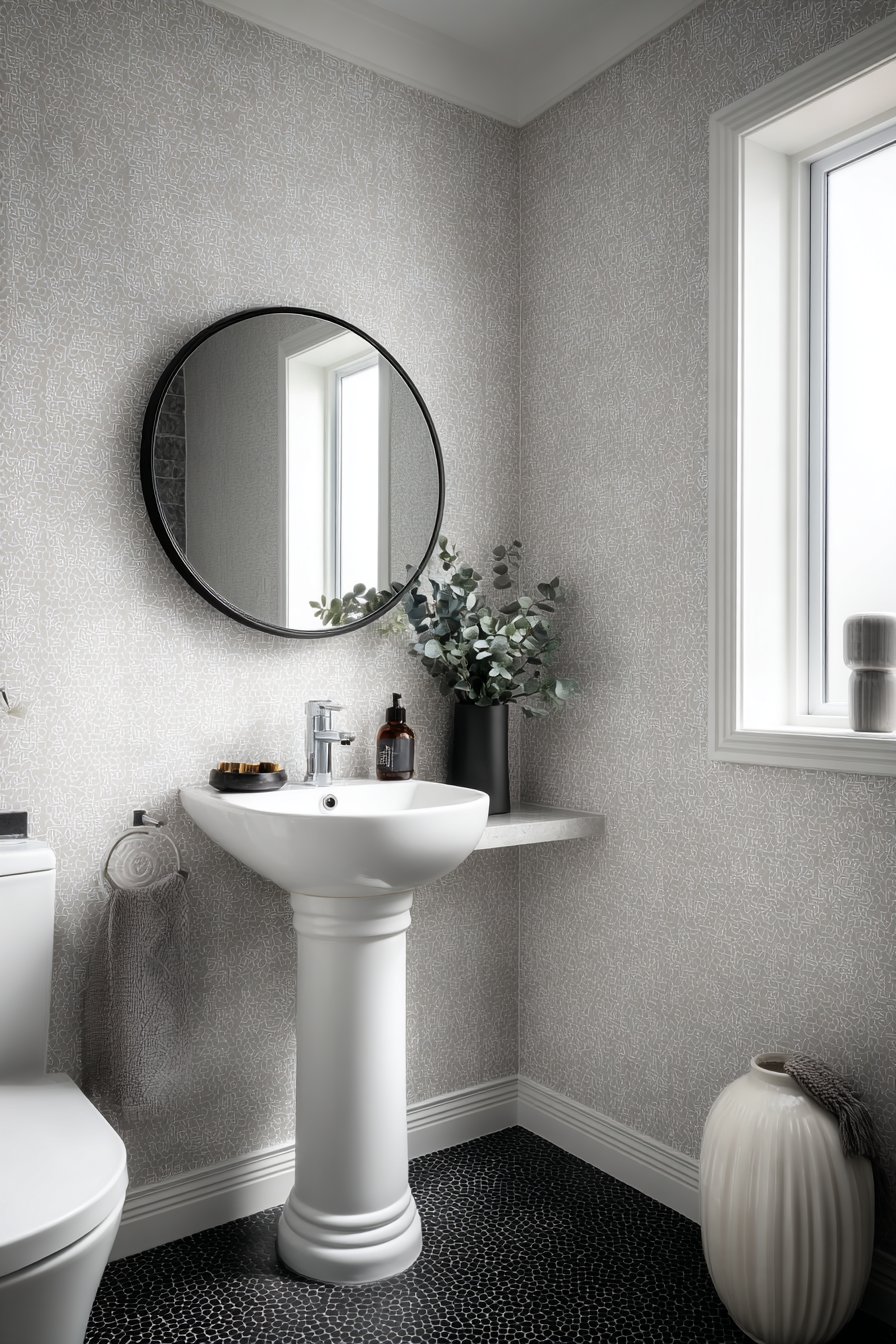
The elongated vanity provides generous counter space between and around the two sinks, accommodating the reality that family members often need simultaneous access during busy morning routines. The white lacquer finish brings high-gloss reflective quality that bounces light around the space while being easy to wipe clean—practical considerations matter in family bathrooms where toothpaste splatters and water spots are daily occurrences. The undermount sinks eliminate the rim that top-mount basins create, making the countertop easier to wipe down and maintaining the seamless minimal aesthetic.
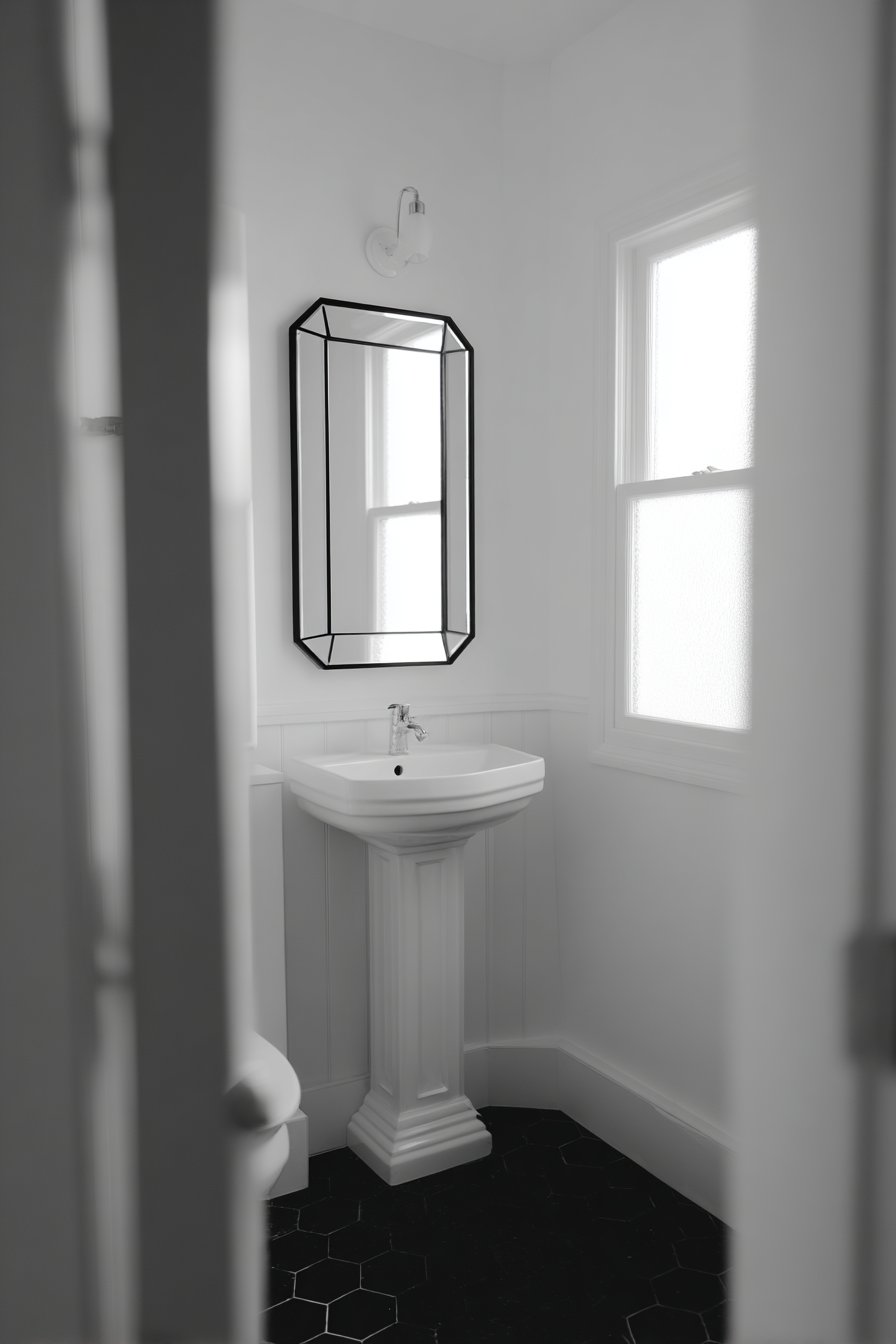
The decision to use two separate frameless mirrors rather than one continuous mirror provides subtle definition of each person’s space while avoiding the expense and installation challenges of large mirror installations. The recessed ceiling lighting eliminates protruding fixtures that could collect dust or create shadows, instead providing even overhead illumination that’s particularly useful for tasks like applying makeup or shaving. This minimal bathroom idea proves that family-friendly design and minimalist aesthetics aren’t mutually exclusive.
Key Design Tips:
- Provide generous counter space between double sinks for family use
- Choose high-gloss lacquer finishes for easy cleaning in family bathrooms
- Use large format tiles to minimize grout lines and simplify maintenance
- Install separate mirrors to define individual space at double vanities
- Implement even recessed lighting for shadow-free task illumination
24. Window-Side Soaking: Meditative Retreat
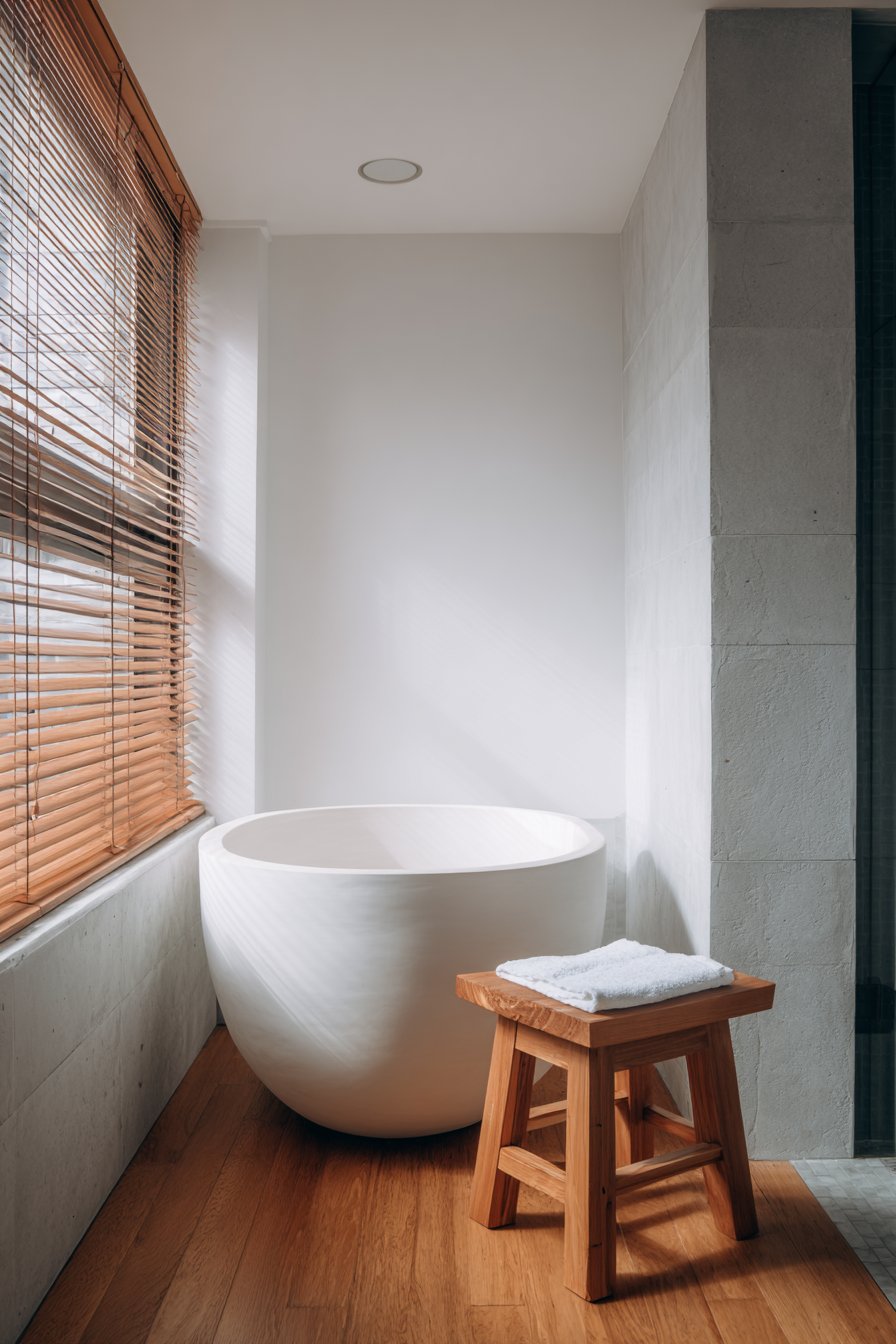
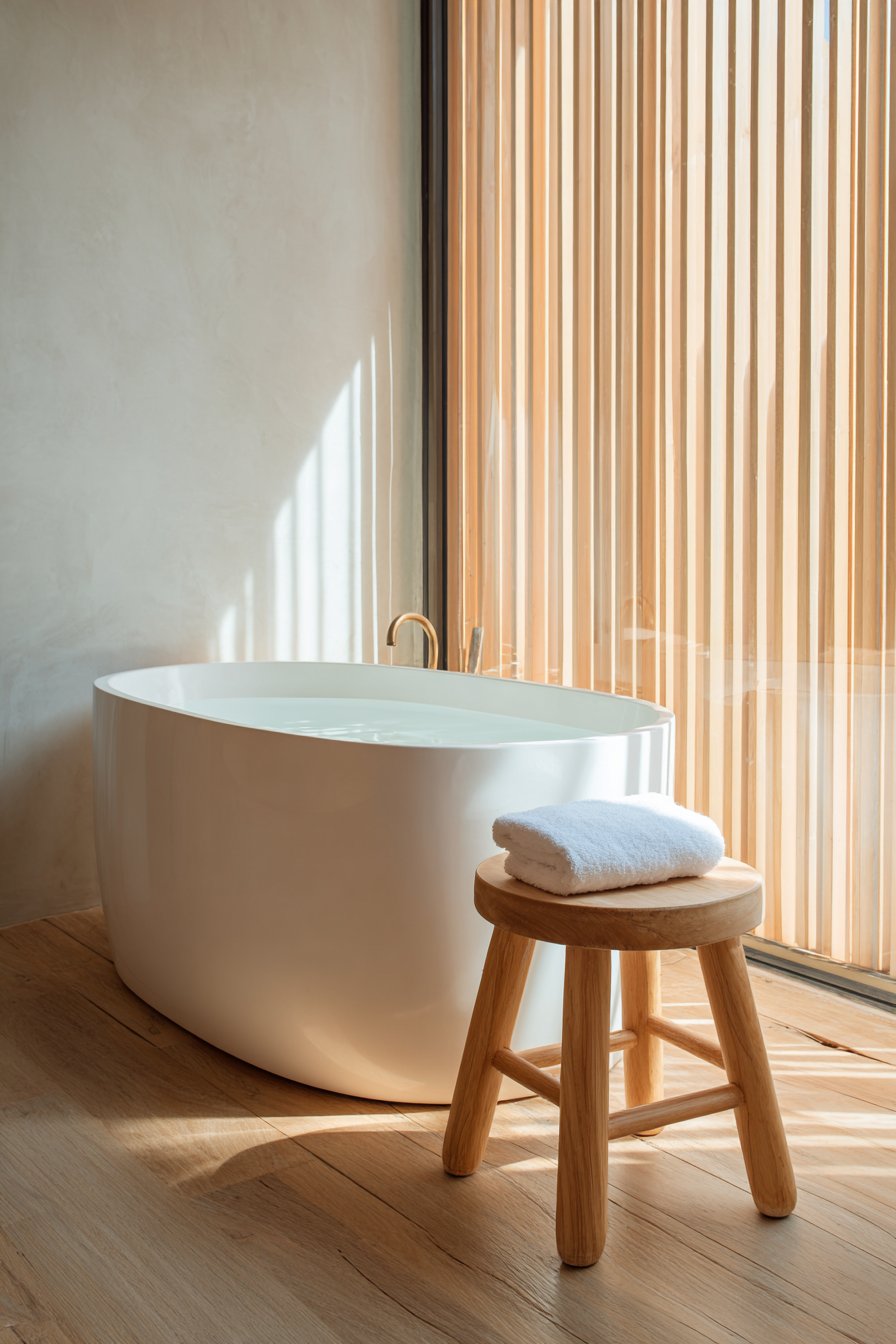
A Japanese soaking tub in white ceramic positioned beside a full-height window with wooden venetian blinds creates a meditative retreat within this minimal bathroom idea. Smooth white plaster walls meet natural oak flooring, the material transition occurring at the tub’s edge to define the bathing zone while maintaining minimal visual complexity. One simple wooden stool holds a white towel, its sparse styling aligned with Japanese aesthetic principles that value empty space as much as filled space. Soft natural daylight creates tranquil ambiance, filtered and controlled by the adjustable wooden blinds that provide privacy options while maintaining connection to natural light.
The Japanese soaking tub—deeper and more upright than Western bathtubs—encourages a different bathing posture and experience. Rather than reclining fully submerged, the bather sits upright with water covering the shoulders, a position that facilitates meditation and contemplation. The white ceramic material feels clean and pure, its smooth surface contrasting with the textured oak flooring underfoot. The tub’s placement beside the window creates connection to the outside world while maintaining the intimate sanctuary quality essential to successful bathroom design.
The wooden venetian blinds introduce natural material and provide functional light control throughout the day. When fully open, they maximize natural light and potentially provide views to nature or sky. When closed, they create horizontal shadow patterns that add visual interest while maintaining privacy. The natural oak flooring brings warmth underfoot and creates material dialogue with the wooden blinds, establishing a thread of natural elements that prevents the predominantly white space from feeling cold or sterile.
Key Design Tips:
- Choose Japanese soaking tubs for meditation-focused bathing experiences
- Position tubs near windows for connection to natural light and views
- Use wooden venetian blinds for adjustable privacy and light control
- Introduce natural wood flooring to warm white-dominated spaces
- Keep accessories minimal and functional in zen-inspired bathrooms
25. Terrazzo Sophistication: Restrained Elegance
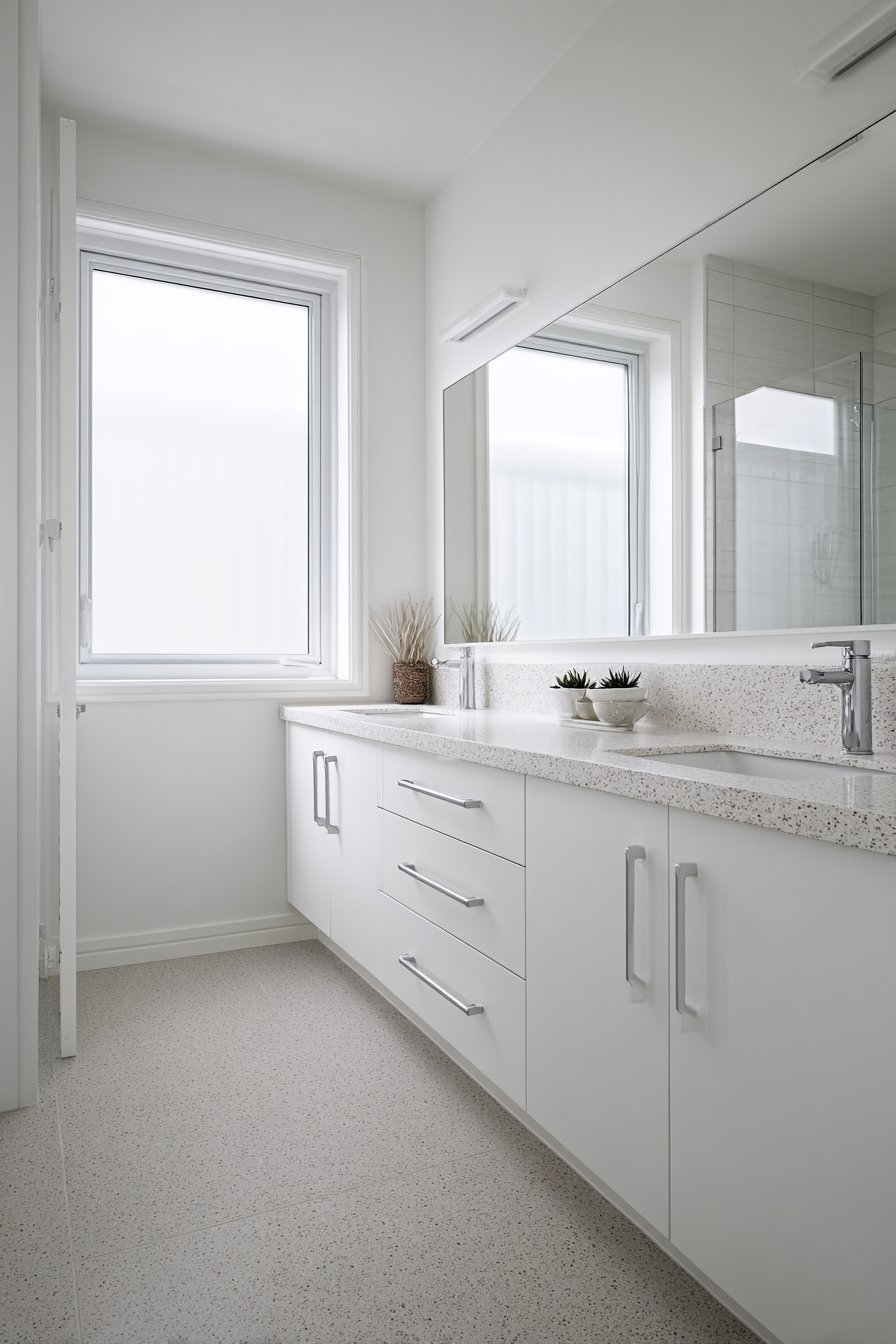
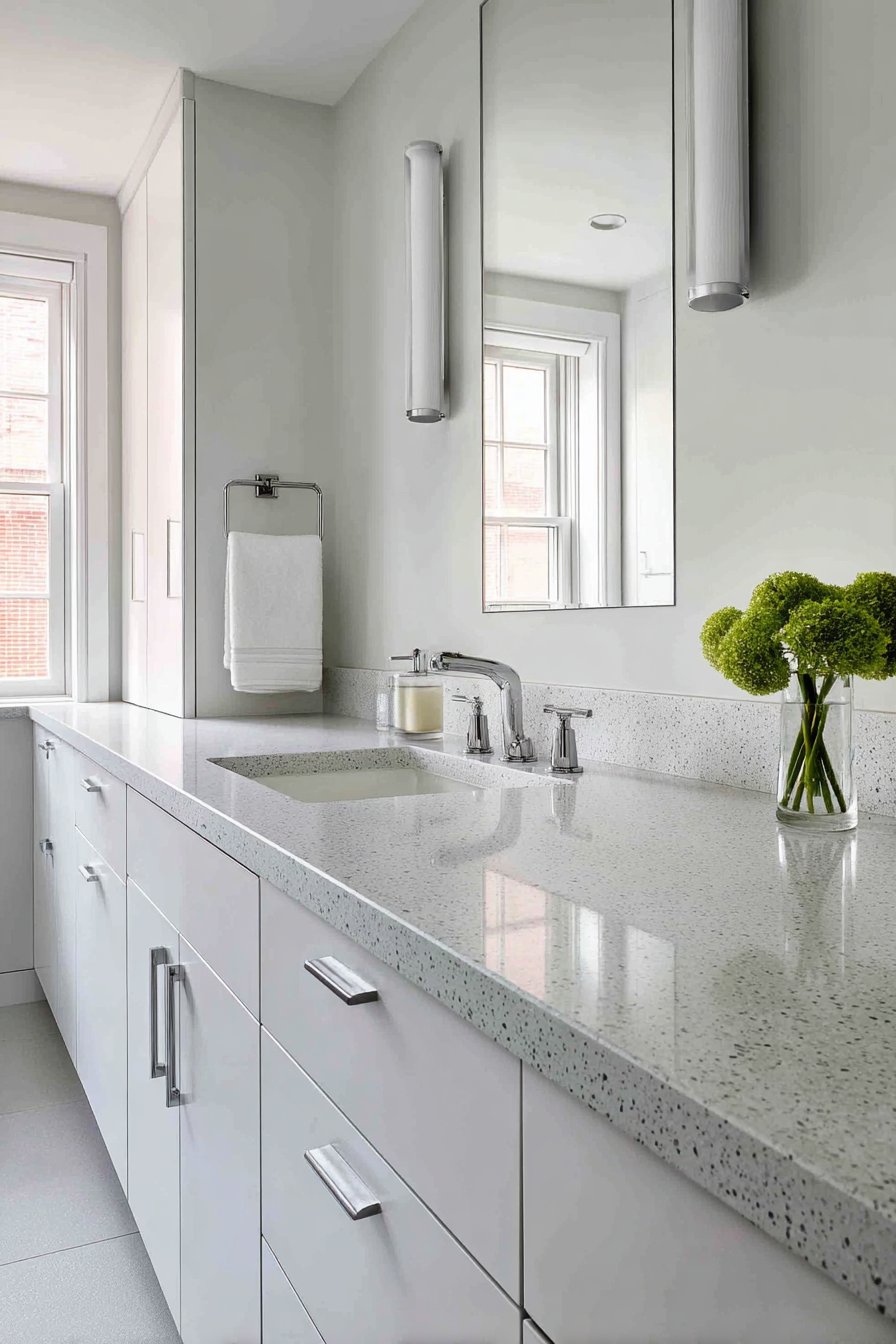
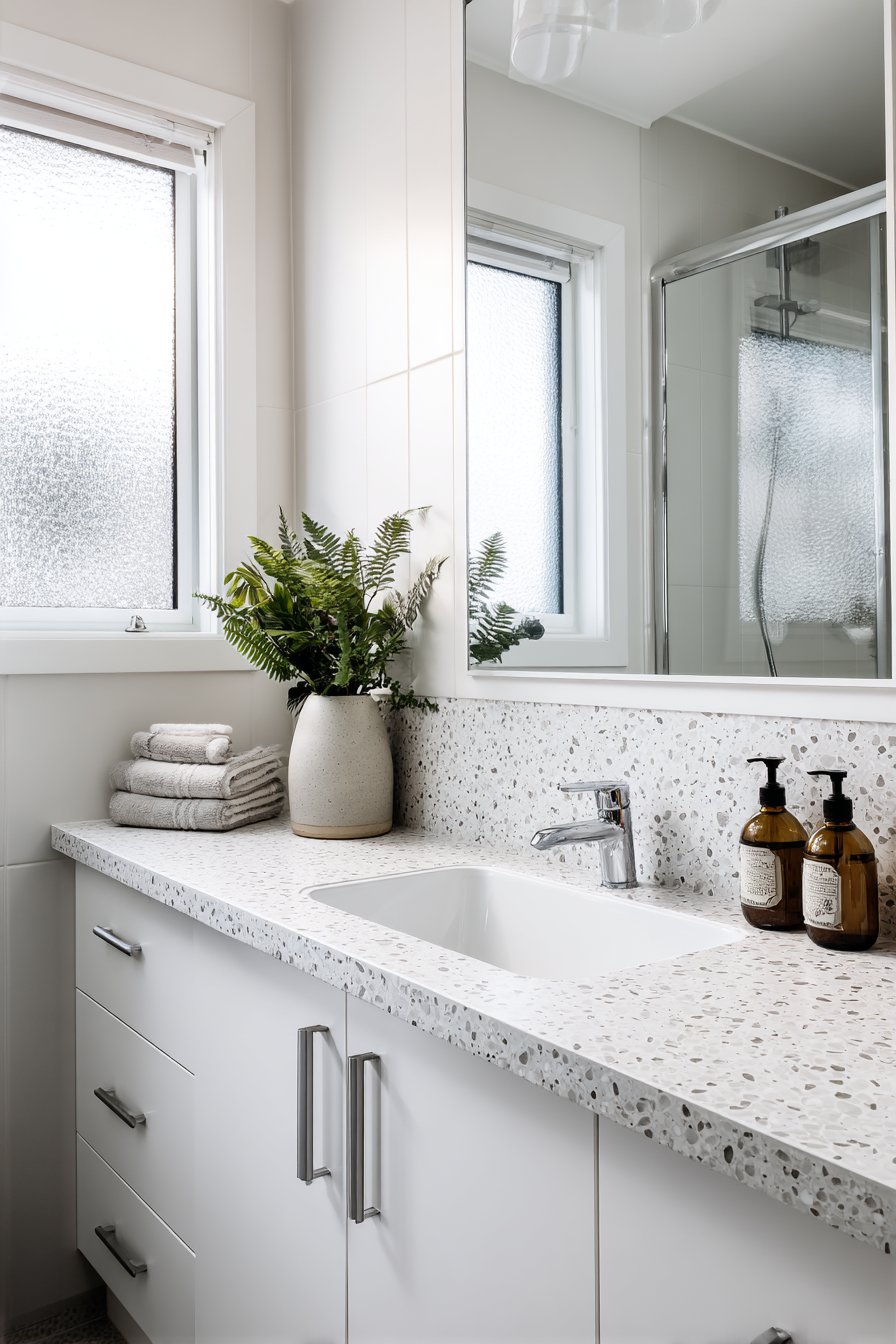
A minimal bathroom featuring a terrazzo vanity countertop in soft grey and white tones demonstrates how this traditional material remains relevant in contemporary design. White cabinetry with simple recessed handles maintains minimal profile, the cabinet fronts uninterrupted by protruding hardware. Chrome fixtures add refined detail through their simple forms and reflective surfaces without introducing visual weight. White walls and light grey floor tiles create a cohesive backdrop that allows the terrazzo’s subtle beauty to become the focal point. Natural light from a frosted glass window provides privacy while admitting illumination, its diffused quality creating soft, flattering lighting throughout the space.
Terrazzo brings sophisticated pattern through its composition of marble, quartz, granite, or glass chips suspended in a cement or resin base. Unlike applied patterns or printed designs, terrazzo’s pattern is integral to the material itself—it goes through the entire thickness rather than existing only on the surface. This means the countertop will never show wear at edges or high-use areas, a practical consideration that aligns with minimalist values of durability and longevity. The soft grey and white palette keeps the pattern subtle, providing visual interest without overwhelming the minimal aesthetic.
The recessed cabinet handles represent thoughtful detail work—they provide necessary grip for opening doors and drawers while maintaining the smooth cabinet fronts that define minimal cabinetry. Unlike protruding pulls or knobs, recessed handles sit flush with the surface, allowing hands to glide across countertops without catching on hardware. The chrome fixtures’ reflective quality adds sparkle and light reflection without the color commitment of brass or black, making chrome ideal for bathrooms where the material palette needs to remain neutral.
Key Design Tips:
- Choose terrazzo with subtle color palette for restrained pattern
- Use recessed handles to maintain smooth cabinet surfaces
- Select chrome fixtures for neutral metallic that suits any palette
- Install frosted glass windows for natural light with privacy
- Allow terrazzo’s inherent beauty to serve as primary pattern element
Why These Minimal Bathroom Ideas Represent the Best in Contemporary Design
The 25 minimal bathroom ideas presented in this comprehensive guide showcase the incredible versatility and enduring appeal of minimalist design principles. These designs represent the best in contemporary bathroom design because they solve real-world challenges through thoughtful subtraction rather than decorative addition. Each space demonstrates how restraint can create beauty, how simplicity can deliver sophistication, and how less truly can be more when every element is carefully considered and purposefully placed.
Minimal bathroom design excels at creating serene environments in our increasingly chaotic world. By eliminating visual clutter, reducing color complexity, and focusing on essential elements, these bathrooms become sanctuaries where we can begin and end each day with clarity and calm. The psychological benefits of minimalist spaces are well-documented—reduced visual stimuli can lower stress levels, improve focus, and create the mental space necessary for relaxation and self-care. These minimal bathroom ideas provide more than aesthetic pleasure; they contribute to overall wellbeing through their commitment to simplicity and order.
From a practical standpoint, minimal bathrooms offer significant advantages over their more ornate counterparts. Fewer decorative elements mean less dusting and cleaning. Seamless surfaces and integrated sinks eliminate the crevices where soap scum and bacteria accumulate. Large format tiles reduce grout lines that require scrubbing. Floating vanities make floor cleaning easier. Wall-mounted fixtures simplify maintenance. These minimal bathroom ideas prove that beautiful design and practical function aren’t competing priorities—they’re complementary goals that successful minimalism achieves simultaneously.
The material choices showcased throughout these designs demonstrate minimalism’s commitment to authenticity and quality. Natural stone, real wood, poured concrete, solid surface materials, and quality ceramics take center stage when decorative distraction is eliminated. These minimal bathroom ideas celebrate the inherent beauty of materials rather than covering or disguising them. The wood grain in a floating teak vanity, the veining in marble tiles, the subtle variations in slate, the dimensional quality of beveled subway tiles—these natural characteristics become the decoration, proving that nature provides better ornament than manufactured embellishment ever could.
Color restraint defines many of these minimal bathroom ideas, with most designs embracing white, grey, black, and natural wood tones. This limited palette creates visual calm while providing a timeless quality that won’t feel dated as color trends evolve. Monochromatic schemes force designers to create interest through texture, material variation, and shadow play rather than relying on color contrast. The result is more sophisticated, nuanced spaces that reveal their complexity gradually rather than announcing it immediately. These neutral palettes also provide maximum flexibility for future updates—changing towels, adding plants, or introducing accessories can refresh the space without requiring renovation.
The emphasis on natural light throughout these designs reflects minimalism’s connection to nature and honesty. Large windows, skylights, clerestory openings, and frosted glass bring daylight deep into bathrooms, reducing dependence on artificial lighting while creating spaces that change throughout the day. Morning light, afternoon shadows, evening glow—these natural variations keep minimal bathrooms from feeling static or sterile. The interplay of light and shadow across clean surfaces creates ever-changing compositions that engage the eye and mind without requiring decorative objects.
Storage solutions in these minimal bathroom ideas demonstrate that minimalism isn’t about living without possessions—it’s about being intentional about what we keep and where we keep it. Recessed niches, integrated cabinets, floating vanities with hidden drawers, and built-in shelving provide ample storage while maintaining clean surfaces. The key is concealment—everyday items are stored out of sight, leaving countertops and open shelving for only the most essential or beautiful objects. This discipline forces editing, encouraging us to keep only what we genuinely use and value.
The incorporation of spa-like elements throughout many of these designs—soaking tubs, rainfall showers, steam-ready enclosures, built-in benches—demonstrates how minimal bathroom ideas can deliver luxury through experience rather than embellishment. True luxury lies in generous proportions, quality materials, excellent lighting, and thoughtful functionality, not in gilded fixtures or excessive decoration. These bathrooms feel expensive because they prioritize the quality of the bathing experience itself, proving that minimalism and luxury aren’t opposing concepts but complementary approaches to design.
Technology integration in minimal bathrooms happens invisibly—recessed lighting, concealed speakers, heated floors, smart mirrors, and automated fixtures provide modern convenience without disrupting the clean aesthetic. This seamless technology integration represents contemporary minimalism at its best, where advanced function exists without visible complexity. The bathroom looks simple and timeless, yet provides every modern comfort and convenience.
Universal design principles appear throughout these minimal bathroom ideas, particularly in curbless showers, wall-mounted toilets, and carefully considered fixture heights. Minimalism and accessibility align naturally because both prioritize function, eliminate obstacles, and create fluid movement through space. Bathrooms designed with universal principles don’t announce their accessibility—they simply work well for people of all ages and abilities, demonstrating thoughtful design rather than specialized accommodation.
The scalability of these designs represents another significant advantage. Whether you’re working with a tiny powder room or a spacious master suite, these minimal bathroom ideas provide relevant strategies. Space constraints actually strengthen minimalist design by forcing discipline and prioritization—you simply cannot include everything, so you must choose only what matters most. Conversely, generous spaces benefit from minimal treatment by avoiding the cluttered, overstyled appearance that can result when large bathrooms are “filled up” unnecessarily.
Sustainability aligns naturally with minimalist principles showcased throughout these designs. Using fewer materials, choosing durable finishes that won’t require replacement, prioritizing timeless design over trendy looks, and selecting quality over quantity all contribute to more sustainable building practices. Many of these minimal bathroom ideas feature materials like concrete, terrazzo, and natural stone that improve with age rather than deteriorating, reducing the environmental impact of renovation cycles. The simplicity of minimal design also means less construction waste during installation and less landfill waste when eventually replaced.
The emotional resonance of these minimal bathroom ideas shouldn’t be underestimated. Clean, ordered spaces provide psychological benefits that extend beyond mere aesthetics. Starting your day in a calm, beautiful bathroom sets a positive tone. Ending your day with a relaxing bath in a serene environment supports better sleep and stress reduction. The bathroom becomes more than a functional necessity—it becomes a tool for wellbeing, a space that actively contributes to mental and physical health.
These 25 designs also demonstrate minimalism’s flexibility across different stylistic influences. Japanese zen principles, Scandinavian hygge, industrial chic, contemporary luxury, traditional simplicity—all find expression within the minimalist framework. This versatility proves that minimalism isn’t a rigid stylistic mandate but rather a design philosophy that can accommodate personal preferences while maintaining core principles of simplicity, functionality, and intentionality.
Conclusion
The minimal bathroom ideas explored throughout this comprehensive guide demonstrate that minimalist design represents far more than a passing trend or stylistic preference—it’s a thoughtful approach to creating spaces that serve both practical and emotional needs through simplicity, quality, and intentionality. From the serene symmetry of double vanities to the meditative quality of Japanese soaking tubs, from the industrial sophistication of poured concrete to the timeless appeal of beveled subway tiles, these designs prove that minimal bathrooms can be as diverse and personal as any other design approach while maintaining the clarity and calm that defines successful minimalism.
The beauty of minimal bathroom design lies in its accessibility and adaptability. You don’t need a massive budget or unlimited square footage to embrace these principles. Even the smallest powder room can benefit from thoughtful editing, quality materials, and restraint in decorative elements. The key is understanding that minimalism isn’t about deprivation—it’s about making conscious choices, keeping what serves you, and creating space for what matters. Whether you’re planning a complete renovation or simply seeking to refresh your existing bathroom, these minimal bathroom ideas provide a roadmap for creating spaces that feel both beautiful and purposeful.
As you consider implementing these concepts in your own home, remember that minimalism is ultimately about finding the right balance for your life. Start by editing what you have—remove items that don’t serve a clear purpose, consolidate toiletries into uniform containers, clear countertops of everything except absolute essentials. Then consider strategic improvements: upgrading to a floating vanity for more visual space, replacing busy tile with large format options, introducing natural wood elements for warmth, or improving lighting to create the right ambiance. Even small changes guided by minimalist principles can significantly impact how your bathroom feels and functions.
The enduring appeal of these minimal bathroom ideas lies in their ability to create lasting value. While trend-driven designs may feel dated within a few years, the timeless quality of minimalist bathrooms ensures they’ll remain beautiful and relevant for decades. By investing in quality materials, focusing on excellent craftsmanship, and avoiding unnecessary ornamentation, you create spaces that improve with age rather than deteriorating. This long-term perspective makes minimalist design not only aesthetically wise but also financially sound and environmentally responsible.
Ultimately, your bathroom should serve as a daily reminder that beauty doesn’t require excess, that simplicity can deliver sophistication, and that thoughtfully designed spaces contribute to overall quality of life. Let these minimal bathroom ideas inspire you to create your own version of minimalist beauty—a space that reflects your values, serves your needs, and provides the calm sanctuary you deserve. Whether you embrace dramatic monochromatic contrast, natural material authenticity, spa-like serenity, or efficient functionality, the principles of minimalism offer a path toward creating bathrooms that truly enhance daily life through the power of thoughtful simplicity.
