
In the world of interior design, few furniture pieces command attention quite like a maroon sofa. This rich, sophisticated hue bridges the gap between bold statement-making and timeless elegance, offering homeowners a versatile centerpiece that can anchor virtually any living room style. Whether you’re drawn to the deep burgundy tones that evoke classic luxury or the warmer wine shades that bring cozy comfort, a maroon sofa presents endless possibilities for creating a space that reflects your unique personality and lifestyle. The beauty of incorporating this jewel-toned furniture piece lies in its remarkable ability to work harmoniously with countless design aesthetics—from contemporary minimalism to traditional opulence, from bohemian eclecticism to industrial edge.
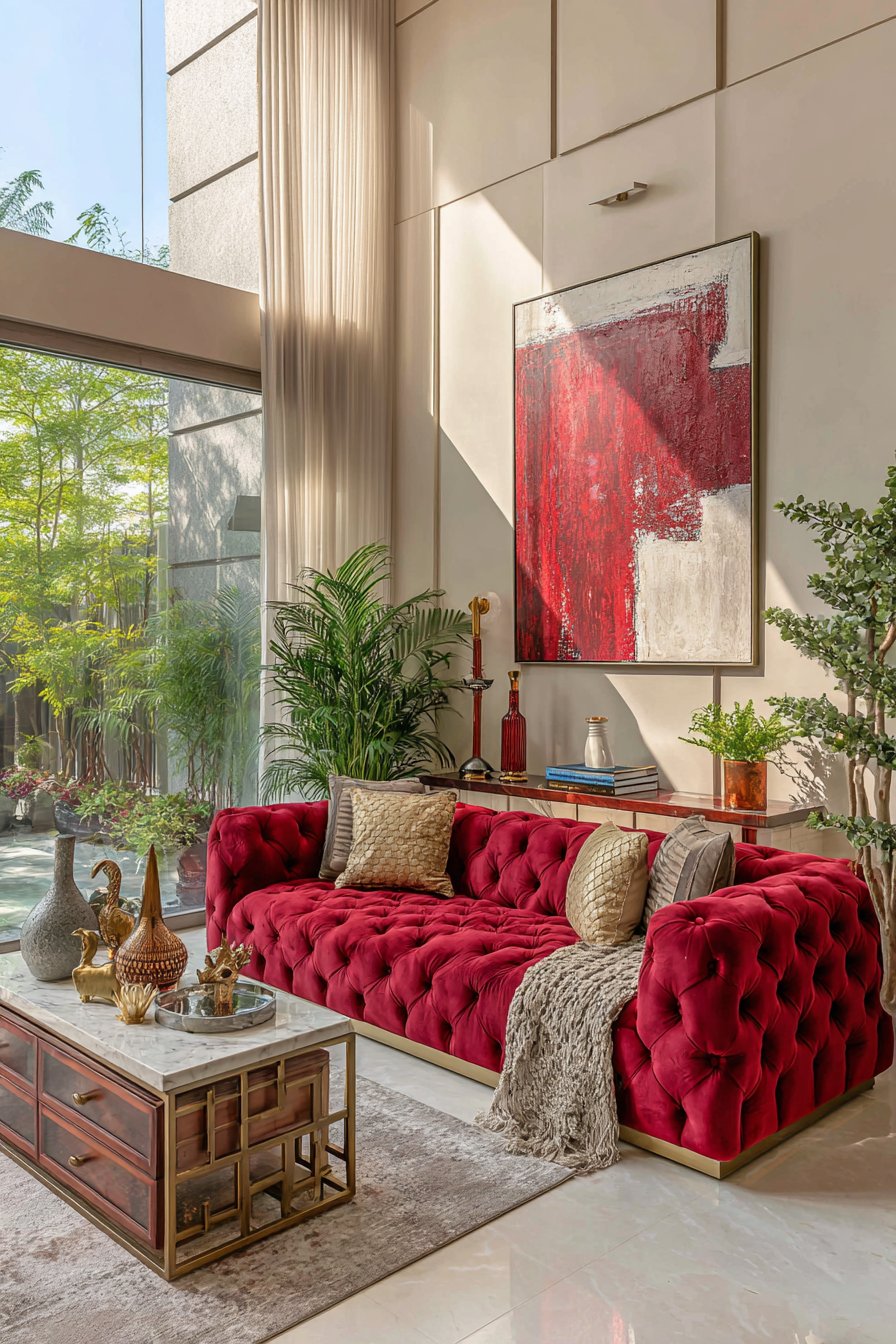
As we navigate through an era where personalized living spaces have become more important than ever, the maroon sofa emerges as a design solution that balances practicality with visual impact. Unlike neutral sofas that blend into the background, a maroon piece becomes the focal point around which your entire room design can revolve. This article explores twenty-one distinct approaches to styling maroon sofa living rooms, each offering unique insights into how this bold color choice can be integrated into various design schemes. From light-filled Scandinavian spaces to moody industrial lofts, from compact apartment layouts to expansive open-concept homes, you’ll discover how versatile and adaptable maroon upholstery can be.
Throughout this comprehensive guide, we’ll delve into the nuances of pairing maroon with complementary colors, selecting appropriate textures and materials, optimizing lighting to enhance the richness of the hue, and creating cohesive design narratives that feel both intentional and inviting. Whether you’re starting from scratch or looking to refresh your existing living room, these carefully curated ideas will inspire you to embrace the dramatic beauty of maroon while creating a space that feels authentically yours.
1. Contemporary Velvet Elegance with Natural Light
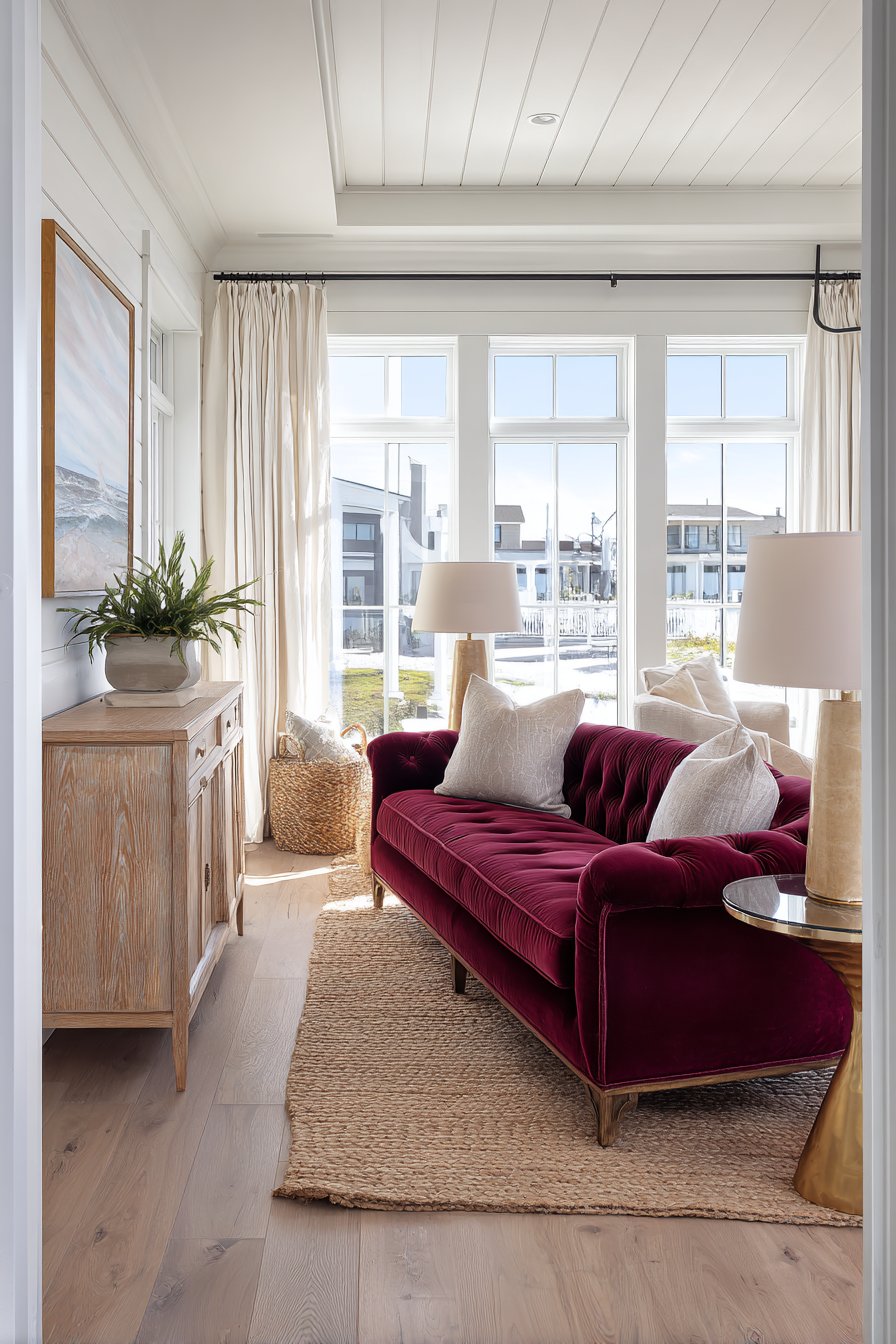
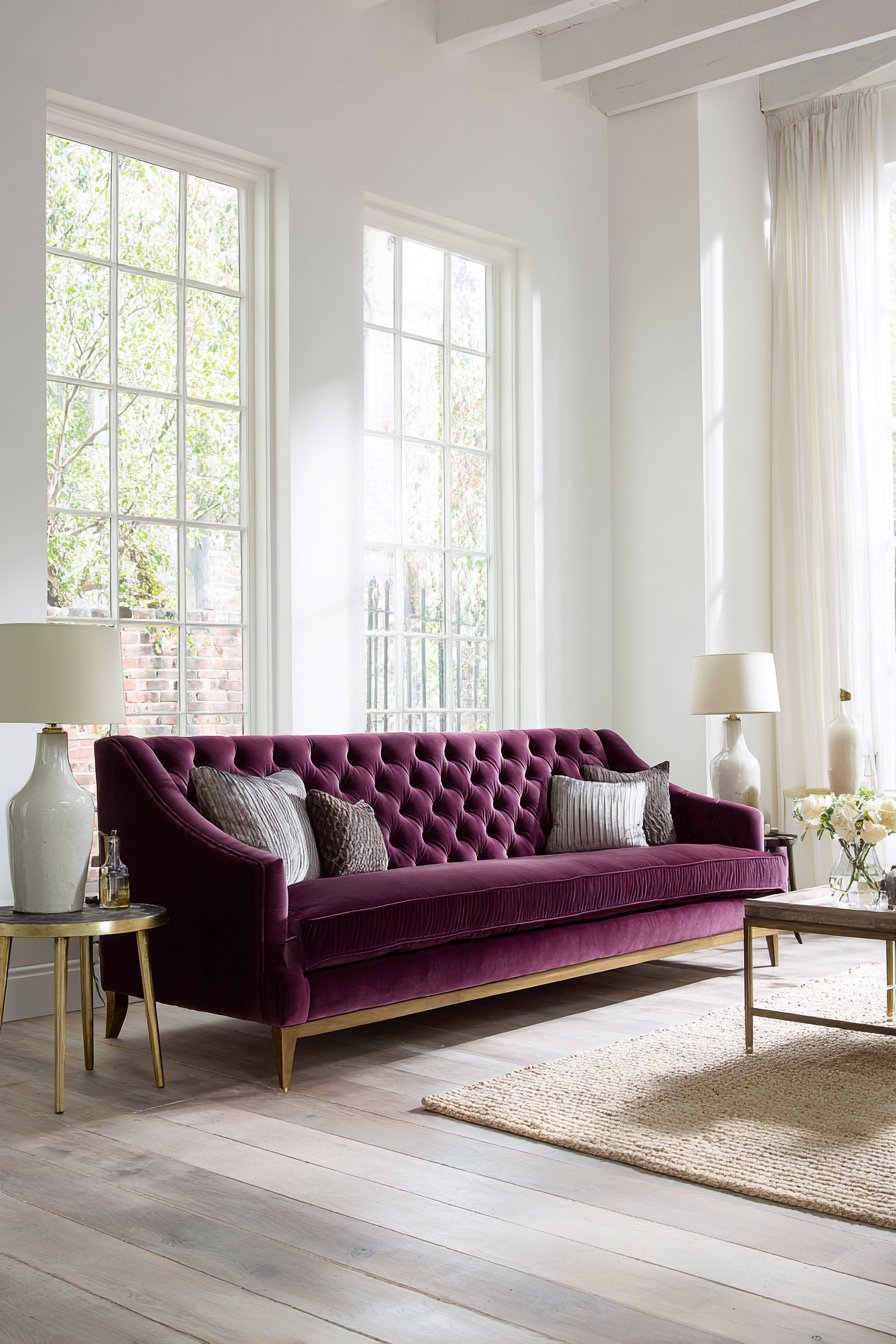
The marriage of contemporary design principles with the luxurious texture of velvet creates a living room that feels both current and indulgent. Picture a channel-tufted maroon velvet sofa positioned strategically against crisp white shiplap walls, where the contrast between the bold upholstery and the clean architectural backdrop creates instant visual drama. The contemporary aesthetic shines through in the choice of minimal window treatments—simple white linen curtains that allow natural daylight to flood the space and illuminate the rich burgundy tones of the sofa, revealing subtle variations in the velvet’s pile and creating an ever-changing interplay of light and shadow throughout the day.
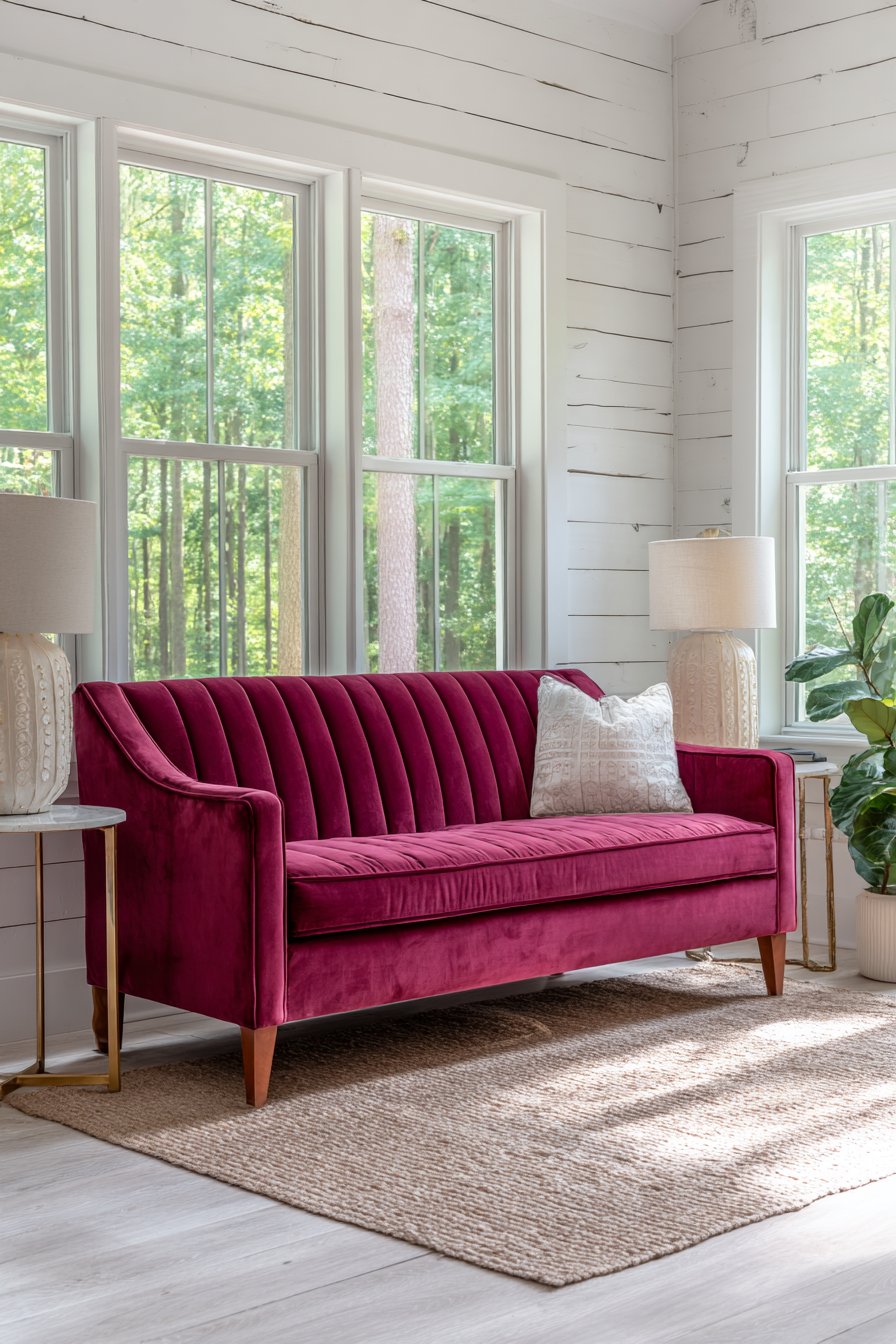
The supporting cast of furniture and accessories in this space maintains the contemporary feel while complementing the statement sofa. Brass accent tables with clean geometric lines flank the seating area, their warm metallic finish echoing the warmth in the maroon upholstery. Cream ceramic table lamps with simple drum shades provide task lighting without competing for attention, while a natural jute area rug grounds the space with organic texture and neutral tones. The light oak flooring contributes to the bright, airy atmosphere, reflecting natural light and keeping the space feeling open despite the boldness of the sofa color.
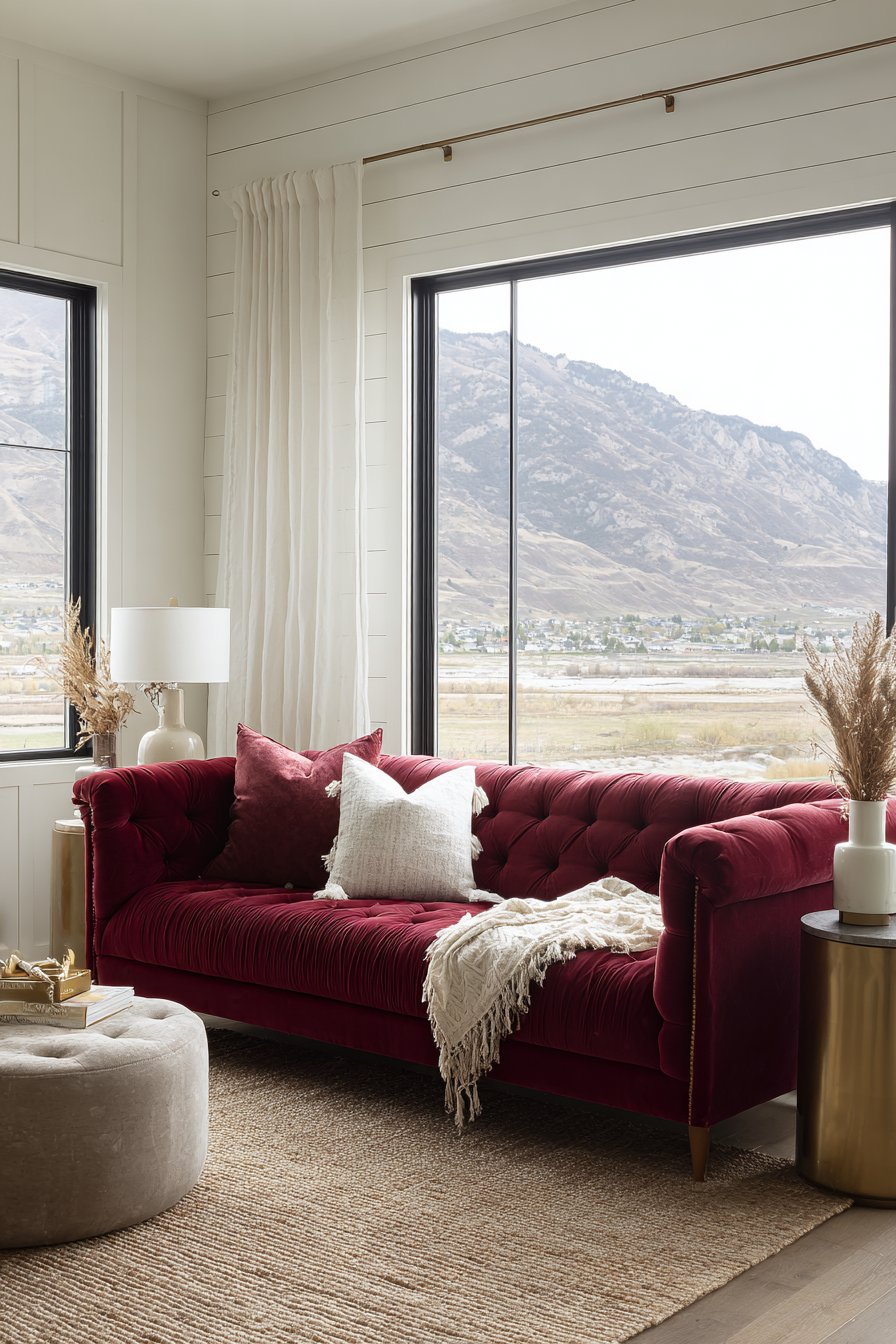
What makes this design particularly successful is the way natural lighting transforms the space throughout the day. Morning light brings out cooler undertones in the maroon fabric, while afternoon sun deepens the color to a more dramatic wine shade. The wide-angle perspective of properly planned room layouts ensures that the maroon sofa remains the focal point without overwhelming the space, demonstrating that bold color choices can work beautifully in contemporary settings when balanced with neutral surroundings and abundant natural light.
Key Design Tips:
- Choose channel tufting on velvet upholstery to add dimensional interest that catches and reflects light
- Position your maroon sofa near windows to maximize natural light exposure and showcase the fabric’s depth
- Balance bold color with neutral walls and flooring to prevent visual overwhelm
- Incorporate brass or gold metallic accents to warm up the space and complement maroon’s undertones
- Select lightweight, translucent window treatments that filter rather than block natural light
2. Mid-Century Modern Maroon Leather Statement
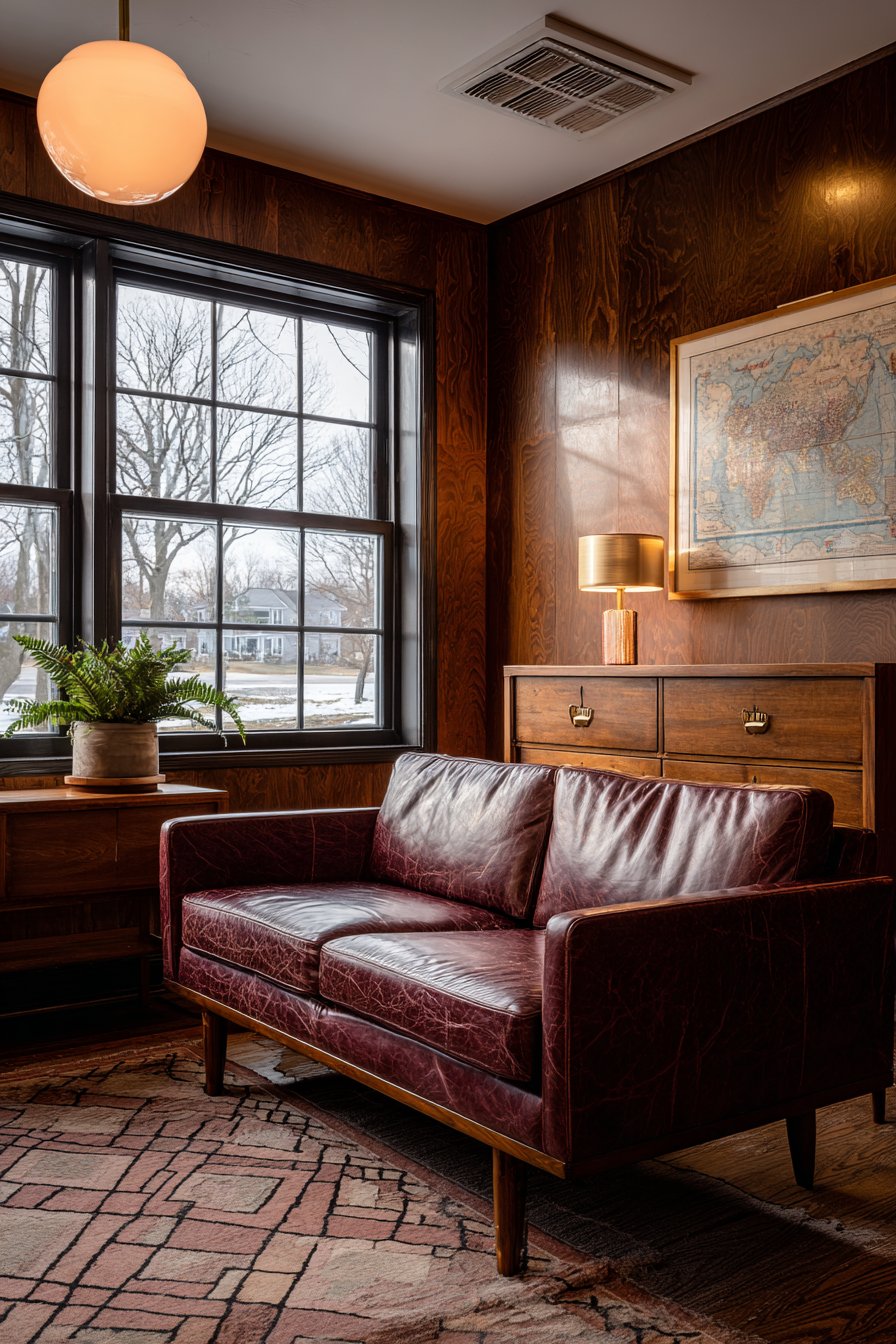
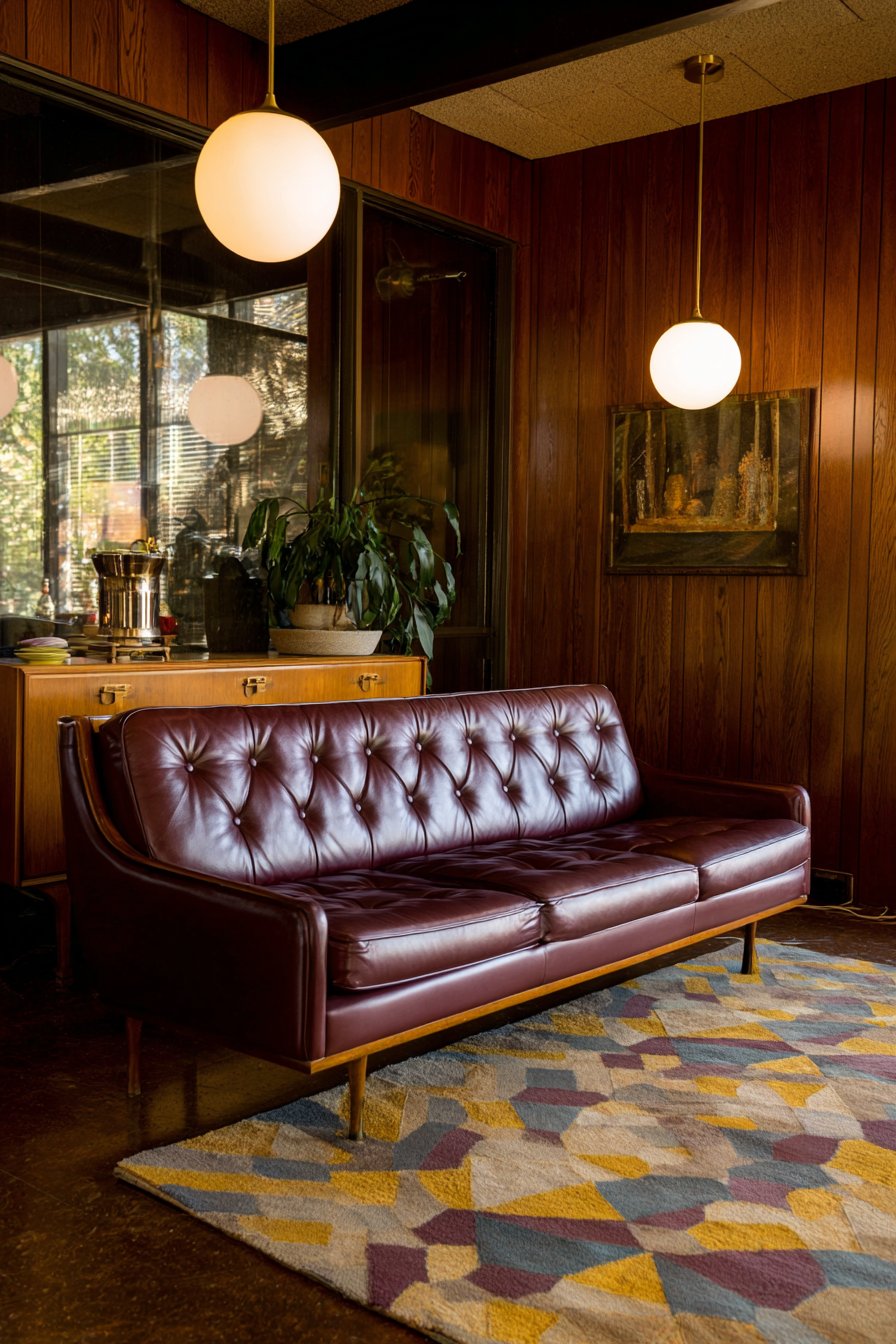
Transport yourself to the golden age of design with a mid-century modern living room anchored by a maroon leather sofa featuring the iconic tapered wooden legs that defined the era. This design celebrates the authenticity of 1950s and 60s aesthetics while feeling entirely relevant for contemporary living. The leather upholstery, with its natural grain visible across the surface, develops character over time, embodying the mid-century principle of honest materials that age gracefully. Against a backdrop of walnut wood paneling on one accent wall, the maroon sofa becomes part of a warm, wood-dominated palette that feels both nostalgic and sophisticated.
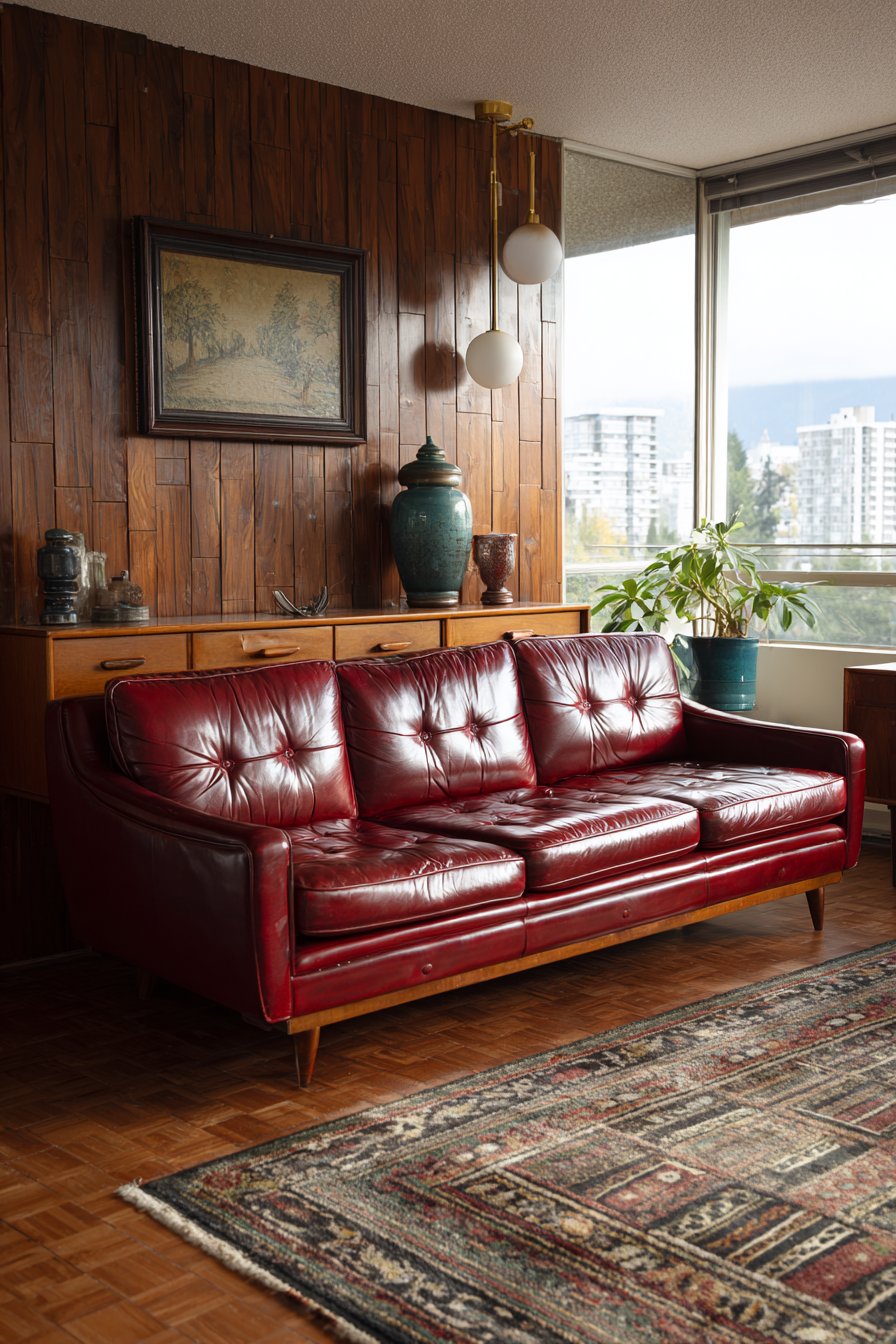
The supporting elements in this space pay homage to mid-century design masters. A teak credenza with vintage brass hardware provides storage while serving as a sculptural element in its own right, its horizontal lines echoing the low-profile silhouette of the leather sofa. The geometric patterned area rug incorporates complementary warm tones—burnt orange, mustard yellow, and cream—that were signature colors of the era and harmonize beautifully with the maroon upholstery. Globe pendant lights, reminiscent of atomic age design, hang at varying heights, creating visual interest while providing ambient illumination that’s both functional and decorative.
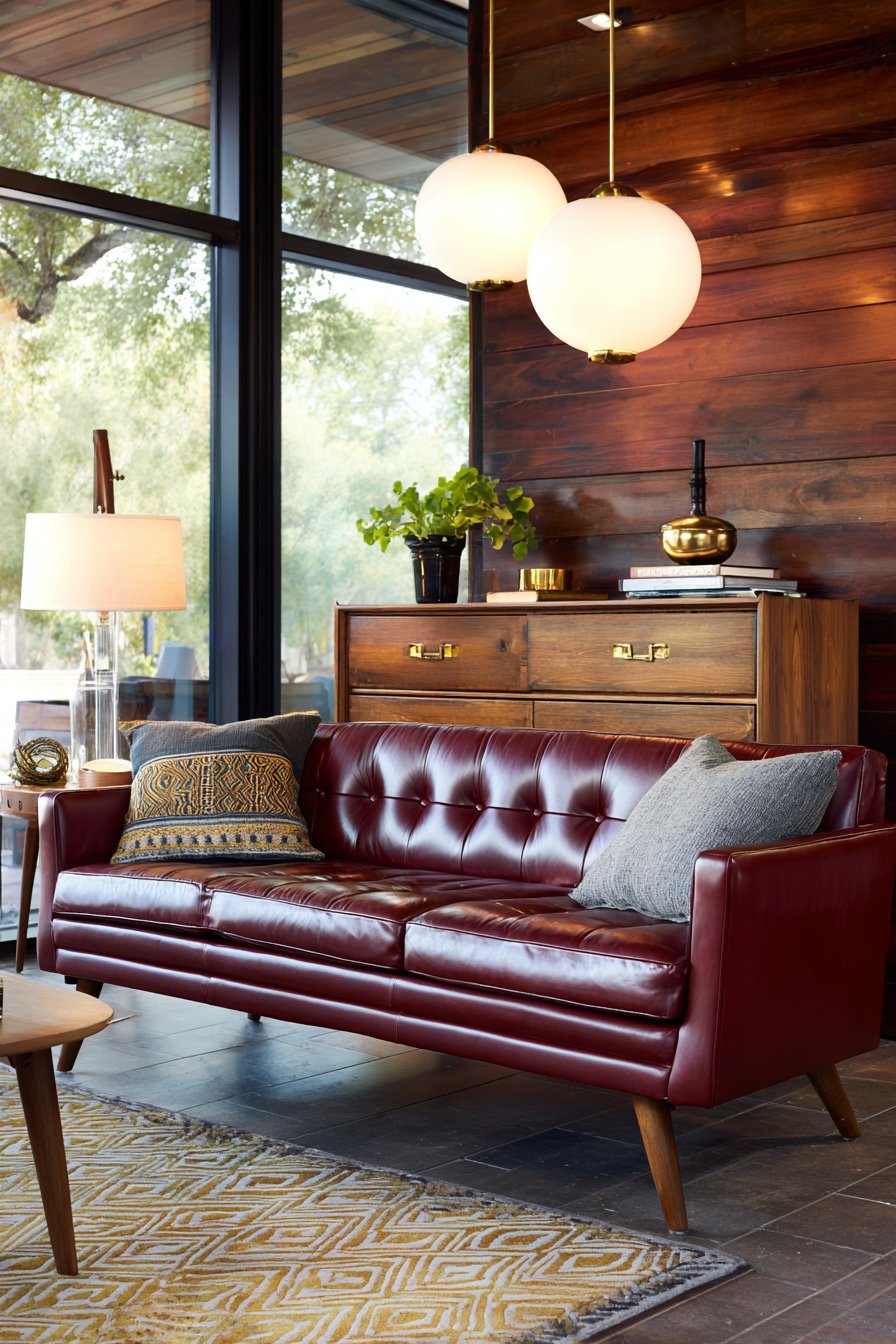
The magic of this mid-century approach lies in the balance between form and function, a core tenet of the movement. Every piece serves a purpose while contributing to the overall aesthetic. The large windows, often a feature of mid-century architecture, flood the space with natural light that highlights the leather’s natural texture and brings out the warmth in all the wooden elements. The walnut paneling adds depth and richness without making the space feel dark, demonstrating how wood tones and maroon can work together to create an enveloping, comfortable atmosphere that invites relaxation and conversation.
Key Design Tips:
- Select leather over fabric for authentic mid-century appeal and improved durability
- Incorporate wooden elements in walnut or teak to create the warm palette characteristic of the era
- Choose furniture with tapered legs and clean lines to maintain period authenticity
- Add geometric patterns through rugs, throw pillows, or artwork to introduce typical mid-century motifs
- Include statement lighting like globe or sputnik-style fixtures to capture the atomic age aesthetic
- Allow natural material variations and patina to develop for that collected-over-time look
3. Cozy Family Sectional with Practical Comfort
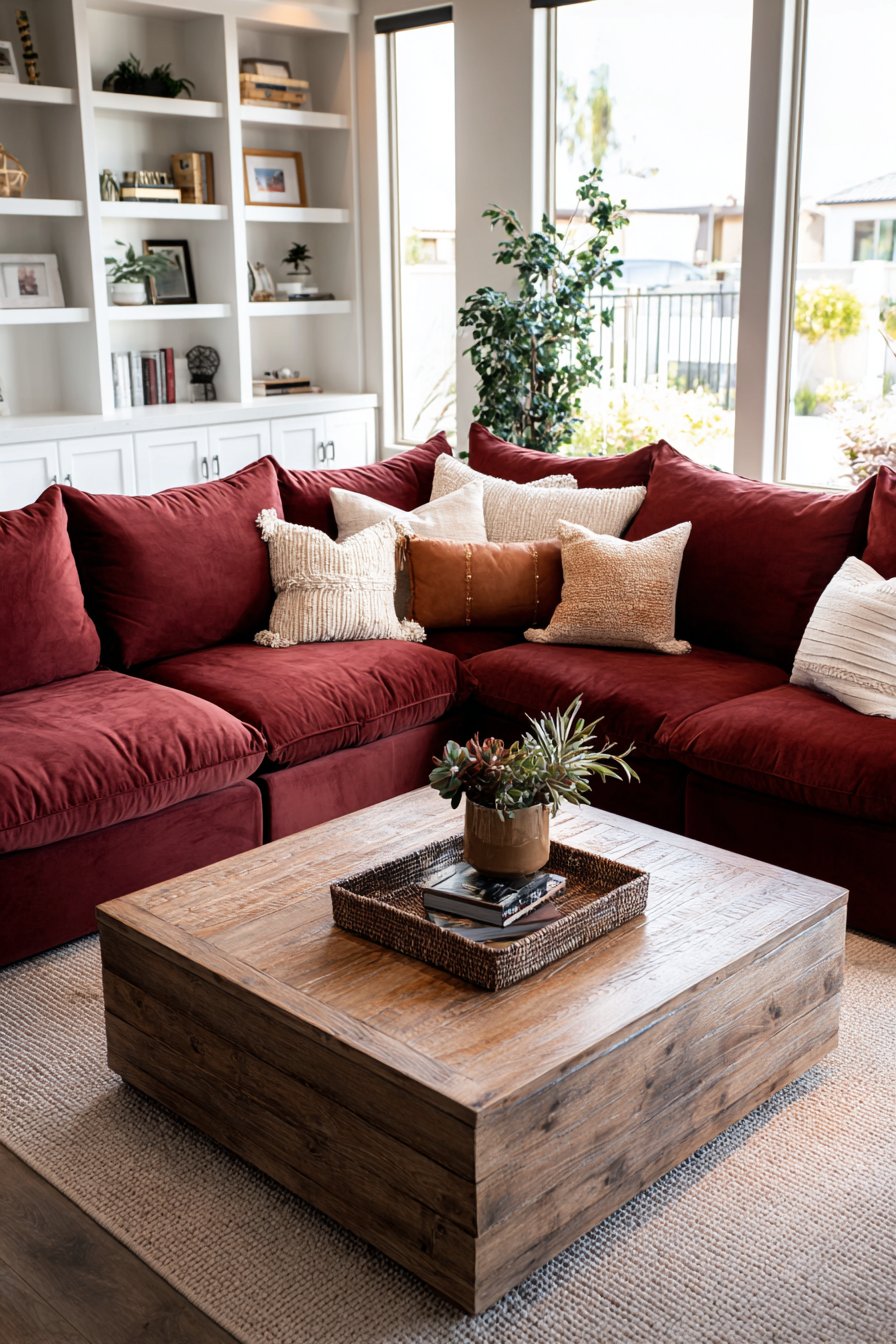
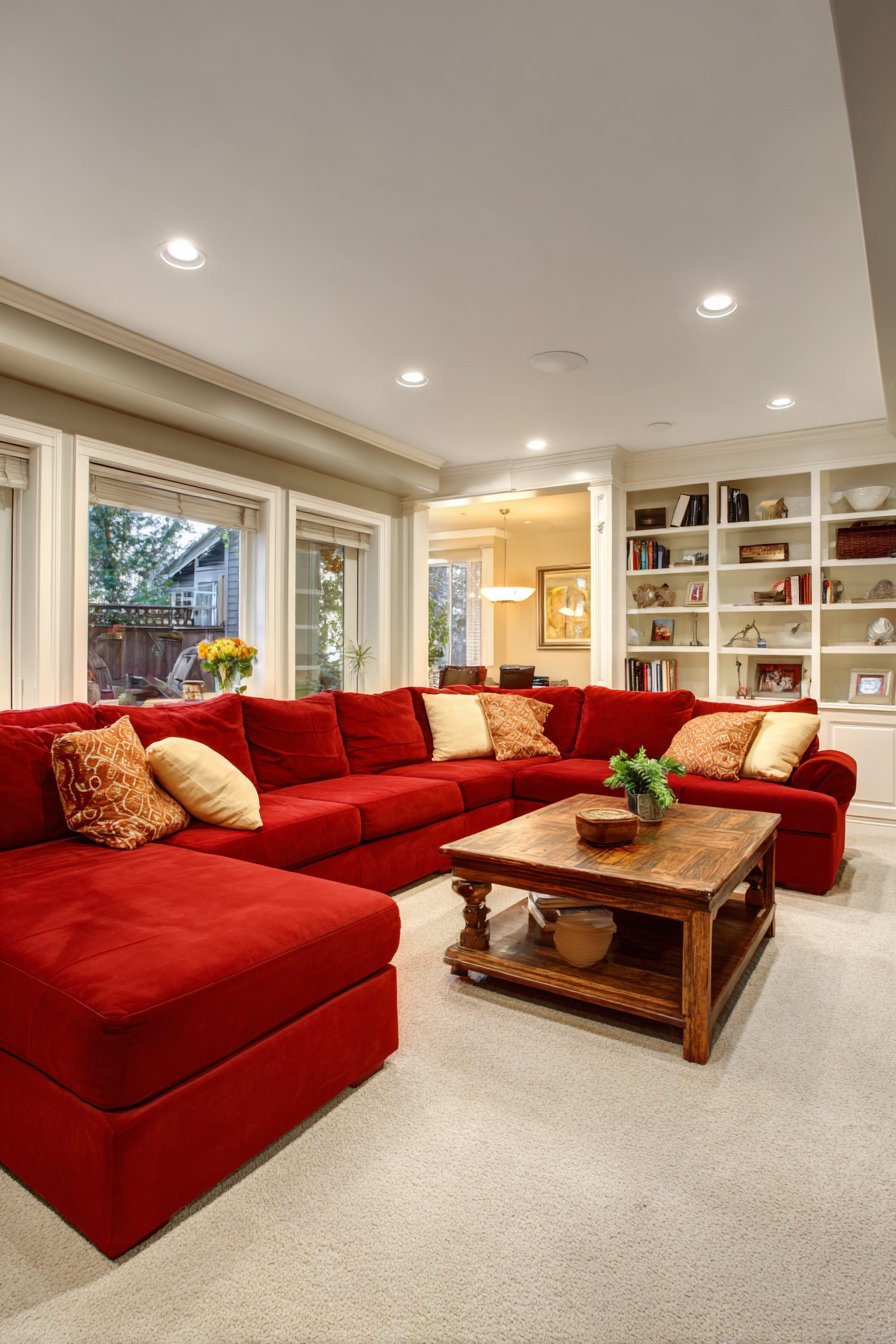
When family life demands both style and substance, a plush maroon sectional sofa configured in an L-shape becomes the heart of daily living. This design prioritizes comfort without sacrificing visual appeal, featuring deep cushions that invite hours of lounging, movie marathons, and family game nights. The sectional’s generous proportions accommodate multiple family members simultaneously, while coordinating throw pillows in burnt orange and cream patterns add visual interest and additional comfort. The strategic arrangement creates natural conversation zones while maximizing seating capacity—a crucial consideration for households that frequently entertain or simply value togetherness.
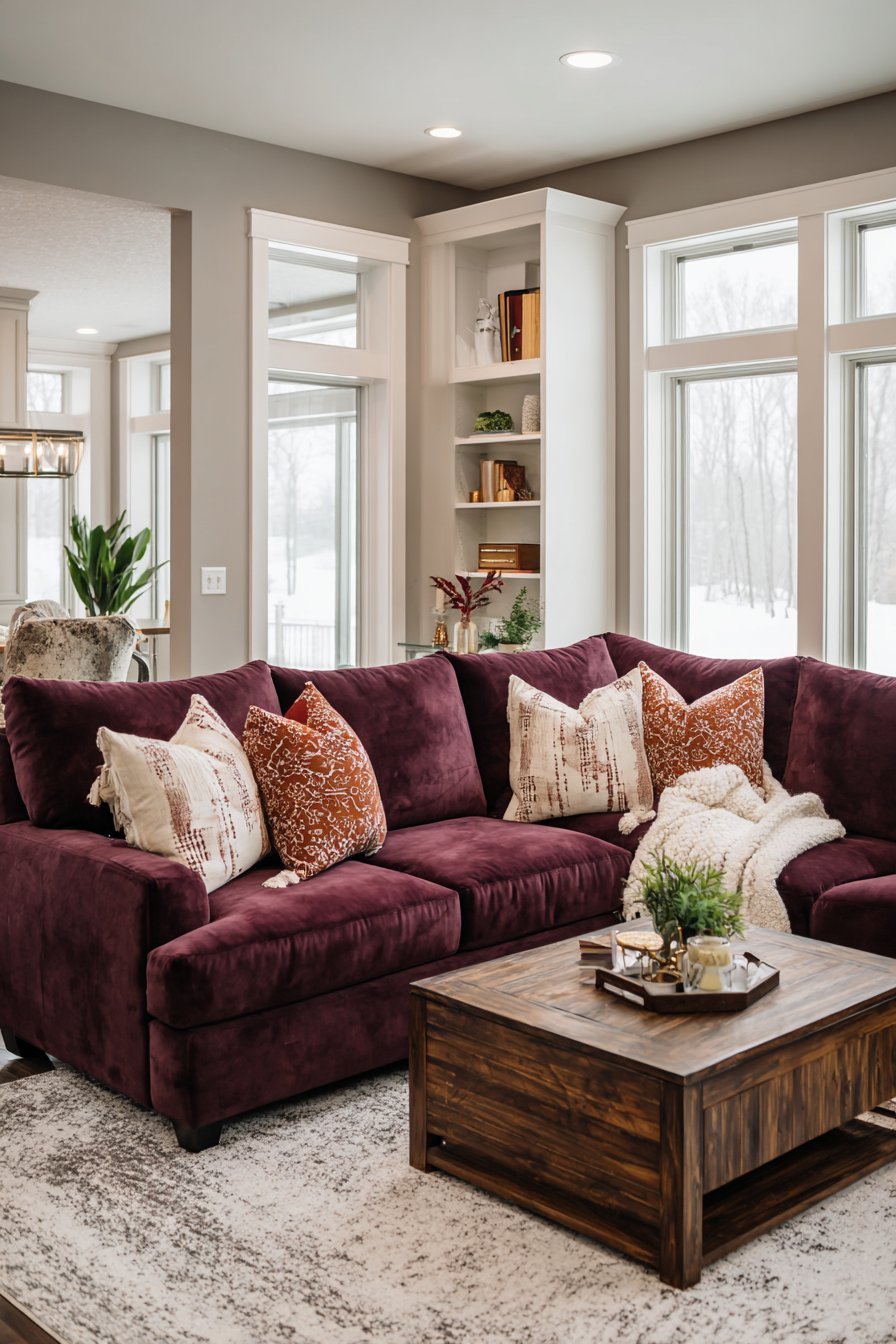
The functional aspects of this family room extend beyond the seating itself. A rustic wooden coffee table with visible grain texture and natural imperfections centers the space on a large neutral wool rug, providing a durable surface for everything from board games to coffee cups. The built-in white shelving that lines one wall offers both display space for decorative objects and practical storage for books, toys, and media equipment, keeping the space organized while adding architectural interest. This combination of open and closed storage ensures that the room can remain tidy even with daily family use, supporting the livable, real-world functionality that busy households require.
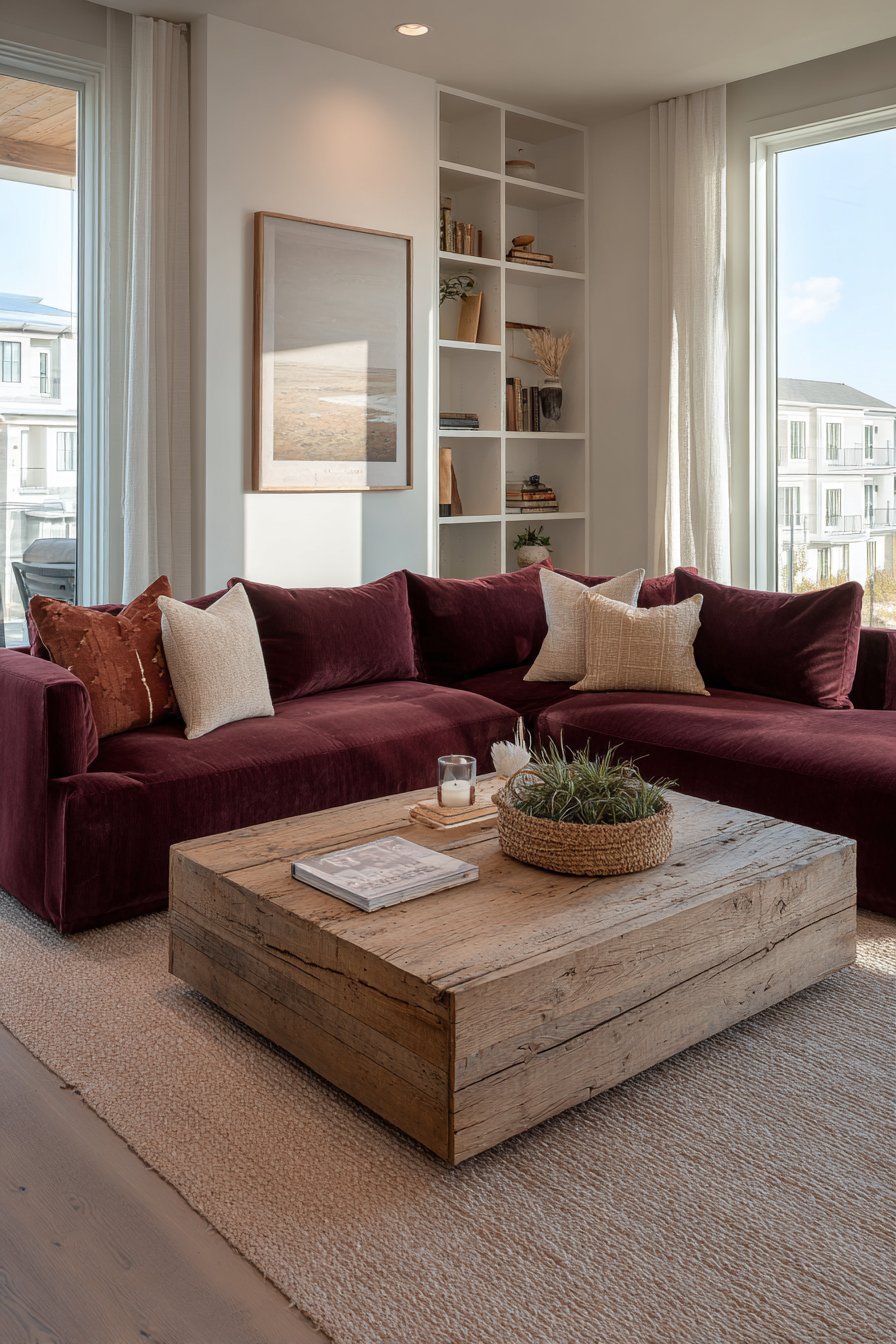
Natural light streaming through adjacent windows creates soft highlights on the maroon fabric throughout the day, preventing the bold color from feeling too heavy or dark. The wide-angle layout captured in professional interior photography showcases how thoughtful furniture placement can create distinct zones within a single space—a reading corner near the window, a primary seating area for TV viewing, and a play zone that remains connected to the main living space. This approach demonstrates that maroon upholstery can absolutely work in high-traffic family environments, providing a sophisticated anchor that elevates the space beyond typical “kid-friendly” design compromises.
Key Design Tips:
- Choose sectional configurations that fit your specific room dimensions and traffic flow patterns
- Opt for deep cushions and quality foam for long-lasting comfort and support
- Incorporate pattern through throw pillows to add visual interest while allowing easy updates
- Include ample storage solutions to maintain organization in frequently used spaces
- Select durable, easy-to-clean rug materials like wool that can withstand heavy foot traffic
- Position seating to take advantage of natural light sources while maintaining good TV viewing angles
4. Traditional Chesterfield Sophistication
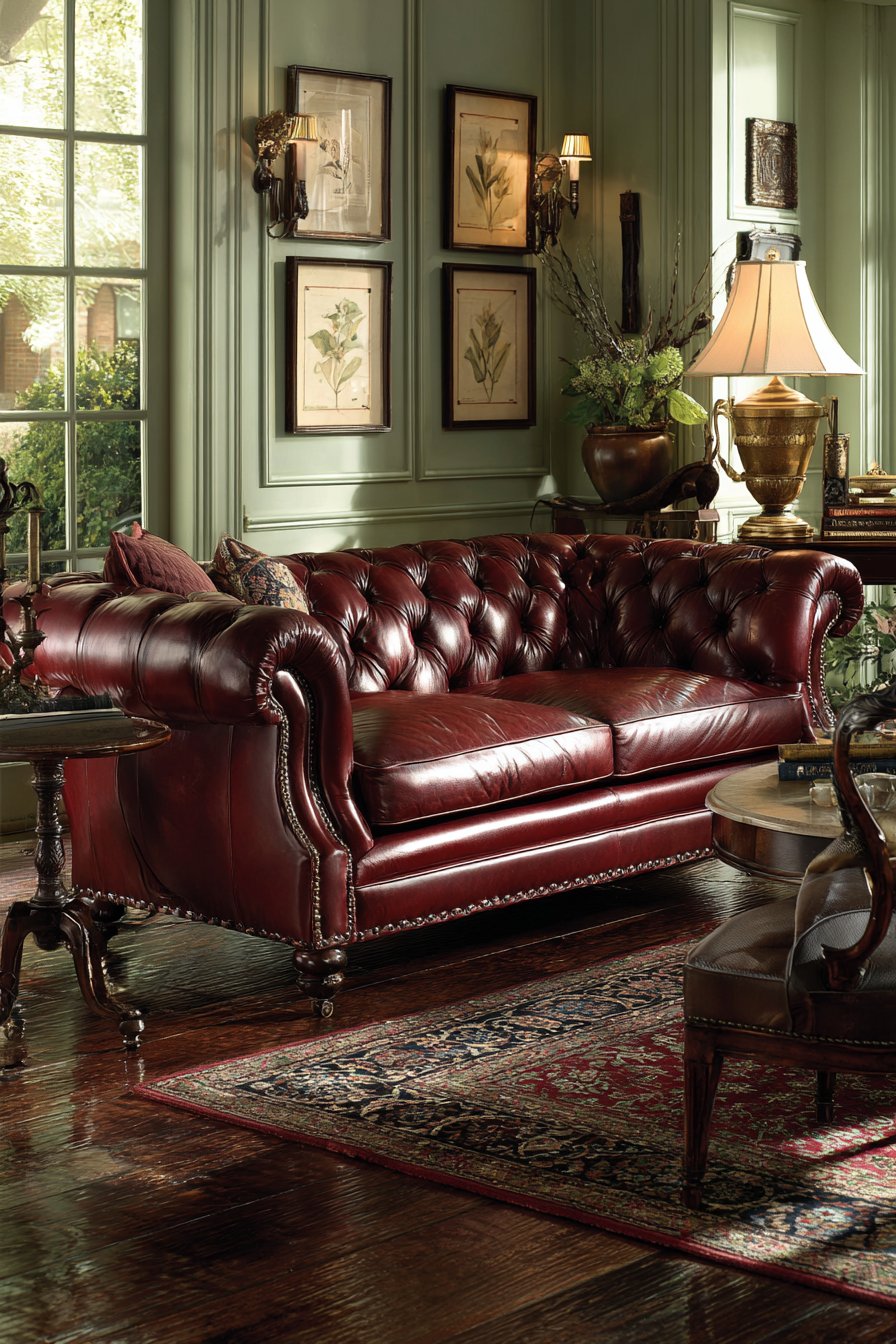
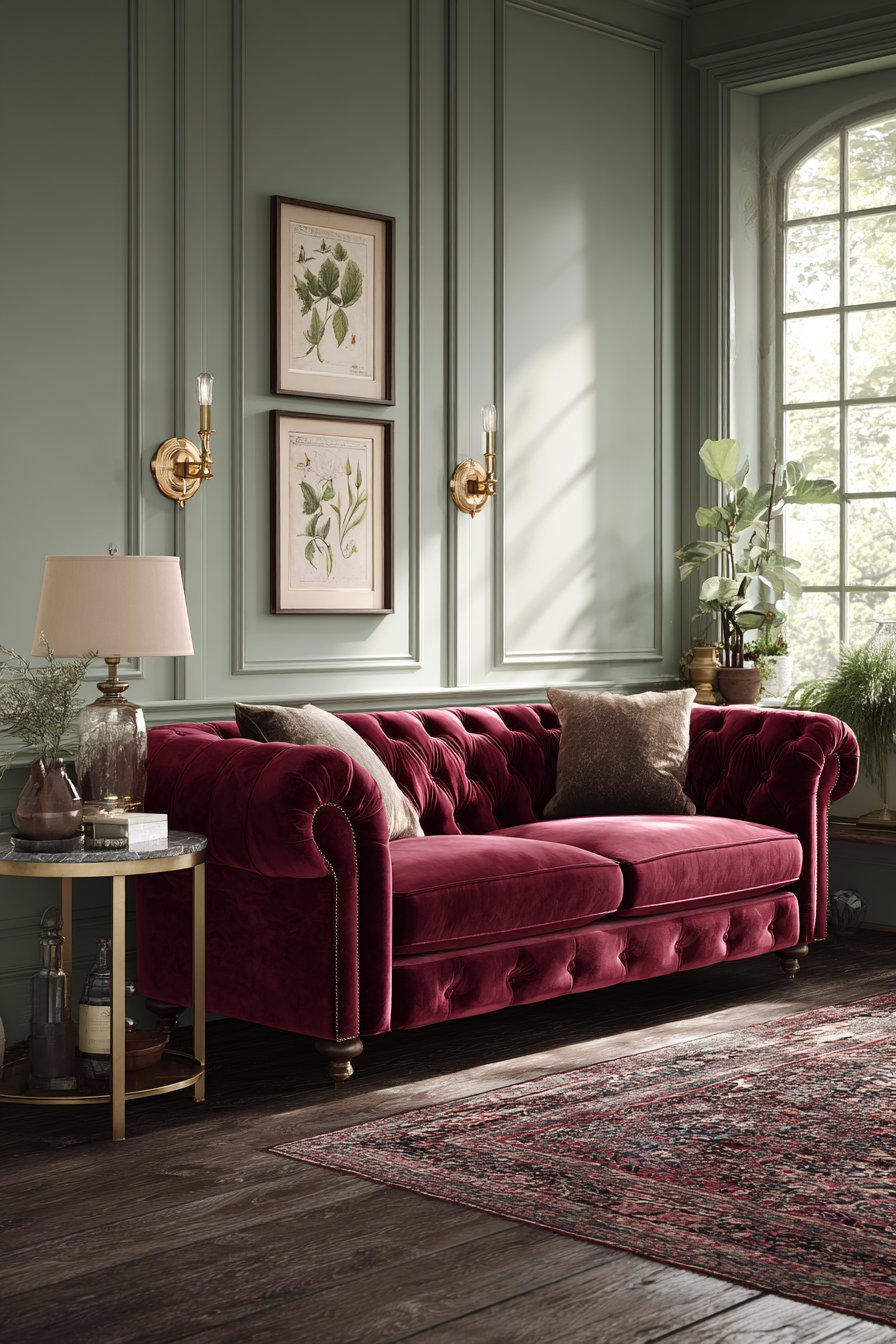
Few sofa styles embody timeless elegance quite like the Chesterfield, and when upholstered in rich maroon leather or fabric, it becomes a masterpiece of traditional design. The distinctive button tufting and rolled arms that define this iconic style create a sense of refined luxury that has remained coveted for centuries. In this sophisticated parlor setting, the maroon Chesterfield commands attention against dark hardwood floors that gleam with a high-gloss finish, while a Persian-style area rug with burgundy accents echoes the sofa’s coloring and reinforces the traditional aesthetic. The walls, painted in soft sage green, provide an unexpected but historically appropriate backdrop that allows the maroon upholstery to truly shine.
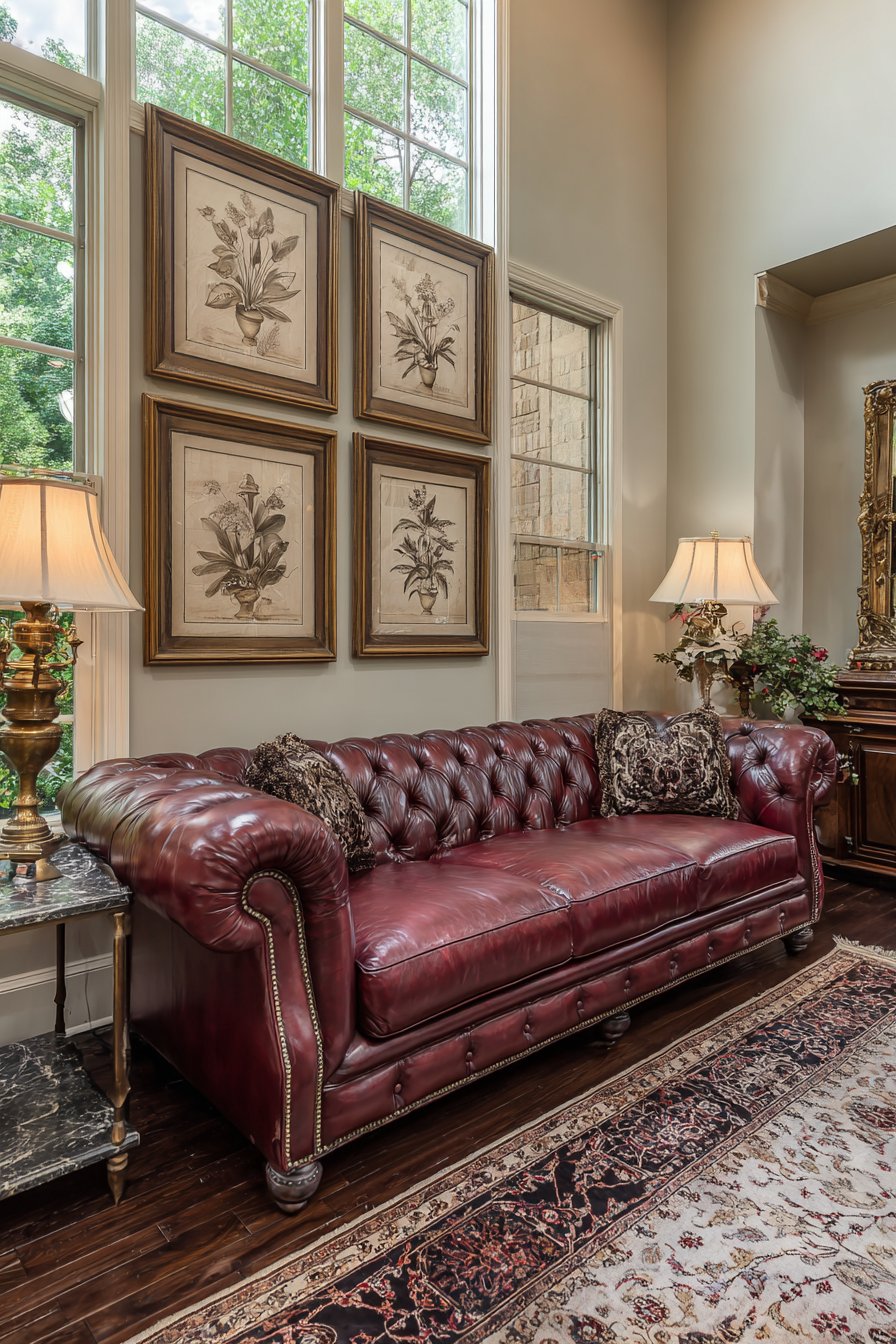
The layering of traditional elements creates depth and richness in this space. Antique brass picture lights mounted above the sofa illuminate framed botanical prints, casting a warm glow that highlights both the artwork and the upholstery’s texture. A marble-topped side table in a classic silhouette holds a brass table lamp with a cream shade, providing both ambient and task lighting while contributing to the room’s collected, curated feel. These carefully chosen accessories speak to the attention to detail that characterizes traditional design, where every element has been thoughtfully selected to contribute to a cohesive, refined whole.
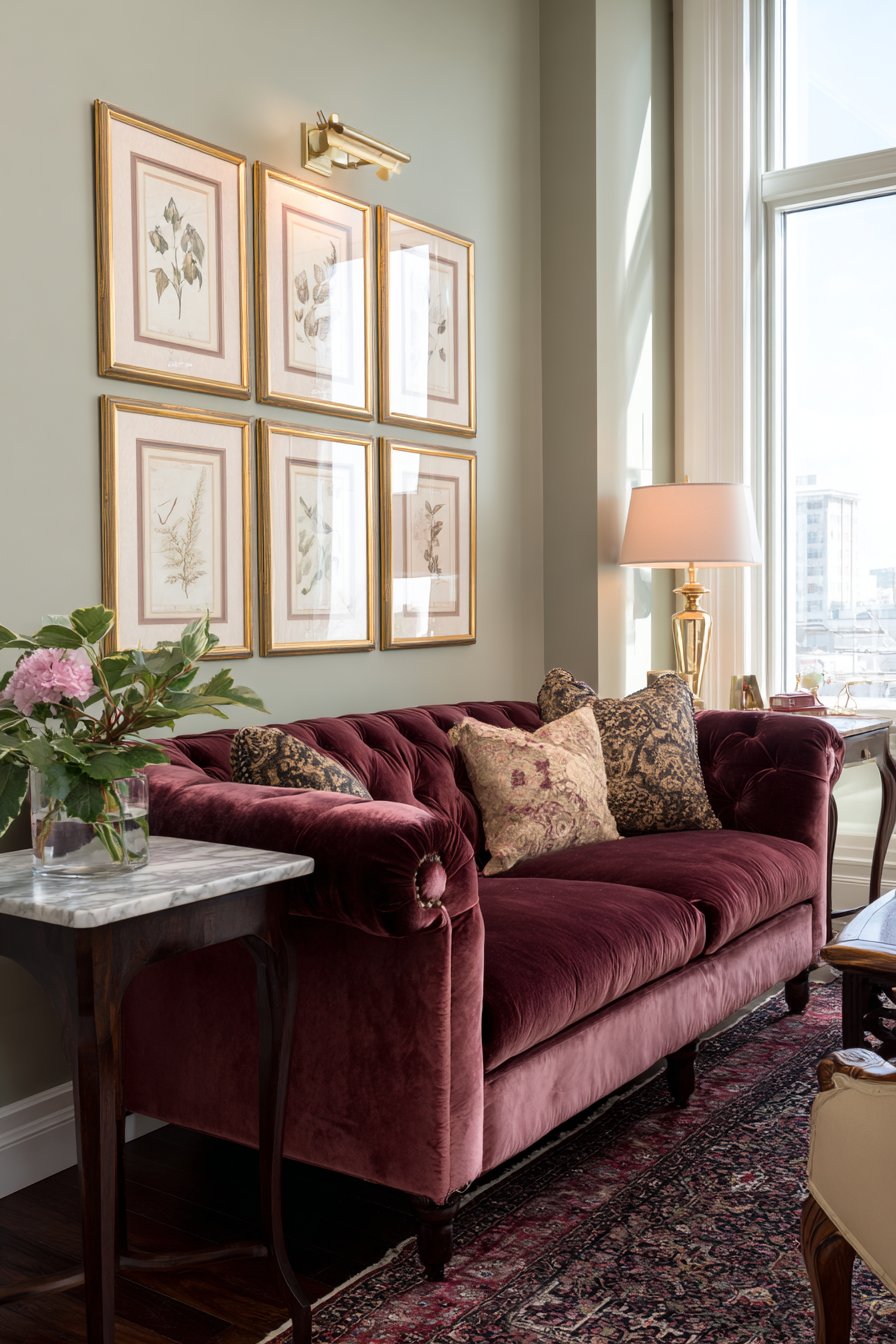
The button tufting that defines the Chesterfield style serves both aesthetic and practical purposes, creating dimensional texture that catches light and creates shadows across the sofa’s surface. This play of light and shadow becomes particularly beautiful in natural window light, which highlights the craftsmanship of the upholstery work and adds visual interest to the solid color fabric. The combination of the maroon Chesterfield with traditional architectural elements, quality materials, and classic accessories creates a living room that feels established and sophisticated—a space that suggests good taste and appreciation for enduring design principles.
Key Design Tips:
- Invest in authentic button tufting for the dimensional texture that defines Chesterfield style
- Pair maroon with complementary historical colors like sage green, cream, or deep navy
- Incorporate brass and bronze metallic finishes for traditional warmth and elegance
- Select Persian or Oriental-style rugs that echo the sofa’s burgundy tones
- Use picture lights and table lamps to create layered lighting that highlights architectural details
- Choose dark hardwood floors with high-gloss finishes for traditional luxury and light reflection
5. Scandinavian Minimalism Meets Bold Color
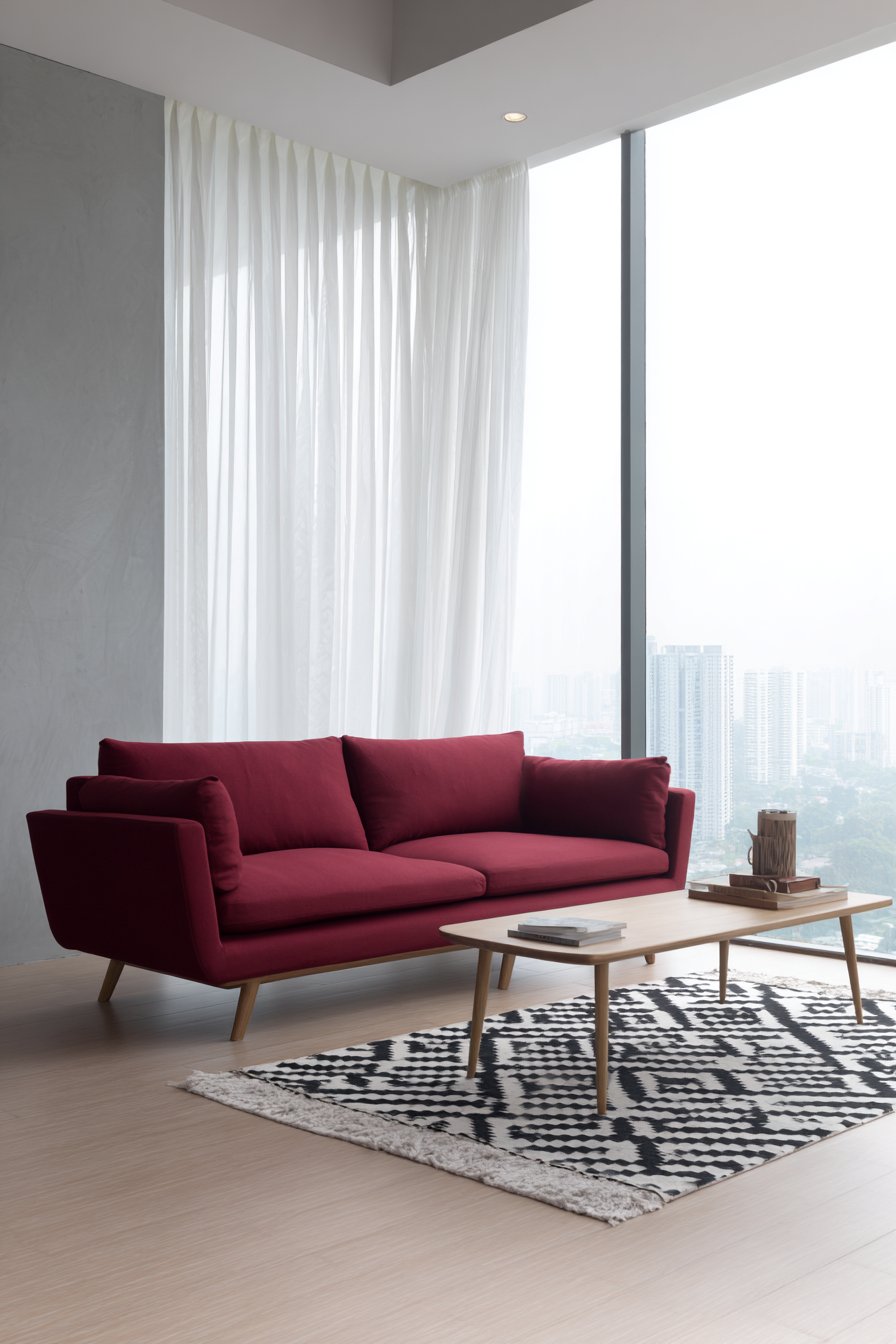
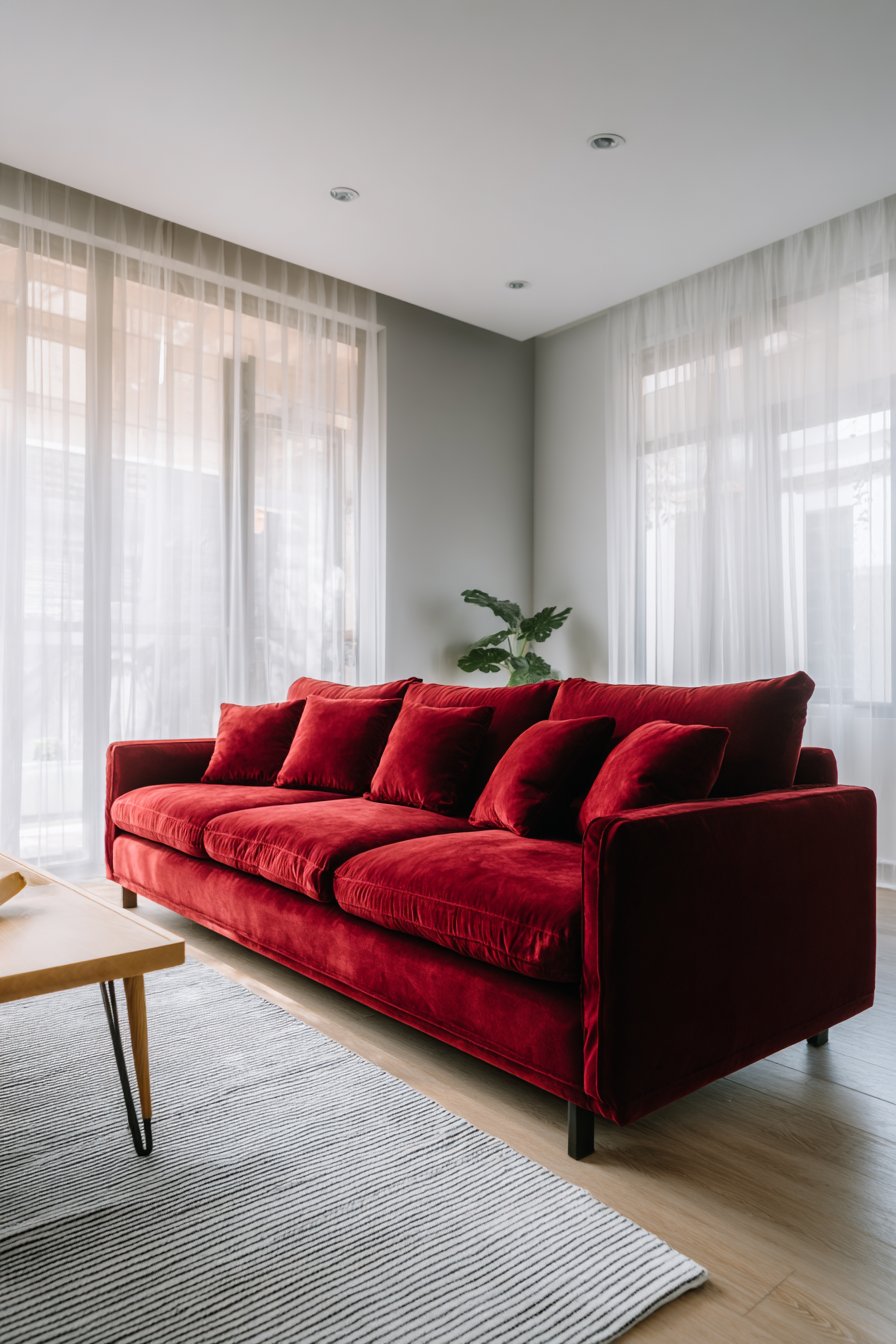
The Scandinavian design philosophy of “lagom”—not too much, not too little, just right—finds perfect expression when a streamlined maroon sofa becomes the singular bold element in an otherwise neutral space. This minimalist approach celebrates clean lines and functional beauty, with the maroon sofa serving as the room’s only significant color departure from a palette of whites, light greys, and natural wood tones. The sofa’s simple silhouette, free from excessive detailing or ornamentation, aligns perfectly with Nordic design principles while its rich color provides the warmth and coziness that Scandinavians call “hygge.”
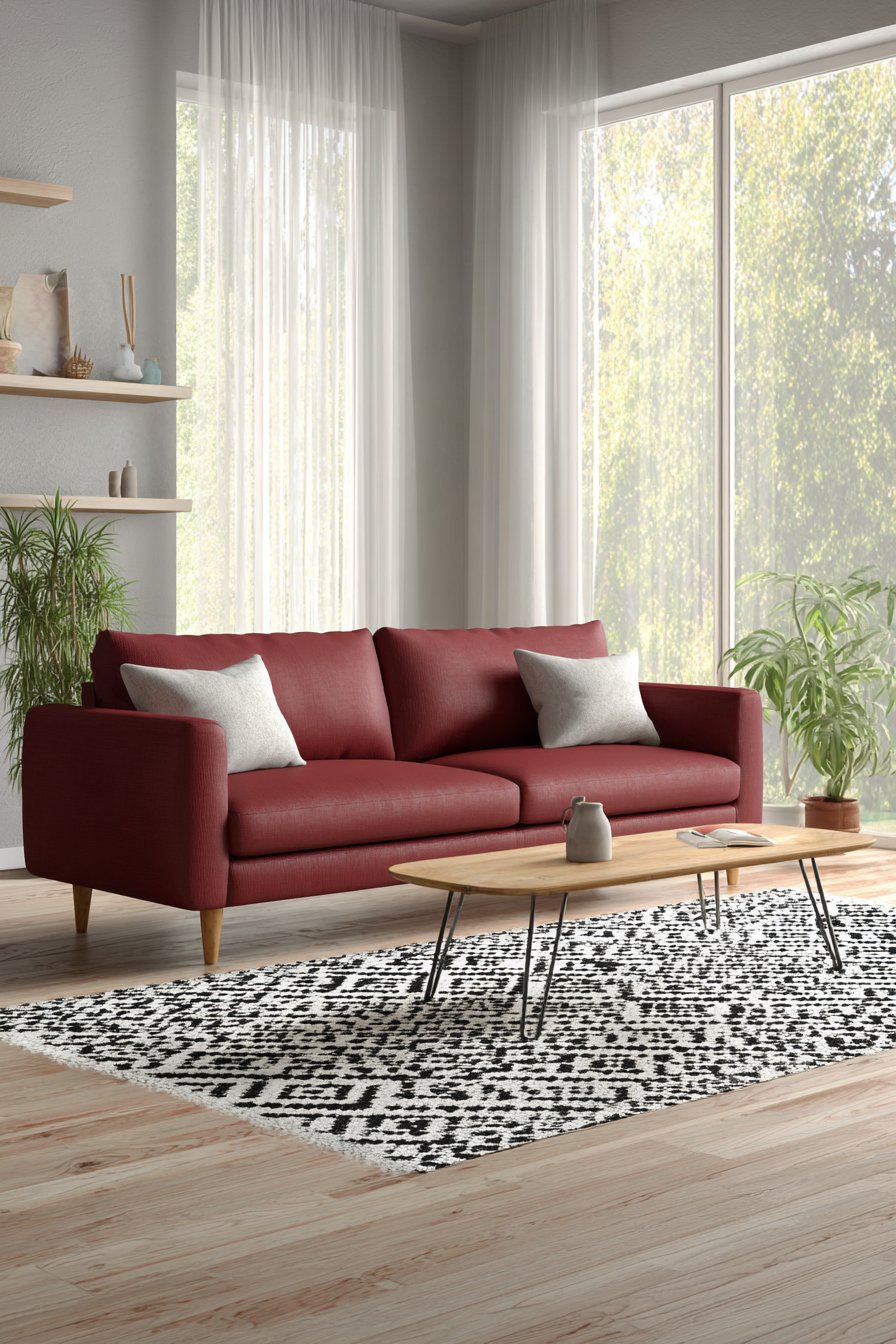
The supporting elements maintain the minimalist aesthetic with restraint and purpose. White oak flooring with its characteristic pale honey tones and visible grain brings natural warmth underfoot, while pale grey walls create a serene backdrop that neither competes with nor diminishes the impact of the maroon centerpiece. A simple geometric area rug in black and white introduces pattern without introducing additional color, maintaining visual calm while defining the seating zone. The light wood coffee table with hairpin legs exemplifies Scandinavian furniture design—minimal material, maximum function, and an honest expression of construction that celebrates rather than conceals how pieces are made.
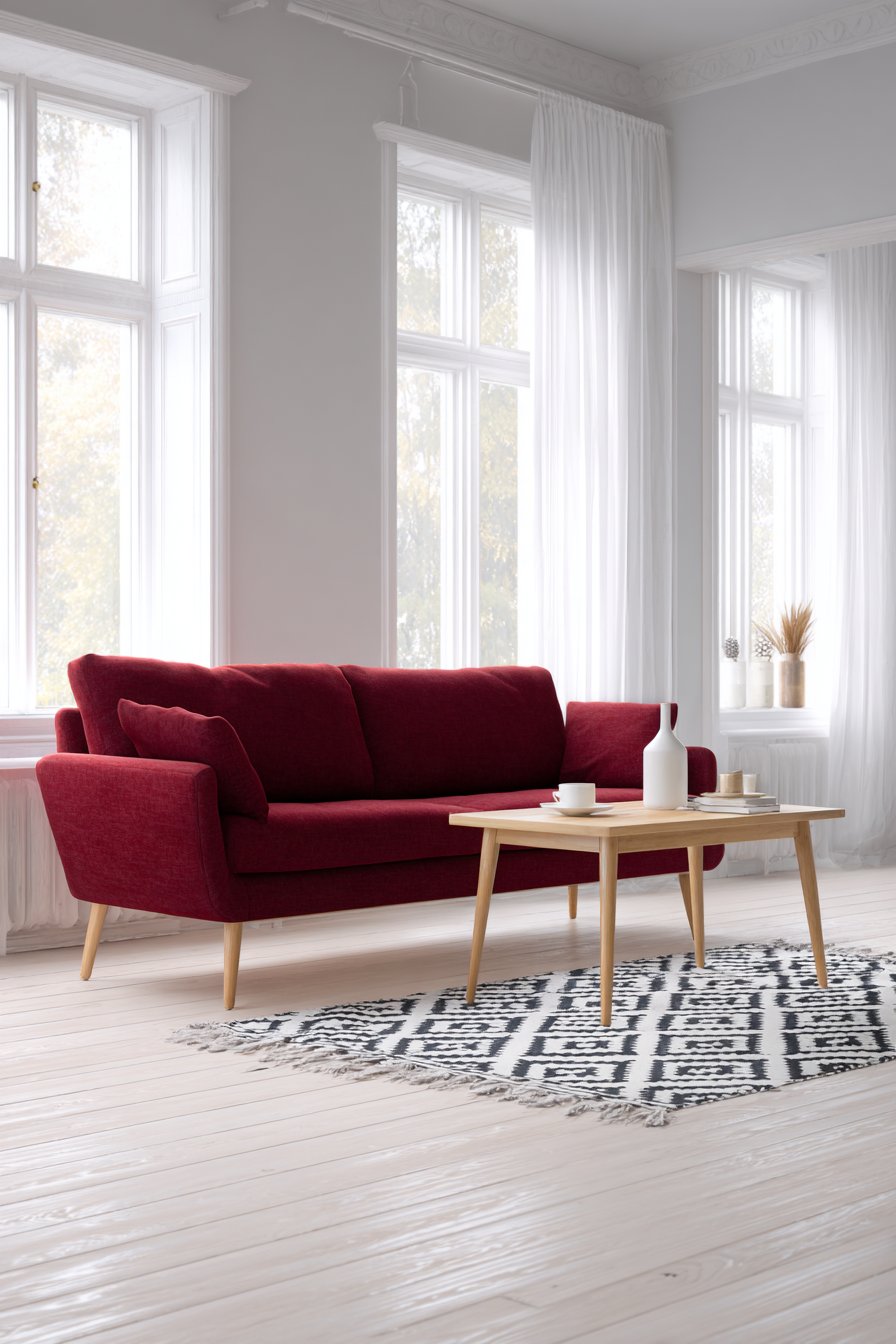
Large windows with sheer white curtains flood this living room with diffused natural light, a non-negotiable element in Scandinavian interiors where maximizing limited daylight is essential. This abundant natural illumination prevents the maroon sofa from reading as dark or heavy; instead, the light reveals subtle variations in the fabric’s color and texture throughout the day. The wide-angle perspective shows how the bold maroon statement piece and neutral Nordic-inspired surroundings create a striking contrast that feels intentional and sophisticated rather than jarring—proof that minimalism doesn’t require sacrificing personality or warmth.
Key Design Tips:
- Limit your color palette to neutrals plus one bold accent to maintain Scandinavian simplicity
- Choose furniture with clean lines and minimal ornamentation for authentic Nordic appeal
- Maximize natural light with sheer window treatments and strategic furniture placement
- Incorporate natural materials like wood, wool, and linen for organic warmth
- Select geometric patterns over florals or busy designs to maintain visual calm
- Embrace negative space as a design element rather than trying to fill every corner
6. Smart Small Space Living with Maximum Impact
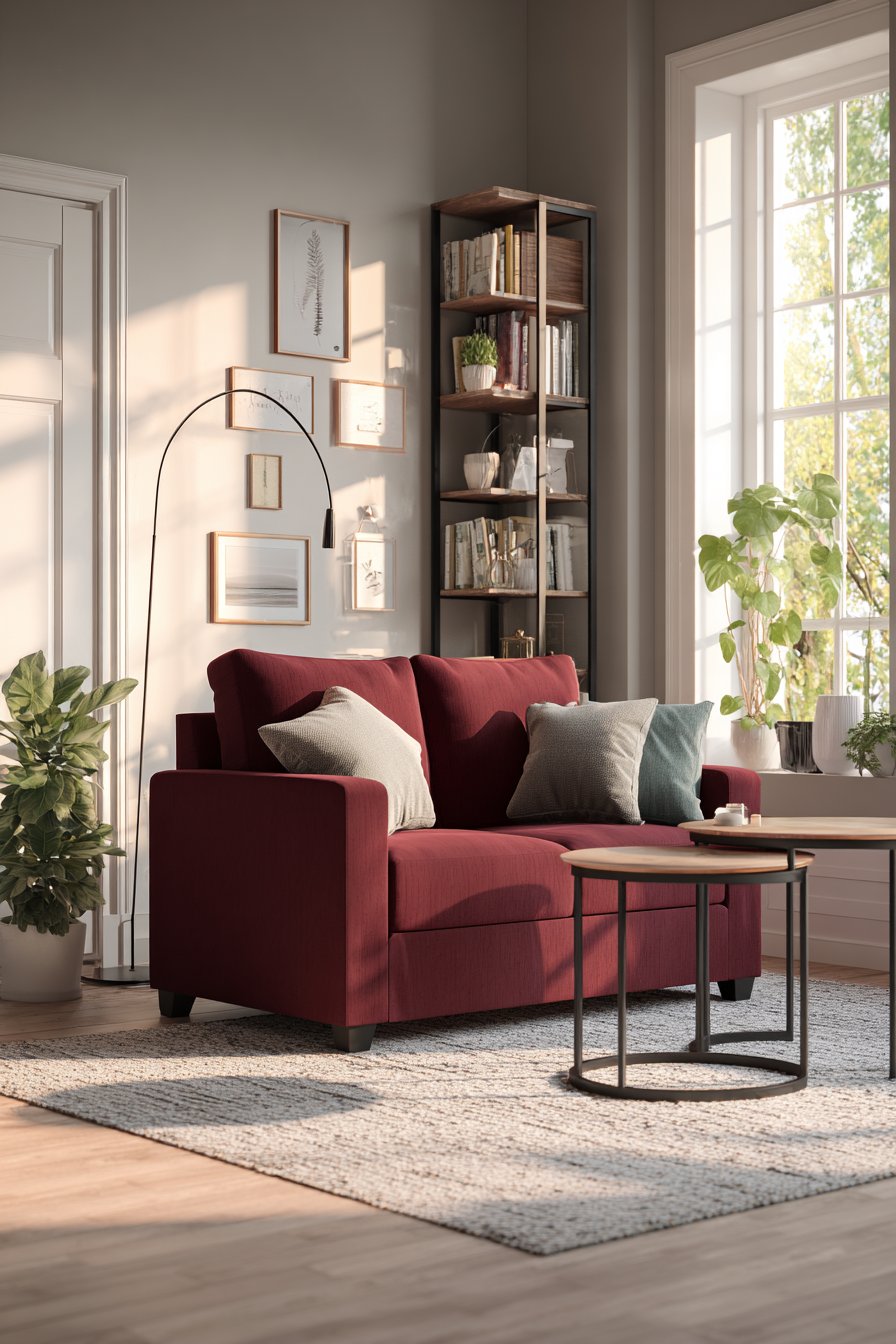
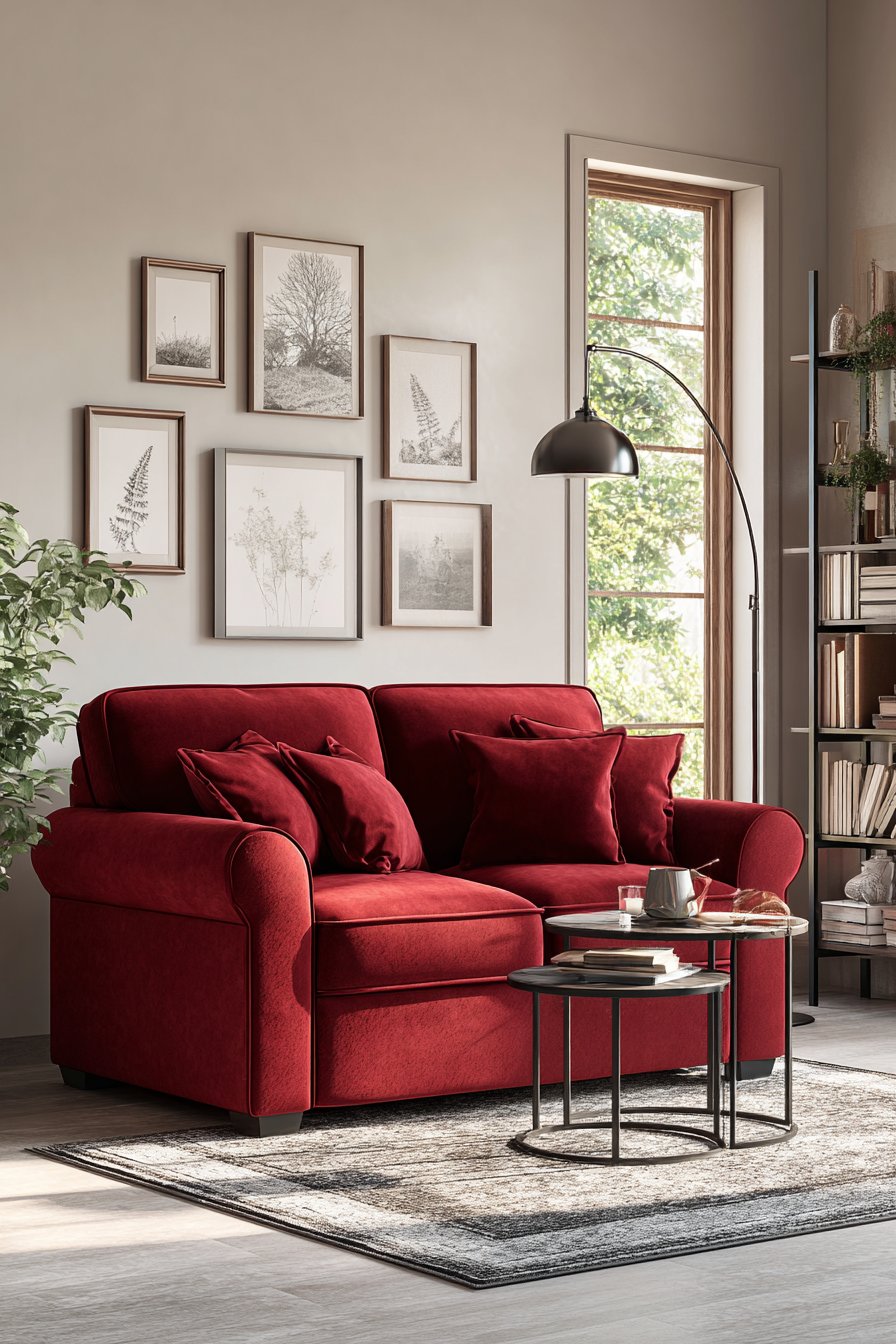
Proving that compact square footage doesn’t require design compromise, this small apartment living room demonstrates how a maroon loveseat can deliver oversized style in a petite package. The carefully scaled two-seater provides comfortable seating without overwhelming the limited floor space, positioned strategically against a gallery wall featuring mixed frame styles that draw the eye upward and create the illusion of greater room height. This vertical emphasis, combined with the bold color choice, ensures that the small space feels curated and intentional rather than cramped or apologetic about its dimensions.
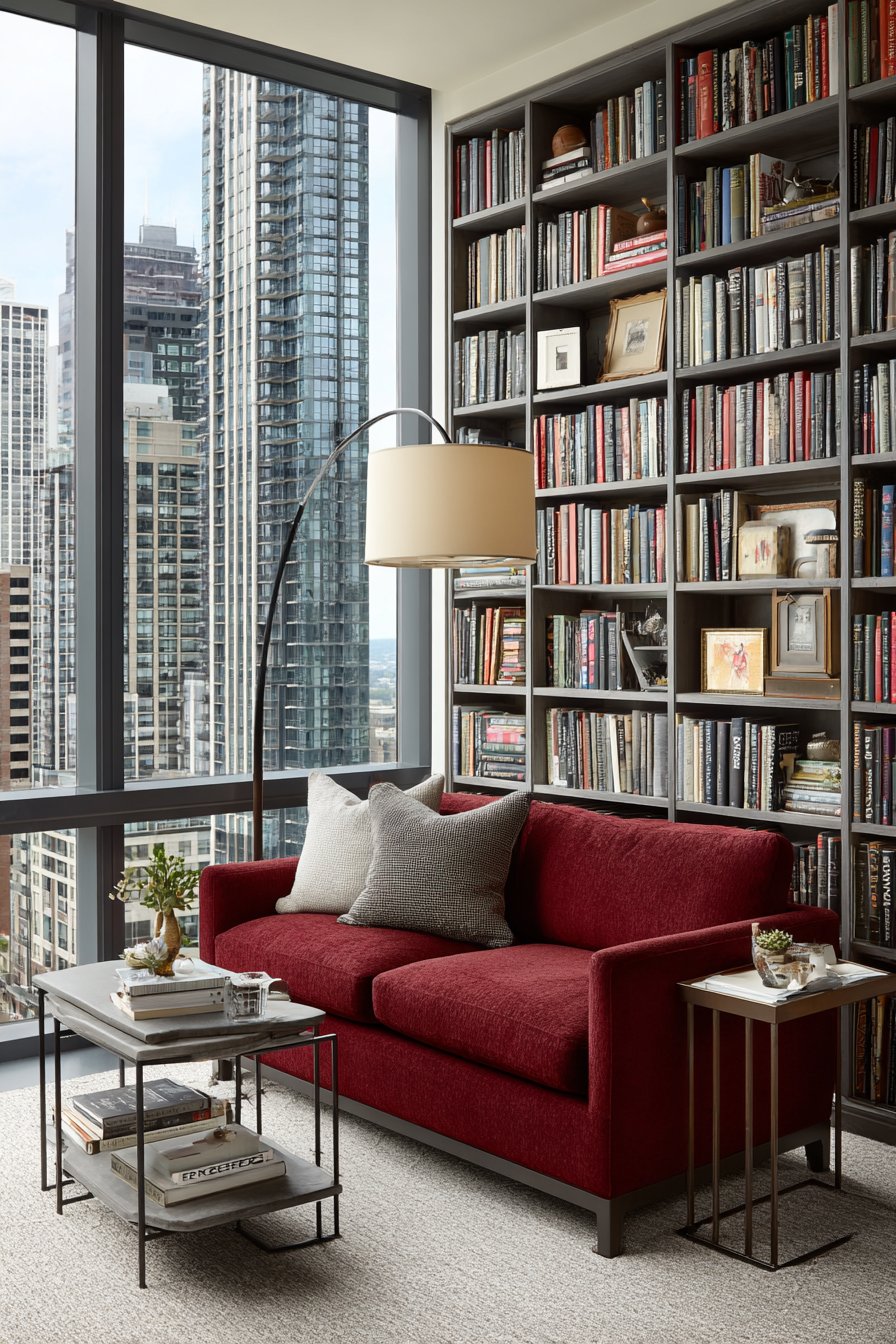
The space-saving strategies employed throughout this compact living room showcase clever design thinking. A nesting coffee table set provides flexible surface space that can be separated for entertaining or condensed when additional floor space is needed for activities or traffic flow. The floor-to-ceiling bookshelf maximizes vertical storage potential, housing books, decorative objects, and concealed storage baskets that keep clutter at bay. Natural light from a single window is amplified through the strategic placement of a standing arc floor lamp with adjustable positioning, ensuring adequate illumination for reading and tasks while maintaining the open feel that small spaces desperately need.
What makes this compact space particularly successful is the decision to embrace rather than shy away from bold color. The maroon loveseat with removable, washable cushion covers provides a striking focal point that gives the small room identity and character—something that neutral-only small spaces often lack. Interior design photography captures the efficient layout from angles that showcase how every inch serves a purpose, from the gallery wall that provides personality without consuming floor space to the nesting tables that adapt to changing needs. This approach proves that small apartment dwellers can absolutely embrace dramatic furniture choices when paired with smart spatial planning and multifunctional pieces.
Key Design Tips:
- Scale furniture appropriately to room dimensions—smaller doesn’t always mean better, but balance is crucial
- Maximize vertical space with tall bookcases and gallery walls to create perceived height
- Choose multifunctional furniture like nesting tables or storage ottomans to increase flexibility
- Use bold color strategically as a focal point to give small spaces personality and distinction
- Amplify limited natural light with well-placed floor and table lamps
- Select furniture with exposed legs to maintain visual lightness and allow light to flow beneath
7. Bohemian Eclectic with Natural Elements
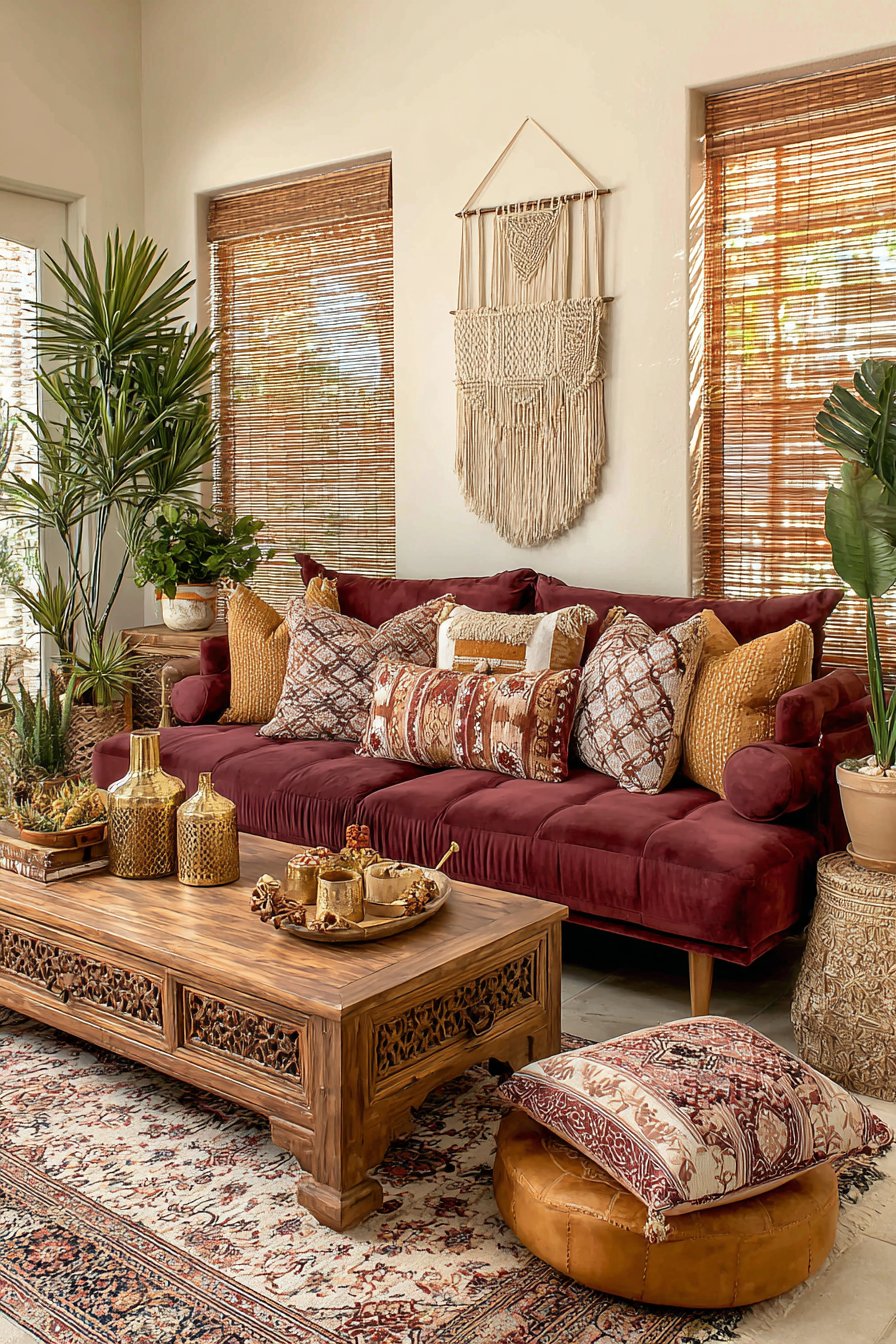
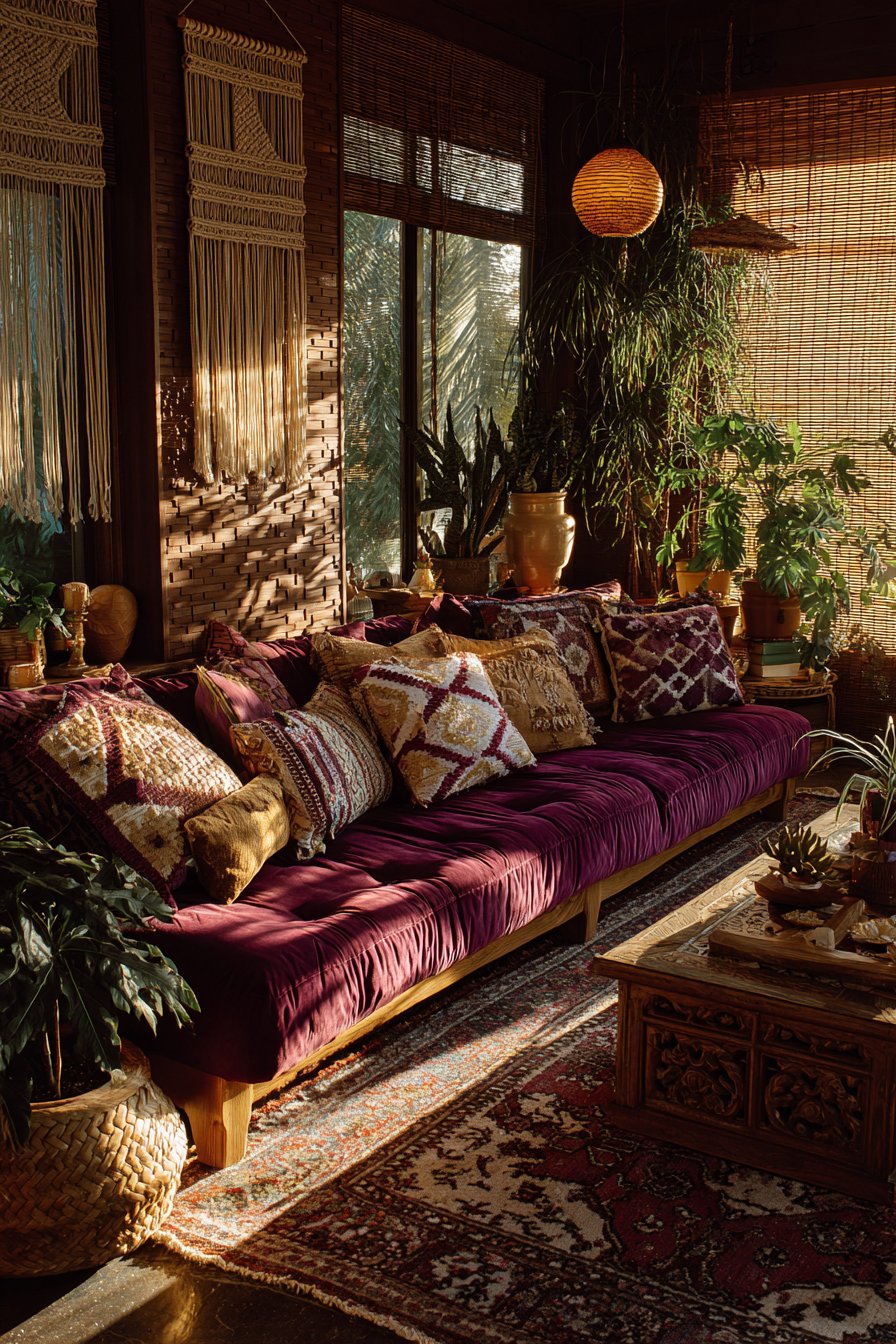
For those who embrace maximalist, collected aesthetics, a deep maroon velvet sofa becomes the grounding element in a bohemian living room overflowing with texture, pattern, and life. The sofa anchors a space filled with macrame wall hangings that cascade down walls, layered textile rugs in warm earth tones that create luxurious comfort underfoot, and an abundance of potted plants that bring nature indoors and purify the air. This is a space that rejects minimalism in favor of abundance, where every surface tells a story and the overall effect is one of creative, intentional curation rather than chaotic accumulation.
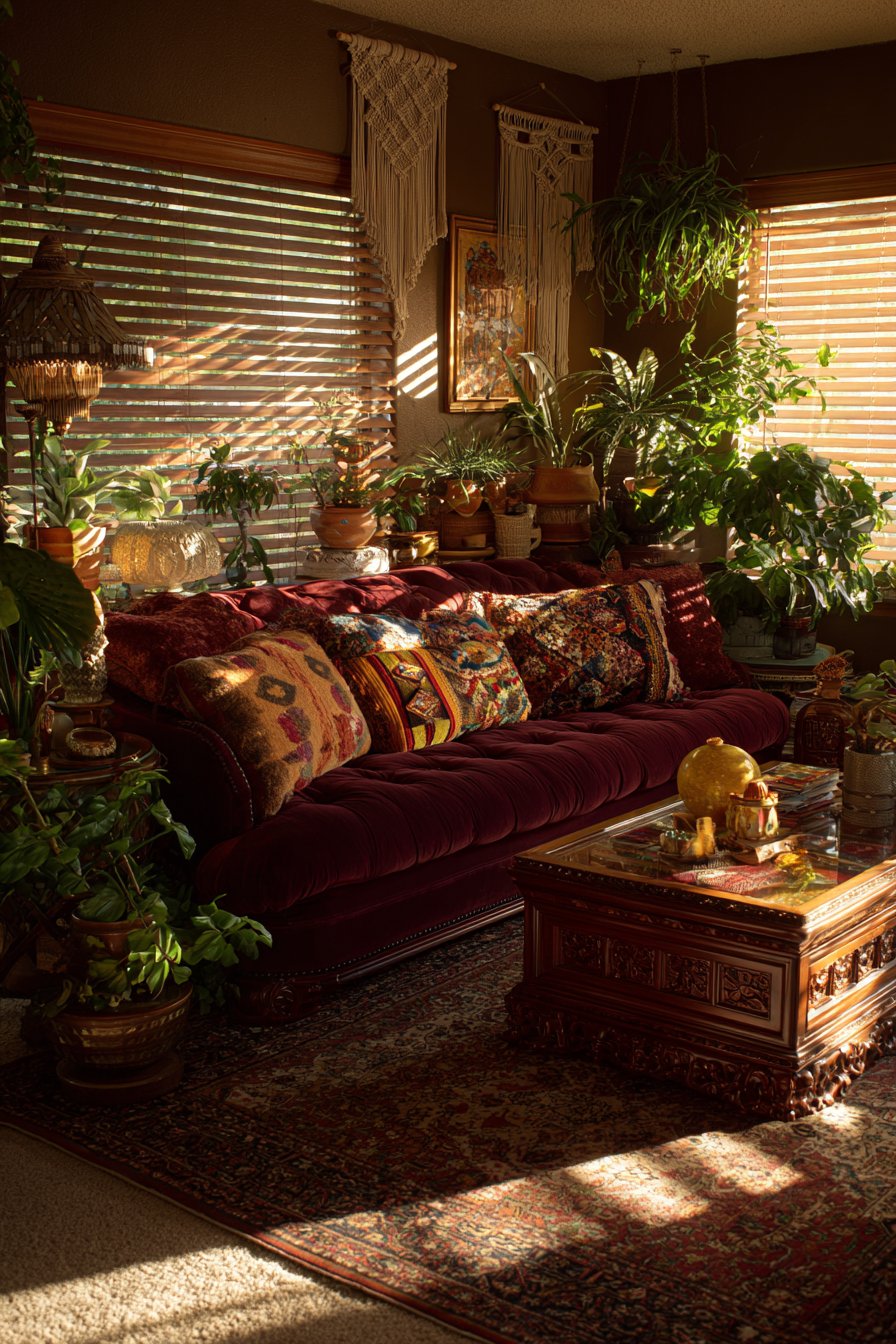
The eclectic mix of patterned throw pillows adorning the maroon sofa exemplifies the bohemian approach to layering. Geometric prints coexist with floral designs, ikat patterns mingle with suzani embroidery, and the color palette—while cohesive in its warm, earthy foundation—incorporates burnt orange, mustard yellow, terracotta, and olive green. A low wooden coffee table with carved details sits atop a vintage Persian rug, its intricate patterns adding yet another layer to the rich visual tapestry. The warm golden hour light filtering through bamboo blinds creates atmospheric shadows that play across the varied textures, highlighting the depth and complexity of the design.
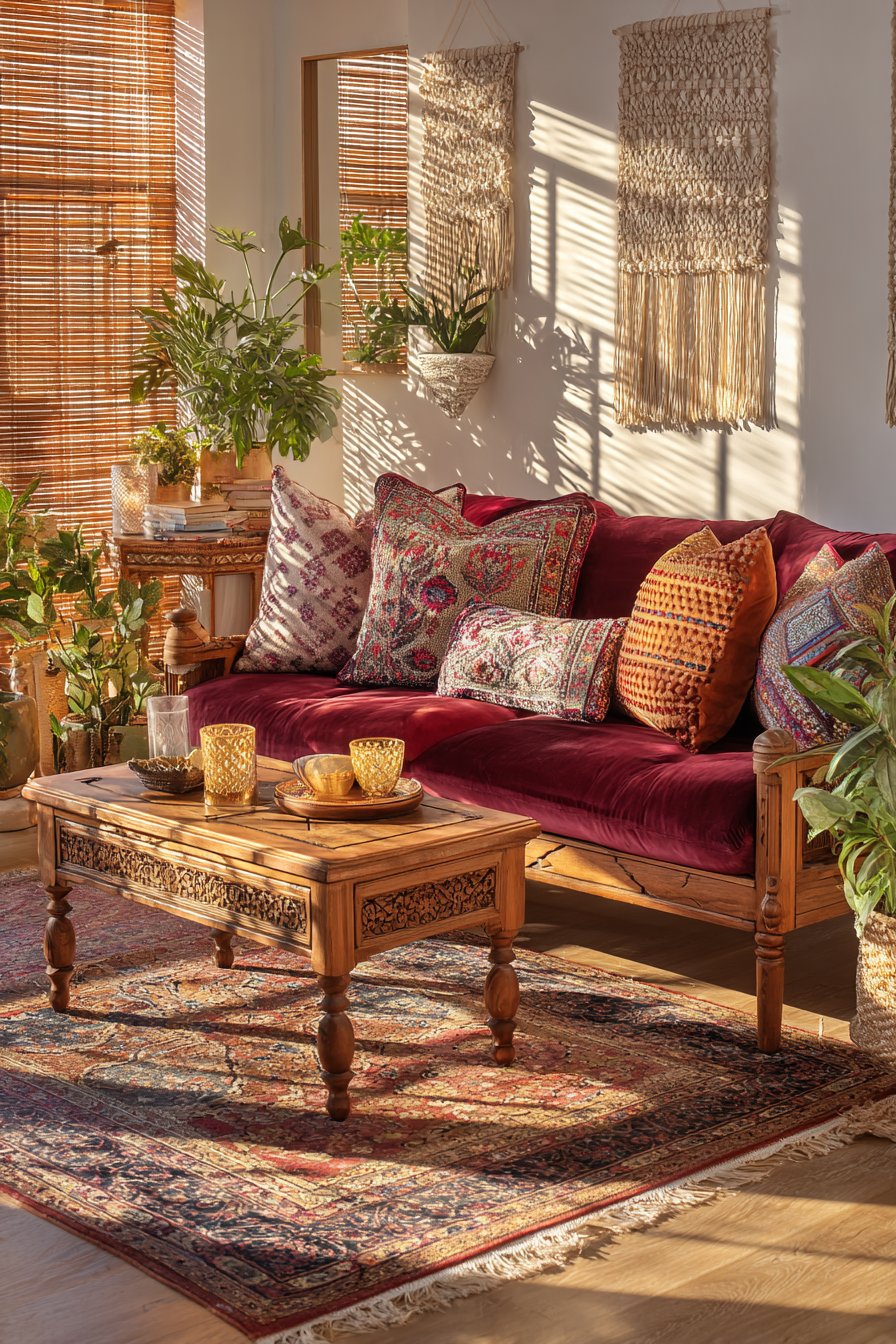
The abundance of plants throughout this bohemian space serves both aesthetic and functional purposes, their various shades of green providing a natural complement to the maroon upholstery while improving air quality and bringing vital energy to the room. Potted fiddle leaf figs, trailing pothos, and sculptural snake plants occupy corners, shelves, and tabletops, creating a sense of bringing the outdoors in. Professional interior photography captures the rich, layered bohemian aesthetic with careful attention to the varied textures—the smooth velvet of the sofa contrasts with rough-woven textiles, polished wood surfaces juxtapose with matte ceramics, and the overall effect is one of deliberate, collected beauty centered around the maroon sofa focal point.
Key Design Tips:
- Layer multiple patterns and textures without fear, keeping a cohesive color story as your guide
- Incorporate abundant plant life in various sizes and varieties for authentic bohemian energy
- Mix vintage and new pieces to create the collected-over-time aesthetic that defines boho style
- Use macrame, woven textiles, and natural fiber rugs to add handcrafted texture
- Allow natural materials like wood, rattan, and jute to dominate your material palette
- Create visual interest through intentional maximalism rather than minimalist restraint
8. Industrial Loft with Urban Edge
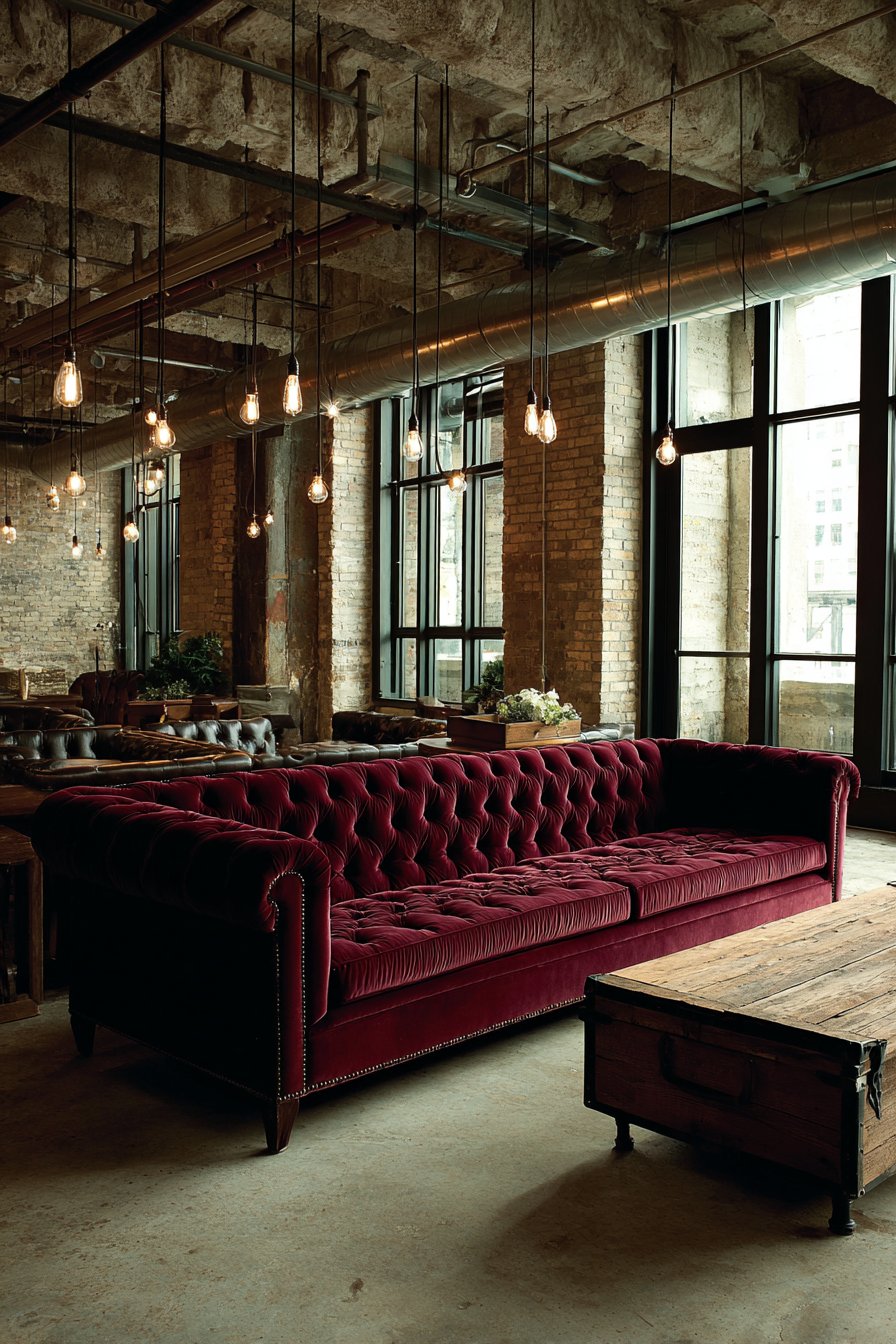
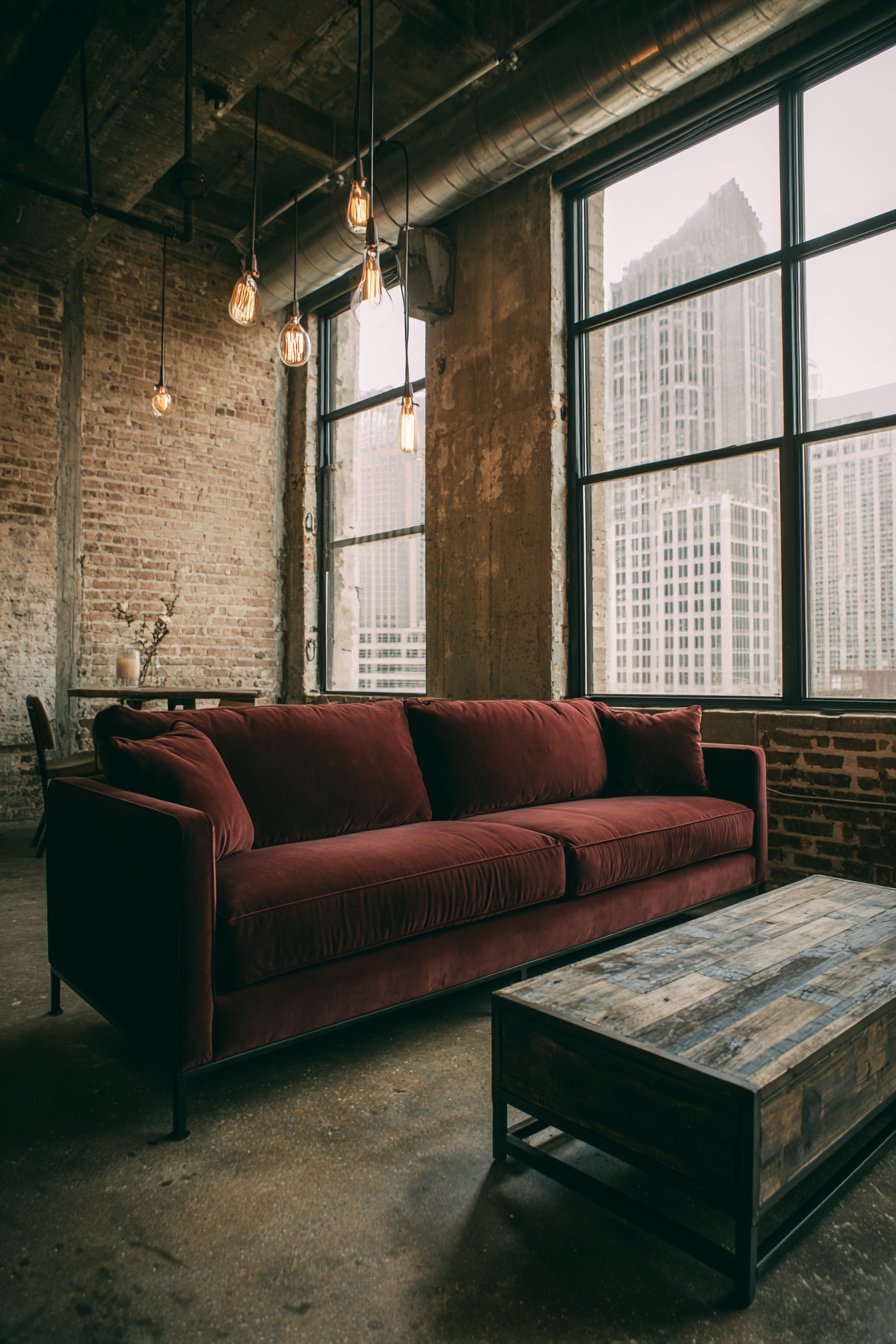
When raw industrial elements meet refined upholstery, magic happens. This industrial loft living room showcases how a modern maroon sofa with sleek metal legs holds its own against exposed brick walls, polished concrete floors, and visible ductwork that celebrates rather than conceals the building’s infrastructure. The contrast between the soft, luxurious maroon fabric and the hard, utilitarian materials creates dynamic tension that defines successful industrial design. The high ceilings typical of converted loft spaces allow the bold color to make a statement without overwhelming the room, while the open floor plan ensures visual flow and maintains the spacious feel that makes loft living so appealing.
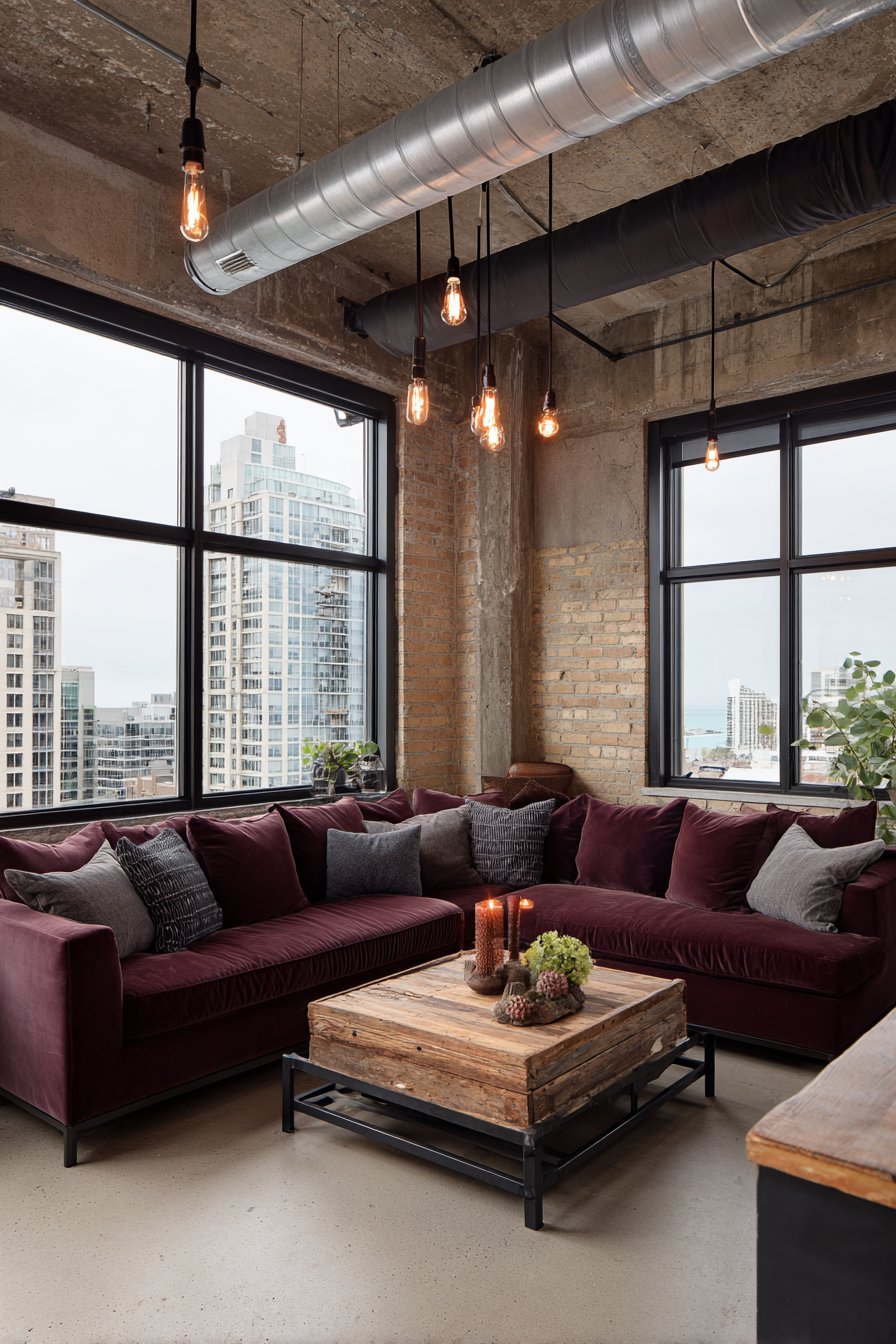
The supporting furniture embraces the industrial aesthetic through honest material expression. A coffee table constructed from reclaimed wood and metal showcases visible joinery and celebrates the imperfections of salvaged materials, its rustic character providing warmth that balances the harder edges of concrete and brick. Edison bulb pendant lights hang from black metal fixtures at varying heights, their warm incandescent glow creating pools of light that humanize the industrial space while highlighting the richness of the maroon upholstery. Large factory-style windows with black metal frames provide abundant natural light that pours into the space, preventing the industrial materials from feeling cold or unwelcoming.
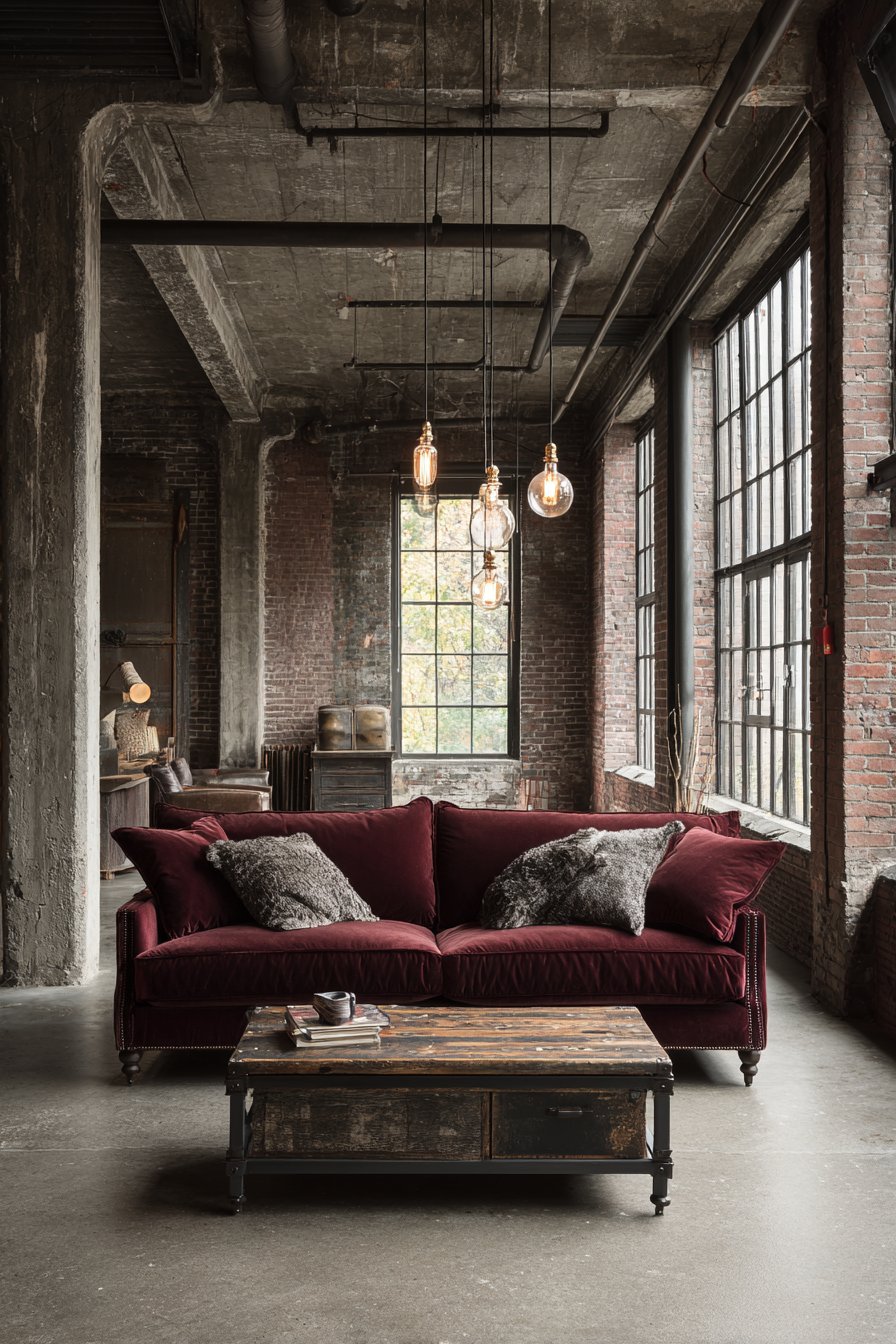
The play of natural light on various surfaces throughout the day becomes a design feature in itself. Sunlight streaming through the factory windows creates dramatic shadows against the exposed brick, highlights the texture of the concrete floors, and brings out the depth and complexity of the maroon fabric color. The contrast between the soft maroon upholstery and the raw industrial materials proves that seemingly opposite design elements can coexist beautifully when unified by a coherent aesthetic vision. Wide-angle architectural photography captures the open floor plan and impressive ceiling height while emphasizing material textures and the sophisticated urban character that makes industrial loft design perpetually appealing.
Key Design Tips:
- Embrace exposed structural elements like brick, concrete, and ductwork as design features
- Choose furniture with metal components and visible construction to reinforce industrial aesthetics
- Balance hard materials with soft upholstery to prevent spaces from feeling cold or unwelcoming
- Incorporate Edison bulbs and industrial-style lighting fixtures for authentic vintage factory appeal
- Celebrate rather than conceal the building’s original architectural character
- Use large-scale art or minimal decoration to complement rather than compete with architectural features
9. Formal Traditional Luxury
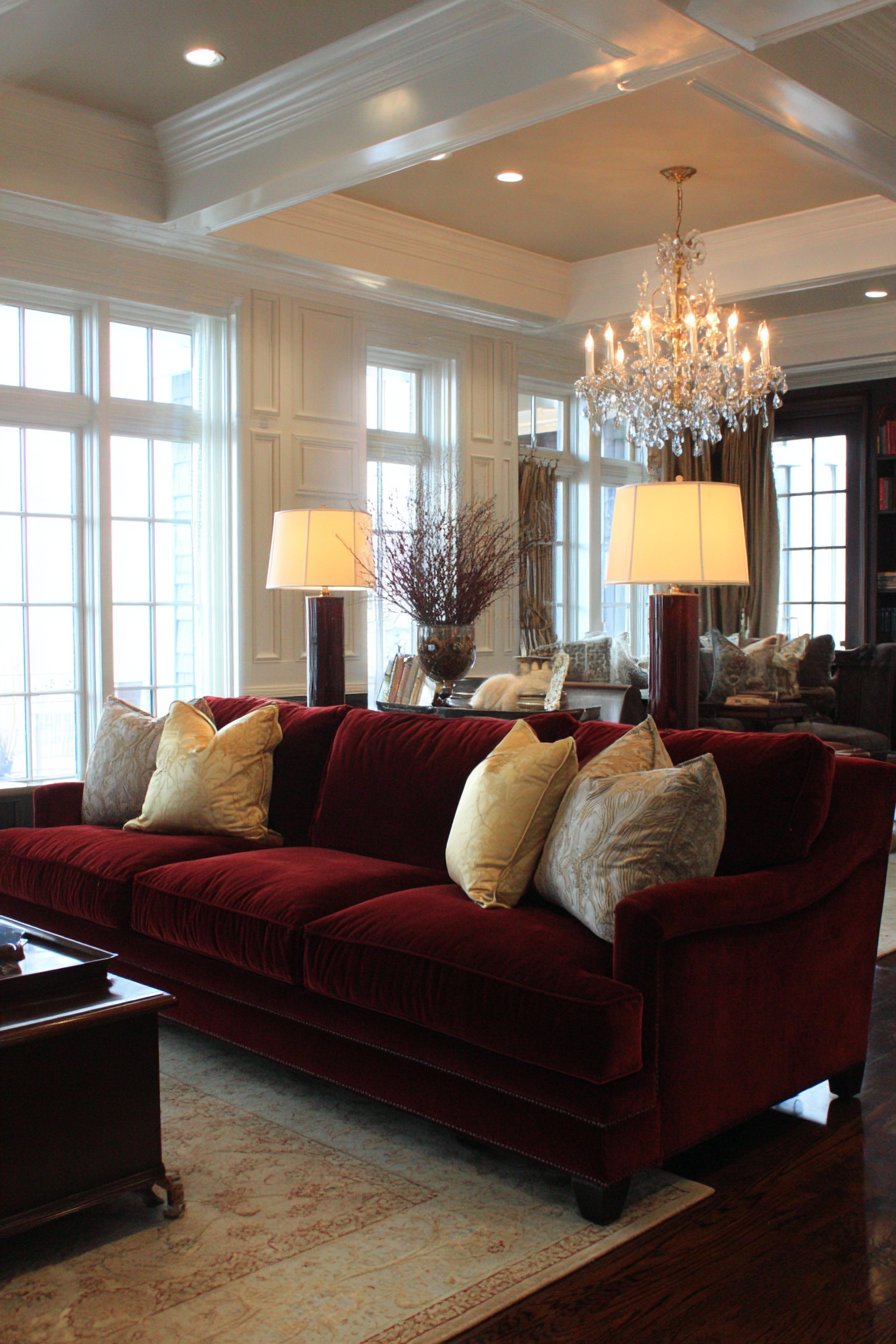
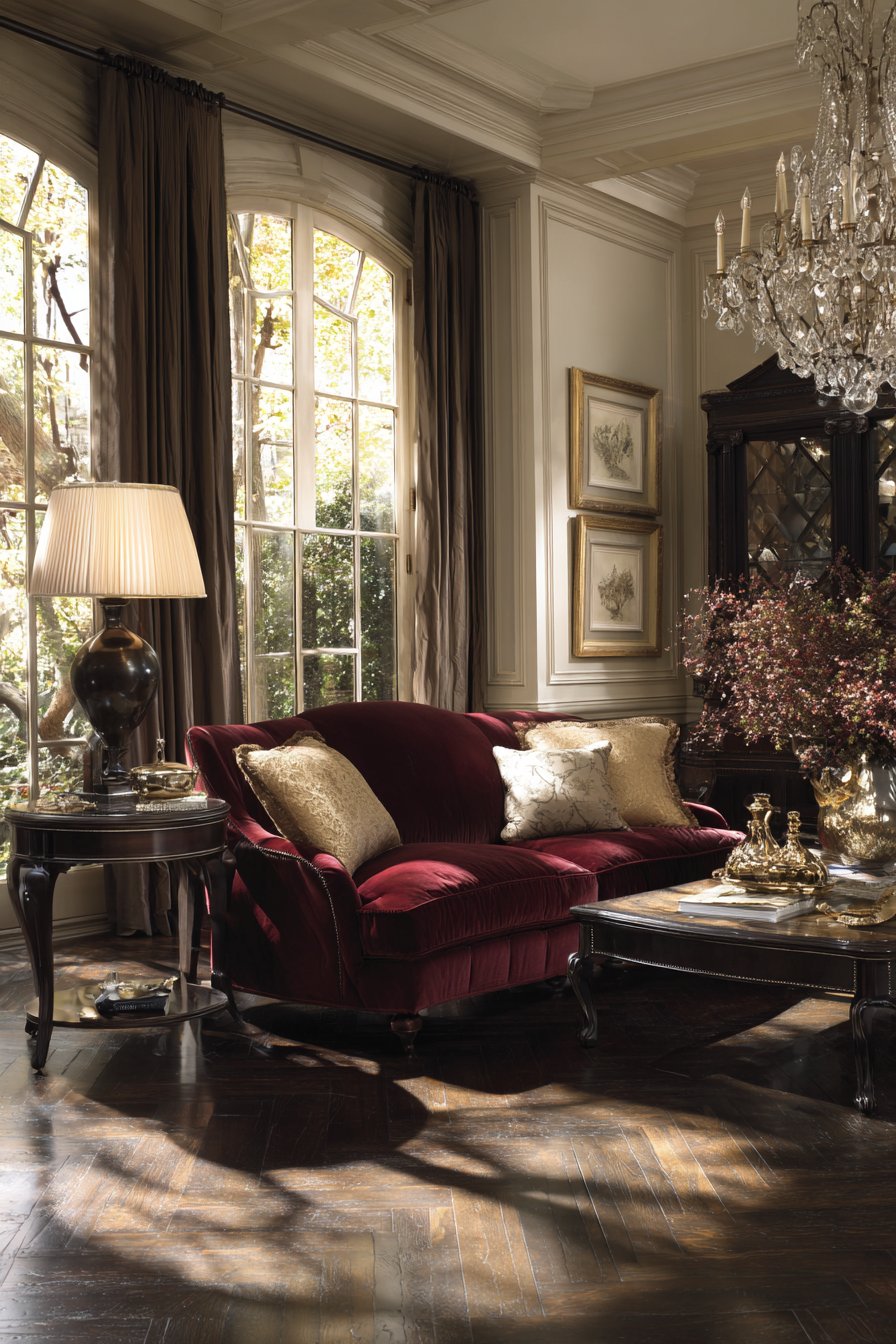
For those who appreciate the grandeur of formal living spaces, a luxurious maroon velvet sofa set against traditional architectural detailing creates an atmosphere of refined elegance that never goes out of style. This formal living room features crown molding that traces the ceiling perimeter, wainscoting painted in soft cream that adds dimension to the walls, and rich hardwood floors polished to a high-gloss finish that reflects light and creates an sense of luxury underfoot. The maroon sofa, with its deep jewel tone and sumptuous velvet upholstery, becomes the centerpiece of a room that speaks to traditional craftsmanship and attention to architectural detail.
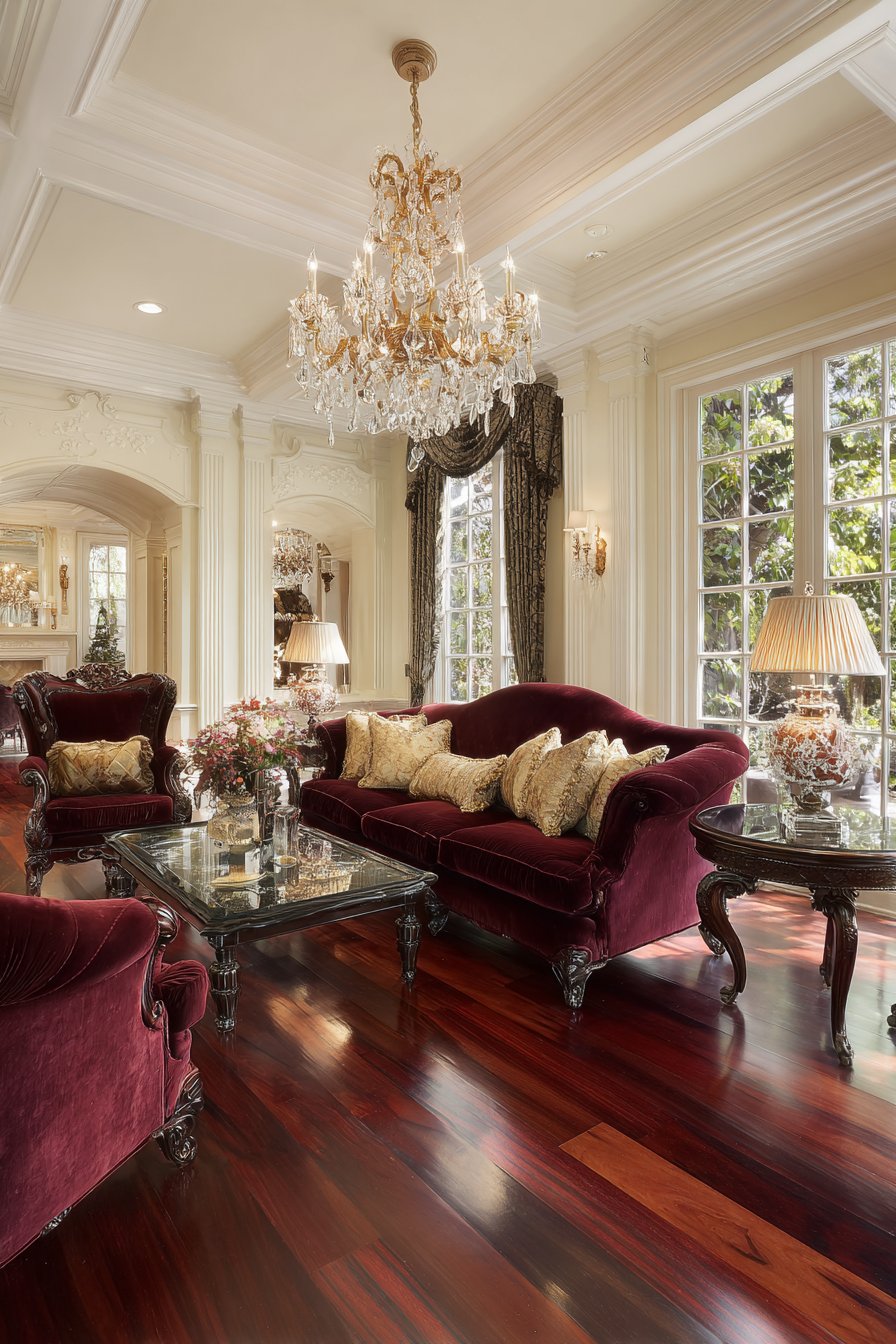
The layering of luxurious elements creates a sense of opulence without crossing into excess. A crystal chandelier suspended from the ceiling provides ambient lighting, its faceted crystals catching and refracting light throughout the space. Table lamps with pleated shades sit atop mahogany side tables with carved details, providing task lighting for reading while contributing to the room’s traditional character. The sofa is accessorized with silk throw pillows in gold and cream, their luxurious fabrics complementing the velvet upholstery while introducing subtle pattern and additional color. Natural light from tall windows dressed with heavy drapes in coordinating tones creates dramatic shadows and highlights that change throughout the day, adding dynamism to the formal space.
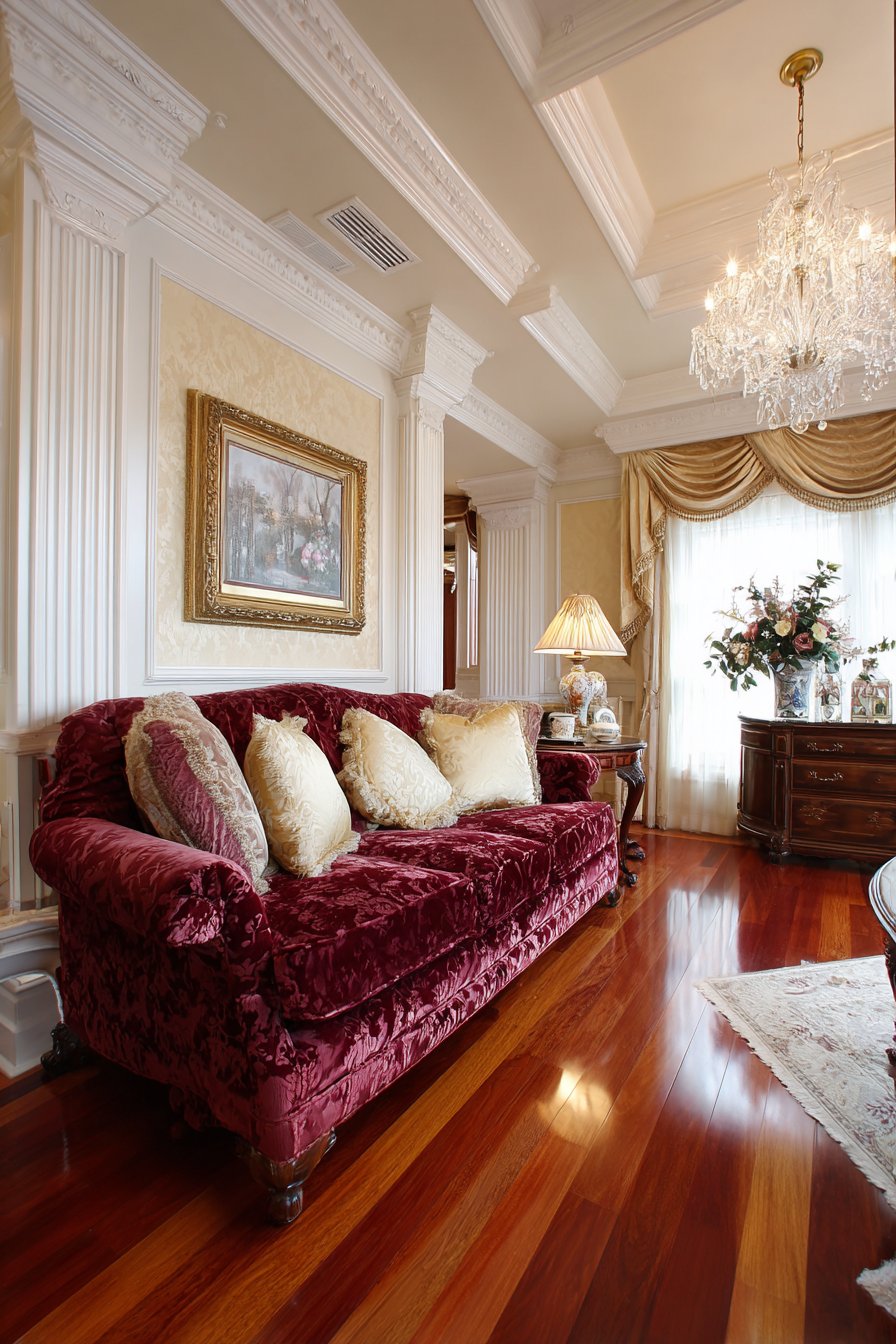
What elevates this traditional formal living room beyond mere stuffiness is the thoughtful balance between grandeur and livability. While all the elements suggest luxury and formality, the comfortable proportions of the maroon sofa and the warm lighting ensure the space feels inviting rather than museum-like. Professional interior photography with careful attention to architectural details captures the refined traditional aesthetic, showing how classical design principles—symmetry, proportion, quality materials, and careful craftsmanship—create timeless interiors. The maroon sofa serves as the luxurious focal point that ties together all these traditional elements while providing a dramatic pop of color against the neutral walls and architectural details.
Key Design Tips:
- Invest in quality architectural details like crown molding and wainscoting for authentic traditional character
- Choose crystal or brass lighting fixtures to add traditional glamour and elegance
- Incorporate luxurious fabrics like velvet for the sofa and silk for accent pillows
- Polish hardwood floors to a high gloss for maximum light reflection and formal elegance
- Use symmetrical furniture arrangements to create the balance traditional design requires
- Select heavy window treatments in coordinating colors to frame views and control natural light
10. Coastal Relaxed Comfort
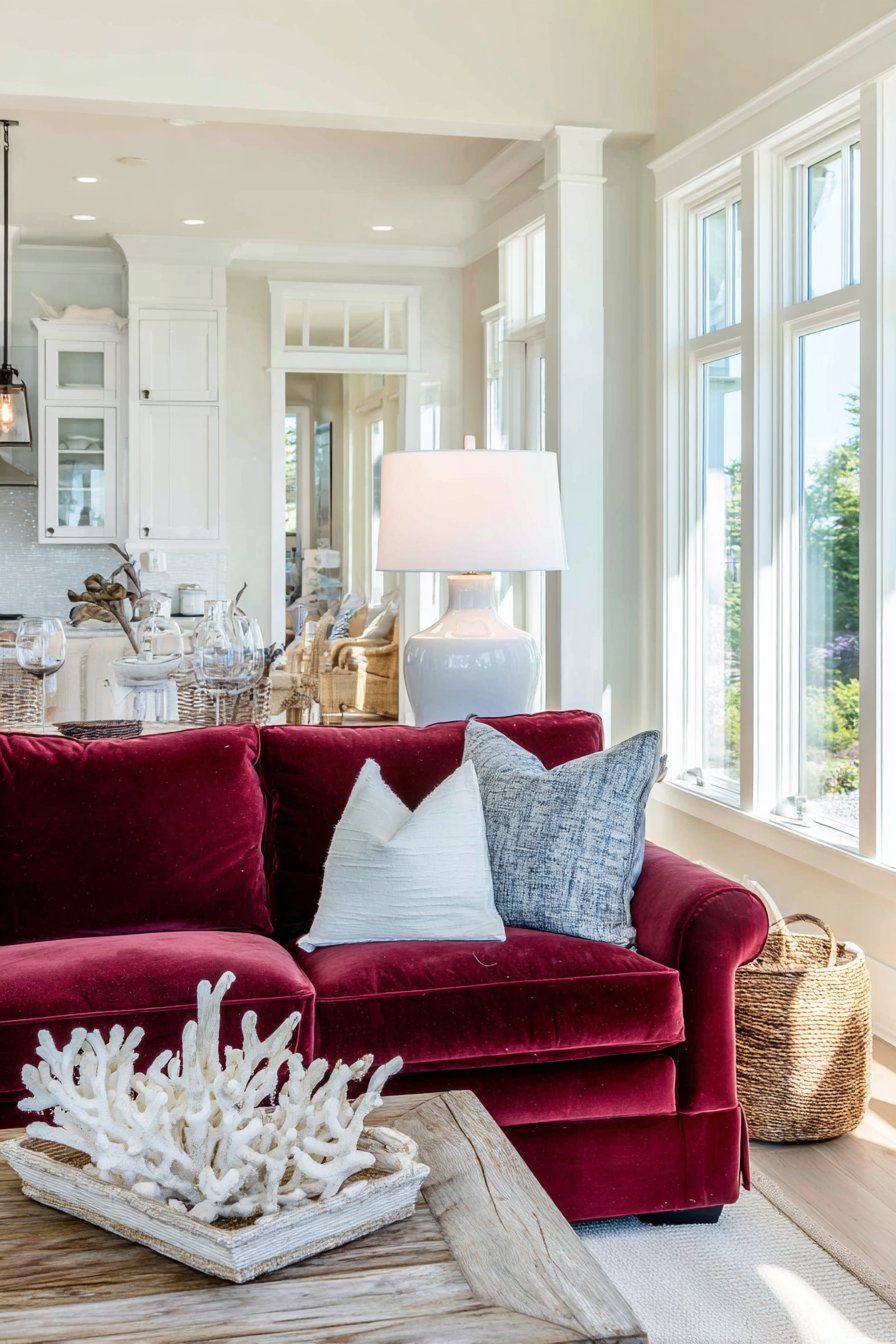
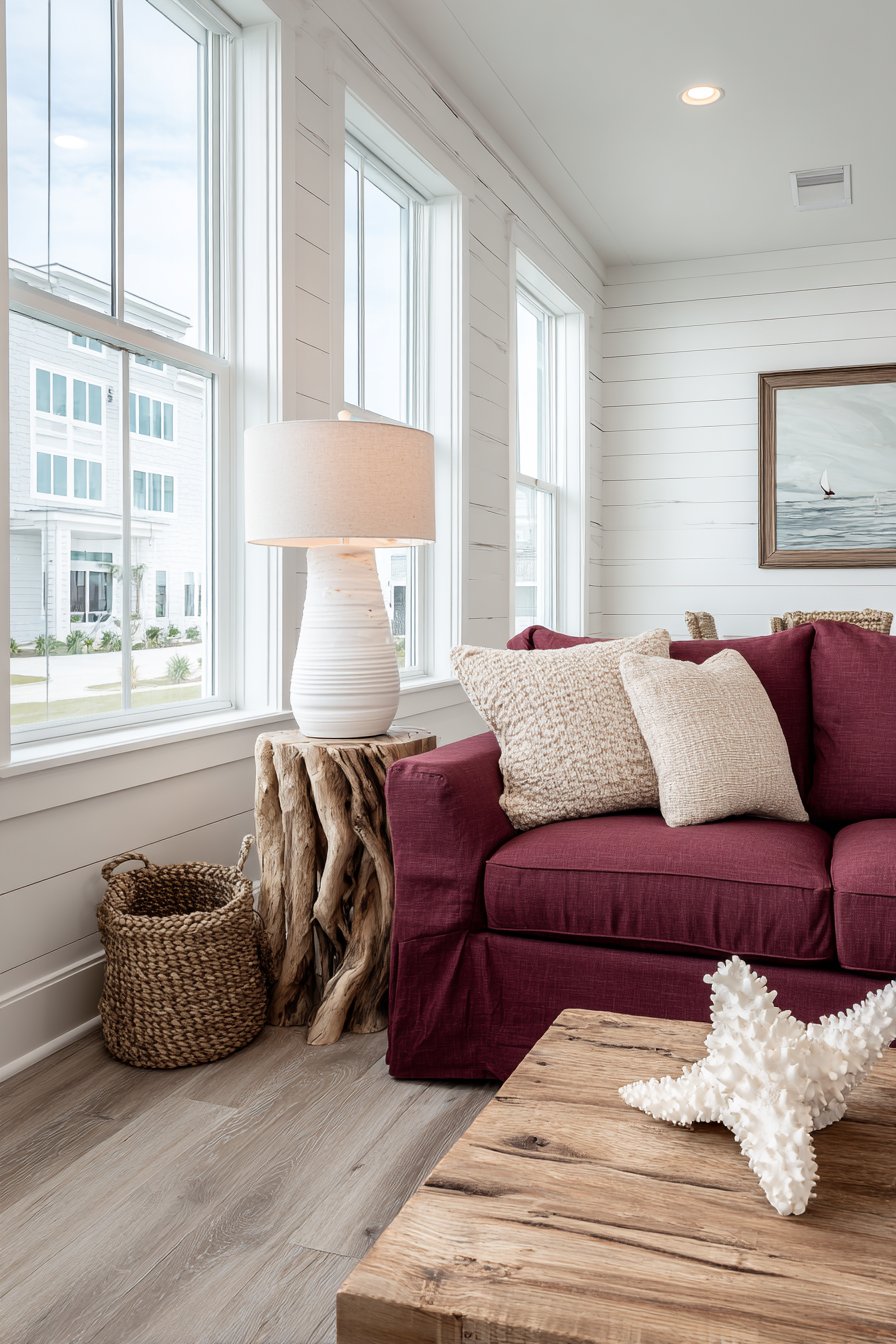
Breaking away from expected coastal color palettes dominated by blues and whites, this beach-inspired living room demonstrates how a maroon slipcovered sofa can add unexpected warmth to coastal design. The casual slipcover construction aligns perfectly with the relaxed, lived-in aesthetic that defines true beach house style—these are spaces meant to be enjoyed without worry about sand or saltwater. Against whitewashed wood floors and a shiplap accent wall painted in pale blue-grey, the maroon sofa provides a grounding element that prevents the space from feeling too cool or washed out, adding richness and visual weight that balances the light, airy surroundings.
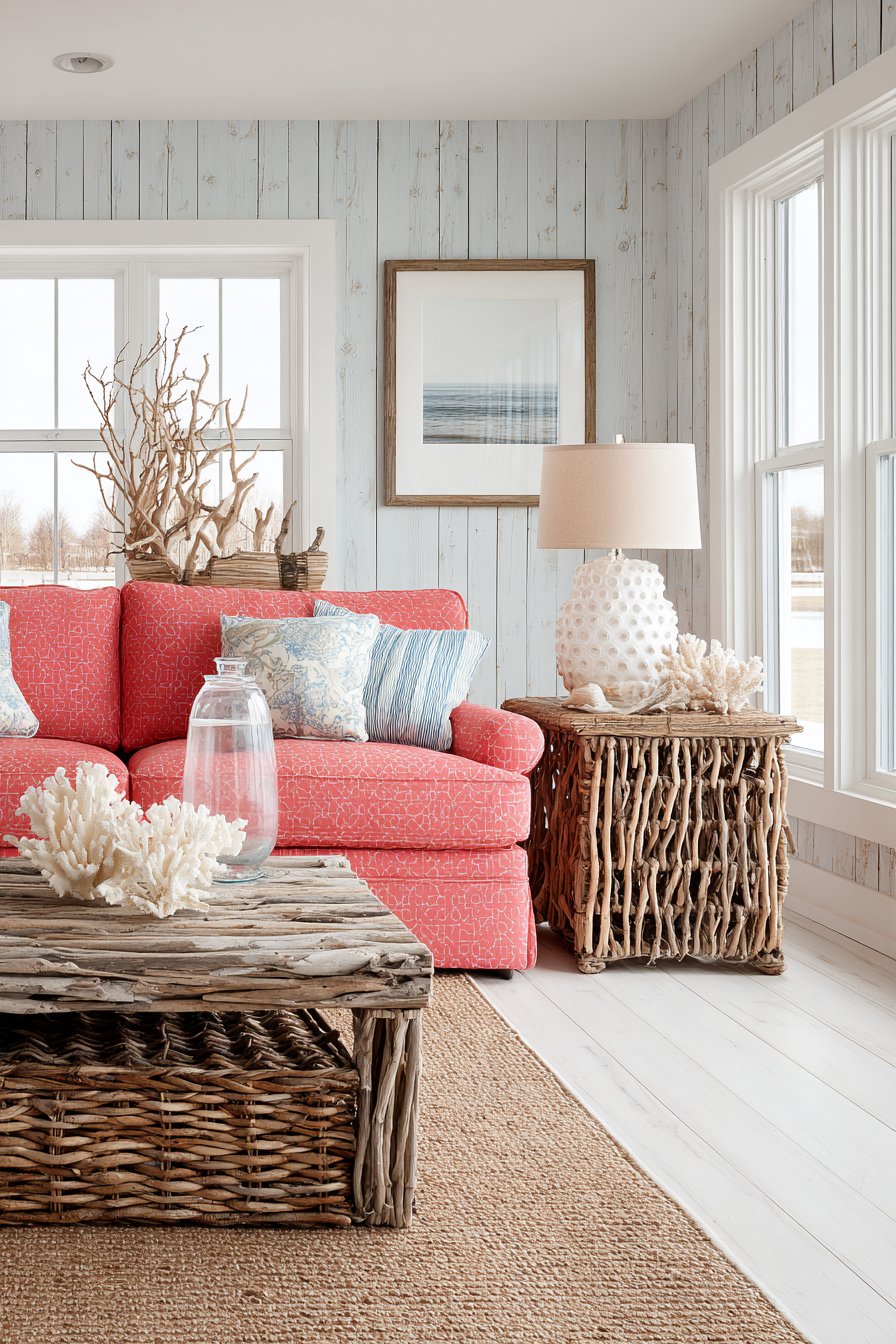
The natural fiber accessories throughout the space reinforce the coastal theme while complementing the unexpected sofa color. A driftwood coffee table with its silver-grey patina and organic, weathered form serves as a sculptural centerpiece, its unique character telling stories of time spent by the sea. Woven seagrass baskets in various sizes provide storage while adding textural interest and organic warmth. White ceramic lamps with simple silhouettes and coral decorative objects continue the coastal narrative without resorting to literal nautical cliches like anchors or ship wheels. The overall effect is sophisticated coastal design that feels authentic and unforced.
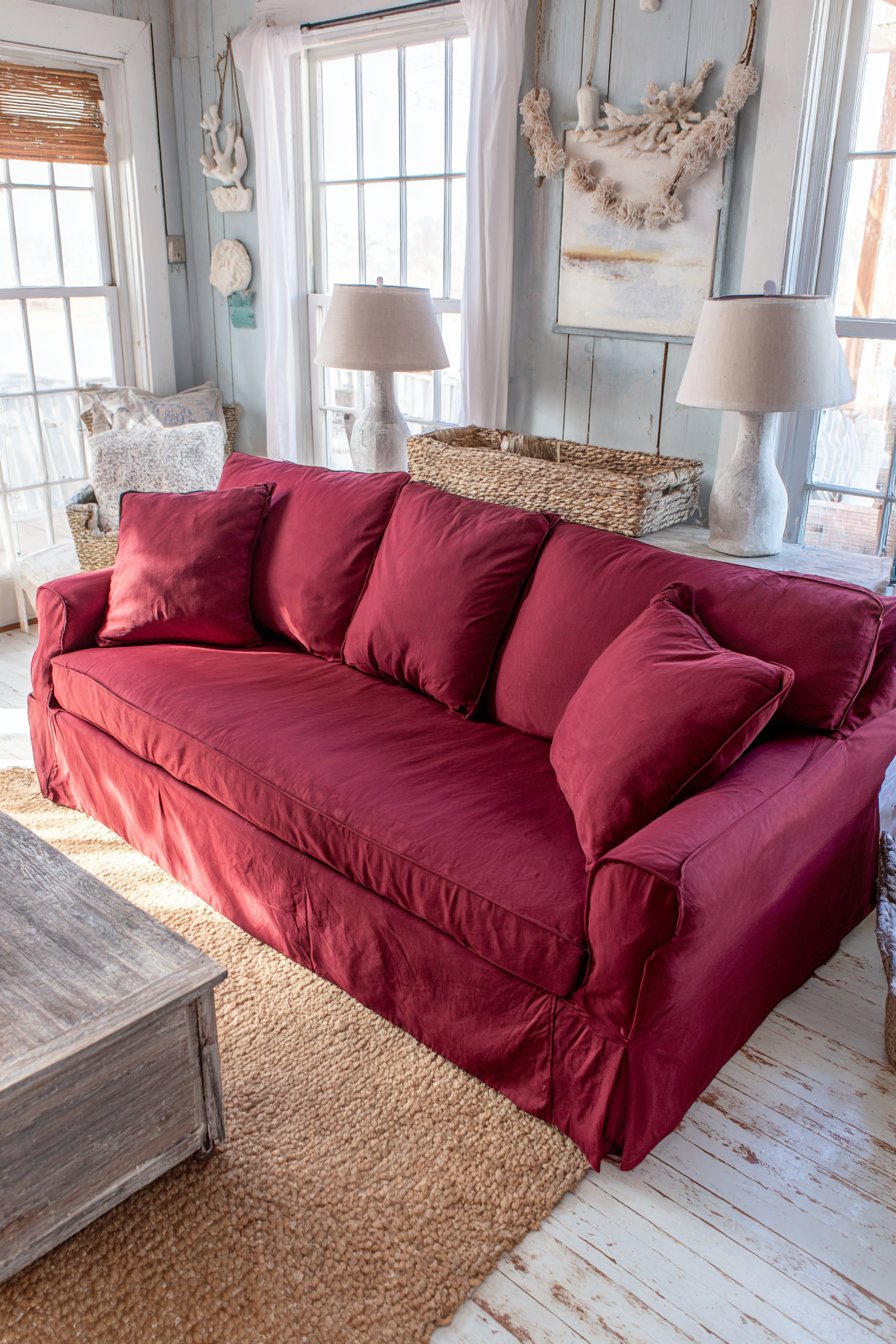
Bright natural light from multiple windows creates the airy atmosphere essential to coastal interiors, flooding the space with illumination that prevents the maroon sofa from feeling too heavy or dark. The whitewashed floors and pale blue-grey walls reflect and amplify this natural light, creating a bright, cheerful environment that evokes beach house living even in landlocked locations. Interior design photography captures the relaxed aesthetic, showing how the unexpected maroon sofa adds warmth and visual interest to the light, breezy color palette without disrupting the coastal character. This approach proves that coastal design can successfully incorporate rich, warm colors when balanced with plenty of light neutrals and natural materials.
Key Design Tips:
- Choose slipcovers for easy cleaning and the casual aesthetic that defines relaxed coastal style
- Incorporate natural materials like driftwood, seagrass, and jute for organic coastal texture
- Paint walls in pale blues, greens, or greys to evoke sky and sea without being literal
- Maximize natural light with minimal window treatments and strategic furniture placement
- Add warmth through unexpected color choices like maroon to prevent spaces from feeling cold
- Select simple, unfussy furniture silhouettes that support the relaxed, unpretentious coastal aesthetic
11. Art Deco Glamour and Curves
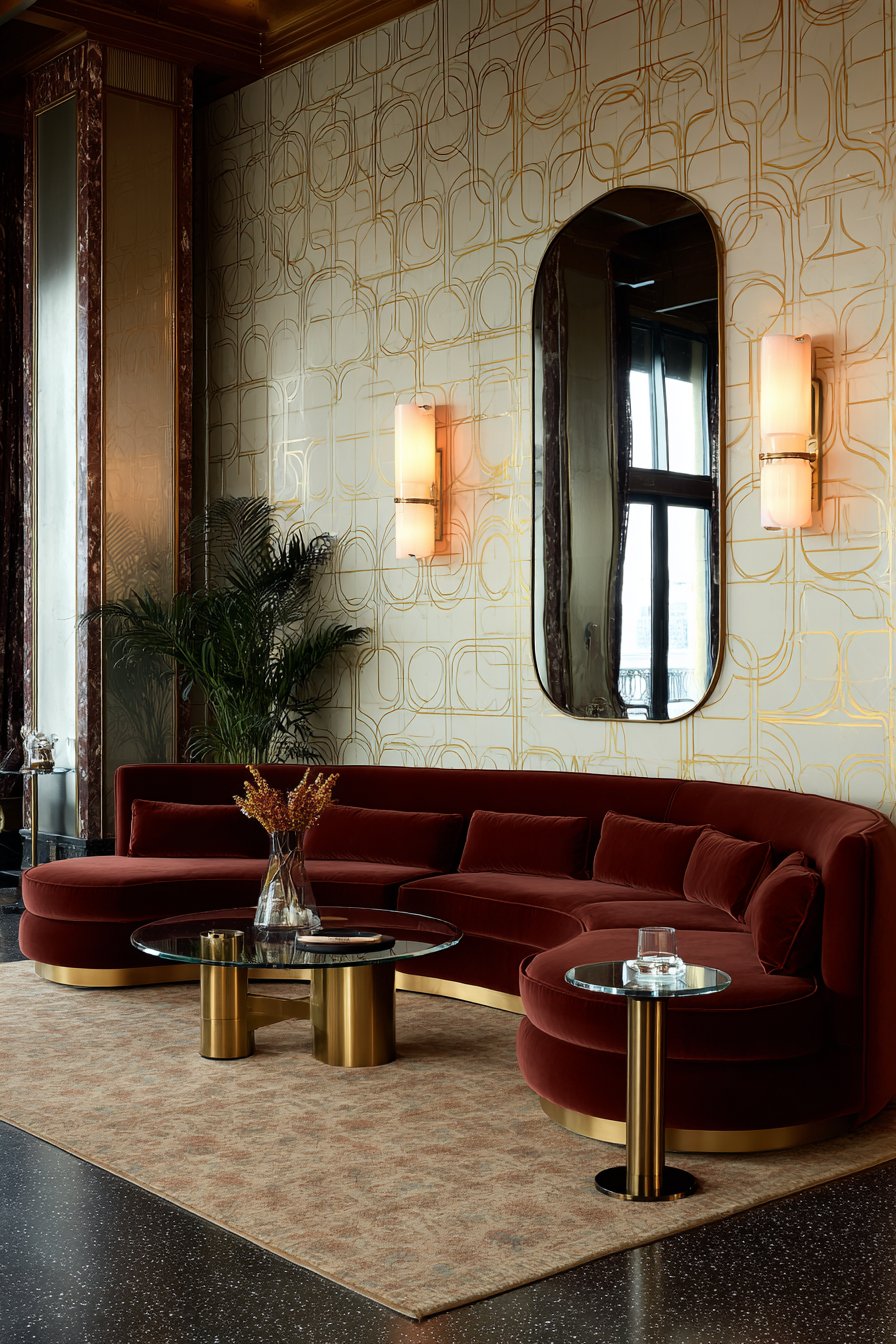
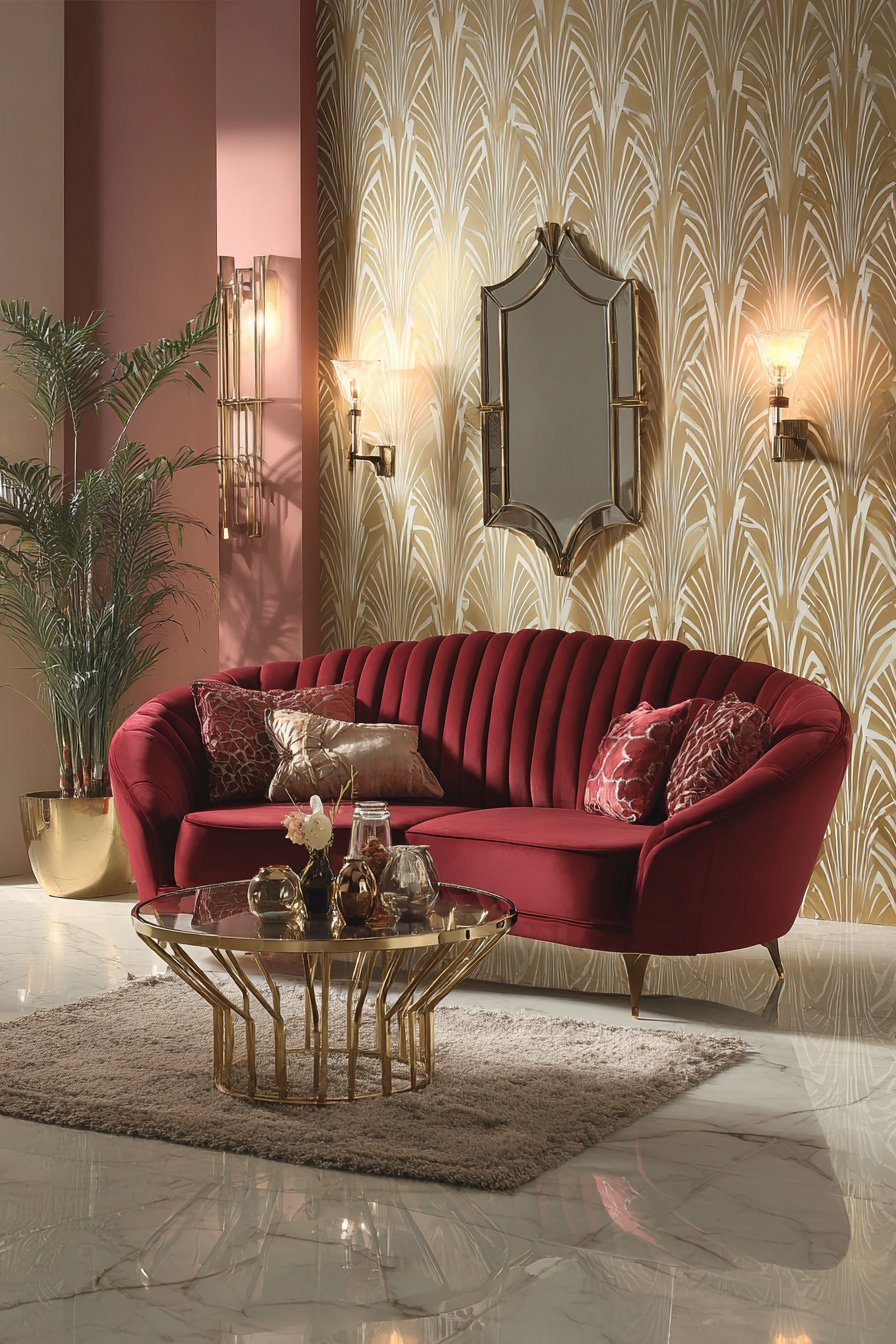
The curved silhouette of a rounded maroon sofa finds its perfect setting in a contemporary living room inspired by art deco’s geometric elegance and glamorous excess. The sculptural quality of the curved sofa—a departure from traditional rectangular forms—creates visual drama and invites conversation from multiple angles, its rounded profile softening the space while maintaining a bold presence. Against geometric patterned wallpaper in cream and gold that references the mathematical precision of art deco design, the maroon upholstery provides rich contrast. Polished marble flooring reflects light and adds to the sense of luxury that defines the style, while brass accent furniture with clean lines and decorative details reinforces the period aesthetic.
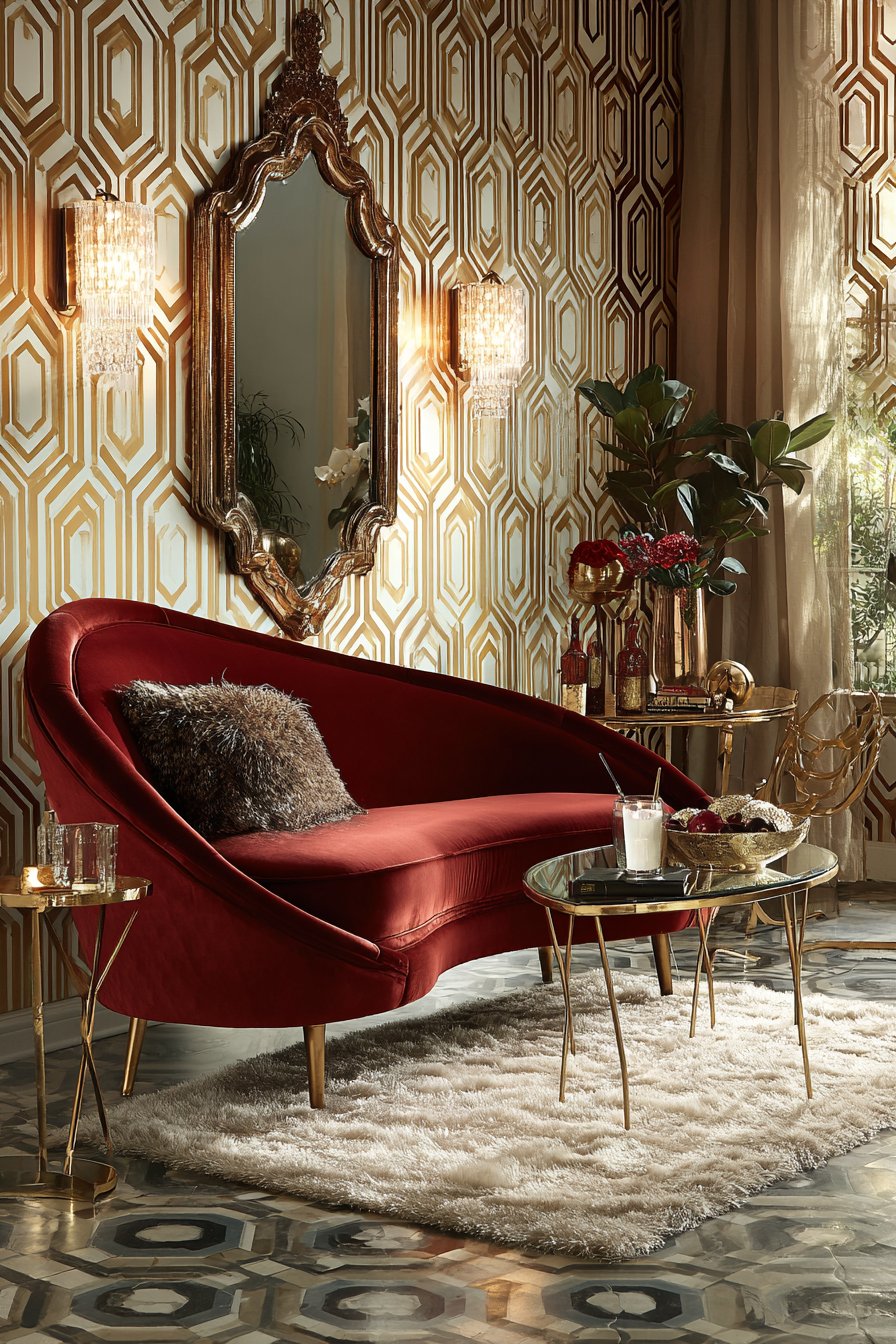
The commitment to art deco principles extends throughout the space. A round glass coffee table with a gold frame sits at the center of the curved sofa, its circular form echoing the sofa’s curves and maintaining the geometric consistency that art deco demands. Sconce lighting with frosted glass shades flanks a large decorative mirror with sunburst detailing, a signature art deco motif that adds both practical illumination and aesthetic impact. The careful balance between geometric precision and luxurious materials—glass, marble, brass, and velvet—creates the sense of refined glamour that made art deco the defining style of the jazz age and continues to appeal to those who appreciate bold, confident design.
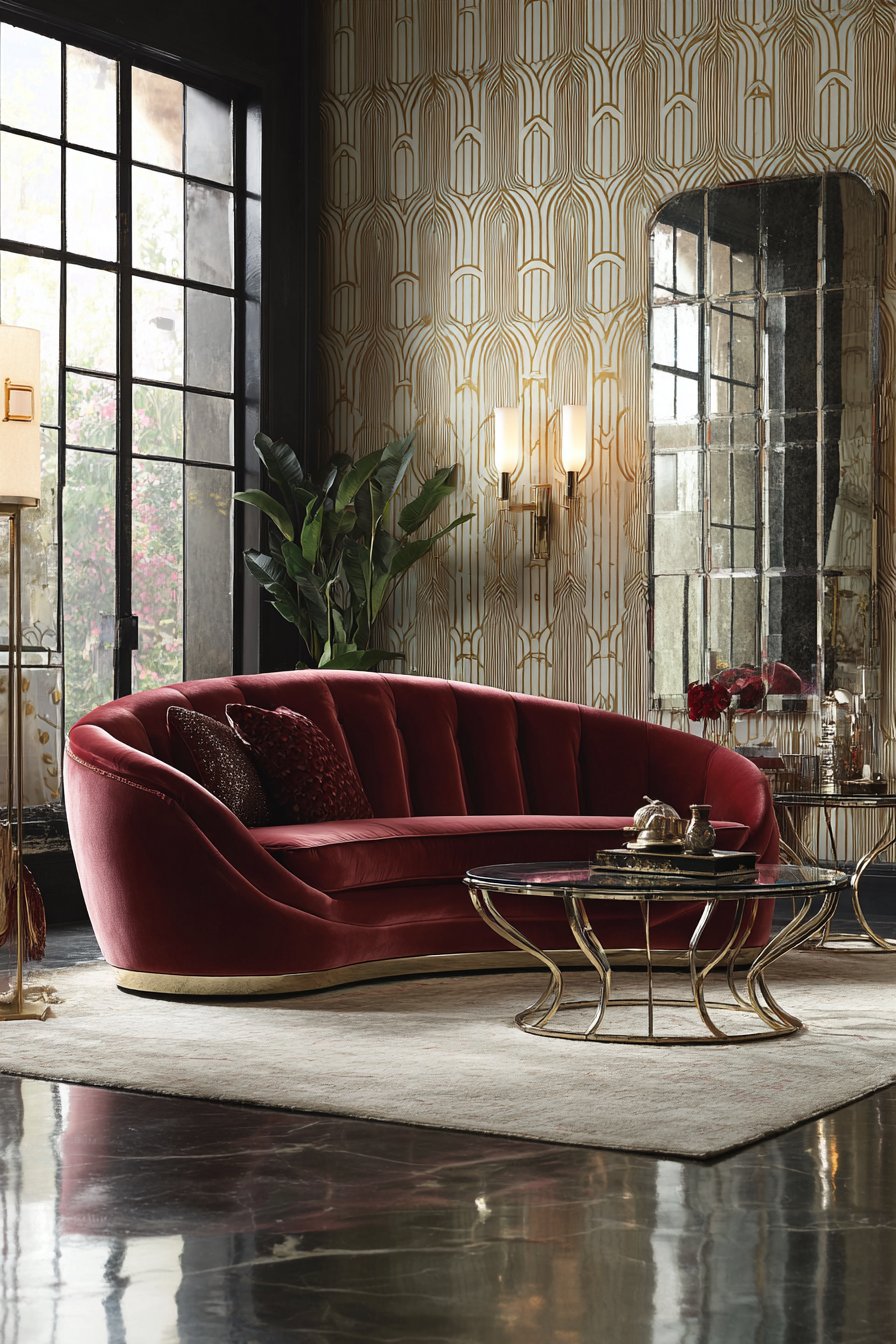
The combination of natural and artificial lighting works together to highlight the sculptural quality of the curved maroon sofa throughout the day and into evening hours. Daylight streaming through windows emphasizes the sofa’s dimensional form, creating highlights and shadows that accentuate its curves, while the sconces and ambient lighting ensure the space maintains its glamorous character after dark. Professional photography captures the luxe aesthetic with careful attention to balanced exposure, showing how the various metallic finishes interact and how the maroon upholstery anchors the lighter, more reflective surfaces. The result is a living room that feels both historically informed and entirely current, proving that art deco’s blend of geometry and glamour remains timelessly appealing.
Key Design Tips:
- Choose curved furniture silhouettes to soften geometric patterns and create visual interest
- Incorporate brass, gold, and metallic finishes liberally for authentic art deco glamour
- Use geometric patterns in wallpaper, rugs, or artwork to reference the style’s mathematical precision
- Select luxurious materials like marble, velvet, and polished metals for appropriate opulence
- Include signature art deco motifs like sunbursts, stepped forms, or zigzag patterns
- Balance ornamental elements with clean lines to prevent spaces from feeling cluttered or overwrought
12. Transitional Bridge Between Styles
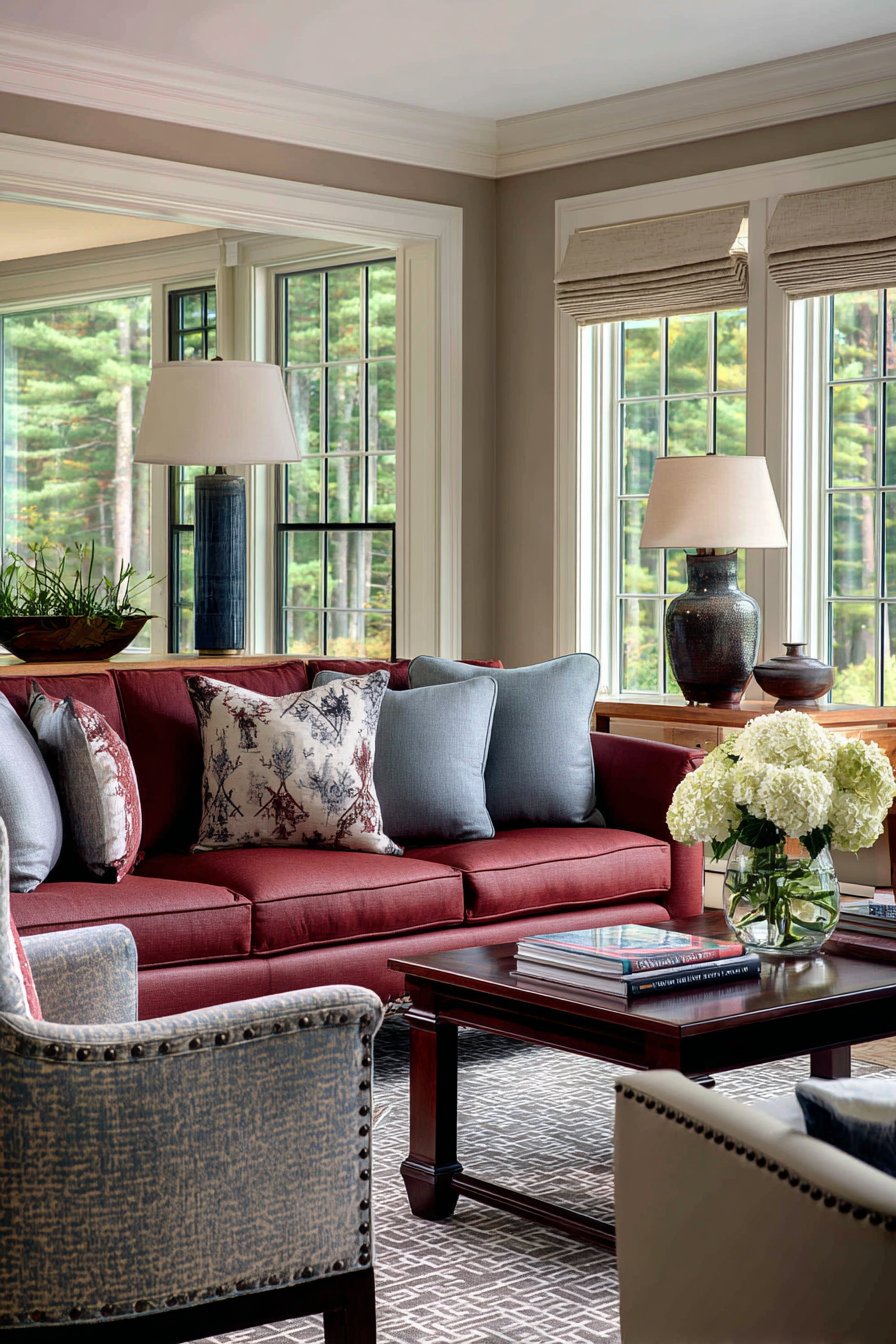
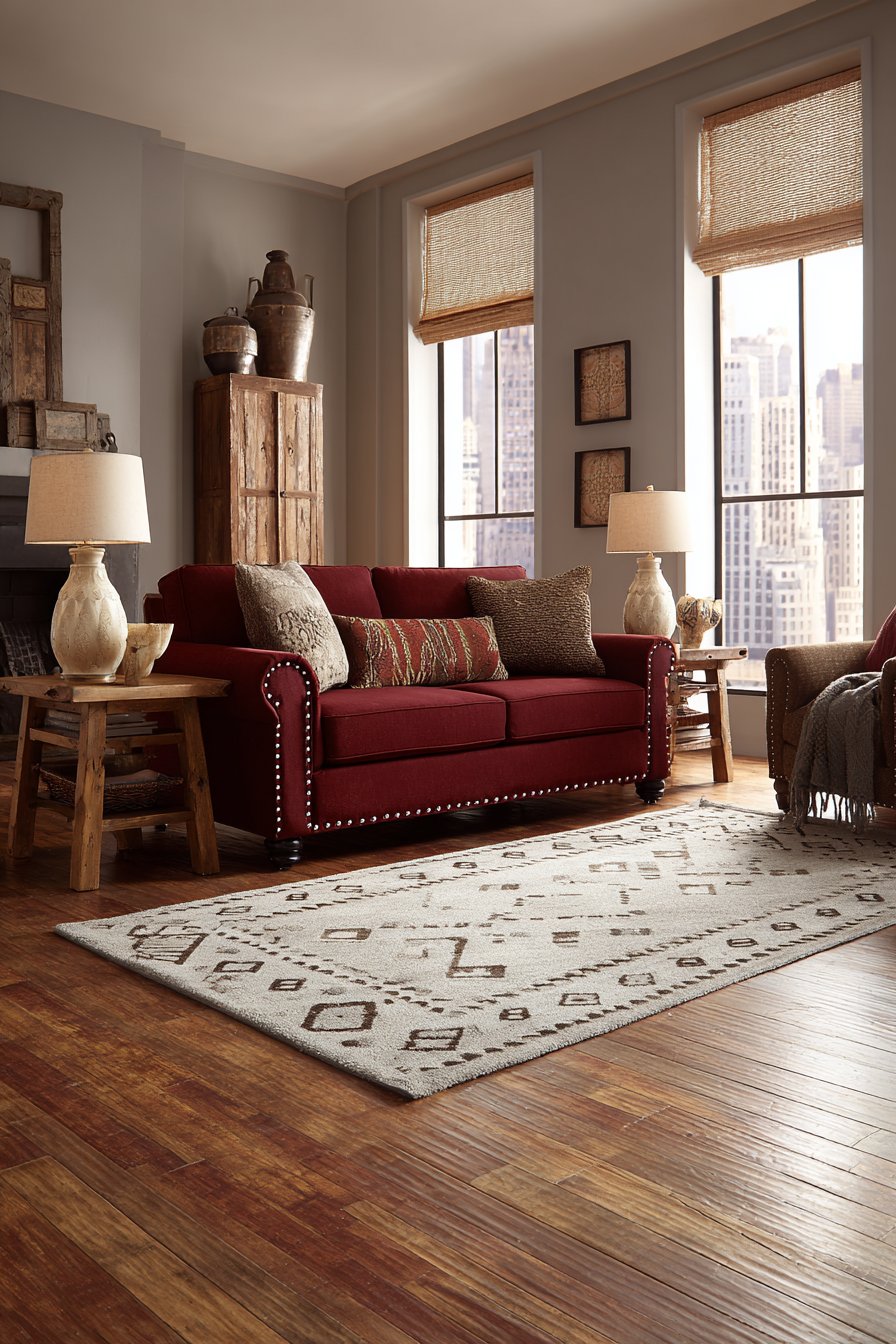
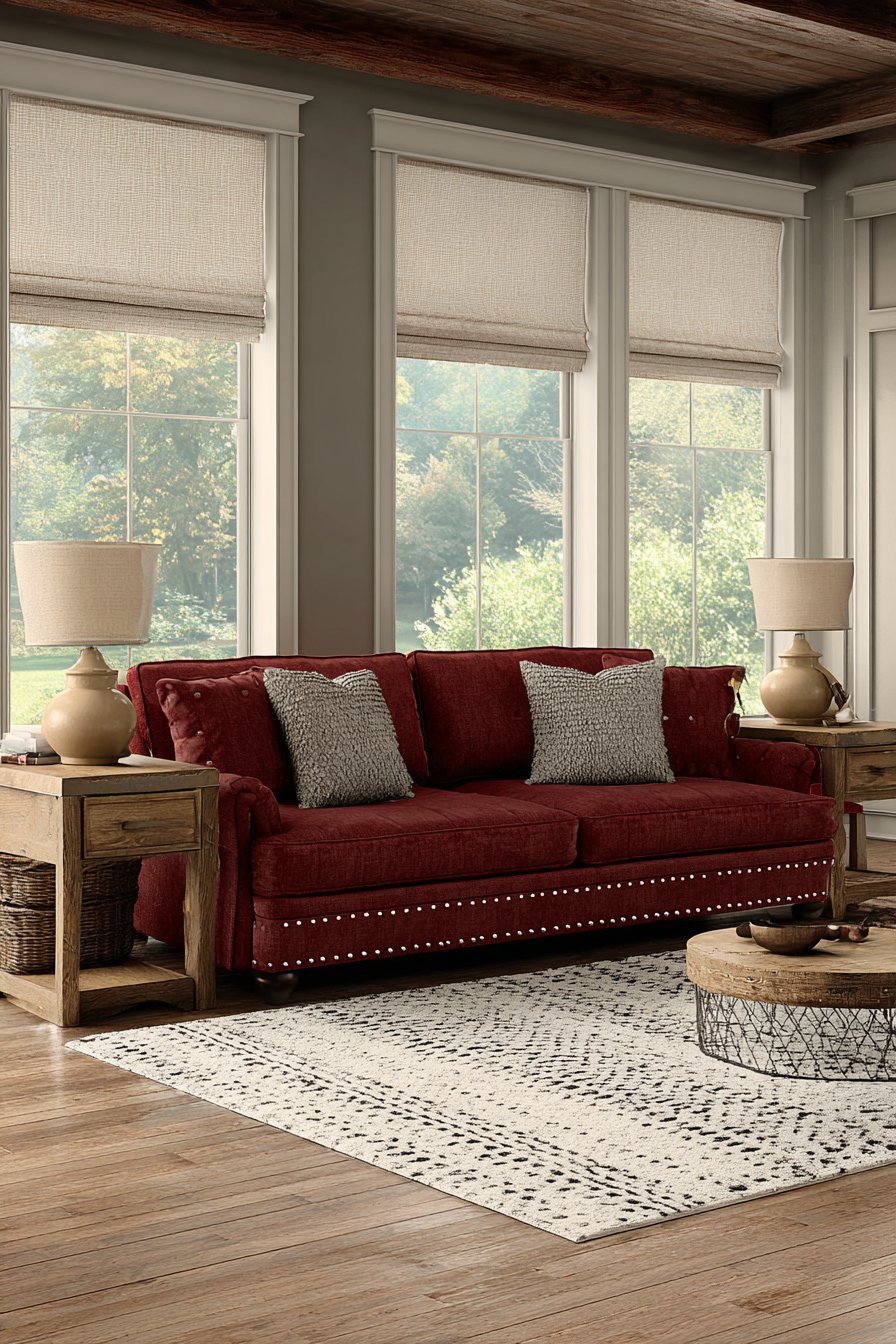
The transitional design approach—bridging traditional and contemporary aesthetics—finds ideal expression in a maroon sofa with nailhead trim that nods to classic design while maintaining clean lines appropriate for modern living. This living room demonstrates how thoughtful design can honor traditional comfort while embracing contemporary simplicity. The neutral taupe walls provide a versatile backdrop that works equally well with traditional or modern accessories, while medium-toned hardwood floors offer warmth without committing to either dark traditional or pale contemporary extremes. The traditional area rug features updated geometric patterns rather than ornate florals, perfectly embodying the transitional philosophy of respecting the past while moving forward.
The furniture mix throughout this space deliberately combines elements from different periods and styles, creating visual harmony through careful scale and color coordination rather than period matching. Upholstered accent chairs with contemporary silhouettes sit alongside a traditional wooden side table, while modern table lamps with clean ceramic bases and linen shades provide lighting without declaring allegiance to any particular era. Large windows dressed with Roman shades in natural linen filter daylight beautifully, creating soft, diffused illumination that flatters both traditional and contemporary elements. This balanced approach ensures the space feels collected and personal rather than showroom perfect.
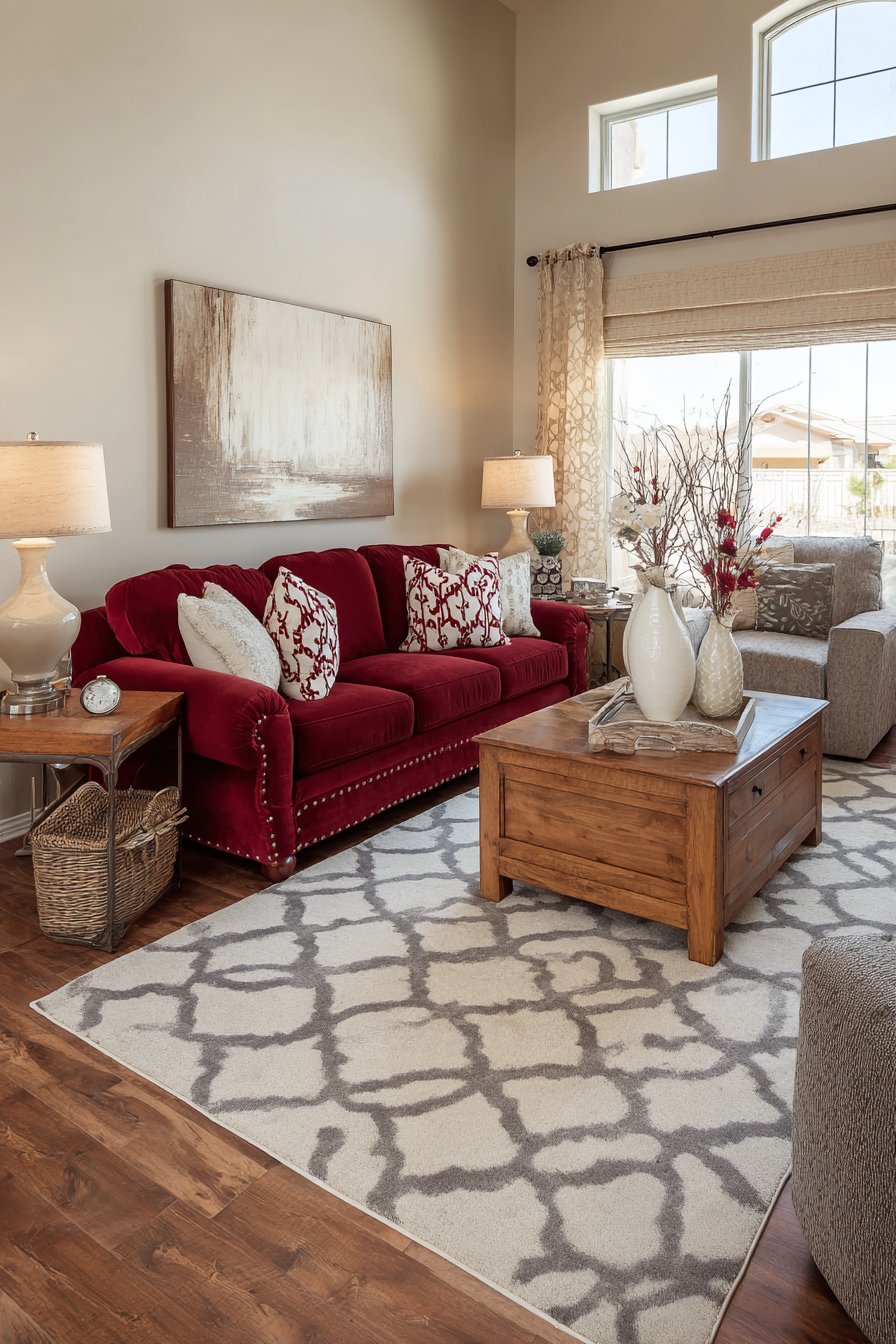
The maroon sofa with its nailhead trim detail serves as the perfect transitional anchor piece, incorporating traditional craftsmanship details while maintaining the clean lines and comfortable proportions that contemporary living demands. The nailhead trim adds subtle decorative interest without overwhelming the simple form, walking the fine line between ornamentation and restraint that defines successful transitional design. Wide-angle interior photography captures the harmonious blend of styles, showing how elements from different periods can coexist peacefully when unified by appropriate scale, consistent color temperature, and thoughtful arrangement. The result is a living room that appeals to those who appreciate both traditional comfort and contemporary clarity without wanting to commit fully to either extreme.
Key Design Tips:
- Mix furniture from different periods while maintaining consistent scale and proportion
- Choose neutral wall colors that work equally well with traditional and contemporary elements
- Incorporate traditional details sparingly on otherwise simple forms for subtle interest
- Update traditional patterns by simplifying them or presenting them in unexpected colors
- Use natural materials and fabrics that transcend specific period associations
- Create balance between ornamentation and restraint to prevent tilting too far in either direction
13. Monochromatic Red Spectrum Sophistication
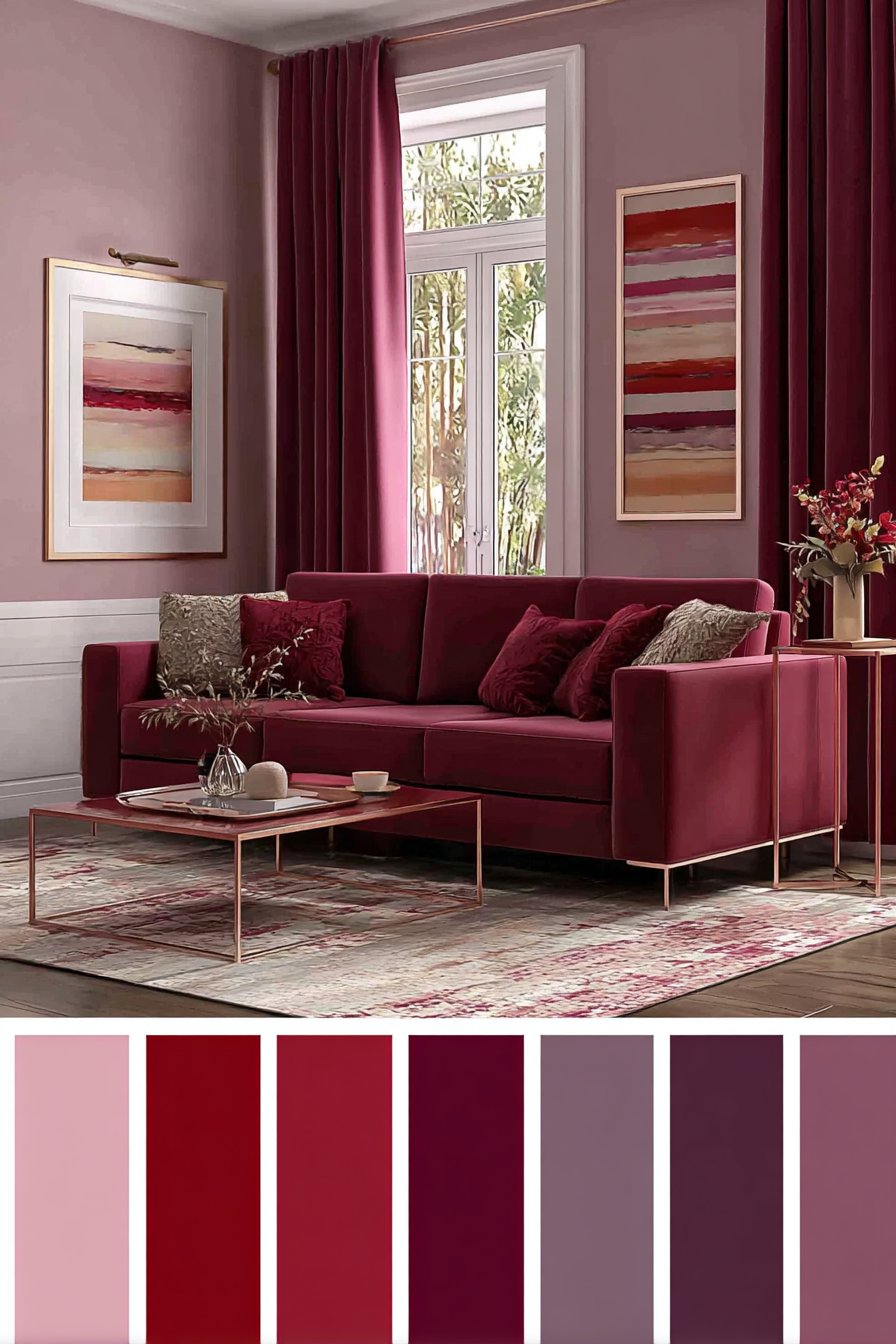
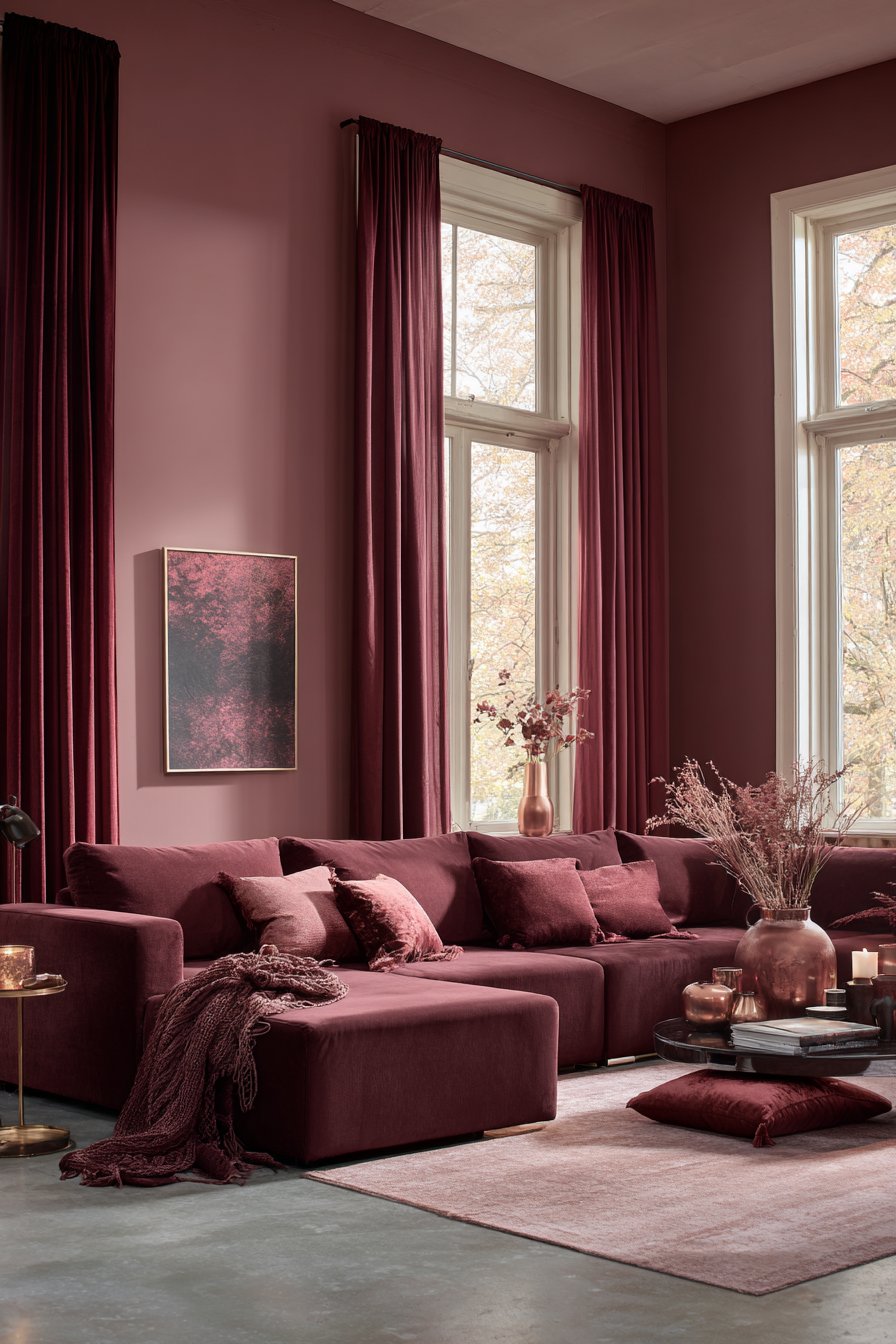
For the design-confident homeowner willing to commit to a bold vision, a monochromatic living room exploring the red color spectrum creates unforgettable impact. The maroon sofa becomes one element within a carefully orchestrated gradient of related hues—varying shades of red, burgundy, wine, and pink work together to create a sophisticated color story that’s simultaneously bold and harmonious. The walls painted in a soft blush tone provide a gentle backdrop that makes deeper tones pop without competing for attention, while wine-colored curtains frame tall windows and add depth at the room’s perimeter. This approach requires confidence and careful color selection, but the payoff is a uniquely cohesive space that showcases color as the primary design element.
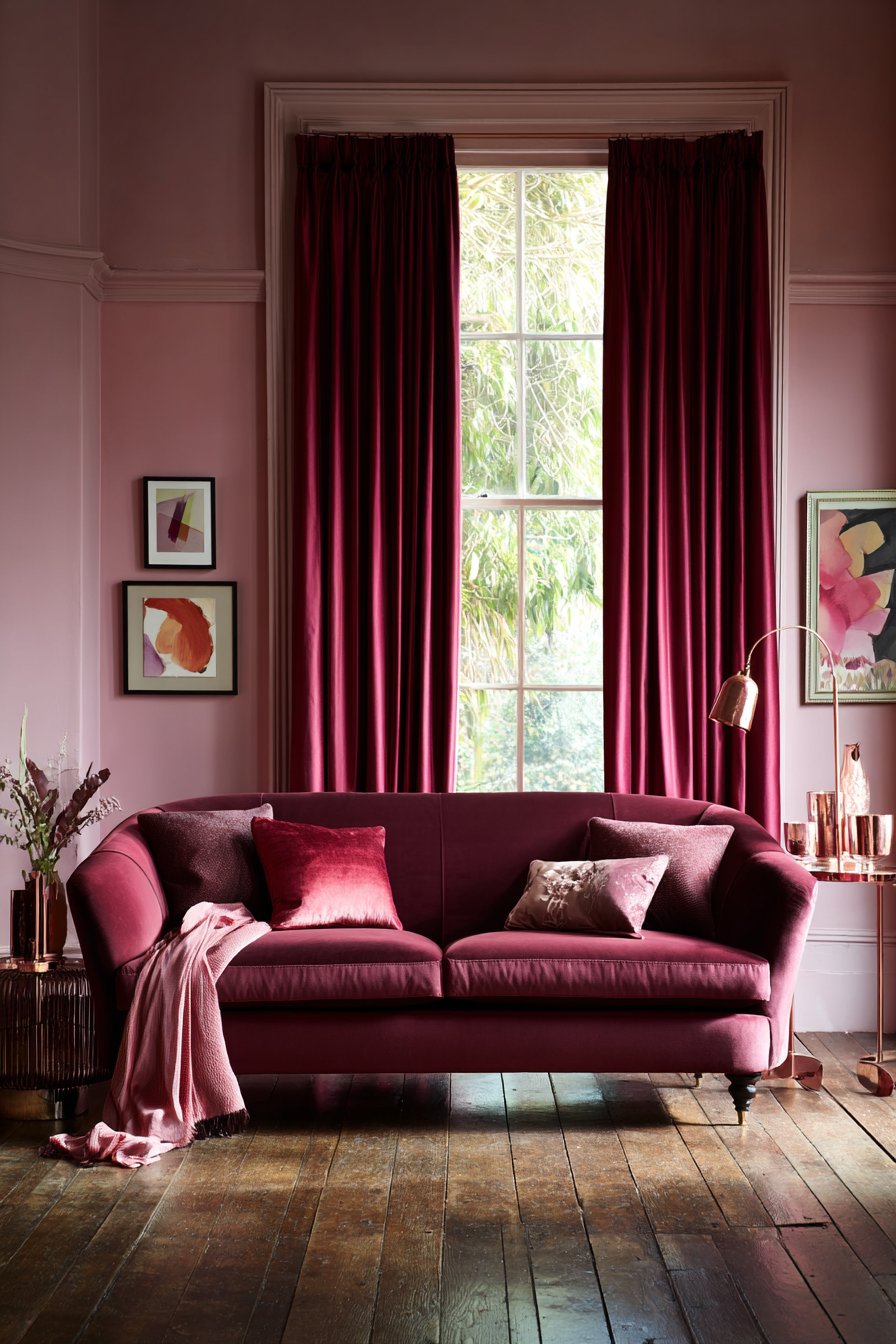
The monochromatic strategy extends to every design decision. Accessories include rose gold metal accents that bridge the gap between warm and cool tones within the red spectrum, burgundy velvet throw pillows that add textural variety while staying within the color family, and abstract artwork incorporating the full range of reds from pale pink through deep burgundy. Rather than feeling flat or one-note, the space gains visual interest through the subtle variations in tone, saturation, and value across different surfaces and materials. The natural light streaming through windows creates tonal variations throughout the day, revealing how dramatically colors shift in different lighting conditions and adding dynamism to the deliberately limited palette.
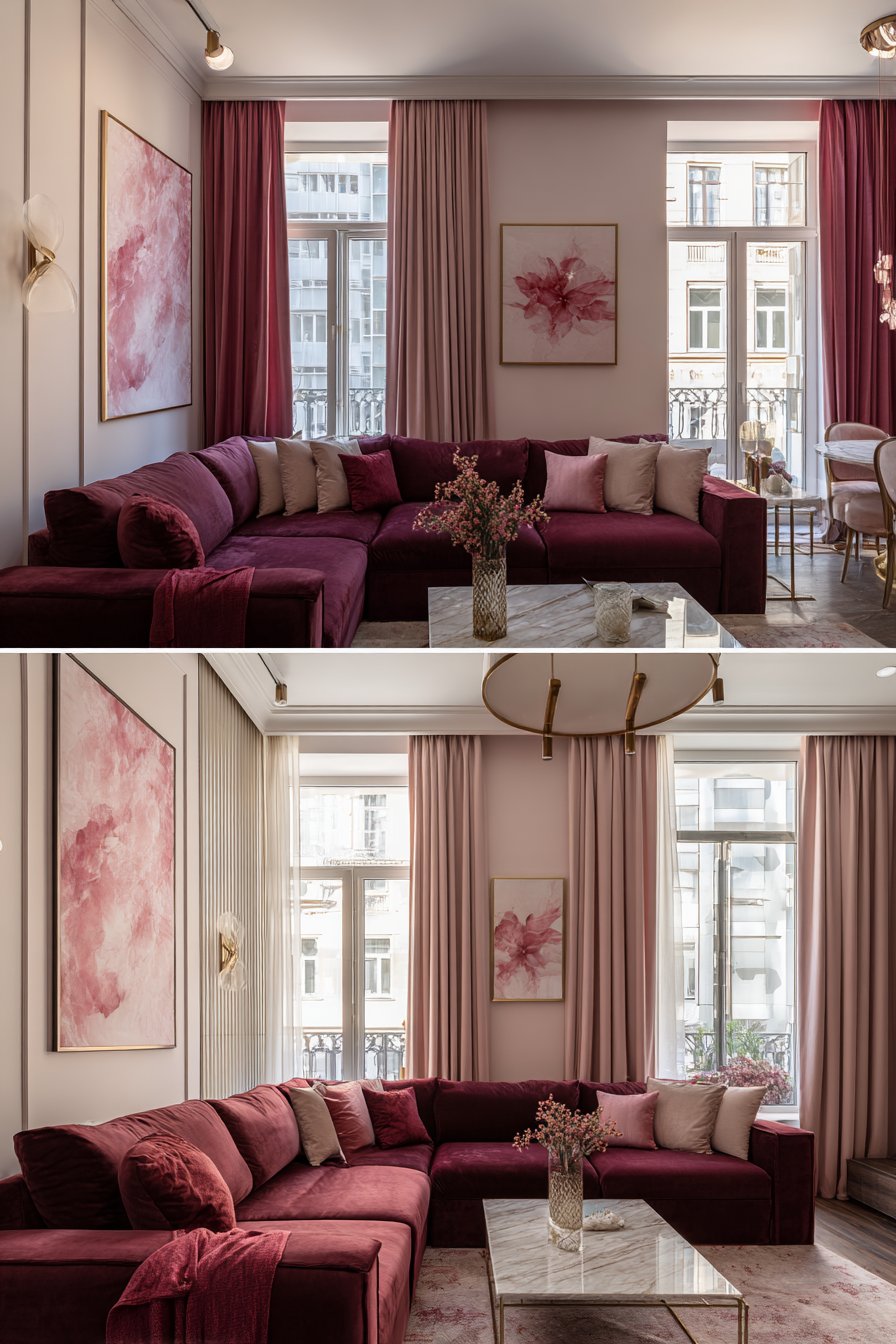
Professional interior photography emphasizing color harmony captures the sophisticated monochromatic palette with careful attention to how the maroon sofa serves as the central anchor within the color spectrum. The varying shades create depth and prevent the bold color story from feeling overwhelming—lighter tones recede while deeper tones advance, creating a sense of layering and dimension that purely decorative elements might not achieve. This approach demonstrates that monochromatic design need not be boring or flat; when executed with attention to tone, texture, and lighting, a single color family can provide all the variety and interest a space needs while making a definitive design statement.
Key Design Tips:
- Select colors from a single color family but vary the tone, saturation, and value for visual interest
- Use the lightest tones on walls and the deepest tones on furniture to create appropriate weight distribution
- Incorporate metallic accents that bridge warm and cool undertones within your chosen color family
- Add texture aggressively to prevent monochromatic spaces from appearing flat
- Consider how natural light affects color perception throughout the day when selecting specific shades
- Include artwork that explores the full range of your color spectrum to tie the palette together
14. Eclectic Collected Character
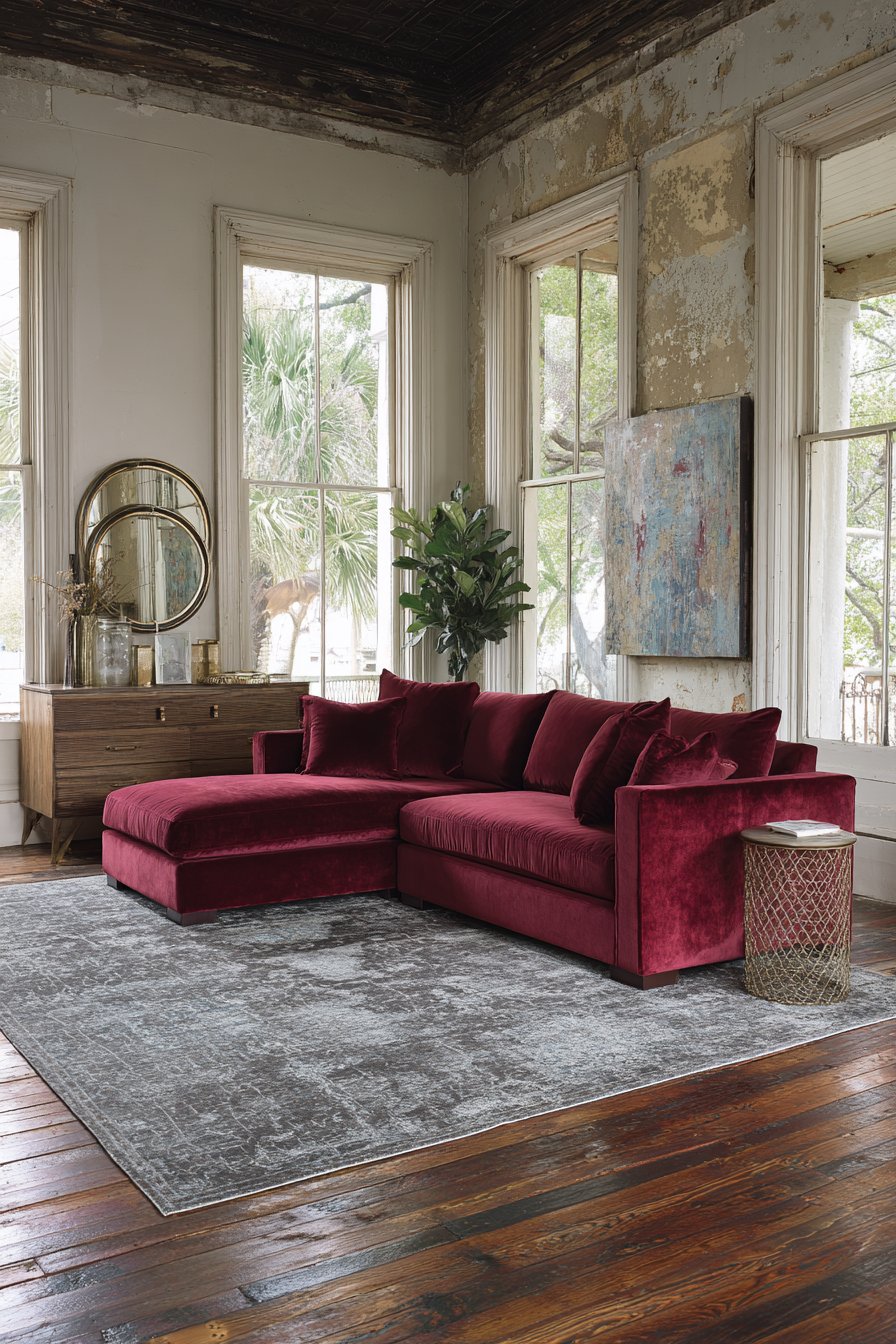
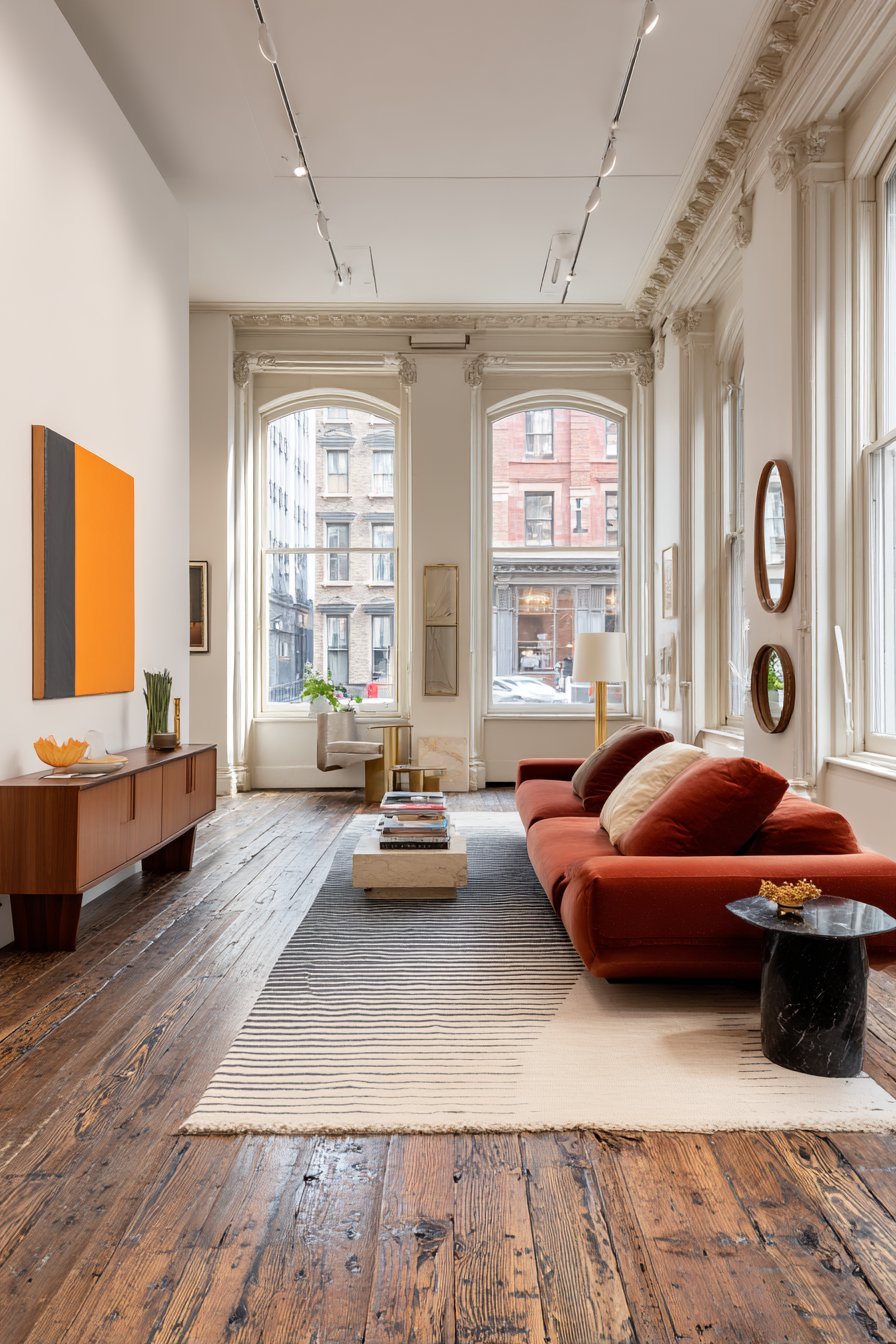
For those who view their homes as ever-evolving collections of meaningful objects and furniture gathered over time, an eclectic living room centered on a maroon sofa with loose cushions celebrates personal history and individual taste. The space features a curated mix that defies easy categorization—a mid-century modern credenza sits beneath contemporary abstract art, while an antique side table with carved details holds a modern geometric lamp. The walls display a collection of mirrors in various styles and finishes, creating visual intrigue while serving the practical purpose of reflecting light and making the space feel larger. Natural wood floors show authentic wear patterns that tell stories of years of living.
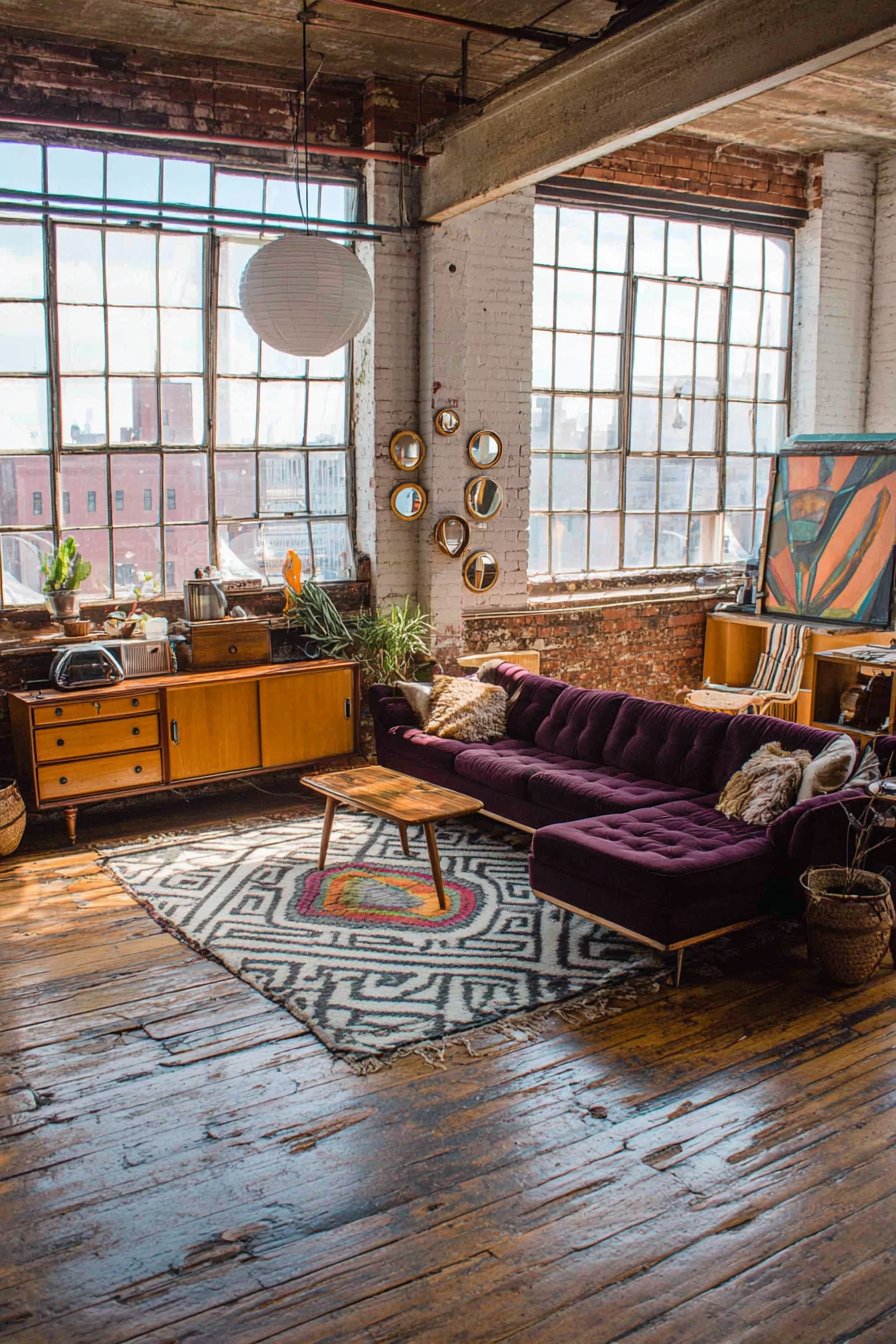
What makes eclectic design successful rather than chaotic is the presence of unifying elements that create visual coherence despite stylistic diversity. In this space, the maroon sofa serves as the anchor that grounds the varied collection, its solid color providing visual stability amidst the mix of patterns, periods, and styles. The natural wood tones present in multiple pieces—the mid-century credenza, the antique side table, the visible floor wear—create material continuity. The modern geometric area rug introduces pattern that feels current while its warm color palette ties into both the maroon sofa and the various wood tones, demonstrating how rugs can serve as unifying elements in diverse spaces.
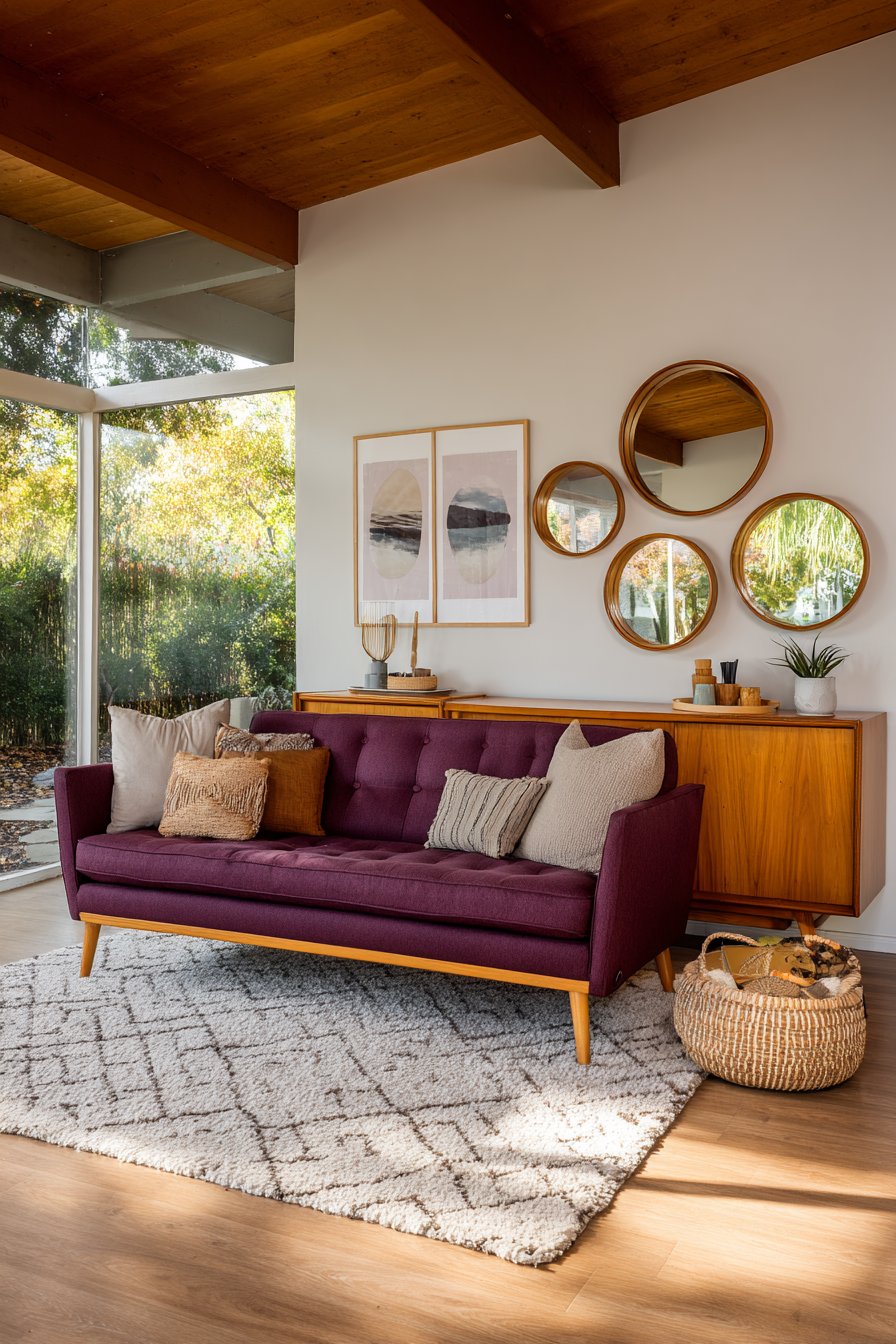
Large windows providing abundant natural light become especially important in eclectic spaces where varied elements need illumination to be properly appreciated. The natural lighting highlights the diverse textures and time periods represented throughout the room, showing off wood grain in the credenza, catching the ornate carving of the antique table, and revealing the brushstrokes in the contemporary art. Interior design photography captures this collected-over-time aesthetic by showing the room from angles that reveal the thoughtful curation behind apparent randomness—each piece has been deliberately chosen and placed, creating a space that reflects genuine personal style rather than following prescribed design rules. The maroon sofa unifies these varied elements while maintaining the eclectic space’s essential character.
Key Design Tips:
- Establish one or two unifying elements (color, material, or scale) to create coherence in diverse collections
- Mix pieces from different periods freely but maintain similar quality levels to prevent jarring contrasts
- Use a solid-colored sofa as an anchor when surrounding accessories are varied and patterned
- Display collections intentionally rather than haphazardly to show curation rather than accumulation
- Embrace imperfection and signs of age as authentic character rather than flaws
- Allow natural light to illuminate and celebrate the variety of textures and finishes
15. Seasonal Autumn Warmth
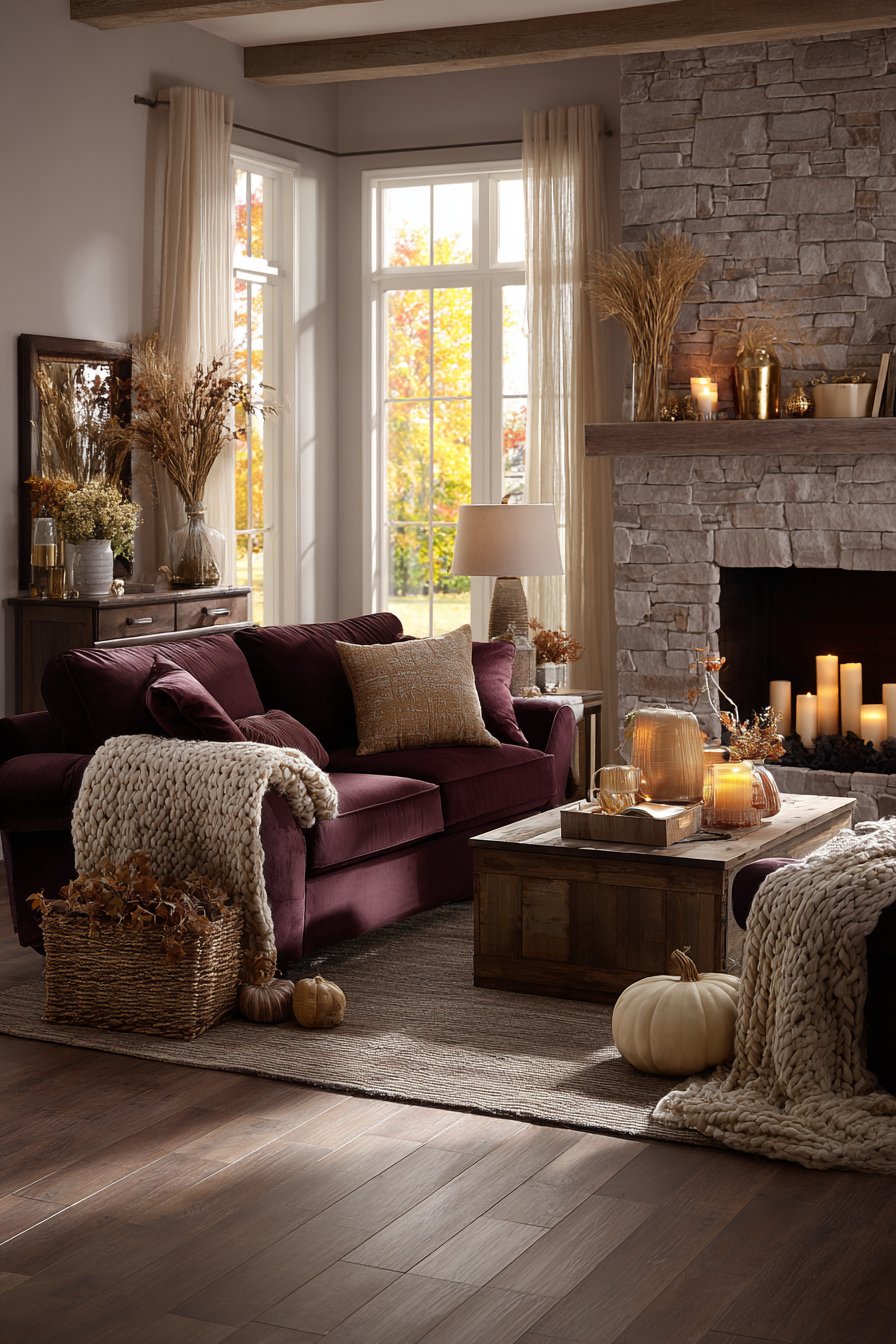
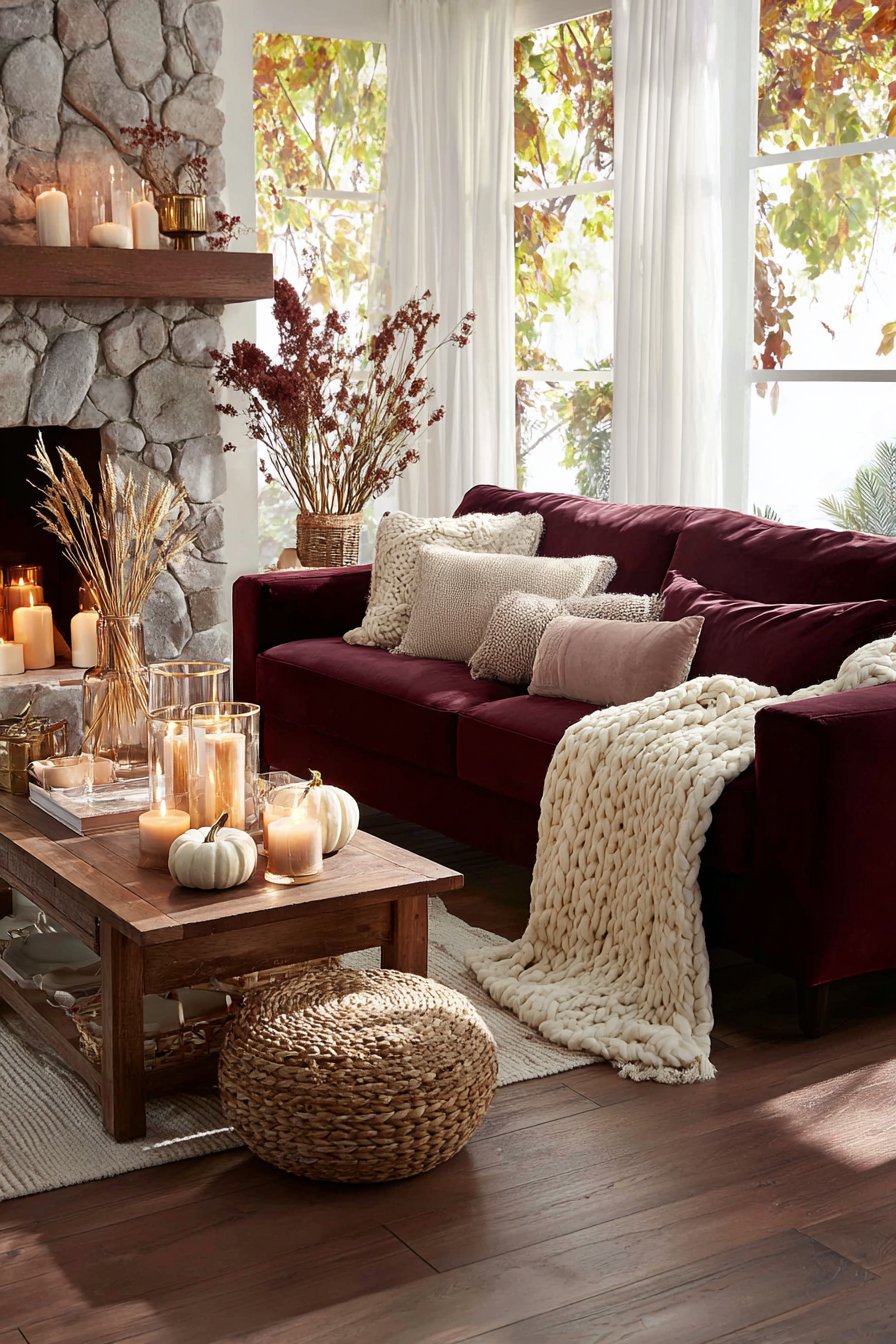
Designing with seasonal inspiration allows homeowners to create spaces that feel attuned to the rhythms of the natural year. This living room styled for autumn demonstrates how a maroon sofa becomes the perfect foundation for fall decor, its rich burgundy tones naturally harmonizing with the season’s characteristic color palette. Styled with rust-colored throw pillows that echo falling leaves, chunky knit blankets in cream that suggest cozy comfort, and decorative elements in amber and gold tones, the sofa becomes the centerpiece of an autumn-inspired interior that celebrates the season’s warmth and abundance. Warm honey-toned hardwood floors reinforce the golden glow that characterizes fall light.
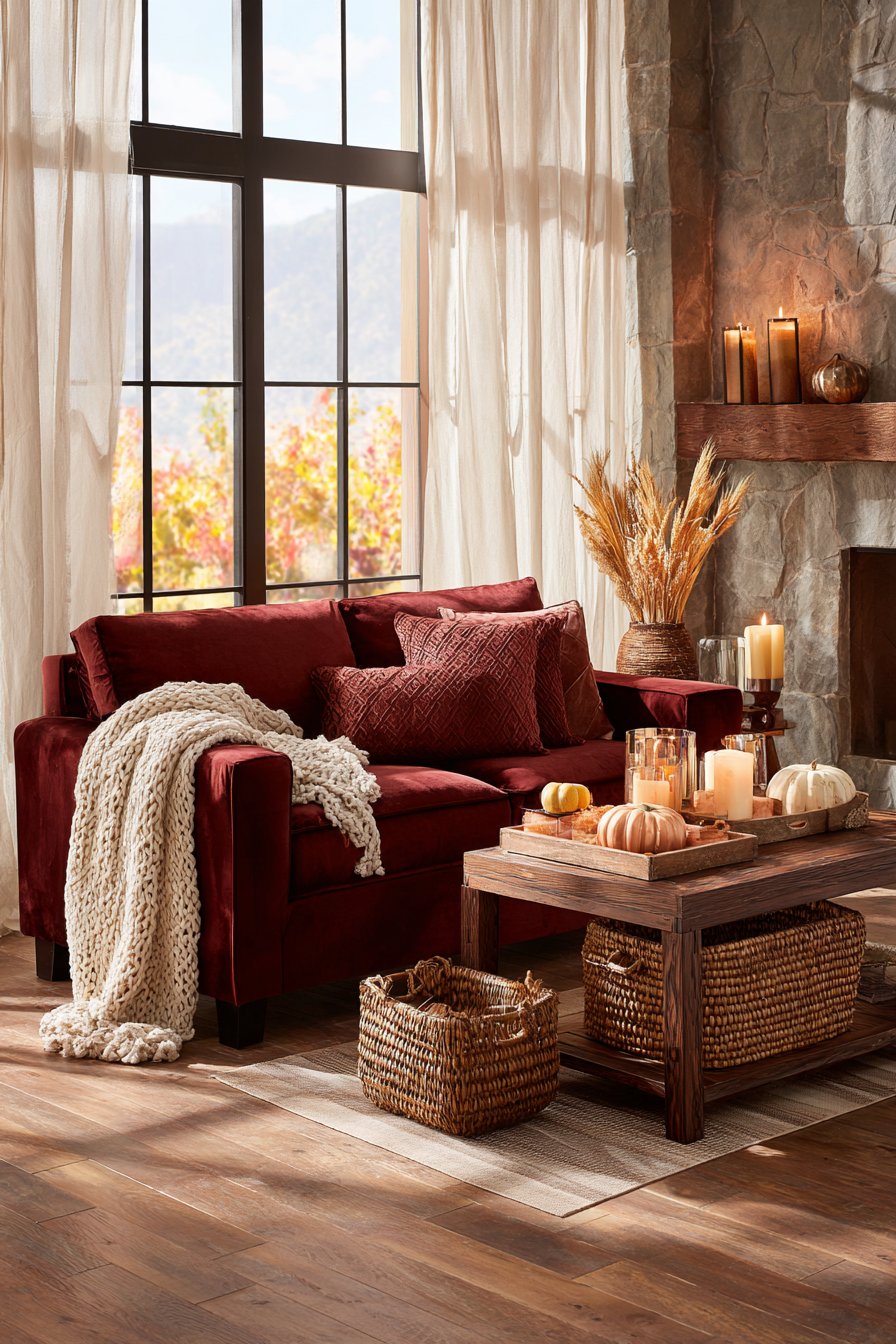
The seasonal decor extends throughout the space with intentional but not overwhelming touches. A stone fireplace with carefully arranged candles provides both visual interest and ambient illumination, their flickering flames evoking the warmth essential to fall comfort. Windows revealing fall foliage outside bring the season’s colors into the interior space, creating connection between indoor and outdoor environments. A wooden coffee table displays seasonal elements—small pumpkins, dried wheat arrangements in simple vessels, and perhaps a bowl of apples or nuts—that celebrate autumn’s harvest without resorting to excessive Halloween or Thanksgiving cliches.
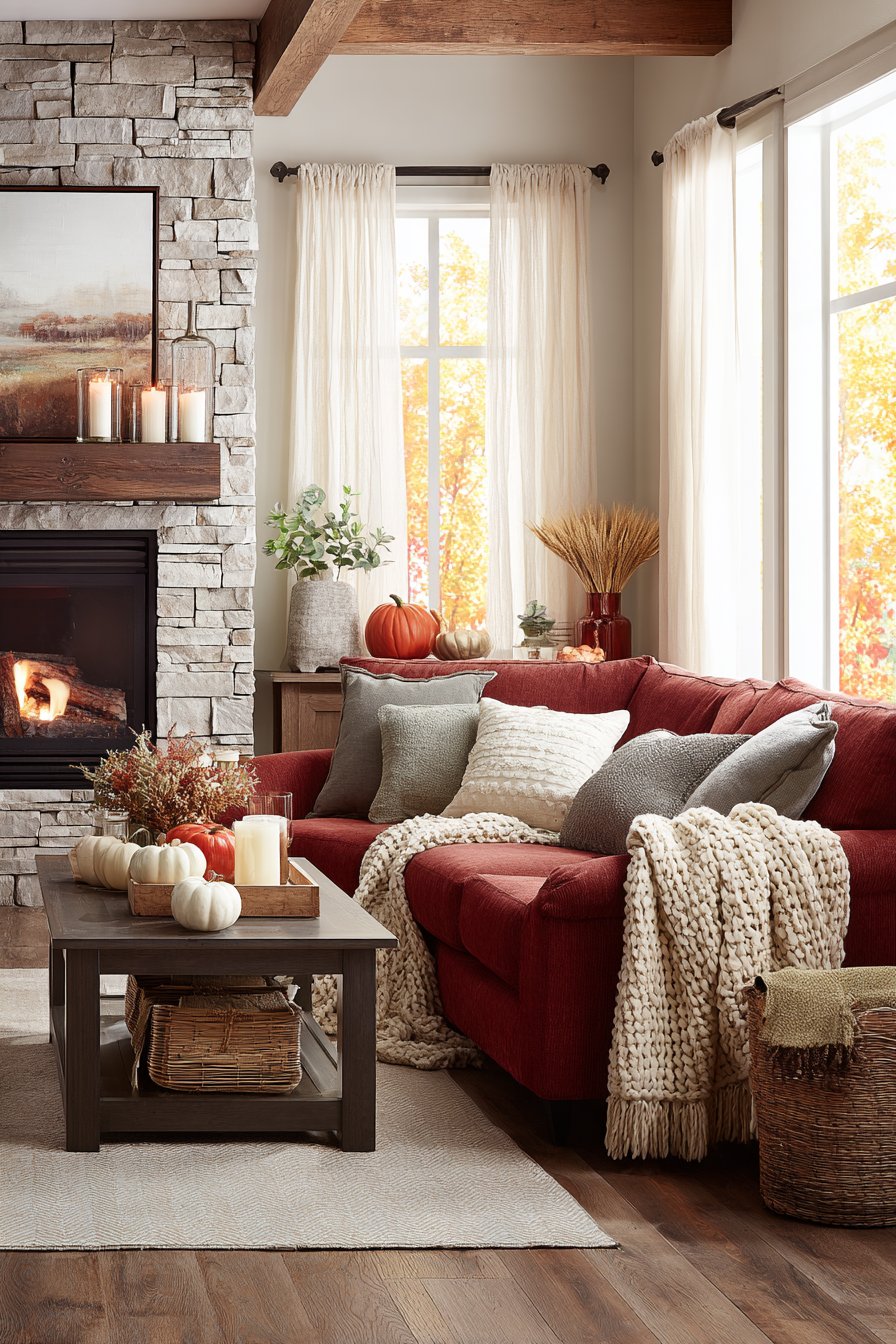
Warm natural light filtering through sheer curtains during fall’s golden hour creates the cozy atmosphere that makes this season so beloved. The low angle of autumn sunlight casts long shadows and brings out the warmth in all the wood tones, while highlighting the maroon upholstery and making it glow with particular richness. Professional interior photography captures this seasonal warmth, showing how the maroon sofa perfectly suits the autumnal color palette and how thoughtful seasonal styling can transform a space without requiring major furniture changes. This approach demonstrates that while your sofa remains constant, strategic styling adjustments can make your living room feel perfectly attuned to each season’s unique character and mood.
Key Design Tips:
- Choose accent colors from nature’s seasonal palette to create authentic seasonal atmosphere
- Layer textiles like throws and pillows for both visual warmth and actual comfort
- Incorporate seasonal natural elements like branches, pumpkins, or pinecones in moderation
- Take advantage of seasonal light changes by adjusting window treatments and artificial lighting
- Create cozy focal points like fireplaces or candle displays during cooler months
- Update accessories seasonally while maintaining year-round furniture to refresh spaces economically
16. Multi-Functional Apartment Living
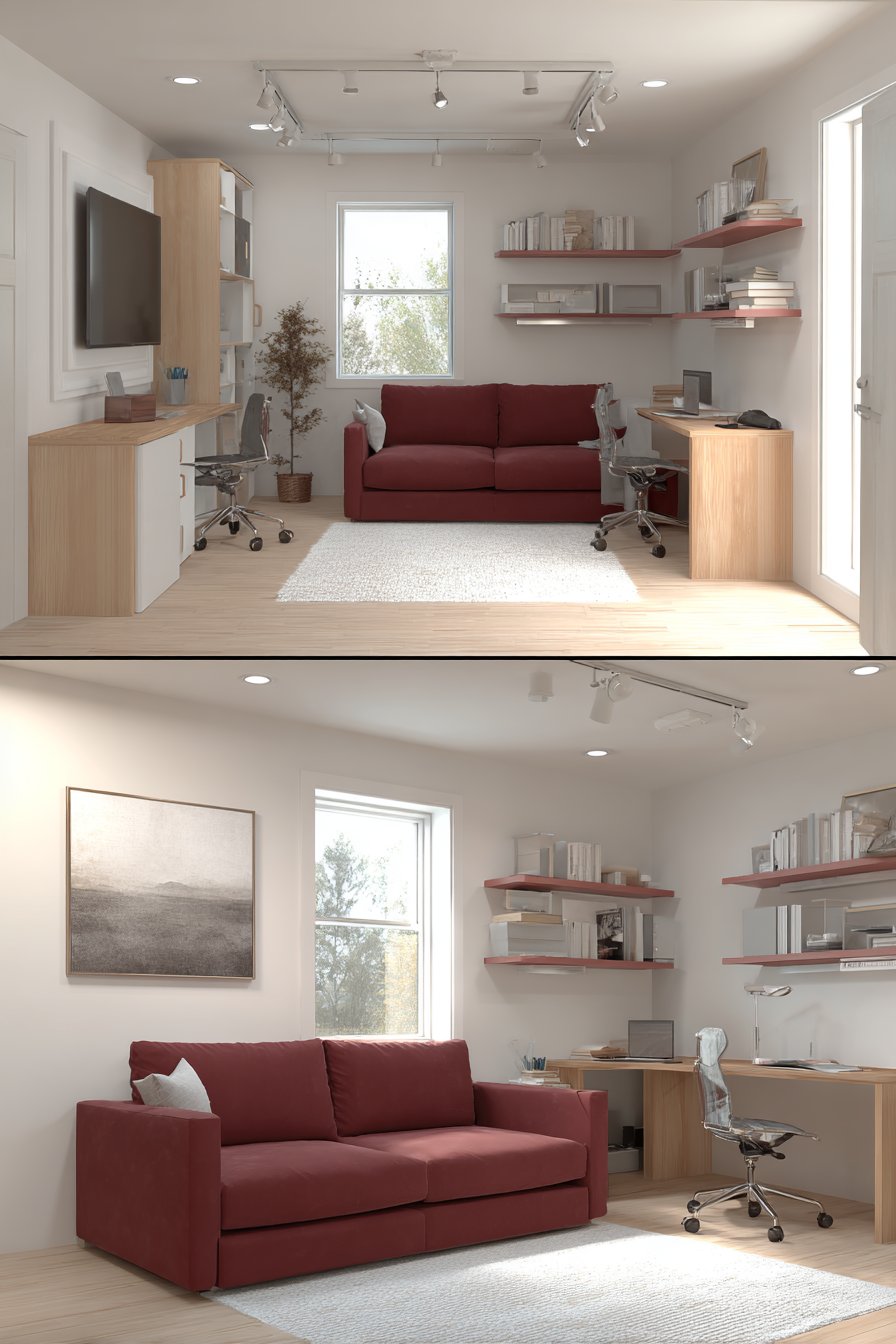
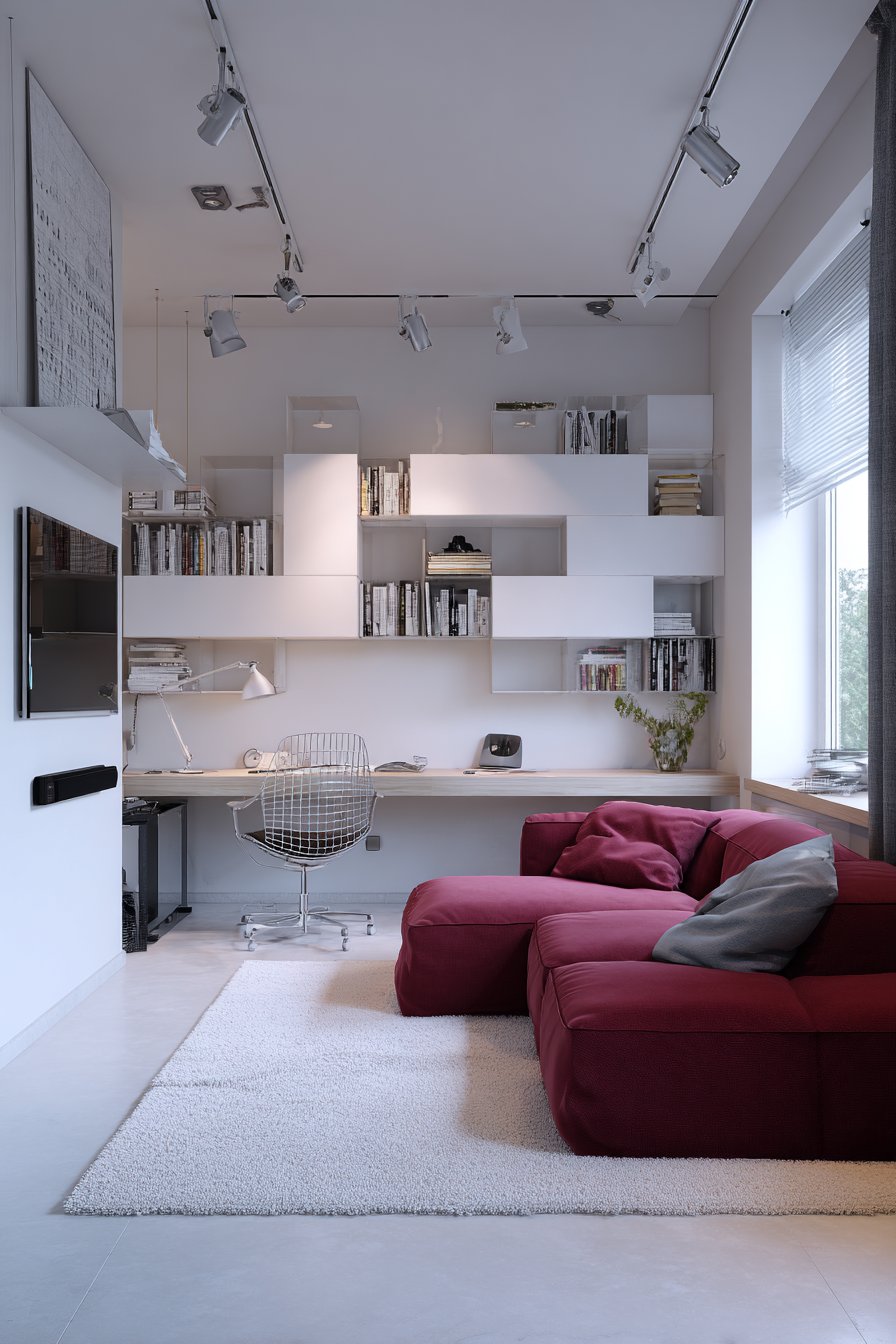
Modern apartment living often demands that single rooms serve multiple functions, and this multi-purpose living space demonstrates how a compact maroon apartment sofa can anchor a room that serves as entertainment center, relaxation zone, and home office simultaneously. The wall-mounted TV eliminates the need for a bulky media console, freeing valuable floor space for other functions. Floating shelves display books and decorative objects while providing storage for media equipment and office supplies, their wall-mounted design maintaining the open feel that makes compact spaces livable. A dedicated desk area with a modern task chair occupies one corner, creating a defined workspace that remains visually connected to the living area.
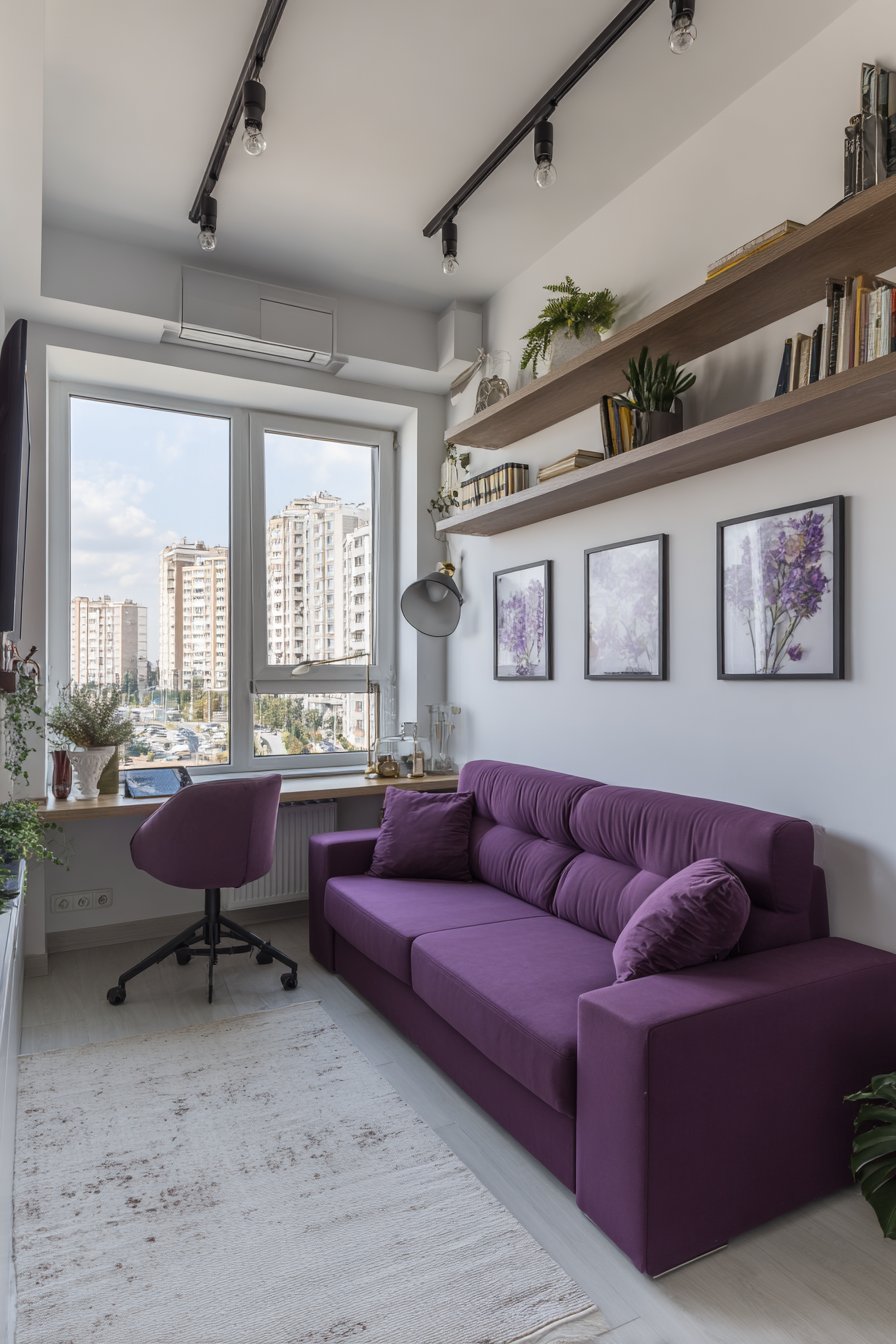
Space-efficient furniture placement becomes crucial in this multi-functional environment. The maroon sofa is positioned to allow comfortable TV viewing while not blocking the natural circulation path to the desk area. A light-colored area rug defines the seating zone, visually separating it from the work zone while maintaining the open floor plan. The compact scale of the maroon apartment sofa ensures adequate seating without dominating the limited square footage, proving that bold color choices work equally well on smaller furniture pieces. Natural light from a single window is strategically supplemented by track lighting that can be directed toward different areas depending on which function is currently in use—bright task lighting for the work area, softer ambient lighting for relaxation time.
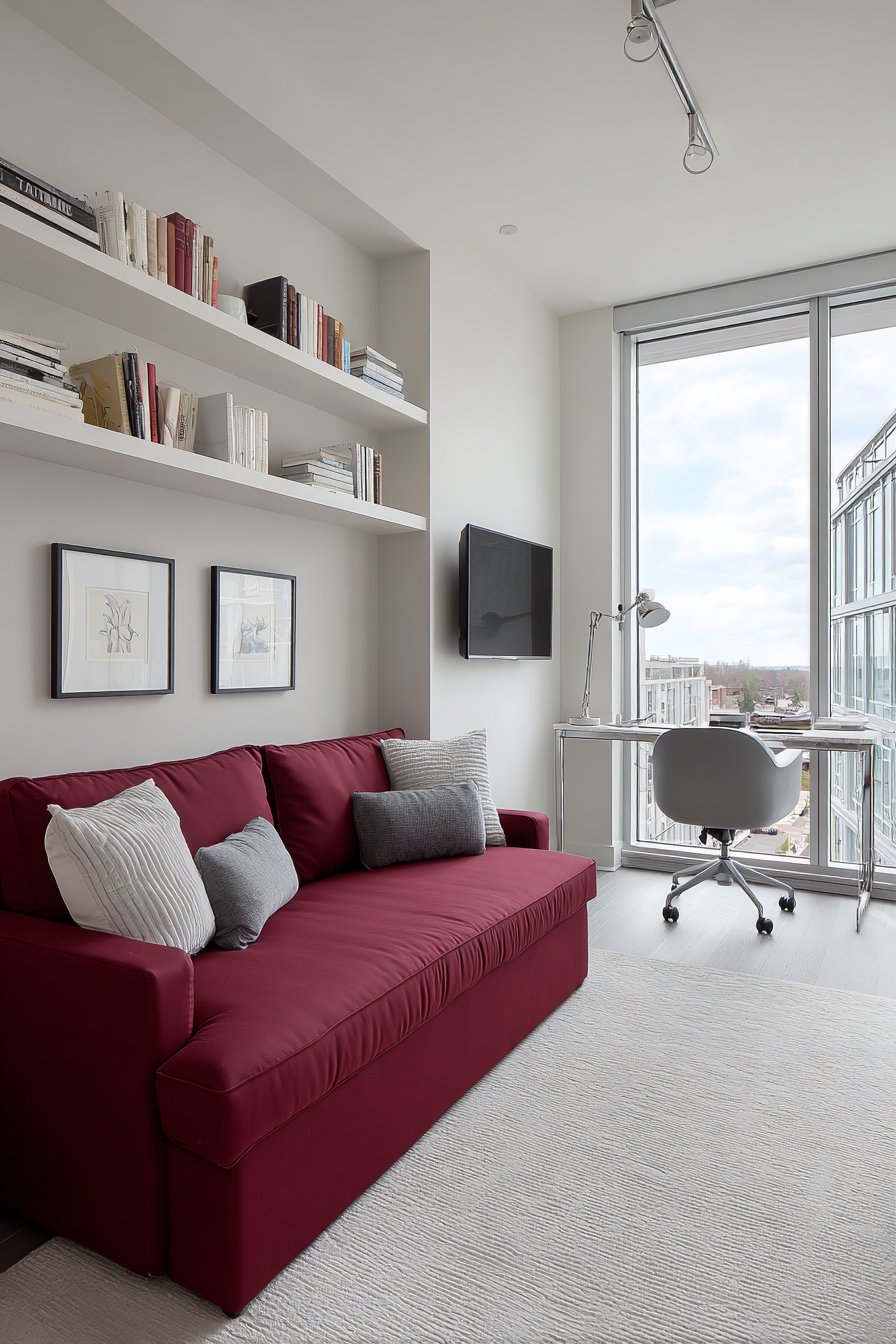
The success of this multi-functional space lies in its ability to serve different purposes without feeling confused or cluttered. Each zone maintains a clear identity and function while visual elements like the consistent flooring and neutral walls create overall cohesion. Wide-angle interior photography captures the smart spatial planning that allows a single room to accommodate diverse activities throughout the day. The maroon sofa anchors the primary living area, providing both a visual focal point and a comfortable spot for relaxation after work hours end. This approach demonstrates that apartment dwellers can absolutely incorporate bold furniture choices while maintaining the flexibility and functionality that contemporary living demands.
Key Design Tips:
- Define functional zones with area rugs while maintaining visual connection through consistent flooring
- Choose wall-mounted or floating furniture to maximize floor space in compact rooms
- Select appropriately scaled furniture that provides function without overwhelming limited space
- Incorporate adjustable or directional lighting to serve different activities and times of day
- Maintain clear circulation paths between different functional zones
- Use the same color palette throughout the space to create cohesion despite varied functions
17. Family-Friendly Durability Meets Style
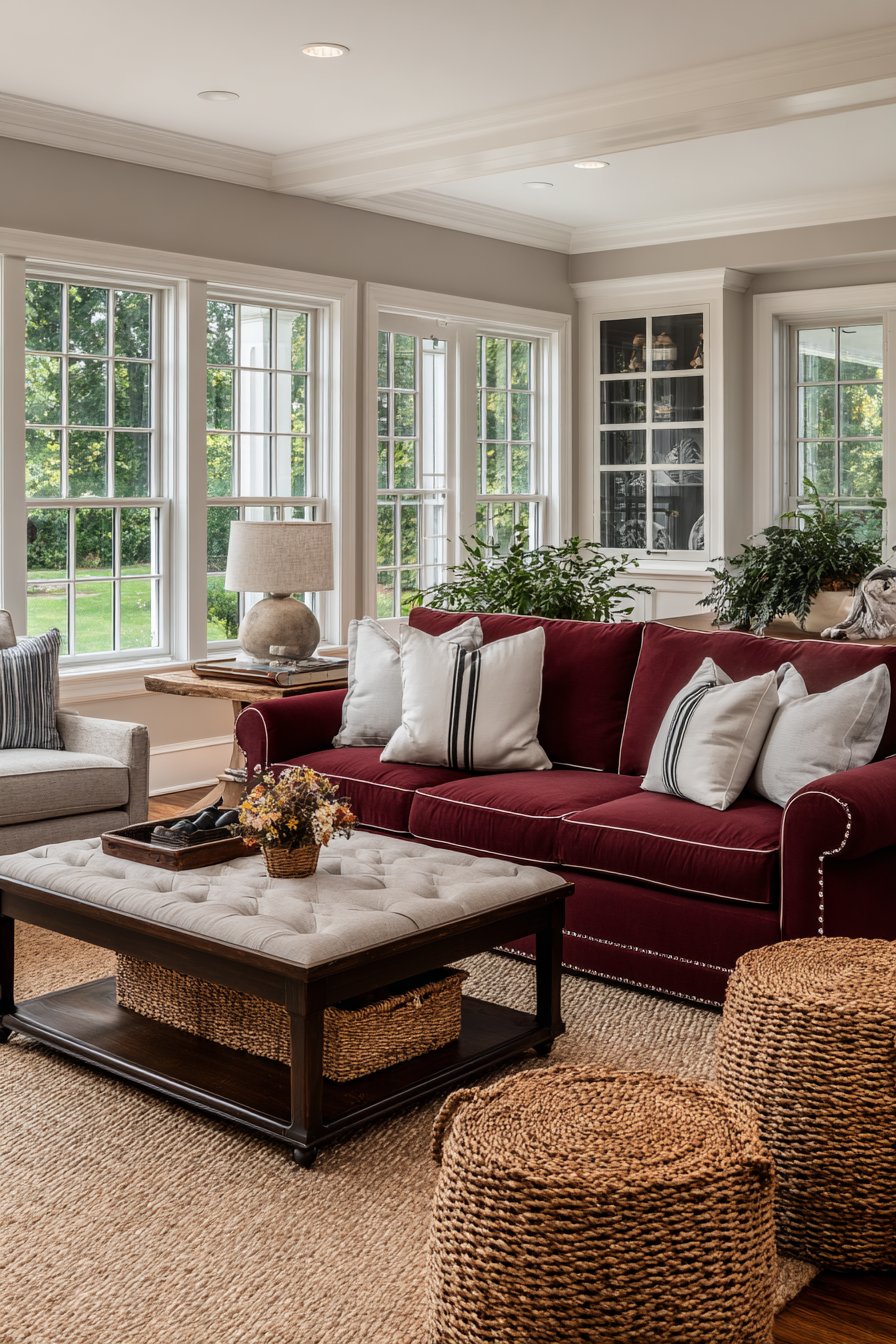
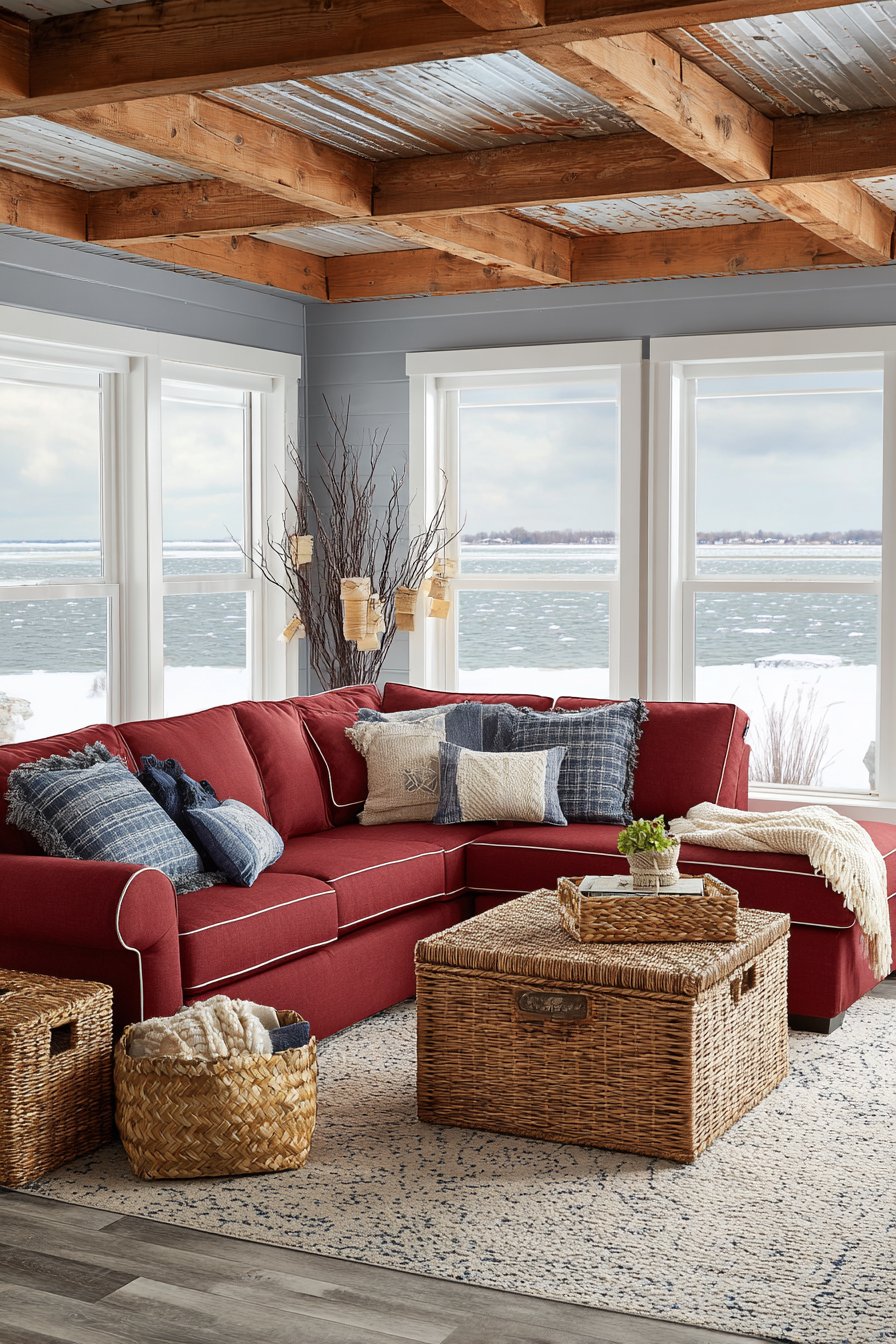
Creating a living room that welcomes family life without sacrificing style requires thoughtful material selection and planning, and this family-friendly space proves that maroon upholstery can absolutely work in high-traffic households. The maroon sofa features performance fabric that resists stains and stands up to daily use, while removable cushion covers allow for easy cleaning when inevitable spills occur. Paired with accent chairs in durable, washable slipcovers, the seating arrangement provides ample accommodation for family members and guests while maintaining the ability to refresh fabrics as needed. The stain-resistant area rug grounds the space with pattern and color while standing up to foot traffic, dropped snacks, and active play.
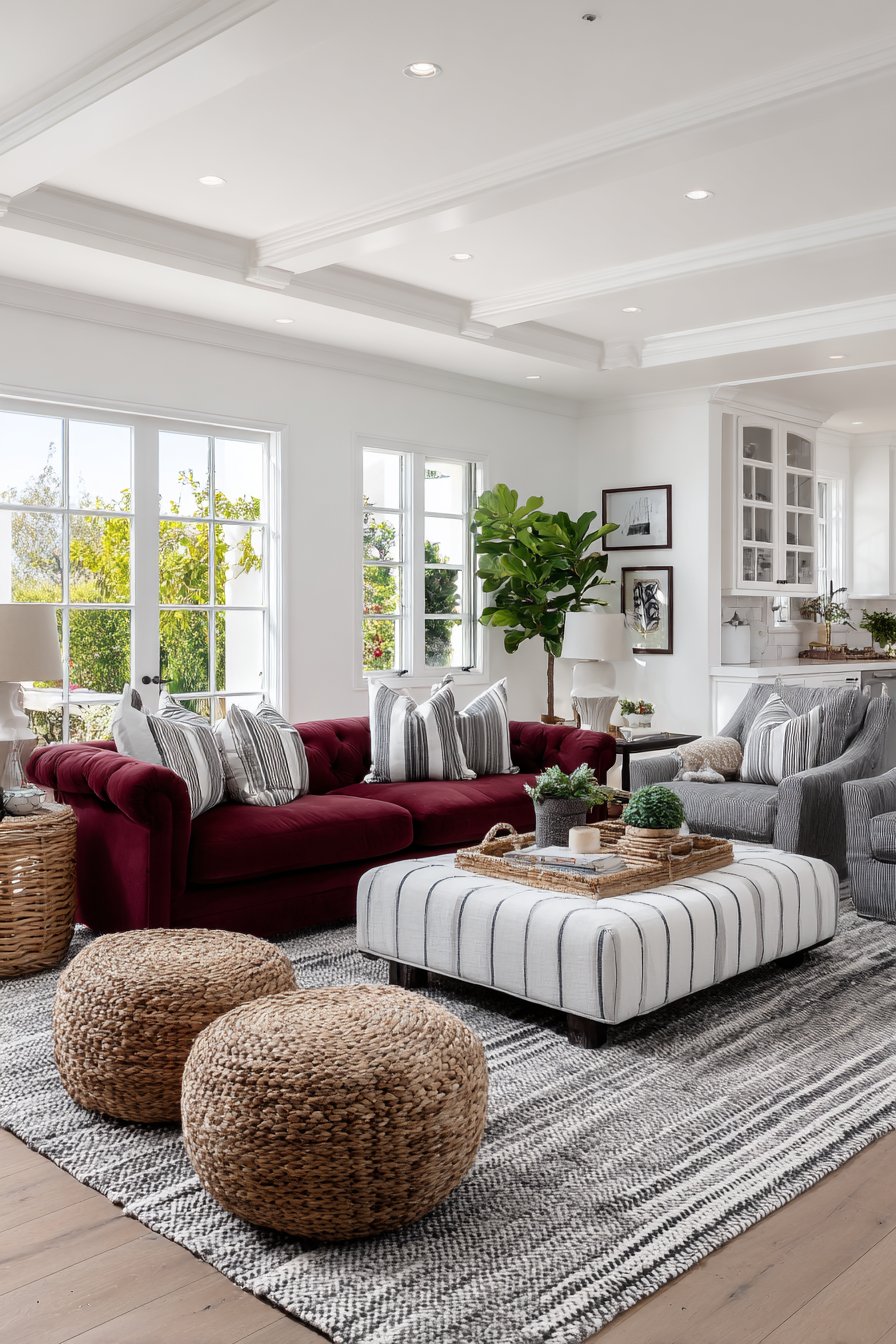
The practical aspects extend beyond furniture selection into storage solutions that support family living. Built-in cabinets with closed storage keep toys, games, and media equipment organized and out of sight when not in use, maintaining the visual calm that makes spaces feel designed rather than chaotic. A large ottoman serves triple duty as coffee table, additional seating when friends visit, and toy storage with a lift-top design. Woven baskets in various sizes slip into shelf spaces and under tables, providing portable storage that can move where needed while contributing to the room’s textural interest. Side tables with durable surfaces withstand the inevitable coffee cups, water glasses, and electronics that accumulate in frequently used spaces.
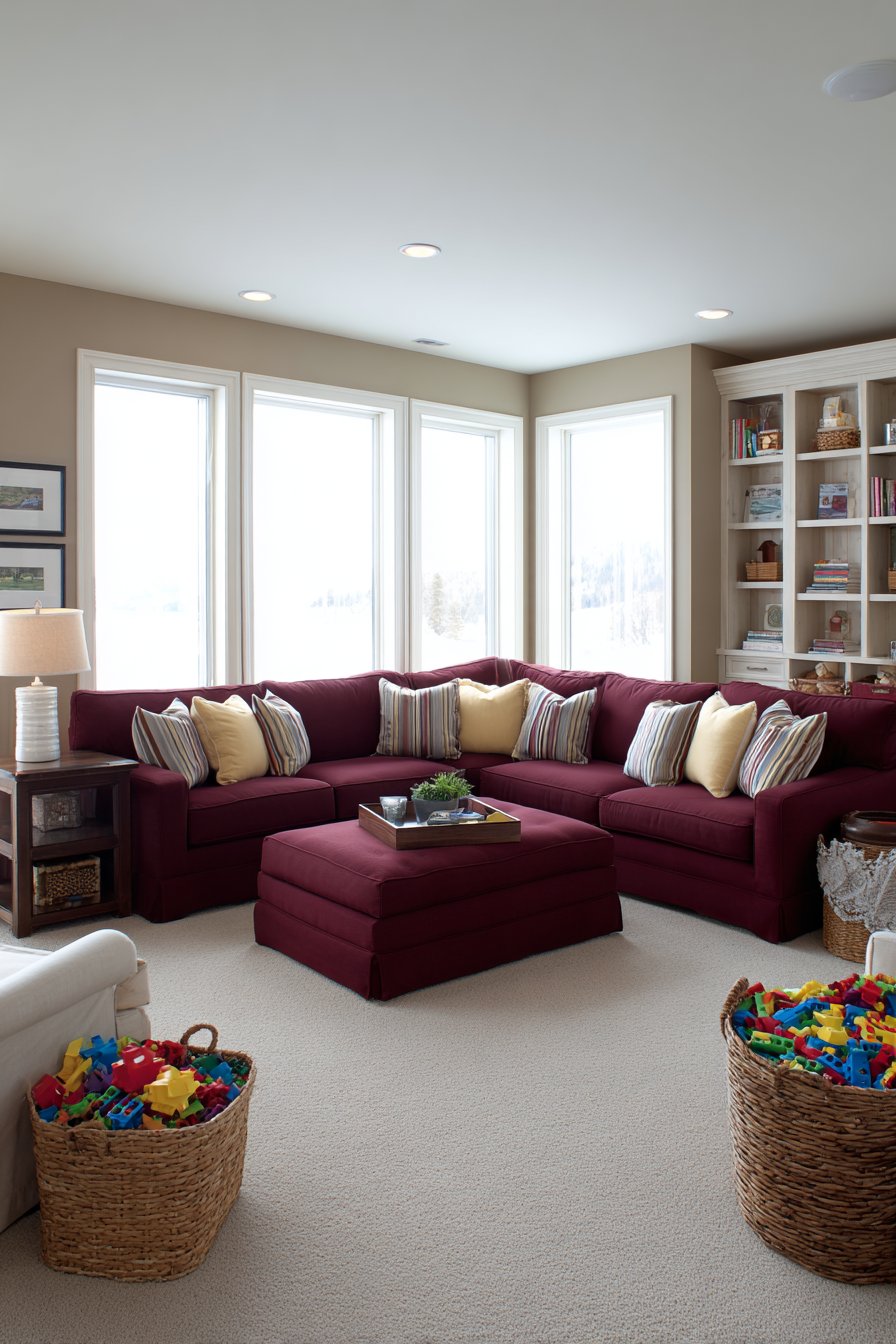
Natural light from large windows illuminates this practical yet stylish space throughout the day, preventing the family-friendly design choices from feeling apologetic or purely utilitarian. The maroon sofa serves as a sophisticated focal point that elevates the space beyond typical “kid-friendly” design compromises, proving that family homes can absolutely incorporate rich colors and quality furniture when paired with smart material choices and adequate storage. Interior design photography captures the livable family room aesthetic, showing how the space balances style with function and demonstrating that households with children need not resort to bland, neutral design out of fear of wear and tear. The maroon sofa stands as evidence that bold design choices and family life can coexist beautifully.
Key Design Tips:
- Select performance fabrics that resist staining and wear while maintaining visual appeal
- Choose removable, washable cushion covers for easy cleaning when spills inevitably occur
- Incorporate abundant closed storage to keep toys and clutter organized and out of sight
- Select durable rug materials like indoor-outdoor fabrics that withstand heavy use
- Include multifunctional furniture like storage ottomans to maximize utility
- Prioritize rounded corners and sturdy construction for safety around children
18. Light-Maximizing Southern Exposure
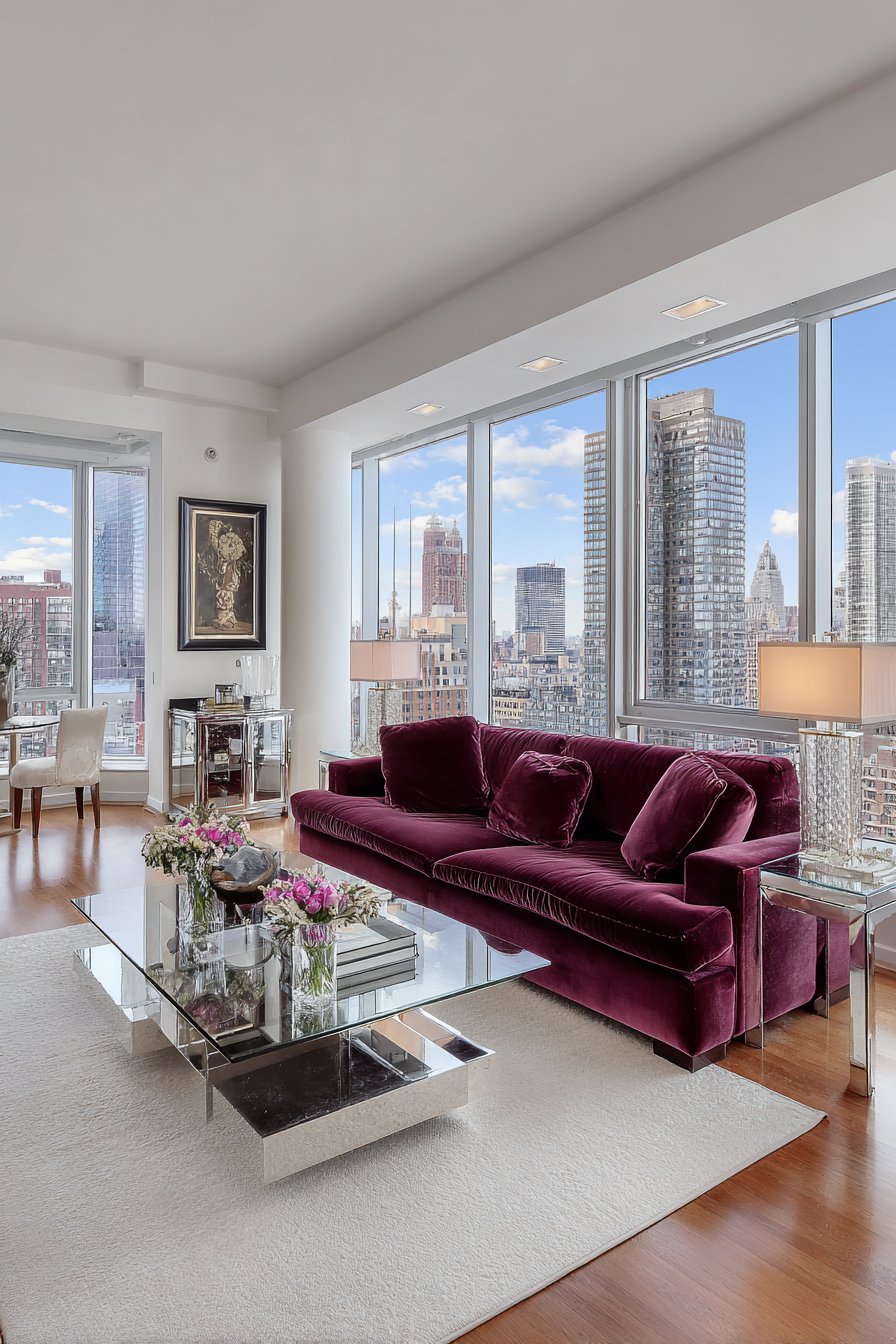
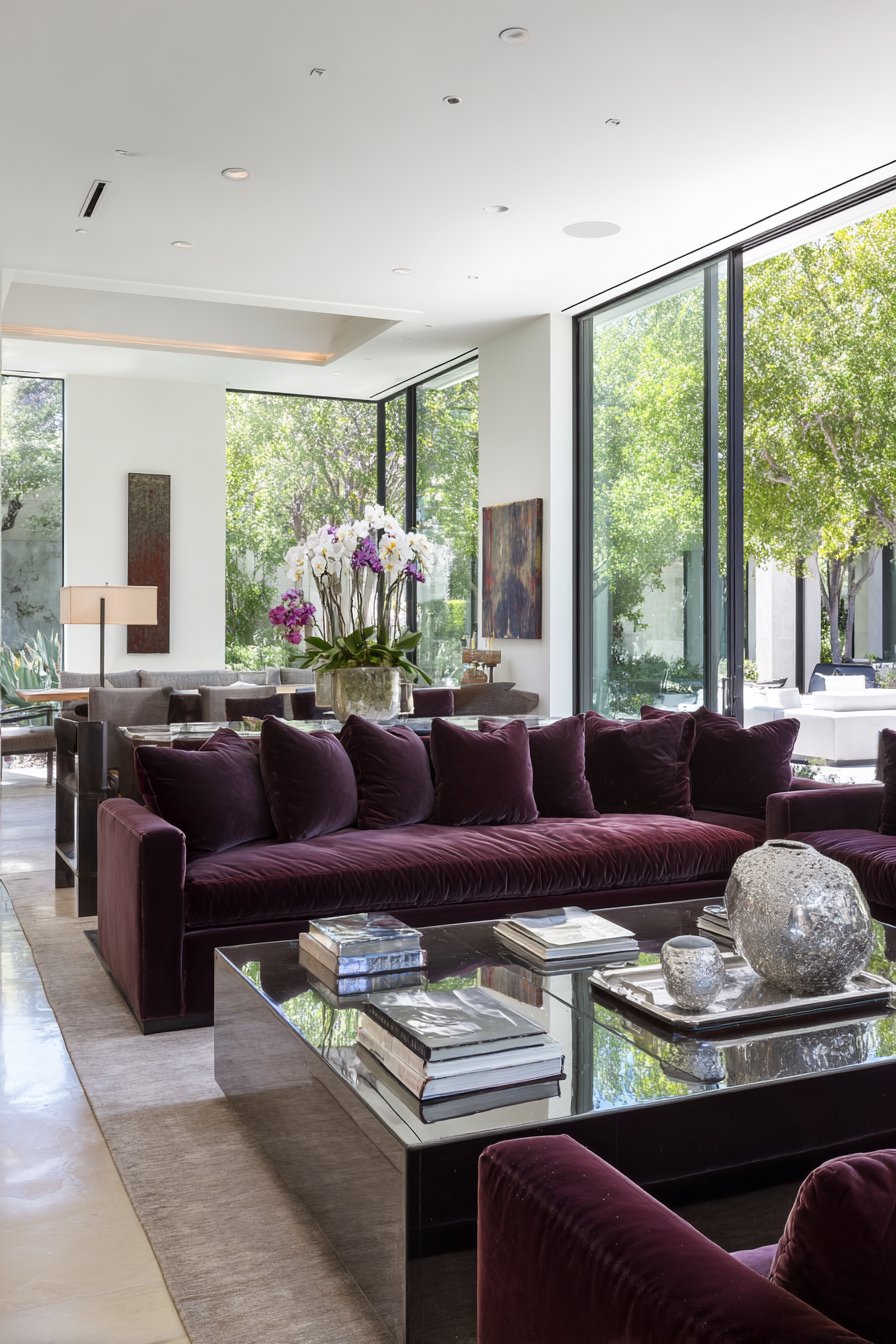
When blessed with abundant natural light from southern exposure, a living room can showcase how different types of illumination affect color perception throughout the day. This sun-filled space demonstrates how a maroon sofa positioned to maximize natural light becomes a constantly changing element as sunlight quality shifts from morning through evening. Floor-to-ceiling windows with minimal window treatments allow unobstructed daylight to flood the space, the southern exposure providing consistent bright illumination that prevents the bold maroon color from feeling too heavy or dark. Light-reflecting surfaces throughout the room amplify the natural brightness—a glass coffee table, mirrored accent pieces, and pale oak flooring all bounce light around the space.
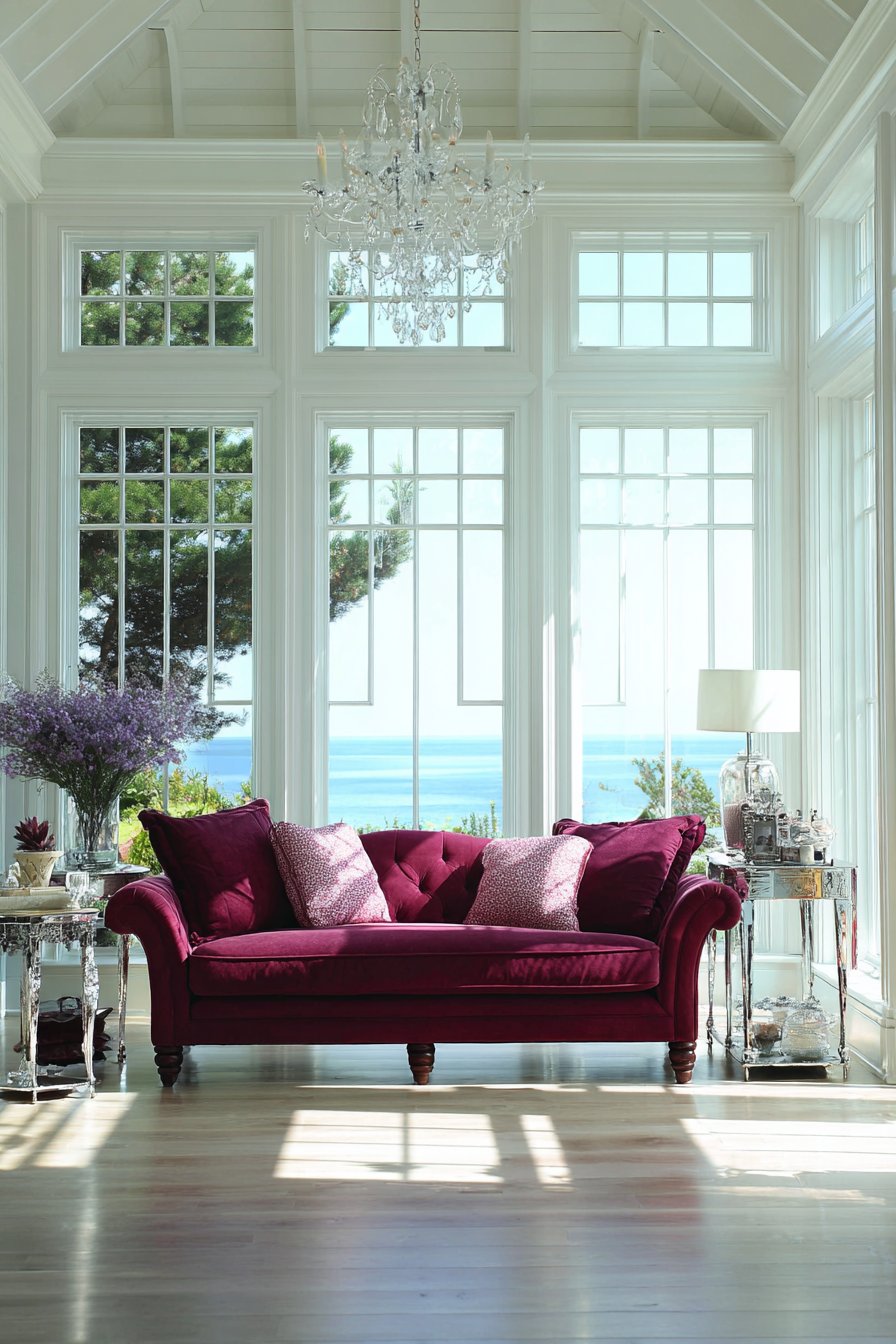
White walls serve double duty in this light-filled environment, both reflecting available natural light to maintain brightness and providing a clean backdrop that allows the maroon sofa to stand out as the primary color focal point. The contrast between the bright, reflective surroundings and the rich, saturated sofa color creates dramatic visual impact without requiring multiple bold colors or complex patterns. The minimal decoration strategy—a few carefully chosen accessories rather than abundant objects—ensures nothing interferes with the natural light flow or competes with the maroon centerpiece for attention.
Professional interior photography captured at different times of day reveals how natural illumination transforms the maroon upholstery. Morning light brings out cooler undertones and creates crisp shadows with defined edges. Midday sun deepens the color to its richest burgundy, while late afternoon golden hour light adds warmth and makes the fabric seem to glow from within. Balanced exposure in photography shows not just the sofa itself but how the entire room benefits from strategic light maximization—shadows remain soft rather than harsh, the space feels open and airy despite the bold color choice, and the overall atmosphere invites relaxation in naturally lit comfort. This approach demonstrates that abundant natural light can make even the boldest color choices work beautifully in residential spaces.
Key Design Tips:
- Position bold-colored furniture near windows to maximize natural light exposure and showcase color depth
- Choose minimal window treatments that filter rather than block southern light
- Incorporate reflective surfaces like glass and mirrors to amplify available natural light
- Select pale flooring materials that bounce light upward into the space
- Paint walls white or pale neutrals to maximize light reflection and create clean backdrops
- Photograph spaces at different times of day to see how natural light affects color perception
19. Conversation-Focused Furniture Arrangement
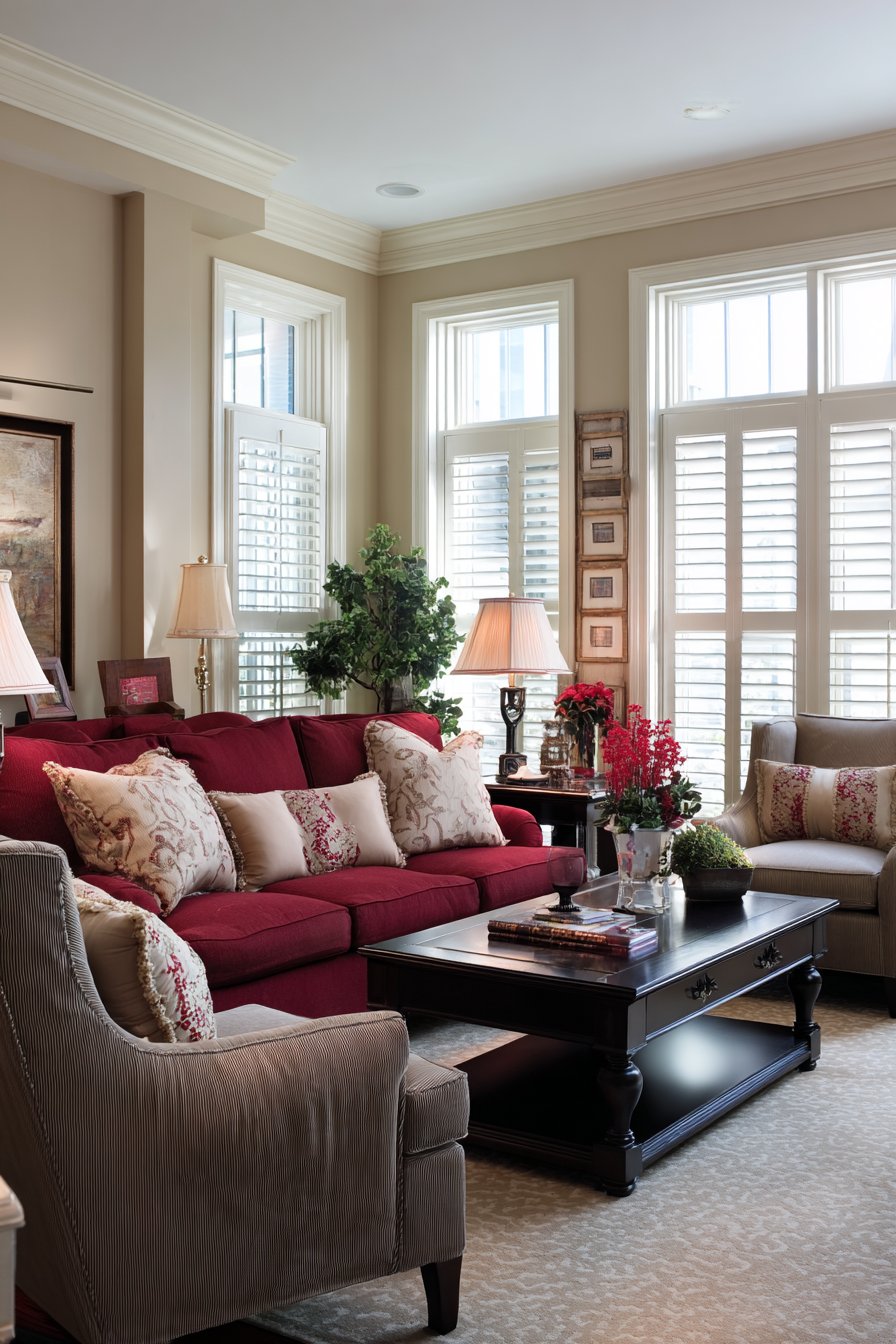
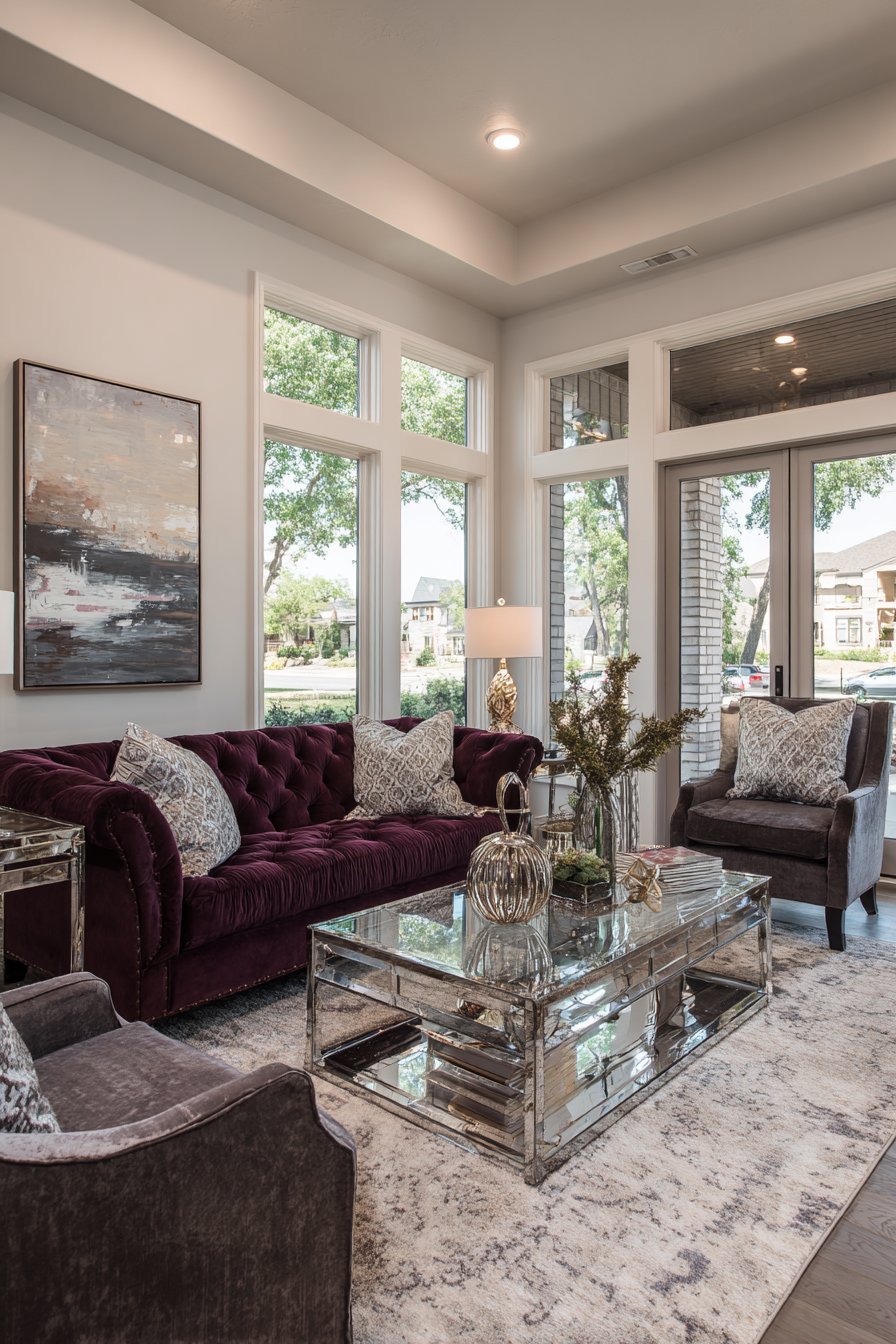
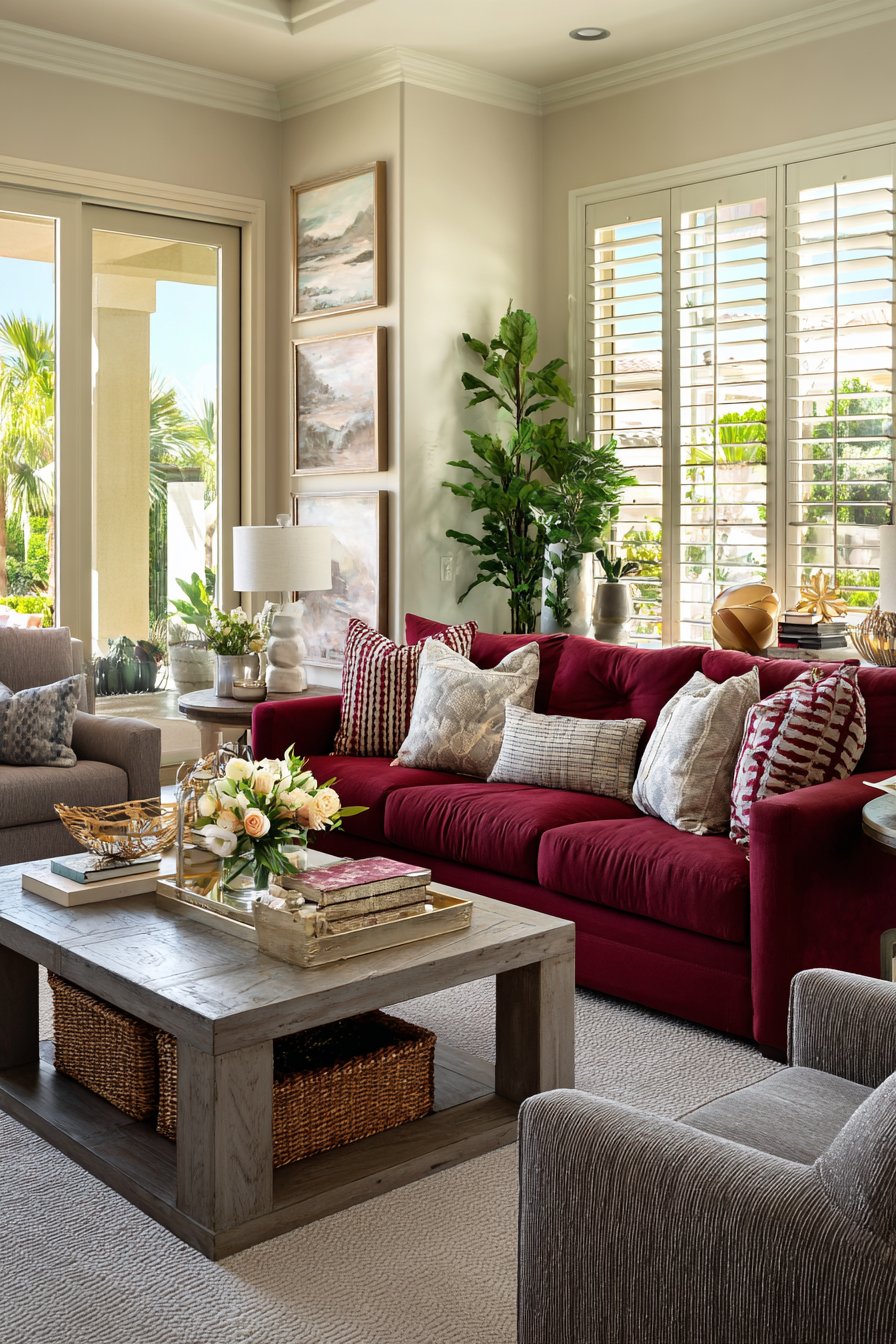
Thoughtful furniture arrangement can transform a living room’s functionality, and this conversation area layout demonstrates how a maroon sofa can anchor a social space designed specifically for interaction and dialogue. The sofa faces two accent chairs upholstered in complementary taupe, creating a furniture cluster that naturally encourages eye contact and conversation among occupants. This arrangement prioritizes human connection over media viewing, representing a deliberate choice to create spaces that facilitate relationships rather than passive entertainment. A substantial coffee table positioned within easy reach of all seating provides surface space for drinks, books, and shared activities while maintaining appropriate scale for the furniture grouping.
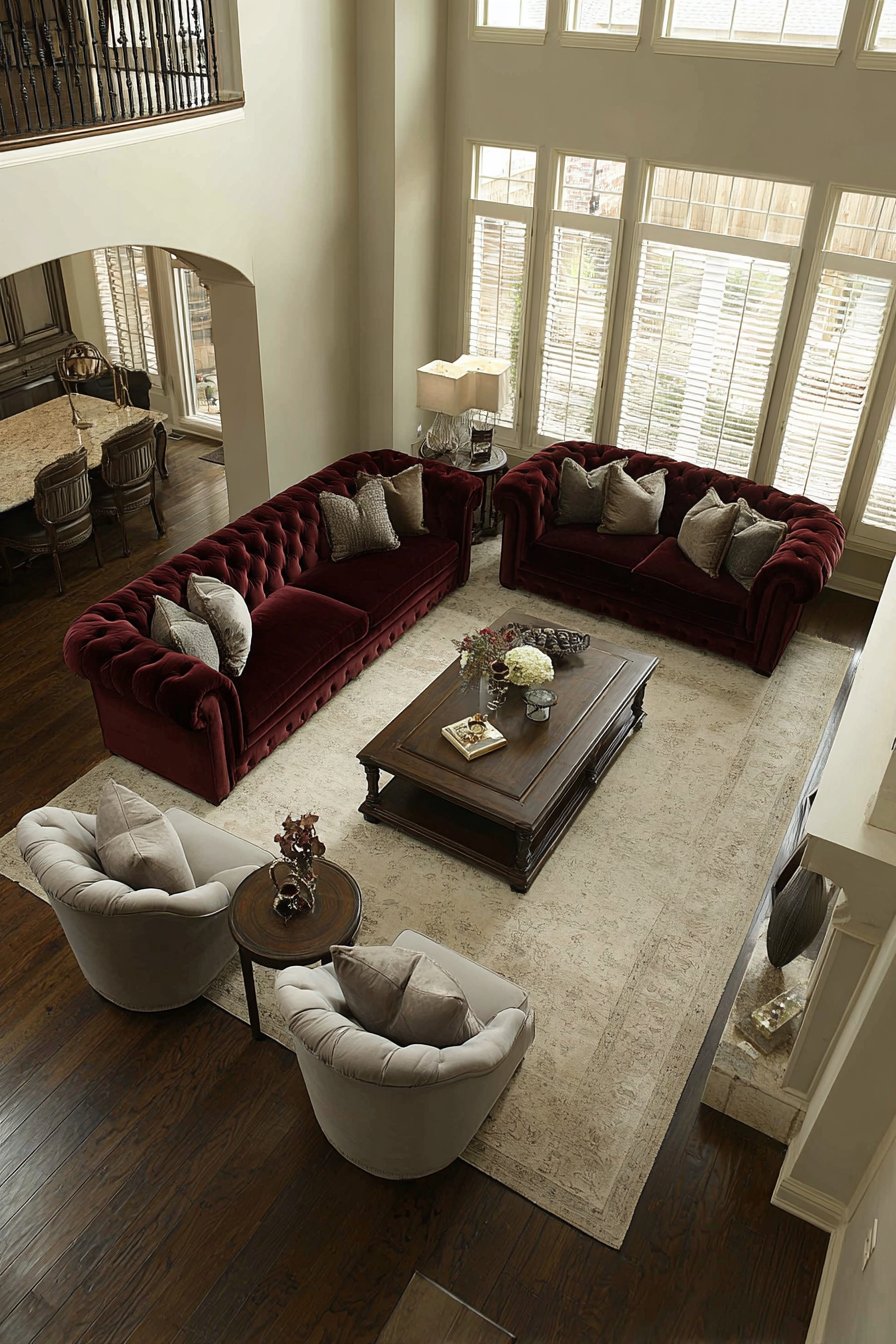
The layout considers both social function and practical circulation. The furniture cluster sits on a large neutral area rug that defines the conversation zone while sufficient space remains around the perimeter for comfortable traffic flow. People can move through the room without disrupting ongoing conversations, and the arrangement doesn’t create awkward dead zones or unusable corners. Table lamps on side tables positioned at each end of the sofa provide task lighting for reading or handiwork, ensuring the space functions well for evening use when natural light fades. Large windows with plantation shutters offer flexible light control, allowing occupants to adjust natural illumination based on time of day and desired atmosphere.
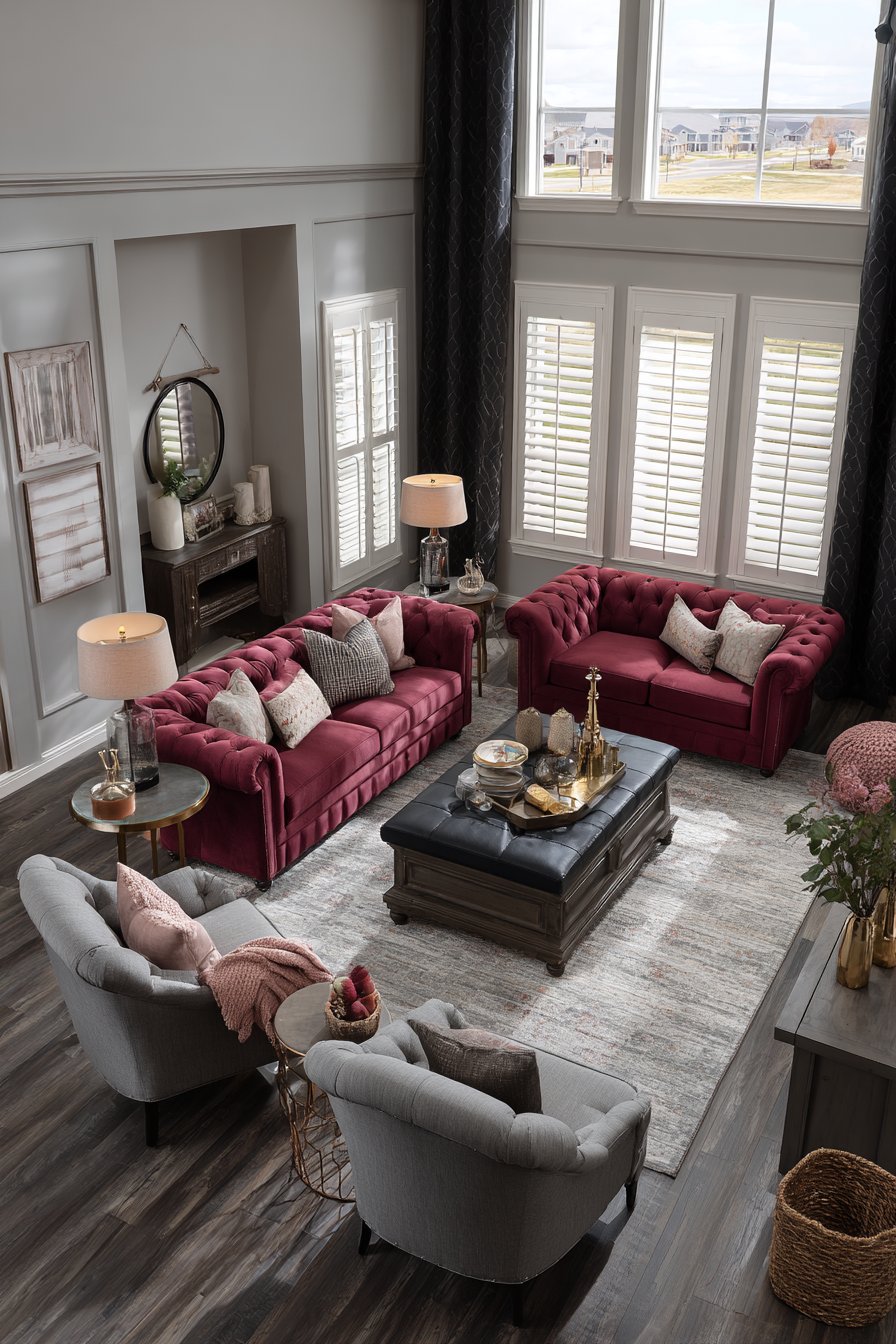
Wide-angle interior photography captures the thoughtful furniture placement and the way this arrangement creates an inviting social space. The maroon sofa anchors the conversational grouping while its bold color draws people toward the seating area from other parts of the room or home. The facing furniture arrangement—sofa and chairs oriented toward each other rather than all facing a television—makes a clear statement about the room’s priorities and intended use. This approach demonstrates that furniture arrangement significantly impacts how spaces function and feel, and that a maroon sofa can serve as both a visual anchor and a functional component in living rooms designed specifically to bring people together.
Key Design Tips:
- Arrange seating in a conversational grouping with pieces facing each other to encourage interaction
- Position furniture to allow comfortable eye contact between all seats
- Maintain adequate traffic flow around furniture clusters to prevent isolated zones
- Include a coffee table within easy reach of all seating for shared use
- Provide task lighting at seating areas to ensure functionality during evening hours
- Consider social priorities when planning layouts rather than defaulting to TV-centric arrangements
20. Open-Concept Spatial Definition
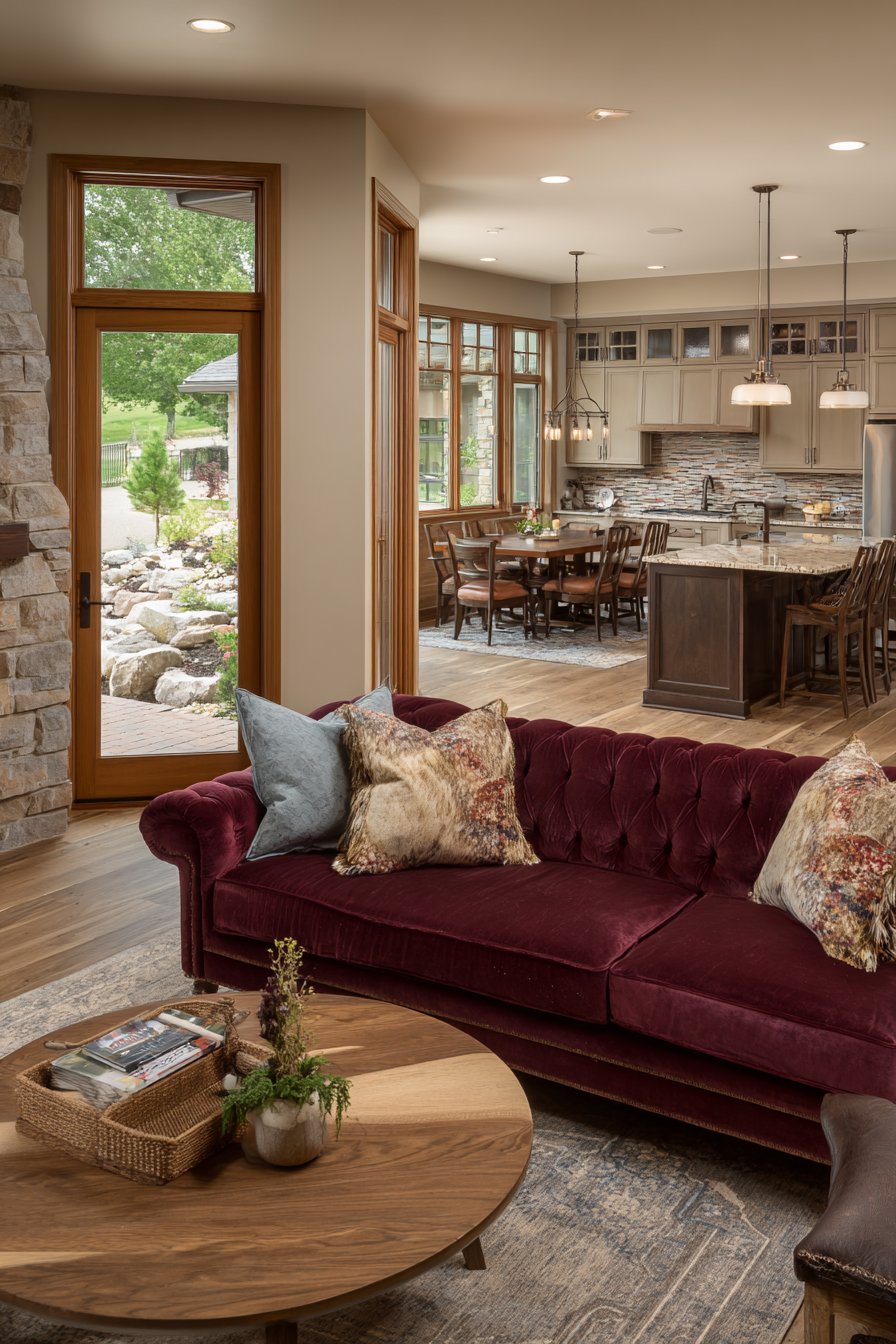
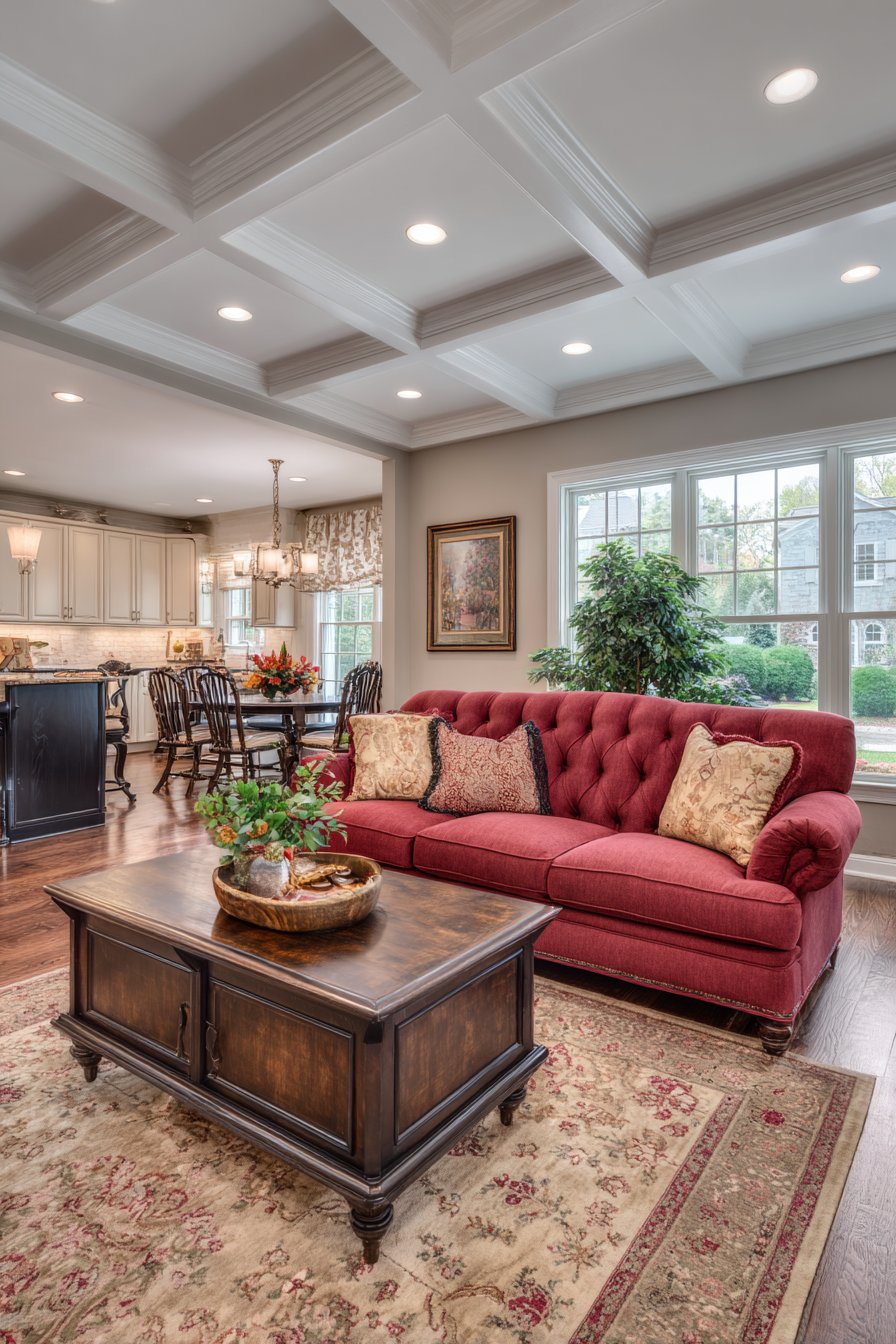
In the increasingly popular open-concept home design, defining distinct functional zones without walls requires strategic furniture placement and visual cues. This open-concept living space demonstrates how a maroon sofa can define the living zone while maintaining visual connection to adjacent dining and kitchen areas. The sofa’s positioning creates a subtle boundary—those seated face into the living area rather than toward the kitchen or dining spaces, creating psychological separation without physical barriers. The coordinating color palette of warm neutrals and rich accent tones flows throughout the open floor plan, ensuring visual continuity even as functional zones change from living to dining to cooking.
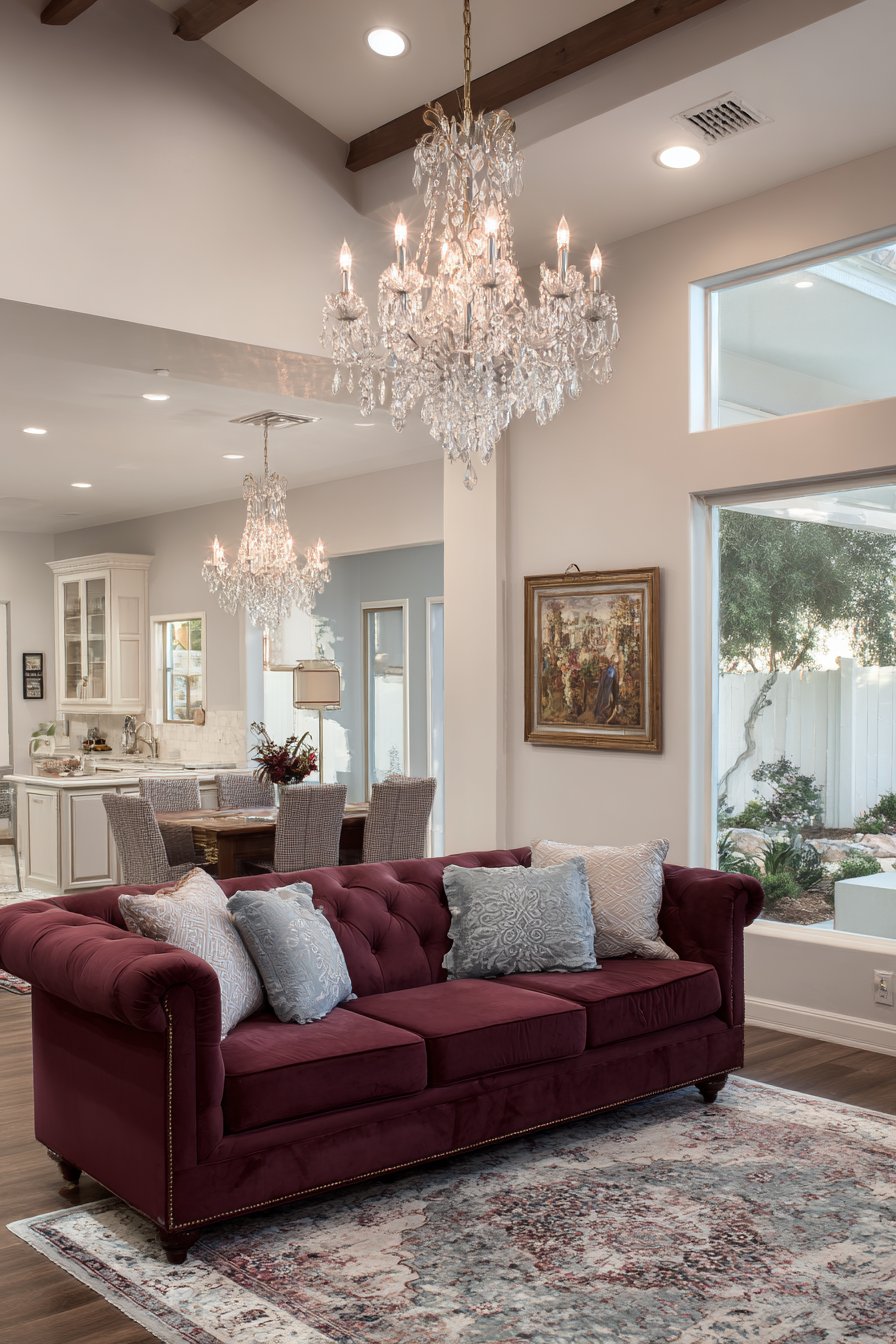
Area rugs play a crucial role in defining different functional zones within the open space. The living room rug sits beneath the maroon sofa and coffee table, visually anchoring the seating area, while presumably different rugs define dining and potentially kitchen zones. Despite these visual separations, the continuous hardwood flooring creates the spatial flow that makes open-concept design appealing, allowing sight lines to extend throughout the space and natural light to penetrate deeply from multiple exposures. The furniture scale and orientation have been carefully considered—pieces are substantial enough to define zones but not so large they block views or create visual barriers.
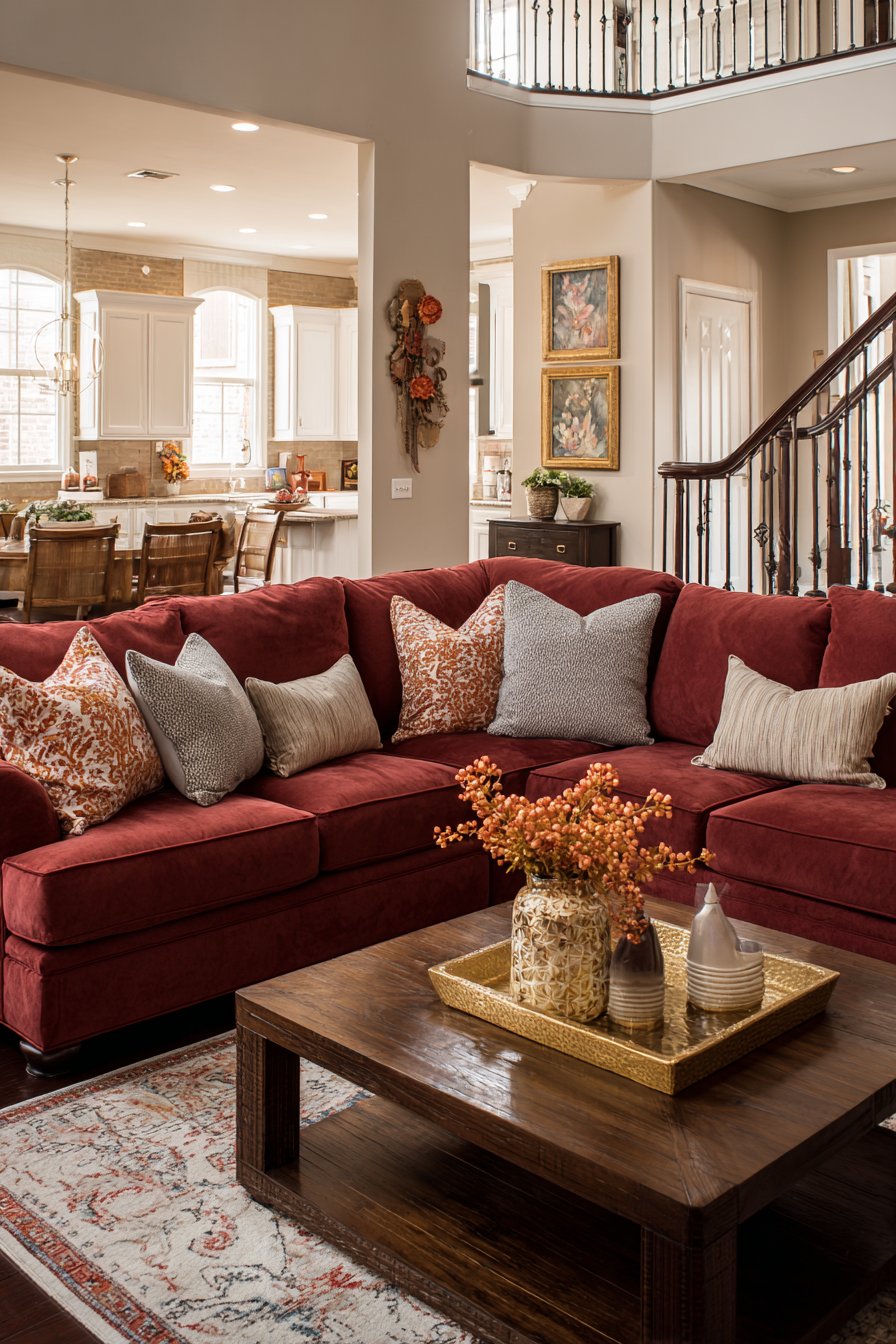
Architectural interior photography with wide perspective showcases the spatial relationships that make open-concept living successful. The maroon sofa helps define the living area within the larger open layout while the bold color provides a focal point visible from throughout the connected spaces. Natural light from multiple exposures illuminates the entire floor plan, creating bright, airy atmosphere while preventing the maroon sofa from reading as heavy despite its rich color. This approach demonstrates that open-concept spaces require thoughtful furniture selection and placement to create definition without losing the openness that makes these floor plans desirable, and that bold furniture pieces like maroon sofas can actually help clarify spatial organization in undefined, wall-free environments.
Key Design Tips:
- Use furniture placement rather than walls to define functional zones in open layouts
- Position major pieces like sofas with backs toward adjacent zones to create subtle separation
- Coordinate color palettes across all zones to maintain visual flow throughout open spaces
- Use area rugs to define individual zones while maintaining continuous flooring for spatial flow
- Consider sight lines from all angles when positioning furniture in wall-free environments
- Select appropriately scaled furniture that defines without blocking views or light
21. Metallic Accents and Luxurious Textures
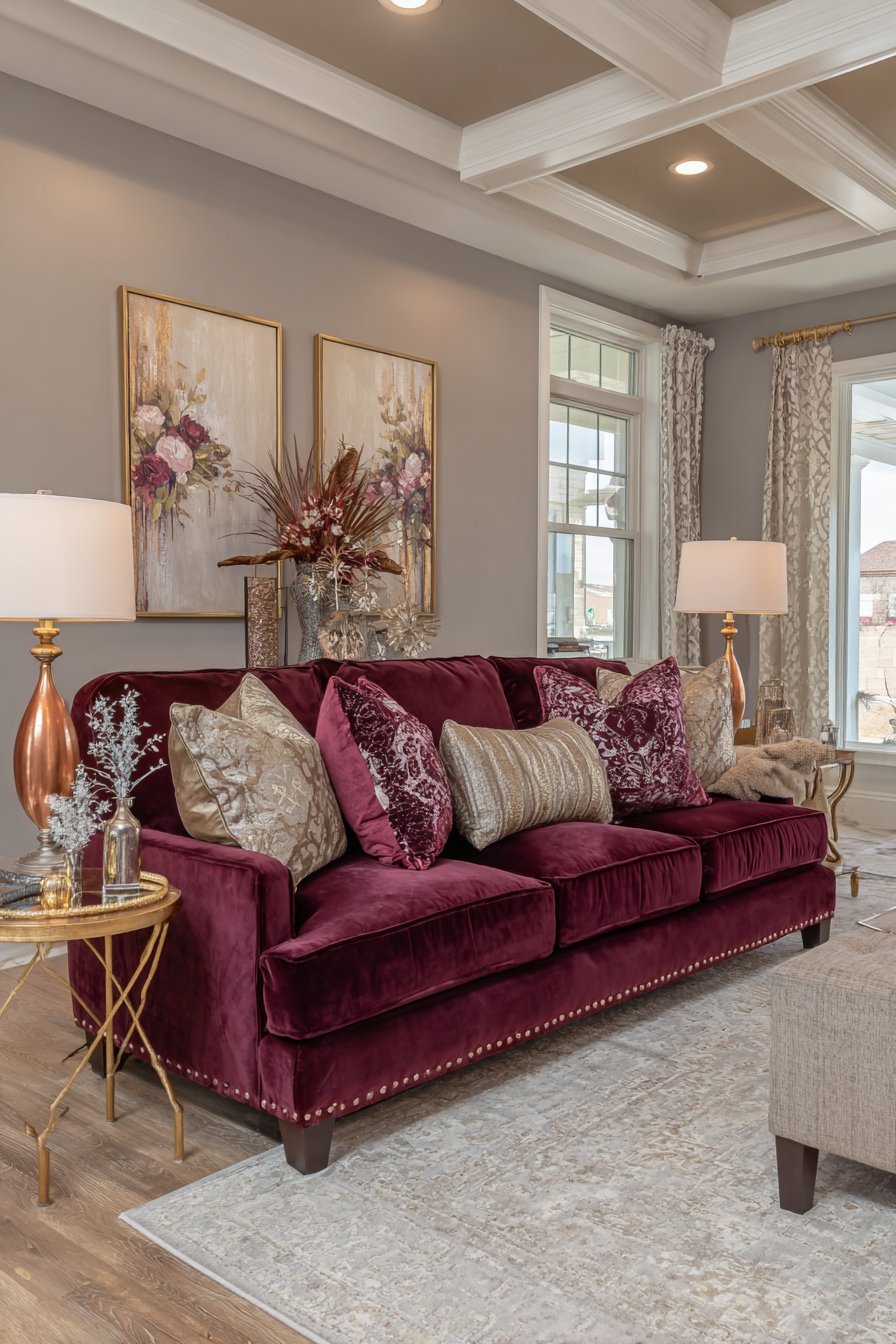
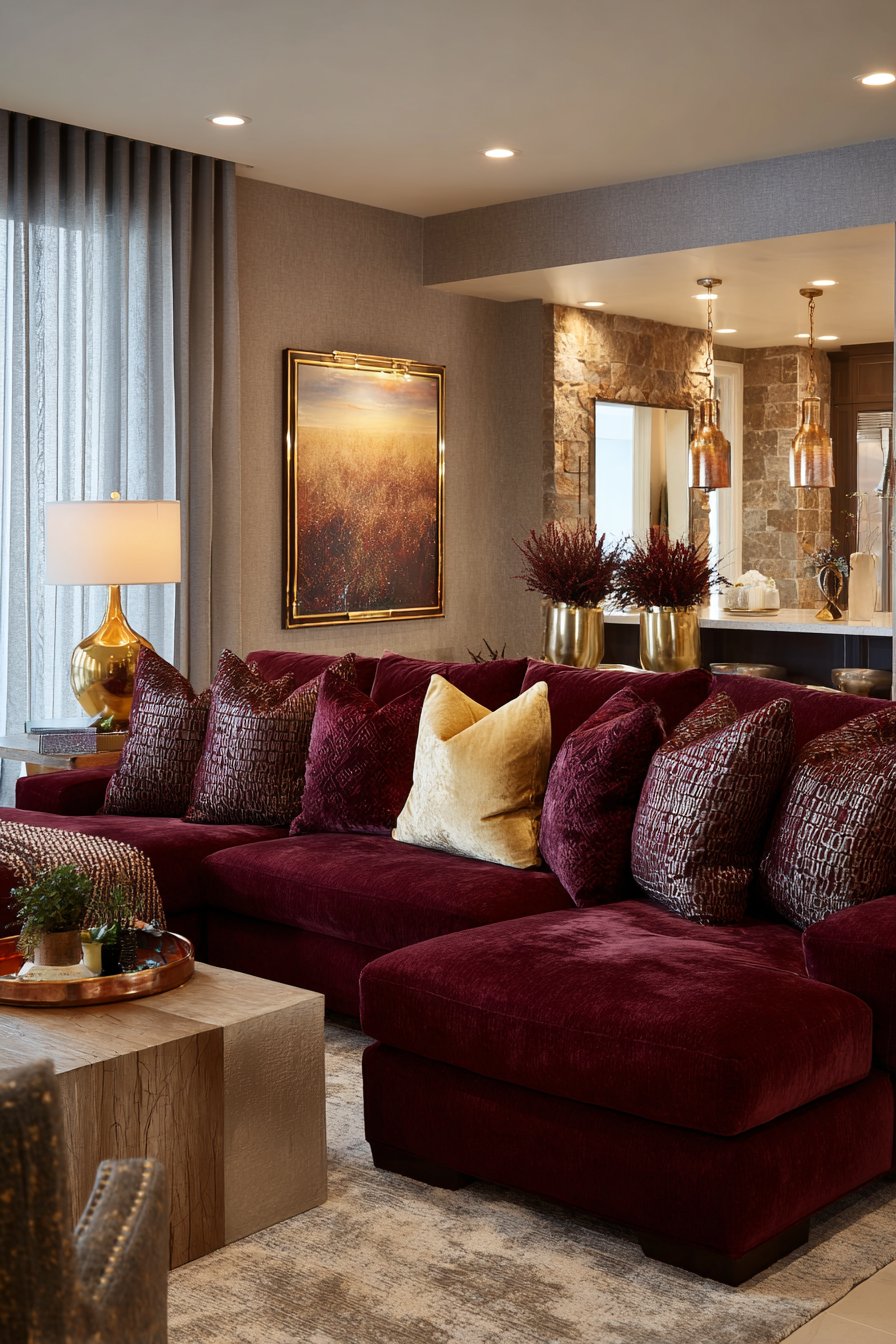
The strategic pairing of a maroon sofa with varied metallic accents creates a living room that feels luxurious yet approachable, sophisticated yet livable. This design showcases how brass floor lamps, copper side tables, and gold-framed mirrors can work together without feeling excessive or costume-like. The warm metallic finishes complement rather than compete with the maroon upholstery’s inherent warmth, creating a cohesive color temperature throughout the space. Against neutral walls in warm grey and herringbone hardwood floors that add subtle pattern through their installation technique, these metallic elements catch and reflect light while adding touches of glamour to everyday living.
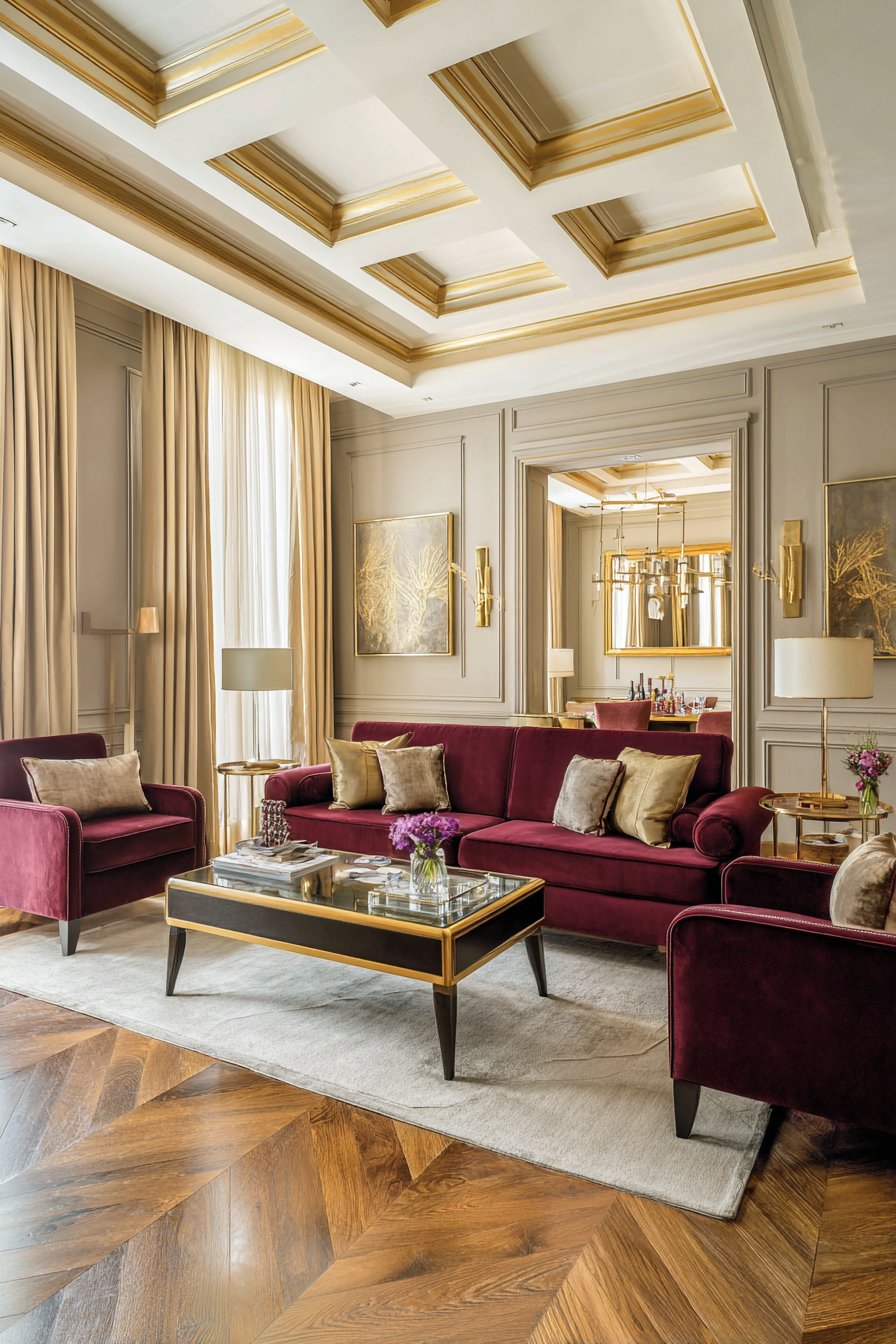
The luxurious texture story extends beyond the sofa itself. Velvet and silk throw pillows in jewel tones—emerald green, sapphire blue, deep amber—add both textural variety and additional saturated color that complements the maroon base. A plush area rug with subtle sheen underfoot contributes to the luxurious feel while maintaining durability for daily use. The layered lighting approach combines recessed ceiling lights for ambient illumination, table lamps for task lighting, and natural window light that changes throughout the day, creating a dynamic environment where the interplay of metals, fabrics, and light sources keeps the space visually interesting.
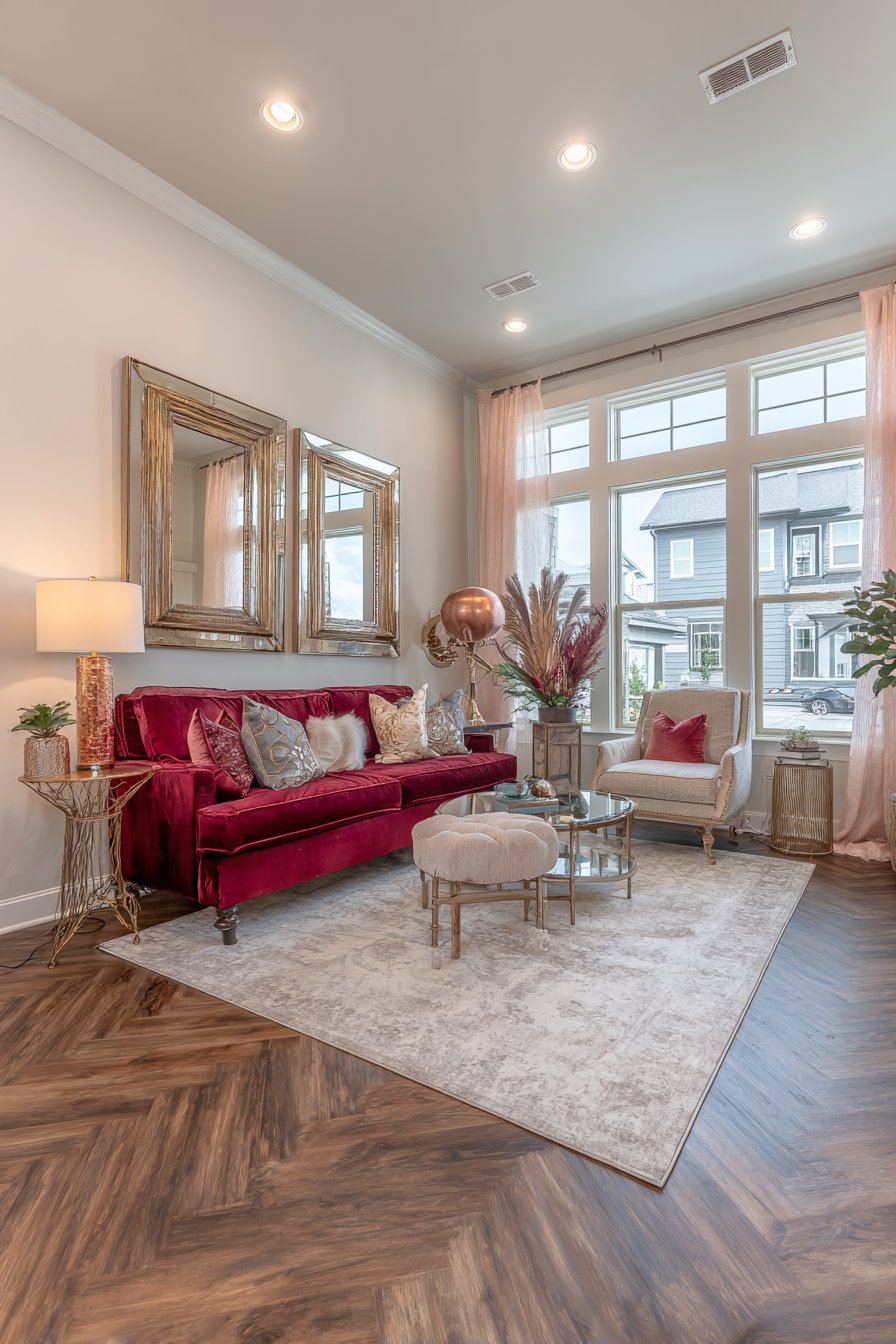
Professional interior photography pays special attention to reflective surfaces, capturing how warm metals interact with the rich fabric textures and how light plays across different materials throughout the day. The maroon sofa serves as the luxurious focal point around which all these metallic and textural elements orbit, grounding the space while supporting the overall design narrative of approachable luxury. This approach demonstrates that incorporating multiple metallic finishes—brass, copper, gold—can work beautifully in a single space when they share similar warm undertones and when balanced with substantial upholstered pieces that provide visual weight and comfort. The result is a living room that feels special and designed without sacrificing the comfort and livability essential to daily home life.
Key Design Tips:
- Mix multiple metallic finishes confidently when they share similar warm or cool undertones
- Balance reflective metallic surfaces with substantial upholstered pieces for visual weight
- Incorporate jewel-tone accent colors that complement rather than match your sofa color
- Layer different fabric textures—velvet, silk, linen—to create tactile interest
- Include layered lighting that highlights metallic finishes and creates ambiance
- Select rugs with subtle sheen to add luxury without sacrificing durability
Why These Maroon Sofa Living Room Ideas Work
The success of these diverse maroon sofa living room ideas lies in their ability to demonstrate the remarkable versatility of this bold color choice while respecting fundamental design principles. Whether you’re drawn to minimalist Scandinavian simplicity, maximalist bohemian abundance, industrial urban edge, or traditional formal elegance, a maroon sofa can adapt to and enhance your chosen aesthetic. The key lies in understanding how to balance this saturated, rich color with appropriate supporting elements—complementary color palettes, suitable materials and textures, strategic lighting, and thoughtful spatial planning.
One common thread running through all successful maroon sofa designs is the importance of natural light. Rooms that celebrate abundant daylight showcase how sunlight transforms the maroon color throughout the day, revealing subtle undertones and creating dynamic visual interest. Even in spaces with more limited natural light, the strategic use of layered artificial lighting—ambient, task, and accent—ensures the maroon upholstery reads as rich rather than dark, sophisticated rather than heavy. Understanding how different lighting conditions affect color perception allows designers and homeowners to position and illuminate maroon sofas for maximum impact.
Material and texture selection plays an equally critical role in determining whether maroon sofa designs succeed or fail. The choice between velvet, leather, linen, or performance fabrics significantly impacts not just aesthetic appeal but also practical functionality and long-term satisfaction. Velvet adds luxurious visual texture and depth, leather brings masculine sophistication and improves with age, linen offers casual elegance and breathability, while performance fabrics deliver family-friendly durability without sacrificing style. The supporting materials—wood tones, metallic finishes, stone surfaces, natural fibers—must be chosen to complement both the maroon color and the overall design aesthetic.
Color palette development represents another crucial factor in successful maroon sofa living room design. While maroon itself makes a bold statement, it must be balanced with supporting colors that either provide contrast or create harmony depending on the desired effect. Neutral backgrounds—white, cream, grey, taupe—allow maroon to take center stage without visual competition. Complementary jewel tones—emerald, sapphire, amber—can join maroon in luxurious, saturated palettes. Earth tones—rust, terracotta, olive, ochre—harmonize naturally with maroon’s warmth for bohemian or organic modern schemes. Understanding color theory and how different hues interact allows for confident palette development that feels cohesive rather than chaotic.
Spatial considerations—room size, ceiling height, natural light availability, and architectural features—must inform maroon sofa selection and placement. In compact spaces, a smaller-scale maroon loveseat or apartment sofa delivers color impact without overwhelming limited square footage. In spacious rooms with high ceilings, a substantial maroon sectional or Chesterfield can hold its own against architectural grandeur. The positioning relative to windows, doorways, and traffic paths affects both the sofa’s visual impact and the room’s functionality. Wide-angle photography in many of these examples reveals how professional designers consider the entire three-dimensional space when placing major furniture pieces.
The practical considerations of daily living—durability, maintenance, family-friendliness, multi-functionality—must be balanced against aesthetic aspirations. Performance fabrics with stain resistance suit families with children or pets. Removable, washable slipcovers provide cleaning flexibility for high-use spaces. Leather upholstery offers exceptional durability and develops character rather than showing wear. Understanding your household’s specific needs and lifestyle patterns ensures that your maroon sofa remains a source of satisfaction rather than becoming a maintenance burden or style regret.
Style authenticity matters tremendously in creating cohesive, believable interiors. The mid-century modern example succeeds because all elements—leather upholstery, tapered legs, walnut wood, geometric patterns—authentically represent the period rather than offering superficial styling cues. The industrial loft works because exposed brick, concrete, metal, and Edison bulbs represent genuine industrial materials and fixtures rather than decorative approximations. The traditional Chesterfield space embraces actual traditional craftsmanship—button tufting, quality materials, architectural detailing—rather than traditional-ish accessories applied to contemporary bones. Committing fully to your chosen style produces more successful results than attempting to blend incompatible aesthetics.
The maroon sofa examples spanning seasonal styling, multi-functional arrangements, conversation-focused layouts, and open-concept spatial definition demonstrate that furniture serves both aesthetic and functional purposes. How we arrange, accessorize, and utilize our living rooms directly impacts daily quality of life, relationship facilitation, and personal satisfaction with our homes. A maroon sofa positioned to maximize natural light serves different purposes than one arranged for optimal TV viewing or conversation. Understanding your priorities and lifestyle patterns allows for intentional design decisions that support rather than hinder how you actually live.
Finally, these diverse examples prove that bold color choices need not be risky when executed with understanding and intention. The fear that a maroon sofa might be “too much” or difficult to work with evaporates when you see how successfully it adapts to minimalist Scandinavian spaces, relaxed coastal rooms, formal traditional parlors, and industrial urban lofts. The key lies not in avoiding bold choices but in understanding how to balance and support them through thoughtful design decisions. Color confidence comes from knowledge—understanding how colors interact, how light affects perception, how materials and textures create visual interest, and how spatial relationships impact overall effect.
Conclusion
The journey through these twenty-one maroon sofa living room ideas reveals a fundamental truth about interior design: bold choices, when thoughtfully executed, create spaces with memorable character and authentic personality. A maroon sofa represents more than just seating—it’s a design commitment that declares your willingness to embrace rich color, your confidence in your aesthetic choices, and your understanding that truly satisfying spaces balance practical functionality with visual impact. Whether your personal style leans toward minimalist restraint or maximalist abundance, traditional elegance or contemporary edge, formal sophistication or casual comfort, there’s a maroon sofa approach that will work beautifully in your home.
The versatility demonstrated across these examples should inspire rather than overwhelm. You need not commit to a single aesthetic approach; many successful interiors incorporate elements from multiple styles, creating transitional or eclectic spaces that reflect the complex, multifaceted nature of real people’s lives and tastes. The maroon sofa can adapt to seasonal styling changes, accommodate shifting family needs, and evolve alongside your developing design preferences. This flexibility makes it an enduring choice rather than a trend-driven impulse that quickly feels dated.
As you contemplate incorporating a maroon sofa into your own living space, consider the fundamental principles revealed through these examples: the importance of natural light and strategic illumination, the impact of material and texture selection, the necessity of cohesive color palette development, the role of spatial planning and furniture arrangement, and the balance between aesthetic aspiration and practical livability. These principles apply regardless of your specific style preferences or room constraints, providing a framework for confident design decisions.
Most importantly, remember that your living room should ultimately serve your life rather than existing as a static showpiece. The most successful designs facilitate daily activities, support relationships, provide comfort after long days, and bring genuine pleasure each time you enter the space. A maroon sofa that makes you smile when you see it, that becomes the gathering spot for family conversations, that provides the perfect backdrop for quiet reading or lively entertaining—this is design success that transcends any particular aesthetic movement or trending style.
We encourage you to experiment, to trust your instincts, and to create spaces that authentically reflect who you are and how you live. The maroon sofa living room ideas presented here serve as starting points for your own creative exploration rather than rigid formulas to be followed exactly. Take inspiration from the elements that resonate with you, adapt ideas to suit your specific circumstances, and don’t be afraid to combine approaches in unexpected ways. Your home is your personal canvas, and a maroon sofa provides a bold, beautiful foundation upon which to build your unique design story.
