
The wall space above your couch represents one of the most significant opportunities for creative expression in your living room. This often-overlooked area serves as a natural focal point, drawing the eye the moment someone enters the space. Whether you’re working with a sprawling sectional or an intimate loveseat, the right wall decor can completely transform the ambiance of your room, reflecting your personal style while creating visual harmony throughout the space.
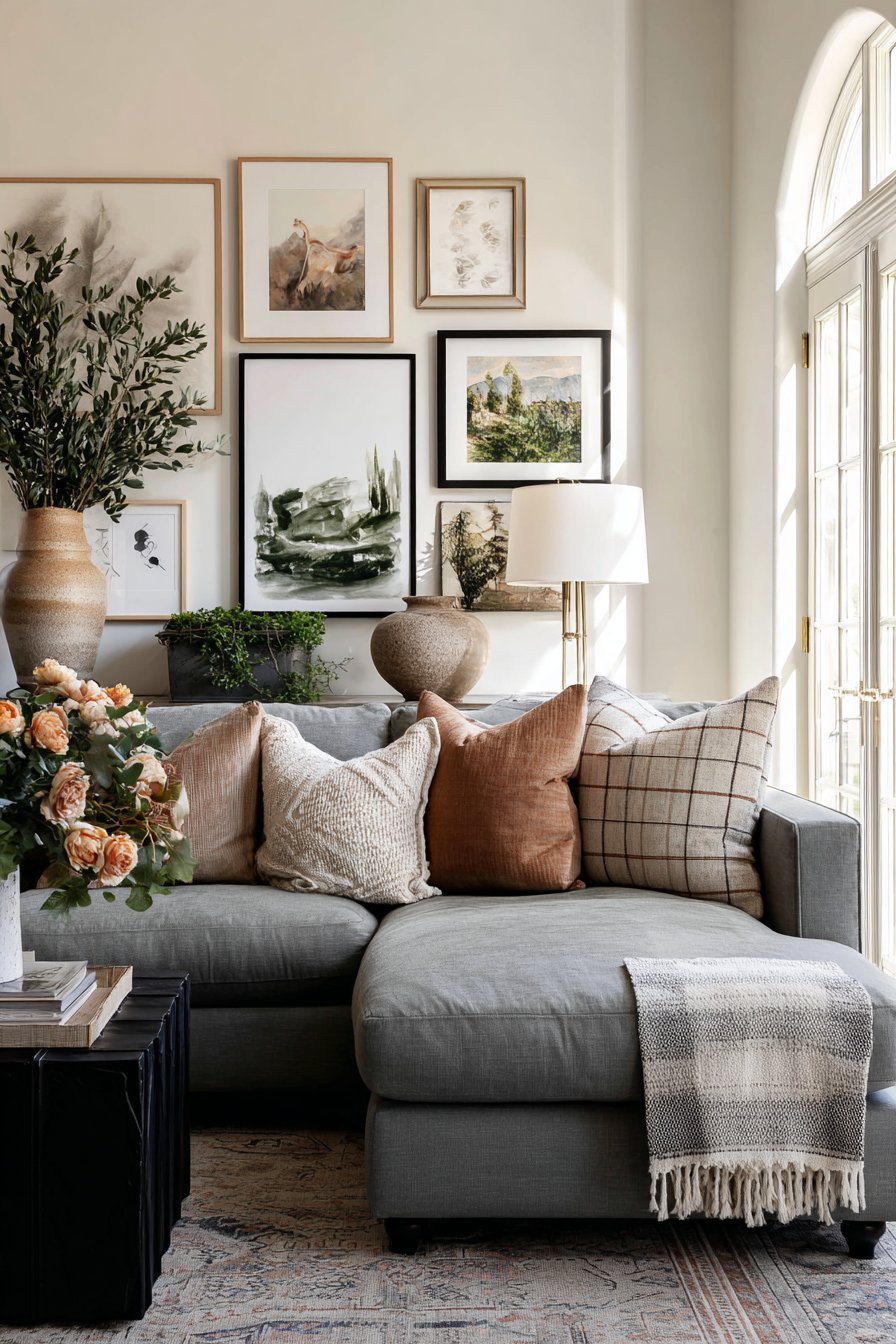
Choosing the perfect wall decor above your couch requires careful consideration of scale, proportion, color, and style. The artwork or decorative elements you select should complement your existing furniture while adding depth, character, and visual interest to your living area. From bold statement pieces to carefully curated gallery walls, the possibilities are virtually endless. The key lies in understanding how different design approaches can enhance your space while maintaining balance and functionality.
In this comprehensive guide, we’ll explore twenty-three distinctive approaches to decorating the wall above your couch, each offering unique aesthetic qualities and practical benefits. Whether you gravitate toward minimalist sophistication, bohemian warmth, or contemporary elegance, you’ll discover inspiring ideas that can be adapted to suit your personal taste, budget, and living space requirements. These design solutions range from traditional framed artwork to innovative three-dimensional installations, ensuring there’s something for every style preference and skill level.
1. Bold Abstract Canvas Statement
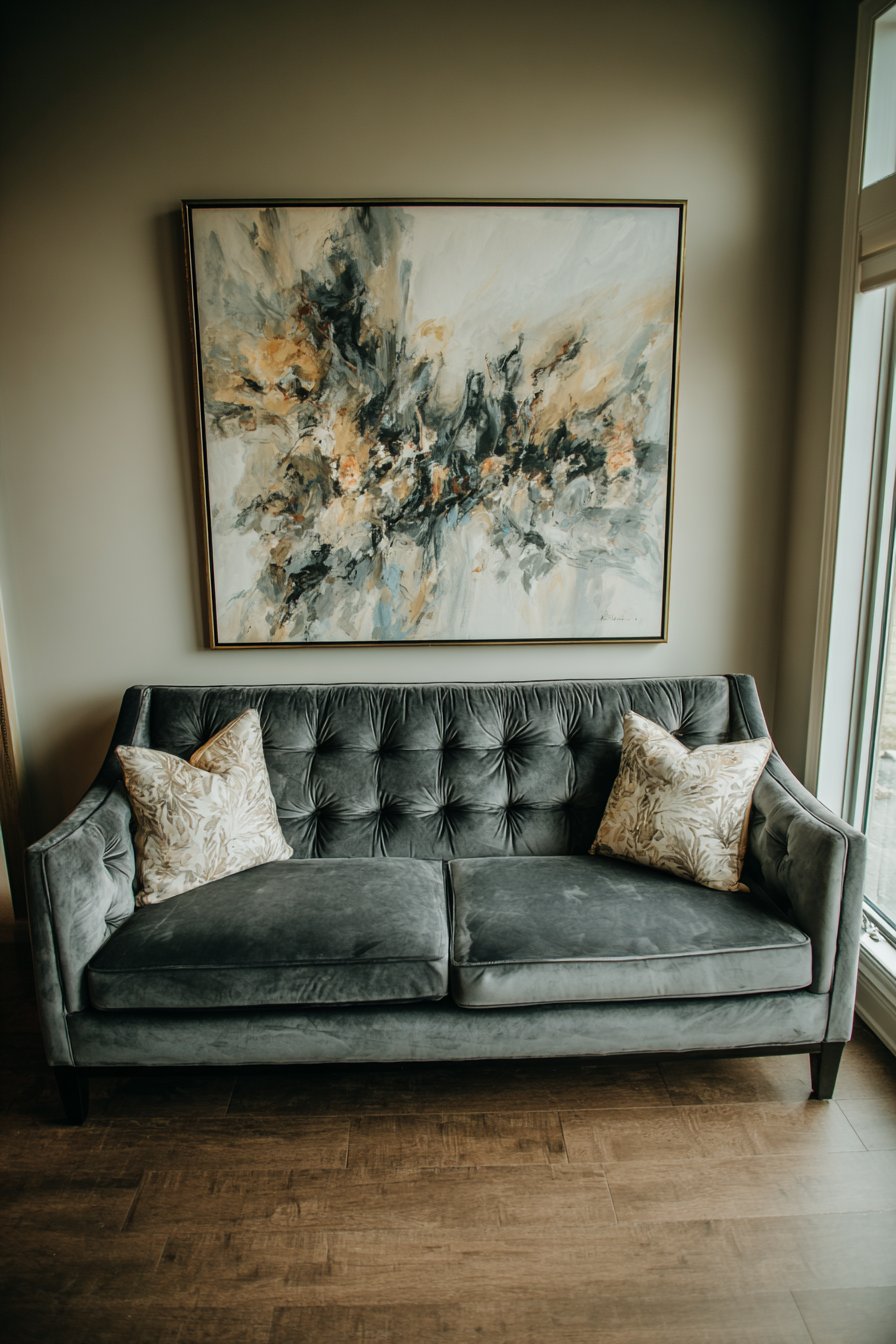
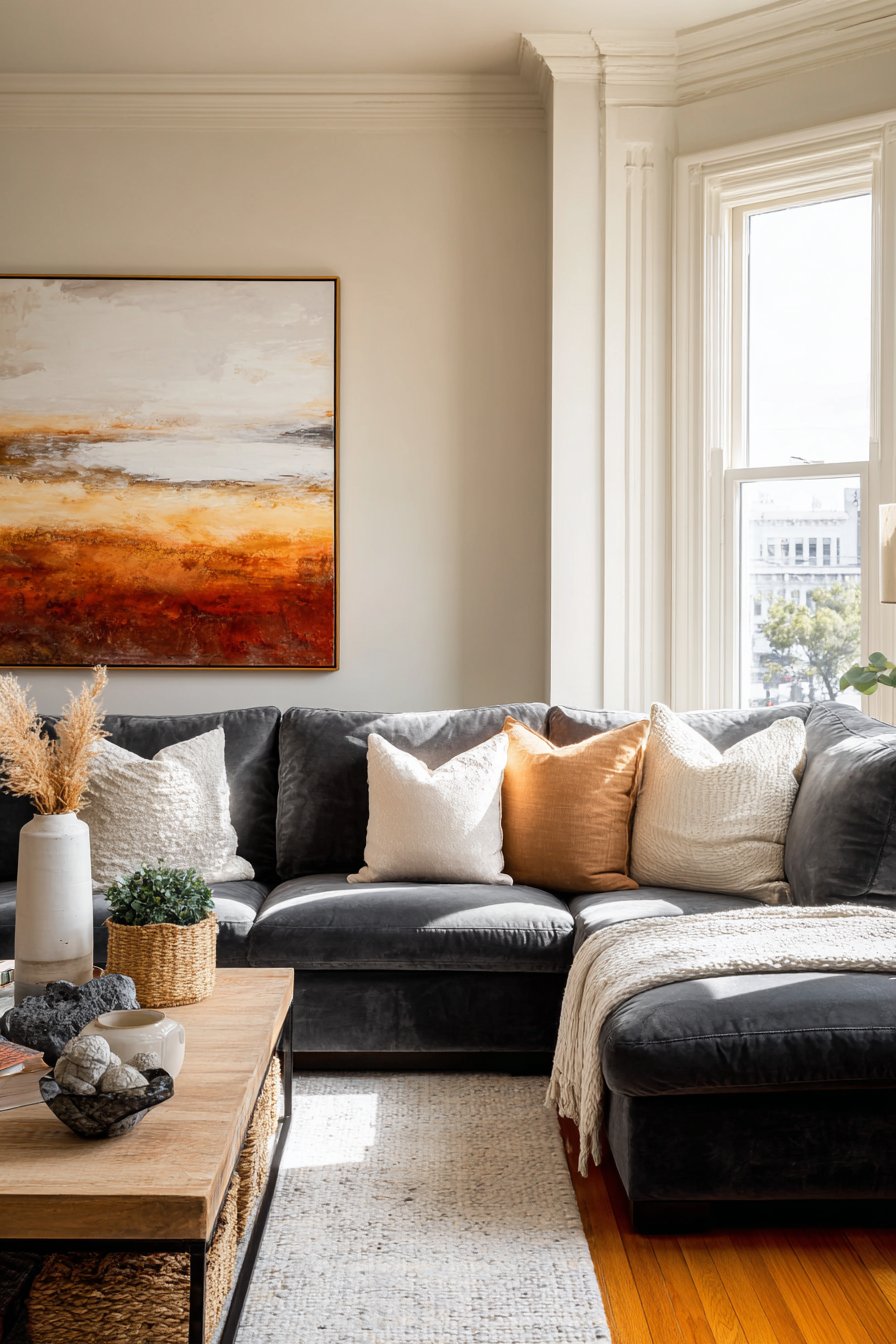
A large-scale abstract canvas in warm earth tones creates an immediate and powerful focal point above your couch. This approach works exceptionally well in contemporary and transitional spaces where you want to make a confident design statement without overwhelming the room. The beauty of abstract art lies in its versatility—the warm palette of terracotta, ochre, and cream tones brings organic warmth to the space while remaining sophisticated enough for formal settings.
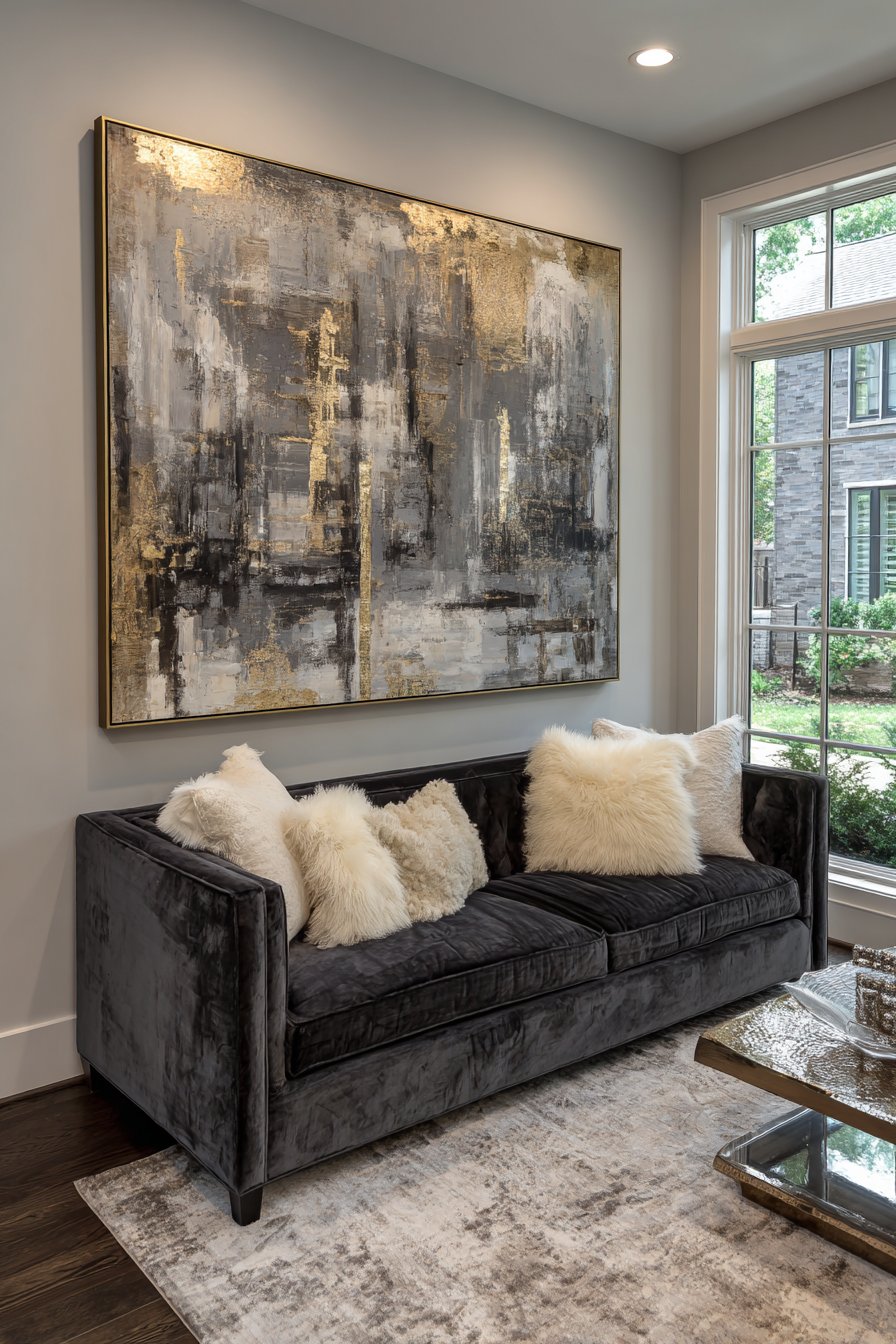
When selecting an oversized canvas, proportion becomes critical to success. The artwork should span approximately two-thirds to three-quarters of your sofa’s width, creating visual balance without appearing cramped or lost on the wall. An 8-inch gap between the sofa back and the bottom of the frame provides ideal breathing room, allowing both pieces to maintain their individual presence while working harmoniously together. The texture inherent in canvas paintings adds dimensional interest that photographs and prints simply cannot replicate.
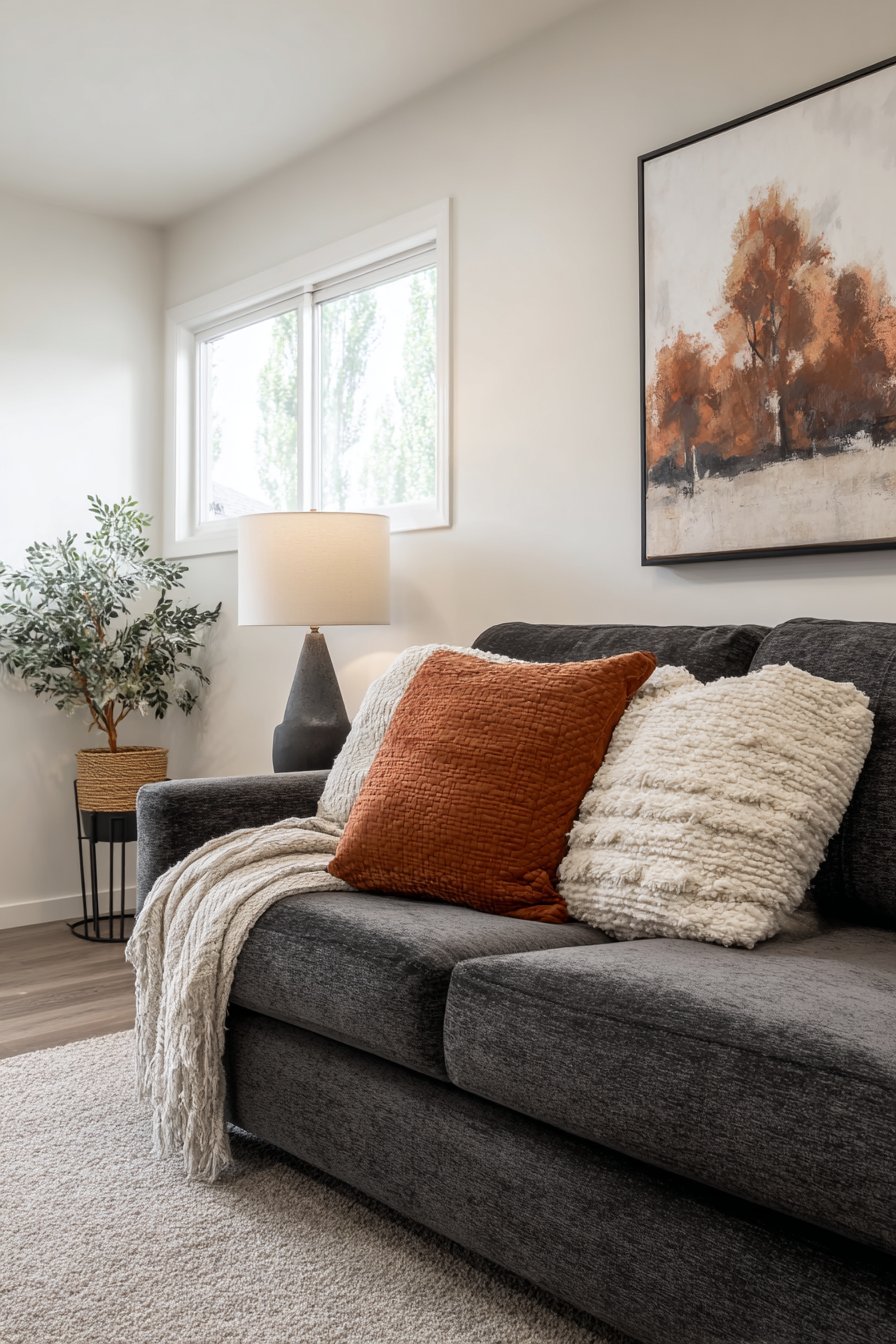
The charcoal grey velvet sofa beneath this dramatic artwork provides the perfect neutral foundation, allowing the warm tones of the painting to truly shine. This color relationship demonstrates an essential principle in interior design: pairing warm and cool tones creates dynamic visual tension that keeps a space feeling alive and engaging. The soft natural lighting from side windows plays across the canvas surface, revealing subtle variations in paint application and texture that change throughout the day, making the artwork feel like a living element within the room.
Key Design Tips:
- Select artwork that spans 60-75% of your sofa width for optimal visual balance
- Maintain an 8-10 inch gap between furniture and frame for proper proportion
- Choose abstract pieces with colors that complement your existing palette while adding warmth
- Position lighting to minimize glare on the canvas surface
- Consider the texture and brushwork of paintings as important design elements
- Ensure the frame style matches your room’s overall aesthetic, whether ornate or minimal
2. Triple Botanical Print Symmetry
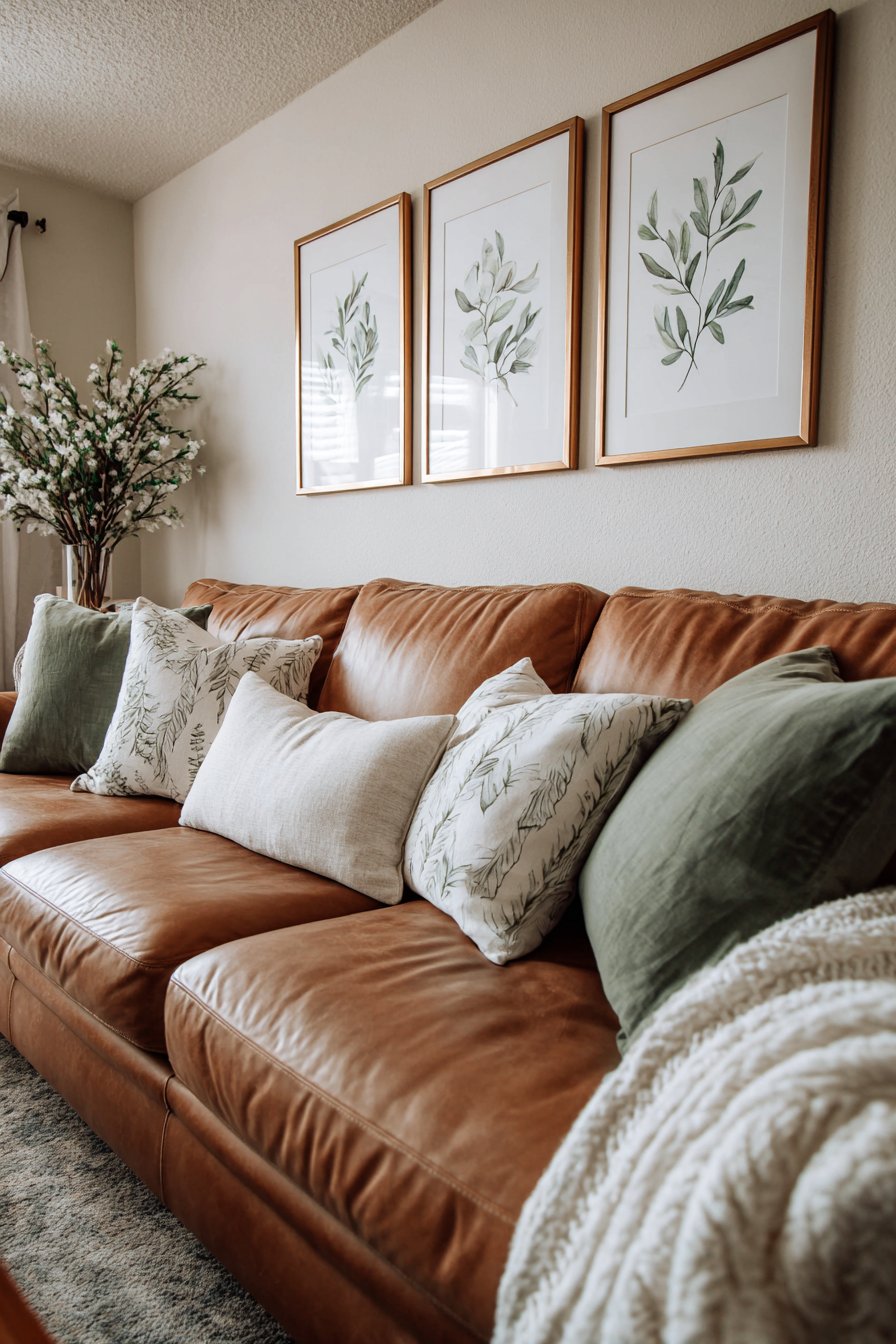
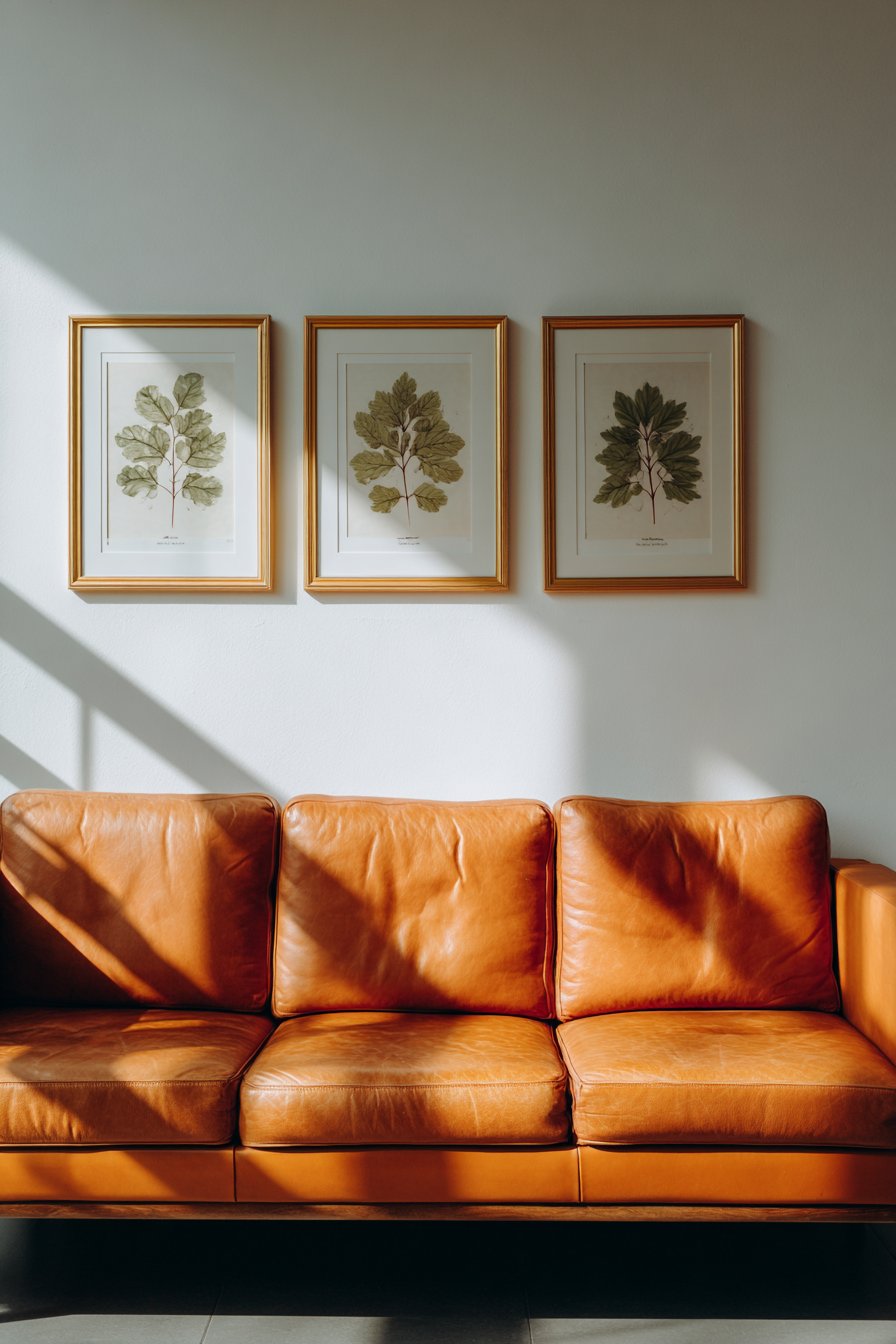
Three matching botanical prints arranged in perfect horizontal alignment create a sense of order and tranquility that works beautifully in traditional and transitional living spaces. This symmetrical approach appeals to those who appreciate classical design principles and find comfort in balanced, predictable arrangements. The botanical subject matter—detailed leaf illustrations in muted greens against cream backgrounds—brings a subtle connection to nature indoors without the maintenance requirements of live plants.
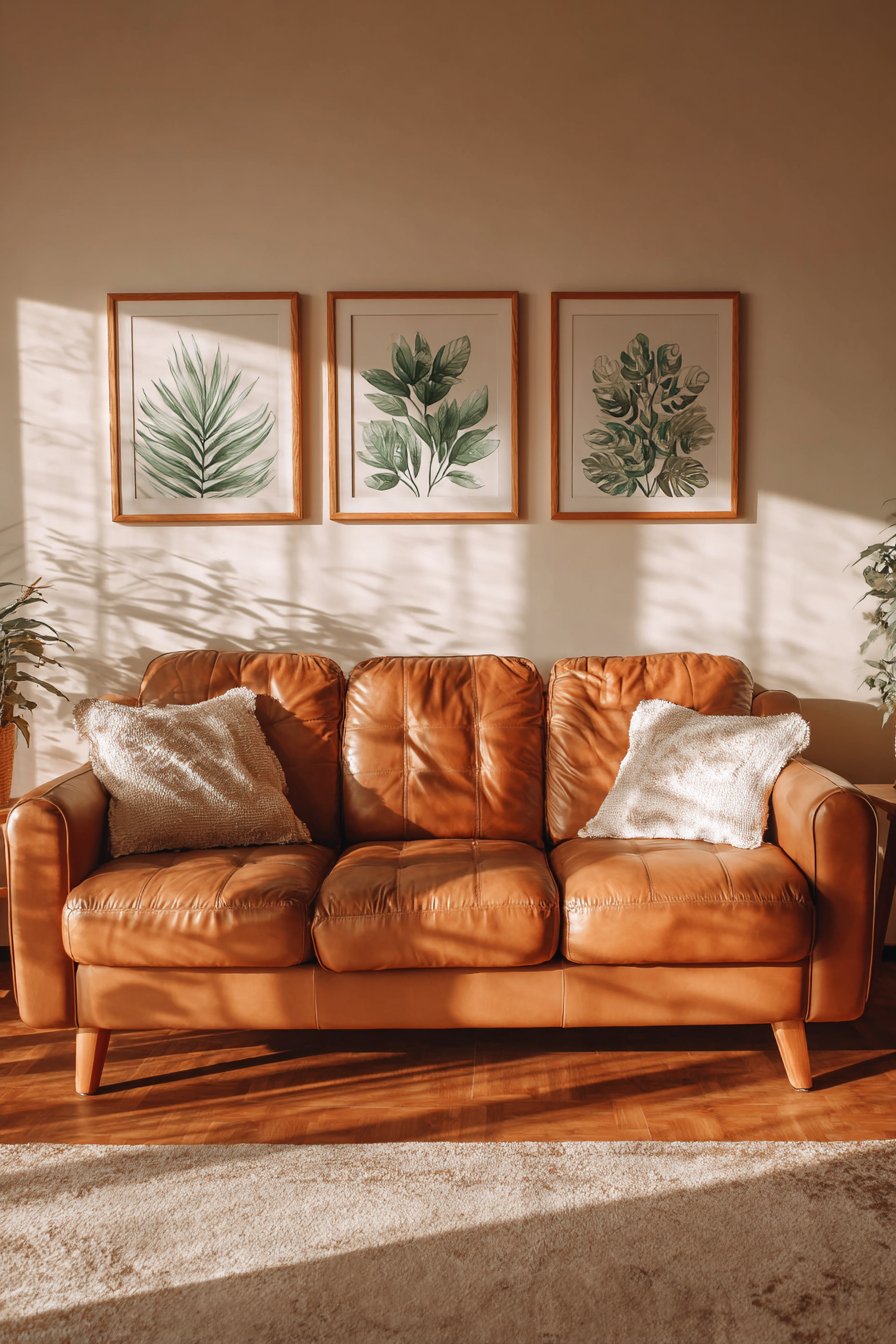
The consistency in frame size, matting, and spacing demonstrates the importance of precision in symmetrical design. Each 24×18-inch frame receives identical white matting that creates visual breathing room around the artwork, while the thin gold borders add a touch of elegance without appearing ostentatious. The 6-inch spacing between frames follows the rule of consistent intervals, which the eye finds naturally pleasing. This mathematical precision creates a sense of intentionality that elevates the overall design.
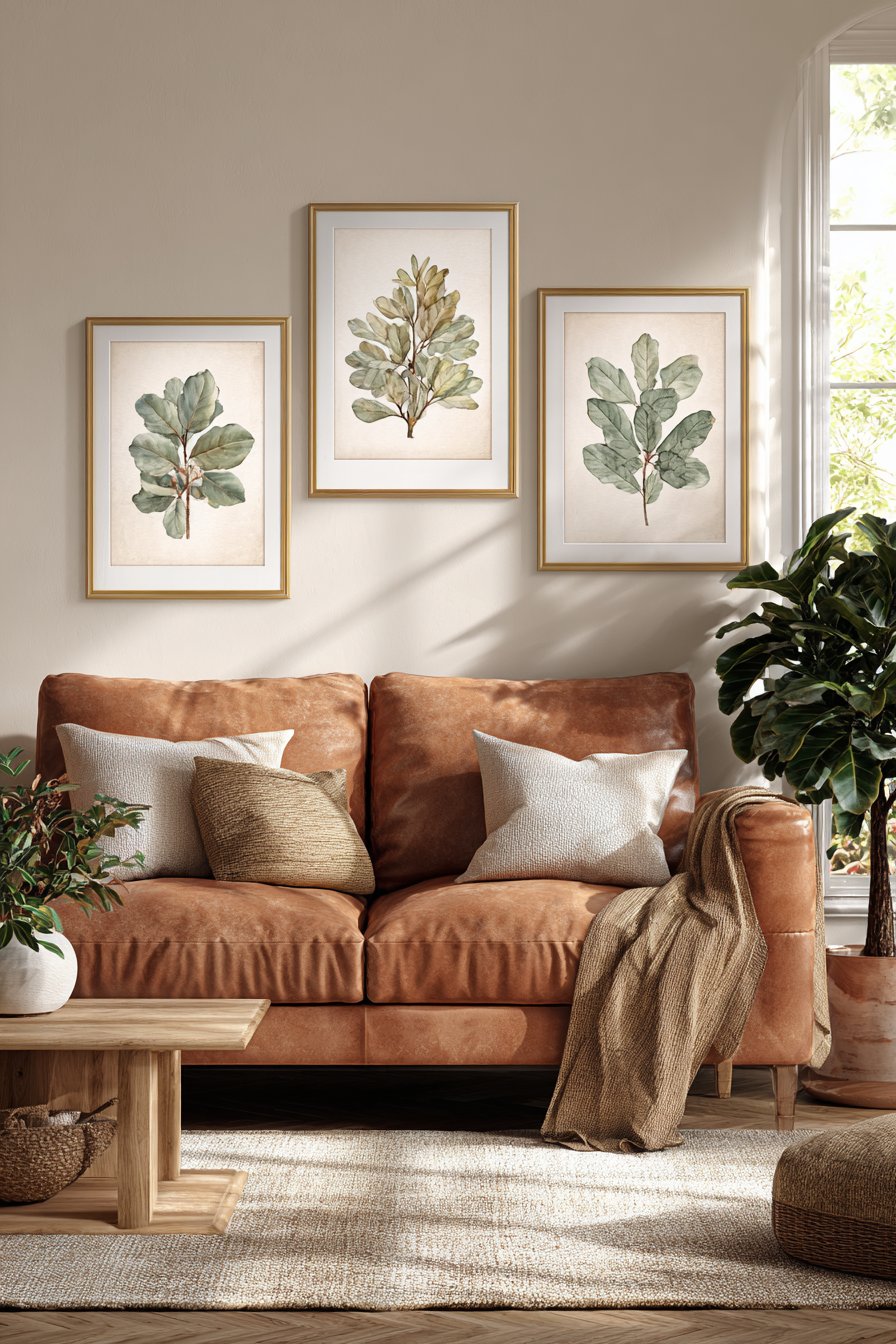
The camel-colored leather sofa beneath these prints provides a sophisticated neutral backdrop that allows the botanical artwork to command attention. Leather furniture brings its own textural interest to the space, and its warm honey tones create a harmonious relationship with the gold frame accents. As natural light moves across this arrangement throughout the day, the gentle shadows behind each frame add subtle dimension, transforming what could be a flat wall into a dynamic surface with depth and character.
Key Design Tips:
- Use a level and precise measurements to ensure perfect alignment of multiple frames
- Choose identical matting and frames for cohesive symmetrical displays
- Space frames consistently—typically 4-6 inches apart for medium-sized pieces
- Select botanical prints with similar color saturation for unified visual impact
- Consider the undertones in your furniture when choosing frame finishes
- Ensure prints are mounted at the same height for professional appearance
3. Rustic Floating Shelf Display
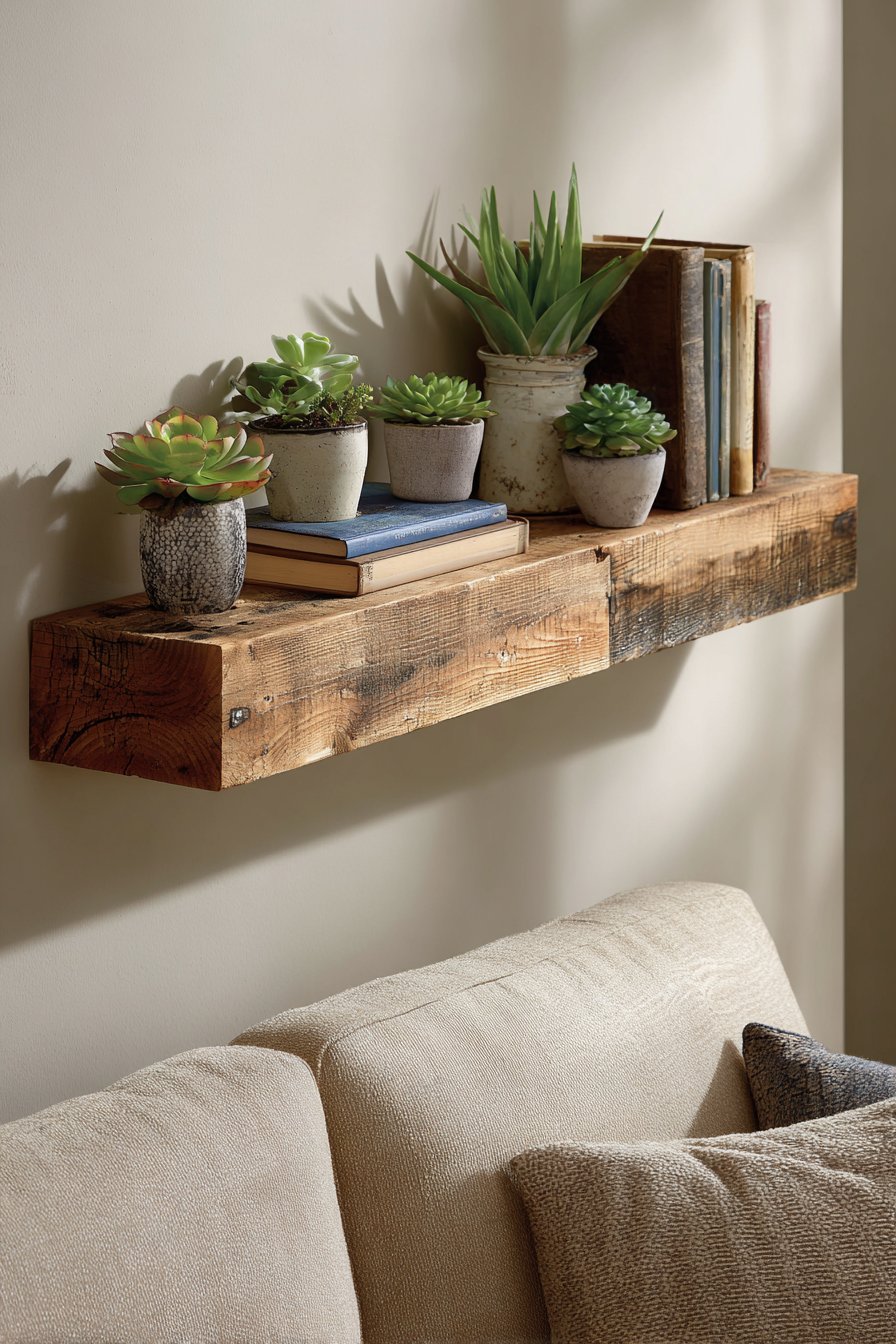
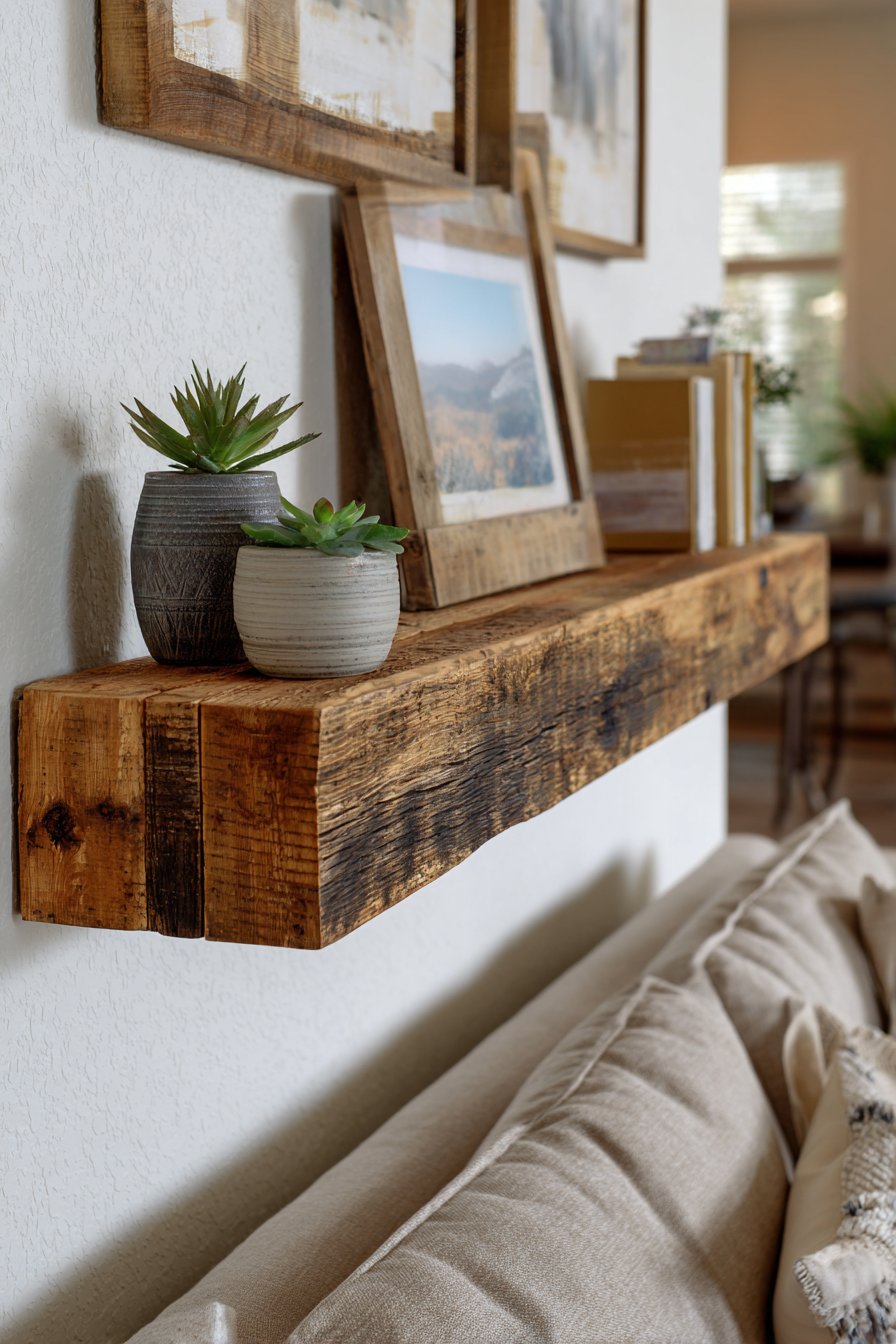
A reclaimed wood floating shelf transforms wall space into both decorative display and functional storage, embodying the popular trend toward multipurpose design elements. This 48-inch shelf, positioned 12 inches above the sofa, creates an accessible platform for curating a personal collection of objects that tell your story. The weathered wood grain showcasing natural color variations from honey to charcoal brings authentic character that cannot be replicated with new materials.
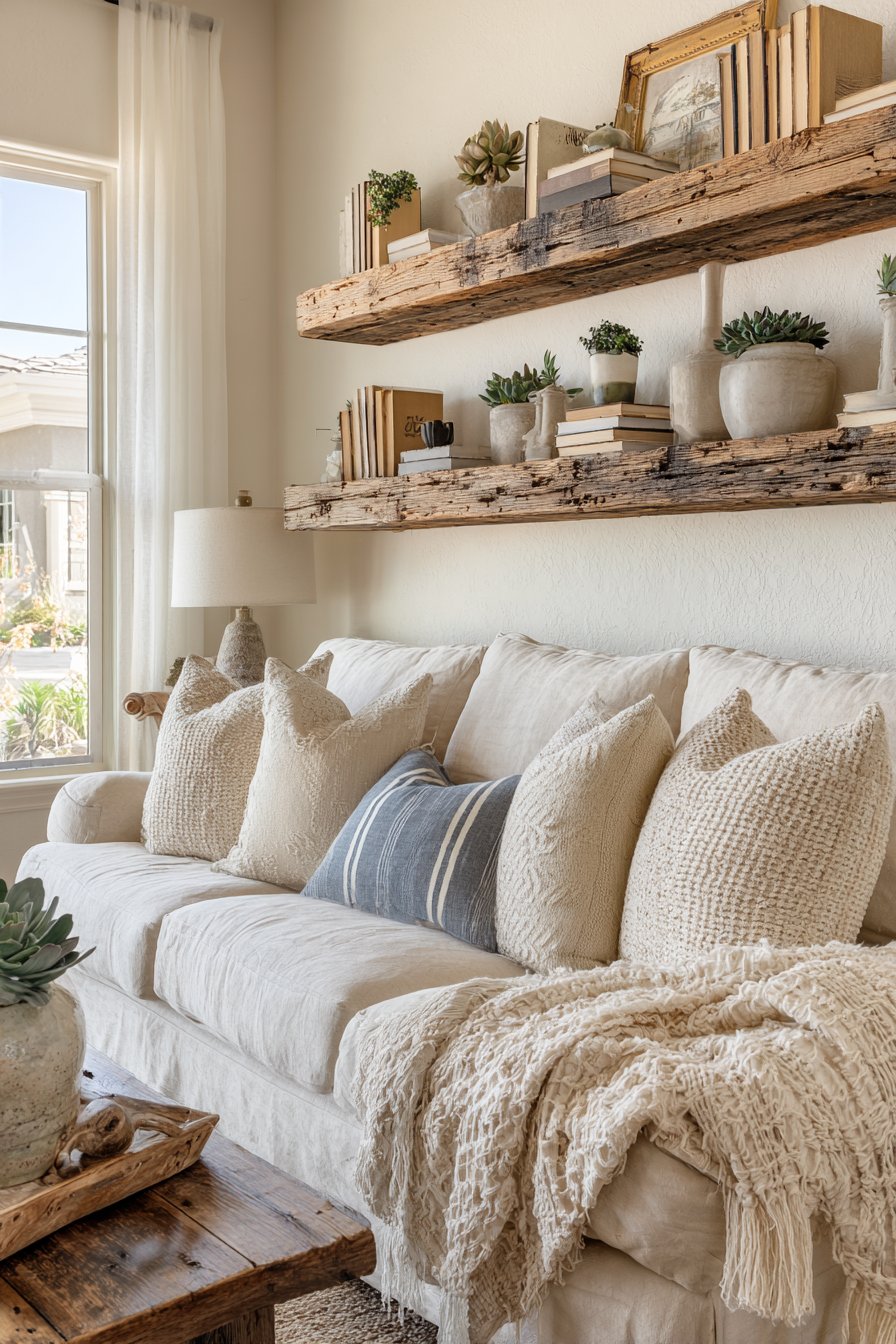
The art of shelf styling lies in creating balanced asymmetry through careful object placement. Small potted succulents bring life and organic forms to the display, while vintage books add height variation and intellectual character. Ceramic vases in different sizes create visual rhythm through repetition of form while introducing additional texture. The key is grouping items in odd numbers—typically threes or fives—which creates more dynamic and interesting compositions than even-numbered arrangements.
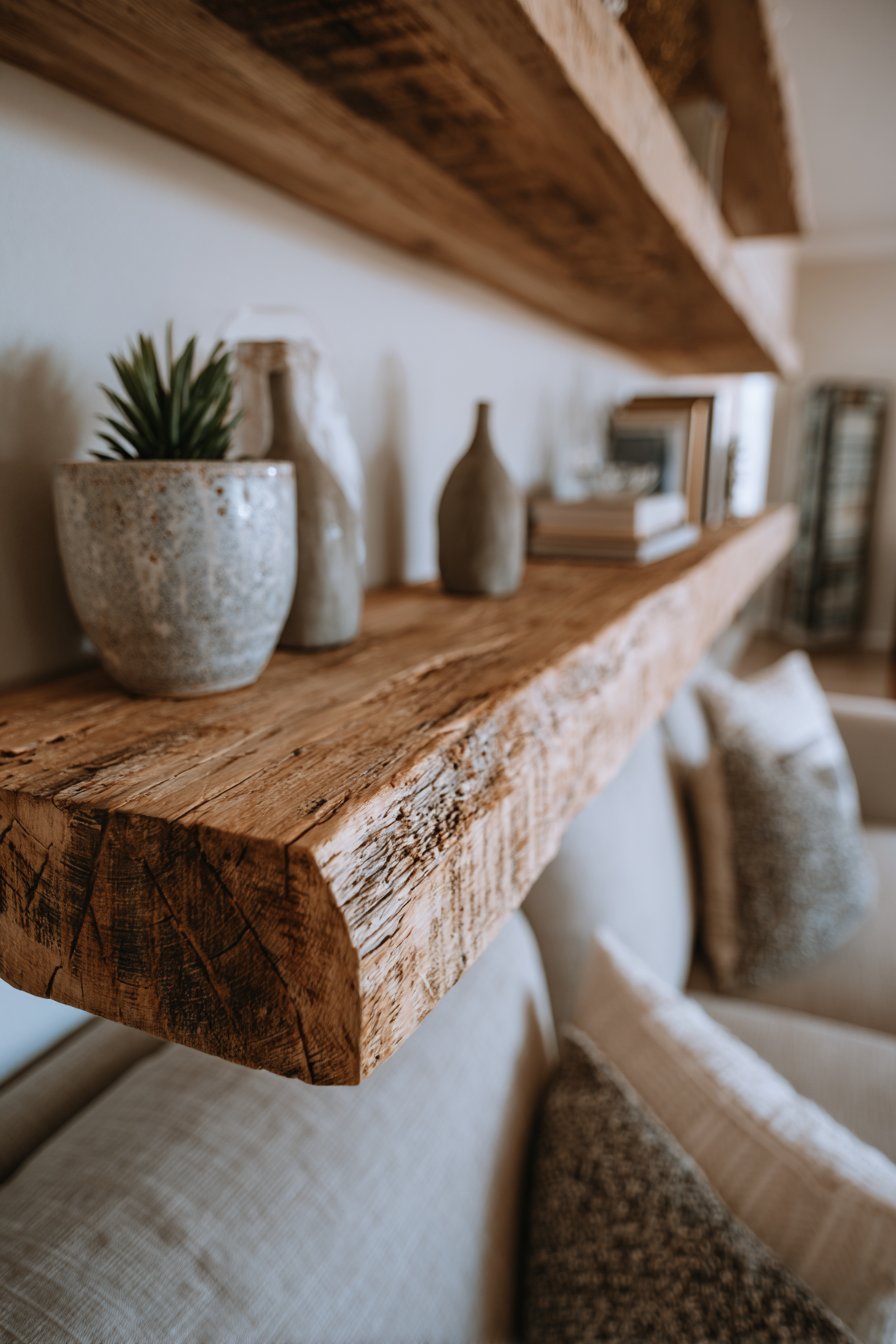
This approach works particularly well in coastal-inspired living spaces where the combination of natural wood, living plants, and handcrafted ceramics reinforces the connection to organic materials and artisanal craftsmanship. The practical advantage of a floating shelf over purely decorative wall art is its flexibility—you can refresh the display seasonally, rotate items based on your mood, or adjust the arrangement as your collection grows and evolves over time.
Key Design Tips:
- Install floating shelves with heavy-duty mounting hardware rated for the combined weight of shelf and objects
- Vary the heights of displayed items to create visual interest and avoid monotony
- Group objects in odd numbers for more dynamic arrangements
- Leave some empty space on the shelf to avoid cluttered appearance
- Choose shelf depth based on your largest display items, typically 10-12 inches
- Select reclaimed wood with visible grain and color variation for authentic character
- Rotate displayed items seasonally to keep the space feeling fresh
4. Oversized Round Mirror Reflection
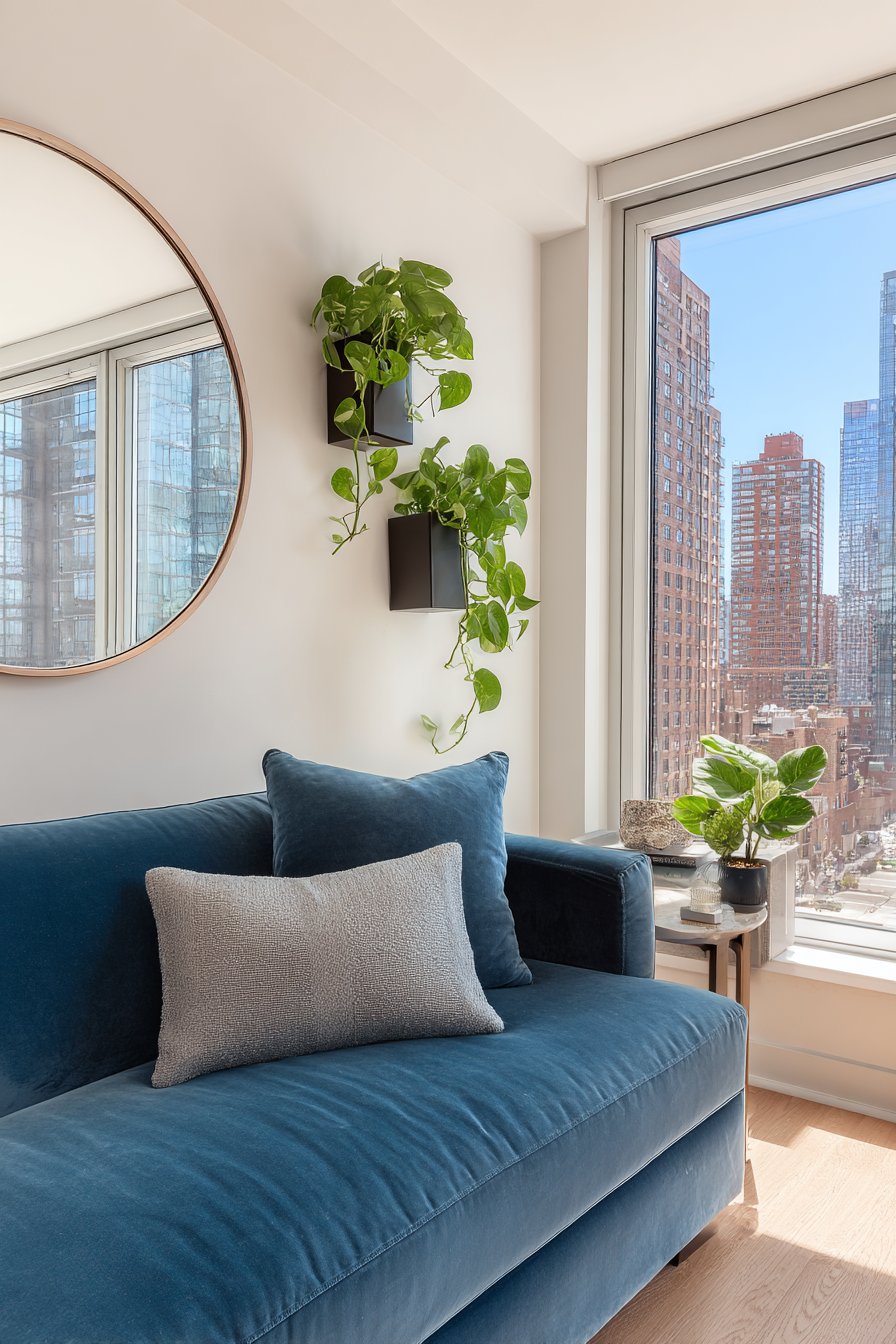
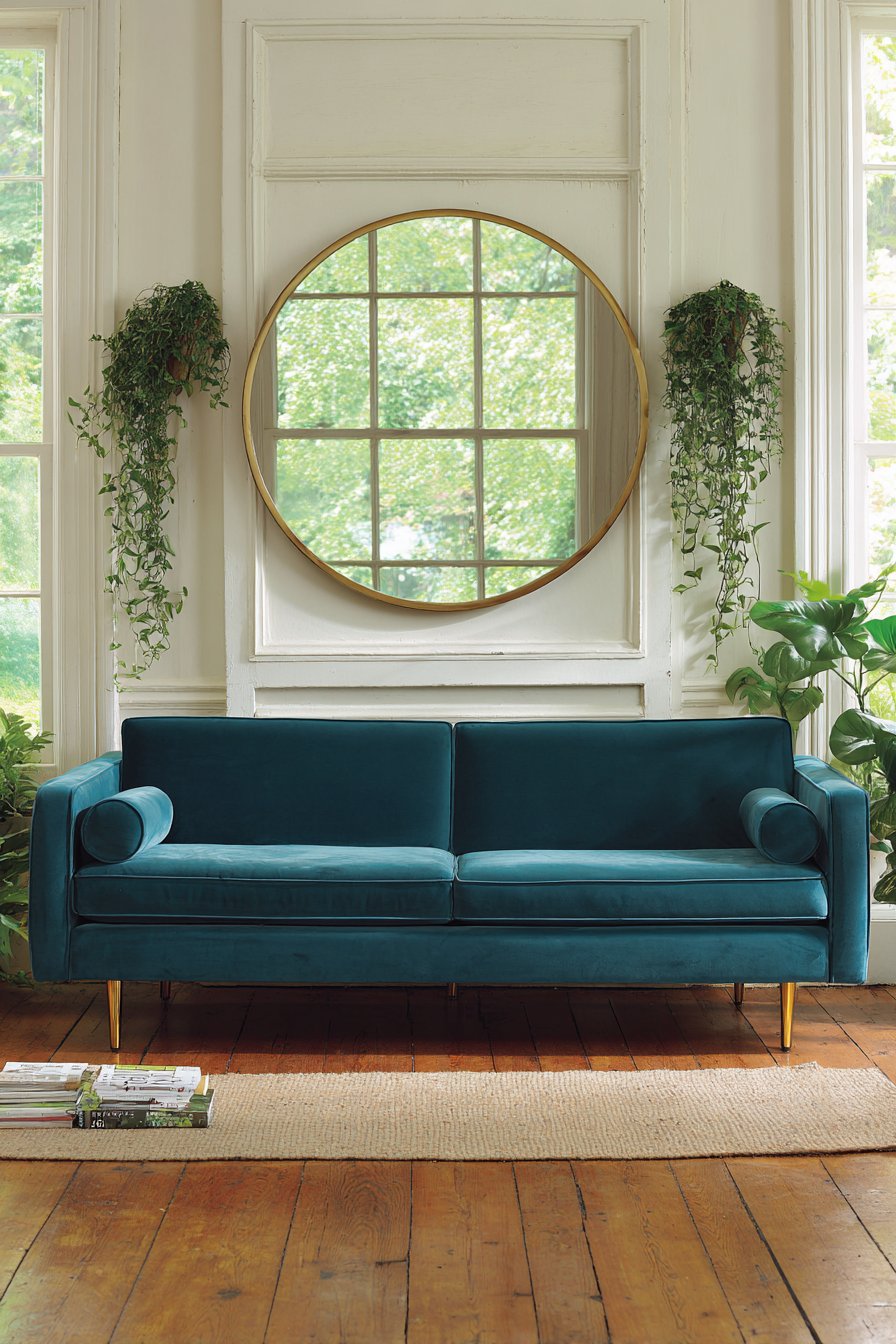
An oversized round mirror serves as both decorative element and functional design tool, bringing light-enhancing properties that can completely transform a living space. The 42-inch brass-framed mirror creates a striking geometric contrast against the rectangular sofa below, demonstrating how mixing shapes adds visual sophistication. Beyond aesthetics, mirrors strategically placed to reflect windows effectively double the natural light in a room, making spaces feel larger and more open.
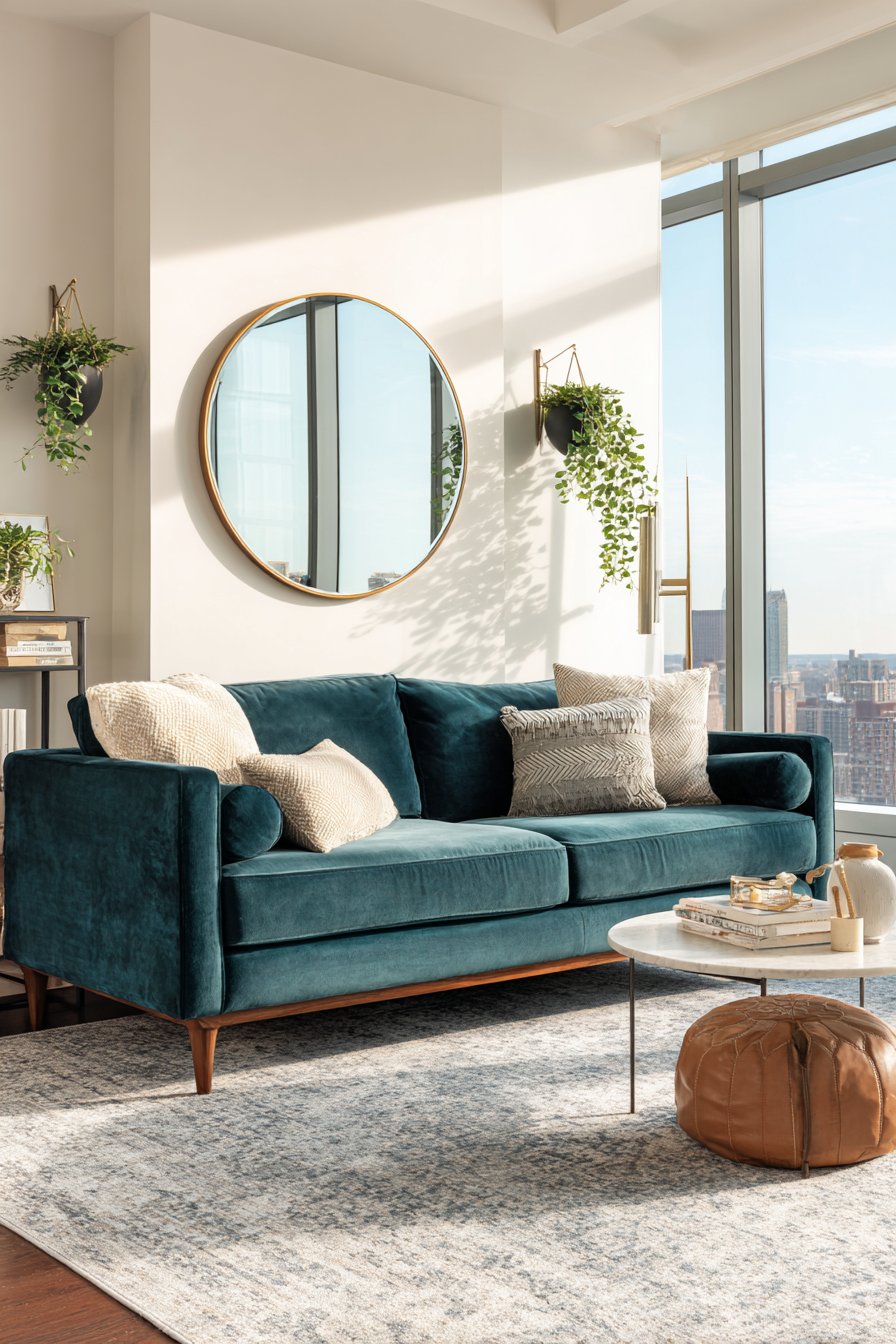
The mid-century modern teal velvet sofa provides a bold color foundation that the brass mirror frame beautifully complements. This pairing exemplifies the principle of metallic accents bridging different color temperatures—the warm brass creates harmony with both cool teal upholstery and warmer wood tones elsewhere in the room. The two small wall-mounted planters flanking the mirror at asymmetrical heights prevent the arrangement from feeling too rigid while introducing organic elements that soften the overall composition.
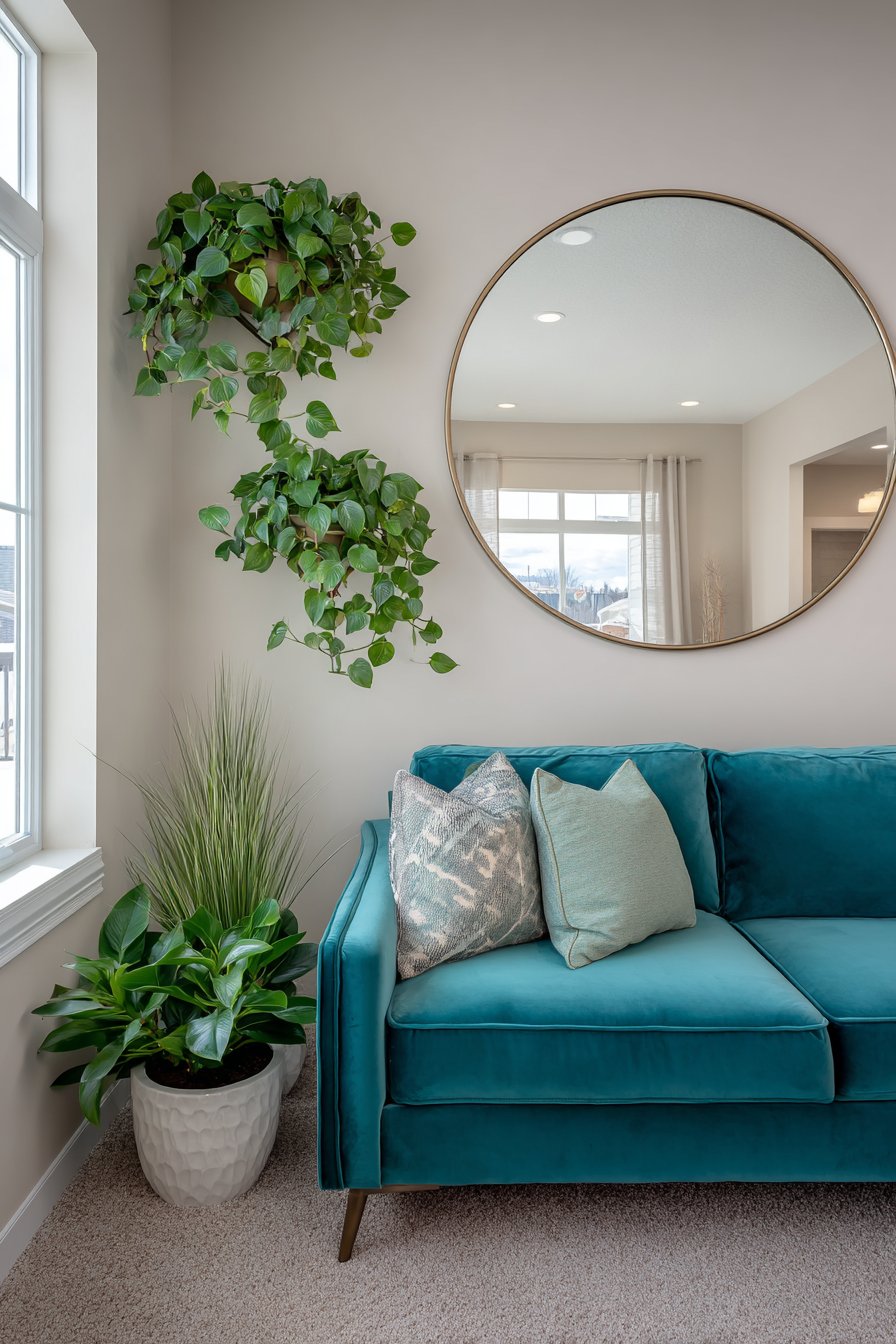
Trailing pothos plants in the flanking planters add movement and life to what would otherwise be a static arrangement. As these plants grow, their cascading vines will create an ever-evolving frame around the mirror, demonstrating how living elements can contribute to long-term design interest. The reflective surface captures and multiplies these organic forms, creating layered visual complexity that changes based on viewing angle and lighting conditions throughout the day.
Key Design Tips:
- Position mirrors to reflect windows or light sources for maximum brightening effect
- Choose mirror size that feels substantial without overwhelming—typically 36-48 inches for standard sofas
- Use brass or gold-toned frames to add warmth to contemporary spaces
- Flank mirrors with asymmetrical elements to prevent overly formal appearance
- Ensure secure mounting for heavy mirrors using appropriate wall anchors
- Clean mirror surfaces regularly to maintain light-reflecting properties
- Consider the reflected view when positioning mirrors—avoid reflecting clutter or unattractive areas
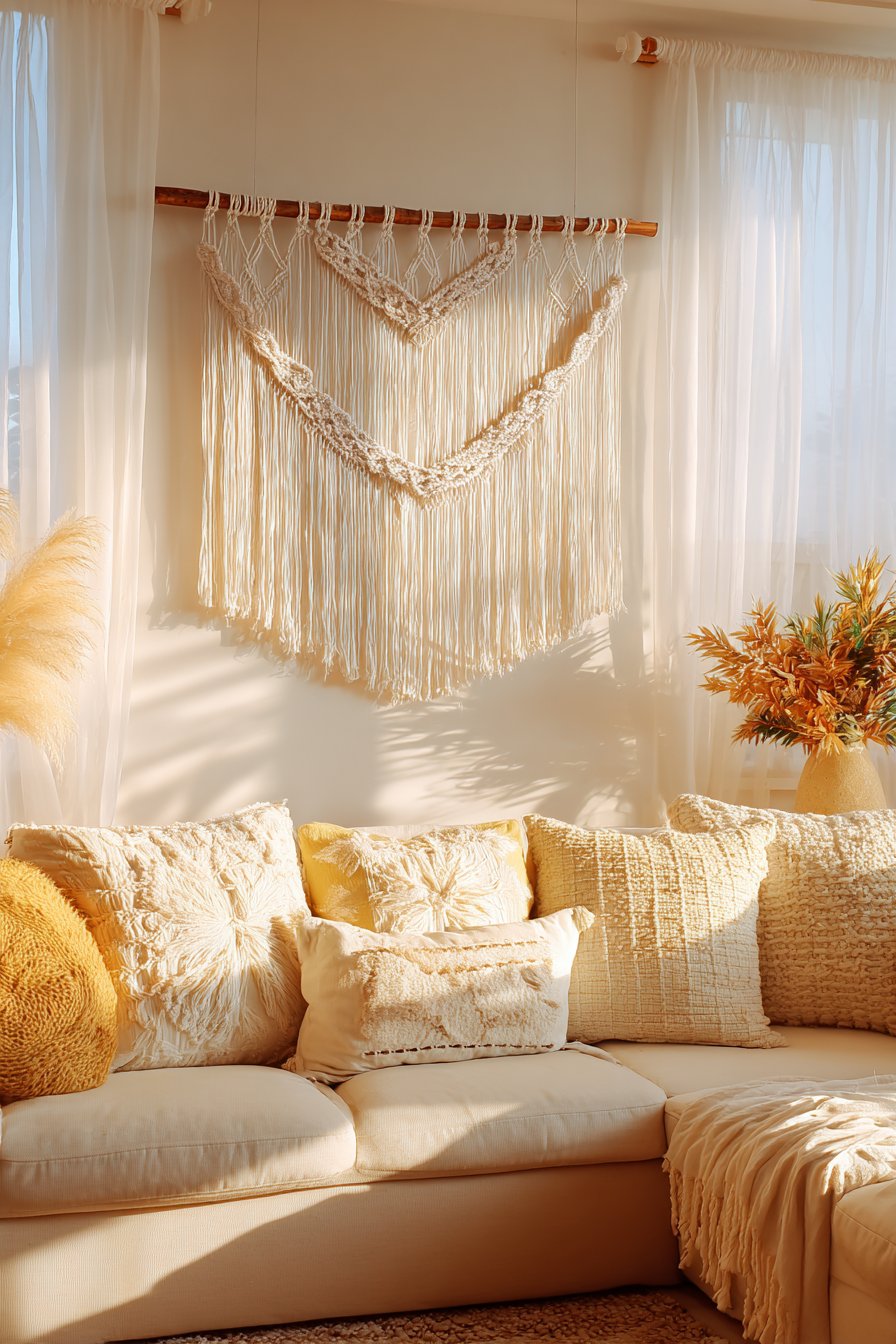
5. Bohemian Macrame Artistry
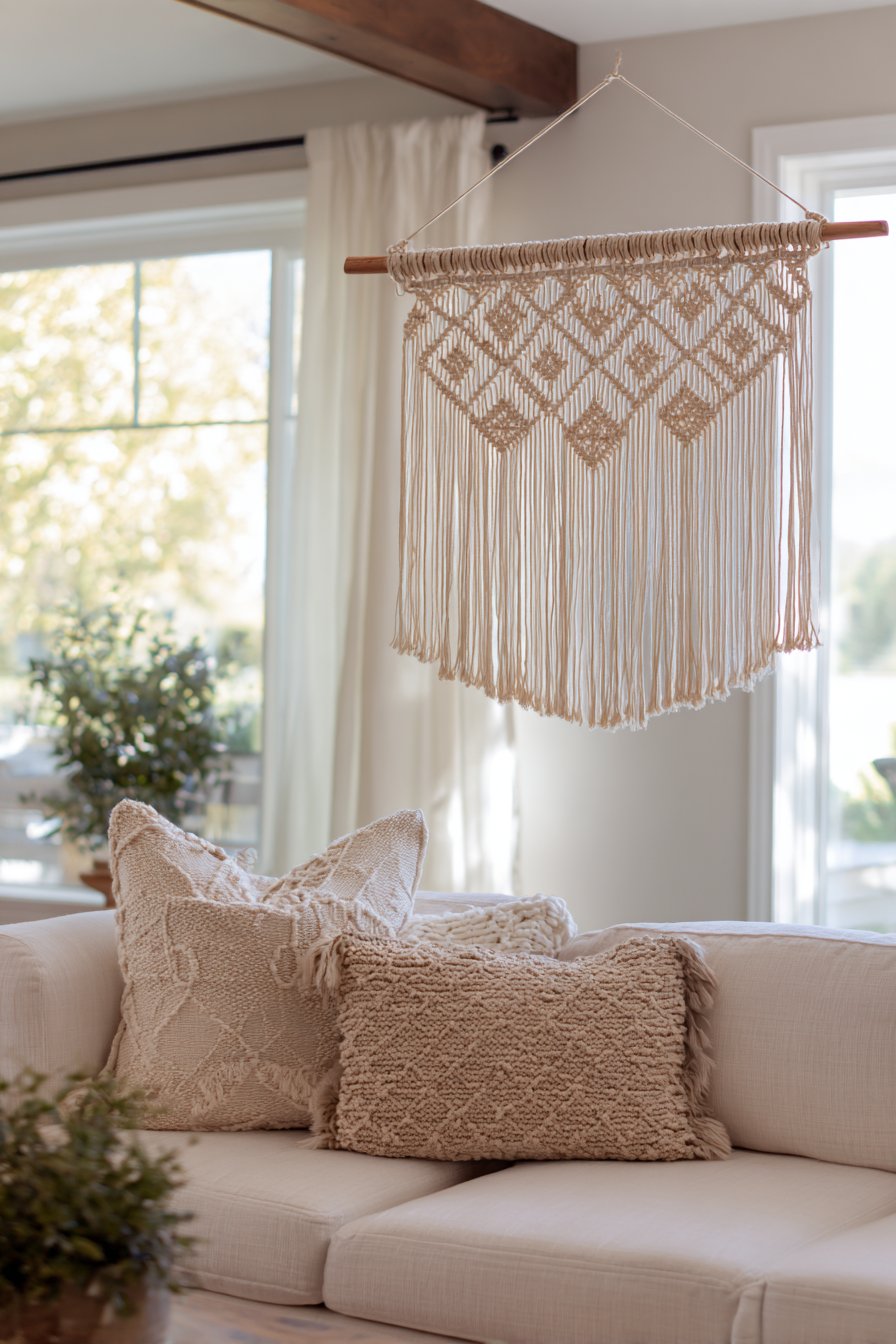
A statement macramé wall hanging brings handcrafted artistry and bohemian warmth to living spaces craving texture and organic beauty. This intricate knotwork piece, measuring 36 inches wide and 48 inches long, showcases the dedicated craftsmanship required to create complex geometric diamond patterns with fringe detailing. The natural cotton cord remains undyed, celebrating the inherent beauty of raw materials while ensuring the piece coordinates with virtually any color palette.
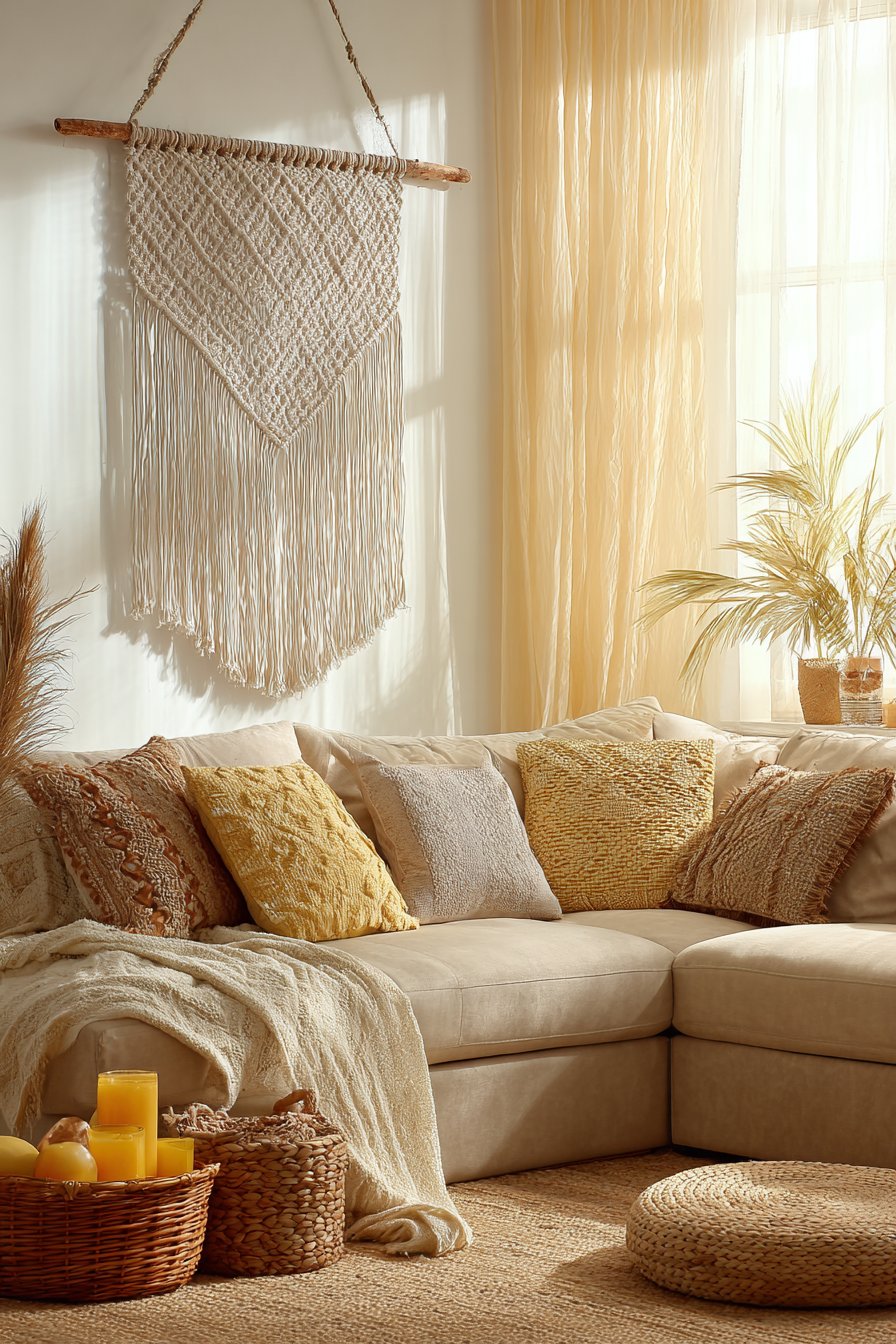
The dimensional quality of macramé sets it apart from flat artwork—the rope work creates actual depth and shadow that changes dramatically based on lighting conditions. During golden hour, when warm sunlight filters through sheer curtains, the shadows cast by the intricate knotting become almost as important as the piece itself, creating a dynamic interplay of light and texture. This temporal quality means the artwork genuinely evolves throughout the day, offering different visual experiences during morning, afternoon, and evening hours.
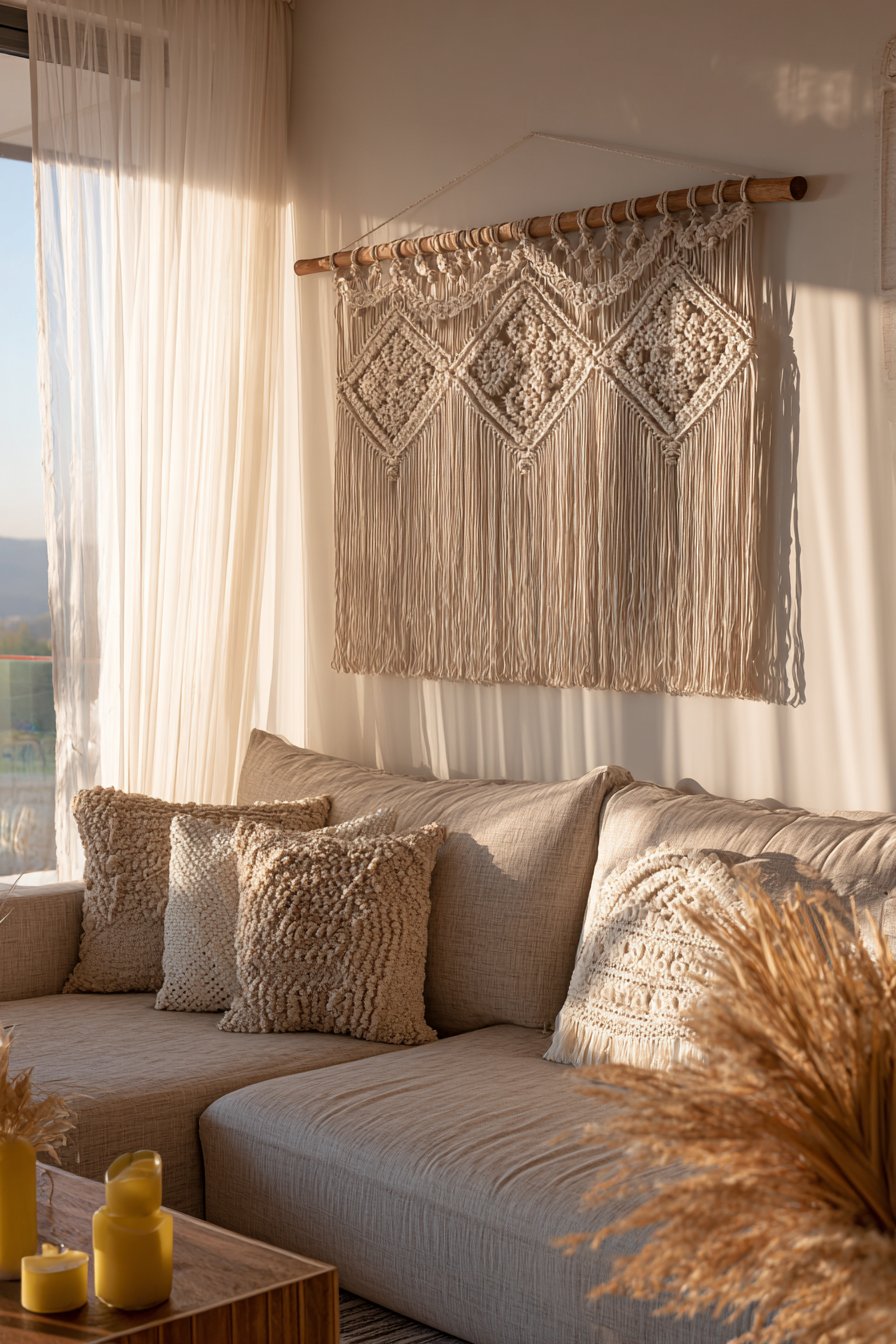
Suspended from a wooden dowel and positioned above a low-profile beige sectional with woven texture throw pillows, this arrangement creates layers of complementary textures that define bohemian style. The key to successful boho design lies in mixing various textile techniques—the smooth linen sofa, nubby woven pillows, and intricate macramé knotwork each contribute distinct tactile qualities. The overall effect feels collected, comfortable, and personally curated rather than designed by formula.
Key Design Tips:
- Choose macramé pieces with scale appropriate to your wall space—larger walls need bolder pieces
- Position macramé where natural light can create dimensional shadows
- Coordinate with textured textiles on furniture for cohesive bohemian aesthetic
- Ensure the wooden dowel or mounting rod complements other wood tones in the space
- Consider handmade pieces for authentic craftsmanship and unique character
- Avoid hanging macramé in high-humidity areas where natural fibers may be affected
- Layer multiple textures throughout the room to reinforce bohemian style
6. Modern Gallery Ledge System
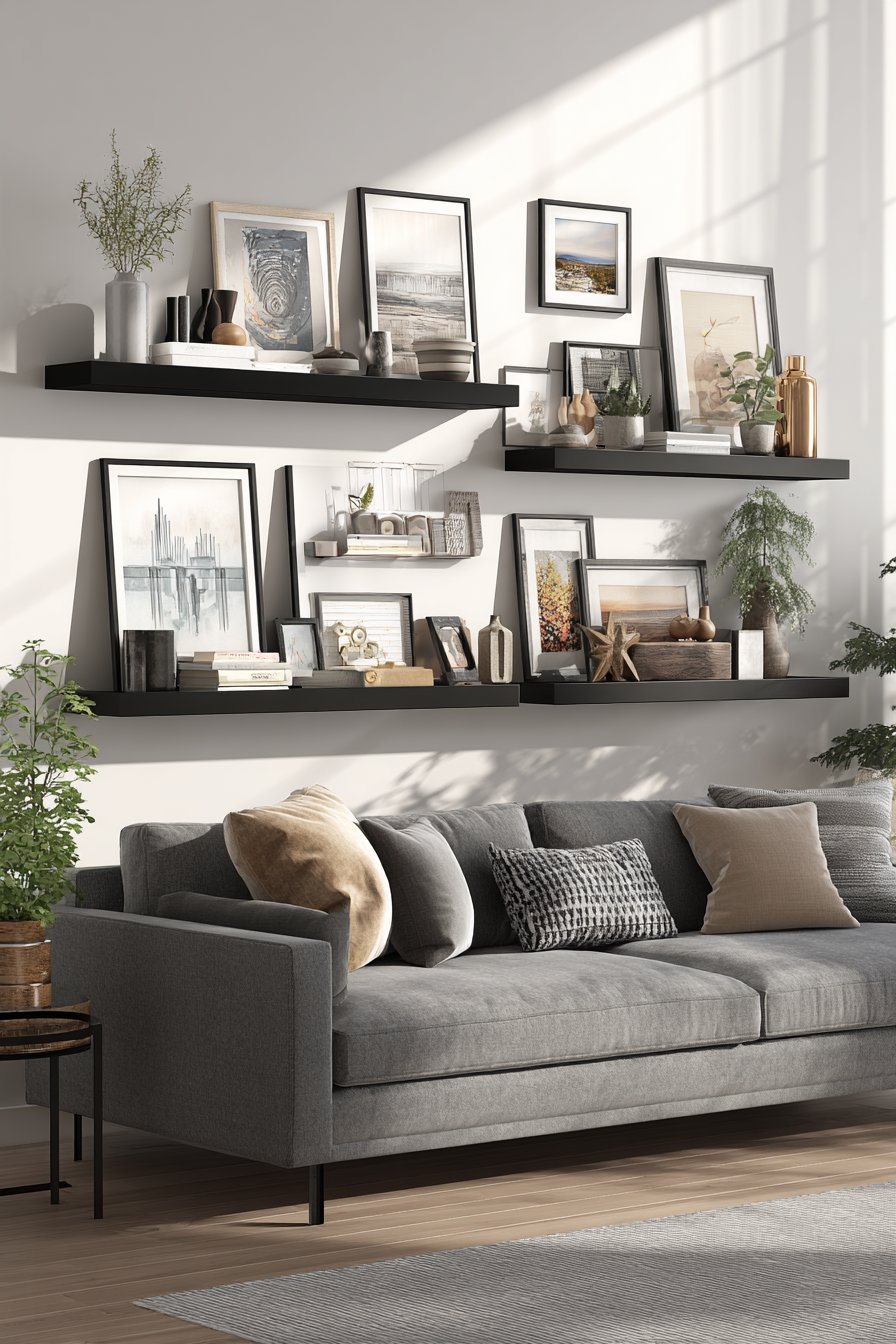
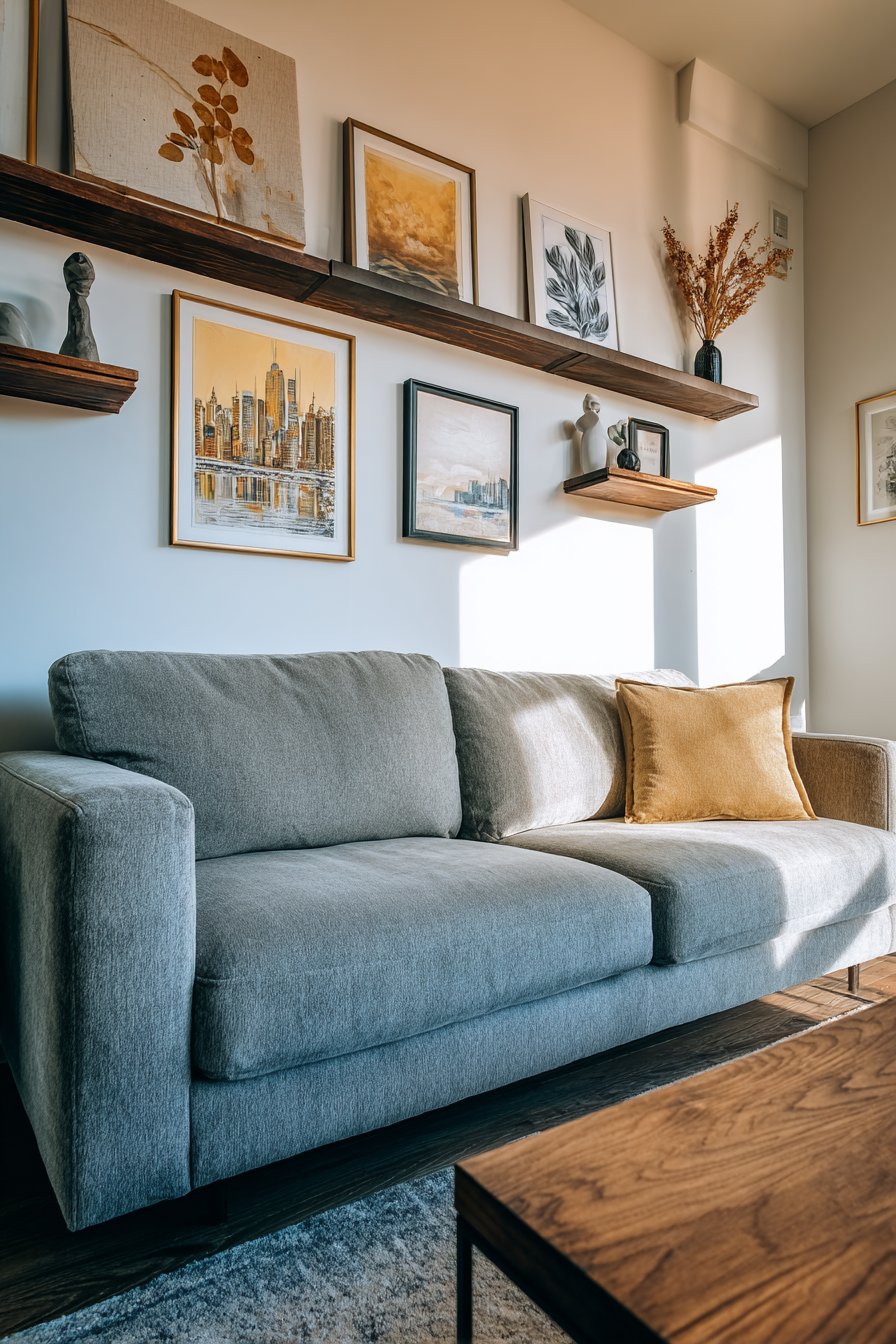
Floating gallery ledges represent the ultimate in flexible display systems, allowing you to rotate artwork and decorative objects without creating new nail holes. This two-shelf system in matte black metal spans 60 inches at staggered heights, creating an asymmetrical arrangement that feels intentional rather than haphazard. The genius of this approach lies in its adaptability—you can refresh your display weekly, seasonally, or whenever inspiration strikes.
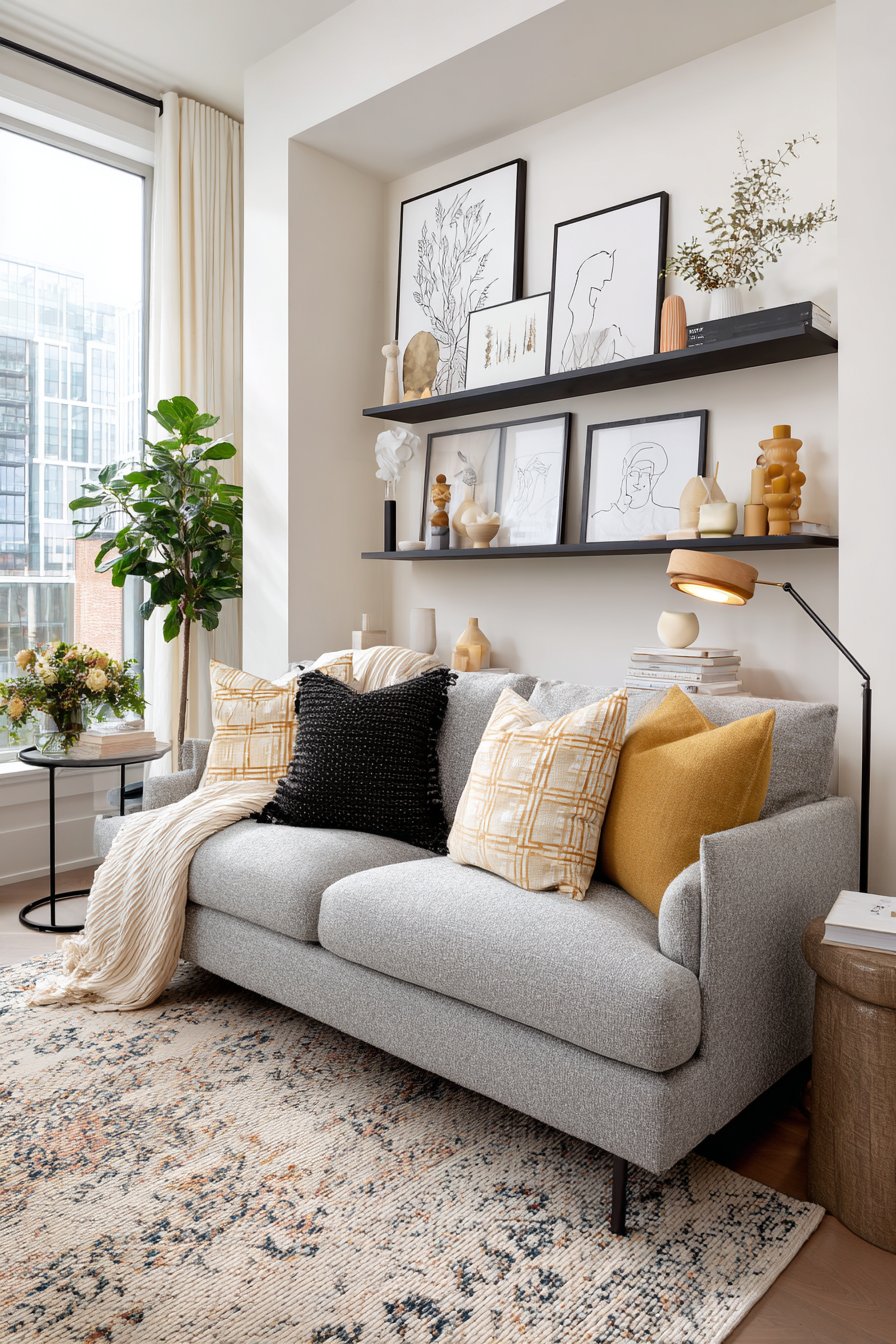
The layered presentation possible with gallery ledges adds depth impossible to achieve with traditionally hung frames. Artwork can be overlapped at different depths, creating a curated salon-style effect with the flexibility to adjust spacing and arrangement. Small sculptures, decorative books, and three-dimensional objects find natural homes alongside framed pieces, allowing for more varied and interesting displays than walls limited to hanging art alone.
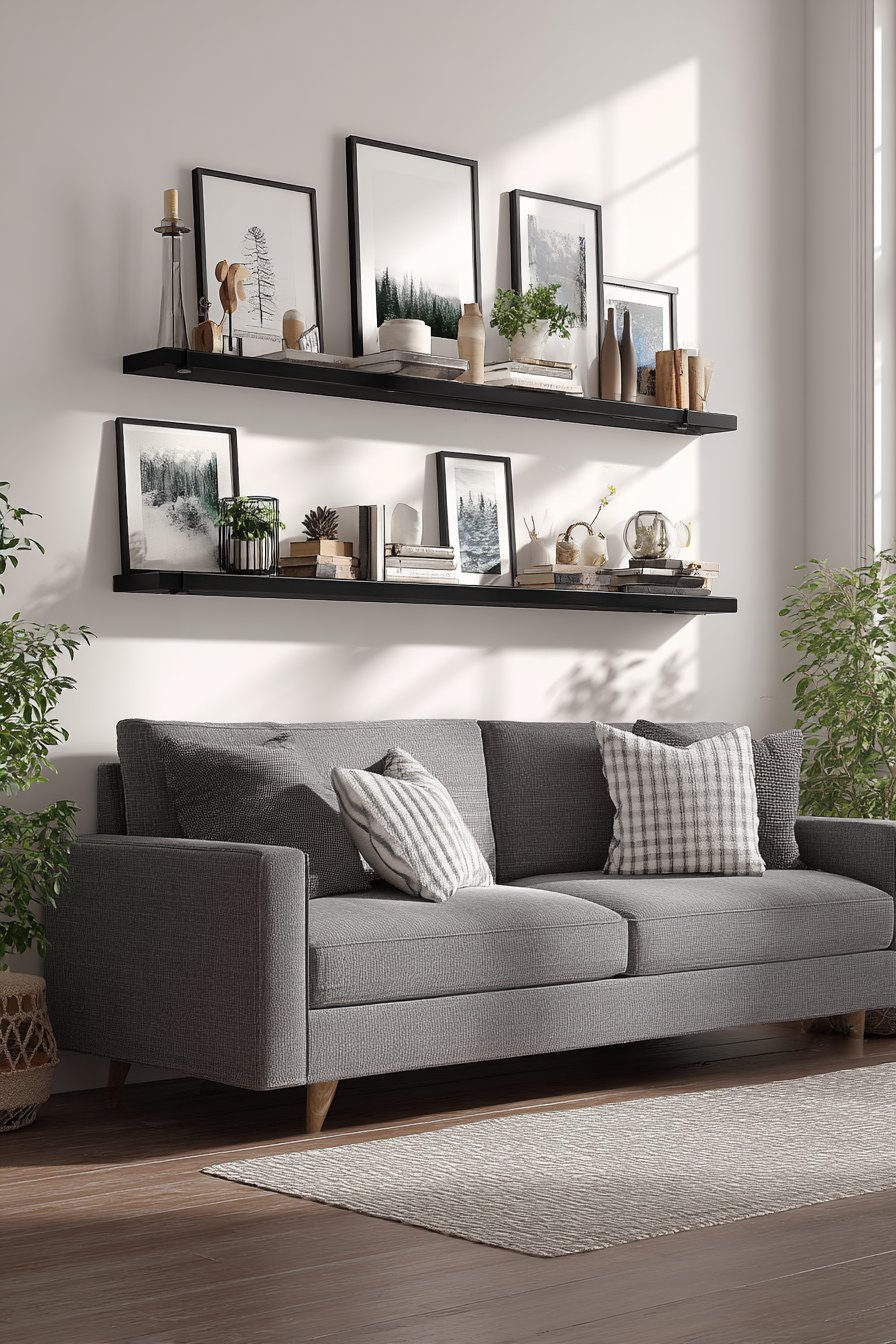
Positioned above a grey fabric sofa with clean modern lines, this system maintains contemporary aesthetic while offering practical functionality. The matte black finish provides strong definition without competing with displayed items for attention. As you build your art collection over time, the ledge system grows with you, accommodating new purchases without requiring new picture hanging calculations or additional wall damage. This makes it ideal for renters or anyone who enjoys frequently updating their decor.
Key Design Tips:
- Install ledges with weight capacity exceeding your displayed items, typically rated for 20-30 pounds
- Vary the sizes and orientations of displayed items for visual interest
- Layer smaller frames in front of larger ones to create depth
- Incorporate three-dimensional objects alongside flat artwork for dimensional variety
- Keep color palettes cohesive across displayed items for unified appearance
- Use the lower ledge for slightly larger items to create visual stability
- Refresh displays regularly to take advantage of the system’s flexibility
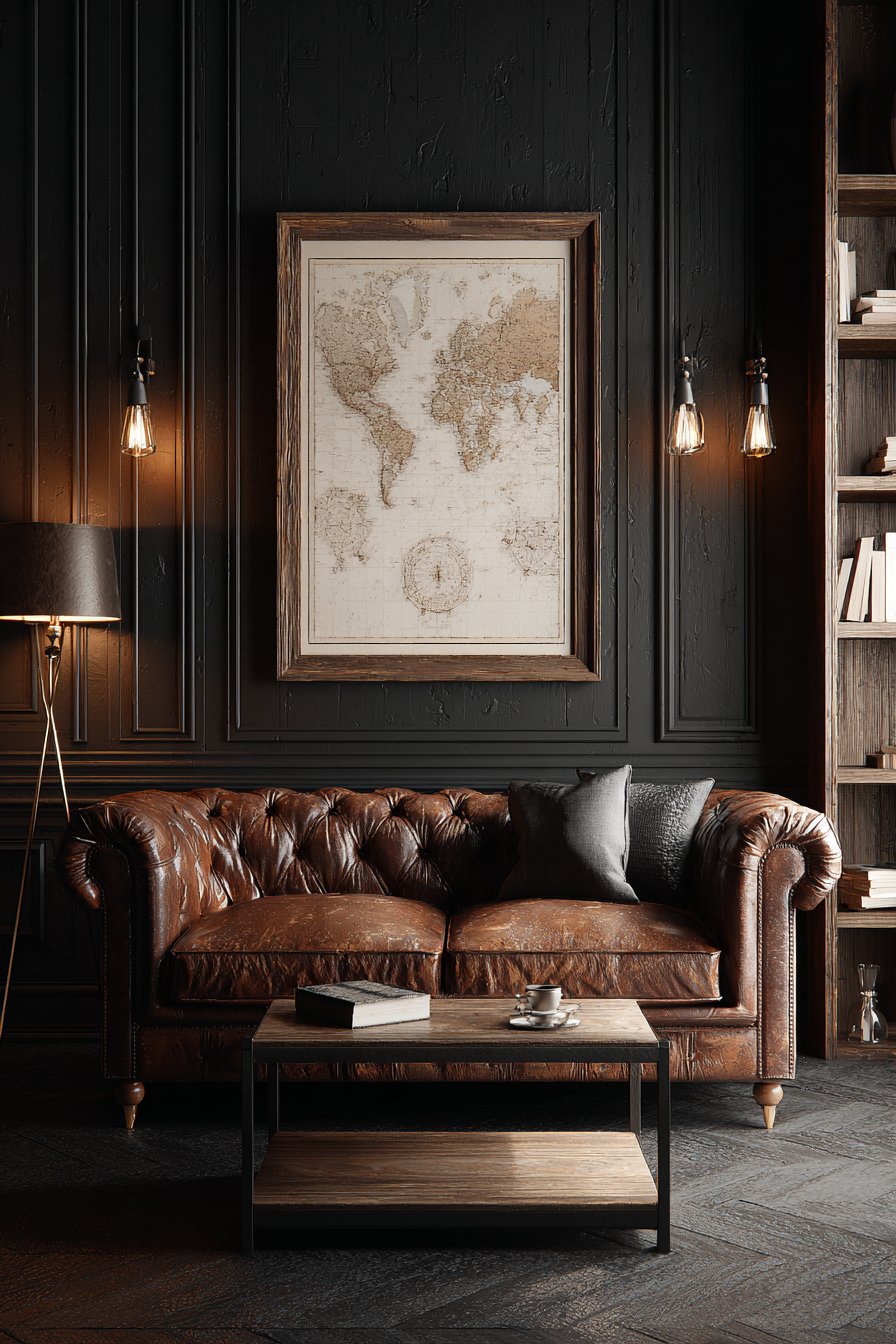
7. Vintage Map Worldly Sophistication
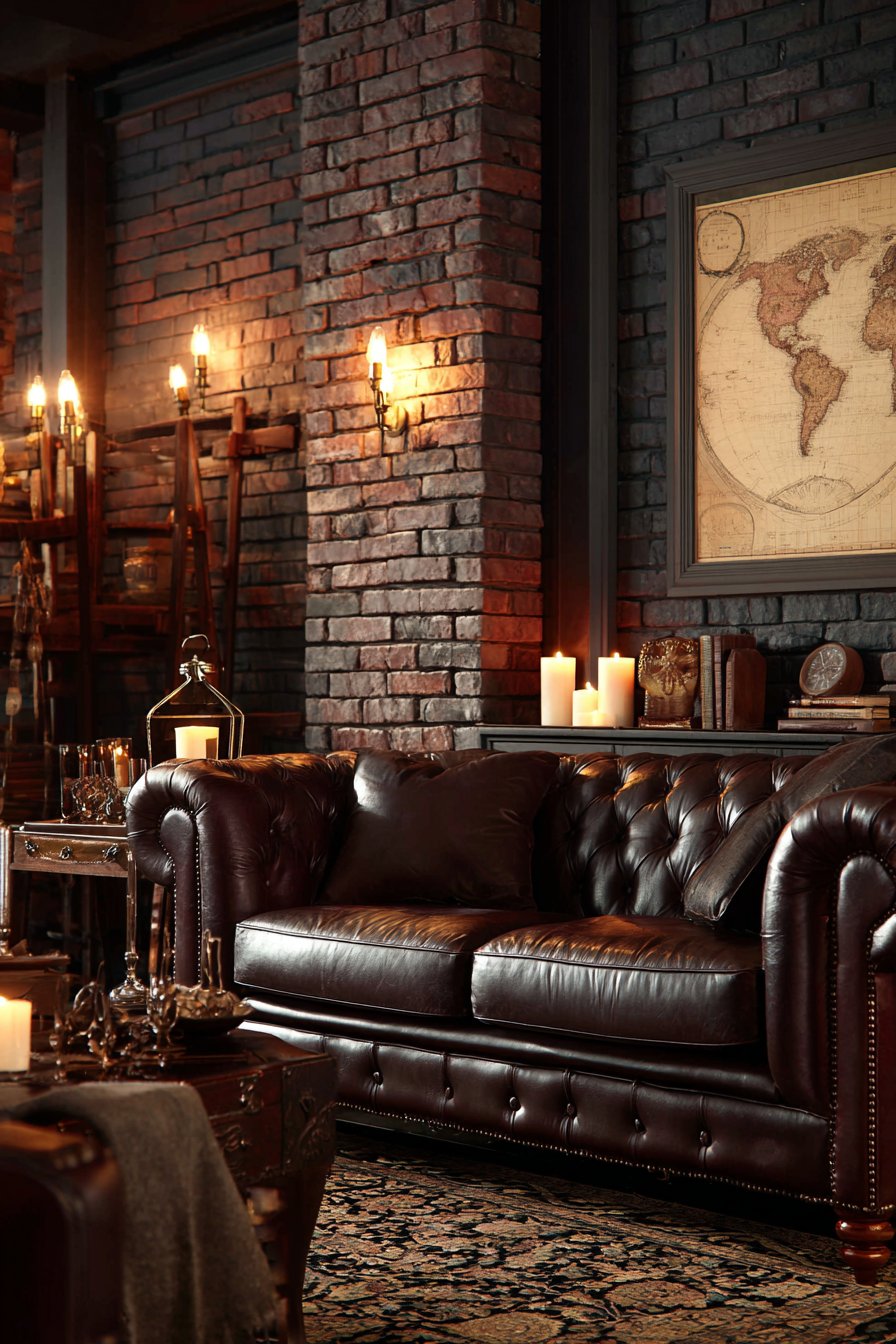
A large vintage world map print brings intellectual character and wanderlust-inspiring design to living spaces with traditional or masculine aesthetics. The sepia-toned cartography measuring 55×40 inches provides substantial visual weight appropriate for larger sofas and spacious walls. The distressed dark wood frame adds layers of authenticity, with its weathered finish suggesting the map itself might be a treasured antique rather than a reproduction.
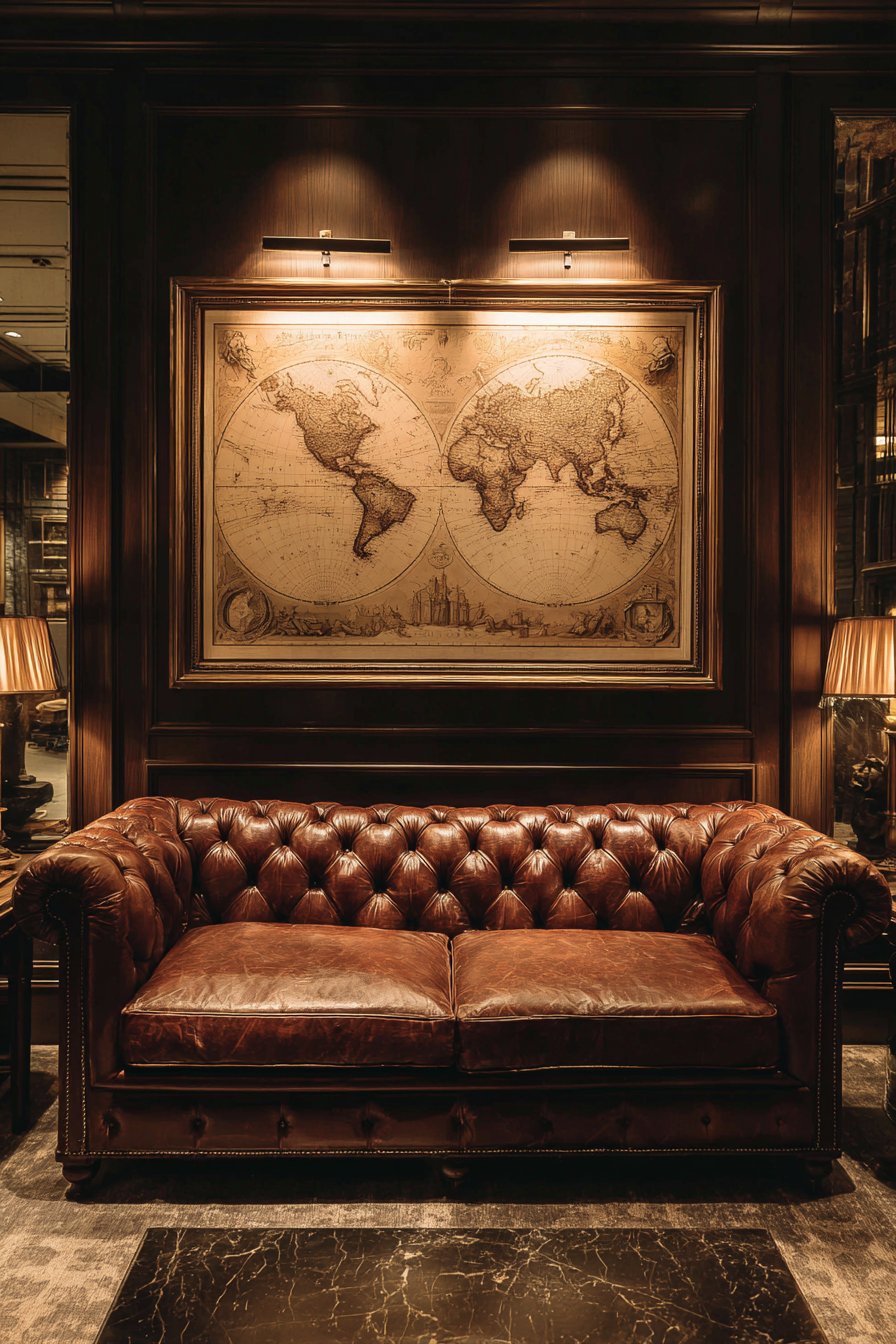
Positioned above a brown leather Chesterfield sofa, this arrangement creates a classic study-like atmosphere reminiscent of private libraries and gentlemen’s clubs. The relationship between aged leather upholstery and vintage cartography feels natural and uncontrived, as both materials improve with age and tell stories through their patina. Warm ambient lighting from nearby table lamps creates subtle highlights along the frame’s texture while avoiding harsh glare on the map’s surface, crucial for viewing the intricate geographic details.
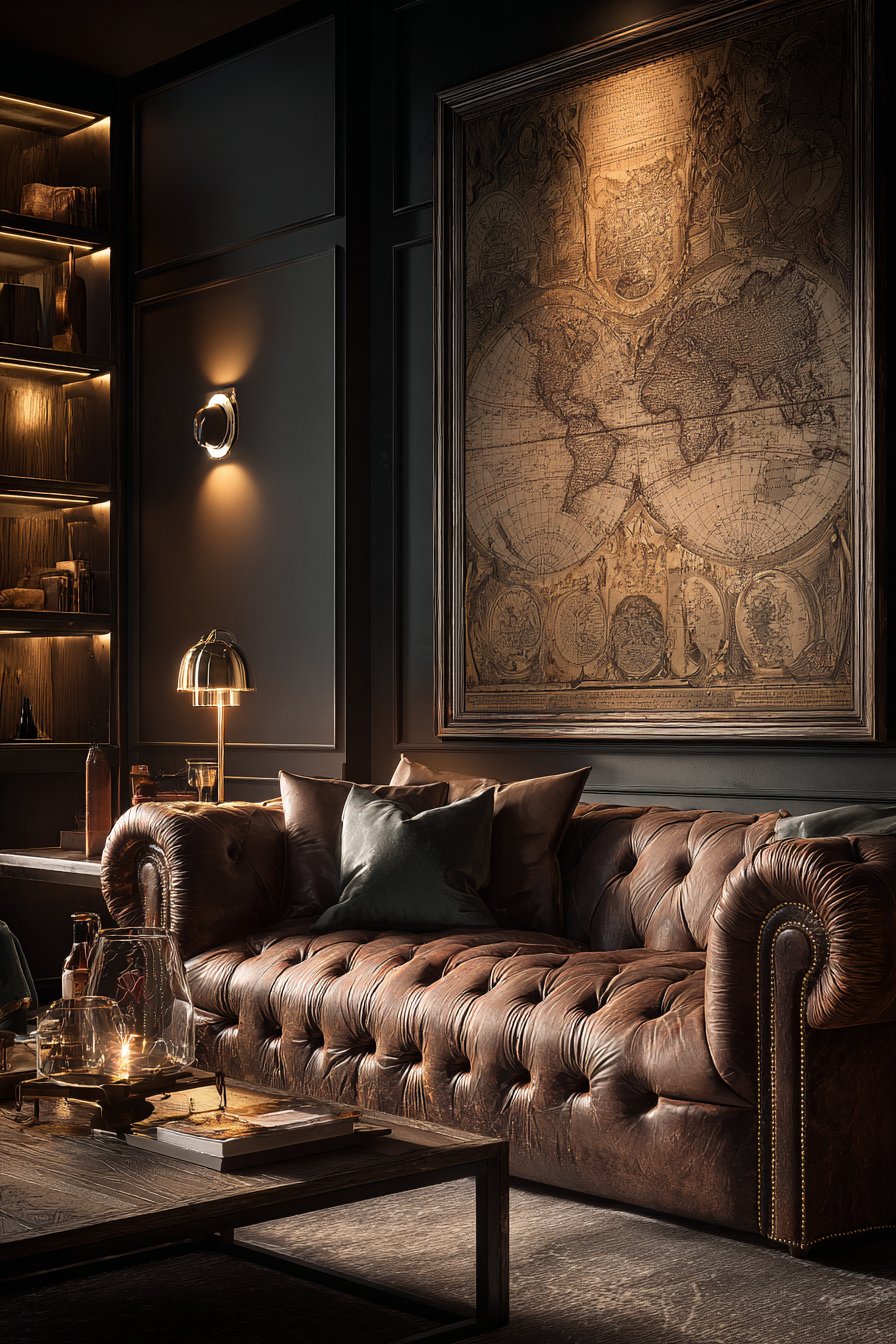
The educational aspect of map displays adds conversation-starting potential beyond pure aesthetics. Guests naturally gravitate toward maps, tracing familiar coastlines and discovering obscure place names, creating interactive engagement with your wall decor. For travel enthusiasts or history buffs, vintage maps provide daily inspiration while celebrating humanity’s geographical discoveries and cartographic artistry. The timeless nature of this design choice ensures it won’t feel dated as trends evolve.
Key Design Tips:
- Choose map styles that complement your room’s era—vintage maps for traditional spaces, modern cartography for contemporary rooms
- Ensure frame finishes echo other wood tones in the space for cohesive design
- Position lighting to avoid glare while highlighting frame texture and map details
- Select map scales and regions that have personal significance or tell your story
- Consider the condition of vintage maps—minor wear adds authenticity without compromising legibility
- Protect valuable antique maps with UV-protective glass to prevent fading
- Pair cartographic prints with leather furniture for classic scholarly aesthetic
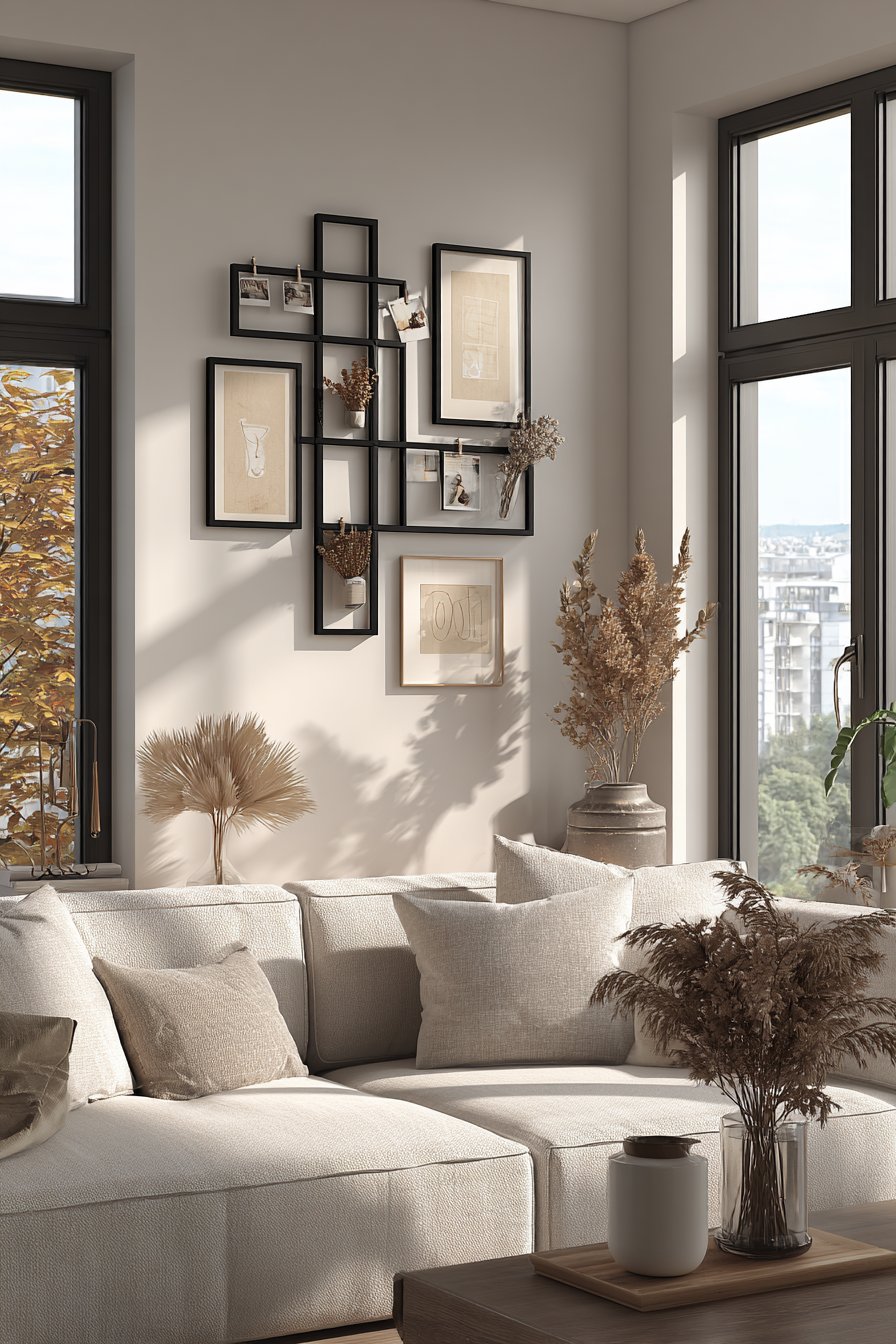
8. Minimalist Grid Organizer
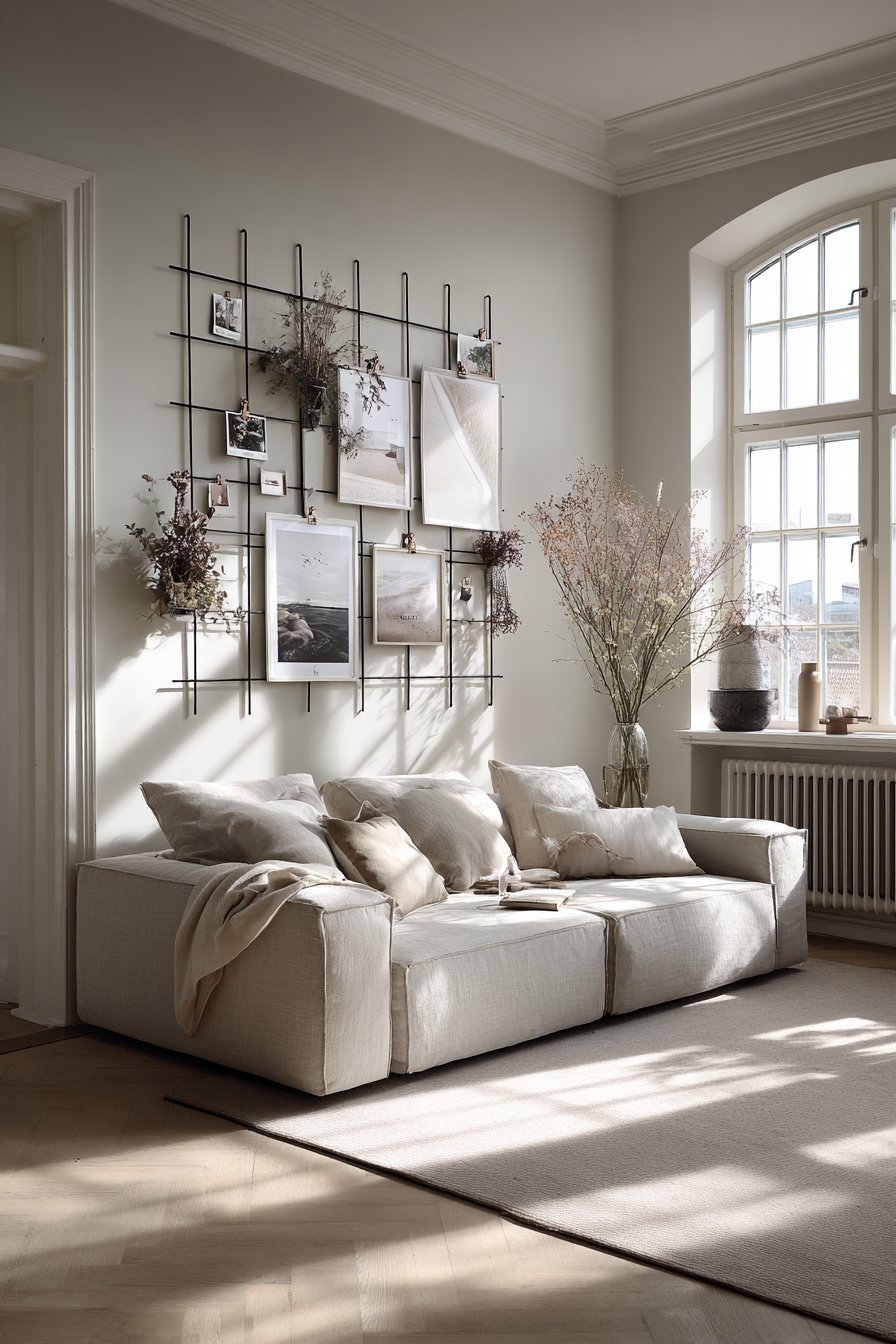
A metal grid wall organizer transforms functional display into artistic arrangement, perfectly suited to Scandinavian-minimalist aesthetics that prize both beauty and utility. The matte black grid measuring 48×36 inches provides structured framework for an ever-changing collection of polaroid photos, art prints, and small dried flower bundles attached with simple clips. This system embodies the Scandinavian principle of “lagom”—having just the right amount, neither too much nor too little.
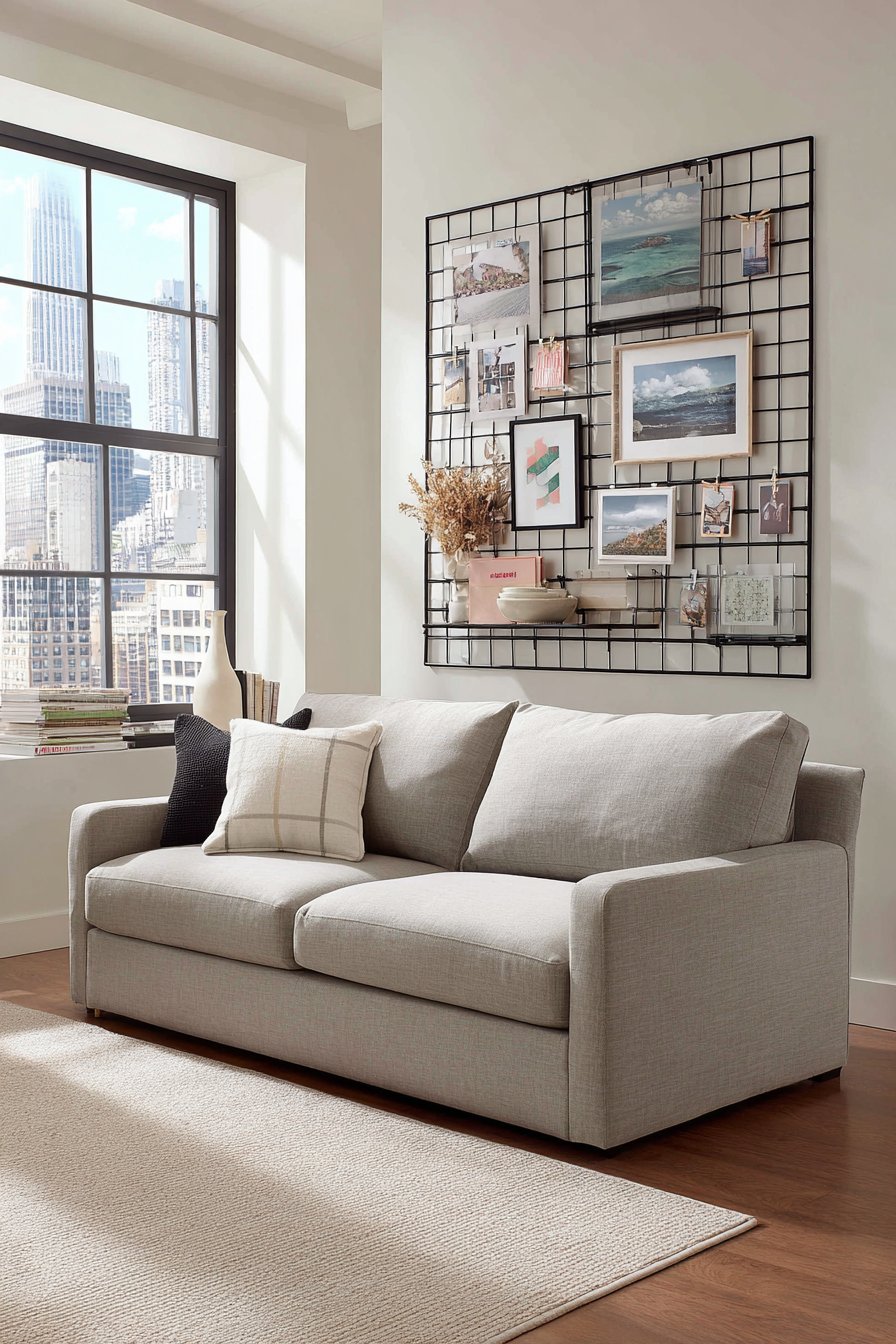
The flexibility of this approach particularly appeals to young homeowners, students, or anyone whose life and interests evolve rapidly. New memories can be displayed immediately after creation, rotating older items out as new experiences take precedence. The grid’s modular nature means you control the density of display—sparse arrangements feel airy and minimal, while fuller grids create more visual impact without appearing cluttered due to the organizing framework.
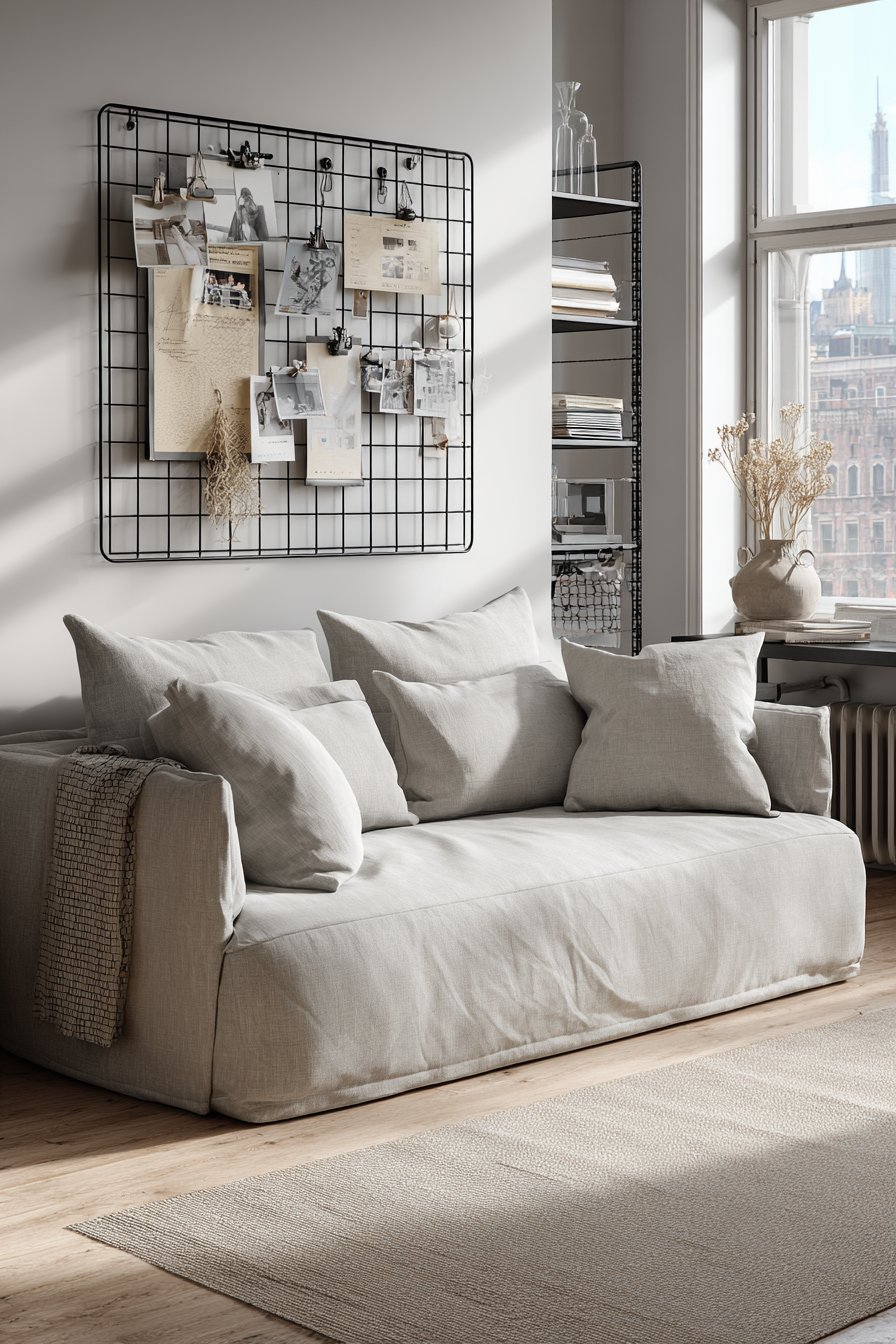
Mounted 9 inches above a light grey linen sofa, the black grid provides strong graphic definition against pale walls while the displayed items introduce color and personality. Natural diffused daylight from large windows creates soft shadows through the grid pattern, adding subtle dimensional interest throughout the day. The clean lines and geometric precision of the grid system provide structure that prevents the rotating display of personal items from appearing disorganized or chaotic.
Key Design Tips:
- Choose grid size based on wall space and desired display capacity
- Use consistent clip styles throughout for cohesive appearance
- Rotate displayed items regularly to keep the arrangement feeling fresh
- Maintain some empty grid squares to avoid overwhelming the system
- Coordinate frame colors with grid finish for unified aesthetic
- Position grid at comfortable viewing height, typically centered at 60 inches from floor
- Include mix of photos, prints, and three-dimensional items for varied texture
9. Elegant Landscape Triptych
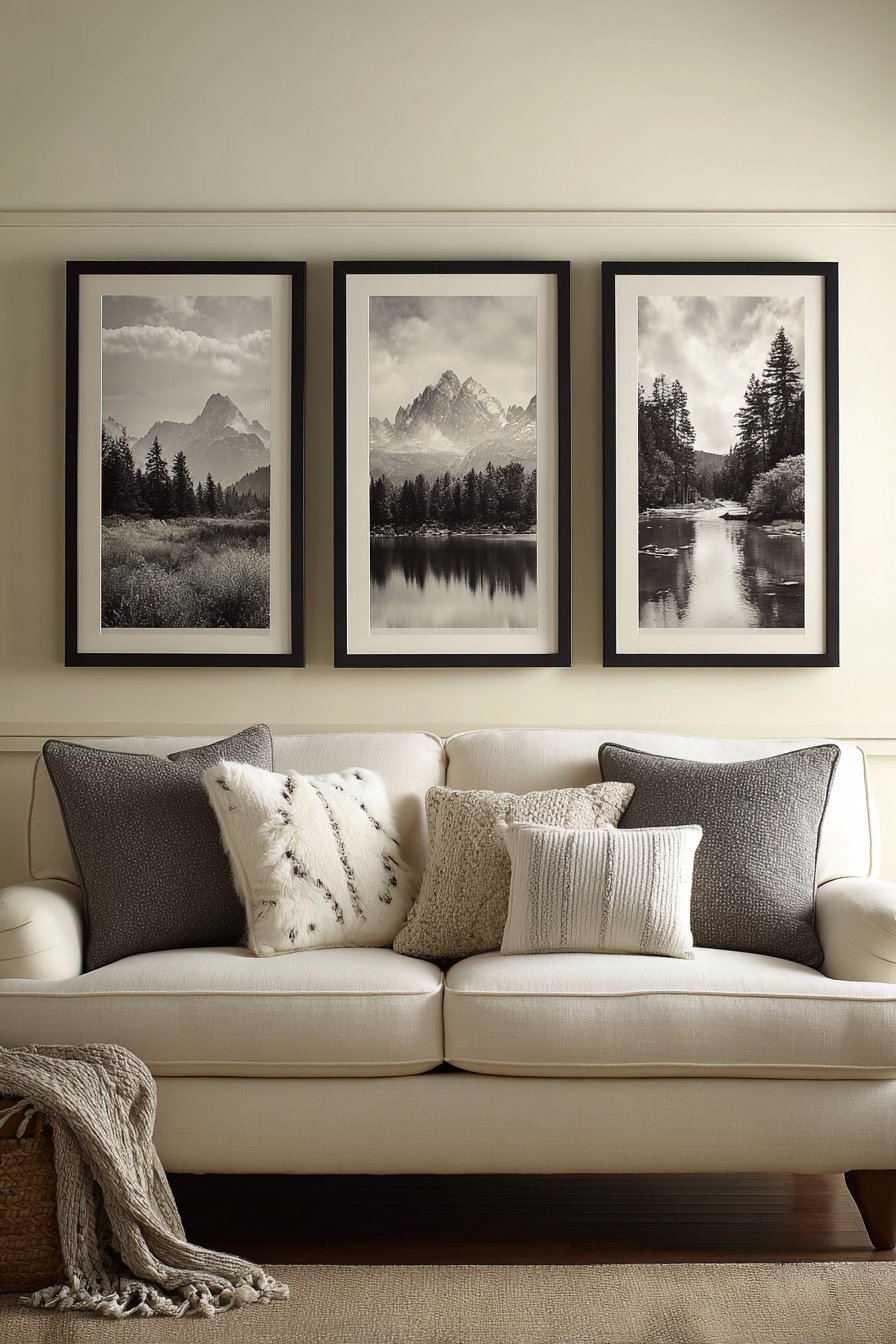
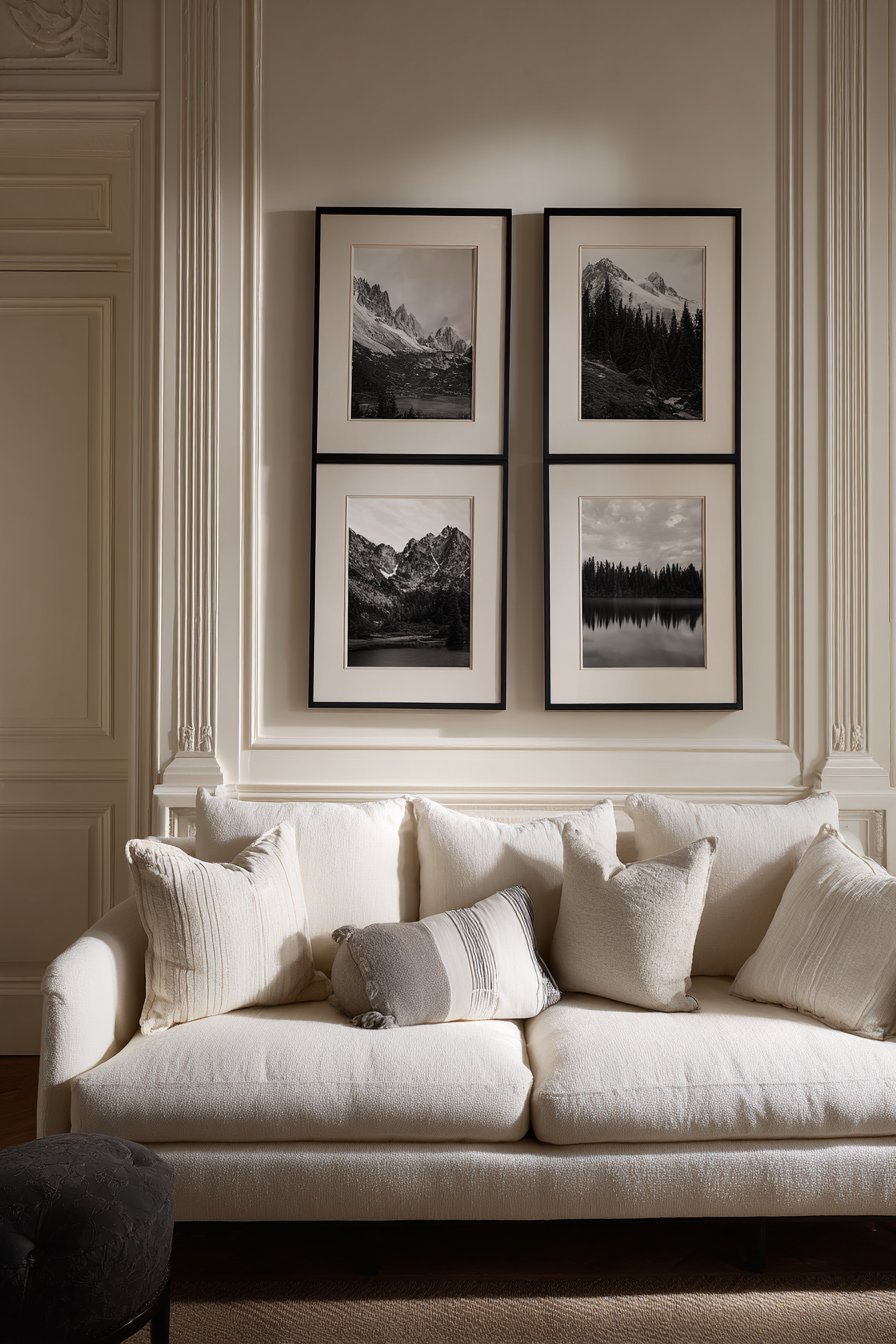
A triptych of black and white landscape photographs creates sophisticated focal point through the power of cohesive series presentation. Each 20×30-inch vertically oriented panel works both independently and as part of the larger composition, depicting serene nature scenes—mountains, forests, and lakes—that create narrative flow across the wall. The monochromatic palette ensures the three images work harmoniously together while allowing viewers to appreciate the unique character of each individual scene.
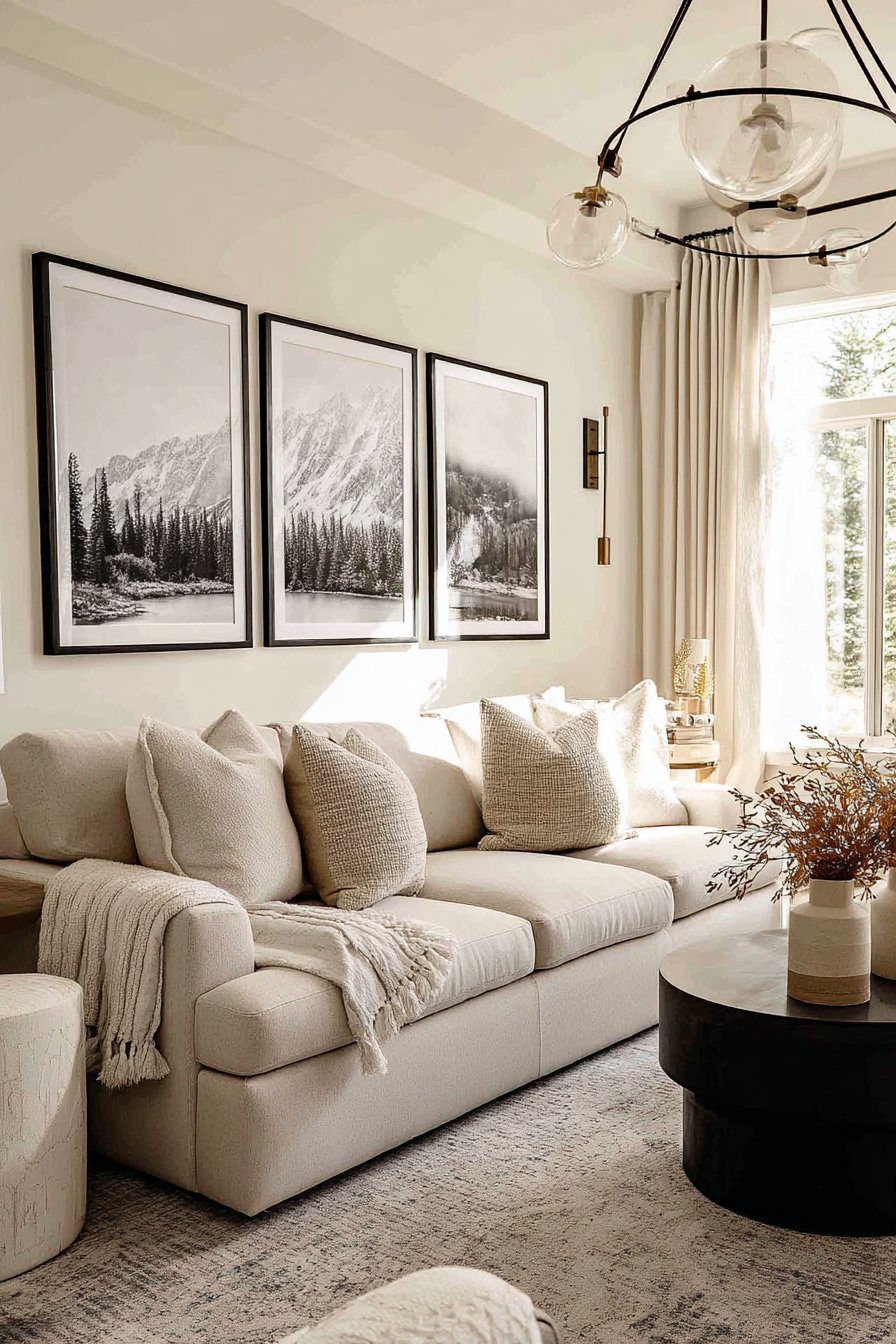
The slim black frames and consistent 4-inch spacing between panels demonstrate the importance of repetition and rhythm in creating professional-looking gallery walls. Unlike eclectic arrangements that derive interest from variety, this approach finds beauty in controlled uniformity. The visual flow created as the eye moves from mountain peaks to dense forest to tranquil lake creates a journey through nature that brings meditative calm to the living space.
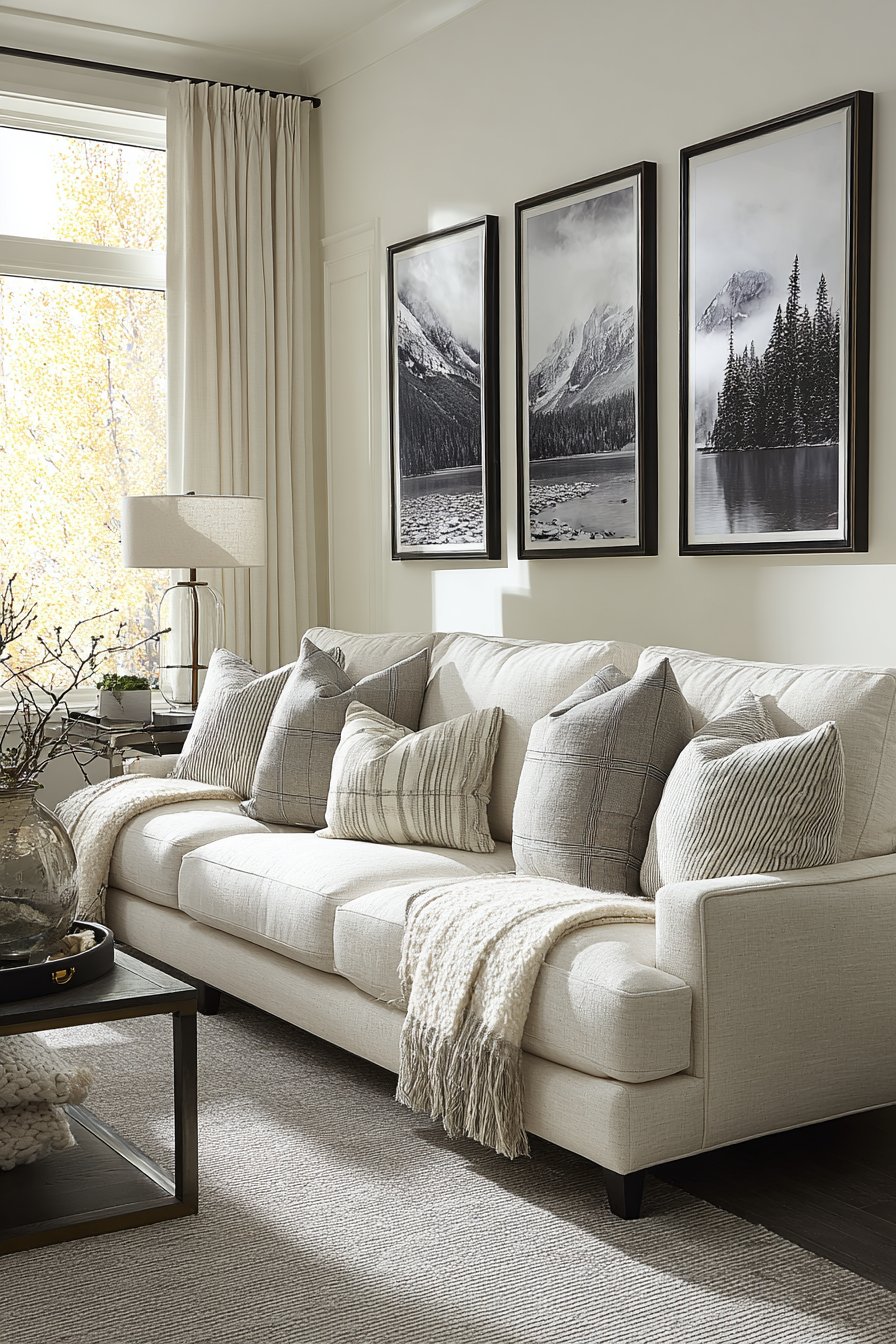
Positioned above a cream-colored sofa with neutral throw pillows, this monochromatic artwork prevents color competition while introducing tonal variation through the grey scale of the photographs. The balanced interior lighting creates even exposure across all three frames, crucial for maintaining the integrity of the triptych effect. This approach particularly suits contemporary and transitional spaces where clean lines and editing create sophisticated restraint.
Key Design Tips:
- Select series imagery with cohesive subject matter and consistent editing for unified triptych effect
- Use identical frames and matting across all panels for professional appearance
- Space panels evenly—typically 4-6 inches apart for medium-sized frames
- Ensure center panel is perfectly centered above sofa for balanced composition
- Choose landscapes with similar tonal ranges across all three images
- Mount all frames at identical heights using level and measuring tools
- Consider vertical orientation for visual lift in rooms with standard ceiling heights
10. Dramatic Desert Landscape
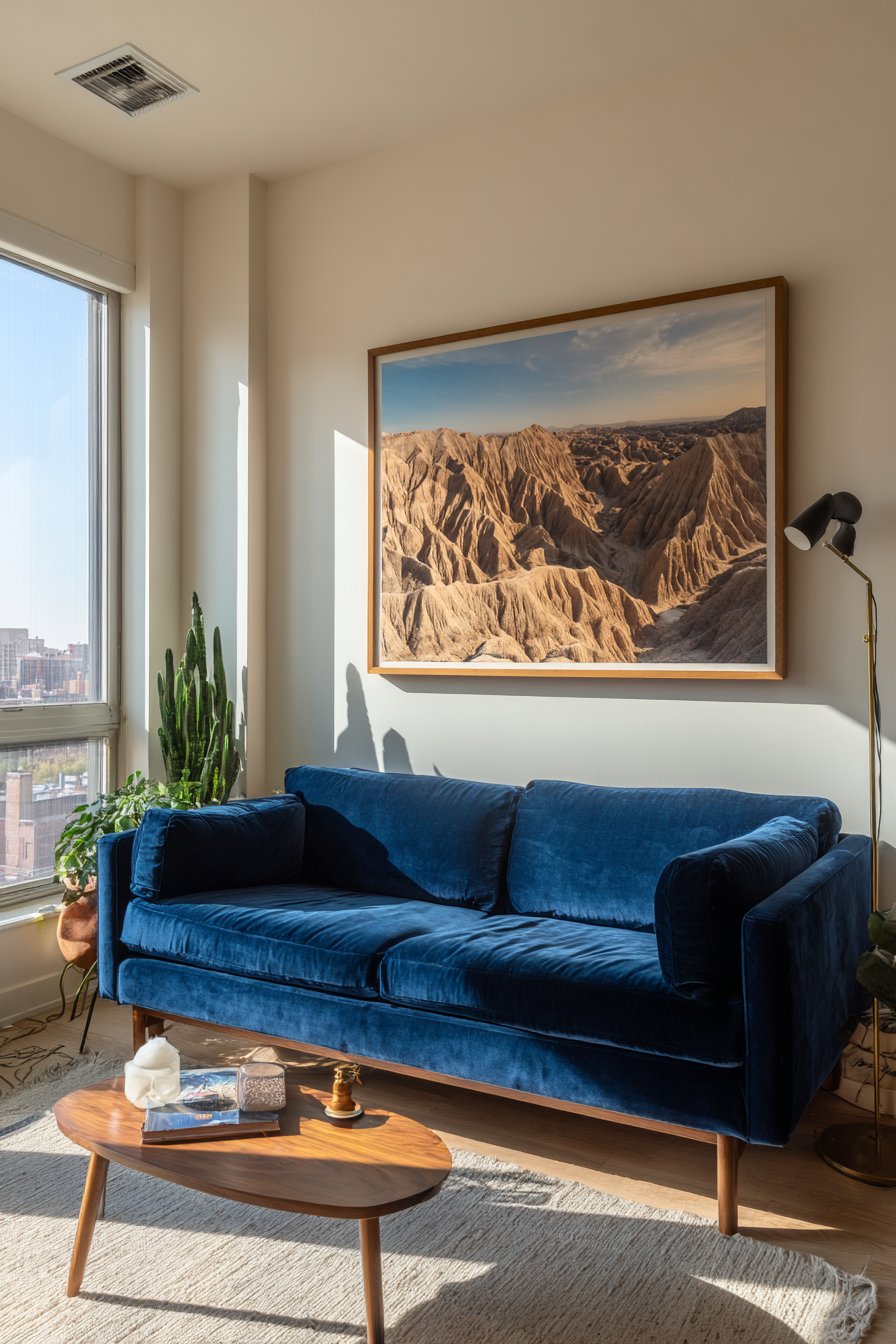
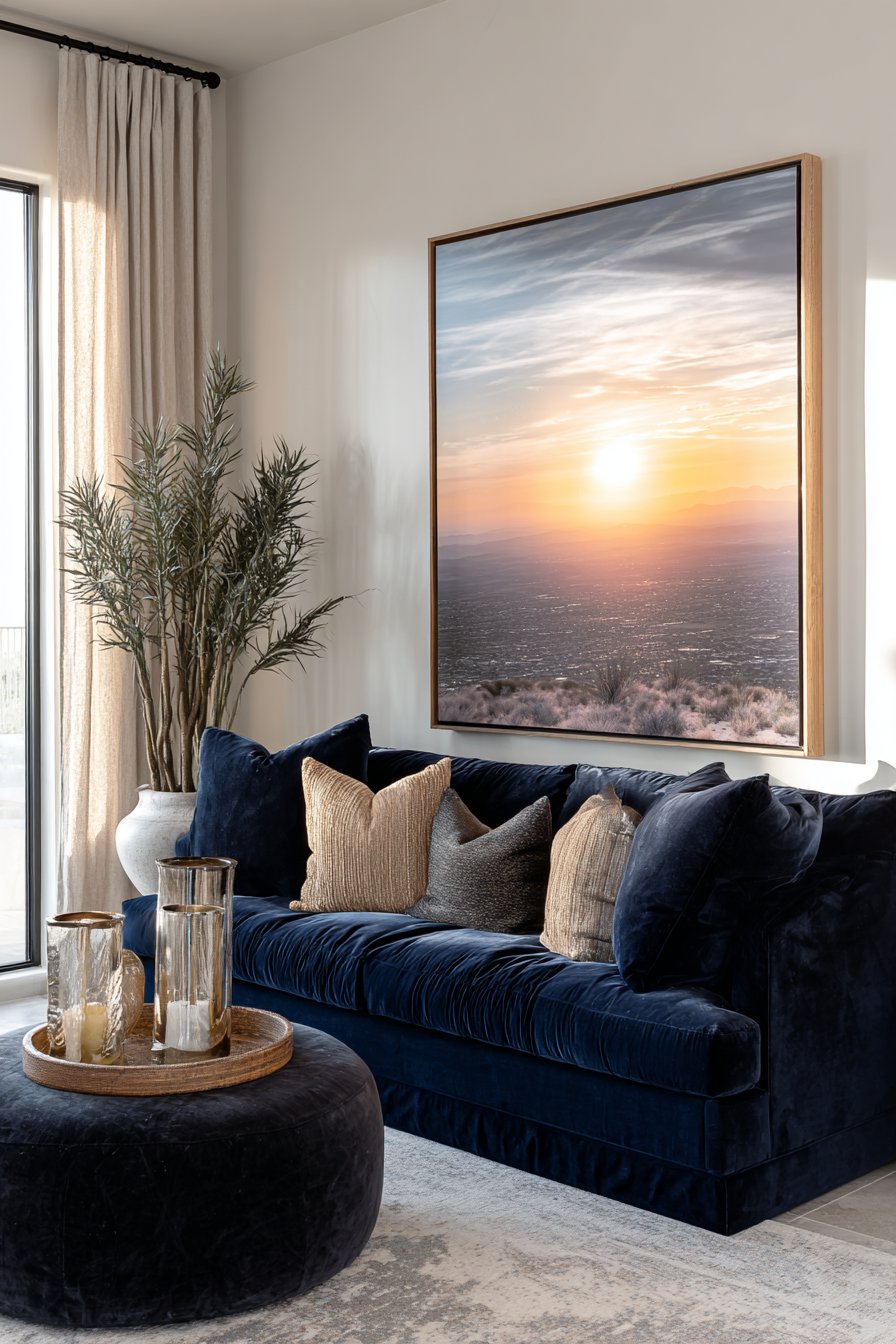
An oversized framed print of a desert landscape at sunset creates commanding focal point that anchors the entire room design. At 72×48 inches, this substantial artwork makes bold statement appropriate for large walls and spacious living areas. The warm sandy tones and dramatic sky colors capture the essential beauty of southwestern landscapes—vast horizons, dramatic lighting, and the eternal dance between earth and sky.
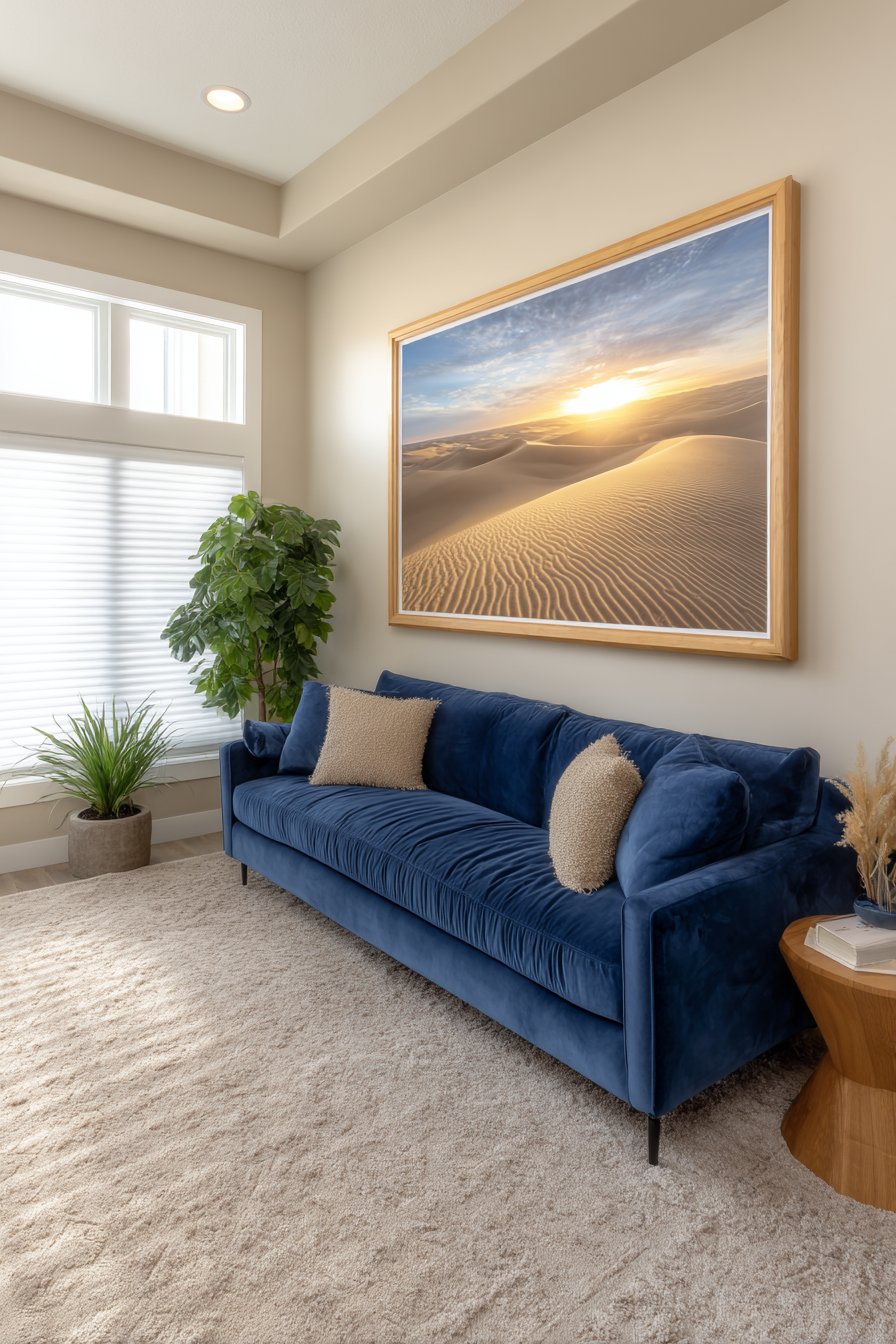
The deep navy blue velvet sofa beneath this expansive artwork creates striking contrast that makes both elements more impactful. This demonstrates the principle of complementary relationships—warm and cool, earth and sky, horizontal furniture and vertical art working together to create balanced tension. The natural light oak frame provides transition between the artwork’s warm tones and the room’s other natural wood elements, creating cohesive flow throughout the space.
The impressive scale of this piece serves as the room’s primary focal point, eliminating the need for additional wall decoration and allowing the artwork to command full attention. In contemporary southwestern-inspired interiors, such landscape photography brings the outdoor environment inside, creating connection to place and region. The changing natural light throughout the day interacts with the sunset imagery, creating subtle variations in how the colors appear and ensuring the piece never feels static.
Key Design Tips:
- Reserve extra-large artwork (60+ inches) for substantial walls with adequate viewing distance
- Reduce gap between furniture and frame to 6 inches for oversized pieces to maintain visual connection
- Choose frame finishes that complement both artwork and existing wood tones in space
- Ensure proper mounting with heavy-duty hardware rated for large frame weight
- Consider professional installation for artwork exceeding 50 pounds
- Position seating at appropriate distance for comfortable viewing of large-scale work
- Use oversized art as room’s sole focal point—avoid competing wall decorations
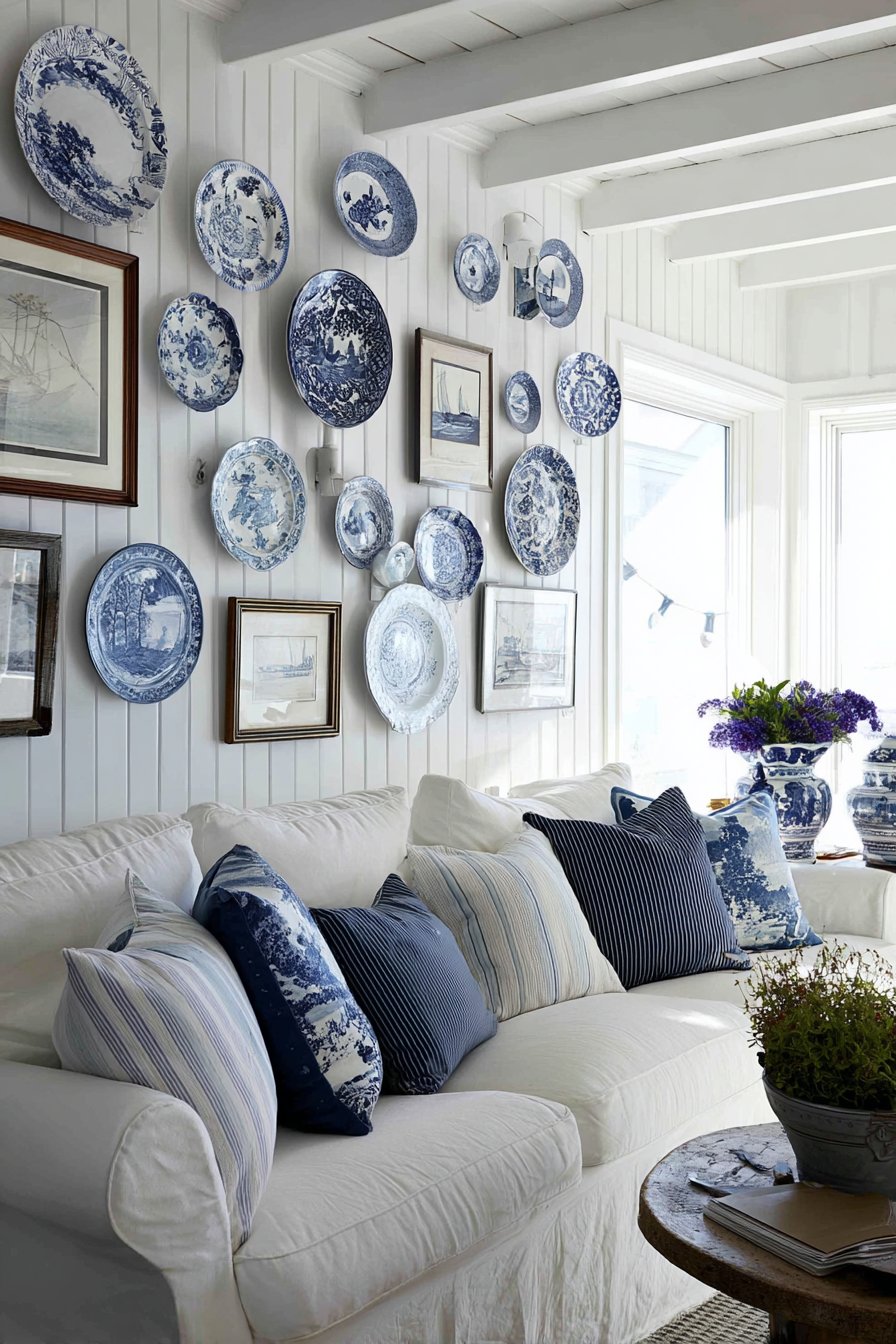
11. Vintage Plate Collection Display
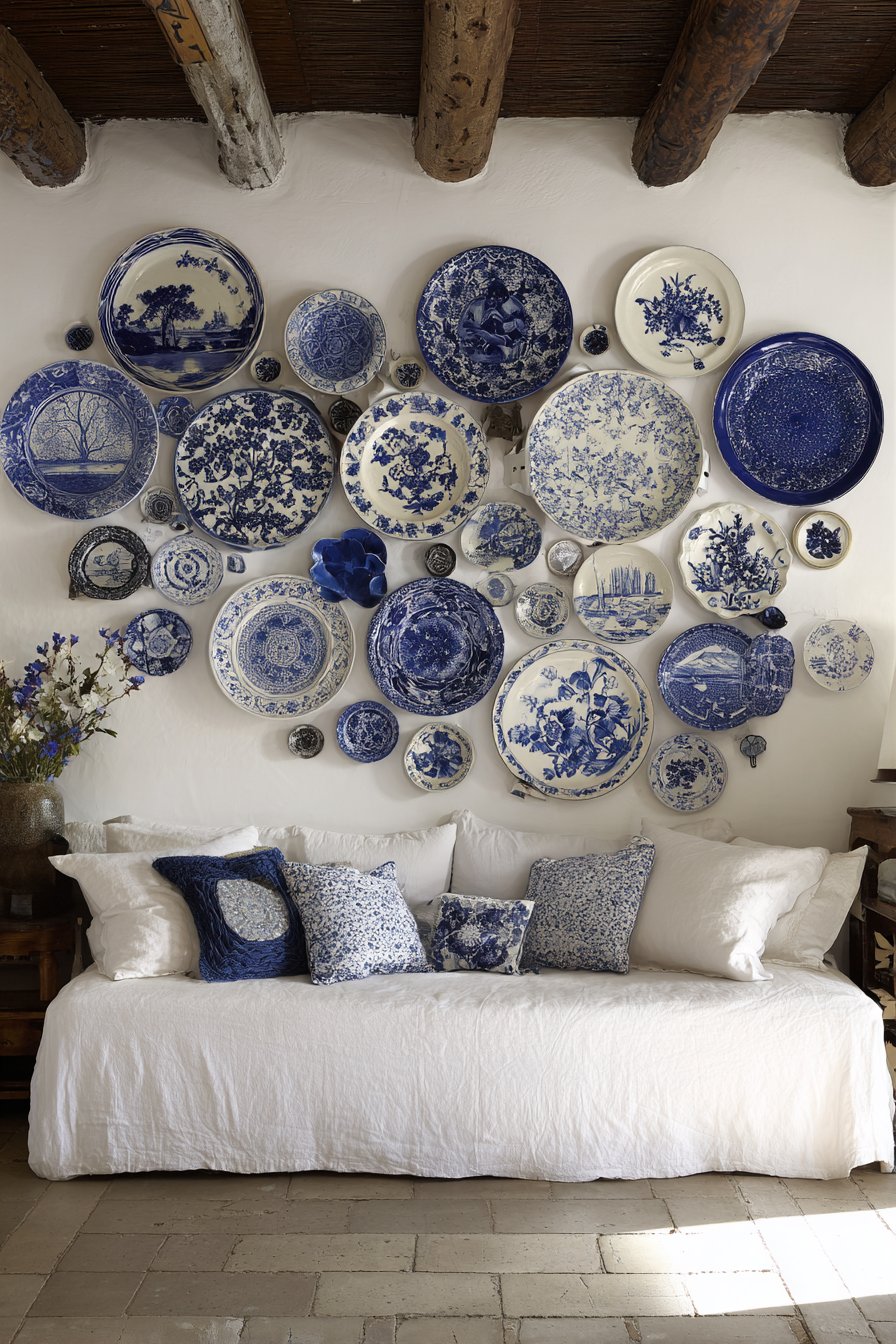
A collection of vintage plates in coordinating blue and white patterns creates charming focal point with nostalgic appeal and artisanal character. The organic cluster arrangement spanning approximately 50 inches wide feels collected over time rather than purchased as a set, lending authentic personality to the space. Each plate’s unique pattern and size contributes to the overall composition while the cohesive color palette prevents the display from appearing chaotic.
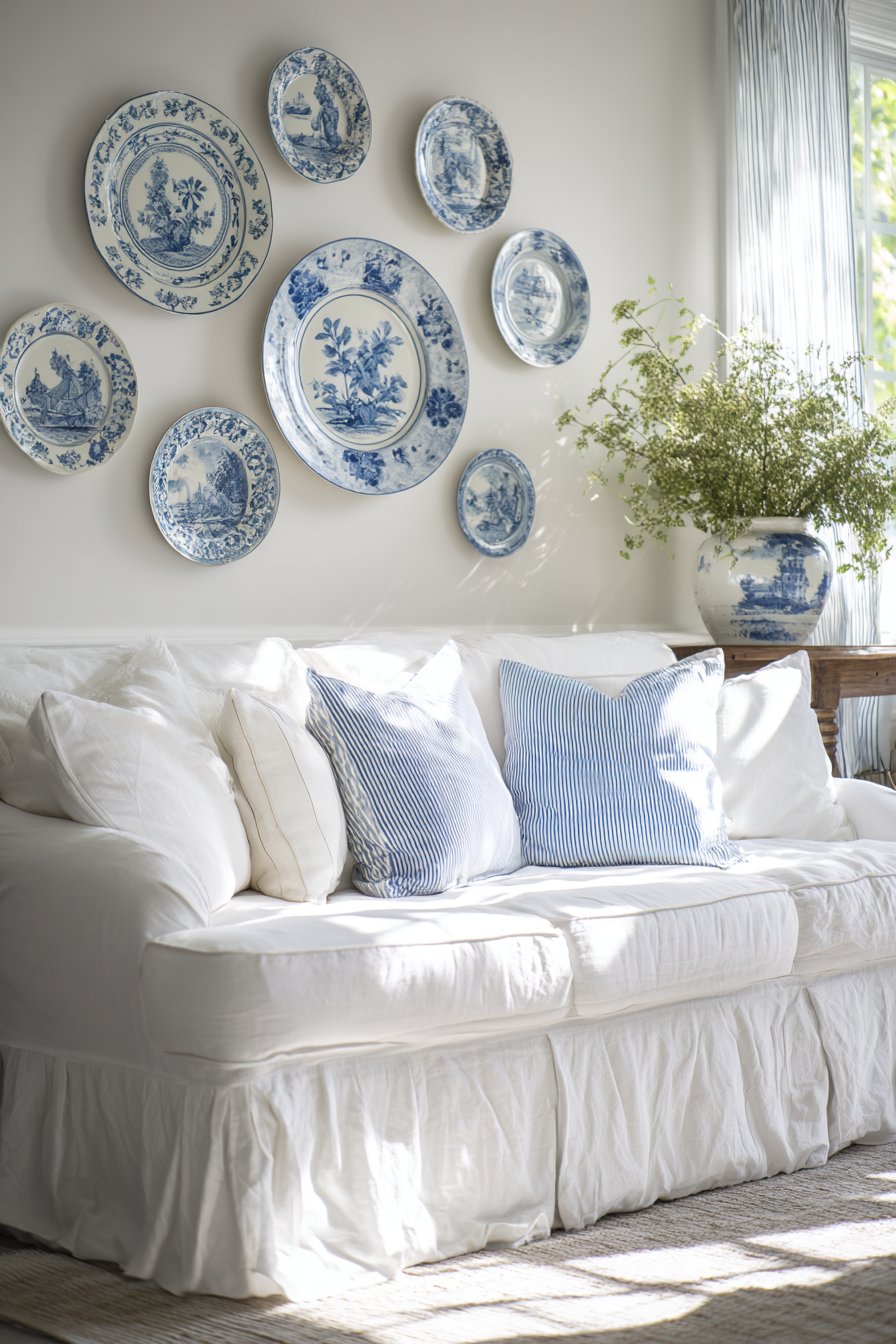
The cottage-style aesthetic comes alive through this type of decorative display, which celebrates handcrafted ceramics and traditional pottery techniques. Mounting plates with invisible disc hangers creates the illusion that they’re floating against the wall, allowing each piece’s individual beauty to shine. The glossy ceramic surfaces catch and reflect natural daylight streaming from nearby windows, creating subtle sparkle that brings the arrangement to life.
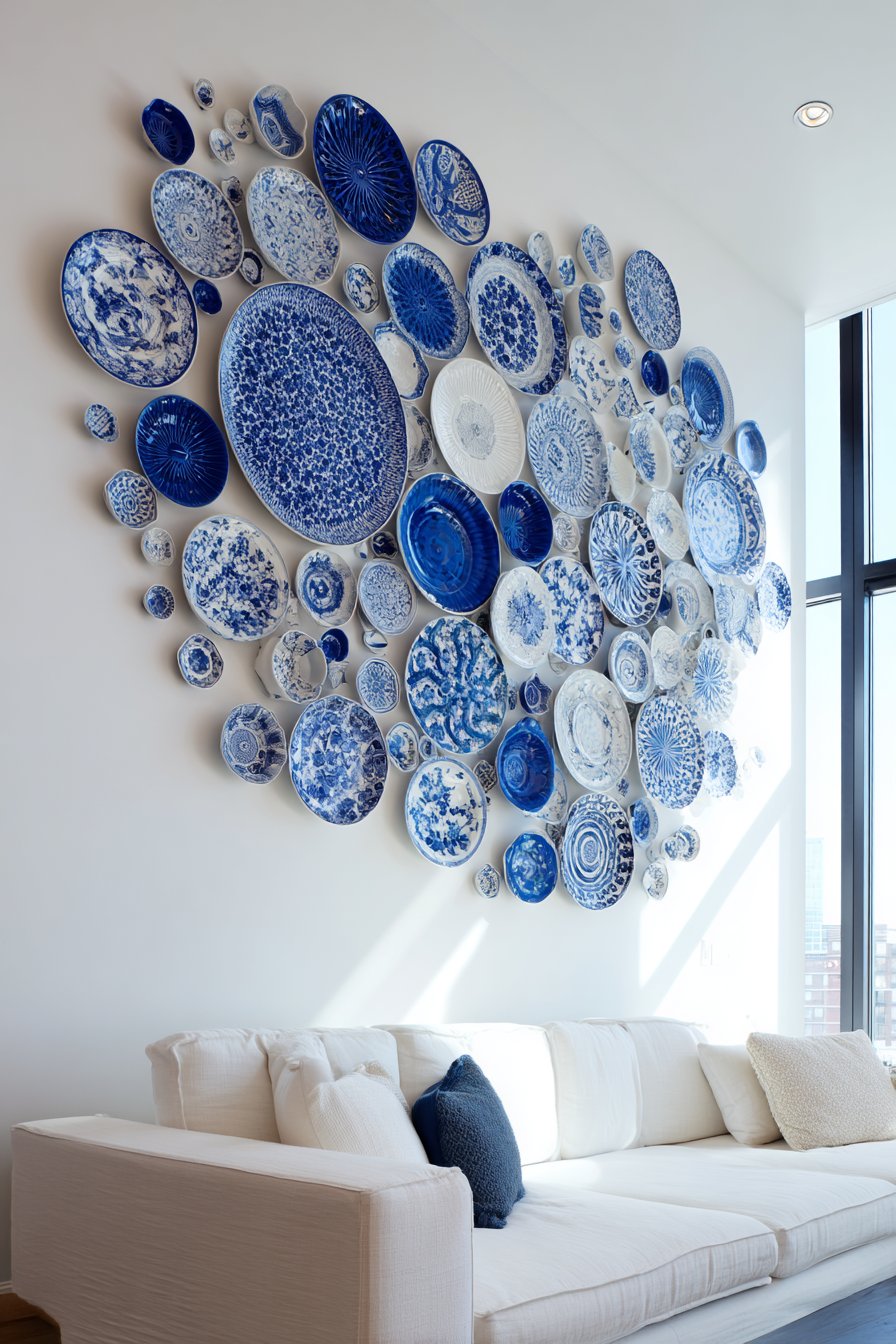
Positioned 10 inches above a white slipcovered sofa, this display embodies casual coastal elegance where comfort and collected charm take precedence over formal perfection. The eclectic nature of the arrangement invites guests to examine individual plates, discovering pattern variations and appreciating the craftsmanship. This approach works particularly well for those who enjoy flea markets, antique shops, and estate sales, as the collection can grow organically over time as new treasures are discovered.
Key Design Tips:
- Use plate hangers rated for ceramic weight, typically wire hangers or disc systems
- Arrange plates on floor first to determine optimal spacing and composition
- Start with largest plate as anchor, building arrangement around it
- Maintain consistent color palette across varied patterns for cohesive appearance
- Ensure plates are securely mounted—test installation before hanging all pieces
- Consider the reflective nature of glazed ceramics when positioning relative to light sources
- Group plates in odd numbers and varying sizes for dynamic visual interest
12. Sleek Floating Media Console
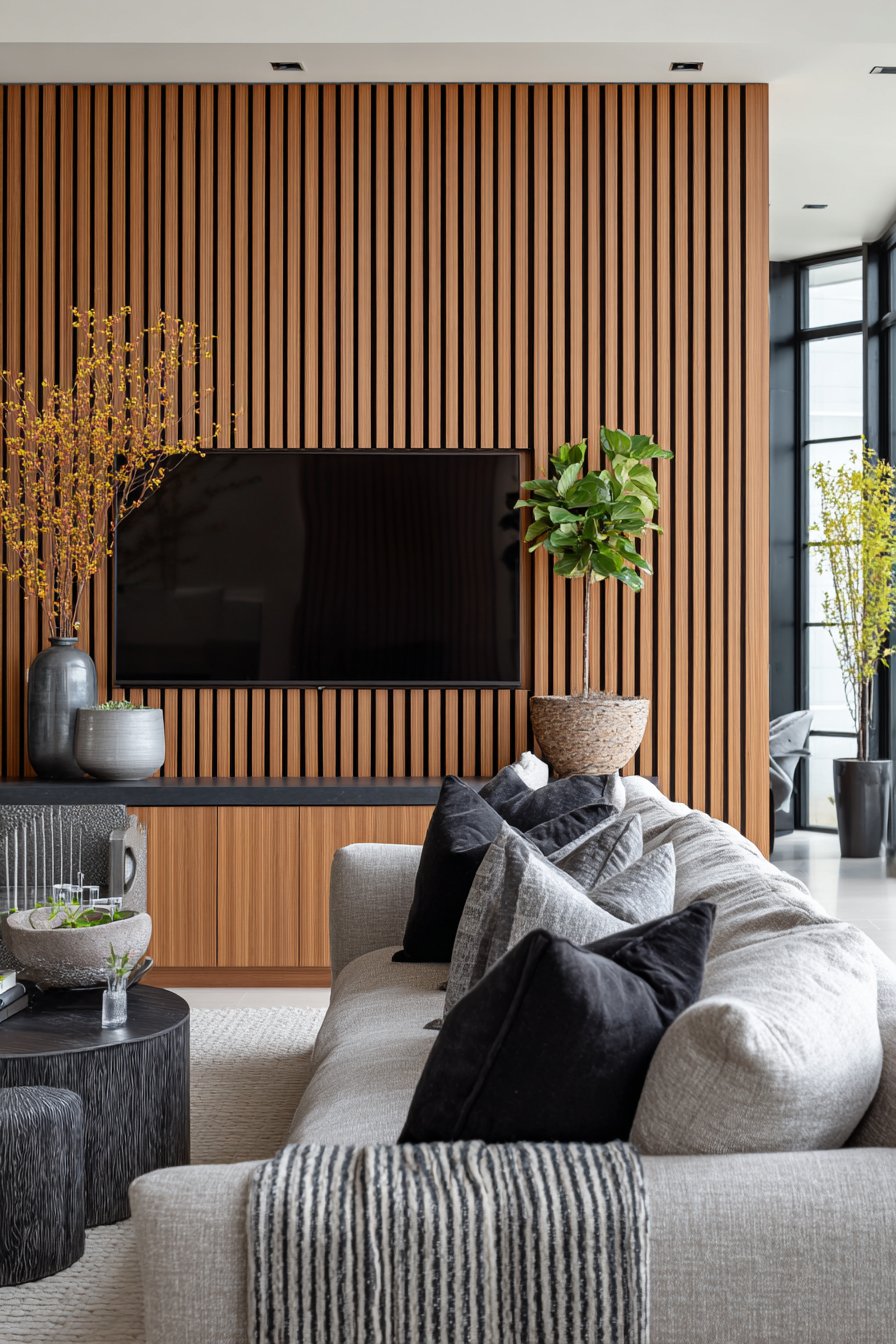
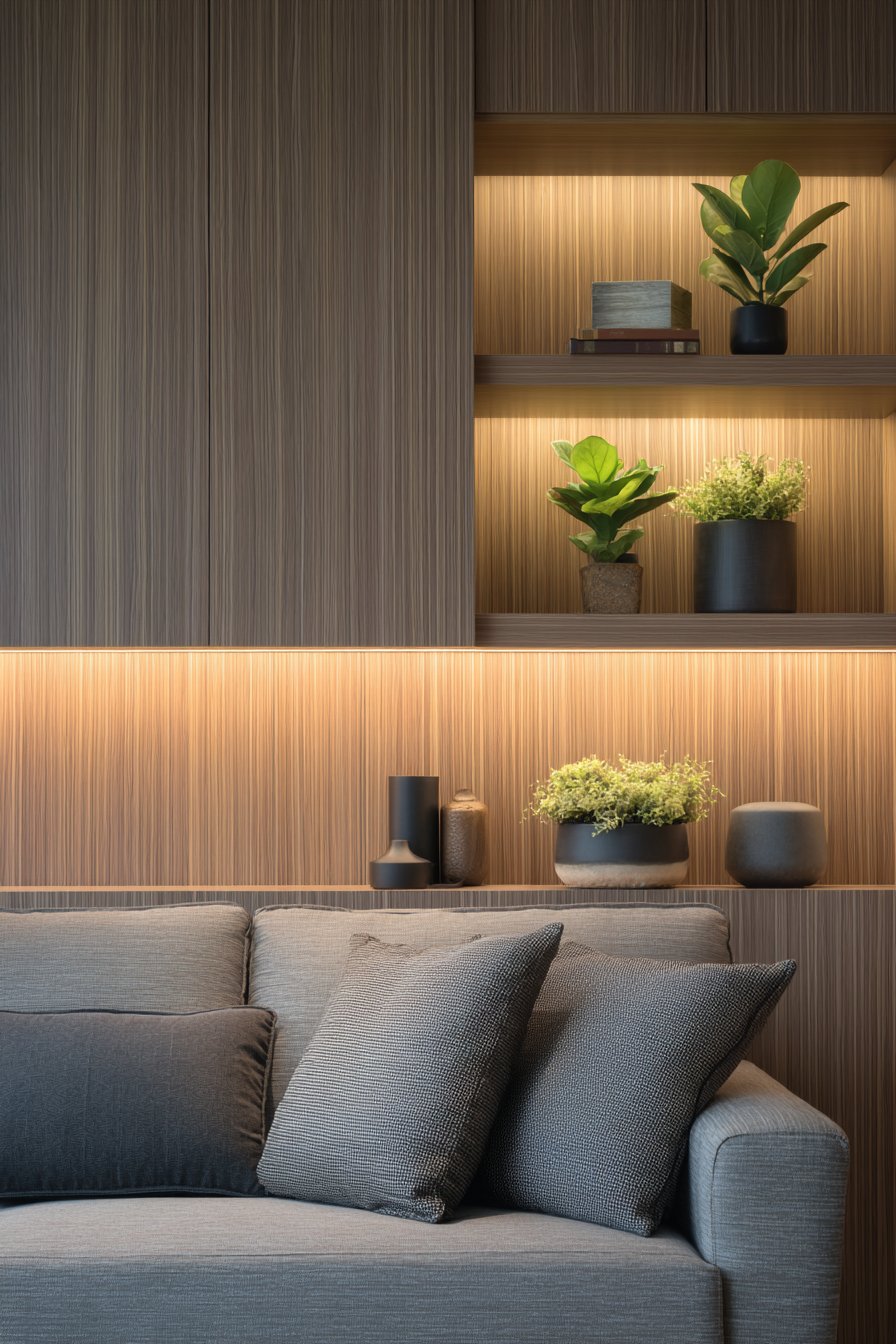
A floating media console in walnut veneer mounted above the sofa creates unexpected solution that combines storage, display, and visual interest. This 60-inch wide unit demonstrates how functional furniture pieces can serve decorative purposes when thoughtfully integrated into wall design. The integrated LED strip lighting underneath adds both ambient illumination and design detail, creating floating effect that makes the console appear weightless.
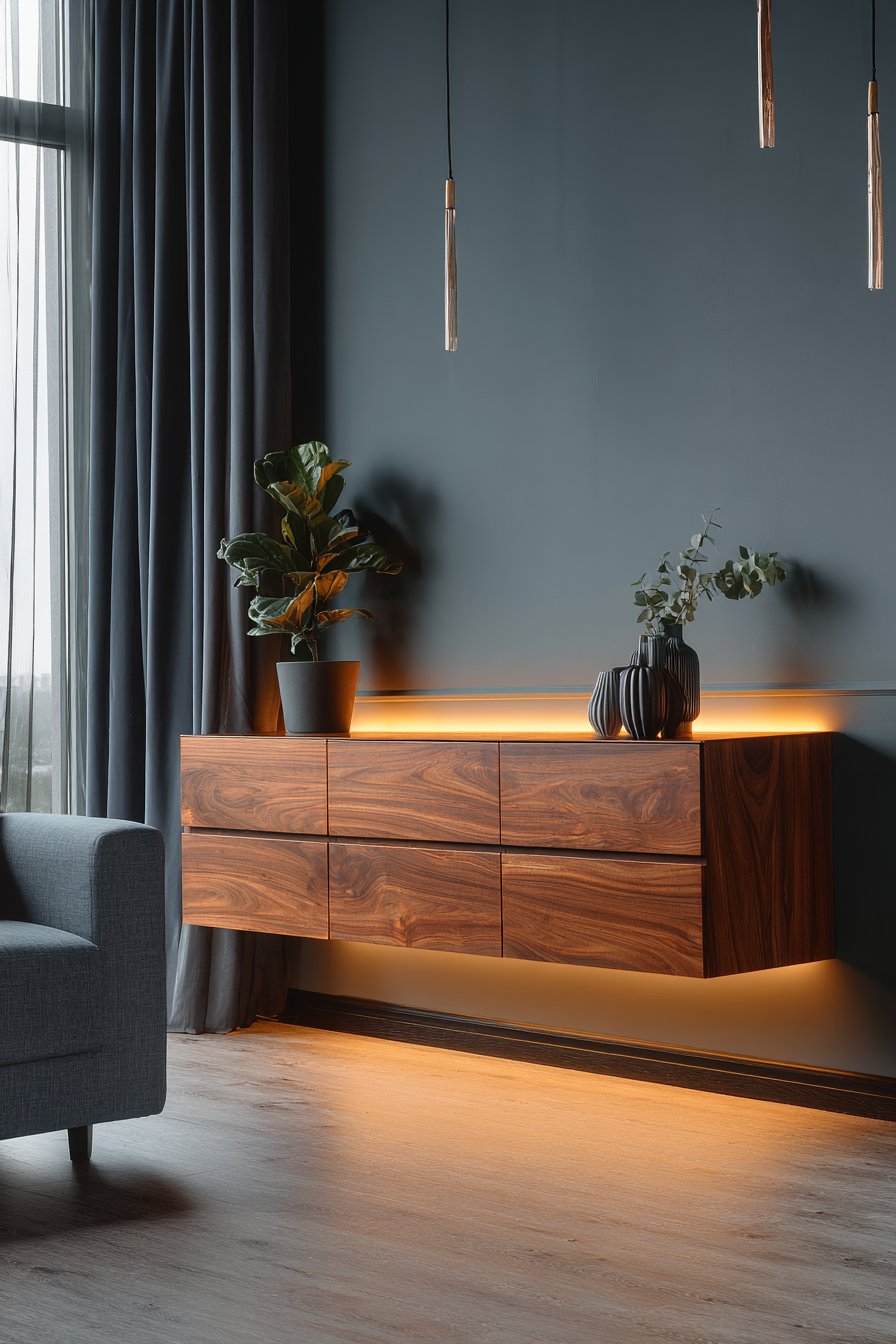
The warm walnut grain contrasts beautifully with the cool grey sofa below, creating relationship between warm and cool tones that adds sophisticated depth. The console’s horizontal lines echo the sofa’s linear form, creating visual harmony through repetition of geometry. Styled with minimalist arrangement of decorative objects and a small potted fiddle leaf fig, the console becomes curated display platform that adds personality without clutter.
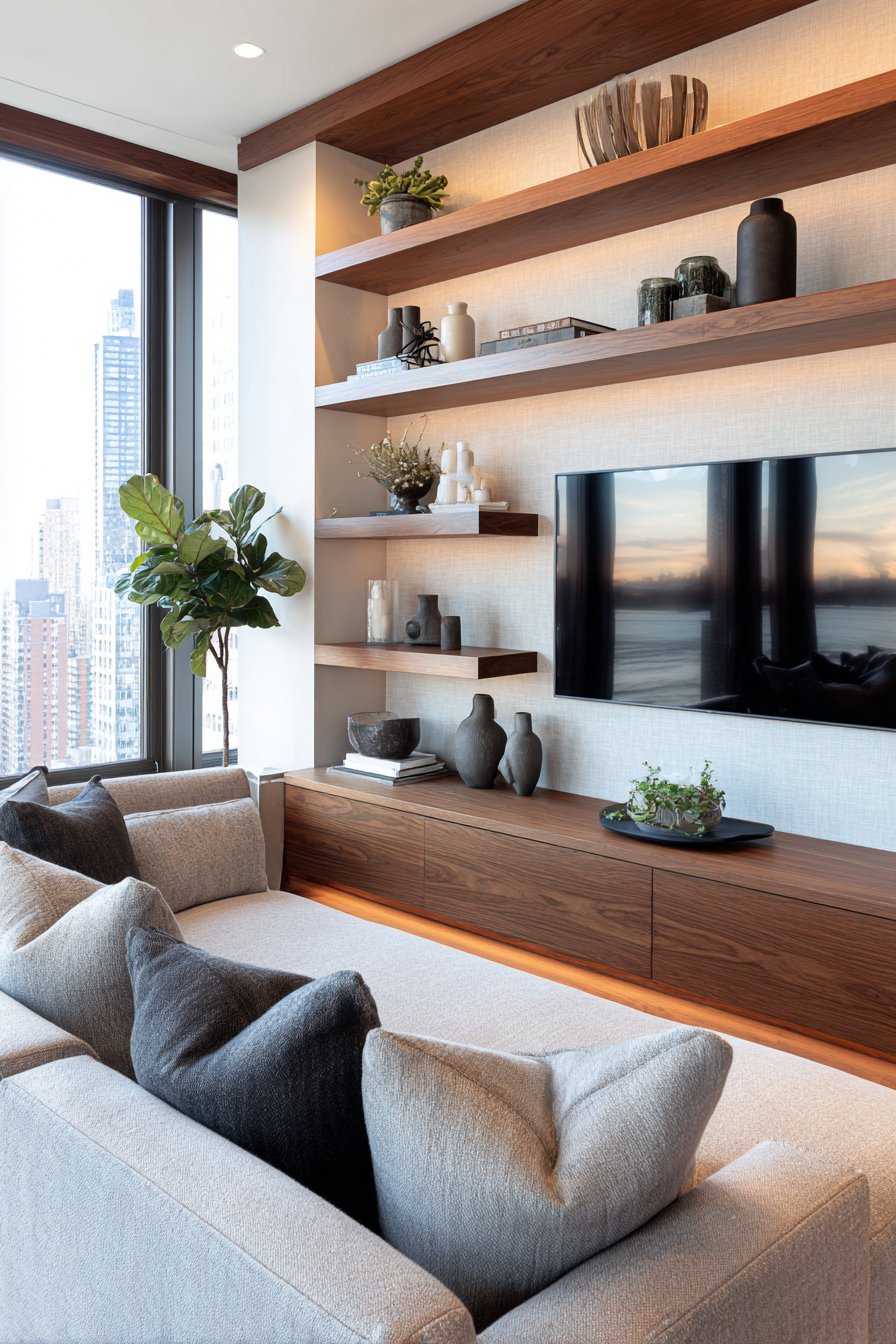
This modern functionality suits contemporary urban living spaces where every element serves multiple purposes. The storage concealed behind cabinet doors keeps remotes, books, and small items organized while the open display surface showcases carefully selected objects. The floating installation maintains clean lines and uninterrupted floor space below, contributing to the room’s spacious, uncluttered feel essential to contemporary design.
Key Design Tips:
- Install floating consoles using heavy-duty mounting systems attached to wall studs
- Ensure electrical outlets are accessible for integrated lighting features
- Mount console at comfortable height for accessing stored items, typically 24-30 inches above sofa
- Style console surface minimally to maintain contemporary aesthetic
- Choose wood tones that complement other wooden elements in the room
- Incorporate cord management systems to keep cables hidden
- Limit displayed objects to 3-5 carefully curated pieces for clean look
13. Handwoven Textile Richness
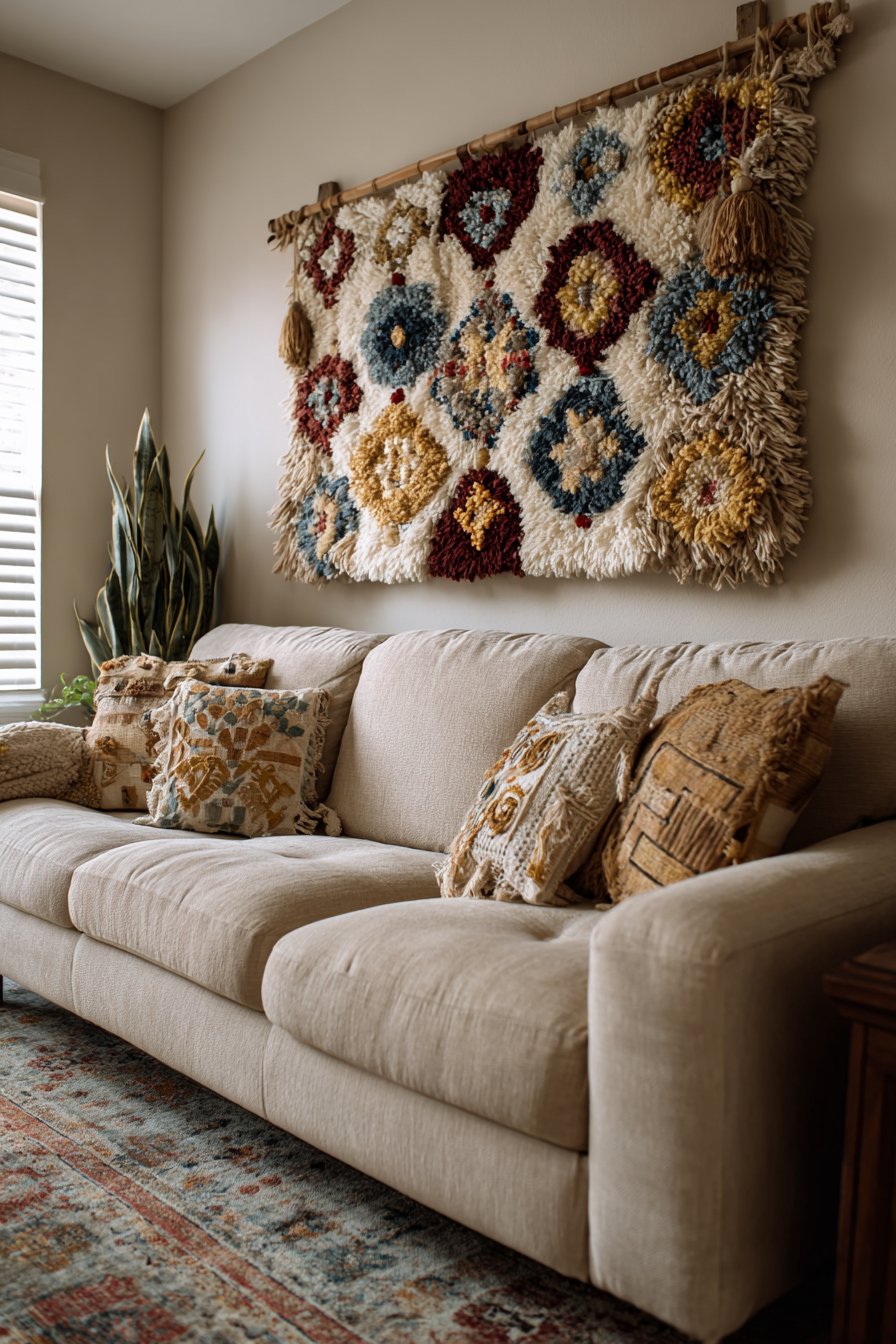
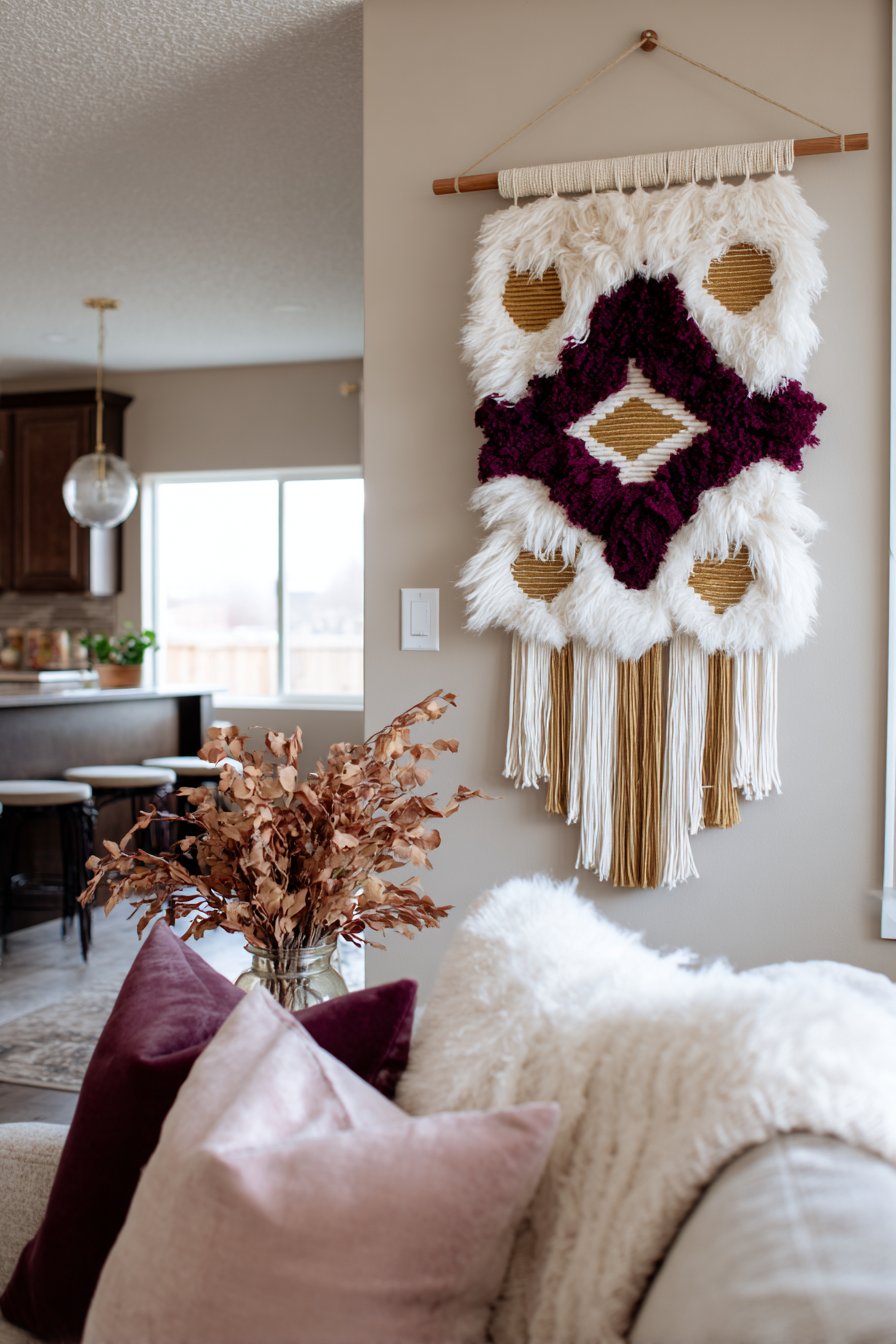
A handwoven textile wall hanging in rich jewel tones creates luxurious focal point that celebrates global artisan traditions and textile craftsmanship. The deep burgundy, navy, and gold colors create warmth and sophistication while the intricate geometric patterns demonstrate the skill and time invested in traditional weaving techniques. At 44×60 inches, this substantial textile provides adequate scale for commanding attention without overwhelming the space.
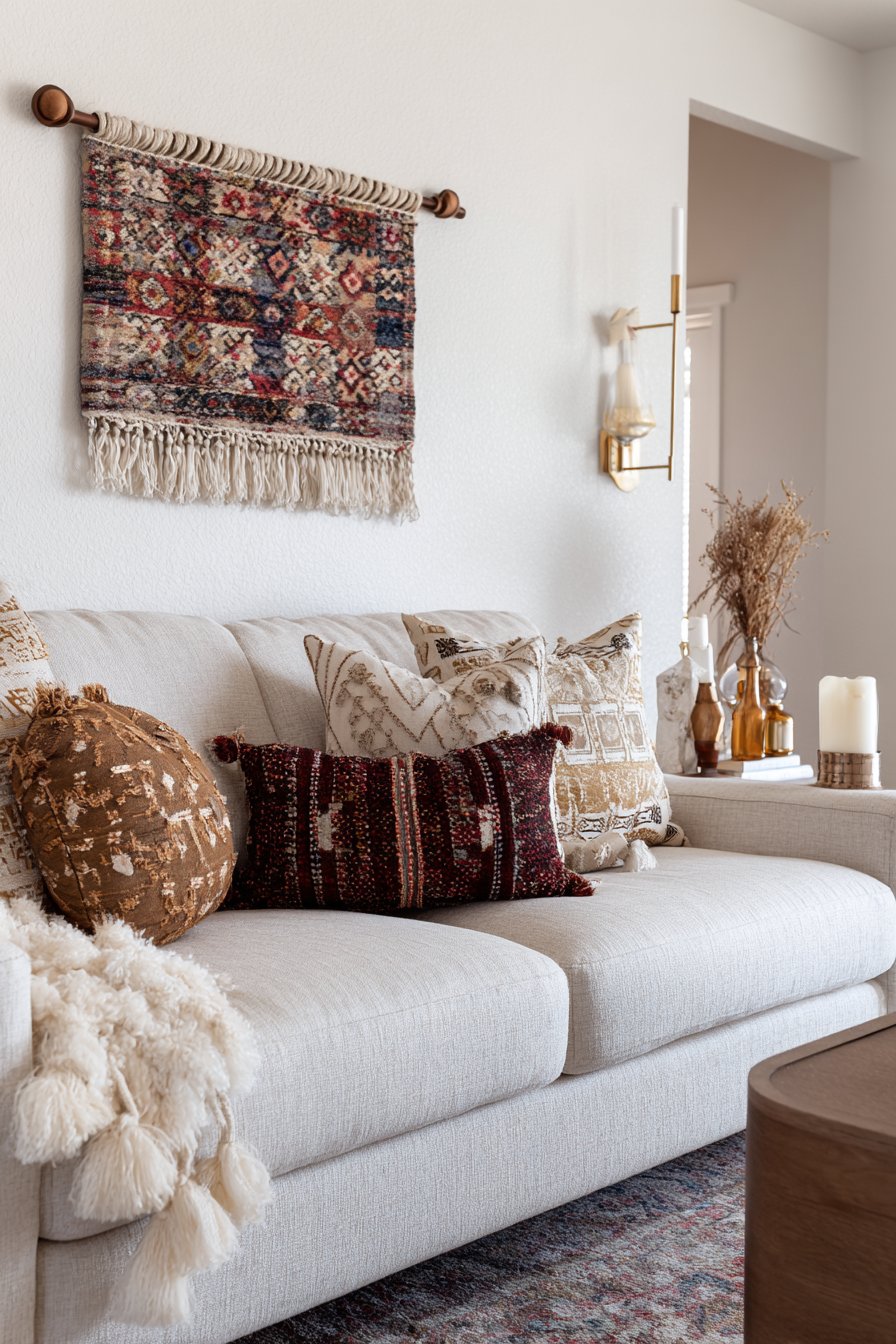
The mounting on a wooden rod adds authenticity, suggesting the traditional way such textiles might be displayed in their regions of origin. Positioned 11 inches above a neutral oatmeal-colored sofa, the vibrant textile provides dramatic color contrast that energizes the entire room. The neutral upholstery serves as restful backdrop that allows the textile’s complex patterns and saturated colors to take center stage without visual competition.
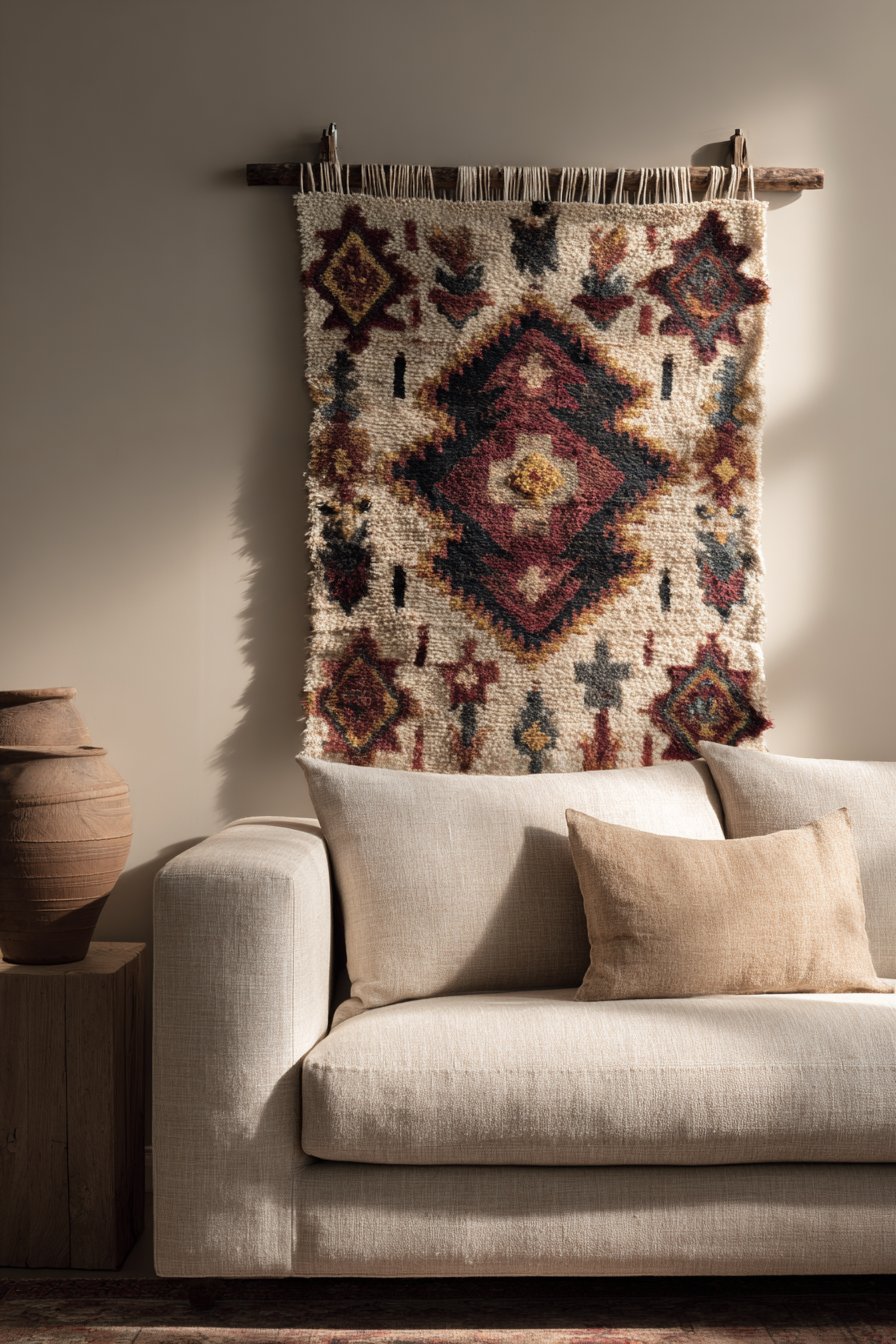
The dimensional quality of woven textiles sets them apart from printed fabrics or paintings—the actual texture created through weaving techniques becomes evident when soft natural lighting emphasizes the weave patterns and creates subtle shadows within the geometric designs. This type of wall hanging works beautifully in eclectic living rooms that draw inspiration from global cultures and celebrate handcrafted artistry over mass production.
Key Design Tips:
- Source textiles from fair trade organizations or artisan cooperatives for authentic pieces
- Choose mounting rods in materials that complement the textile’s origin culture
- Position away from direct sunlight to prevent color fading over time
- Coordinate textile colors with accent pillows or throws for cohesive color story
- Consider the textile’s cultural significance and display respectfully
- Vacuum gently or shake outdoors periodically to remove dust
- Pair bold patterned textiles with solid neutral furniture for balanced design
14. Asymmetrical Geometric Shelf Display
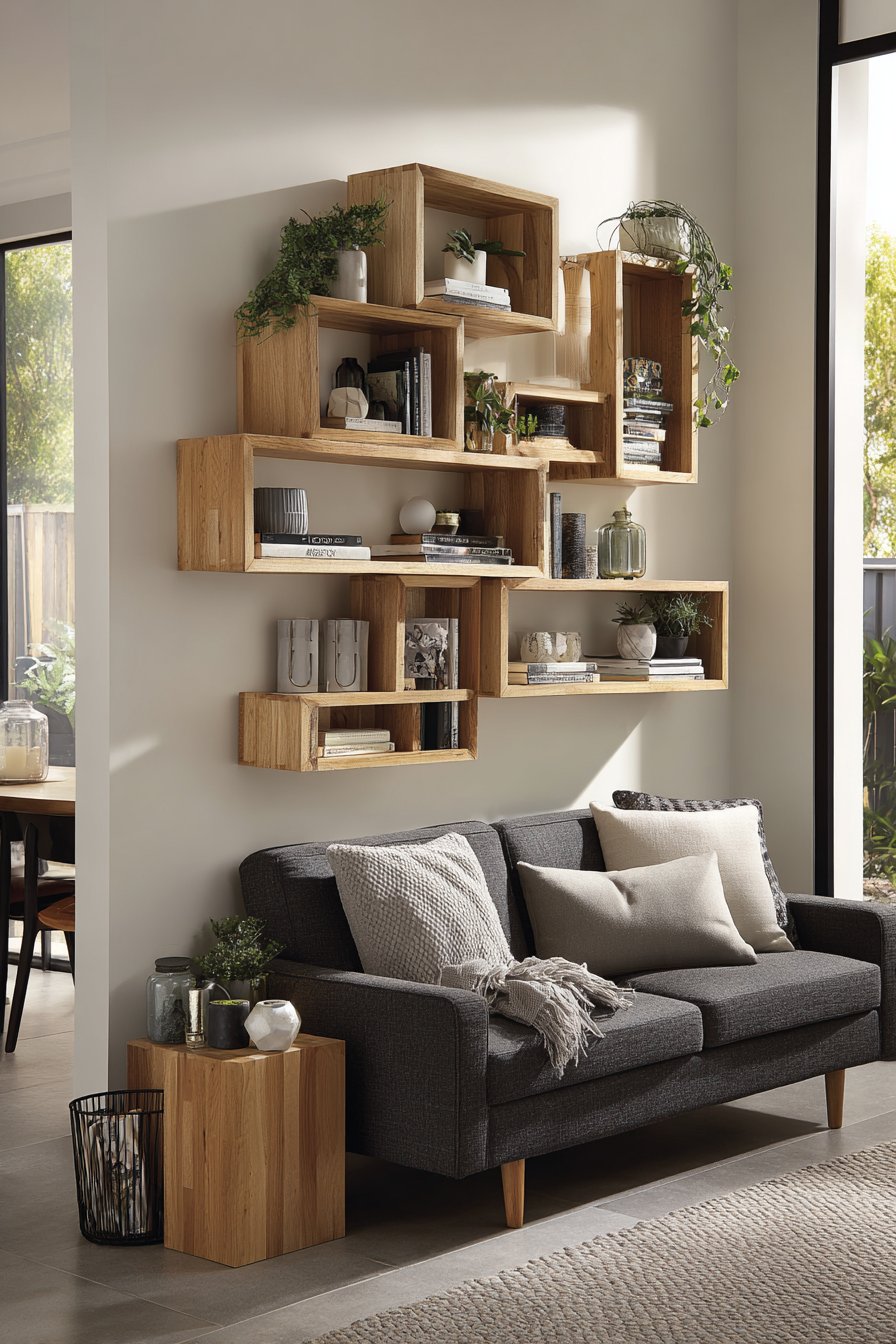
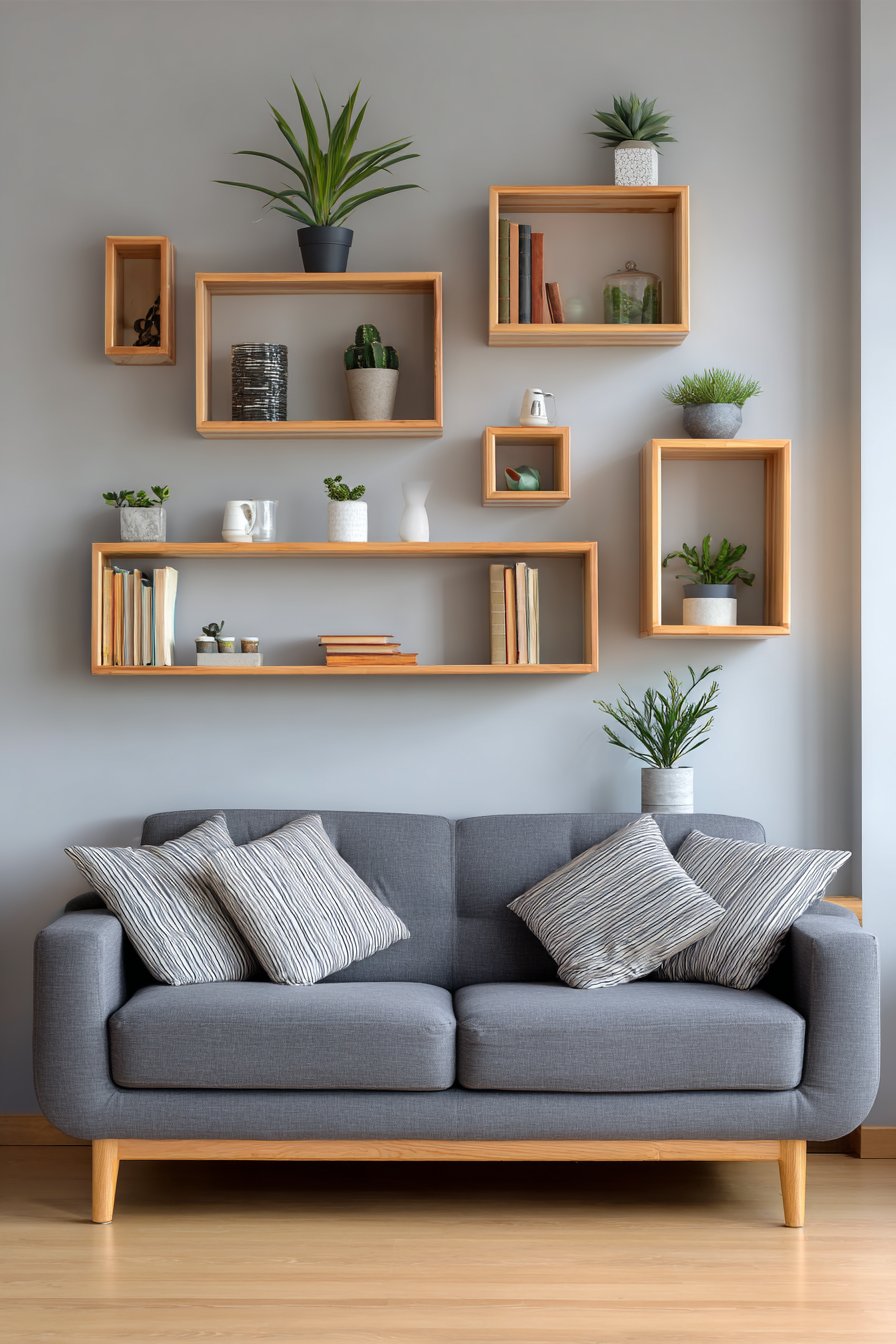
A modern asymmetrical shelf arrangement using geometric cube and rectangular shelves creates dynamic wall installation that combines storage with artistic display. The five natural blonde wood shelves installed at varying heights transform functional shelving into sculptural wall feature. This arrangement spanning 50 inches wide and 36 inches tall demonstrates how breaking away from traditional horizontal shelving creates contemporary visual interest.
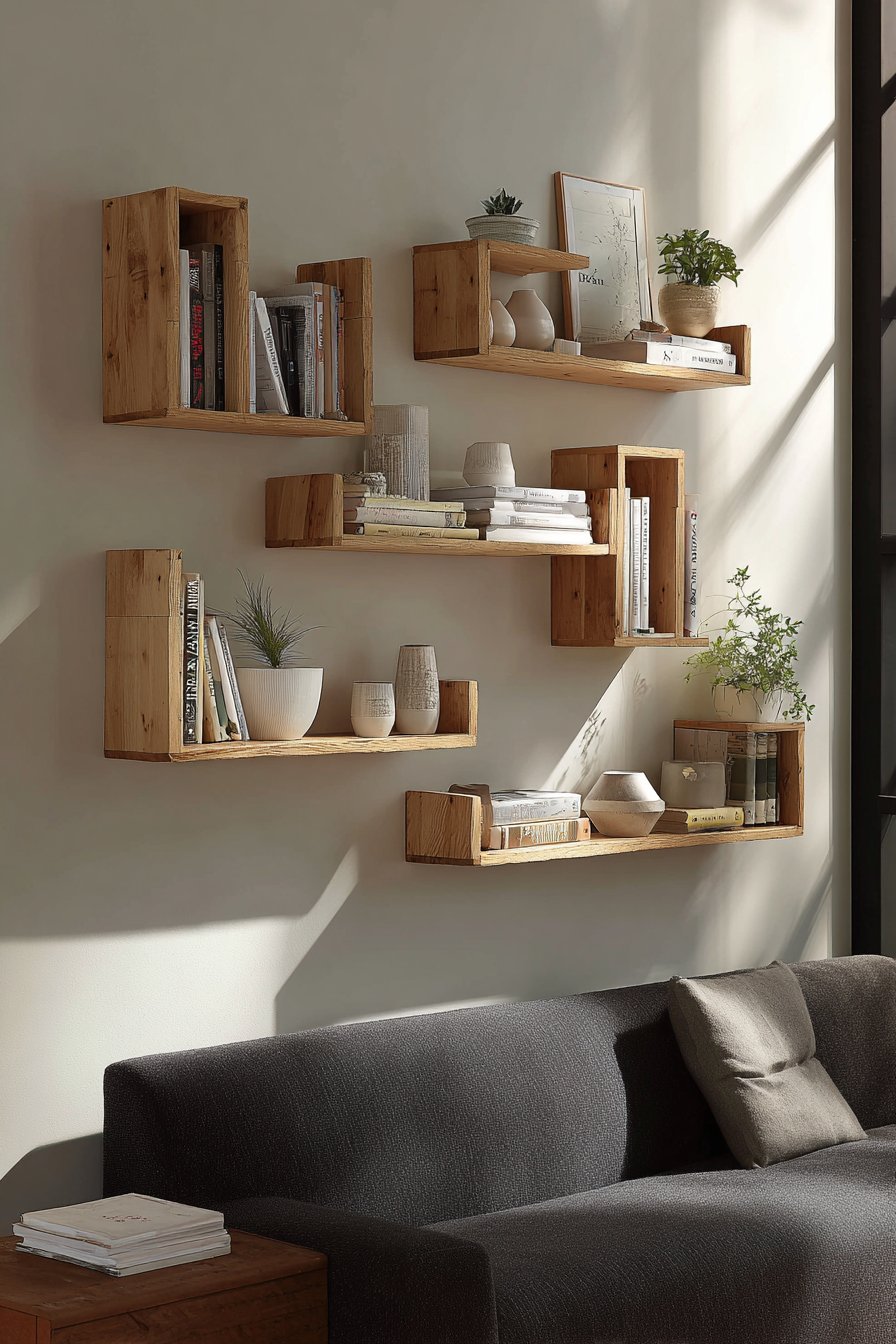
The varied heights and depths of the shelves allow for diverse display possibilities—books stored horizontally and vertically, small plants at different levels, and ceramic objects arranged to create movement and flow. The negative space between shelves becomes as important as the shelves themselves, contributing to the overall composition. This principle of “designing with emptiness” is fundamental to Scandinavian-modern aesthetics where restraint creates sophistication.
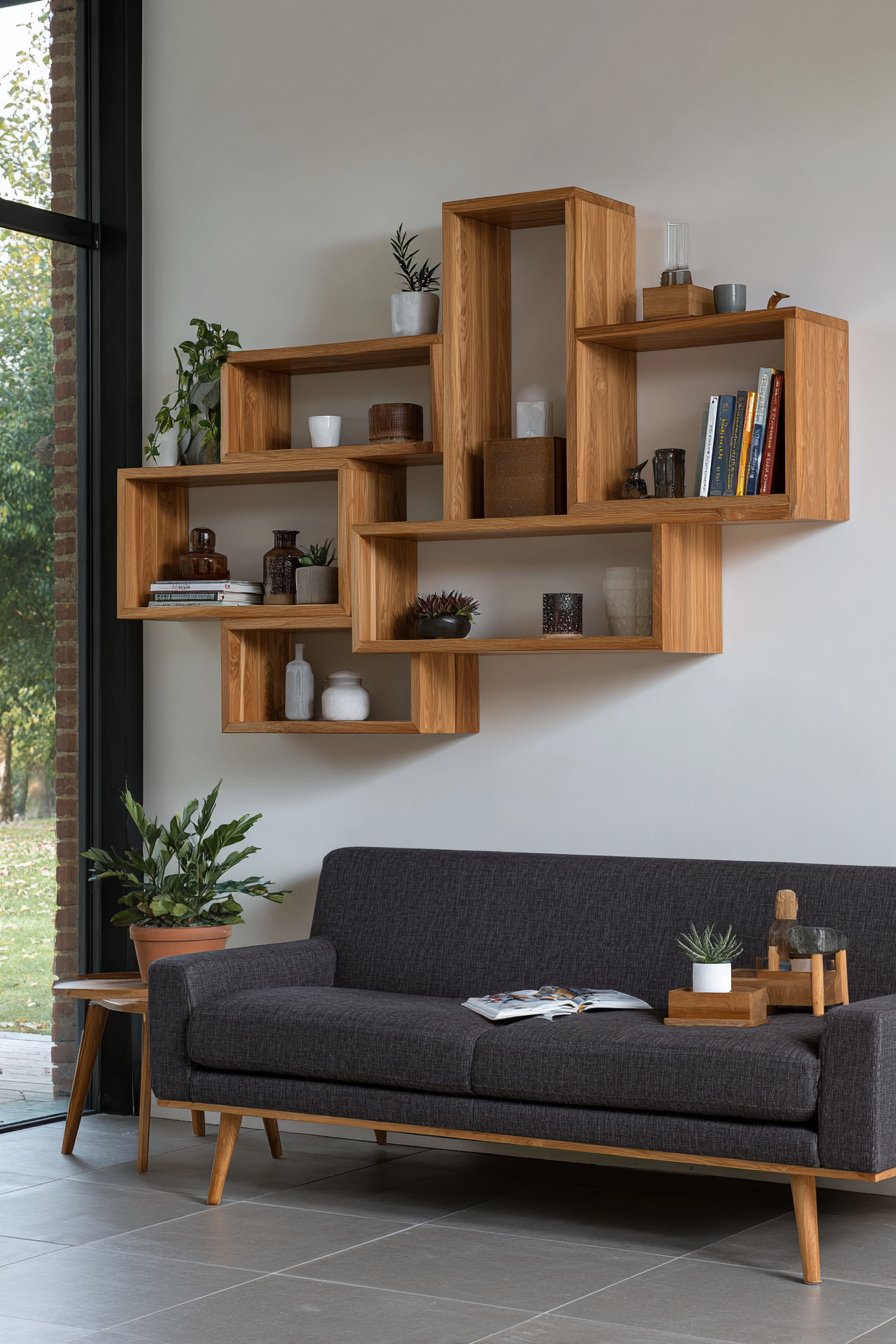
Positioned above a charcoal grey mid-century style sofa, the light wood shelves provide warm contrast while maintaining the clean-lined contemporary aesthetic. Each shelf displays carefully edited selection of objects, demonstrating the principle that in minimalist design, every item must earn its place. The practical storage integrated with decorative styling makes this approach ideal for small living spaces where furniture must serve multiple functions.
Key Design Tips:
- Plan shelf arrangement on paper before installation to visualize final composition
- Use mix of shelf sizes for visual variety while maintaining cohesive material and finish
- Ensure shelves are level individually even when arrangement is asymmetrical
- Style shelves with mix of horizontal and vertical elements for dynamic display
- Limit color palette of displayed objects for cohesive contemporary aesthetic
- Leave some shelf space empty to avoid cluttered appearance
- Install smallest shelves highest to create visual stability through implied weight distribution
15. Three-Dimensional Metal Sculpture
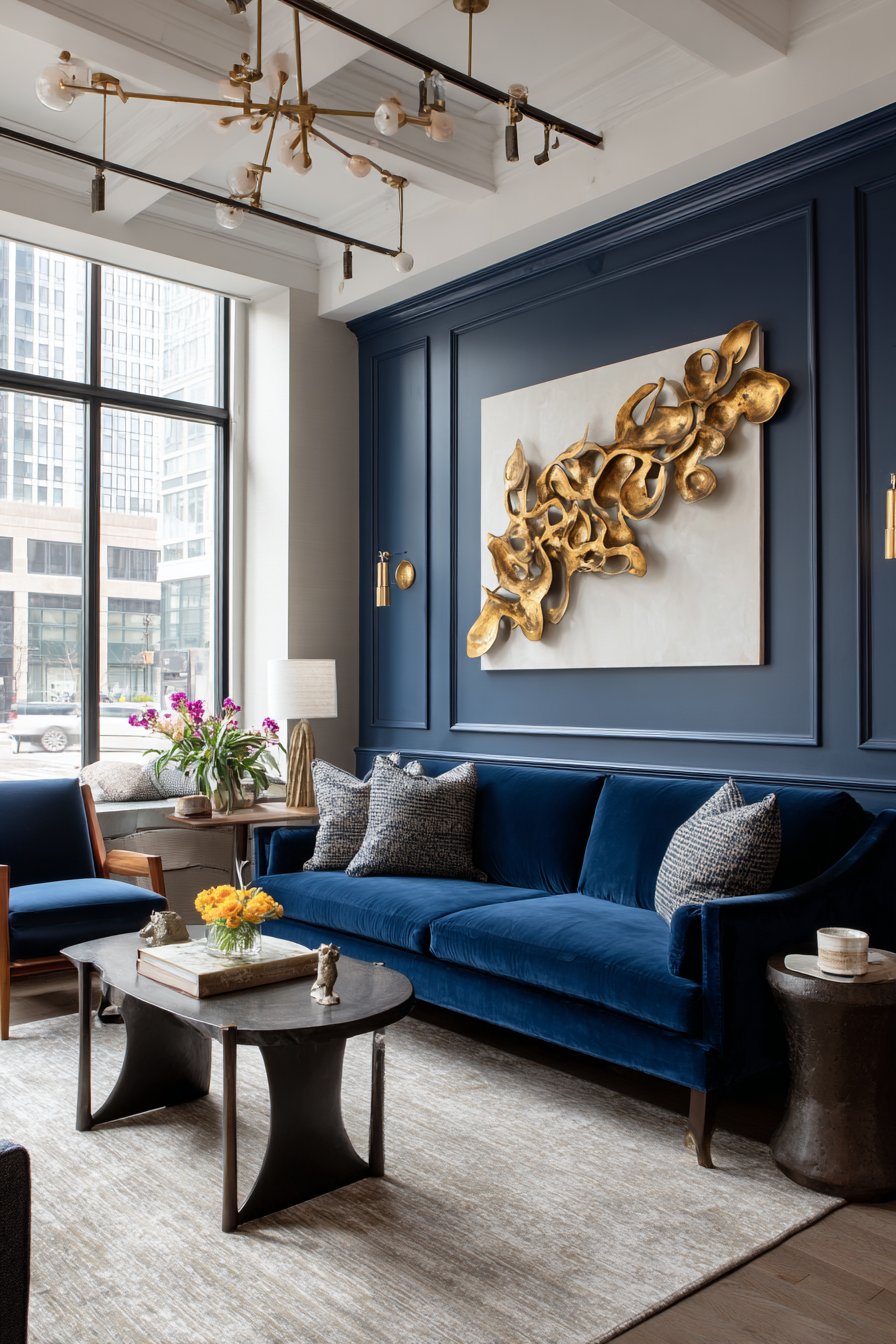
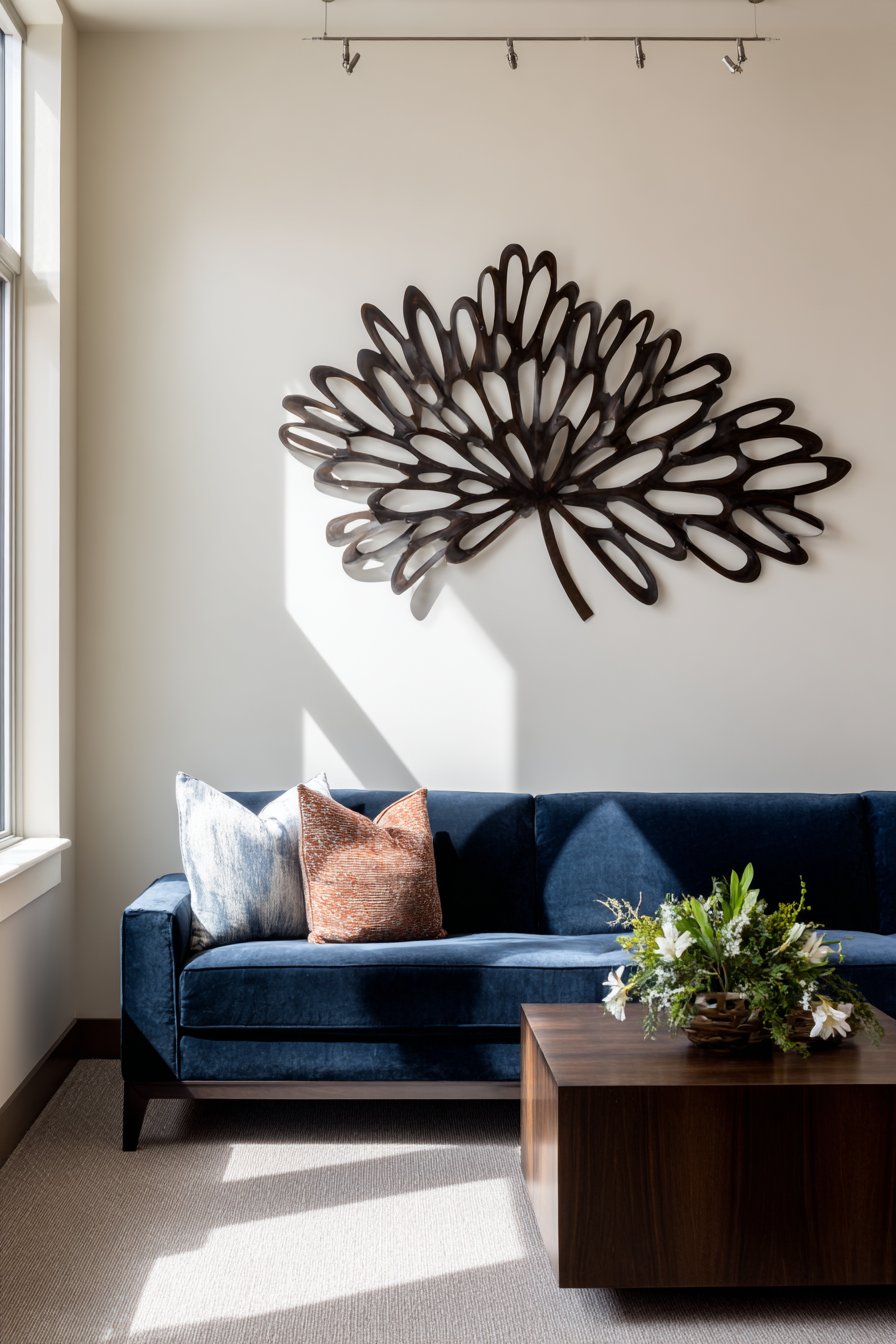
A statement piece of three-dimensional metal wall sculpture introduces dramatic artistic element that transcends traditional flat artwork. The brushed bronze finish measuring 50×30 inches features abstract organic shapes that create shadows and depth, transforming based on lighting conditions throughout the day. This sculptural approach to wall decoration adds sophistication and contemporary artistry that signals curated design sensibility.
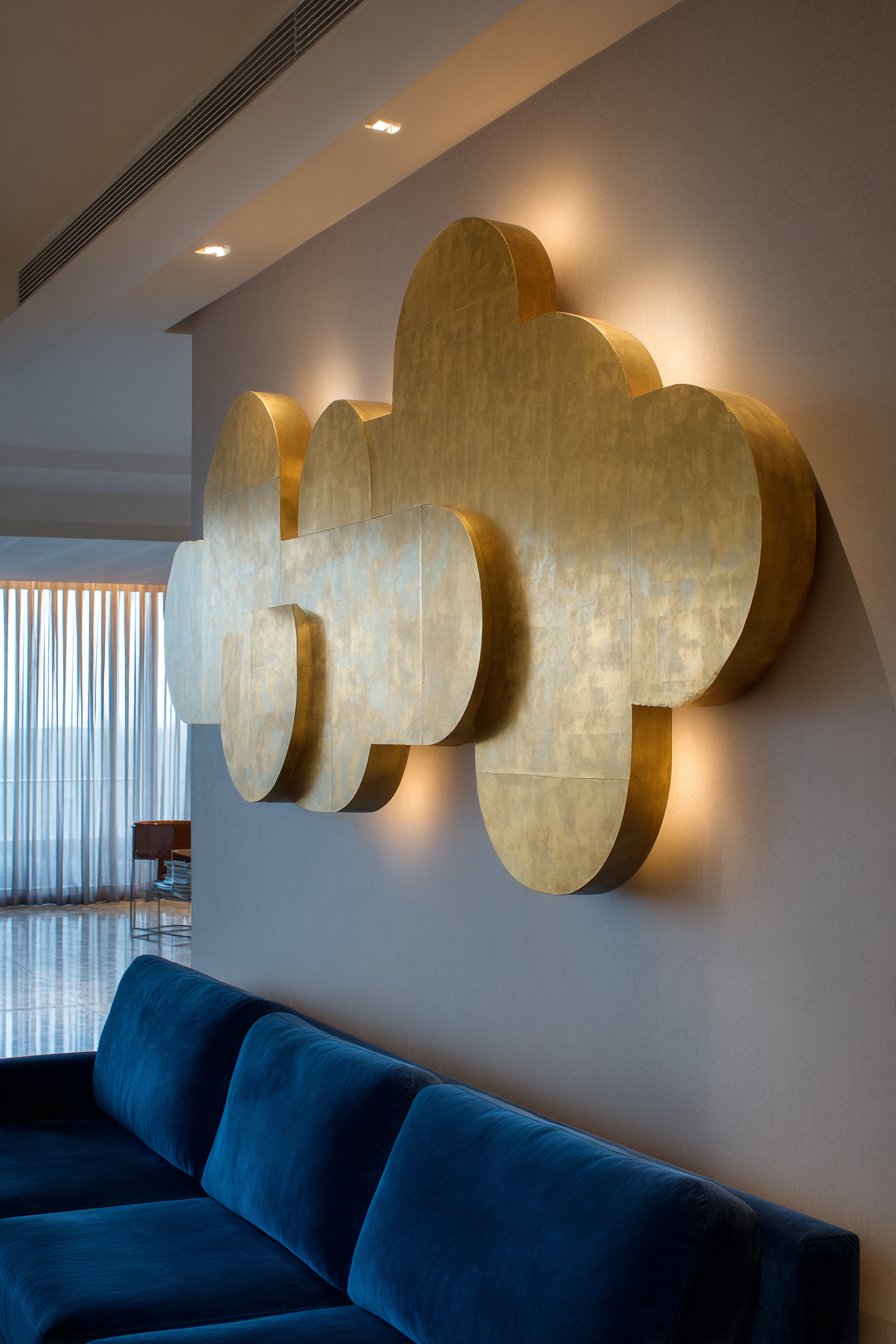
The navy blue velvet sofa beneath this dramatic sculpture provides rich color foundation that enhances the warm metallic tones of the bronze. Track lighting directed at the sculpture emphasizes the dimensional relief, creating interplay of light, shadow, and reflective surfaces that changes from morning through evening. This temporal quality means the artwork offers different visual experiences throughout the day, maintaining interest and preventing visual stagnation.
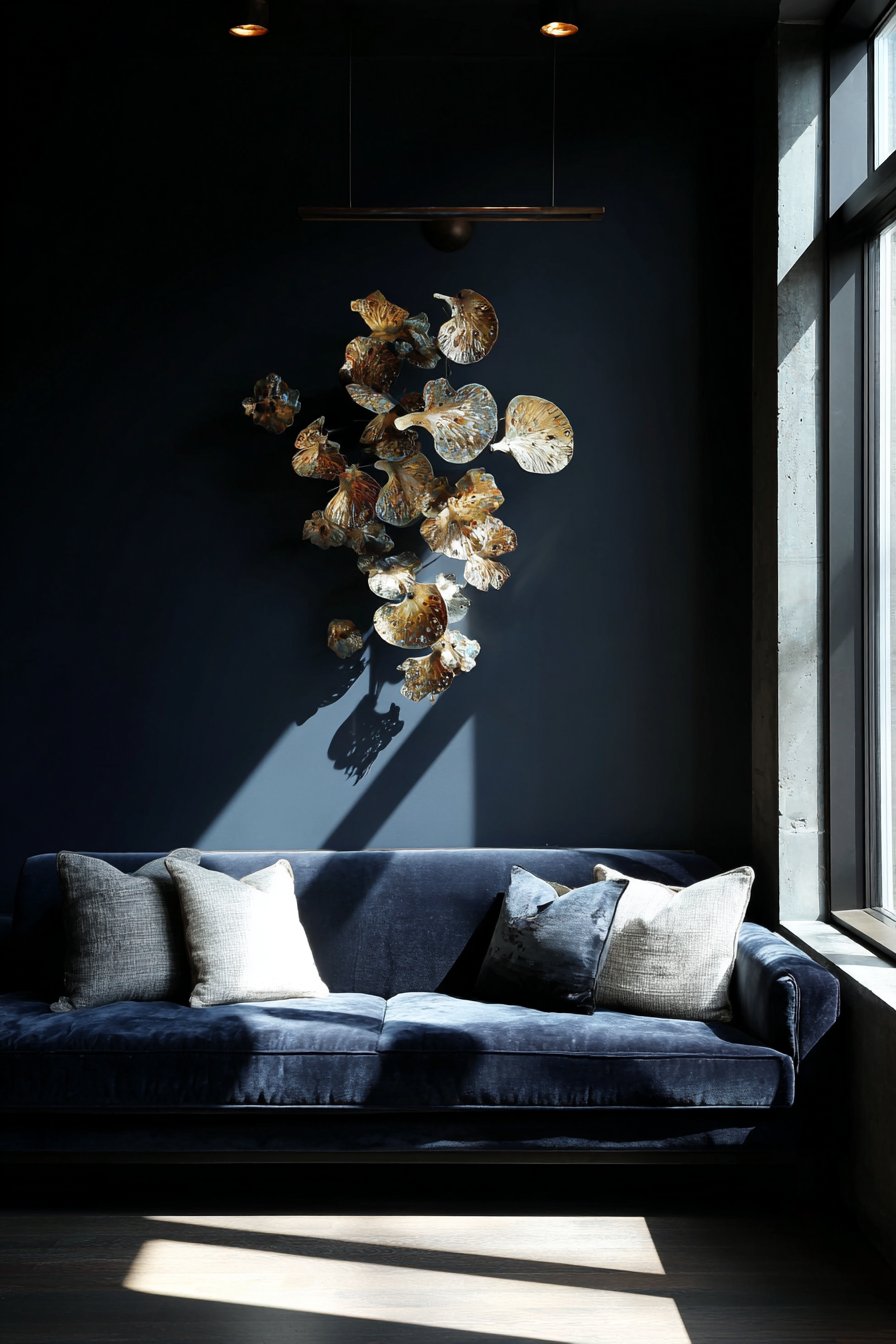
This sophisticated modern approach suits contemporary living spaces where design-forward choices demonstrate appreciation for artistic expression and material exploration. The sculptural installation serves as conversation piece, inviting guests to examine the abstract forms and appreciate how light interacts with the metal surface. The investment in quality contemporary art adds cultural value beyond mere decoration, elevating the room’s overall design sophistication.
Key Design Tips:
- Choose metal finishes that complement your room’s existing metallic accents
- Install directional lighting to emphasize sculptural dimension and create dramatic shadows
- Ensure secure mounting for heavy metal sculptures using appropriate anchoring systems
- Position sculptures where varying light conditions will showcase dimensional qualities
- Consider the scale of abstract forms relative to furniture size
- Select sculptures with organic shapes to soften contemporary interiors
- Invest in original or limited-edition pieces for authentic artistic value
16. Classic Salon-Style Gallery Wall
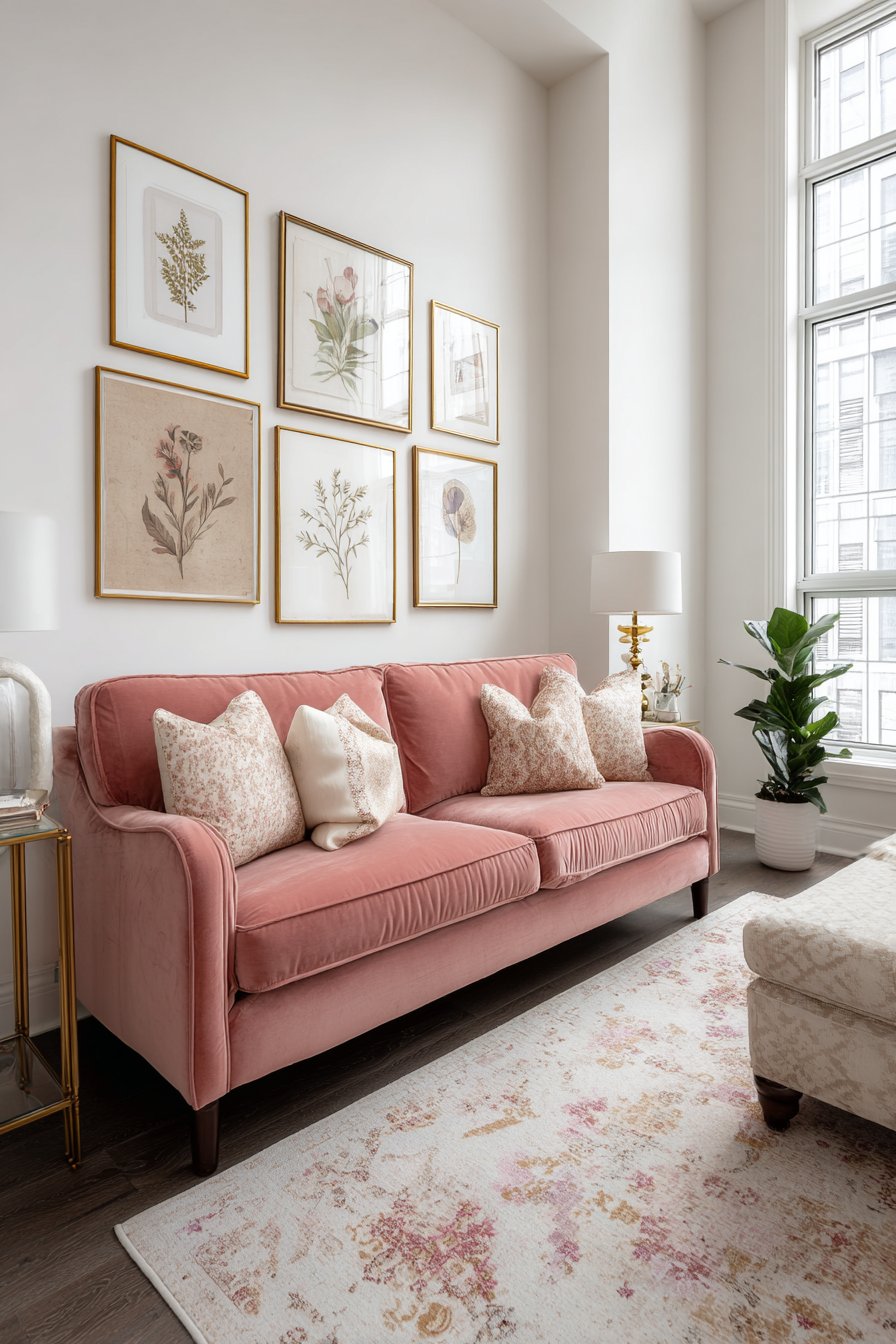
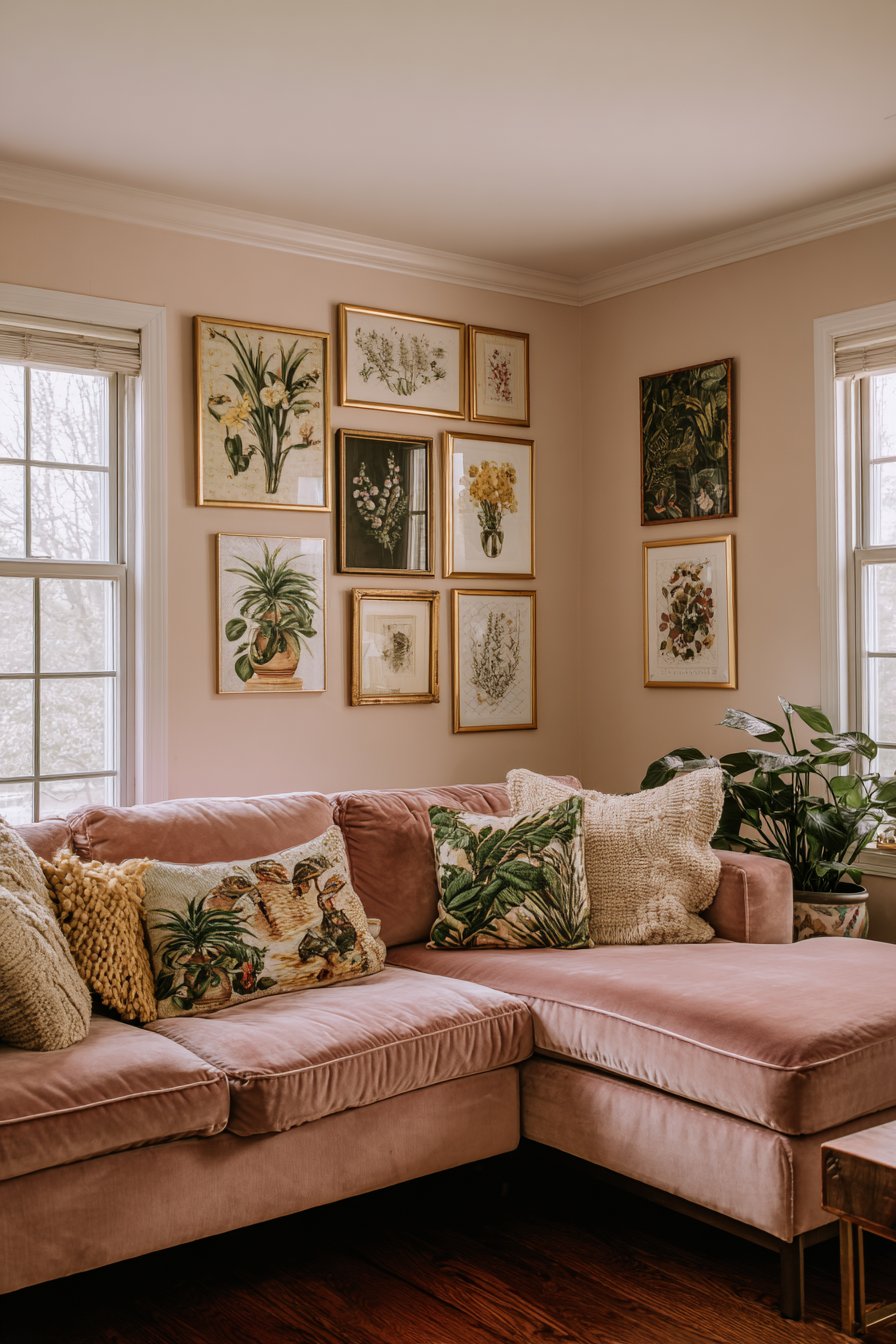
A salon-style gallery wall featuring 12-15 frames in varying sizes creates collected-over-time aesthetic that demonstrates sophisticated curation. The eclectic mix of family photos, vintage botanical prints, and abstract art arranged in balanced composition spanning 60×48 inches tells personal story while maintaining visual coherence. The coordinating gold and brass frame finishes provide unifying element that prevents the varied content from appearing disjointed.
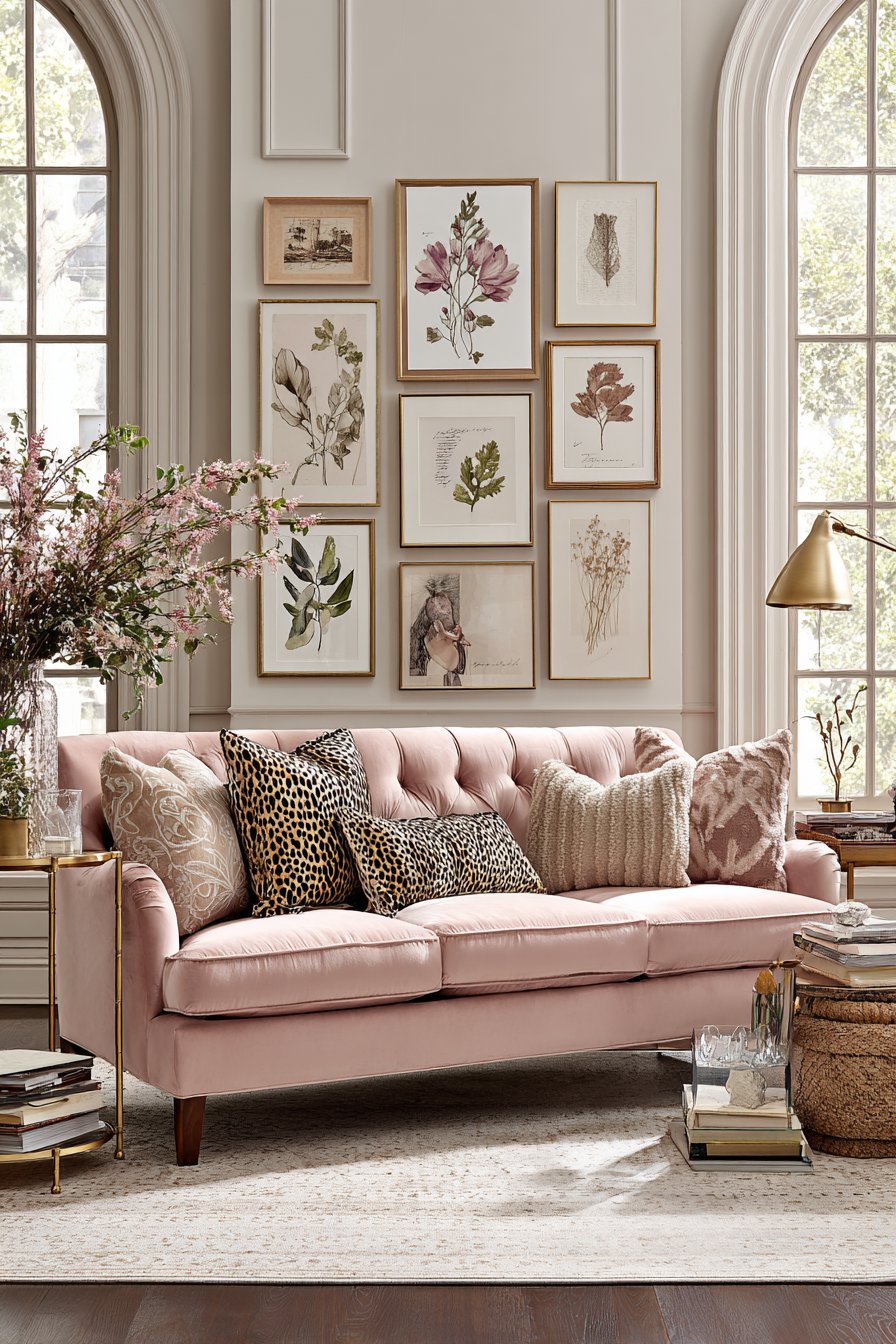
The traditional approach of salon-style hanging originated in 18th century European art salons where paintings covered walls from floor to ceiling. This modern interpretation adapts that historical precedent for residential scale, creating similar visual richness within comfortable viewing proportions. The key lies in planning the overall shape of the composition first—typically an oval or rectangular silhouette—then arranging individual frames within that boundary.
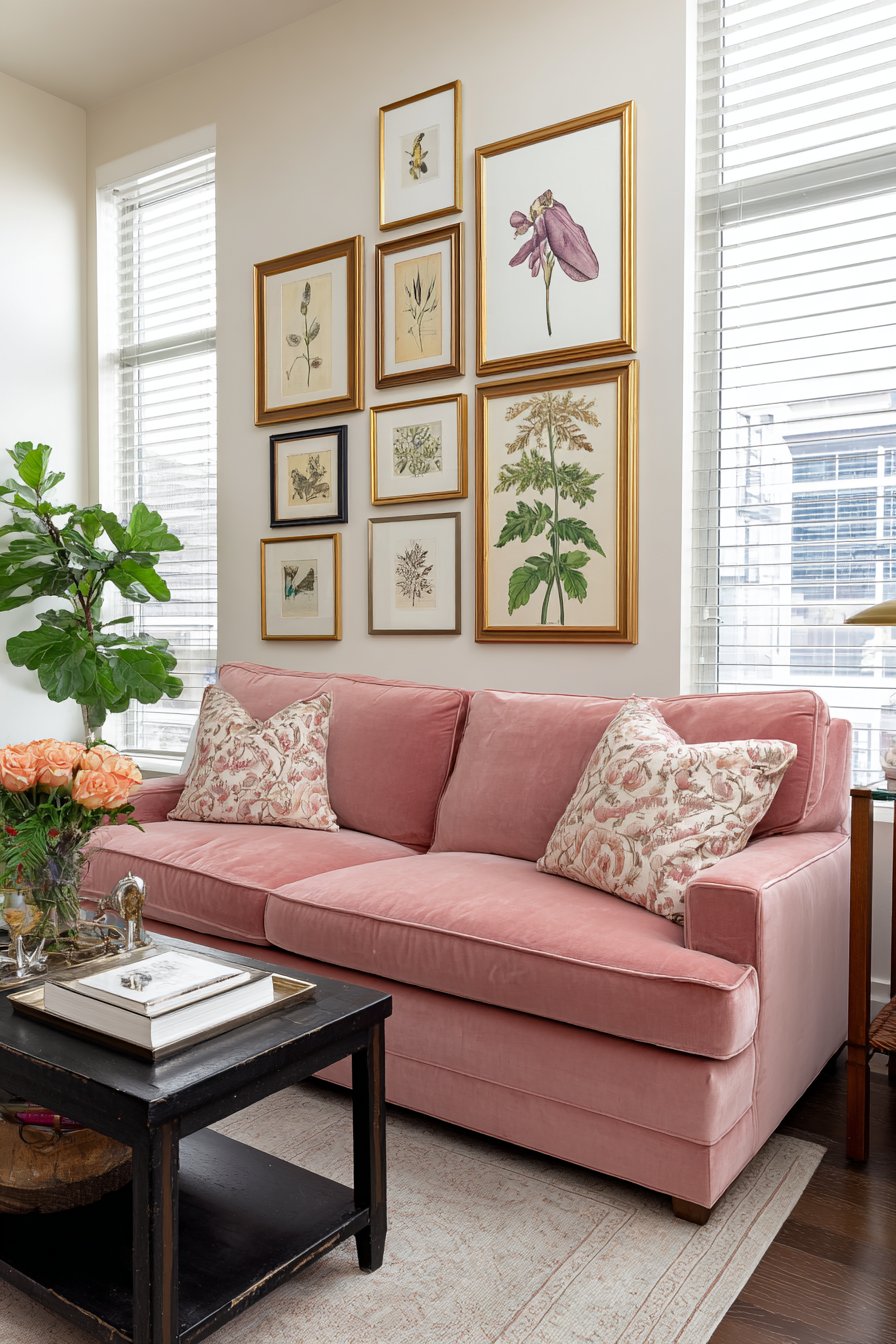
Positioned 8 inches above a blush pink velvet sofa, this display embodies elegant traditional design where personal history and artistic appreciation combine. The natural window light creates subtle reflections on glass and metal frames, adding sparkle and dimensional interest. This approach rewards time invested in thoughtful curation, as the collection can grow and evolve as new meaningful pieces are acquired, making the gallery wall a living document of your life and interests.
Key Design Tips:
- Create paper templates of all frames and arrange on floor before hanging
- Maintain consistent spacing between frames, typically 2-3 inches for salon-style arrangements
- Hang largest frames first as anchors, filling in with smaller pieces
- Keep outer edges of overall composition aligned for professional appearance
- Use coordinating frame finishes even if frame styles vary
- Include mix of orientations—vertical, horizontal, and square formats
- Install picture rail or gallery hanging system for easier adjustments
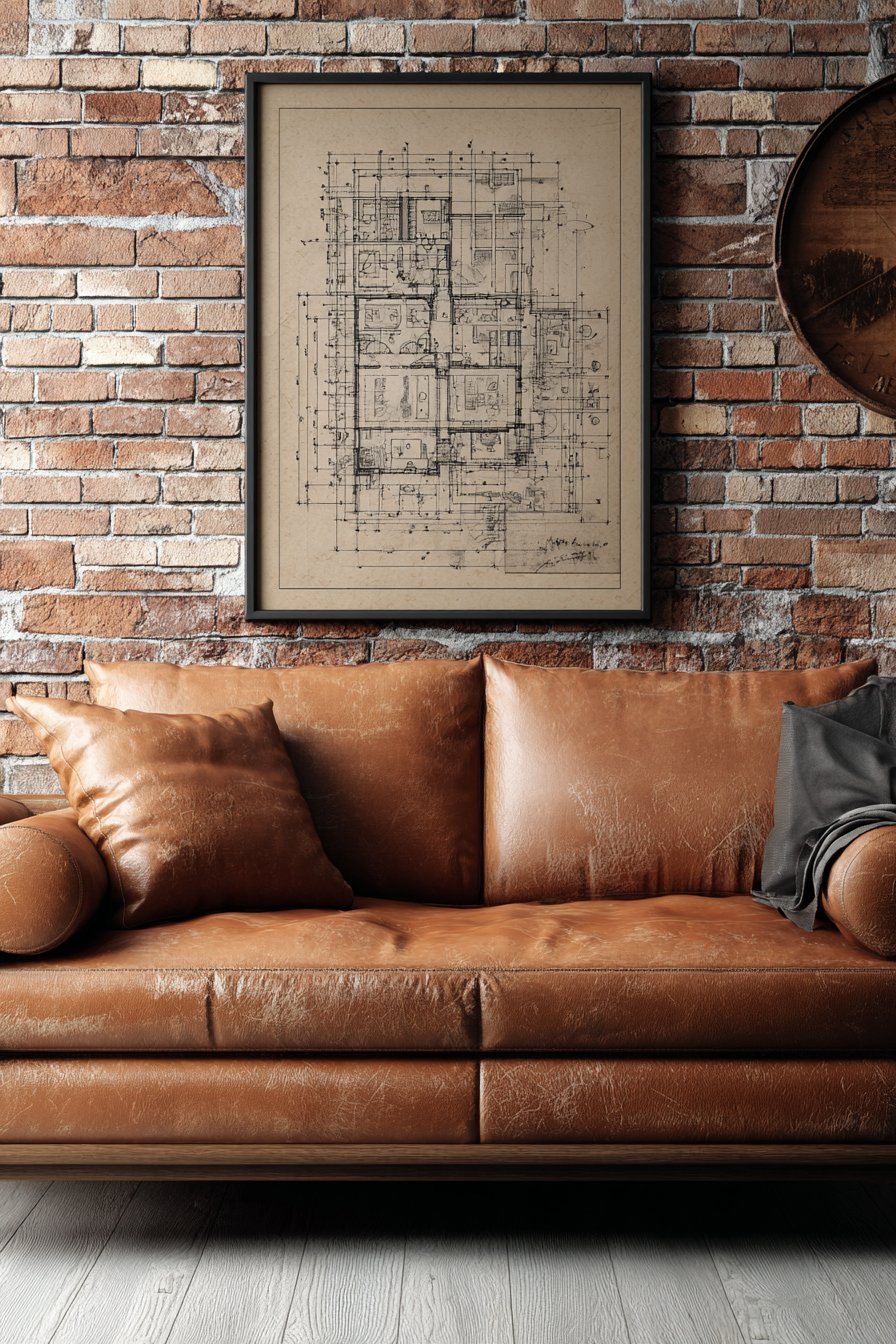
17. Industrial Architectural Blueprint
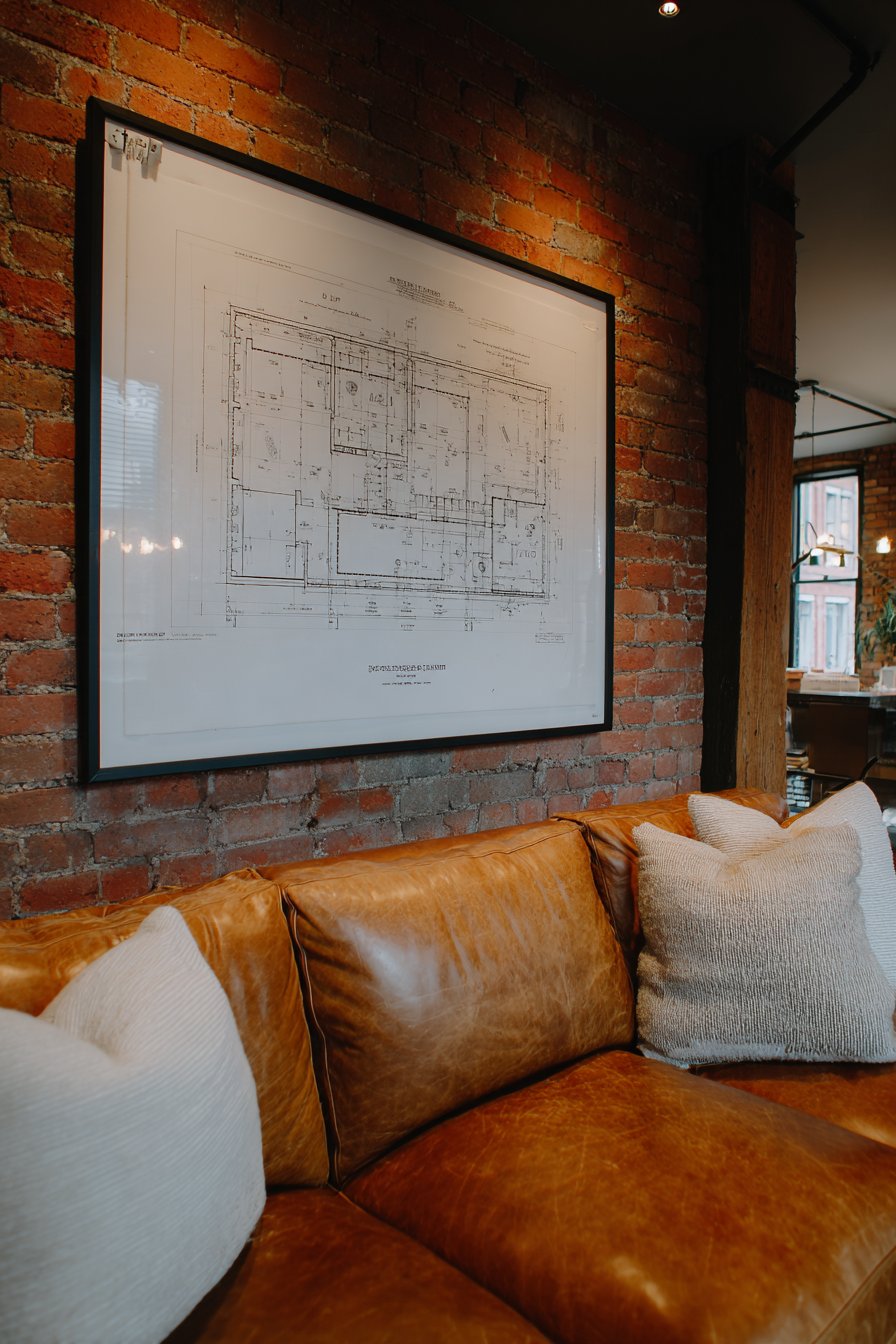
A large architectural drawing or blueprint print brings industrial sophistication and technical artistry to contemporary urban spaces. The black line work on aged paper measuring 48×36 inches celebrates design process and architectural thinking. The simple black metal frame allows the technical drawing to command attention without distraction, while the aged paper quality suggests historical significance and authentic documentation.
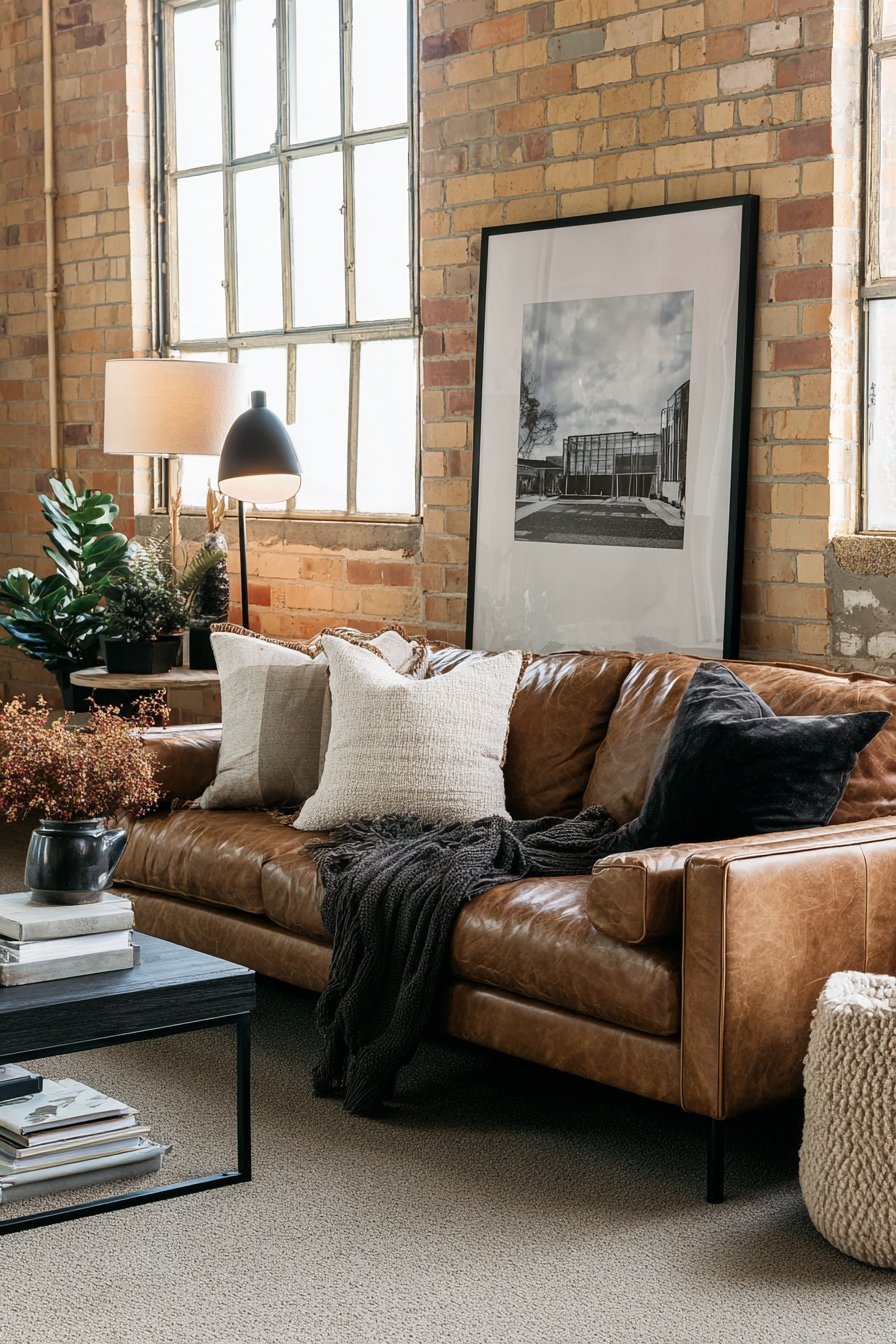
Positioned 10 inches above a cognac leather sofa with visible grain texture, this arrangement creates cohesive material story of aged leather and vintage paper that both improve with time. The exposed brick accent wall visible in the surrounding space reinforces the urban loft aesthetic where industrial elements and raw materials celebrate building structure rather than concealing it. This design approach originated in converted warehouse and factory spaces where architectural bones became celebrated features.
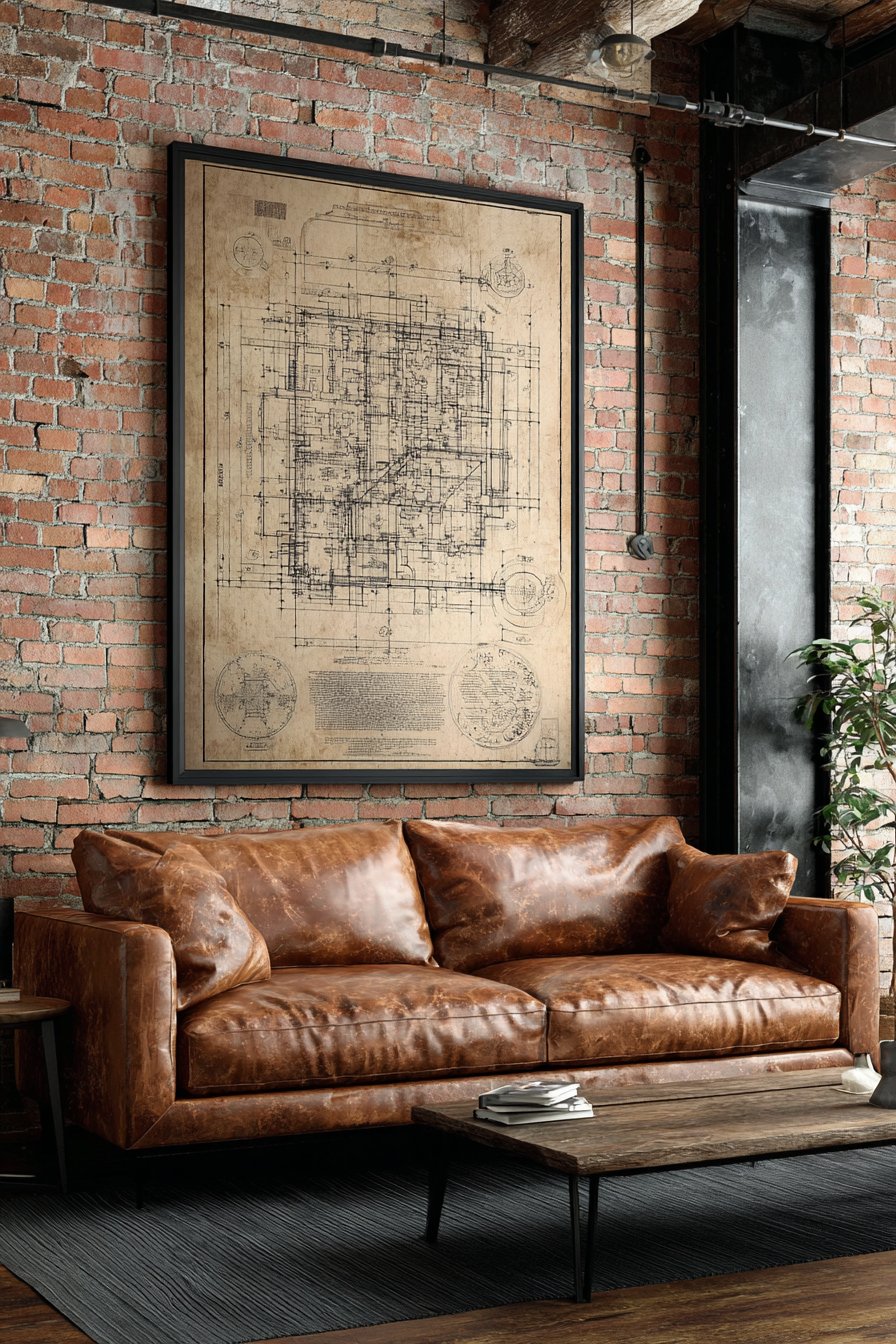
The technical nature of architectural drawings appeals to those who appreciate design process, precision, and the intersection of art and engineering. These documents tell stories about buildings’ creation while demonstrating mathematical beauty in technical rendering. For architects, engineers, or design enthusiasts, displaying blueprints represents professional pride and intellectual interest that transforms wall decoration into personal expression.
Key Design Tips:
- Source authentic vintage blueprints for historical character and unique designs
- Frame behind glass to protect delicate aged paper from handling and environmental damage
- Choose simple frames that don’t compete with the technical drawing’s complexity
- Pair with industrial materials like exposed brick, concrete, or metal for cohesive aesthetic
- Consider the building or project’s significance when selecting blueprints
- Position in spaces with controlled lighting to prevent further paper aging
- Complement with other technical drawings or vintage engineering documents
18. Living Vertical Garden Wall
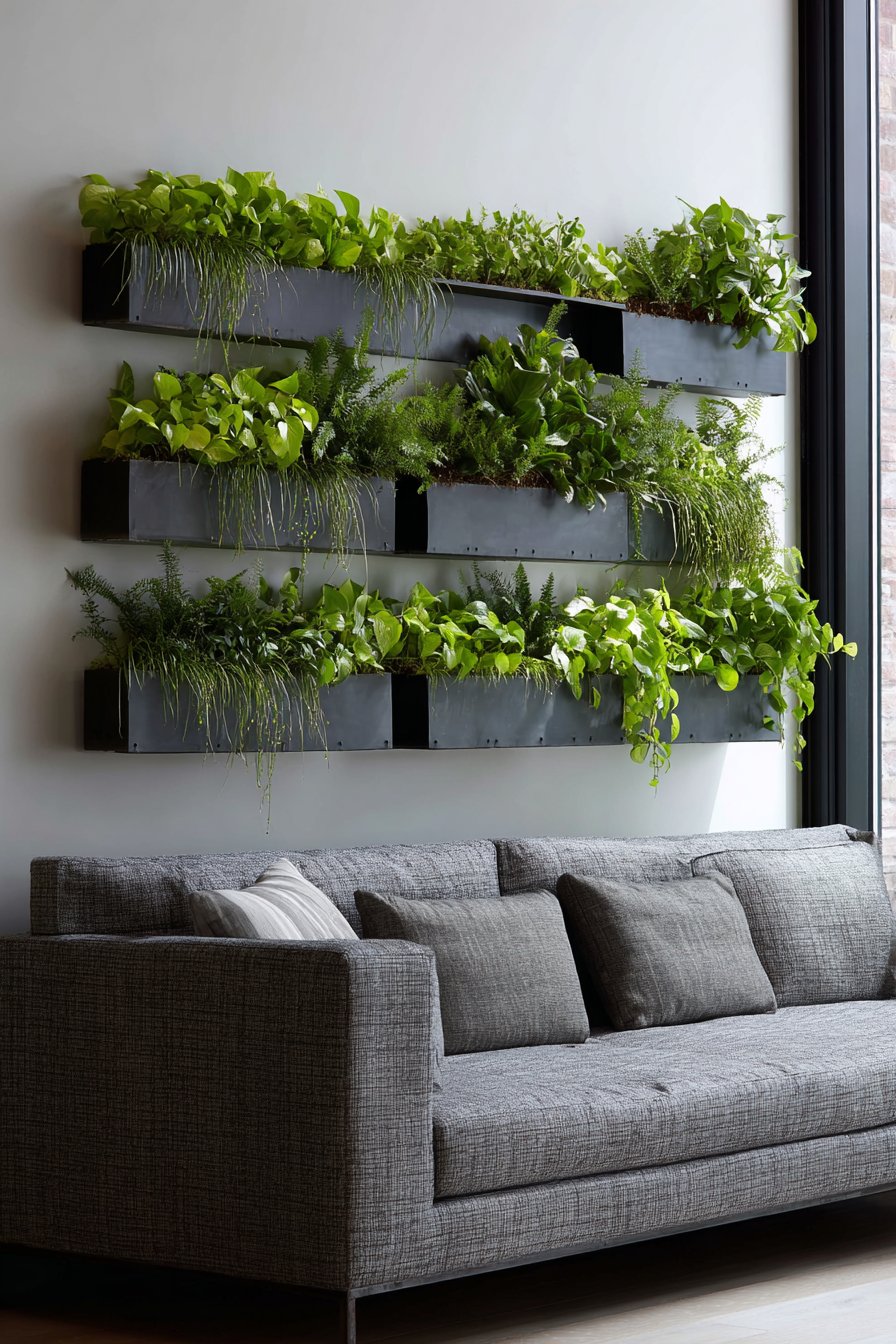
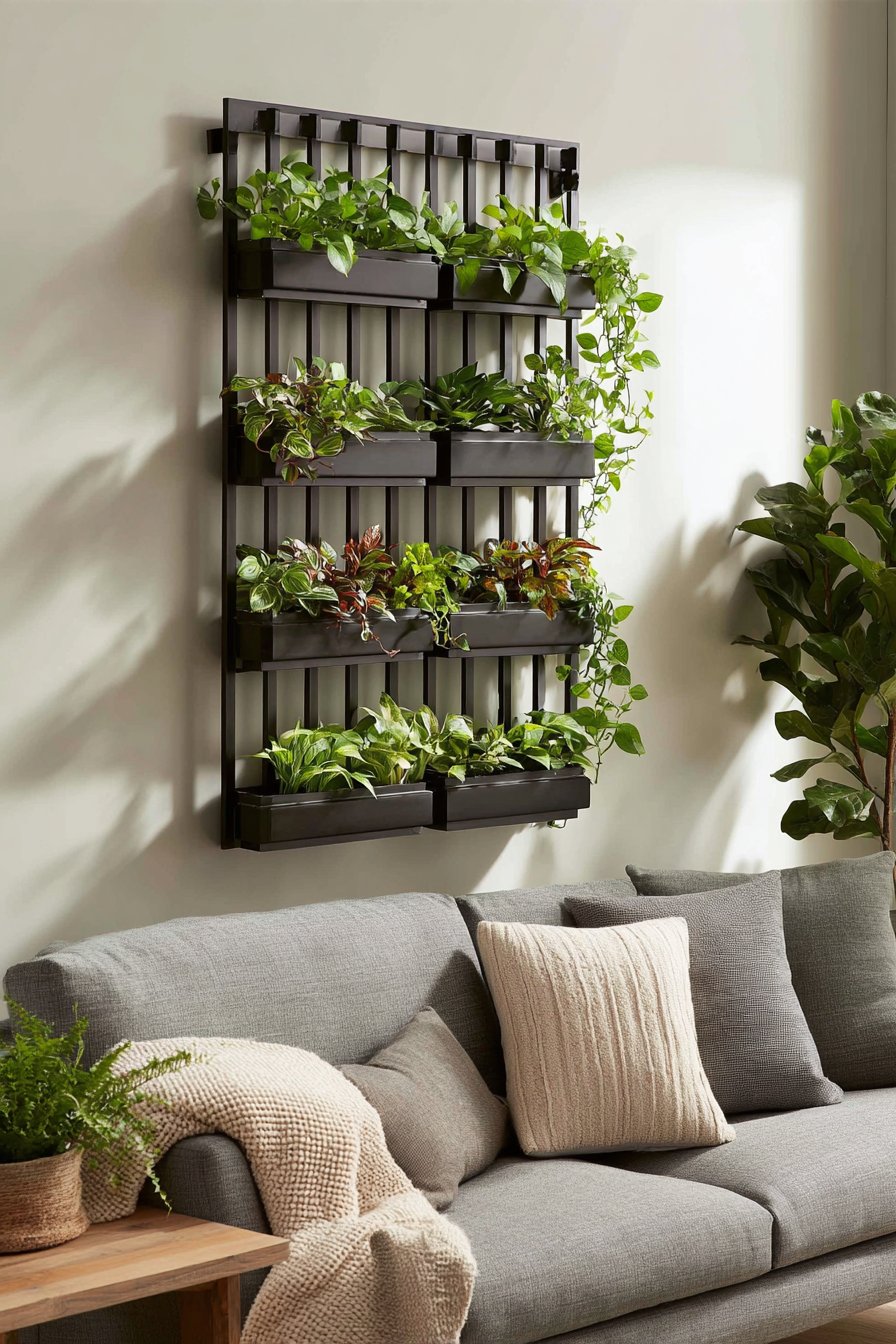
A vertical garden system with mounted planters creates living wall feature that brings biophilic design principles to contemporary living spaces. The matte black metal planters arranged in staggered pattern across 36 inches wide and 48 inches tall transform wall space into thriving ecosystem. The trailing pothos, philodendrons, and ferns create organic movement and natural beauty that no static artwork can replicate.
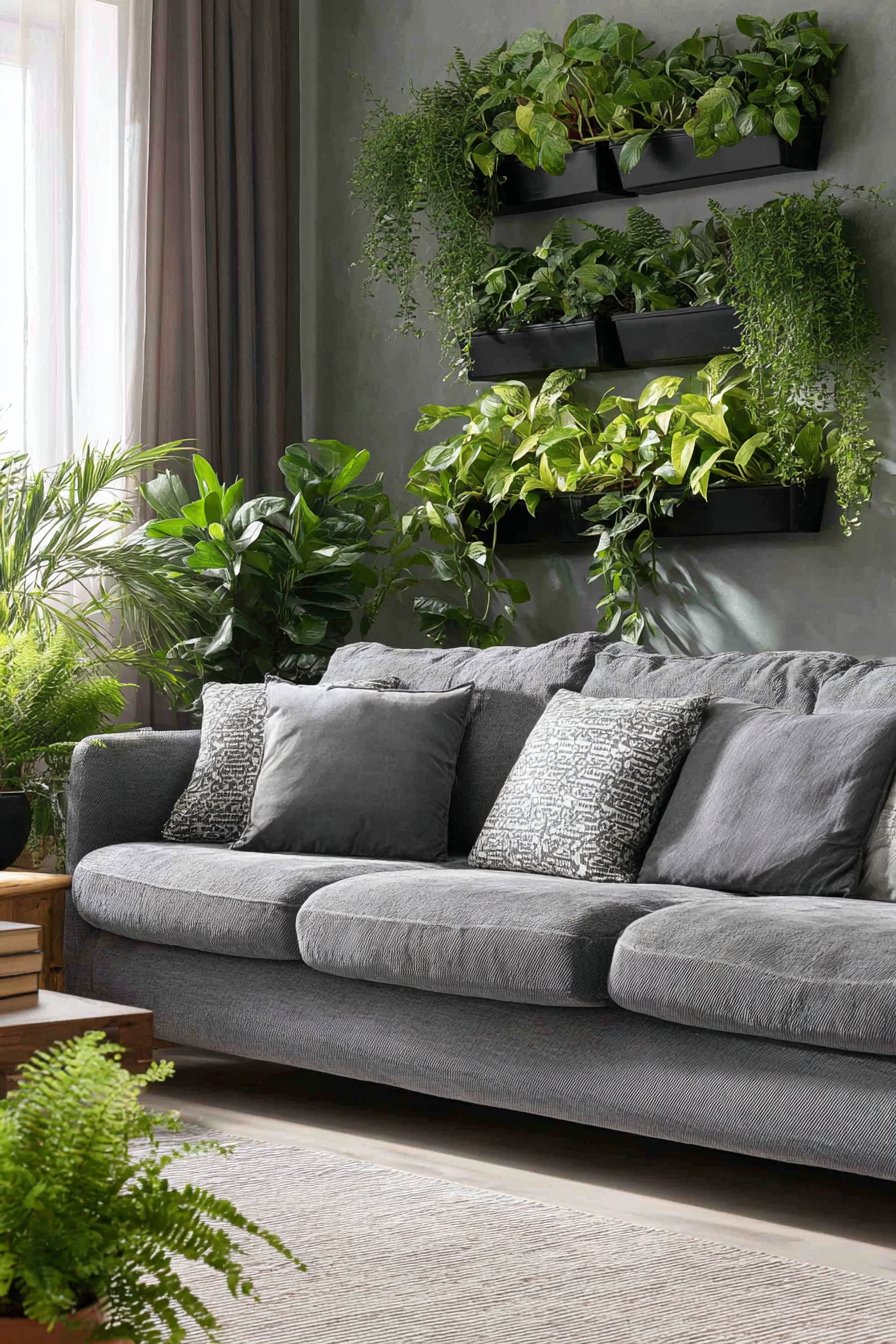
The living nature of this installation means it evolves continuously as plants grow, creating ever-changing composition. Natural moisture and organic growth patterns add authentic life to the space, improving air quality while providing daily connection to nature. Positioned 12 inches above a grey linen sofa, the vertical garden creates dramatic focal point while the neutral upholstery prevents visual competition with the varied green tones.
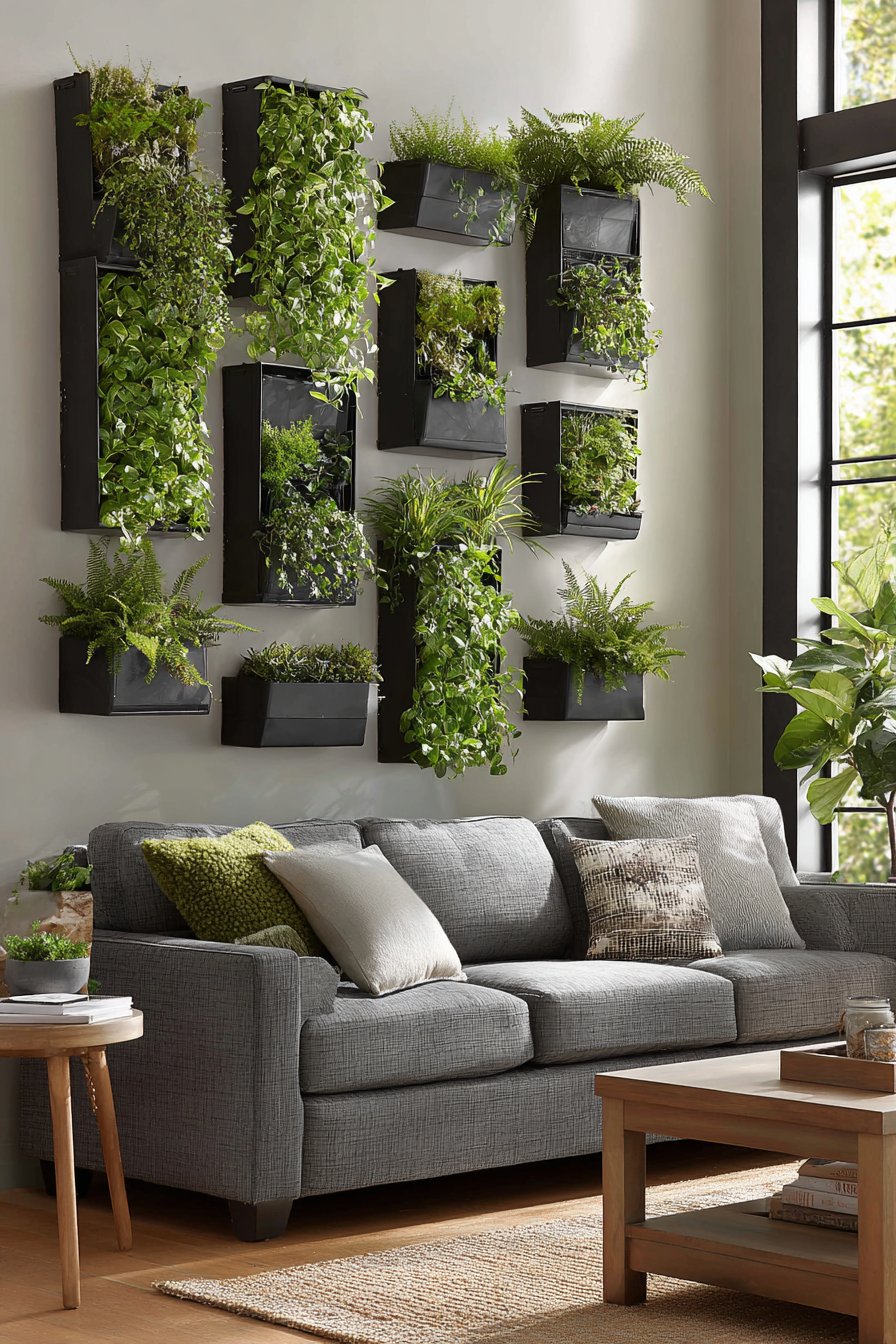
This biophilic approach responds to growing understanding of nature’s positive psychological impacts in interior environments. Studies consistently demonstrate that indoor plants reduce stress, improve concentration, and enhance overall well-being. The vertical orientation makes efficient use of wall space while accommodating substantial plant collection without sacrificing floor area—particularly valuable in compact urban living spaces where every square foot counts.
Key Design Tips:
- Choose low-light tolerant plants if wall doesn’t receive direct sunlight
- Install waterproof backing or drainage system to protect walls from moisture damage
- Select planters with proper drainage holes and saucers to prevent water damage
- Position within comfortable reach for watering and maintenance
- Start with smaller plants that will grow to fill the space over time
- Consider automated drip irrigation for low-maintenance watering
- Group plants with similar light and water requirements together
19. Minimalist Single Line Art
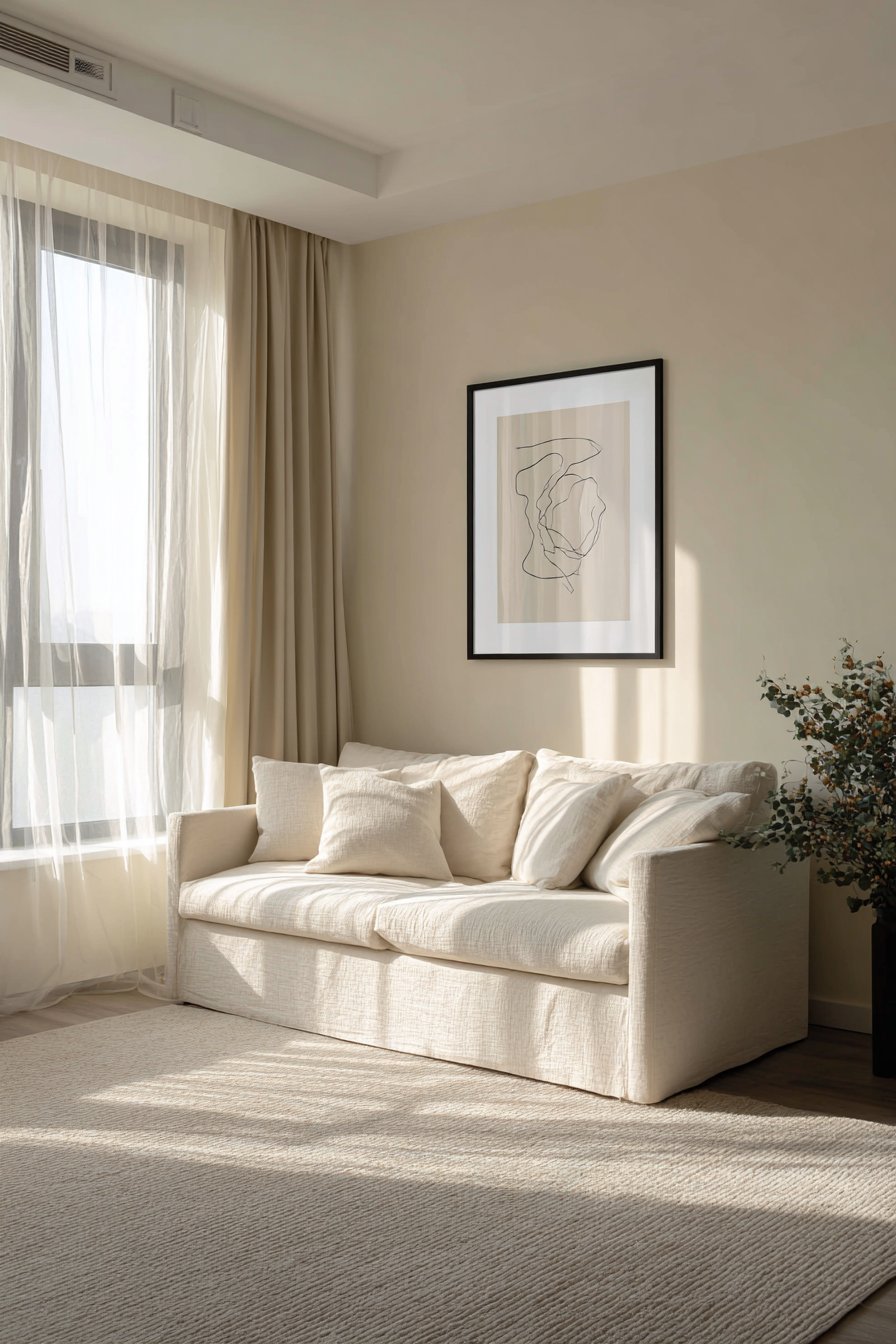
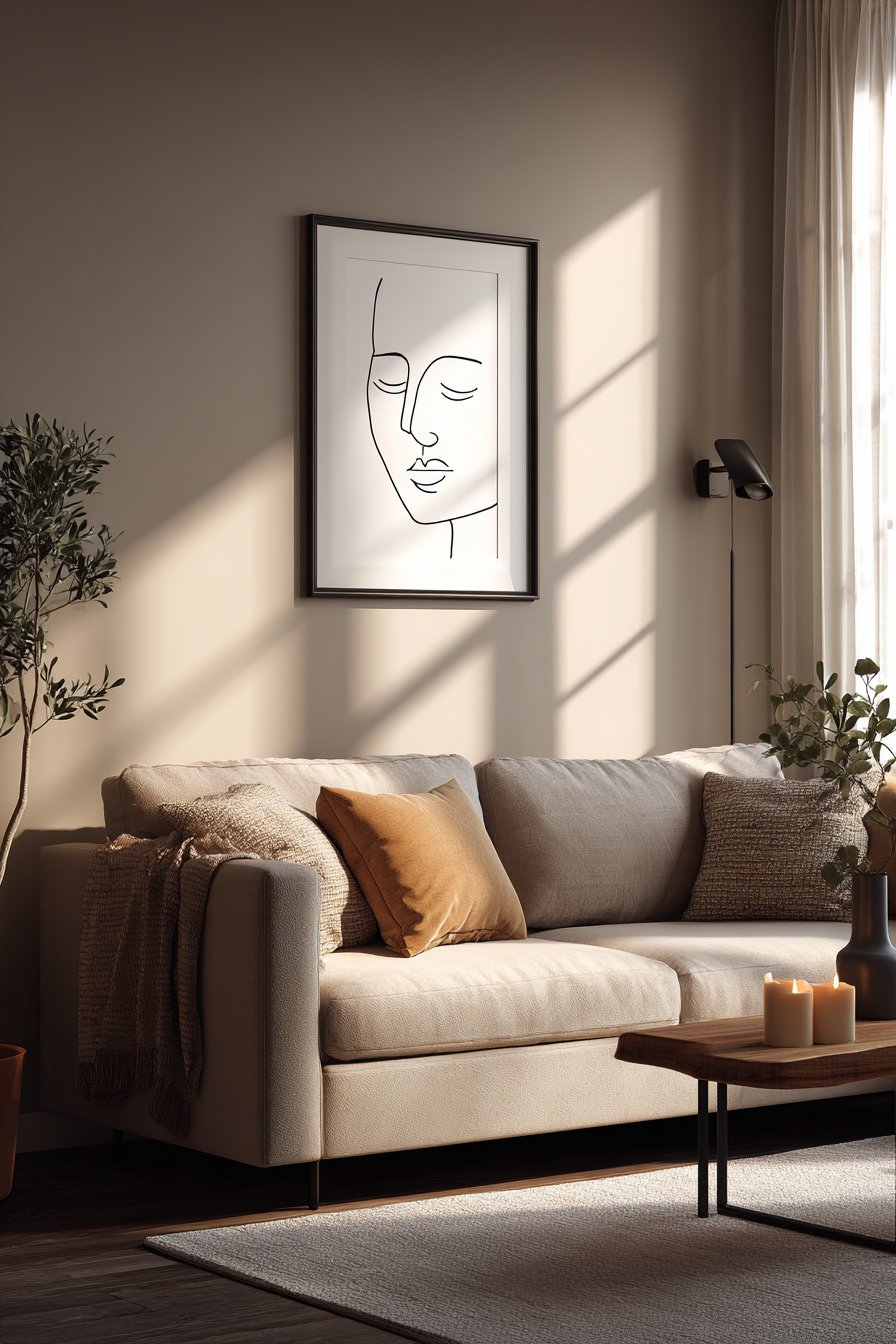
A minimalist line art piece featuring single continuous black line creates sophisticated focal point through ultimate economy of expression. The abstract figure drawing professionally framed in thin black wood measuring 40×30 inches demonstrates how restraint and negative space can create powerful visual impact. This approach exemplifies Scandinavian-minimalist philosophy where every element serves purpose and excess is carefully edited away.
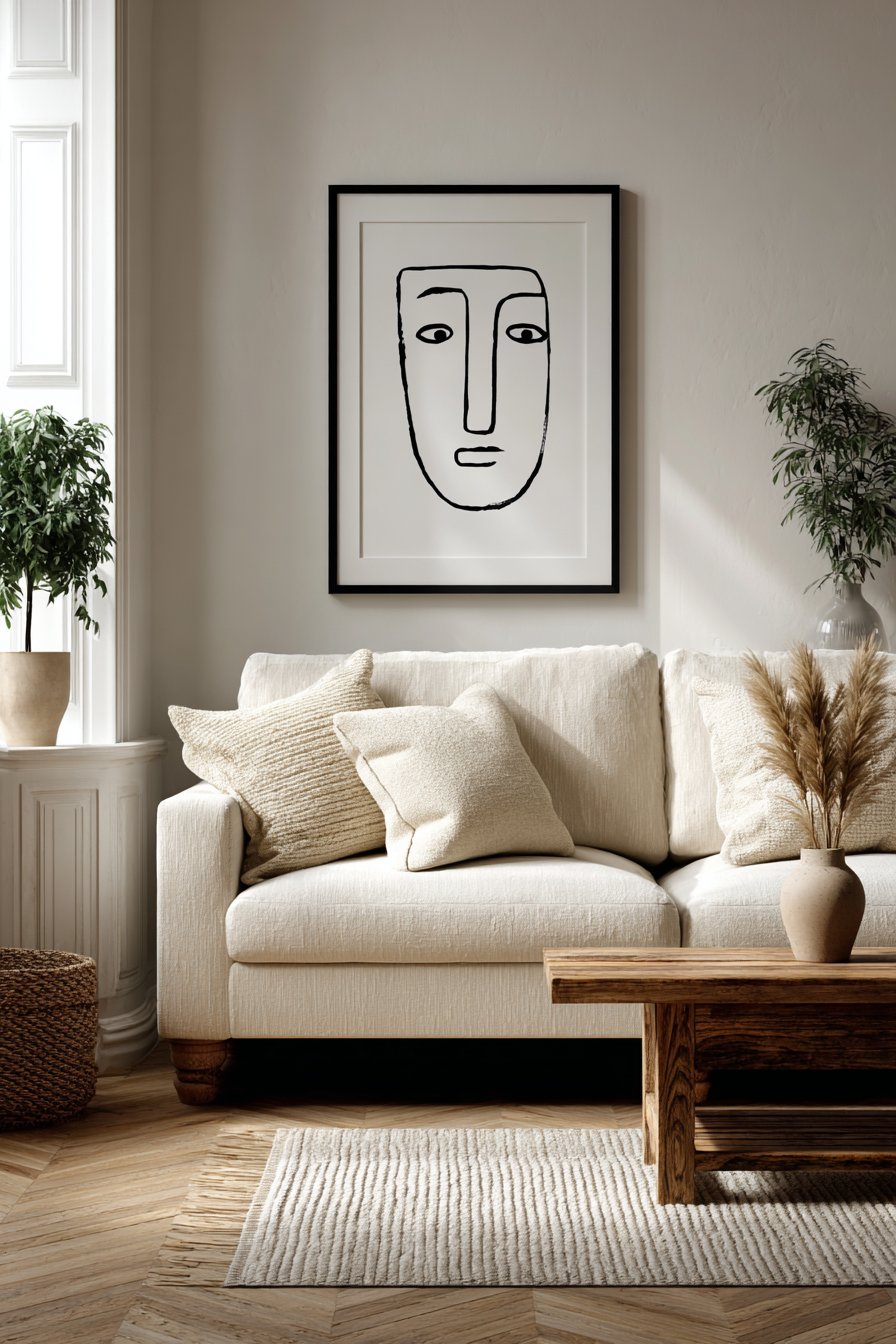
The simple composition creates breathing room for the mind, avoiding visual clutter that can feel overwhelming in busy modern life. Centered 9 inches above a cream-colored sofa with clean modern lines, the artwork reinforces the room’s commitment to minimal aesthetic while adding personality through artistic expression. The balanced interior lighting with natural daylight creates even exposure that showcases the artwork’s elegant simplicity.
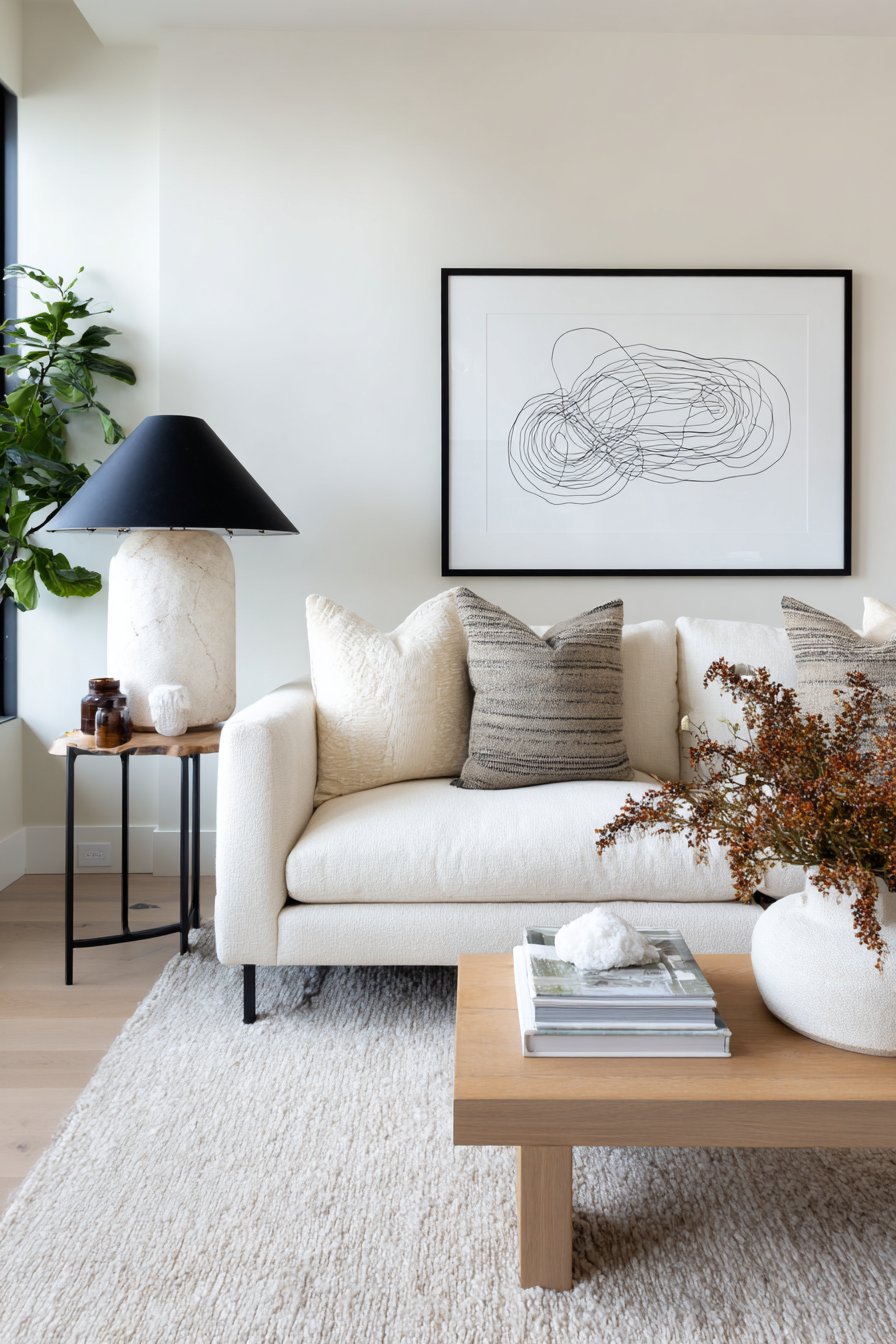
This style of art originated in the single-line drawing tradition where artists challenge themselves to create recognizable forms without lifting pen from paper. The resulting images possess fluid grace and essential character, reducing subjects to their most fundamental elements. For those who appreciate contemporary art and minimal living, these pieces provide sophisticated decoration that enhances rather than dominates living spaces.
Key Design Tips:
- Choose single-line art with skilled draftsmanship showing fluid, confident lines
- Frame simply in thin profiles that don’t overwhelm the delicate artwork
- Position against light backgrounds to maximize contrast and visibility
- Maintain generous white space around artwork within the frame
- Ensure print quality is excellent as minimal art shows every imperfection
- Select subject matter that resonates personally for meaningful decoration
- Pair with equally minimal furniture and decor for cohesive aesthetic
20. Repurposed Window Frame Charm
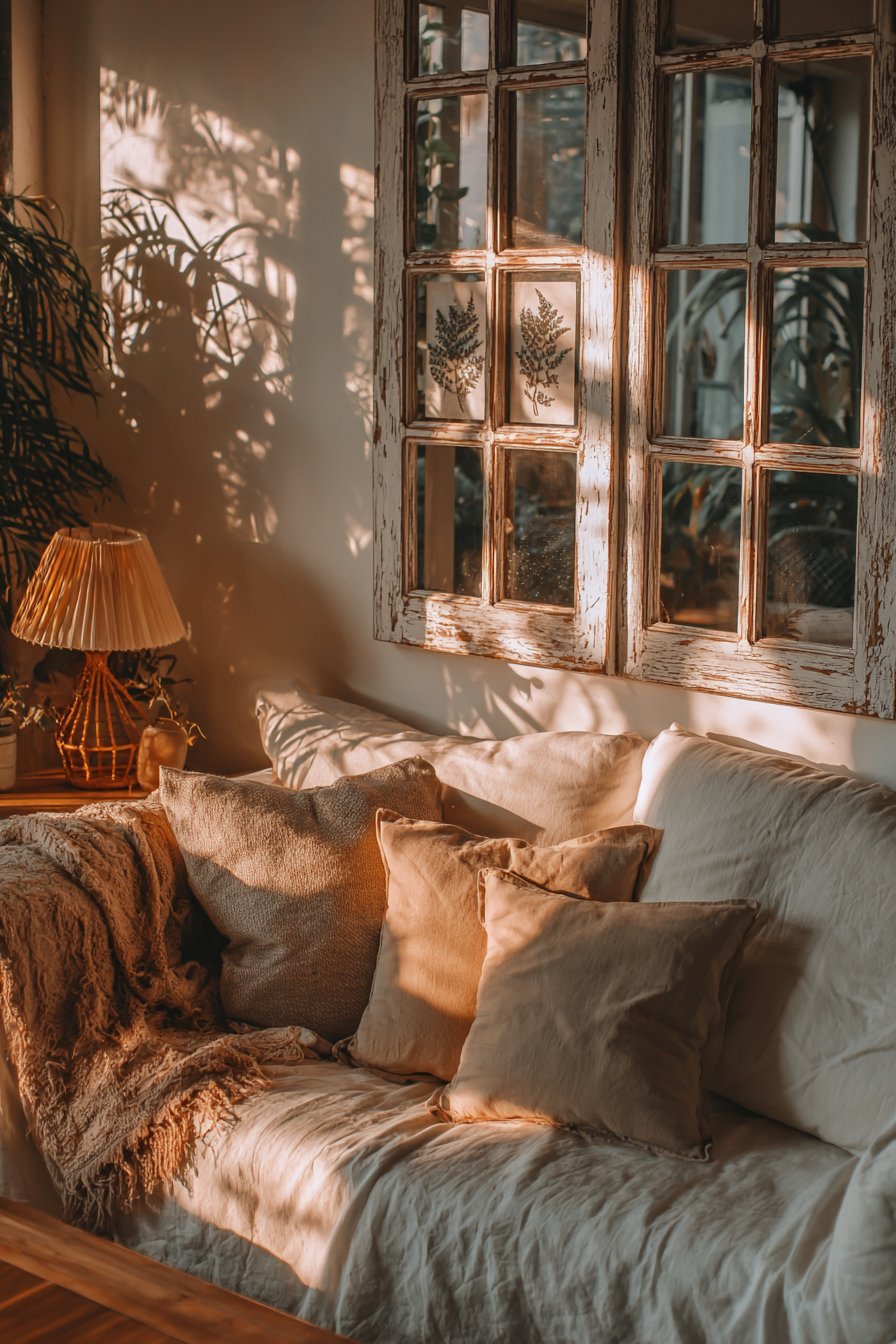
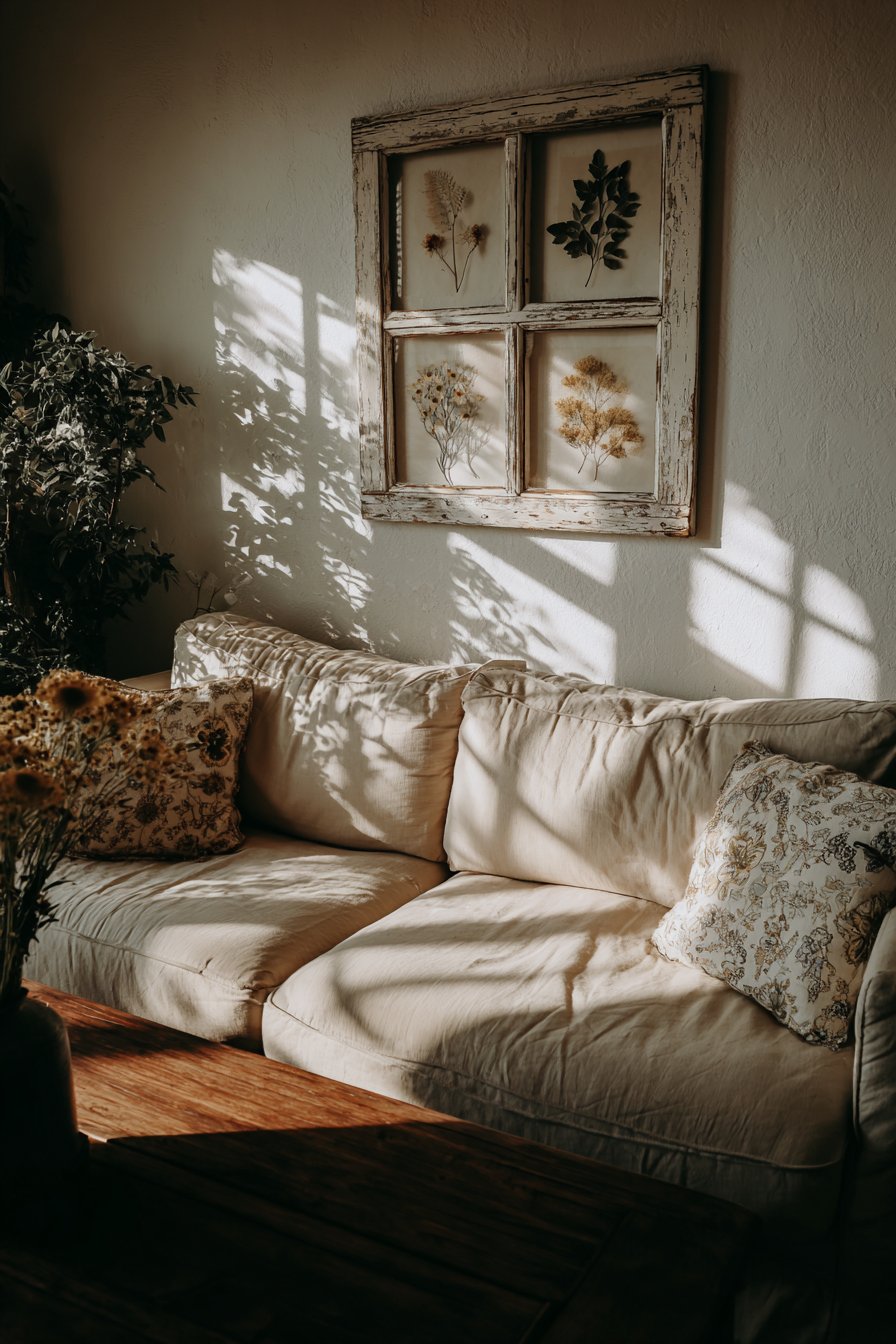
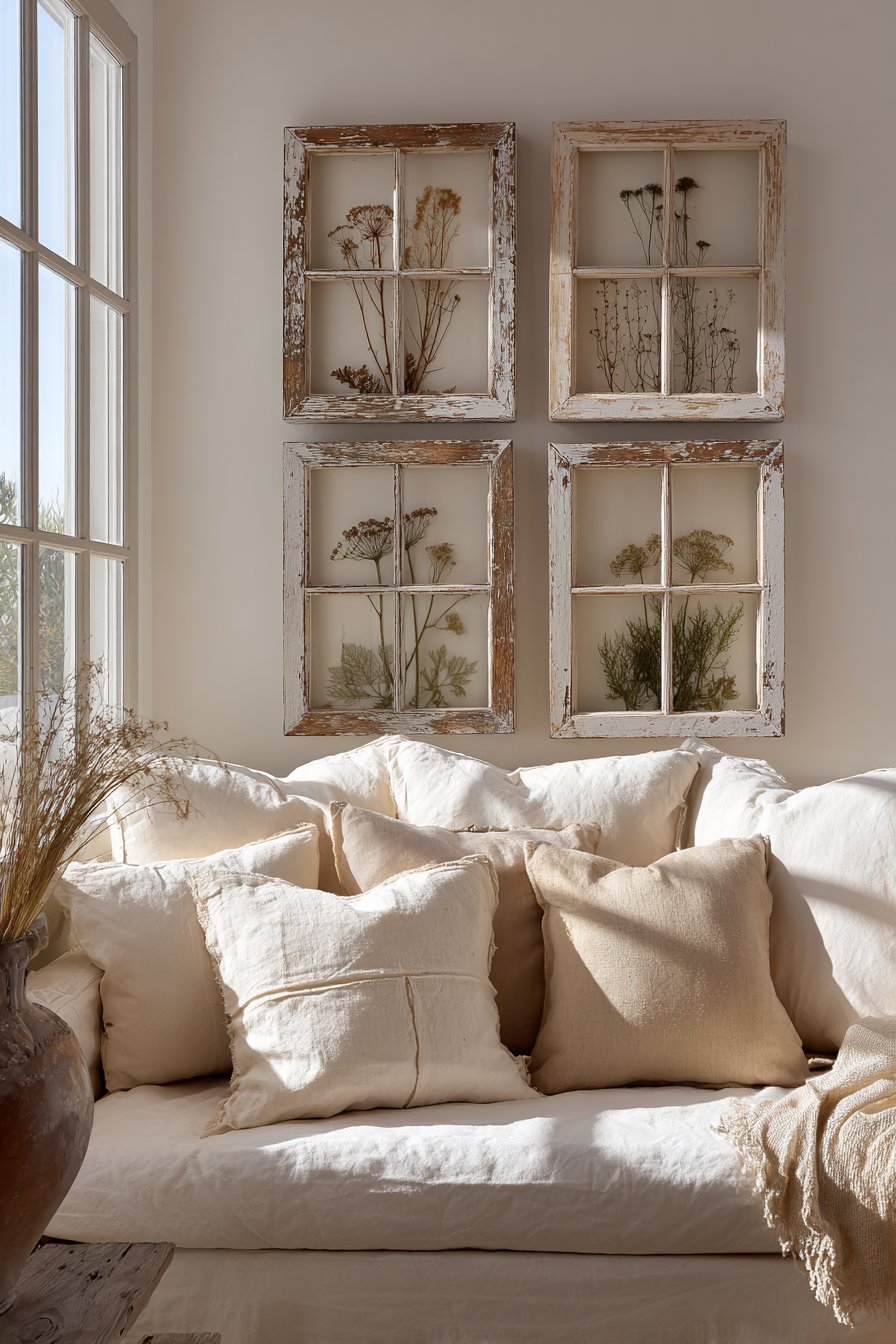
A rustic window frame repurposed as wall decor celebrates sustainable design and architectural salvage. The 36×48-inch vintage frame with original weathered white paint and authentic patina tells story of previous life while finding new purpose as decorative element. The four panes containing pressed botanical specimens under glass transform the salvaged window into curated display that bridges past and present.
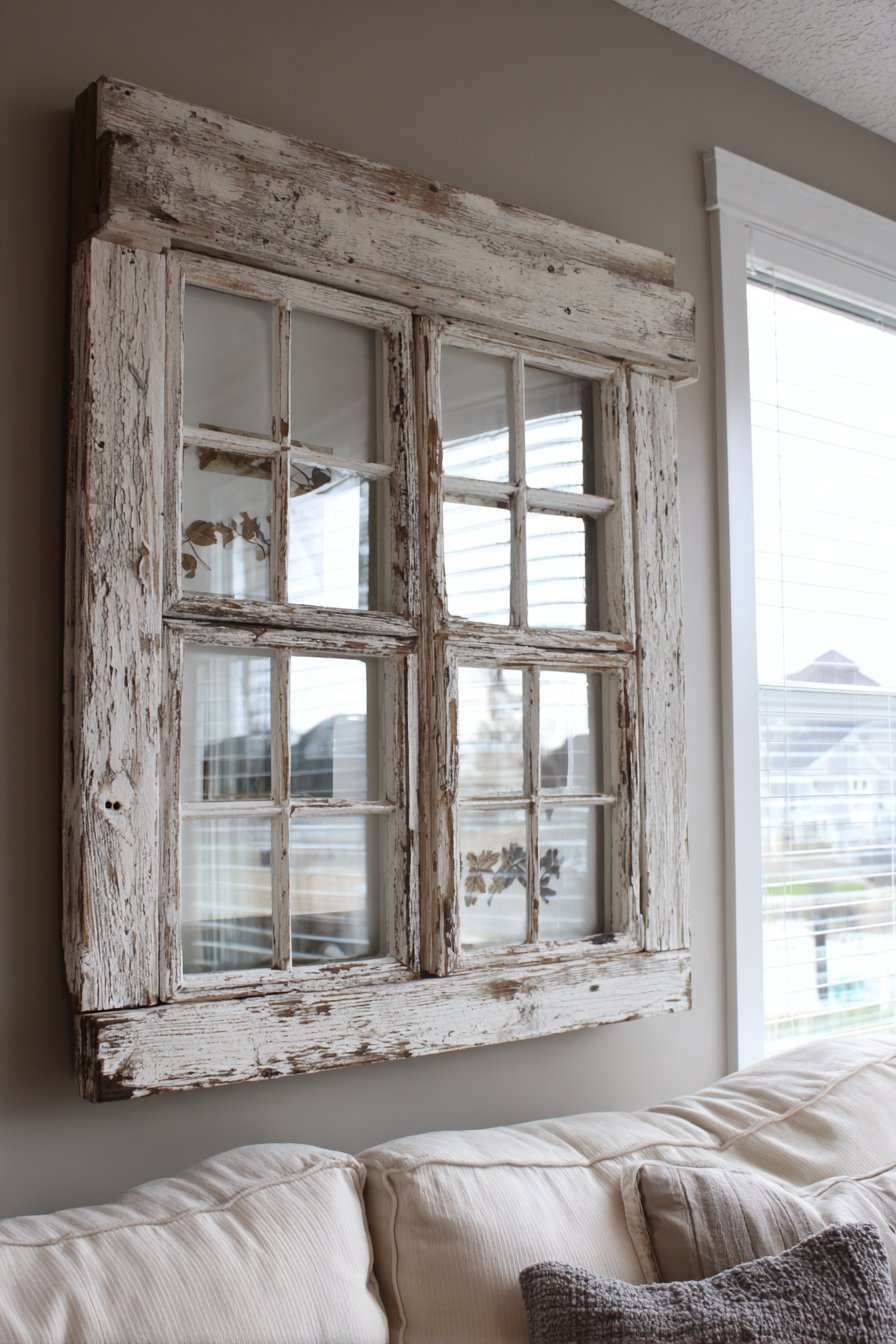
Positioned 10 inches above a farmhouse-style sofa in natural linen, this arrangement embodies shabby-chic aesthetic where imperfection adds character and authenticity matters more than pristine condition. The soft natural lighting creates shadows through the window frame structure, adding dimensional interest that changes throughout the day. The pressed botanicals provide nature-inspired decoration that references traditional herbarium displays and botanical study.
This upcycled approach appeals to environmentally conscious homeowners who appreciate giving discarded materials new life. Architectural salvage yards, demolition sites, and renovation projects provide sources for authentic vintage windows with character impossible to replicate in new construction. The sustainability aspect adds meaningful story to your decor—each salvaged window saved from landfill while adding unique beauty to your home.
Key Design Tips:
- Clean and stabilize vintage frames while preserving authentic patina and character
- Replace cracked or missing glass panes before hanging for safety
- Seal weathered wood to prevent further deterioration while maintaining aged appearance
- Display pressed flowers, family photos, or meaningful ephemera behind glass
- Ensure secure mounting as vintage windows can be surprisingly heavy
- Coordinate frame color with other painted furniture or architectural elements
- Source windows with interesting details like divided lights or decorative muntins
21. Contemporary Geometric Wall Panel
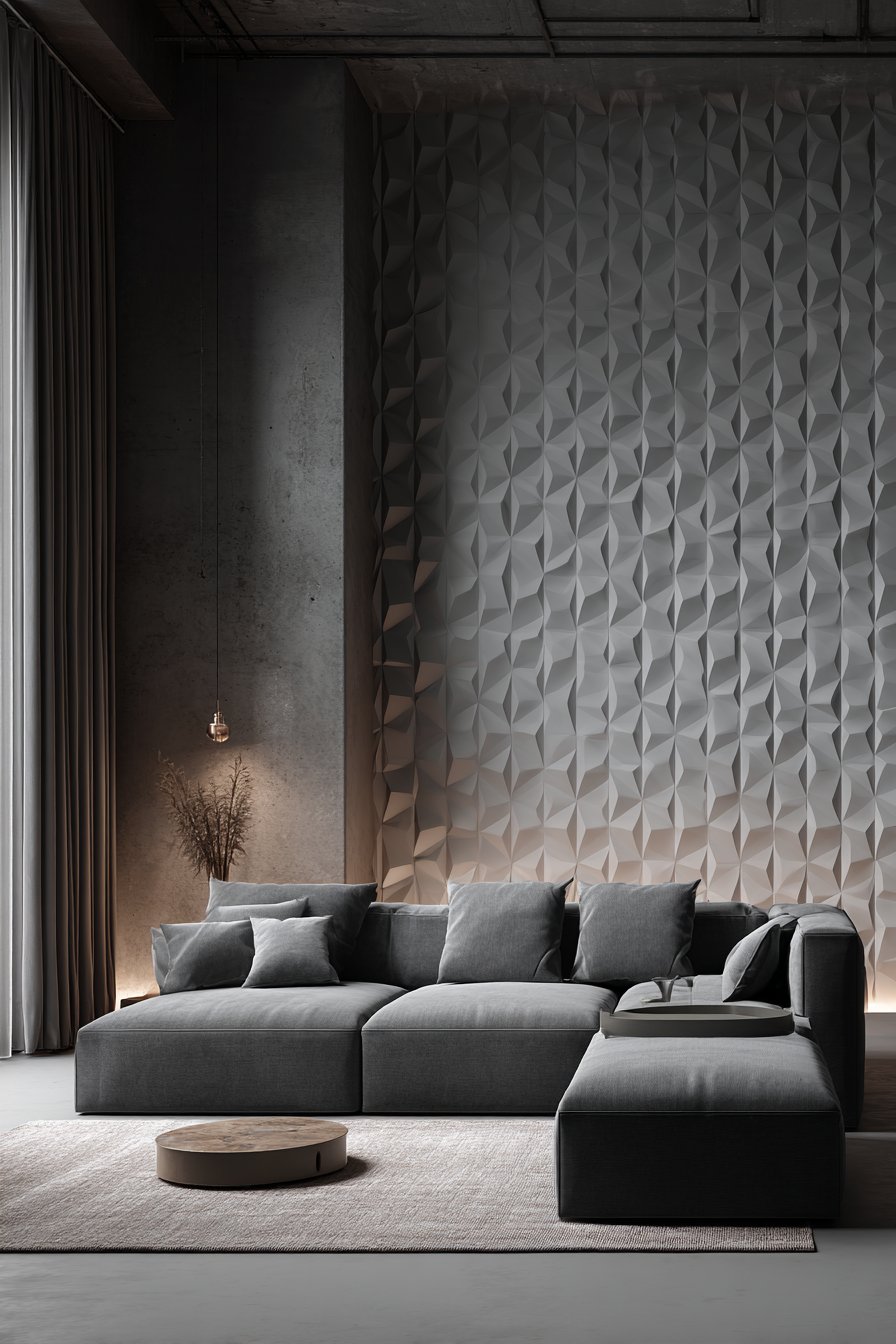
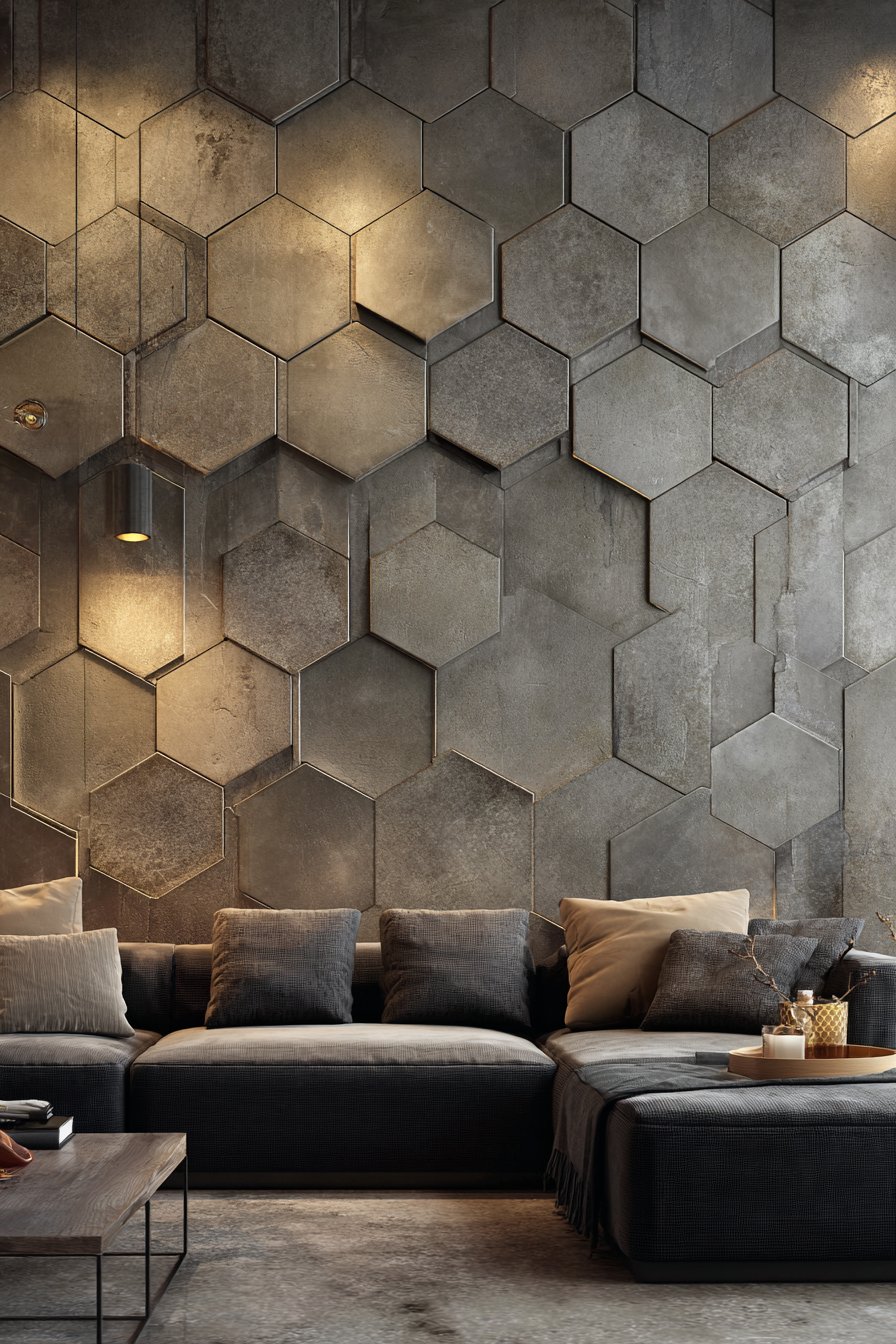
A three-dimensional hexagonal wall panel system creates textured accent feature that adds architectural interest through material innovation. The modular panels in gradient grey tones spanning 54×36 inches demonstrate contemporary approach to wall decoration where texture and dimension take precedence over traditional imagery. The matte finish prevents glare while the dimensional relief creates constantly changing shadow patterns.
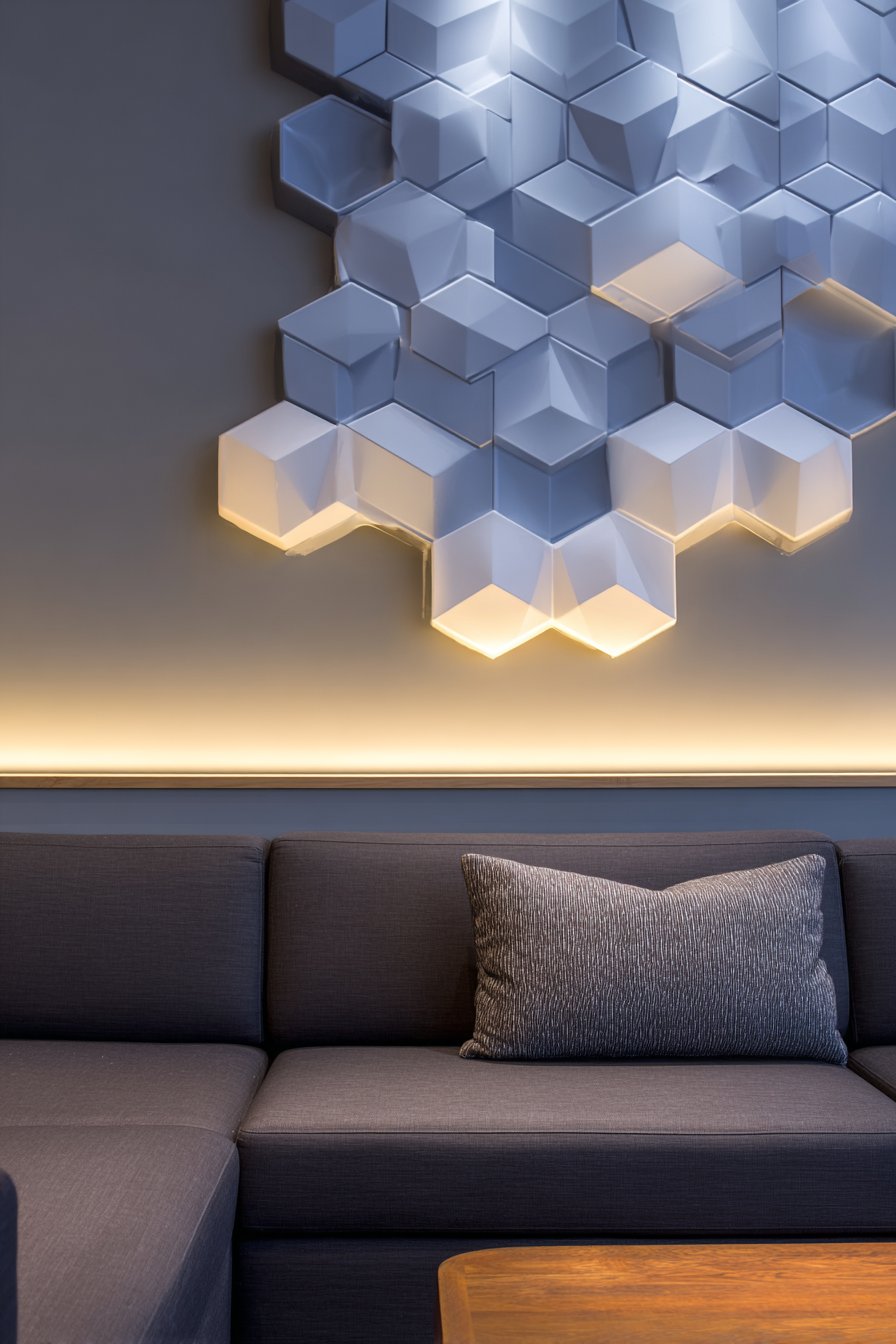
Mounted 8 inches above a charcoal sectional sofa, this installation demonstrates how textured wall treatments add visual interest in minimalist contemporary living rooms where color palettes remain neutral. Directional lighting emphasizes the dimensional relief and subtle color variations, transforming what could be monotonous grey into dynamic surface with depth. The architectural quality elevates this beyond mere decoration into permanent room feature.
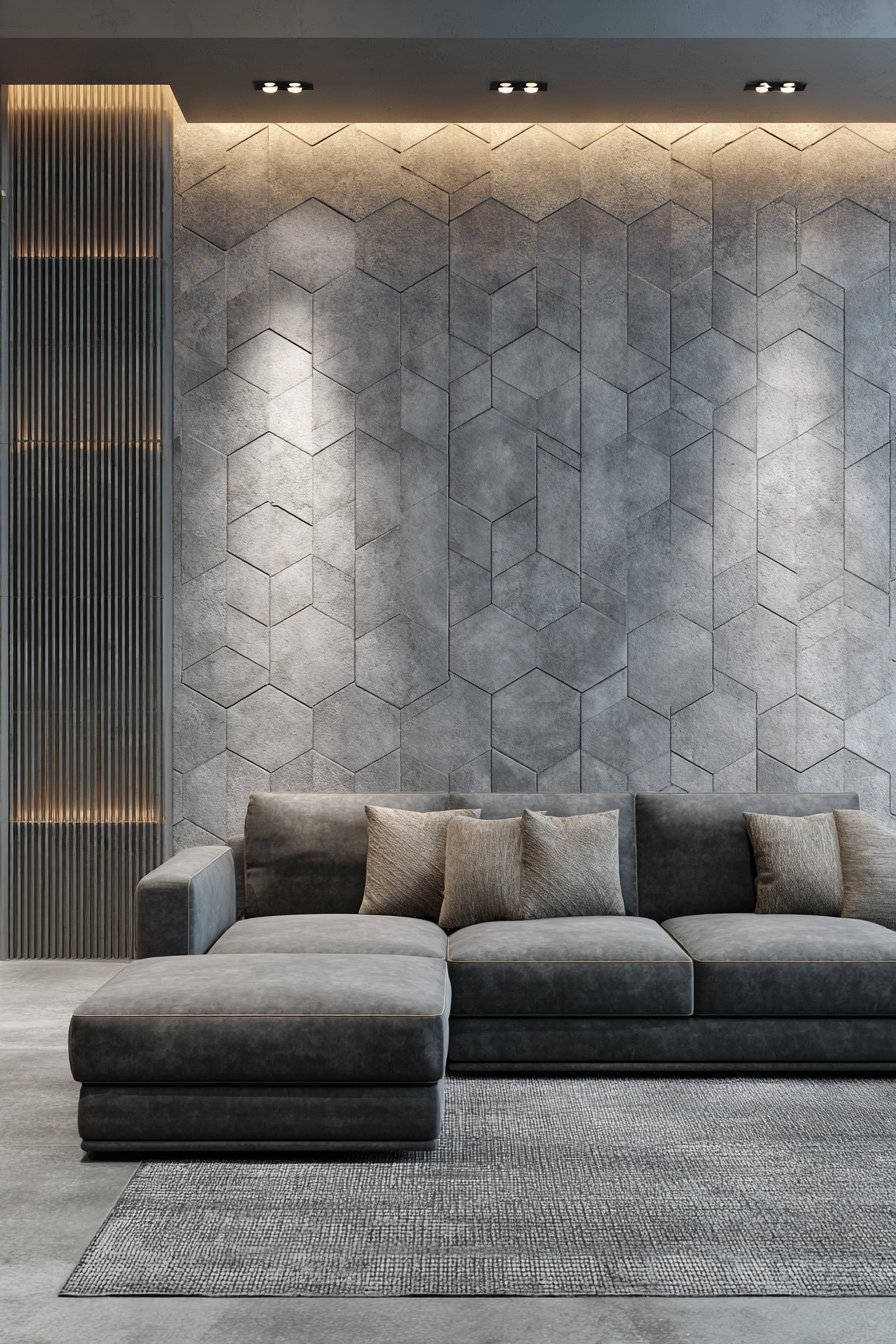
The modular nature of hexagonal tiles allows for customizable arrangements and easy future modifications. If damage occurs or design preferences evolve, individual tiles can be replaced or rearranged without redoing the entire installation. This flexibility combined with contemporary aesthetics makes panel systems popular in modern homes where homeowners want permanent installations with some inherent adaptability.
Key Design Tips:
- Plan panel arrangement carefully before installation—modular systems require geometric precision
- Use adhesive systems rated for the panel weight and compatible with wall surface
- Create gradient effects by arranging tiles from light to dark tones
- Install directional lighting to maximize dimensional shadow effects
- Ensure wall surface is perfectly smooth for proper panel adhesion
- Consider acoustic properties if panels include sound-dampening features
- Limit panel coverage to focal wall area—full room coverage can feel overwhelming
22. Bold Color Block Abstracts
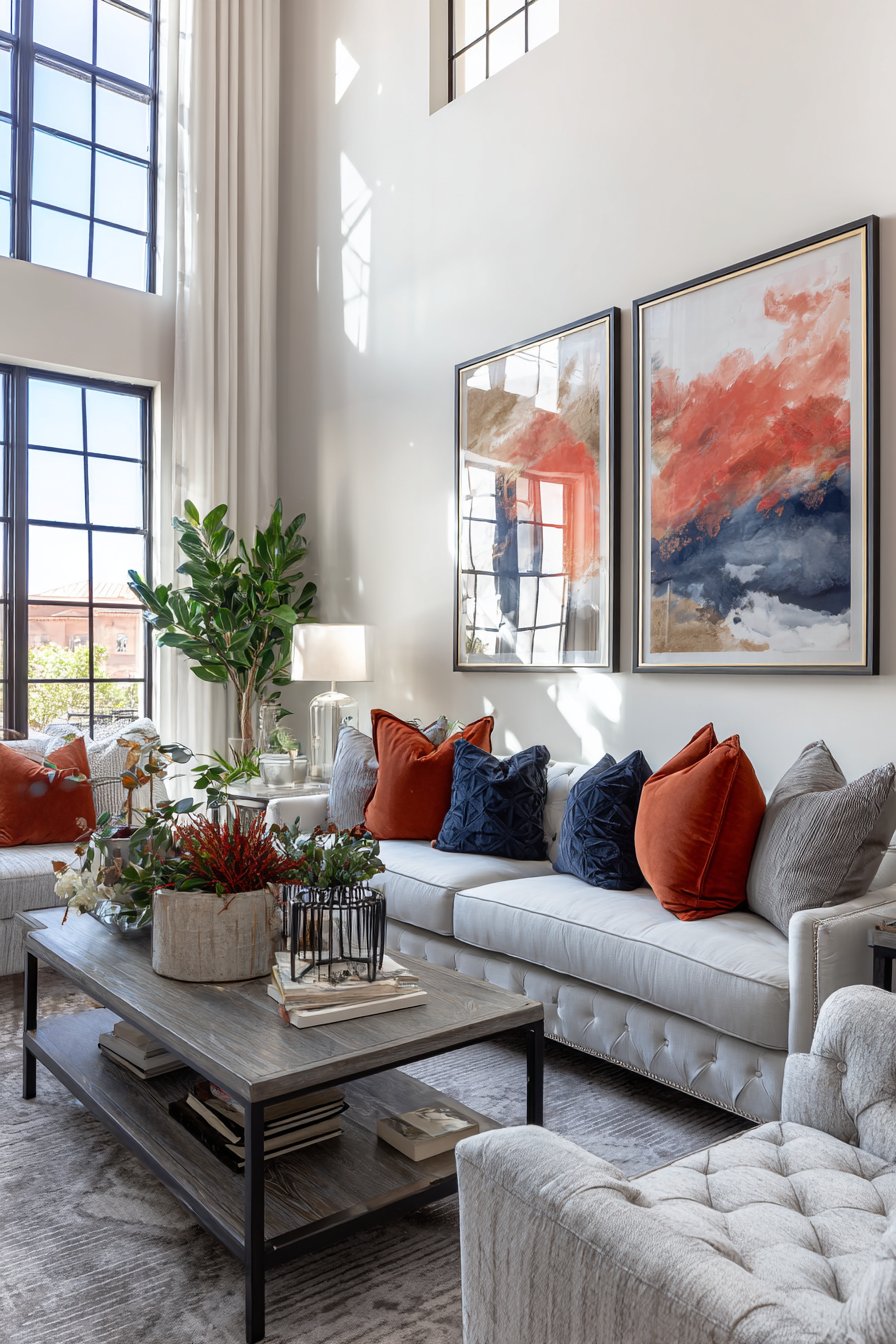
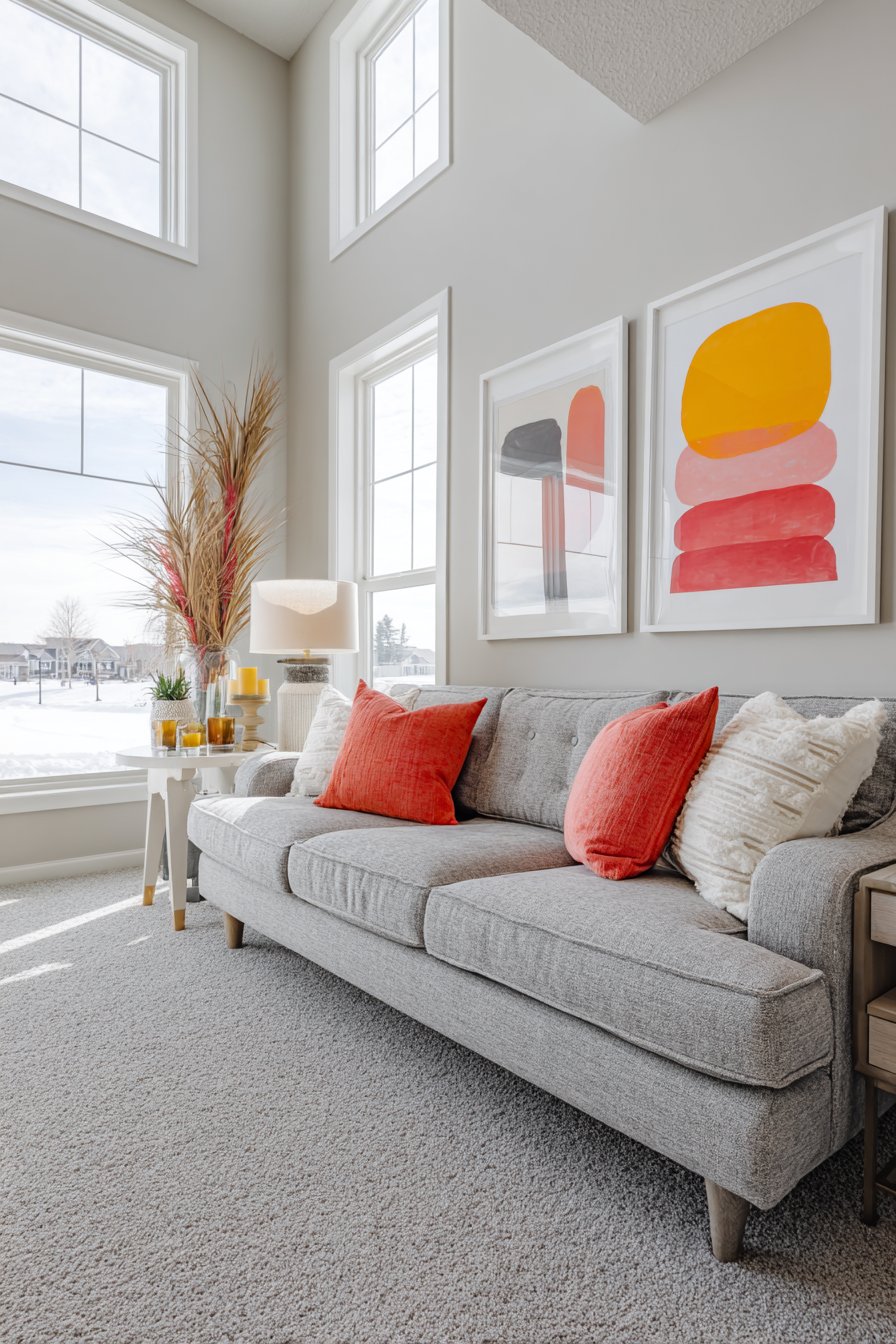
A pair of matching oversized framed prints featuring bold color block abstracts energizes neutral contemporary living spaces through confident color introduction. Each 30×40-inch vertically oriented frame displays vibrant coral, navy, and gold compositions that bring warmth and personality to restrained interiors. The symmetrical arrangement with 8-inch spacing creates balanced composition while the simple white wood frames keep focus on the bold artwork.
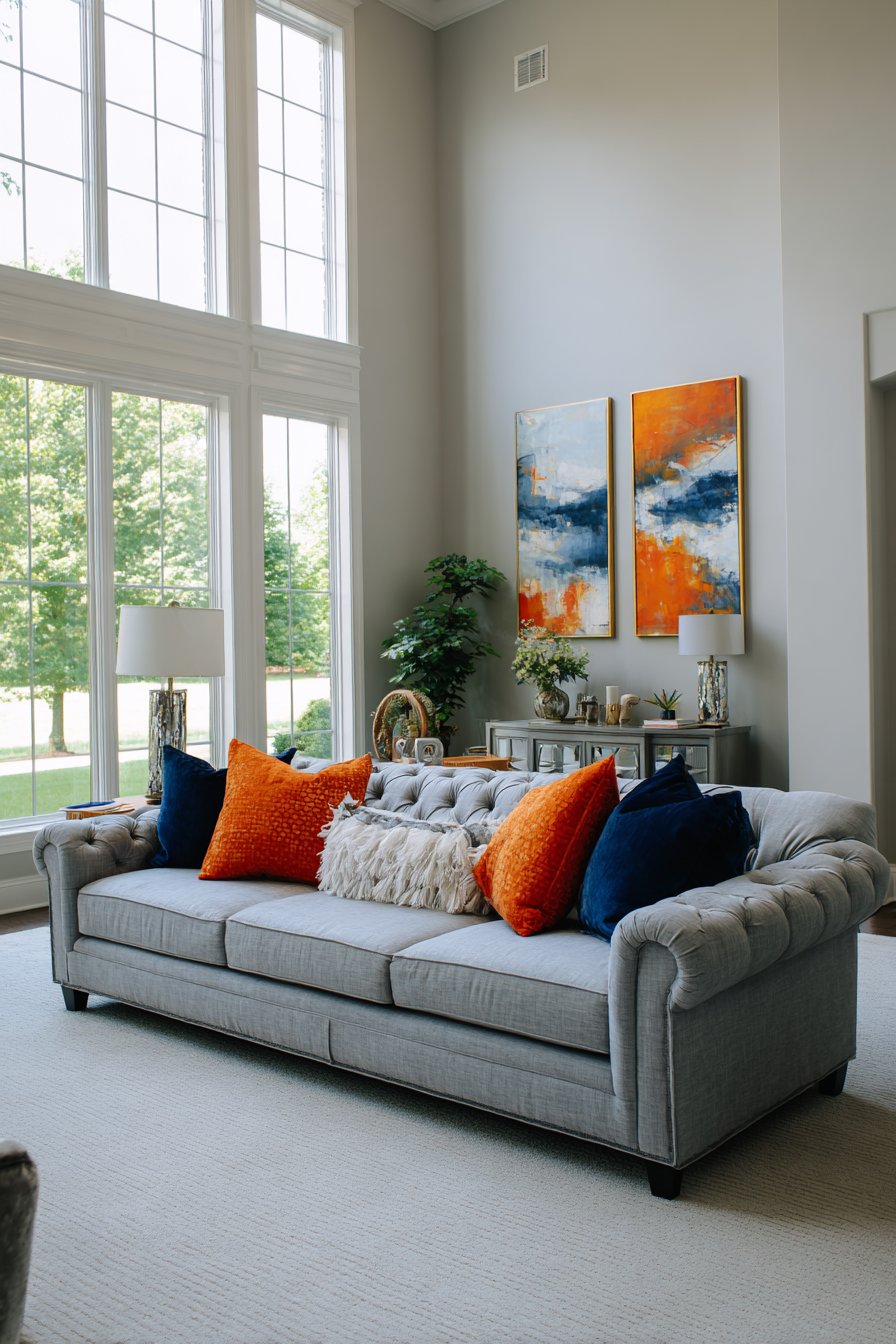
The vertical orientation provides visual lift, drawing the eye upward and making standard ceiling heights feel more generous. Positioned 9 inches above a grey upholstered sofa with tufted back detail, the vibrant artwork provides dramatic color contrast against the neutral foundation. The natural daylight from large windows creates even illumination across both pieces, ensuring the bold colors appear true and saturated throughout the day.
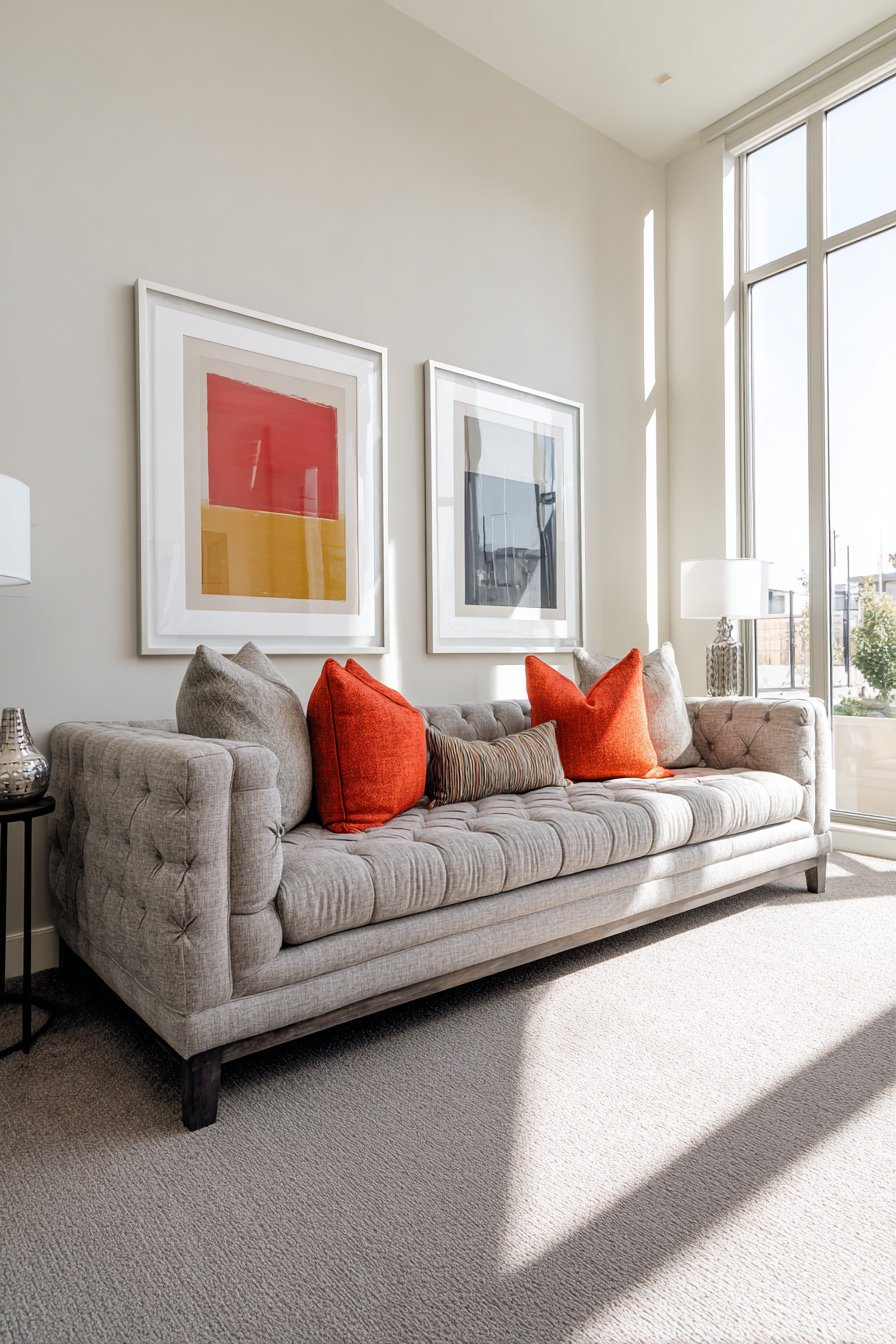
This approach demonstrates how art introduces color without permanent commitment of painted walls or large furniture purchases. If color preferences evolve, changing artwork proves far simpler than reupholstering sofas or repainting rooms. The matching pair creates intentional design choice while the abstract nature prevents the imagery from becoming dated as specific trends pass.
Key Design Tips:
- Select color block art with colors that appear elsewhere in room as accents
- Use matching frames for paired artwork to create cohesive presentation
- Maintain consistent spacing between frames using precise measurements
- Choose white or neutral frames for bold, colorful artwork to prevent visual competition
- Ensure both frames are identically positioned relative to centerline for symmetry
- Consider how natural and artificial lighting affects color appearance
- Rotate seasonal artwork if desired—abstract pieces transition easily between seasons
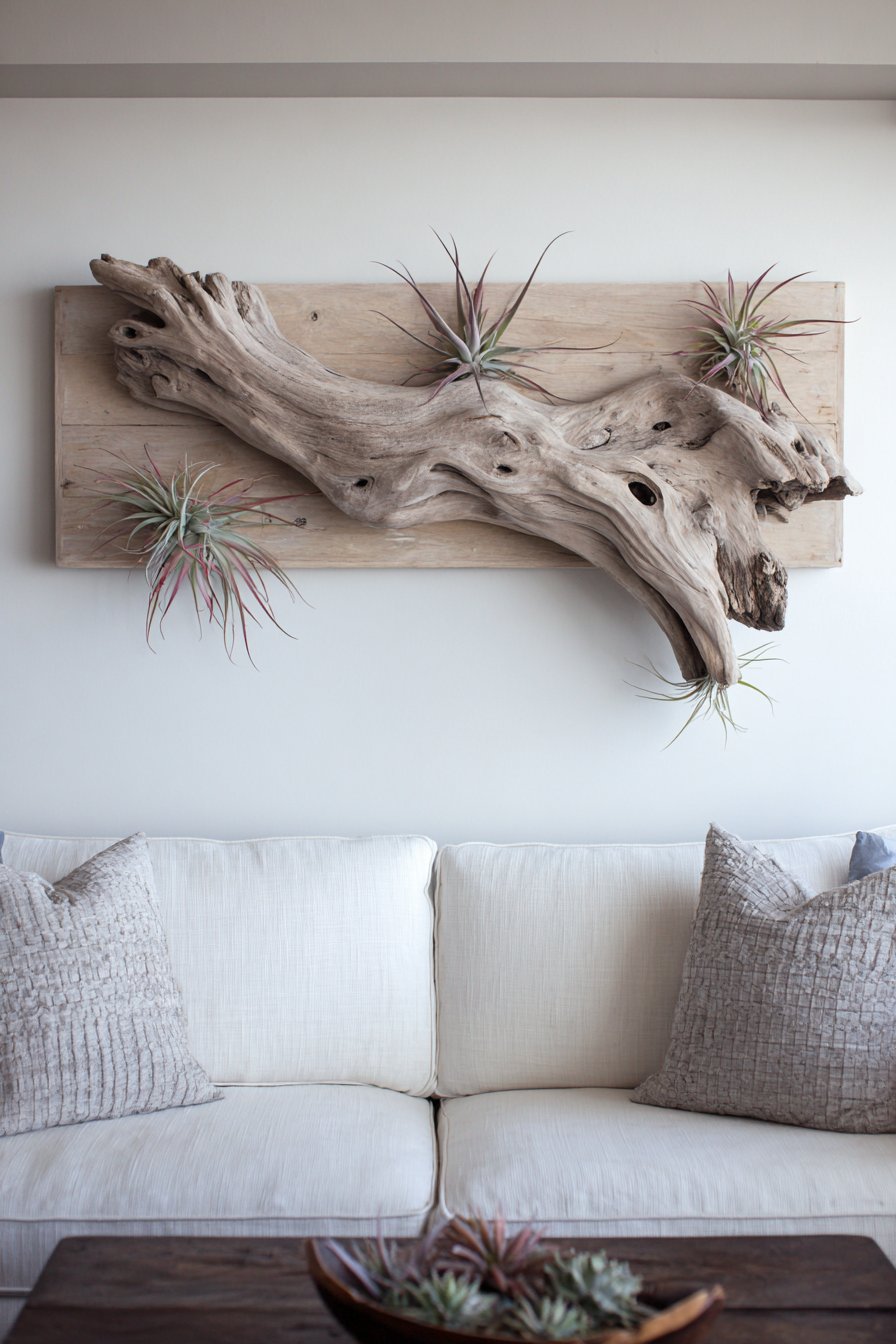
23. Natural Driftwood Sculpture
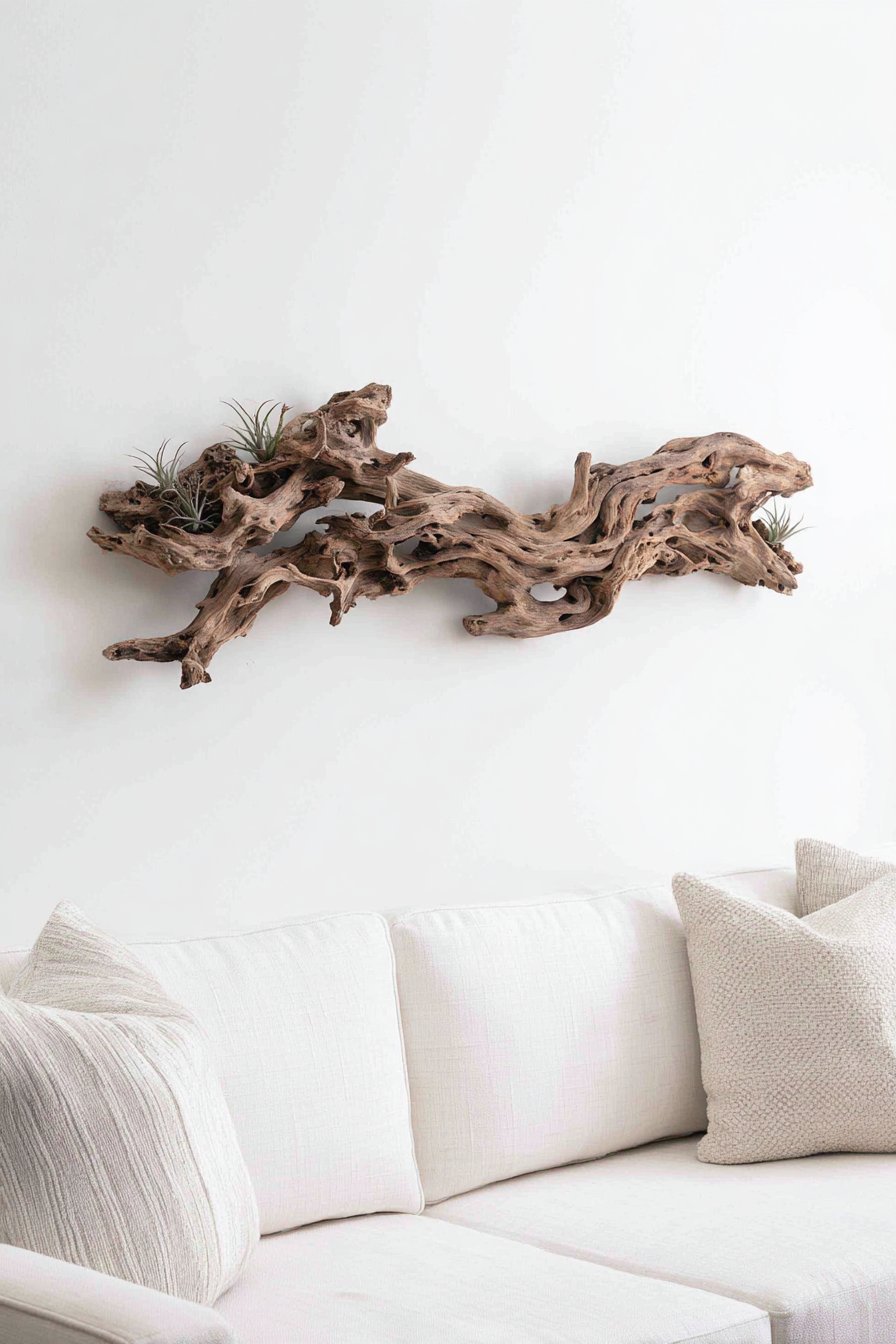
A long horizontal piece of driftwood mounted as natural sculptural art brings organic beauty and coastal inspiration to living spaces. The 60-inch weathered wood showing authentic grey-brown patina with organic curves and natural texture variations creates one-of-a-kind focal point that celebrates nature’s artistry. Small air plants nestled in natural crevices along the wood add living elements that enhance the organic aesthetic.
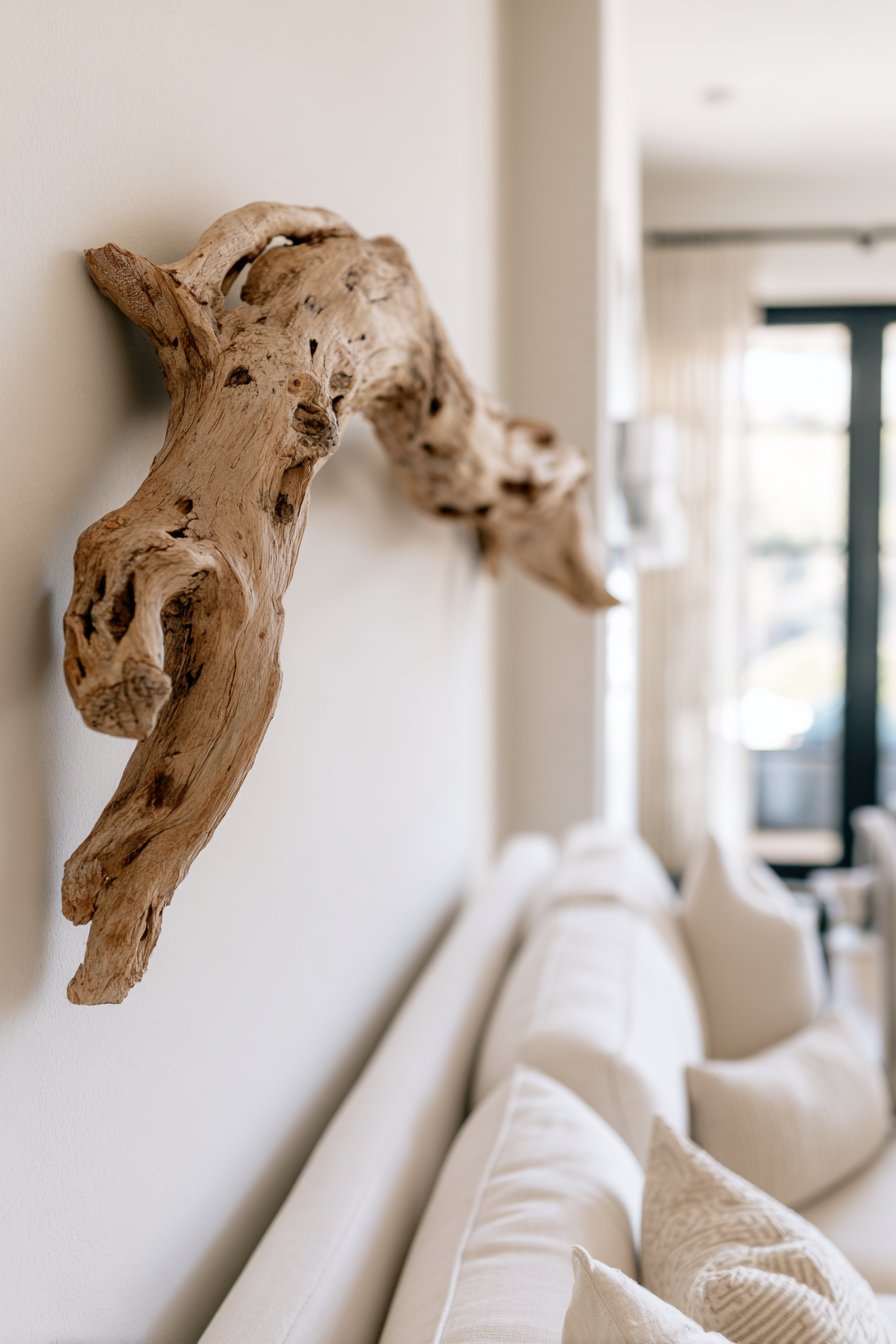
Positioned 11 inches above a white linen sofa, this installation creates serene coastal-organic atmosphere where natural materials and simple beauty take precedence. The soft natural lighting highlights the three-dimensional form and surface details worn smooth by water and time. The authentic weathering cannot be replicated—each piece of driftwood carries unique story written in its grain patterns and sculptural form.
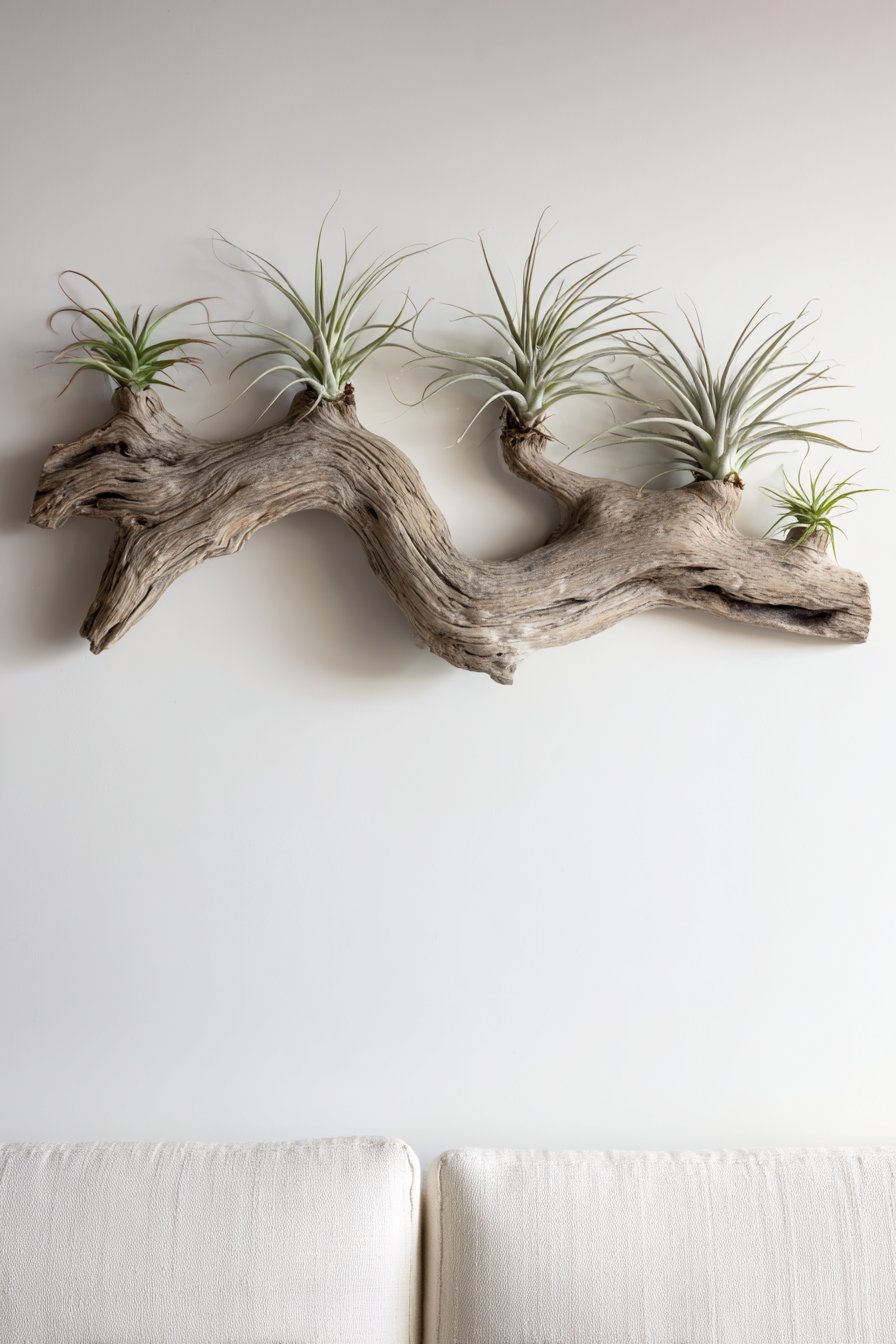
This found-object approach to wall decoration appeals to those who appreciate natural beauty and sustainable design. Beach combing, lake shores, and river banks provide sources for driftwood with character shaped by natural forces. The zero-waste aspect adds environmental consideration to aesthetic appeal—nature creates the art, you simply recognize and display its beauty.
Key Design Tips:
- Clean and dry found driftwood thoroughly before bringing indoors to prevent pests
- Seal wood lightly to prevent continued deterioration while preserving natural appearance
- Mount securely using heavy-duty hardware as driftwood can be deceptively heavy
- Choose pieces with interesting forms, curves, or sculptural qualities
- Add air plants or succulents that require minimal watering and soil
- Coordinate driftwood’s grey tones with other natural elements in the space
- Position where texture and form can be appreciated from multiple angles
- Consider the driftwood’s story—where it came from adds meaningful connection
Why These Living Room Wall Decor Ideas Above Couch Represent the Best Design Solutions
These twenty-three living room wall decor ideas above couch represent comprehensive exploration of design possibilities that cater to diverse aesthetic preferences, spatial requirements, and lifestyle needs. Each approach has been carefully selected to demonstrate specific design principles while offering practical implementation guidance for real-world applications. The variety ensures that whether you’re working with compact urban apartments or spacious suburban homes, traditional or contemporary aesthetics, limited budgets or generous resources, you’ll find inspiring solutions adaptable to your unique situation.
The effectiveness of wall decor above couch positioning stems from fundamental interior design principles regarding focal points and visual hierarchy. When someone enters a living room, their eye naturally seeks the primary gathering space—typically the seating arrangement. The wall behind or above the sofa becomes the natural backdrop for this social hub, making it prime real estate for decorative impact. Properly scaled and positioned wall decor enhances the entire room’s aesthetic while creating visual anchor that grounds the furniture arrangement and defines the space’s character.
What distinguishes superior living room wall decor ideas from mediocre attempts is attention to proportion, scale, and relationship between elements. The “two-thirds rule” appears throughout professional design—artwork should span approximately two-thirds to three-quarters of the sofa width to create balanced visual weight without overwhelming the furniture. The vertical spacing between sofa back and artwork bottom typically falls between 6-12 inches, allowing both elements breathing room while maintaining visual connection. These mathematical relationships aren’t arbitrary; they reflect how the human eye processes spatial relationships and finds certain proportions inherently pleasing.
The diversity of approaches—from traditional gallery walls to contemporary three-dimensional sculptures, from living plant installations to vintage architectural salvage—ensures accessibility regardless of skill level or budget. Simple solutions like three coordinated botanical prints offer attainable starting points for design novices, while complex installations like vertical gardens or custom sculptural pieces provide ambitious projects for experienced decorators. This range democratizes good design, proving that thoughtful wall decoration doesn’t require unlimited budgets or professional expertise.
Material considerations significantly impact both aesthetic and practical success of wall decor above couches. Natural materials like wood, metal, ceramic, and fiber bring warmth and texture that purely photographic or printed artwork cannot replicate. The interplay between sofa upholstery texture and wall decoration material creates layers of tactile interest that elevate rooms from visually flat to dimensionally rich. Velvet sofas paired with brass-framed mirrors, leather Chesterfields beneath vintage maps, linen upholstery with macramé textiles—these material relationships create sophisticated depth through contrasting or complementary textures.
Color relationships between wall decor and furniture demonstrate another critical design consideration. Complementary color schemes—warm artwork above cool-toned furniture or vice versa—create dynamic tension that energizes spaces. Analogous color relationships—staying within similar color families—create harmonious, restful environments. Monochromatic approaches using varied tones of single colors offer sophisticated restraint. Understanding these color theory principles allows intentional design choices that achieve specific atmospheric goals rather than random decoration that may undermine your desired ambiance.
The temporal quality of well-chosen wall decor adds value beyond static beauty. Natural lighting changes throughout the day, creating different viewing experiences from morning through evening. Dimensional elements like macramé, metal sculptures, or vertical gardens cast evolving shadows that transform with sun position. Reflective surfaces like mirrors or glazed ceramics capture and redirect light, brightening spaces while creating sparkle. Living elements in vertical gardens or driftwood installations grow and change, ensuring your decor never feels completely static. This dynamic quality maintains visual interest over years of daily viewing.
Flexibility and adaptability separate temporary decorating trends from enduring design solutions. Gallery ledge systems allow artwork rotation without new nail holes. Modular panel systems permit rearrangement as preferences evolve. Neutral frame colors accommodate changing art collections. Floating shelves provide styling flexibility as seasons and interests shift. This built-in adaptability acknowledges that good design evolves with inhabitants’ lives rather than requiring complete overhauls when tastes mature or circumstances change.
The psychological and emotional impacts of thoughtful wall decoration extend beyond mere aesthetics. Biophilic elements like vertical gardens or botanical prints connect us to nature, reducing stress and improving well-being. Personal photographs and meaningful artwork create homes that reflect our identities and values. Handcrafted textiles and salvaged architectural elements tell stories about craftsmanship, sustainability, and cultural appreciation. Curated gallery walls document our lives and relationships. This emotional resonance transforms houses into homes, making wall decoration deeply personal rather than merely decorative.
Practical considerations like installation requirements, maintenance needs, and durability affect long-term satisfaction with wall decor choices. Heavy mirrors and large canvases require proper anchoring into wall studs or with appropriate toggle bolts rated for substantial weight. Living vertical gardens need waterproofing and drainage systems to protect walls. Textiles and macramé require periodic cleaning to remove dust. Understanding these practical aspects before installation prevents disappointing failures or damage requiring costly repairs. The best design solutions balance aesthetic ambitions with realistic maintenance capabilities.
The investment value of quality wall decoration deserves consideration when evaluating options. Original artwork, handcrafted textiles, and architectural salvage pieces often appreciate in value while mass-produced prints depreciate. Quality framing using archival materials protects valuable artwork for generations. Durable materials like metal, solid wood, and quality ceramics outlast cheaper alternatives requiring frequent replacement. While budget constraints are real, understanding the long-term value equation helps make informed decisions about where to invest and where economy makes sense.
Cultural and historical context enriches our appreciation of various decorative approaches. Salon-style gallery walls reference 18th-century European art display traditions. Macramé celebrates fiber arts practiced across cultures for centuries. Architectural blueprints honor design professions and building craftsmanship. Vintage plates preserve ceramic art forms and decorative traditions. Understanding these contexts transforms wall decoration from mere prettiness into cultural appreciation and historical awareness, adding intellectual depth to aesthetic pleasure.
The environmental considerations of decorating choices increasingly influence thoughtful consumers. Salvaged architectural elements like vintage windows prevent materials from entering landfills. Driftwood found objects eliminate manufacturing impacts. Living plants improve indoor air quality naturally. Handcrafted items support artisan livelihoods over factory production. Durable quality pieces prevent disposal and replacement cycles. These sustainable approaches allow us to create beautiful homes while minimizing environmental footprints—proof that ethical choices and aesthetic excellence aren’t mutually exclusive.
Ultimately, the best living room wall decor ideas above couch are those that resonate personally while honoring fundamental design principles. Your wall decoration should reflect your personality, values, and aesthetic preferences rather than merely following trends or replicating showroom displays. The technical guidelines regarding scale, proportion, spacing, and color provide framework for success, but within that framework, infinite personal expression becomes possible. Your living room should tell your story, celebrate your interests, and create environment where you feel authentically at home.
Conclusion
The wall space above your couch presents extraordinary opportunity to define your living room’s character, establish focal points, and express your unique design sensibility. From bold abstract canvases to intricate macramé wall hangings, from elegant salon-style galleries to living vertical gardens, the options span traditional to contemporary, minimal to maximalist, budget-friendly to investment-worthy. Each approach offers distinct aesthetic qualities and practical benefits that can transform your living space from ordinary to extraordinary.
The key to success lies in understanding fundamental design principles—proportion, scale, color theory, material relationships—while remaining true to your personal style and practical needs. The two-thirds rule for artwork width, the 6-12 inch spacing between furniture and frame, the importance of lighting conditions, and the value of quality materials and installation all contribute to professional results regardless of your design experience level. These technical considerations provide foundation upon which personal creativity can flourish.
Remember that your wall decoration choices need not be permanent or perfect from the outset. Start with approaches that feel manageable, whether that’s three coordinated prints, a gallery ledge system, or a single statement piece. As your confidence grows and your collection evolves, you can expand, rearrange, or completely reimagine your wall decor. The beauty of these ideas lies in their flexibility—your living room can grow and change alongside your life, always reflecting who you are in this moment while honoring timeless design principles that ensure lasting visual appeal.
Let these living room wall decor ideas above couch inspire you to view your blank wall as canvas for creative expression, opportunity for personal storytelling, and chance to create truly beautiful, functional space that brings daily joy. Whether you choose dramatic oversized art, curated collections, natural elements, or innovative three-dimensional installations, commit to the process with intention, patience, and enthusiasm. Your living room deserves thoughtful decoration that honors both the space’s architecture and your unique vision for the home you’re creating.
