
The living room serves as the heart of every home—a sanctuary where families gather, guests are entertained, and memories are created. In the realm of interior design, few color palettes offer the versatility, sophistication, and timeless appeal of light gray. This understated hue has emerged as a favorite among designers and homeowners alike, providing a neutral foundation that adapts effortlessly to various styles, from minimalist Scandinavian to luxurious contemporary and everything in between.
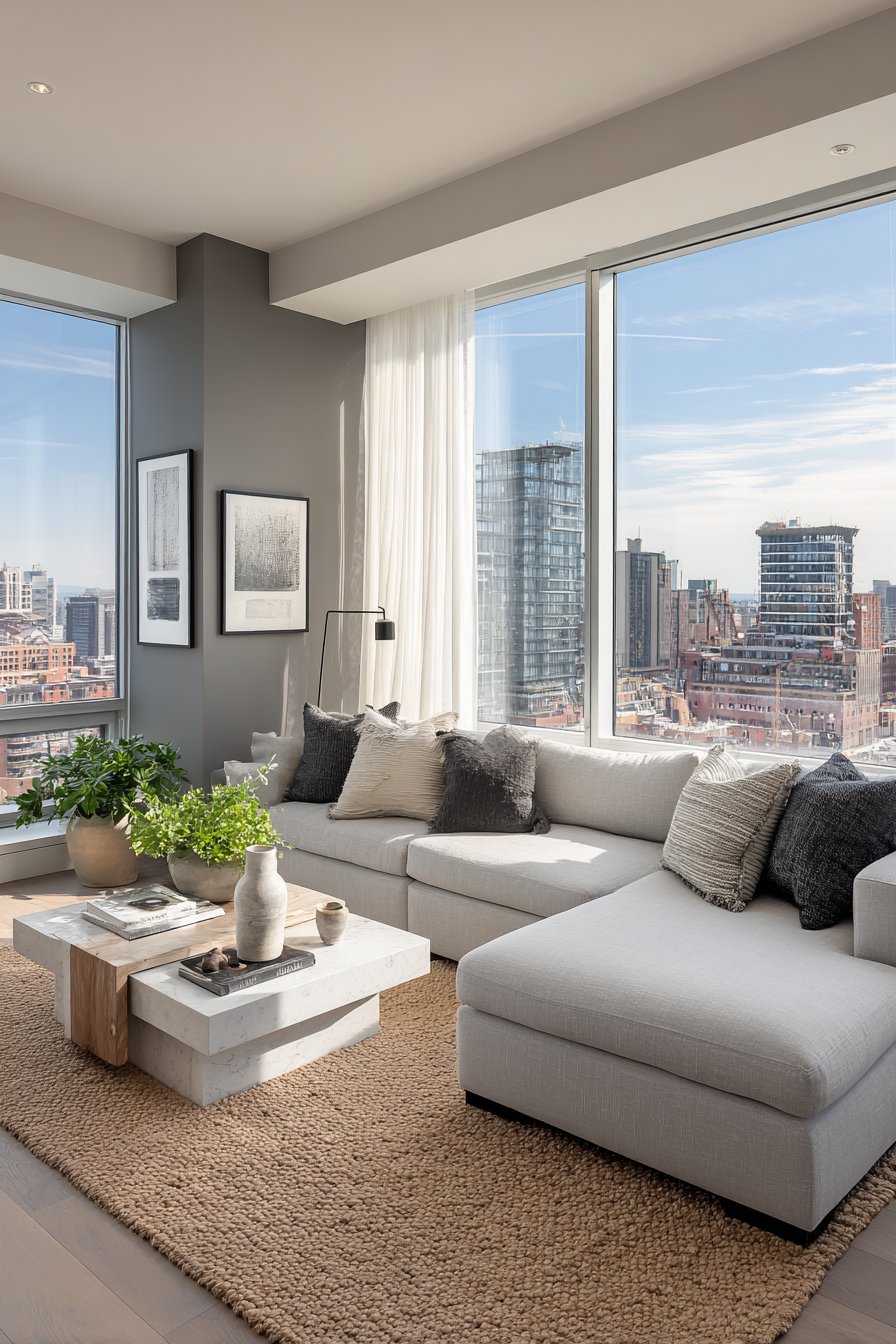
Light gray living rooms possess a unique ability to create spaces that feel both expansive and intimate, modern yet classic. Unlike stark white, which can feel cold and clinical, or darker grays that might overwhelm smaller spaces, light gray strikes the perfect balance—offering warmth through its subtle undertones while maintaining an airy, open atmosphere. The color’s inherent flexibility allows it to serve as either a calming backdrop for bold accent pieces or as the star of a sophisticated monochromatic scheme. Whether you’re drawn to the cozy embrace of textured fabrics, the clean lines of contemporary furniture, or the eclectic charm of mixed design elements, light gray provides the ideal canvas.
This comprehensive guide explores 23 distinct light gray living room concepts, each offering unique interpretations of this elegant palette. From compact urban apartments to spacious family rooms, from coastal-inspired retreats to industrial loft conversions, these ideas demonstrate the remarkable range of possibilities within the light gray spectrum. Whether you’re planning a complete renovation or seeking inspiration for a subtle refresh, these carefully curated designs will help you discover how light gray can elevate your living space into something truly extraordinary.
1. Contemporary Elegance with Sectional Comfort
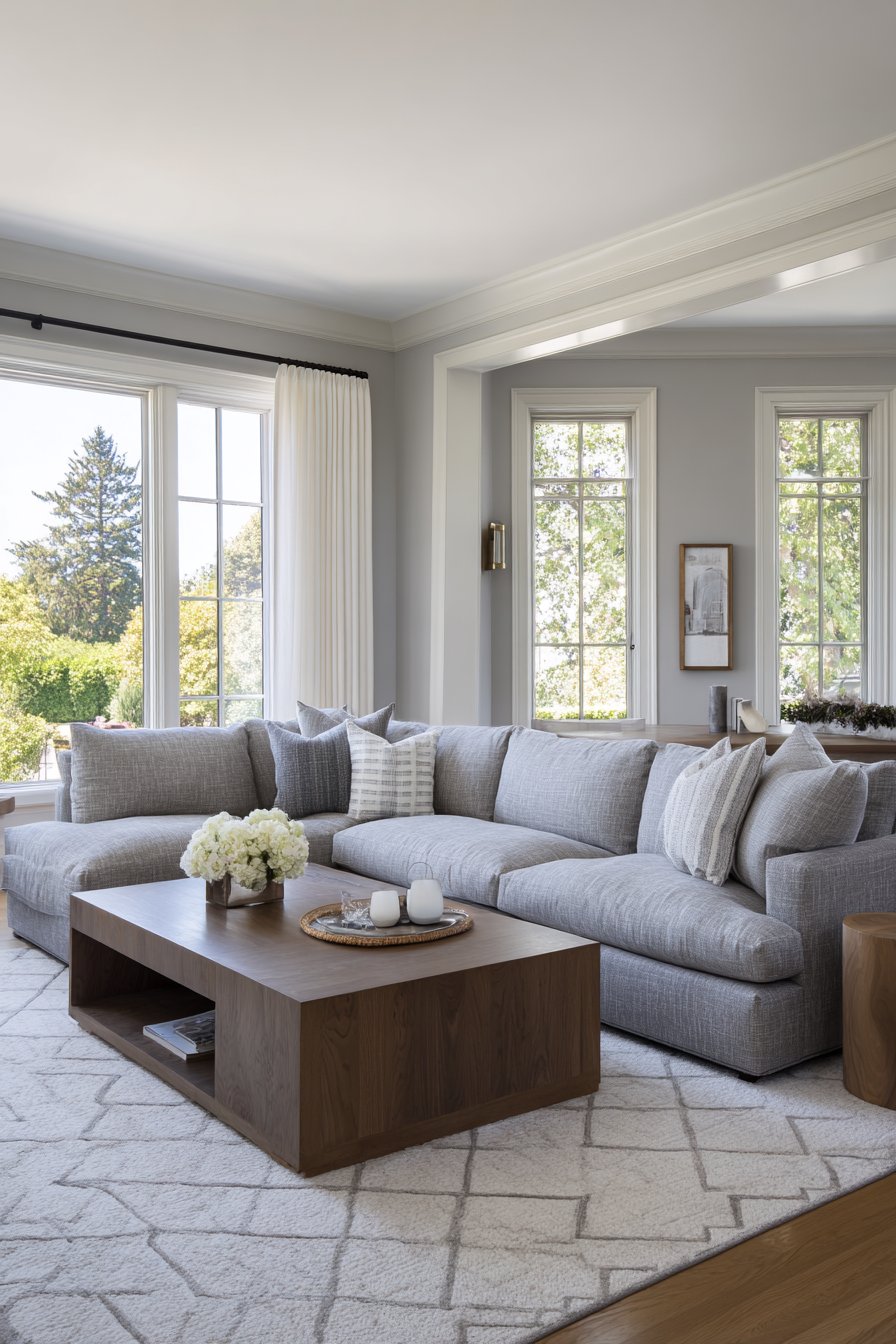
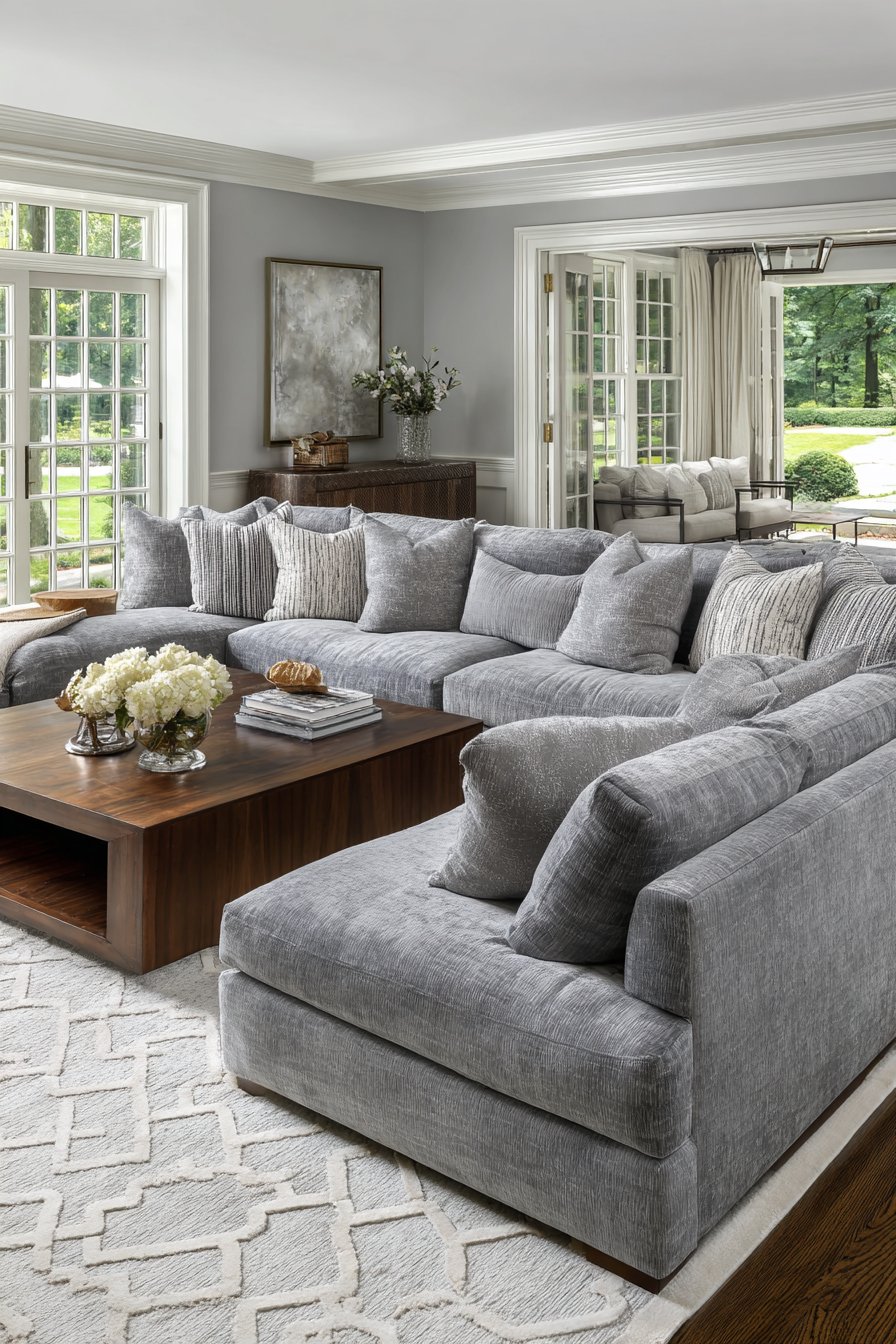
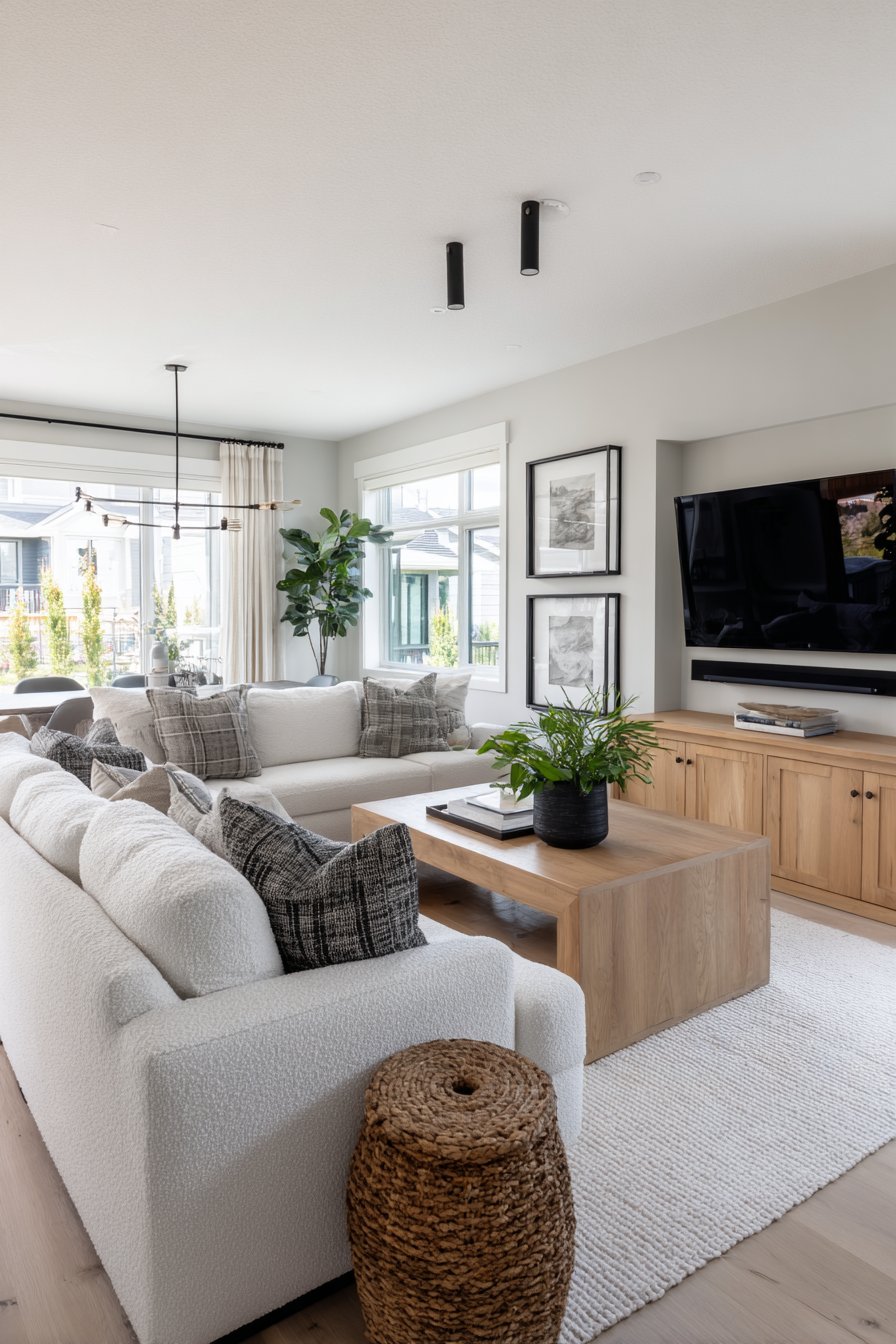
A modern L-shaped sectional in soft gray linen fabric anchors this sophisticated living space, featuring deep seating and loose back cushions that invite relaxation without sacrificing style. The generous proportions create an intimate conversation area around a low-profile walnut coffee table, its clean lines providing visual contrast to the sofa’s plush comfort. Walls painted in Benjamin Moore Classic Gray establish a refined neutral backdrop that adapts beautifully to changing natural light throughout the day.
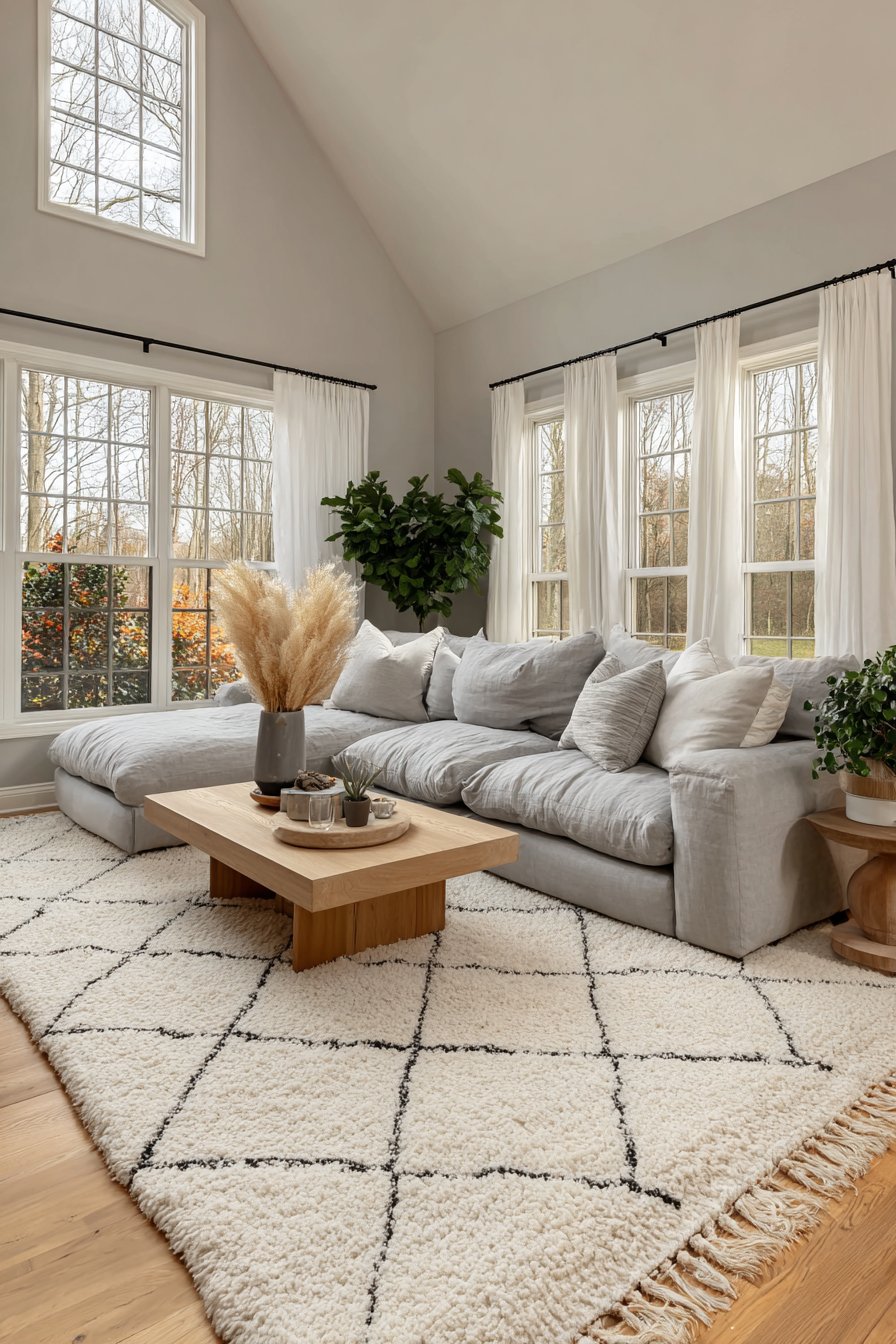
Natural oak hardwood flooring introduces warmth beneath a geometric patterned area rug in cream and gray tones, grounding the seating arrangement while adding visual interest through pattern. The interplay between the smooth linen upholstery, polished wood surfaces, and textured rug creates dimensional interest that prevents the monochromatic palette from feeling flat. Large windows dressed with sheer white curtains allow diffused natural light to highlight the layered gray palette, creating subtle variations in tone and depth.
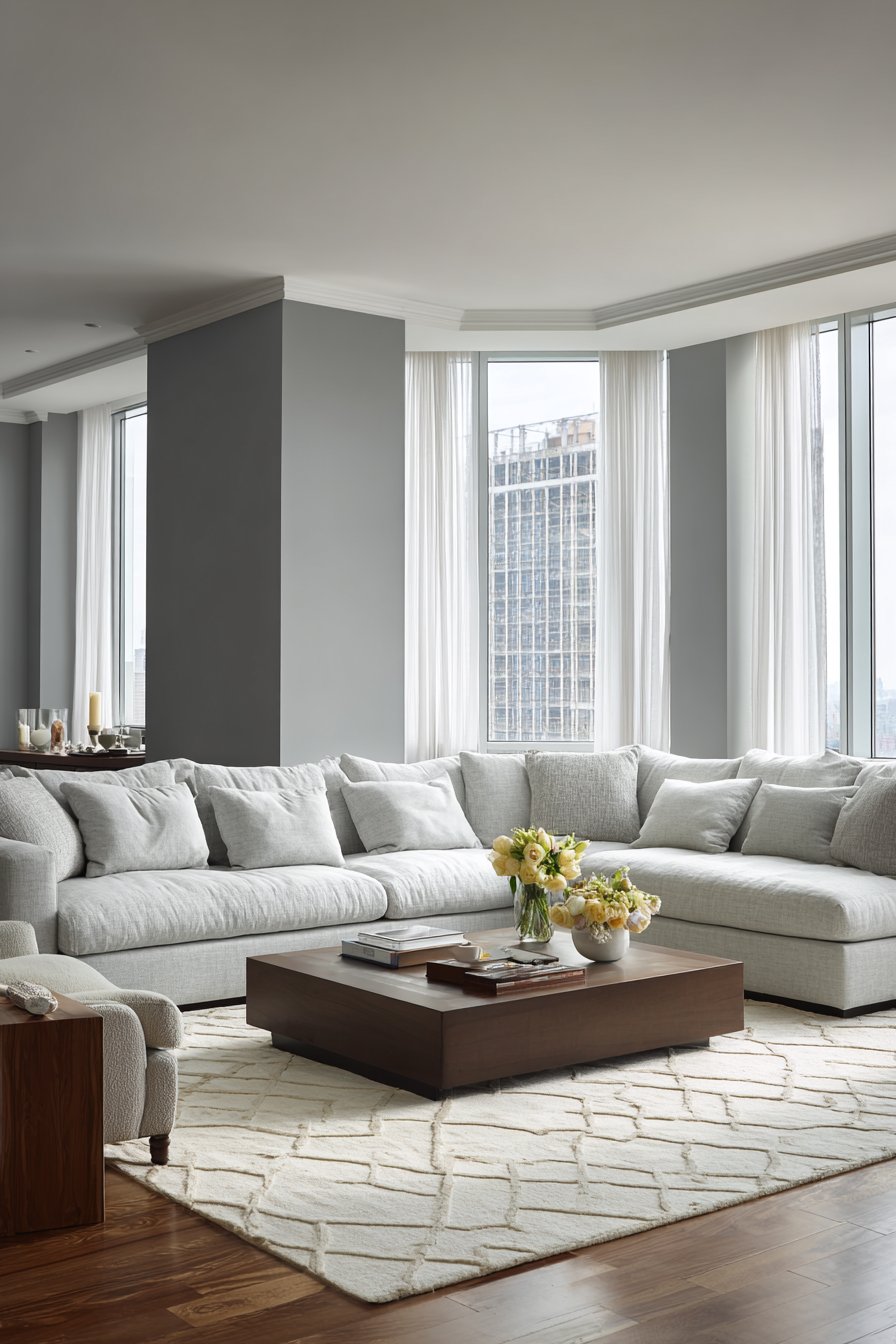
The beauty of this design lies in its accessible sophistication—it demonstrates how investing in quality foundational pieces in light gray creates a framework for endless styling possibilities. The neutral palette serves as a permanent canvas that can be refreshed seasonally through accent pillows, throws, and accessories. The spacious sectional configuration proves particularly practical for modern living, accommodating everything from casual family movie nights to formal entertaining.
Key Design Tips:
- Select linen or linen-blend fabrics for sectionals to achieve a relaxed yet refined aesthetic
- Position the coffee table within easy reach of all seating positions for functionality
- Use geometric patterns in rugs to add visual interest without competing with the furniture
- Layer window treatments with sheers to maintain privacy while maximizing natural light
- Choose hardwood flooring in warm tones to prevent gray schemes from feeling too cool
2. Intimate Reading Corner Retreat
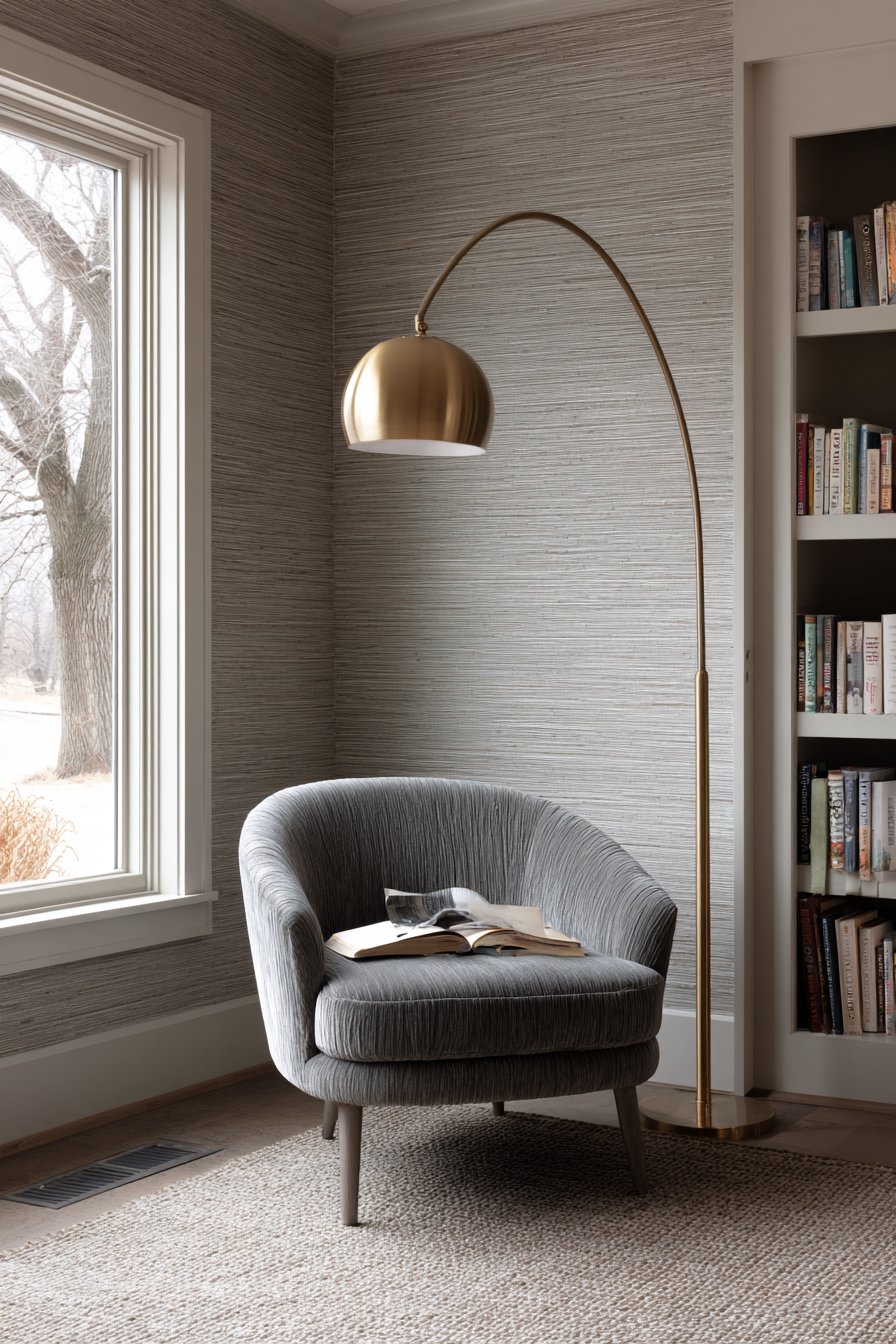
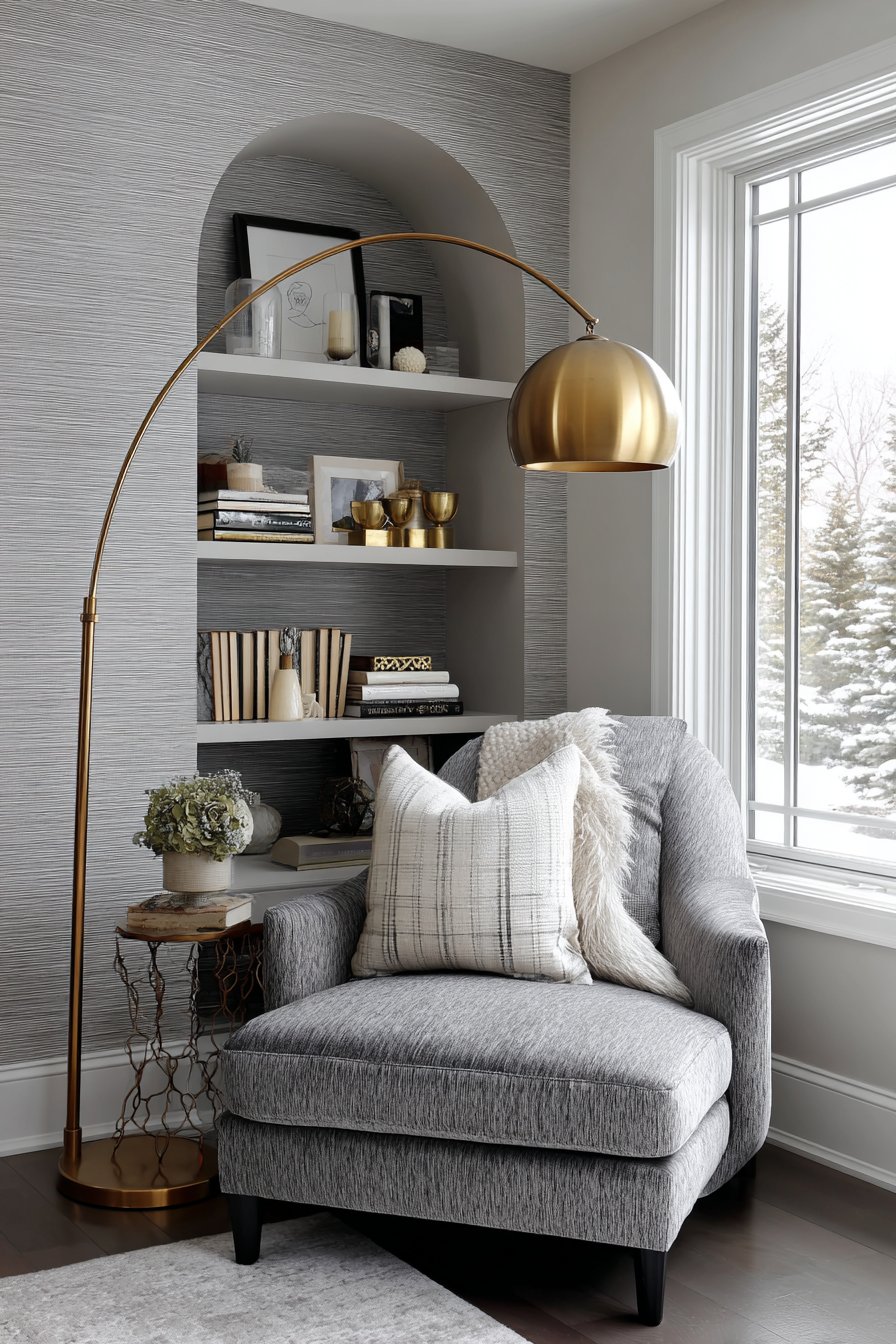
This thoughtfully designed reading nook transforms an underutilized corner into a personal sanctuary, featuring a gray velvet accent chair positioned beside a tall arched floor lamp with brass finish. The sumptuous velvet upholstery catches and reflects light beautifully, creating depth and visual interest through its subtle sheen. A built-in bookshelf painted in matching light gray flanks the seating area, styled with carefully curated books and minimal decorative objects that reflect personal interests without creating visual clutter.
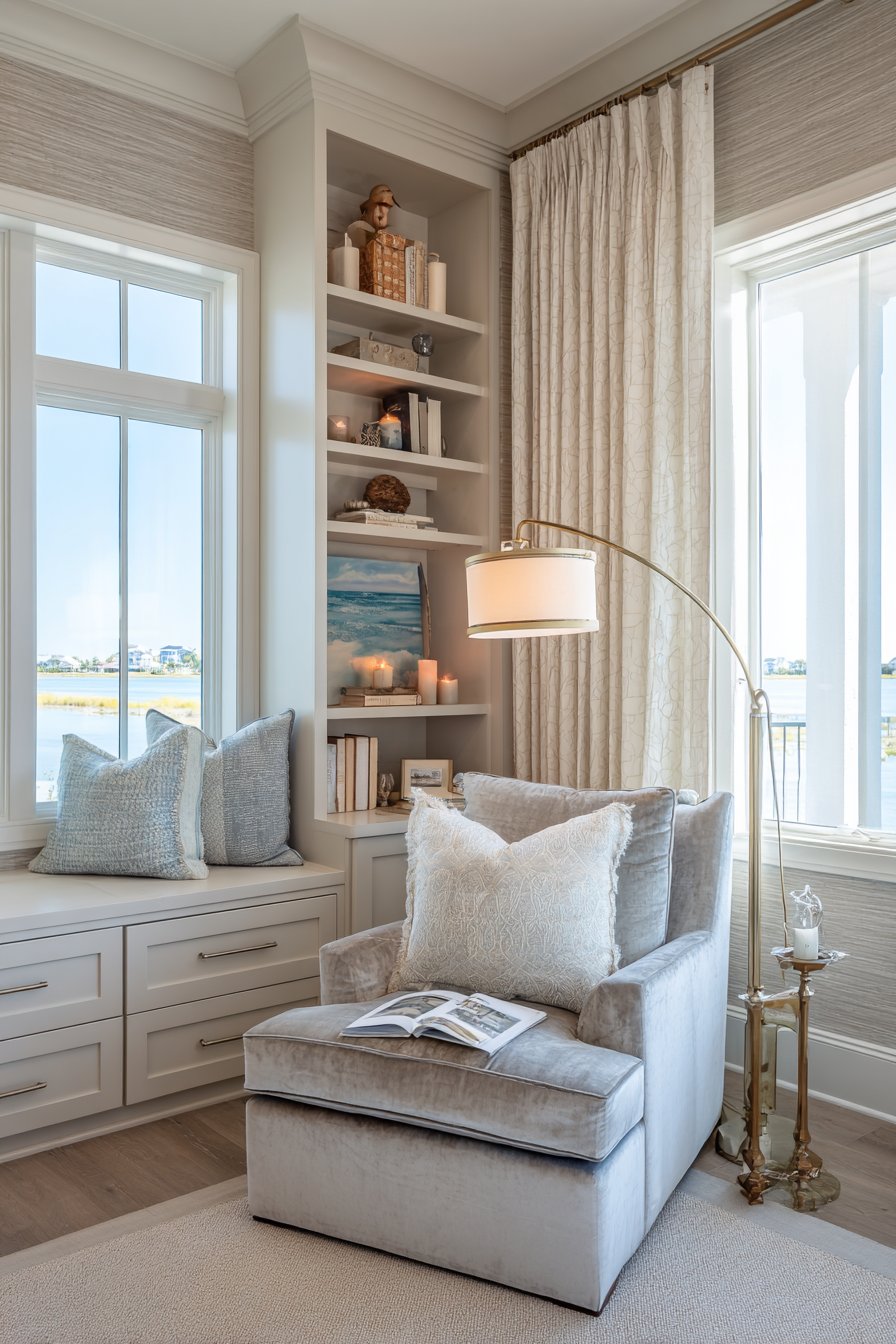
The wall treatment features subtle texture from gray grasscloth wallpaper, adding tactile dimension that elevates the corner beyond simple paint. This natural fiber covering introduces organic texture while maintaining the serene gray palette, demonstrating how material choices create interest within monochromatic schemes. Natural light from a nearby window creates gentle highlights on the velvet upholstery, bringing the fabric to life throughout the day as sunlight shifts.
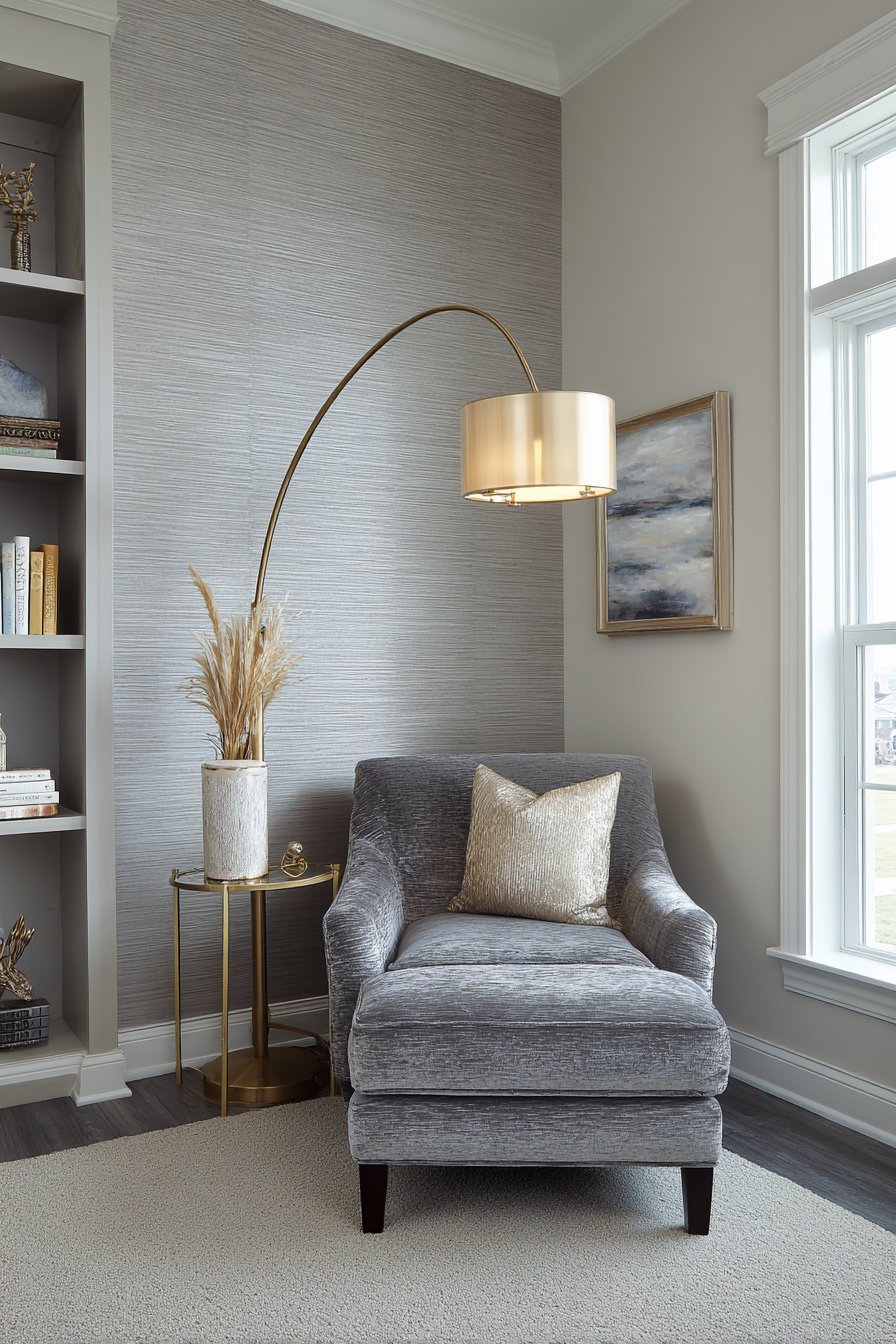
Creating a dedicated reading space within a larger living room serves multiple purposes—it establishes a quiet zone for contemplation, adds architectural interest through furniture placement, and demonstrates intentional design thinking. The combination of task lighting from the arched lamp and natural window light ensures comfort for extended reading sessions while the velvet chair provides ergonomic support wrapped in luxury.
Key Design Tips:
- Position reading chairs near natural light sources to reduce eye strain and create ambiance
- Choose velvet upholstery for depth and light-reflective qualities in gray tones
- Install adjustable floor lamps with focused downlight for task illumination
- Use built-in or flanking bookcases to create an intimate, library-like atmosphere
- Apply textured wallcoverings like grasscloth to add subtle dimension to gray walls
- Keep decorative styling minimal in reading areas to reduce visual distraction
3. Scandinavian Minimalist Serenity
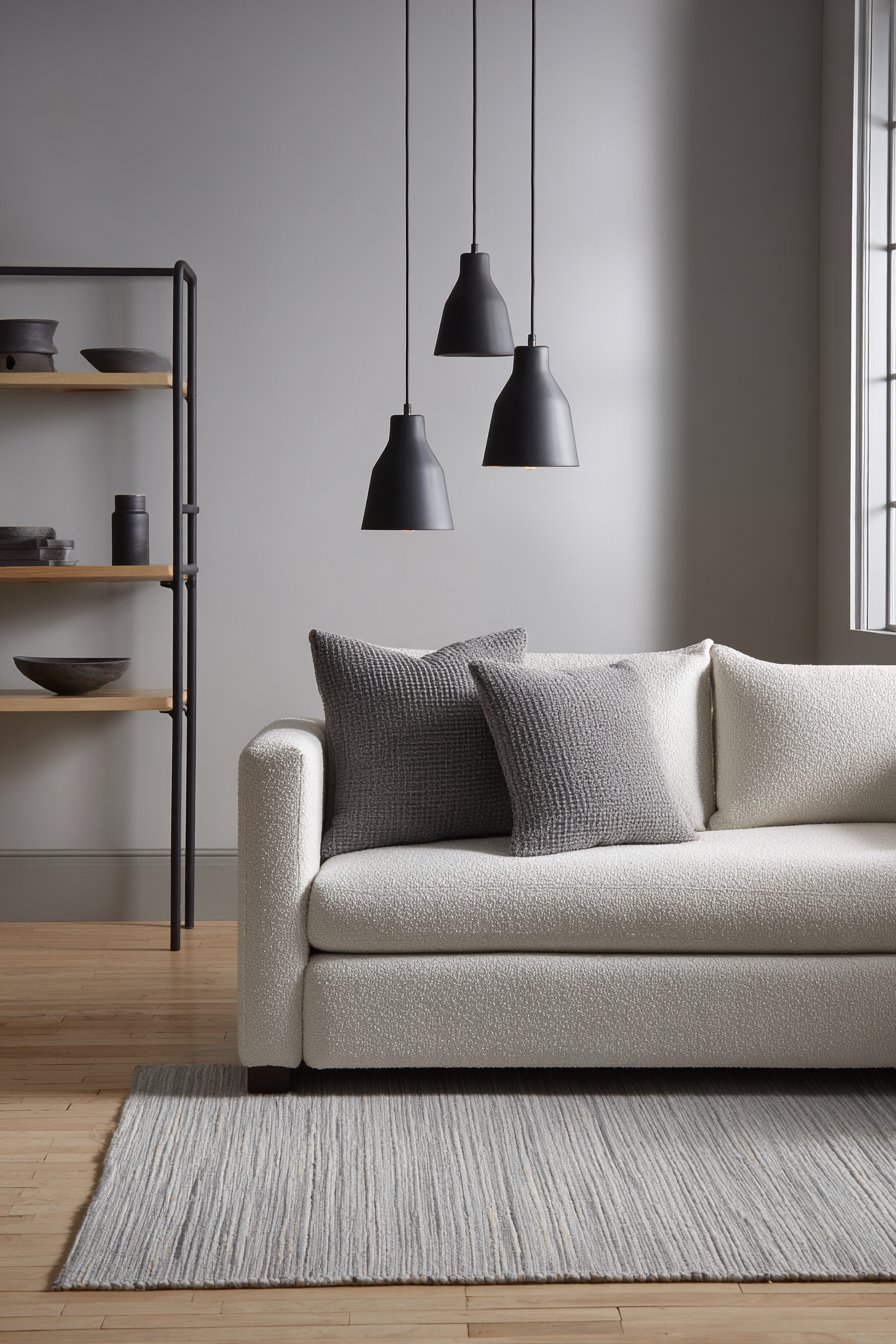
A low-profile gray bouclé sofa serves as the centerpiece of this minimalist Scandinavian-inspired space, embodying the “lagom” philosophy of balanced, just-right design. The nubby texture of bouclé fabric adds visual and tactile interest while maintaining the clean aesthetic central to Nordic design principles. A simple white oak media console with clean geometric lines and hidden storage demonstrates the Scandinavian commitment to functionality concealed within beautiful form.
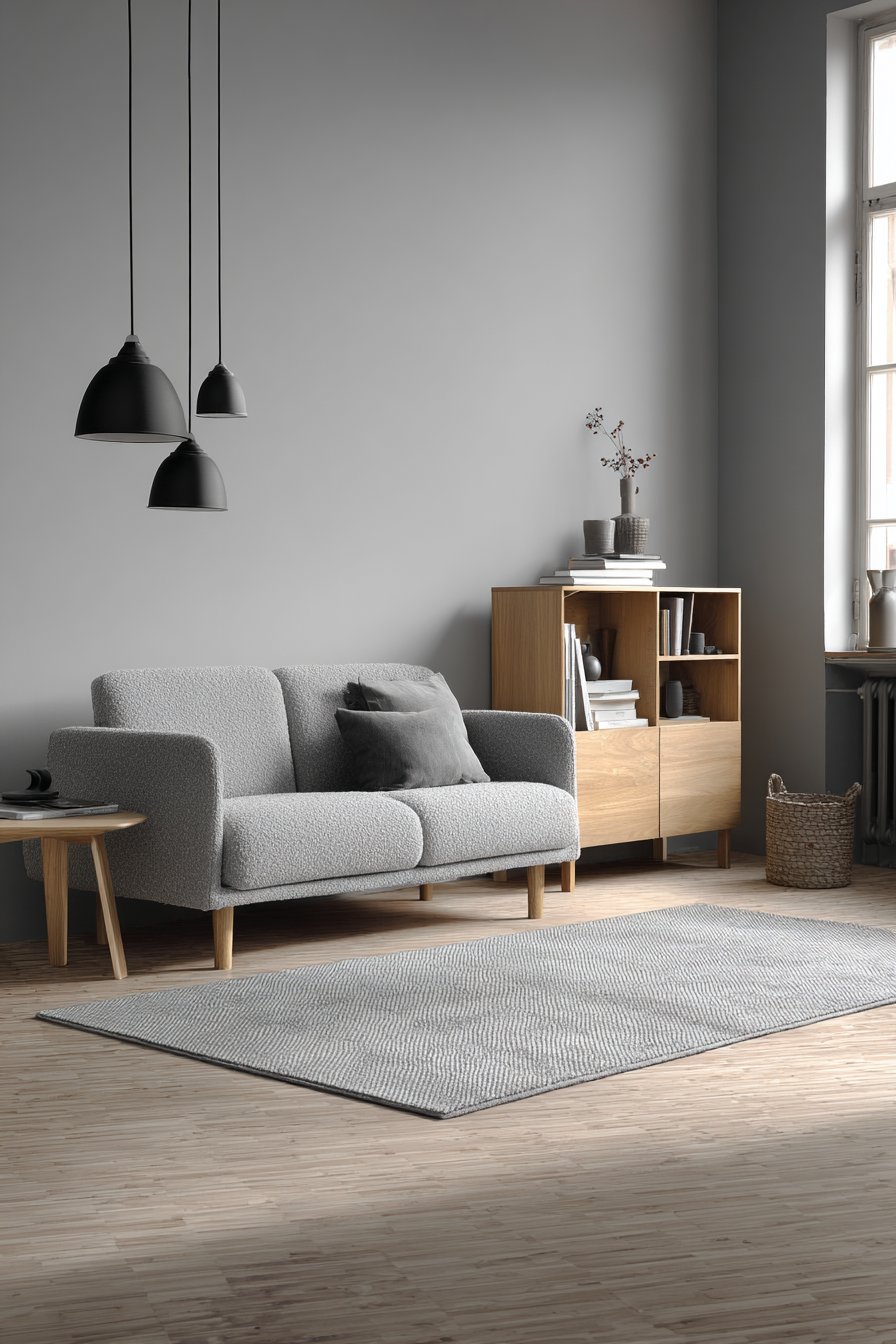
Walls in pale gray create continuity throughout the space while allowing natural wood tones and black metal accents to provide subtle contrast—a hallmark of Scandinavian interiors where every element serves a purpose. A wool flatweave rug in light gray anchors the seating area, its minimal texture and durability reflecting the practical Nordic approach to textiles. Pendant lights with matte black fixtures hang at varied heights, introducing the essential black accent that prevents all-gray Scandinavian spaces from appearing washed out.
This design philosophy celebrates negative space as an active design element rather than an afterthought. The uncluttered arrangement creates visual calm and allows each carefully selected piece to make its statement. The emphasis on natural materials—oak, wool, and bouclé—connects the interior to the natural world, another fundamental principle of Scandinavian design that promotes wellbeing through biophilic connections.
Key Design Tips:
- Embrace low-profile furniture to enhance spatial openness and maintain sightlines
- Incorporate natural wood in warm oak tones to balance cool gray palettes
- Use bouclé fabric for textural interest while maintaining minimalist aesthetics
- Add strategic black metal accents to create essential visual contrast
- Choose flatweave rugs for subtle texture that doesn’t overwhelm minimal spaces
- Prioritize hidden storage to maintain the uncluttered Scandinavian aesthetic
- Vary pendant light heights to create visual interest in simplified spaces
4. Custom Built-In Storage Showcase
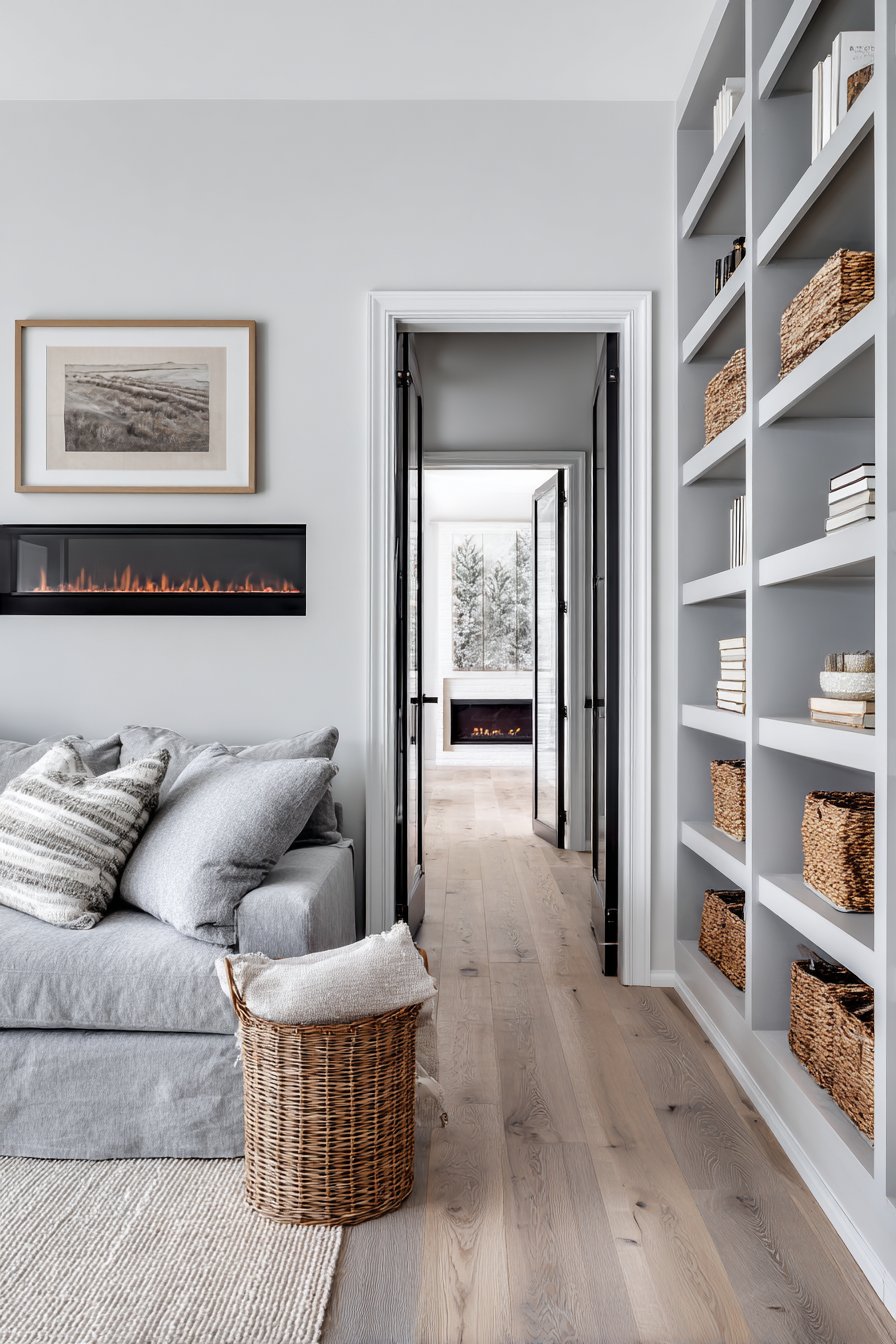
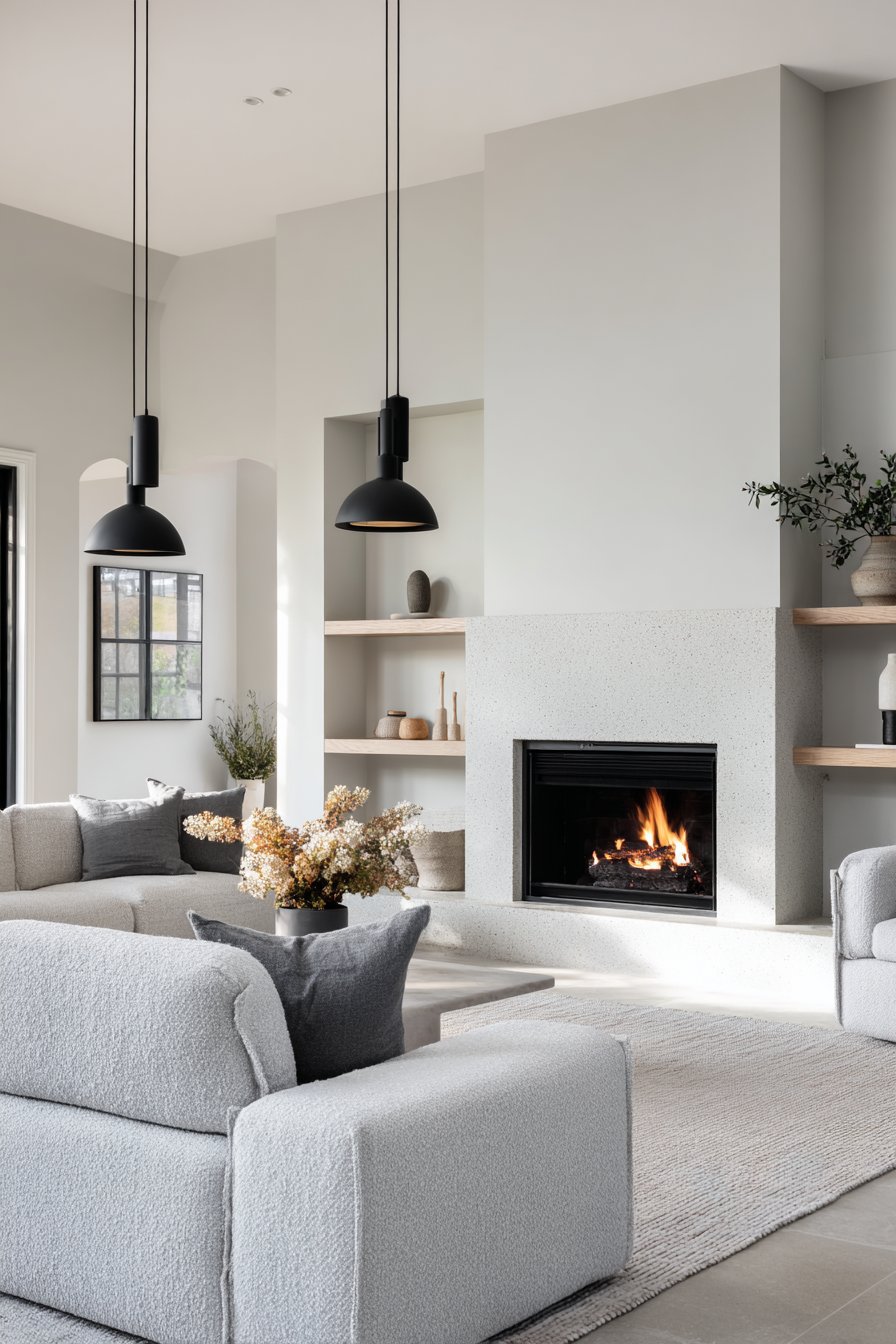
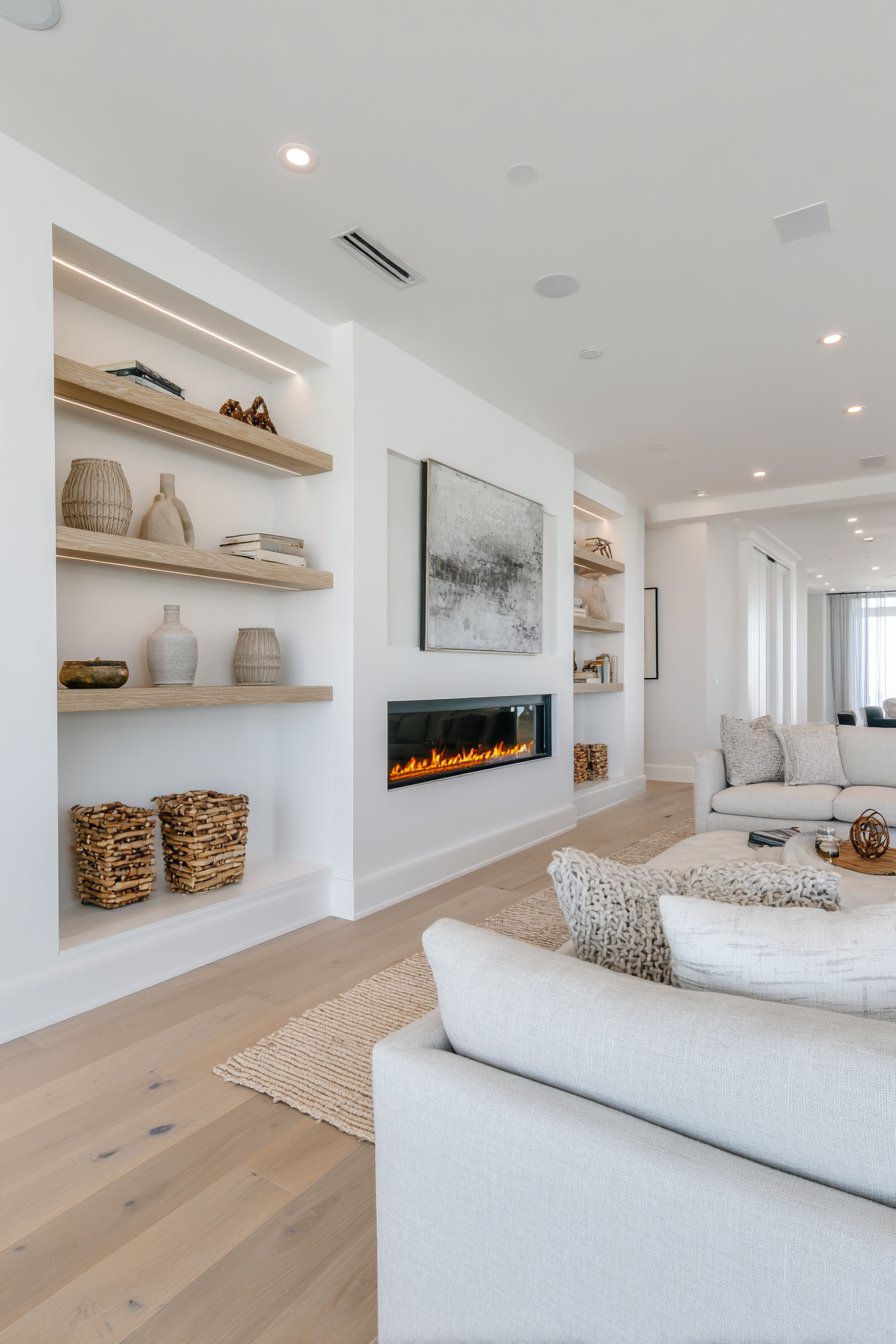
This design celebrates both form and function through custom built-in shelving units in light gray painted finish flanking a contemporary electric fireplace. The architectural millwork creates symmetry and visual weight while providing extensive storage and display opportunities. The shelves display curated collections of books, ceramics, and woven baskets in complementary neutral tones, demonstrating the art of edited styling where each object earns its place.
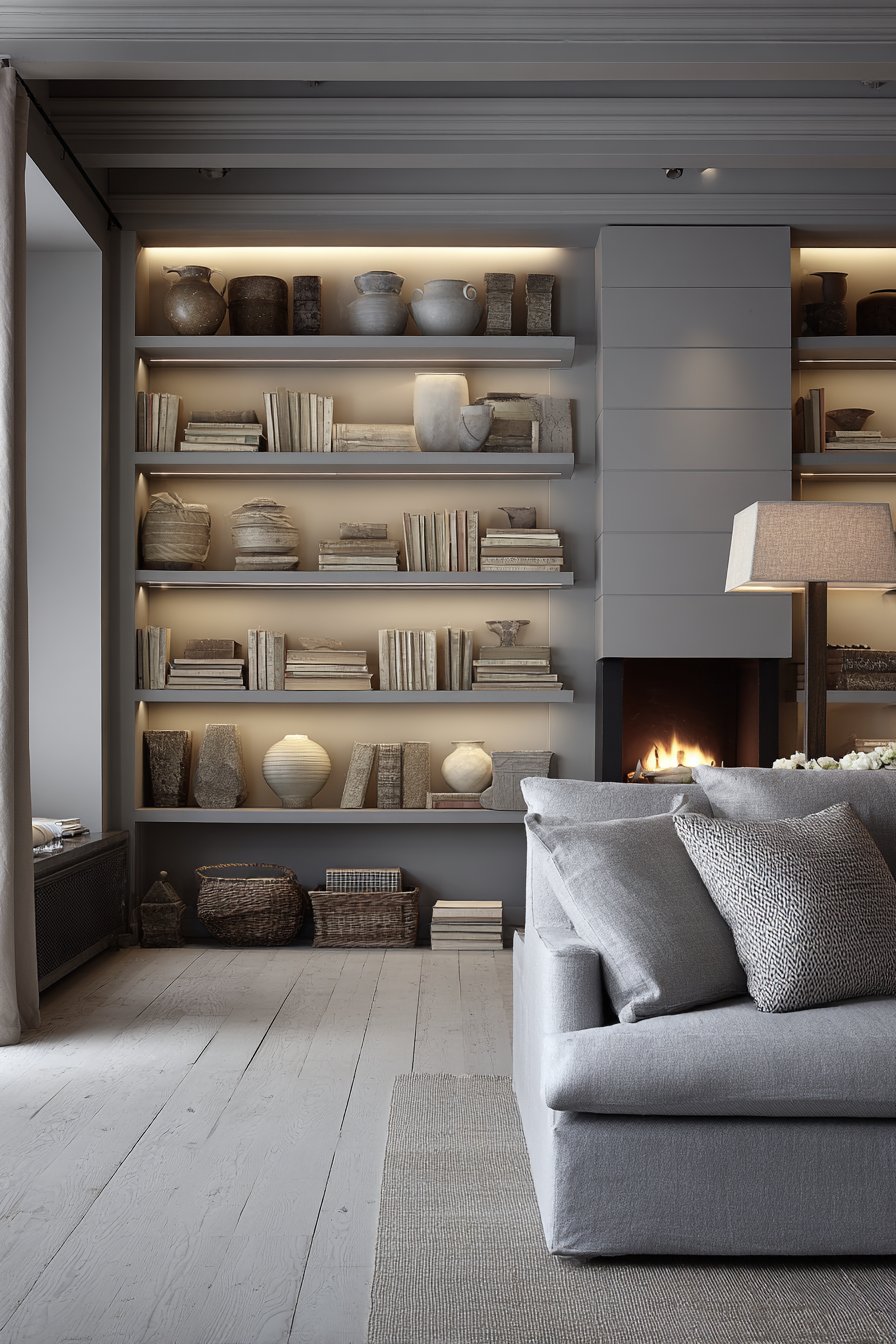
A comfortable gray linen loveseat sits opposite the fireplace, layered with textured throw pillows that introduce subtle pattern and additional tactile elements. Recessed lighting within the shelving creates ambient glow while highlighting displayed items, transforming the built-ins into an illuminated focal feature after dark. The flooring features light gray wide-plank engineered hardwood, extending the cohesive gray palette vertically and horizontally throughout the space.
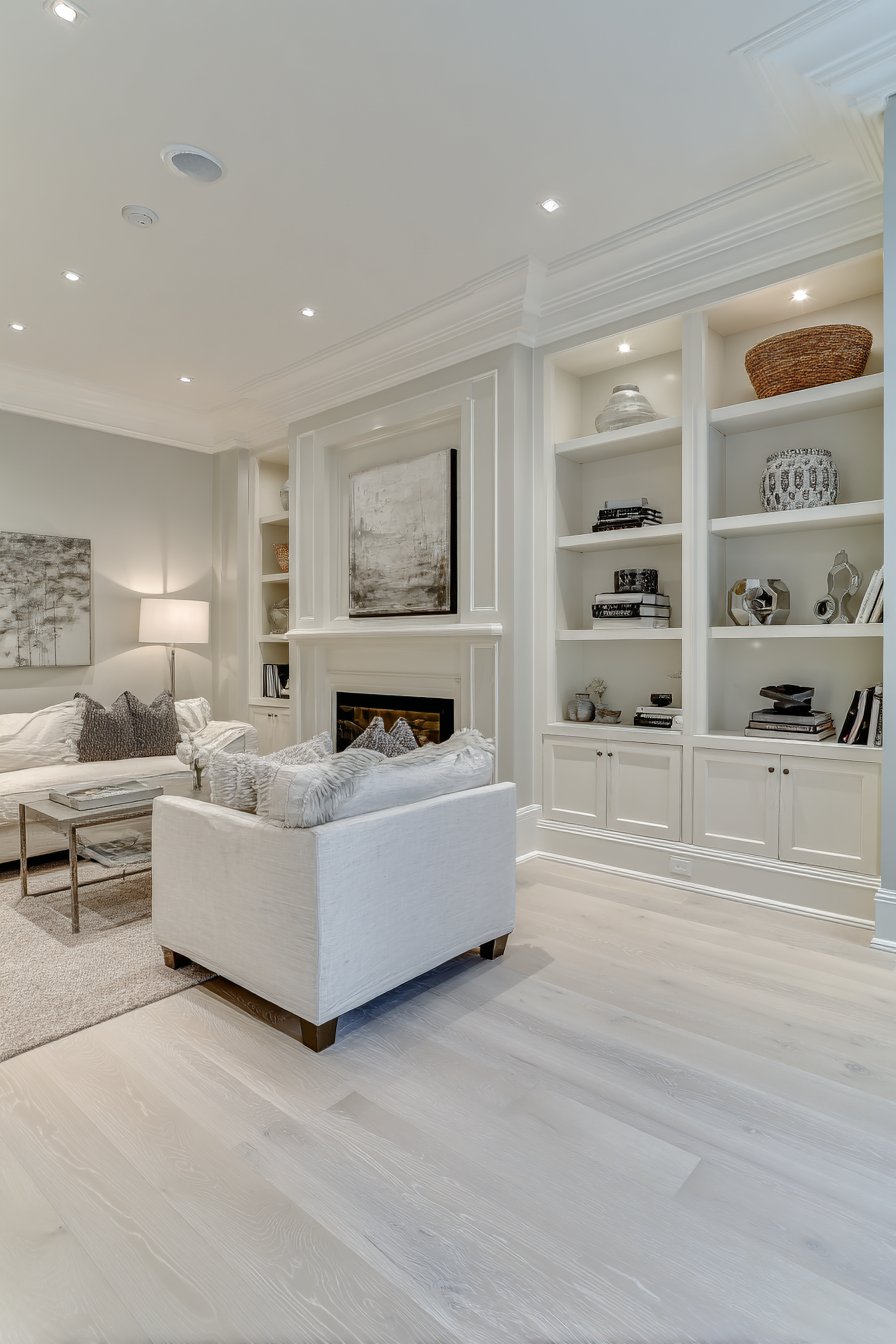
The genius of built-in storage in living rooms extends beyond mere functionality—these permanent architectural features add property value while solving storage challenges elegantly. The painted gray finish ensures the substantial millwork recedes visually rather than overwhelming the room, while the varied shelf depths accommodate everything from oversized art books to small decorative objects. The integration of the fireplace within the built-in system creates a unified focal wall that balances traditional warmth with contemporary clean lines.
Key Design Tips:
- Paint built-ins in the same gray as walls to create seamless architectural flow
- Install LED strip lighting in shelving recesses for evening ambiance and display highlighting
- Vary shelf heights to accommodate objects of different scales
- Use the rule of thirds when styling shelves—leave approximately one-third empty
- Choose woven baskets in gray tones for concealed storage that maintains aesthetic cohesion
- Position comfortable seating to face built-in features to establish clear focal points
- Integrate electrical outlets within built-ins for convenient lamp and device charging
5. Indoor-Outdoor Living Connection
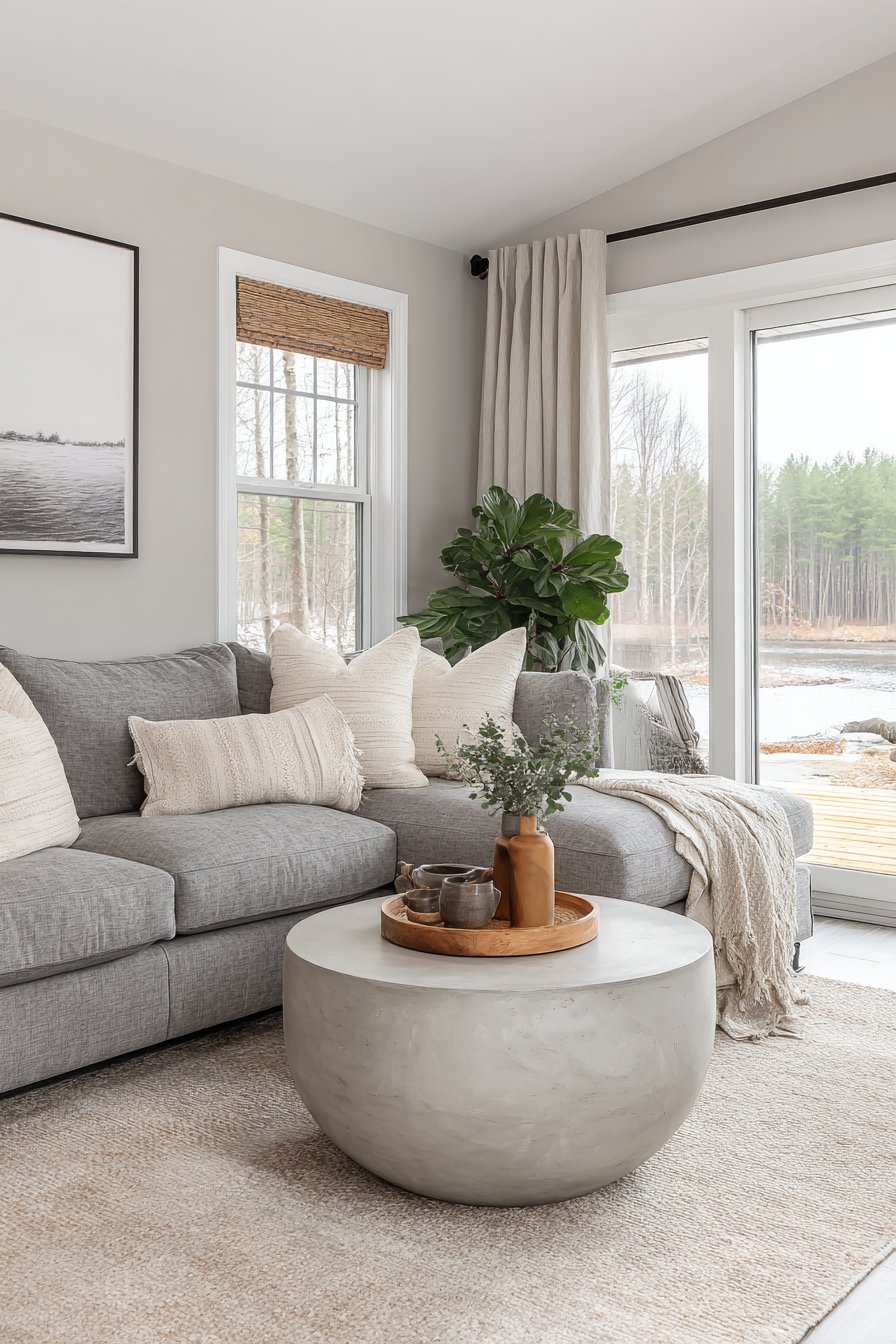
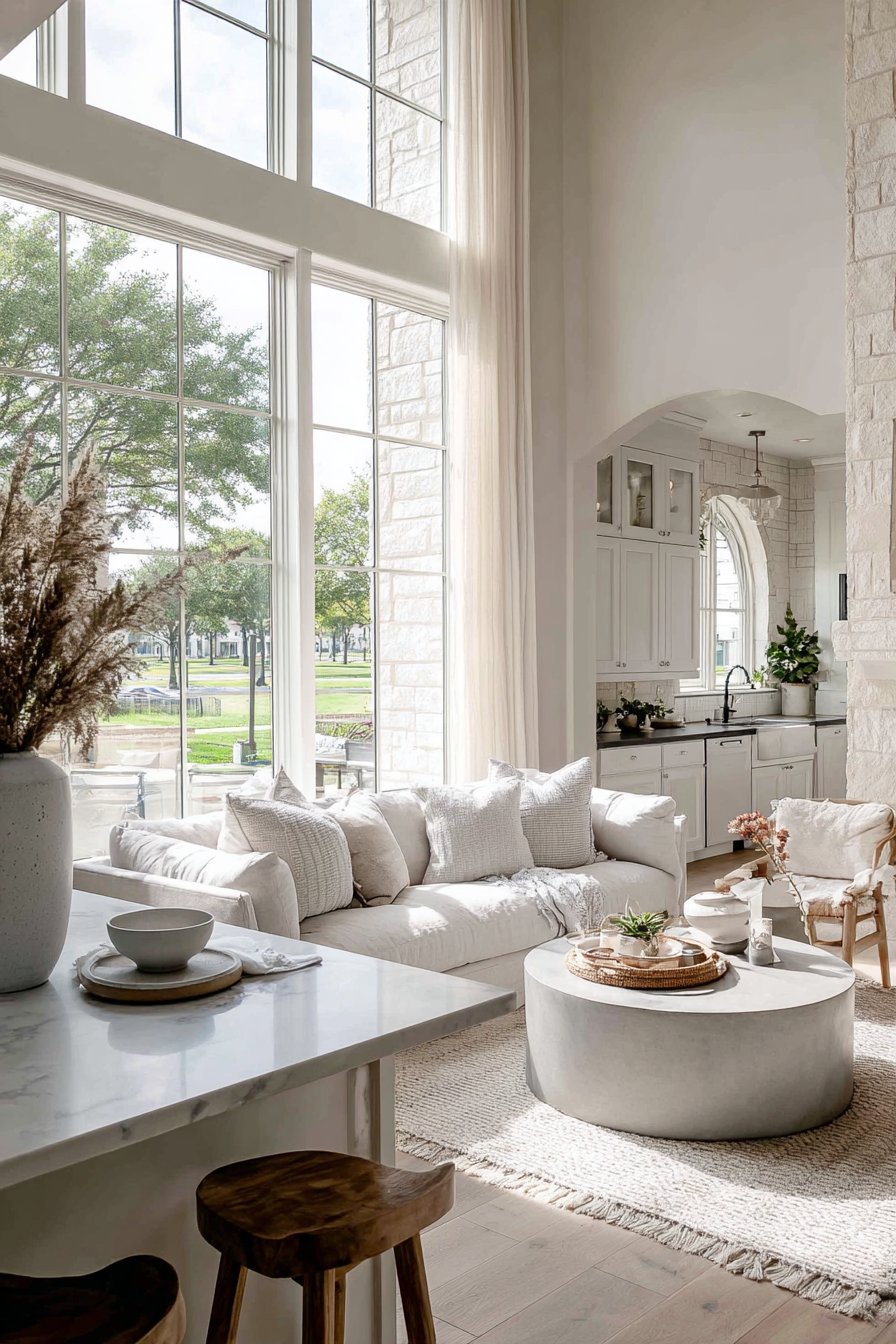
This open-concept design features a gray performance fabric sofa facing sliding glass doors that create seamless transition to outdoor living spaces. The indoor-outdoor connection is emphasized through consistent light gray tones that visually expand the living area beyond its physical walls. Performance fabric selection proves particularly practical for spaces connecting to patios or gardens, offering stain resistance and durability against increased foot traffic and environmental exposure.
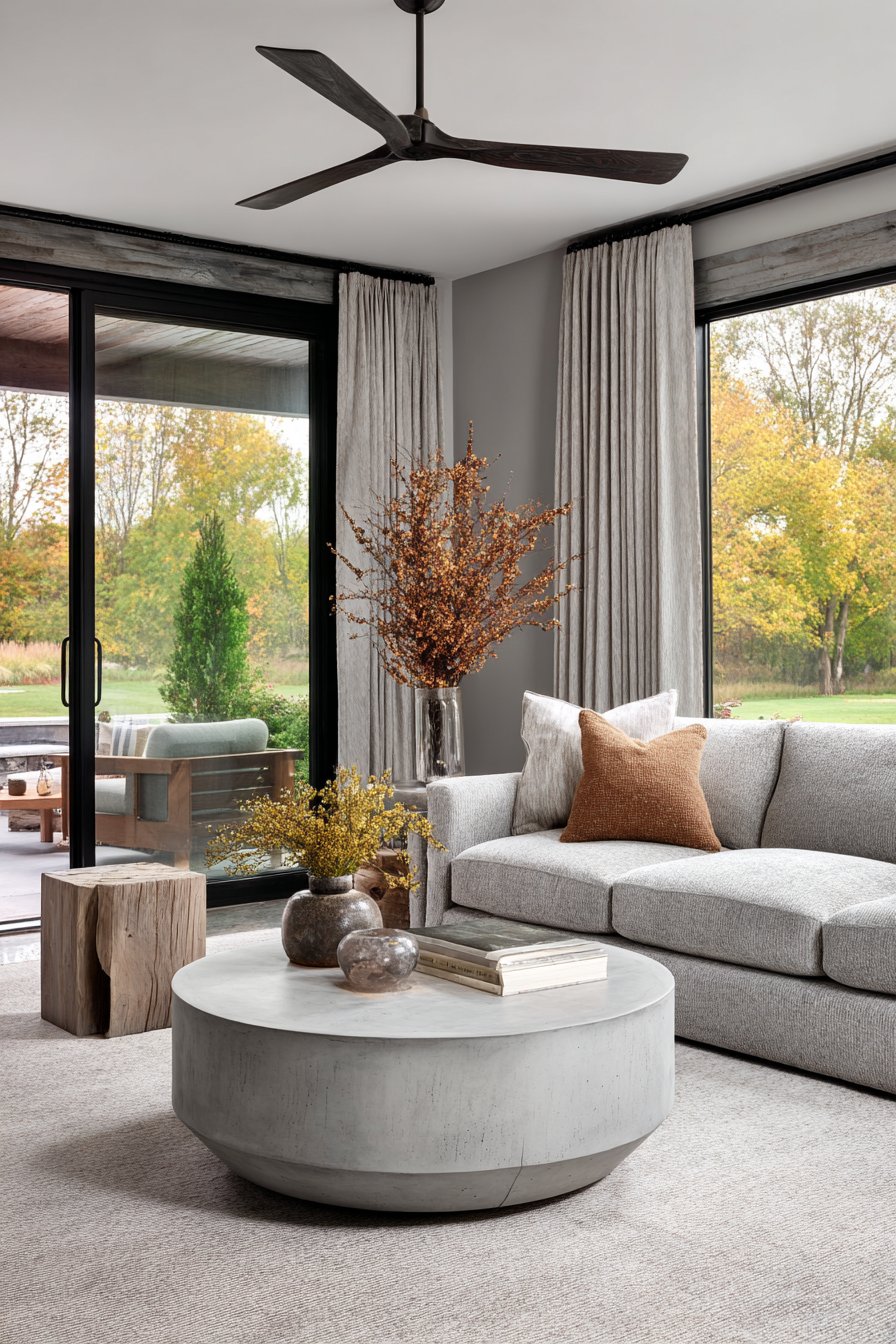
A round concrete coffee table in pale gray adds modern industrial touch while remaining family-friendly through its rounded edges and sturdy construction. The circular form contrasts beautifully with the linear geometry of the sliding doors and rectangular sofa, creating visual dynamism through shape variation. Natural fiber window treatments in warm gray filter sunlight during peak hours, protecting furnishings while maintaining the connection to the outdoors through translucent weave.
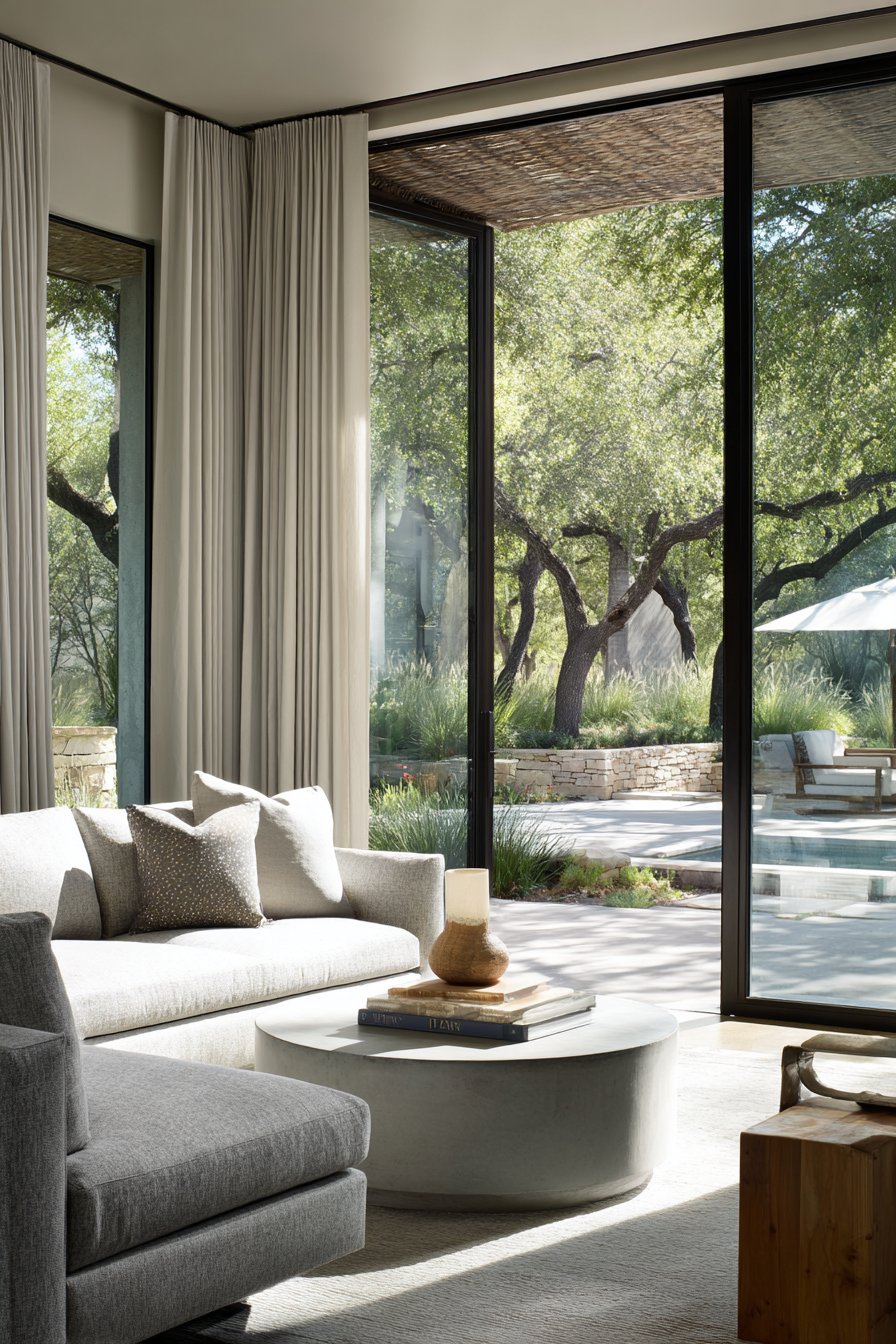
The walls are painted in a warm light gray with subtle taupe undertones, shifting the typically cool gray palette toward warmer territory that better complements natural outdoor views and landscape colors. This design approach recognizes that rooms with extensive glass and outdoor views benefit from warmer gray tones that harmonize with natural greens, browns, and blues visible beyond the windows. The spacious layout accommodates natural circulation patterns between indoor and outdoor zones.
Key Design Tips:
- Choose performance fabrics for furniture in rooms with direct outdoor access
- Paint walls in warm-toned grays with taupe undertones when rooms feature garden views
- Select round coffee tables to soften angular spaces dominated by rectangular architecture
- Install natural fiber shades for UV protection while maintaining outdoor visual connection
- Extend flooring materials from interior to exterior for seamless transitions
- Position seating to face both the outdoor view and interior conversation areas
- Use weather-resistant accessories near doors to accommodate occasional exposure
6. Traditional Meets Contemporary Elegance
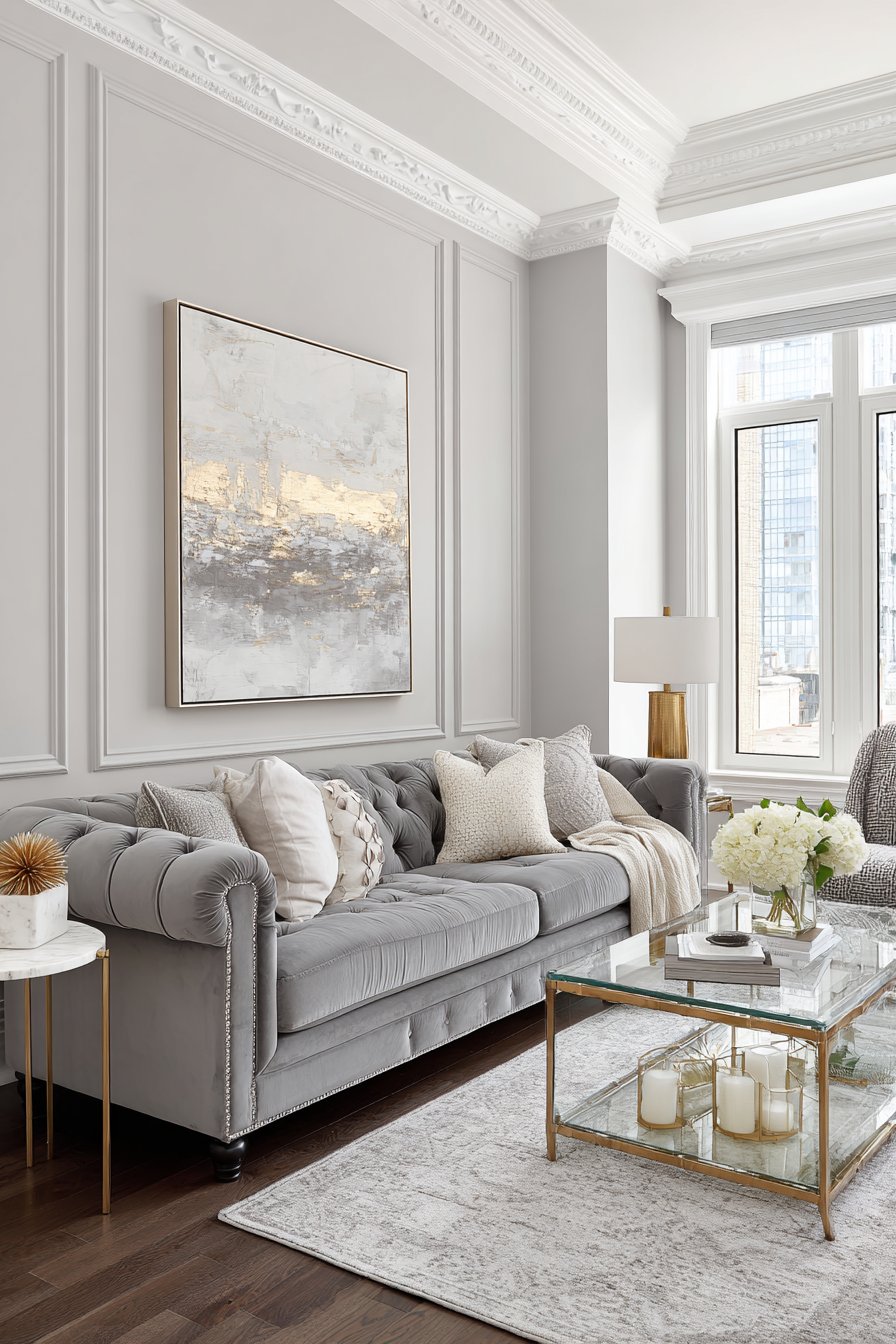
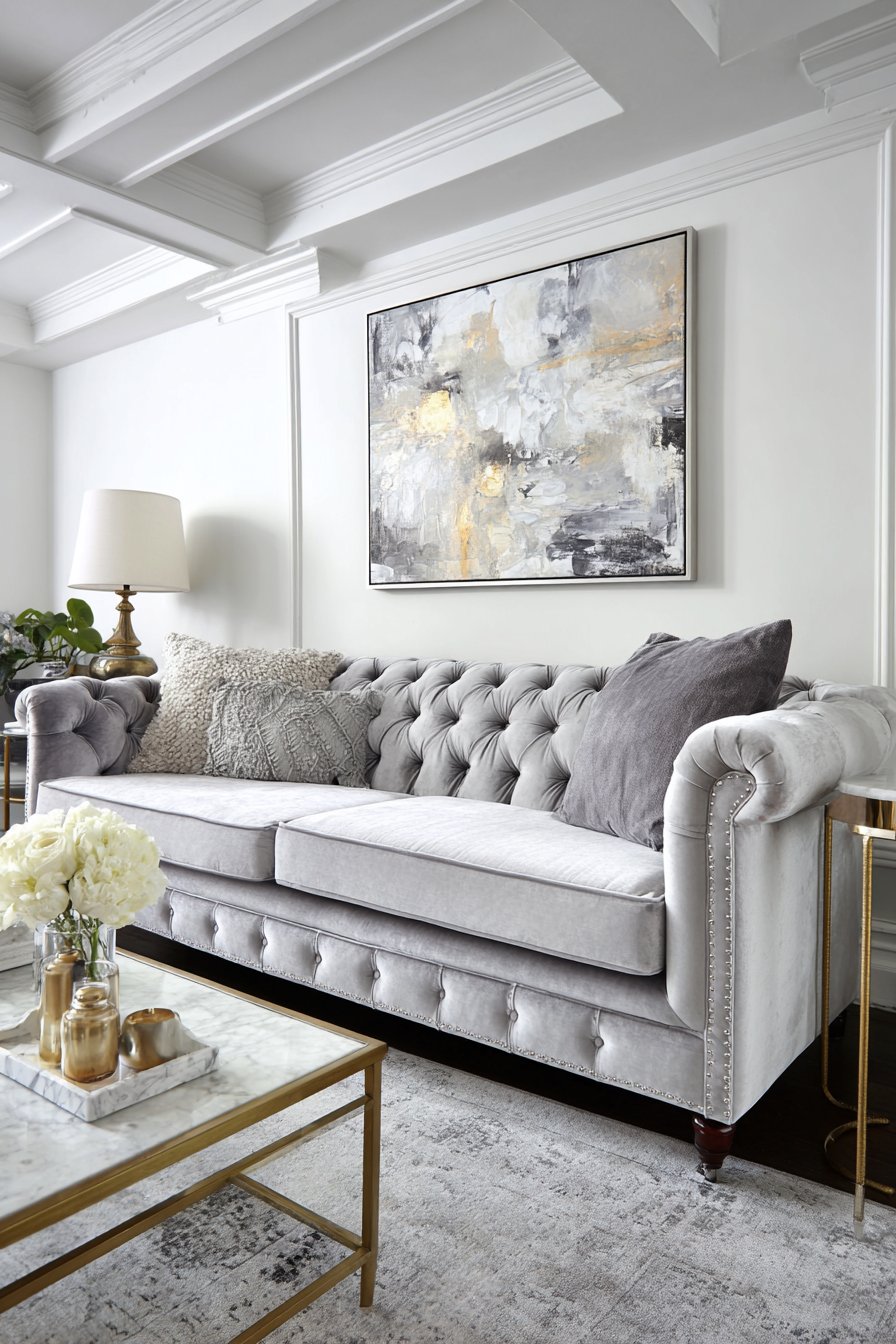
A tufted gray chesterfield sofa combines traditional silhouette with contemporary light gray velvet upholstery, creating an unexpected bridge between classic and modern design sensibilities. The deep button tufting and rolled arms speak to heritage craftsmanship while the light gray velvet feels fresh and current. The room mixes classic and modern elements through a brass and glass coffee table, white marble side tables, and a vintage-inspired gray wool rug with subtle pattern that grounds the eclectic approach.
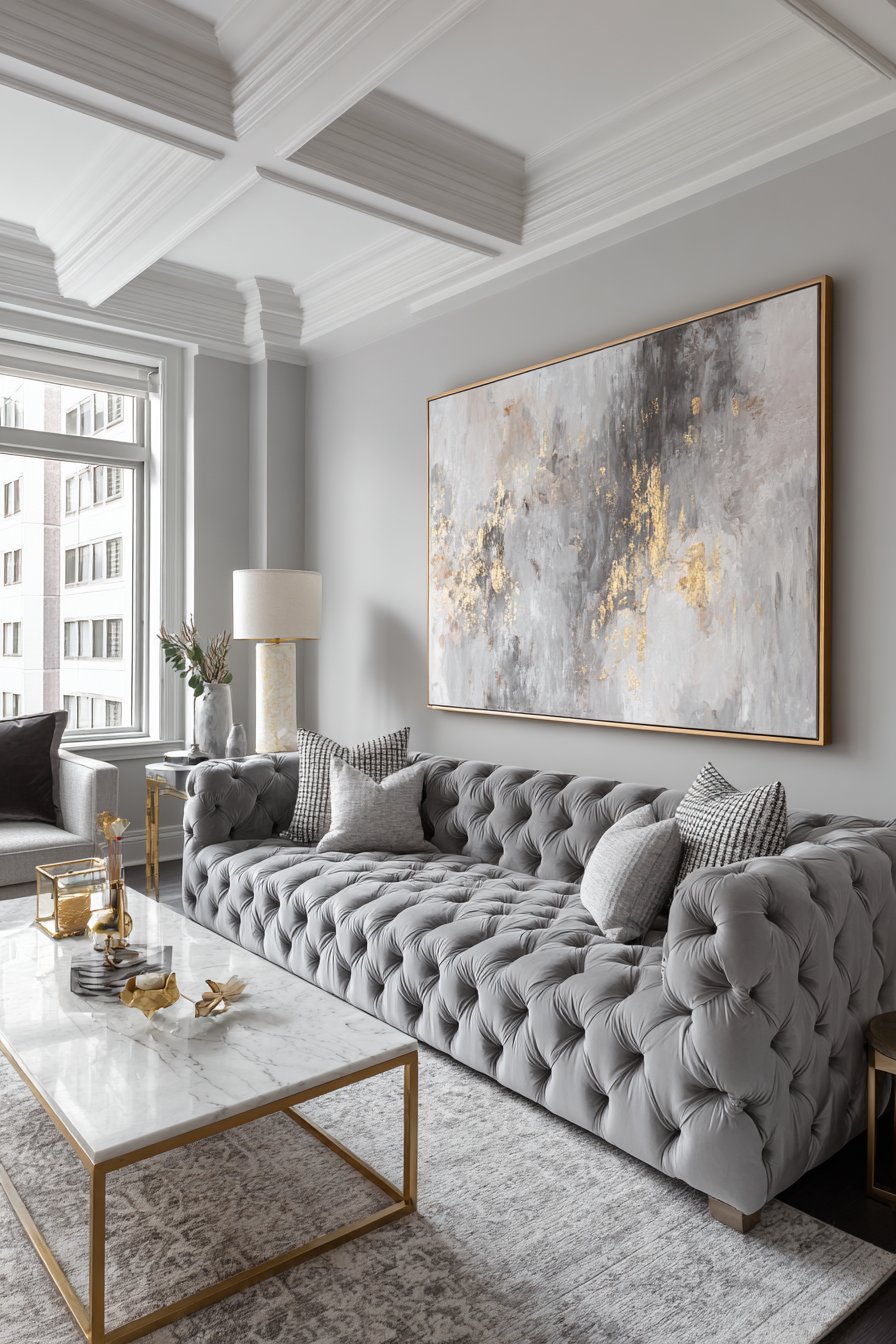
Crown molding painted in matching light gray adds architectural interest while demonstrating how traditional architectural details adapt beautifully to contemporary color palettes. A modern abstract painting with gray, white, and gold tones serves as focal point above the sofa, its organic forms and metallic accents creating dialogue between the traditional furniture form and contemporary art. The layering of different design eras creates collected sophistication that feels personally curated rather than showroom perfect.
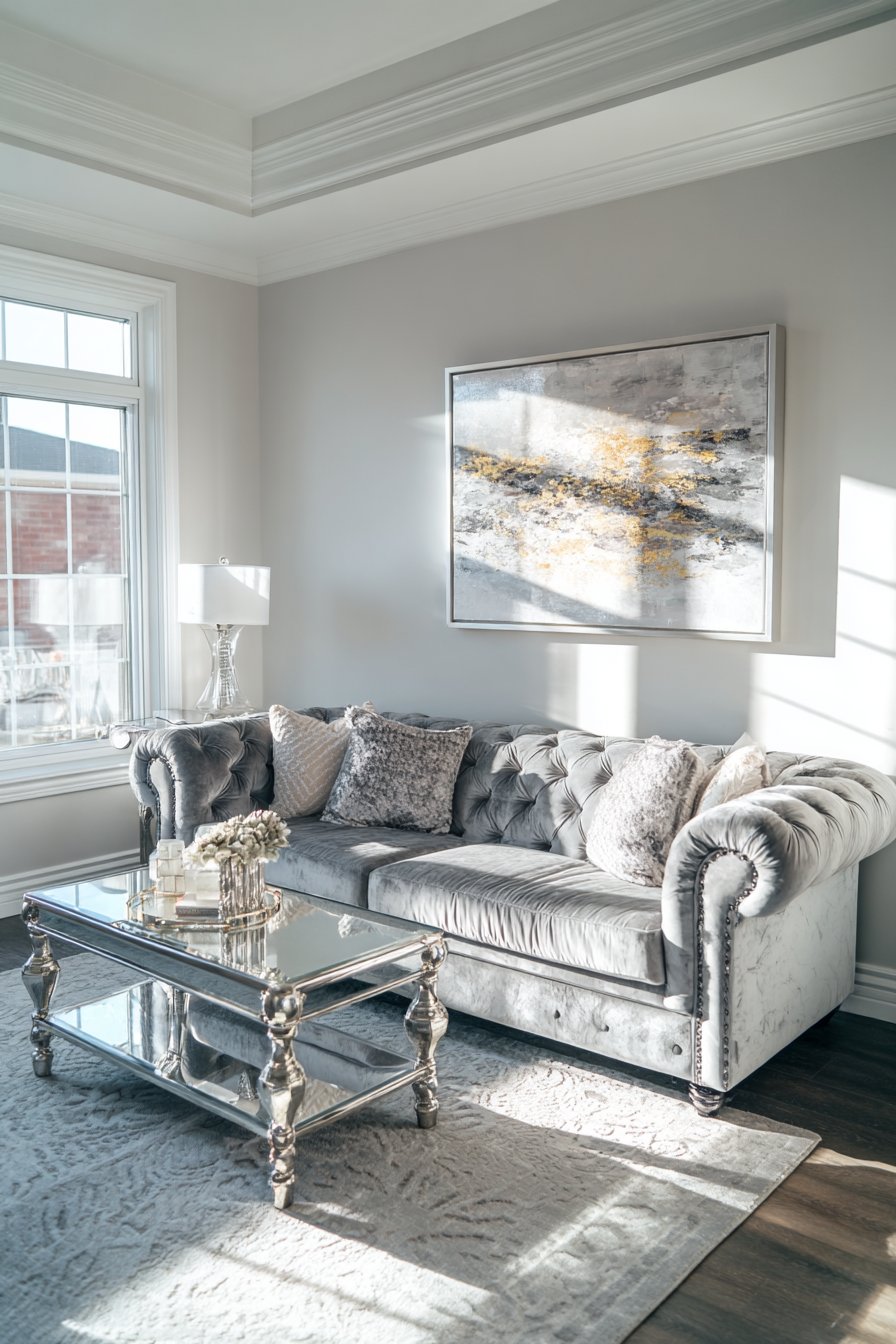
This transitional approach particularly appeals to those who appreciate traditional comfort but desire contemporary relevance. The light gray palette modernizes inherently traditional pieces like the chesterfield, proving that classic furniture forms remain viable in contemporary interiors when updated through color and material choices. The brass accents throughout provide warmth and glamour that elevates the entire composition.
Key Design Tips:
- Reupholster traditional furniture silhouettes in contemporary colors to bridge design eras
- Paint architectural details the same color as walls for subtle, sophisticated dimension
- Mix furniture from different periods rather than matching sets for curated appeal
- Introduce metallic accents in brass or gold to warm gray palettes
- Select abstract artwork that incorporates gray plus one metallic tone
- Layer patterns subtly through vintage-inspired rugs rather than bold prints
- Use marble in white or gray tones to add luxury without overwhelming transitional spaces
7. Smart Small Space Solutions
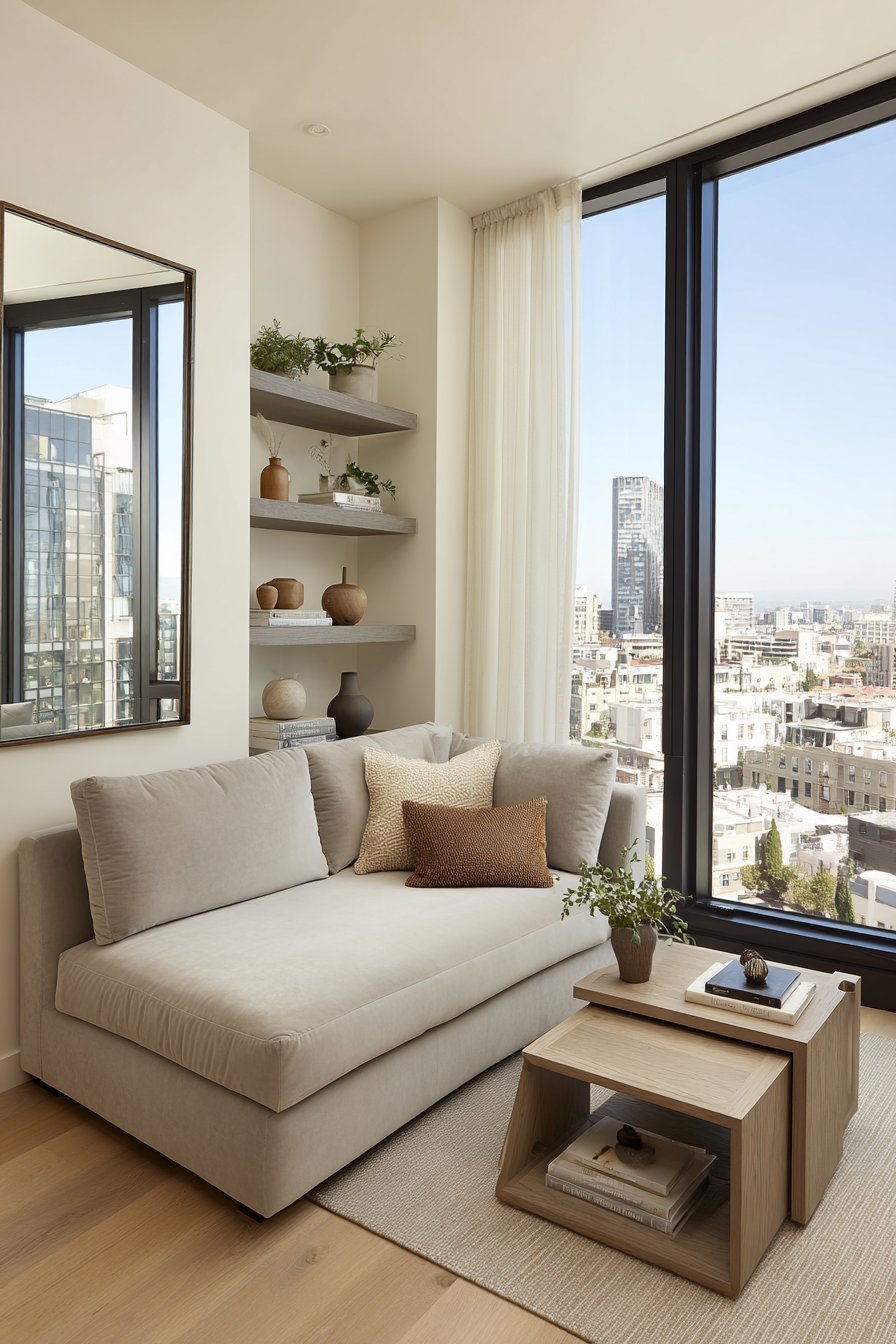
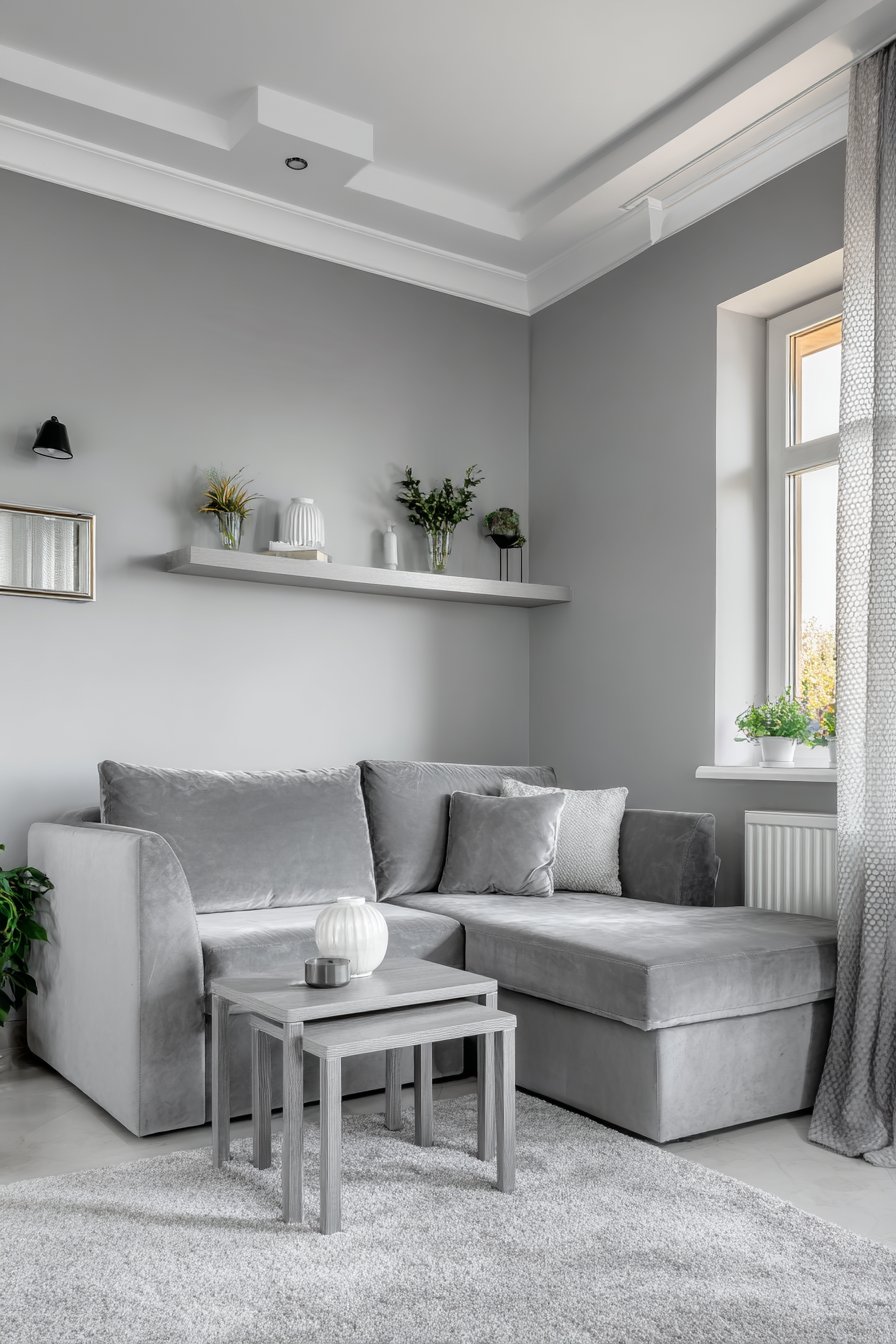
This compact living room demonstrates how strategic design maximizes limited square footage through a streamlined gray velvet apartment sofa against one wall. The single-wall placement opens the floor plan, creating circulation space and making the room feel larger than its dimensions suggest. A nesting coffee table set in gray-washed oak provides flexible functionality—tables can be separated when needed for entertaining or nested together to maximize floor space during daily use.
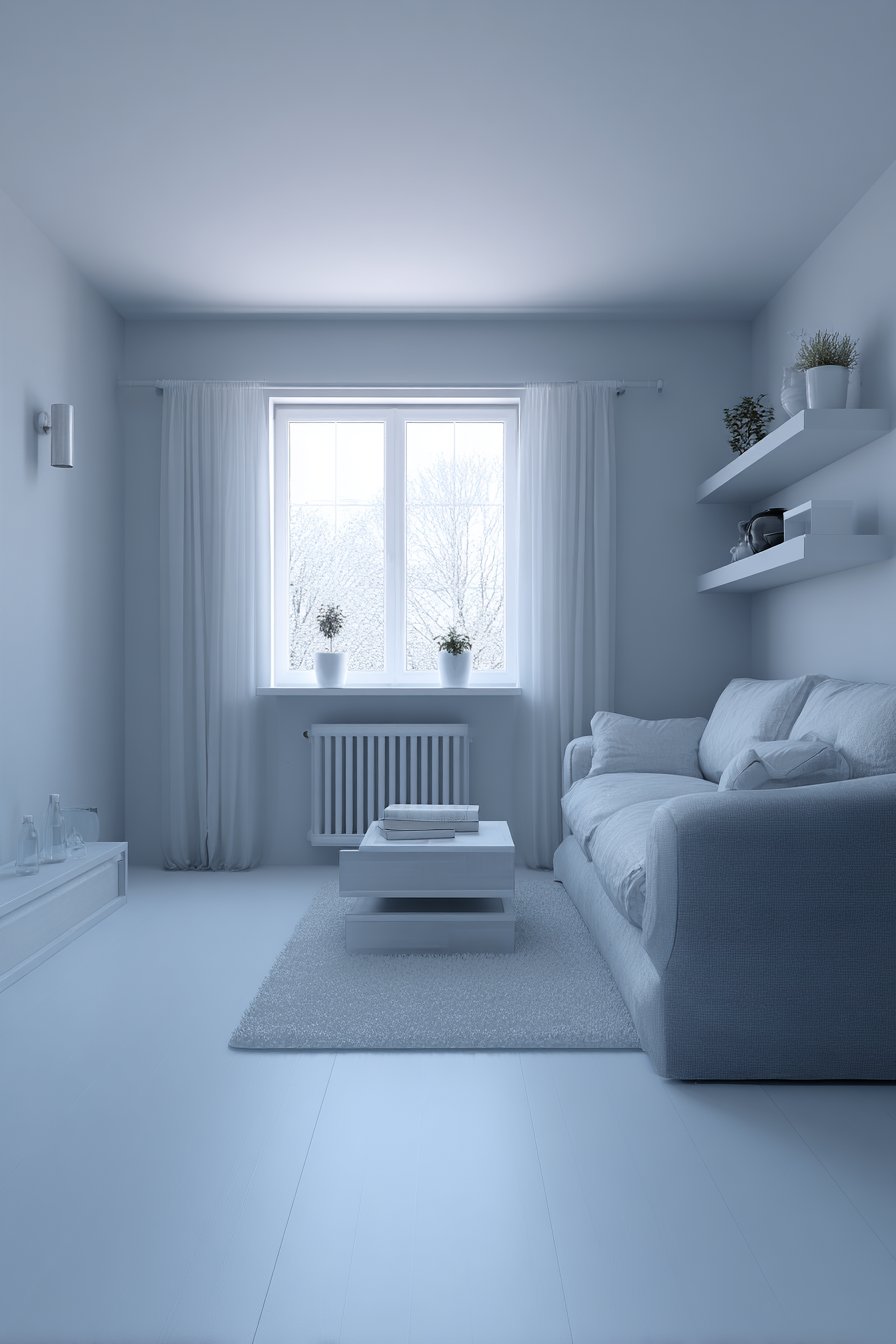
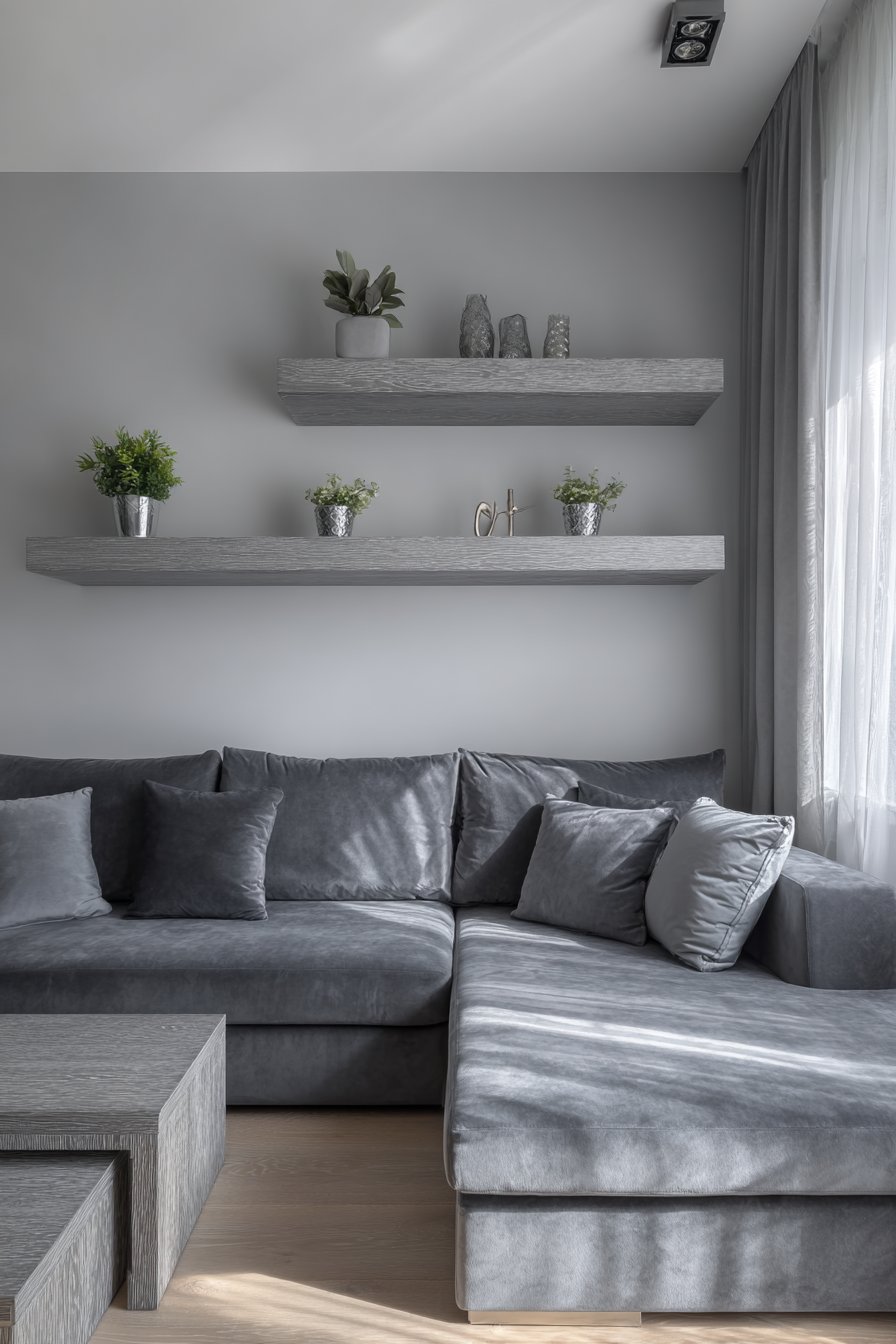
Floating shelves in light gray hold carefully edited decorative items and small plants, providing display and storage without consuming valuable floor area. The vertical storage approach draws eyes upward, creating the illusion of height while keeping surfaces clear. The compact layout feels spacious through strategic use of mirrors and a consistent light gray color palette on walls and major furniture pieces, eliminating visual breaks that fragment small spaces.
Natural light from a single window is maximized with sheer curtains that filter rather than block daylight, crucial in smaller rooms where every lumen of natural light contributes to spatial perception. The design proves that small spaces don’t require sacrificing style—rather, they demand more thoughtful curation where each piece must justify its presence through beauty and utility.
Key Design Tips:
- Position larger furniture pieces against walls to maximize central floor space
- Choose nesting or stacking tables for flexibility in compact layouts
- Install floating shelves instead of floor-standing bookcases to preserve square footage
- Use mirrors strategically opposite windows to multiply natural light
- Maintain consistent color palette throughout to eliminate visual fragmentation
- Select apartment-scale furniture specifically proportioned for smaller spaces
- Limit decorative accessories to most meaningful items to prevent cluttered appearance
- Choose sheer window treatments to maximize natural light penetration
8. Dramatic High Ceiling Showcase
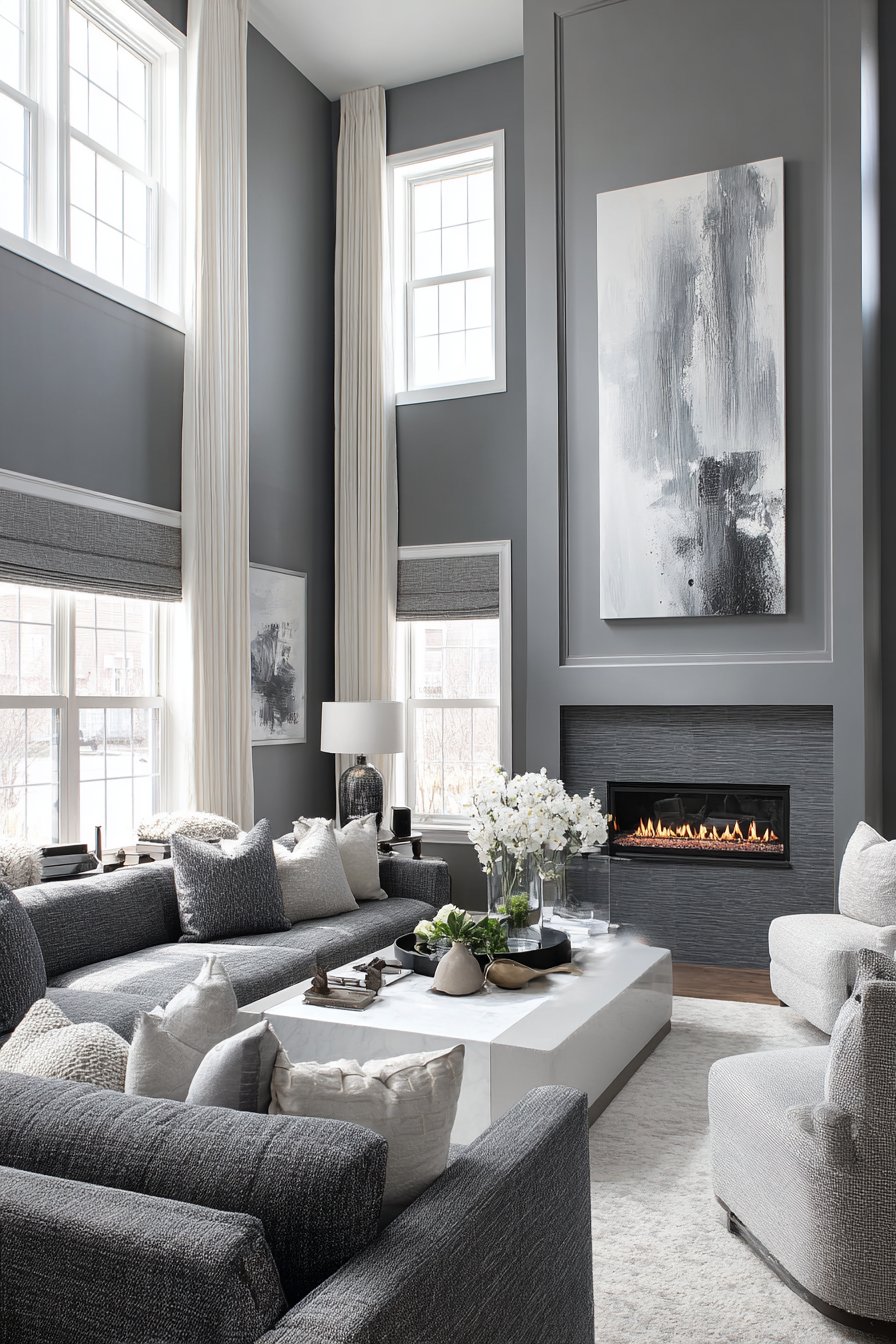
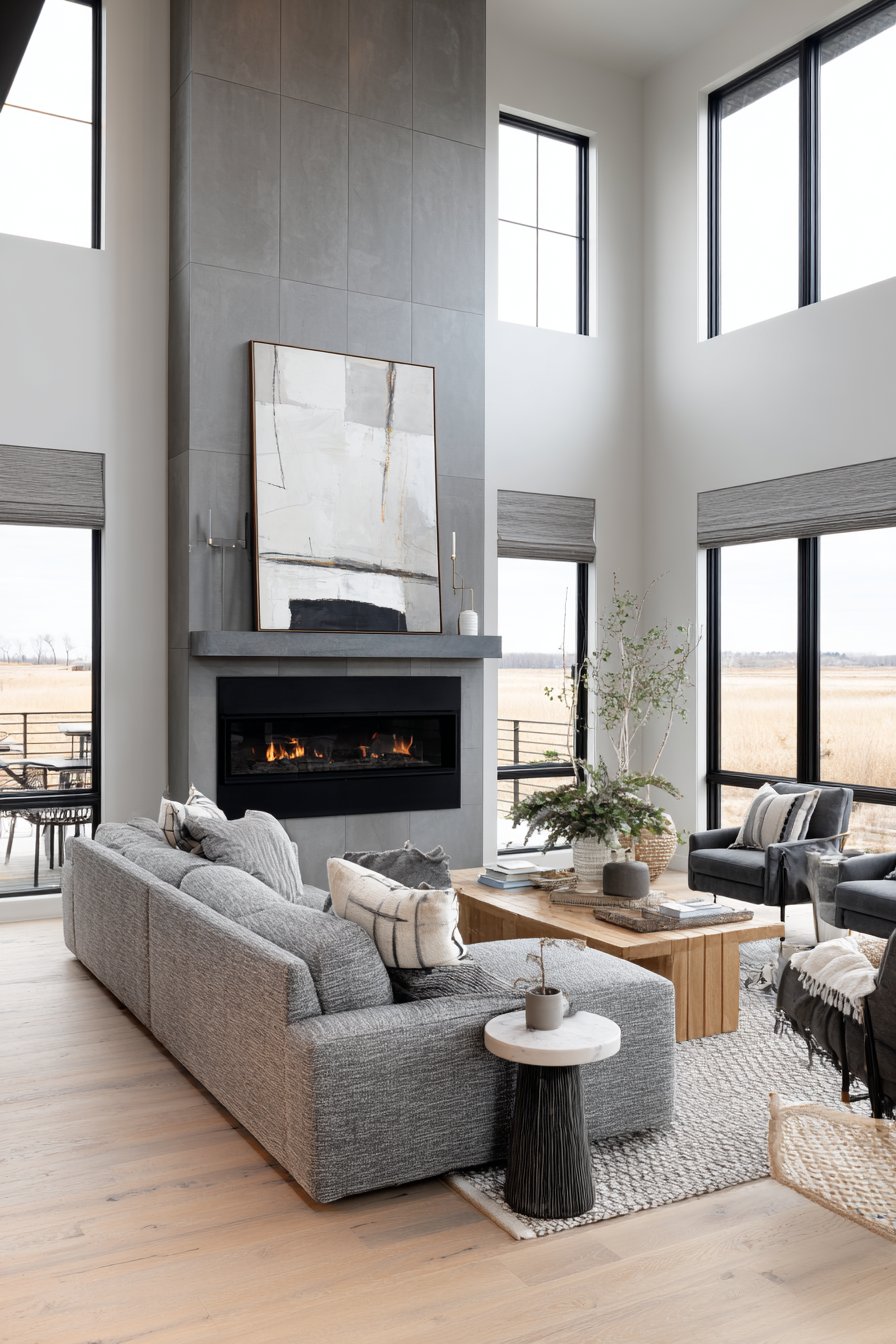
This impressive space features a two-story wall painted in sophisticated light gray that emphasizes dramatic ceiling height. The vertical expanse creates architectural theater, transforming a simple color into a statement through scale. A sectional sofa in heathered gray fabric grounds the vertical space, providing visual anchor at human scale while a large-scale abstract artwork in gray, white, and charcoal tones draws the eye upward, helping the eye travel the full height of the wall.
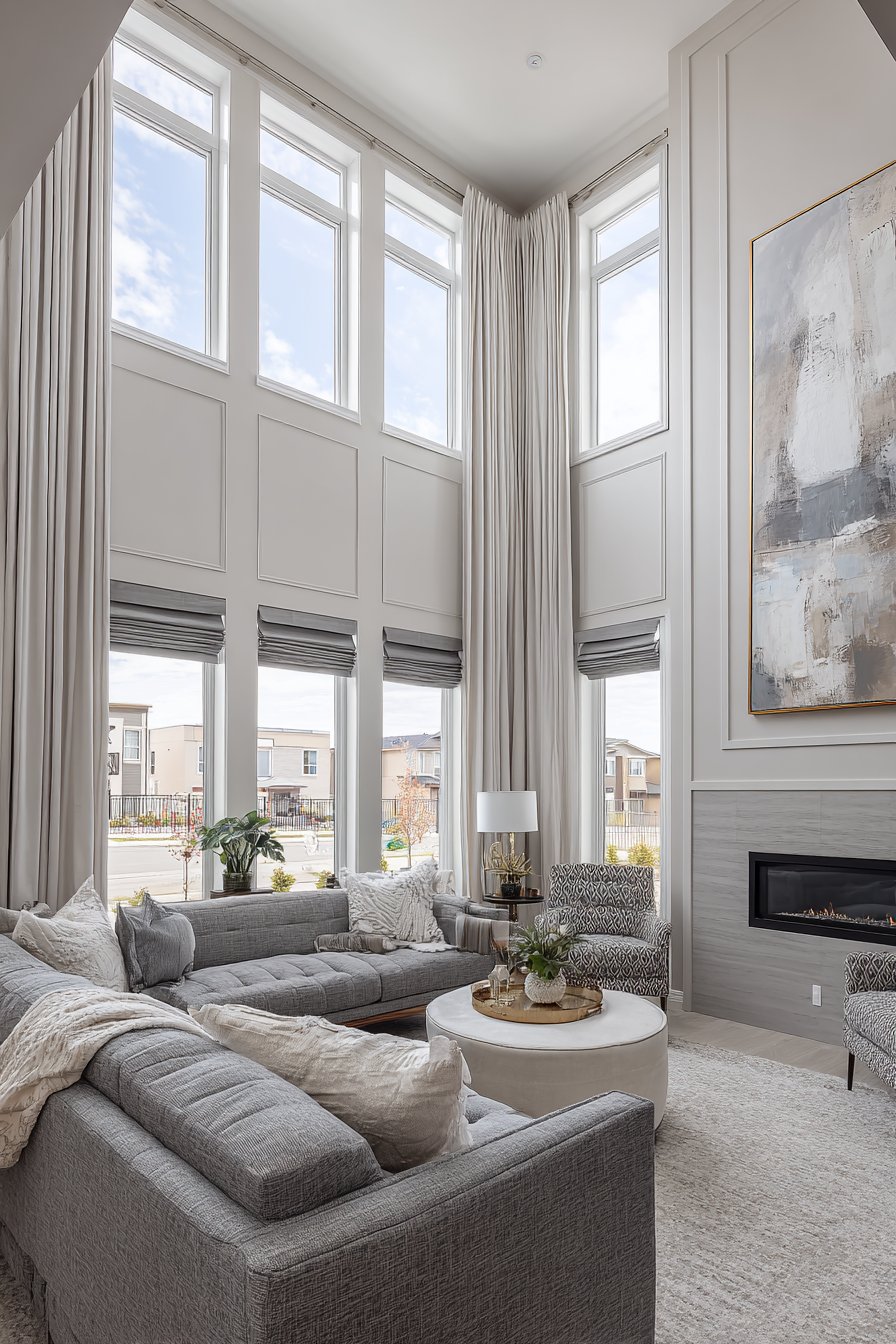
A modern linear fireplace with gray stone surround anchors the seating area at floor level, creating a counterpoint to the soaring ceiling and establishing an intimate gathering zone within the voluminous space. Tall windows with motorized gray linen shades control natural light and privacy, their floor-to-ceiling proportions emphasizing the vertical dimension. The room includes a secondary seating area with gray accent chairs, demonstrating how high-ceiling rooms often accommodate multiple functional zones.
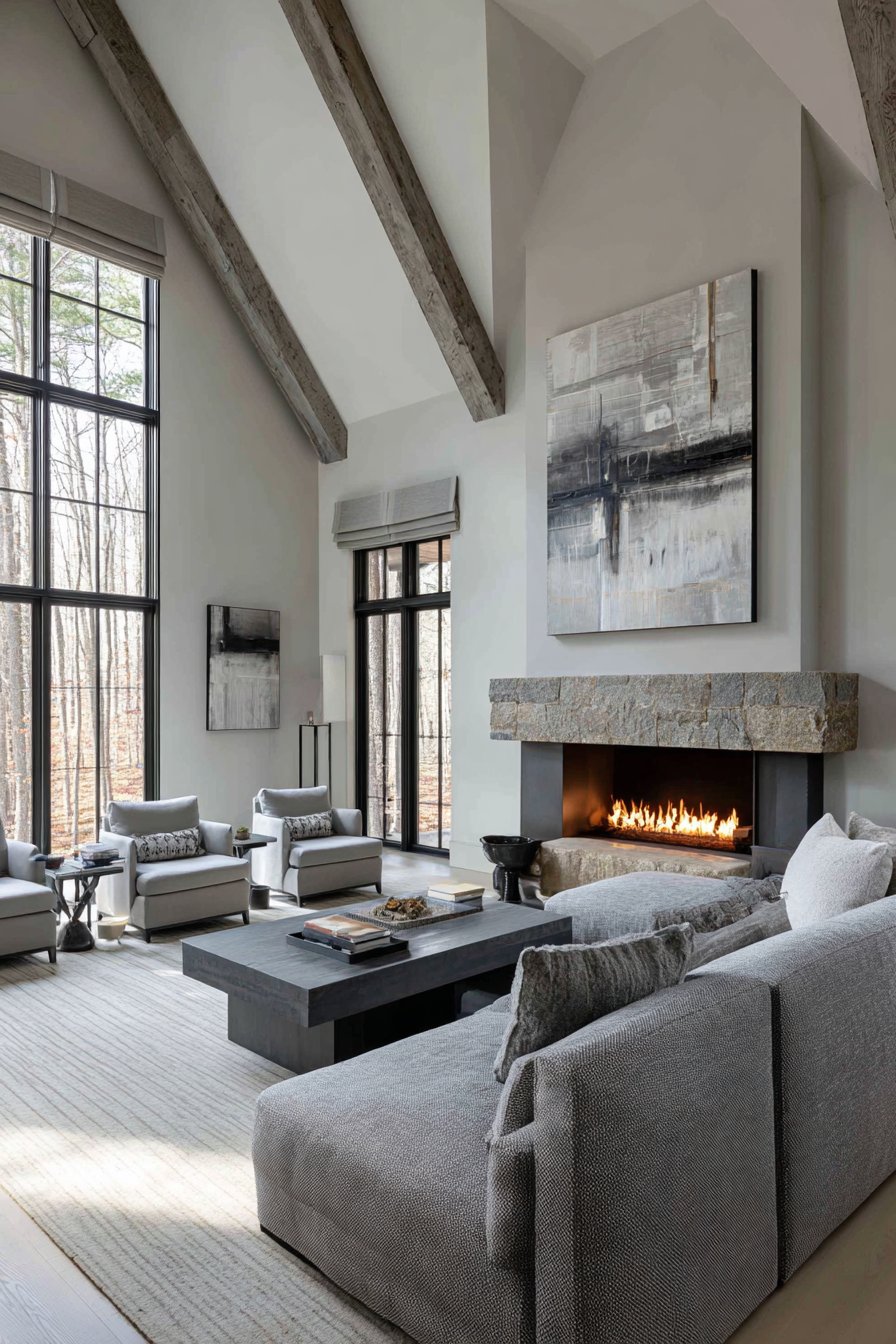
Designing for high ceilings presents unique challenges—the goal is celebrating the architectural drama while maintaining human-scale comfort and avoiding the gymnasium effect. The light gray palette proves ideal for this purpose, providing visual continuity that emphasizes height without the stark coldness of white or the cave-like quality darker colors might create in very tall spaces.
Key Design Tips:
- Use oversized artwork to bridge vertical distances in tall spaces
- Position linear fireplaces at floor level to create intimate focal points
- Include secondary seating areas to fill volume in high-ceiling rooms
- Choose motorized window treatments for difficult-to-reach tall windows
- Paint ceilings in lighter gray than walls to emphasize height
- Install vertical lighting features that draw eyes upward
- Ground tall spaces with substantial furniture at floor level
- Use heathered or textured fabrics to add visual interest at scale
9. Coastal-Inspired Casual Living
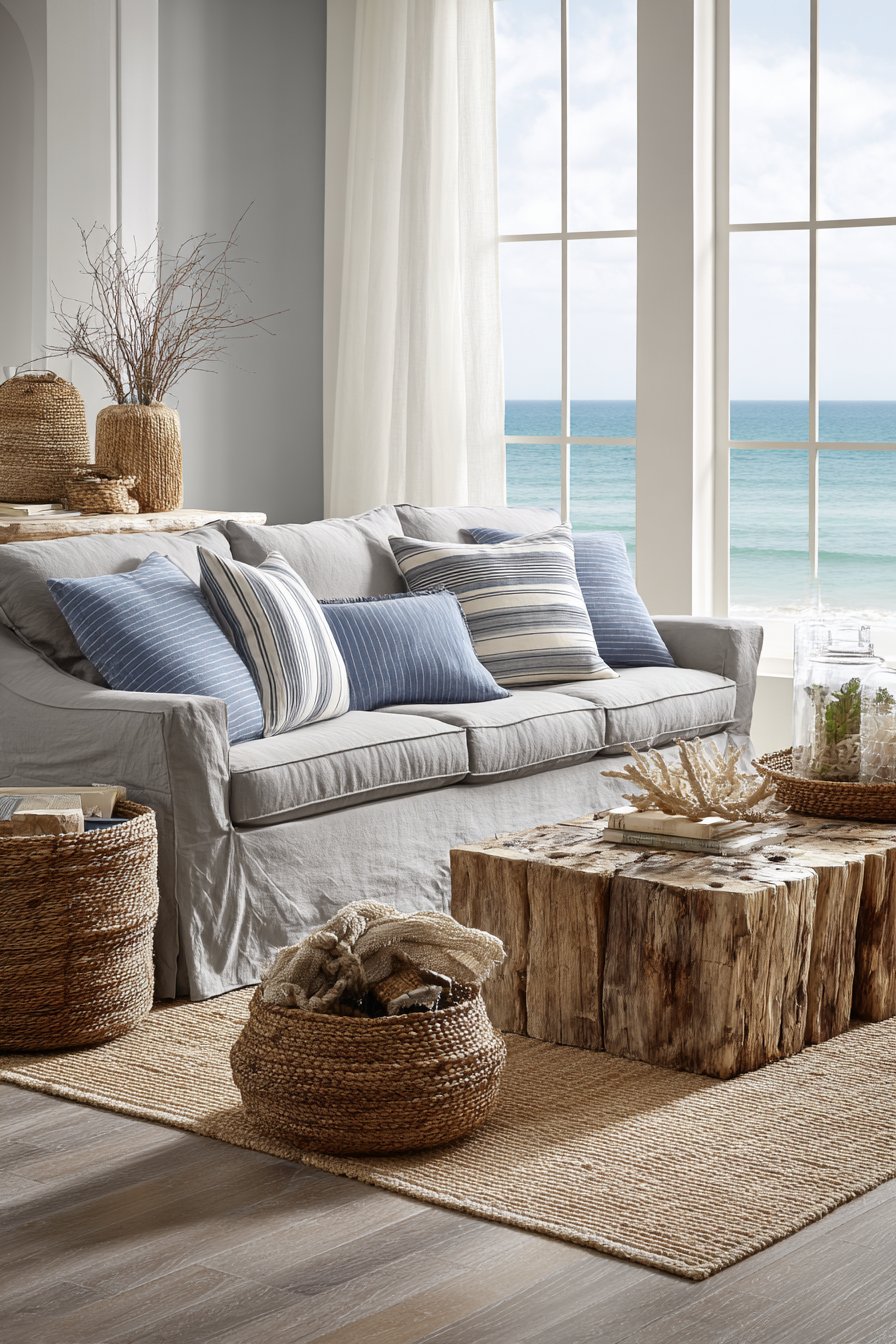
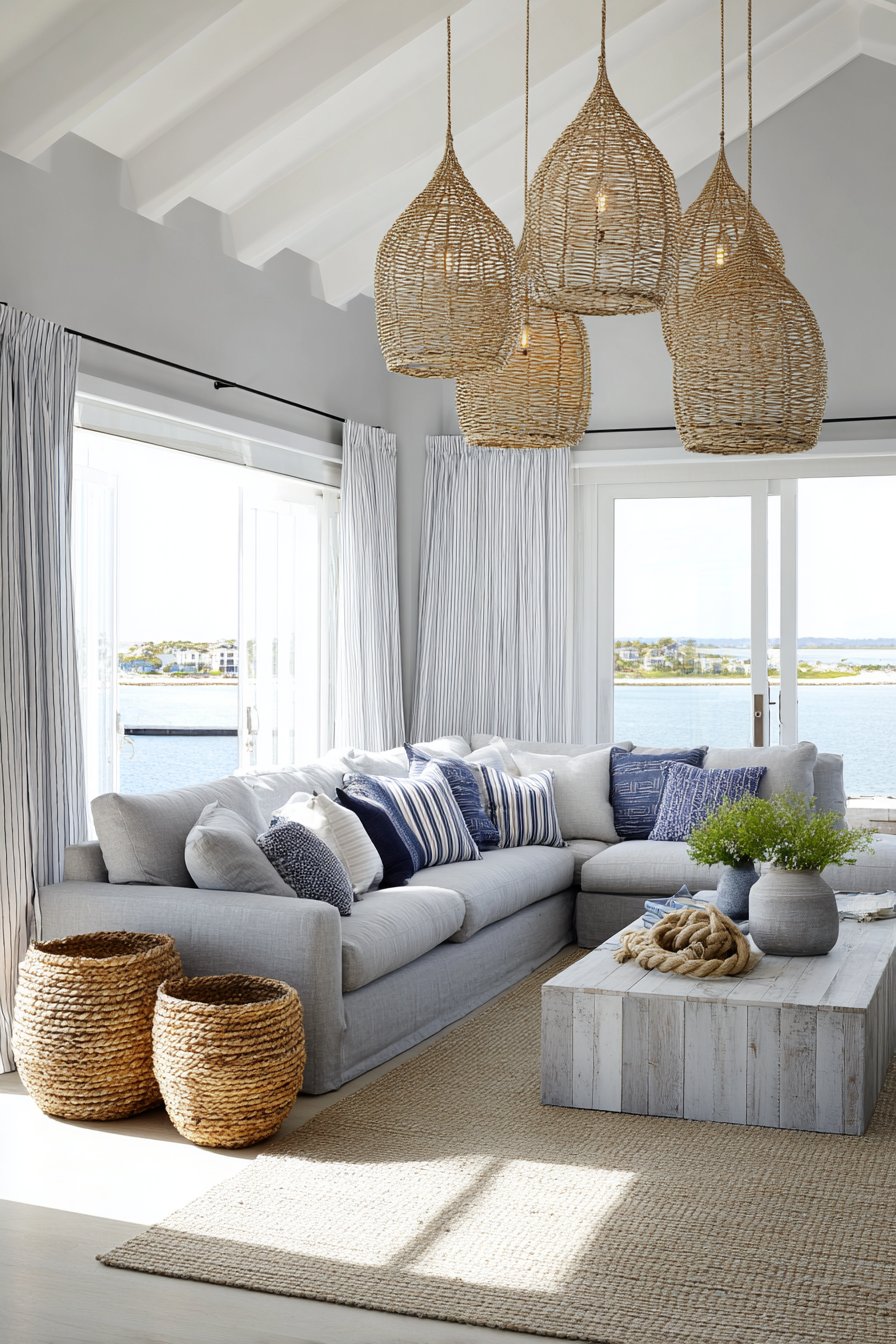
This breezy design features a slipcovered gray sofa in washable linen, embodying the relaxed, livable aesthetic central to coastal interiors. The removable slipcover addresses the practical realities of beach-adjacent living where sand, moisture, and casual entertaining demand easily maintained furnishings. Styled with striped and solid pillows in shades of gray and white, the sofa references nautical themes without literal anchors or shells.
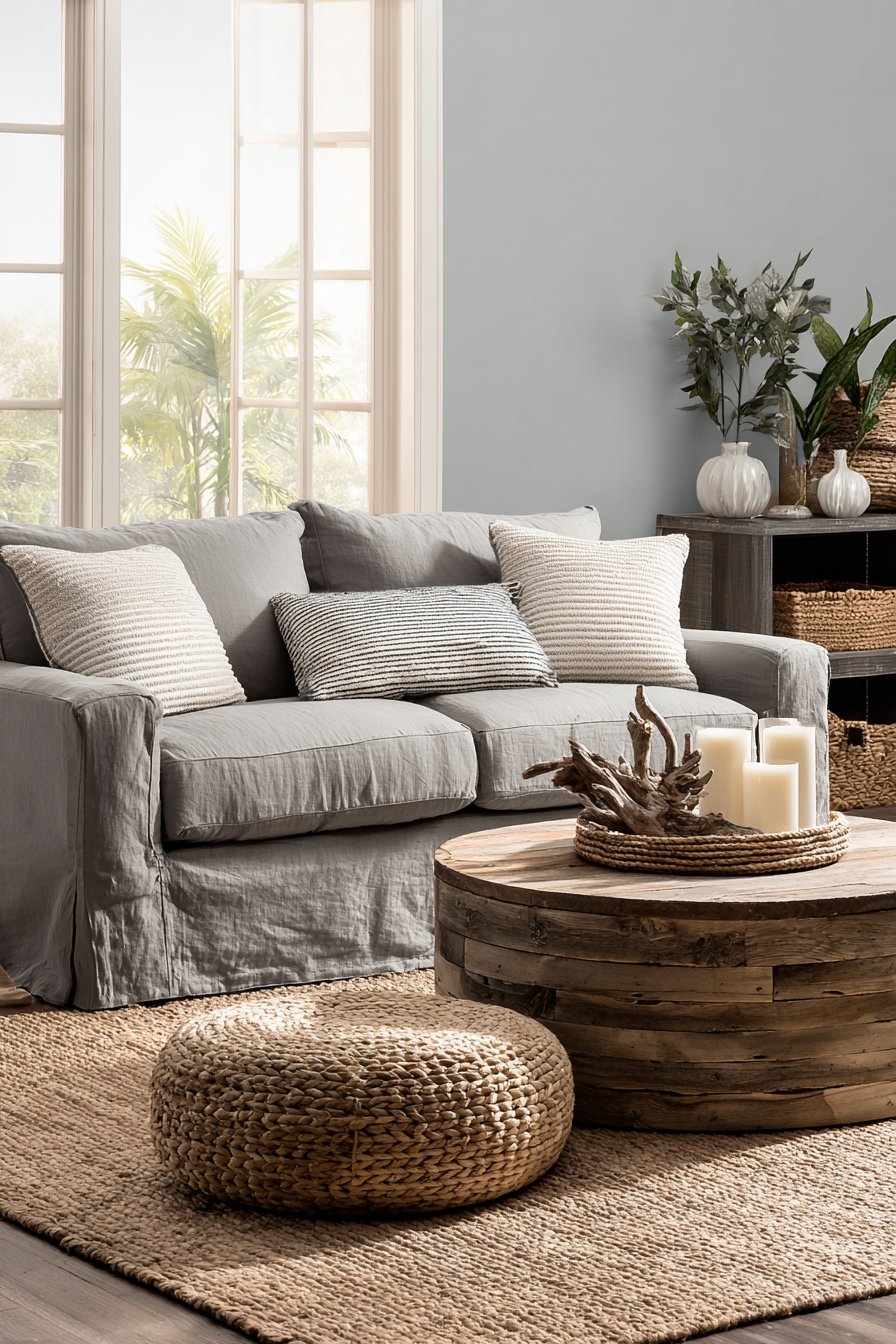
A driftwood coffee table and natural rope-wrapped accessories bring organic texture and direct connection to the seaside environment. The weathered wood and natural fibers introduce warmth and tactile variety to the gray palette. Walls in cool light gray with blue undertones evoke a serene seaside atmosphere, their slight coolness referencing ocean and sky. Woven seagrass baskets provide practical storage while maintaining the casual aesthetic, their natural honey tones warming the predominantly gray scheme.
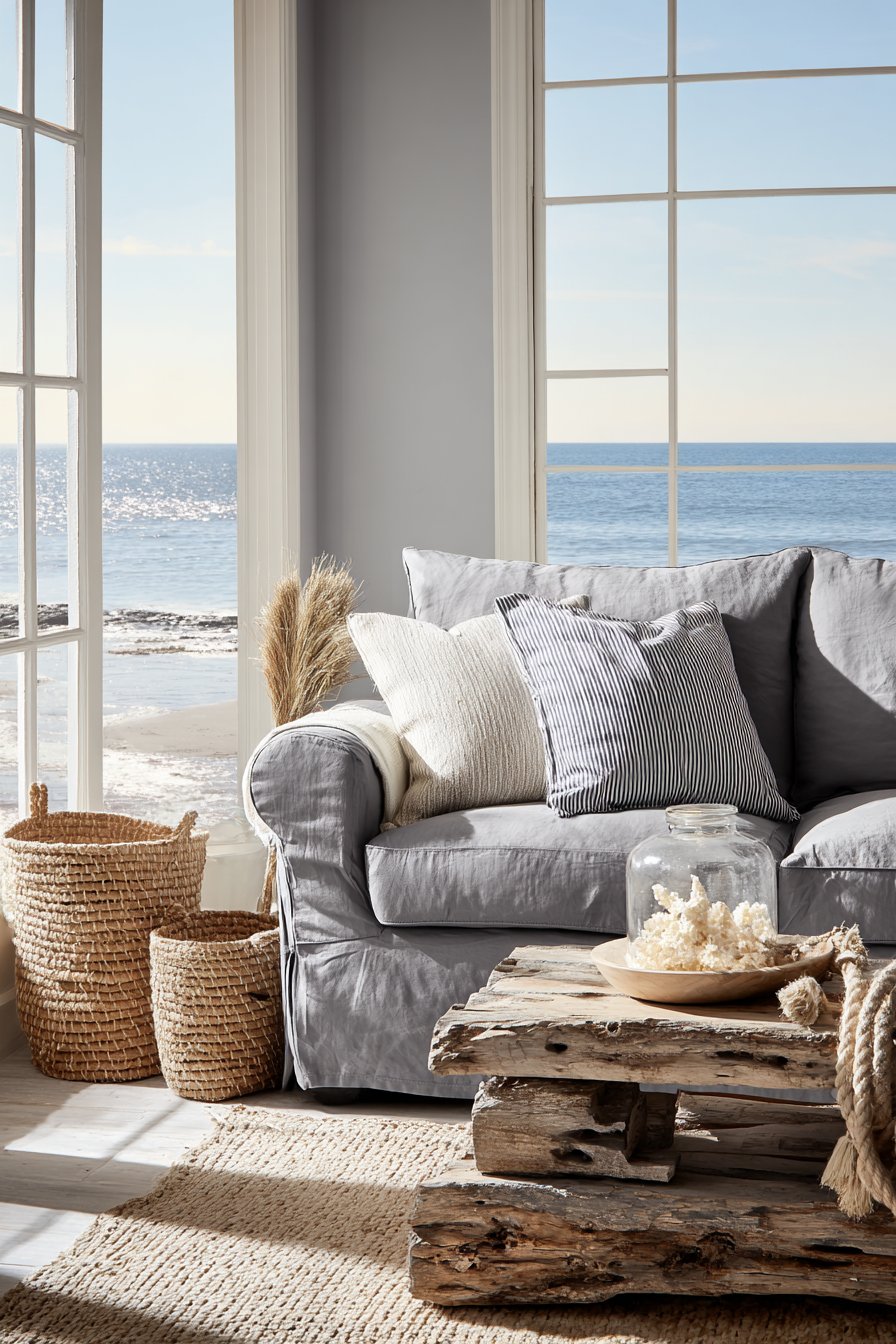
Large windows without heavy treatments maximize ocean or water views, allowing the natural environment to serve as ever-changing artwork. The design philosophy embraces the casual elegance of coastal living—sophisticated enough for adult entertaining yet durable and forgiving enough for sandy feet and wet swimsuits. The washable, natural materials ensure the space ages gracefully rather than showing every spill or stain.
Key Design Tips:
- Choose slipcover upholstery in washable fabrics for high-traffic coastal homes
- Incorporate driftwood and weathered wood for authentic coastal character
- Paint walls in gray with blue undertones to reference seaside environments
- Use natural fiber baskets and accessories for texture and practical storage
- Keep window treatments minimal to maximize water views and natural light
- Select striped patterns in gray and white for subtle nautical references
- Layer organic textures through rope, seagrass, linen, and weathered wood
- Embrace imperfection in materials that gain character through use and weathering
10. Contemporary Monochromatic Sophistication
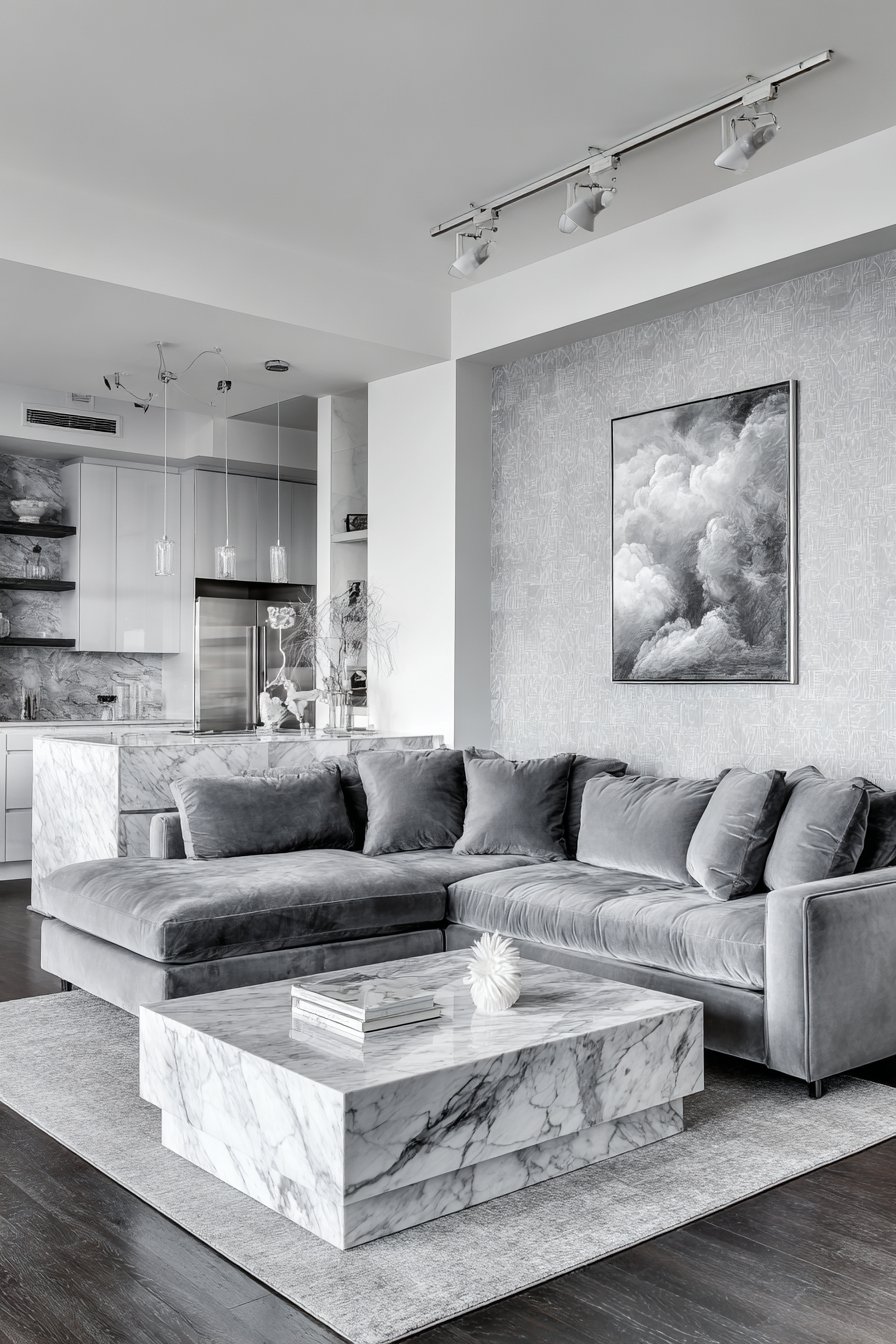
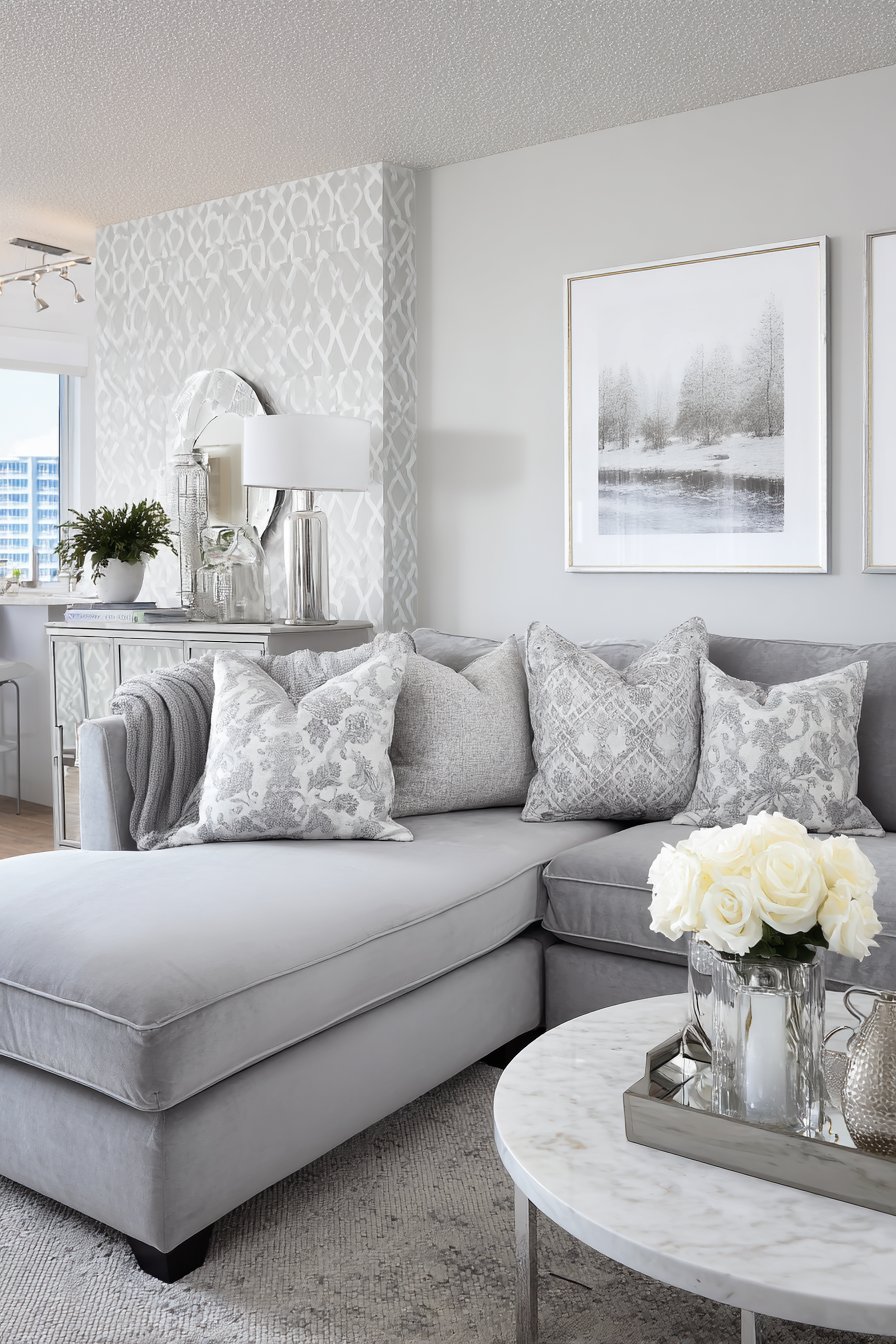
This design celebrates the power of monochromatic schemes through a modular gray sectional in performance velvet that can be reconfigured for different occasions. The modular construction allows homeowners to adapt the furniture arrangement to entertaining, media viewing, or intimate conversations. The layout includes a marble-topped credenza in gray veining for media storage and display, its elegant material elevating practical storage into decorative furniture.
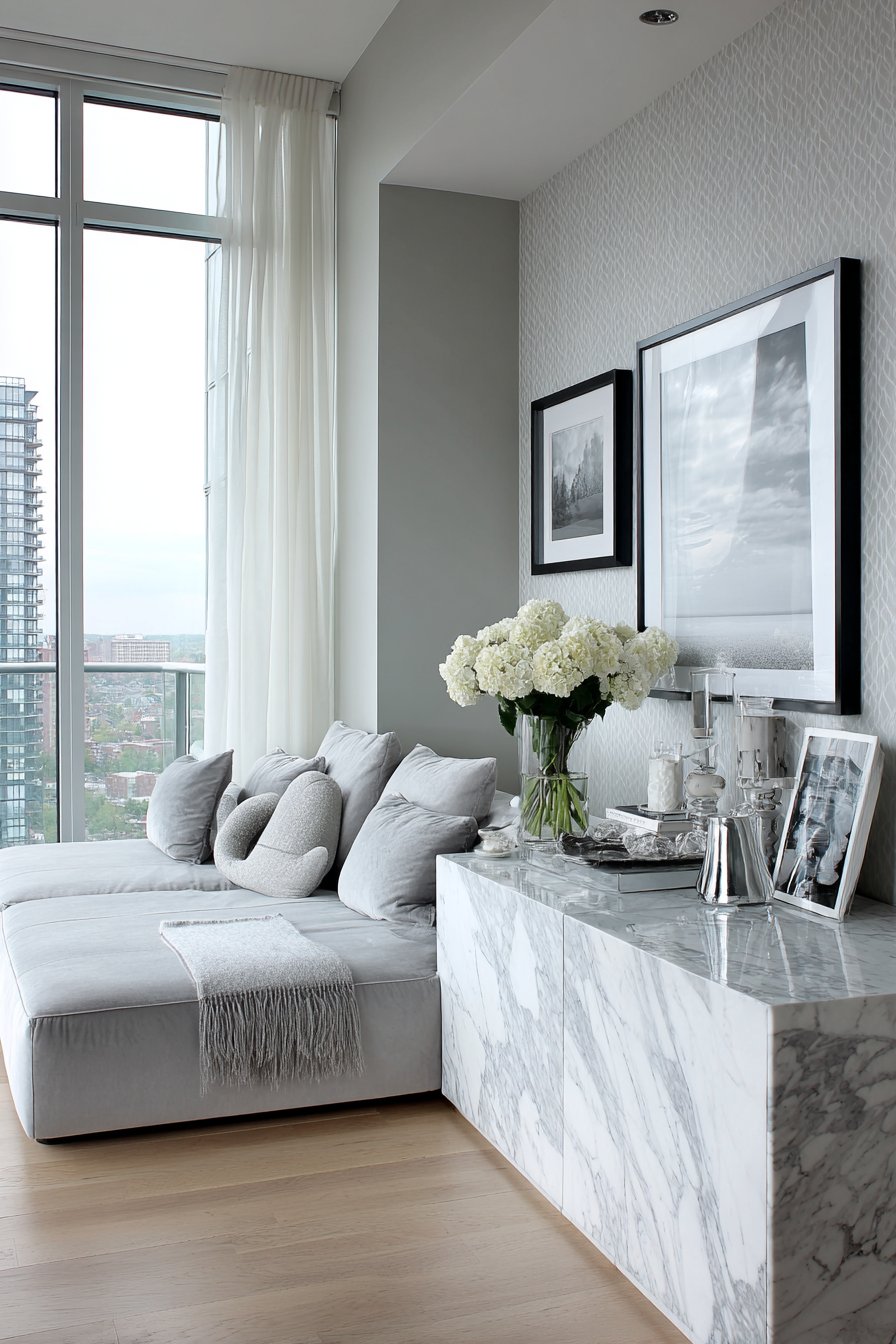
Geometric patterned wallpaper in tonal light gray adds subtle visual interest to one accent wall without introducing color, demonstrating how pattern creates dimension within monochromatic palettes. Chrome and glass accents provide reflective elements that catch and bounce light throughout the space, essential in single-color schemes where variation must come from sheen and texture rather than hue. Track lighting with adjustable heads highlights artwork and architectural features, its flexibility allowing the lighting plan to evolve with the modular furniture arrangement.
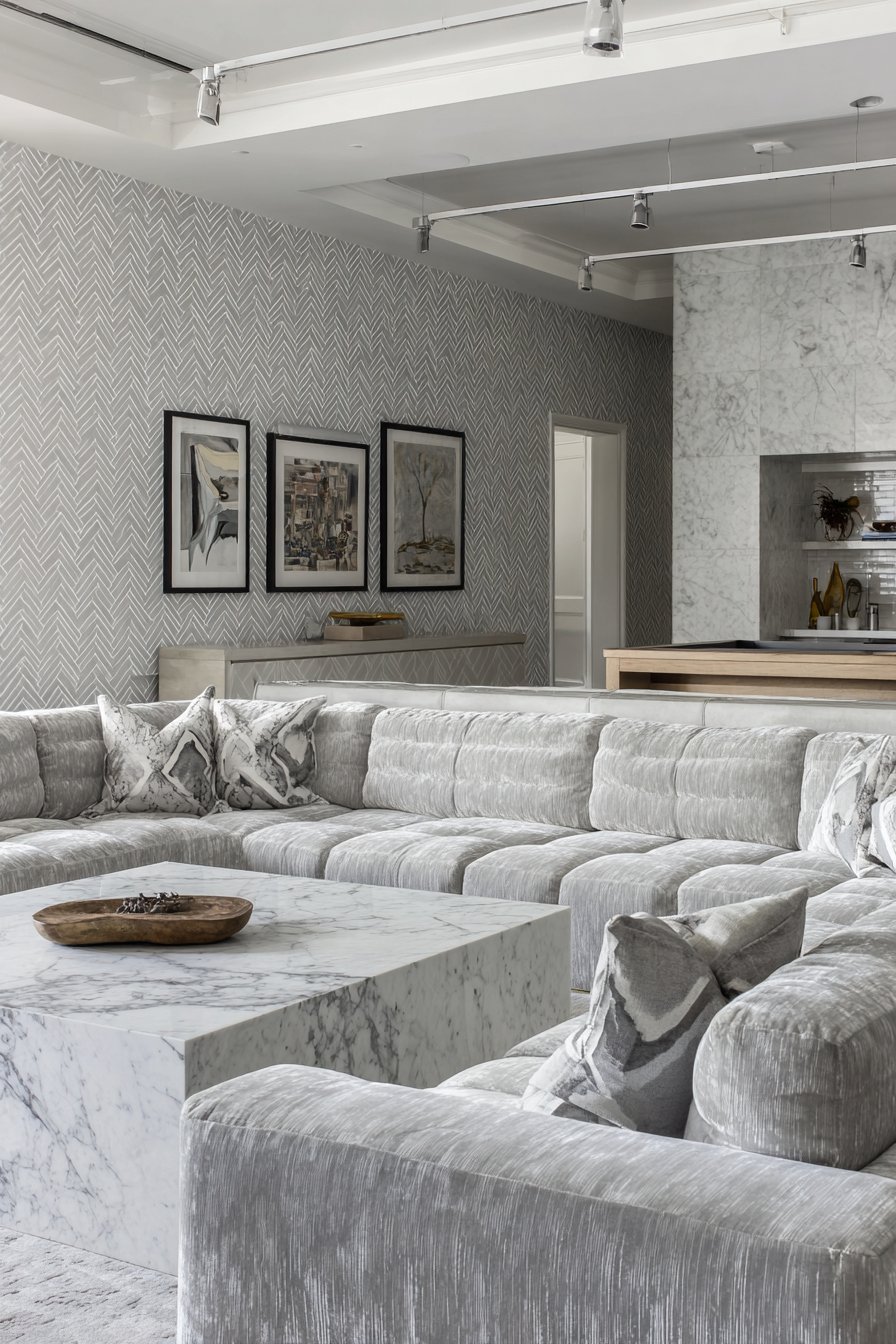
The monochromatic approach creates sophisticated calm while proving that “all one color” doesn’t mean boring when texture, pattern, sheen, and material variation are thoughtfully layered. The gray palette serves as unifying thread while performance velvet, marble, chrome, glass, and textured wallpaper each contribute distinct character.
Key Design Tips:
- Choose modular sectionals for flexibility in furniture arrangement
- Layer textures extensively in monochromatic schemes to prevent flatness
- Use geometric wallpaper in tonal colorways for pattern without color contrast
- Incorporate reflective surfaces through chrome, glass, and polished stone
- Install adjustable track lighting to accommodate changing furniture configurations
- Select marble with gray veining to introduce pattern through natural stone
- Vary fabric sheens from matte to lustrous velvet for visual dimension
- Use consistent color temperature in grays throughout for cohesion
11. Family-Friendly Practical Design
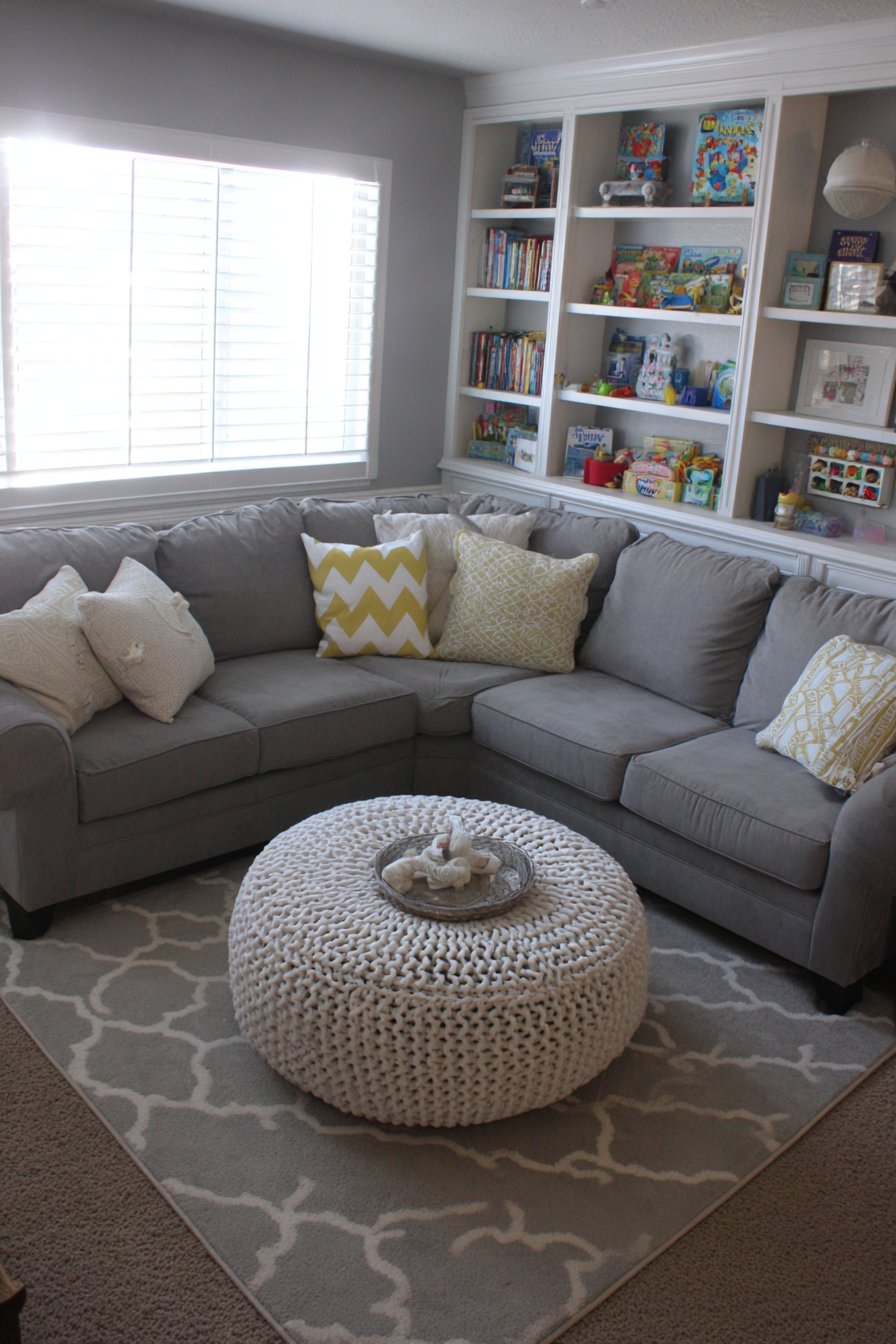
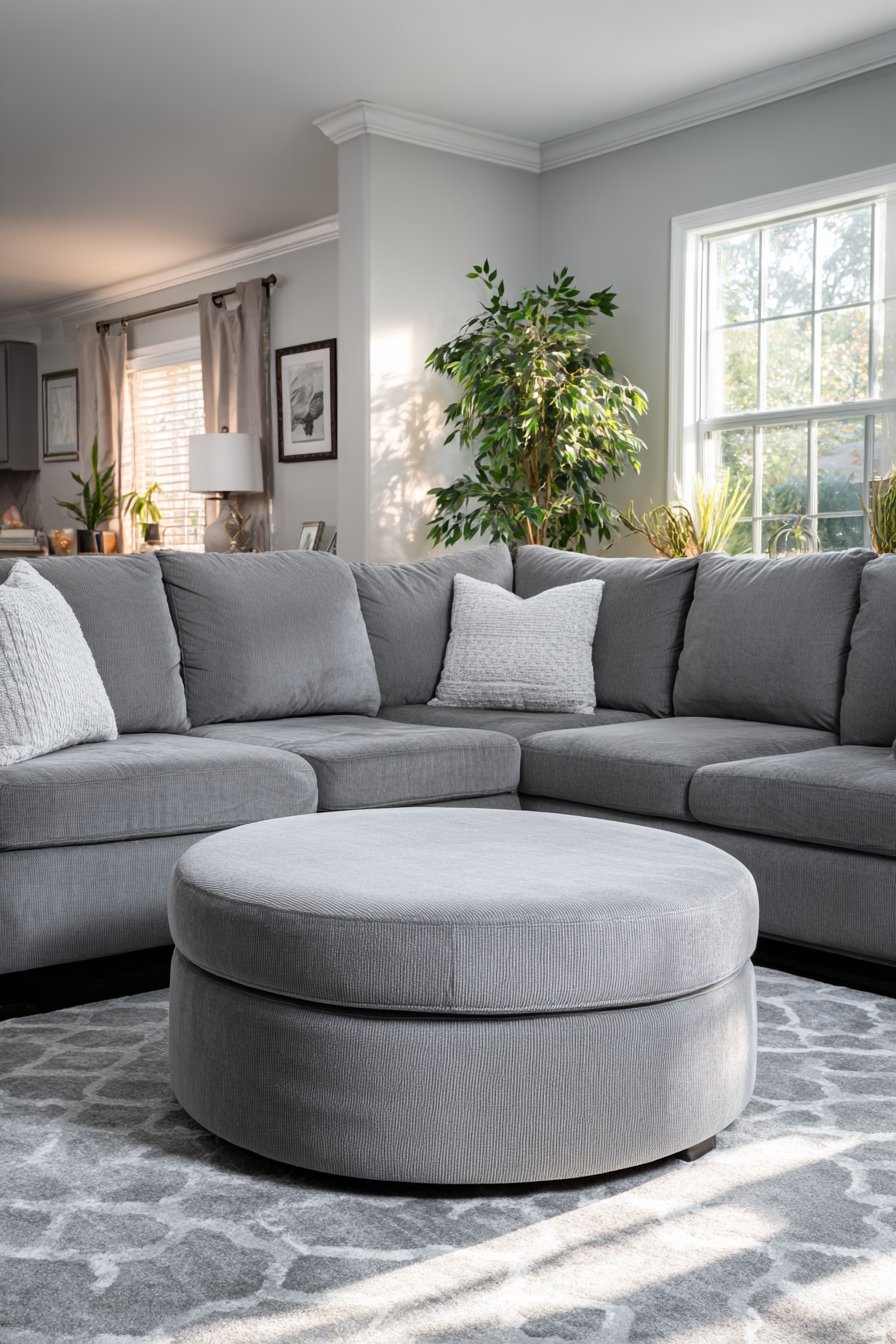
This thoughtfully planned space features a durable gray microfiber sectional with removable, washable cushion covers, acknowledging the realities of family life with children and pets. Microfiber’s stain-resistance and easy cleaning make it ideal for high-traffic family rooms, while the sophisticated gray color ensures the space doesn’t sacrifice style for practicality. The space includes a round ottoman in coordinating gray that doubles as coffee table and extra seating, its lack of sharp corners proving safer for young children.
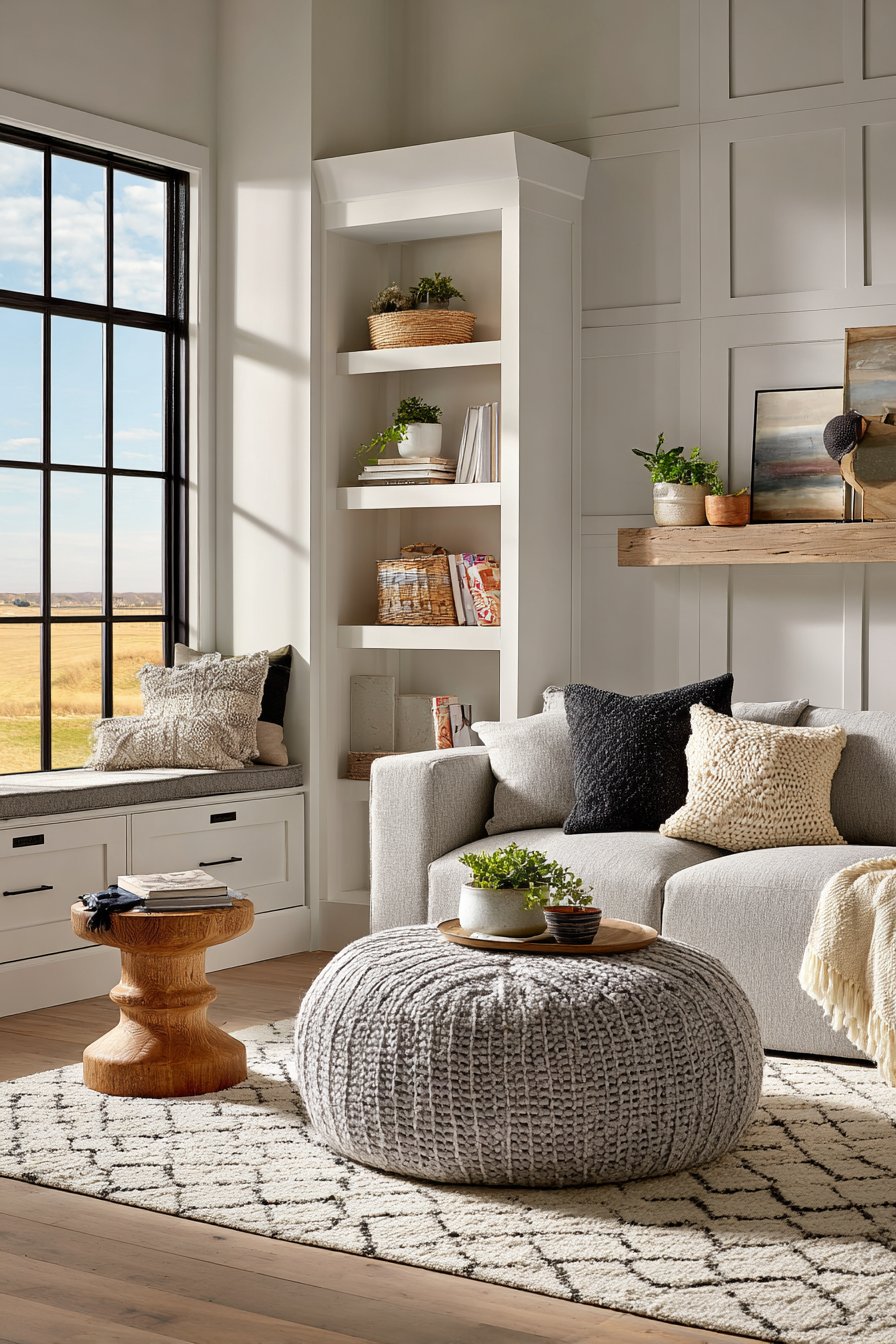
Built-in window seats with gray cushions provide additional casual seating and hidden toy storage, transforming awkward architectural features into functional family assets. Light gray painted walls show no visible smudges or wear, demonstrating the forgiving nature of this mid-tone neutral compared to stark white or dark colors. An area rug in gray and cream geometric pattern effectively hides stains while adding visual interest, proving that family-friendly doesn’t mean pattern-free.
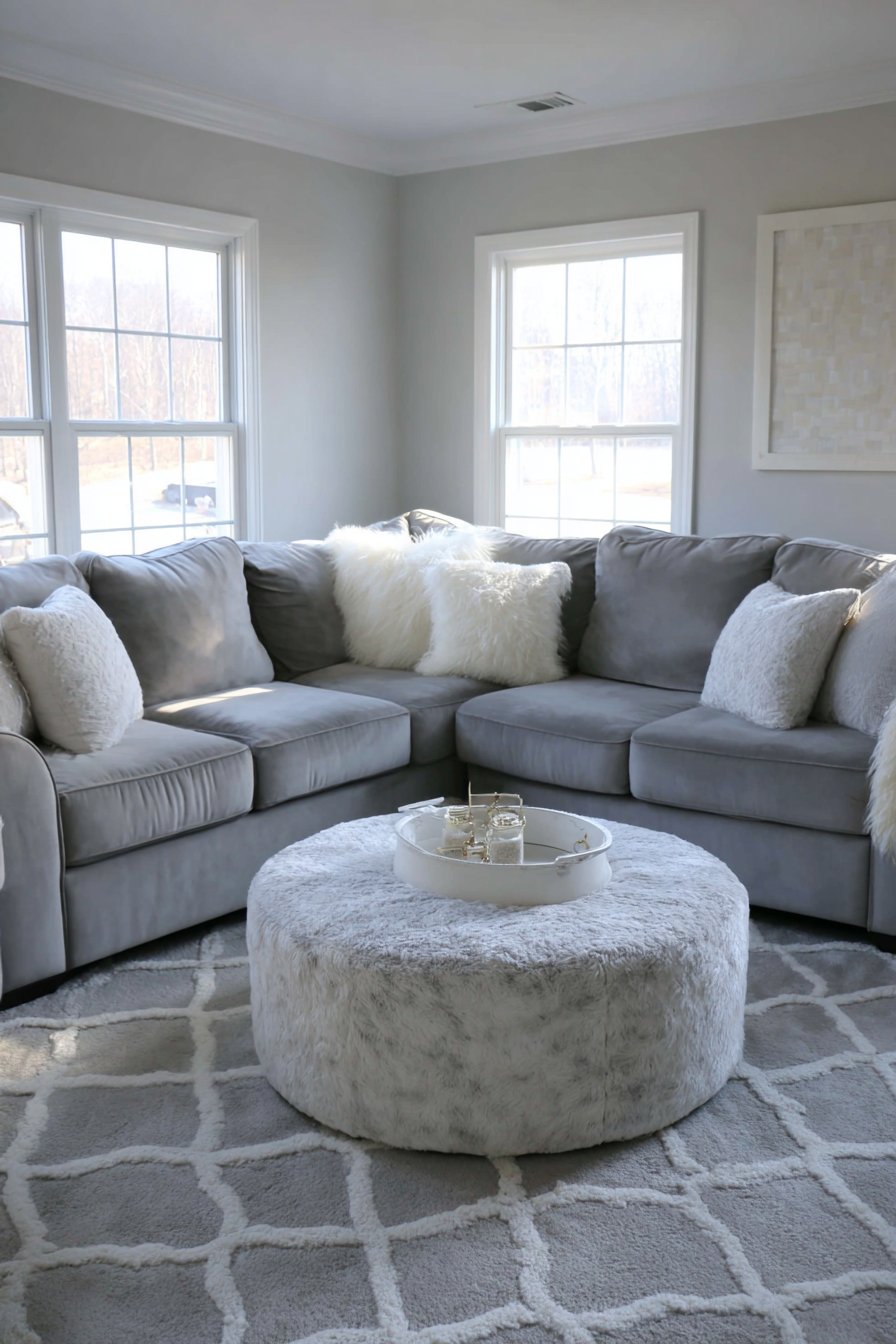
The design balances adult aesthetic preferences with childhood realities, creating a space that welcomes family activities without constant anxiety about damage. The washable, durable materials ensure the room maintains its appeal through years of use, while the sophisticated gray palette grows with children rather than requiring replacement as they age.
Key Design Tips:
- Choose microfiber upholstery for superior stain resistance in family spaces
- Select furniture with removable, machine-washable covers for easy maintenance
- Install hidden storage in window seats, ottomans, and built-ins for toy organization
- Use geometric pattern rugs that camouflage stains while adding design interest
- Avoid glass coffee tables in favor of upholstered ottomans in homes with young children
- Paint walls in mid-tone grays that hide marks better than white or dark colors
- Choose performance fabrics rated for heavy use and easy cleaning
- Create dedicated storage for children’s items to maintain adult aesthetic
12. Transitional Style Balance
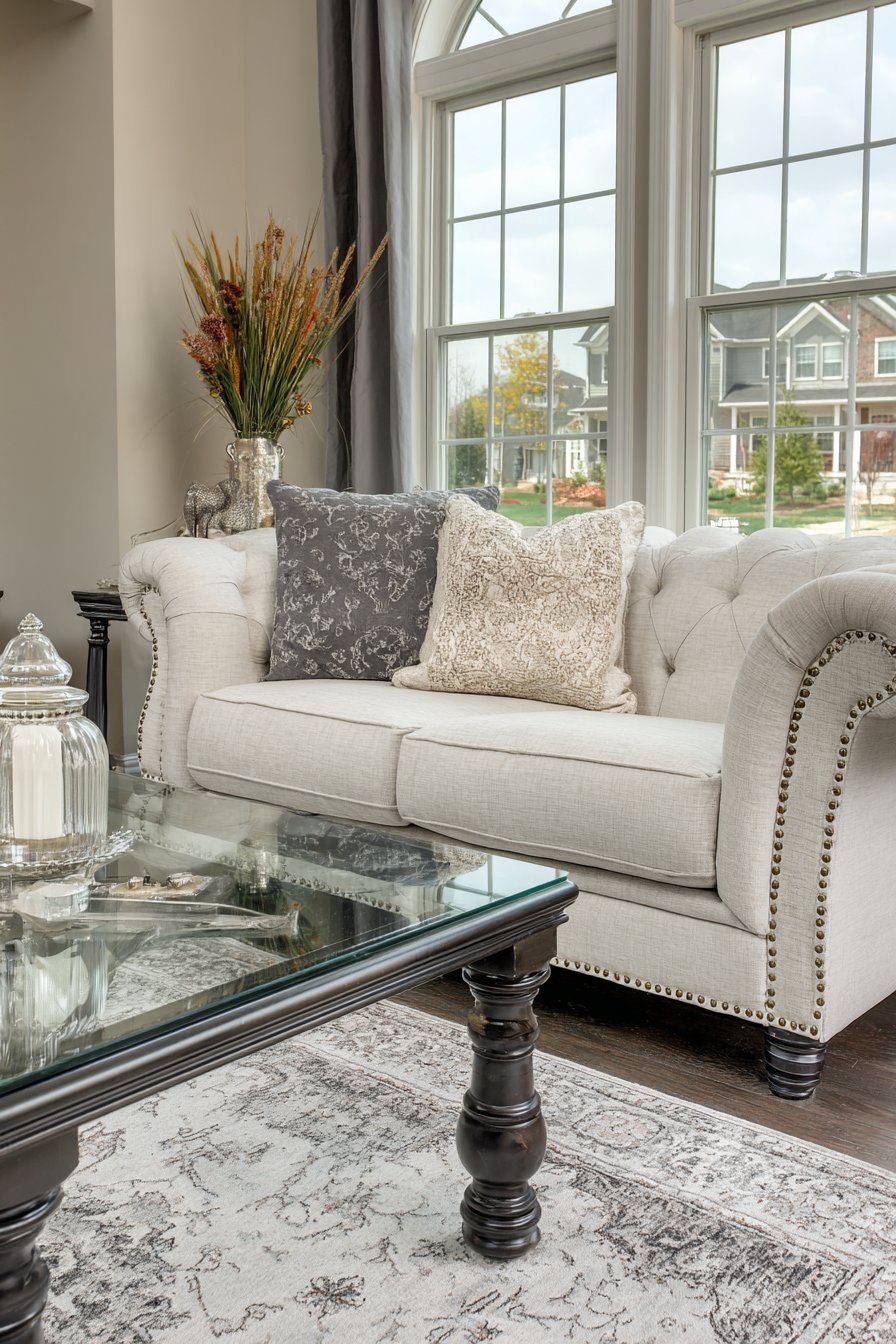
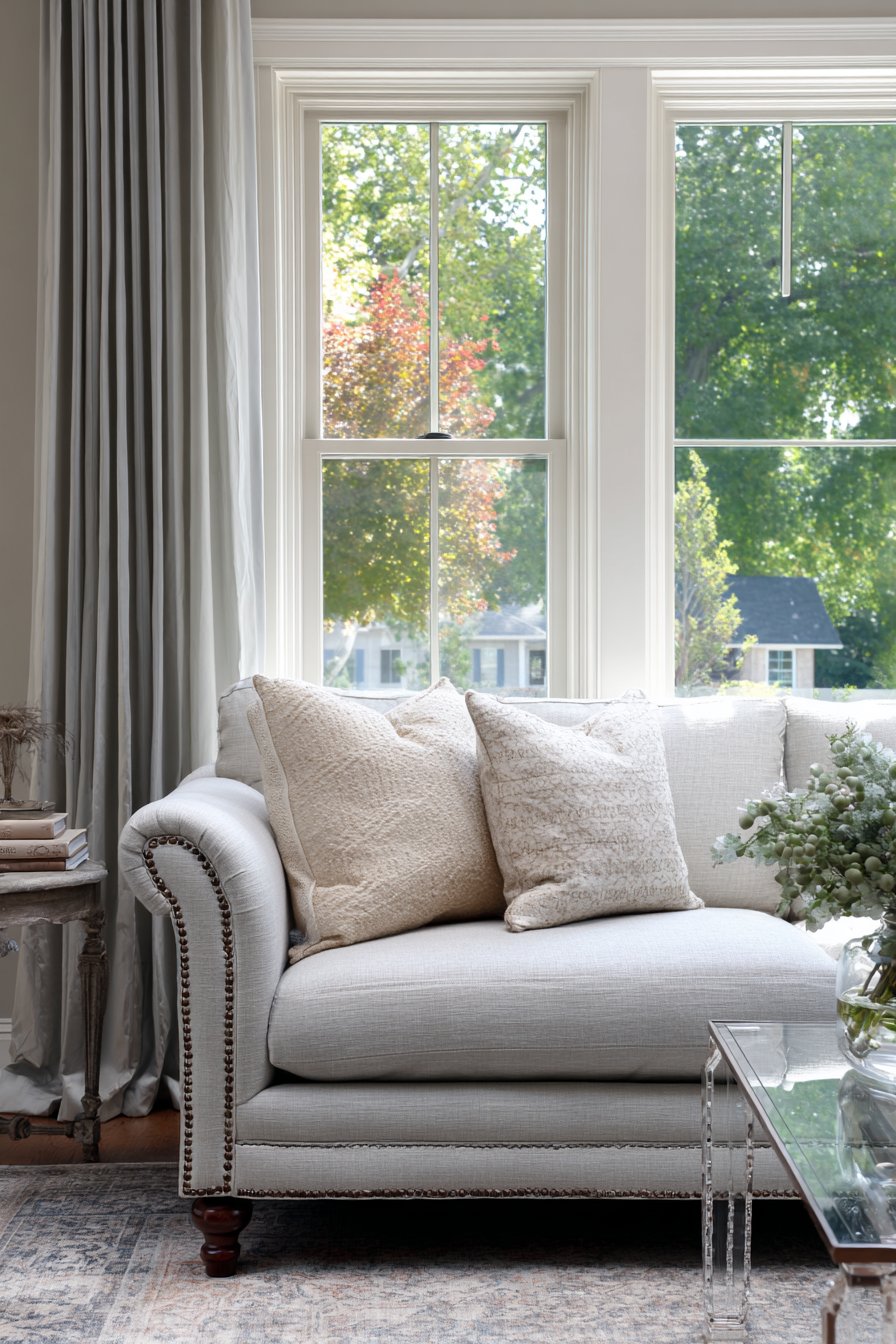
This beautifully balanced space features a classic rolled-arm sofa in light gray linen blend fabric with nailhead trim detail, bridging traditional comfort and contemporary restraint. The room balances traditional and contemporary through mixing furniture styles including a modern glass coffee table and traditional gray-washed wood side tables. This high-low approach creates collected interest while allowing quality investment pieces to shine.
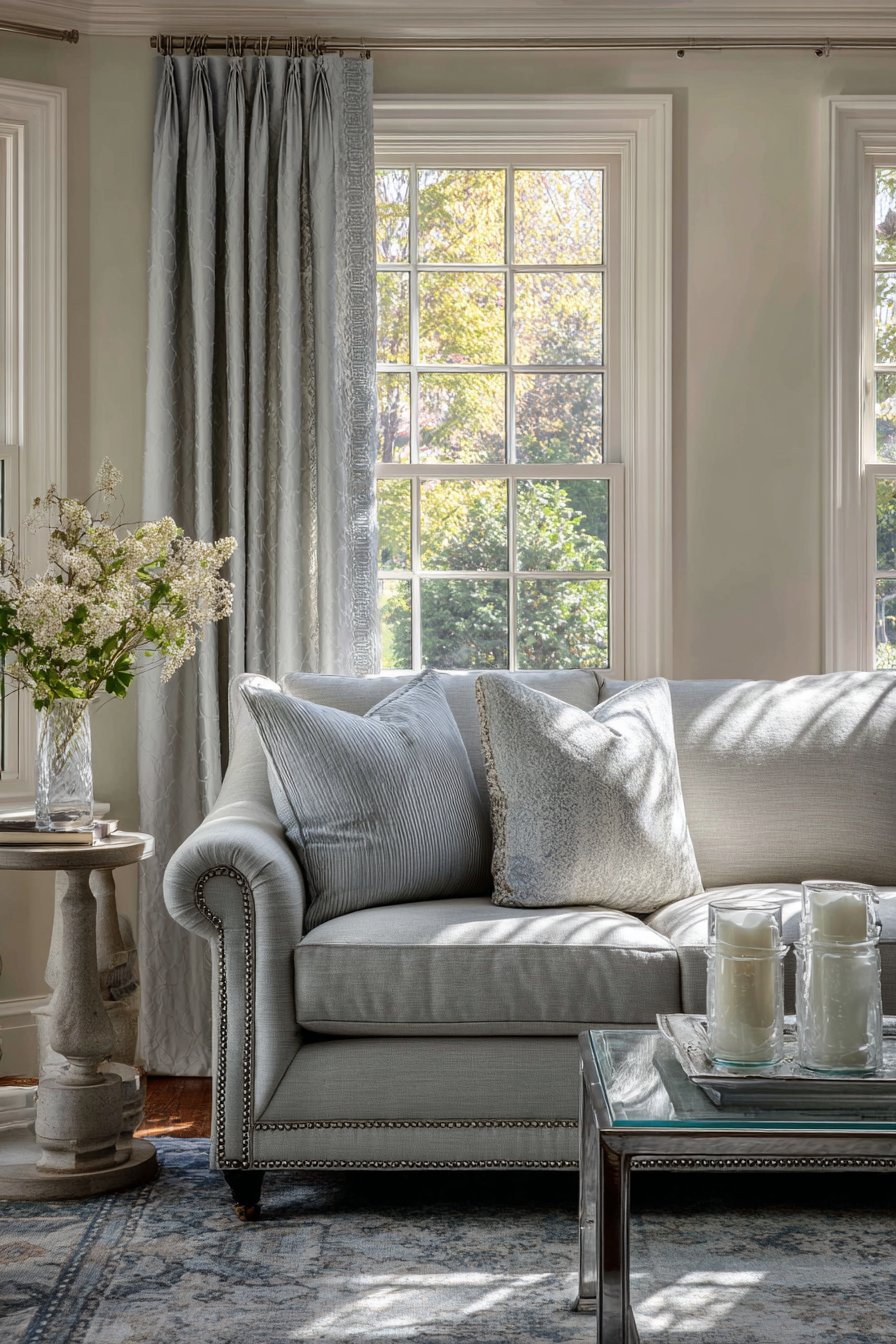
Curtains in gray silk blend with subtle sheen frame windows, their traditional pinch-pleat or grommet headers complementing the transitional aesthetic. A Persian-inspired area rug in faded gray and ivory tones adds pattern without overwhelming, its traditional motif rendered in contemporary muted tones. Wall color in warm light gray complements both antique and modern accessories, serving as diplomatic neutral that allows disparate styles to coexist harmoniously.
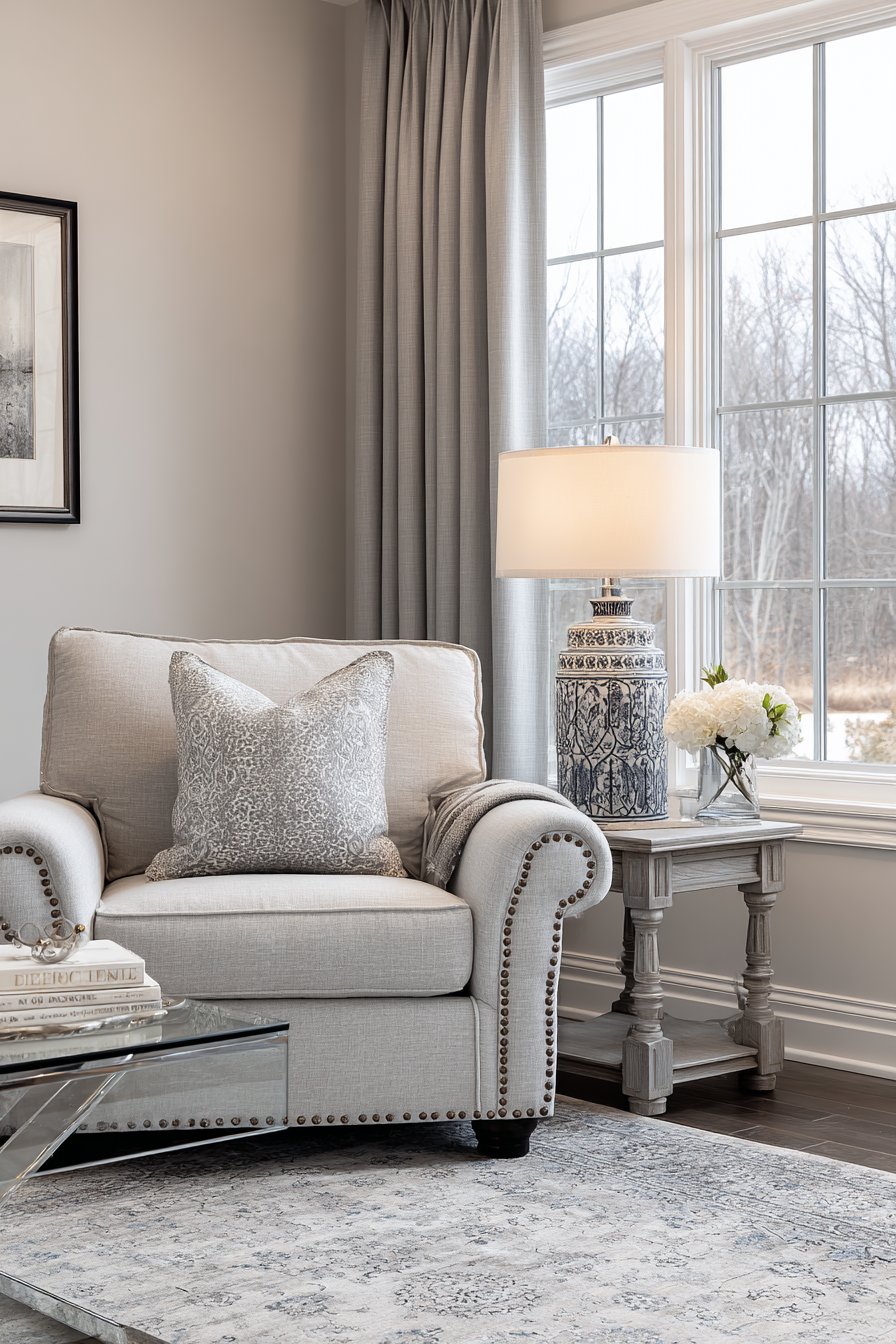
Transitional design appeals to those who appreciate multiple aesthetics and prefer evolutionary rather than revolutionary interior updates. The approach allows incorporating inherited pieces, collected items, and contemporary purchases into cohesive wholes. Light gray proves ideal for transitional schemes, modern enough to feel current while classic enough to honor traditional pieces.
Key Design Tips:
- Mix furniture from different style periods rather than complete matched suites
- Choose rolled-arm sofas with nailhead trim to bridge traditional and contemporary
- Layer traditional rug patterns in contemporary muted colorways
- Use warm gray paint to harmonize antique and modern pieces
- Select window treatments with subtle sheen for refined transitional appeal
- Incorporate both glass and wood furniture for material diversity
- Add traditional details like nailhead trim in contemporary proportions
- Embrace gray-washed or driftwood finishes that feel both aged and fresh
13. Luxurious High-End Finishes
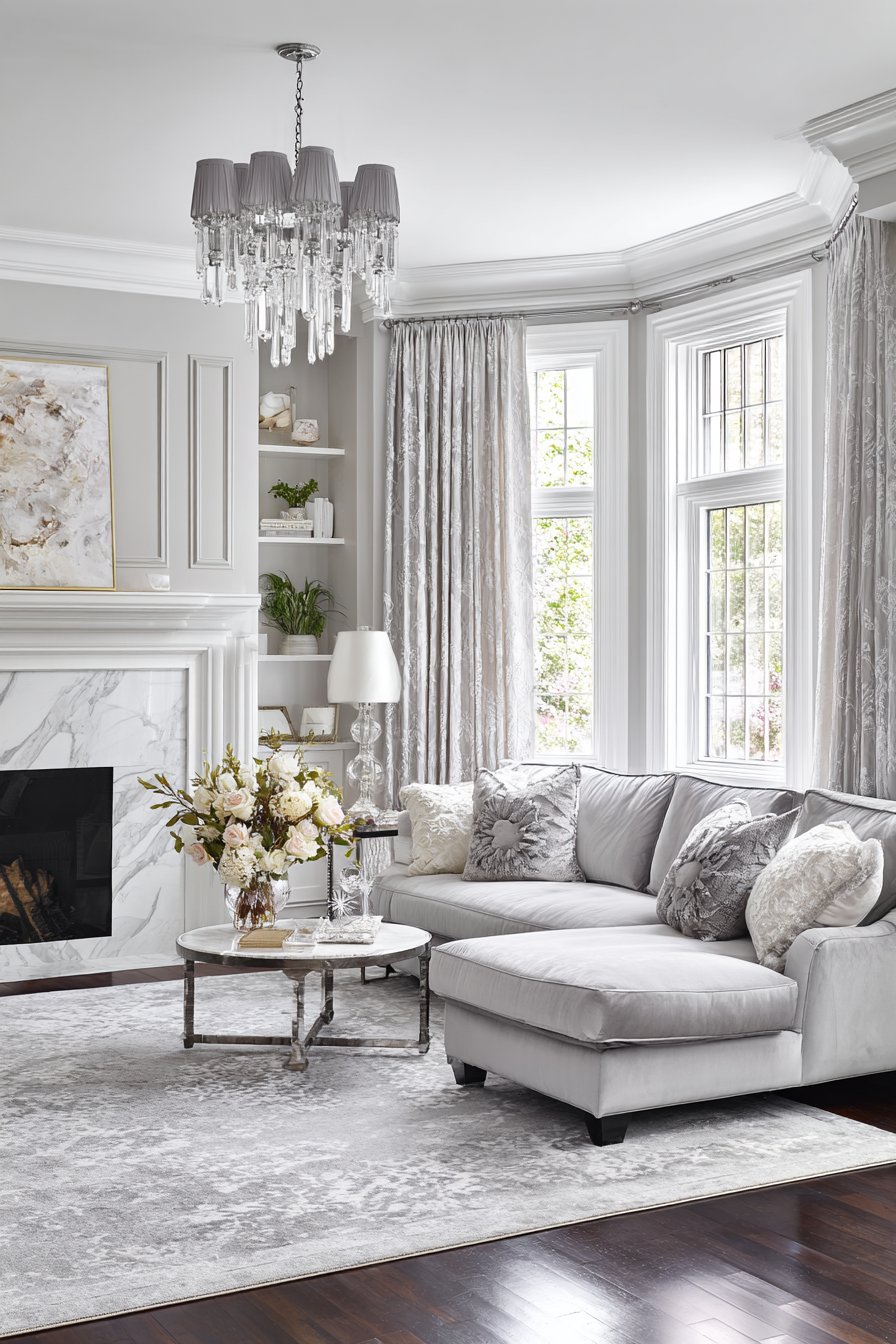
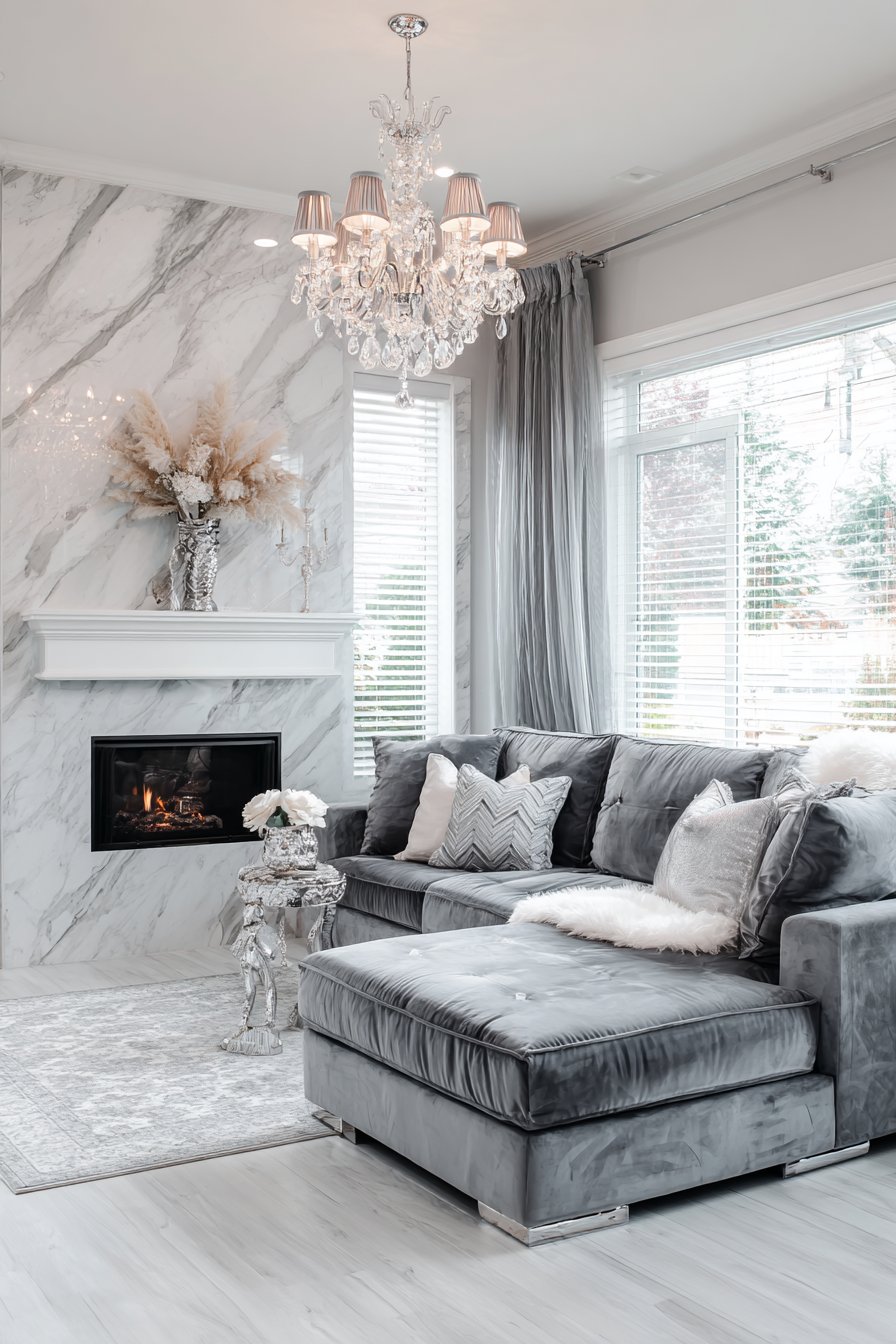
This sophisticated space showcases a deep-seated gray velvet sofa featuring down-filled cushions and matching chaise lounge, embodying the sink-in comfort of luxury seating. The generous down fill provides exceptional comfort while the velvet upholstery catches light beautifully, creating depth through its directional pile. The space includes high-end finishes like a Carrara marble fireplace surround, custom gray silk draperies with blackout lining, and a hand-knotted wool rug in sophisticated gray pattern.
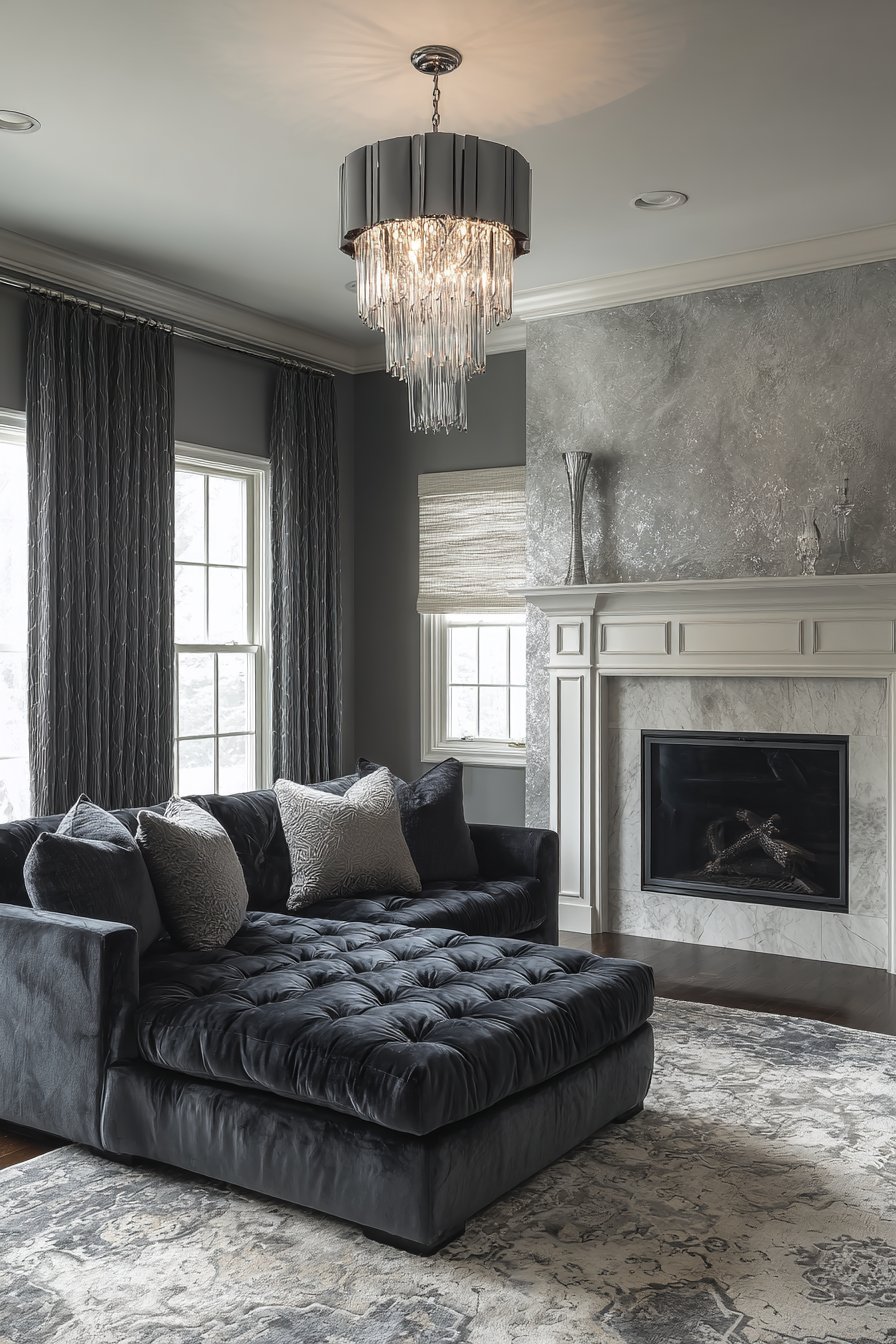
Polished nickel and crystal accents add glamour without excessive ornamentation, their reflective qualities enhancing the play of light throughout the space. Walls feature gray Venetian plaster with subtle texture variation, its artisanal application creating organic depth impossible to achieve with standard paint. Layered lighting including a statement chandelier with gray silk shades provides ambient, task, and accent illumination, essential in luxury spaces where lighting quality equals furniture quality.
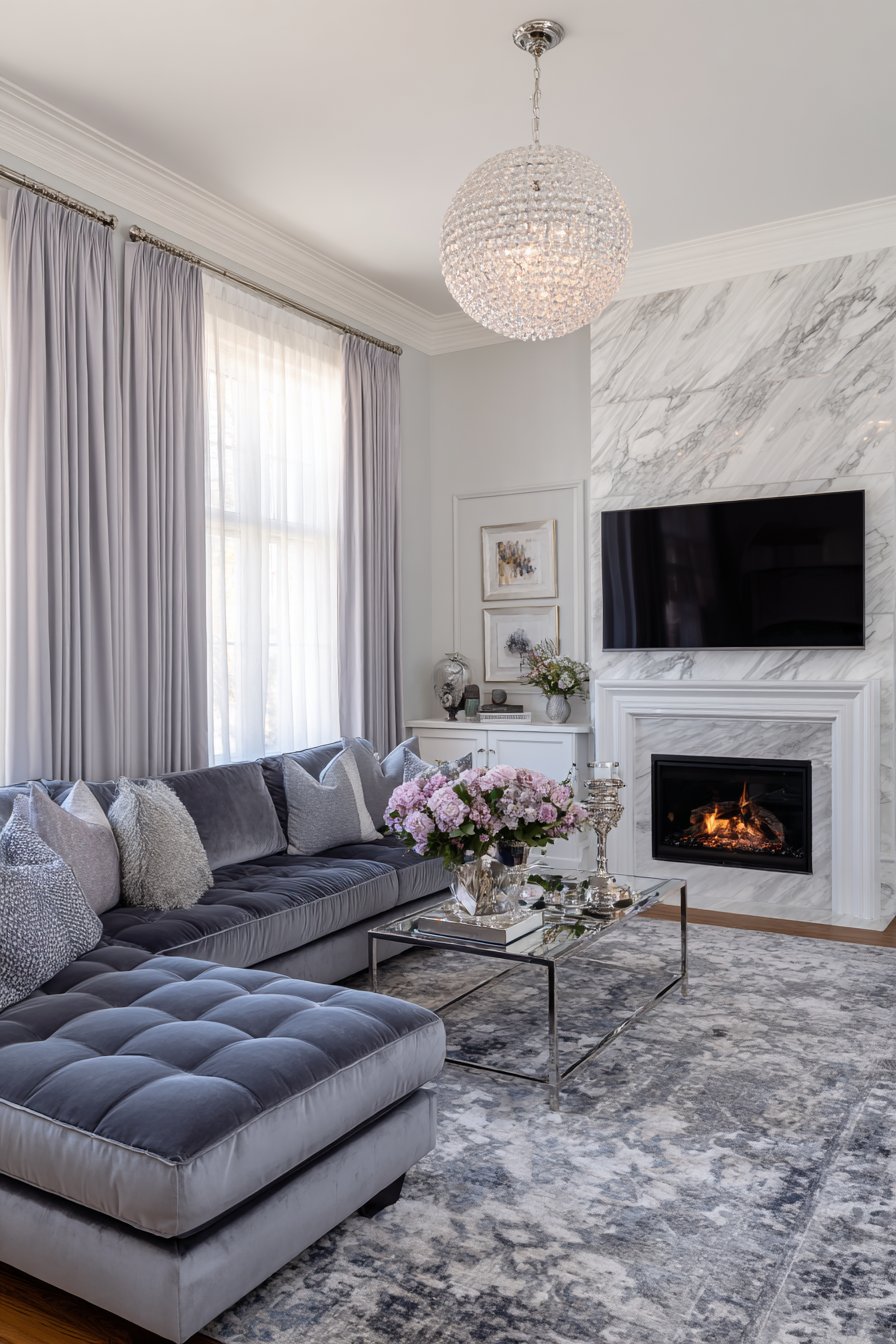
The luxurious approach celebrates quality materials and expert craftsmanship, investing in pieces that age beautifully and provide enduring pleasure. The gray palette prevents the high-end finishes from reading as ostentatious, maintaining sophisticated restraint while showcasing exceptional quality. Each material selection demonstrates how luxury manifests through superior materials rather than excessive decoration.
Key Design Tips:
- Invest in down-filled cushions for unparalleled comfort in upholstered pieces
- Choose hand-knotted rugs over machine-made for superior quality and longevity
- Install Venetian plaster for artisanal wall finishes with organic texture
- Select natural stone like Carrara marble for timeless luxury
- Layer ambient, task, and accent lighting for proper illumination hierarchy
- Use silk fabrics for draperies to achieve sophisticated sheen
- Incorporate crystal and polished metal accents for light-reflective glamour
- Choose custom-tailored window treatments with proper lining for light control
14. Open-Plan Living Zones
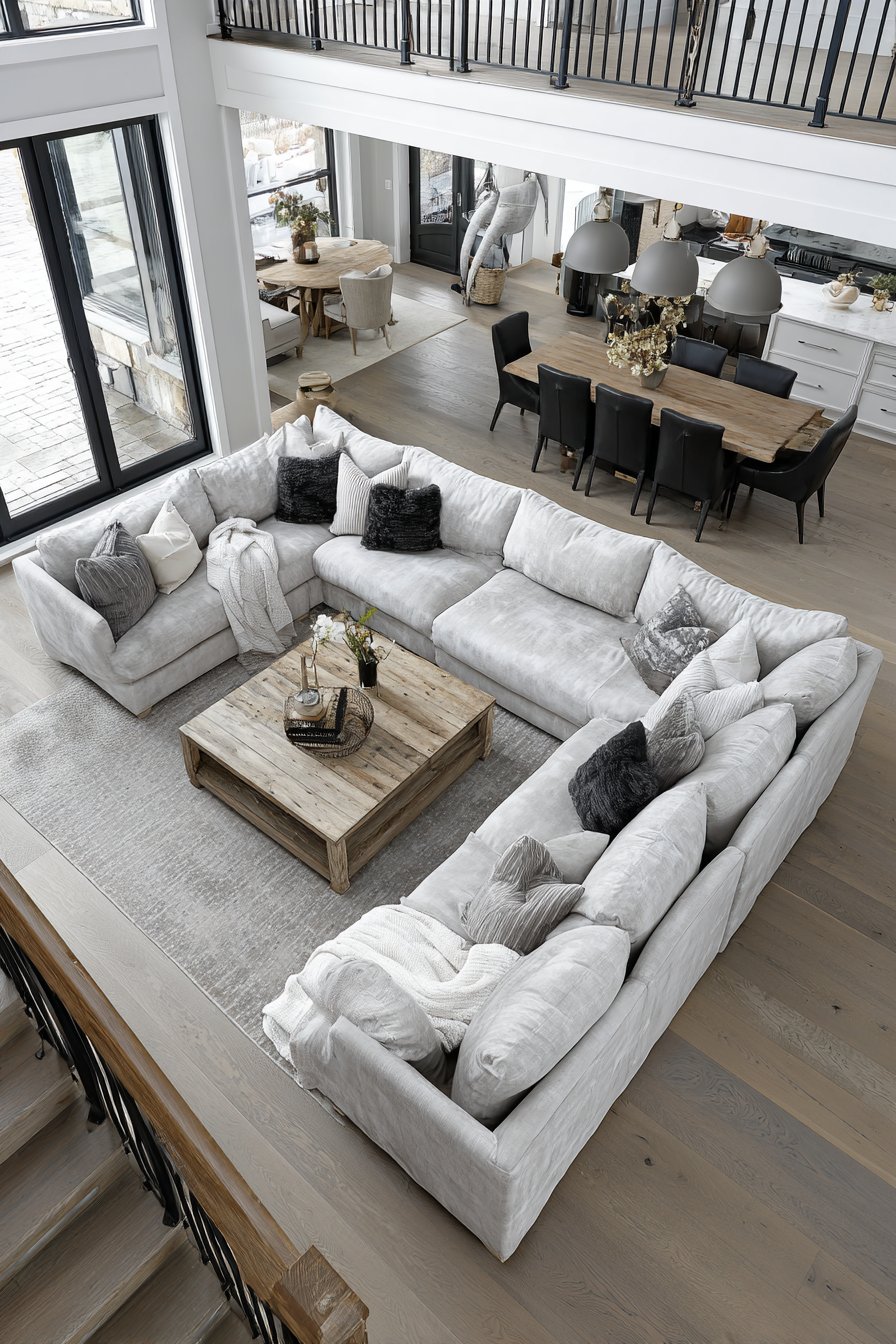
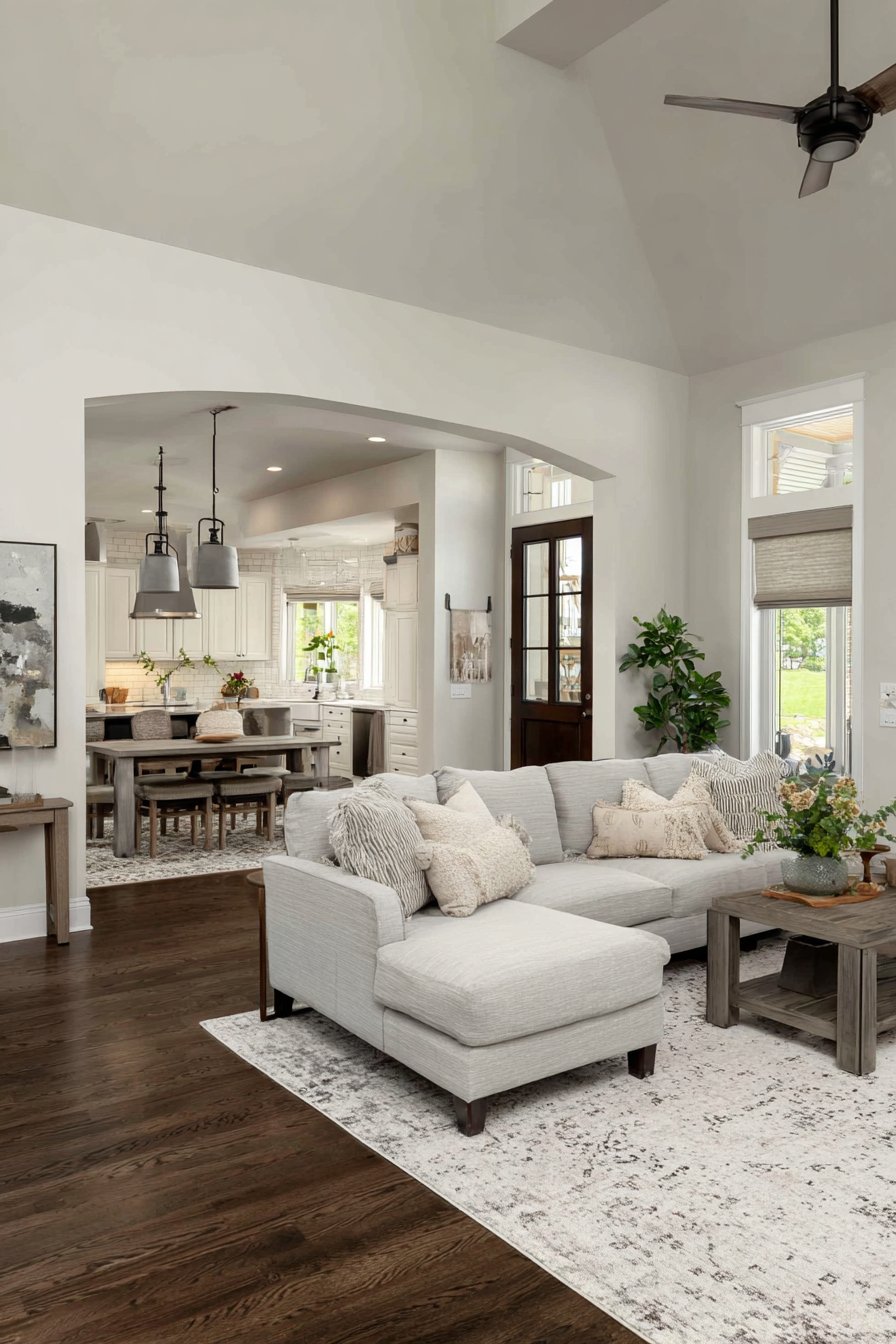
This space demonstrates intelligent furniture placement in open-concept homes, featuring a gray sectional positioned to define the living zone within a larger space. A console table in gray-stained oak behind the sofa creates separation without blocking sightlines, providing display surface and visual boundary simultaneously. The cohesive gray palette extends throughout the connected spaces with subtle variation in shade and texture, creating flow while allowing zones to maintain distinct identities.
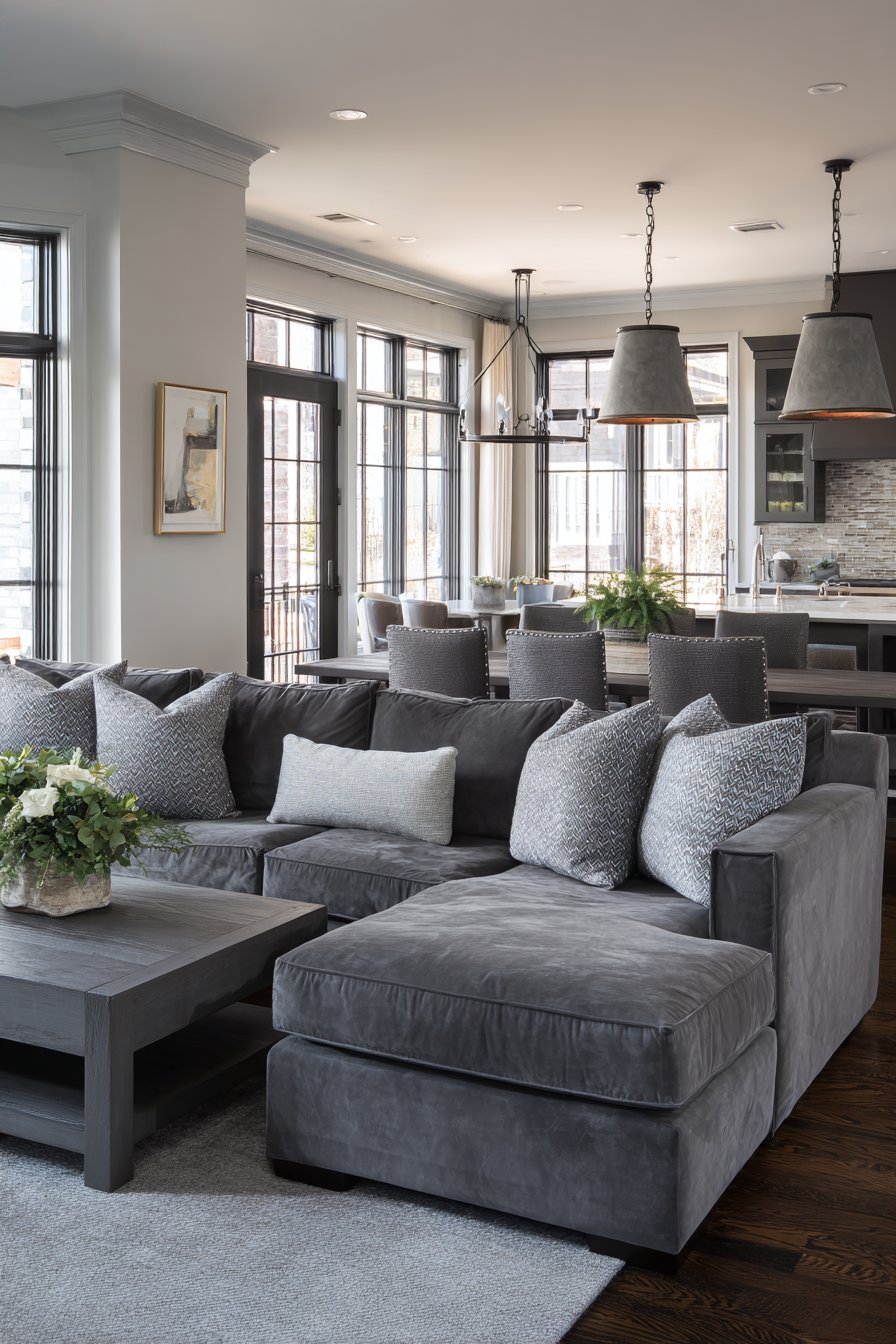
An area rug in light gray grounds the furniture grouping while hardwood floors in gray-brown continue throughout, providing consistent foundation that unifies distinct functional areas. The rug defines the living zone without creating jarring transitions. Pendant lights with gray concrete shades hang over the adjacent dining area, their shared gray palette with living room creating visual connection while their different form signals functional transition.
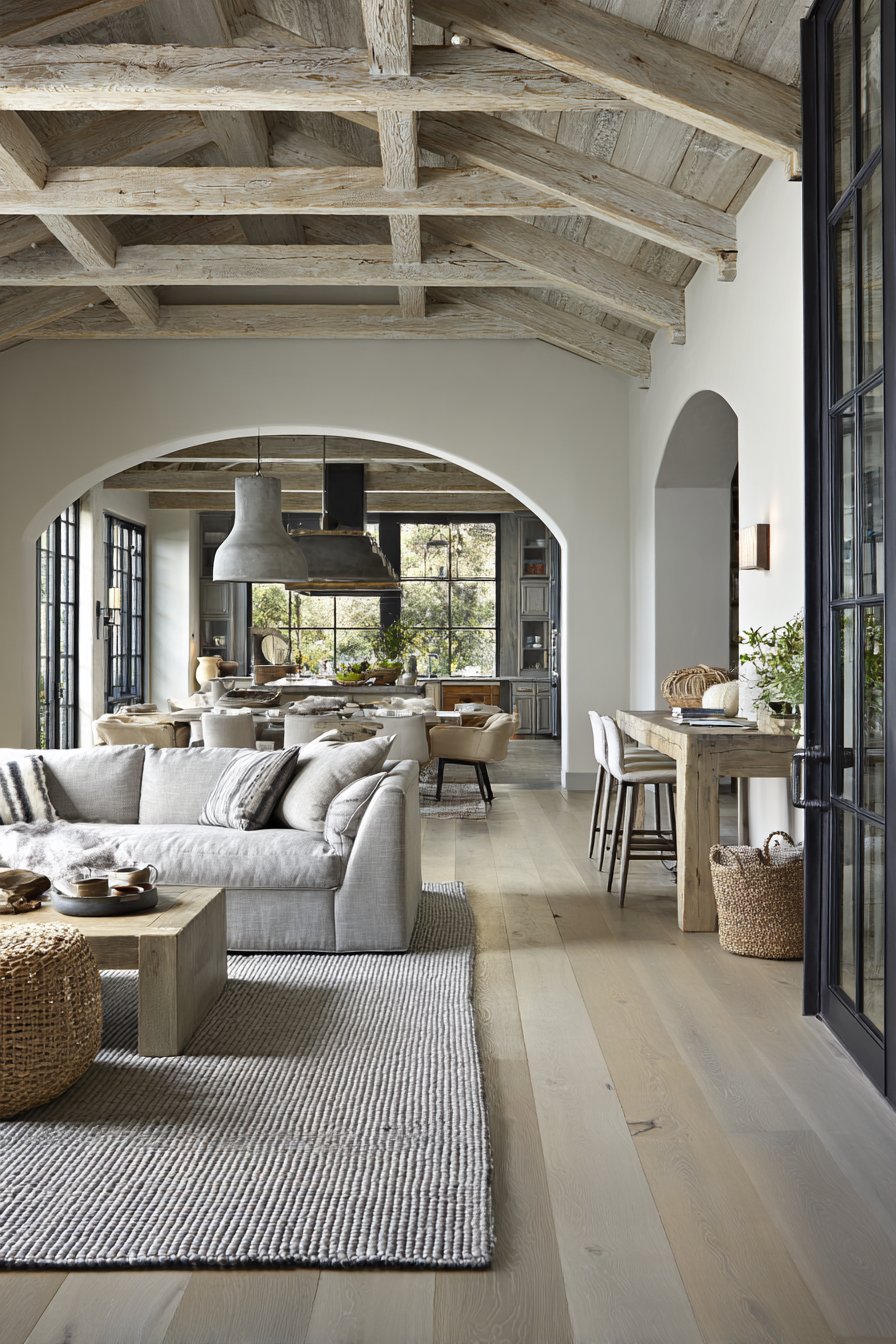
Open-plan success depends on creating visual flow while establishing distinct zones for different activities. The consistent gray palette throughout provides unifying thread while furniture placement, area rugs, and lighting variations create implied boundaries. This approach maintains the spatial generosity that makes open plans appealing while providing the definition that makes them functional.
Key Design Tips:
- Use furniture placement rather than walls to define zones in open plans
- Position console tables behind sofas to create subtle boundaries
- Extend consistent color palettes across zones for visual flow
- Use area rugs to ground and define specific functional areas
- Vary lighting fixtures by zone while maintaining color consistency
- Choose different gray tones for connected spaces to create subtle distinction
- Maintain clear sightlines across the open space to preserve openness
- Use consistent flooring throughout to unify the overall space
15. Mid-Century Modern Revival
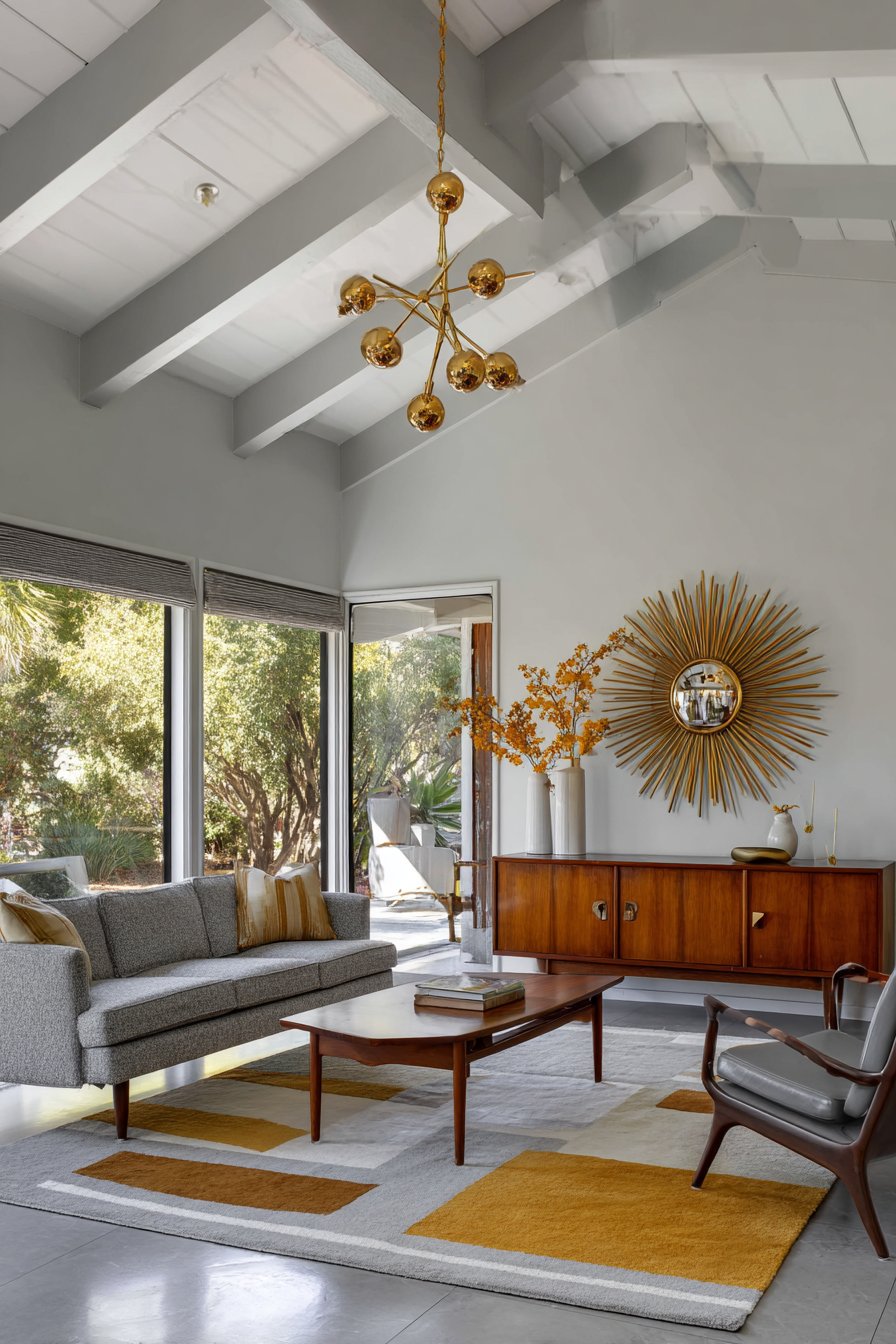
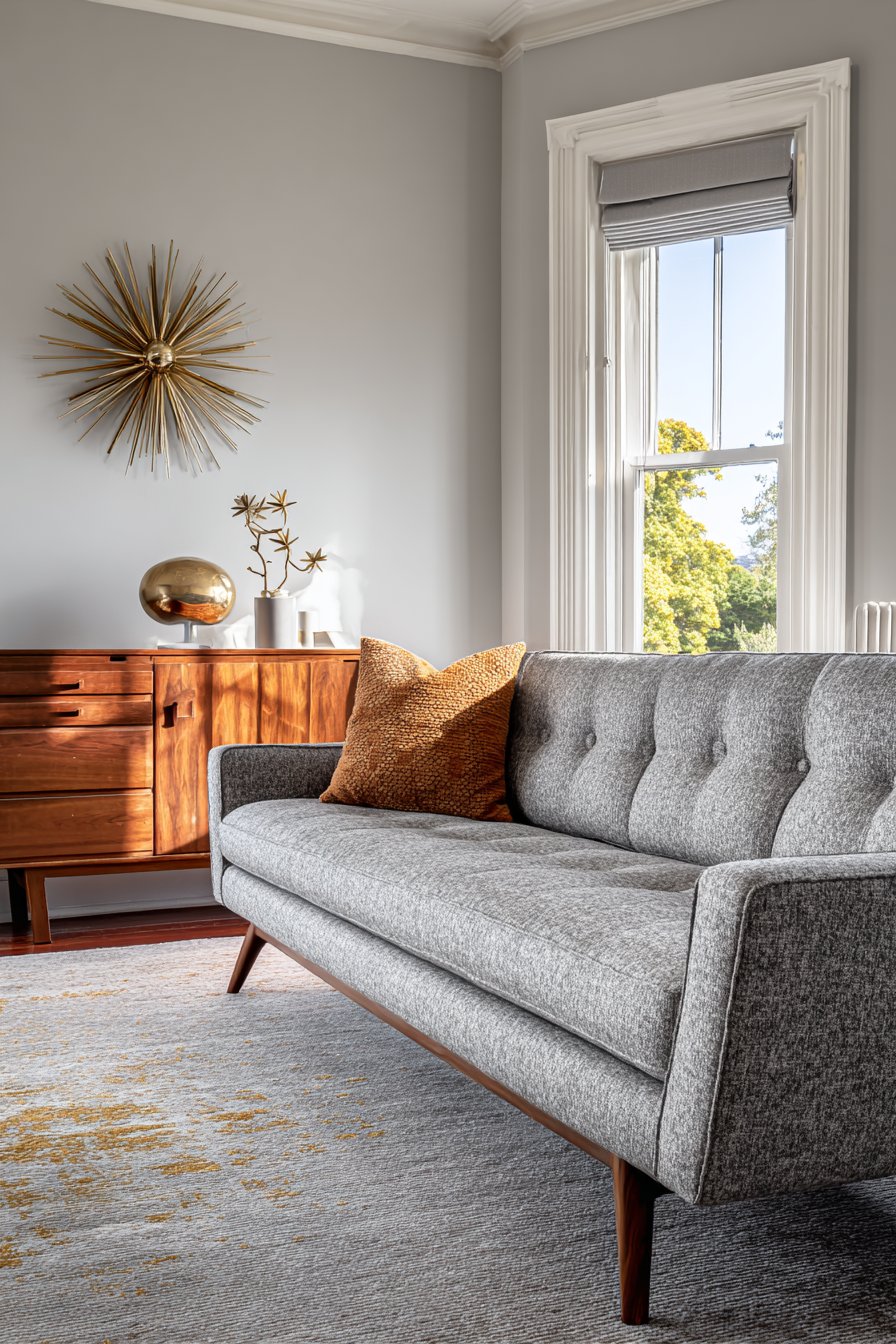
This design channels authentic mid-century modern aesthetic through a low-profile sofa with tapered wooden legs in gray wool upholstery. The clean lines and minimal ornamentation embody the form-follows-function philosophy of 1950s-60s design. The room includes iconic design pieces like an Eames-style lounge chair in gray leather and a teak credenza refinished in natural wood against light gray walls, demonstrating the period’s emphasis on quality craftsmanship and organic materials.
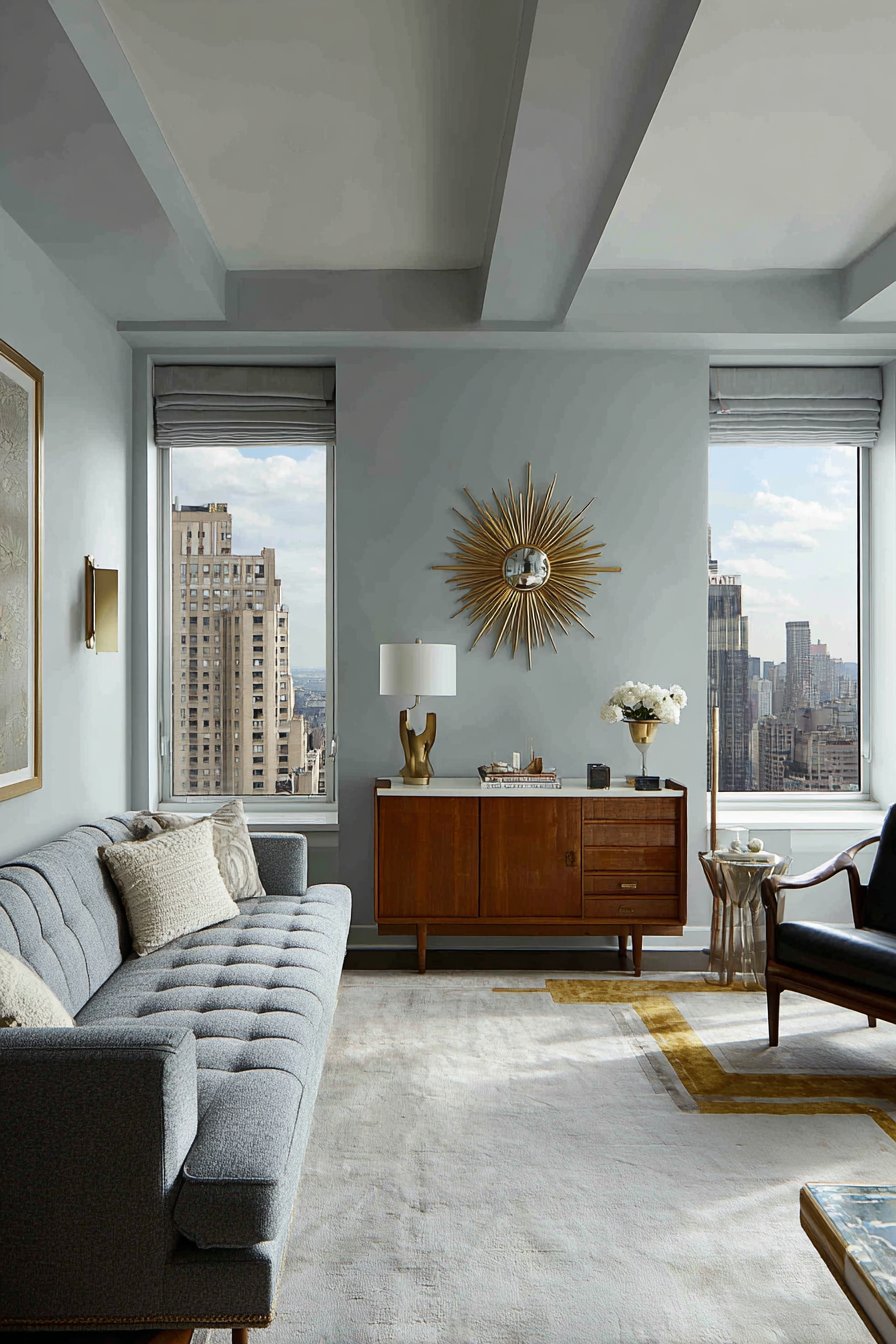
A sunburst mirror in brass and a geometric mobile add period-appropriate accents, their sculptural forms creating visual interest without clutter. An area rug in gray and mustard tones provides subtle color pop, the warm yellow-gold referencing the harvest gold and avocado tones popular in mid-century palettes without literal reproduction. Large windows with simple gray roller shades emphasize the clean-lined aesthetic and the period’s celebration of natural light and outdoor connection.
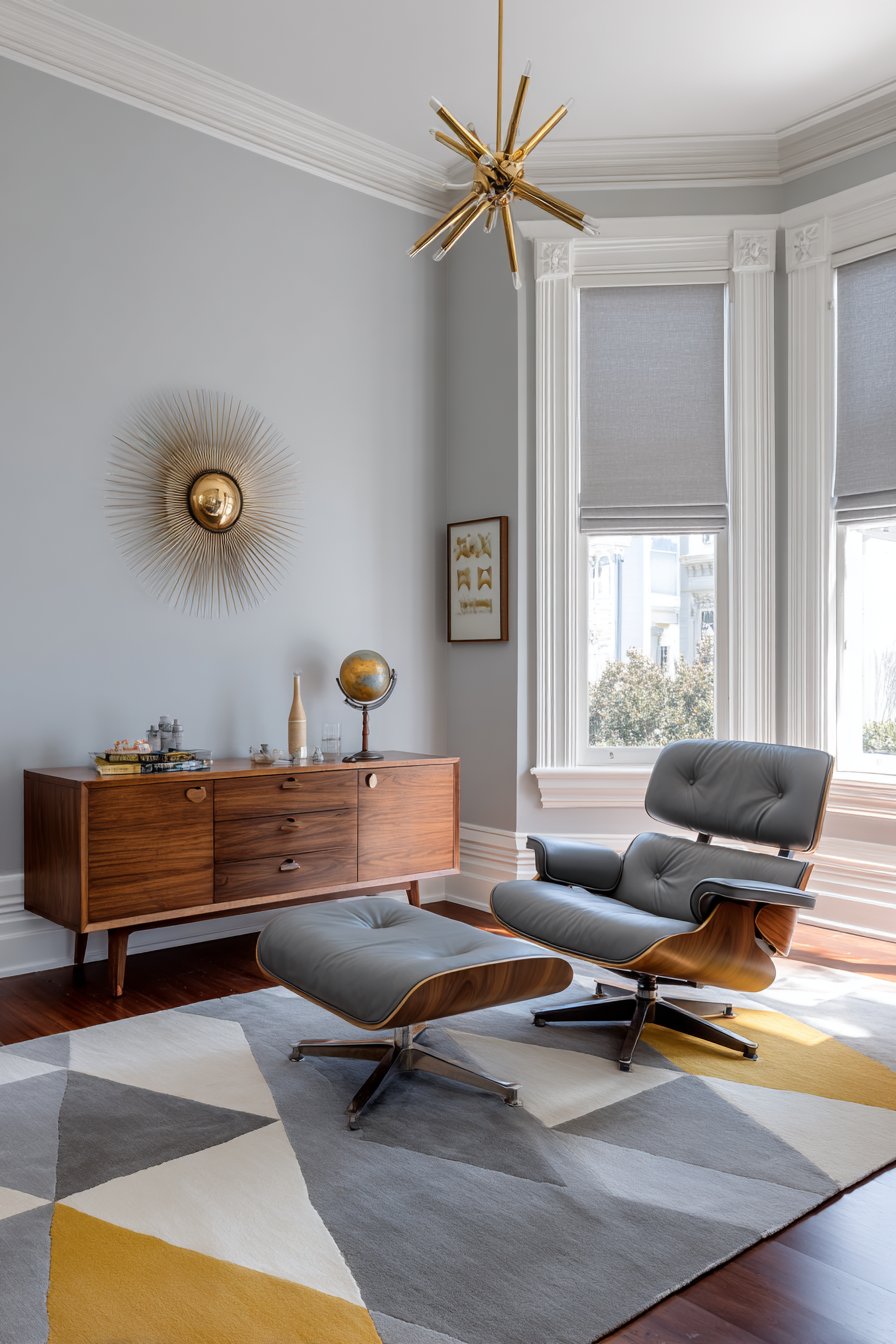
The light gray update to classic mid-century pieces demonstrates how authentic vintage styles remain relevant through thoughtful adaptation. While original pieces often featured orange, teal, or olive upholstery, the gray reinterpretation feels contemporary while honoring the clean-lined silhouettes and quality construction that define the style.
Key Design Tips:
- Choose low-profile furniture with tapered wooden legs for authentic mid-century feel
- Incorporate iconic design pieces like Eames chairs for period authenticity
- Use simple roller shades rather than elaborate window treatments
- Add sculptural accessories like sunburst mirrors and geometric mobiles
- Pair gray with mustard yellow for subtle mid-century color reference
- Refinish teak furniture in natural wood rather than painted finishes
- Emphasize horizontal lines and clean geometric forms
- Celebrate exposed wood legs and structural elements rather than skirted upholstery
16. Art Gallery Backdrop
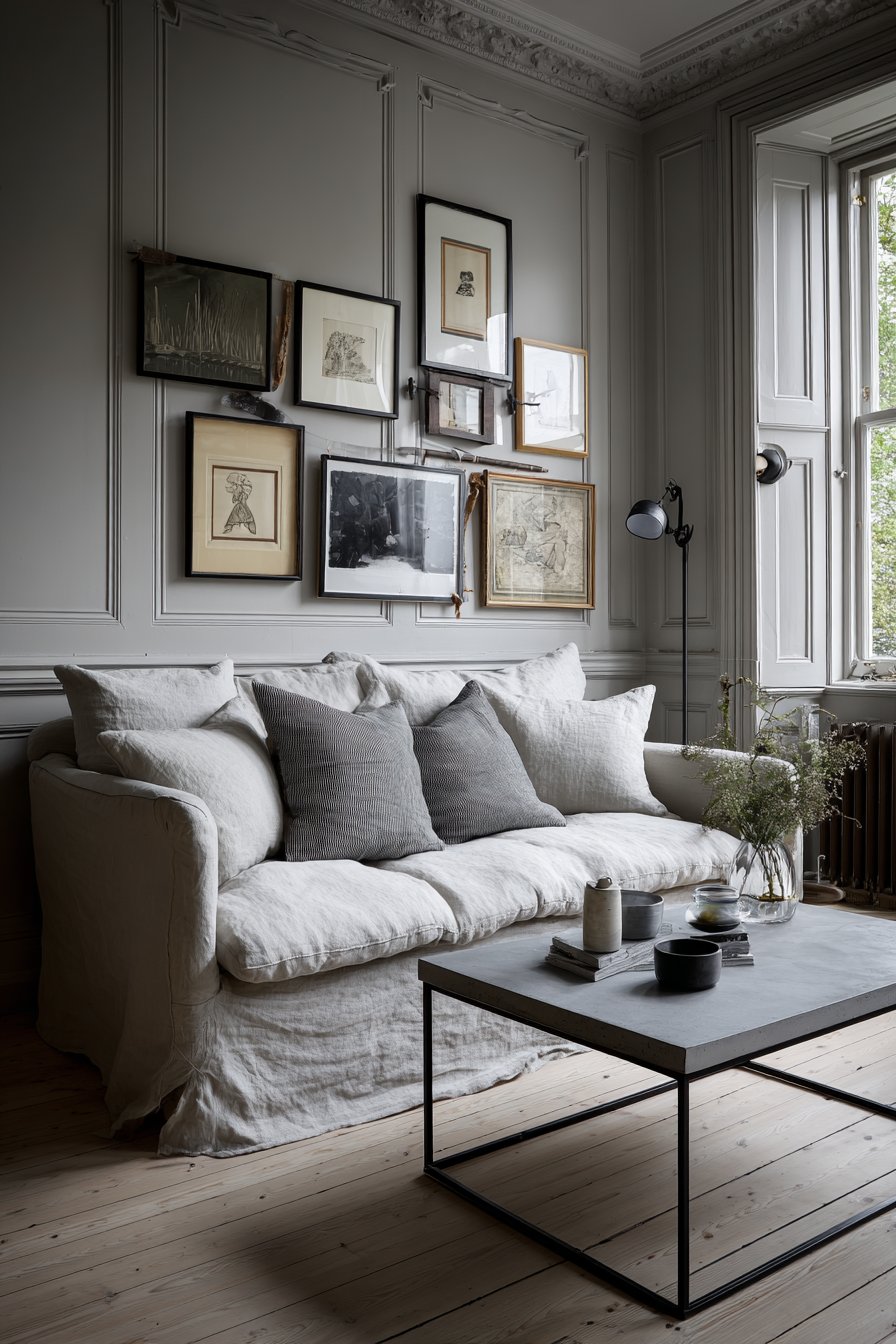
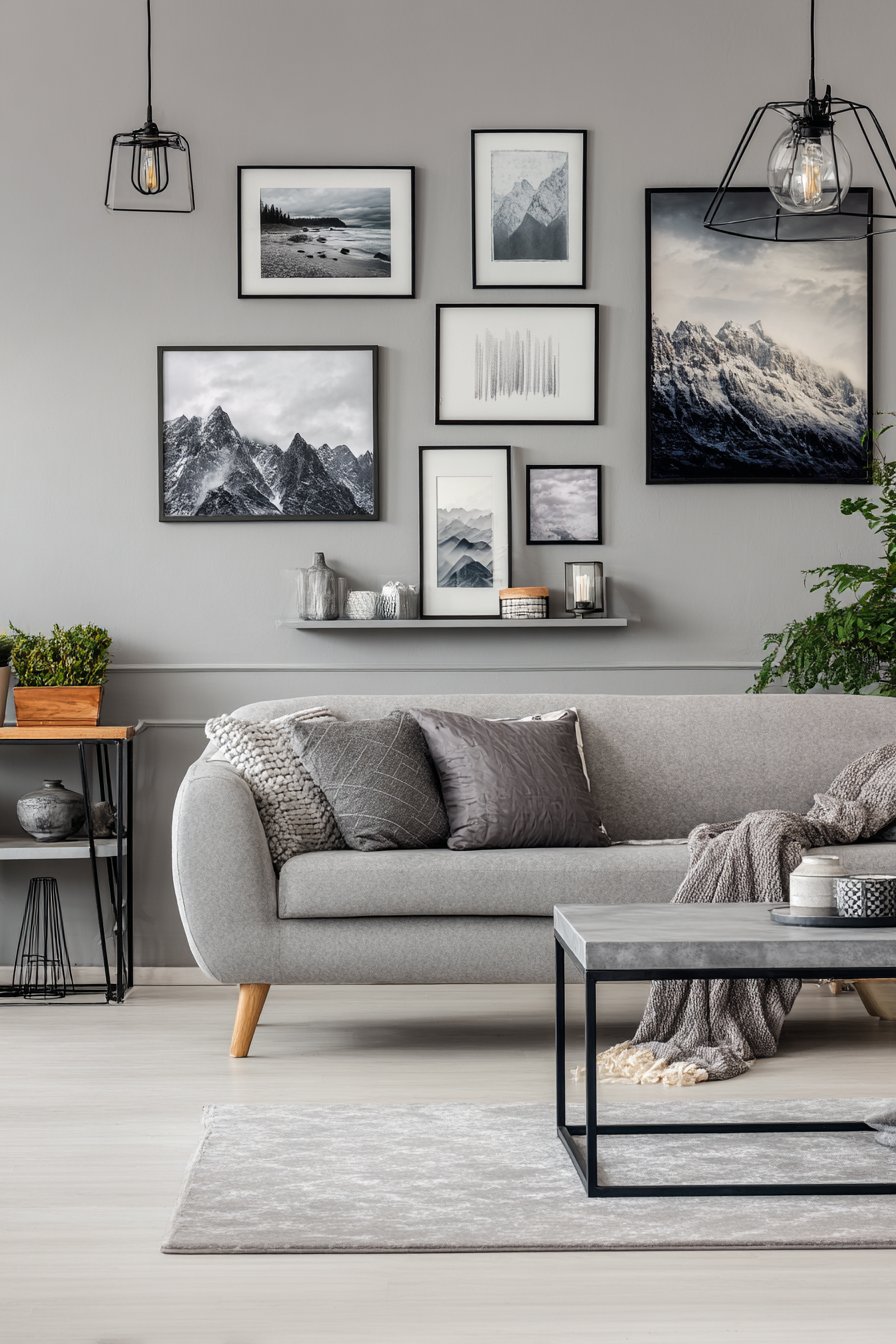
This design prioritizes artwork through a carefully planned gallery wall as focal point, with frames in varied gray, white, and black finishes against a light gray painted wall. The varied frame finishes add visual interest while maintaining the neutral palette that allows artwork to dominate. A simple gray linen sofa allows the artwork to take center stage, its minimal design providing comfortable seating without competing for attention.
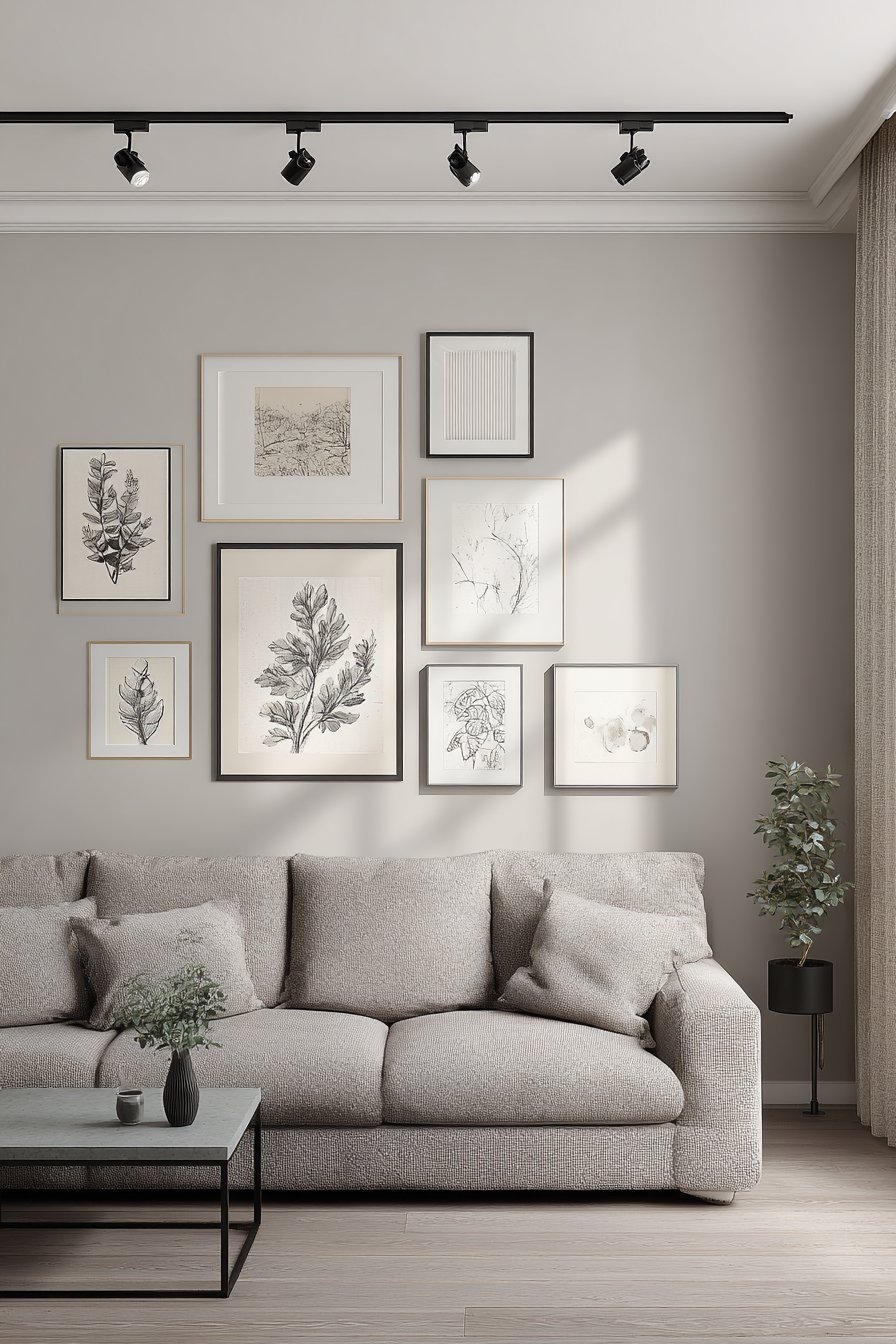
A minimal coffee table in gray concrete and steel maintains the understated backdrop, its industrial materials reading as functional rather than decorative. Track lighting with adjustable spotlights illuminates individual pieces, providing museum-quality presentation and allowing flexibility as the collection evolves. The neutral gray palette throughout the room ensures artwork remains the visual priority, demonstrating how restraint in furnishings amplifies impact of displayed collections.
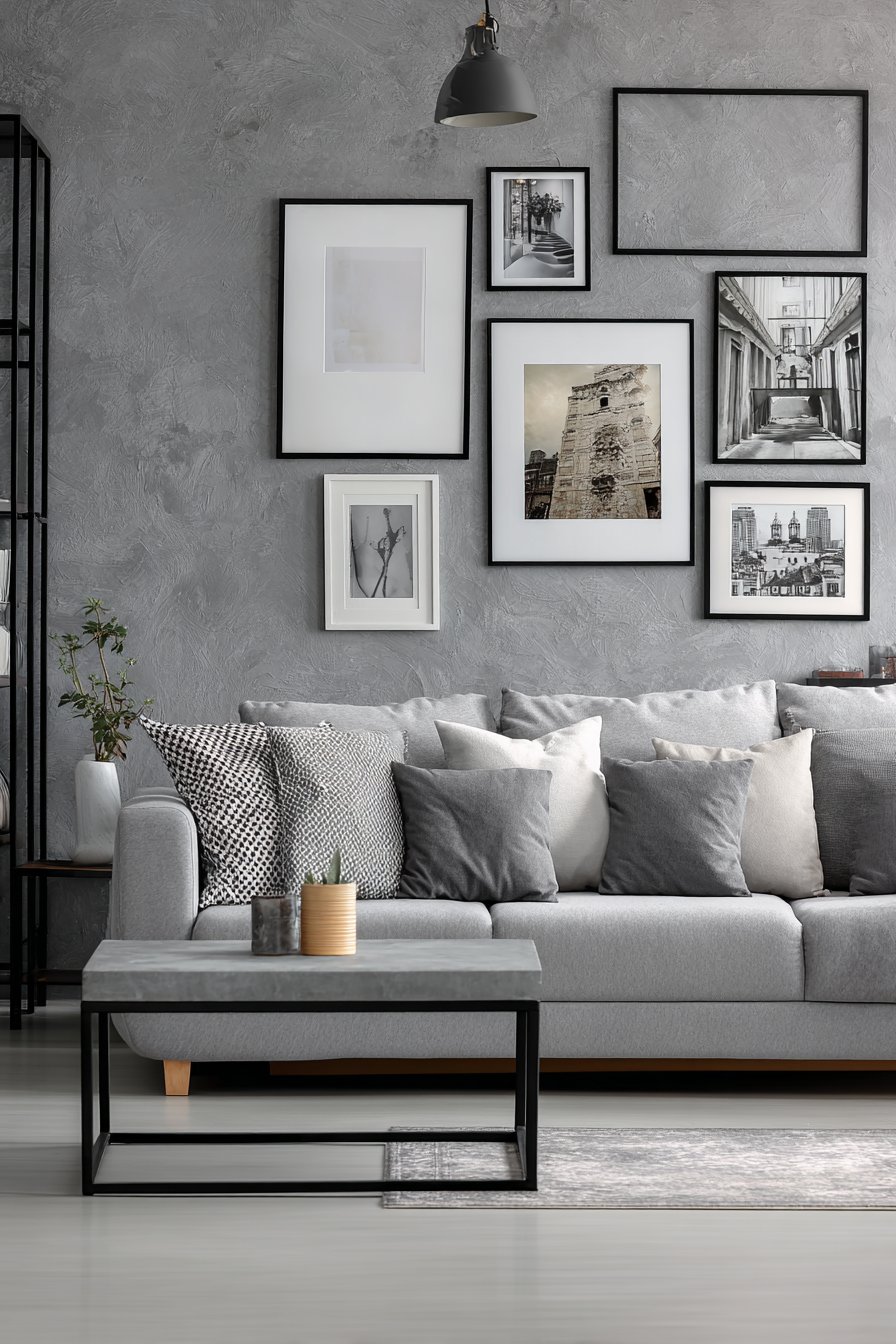
This approach particularly appeals to art collectors and photography enthusiasts who view their homes as galleries for rotating exhibitions. The deliberately neutral environment doesn’t compete with displayed work, allowing the collection to drive the room’s personality and color story. The flexibility of gray allows the room’s character to shift with changing exhibitions.
Key Design Tips:
- Paint walls in light gray to create neutral backdrop for artwork
- Choose simple, unadorned furniture that doesn’t compete with displayed art
- Install adjustable track lighting to properly illuminate and accent artwork
- Vary frame colors within neutral palette for visual interest
- Position seating to allow comfortable viewing of gallery wall
- Use minimal coffee tables that don’t obstruct views of lower artwork
- Create consistent mat spacing and frame styles for cohesive gallery presentation
- Update accent colors through artwork rather than permanent furnishings
17. Floor-to-Ceiling Drapery Drama
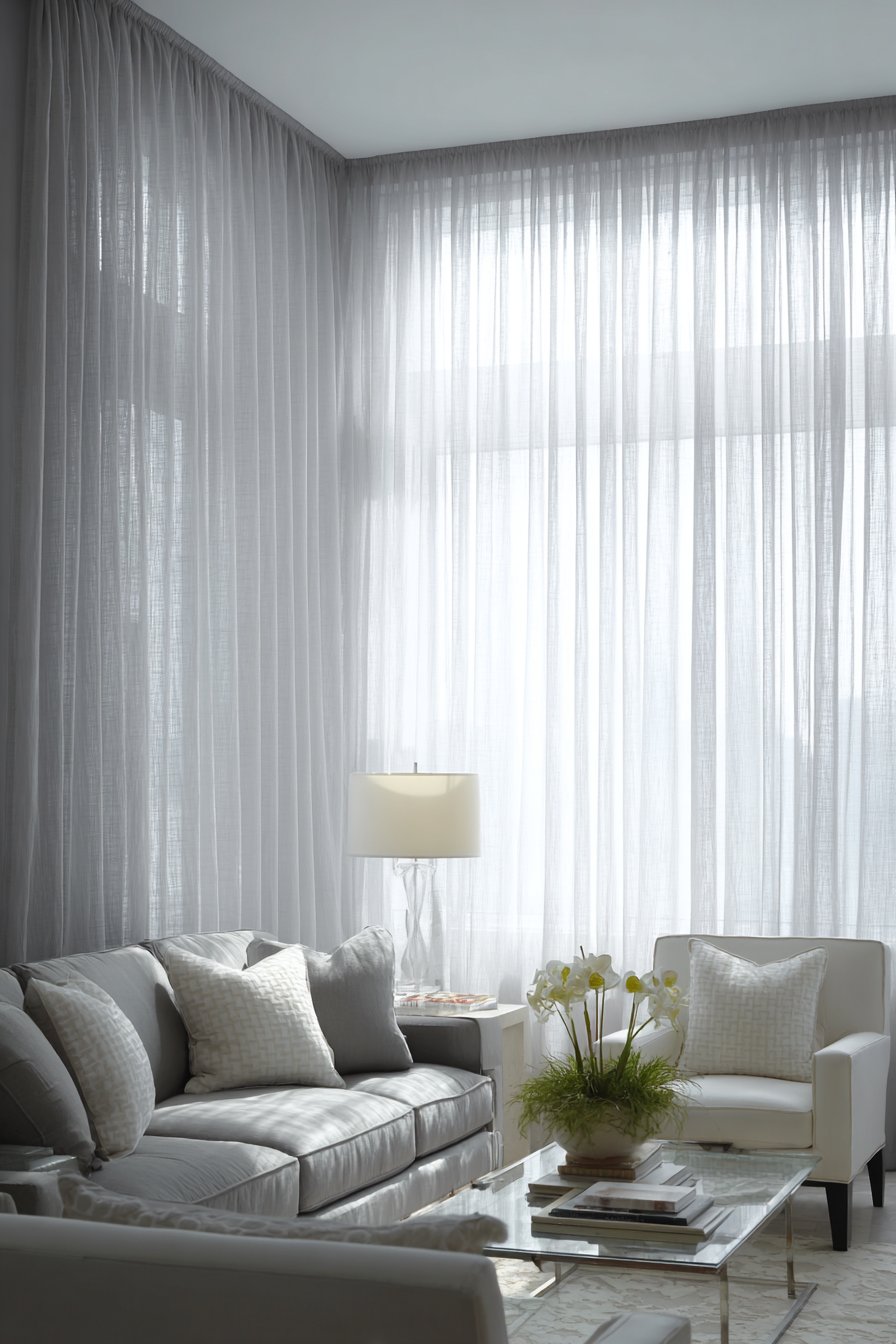
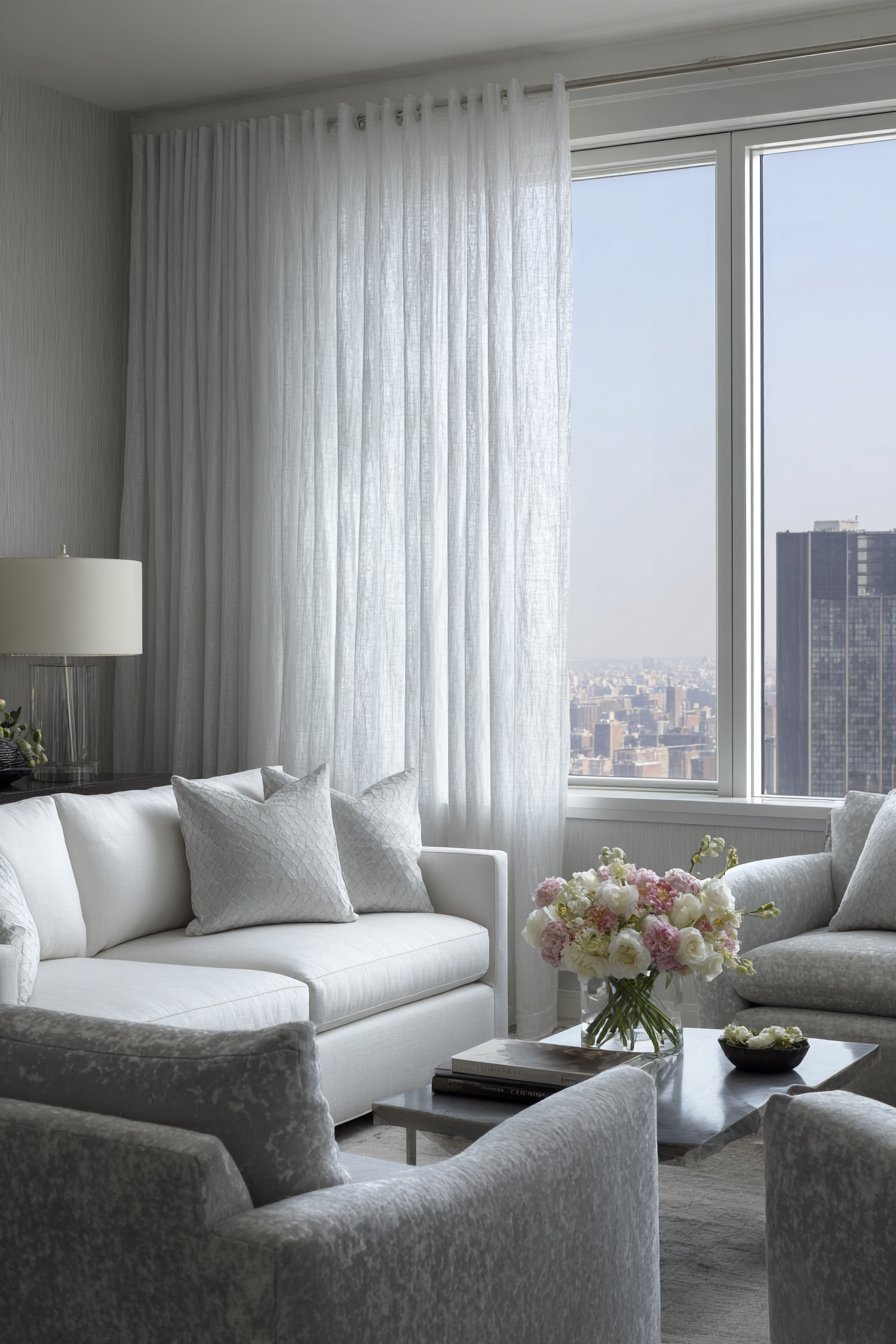
This design showcases the transformative power of window treatments through floor-to-ceiling gray linen curtains on a brushed nickel rod, demonstrating how drapery adds softness and perceived height. The light gray fabric filters natural light beautifully while providing privacy, its natural fiber texture adding organic warmth. A gray upholstered sofa and matching armchairs create an intimate seating arrangement, while sheer white under-curtains allow light layering options for varying privacy and light control needs.
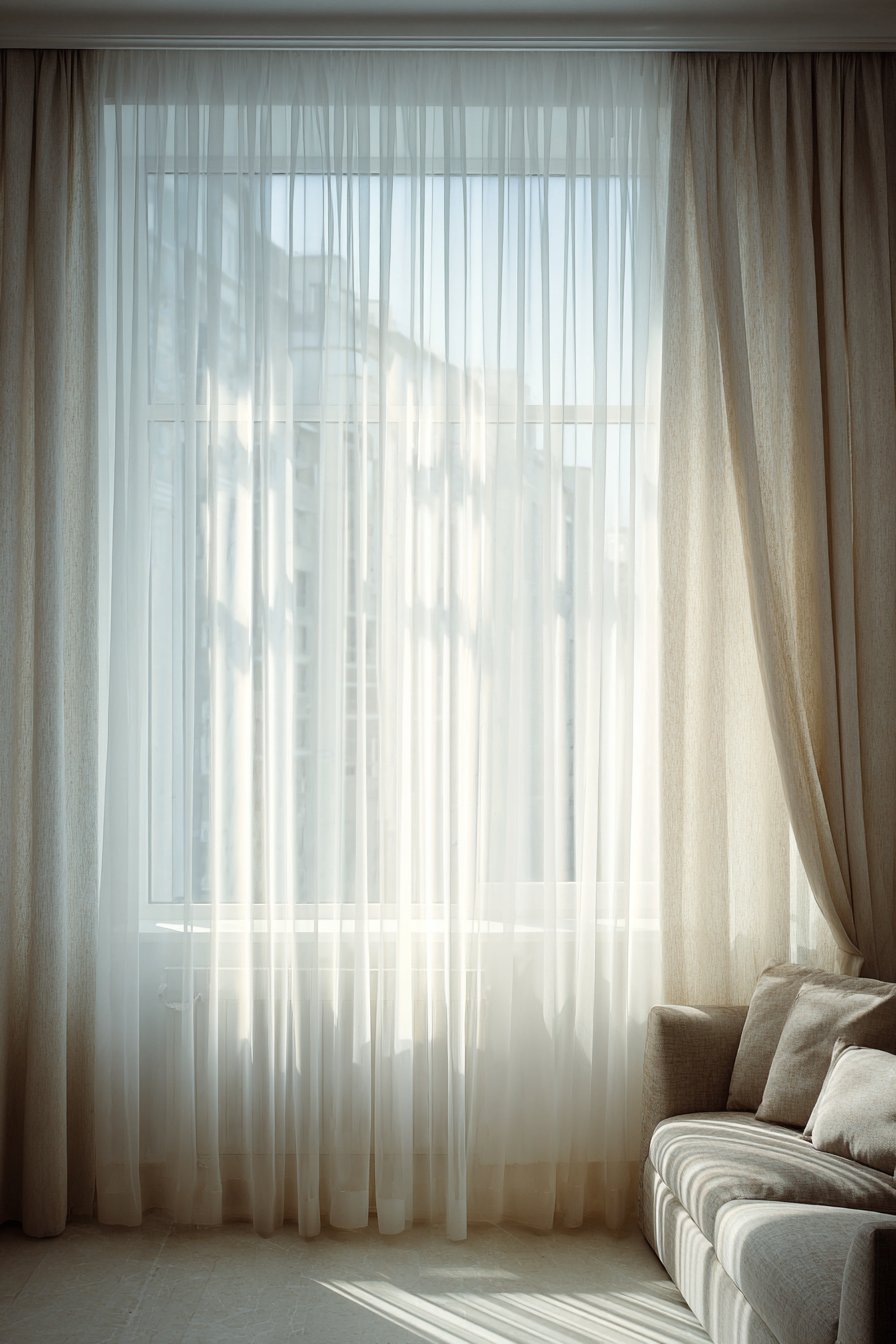
The walls in slightly darker gray than the curtains provide subtle depth, preventing the space from reading as entirely flat while maintaining monochromatic cohesion. The color variation creates dimensional interest as the curtains fall in folds, creating highlights and shadows across the tonal range. The flowing fabric introduces essential softness to rooms dominated by hard architectural surfaces and angular furniture forms.
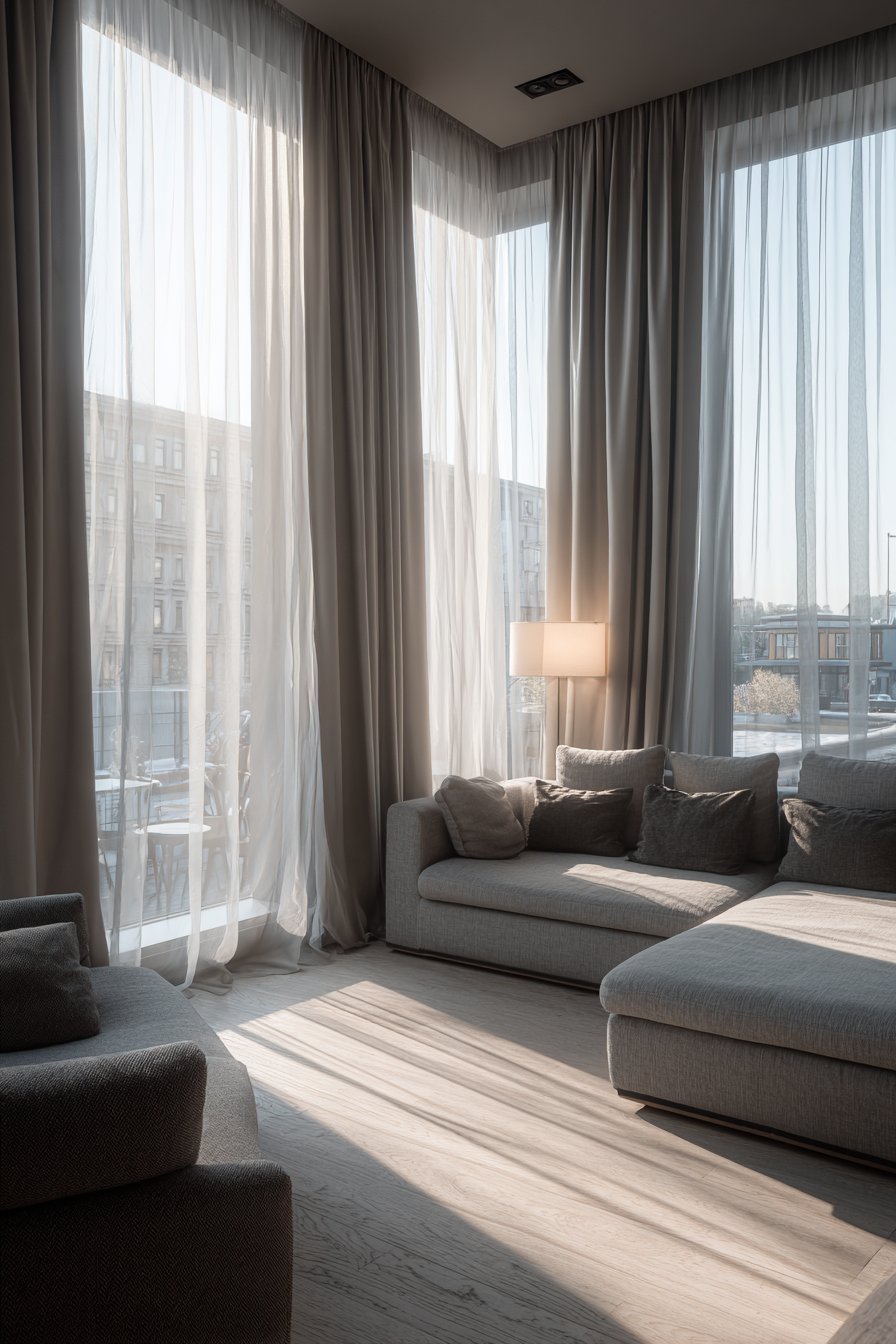
The installation of curtains at ceiling height rather than just above the window frame dramatically changes spatial perception, drawing eyes upward and making standard-height ceilings appear taller. This design strategy costs nothing beyond slightly longer panels but delivers significant visual impact. The gray color ensures the treatment reads as architectural element rather than fussy decoration.
Key Design Tips:
- Install curtain rods at ceiling height to maximize perceived room height
- Choose linen curtains in light gray for filtered light and natural texture
- Add sheer under-curtains for flexible light layering
- Paint walls in slightly darker gray than curtains for dimensional depth
- Extend curtain panels to floor or with slight puddling for luxurious drape
- Select brushed nickel or matte metal hardware to complement gray fabrics
- Use extra-wide panels for fullness when drawn closed
- Position furniture to allow curtains to frame seating areas when open
18. Industrial Loft Character
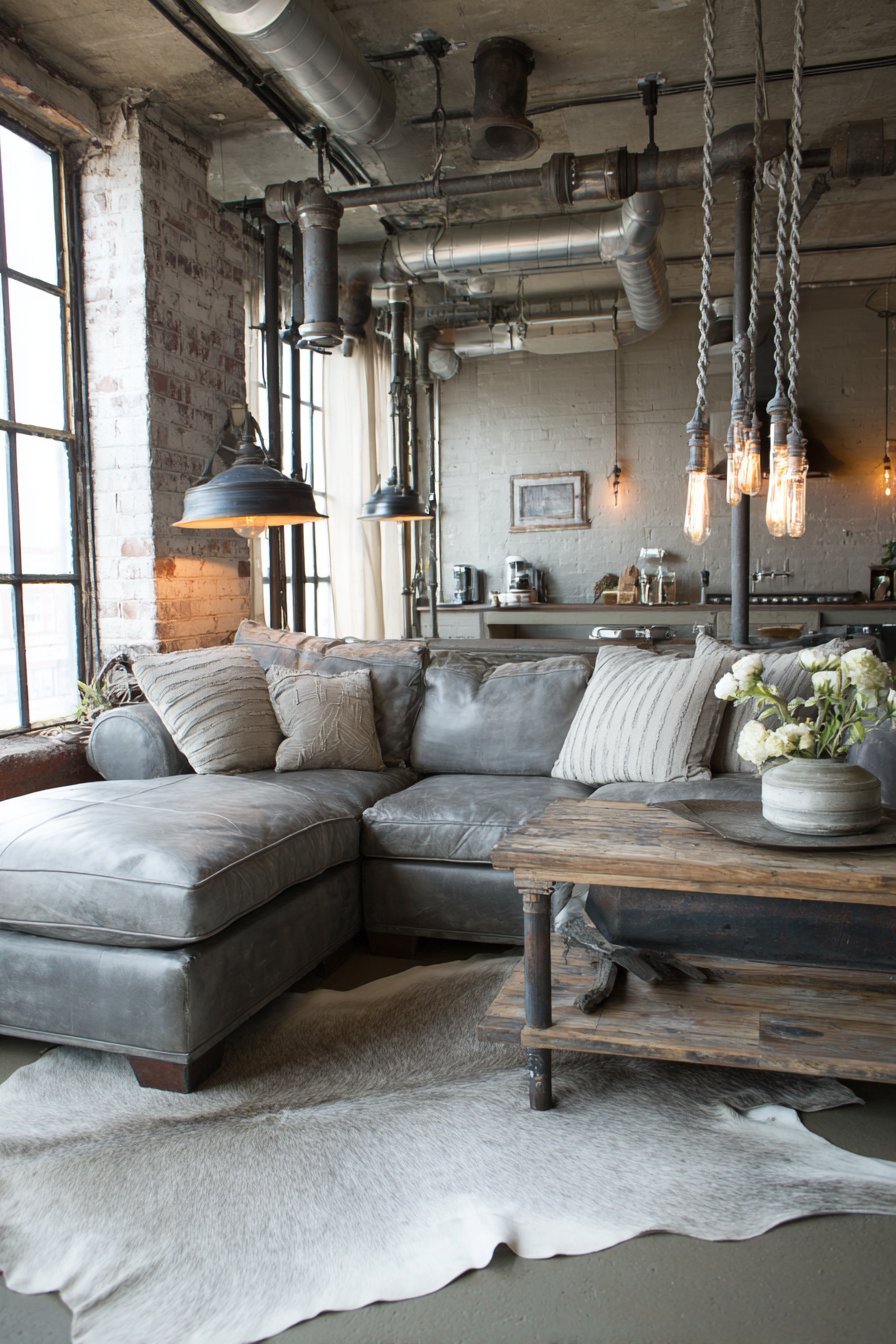
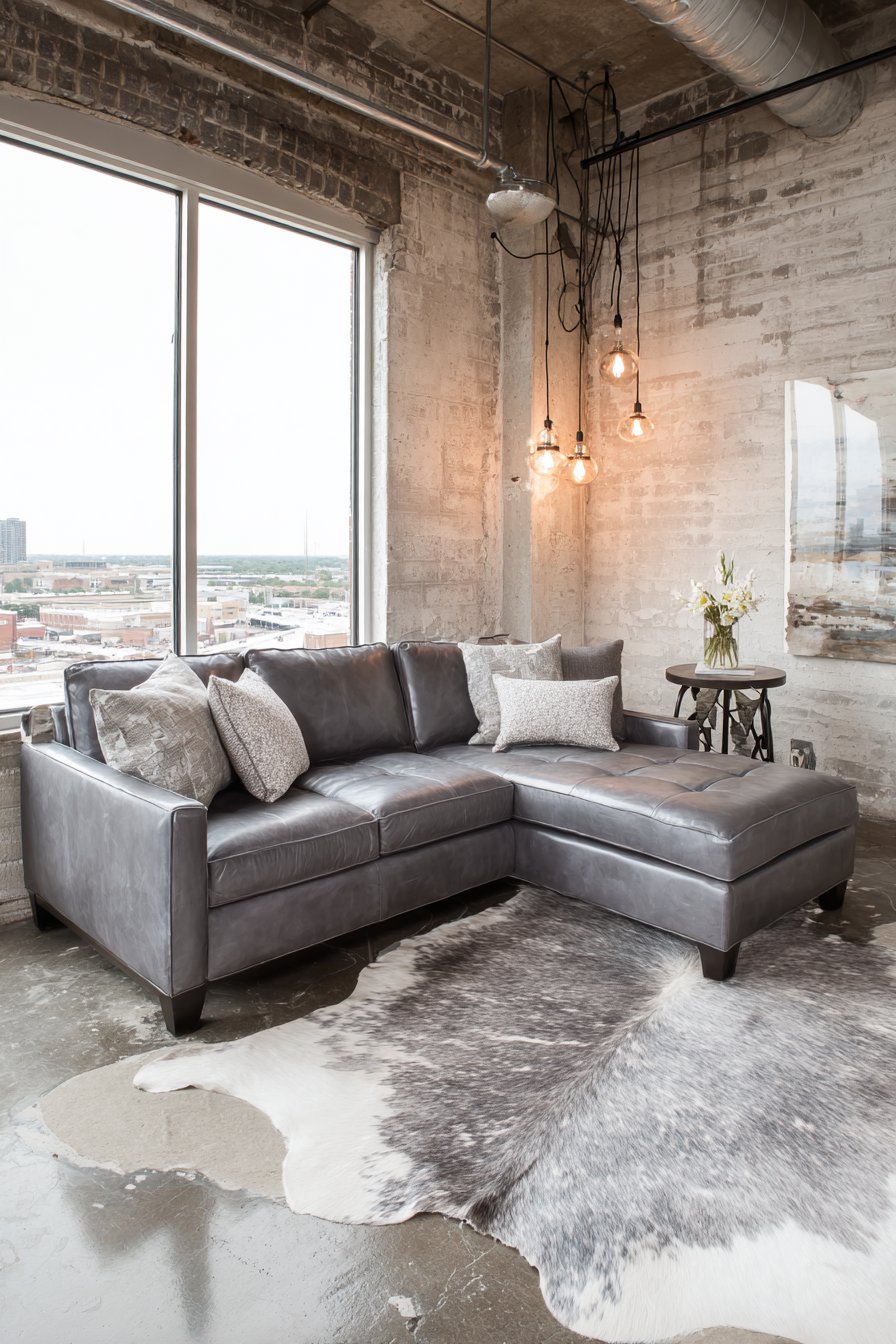
This edgy design features exposed brick painted in light gray, transforming rough industrial elements into sophisticated architectural features. Original concrete floors sealed in matte finish provide authentic industrial foundation while the gray treatment unifies disparate raw materials. A gray leather sofa with visible grain and slight distressing sits on a cowhide rug in gray and white, adding organic texture to the industrial canvas.
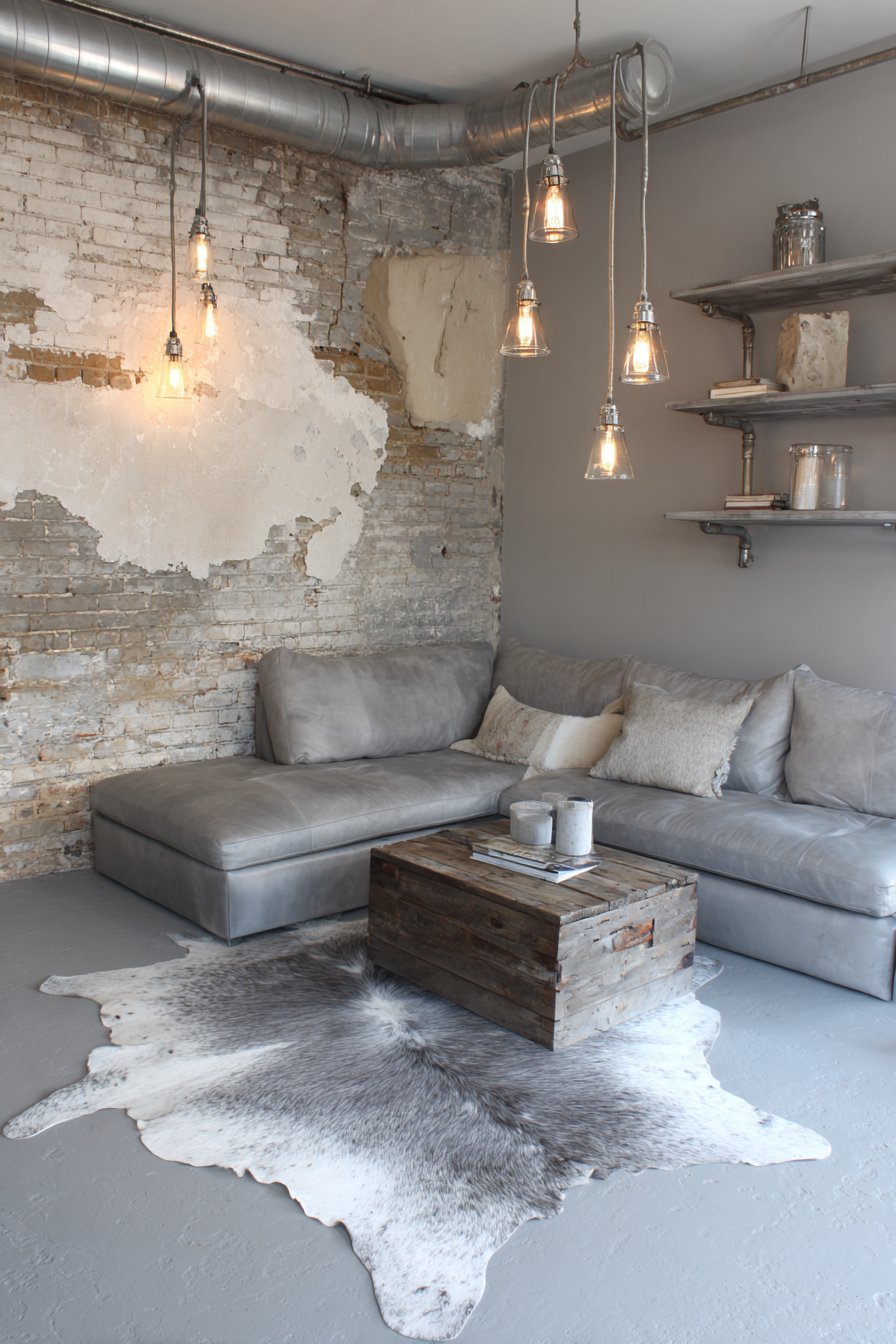
Reclaimed wood coffee table and metal pipe shelving add raw texture while maintaining the curated industrial aesthetic. Edison bulb fixtures with gray fabric cords provide ambient lighting, their exposed filaments celebrating industrial design’s honest expression of function. The cohesive gray palette softens industrial elements while maintaining urban edge, preventing the space from feeling too rough or masculine.
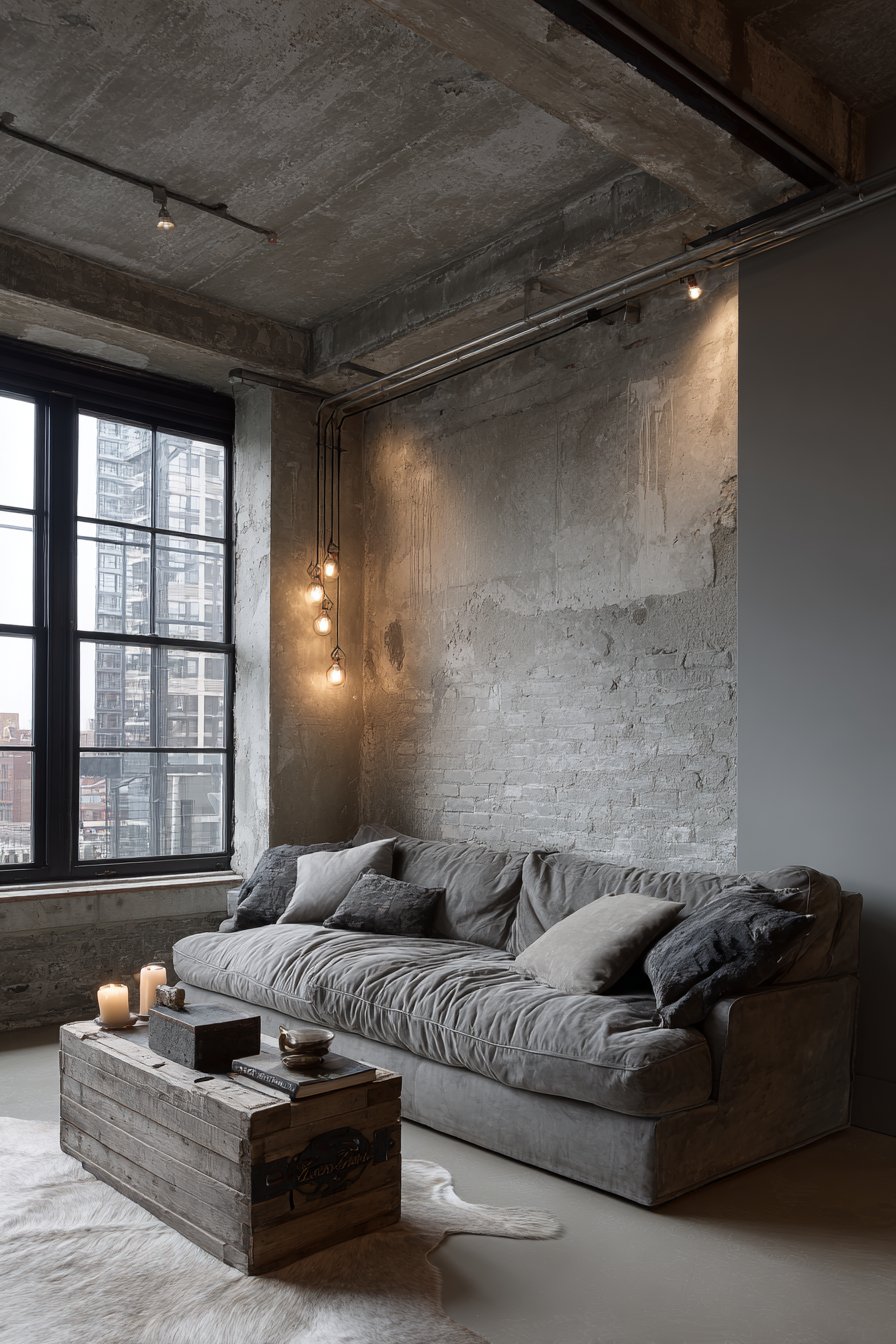
Industrial design celebrates honest materials and exposed structure, but the all-gray treatment demonstrates how the aesthetic adapts to more refined sensibilities. The painted brick maintains texture while controlling color, the sealed concrete provides durability while reading as polished, and the leather ages beautifully while remaining practical. This refined industrial approach appeals to urban dwellers who appreciate loft character without sacrificing sophistication.
Key Design Tips:
- Paint exposed brick in light gray to soften industrial harshness
- Seal concrete floors with matte finish for refined industrial look
- Choose leather upholstery that develops attractive patina with age
- Incorporate reclaimed wood for warmth against industrial materials
- Use metal pipe or gas pipe for shelving supports
- Install Edison bulb fixtures to celebrate exposed functional elements
- Add cowhide rugs for organic texture in industrial spaces
- Layer gray tones across different industrial materials for cohesion
19. Light-Maximizing Strategy
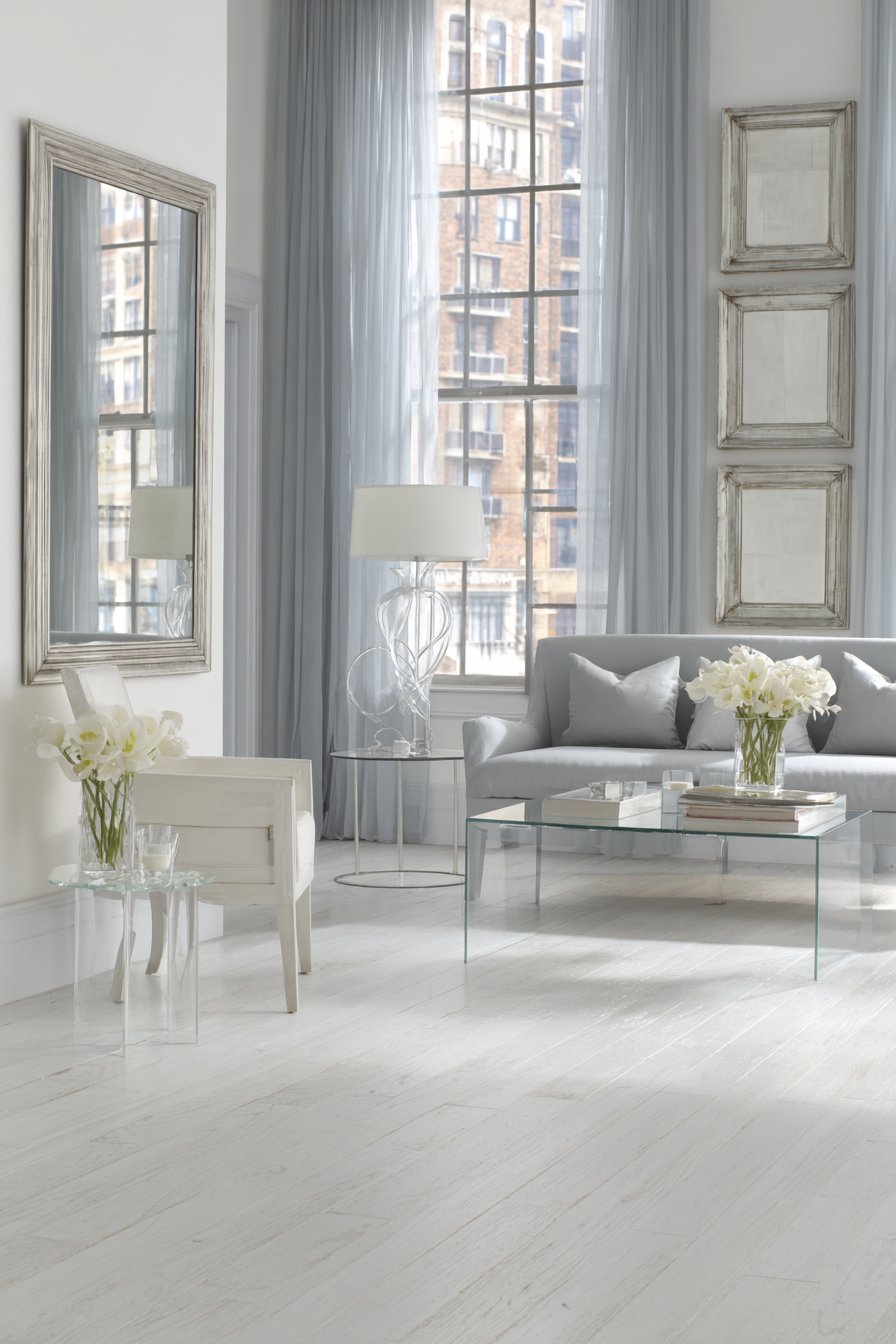
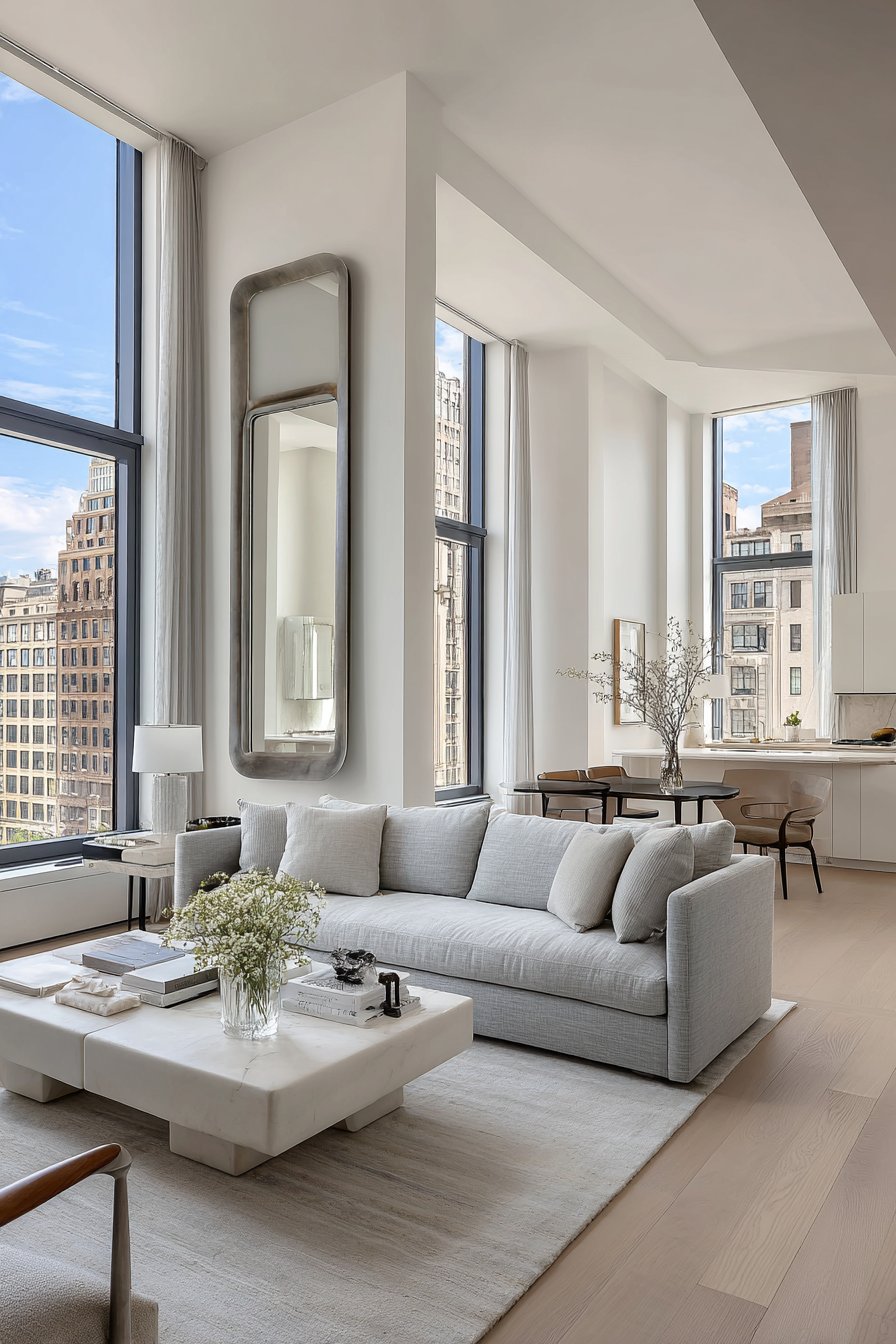
This bright space features walls in the palest gray, almost white, reflecting available daylight throughout the space and maximizing brightness in rooms with limited or northern exposure. Sheer gray curtains in lightweight cotton voile layer over windows, filtering harsh light while maintaining luminosity. A gray linen sofa in slightly deeper tone provides gentle contrast, preventing the space from disappearing into complete neutrality while maintaining the airy feeling.
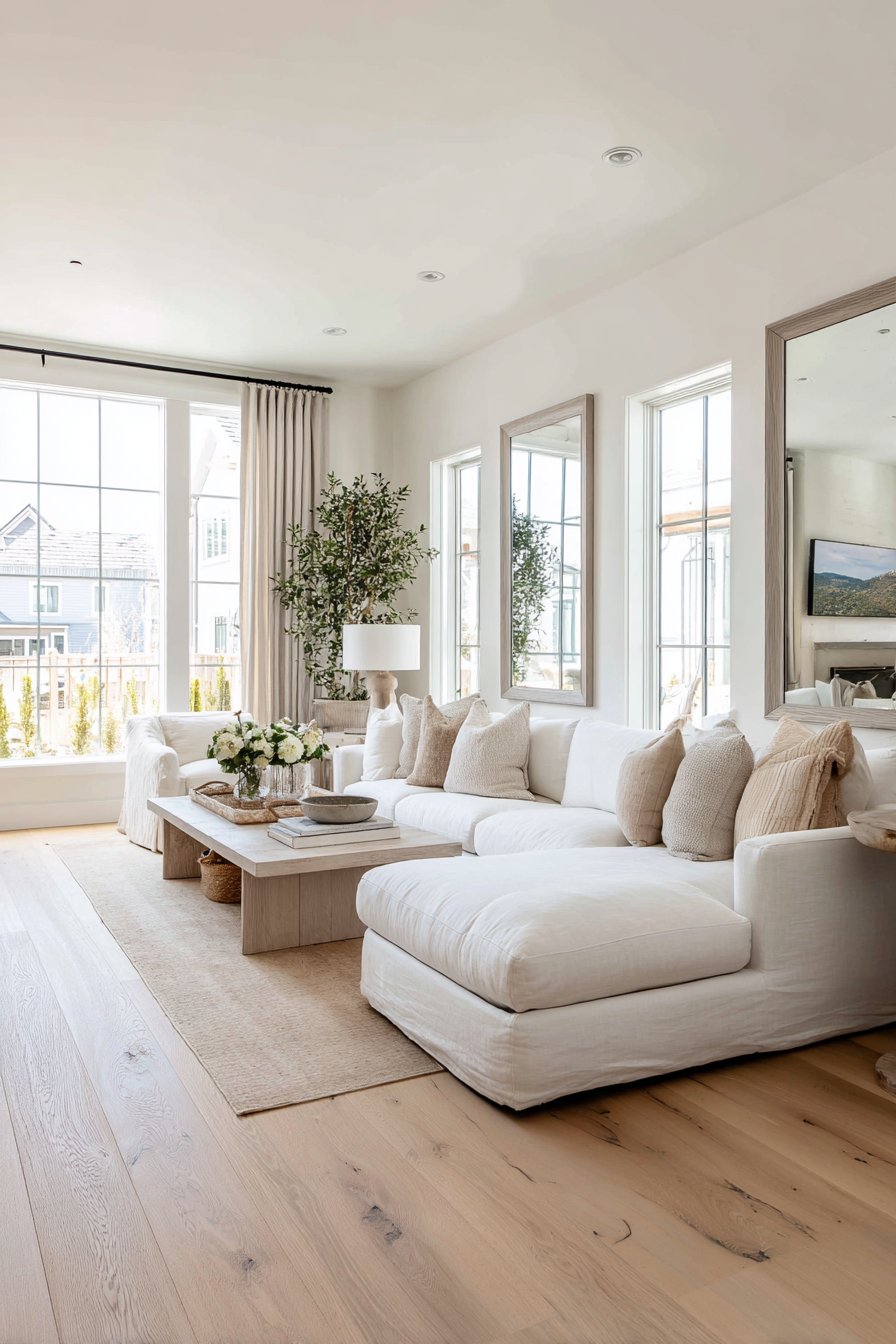
Mirrors in gray-washed frames strategically placed opposite windows multiply light through reflection, a classic design strategy for darker spaces. White oak flooring with gray undertones maintains the bright, airy feeling while providing subtle warmth. Minimal accessories in glass and lucite keep sightlines open and maintain the light-filled aesthetic, their transparency allowing light to pass through rather than creating visual obstacles.
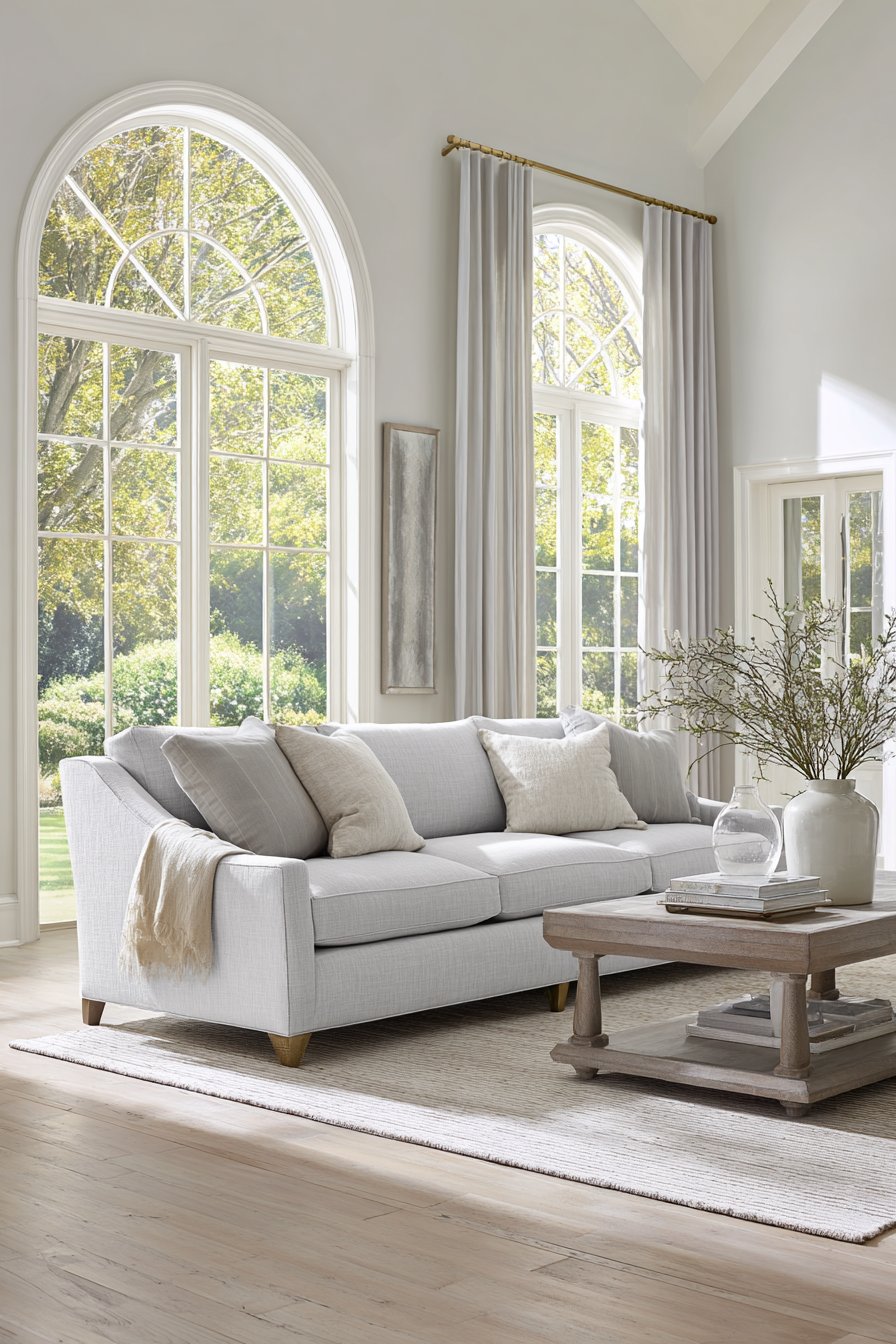
The light-maximizing approach proves particularly valuable in urban apartments, north-facing rooms, or spaces with limited window area. Every design decision prioritizes reflection, transparency, and light color values. The barely-there gray maintains character while achieving the brightness that pure white provides, avoiding the sterile or cold feeling that can accompany all-white spaces.
Key Design Tips:
- Paint walls in the palest gray for brightness without stark white coldness
- Position mirrors opposite windows to multiply available natural light
- Choose sheer curtains that filter rather than block daylight
- Select furniture in slightly deeper gray to prevent complete wash-out
- Use white oak or light wood flooring to maintain brightness at floor level
- Incorporate transparent accessories in glass, lucite, or acrylic
- Keep accessory count minimal to avoid visual clutter that absorbs light
- Choose fabrics with slight sheen to reflect rather than absorb light
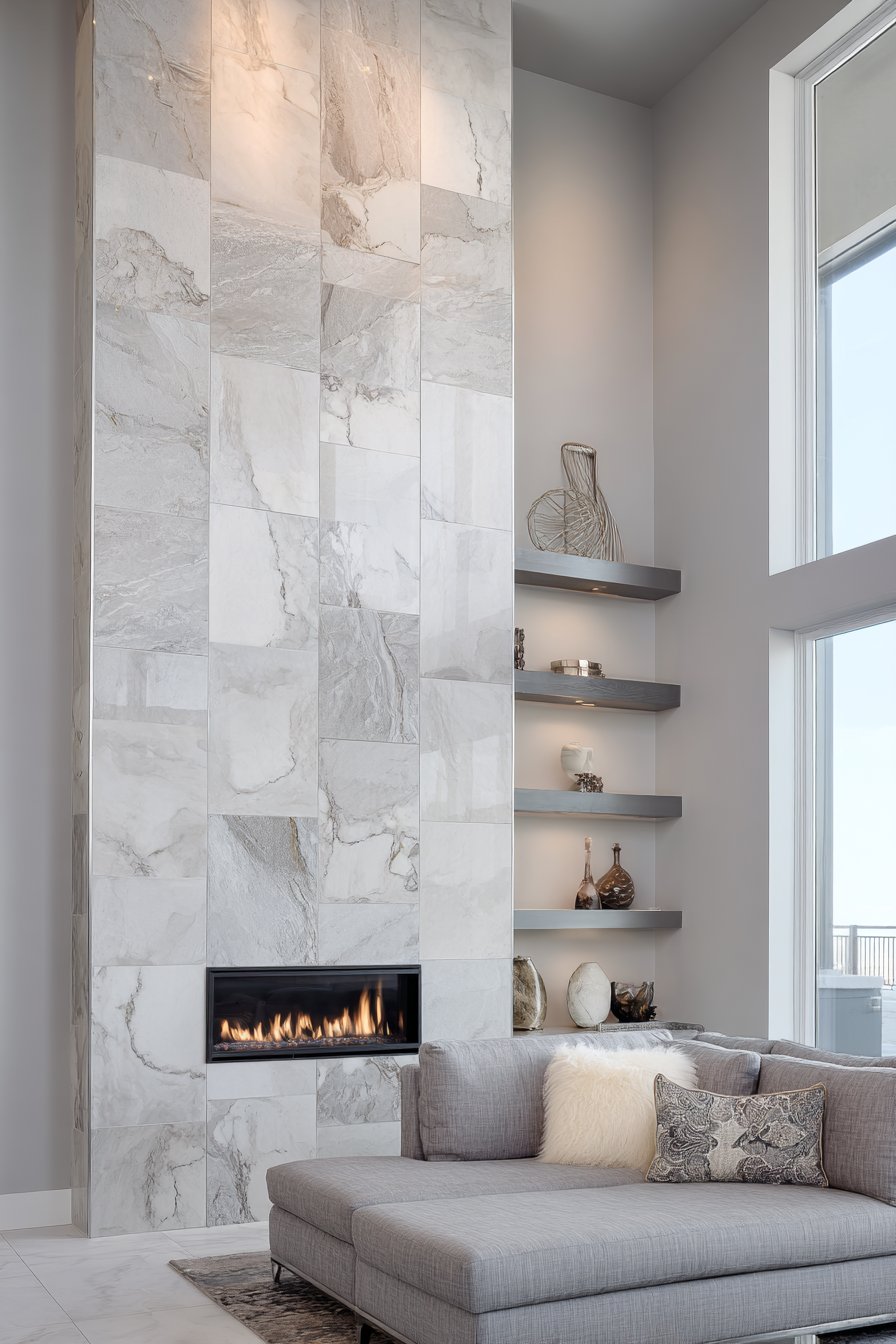
20. Dramatic Fireplace Feature Wall
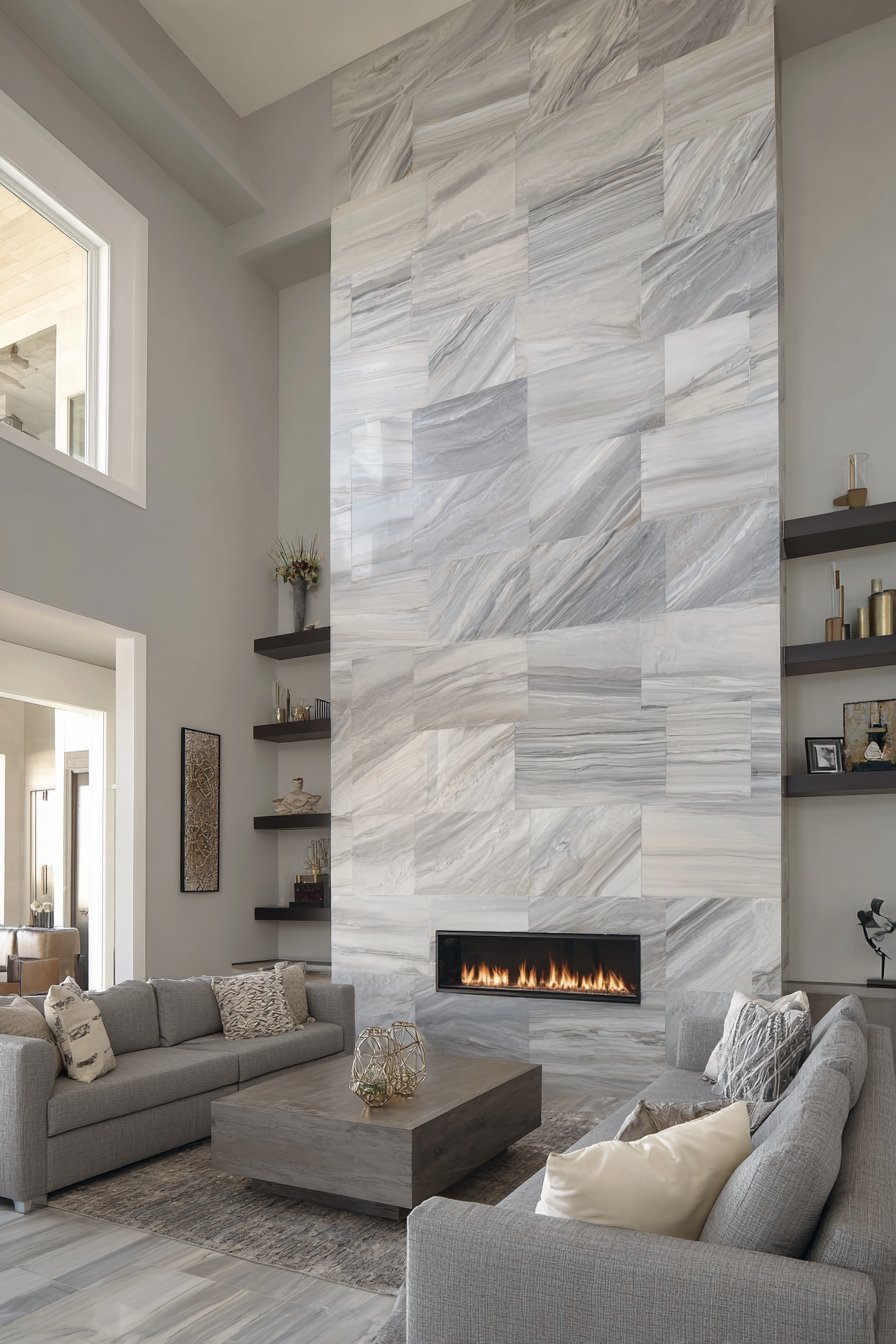
This bold design features a statement fireplace wall tiled in large-format gray porcelain panels with subtle marble-look veining, creating a dramatic focal point through material and scale. The modern linear gas fireplace inserts seamlessly into the gray tiled surface, its horizontal orientation emphasizing width. A low gray sectional sofa faces the focal point, styled with cream and charcoal accent pillows that introduce subtle tonal variation.
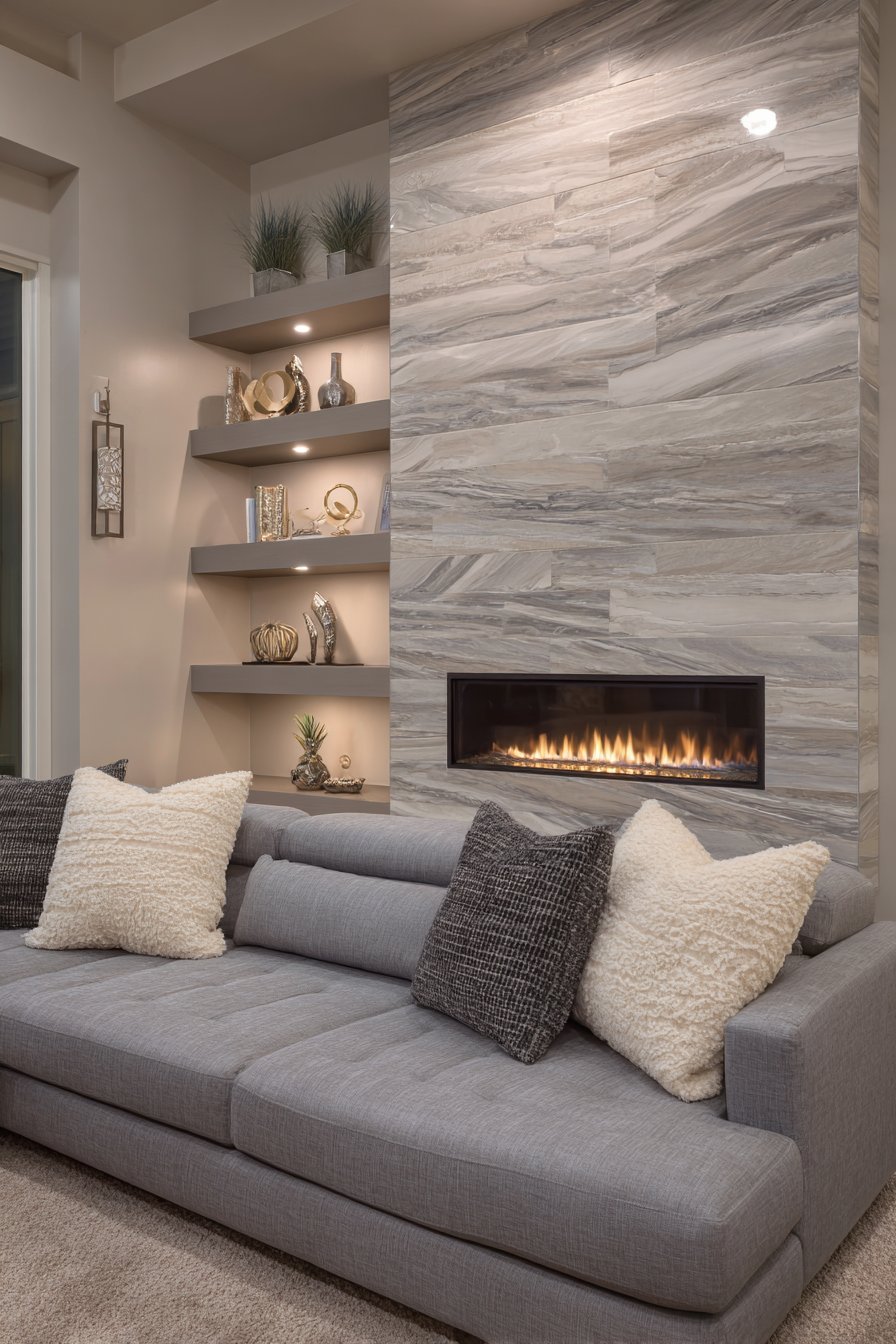
Floating shelves in matching gray flank the fireplace, styled minimally with a few decorative objects that don’t compete with the architectural statement. The adjacent walls in soft light gray paint allow the textured fireplace wall to stand out, demonstrating the power of material variation within monochromatic schemes. The scale of the porcelain panels creates contemporary drama while the gray palette maintains sophisticated restraint.
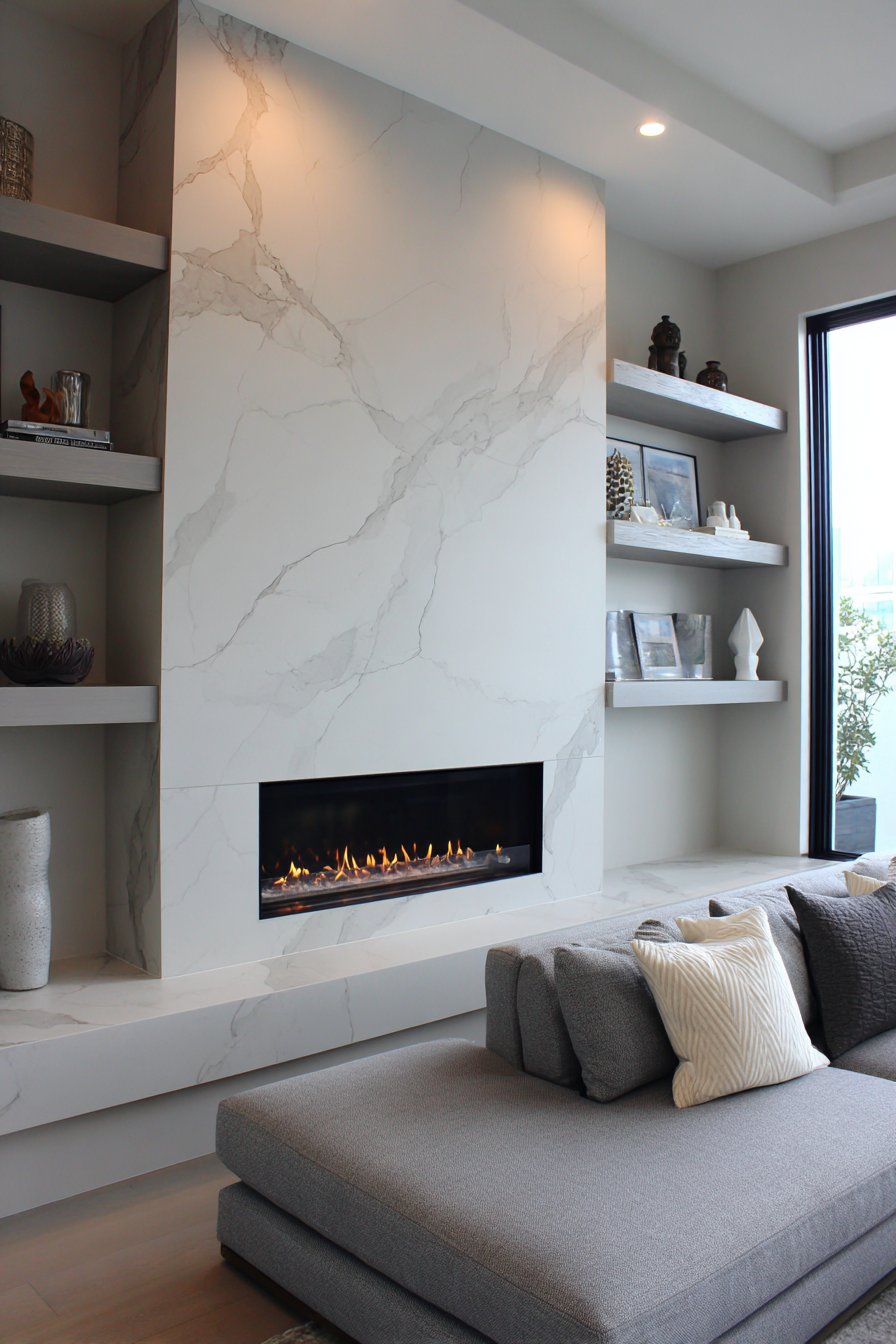
The fireplace feature wall transforms a standard living room into a space with architectural personality, proving that material choice creates impact equal to color. The investment in large-format quality tile delivers lasting value while the timeless gray palette ensures the dramatic treatment won’t feel dated. The linear fireplace provides ambiance without the maintenance of traditional fireplaces.
Key Design Tips:
- Use large-format tiles for contemporary drama and fewer grout lines
- Choose porcelain that mimics natural stone for high-end look with easier maintenance
- Install linear fireplaces for contemporary horizontal emphasis
- Flank fireplaces with floating shelves for balanced symmetry
- Paint adjacent walls in lighter gray to make feature wall stand out
- Position seating to face the fireplace focal wall
- Style flanking shelves minimally to avoid competing with the architectural feature
- Select tiles with subtle veining for visual interest without pattern overload
21. Layered Rug Technique
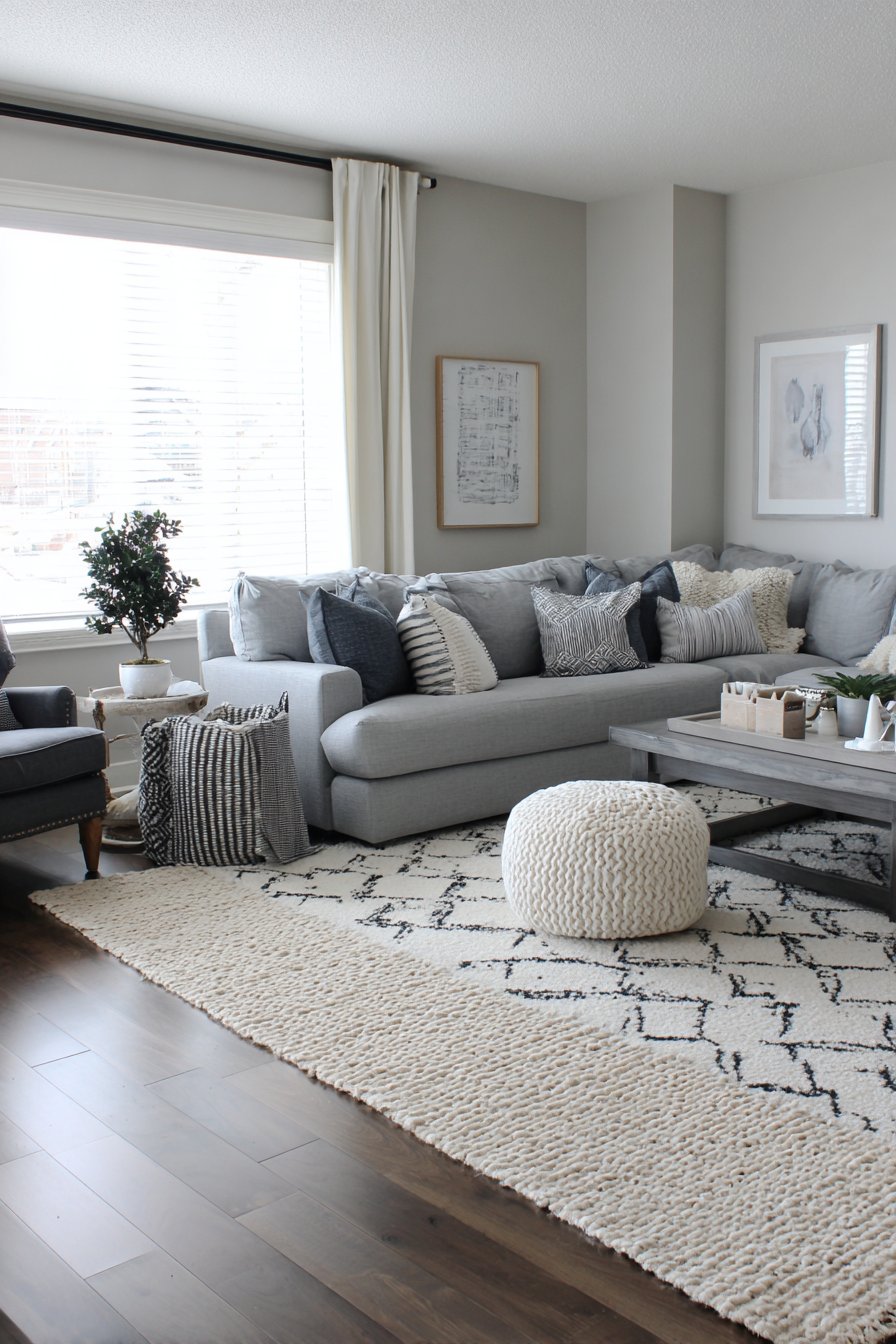
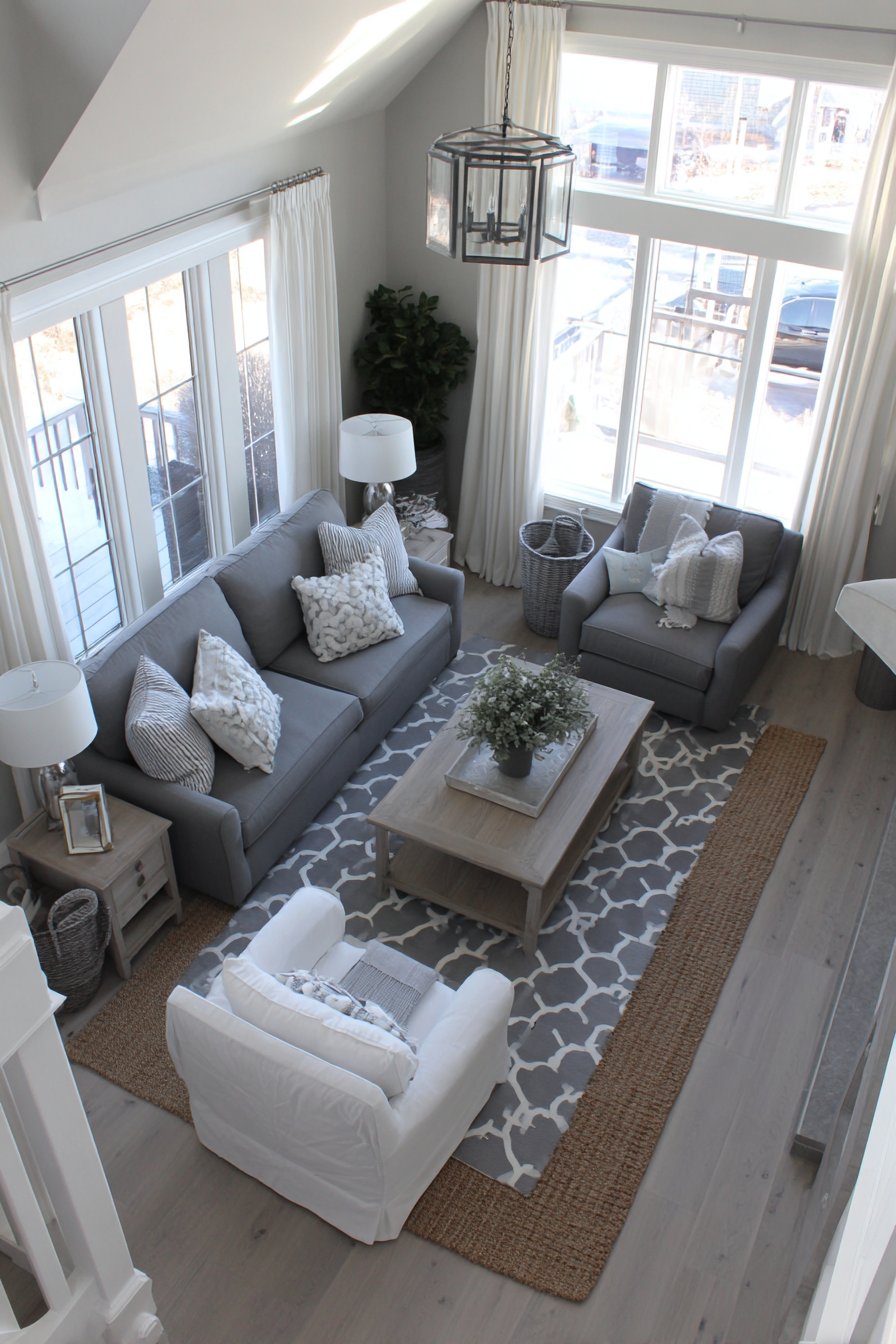
This creative design showcases the layered rug technique with a large jute rug in natural tan as base layer and a smaller gray and white geometric patterned rug layered on top. This approach adds visual interest and defines the seating zone while providing practical benefits like protecting the base rug and allowing seasonal changes through the top layer. Both rugs anchor a gray upholstered sofa and chairs, creating clear furniture grouping.
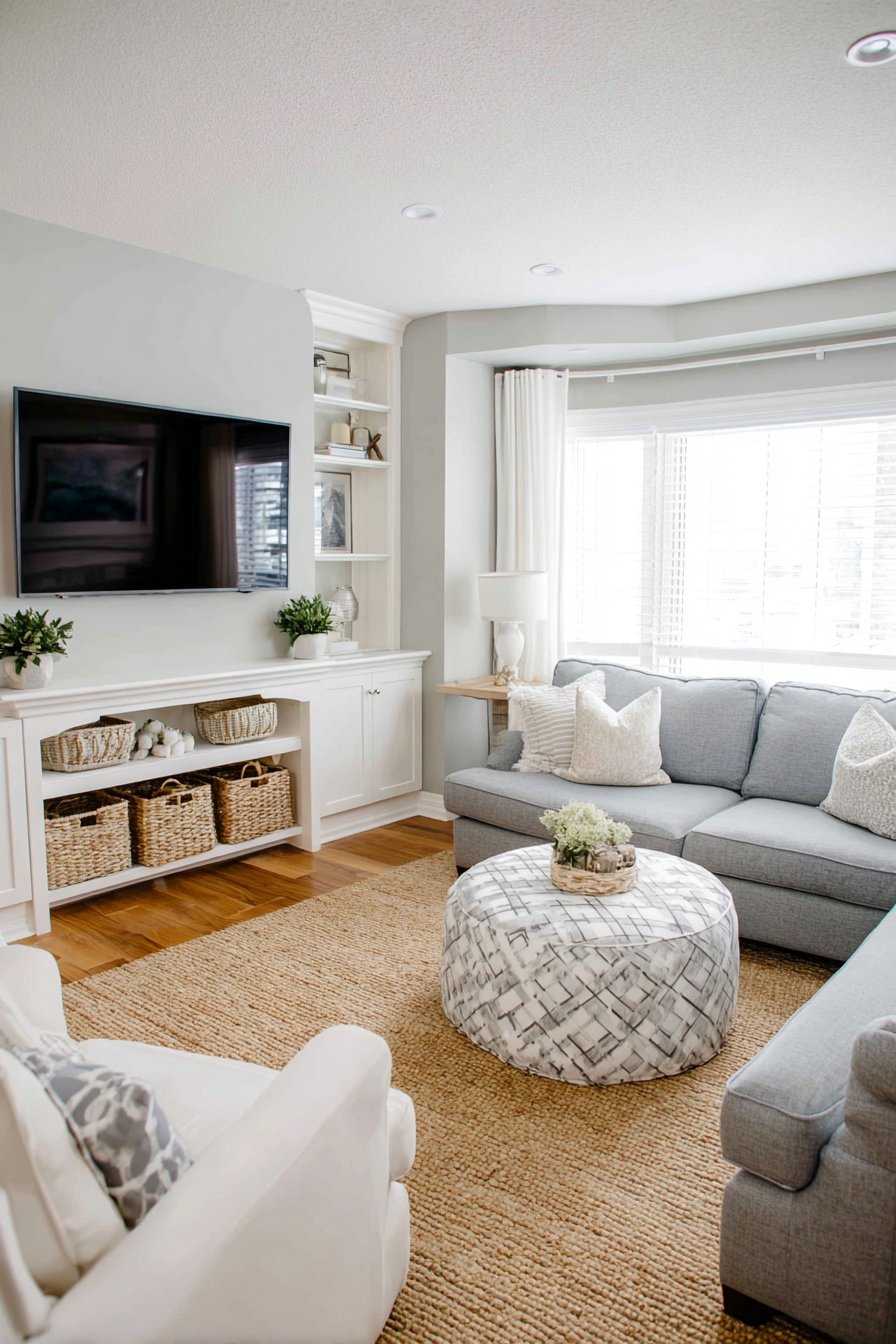
Light gray walls and gray-washed hardwood floors complete the neutral palette, allowing the layered rug combination to serve as primary pattern source. Natural fiber baskets in gray tones provide textural storage solutions, their woven surfaces adding organic dimension. The layered approach also offers practical advantages—the natural jute provides cushioning and durability while the patterned top rug introduces design interest and can be changed seasonally or as tastes evolve.
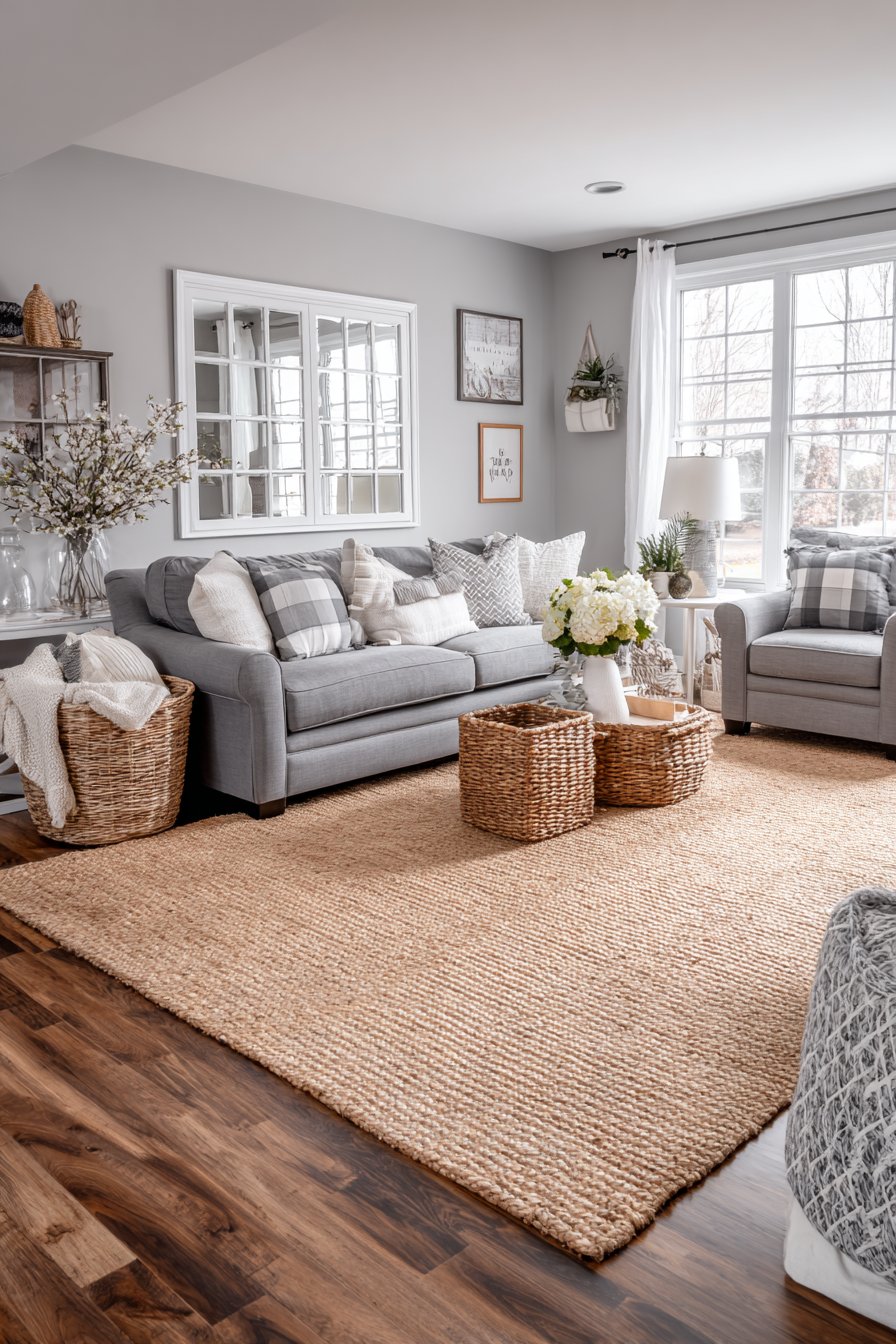
This technique has gained popularity in design circles for its flexibility and depth. The dimensional layering creates visual interest impossible to achieve with single rugs while the ability to swap the top rug allows refreshing the space without replacing the expensive foundational layer. The gray and natural tan combination provides warmth while maintaining the gray living room theme.
Key Design Tips:
- Start with larger neutral jute or sisal rug as foundation layer
- Layer smaller patterned or colored rug on top, offset from center
- Ensure top rug is substantially smaller than base rug for proper proportion
- Position furniture partially on layered rugs to anchor the arrangement
- Choose complementary rather than matching colors between layers
- Use rug pads between layers to prevent slipping
- Rotate or change top rug seasonally for fresh looks
- Maintain consistent style in rug patterns—both geometric or both organic
22. Eclectic Bohemian Foundation
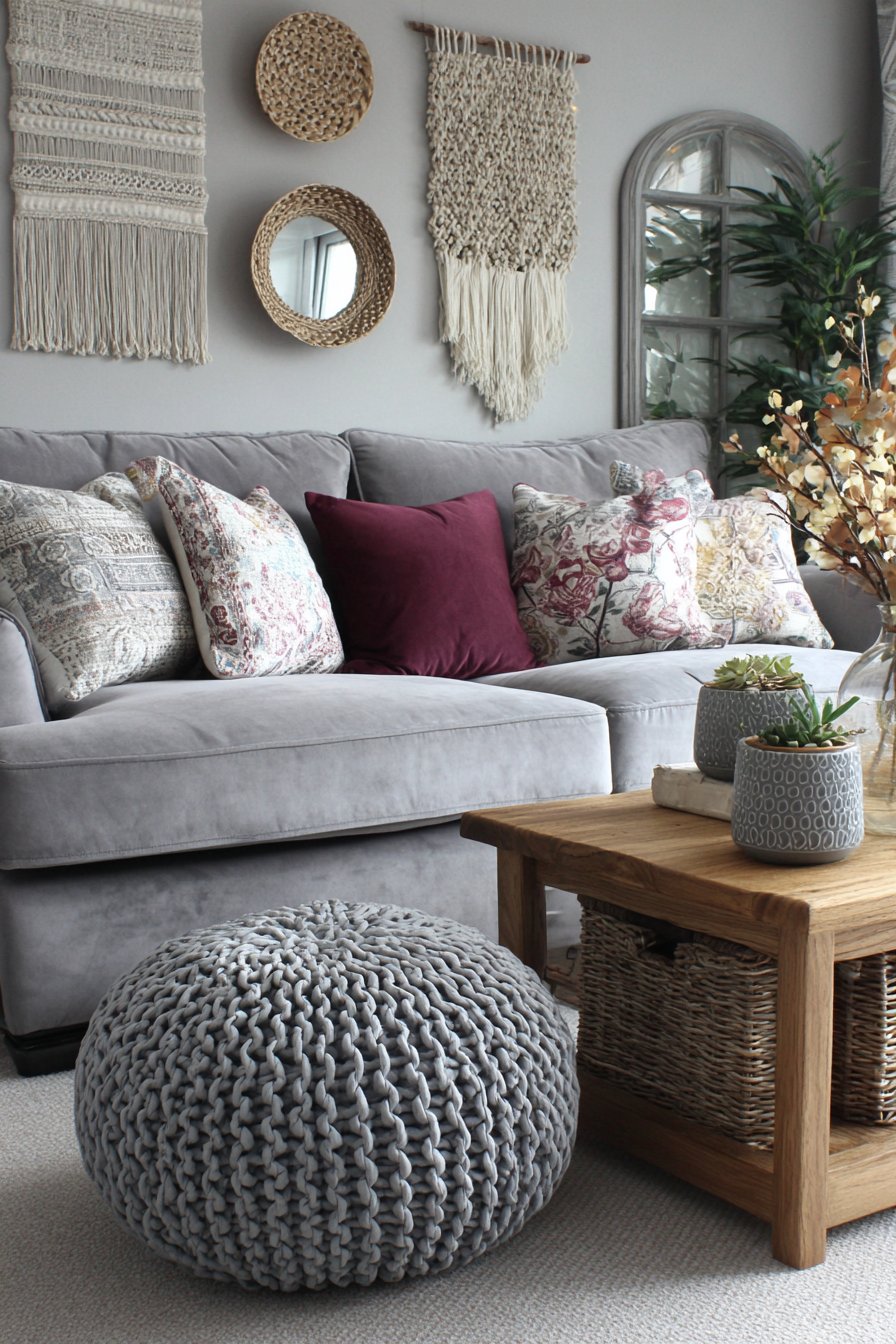
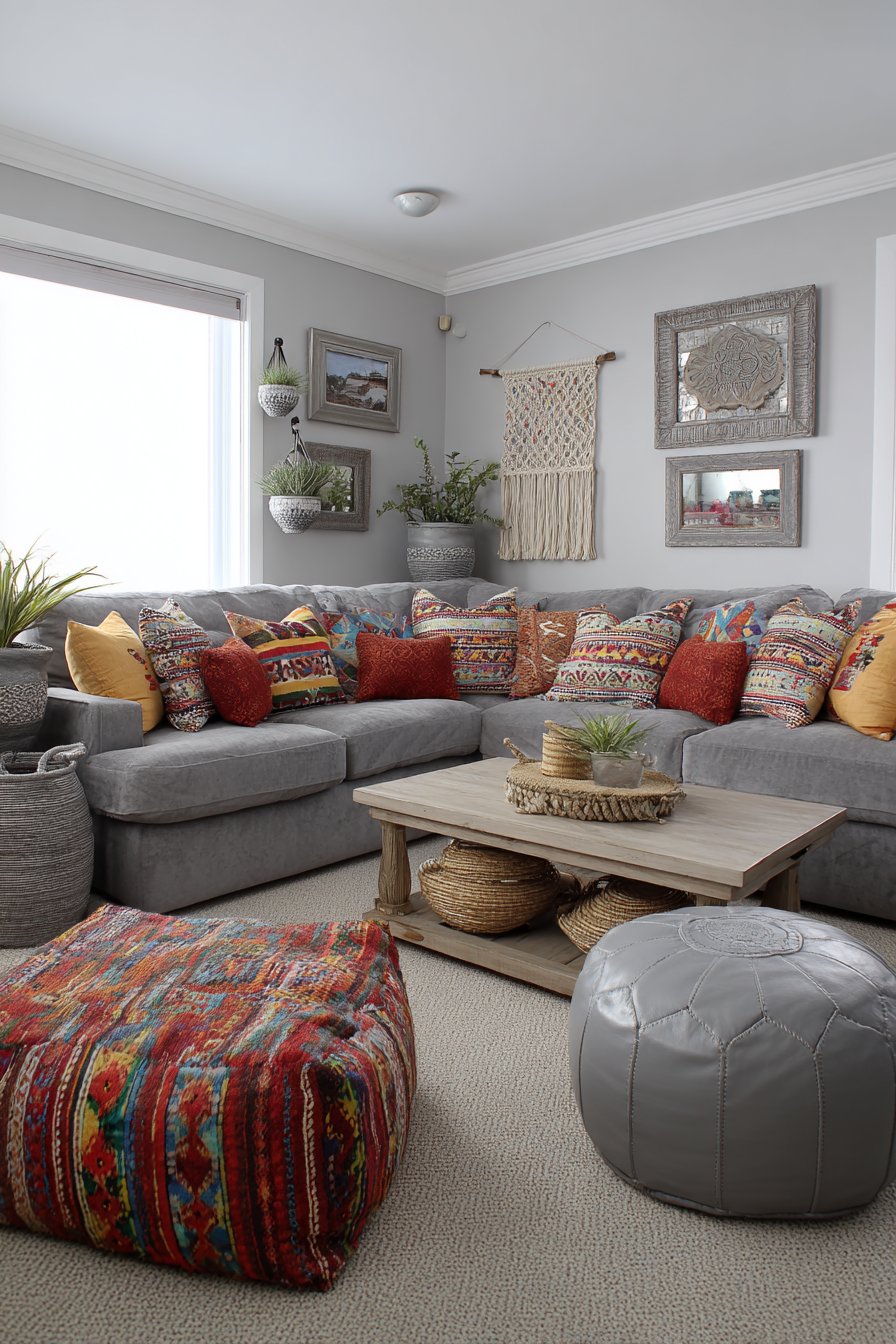
This collected space features a gray velvet sofa as neutral foundation for colorful pillows in global patterns, demonstrating how gray serves as sophisticated backdrop for maximalist bohemian style. The light gray walls allow collected items to shine including vintage textiles, macramé wall hangings, and potted plants in gray ceramic planters. A Moroccan-inspired pouf in gray leather provides flexible seating while maintaining the gray theme.
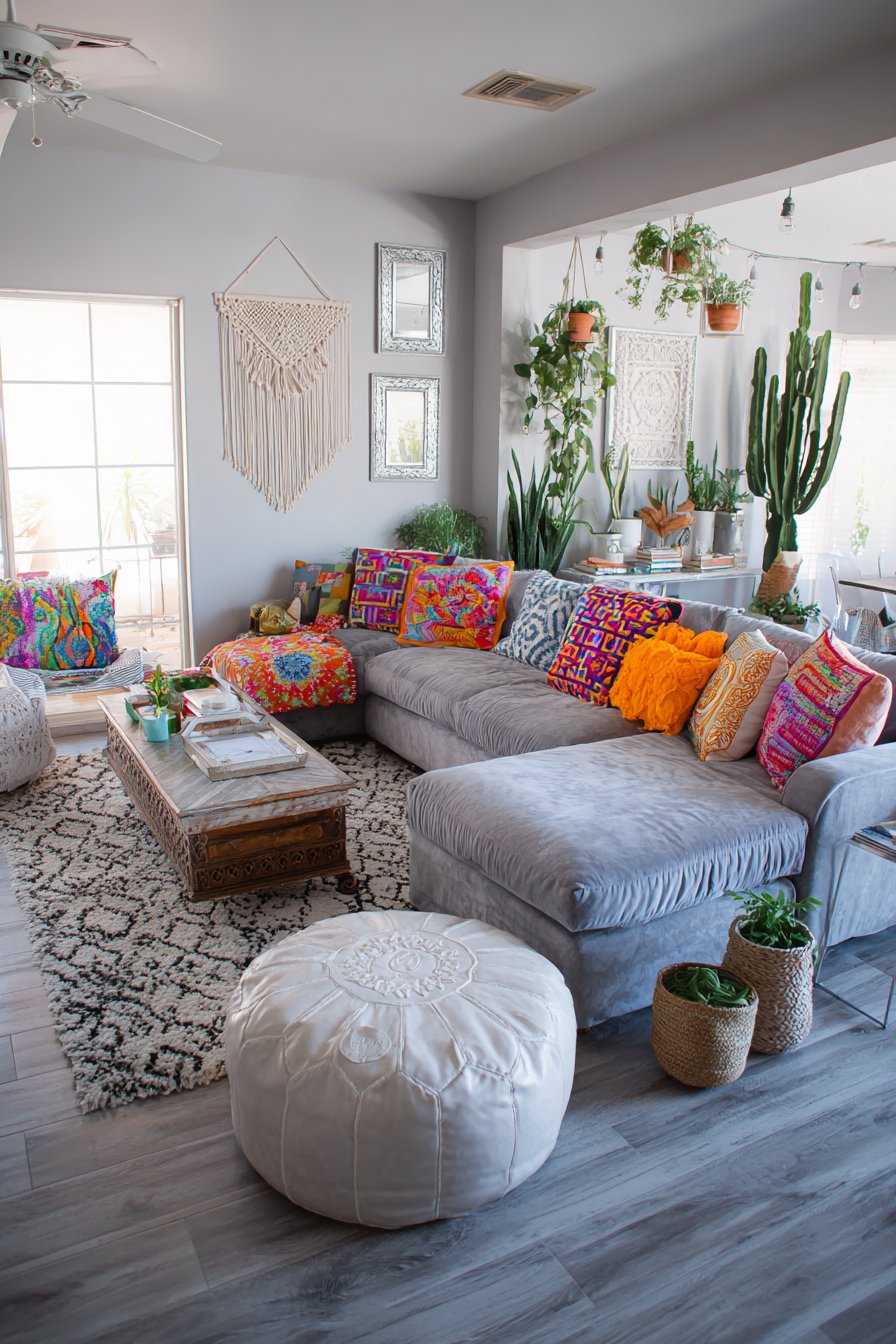
Natural wood coffee table and woven gray baskets add organic texture essential to bohemian aesthetics. String lights and mismatched gray-framed mirrors create casual ambiance, their eclectic arrangement contrasting with the more formal symmetry of traditional design. The genius of using gray as bohemian foundation lies in providing visual rest areas among the pattern and color explosion—the gray elements prevent the space from becoming overwhelming while allowing personality to shine.
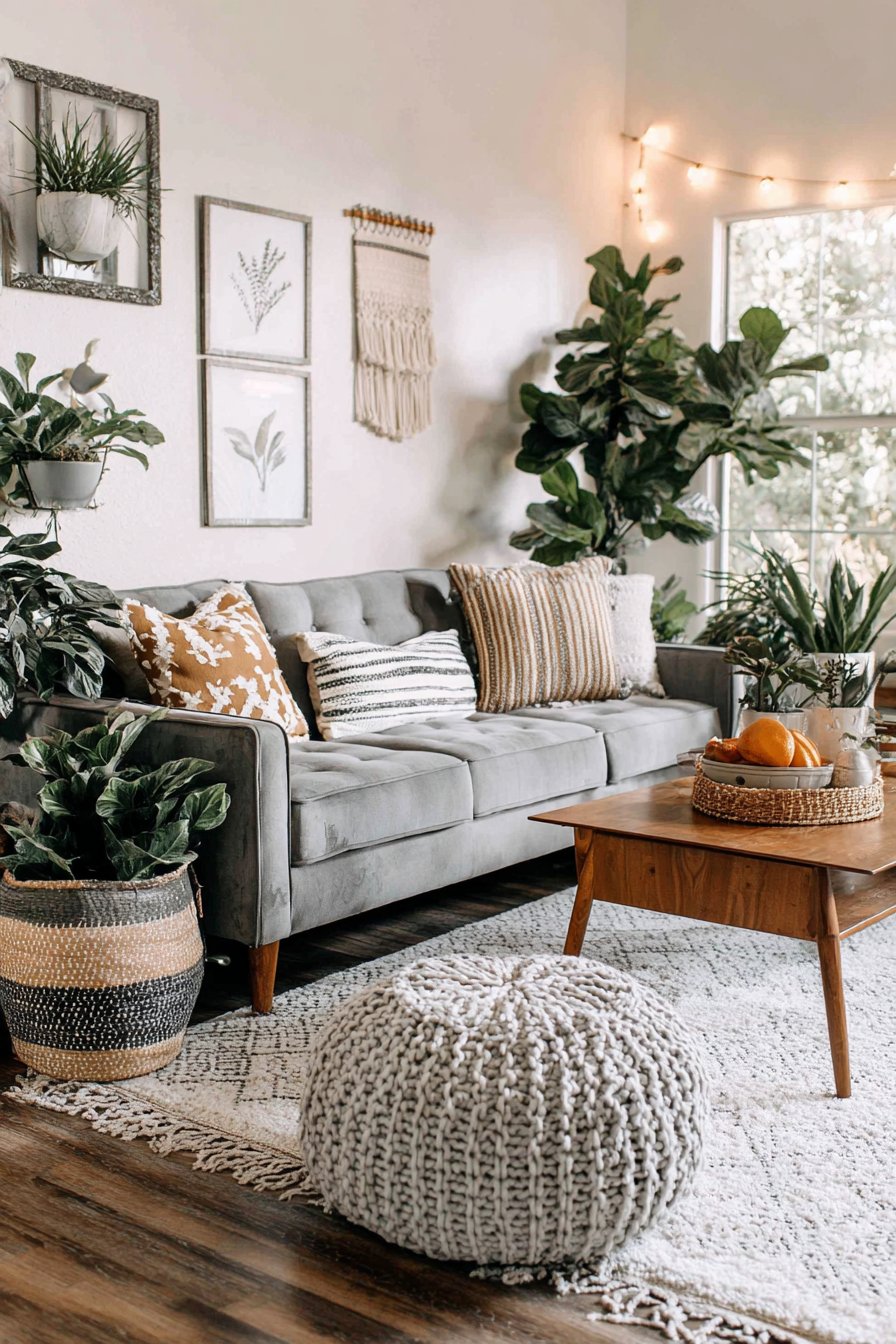
Bohemian style celebrates personal expression and collected treasures from travels and life experiences. The gray foundation ensures the space remains grounded and sophisticated despite the eclectic mix, preventing the “messy” quality bohemian spaces can acquire. The approach allows infinite evolution as new treasures join the collection without requiring wholesale redesign.
Key Design Tips:
- Use gray upholstery as neutral foundation for colorful bohemian patterns
- Paint walls in light gray to showcase rather than compete with collections
- Incorporate global textiles and patterns through changeable elements like pillows
- Add macramé, weaving, and fiber arts for bohemian texture
- Include abundant plants in gray or neutral planters
- Mix furniture styles and eras for collected rather than matched appearance
- Use string lights or unconventional lighting for casual ambiance
- Display collections on gray walls that provide cohesive backdrop
23. Versatile Accent Color Showcase
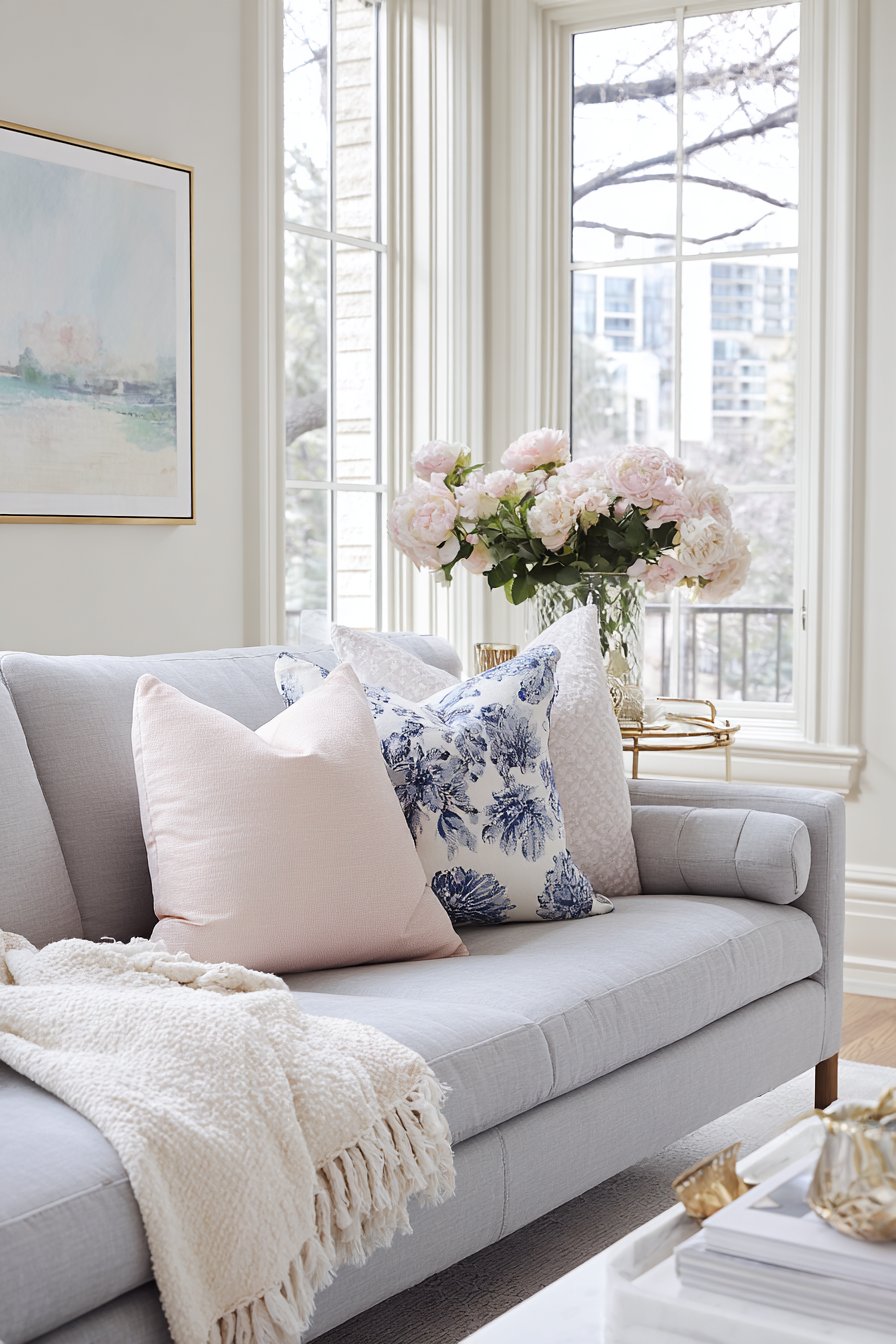
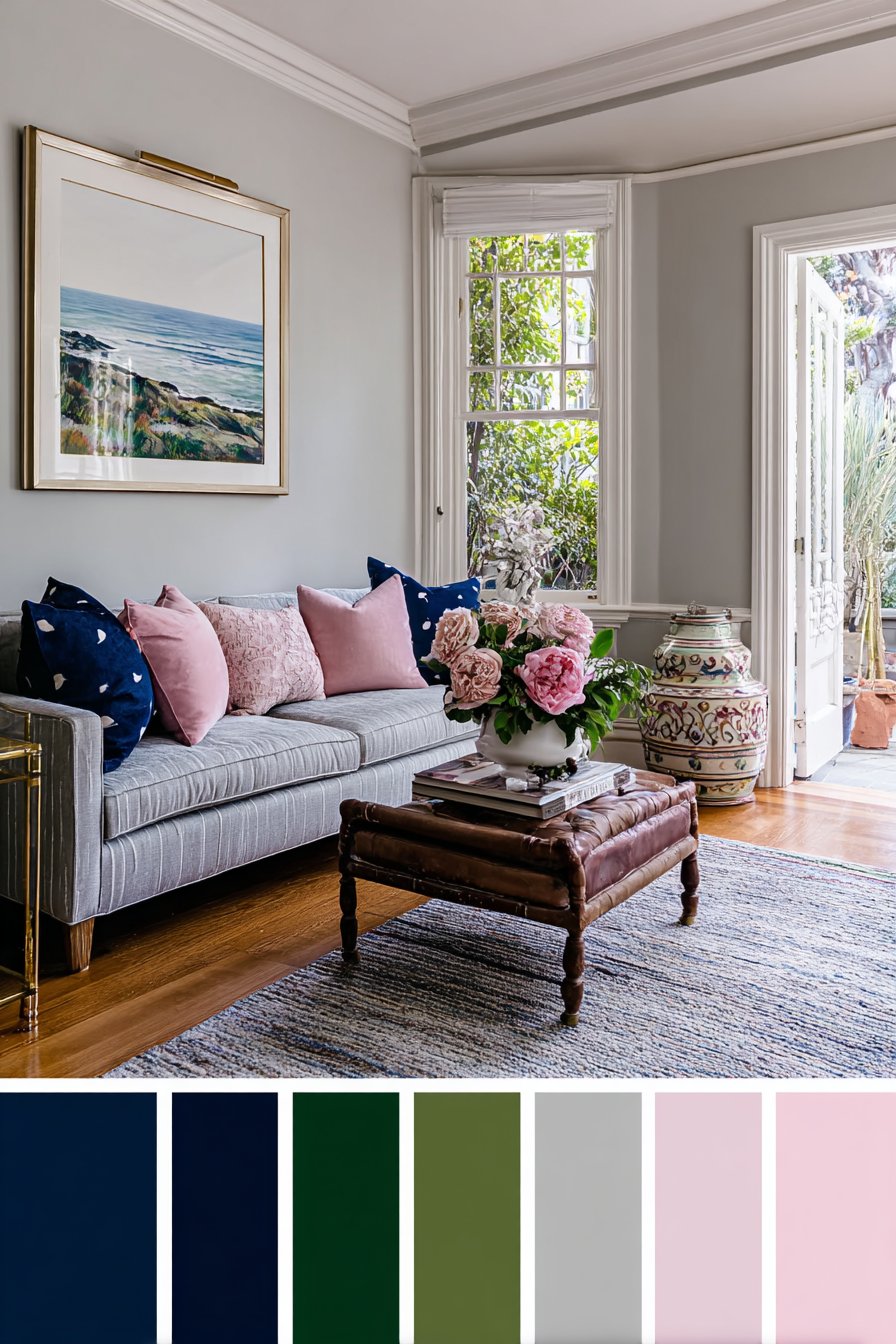
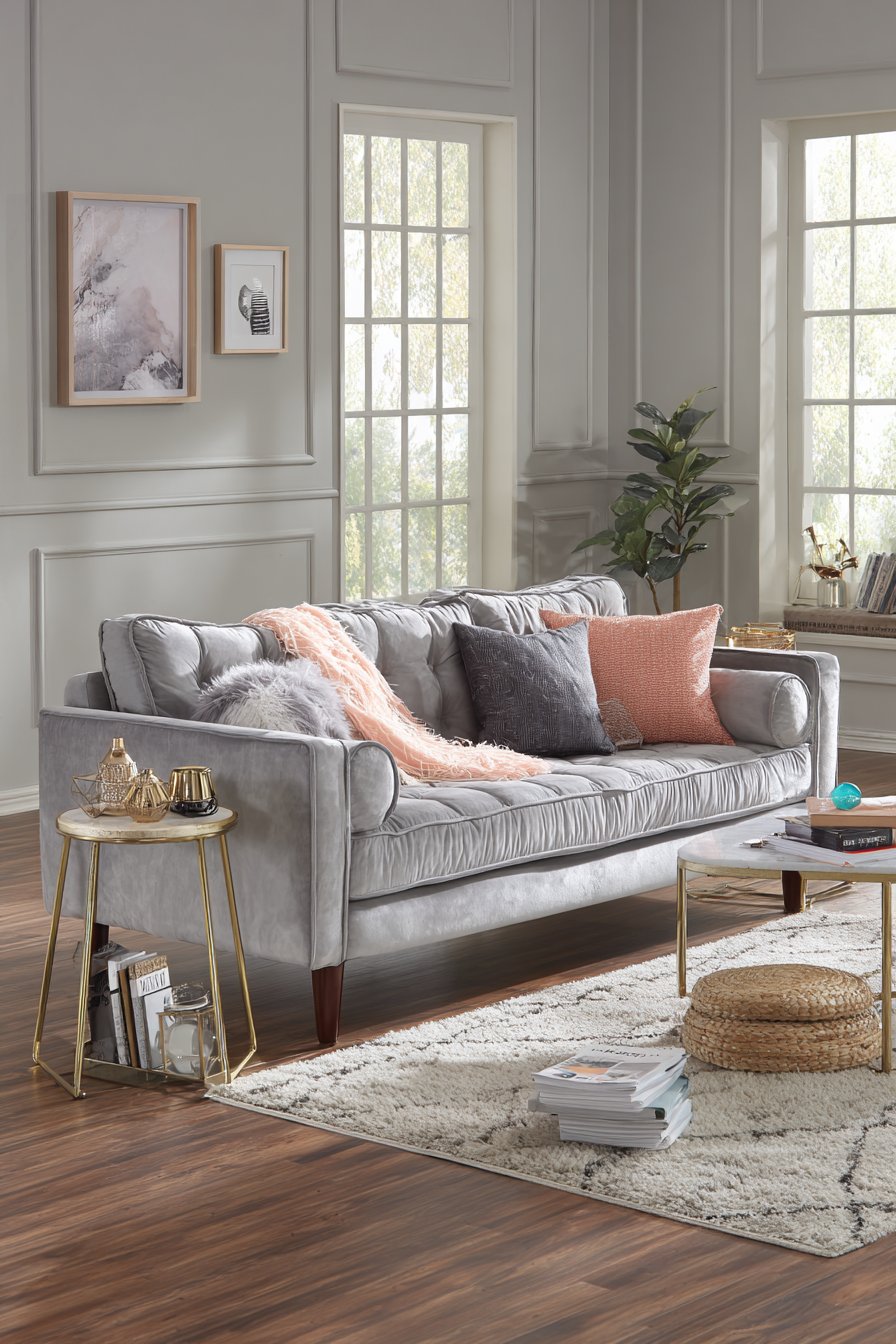
This strategic design demonstrates accent color pairing with a gray sofa and gray walls serving as backdrop for carefully chosen accent colors introduced through throw pillows, artwork, and accessories. The design shows gray paired with blush pink, navy blue, emerald green, and brass metallics in separate styling vignettes, all working within the same gray foundation. The versatility of the light gray palette allows seasonal accent changes without painting or furniture replacement.
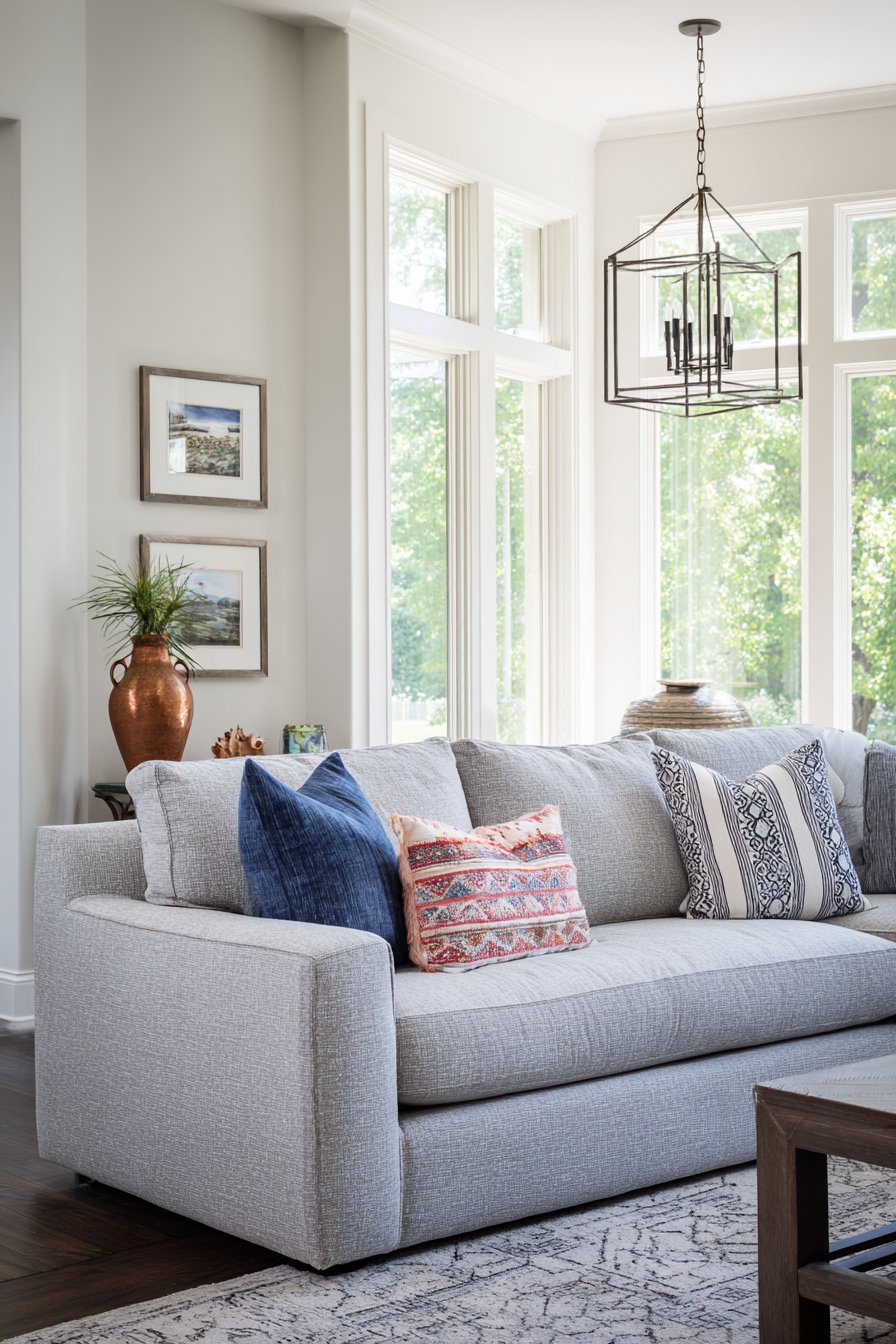
Natural light from large windows shows how gray adapts to different color combinations, maintaining its neutral character while allowing accent colors to shine. The foundational gray investment proves economical long-term—purchasing quality gray upholstery and committing to gray walls allows refreshing the entire room’s personality through inexpensive accessories. Blush pink creates soft romantic ambiance, navy blue introduces classic sophistication, emerald green brings natural richness, and brass adds warm glamour—all working equally well with the gray base.
This approach particularly appeals to those who enjoy design evolution without major renovation expense. The gray foundation provides decade-long relevance while accent colors follow trends or seasonal preferences. The strategy also accommodates life changes—the same gray living room transitions from young professional to family to empty nest simply by adjusting accent colors and accessory styles.
Key Design Tips:
- Invest in quality gray foundational pieces—sofa, rug, wall color
- Change room personality through inexpensive accent pillows and accessories
- Limit accent colors to 2-3 per iteration for cohesion
- Test accent colors through temporary elements before committing
- Use the 60-30-10 rule: 60% gray, 30% neutral, 10% accent color
- Rotate accent colors seasonally—warm tones for fall/winter, cool for spring/summer
- Incorporate metallics as accent colors for added sophistication
- Document successful combinations for easy seasonal transitions
Why These Light Gray Living Room Designs Work
The twenty-three designs presented demonstrate the remarkable versatility of light gray as a foundational color for living spaces. From compact urban apartments to expansive family rooms, from minimalist Scandinavian retreats to luxurious traditional spaces, light gray adapts seamlessly to diverse design philosophies and practical requirements. This adaptability stems from several key characteristics that make light gray particularly successful in living room applications.
First, light gray occupies the perfect middle ground in the neutrals spectrum—warmer and more inviting than stark white, more spacious and airy than dark gray or charcoal. This balanced nature allows light gray to serve multiple roles simultaneously: it can act as receding backdrop allowing furniture and art to dominate, or it can step forward as primary design element when layered with texture and pattern. The color’s inherent flexibility accommodates both minimalist approaches where simplicity reigns and maximalist strategies where gray provides essential visual rest.
Second, light gray demonstrates exceptional compatibility with other colors and materials. The designs showcase successful pairings with warm wood tones, cool metals, natural fibers, luxurious velvets, and virtually every accent color imaginable. This compatibility extends beyond aesthetics to practical considerations—light gray shows less dirt than white while feeling less heavy than dark colors, making it ideal for high-traffic family living spaces. The color adapts to changing natural light throughout the day, shifting subtly from cool morning tones to warm evening hues, maintaining interest across all lighting conditions.
Third, light gray respects both contemporary and traditional design sensibilities. Whether expressed through a tufted chesterfield sofa or a low-profile Scandinavian sectional, light gray updates classic forms while providing substance to modern designs. This temporal flexibility ensures light gray living rooms remain relevant across design trends and generational changes. A light gray foundation allows rooms to evolve through accent updates rather than requiring complete renovation when tastes shift.
From a practical standpoint, light gray living rooms offer excellent return on investment. Quality gray upholstery, rugs, and wall treatments provide decade-long service while remaining visually current. The neutral palette increases home appeal to potential buyers while providing current owners maximum flexibility in personal expression through changeable elements. Light gray accommodates various lighting conditions, works in rooms with limited natural light or abundant windows, and transitions successfully between seasons.
The designs also demonstrate how light gray successfully addresses common living room challenges. Small spaces appear larger through consistent light gray palettes that eliminate visual fragmentation. Awkward architectural features recede when painted in matching gray. Multi-functional open spaces achieve cohesion through extended gray color stories. High ceilings feel inhabited rather than cavernous when wrapped in light gray. Northern exposures gain warmth through gray with taupe undertones. Each design challenge finds elegant solution within the light gray palette.
Material variety proves essential in successful light gray living rooms—the color’s neutrality demands textural interest to prevent flatness. The featured designs layer smooth linen, nubby bouclé, plush velvet, rough concrete, polished marble, natural wood, woven fibers, and reflective metals. This material diversity creates visual and tactile interest while maintaining color cohesion. The lesson proves clear: monochromatic doesn’t mean monotonous when texture, sheen, pattern, and material receive proper attention.
Finally, these light gray living room ideas succeed because they prioritize livability alongside aesthetics. Each design balances aspiration with achievability, showcasing spaces that inspire while remaining practically implementable. The featured furniture scales appropriately for typical homes, the storage solutions address real organizational needs, the material choices accommodate actual usage patterns, and the styling feels collected rather than staged. This practical foundation ensures these designs translate successfully from inspiration to implementation, providing genuine value to homeowners seeking to create beautiful, functional living spaces anchored in the timeless sophistication of light gray.
Conclusion
The journey through these twenty-three light gray living room designs reveals a color that defies simple categorization. Far from being merely a safe neutral or trendy choice, light gray emerges as a sophisticated, versatile foundation capable of supporting infinite design expressions. From the cozy intimacy of a reading nook to the architectural drama of a two-story feature wall, from family-friendly durability to luxurious refinement, light gray adapts and excels across every application.
The true genius of light gray lies not in any single attribute but in its remarkable balance—modern yet timeless, sophisticated yet approachable, neutral yet characterful. This balance allows homeowners to create living spaces that reflect personal style while maintaining broad appeal, that welcome daily life while presenting beautifully for guests, that invest wisely while allowing creative evolution. Whether you’re drawn to minimalist restraint or eclectic abundance, coastal casualness or urban edge, traditional comfort or contemporary clean lines, light gray provides the perfect canvas.
As you consider implementing these ideas in your own home, remember that successful design begins with understanding your space, lifestyle, and preferences. Start with quality foundational pieces in light gray—a well-constructed sofa, durable flooring, or thoughtfully painted walls—then build your room’s personality through layered textures, carefully selected accents, and personal treasures. Don’t fear commitment to gray; instead, embrace its flexibility and allow your living room to evolve naturally over time.
The designs presented here serve as starting points rather than rigid templates. Mix elements from multiple concepts, adapt ideas to your specific architectural context, and trust your instincts about what feels right for your home and family. Light gray living rooms succeed because they balance structure with freedom, providing cohesive framework while welcoming personal interpretation. Your perfect light gray living room awaits—one that reflects not just current design trends but your unique life, personality, and vision for the heart of your home.
