
The kitchen nook has evolved from a simple afterthought to become one of the most cherished spaces in modern homes. This intimate corner, traditionally reserved for quick breakfasts and casual meals, now serves as a multifunctional haven where families gather to share stories, children complete homework assignments, and homeowners enjoy their morning coffee while basking in natural light. The beauty of a well-designed kitchen nook lies in its ability to maximize space efficiency while creating an atmosphere that feels both welcoming and intentionally curated. Whether you’re working with a generous bay window alcove or a compact corner in a galley kitchen, the right design approach can transform this area into a focal point that enhances your daily life and adds substantial value to your home.
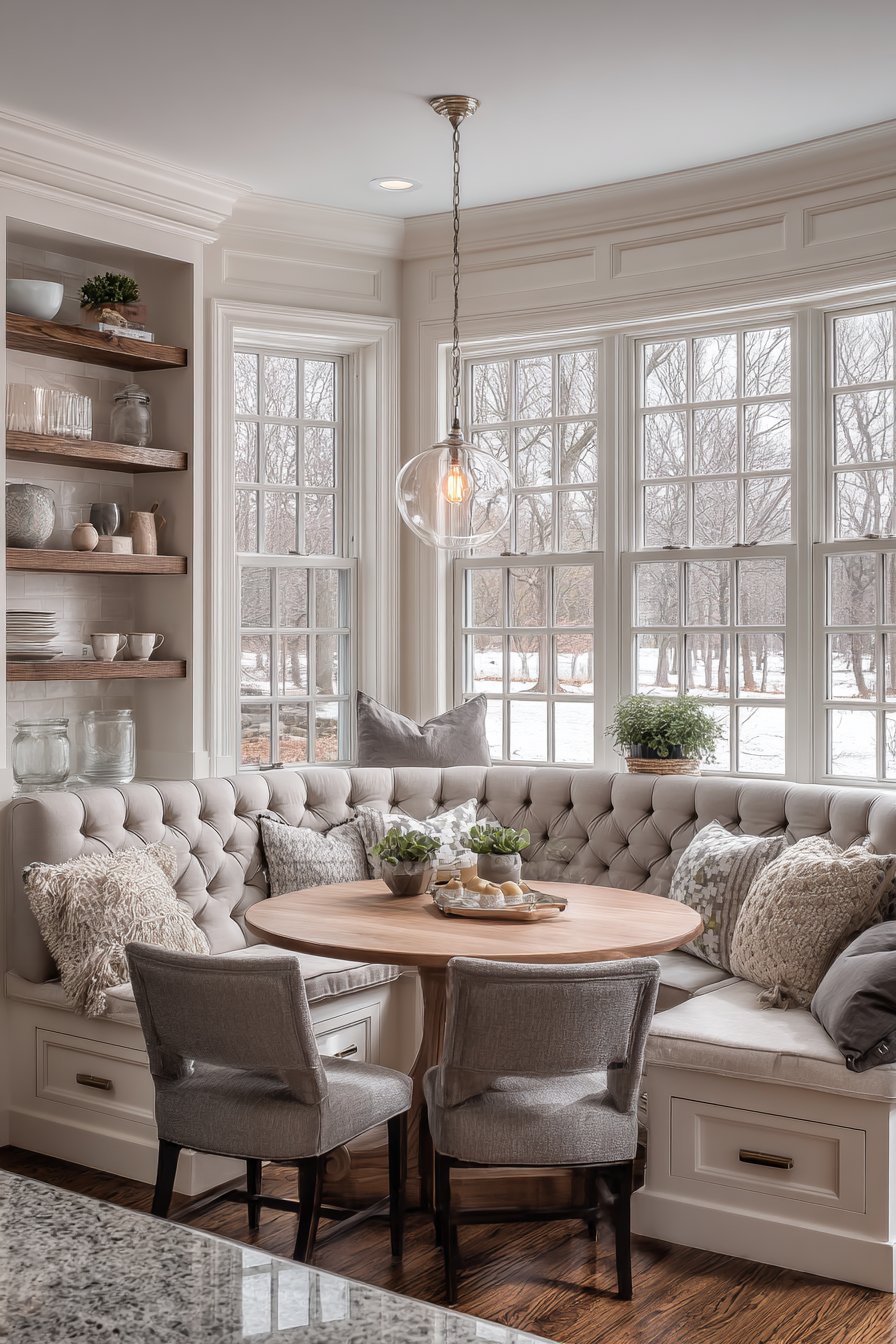
In today’s design landscape, kitchen nooks represent far more than merely functional eating areas—they embody lifestyle choices and personal aesthetics. From farmhouse charm featuring weathered wood and vintage accessories to sleek contemporary designs with minimalist lines and modern materials, the options are virtually limitless. The most successful kitchen nook designs seamlessly blend form with function, incorporating clever storage solutions, comfortable seating arrangements, and lighting schemes that adapt to various times of day and activities. As open-concept living continues to dominate residential architecture, the kitchen nook has emerged as an opportunity to create definition and intimacy within larger spaces, offering a cozy retreat that feels distinctly separate from the main kitchen work zones while maintaining visual and functional connectivity.
This comprehensive guide explores twenty-seven distinctive kitchen nook ideas, each showcasing unique design philosophies, material palettes, and spatial solutions. Whether you’re drawn to the rustic authenticity of reclaimed materials, the refined elegance of traditional styling, or the clean simplicity of Scandinavian minimalism, you’ll discover inspiration and practical guidance for creating your ideal breakfast corner. These designs demonstrate how thoughtful attention to architectural details, textile selection, color coordination, and furniture proportions can elevate a simple eating area into something truly special—a space that not only serves practical needs but also nourishes the soul and brings joy to everyday routines.
1. Charming Built-In Corner Banquette with Storage
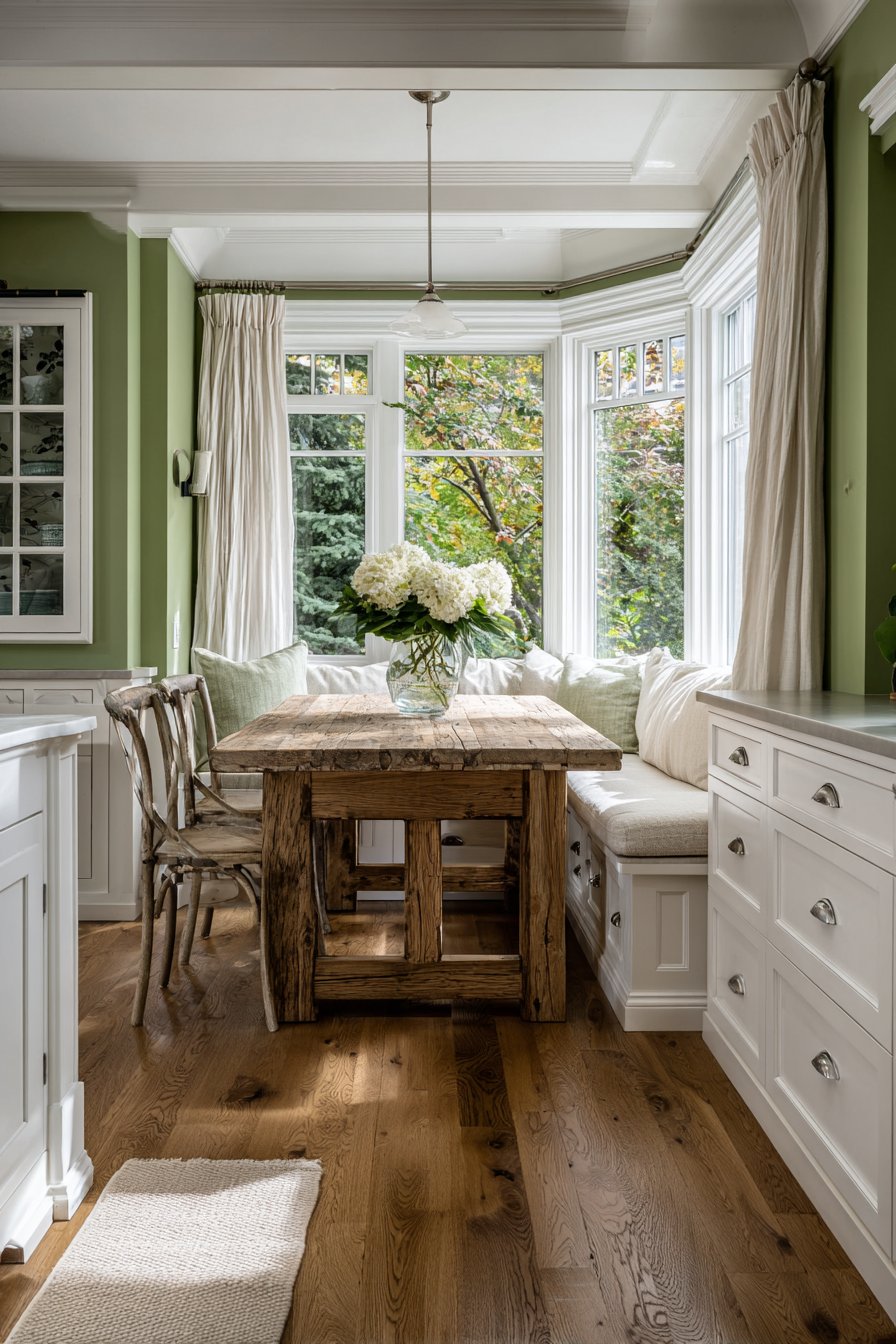
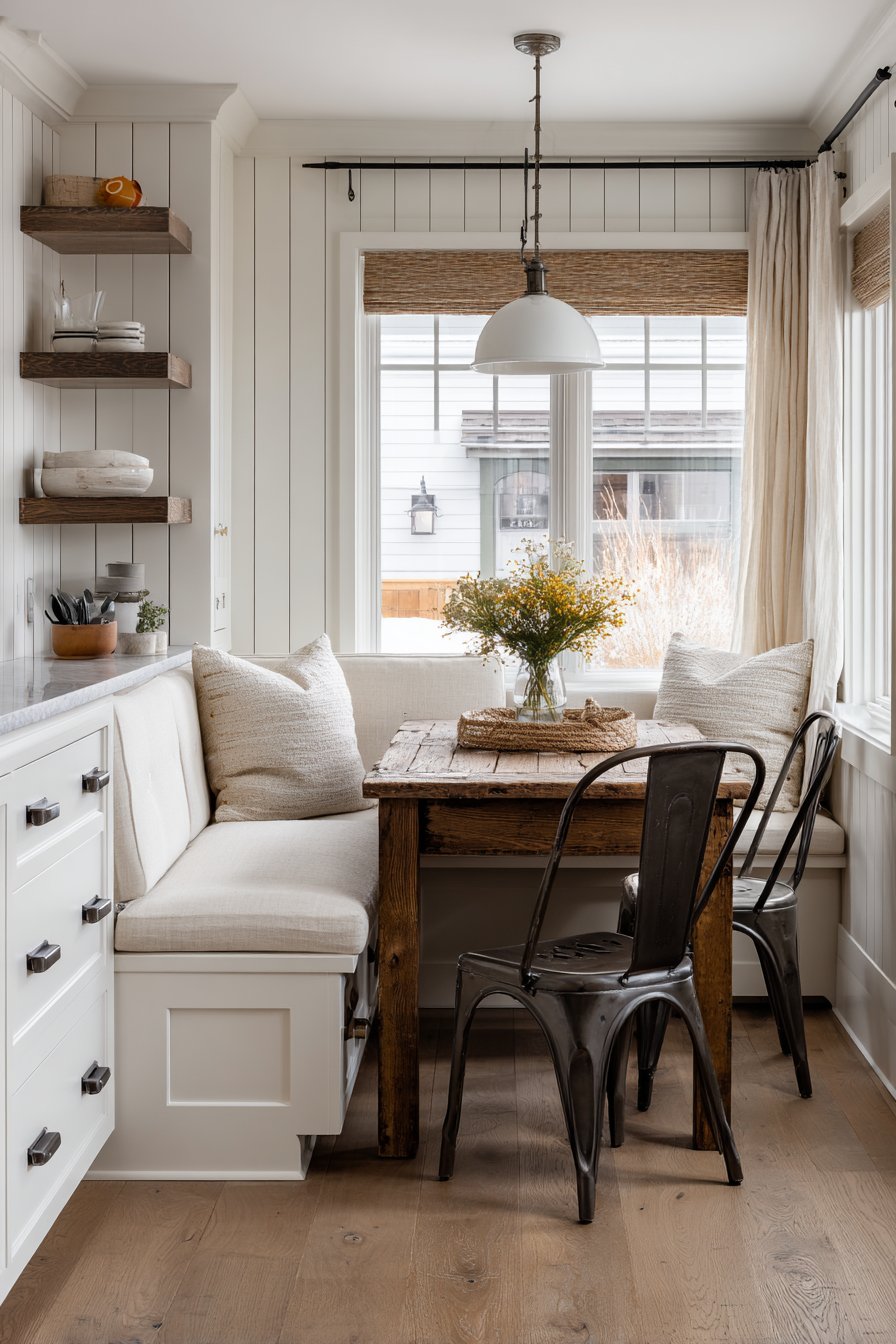
The built-in corner banquette represents one of the most space-efficient and visually appealing kitchen nook solutions available to homeowners. This design features cream-colored upholstery that creates a bright, airy foundation while concealing ingenious storage drawers underneath the seating area. The rustic wooden farmhouse table, with its substantial presence and honest construction, anchors the space with warmth and character that only natural wood can provide. Mismatched vintage chairs on the opposite side inject personality and collected charm, suggesting a space that has evolved organically over time rather than being purchased as a matching set.
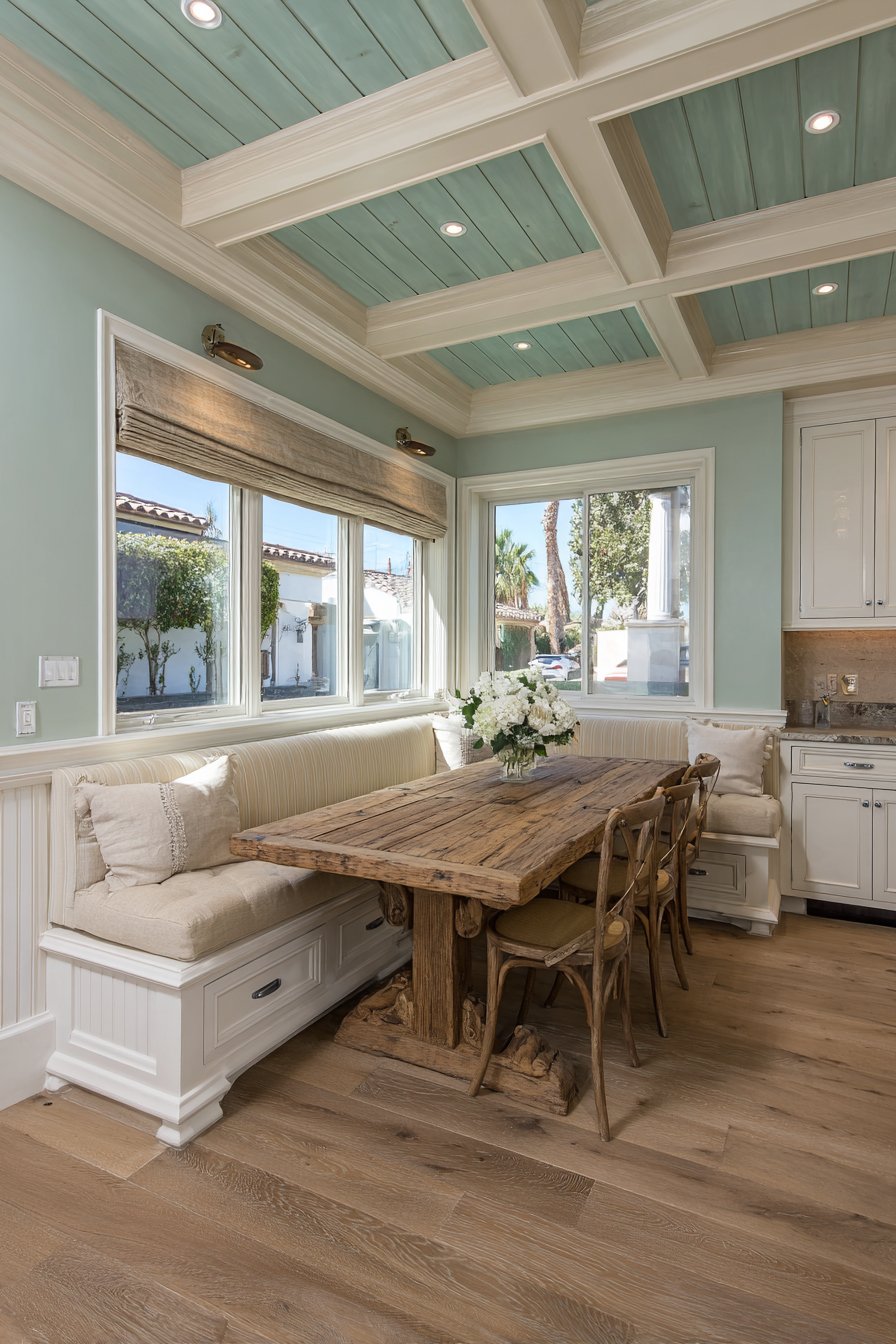
Large casement windows dominate this design, flooding the breakfast area with natural light that changes character throughout the day—from soft morning glow to warm afternoon sunshine. Simple linen cafe curtains provide privacy options without blocking light or view, their relaxed drape adding textural softness to the architectural lines. The color palette demonstrates restraint and sophistication, with soft sage green walls creating a calming backdrop enhanced by crisp white wainscoting that adds traditional detail and visual interest at the lower wall level.
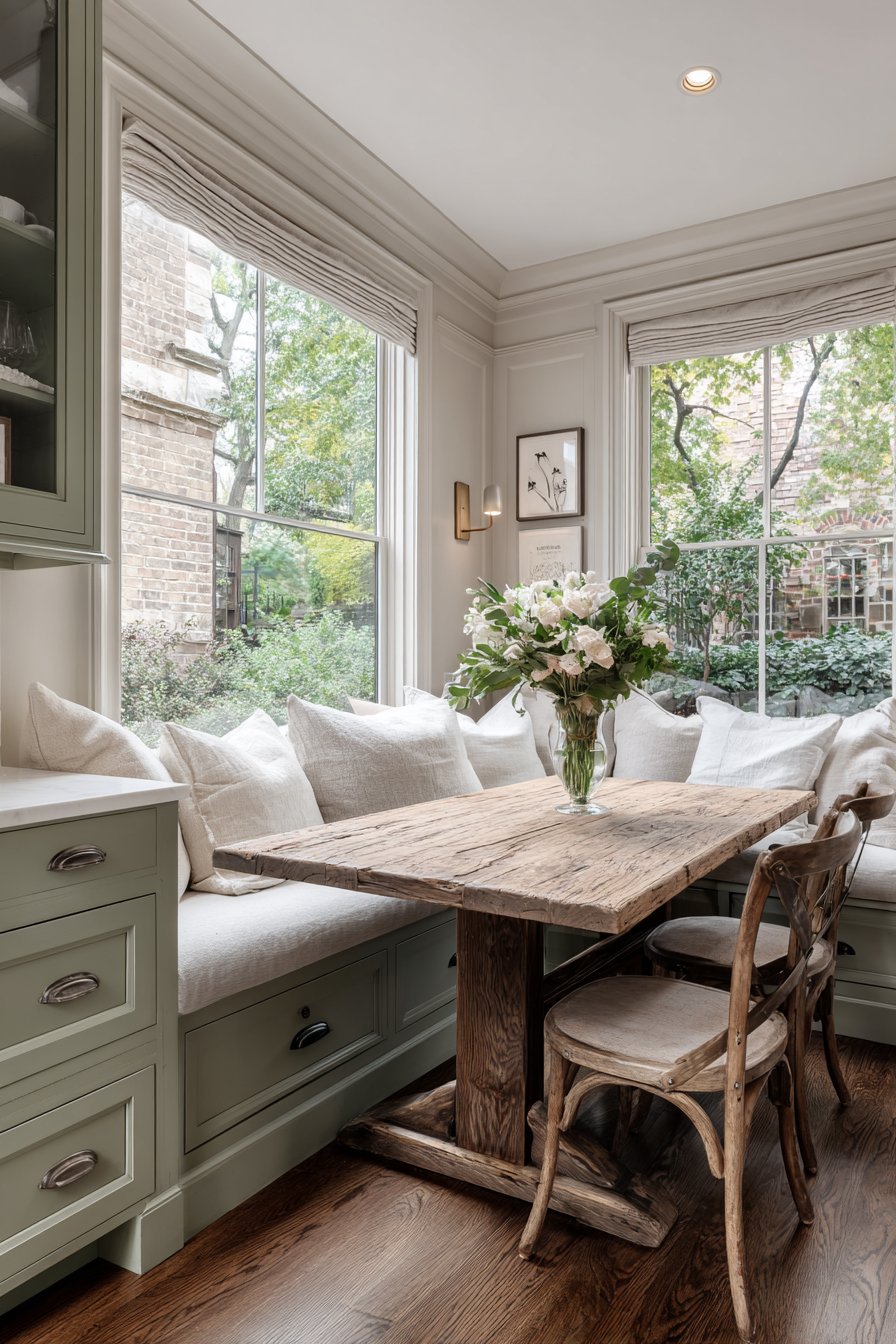
The marriage of built-in seating with freestanding furniture creates flexibility while maximizing every inch of available space. Storage drawers beneath the banquette eliminate clutter by providing designated homes for table linens, placemats, seasonal decorations, and other dining essentials that would otherwise require separate furniture pieces. This integration of function and beauty exemplifies thoughtful design that serves real-life needs without sacrificing aesthetic appeal.
Key Design Tips: Select cream or neutral upholstery fabrics with performance finishes to withstand daily use and resist staining. Install soft-close drawer mechanisms beneath built-in seating to prevent slamming and extend hardware longevity. Choose a farmhouse table with substantial leg construction that can withstand regular use and create visual balance with the built-in elements. Incorporate vintage or antique chairs from flea markets or estate sales to add authentic character that cannot be replicated by new furniture. Position the nook near windows to maximize natural light exposure, which reduces energy consumption and creates a more pleasant dining environment. Consider adding cushions to built-in seating for additional comfort during extended meals or conversation.
2. Sophisticated Navy and Brass Modern Booth
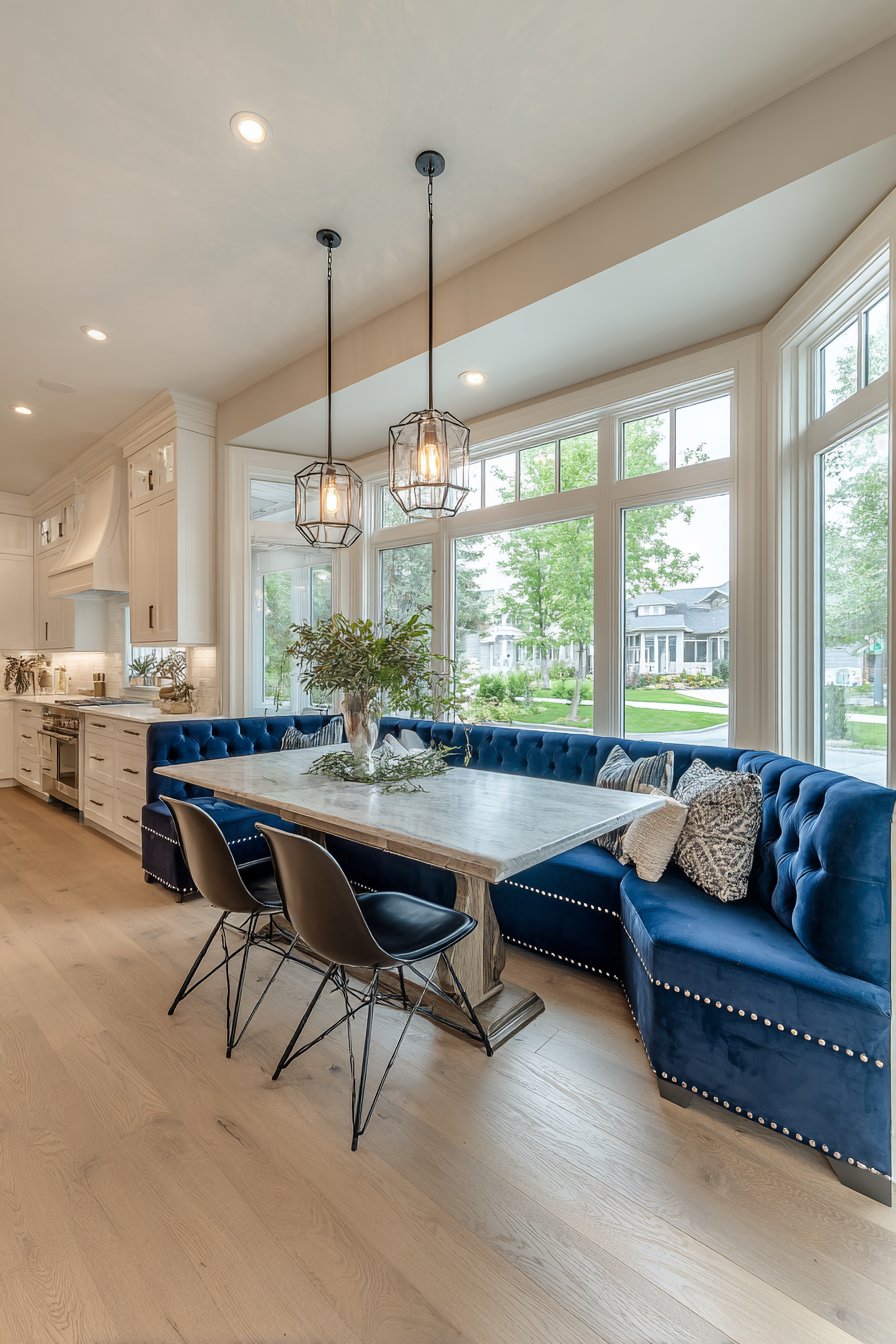
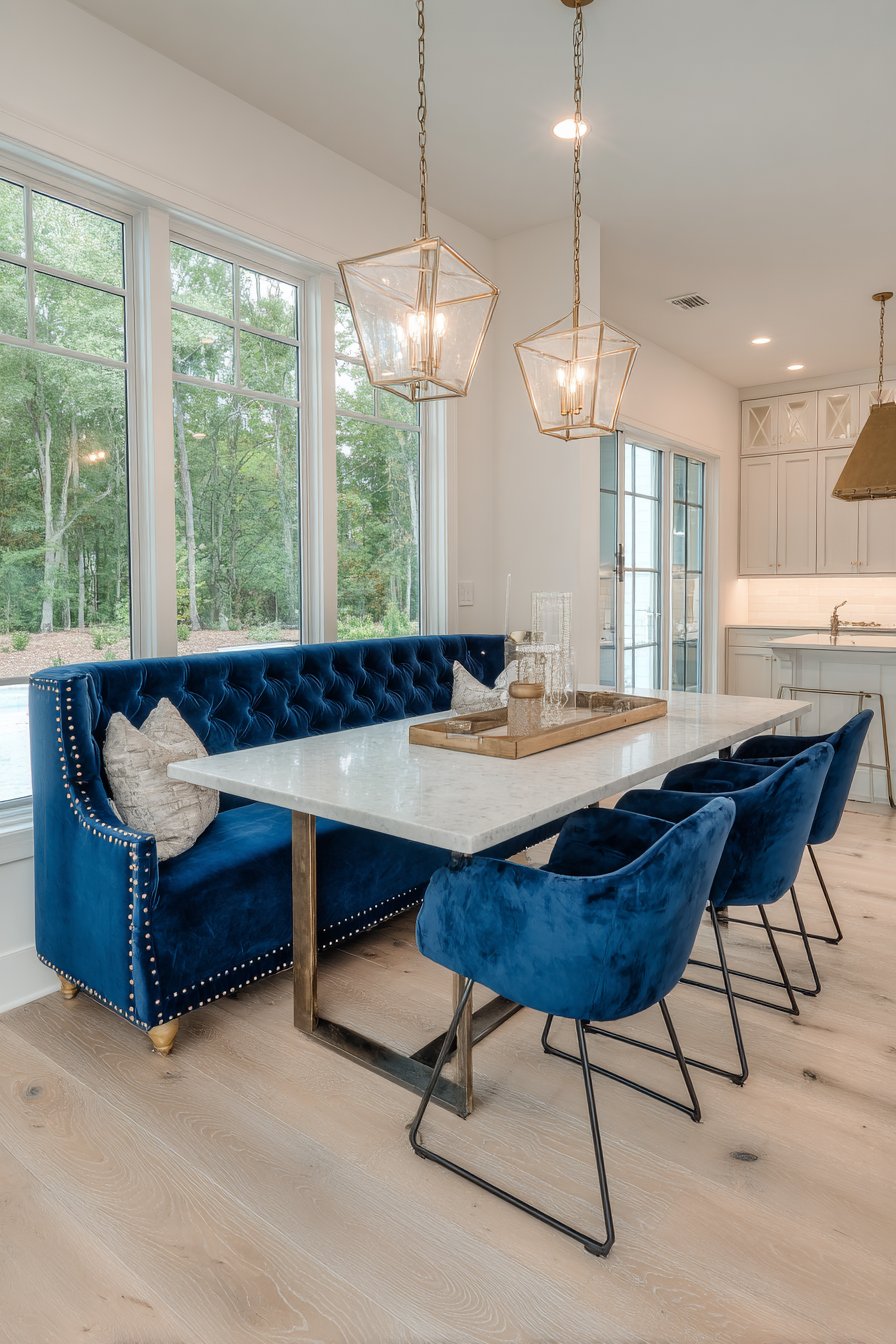
Contemporary elegance defines this kitchen nook design, where a sleek booth-style seating area upholstered in luxurious navy blue velvet creates immediate visual impact. The brass nail head trim outlining the banquette adds refined detail that catches light and draws the eye along the seating’s graceful lines. This level of finish detail elevates the design from merely functional to genuinely sophisticated, demonstrating how hardware and trim choices significantly influence perceived quality and style.
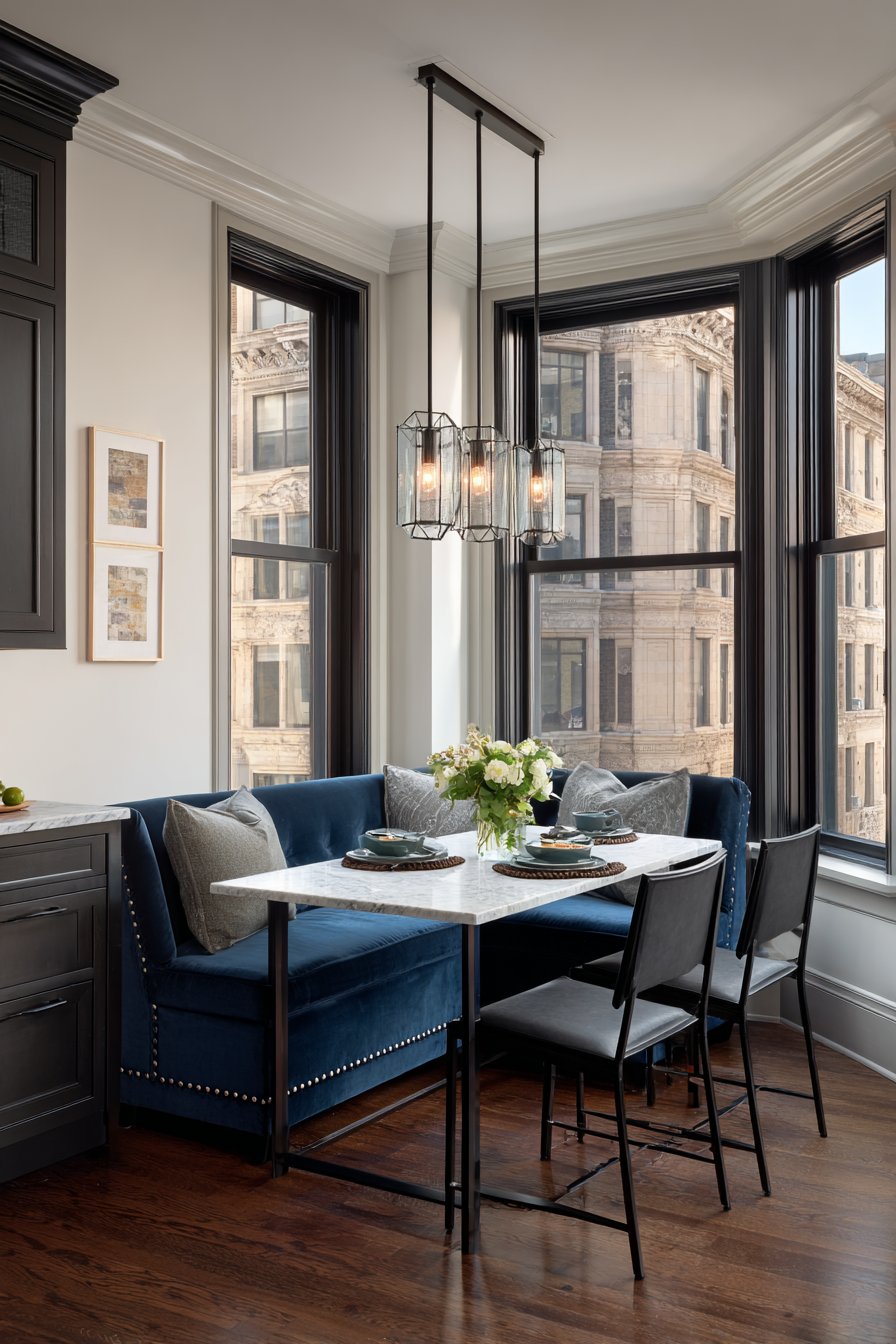
The rectangular marble-topped table introduces natural pattern and cool elegance through its veining and polished surface. Marble’s inherent variations ensure that no two installations appear identical, providing uniqueness that manufactured materials cannot match. Contemporary black metal chairs with clean geometric lines complement rather than compete with the velvet banquette, their negative space construction maintaining visual lightness despite substantial presence. The contrast between soft upholstery and hard metal creates dynamic tension that keeps the design interesting.
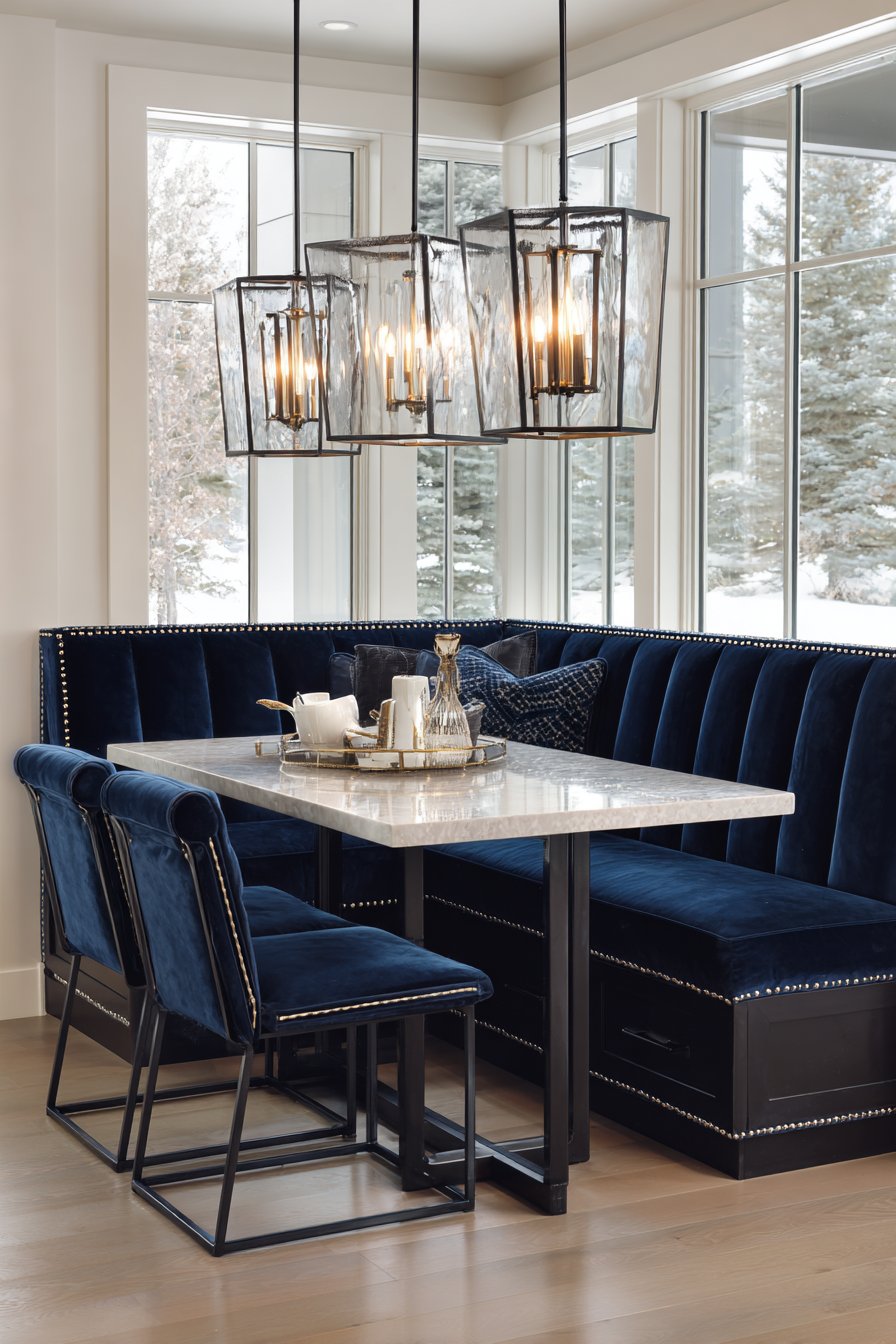
Geometric glass pendant lights suspended above the dining surface provide focused task lighting while serving as sculptural elements that enhance the modern aesthetic. Their transparent quality prevents visual heaviness while creating beautiful light patterns and reflections. The bay window alcove setting with natural oak flooring establishes warmth that prevents the sophisticated palette from feeling cold or uninviting, proving that modern design need not sacrifice comfort for style.
Key Design Tips: Choose velvet upholstery in deep jewel tones like navy, emerald, or burgundy to create richness and depth in modern spaces. Invest in quality marble with prominent veining patterns that create visual interest and serve as natural artwork. Select pendant lighting with adjustable heights to customize illumination levels for various activities from intimate dinners to homework sessions. Incorporate brass or gold-toned hardware and fixtures to add warmth and luxury to contemporary designs. Ensure booth seating dimensions allow comfortable entry and exit—typically 18 inches of clearance between table edge and seat back. Consider professional upholstery cleaning services annually to maintain velvet’s luster and appearance.
3. Scandinavian Simplicity with Natural Elements
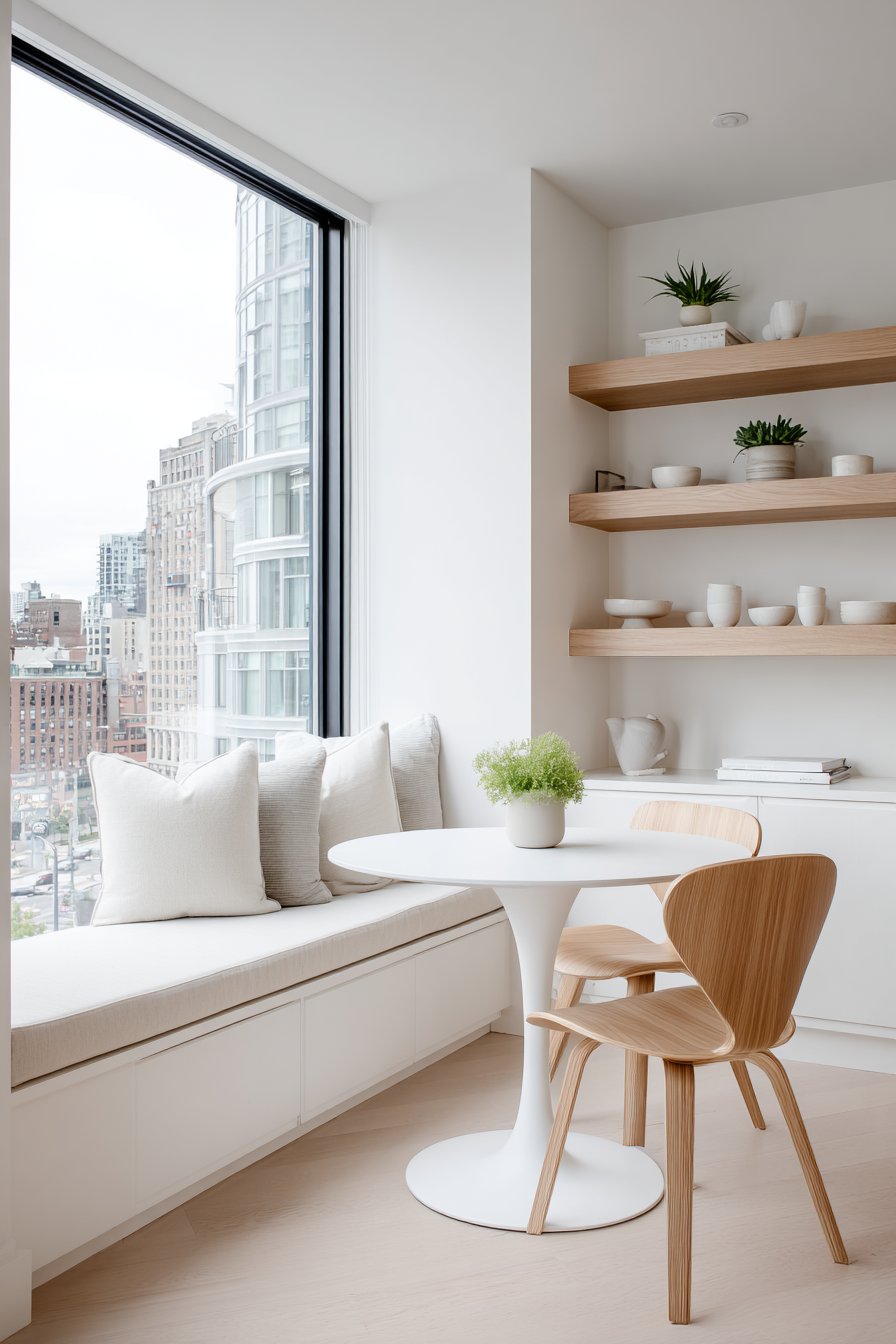
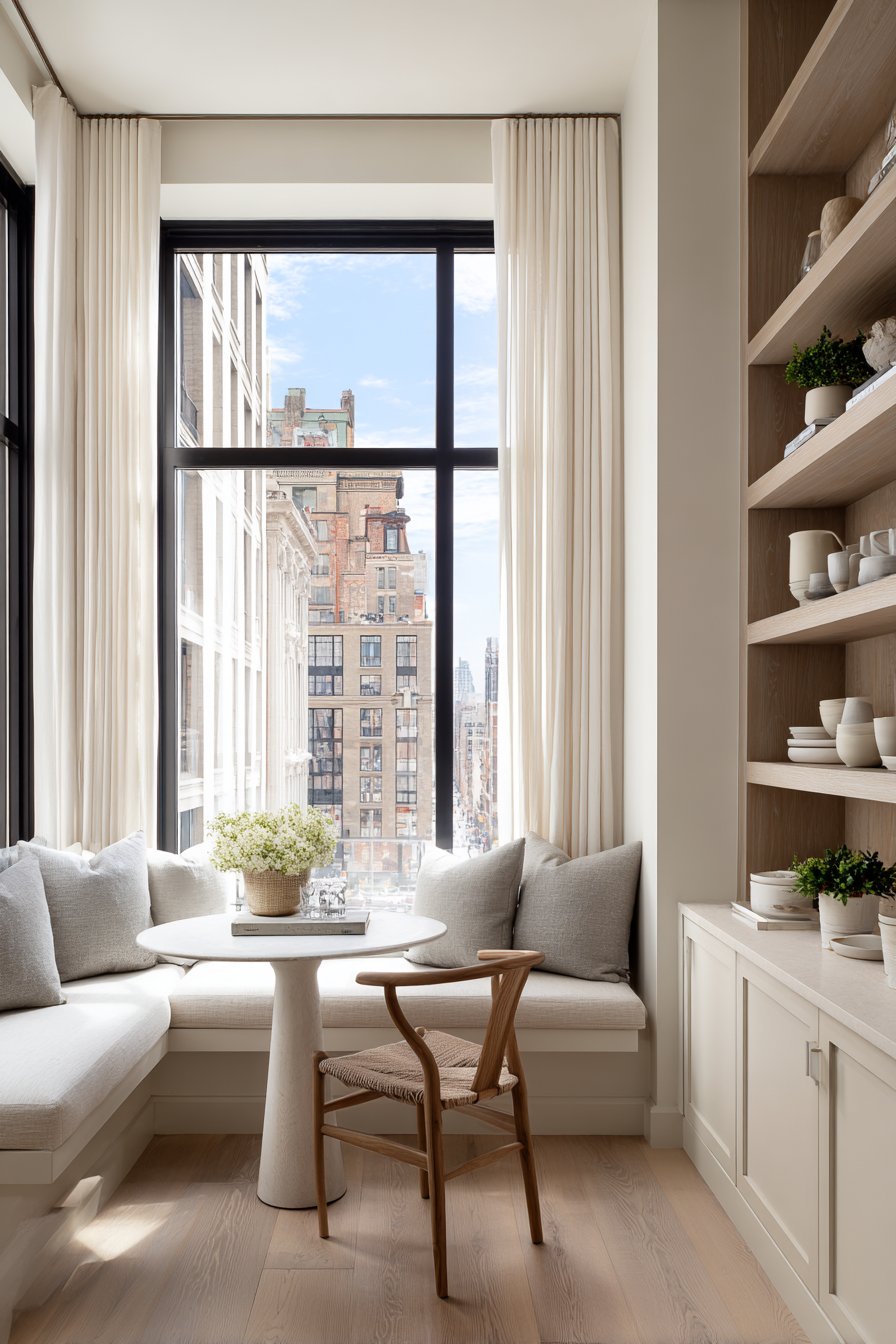
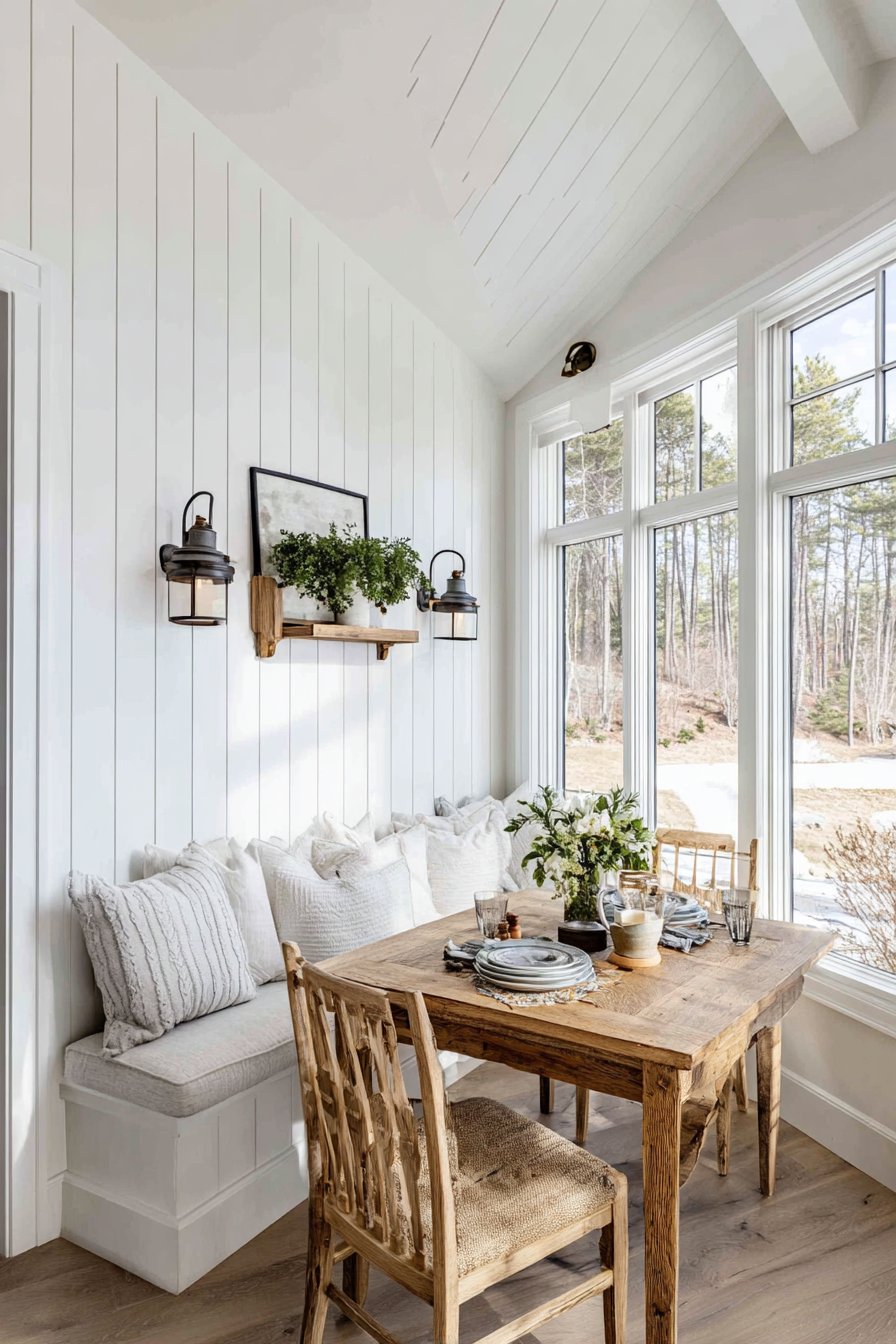
Minimalist design philosophy reaches its fullest expression in this Scandinavian-inspired kitchen nook, where every element serves clear purpose while contributing to serene beauty. The white built-in bench with light grey cushions embodies Nordic design principles—clean lines, pale colors, and natural materials combine to create spaces that feel both spacious and intimate. Natural wooden legs on the built-in seating prevent the white from appearing sterile or institutional, grounding the design with organic warmth.
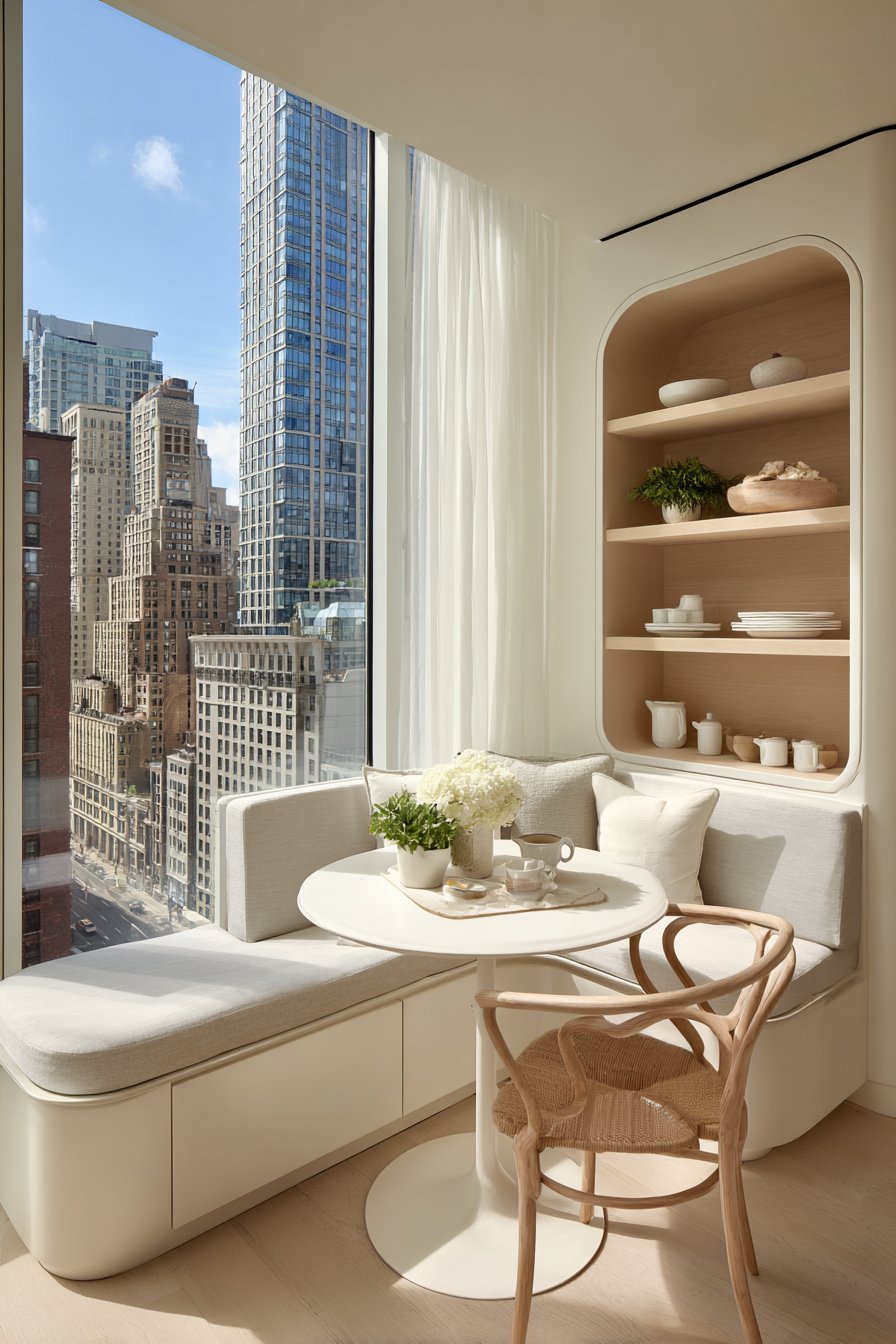
A round white pedestal table provides the dining surface with efficiency and grace, its circular form promoting conversation and equal seating access while eliminating sharp corners in compact spaces. Simple bentwood chairs in natural finish demonstrate the Scandinavian appreciation for honest materials and visible craftsmanship—their curved forms created through steam-bending processes result in furniture that is simultaneously strong, lightweight, and beautiful. The absence of unnecessary ornamentation allows material quality and construction methods to speak for themselves.
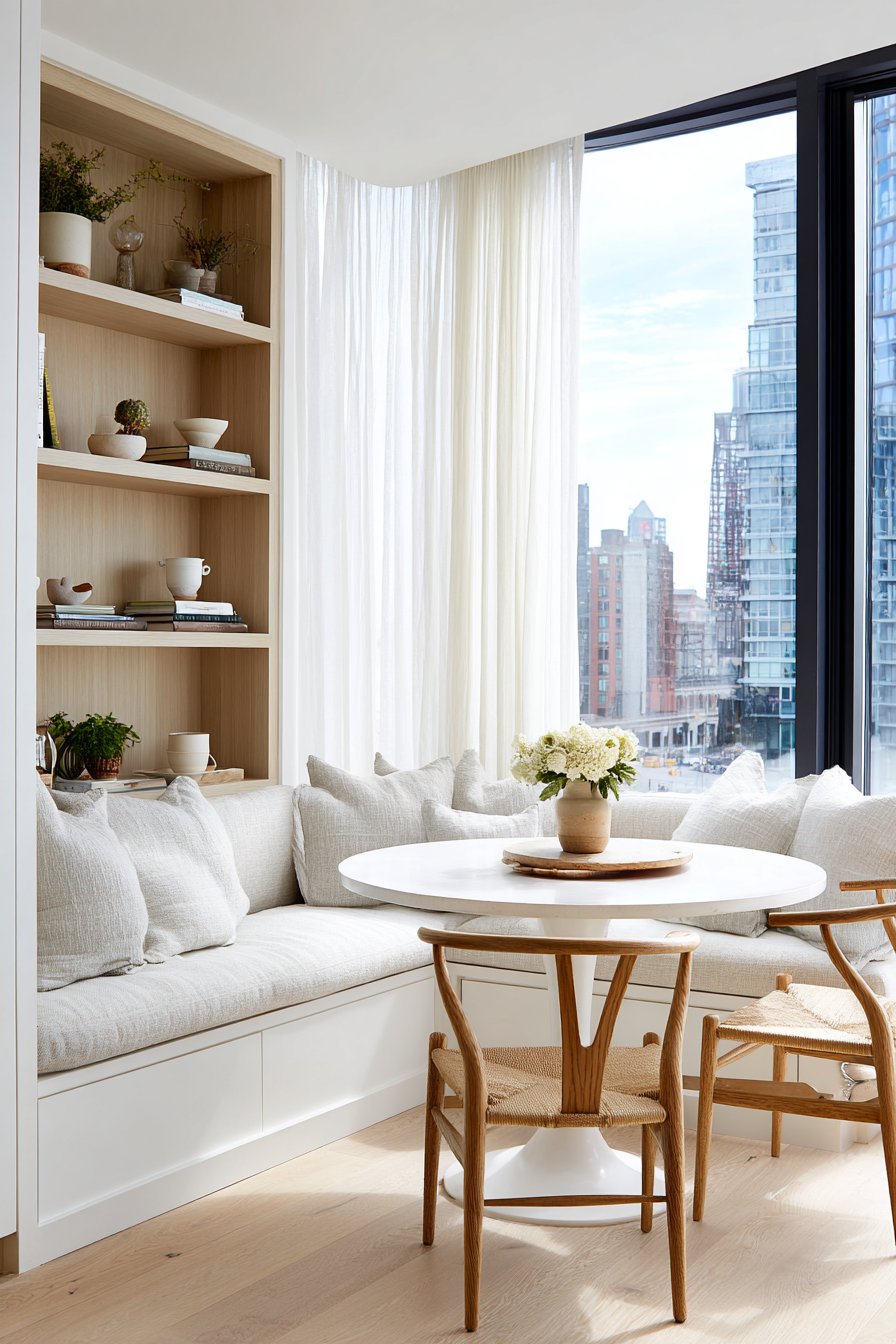
Sheer white curtains filter soft daylight from floor-to-ceiling windows, creating luminous atmosphere while maintaining privacy during evening hours. Open shelving in blonde wood displays white dinnerware and small potted plants, adding functional storage that doubles as minimalist decoration. This design proves that restraint creates its own form of richness—when spaces aren’t cluttered with excessive objects, the mind can rest and focus on what truly matters.
Key Design Tips: Embrace white and light grey as foundation colors to maximize light reflection and create spacious feeling in compact areas. Choose furniture with visible wood grain and natural finishes rather than painted or heavily processed surfaces. Incorporate living plants to add life, air purification, and organic shapes that soften architectural lines. Select round tables for small breakfast nooks to improve traffic flow and create more intimate dining experiences. Install floor-to-ceiling curtains even if windows don’t extend that high—this visual trick makes ceilings appear taller. Limit decorative objects to carefully curated pieces that serve both functional and aesthetic purposes.
4. Rustic Farmhouse Charm with Vintage Details
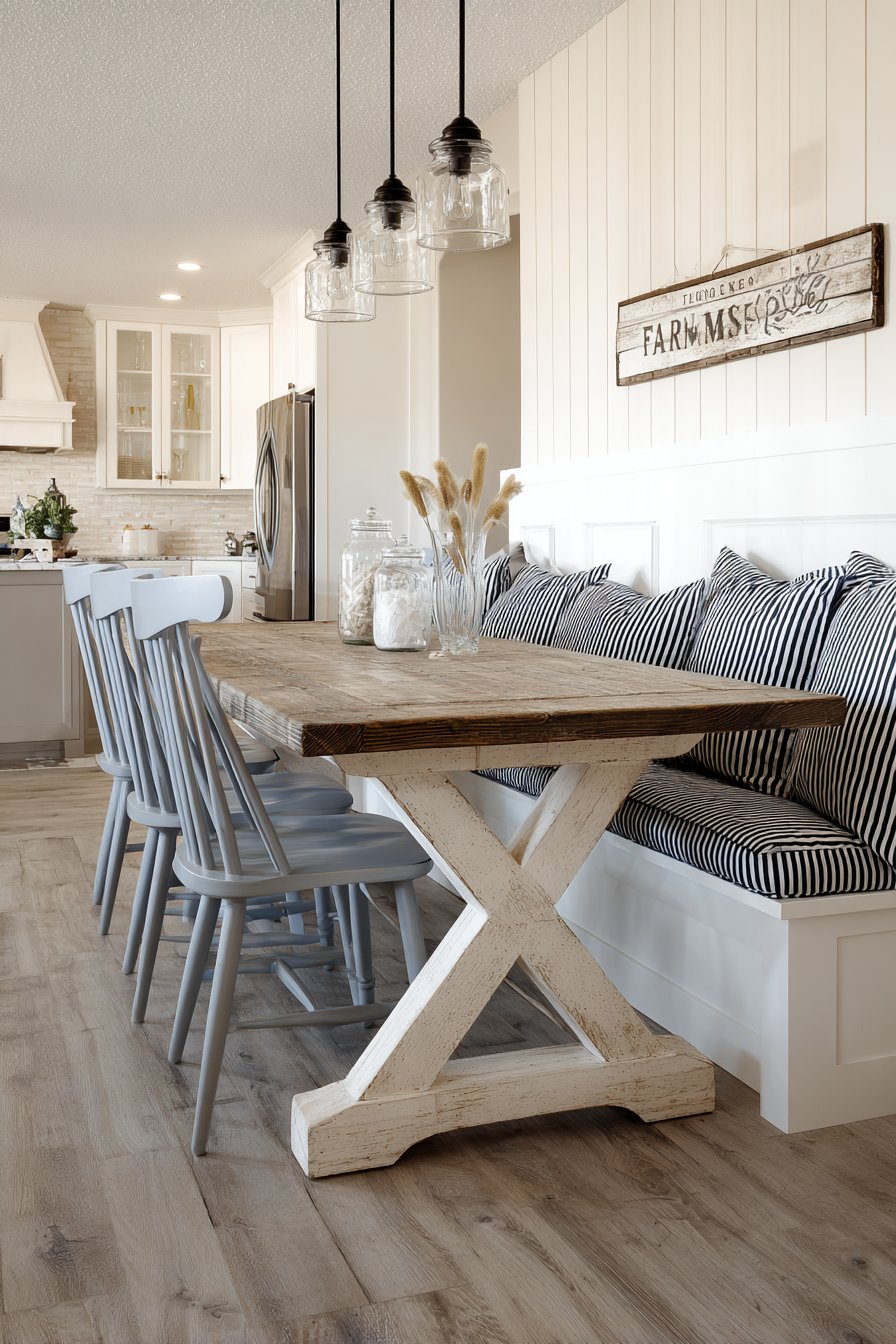
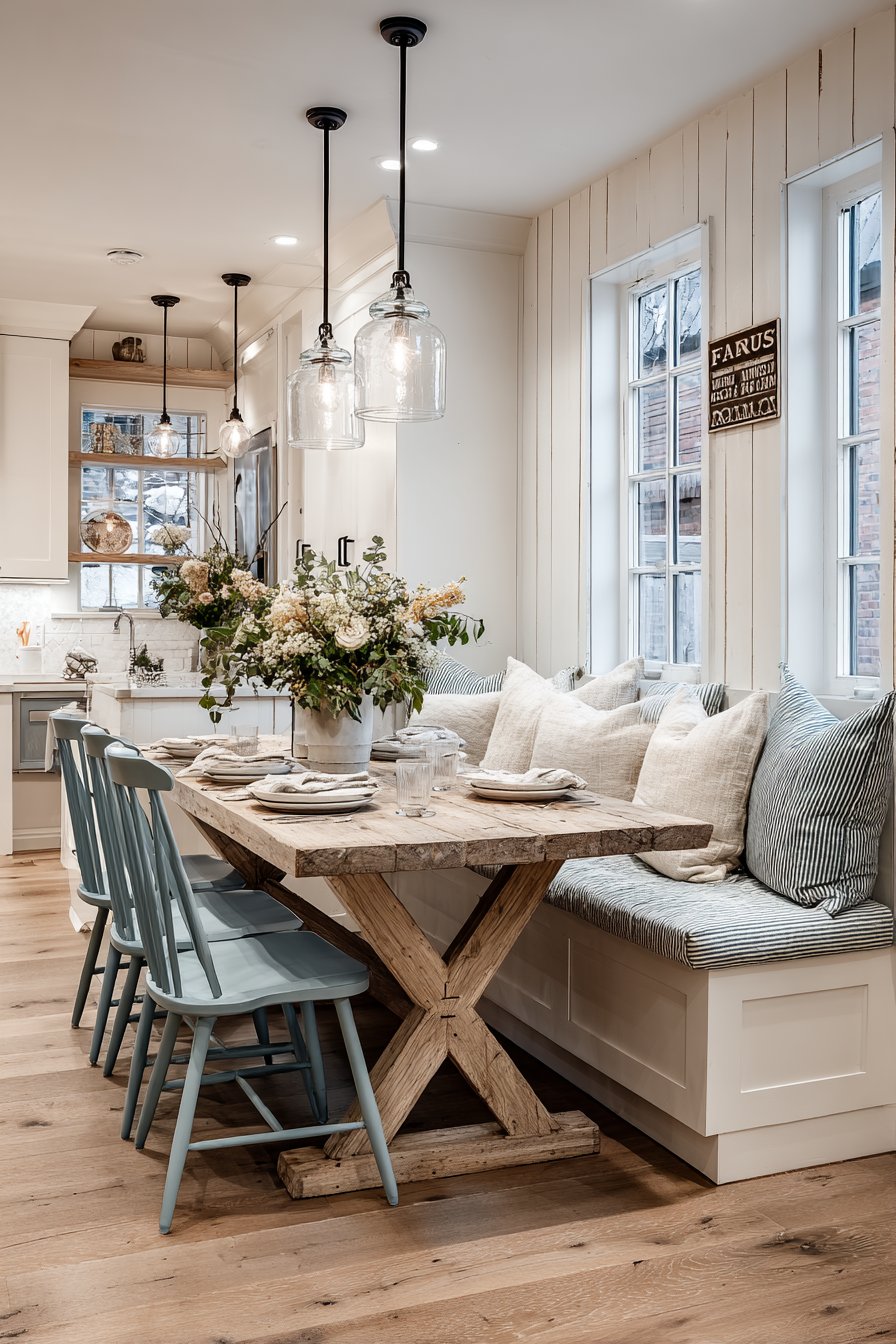
Farmhouse style celebrates authenticity, history, and comfortable living through design elements that honor rural traditions and simpler times. This kitchen nook features a distressed white wooden bench with X-back detailing that references traditional joinery techniques, its weathered finish suggesting years of family gatherings and shared meals. Comfortable seat cushions in classic ticking stripe fabric add softness while maintaining the casual, lived-in aesthetic that defines farmhouse design.
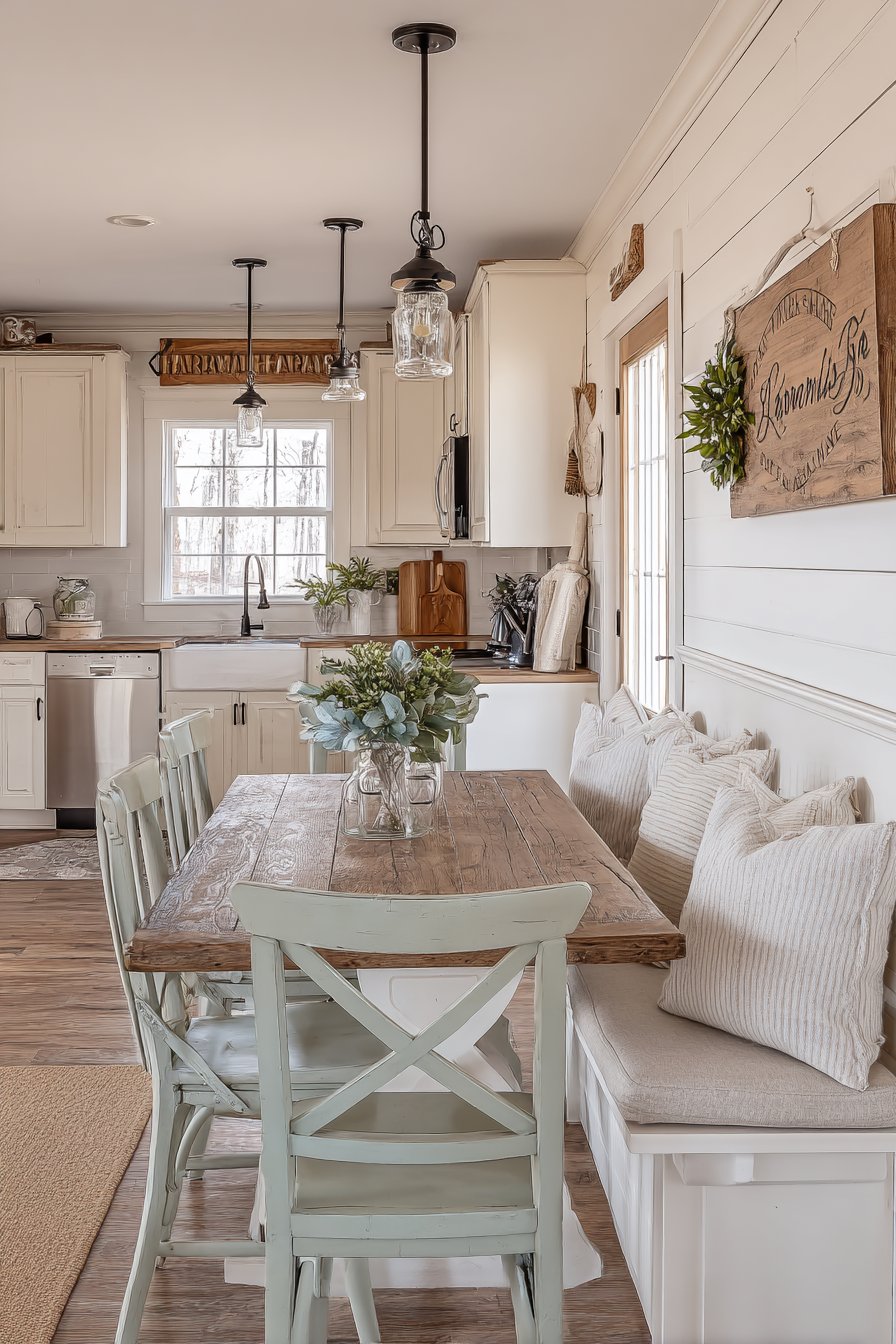
The chunky reclaimed wood table serves as the centerpiece, its substantial construction and visible wear patterns telling stories of previous lives and uses. Reclaimed materials bring irreplaceable character that new construction cannot duplicate—nail holes, saw marks, and color variations from sun exposure create visual interest and tactile richness. Windsor chairs painted in soft blue provide seating flexibility while introducing gentle color that complements rather than overwhelms the neutral palette.
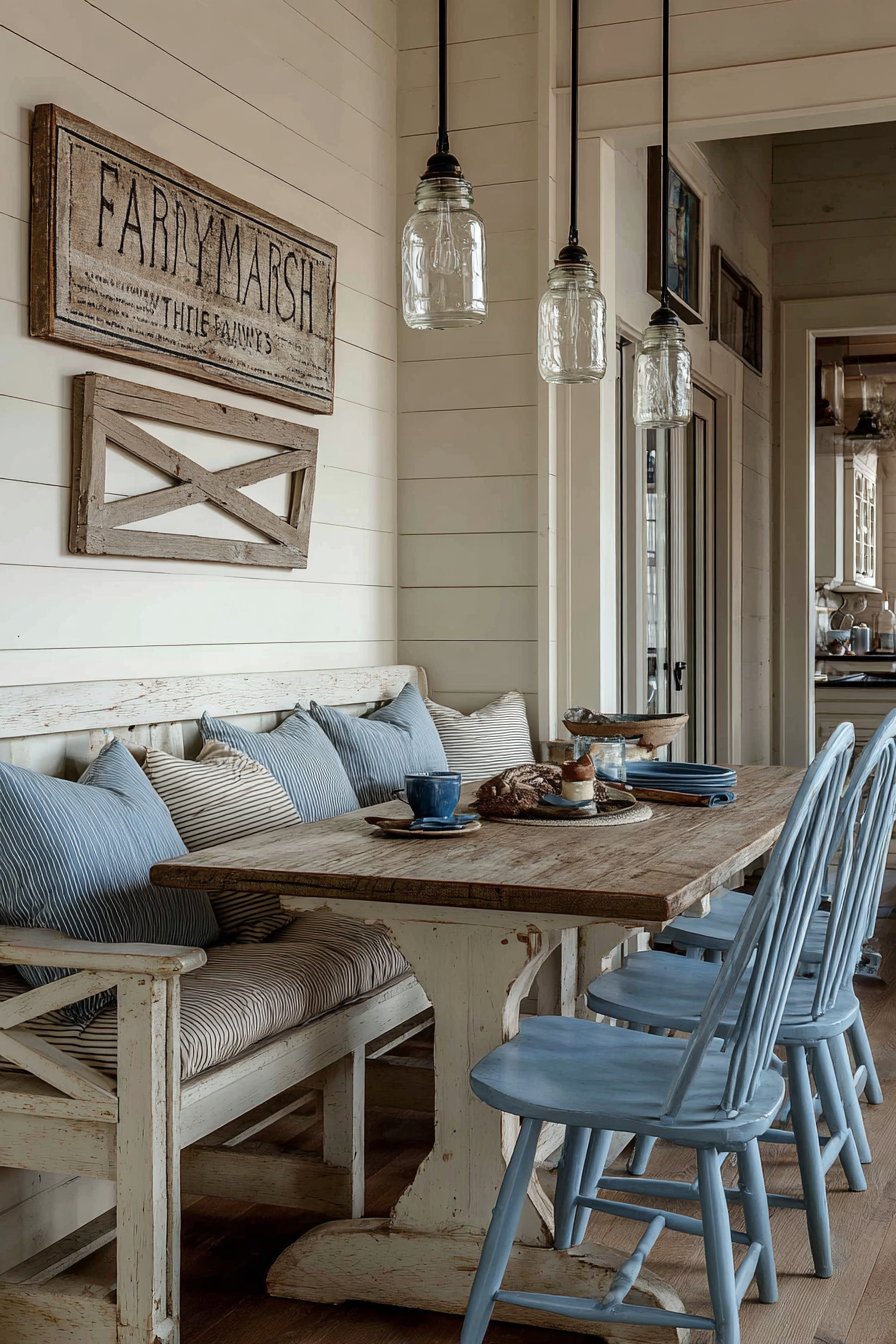
Mason jar pendant lights hanging overhead on black metal fixtures demonstrate farmhouse style’s appreciation for repurposing everyday objects into decorative elements. These humble vessels, originally designed for food preservation, become charming light fixtures that cast warm, inviting glow. Vertical shiplap covering the walls adds texture and traditional architectural detail, while a vintage farmhouse sign contributes personality and nostalgia. This design succeeds by layering authentic elements rather than relying on theme-park reproduction pieces.
Key Design Tips: Source genuine reclaimed wood from architectural salvage yards or barn demolition companies for authentic character and sustainability. Distress painted furniture pieces yourself using sandpaper and antiquing glazes to control the level of wear. Mix painted and natural wood finishes to create visual interest and prevent monotony. Incorporate vintage or antique accessories found at estate sales and flea markets to ensure authentic rather than manufactured charm. Choose ticking stripe, gingham, or simple floral fabrics that reference historical textile patterns. Install open shelving to display collections of vintage enamelware, stoneware crocks, or other period-appropriate items that reinforce the farmhouse aesthetic.
5. Compact Space-Saving Solution for Small Kitchens
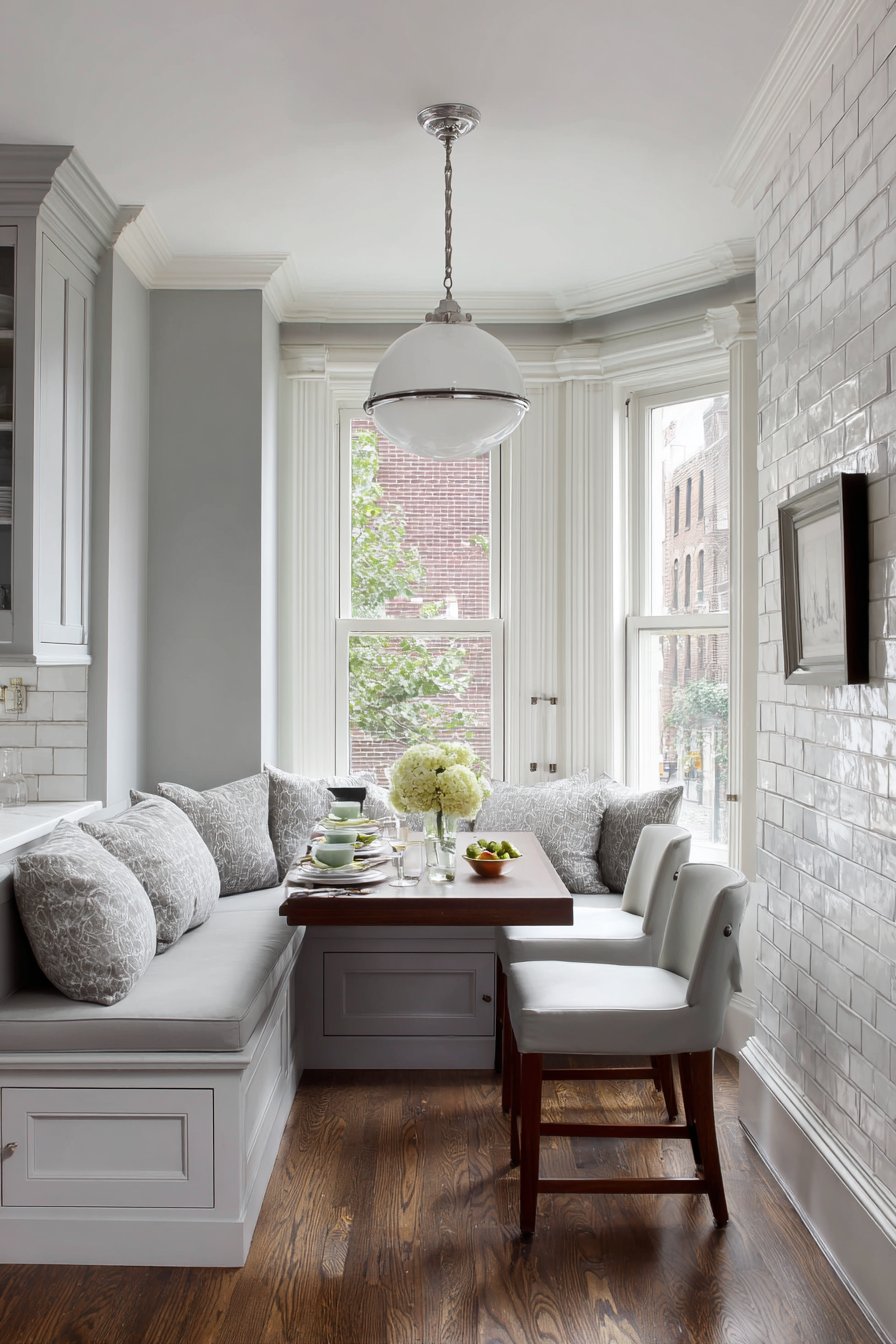
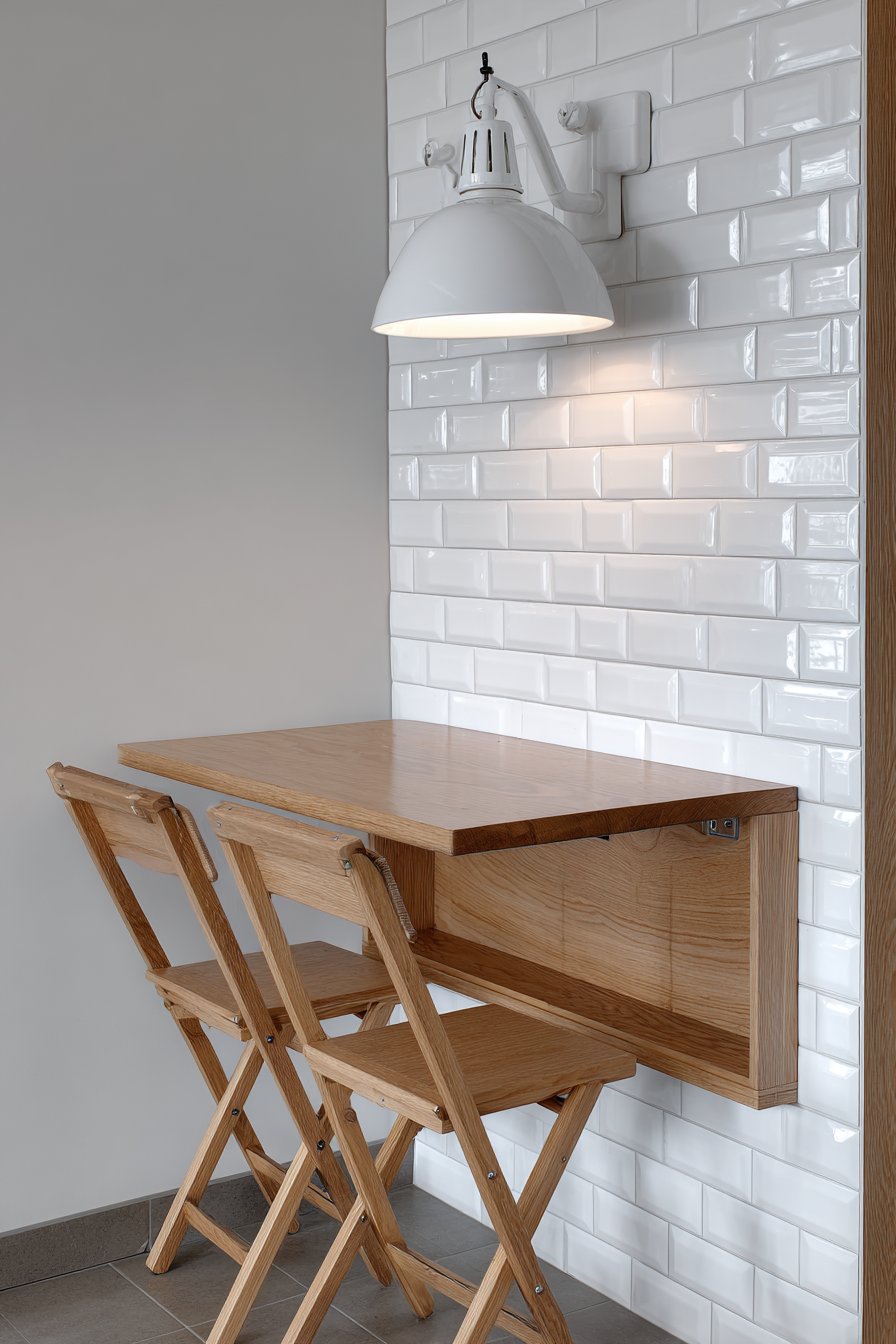
Urban living and compact spaces demand creative solutions that maximize functionality without sacrificing style. This innovative kitchen nook design features a fold-down wall-mounted table in natural ash wood that disappears when not in use, reclaiming valuable floor space in tight quarters. The slim built-in bench with storage compartments utilizes vertical space efficiently, providing seating and hidden storage in a narrow footprint that conventional furniture cannot match.
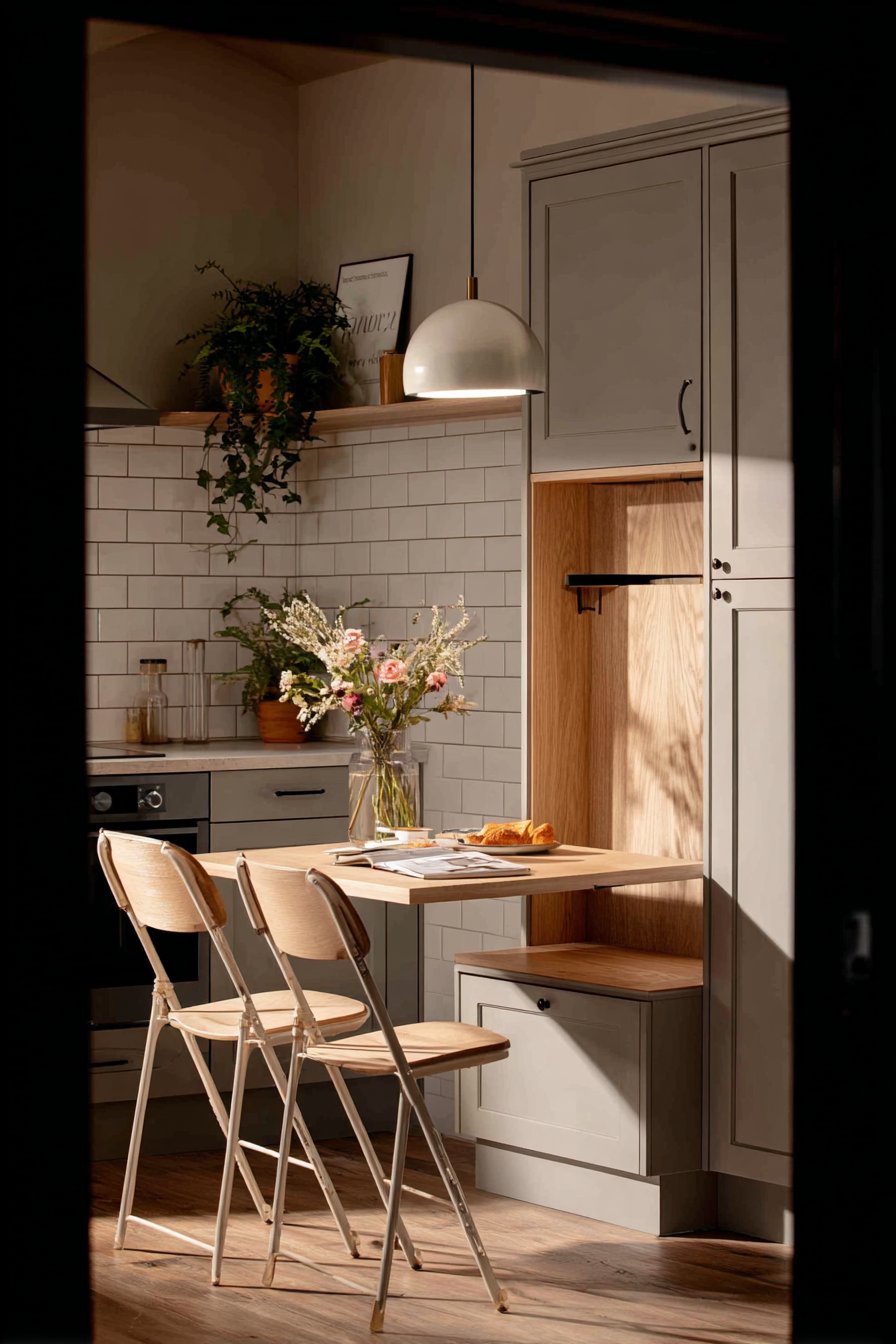
Two sleek folding chairs complete the seating arrangement when needed, then hang on wall hooks to become decorative elements rather than obstacles when the dining area isn’t in use. This transformative quality makes the space adaptable to changing needs throughout the day—breakfast nook in the morning, extra prep surface during cooking, and open circulation space during parties or gatherings. The white subway tile backsplash with grey grout creates clean, timeless backdrop that visually expands the small kitchen while providing durable, easy-to-clean surfaces.
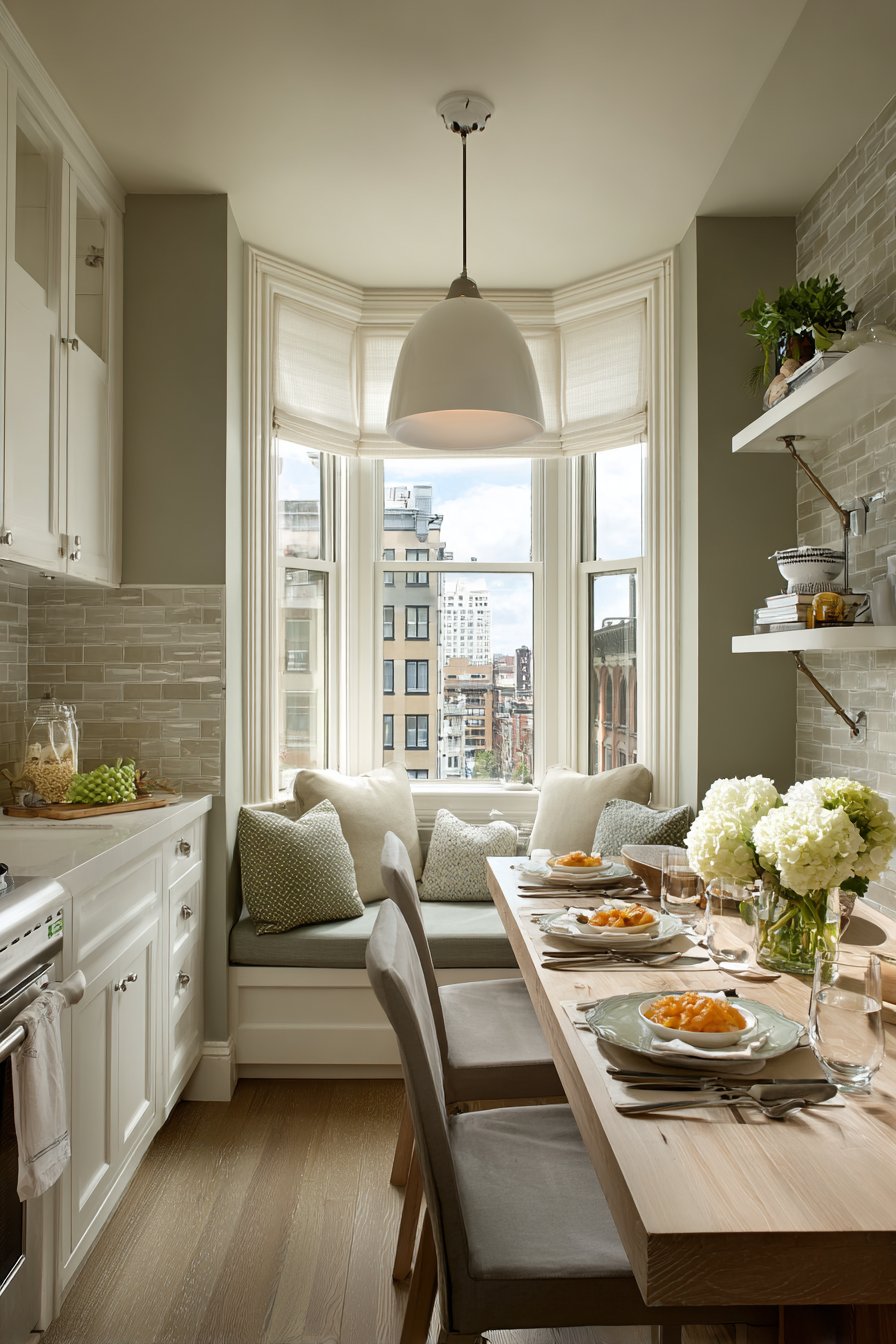
A single dome pendant light provides focused task lighting above the eating surface, its simple form and adequate illumination proving that effective lighting need not be elaborate or expensive. This design demonstrates that space limitations need not mean compromised lifestyle—thoughtful planning and multi-functional furniture allow small kitchens to serve all the same purposes as larger ones, just with greater efficiency and intentionality.
Key Design Tips: Install fold-down tables with quality hardware rated for daily use and substantial weight capacity to ensure longevity and safety. Create storage compartments in every possible location—beneath seating, within wall thickness, and overhead—to maximize organization in compact spaces. Choose furniture that serves multiple purposes, such as benches with storage or tables with fold-down leaves. Use wall-mounted solutions to keep floor space clear and create visual spaciousness. Select light colors and reflective surfaces to bounce light and prevent small spaces from feeling dark or cramped. Invest in quality compact furniture rather than cheap space-saving solutions that break quickly and create frustration.
6. Bohemian Eclectic with Global Textiles
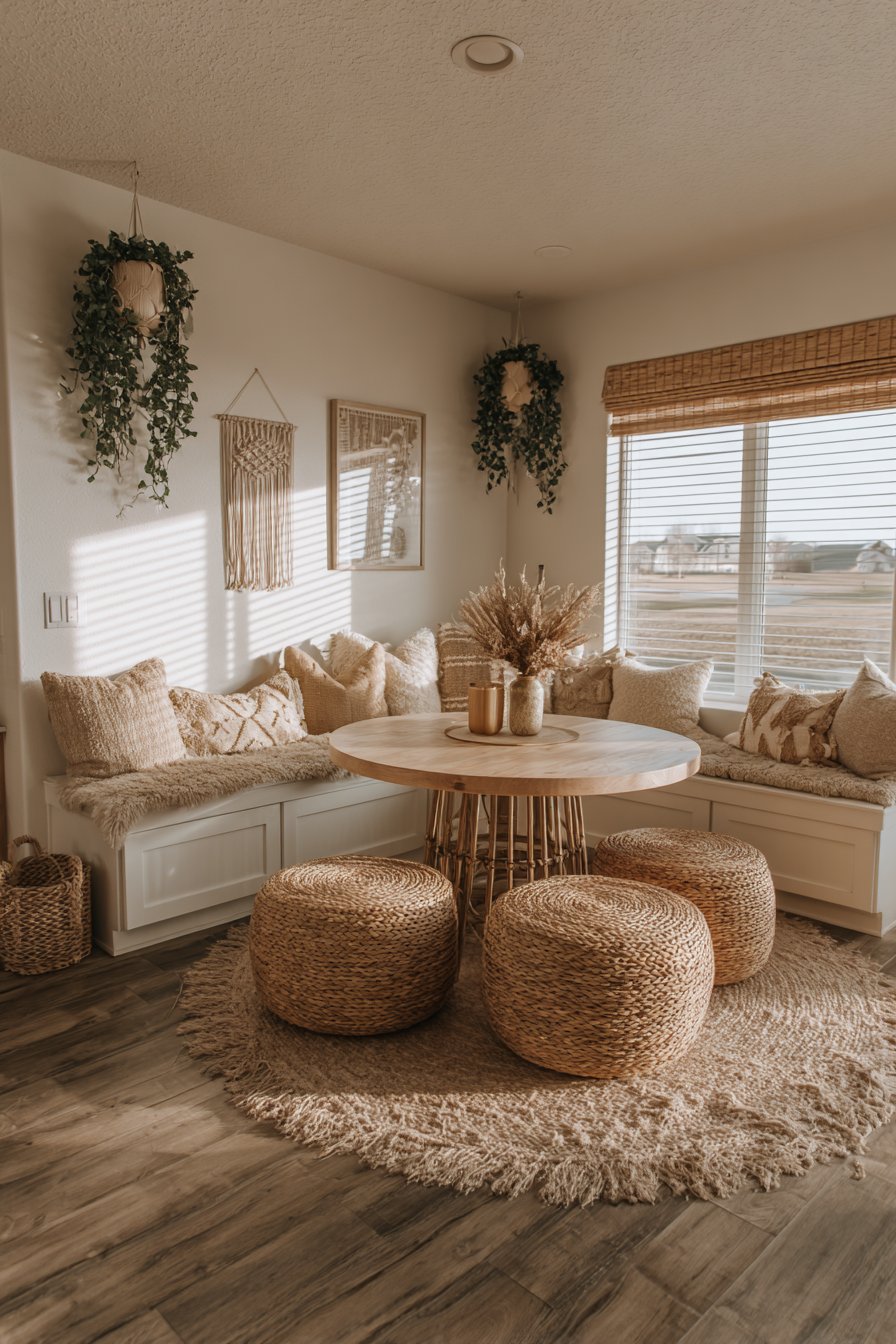
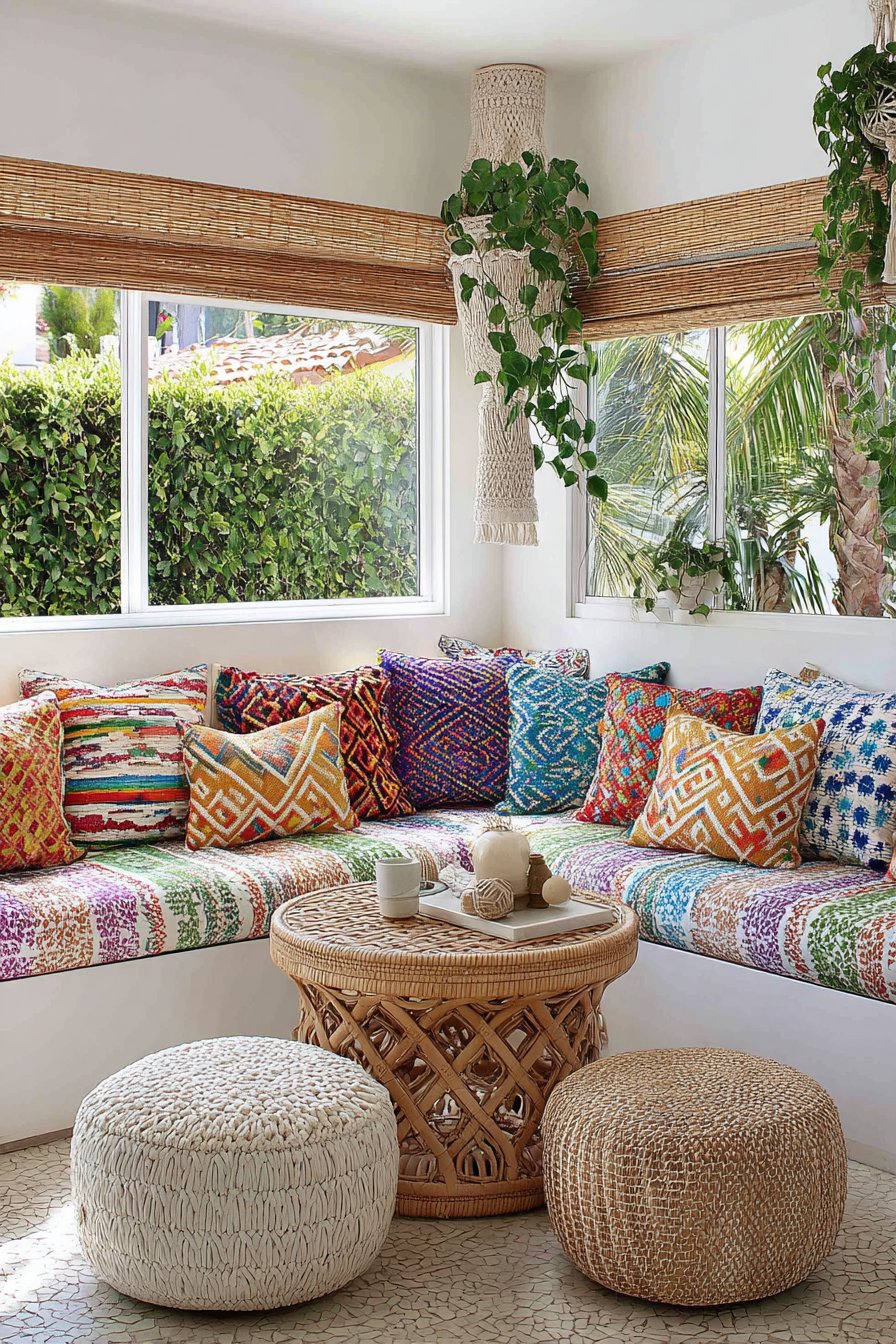
Bohemian design celebrates individuality, creative expression, and cultural appreciation through layered textiles, varied patterns, and collected objects from travels and experiences. This kitchen nook features a low-profile cushioned bench serving as the foundation for colorful patterned pillows in jewel tones—deep purples, rich teals, vibrant oranges—that create visual feast and tactile interest. Mixed textiles including embroidered fabrics, kilim patterns, and batik prints demonstrate the bohemian appreciation for handcrafted goods from various traditions.
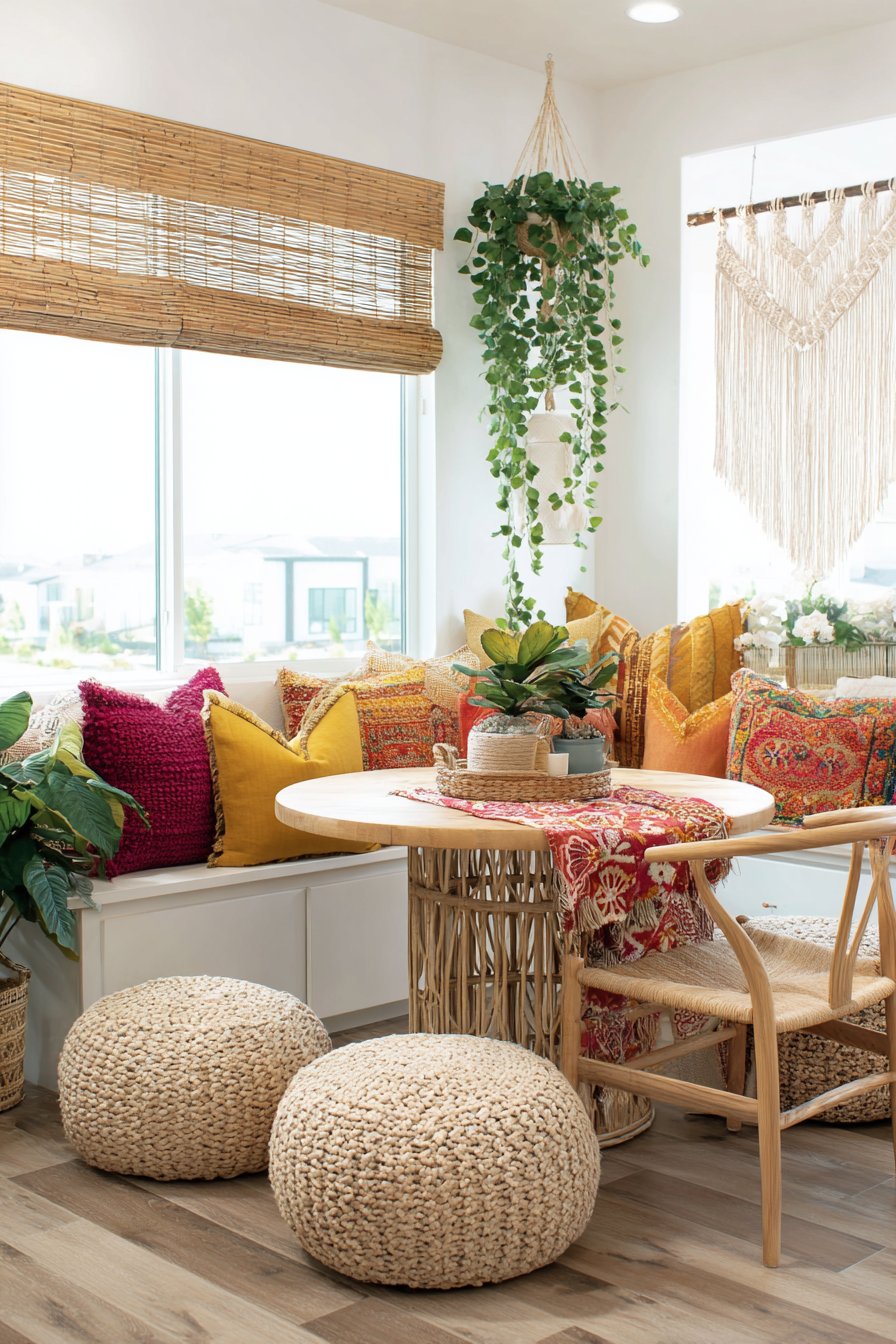
The round rattan table introduces natural material and woven texture that adds organic warmth to the eclectic mix. Rattan’s flexibility during construction allows for curved forms and interesting patterns that solid wood cannot achieve, while its lightweight quality makes rearrangement effortless. Woven seating poufs provide flexible seating options that can be easily moved, stacked, or repurposed as footrests or side tables, embodying the bohemian preference for casual, adaptable arrangements over formal, fixed configurations.
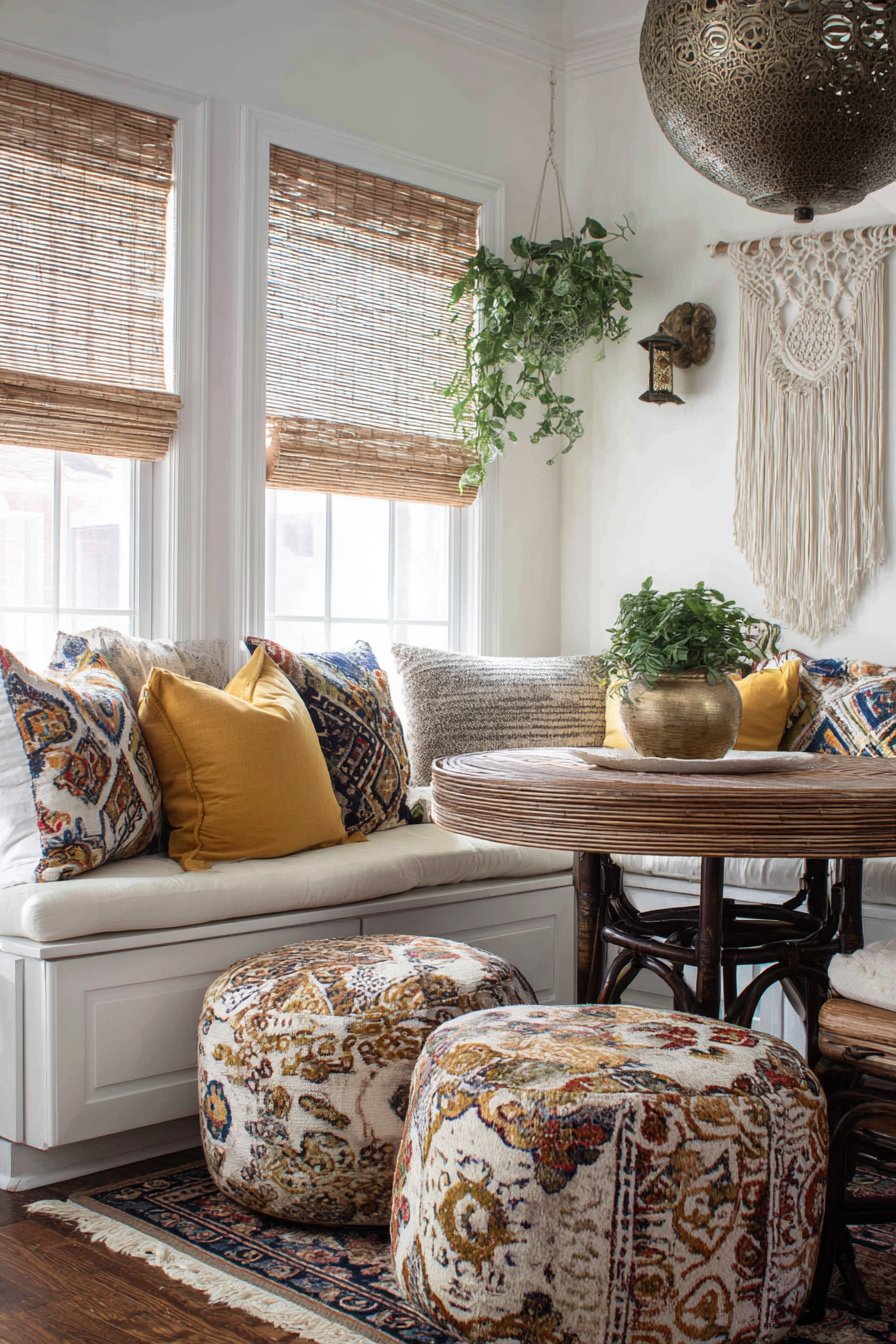
Macrame wall hangings add vertical texture and handcrafted artistry, their knotted patterns creating shadows and dimensional interest on white walls. Trailing pothos plants cascade from shelves and hanging planters, introducing living elements that purify air and soften hard architectural lines. Natural light streams through windows dressed with bamboo blinds, filtering harsh rays while maintaining connection to outdoors. This design proves that more can indeed be more when elements are thoughtfully curated and genuinely loved.
Key Design Tips: Layer textiles with abandon—mix patterns, textures, and colors from various cultural traditions to create rich, personalized spaces. Incorporate living plants abundantly throughout the space for air purification, visual interest, and connection to nature. Choose natural materials like rattan, bamboo, jute, and wood to ground eclectic elements with organic warmth. Display collected objects from travels, vintage finds, and handmade pieces that tell personal stories. Embrace asymmetry and casual arrangements rather than formal, matchy-matchy design. Add ambient lighting through string lights, lanterns, or candles to create warm, intimate atmosphere during evening hours.
7. Timeless Transitional Elegance
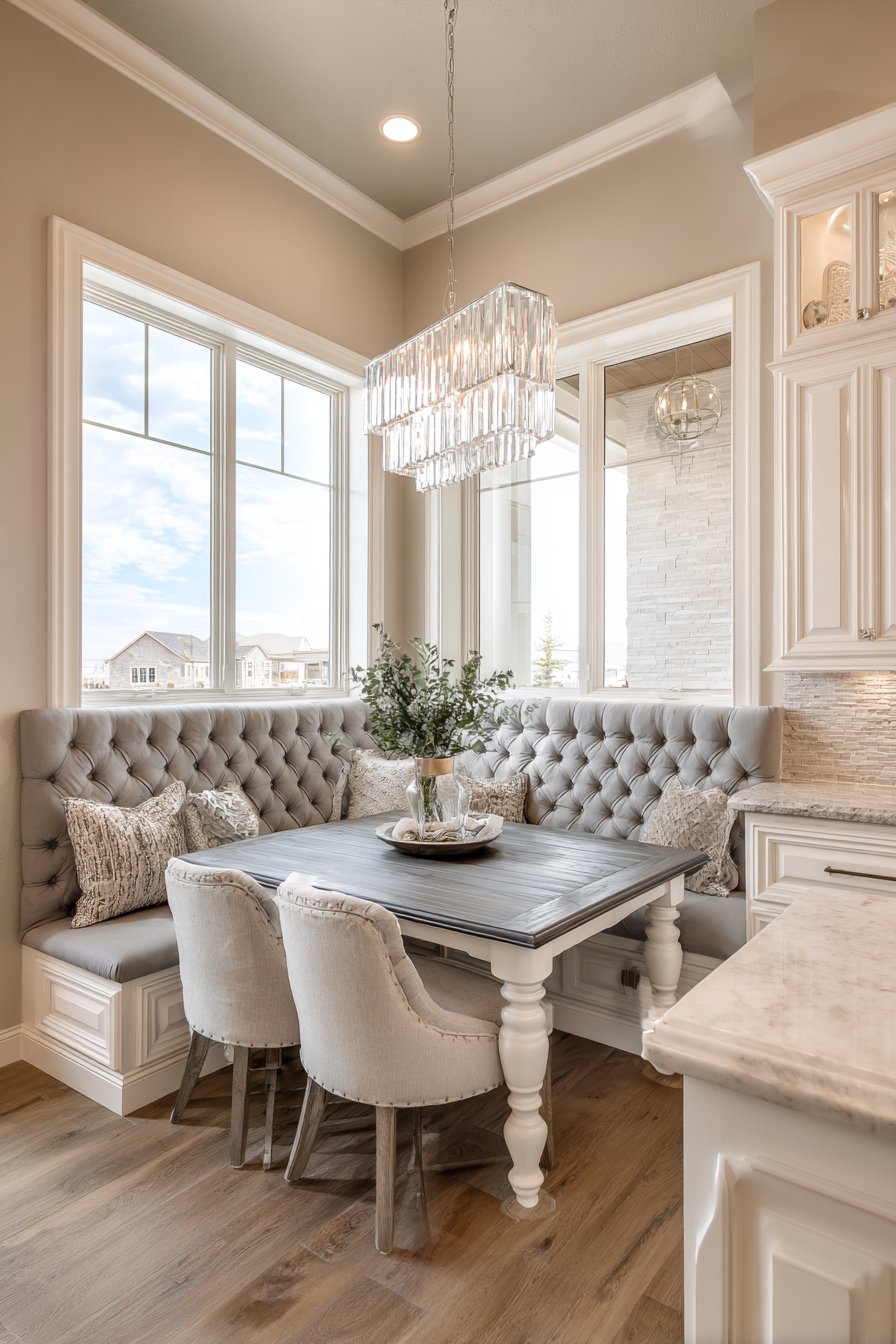
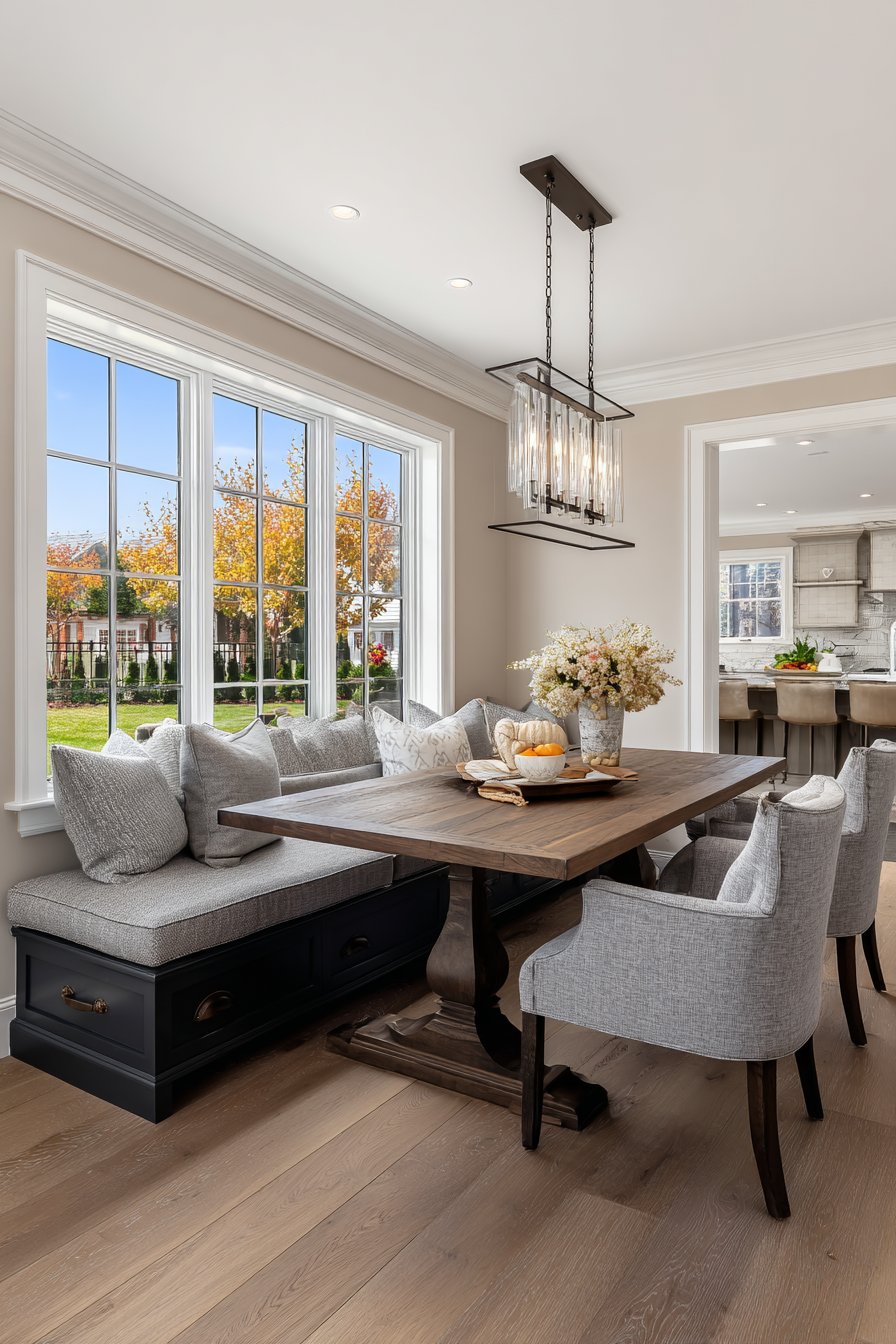
Transitional design bridges traditional comfort with contemporary clean lines, creating spaces that feel simultaneously classic and current. This kitchen nook showcases an upholstered banquette in dove grey performance fabric, its elegant piping details adding refined finish while the practical fabric choice ensures durability against daily use and inevitable spills. Hidden storage beneath lift-up seats provides ample room for linens, serving pieces, and seasonal items without visual clutter.
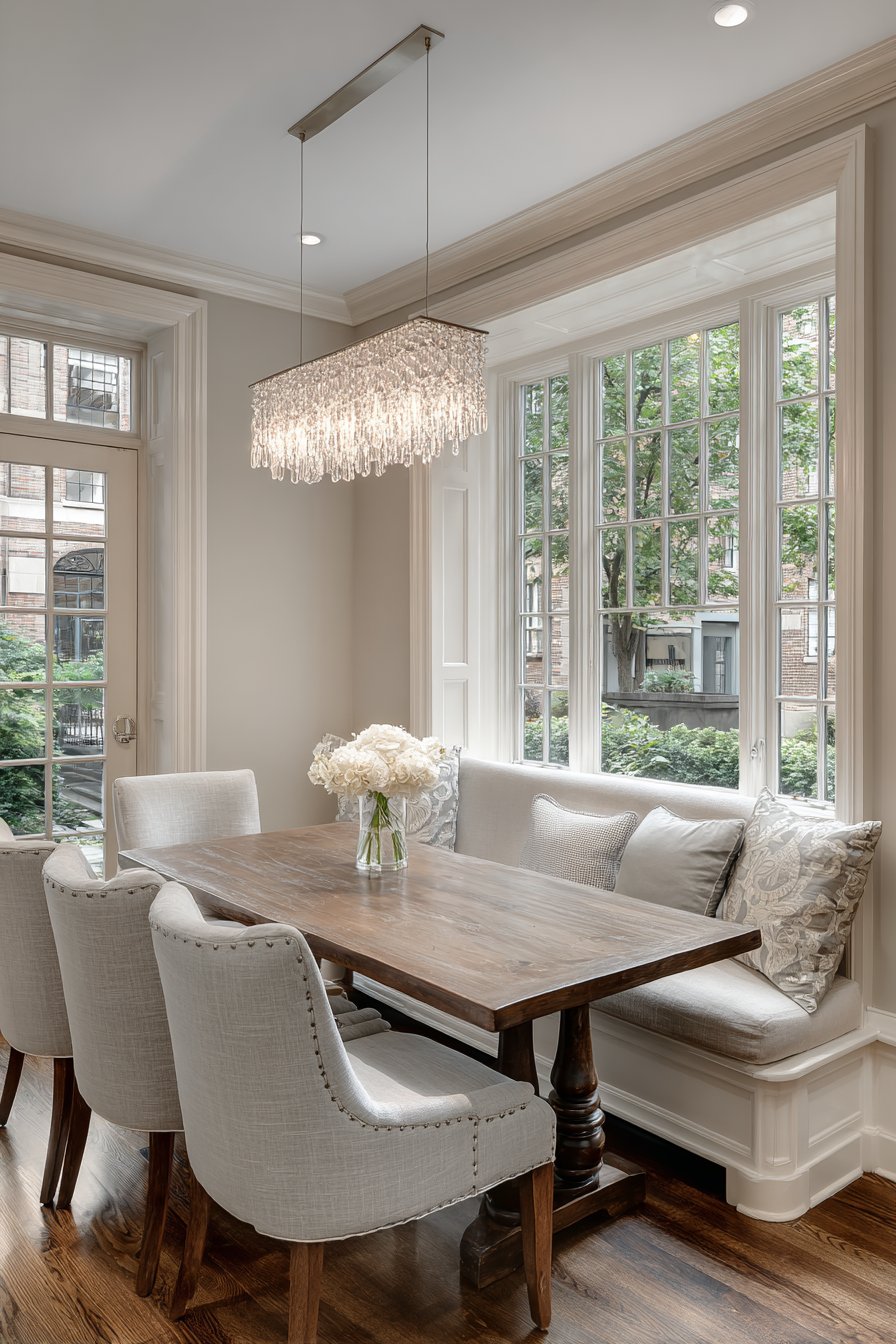
The rectangular wood table with turned legs in espresso finish demonstrates traditional craftsmanship through decorative leg details while maintaining relatively simple overall form. Upholstered parsons chairs complete the seating arrangement with tailored sophistication, their clean-lined silhouettes with subtle traditional details exemplifying the transitional aesthetic. The crystal chandelier with modern lines suspended overhead represents this style’s ability to honor traditional materials while embracing contemporary form—sparkle and glamour without excessive ornamentation.
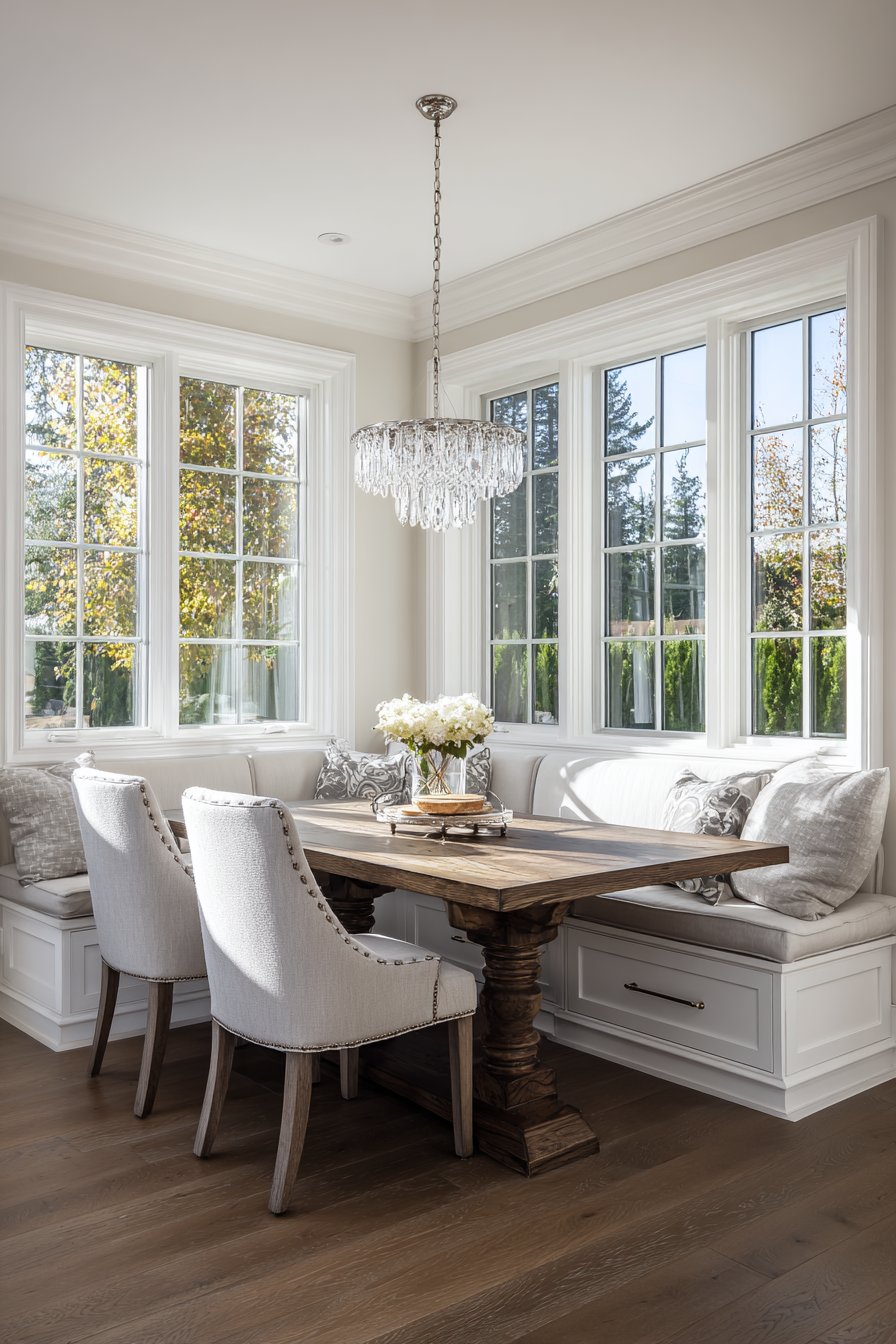
Set in a windowed alcove with neutral beige walls and crown molding, this breakfast nook achieves sophisticated comfort that appeals across generations and style preferences. The neutral palette ensures longevity beyond passing trends while providing a serene backdrop for daily living. This design succeeds by selecting quality over quantity, investing in well-constructed furniture with timeless appeal rather than following fleeting fashion.
Key Design Tips: Select performance fabrics with stain-resistant treatments for upholstered seating in dining areas to maintain appearance despite daily use. Choose neutral color palettes in warm tones like beige, taupe, and greige to create sophisticated backdrops that don’t date quickly. Incorporate both traditional elements like crown molding and modern touches like streamlined furniture for balanced transitional design. Invest in quality furniture construction with solid wood frames and proper joinery that will serve families for decades. Add crystal or glass lighting fixtures to introduce sparkle and elegance without overwhelming spaces. Include hidden storage solutions to maintain clean, uncluttered appearance that defines successful transitional interiors.
8. Breezy Coastal Retreat
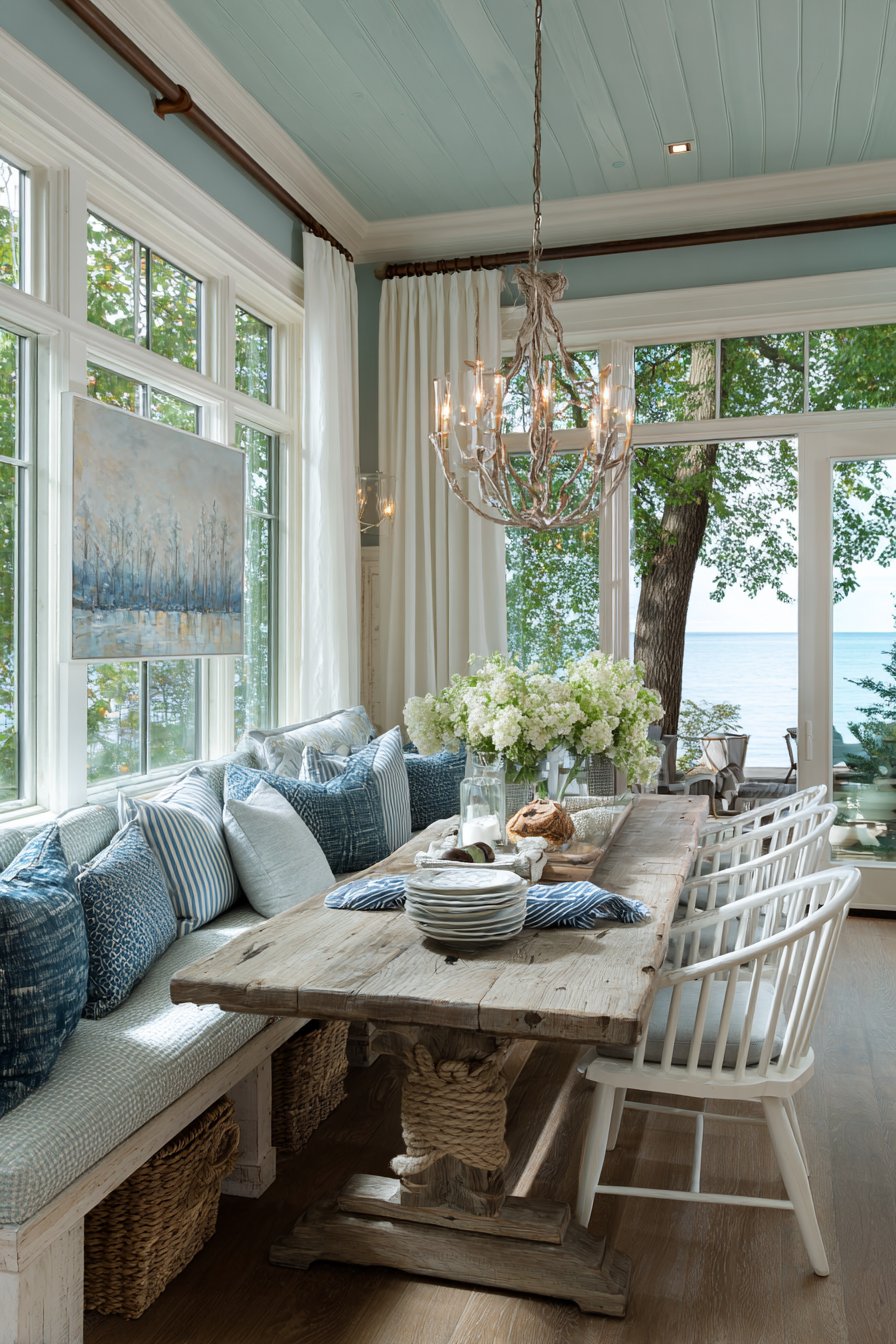
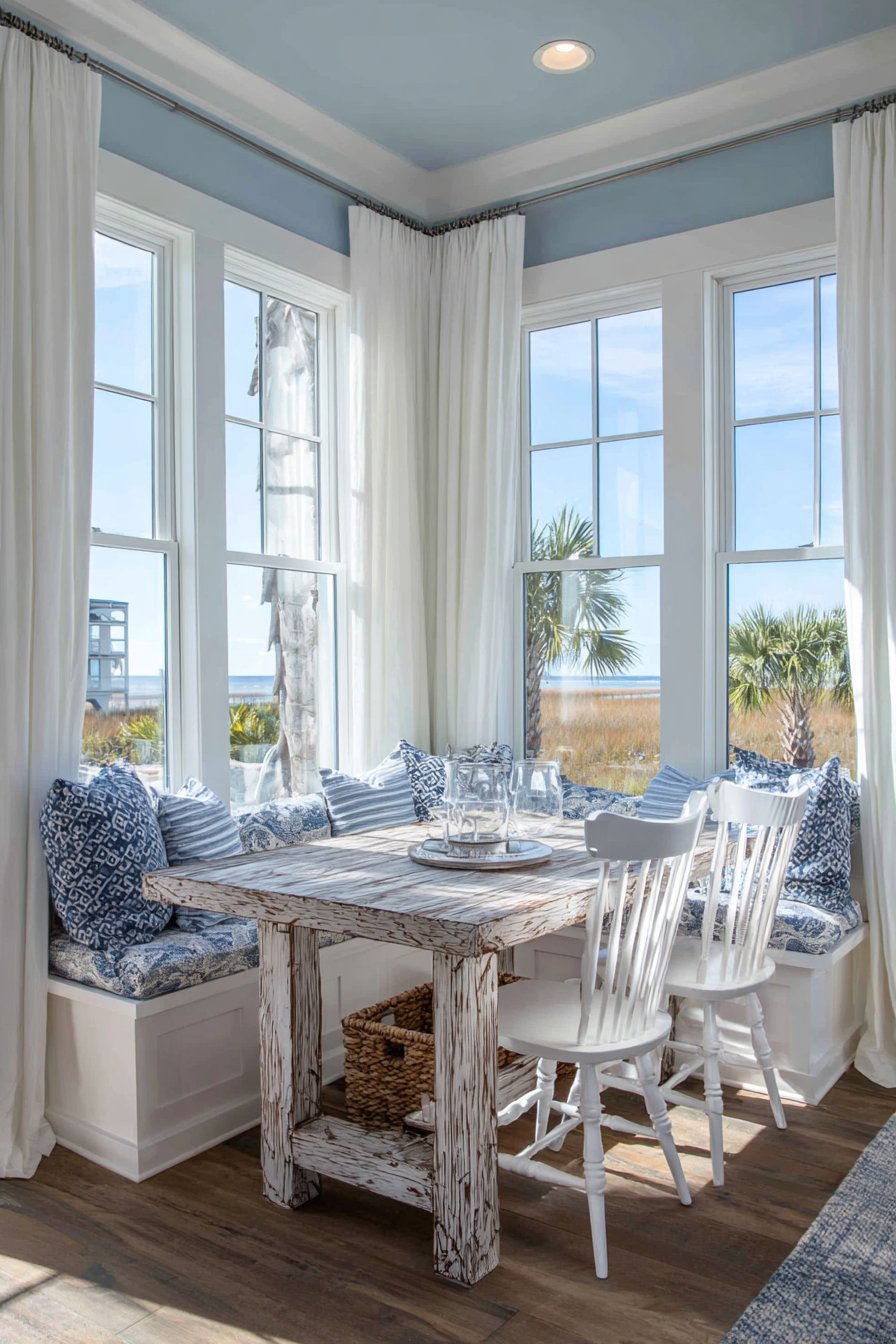
Coastal design transports homeowners to beachside relaxation through color palettes, natural materials, and relaxed styling inspired by seaside living. This kitchen nook features a whitewashed wooden bench with rope detail accents that reference nautical traditions, its weathered finish suggesting sun-bleached driftwood discovered on sandy shores. Blue-and-white striped cushions evoke classic beach umbrellas and cabana tents, their pattern creating visual rhythm while maintaining casual ease.
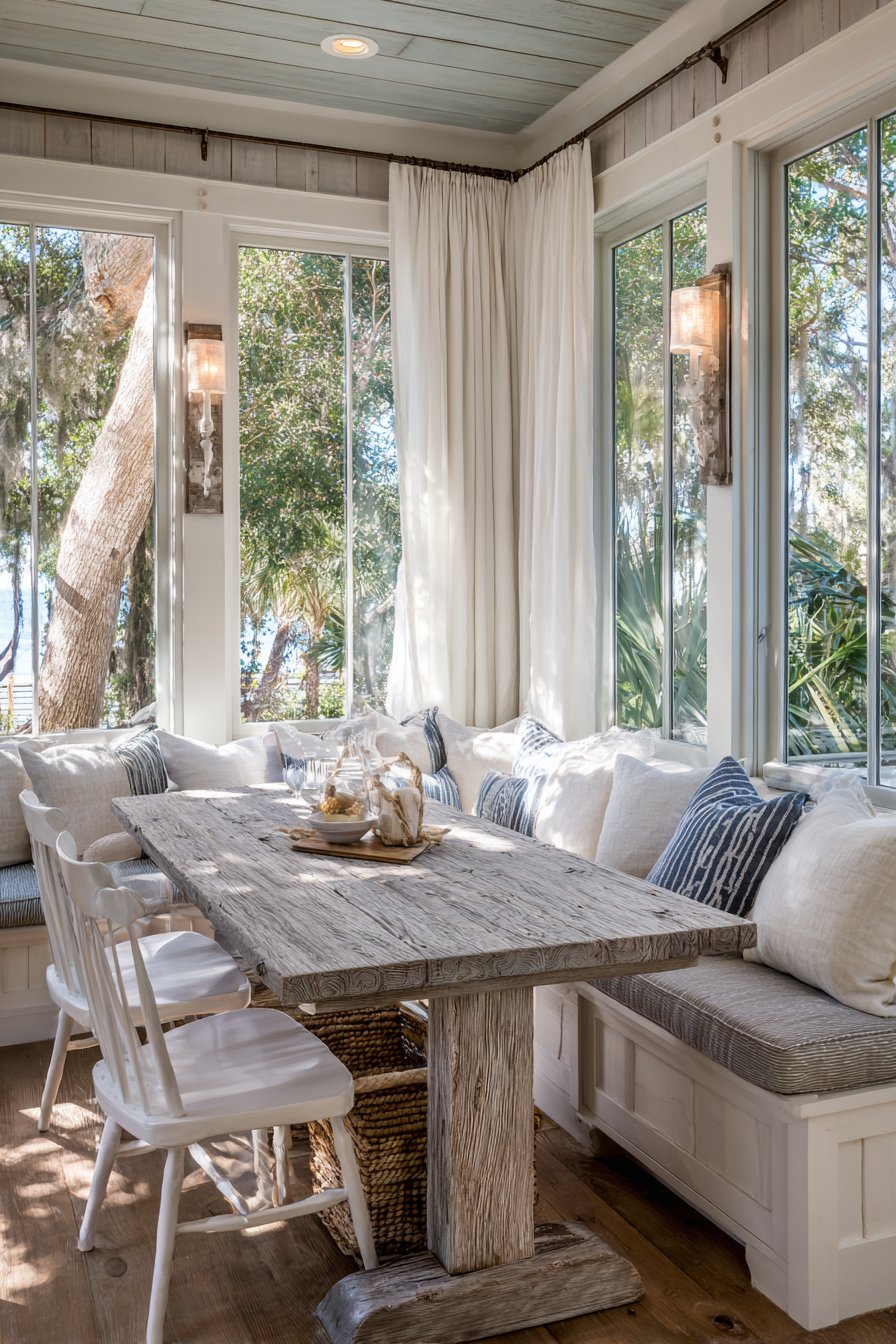
The weathered driftwood-style table provides dining surface with organic character, its grey-brown tones and natural variations reminding occupants of beach walks and ocean vistas. White painted Windsor chairs introduce traditional furniture forms made fresh through crisp paint treatment, their spindle backs creating visual lightness while providing comfortable support. Large windows offering views of natural scenery reinforce the connection between interior and exterior spaces, while flowing white linen curtains move with breezes like sailboat canvas.
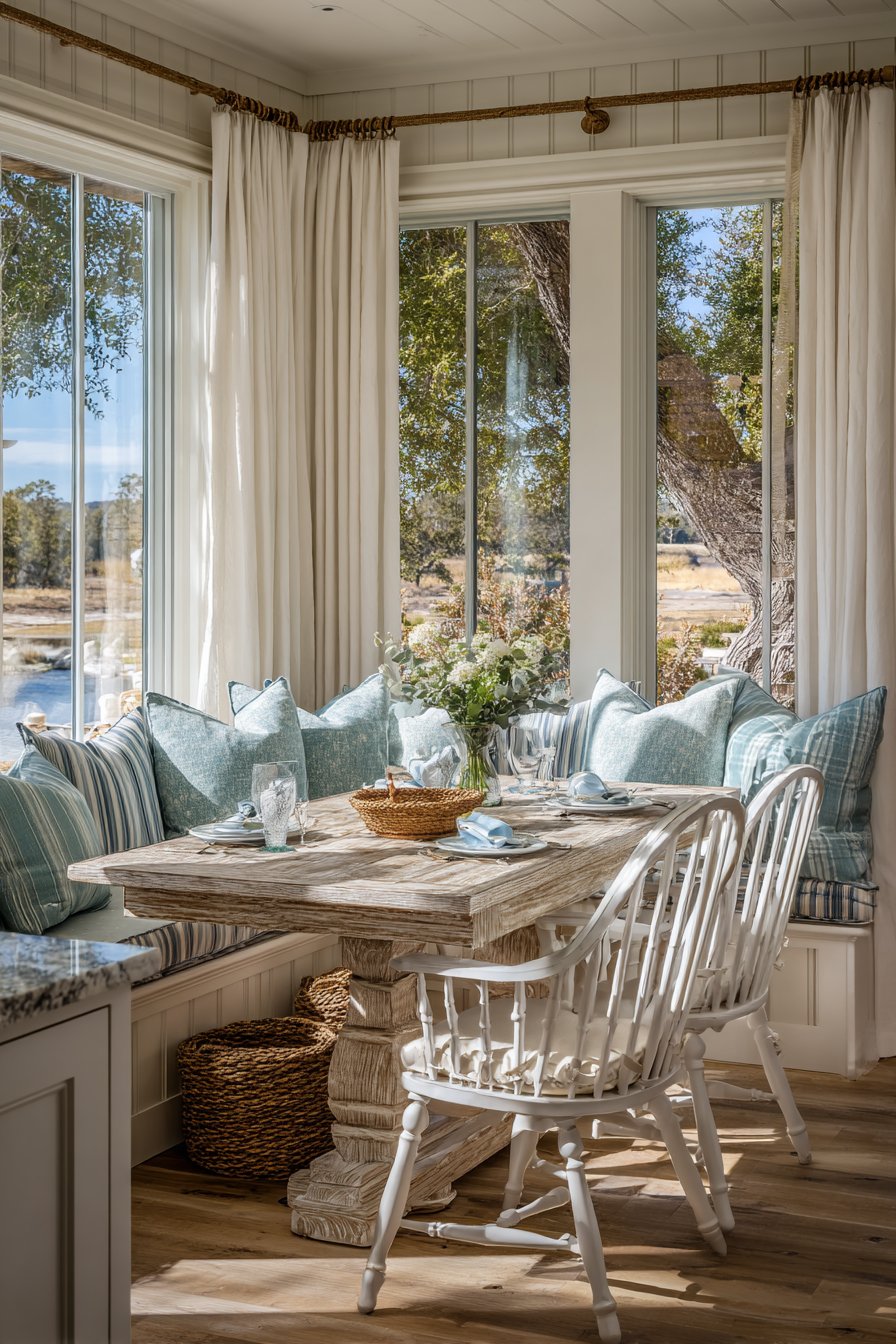
Walls painted in soft aqua blue with white beadboard wainscoting create classic coastal architecture, the horizontal lines of beadboard adding texture and traditional detail. Seagrass baskets stored beneath the bench provide practical organization while introducing additional natural texture and neutral tone. This design demonstrates how color palette and material selection can transport inhabitants to favored vacation destinations without literal fish and anchor motifs.
Key Design Tips: Embrace blue and white as the foundation color scheme, varying shades from navy to powder blue for depth and interest. Incorporate natural materials like rattan, seagrass, jute, and weathered wood to create organic coastal feeling. Choose striped fabrics for timeless pattern that references nautical traditions without feeling theme-heavy. Paint wood furniture in white or soft blues, then lightly distress edges to suggest sun and salt wear. Maximize natural light through large windows and sheer curtains to create bright, airy atmosphere. Add shell collections, coral specimens, or beach glass in subtle displays rather than obvious beach-themed decorations.
9. Urban Industrial Edge
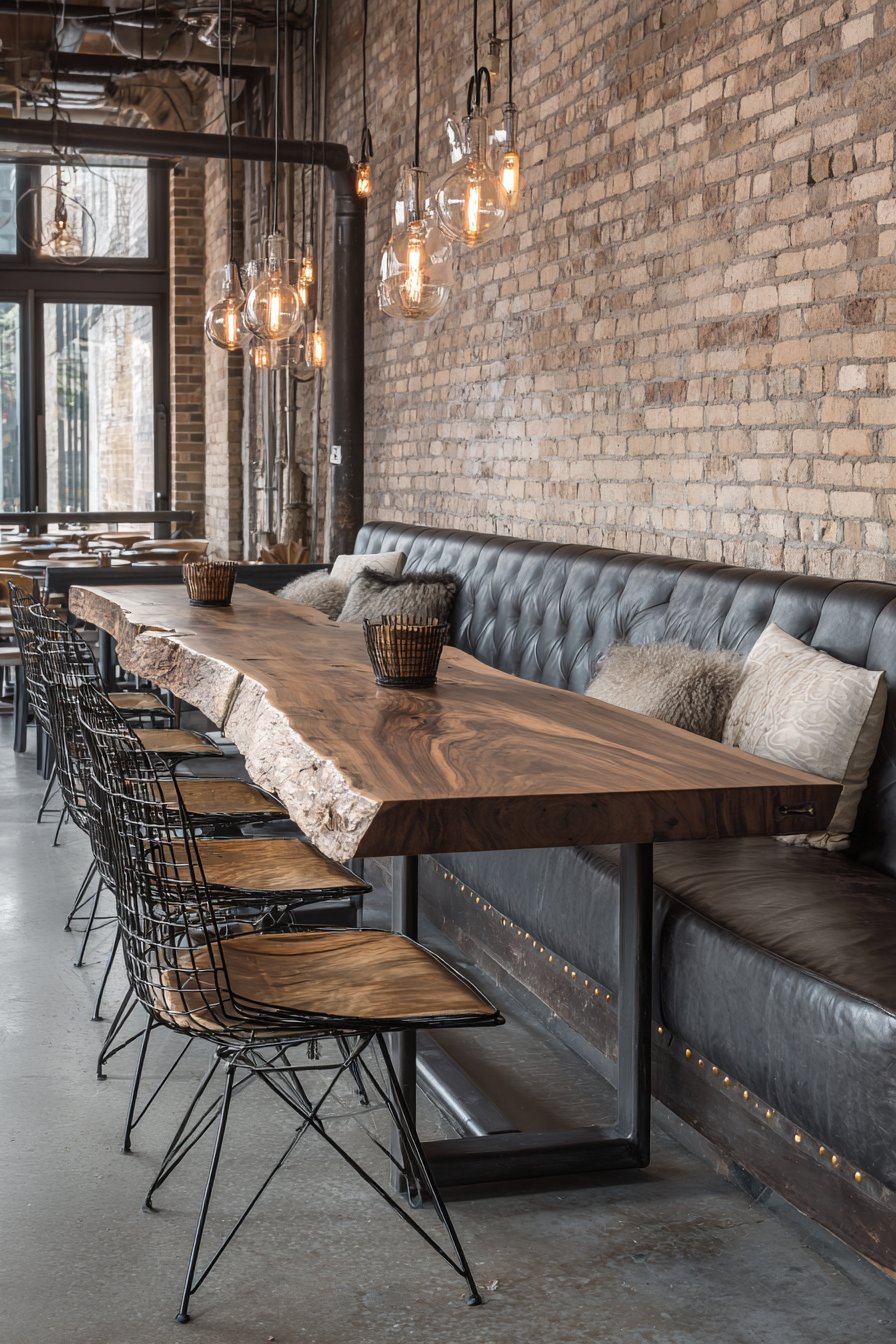
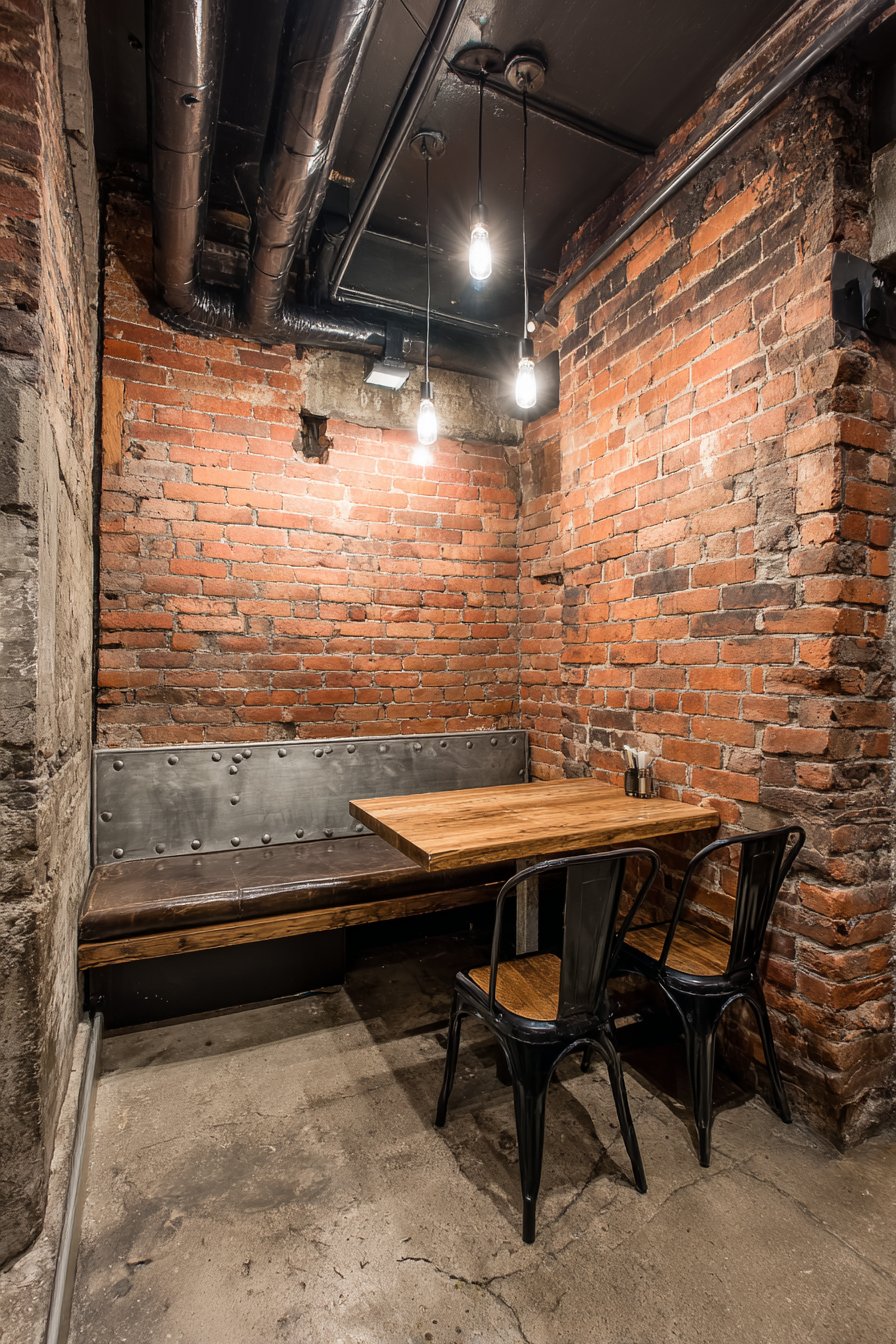
Industrial design celebrates honest materials, utilitarian forms, and urban warehouse aesthetics through exposed construction and raw finishes. This kitchen nook features a metal-framed bench with distressed leather upholstery, its visible rivets and aged patina suggesting repurposed factory seating. The leather develops character over time, scratches and wear marks adding to its authenticity rather than detracting from appearance—a hallmark of industrial design’s appreciation for materials that improve with age.
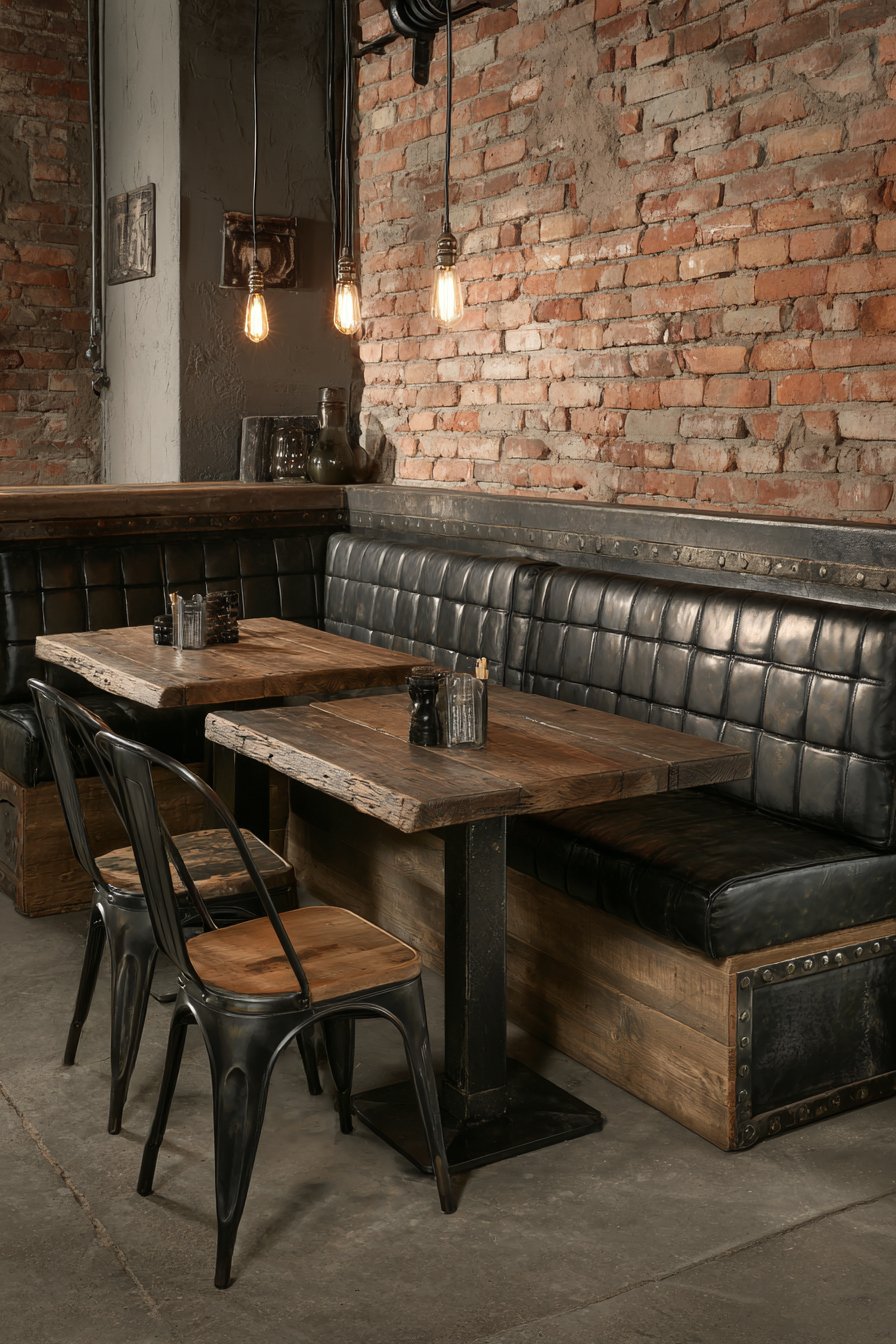
The live-edge walnut table serves as striking centerpiece, its natural edge preserving the tree’s original contour while the rich brown walnut grain provides warmth against cooler industrial elements. This contrast between organic and manufactured, soft and hard, warm and cool creates dynamic tension that defines successful industrial spaces. Black metal wire chairs with wooden seats continue the material mixing, their open construction maintaining visual lightness while providing sturdy support.
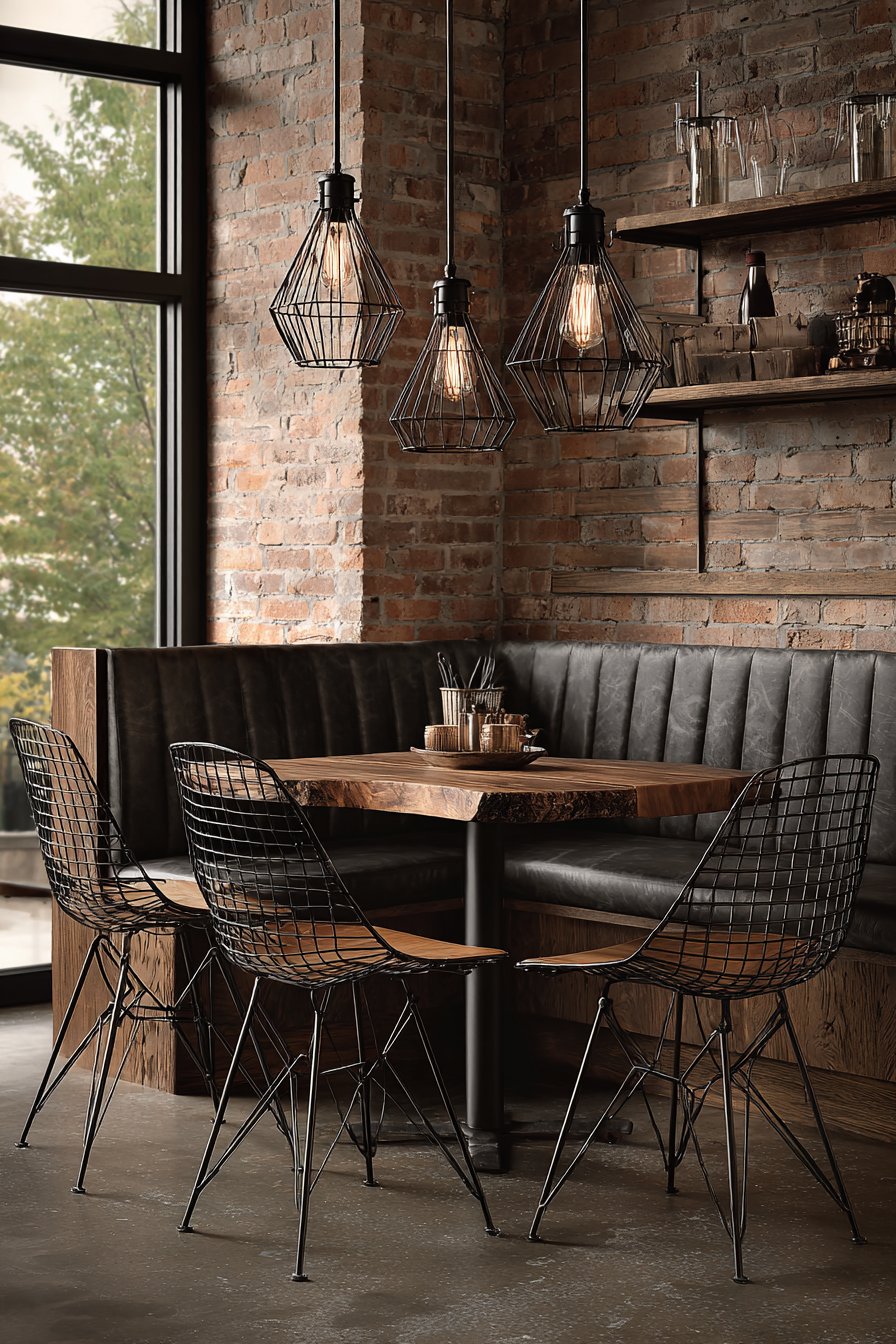
Exposed brick walls contribute textural richness and historical character, their irregularities and color variations impossible to replicate with modern materials. Edison bulb pendants on black cord create dramatic overhead lighting, their visible filaments celebrating early electrical design while casting warm, amber glow. Concrete flooring with natural variations and patina provides durable, low-maintenance surface that embraces industrial aesthetic’s preference for honest, unfinished materials.
Key Design Tips: Expose architectural elements like brick walls, ductwork, and concrete floors rather than concealing them with finishes. Choose furniture with visible metal frames, welded joints, and industrial hardware to reinforce the aesthetic. Incorporate reclaimed wood with natural edges, weathering, and authentic wear patterns for warmth and organic contrast. Select leather upholstery that will develop patina over time rather than remaining static. Install Edison bulbs or industrial-style fixtures with exposed hardware and minimal decoration. Embrace imperfection—chips in concrete, exposed welds, and surface variations add authenticity to industrial spaces.
10. Classic Traditional Comfort
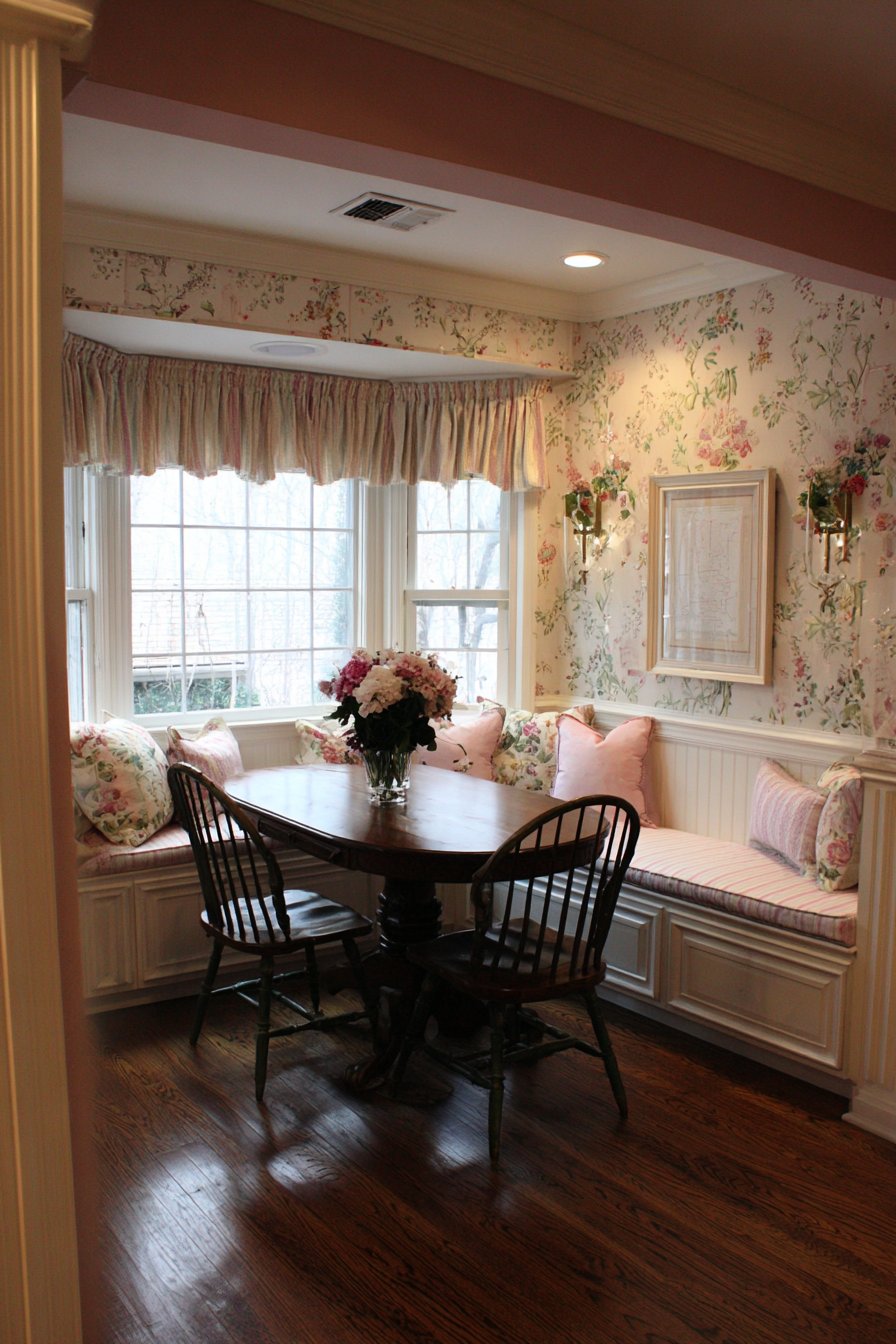
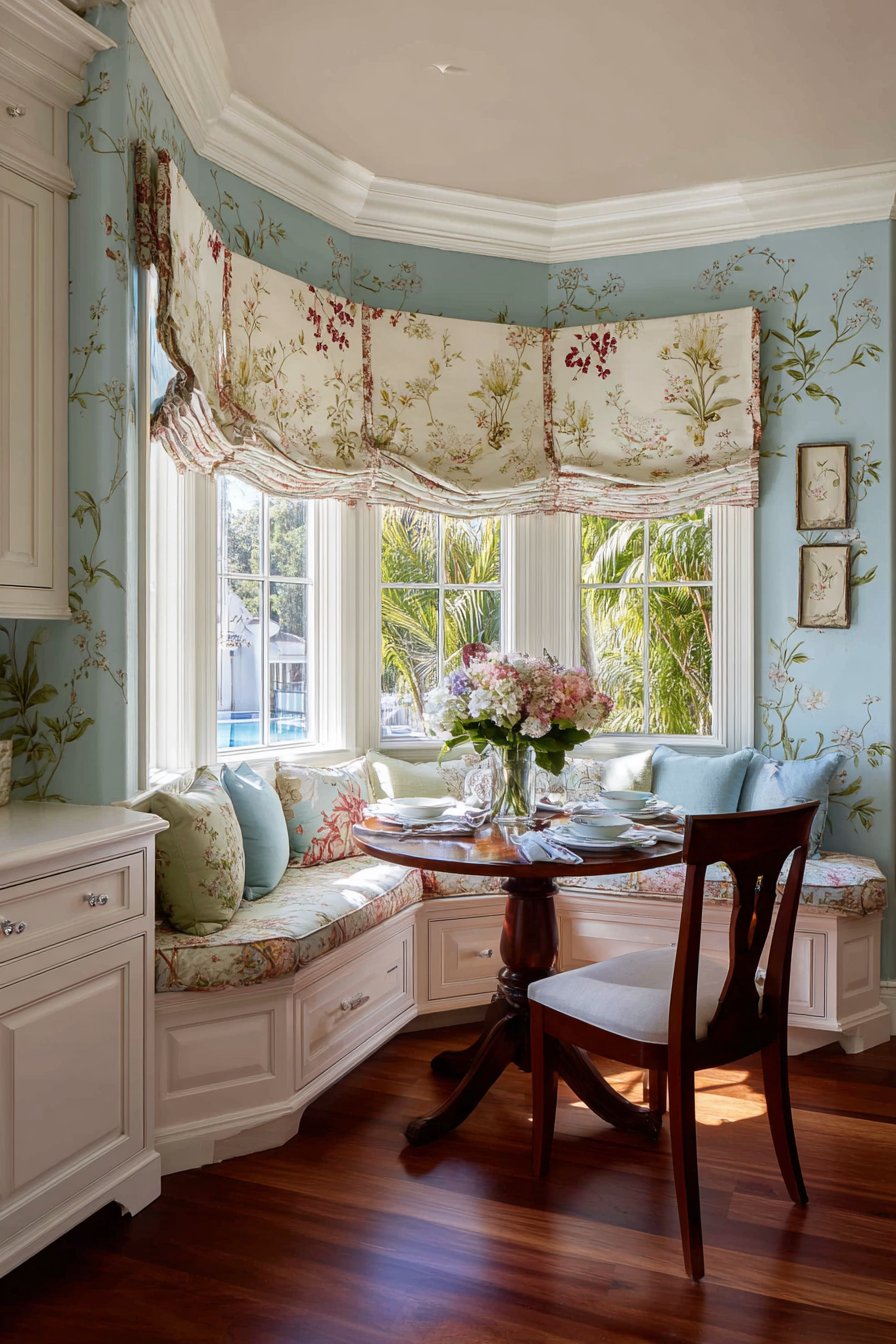
Traditional design honors historical precedents, formal arrangements, and time-tested decorating principles that create elegant, refined spaces. This kitchen nook features a built-in window seat with classic white painted paneling and storage cabinets below, demonstrating traditional architecture’s attention to detail and craftsmanship. Floral cushions in soft pastels introduce pattern and color while maintaining the gentle, refined aesthetic that characterizes traditional interiors.
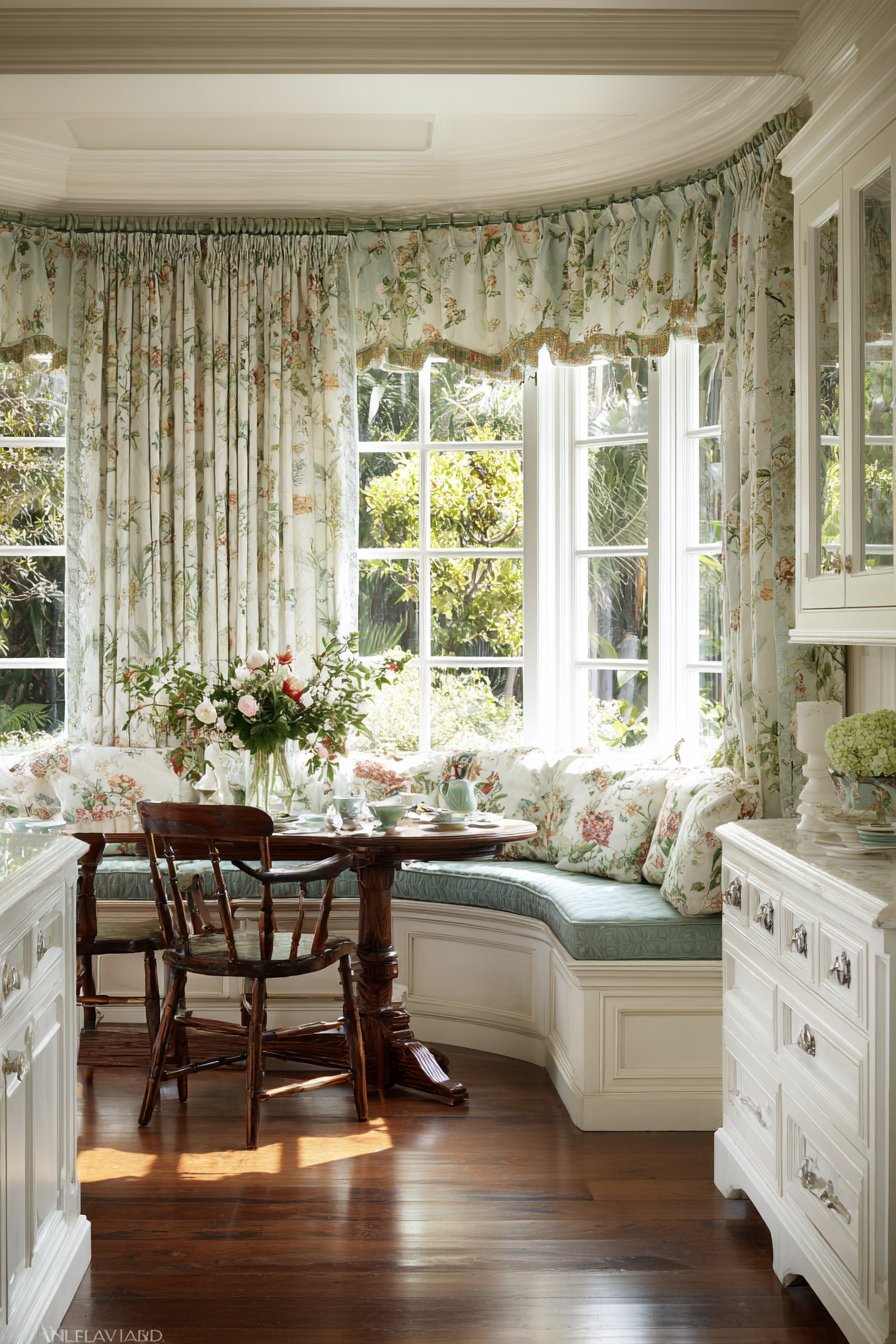
The dark cherry wood pedestal table centers the space with rich, polished presence, its deep tones and formal silhouette suggesting quality furniture that endures across generations. Matching spindle-back chairs continue the wood species and formal styling, their turned details and carved elements demonstrating traditional furniture’s appreciation for decorative craftsmanship. The bay window dressed with gathered valances in coordinating fabric adds soft architectural treatment that frames views while contributing textile warmth.
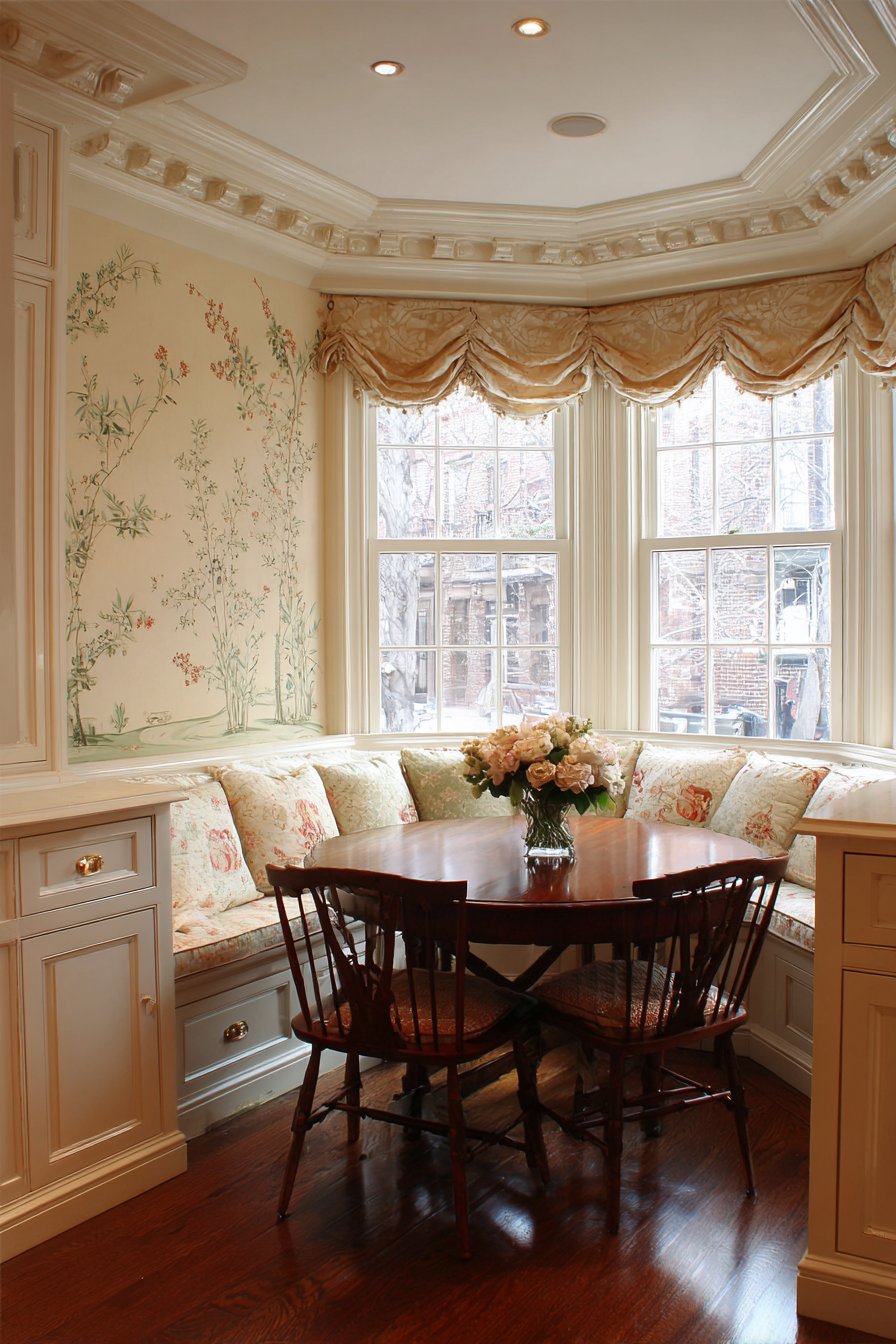
Walls featuring delicate wallpaper with vintage botanical prints create refined backdrop that introduces pattern without overwhelming the senses. Traditional design’s love of layered pattern—floral cushions, botanical wallpaper, coordinating valances—creates richness and visual interest when executed with restraint and color coordination. This breakfast nook achieves timeless elegance that welcomes guests with formal grace while maintaining comfortable warmth for daily family use.
Key Design Tips: Invest in quality wood furniture in traditional species like cherry, mahogany, or walnut for rich color and grain patterns. Incorporate built-in architectural details like paneling, crown molding, and window seats to add traditional character. Layer complementary patterns through wallpaper, upholstery, and window treatments, maintaining color coordination for cohesion. Choose floral, toile, or damask patterns that reference historical textile designs. Add formal lighting fixtures like chandeliers or wall sconces with traditional details. Select window treatments with fabric valances, swags, or other decorative headers rather than simple curtain panels.
11. Retro Mid-Century Modern Style
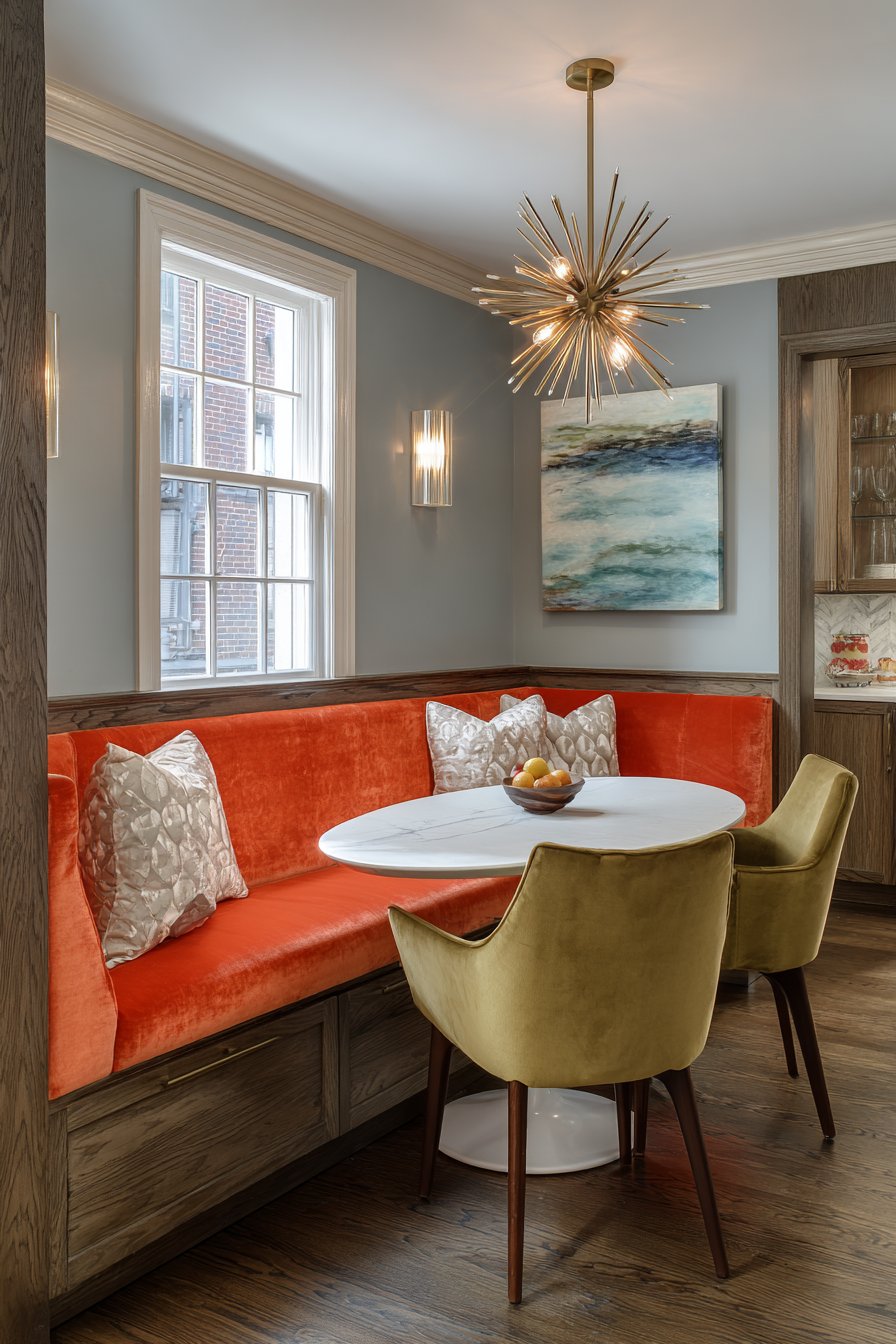
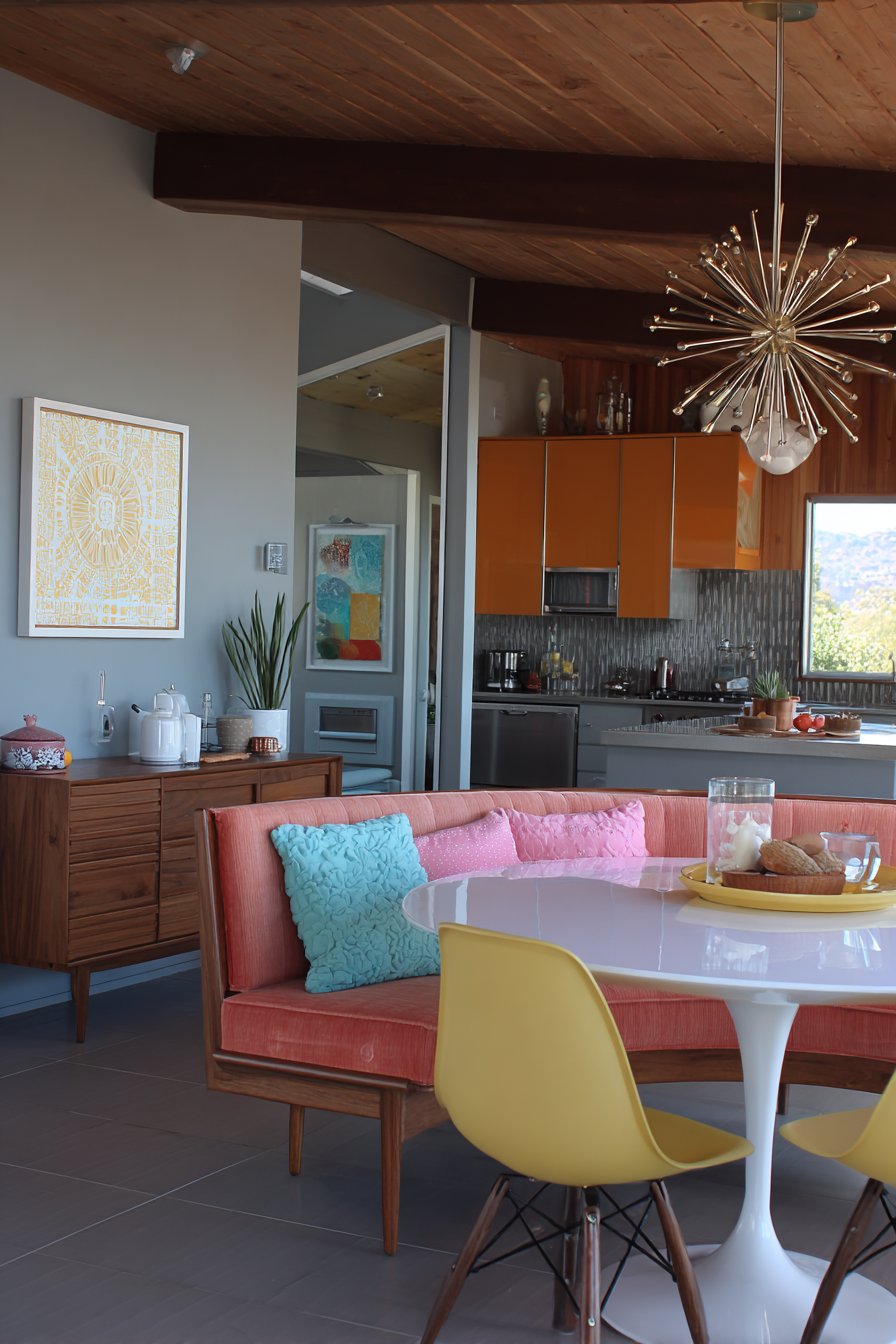
Mid-century modern design celebrates the optimistic, forward-looking aesthetic of the 1950s and 1960s through iconic furniture forms, bold colors, and integration of indoor and outdoor spaces. This kitchen nook showcases a teak credenza converted into banquette-style seating, demonstrating the style’s appreciation for quality hardwood construction and creative furniture adaptations. Custom orange velvet cushions with tapered wooden legs create seating that is simultaneously comfortable and visually striking, the vibrant color typical of mid-century palette preferences.
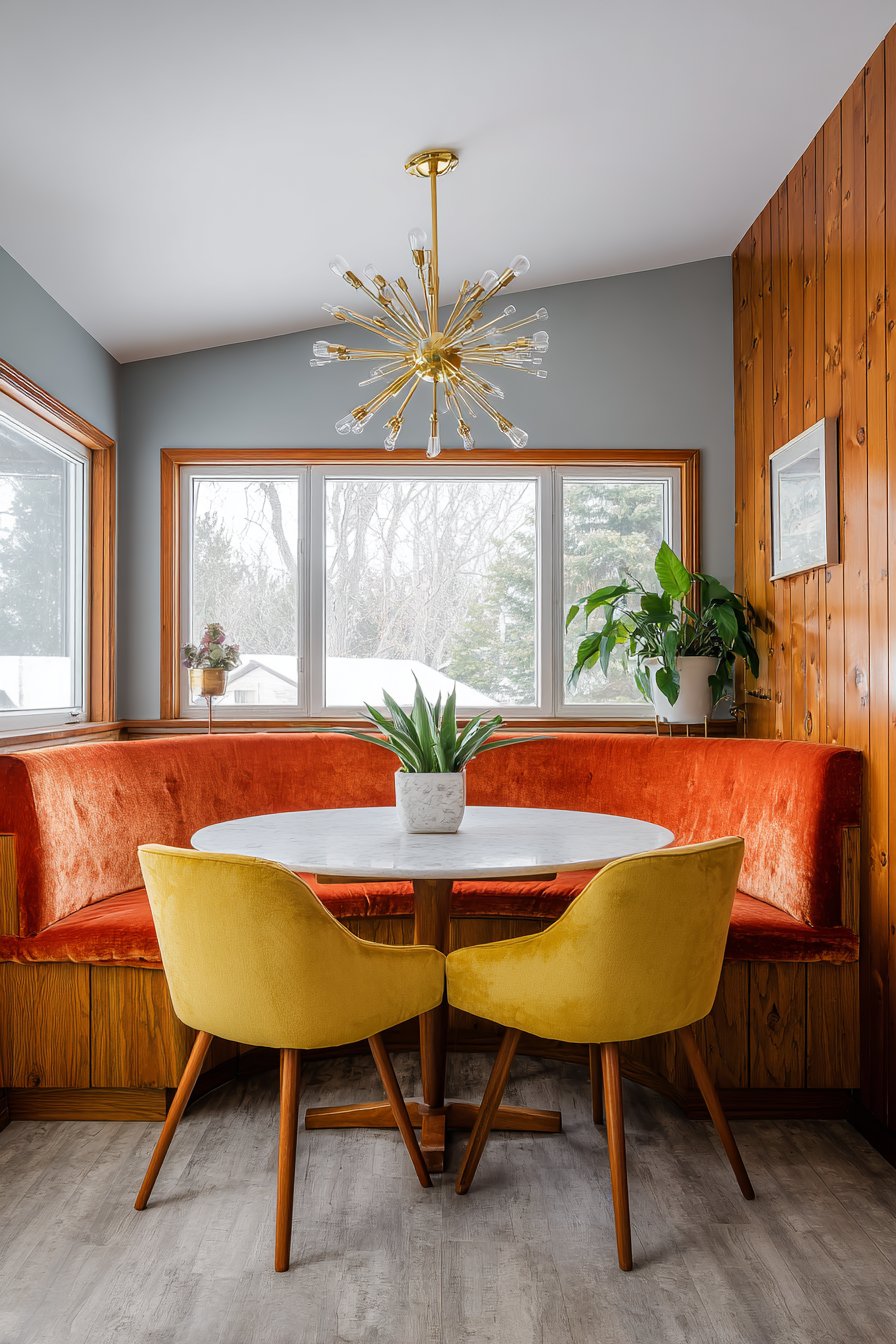
The round tulip-style table with white laminate top represents one of mid-century design’s most iconic furniture forms, its single pedestal base and sculptural silhouette exemplifying the era’s space-age influences and minimalist tendencies. Molded plastic chairs in mustard yellow continue the bold color story while showcasing the period’s enthusiasm for new manufacturing technologies and synthetic materials. The combination of organic teak, sleek laminate, and molded plastic demonstrates mid-century design’s material diversity and experimental spirit.
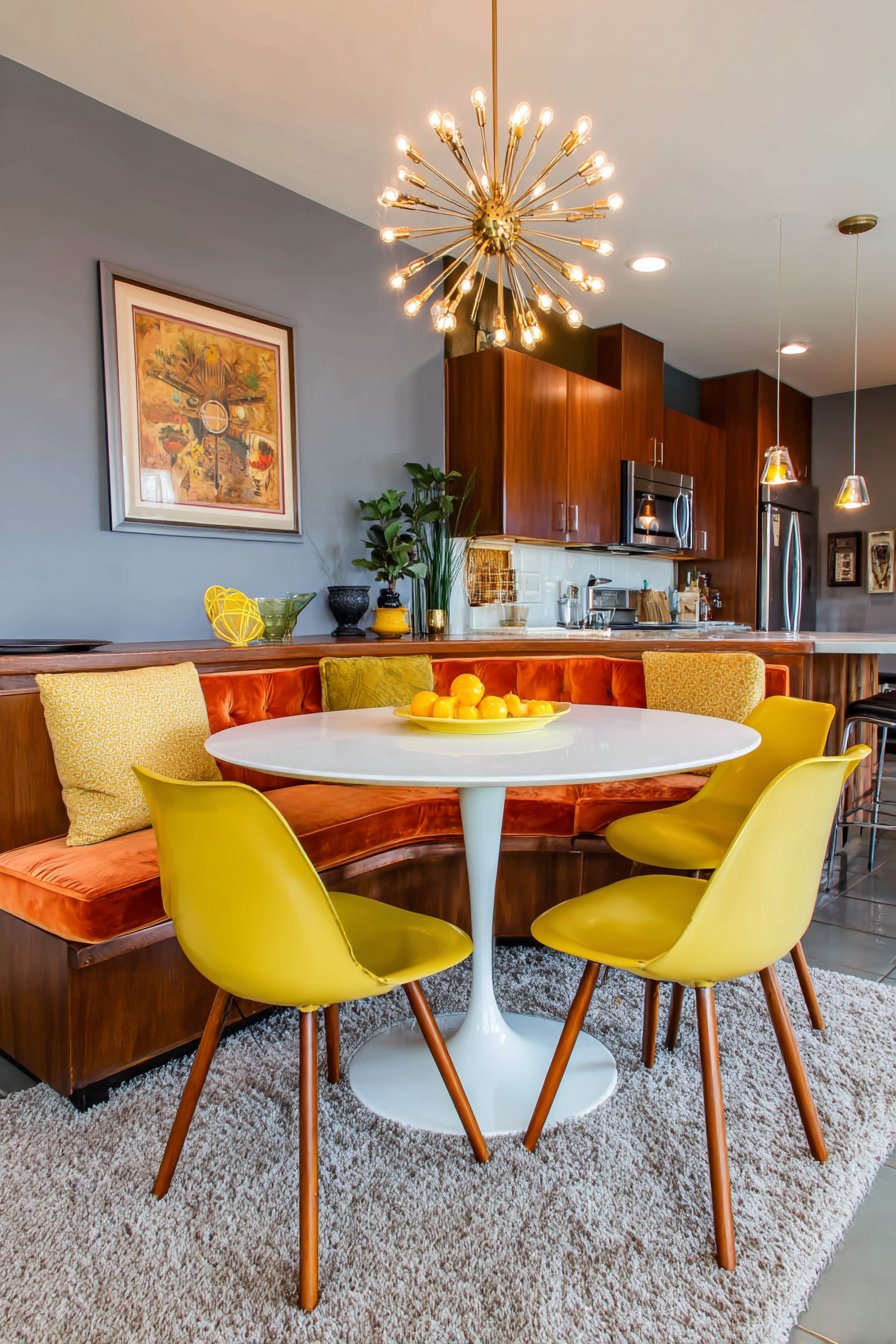
A Sputnik chandelier in brass finish suspended above serves as sculptural lighting element that references Cold War space race influences, its radiating arms creating dramatic visual statement. Grey walls with wood paneling accent provide neutral backdrop that allows furniture and lighting to command attention while maintaining the era’s preference for natural materials and warm wood tones. This design succeeds by incorporating authentic period pieces or quality reproductions rather than superficial retro styling.
Key Design Tips: Invest in iconic mid-century furniture designs or quality reproductions to ensure authentic aesthetic rather than cheap knockoffs. Embrace bold colors like orange, mustard, avocado, and burnt orange in upholstery and accessories. Incorporate teak, walnut, or rosewood furniture for authentic warm wood tones characteristic of the period. Choose sculptural lighting fixtures that serve as functional art pieces. Mix materials freely—wood, plastic, metal, glass—to reflect mid-century design’s experimental nature. Keep spaces relatively uncluttered with clean lines and minimal ornamentation to honor the style’s modernist roots.
12. Rugged Mountain Lodge Aesthetic
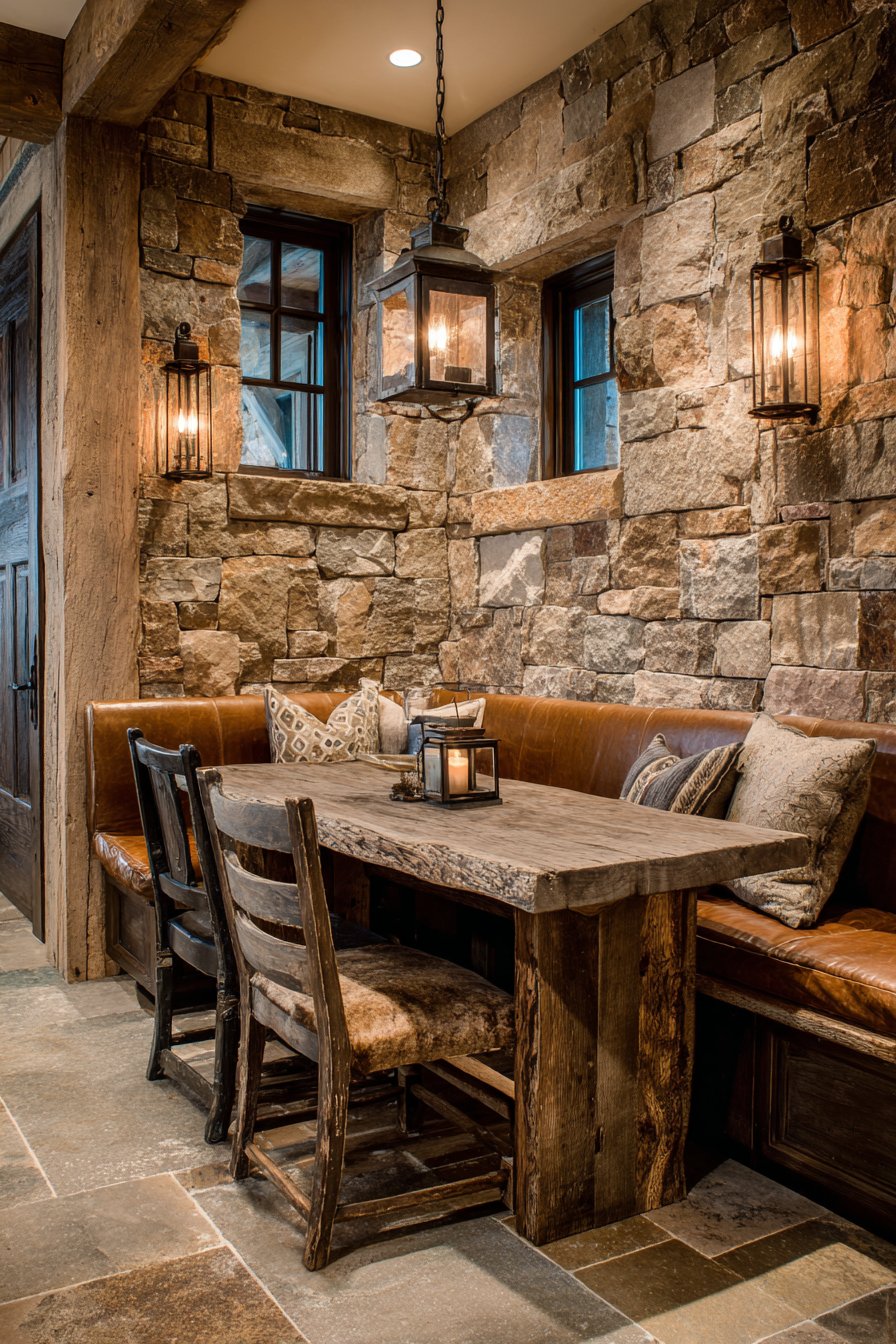
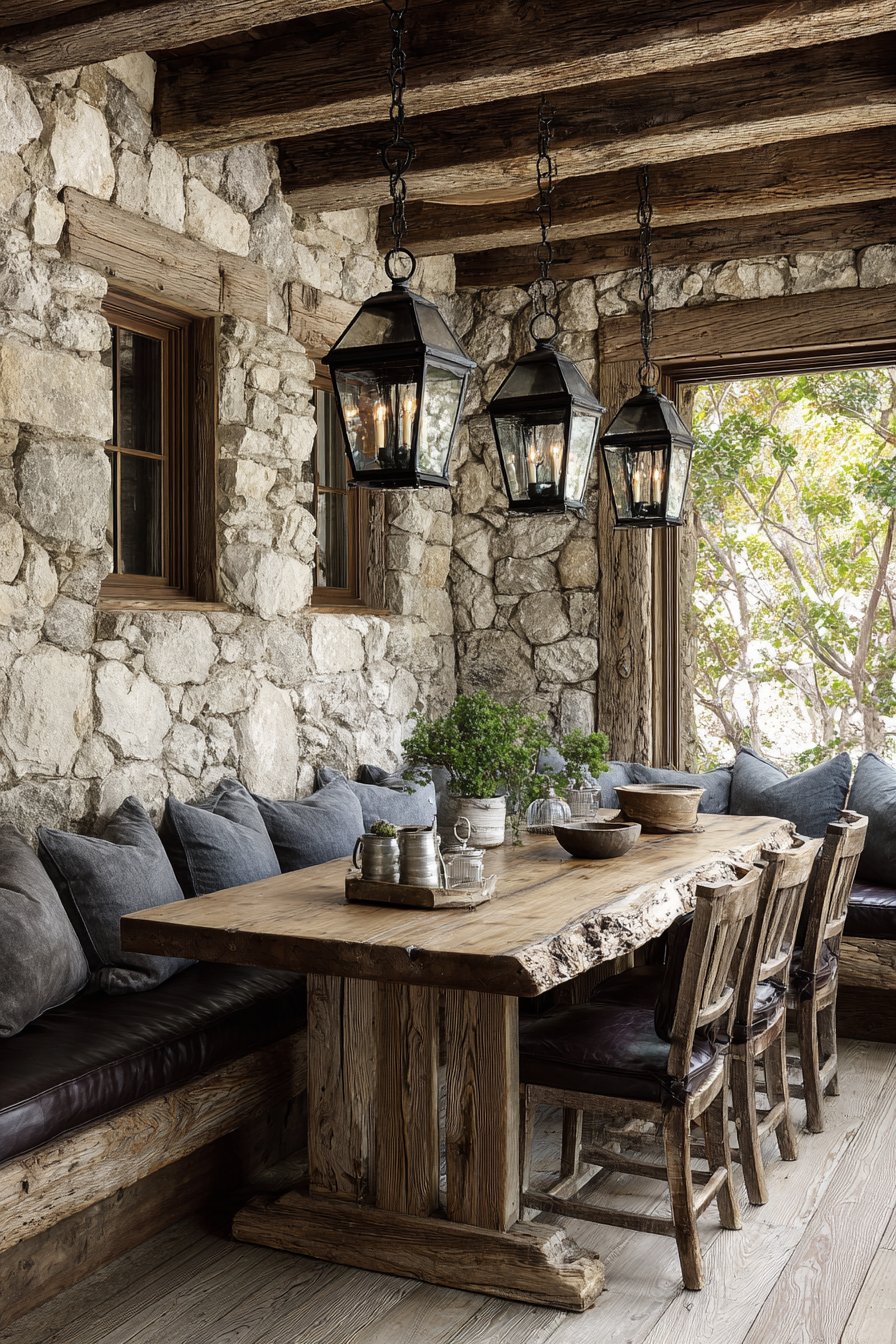
Rustic design embraces natural materials, handcrafted construction, and organic imperfection to create spaces that feel connected to nature and traditional craftsmanship. This kitchen nook features a reclaimed barn wood bench with natural edge detail that preserves the irregular contours created by tree growth, celebrating rather than hiding natural variation. Thick leather cushions showing authentic wear and patina add comfortable seating while their aged appearance suggests years of use and development of character over time.
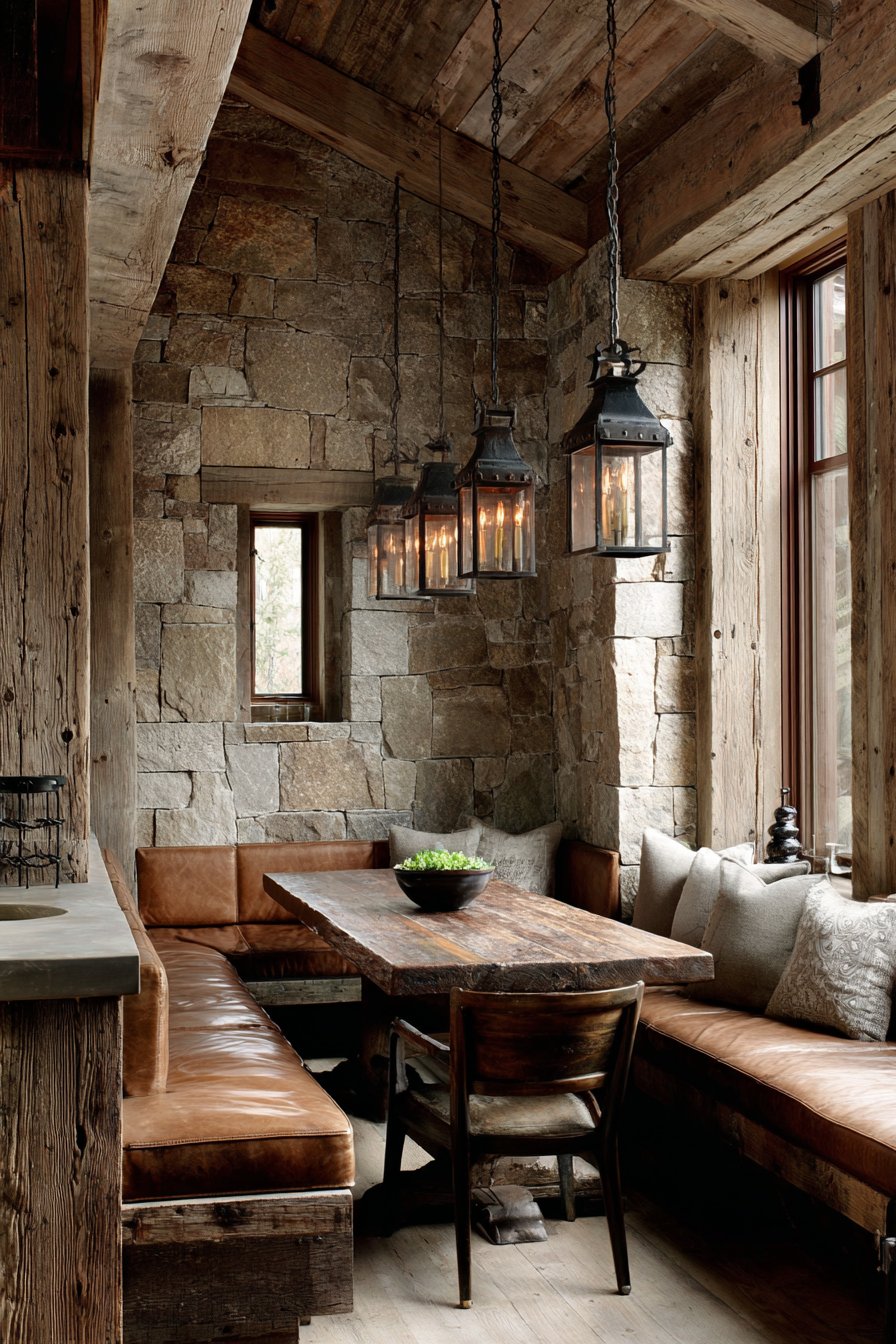
The heavy timber table with hand-hewn appearance serves as substantial centerpiece, its rough-sawn surface and massive construction evoking frontier structures built by hand with traditional tools. Mismatched antique chairs gathered around the table tell individual stories, their various origins and styles creating collected appearance that suggests accumulation over time rather than single purchasing decision. This approach to furniture selection creates personal spaces with depth and authenticity.
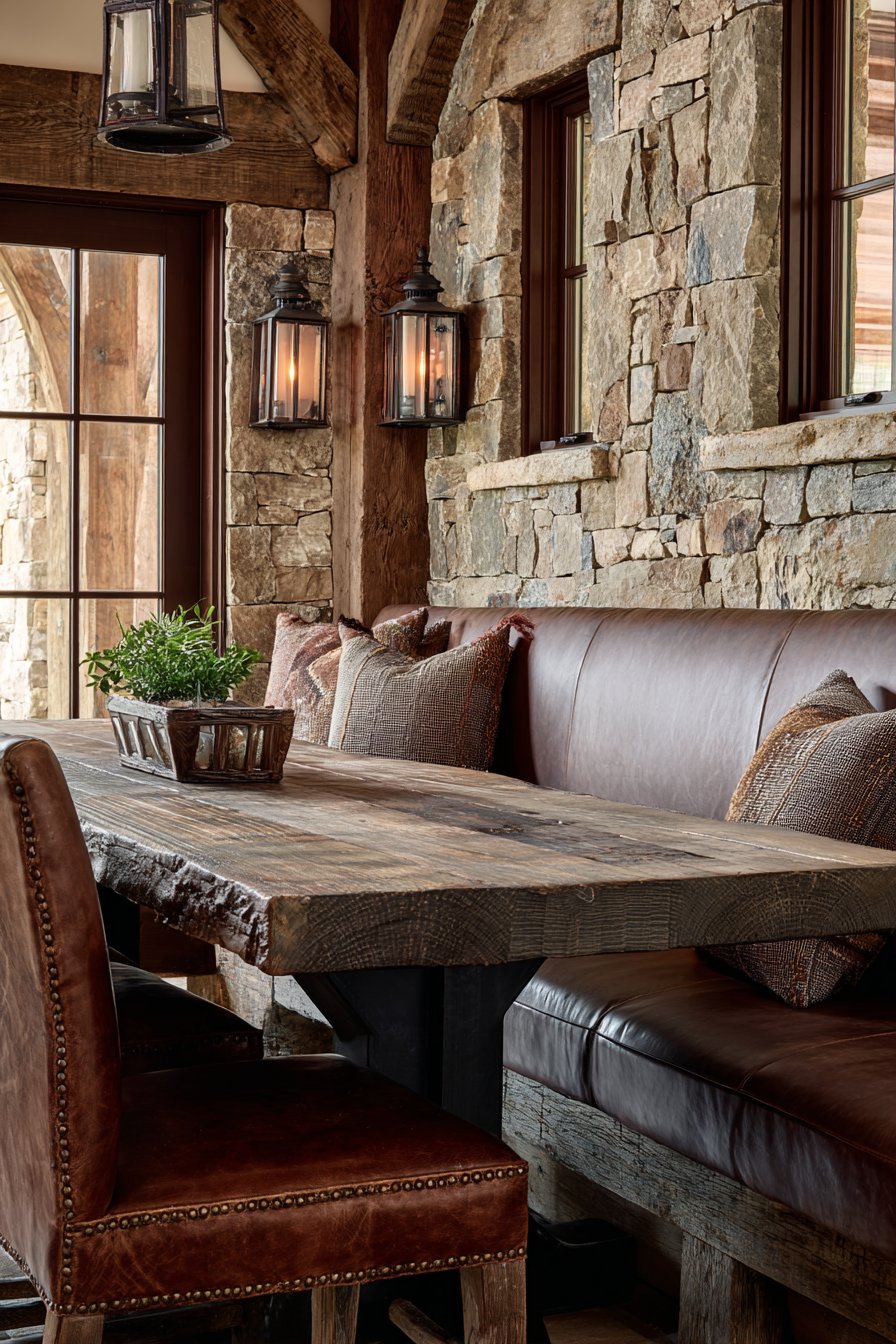
Wrought iron lantern-style pendant lights provide ambient illumination through glass panels, their hand-forged metal frames and traditional forms referencing historical lighting methods. Stone accent walls add dramatic textural interest through natural material variation, each stone’s unique color and shape contributing to overall pattern. Small windows with simple frames allow filtered daylight while maintaining the intimate, sheltered feeling appropriate for rustic mountain settings. This design demonstrates how embracing imperfection and natural materials creates warmth that perfect, manufactured elements cannot achieve.
Key Design Tips: Source reclaimed wood with natural edges, weathering, and authentic aging rather than artificially distressed new lumber. Choose thick leather that will develop patina and become more beautiful with age and use. Incorporate stone, whether natural fieldstone or river rock, for textural accent walls or fireplace surrounds. Select hand-forged iron hardware and lighting fixtures rather than mass-produced alternatives. Mix furniture pieces from various sources and periods to create collected, authentic appearance. Embrace visible joinery, rough textures, and natural imperfections as design features rather than flaws to hide.
13. Sleek Contemporary Minimalism
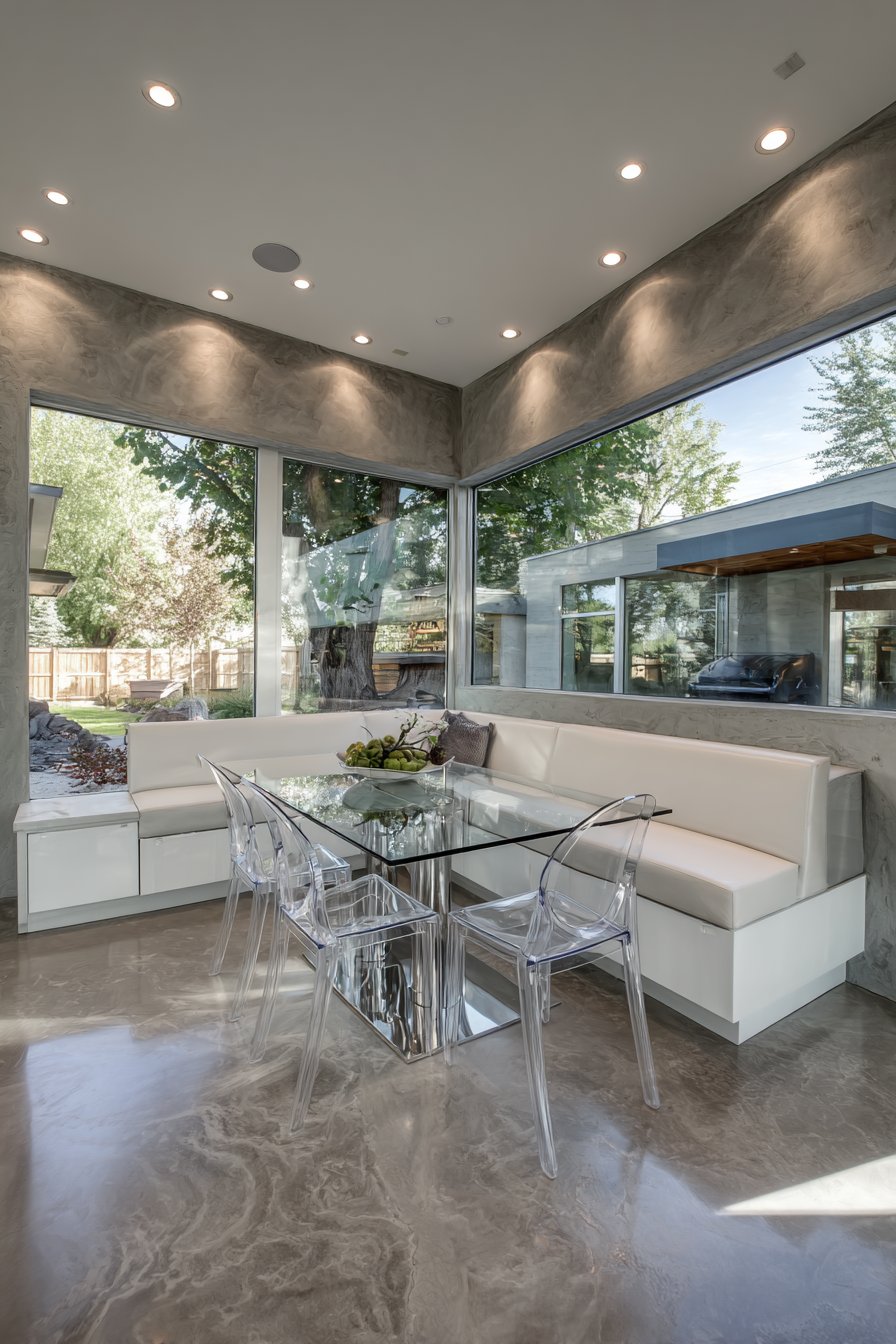
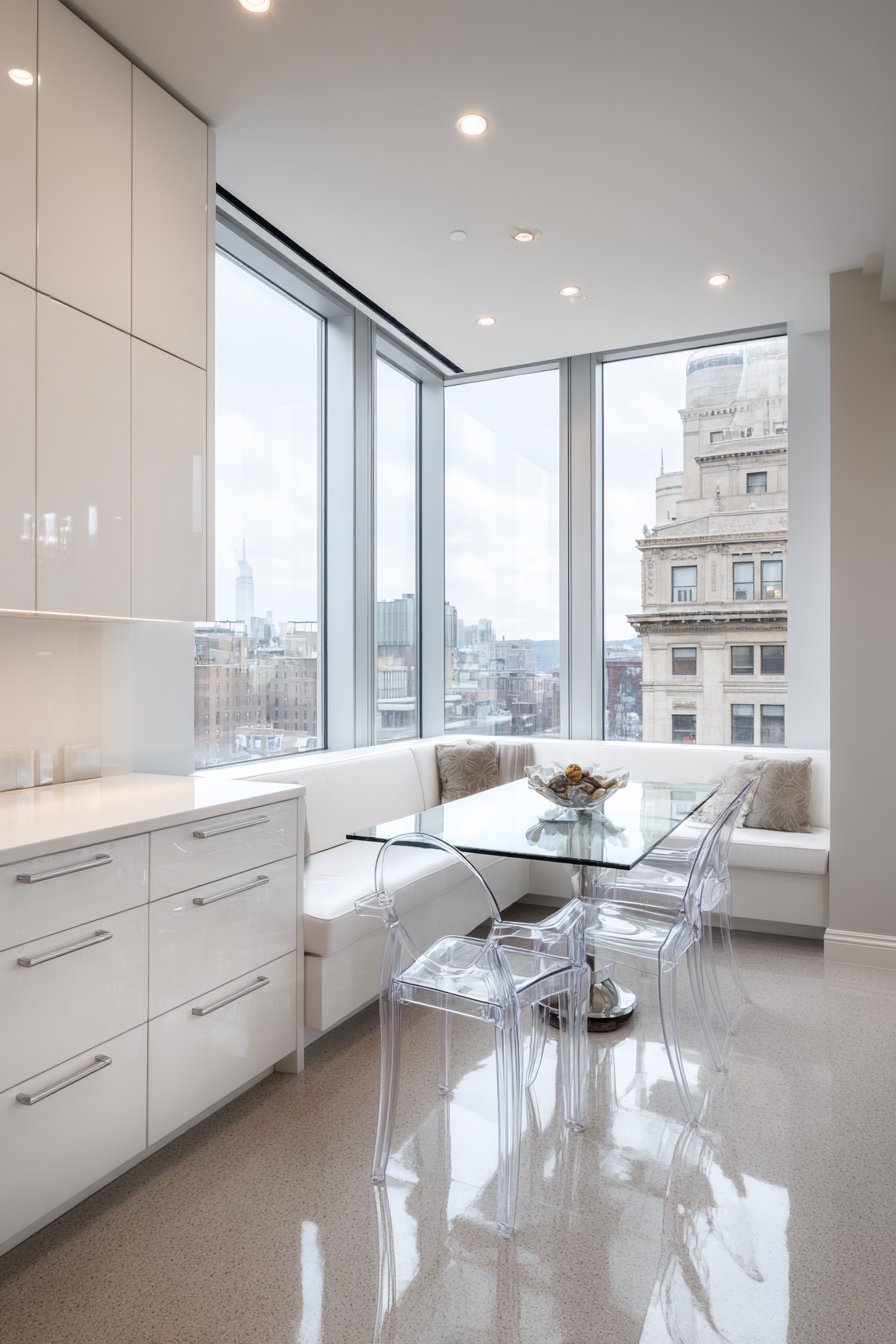
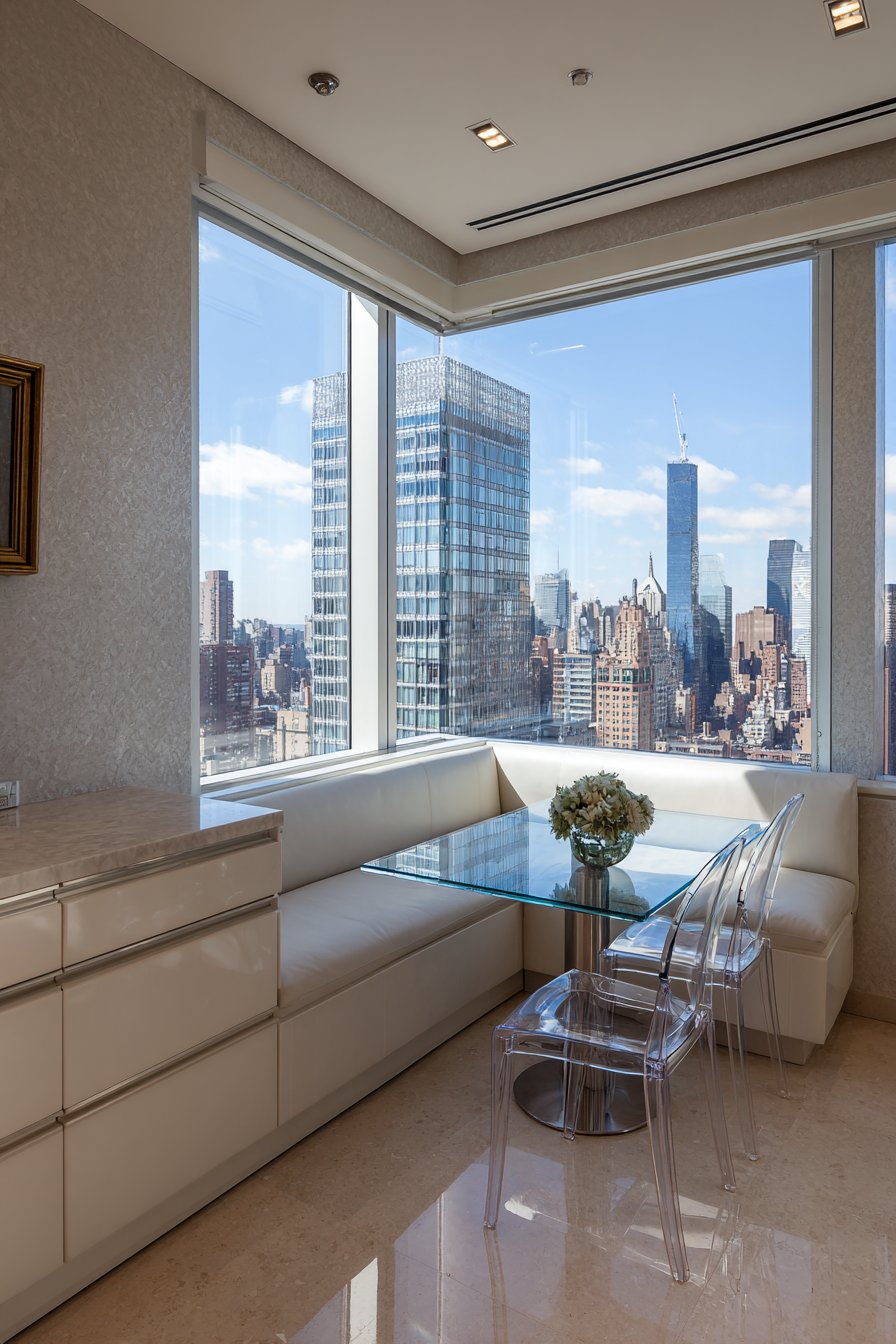
Contemporary design pushes minimalism to its logical conclusion, embracing clean lines, smooth surfaces, and architectural simplicity while eliminating traditional ornamentation. This kitchen nook features a floating L-shaped bench in high-gloss white lacquer, its minimal hardware and hidden storage access demonstrating contemporary design’s preference for seamless surfaces and concealed functionality. The bench appears to float on the wall, creating visual lightness and facilitating floor cleaning while making bold architectural statement.
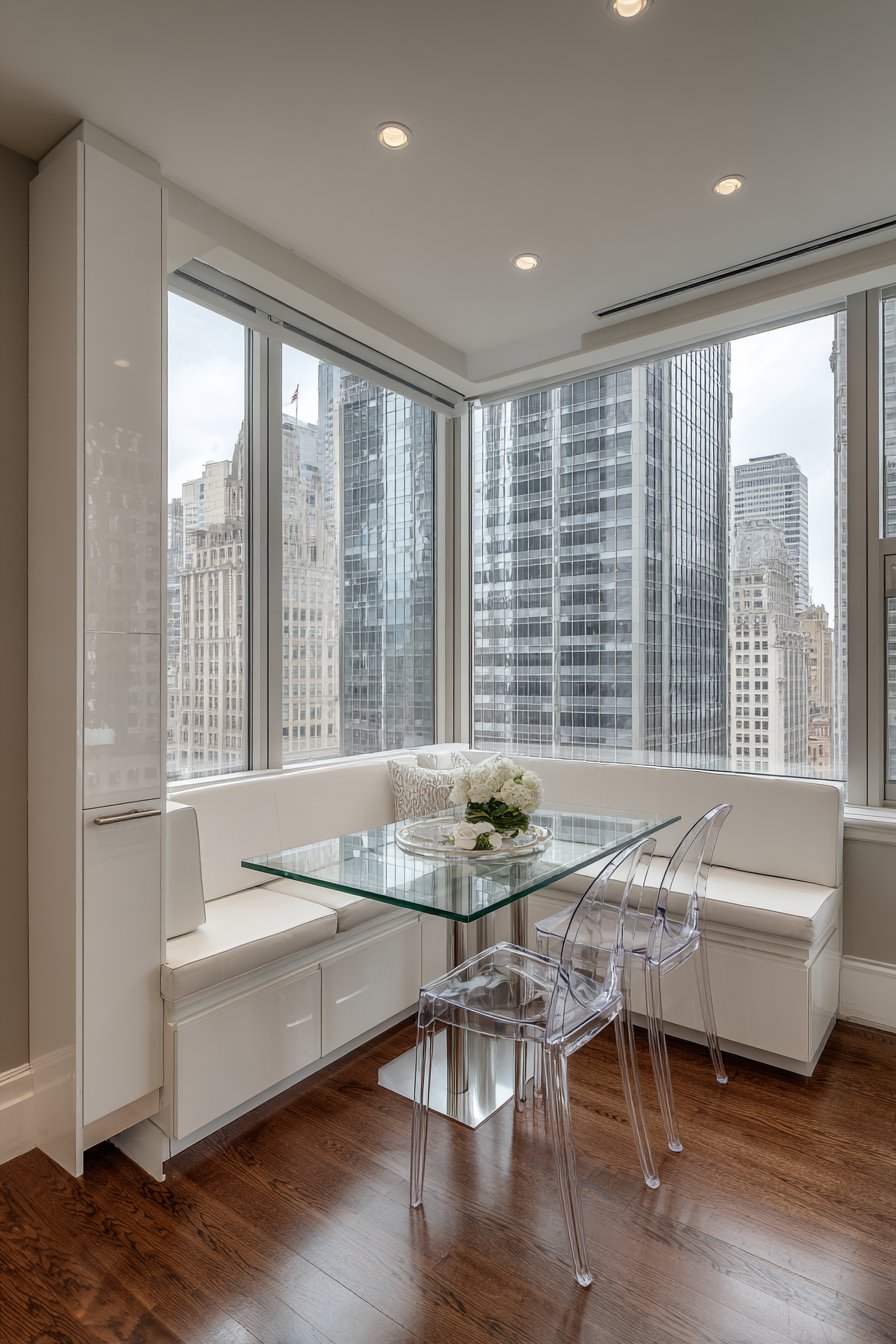
The glass-topped table with chrome pedestal base maintains the sleek aesthetic through transparency and reflective surfaces that maximize light and create spacious feeling. Clear acrylic ghost chairs continue the transparent theme while providing necessary seating without visual weight or obstruction—their presence barely registers despite functional necessity. This careful attention to visual lightness prevents the space from feeling cluttered or heavy despite necessary furniture.
Recessed LED lighting creates clean, even illumination without visible fixtures interrupting ceiling planes, while floor-to-ceiling windows provide dramatic natural light and views that connect interior to exterior. Smooth grey plaster walls with no trim or molding demonstrate contemporary design’s rejection of traditional architectural details in favor of pure, uninterrupted surfaces. This design requires flawless execution and quality materials—any imperfection becomes glaring in such minimal contexts.
Key Design Tips: Invest in flawless surface finishes like high-gloss lacquer that require professional application for smooth, perfect results. Embrace transparency through glass, acrylic, and clear materials to maintain visual openness. Eliminate visible hardware whenever possible through push-open mechanisms and hidden hinges. Choose recessed or track lighting rather than decorative fixtures to maintain clean ceiling planes. Select furniture with minimal legs or floating construction to emphasize floor space and create airy feeling. Maintain rigorous organization and decluttering since contemporary design offers nowhere to hide mess or accumulation.
14. Romantic French Country Elegance
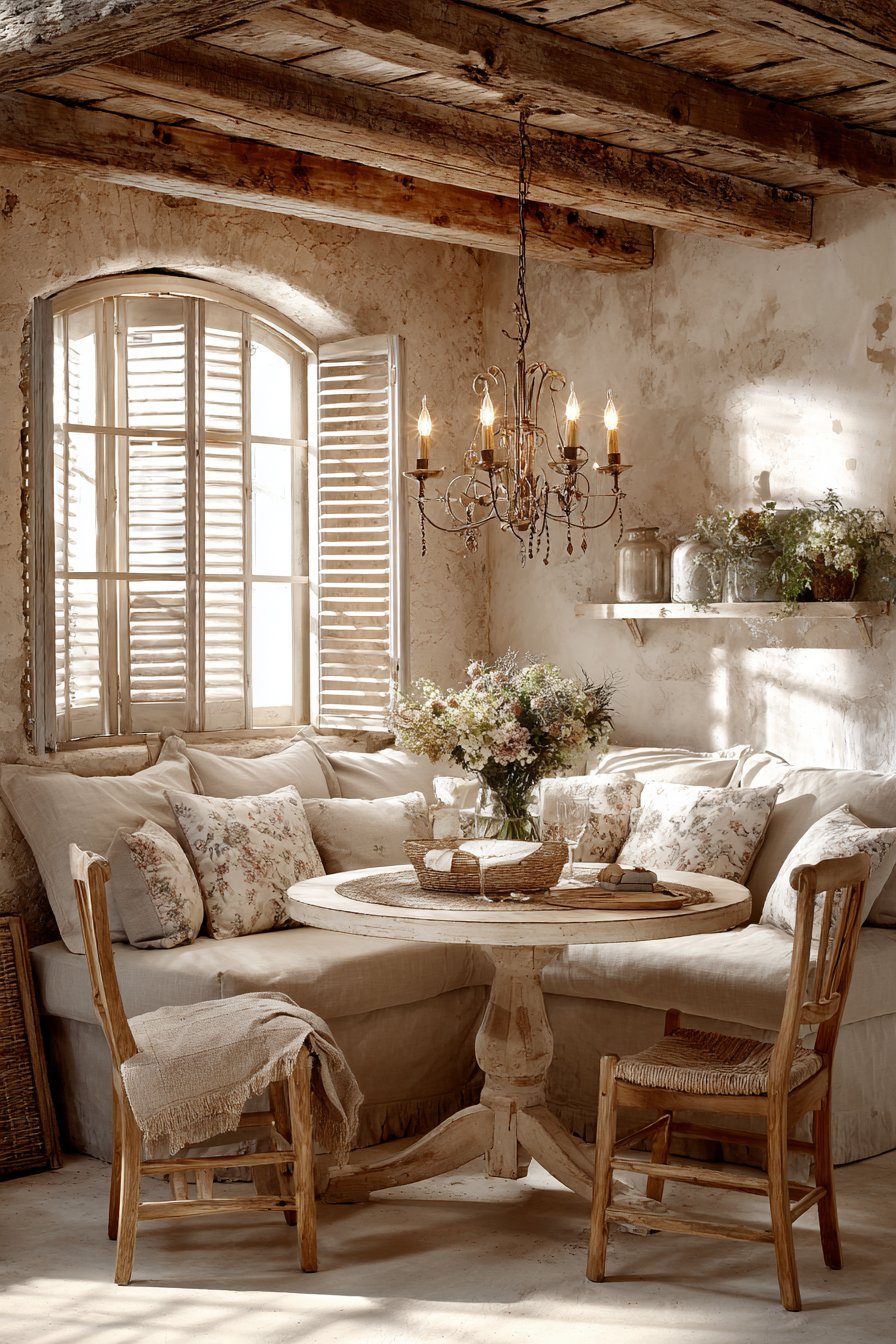
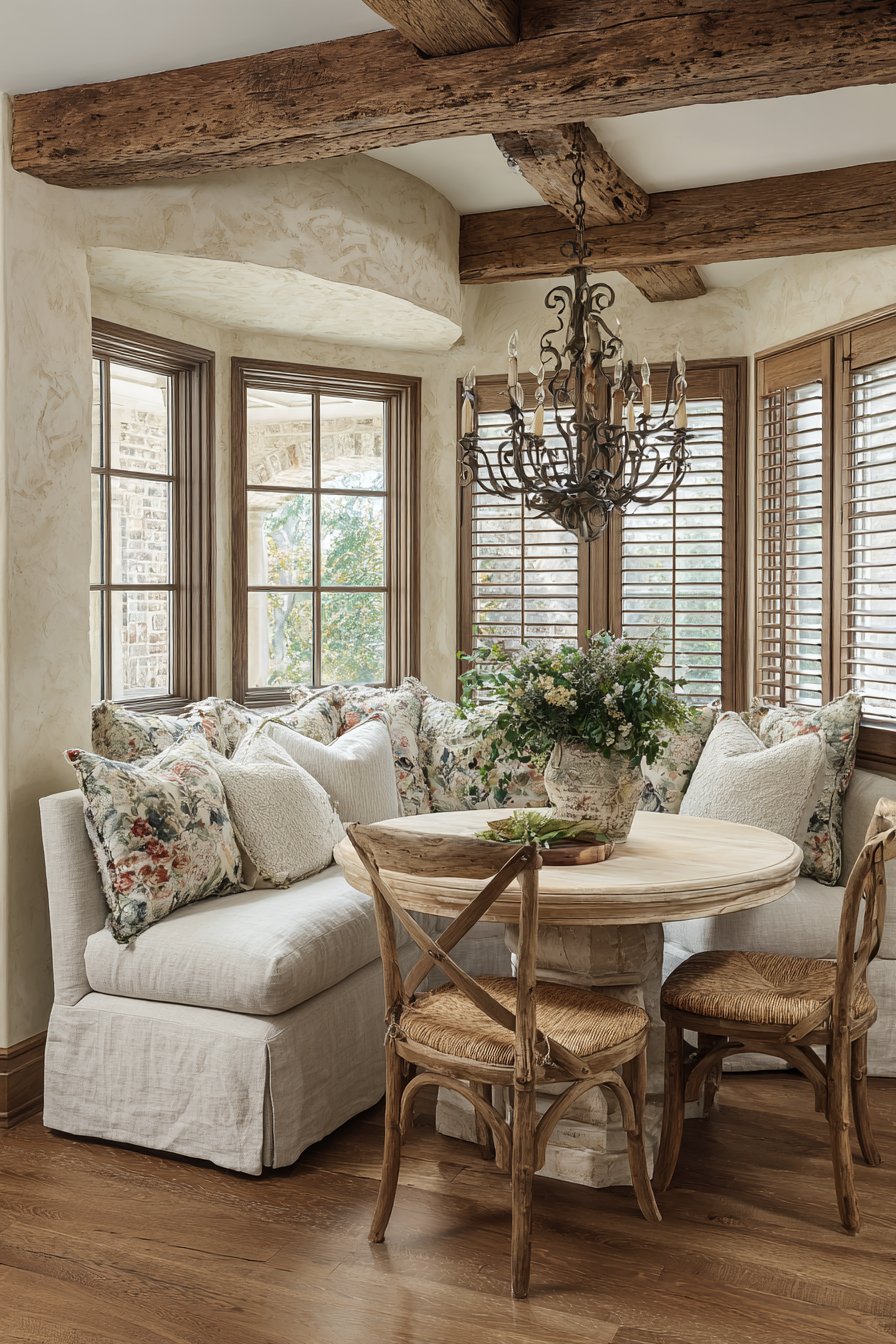
French country design combines rural European traditions with refined elegance, creating spaces that feel both comfortable and sophisticated through aged materials, soft colors, and collected antiques. This kitchen nook features a curved settee with natural oatmeal linen slipcover, its relaxed draping and neutral tone creating casual elegance characteristic of French provincial interiors. Vintage-inspired floral pillows introduce pattern and color through faded tones that suggest sunlight and age rather than bright, fresh prints.
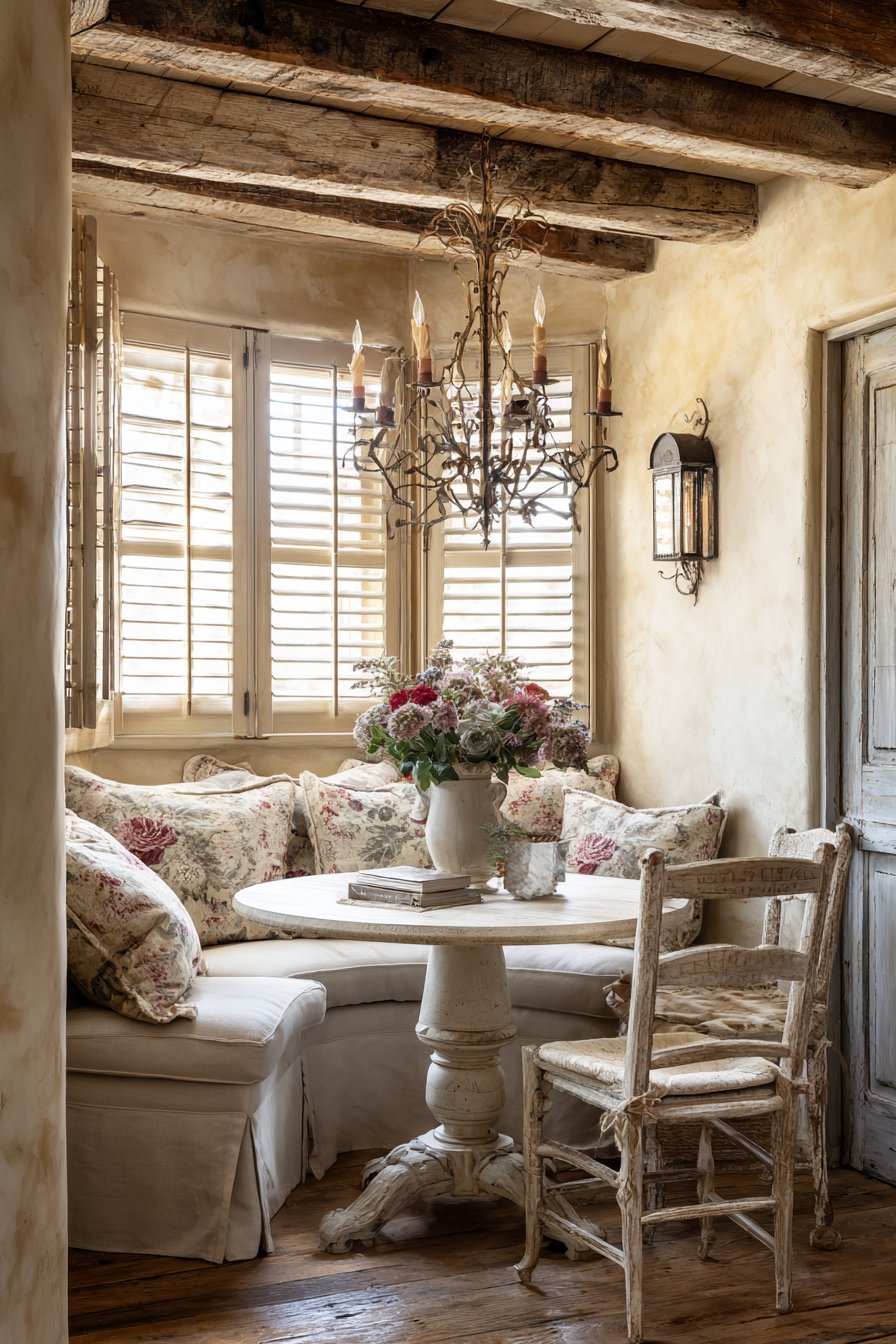
The round pedestal table in distressed cream paint demonstrates French country’s appreciation for painted furniture with authentic aging rather than pristine perfection. Deliberate distressing at edges and high-wear areas suggests generations of family use, creating instant history and character. Rush-seated ladderback chairs continue the rural references through traditional construction methods and natural materials, their simple forms and handcrafted quality exemplifying French country’s honest, unpretentious aesthetic.
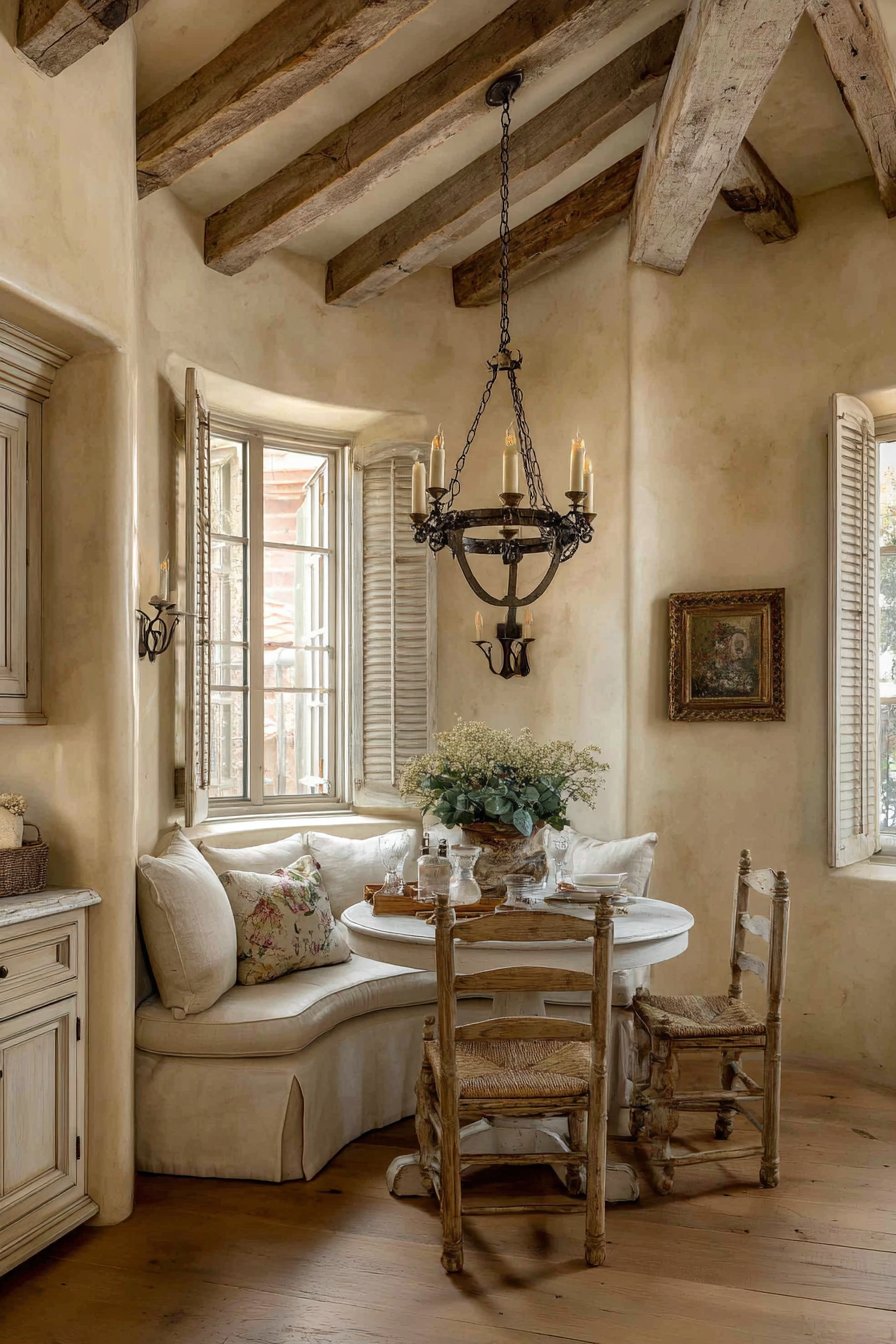
A vintage chandelier with candle-style bulbs provides soft overhead lighting through historical fixture design, its aged finish and graceful arms adding romantic ambiance. Rough plaster texture on walls painted pale yellow creates Old World character, while exposed wooden beams overhead reference historical construction methods. Shuttered windows filter morning light while providing privacy control through traditional European window treatments. This design succeeds by layering authentic or authentically aged elements rather than relying on reproduction pieces with artificial distressing.
Key Design Tips: Choose natural linen, cotton, and other breathable fabrics in soft, sun-faded colors rather than bright, saturated tones. Distress painted furniture authentically by concentrating wear at edges, corners, and high-touch areas where natural aging occurs. Incorporate antique or vintage pieces found through estate sales, antique shops, and flea markets for genuine patina. Add rustic elements like exposed beams, plaster walls, and stone floors to create Old World architectural character. Select chandeliers and sconces with candelabra-style arms and aged finishes rather than shiny new fixtures. Layer subtle floral patterns through textiles while maintaining soft, muted color palette reminiscent of Provence landscapes.
15. Opulent Maximalist Drama
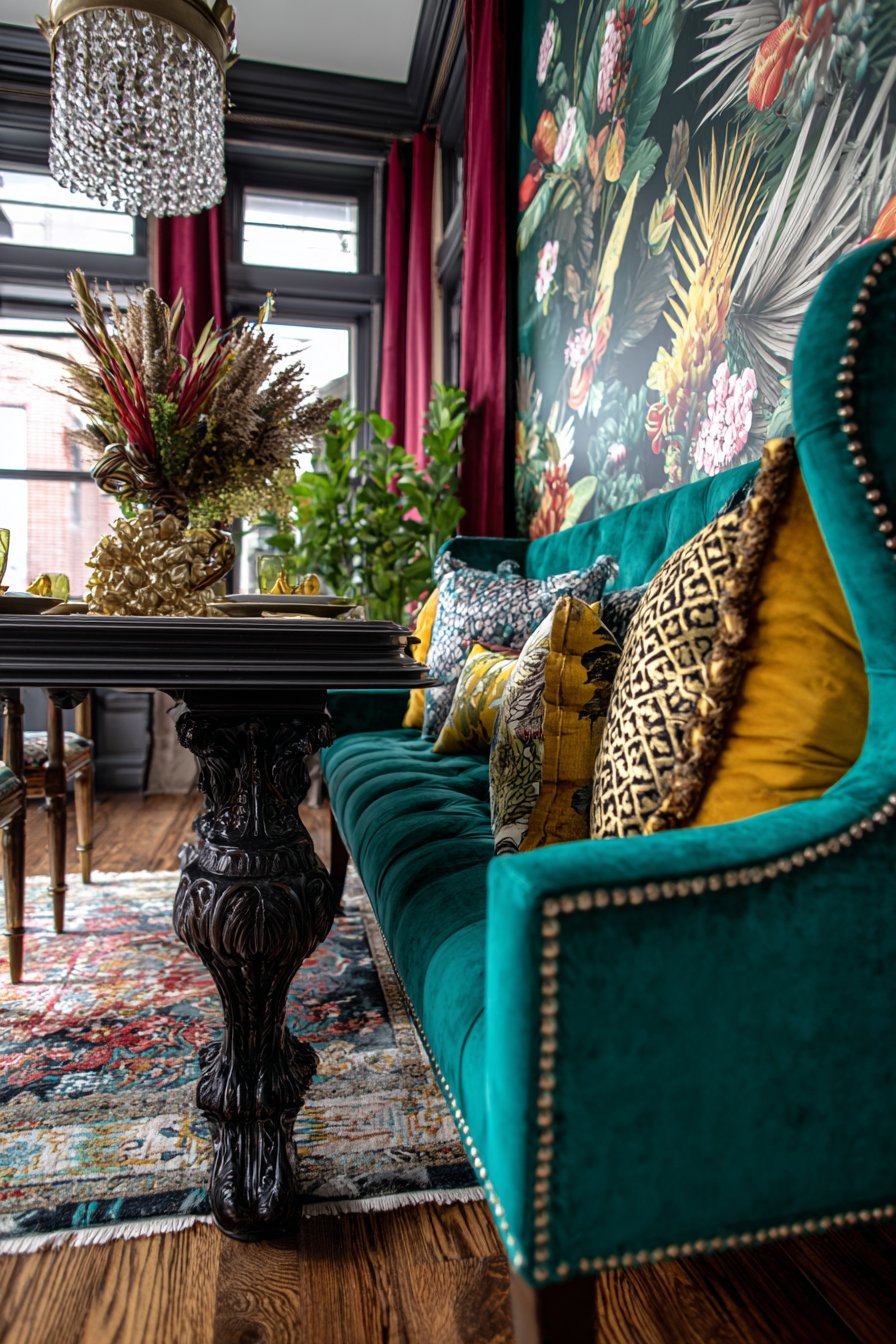
Maximalist design celebrates abundance, rich color, luxurious materials, and layered decoration, rejecting minimalism’s restraint in favor of curated excess. This kitchen nook showcases a richly upholstered banquette in deep emerald velvet, its jewel-toned richness creating immediate visual impact amplified by brass nailhead trim that catches and reflects light. Layers of patterned throw pillows in various textures—silk, velvet, embroidered linen—create tactile feast and demonstrate maximalist design’s appreciation for textile variety.
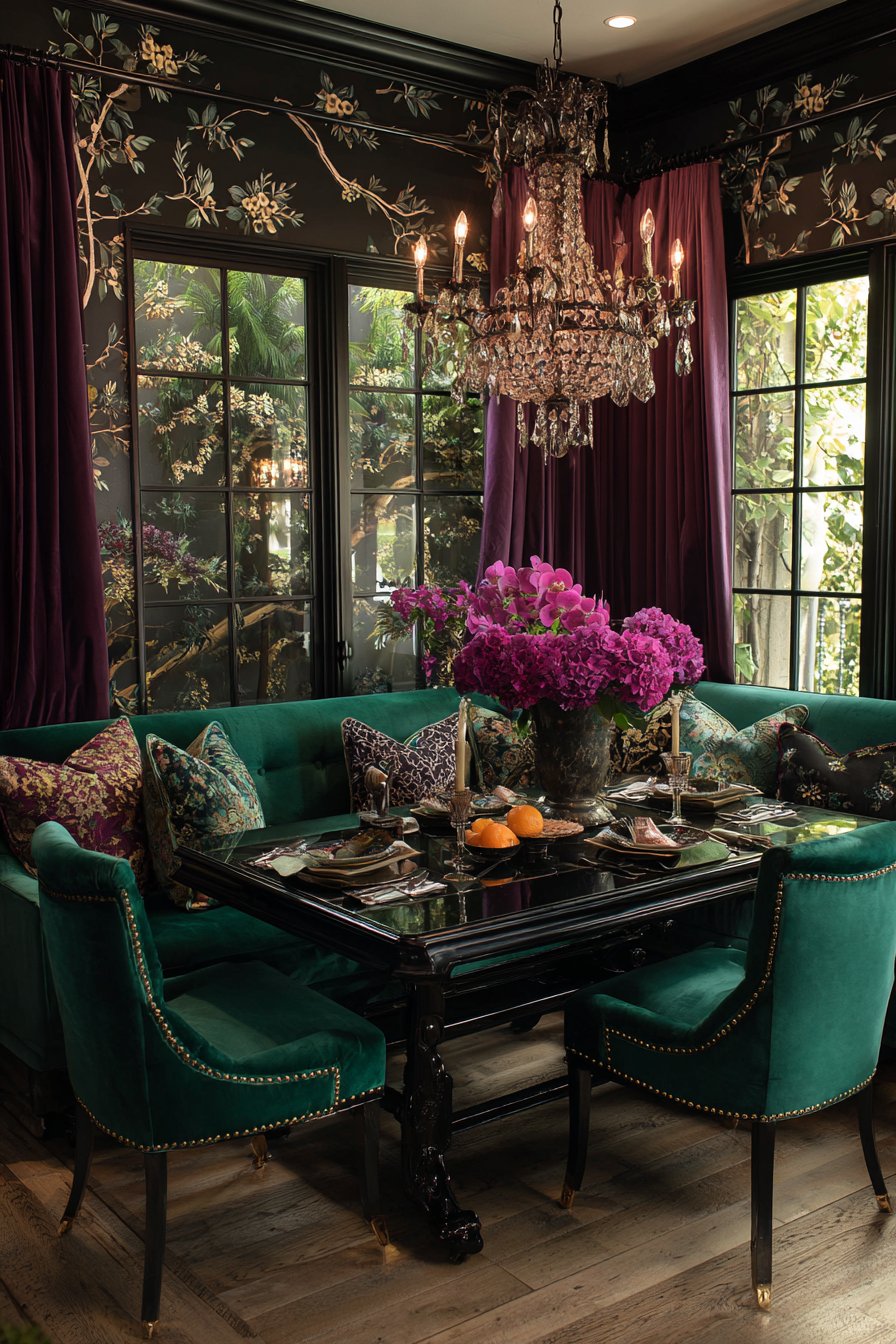
The black lacquer table with ornate carved legs provides formal, dramatic centerpiece through high-gloss finish and decorative details. Upholstered dining chairs in jewel-toned brocade fabric continue the rich material story, their elaborate patterns and sumptuous textures contributing to the overall sense of luxury and abundance. A dramatic crystal chandelier suspended overhead serves as sparkling focal point, its multiple tiers and faceted drops creating prismatic light effects and undeniable glamour.
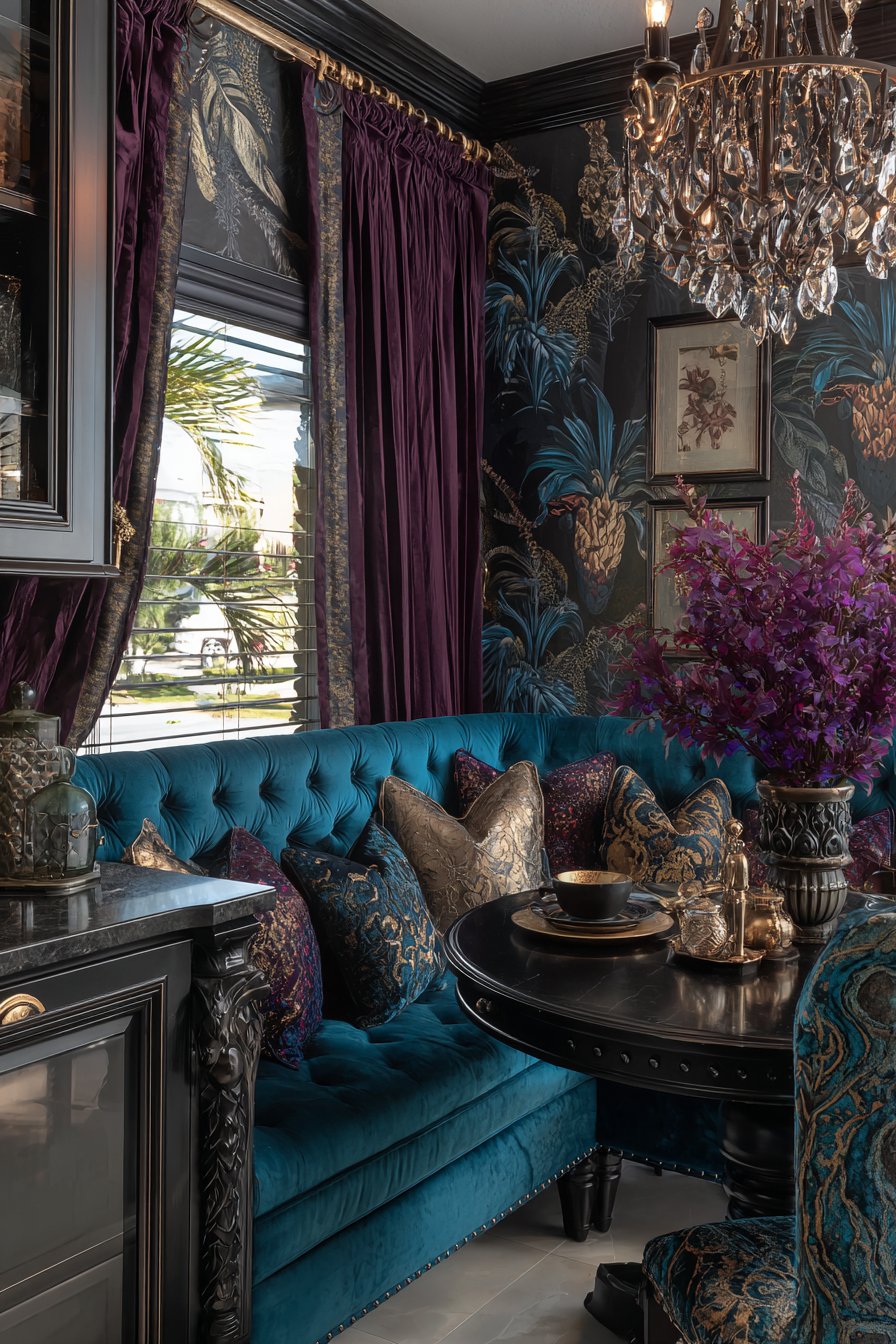
Bold botanical wallpaper with metallic accents covers the walls, introducing large-scale pattern and additional color saturation. Velvet curtains in burgundy frame the windows with theatrical richness, their heavy weight and deep color adding drama and luxury. This design proves that more truly can be more when executed with intention and sophisticated color coordination—the key lies in quality materials and thoughtful curation rather than random accumulation.
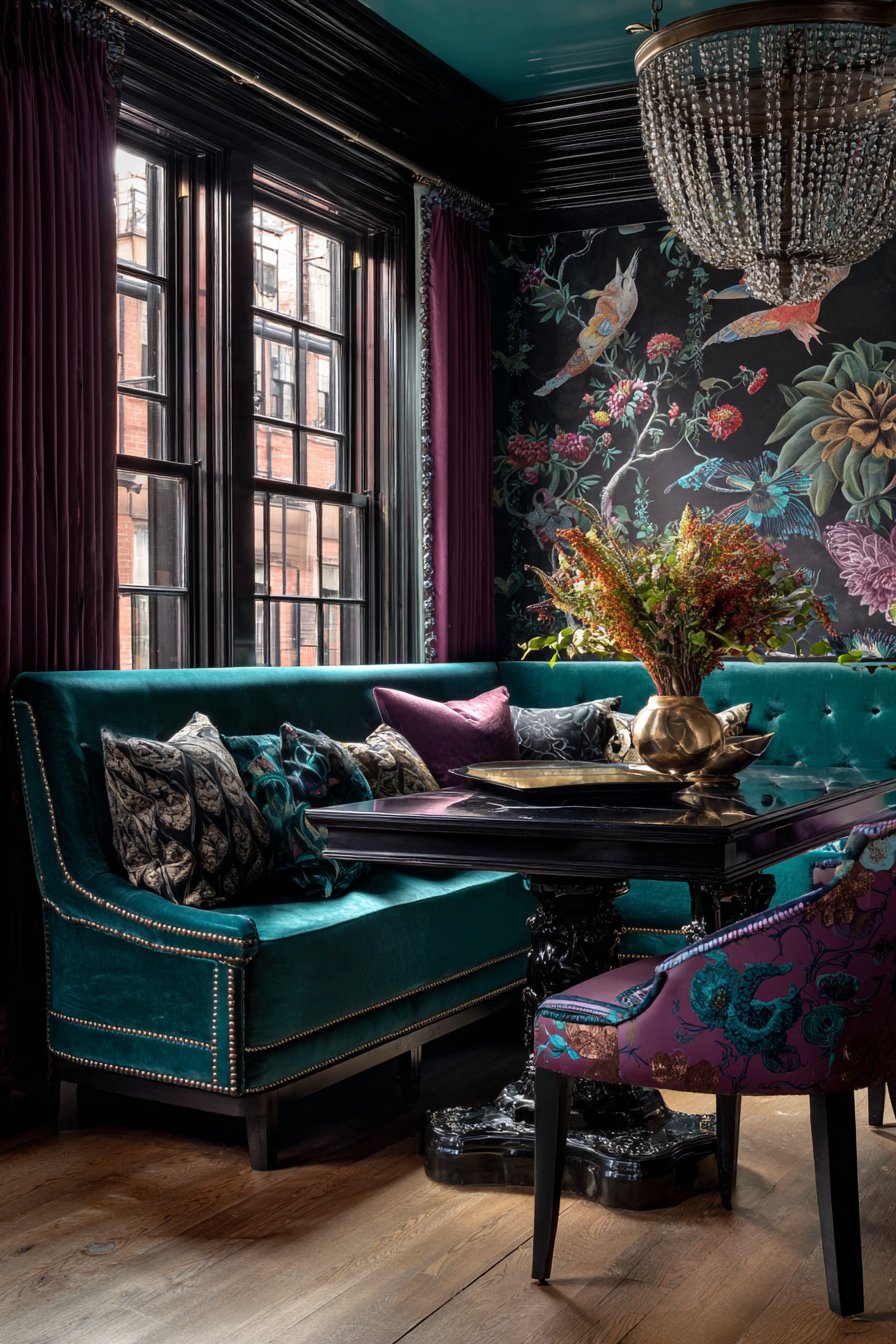
Key Design Tips: Embrace saturated jewel tones like emerald, sapphire, ruby, and amethyst for richness and depth. Layer multiple patterns through wallpaper, upholstery, and textiles while maintaining color coordination for cohesion. Invest in luxurious materials including velvet, silk, leather, and metallic finishes to create tactile richness. Add crystal or glass chandeliers for sparkle and glamour that amplifies ambient lighting. Include ornate carved details on furniture for visual interest and traditional craftsmanship. Balance abundant decoration with quality—fewer excellent pieces create more successful maximalist spaces than numerous mediocre items.
16. Serene Japanese-Inspired Zen
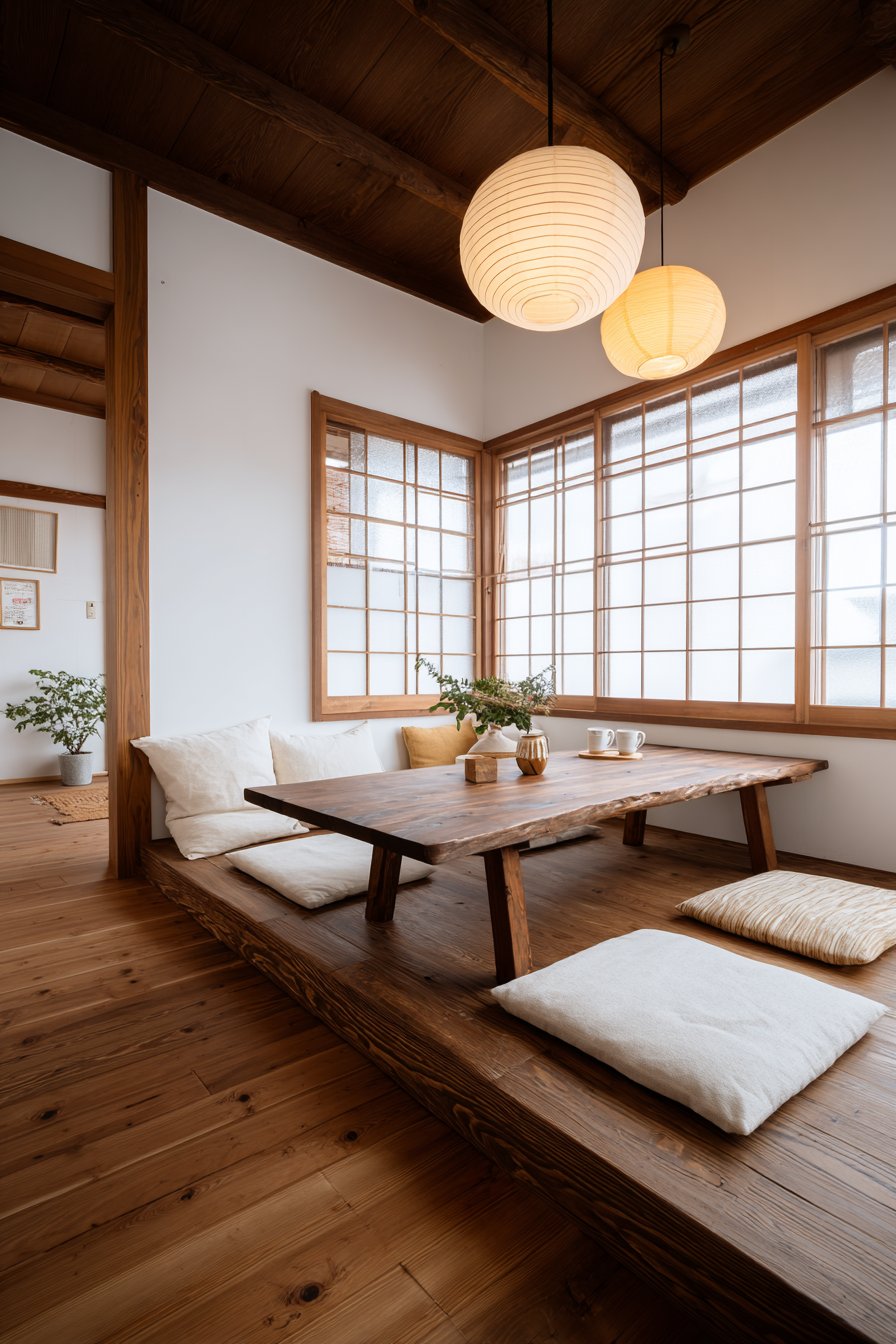
Japanese design philosophy emphasizes simplicity, natural materials, and spiritual tranquility through carefully edited spaces that honor tradition and mindfulness. This kitchen nook features a low platform bench with simple cushions in natural linen, positioned atop tatami-style matting that references traditional Japanese flooring. The low profile encourages relaxed posture and contemplative mindset while connecting occupants more directly to earth energy according to Eastern design principles.
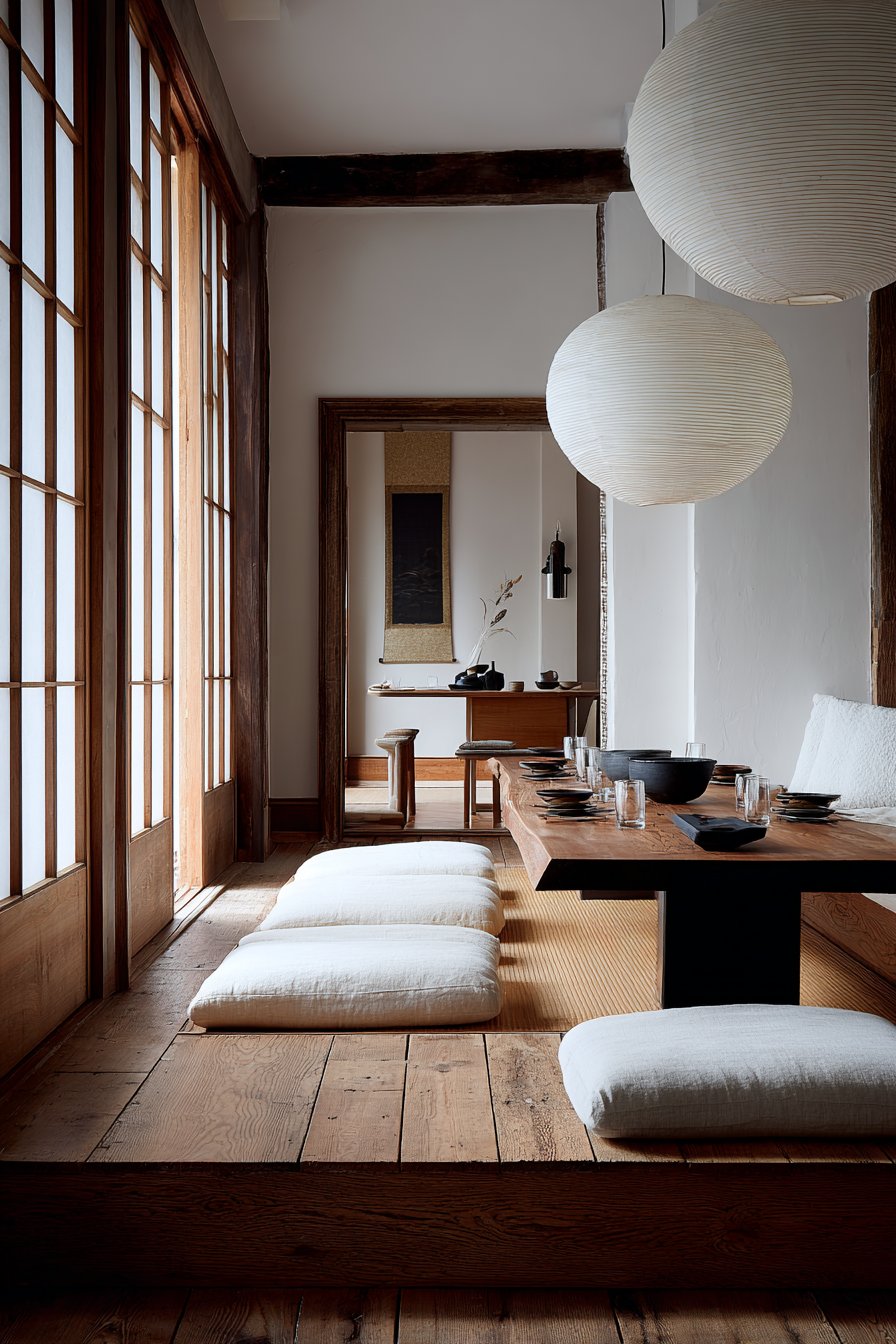
A low wooden table in dark walnut with clean lines serves as the dining surface, its minimal form and quality construction allowing natural wood beauty to speak without decorative distraction. Floor cushions provide additional flexible seating options that can be easily stored when not needed, maintaining the uncluttered aesthetic essential to Japanese design. Paper lantern pendants cast soft, diffused lighting through translucent materials, creating ambient glow without harsh shadows or glare.
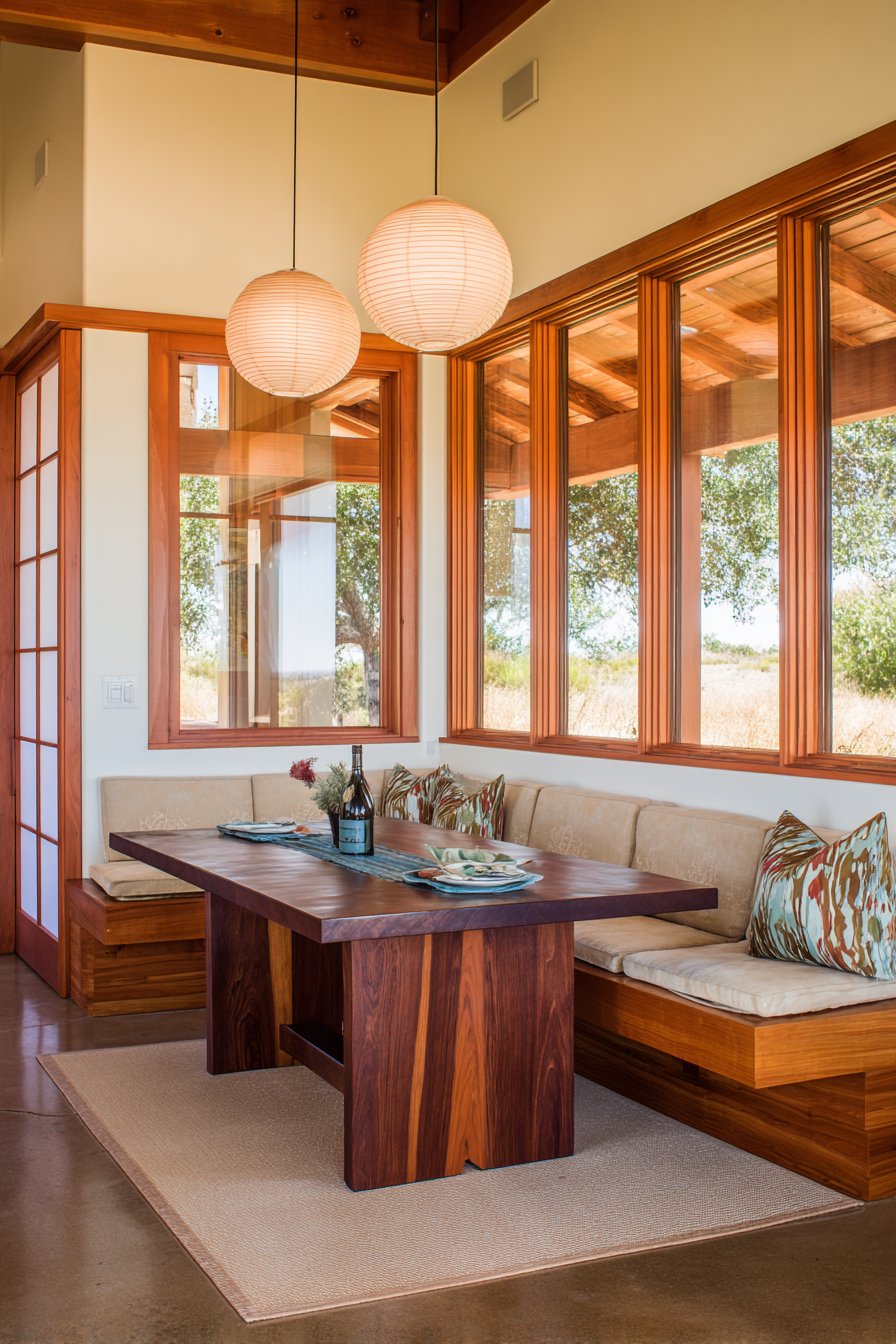
Sliding shoji screen panels filter natural light through rice paper, creating luminous quality unique to Japanese architecture while providing privacy and spatial division. Smooth plaster walls painted warm white provide serene backdrop free from visual noise, while minimal decoration—perhaps a single ikebana arrangement or carefully placed ceramic piece—demonstrates wabi-sabi appreciation for imperfection and transient beauty. This design requires discipline and restraint, removing rather than adding until only essential elements remain.
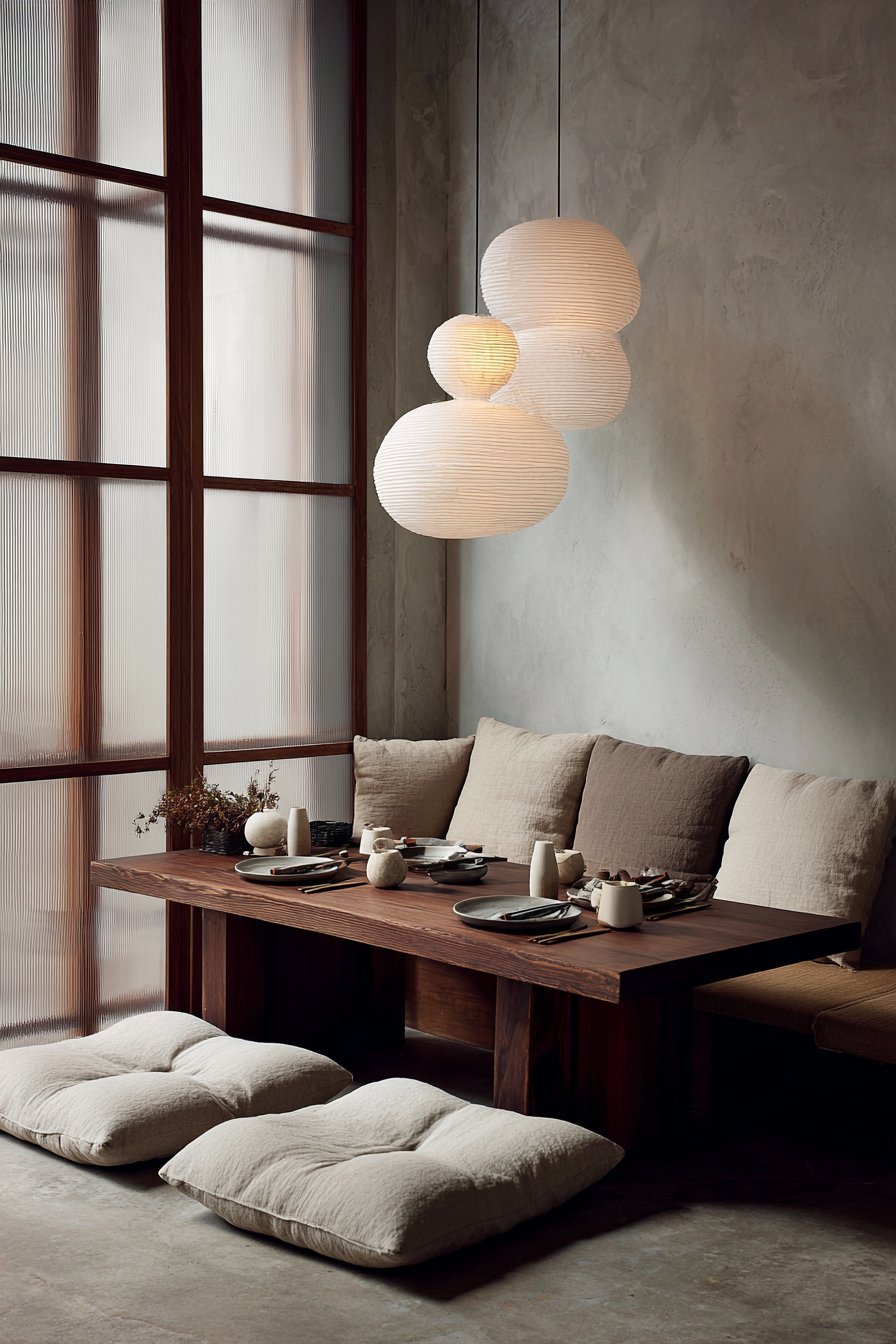
Key Design Tips: Embrace low furniture that encourages floor-level living and contemplative posture. Choose natural materials like wood, paper, bamboo, and linen in their unfinished or minimally processed states. Maintain neutral color palettes centered on warm whites, natural woods, and soft greys. Incorporate sliding screens or panels for flexible space division and light filtration. Add minimal decoration focusing on single, carefully chosen pieces rather than collections. Create spaces for quiet contemplation through uncluttered surfaces and simplified forms that calm the mind.
17. Vibrant Eclectic Creativity
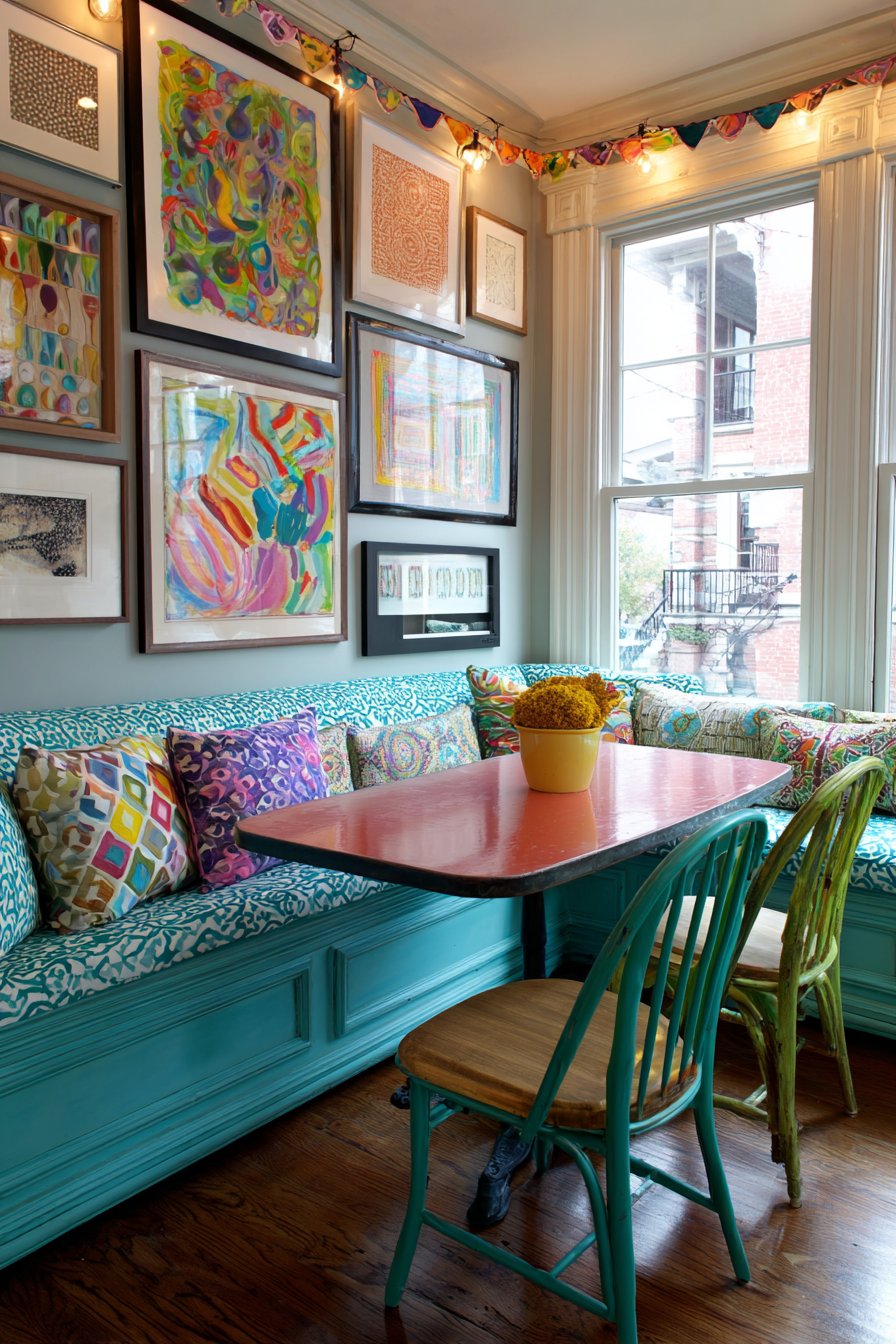
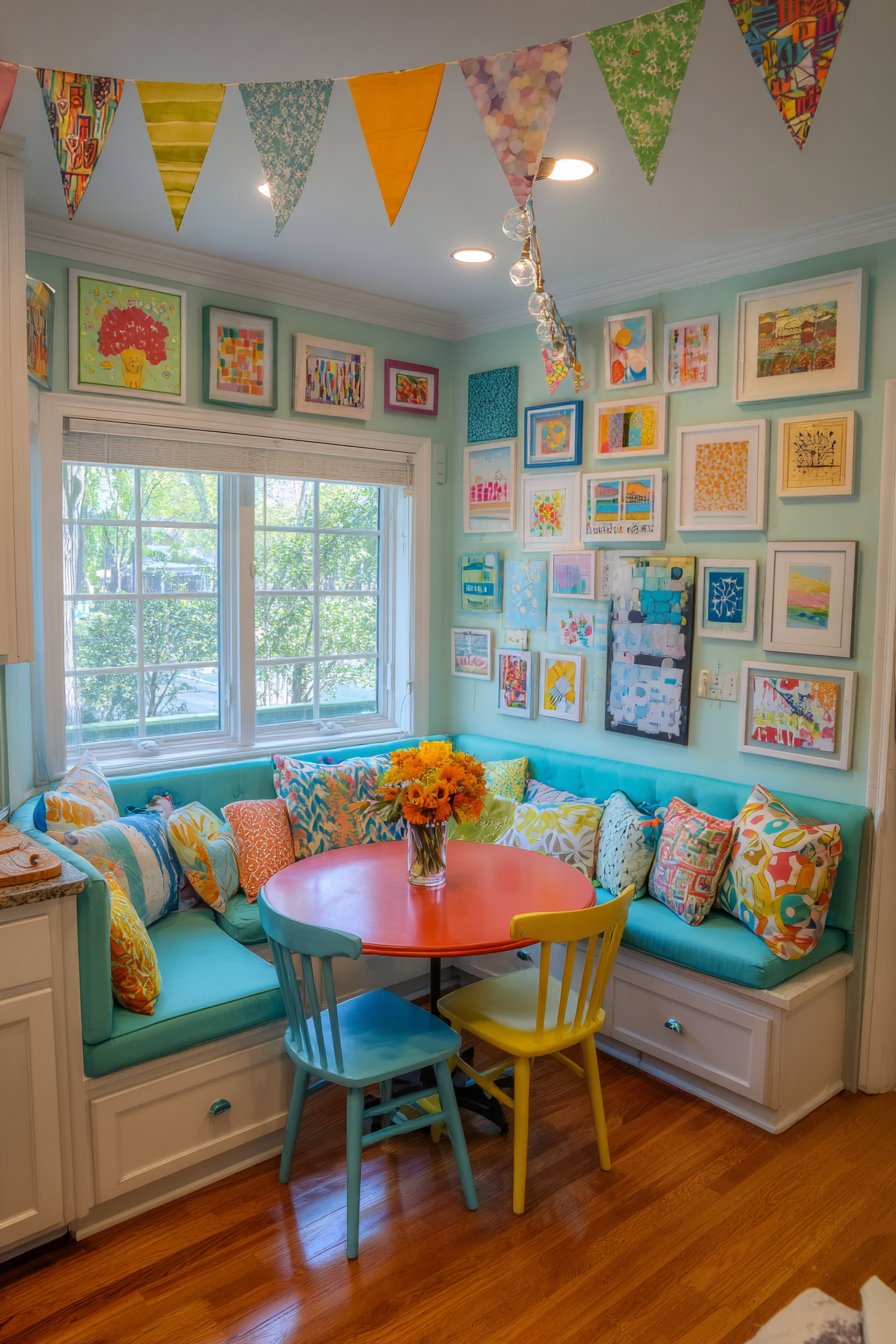
Eclectic design celebrates personal expression, artistic freedom, and joyful color through fearless mixing of styles, periods, and influences. This kitchen nook features a painted built-in bench in bold turquoise, its saturated color creating cheerful foundation for layers of personality. Mix-and-match cushions in vibrant patterns—geometric, floral, and striped designs—demonstrate eclectic style’s rejection of matching sets in favor of coordinated variety that creates visual interest and personal expression.
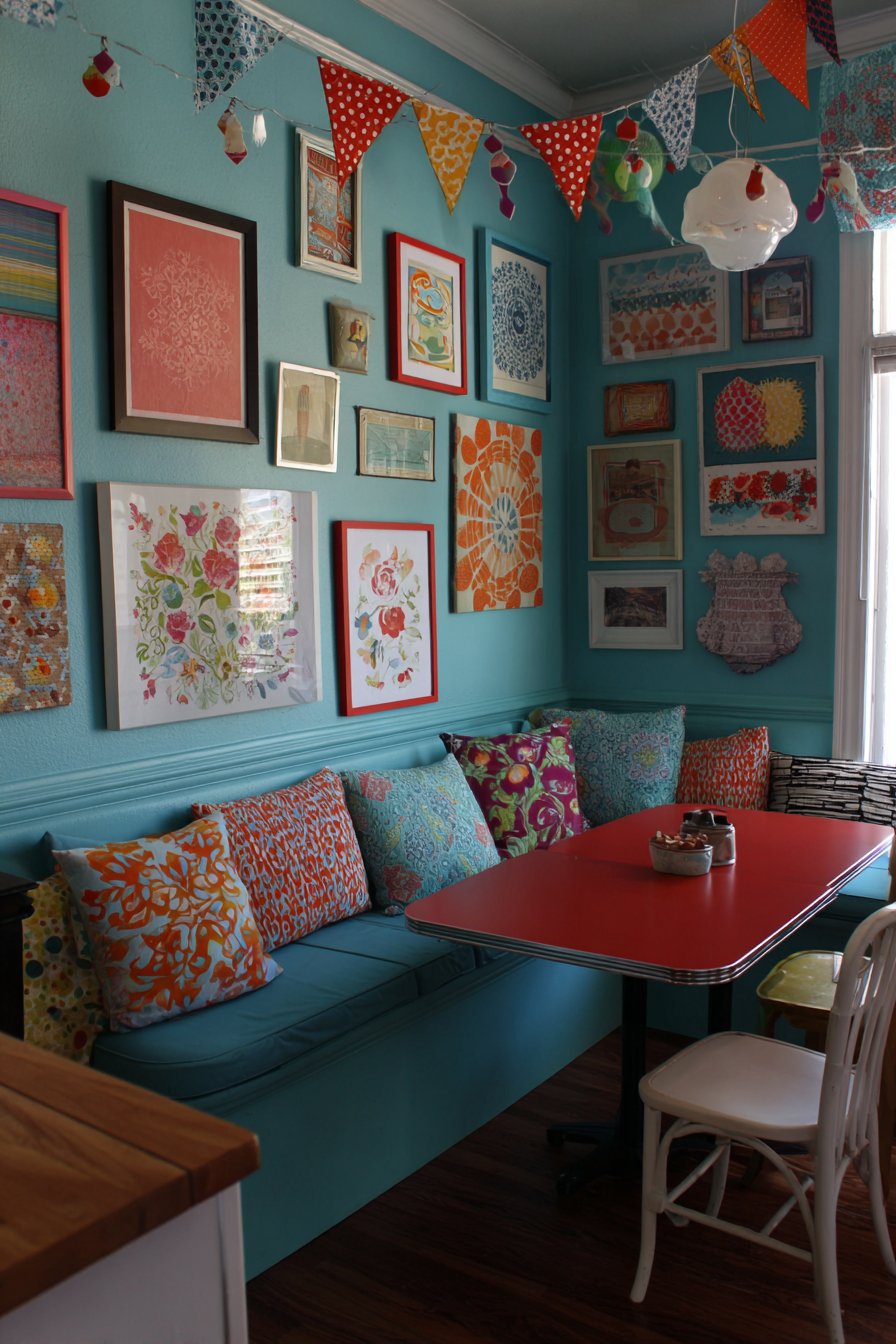
A vintage enamel-top table in bright red centers the space with playful pop of color, its retro styling and industrial origins adding character impossible to achieve with new furniture. Different colored chairs surrounding the table—each piece intentionally mismatched—create collected appearance that suggests personal history and deliberate curation rather than impulsive shopping. String lights and colorful bunting overhead add festive, celebration-ready atmosphere that makes every meal feel special.
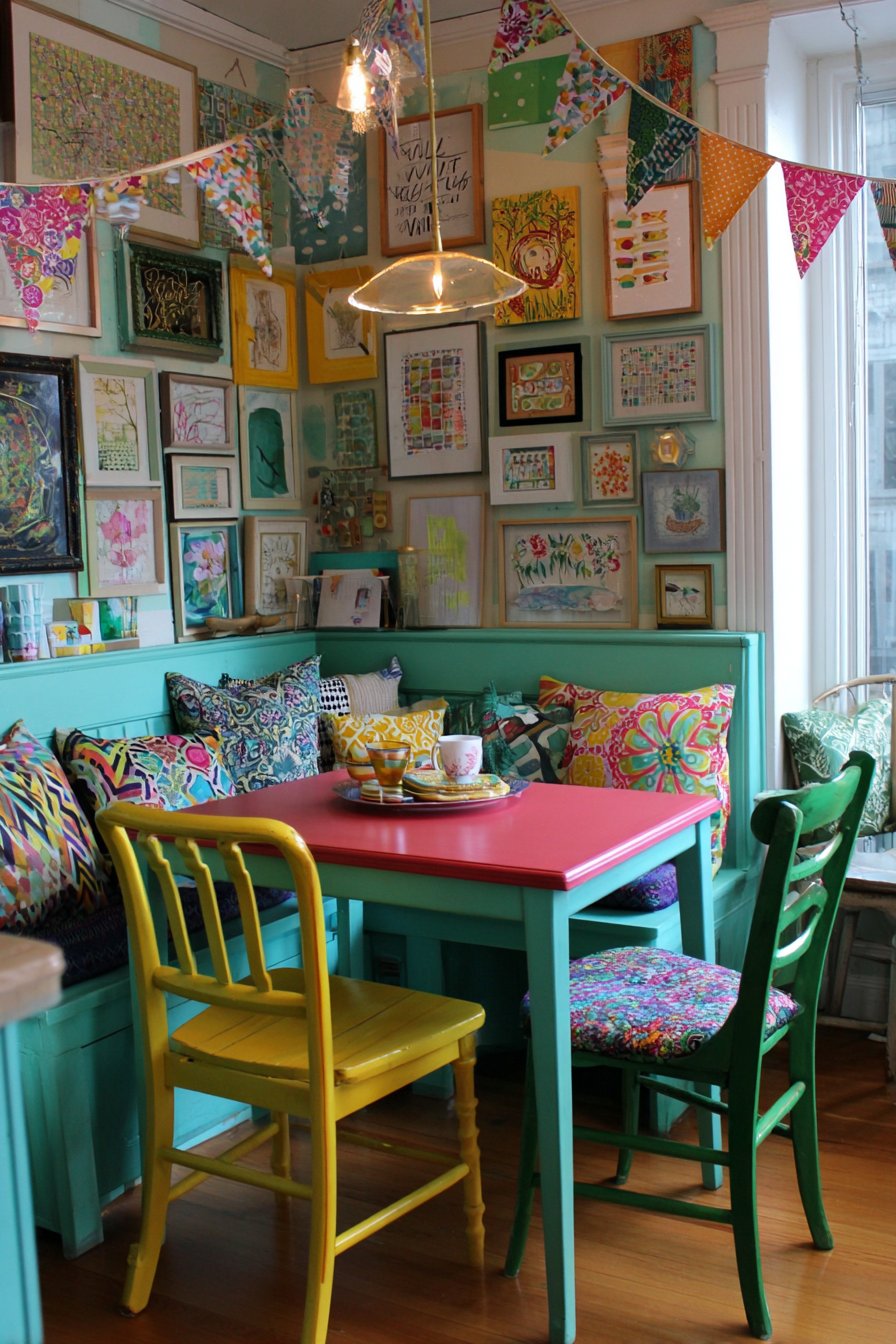
Gallery walls displaying art prints and family photos in various frames introduce personal narrative and visual interest, the mixed frame styles and sizes creating dynamic composition. This design demonstrates that rules were made to be broken—successful eclectic spaces ignore conventional matching principles in favor of personal meaning, authentic objects, and courageous color choices. The key lies in maintaining some unifying elements like color palette or repeated shapes while embracing maximum variety.
Key Design Tips: Paint furniture in bold, saturated colors that express personality and create focal points. Mix patterns freely while maintaining some color coordination to prevent visual chaos. Collect furniture pieces from various sources, periods, and styles rather than purchasing matching sets. Create gallery walls with personal photographs, artwork, and meaningful objects in mismatched frames. Add playful elements like string lights, bunting, or whimsical accessories that bring joy. Trust personal instincts over design rules—eclectic style celebrates individual expression above conventional coordination.
18. Honest Shaker Craftsmanship
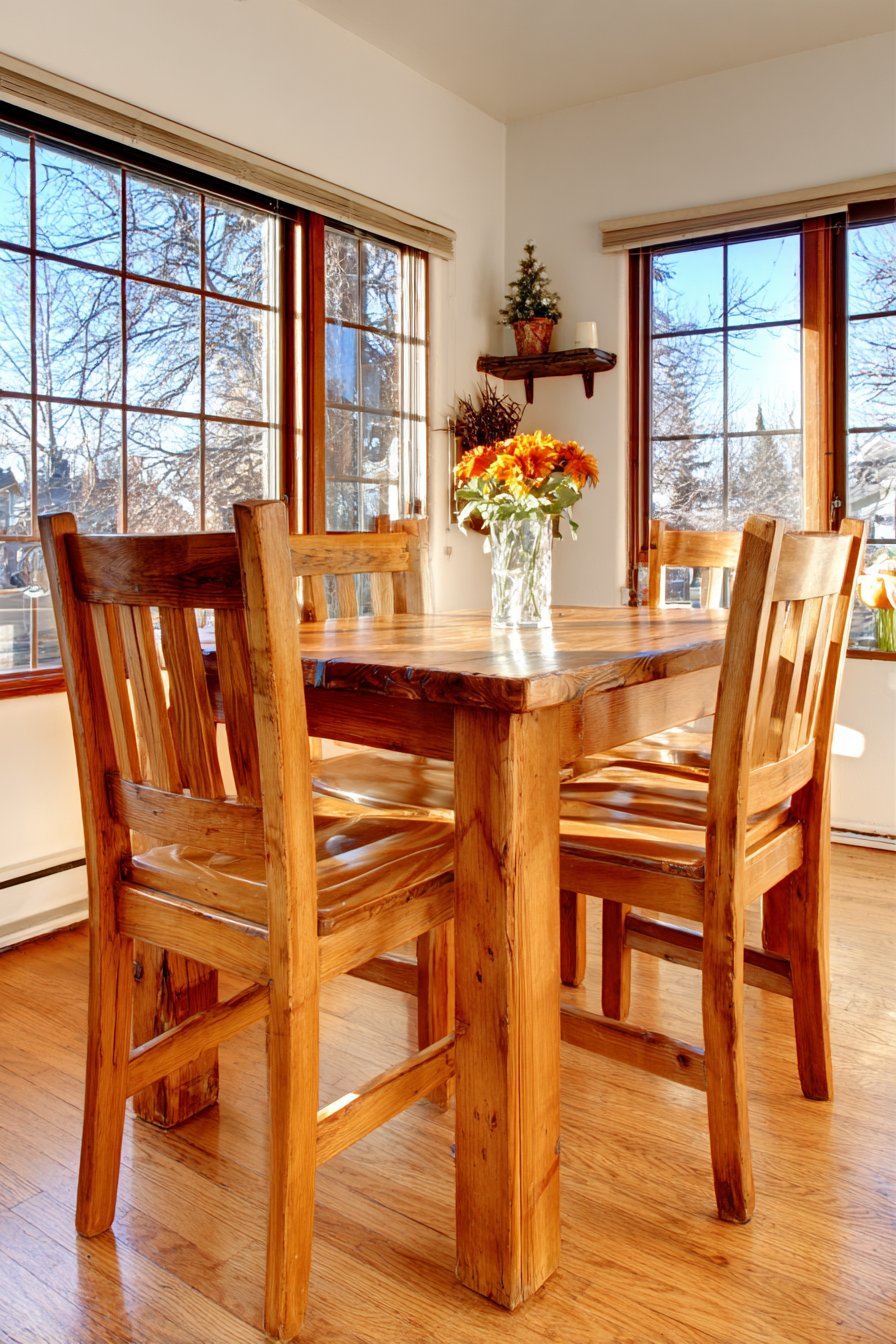
Shaker design embodies simplicity, quality craftsmanship, and functional beauty through traditional construction methods and elimination of unnecessary ornamentation. This kitchen nook features a simple wooden bench with slat back in natural maple finish, its visible wood grain and honest joinery celebrating material beauty and skilled construction. The absence of paint or heavy finish allows the wood’s natural color variations and figure to remain visible, honoring the tree that provided the lumber.
A rectangular farmhouse table in matching maple wood provides ample dining space through substantial construction and timeless form. Classic Shaker-style chairs with ladder backs and woven seats demonstrate traditional furniture making techniques passed through generations, their simple elegance proving that decoration is unnecessary when proportions are correct and construction is sound. Peg rails mounted on walls serve practical function by holding seasonal items and daily-use objects while providing subtle decorative interest through repetitive form.
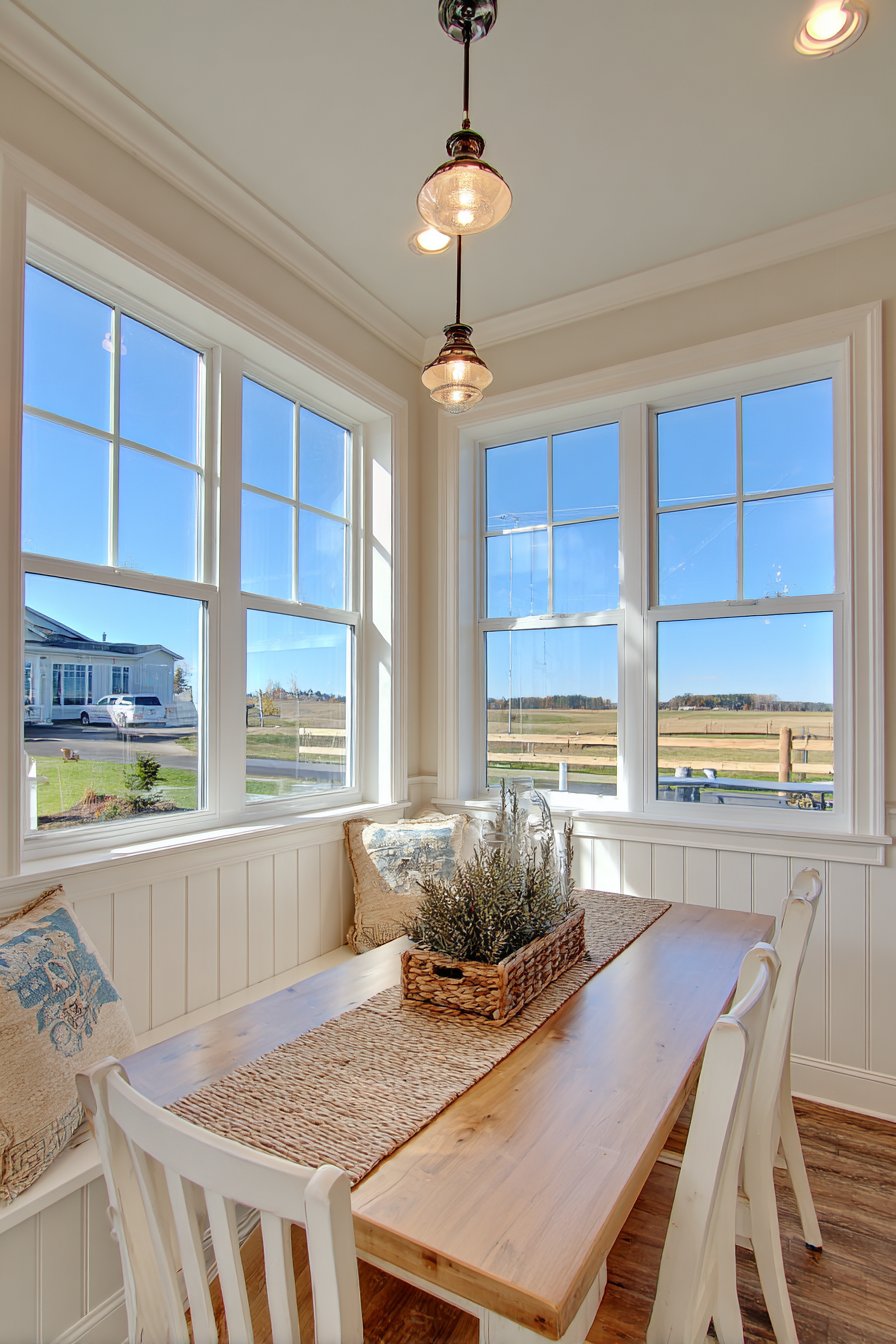
Simple white walls and abundant natural light from large multi-pane windows emphasize functional beauty and honest materials that define Shaker philosophy. The windows themselves, with their traditional divided lights and quality construction, demonstrate Shaker commitment to doing things properly rather than cheaply. This design requires appreciation for subtle beauty—those seeking visual drama will miss the quiet excellence present in perfect proportions and quality joinery.
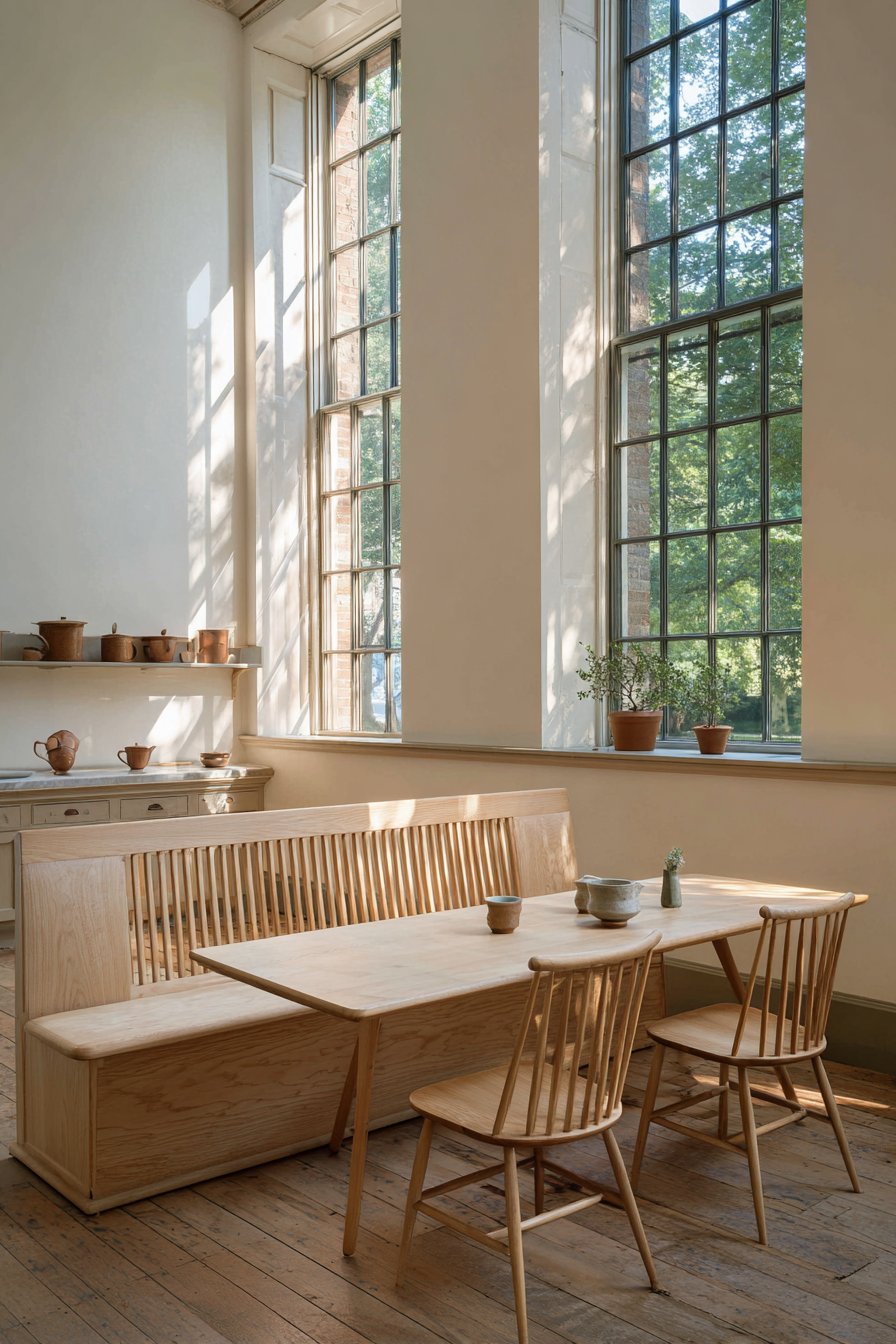
Key Design Tips: Choose solid wood furniture with visible grain patterns and natural finishes rather than painted or veneered pieces. Appreciate traditional joinery techniques like mortise-and-tenon, dovetails, and dowel construction. Maintain simple, clean-lined forms without applied decoration or unnecessary elements. Install peg rails for practical storage that doubles as subtle architectural detail. Select neutral colors that don’t compete with natural wood tones and quality construction. Invest in fewer, better-quality pieces rather than numerous mediocre furnishings—Shaker design values quality over quantity.
19. Luxurious Art Deco Glamour
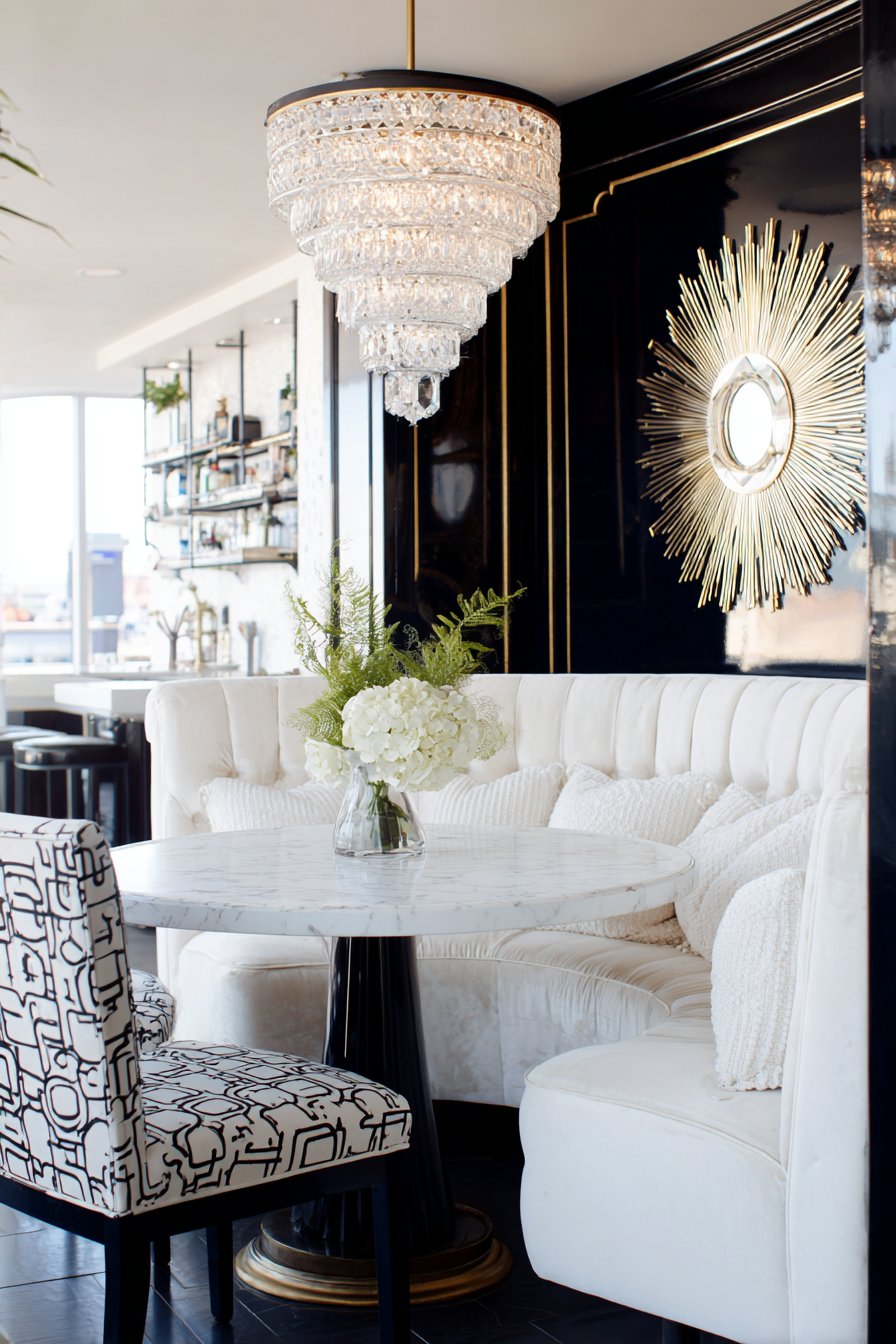
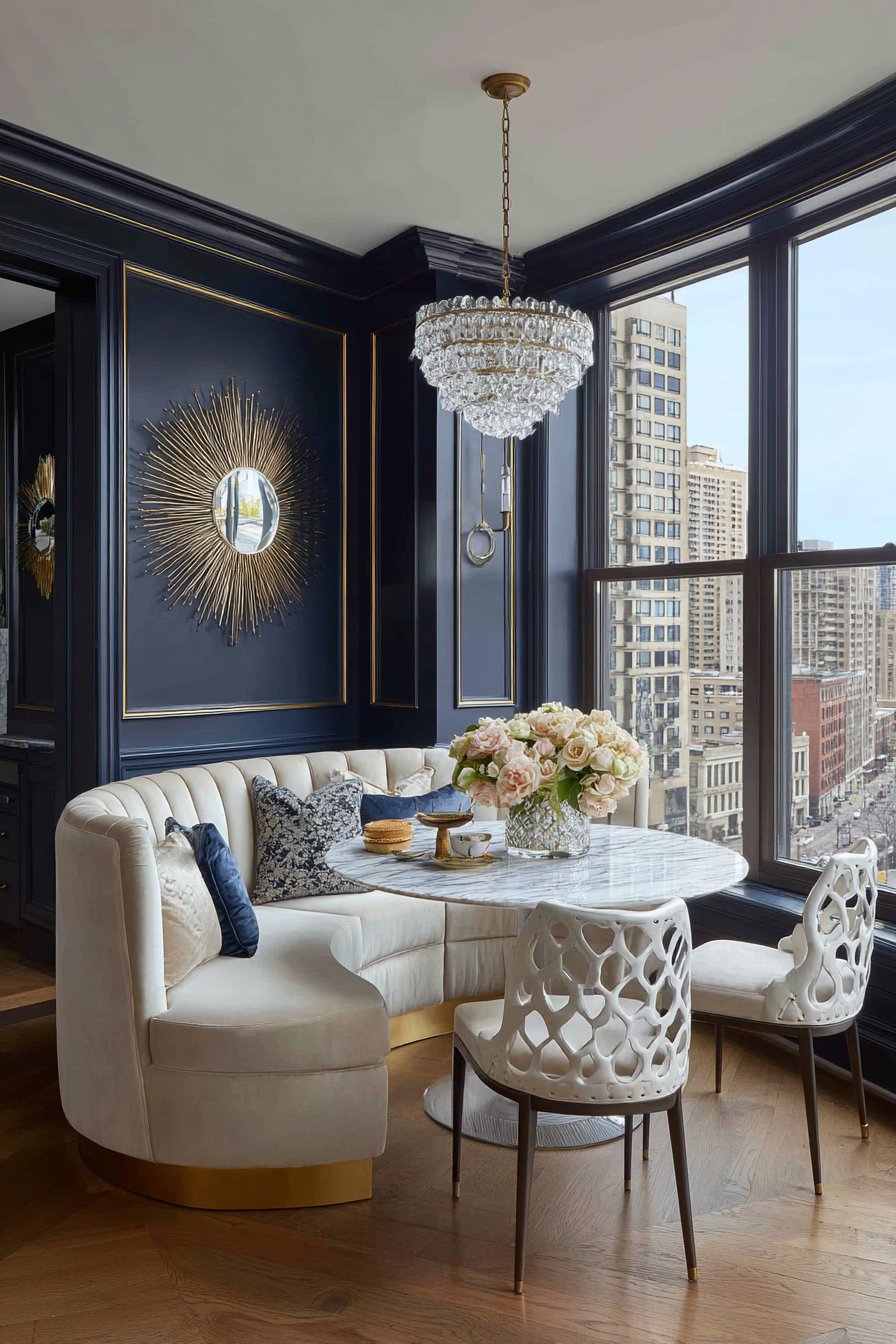
Art Deco design celebrates the glamorous, geometric aesthetic of the 1920s and 1930s through luxurious materials, bold forms, and sophisticated color combinations. This kitchen nook showcases a curved banquette upholstered in champagne silk velvet with precise channel tufting, its metallic sheen and sumptuous texture creating immediate impression of luxury and refinement. The polished brass base supporting the banquette adds golden gleam that references the era’s love of metallic finishes and machine-age materials.
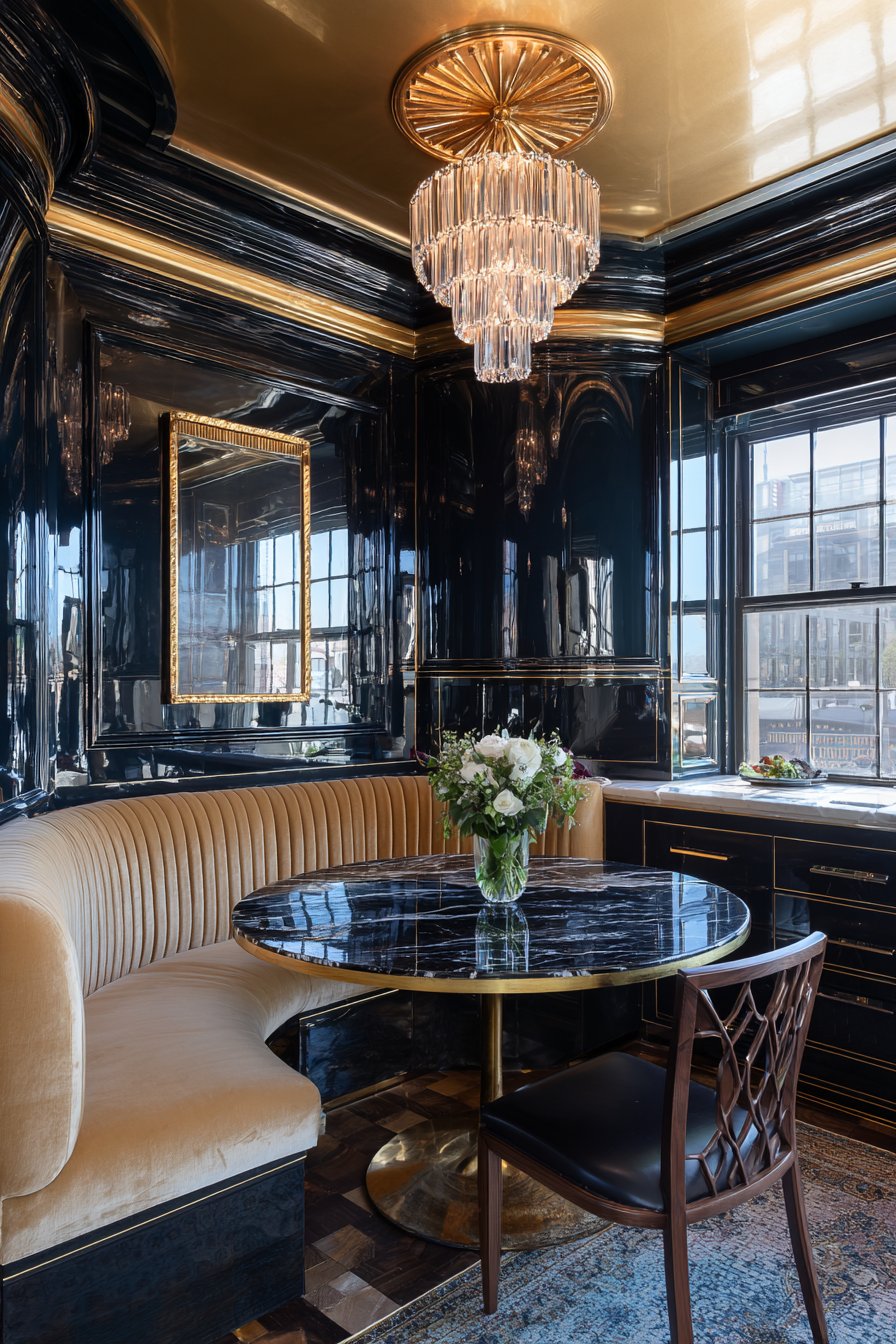
A round marble table with gold-veined detailing centers the space, its natural stone beauty enhanced by metallic striations that catch light and create visual interest. Vintage-style dining chairs featuring geometric cutouts in their backs demonstrate Art Deco’s distinctive decorative vocabulary—sharp angles, stepped forms, and sunburst motifs that reference both ancient Egyptian influences and modern machine aesthetics. The chairs’ clean lines and decorative details exemplify the style’s successful marriage of ornamentation and modernism.
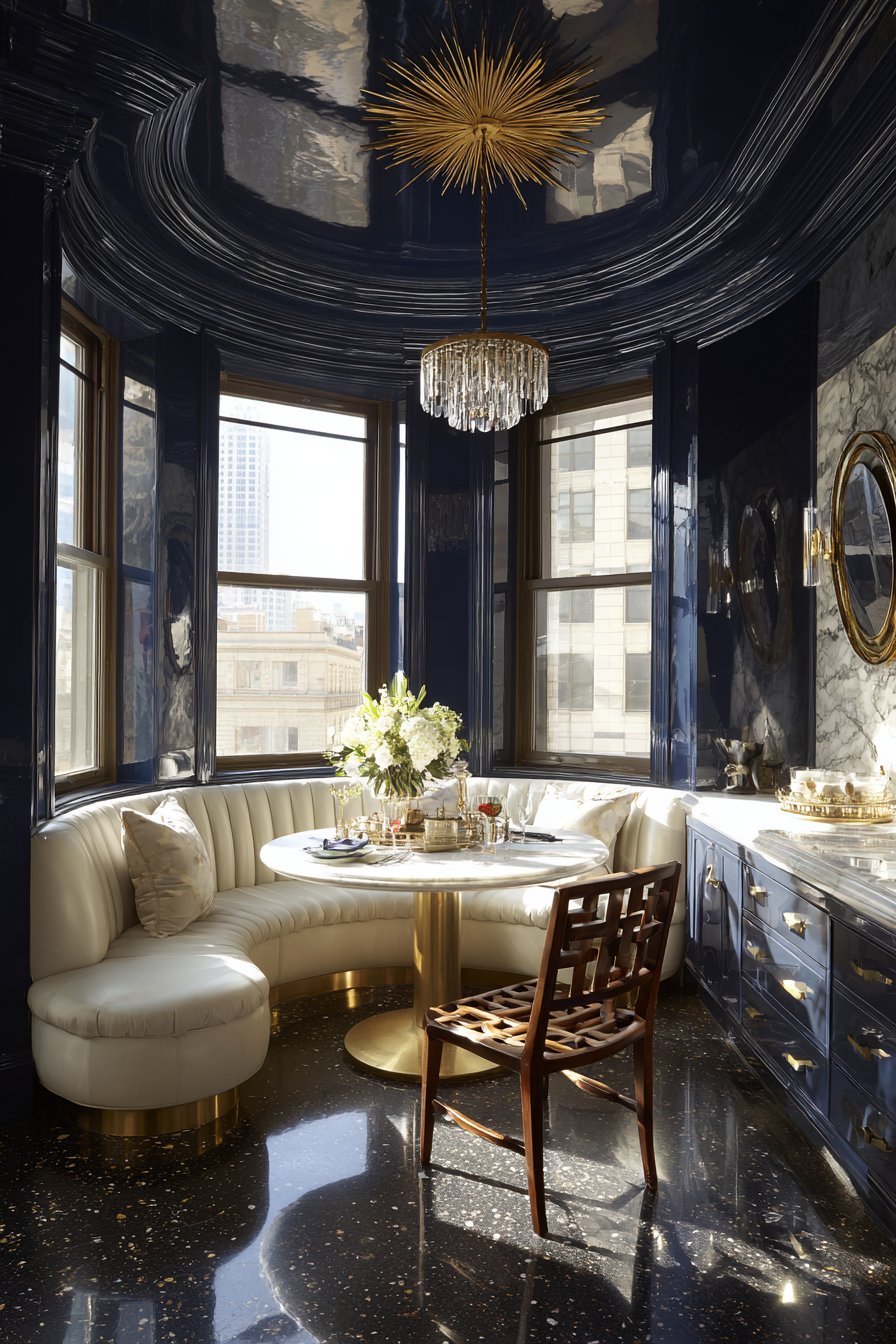
A tiered crystal chandelier provides dramatic lighting through multiple levels of faceted drops that create prismatic effects and sparkling ambiance. Glossy navy blue lacquer walls with gold trim molding create sophisticated backdrop for the metallic and neutral furnishings, the high-gloss finish reflecting light and amplifying the sense of luxury. A mirror with sunburst frame amplifies both light and space while introducing iconic Art Deco motif. This design requires commitment to glamour and careful attention to proportions and quality—Art Deco done poorly appears gaudy rather than sophisticated.
Key Design Tips: Embrace luxurious materials including marble, velvet, lacquer, brass, and crystal for authentic period glamour. Incorporate geometric patterns through furniture cutouts, tile layouts, and decorative elements. Choose metallic finishes in gold, brass, or chrome to add shine and sophistication. Select curved furniture forms alongside angular geometric shapes for dynamic contrast. Add mirrors strategically to amplify light and create sense of spaciousness. Maintain sophisticated color palette of jewel tones, metallics, and rich neutrals rather than pastel or muted shades.
20. Sweet Cottage Charm
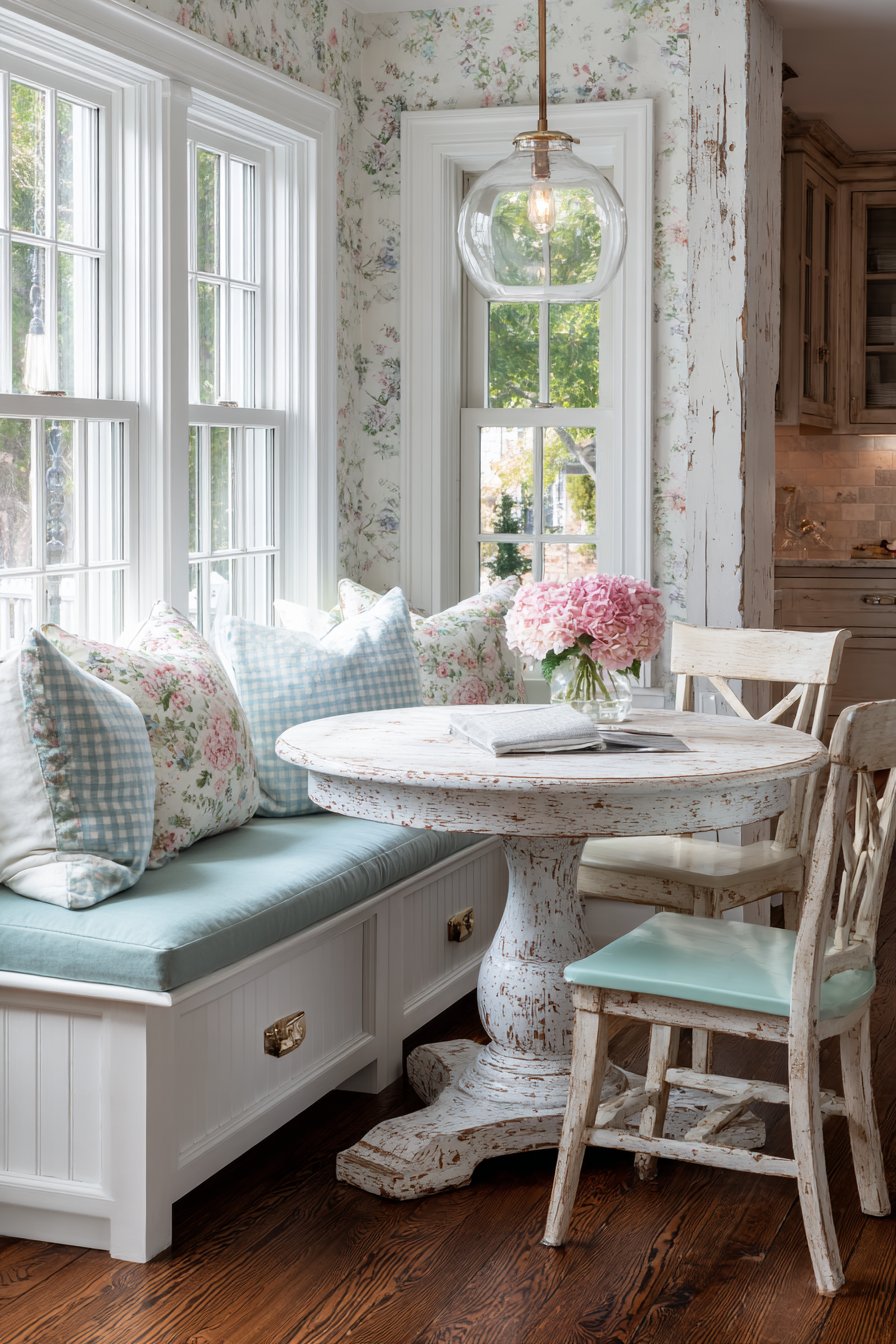
Cottage style embraces cozy comfort, soft colors, and collected charm through vintage pieces, floral patterns, and relaxed arrangements. This kitchen nook features a painted wooden bench in soft robin’s egg blue, its gentle color creating cheerful backdrop for comfortable seat cushions in vintage floral chintz fabric. The layered patterns—painted wood, floral fabric, and subsequent decorative elements—create the collected-over-time appearance characteristic of cottage interiors.
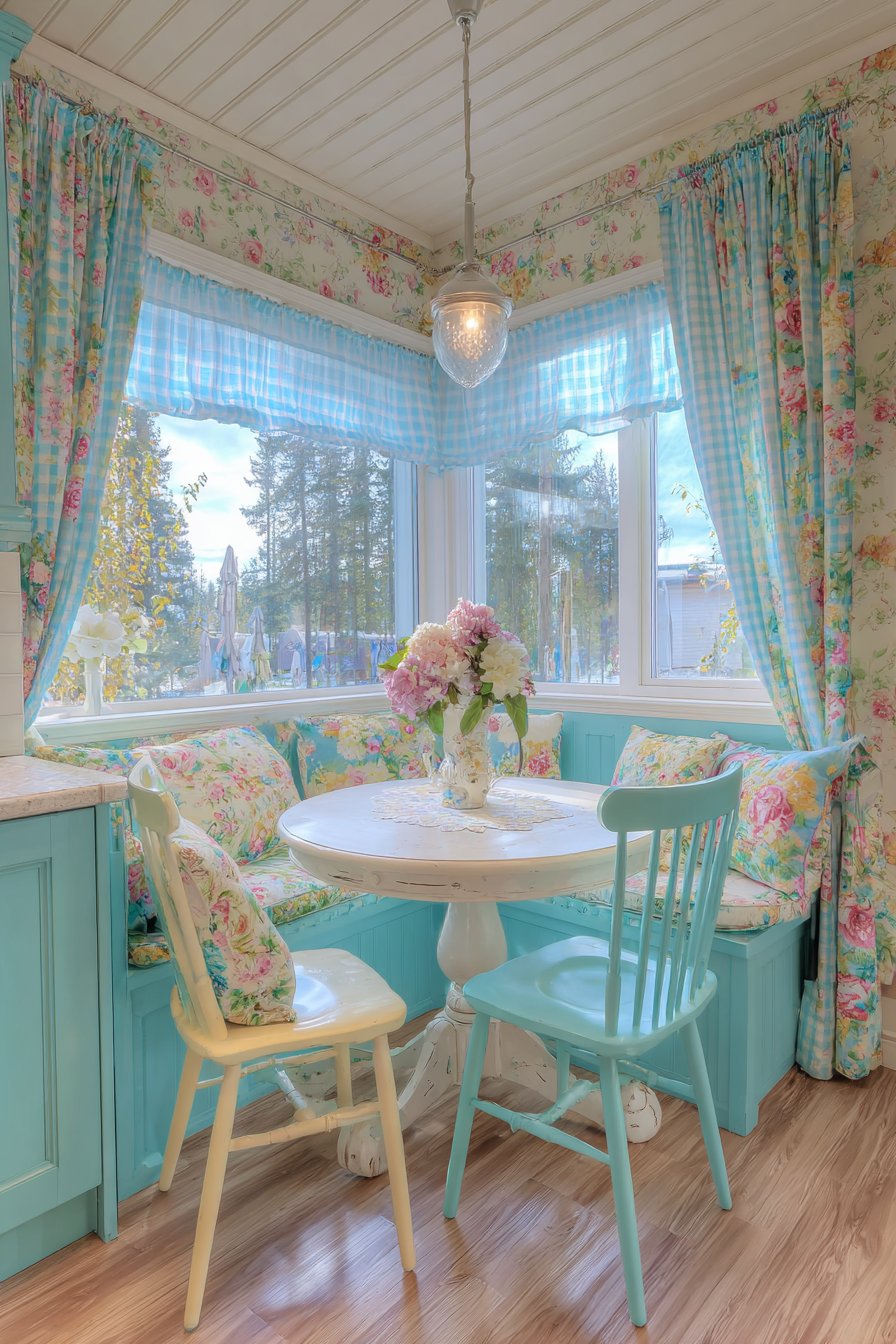
A round pedestal table with distressed white paint finish demonstrates cottage style’s appreciation for aged furniture with authentic wear patterns that suggest years of family gatherings and shared meals. Mismatched chairs in pastel colors—perhaps pale yellow, soft pink, and mint green—continue the gentle color palette while avoiding rigid matching that would feel too formal. Gingham cafe curtains in blue and white dress the windows with classic cottage pattern, their cheerful checks and practical half-height providing privacy while maximizing natural light.
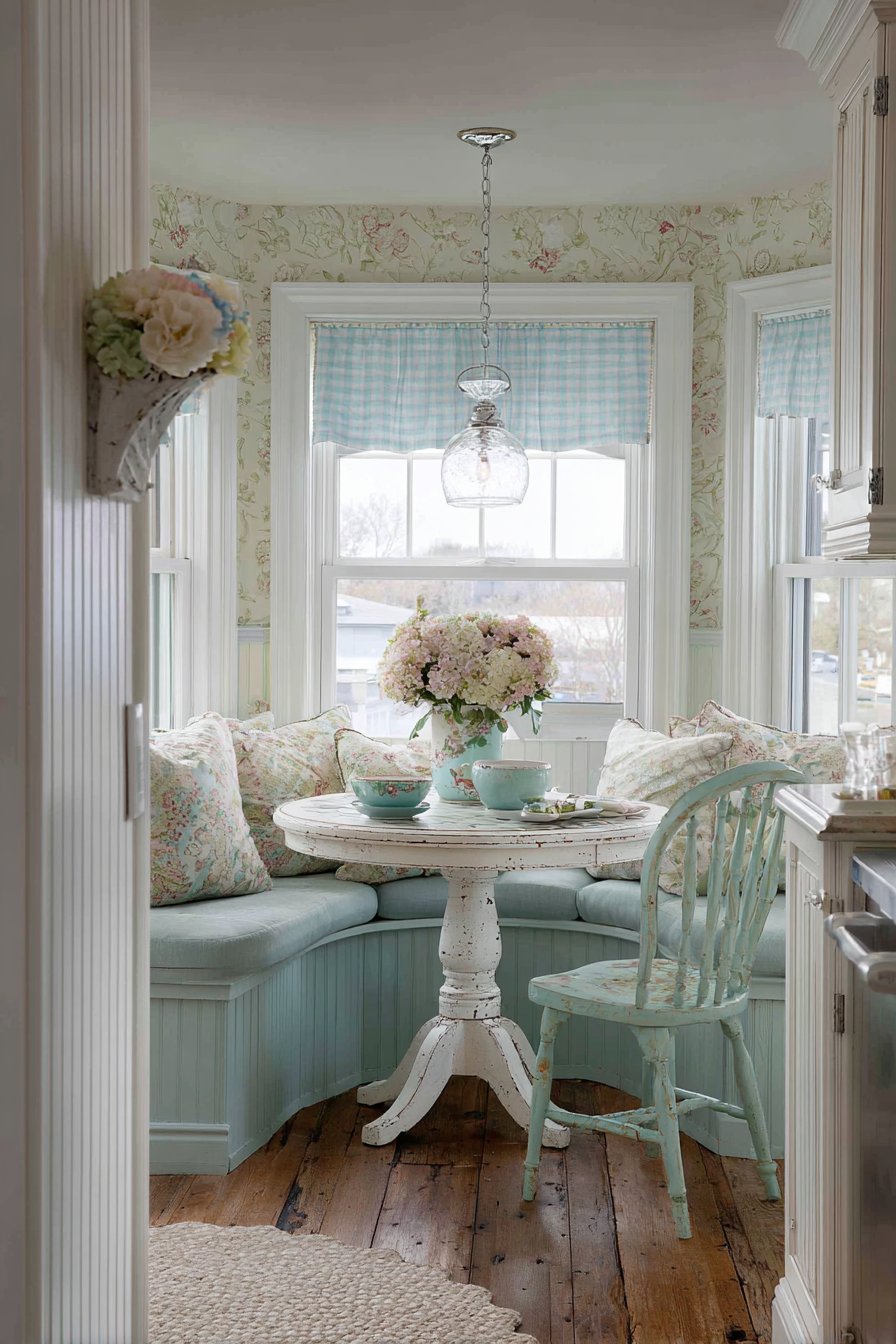
Simple glass pendant light hanging overhead provides necessary illumination without competing for attention, allowing the collected furnishings and soft colors to create the space’s character. Delicate floral wallpaper covering upper walls with white beadboard below creates classic cottage architecture, the horizontal lines adding traditional detail while the floral pattern introduces romance and softness. This design succeeds through gentle colors, comfortable textiles, and accumulated charm rather than dramatic statements or expensive materials.
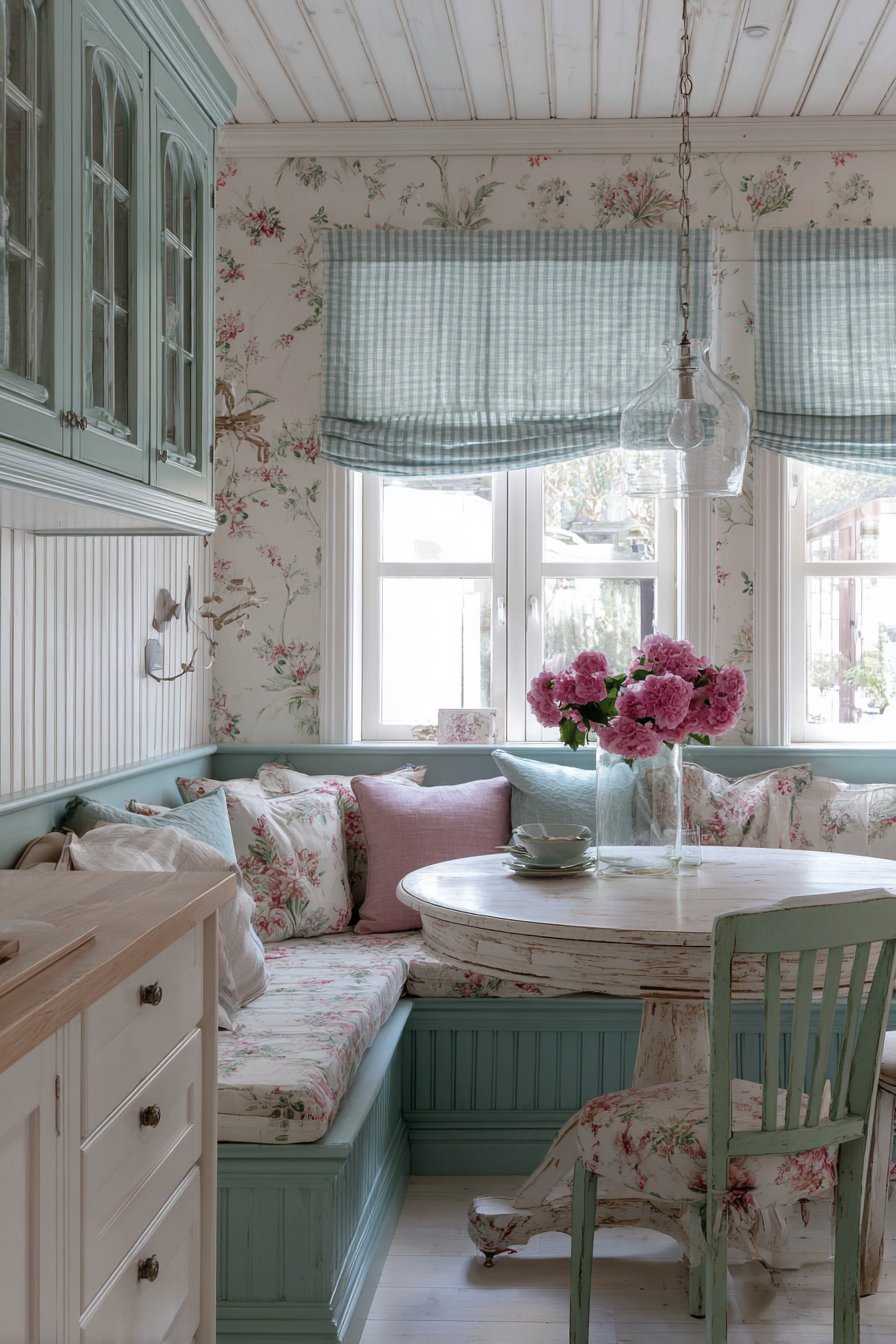
Key Design Tips: Paint furniture in soft pastels like robin’s egg blue, pale pink, soft yellow, or mint green for gentle cottage color palette. Choose vintage floral fabrics for cushions, curtains, and accessories—look for faded colors rather than bright, fresh prints. Mix mismatched furniture pieces in coordinating colors rather than matching wood tones or paint colors. Add beadboard wainscoting for traditional cottage architectural detail. Select gingham, ticking stripe, or small floral patterns for window treatments and textiles. Display collections of vintage china, teacups, or botanical prints to enhance cottage charm.
21. Refined Scandinavian Minimalism
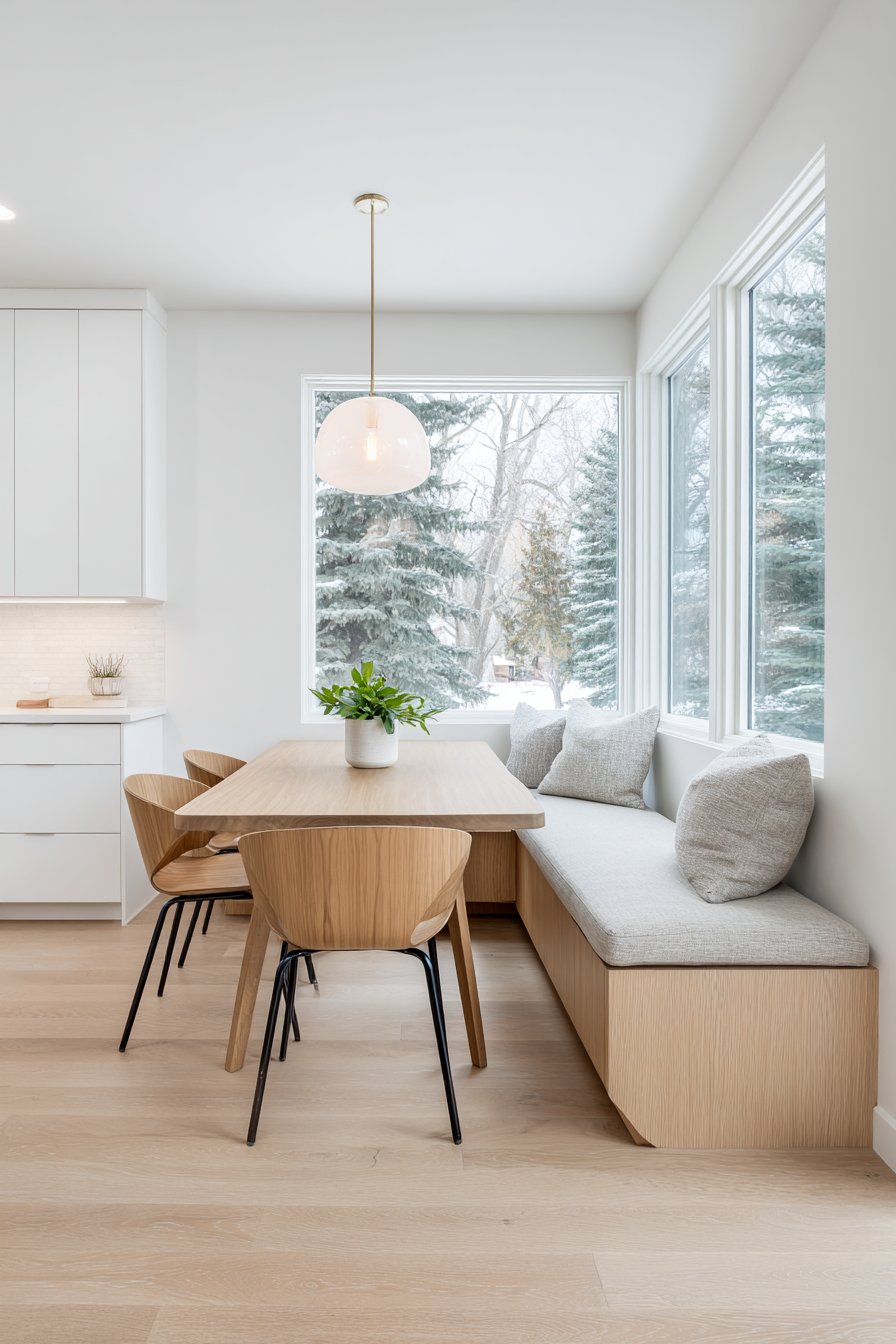
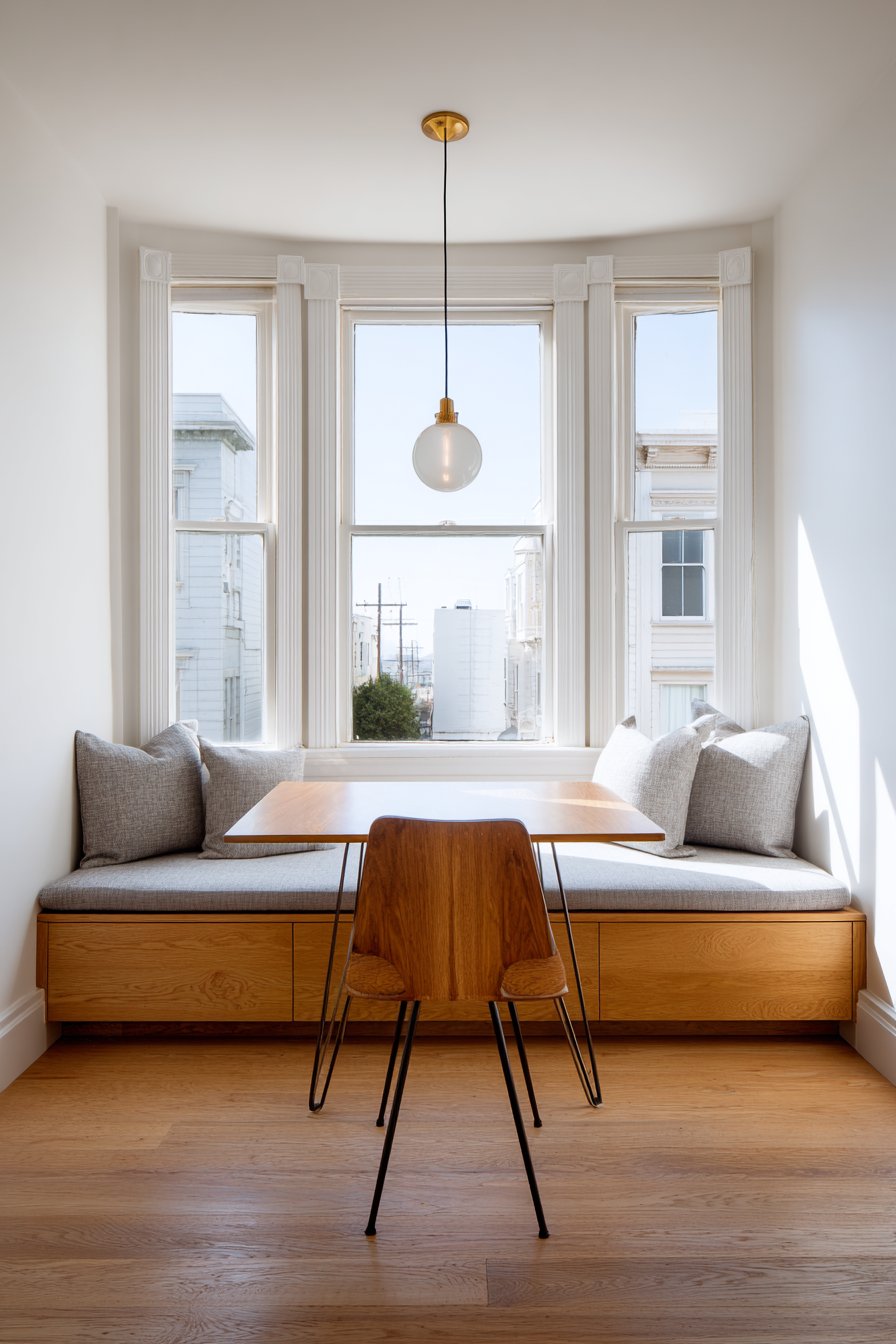
Minimalist Scandinavian design reduces spaces to essential elements while maintaining warmth through natural materials and carefully considered details. This kitchen nook features a streamlined built-in bench in pale oak with thin seat cushion in neutral grey linen, the minimalist form enhanced by invisible hardware that maintains clean lines. The bench’s simple construction allows the beautiful pale oak grain to provide visual interest without additional decoration or applied detail.
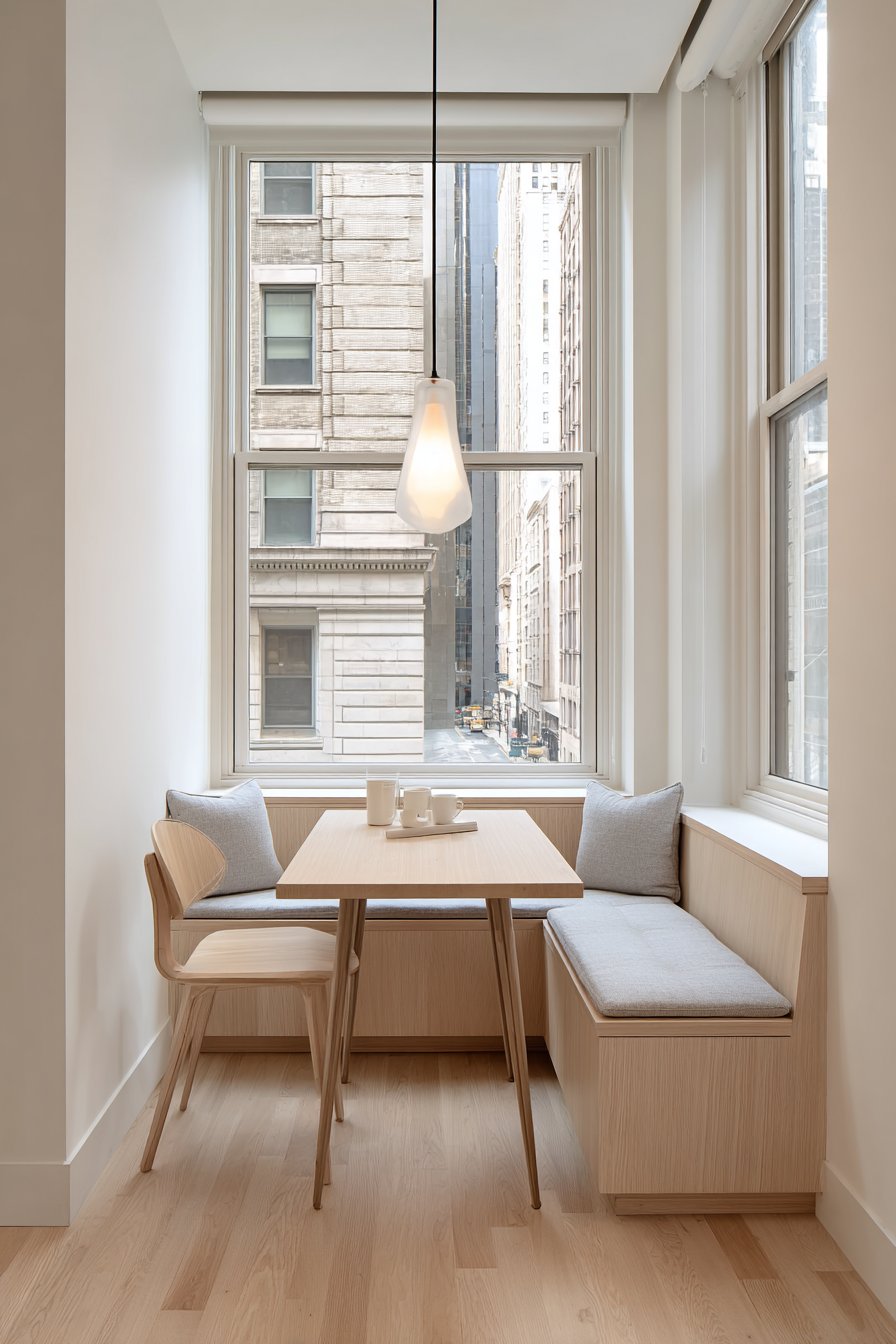
A simple rectangular table in matching pale oak with hairpin legs provides the dining surface through understated elegance, the slender metal legs creating visual lightness while supporting substantial tabletop. Two identical bentwood chairs demonstrate Scandinavian design’s appreciation for honest materials and traditional construction methods, their steam-bent forms creating graceful curves that provide comfort without cushions. A single white pendant light with exposed filament bulb hangs centered above, its minimal form and visible technology celebrating functional simplicity.
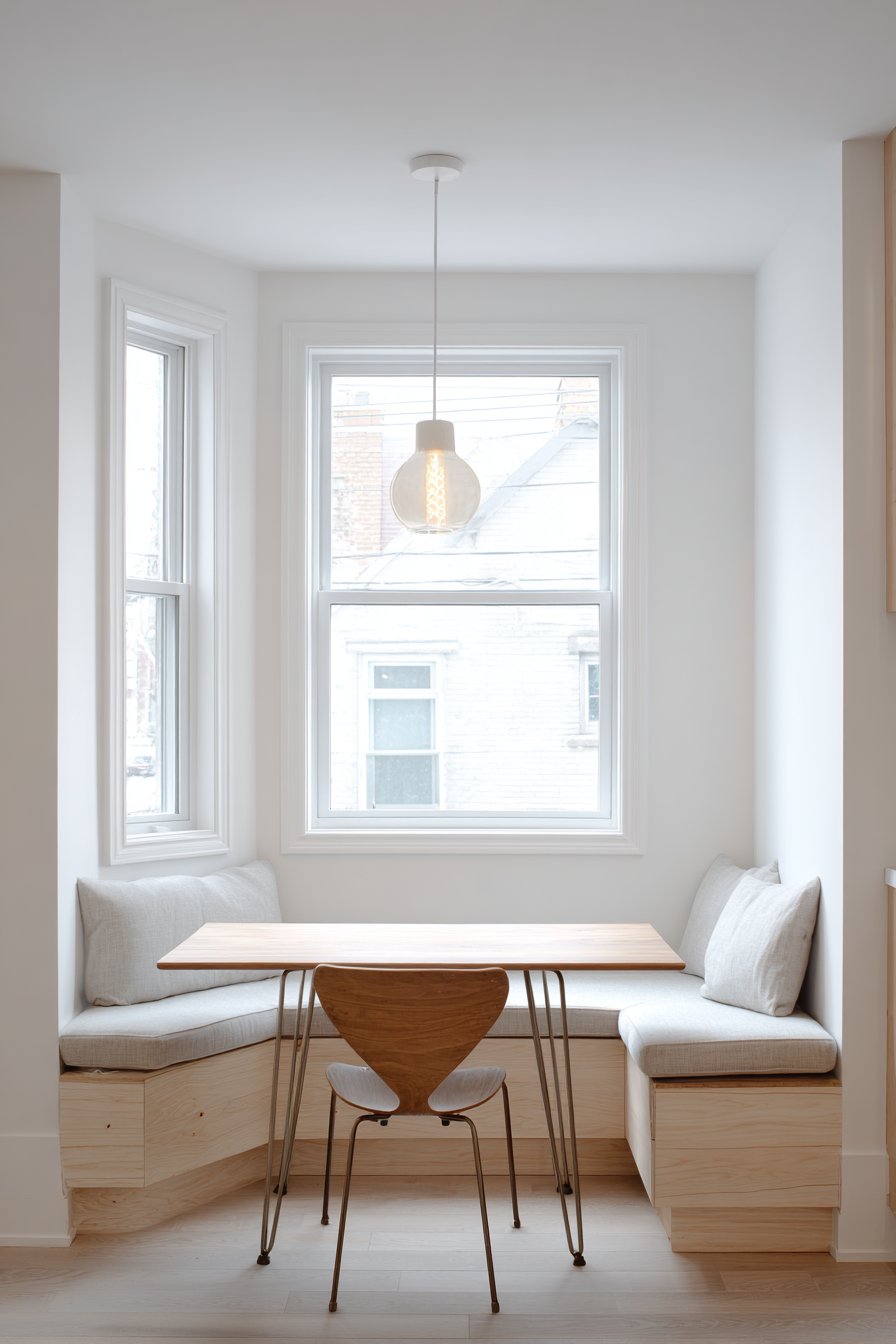
Pristine white walls and large unadorned windows allow maximum natural light penetration, creating bright, airy atmosphere that characterizes Nordic interiors. The absence of window treatments maximizes connection to outdoors while the northern light quality—soft and diffused—eliminates need for light control. This design demonstrates that beauty emerges from restraint—by removing everything unnecessary, what remains becomes more precious and noticeable.
Key Design Tips: Select furniture with clean, simple lines free from unnecessary ornamentation or applied decoration. Choose pale wood species like oak, ash, or birch in natural finishes that showcase grain patterns. Maintain strictly neutral color palette of whites, greys, and natural wood tones. Eliminate window treatments when privacy allows to maximize natural light and outdoor connection. Invest in quality construction and materials since poor craftsmanship becomes obvious in minimal designs. Practice rigorous editing—remove rather than add until only essential, beautiful elements remain.
22. Warm Mediterranean Character
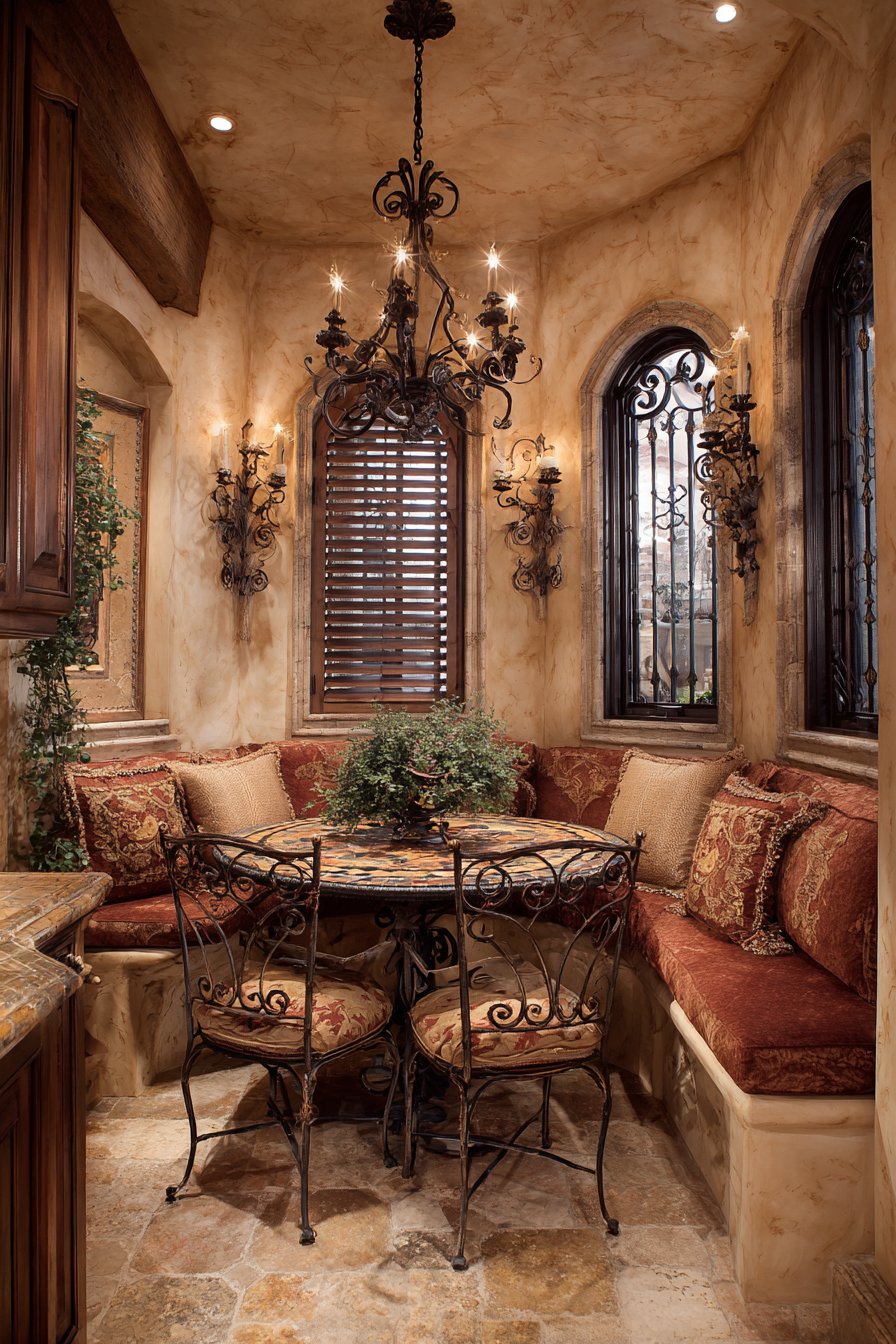
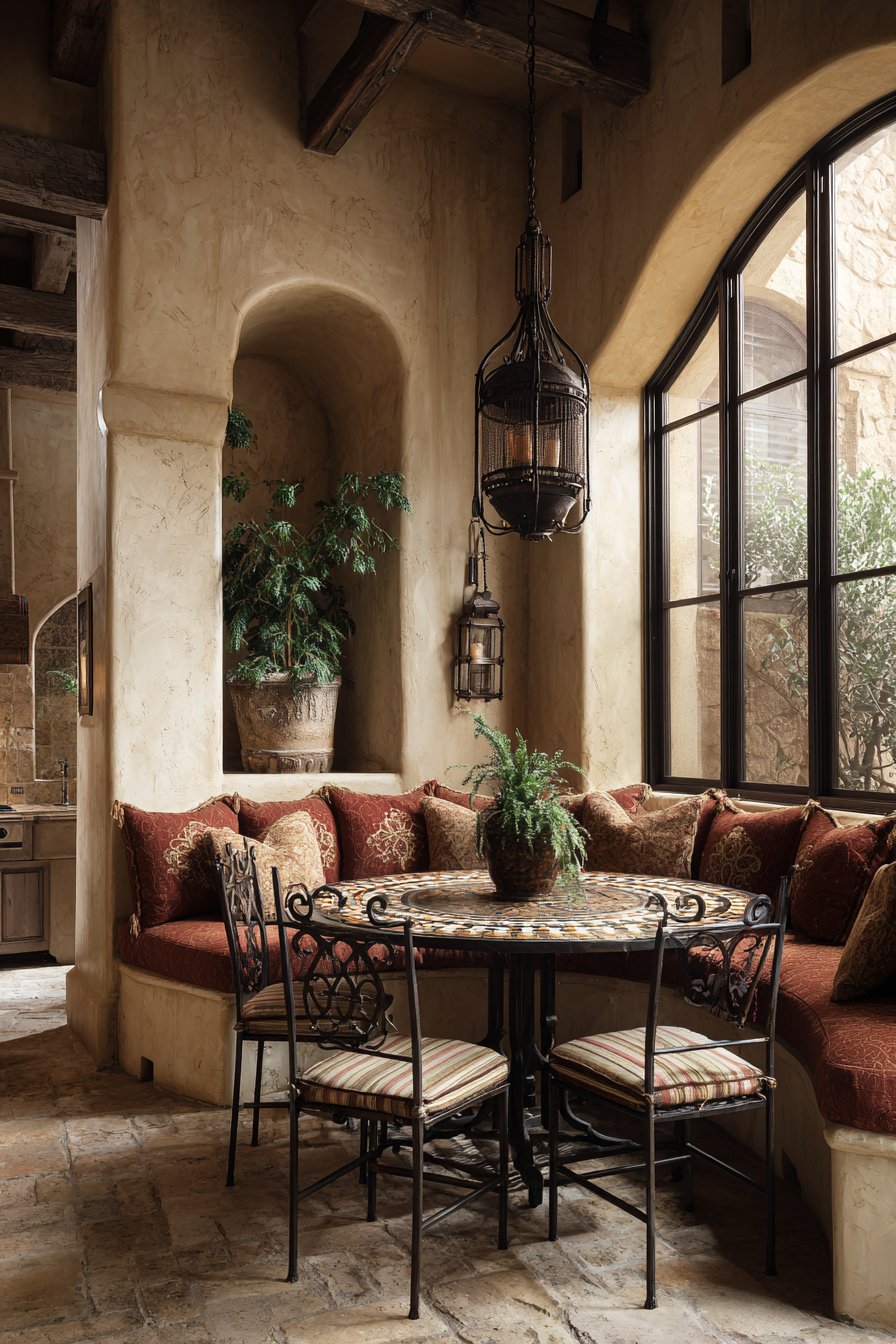
Mediterranean design evokes the sun-drenched regions of Southern Europe through warm colors, textured surfaces, and handcrafted details. This kitchen nook features a built-in bench with arched niches below for storage, the curved forms referencing traditional Mediterranean architecture. Upholstery in terracotta-colored linen with embroidered cushions creates warm foundation enhanced by handcrafted details that celebrate artisanal traditions.
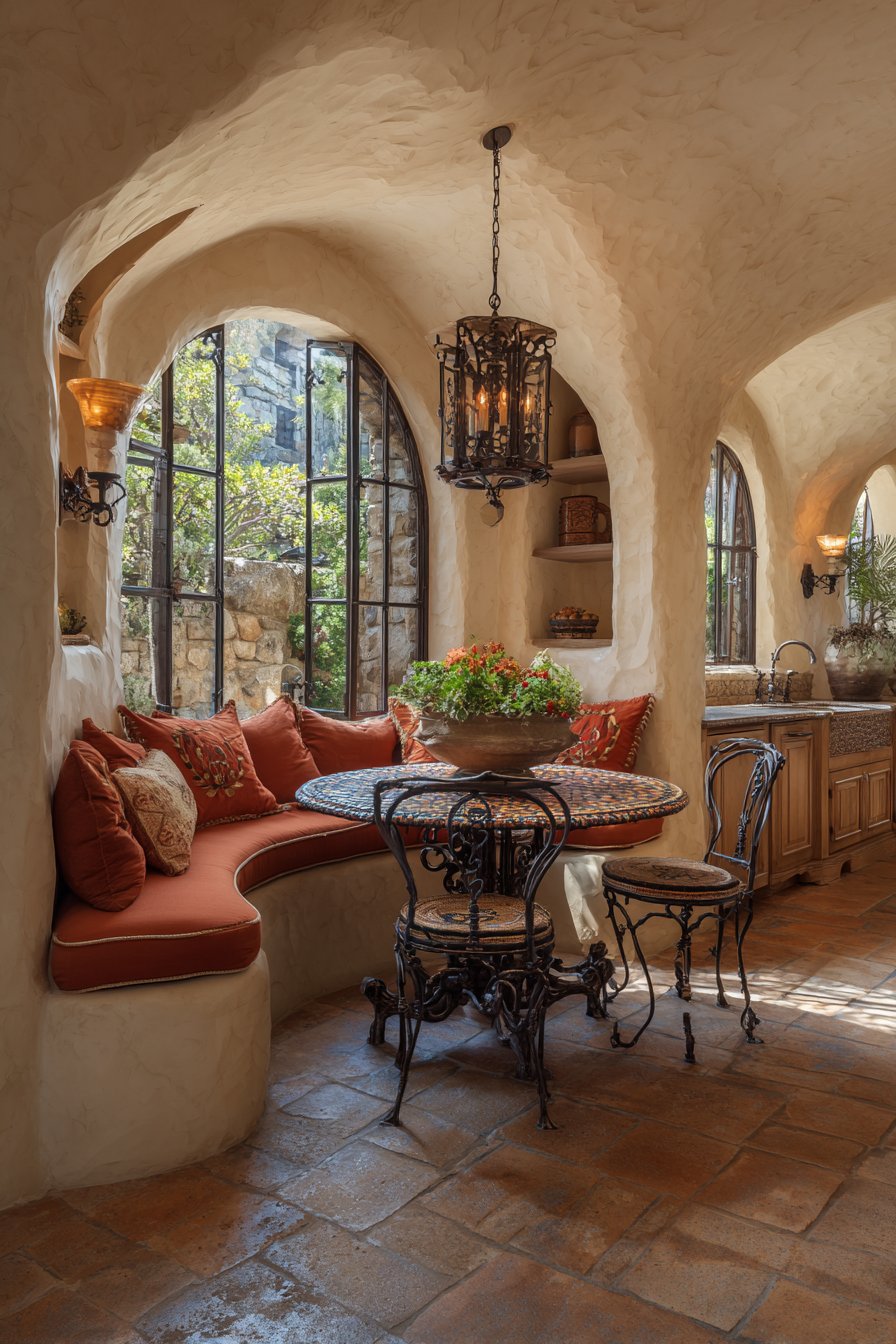
A round wrought iron table with mosaic tile top introduces pattern and texture through small ceramic tiles arranged in traditional Mediterranean motifs. The handcrafted quality of mosaic work—slight irregularities in tile placement and grouting—adds character impossible to achieve with manufactured surfaces. Wrought iron chairs featuring scrollwork details continue the hand-forged metalwork tradition, their curved forms and decorative elements softening the hard material through artisan craftsmanship.
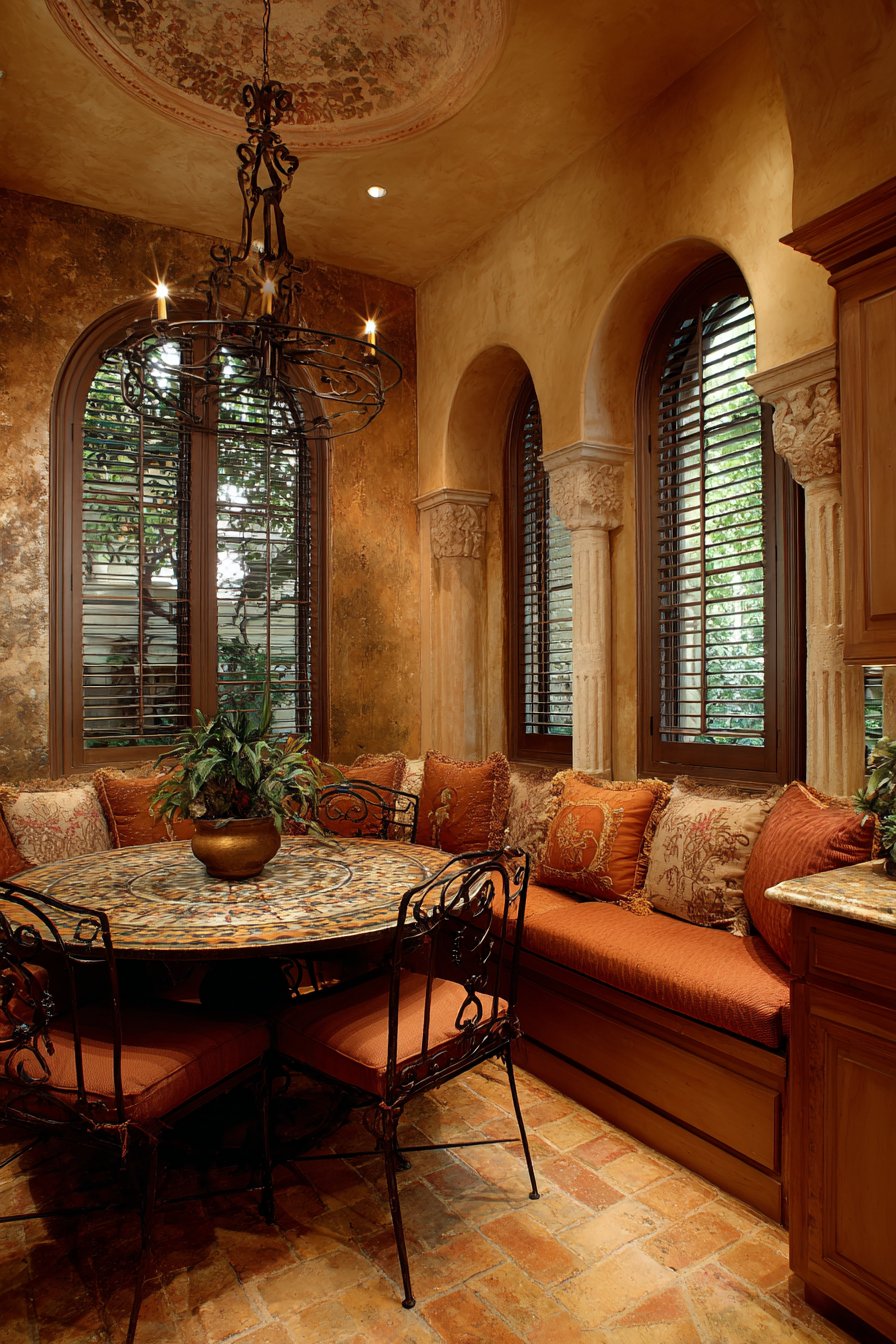
Terra cotta tile flooring provides warm, earthy foundation with natural color variations, while textured stucco walls in warm cream create authentic Old World ambiance. Arched windows with wooden shutters filter intense sunlight while providing ventilation and connection to outdoor spaces—the shutters themselves becoming decorative elements through their traditional construction and warm wood tones. A wrought iron chandelier with curved arms provides evening illumination through candelabra-style bulbs, its hand-forged quality celebrating metalworking traditions.
Key Design Tips: Embrace warm earth tones including terracotta, ochre, cream, and golden yellow for authentic Mediterranean palette. Incorporate handcrafted elements like mosaic tile, wrought iron, and embroidered textiles to celebrate artisan traditions. Choose textured wall finishes like stucco or plaster rather than smooth painted surfaces. Install terra cotta or ceramic tile flooring for durability and authentic regional character. Add arched architectural details through doorways, windows, or built-in niches. Select wrought iron furniture and lighting with hand-forged details and curved scrollwork.
23. Ingenious Multi-Functional Design
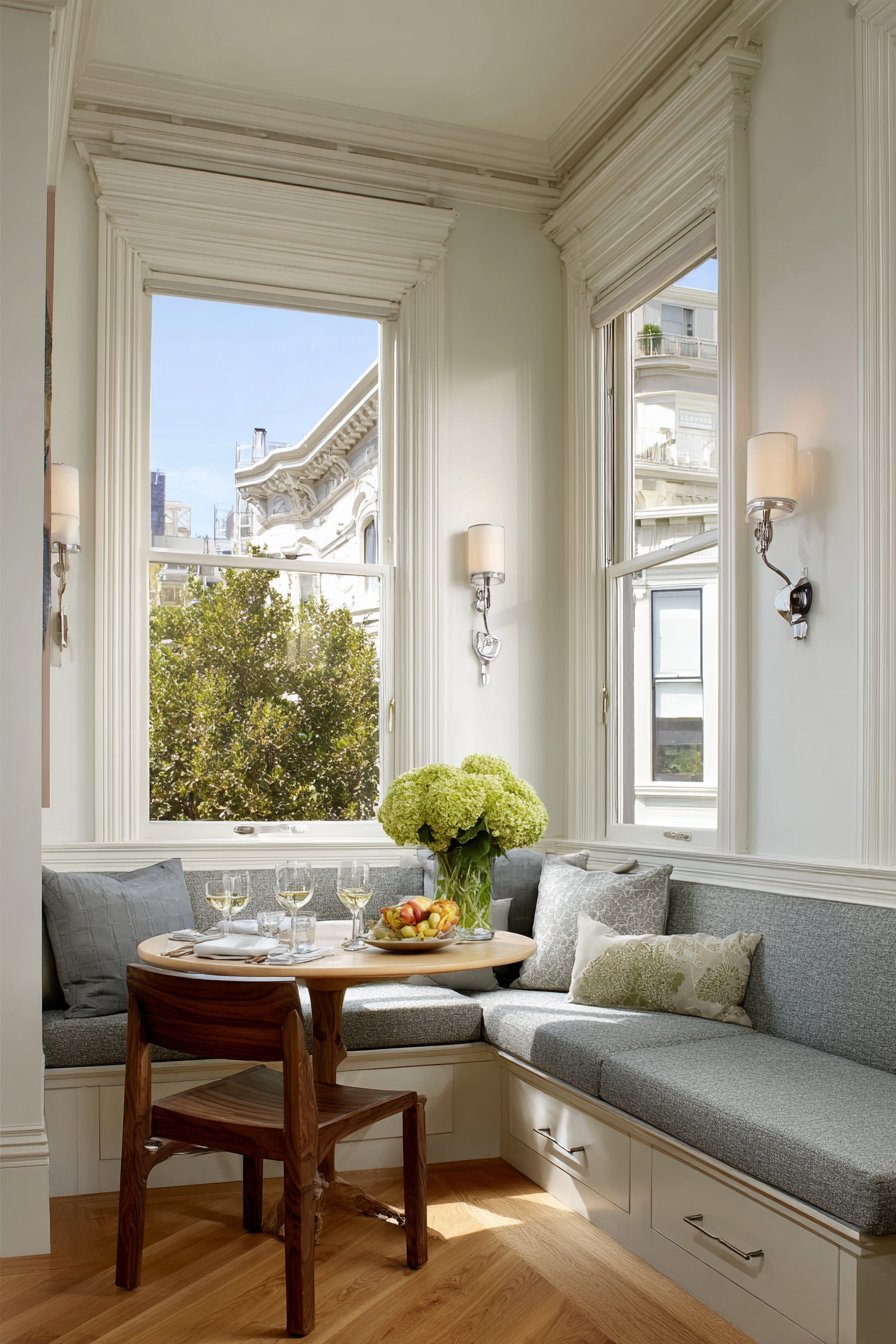
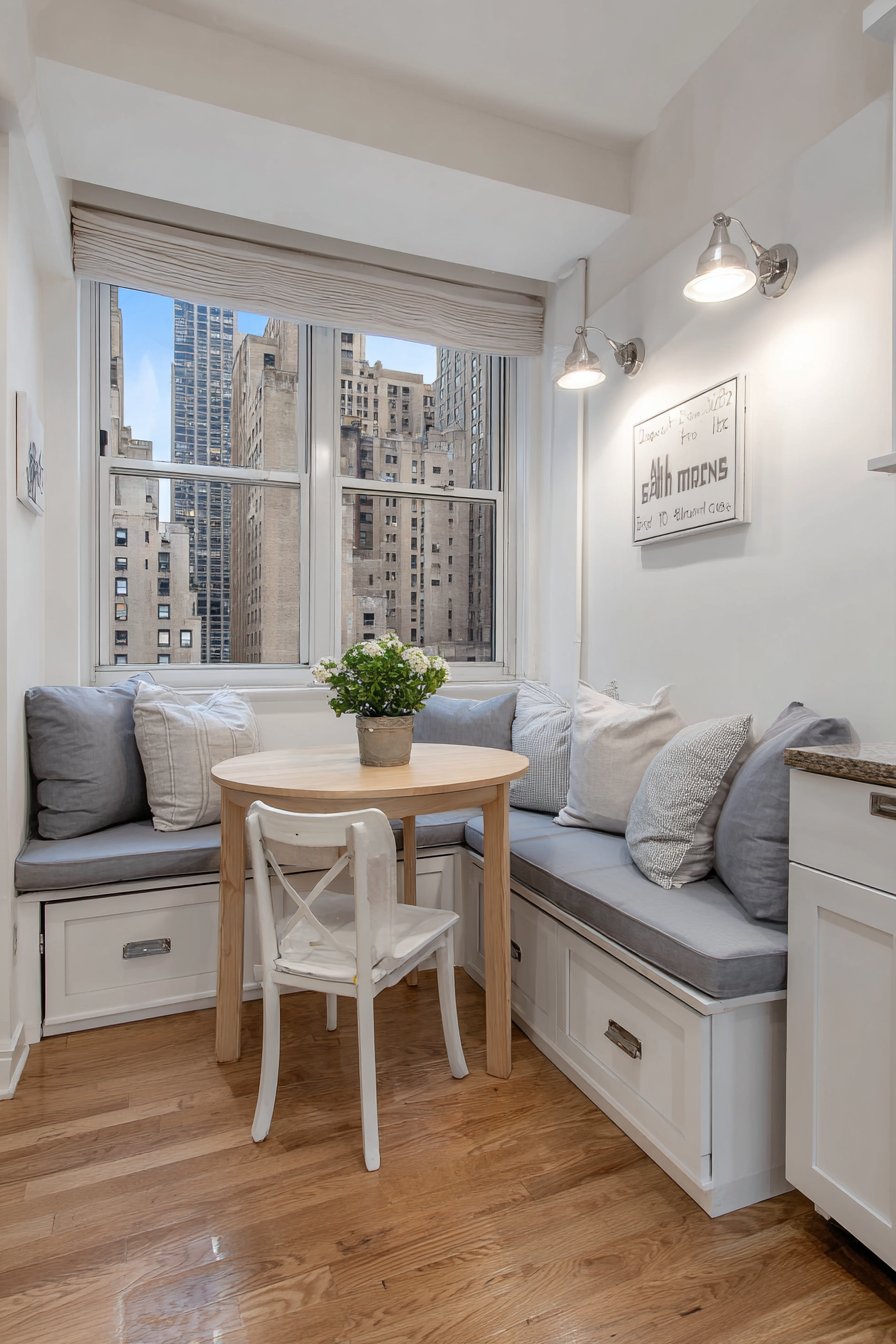
Space efficiency requires creative thinking and multi-functional furniture that adapts to changing needs throughout the day. This kitchen nook design showcases a corner banquette with storage drawers and innovative fold-down sides that expand seating capacity when needed while folding flat against walls when space is required for other activities. The bench features durable grey performance fabric chosen specifically for high-traffic use and easy maintenance—practical considerations that don’t compromise aesthetic appeal.
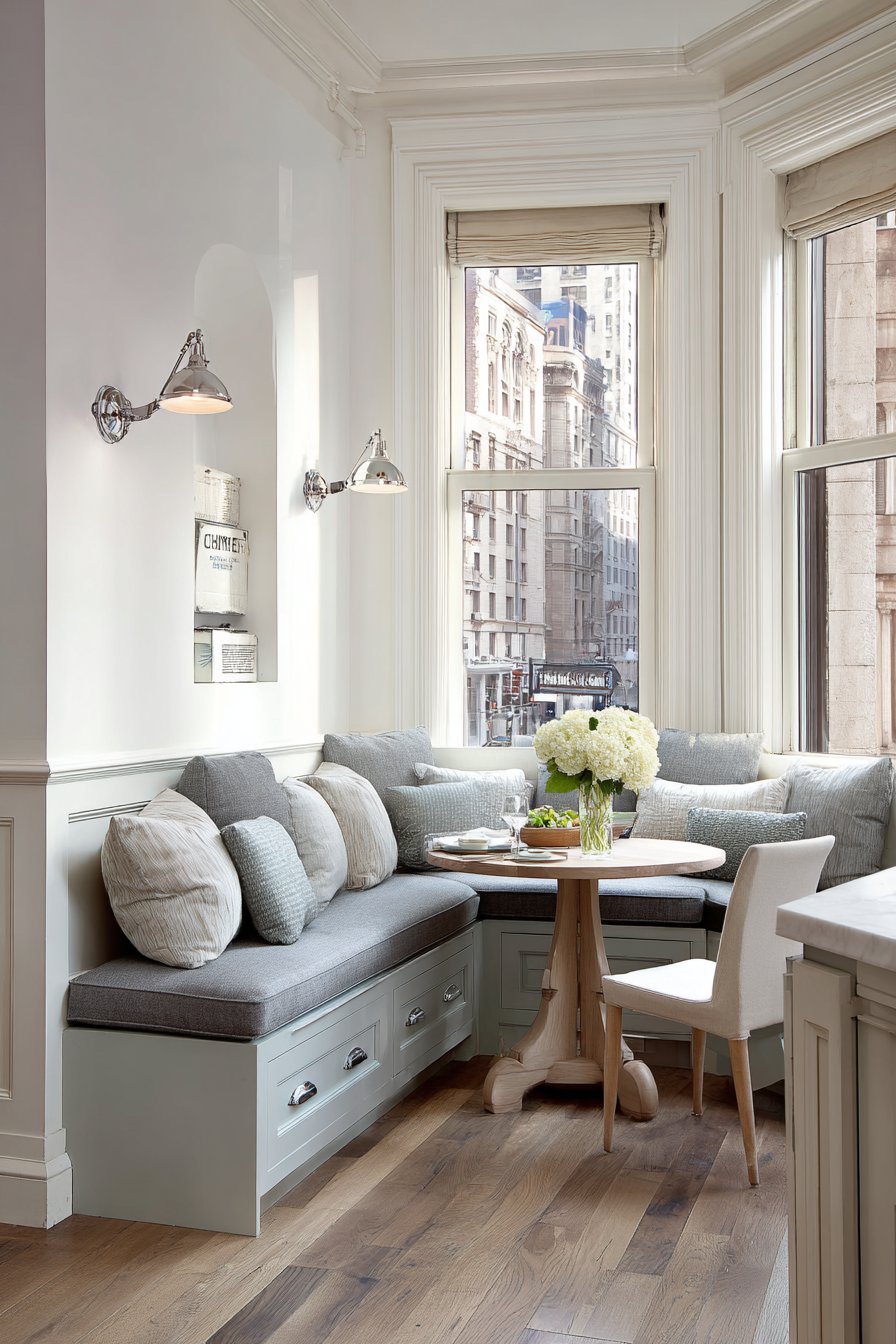
A small round drop-leaf table in light wood demonstrates space-saving flexibility through expanding leaves that increase dining surface when guests arrive, then fold down to minimal footprint for daily use. Two stackable chairs tuck underneath the table when not needed, their clever design allowing them to nest together and virtually disappear. Wall-mounted swing-arm sconces eliminate table lamps that would consume precious surface area, their adjustable arms providing directed light for reading or dining as needed.
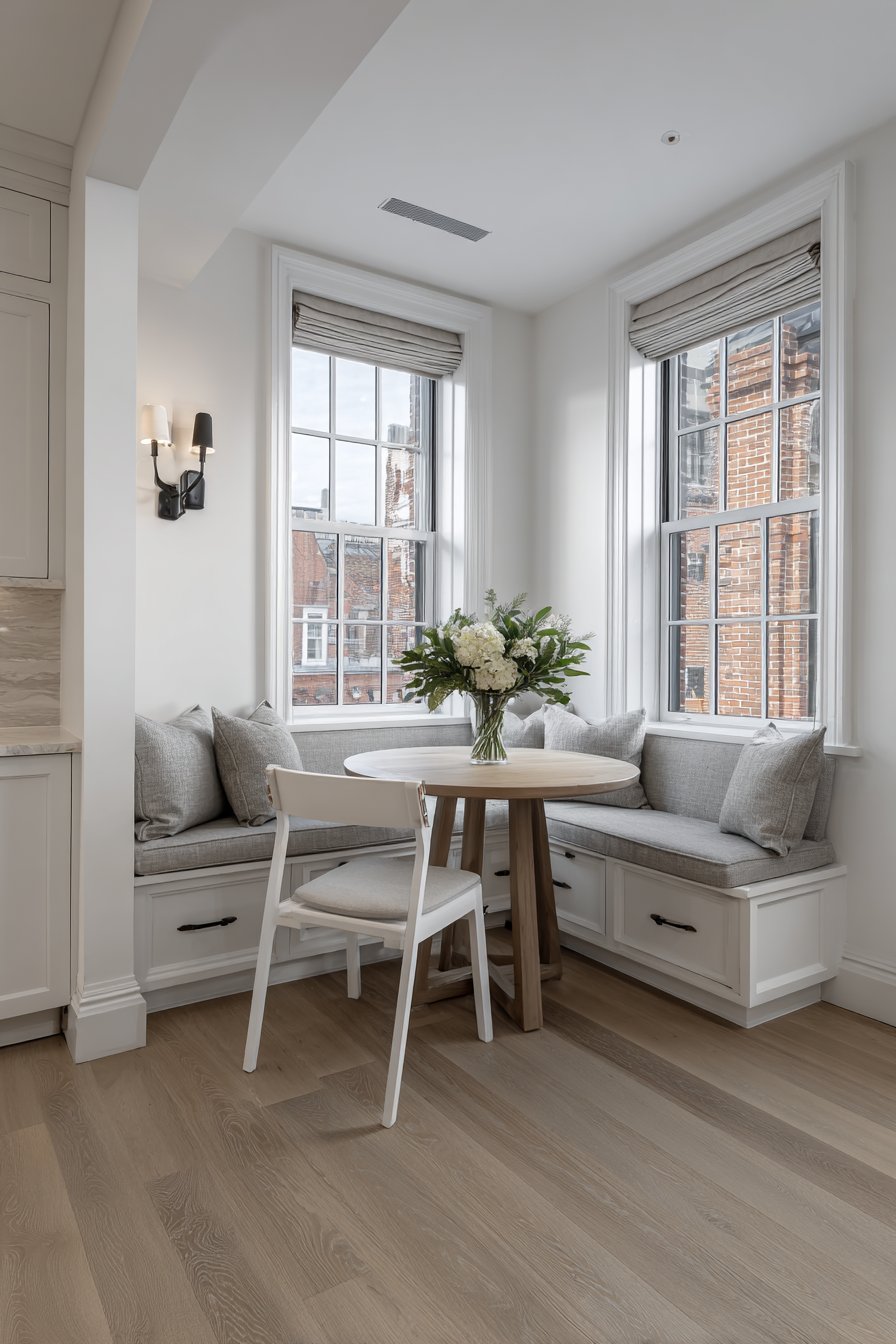
This nook fits snugly in a small kitchen corner with white walls and simple window treatment that maintains clean, uncluttered appearance. The design proves that limited square footage need not mean limited functionality—thoughtful planning and purposeful furniture selection allow small spaces to serve all necessary functions without feeling cramped or compromised. This approach requires discipline in selecting only truly necessary items and ensuring each piece serves multiple purposes.
Key Design Tips: Choose furniture with multiple functions like storage ottomans, drop-leaf tables, or convertible pieces. Select stackable or folding seating that stores compactly when not in use. Install wall-mounted lighting to preserve table and floor space for other purposes. Use performance fabrics rated for heavy use and stain resistance in small spaces that see constant activity. Maintain light color palette to maximize sense of spaciousness in compact areas. Plan traffic flow carefully to ensure space remains functional rather than cramped despite maximum furniture.
24. Crisp Preppy Style
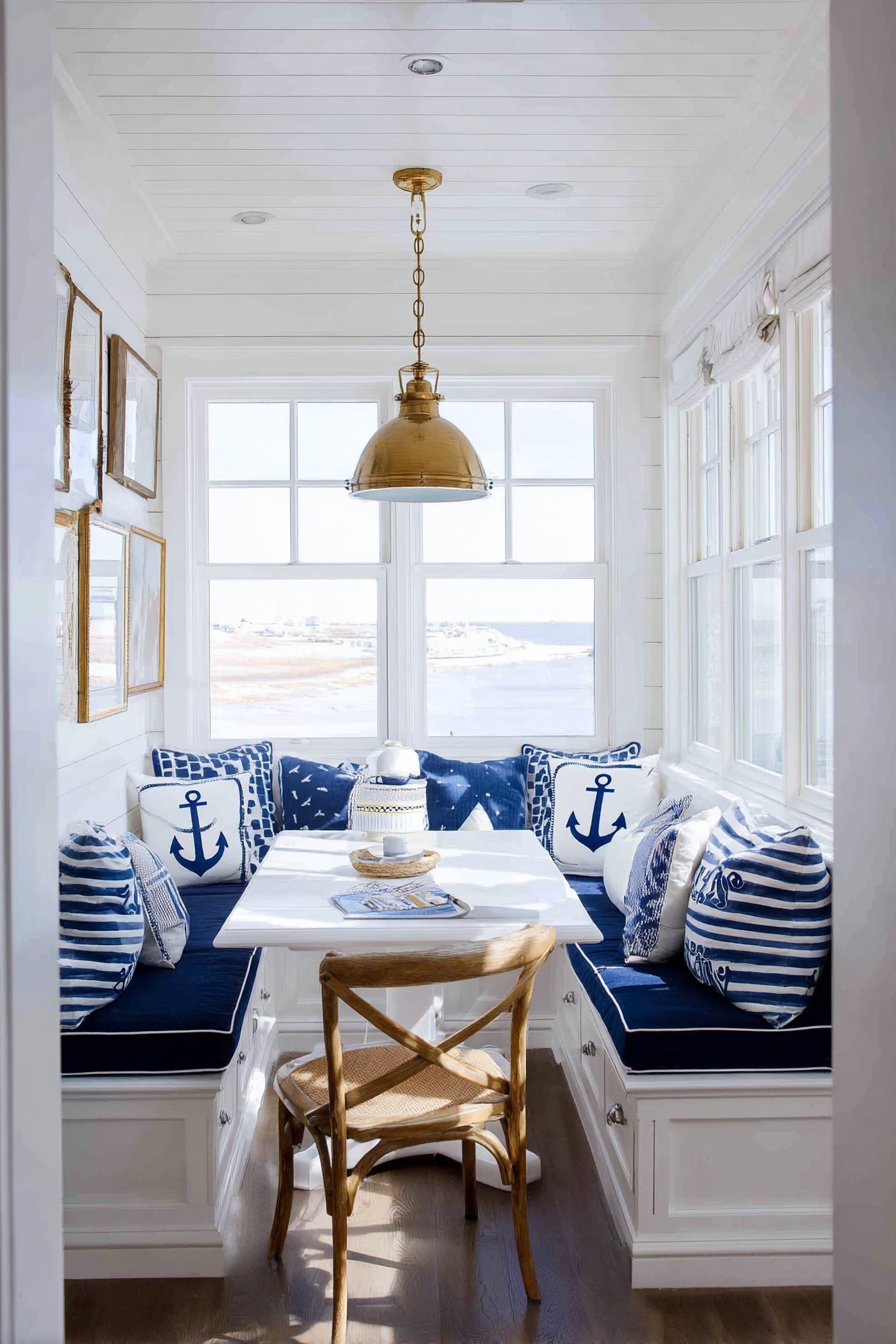
Preppy design celebrates clean, classic American style through navy and white color combinations, traditional patterns, and quality materials. This kitchen nook features a built-in bench with navy blue cushions piped in white grosgrain ribbon, the precise tailoring and contrast trim creating polished, intentional appearance. Matching throw pillows in classic patterns like stripes and anchors introduce nautical references without overwhelming the clean aesthetic.
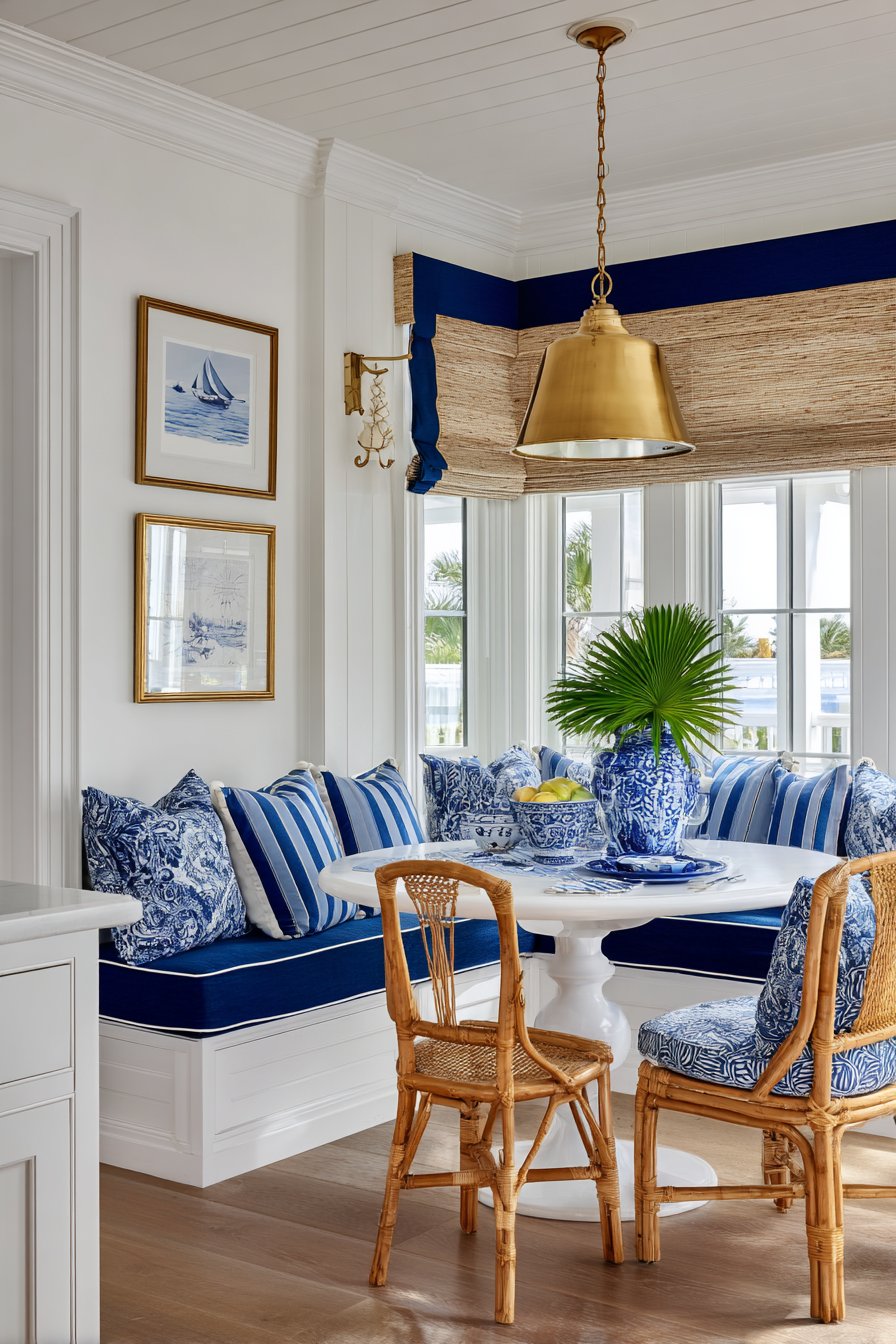
A white painted pedestal table centers the space with timeless form, its crisp color and traditional silhouette providing neutral foundation for the blue and white color story. Bamboo-style chairs in natural finish add organic warmth and preppy material reference—bamboo has long been associated with casual elegance in coastal and country club settings. The chairs’ natural color provides necessary contrast against the navy and white while maintaining the overall light, fresh feeling.
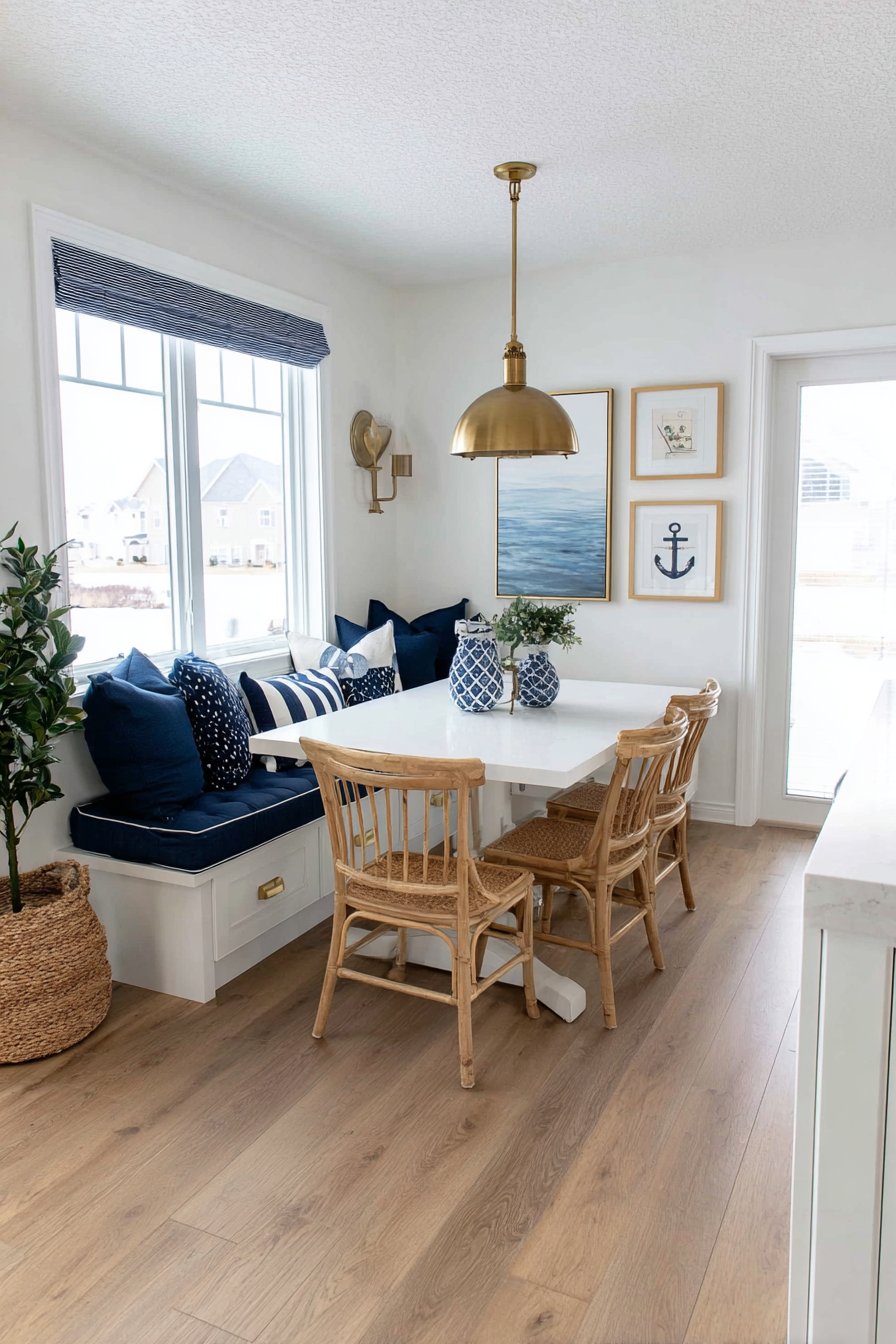
Walls painted crisp white with navy blue trim create sharp architectural definition, the contrast between wall and trim colors emphasizing traditional molding and architectural details. Nautical-themed artwork in gilt frames adds sophistication and thematic consistency, the gold frames providing warm metallic accent against the cool color palette. A schoolhouse pendant light in brass finish provides overhead illumination through classic fixture design, its warm metallic finish complementing the gilt frames.
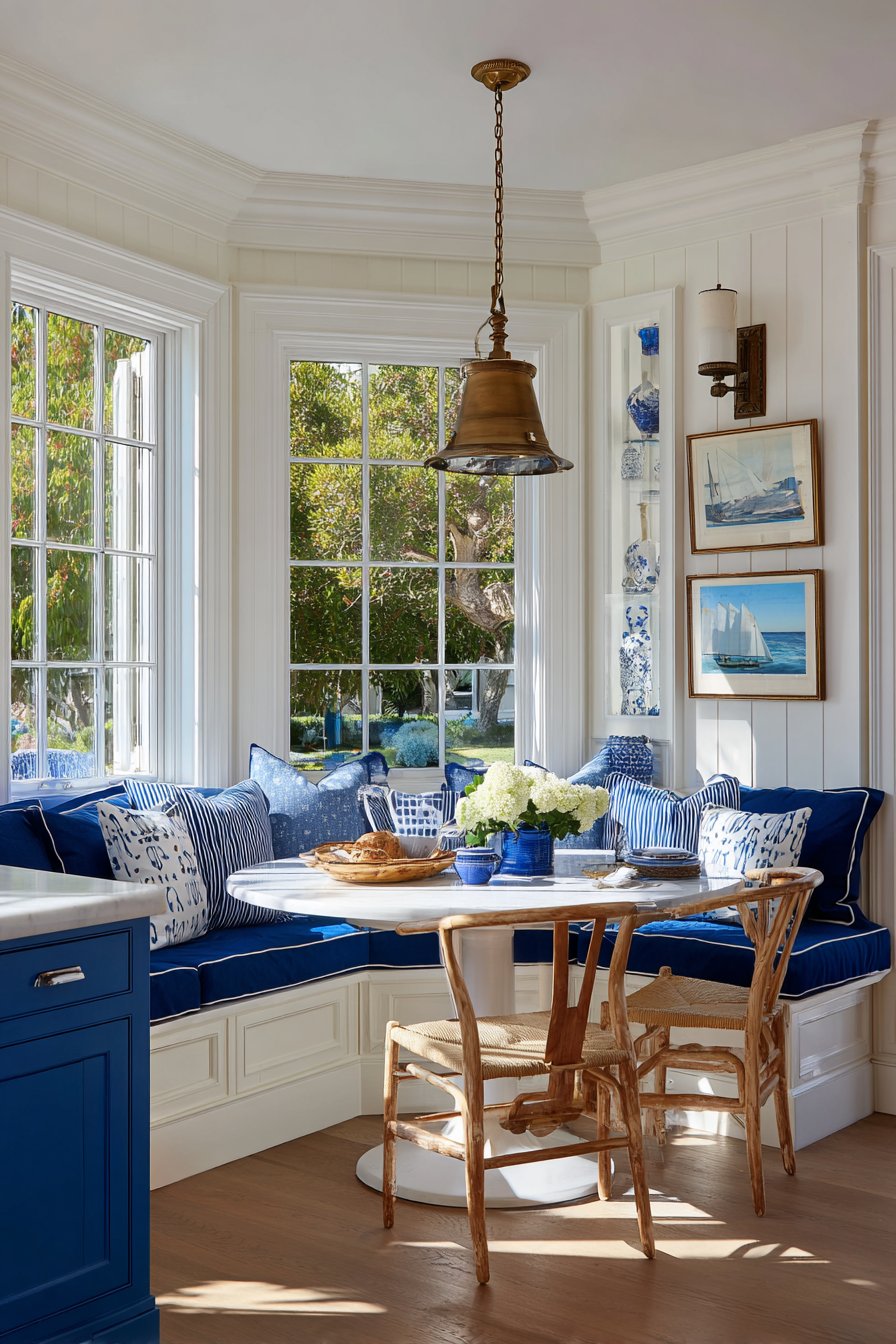
Key Design Tips: Embrace navy and white as foundation color palette, adding warm wood tones and brass for contrast. Choose classic patterns including stripes, anchors, geometric designs, and subtle florals. Incorporate traditional materials like bamboo, rattan, and natural fibers for texture and warmth. Add crisp white painted furniture for clean, fresh foundation. Select brass or gold hardware and lighting fixtures to introduce warm metallic contrast. Display nautical-themed artwork or accessories with restraint—suggestions rather than literal beach house decoration.
25. Authentic Southwestern Character
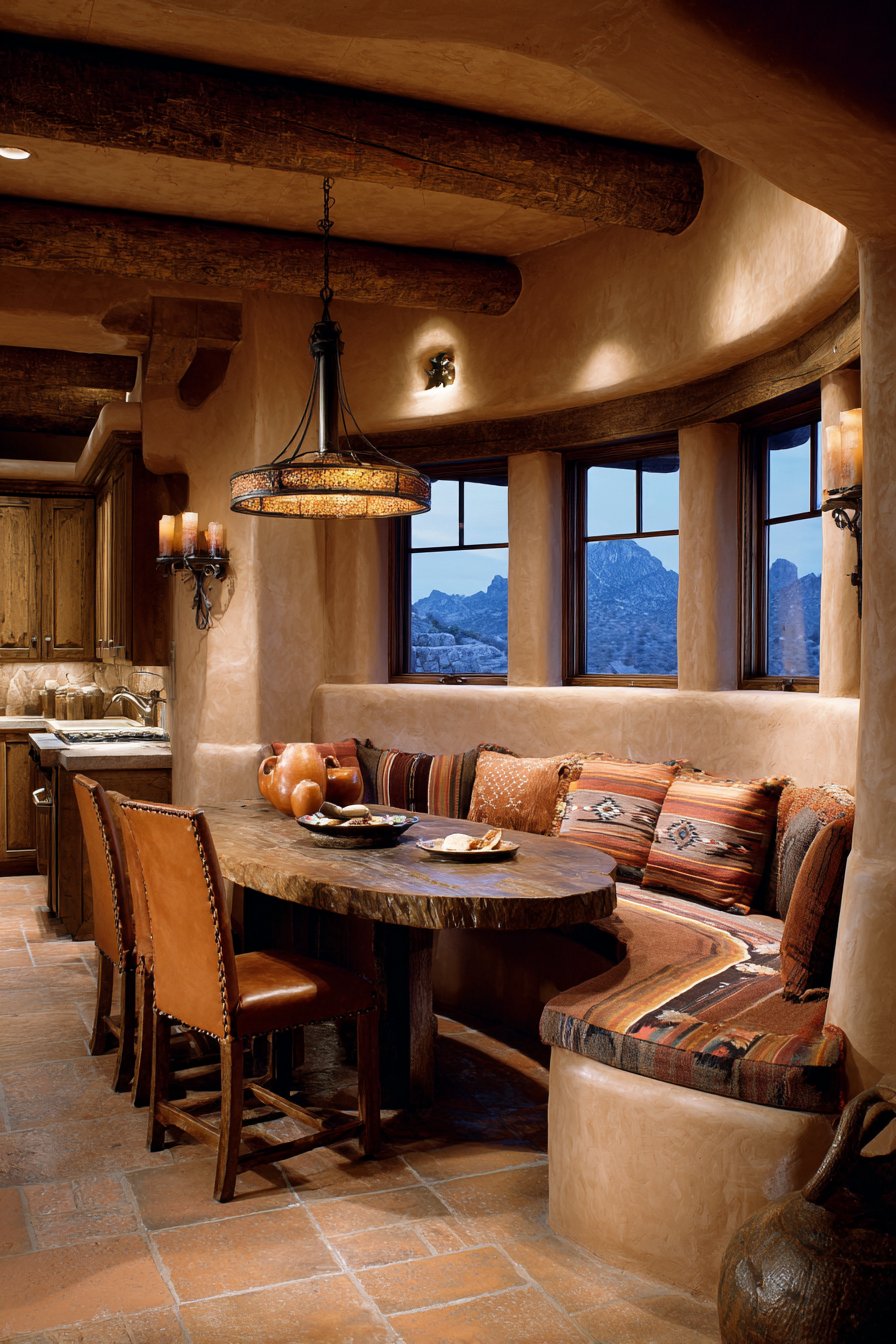
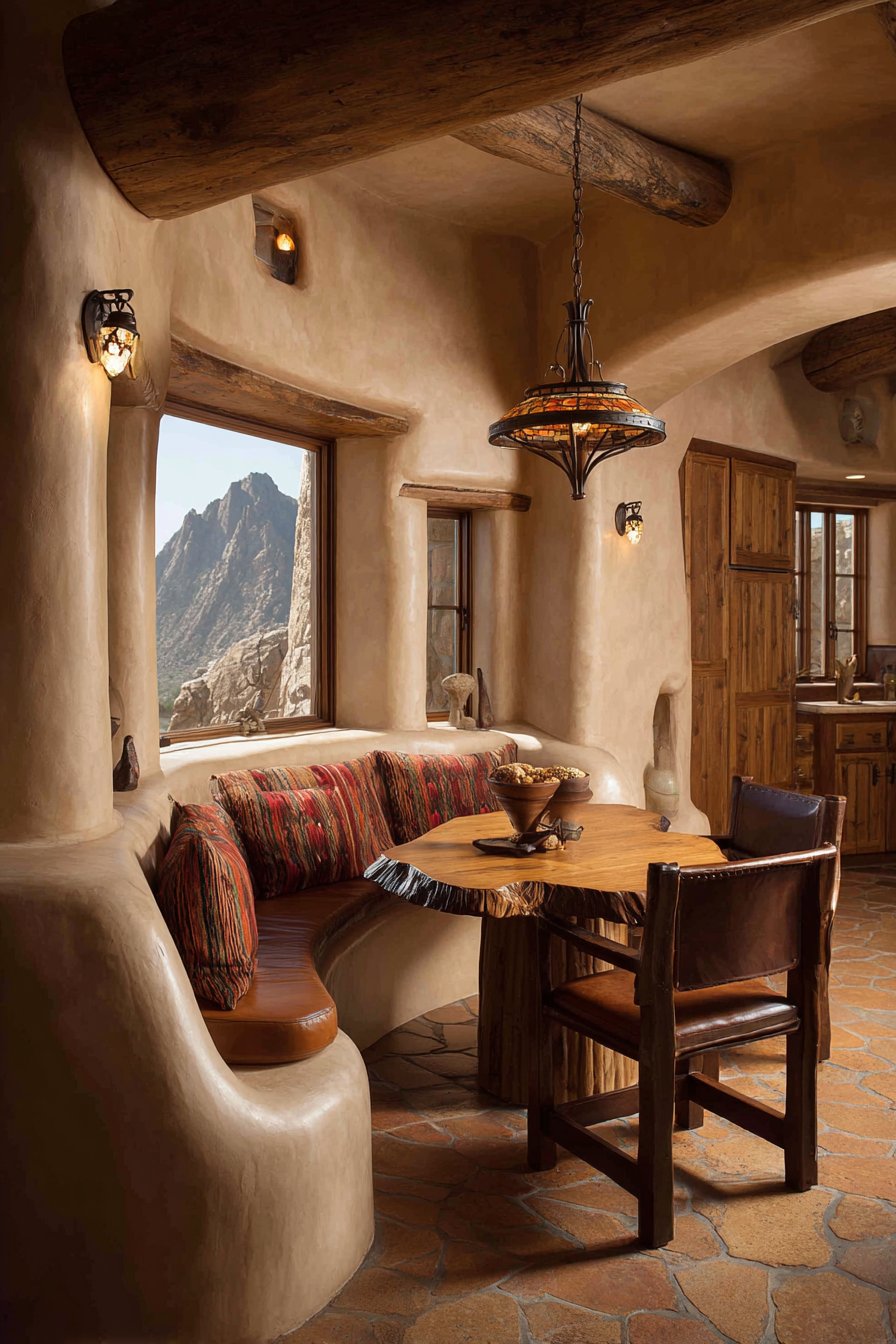
Southwestern design celebrates the distinctive regional aesthetic of the American Southwest through earth tones, handcrafted elements, and Native American influences. This kitchen nook features a curved adobe-style built-in bench, its organic form mimicking traditional mud brick construction methods. Colorful woven textile cushions in traditional Native American patterns introduce vibrant geometric designs and celebrate indigenous weaving traditions through authentic patterns and colors.
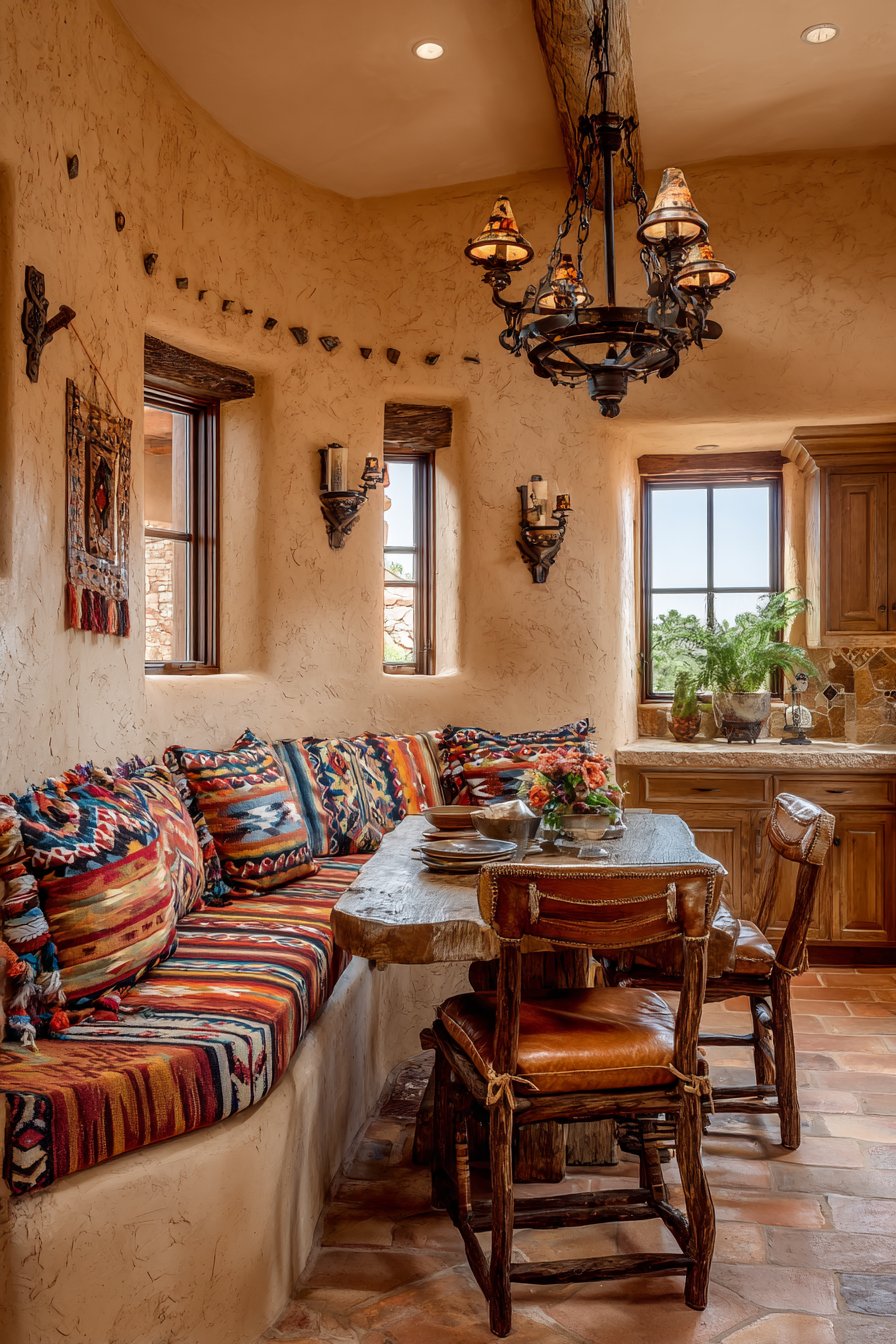
A rustic mesquite wood table with natural edge and hand-carved details provides the dining surface through regional wood species and artisan craftsmanship. Mesquite’s distinctive grain pattern and warm honey color make it immediately recognizable as Southwestern material. Equipale chairs featuring leather and wood construction demonstrate traditional Mexican furniture-making techniques, their pigskin seats stretched over wood frames and brass tack details creating distinctive regional character.
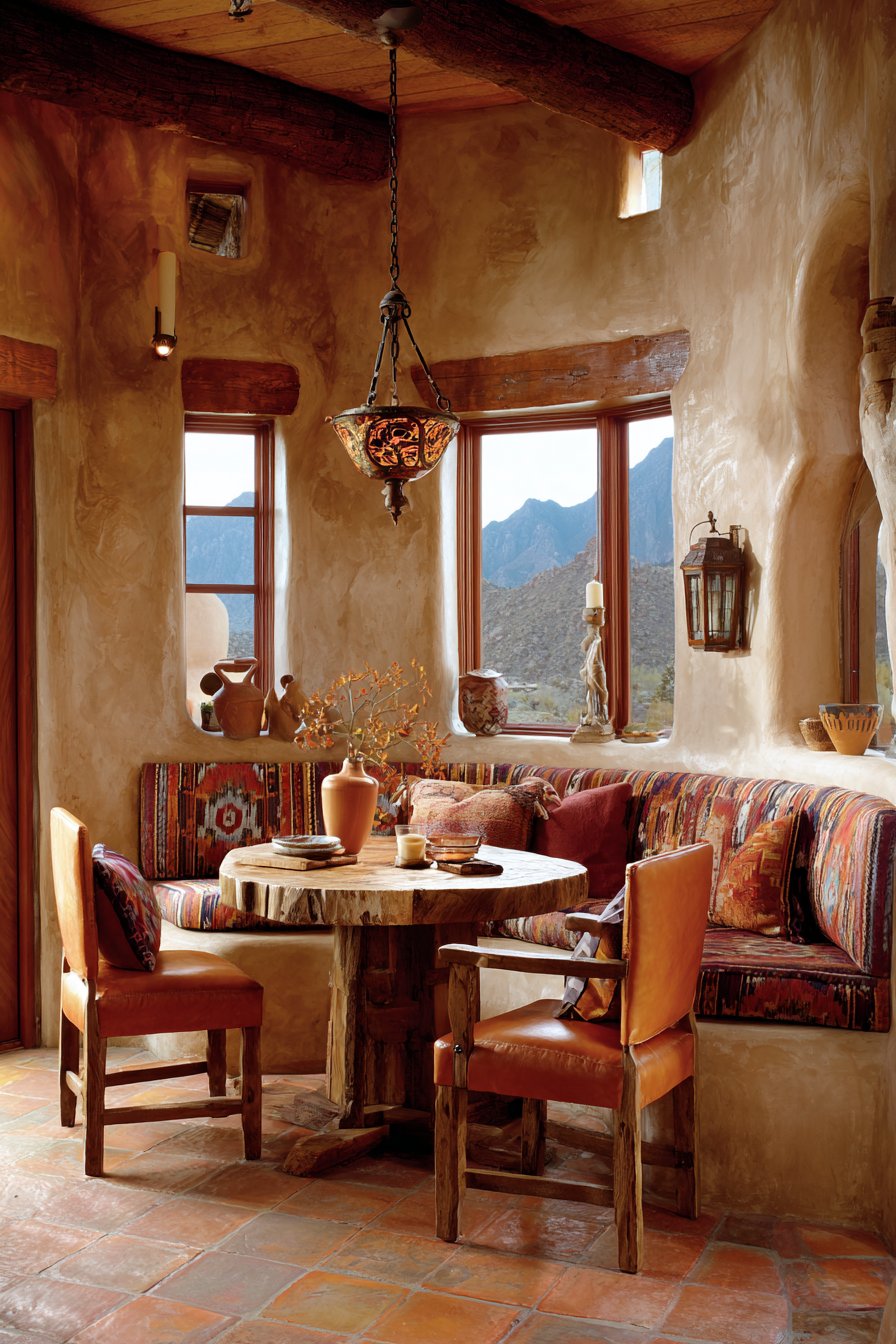
Terracotta tile flooring establishes warm, earthy foundation with natural color variations, while textured plaster walls in warm sand tones create desert ambiance through authentic material choices. Small windows with wooden lintels frame dramatic mountain or desert views, the traditional construction methods and modest window sizes reflecting historical building practices in extreme climates. A wrought iron chandelier with mica shades provides warm illumination through translucent stone panels that diffuse light beautifully.
Key Design Tips: Choose earth tone palette including terracotta, sand, turquoise, and warm browns for authentic regional color. Incorporate handwoven textiles in traditional Native American patterns for cultural authenticity and vibrant color. Select regional wood species like mesquite, pine, or juniper with natural edges and rustic character. Add wrought iron elements in traditional Spanish colonial forms with hand-forged details. Use terracotta tile, saltillo tile, or natural stone for flooring with authentic Southwestern character. Include handcrafted accessories like pottery, baskets, and carved wood pieces that celebrate artisan traditions.
26. Balanced Transitional Modern Design
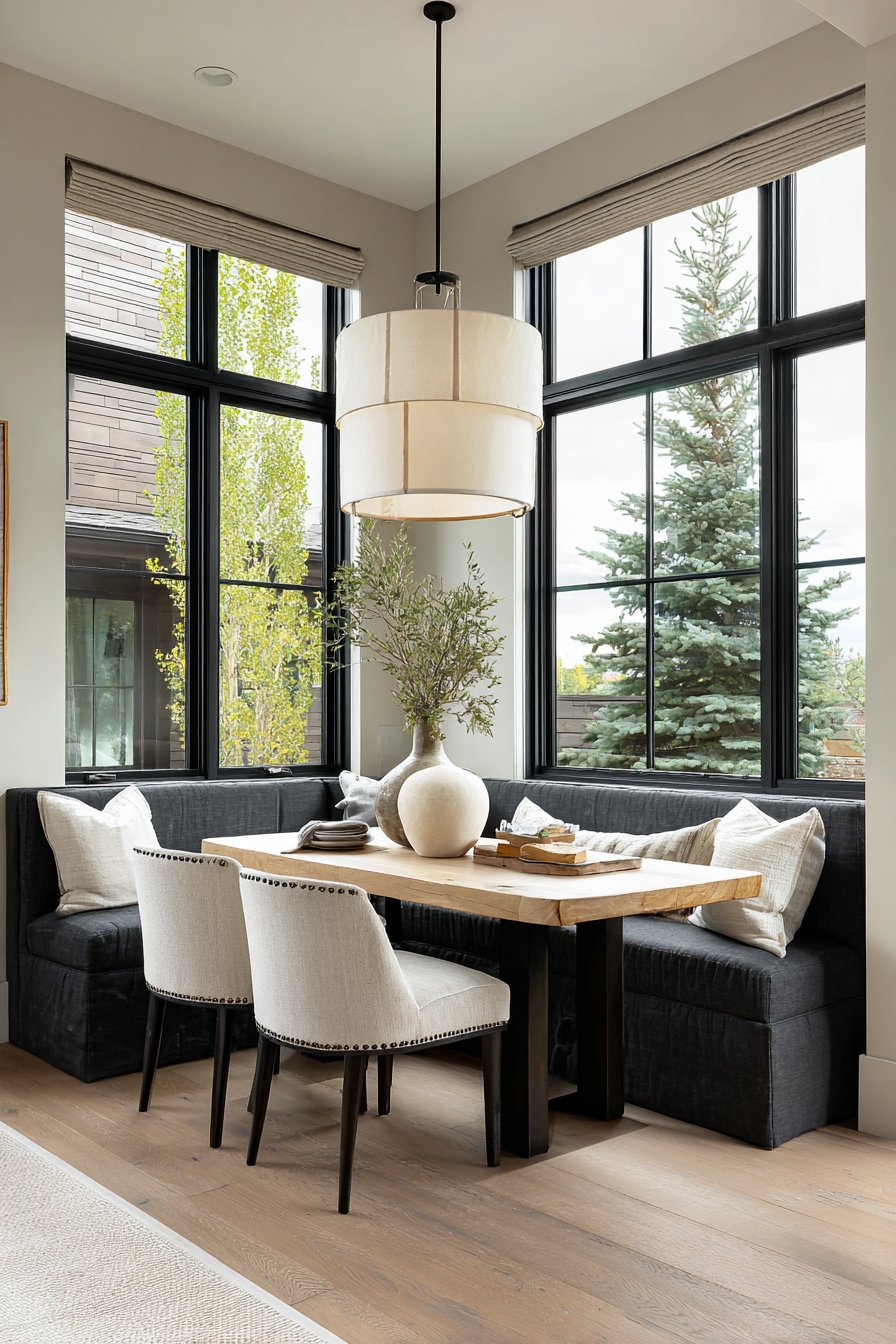
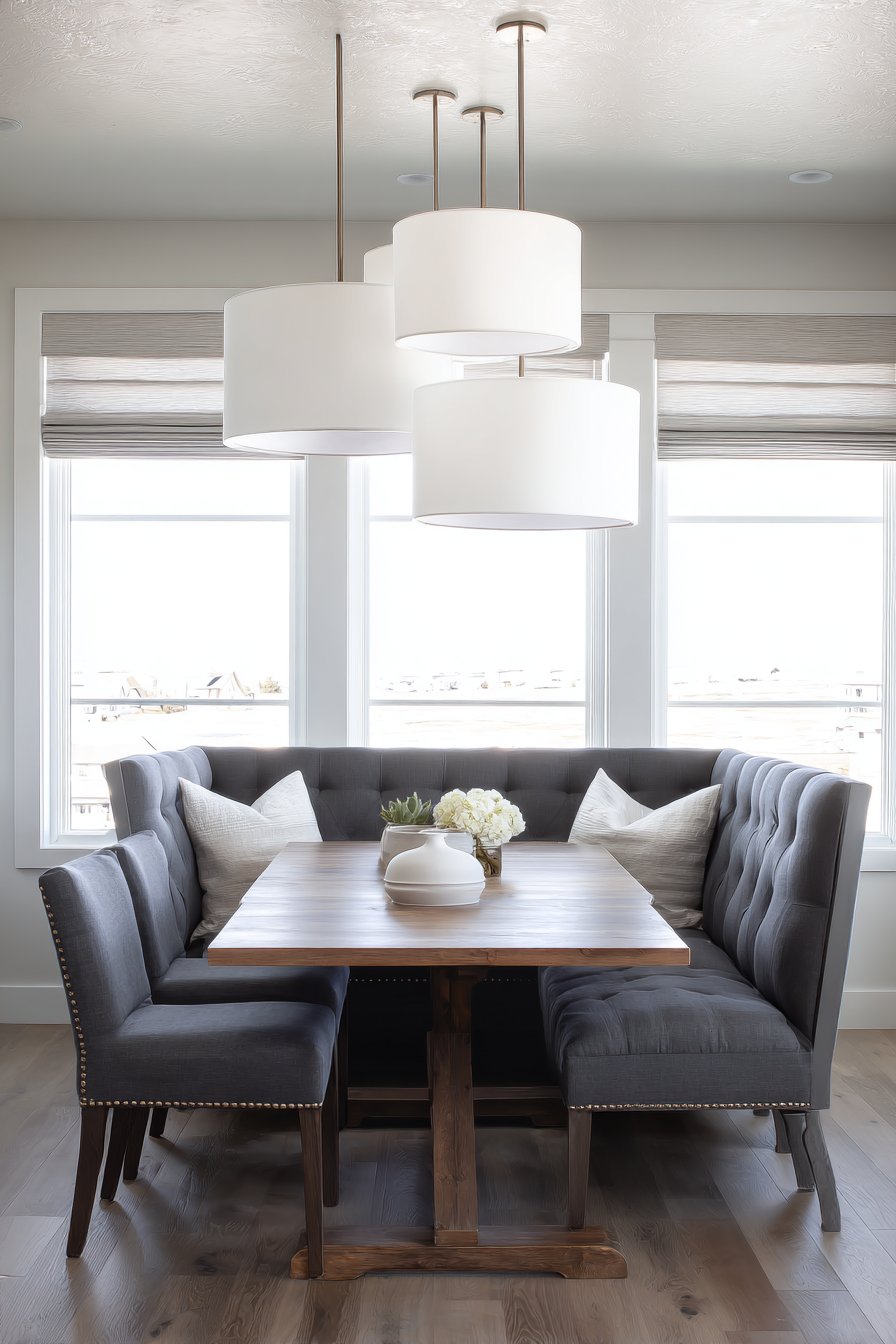
Transitional modern design updates traditional comfort with contemporary clean lines and current color palettes. This kitchen nook features a sophisticated L-shaped banquette in charcoal grey linen with precise welting detail that adds definition and tailored finish. Tapered wooden legs in espresso finish provide contemporary detail while maintaining furniture tradition of exposed legs that ground pieces visually and practically.
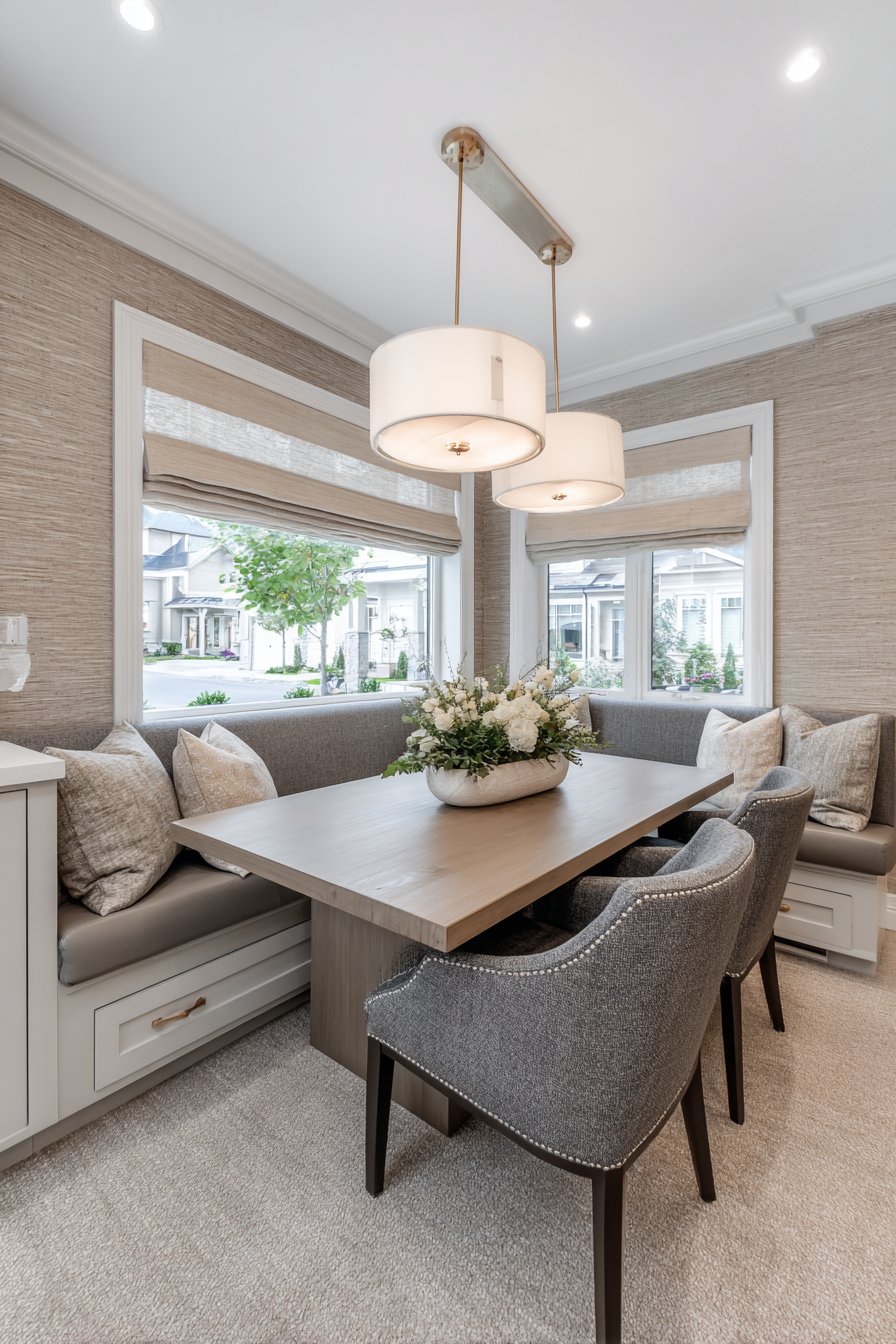
A rectangular dining table with waterfall edge in white oak demonstrates contemporary design through continuous grain flow where tabletop material cascades down table ends in smooth, uninterrupted surface. This modern detail adds visual interest and showcases wood grain beauty while maintaining relatively simple overall form. Upholstered side chairs featuring nailhead trim provide traditional decorative detail that softens contemporary lines and adds tactile interest.
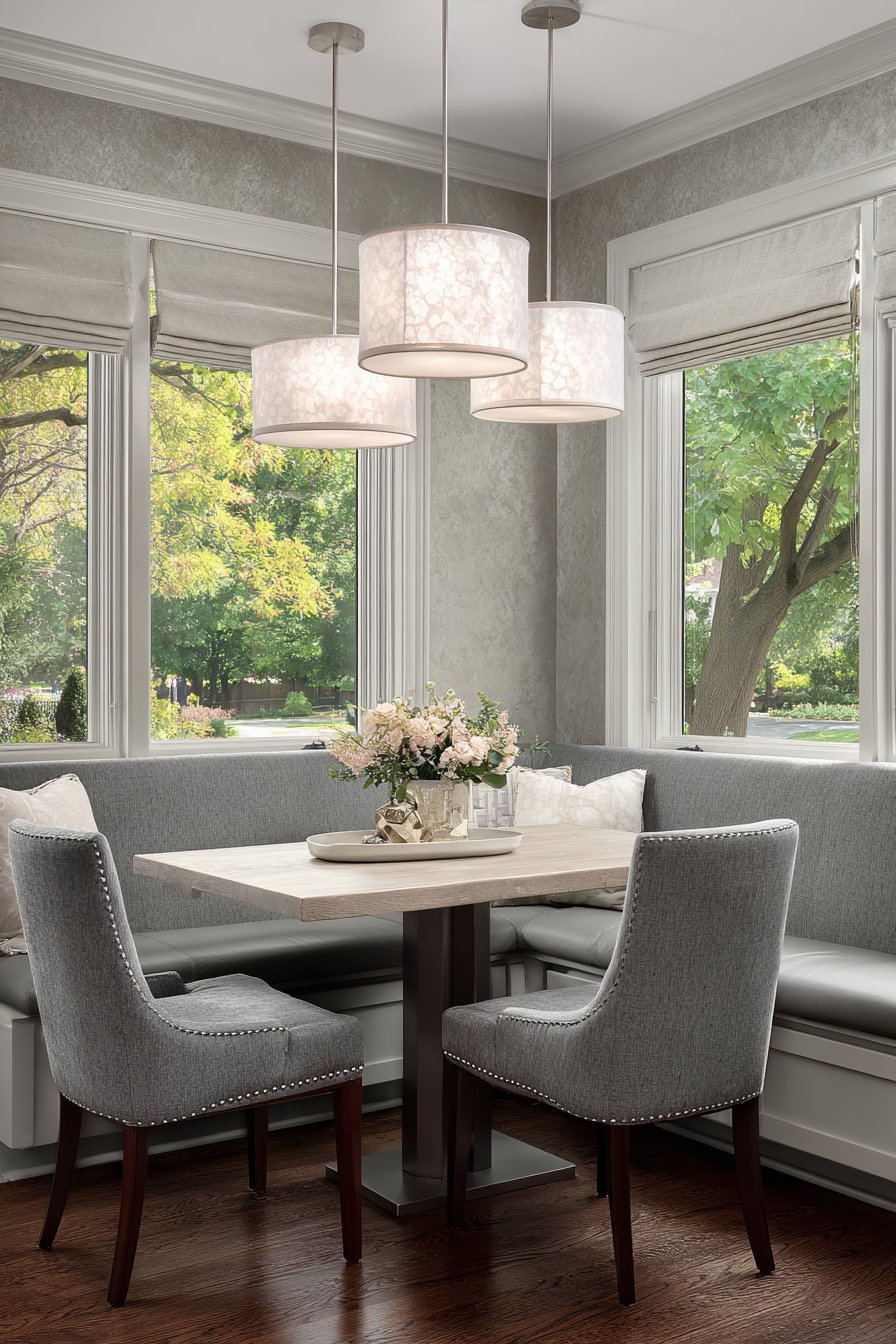
Contemporary drum pendant lights in white linen hang above in cluster of three, their simple cylindrical forms and natural fabric shades providing soft, diffused illumination while maintaining modern aesthetic. Large windows with simple roller shades in natural fiber allow filtered daylight without fussy treatments, their minimal styling keeping focus on view and natural light quality. Walls painted in greige with subtle texture create sophisticated neutral backdrop that works with both traditional and contemporary elements.
Key Design Tips: Select neutral upholstery colors in current tones like charcoal, greige, and warm grey for versatile foundation. Incorporate both traditional details like nailhead trim and contemporary elements like waterfall edges. Choose simple window treatments that filter light without decorative excess. Select pendant lighting in natural materials like linen, jute, or paper for organic warmth. Maintain edited aesthetic with carefully curated accessories rather than abundant decoration. Invest in quality construction and materials that will remain relevant beyond passing trends.
27. Nostalgic Vintage Authenticity
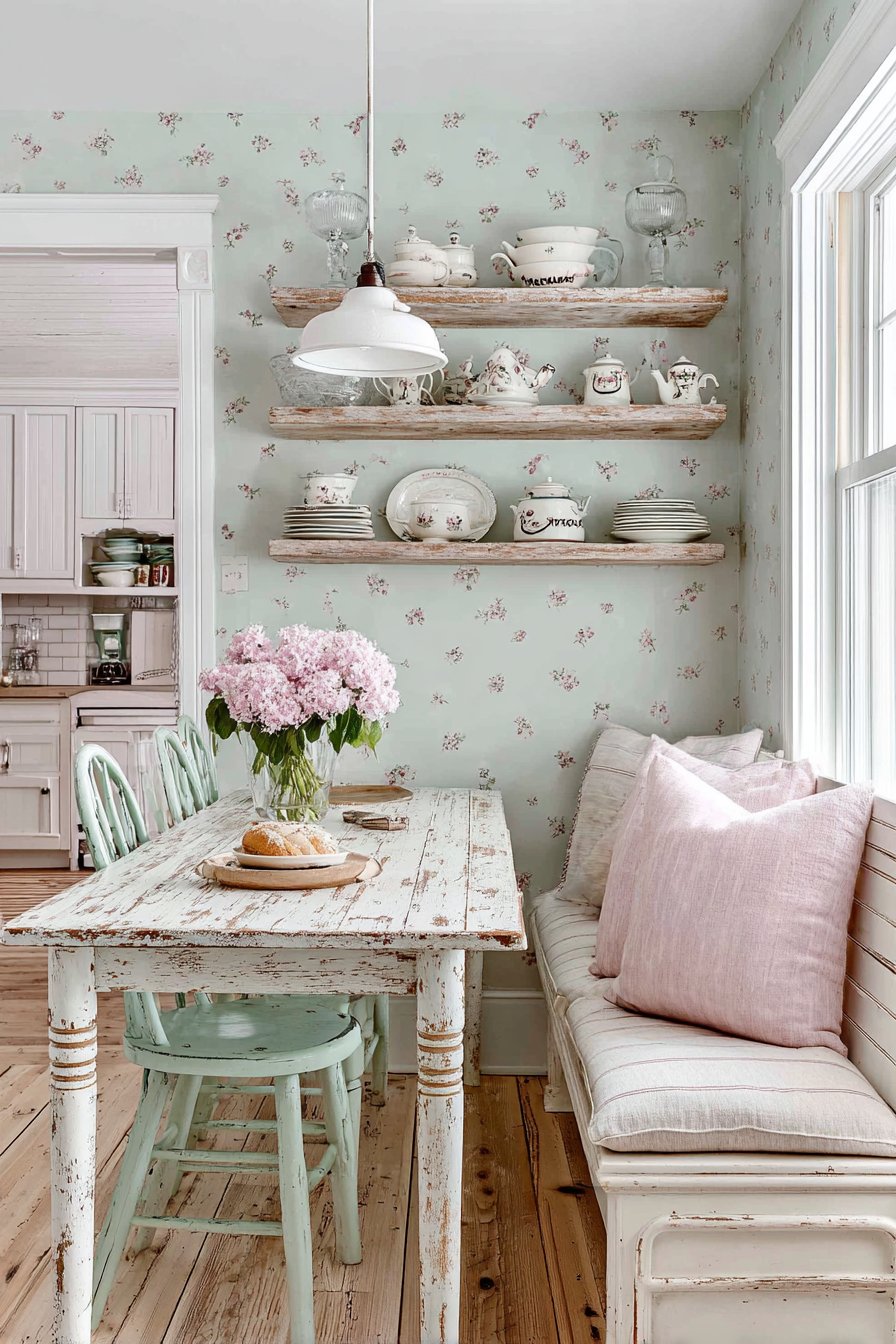
Vintage design celebrates historical periods through authentic antique pieces and period-appropriate reproductions that honor specific eras. This kitchen nook features an antique church pew refinished in natural wood, its substantial construction and original patina providing irreplaceable character and connection to history. The pew’s long bench format naturally suits dining applications while its religious origins add interesting narrative. A thin cushion in grain sack fabric provides minimal softness without obscuring the wood’s beauty.
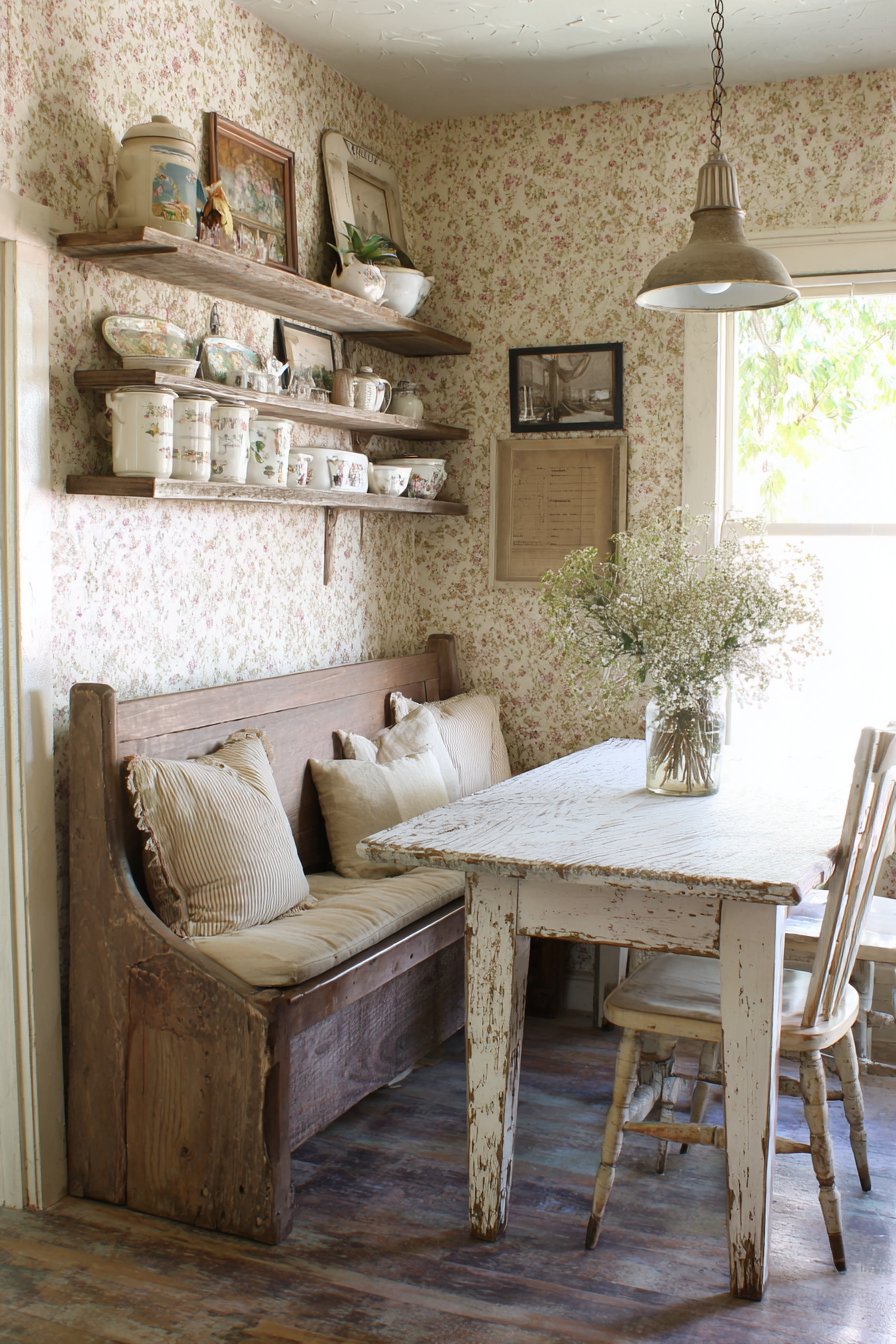
A vintage farmhouse table with original paint wear and distressed finish serves as the dining surface, its authentic aging patterns impossible to replicate through artificial distressing techniques. The table’s history—visible through paint loss, scratches, and color variations—creates instant character and visual interest. Antique ice cream parlor chairs with their distinctive twisted metal frames and worn wooden seats complete the seating arrangement with genuine period pieces that tell individual stories.
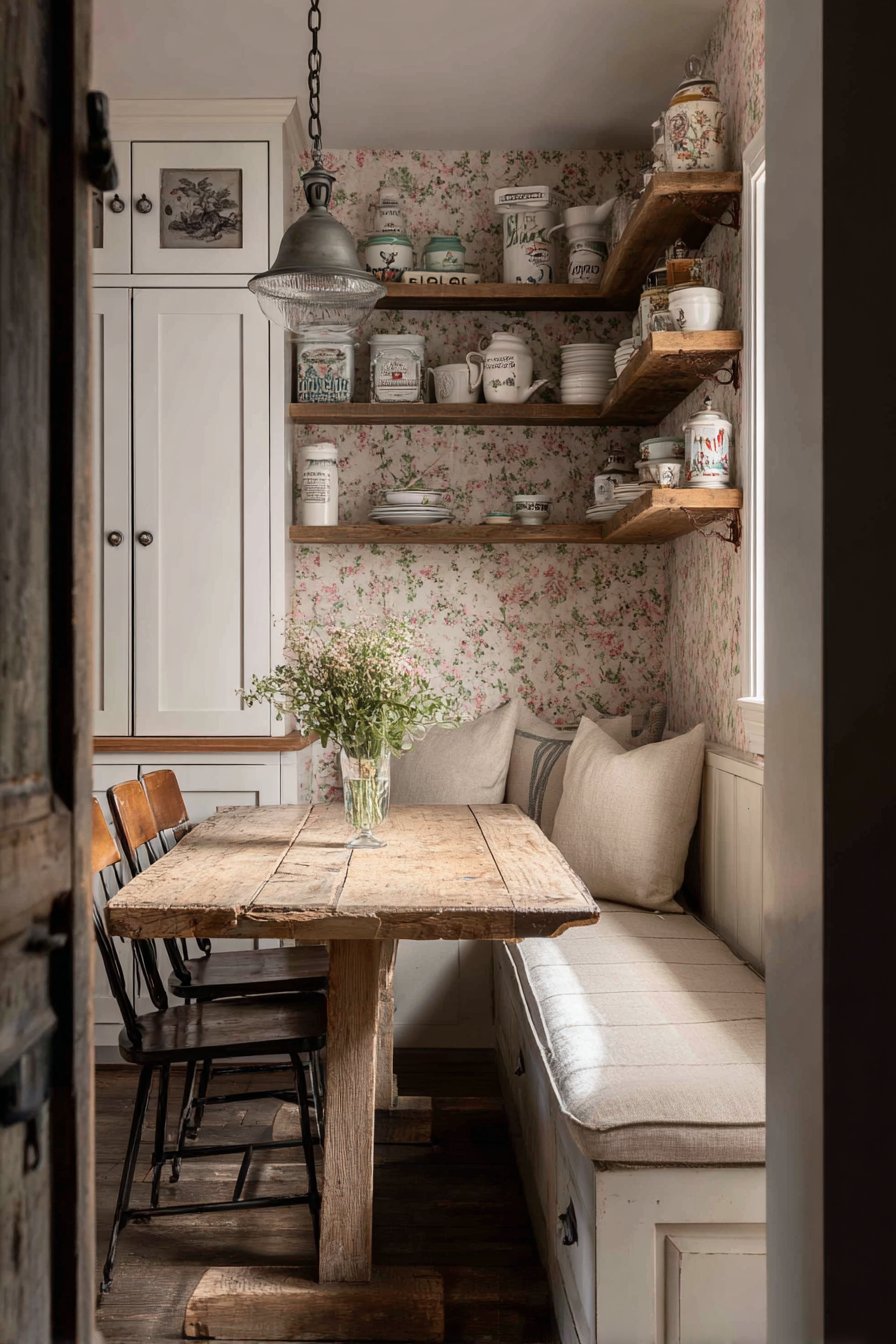
Collections of vintage enamelware and transferware displayed on open shelves add period authenticity through actual antique objects rather than reproduction accessories. Walls covered in vintage-reproduction wallpaper with small floral motif create appropriate backdrop, while a reproduction schoolhouse pendant maintains period aesthetic through historically accurate design. This design succeeds through commitment to authenticity—seeking genuine antiques and carefully selected reproductions rather than modern interpretations of vintage style.
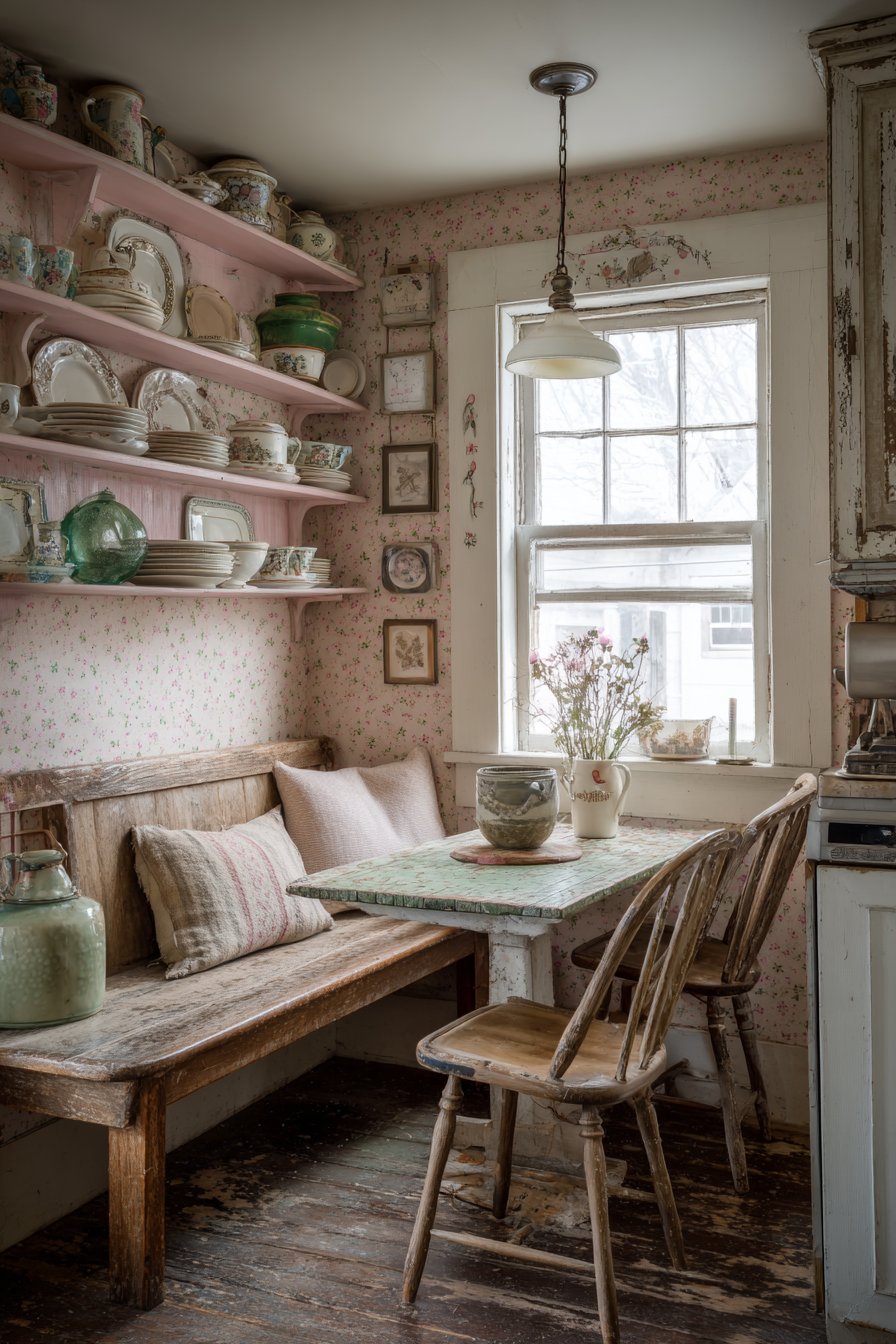
Key Design Tips: Invest in genuine antique furniture with authentic aging, patina, and construction methods rather than artificially distressed reproductions. Shop estate sales, auctions, and antique dealers for period pieces with character and history. Display collections of vintage objects like enamelware, pottery, or advertising signs that reinforce the chosen era. Choose reproduction wallpapers and fabrics based on historical documents rather than modern interpretations. Appreciate honest wear patterns and patina rather than seeking pristine condition. Mix periods thoughtfully—combining Victorian with Art Deco rarely succeeds, but pieces from 20-30 year spans often coordinate beautifully.
Why These Kitchen Nook Designs Represent the Best Approaches
The twenty-seven kitchen nook designs presented throughout this comprehensive guide represent the pinnacle of contemporary breakfast nook planning because they address the full spectrum of homeowner needs, aesthetic preferences, and spatial constraints. From compact urban apartments requiring ingenious space-saving solutions to generous suburban homes with bay window alcoves perfect for built-in banquettes, these designs demonstrate that successful kitchen nooks must balance multiple considerations simultaneously—spatial efficiency, ergonomic comfort, aesthetic appeal, storage capacity, lighting quality, and integration with overall kitchen design.
The variety of style approaches showcased—from rustic farmhouse authenticity through sleek contemporary minimalism to opulent maximalist drama—acknowledges that effective interior design must reflect occupant personality and lifestyle rather than following arbitrary trend dictates. A young professional couple prioritizing clean lines and minimal maintenance requires fundamentally different solutions than a growing family needing durable materials and abundant storage, while empty nesters may prioritize sophisticated entertaining spaces and luxurious finishes. These diverse designs provide roadmaps for various demographic groups and design sensibilities, ensuring readers discover approaches that resonate with their specific circumstances and aesthetic inclinations.
Each design emphasizes practical implementation details that transform aspirational ideas into achievable projects. The inclusion of specific material recommendations, construction techniques, furniture proportions, and lighting strategies provides actionable guidance rather than merely inspirational imagery. Discussion of performance fabrics for high-traffic seating, drop-leaf tables for space flexibility, and hidden storage integration addresses real-world concerns that determine whether designed spaces function successfully in daily life. This practical orientation distinguishes these kitchen nook concepts from purely decorative approaches that prioritize appearance over livability.
The designs also demonstrate sophisticated understanding of how material selection, color coordination, and spatial proportion create cohesive aesthetics within specific style categories. The Scandinavian minimalist nook’s pale oak furniture, neutral textiles, and abundant natural light work harmoniously because these elements share design DNA rooted in Nordic traditions. Similarly, the Mediterranean nook’s terracotta colors, wrought iron details, and textured plaster surfaces create authentic regional character through culturally appropriate material combinations. This attention to stylistic consistency and material appropriateness elevates these designs above eclectic collections of trendy elements lacking thematic coherence.
Furthermore, these kitchen nook ideas address the critical relationship between eating areas and adjacent kitchen spaces, recognizing that breakfast nooks exist within larger contexts requiring visual and functional integration. Color palette coordination, material continuity, and proportional relationships between nook furniture and kitchen cabinetry ensure that breakfast corners enhance rather than disrupt overall kitchen design. The most successful designs create subtle spatial definition through furniture arrangement, lighting levels, or elevation changes while maintaining open communication and sight lines that support family interaction and entertaining flow.
The emphasis on natural lighting throughout these designs acknowledges sunlight’s profound impact on mood, health, and spatial perception. Multiple designs position breakfast nooks adjacent to windows, incorporate sheer curtains that filter rather than block daylight, and select light-reflective surfaces that maximize illumination. This consistent attention to daylighting recognizes that breakfast nooks serve morning routines when natural light quality profoundly influences daily outlook and energy levels. Designs incorporating various lighting layers—ambient overhead fixtures, focused task lighting, and decorative accent lights—demonstrate sophisticated understanding of how illumination requirements shift throughout daily cycles and seasonal variations.
Storage integration represents another common thread linking these exemplary designs, with built-in benches concealing drawers, window seats incorporating cabinets, and wall-mounted solutions maximizing vertical space. This commitment to organized storage reflects contemporary life realities where kitchens accumulate numerous items requiring accessible yet concealed storage. By integrating storage within seating and architectural elements, these designs avoid cluttering compact breakfast nooks with additional furniture pieces while ensuring necessary items remain conveniently accessible.
The material durability considerations throughout these designs demonstrate practical wisdom earned through real-world experience. Recommendations for performance fabrics, sealed wood surfaces, and washable window treatments acknowledge that kitchen nooks experience frequent use, inevitable spills, and ongoing cleaning requirements. This realistic approach to material selection ensures that beautiful spaces remain beautiful through years of daily family life rather than appearing pristine only in initial installation photographs.
Finally, these kitchen nook concepts model appropriate budget allocation by distinguishing between investments in permanent architectural elements and more affordable decorative accessories. Built-in seating, quality tables, and durable chairs justify significant investment through longevity and daily use frequency, while cushions, window treatments, and decorative accessories allow for lower-cost updates when aesthetic preferences evolve. This layered approach to budget planning enables homeowners to create impressive breakfast nooks without financial overextension while maintaining flexibility for future style evolution.
Conclusion
Creating the perfect kitchen nook requires balancing numerous considerations—spatial constraints, aesthetic preferences, functional requirements, budget limitations, and lifestyle needs—into cohesive designs that enhance daily life while adding value to homes. The twenty-seven distinctive approaches explored throughout this comprehensive guide demonstrate that successful breakfast corners emerge from thoughtful attention to detail, quality material selection, and honest assessment of how spaces will actually be used rather than merely how they appear in photographs.
Whether you’re drawn to the cozy familiarity of farmhouse style, the refined elegance of traditional design, or the clean simplicity of contemporary minimalism, the fundamental principles remain consistent: prioritize comfortable seating appropriate to your family size, maximize natural lighting through strategic window placement and treatments, incorporate adequate storage to maintain organized spaces, select durable materials suited to kitchen environments, and ensure proportions work harmoniously with adjacent areas. These foundational considerations provide framework for successful kitchen nook design regardless of specific aesthetic direction.
The most important insight emerging from these diverse examples involves recognizing that effective kitchen nooks serve purposes far beyond merely providing eating surfaces. These intimate spaces become centers of family life where children complete homework while parents prepare dinner, where couples share morning coffee and conversation before work demands intrude, where friends gather for casual meals and extended discussions. The psychological and social value of well-designed breakfast corners justifies the planning effort and investment required to execute them properly.
As you embark on your own kitchen nook project, remember that perfection emerges through iteration and personal adaptation rather than rigid adherence to published examples. Use these designs as starting points for exploration, extracting elements that resonate with your sensibilities while adapting dimensions, materials, and details to suit your specific circumstances. Trust your instincts, prioritize quality over quantity in furniture selection, and create spaces that genuinely reflect your personality and lifestyle rather than mimicking magazine spreads that don’t align with how you actually live.
The kitchen nook represents one of home design’s most rewarding opportunities—a relatively compact space where thoughtful planning and quality execution create disproportionate impact on daily life satisfaction and home value. By applying the principles, techniques, and inspiration presented throughout this guide, you can transform underutilized corners into cherished gathering spaces that serve your family beautifully for years to come, creating memories around shared meals and conversation that define what home truly means.
