
In the ever-evolving world of interior design, few trends have proven as enduring and transformative as incorporating indoor plants into living spaces. Beyond their aesthetic appeal, houseplants purify the air, reduce stress, and create a tangible connection to nature within our homes. However, the true challenge lies not in choosing which plants to bring indoors, but in displaying them in ways that maximize both their visual impact and the functional use of space. Indoor plant shelf ideas have emerged as the perfect solution, offering creative ways to showcase botanical collections while maintaining organized, stylish interiors that reflect personal taste and lifestyle needs.
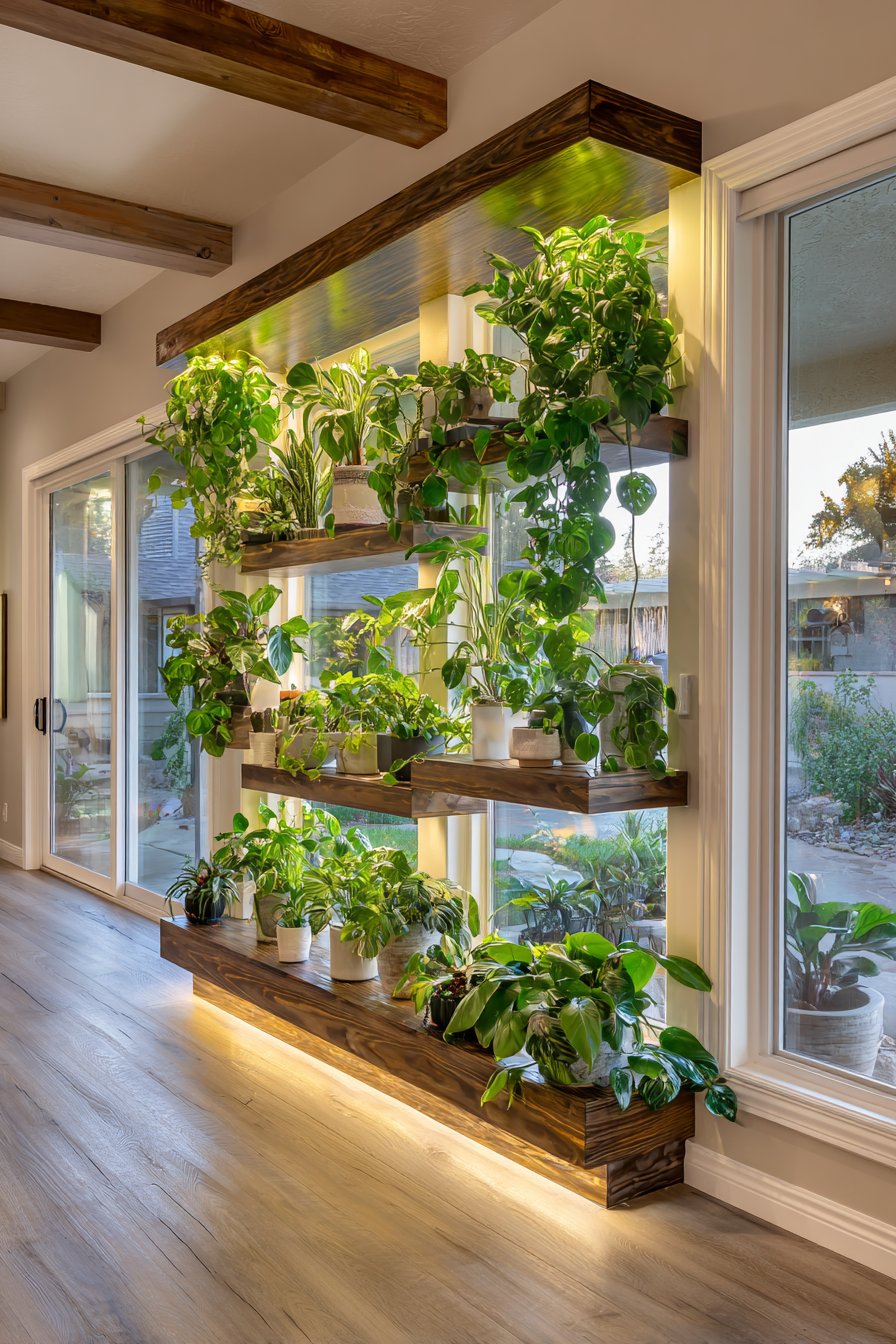
The beauty of plant shelving systems lies in their remarkable versatility. Whether you’re working with a sprawling suburban home or a compact urban apartment, there’s a shelving solution that can accommodate your space constraints, design preferences, and plant care requirements. From minimalist floating shelves that create clean, contemporary displays to rustic repurposed furniture that adds character and history, the options are as diverse as the plants themselves. Each approach offers unique advantages, whether it’s maximizing vertical space, creating focal points, or integrating greenery into functional areas like kitchens and home offices.
This comprehensive guide explores 23 distinctive indoor plant shelf ideas that span the spectrum of design styles, from industrial lofts to bohemian sanctuaries, from Scandinavian minimalism to farmhouse charm. Each concept has been carefully selected to provide practical inspiration that can be adapted to real homes, real budgets, and real lifestyles. Whether you’re a seasoned plant parent with an extensive collection or just beginning your green journey, these ideas will help you create beautiful, functional displays that bring life, color, and vitality to every corner of your home.
1. Minimalist Floating Shelf Display
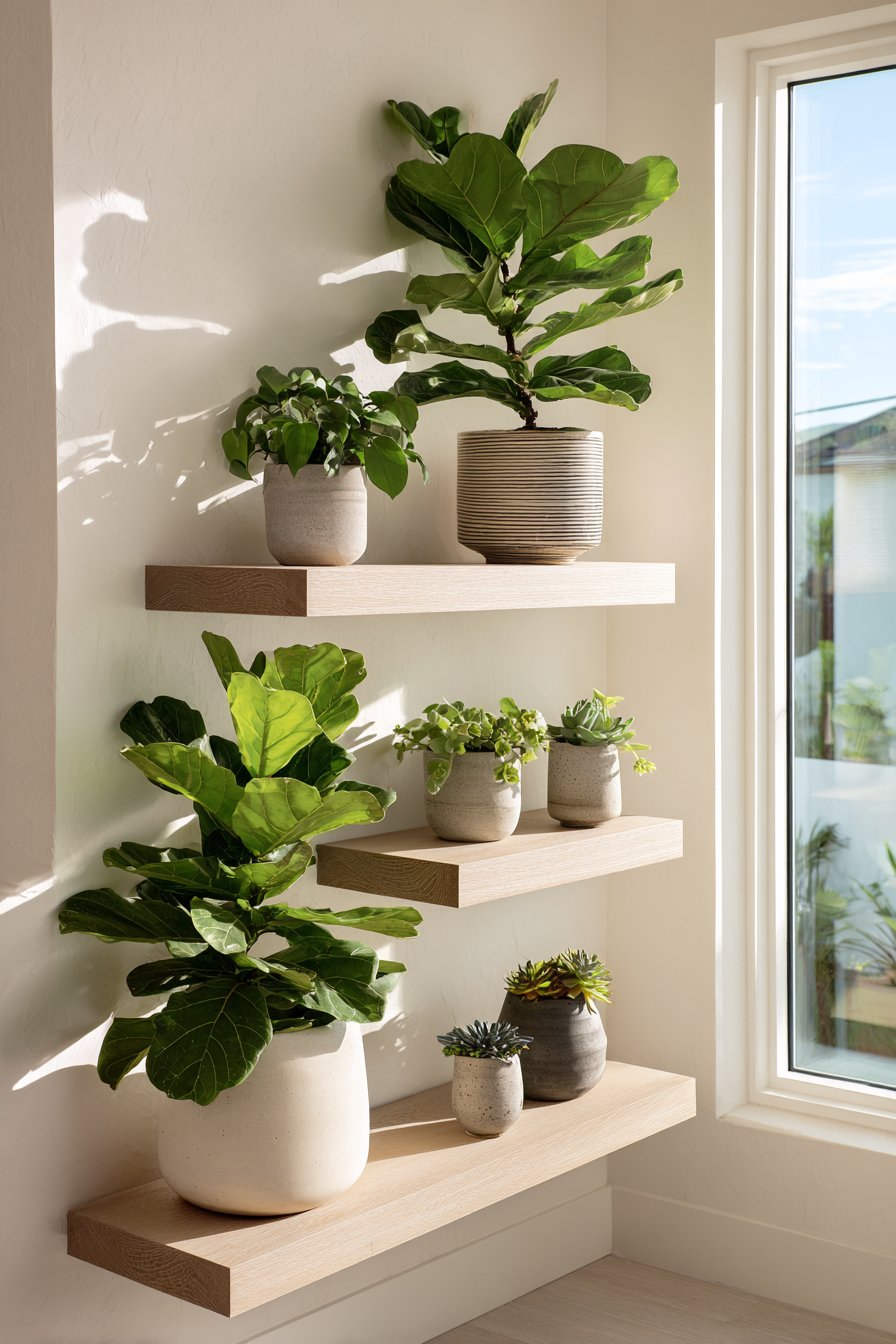
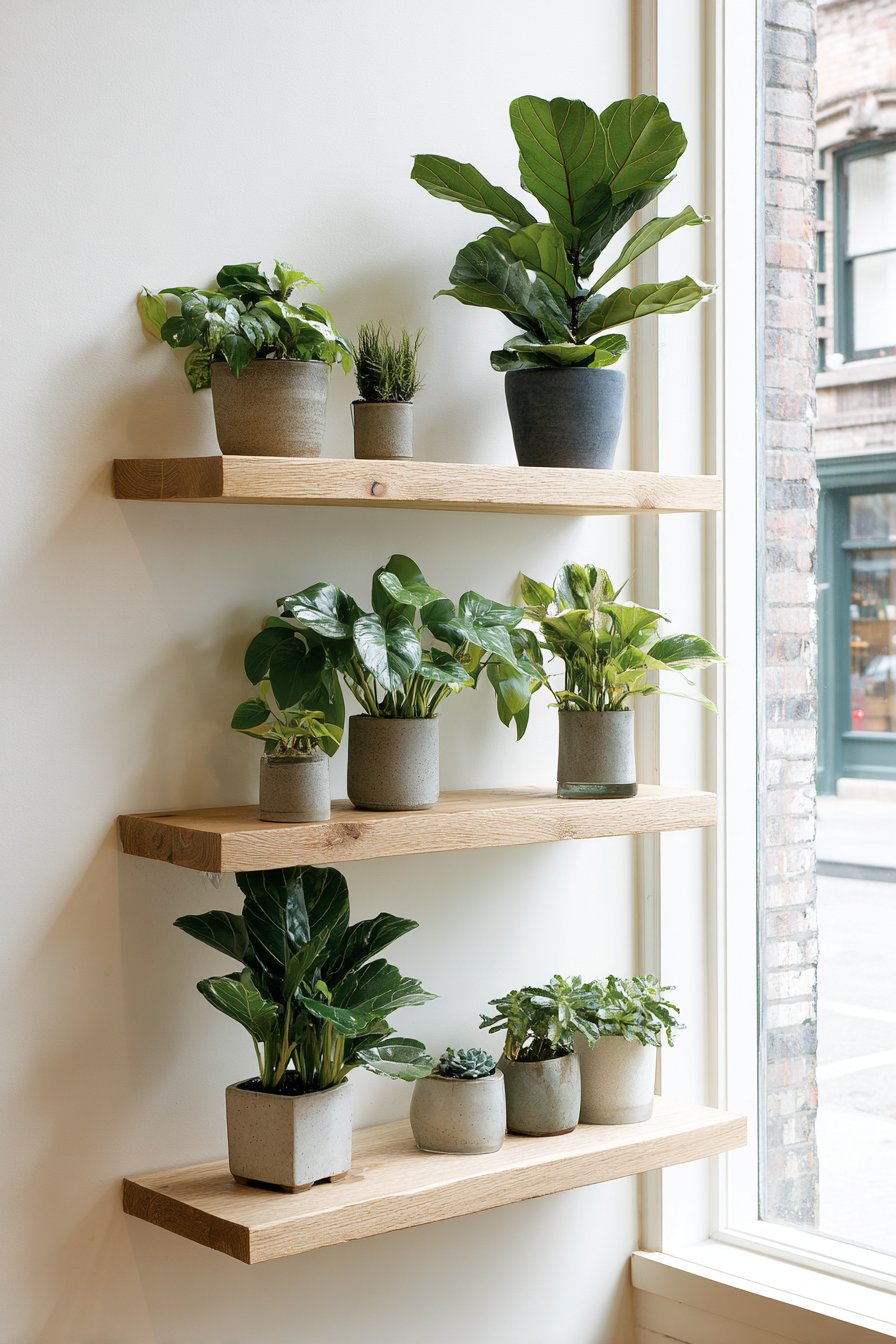
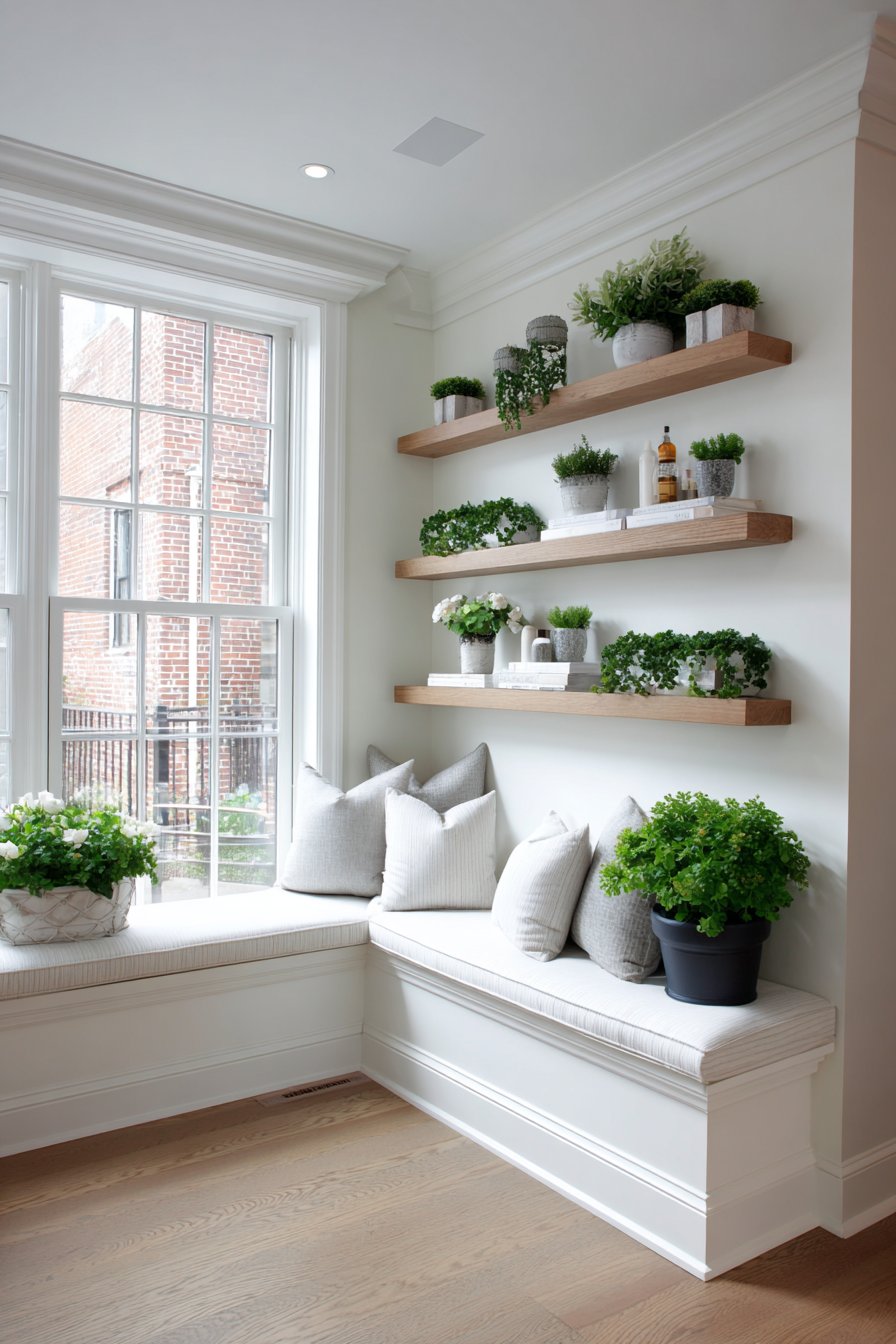
The epitome of Scandinavian simplicity, a three-tier floating shelf system in light oak wood creates a serene plant display that emphasizes clean lines and thoughtful curation. Mounted against a pristine white wall, these shelves seem to defy gravity, creating an illusion of lightness that perfectly complements the airy aesthetic. Each shelf holds carefully selected plants—a statuesque fiddle leaf fig commanding attention on the middle tier, trailing pothos cascading gracefully from ceramic planters, and clusters of small succulents in concrete pots adding textural variety. The natural morning light streaming from a nearby window doesn’t just illuminate the display; it becomes an integral part of the design, casting soft shadows that highlight the organic shapes of leaves and the subtle grain patterns in the oak wood.
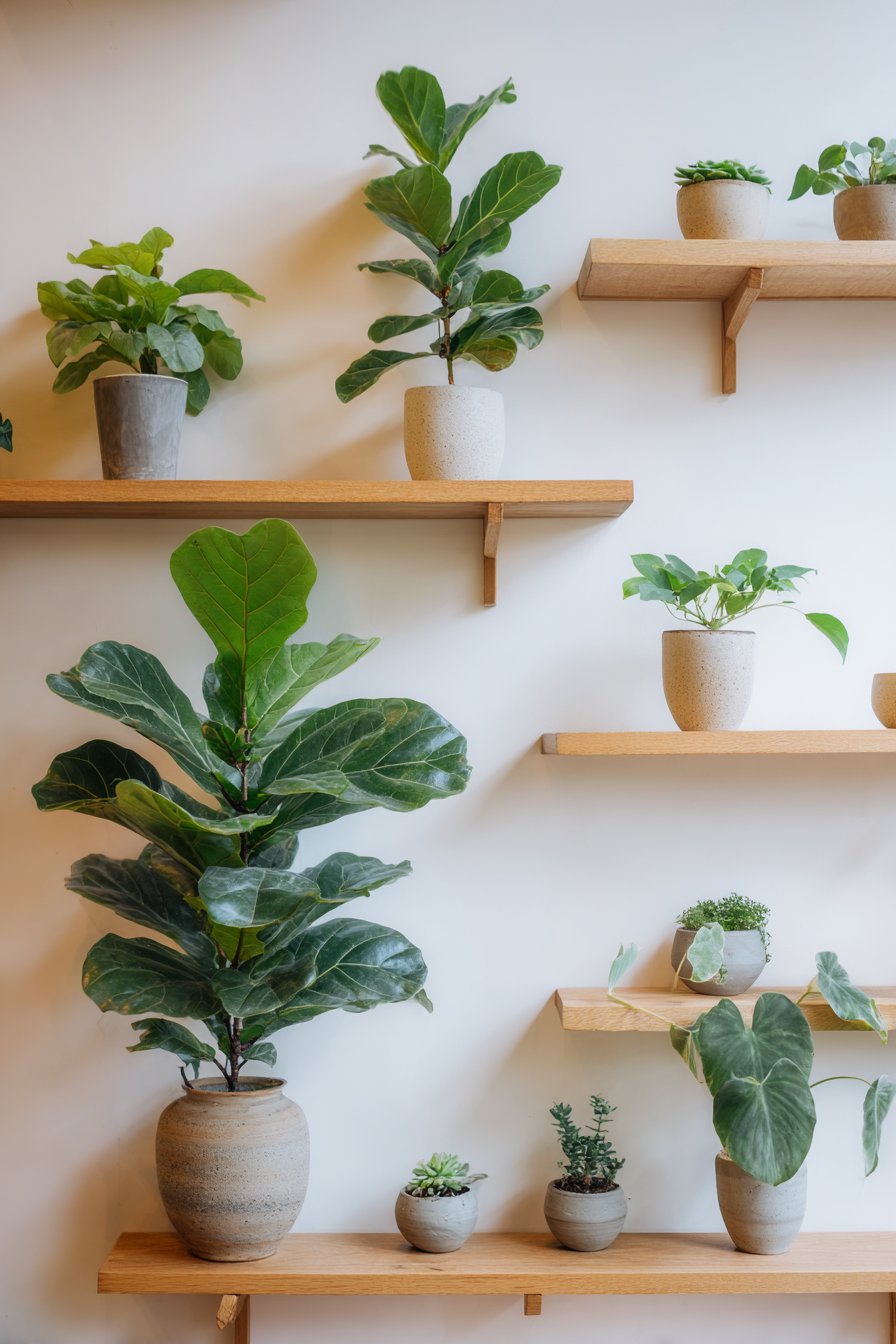
What makes this indoor plant shelf idea particularly effective is its restraint. Rather than overwhelming the space with excessive greenery, this arrangement demonstrates the power of careful editing. The spacing between shelves allows each plant adequate room to breathe and grow, while the consistent material palette of wood, ceramic, and concrete creates visual harmony. The varied heights and forms of the plants—upright, trailing, and clustered—provide visual interest without chaos, proving that minimalism doesn’t mean boring.
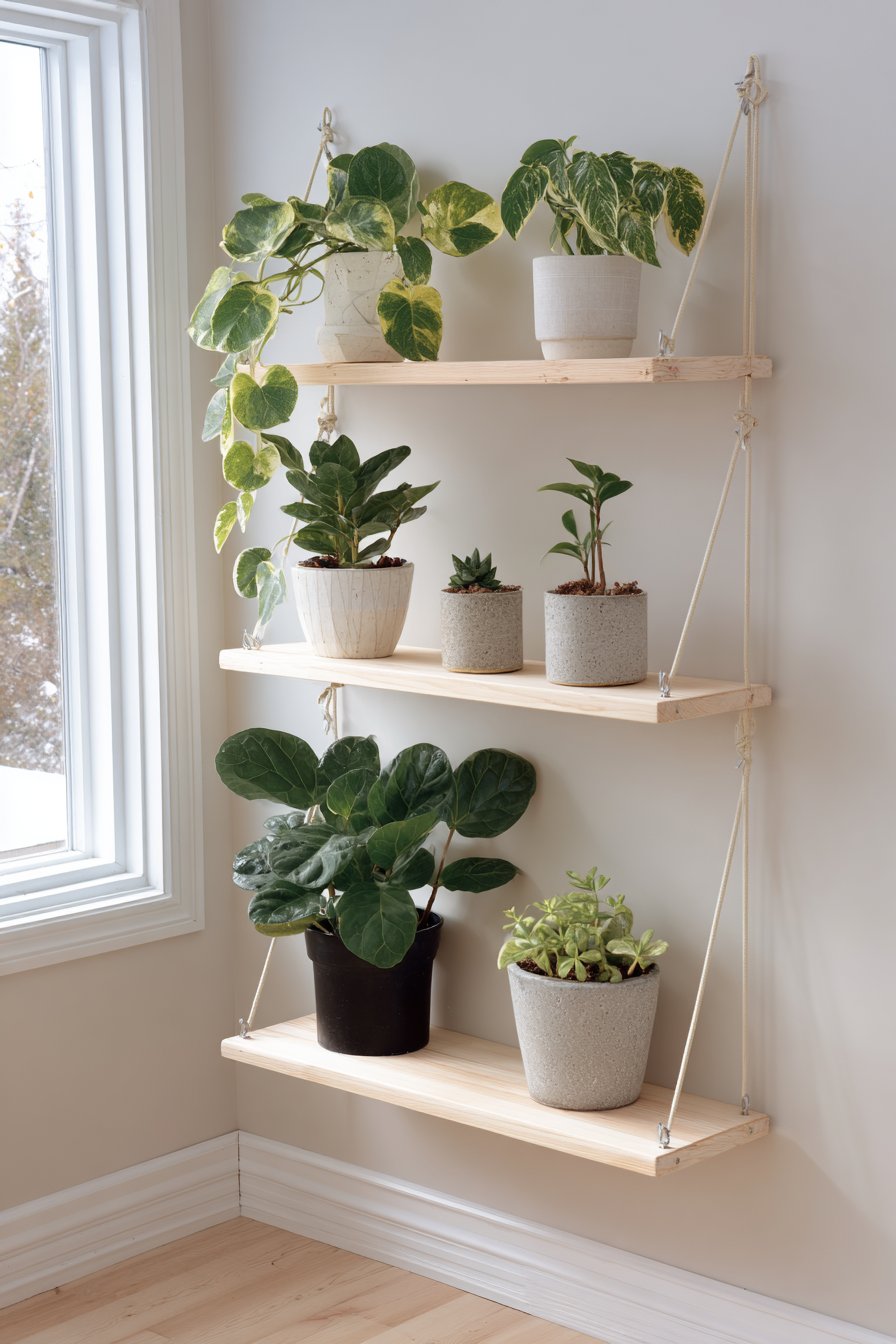
The practical benefits of this system extend beyond aesthetics. Floating shelves maximize vertical space without consuming precious floor area, making them ideal for smaller rooms or apartments. The open design allows air circulation around plants, promoting healthier growth, while the accessible height makes watering and maintenance straightforward. The light oak finish brings warmth to the white wall, preventing the space from feeling sterile while maintaining the clean, uncluttered aesthetic that defines Scandinavian design.
Key Design Tips:
- Choose floating shelves with concealed mounting hardware for the cleanest look possible
- Space shelves 12-18 inches apart to accommodate plant growth and allow adequate light penetration
- Select planters in a cohesive material palette—ceramic, concrete, and natural fibers work beautifully together
- Mix plant heights and forms: tall upright specimens, medium bushy varieties, and trailing plants create visual rhythm
- Position the shelving system near a window to ensure plants receive sufficient natural light
- Keep the color palette neutral with pops of green from the foliage as the primary color accent
2. Bohemian Ladder Plant Stand
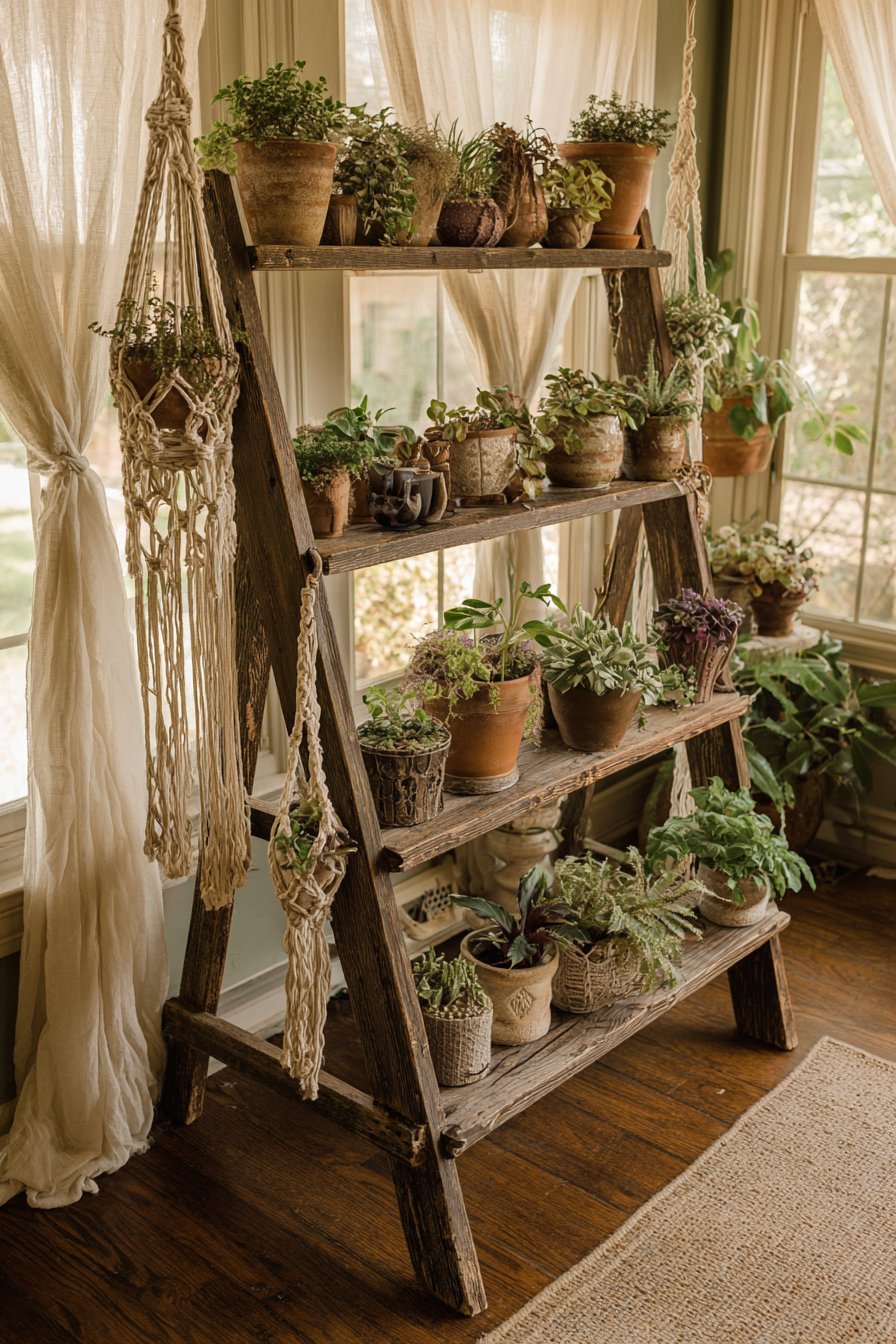
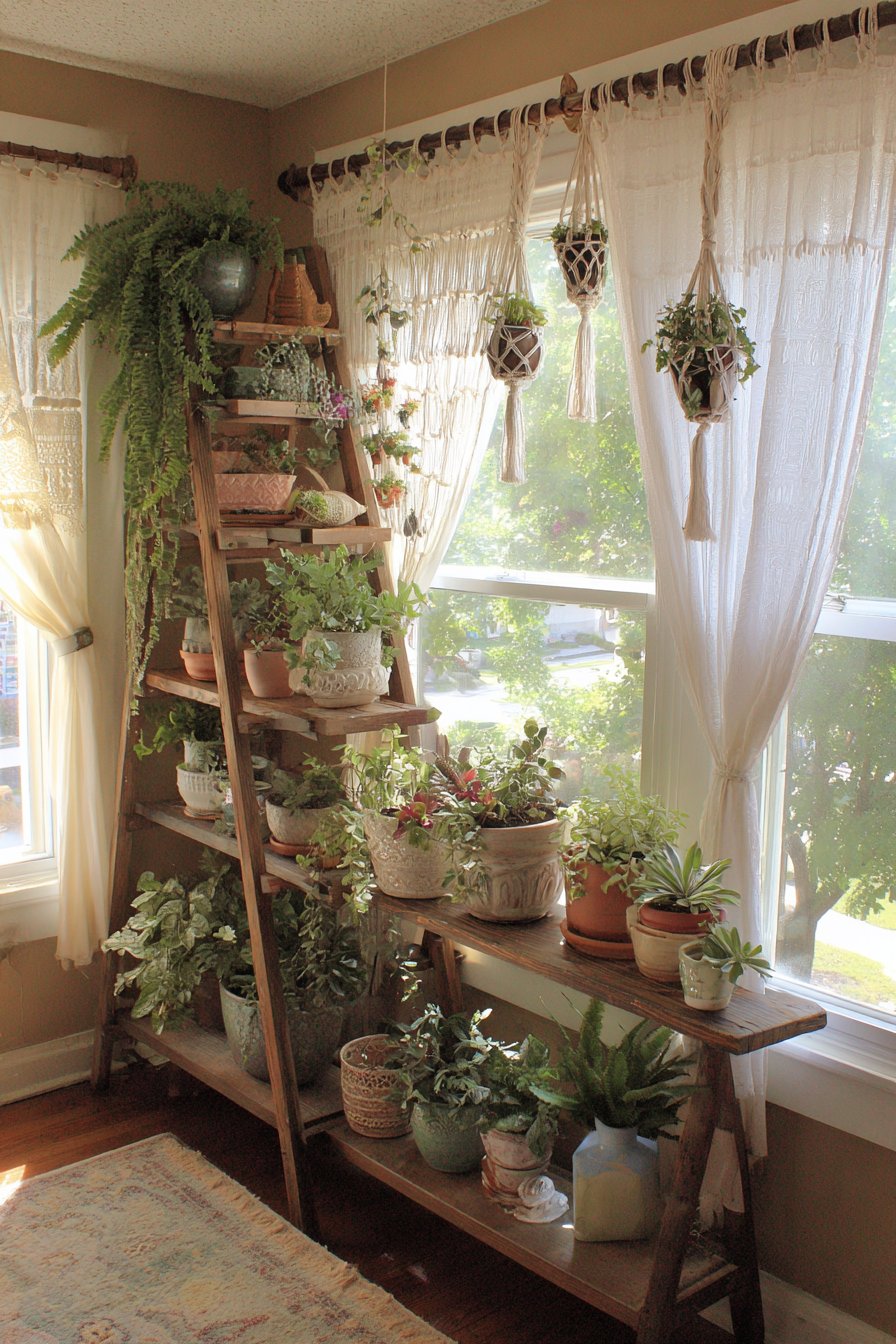
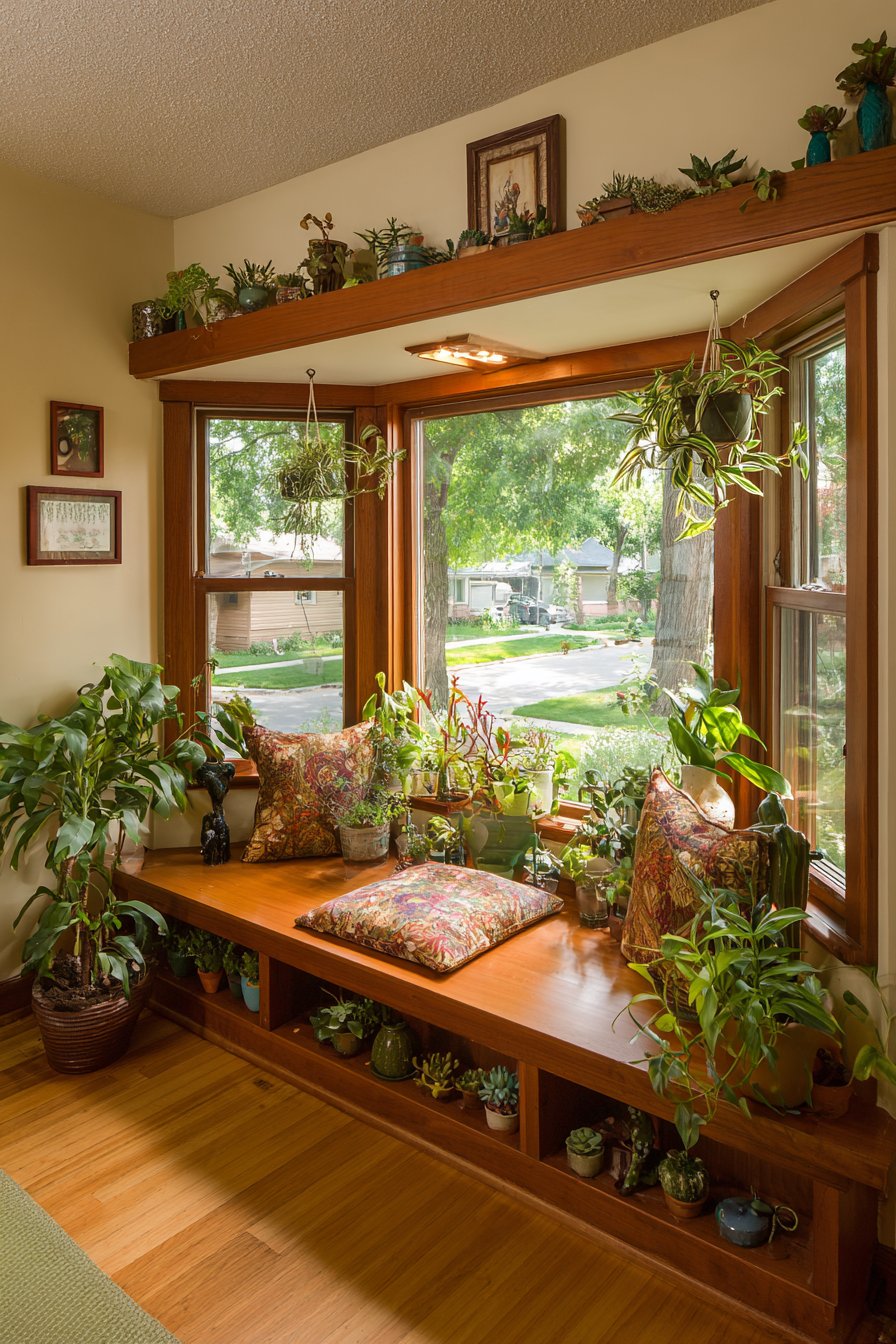
Embracing the spirit of creative reuse, a vintage wooden ladder transformed into a plant stand epitomizes bohemian design philosophy. This indoor plant shelf idea celebrates imperfection and individuality, with each weathered rung telling its own story while serving a new purpose. The ladder leans casually against the wall in a sun-drenched corner, its worn patina and rustic character providing the perfect counterpoint to an exuberant collection of plants. Multiple levels display an eclectic botanical mix—trailing plants like string of pearls and pothos cascade from upper rungs, creating living curtains of green, while fuller ferns and flowering varieties occupy the more stable middle sections. The lower rungs hold larger, leafy plants in substantial pots that ground the entire composition.
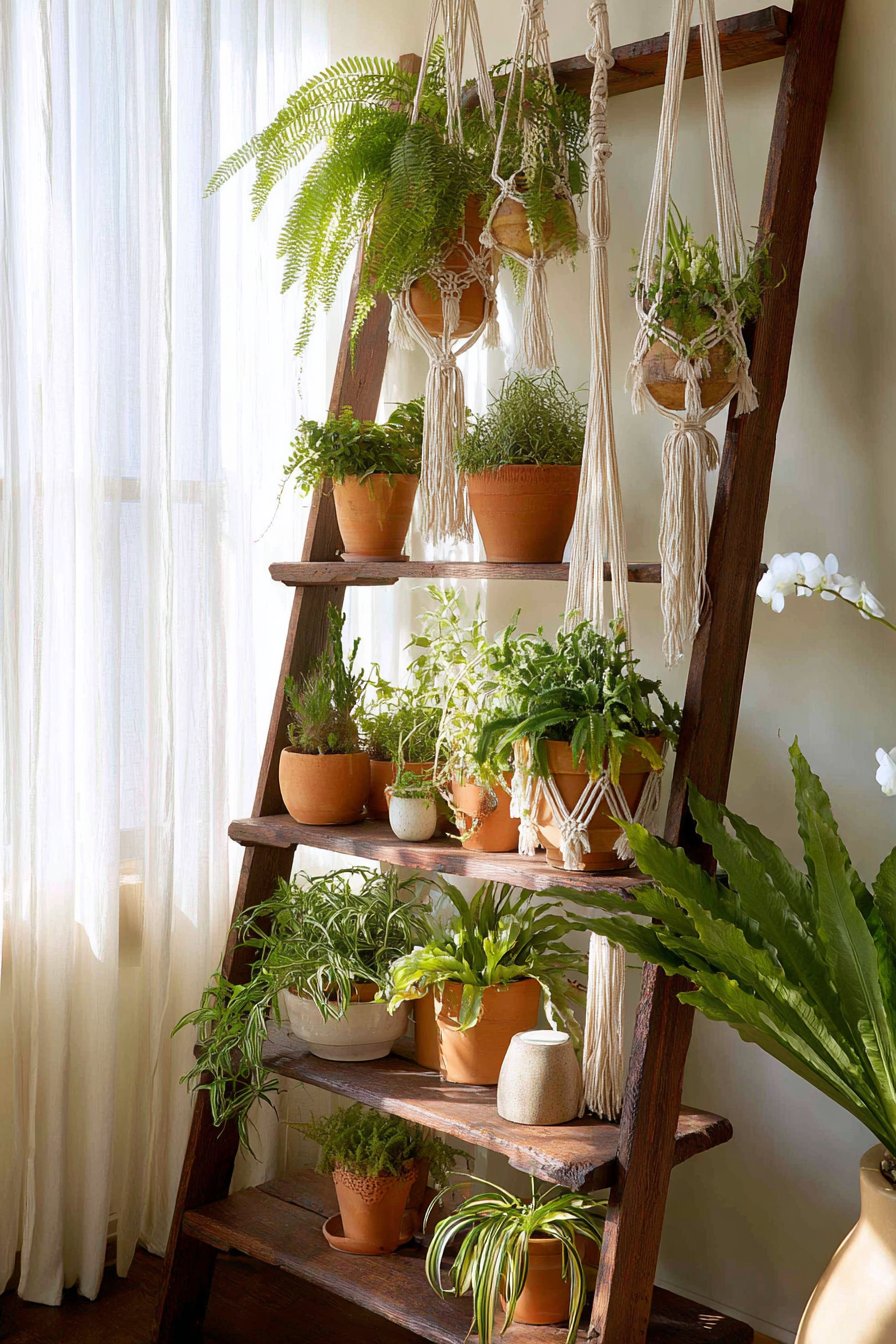
The magic of this arrangement lies in its apparent effortlessness, though achieving this “collected over time” aesthetic actually requires thoughtful curation. Mismatched terracotta pots in various sizes mingle with hand-painted ceramics and woven baskets, each container adding its own personality to the display. Macramé plant hangers suspended from the upper rungs introduce vertical interest and additional textural layers, their handcrafted knots and natural cotton fibers perfectly aligned with the bohemian ethos. The interplay of textures—smooth leaves against rough wood, soft macramé against hard ceramic—creates a sensory richness that invites closer inspection.
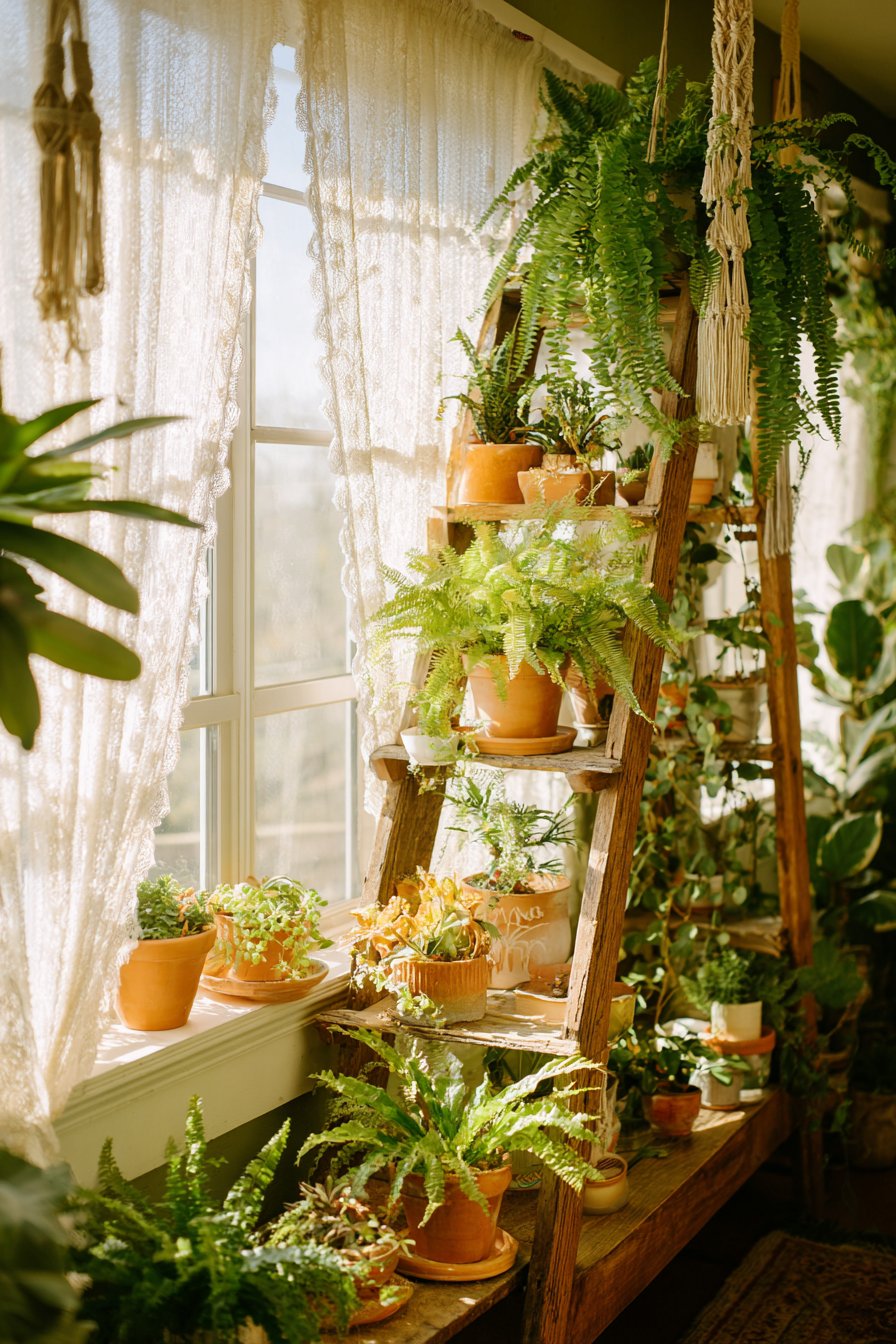
Natural lighting plays a crucial role in bringing this display to life. Sheer curtains filter harsh afternoon sun into soft, diffused light that bathes the entire arrangement in a warm, golden glow. This gentle illumination not only provides ideal growing conditions for the diverse plant collection but also enhances the lived-in, relaxed atmosphere that makes bohemian spaces so inviting. The casual arrangement suggests a space that has evolved organically over time, where plants are added as they’re discovered and loved, rather than purchased all at once for a coordinated look.
Key Design Tips:
- Source vintage wooden ladders from flea markets, antique shops, or online marketplaces for authentic character
- Secure the ladder to the wall at the top for stability, especially when holding multiple heavy pots
- Mix pot materials and styles—terracotta, ceramic, baskets, and metal—for authentic bohemian eclecticism
- Include plants with varied growth habits: upright, trailing, and bushy specimens create dynamic visual interest
- Add macramé hangers to upper rungs to maximize vertical space and introduce handcrafted texture
- Place near a window with sheer curtains to provide bright, indirect light that won’t scorch delicate foliage
- Embrace asymmetry and avoid overly coordinated arrangements for true bohemian authenticity
3. Industrial Metal and Wood Shelving
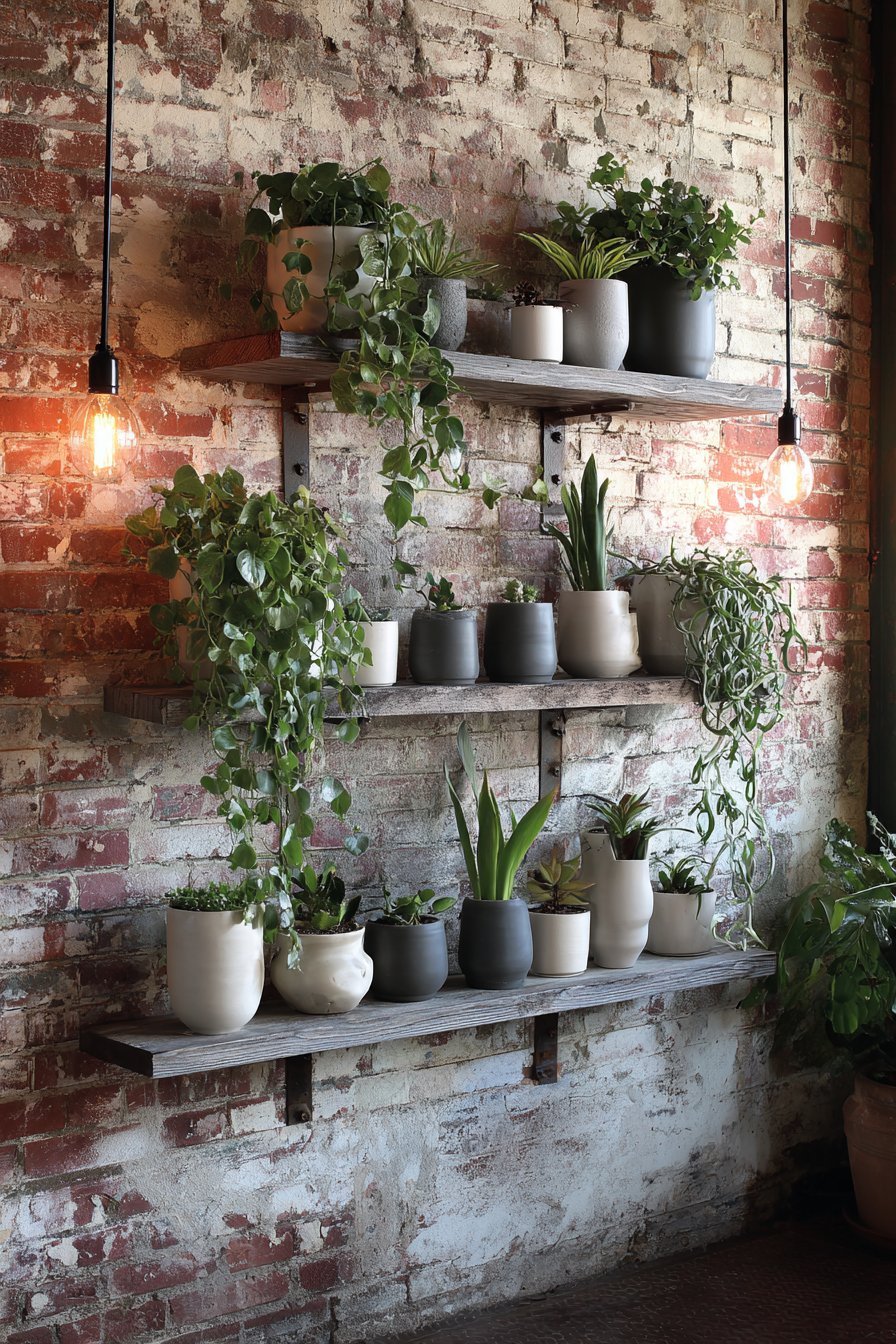
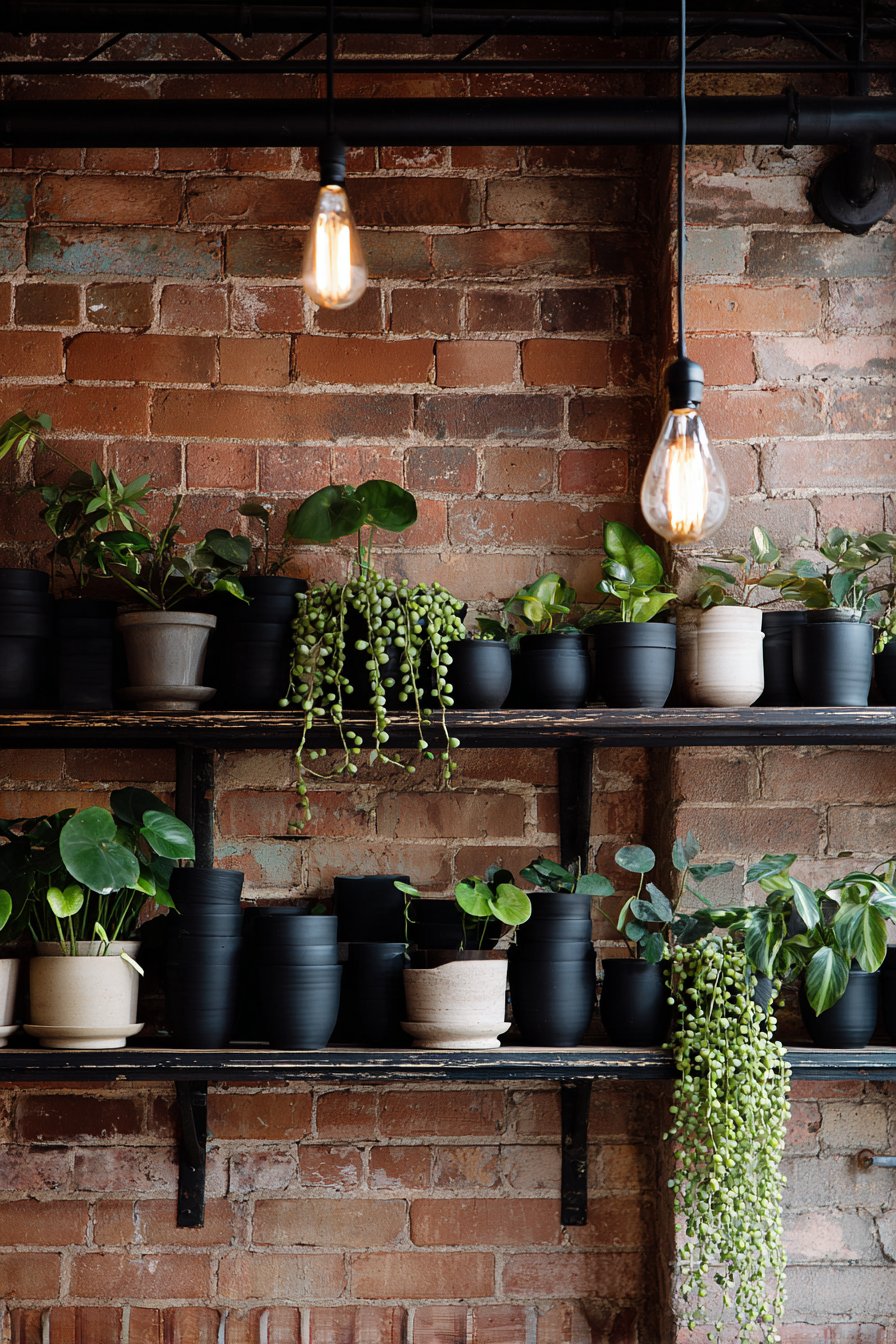
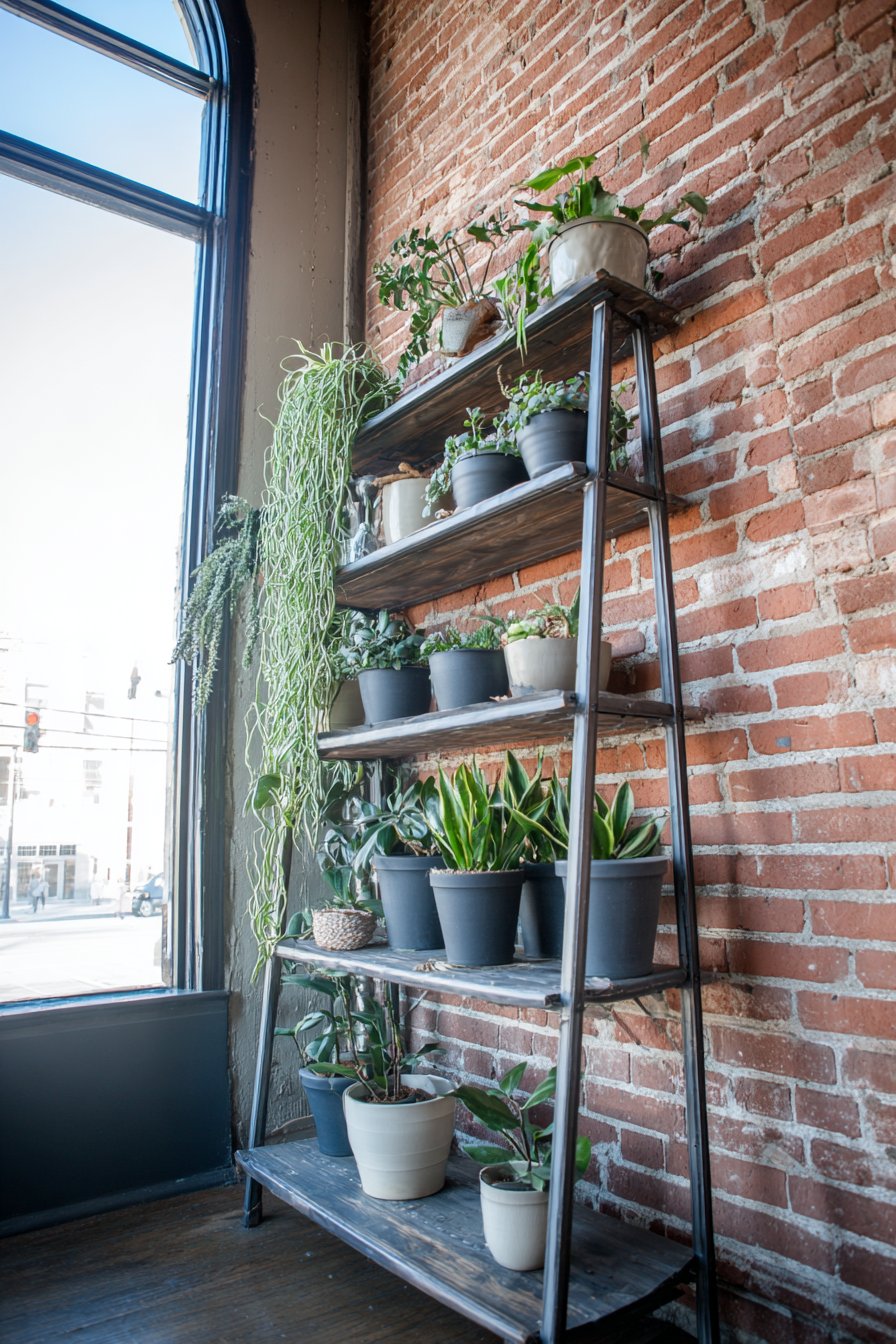
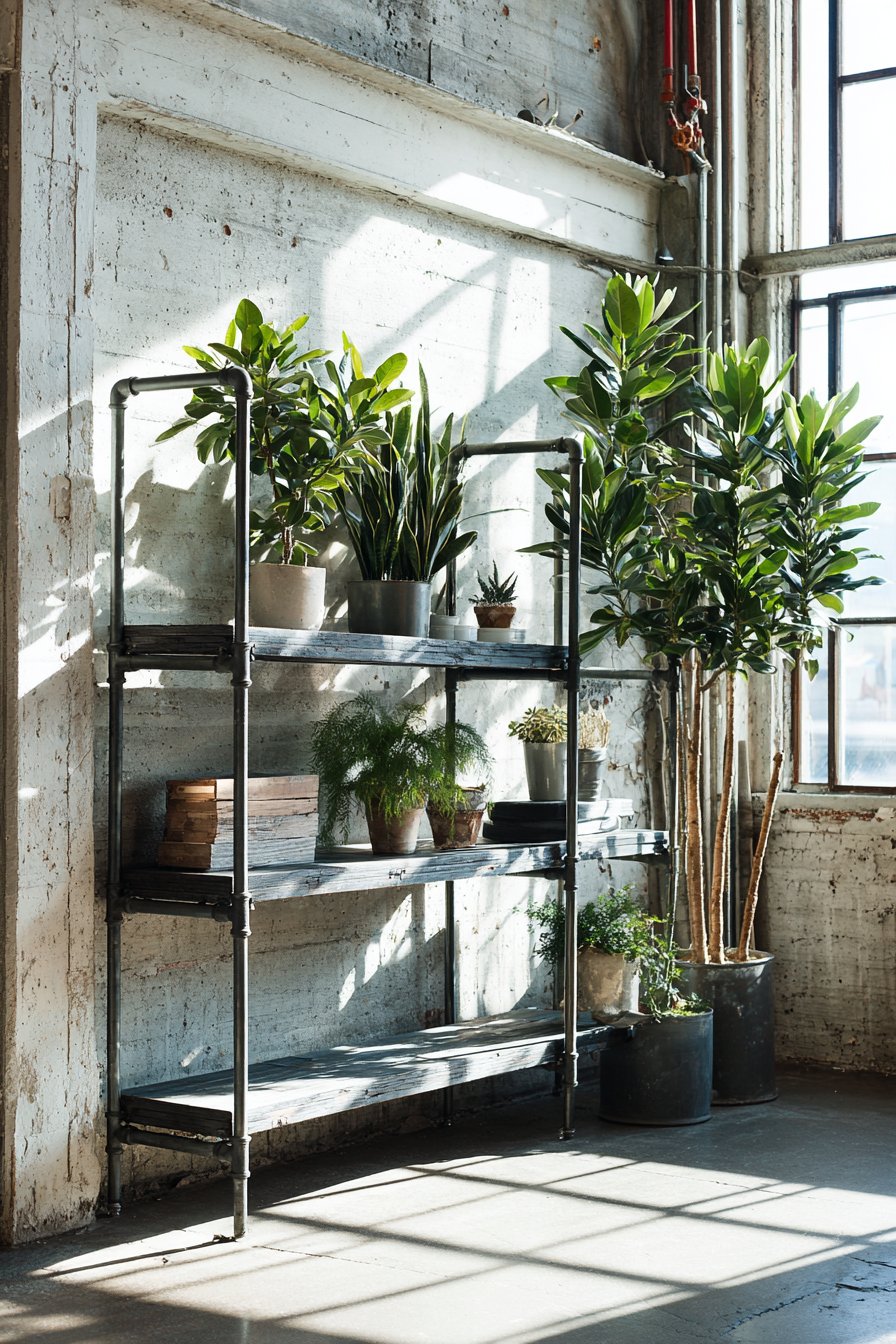
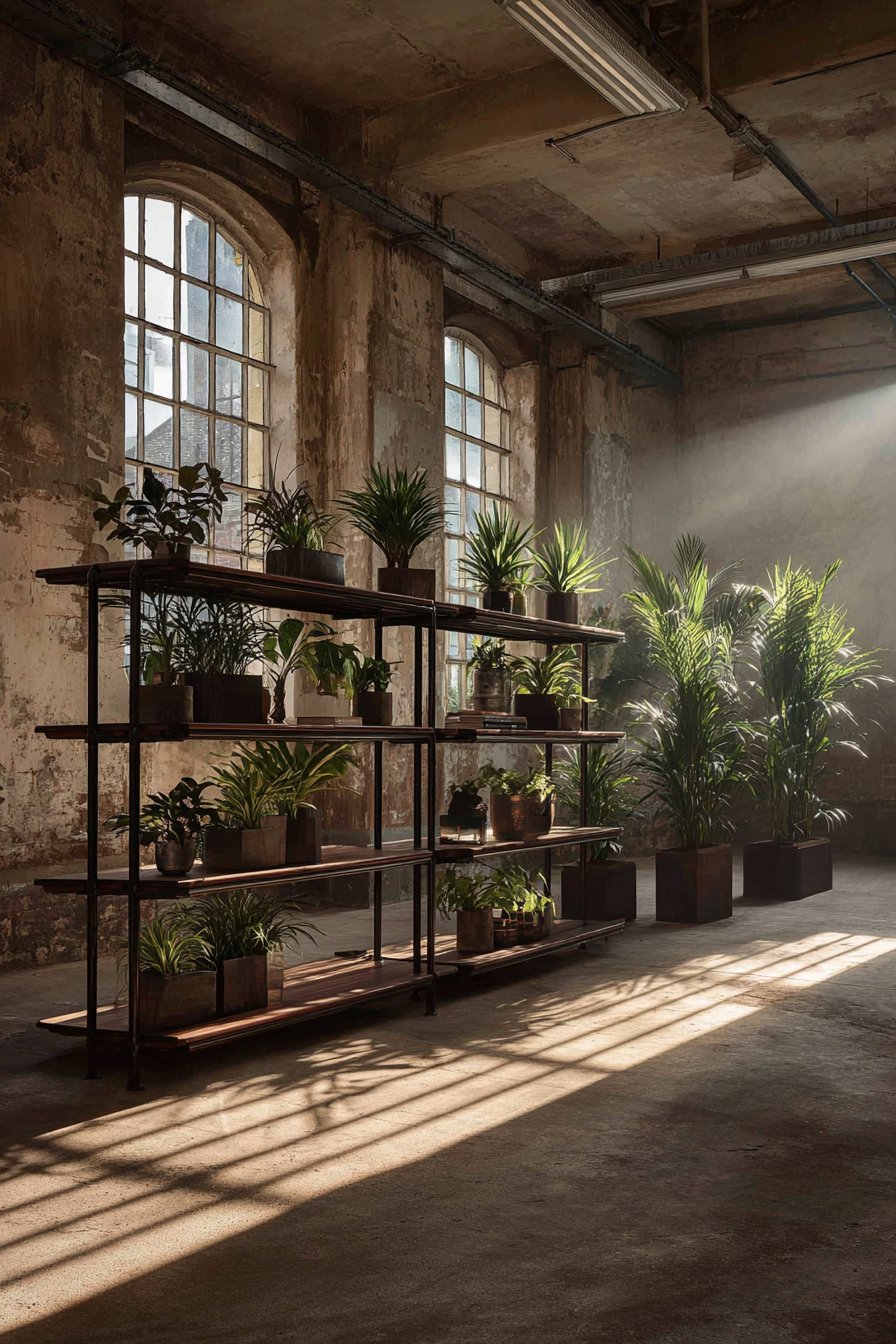
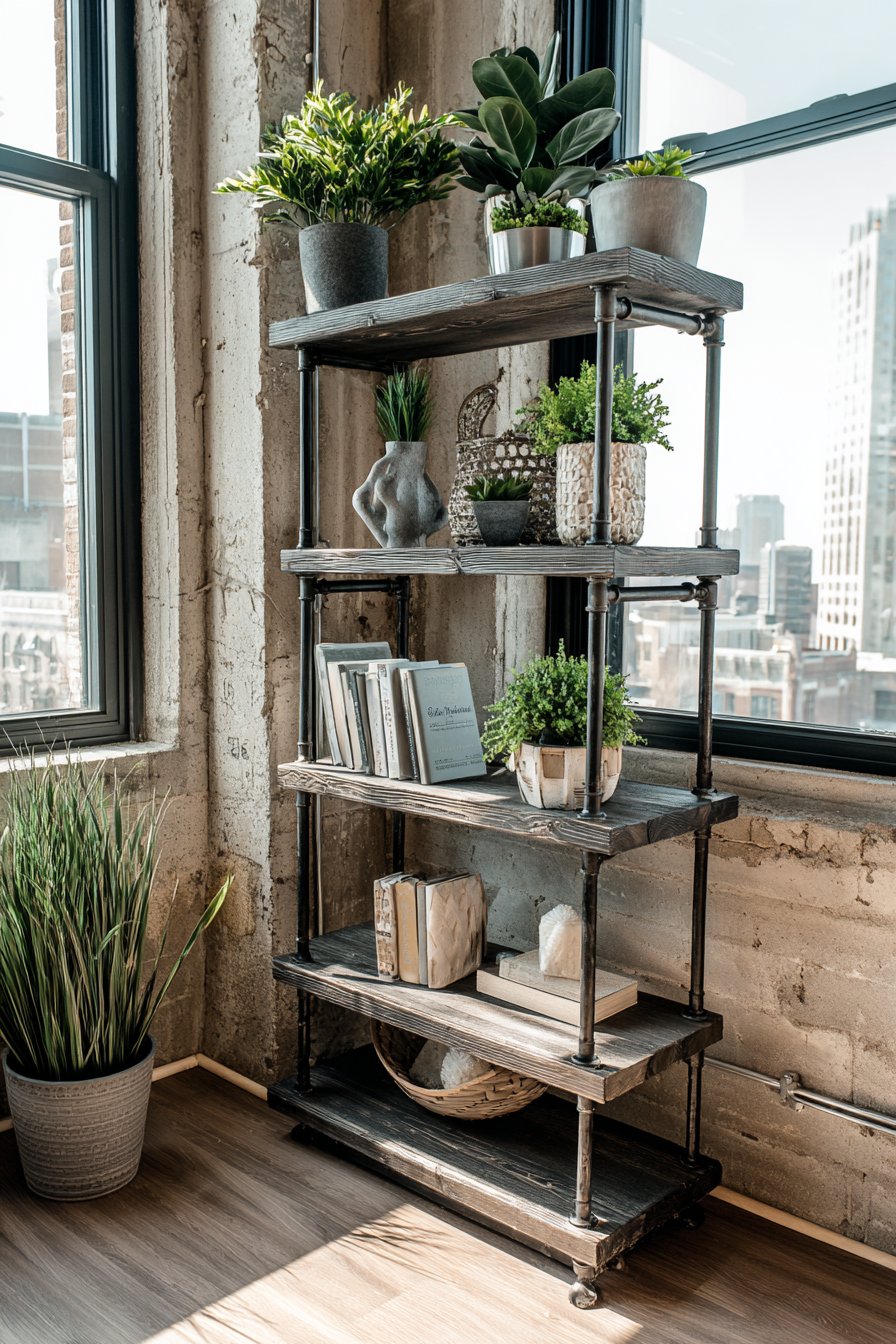
Bold and architectural, an industrial-style shelving unit constructed from metal pipes and reclaimed wood planks makes a powerful statement against exposed brick walls. This indoor plant shelf idea channels the raw, utilitarian aesthetic of converted warehouse spaces, where function and form merge without pretense. Five substantial shelves crafted from salvaged wood—complete with natural imperfections, nail holes, and varied patina—rest on a framework of black metal pipes and fittings. The robust construction doesn’t just support plants; it creates a sculptural element that defines the space. Large statement plants like glossy-leafed rubber trees and architectural dracaena varieties command attention on lower shelves, their substantial forms matching the weighty presence of the industrial materials. Middle tiers host a carefully curated mix of smaller ferns, snake plants, and clustered succulents in modern matte black planters that echo the metal framework.
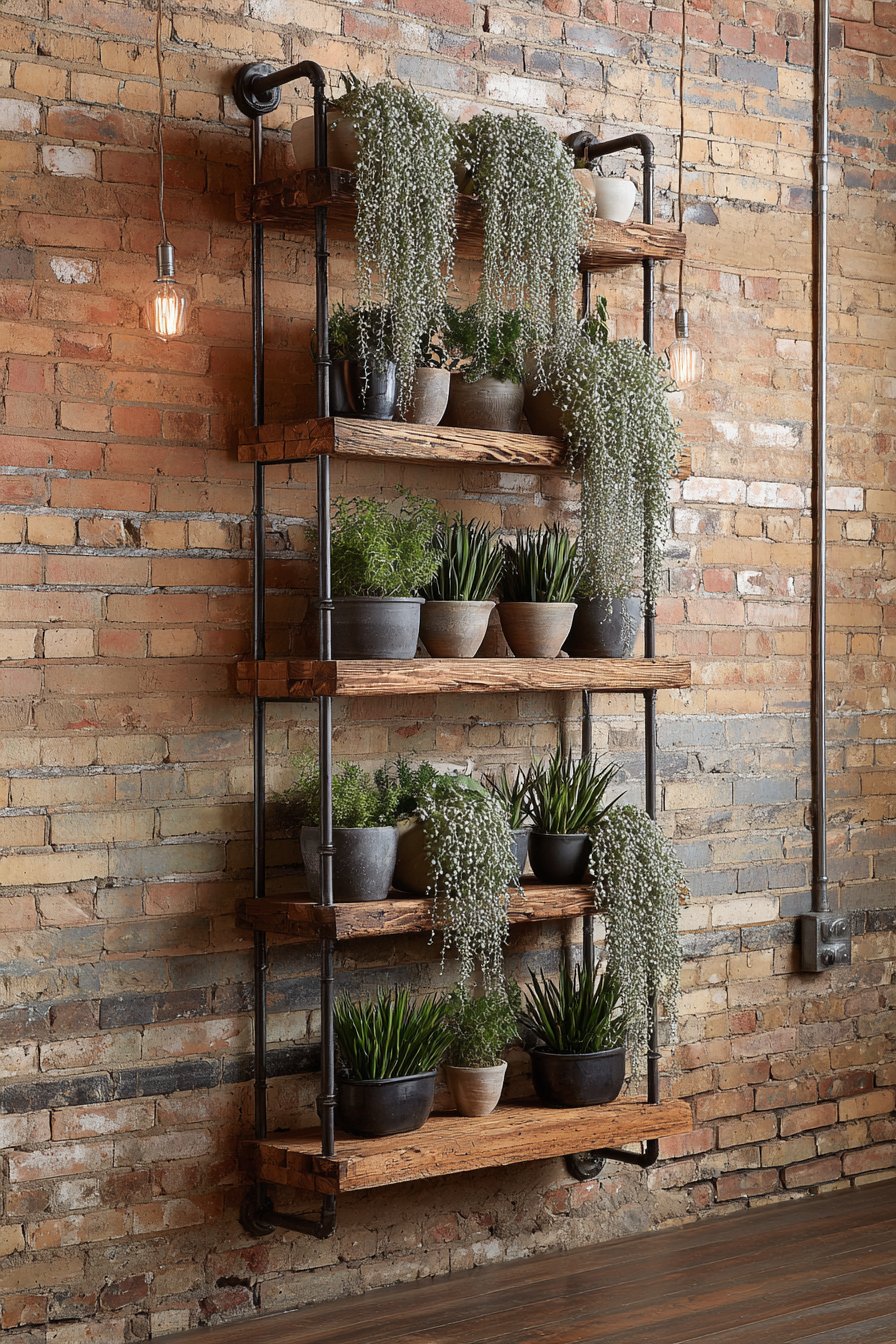
The interplay between organic plant life and industrial materials creates fascinating visual tension. Soft, curved leaves and delicate fronds contrast dramatically with the hard angles and straight lines of pipes and planks. This juxtaposition—nature against industry—forms the philosophical heart of industrial design, reminding us that even in urban environments, we crave connection to the natural world. The exposed brick wall serves as more than mere backdrop; its rough texture and warm terracotta tones provide depth and context, anchoring the display in the building’s industrial history while the greenery represents renewal and life.
Lighting considerations elevate this display from merely functional to genuinely inspiring. Tall warehouse-style windows flood the space with natural light that changes throughout the day, casting dramatic shadows that emphasize the three-dimensional quality of the shelving structure. The interplay of light and shadow across the various planes—brick, wood, metal, and foliage—creates an ever-changing visual experience that rewards observation. The practical benefits are equally significant: the open design allows excellent air circulation, the sturdy construction accommodates even heavy ceramic planters, and the modular nature of pipe shelving means the system can be adjusted or expanded as your plant collection grows.
Key Design Tips:
- Use authentic black iron pipes and fittings from plumbing supply stores for genuine industrial character
- Source reclaimed wood with visible age markers like nail holes, knots, and varied staining for authenticity
- Ensure shelves are properly supported with floor flanges and wall-mounted brackets for heavy plant loads
- Choose planters in materials that complement industrial aesthetics: matte black ceramic, galvanized metal, concrete
- Incorporate plants with strong architectural forms—rubber trees, monstera, snake plants—to match the bold shelving
- Position against brick, concrete, or neutral walls to maintain the urban loft atmosphere
- Space shelves generously—at least 15-20 inches apart—to accommodate large plants and create visual breathing room
4. Geometric Corner Floating Shelves
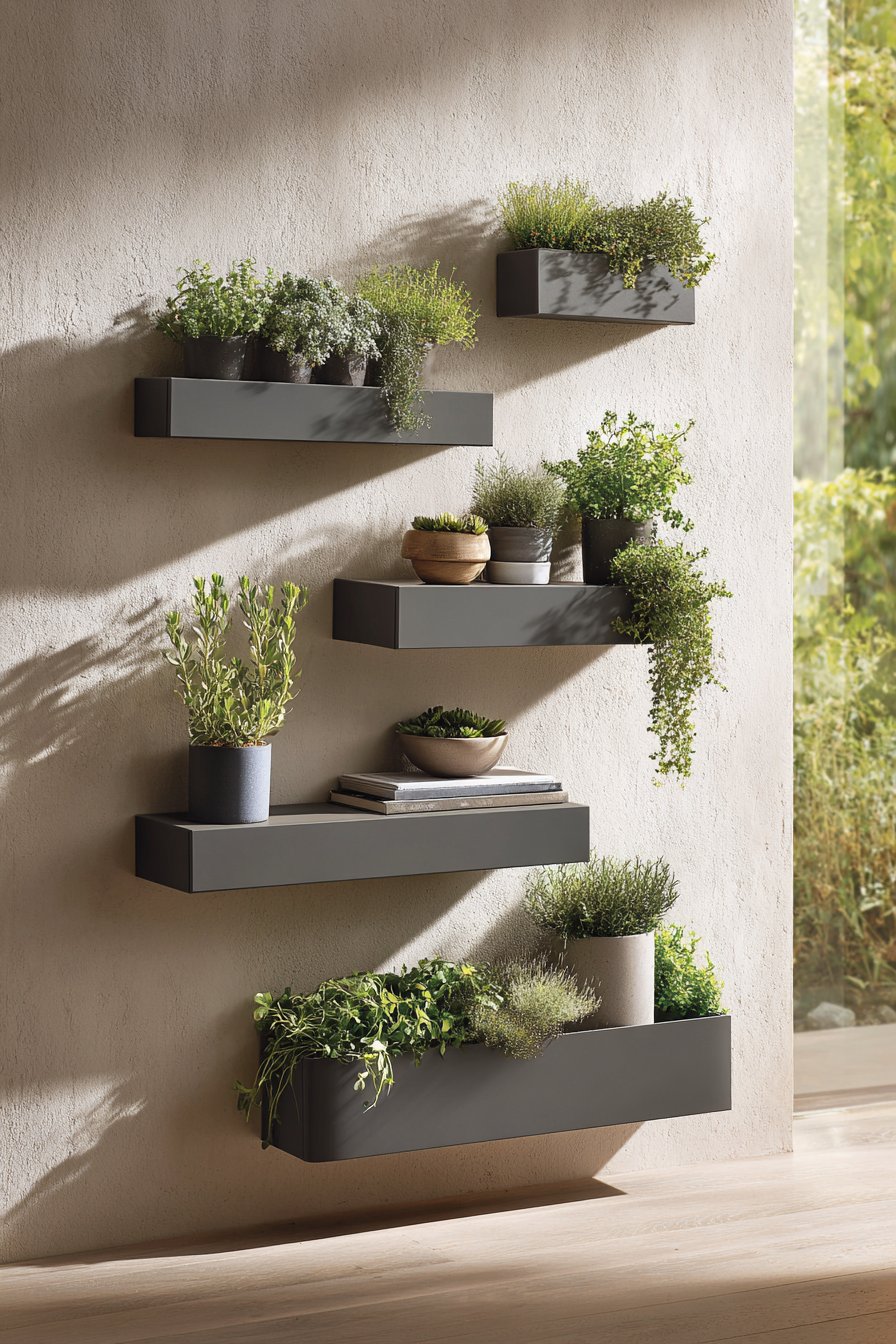
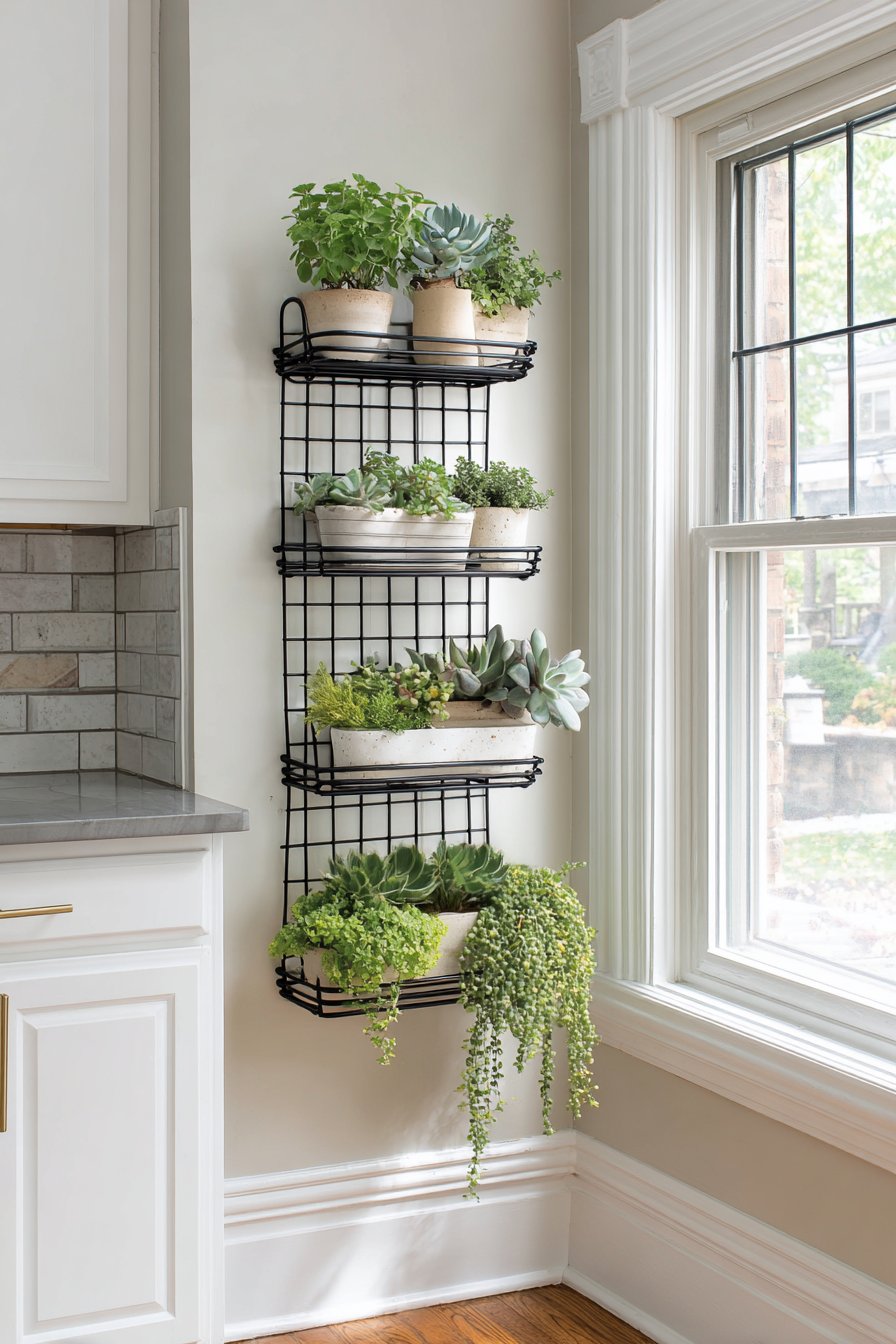
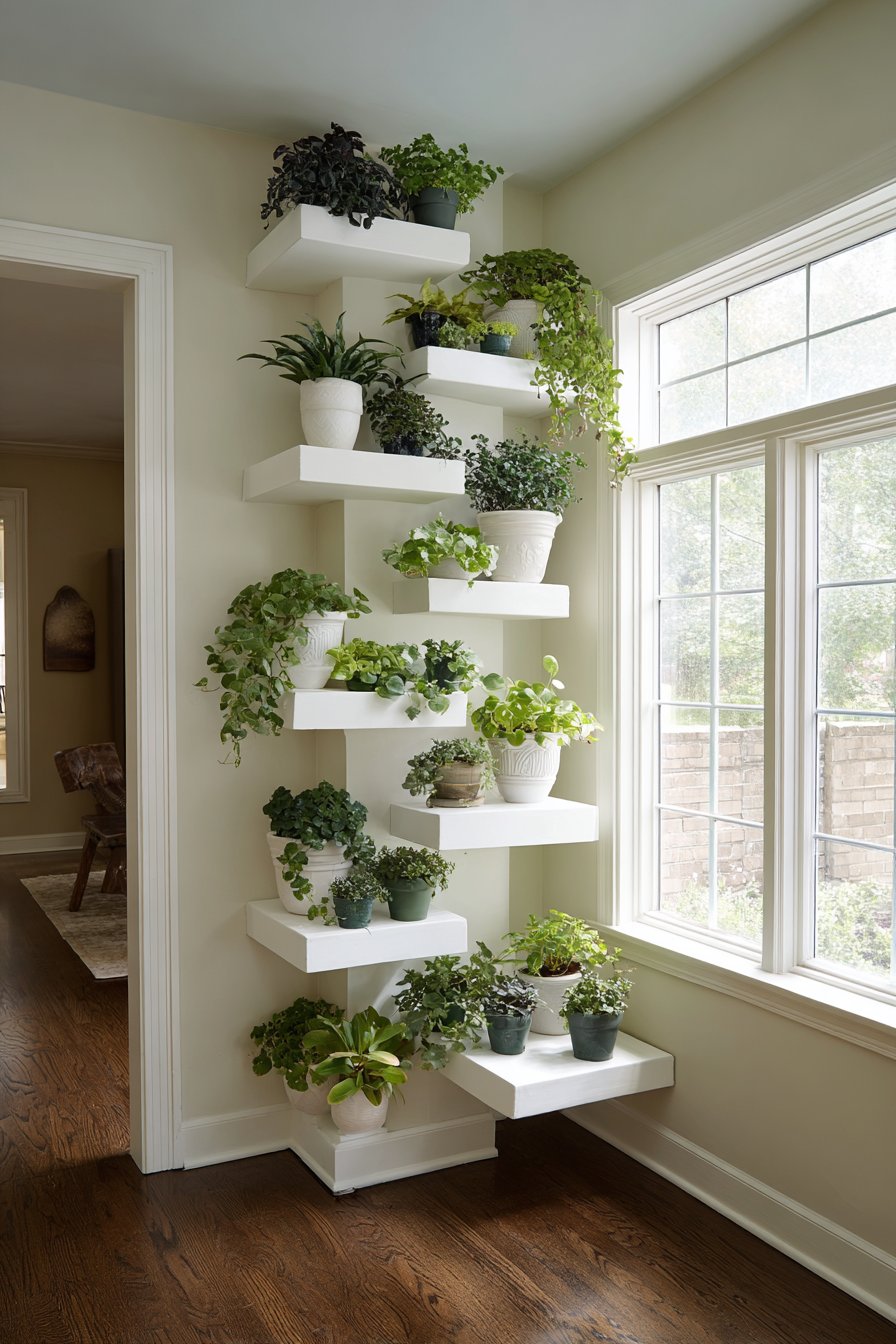
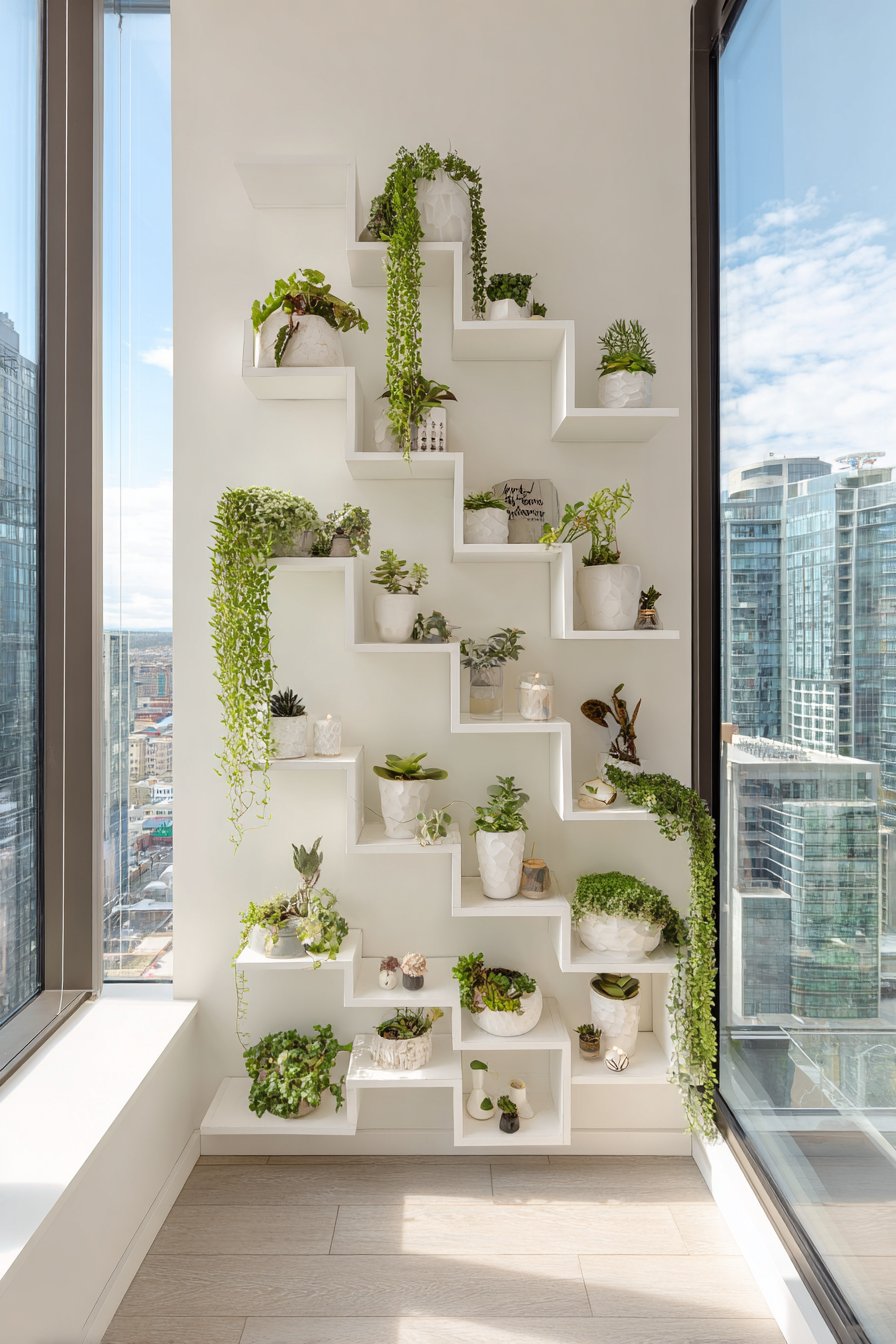
Transforming an often-overlooked corner into a striking vertical garden, this indoor plant shelf idea features floating shelves arranged in a dynamic zigzag pattern that climbs the wall like a three-dimensional sculpture. The white-painted wood shelves create bold geometric lines against the wall, their angular progression drawing the eye upward and making clever use of vertical space that might otherwise remain empty. This arrangement demonstrates how thoughtful design can turn spatial limitations into opportunities for creative expression. Each shelf in the zigzag formation holds plants of varying sizes, from petite succulents in minimal white ceramic pots to medium trailing pothos that soften the sharp angles with their cascading greenery. The graduated sizing—larger plants on lower shelves, progressively smaller specimens above—creates natural visual flow while respecting the structural logic of weight distribution.
The genius of this design lies in its ability to maximize corner space without overwhelming it. Corners often present challenges in interior design: furniture doesn’t fit quite right, artwork looks awkward, and the space feels wasted. These geometric floating shelves solve that problem elegantly, turning a potential dead zone into a focal point that catches attention from multiple viewing angles. The white finish keeps the shelves from competing with the plants for attention, instead serving as a clean canvas that makes the varied greens of the foliage pop with vibrant intensity. The coordinating white ceramic planters maintain visual continuity, creating a cohesive look that feels intentional and designed rather than haphazard.
Natural lighting from adjacent windows plays a crucial role in bringing this display to life, but the corner location actually works to advantage here. Rather than harsh direct sun, the plants receive bright, indirect light that filters around the corner—ideal conditions for most houseplants. The white surfaces help bounce and diffuse this light throughout the display, ensuring even the uppermost shelves receive adequate illumination. The careful spacing between shelves allows light to reach lower levels while providing each plant enough room to grow without crowding its neighbors.
Key Design Tips:
- Plan the zigzag pattern on paper first, calculating shelf depths and spacing before drilling
- Use quality floating shelf brackets rated for the combined weight of shelves, pots, and plants
- Keep shelf depths relatively shallow—6 to 8 inches—to maintain the geometric visual effect
- Choose plants in uniform white or neutral pots to maintain clean, contemporary aesthetic
- Mix plant types thoughtfully: upright varieties on alternating sides, trailing plants to soften edges
- Ensure adequate spacing—at least 10-12 inches vertically—to prevent overcrowding as plants mature
- Position near but not directly in windows for optimal bright, indirect lighting conditions
5. Window Seat with Integrated Plant Shelving
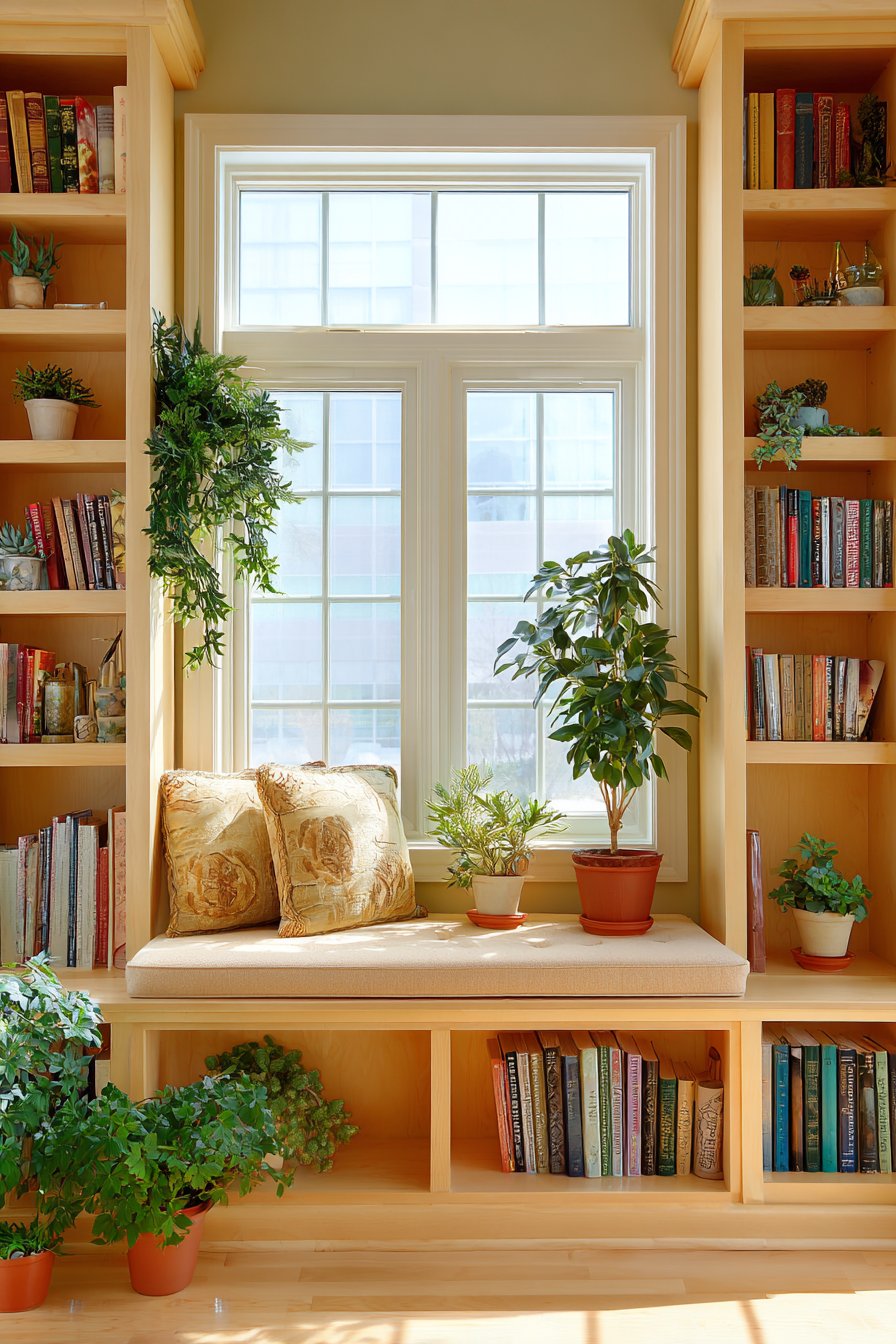
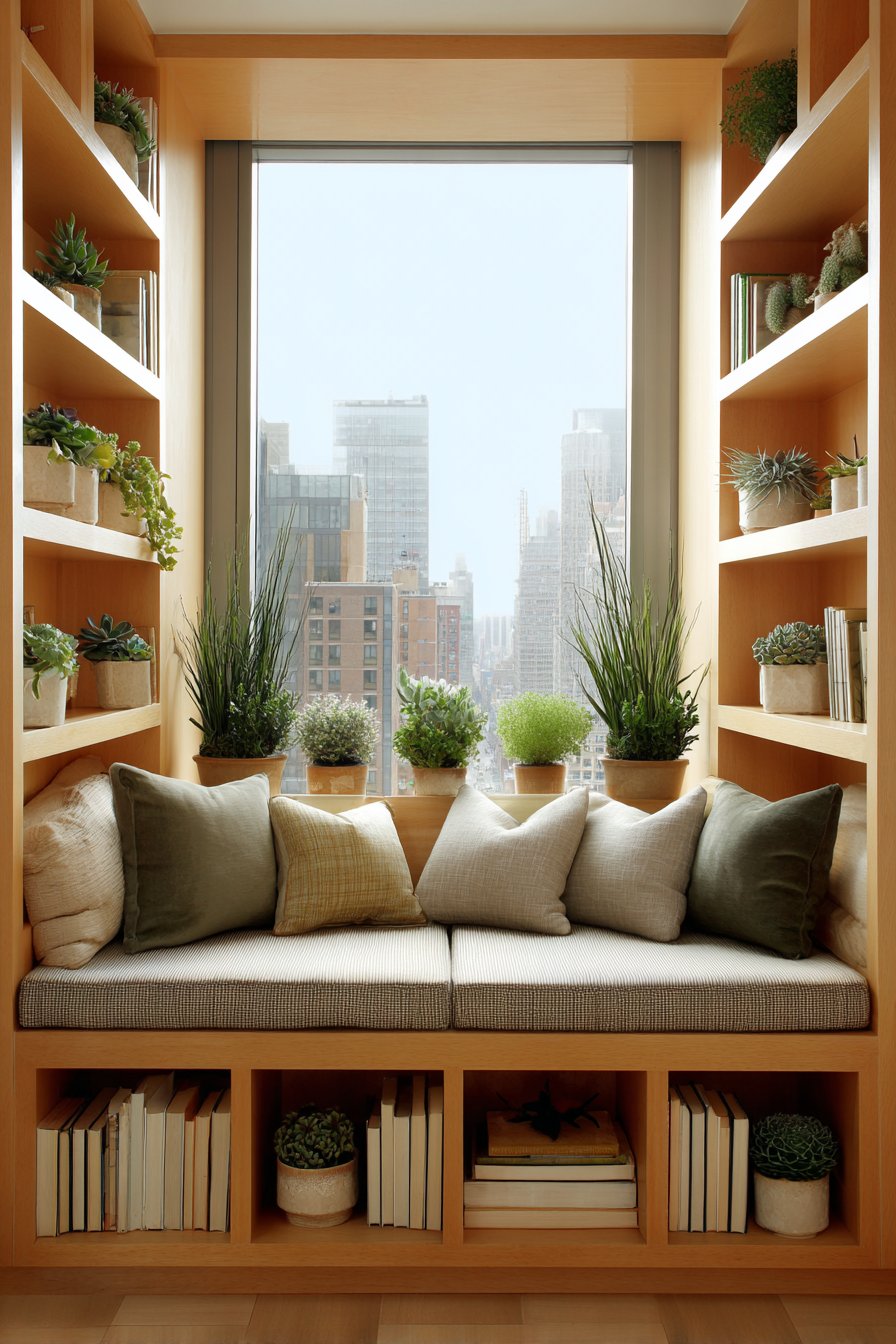
Marrying comfort with cultivation, a built-in window seat flanked by custom shelving creates a multifunctional space that serves as both cozy reading nook and thriving indoor garden. This indoor plant shelf idea demonstrates how thoughtful carpentry can integrate plant display seamlessly into architectural features, transforming a simple window area into the home’s most beloved spot. The warm honey-toned wood of the custom millwork provides a rich backdrop for multiple narrow shelves ascending on both sides of the cushioned seating area. These shallow shelves prove perfect for displaying collections of small potted herbs, delicate succulents, and ethereal air plants that require minimal root space but maximum light exposure. The symmetrical arrangement creates visual balance, with plants effectively framing the central seating area in living green columns.
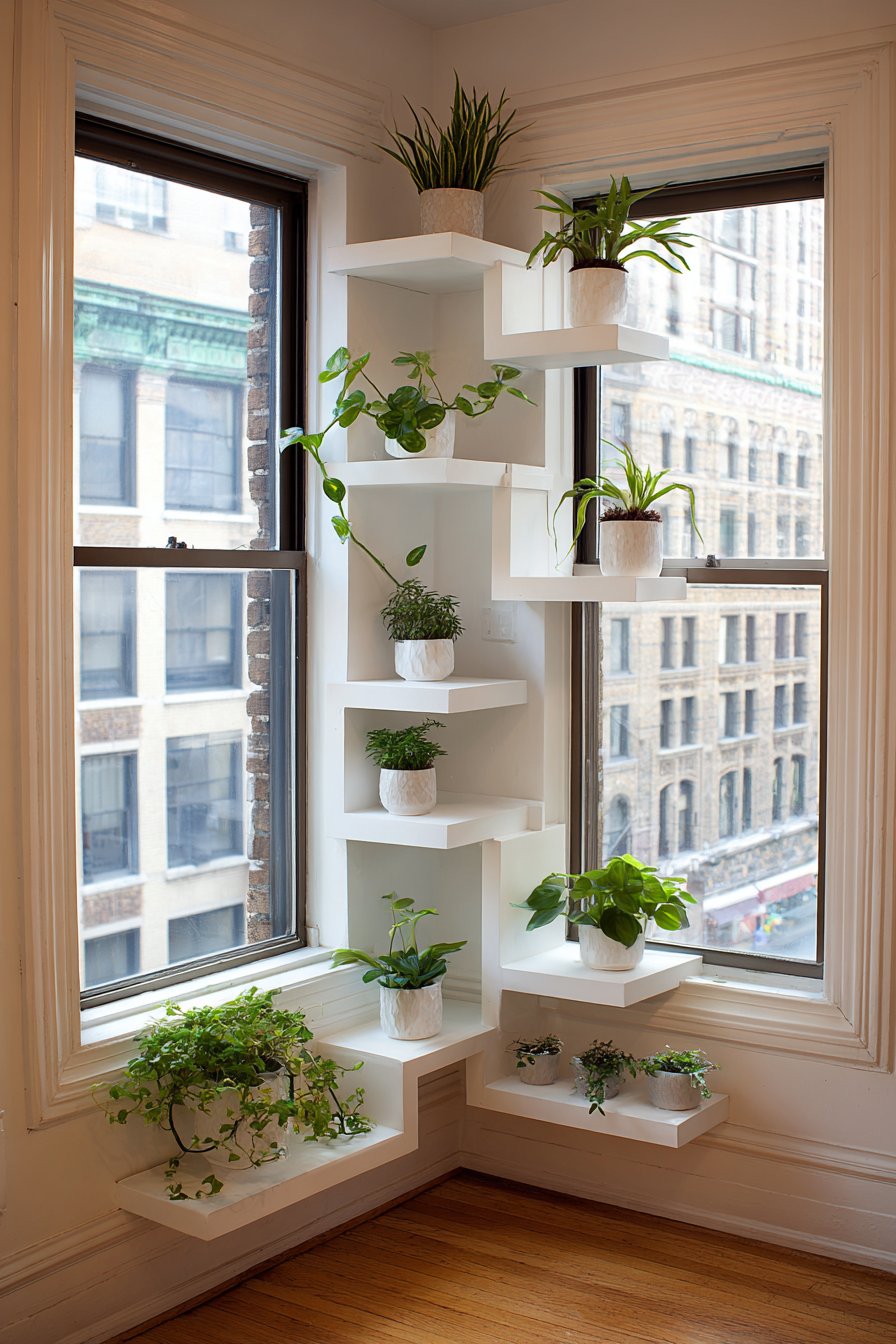
The window seat itself becomes more than just a place to sit; it’s a destination within the home where one can be literally surrounded by nature while remaining comfortably indoors. Plump cushions in natural fabrics invite hours of reading or quiet contemplation, while the plants create a microclimate of increased humidity and oxygen—subtle but real benefits of being surrounded by greenery. The narrow shelf design is particularly clever, allowing for abundant plant display without encroaching on valuable space or blocking light. Small herbs like basil, thyme, and mint thrive in these conditions, making this arrangement both beautiful and functional for those who enjoy cooking with fresh ingredients.
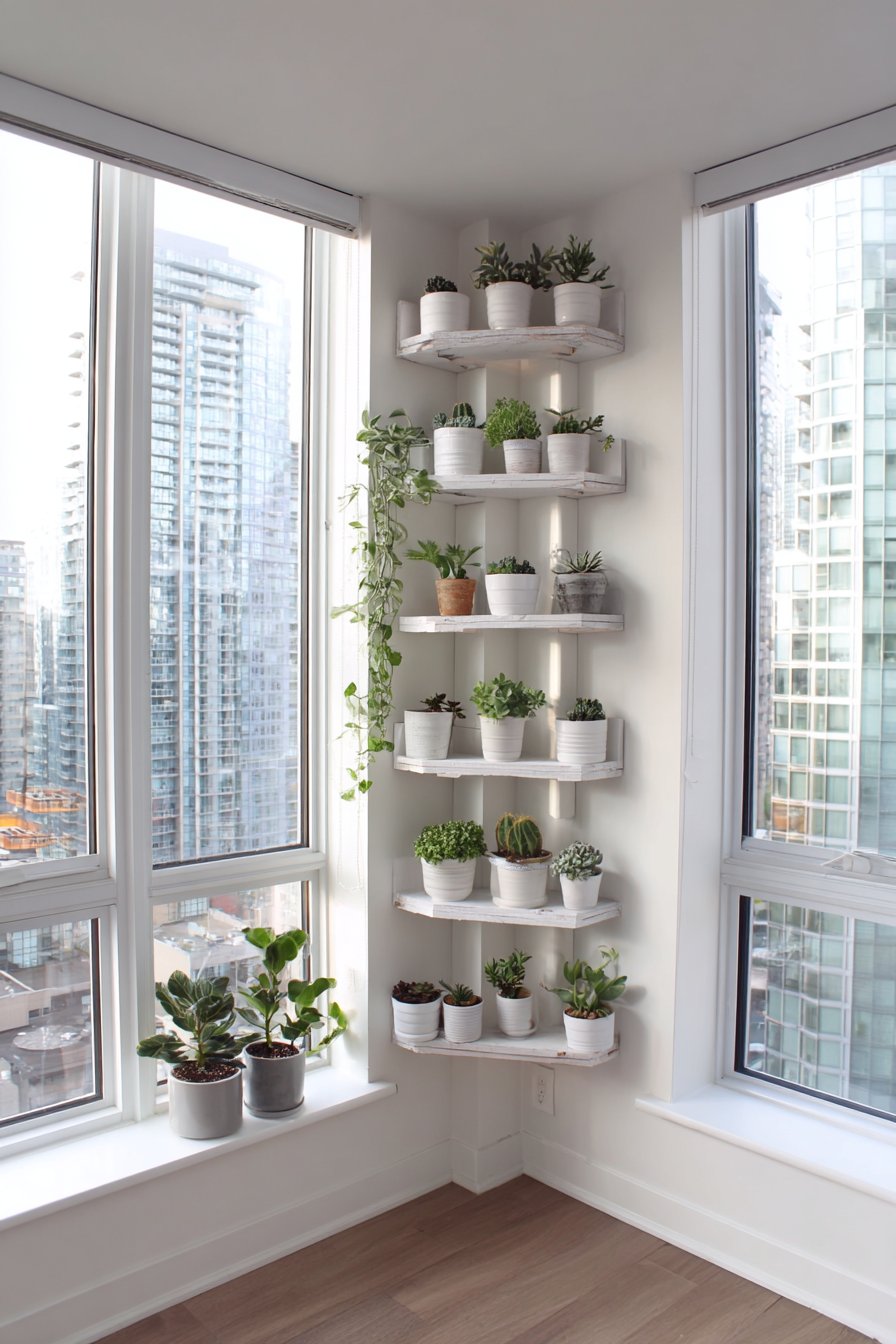
Natural light floods this space from the window, creating ideal growing conditions that would make any plant enthusiast envious. The plants closest to the glass receive direct sun for photosynthesis, while those on outer edges of the shelving enjoy bright indirect light. This natural gradient accommodates plants with varying light requirements within a single display. The honey-toned wood absorbs and reflects warm light beautifully, creating a golden glow during sunrise and sunset that transforms the entire nook into a sanctuary of calm. The integration of storage beneath the window seat—often accessed by lifting the cushions—provides practical space for plant care supplies, gardening tools, and extra pots, keeping everything needed for plant maintenance conveniently at hand.
Key Design Tips:
- Work with a carpenter to design custom millwork that fits your window’s exact dimensions
- Keep shelves narrow—4 to 6 inches deep—to maximize light penetration and prevent blocking window views
- Install shelving at varied heights to accommodate different plant sizes and create visual interest
- Choose wood stains in warm tones that complement natural light and enhance the cozy atmosphere
- Include weatherproof cushions or removable covers for the seat to protect against watering spills
- Add small drawer pulls or hidden hinges to access storage beneath the seat
- Position herbs and sun-loving plants nearest the window, shade-tolerant varieties on outer shelves
- Consider adding grow lights beneath upper shelves if natural light is insufficient during winter months
6. Glass and Chrome Étagère
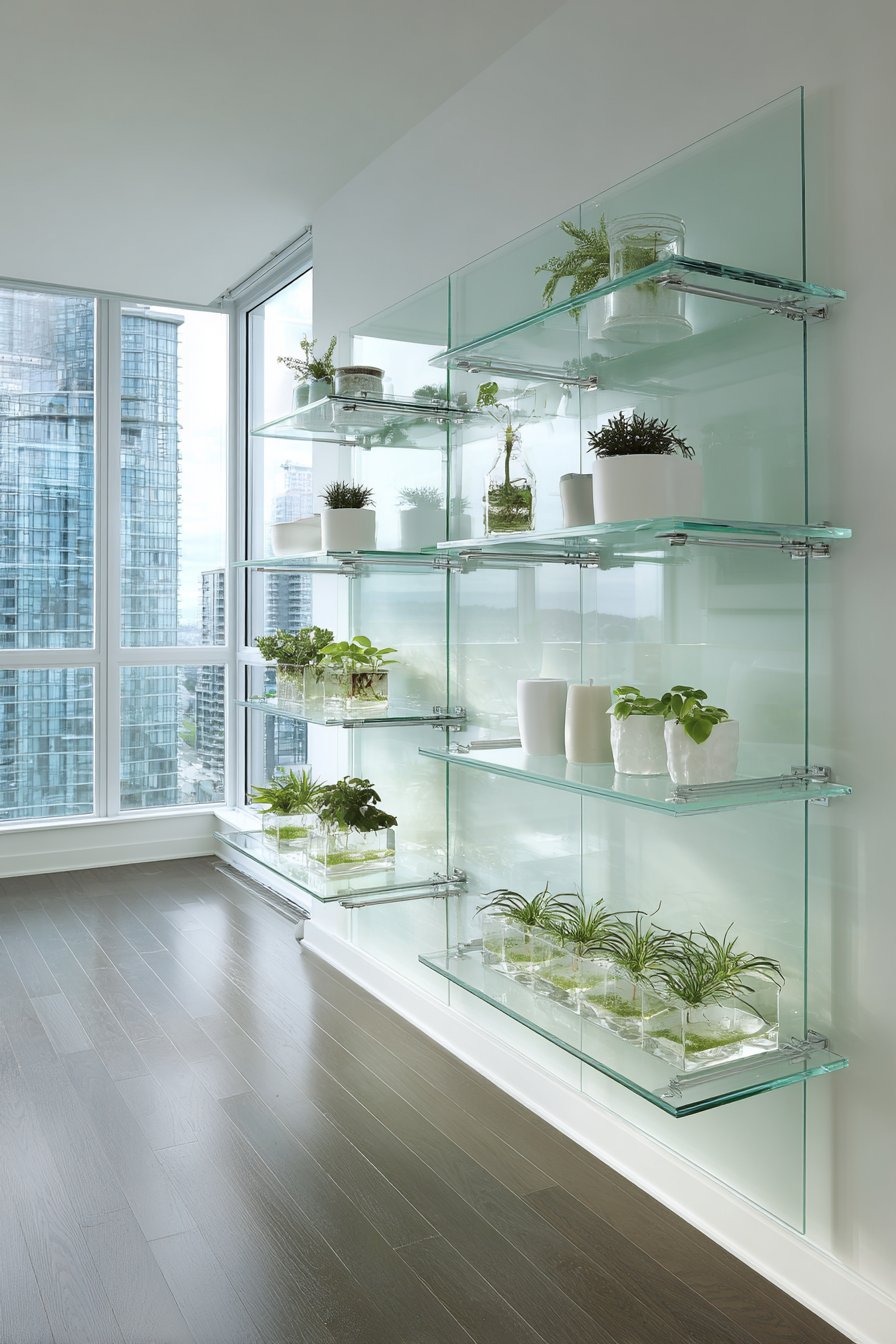
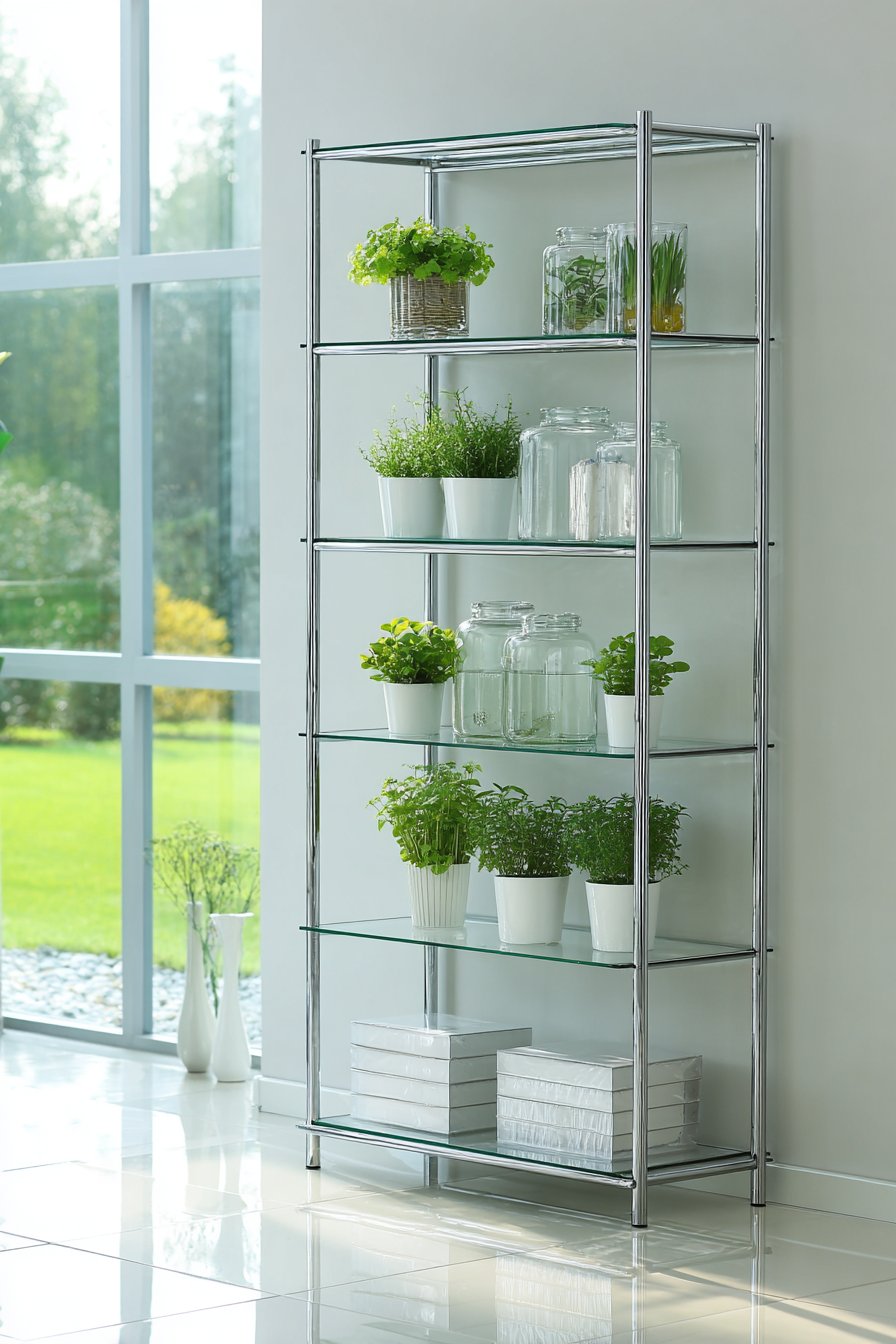
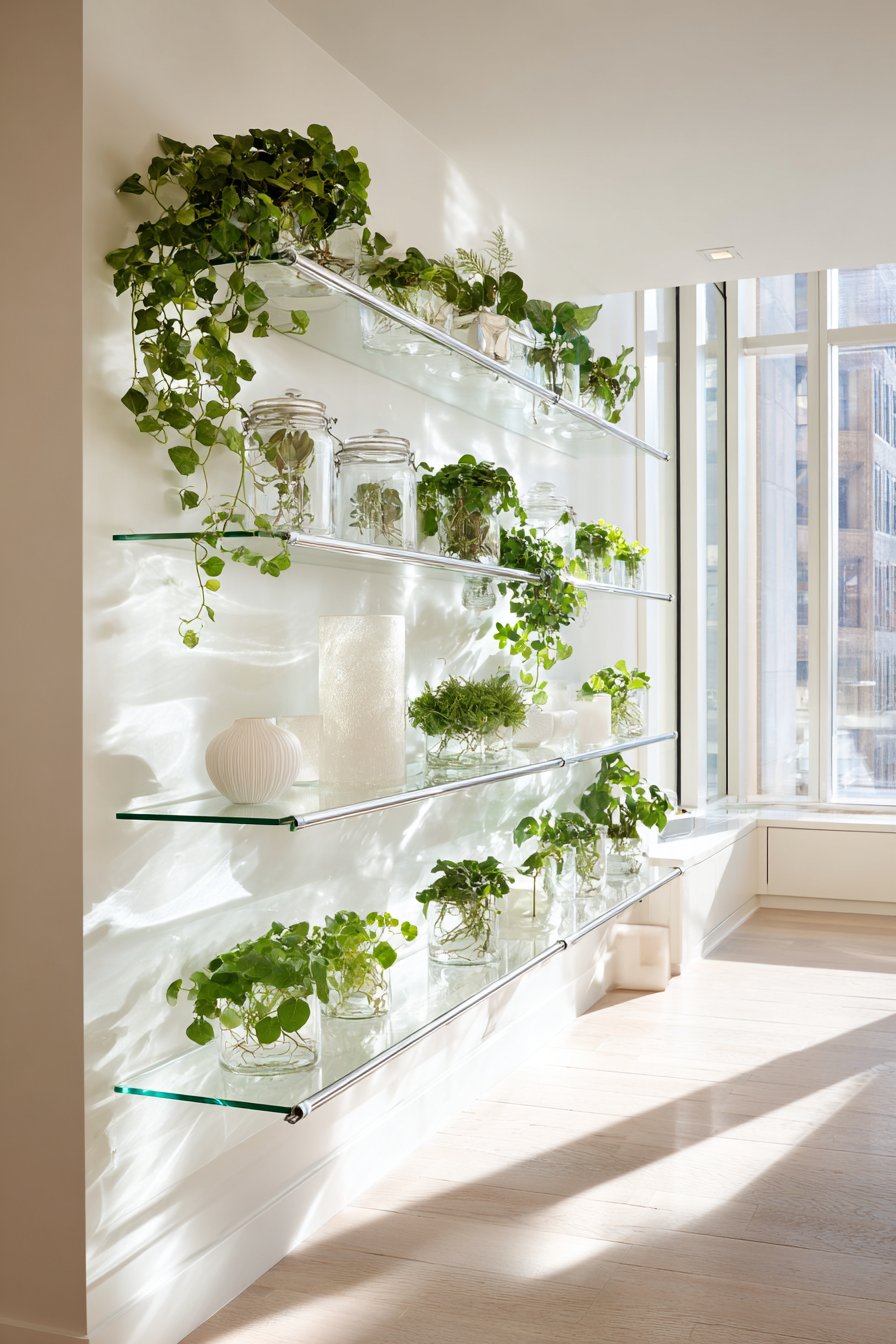
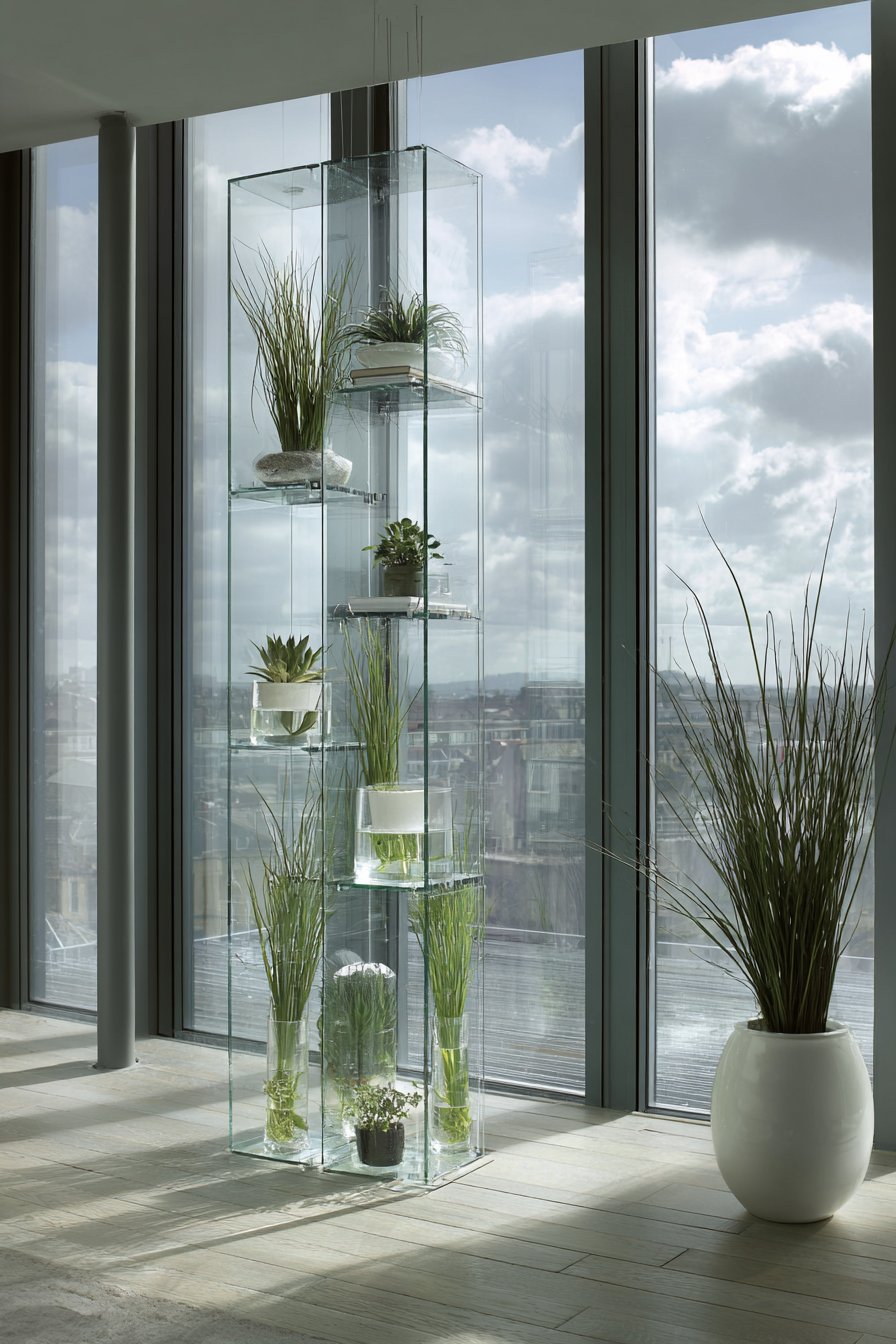
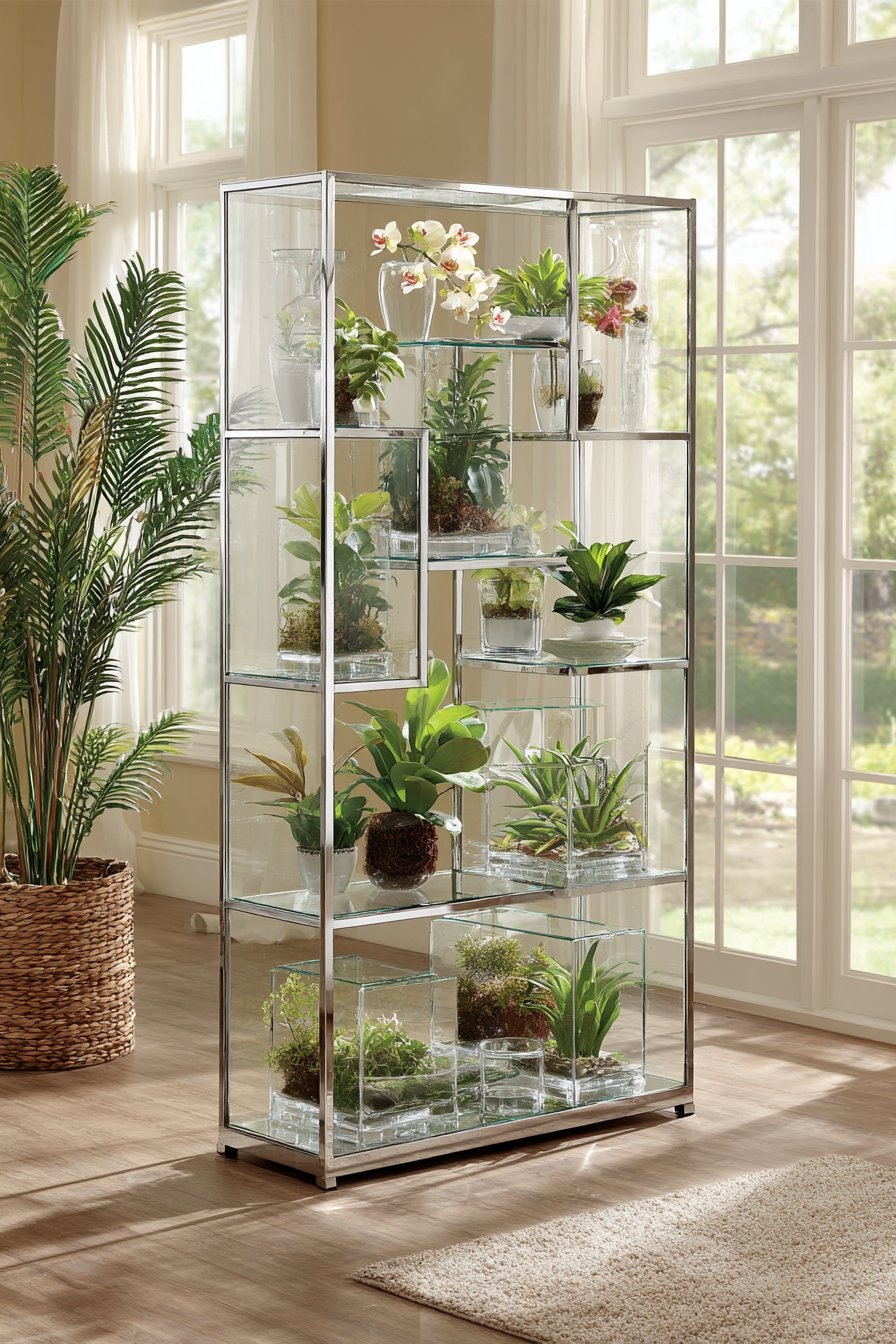
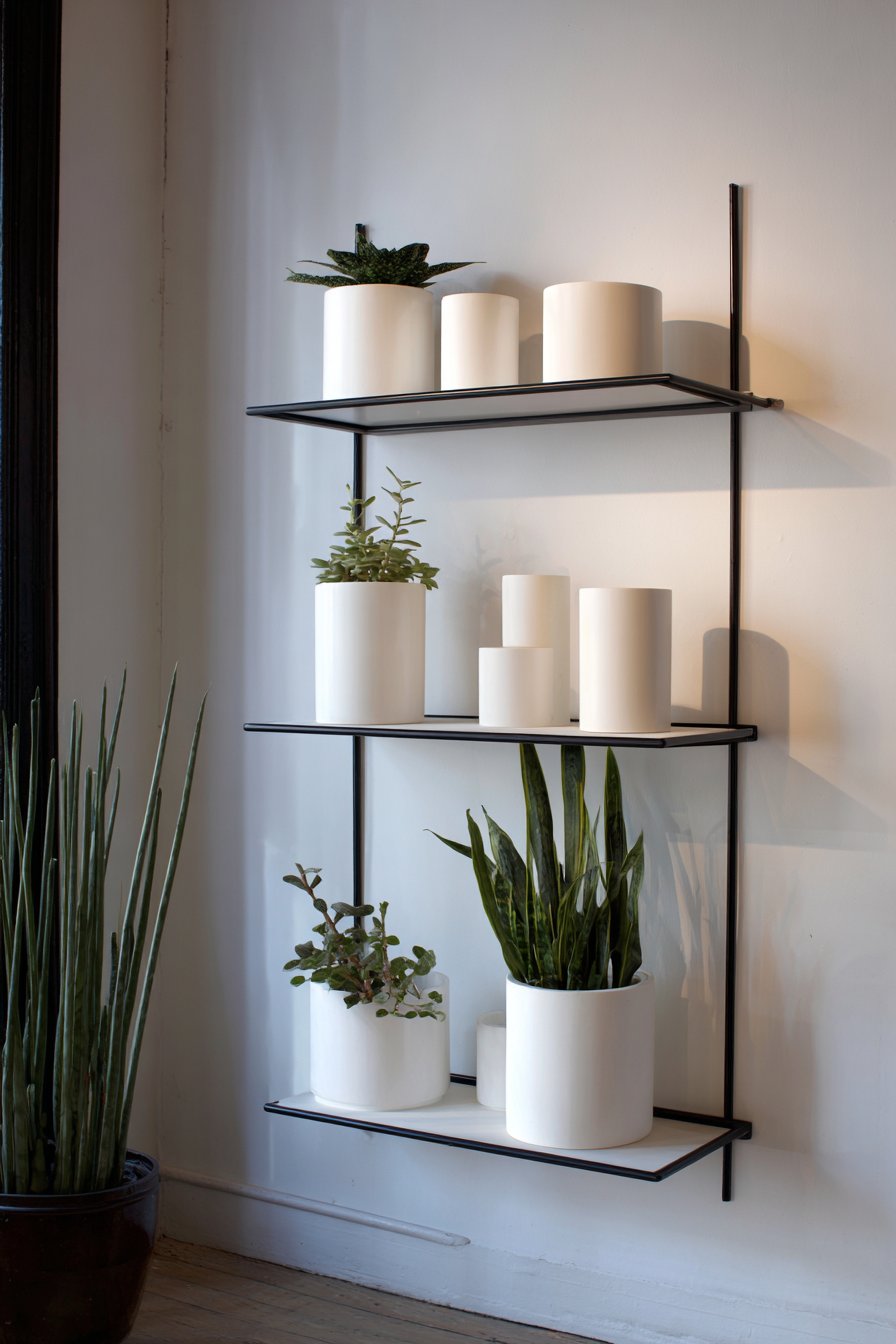
Embodying the essence of contemporary sophistication, a sleek glass and chrome étagère creates an almost ethereal plant display where greenery appears to float in space. This indoor plant shelf idea appeals to those who appreciate modern design’s emphasis on transparency, light, and minimal visual weight. Five tiers of crystal-clear tempered glass rest on slender chrome supports, their see-through nature allowing light to pass through unobstructed while creating subtle prismatic effects that change throughout the day. The transparency serves a dual purpose: aesthetically, it maintains an airy, open feel even when filled with plants; practically, it ensures that sunlight reaches specimens on lower shelves, a crucial consideration often overlooked in solid shelving systems.
The plant selection for this display requires careful consideration to complement rather than overpower the delicate shelving structure. Plants housed in clear glass containers reveal their root systems, transforming typically hidden underground networks into fascinating displays of natural engineering—fibrous roots spreading like dendrites, bulbs nestled in soil layers, or even hydroponic systems where roots float in nutrient-rich water. Minimalist white ceramic pots provide clean contrast against the transparent shelves, their simple cylindrical forms echoing the modern aesthetic. The restrained approach to plant selection—favoring architectural specimens like sleek snake plants, sculptural agave, and geometric succulents—ensures the display feels curated rather than cluttered.
The relationship between light and glass creates the true magic in this arrangement. Positioned near floor-to-ceiling windows, the étagère becomes a living sculpture that changes constantly as natural light shifts throughout the day. Morning sun creates long shadows and highlights dust motes dancing in the air. Midday light makes the glass virtually invisible, leaving plants seemingly suspended. Late afternoon sun catches water droplets on leaves, turning them into tiny prisms. Even the chrome supports contribute to this light play, their reflective surfaces bouncing illumination in unexpected directions and creating bright accent points that draw the eye through the display’s various levels.
Key Design Tips:
- Invest in tempered glass shelves rated for appropriate weight loads—plants, pots, and water add up quickly
- Keep chrome fixtures polished to maintain their reflective quality and prevent tarnishing
- Select plants in clear containers to showcase root systems and embrace the transparent aesthetic
- Use minimal white or transparent pots to maintain the airy, lightweight visual effect
- Position near abundant natural light sources but not in harsh direct sun that could create hotspots
- Keep plant selection restrained—fewer, better specimens create more impact than crowded shelves
- Clean glass shelves regularly to maintain transparency and prevent water spots or dust buildup
- Consider plants with interesting root structures—pothos, philodendron, or bulbs—for clear containers
7. Rustic Farmhouse Crate Shelving
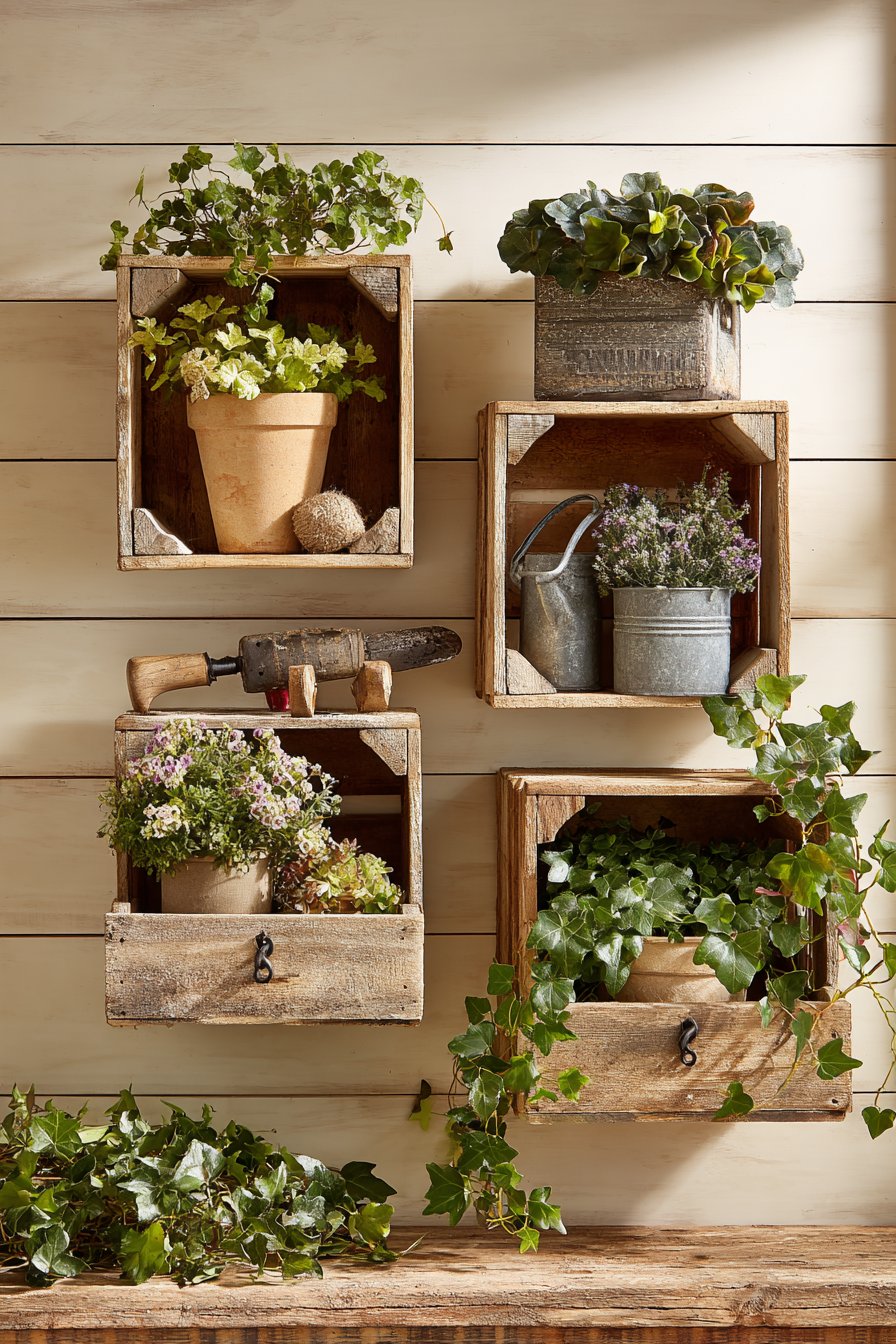
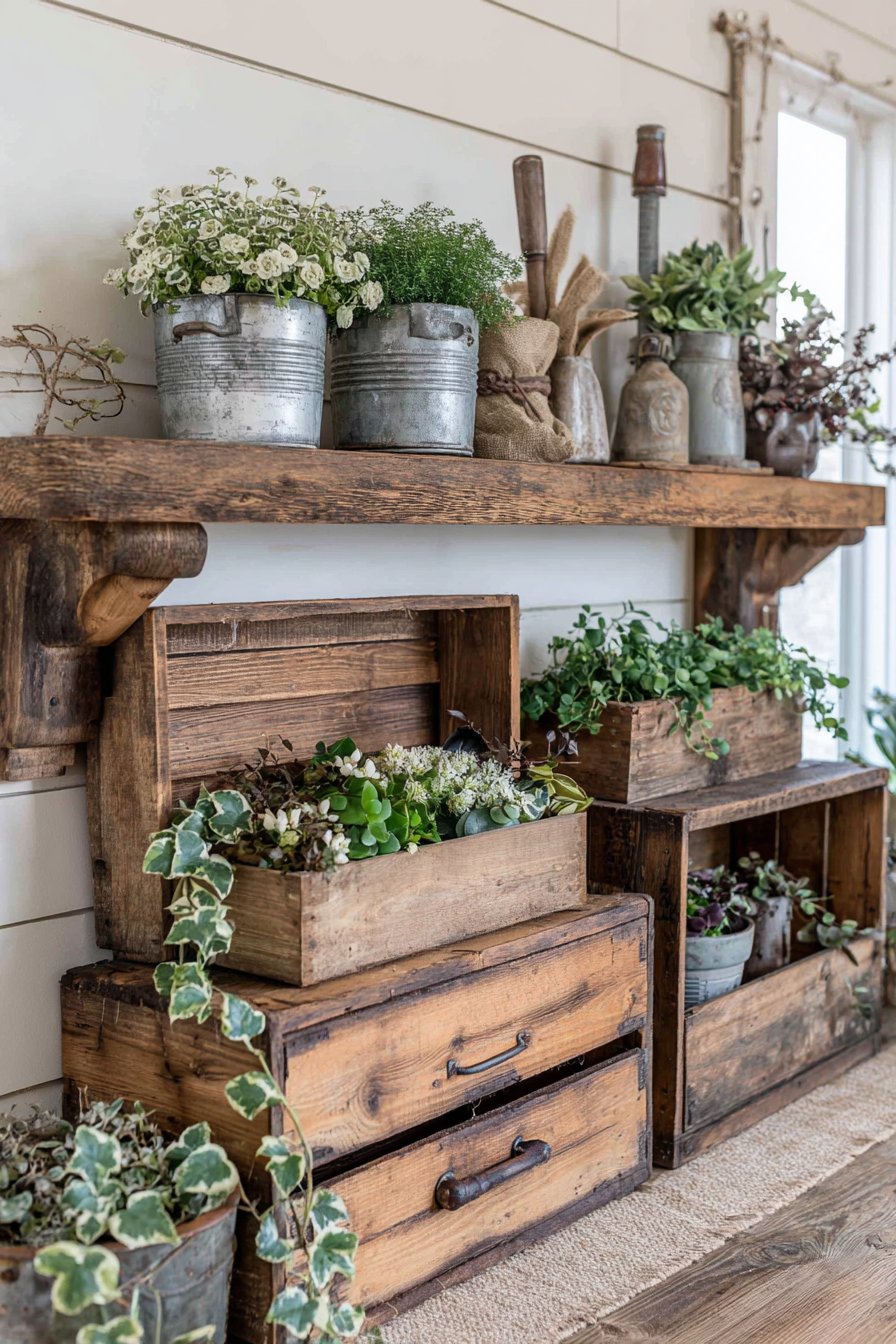
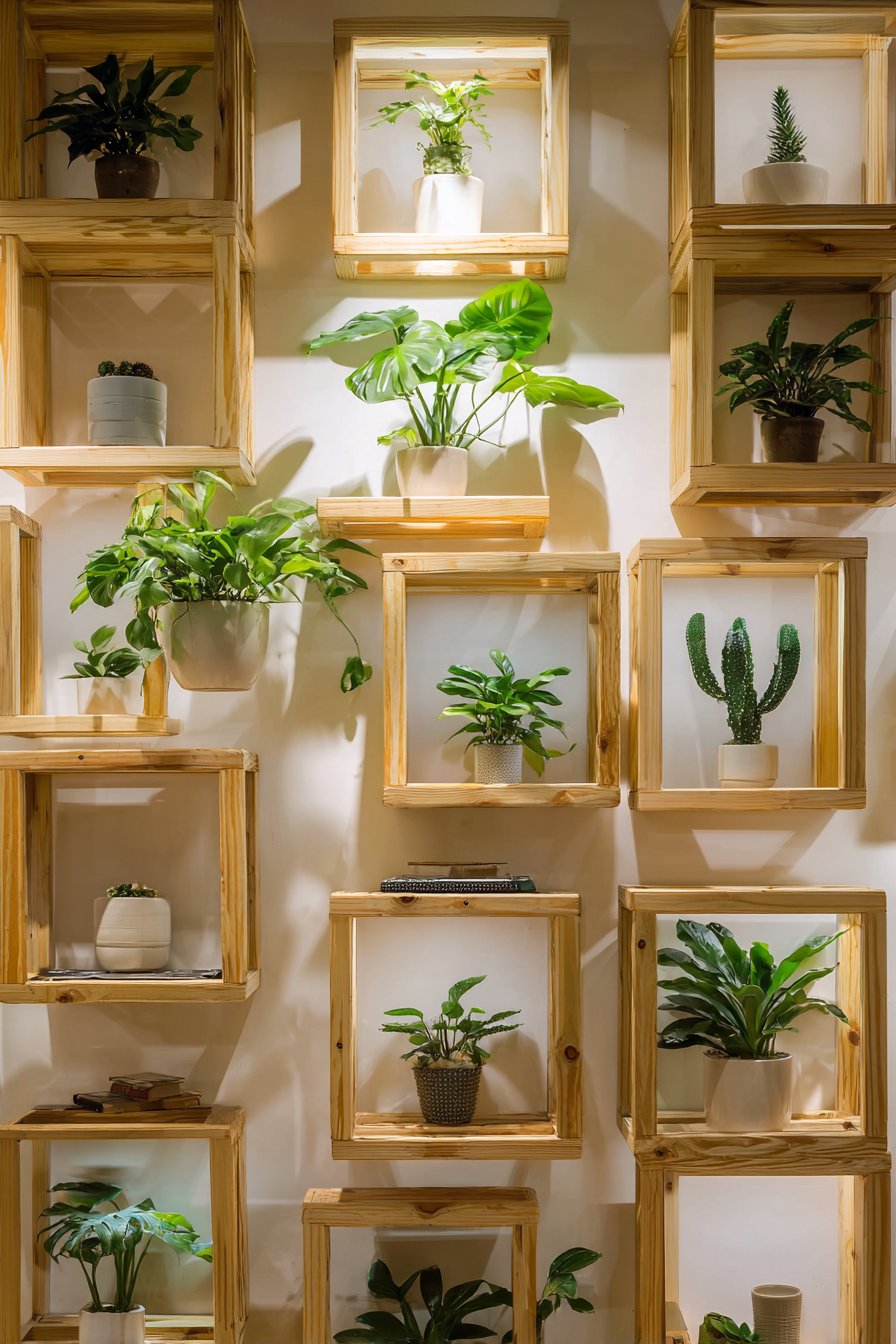
Celebrating the beauty of repurposed materials, wooden crates stacked and mounted on a shiplap wall create a charming farmhouse-style indoor plant shelf idea that radiates warmth and authenticity. This approach embraces the DIY spirit, where vintage wooden crates—perhaps once used for transporting produce or goods—find new life as plant display cubbies. The weathered wood of the crates, complete with original stamps, labels, and signs of use, tells stories of previous purposes while serving present needs. Each crate becomes an individual display cubby, their open fronts creating shadow boxes that frame plants like living art. The arrangement can be asymmetrical and organic, reflecting the unplanned, collected-over-time aesthetic that makes farmhouse style so appealing and approachable.
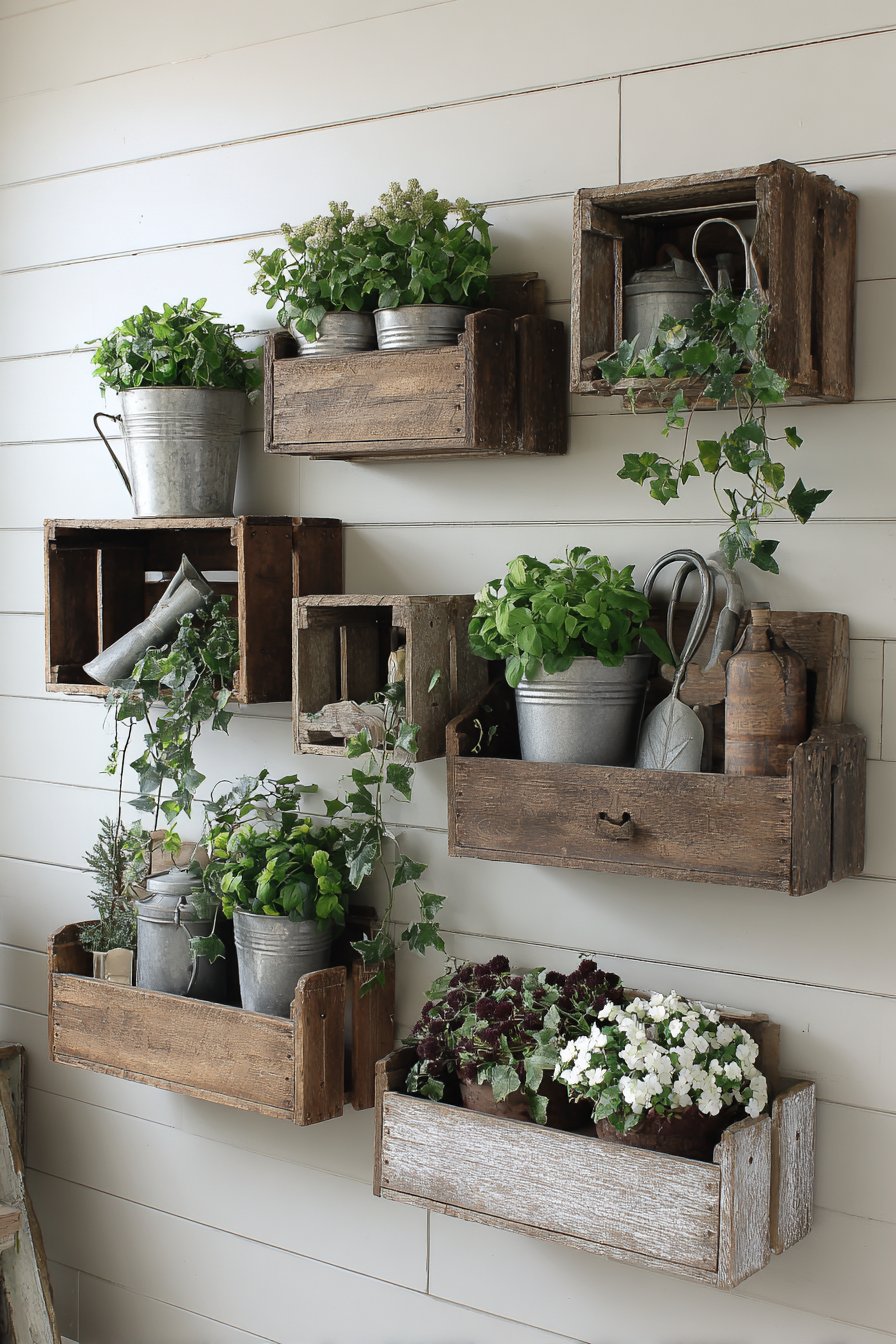
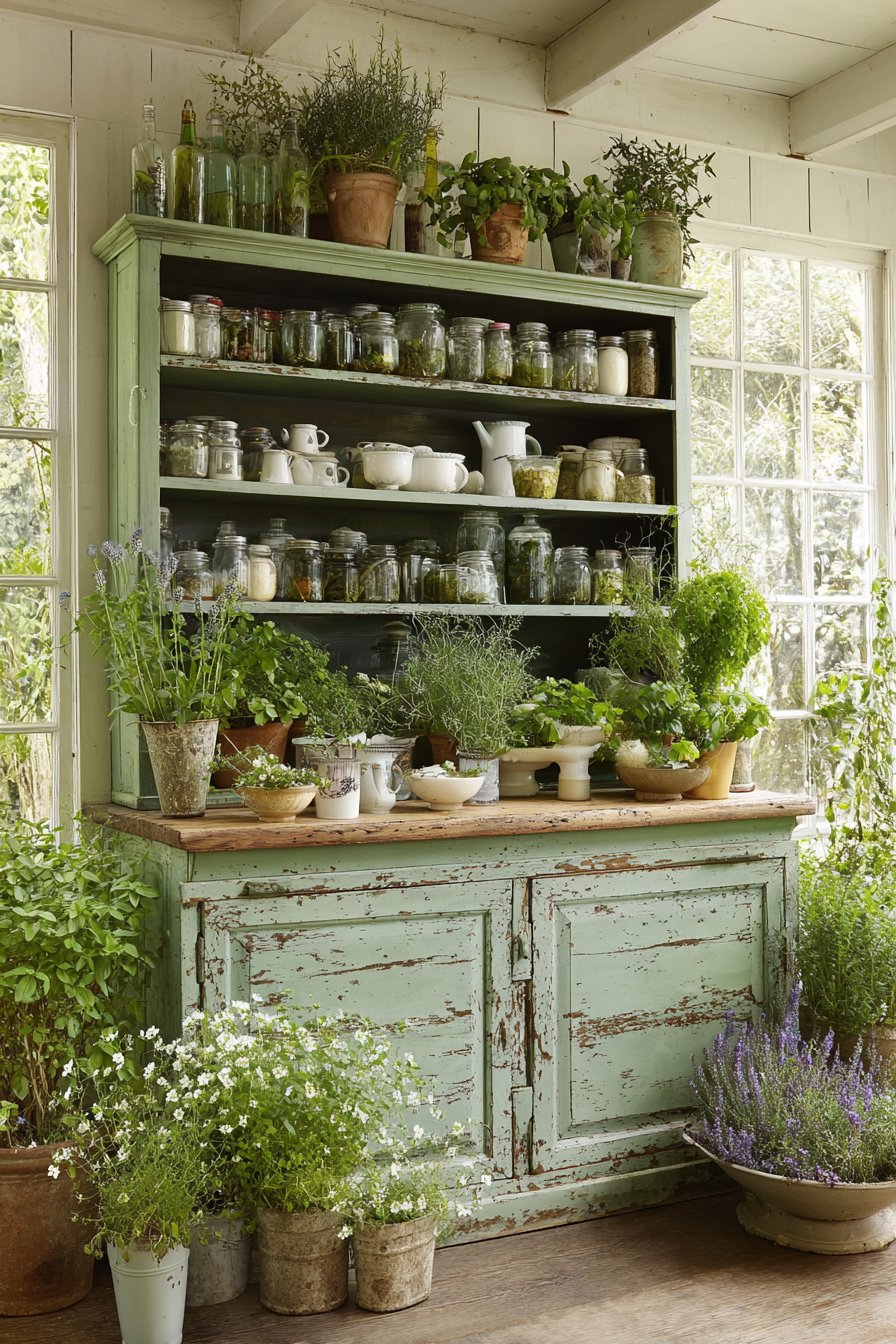
The plant selection leans toward varieties that complement the rustic setting: fragrant herbs planted in galvanized metal buckets evoke kitchen gardens of yesteryear, flowering plants in distressed terra cotta pots add splashes of color reminiscent of cottage gardens, and trailing ivy cascades from upper crates like nature slowly reclaiming abandoned structures. This isn’t merely decoration; it’s a lifestyle statement about valuing sustainability, history, and the beauty of imperfection. Alongside plants, the crates might hold gardening tools with worn wooden handles, seed packets saved in vintage tins, or small chalkboard labels identifying herb varieties—functional elements that enhance rather than detract from the display’s authentic character.
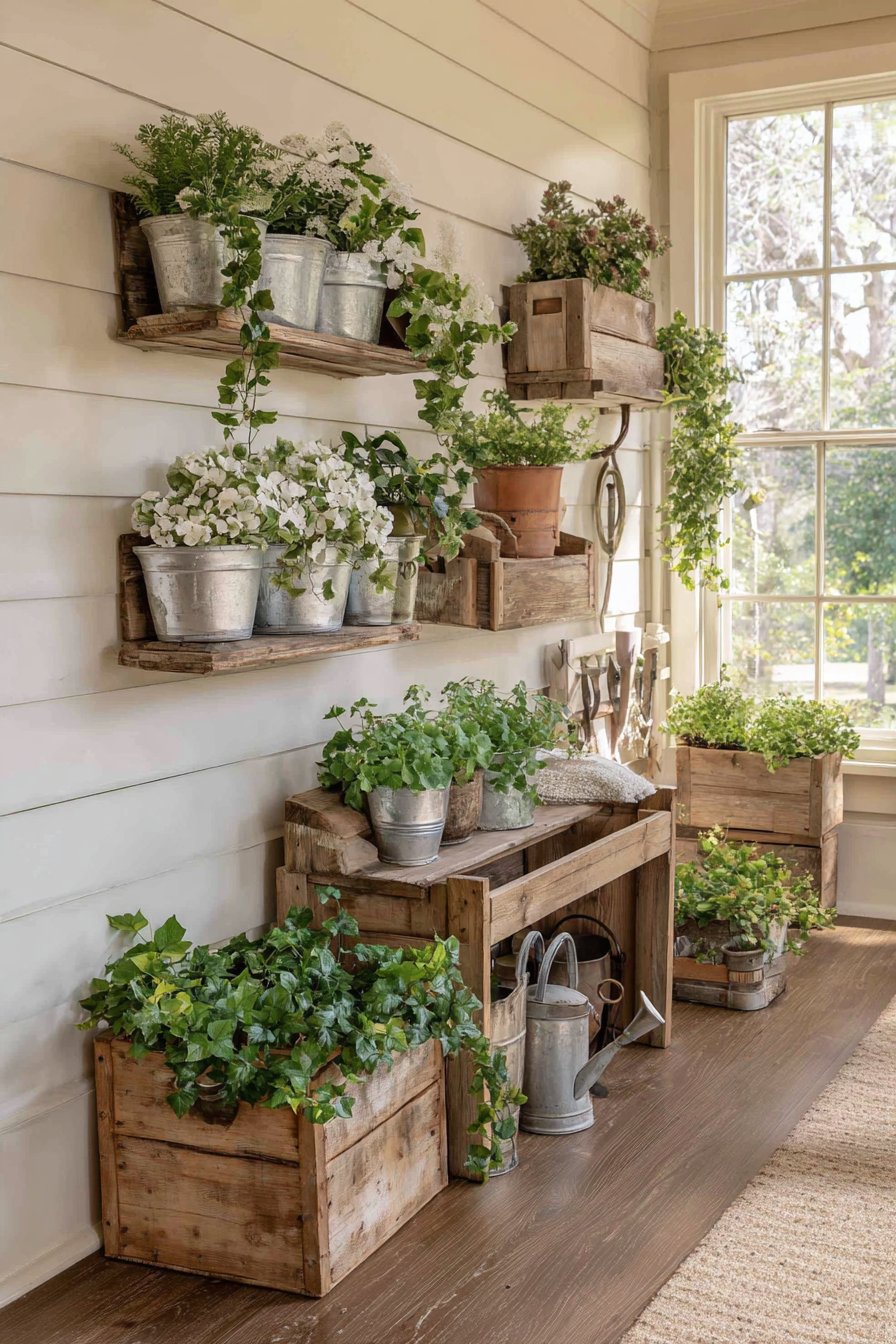
The shiplap wall provides the perfect canvas for this rustic tableau, its horizontal lines creating rhythm and texture without competing with the crates for attention. Natural wood tones dominate the palette—the honey warmth of pine crates, the weathered gray of aged cedar, the rich browns of reclaimed barn wood—creating a cohesive environment that feels both designed and effortless. This indoor plant shelf idea proves particularly popular among those embracing farmhouse, cottage, or country design styles, but its appeal extends to anyone who values sustainability, handcrafted character, and the satisfaction of creating something beautiful from materials that might otherwise have been discarded.
Key Design Tips:
- Source authentic vintage crates from antique markets, estate sales, or online marketplaces for genuine character
- Secure crates to the wall with strong brackets or screws through back panels—safety is crucial with stacked arrangements
- Mix crate sizes and orientations—some horizontal, some vertical—for dynamic visual interest
- Embrace weathering and imperfections; they’re features, not flaws, in farmhouse aesthetic
- Choose galvanized metal, terra cotta, and natural materials for planters to maintain rustic consistency
- Include functional elements—tools, watering cans, seed packets—to enhance the working-garden atmosphere
- Consider adding vintage-style hooks between or below crates for hanging plants or tools
- Apply clear sealant to crates to protect wood from water damage while maintaining aged appearance
8. Mid-Century Modern Credenza Display
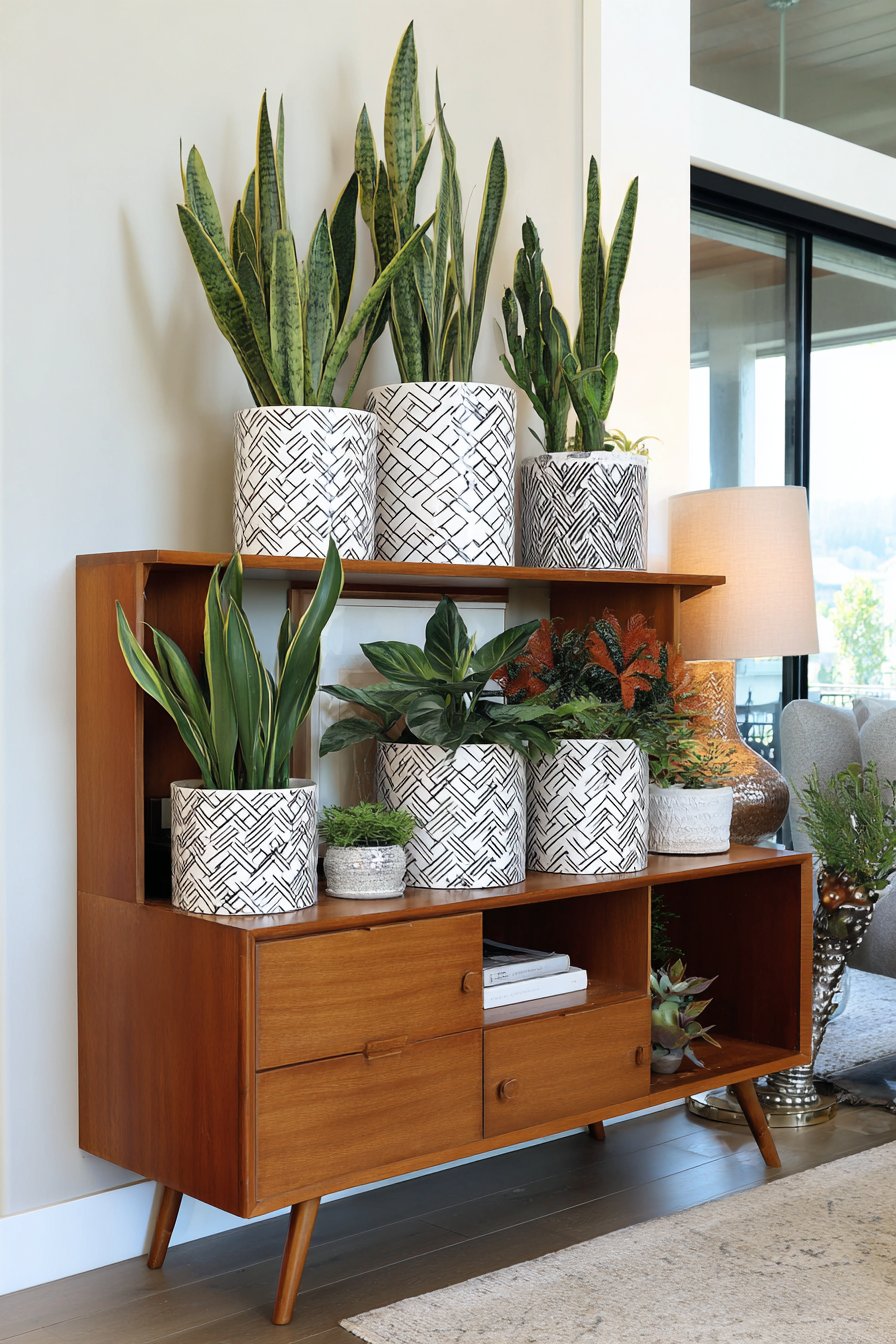
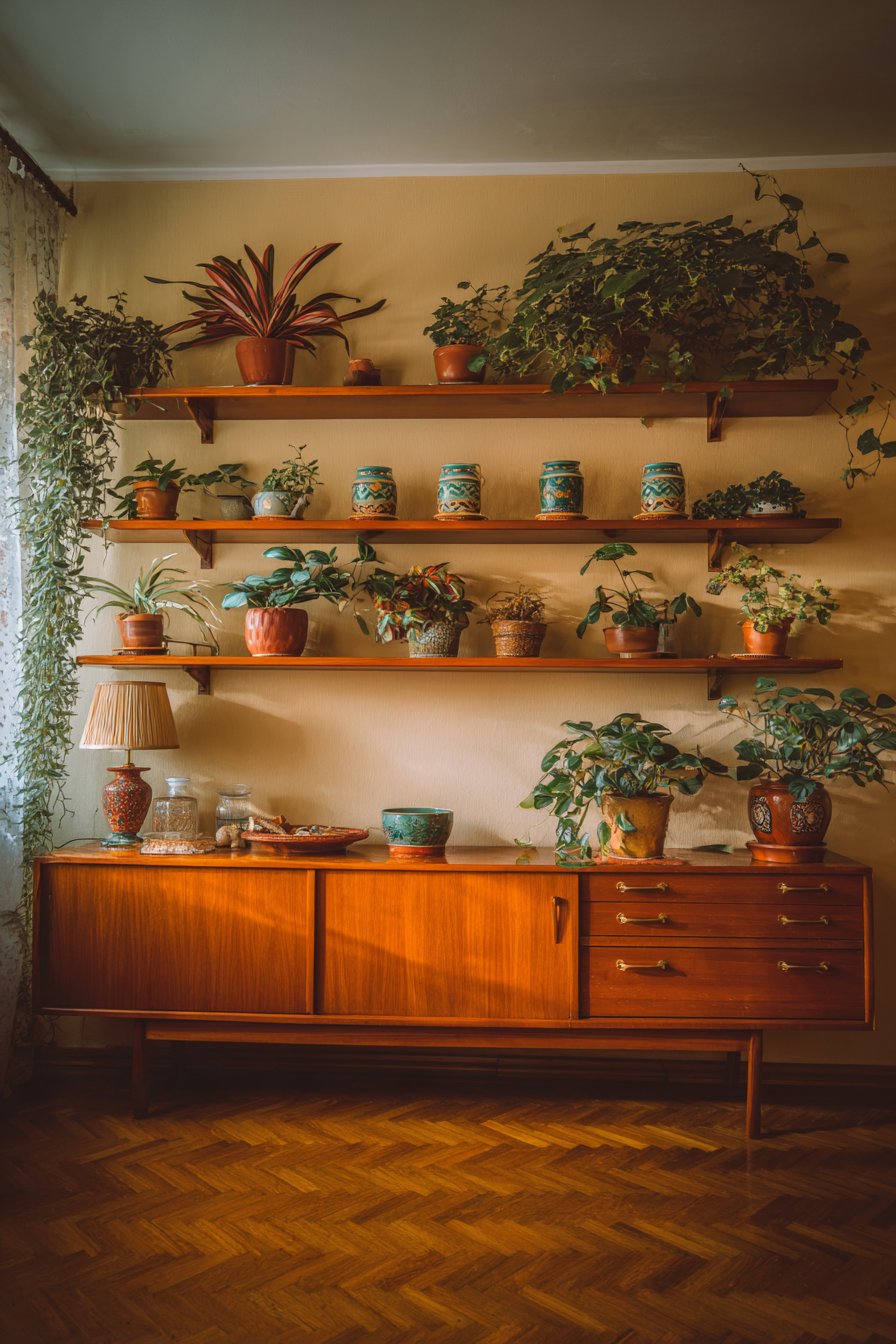
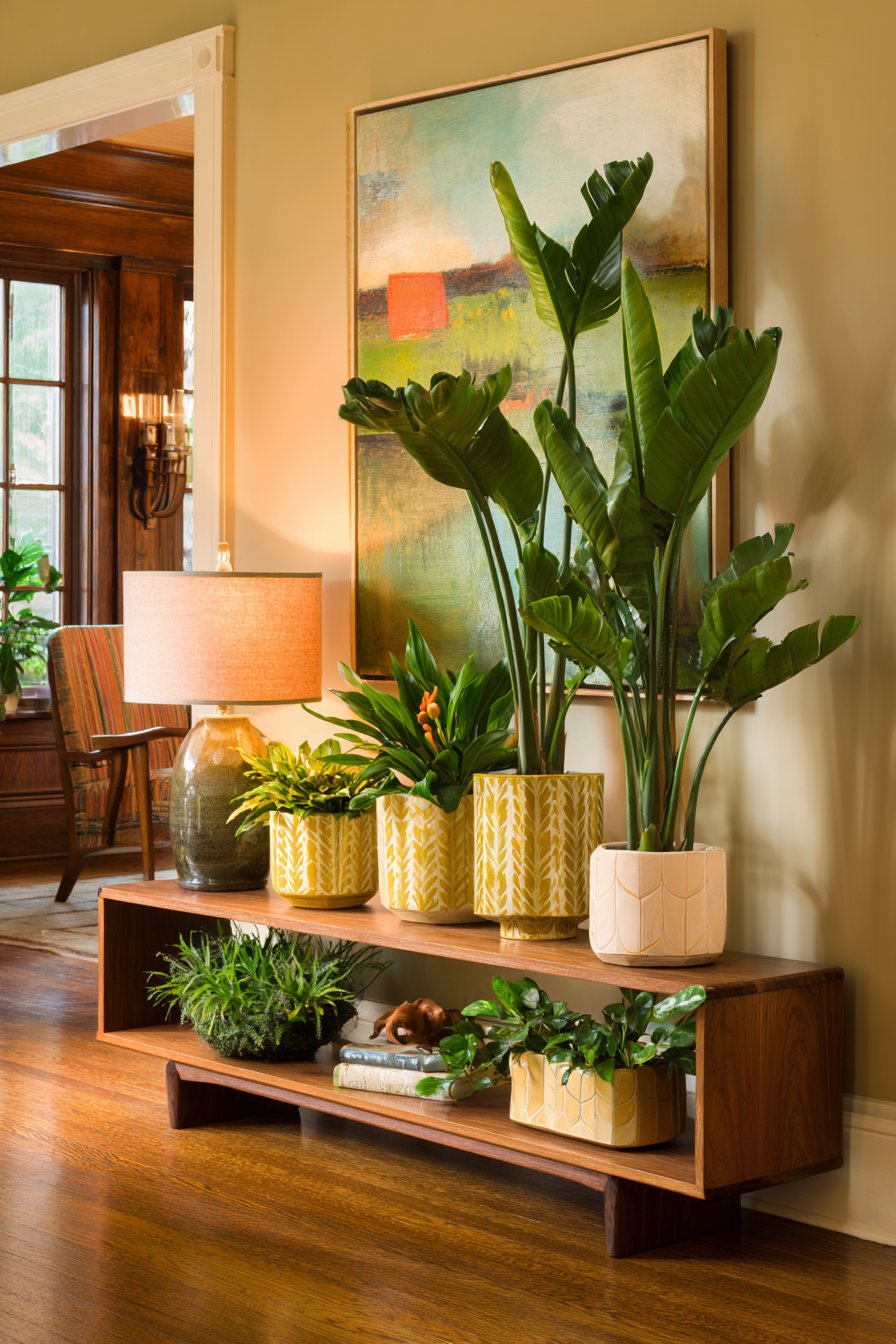
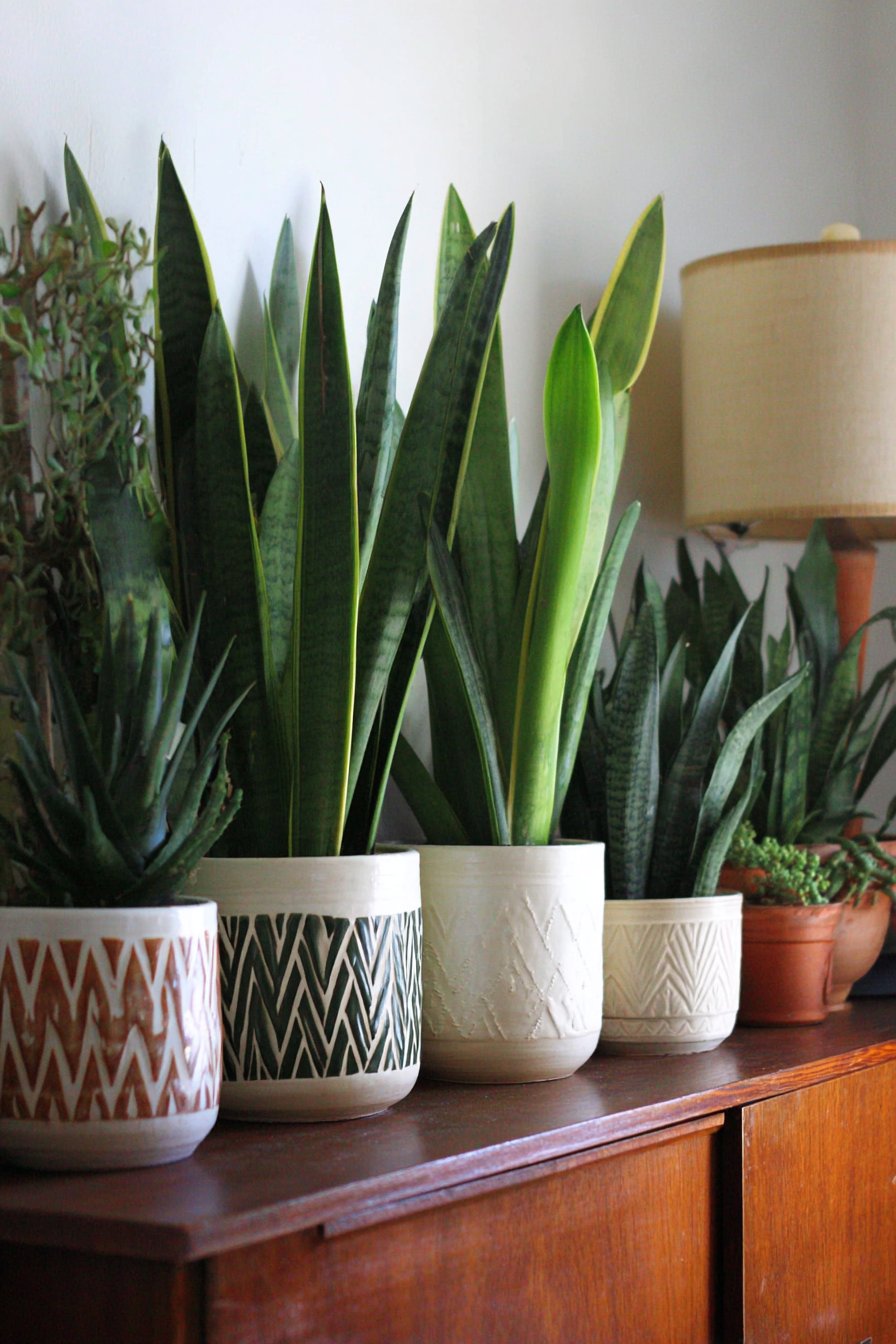
Channeling the timeless elegance of mid-century design, a low-profile teak credenza topped with integrated shelving creates a sophisticated indoor plant shelf idea that appeals to lovers of retro aesthetics. This arrangement honors the period’s emphasis on clean lines, organic forms, and the seamless integration of furniture with function. The credenza itself, with its characteristic tapered legs and warm teak grain, provides enclosed storage below while the open shelving above becomes a stage for a carefully curated plant collection. The horizontal emphasis of the piece—long and low rather than tall and imposing—reflects mid-century principles that prioritized human scale and comfortable proportions in furniture design.
The plant selection echoes the era’s fascination with bringing tropical modernism indoors: a statuesque bird of paradise with its dramatic paddle-shaped leaves becomes a living sculpture, its scale and form perfectly suited to the clean-lined furniture. Trailing varieties like pothos and philodendron cascade from upper shelves, their organic movement providing pleasing contrast to the rigid geometry of the shelving. Planters themselves become design elements—ceramic vessels with geometric patterns, tapered forms, or distinctive glazes in period-appropriate colors like avocado green, burnt orange, or warm mustard yellow. These aren’t merely containers; they’re decorative objects that would have been at home in original mid-century interiors.
Lighting plays a crucial role in completing the scene. A vintage-inspired table lamp with a sculptural base and warm-toned shade provides ambient illumination that emphasizes the wood’s rich patina and creates intimate pools of light after dark. During daylight hours, natural light from nearby windows interacts with the glossy teak finish, highlighting the wood’s natural beauty and creating the warm, optimistic atmosphere that defined mid-century modern interiors. The combination of natural and artificial light ensures plants receive adequate illumination while maintaining the cozy, lived-in feel that makes mid-century spaces so enduringly popular.
Key Design Tips:
- Source authentic mid-century furniture or high-quality reproductions with genuine teak or walnut wood
- Select plants that were popular during the mid-century era—rubber trees, bird of paradise, philodendron, pothos
- Choose planters with period-appropriate aesthetics: geometric patterns, tapered forms, atomic-age designs
- Incorporate warm-toned accent colors through pots or accessories—burnt orange, avocado, mustard, teal
- Add a sculptural table or floor lamp with organic forms to provide supplemental light and enhance the retro aesthetic
- Maintain clean, uncluttered displays—mid-century design favored “less is more” philosophy
- Mix functional storage with display space to honor the era’s emphasis on practical beauty
- Position near natural light sources to showcase the warm wood tones and support plant health
9. Narrow Vertical Wall-Mounted Shelves
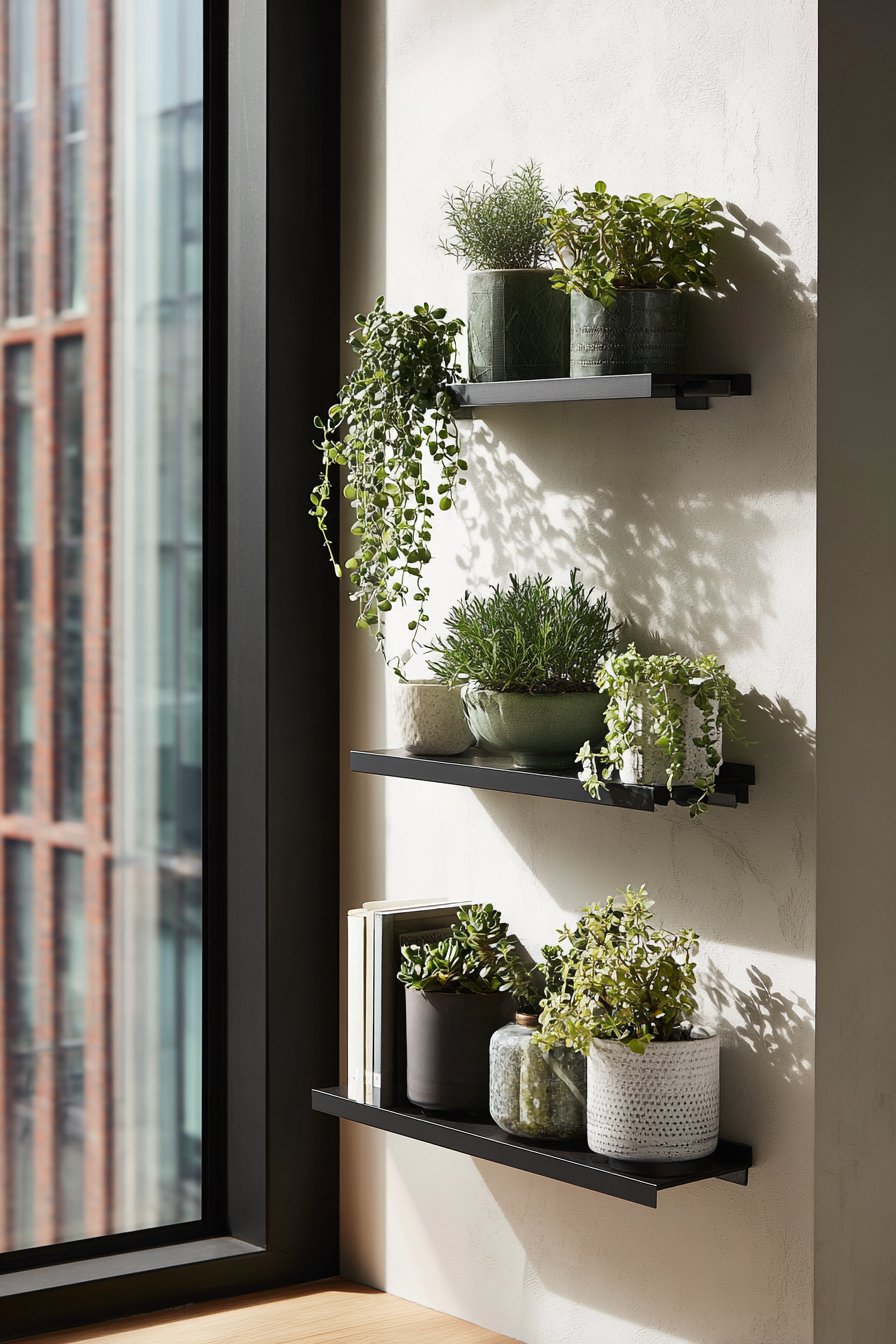
Proving that impactful plant displays don’t require expansive space, ultra-slim vertical shelves mounted on a wall create an indoor plant shelf idea perfectly suited to compact apartments, narrow hallways, or any space where square footage comes at a premium. Three narrow floating shelves in sleek matte black metal consume minimal wall width—perhaps only 4 to 6 inches deep—yet provide surprisingly adequate space for petite planters holding herbs, succulents, and small trailing plants. The vertical orientation, with shelves stacked at strategic intervals, draws the eye upward and creates the illusion of height, a valuable trick in smaller spaces where every design choice must work harder to enhance rather than diminish the sense of openness.
The genius of this space-saving solution lies in its proportional relationship to the items it displays. Rather than trying to accommodate full-sized plants and standard pots on inadequate shelves—a recipe for visual chaos and practical frustration—this system embraces its limitations by showcasing miniature specimens that thrive in tight quarters. Tiny succulents in 2-inch pots, herb seedlings started from seed, propagated pothos cuttings in small vessels—these diminutive plants find perfect homes on shallow shelves. The trailing varieties prove particularly effective, as their cascading growth extends beyond the shelf boundaries, adding visual volume without requiring physical depth.
Positioned strategically near a kitchen window, these narrow shelves serve double duty as both decorative element and functional herb garden. Basil, mint, and parsley grow within arm’s reach of the cutting board, encouraging the habit of cooking with fresh ingredients. The natural light streaming through the window provides ideal growing conditions while the compact arrangement keeps everything accessible without cluttering precious counter space. The matte black finish of the shelves adds contemporary sophistication while ensuring the focus remains on the vibrant greens of the plants themselves. This indoor plant shelf idea demonstrates that successful design isn’t about how much space you have, but how cleverly you use what’s available.
Key Design Tips:
- Choose shelves no deeper than 6 inches to maintain the slim profile that makes this solution work
- Space shelves 8-12 inches apart vertically to accommodate plant growth without crowding
- Opt for matte black or dark finishes that recede visually, allowing plants to be the focus
- Select appropriately scaled plants—succulents, herbs, small trailing varieties—that won’t overwhelm narrow shelves
- Position near natural light sources, particularly in kitchens where herbs can serve culinary purposes
- Use uniform small pots to maintain visual consistency and prevent the display from looking cluttered
- Consider magnetic backing or adhesive hooks for extremely lightweight displays in rental situations
- Install near areas where you’ll naturally see and interact with plants daily—kitchens, home offices, reading nooks
10. Bathroom Plant Sanctuary
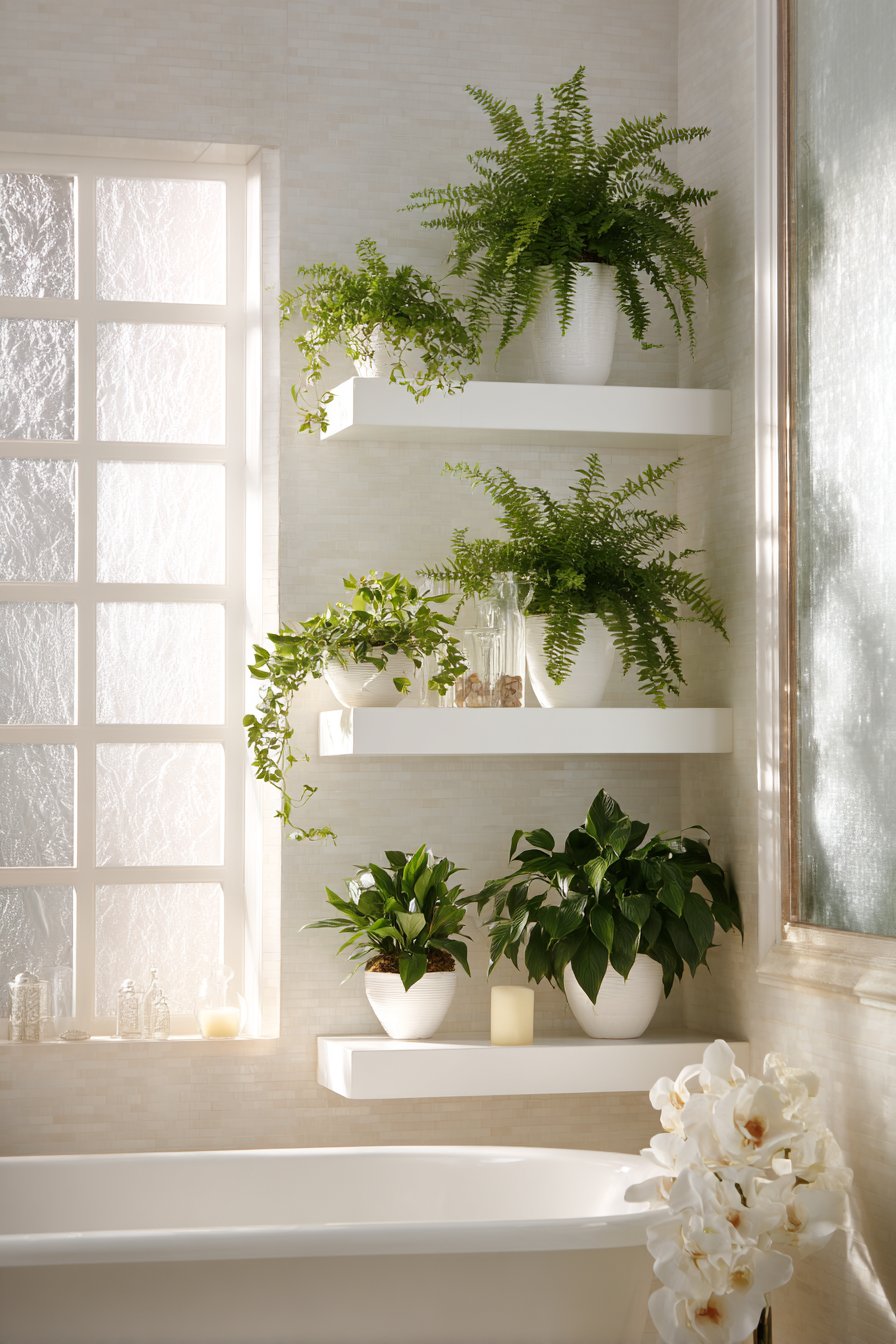
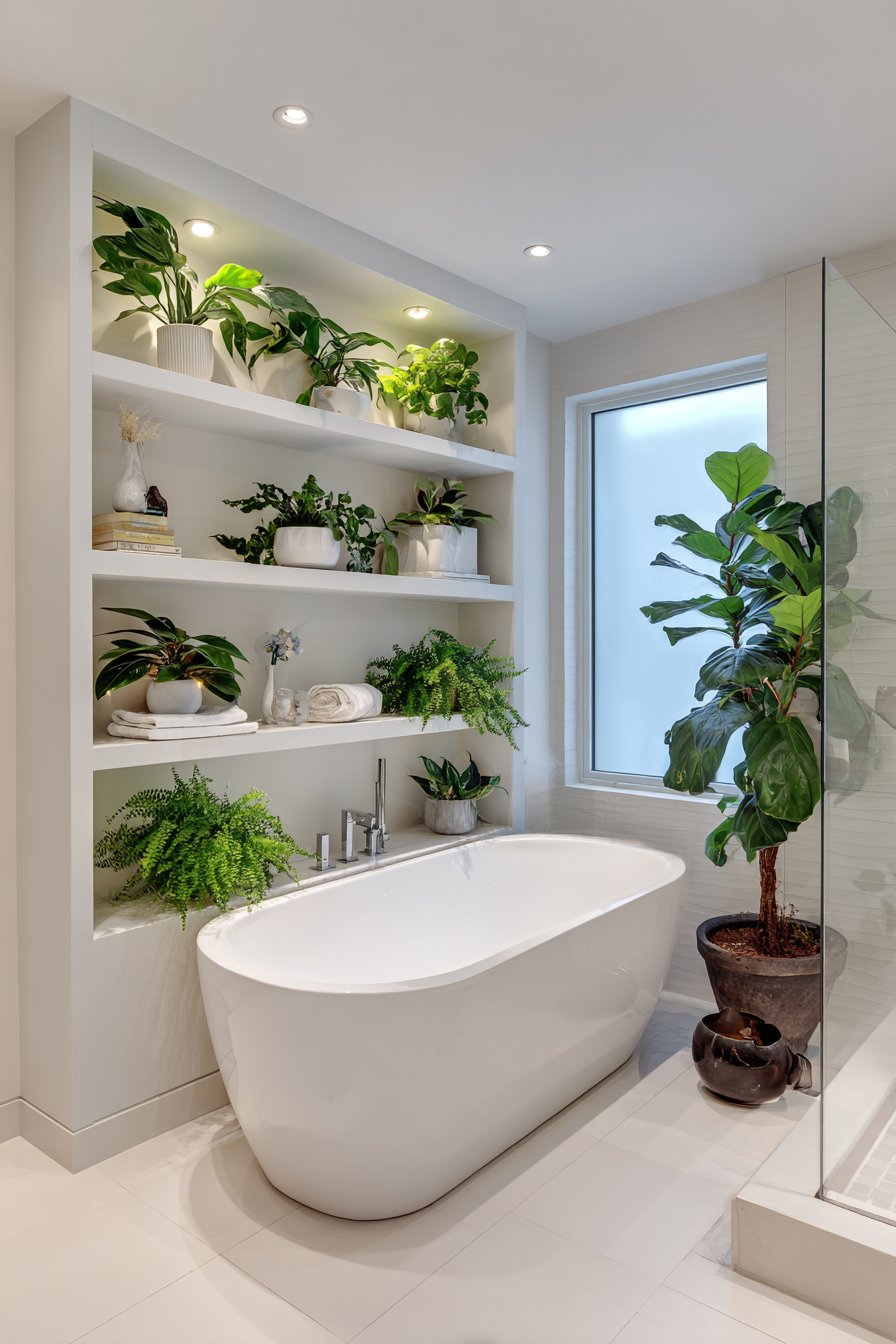
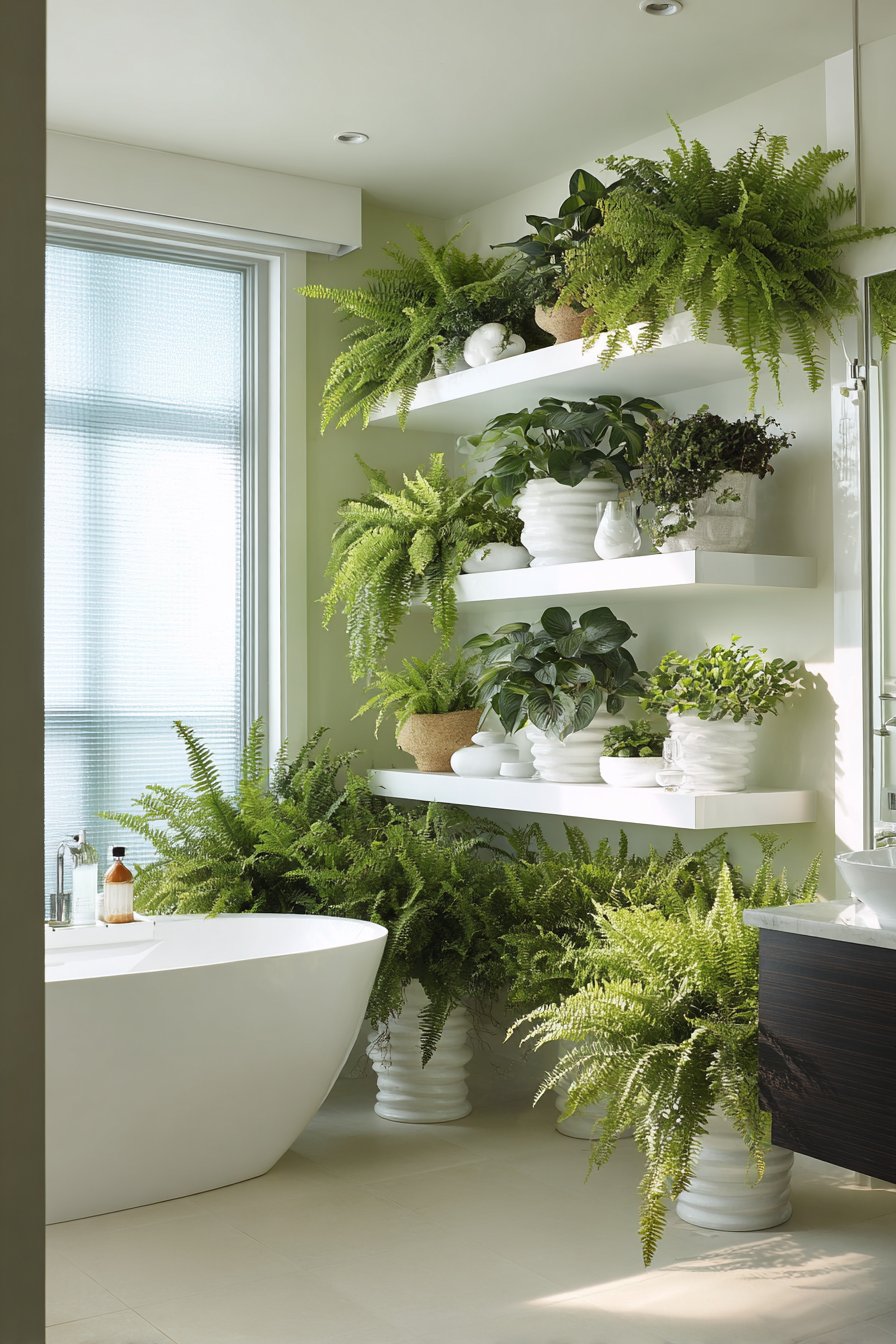
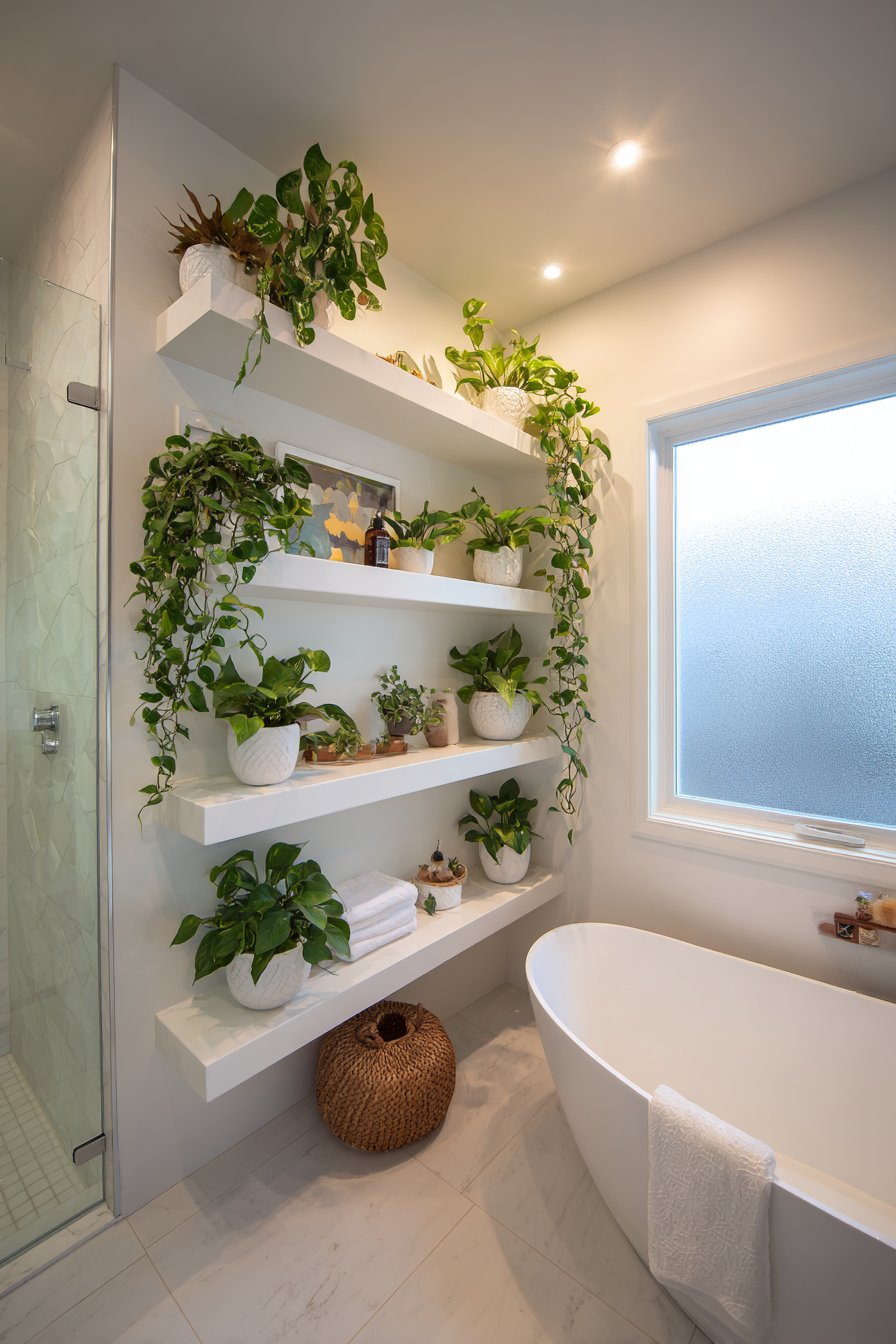
Transforming a typically utilitarian space into a spa-like retreat, moisture-loving plants displayed on waterproof white floating shelves create a bathroom indoor plant shelf idea that capitalizes on the room’s naturally humid environment. Positioned thoughtfully above a freestanding bathtub, the shelving creates a living canopy that turns bathing into an immersive experience surrounded by nature. The plant selection focuses on species that not only tolerate but actively thrive in bathroom conditions: lush ferns that unfurl new fronds in the moist air, graceful pothos with heart-shaped leaves cascading toward the water below, and elegant peace lilies that occasionally reward the high humidity with sculptural white blooms. These aren’t just decorative additions; they’re plants in their element, growing more vigorously in bathroom conditions than they might elsewhere in the home.
The choice of waterproof white floating shelves reflects both practical and aesthetic considerations. The white finish complements typical bathroom palettes—whether paired with white subway tiles, marble, or colorful accent walls—while the waterproof construction ensures longevity in this moisture-rich environment where standard wood shelves might warp or deteriorate. Simple white ceramic pots maintain the clean, spa-like aesthetic while providing adequate drainage crucial for plant health. The arrangement creates visual interest through varied plant heights and forms: upright peace lilies providing vertical accents, bushy ferns adding volume and texture, trailing pothos creating soft, cascading lines that soften the hard edges of bathroom fixtures.
The interplay of natural and artificial light in this setting requires thoughtful consideration. Soft natural light filtering through a frosted window provides privacy while still offering adequate illumination for photosynthesis. Recessed ceiling lights supplement natural light, ensuring the space remains bright and welcoming even during evening baths when the plants and fixtures create a calming tableau. The presence of plants in the bathroom serves purposes beyond decoration: they help absorb excess moisture that might otherwise promote mold growth, purify air that can become stale in windowless bathrooms, and provide psychological benefits—studies suggest that views of nature, even indoors, promote relaxation and reduce stress.
Key Design Tips:
- Choose plants native to tropical or subtropical regions that thrive in high humidity—ferns, pothos, peace lilies, orchids
- Install waterproof or marine-grade shelving materials to withstand constant moisture exposure
- Ensure adequate drainage in all pots to prevent waterlogged roots despite the humid environment
- Position shelves where they won’t interfere with shower spray or bathing activities
- Add grow lights if your bathroom has limited natural light—many plants need bright indirect light despite loving humidity
- Group plants with similar water and light needs for easier maintenance
- Consider the visual sightline from the bathtub—arrange plants to create a pleasant view while bathing
- Clean leaves regularly, as bathroom humidity can make dust stick more readily to foliage
11. Macramé Hanging Shelf Display
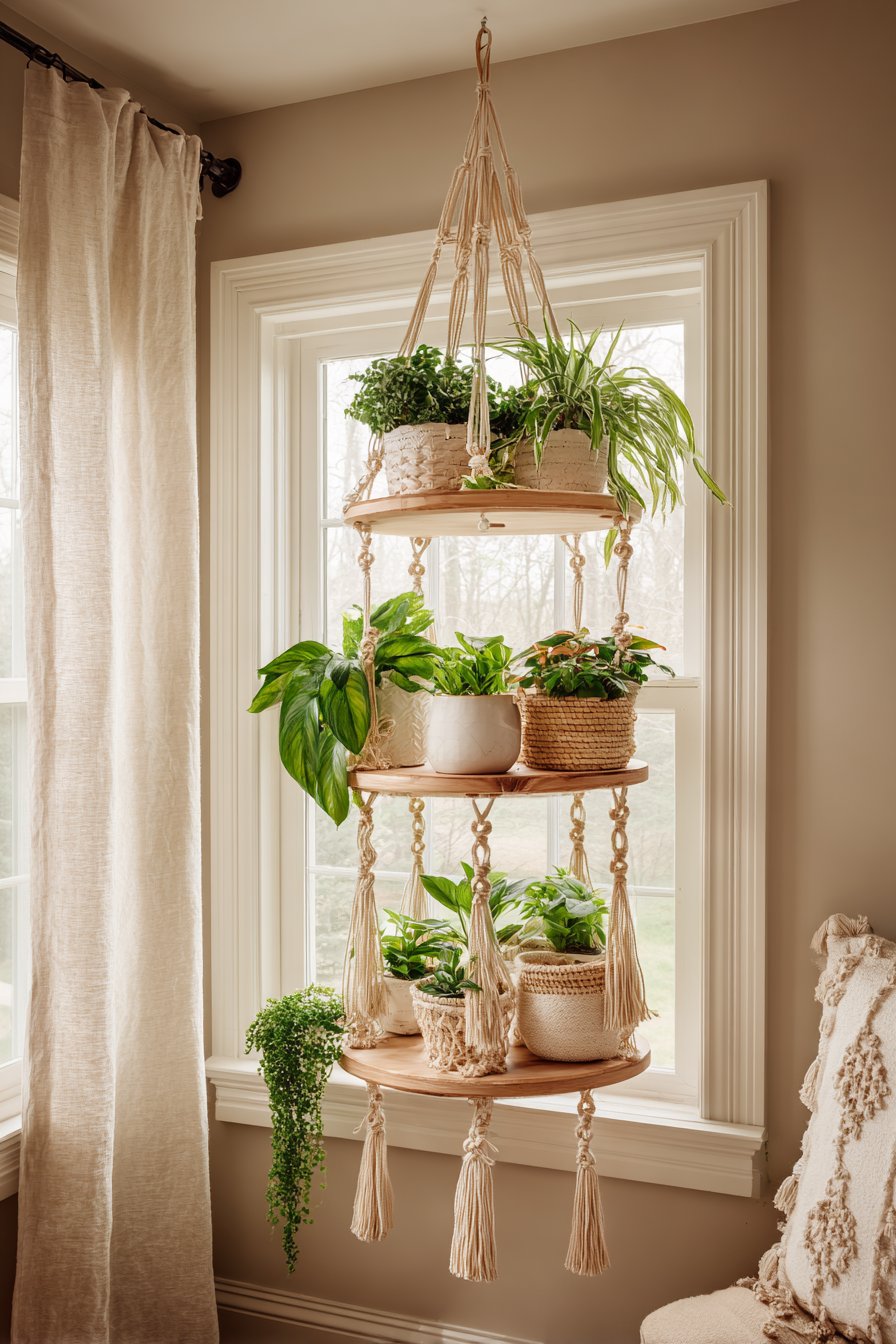
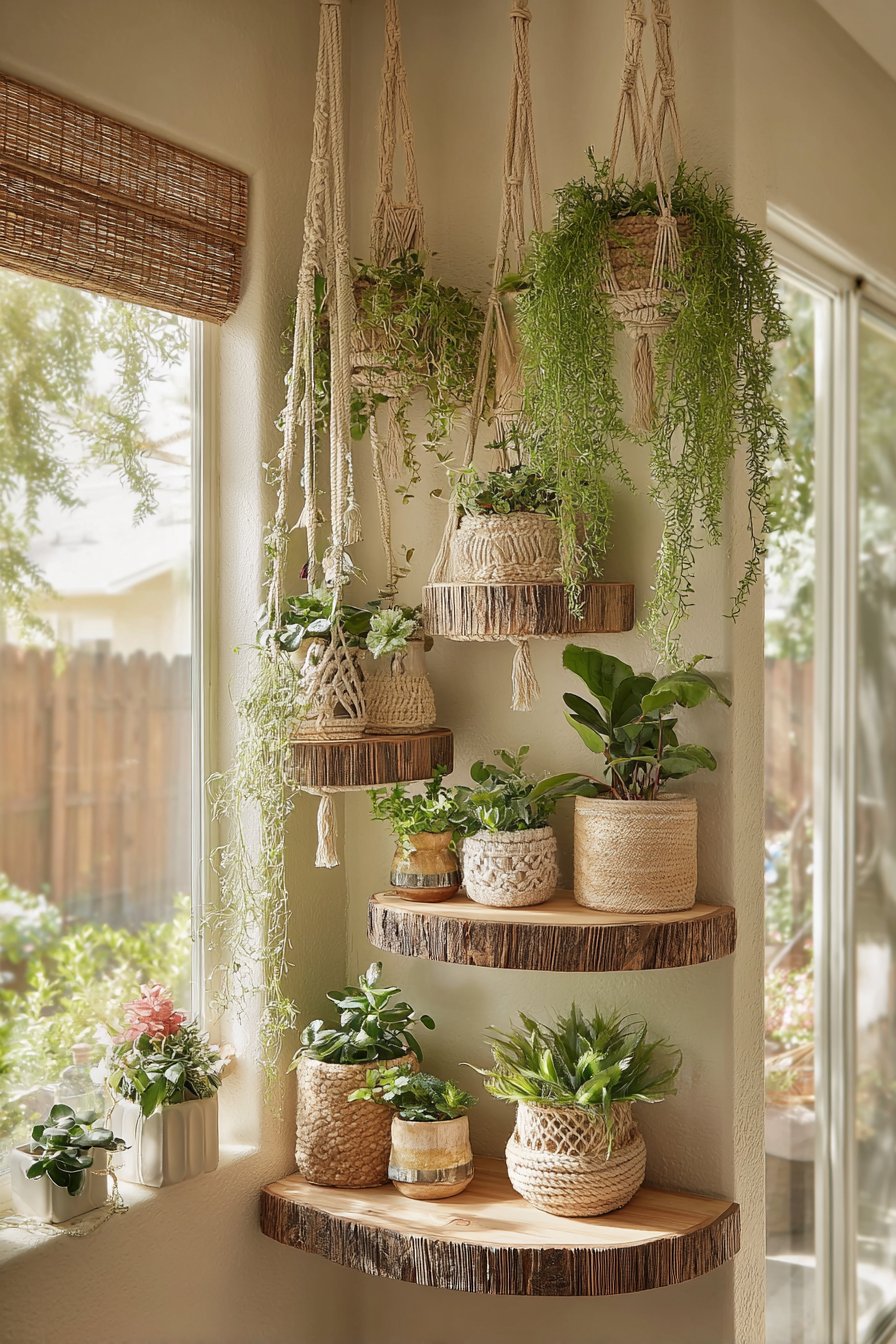
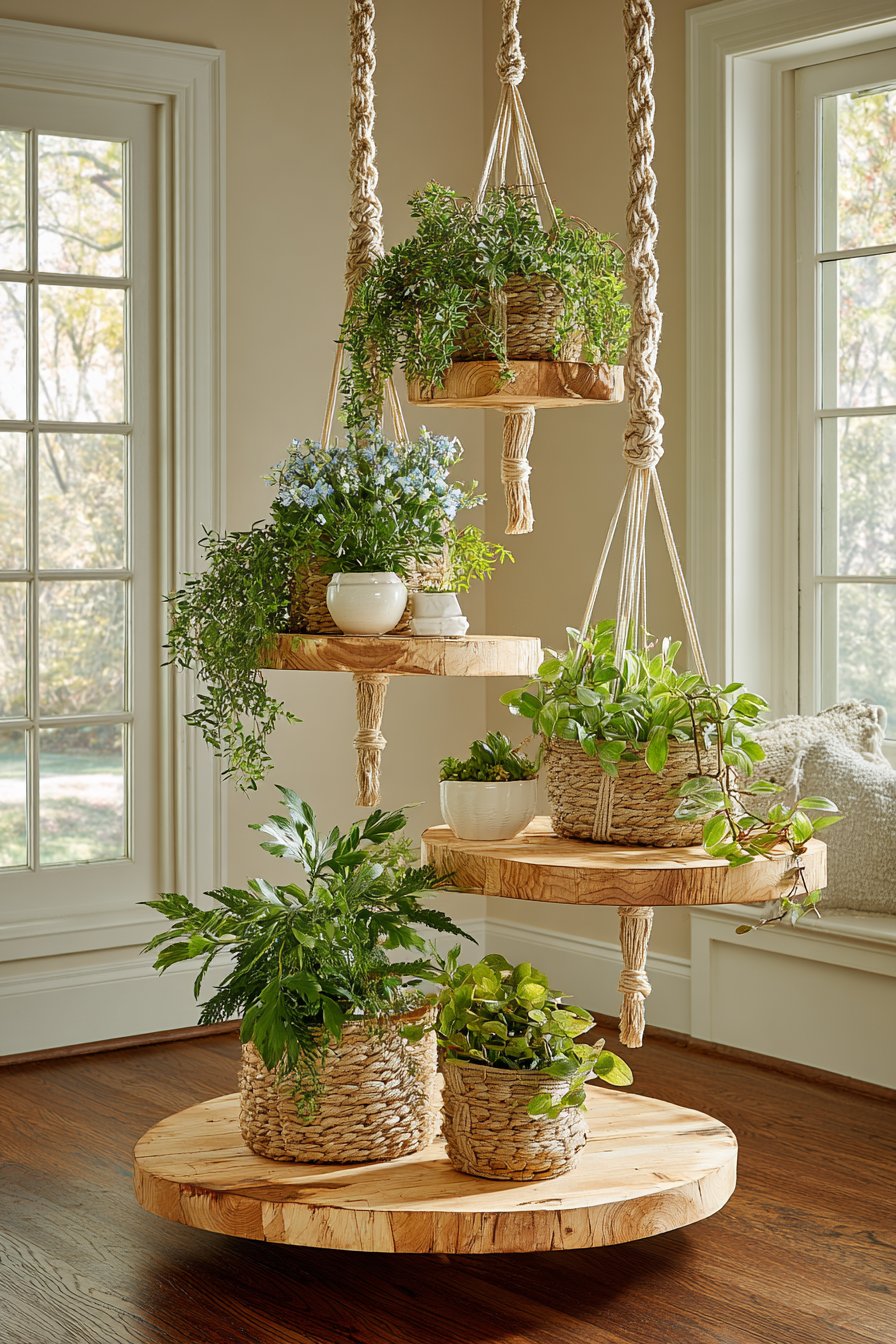
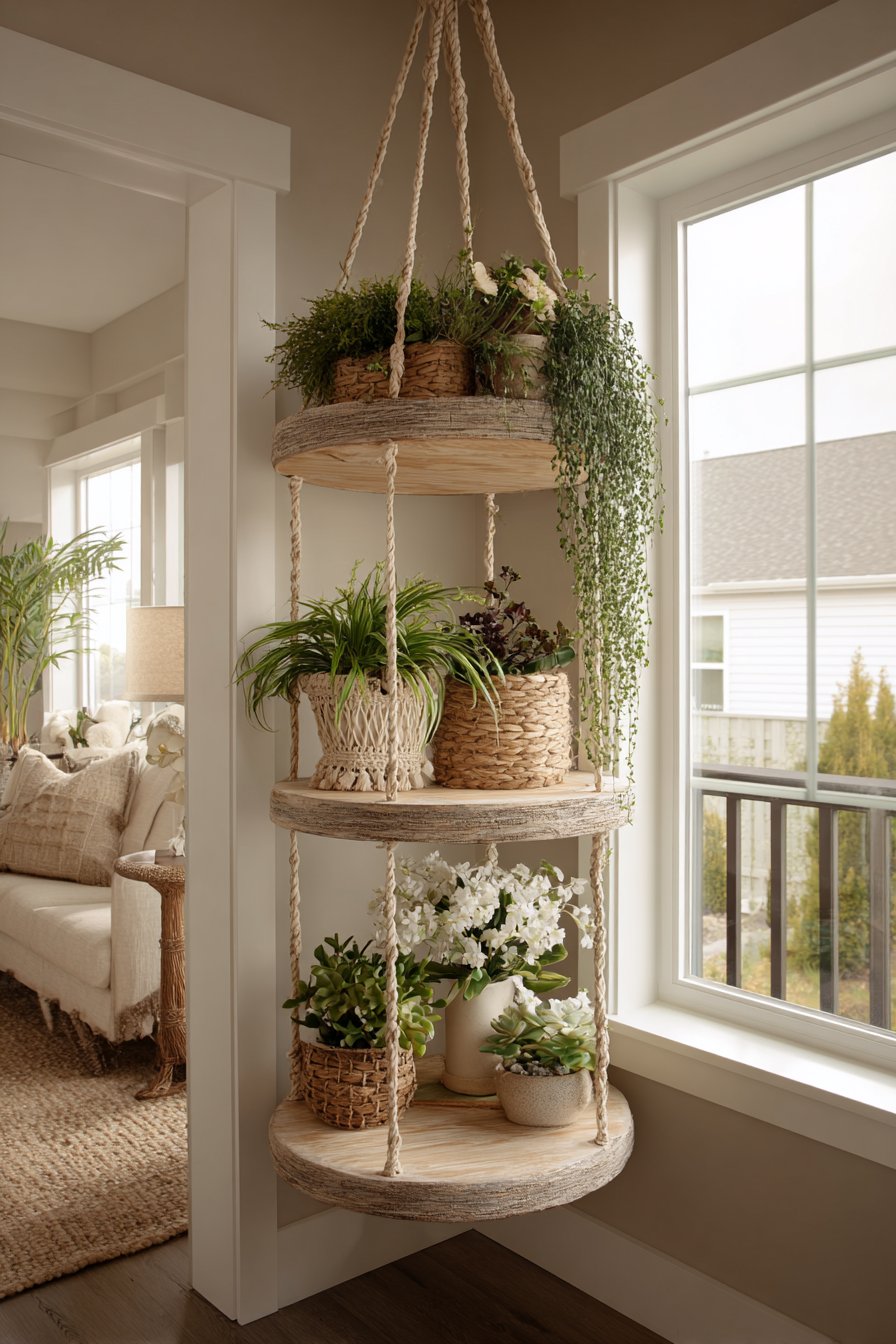
Celebrating artisanal craftsmanship, a macramé hanging shelf system brings bohemian charm and vertical dimension to indoor plant displays through its sculptural knotted design. This indoor plant shelf idea features three circular wooden platforms suspended at staggered heights by natural cotton rope intricately knotted in traditional macramé patterns. The handcrafted quality is immediately apparent—each knot represents hours of patient work, creating decorative elements that are as beautiful as the plants they support. The hanging nature of the display adds dynamic movement; the platforms sway gently with air currents, creating an ever-changing arrangement that brings life to the space in ways that static shelving cannot achieve.
The wooden platforms, typically crafted from sustainable bamboo or light-colored woods, serve as stages for plants housed in woven baskets and ceramic pots that echo the handmade aesthetic. The bohemian plant selection leans toward varieties with personality and presence: trailing plants like string of hearts or burro’s tail that cascade over the platform edges, creating living waterfalls of foliage; full, lush ferns that fill their platforms with exuberant greenery; and occasional flowering plants that add unexpected splashes of color to the neutral palette of rope and wood. The varied heights at which the platforms hang create visual interest and allow each plant its moment in the spotlight without competing with its neighbors.
Positioned near a bright window in a room decorated with natural fiber textures—jute rugs, linen curtains, rattan furniture—this display becomes the focal point that ties the entire space together. The natural cotton rope and wooden platforms introduce organic textures that complement rather than compete with other bohemian elements. The afternoon light filtering through the window catches the intricate rope work, creating delicate shadow patterns on the wall behind the display. These dancing shadows become part of the decoration, changing throughout the day as the sun moves across the sky and the platforms rotate slightly with air movement from opening doors or windows.
Key Design Tips:
- Purchase pre-made macramé shelf hangers or learn basic macramé knots to create your own custom design
- Ensure ceiling mounting points are anchored into studs or use heavy-duty ceiling hooks rated for the full weight
- Choose lightweight wooden platforms—bamboo or pine—to minimize stress on the rope and ceiling mount
- Calculate total weight carefully: platform, pot, soil, plant, and water can add up to 10-15 pounds per tier
- Position platforms at least 12-15 inches apart vertically to prevent overcrowding as plants mature
- Select trailing plants for upper platforms so their cascading growth doesn’t block lower shelves
- Place near bright indirect light sources, as the hanging motion means plants can’t be moved easily for watering or rotation
- Consider a rotating schedule, periodically swapping plants between tiers to ensure even light exposure
12. Modular Cube Shelving System
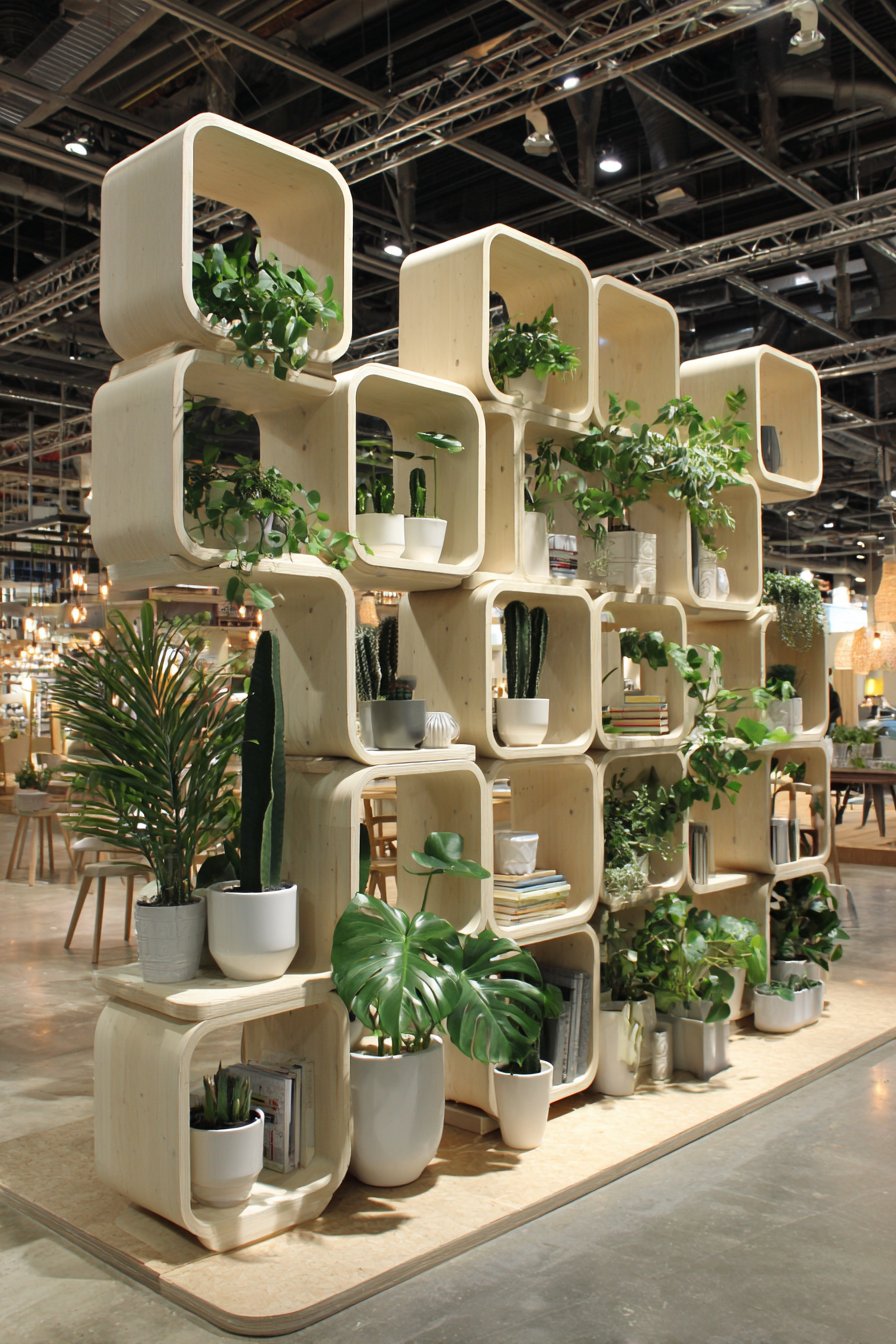
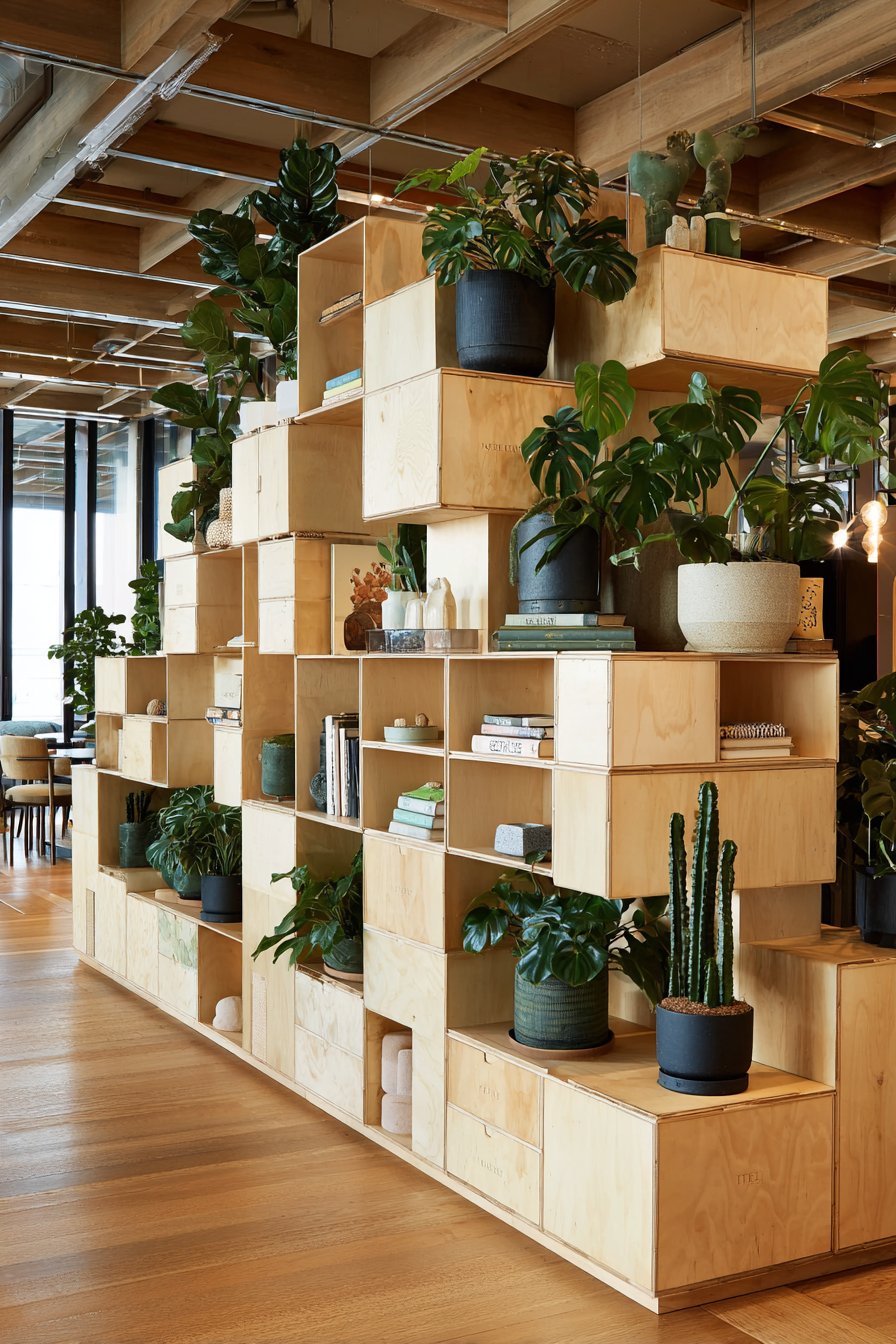
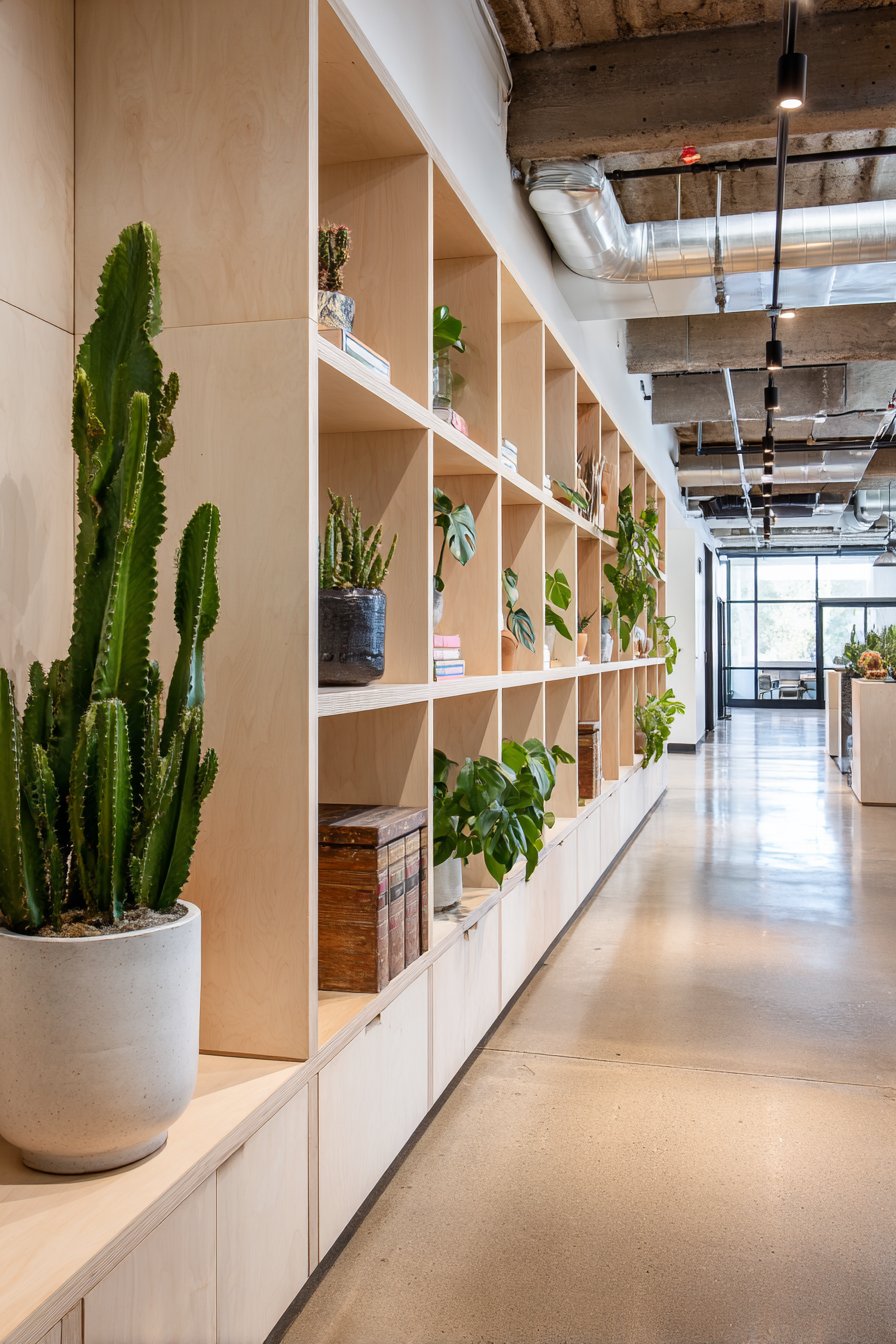
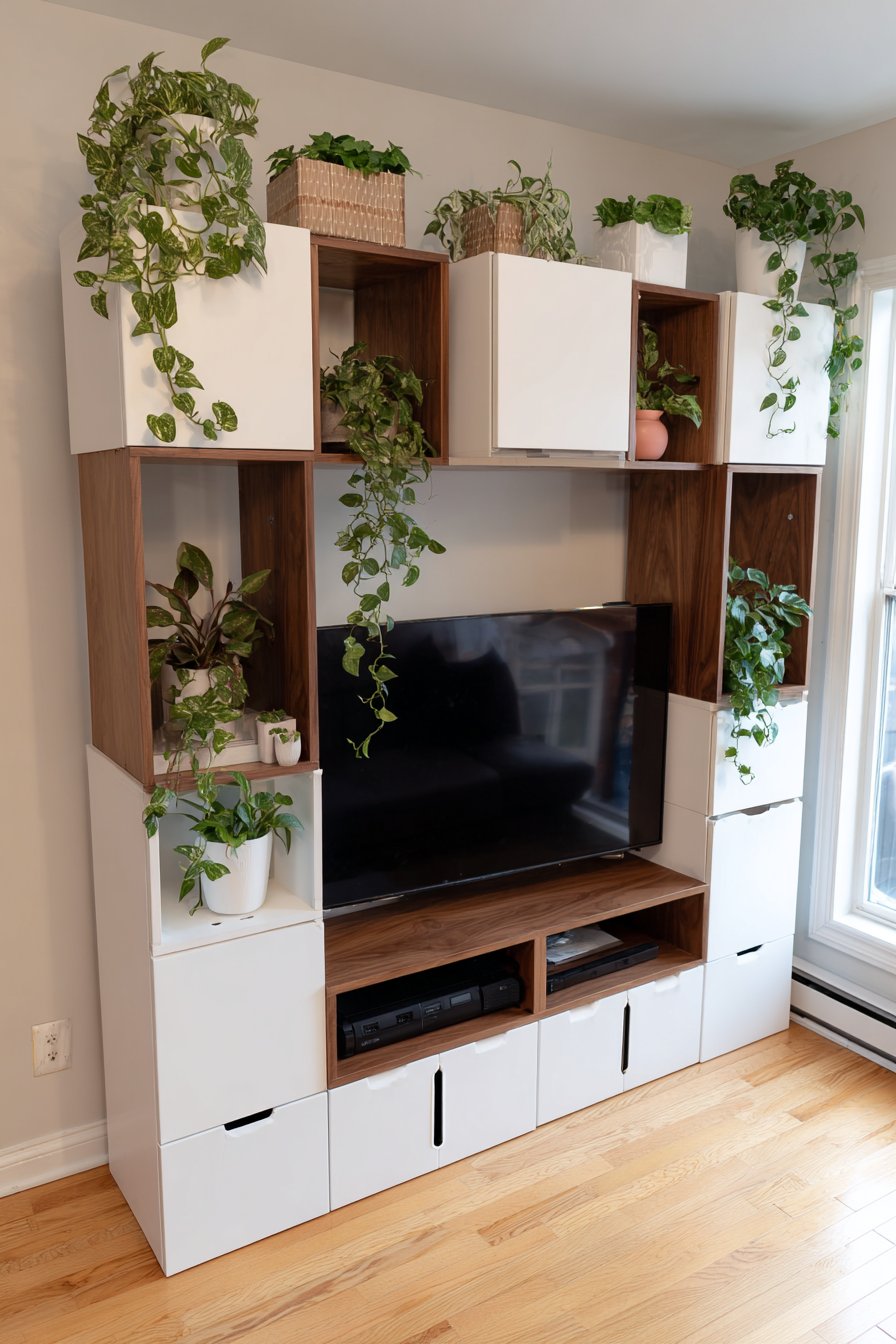
Embracing flexibility and customization, a modular cube shelving system in light birch wood creates an adaptable indoor plant shelf idea that evolves with changing needs and growing collections. This contemporary approach to plant display features individual square units that stack and arrange like building blocks, allowing for endless configurations limited only by imagination and available wall space. Some cubes hold carefully selected plants—a mature monstera with its characteristic split leaves, a trailing philodendron that adds graceful movement, a cluster of potted cacti providing textural contrast. Other cubes display books, creating visual breaks in the greenery and acknowledging that most homes need storage solutions that serve multiple purposes. Decorative objects—ceramics, small sculptures, framed photographs—interspersed among the plants add personality and prevent the display from reading as merely a plant wall.
The light birch wood finish reflects Scandinavian design sensibilities that have influenced contemporary interiors worldwide: warm but not dark, natural but not rustic, simple but not plain. The geometric precision of perfect squares creates visual order and rhythm, providing structure that prevents eclectic collections from appearing cluttered or chaotic. This organizational framework becomes particularly valuable as plant collections grow—adding more cubes expands the system seamlessly rather than requiring new furniture or awkward additions. The modular nature also allows for easy rearrangement: as plants grow larger, they can be moved to corner units with more space; seasonal displays can be created by clustering particular cubes; and the entire configuration can be reconfigured when moving to a new home or redesigning a room.
The lighting strategy for this installation takes advantage of the room’s architectural features. Overhead skylights provide even, bright indirect light that eliminates the harsh shadows and hotspots common with traditional windows. This uniform illumination means every cube receives similar light levels, removing the guesswork from plant placement. The light quality changes throughout the day—crisp and cool in morning, warm and golden in afternoon, soft and dusky at evening—creating a dynamic backdrop for the static architectural grid of cubes. Plants selected for this system should tolerate these light conditions while offering varied visual characteristics: different leaf shapes, sizes, colors, and growth habits that create interest within the orderly framework.
Key Design Tips:
- Invest in quality modular systems with sturdy construction—cheap particle board will sag under heavy pots
- Plan the overall configuration before installation, considering both current needs and future expansion
- Alternate plant-filled cubes with books and objects to create visual breathing room and avoid overwhelming the space
- Choose plants with varied characteristics—upright, trailing, bushy—to create diversity within the grid structure
- Secure stacked cubes together with provided connectors to prevent toppling, especially important in earthquake-prone areas
- Consider the weight distribution—place heavier plants in bottom cubes or near wall-mounted supports
- Use consistent pot styles within the display to maintain visual cohesion despite the eclectic plant selection
- Rotate plants periodically if light isn’t perfectly even, ensuring all specimens receive adequate exposure over time
13. Kitchen Herb Garden Shelving
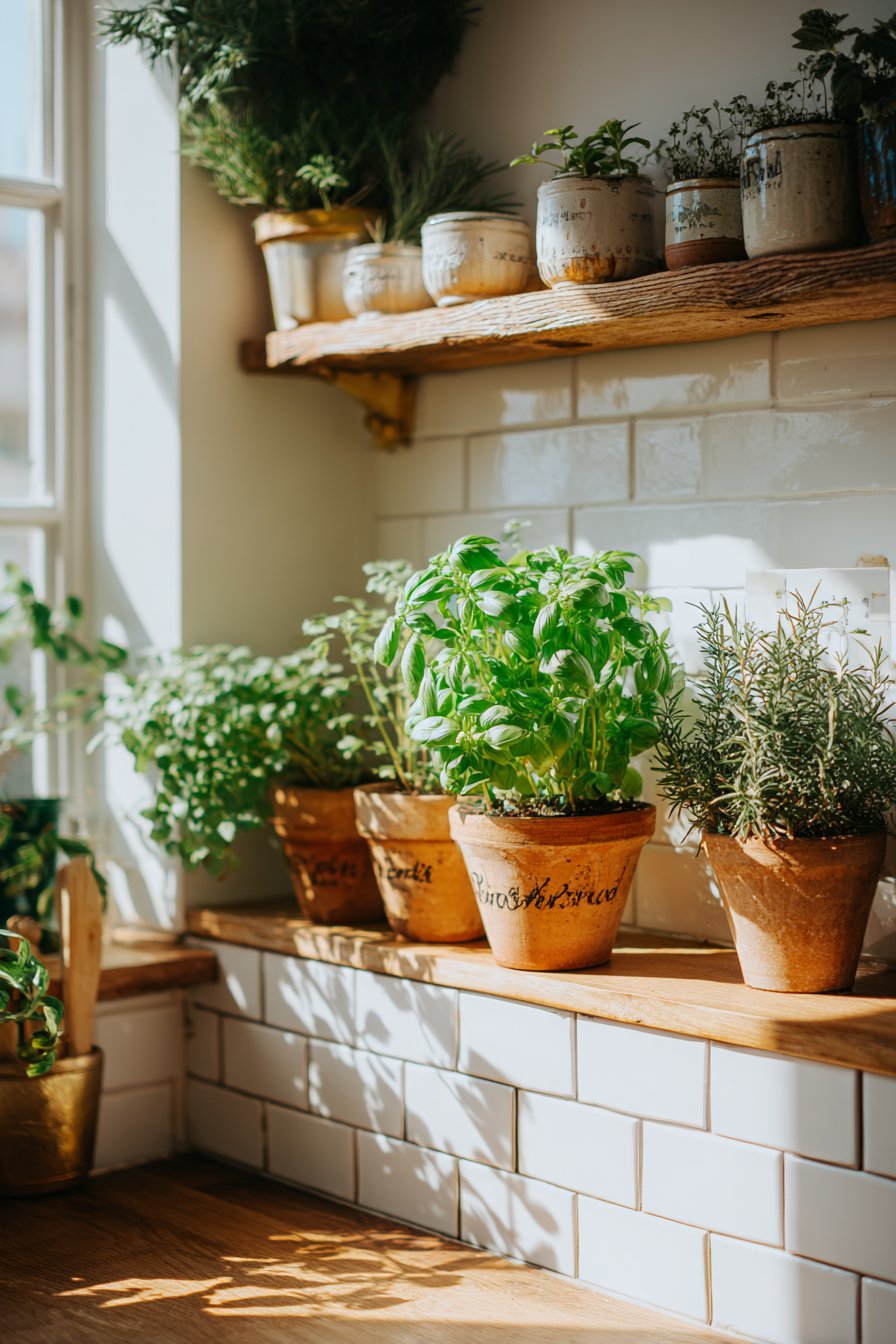
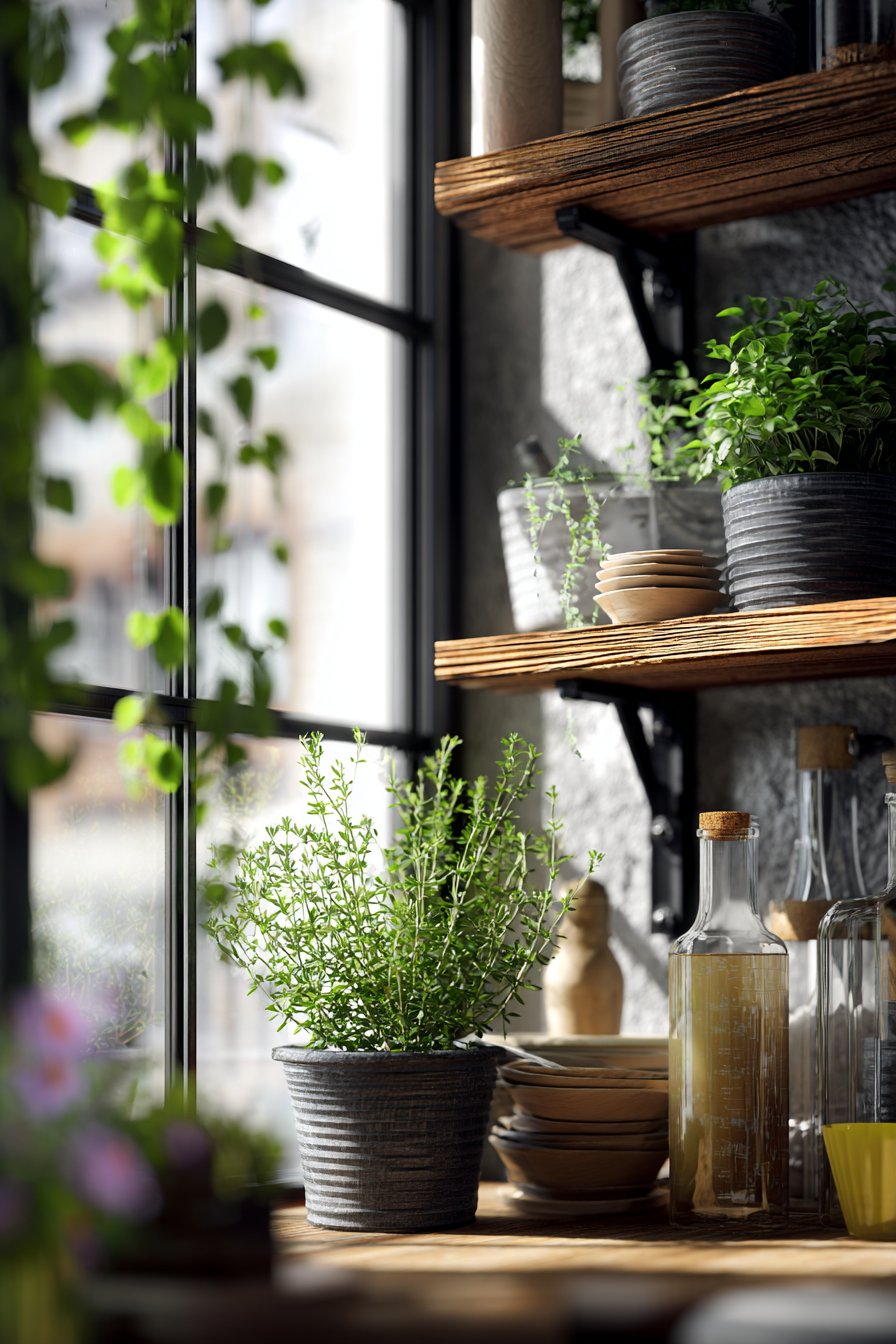
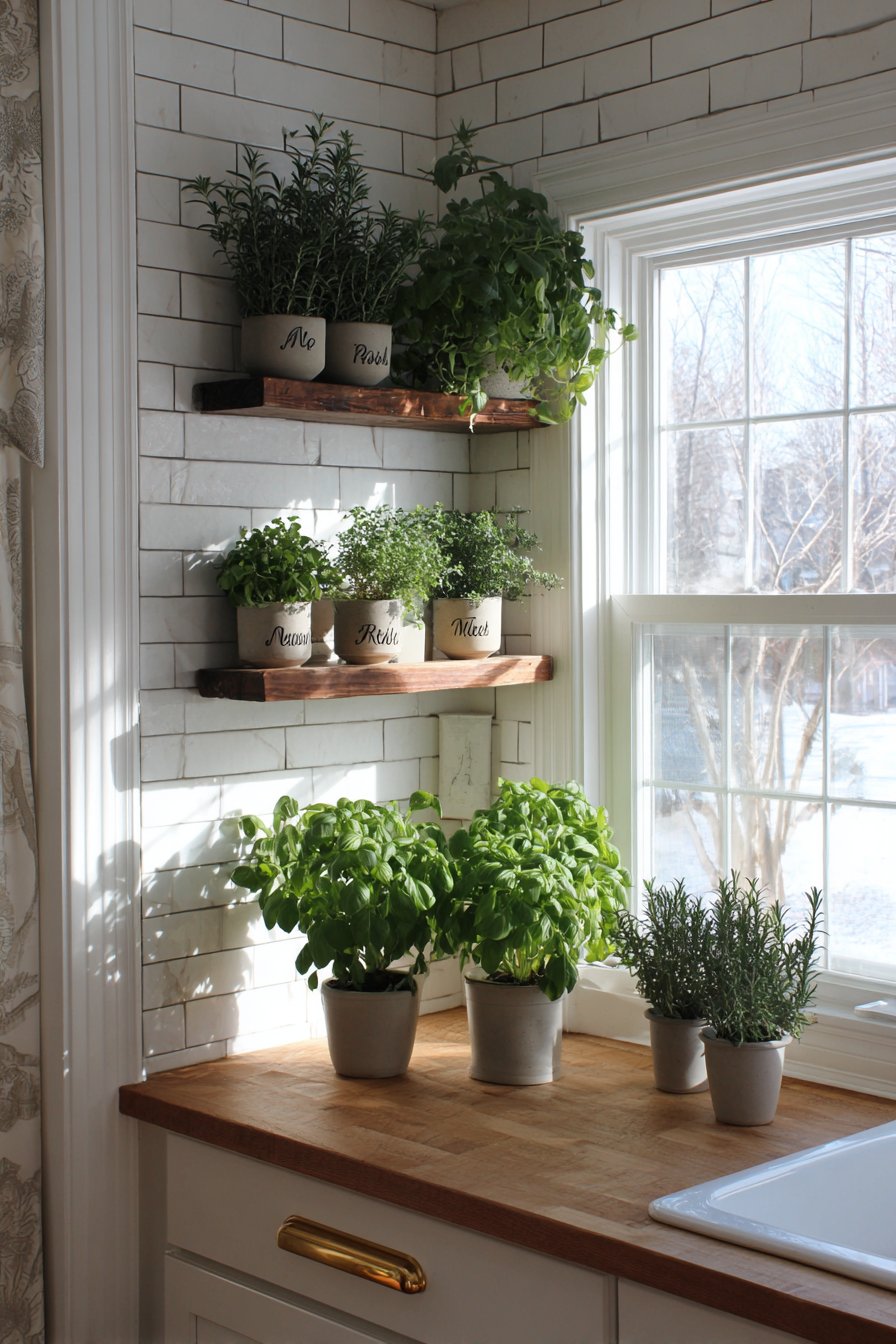
Merging form and function in the most practical way possible, floating wooden shelves positioned above a kitchen prep counter create an indoor plant shelf idea that puts fresh herbs literally within arm’s reach while cooking. This arrangement transforms a purely functional kitchen element into a beautiful feature that engages multiple senses: the visual appeal of verdant green leaves against white subway tile, the aromatic pleasure of bruising fresh herbs while preparing meals, and the satisfying efficiency of harvesting ingredients without leaving the cooking zone. The natural wood shelves introduce warmth to what might otherwise be a cold, utilitarian workspace, while their open design maintains the airy feeling essential in kitchens where visual clutter can make spaces feel cramped and chaotic.
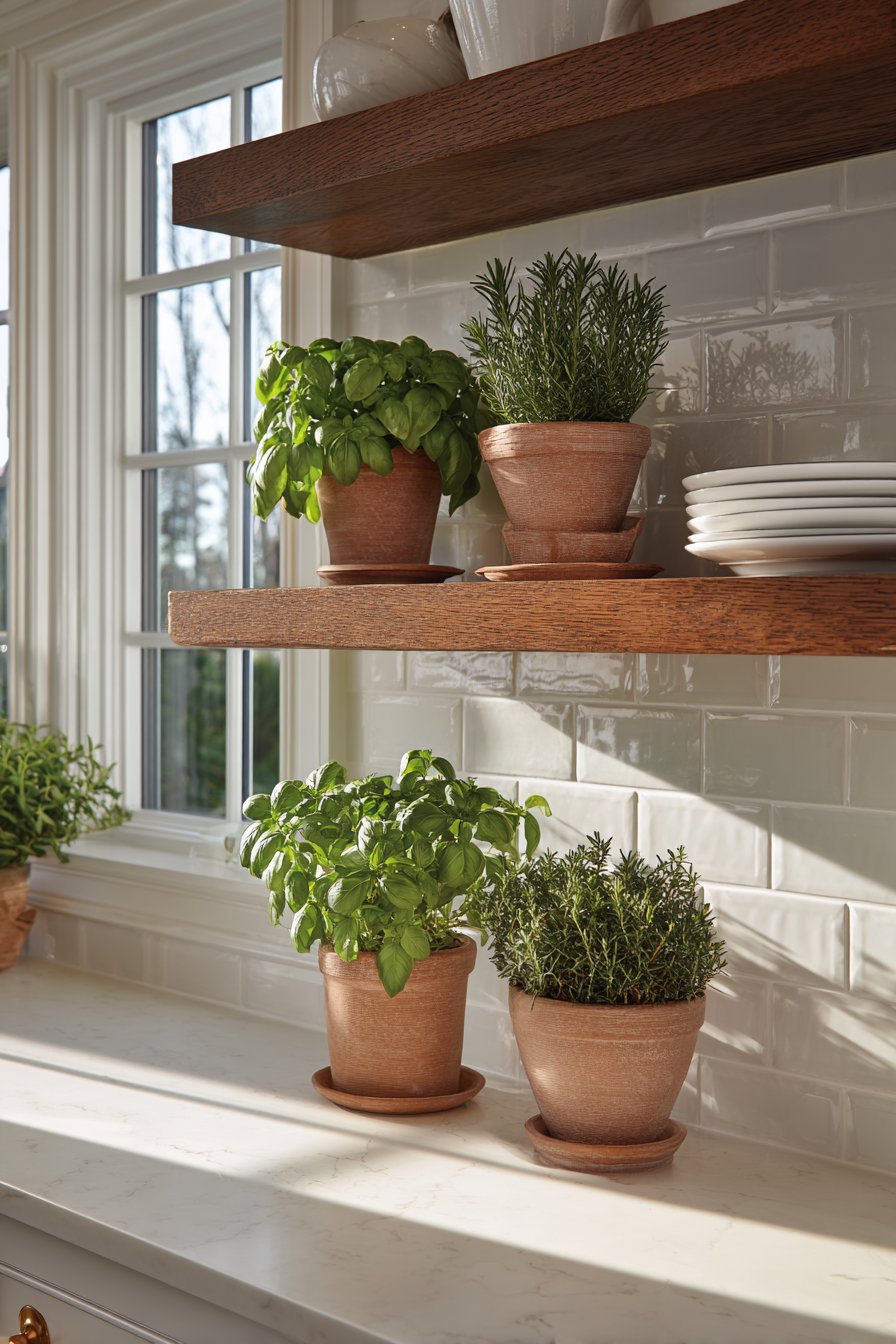
The herb selection focuses on culinary staples that home cooks use regularly: robust basil plants that reward frequent harvesting with bushier growth, woody rosemary that tolerates slight under-watering better than fussier herbs, delicate thyme that trails gracefully over pot edges, and vibrant mint that grows so vigorously it demands its own container to prevent invasive spread. Each herb occupies a labeled terracotta pot—simple, traditional, and allowing excellent drainage and aeration for root systems. The labels serve practical purposes for cooks who might not instantly recognize different basil varieties or distinguish between oregano and marjoram at a glance, while adding charming visual detail that emphasizes the functional garden aesthetic. Brass hardware on nearby cabinets and drawers picks up the warm tones in the wood shelves and terracotta pots, creating material harmony throughout the kitchen.
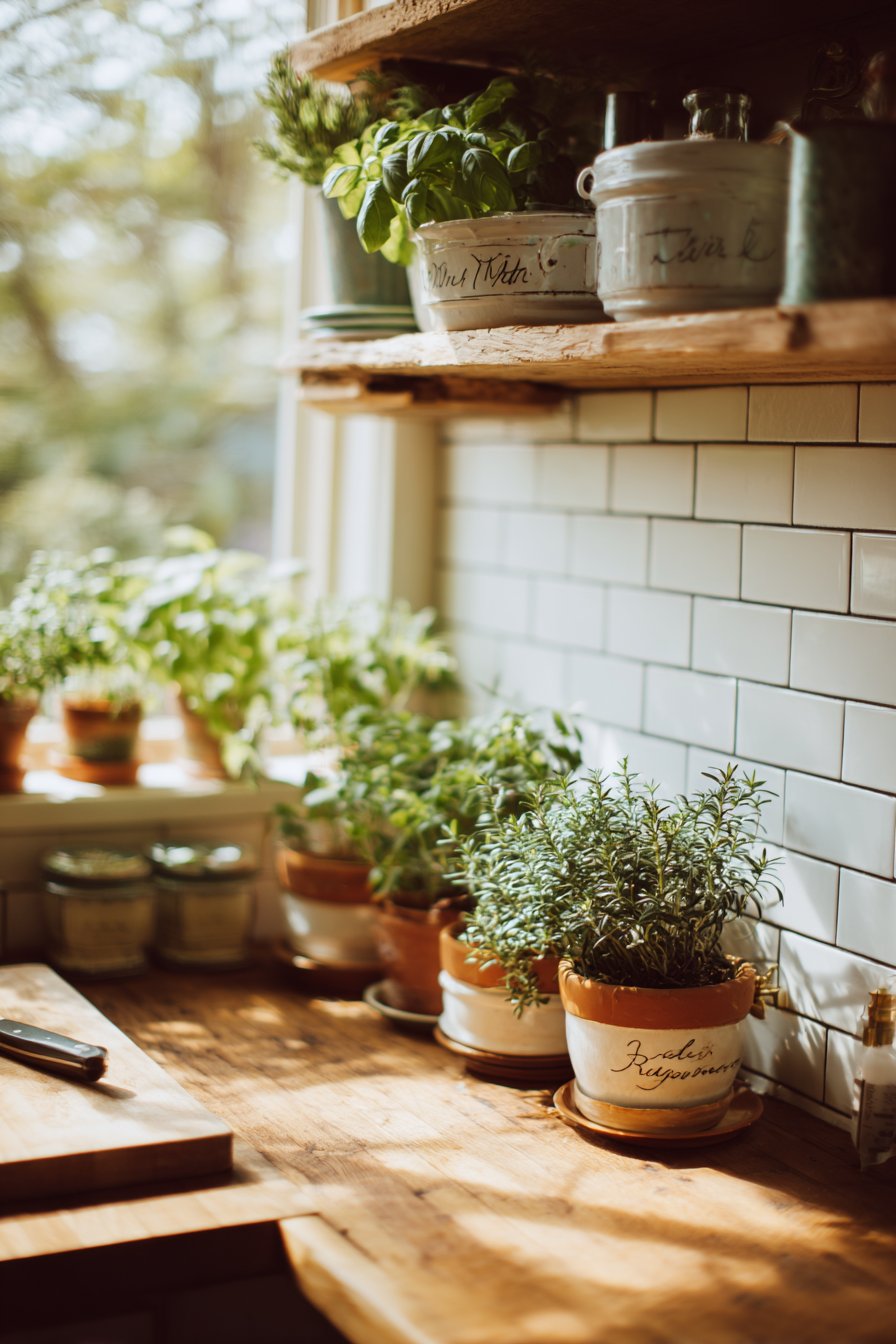
Morning sunlight streaming through a nearby window provides ideal growing conditions for most culinary herbs, which prefer bright light and good air circulation. The proximity to food preparation areas means herbs benefit from the ambient warmth generated by cooking activities—most Mediterranean herbs appreciate the slightly warmer conditions. The arrangement also encourages better cooking habits; when fresh herbs are visible and accessible, cooks naturally reach for them more often, adding layers of flavor that dried herbs simply cannot match. This indoor plant shelf idea proves that the best designs solve multiple problems simultaneously: providing attractive display, enabling better cooking, and ensuring plants receive the care and conditions they need to thrive.
Key Design Tips:
- Position shelves 8-12 inches above countertops for easy access while maintaining clearance for working
- Choose herbs based on your cooking style—Mediterranean cuisine needs basil, oregano, and thyme; Asian cooking benefits from cilantro and Thai basil
- Use terracotta pots for excellent drainage and traditional kitchen garden aesthetic
- Install shelves near east or south-facing windows for optimal herb-growing light
- Consider adding small grow lights beneath upper shelves if natural light is insufficient
- Label pots clearly—many herbs look similar before you develop recognition skills
- Harvest regularly to encourage bushier growth and prevent herbs from flowering (which can affect flavor)
- Place most-used herbs within easiest reach, less-frequently-used varieties on higher shelves
14. Contemporary Metal Pipe Shelving
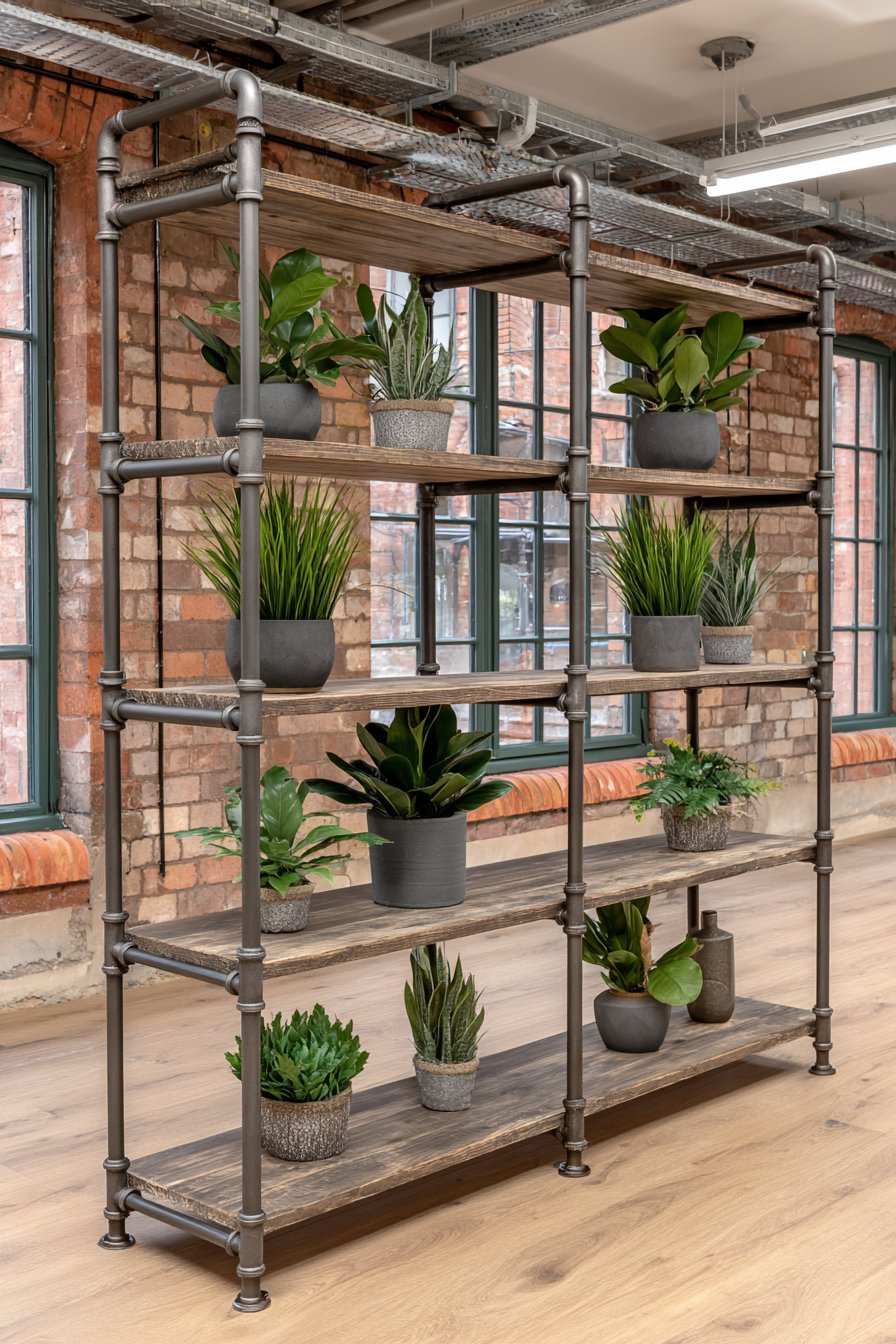
Boldly architectural, a custom-built shelving unit constructed from metal pipes paired with dark-stained wood planks creates an indoor plant shelf idea that makes a powerful visual statement in contemporary urban spaces. This industrial-inspired design features five substantial shelves with a color-blocked aesthetic—the deep charcoal stain on reclaimed wood provides dramatic contrast against black metal pipes, creating a moody, sophisticated atmosphere distinct from the raw, unfinished industrial aesthetic often seen. The five tiers provide ample room for a diverse plant collection that ranges from substantial floor-plant-sized specimens on the lowest shelf to medium-sized varieties at eye level and smaller accent plants above. The robust construction easily supports large ceramic planters, allowing for mature plants that make immediate impact rather than requiring years of growth.
The plant selection takes advantage of the generous shelf spacing and industrial character of the framework. Large-leafed rubber trees with their glossy, architectural foliage create bold statements on lower shelves, their substantial presence matching the weighty construction of the shelving itself. Dramatic dracaena varieties with their spiky, sword-like leaves add vertical interest and tropical flair. Medium-sized ferns and philodendrons fill middle tiers, their softer forms providing visual relief from the harder edges of metal and wood. The careful balance between structural plants and softer specimens prevents the display from feeling either too harsh or too soft, instead achieving a dynamic tension that keeps the eye engaged and moving through the various levels.
The setting amplifies the impact of this installation. Positioned in an authentic loft space with exposed ductwork visible above and poured concrete floors below, the shelving unit feels like an integral part of the architecture rather than merely furniture placed against a wall. Tall industrial windows flood the space with natural light that creates dramatic shadows and highlights throughout the day. The interplay of hard materials—metal, wood, concrete, glass—with organic plant forms creates fascinating juxtapositions that define contemporary urban style. This indoor plant shelf idea appeals particularly to those who appreciate how thoughtful design can honor a building’s industrial heritage while making the space feel livable, personal, and connected to nature despite its urban context.
Key Design Tips:
- Use black iron or steel pipes with standard plumbing fittings for authentic industrial construction
- Secure the shelving unit to wall studs at multiple points—top, middle, and bottom—for stability with heavy plants
- Choose wood planks at least 1.5 inches thick to prevent sagging under weight of large pots and plants
- Apply dark stains or paint finishes to wood to create contemporary aesthetic distinct from raw reclaimed wood
- Space shelves generously—18-24 inches apart—to accommodate large plants and prevent crowded appearance
- Select planters in materials that complement the industrial aesthetic: concrete, matte black ceramic, metal
- Incorporate plants with strong architectural forms—rubber trees, monstera, snake plants, bird of paradise
- Position near abundant natural light from industrial windows but not in harsh direct sun that might damage foliage
15. Over-the-Door Vertical Planter
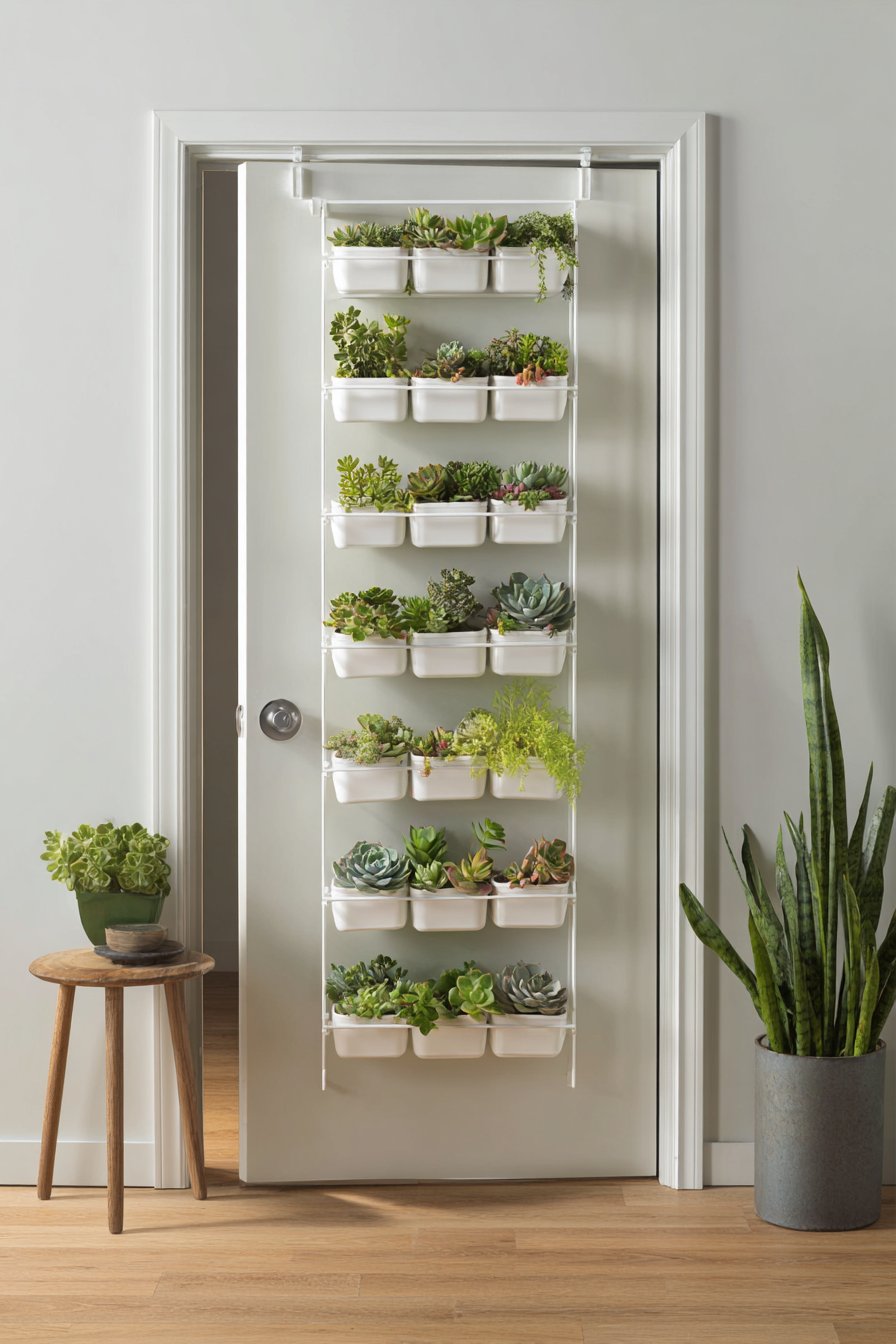
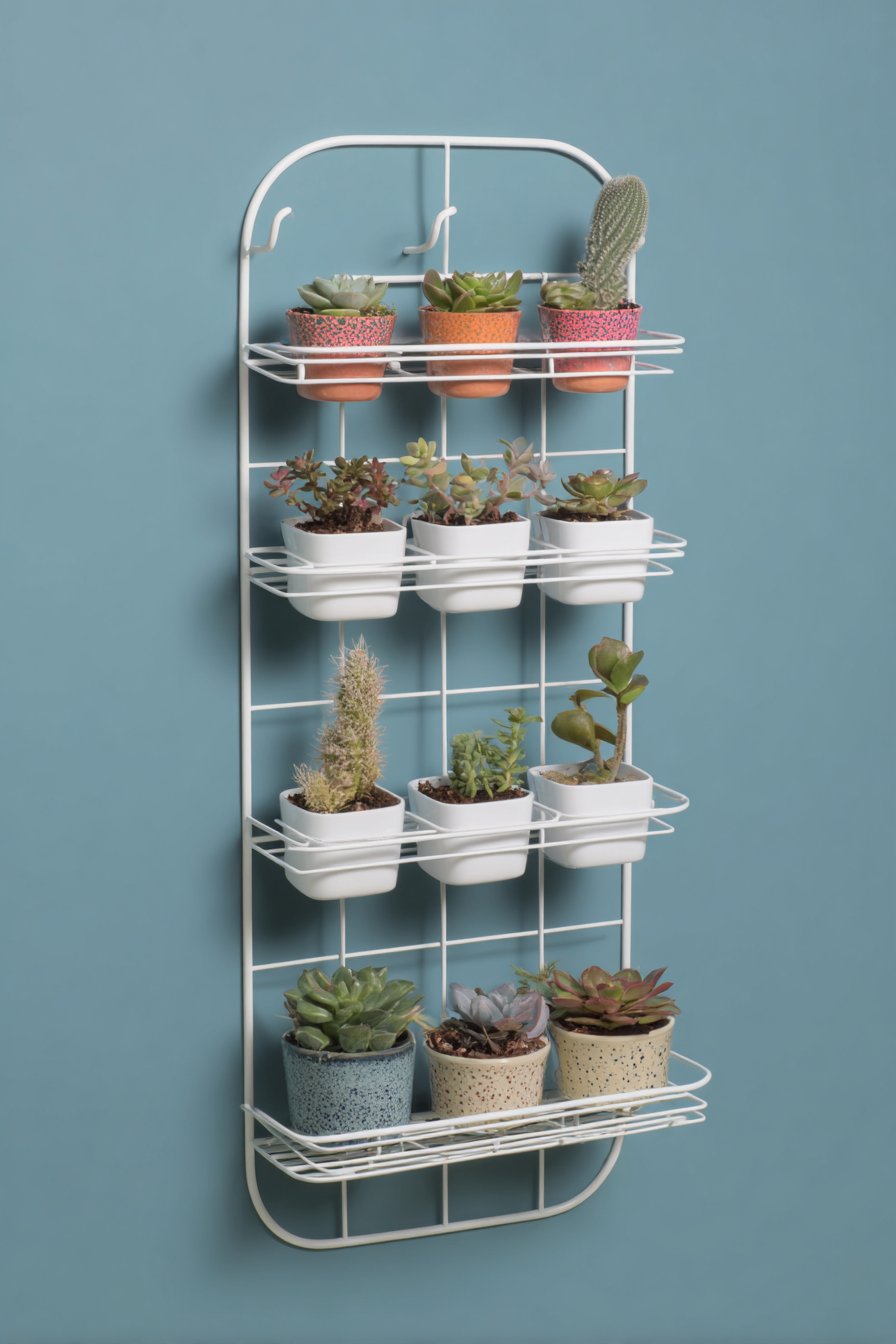
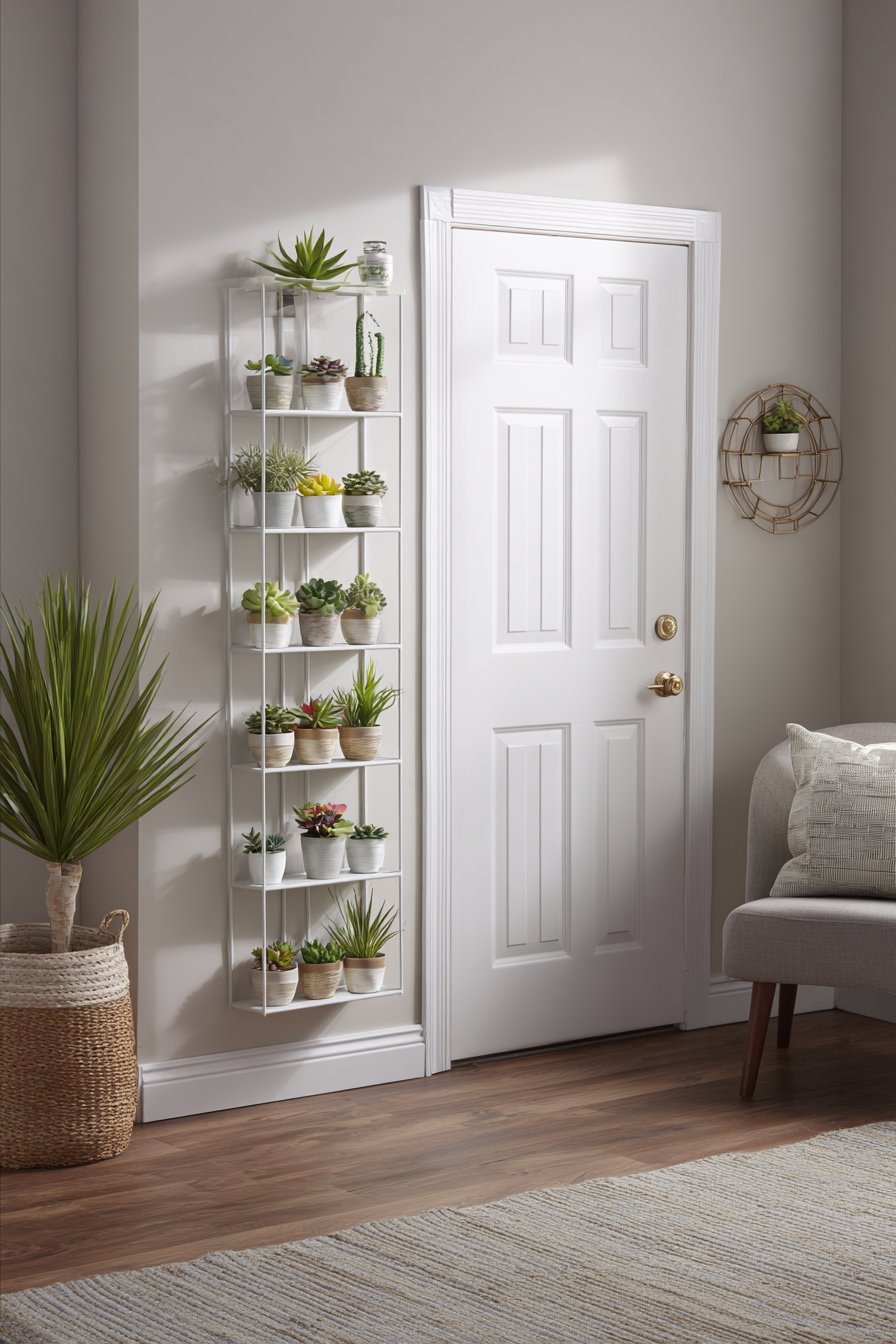
Maximizing every available surface for plant display, an over-the-door vertical planter creates an indoor plant shelf idea that demands zero floor space while transforming a typically overlooked area into a living wall. This ingenious solution features a white metal frame that hooks over any standard door, converting the vertical surface into a multi-pocket planter with integrated small shelves. The system accommodates dozens of small plants in individual compartments arranged in a grid pattern, creating an impressive display that belies the minimal physical footprint. This approach proves particularly valuable in apartments, dormitories, or any living situation where floor space is limited and every square foot must serve multiple purposes.
The plant selection focuses necessarily on smaller varieties that thrive in confined root space: diminutive succulents in jewel-like colors—jade green, dusty purple, silvery blue—that require minimal water and grow slowly enough not to outgrow their compartments quickly; trailing plants like string of pearls or burro’s tail that add cascading visual interest; small cacti that tolerate occasional neglect; and compact herbs that can be harvested regularly to maintain manageable size. The integrated shelves hold slightly larger pots, breaking up the grid pattern and allowing for a few specimen plants that serve as focal points among the smaller compartments. The white metal finish keeps the structure from dominating visually, instead providing a clean framework that lets the plant colors and forms be the stars.
The practical benefits extend beyond space-saving. The vertical orientation places plants at eye level and above, creating interaction opportunities that ground-level or low shelf plants don’t offer—you notice new growth, appreciate leaf details, and monitor plant health more naturally when plants occupy your sightline. The accessibility simplifies maintenance; watering and grooming don’t require bending or kneeling, making plant care more convenient and therefore more likely to be done regularly. The door mounting means the system moves with you when you relocate, making it ideal for renters who can’t install permanent shelving. However, care must be taken to ensure the door can still open and close properly, and weight distribution must be considered to prevent stress on door hinges.
Key Design Tips:
- Verify weight capacity of your door hinges before loading planter—a fully planted unit can weigh 30-50 pounds
- Add protective padding where metal frame contacts door surface to prevent scratches or damage
- Select lightweight potting mix rather than heavy garden soil to reduce overall weight
- Choose plants that tolerate inconsistent light as door position may block some natural light
- Water conservatively to prevent drips on flooring—remove unit to sink or bathtub for thorough watering
- Rotate plants periodically if one side receives more light than the other
- Consider plants with shallow root systems that adapt well to confined growing spaces
- Monitor door operation—if it doesn’t close smoothly, remove some weight or adjust plant placement
16. Home Office Built-In Shelving
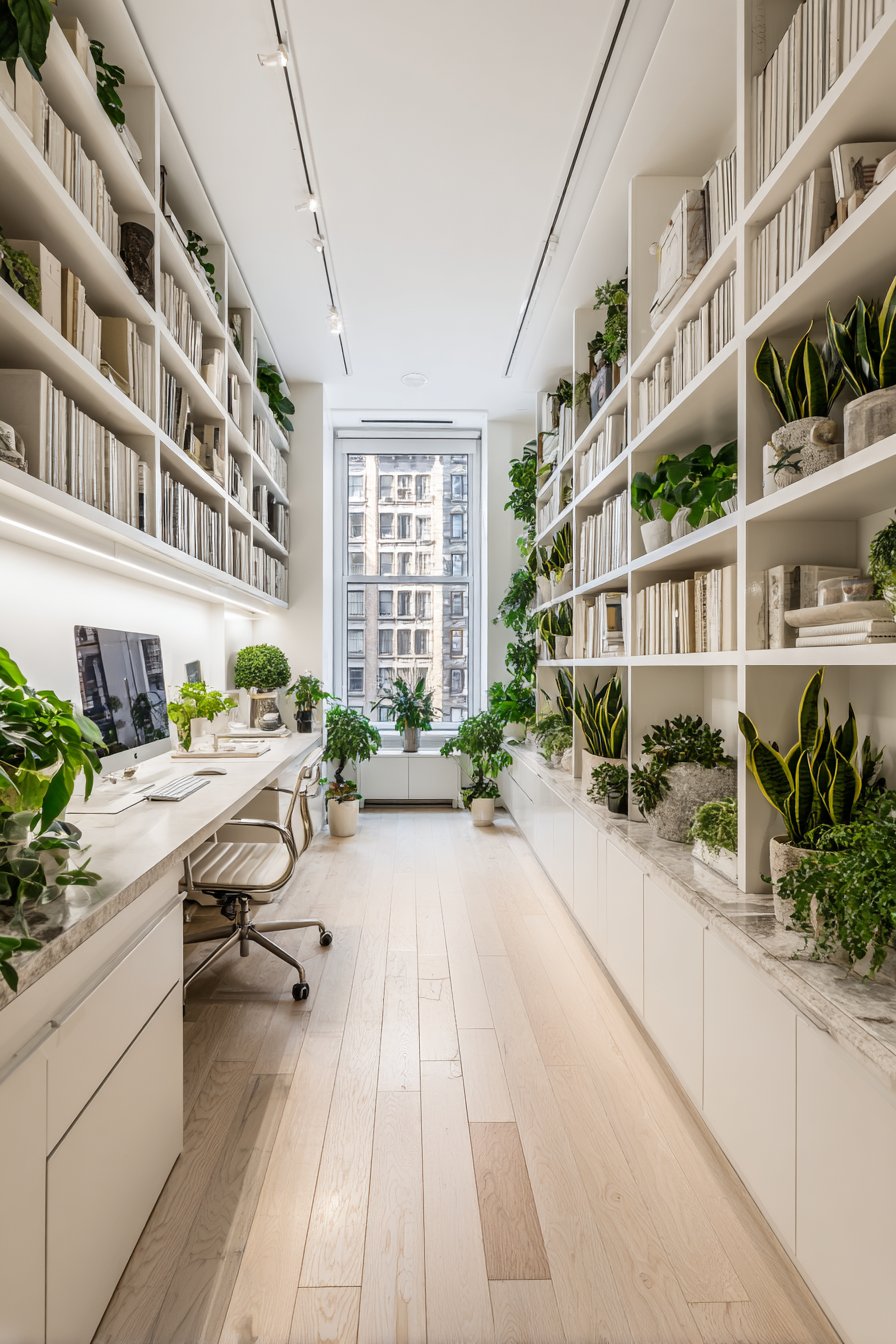
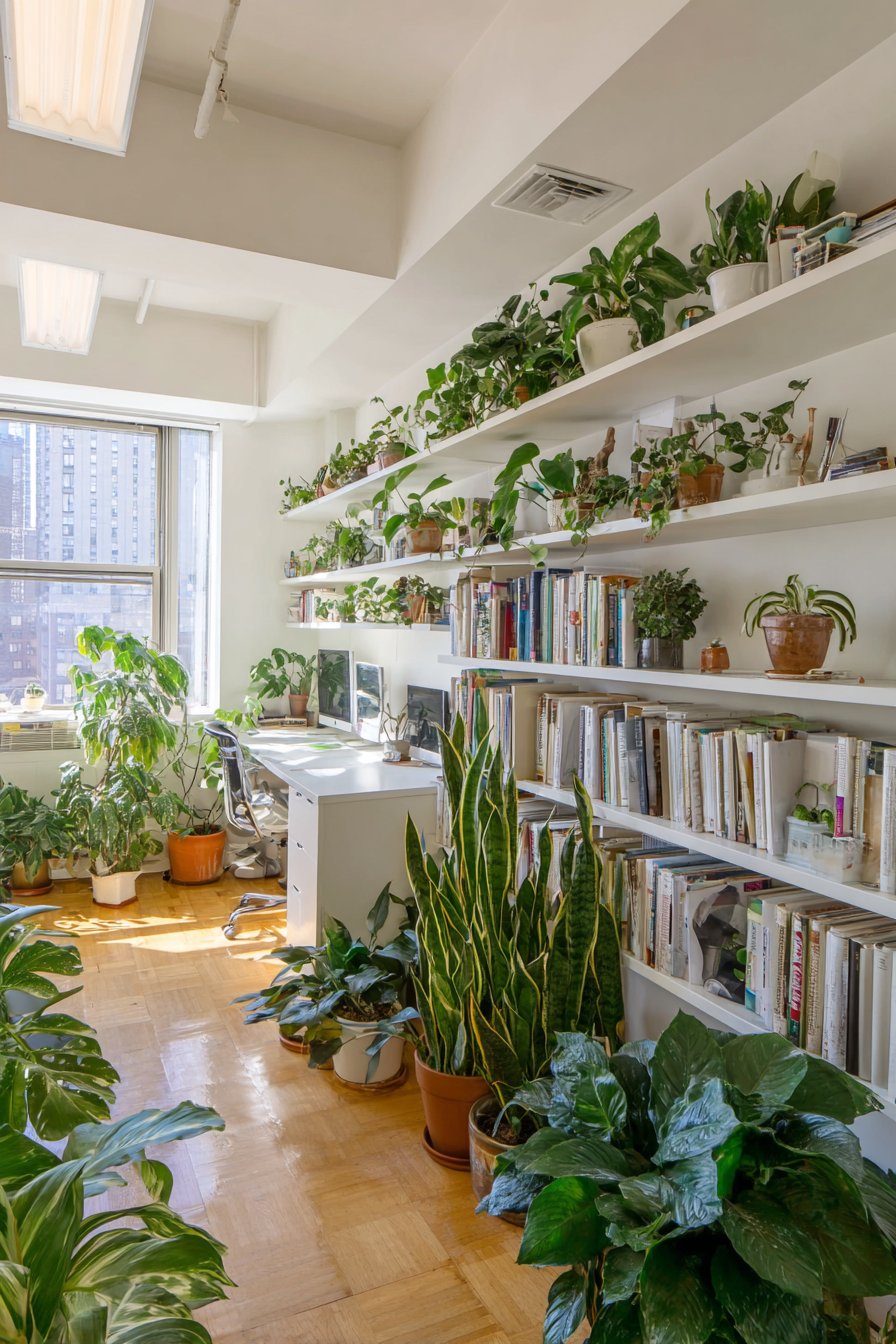
Seamlessly integrating biophilia into productive workspaces, floor-to-ceiling built-in shelving flanking a desk area creates an indoor plant shelf idea that enhances both aesthetics and work performance. This custom carpentry solution addresses a common challenge in home office design: how to create a professional, organized workspace that doesn’t feel sterile or disconnected from the rest of the home. The painted white shelving provides a clean, neutral backdrop that makes the space feel larger and brighter while offering extensive storage for office supplies, reference books, and important documents. Within this organizational framework, plants are thoughtfully interspersed—not randomly scattered, but intentionally placed to create visual rhythm and bring nature into the work environment without compromising functionality.
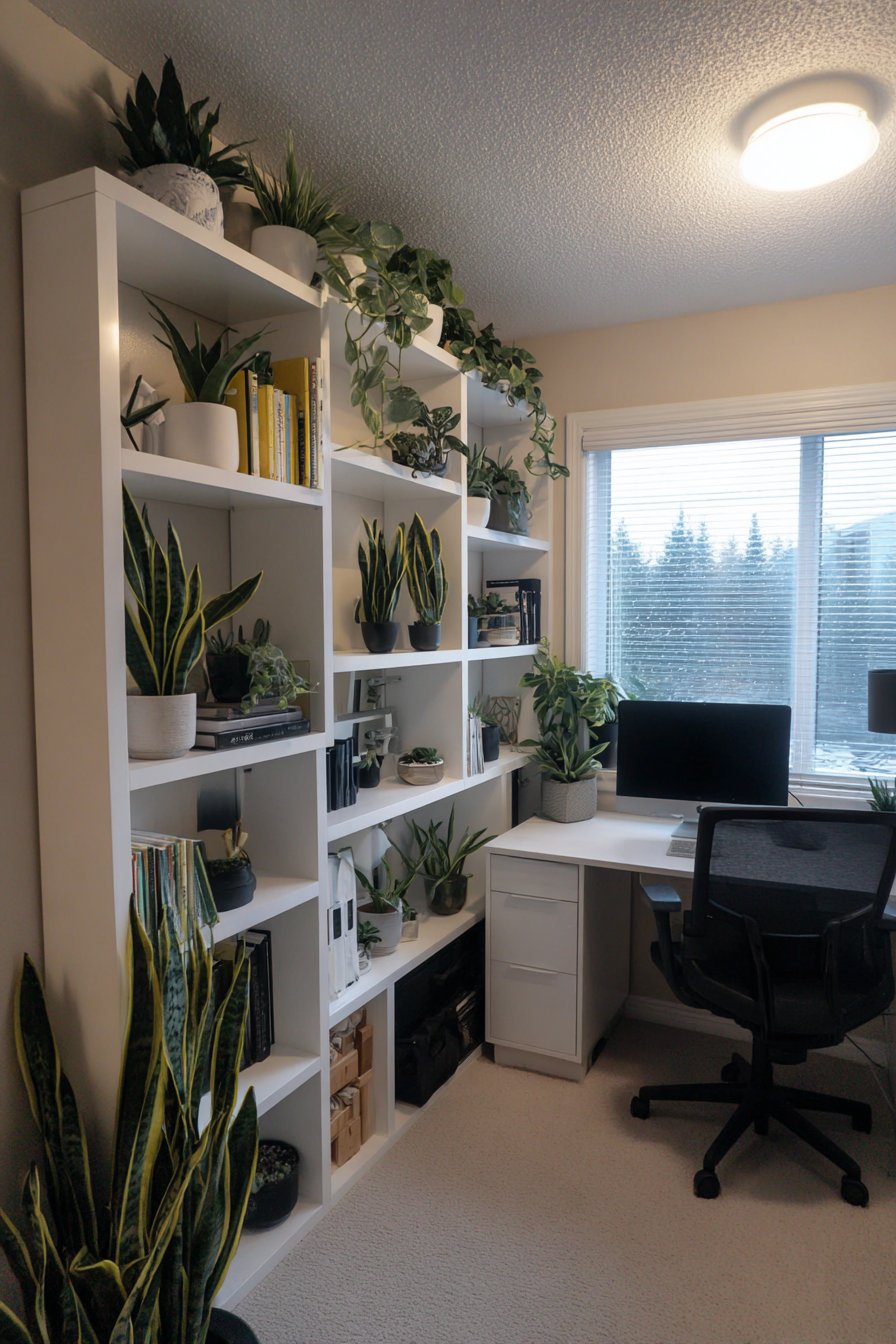
The plant selection prioritizes low-maintenance varieties that thrive with minimal fuss, recognizing that people working at home need plants that don’t constantly demand attention or risk dying during busy work periods. Snake plants stand tall and architectural, their upright forms providing vertical interest while tolerating weeks of neglect. Pothos trails from upper shelves, its cascading vines softening the rigid lines of the built-ins and adding movement to the static shelving. ZZ plants contribute glossy, tropical-looking foliage while being nearly indestructible, perfect for those who occasionally forget about plant care when focused on work projects. These plants serve more than decorative purposes—research consistently shows that indoor plants in work environments improve air quality, reduce stress, increase productivity, and even enhance creativity.
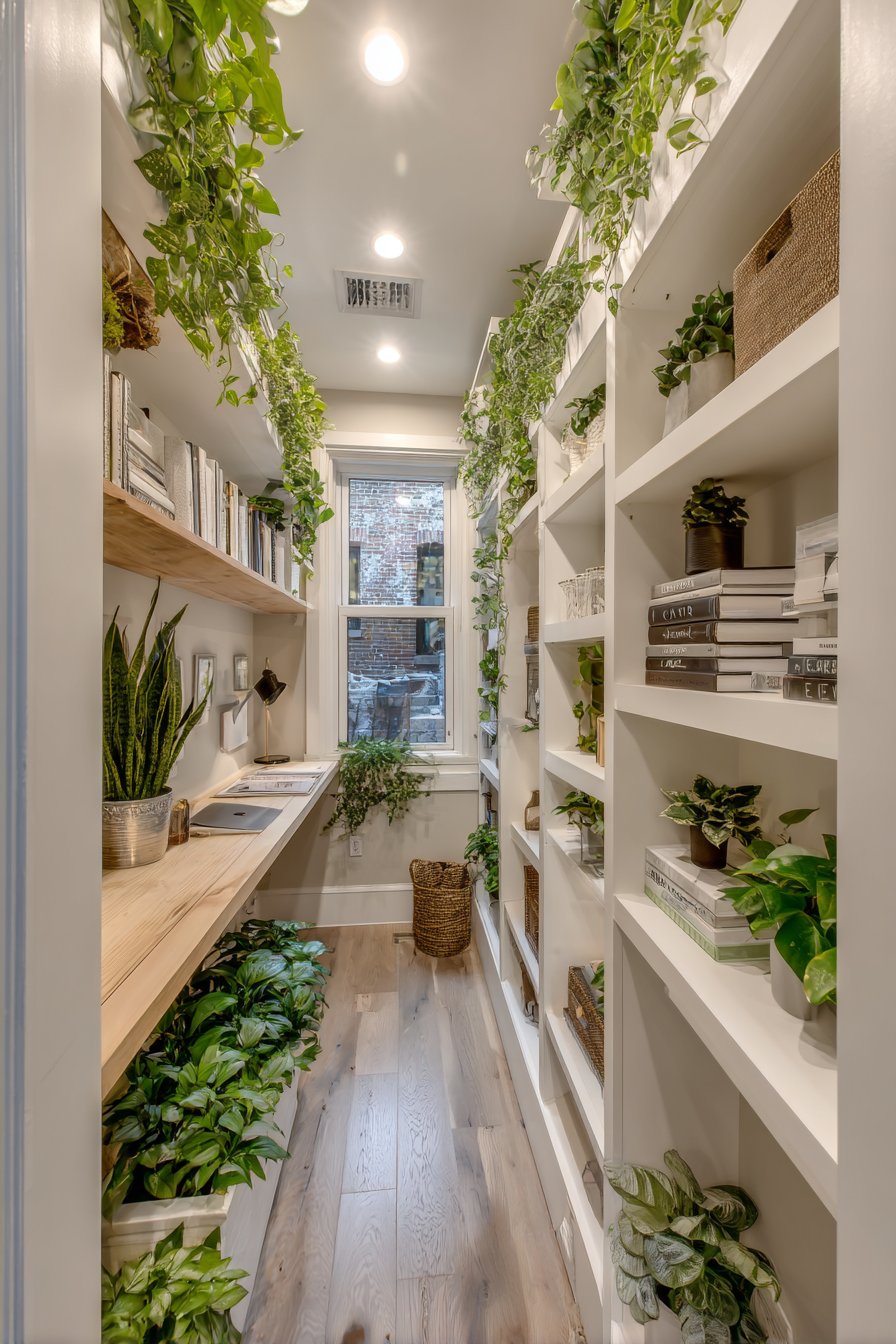
The lighting strategy accounts for both human and plant needs. Natural light from a side window provides the changing ambient illumination that helps regulate circadian rhythms and prevents the afternoon energy slump common in artificially lit spaces. Overhead LED fixtures supplement natural light on cloudy days or during evening work sessions, their color temperature selected to mimic daylight and support both reading tasks and photosynthesis. The desk position takes advantage of natural light for the work surface while ensuring adequate illumination reaches the flanking shelves. This thoughtful approach to light creates a workspace that feels neither too bright and glaring nor too dim and sleepy, instead maintaining the balanced illumination that promotes sustained focus and comfort throughout workday hours.
Key Design Tips:
- Work with a carpenter or skilled DIYer to design built-ins that maximize your specific space dimensions
- Include a mix of open shelving for plants and closed cabinets for less attractive office supplies
- Choose low-maintenance plants that tolerate occasional neglect—snake plants, pothos, ZZ plants, succulents
- Position the desk to take advantage of natural light without creating screen glare
- Add small LED grow lights beneath upper shelves if office has limited natural light
- Use consistent planter styles to maintain professional aesthetic—white ceramic or matte black work well in offices
- Place plants at eye level when seated to maximize their stress-reducing benefits during work
- Consider desk placement carefully—facing a plant-filled wall rather than a blank surface can improve mood and creativity
17. Tiered Bamboo Plant Stand
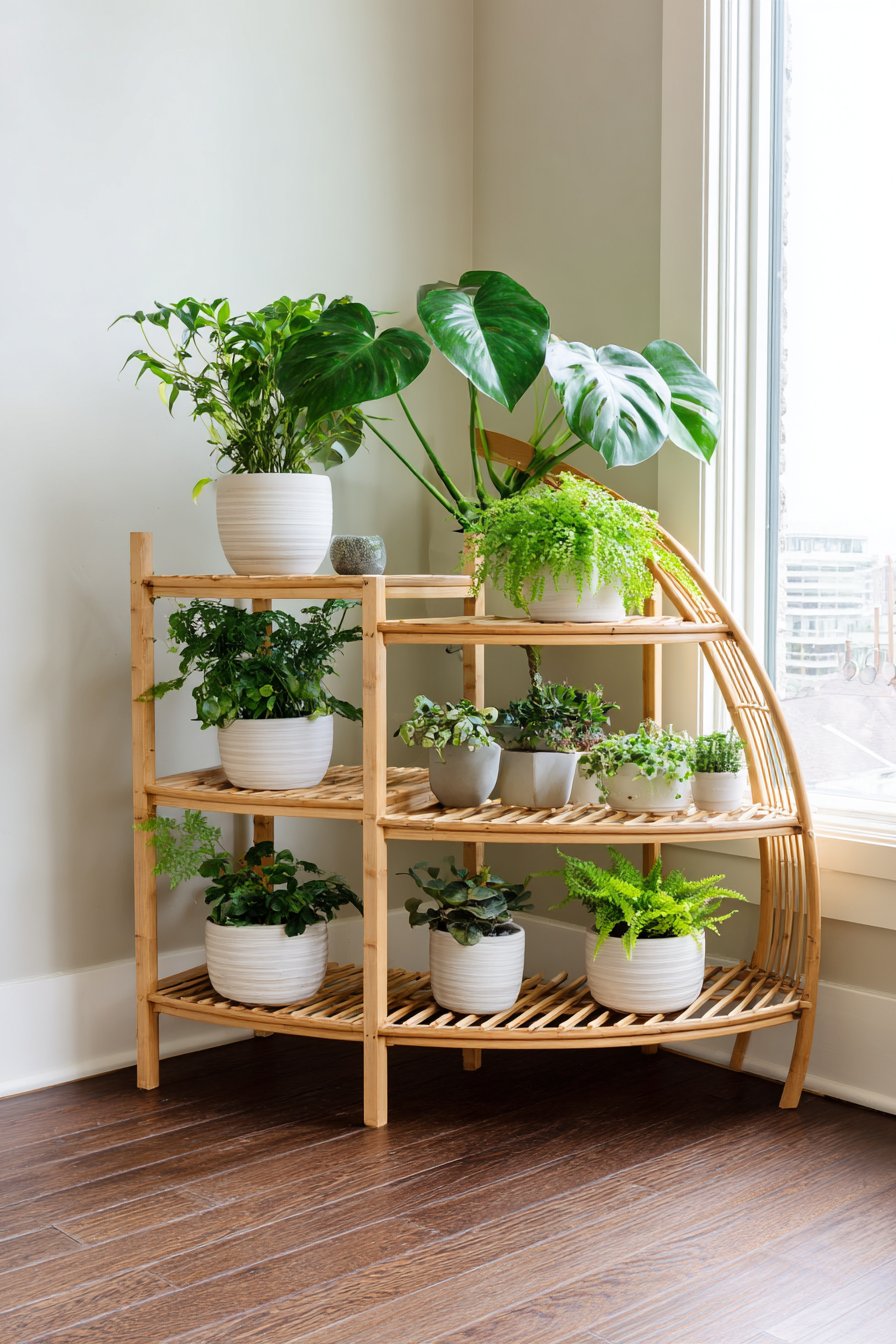
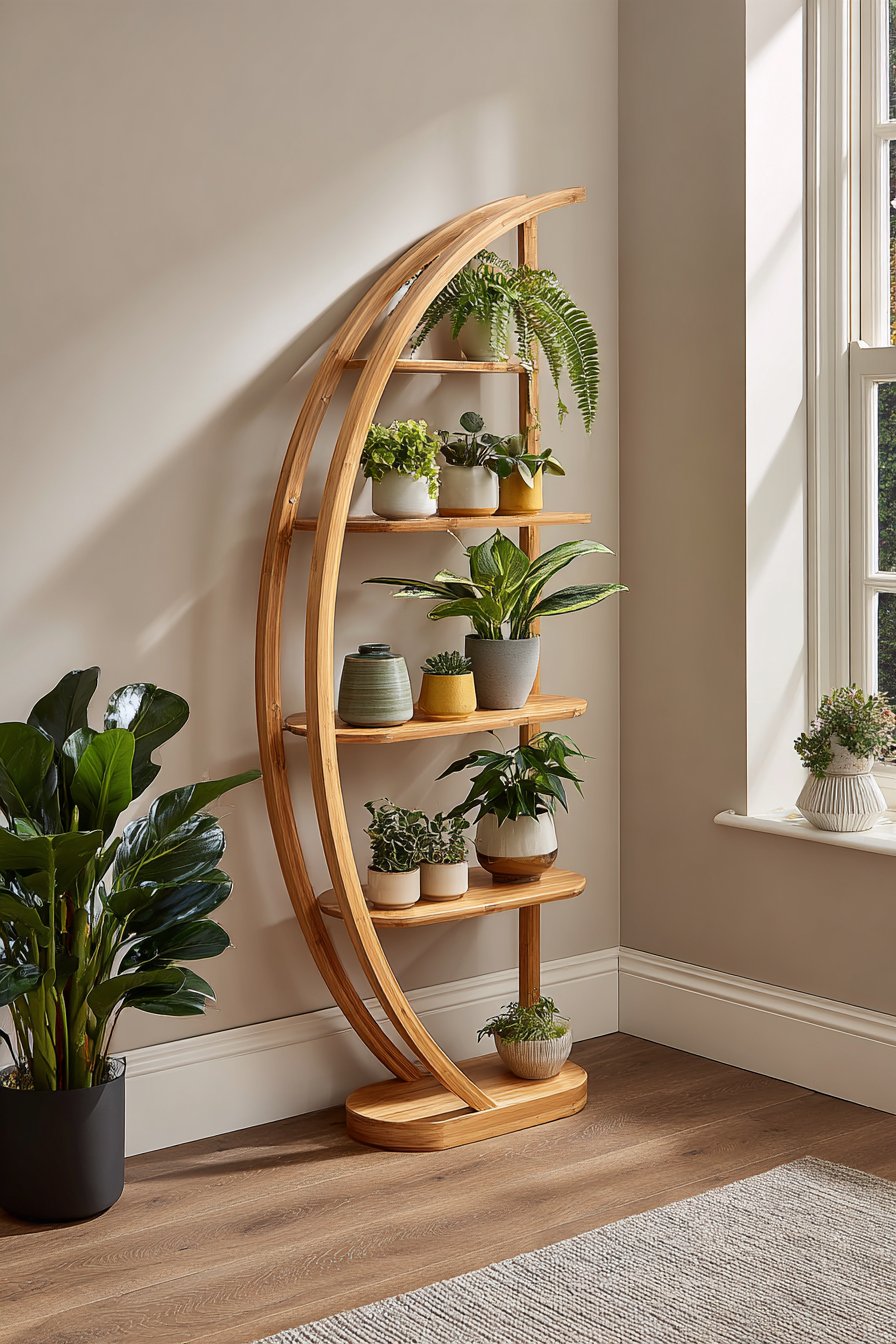
Celebrating sustainable materials and zen-inspired design, a tiered bamboo plant stand with semi-circular shelves creates an indoor plant shelf idea that brings natural elegance to corner spaces. This specialized furniture piece features four graduated levels arranged in a quarter-circle configuration, each shelf progressively smaller than the one below, creating a graceful ascending spiral of greenery. The bamboo construction embodies environmental responsibility while providing remarkable strength-to-weight ratio—bamboo is actually harder than many traditional hardwoods despite its grass classification. The natural grain and warm honey color of the bamboo adds organic texture without the heaviness of darker woods, making this stand suitable even for smaller spaces where bulky furniture might overwhelm.
The tiered design creates natural opportunities for varied plant placement, with each level suited to different plant types. The spacious bottom tier accommodates larger plants in substantial containers—perhaps a mature peace lily or a bushy fern whose foliage can spread without constraint. Middle tiers display medium-sized specimens: compact pothos, small philodendron varieties, or flowering plants that benefit from the elevated position that brings them closer to eye level. The uppermost tier, smallest in diameter, serves as a perfect stage for delicate ferns, tiny succulents, or trailing plants whose cascading growth softens the structured tiers below. This natural gradation from large to small creates visual balance and stability, as the eye naturally finds the arrangement pleasing when larger, heavier elements ground the base and lighter elements crown the top.
The quarter-circle design specifically addresses corner placement, a thoughtful feature that maximizes space efficiency. Corners often present design challenges—they’re difficult to furnish effectively, can feel dark and forgotten, and rarely receive optimal light. This plant stand transforms those challenges into opportunities, fitting snugly into the corner angle while its curved shelves reach outward, claiming space without blocking pathways or making rooms feel cramped. The stand works particularly well in rooms with minimalist aesthetics where its clean lines and natural materials align with principles of simplicity and connection to nature. Side lighting from adjacent windows creates interesting shadows and highlights across the curved shelves and varied plant forms, the shifting light throughout the day adding dynamic visual interest to what might otherwise be static furniture.
Key Design Tips:
- Measure your corner space carefully before purchasing—quarter-circle stands come in various sizes
- Look for bamboo with minimal processing and natural finish to maximize sustainability and authentic appearance
- Arrange plants with consideration for light angles—most corners receive indirect light from one or two directions
- Place largest, heaviest plants on bottom tier for stability and natural visual balance
- Choose a mix of plant forms—upright, bushy, and trailing—to create varied silhouettes across tiers
- Consider the viewing angles—this stand will be seen primarily from the front/side, so arrange accordingly
- Protect flooring with felt pads or a small mat, especially important with bamboo which can scratch some surfaces
- Rotate plants weekly if light source is directional, ensuring even growth and preventing lean toward light
18. Repurposed Vintage Bookshelf Display
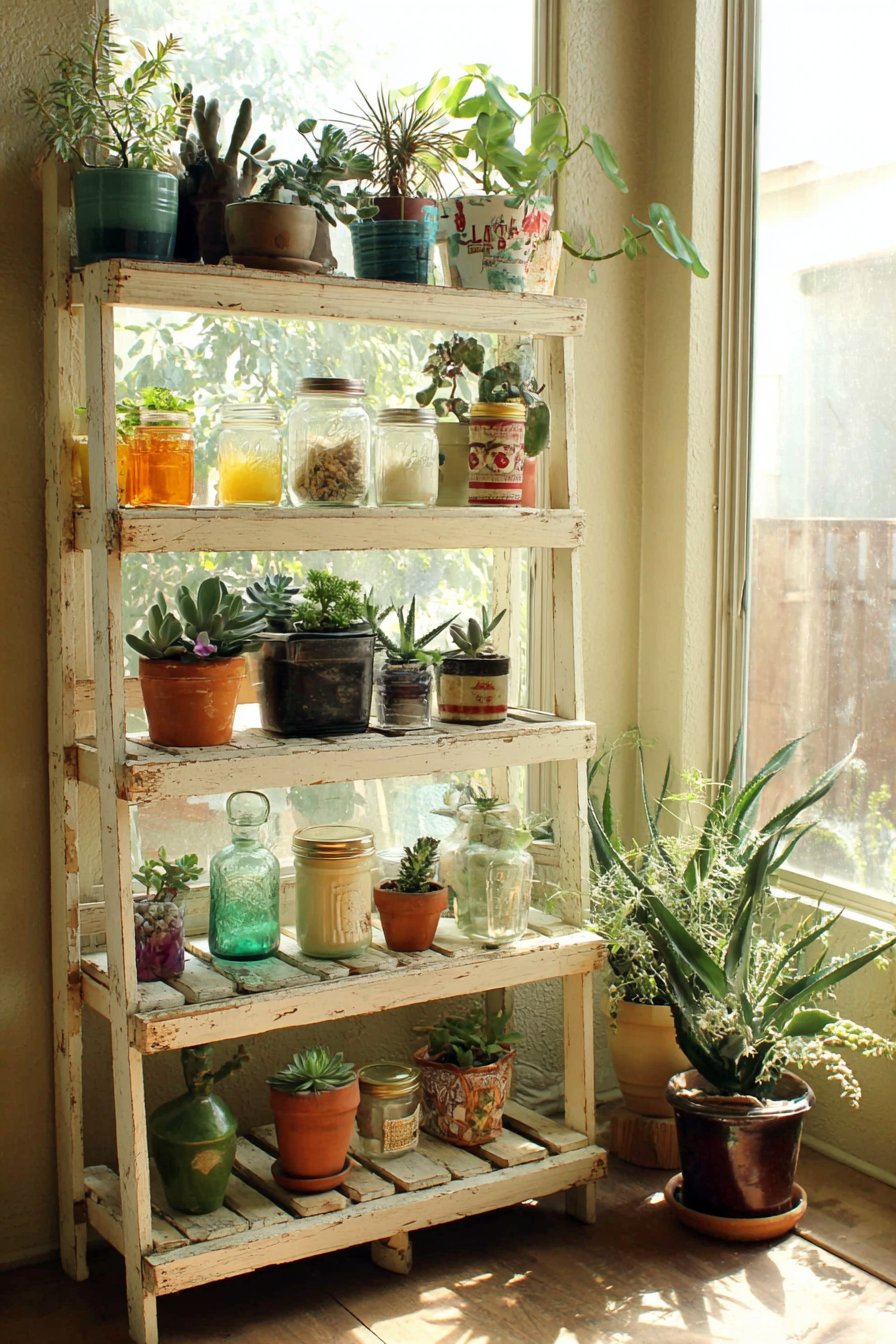
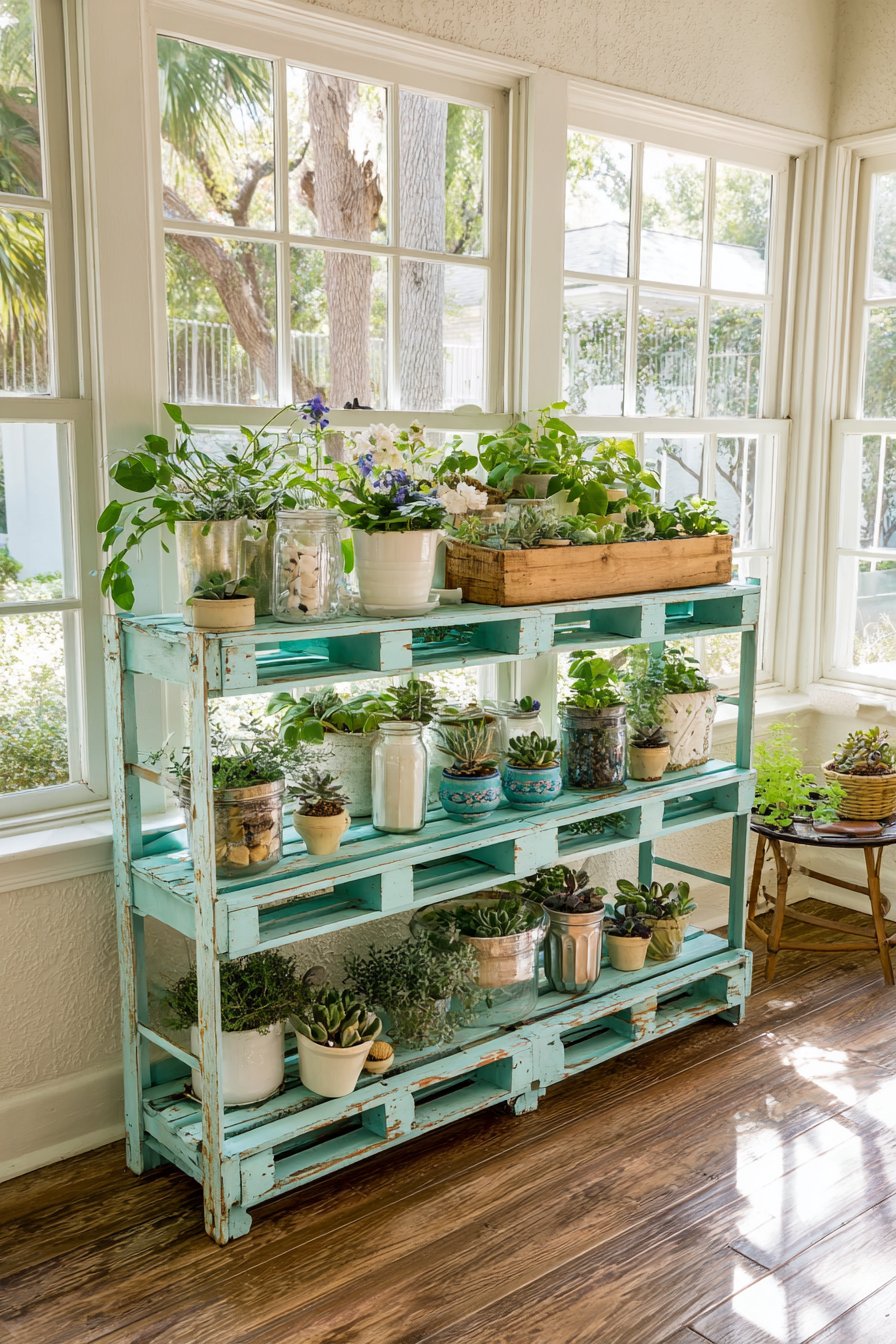
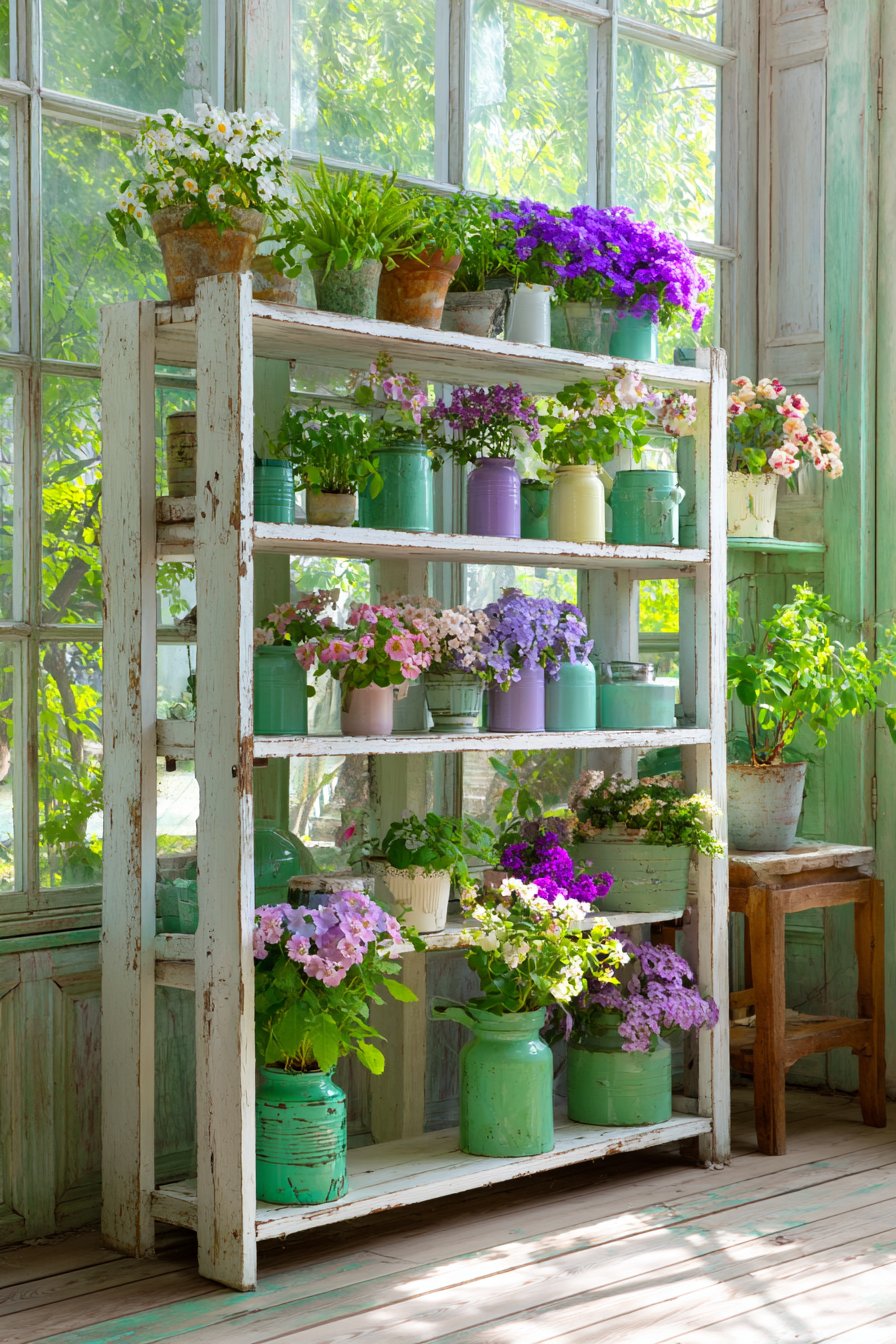
Embracing sustainable style and personal history, a repurposed vintage bookshelf transformed into a dedicated plant display creates an indoor plant shelf idea rich with character and environmental consciousness. This approach celebrates the beauty of aged wood—paint that’s chipped and weathered rather than pristine, shelves that bear the marks of previous use, and proportions that reflect earlier eras of furniture making when mass production hadn’t yet standardized dimensions. Perhaps discovered at an estate sale, inherited from a relative, or rescued from curbside disposal, this bookshelf gets a second life as the centerpiece of a sunroom or bright corner. The transformation from book storage to plant display doesn’t require perfection; in fact, the imperfections—water stains, worn edges, faded finishes—add authenticity and narrative depth that brand-new furniture simply cannot match.
The plant selection leans into the shabby chic and cottage garden aesthetic that vintage furniture naturally evokes. Mason jars become planters for fresh herbs, their utilitarian simplicity perfectly aligned with the vintage ethos of valuing function alongside beauty. Enamelware containers—white with blue trim, showing chips that reveal the dark metal beneath—hold flowering plants like miniature roses, African violets, or begonias that add welcome color. Antique planters discovered at the same estate sales and flea markets that yielded the bookshelf itself complete the collected-over-time appearance. The plant mix includes flowering varieties, fragrant herbs, and lush foliage plants, creating the exuberant, slightly wild abundance associated with cottage gardens where structure takes a back seat to profusion and charm.
Abundant natural light proves essential for this display, not just for plant health but for the visual impact of sunlight interacting with vintage surfaces. Morning light streaming through multiple windows illuminates dust motes dancing in the air, catches water droplets on leaves and makes them sparkle, highlights the varied patinas on the distressed paint, and creates the warm, nostalgic atmosphere that makes vintage-focused spaces so appealing. The sunroom location creates ideal growing conditions for a diverse plant collection while the vintage bookshelf provides the architectural framework that prevents abundant plant growth from reading as mere clutter. This indoor plant shelf idea resonates particularly with those who value sustainability, find beauty in imperfection, and appreciate the stories embedded in objects that have lived previous lives.
Key Design Tips:
- Shop estate sales, flea markets, and vintage stores for bookcases with genuine age and character
- Embrace imperfections—chips, scratches, and wear marks add authenticity and visual interest
- Consider structural integrity carefully—vintage wood can be weakened by age, moisture, or insect damage
- Apply clear sealant to protect wood from future water damage while preserving aged appearance
- Use vintage containers for plants—mason jars, enamelware, antique planters—to maintain cohesive aesthetic
- Include flowering plants and herbs to create cottage garden abundance rather than minimalist display
- Position in bright light from multiple windows to create sun-filled, cheerful atmosphere
- Mix plant types freely—the cottage aesthetic celebrates variety and profusion over careful curation
- Add vintage gardening tools, seed packets, or botanical prints to enhance the collected-over-time feel
19. Minimalist Concrete and Steel Display
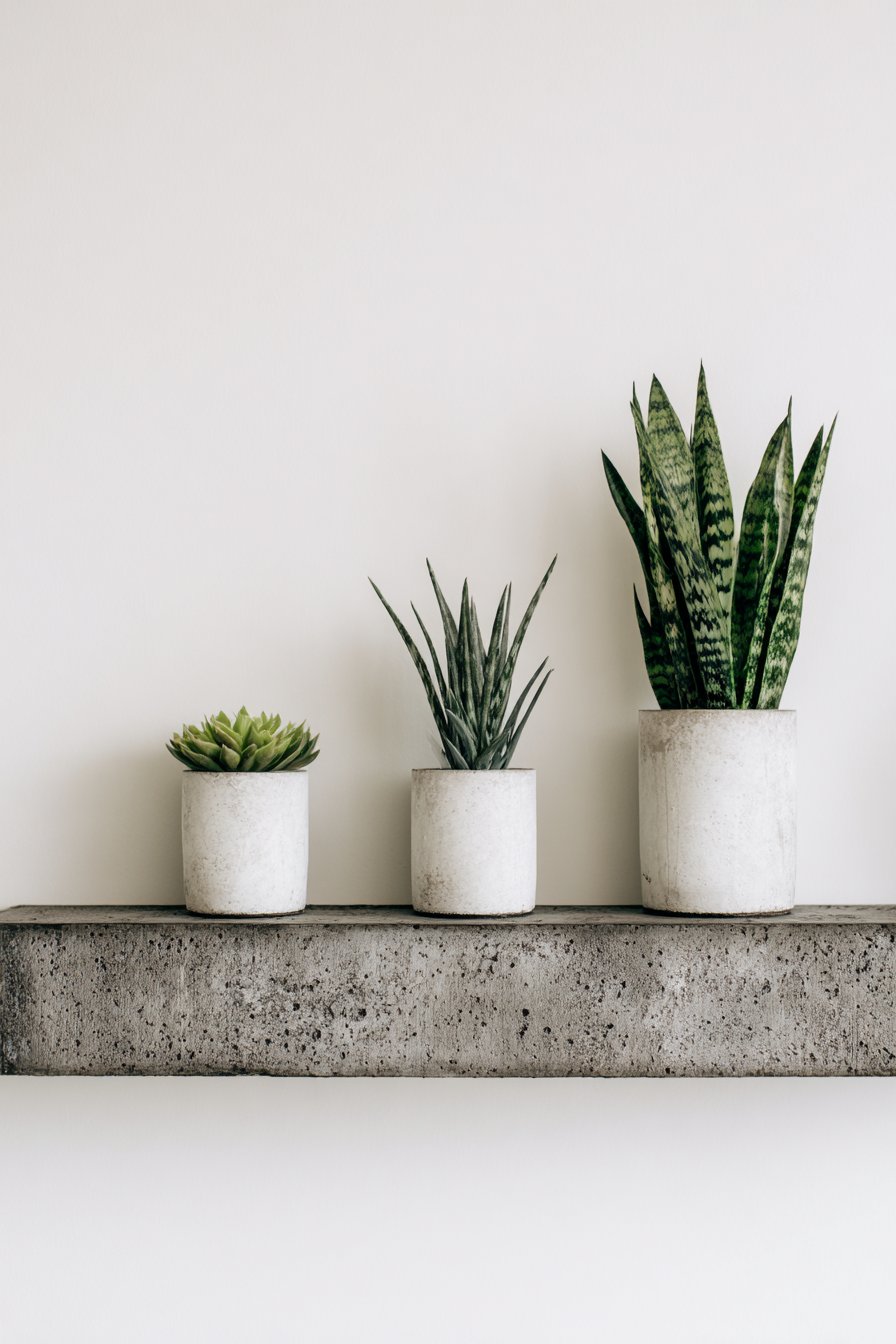
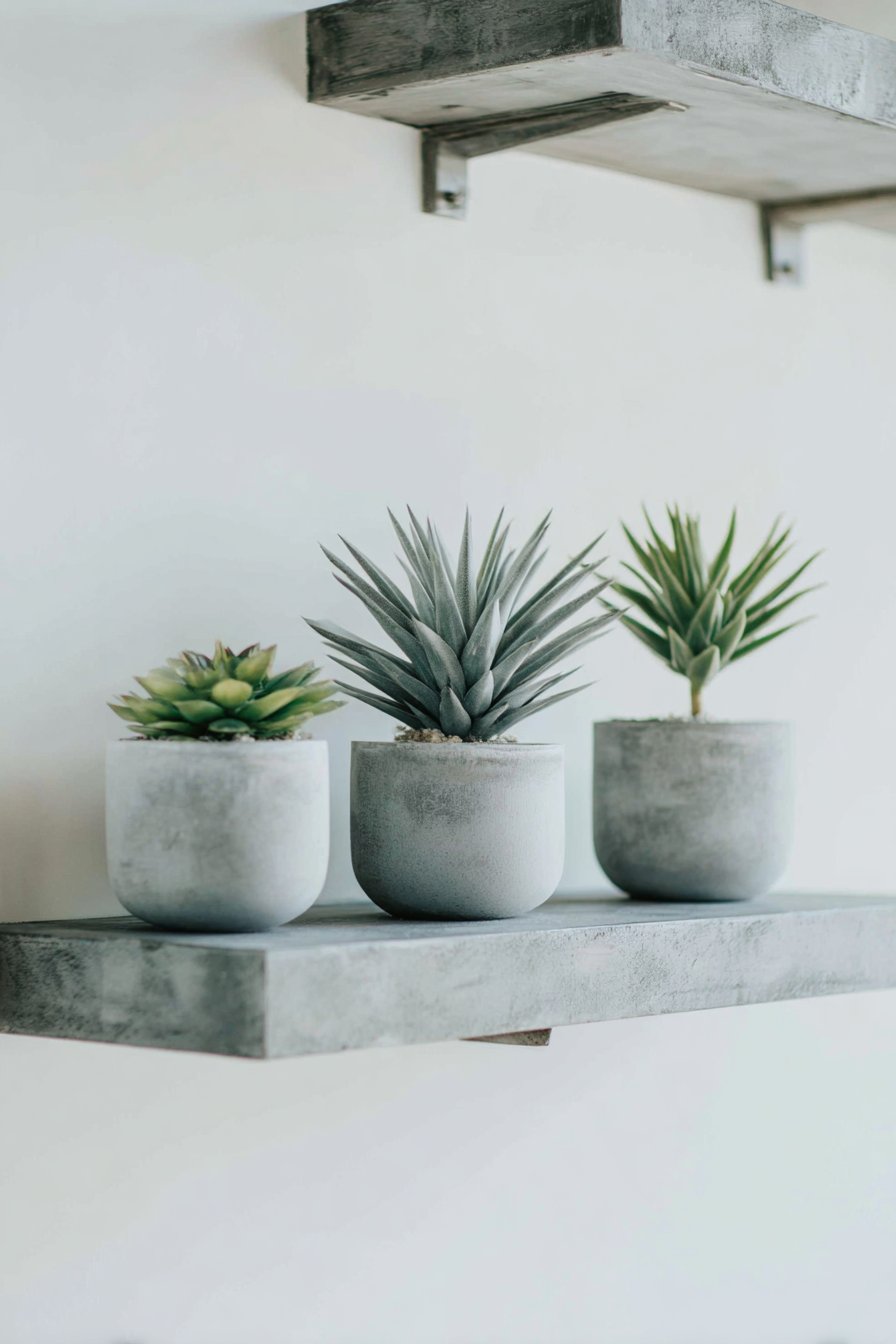
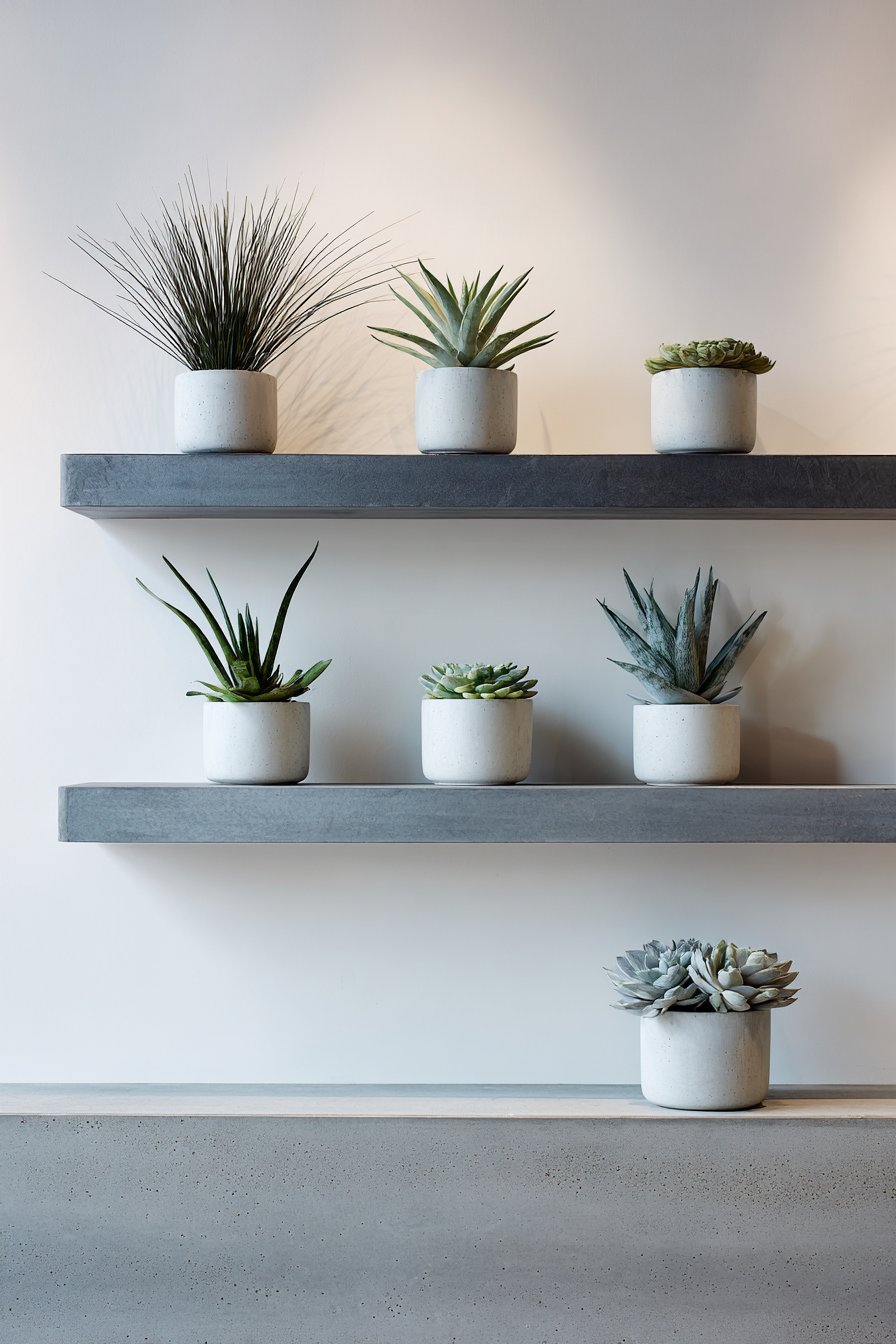
Embodying the essence of industrial minimalism, a shelf system constructed from smooth concrete platforms supported by thin steel brackets creates an indoor plant shelf idea of stark, gallery-like sophistication. This arrangement strips away all decorative excess, reducing the display to its fundamental elements: structural support and surface. Three floating shelves extend from a pristine gallery-white wall, their concrete surfaces possessing a monolithic quality that feels more like architectural elements than furniture. The steel brackets, powder-coated in matte black, provide minimal visual interruption—thin lines that recede rather than demand attention. This restraint creates a backdrop where plants become sculptural objects, each specimen carefully chosen not just for health or growth habit, but for its architectural merit and contribution to the overall composition.
The plant selection demonstrates rigorous editing, with only the most visually striking and structurally interesting varieties making the cut. Snake plants stand like minimalist sculptures, their upright sword-like leaves creating strong vertical lines and geometric forms. Sculptural succulents—particularly architectural specimens like echeveria or geometric agave—display naturally occurring patterns that seem designed by mathematicians: perfect spirals, symmetrical arrangements, geometric leaf forms. Each plant occupies a uniform white cylindrical ceramic pot, their identical containers creating visual unity that allows the plants themselves to be appreciated as individual artworks. The restraint extends to quantity; rather than filling every available surface, the display includes significant negative space—empty shelf areas that provide visual rest and emphasize the specimens that are present.
The lighting strategy continues the gallery aesthetic. Soft, diffused northern light enters through floor-to-ceiling windows, providing even illumination without harsh shadows or hotspots. This flat, consistent light—prized by artists and photographers—reveals forms and textures without dramatic chiaroscuro effects. The concrete shelves absorb and reflect light subtly, their slight texture catching illumination and preventing the sterile feeling that might result from perfectly smooth surfaces. The white wall serves as a neutral backdrop that neither competes with nor distracts from the carefully composed elements. This indoor plant shelf idea appeals to those who appreciate museum-quality minimalism, where every element is intentional and space itself becomes as important as the objects within it.
Key Design Tips:
- Choose concrete shelves with clean, crisp edges—any imperfections will read as flaws rather than character in minimalist settings
- Ensure steel brackets are properly rated for concrete weight—even small concrete shelves are surprisingly heavy
- Select plants based on architectural merit—strong forms, geometric patterns, sculptural qualities
- Use identical planters to create visual unity—uniform white ceramic cylinders work beautifully
- Practice rigorous editing—fewer, better specimens create more impact than abundant plantings
- Maintain generous spacing between plants—negative space is crucial in minimalist compositions
- Position shelves with careful attention to proportion and visual balance
- Keep plant selection limited to varieties that maintain clean forms—avoid messy or irregularly growing specimens
- Clean and maintain meticulously—dust and dead leaves destroy minimalist aesthetic quickly
20. Entertainment Center Plant Integration
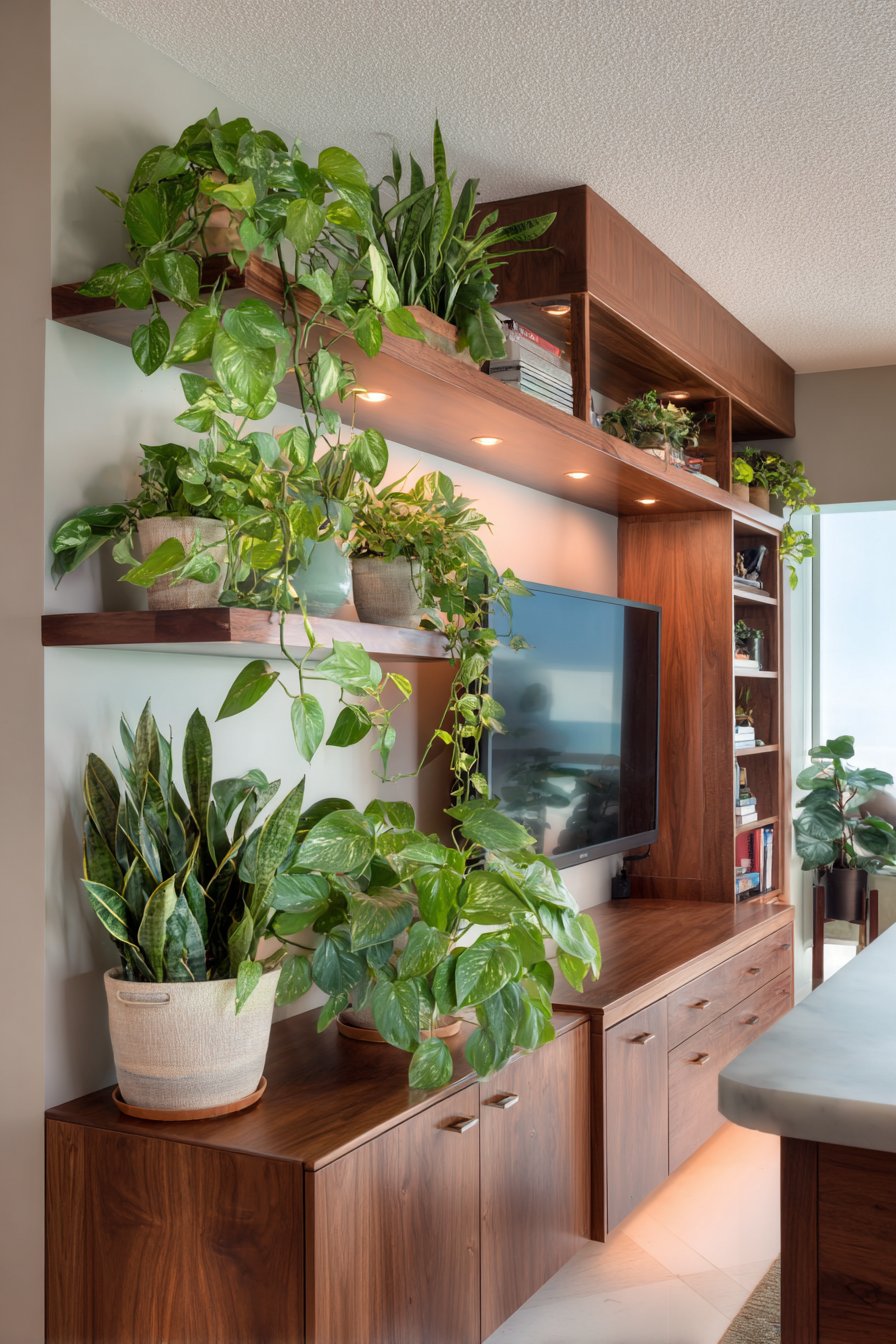
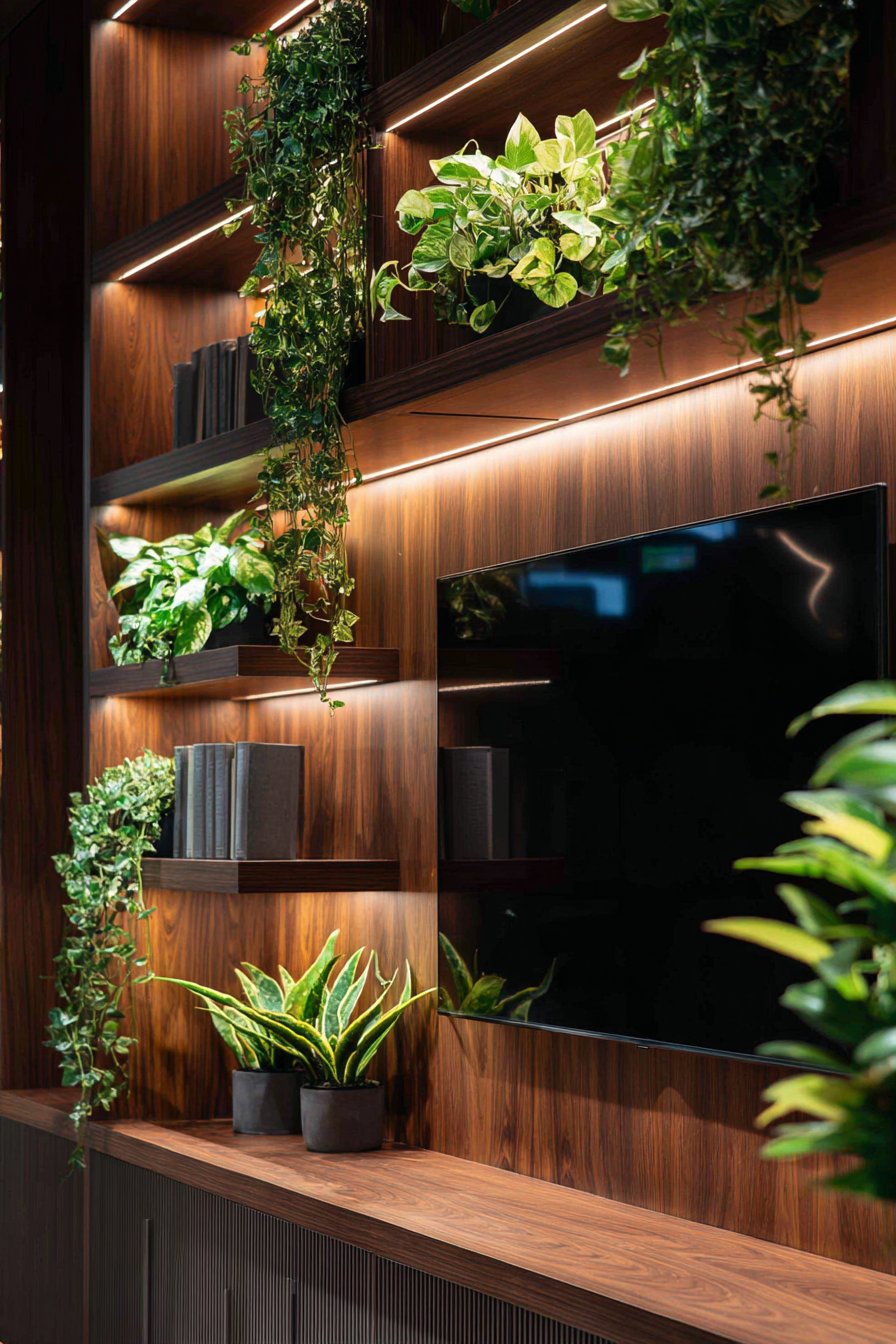
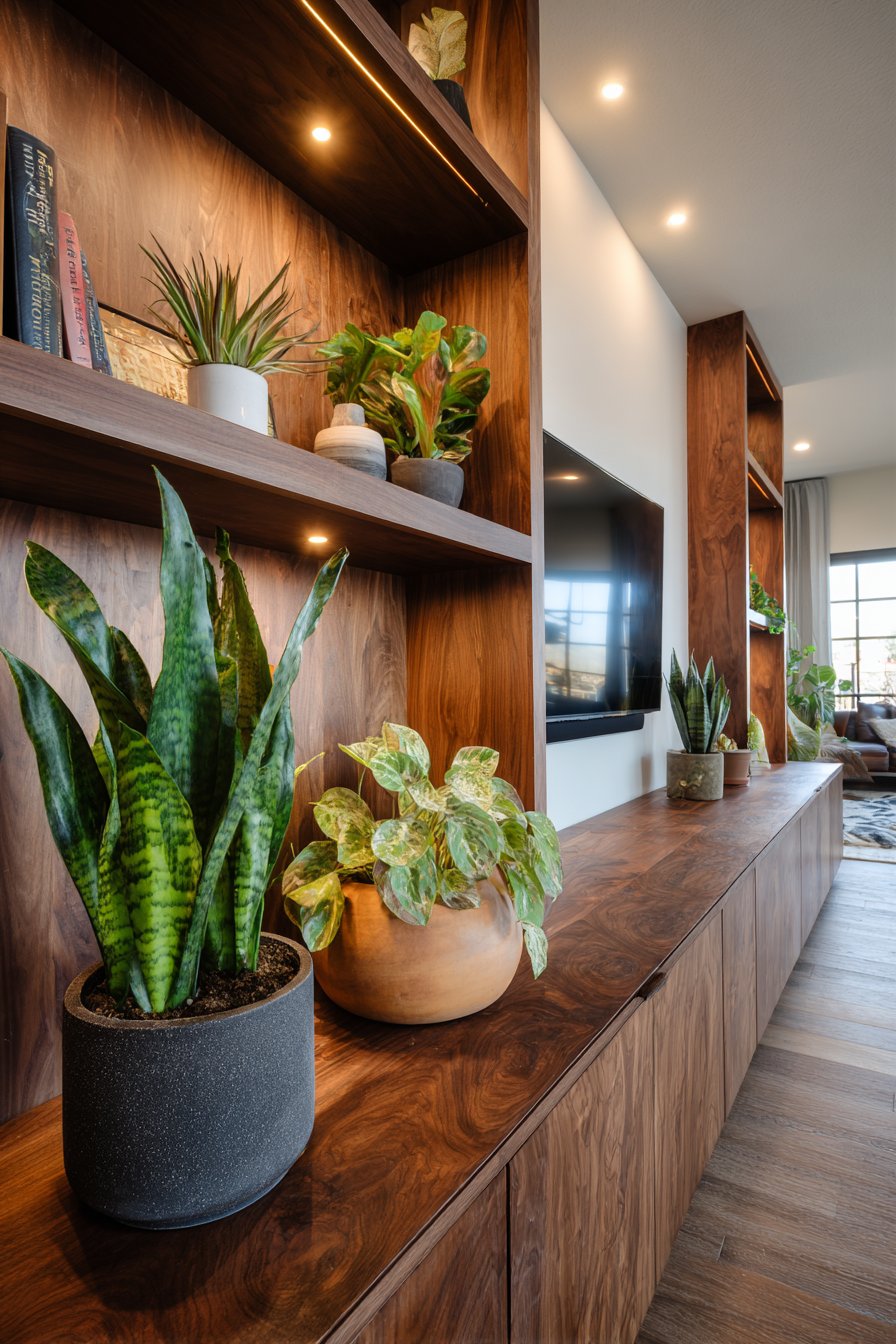
Challenging the notion that technology and nature must remain separate, an entertainment center with integrated plant shelving creates an indoor plant shelf idea that brings organic life to media-focused furniture. This custom built-in cabinetry surrounds a wall-mounted television with thoughtfully designed compartments specifically intended for plant display. The rich walnut wood provides sophisticated warmth while the combination of closed storage below and open shelving alongside the screen creates visual balance. This design acknowledges modern reality—most living rooms organize around television viewing—while refusing to let that technology dominate the space aesthetically. The flanking plant shelves create symmetry and natural framing that softens the screen’s hard edges and black surface, making the television feel like an integrated element rather than a technological intrusion into carefully designed interiors.
The plant selection addresses the unique challenges of this location: plants must tolerate the variable light conditions created by television viewing (sometimes dark, sometimes bright from windows, occasionally illuminated by screen glow), handle temperature fluctuations from electronic equipment, and maintain attractive appearance from the primary viewing position—the sofa. Trailing pothos and philodendrons cascade gracefully from upper compartments, their flowing forms contrasting beautifully with the rectangular geometry of the cabinetry and screen. Snake plants provide vertical accents that echo the television’s upright form while requiring minimal maintenance. Rubber plants contribute substantial glossy foliage that adds weight and presence, preventing the greenery from appearing merely decorative rather than integral to the design. The plant placement ensures that even when the television is being watched, viewers’ peripheral vision includes natural elements, subtly reducing the screen-time feel through the presence of living plants.
The lighting strategy serves both human and plant needs without compromising either. Ambient room lighting from table lamps and floor lamps provides evening illumination for television viewing that’s also adequate for plant health—most moderate-light houseplants can thrive in typical living room conditions supplemented by occasional natural light from nearby windows. Subtle LED strip lights installed beneath upper shelving compartments provide accent illumination that highlights the plants while creating pleasant ambient glow during movie watching. During daytime, natural light from living room windows supplements artificial lighting, ensuring plants receive adequate photosynthesis opportunities. This thoughtful integration demonstrates that technology and nature needn’t compete for attention but can coexist harmoniously in contemporary homes where both play important roles in daily life.
Key Design Tips:
- Work with a carpenter or designer to create custom cabinetry with specific compartments sized for planters
- Choose rich wood tones—walnut, cherry, mahogany—that provide sophistication and visual warmth
- Select low-maintenance plants that tolerate variable light conditions common in media rooms
- Include both trailing plants (upper shelves) and upright specimens (lower shelves) for varied visual interest
- Install subtle LED accent lighting beneath shelves to illuminate plants during evening viewing
- Consider closed storage below for media equipment, gaming systems, and less attractive necessities
- Maintain plant health vigilantly—dead or dying plants are particularly noticeable in high-traffic living rooms
- Choose planters that complement the wood tones and overall aesthetic rather than competing for attention
- Position plants to frame rather than block the television screen
21. Greenhouse-Style Glass Shelving
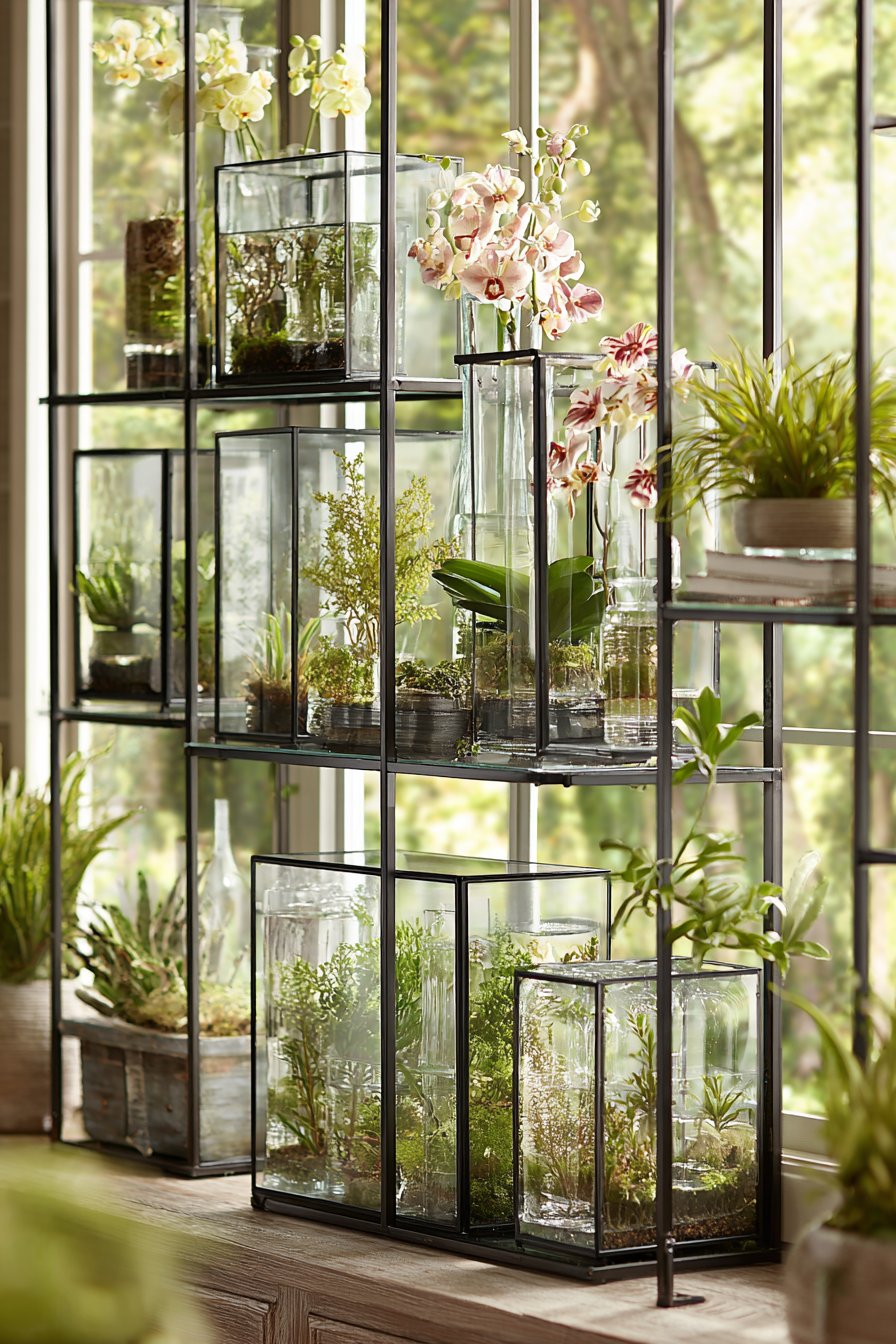
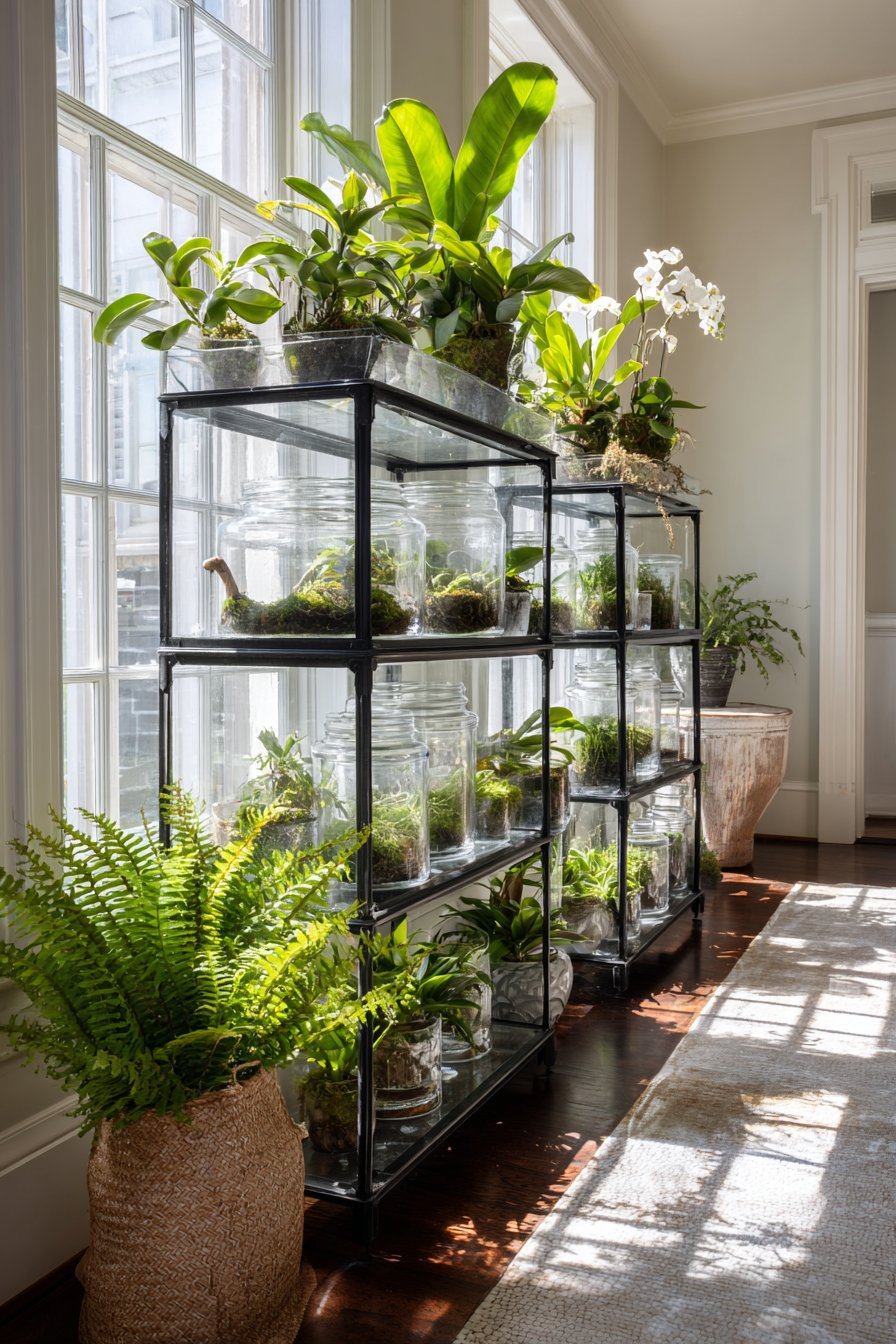
Creating a botanical showcase that celebrates transparency and light, a greenhouse-style shelving unit with glass sides and metal frame brings conservatory elegance to indoor spaces. This indoor plant shelf idea features multiple levels of clear glass shelves supported by slender metal framework, typically powder-coated in black or bronze for minimal visual weight. The transparency serves multiple purposes: aesthetically, it creates an ethereal quality where plants appear almost suspended in air; practically, it allows light to penetrate from all angles, ensuring even specimens on lower shelves receive adequate illumination. The glass sides complete the greenhouse aesthetic while containing humidity—particularly beneficial for tropical plants that thrive in more humid microenvironates than typical homes provide.
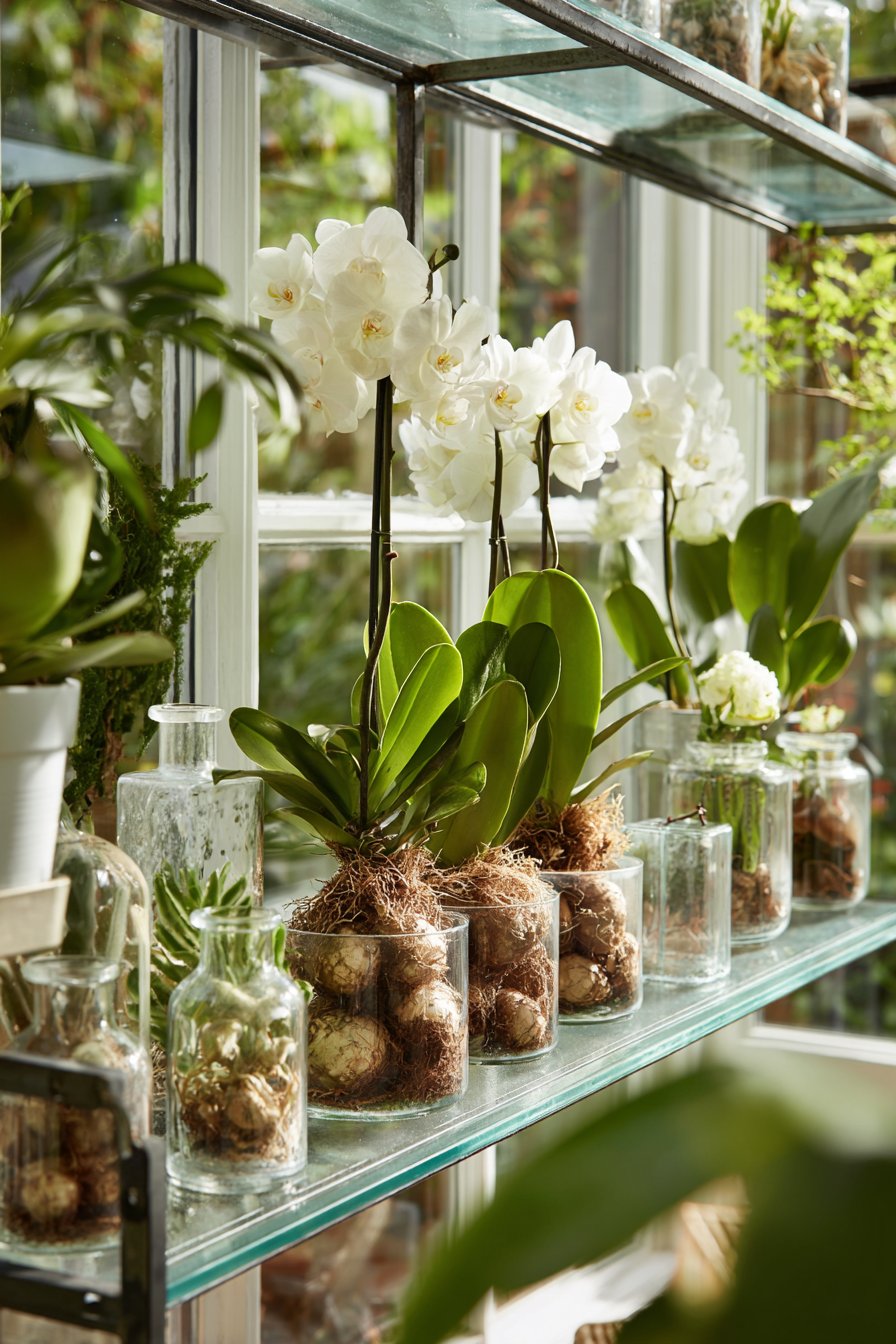
The plant selection takes advantage of the unique growing conditions created by this specialized environment. Humidity-loving tropical plants that might struggle elsewhere in the home flourish here: exotic ferns unfurl delicate fronds, orchids produce their stunning blooms with the consistent moisture they require, and philodendron varieties display their most vibrant coloration when properly humidified. Clear glass containers showcase plant root systems, transforming typically hidden underground networks into fascinating displays of natural architecture—white aerial roots spreading through air, fibrous feeder roots creating intricate networks, or even hydroponic systems where roots float in nutrient-enriched water. This visibility educates while it entertains, making plant care less mysterious by allowing observation of what’s typically concealed in opaque pots and dark soil.
Positioned in a bright conservatory or sunroom with abundant natural light from multiple directions, this shelving unit becomes a living jewel box where sunlight interacts dramatically with glass, water, and foliage throughout the day. Morning light streams through east-facing windows, illuminating water droplets on leaves and turning them into tiny prisms that cast rainbow flecks across surrounding surfaces. Midday light from overhead skylights creates even illumination perfect for photosynthesis. Late afternoon sun catching the glass surfaces creates glowing effects, making the entire unit seem to radiate light. The botanical garden atmosphere created by this thoughtful combination of specialized furniture, appropriate plant selection, and ideal lighting conditions transforms an ordinary room into a sanctuary where one can experience the peace and renewal that comes from immersion in natural beauty.
Key Design Tips:
- Invest in quality tempered glass shelves rated for appropriate weight—plant collections plus water are heavy
- Ensure adequate ventilation despite glass enclosure to prevent mold or mildew in high-humidity environment
- Select plants native to tropical or subtropical regions that appreciate increased humidity
- Use clear glass containers to showcase root systems and embrace the transparent aesthetic
- Position in rooms with abundant natural light from multiple directions—conservatories and sunrooms are ideal
- Monitor humidity levels to ensure they remain high enough for tropical plants but not so high as to damage surrounding structure
- Include both upright and trailing plants to create varied silhouettes visible through transparent surfaces
- Clean glass regularly to maintain transparency and prevent mineral deposits from hard water
- Consider a small humidifier nearby if ambient home humidity is very low
22. Scandinavian Pegboard Wall System
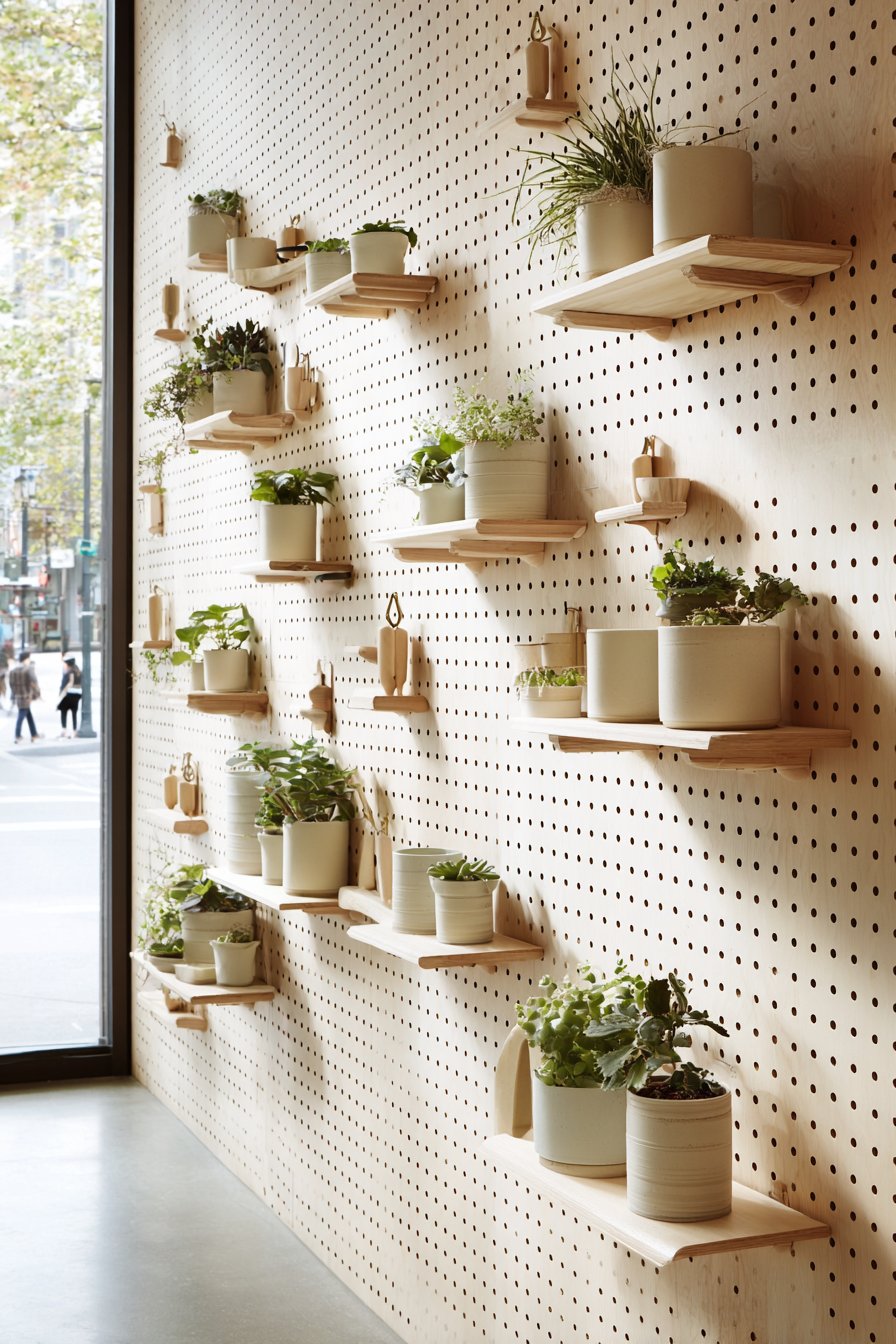
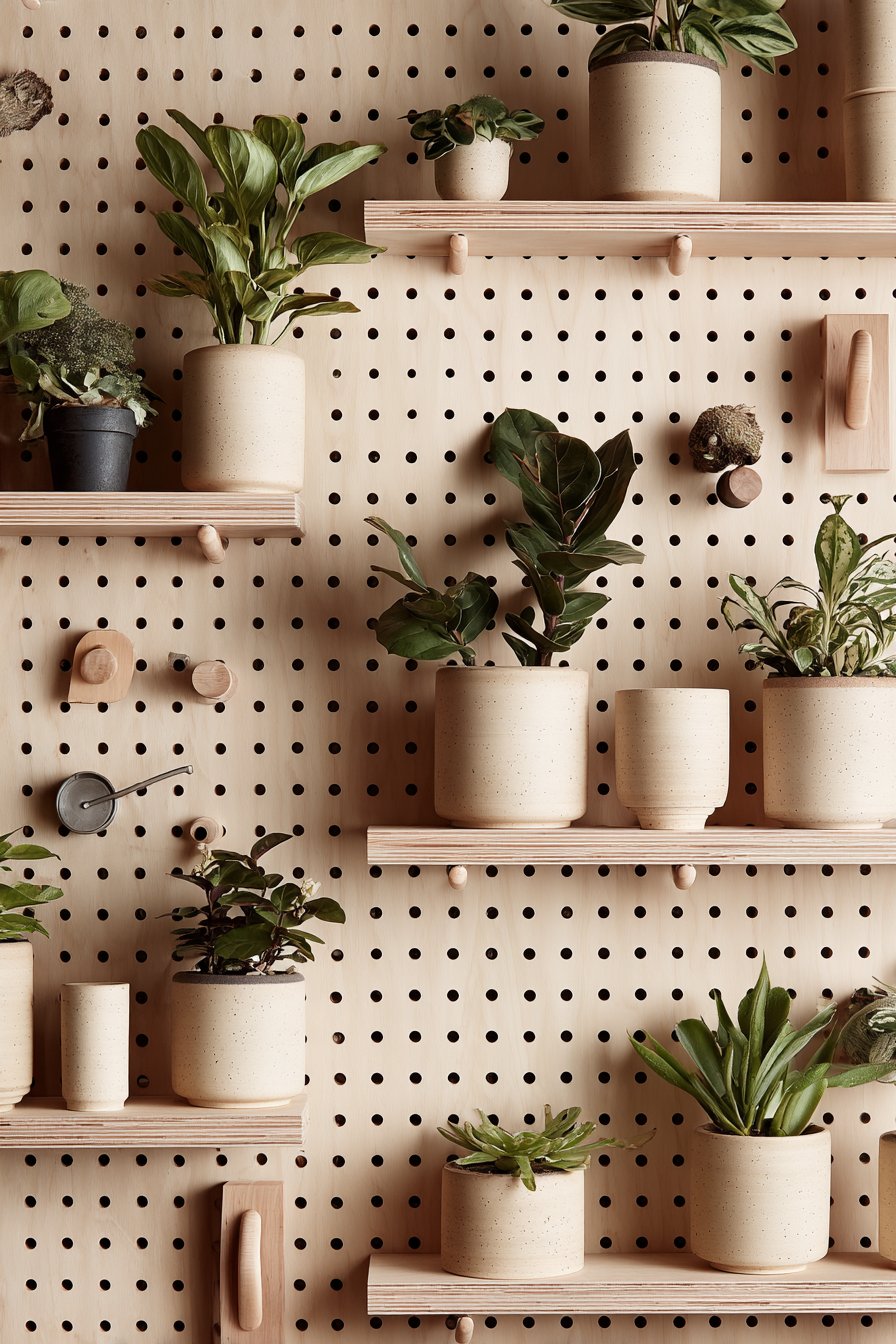
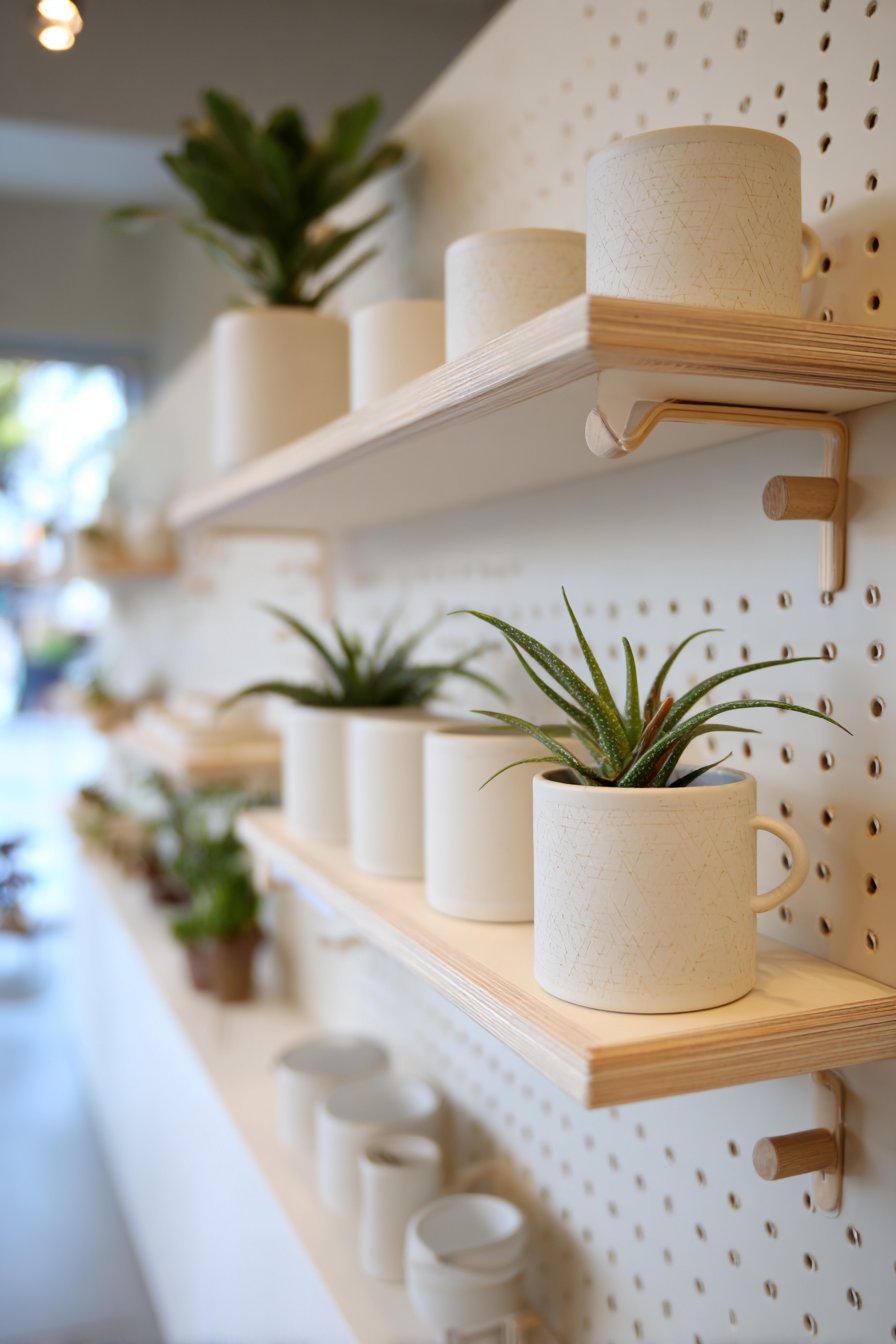
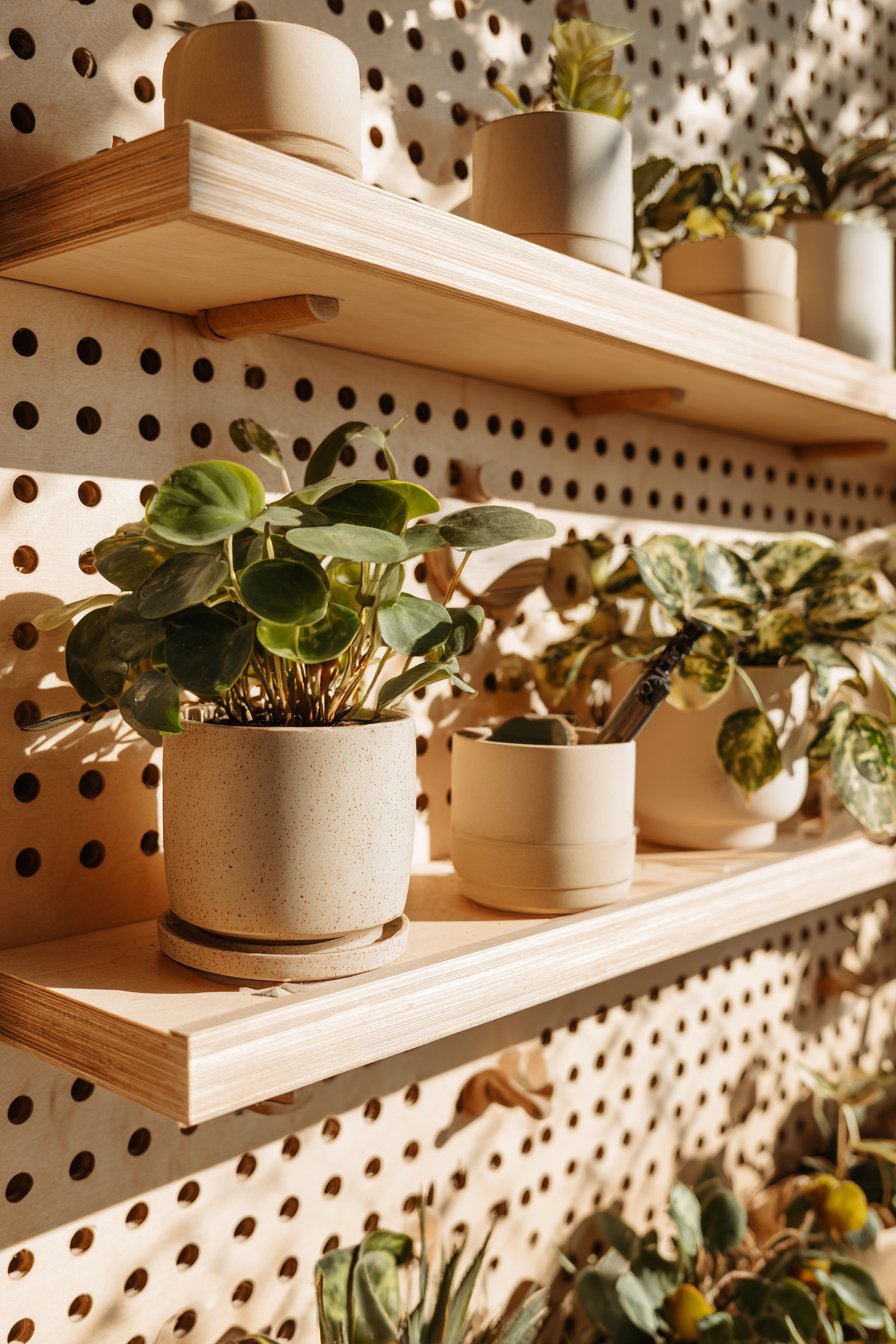
Embodying the Nordic love of functional flexibility and clean design, a pegboard wall system with adjustable wooden shelves creates an indoor plant shelf idea that adapts effortlessly to changing needs and growing collections. The light birch pegboard, mounted across an entire wall or a substantial section, transforms from blank canvas to customizable display system through the addition of simple wooden shelf brackets that can be repositioned at will. This modularity reflects fundamental Scandinavian design principles: furniture and storage should adapt to life’s changes rather than constraining how we live. Small potted plants in coordinating neutral ceramic pots—creamy whites, soft grays, natural clay tones—rest on shelves whose position can be adjusted as plants grow, seasons change, or aesthetic preferences evolve.
The practical benefits extend beyond mere aesthetics. Wooden pegs inserted into the board holes support not just shelves but also hooks for hanging planters, small tools, and gardening accessories. This integrated approach creates a plant care station where everything needed for maintenance lives in one accessible location. Small hand pruners hang from one hook, a decorative watering can from another. Favorite plant mister bottles find homes alongside coiled twine for training climbing plants. This visible storage transforms plant care from chore to ritual by making tools beautiful objects worthy of display rather than items hidden in cluttered drawers or garage corners. The natural birch wood brings warmth without darkness, its pale tone maintaining the airy spaciousness that defines Scandinavian interiors even when the pegboard is fully utilized.
The lighting conditions created by Nordic design priorities perfectly suit plant health. Large windows—often floor-to-ceiling in Scandinavian-inspired spaces—allow maximum natural light penetration, crucial in northern latitudes where sunlight is precious. The soft, diffused quality of light in Nordic countries translates to gentle illumination without harsh shadows or hotspots that can damage sensitive foliage. This even, all-day lighting proves ideal for most houseplants while creating the serene, contemplative atmosphere for which Scandinavian design is celebrated. The flexibility of the pegboard system means plants can be repositioned to follow seasonal light changes or accommodate new acquisitions without requiring new furniture or calling contractors—an elegant solution that respects both environmental sustainability and practical living.
Key Design Tips:
- Choose pegboard with consistent hole spacing (typically 1-inch centers) for maximum flexibility
- Select light-colored wood—birch, pine, or ash—to maintain bright, airy Scandinavian aesthetic
- Invest in quality wooden shelf brackets and accessories rather than cheap plastic alternatives
- Coordinate planter colors in neutral palette—whites, grays, natural clay—for cohesive appearance
- Include hooks for hanging planters and plant care tools to maximize the system’s utility
- Position pegboard where it receives abundant natural light from large windows
- Keep the overall look uncluttered despite flexibility—Scandinavian design favors “lagom” (just enough, not too much)
- Adjust shelf positions seasonally to accommodate plant growth or changing light conditions
- Add small personal touches—postcards, photographs, botanical prints—without overwhelming the functional aesthetic
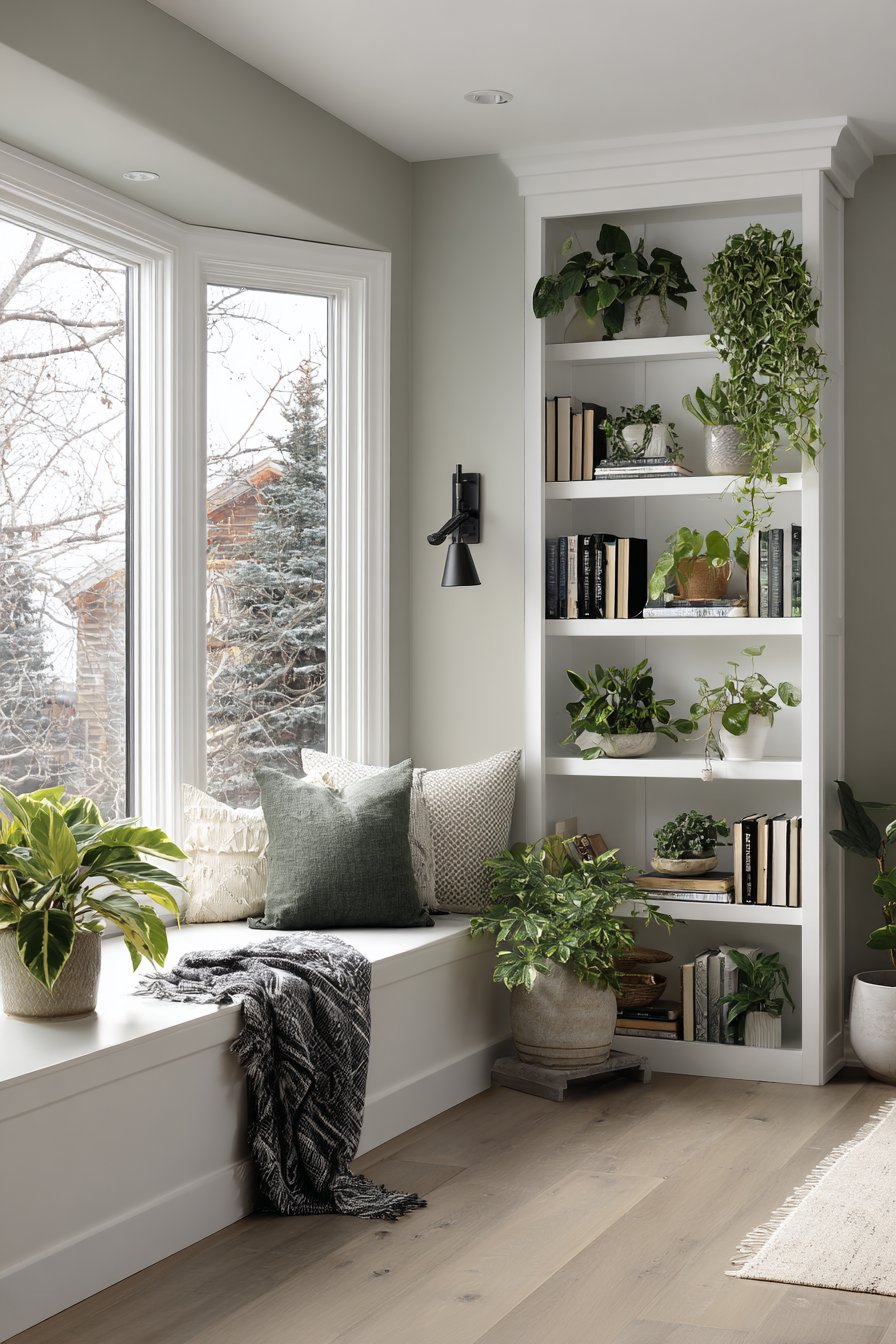
23. Reading Nook with Integrated Plant Shelving
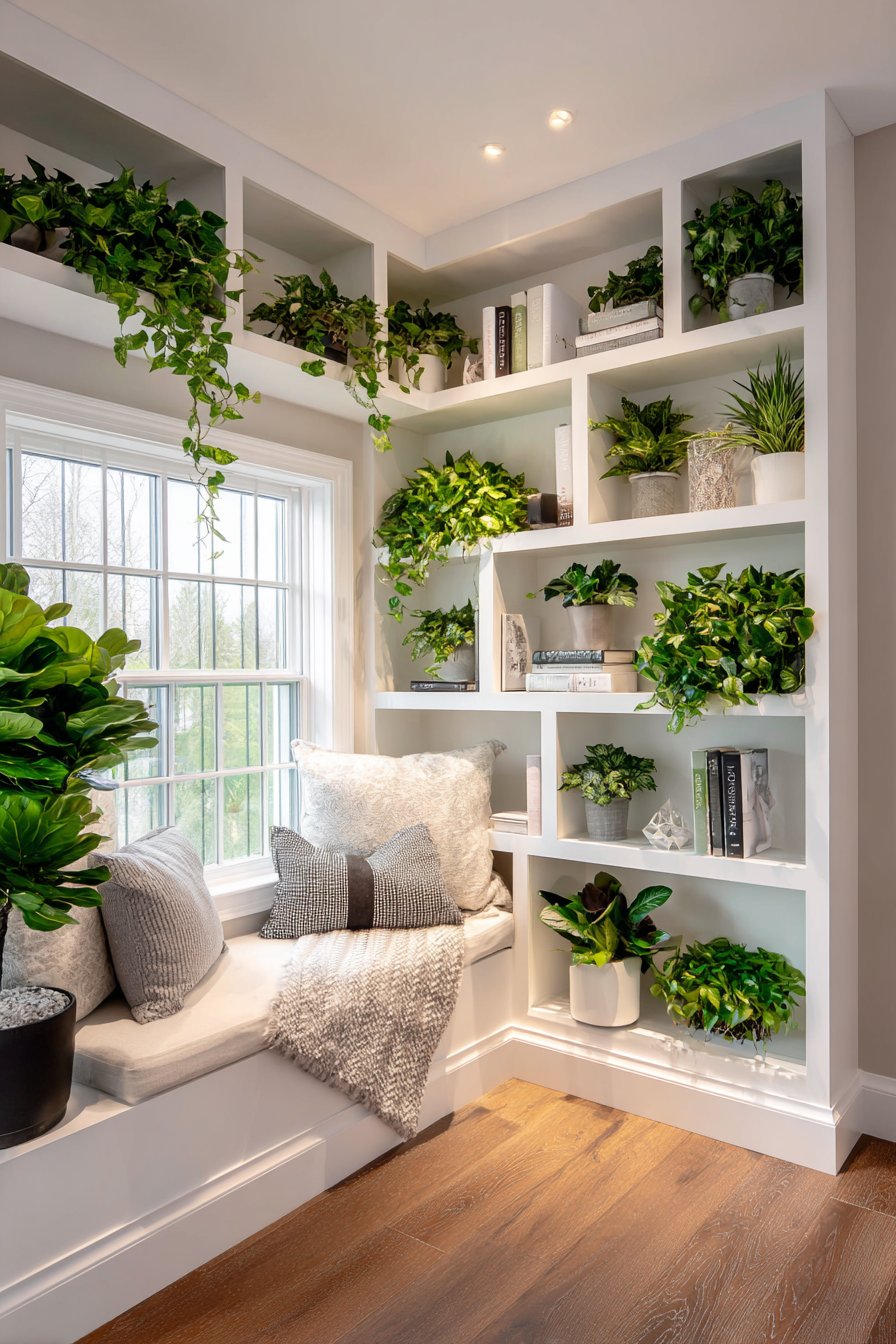
Creating a sanctuary for both literary and botanical pursuits, floor-to-ceiling built-in shelving wrapping around a window seat transforms an ordinary corner into a reading nook where plants and books coexist harmoniously. This indoor plant shelf idea represents the ultimate integration of multiple lifestyle needs into a single, cohesive design. The custom white-painted shelving provides structural framework while the window seat creates a destination—a specific place to sit, relax, and disconnect from digital distractions. Lower shelves hold larger plants whose substantial forms ground the space and create a sense of enclosure; spider plants send out cascading runners, peace lilies contribute glossy leaves and occasional white blooms, and pothos vines trail gracefully along shelf edges. Upper shelves display smaller plant varieties interspersed with beloved books, creating a visual rhythm that alternates between greenery and bound volumes.
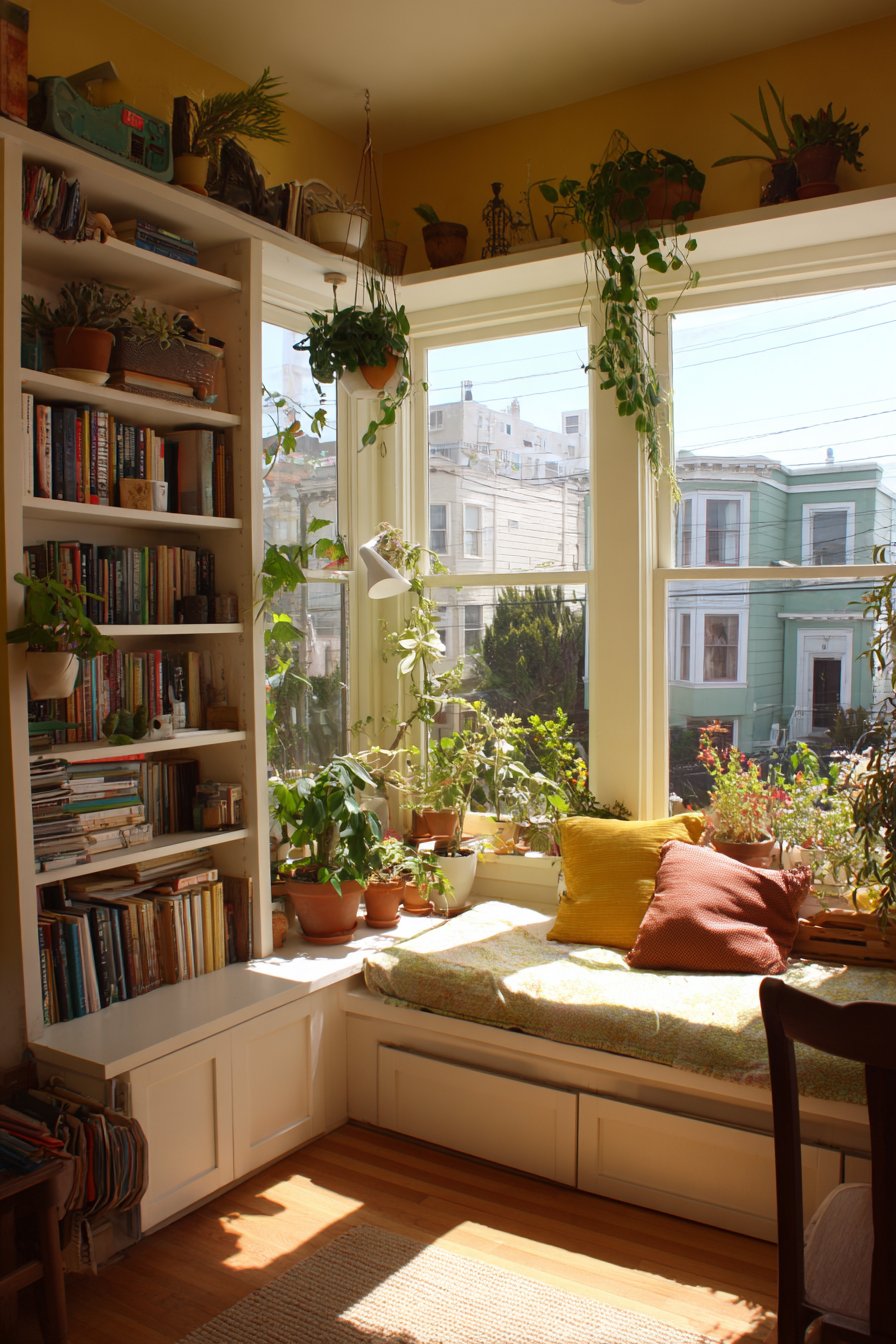
The window seat becomes the heart of this multifunctional space, offering comfortable cushioned seating that invites extended stays. Reading lights mounted to the shelving provide task illumination for books while contributing ambient glow that benefits evening plant health. Natural light streaming through the window during day serves both reader and plants, creating ideal conditions for photosynthesis while providing the connection to outdoors that makes reading near windows so psychologically satisfying. The arrangement of elements creates a microclimate: plants increase humidity slightly, improving comfort during dry winter months when heating systems create arid indoor conditions; the enclosed feeling provided by surrounding shelves creates psychological comfort, a “nest” where one feels protected and removed from household activity; and the presence of nature, even in miniaturized indoor form, provides documented mental health benefits including reduced stress and improved mood.
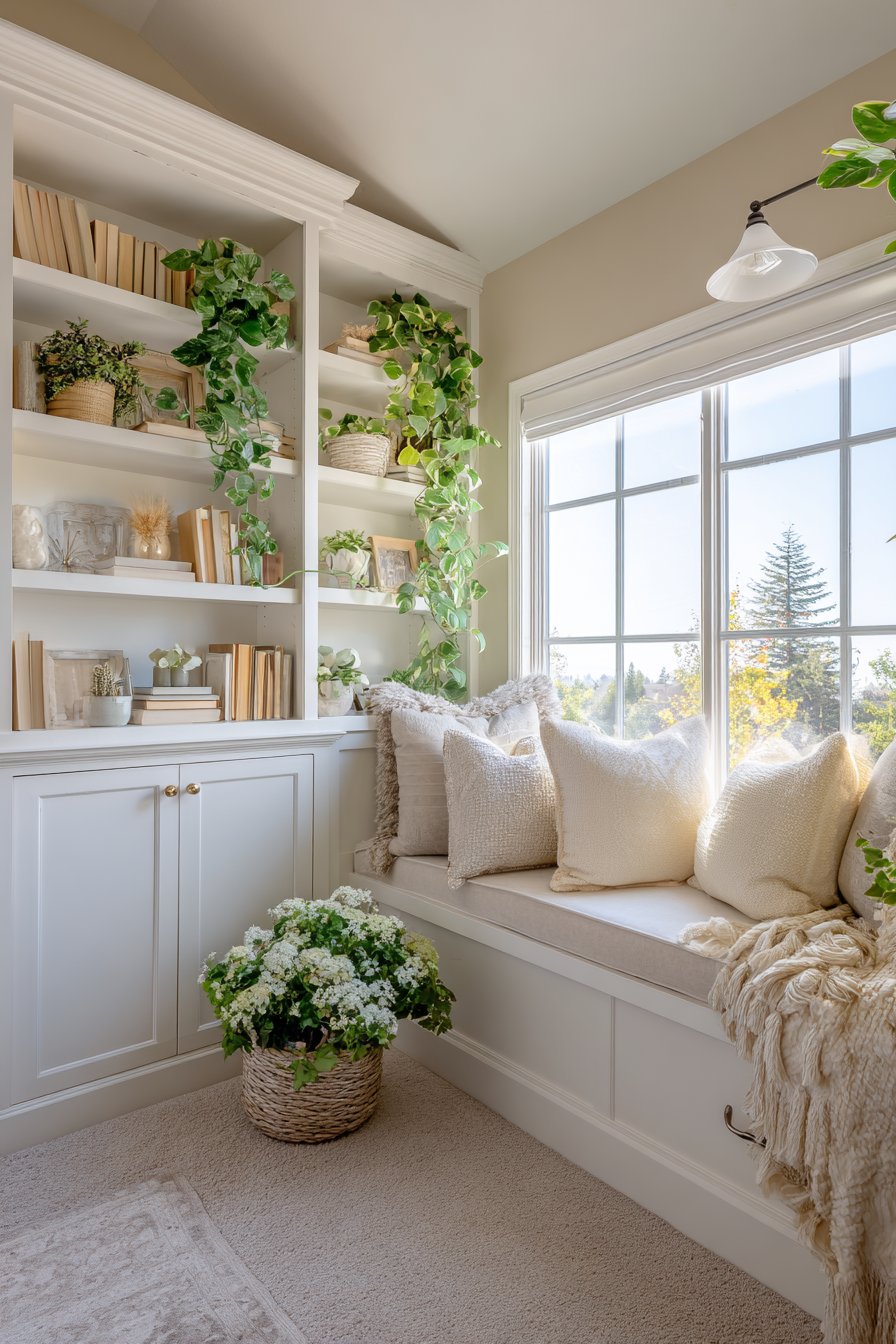
This design exemplifies how thoughtful space planning can accommodate multiple needs simultaneously rather than forcing choices between competing priorities. The same square footage serves as library, meditation space, plant display, and favorite reading spot. The integration feels organic rather than forced because the functions complement rather than contradict each other: both books and plants reward quiet contemplation, both benefit from good natural light, and both contribute to creating homes that nourish minds and spirits rather than serving merely as utilitarian shelters. This indoor plant shelf idea resonates particularly with those who view their homes as sanctuaries—places to retreat from the world’s demands into personal space dedicated to whatever brings joy, peace, and renewal.
Key Design Tips:
- Work with skilled carpenter to design custom built-ins that maximize your specific window dimensions
- Include comfortable, weatherproof cushions with removable covers for easy cleaning after plant watering
- Mix plant and book placement thoughtfully—alternate rather than segregating them to opposite ends
- Add integrated lighting—reading lights mounted to shelving for task illumination
- Choose low-maintenance plants that tolerate reading presence without needing constant attention
- Include hidden storage beneath window seat for plant supplies, extra books, or comfort items
- Position larger plants on lower shelves to create sense of enclosure without blocking natural light
- Use trailing plants on upper shelves to soften the built-in’s structured lines
- Consider adding small side table or shelf at seat height for tea, book, or current read
Why These Indoor Plant Shelf Ideas Represent the Best in Contemporary Design
The collection of indoor plant shelf ideas presented in this comprehensive guide represents more than mere decorative trends—they embody fundamental shifts in how we conceptualize interior spaces and our relationship with the natural world. Each design addresses specific needs while contributing to broader conversations about sustainability, wellness, and the role of nature in urban living. The minimalist floating shelf systems answer the call for clutter-free spaces that don’t sacrifice personality or life. The repurposed vintage furniture speaks to growing environmental consciousness and the beauty of circular economies where objects enjoy multiple lifetimes. The industrial metal and wood constructions honor architectural heritage while demonstrating how raw materials can support rather than suppress natural elements.
These indoor plant shelf ideas succeed because they recognize that effective design must serve multiple masters simultaneously: aesthetic beauty, practical function, plant health, spatial efficiency, and emotional wellbeing. The bathroom plant displays create spa-like retreats while capitalizing on naturally humid conditions. The kitchen herb gardens bring fresh ingredients within arm’s reach while introducing living green to utilitarian workspaces. The home office built-ins boost productivity through biophilic design while maintaining professional organization. Each solution demonstrates sophisticated problem-solving that considers context, constraints, and desired outcomes rather than applying one-size-fits-all solutions that ignore individual circumstances.
The variety of styles represented—from Scandinavian minimalism to bohemian eclecticism, from industrial warehouse to farmhouse charm, from mid-century modern to contemporary glass and steel—ensures that regardless of personal aesthetic preferences or existing interior design schemes, there are indoor plant shelf ideas that will harmonize with and enhance any space. This inclusivity matters because successful design isn’t about forcing spaces and people into prescribed aesthetic boxes but rather about finding authentic expressions that reflect individual personalities, lifestyles, and values. The modular systems offer flexibility for those whose tastes evolve or whose living situations change frequently. The custom built-ins provide permanent beauty for those investing in long-term homes. The space-saving vertical solutions address urban density realities without compromising design quality.
The emphasis throughout these designs on practical implementation rather than impossible perfection reflects an understanding of how people actually live. Real homes accommodate real plants that occasionally drop leaves, need watering, and sometimes fail despite best intentions. The best indoor plant shelf ideas acknowledge these realities by selecting durable materials, providing adequate drainage, ensuring accessibility for maintenance, and choosing plant varieties known for forgiving care requirements. The tiered stands organize plants by size for logical watering access. The floating shelves position plants at heights where daily observation naturally occurs. The modular systems allow easy rearrangement as plants grow or seasons change. This attention to livability separates design that looks beautiful in photographs from design that functions beautifully in daily life.
The integration of lighting considerations throughout these indoor plant shelf ideas demonstrates sophisticated understanding that successful plant displays require more than attractive furniture. Plants need light for survival, humans need light for psychological wellbeing, and thoughtful designers must address both needs simultaneously. The greenhouse-style shelving maximizes light penetration from all angles. The reading nook captures natural window light while adding task lighting for evening use. The entertainment center includes accent LEDs that illuminate plants without glare on television screens. The bathroom displays capitalize on natural humidity while ensuring adequate brightness in typically dim spaces. This holistic approach—considering not just where to put plants but how to keep them thriving—separates superficial styling from genuine design thinking.
Perhaps most significantly, these indoor plant shelf ideas reflect and support the growing recognition that indoor plants contribute meaningfully to quality of life. Scientific research consistently demonstrates that indoor greenery improves air quality by removing toxins and generating oxygen, reduces stress through connection to nature, increases productivity and creativity in work environments, and provides psychological benefits through the satisfaction of nurturing living things. The designs presented here don’t merely accommodate plants as decorative afterthoughts but celebrate them as essential elements of healthy, happy homes. The vertical gardens make plants focal points commanding attention. The integrated systems weave greenery throughout functional spaces where people spend their time. The display approaches encourage collection building and plant parenthood as rewarding hobbies.
Conclusion
The 23 indoor plant shelf ideas explored in this comprehensive guide demonstrate that bringing nature indoors requires neither vast square footage nor unlimited budgets, but rather thoughtful design that aligns with individual lifestyles, spatial constraints, and aesthetic preferences. From minimalist floating shelves that create serene displays with just a few carefully selected specimens to elaborate greenhouse-style systems that recreate conservatory atmospheres, the spectrum of possibilities ensures every plant lover can find appropriate solutions for their unique circumstances. The beauty of these approaches lies not in their complexity or expense but in their fundamental recognition that plants and people thrive together when given appropriate support systems.
Whether you’re drawn to the sustainable philosophy of repurposed vintage furniture, the flexible functionality of modular systems, the space-saving ingenuity of vertical planters, or the permanent beauty of custom built-ins, each design offers distinct advantages worthy of consideration. The industrial metal and wood shelving suits urban loft dwellers seeking to honor architectural heritage while softening hard edges with organic forms. The bohemian ladder stands appeal to free spirits who collect plants as they collect memories—gradually, eclectically, with attention to individual character over coordinated perfection. The Scandinavian pegboard systems serve those who value adaptability and clean aesthetics equally. The integrated entertainment centers acknowledge modern technology’s role in our lives while refusing to let it dominate interior beauty.
As you contemplate which indoor plant shelf ideas might work best in your own home, consider not just how they appear in photographs but how they would function in your daily life. Will you realistically maintain plants requiring frequent care, or should you focus on low-maintenance varieties? Do you have abundant natural light, or will supplemental lighting be necessary? Is your style more permanent or more flexible, suggesting either custom built-ins or modular systems? Do you have adequate floor space for substantial furniture pieces, or must you maximize vertical space with wall-mounted solutions? These practical considerations, balanced against aesthetic preferences and budget realities, will guide you toward the approaches most likely to succeed in your specific situation.
The journey toward creating beautiful, thriving indoor plant displays begins with a single shelf and a single plant, but it often evolves into a rewarding long-term relationship with both botanical and design pursuits. Start small, experiment with what works in your space and lifestyle, and allow your plant collection and display methods to evolve organically over time. The most successful indoor plant arrangements aren’t created overnight but develop gradually as you learn which plants thrive in your conditions, discover your personal aesthetic preferences, and refine display methods based on lived experience. Trust your instincts, don’t fear imperfection, and remember that the goal isn’t achieving magazine-perfect styling but creating a home filled with living beauty that brings you joy every day.
