
In the ever-evolving world of interior design, few trends have captured the imagination of homeowners and designers quite like the incorporation of green walls into living spaces. Whether through living plant installations, painted accent walls in lush green hues, or creative botanical displays, green walls have emerged as a powerful design element that bridges the gap between indoor comfort and outdoor vitality. This biophilic design approach not only enhances aesthetic appeal but also contributes to improved air quality, reduced stress levels, and a deeper connection to nature within our homes.
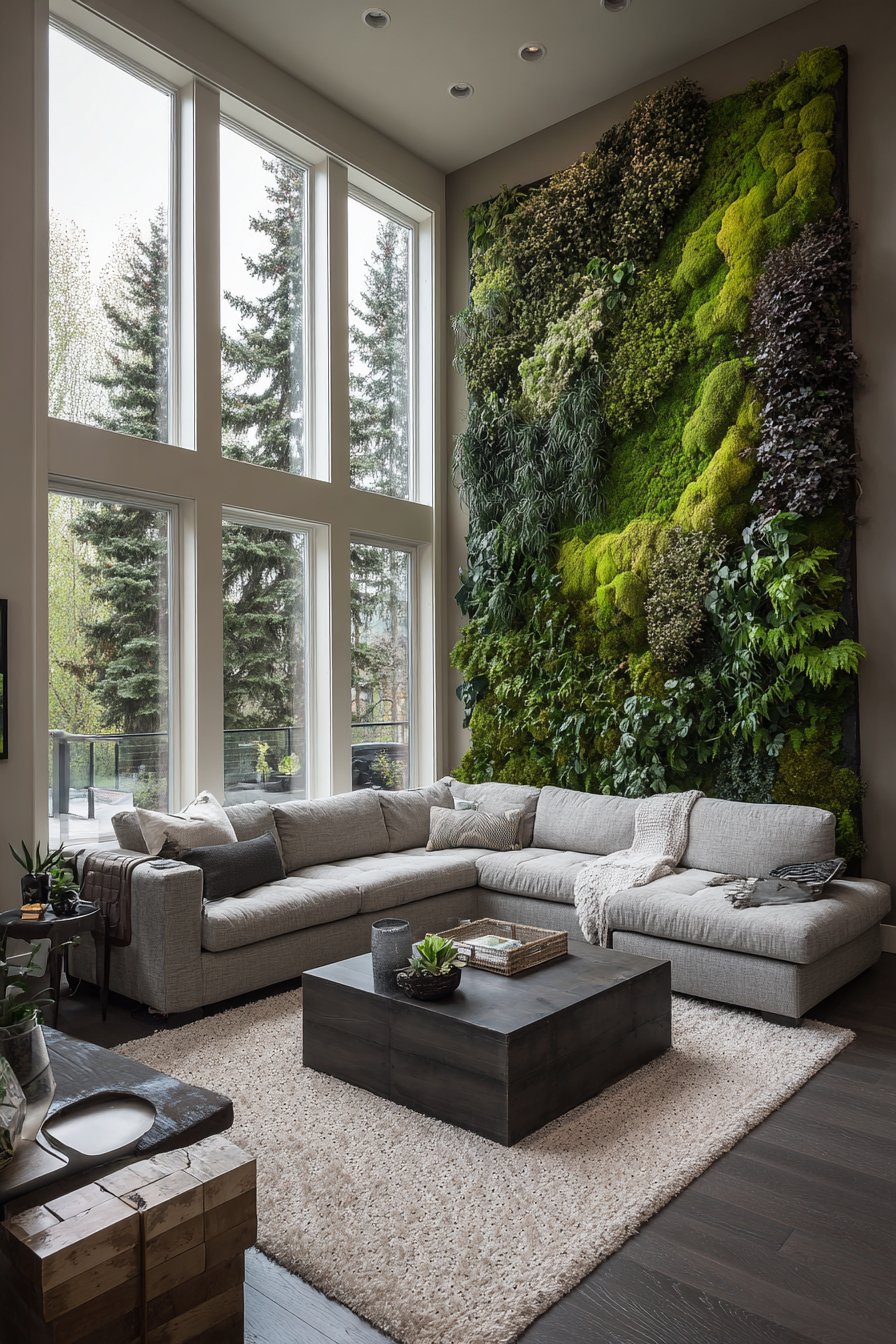
The versatility of green wall ideas is truly remarkable, spanning from dramatic floor-to-ceiling living plant installations to subtle painted accents that bring a touch of nature’s palette into any room. These design solutions cater to various lifestyles, budgets, and maintenance capabilities, making them accessible to everyone from urban apartment dwellers with limited space to homeowners seeking to make bold architectural statements. The psychological benefits of surrounding ourselves with greenery—whether real or inspired by nature’s color palette—have been well-documented, contributing to the growing popularity of these design concepts.
This comprehensive guide explores twenty-five distinct green wall ideas, each offering unique approaches to incorporating verdant elements into your home. From practical vertical herb gardens that combine functionality with beauty to sophisticated painted accent walls that transform entire rooms, these concepts demonstrate the incredible range of possibilities available. Whether you’re drawn to the lush texture of living moss installations, the clean lines of Scandinavian-inspired sage green walls, or the dramatic impact of emerald accent walls, you’ll discover inspiration and practical guidance for bringing these ideas to life in your own space.
1. Kitchen Vertical Herb Garden Living Wall
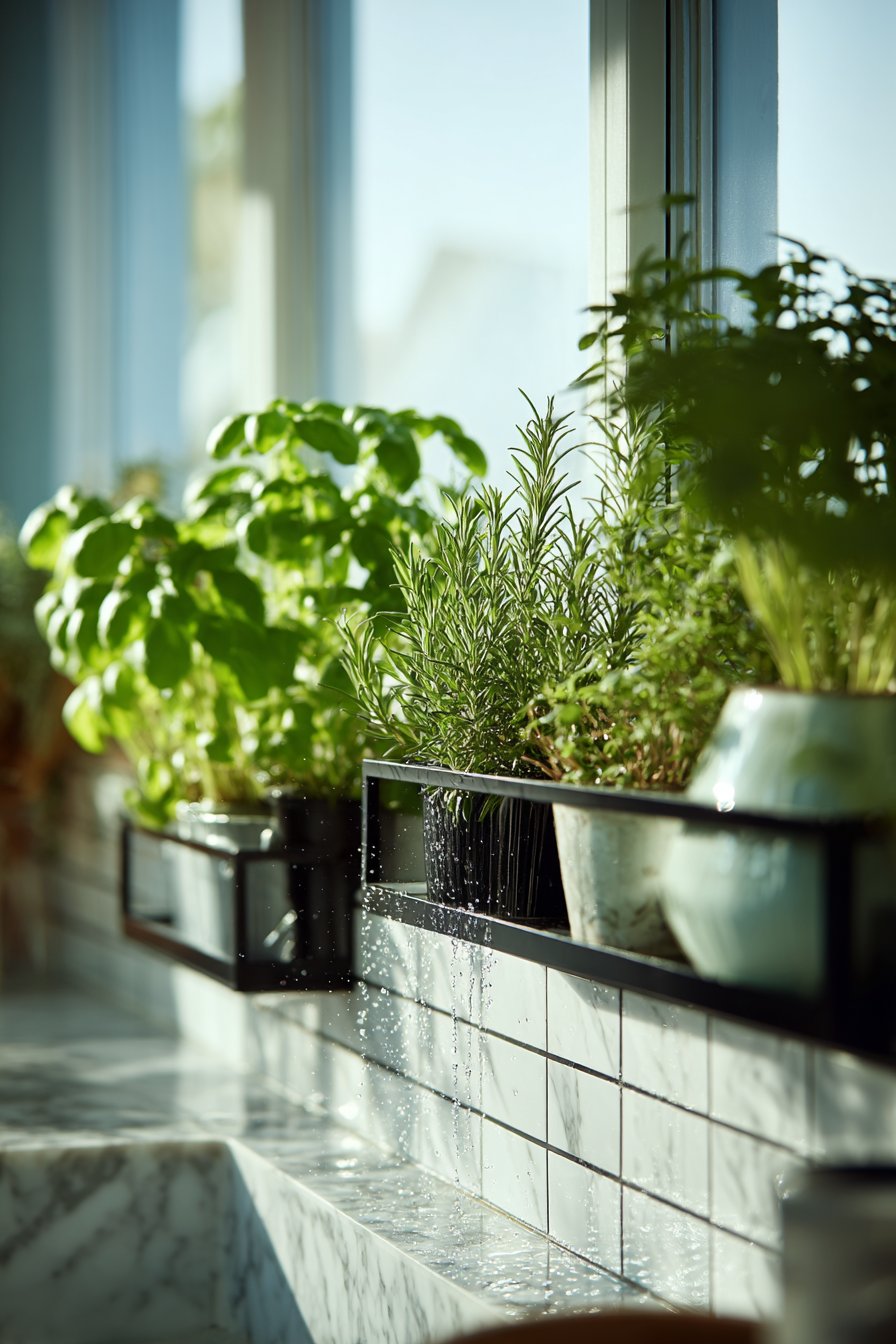
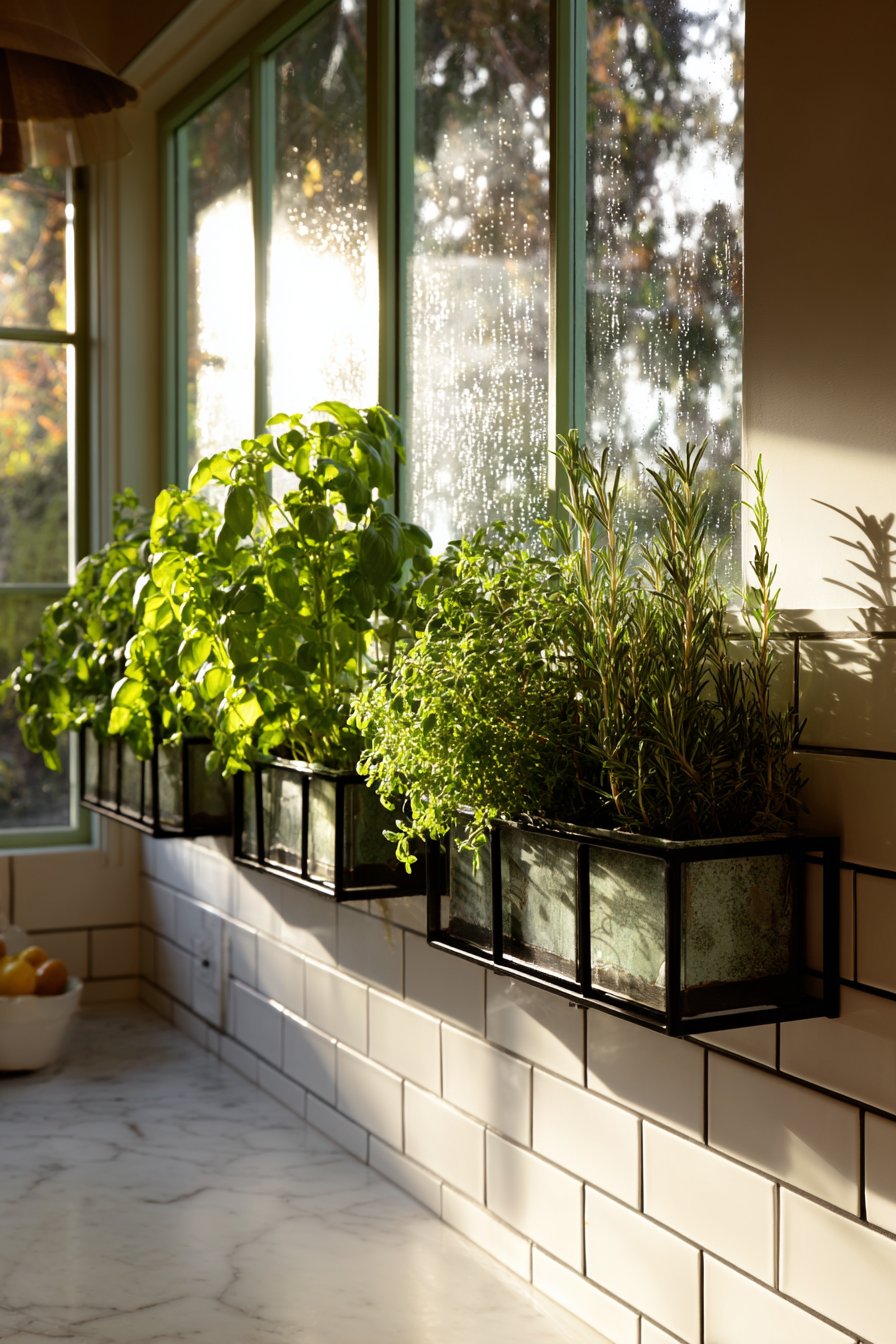
The integration of a vertical herb garden into a modern kitchen represents one of the most practical and aesthetically pleasing applications of green wall ideas. This design features wall-mounted planters crafted from matte black metal frames, creating a striking contrast against white subway tile backsplash while holding fresh culinary herbs like basil, mint, rosemary, and thyme. Positioned strategically above marble countertops near a large window, this living wall serves a dual purpose—providing fresh ingredients for cooking while infusing the space with vibrant greenery and natural fragrance.
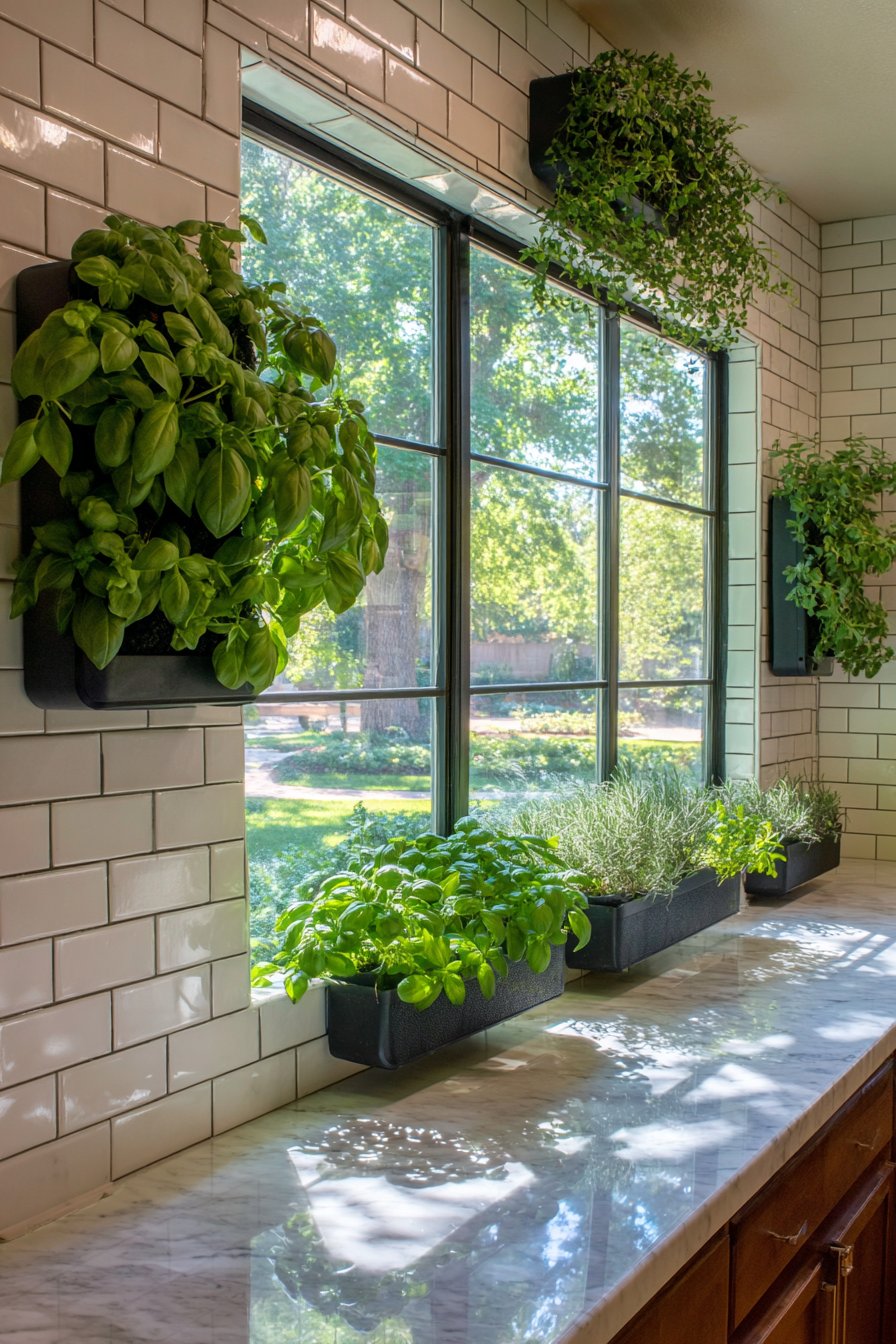
The practical benefits of this design extend beyond mere aesthetics. Having herbs within arm’s reach transforms daily cooking routines, encouraging the use of fresh ingredients and reducing reliance on dried alternatives. The morning light streaming through nearby windows nourishes the plants naturally, while the occasional water droplets on the leaves add an authentic touch of freshness that brings the space to life. The vertical arrangement maximizes limited counter space, making this solution particularly valuable in urban kitchens where every square inch counts.
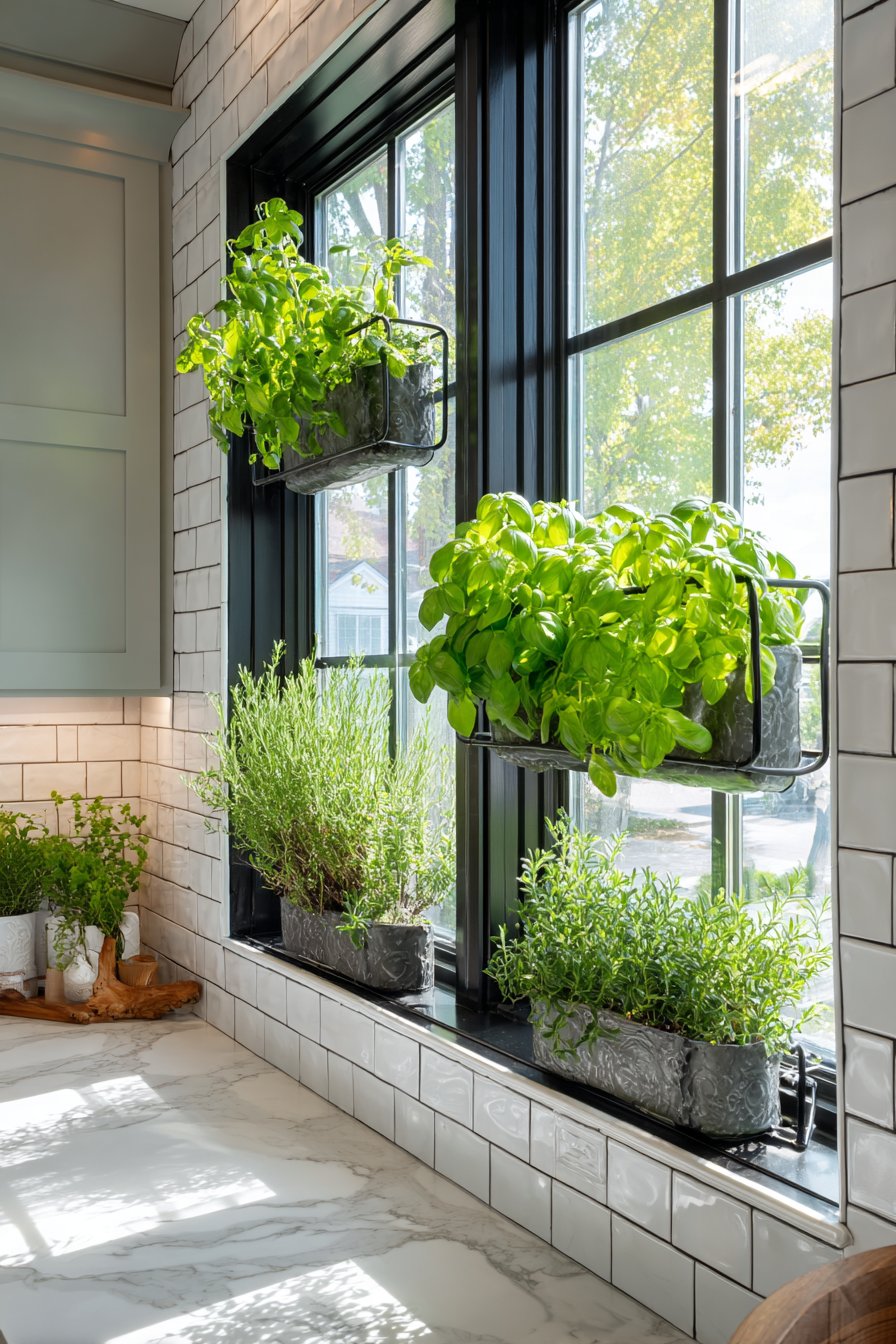
The visual appeal of this green wall concept lies in its balance between functionality and beauty. The varied textures of different herb varieties—from the delicate leaves of basil to the needle-like structure of rosemary—create natural visual interest throughout the seasons. The matte black metal frames provide industrial elegance that complements contemporary kitchen design, while the marble countertop below adds a touch of luxury that elevates the entire composition. This combination of practical utility and refined aesthetics makes the kitchen herb wall an ideal starting point for those new to green wall concepts.
Key Design Tips:
- Select herbs that match your cooking habits and regional growing conditions for optimal success
- Install the planters at eye level for easy access and maintenance visibility
- Incorporate a small drip tray system to protect countertops from water damage
- Group herbs with similar water and light requirements together for simplified care
- Consider adding subtle grow lights for kitchens with limited natural sunlight
2. Preserved Moss Wall Reading Nook
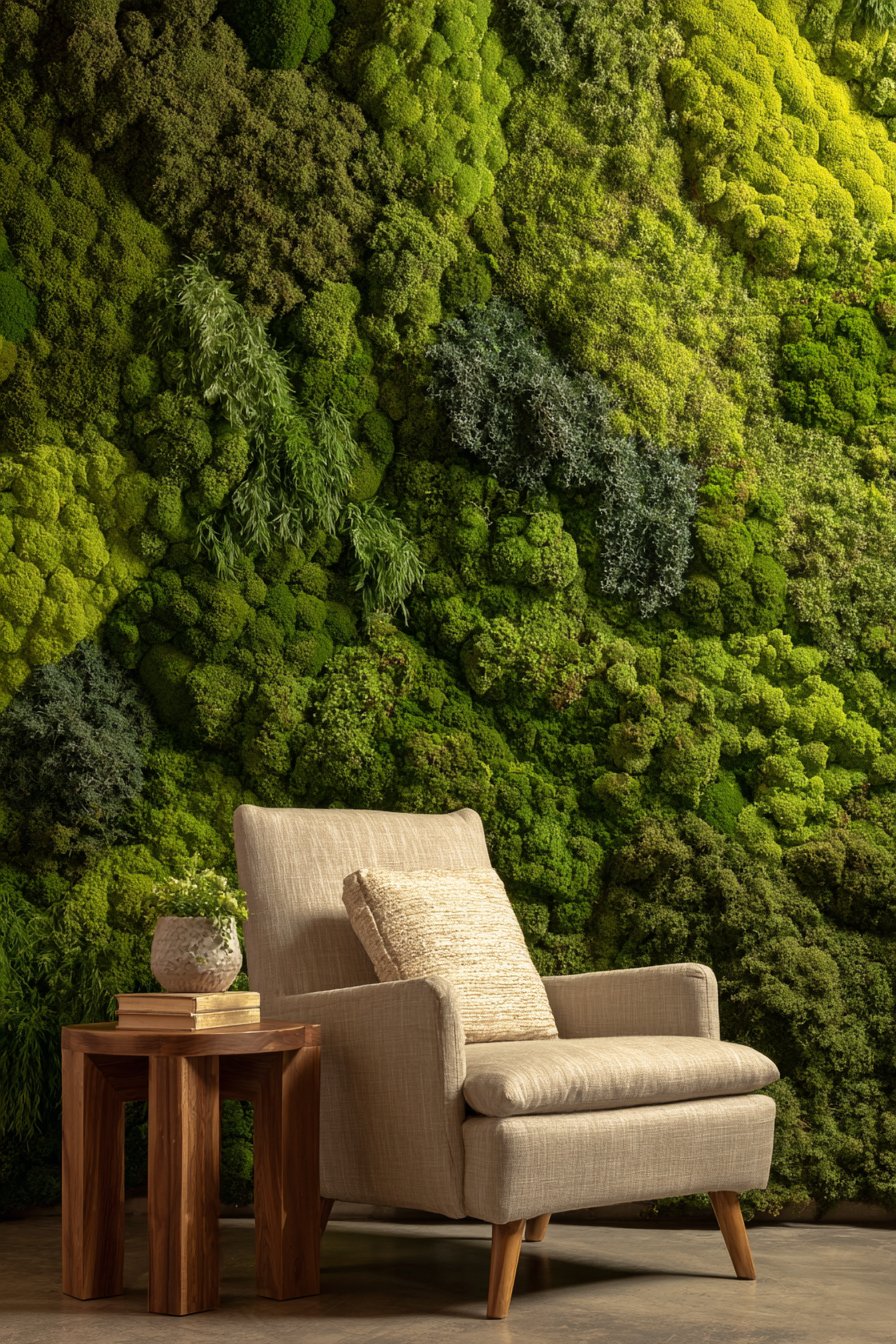
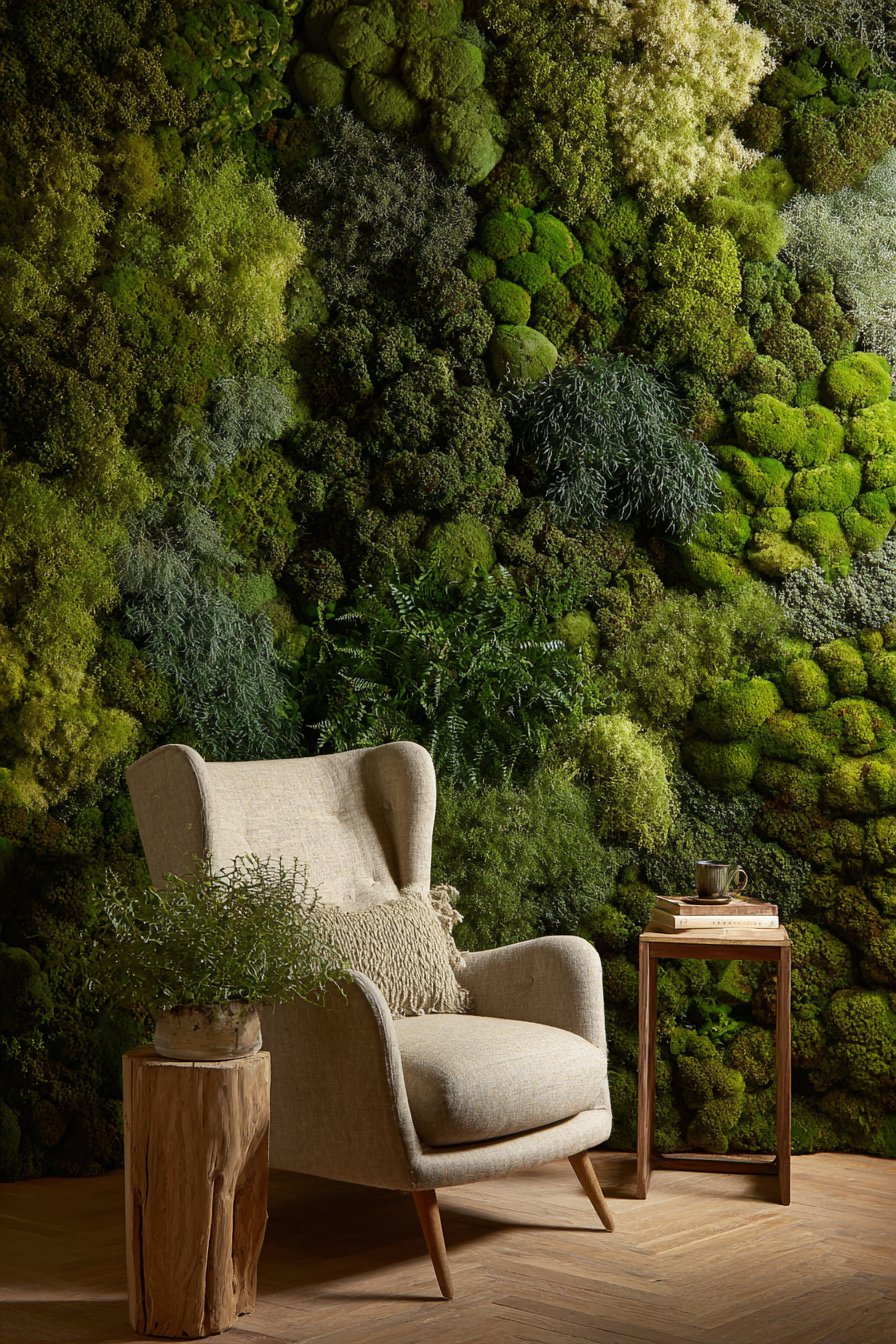
Creating a tranquil reading sanctuary through the use of preserved moss wall panels demonstrates the meditative potential of green wall ideas. This design showcases a carefully curated moss installation featuring varied textures including reindeer moss, sheet moss, and forest moss, all maintained in natural green tones that evoke the forest floor. The moss wall serves as a calming backdrop behind a comfortable linen armchair and small wooden side table, establishing a intimate corner dedicated to relaxation and literary escape.
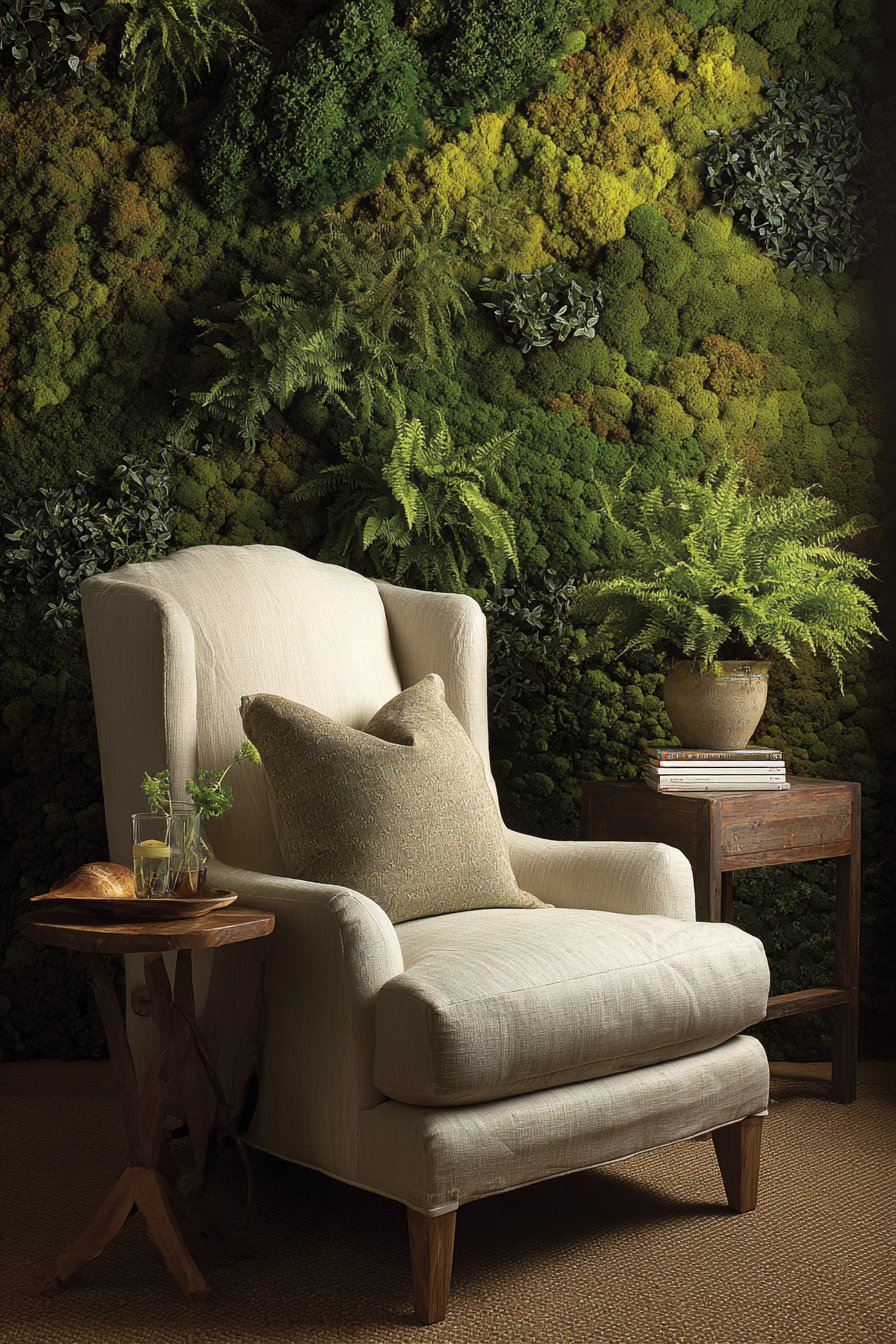
Preserved moss offers unique advantages over living plant walls, requiring no watering, sunlight, or ongoing maintenance while retaining the organic texture and visual appeal of natural greenery. The three-dimensional quality of the moss creates subtle shadows and depth that shift with changing light throughout the day, providing gentle visual stimulation without overwhelming the senses. Natural imperfections in the moss texture—variations in color, density, and form—contribute to the authentic, organic character that makes this green wall feel genuinely connected to nature rather than artificially constructed.
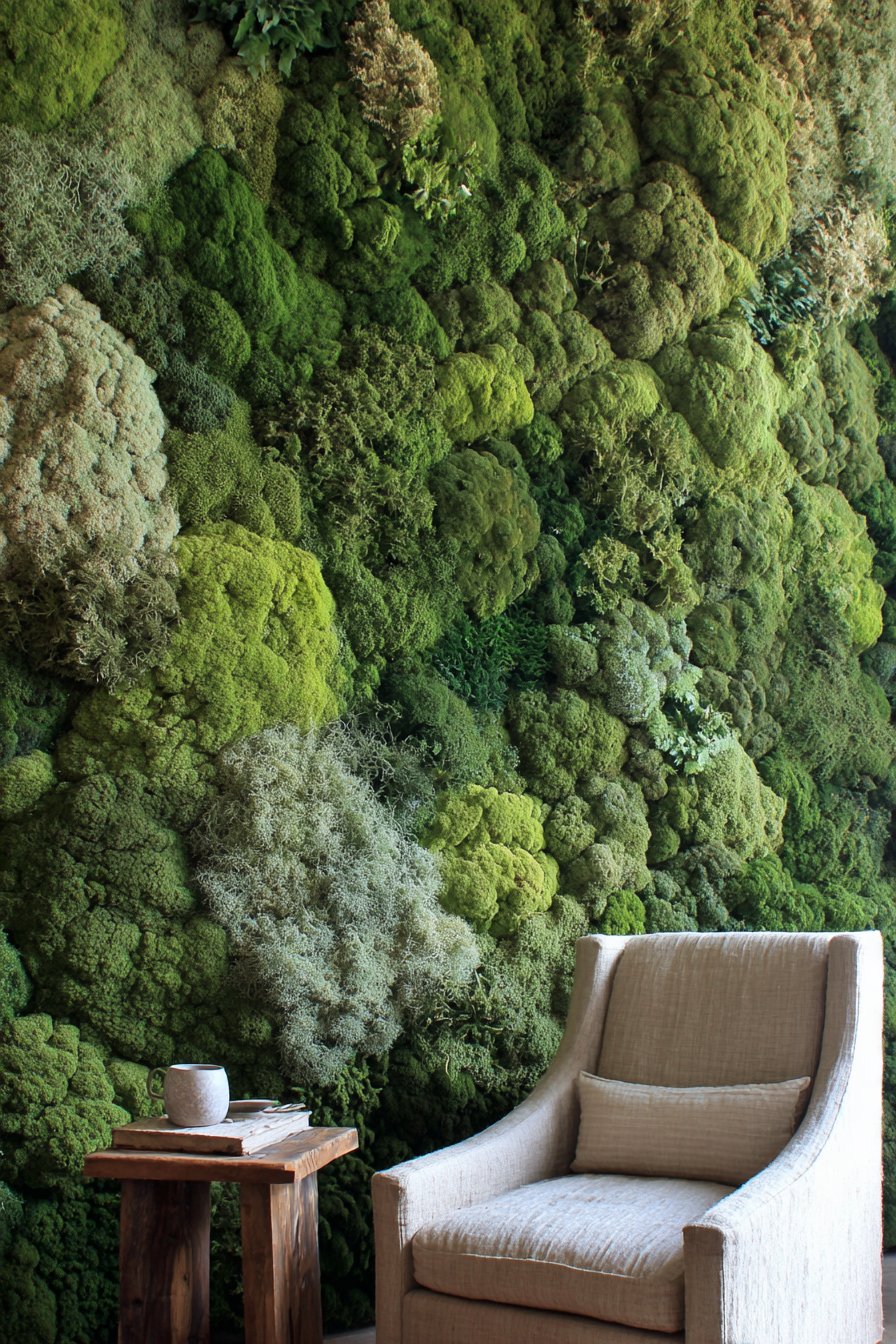
The psychological impact of this design cannot be overstated. Research in environmental psychology has consistently shown that exposure to natural elements, even in preserved form, reduces stress and promotes mental well-being. In a reading nook, where the goal is to create a peaceful escape from daily pressures, the moss wall becomes more than decoration—it transforms into a therapeutic element that enhances the entire experience. The tactile quality of the moss, visible even from a distance, invites a sense of calm that complements the quiet activity of reading.
Key Design Tips:
- Choose preserved moss over living moss for reading areas to eliminate moisture concerns near books
- Mix different moss varieties to create textural depth and visual interest
- Position the reading chair to receive natural light without creating glare on pages
- Select warm-toned wood furniture to complement the earthy green hues of the moss
- Maintain indoor humidity between 40-60% to preserve the moss’s texture and appearance
3. Scandinavian Bathroom Living Fern Wall
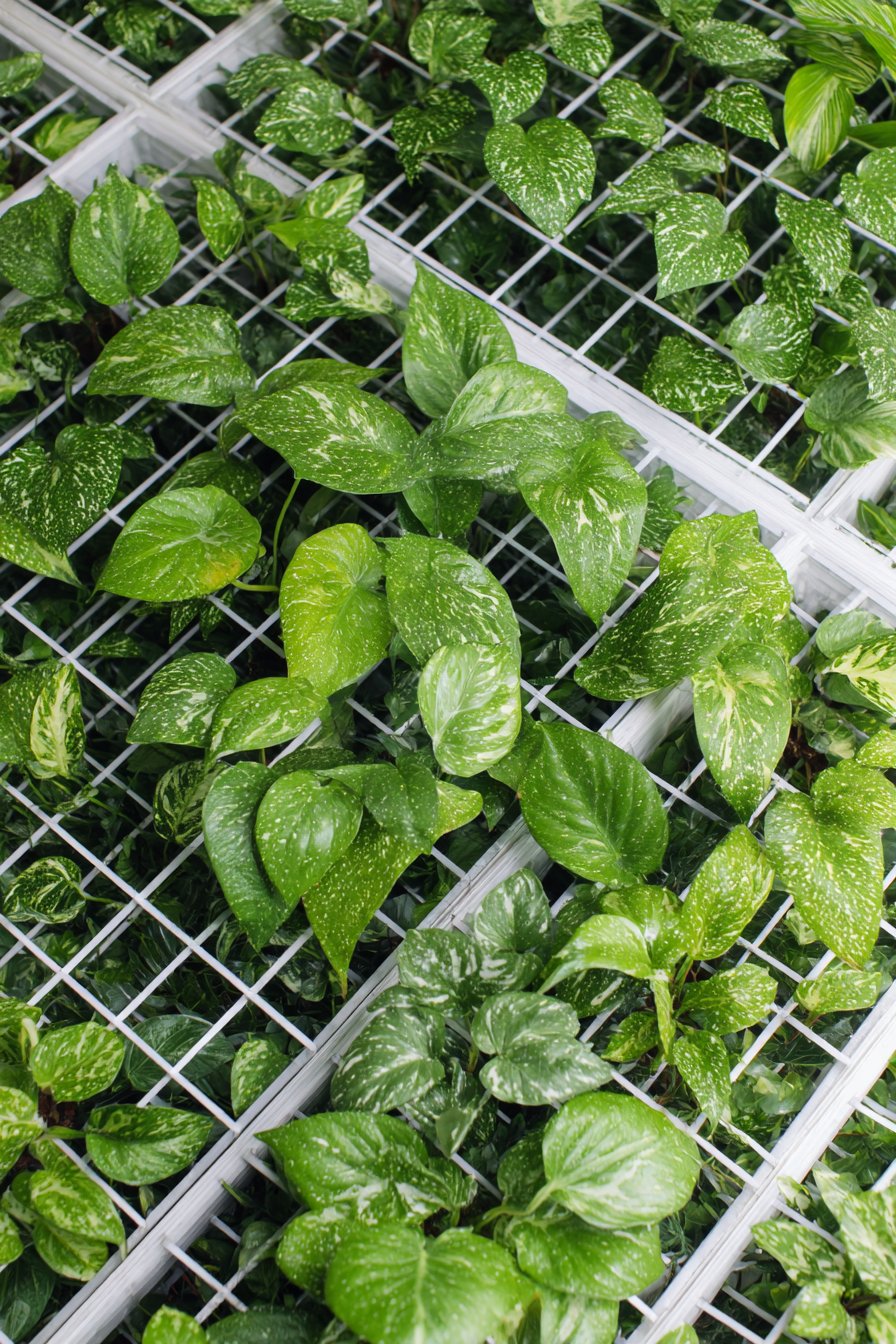
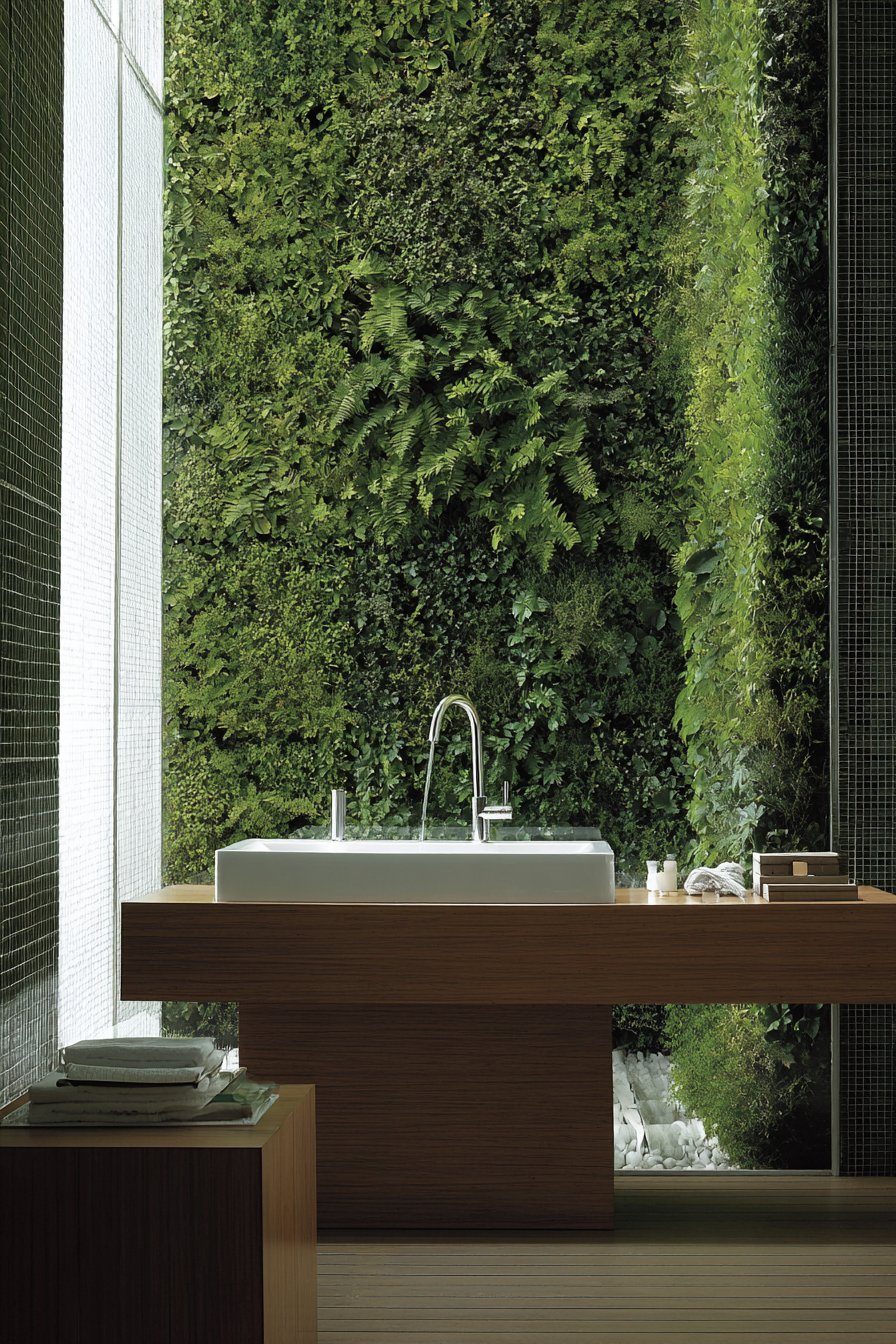
The marriage of Scandinavian design principles with living plant installations creates a bathroom sanctuary that exemplifies both form and function. This green wall concept features a small but impactful living wall installation showcasing moisture-loving ferns and pothos arranged in a sleek white grid planter system. Mounted above a floating wooden vanity, the installation complements the clean lines and natural materials characteristic of Nordic design while introducing the organic vitality of living plants into a space often dominated by hard, reflective surfaces.
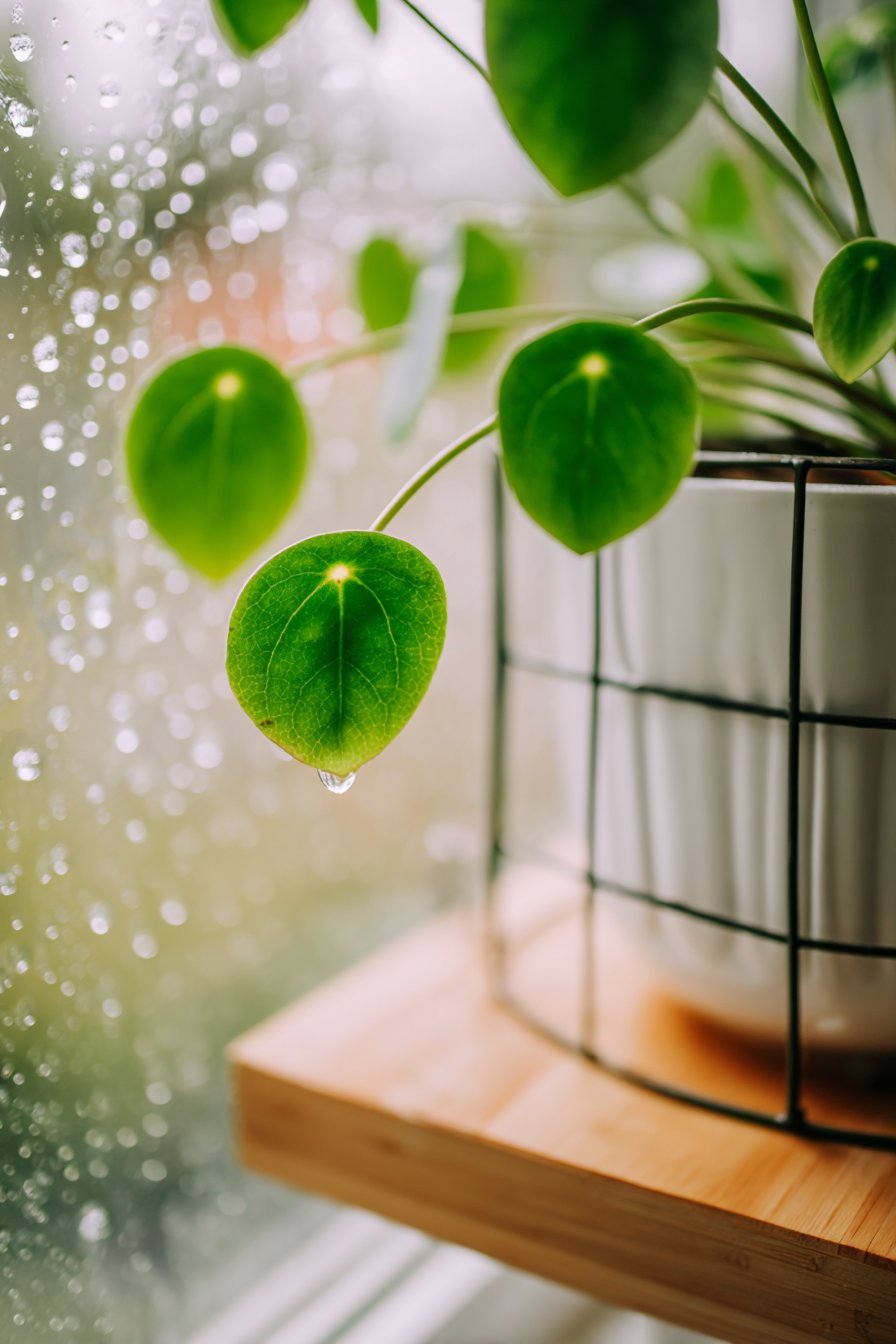
Bathrooms provide ideal growing conditions for specific plant varieties, with their naturally humid environments mimicking tropical conditions that many popular houseplants crave. The selection of ferns and pothos for this installation is strategic—these plants thrive in the consistent moisture and moderate light levels typical of bathroom spaces. The soft diffused light filtering through a frosted window provides adequate illumination for photosynthesis while maintaining privacy, creating a spa-like atmosphere that transforms daily hygiene routines into moments of rejuvenation.

The visual composition balances the organic chaos of living plants with the geometric precision of Scandinavian design. The white grid planter system provides structure and order, creating individual pockets for each plant while presenting them as a cohesive whole. Water droplets catching light on glossy leaves add sparkle and movement to the static bathroom fixtures, while the varied green foliage softens the angular architecture. The floating wooden vanity grounds the design, its horizontal lines providing visual stability that contrasts beautifully with the vertical orientation of the living wall.
Key Design Tips:
- Install a self-watering system or ensure easy access for manual watering maintenance
- Select plants specifically suited to bathroom humidity levels, avoiding varieties prone to root rot
- Position the living wall away from direct shower spray while maintaining proximity for humidity benefits
- Incorporate LED grow lights beneath upper cabinets if natural light is insufficient
- Rotate plants quarterly to ensure even growth and prevent one-sided development
4. Minimalist Home Office Modular Green Wall
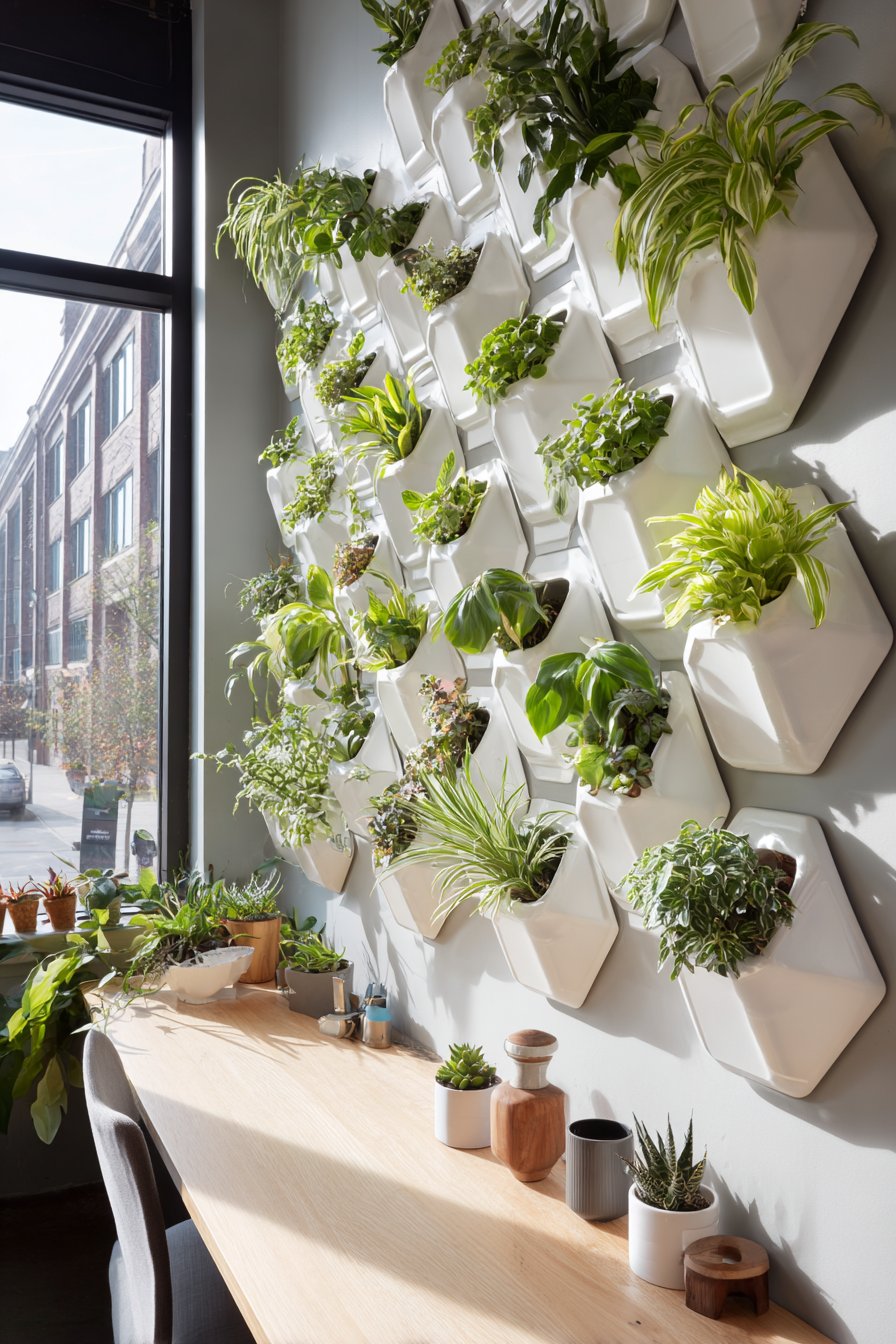
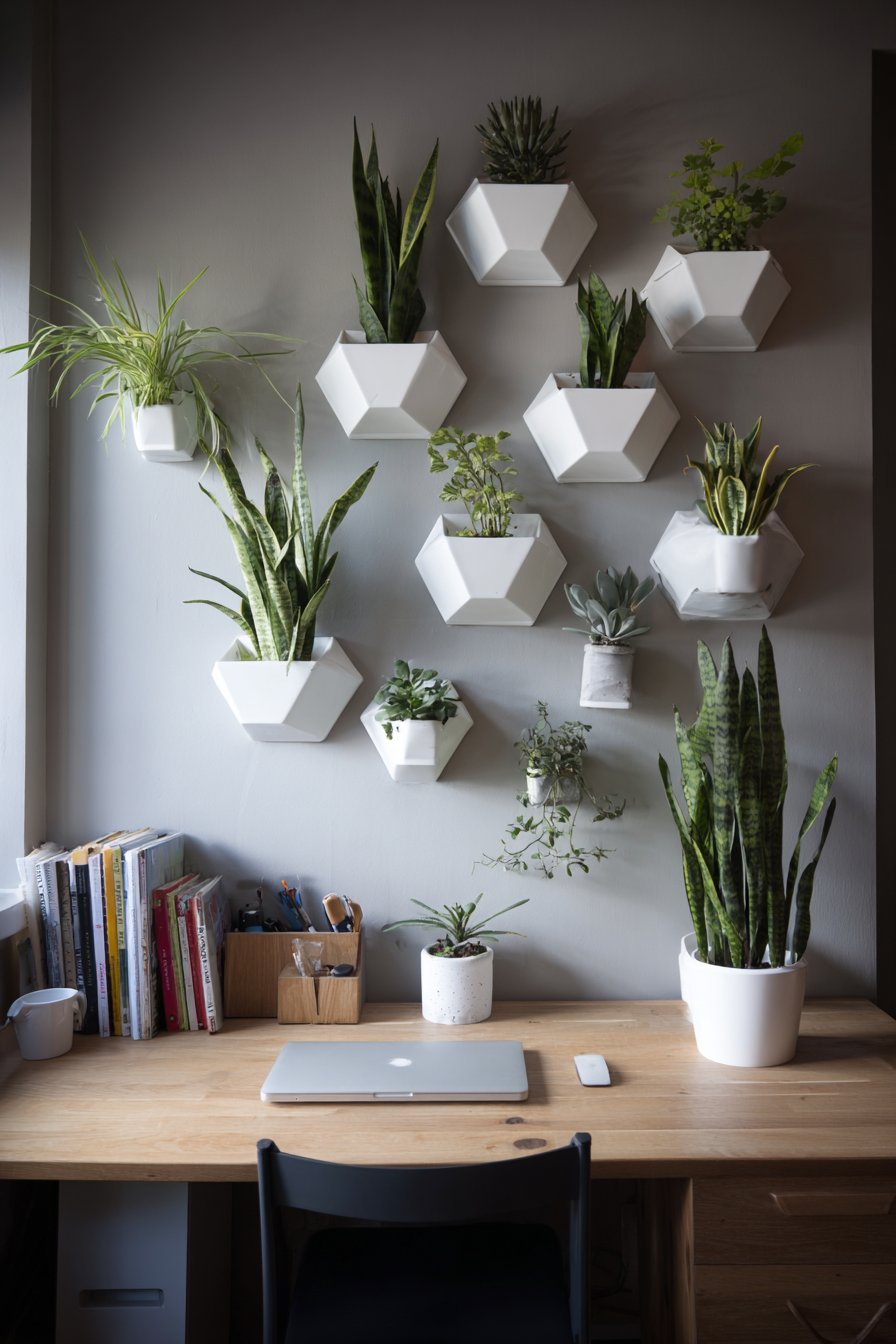
Contemporary home office design increasingly recognizes the importance of biophilic elements in maintaining focus and reducing workplace stress. This green wall concept features a modular living wall system displaying easy-care plants like snake plants, ZZ plants, and philodendrons arranged in geometric wall-mounted planters. The installation adds life to a neutral gray backdrop behind a simple desk setup, demonstrating how green walls can transform functional workspaces into environments that support both productivity and well-being.
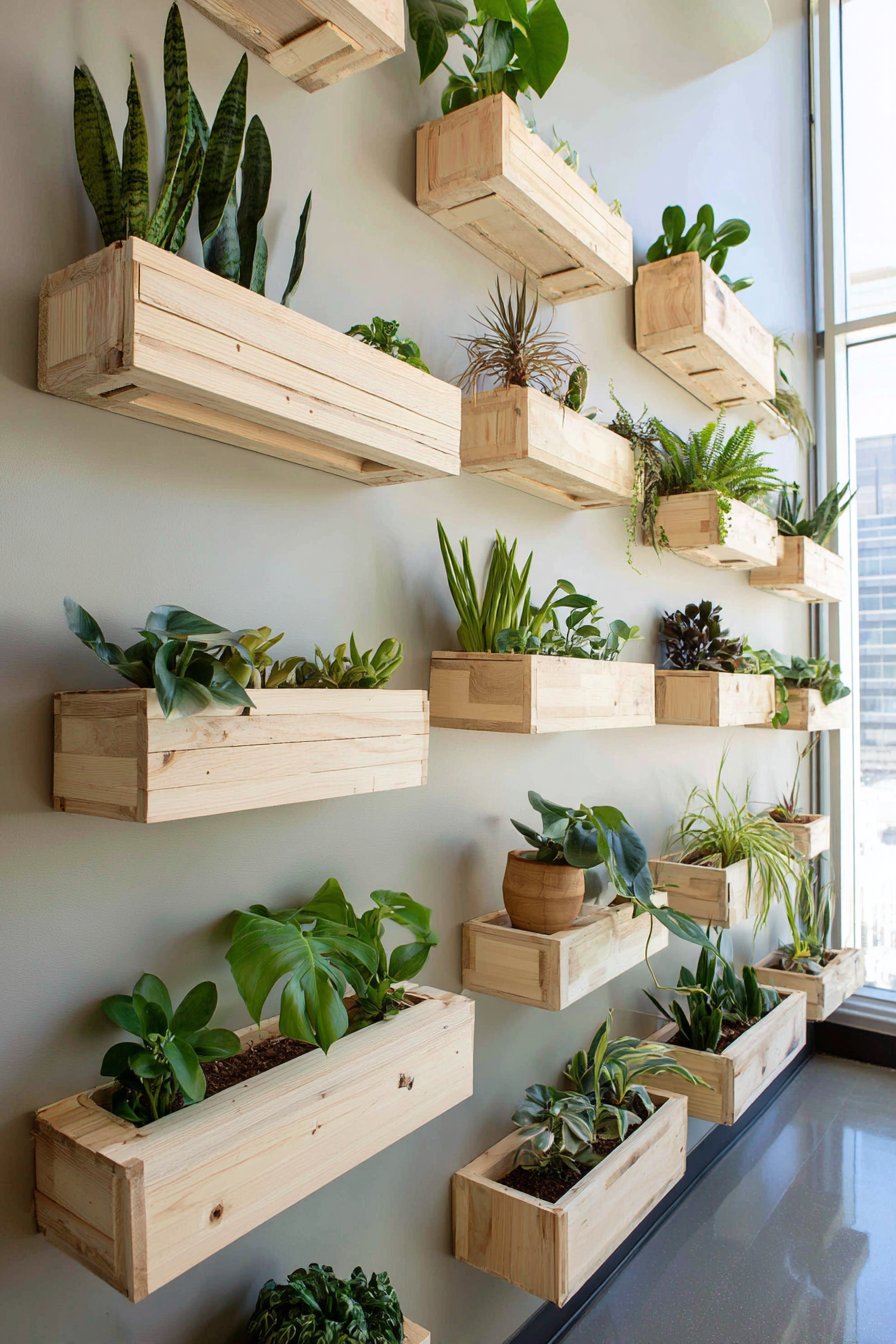
The selection of low-maintenance plant varieties is particularly crucial in office settings where work demands may occasionally override plant care schedules. Snake plants and ZZ plants are remarkably forgiving, tolerating irregular watering and lower light conditions while maintaining their architectural presence. Philodendrons offer trailing elements that soften the geometric precision of the planter arrangement, creating visual interest without requiring extensive maintenance. This combination ensures that the green wall remains an asset rather than becoming a source of stress or guilt.
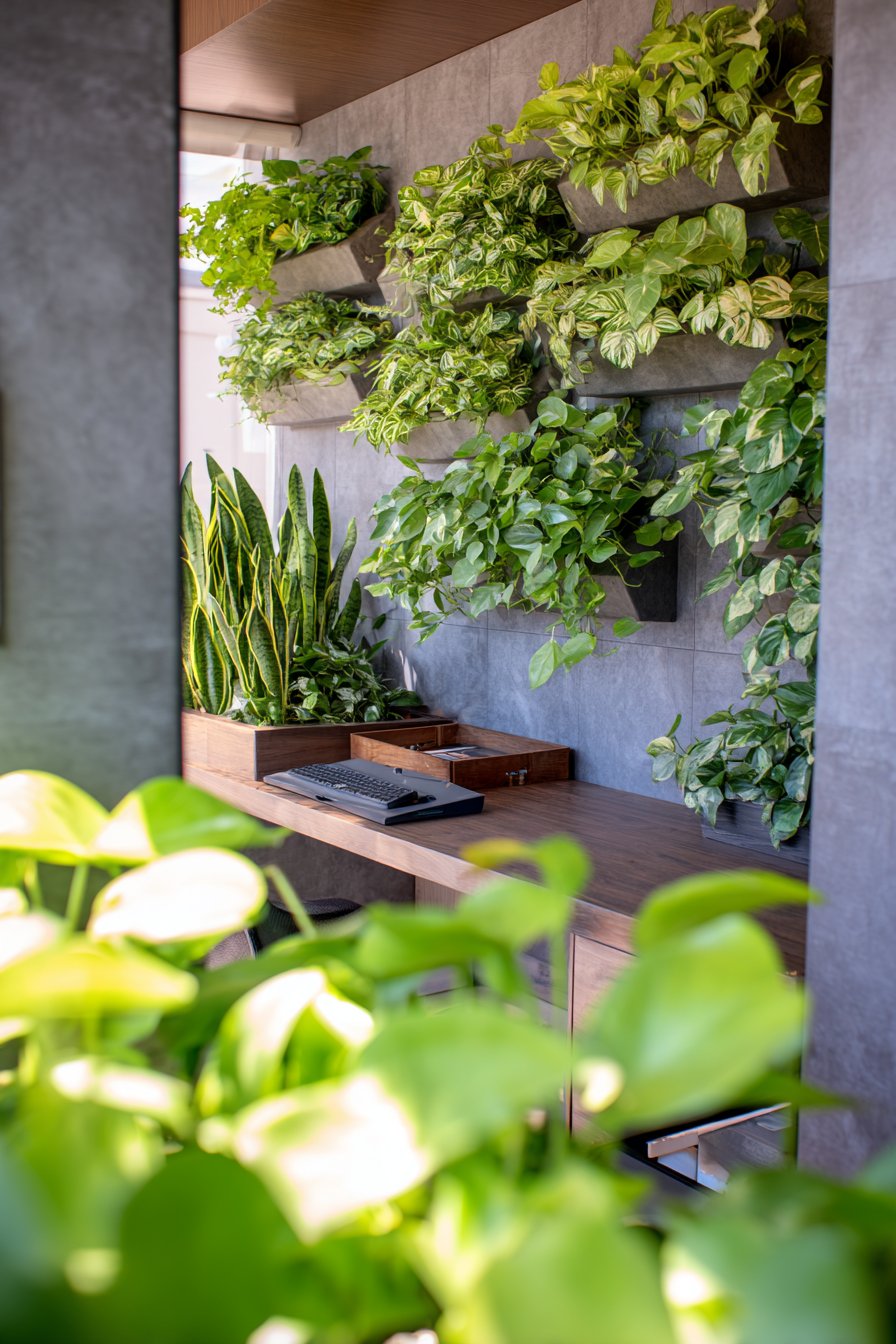
The psychological benefits of incorporating living plants into workspace design have been extensively documented in workplace psychology research. Studies consistently demonstrate that workers with access to natural elements report higher job satisfaction, improved concentration, and reduced stress levels. The geometric arrangement of planters in this design creates a sense of order and intentionality that resonates with the organized mindset necessary for productive work, while the organic forms of the plants themselves provide visual relief from the angular precision of computer screens and desk equipment.
Key Design Tips:
- Position the green wall within peripheral vision rather than directly behind computer screens to prevent distraction
- Choose plants with minimal shedding to reduce desk cleaning requirements
- Install planters with secure mounting systems rated for the combined weight of containers, soil, and watered plants
- Incorporate natural wood desk accessories to create visual continuity with the organic elements
- Schedule regular watering and maintenance during work breaks to integrate plant care into daily routines
5. Sage Green Painted Bedroom Accent Wall
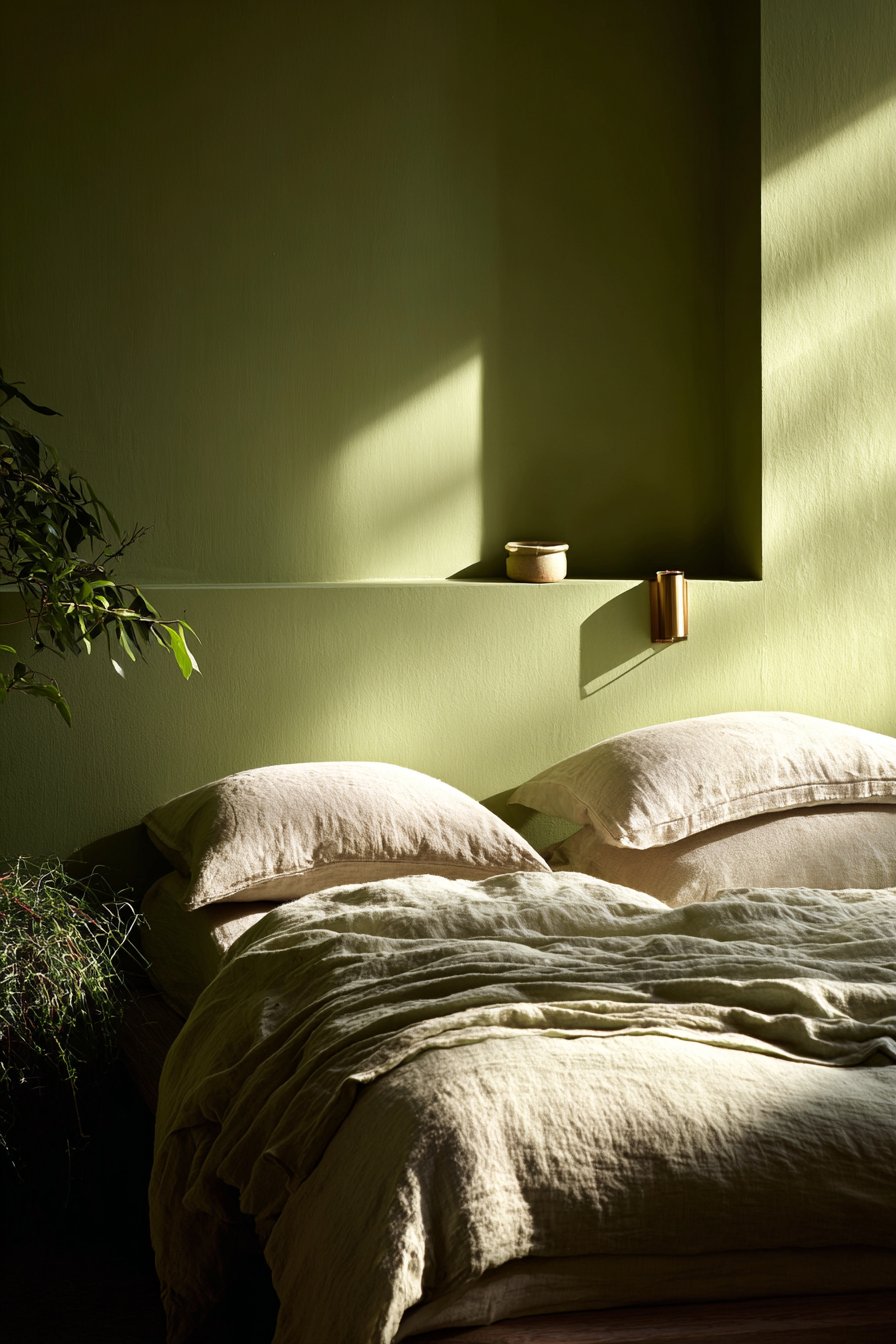
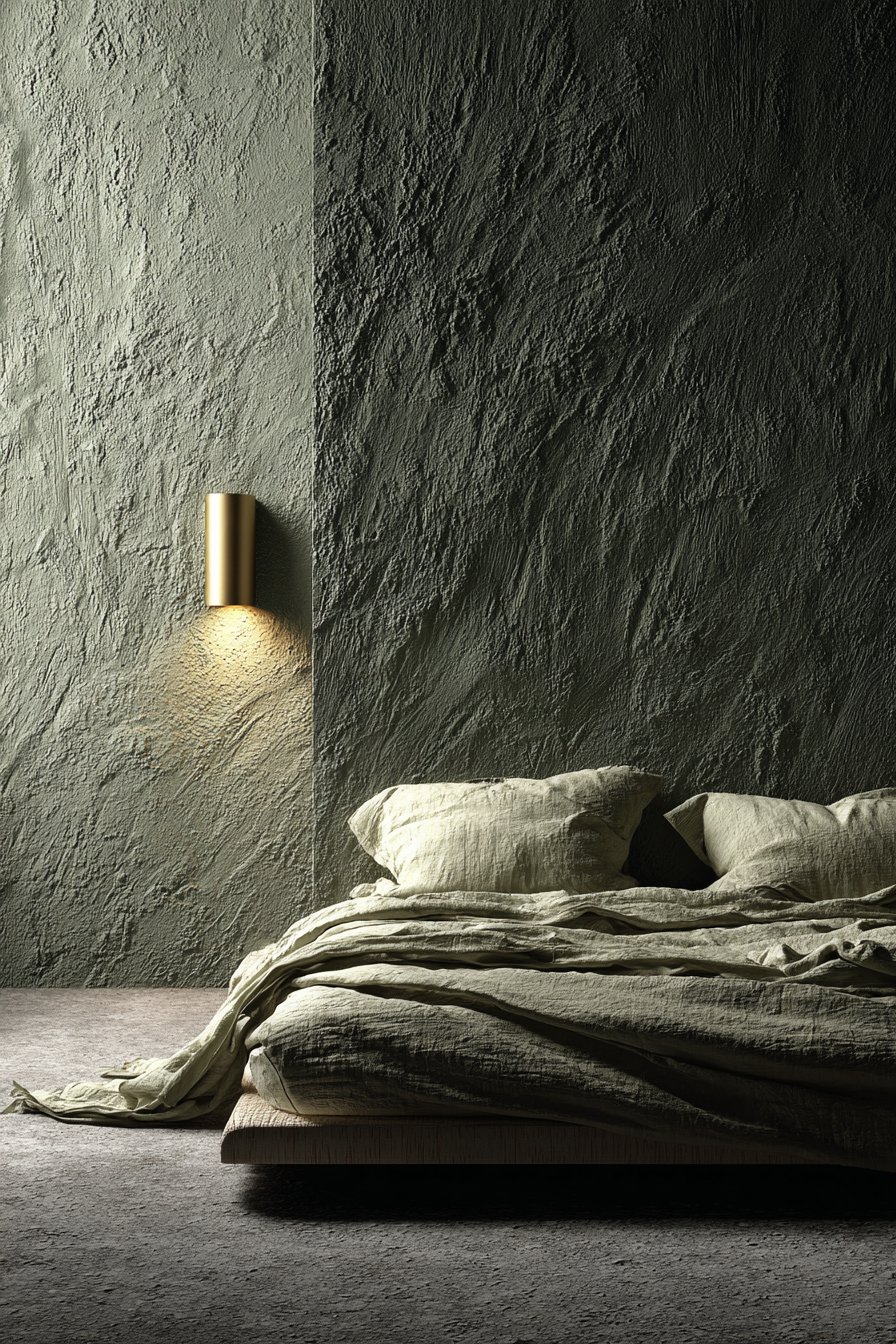
The power of paint to transform a space finds perfect expression in the sage green bedroom accent wall. This design features a rich sage green shade applied with subtle variations in tone, creating a textured matte finish that captures and reflects natural light throughout the day. The painted wall serves as a serene backdrop for a low-profile platform bed dressed in natural linen bedding, with brass wall sconces providing warm ambient lighting that enhances the sophisticated, calming atmosphere essential for restful sleep.
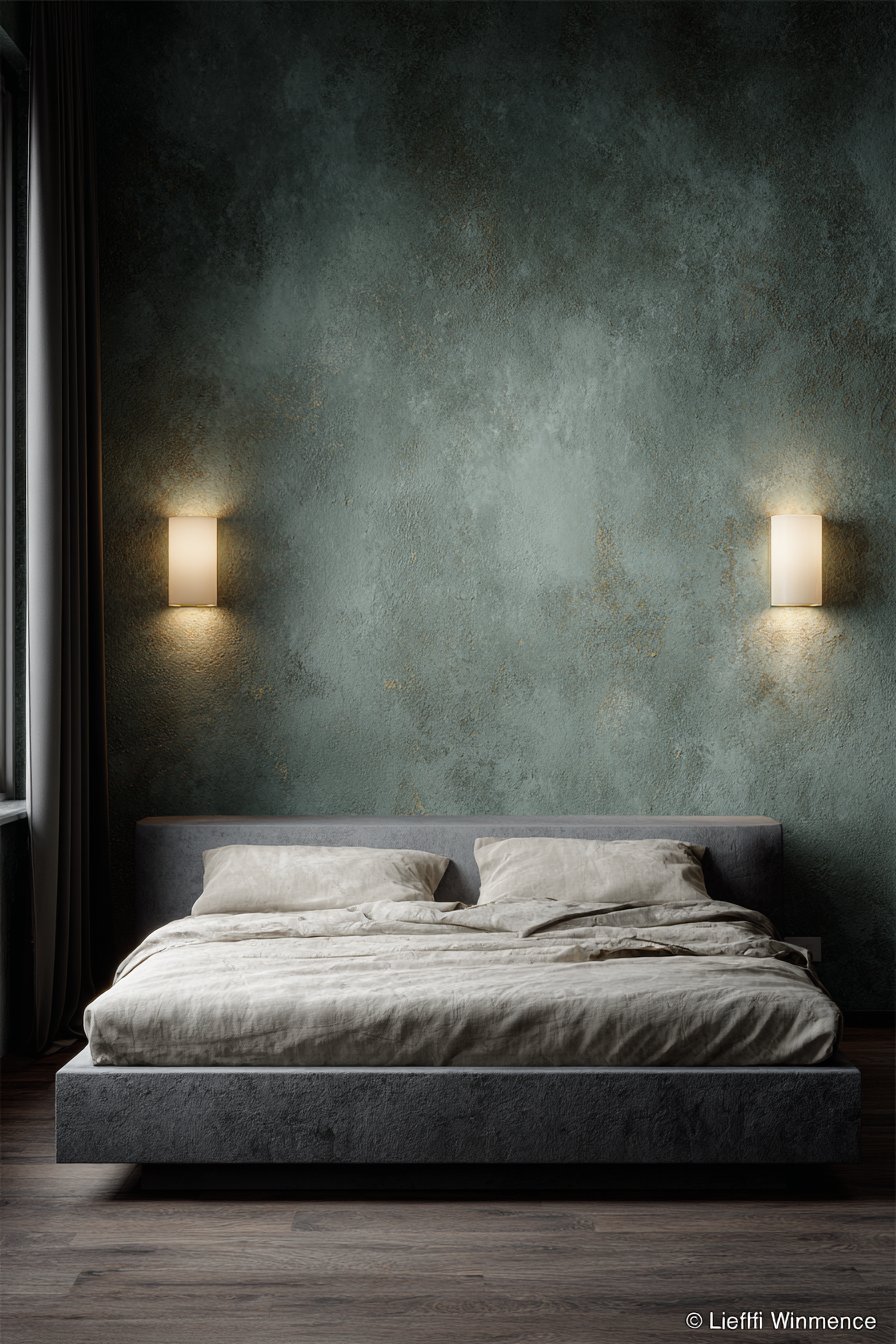
Color psychology plays a crucial role in bedroom design, and sage green occupies a particularly beneficial position on the color spectrum. This muted, natural hue combines the calming properties of blue with the rejuvenating qualities of yellow, resulting in a color that promotes relaxation without feeling cold or sterile. The specific shade selection matters enormously—sage green offers enough depth to create visual interest and anchor the room while remaining light enough to prevent the space from feeling heavy or oppressive. The subtle variations in the painted finish add dimension that prevents the wall from appearing flat or lifeless.
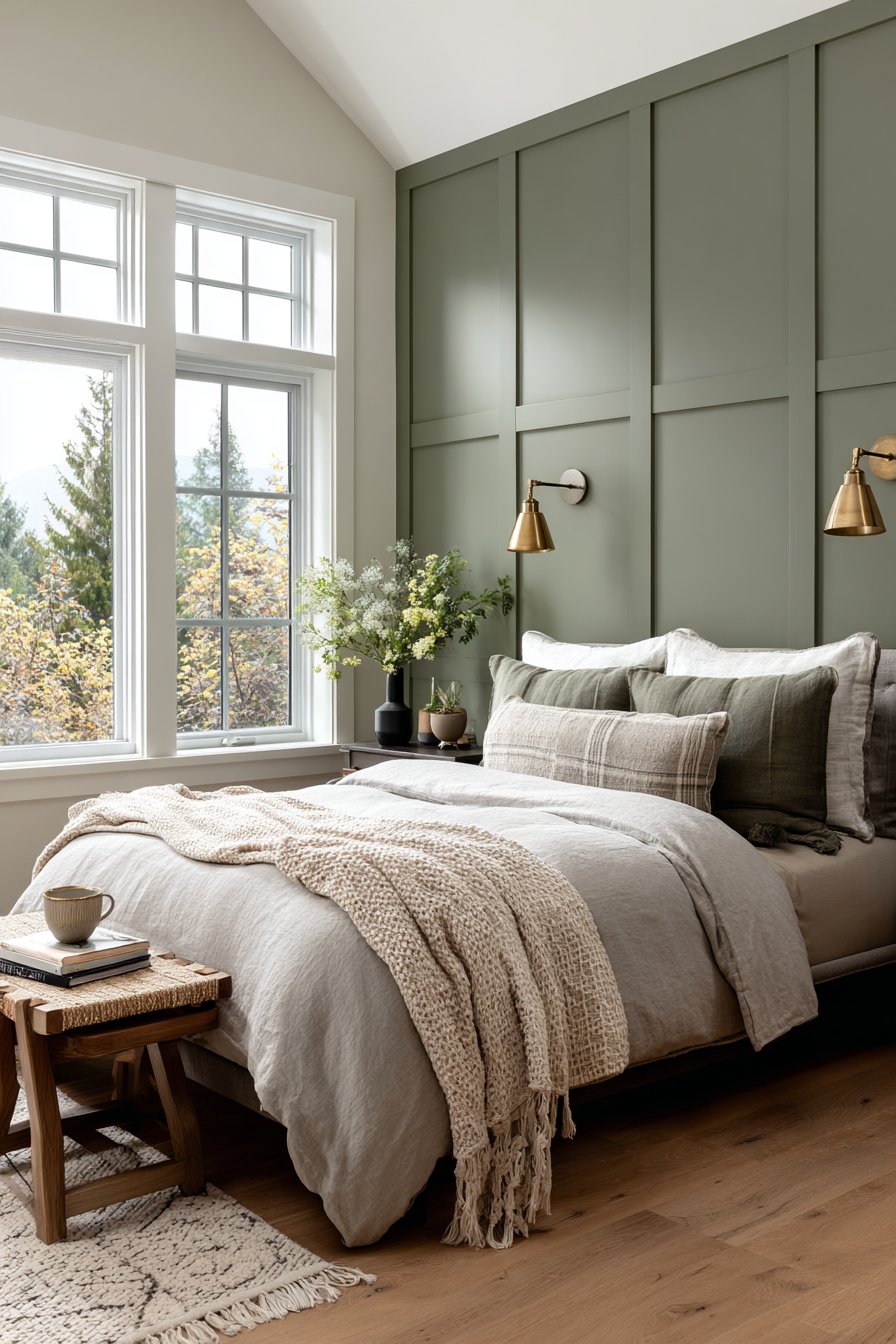
The styling of this space demonstrates thoughtful restraint, allowing the painted wall to shine without competing elements. The low-profile platform bed maintains visual emphasis on the wall itself, while natural linen bedding in complementary neutral tones creates layers of texture without introducing conflicting colors. Brass wall sconces provide both practical task lighting and decorative accent, their warm metallic finish creating beautiful contrast against the cool undertones of the sage green. This careful curation of elements results in a bedroom that feels both intentionally designed and effortlessly comfortable.
Key Design Tips:
- Test paint samples in multiple lighting conditions before committing to ensure the color works throughout the day
- Apply primer specifically formulated for the wall surface to ensure even color application and longevity
- Use matte or eggshell finish rather than gloss to create the soft, sophisticated appearance characteristic of sage green
- Limit additional color introduction to neutrals and natural materials to preserve the calming atmosphere
- Position the painted wall as the headboard backdrop to maximize its visual impact
6. Urban Loft Climbing Vine Installation
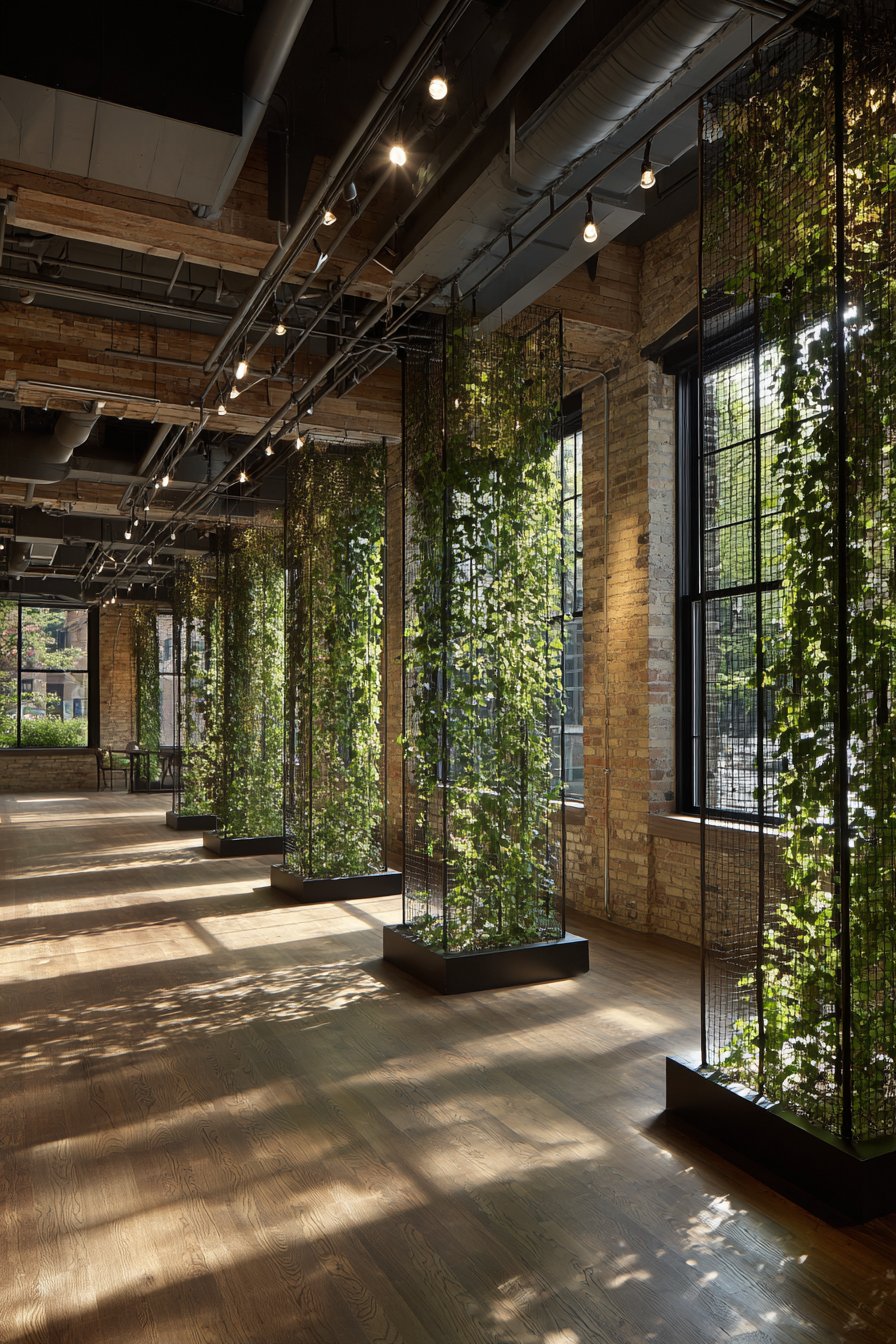
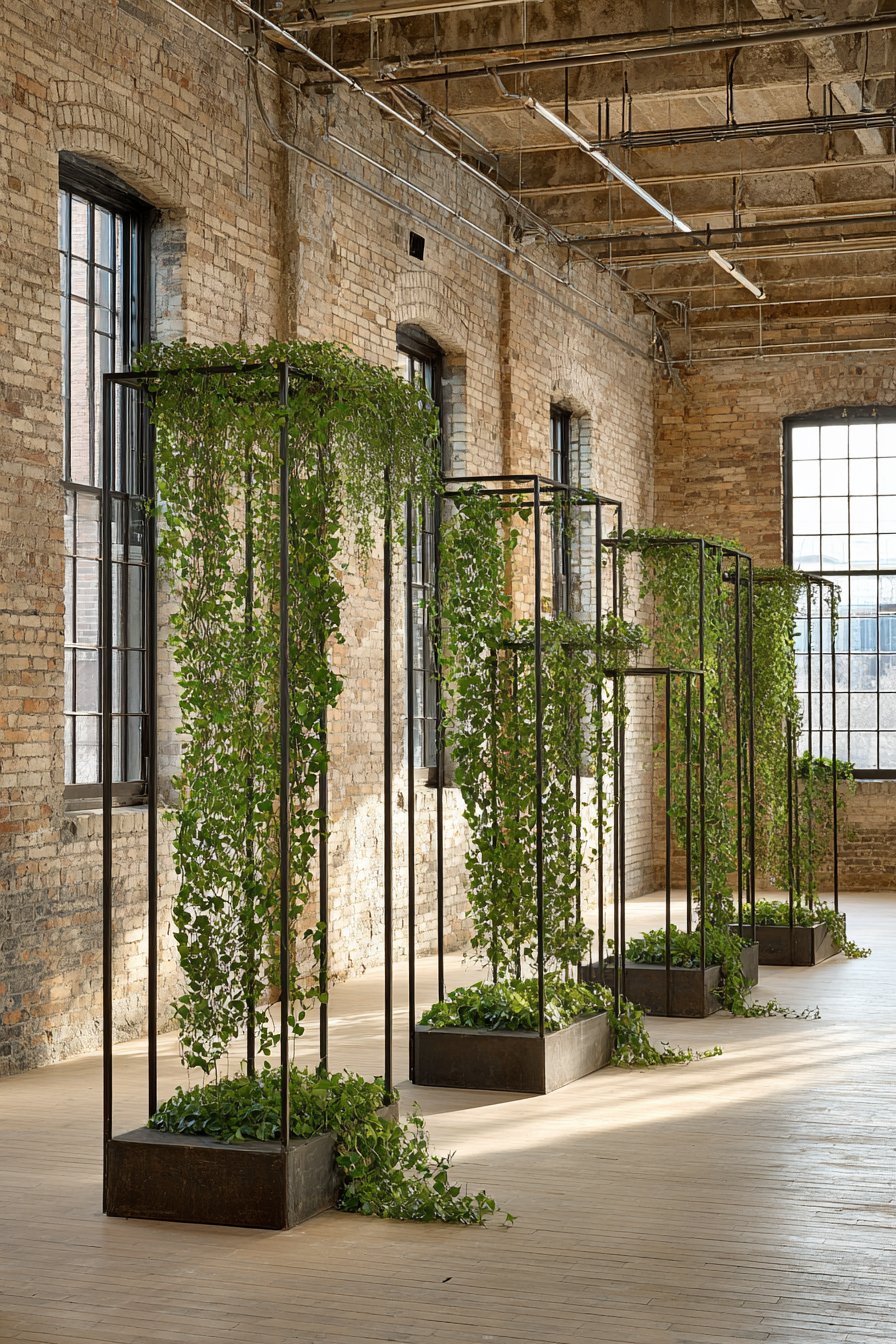
The industrial aesthetic of urban loft spaces finds perfect complement in organic climbing vine installations that soften hard architectural elements. This green wall concept features exposed brick walls partially covered with climbing pothos vines growing from substantial floor planters, creating a natural transition between industrial and biophilic design elements. Metal support structures guide vine growth in intentional patterns, demonstrating how living plants can be trained to enhance rather than obscure architectural features.
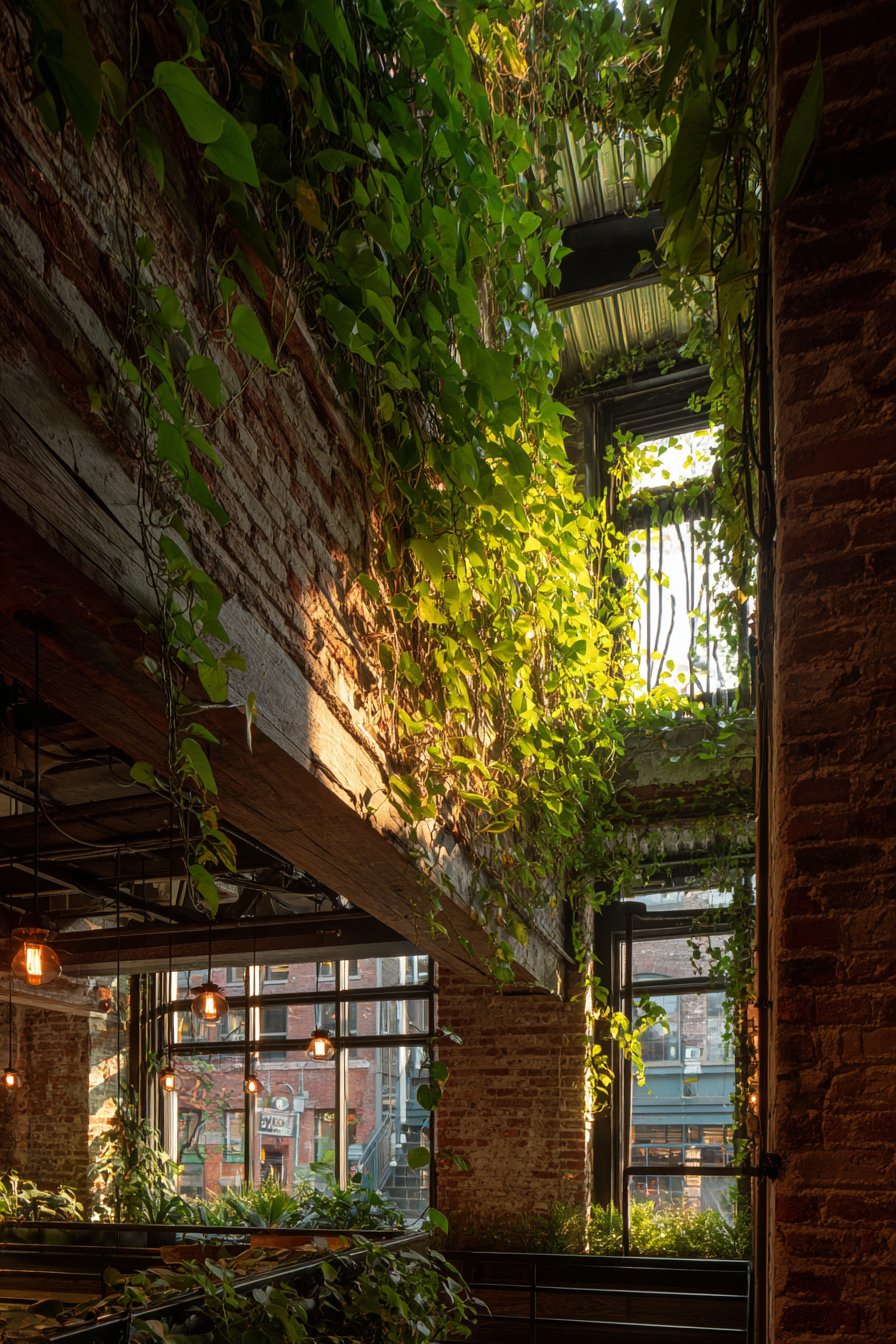
The juxtaposition of living greenery against weathered brick creates compelling visual drama that celebrates both natural and industrial beauty. Afternoon sunlight streaming through tall windows highlights the glossy green leaves against the textured brick surface, creating dynamic shadows that shift throughout the day. This interplay of light and shadow adds temporal dimension to the space, ensuring that the green wall never appears static but instead evolves with the changing quality of natural light. The organic growth patterns of the vines introduce curves and asymmetry into environments otherwise dominated by right angles and straight lines.
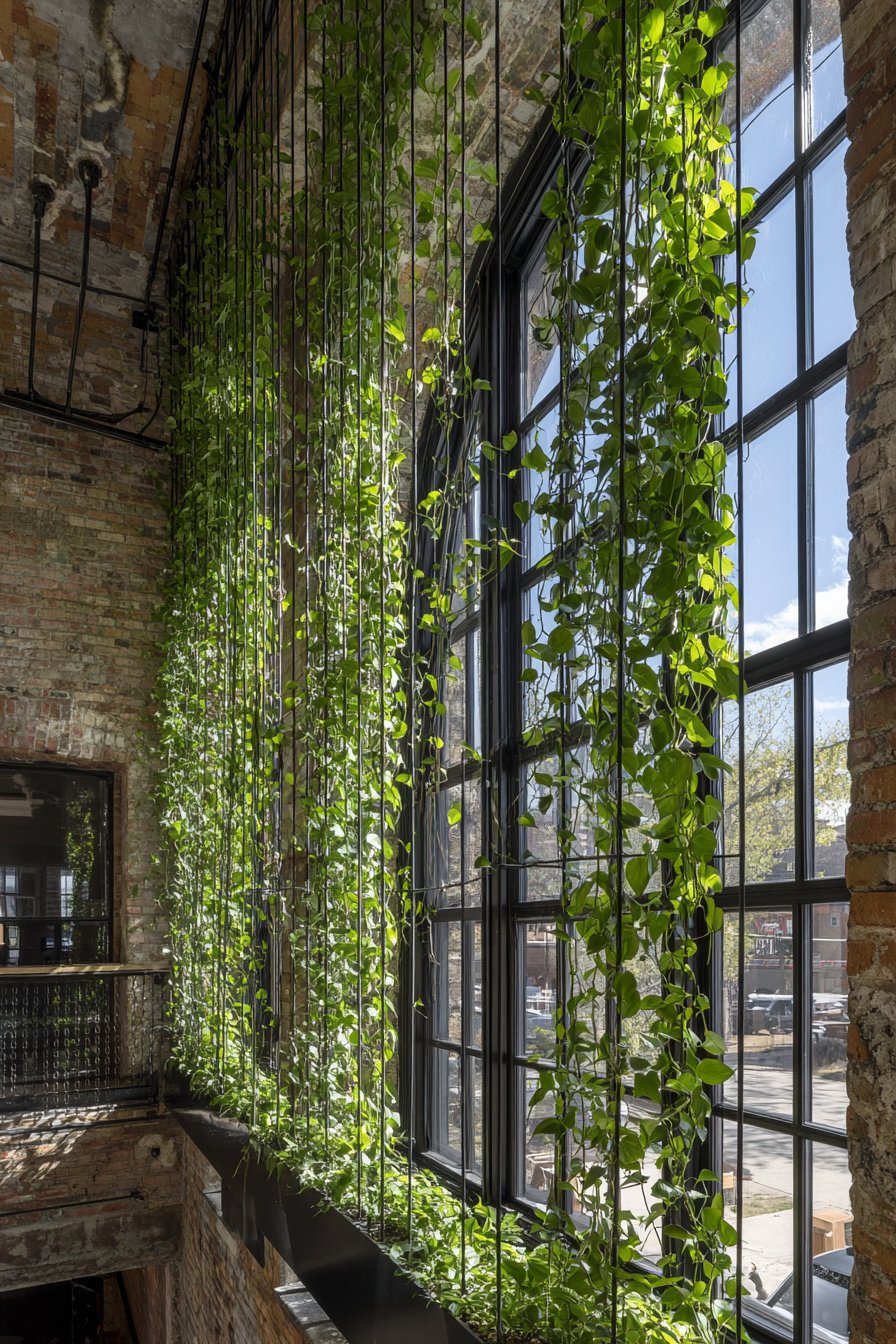
The practical considerations of maintaining climbing vine installations in loft spaces require careful planning. Floor planters must be adequately sized to support significant root systems and provide sufficient soil volume for healthy growth. The metal support structures serve multiple functions—they guide initial growth patterns, prevent damage to walls and mortar, and create architectural interest even before plants reach full maturity. Regular pruning maintains the intended aesthetic and prevents overgrowth that could overwhelm the space or damage building materials.
Key Design Tips:
- Select climbing varieties suited to indoor light levels, with pothos being particularly forgiving in lower light
- Install moisture barriers between planters and flooring to prevent water damage
- Create clear pruning plans to maintain growth within desired boundaries
- Position support structures before planting to minimize root disturbance during installation
- Consider installing subtle grow lights to supplement natural light and ensure even growth patterns
7. Apartment Balcony Tiered Vertical Garden
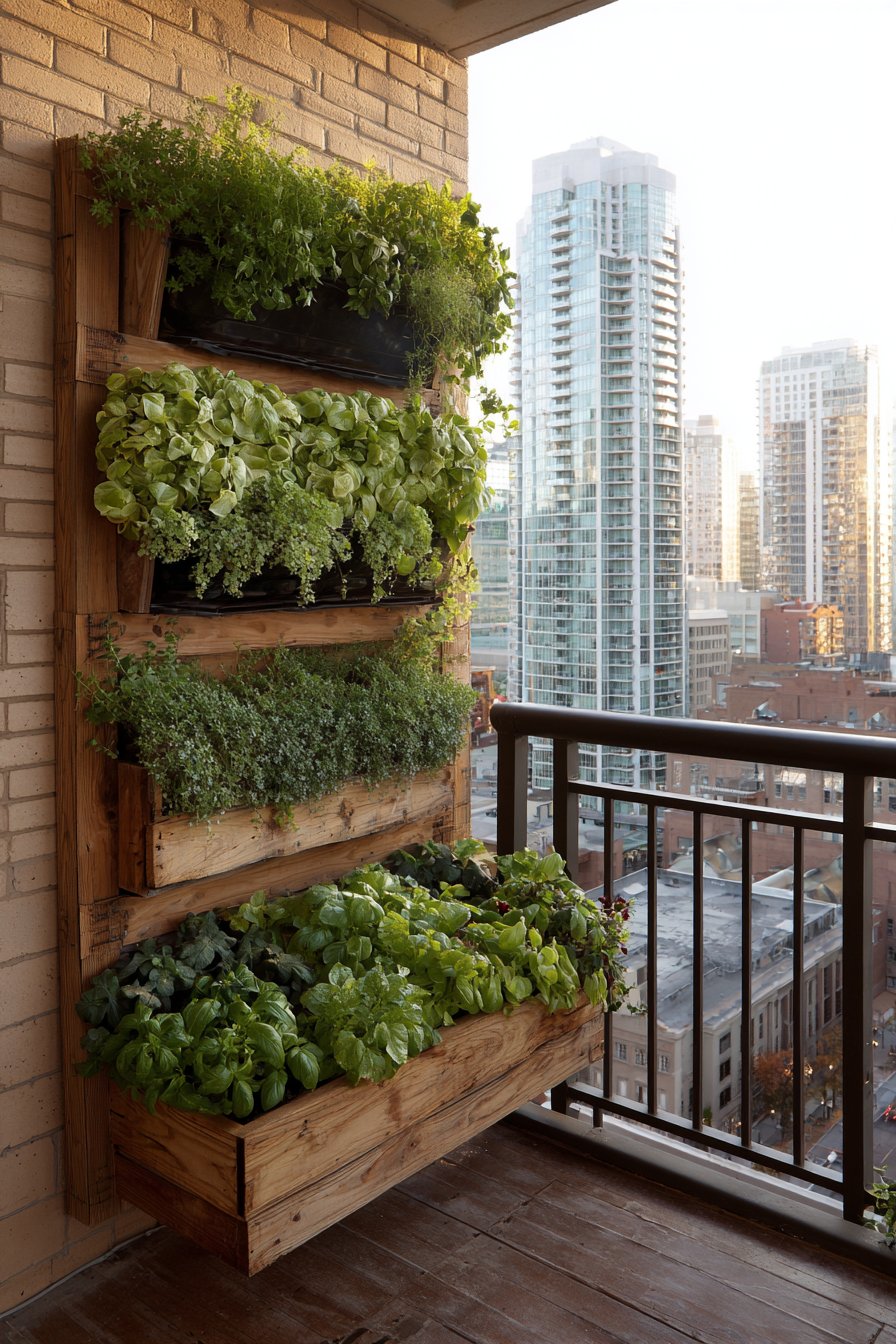
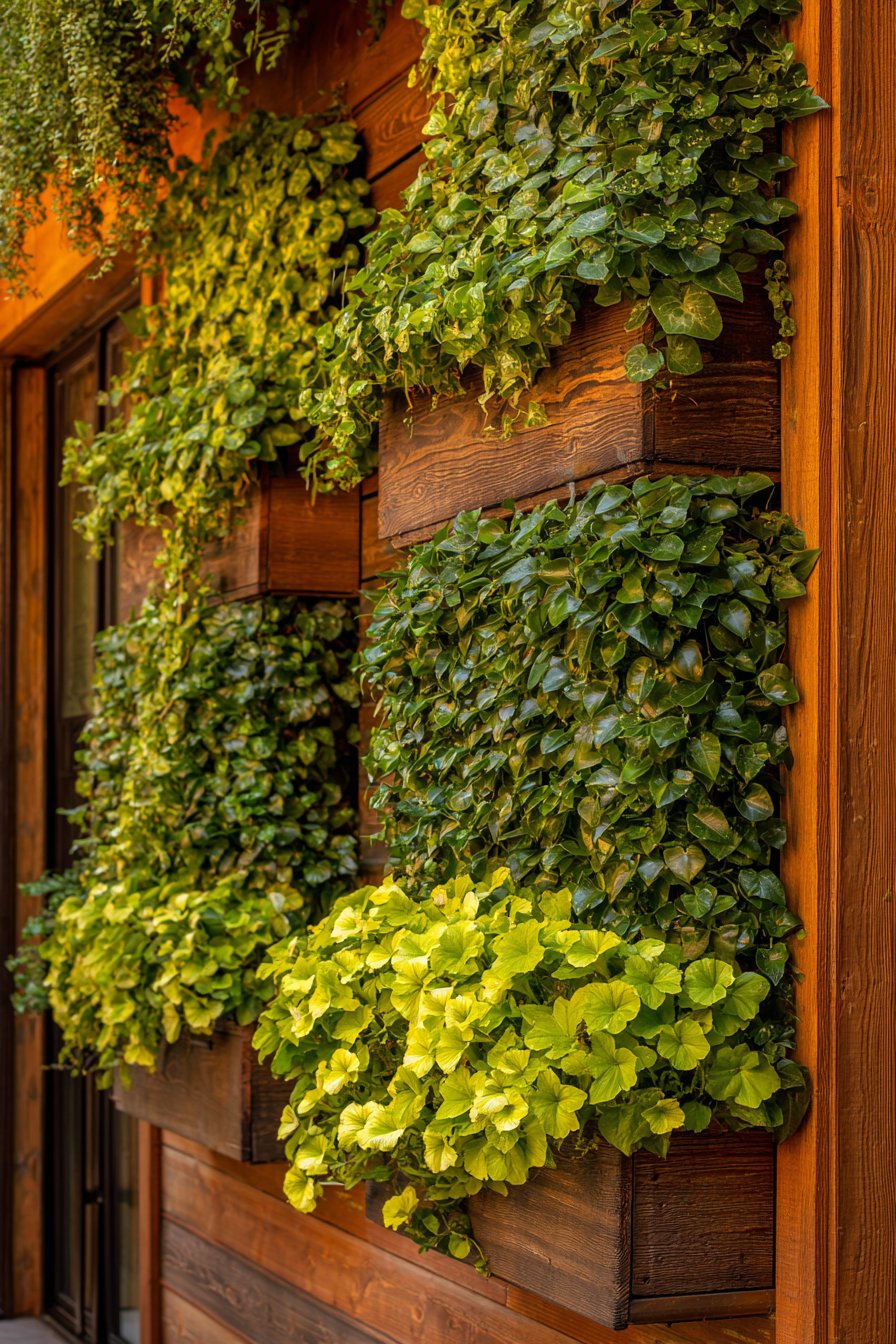
Small outdoor spaces present unique opportunities for creative green wall solutions that maximize limited square footage. This balcony green wall features a vertical garden system with tiered planters holding a diverse mix of trailing ivy, petunias, and herbs, transforming a modest balcony into a lush outdoor retreat. The natural cedar wood frames that contain the planter system show realistic grain and weathering, adding rustic charm while providing sturdy support for the plant-filled structure.
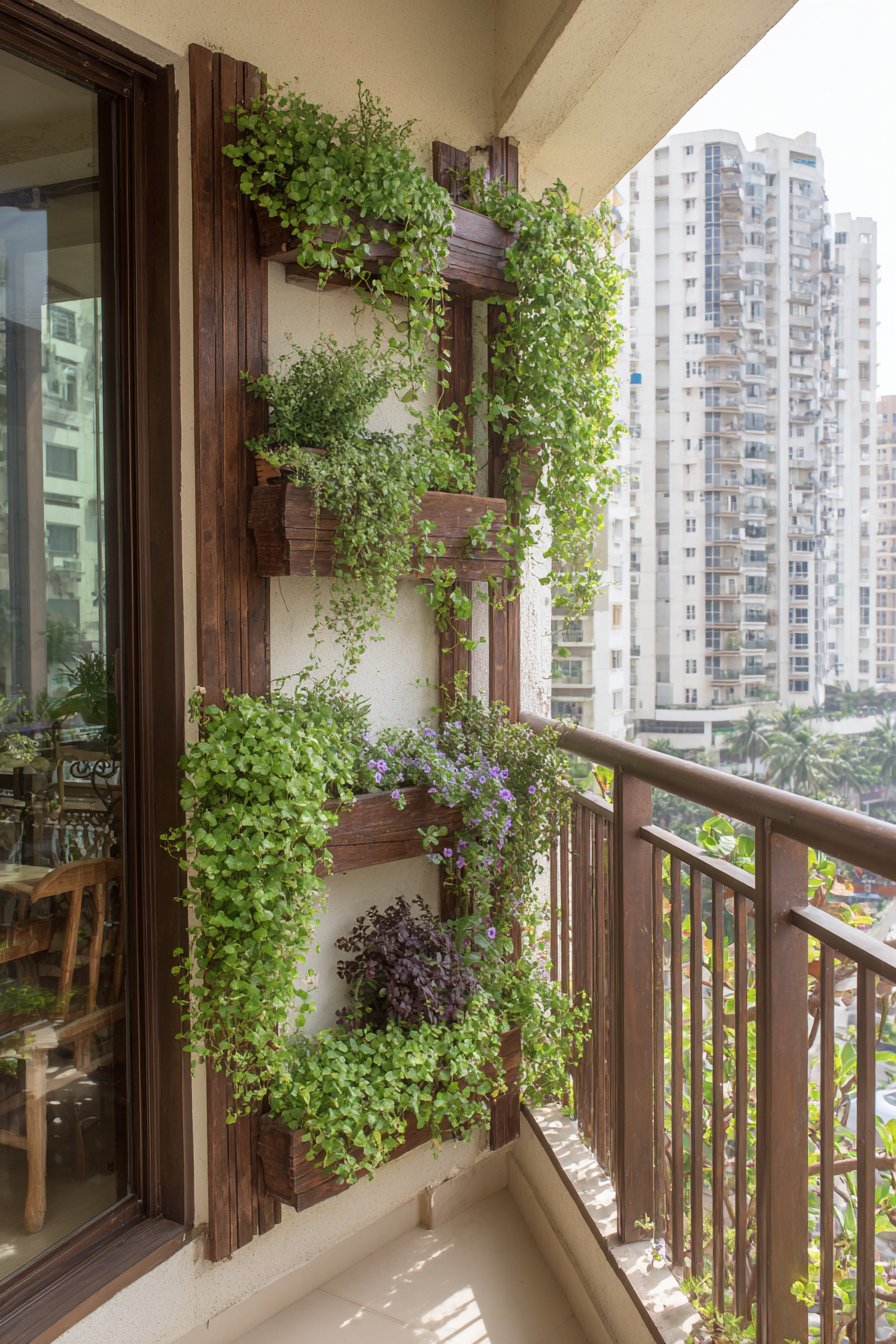
The strategic selection of plant varieties creates year-round interest and practical benefits. Trailing ivy provides evergreen structure and cascading visual interest, while seasonal petunias introduce vibrant color during warmer months. The inclusion of culinary herbs adds practical value, allowing urban dwellers to grow fresh ingredients even in compact spaces. This combination of ornamental and functional plants demonstrates how green walls can serve multiple purposes simultaneously, providing beauty, privacy screening, and practical harvests.
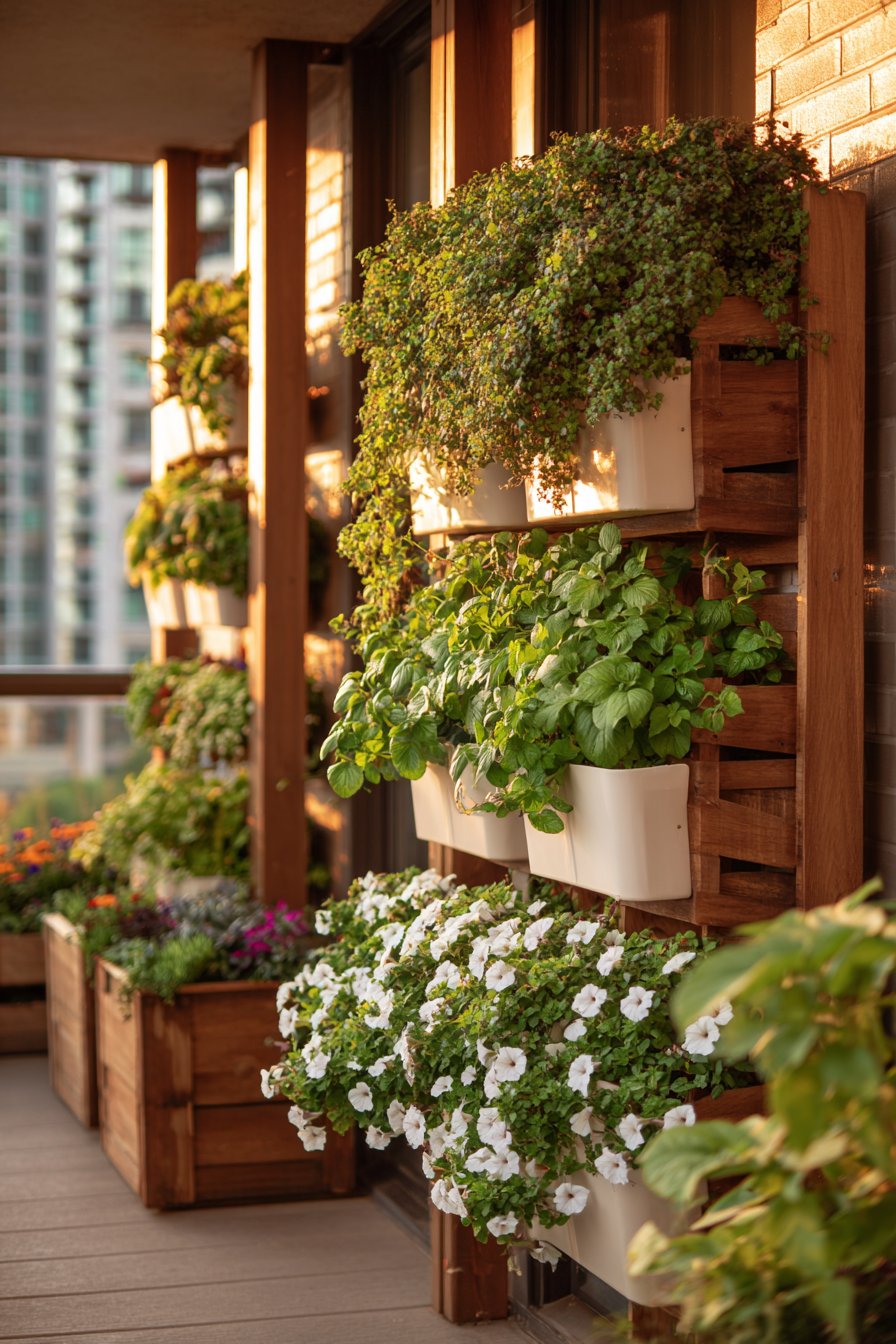
Golden hour lighting transforms this balcony into a magical space, illuminating the varied textures of foliage and flowers while casting warm glows on the cedar framework. The vertical orientation of the garden maximizes growing space without consuming valuable floor area needed for seating or movement. This design demonstrates that effective green wall installations need not be elaborate or expensive—sometimes the most impactful designs are those that work within real-world constraints of space and budget while delivering genuine improvements to daily life.
Key Design Tips:
- Ensure proper drainage systems are installed to prevent water damage to balcony surfaces and neighboring units below
- Select weather-appropriate plants for your regional climate and balcony’s sun exposure
- Incorporate lightweight growing media specifically designed for container gardening to reduce structural load
- Install the vertical garden against solid walls rather than railings for better stability and protection from wind
- Create a regular watering schedule that accounts for increased evaporation in exposed outdoor locations
8. Emerald Green Dining Room Statement Wall
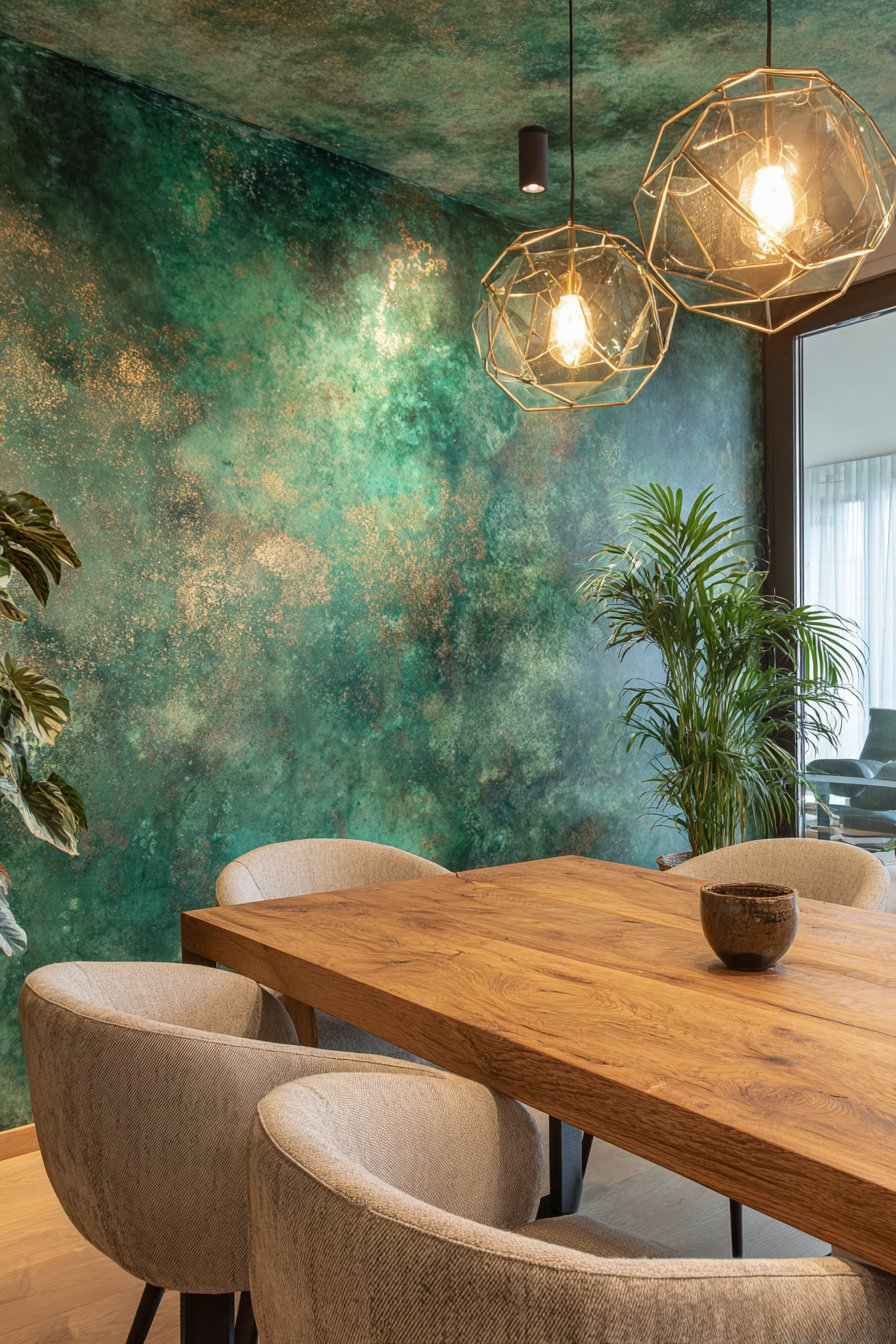
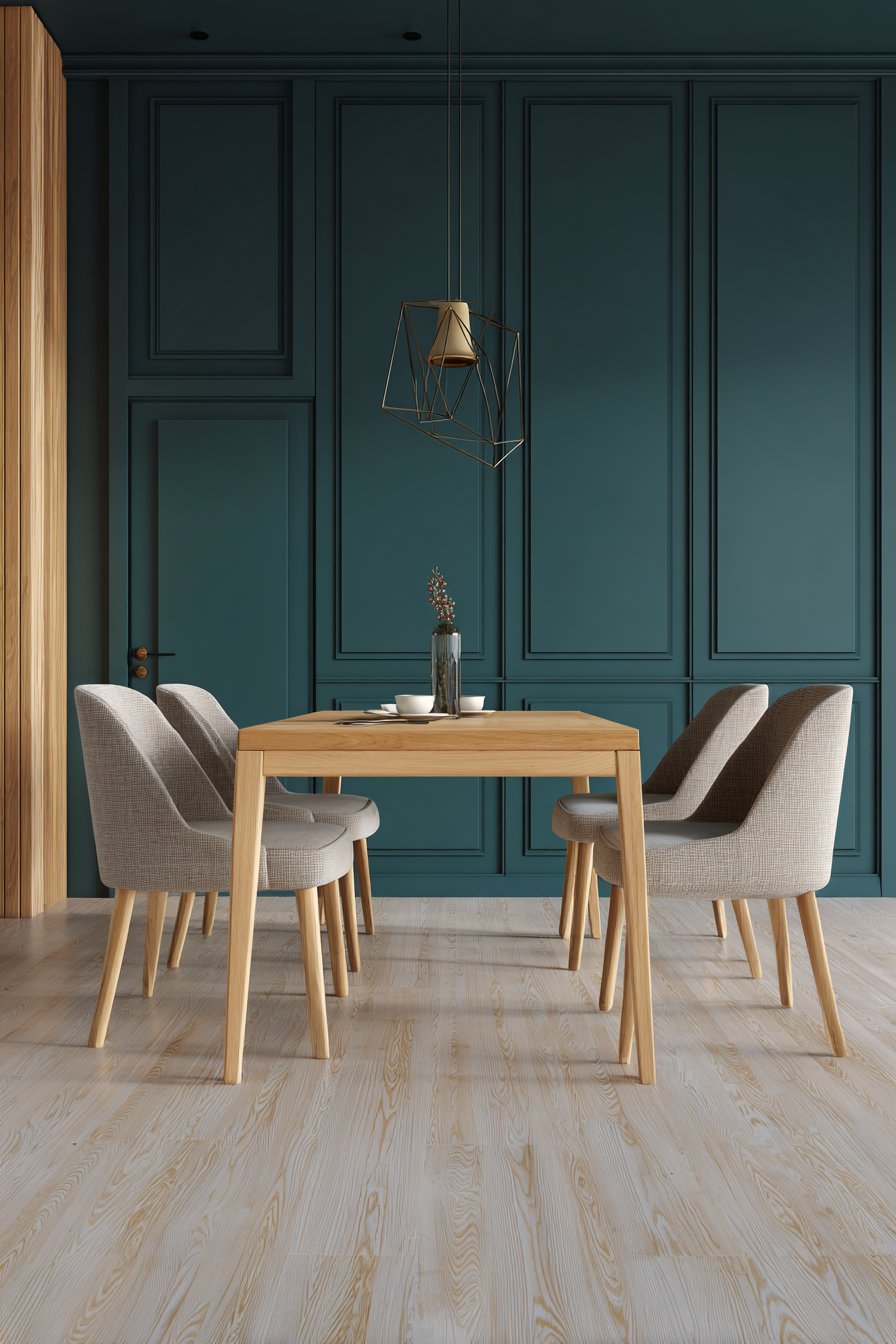
Bold color choices define character in interior spaces, and the emerald green dining room wall exemplifies sophisticated drama. This design features a statement wall painted in deep emerald green with a subtle sheen finish, creating a luxurious backdrop for a natural oak dining table and modern upholstered chairs in neutral tones. The jewel-toned wall commands attention while providing a refined setting for shared meals and conversation, demonstrating how saturated color can elevate everyday spaces into memorable environments.
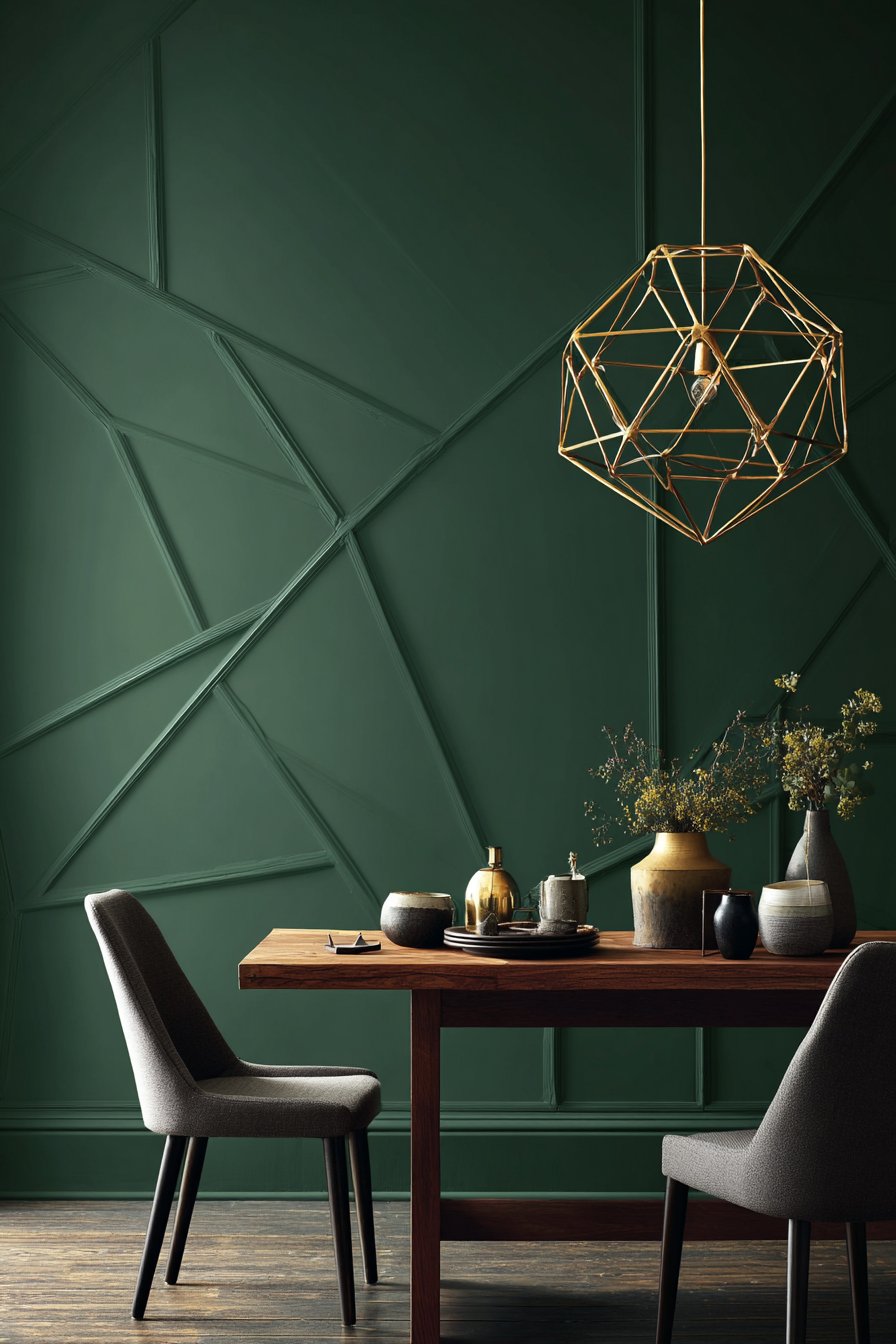
The technical execution of this painted wall requires careful consideration of finish selection. The subtle sheen—somewhere between matte and satin—adds depth and luminosity without creating distracting reflections or appearing overly glossy. This finish choice allows the rich emerald color to display its full complexity, with darker tones receding in shadows and lighter highlights catching on surface irregularities and texture. The geometric brass pendant light overhead creates intentional highlights on the richly colored surface, adding sparkle and movement through the interplay of metallic and colored surfaces.
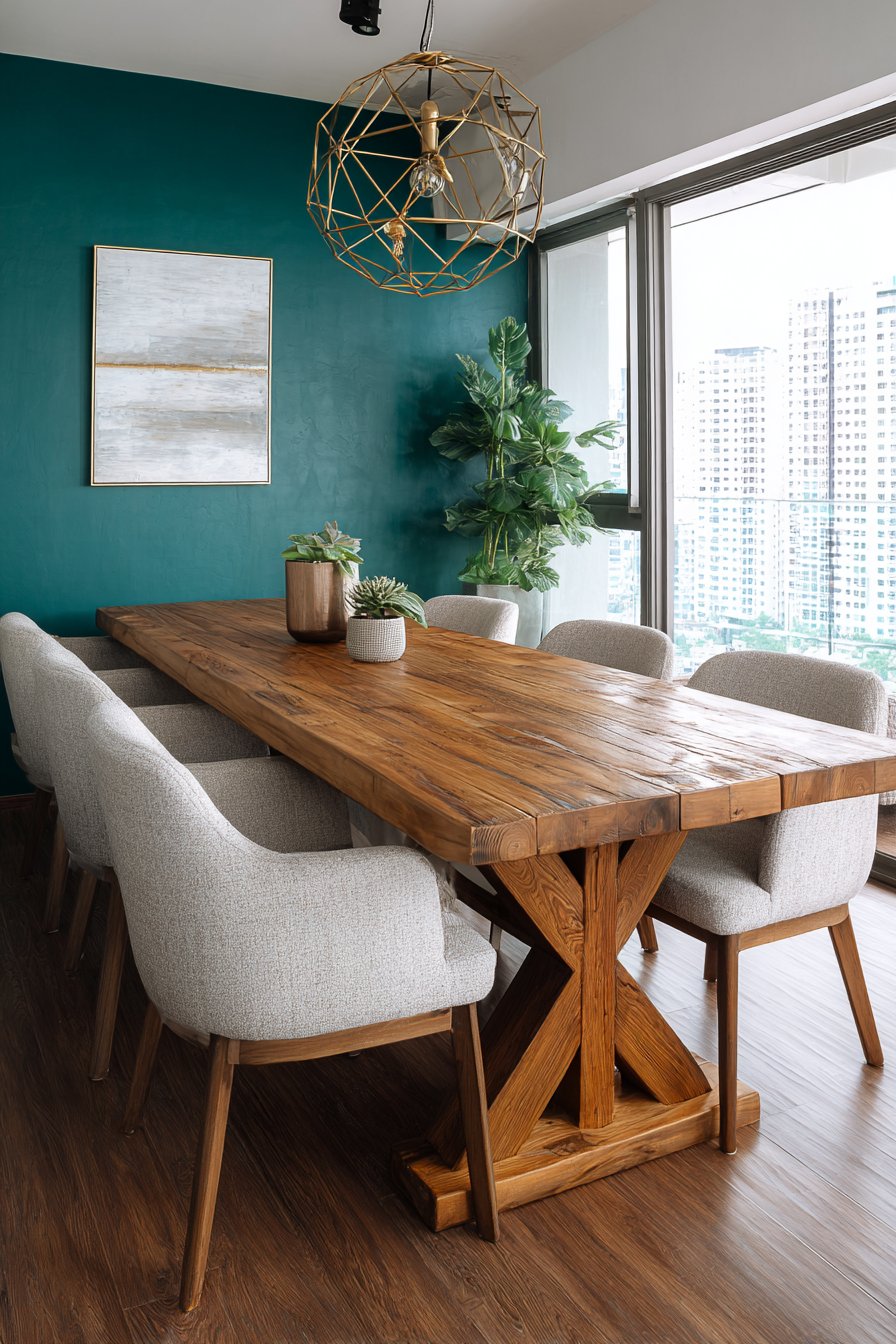
The furnishing selections demonstrate expert color coordination and material balance. The natural oak dining table introduces warm wood tones that prevent the deep green from feeling cold, while its natural grain adds organic texture that complements the smooth painted wall. Modern upholstered chairs in neutral tones provide comfortable seating without competing for visual attention, allowing the emerald wall to remain the clear focal point. This restraint in additional color introduction ensures that the bold wall choice reads as intentional and sophisticated rather than overwhelming.
Key Design Tips:
- Apply multiple thin coats rather than fewer thick coats to achieve even, rich color saturation
- Use painter’s tape to create crisp edges, particularly where the emerald wall meets adjacent surfaces
- Select lighting with warm color temperatures to enhance the jewel-like quality of emerald green
- Introduce metallic accents in brass or gold tones to create luxurious contrast
- Balance the saturated wall color with neutral furnishings to prevent visual overwhelm
9. Spa-Inspired Bathroom Air Plant Display
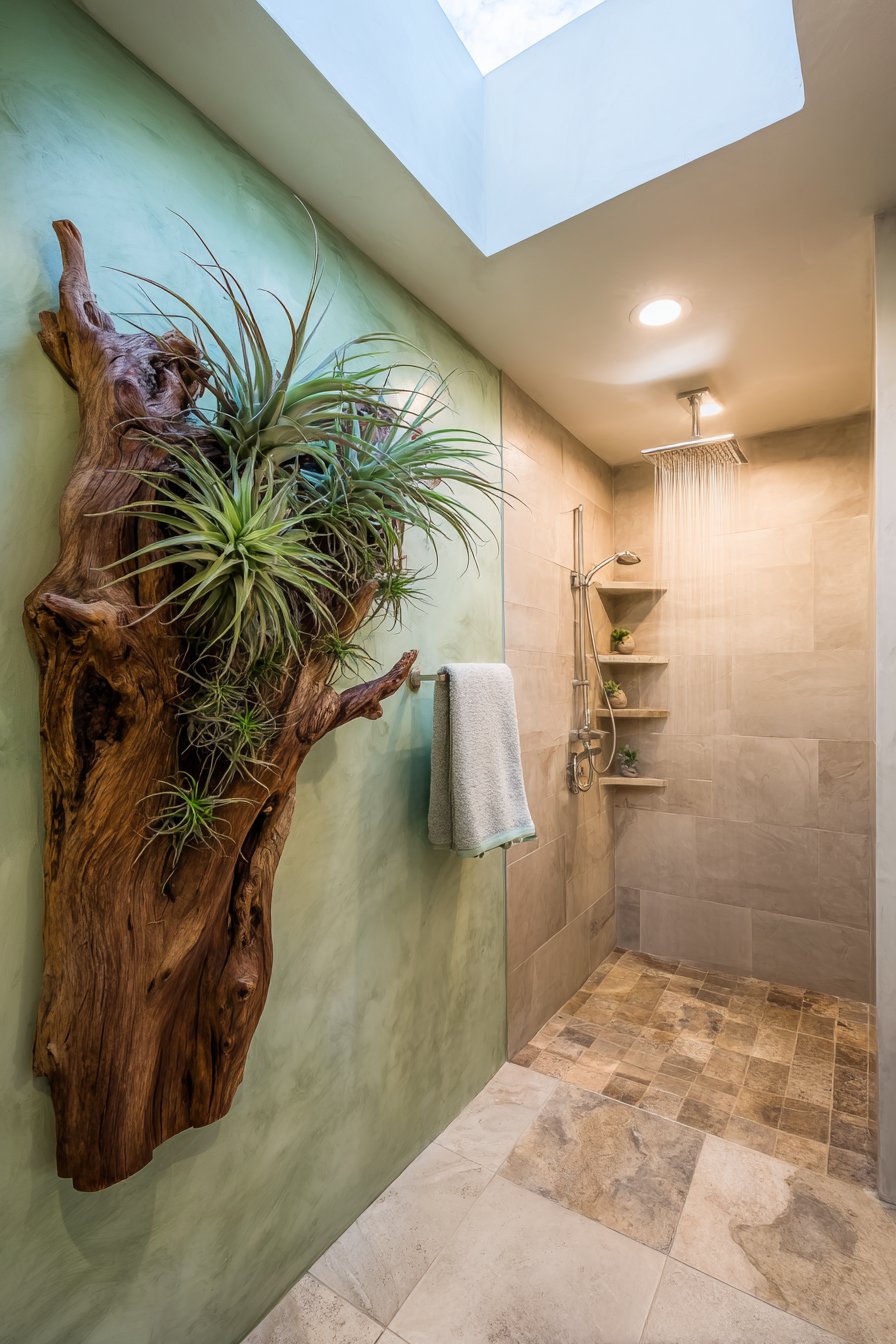
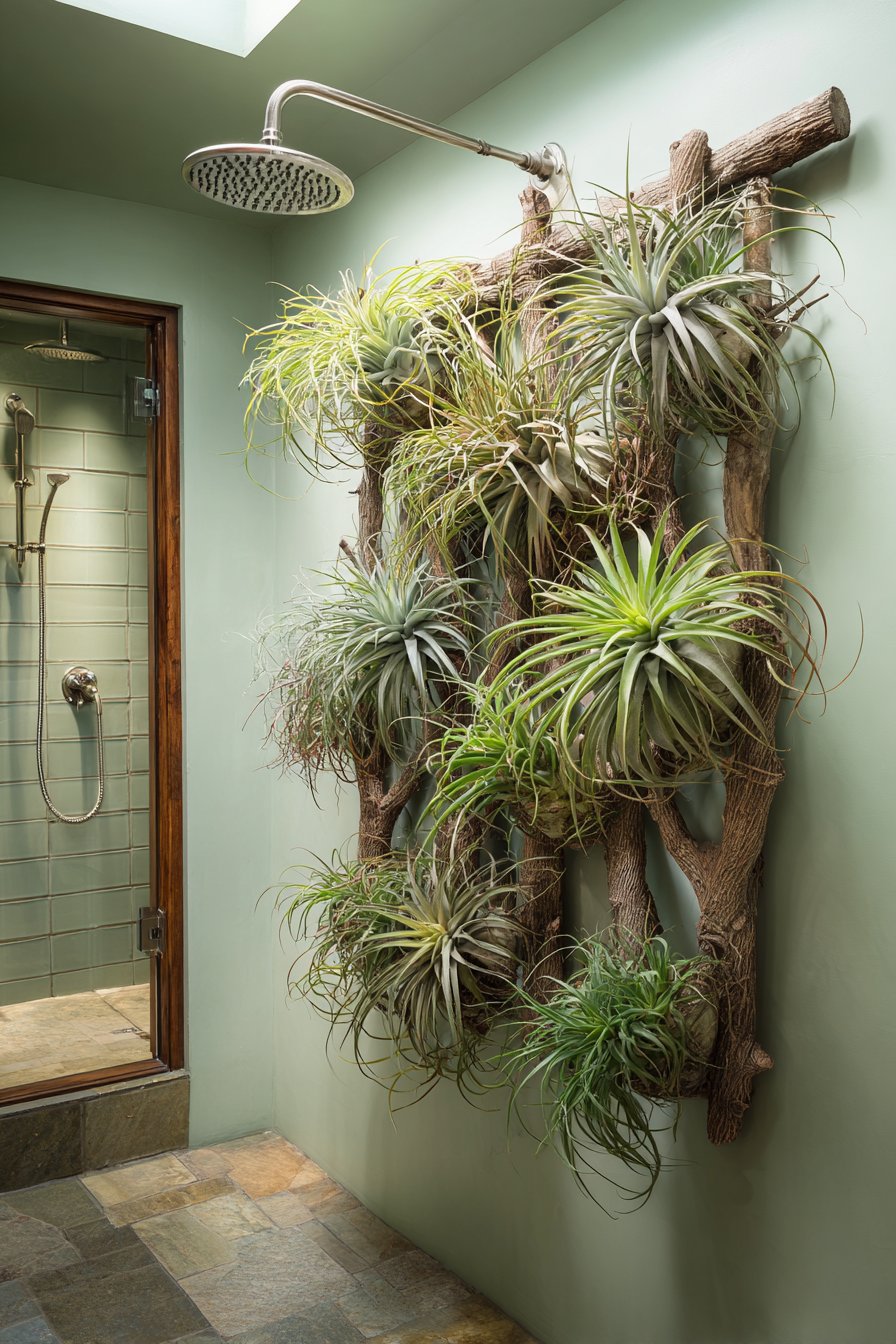
The minimalist beauty of air plants finds perfect expression in spa-inspired bathroom settings, where their sculptural forms and low-maintenance nature align with the desire for serene, clutter-free environments. This green wall concept features vertical arrangements of air plants mounted on driftwood backing against a light green painted wall, creating layered green tones that add depth and interest without overwhelming the small space. The combination of living plants with painted color creates a cohesive natural theme that transforms the bathroom into a personal wellness retreat.
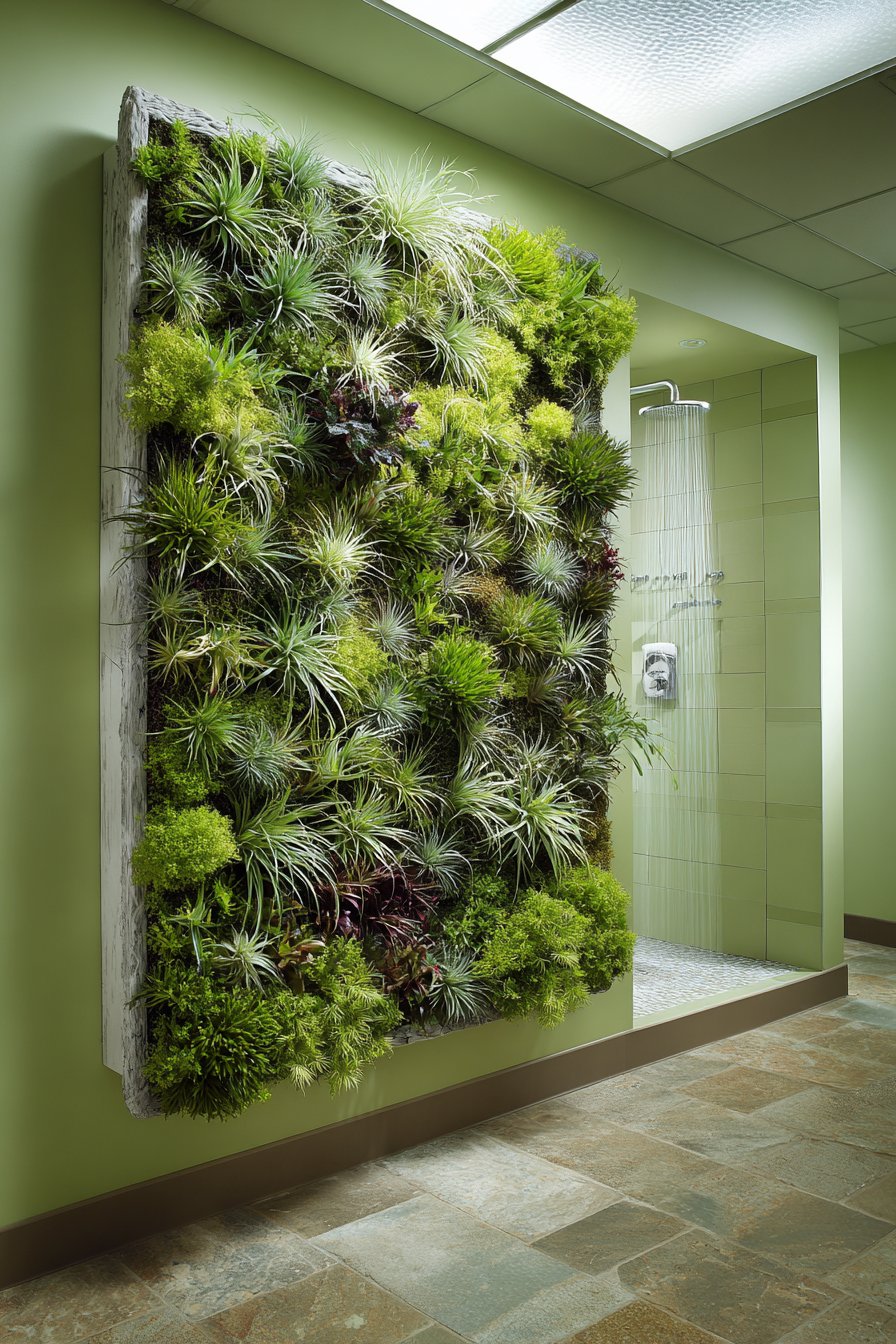
Air plants offer unique advantages for bathroom green wall installations, requiring no soil and thriving in the naturally humid bathroom environment. Their varied forms—from the spiky architectural tillandsia to softer, more flowing varieties—provide sculptural interest that changes as plants grow and bloom. The driftwood backing adds textural contrast and rustic authenticity, its weathered surface and organic shape creating visual interest even before plants are attached. The light green painted wall behind serves as both backdrop and color extension, creating subtle tonal variations that add sophistication to the design.
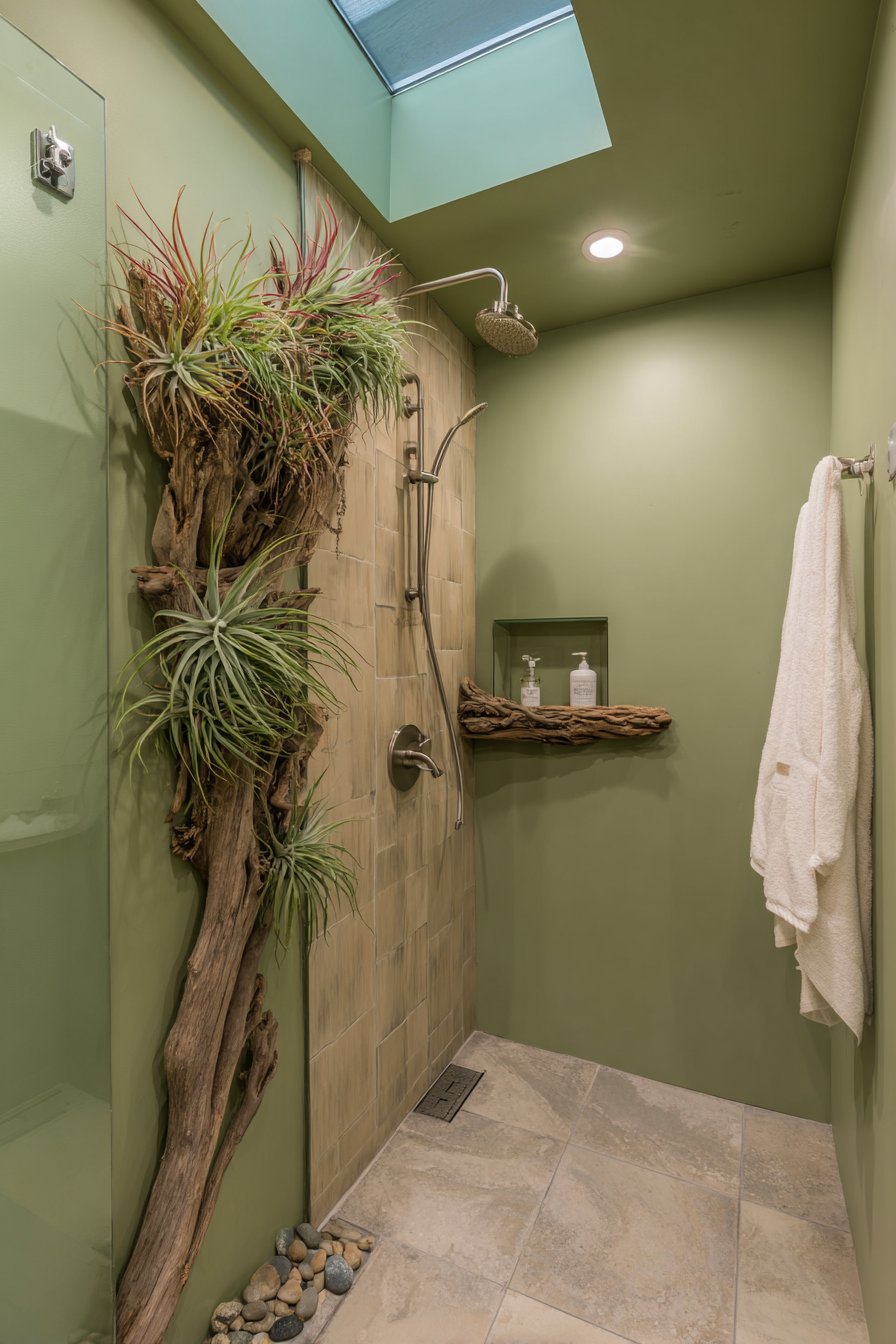
Natural stone floor tiles and a rainfall shower head complete the spa aesthetic, their smooth, water-worn surfaces echoing the organic forms of the driftwood and air plants. Soft natural lighting from a skylight above eliminates harsh shadows while highlighting the textural contrasts between smooth wall paint, rough driftwood, and spiky plant foliage. This careful attention to lighting creates an atmosphere of tranquility essential for spa-inspired spaces, transforming routine bathroom activities into moments of peaceful reflection.
Key Design Tips:
- Mist air plants 2-3 times weekly to supplement bathroom humidity and maintain plant health
- Mount driftwood backing securely using appropriate anchors rated for bathroom humidity conditions
- Position air plants away from direct water spray while maintaining access to ambient moisture
- Select light green wall paint with moisture-resistant formulations designed for bathroom use
- Rotate air plants occasionally to ensure even light exposure and balanced growth
10. Scandinavian Entryway Compact Vertical Garden
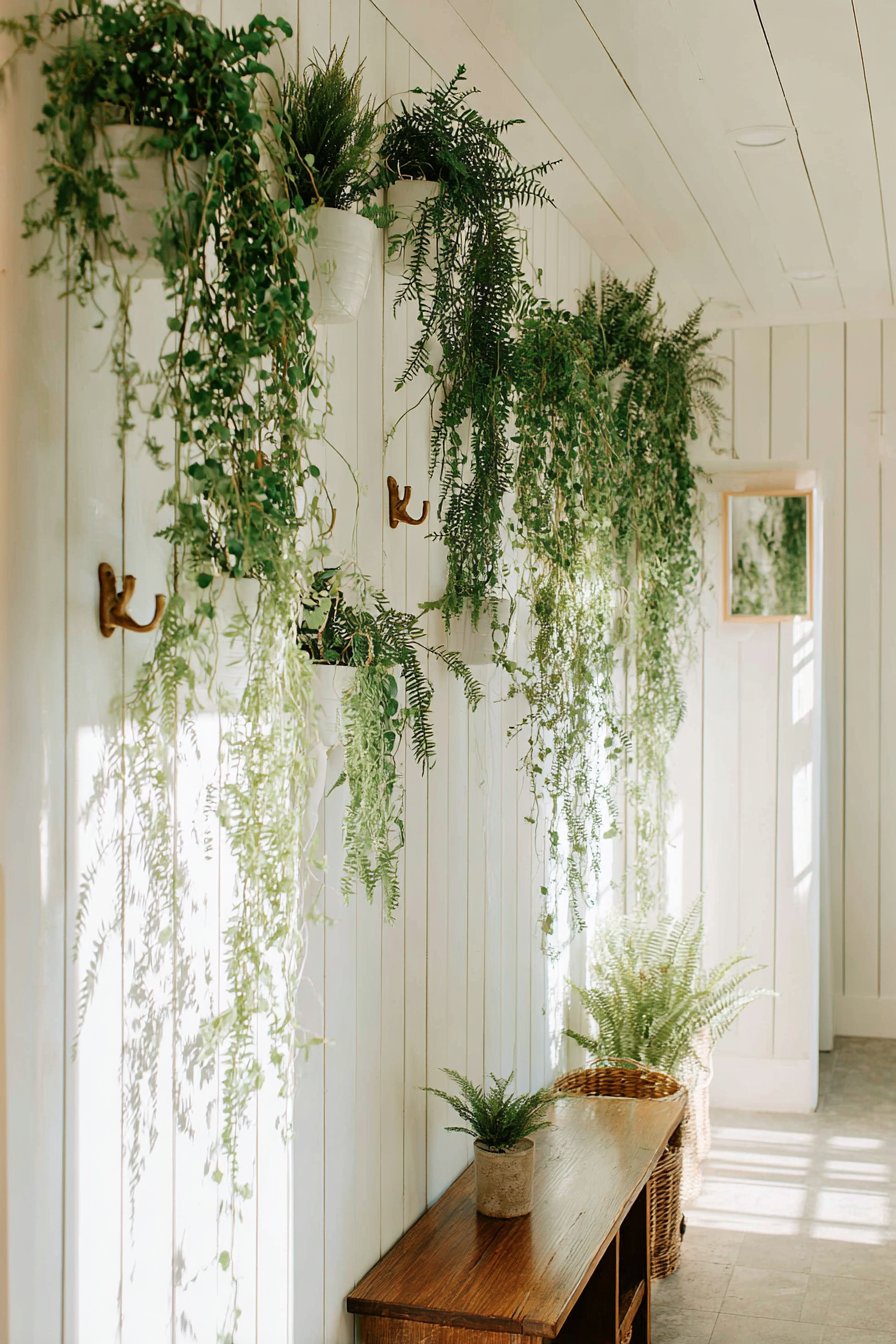
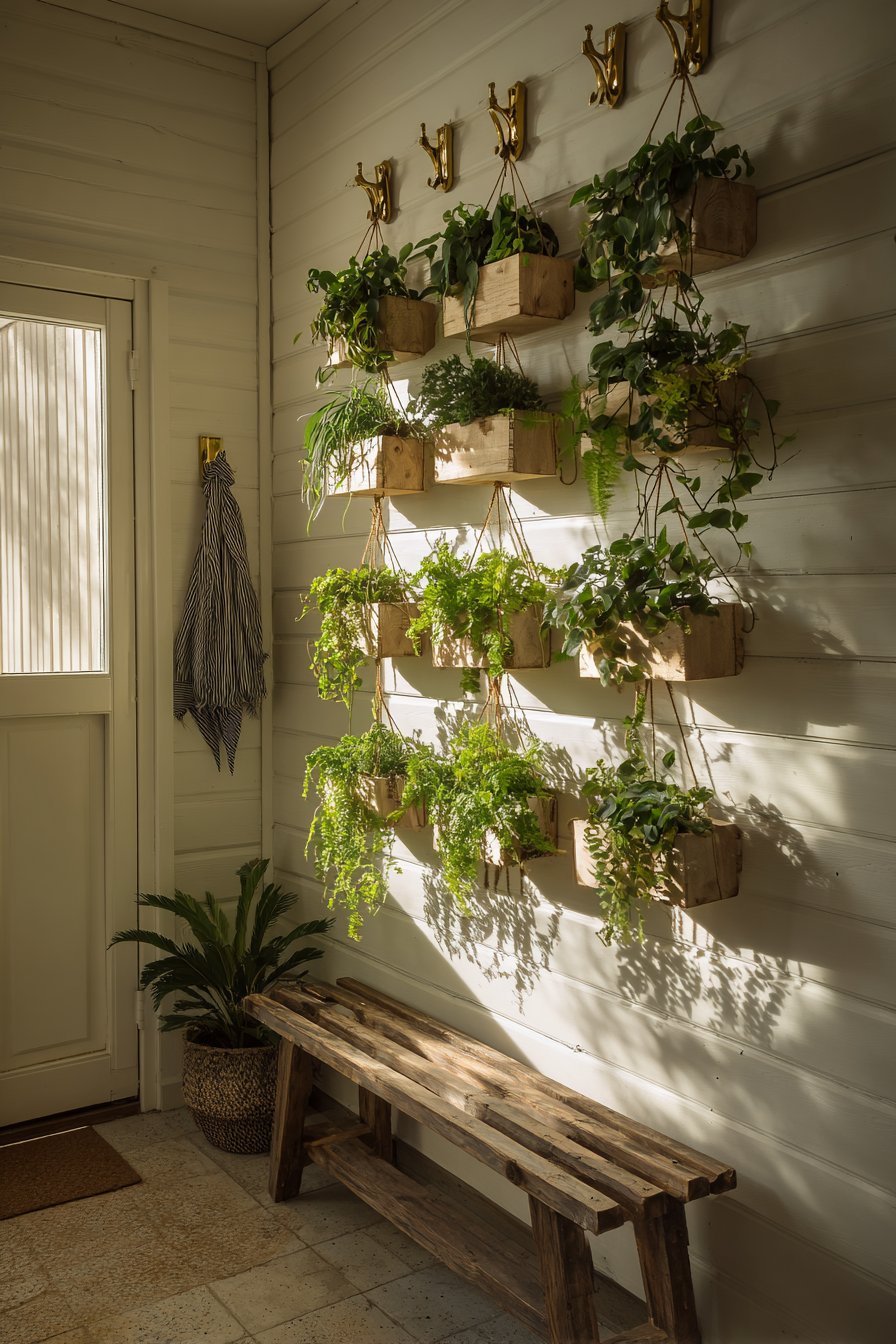
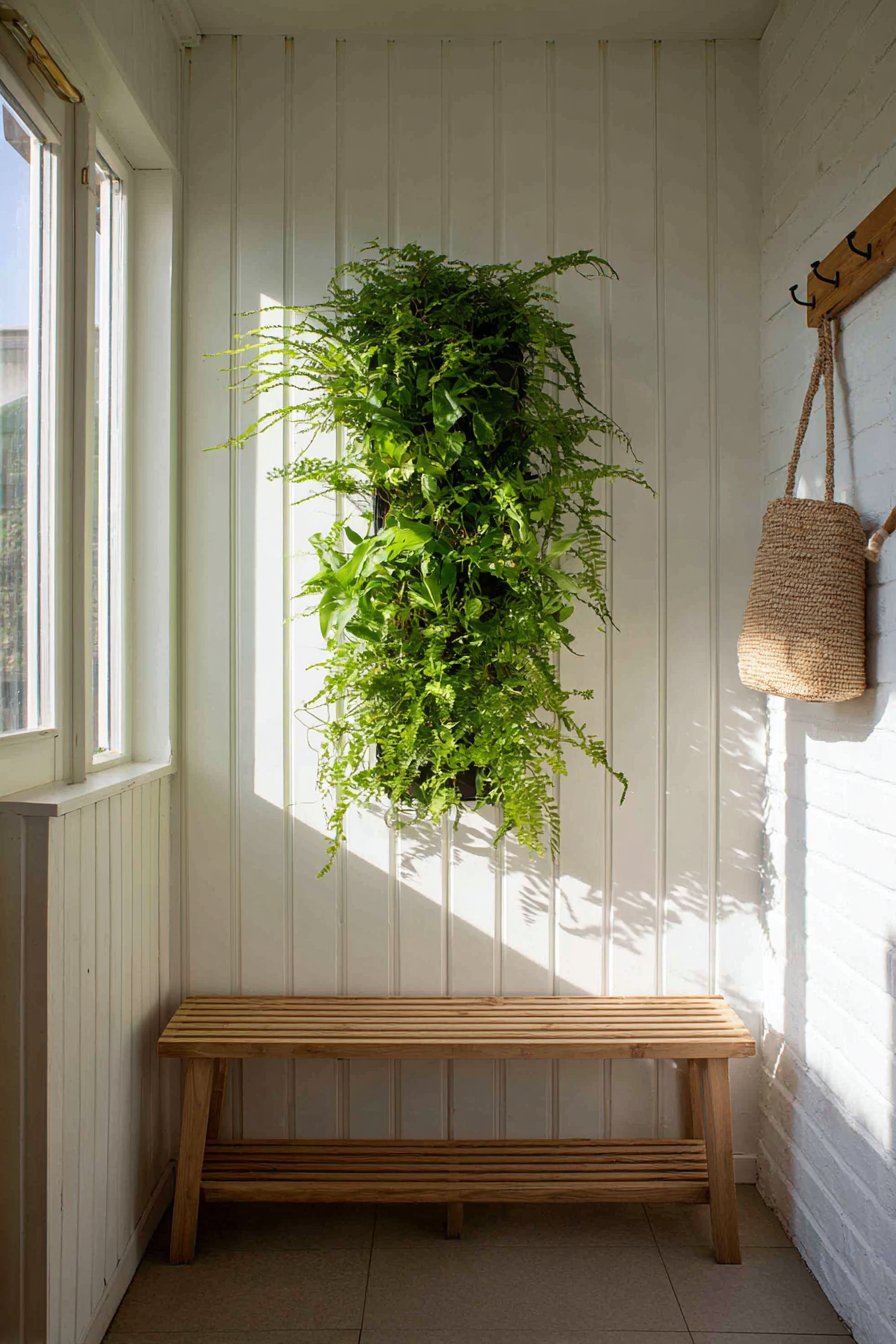
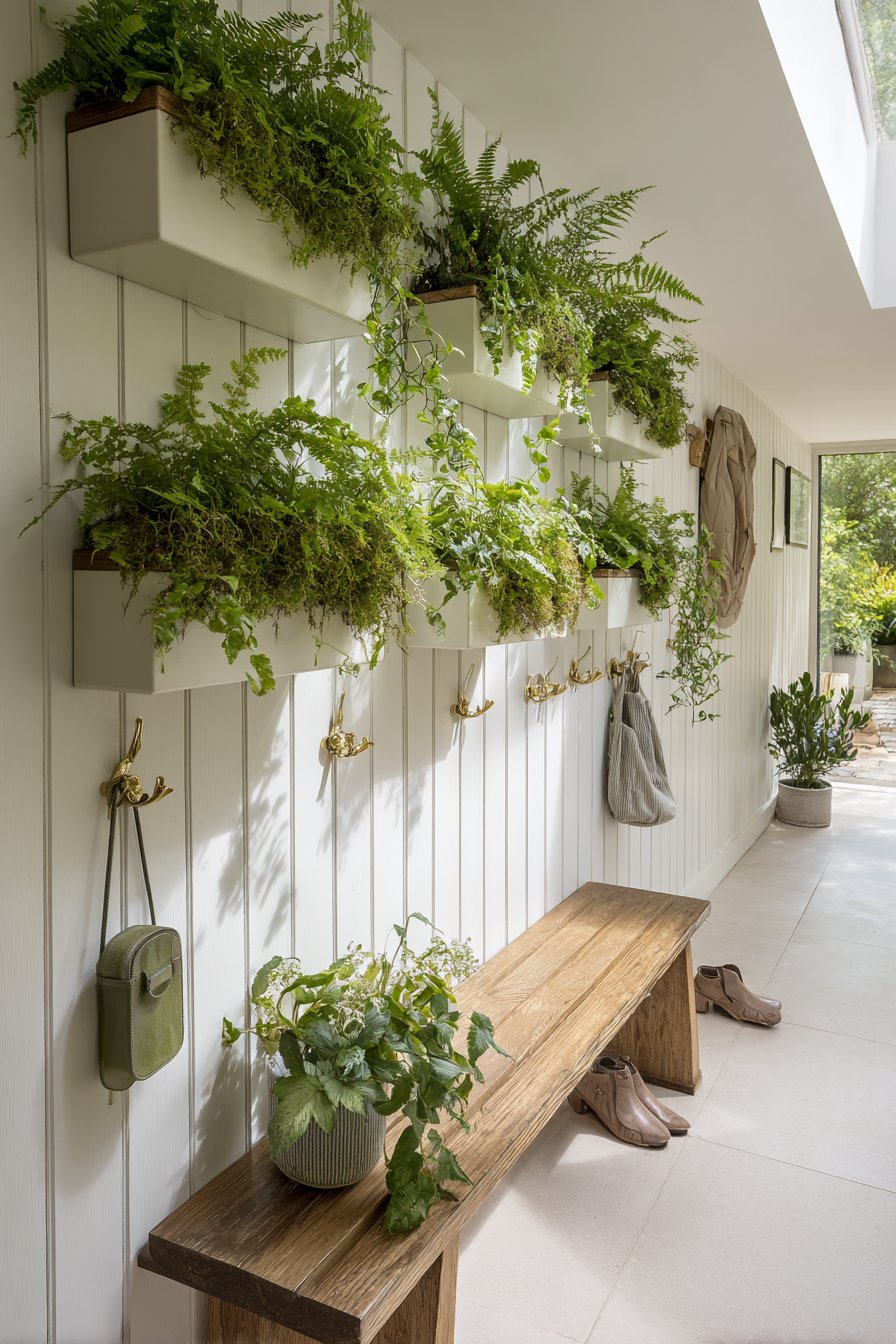
First impressions matter profoundly in home design, and the entryway presents a unique opportunity to establish aesthetic tone from the moment guests arrive. This Scandinavian-inspired green wall features a narrow vertical garden system with wall-mounted planters displaying collections of small ferns and trailing plants, providing a welcoming natural element in a compact space. Positioned alongside a simple wooden bench and brass hooks, the green wall serves both decorative and functional purposes, softening the transition between exterior and interior while contributing to the practical organization essential in entry spaces.
The compact scale of this installation demonstrates that effective green walls need not be large or elaborate to make significant impact. The narrow profile respects the typically limited dimensions of entryway spaces while still delivering the visual and psychological benefits of living plants. Small ferns selected for shade tolerance thrive in the often limited natural light of entry areas, while trailing plants add graceful movement that contrasts beautifully with the angular architecture of walls and doorways. The strategic positioning near adjacent rooms allows borrowed light to support healthy plant growth without requiring direct window exposure.
The integration of practical entryway elements with the green wall creates a cohesive design that balances aesthetics with functionality. The simple wooden bench provides seating for removing shoes while its warm material complements the organic nature of the plants. Brass hooks above offer convenient storage for coats and bags while adding warm metallic accents that create visual continuity with other brass elements throughout the home. The white shiplap wall behind creates clean contrast that allows both the green plants and wooden furniture to read clearly, preventing the small space from feeling cluttered or chaotic.
Key Design Tips:
- Select shade-tolerant plant varieties appropriate for the typically lower light levels of entryways
- Install the vertical garden at heights that don’t interfere with coat hooks or other functional elements
- Incorporate a small drip tray or moisture barrier to protect flooring from watering activities
- Choose narrow planter profiles that maintain clear pathways essential for high-traffic entry areas
- Consider timer-controlled grow lights to supplement natural light and support healthy plant growth
11. Modern Farmhouse Forest Green Shiplap Wall
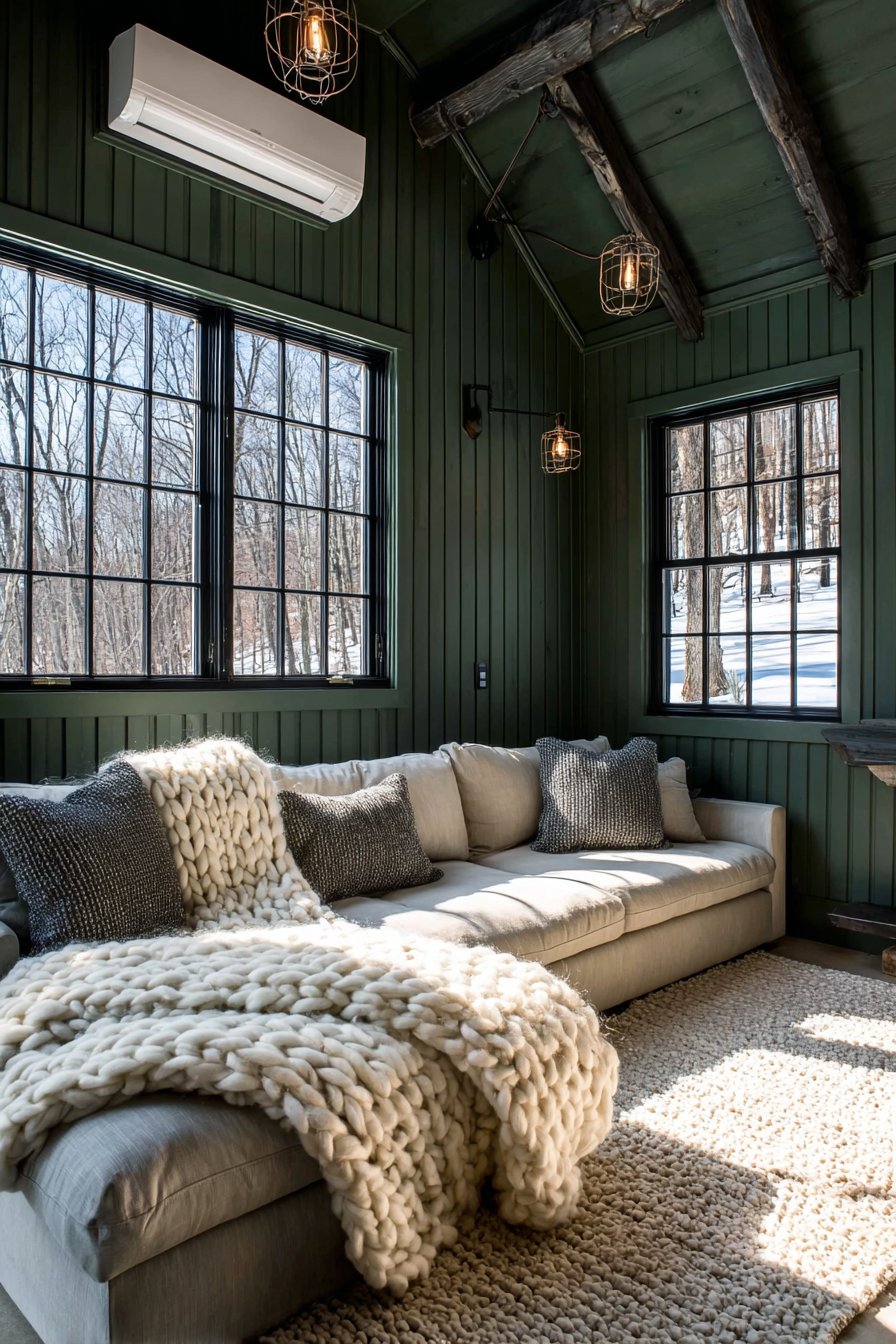
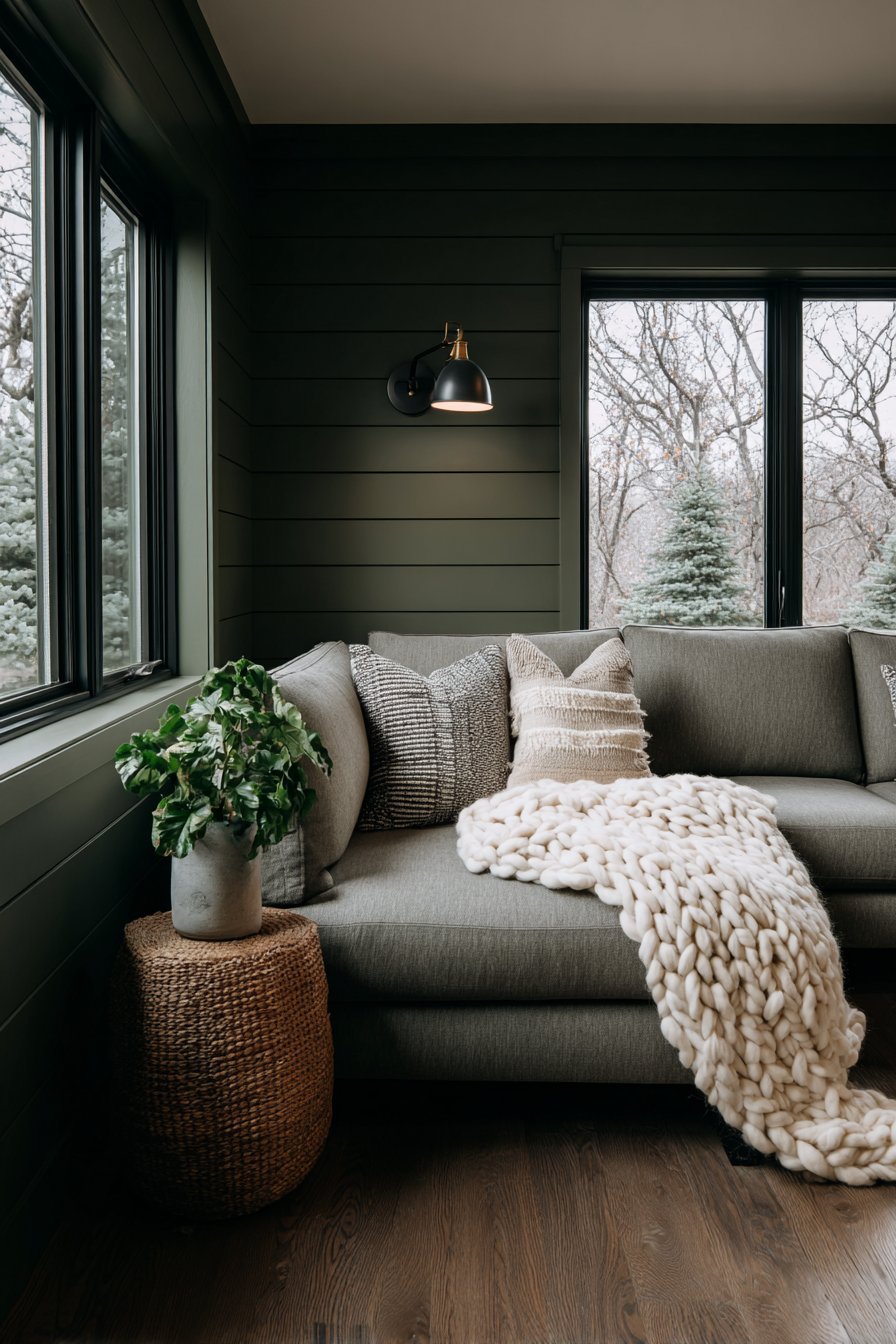
The modern farmhouse aesthetic finds beautiful expression in painted shiplap accent walls, where traditional materials meet contemporary color choices. This design features forest green shiplap planks with visible wood grain showing through the matte finish, creating a rich textured wall that anchors a contemporary living room. The deep, sophisticated green provides dramatic contrast for a cream-colored sectional sofa adorned with chunky knit throw blankets, while black metal framed windows and industrial lighting fixtures create striking visual punctuation throughout the space.
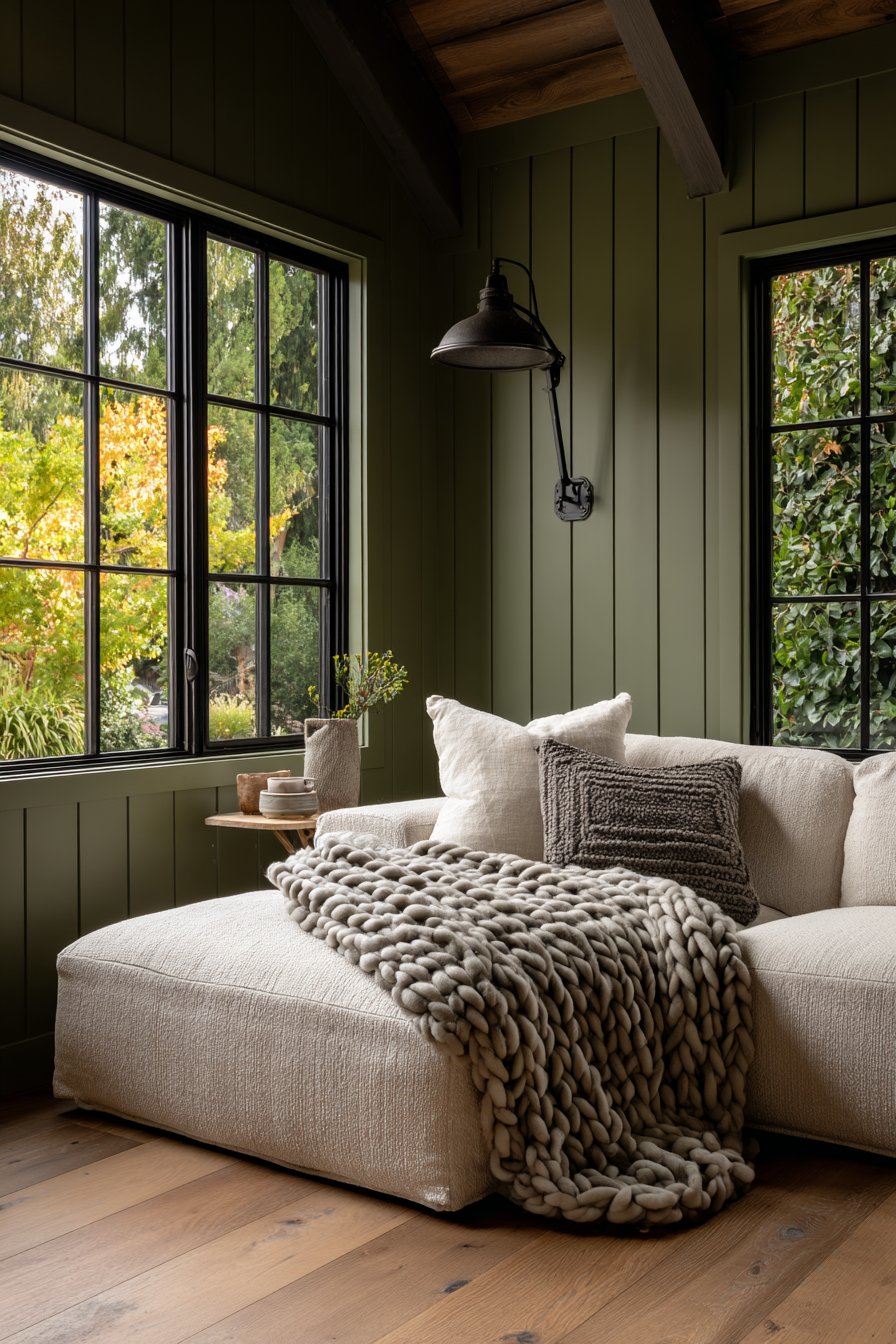
The technical execution of painted shiplap requires careful attention to maintain the material’s textural qualities while achieving even color application. The wood grain remains visible through the matte finish, adding organic texture that prevents the painted surface from appearing flat or lifeless. This balance between color coverage and texture retention defines successful shiplap installations—too much paint obscures the wood character, while insufficient coverage results in uneven, patchy appearance. The forest green color choice brings natural richness without the darkness of true hunter green, remaining sophisticated and grounded rather than trending toward trendier shades.
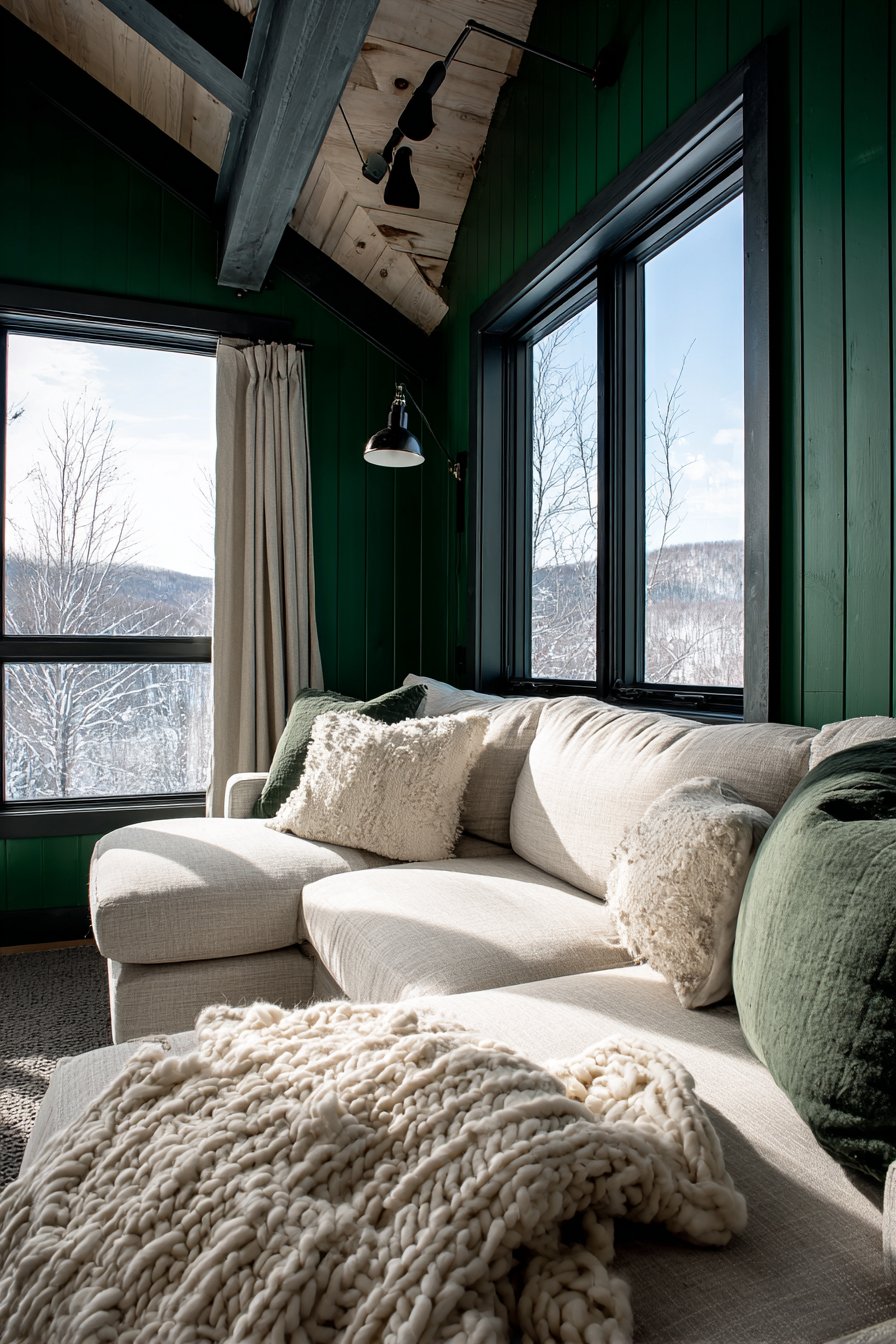
Natural daylight interaction with the textured shiplap surface creates dynamic visual interest throughout the day. Morning light rakes across the horizontal planks, emphasizing their dimensional quality through shadow and highlight. Afternoon sun creates warmer tones that bring out any underlying yellow in the green paint, while evening artificial lighting from industrial fixtures creates dramatic contrasts. This temporal variation ensures the wall never appears static, maintaining visual interest across all lighting conditions and times of day.
Key Design Tips:
- Install shiplap with proper spacing between boards to allow for natural wood expansion and contraction
- Apply wood conditioner before painting to ensure even absorption and color consistency
- Use matte or flat finish paint to preserve the casual, approachable character appropriate for farmhouse style
- Balance the deep wall color with lighter furnishings to maintain visual openness in the room
- Incorporate varied textures in textiles and accessories to complement the dimensional quality of the shiplap
12. Interactive Chalkboard Green Wall for Children
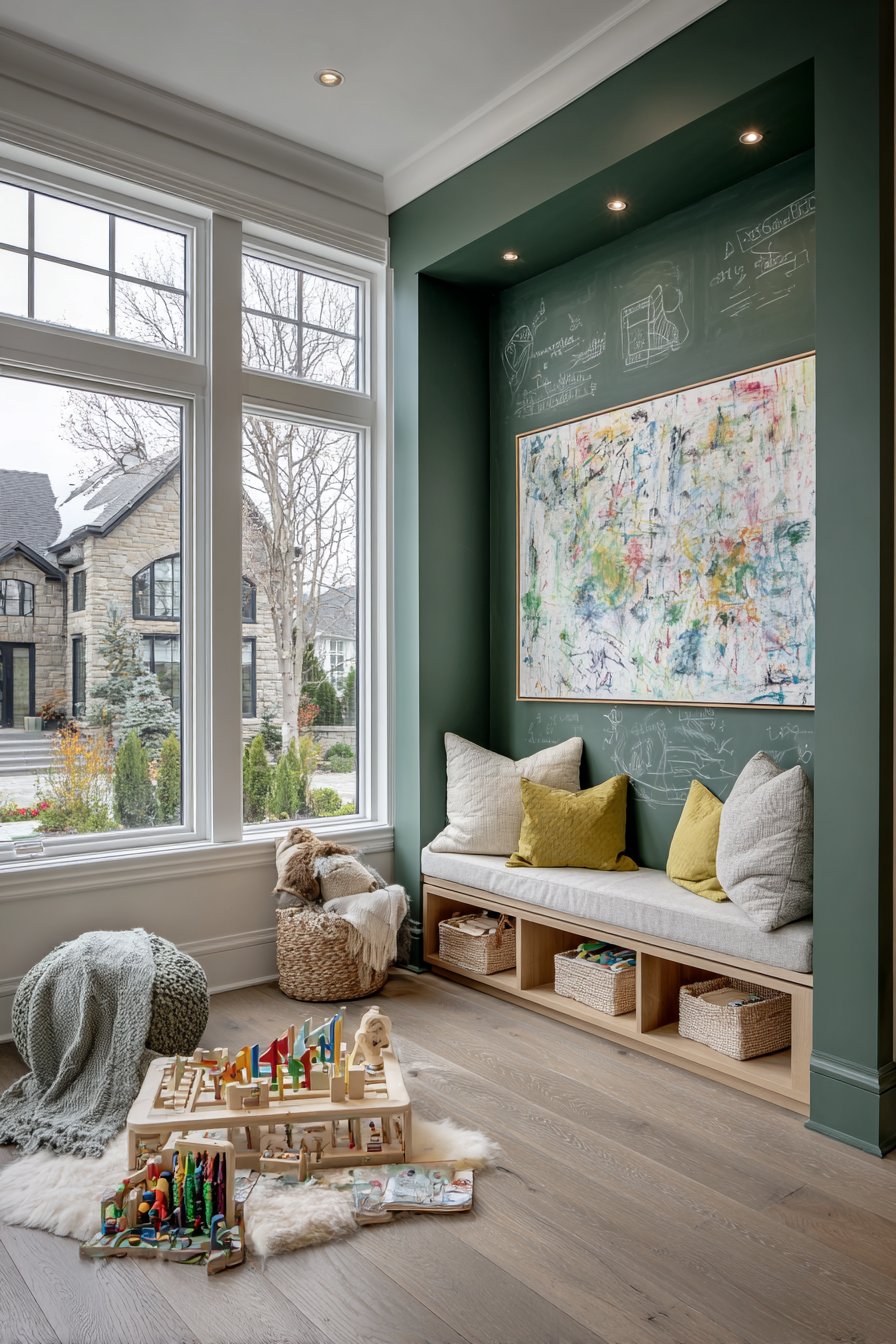
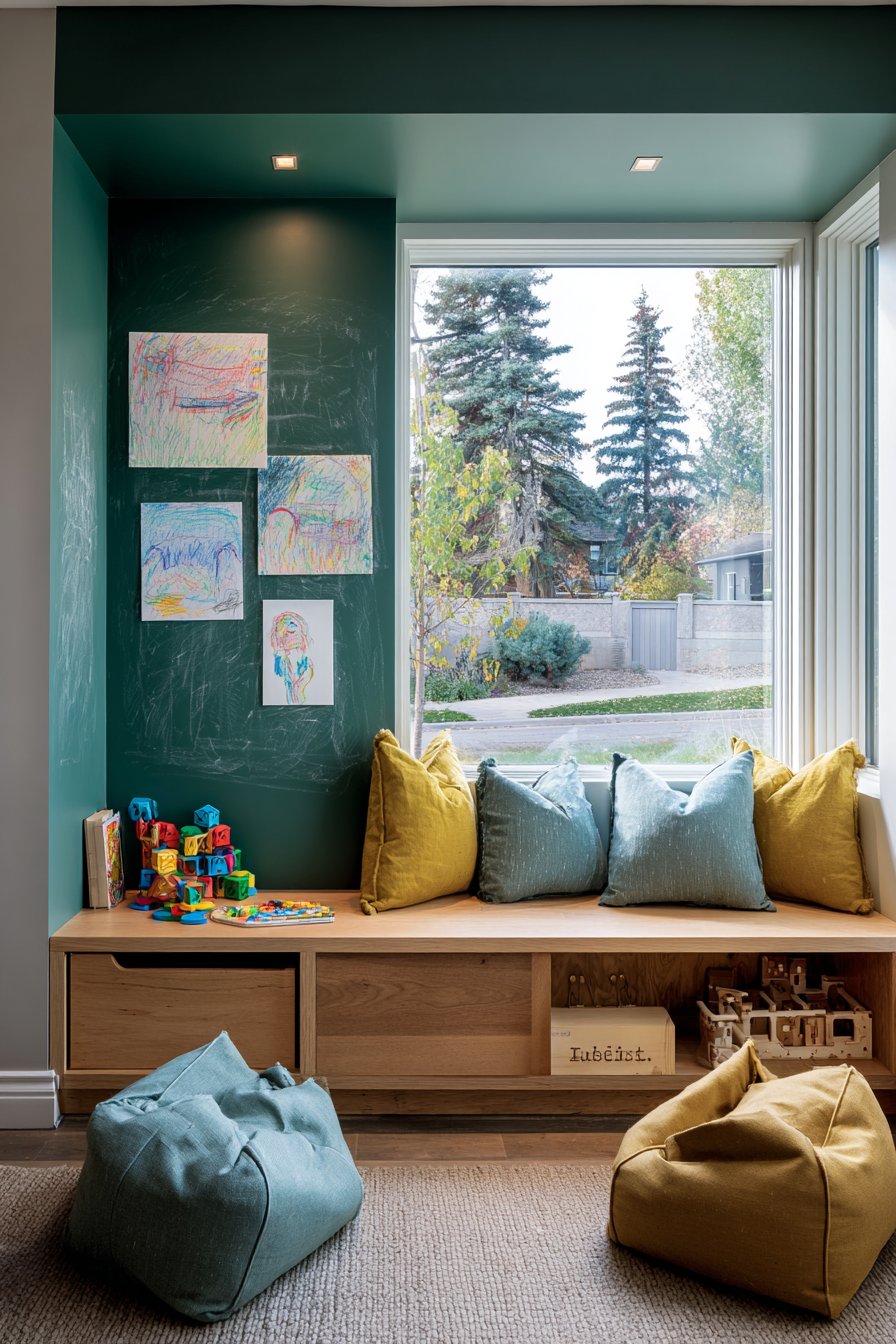
Functional design meets creative expression in children’s spaces where interactive elements encourage imagination and play. This green wall concept features a painted chalkboard wall in deep green with an actual chalk ledge below, creating an ever-changing canvas for children’s artwork and creative expression. The interactive nature of the wall transforms it from static decoration into dynamic surface that evolves with the family’s daily life, showing realistic chalk texture and the slight smudging characteristic of active use.
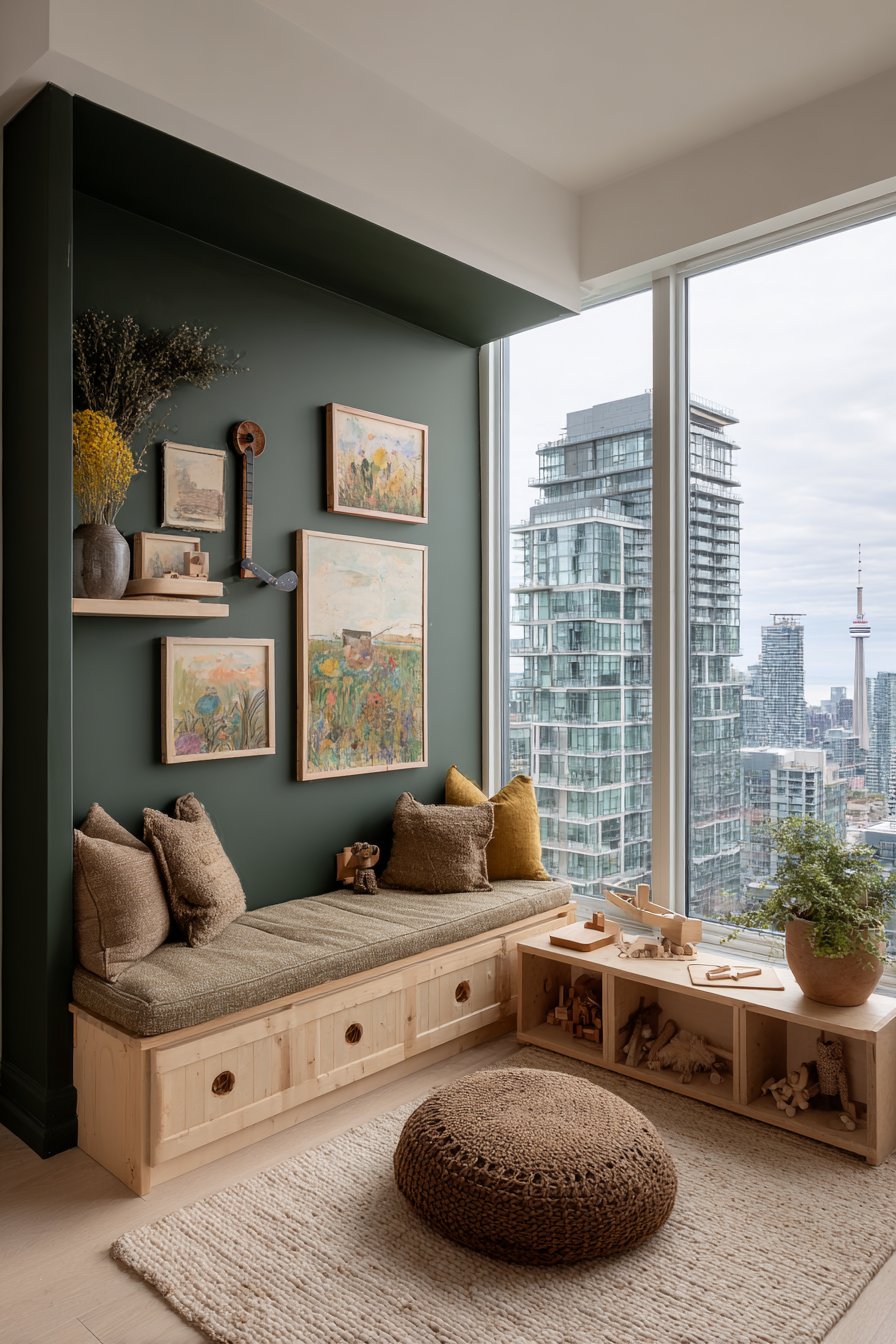
The practical benefits of chalkboard walls in children’s spaces extend beyond artistic expression. The surface provides opportunities for educational activities, game playing, and message leaving that encourage family interaction and communication. Unlike traditional artwork or wallpaper, the chalkboard wall invites modification and personalization, allowing children to take ownership of their space in ways that build confidence and creative thinking. The deep green color choice creates a sophisticated backdrop that prevents the room from appearing juvenile, ensuring the space can grow with the child through different developmental stages.
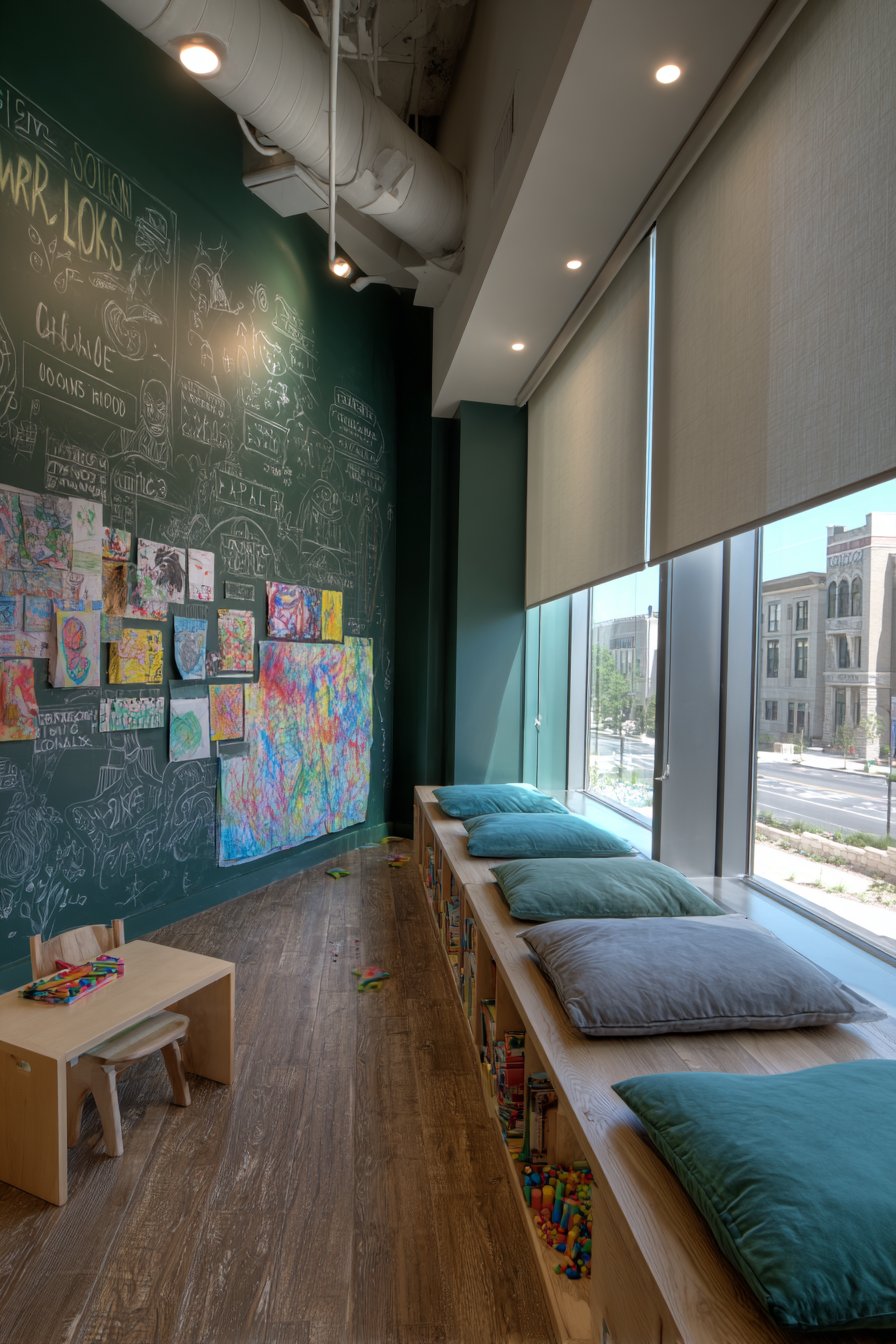
Natural wood toy storage and a cozy reading corner with floor cushions complete the creative play space, providing organized storage that maintains visual order despite the inevitable accumulation of toys and books. Soft diffused daylight from large windows illuminates the room without creating glare on the chalkboard surface, ensuring comfortable visibility for both creating and viewing artwork. The combination of interactive surface, practical storage, and comfortable reading area creates a comprehensive children’s space that supports multiple activities and play patterns.
Key Design Tips:
- Apply multiple coats of high-quality chalkboard paint to create a smooth, receptive surface for chalk
- Install the chalk ledge at appropriate height for children’s reach while considering growth over time
- Season the chalkboard surface by rubbing chalk over the entire area before first use to prevent ghosting
- Provide both white and colored chalk to encourage diverse artistic expression
- Clean the surface regularly with appropriate chalkboard cleaners to maintain optimal chalk receptivity
13. Bohemian Bedroom Layered Green Textures
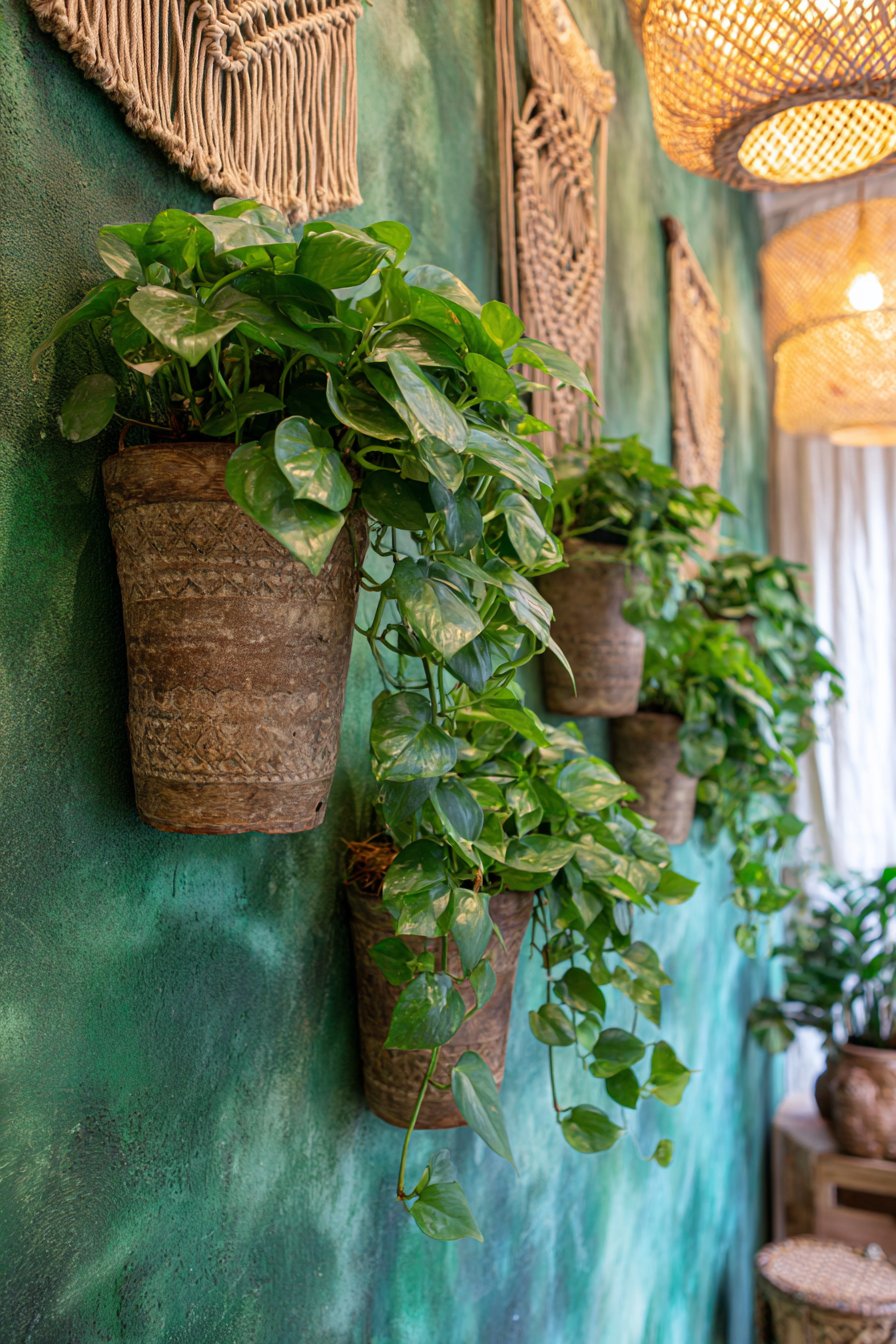
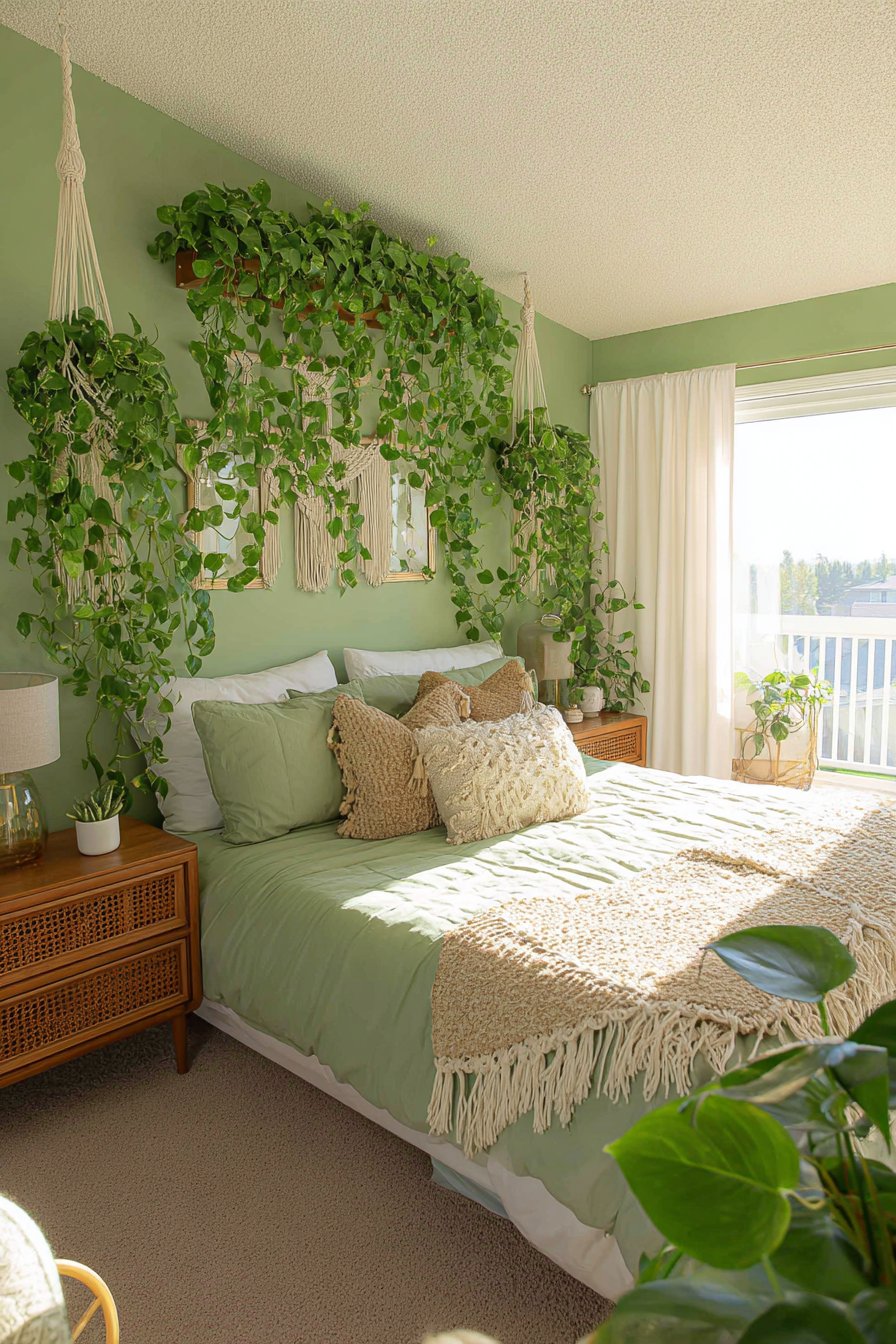
Bohemian design celebrates layered textures, global influences, and organic materials, finding perfect expression in bedrooms that serve as personal retreats. This green wall concept features macramé wall hangings and trailing pothos plants cascading from wall-mounted planters against a sage green painted wall, creating an eclectic aesthetic that combines handcrafted textiles with living greenery. The layered textures of woven macramé, painted wall surface, and living plant foliage create depth and visual richness characteristic of successful bohemian design.
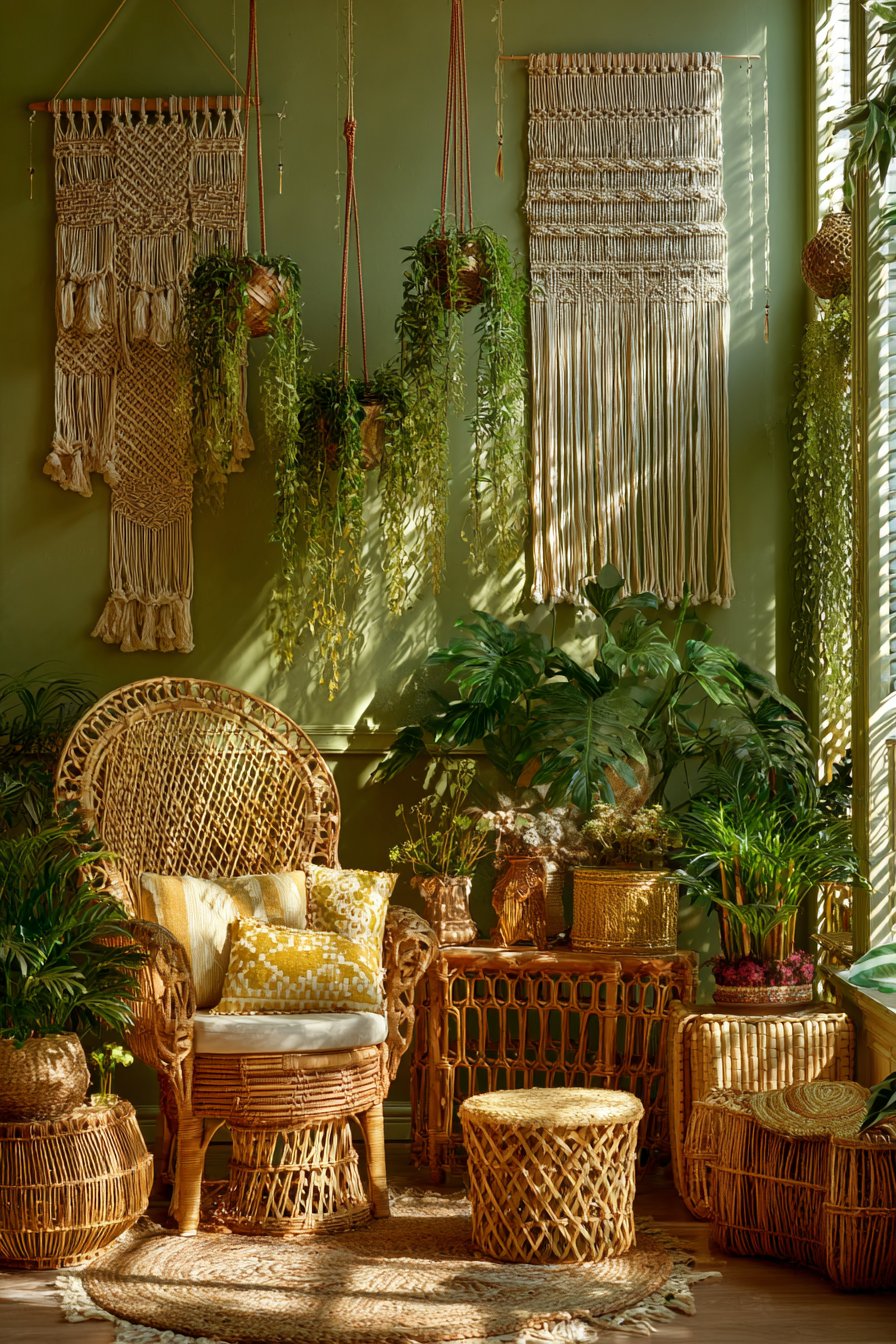
The integration of living plants with textile art creates dynamic compositions that change over time. Pothos vines grow and trail, creating new patterns and relationships with the stationary macramé pieces below. This temporal quality ensures the green wall never appears fixed or finished but instead evolves as a living element of the room’s design. The sage green painted wall provides a cohesive backdrop that unifies the diverse textures while contributing its own subtle variations in tone and light reflection. This color choice bridges the gap between the natural green of living plants and the typically cream or white tones of macramé cord.
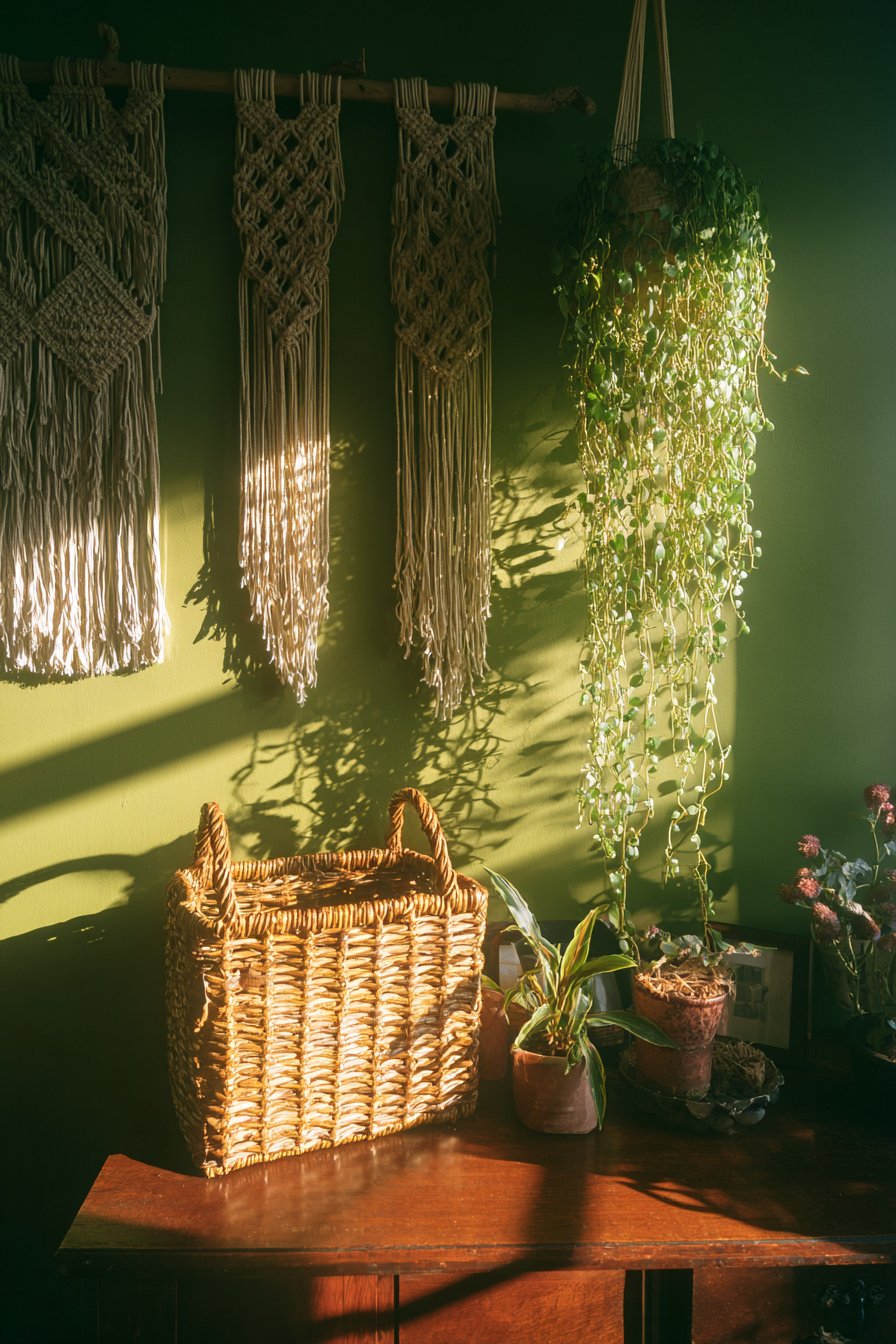
Rattan furniture and vintage wooden pieces complete the bohemian aesthetic, their organic materials and natural finishes creating visual continuity with the textile and plant elements of the green wall. Golden hour lighting streaming through sheer curtains creates warm glows that enhance the earthy color palette, casting interesting shadows from both the three-dimensional macramé and the trailing plant vines. This careful attention to lighting transforms the bedroom into a magical space during transitional daylight hours, demonstrating how natural light can be treated as a design element itself.
Key Design Tips:
- Layer multiple macramé pieces in varying scales to create visual interest and depth
- Position plant hangers at different heights to encourage natural cascading growth patterns
- Select pothos varieties with variegated leaves to add additional color and pattern to the composition
- Incorporate vintage and handmade elements to reinforce the bohemian aesthetic’s emphasis on uniqueness
- Use warm-toned lighting to enhance the golden, earthy quality of the natural materials
14. Kitchen Succulent Wall Living Art
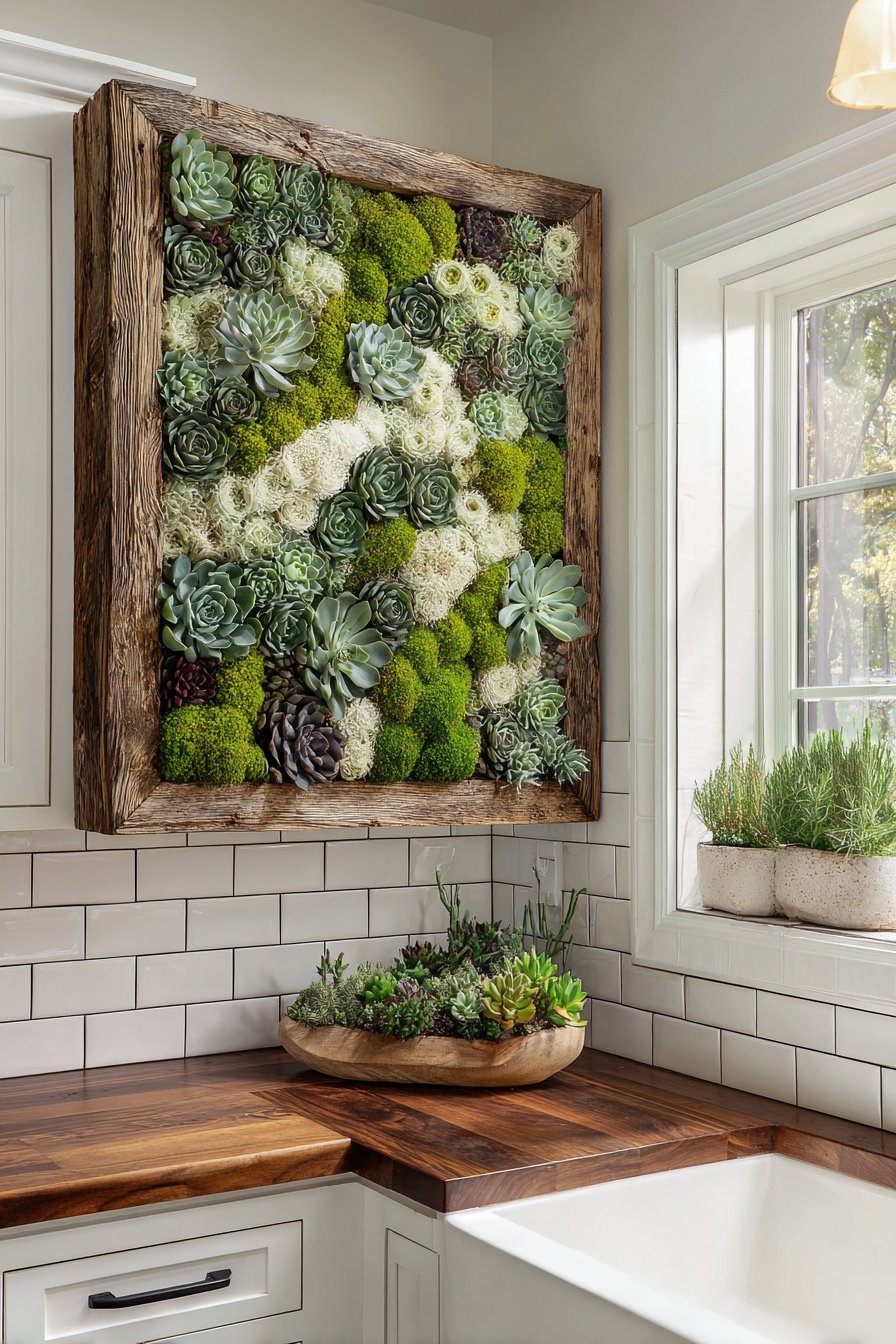
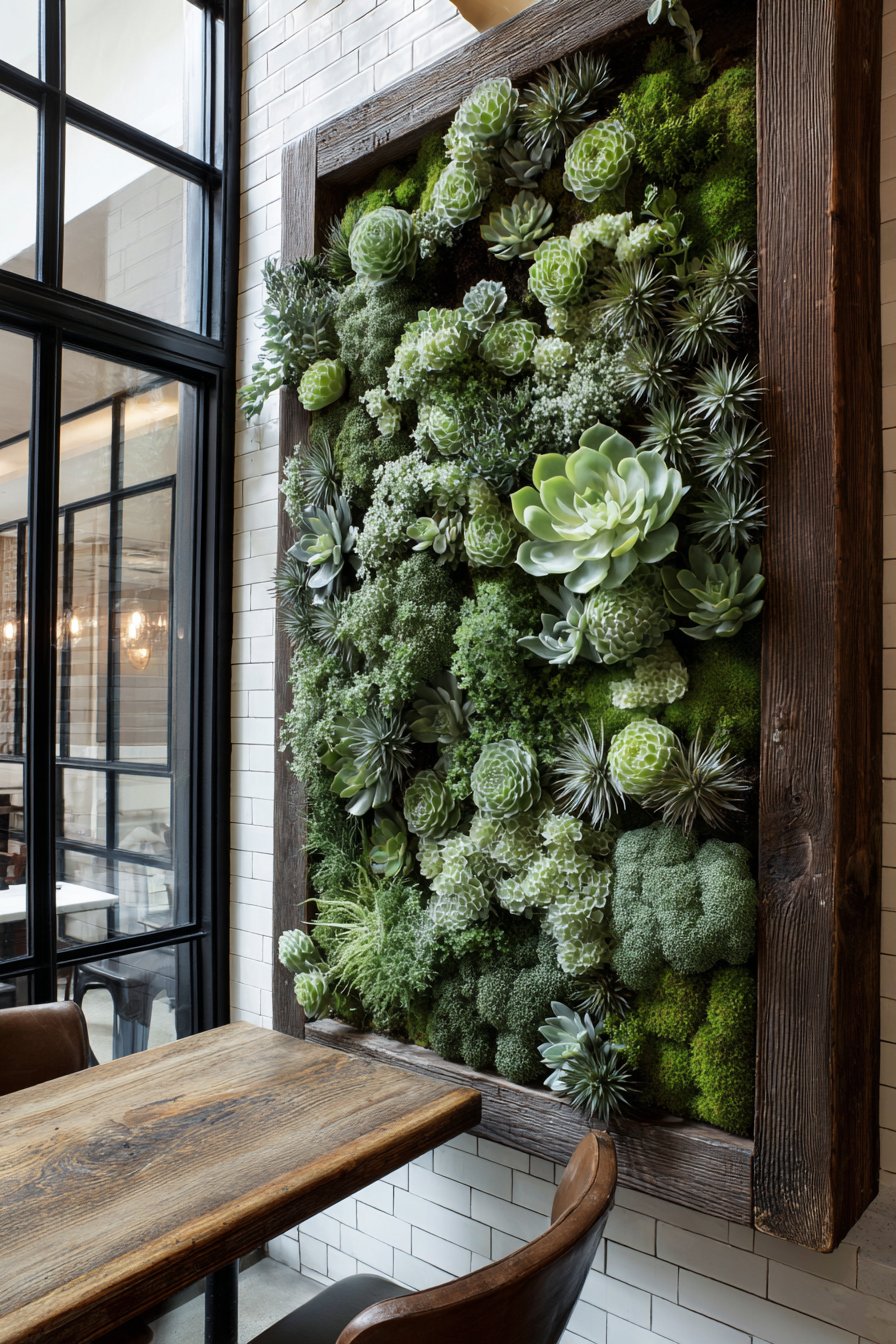
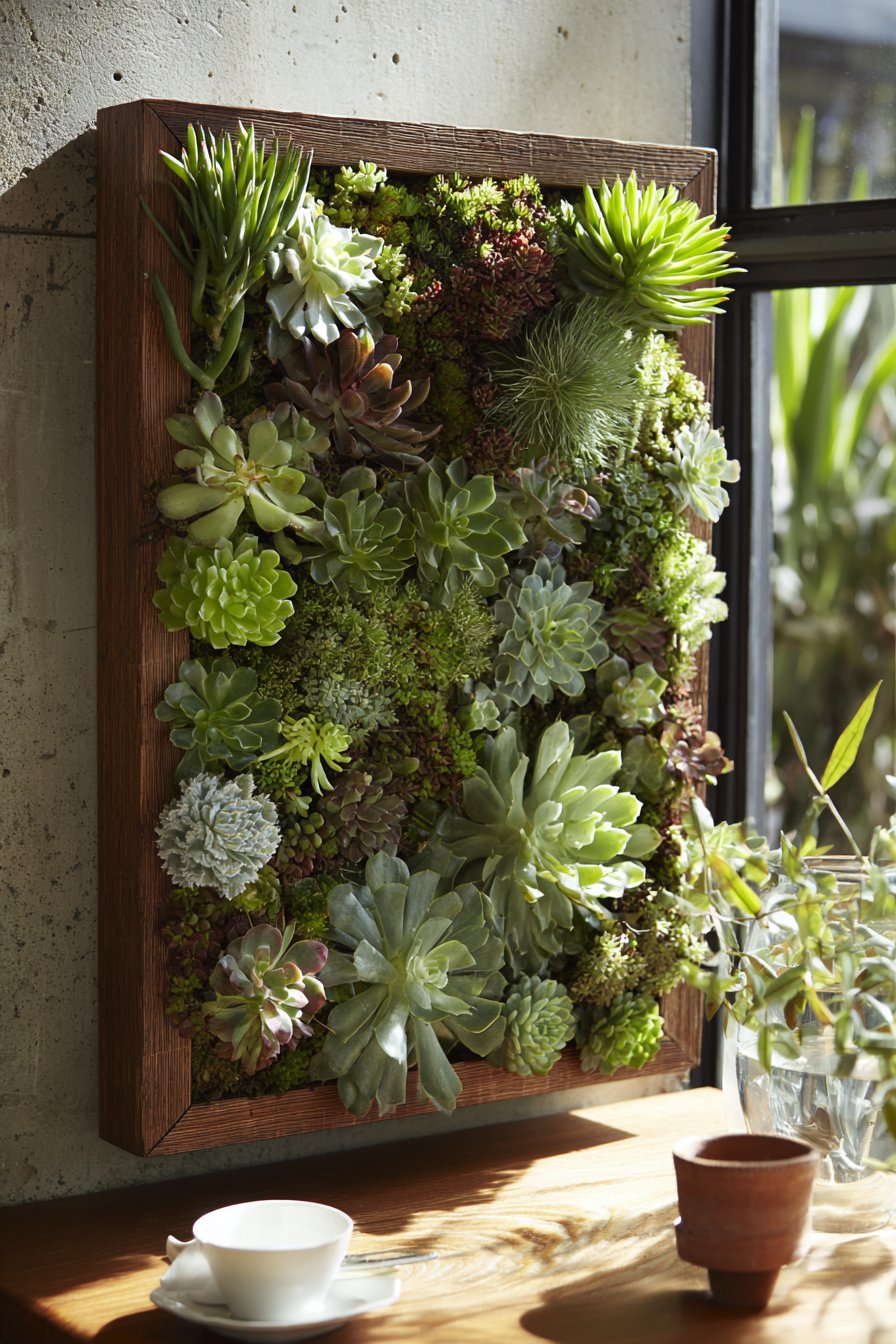
Innovation in green wall design extends beyond traditional formats, as demonstrated by succulent wall installations that function as living artwork. This concept features a custom wooden frame holding a diverse collection of succulents in various shades of green, creating a living tapestry positioned as kitchen art above a breakfast nook. The varied textures of succulent varieties—fuzzy leaves, smooth rosettes, and spiky specimens—create visual interest and dimensional complexity that rivals traditional artwork while offering the added benefit of living, growing elements.
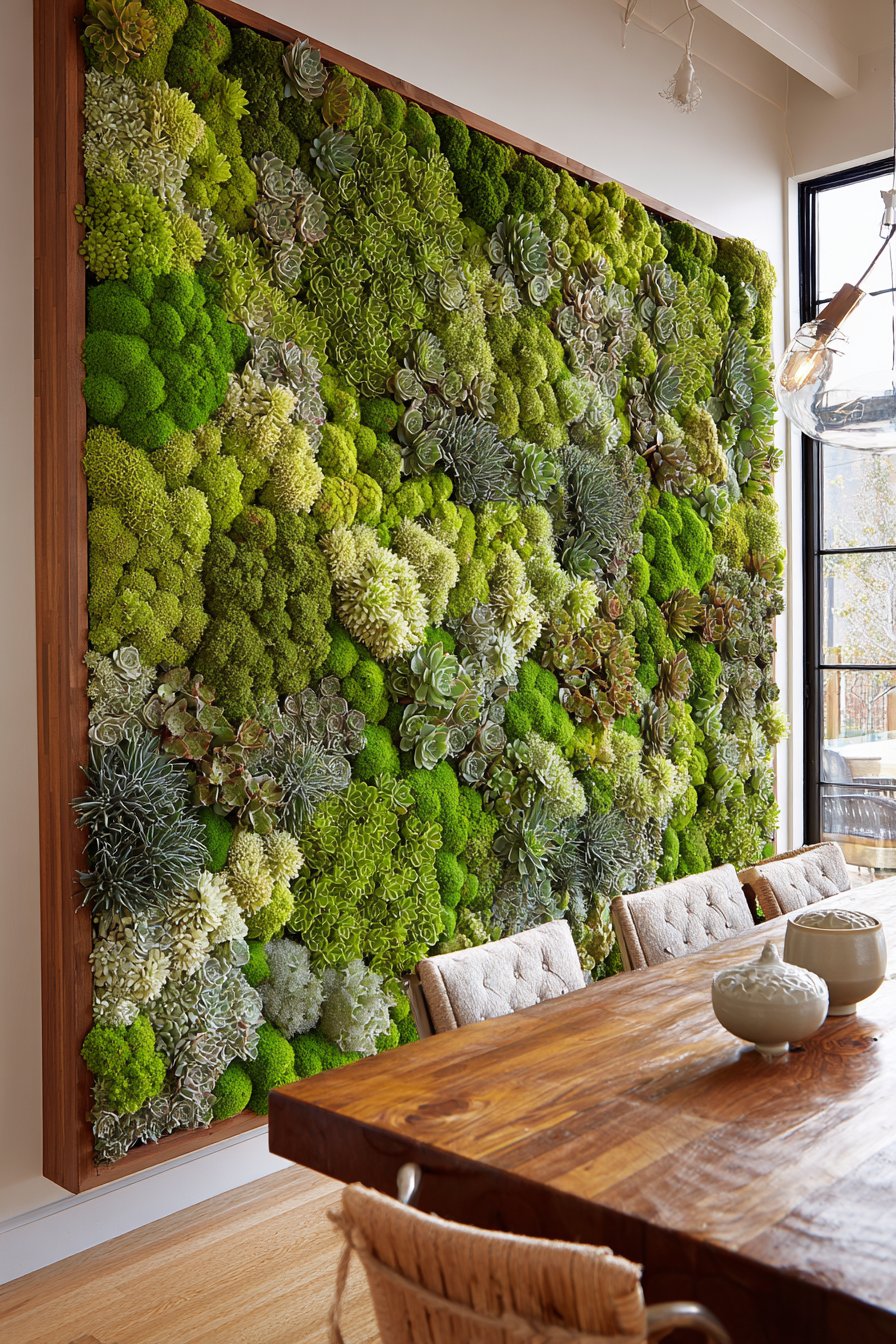
Succulents provide ideal plant material for kitchen installations due to their low water requirements and tolerance for varying light conditions. Unlike herbs or traditional houseplants that may struggle in kitchen environments with fluctuating temperatures and humidity levels, succulents thrive with minimal attention while maintaining their sculptural beauty. The diversity of available succulent varieties allows for sophisticated color gradations and textural variations within a cohesive green palette, creating compositions that range from subtle and monochromatic to vibrant and varied.
White subway tile and butcher block countertops provide clean contrast that allows the succulent wall to read as a distinct focal point rather than blending into the kitchen’s background. Natural morning light from nearby windows highlights the dimensional quality and color variations of individual succulents, creating shadows and highlights that emphasize their sculptural forms. This innovative use of living plants as functional art demonstrates how green walls can transcend purely decorative or purely functional categories to occupy a unique space that combines aesthetic and natural benefits.
Key Design Tips:
- Construct the frame with proper drainage systems to prevent water accumulation and root rot
- Select succulents with similar water and light requirements to simplify maintenance
- Position the living art in areas with adequate natural light but away from direct afternoon sun that could scorch plants
- Create varied height profiles using different succulent growth habits to add dimensional interest
- Replace individual succulents as needed to maintain the composition’s visual balance and plant health
15. Industrial Loft Olive Green Accent Wall
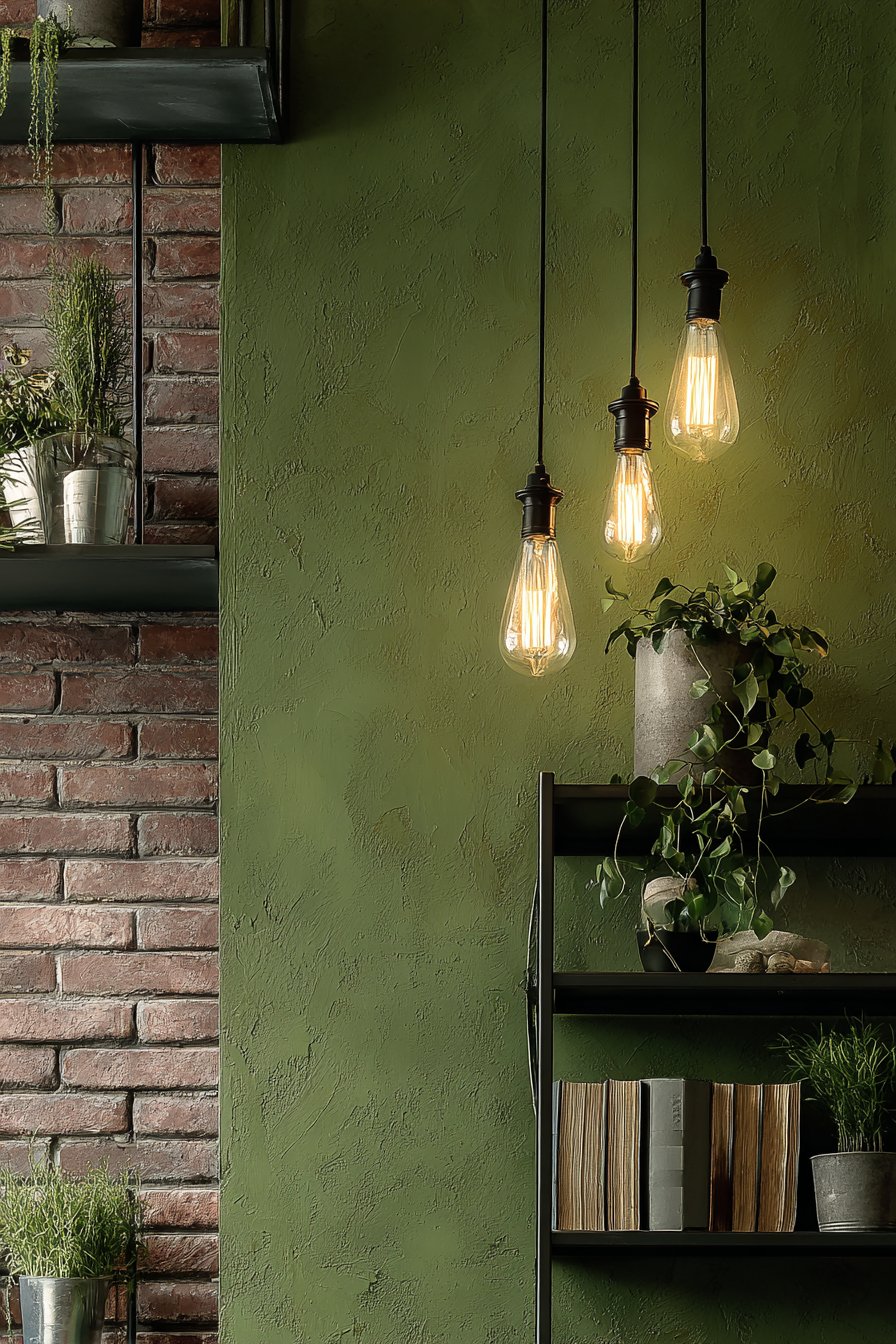
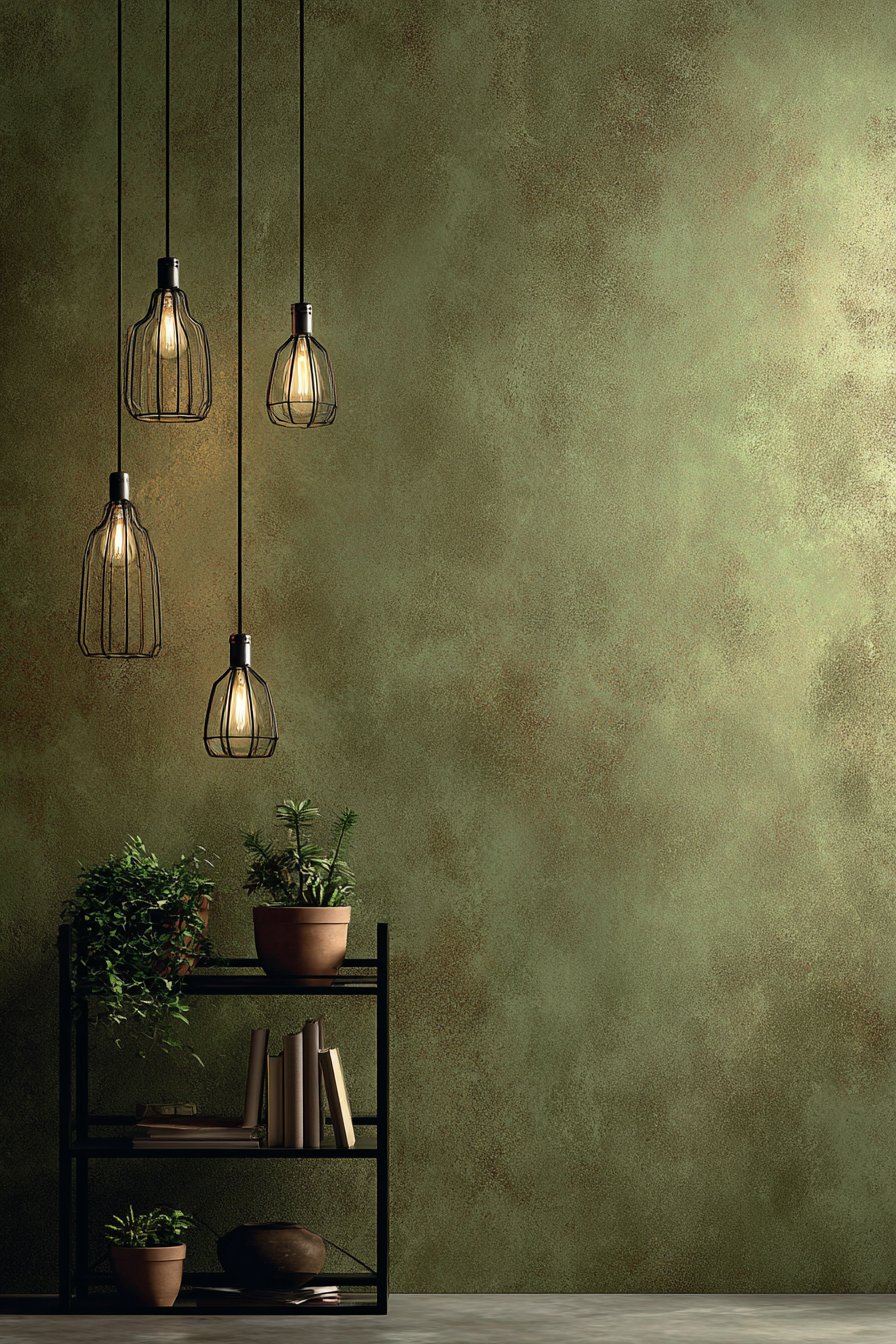
The industrial aesthetic’s emphasis on raw materials and honest construction finds sophisticated counterbalance in carefully selected painted accent walls. This design features a muted olive green wall within an industrial loft space, the hand-painted finish showing subtle variations that provide warmth against exposed brick and concrete elements. A black metal shelving unit displaying plants and books sits against the green wall, creating a curated vignette that demonstrates how organic color can soften industrial architecture without compromising its character.
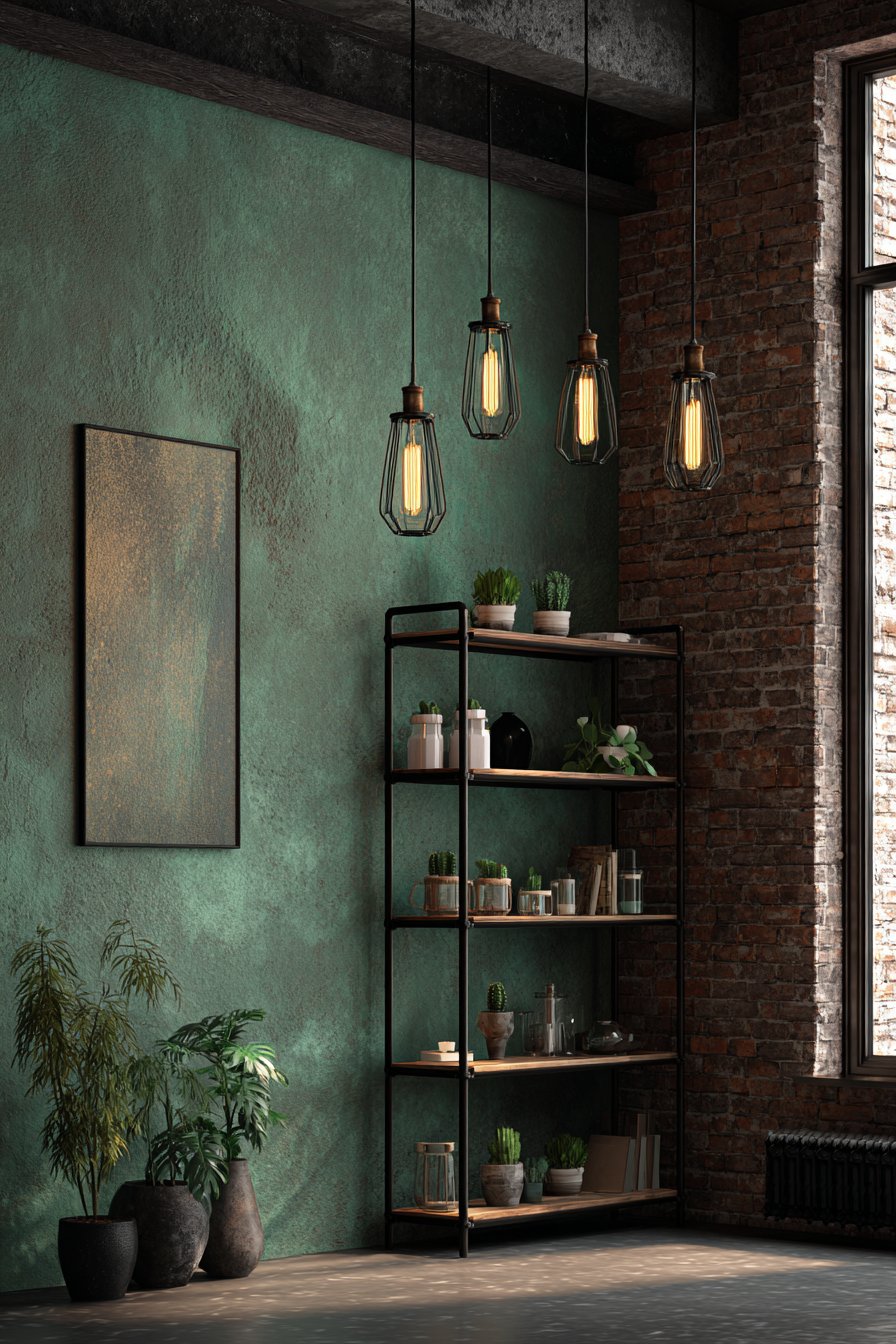
The olive green color choice is particularly well-suited to industrial spaces, offering enough depth and sophistication to hold its own against raw architectural materials while remaining subtle enough not to compete for attention. The hand-painted finish with its visible variations adds human touch to environments that might otherwise feel too minimal or austere. These intentional imperfections in the paint application create texture and visual interest that prevents the wall from appearing flat or lifeless, adding warmth and character that complements rather than contradicts the industrial aesthetic.
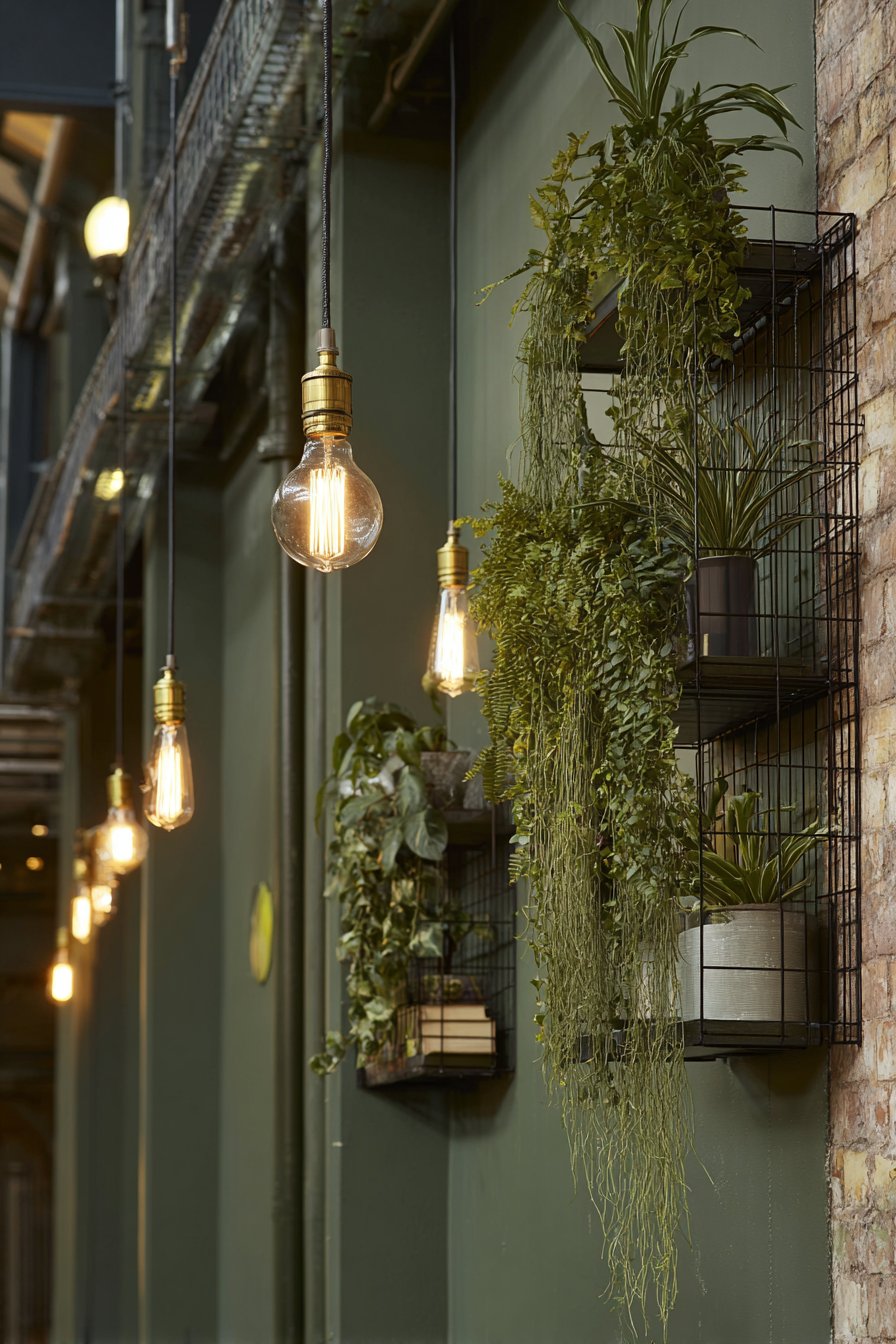
Edison bulb pendant lights create warm artificial highlights that enhance the natural patina of industrial materials while bringing out the complex undertones in the olive green paint. The interplay between warm light and cool concrete, between organic color and industrial metal, creates visual tension that energizes the space without disrupting its essential character. The black metal shelving serves as visual bridge between the painted wall and surrounding industrial elements, its geometric form providing structure while the books and plants it displays add color, texture, and personal character.
Key Design Tips:
- Embrace visible brush strokes and color variations for authentic hand-painted character
- Select olive green shades that incorporate gray undertones to complement industrial materials
- Balance the painted accent wall with ample exposed industrial elements to maintain authentic loft character
- Layer different textures and materials on shelving to prevent the display from appearing too minimal
- Install warm-temperature lighting to counteract the naturally cool tones of concrete and metal
16. Outdoor Patio Climbing Plant Privacy Screen
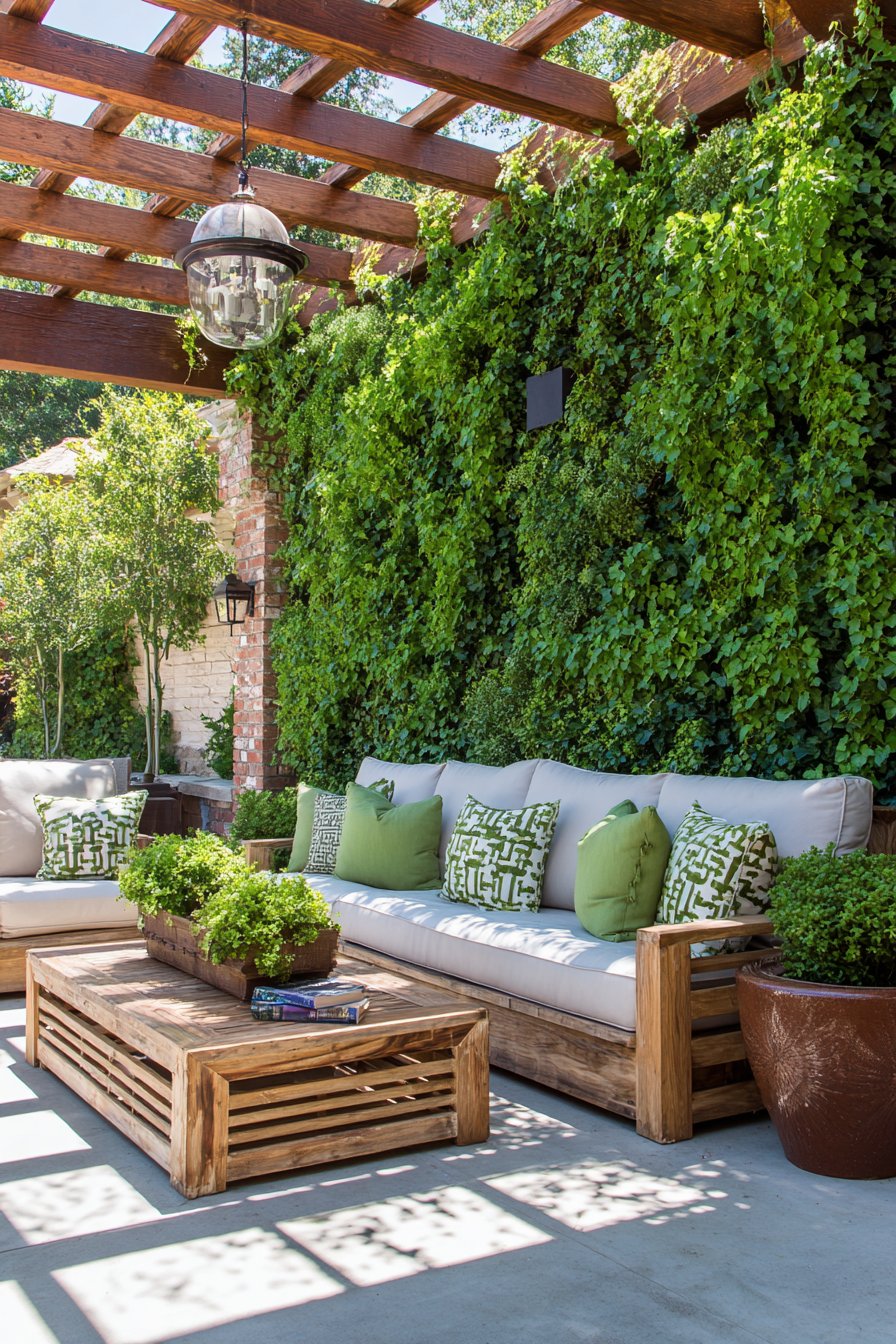
The boundary between indoor and outdoor living spaces becomes increasingly fluid with the strategic use of green wall installations that create privacy while maintaining connection to nature. This covered patio design features a trellis-mounted living wall of climbing jasmine and ivy, creating a natural privacy screen that demonstrates how functional needs can be met through beautiful, living solutions. The layered green foliage shows realistic growth patterns with varying leaf sizes and natural imperfections that contribute to authentic, organic appearance.
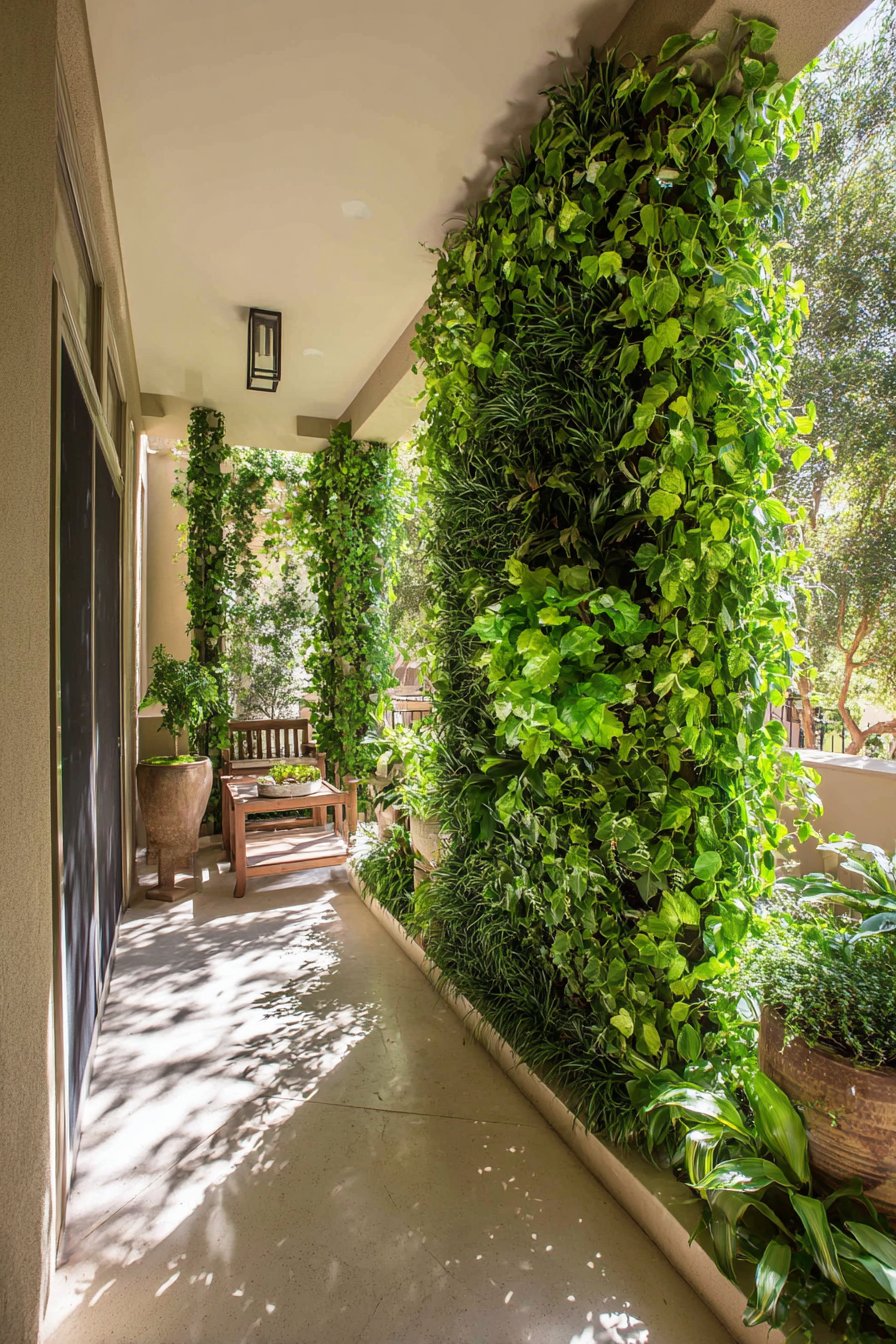
The selection of climbing jasmine and ivy creates multi-sensory experience that transcends purely visual impact. Jasmine provides fragrant blooms during growing season, filling the outdoor space with natural perfume that enhances relaxation and enjoyment. Ivy offers evergreen structure that maintains privacy and visual interest throughout the year, even during seasons when jasmine enters dormancy. This combination of deciduous and evergreen plants ensures the privacy screen maintains its function across seasonal changes while offering varied aesthetic interest throughout the year.
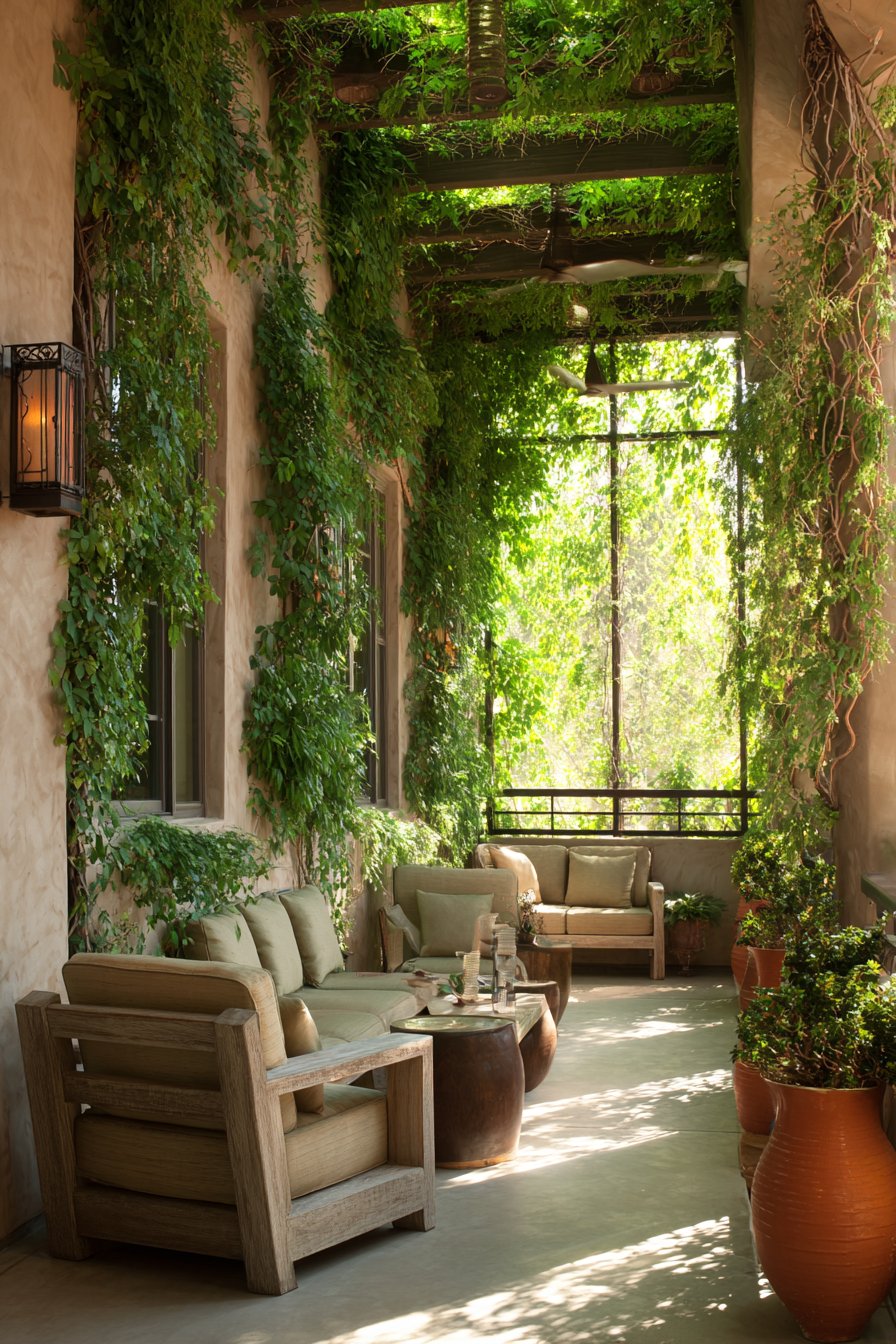
Weathered teak outdoor furniture and terracotta planters complement the organic aesthetic, their natural materials and warm tones creating harmonious relationship with the living wall. Dappled sunlight filtering through the leaves creates dynamic patterns of light and shadow on the concrete floor, adding temporal dimension that changes throughout the day. This interplay of light, shadow, and living material creates ever-changing environment that prevents outdoor spaces from feeling static, ensuring that time spent on the patio offers continuous visual interest and connection to natural cycles.
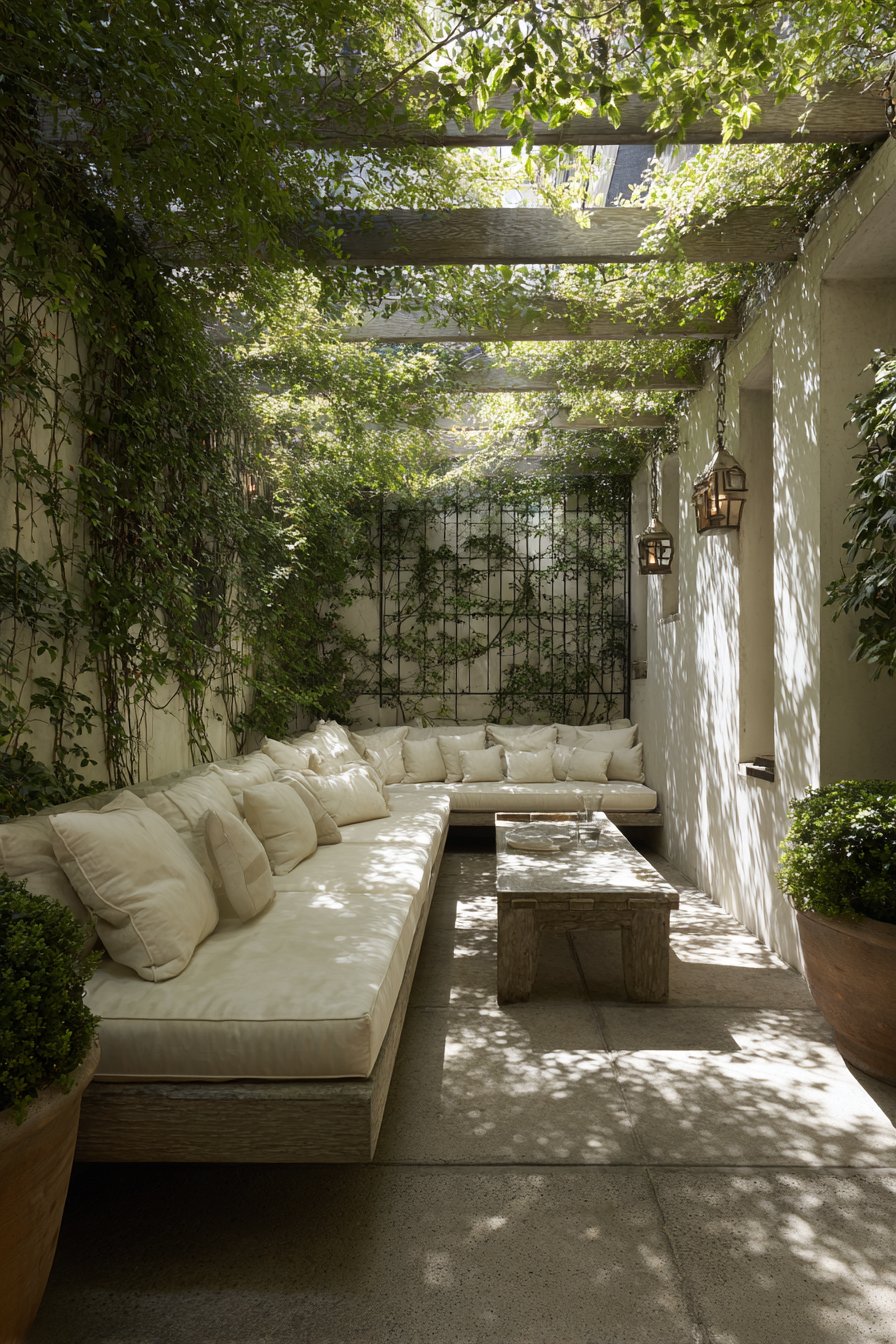
Key Design Tips:
- Install sturdy trellises anchored to structural elements capable of supporting mature plant weight
- Select climbing plants appropriate for your regional climate and patio sun exposure
- Incorporate both evergreen and flowering varieties for year-round interest and functionality
- Maintain regular pruning schedules to prevent overgrowth and ensure healthy, dense coverage
- Consider installing irrigation systems for consistent watering during hot summer months
17. Minimalist Home Gym Acoustic Moss Wall
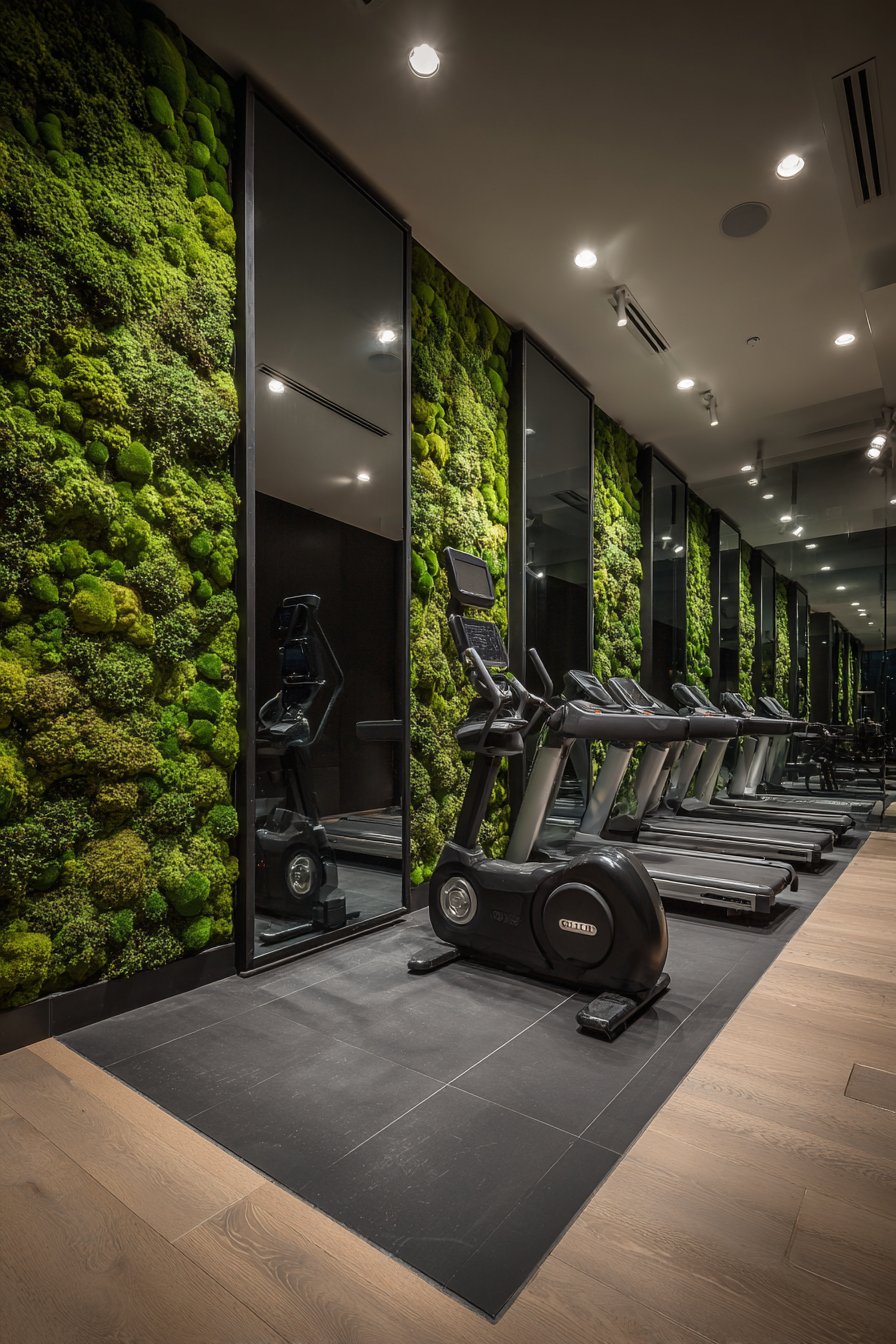
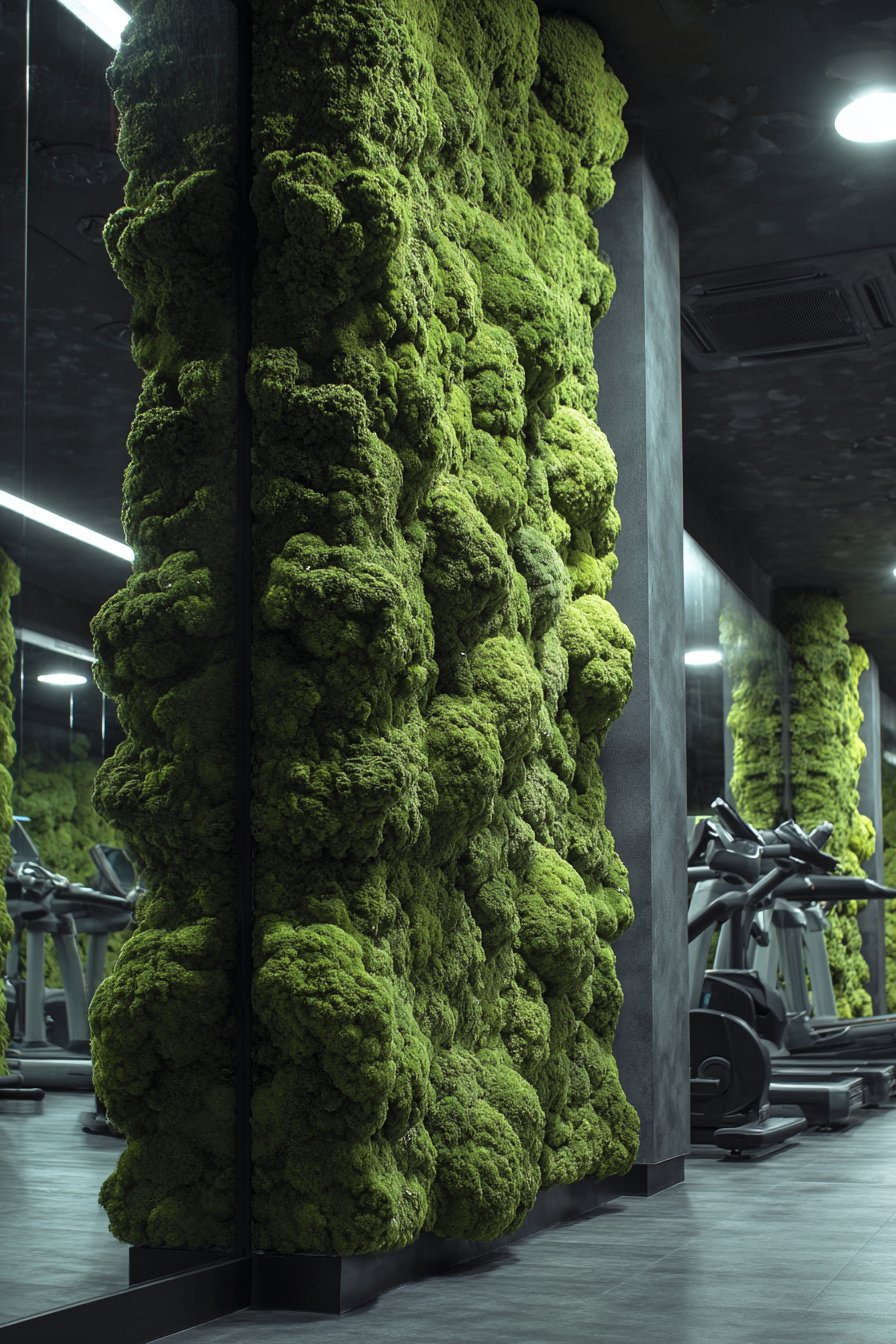
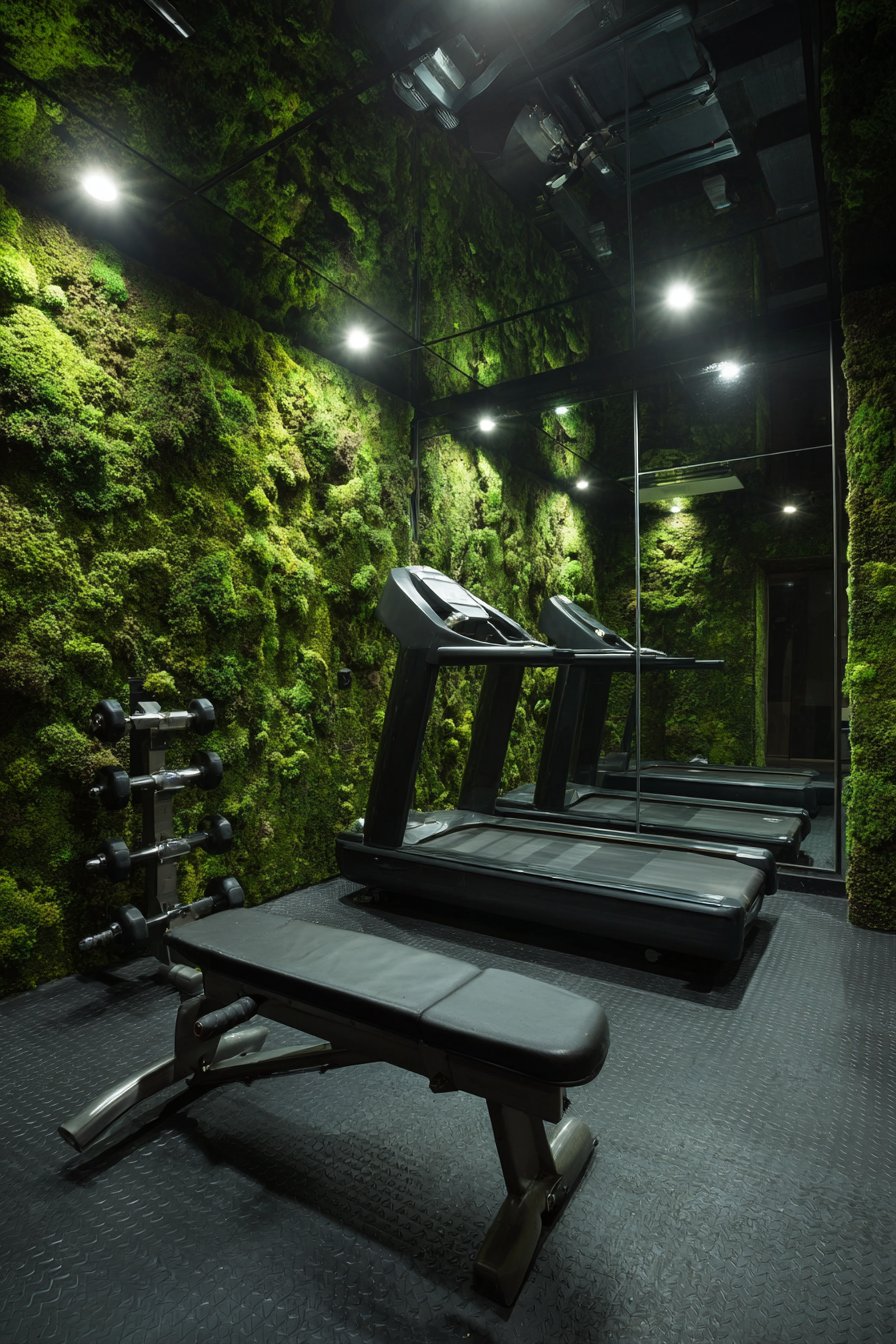
The unexpected integration of natural elements into functional fitness spaces demonstrates the versatility of green wall concepts. This design features a preserved moss wall panel in deep green providing both acoustic benefits and visual interest in a minimalist home gym. The textured moss wall creates a calming backdrop behind modern exercise equipment with clean black and chrome finishes, proving that spaces dedicated to physical exertion can still prioritize aesthetics and sensory experience.
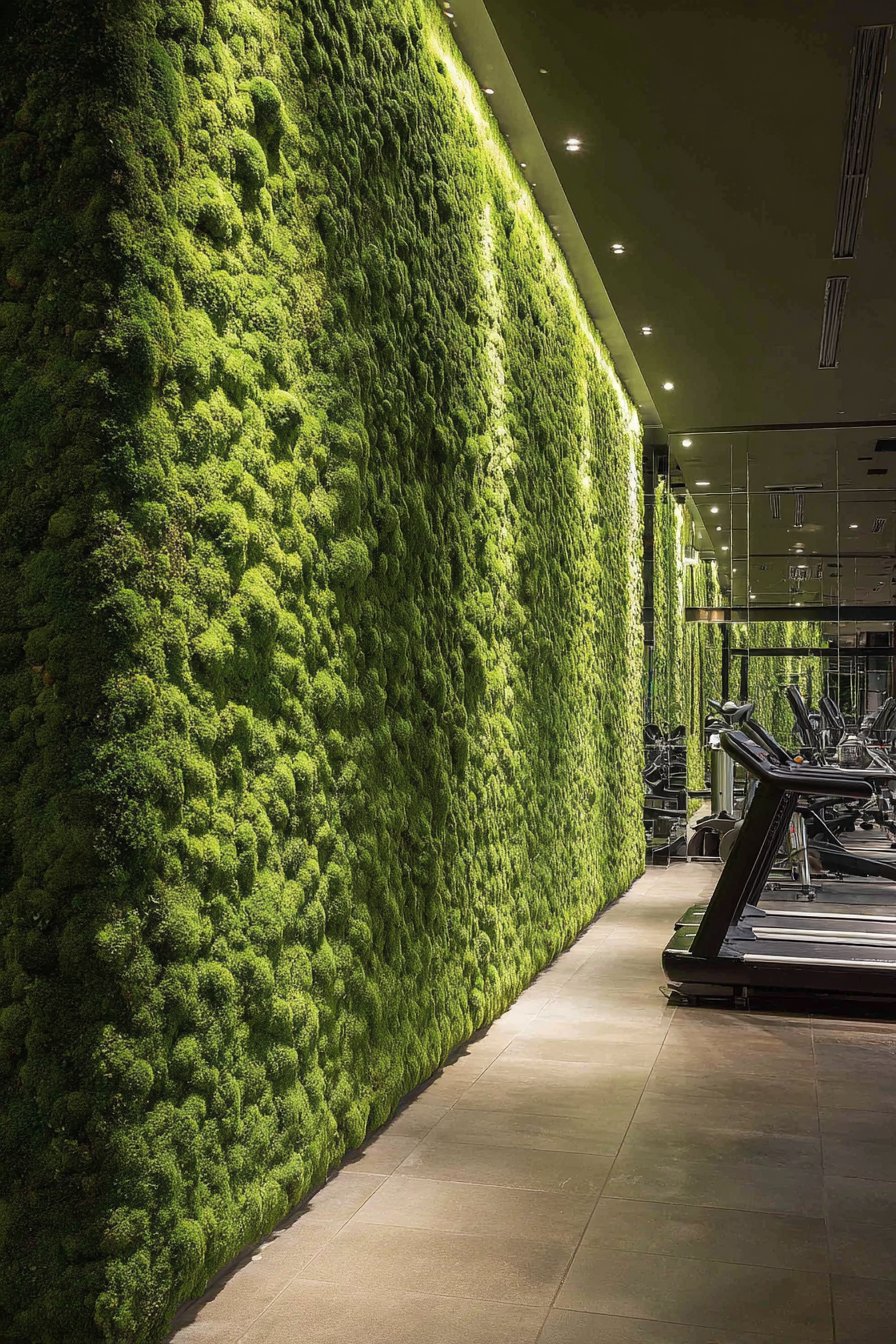
The practical benefits of moss walls in gym settings extend beyond visual appeal. The textured surface provides acoustic dampening that reduces noise from equipment and exercise activities, creating more pleasant workout environment while potentially reducing sound transmission to adjacent rooms. The deep green color offers psychological benefits well-documented in color psychology research—green promotes balance, calm, and focus, mental states conducive to consistent exercise routines and proper form. The juxtaposition of the organic moss texture with the sleek, modern exercise equipment creates visual interest that prevents the functional space from feeling sterile or institutional.
Rubber flooring and mirrored walls complete the functional gym requirements while maintaining the minimalist aesthetic. Recessed LED lighting creates even illumination throughout the space while highlighting the organic texture of the moss wall, its directed light emphasizing the dimensional quality of the natural material. This integration of natural elements into purpose-built fitness spaces demonstrates how green wall concepts can enhance virtually any room type, bringing biophilic benefits to spaces traditionally dominated by artificial materials and mechanical equipment.
Key Design Tips:
- Select preserved rather than living moss to eliminate moisture concerns in equipment-heavy environments
- Position the moss wall on surfaces away from direct equipment contact or impact
- Install adequate ventilation to maintain appropriate humidity levels for both moss preservation and equipment longevity
- Use neutral color palettes for equipment and surfaces to allow the green moss wall to serve as color accent
- Incorporate natural or full-spectrum lighting to enhance the moss’s visual impact and create pleasant workout atmosphere
18. Traditional Study Botanical Gallery Wall
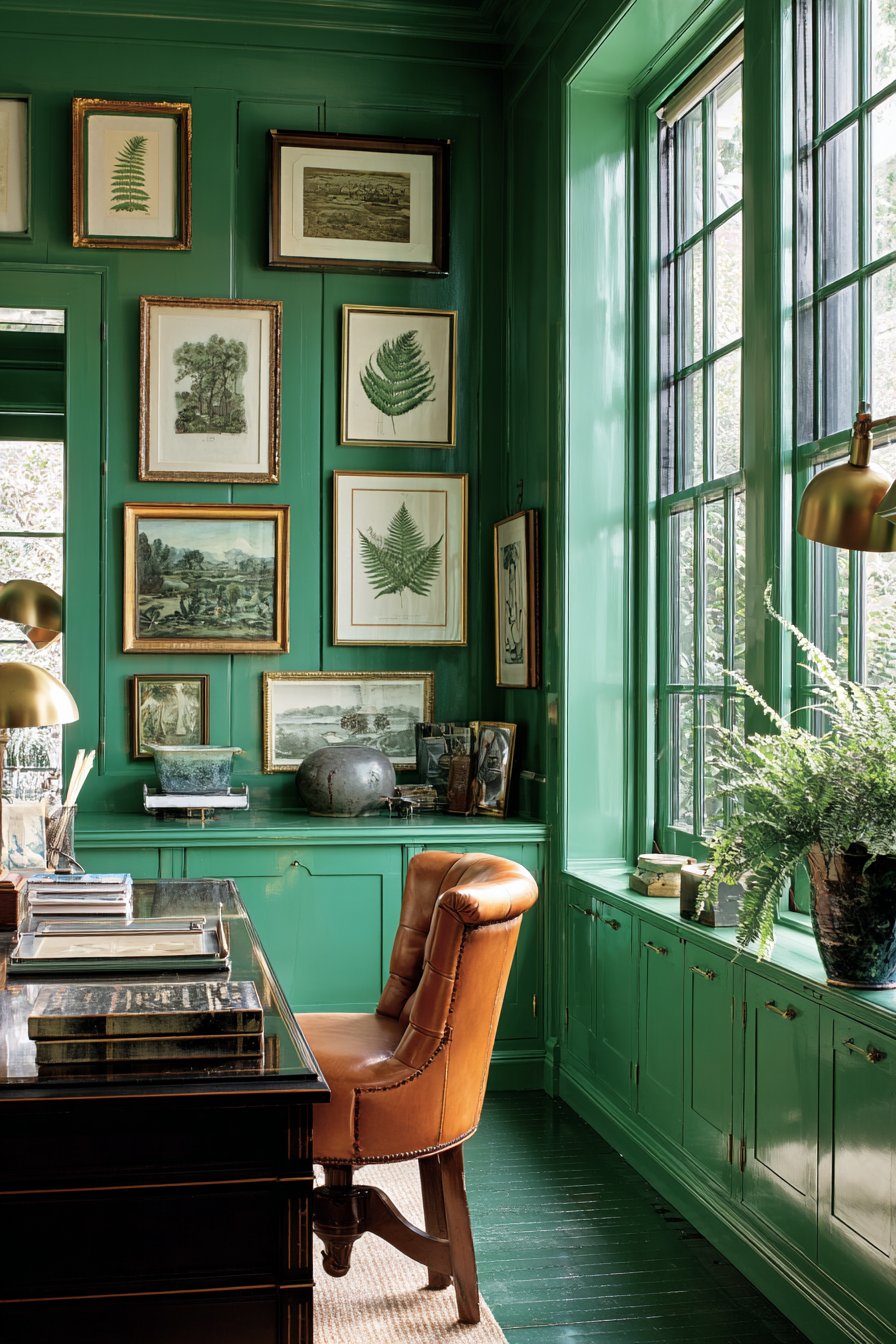
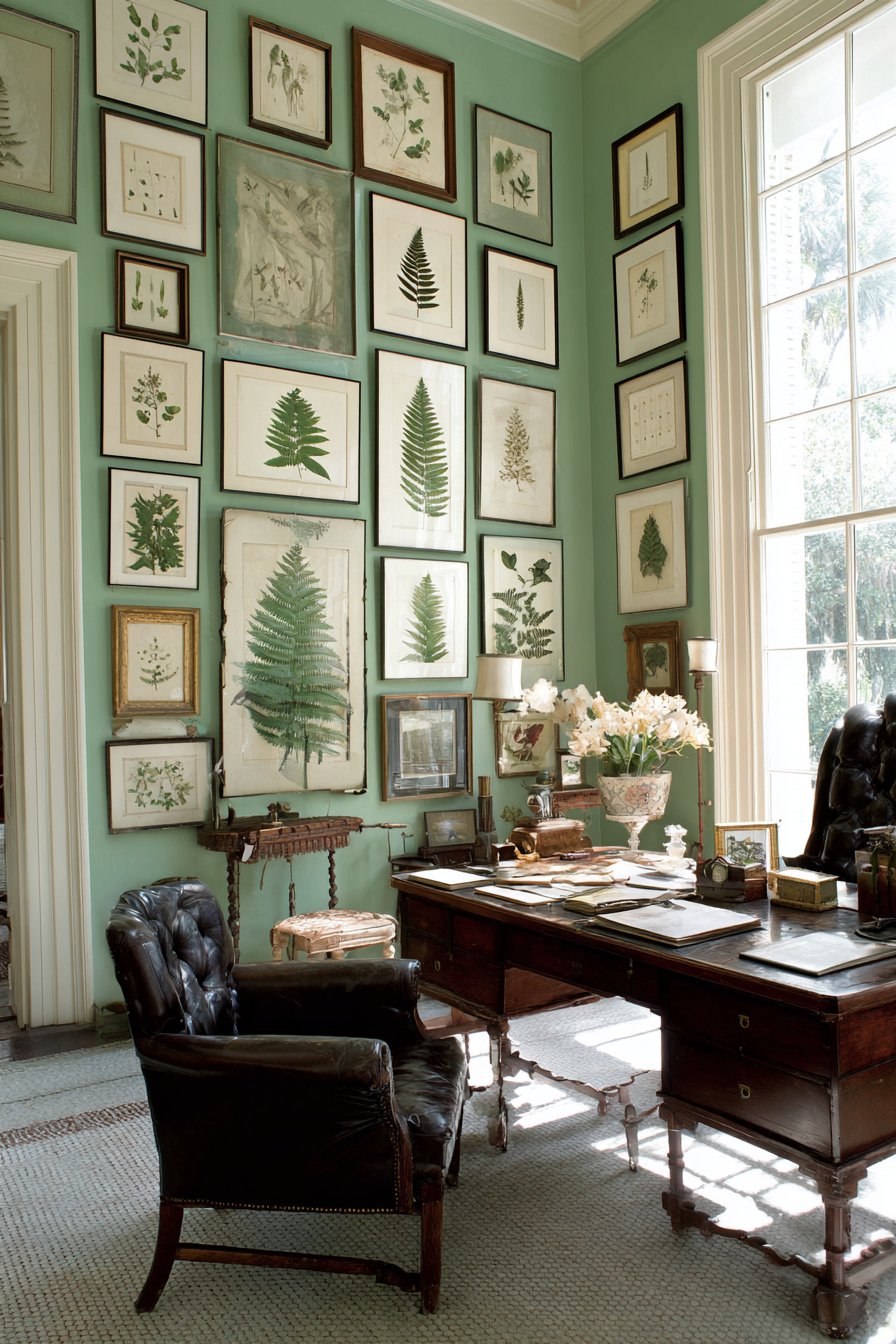
Classic interior design finds fresh expression through thoughtful curation of botanical elements against painted backgrounds. This green wall concept features a collection of framed botanical prints and pressed ferns arranged gallery-style on a light mint green painted wall in a traditional study. The vintage-inspired green wall color shows a subtle eggshell finish that catches natural light beautifully, creating sophisticated backdrop for the botanical artwork while contributing to the scholarly atmosphere appropriate for reading and reflection.
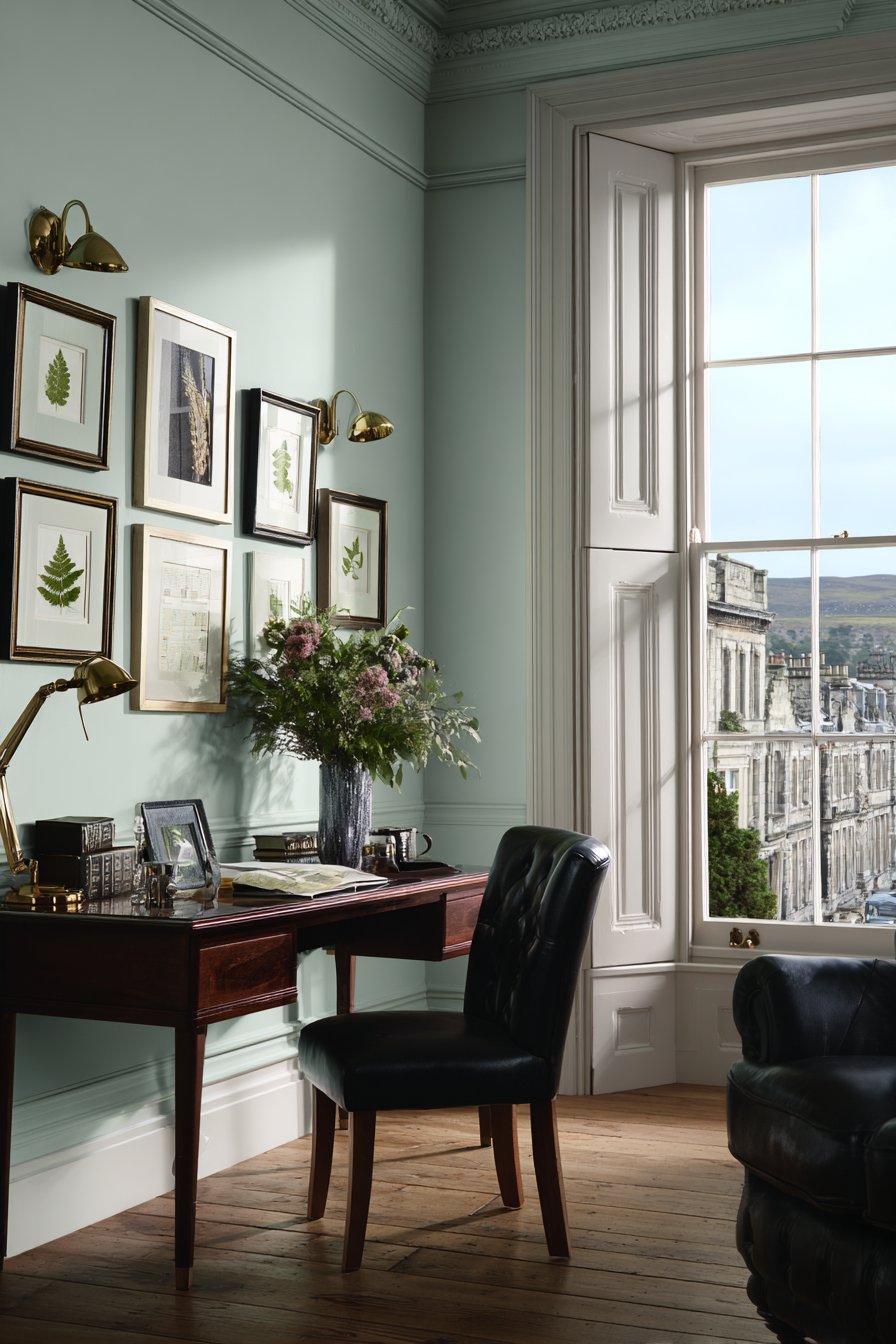
The gallery wall arrangement requires careful curation and placement to achieve balanced composition. The framed botanical prints and pressed ferns create visual narrative that celebrates natural history and scientific illustration, themes appropriate for study environments. The varied frame styles and artwork scales add visual interest while maintaining cohesive aesthetic through consistent matting and botanical subject matter. Brass picture lights illuminate individual pieces, adding focused lighting that emphasizes the artwork’s details while creating warm glows against the cool mint green wall.
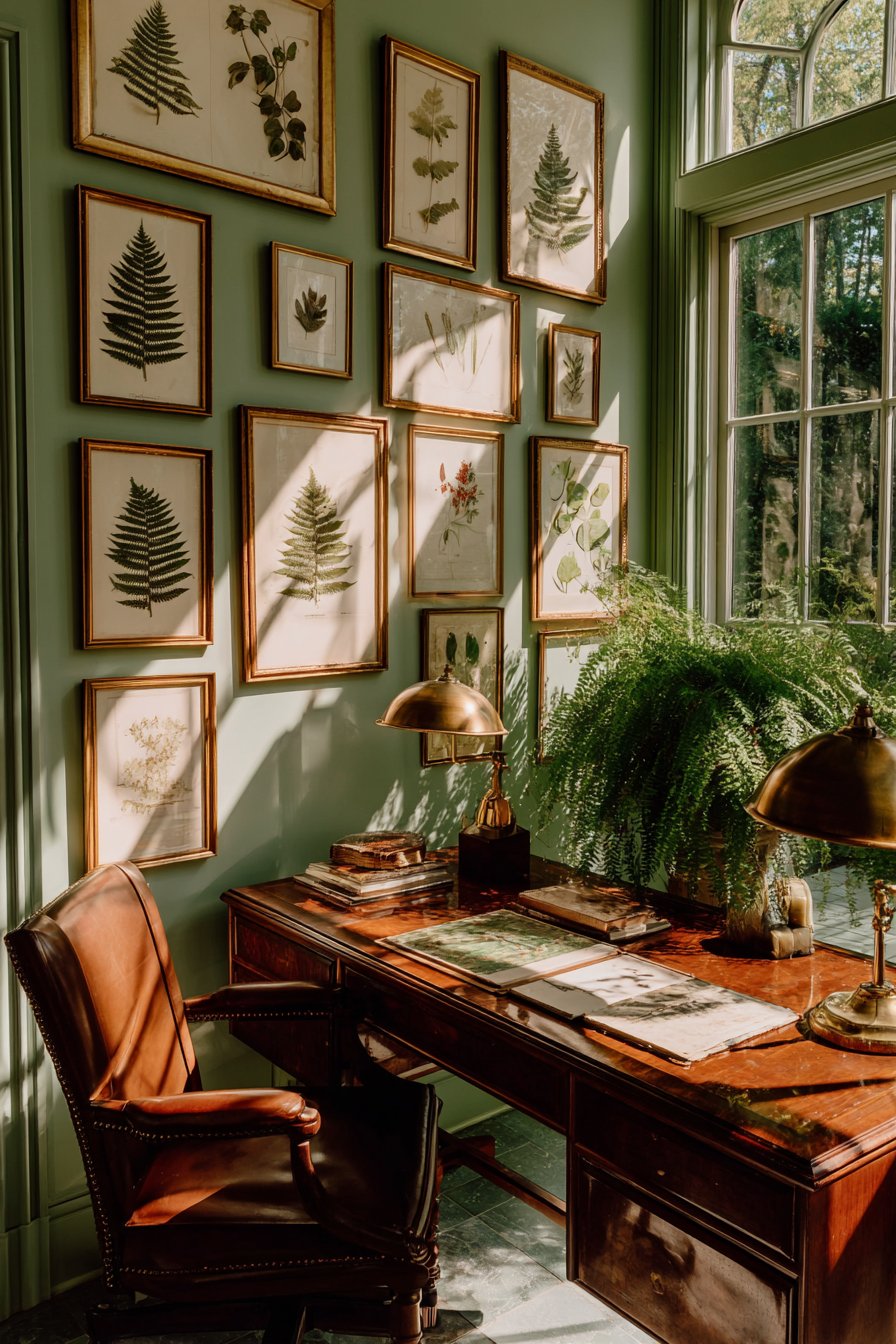
Rich mahogany desk and leather chair provide classic contrast that anchors the room in traditional design vocabulary while the painted wall and botanical artwork introduce organic elements that soften the potentially austere character of dark wood furniture. Natural daylight from tall windows creates soft shadows and highlights throughout the day, emphasizing the dimensional quality of the framed artwork and the subtle variations in the painted wall surface. This layered approach to natural elements—painted color, botanical illustrations, and natural light—creates sophisticated environment that supports focused work and contemplative reading.
Key Design Tips:
- Plan gallery wall layout on floor before hanging to ensure balanced composition and appropriate spacing
- Select frame styles that complement the traditional aesthetic while maintaining subtle variety
- Position brass picture lights to eliminate glare while adequately illuminating artwork details
- Choose mint green shade with appropriate undertones to complement wood furniture without creating color clash
- Incorporate a mix of vintage botanical prints and pressed specimens for authentic natural history aesthetic
19. Contemporary Sunroom Floor-to-Ceiling Living Wall
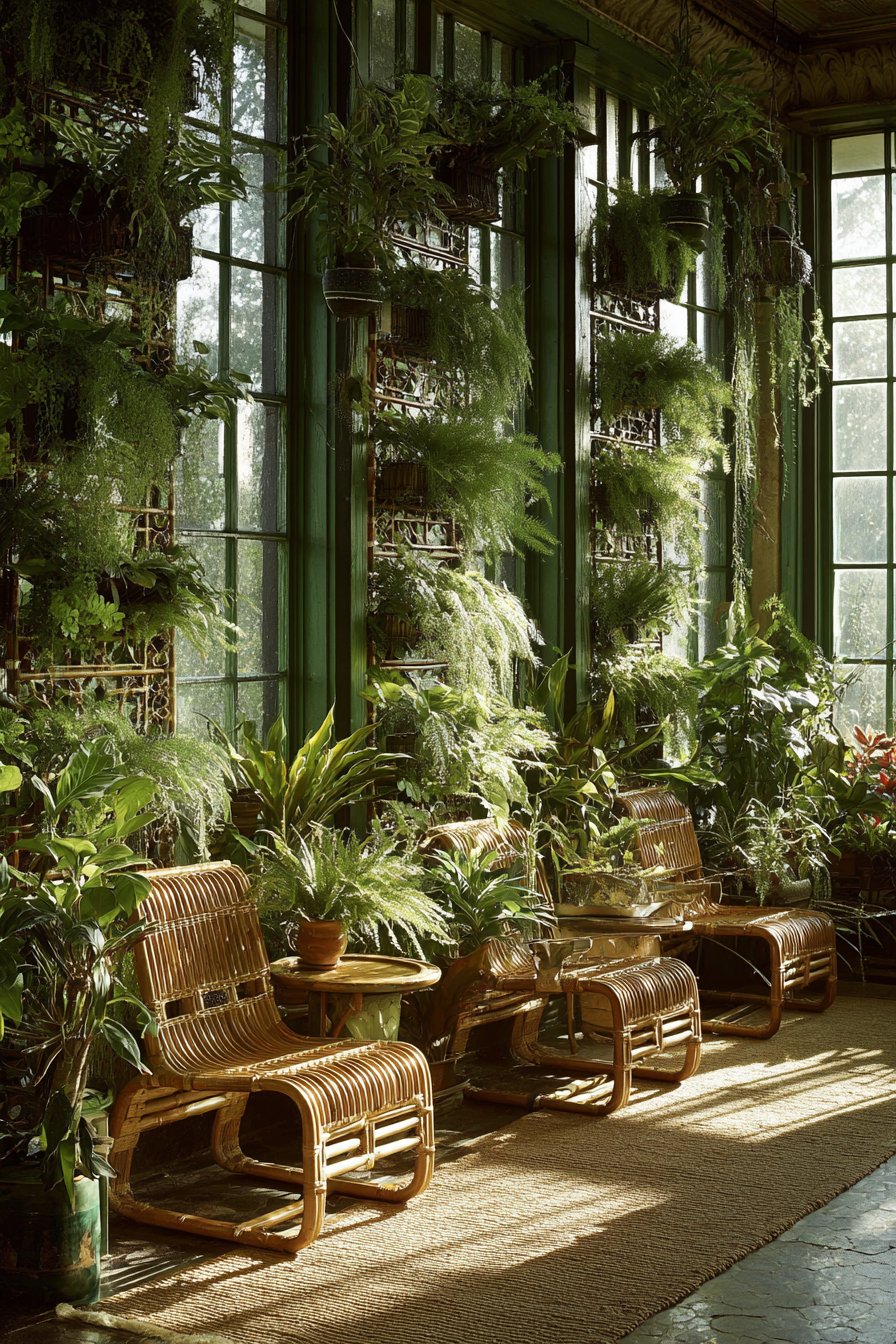
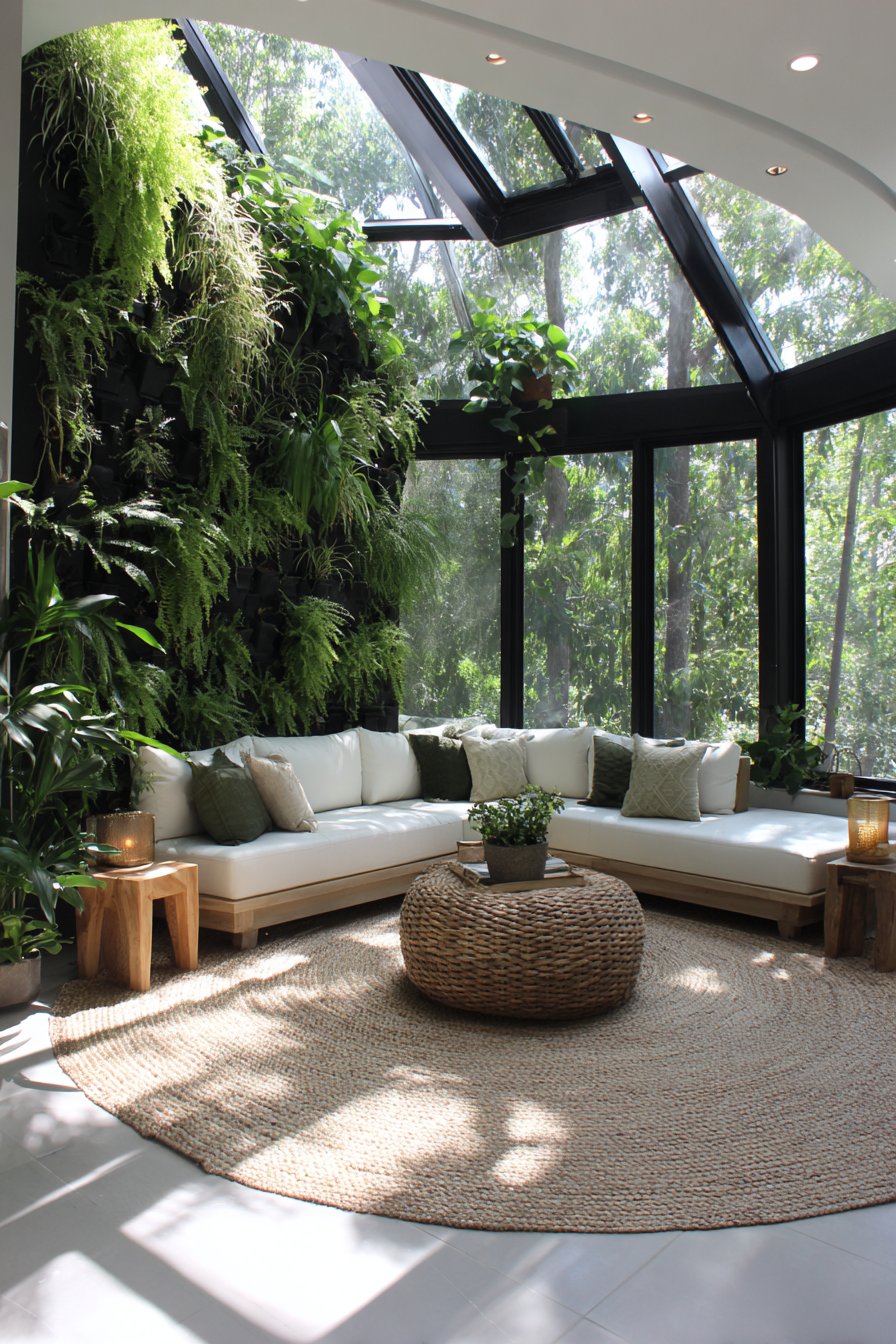
Ambitious green wall installations reach their apex in comprehensive floor-to-ceiling designs that transform entire walls into living tapestries. This contemporary sunroom features extensive pocket planters creating a living wall of ferns, prayer plants, and begonias, demonstrating the dramatic impact possible when green wall concepts are implemented at architectural scale. The integrated drip irrigation system, visible as subtle black tubing, ensures consistent plant health while acknowledging the practical requirements of maintaining extensive living installations.
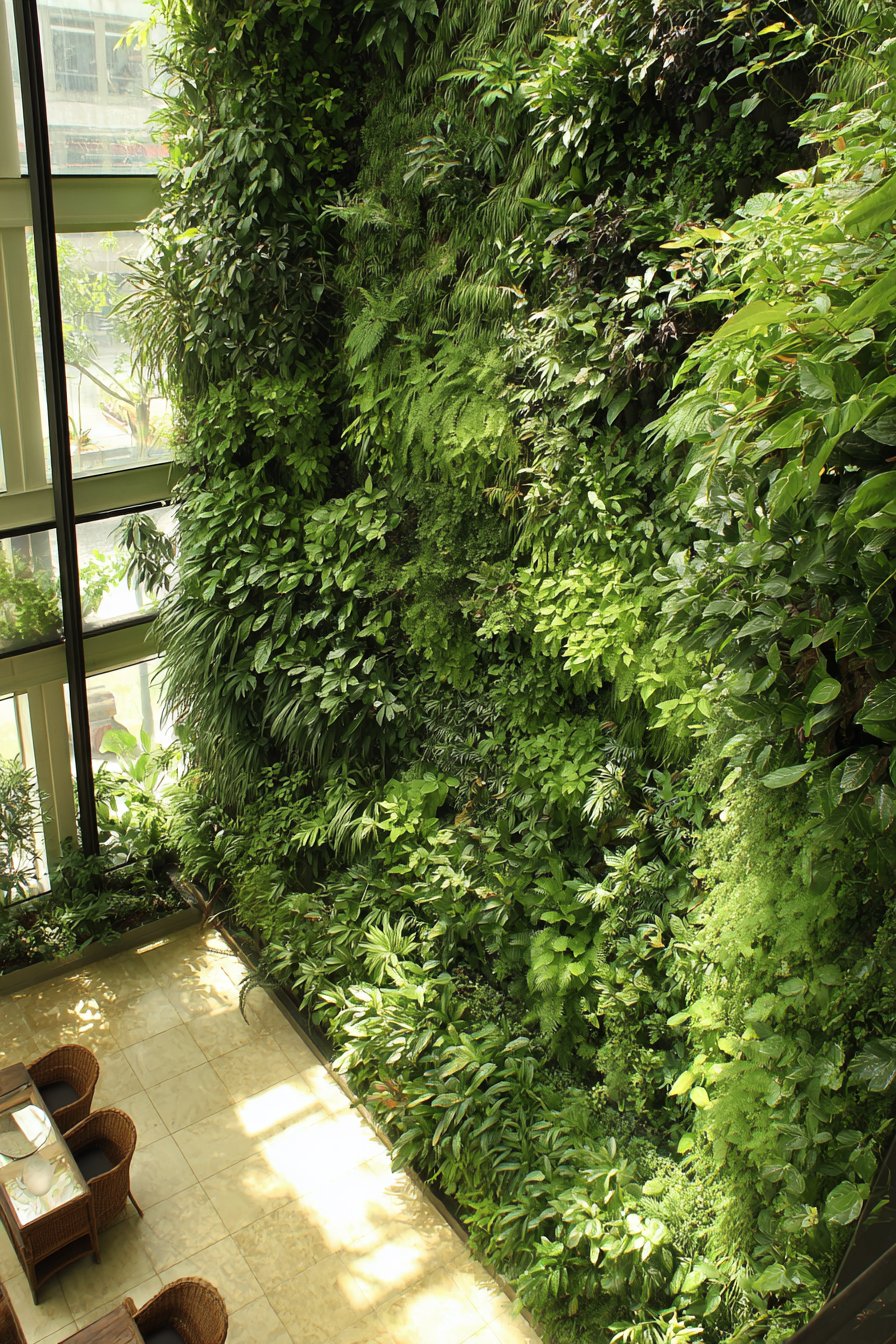
The plant selection showcases varieties that thrive in the abundant natural light characteristic of sunroom environments. Ferns provide textural variety and movement, their delicate fronds responding to air currents and creating dynamic visual interest. Prayer plants contribute bold foliage patterns and the fascinating characteristic movement of raising leaves in evening hours, adding temporal dimension that changes throughout the day. Begonias introduce occasional blooms that punctuate the predominantly green composition with color, creating focal points that evolve with blooming cycles.
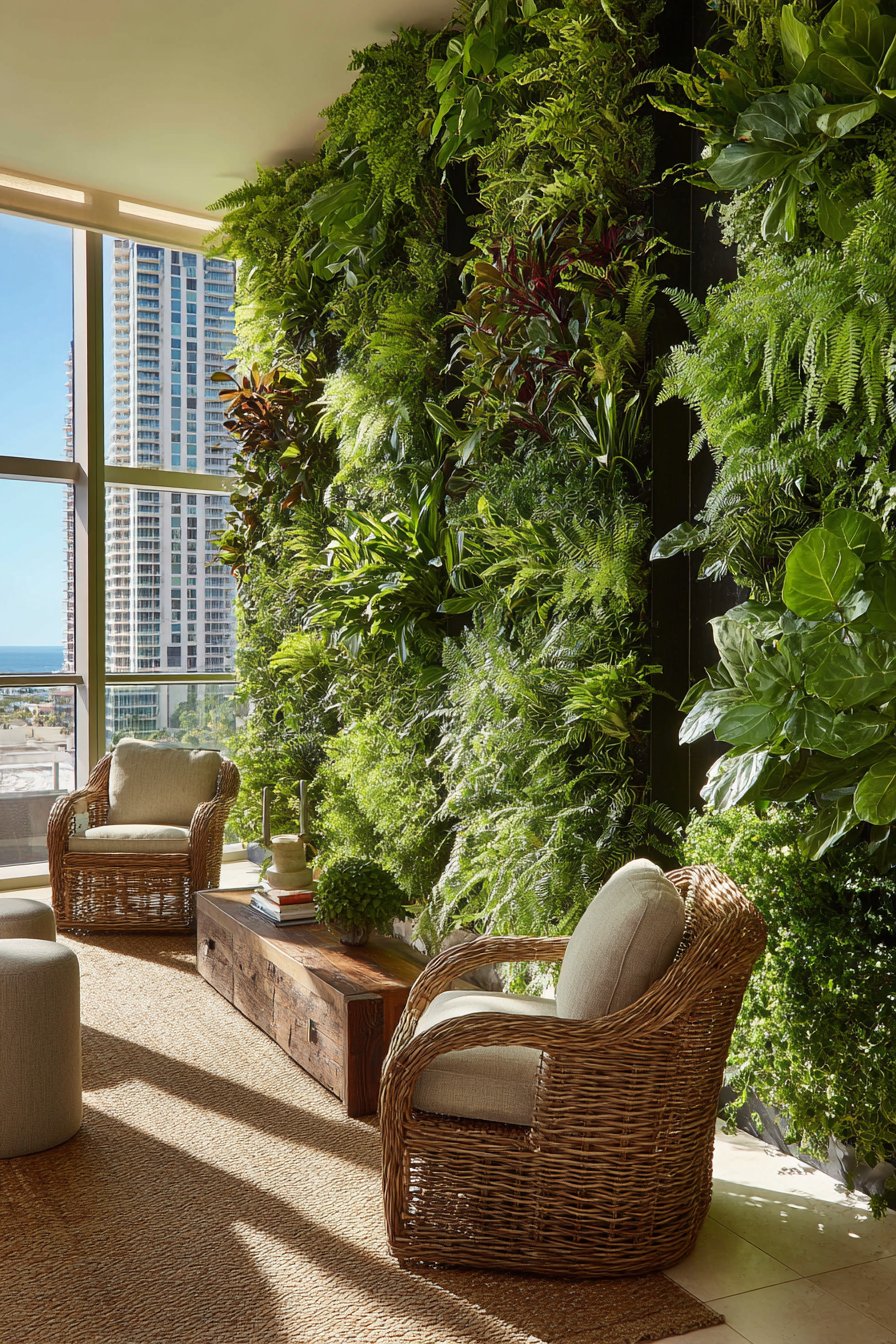
Natural rattan furniture and jute area rugs complement the abundant greenery, their organic materials and warm tones creating harmonious environment that celebrates natural materials and biophilic design principles. Abundant natural light from surrounding windows creates dramatic highlights and shadows throughout the day, the changing light quality emphasizing the lush, jungle-like atmosphere. This immersive approach to green wall design demonstrates the transformative potential of comprehensive plant installations, creating spaces that feel more like conservatories or greenhouses than traditional residential rooms.
Key Design Tips:
- Install professional-grade irrigation systems with timers and moisture sensors to maintain consistent plant health
- Select pocket planter systems with adequate drainage and root space to support long-term plant growth
- Group plants with similar light, water, and humidity requirements to simplify maintenance
- Plan for regular maintenance access including ladder storage and adequate working space
- Consider structural load requirements and consult professionals when installing extensive wall-mounted systems
20. Narrow Hallway Vertical Garden Installation
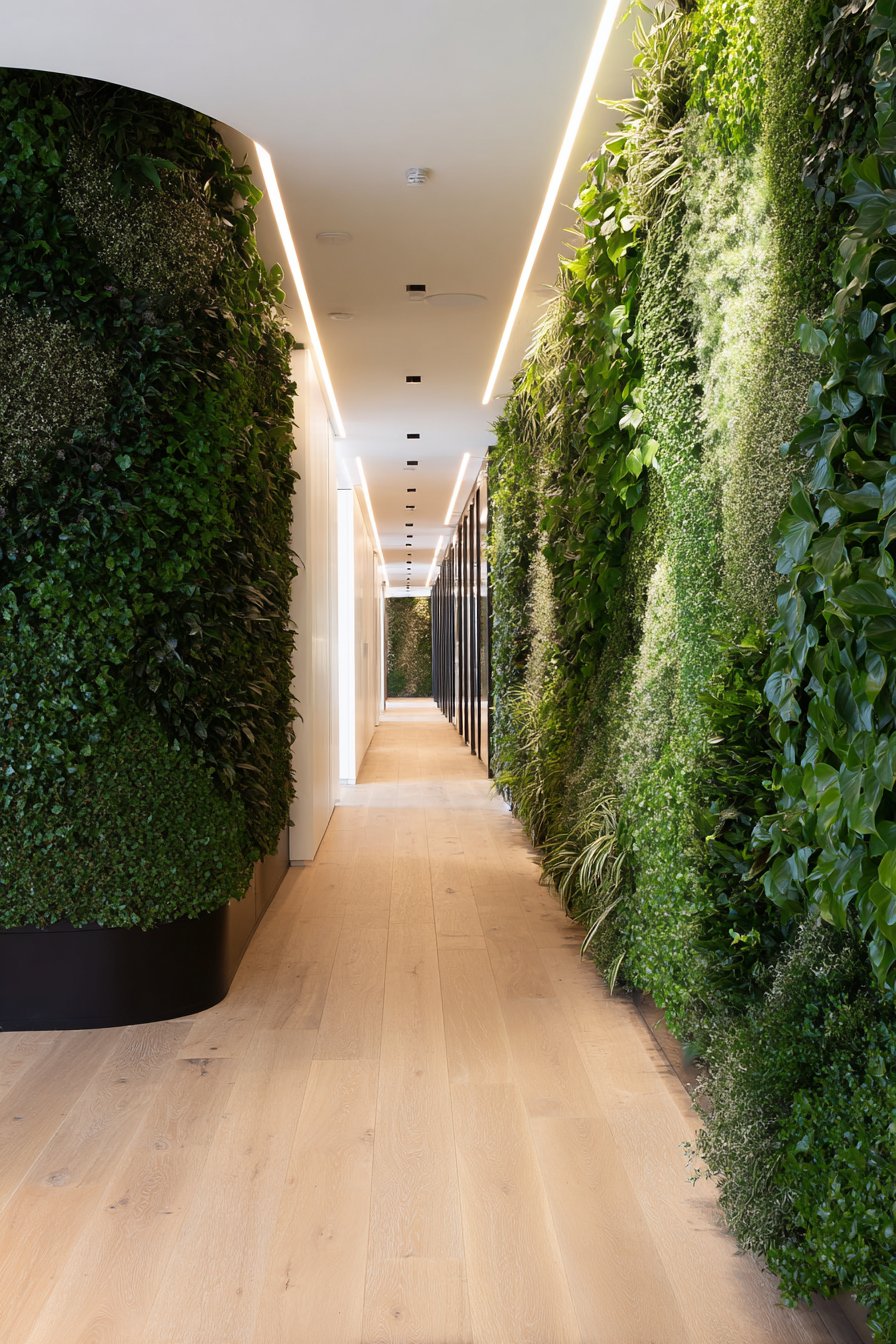
Often-overlooked transitional spaces present unique opportunities for creative green wall solutions that transform utilitarian areas into unexpected focal points. This design features a vertical garden installation in a narrow hallway, with shallow planters holding shade-tolerant plants like pothos, ferns, and peperomia varieties. The green wall transforms the corridor from mere passage into a gallery of living art, demonstrating how even challenging spaces with limited light and foot traffic can benefit from thoughtful plant integration.
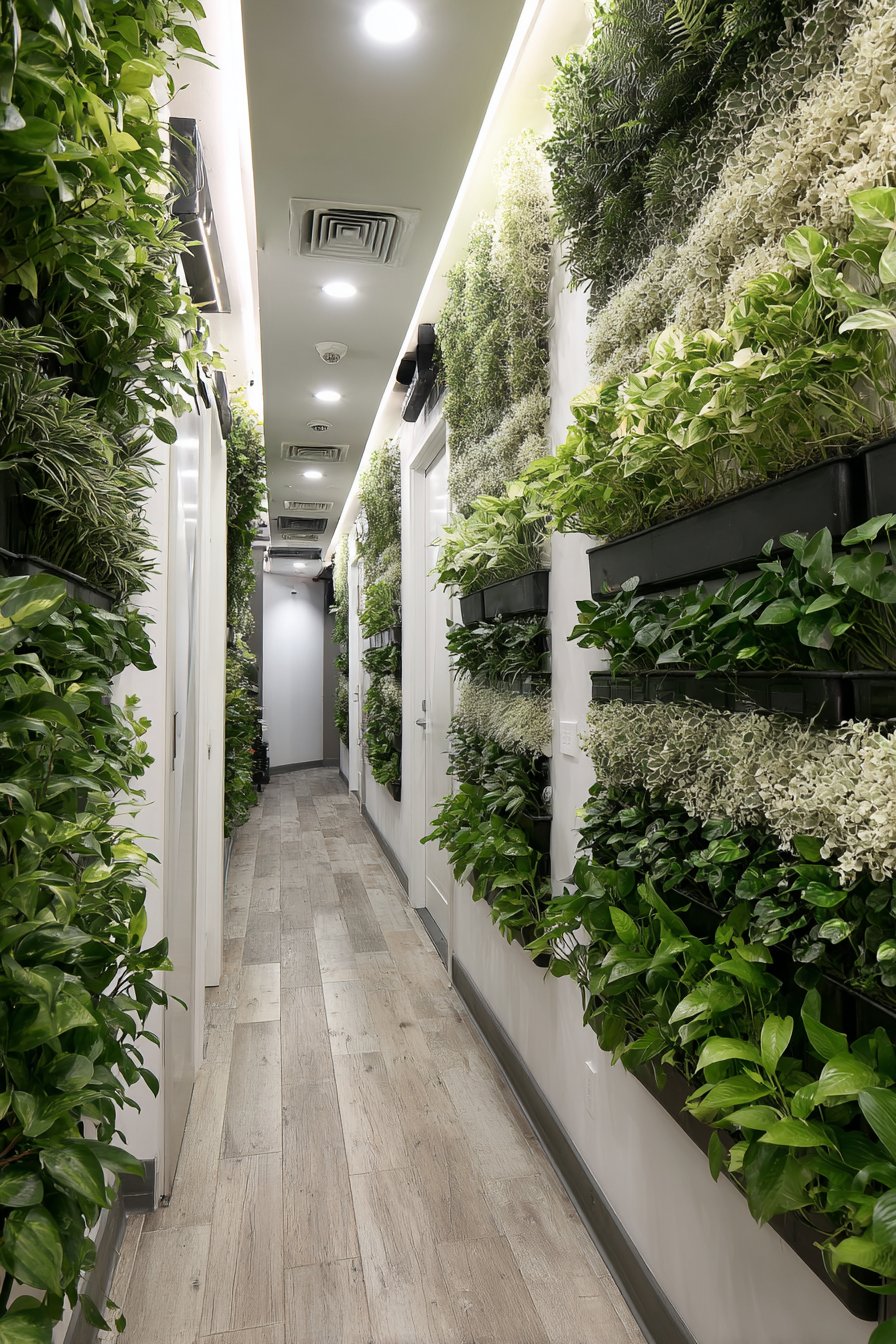
The selection of shade-tolerant plant varieties is crucial for hallway success, as these transitional spaces typically receive limited natural light. Pothos offers trailing growth that adds vertical dimension and movement, while ferns provide textural variety and delicate visual interest. Peperomia varieties contribute diverse leaf shapes and patterns that create visual interest even in compact installations. The shallow planters respect the limited depth available in hallway installations while still providing adequate root space for healthy plant growth, demonstrating how green walls can be adapted to spatial constraints.
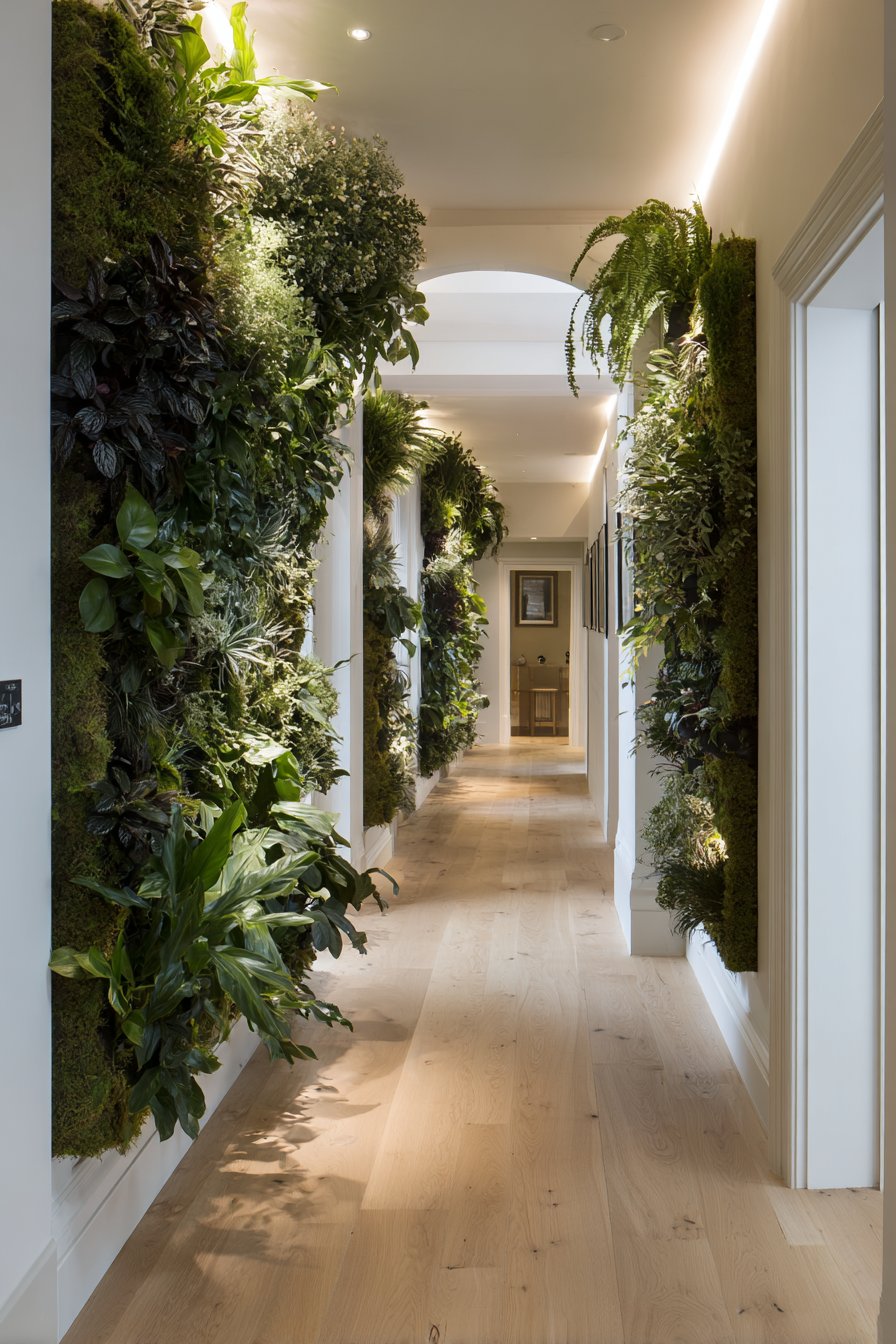
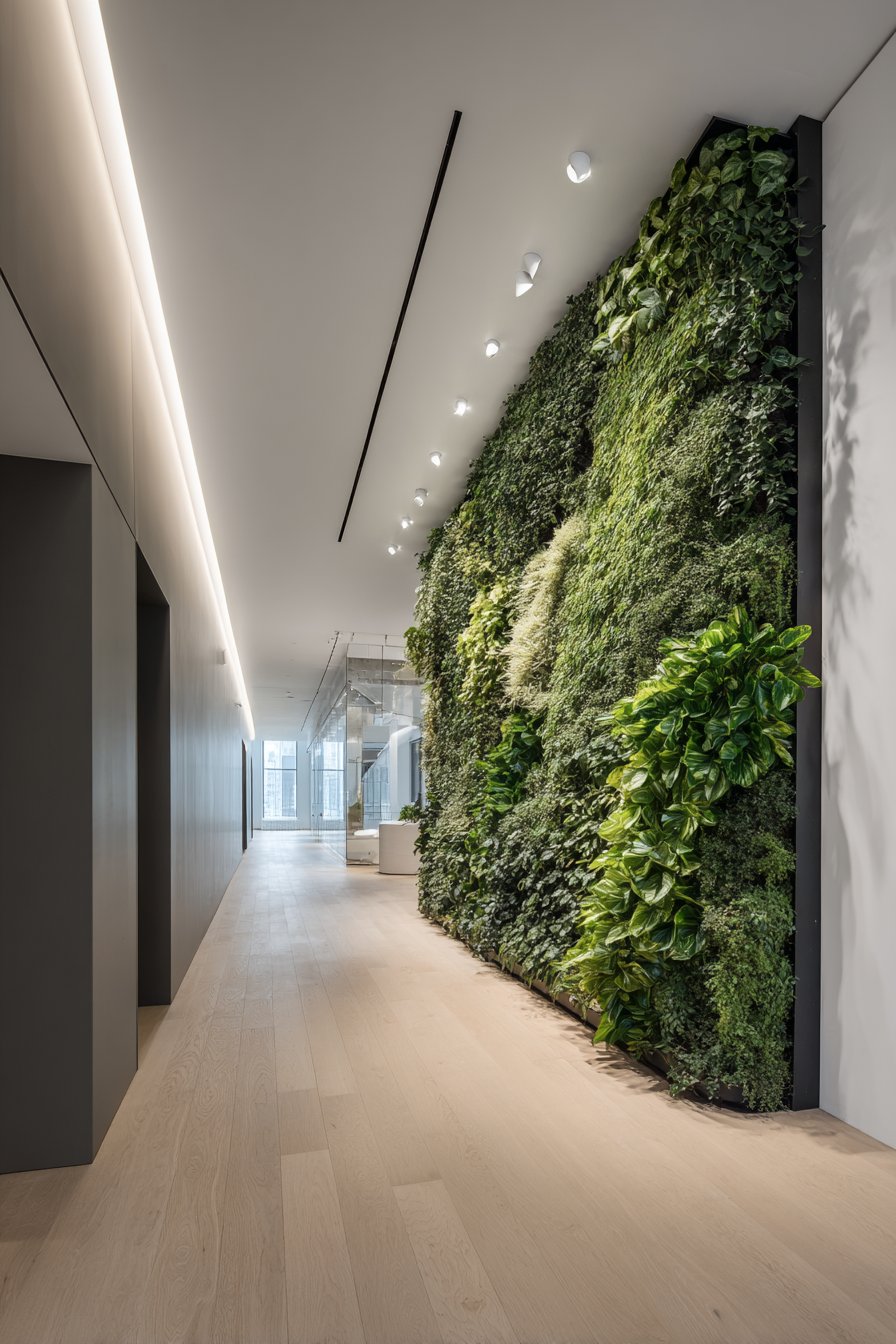
White walls and light oak flooring provide clean contrast that allows the green wall to read as distinct feature rather than blending into the background. Integrated LED strip lighting ensures adequate light for photosynthesis while creating ambient illumination that transforms the hallway from purely functional space into atmospheric passage. This innovative use of vertical space adds depth and interest to what would otherwise be a long, narrow corridor, proving that effective green wall installations need not be limited to primary living spaces.
Key Design Tips:
- Install full-spectrum LED grow lights to supplement the typically limited natural light in hallway spaces
- Select shallow planter systems that maintain adequate clearance for comfortable passage
- Choose plants with minimal shedding to reduce maintenance in high-traffic areas
- Position the vertical garden to create focal point visible from both ends of the hallway
- Implement easy-access watering systems to simplify maintenance in potentially awkward spaces
21. Scandinavian Nursery Soft Seafoam Green Wall
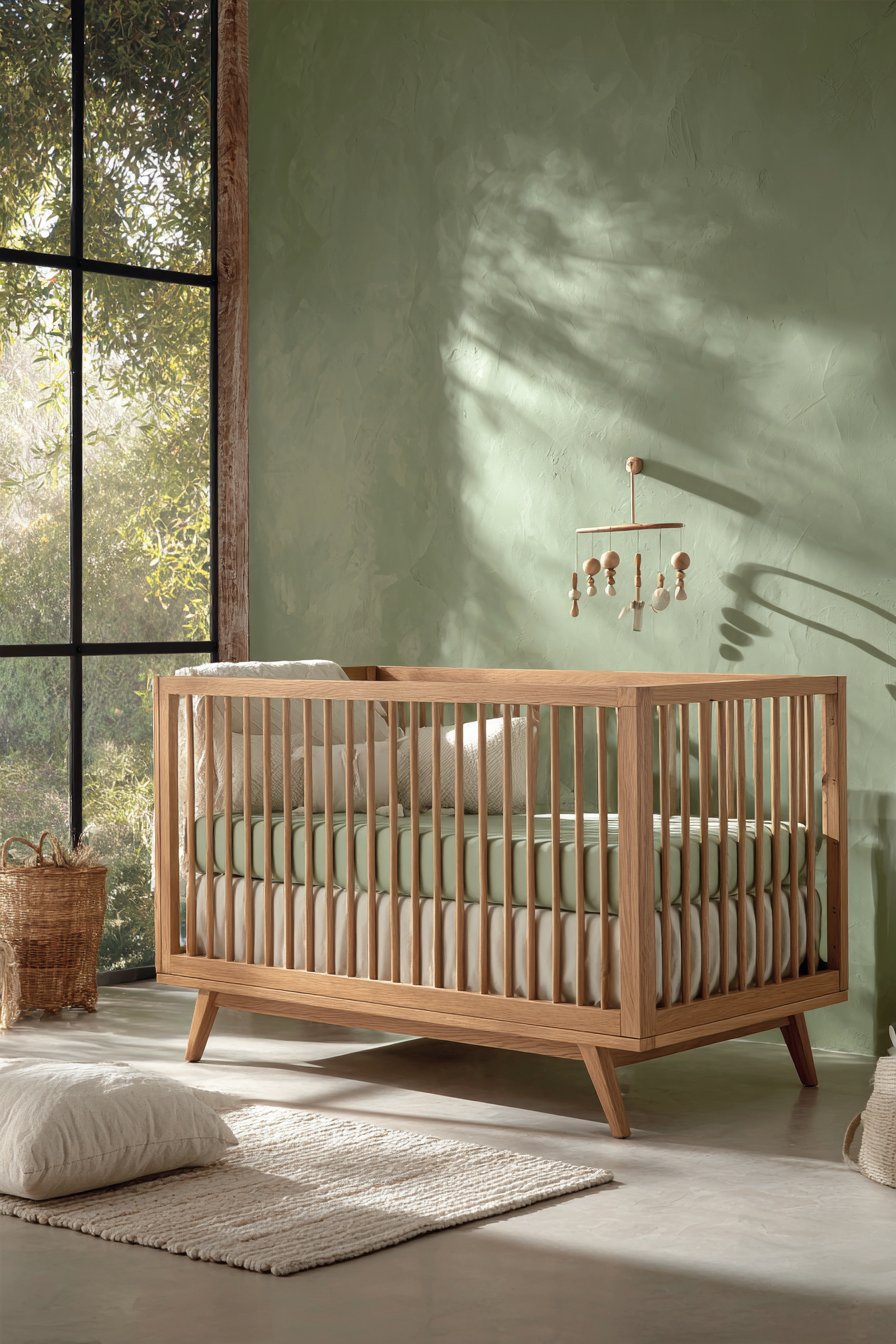
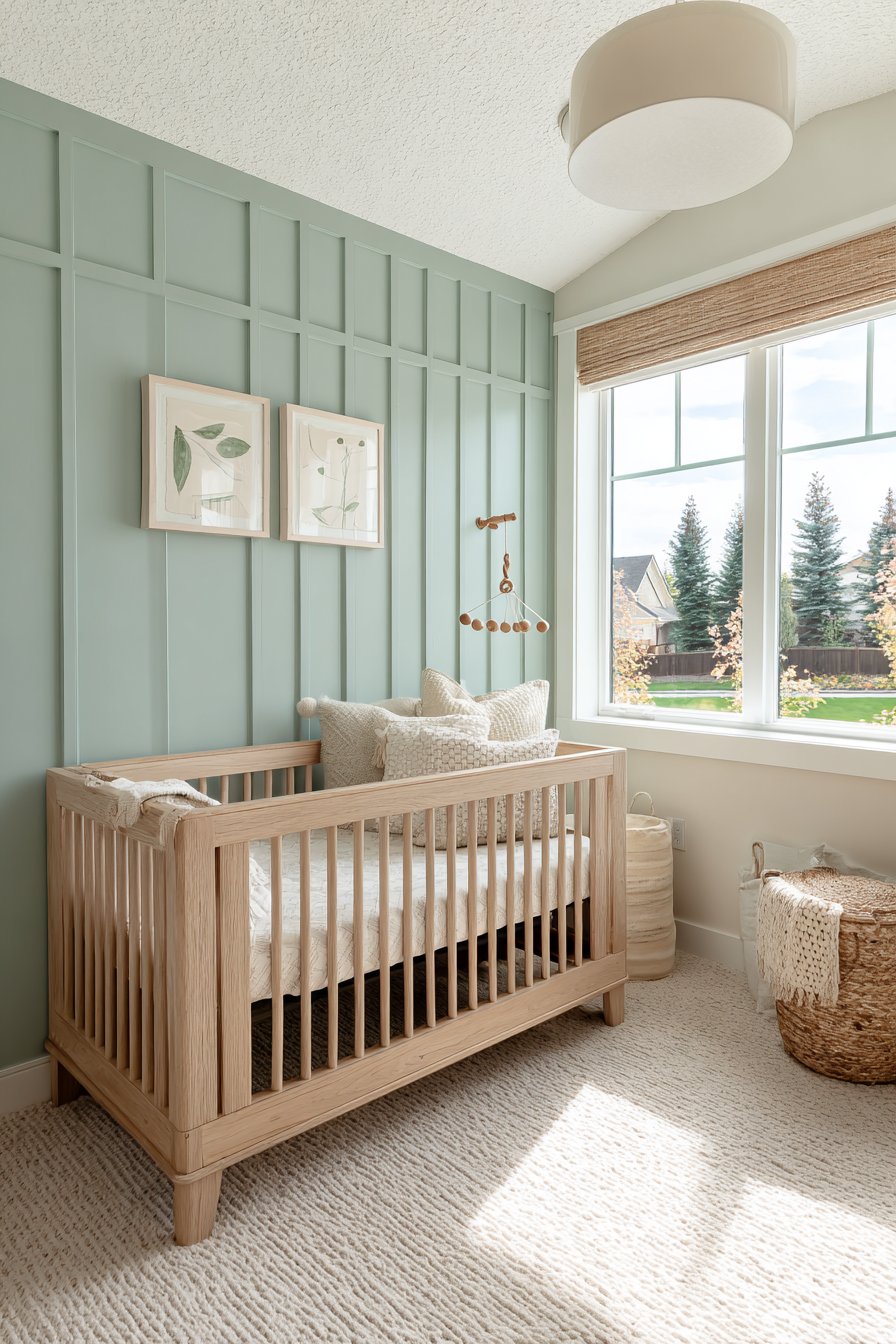
Nursery design requires particular attention to color psychology and safety considerations, making soft, calming colors like seafoam green ideal choices. This design features a painted accent wall in soft seafoam green with matte finish, creating a peaceful backdrop for natural wood crib and changing table. The gentle green hue provides subtle color without overwhelming the senses, creating an environment conducive to rest and calm—essential qualities for spaces where infants and young children spend significant time.
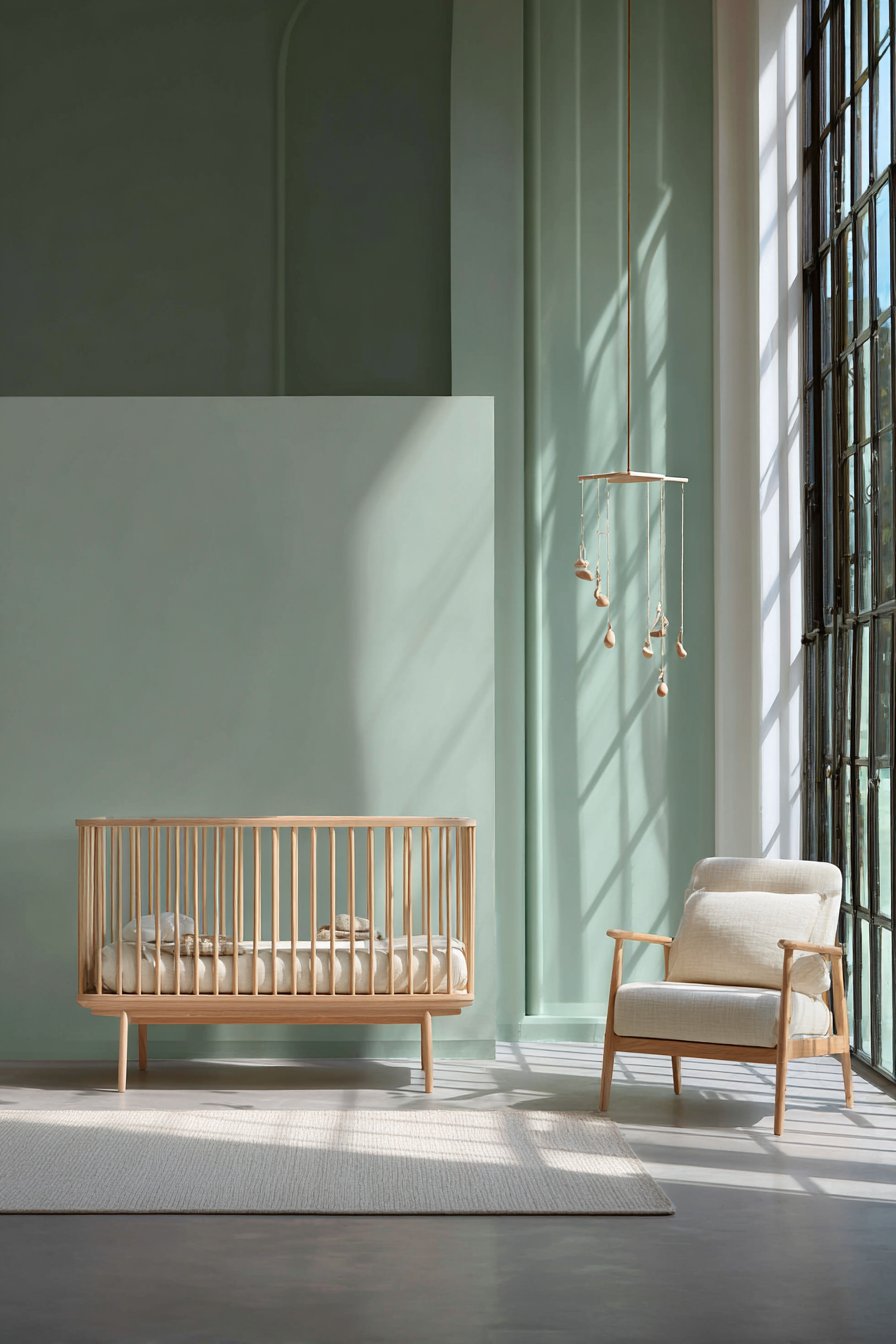
The selection of natural materials throughout the room reinforces the gentle, organic character established by the seafoam green wall. The wood crib and changing table with simple lines reflect Scandinavian design principles emphasizing functionality and natural materials over ornamentation. Organic cotton textiles in cream and white add softness while maintaining the light, airy atmosphere essential for nursery spaces. A simple mobile with wooden elements provides subtle visual interest without introducing jarring colors or patterns that might overstimulate young children.
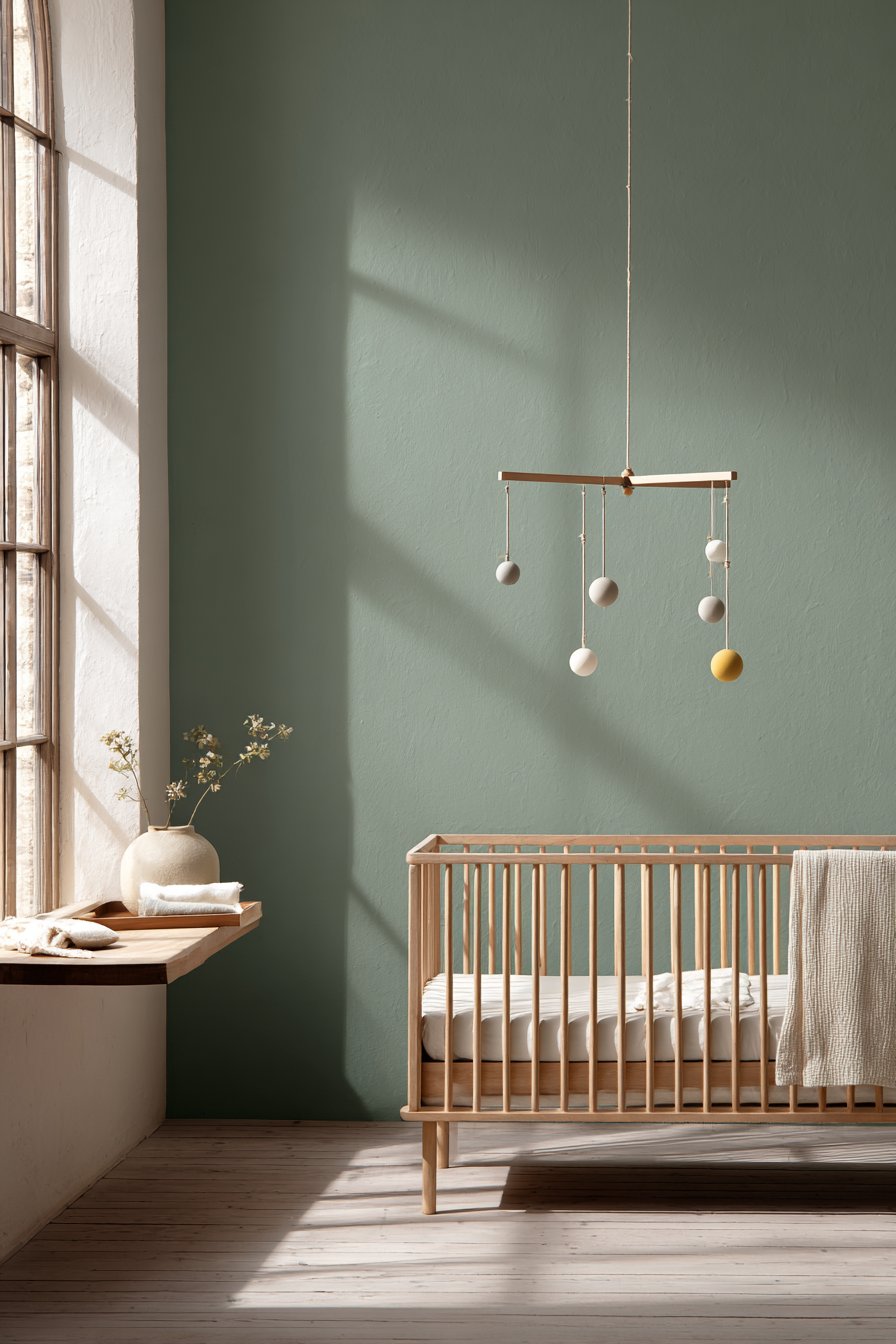
Soft natural light from a large window creates gentle shadows and highlights throughout the day, the changing quality of light adding temporal dimension that helps regulate circadian rhythms essential for healthy infant sleep patterns. The matte finish of the seafoam green paint prevents glare while allowing the color to display its full complexity, with subtle variations in tone creating visual interest without pattern or texture that might prove distracting. This thoughtful approach to color, material, and light creates nursery environment that supports both practical childcare needs and aesthetic preferences.
Key Design Tips:
- Select low-VOC or zero-VOC paint formulations to ensure healthy air quality for infants
- Apply paint well in advance of nursery use to allow complete off-gassing before baby’s arrival
- Choose matte finish to create soft, non-reflective surface appropriate for sleep spaces
- Limit additional color introduction to maintain calm, cohesive atmosphere
- Position furniture to maximize natural light exposure while avoiding direct sunlight on sleeping areas
22. Commercial Restaurant Floor-to-Ceiling Living Wall
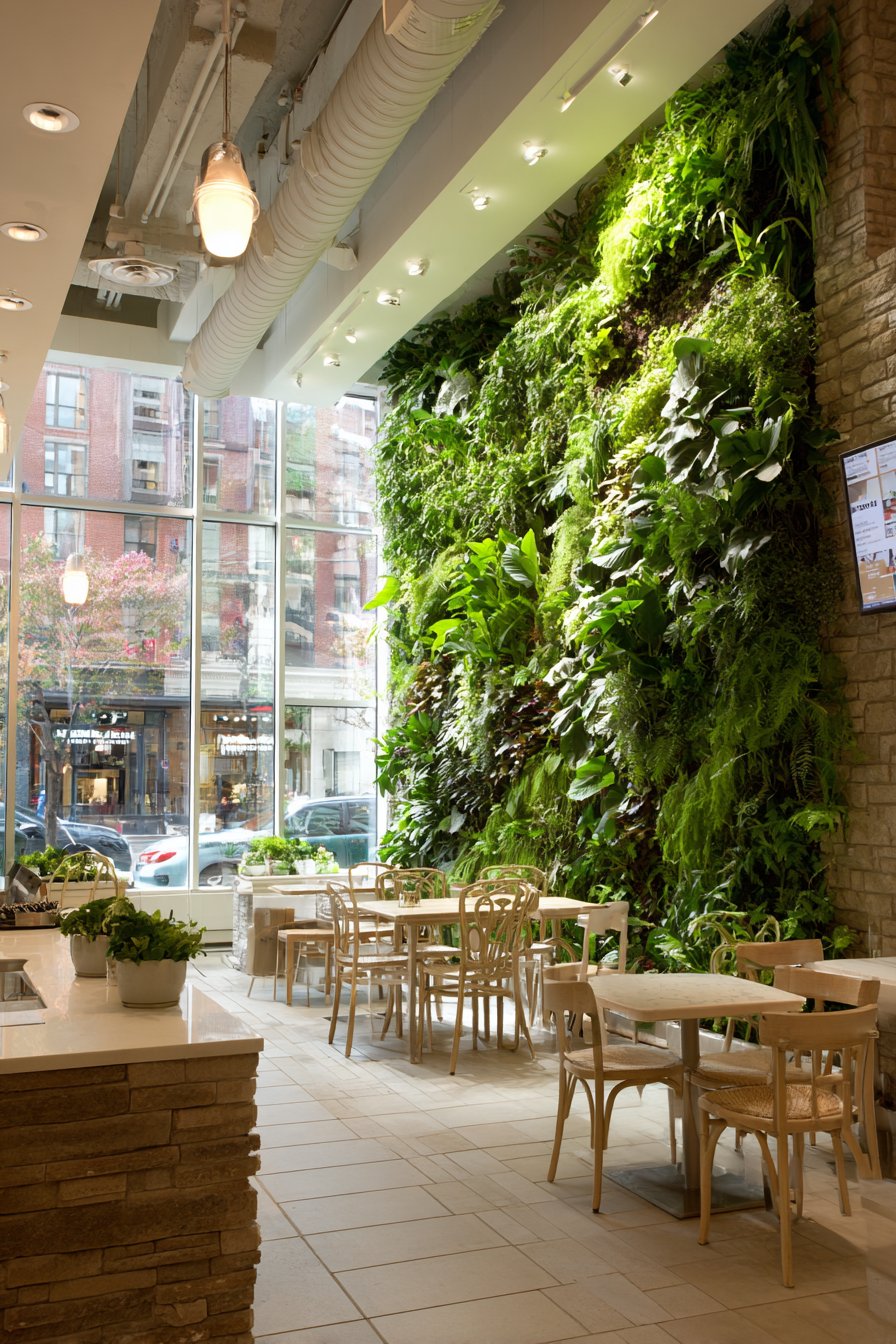
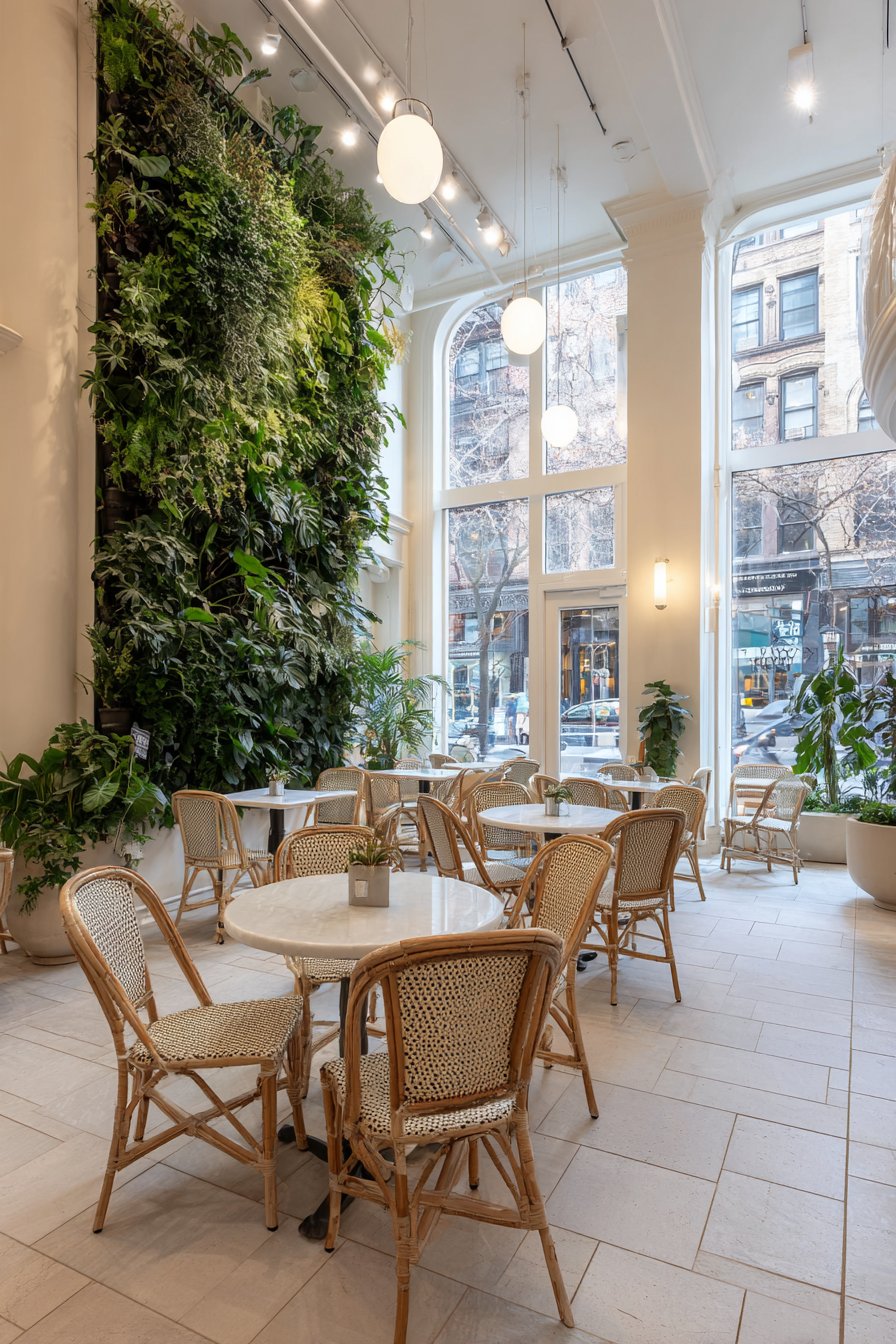
Green wall installations reach their most dramatic expression in commercial settings where scale and impact create memorable experiences. This restaurant or café design features an impressive floor-to-ceiling living wall system with diverse tropical plants including philodendrons, ferns, and trailing pothos, creating a stunning biophilic focal point that establishes immediate atmosphere and brand identity. The professional installation demonstrates integrated irrigation and strategic plant placement for visual impact, showing how commercial green walls require different planning and execution than residential installations.
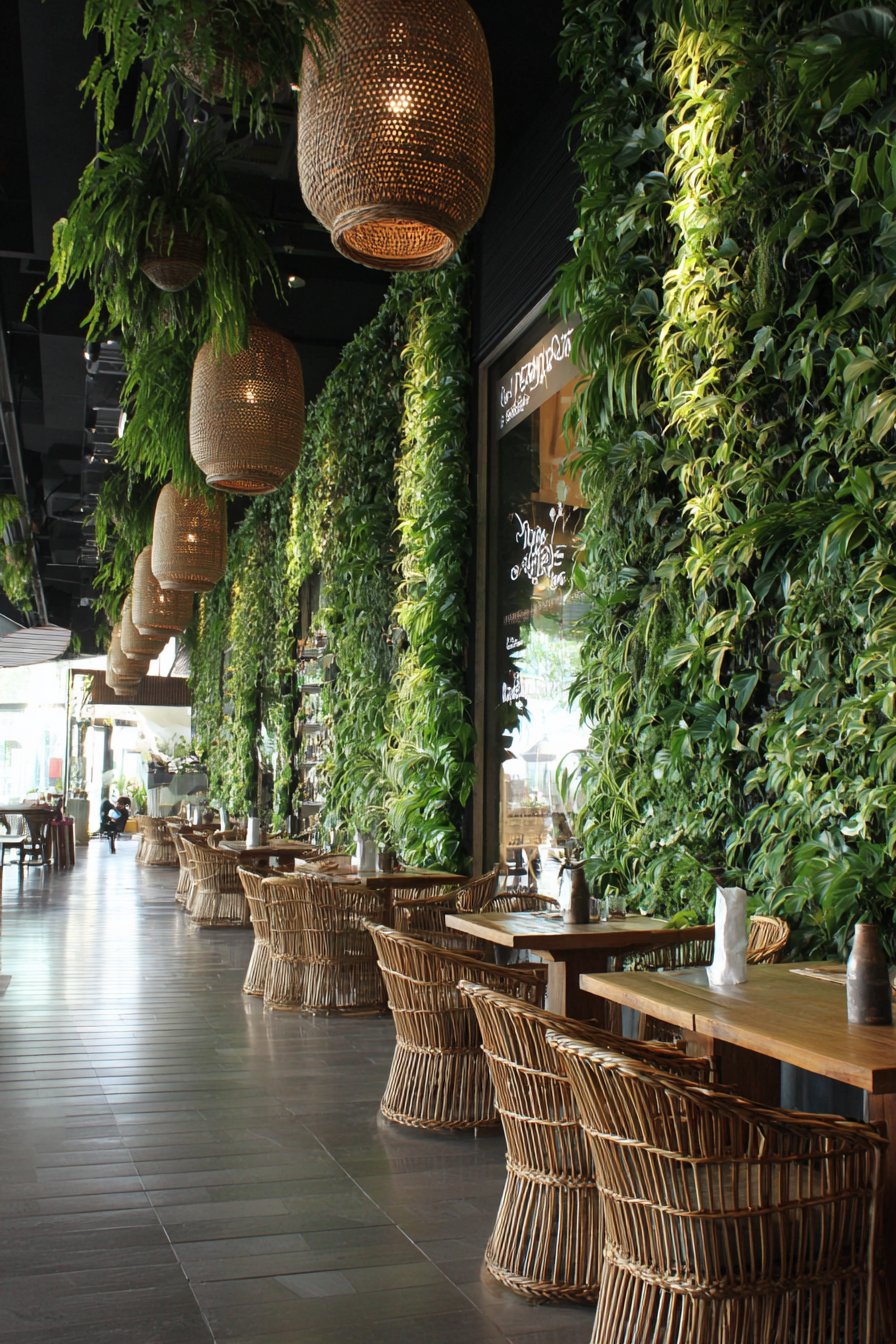
The psychological impact of extensive living walls in dining environments has been well-documented in hospitality research. Diners report higher satisfaction, longer dwell times, and more positive overall experiences in spaces incorporating significant natural elements. The living wall serves multiple functions simultaneously—it creates visual interest and conversation-worthy focal point, it contributes to improved air quality in the dining space, and it provides acoustic dampening that reduces noise levels without requiring unsightly sound-absorbing panels. This multi-functionality makes green walls particularly valuable in commercial settings where space efficiency and atmosphere creation are paramount.
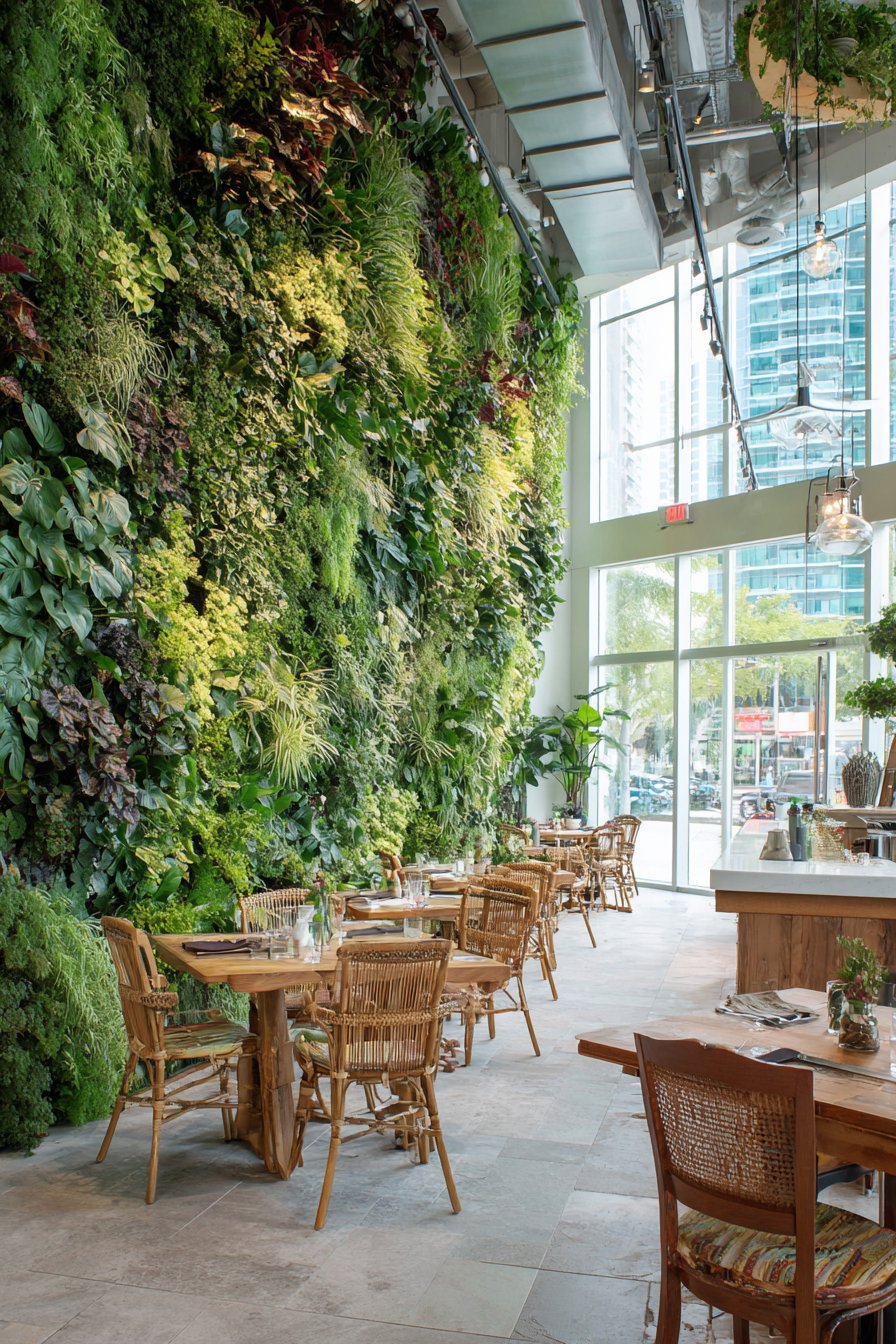
Modern bistro tables and chairs in natural materials sit beneath the living wall, their simple forms allowing the dramatic plant installation to remain the clear focal point. Pendant lighting creates dramatic highlights on the lush green foliage while natural daylight from storefront windows provides balanced illumination throughout the space. The combination of artificial and natural light ensures adequate conditions for photosynthesis while creating atmospheric lighting that enhances the dining experience. This comprehensive approach to lighting design demonstrates how commercial green walls require careful planning to balance plant health needs with aesthetic and practical considerations.
Key Design Tips:
- Consult professional living wall installation companies for commercial-scale projects
- Install comprehensive irrigation systems with backup components to ensure plant health continuity
- Select plants with proven performance in commercial indoor environments
- Plan for regular professional maintenance contracts to preserve installation quality
- Consider building code requirements and accessibility standards when planning placement and scale
23. Meditation Room Zen Moss and Air Plant Wall
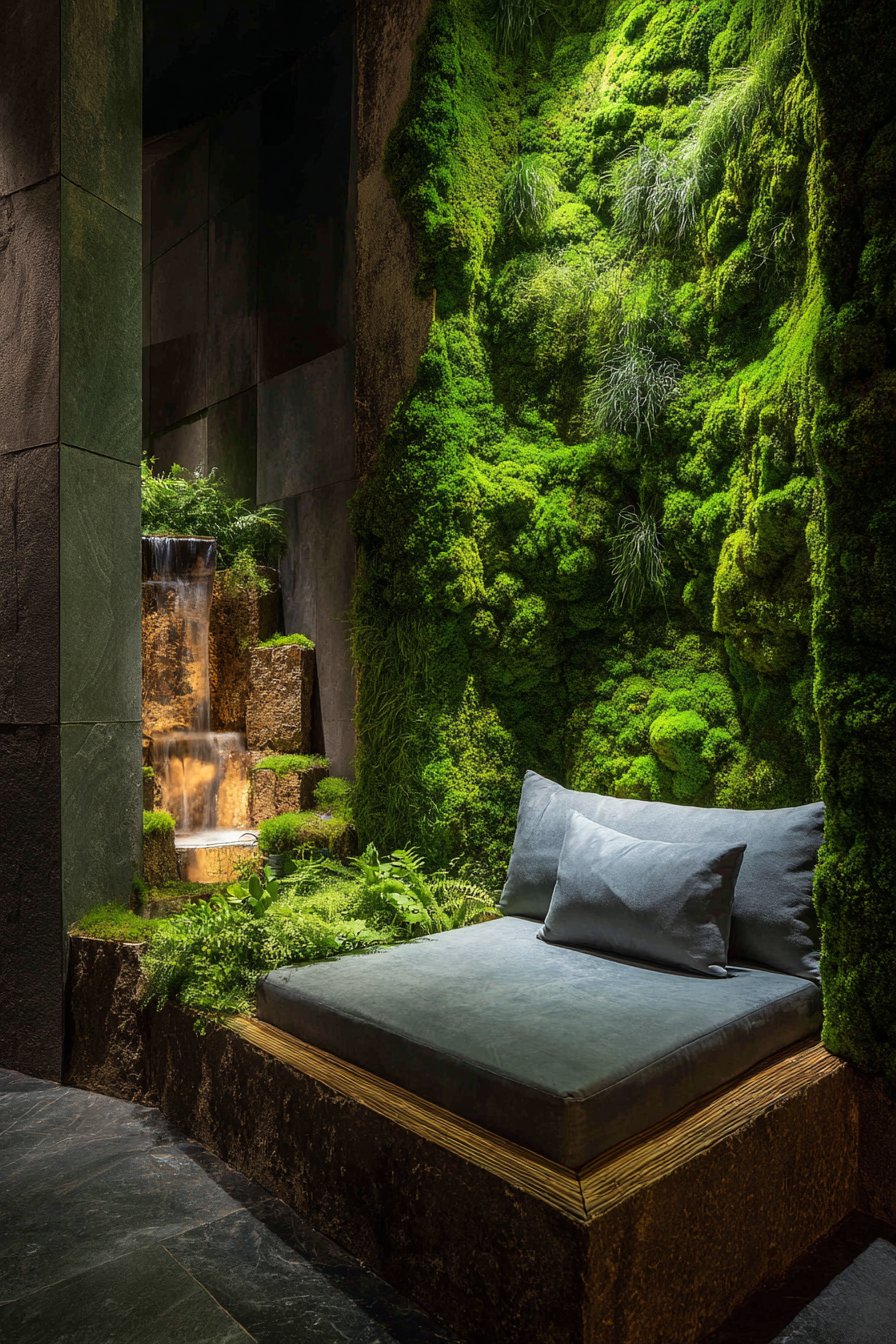
Spaces dedicated to mindfulness and meditation benefit profoundly from carefully curated natural elements that support contemplative practice. This green wall concept features a serene moss wall installation combined with live air plants creating a zen-inspired green wall in a meditation room. The varied textures of preserved moss in forest green tones combined with the sculptural forms of air plants provide visual interest that supports meditation without creating distraction, demonstrating how green walls can be designed to support specific activities and mental states.
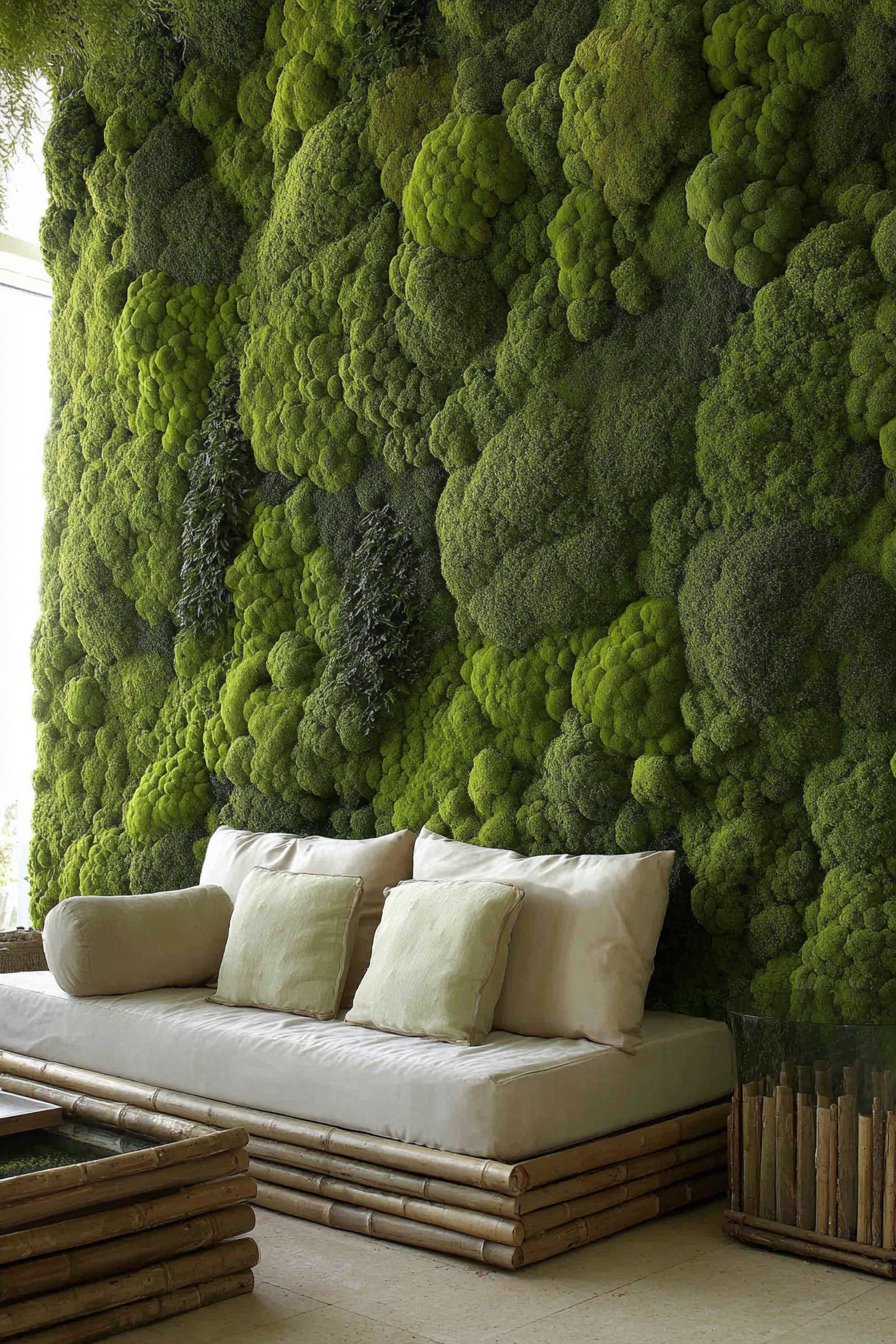
The selection of preserved moss over living alternatives eliminates maintenance concerns that might intrude upon meditation practice, while still providing the visual and textural benefits of natural materials. Air plants contribute living elements without requiring soil or extensive care, their unique forms adding sculptural interest that bridges the gap between natural and artistic installation. The layered green tones create depth and visual richness that prevents the space from feeling sterile while maintaining the simplicity essential for focused meditation practice.
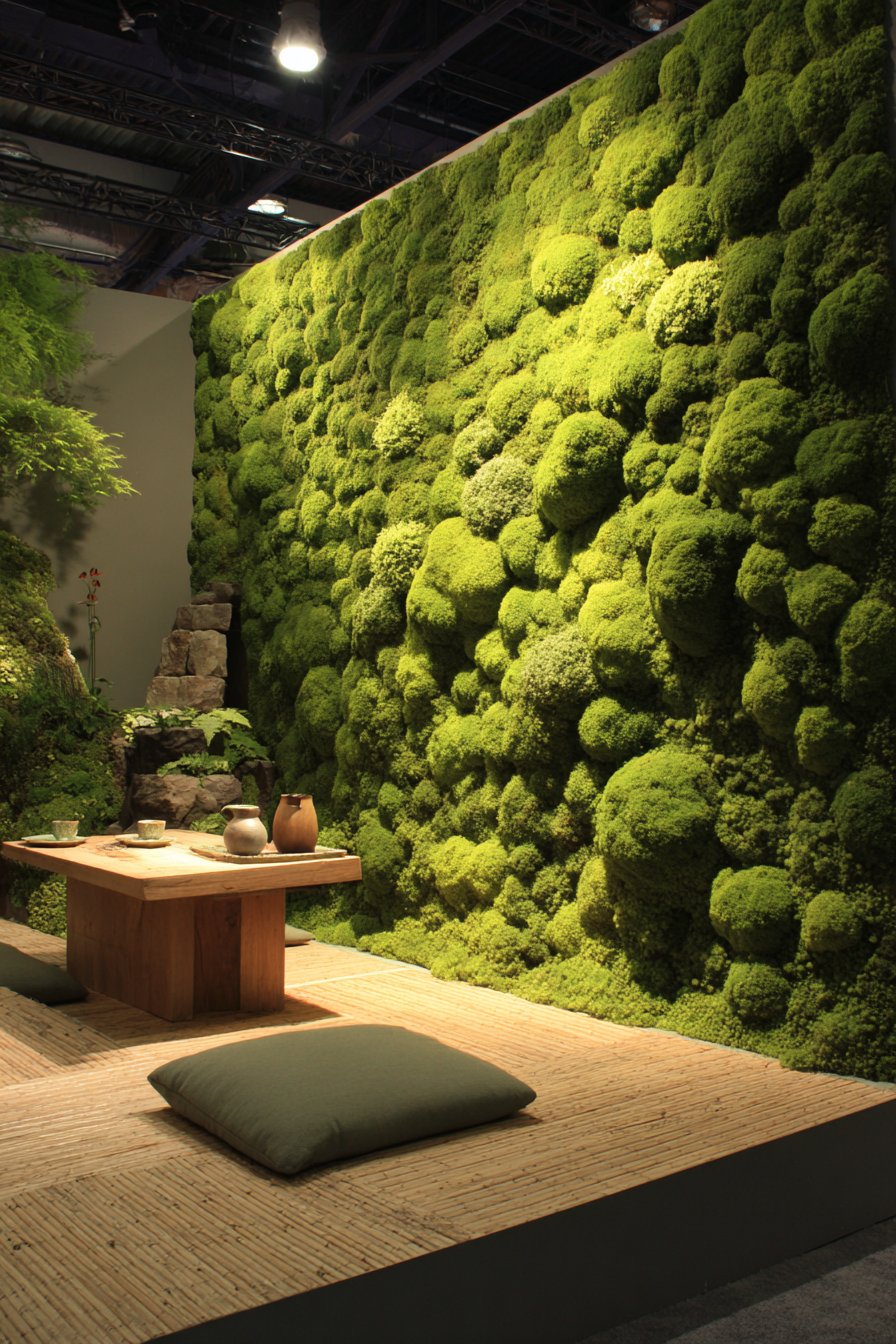
Bamboo accents and a small water feature complete the tranquil atmosphere, their natural materials and gentle sounds creating multi-sensory environment that supports various meditation techniques. Soft, diffused natural light creates minimal shadows, emphasizing the peaceful quality of the space without creating harsh contrasts that might prove distracting. This careful attention to every sensory element—visual, auditory, tactile—demonstrates how green walls can be integrated into comprehensive design strategies that support specific activities and desired emotional states.
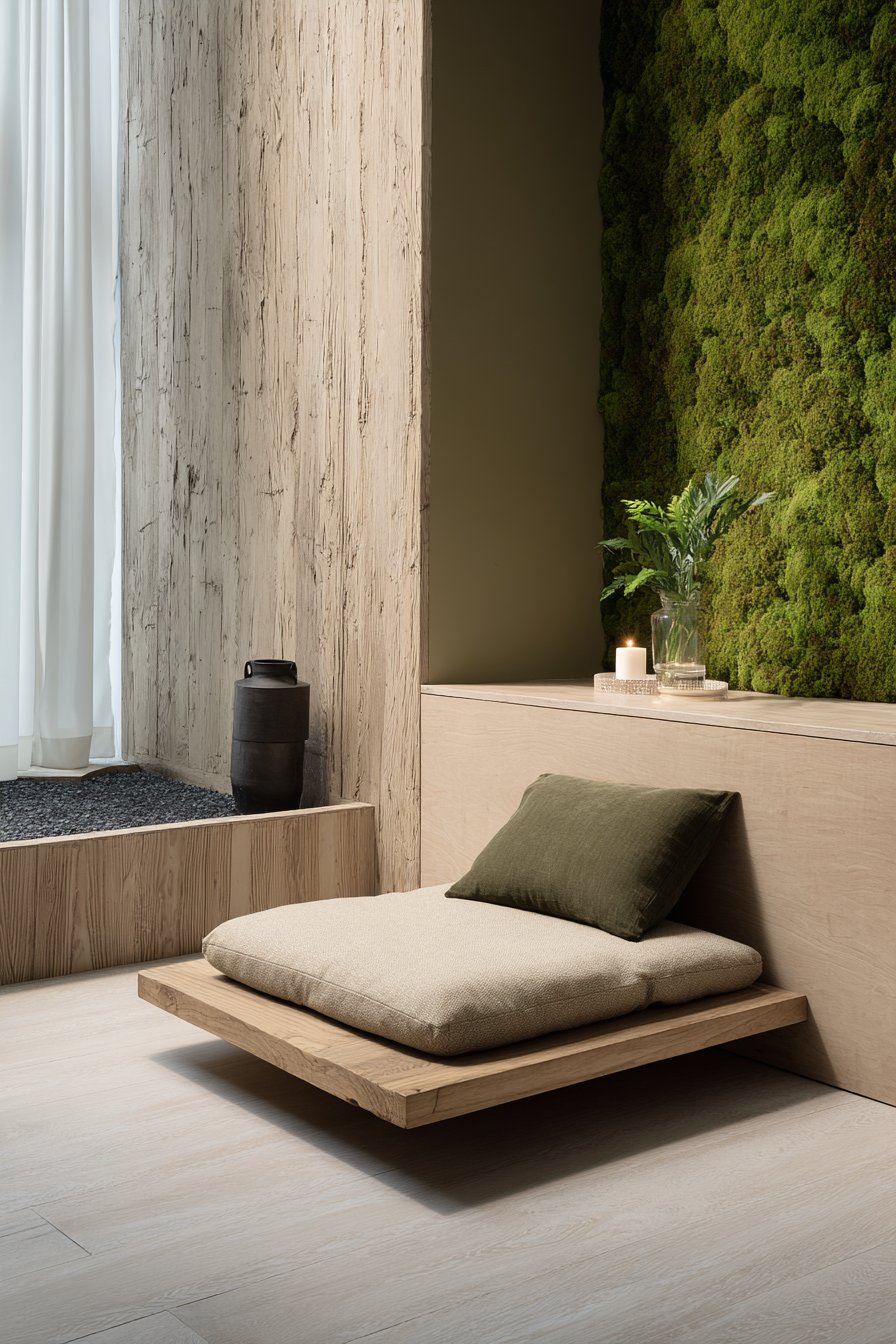
Key Design Tips:
- Select preserved moss to eliminate watering schedules that might conflict with meditation practice
- Position air plants at eye level when seated for gentle visual focus during practice
- Install soft, diffused lighting to create even illumination without harsh shadows
- Choose forest green tones that promote calm without being too dark or oppressive
- Maintain simplicity in additional elements to preserve the contemplative character of the space
24. Coastal Weathered Sage Green Shiplap Bedroom
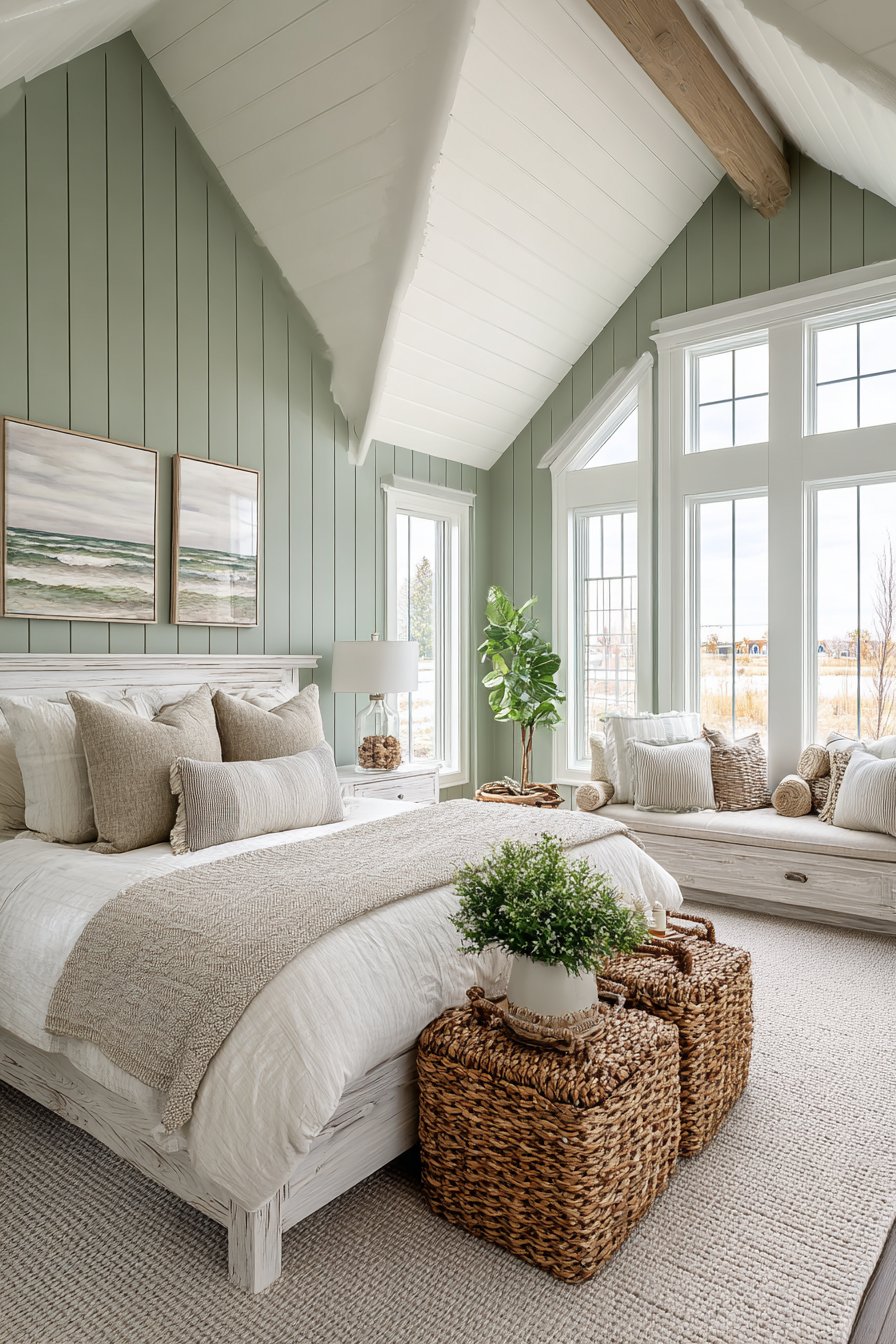
Coastal design aesthetics find beautiful expression through weathered finishes and colors inspired by natural shoreline elements. This bedroom features painted shiplap accent wall in weathered sage green echoing sea glass tones, creating a relaxed backdrop for whitewashed furniture and linen bedding in natural tones. The weathered finish adds character and depth that prevents the painted surface from appearing too fresh or perfect, contributing to the casual, lived-in quality characteristic of successful coastal design.
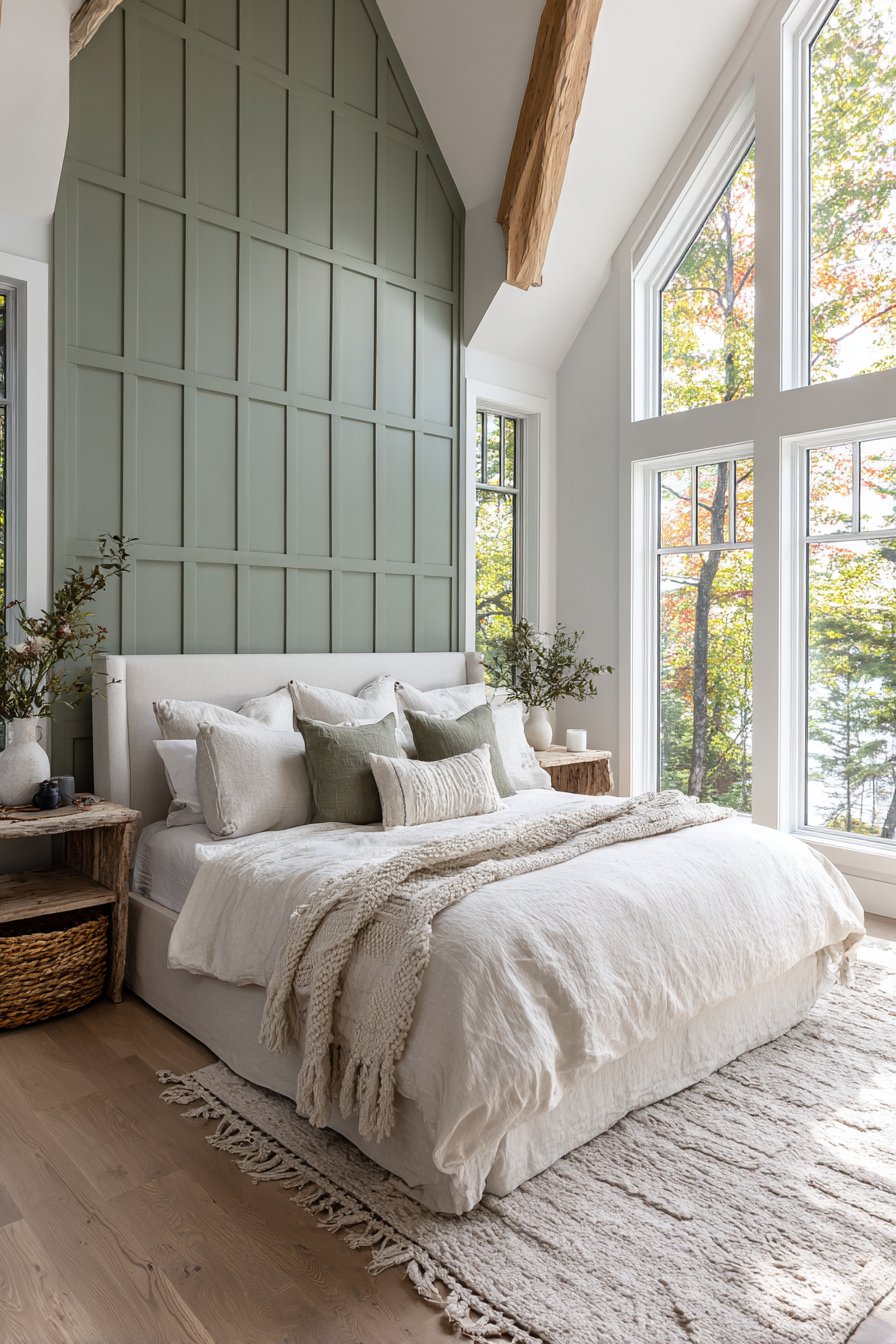
The sage green color selection bridges the gap between traditional coastal blues and the broader natural palette, offering sophisticated alternative that maintains connection to seaside inspiration while providing more versatile color that works across seasons. The weathered application technique creates subtle variations in color density and finish that mimic the natural aging process of coastal structures exposed to salt air and weather. This intentional imperfection adds authenticity and character that elevates the design beyond simple paint application into more nuanced surface treatment.
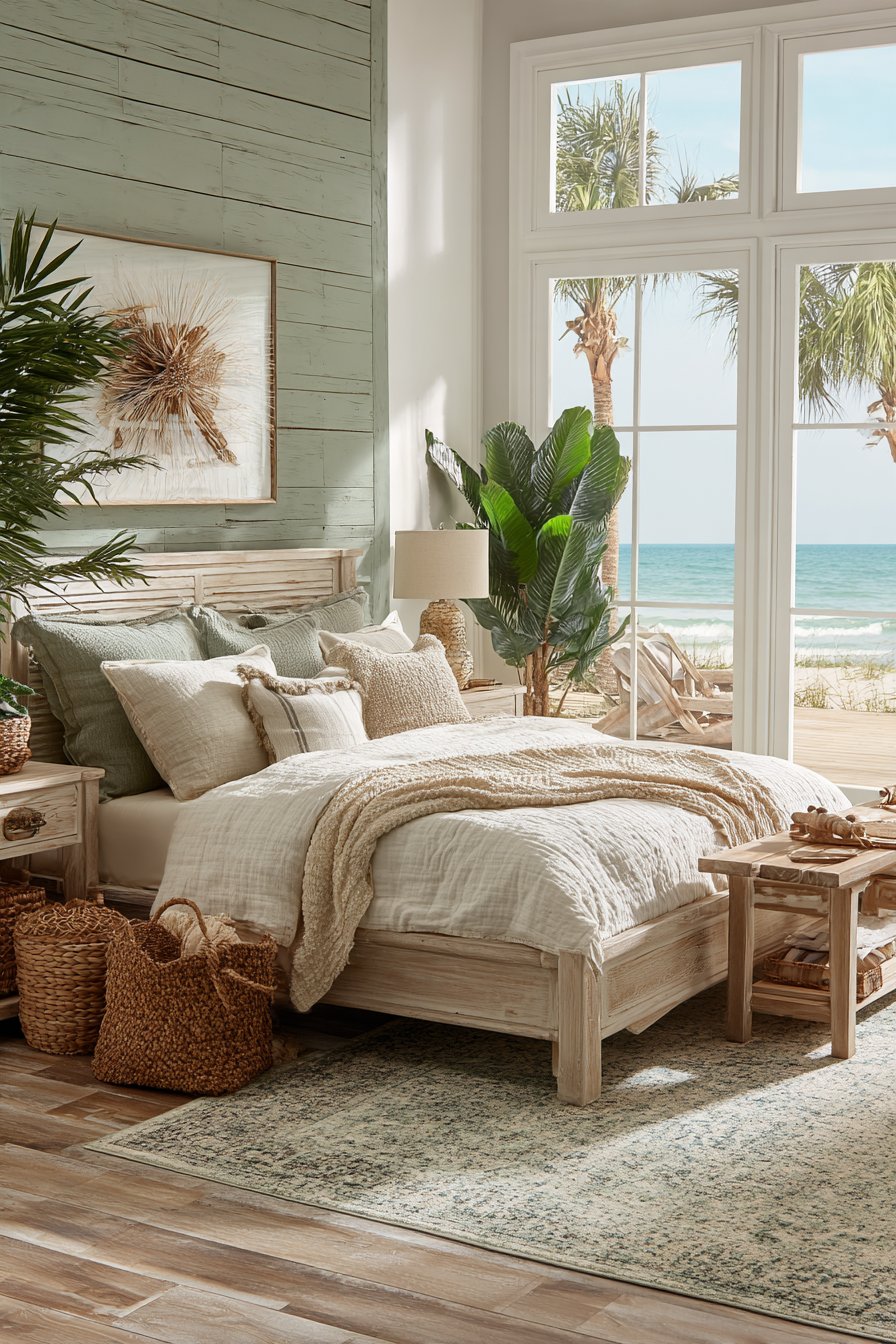
Driftwood accents and woven seagrass baskets add textural interest while reinforcing the coastal theme through material choices. Natural light from tall windows highlights the subtle variations in the painted wood finish, creating gentle shadows that emphasize the dimensional quality of the shiplap. The overall effect creates a breezy, beach-inspired atmosphere that promotes relaxation without relying on obvious nautical motifs or overly literal interpretations of coastal design. This sophisticated approach demonstrates how green wall concepts can be adapted to specific design styles while maintaining refinement and avoiding cliché.
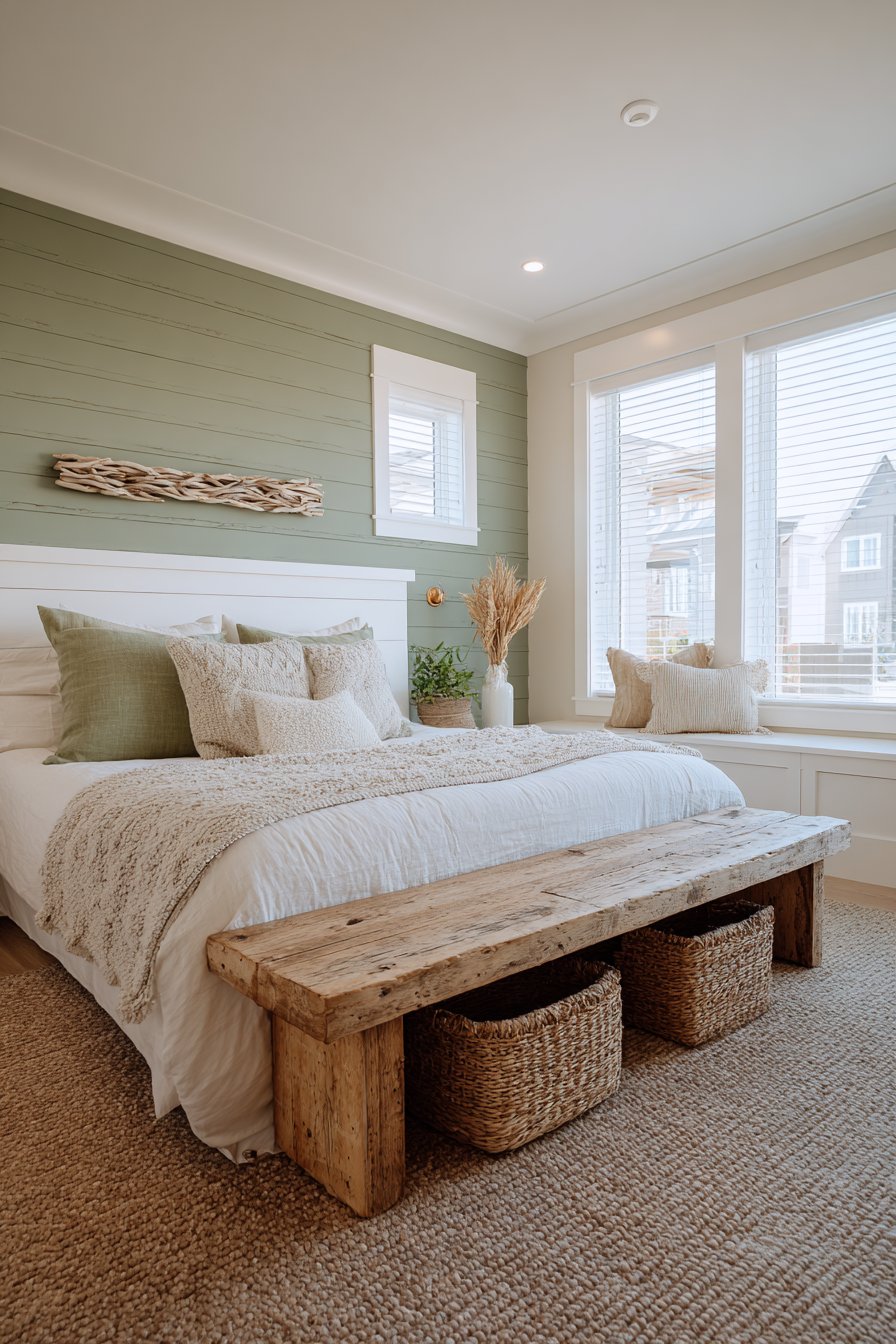
Key Design Tips:
- Apply base coat followed by top coat, then distress with sandpaper to create authentic weathered appearance
- Vary pressure and sanding locations to create natural-looking wear patterns
- Select sage green shades with gray or blue undertones to reinforce coastal connection
- Layer natural textures in textiles and accessories to create cohesive organic aesthetic
- Maintain light, airy color palette throughout to preserve the relaxed coastal character
25. Home Library Built-In Hunter Green Shelving
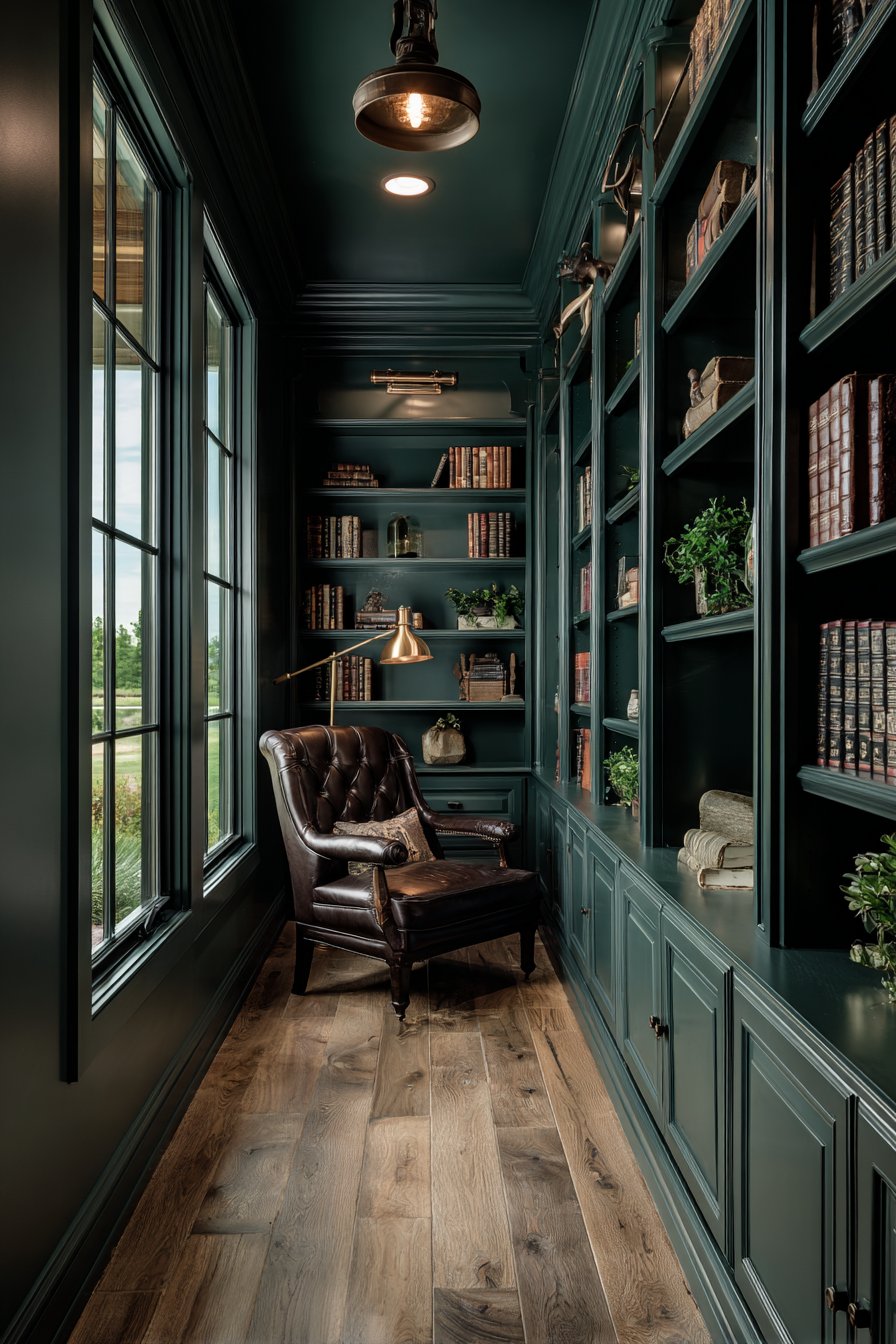
The transformation of functional storage into architectural feature finds perfect expression in painted built-in shelving systems. This home library design features floor-to-ceiling built-in bookshelves painted in deep hunter green, creating a sophisticated green wall that doubles as functional storage. The painted shelving displays a collection of books with leather and cloth bindings, decorative objects, and small potted plants, demonstrating how green wall concepts can be integrated into structural elements rather than applied as separate installations.
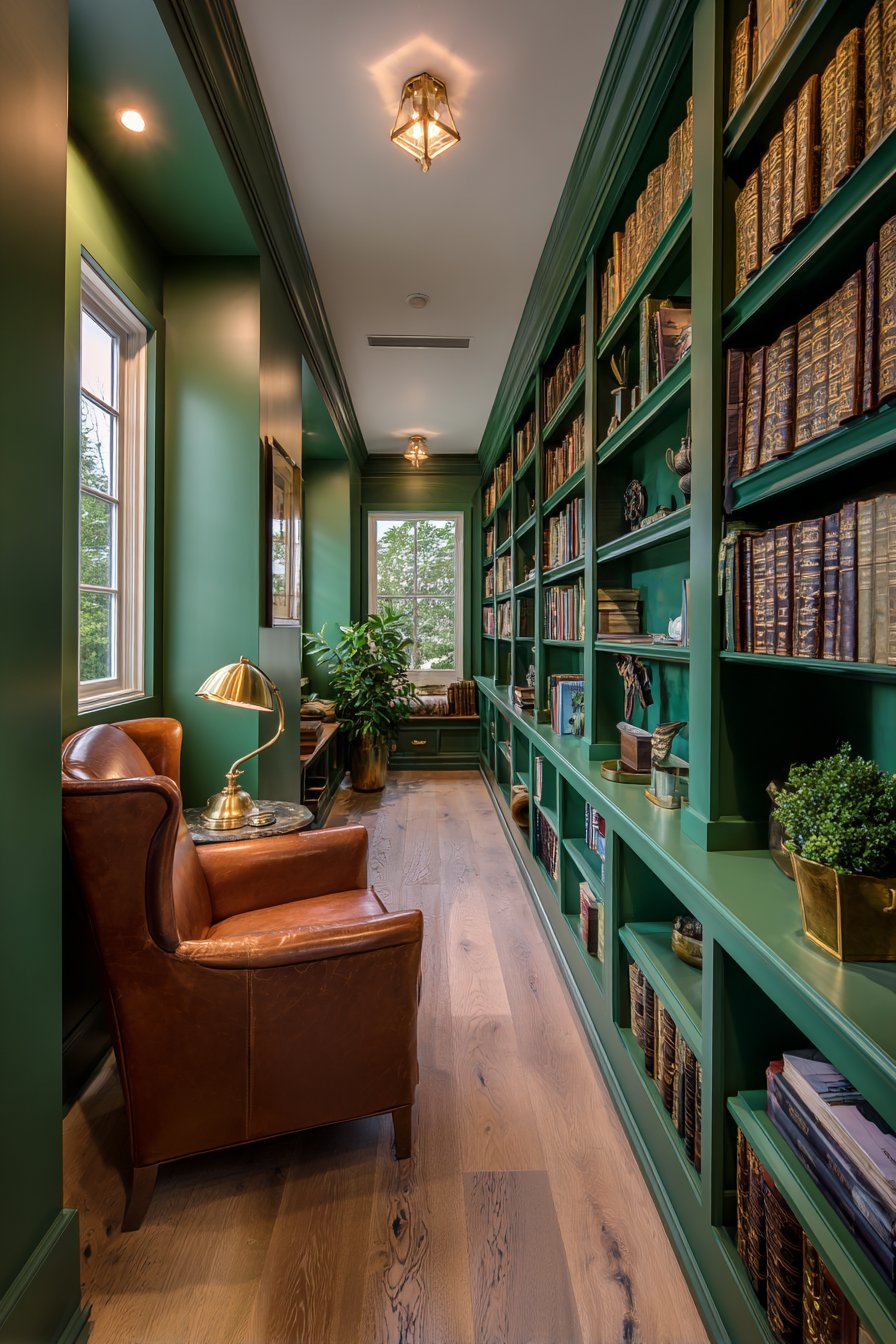
The hunter green color selection provides rich, sophisticated backdrop that enhances the visual appeal of book collections while creating cohesive wall treatment. The deep color recedes visually, making the shelving unit appear as integral architectural feature rather than added furniture element. This integration creates more refined, intentional appearance that elevates the entire room. The strategic placement of small potted plants throughout the shelving introduces living elements that break up the visual weight of book spines while adding organic forms that contrast beautifully with the geometric precision of the built-in shelving.
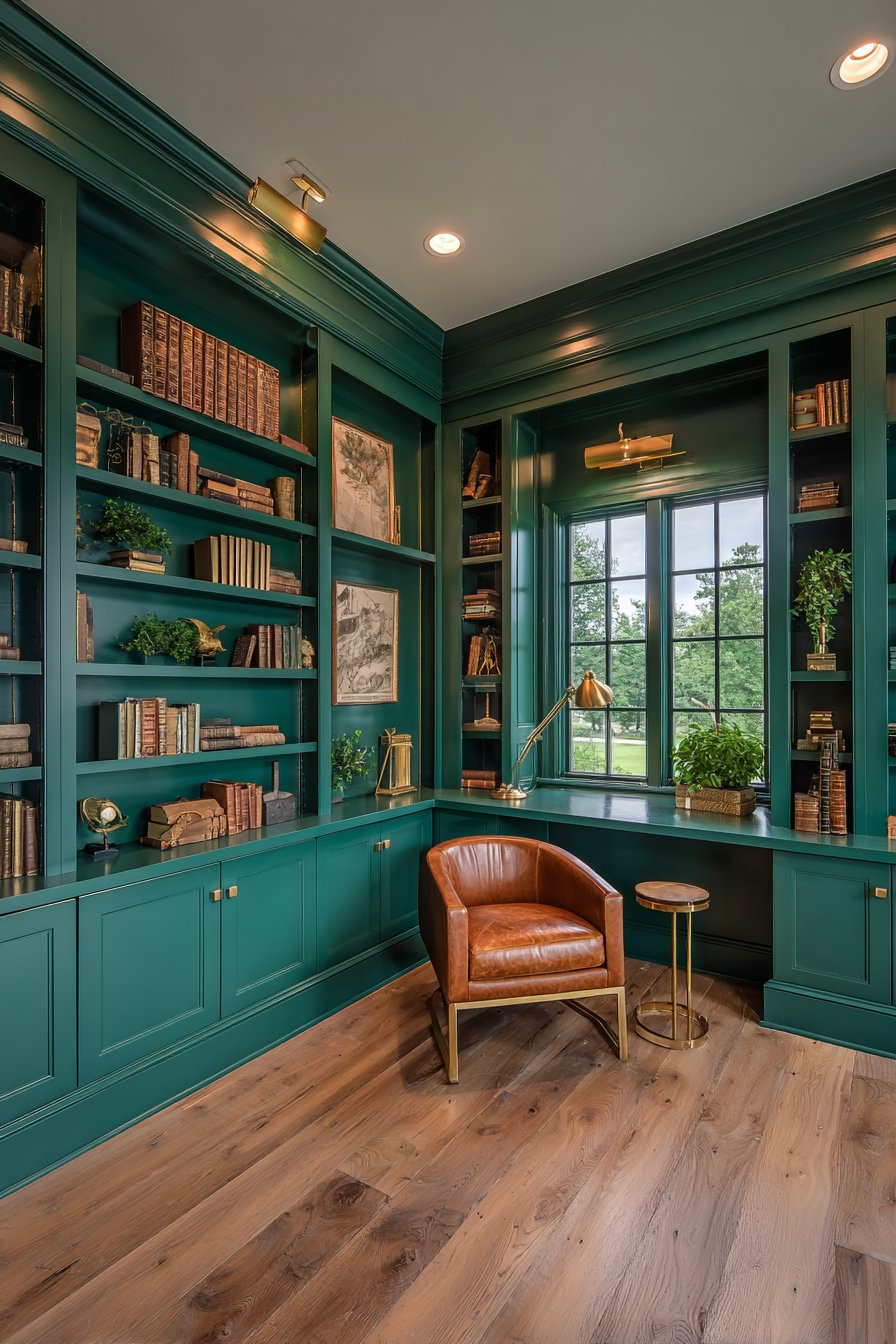
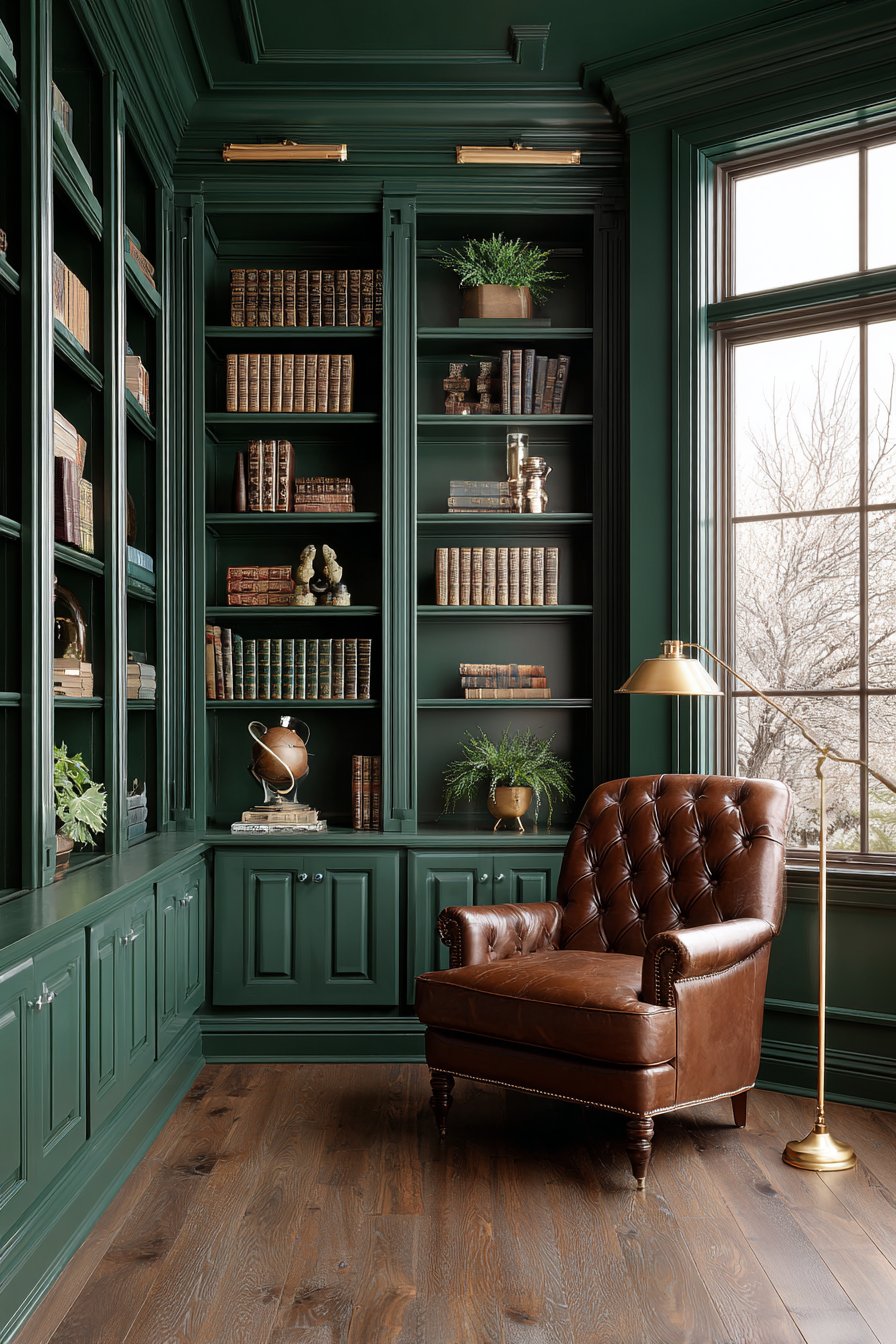
A leather reading chair and brass floor lamp sit before the green wall, creating dedicated reading area that takes full advantage of the library atmosphere. Natural wood flooring and crown molding add traditional architectural details that complement the painted built-ins while maintaining visual warmth. Balanced lighting from windows and artificial sources creates depth throughout the day, highlighting the rich green tone while ensuring adequate illumination for reading. This comprehensive approach to library design demonstrates how green wall concepts can be interpreted beyond literal plant installations or simple accent walls to include structural elements that serve multiple purposes.
Key Design Tips:
- Apply primer specifically designed for previously finished wood surfaces before painting built-ins
- Use semi-gloss or satin finish for shelving to facilitate cleaning and resist wear from book handling
- Install adequate lighting including task lighting for reading and ambient lighting for atmosphere
- Style shelves with mix of books, decorative objects, and small plants to prevent monotony
- Consider the visual weight of deep colors and balance with lighter elements throughout the room
Why These Green Wall Ideas Represent the Best in Contemporary Design
The collection of green wall ideas presented throughout this article represents the pinnacle of contemporary interior design thinking, combining aesthetic sophistication with practical functionality and psychological benefits. These designs succeed because they demonstrate fundamental understanding of how color, texture, living elements, and spatial composition work together to create environments that enhance daily life. From the practical kitchen herb garden that delivers fresh ingredients alongside visual beauty, to the dramatic commercial living wall that transforms dining experiences, each concept addresses specific needs while maintaining design excellence.
The diversity of approaches showcased—painted walls, living plant installations, preserved moss treatments, and climbing vine arrangements—demonstrates that green wall concepts can be adapted to virtually any space, budget, and maintenance capability. This accessibility is crucial for translating design inspiration into implemented reality. The Scandinavian bathroom living wall proves that even small spaces can accommodate meaningful plant installations, while the floor-to-ceiling sunroom living wall demonstrates the dramatic impact possible when space and resources allow for ambitious installations. This range ensures that readers can find approaches appropriate for their specific circumstances rather than aspirational concepts that remain perpetually out of reach.
The emphasis on realistic materials, authentic textures, and natural lighting throughout these designs reflects growing sophistication in interior design discourse. Contemporary audiences recognize and reject overly stylized, impossible perfection in favor of spaces that feel livable and authentic. The weathered sage green shiplap, the hand-painted olive green accent wall with visible brush strokes, and the preserved moss with natural imperfections all acknowledge that real homes benefit from character and patina rather than sterile perfection. This authenticity makes these designs not only more achievable but also more satisfying to live with over time.
The integration of biophilic design principles throughout these concepts addresses fundamental human needs for connection with nature—needs that become increasingly important as more people live in urban environments with limited outdoor access. The psychological benefits of surrounding ourselves with greenery, whether through living plants or nature-inspired colors, have been extensively documented in environmental psychology research. These designs demonstrate practical applications of this research, showing how theoretical benefits translate into tangible improvements in daily life. The meditation room moss wall supports contemplative practice, the home office modular green wall reduces workplace stress, and the nursery seafoam green wall creates calming environment for infant development—each application addresses specific psychological needs through thoughtful design.
The technical sophistication evident in these designs—from integrated irrigation systems to strategic lighting placement to careful plant selection—reflects the professional expertise required for successful green wall implementation. While DIY approaches certainly have their place, these examples demonstrate the value of understanding horticultural requirements, design principles, and practical maintenance considerations. The selection of shade-tolerant plants for hallway installations, the specification of matte finishes for nursery walls, and the inclusion of moisture barriers for floor planters all represent thoughtful problem-solving that prevents common implementation failures. This attention to practical detail ensures that these green wall concepts deliver lasting value rather than short-term aesthetic impact followed by maintenance problems.
The stylistic range represented—from industrial loft installations to traditional library built-ins to coastal bedroom treatments—demonstrates how green wall concepts transcend specific design trends to become versatile tools applicable across aesthetic preferences. The deep hunter green of the library shelving creates entirely different atmosphere than the soft seafoam green of the nursery, yet both represent successful applications of green wall thinking adapted to specific contexts and needs. This versatility ensures that green wall concepts remain relevant across changing design trends and personal taste evolution.
The practical functionality integrated into many of these designs—the kitchen herb garden providing fresh ingredients, the chalkboard wall supporting children’s creativity, the vertical balcony garden maximizing limited space—demonstrates that successful green walls need not be purely decorative. The most satisfying design solutions often combine aesthetic beauty with practical benefits, creating multi-layered value that justifies the investment of resources and maintenance effort. This integration of form and function represents mature design thinking that moves beyond surface-level beautification to address deeper questions about how spaces support daily activities and life quality.
The environmental consciousness reflected in plant selections, the emphasis on natural materials, and the celebration of biophilic design principles all align with growing cultural awareness of sustainability and environmental stewardship. Green walls, particularly living installations, contribute measurably to improved indoor air quality, reduced urban heat island effects, and increased biodiversity in built environments. While aesthetic considerations remain primary in residential applications, the environmental benefits provide additional justification and satisfaction. The ability to create beautiful spaces that also contribute positively to environmental health represents a compelling value proposition that resonates with contemporary values.
Conclusion
The exploration of green wall ideas presented in this comprehensive guide demonstrates the remarkable versatility and impact of incorporating verdant elements into interior spaces. Whether through dramatic living wall installations that transform entire rooms into immersive natural environments, thoughtfully painted accent walls that introduce nature’s palette through color, or innovative combinations of preserved materials and strategic plant placement, green walls offer solutions for virtually every space, style, and maintenance capability. The twenty-five concepts explored range from compact apartment balcony installations to ambitious commercial-scale living walls, ensuring that readers at every experience level and budget point can find inspiration and practical guidance.
The key to successful green wall implementation lies in thoughtful consideration of multiple factors: the specific spatial constraints and opportunities of your environment, the amount of natural light available, your realistic maintenance capabilities and schedule, your aesthetic preferences and existing design style, and the functional requirements of the space. The most successful green wall projects balance all these considerations, creating solutions that not only look beautiful but also function effectively within real-world constraints. The examples presented throughout this article demonstrate how professional designers navigate these considerations, offering models that can be adapted to individual circumstances.
As you consider implementing green wall ideas in your own spaces, remember that even modest beginnings can deliver significant impact. A small collection of potted herbs in your kitchen, a single painted accent wall in your bedroom, or a compact vertical garden on your balcony can transform your daily experience and connection to natural elements. These initial projects build skills and confidence that enable more ambitious installations over time, creating a progressive journey toward more comprehensive biophilic design. The psychological and environmental benefits of surrounding yourself with greenery—whether living plants or nature-inspired colors—extend far beyond aesthetic satisfaction, contributing to improved well-being, reduced stress, and enhanced quality of life.
The future of interior design increasingly recognizes the fundamental human need for connection with nature, making green wall concepts not merely trendy but essential elements of thoughtful space creation. As urban density increases and outdoor access becomes more limited for many people, the importance of bringing nature indoors through green walls and biophilic design will only grow. By embracing these concepts now, you position yourself at the forefront of this design evolution, creating spaces that serve not only current needs but also align with emerging understanding of how our environments shape our health, happiness, and productivity. Let these green wall ideas inspire you to reimagine your own spaces, transforming them into environments that celebrate the beauty and vitality of the natural world.
