
Creating a welcoming and personalized dorm room can be one of the most exciting aspects of college life. However, the challenge of working within a small, temporary space often leaves students feeling limited in their design options. Enter the world of green dorm room ideas—a refreshing approach that combines sustainable living with aesthetic appeal while maximizing every square inch of your compact college quarters. Whether you’re drawn to the calming psychology of green hues, the vitality of living plants, or the eco-conscious lifestyle that green design represents, this color palette offers endless possibilities for transforming a sterile dorm room into a personal sanctuary.
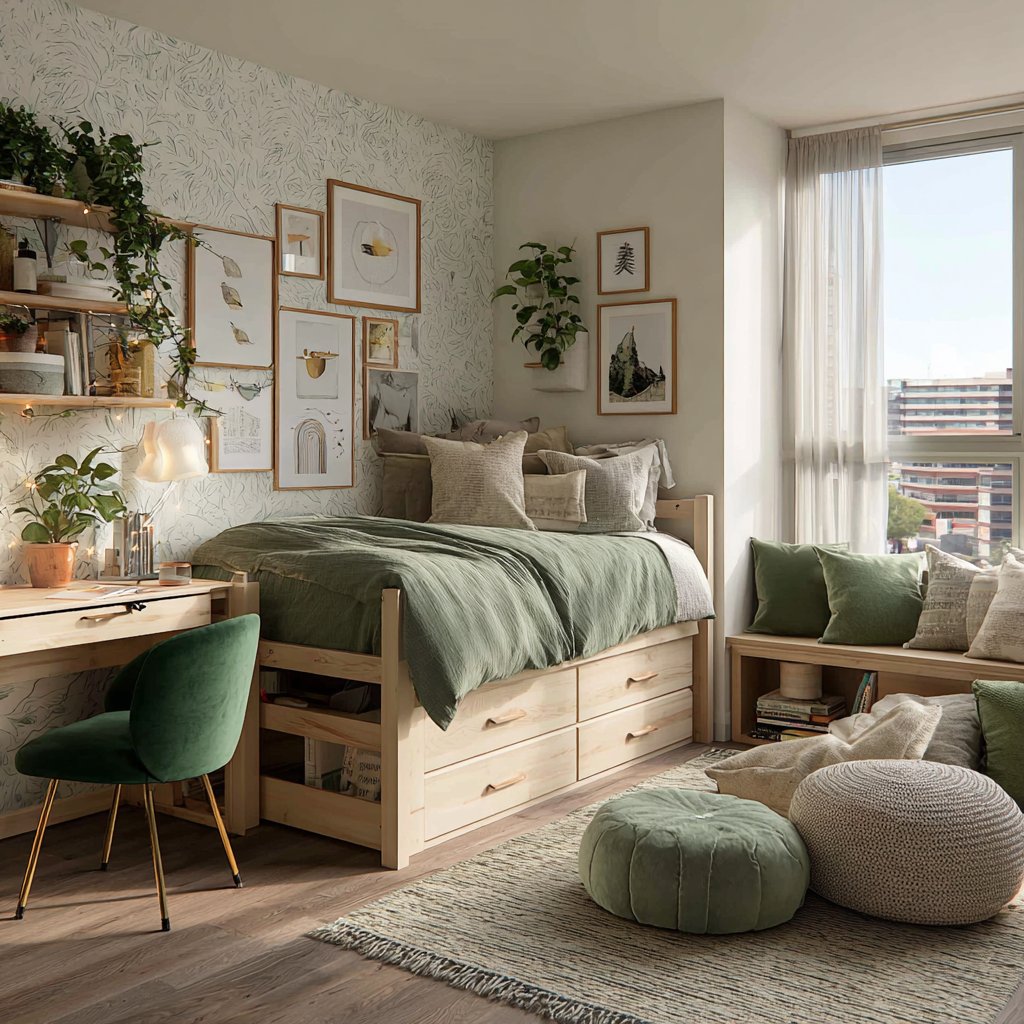
Green is more than just a color choice; it’s a design philosophy that can reduce stress, improve focus, and create a connection to nature even in the most urban campus settings. From sage and mint to forest and emerald, the spectrum of green tones provides versatility that works with various design styles and personal preferences. The beauty of incorporating green into your dorm room lies in its adaptability—it pairs beautifully with natural woods, crisp whites, warm metallics, and even bold accent colors. As environmental consciousness continues to shape our lifestyle choices, green dorm rooms also offer an opportunity to embrace sustainable practices through secondhand finds, living plants that purify air, and removable design solutions that respect the temporary nature of dorm living.
This comprehensive guide explores twenty-five distinct approaches to creating your ideal green dorm space, each offering practical solutions for common college living challenges. From clever storage innovations and space-saving furniture arrangements to budget-friendly decorating hacks and wellness-focused design elements, these ideas prove that dorm room restrictions need not limit your creativity. Whether you’re a minimalist seeking serene simplicity, a maximalist craving botanical abundance, or somewhere in between, you’ll discover actionable strategies for crafting a green dorm room that reflects your personality while supporting your academic success and personal well-being.
1. Layered Sage Green Bedding Sanctuary
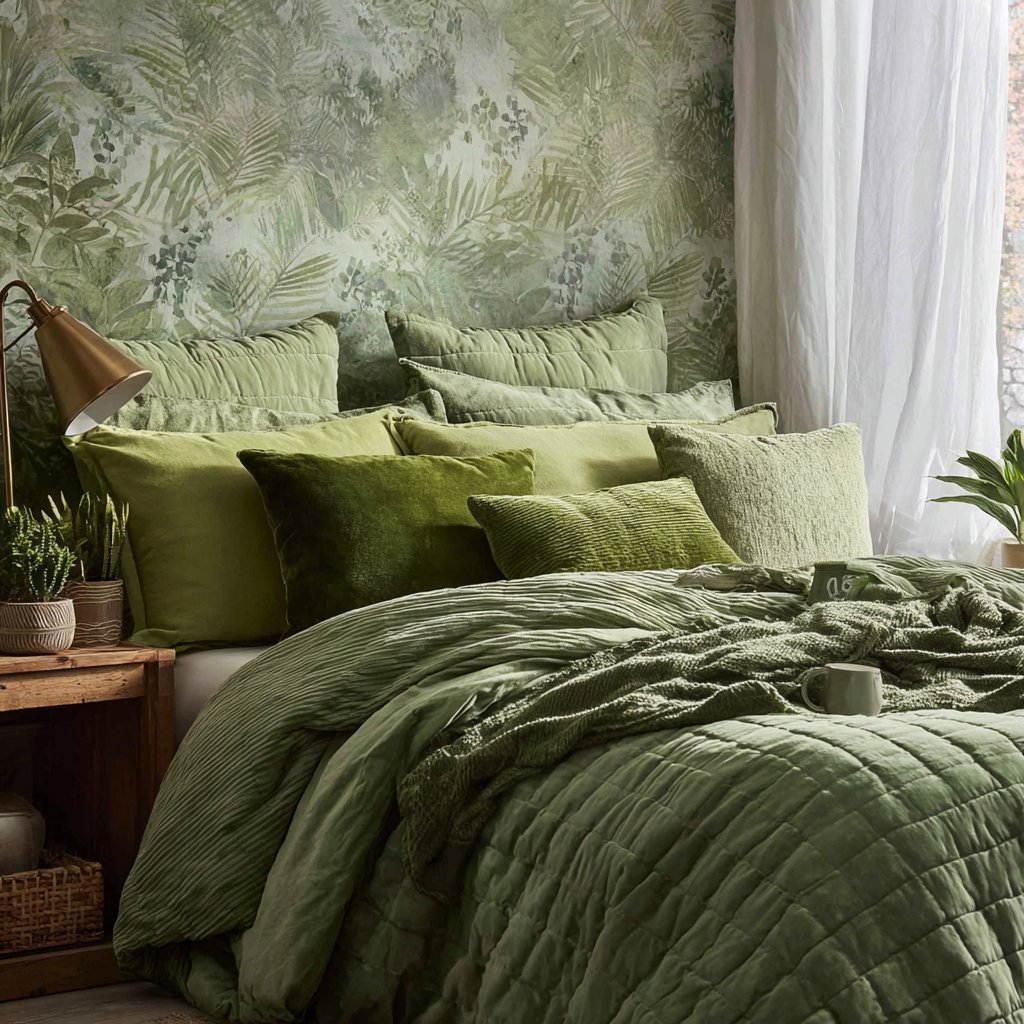
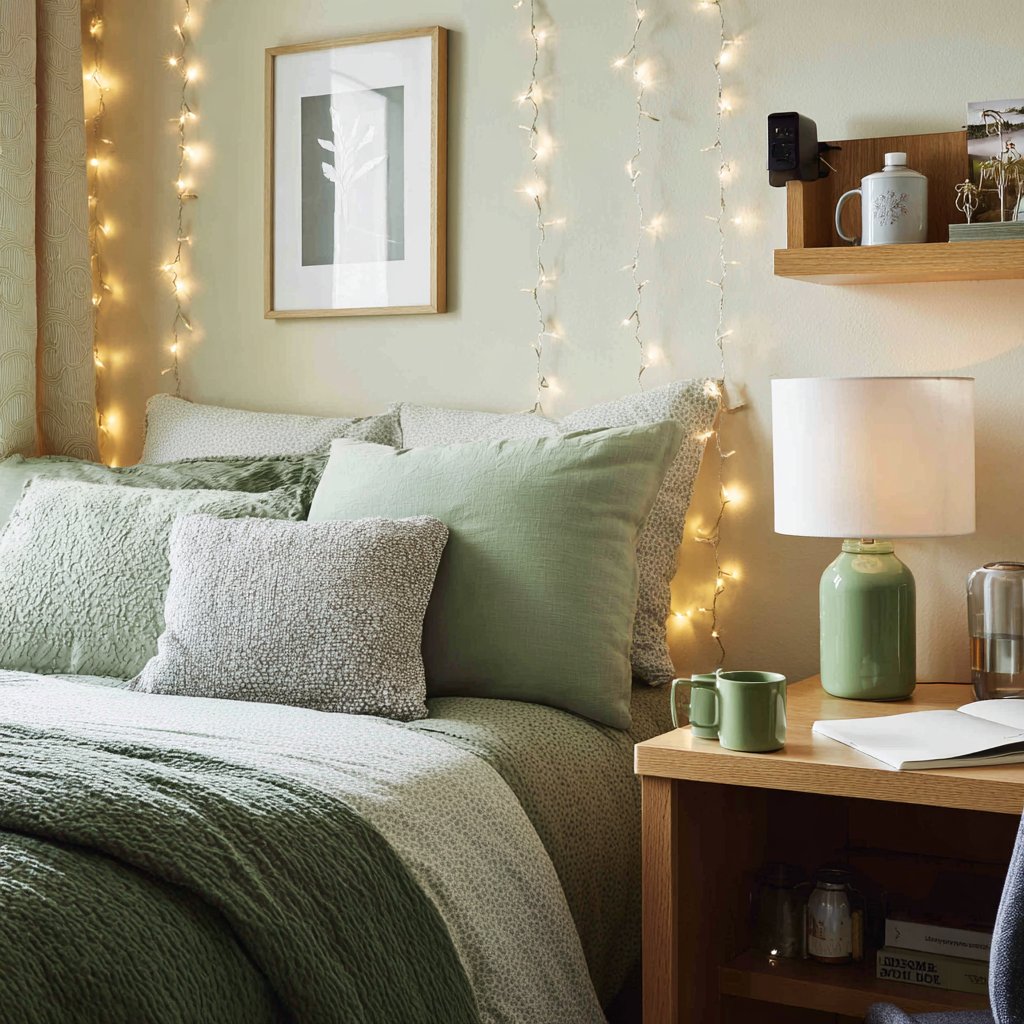
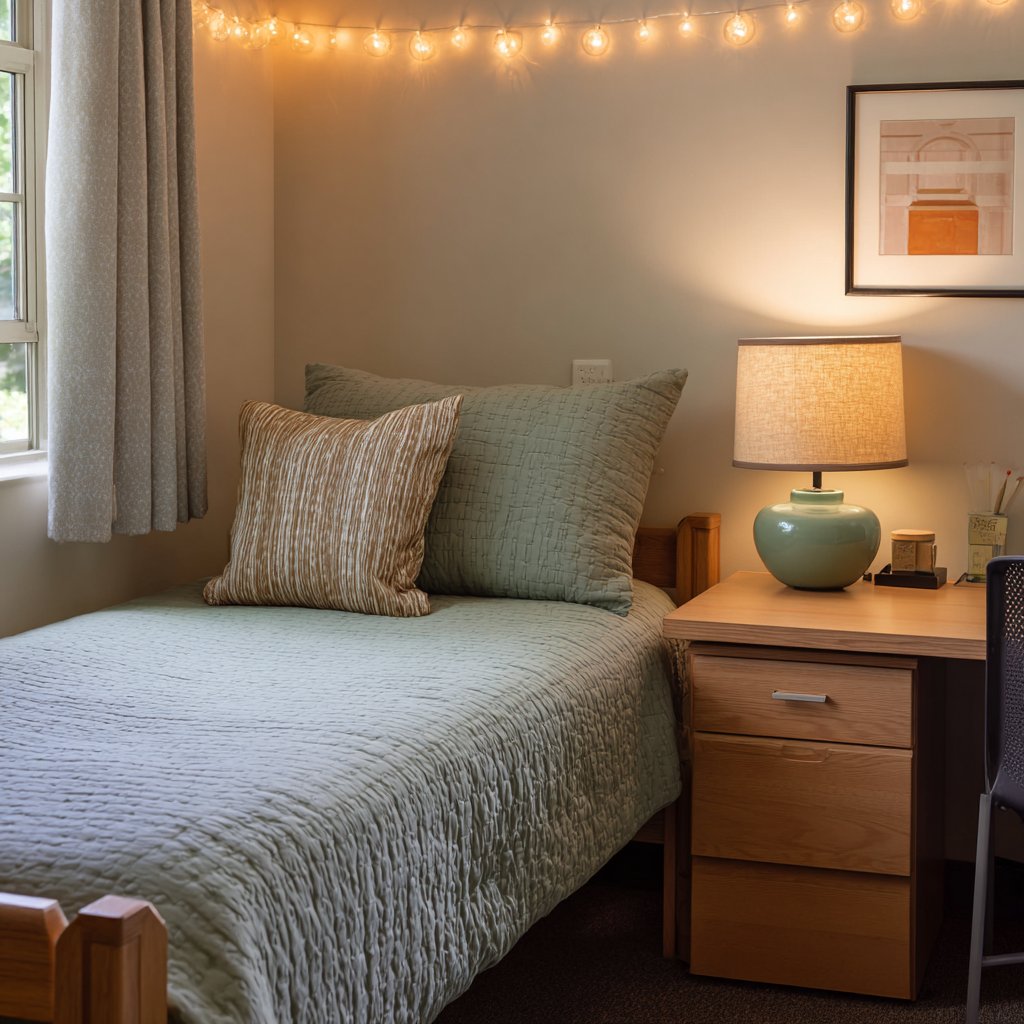
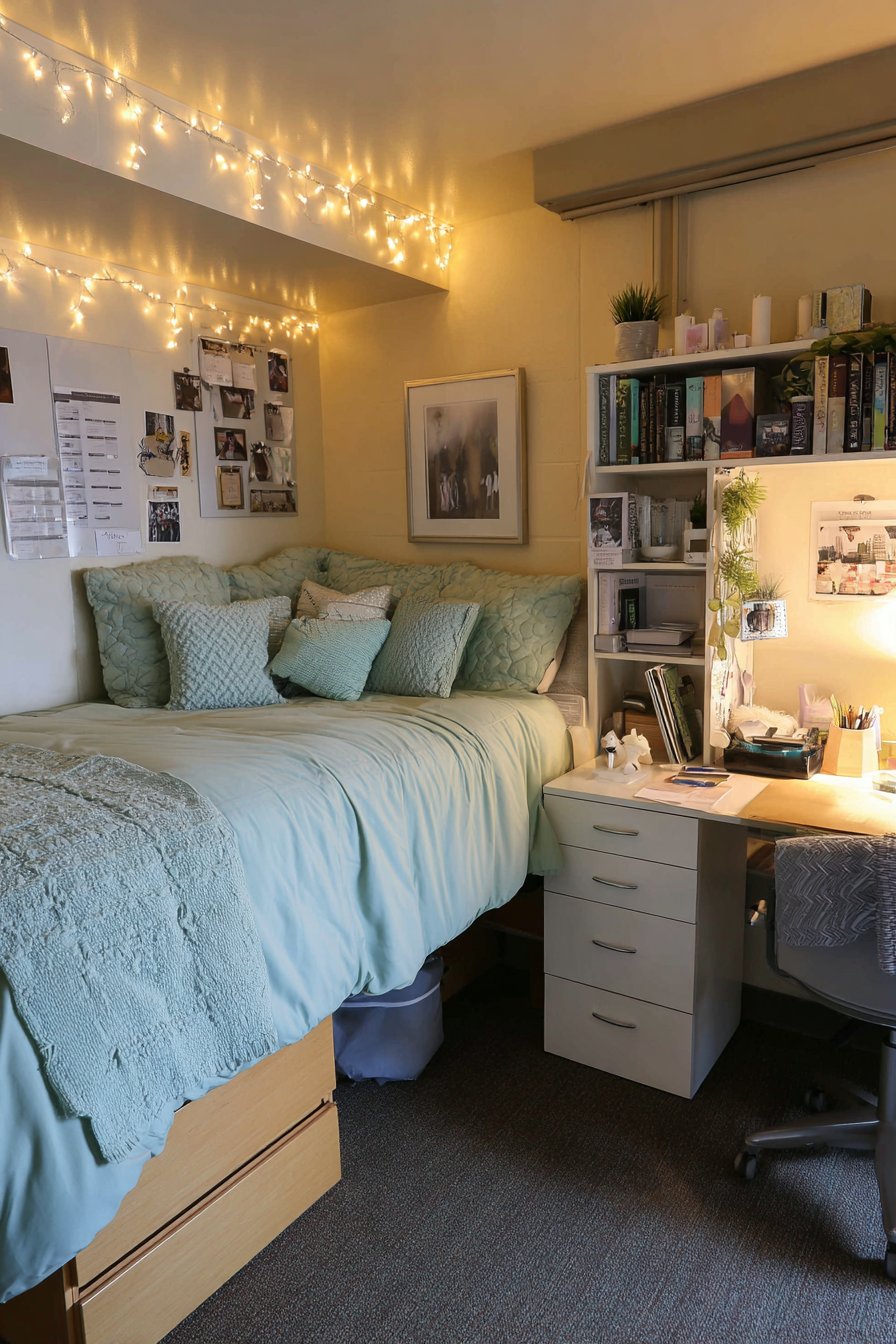
The foundation of any comfortable dorm room begins with the bed, and creating a luxurious sleeping environment doesn’t require breaking the budget. A thoughtfully composed bed featuring sage green quilted bedding becomes the focal point of the room, offering both visual appeal and practical comfort for those long study sessions and well-deserved rest periods. The quilted texture adds dimension and interest while providing warmth during cooler months, and coordinating throw pillows in various green textures—velvet for richness, linen for breathability—create depth that elevates the space beyond typical dorm aesthetics.
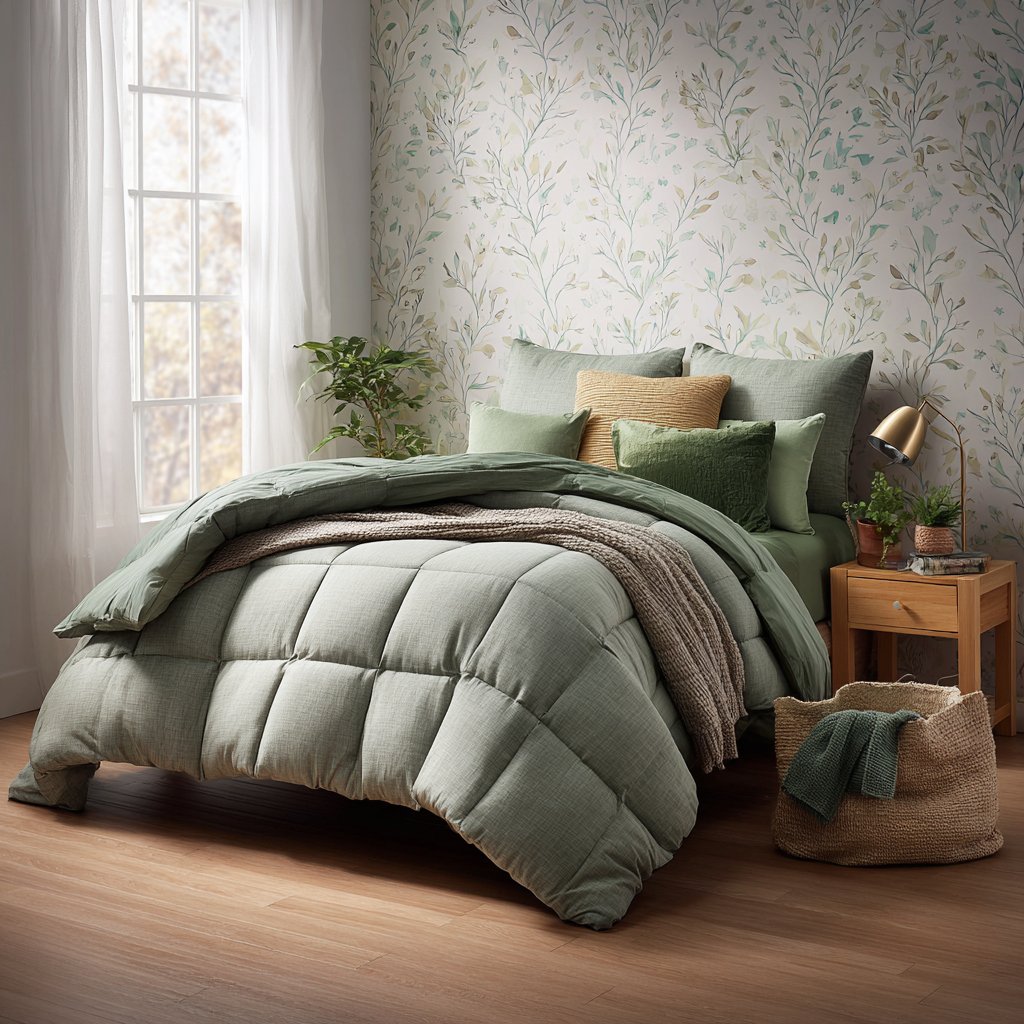
The strategic use of removable peel-and-stick wallpaper in a soft botanical leaf pattern behind the bed creates an instant focal wall without violating dorm policies or risking security deposits. This temporary solution offers the visual impact of painted accent walls while remaining completely reversible, making it ideal for students who want to personalize their space. A small nightstand in natural wood provides essential surface space for a brass reading lamp and small potted succulent, combining functionality with decorative appeal. The warm wood tone complements the cool sage tones beautifully, creating balance in the color palette.
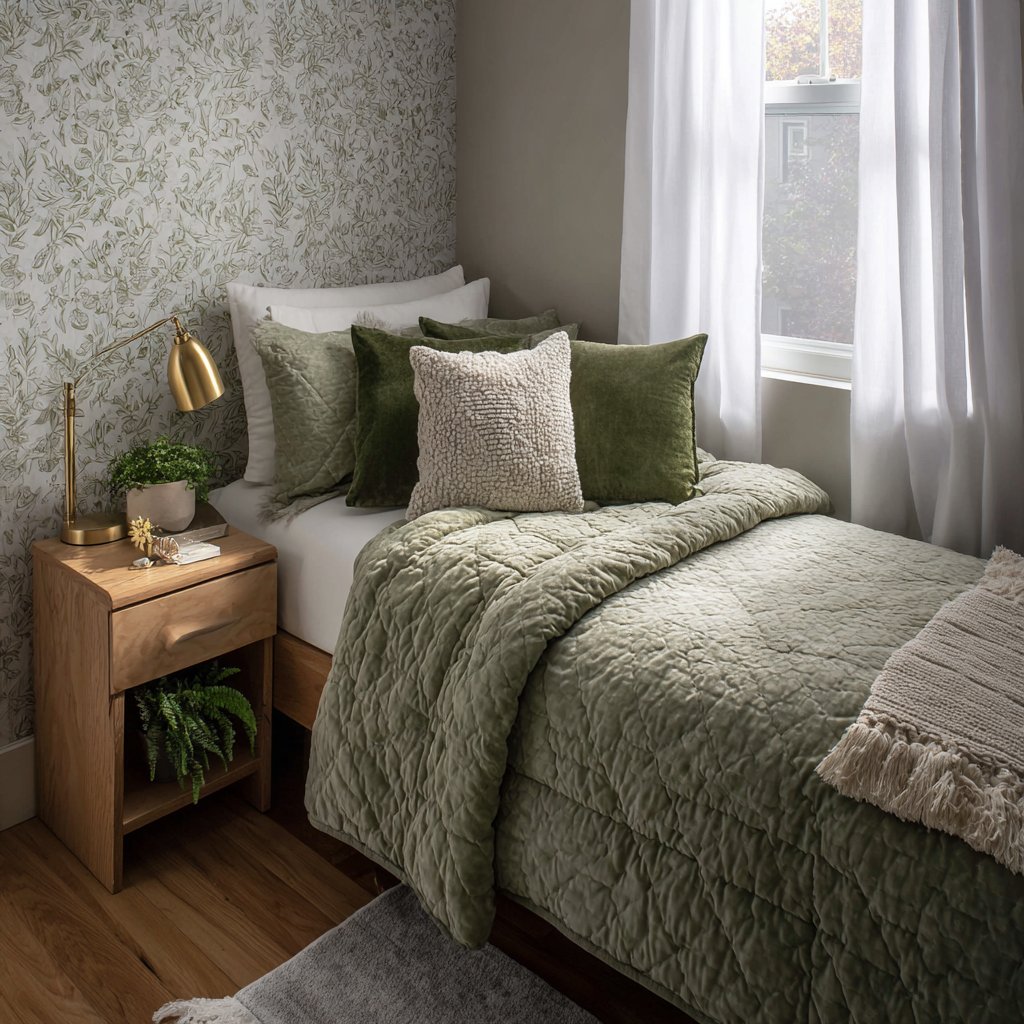
Morning light filtering through sheer white curtains illuminates the layered green tones, highlighting the various textures and creating an ever-changing display throughout the day. This natural lighting interaction with the carefully selected fabrics demonstrates how thoughtful material choices can maximize the impact of available light in dorm rooms, which often feature limited or awkwardly positioned windows. The overall effect is one of tranquility and intention—a space that promotes restful sleep and peaceful mornings.
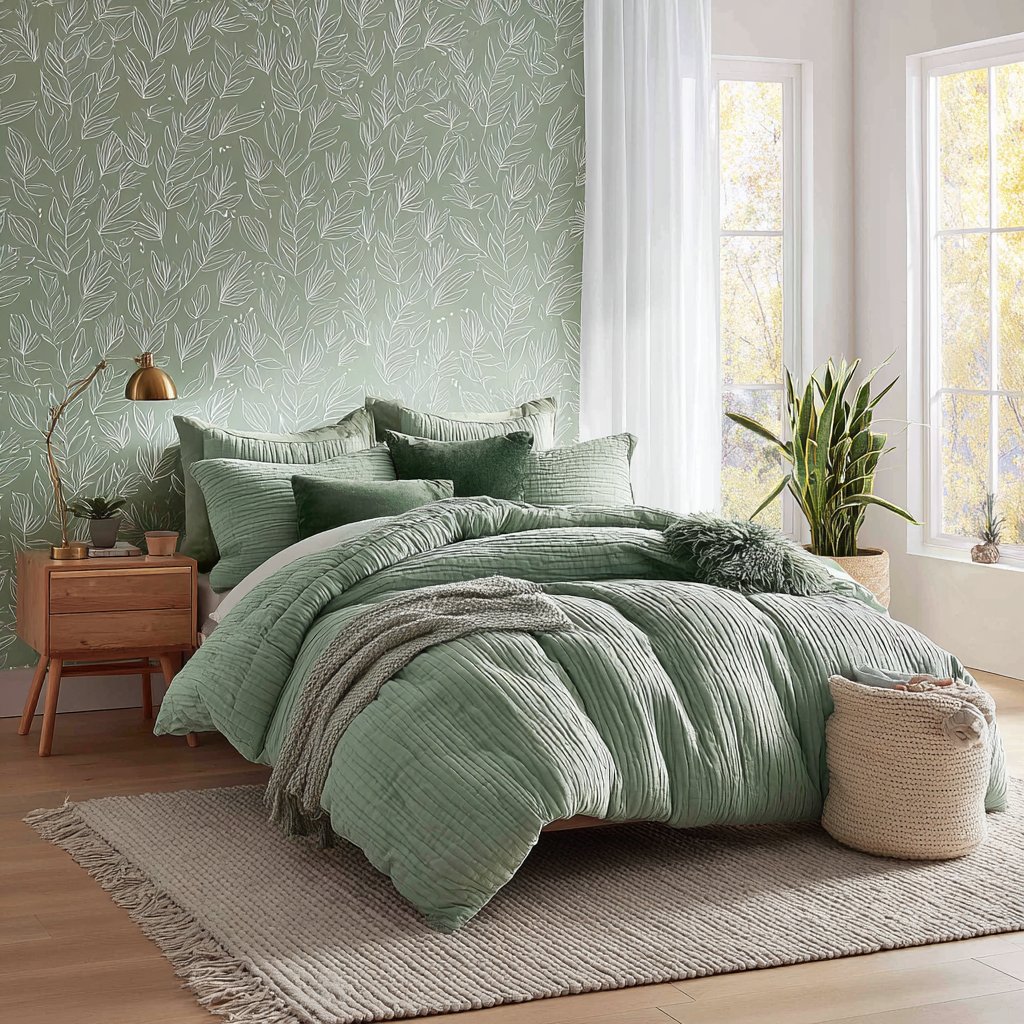
Key design tips for achieving this look include selecting bedding with practical care requirements, as dorm living demands easy-to-wash fabrics that maintain their appearance despite frequent laundering. Invest in quality pillowcases and shams that can instantly refresh the bed’s appearance without requiring a complete bedding overhaul. Use the vertical wall space behind the bed to create visual interest, as this often-overlooked area offers prime real estate for making design statements. Choose a nightstand that offers both surface space and storage to maximize functionality in your limited square footage. Finally, incorporate at least one living element, like the succulent, to bring life and air-purifying benefits to your sleeping area.
2. Compact Study Space with Green Ergonomic Comfort
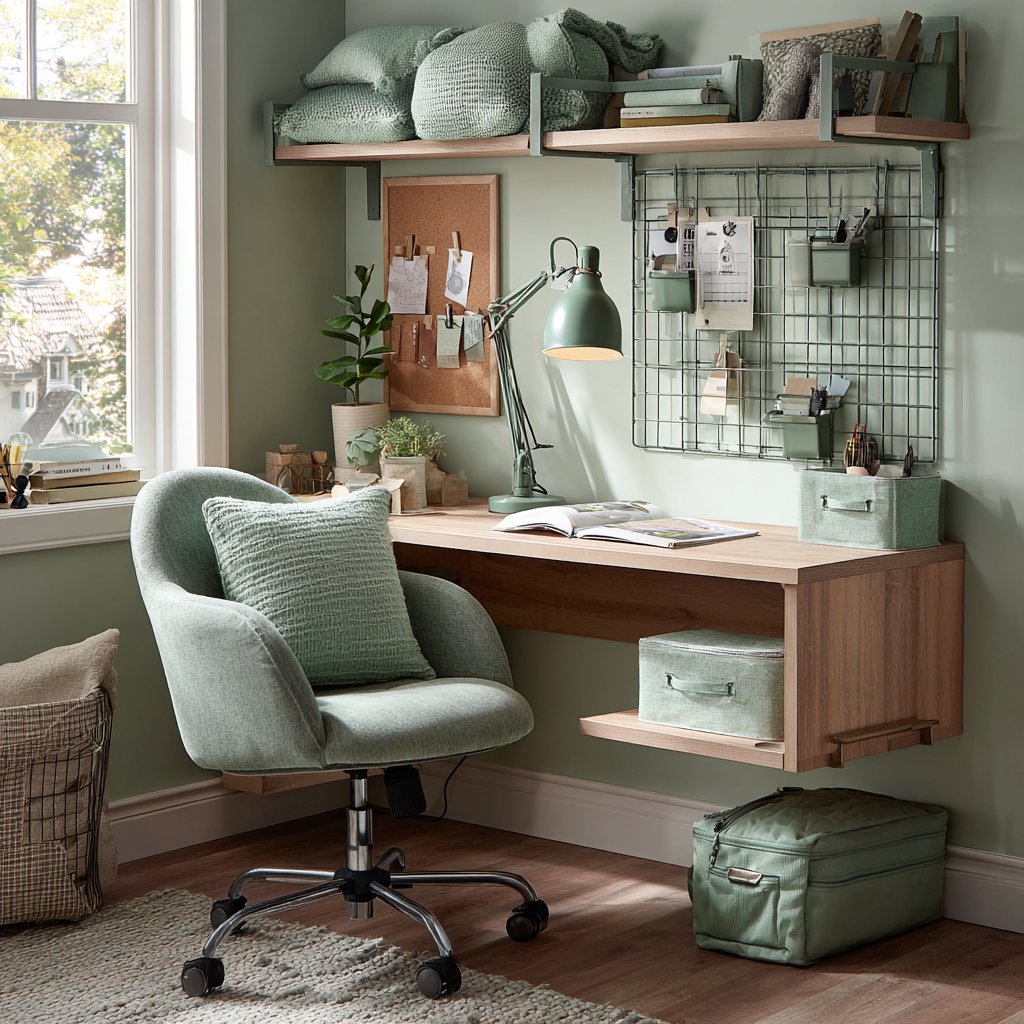
Academic success begins with a well-organized, comfortable study environment, and this green dorm room idea focuses on creating a workspace that supports both productivity and wellness. A wall-mounted floating desk in light oak maximizes floor space while providing a sturdy work surface, demonstrating how vertical thinking solves the spatial constraints inherent in dorm living. The natural wood finish brings warmth to the space while its floating design creates an airy, uncluttered feeling that helps maintain focus during intensive study sessions.
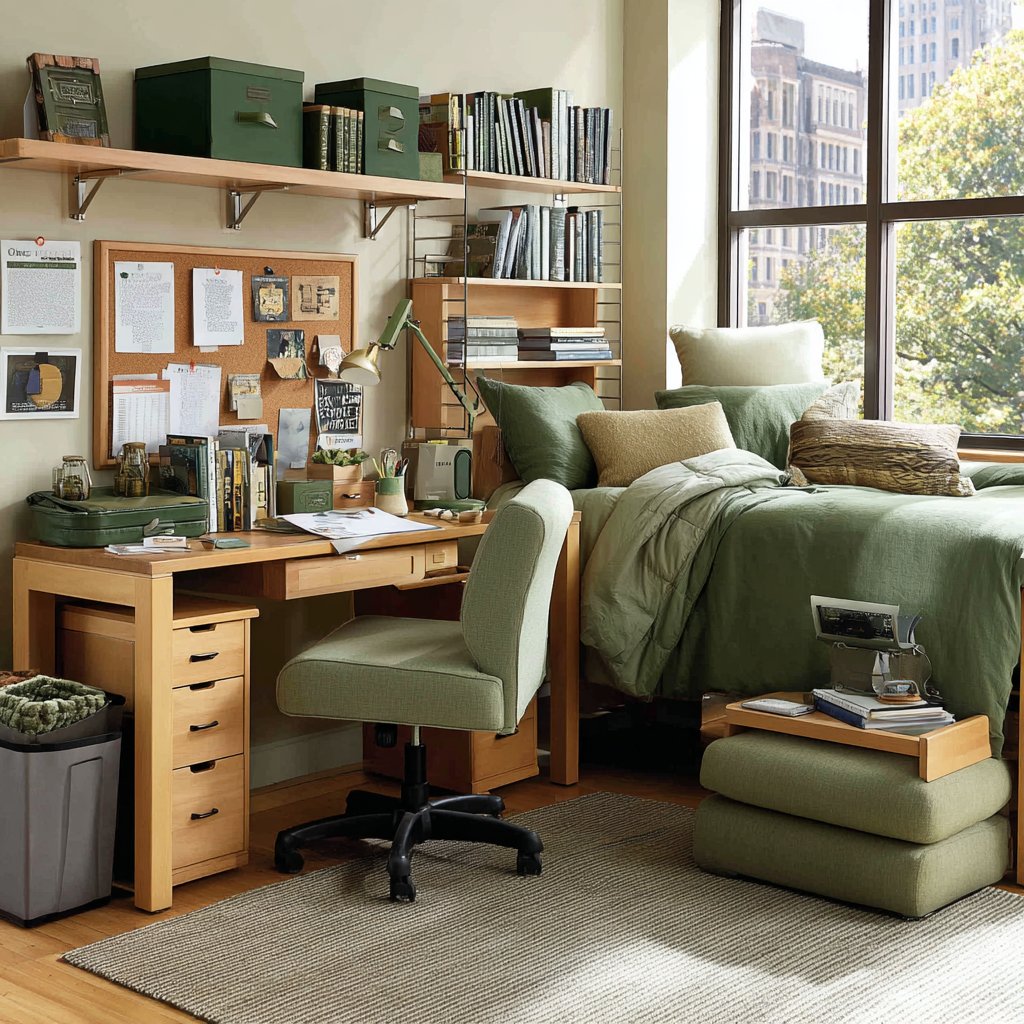
The sage green upholstered task chair serves as both a functional necessity and a design statement, proving that ergonomic furniture need not sacrifice aesthetic appeal. Proper seating is crucial for students who spend hours reading, writing, and researching, and the plush upholstery in a calming green tone encourages longer, more comfortable study periods. Above the desk, a cork bulletin board provides a practical surface for pinning important dates, inspirational quotes, and visual reminders, while a desk organizer in muted green keeps supplies accessible yet contained. An adjustable LED desk lamp offers crucial task lighting that can be customized to individual needs and preferences, reducing eye strain during late-night study sessions.
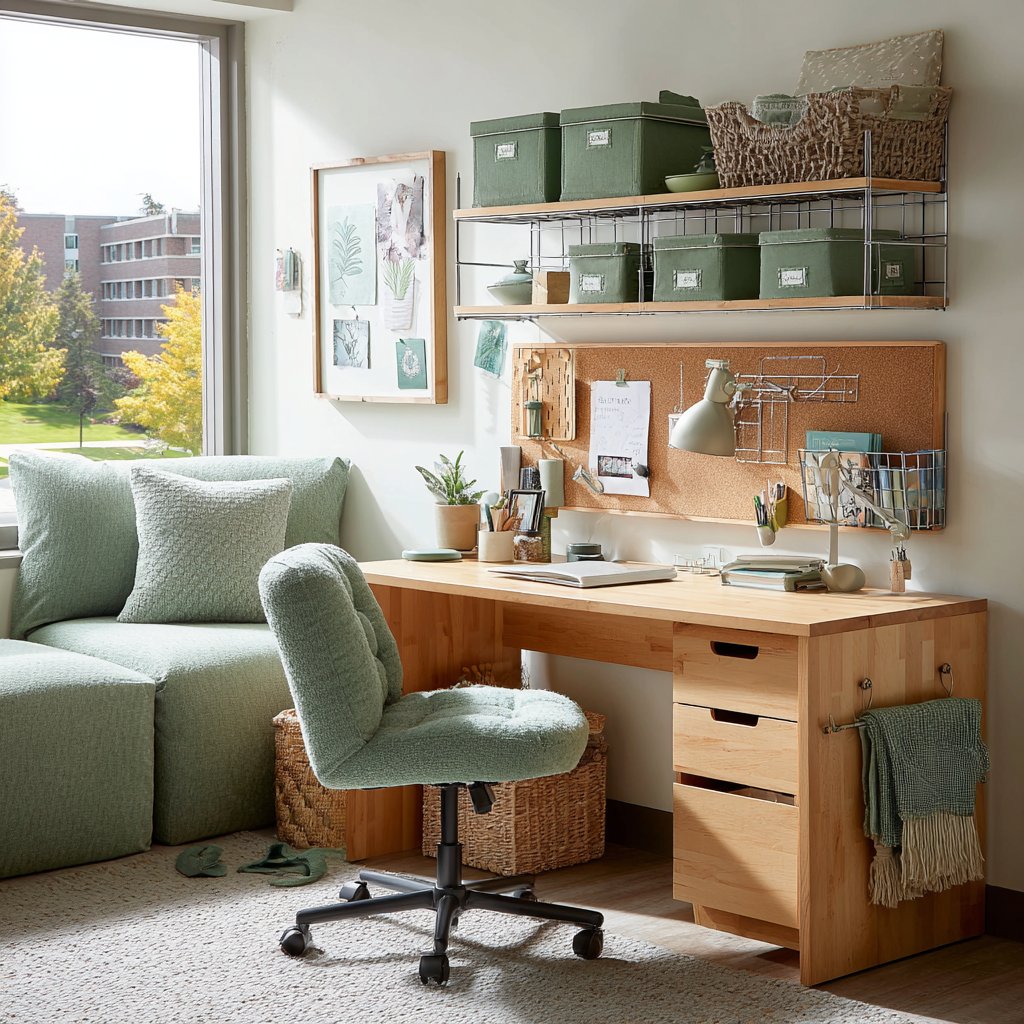
Wire grid shelving mounted above the desk serves multiple purposes—it keeps textbooks within arm’s reach, displays decorative elements, and houses storage boxes in coordinating green tones that maintain the room’s cohesive aesthetic. This open shelving approach allows for easy access to frequently used materials while keeping the desktop clear for actual work. Natural daylight from an adjacent window supplements the artificial lighting, and positioning the desk to take advantage of this natural resource improves both mood and energy levels during daytime study hours.
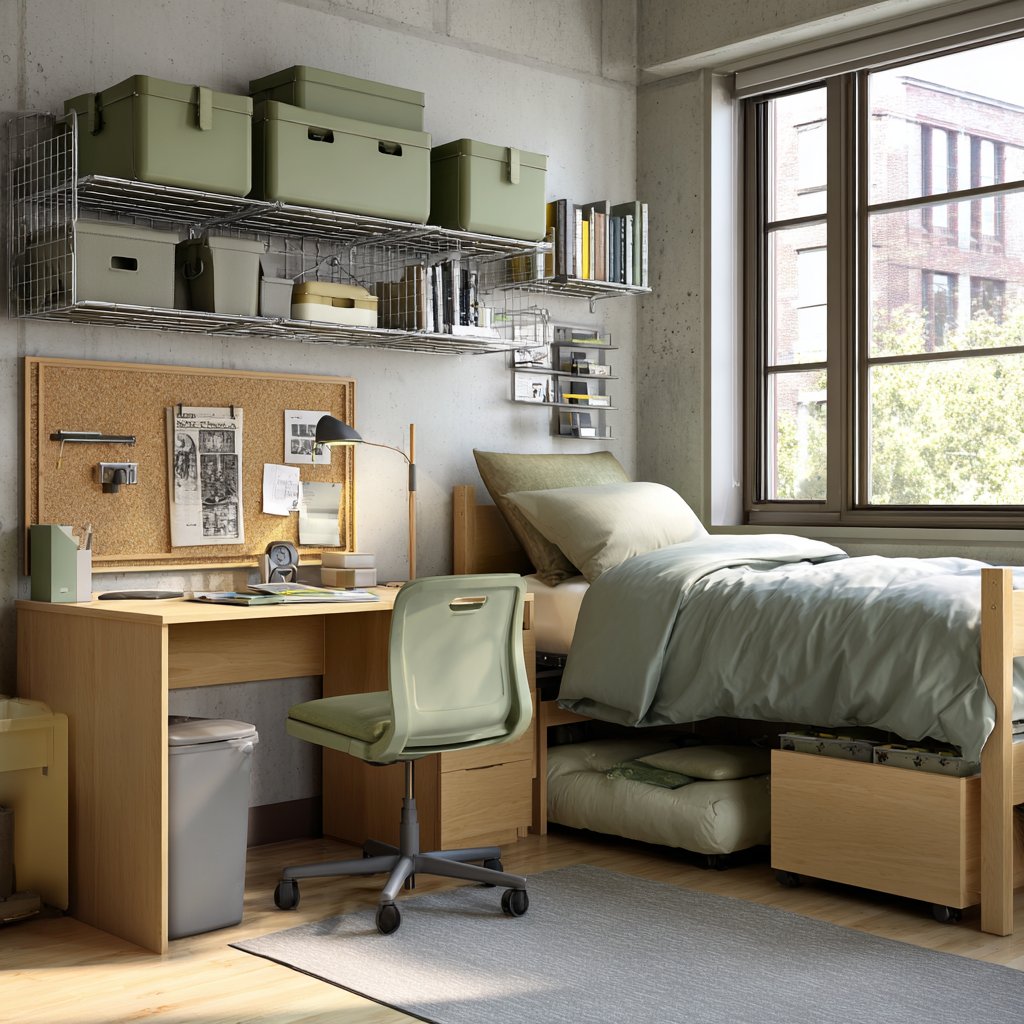
Key design tips include measuring your available wall space carefully before purchasing a floating desk to ensure proper fit and support. Invest in a quality task chair with proper lumbar support, as this single purchase significantly impacts your physical comfort and academic performance throughout your college years. Create zones within your study area by using the bulletin board for current priorities and the shelving for reference materials and decorative elements. Implement a color-coded organization system using green-toned storage boxes and folders to make locating materials quick and intuitive. Position your desk to maximize natural light during your most productive hours, typically morning and early afternoon, to reduce reliance on artificial lighting and improve your circadian rhythm.
3. Modular Green Storage Solutions
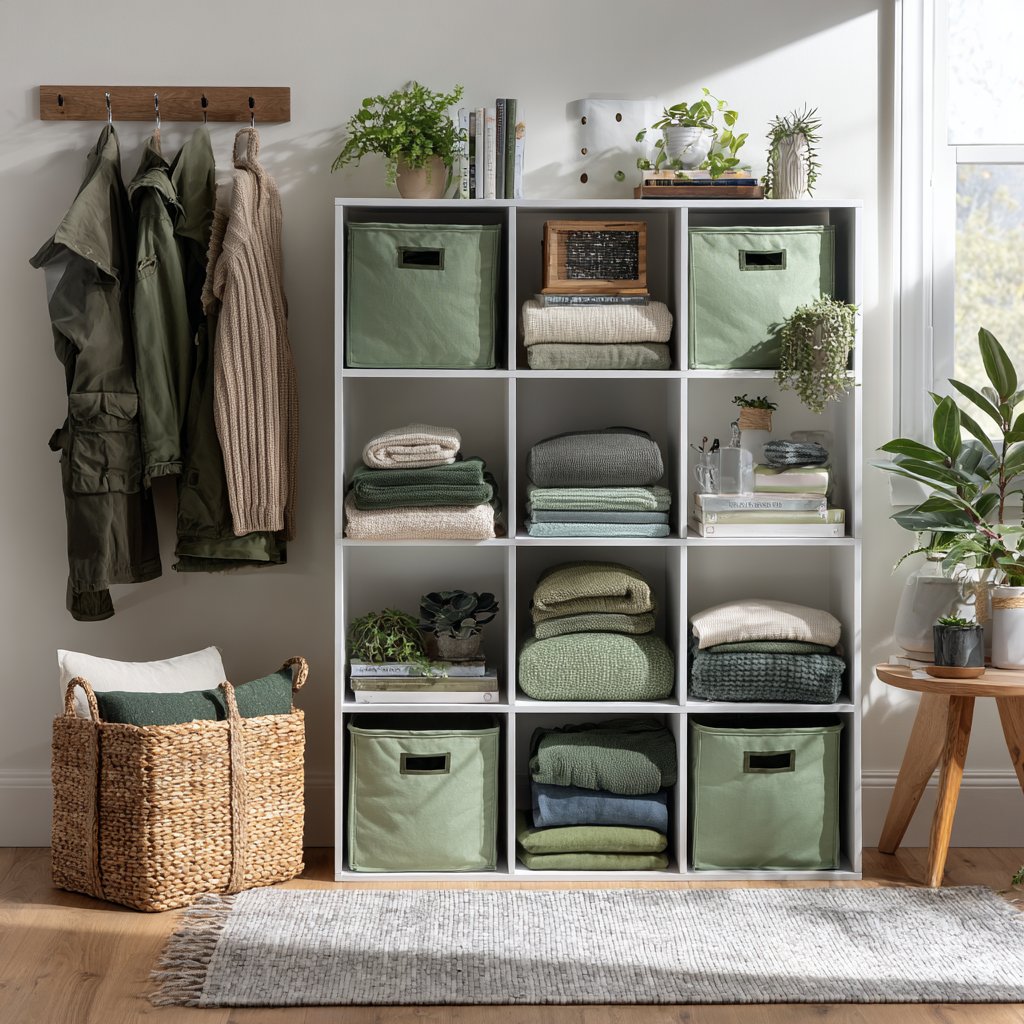
Conquering clutter represents one of the greatest challenges in dorm living, where limited closet space and minimal built-in storage test even the most organized students. This green dorm room idea showcases how modular cube organizers can transform chaotic accumulations into orderly displays while reinforcing the room’s color scheme. A white cube organizer serves as a neutral foundation that allows fabric storage bins in various shades of green—olive, sage, and forest—to become functional art pieces that hide the visual chaos of miscellaneous items while remaining easily accessible.
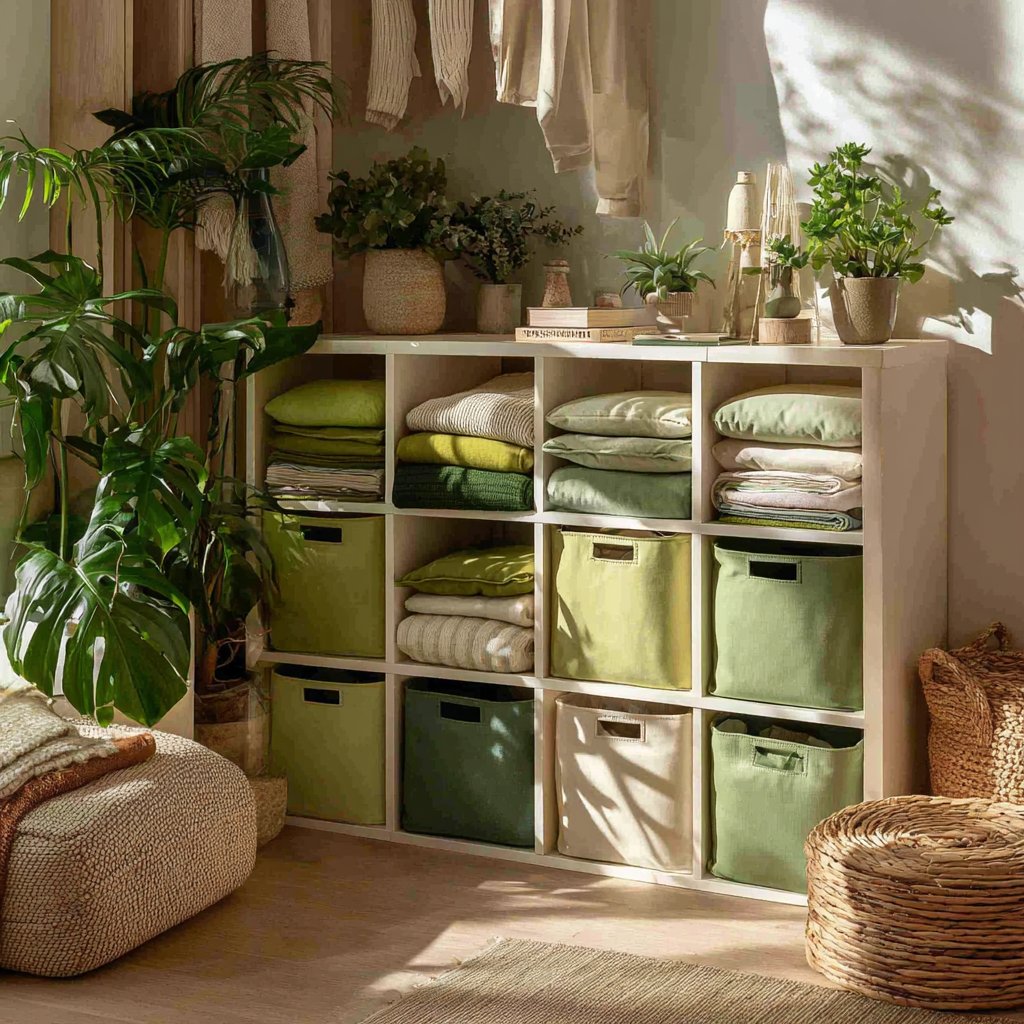
The styling of these storage cubes demonstrates the balance between practicality and aesthetics that characterizes successful dorm design. A mix of fabric bins conceals less attractive necessities like tangled charging cables and random school supplies, while carefully selected open cubes display small plants that bring life to the space, neatly folded sweaters in complementary colors, and textbooks arranged by size and subject. This combination of hidden and displayed storage creates visual interest while maintaining functionality, allowing you to quickly grab what you need while keeping the overall appearance tidy and intentional.
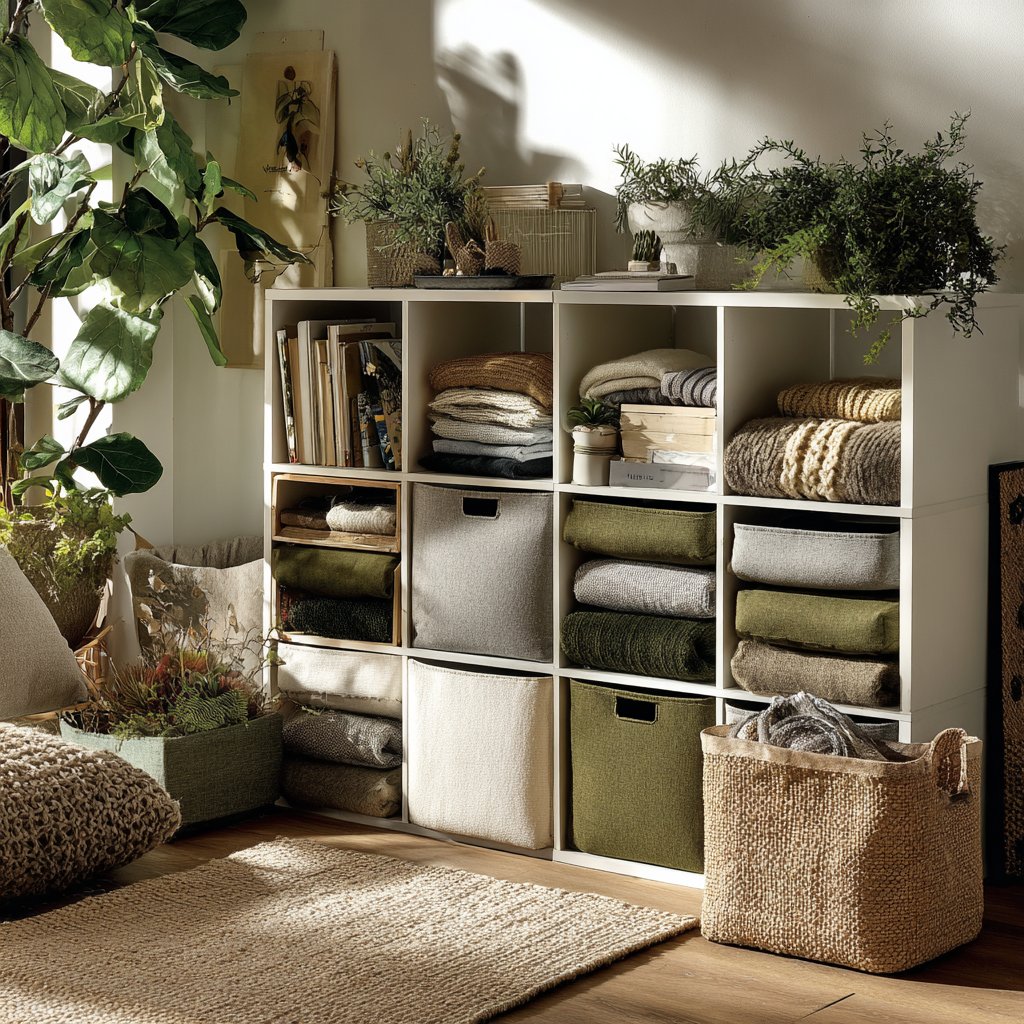
A woven basket in natural materials positioned on the floor beside the unit extends the storage capacity while introducing texture contrast that prevents the space from feeling too uniform. Soft natural lighting creates gentle shadows that highlight the organizational system’s functionality, and the varying heights and arrangements within the cubes prevent the storage solution from appearing rigid or institutional. The green fabric bins tie directly into the room’s overall color story while offering the practical benefit of being easily removable for cleaning or reorganization.
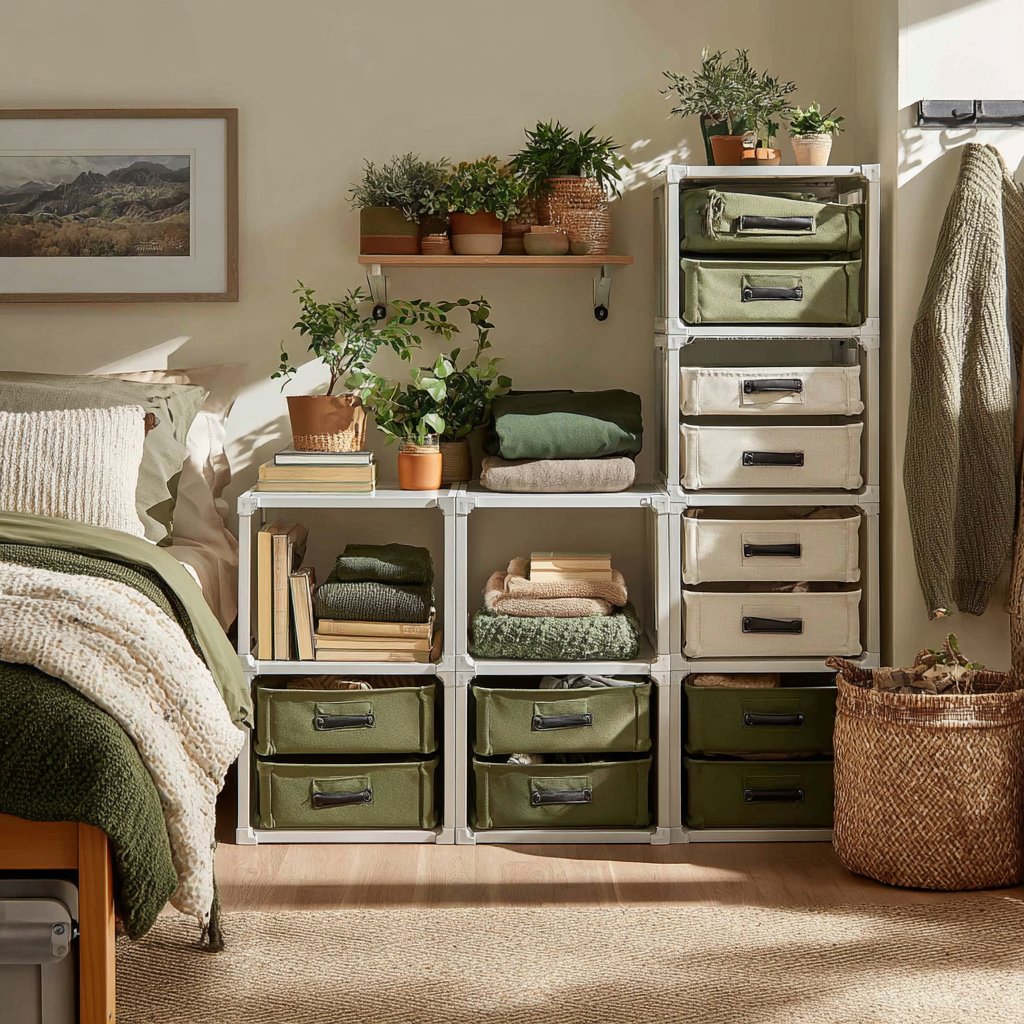
Key design tips for implementing this storage approach include measuring your available floor space and choosing a cube configuration that maximizes storage without overwhelming the room—vertical arrangements work particularly well in dorms with high ceilings and limited floor area. Select fabric storage bins with handles for easy removal and reinstallation, as you’ll frequently need to access items stored within them. Create a designated cube for frequently used items at the most accessible height to streamline your daily routine. Incorporate at least two or three open cubes to display decorative elements and break up the visual monotony of closed storage. Rotate seasonal items in and out of the bins to keep only currently relevant belongings in your active storage system, boxing up winter clothes during spring semester and vice versa.
4. Vertical Living Plant Wall
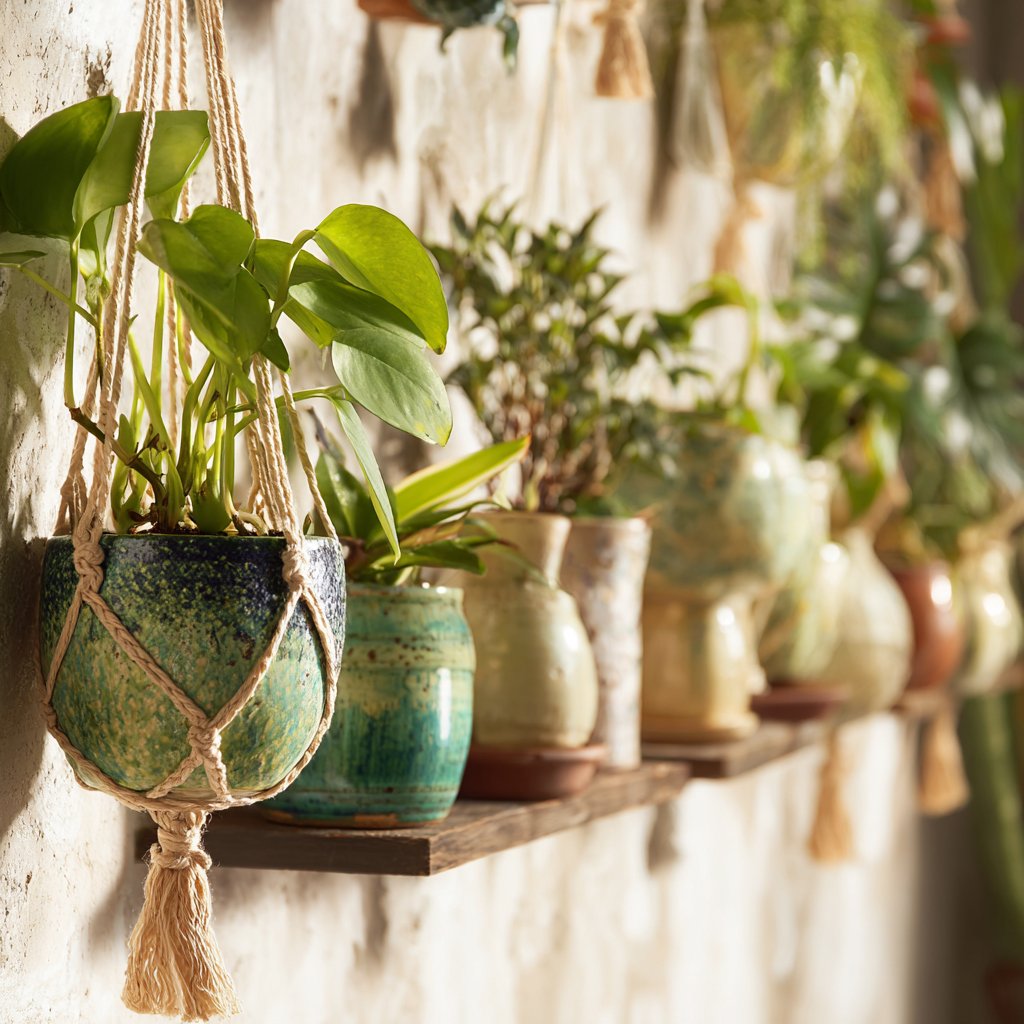
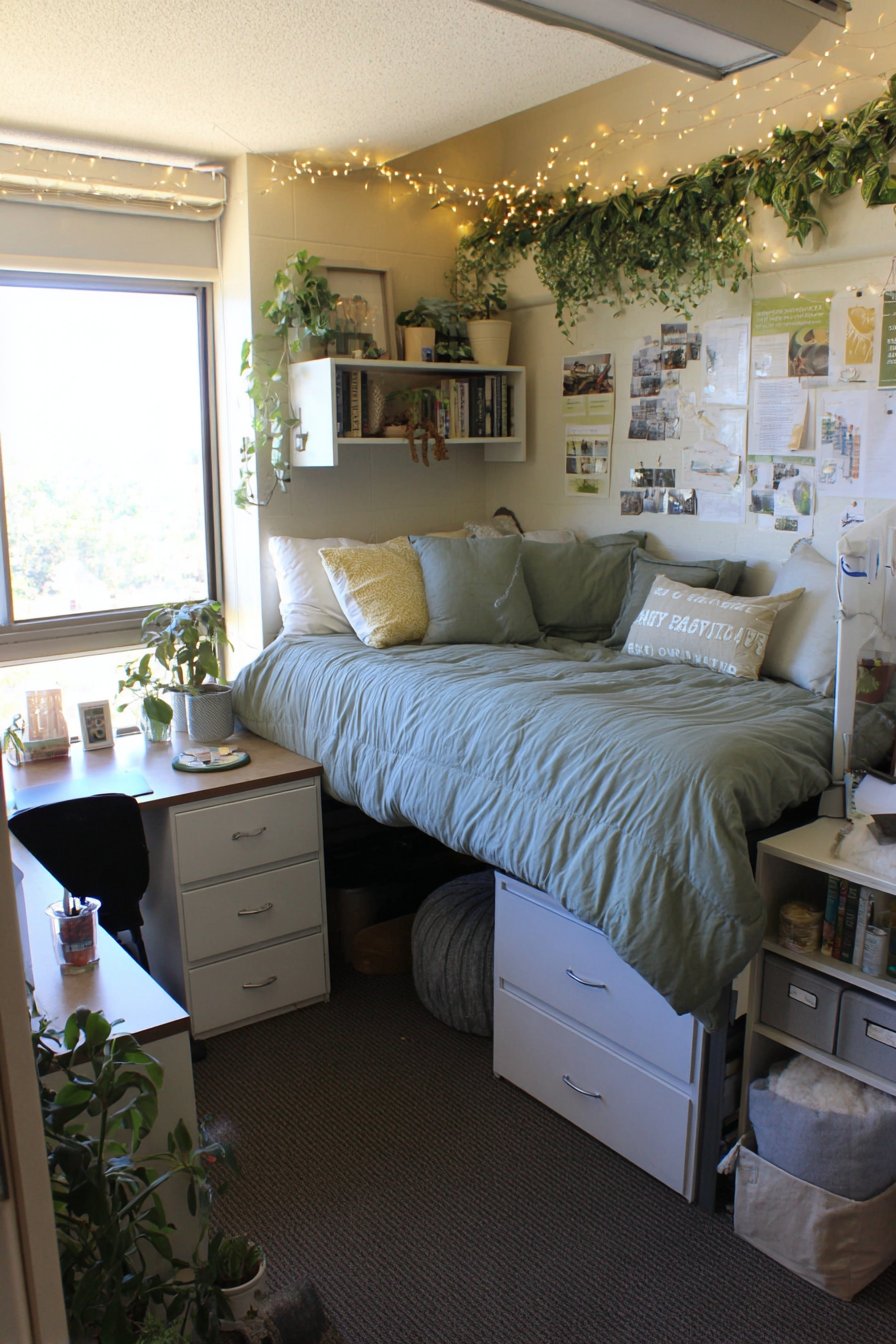
Bringing nature indoors offers psychological benefits that extend far beyond aesthetic appeal, particularly for students navigating the stress and isolation that can accompany college life. This green dorm room idea embraces biophilic design by creating a vertical plant wall that maximizes the presence of living greenery while respecting the floor space limitations of dorm living. Using removable adhesive hooks and macrame hangers, this arrangement features trailing pothos, spider plants, and small ferns in terracotta and ceramic pots with green glazes, creating a living art installation that purifies air and provides visual tranquility.
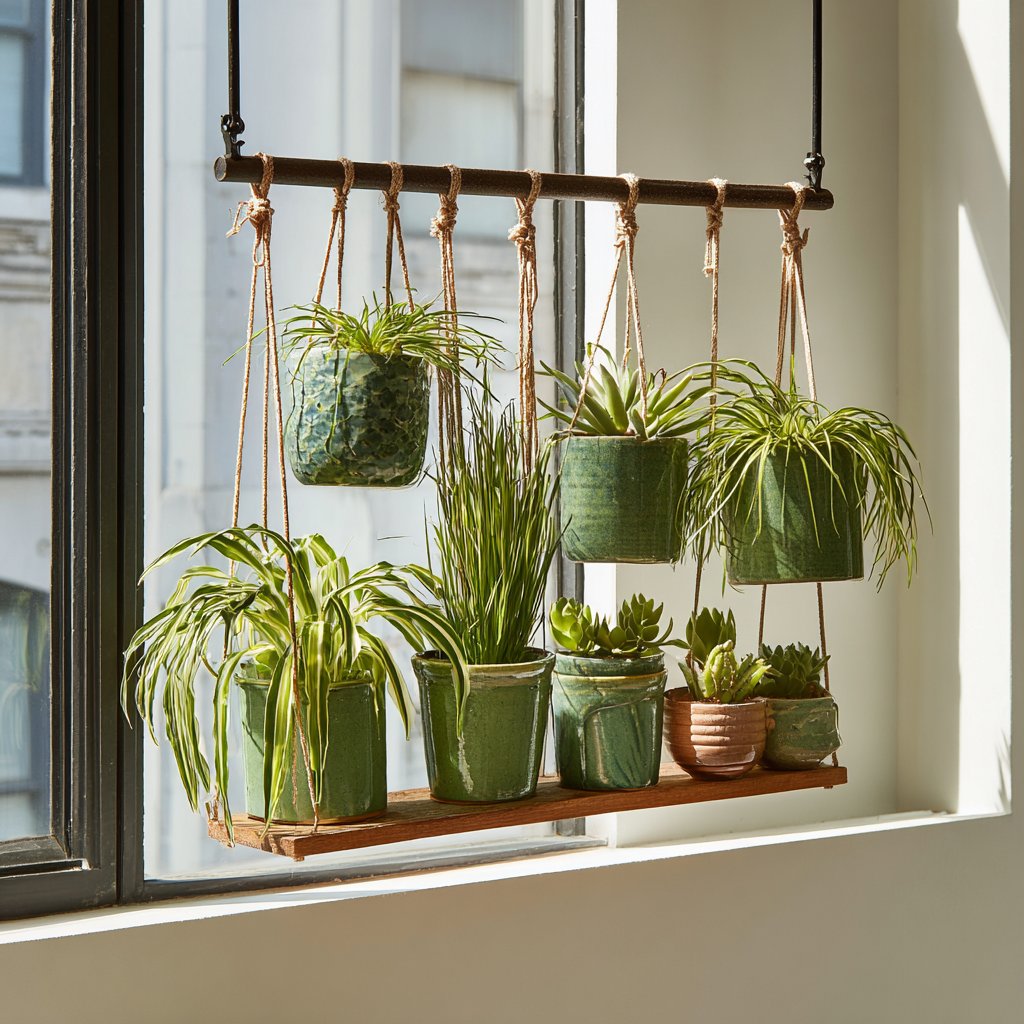
The vertical arrangement serves multiple practical purposes beyond its obvious beauty. Plants positioned at varying heights create depth and dimension, transforming a flat wall into a three-dimensional garden that draws the eye upward and makes the room feel larger and more dynamic. The selection of low-maintenance plant varieties ensures that even students with demanding schedules and limited horticultural experience can maintain this living display. Pothos are particularly forgiving, thriving even with inconsistent watering, while spider plants reproduce readily, offering opportunities to share plantlets with friends or expand your own collection.
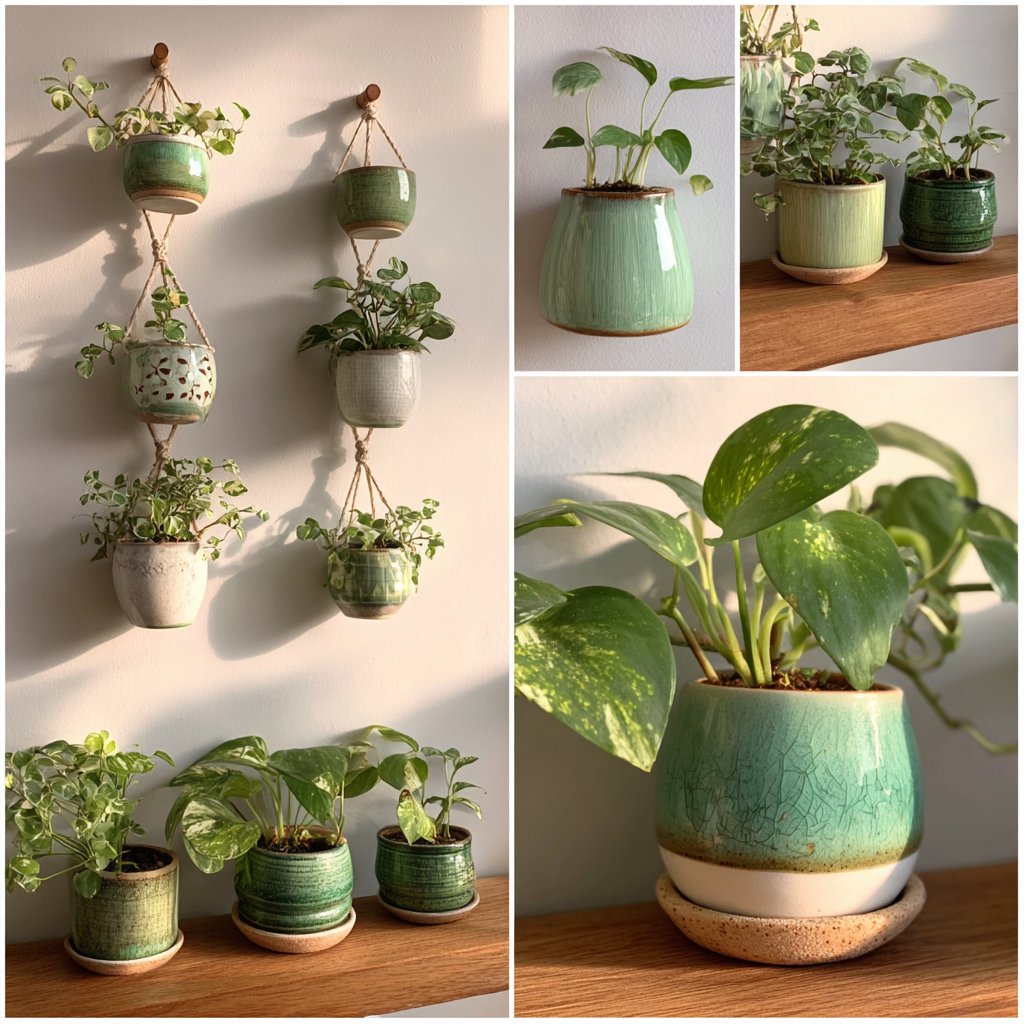
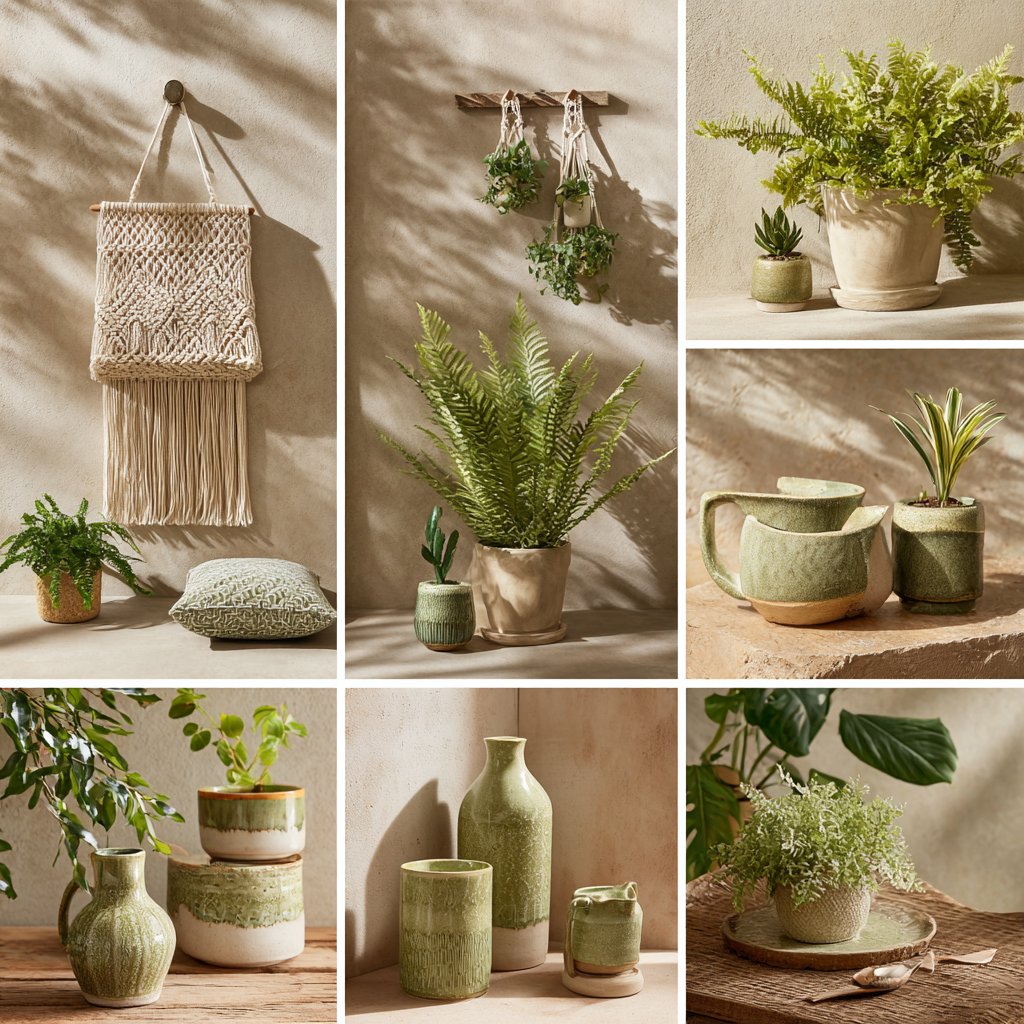
Natural afternoon light from a nearby window ensures the plants receive adequate sunlight to thrive, and positioning the plant wall near this light source demonstrates the importance of understanding your room’s orientation and light patterns before committing to plant placement. The combination of terracotta’s earthy warmth and green-glazed ceramics creates visual variety while maintaining cohesion within the room’s overall color palette. The macrame hangers add textural interest and a touch of bohemian charm that softens the institutional feel of standard dorm rooms.
Key design tips include researching your specific plants’ light and water requirements before arranging them on your wall to ensure each specimen receives appropriate conditions for healthy growth. Use adhesive hooks rated for weights exceeding your heaviest potted plant to prevent accidents and wall damage. Create a watering schedule and stick to it, setting phone reminders if necessary to prevent the forgetfulness that kills most college houseplants. Position a waterproof tray or mat beneath your plant wall to catch any drips during watering sessions, protecting your floor from damage. Consider starting with just three to five plants and expanding your collection gradually as you develop confidence and understanding of their needs, rather than overwhelming yourself with extensive care requirements.
5. Cozy Corner Reading Nook
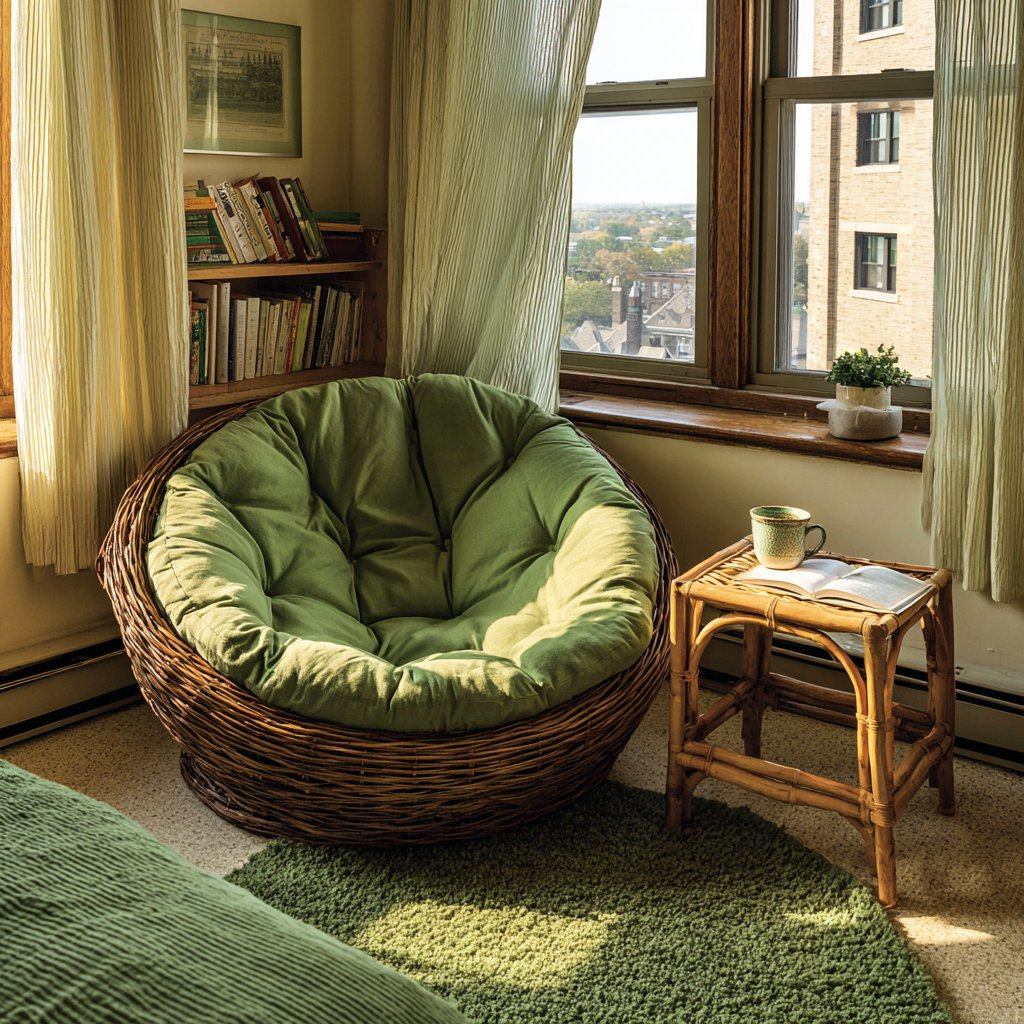
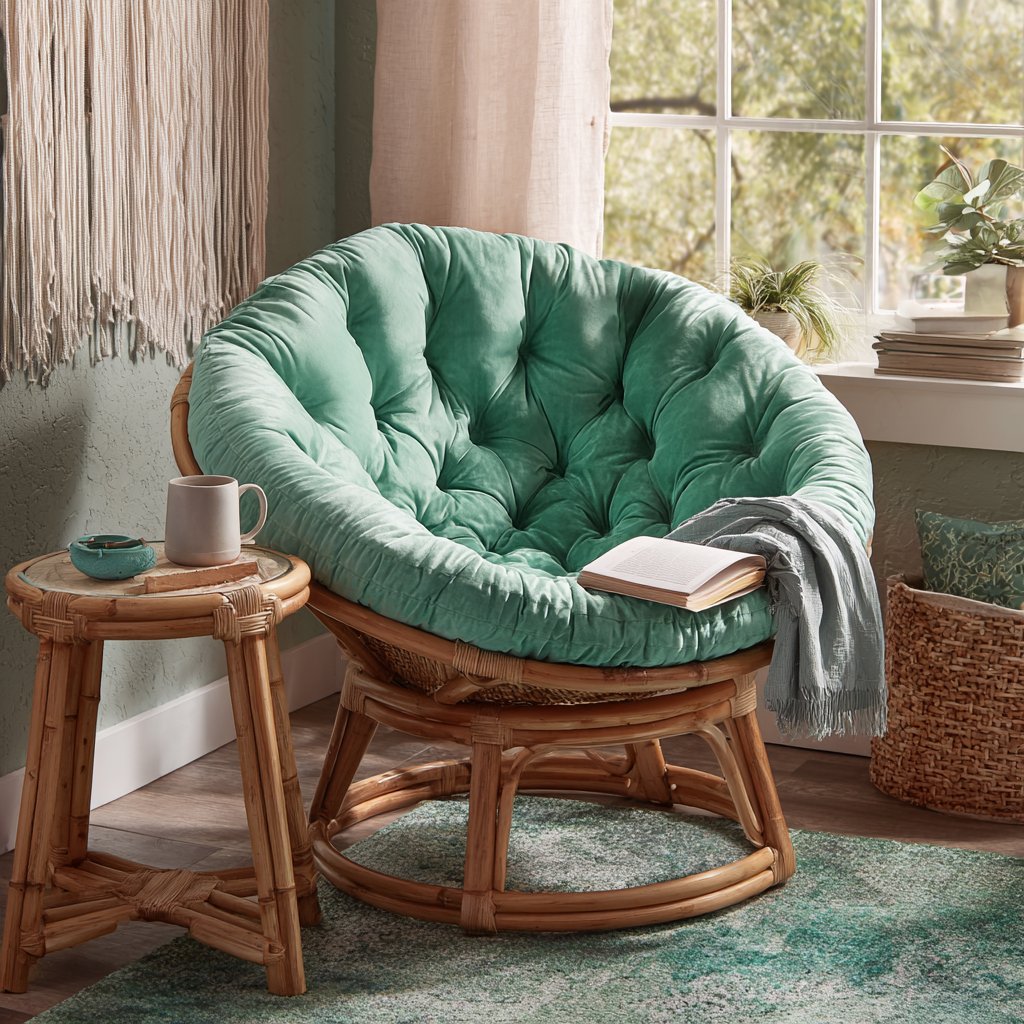
Creating dedicated spaces for specific activities within a multipurpose dorm room helps establish boundaries and routines that support both academic success and personal wellness. This green dorm room idea features a papasan chair with a sage green cushion positioned strategically in a corner near the window, establishing a distinct zone for reading, reflection, and relaxation that exists separately from the sleep and study areas. The iconic bowl-shaped papasan chair offers exceptional comfort for extended reading sessions while making a bold design statement that immediately identifies this corner as a special retreat within the larger room.
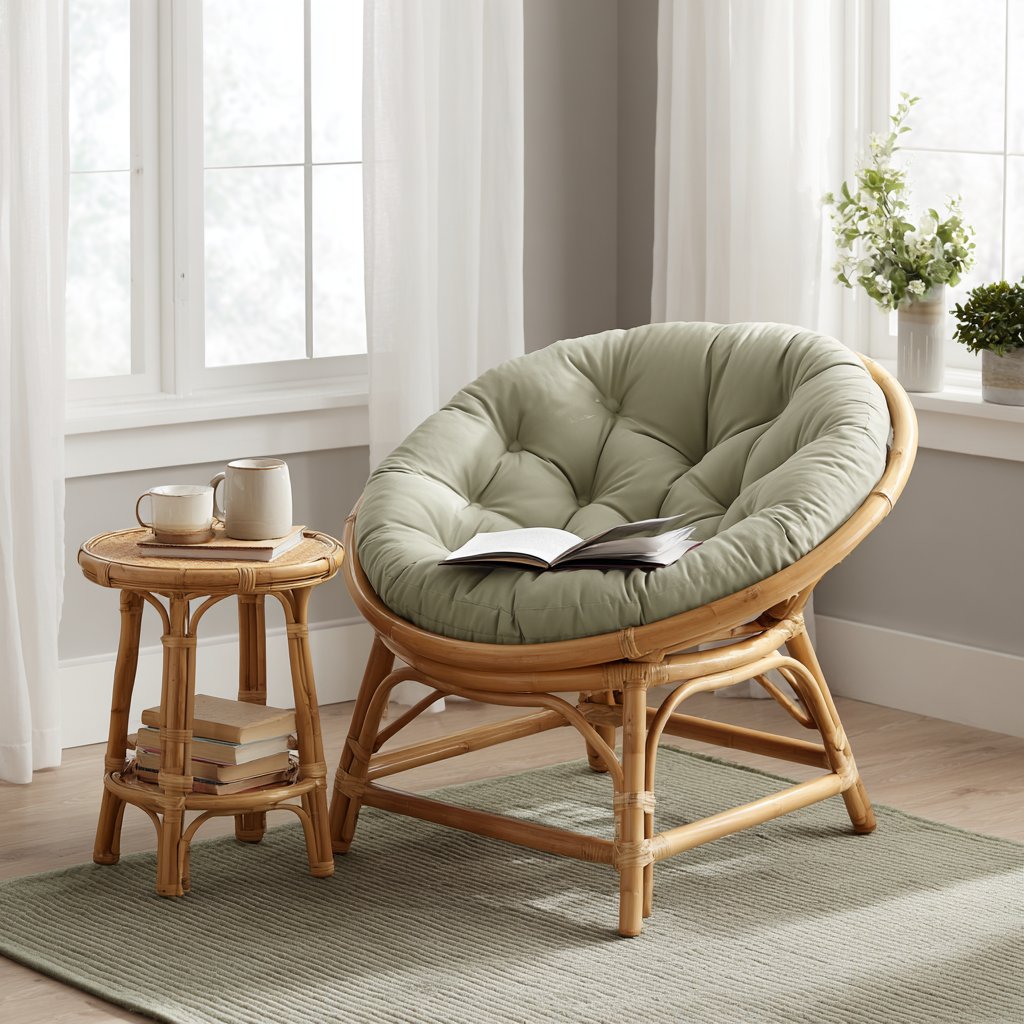
A small side table in natural bamboo provides essential surface space for a ceramic mug of tea or coffee and an open book, eliminating the awkward juggling act that occurs when seating lacks convenient surfaces within arm’s reach. The bamboo’s natural striations and warm honey tones complement the sage green cushion while introducing another layer of texture to the space. A soft area rug in muted green tones defines the reading nook’s boundaries, creating visual and tactile separation from the surrounding space while providing comfortable foot placement when settling into or rising from the low-slung chair.
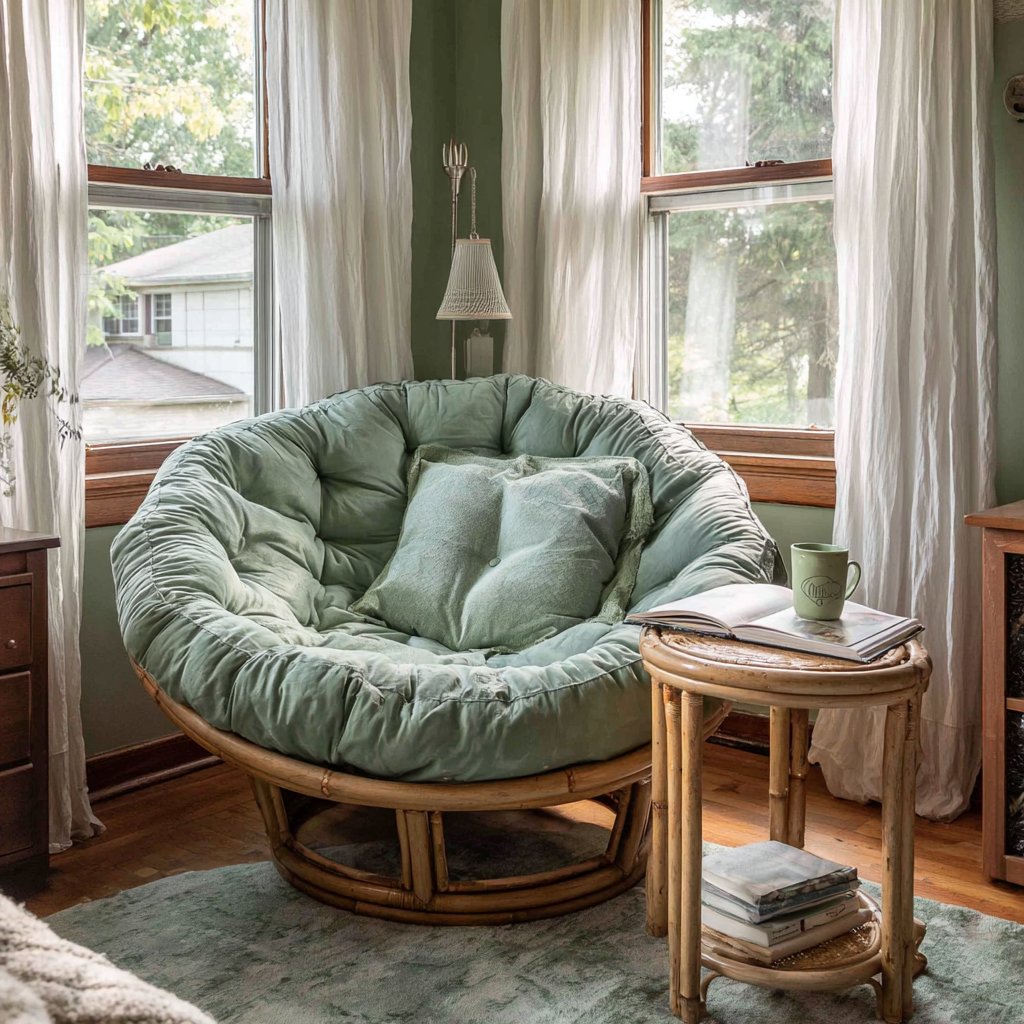
Sheer curtains diffuse the natural light, preventing harsh glare that can cause eye strain during reading while maintaining the bright, airy feeling that makes this corner so inviting. The layered lighting—bright during daytime hours but capable of being subdued with the curtains—allows this space to transition from an energizing morning reading spot to a calming evening meditation corner. The overall effect creates a micro-environment within the dorm room that signals to your brain that this corner is specifically for leisure and restoration, not academic stress or sleep.
Key design tips include positioning your reading nook in the area of your room that receives the most pleasant natural light, typically near a window with a favorable orientation. Invest in a chair cushion made from durable, cleanable fabric, as this piece will receive frequent use and inevitable spills. Add throw pillows in complementary colors and textures to increase comfort and allow for position adjustments during extended sitting sessions. Keep a small basket nearby for storing current reading materials, preventing the accumulation of book piles that can make the space feel cluttered. Consider adding a small clip-on reading light to the chair or nearby wall for evening use when natural light fades but you’re not ready to engage with the room’s main overhead lighting.
6. Layered Window Treatments in Eucalyptus Green
Window treatments in dorm rooms often receive minimal attention, with many students leaving institutional blinds unchanged throughout their stay. However, windows represent prime real estate for both functional and aesthetic improvements, and this green dorm room idea demonstrates how layered window dressing can transform natural light quality while adding significant color impact. Simple white roller shades provide the foundational layer, offering complete privacy and light blocking when needed for sleeping or screen-viewing, while eucalyptus green curtain panels made from washable cotton add softness, color, and additional light filtering options.
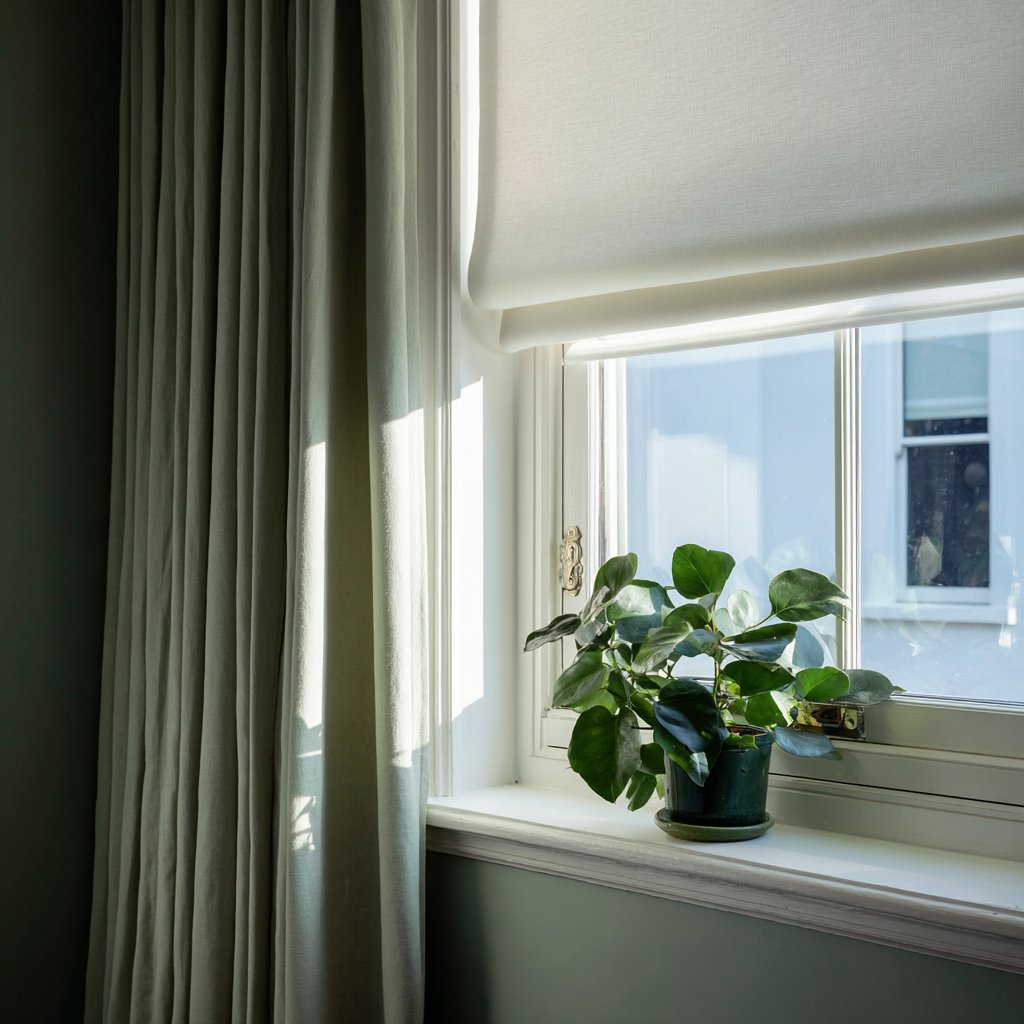
The layered approach provides exceptional versatility, allowing you to adjust light levels and privacy throughout the day to match your current activities and needs. Morning study sessions might benefit from partially raised roller shades with drawn curtains softening the light, while afternoon rest periods could utilize fully lowered shades behind drawn curtains for maximum darkness. The washable cotton fabric ensures practical maintenance despite the dust accumulation and occasional accidents that characterize student living, and the eucalyptus green tone brings a subtle, sophisticated hue that reads as neutral while reinforcing the room’s green color story.
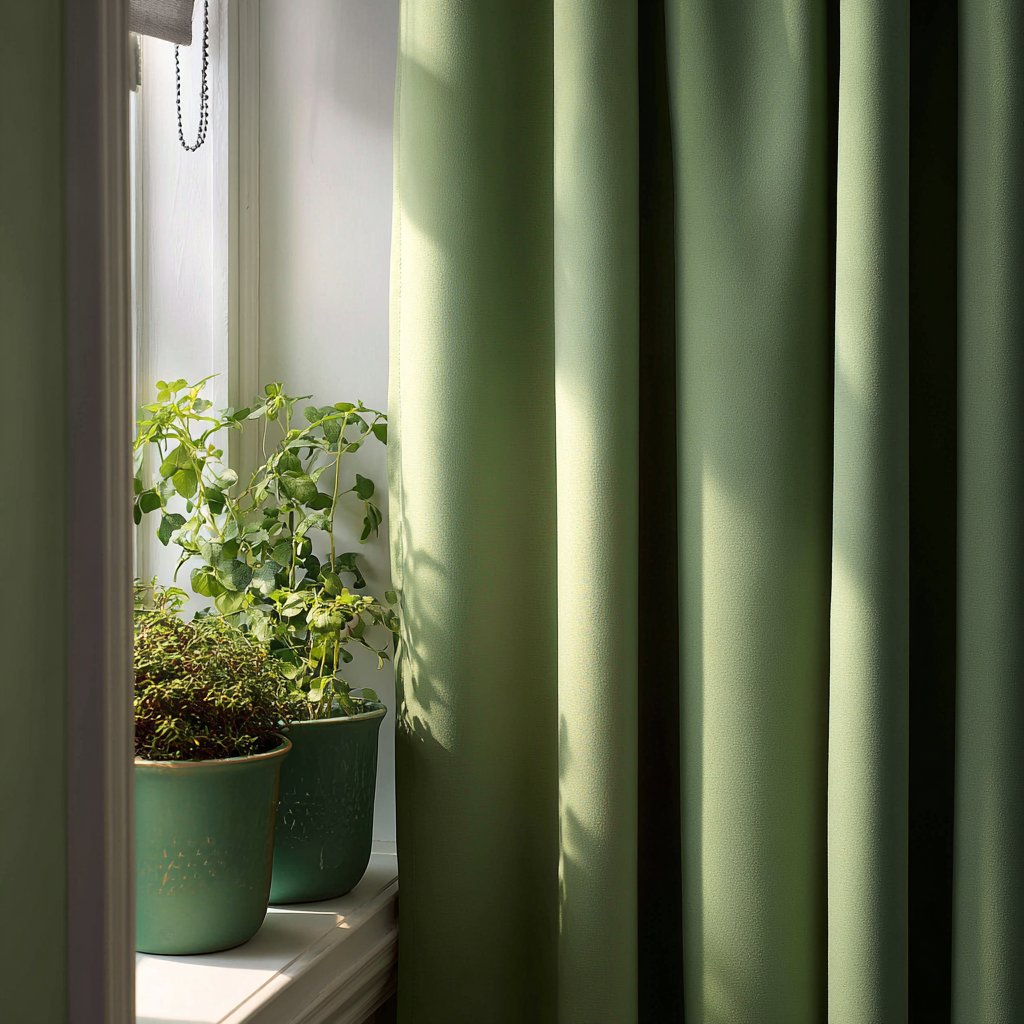
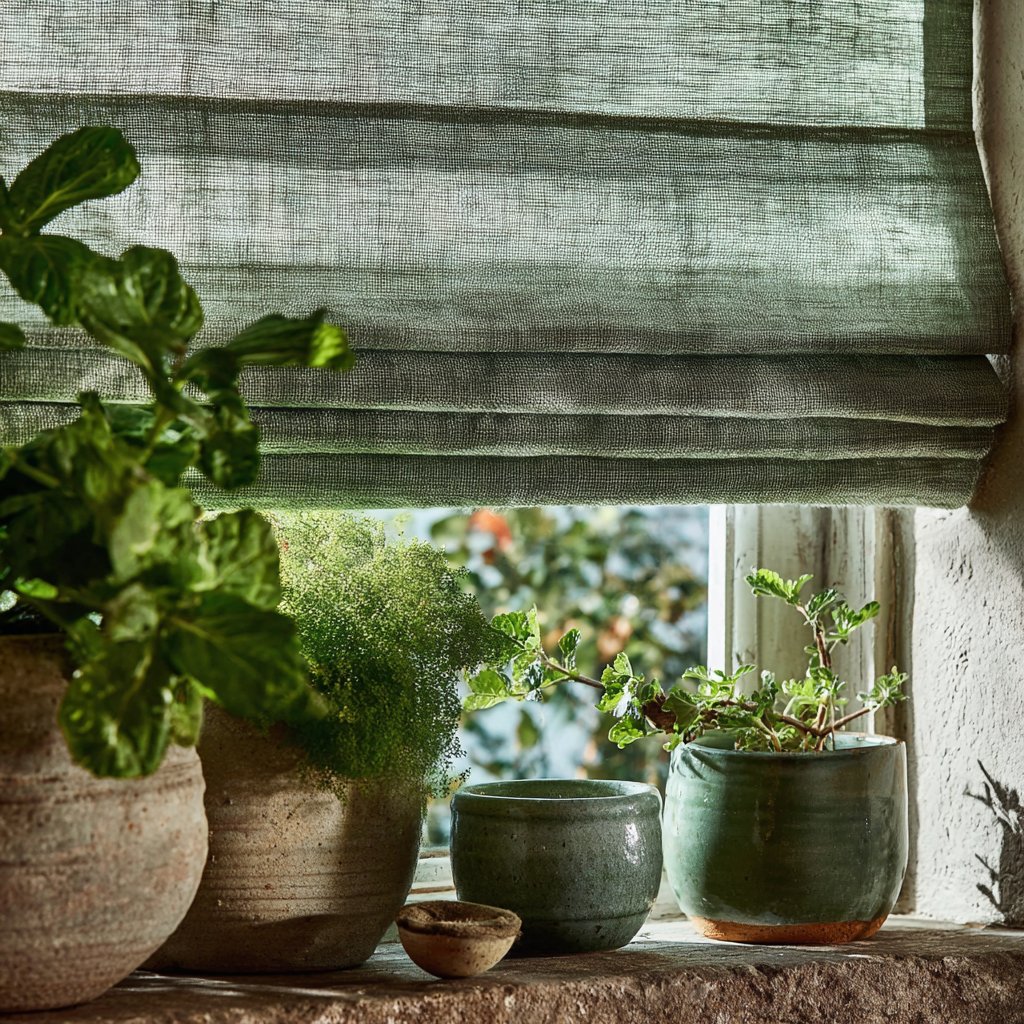
A small windowsill herb garden in green ceramic pots adds functional greenery that serves multiple purposes—the herbs provide fresh ingredients for cooking in shared kitchens, the plants improve air quality, and their presence on the windowsill creates a beautiful silhouette when backlit by natural daylight. This integration of practical gardening with decorative design demonstrates how student spaces can serve multiple functions simultaneously, maximizing the return on every design investment and square inch of space.
Key design tips include measuring your window accurately before purchasing curtains, ensuring they’re wide enough to fully cover the window when closed and long enough to nearly touch the floor for a polished appearance. Choose tension rods or removable curtain hardware that won’t damage walls, respecting dorm policies and your security deposit. Select herb varieties that match your actual cooking habits and light conditions—basil and mint thrive in bright light and are heavily used in student cooking. Install roller shades inside the window frame for a clean, integrated look that doesn’t compete with the decorative curtains. Wash your curtains at least once per semester to remove accumulated dust and maintain their fresh appearance and color vibrancy.
7. Curated Green Gallery Wall
Personalizing dorm walls transforms generic institutional spaces into reflections of individual identity and style, and this green dorm room idea showcases how a thoughtfully arranged gallery wall can achieve maximum visual impact while respecting the temporary nature of dorm living. The arrangement features a mix of botanical prints, abstract art in green tones, and personal photos in simple black frames, creating a cohesive display that tells a story while maintaining aesthetic harmony. The layout planning uses removable adhesive strips, ensuring that this impressive wall display can be installed and removed without causing damage—a crucial consideration for students managing security deposits and room change requirements.

The inclusion of pieces in sage, forest, and mint green alongside neutral tones demonstrates how varying shades within a single color family create depth and interest without visual chaos. Botanical prints bring natural elements into the space, abstract pieces add contemporary edge, and personal photos inject warmth and memory into the design. The simple black frames provide unifying structure that prevents the varied content from appearing scattered or random, proving that consistent framing can create cohesion even when displaying diverse imagery.
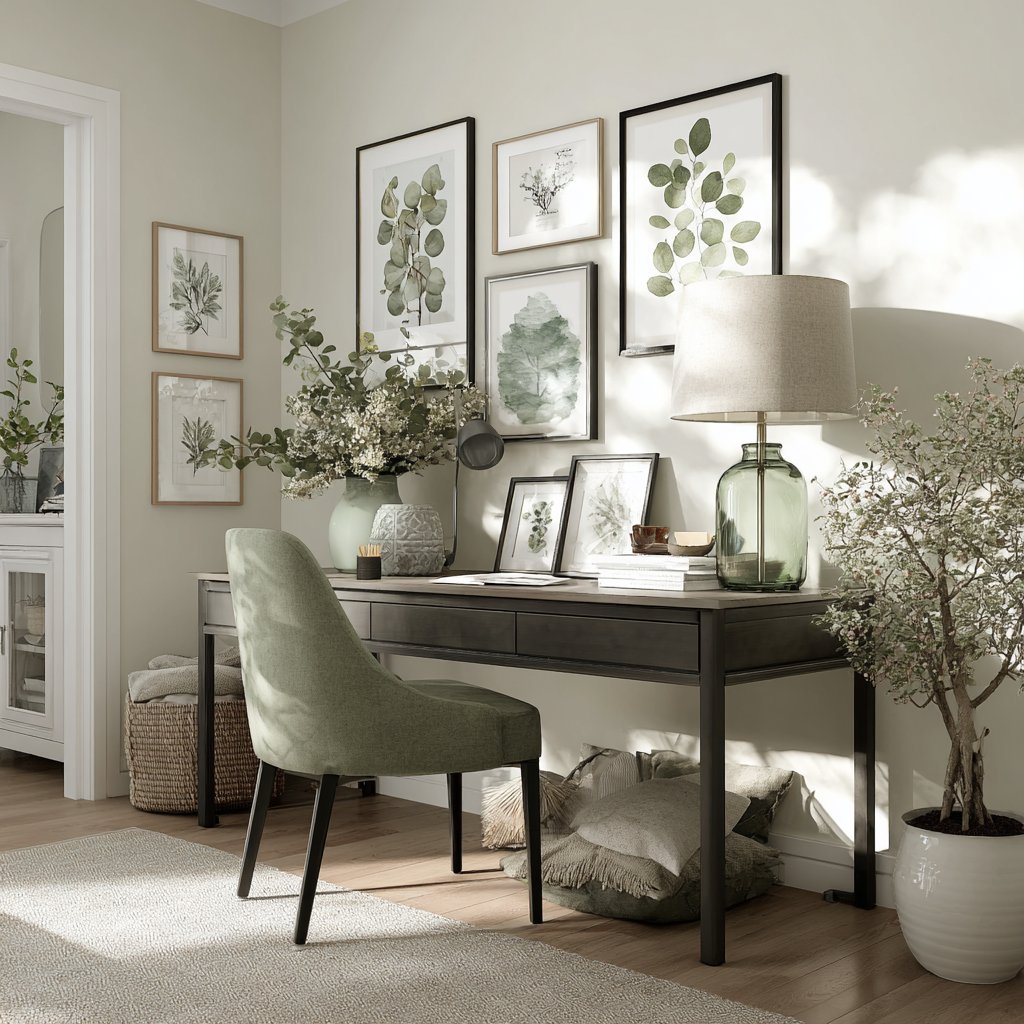
Natural light from the side creates subtle shadows that add dimension to the framed pieces, transforming a flat wall arrangement into a dynamic display that changes throughout the day as light angles shift. The strategic placement of smaller frames interspersed with larger pieces creates rhythm and movement that guides the eye around the display, preventing any single element from dominating while ensuring the overall composition feels balanced rather than symmetrical.
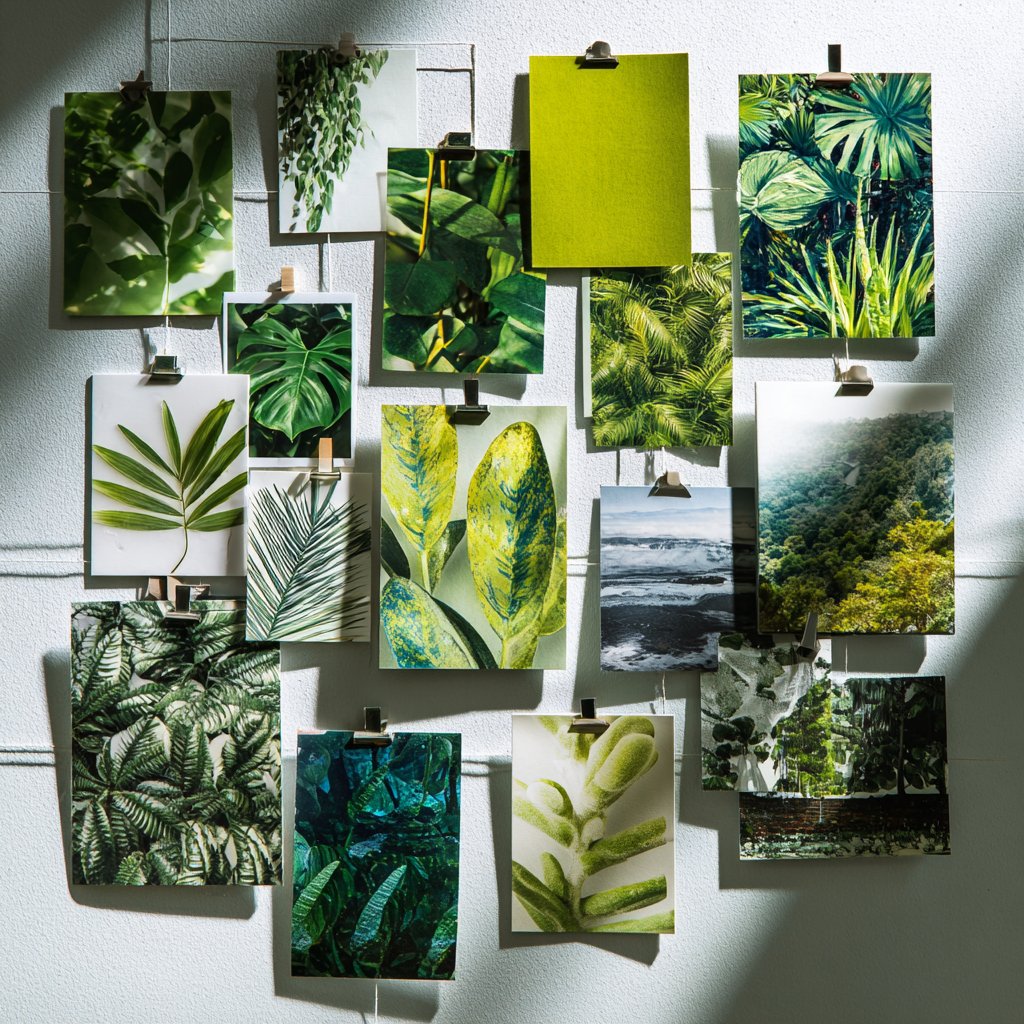
Key design tips include laying out your gallery wall arrangement on the floor before committing to wall placement, allowing you to experiment with different configurations until you achieve the perfect balance. Create paper templates matching each frame’s dimensions and tape them to the wall for a risk-free preview of your final arrangement. Vary frame sizes to create visual interest, but maintain some consistency in framing style or color to prevent the display from appearing chaotic. Include at least one larger anchor piece that serves as the focal point around which other elements orbit. Update your gallery wall seasonally or yearly by swapping in new prints or photos, keeping the display fresh and reflective of your current interests and experiences.
8. Luxurious Layered Green Bedding
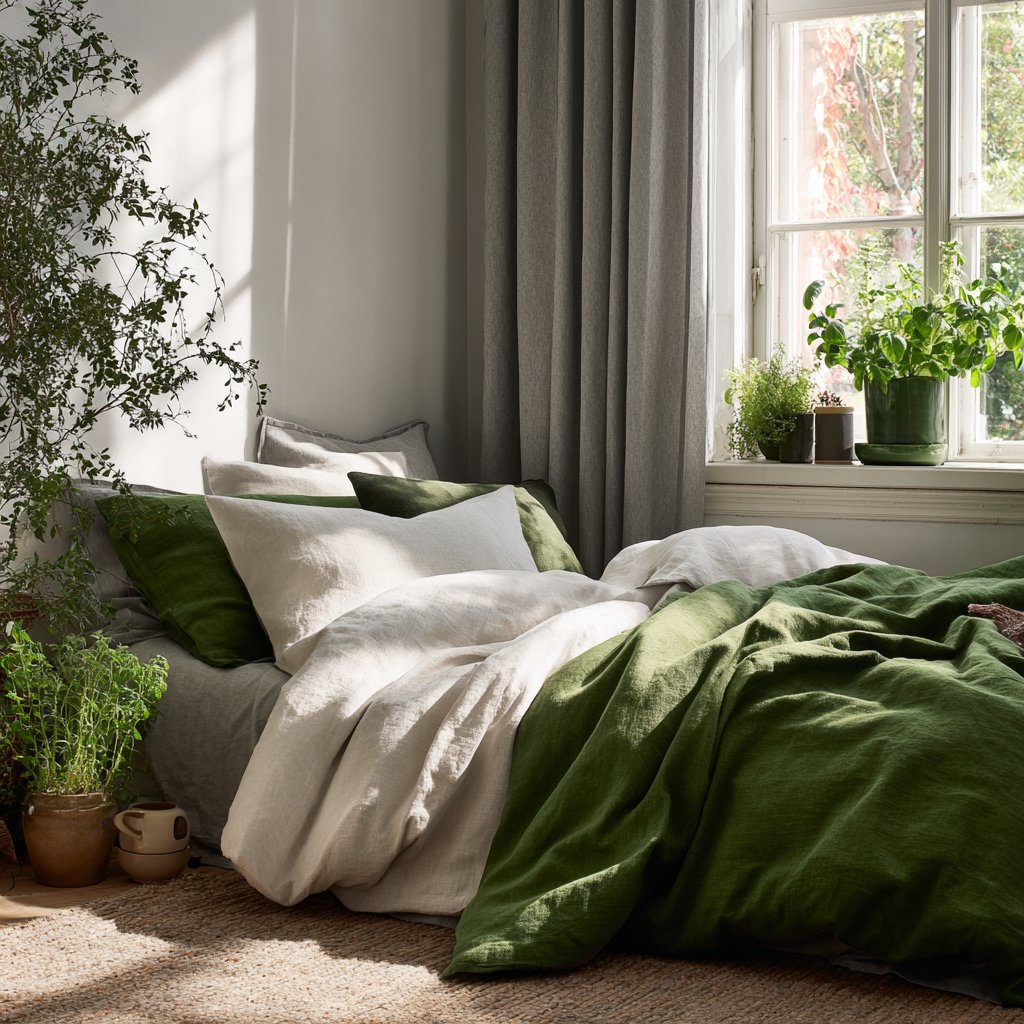
Bed styling reaches new heights with this comprehensive approach to layered bedding that transforms a standard twin XL dorm bed into a hotel-worthy sleep sanctuary. A forest green duvet cover in soft, breathable cotton serves as the foundation layer, providing warmth and setting the color tone while remaining practical for regular washing—a necessity in dorm living where laundry access may be limited and convenience is paramount. White sheets create crisp contrast beneath the duvet, brightening the overall appearance while providing a neutral base that allows the green layers to truly shine.
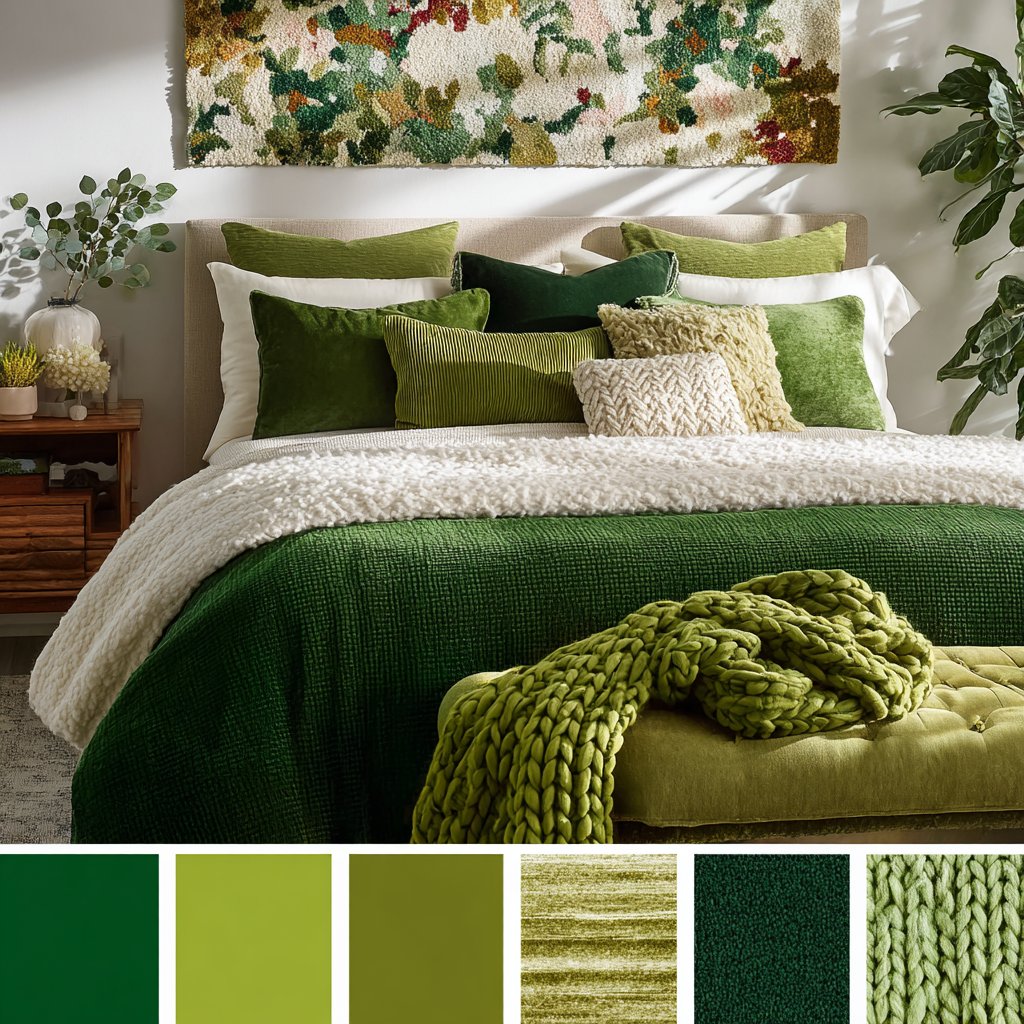
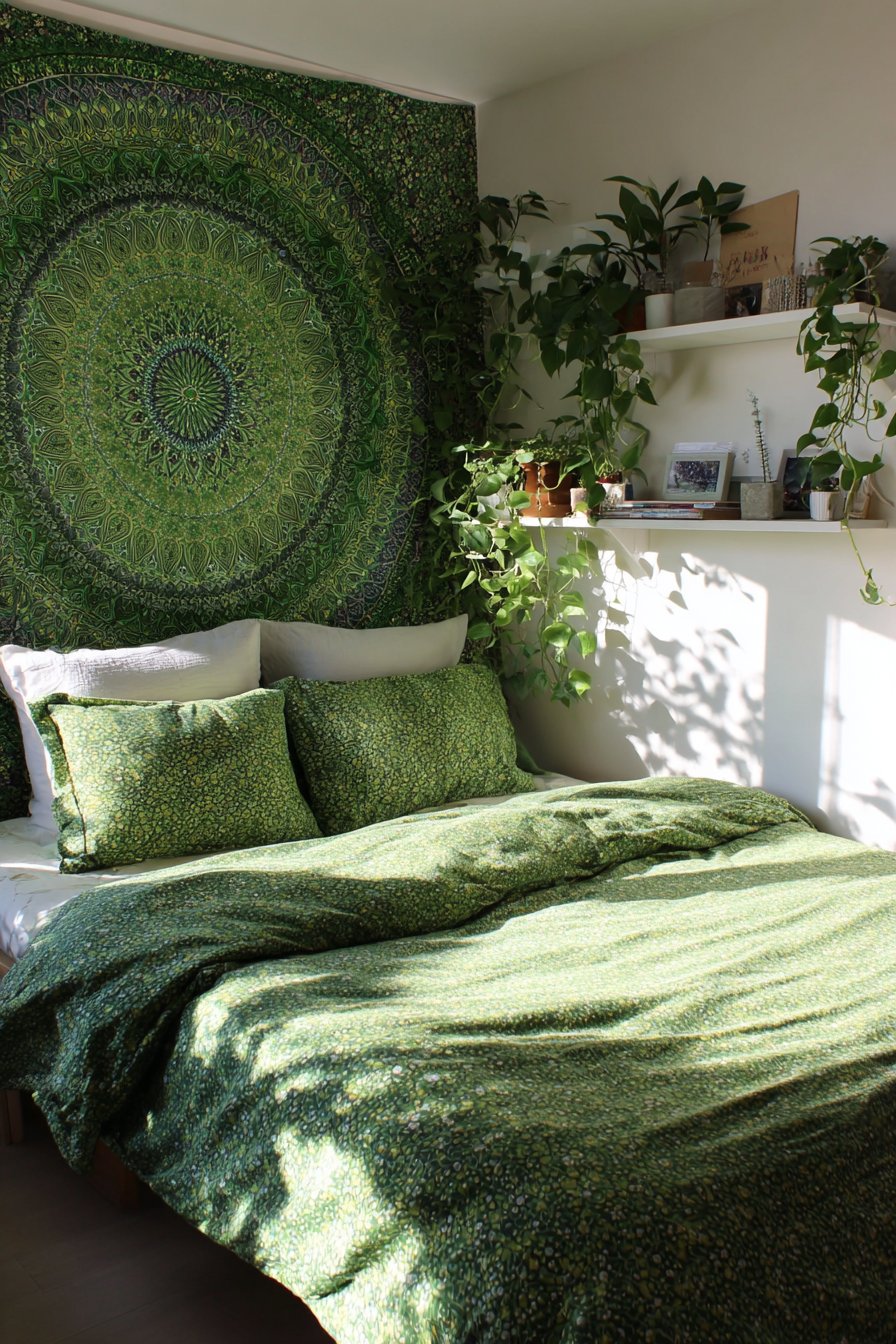
A chunky knit throw blanket in sage green adds textural richness and practical warmth for lounging on the bed during study sessions or movie watching, demonstrating how throws serve both decorative and functional purposes in dorm rooms where seating options are limited. Multiple pillows in varying green textures—velvet for luxury, linen for casual elegance, and cable knit for cozy charm—create depth and dimension that invite interaction and comfort. The bed is styled against a simple headboard made from a tapestry in botanical green tones, providing back support for sitting up in bed while adding another layer of visual interest to the sleeping area.
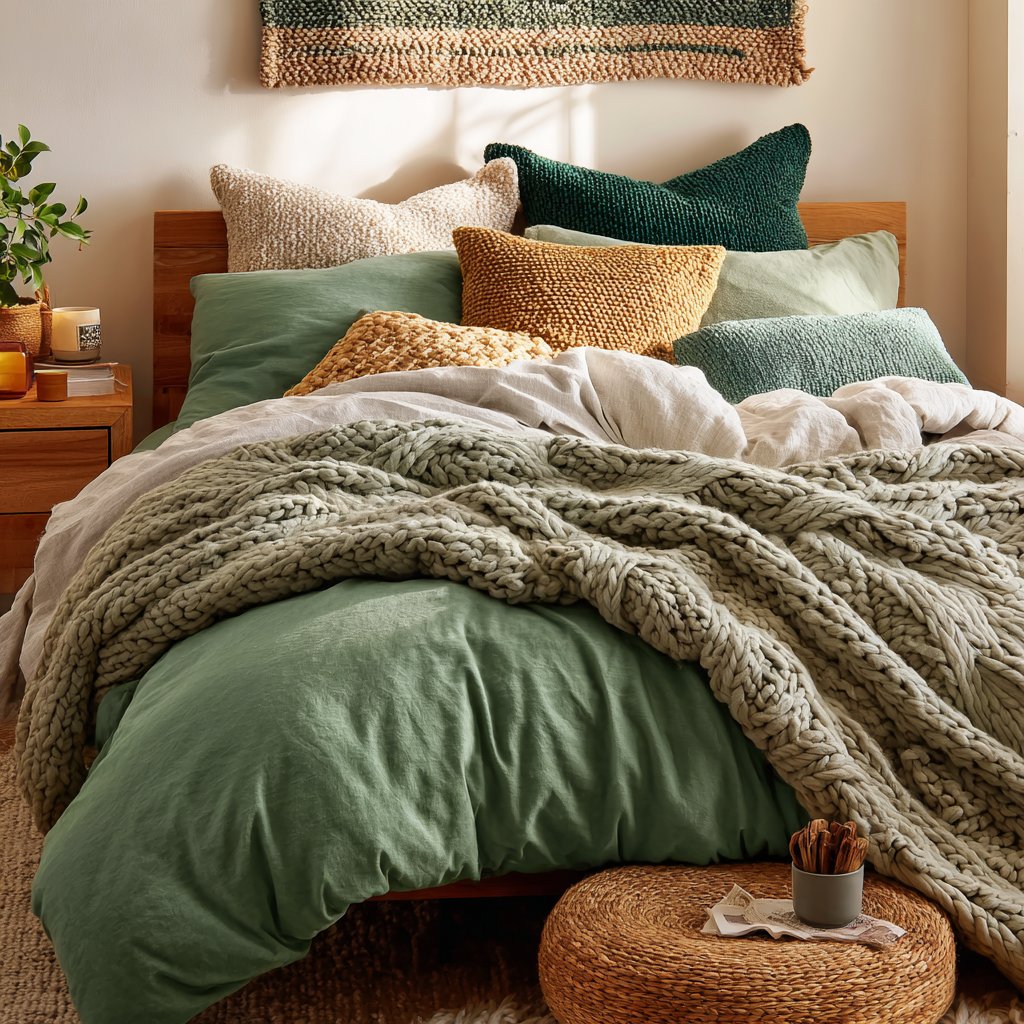
Morning light filtering into the room highlights the varied fabric textures, creating subtle plays of shadow and light across the knitted, woven, and smooth surfaces. This attention to how natural light interacts with different materials demonstrates sophisticated design thinking that elevates the space beyond basic dorm decor. The overall effect is one of abundance and comfort—a bed that invites you to dive in at the end of a long day while looking magazine-worthy when made each morning.
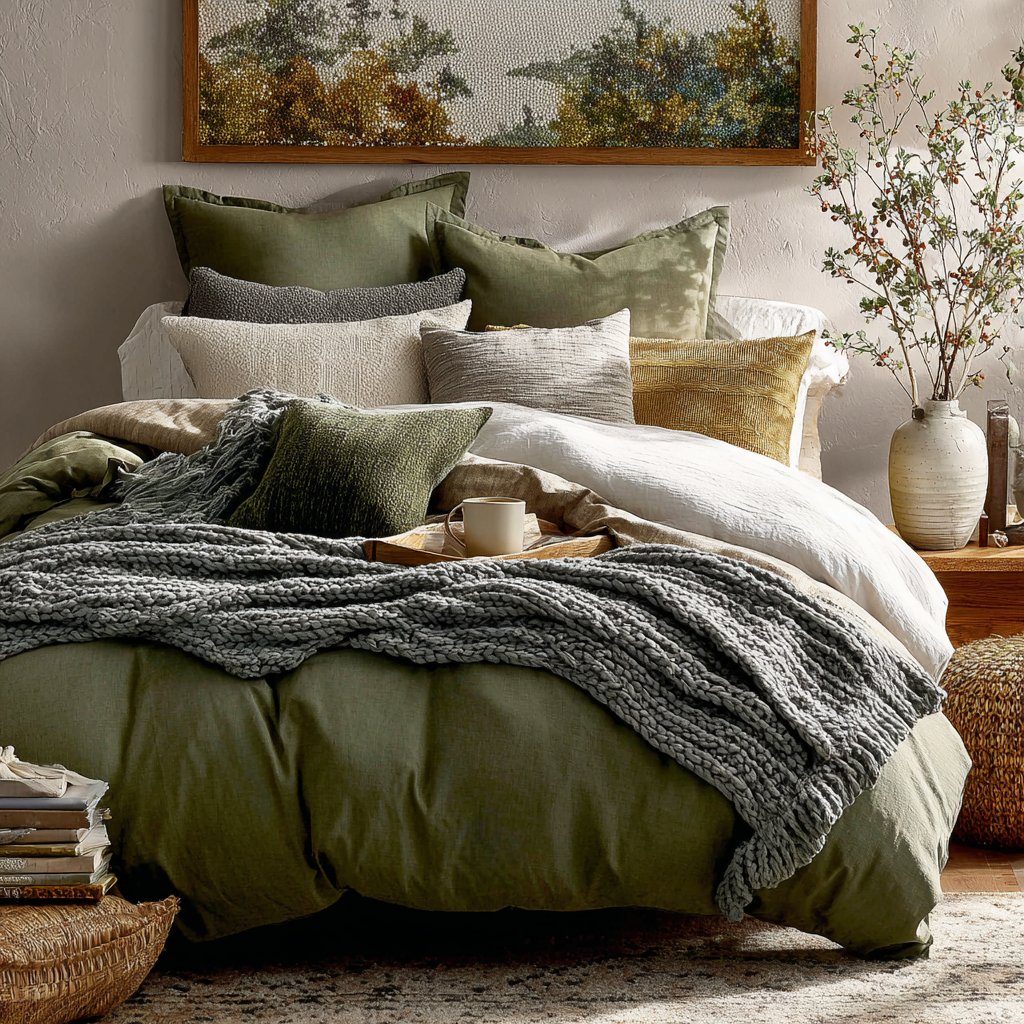
Key design tips include choosing a duvet cover with hidden buttons or a zippered closure to prevent the insert from shifting and bunching during sleep. Select sheets with deep pockets to accommodate the extra-thick mattresses common in lofted dorm beds. Invest in at least two sets of sheets to allow for one to be in the laundry while the other is on the bed, maintaining comfort and hygiene. Choose throw blankets that are machine washable and dryer-safe, as they’ll require frequent cleaning despite not touching skin directly. Arrange decorative pillows each morning in a quick, repeatable pattern to make bed-making fast enough that you’ll actually do it daily.
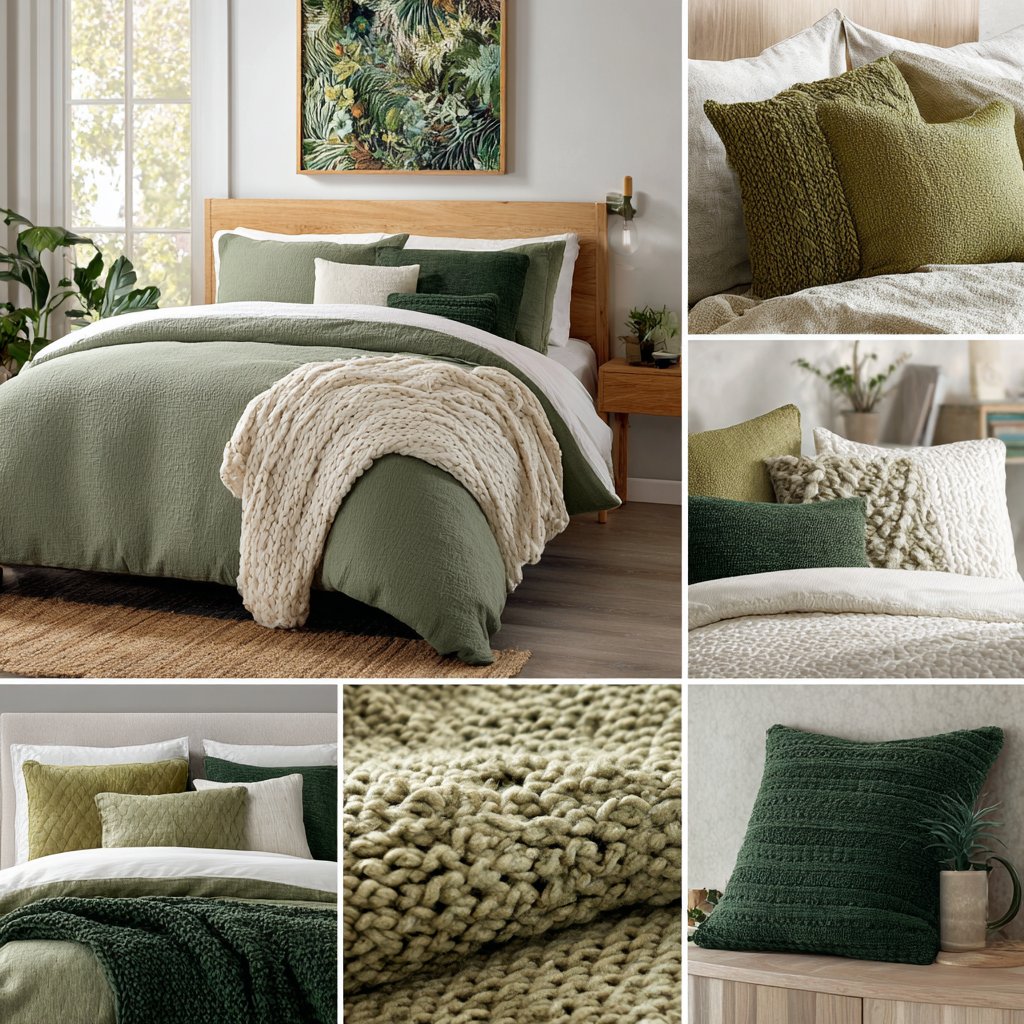
9. Multi-Layer Lighting Strategy
Lighting dramatically impacts both the functionality and mood of any space, and this green dorm room idea demonstrates how a multi-layered lighting approach can transform a room from harsh and institutional to warm and inviting. String lights with warm white bulbs draped along the ceiling perimeter create ambient lighting that softens the entire space, providing gentle illumination that’s perfect for winding down in the evening or creating a welcoming atmosphere when friends visit. This foundational lighting layer eliminates the need for harsh overhead fluorescent fixtures that characterize most dorm rooms and contribute to the sterile, unwelcoming feeling students often struggle against.
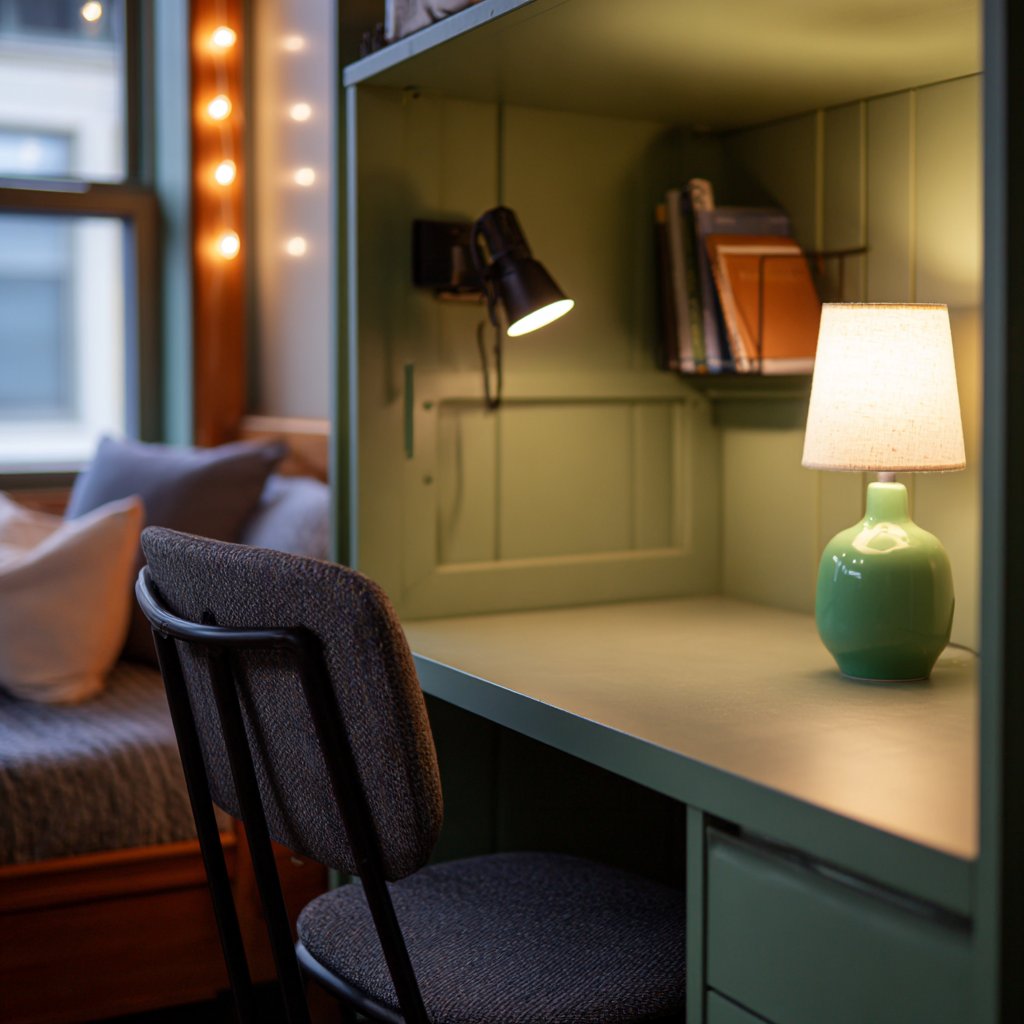
A sage green ceramic table lamp on the desk provides focused task lighting for studying and detailed work, combining functionality with aesthetic contribution to the room’s color scheme. The ceramic construction and green glaze catch and reflect light beautifully, making the lamp itself a decorative object even when not illuminated. A small clip-on reading light in matte black attaches to the bed frame, offering targeted illumination for nighttime reading without disturbing a roommate or flooding the entire room with light when only a small pool of brightness is needed.
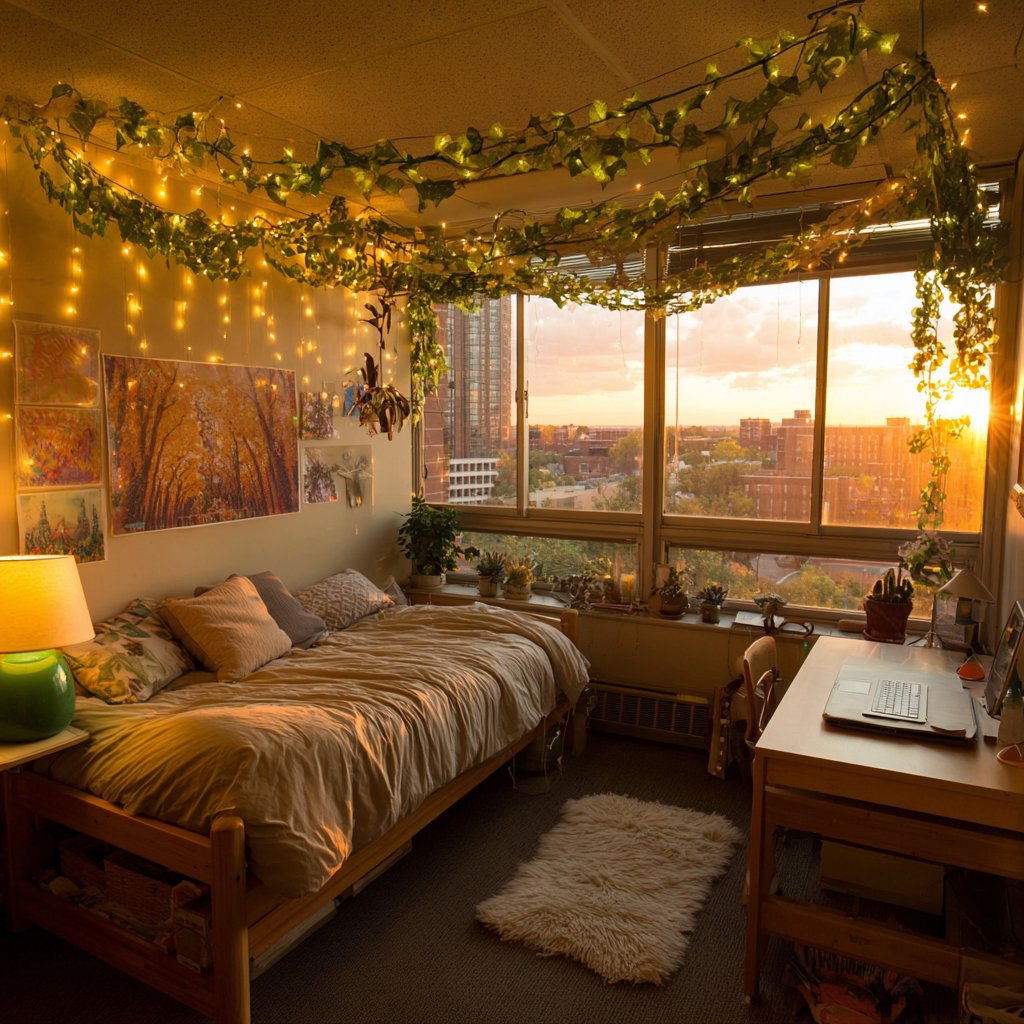
The layered lighting creates ambiance while remaining functional for various activities and times of day, demonstrating how thoughtful lighting design supports the multiple functions that dorm rooms must serve. Captured during golden hour, the interplay between natural and artificial lighting sources shows how they work together rather than competing, with warm artificial lights complementing the warm tones of setting sunlight. The practical illumination strategy ensures that you have appropriate lighting for every activity—studying, relaxing, socializing, and sleeping—without needing to rely solely on the room’s original fixtures.
Key design tips include using LED bulbs in all fixtures to reduce energy consumption and heat output while providing better light quality than traditional incandescent options. Install string lights with a remote control or smart plug to enable easy on/off operation without leaving bed. Choose a desk lamp with adjustable brightness or multiple light temperature settings to accommodate different tasks and times of day. Position your clip-on reading light to illuminate your book or device without shining directly in your eyes or creating glare. Create lighting “scenes” for different activities by determining which combination of lights works best for studying, relaxing, and entertaining, then consistently using these combinations to establish routine and atmosphere.
10. Color-Coordinated Closet Organization
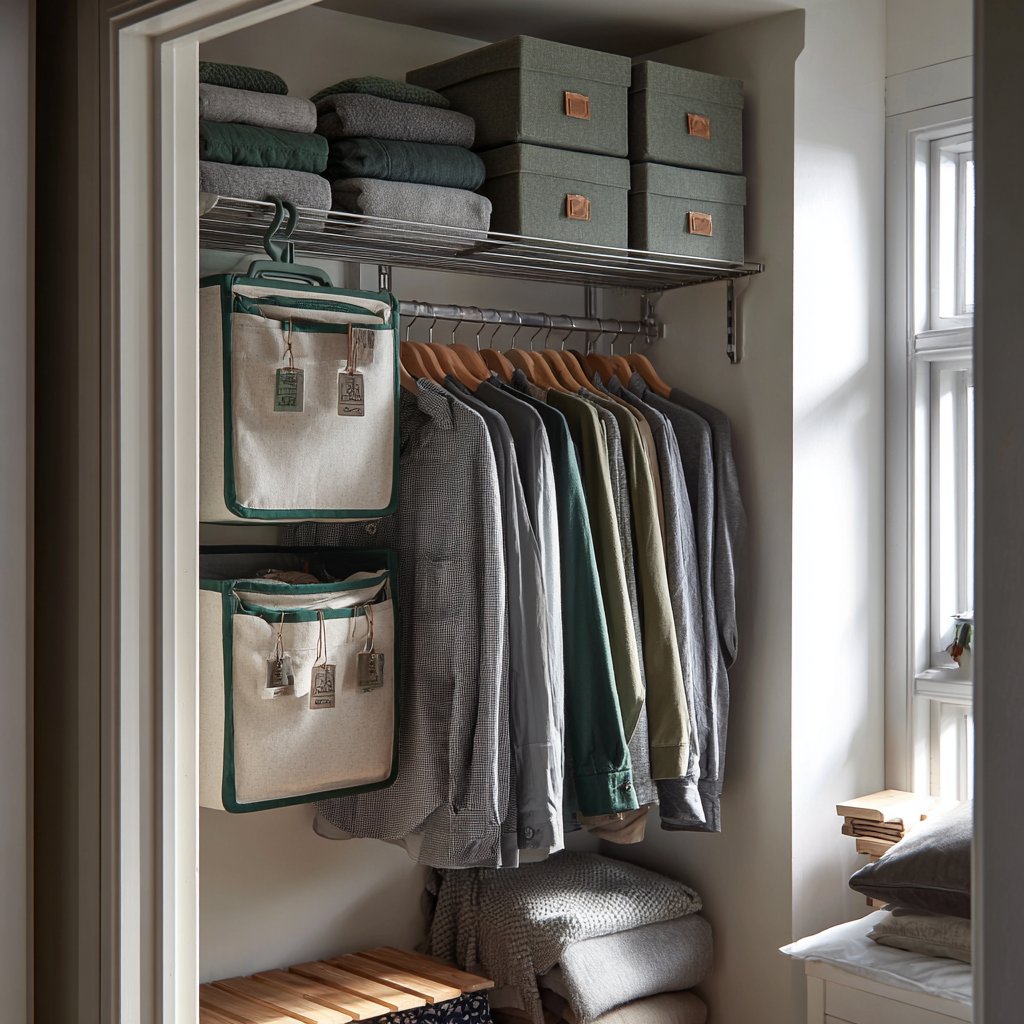
Closet organization in dorm rooms presents unique challenges, as most institutions provide minimal hanging space and virtually no built-in shelving or drawer systems. This green dorm room idea tackles these limitations with a comprehensive approach featuring a hanging closet organizer in canvas with green trim, coordinating velvet hangers in sage green, and stackable storage boxes in olive green. The hanging organizer maximizes vertical space within the closet, creating additional shelves and compartments without requiring permanent installation or modification of the existing structure.
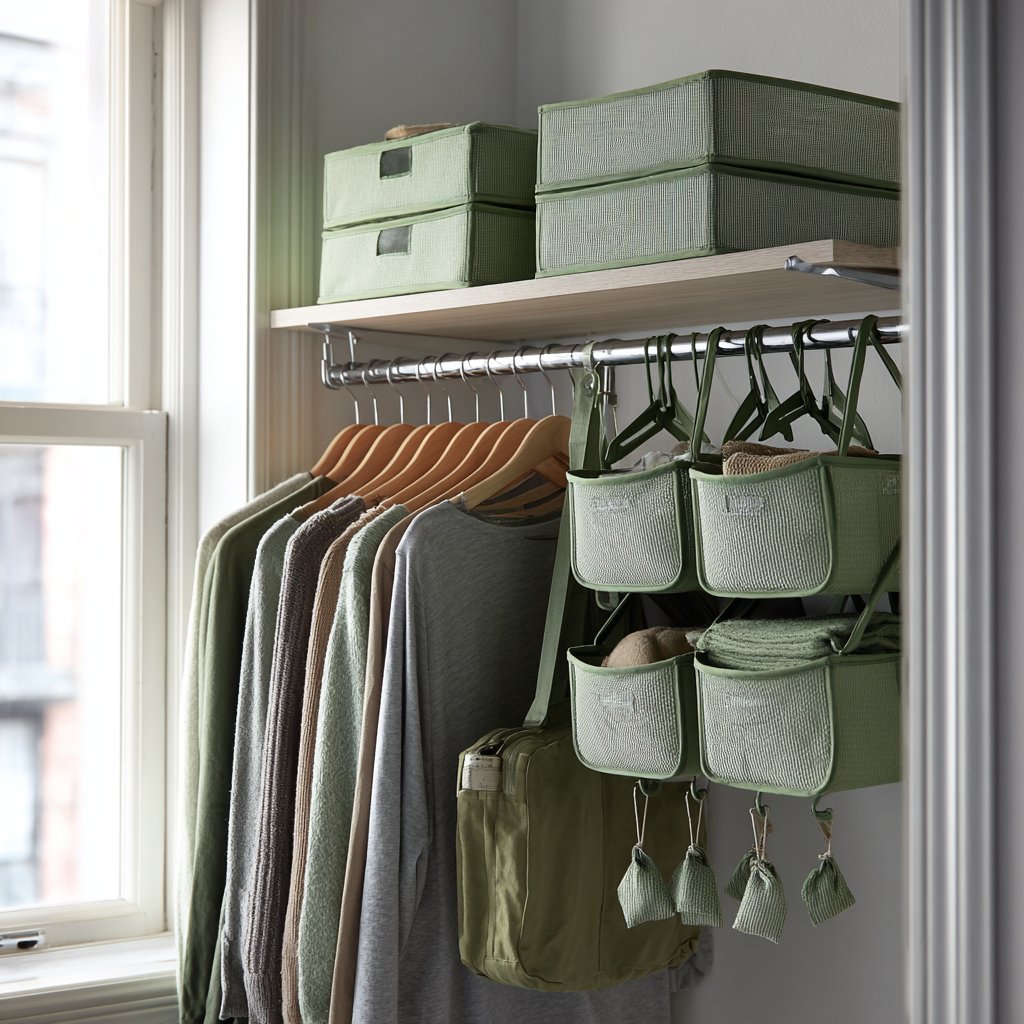
Velvet hangers serve multiple practical purposes beyond their obvious color contribution—their non-slip surface prevents clothes from sliding off and puddling on the closet floor, and their slim profile allows more garments to fit in the limited hanging space compared to bulky plastic or wooden hangers. The consistent sage green color creates visual harmony even within the hidden closet space, proving that organization can be both functional and beautiful. Stackable storage boxes in olive green house items that don’t require hanging, such as folded sweaters, accessories, workout clothes, and seasonal items, keeping them protected from dust while maintaining easy accessibility.
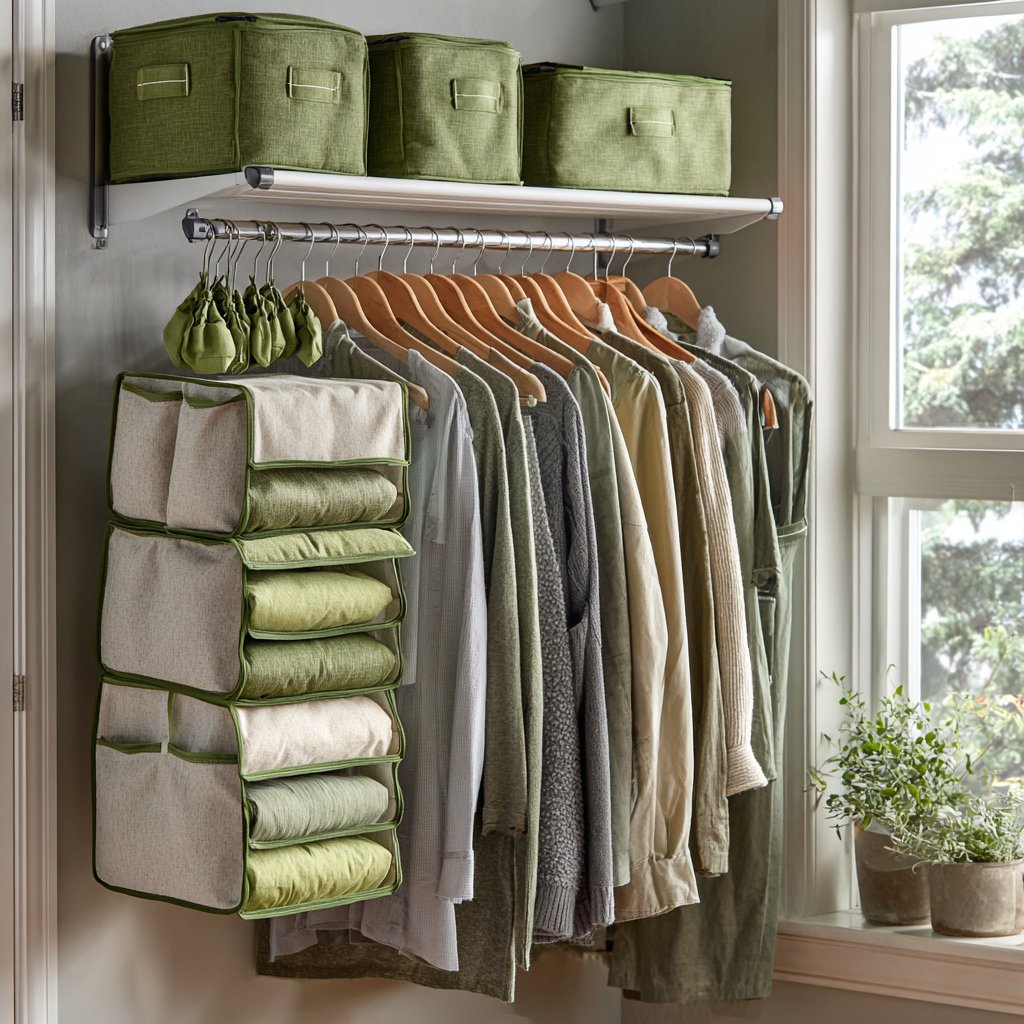
Small sachets in green fabric hang from the rod, adding pleasant fragrance to stored clothes while contributing to the color scheme even in this typically overlooked space. Natural light from the main room illuminates the organized system when the closet door is open, and the clear divisions for different clothing categories make getting dressed quick and stress-free even during rushed mornings before early classes. The overall approach demonstrates how consistent color use and thoughtful organization can transform even utilitarian spaces into extensions of the room’s design philosophy.
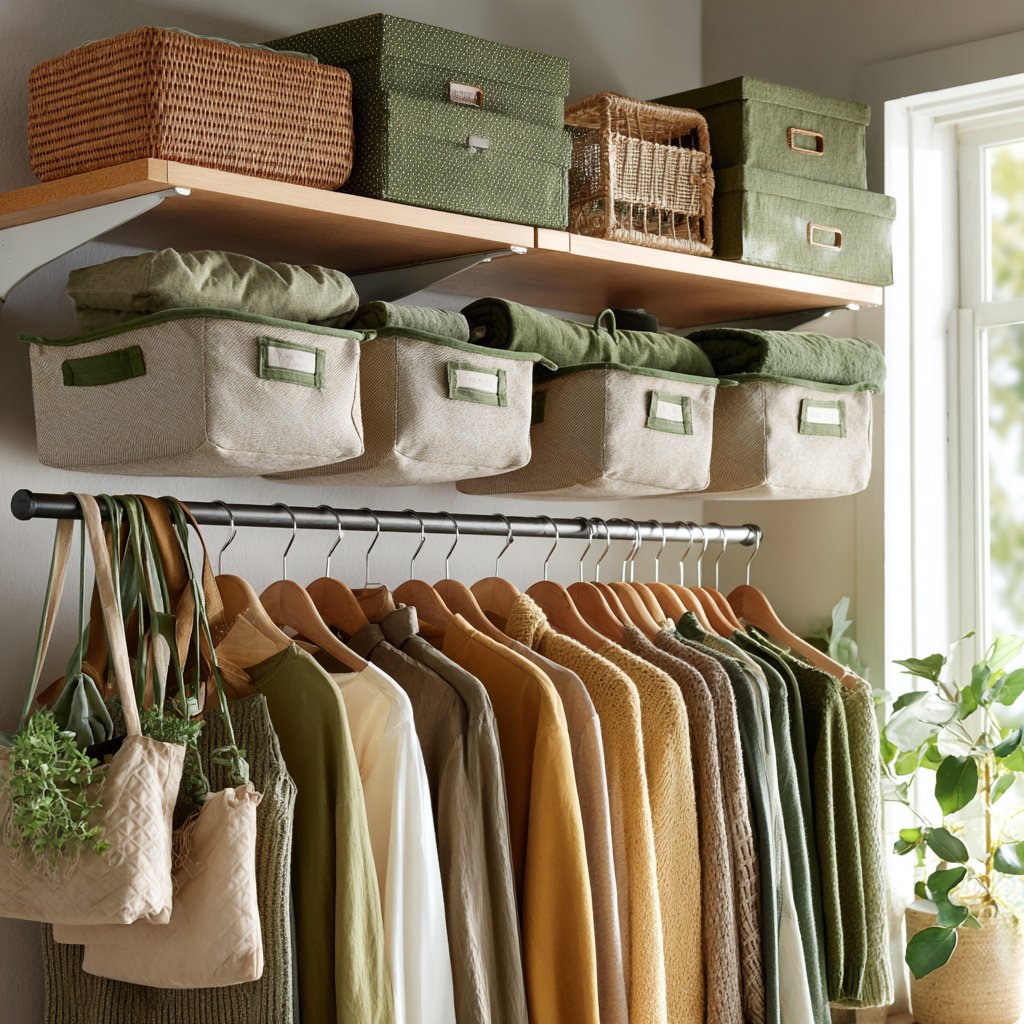
Key design tips include sorting clothes by category before organizing to understand how much space each type requires, preventing the frustration of running out of hanging space mid-organization. Use the hanging organizer’s top shelves for items you access less frequently, such as formal wear or off-season clothes, keeping daily essentials at eye level. Invest in quality velvet hangers that will last throughout your college career rather than cheap alternatives that break or lose their coating. Label storage boxes clearly on multiple sides so you can identify contents regardless of which angle you’re viewing from. Perform a closet audit at the beginning of each semester, removing items you haven’t worn and donating or storing them elsewhere to maintain a manageable wardrobe that fits your available space.
11. Statement Botanical Wallpaper Accent
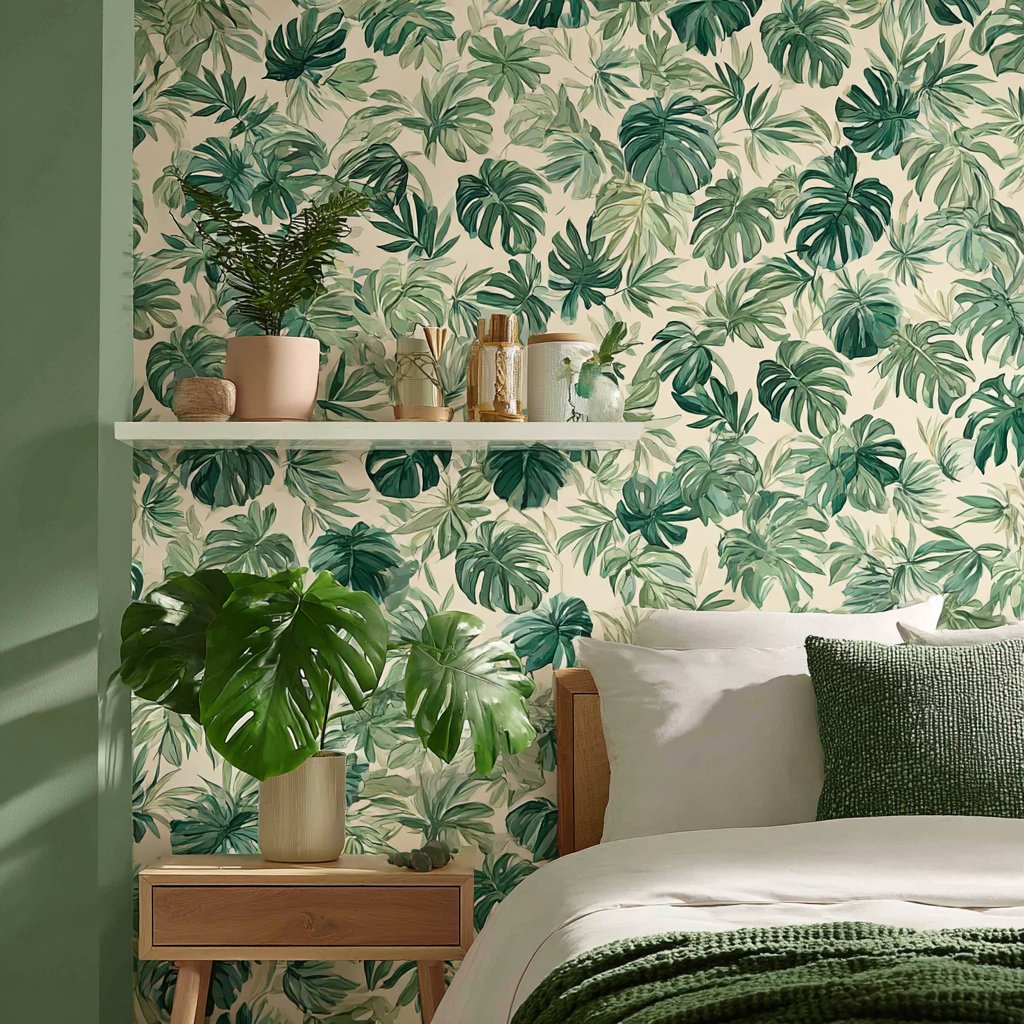
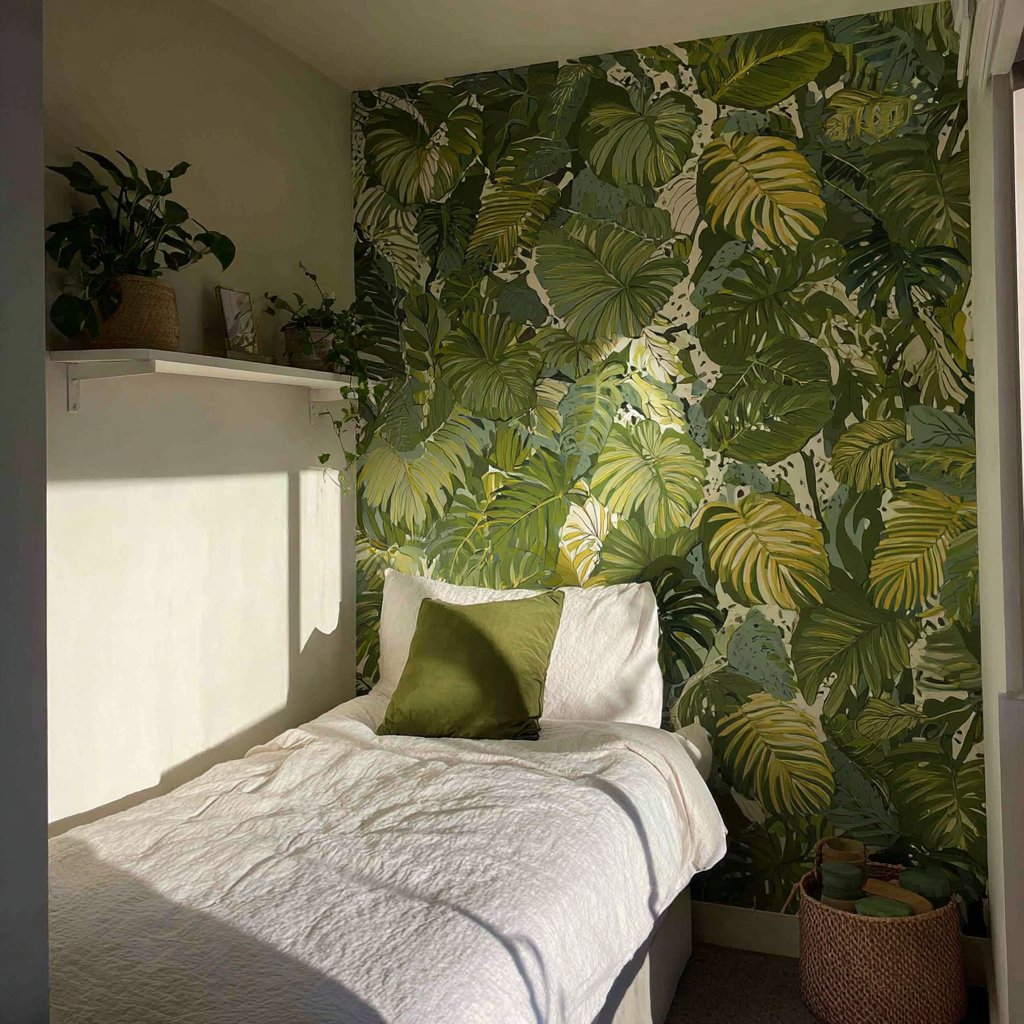
Creating a dramatic focal point in a dorm room requires careful consideration of temporary installation methods, and this green dorm room idea showcases how removable wallpaper can deliver maximum impact with minimal commitment. A large-scale tropical leaf pattern featuring various shades of green from pale sage to deep forest transforms an ordinary wall into a botanical oasis, immediately establishing the room’s personality and design direction. The varying green tones within the pattern create depth and prevent the bold print from feeling flat or one-dimensional, while the organic leaf shapes soften the rigid rectangular architecture typical of dorm rooms.
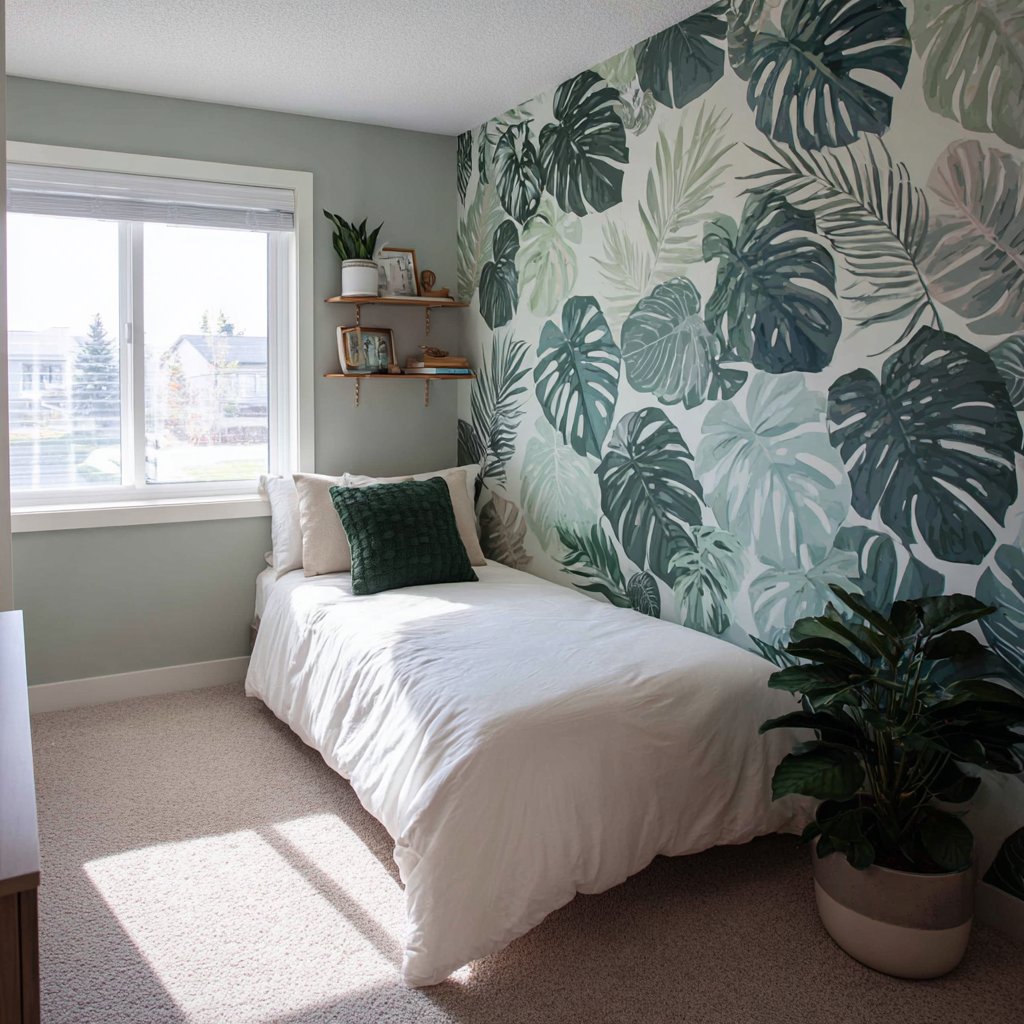
The wallpapered wall serves as a backdrop for a simple twin bed with white bedding and a single green throw pillow, demonstrating how a strong accent wall allows other elements to remain minimal and restrained without the space feeling sparse or incomplete. This design principle—allowing one element to be bold while others remain subtle—creates balance and prevents visual overwhelm in small spaces. A small shelf mounted on or near the accent wall holds a potted monstera plant, creating a living three-dimensional extension of the two-dimensional botanical print and reinforcing the nature-inspired theme.
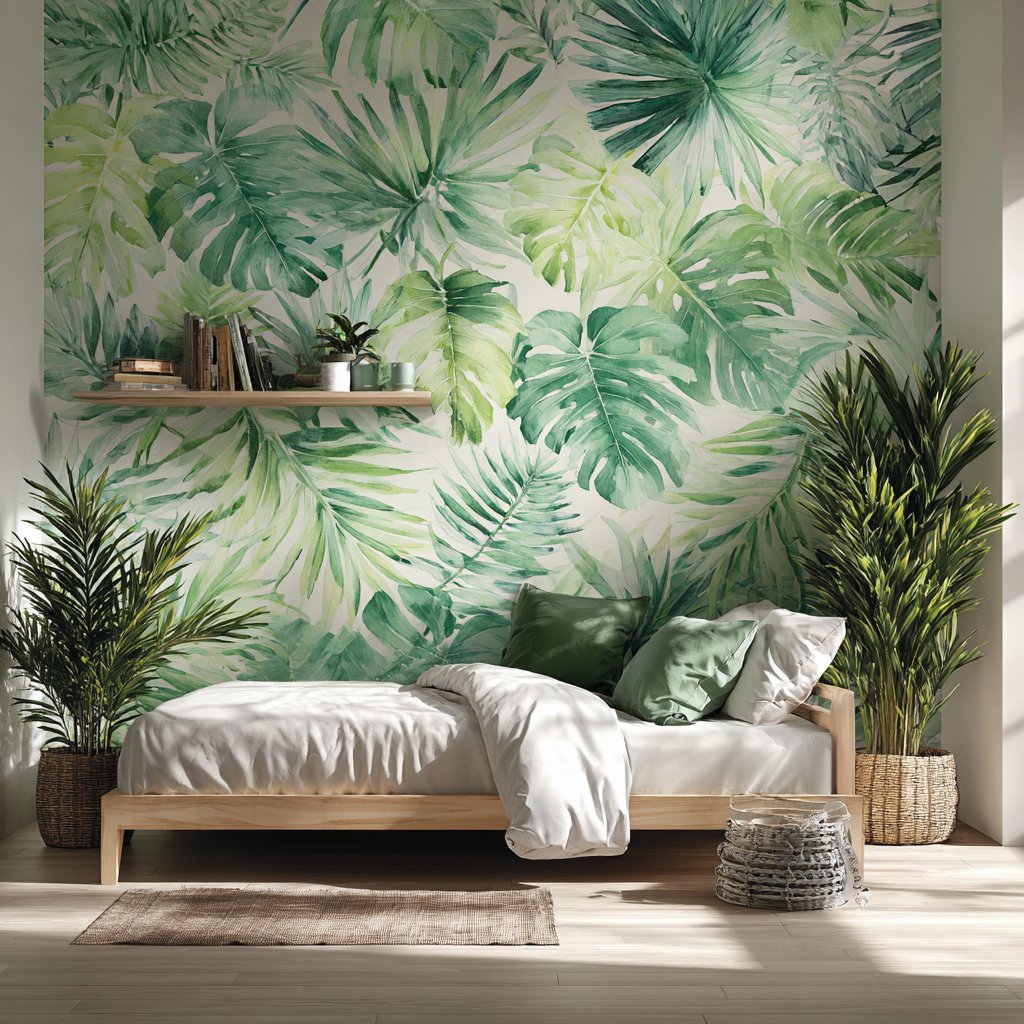
Natural afternoon light creates depth in the wallpaper pattern, with shadows forming in the negative spaces between leaves and highlights catching on the raised texture of certain printed elements. This interaction between light and pattern demonstrates why large-scale prints work particularly well in rooms with good natural light, as the changing illumination throughout the day keeps the pattern visually interesting rather than static. The bold yet temporary design solution proves that student spaces can make strong design statements while remaining completely reversible, satisfying both aesthetic ambitions and practical rental requirements.
Key design tips include ordering samples of wallpaper before committing to a full wall, as patterns appear very different at full scale than they do in small swatches. Clean and dry your wall thoroughly before applying removable wallpaper to ensure proper adhesion and easy removal later. Measure your wall carefully and order 10-15% more wallpaper than your calculations suggest to account for pattern matching and installation errors. Use a smoothing tool during installation to prevent bubbles and ensure proper adhesion to the wall surface. If wallpapering seems too ambitious, consider starting with a smaller accent area like the space above your bed or the inside of a closet door to build confidence before tackling a full wall.
12. Minimalist Green Desk Organization
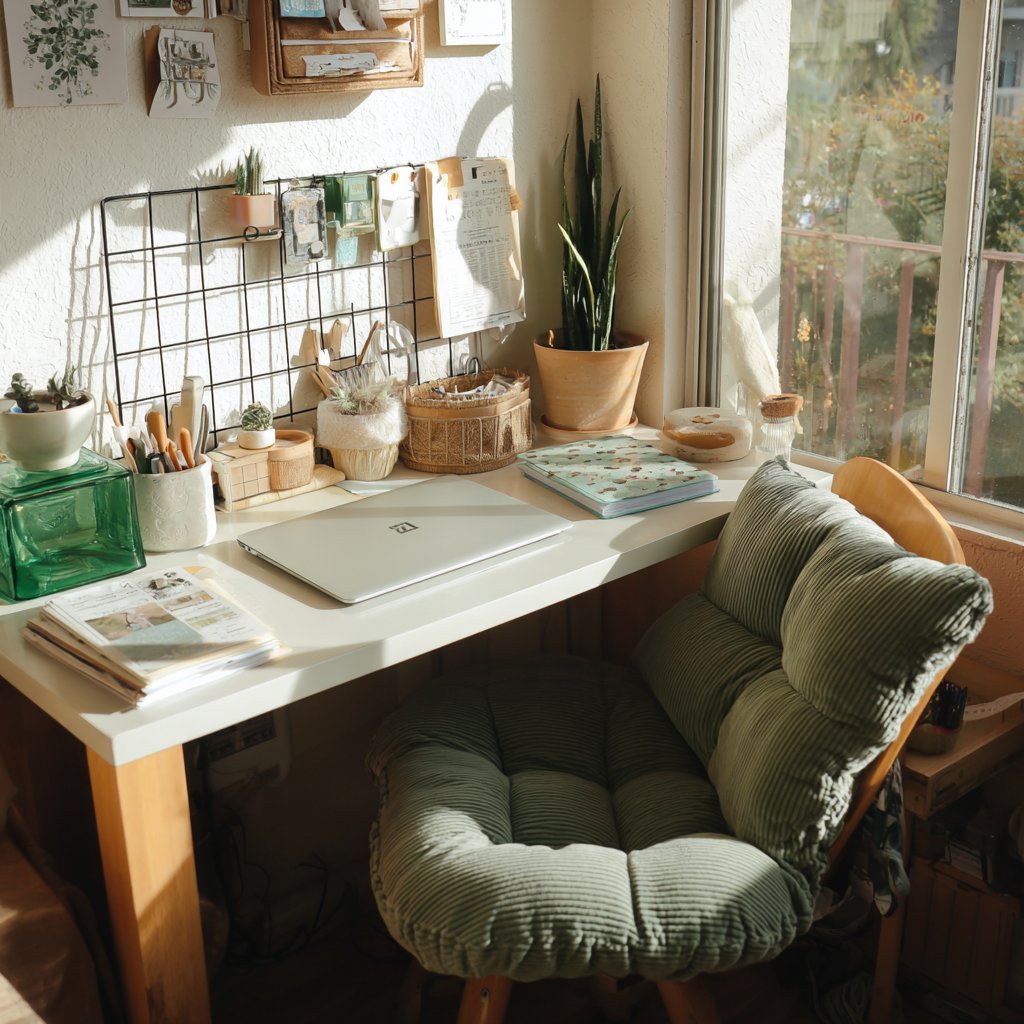
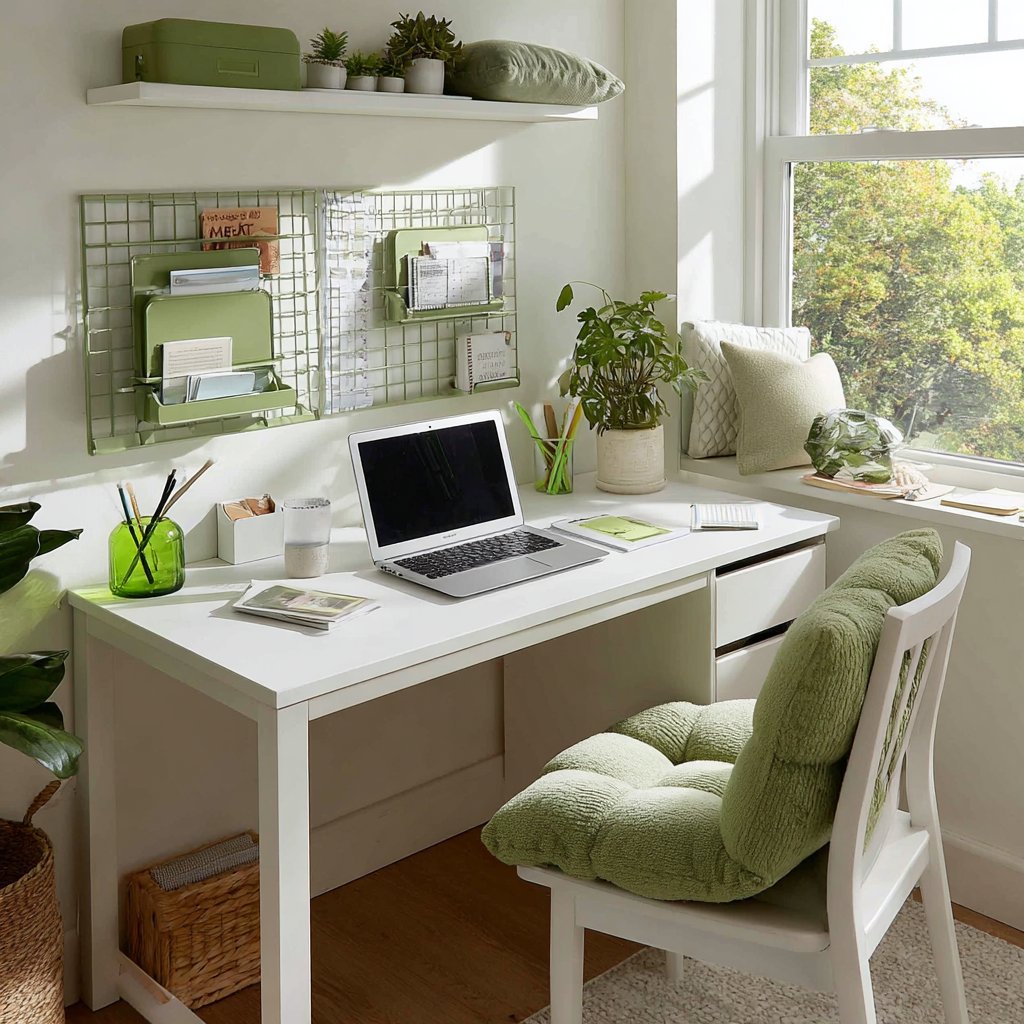
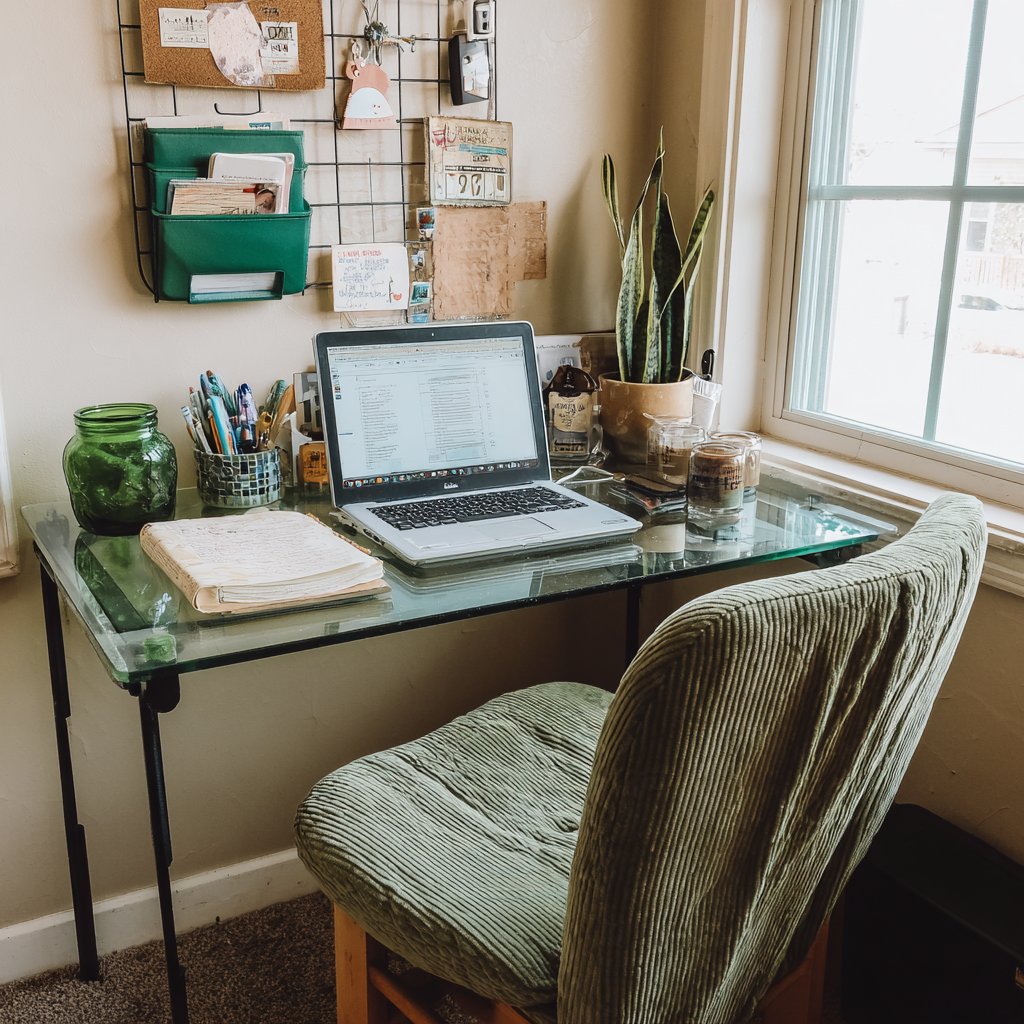
Clutter-free workspaces correlate directly with improved focus and productivity, and this green dorm room idea demonstrates how minimalist organization can create a calm, efficient study environment. A clean desk setup features only essential items—a laptop, green glass desk organizer holding pens and supplies, and a small ceramic planter with a snake plant. The restraint in what’s displayed on the desktop prevents the visual chaos that characterizes many student work areas, where accumulating papers, textbooks, and random objects compete for surface space and mental attention.
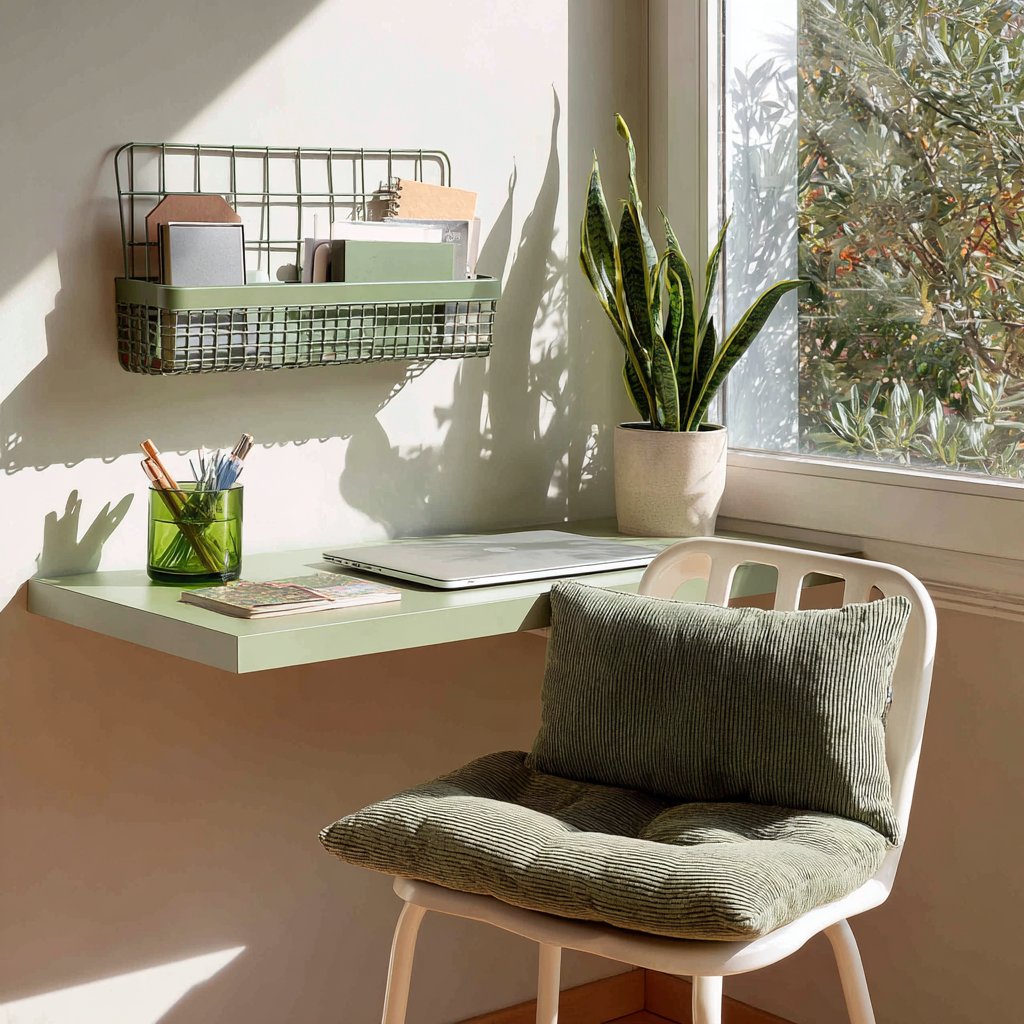
The green glass desk organizer serves dual purposes as both functional storage and decorative object, its transparent colored glass catching light beautifully while keeping writing implements readily accessible. A wire mesh wall-mounted file organizer in matte green holds papers and notebooks vertically against the wall, removing them from the desktop entirely while keeping them visible and accessible. This vertical storage approach is crucial in dorm rooms where horizontal surface area is precious and limited. The desk chair cushion in sage green corduroy adds color and comfort without requiring a complete chair replacement, demonstrating how small updates can significantly impact both aesthetics and usability.
Natural daylight from a window creates even, shadow-free illumination perfect for studying, reading, and detailed work without causing the eye strain that results from poor artificial lighting. The functional simplicity and strategic use of green accents in a practical study environment proves that minimalism doesn’t mean sacrificing personality or color—rather, it means being intentional about what you include and ensuring every element serves a clear purpose while contributing to the overall design vision.
Key design tips include implementing a “everything has a place” system where each item on or near your desk has a designated storage location, preventing the gradual accumulation of clutter. Process papers daily, immediately filing or discarding them rather than allowing stacks to form. Use drawer organizers or small trays within desk drawers to prevent the chaotic jumble that makes finding anything difficult. Limit decorative items on your desktop to one or two meaningful pieces that truly inspire you rather than collecting distracting tchotchkes. Spend two minutes at the end of each study session returning items to their designated places, maintaining the clean slate that makes starting work easier.
13. Zone-Defining Area Rug
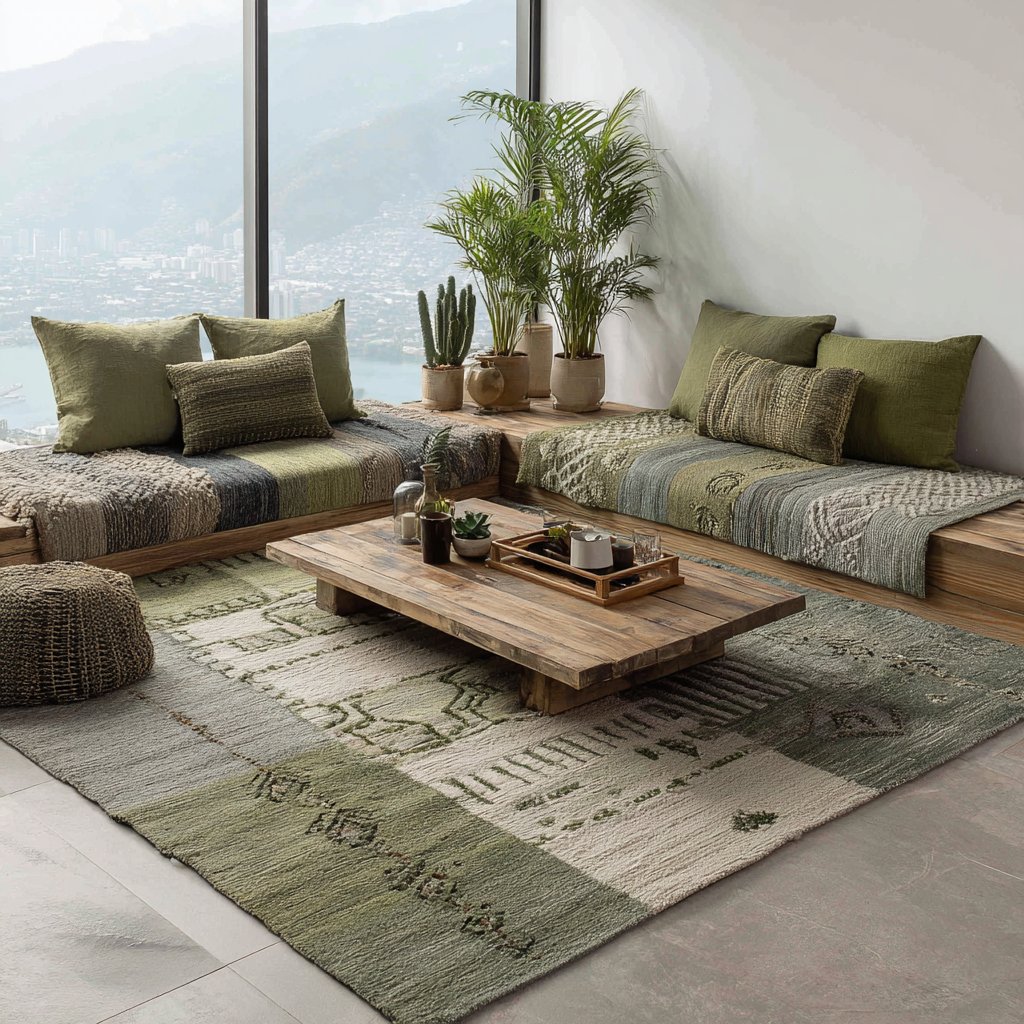
Defining distinct functional zones within a single multipurpose room helps establish boundaries and routines that support healthy living patterns, and this green dorm room idea demonstrates how an area rug can create a dedicated gathering space. A small rug in muted olive green with geometric patterns anchors a seating area with floor cushions in various green tones, establishing a clear “social zone” that exists separately from the sleep and study areas. The geometric pattern adds visual interest and contemporary style while the olive tone remains versatile enough to coordinate with other green shades used throughout the room.
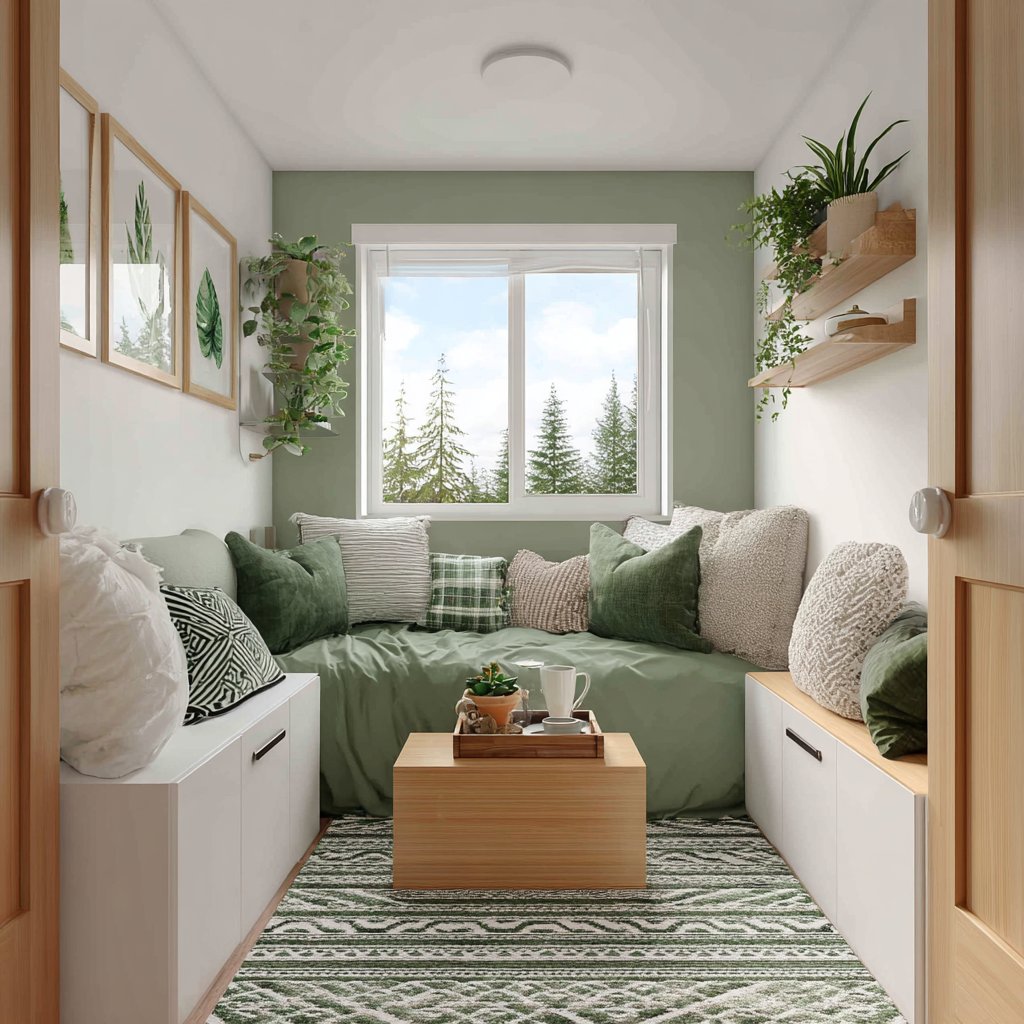
The rug defines the space both visually and tactilely, creating a distinct surface that signals a change in function—when you step onto the rug, you’re entering a space for relaxation and socializing rather than sleeping or working. Floor cushions in various green tones provide flexible, space-efficient seating that can be stacked and stored when not in use, solving the perpetual dorm room challenge of accommodating guests in extremely limited square footage. A low wooden coffee table sits in the center of the rug with a tea tray and succulent, providing functional surface space while maintaining the low-profile sight lines that help small rooms feel larger.
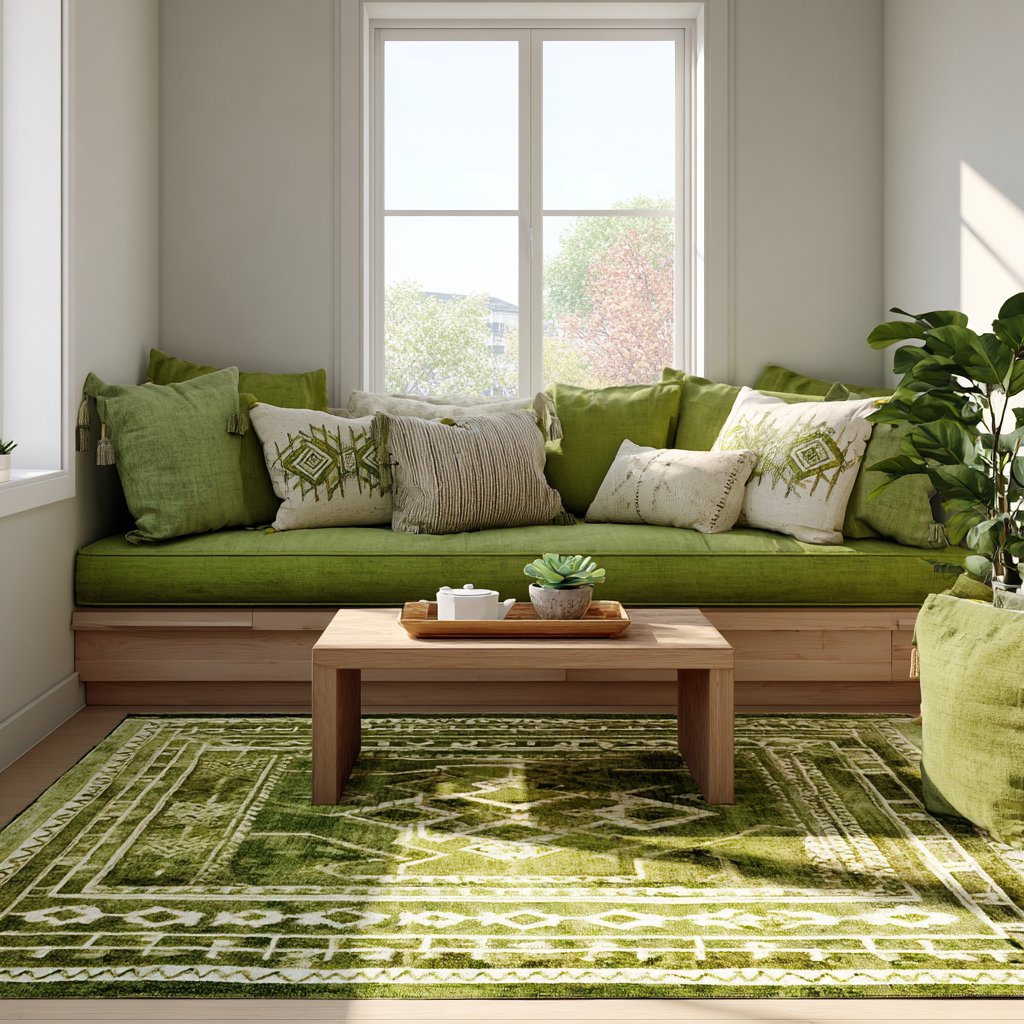
Natural light from the window illuminates this cozy gathering spot, making it an inviting destination for afternoon conversations, evening game sessions, or solo morning meditation and journaling. The practical use of textiles to create defined zones within the compact dorm room demonstrates sophisticated spatial planning that maximizes the functionality of every area without requiring walls or permanent partitions that would make the space feel even smaller and more fragmented.
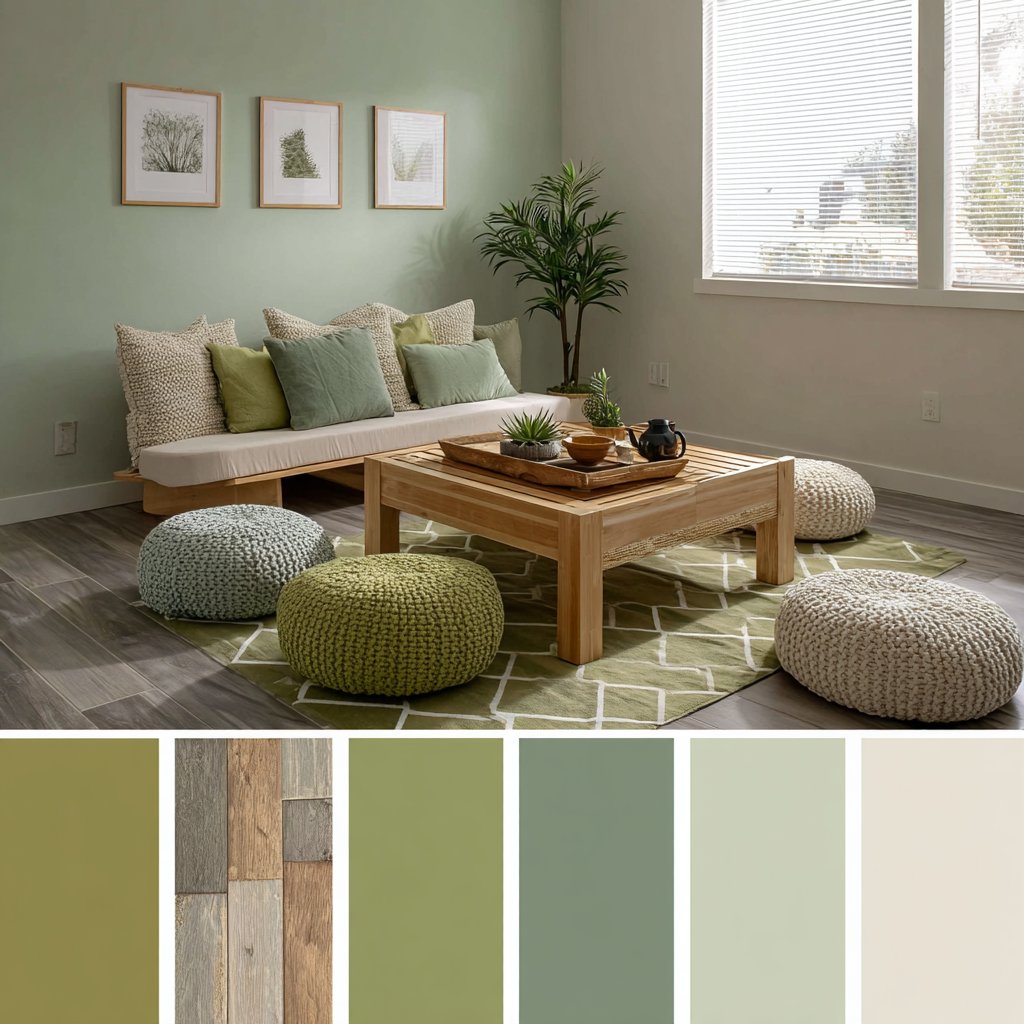
Key design tips include choosing a rug size appropriate for your furniture arrangement—the rug should be large enough that all furniture pieces in the zone either sit completely on it or have at least their front legs on it. Select a rug with a non-slip backing or add a separate rug pad to prevent sliding on smooth dorm floors. Choose patterns and colors that hide stains and wear, as high-traffic areas in student rooms receive considerable abuse. Vacuum your rug weekly to prevent dust and debris accumulation that can aggravate allergies and create unpleasant odors. Roll and store your rug during summer break rather than leaving it in place, as this prevents permanent crushing of the pile and extends its useful life.
14. Tapestry as Architectural Element
Large-scale textiles offer exceptional versatility in dorm design, serving as art, sound dampening, and even functional room division, and this green dorm room idea showcases how a tapestry can become a room’s defining architectural element. A large fabric tapestry in sage green with a subtle mandala pattern hangs using removable command strips, serving as an affordable headboard alternative that adds softness and visual interest to the sleeping area. The mandala’s geometric pattern provides structure and focal interest while the sage tone maintains the room’s cohesive color palette, demonstrating how textiles can deliver bold visual impact through scale even when using subtle colors and patterns.
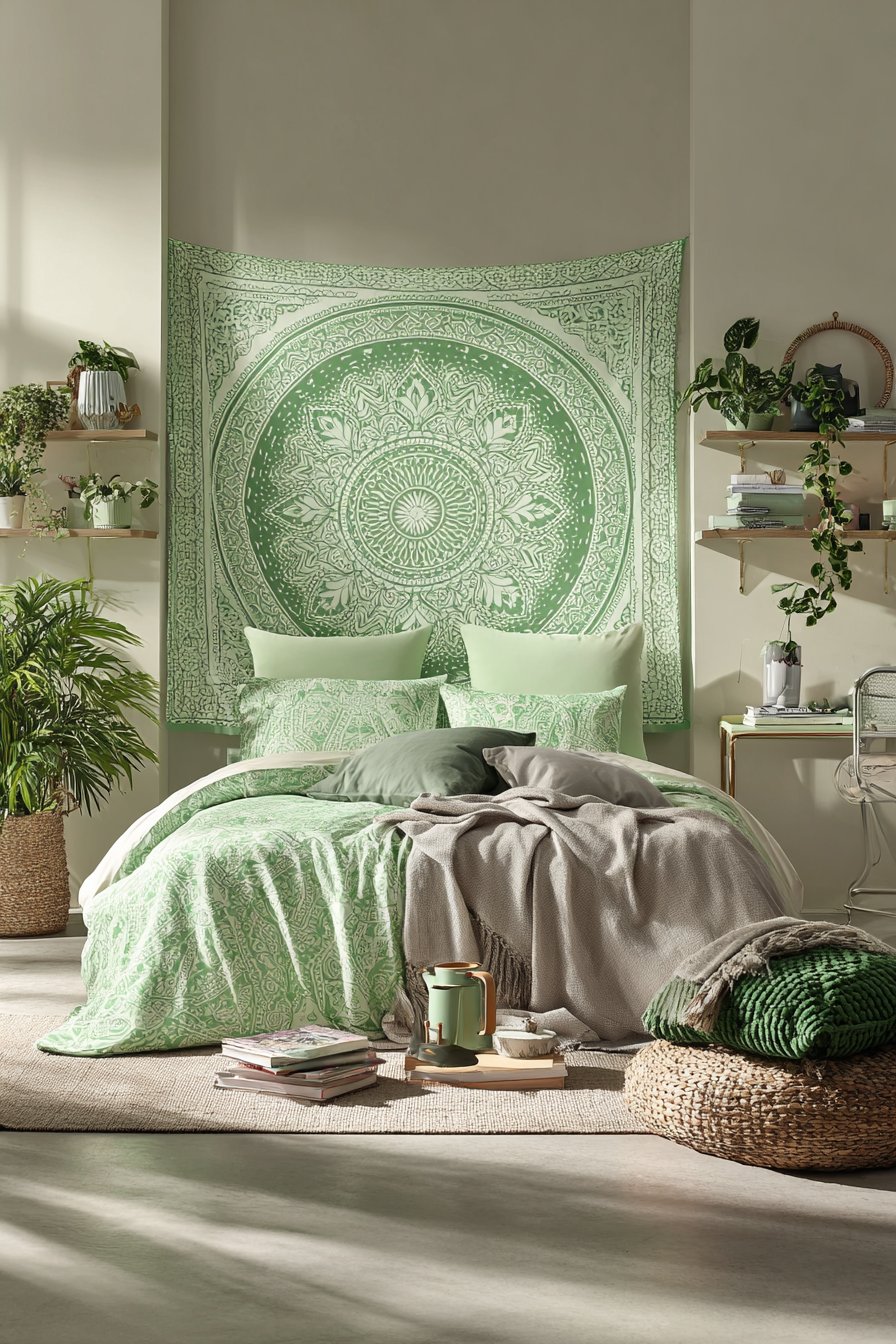
Small floating shelves mounted on either side of the tapestry display plants and personal items, creating a balanced composition that frames the bed and establishes it as the room’s primary feature. The floating shelves appear to emerge from the tapestry, blurring the line between functional storage and decorative display. Morning light creates gentle shadows in the fabric’s folds and highlights the mandala’s pattern details, revealing how the tapestry’s appearance changes throughout the day as lighting conditions shift—a dynamic quality that keeps the design interesting over months of daily viewing.
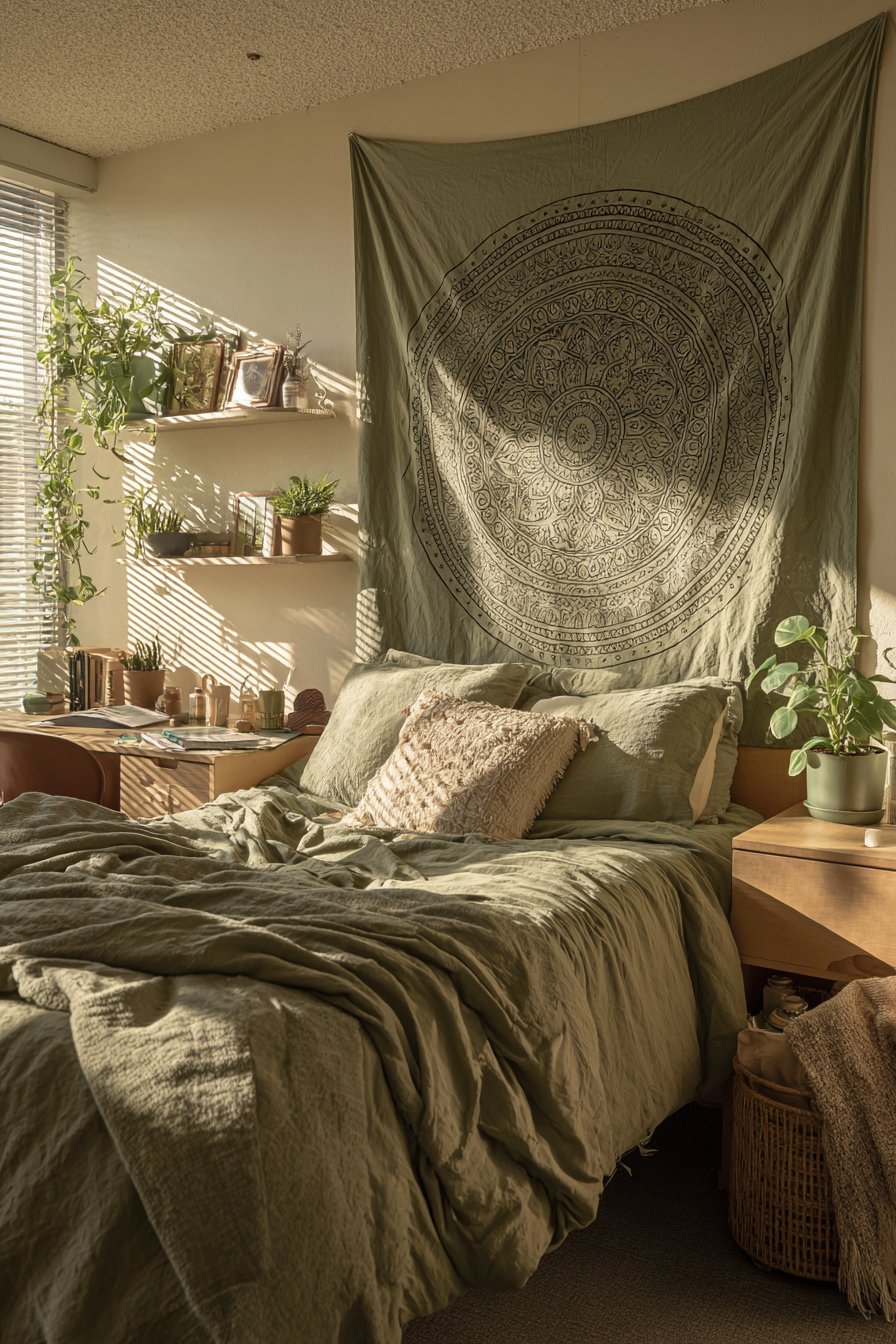
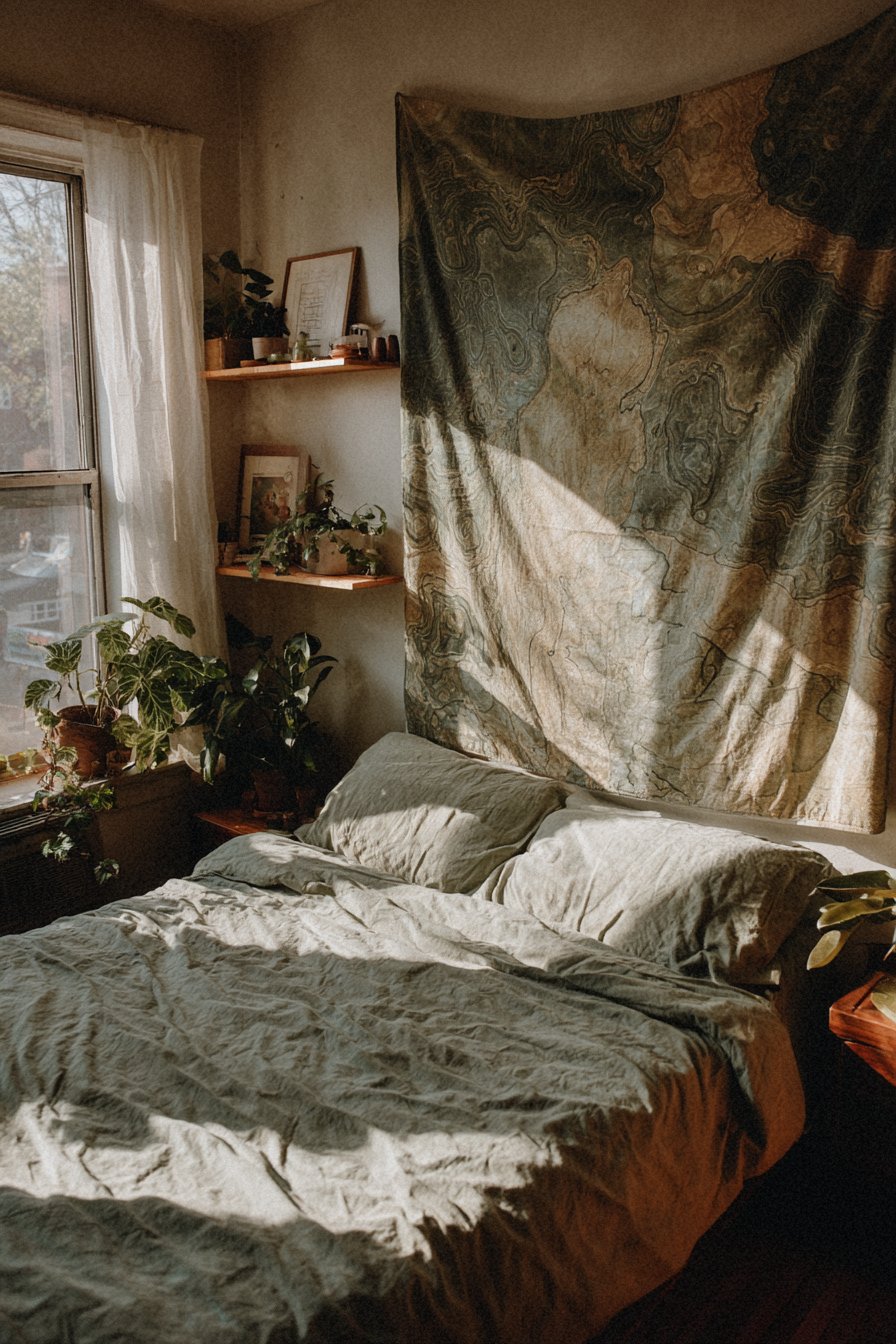
The large-scale green textile transforms the dorm wall from institutional blank space to a soft, inviting surface that absorbs sound and reduces the echo that can make dorm rooms feel harsh and unwelcoming. This practical acoustic benefit complements the obvious aesthetic improvements, demonstrating how thoughtful design choices can solve multiple problems simultaneously. The ability to achieve this transformation without permanent changes proves that student spaces can reflect personal style and create comfortable environments despite strict rental restrictions.
Key design tips include measuring your wall space carefully before purchasing a tapestry, ensuring it’s proportionate to your bed width and doesn’t overwhelm the available space. Use heavy-duty removable command strips rated for the tapestry’s weight plus a safety margin, as falling textiles can damage items below and create frustration. Steam or iron your tapestry before hanging to remove creases and wrinkles that detract from its appearance. Consider the tapestry’s pattern direction and ensure it’s hung in the intended orientation—some designs can be hung in multiple ways but look best in specific configurations. Rotate your tapestry seasonally or yearly to prevent sun fading if it’s exposed to direct light, or embrace the gradual color shift as a natural patina that tells the story of your time in the space.
15. Portable Bathroom Organization
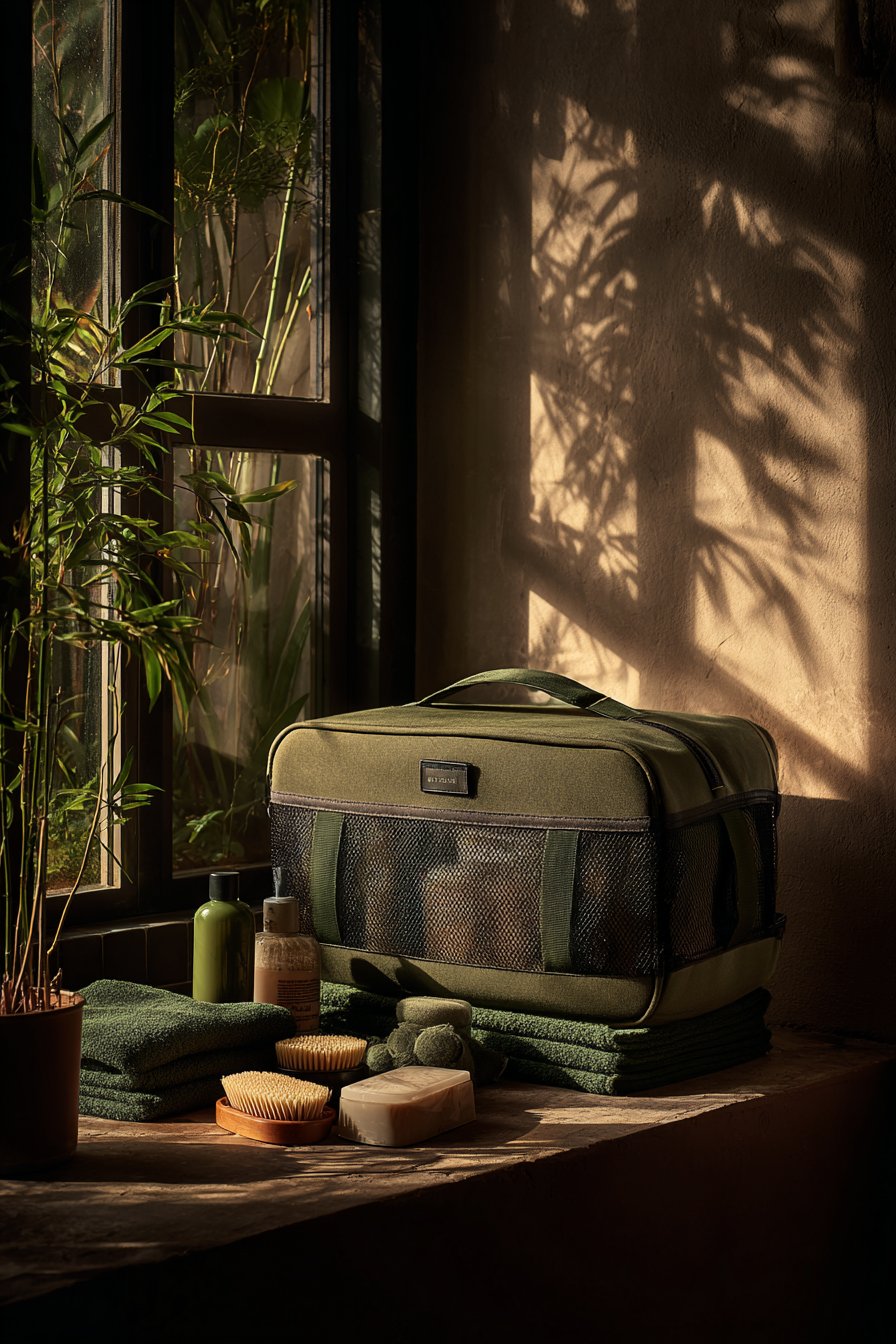
Shared bathroom facilities present unique organizational challenges for dorm residents, requiring portable storage solutions that can travel between room and bathroom while keeping personal items organized and sanitary. This green dorm room idea features a comprehensive bathroom caddy system with a shower tote in waterproof green canvas featuring mesh pockets for toiletries. The waterproof material prevents the mold and mildew growth that plagues traditional fabric organizers in damp bathroom environments, while the mesh pockets allow water to drain and provide visibility of contents for quick identification.

The portable storage solution sits on a small shelf in the dorm room alongside green towels, a potted bamboo plant, and bath accessories in coordinating green tones, creating a dedicated bathroom prep station within the personal space. This staging area allows you to gather everything needed before walking to shared facilities, preventing the frustration of forgetting essential items and needing to make multiple trips. The practical setup proves perfect for navigating shared bathroom situations, maintaining personal organization despite the inconvenience of facilities located outside your private space.
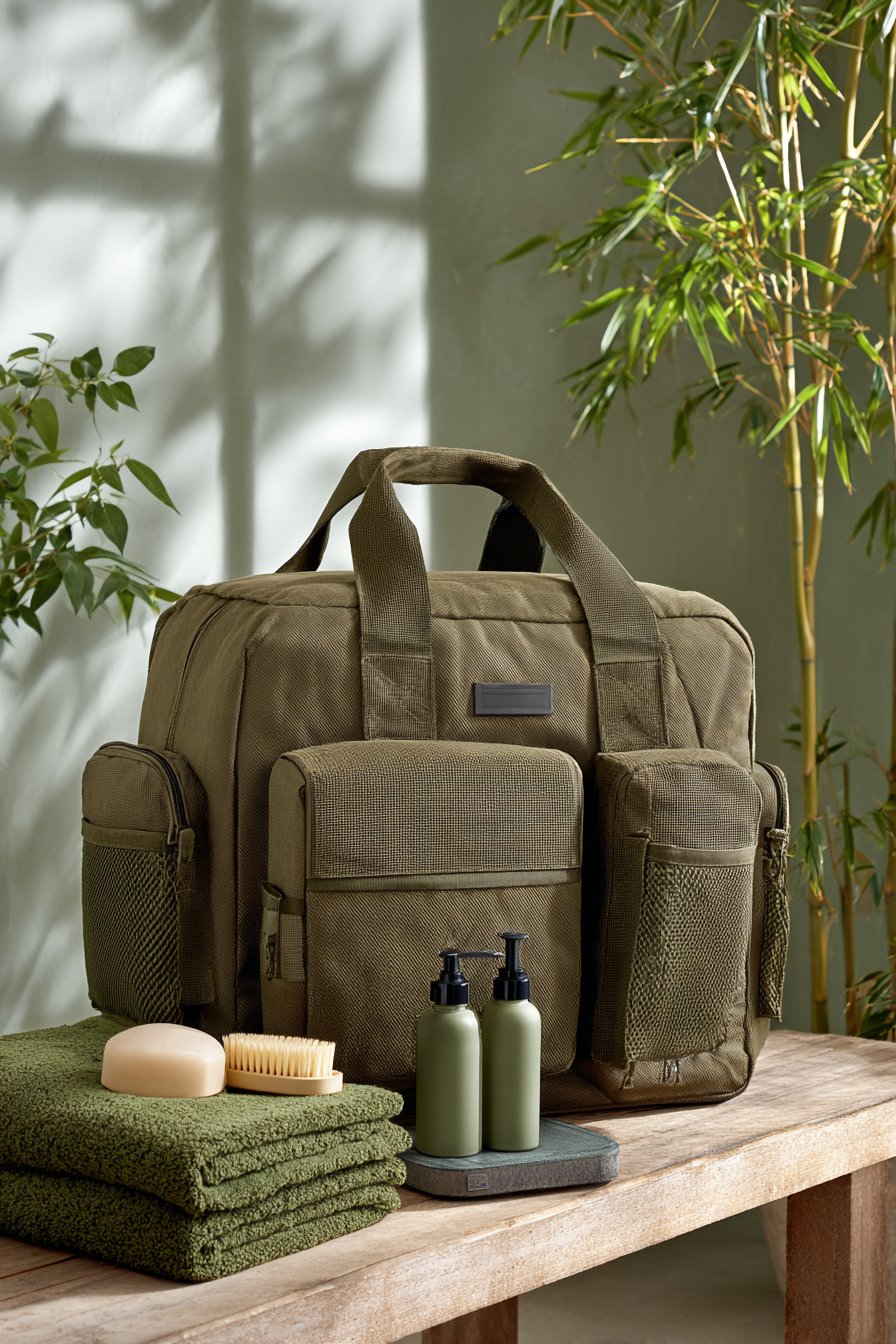
Natural window light illuminates the organized personal care items, and the coordinated green color scheme extends the room’s aesthetic even to utilitarian bathroom accessories. The bamboo plant thrives in the bathroom’s humid environment while purifying air and adding living greenery to the functional storage area. This attention to making even practical, unglamorous aspects of dorm life feel considered and attractive demonstrates how comprehensive design thinking can improve daily routines and overall quality of life.
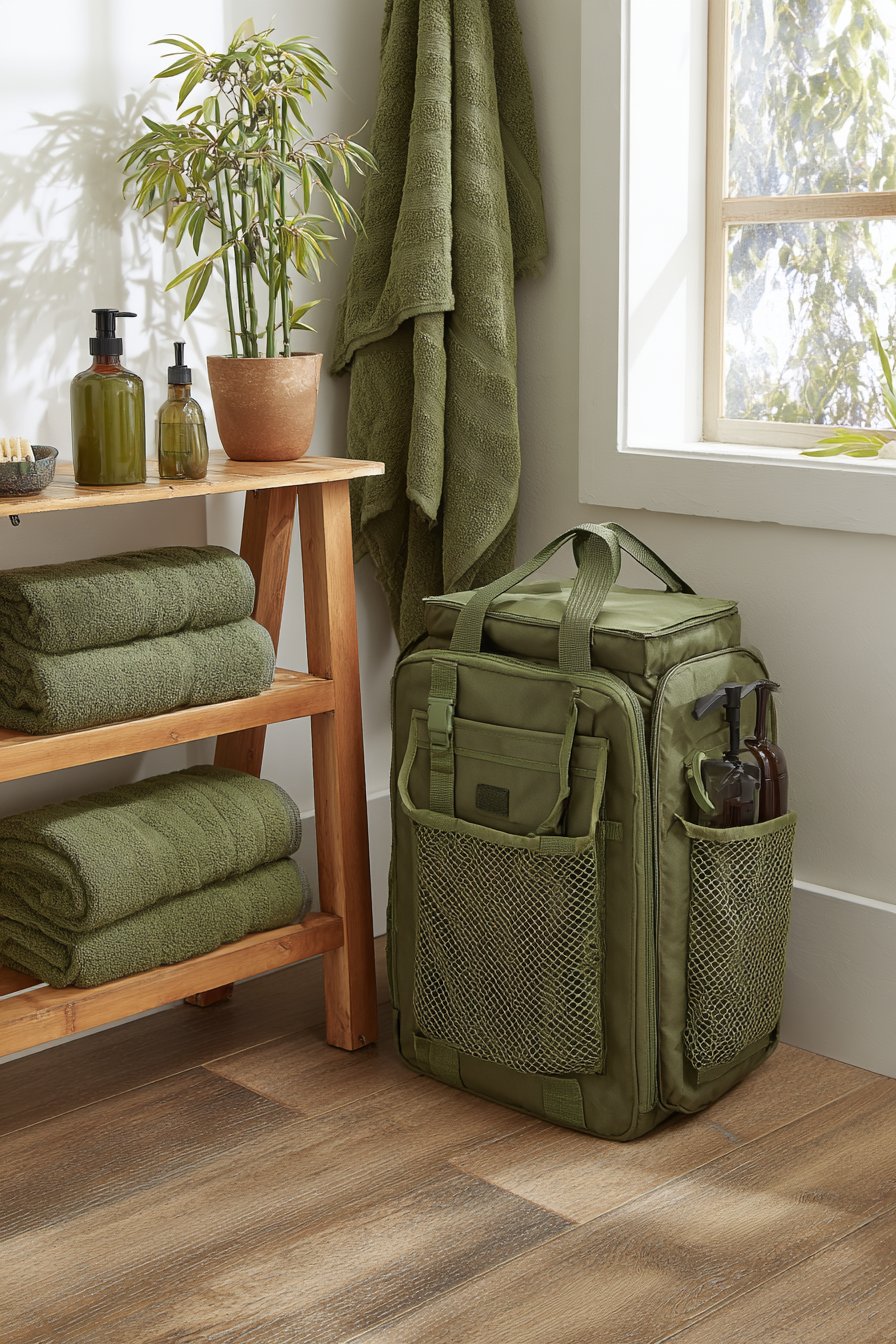
Key design tips include choosing a shower caddy with drainage holes or mesh construction to prevent water accumulation that leads to mold and unpleasant odors. Include a separate smaller caddy or toiletry bag for items you need at the sink versus the shower, streamlining your bathroom routine. Keep a duplicate set of essential toiletries in your caddy so you never need to transfer items from your room storage, reducing the chance of forgetting something crucial. Use the shared bathroom during off-peak hours when possible to reduce wait times and stress, and store your caddy in a designated spot in your room where you’ll always find it when needed. Clean your shower caddy weekly with diluted bleach or bathroom cleaner to prevent buildup and maintain hygiene.
16. Vertical Space Maximization Under Loft
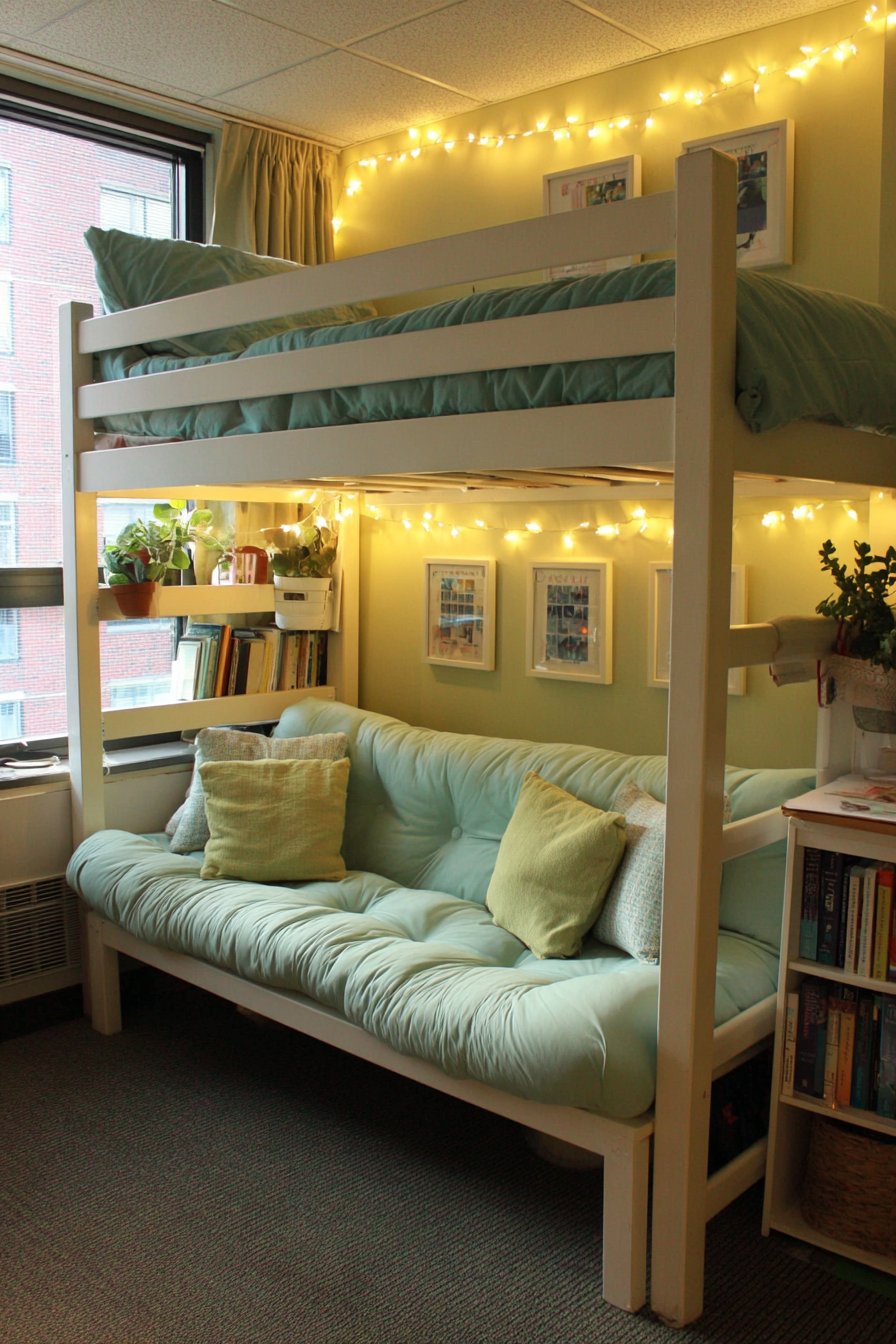
Lofted beds dramatically increase usable floor space in dorm rooms, and this green dorm room idea demonstrates how to transform the often-wasted area beneath into a cozy retreat. The space underneath the elevated bed is converted into an inviting lounge area with a futon mattress topped with sage green cushions and throw pillows, creating a daybed-like environment perfect for studying, napping, or socializing. String lights create ambient lighting that makes the lower level feel like an intentional room within a room rather than leftover space, establishing atmosphere and marking the area as a destination rather than merely the space beneath furniture.
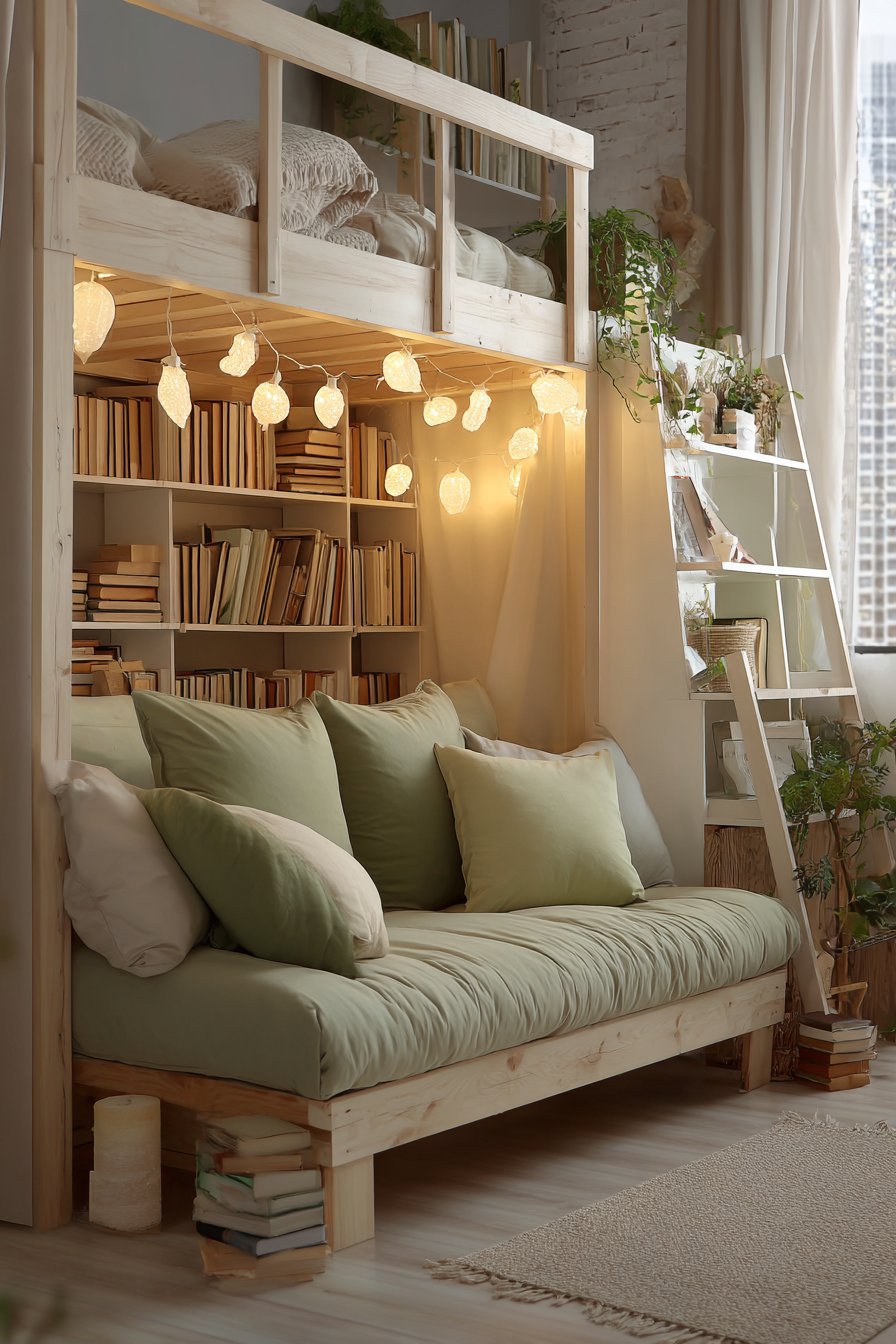
A small bookshelf in white holds books and plants, providing both functional storage and decorative display without blocking light or making the under-bed area feel cramped. The vertical space utilization is highlighted through smart furniture placement that creates distinct living zones within the limited footprint—sleeping above, living below. This efficient use of three-dimensional space proves essential in dorm rooms where square footage is extremely limited but ceiling heights allow for creative stacking solutions.
Soft evening light combines with the string lights to create a magical, intimate atmosphere in the lower level, transforming it from a potentially dark, uninviting cave into a cozy retreat where you want to spend time. The inviting green-toned lower level proves that even challenging architectural situations like lofted beds can become design opportunities rather than limitations, maximizing the small dorm footprint while creating multiple functional and atmospheric zones within a single compact room.
Key design tips include ensuring adequate headroom in your under-loft space—you should be able to sit comfortably on the futon without feeling cramped or hitting your head. Install battery-operated lights if electrical outlets aren’t conveniently located near the lofted area, avoiding the hazard and inconvenience of extension cords stretched across the room. Use the vertical surfaces under the loft (the wall and the underside of the bed frame) for additional storage or decoration. Choose furniture proportioned for the under-loft space, avoiding pieces too tall or deep that make the area feel crowded. Regularly declutter the under-loft area as it can easily become a catchall for items that don’t have designated homes elsewhere.
17. Layered Textile Texture Study
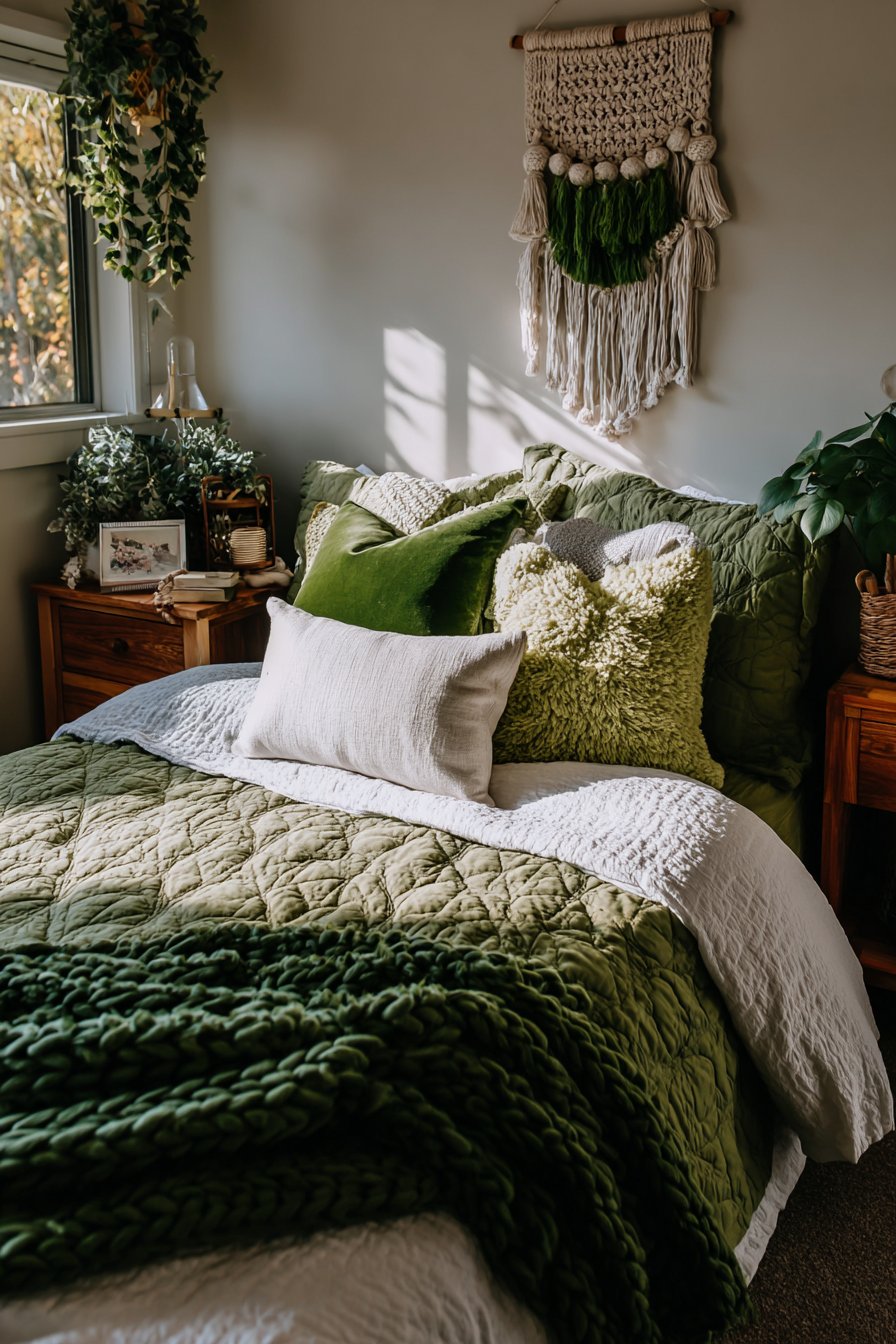
Texture creates visual and tactile interest that prevents spaces from feeling flat and lifeless, and this green dorm room idea explores how layering various textiles in coordinating colors can add sophisticated depth to a simple bed. A quilted bedspread in sage green provides the foundation layer, its stitched pattern creating subtle visual interest and physical texture. A chunky knit throw blanket in forest green draped at the foot of the bed introduces dramatically different texture through its thick, three-dimensional yarn construction, while multiple throw pillows in green velvet, linen, and cotton create a luxurious pile that invites touch and interaction.
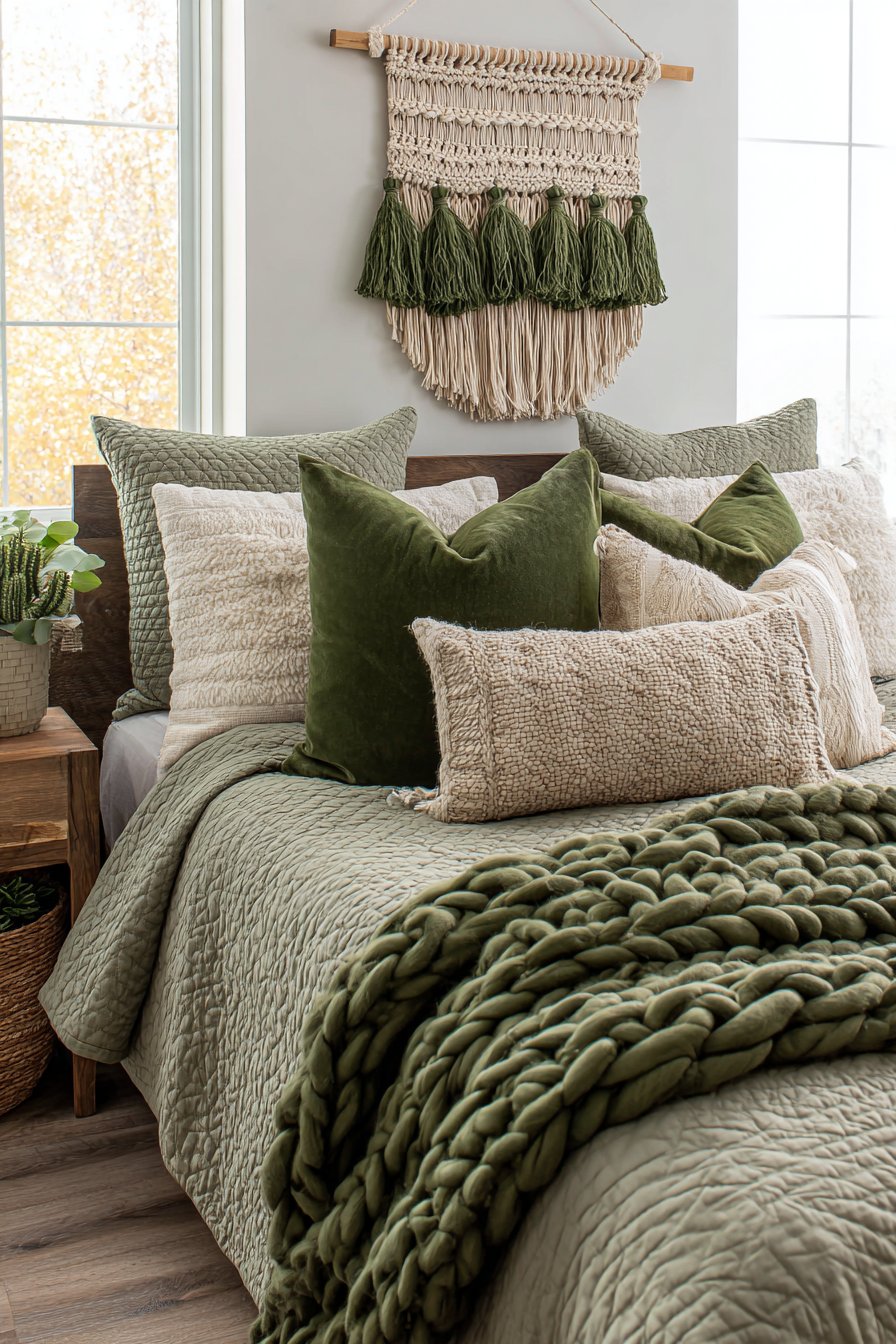
A woven wall hanging in natural jute with green macrame accents hangs above the bed, extending the textile theme vertically and adding another texture category to the composition. The wall hanging’s neutral jute base prevents the space from feeling overwhelmed by green while the macrame accents in green yarn tie it into the room’s color story. Afternoon light highlights the different fabric textures and weights, revealing how light interacts distinctly with smooth velvet versus nubby linen versus chunky knit, creating a display that changes appearance throughout the day as angles and intensity of natural light shift.
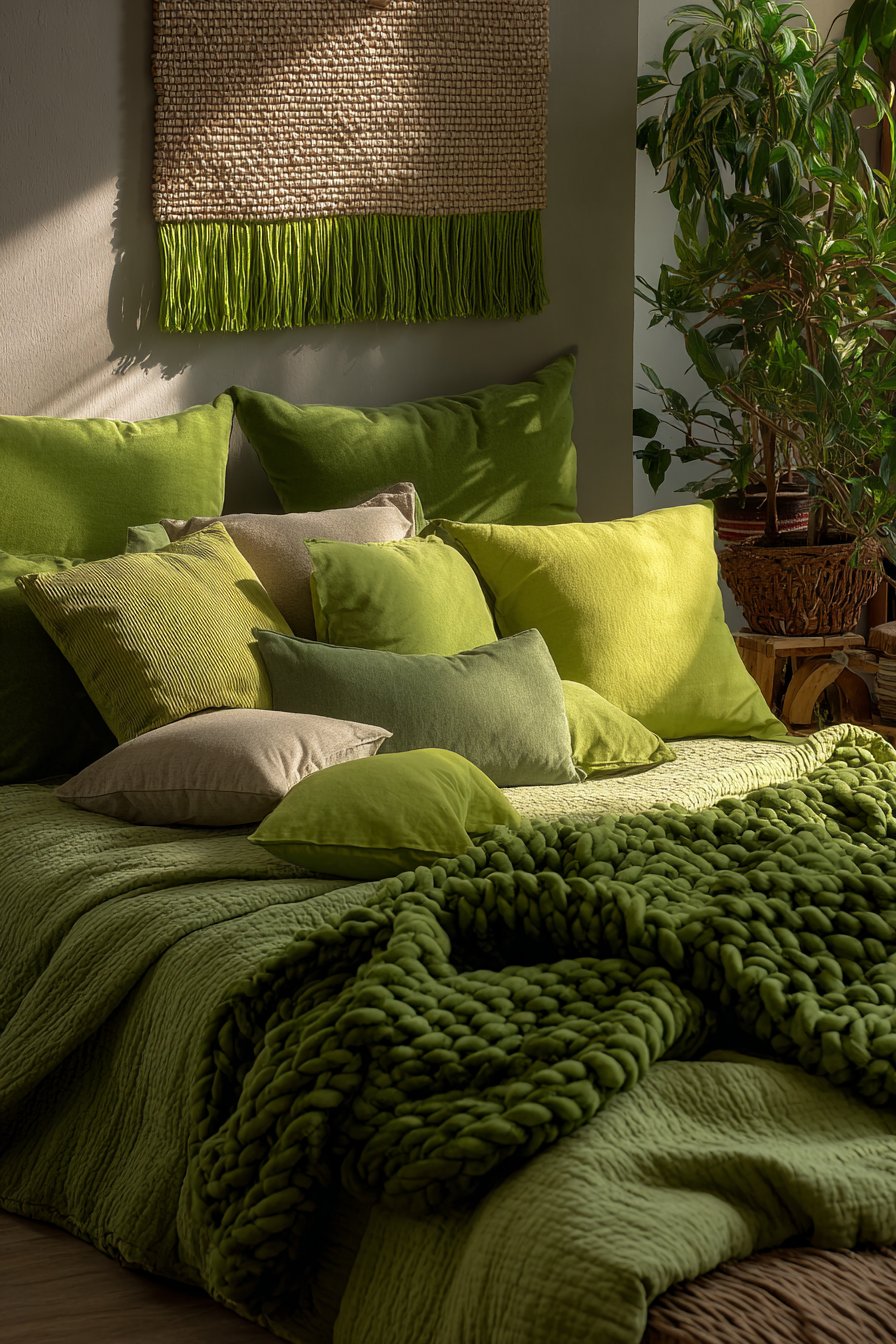
The layering of various green fabrics creates depth and interest in a budget-friendly way, proving that sophisticated design needn’t require expensive purchases—texture variety generates visual richness even when working within a limited color palette. This approach demonstrates an important principle for students working with tight budgets: thoughtful selection and arrangement of affordable items can create results that appear far more expensive than their actual cost.
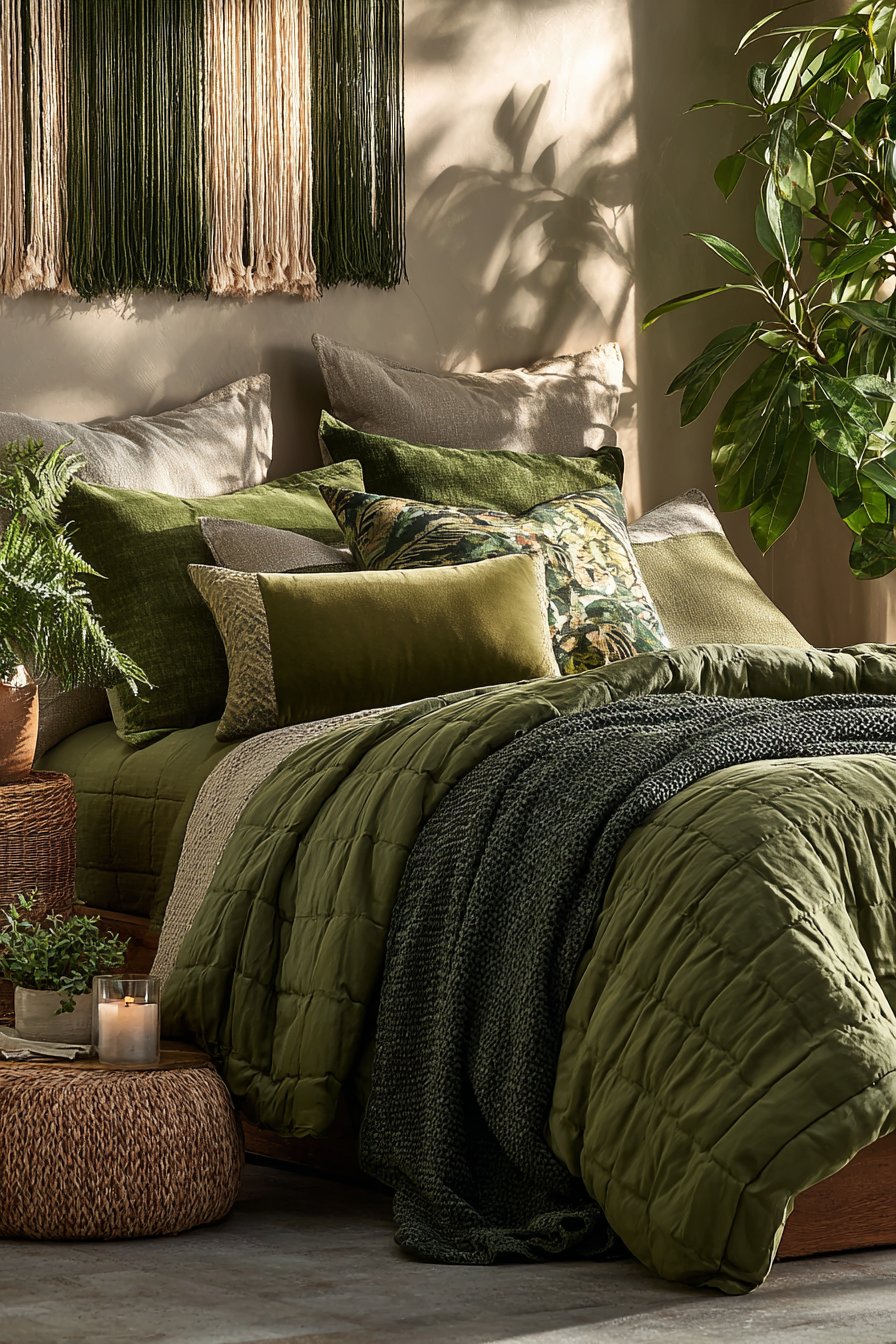
Key design tips include shopping secondhand stores, craft markets, and budget retailers for textile pieces, as these items are frequently available at low prices but deliver high design impact. Choose machine-washable textiles whenever possible to maintain freshness despite heavy use. Vary not just texture but also scale—pair large-scale chunky knits with fine-weave linens to create maximum contrast. Allow some of your textiles to drape naturally rather than arranging everything with precision, as casual folds and natural settling create more lived-in, authentic appearance. Rotate your textile layers seasonally, storing heavier knits during warm months and lighter linens during winter to keep your space feeling seasonally appropriate and prevent staleness.
18. Mobile Coffee and Tea Station
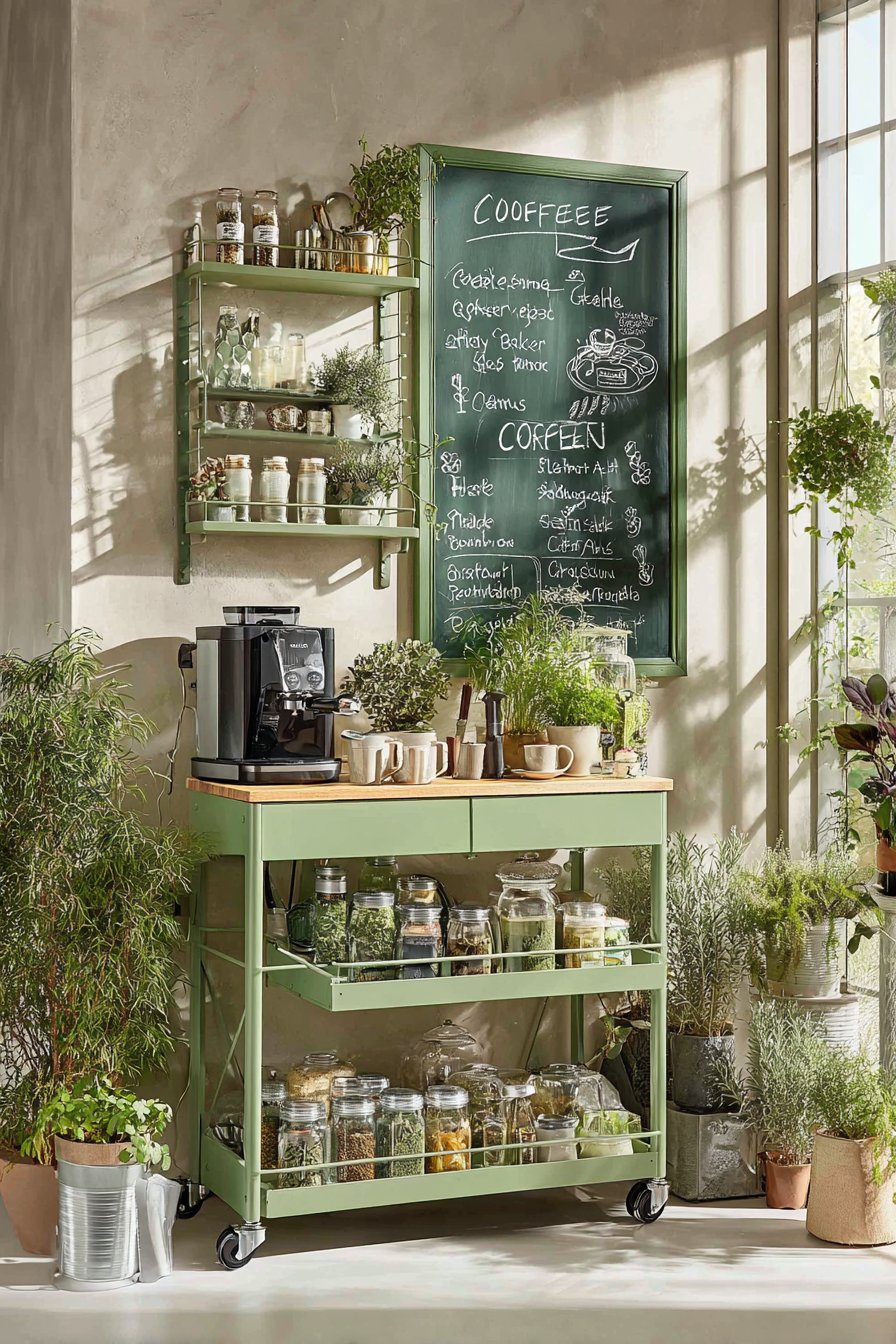
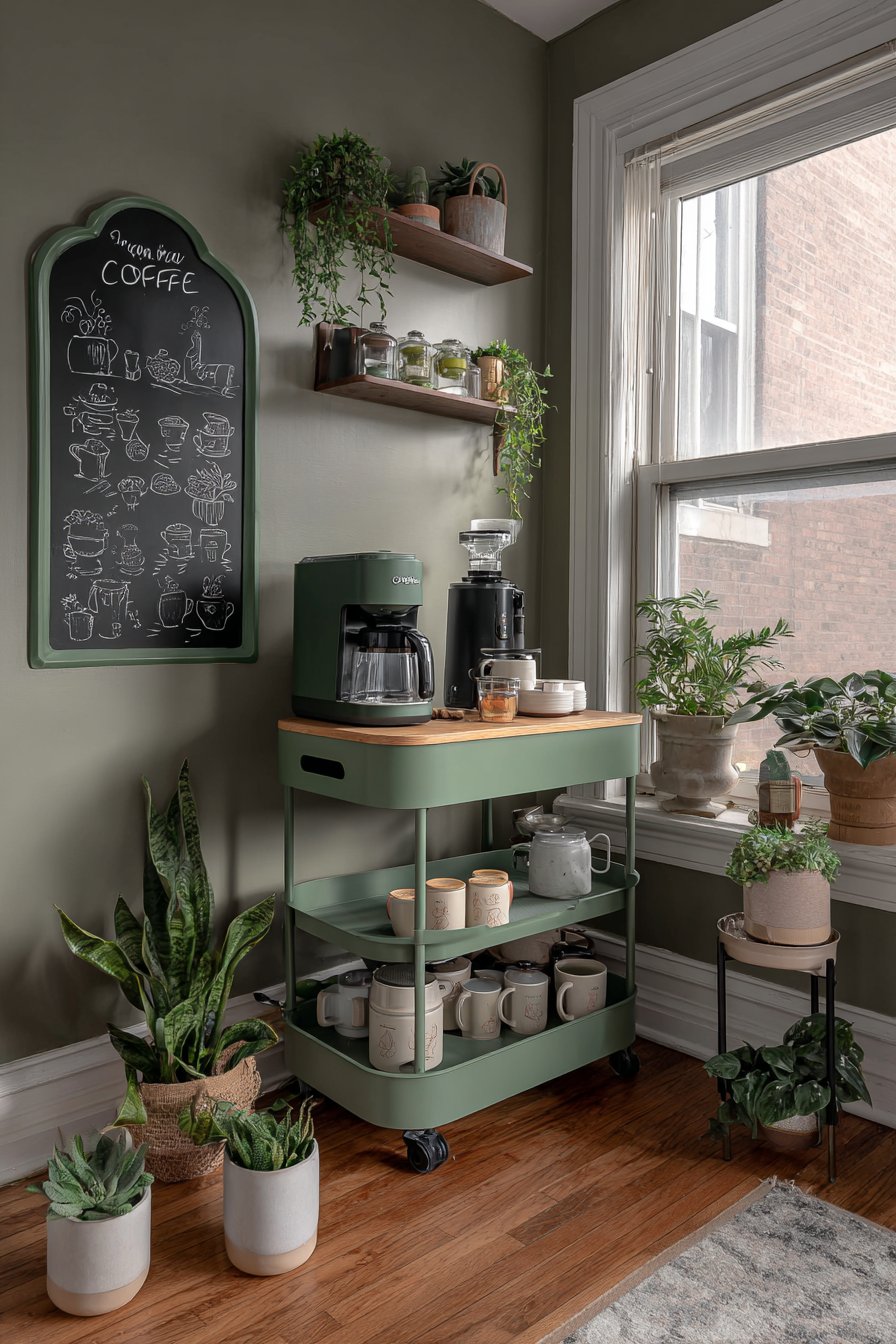
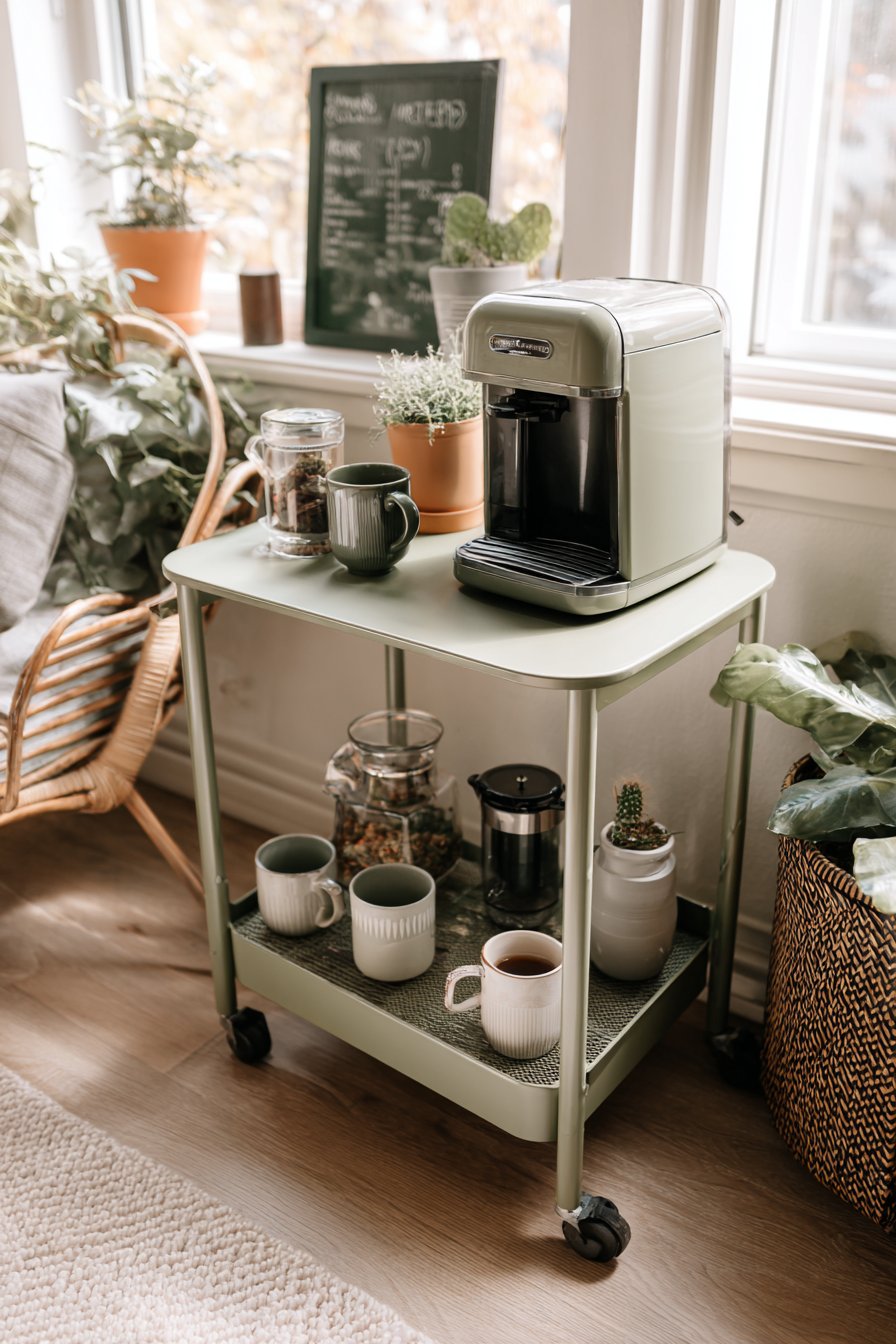
Creating dedicated stations for specific activities within your dorm room enhances functionality while making daily routines more enjoyable, and this green dorm room idea features a mobile coffee and tea setup that brings café convenience to your personal space. A small two-tier cart in matte sage green holds a compact coffee maker, an assortment of mugs, a curated tea selection, and small potted herbs that serve double duty as both decoration and potential cooking ingredients. The cart’s mobility allows easy repositioning around the room depending on current needs—near your desk during intensive study sessions, by your bed for lazy weekend mornings, or near your seating area when entertaining friends.
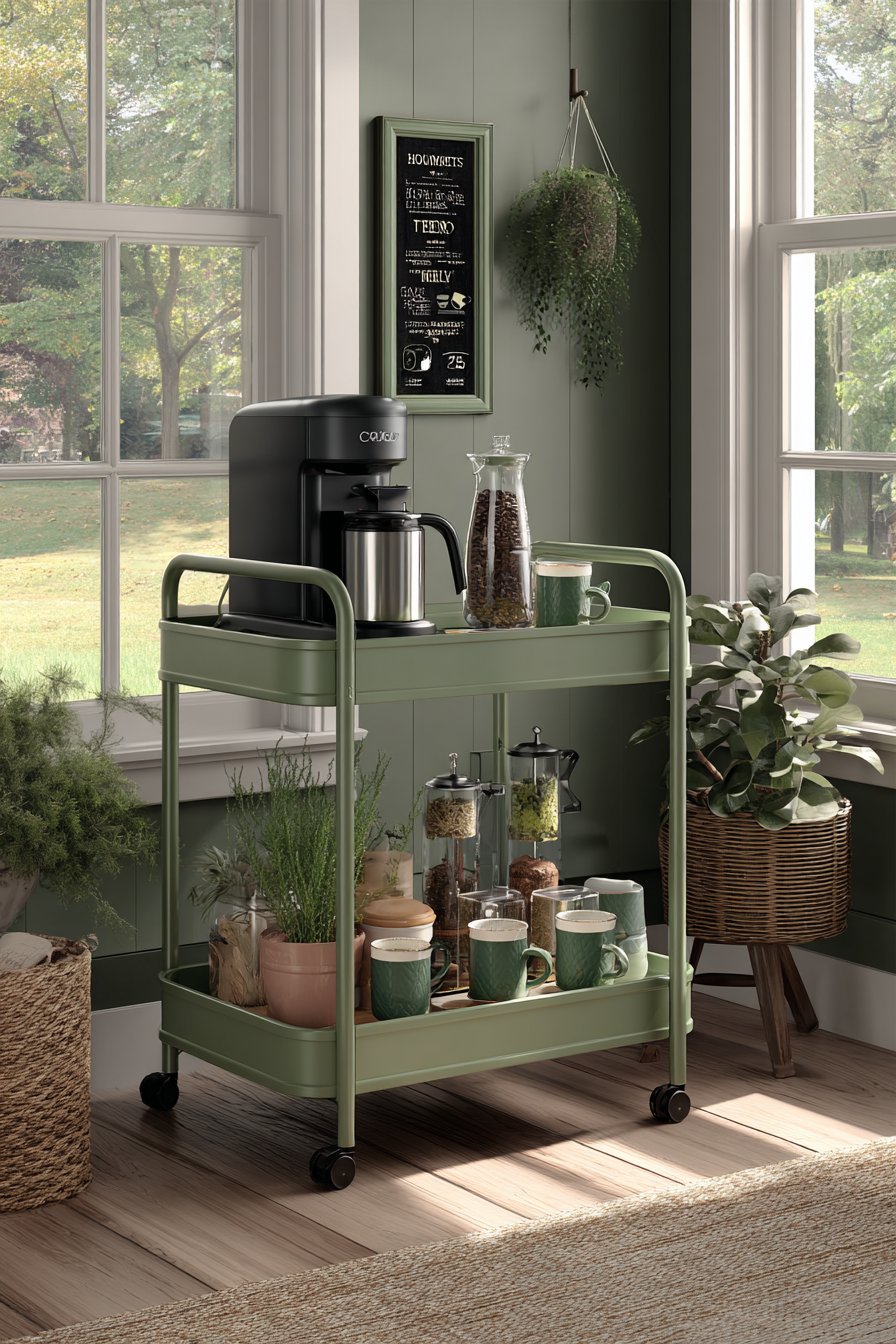
The beverage station’s organization transforms morning routines from chaotic scrambles to calm rituals, providing everything needed to prepare your preferred hot beverage without searching through various storage areas or walking to distant campus cafés. A small chalkboard menu in a green frame adds a personal, playful touch while serving the practical function of tracking which teas or coffee varieties need replenishing. Natural morning light illuminates the practical beverage station, making it an inviting first stop after waking.
The cart’s thoughtful organization and cohesive green color integration proves that even highly functional elements can contribute to the room’s overall aesthetic rather than detracting from it. This attention to making practical necessities beautiful demonstrates mature design thinking that elevates everyday activities into moments of personal pleasure and self-care, supporting wellness even during stressful academic periods.
Key design tips include choosing a cart with smooth-rolling casters that work on your room’s flooring type, as a stuck or difficult-to-move cart defeats the purpose of mobile furniture. Stock your station with your genuinely preferred beverages rather than items you think you should drink, ensuring you’ll actually use the setup. Include a small bin or designated spot for trash and recycling to prevent accumulated waste from cluttering the cart. Position the cart near an outlet for the coffee maker but avoid placing it where the cord creates a tripping hazard. Establish a weekly restock routine where you clean the cart, discard expired items, and replenish supplies, maintaining functionality and hygiene.
19. Creative Floor Pillow Headboard
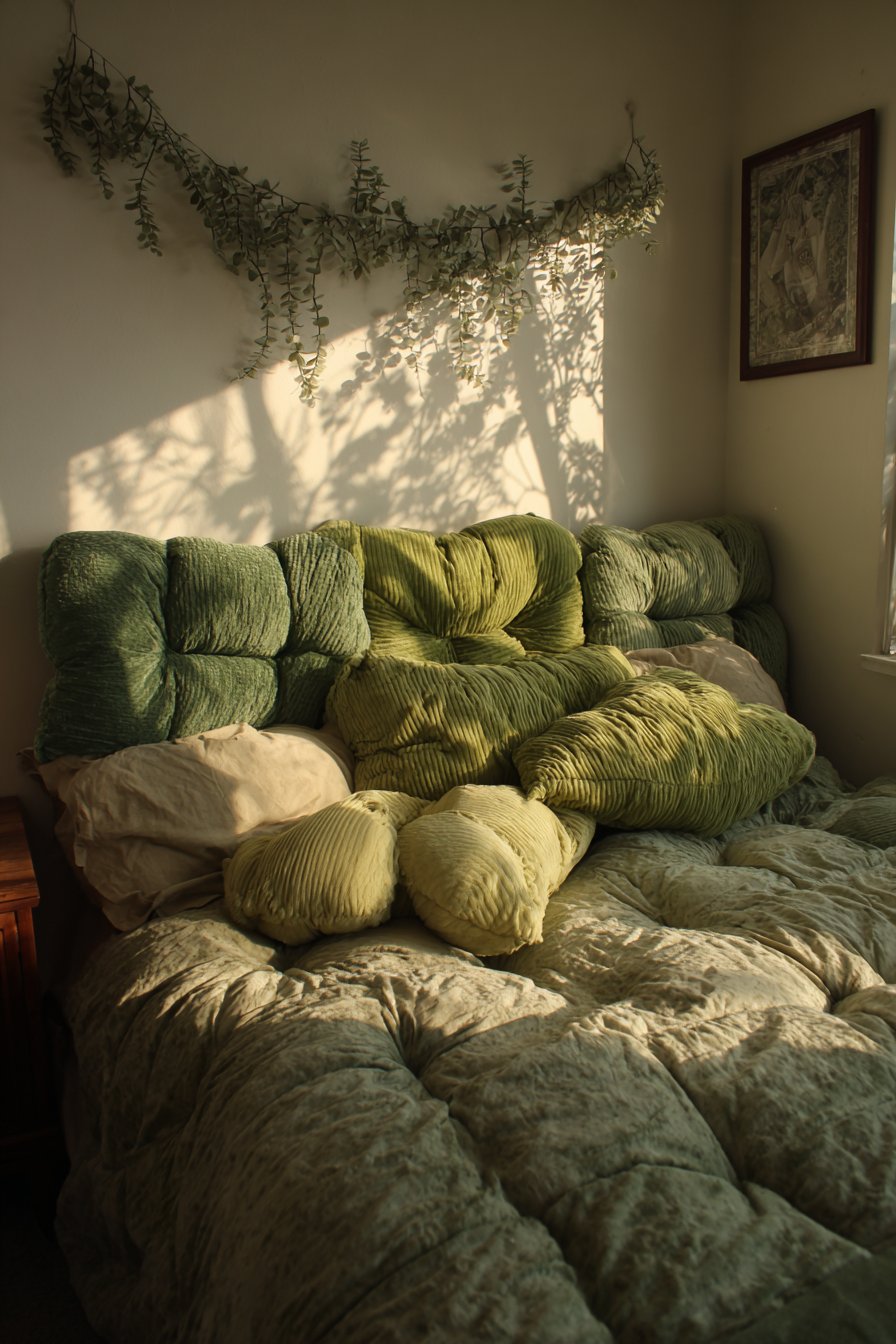
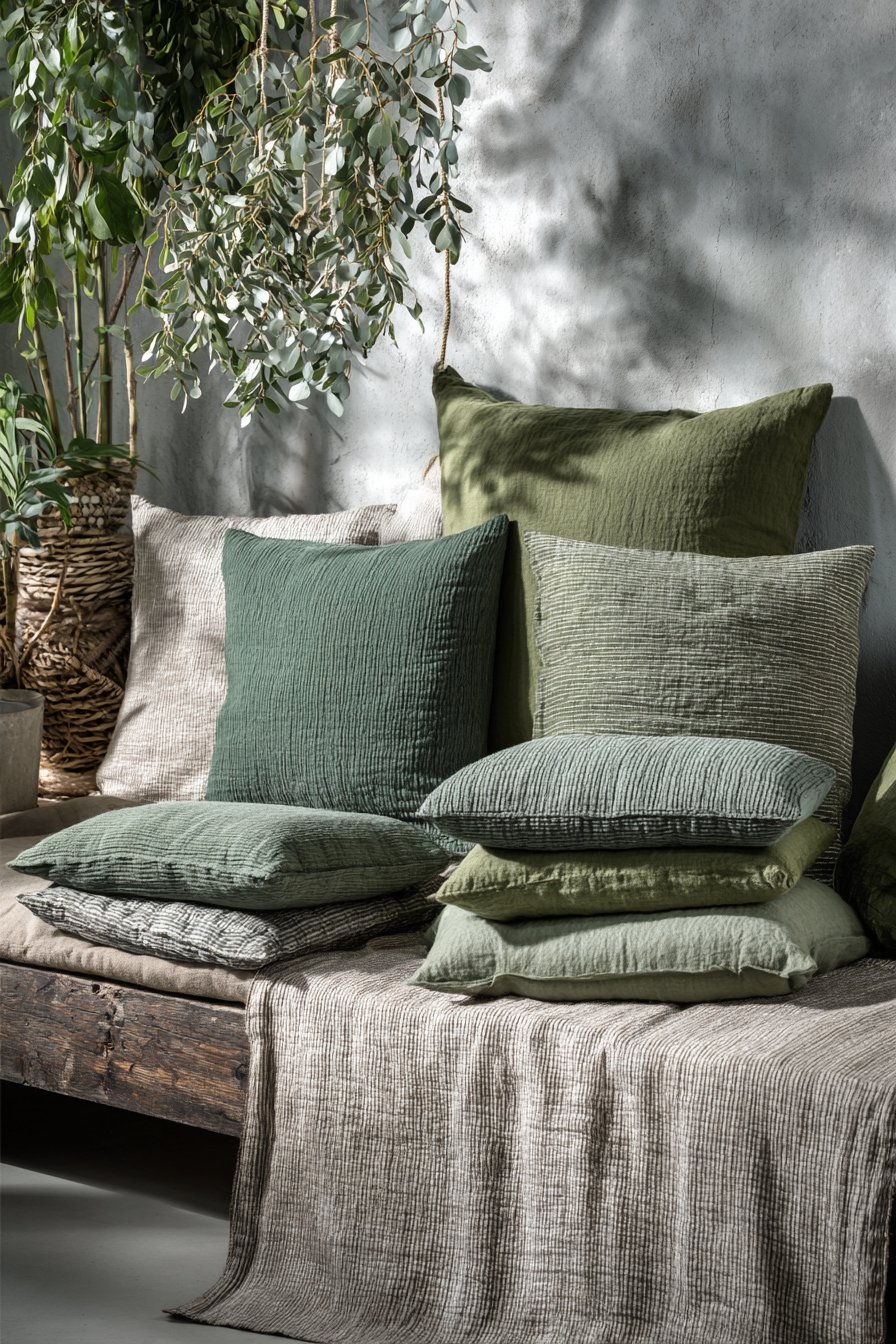
Budget constraints inspire creative problem-solving, and this green dorm room idea showcases how oversized floor pillows can serve as a functional and stylish headboard alternative. Stacked against the wall behind a low platform bed, the pillows in sage, olive, and forest green create a comfortable backrest that’s both decorative and functional for sitting up in bed. The pillow arrangement provides support for late-night reading, laptop work, or lounging while watching movies, eliminating the discomfort of leaning against bare walls or attempting to prop yourself with standard bed pillows that constantly shift and fall.
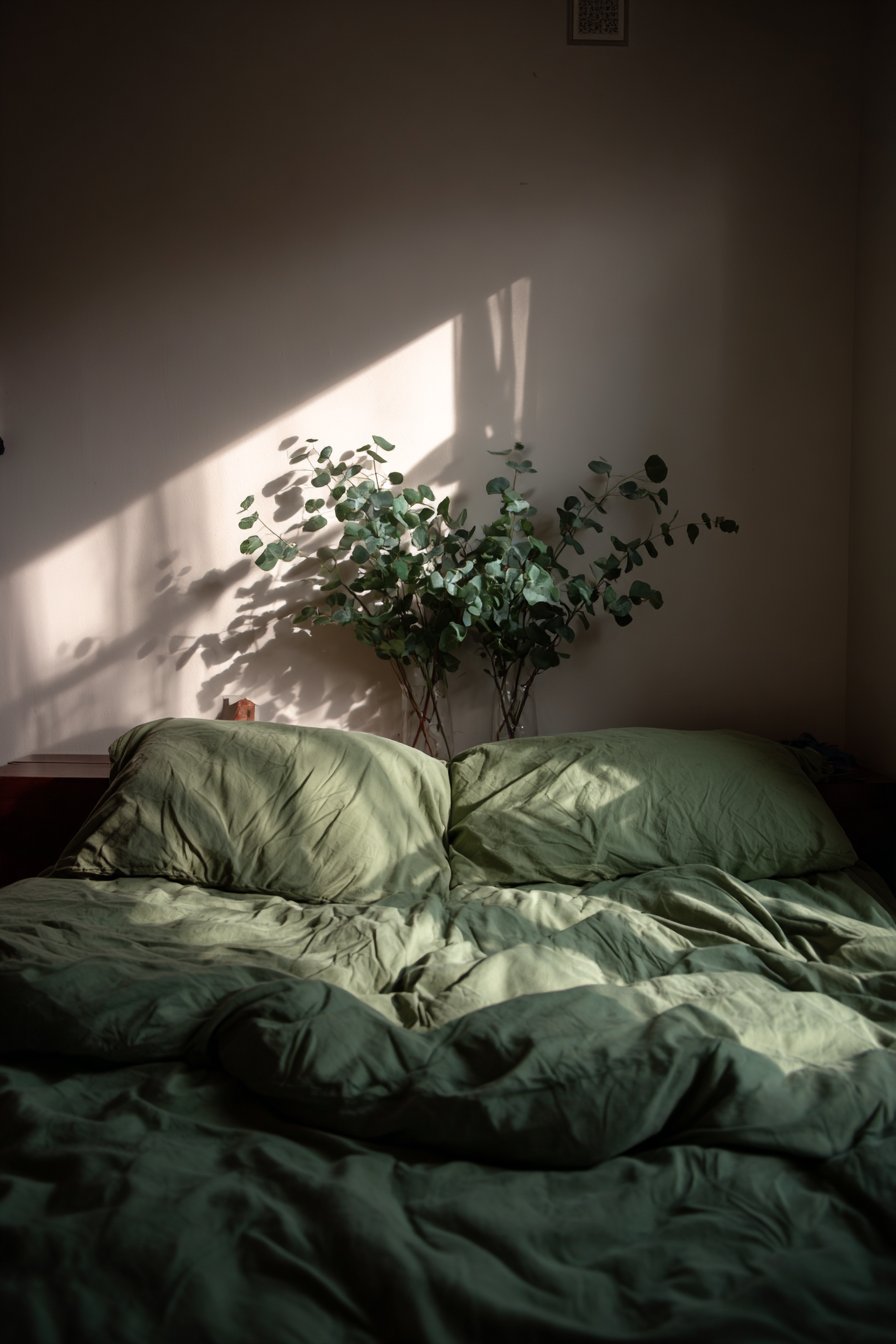
A simple string of eucalyptus branches attached to the wall above with removable hooks adds organic visual interest and subtle fragrance without requiring living plant care, offering the aesthetic benefits of greenery with none of the maintenance demands that can overwhelm busy students. Natural light creates soft shadows in the pillow textures, revealing the dimensional quality of this unconventional headboard and how its soft, yielding nature differs dramatically from traditional hard headboards. The overall effect is simultaneously casual and intentional—clearly styled rather than random pillow accumulation, yet relaxed rather than rigid or formal.
The creative, budget-friendly solution proves that limitation often breeds innovation, and students working with minimal resources can create distinctive, personal spaces through unconventional thinking. This approach to problem-solving—identifying what you need (back support, visual interest) and finding affordable alternatives to traditional solutions—serves students well beyond their dorm years, teaching resourcefulness and creative thinking that apply to many life situations.
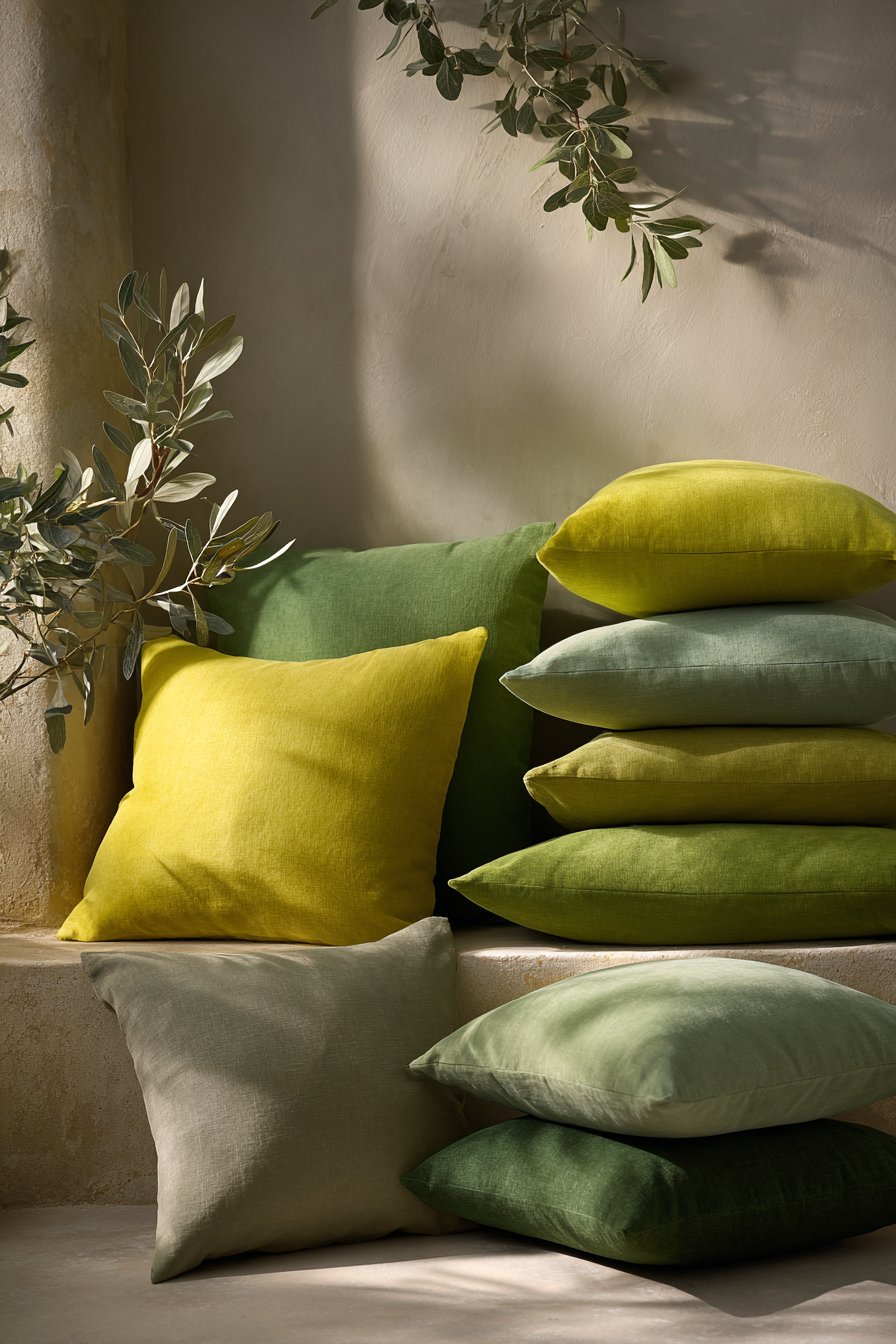
Key design tips include selecting floor pillows with removable, washable covers to maintain freshness despite heavy use. Secure the bottom layer of pillows to the wall with removable adhesive strips to prevent the entire stack from sliding forward during use. Choose pillows with substantial filling that maintains shape rather than flattening immediately under weight. Vary the pillow sizes slightly to create a more organic, less rigid appearance that’s both more visually interesting and more comfortable. Refluff and rearrange your pillow headboard weekly to prevent permanent indentations and maintain its attractive appearance.
20. Coordinated Desk Accessories Collection
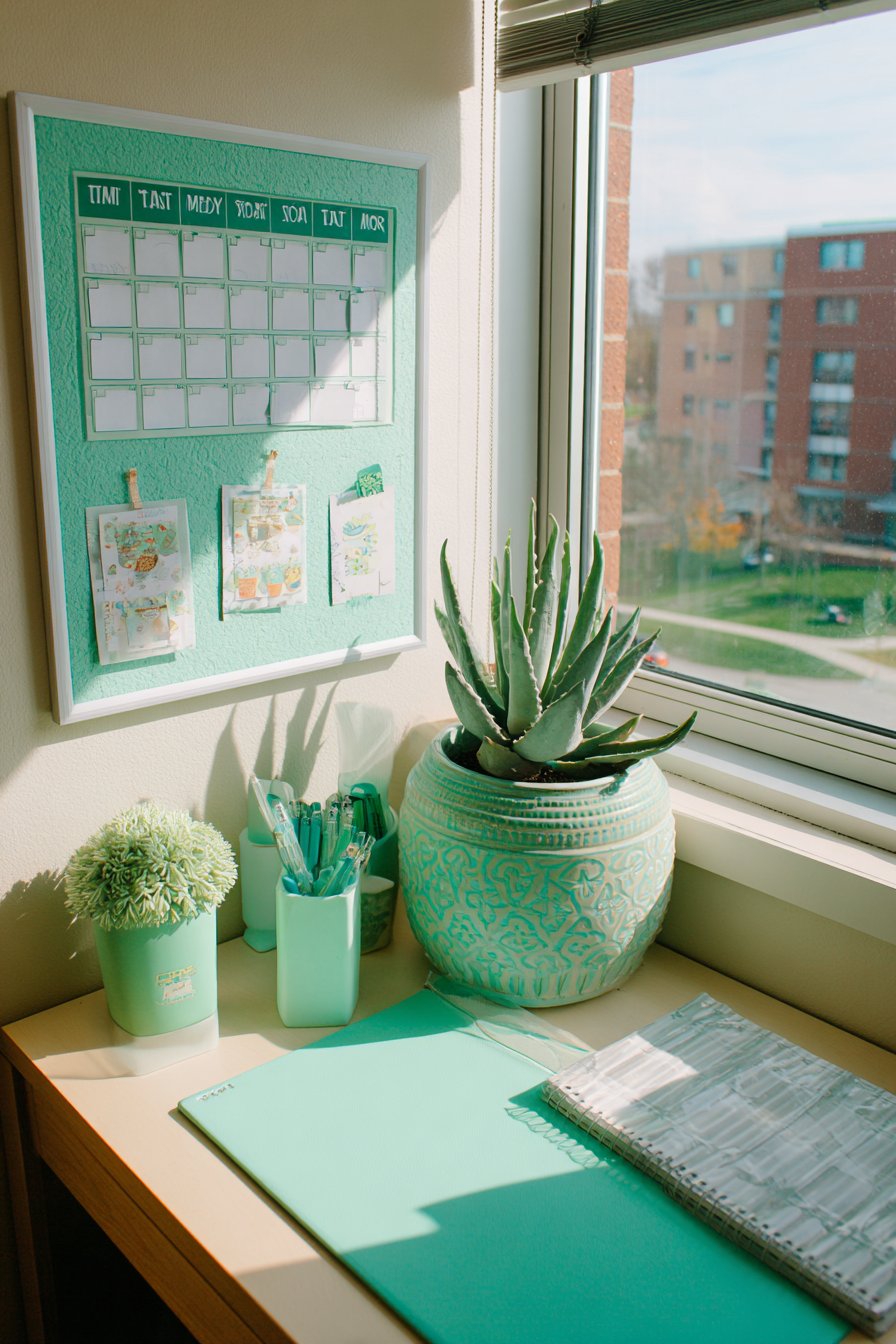
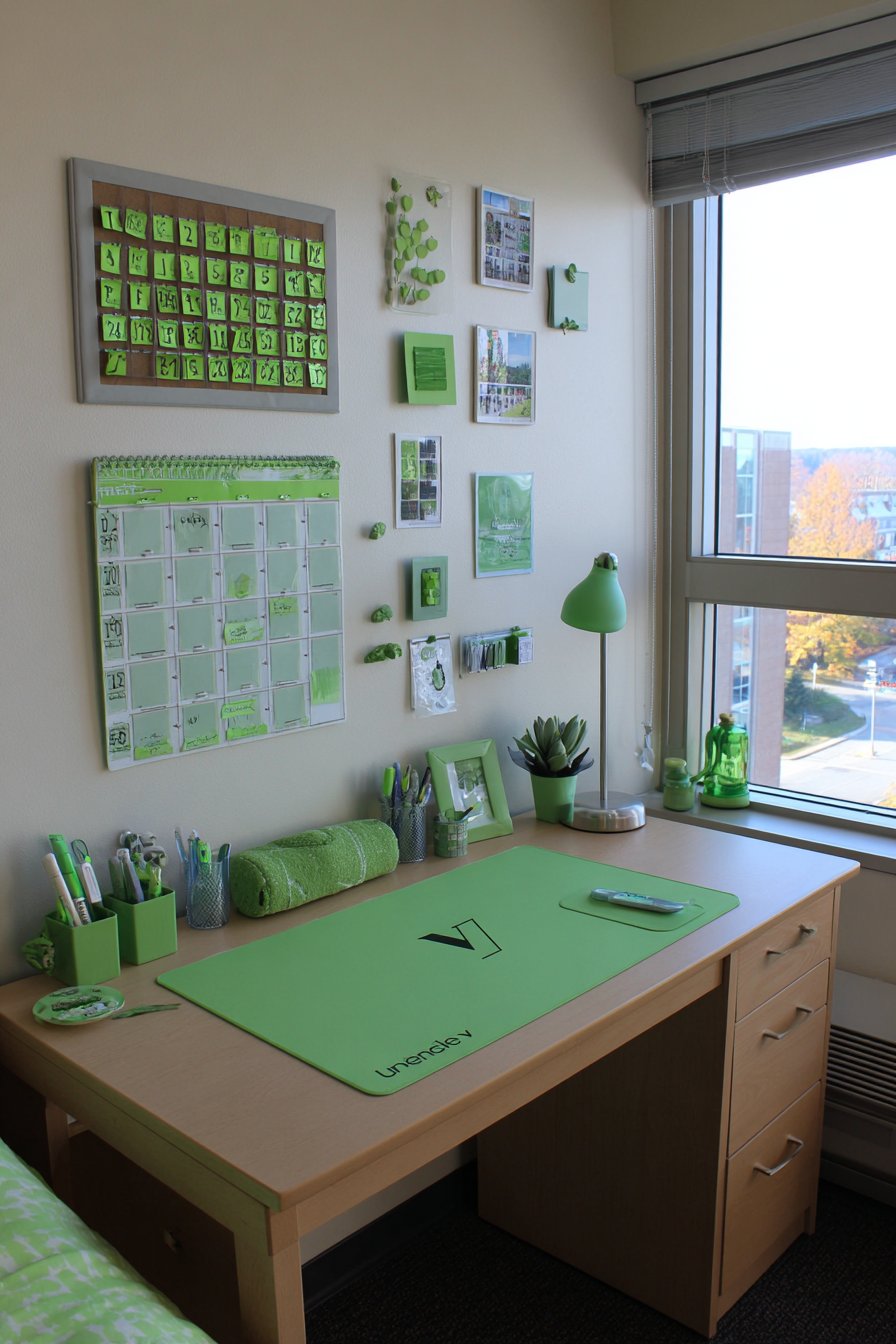
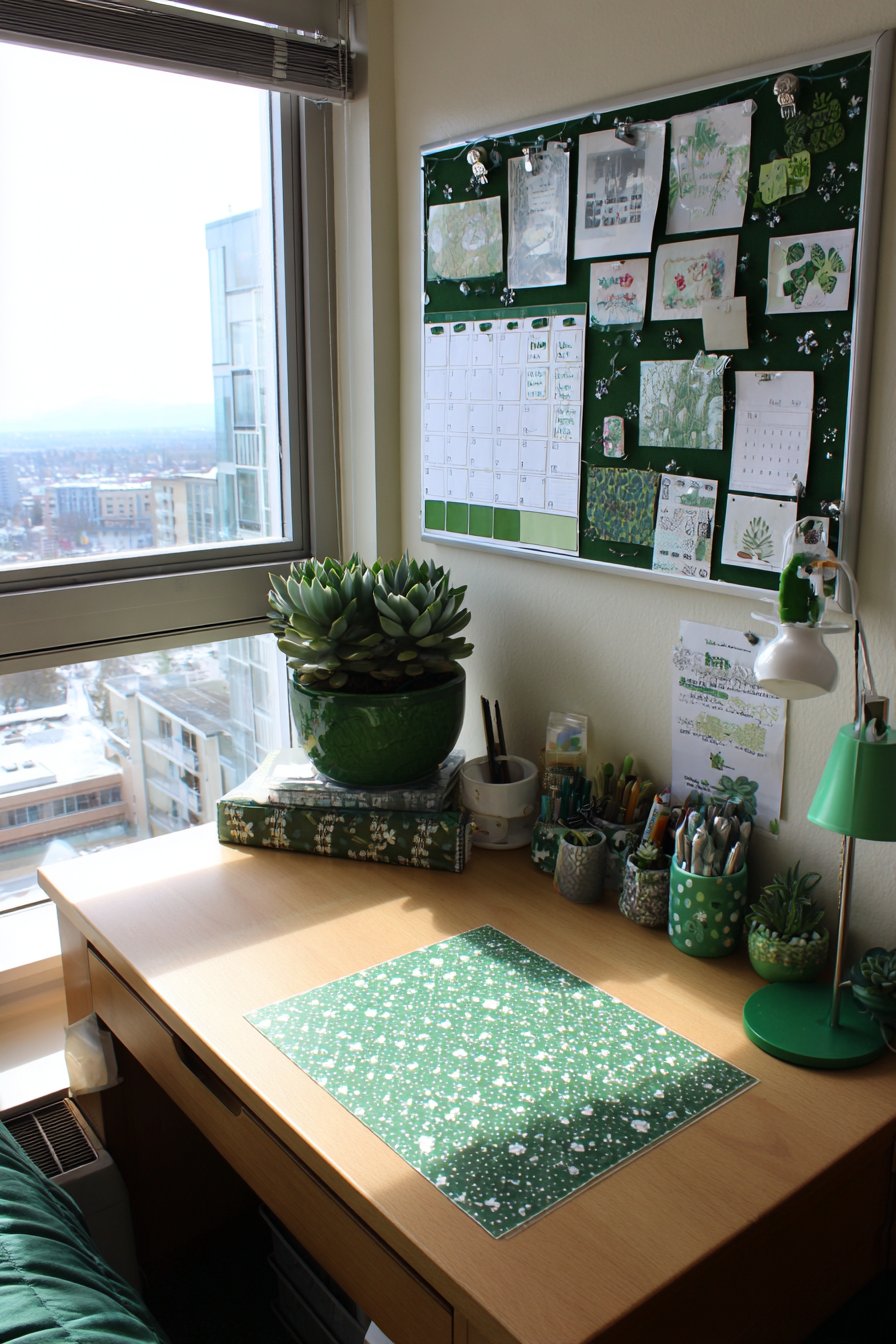
Small details create cohesion, and this green dorm room idea demonstrates how coordinating desk accessories can transform a workspace from generic to genuinely personal. A cohesive workspace features a green desk pad that protects the surface while defining the work zone, a matching pen holder that keeps writing implements organized and accessible, a small succulent in a green ceramic pot that brings life without demanding extensive care, and a desk lamp with a green cord that provides necessary task lighting while reinforcing the color theme. The organized setup extends to wall-mounted elements including a calendar with green month tabs and a bulletin board with green push pins, creating a complete ecosystem of coordinated tools and accessories.
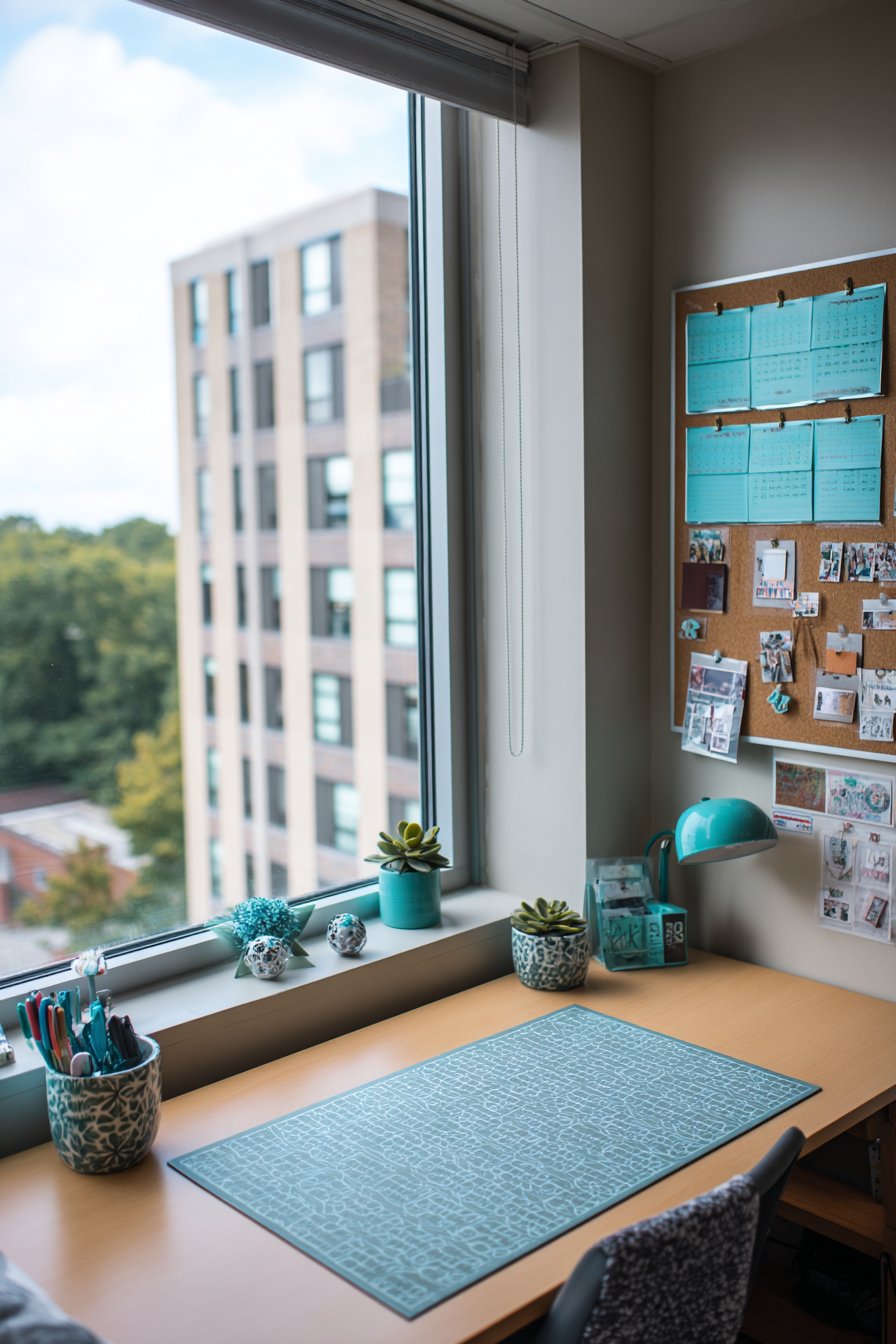
Natural daylight from the window provides ideal study lighting during morning and afternoon hours, supplementing rather than competing with the desk lamp’s focused task lighting. The coordinated desk essentials demonstrate how small green accents create a unified, productive workspace perfect for student life, proving that comprehensive design needn’t require large investments or dramatic gestures—consistency in color and thoughtful selection of everyday items can transform utilitarian spaces into environments that inspire and support focused work.
The attention to coordination even in functional accessories demonstrates design maturity and intentionality that elevates the entire space. This approach—treating every element as a design opportunity rather than merely a functional necessity—characterizes successful room design and creates environments where you genuinely want to spend time rather than merely tolerate.
Key design tips include shopping for your desk accessories all at once to ensure color coordination, as product lines change and you may not be able to find matching pieces later. Choose desk organization tools sized appropriately for your actual supplies rather than oversized options that waste precious desktop space. Position your most-used items in your dominant hand’s reach zone to streamline workflow and reduce the minor friction that accumulates into frustration. Implement a filing system for papers immediately so they never accumulate on your desktop, using your wall-mounted organizers actively rather than decoratively. Audit your desk monthly, removing items you haven’t used and finding permanent homes for things that have migrated to the surface but don’t belong there.
21. Multi-Function Storage Ottoman
Furniture that serves multiple purposes provides exceptional value in space-limited environments, and this green dorm room idea features a storage ottoman in sage green linen fabric that functions as seating, hidden storage, and decorative element. Positioned at the foot of the bed, the ottoman offers convenient surface space for a small wooden tray holding a candle and book, while its interior houses extra bedding and seasonal clothes that would otherwise consume precious closet space. The practical furniture piece maximizes limited square footage by performing multiple roles within a small footprint, demonstrating the efficiency principle that should guide all dorm furniture selection.
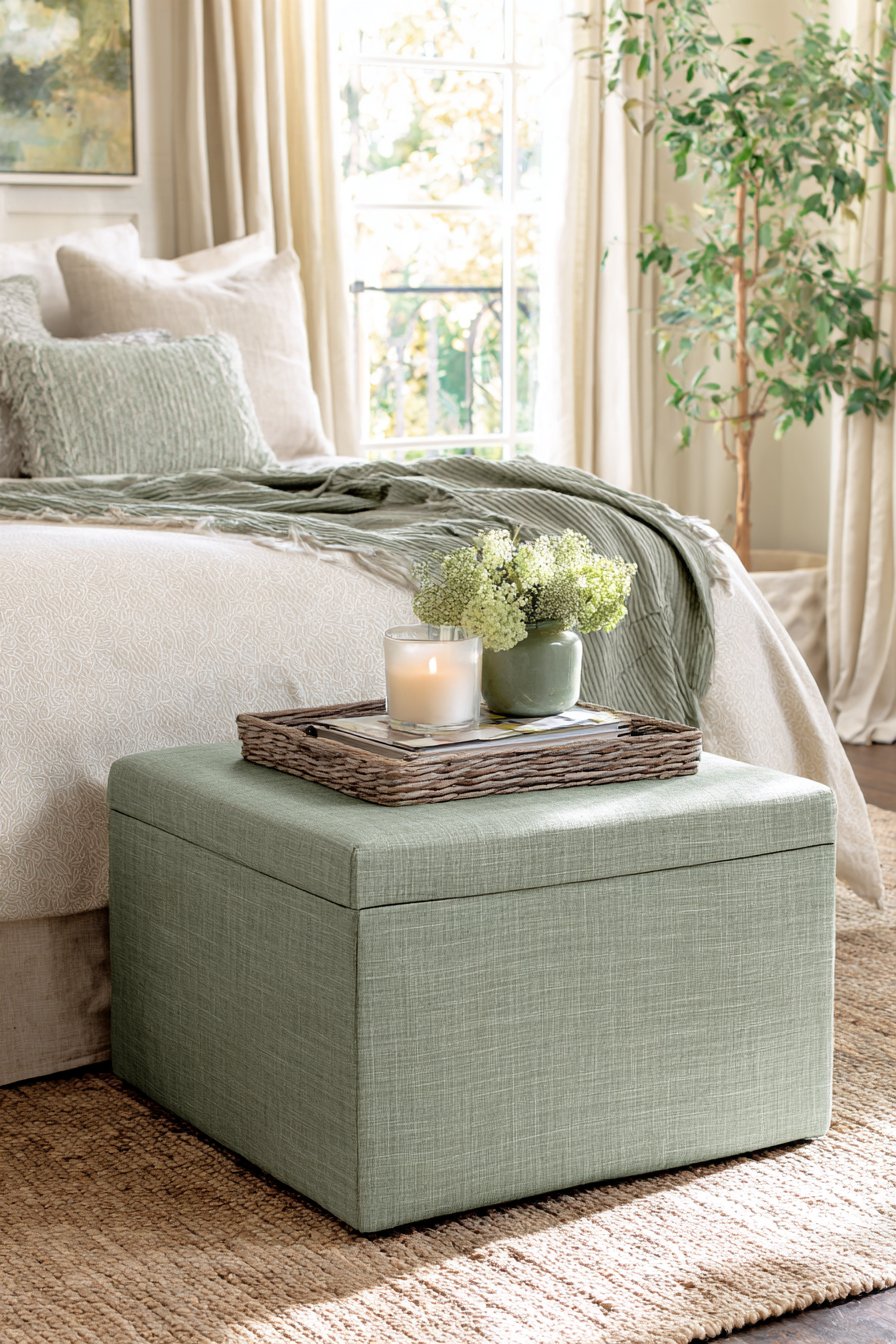
Afternoon light highlights the linen fabric’s texture and practical design, revealing the natural wrinkles and slight sheen characteristic of quality linen that improves with age rather than appearing worn. The green ottoman integrates seamlessly into the room’s overall aesthetic while solving real storage challenges, proving that functional furniture need not sacrifice beauty. The ottoman’s portability allows it to be repositioned as needed—near the bed for morning dressing, near the window seating area when additional seating is needed, or against the wall when maximum floor space is required for activities.
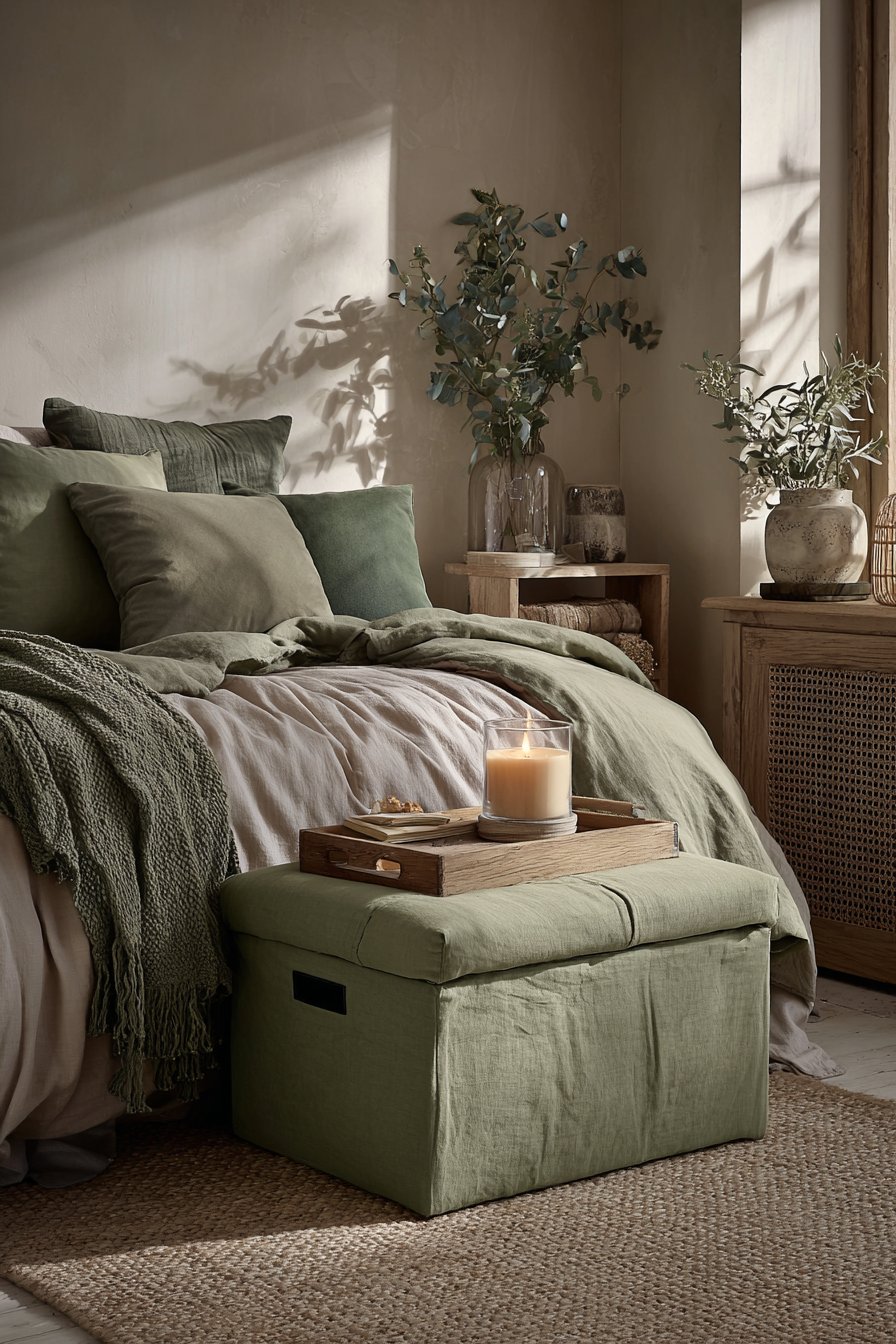
The dual-purpose furniture solution represents smart investment thinking particularly relevant for students—rather than purchasing single-purpose items, selecting pieces that address multiple needs stretches limited budgets further while preventing the accumulation of excessive furniture that makes small spaces feel cluttered and claustrophobic.
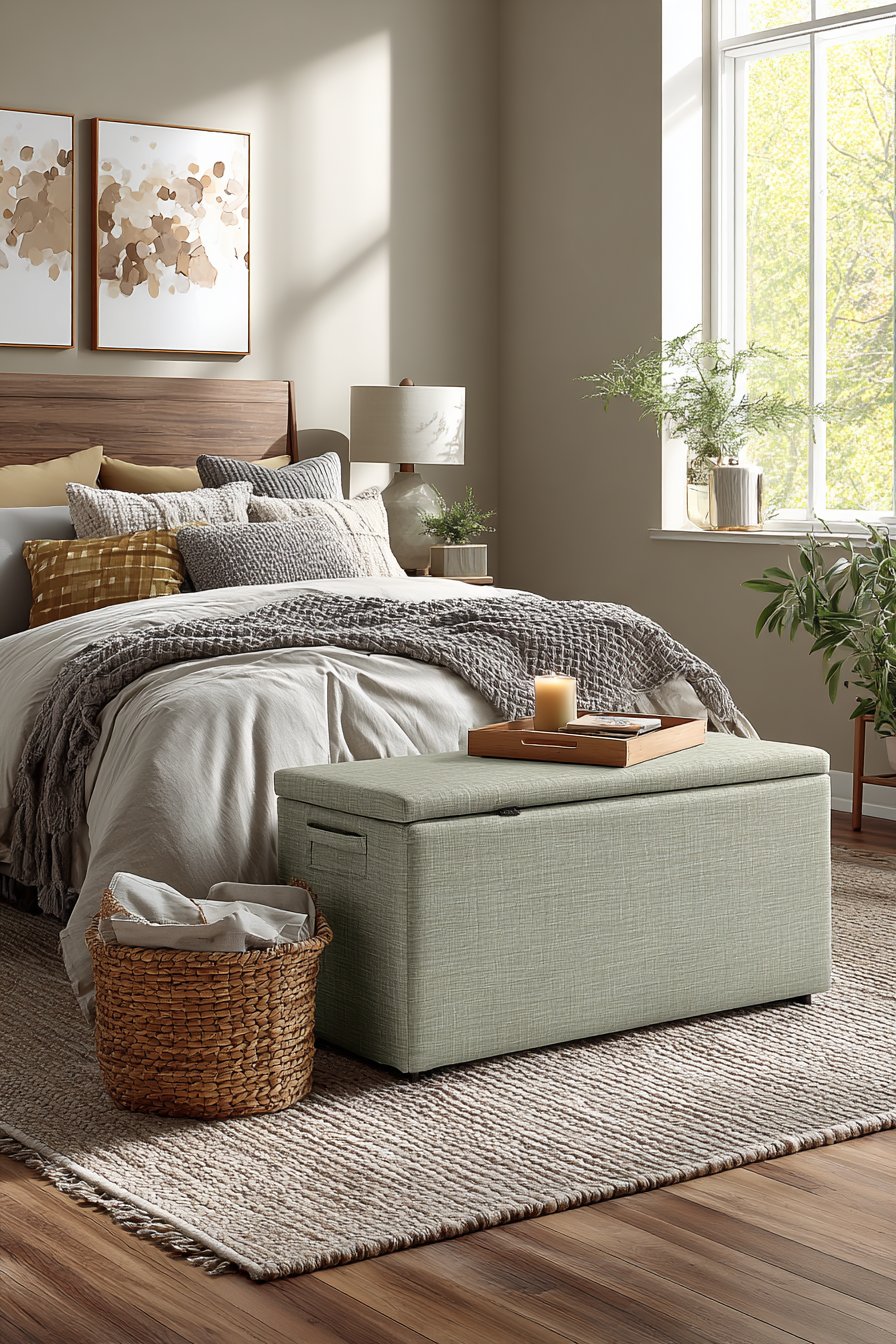
Key design tips include measuring the foot of your bed before purchasing an ottoman to ensure proper proportions and clearance for walking around it. Choose an ottoman with a sturdy lid that can support weight for sitting rather than storage-only models with flimsy tops. Select fabric appropriate for your actual use—if you’ll truly sit on it regularly, choose durable upholstery rather than delicate decorative fabric. Store only off-season or rarely needed items inside the ottoman to prevent the frustration of constantly accessing its contents. Vacuum the ottoman’s fabric regularly as it will accumulate dust from its floor-level position and role as occasional seating.
22. Flexible Photo Display Grid
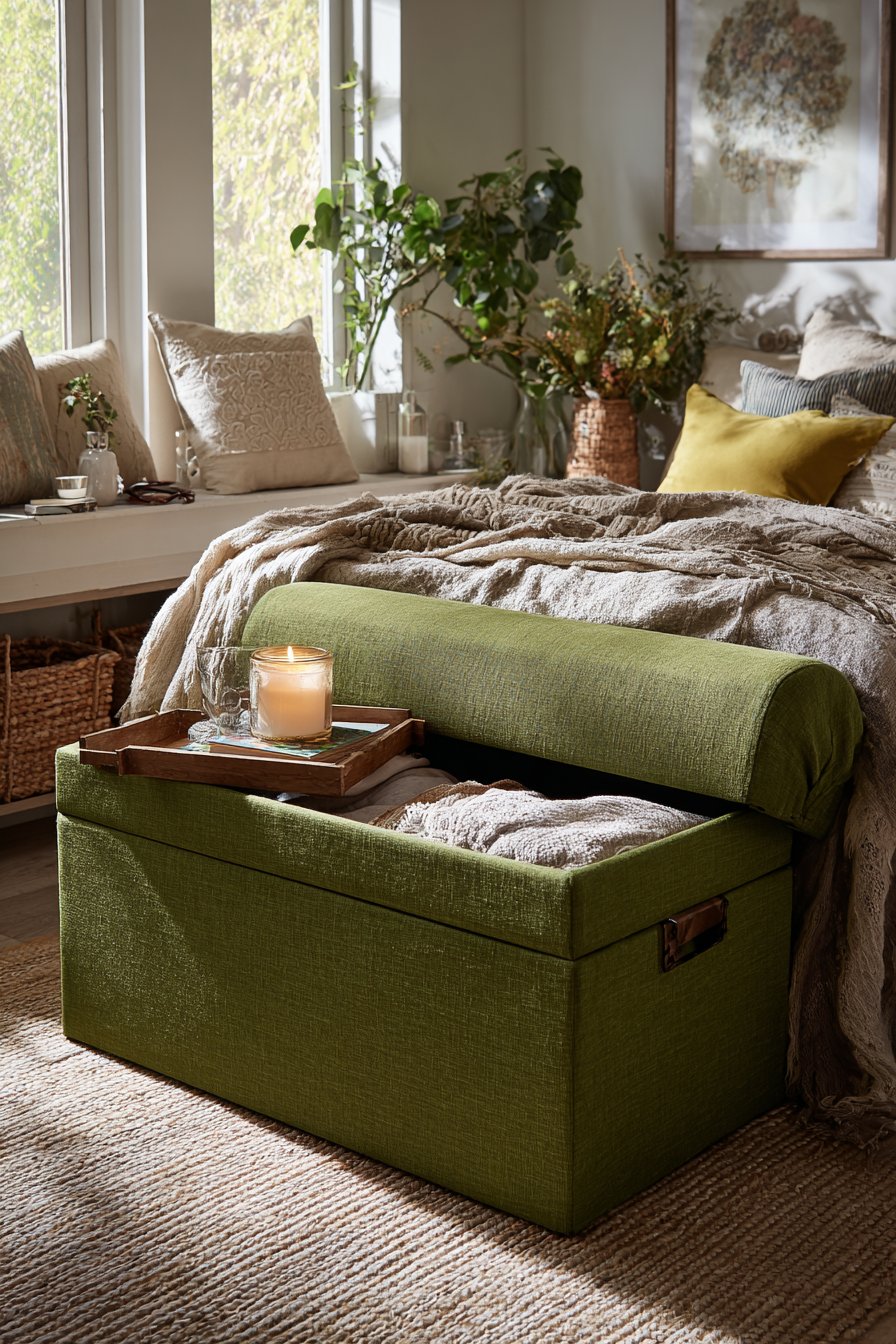
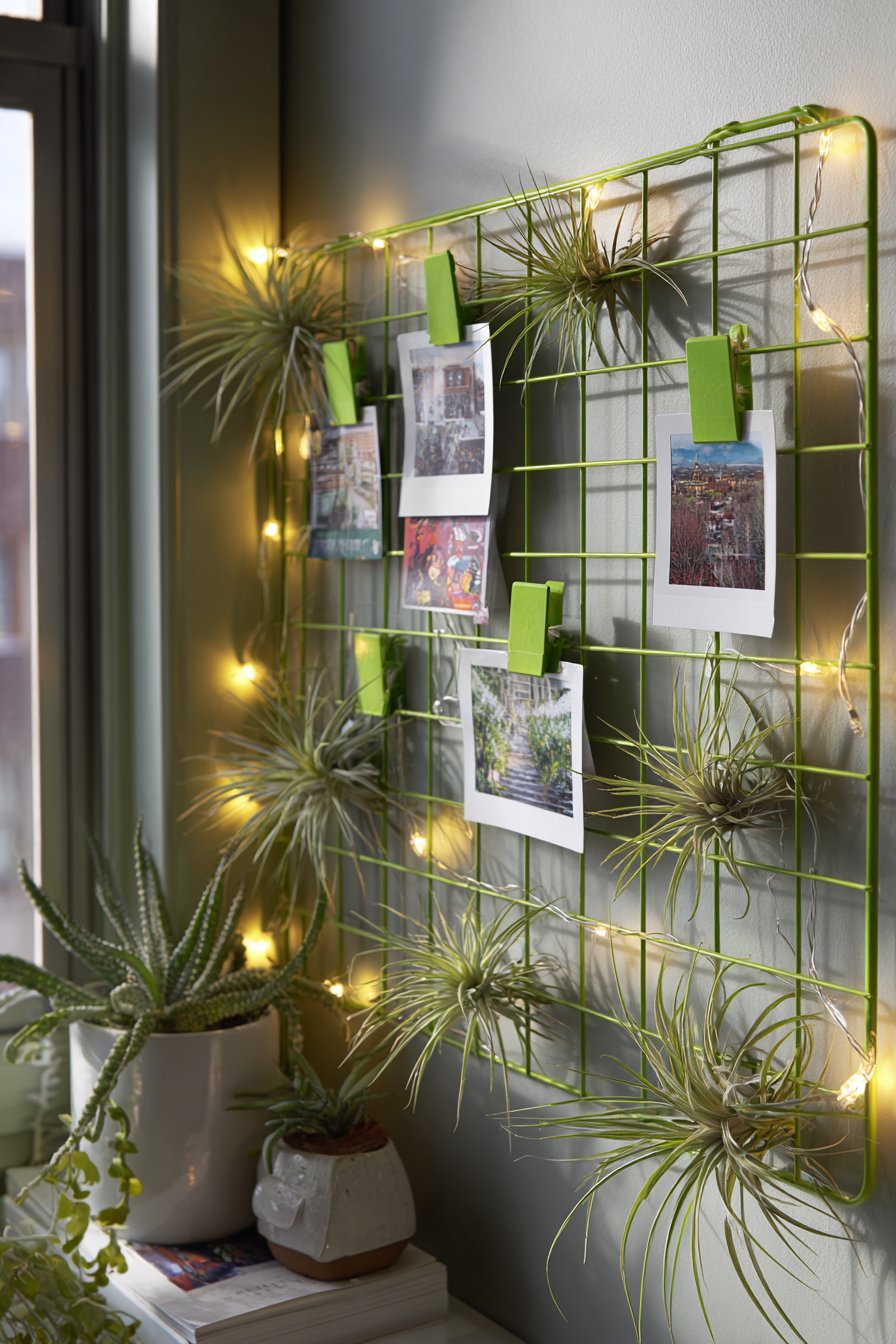
Personal mementos make dorm rooms feel like home, and this green dorm room idea features an innovative approach to photo display using a wire grid panel mounted on the wall with green clips holding polaroids, postcards, and prints. Small air plants in green holders attach to the grid alongside fairy lights, creating a flexible, living display that can be easily updated as new memories are made and interests evolve. The wire grid system offers exceptional versatility—items can be added, removed, or rearranged in seconds without tools or wall damage, making this display method ideal for students whose friendships, interests, and experiences change rapidly throughout college years.

Natural light from the side creates dimension in the grid and the items clipped to it, casting gentle shadows that add depth to what could otherwise be a flat display. The creative personalization approach demonstrates how dedicated display systems can prevent the random taping of photos and papers that creates cluttered, chaotic walls, instead providing structure that maintains visual appeal even as content changes. The green accents in the clips and plant holders tie the display into the room’s overall color scheme while maintaining the lived-in, authentic feel that distinguishes genuine personal spaces from staged showrooms.
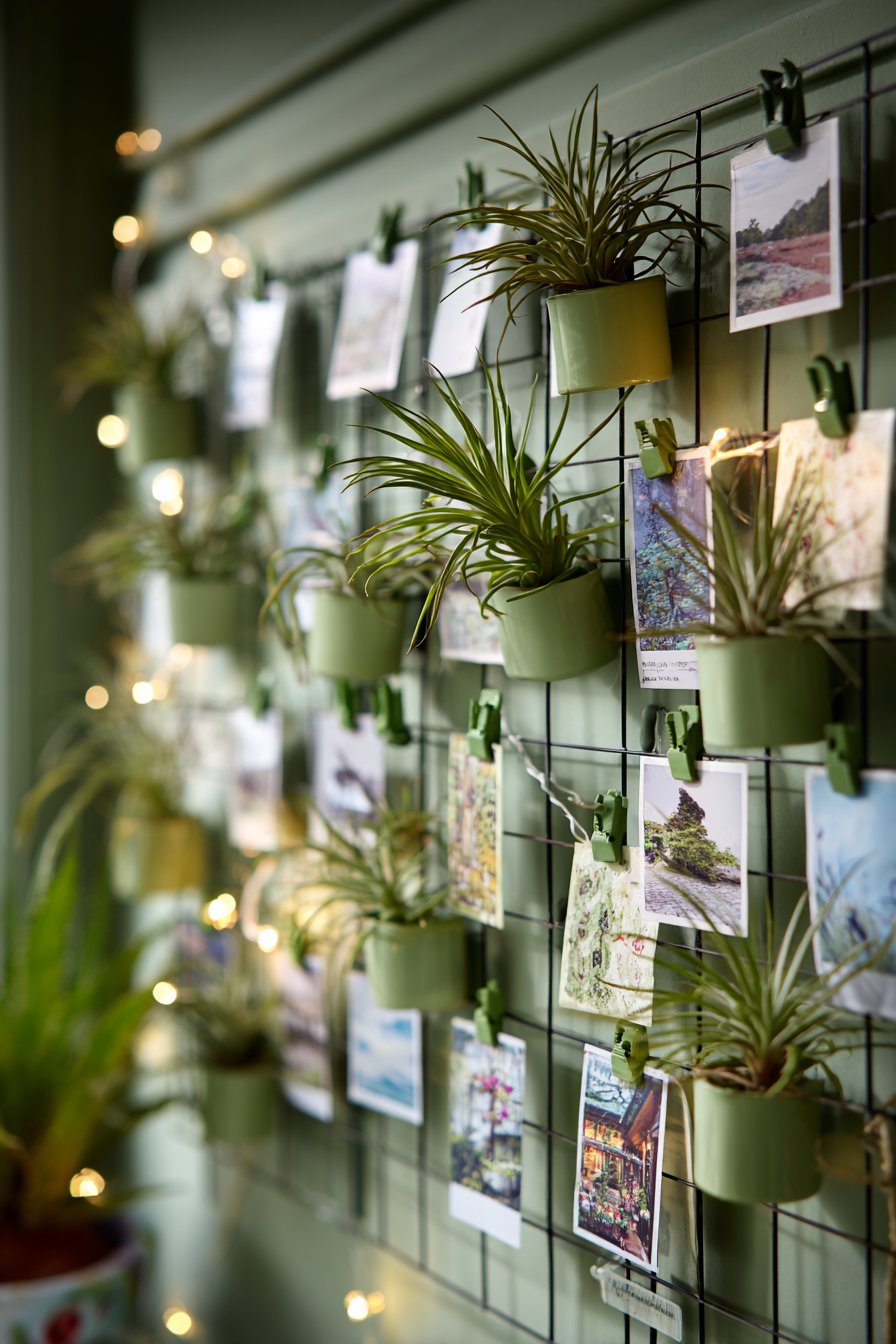
The flexibility of this system represents another important design principle for dorm living—creating structures that accommodate change rather than requiring permanence. College students’ lives evolve rapidly, and design solutions that adapt to these changes without requiring complete overhauls support the transitional nature of this life stage while maintaining aesthetic quality.

Key design tips include positioning your grid where you’ll see it frequently to encourage regular updates and enjoyment of displayed memories. Choose a grid size appropriate for your wall space—larger grids provide more display area but can overwhelm small walls. Use uniform clips throughout for visual consistency even as the displayed content varies. Limit the fairy lights to warm white bulbs rather than colored lights that compete with displayed photos and create visual chaos. Rotate displayed photos seasonally or after major events to keep the display current and meaningful rather than becoming stale background decoration you no longer notice.
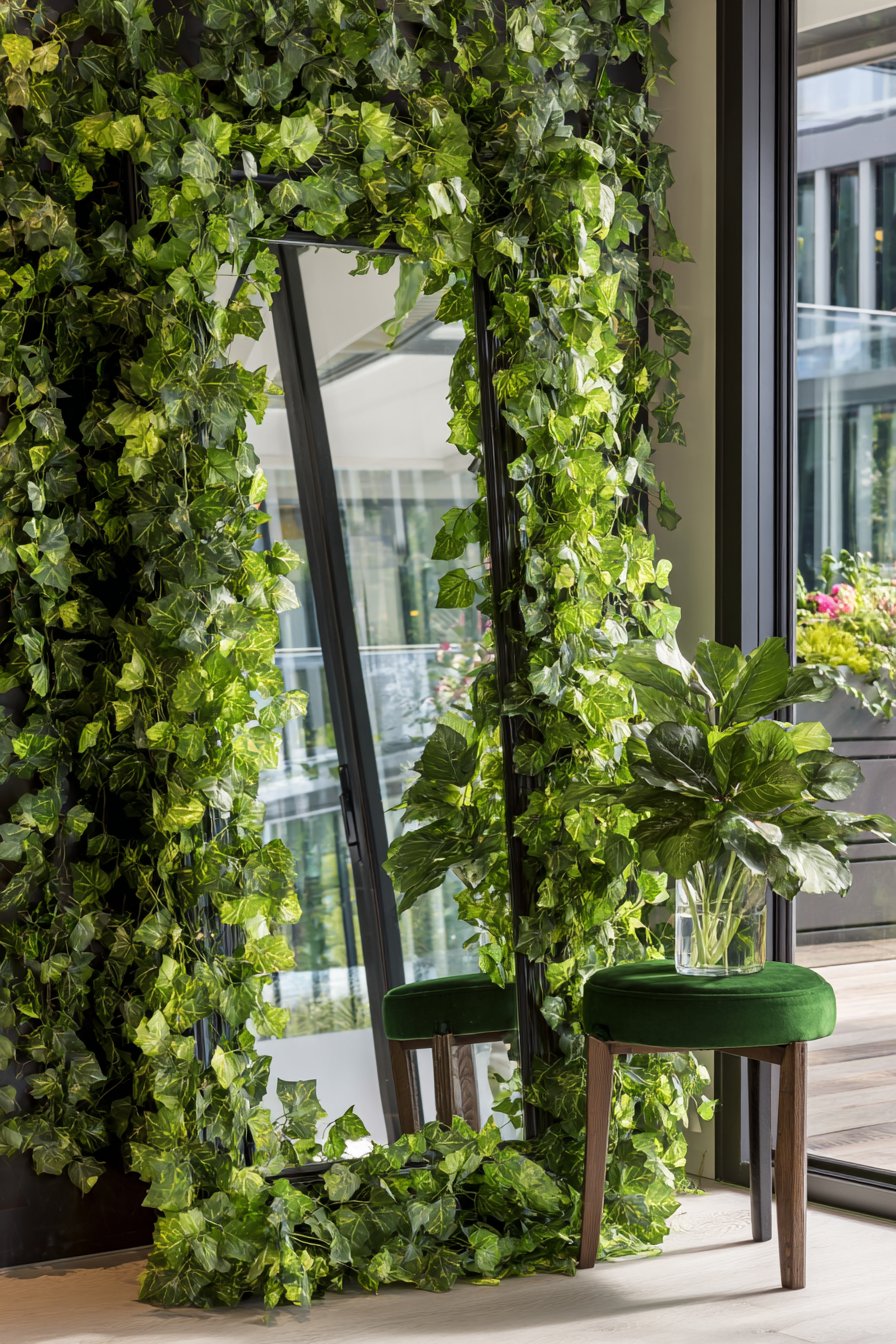
23. Decorative Mirror Enhancement
Mirrors serve crucial practical functions in dorm rooms while offering opportunities for creative decoration, and this green dorm room idea features a full-length standing mirror enhanced with artificial eucalyptus garland secured with green velvet ribbon. The mirror leans against the wall near the closet area, providing essential functionality for outfit checking while the decorative treatment adds personality without permanent changes to the mirror or wall. A small green stool beside the mirror offers a convenient spot for sitting while putting on shoes or temporarily setting items during outfit changes.
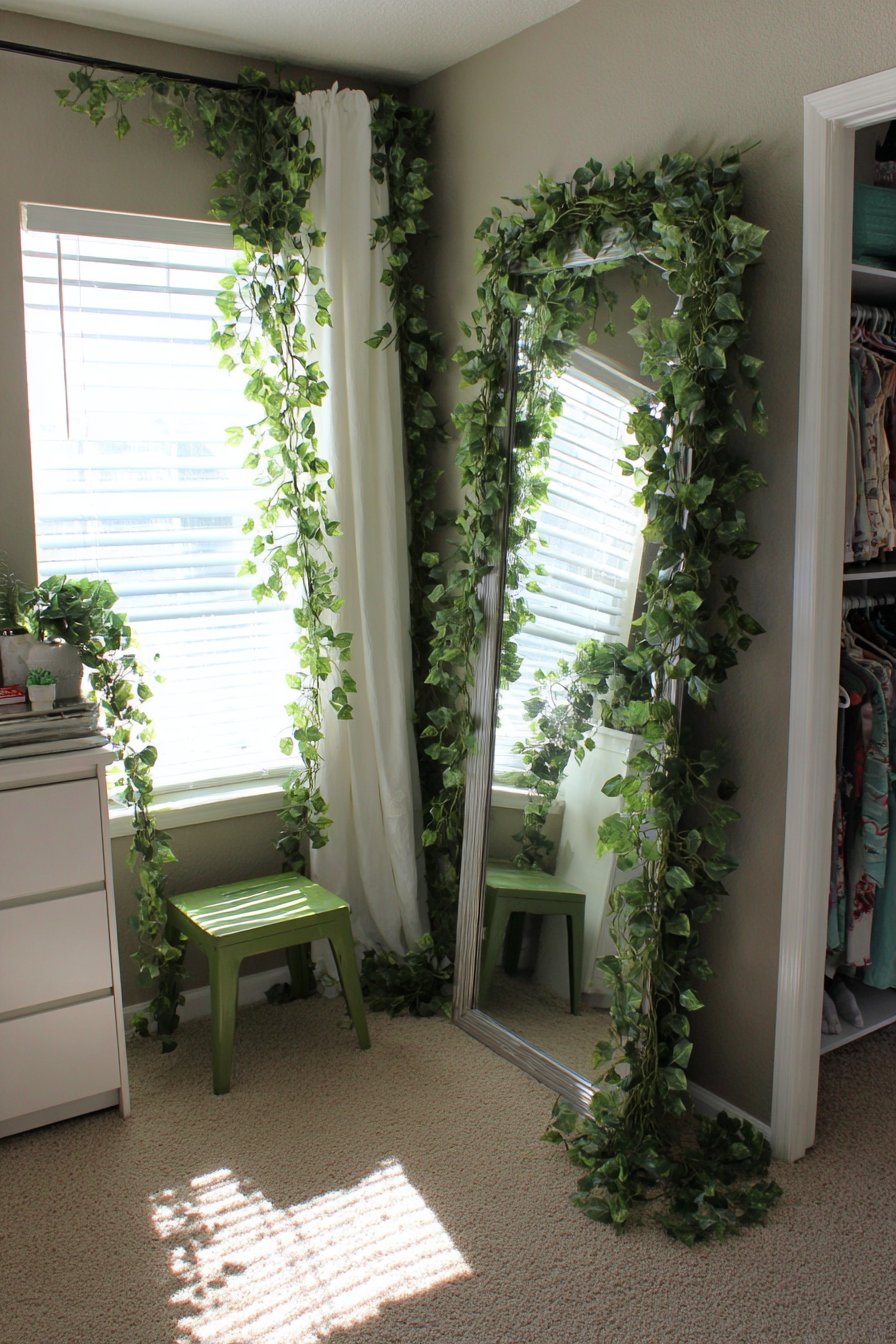
The decorative botanical garland transforms a basic necessity into a statement piece that reinforces the room’s green theme and nature-inspired aesthetic. Natural window light reflects in the mirror creating brightness and the illusion of expanded space—a valuable effect in small dorm rooms where mirrors can dramatically improve both actual functionality and perceived spaciousness. The strategic placement near the closet creates an efficient getting-ready zone where you can see yourself immediately after selecting clothes, streamlining morning routines and outfit decisions.
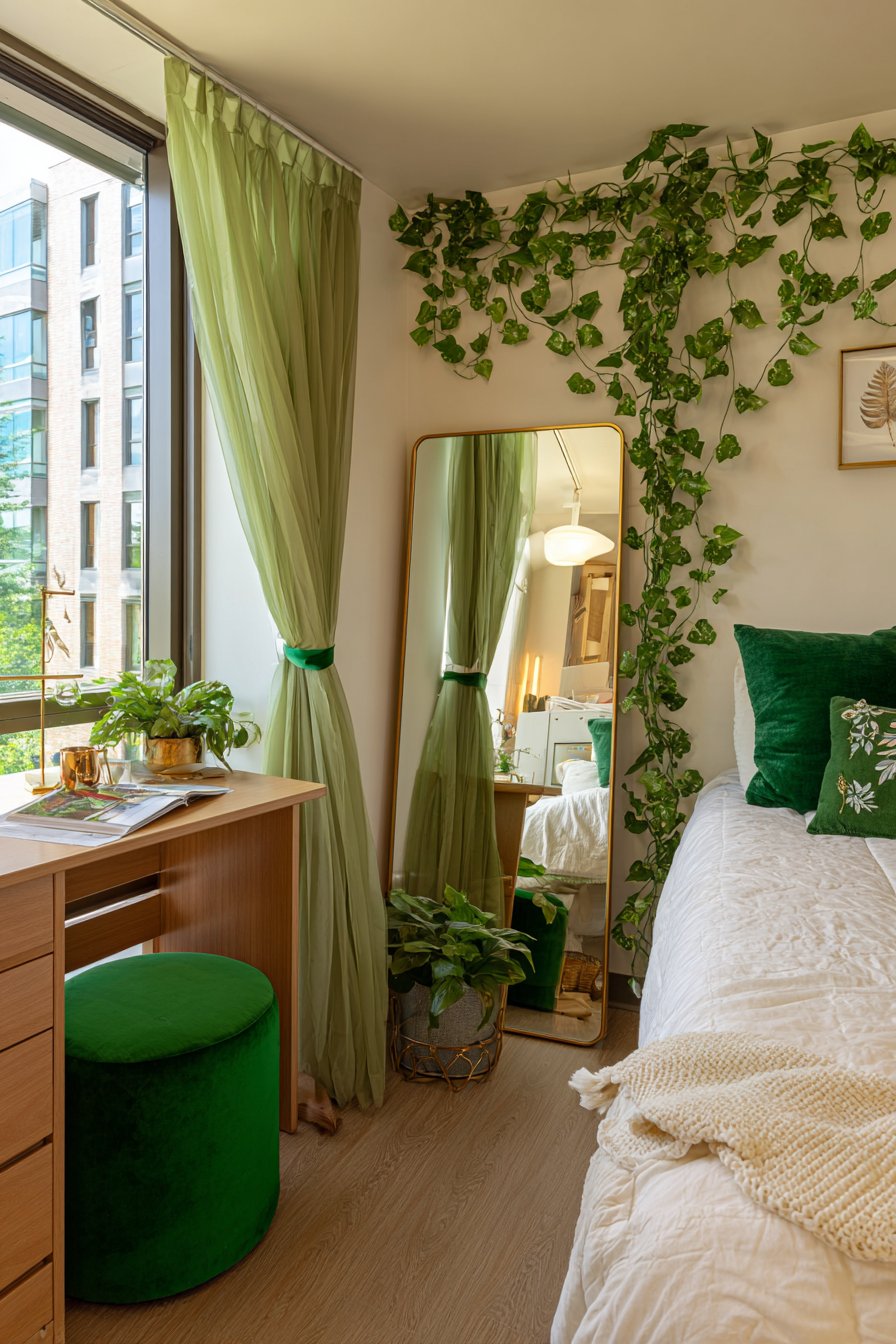
The practical necessity of a full-length mirror enhanced with temporary green botanical elements proves perfect for dorm living, demonstrating how even required functional items can be elevated through creative decoration. This principle—that everything in your space can contribute to its aesthetic rather than merely serving utilitarian purposes—characterizes thoughtful design and creates cohesive environments where every element relates to the overall vision.
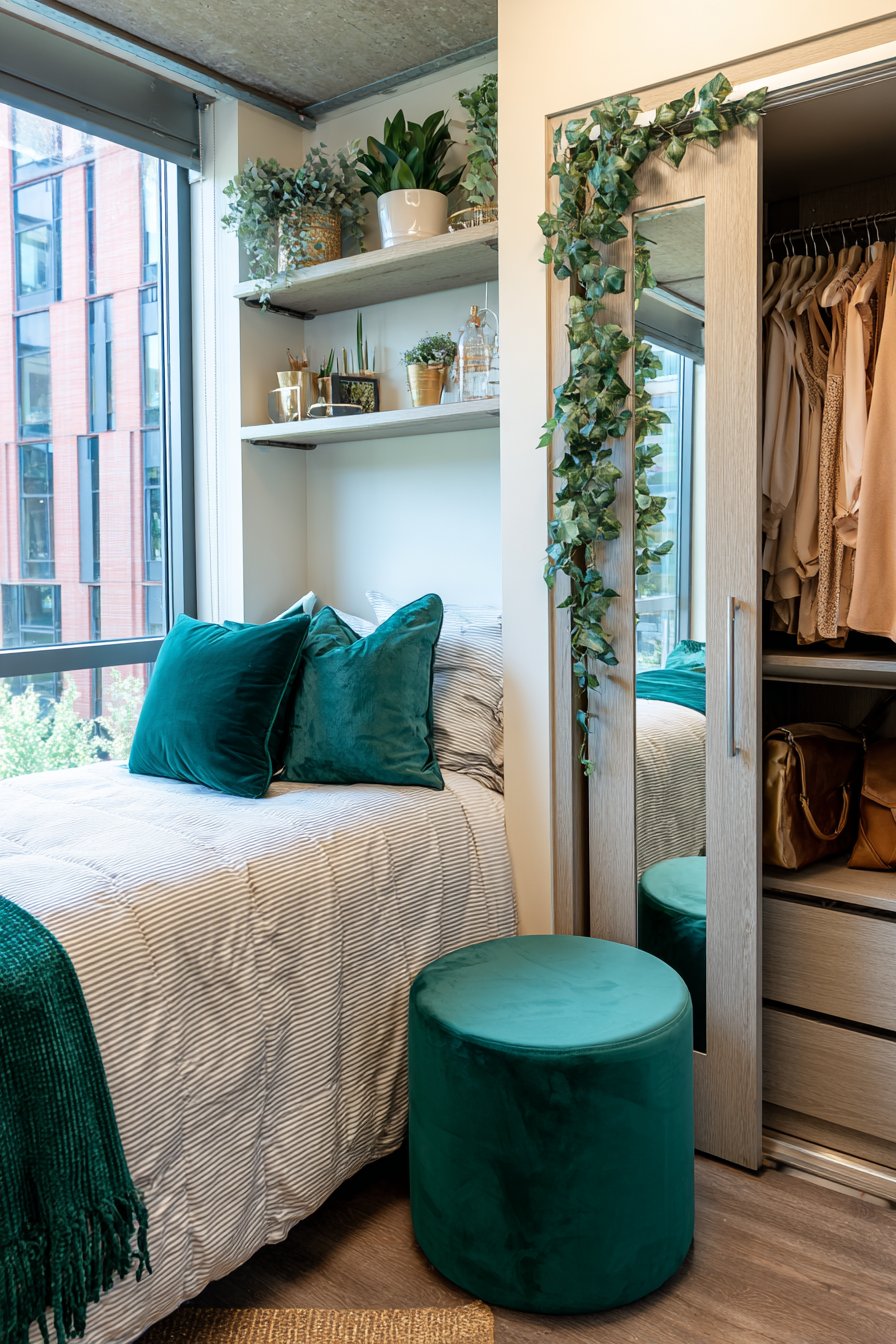
Key design tips include positioning your mirror to maximize reflected natural light, which brightens the room and makes it feel larger. Ensure the mirror is properly secured or weighted to prevent tipping, particularly if it’s a standing mirror rather than wall-mounted. Choose artificial greenery rather than fresh if you lack time for maintenance, as quality artificial botanicals provide visual impact without care requirements. Refresh or replace the decorative garland seasonally to prevent dust accumulation and maintain the fresh appearance. Keep the floor area around your mirror clear to provide space for stepping back to see your full outfit and to prevent tripping hazards in a frequently trafficked zone.
24. Underbed Rolling Storage System
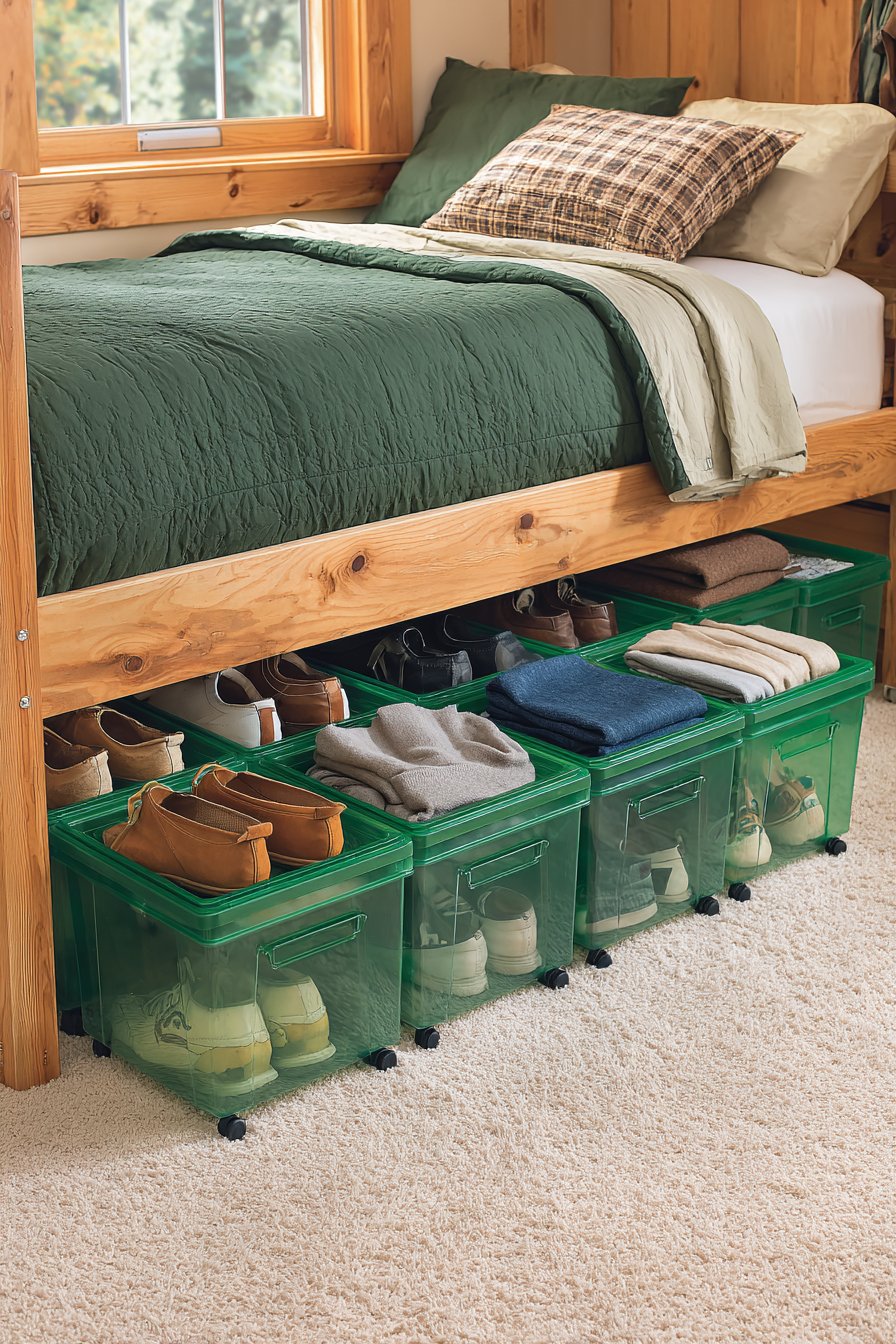
The space beneath dorm beds represents valuable storage real estate that often goes underutilized or becomes chaotic accumulation zones, and this green dorm room idea features a systematic approach using rolling plastic bins in translucent green with secure lids. The organized system stores out-of-season clothes, extra supplies, and shoes, maximizing the space beneath a raised dorm bed while maintaining accessibility through the bins’ rolling capability. A bed skirt in sage green fabric conceals the storage while maintaining easy access, creating a finished appearance that makes the bed look intentionally styled rather than like storage conceals beneath it.
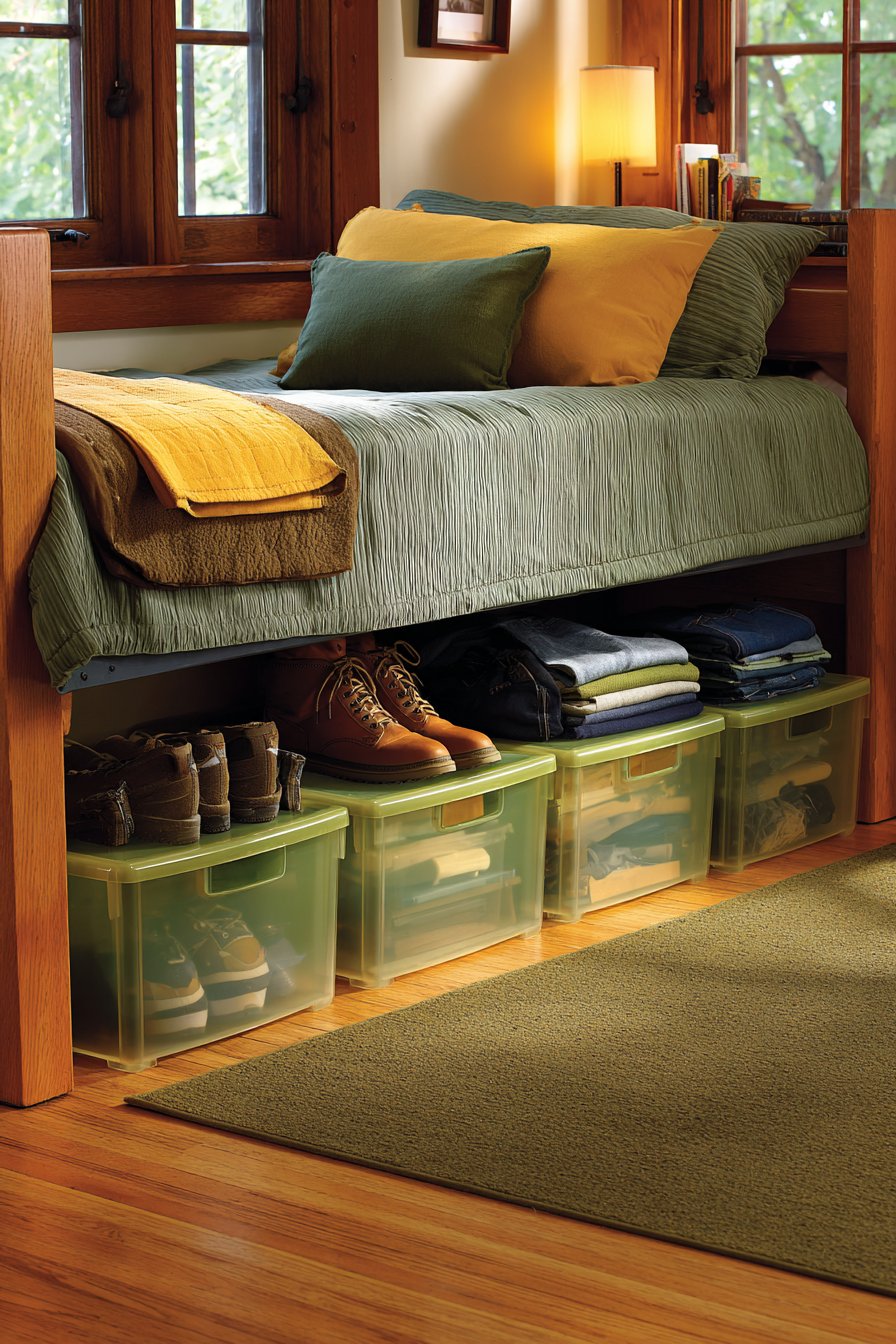
Natural light from the room shows the practical organization, revealing how the translucent bins allow contents to be identified without opening each one—a crucial feature that prevents the frustrating searching that occurs with opaque storage. The smart use of often-wasted vertical space demonstrates strategic thinking about storage solutions, utilizing every available cubic foot rather than only considering floor space. The green storage containers maintain the room’s color cohesion even in functional areas that are often considered exempt from aesthetic considerations.
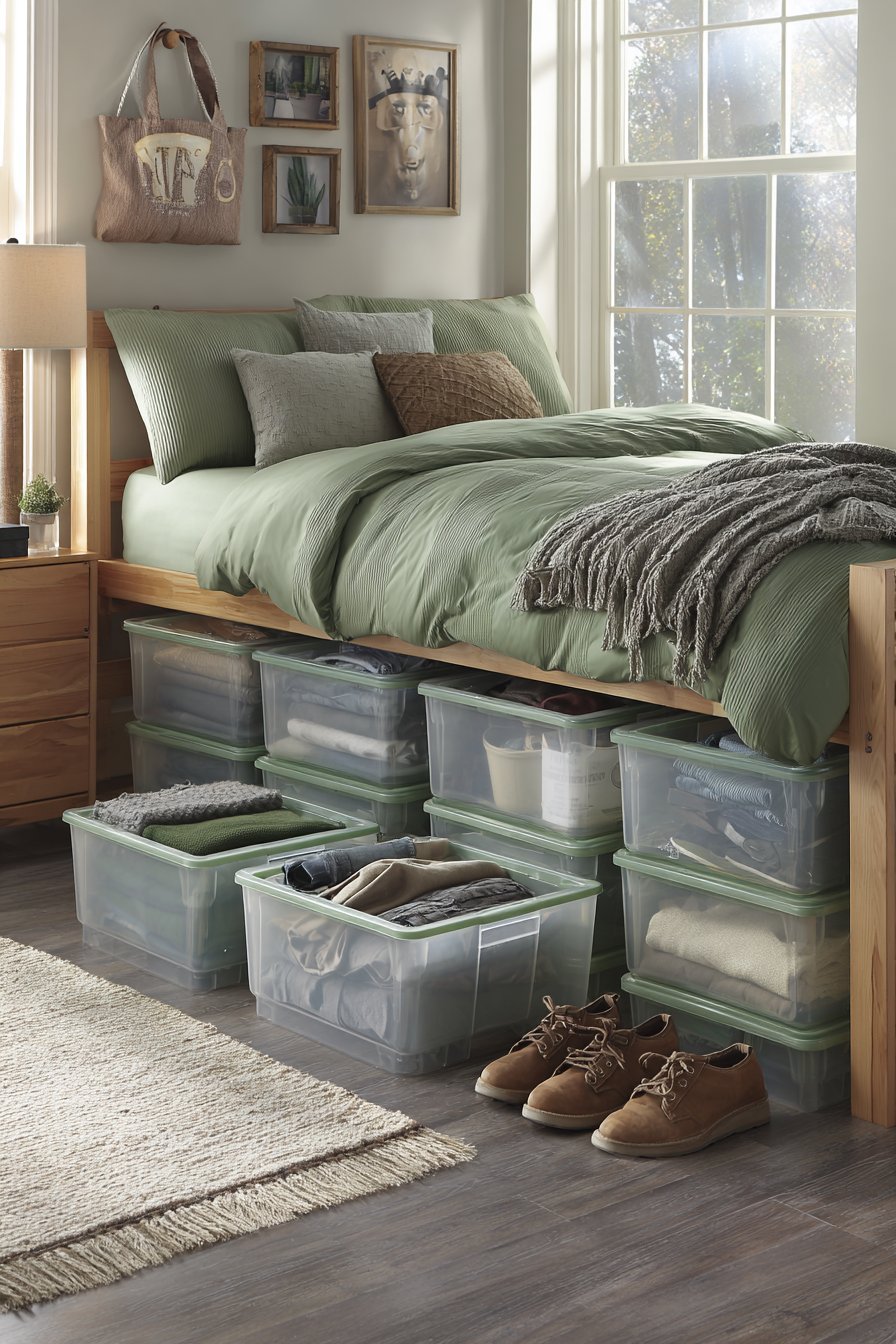
This comprehensive approach to underbed storage proves essential in dorm rooms where closet space rarely accommodates students’ full wardrobes and belongings. The systematic organization prevents the bed-skirt-as-junk-concealment approach that many students employ, instead creating genuine order that makes finding and accessing stored items quick and frustration-free.
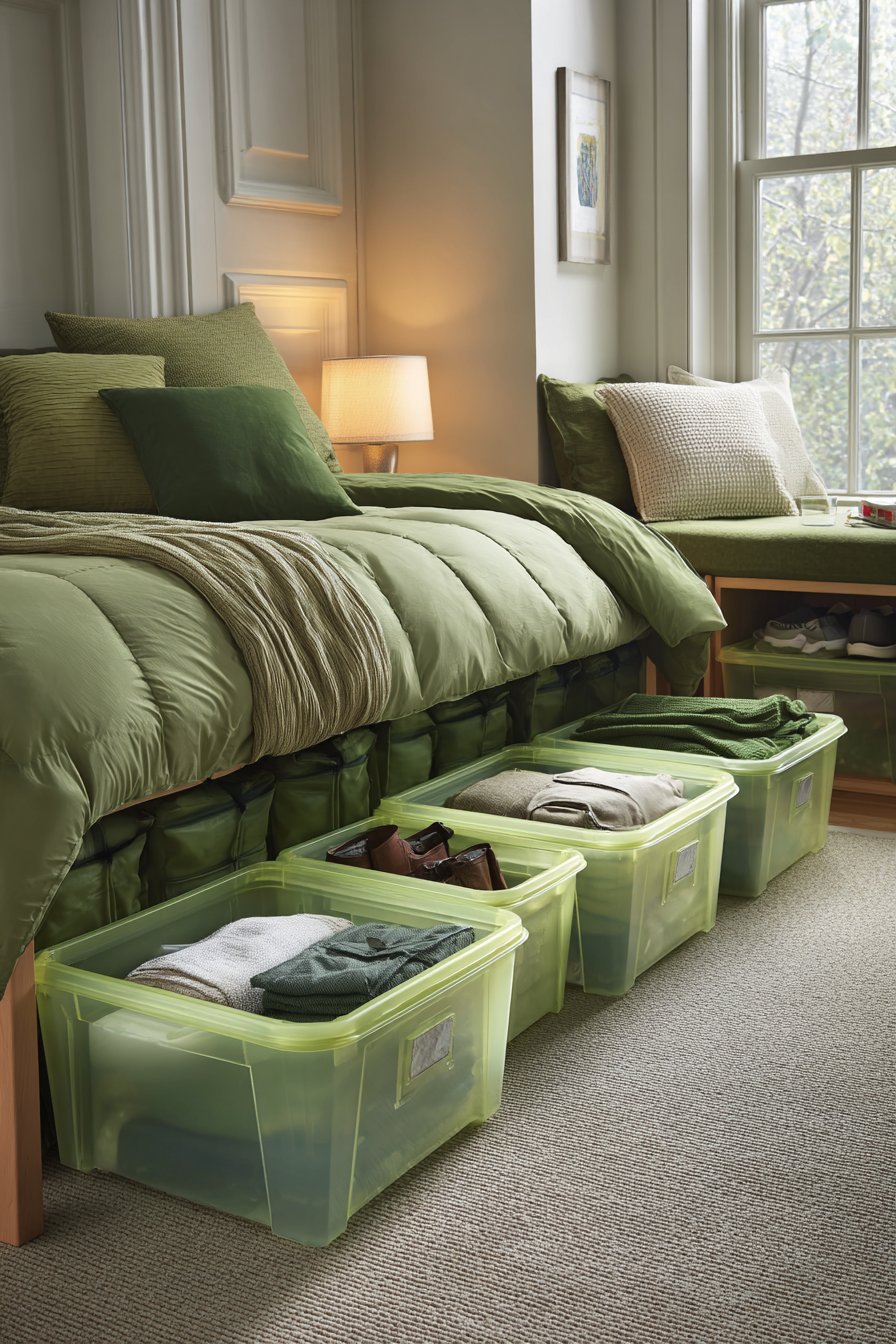
Key design tips include measuring the height of your bed’s undercarriage before purchasing storage bins to ensure they fit while allowing the bins to roll freely. Choose bins with secure, dust-proof lids to protect contents from the dust that accumulates under beds. Organize bins by category—one for winter clothes, one for extra bedding, one for shoes—rather than mixing items, which makes locating specific things difficult. Label bins clearly on multiple sides for easy identification regardless of viewing angle. Pull out and audit underbed storage each semester, removing items you no longer need and reorganizing as your belongings and needs change.
25. Compact Mobile Nightstand Alternative
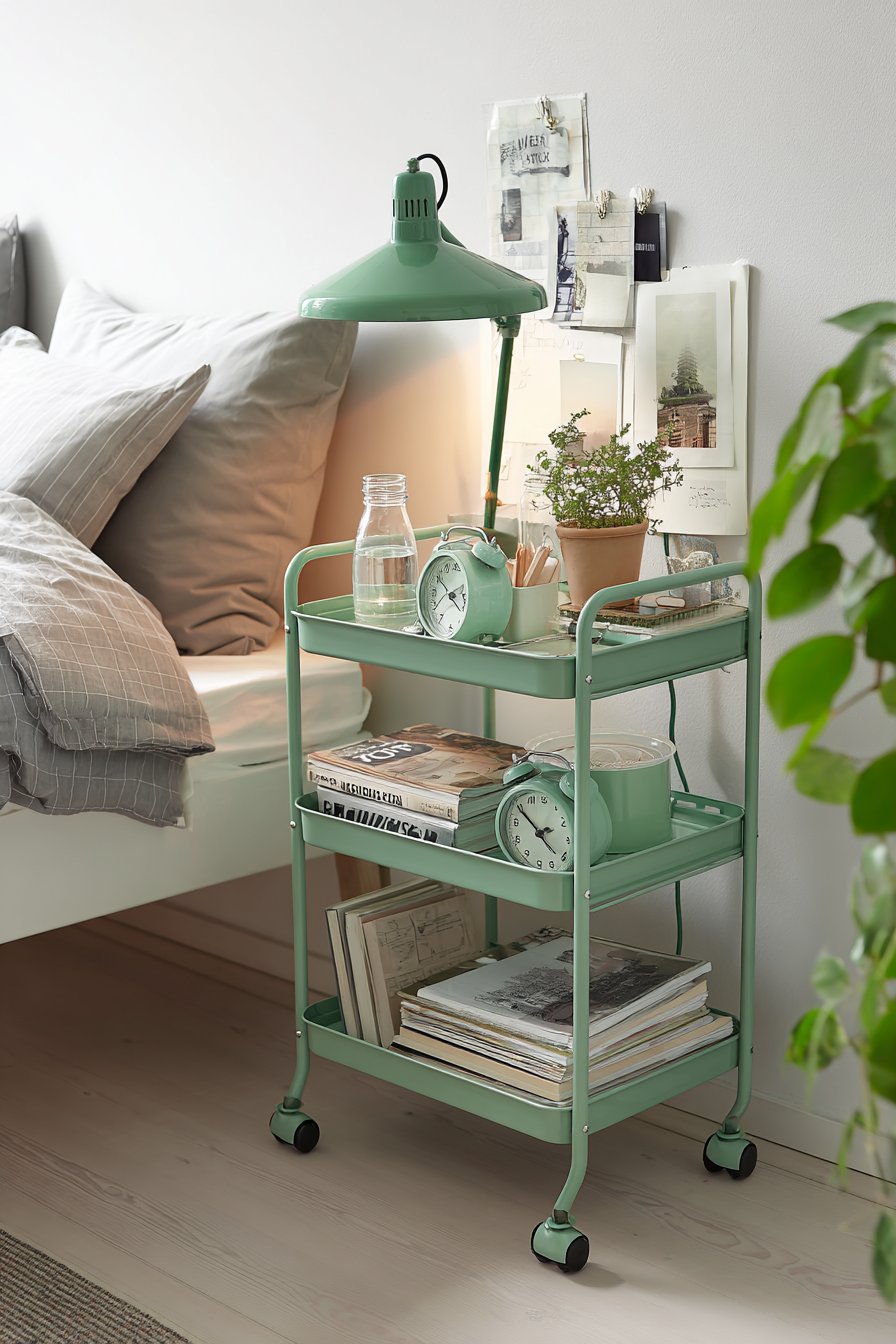
Traditional nightstands often consume too much floor space for comfortable dorm room circulation, and this green dorm room idea features a three-tiered rolling cart in mint green serving as a mobile nightstand. The cart holds a table lamp with green base providing bedside reading light, an alarm clock ensuring punctual waking, a water bottle for nighttime hydration, and a small potted plant bringing life to the sleeping area, while lower tiers accommodate books and a journal for evening reading or reflection. The wheeled design allows easy repositioning depending on current needs—tight against the bed when floor space is needed, pulled out for easier access when getting ready, or even wheeled to other areas of the room when the items stored on it are needed elsewhere.
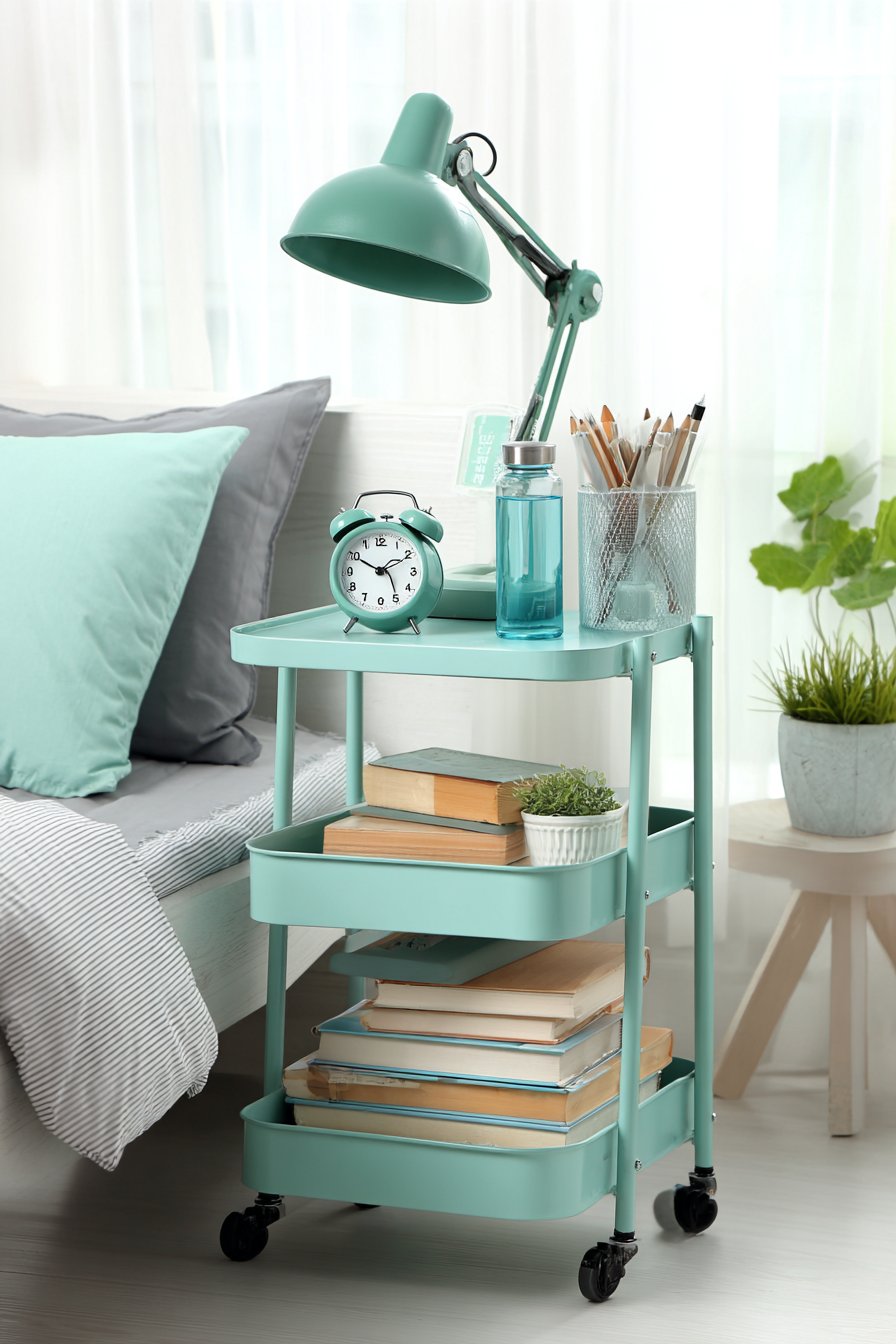
Morning light illuminates the organized personal items, revealing how the cart’s open construction prevents the closed, heavy feeling that traditional nightstands can create in small spaces. The mint green finish adds a fresh accent to the bedside area while remaining budget-friendly, proving that functional furniture pieces need not require significant financial investment. The cart’s versatility extends beyond nightstand duty—it can serve as a mobile snack station during study marathons, a plant display stand near the window, or additional storage during room reorganizations.
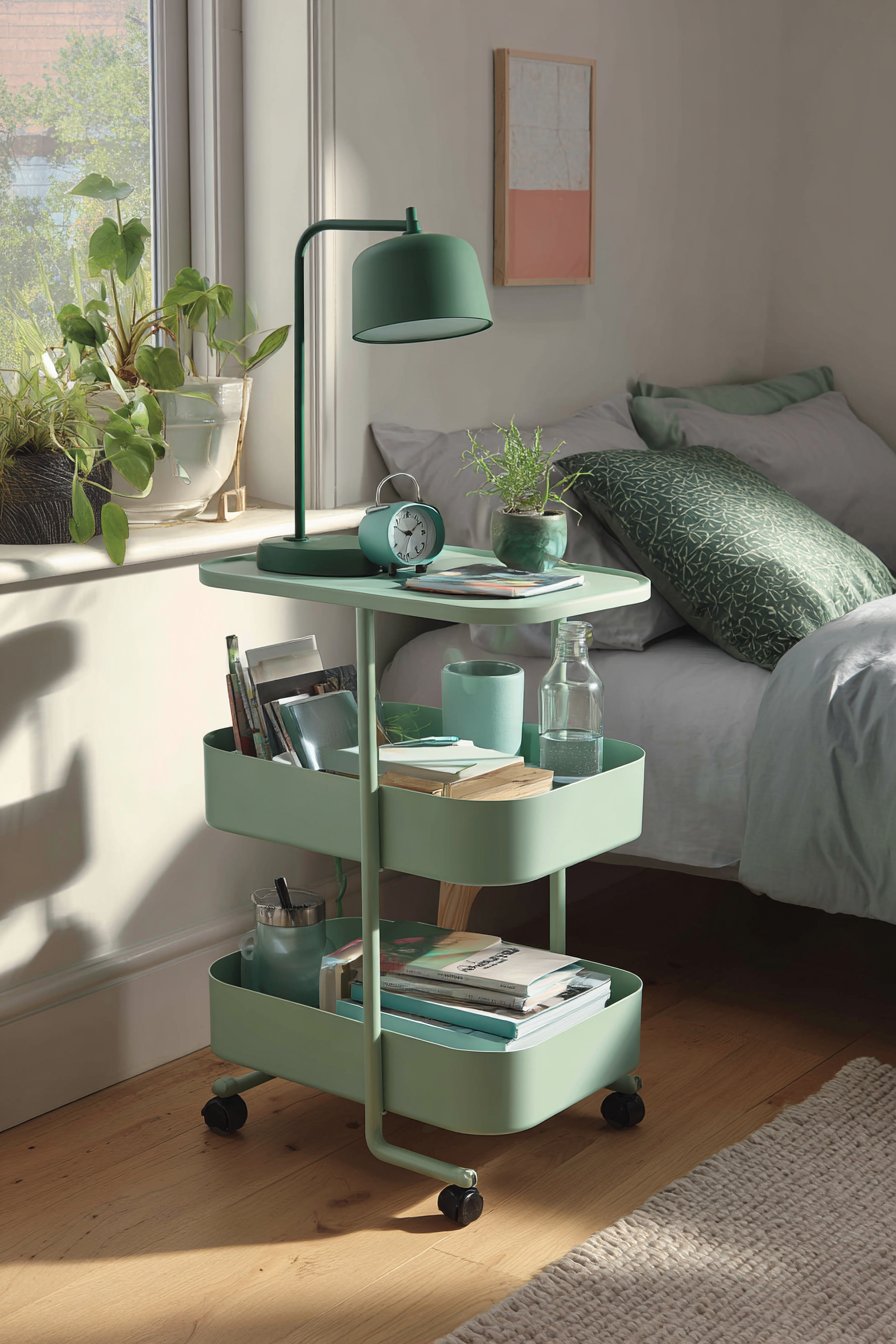
This practical nightstand alternative demonstrates how questioning default furniture assumptions—must a nightstand be stationary? must it be a single-purpose piece?—leads to solutions better suited to actual dorm room constraints and student lifestyles. The wheeled cart addresses real problems while costing less than traditional alternatives, exemplifying the creative problem-solving that characterizes successful dorm room design.
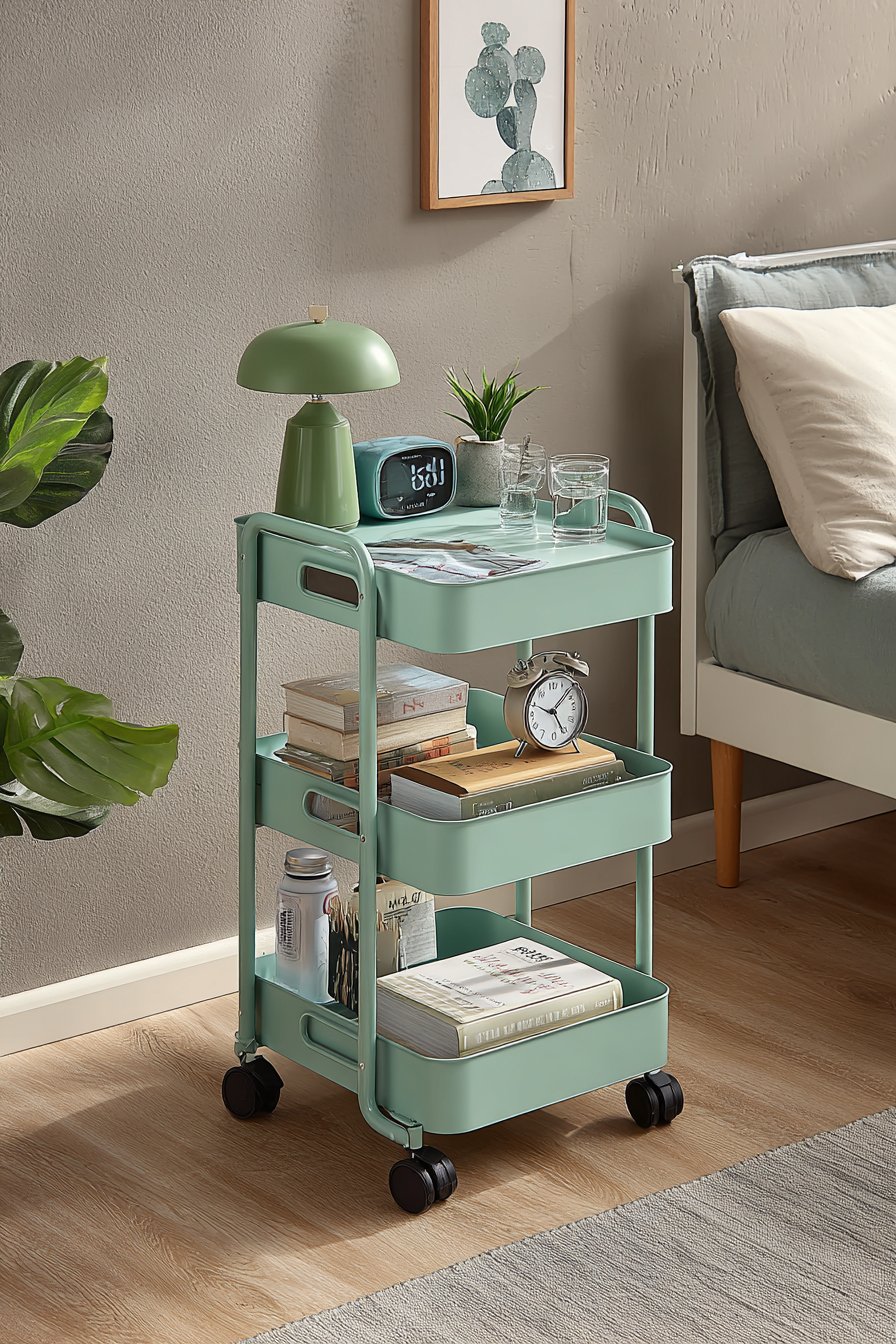
Key design tips include selecting a cart height that positions the top tier level with your mattress top for convenient reach from bed. Choose a cart with a small footprint that won’t consume excessive floor space or block pathways. Ensure the wheels lock to prevent the cart from rolling away when you lean on it or set items on it. Organize the cart’s tiers by frequency of use—most-accessed items on top, occasional-use items on bottom. Keep the cart’s contents minimal and organized rather than allowing it to become cluttered with accumulated items that have no other home, which would defeat its organizational purpose.
Why These Green Dorm Room Ideas Represent the Best Approaches to Student Living
The comprehensive collection of green dorm room ideas presented throughout this article represents more than mere decorating suggestions—these approaches embody fundamental principles of successful small-space living, budget-conscious design, and wellness-focused environmental creation. Each concept addresses specific challenges inherent in dorm room living while maintaining aesthetic appeal and personal expression, proving that practical constraints need not eliminate beauty or individuality from student spaces.
The consistent green color theme running through all twenty-five ideas demonstrates how cohesive color palettes create harmony and sophistication even when incorporating diverse furniture styles, price points, and functional elements. From sage and mint to forest and olive, the spectrum of green tones provides sufficient variety to prevent monotony while maintaining enough consistency to create the unified appearance that characterizes professionally designed spaces. This color consistency proves particularly valuable in dorm rooms where students often acquire furniture and accessories gradually from different sources—thrift stores, discount retailers, family hand-me-downs—as the shared green palette ties disparate elements together into a coherent whole.
The emphasis on removable, temporary design solutions throughout these ideas acknowledges the reality of dorm living where permanent modifications violate housing agreements and risk financial penalties. Peel-and-stick wallpaper, removable adhesive hooks, tension rods, and freestanding furniture allow students to fully personalize their spaces while maintaining the ability to restore rooms to original condition upon moveout. This respect for rental agreements demonstrates mature design thinking that balances personal expression with practical responsibility—a valuable lesson extending far beyond college years into future rental situations.
Multifunctional furniture and creative space utilization appear repeatedly throughout these concepts, reflecting the absolute necessity of maximizing every square foot in compact dorm rooms. Storage ottomans that provide seating, rolling carts that serve multiple purposes, lofted beds that create usable space beneath, and vertical storage solutions that free precious floor area all demonstrate how thoughtful furniture selection dramatically improves both functionality and comfort in small spaces. These space-maximization principles prove valuable throughout life as housing costs in desirable urban areas encourage compact living even beyond student years.
The integration of living plants throughout many of these green dorm room ideas addresses the well-documented psychological and physical benefits of biophilic design. Studies consistently demonstrate that presence of plants reduces stress, improves air quality, enhances focus, and increases feelings of well-being—all crucial factors for students navigating the academic pressures and social transitions of college life. The selection of low-maintenance varieties like pothos, snake plants, and succulents acknowledges students’ limited time and variable horticultural experience, ensuring that the green living elements enhance rather than burden daily routines.
Layered lighting strategies featured in several ideas recognize lighting’s profound impact on both functionality and mood. The harsh fluorescent overhead fixtures standard in most dorm rooms create uninviting, institutional atmospheres while providing inadequate illumination for detailed work. The introduction of ambient string lights, focused task lamps, and adjustable reading lights creates versatile environments supporting various activities and times of day while dramatically improving the emotional quality of the space. This attention to lighting demonstrates sophisticated design understanding often overlooked in student spaces.
The emphasis on texture variety throughout the textile-focused ideas reflects the design principle that visual interest derives from contrast and variation rather than expensive materials or elaborate styling. Chunky knits paired with smooth velvets, rough natural fibers contrasted with sleek ceramics, and varied weaves in similar colors create richness and depth that prevent spaces from feeling flat or boring. This texture-focused approach proves particularly valuable for budget-conscious students, as interesting textiles from discount retailers and thrift stores can create sophisticated appearances without premium price tags.
Organization systems featured prominently in these ideas address one of the most common student struggles—maintaining order in limited spaces with inadequate storage. Modular cube storage, coordinated closet systems, rolling underbed bins, and dedicated stations for specific activities transform chaos into calm while reducing the daily stress of searching for misplaced items. These organizational approaches teach systems-thinking and spatial planning skills that serve students throughout their lives, as the principles of logical categorization, accessible storage, and visual order apply to homes and workspaces of all sizes.
The consistent attention to maintaining cohesive aesthetics even in purely functional areas—matching bathroom caddies to room colors, coordinating desk accessories, selecting storage containers that complement the overall palette—demonstrates how comprehensive design thinking elevates every aspect of a space rather than treating some areas as exempt from aesthetic consideration. This holistic approach prevents the fragmented appearance common in student rooms where functional necessity overwhelms visual appeal, instead creating environments that feel intentionally designed throughout.
Budget consciousness appears as an underlying theme throughout all twenty-five ideas, acknowledging the financial constraints faced by most college students. Affordable materials like removable wallpaper, discount textiles, and mass-produced storage solutions prove that sophisticated design need not require luxury budgets. The emphasis on DIY approaches, creative repurposing, and gradual accumulation rather than complete room makeovers respects financial reality while maintaining design ambition. This demonstration that beautiful, functional spaces can be created with limited resources empowers students to take control of their environments regardless of economic circumstances.
The wellness focus implicit in many of these green dorm room ideas—plants that improve air quality, organized systems that reduce stress, comfortable reading nooks that support leisure and reflection, adequate lighting that prevents eye strain—recognizes that dorm rooms serve as more than sleeping quarters. These spaces function as study areas, social venues, personal retreats, and sometimes even dining and food preparation zones. Design approaches that support mental health, physical comfort, and academic success through environmental optimization prove far more valuable than purely aesthetic interventions, demonstrating mature understanding of how spaces impact human thriving.
The incorporation of personal elements throughout these ideas—photo displays, meaningful artwork, collections of beloved objects—acknowledges that truly successful spaces reflect their inhabitants’ identities and experiences. The balance between following cohesive design principles and allowing room for individual expression creates environments that feel both professionally designed and authentically personal. This balance proves particularly important during college years when identity formation and self-discovery play central roles in personal development, and living spaces can support or hinder this crucial growth process.
Finally, these green dorm room ideas collectively demonstrate that student living spaces deserve the same design consideration as any other interior environment. The common dismissal of dorm rooms as temporary, unimportant, or not worth investing energy in overlooks the significant impact these spaces have on daily experience, academic performance, and personal well-being. By treating dorm design seriously while acknowledging its unique constraints, these ideas empower students to create environments supporting their success and happiness throughout their college careers.
Conclusion
Transforming a dorm room into a personalized sanctuary that supports both academic success and personal well-being represents one of the most valuable investments students can make in their college experience. The twenty-five green dorm room ideas explored throughout this comprehensive guide demonstrate that spatial constraints, budget limitations, and rental restrictions need not prevent the creation of beautiful, functional living environments that reflect individual personality while promoting wellness and productivity.
The consistent green color palette threading through these concepts proves that cohesive design principles can unify diverse elements into sophisticated spaces that rival professionally designed interiors. From the calming psychology of nature-inspired hues to the practical benefits of living plants, green represents more than an aesthetic choice—it embodies a lifestyle approach that values sustainability, wellness, and connection to the natural world even within urban campus settings.
Whether you implement a single idea that addresses your most pressing challenge or gradually incorporate multiple concepts throughout your college career, these approaches offer flexible, adaptable solutions that evolve with your changing needs and growing confidence. Remember that successful dorm room design is an iterative process rather than a single transformation, and each semester offers opportunities to refine, adjust, and improve your space as you learn what truly supports your unique lifestyle and preferences. Embrace the creative challenge of working within constraints, celebrate the personal expression that makes your space distinctly yours, and enjoy the daily benefits of living in an environment that nurtures your best self throughout your transformative college years.
