
Collecting figurines is more than just a hobby—it’s a passion that deserves to be showcased with style and sophistication. Whether you’ve amassed delicate porcelain ballerinas, vintage ceramic animals, modern art sculptures, or beloved character collectibles, the way you display these treasured pieces can transform them from mere objects into captivating focal points that elevate your entire living space. A thoughtfully curated figurine display tells a story about who you are, what you love, and the journeys your collection has taken you on. The challenge lies not just in finding space for your growing collection, but in presenting each piece in a way that honors its beauty while creating visual harmony throughout your home.
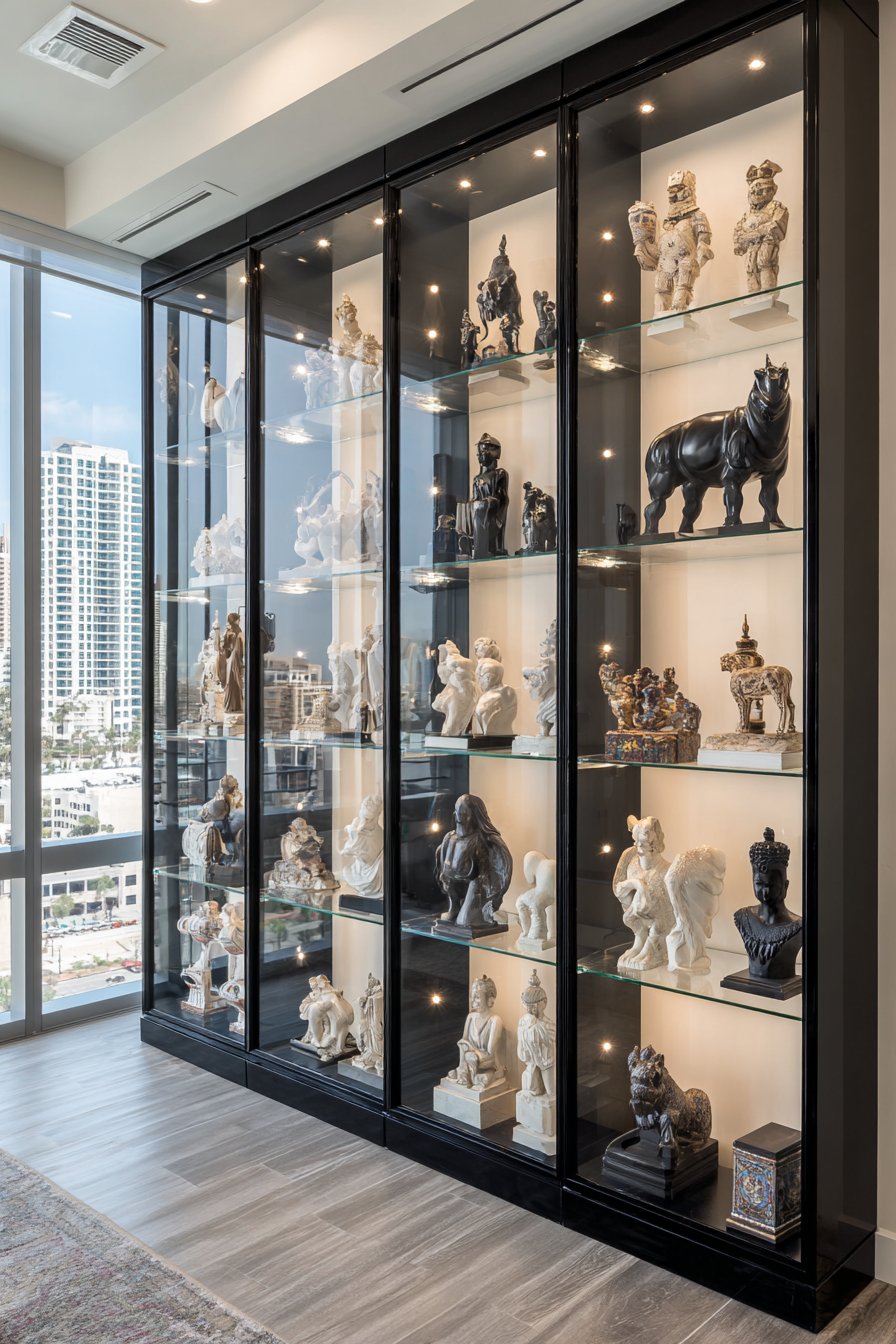
The art of displaying figurines has evolved significantly from the traditional glass curio cabinet tucked away in grandmother’s parlor. Today’s interior design landscape offers endless creative possibilities for showcasing collections, from minimalist floating shelves that let individual pieces breathe to dramatic floor-to-ceiling illuminated cabinets that command attention like museum installations. The key is finding display solutions that not only protect and highlight your figurines but also complement your existing decor, work within your spatial constraints, and accommodate your collection’s unique characteristics. Whether you’re working with a small apartment or a spacious home, there’s a display strategy that can turn your figurines into conversation-starting design elements.
In this comprehensive guide, we’ll explore 27 innovative figurine display ideas that span various styles, budgets, and skill levels. From sophisticated built-in solutions and vintage-inspired presentations to budget-friendly DIY approaches and space-saving vertical displays, you’ll discover practical strategies for every type of collection and living situation. Each concept balances aesthetics with functionality, ensuring your figurines remain accessible for appreciation while receiving the protection they deserve. Let’s dive into these inspiring ideas that will help you celebrate your collection while enhancing the beauty and personality of your home.
1. Asymmetric Floating Shelf Arrangement
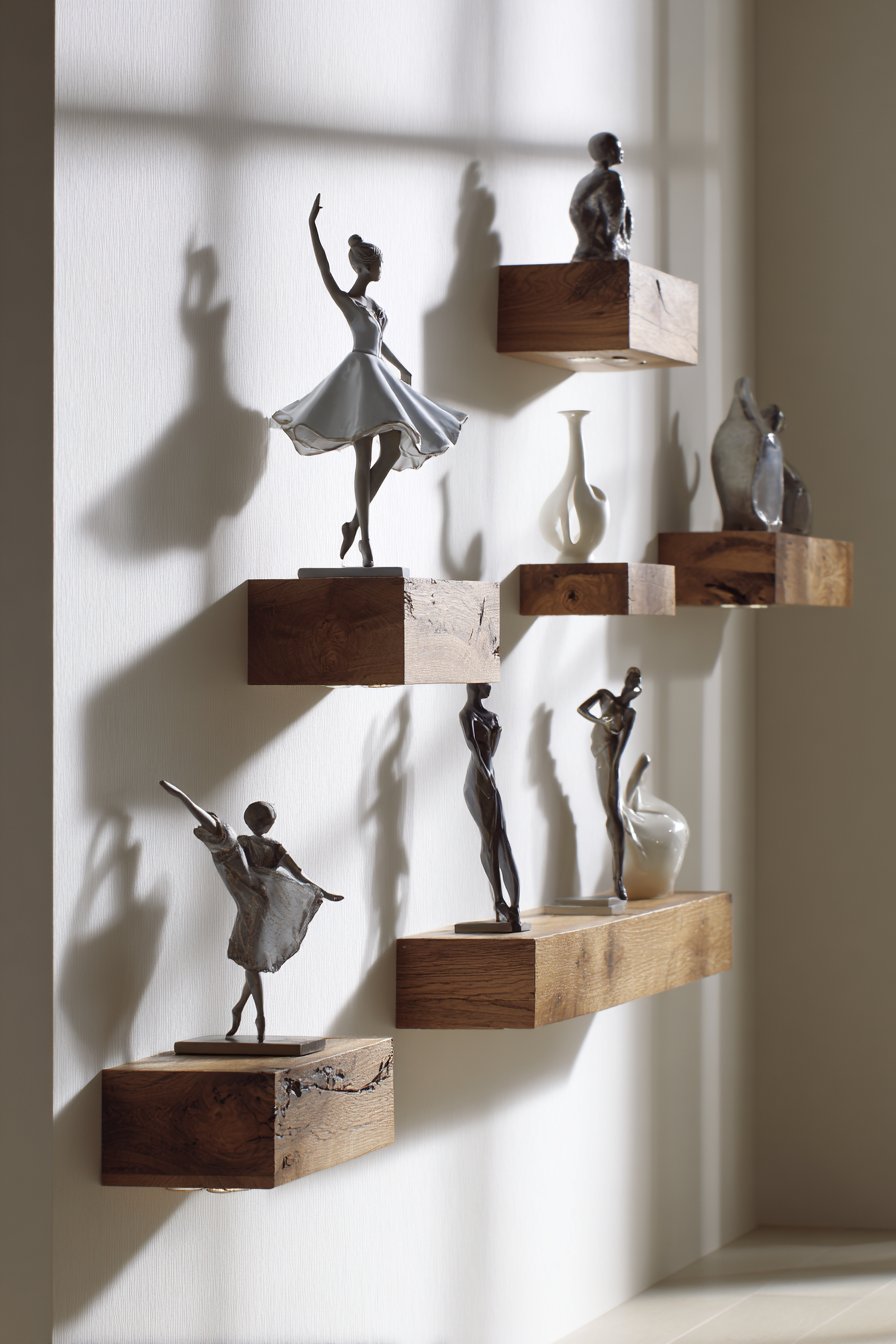
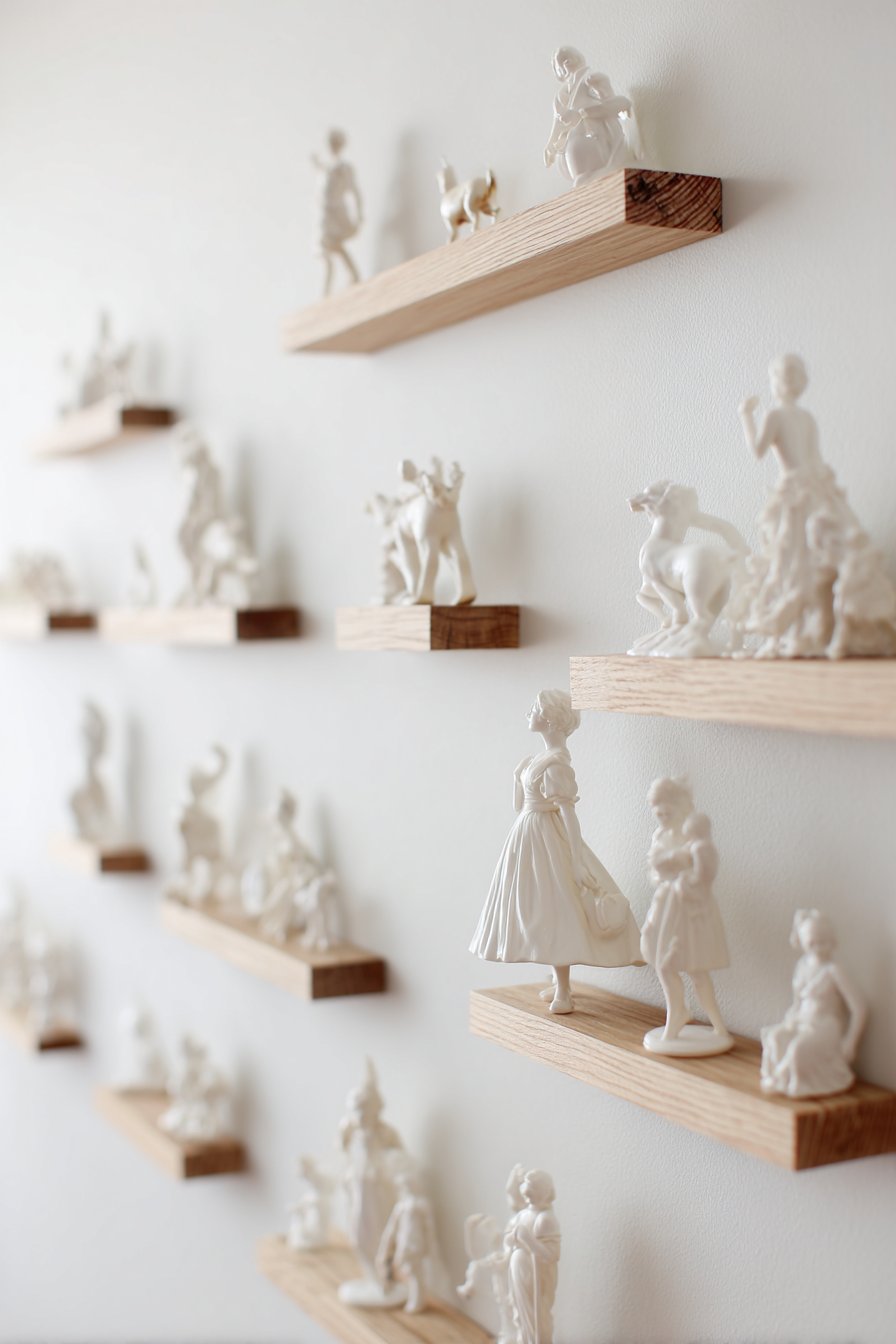
The beauty of floating wooden shelves lies in their ability to create a gallery-like presentation that feels both curated and accessible. When arranged asymmetrically on a crisp white living room wall, these 8-12 inch deep oak shelves become sculptural elements in their own right, with each shelf positioned at varying heights to guide the eye on a visual journey. The natural wood grain adds warmth and organic texture to the composition, creating a pleasing contrast against the neutral backdrop while providing sturdy platforms for your most cherished pieces.
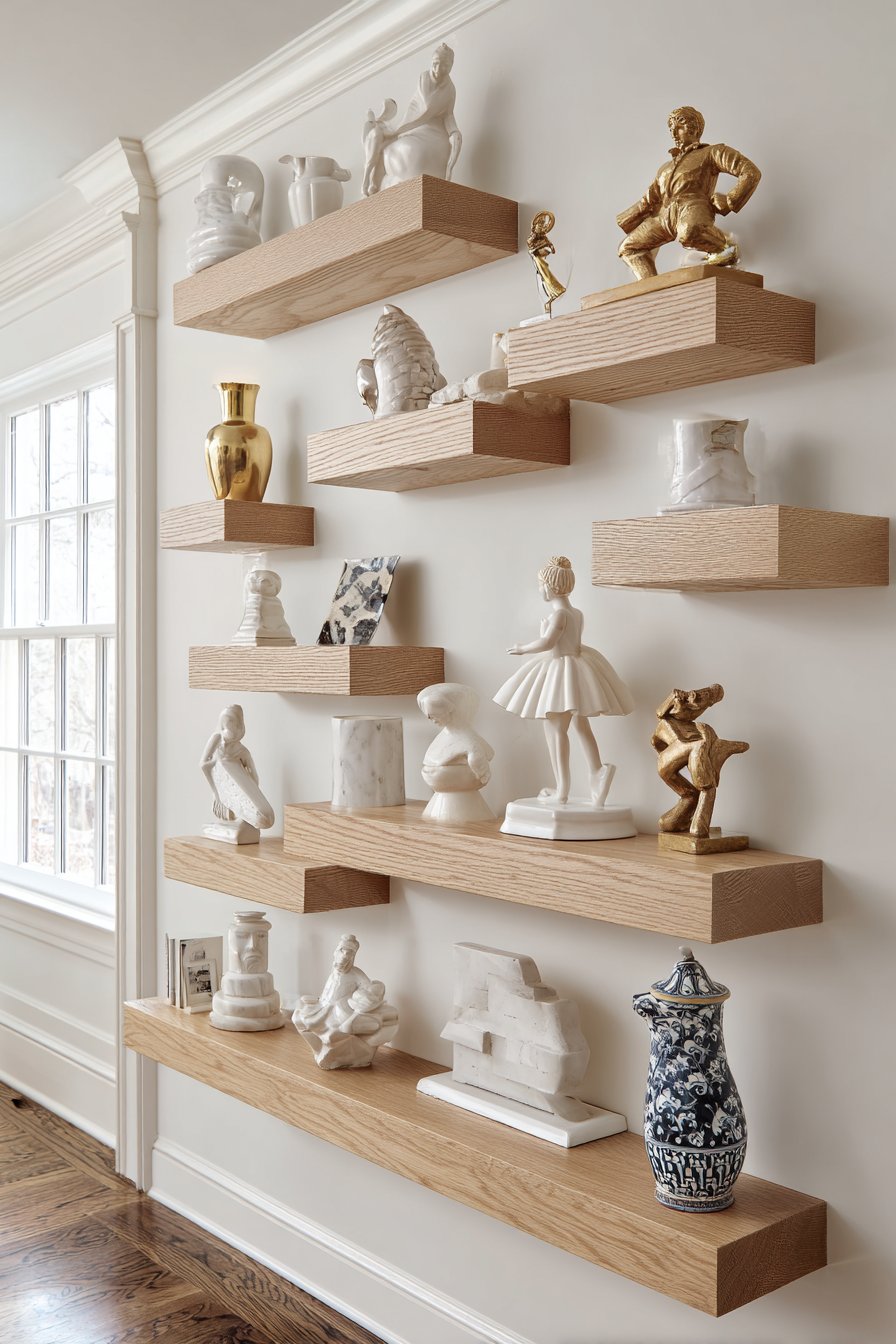
This display approach works exceptionally well for collections that include pieces of different heights and styles, from delicate ballerinas frozen in graceful poses to bold abstract sculptures that command attention. The key is giving each figurine adequate breathing room—overcrowding diminishes impact, while thoughtful spacing allows each piece to shine individually while contributing to the overall composition. The asymmetric arrangement prevents the display from feeling too rigid or formal, instead creating a dynamic, lived-in quality that invites closer inspection.
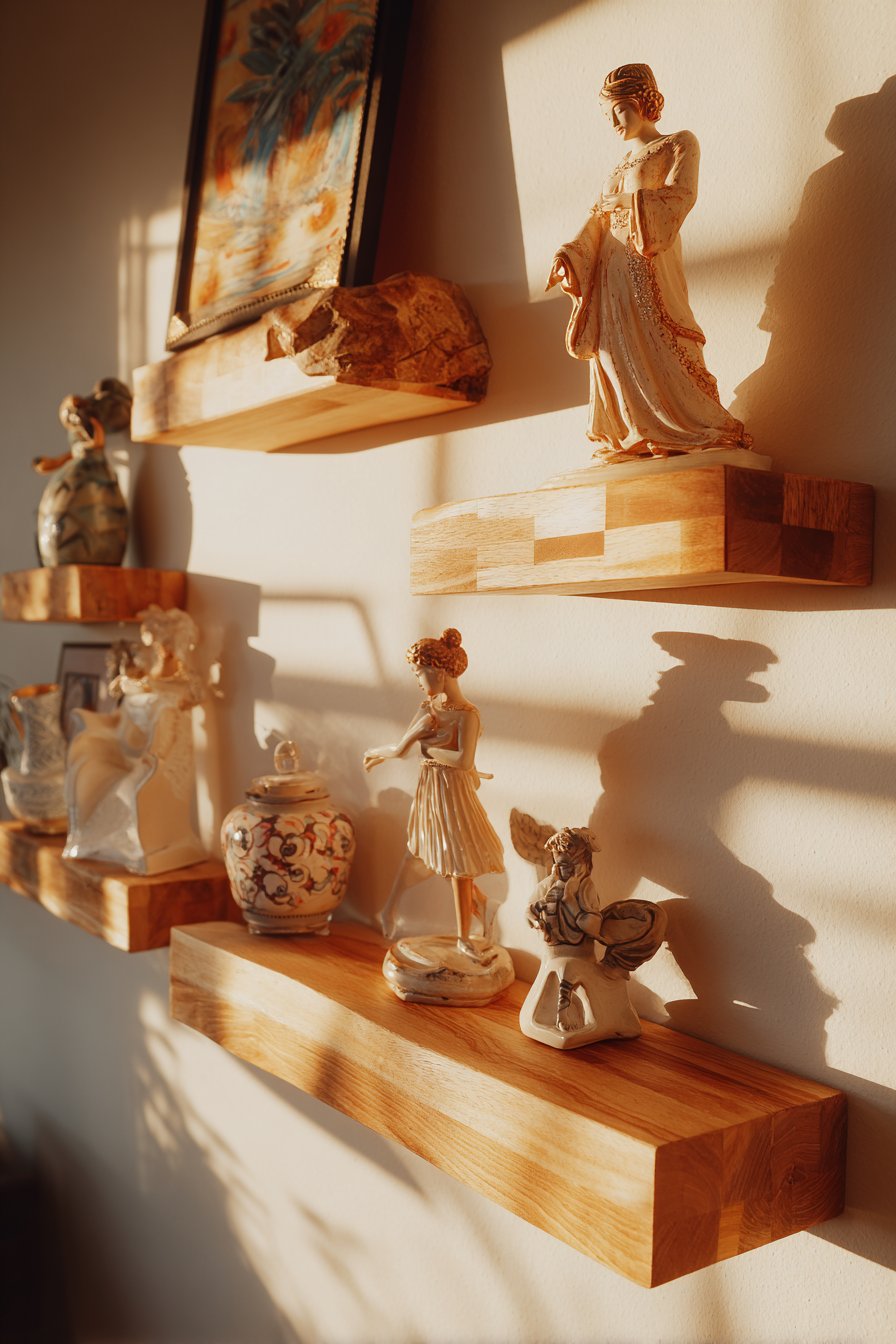
Natural lighting plays a transformative role in this setup. When positioned near a window, soft daylight creates gentle shadows that enhance the three-dimensional quality of each figurine, revealing textures and details that might otherwise go unnoticed. As the light shifts throughout the day, your display subtly transforms, offering new perspectives on familiar pieces. This organic interplay between light and form brings your collection to life in ways that artificial lighting alone cannot achieve.
Key Design Tips:
- Install shelves at varied heights (spacing them 10-18 inches apart) to create visual interest and accommodate different figurine sizes
- Limit each shelf to 3-5 pieces maximum to prevent visual clutter and allow each item proper emphasis
- Choose shelf depths that allow figurines to sit comfortably back from the edge (at least 2 inches) for safety
- Consider the sight lines from your primary seating areas when determining shelf placement
- Group figurines by color, theme, or material to create cohesive mini-collections within the larger display
2. Vintage Glass-Fronted Curio Cabinet
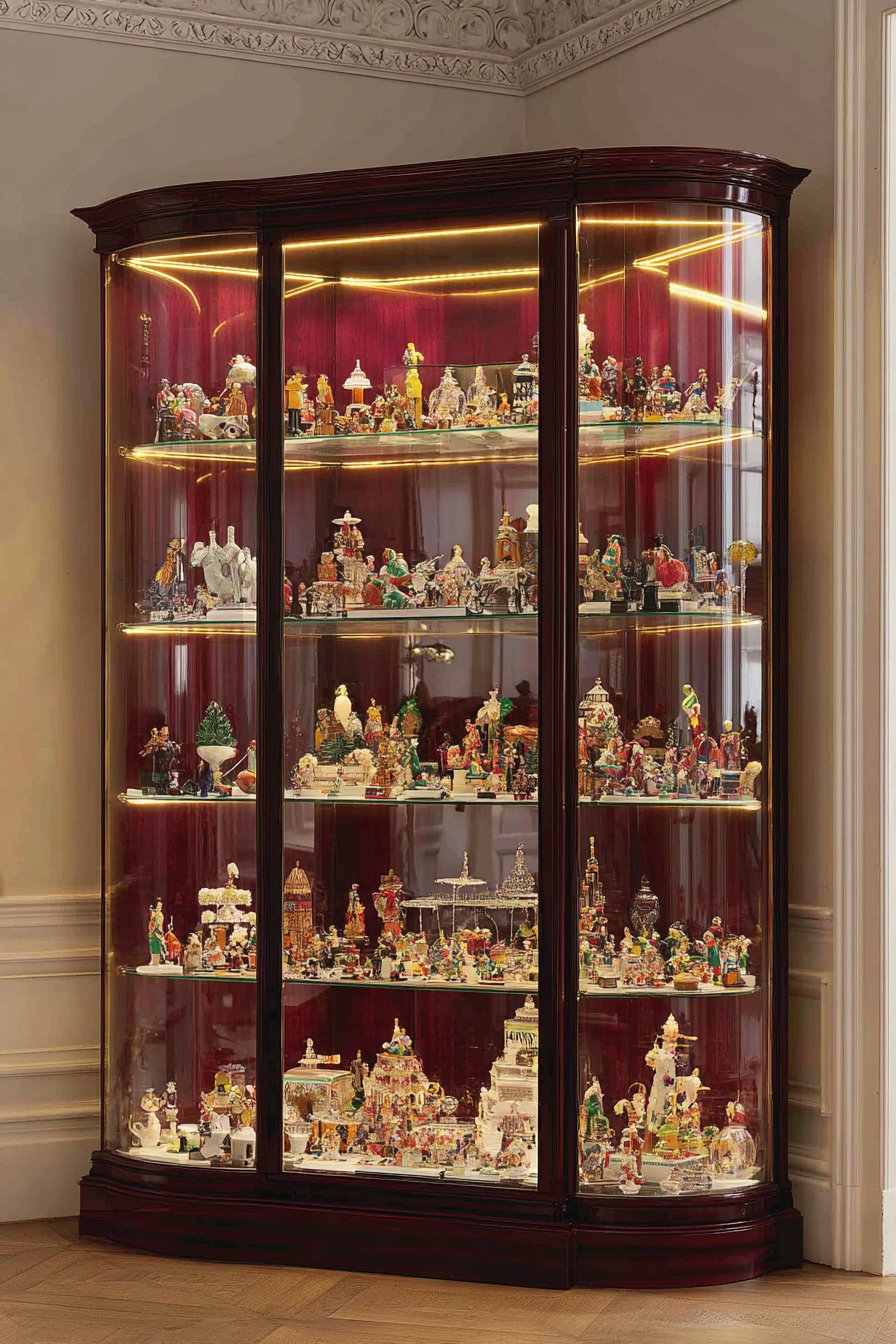
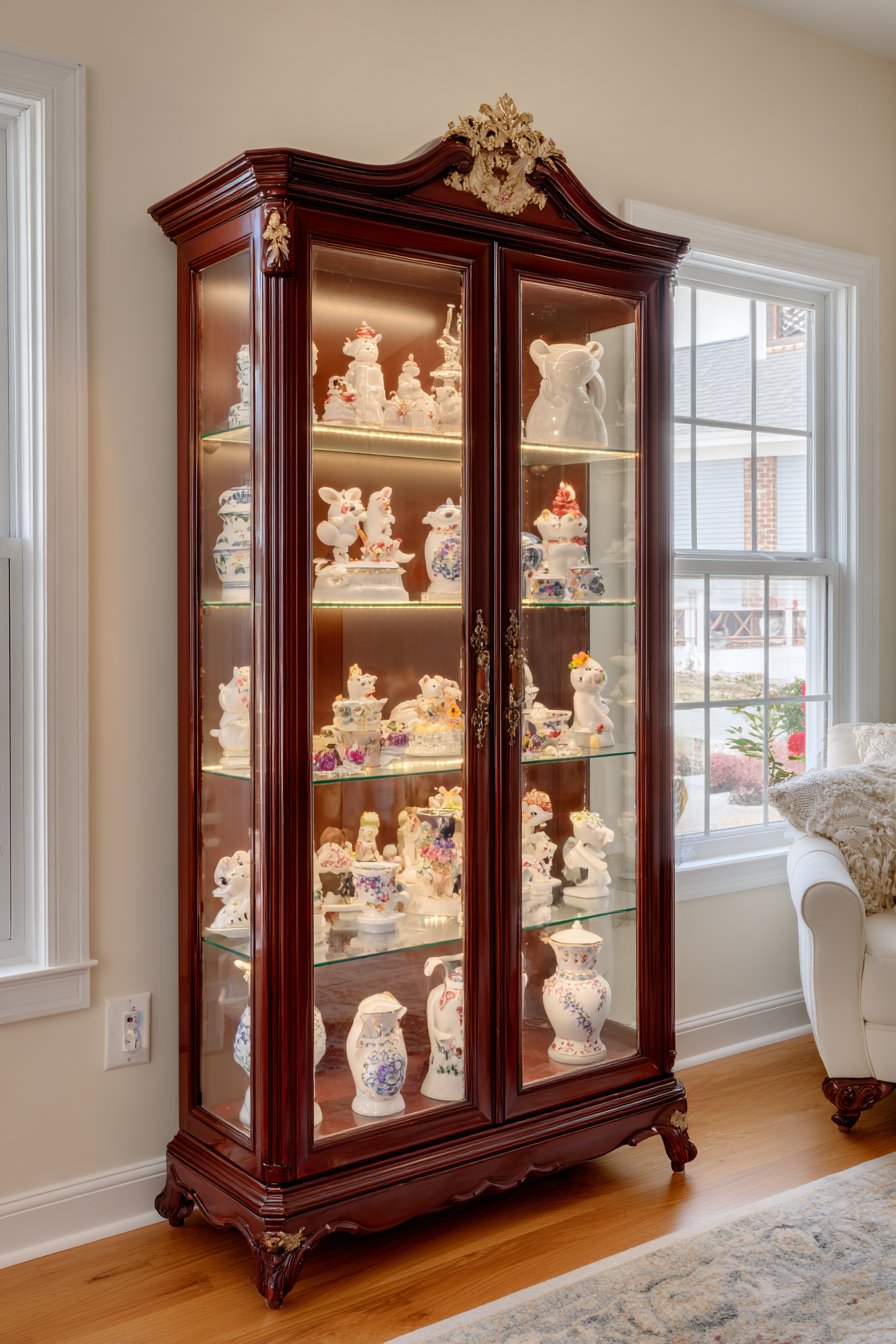
There’s timeless elegance in a traditional glass-fronted curio cabinet, particularly when crafted from rich dark mahogany that anchors a room with substantial presence. This classic display solution offers the perfect marriage of protection and visibility, with adjustable glass shelves that can be configured to accommodate figurines of varying heights. The vintage aesthetic brings a sense of history and gravitas to your collection, suggesting that these pieces are valuable treasures worthy of careful preservation.
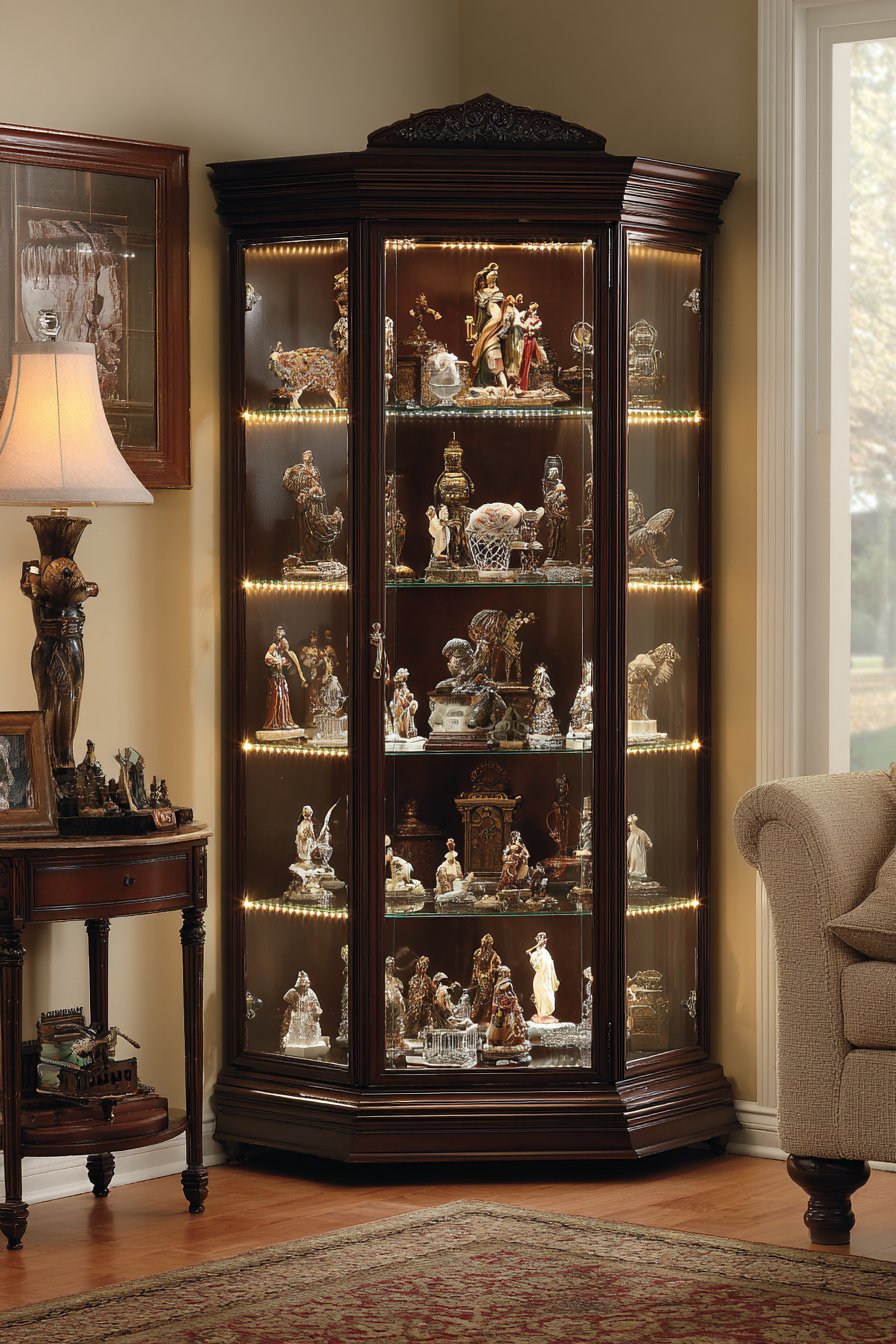
The integrated warm LED strip lighting running along each shelf edge represents a modern upgrade to traditional curio design, illuminating crystal, porcelain, and resin figurines from below to create a gentle upward glow that highlights translucent materials and reveals intricate details. This bottom-up lighting approach minimizes harsh shadows while creating a subtle drama that elevates even simple pieces into objects of wonder. The warm color temperature of the LEDs adds a welcoming quality that makes the cabinet feel less like a museum display and more like a cherished personal collection.
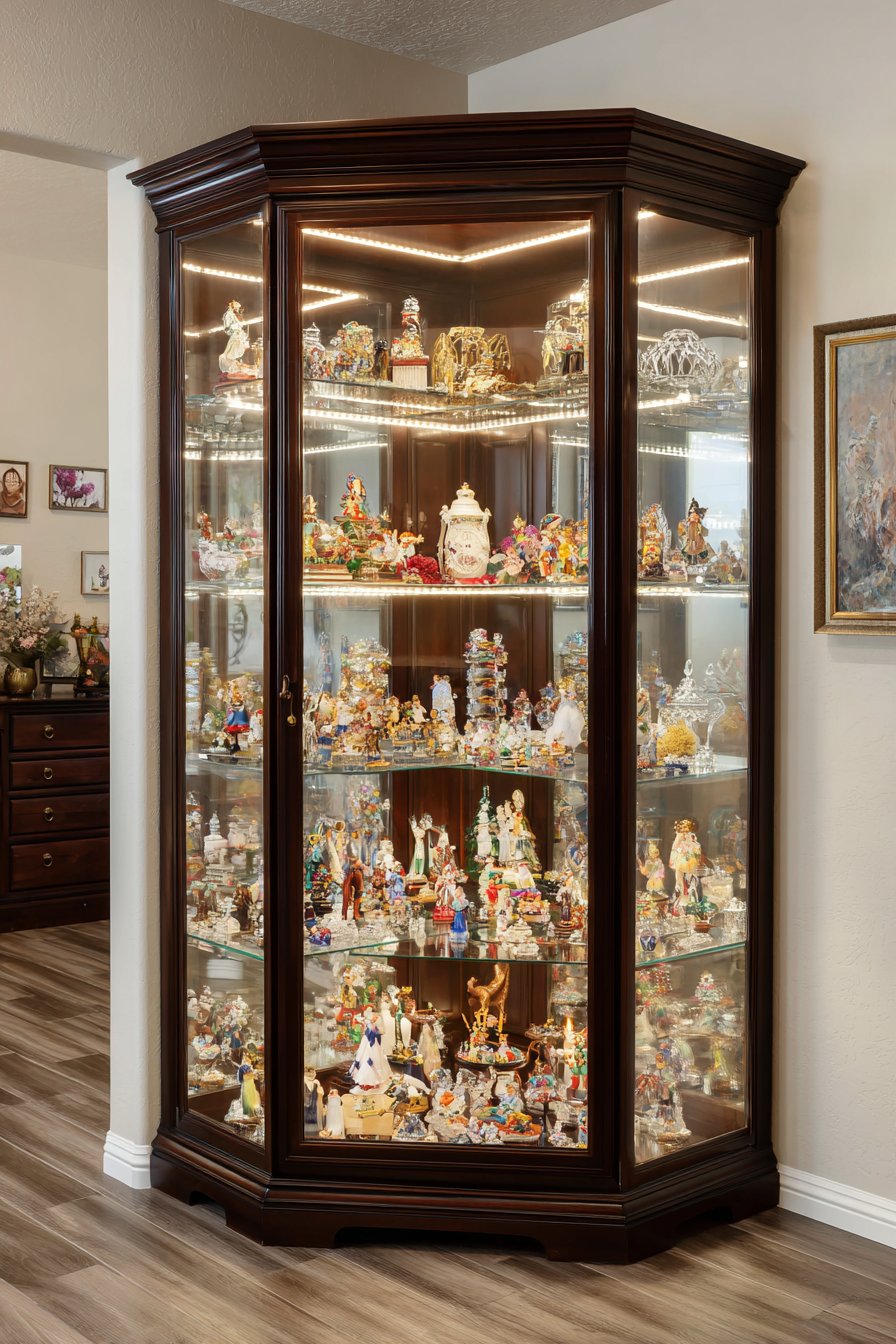
Positioning this substantial piece in your living room transforms it into a deliberate focal point, especially when placed against neutral walls that allow the cabinet’s architectural details and displayed treasures to take center stage. The glass front not only protects your collection from dust and accidental damage but also creates a formal boundary that signals these items are special, set apart from everyday objects. This psychological framing enhances their perceived value and importance.
Key Design Tips:
- Arrange taller pieces on lower shelves and progressively smaller items higher up to create visual stability
- Leave at least one shelf partially empty or minimally styled to prevent the display from feeling overwhelming
- Clean glass surfaces regularly to maintain clarity and prevent dust buildup from obscuring your collection
- Use the cabinet’s back panel as an opportunity to add depth—consider backing it with mirror, fabric, or contrasting paint
- Rotate displayed pieces seasonally to keep the presentation fresh and give different items time in the spotlight
3. Modern Wall-Mounted Shadow Box System
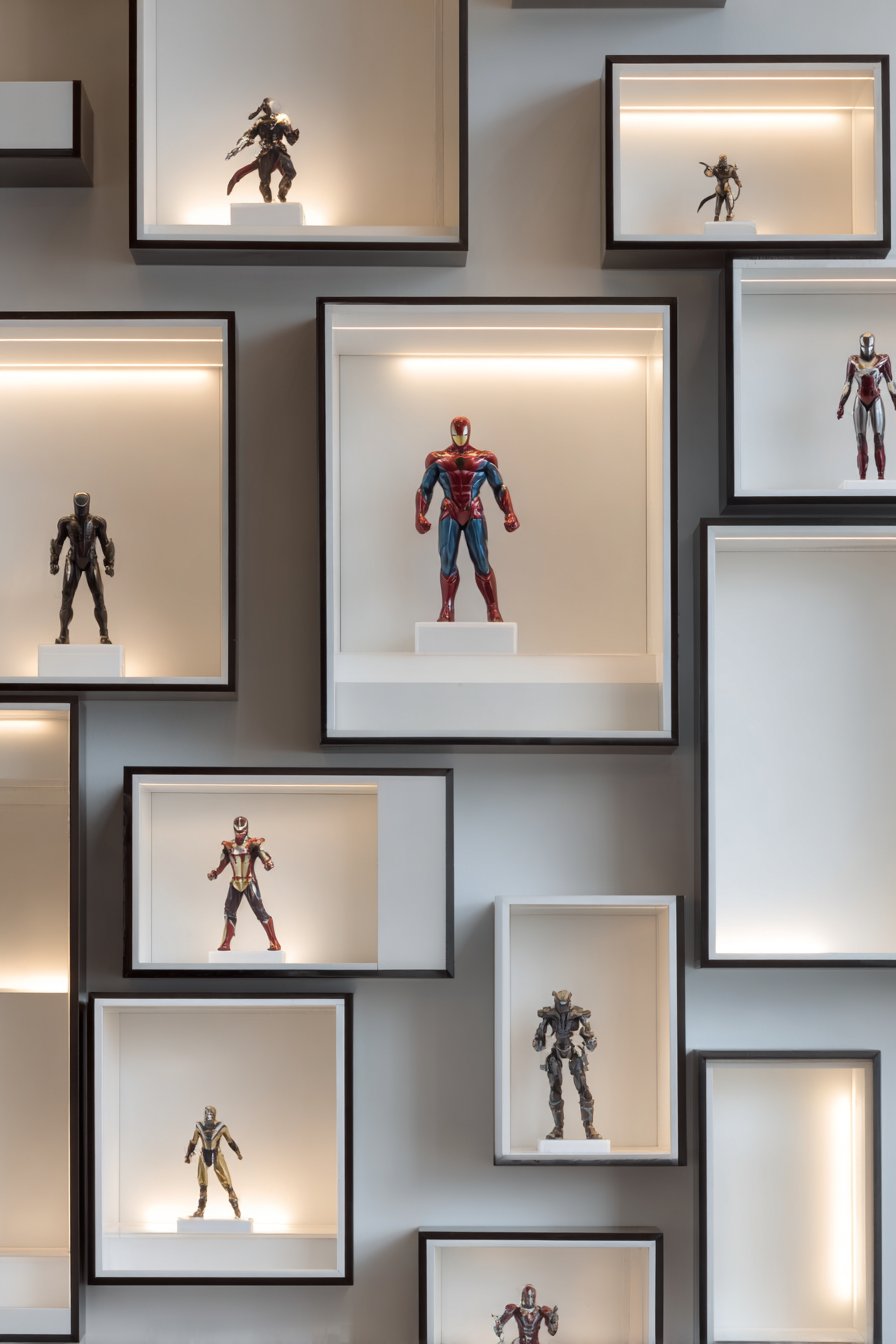
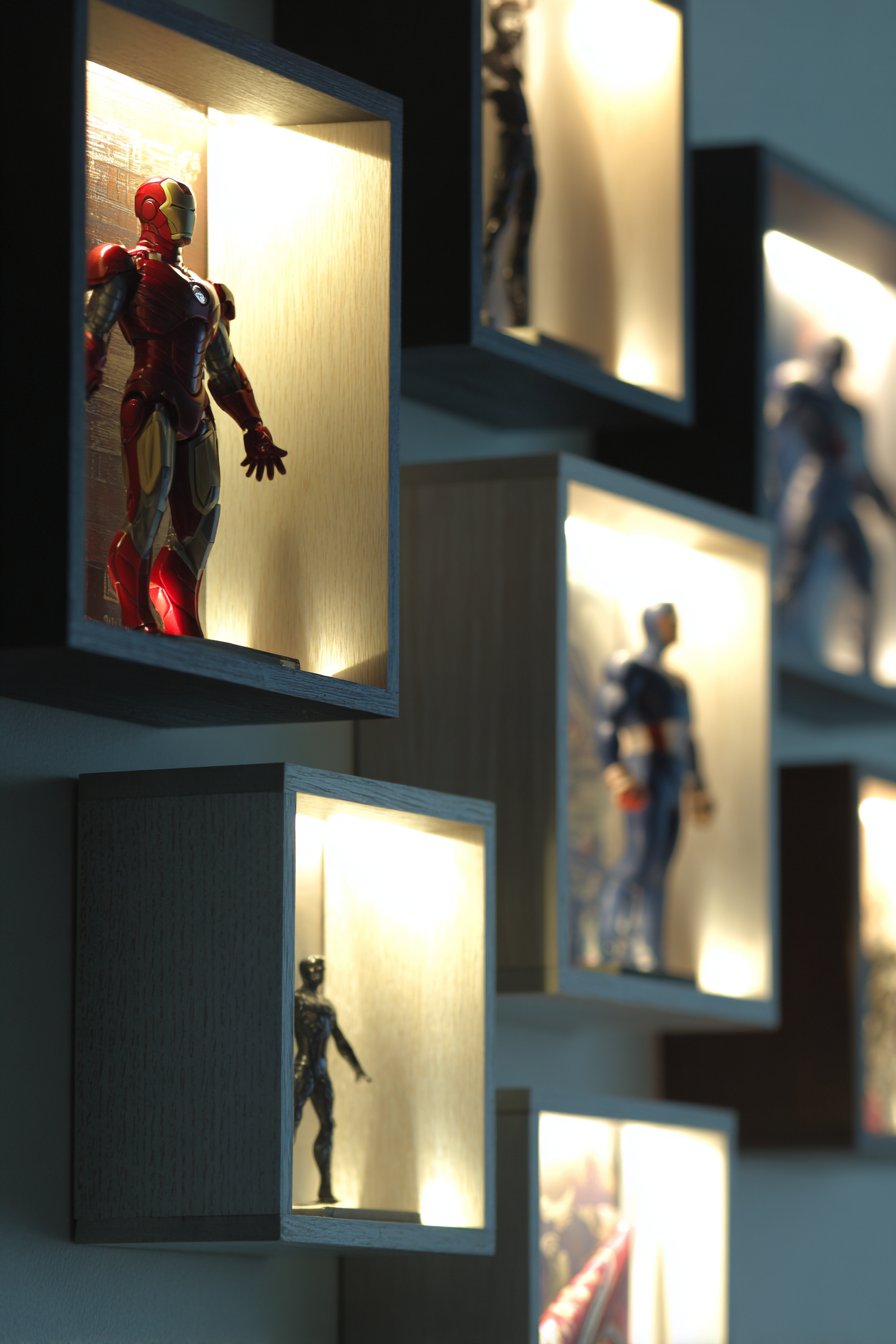
Contemporary collectors deserve contemporary solutions, and a modular wall-mounted shadow box system delivers both flexibility and visual impact. The sleek black metal frame creates a bold geometric grid against the wall, with individual white-backed compartments of varying sizes that function like miniature gallery spaces for each figurine. This approach works particularly well for modern collectibles—anime figures, designer toys, limited edition art pieces—that benefit from being framed and isolated to emphasize their individual character and design details.
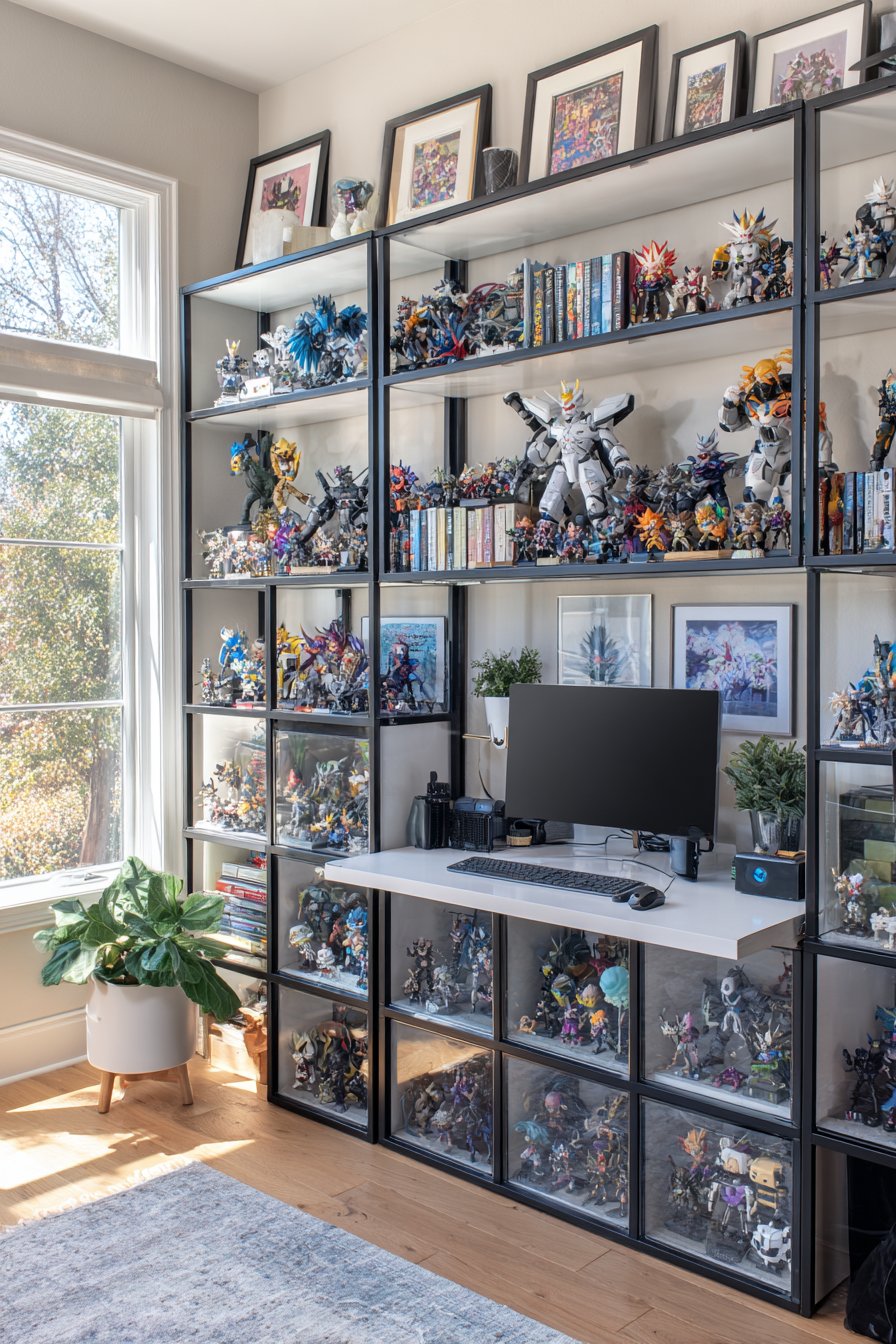
Each compartment’s contrasting white background serves a crucial purpose beyond aesthetics: it provides visual separation between adjacent pieces, preventing them from competing for attention while creating a clean, gallery-quality presentation. The varying sizes of the compartments introduce organic rhythm to what could otherwise feel rigidly geometric, allowing you to match figurine scale to compartment size for optimal visual balance. Larger statement pieces command bigger frames, while delicate miniatures nestle perfectly in smaller boxes.
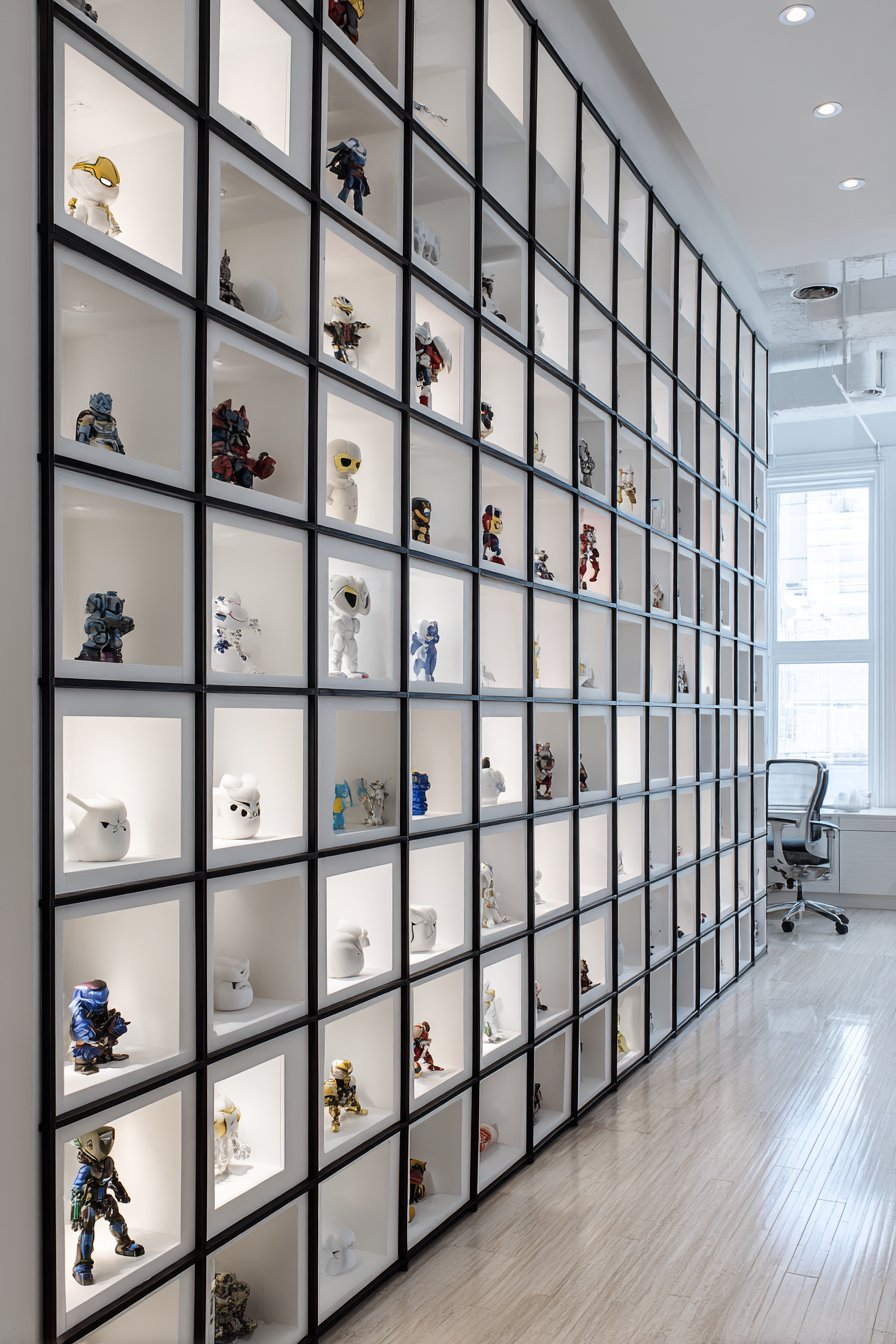
The subtle recessed lighting within each compartment represents thoughtful engineering—positioned to illuminate without creating glare on the shadow box glass, it ensures each figurine is properly lit for maximum visibility and impact. This individualized lighting approach means every piece receives appropriate attention, transforming your wall into a dynamic gallery installation that rivals professional displays. The system’s modular nature also means you can expand or reconfigure as your collection grows.
Key Design Tips:
- Plan your layout on paper first, considering both current collection size and future growth
- Mix empty compartments with displayed pieces to create breathing room and visual balance
- Choose compartment depths that accommodate your tallest figurines with clearance (at least 1-2 inches extra)
- Position the entire installation at eye level (center around 60 inches from the floor) for optimal viewing
- Consider creating thematic groupings within the grid—characters from the same series, similar colors, or related styles
4. Custom-Built Illuminated Alcove Display
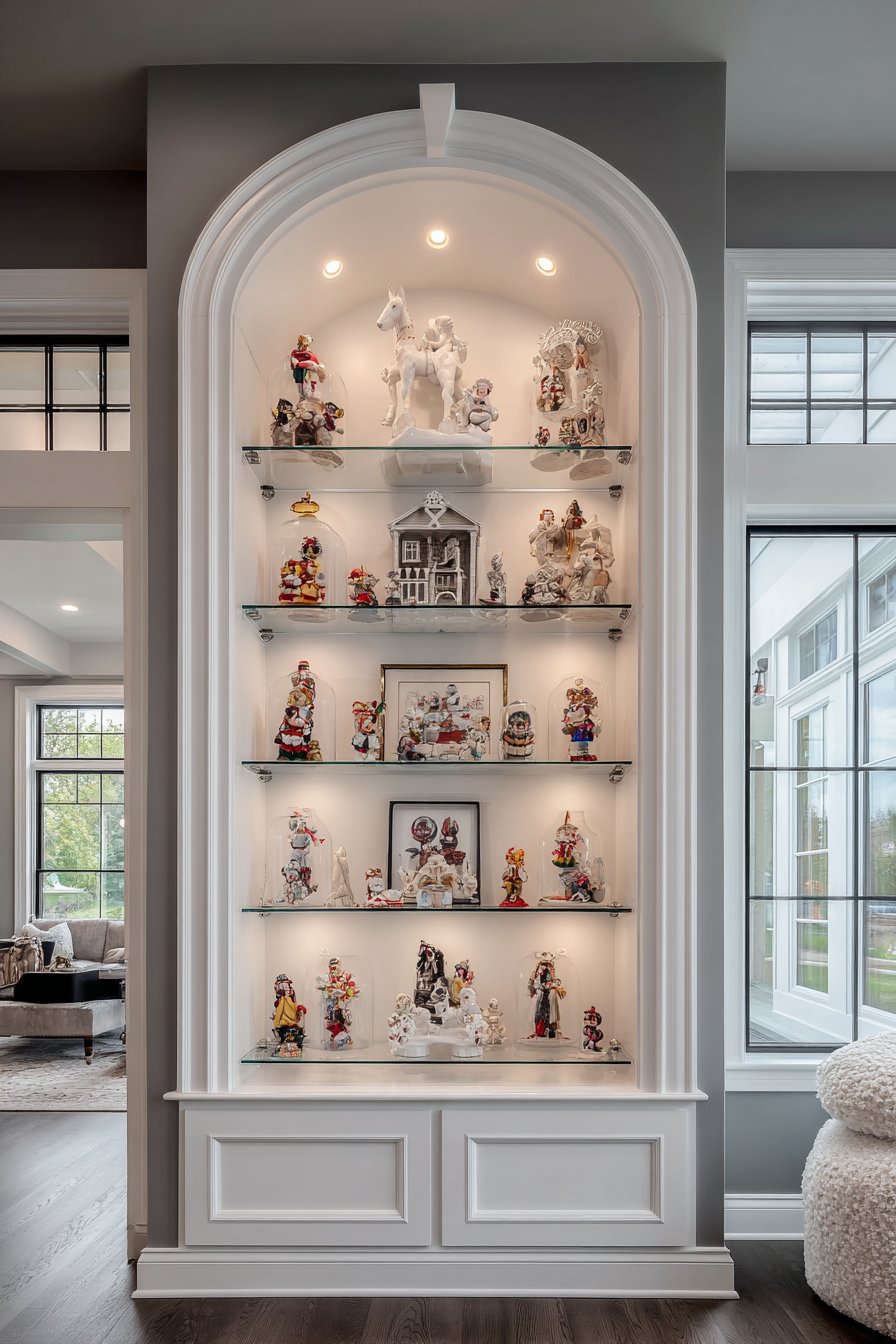
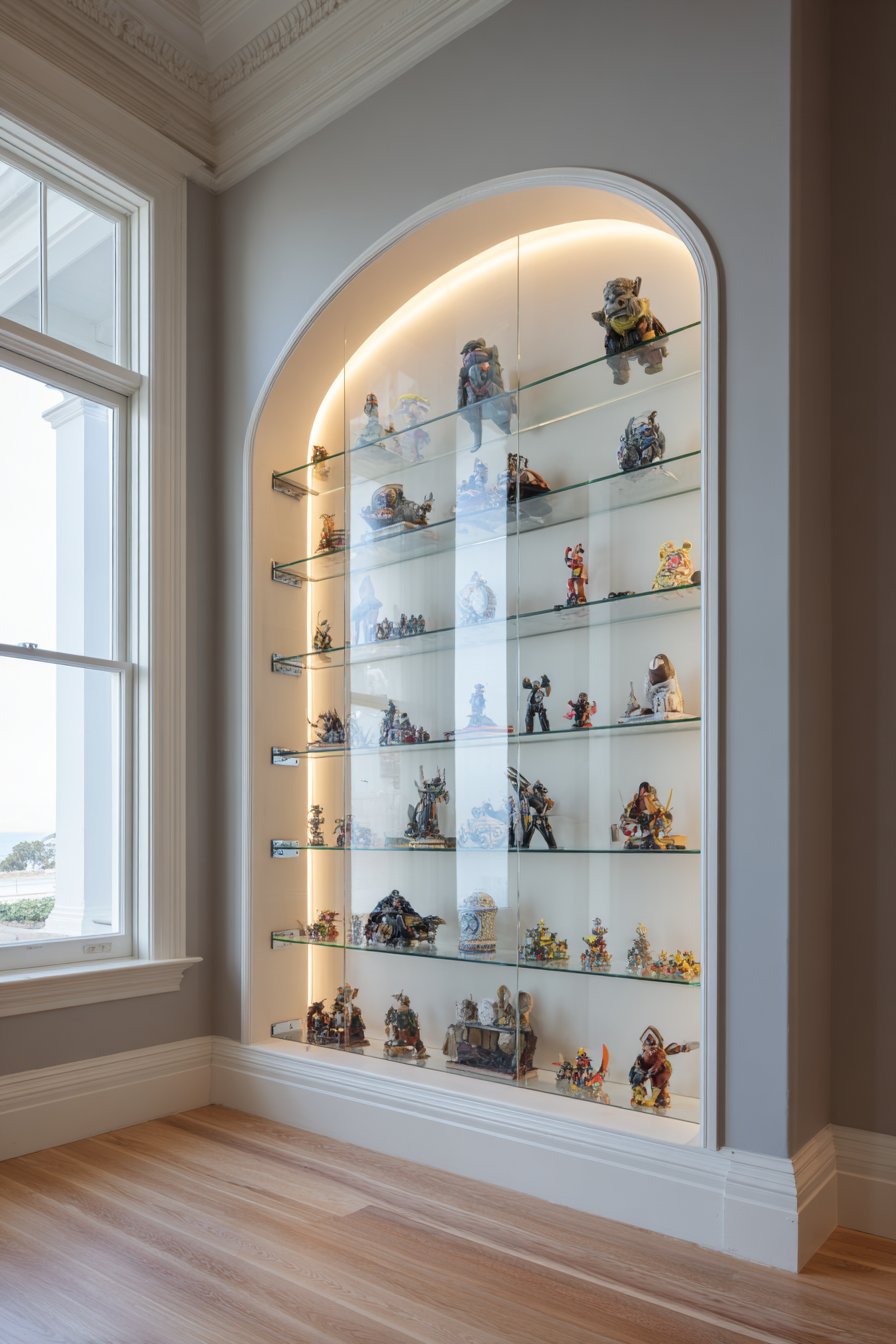
Architectural integration represents the pinnacle of figurine display sophistication, and a custom-built alcove with arched detailing transforms a standard wall into a purpose-built showcase for your collection. The arched design adds classical elegance while the evenly-spaced glass shelves supported by minimalist chrome brackets create clean horizontal lines that guide the eye through your carefully arranged pieces. This built-in approach signals permanence and importance, suggesting that your collection merits this dedicated architectural space.
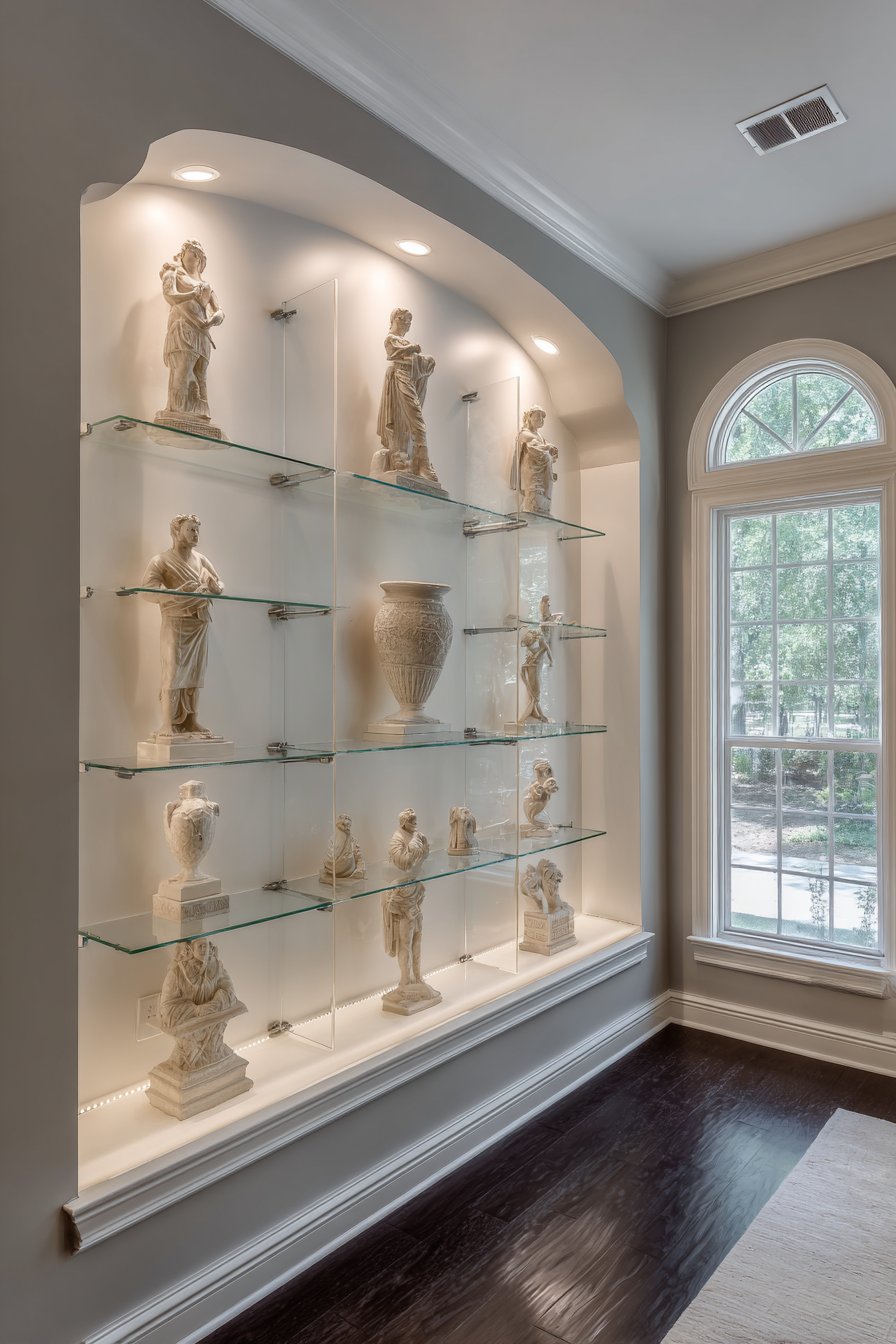
The arrangement strategy here requires careful curation—placing vintage porcelain figurines alongside modern art pieces demands thoughtful consideration of scale, color harmony, and thematic relationships. When done successfully, this juxtaposition of old and new creates visual tension that keeps the display interesting, preventing it from feeling too matchy or predictable. The transparency of glass shelving ensures that pieces on lower shelves remain visible, while the minimal chrome supports virtually disappear, keeping focus squarely on the figurines themselves.
Integrated LED lighting running along the alcove’s top edge provides a soft wash of illumination that cascades down through all shelf levels, creating even distribution without harsh spotlighting. This approach to lighting is particularly effective for collections with varied materials and finishes—the gentle top-down illumination highlights glossy surfaces without creating distracting glare while revealing texture and detail on matte pieces. The soft gray wall paint within the alcove creates a sophisticated neutral backdrop that allows colorful figurines to pop while complementing more subdued pieces.
Key Design Tips:
- Install dimmers on the LED lighting to adjust intensity based on time of day and mood
- Use the lowest shelf for your largest, most stable pieces to create visual grounding
- Maintain consistent spacing between figurines (2-4 inches) for a cohesive, intentional appearance
- Consider the view from multiple angles in the room when arranging pieces
- Update and refresh the display quarterly to rediscover forgotten favorites and maintain your own interest
5. Multi-Tiered Glass Console Table Display
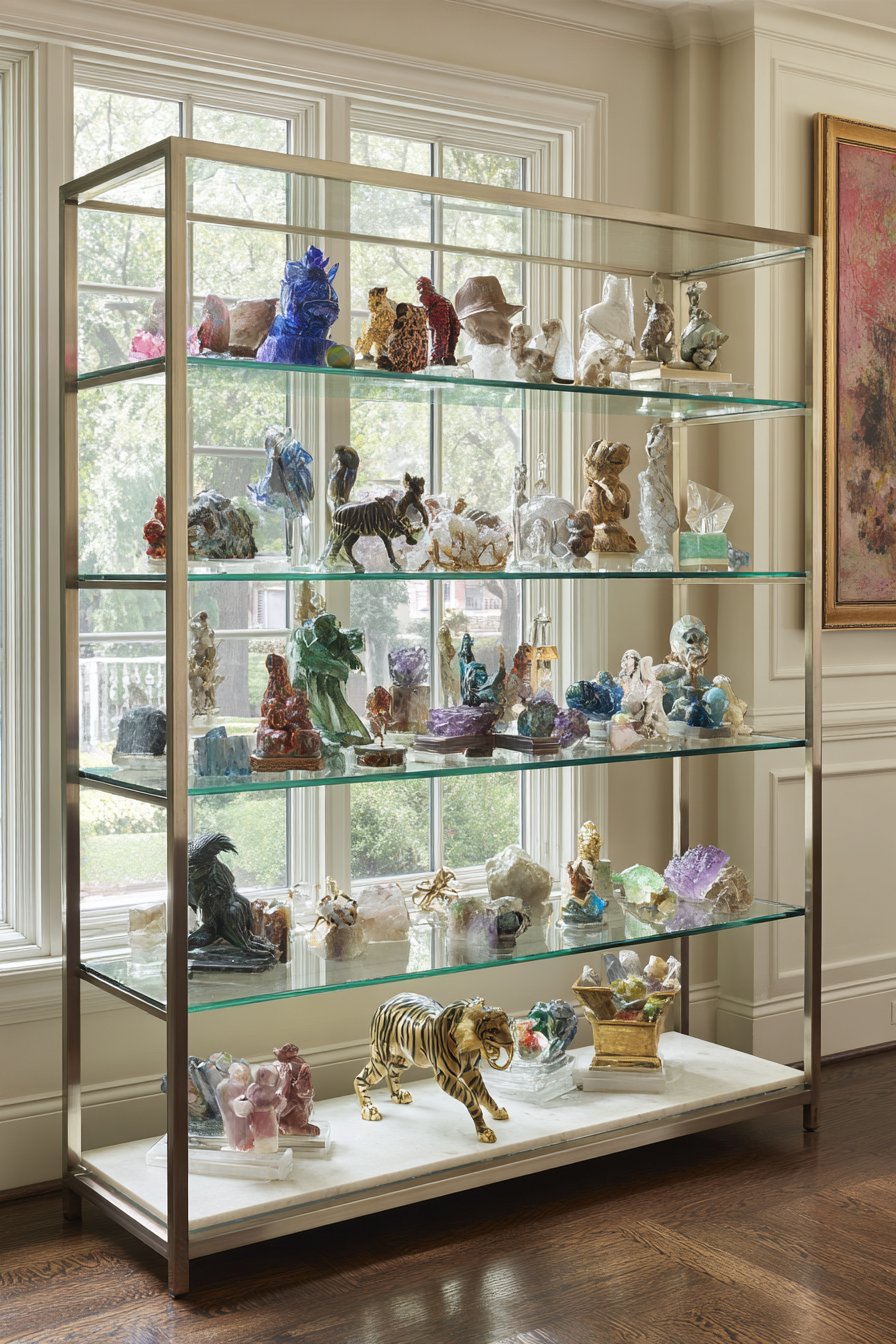
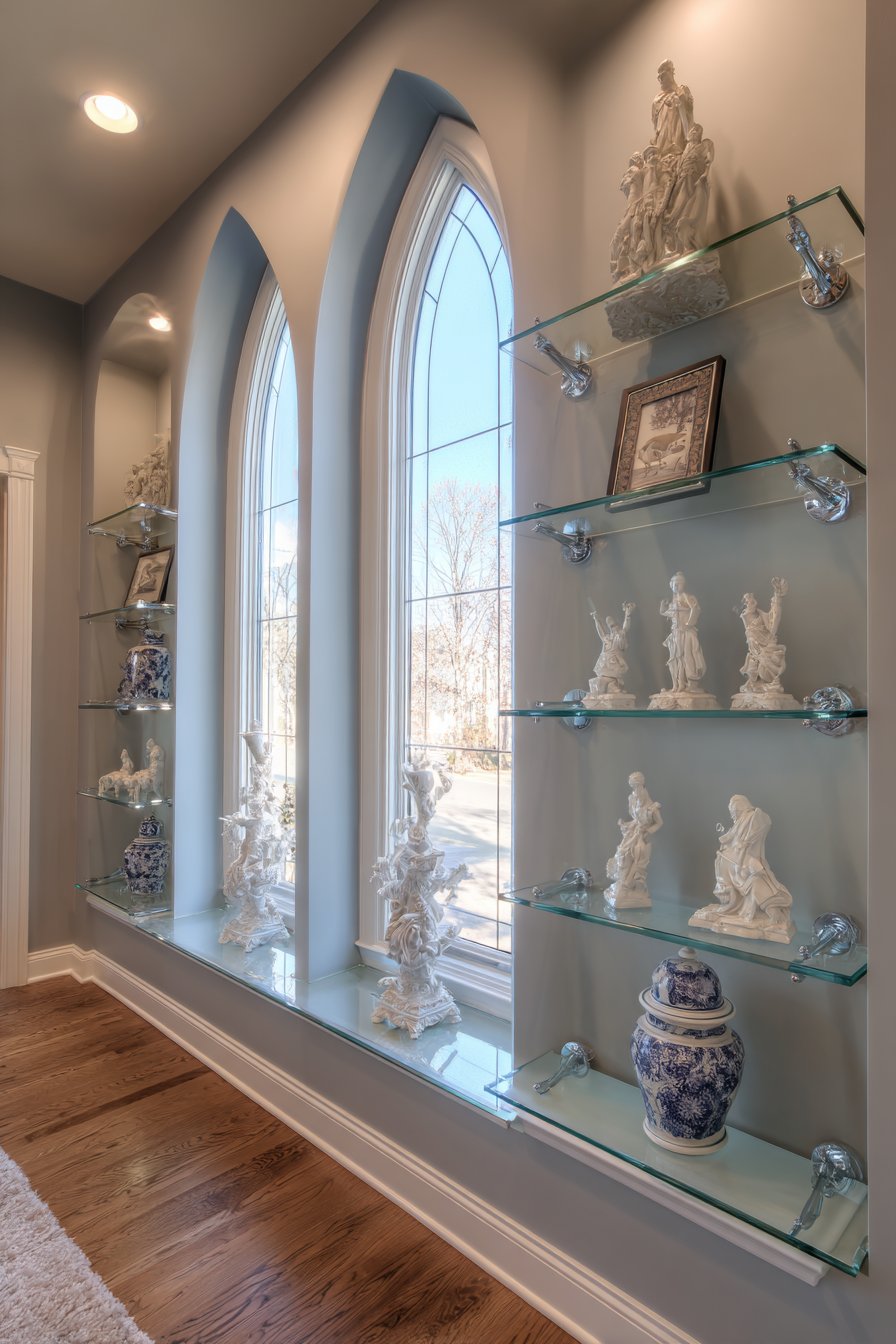
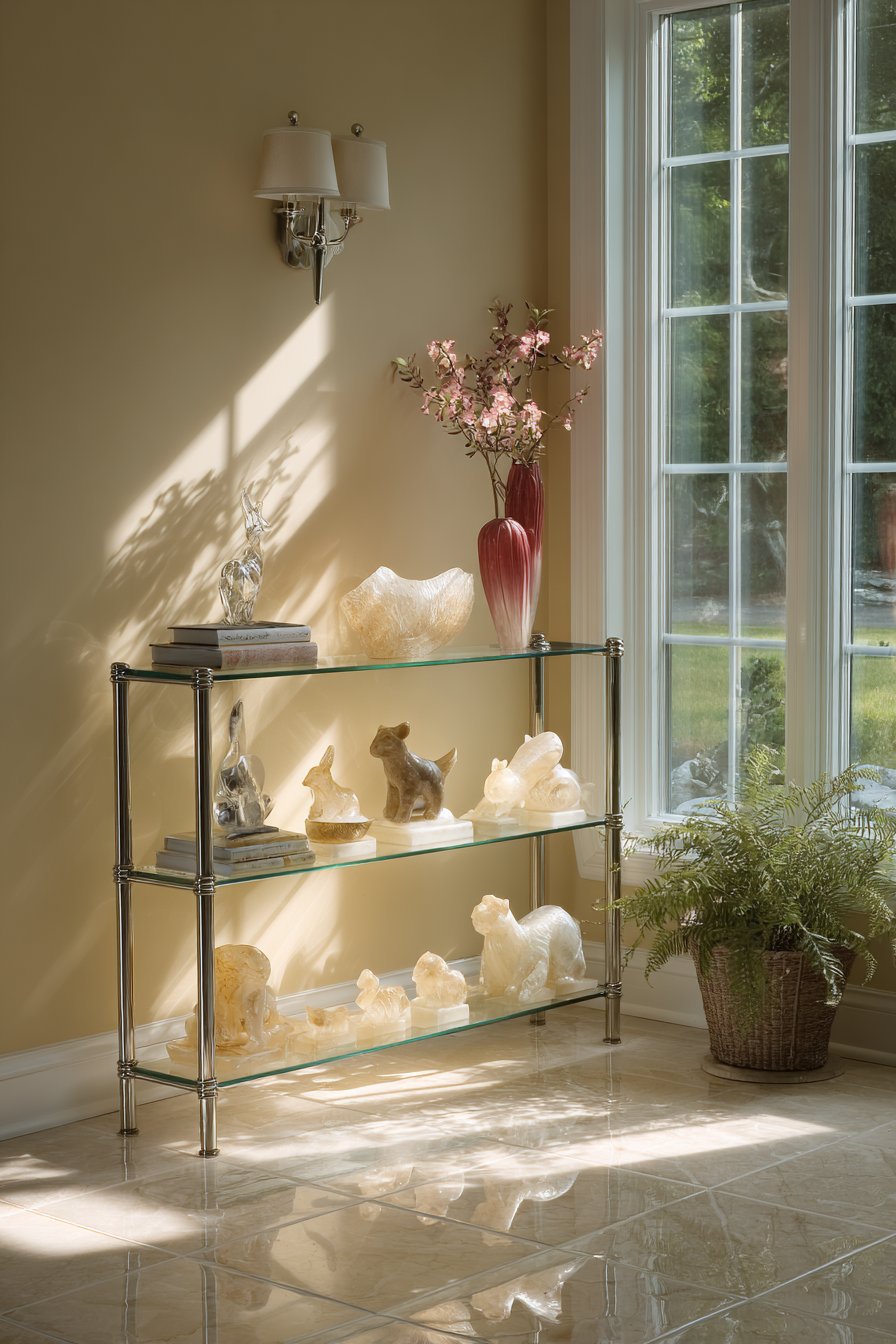
Transparency and light create magic in a multi-tiered glass console table display, where tempered glass shelves stacked at multiple levels allow for maximum visibility from all angles while the polished metal frame in brushed nickel finish adds just enough substance to ground the ethereal quality of the glass. Positioned against a hallway wall, this piece transforms a transitional space into a destination, giving visitors pause to admire your collection as they move through your home.
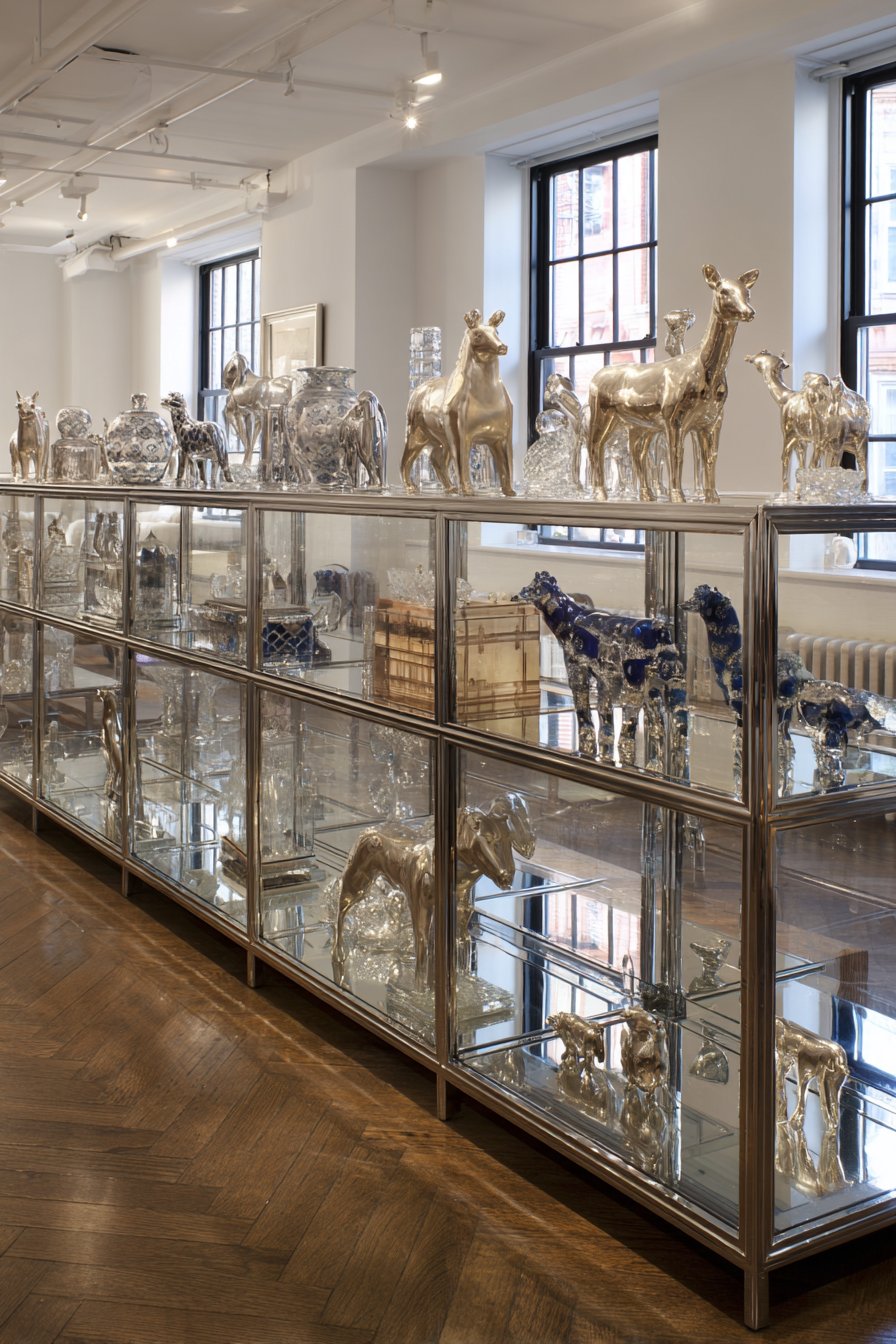
The genius of this display solution lies in its ability to showcase figurines at varying heights without visual obstruction. Crystal animals catch and refract light, their transparency enhanced by the glass shelving beneath them. Ceramic sculptures gain dimensionality when viewed from multiple levels simultaneously. Decorative art pieces create layered compositions that change depending on the viewer’s position. This three-dimensional quality makes the display feel alive and dynamic rather than static and fixed.
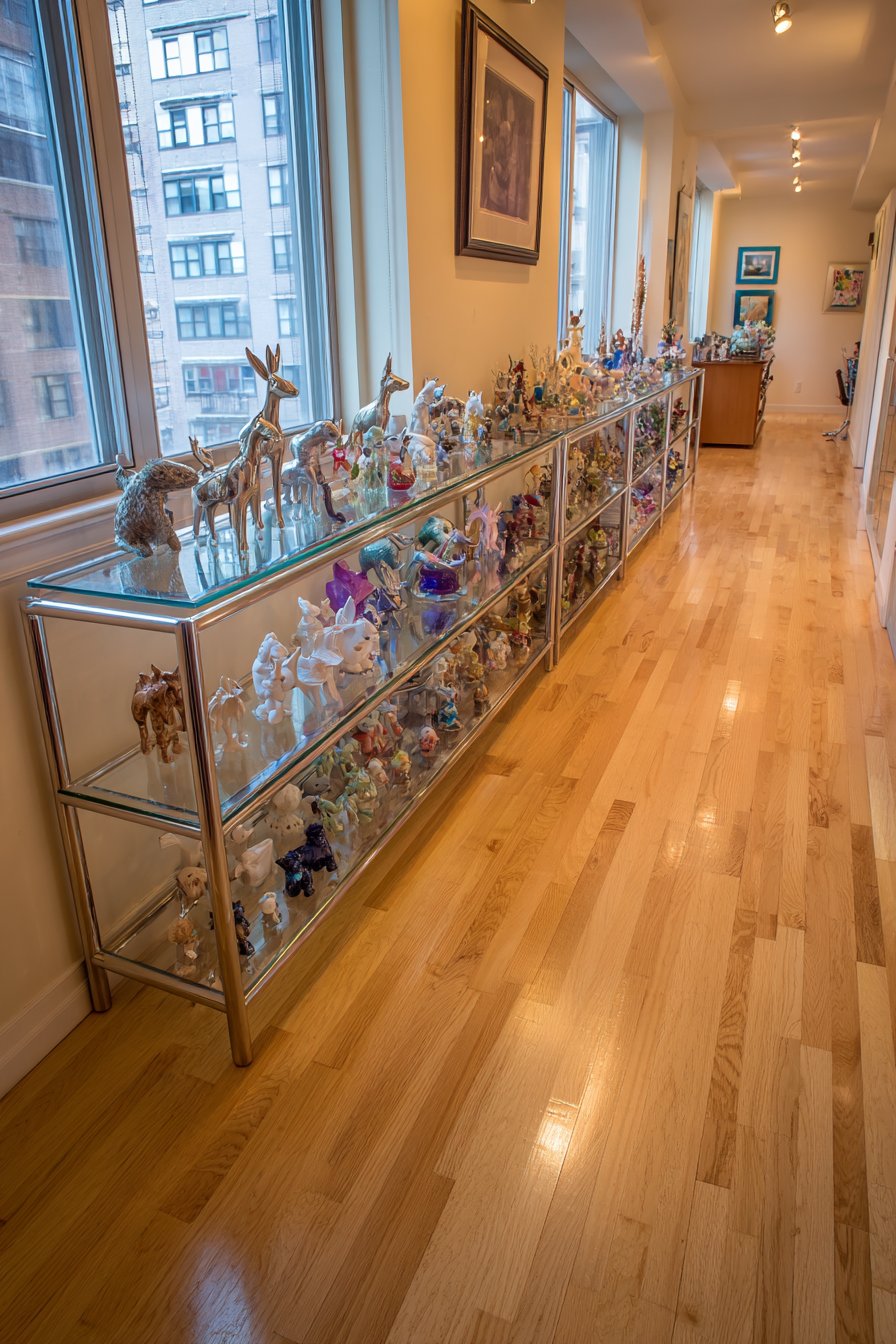
Natural daylight streaming through nearby windows interacts beautifully with the transparent materials, creating reflections, refractions, and highlights that shift throughout the day. Morning light might make crystal pieces sparkle with particular intensity, while afternoon sun creates interesting shadow plays on the wall behind the console. This natural variation means your display is never exactly the same twice, offering fresh perspectives on familiar pieces and preventing the visual boredom that can come with static displays.
Key Design Tips:
- Group figurines by height on each tier, with tallest pieces on the bottom shelf for stability
- Keep glass surfaces spotlessly clean—fingerprints and dust are highly visible on transparent materials
- Position the console where it receives natural light but not direct harsh sunlight that could damage delicate pieces
- Use the top surface for your most prized or newest acquisitions to give them prominence
- Consider placing a decorative runner or mat on the bottom shelf to add visual weight and protect the surface
6. Repurposed Vintage Ladder Display
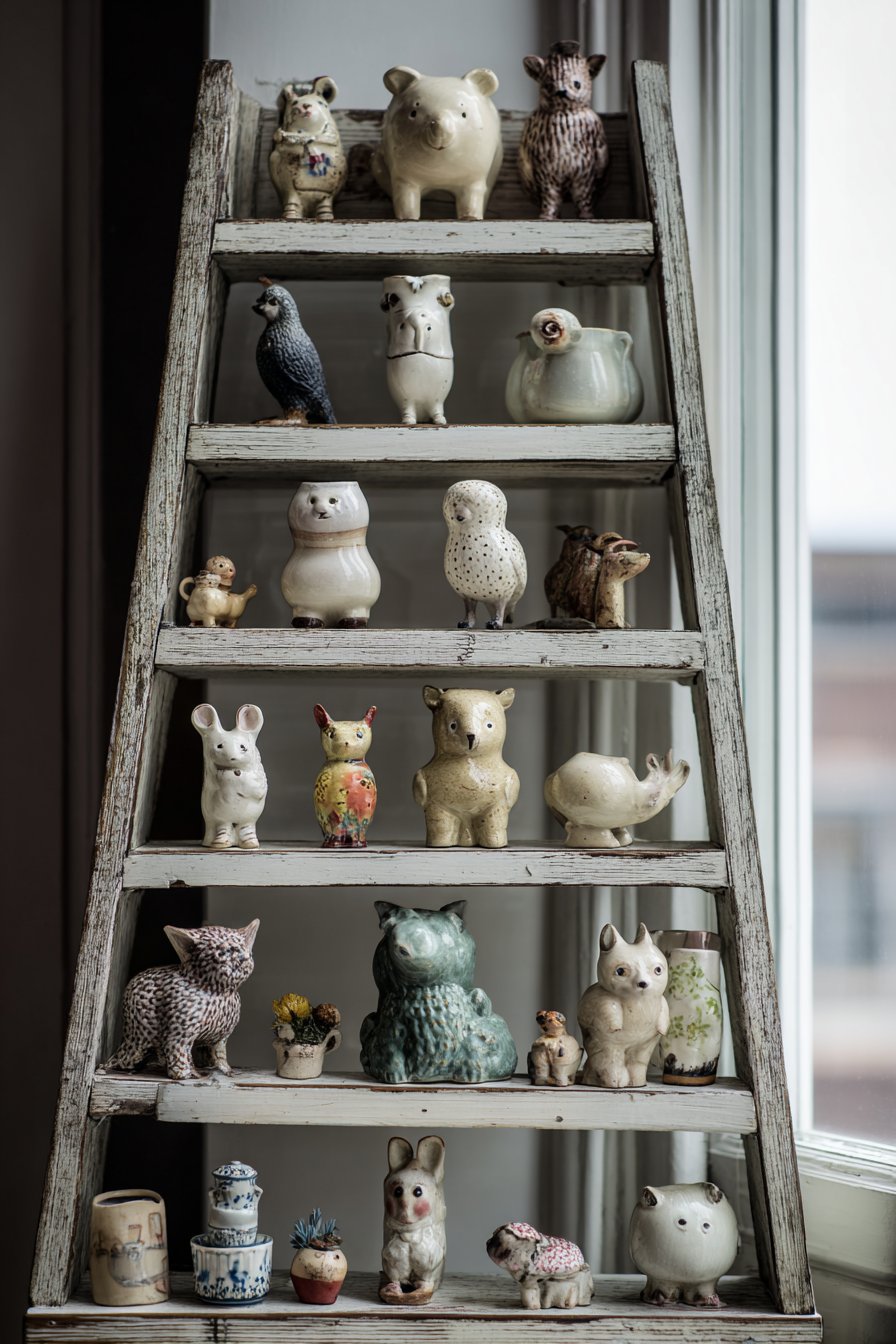
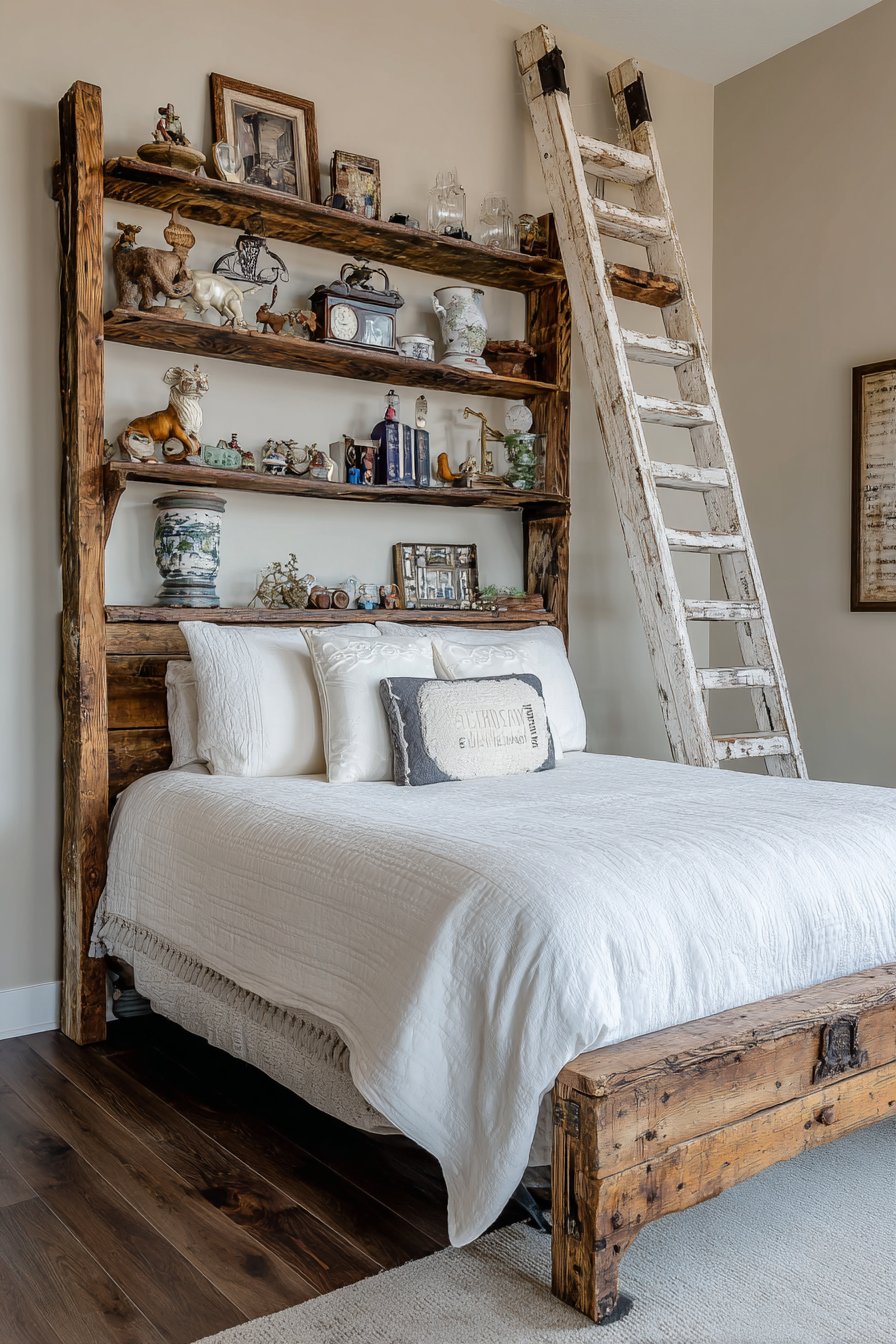
Creativity and sustainability merge beautifully when a vintage ladder finds new purpose as a vertical display for an eclectic figurine collection. Leaning casually against a bedroom wall, the weathered white finish of the ladder and its custom-cut wooden shelf inserts create a charming tension between structure and artfulness, between utility and decoration. This approach suits collectors who appreciate bohemian aesthetics and value pieces with history and character as much as their figurine collection itself.
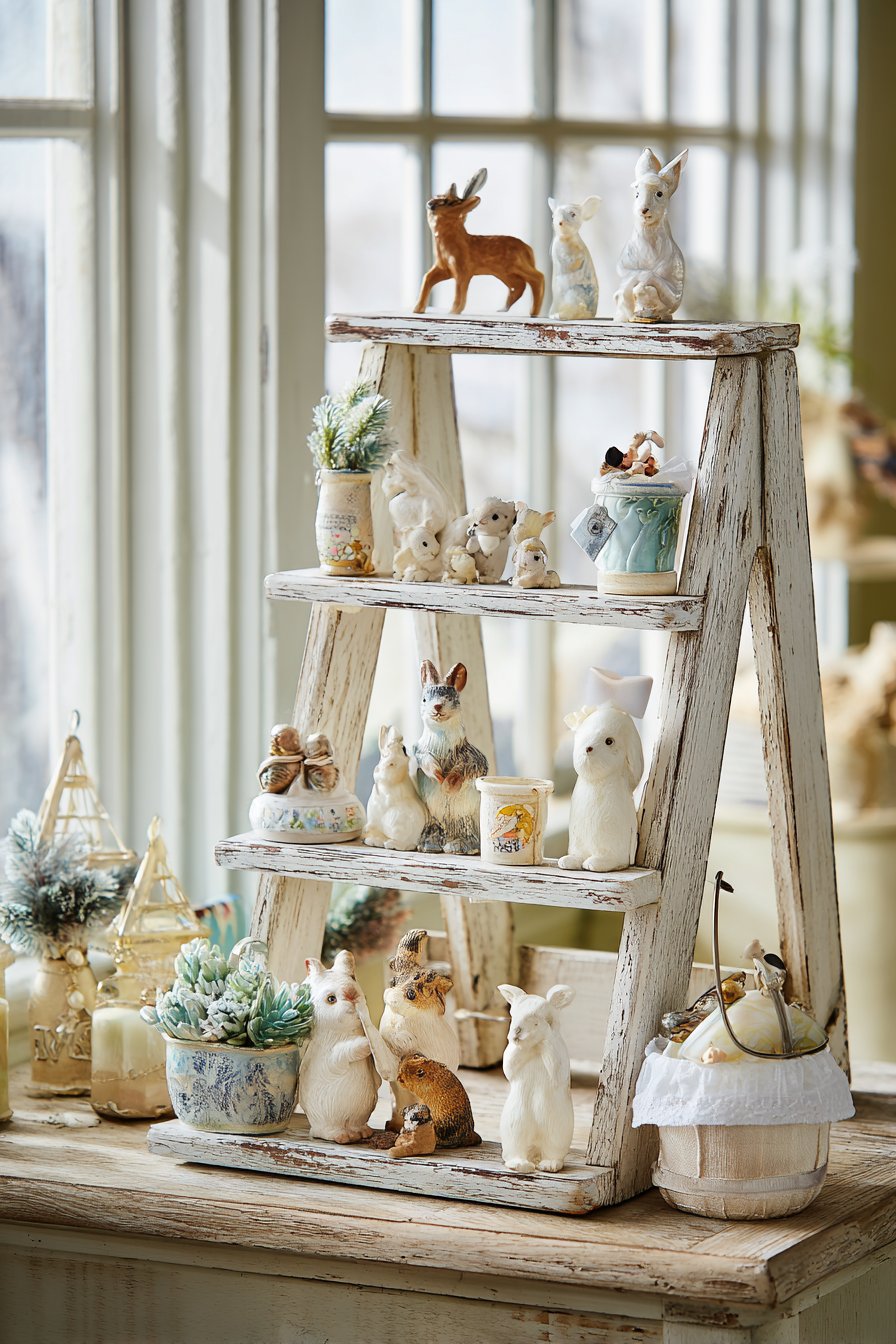
Each wide rung, fitted with its stable shelf insert, becomes a platform for displaying whimsical ceramic animals, miniature sculptures, and decorative objects with casual elegance. The vertical arrangement naturally creates visual hierarchy—eye-level rungs command the most attention and should house your favorite pieces, while higher and lower rungs accommodate supporting players in your collection’s visual story. The rustic, weathered quality of the ladder adds textural interest and vintage charm that complements rather than competes with the figurines.
Soft natural lighting from a nearby window enhances the organic, lived-in quality of this display approach. Unlike more formal presentation methods, the ladder display invites a relaxed viewing experience—pieces can be easily accessed, rearranged, and rotated without disrupting an elaborate system. This accessibility makes it perfect for active collectors who frequently add new pieces or enjoy refreshing their displays regularly.
Key Design Tips:
- Ensure the ladder is securely anchored to prevent tipping—use L-brackets or anchors at the top
- Create visual balance by distributing weight and visual mass evenly across rungs
- Mix sizes and heights of figurines to create rhythm rather than uniform repetition
- Leave some rungs partially empty or minimally styled to prevent visual overwhelm
- Embrace the imperfection and character of the vintage ladder rather than over-refinishing it
7. Wall-Mounted Plate Rack Adaptation
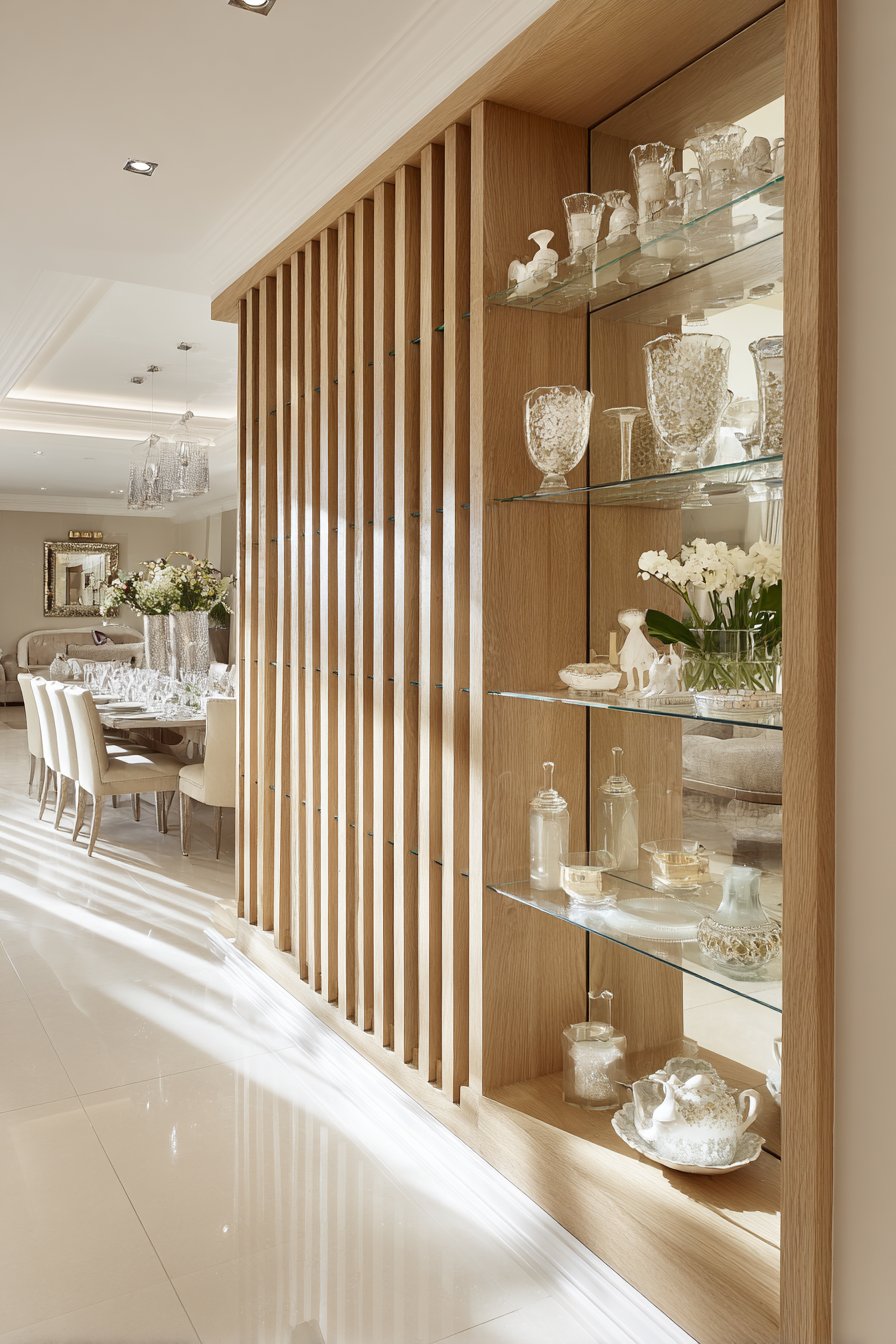
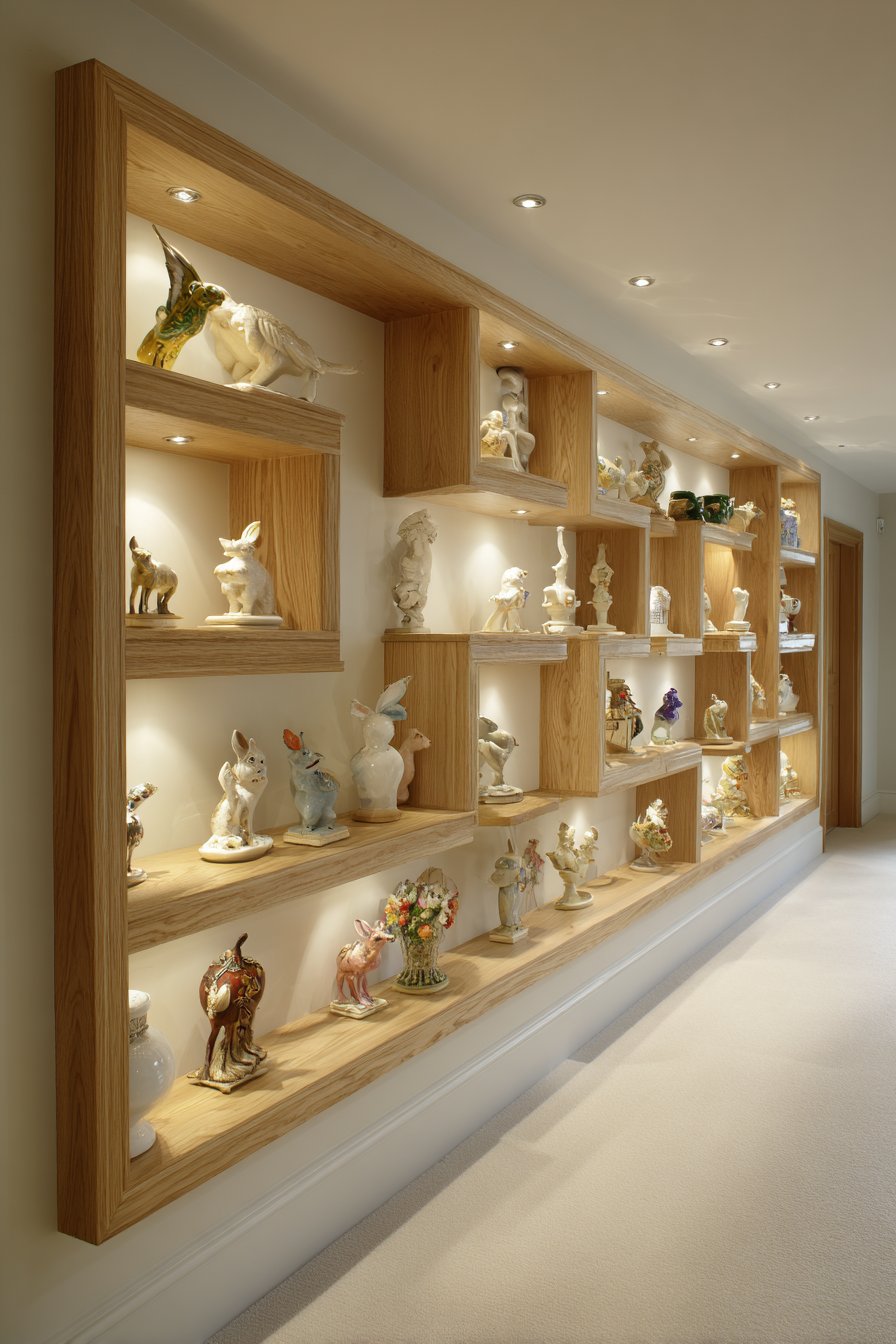
Thinking beyond an object’s original purpose opens up creative display possibilities, and a wall-mounted plate rack adapted for figurines proves that ingenuity trumps expensive custom solutions. The solid oak construction with traditional joinery details brings warmth and craftsmanship to the wall, while individual slots originally designed for vertical plate storage now cradle delicate porcelain figurines securely. The lower shelf accommodates larger statement pieces that need horizontal placement, creating a balanced composition that honors both the rack’s original design and its new purpose.
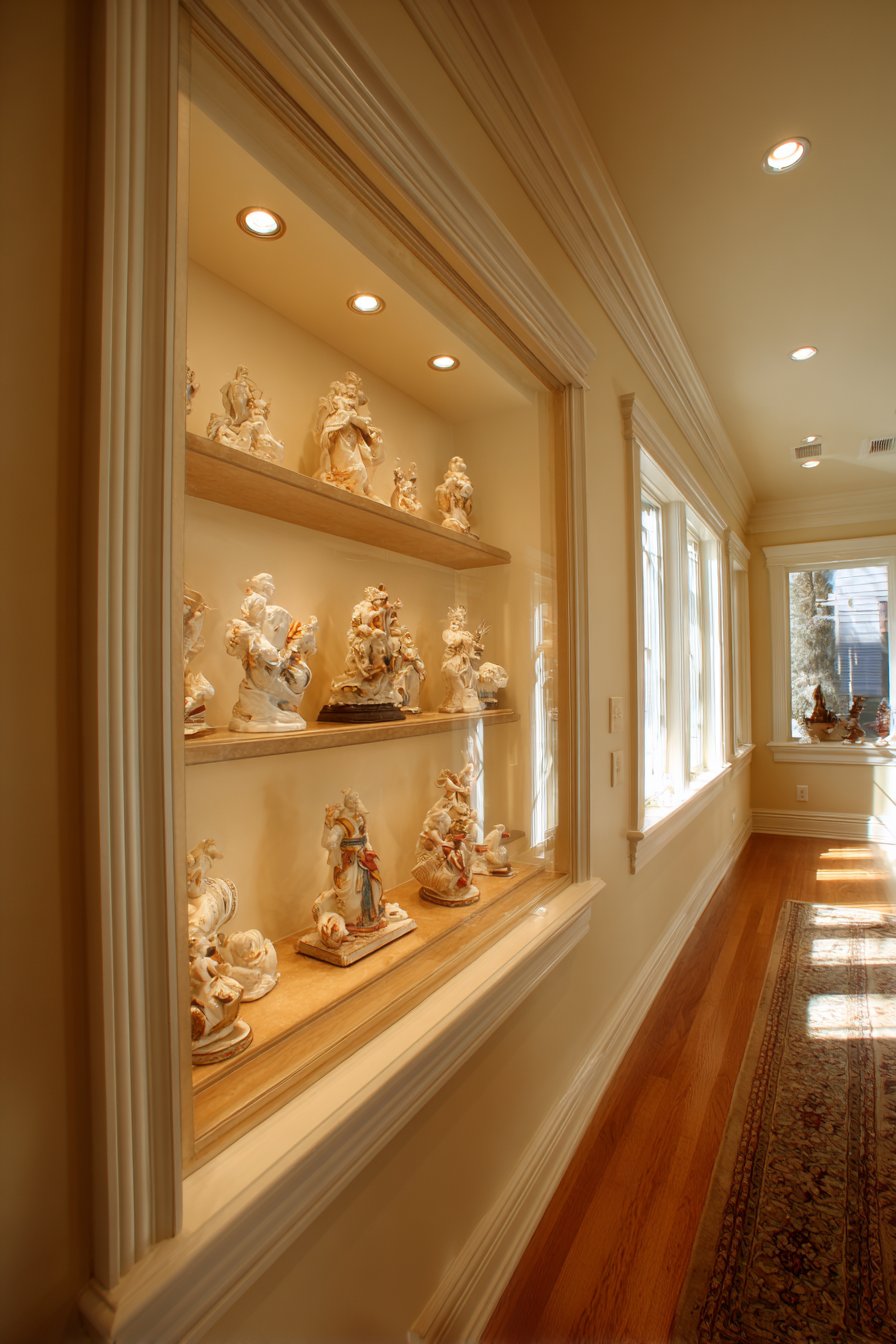
This display method works particularly well in dining room settings where the plate rack’s traditional context makes sense even as its use has evolved. The vertical slots provide natural spacing and separation, preventing figurines from touching and potentially damaging each other while creating ordered rhythm across the display. The slots’ depth and structure offer surprising stability for three-dimensional objects, holding pieces securely without the need for additional mounting or adhesive.
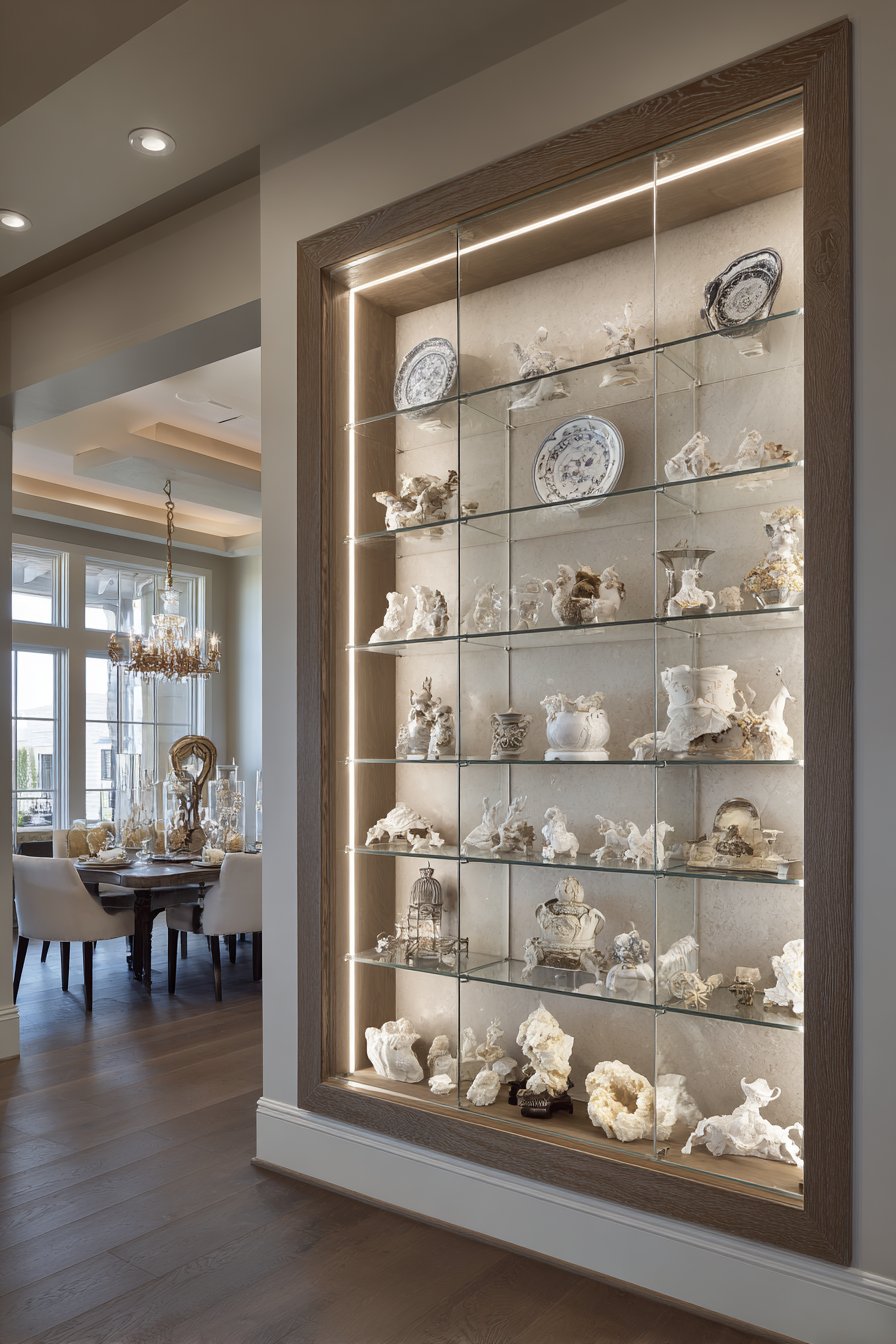
Soft overhead lighting creates gentle shadows that emphasize the rack’s architectural details and the figurines’ three-dimensional forms. The neutral wall behind allows both the oak rack and the displayed pieces to stand out without competing for attention. This setup demonstrates that effective display solutions don’t always require modern materials or expensive custom work—sometimes the best approach combines vintage craftsmanship with contemporary creative thinking.
Key Design Tips:
- Measure your figurines before committing to ensure they fit comfortably in the slots without forcing
- Use small museum putty dots on the lower shelf to prevent larger pieces from sliding
- Arrange pieces by color gradient or theme to create visual flow across the slots
- Dust regularly with a soft brush, as the vertical slots can trap dust particles
- Consider the rack’s visual weight when choosing wall placement—these pieces are substantial and need adequate surrounding space
8. Modern Acrylic Tiered Riser System
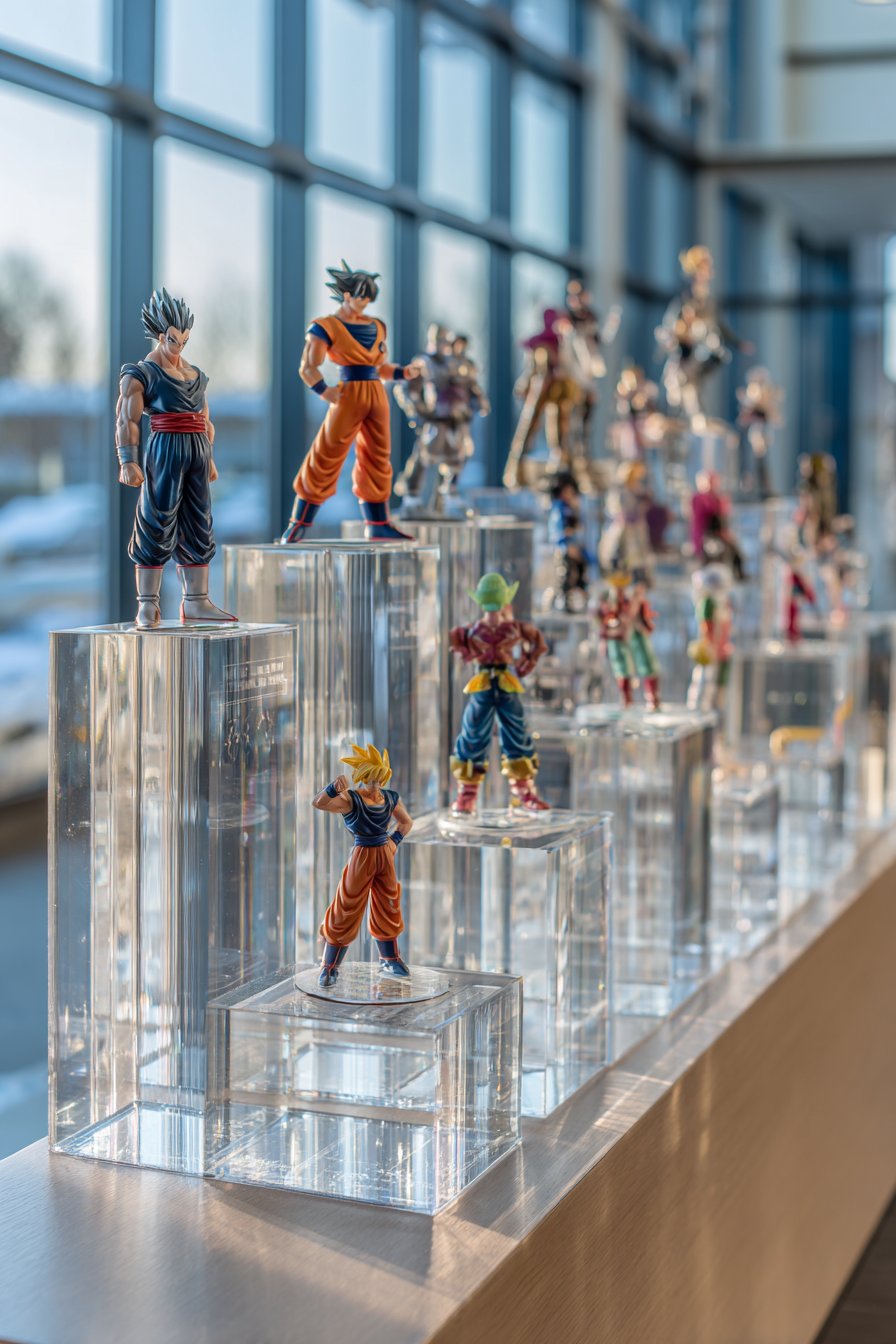
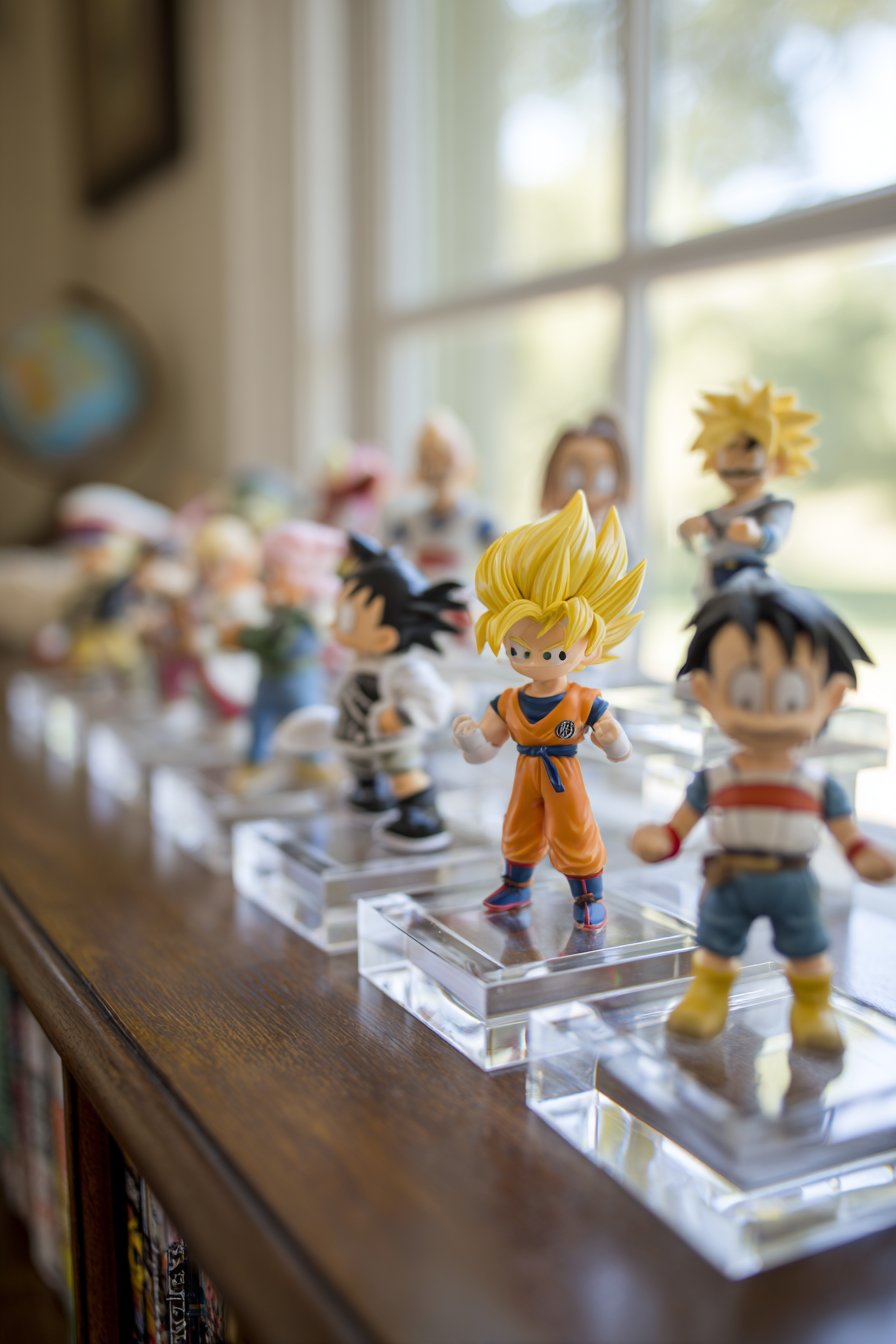
Simplicity and functionality converge in modern acrylic tiered risers that create stadium-style elevation for small to medium figurines without introducing visual clutter. The clear acrylic construction virtually disappears, becoming nearly invisible as it elevates your collection, ensuring that the figurines themselves remain the undisputed stars of the show. This approach works beautifully on console tables, bookshelves, or any flat surface where you want to maximize visibility for every piece in a densely populated display.
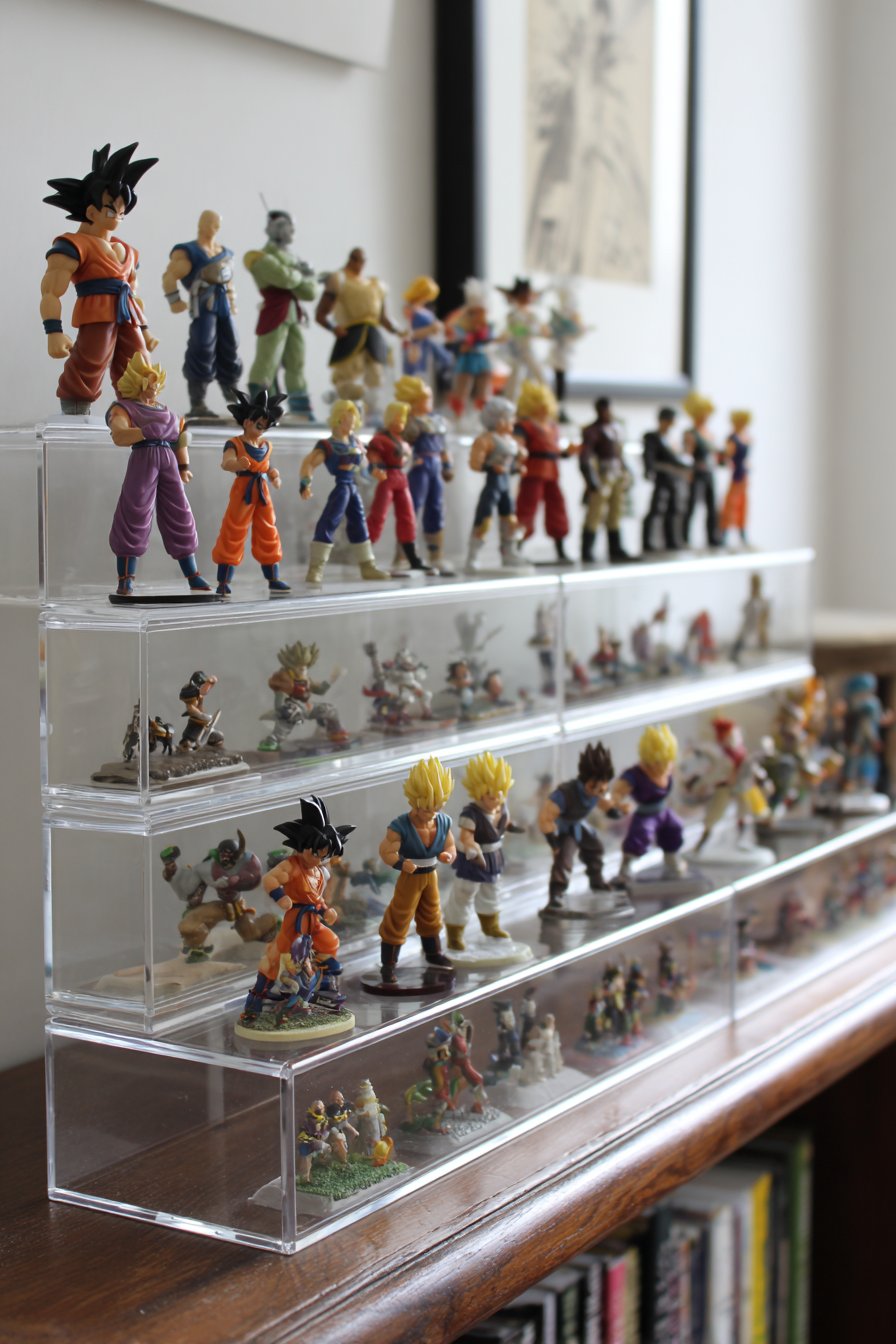
The tiered arrangement solves one of the most common figurine display challenges—back-row pieces getting lost behind front-row items. By creating progressive elevation, each figurine receives proper visibility regardless of its position in the arrangement. This proves particularly valuable for collections of similar-sized pieces where height variation is minimal. Anime figures benefit from this approach, as do collectible toys and miniature sculptures that share comparable dimensions.
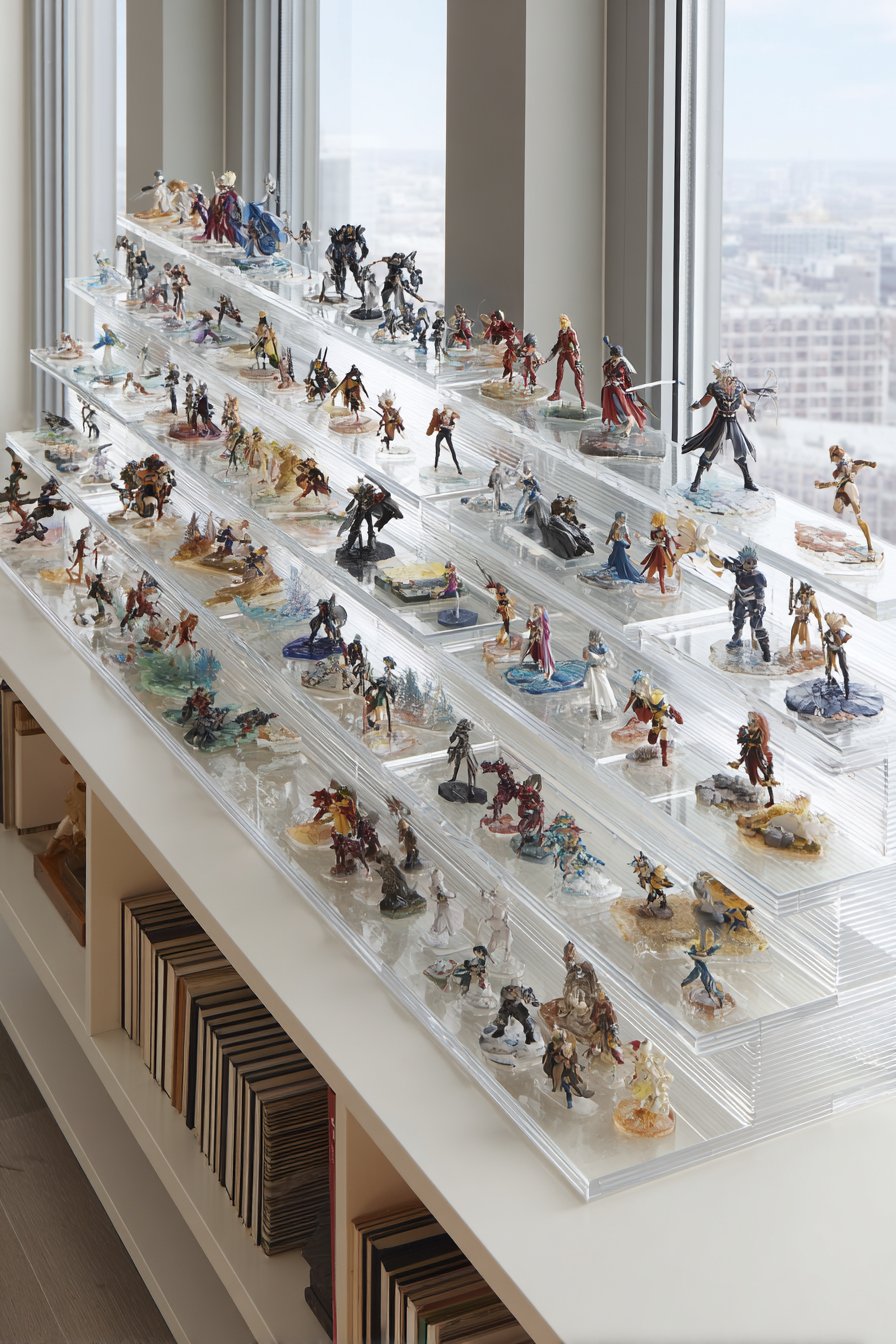
Natural light passing through the transparent acrylic creates minimal visual obstruction while subtly refracting through the material, sometimes adding unexpected highlights and sparkles to the display. The lightweight nature of acrylic risers means they’re easily repositioned and reconfigured as your collection evolves, offering flexibility that built-in solutions cannot match. This adaptability makes them ideal for collectors who frequently acquire new pieces or enjoy regularly refreshing their displays.
Key Design Tips:
- Choose riser heights in increments (2-inch, 4-inch, 6-inch) to create clear visual separation
- Limit each riser tier to pieces of similar size for cohesive presentation
- Clean acrylic regularly with appropriate cleaners to prevent scratching and maintain transparency
- Arrange risers in straight lines for modern aesthetics or staggered patterns for casual appeal
- Use the tallest risers for the back row and progressively shorter risers moving forward
9. Built-In Entertainment Center Integration
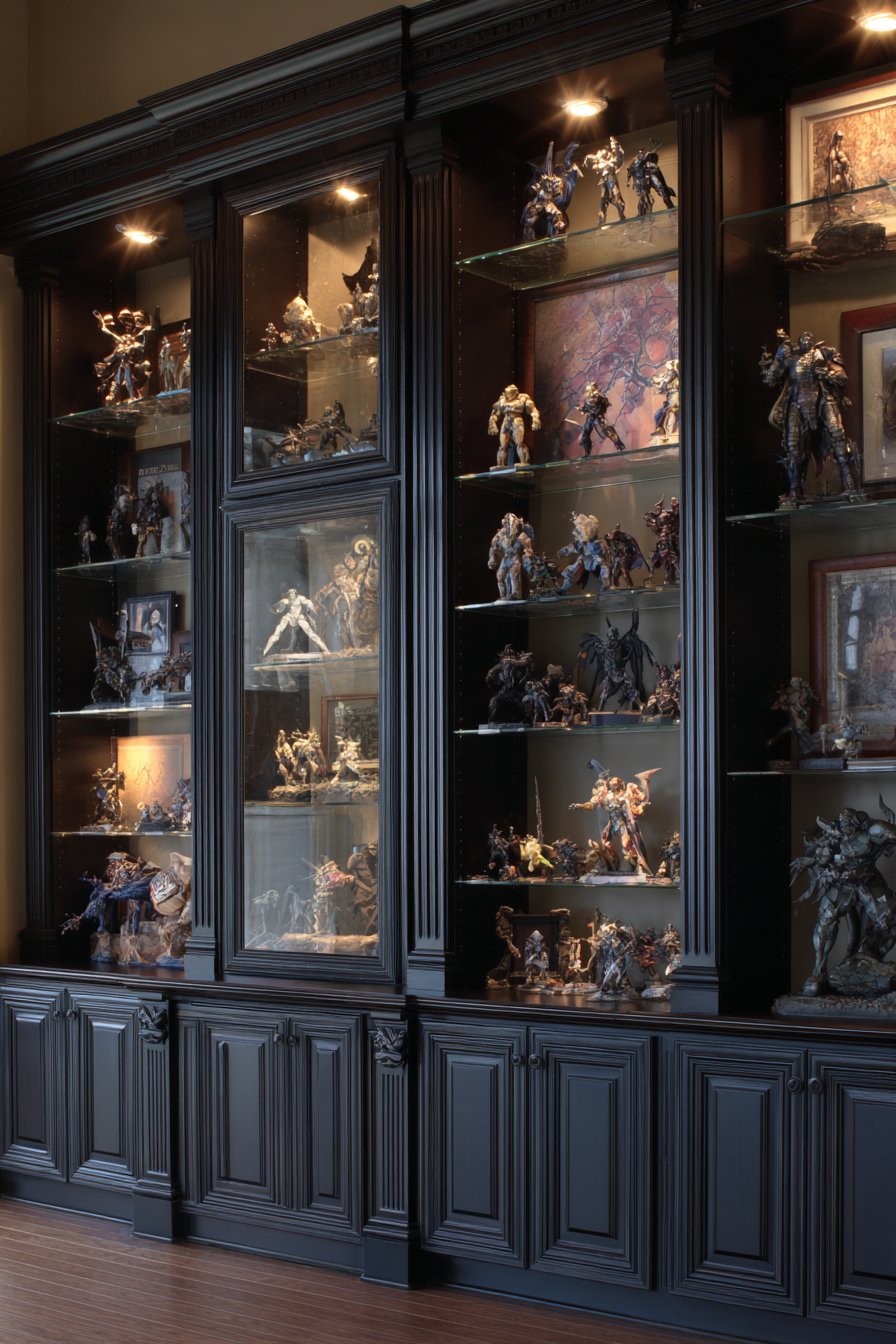
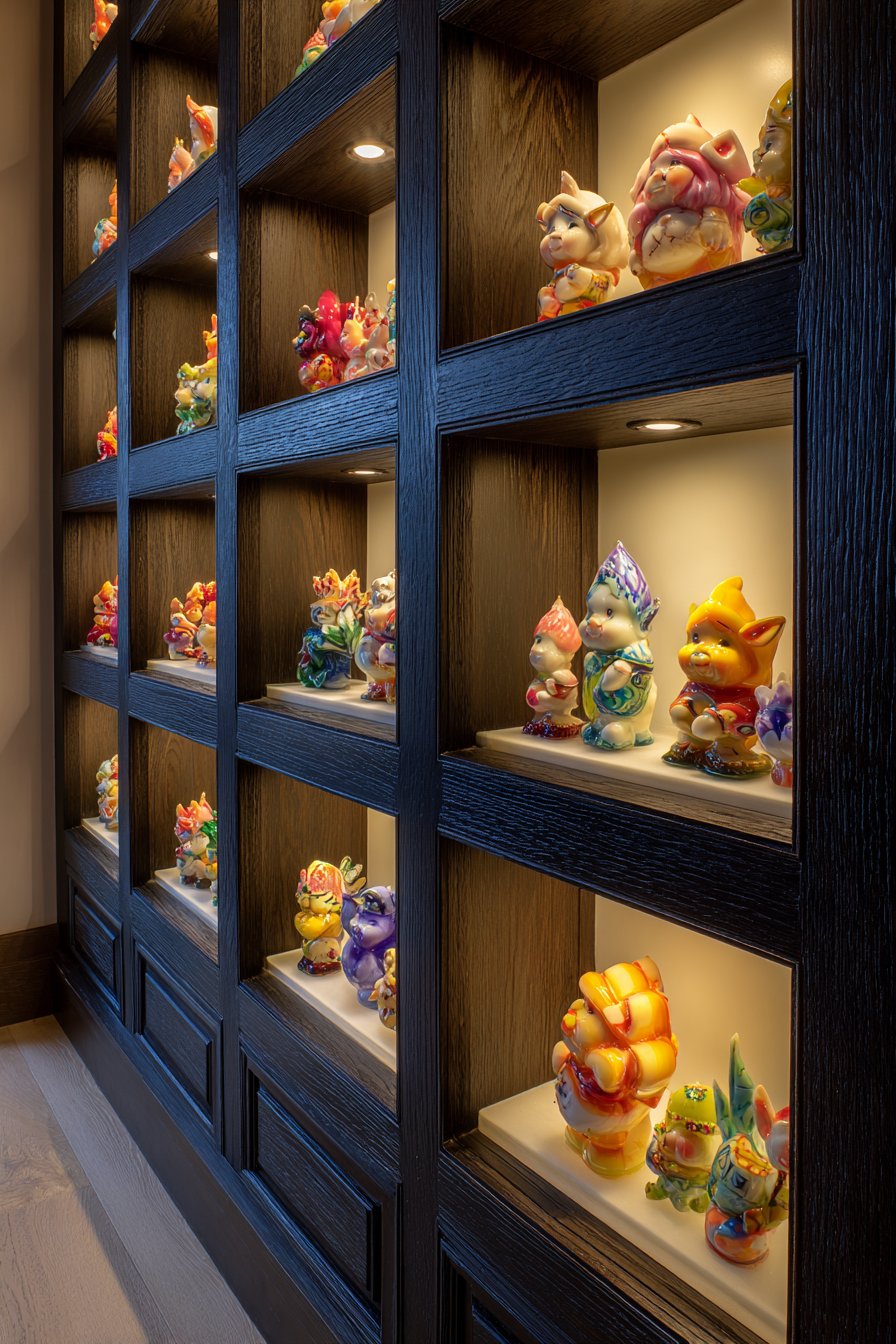
Seamless integration of figurine display within existing furniture represents sophisticated space planning, and built-in shelving within a living room entertainment center creates dedicated illuminated sections for collections without requiring additional floor space. The custom millwork approach means display areas are designed specifically for your collection’s needs, with glass-fronted compartments providing protection while individual LED puck lights ensure each section receives appropriate illumination.
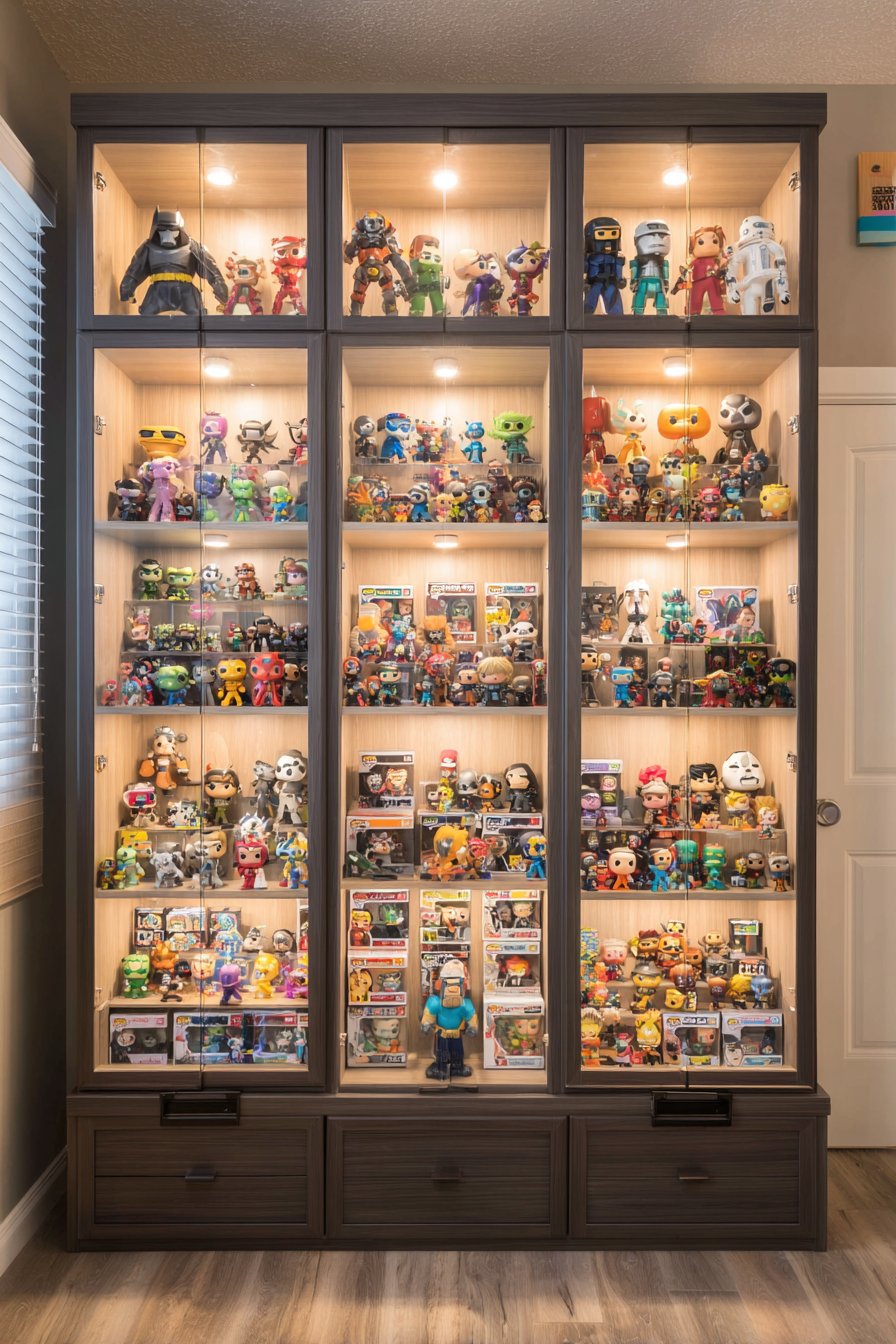
Grouping figurines by color, theme, or size within these compartments creates visual cohesion that prevents the overall entertainment center from feeling cluttered or chaotic. The dark espresso finish of the cabinetry provides dramatic contrast that makes lighter-colored figurines pop with particular intensity, while the glass fronts add a layer of formality and protection that signals these items are special, separate from everyday media storage.
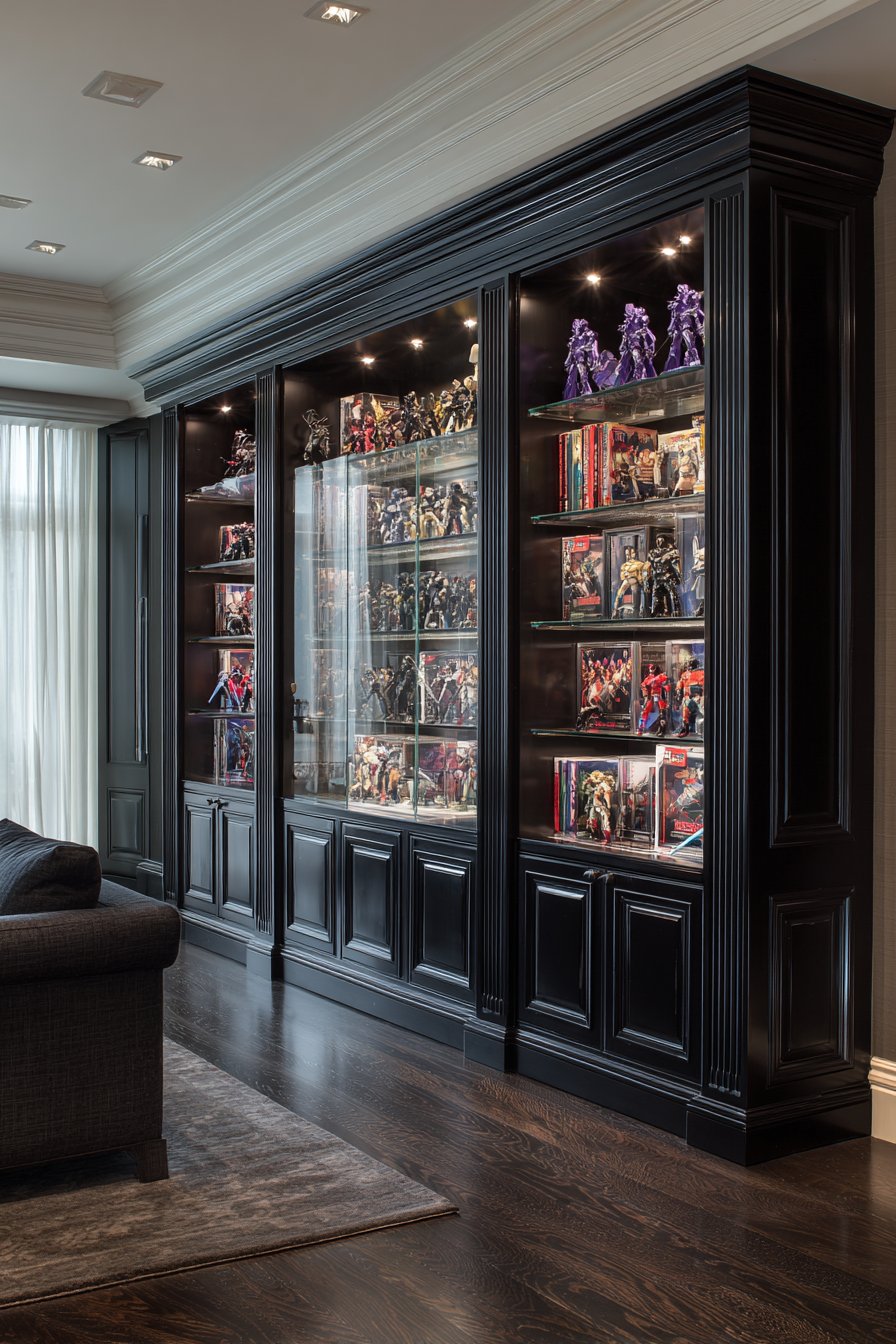
This integrated approach transforms functional furniture into a showcase piece that serves multiple purposes—it houses electronics and media while celebrating your collection in equal measure. The balanced exposure created by professional interior photography captures how display and function coexist harmoniously, proving that collections don’t require separate, dedicated furniture when thoughtful integration is possible.
Key Design Tips:
- Request adjustable shelving during the design phase to accommodate growing or changing collections
- Use LED puck lights with warm color temperatures to create inviting rather than sterile illumination
- Keep glass doors closed when not actively viewing to protect figurines from dust accumulation
- Balance figurine displays with other decorative elements to prevent the piece from feeling too busy
- Consider varying compartment sizes to accommodate both small delicate pieces and larger statement figurines
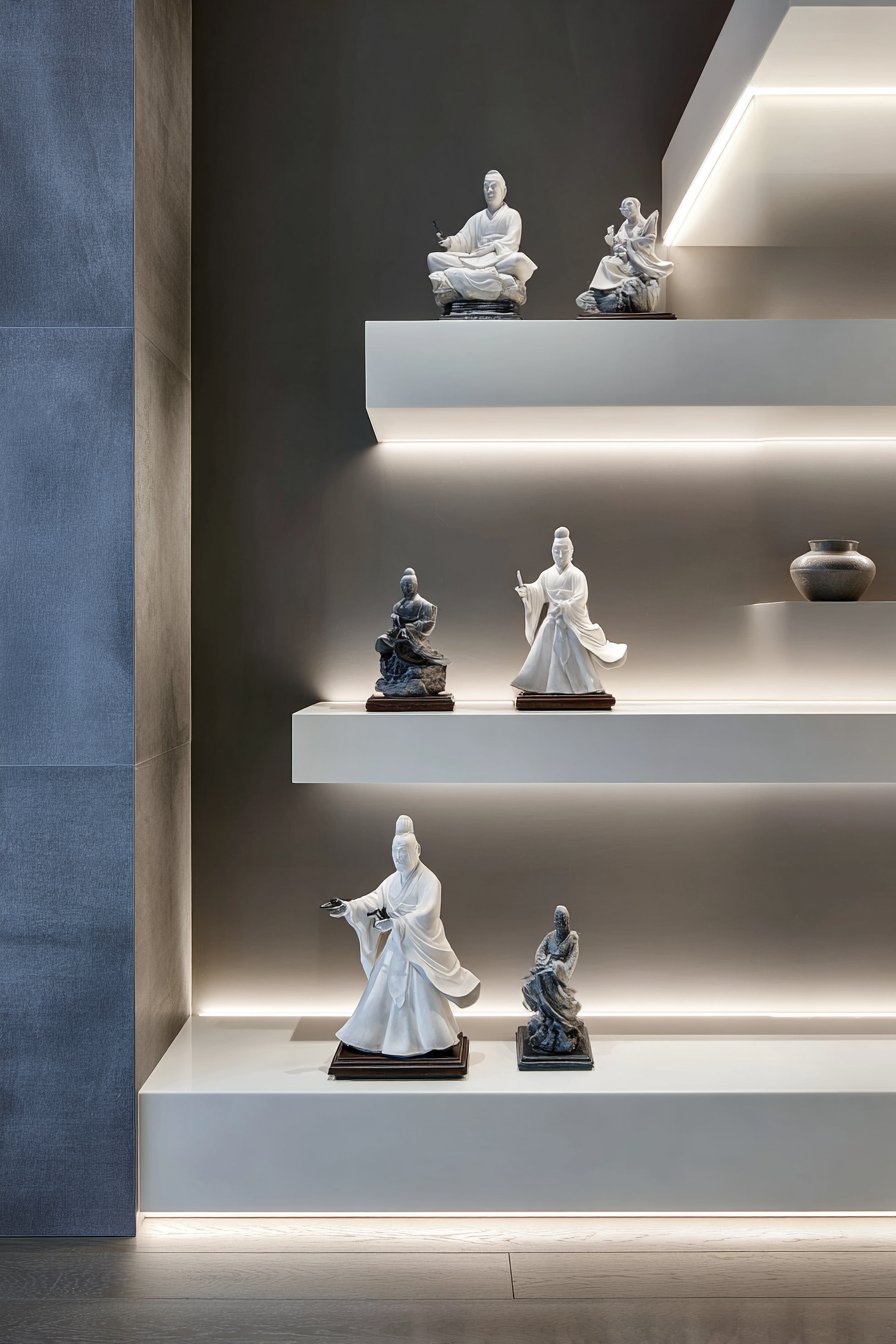
10. Minimalist Floating Shelf with Hidden LED Lighting
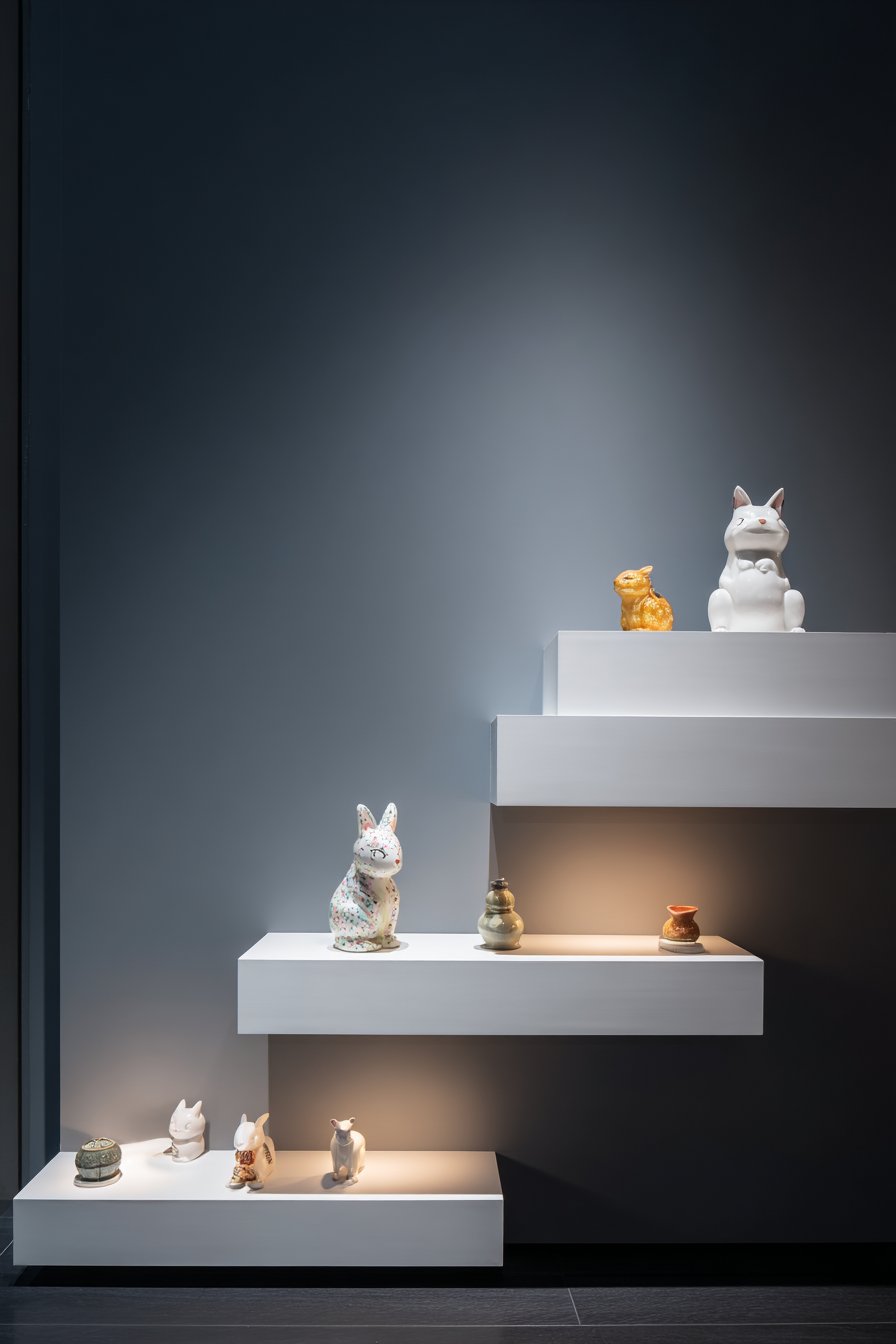
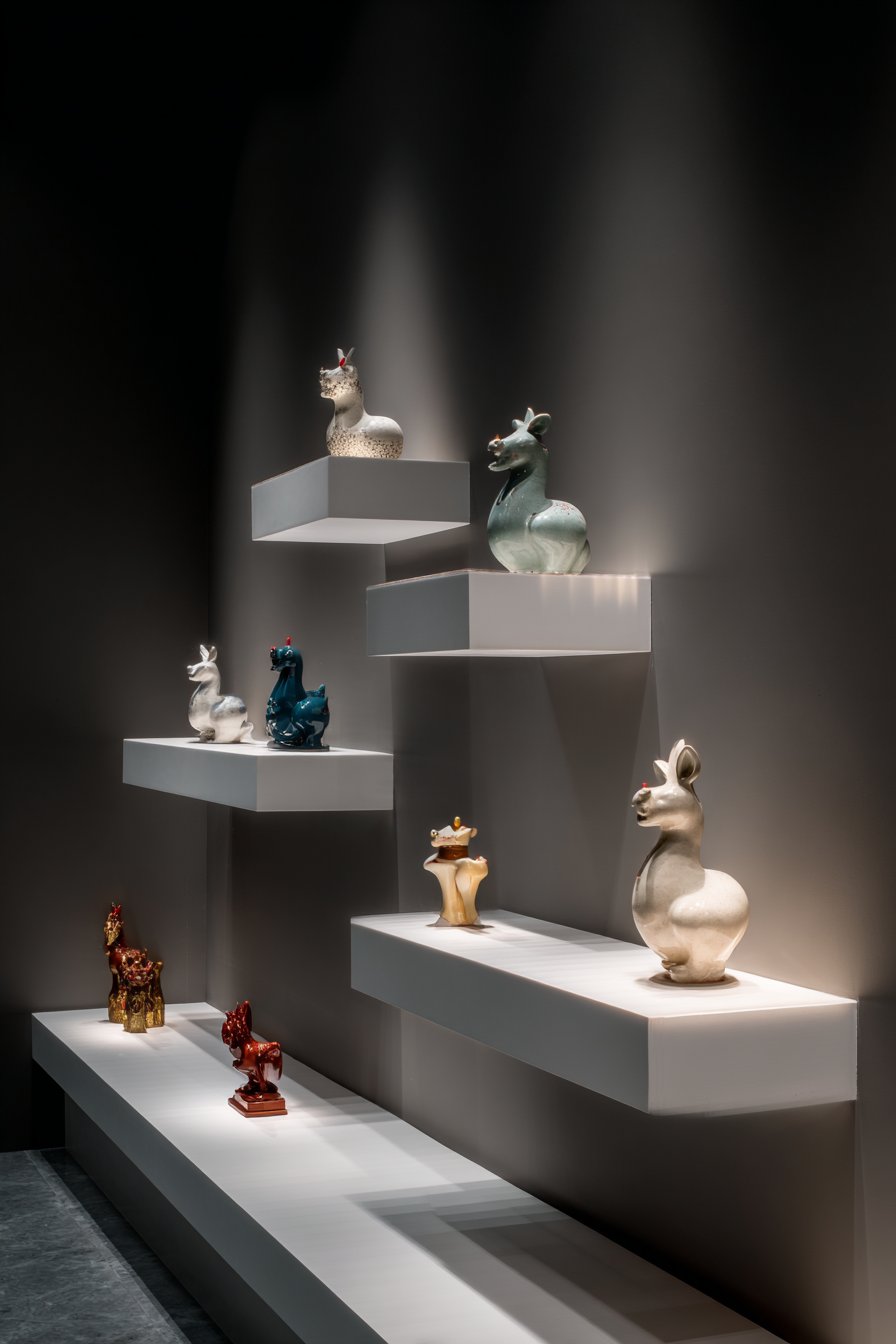
Less is indeed more when minimalist white lacquered floating shelves with hidden LED under-lighting create dramatic presentation for carefully selected figurines against a charcoal gray accent wall. This approach embraces negative space as a design element, with three staggered shelves of varying lengths displaying only 3-5 figurines each—a deliberate restraint that elevates each piece to artwork status. The generous spacing between items allows proper appreciation of individual forms, details, and artistic merit.
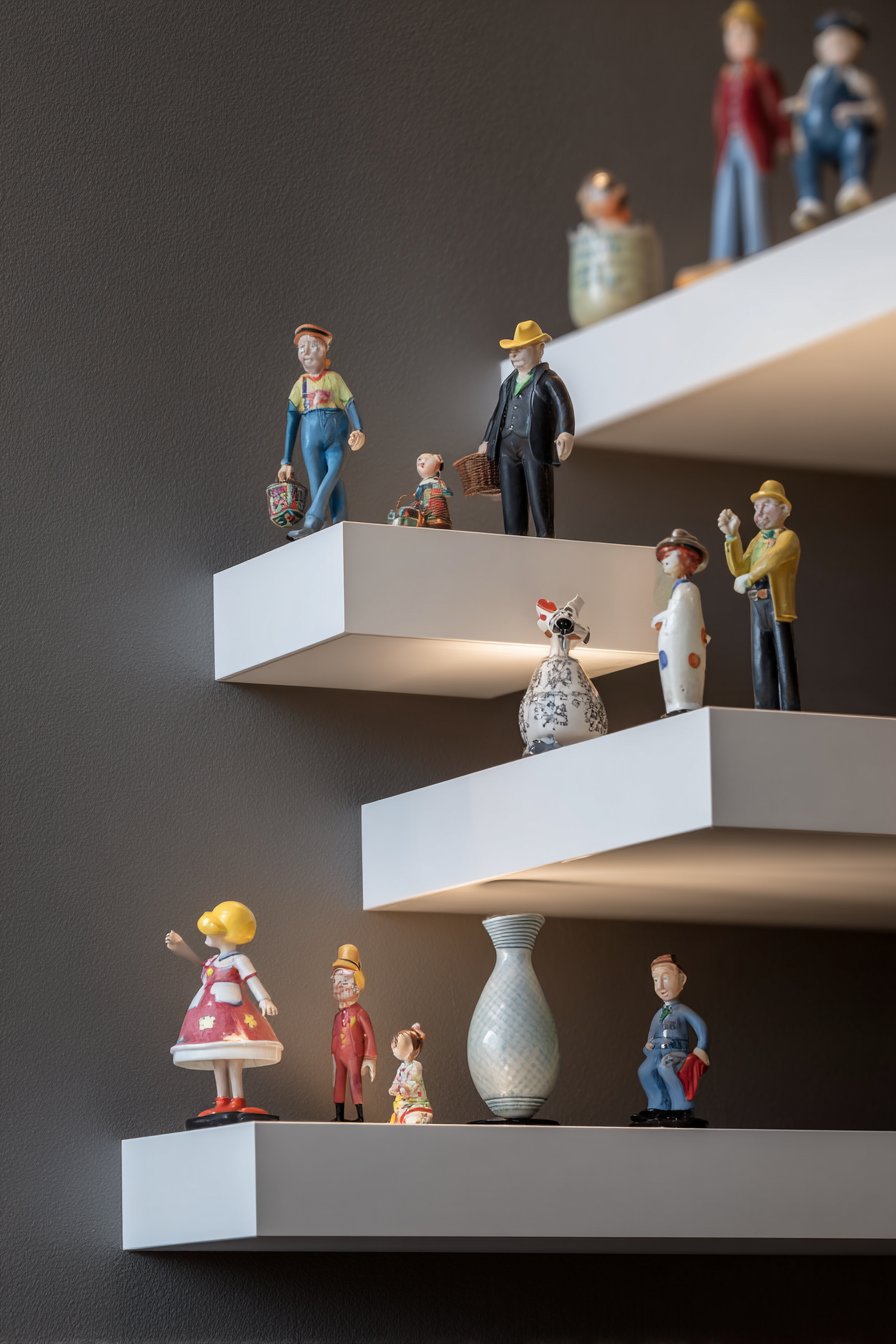
The hidden LED lighting beneath each shelf creates a floating effect that appears almost magical, as shelves seem to hover weightlessly while casting a soft upward glow that emphasizes figurines’ silhouettes and creates atmospheric drama. This lighting technique is particularly effective for pieces with interesting profiles or translucent elements that become luminous when backlit. The contrast between the bright white shelves and the deep charcoal wall amplifies the floating effect while creating sophisticated visual tension.
This minimalist approach requires careful curation—choosing which pieces earn shelf space becomes an exercise in discrimination and taste. The selected figurines should represent your very best pieces or hold particular significance, as they’ll receive constant attention and scrutiny. This display method works beautifully in contemporary homes where clean lines and uncluttered spaces define the aesthetic, proving that restraint can be more impactful than abundance.
Key Design Tips:
- Invest in quality LED strips with consistent color temperature to avoid uneven lighting
- Install dimmer switches to adjust lighting intensity for different moods and times of day
- Rotate displayed pieces monthly to give different items their moment in the spotlight
- Ensure shelves are level—even slight tilts become obvious in minimalist presentations
- Choose figurines with varying heights and forms to create visual interest despite limited quantity
11. Traditional Corner Curio Cabinet with Mirrored Back
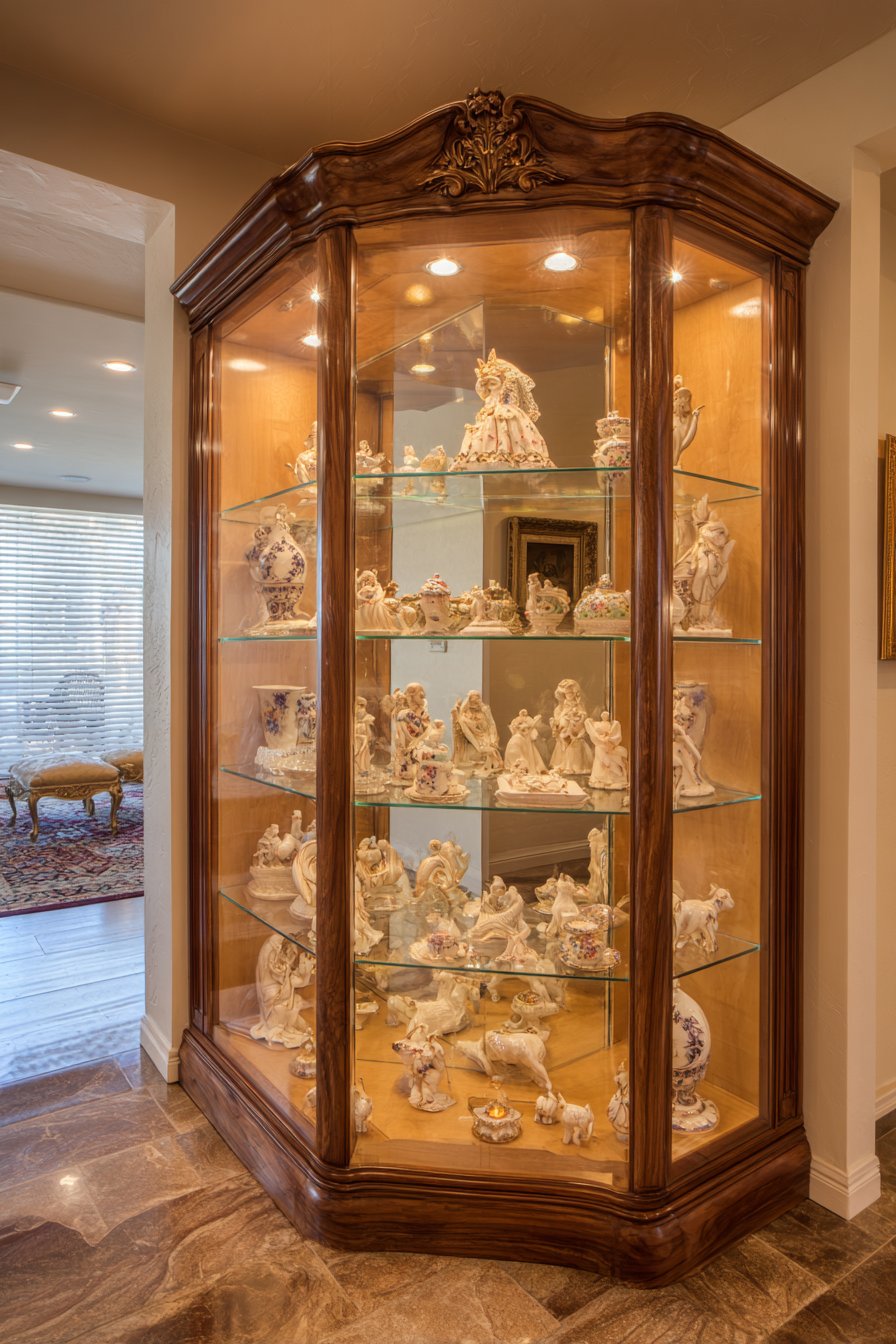
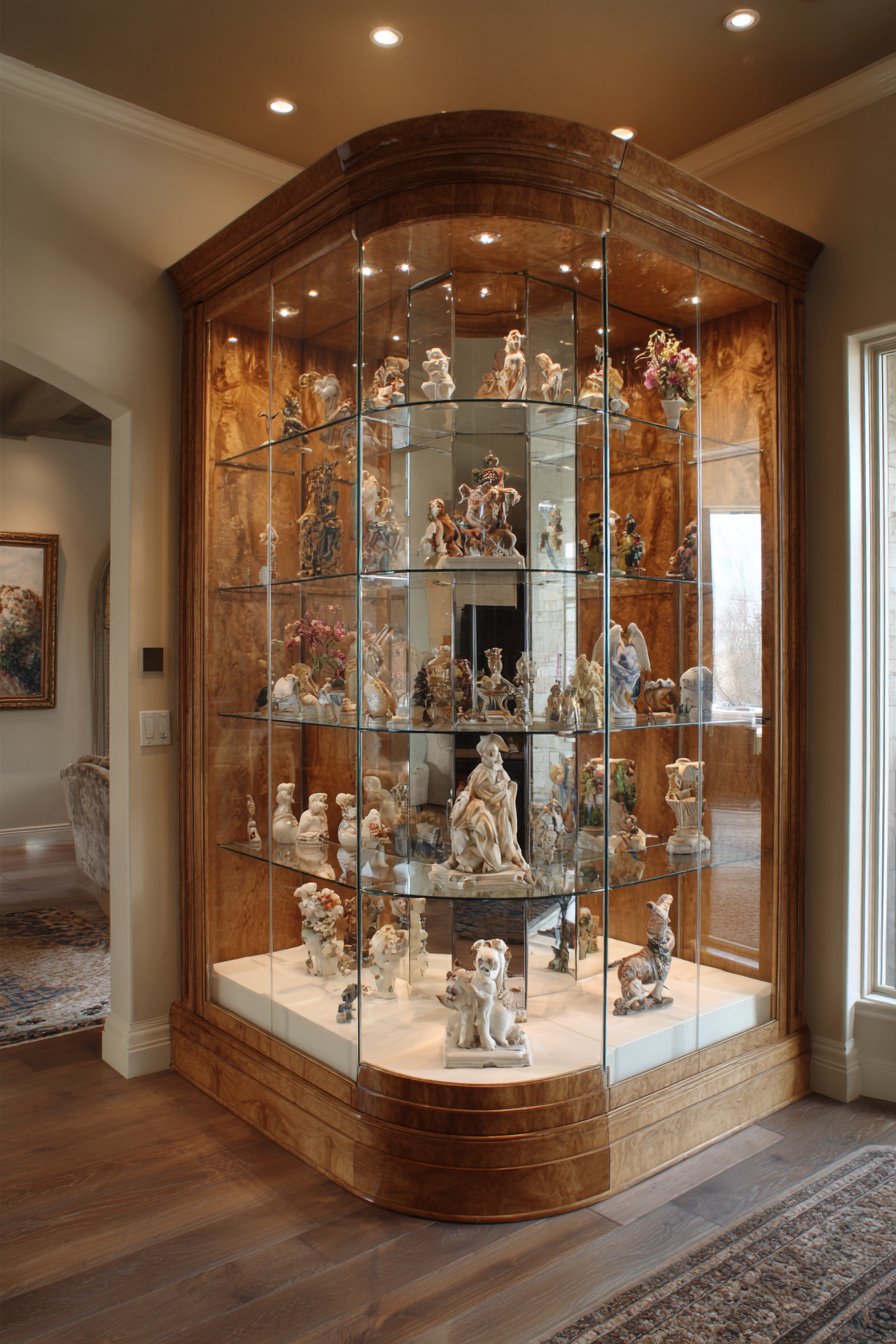
Corner spaces often go underutilized, but a traditional corner curio cabinet with curved glass front transforms awkward angles into prime display real estate. The cherry wood construction brings warmth and traditional elegance, while the mirrored back panel serves double duty—multiplying the visual presence of each figurine while maximizing light reflection throughout the display. This creates depth and dimension that a solid back panel cannot achieve, making the cabinet’s interior feel more spacious and the collection more abundant.
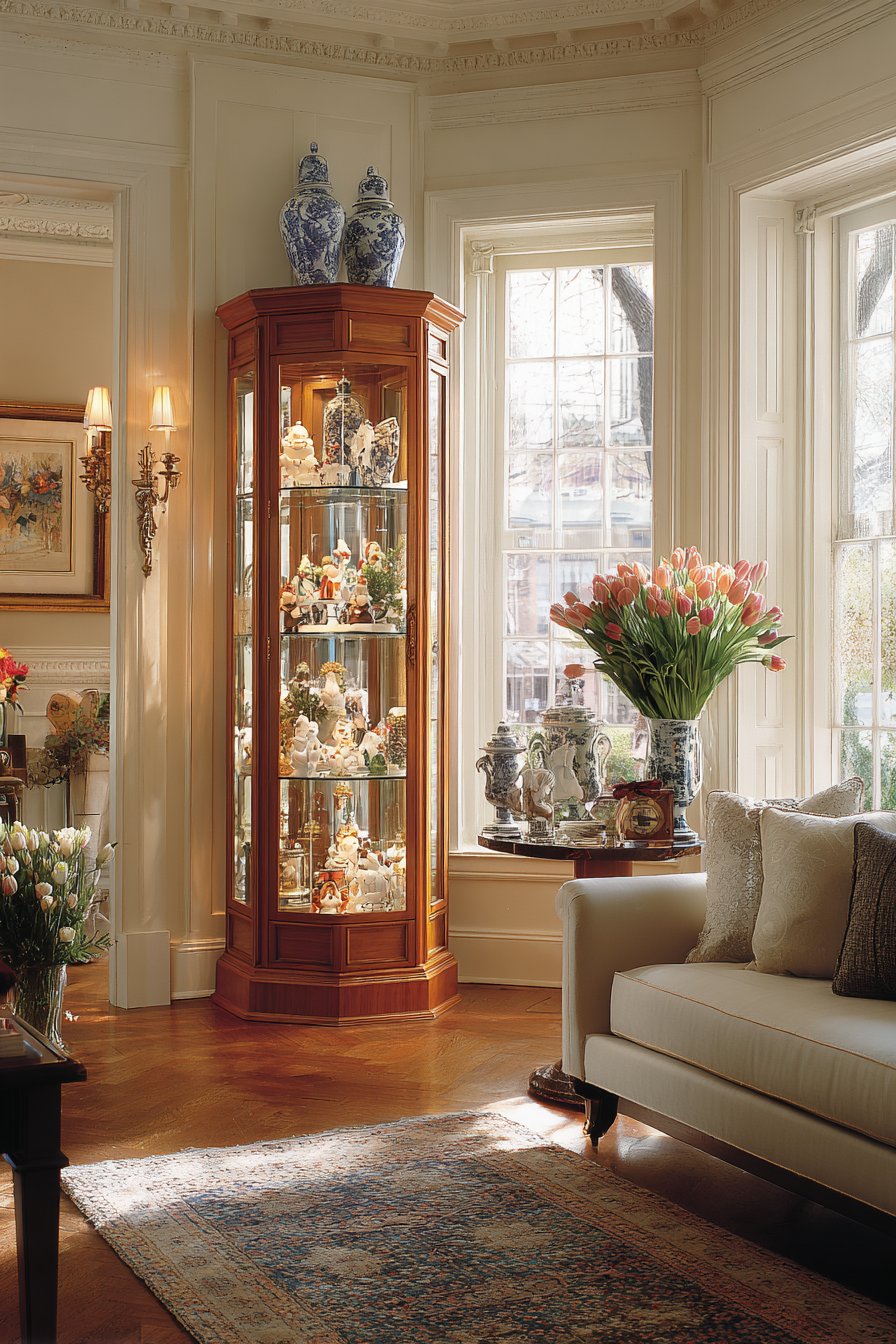
The five adjustable glass shelves with integrated plate grooves represent thoughtful engineering for figurine display, providing secure positioning that prevents pieces from sliding or tipping. Delicate Lladró, Hummel, and Dresden figurines—pieces often inherited or collected over decades—find worthy housing in this traditional presentation. The arrangement strategy of placing taller pieces on lower shelves and smaller items elevated follows classical display principles that create visual stability while ensuring adequate clearance and visibility for each level.
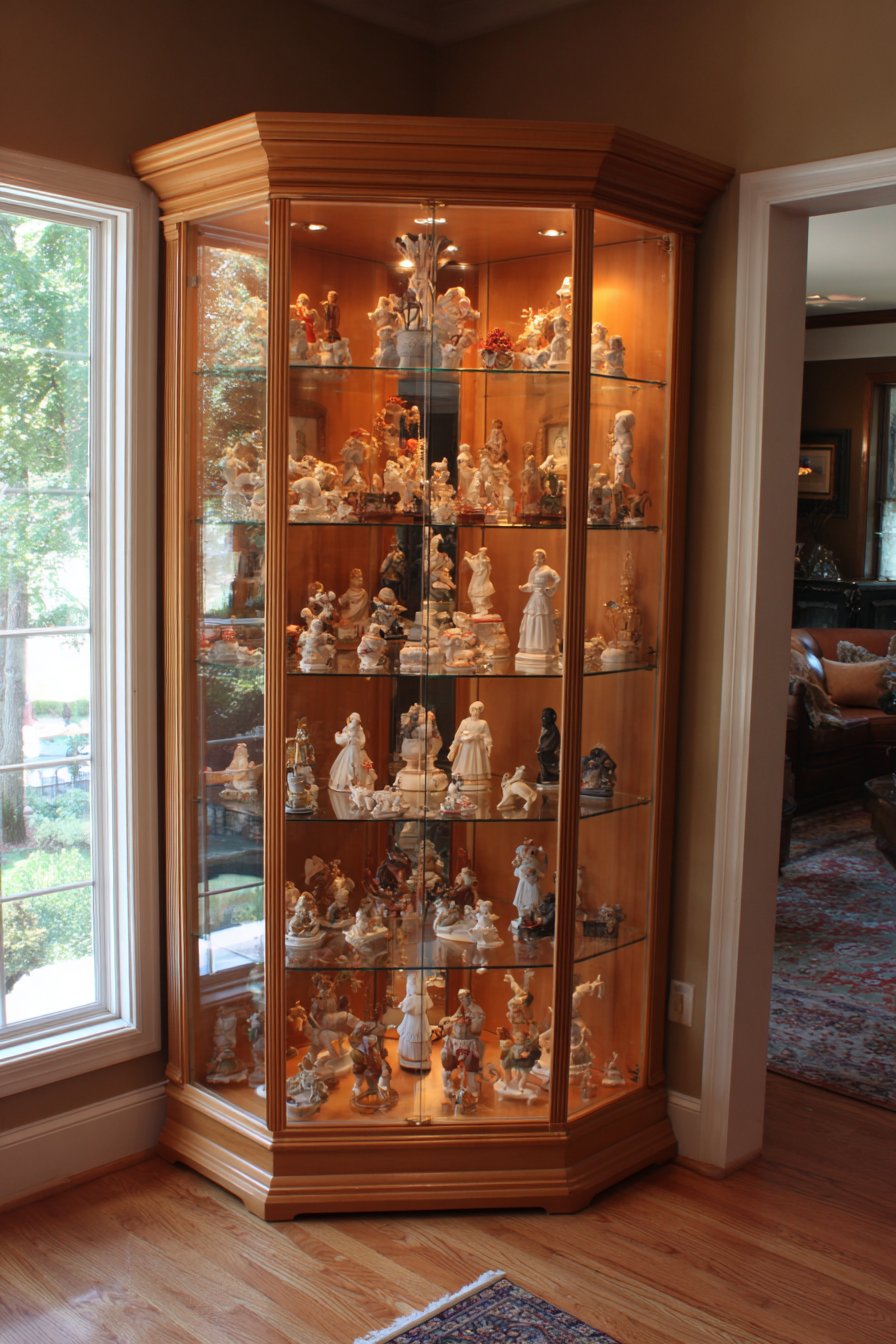
Built-in cabinet lighting illuminates the collection from above while the mirrored backing catches and redistributes this light throughout the interior, eliminating dark corners and ensuring even illumination across all shelves. This traditional display approach suits formal living rooms and classic interior styles, offering protection and presentation that honors the value and delicacy of fine porcelain collections.
Key Design Tips:
- Clean the curved glass using circular motions to prevent streaking on the curved surface
- Use the plate grooves strategically for figurines with flat bases that benefit from angled presentation
- Position the cabinet near a window but not in direct sunlight to prevent fading and heat damage
- Group figurines by manufacturer or style to create cohesive shelf arrangements
- Keep a small level inside the cabinet to ensure shelves remain properly adjusted over time
12. Gallery Wall Picture Ledge Arrangement
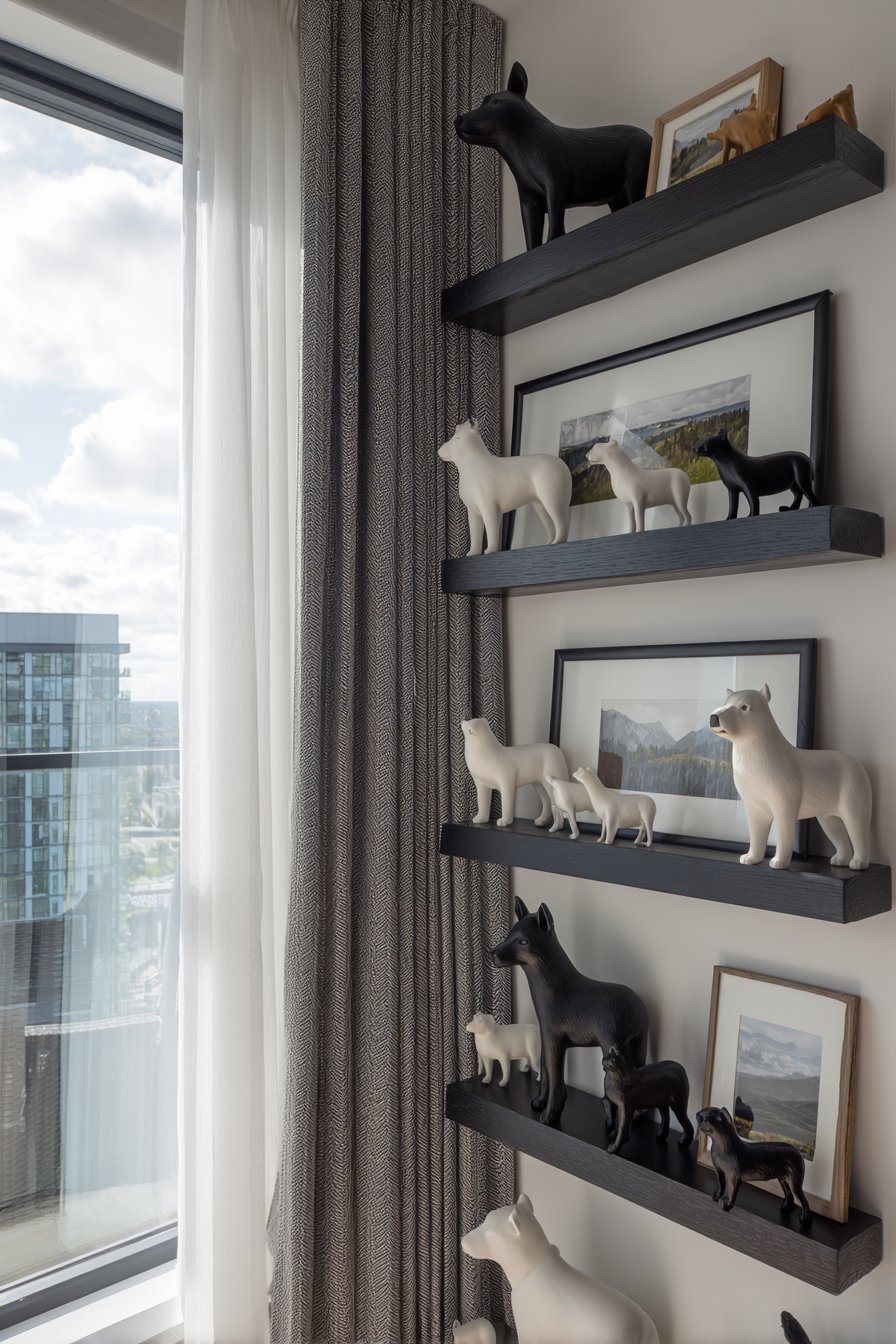
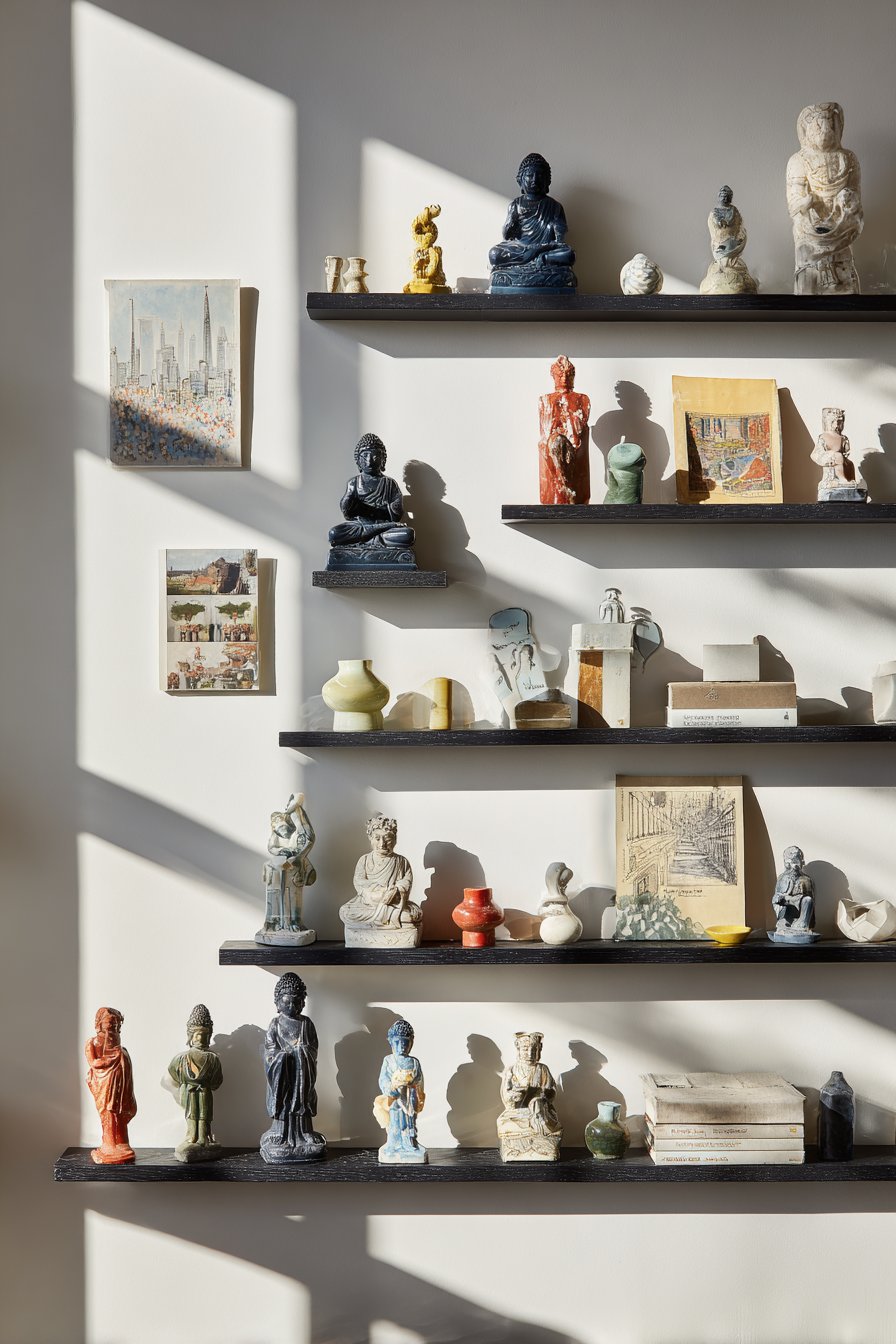
Flexibility defines the appeal of deep picture ledge shelves arranged in a gallery wall configuration, where varying lengths from 24 to 48 inches create visual rhythm along a bedroom wall. Unlike traditional fixed shelving, picture ledges with their front lips allow for both flat-backed and three-dimensional figurine display while making rotation and rearrangement remarkably simple. This accessibility appeals to collectors who view their displays as living, evolving presentations rather than static installations.
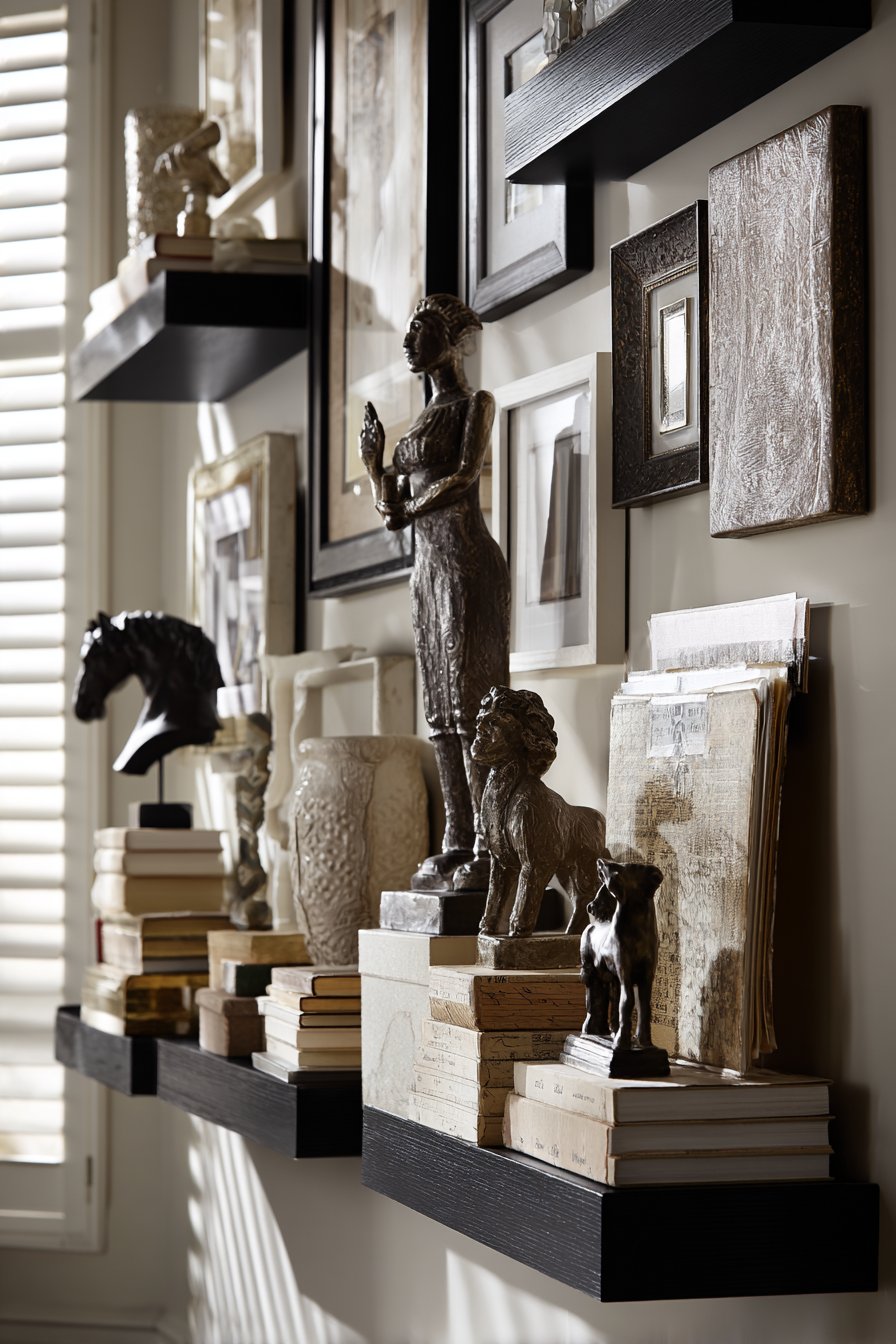
The black-painted ledges provide strong linear elements against the wall while the depth allows for layering—small art prints and photographs can stand behind or alongside figurines, creating dimensional vignettes that add context and personality to the collection. This mixing of two-dimensional and three-dimensional elements prevents the display from feeling too theme-park-like or overwhelmingly focused on figurines alone, instead creating balanced, livable design.
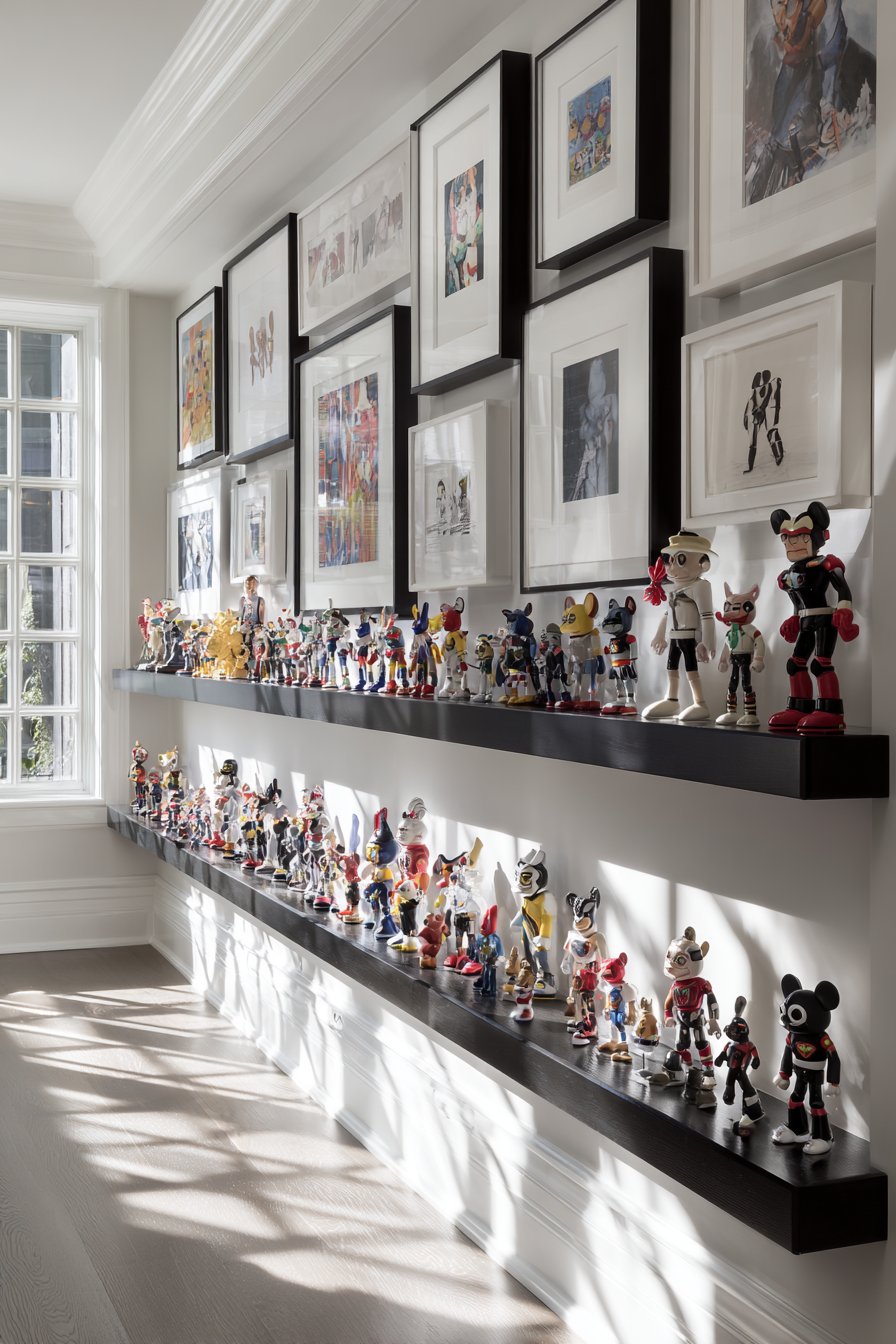
Natural window light from the side creates interesting shadow play and depth, with shadows shifting throughout the day to provide constantly changing perspectives on familiar pieces. The casual arrangement style this system enables suits bedrooms and personal spaces where perfection feels less important than personality and accessibility. Pieces can be swapped out on a whim without tools or effort, keeping the display fresh and preventing collector fatigue.
Key Design Tips:
- Install ledges at varying intervals (12-18 inches apart) to accommodate different sized items
- Use the front lip strategically—lean flat items against it while sitting figurines on the ledge itself
- Create odd-numbered groupings (3, 5, 7 items) on each ledge for more dynamic visual interest
- Mix textures and forms—ceramic, resin, metal—to create tactile variety even in monochromatic schemes
- Embrace seasonal updates, swapping pieces to reflect holidays, seasons, or simply your evolving taste
13. Industrial Vertical Étagère Solution
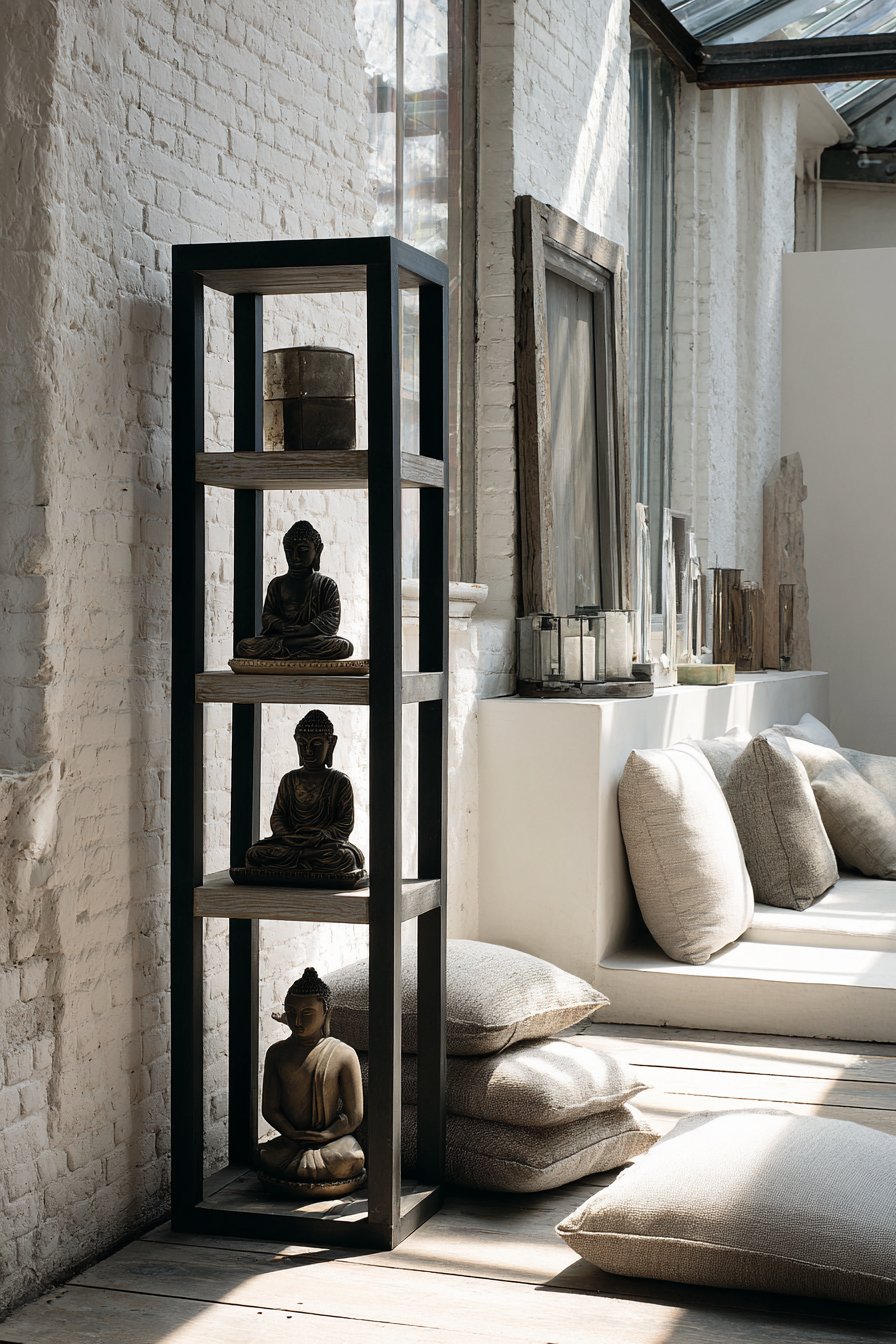
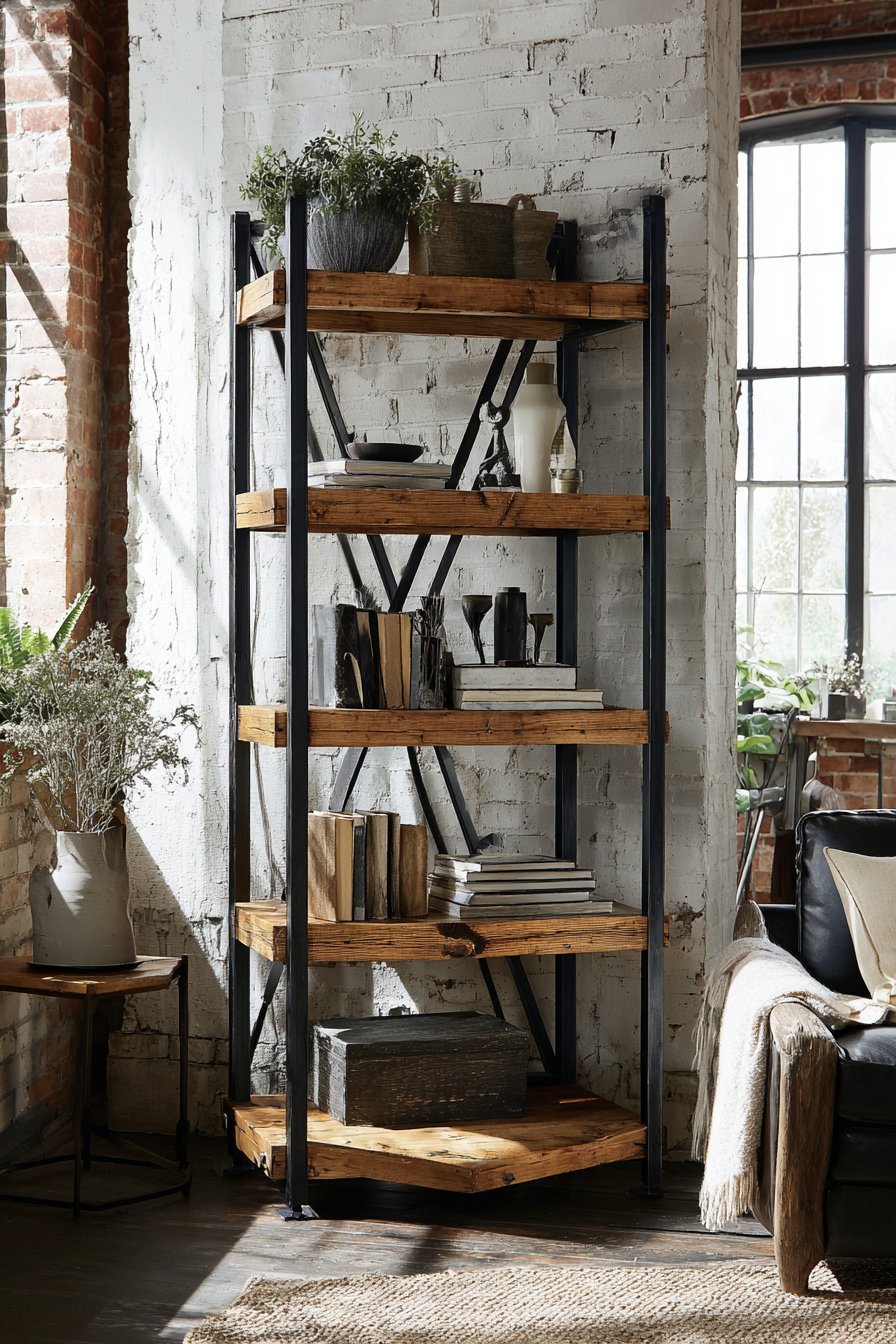
Height becomes an asset when floor space is limited, and a tall, narrow étagère with five open shelves maximizes vertical real estate while maintaining a minimal footprint. The industrial aesthetic of black metal framework combined with reclaimed wood shelving creates character and visual interest that complements eclectic figurine collections. This marriage of materials—rough wood against refined metal—establishes an industrial-chic foundation that suits loft-style living spaces and contemporary urban homes.
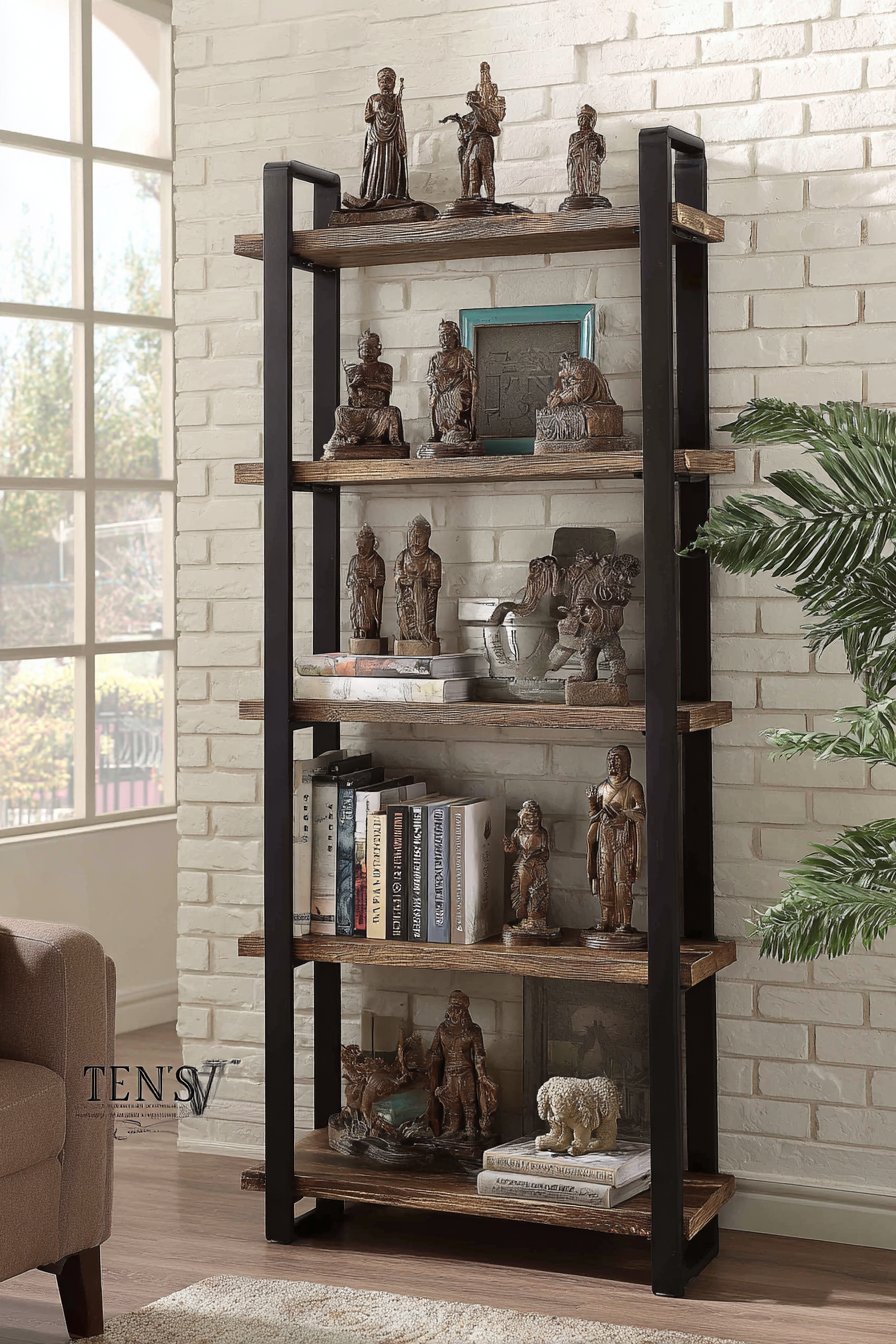
The vertical emphasis of this piece naturally draws the eye upward, creating visual height in the room while providing ample display space for growing collections. The open construction ensures pieces remain visible from multiple angles while the sturdy industrial materials suggest permanence and quality. Mixed materials and finishes within the figurine collection echo the mixed-material aesthetic of the étagère itself, creating harmonious conversation between display and displayed.
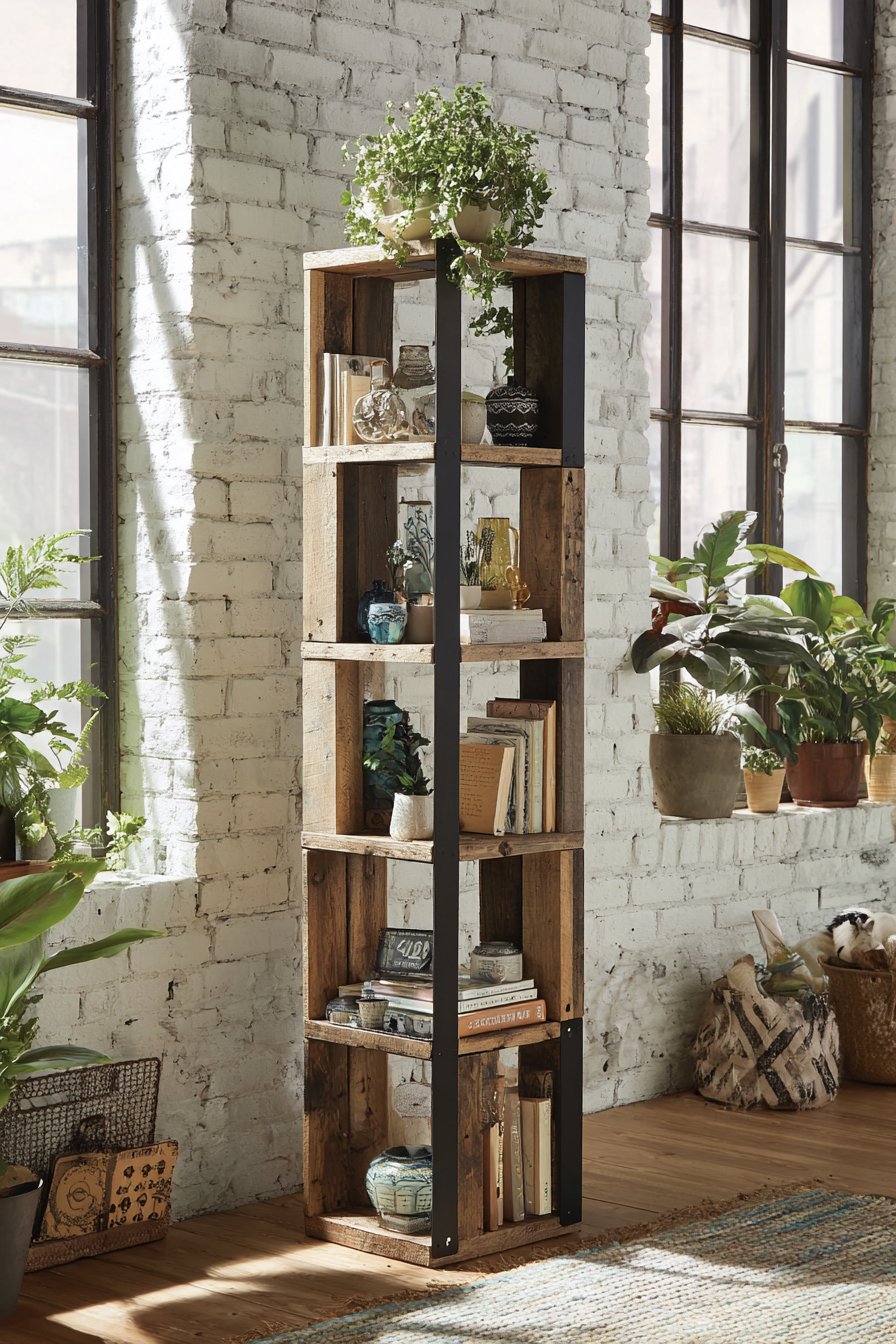
Positioning against a white brick wall in a loft-style space enhances the industrial character while providing textural backdrop that adds dimension without competing for attention. Abundant natural light typical of loft spaces ensures all shelf levels receive adequate illumination, preventing lower shelves from falling into shadow. This display solution proves that height restrictions can be advantages when properly exploited.
Key Design Tips:
- Secure the étagère to the wall with brackets to prevent tipping, especially with valuable items on upper shelves
- Distribute weight evenly across shelves, placing heavier items lower for stability
- Vary the fullness of each shelf—some densely styled, others minimally arranged—to create visual breathing room
- Use the industrial aesthetic as license to display pieces with edge—quirky, unexpected, or boldly colored figurines
- Consider the view from seated positions in the room, ensuring pieces aren’t positioned too high for comfortable viewing
14. Individual Glass Cloche Display System
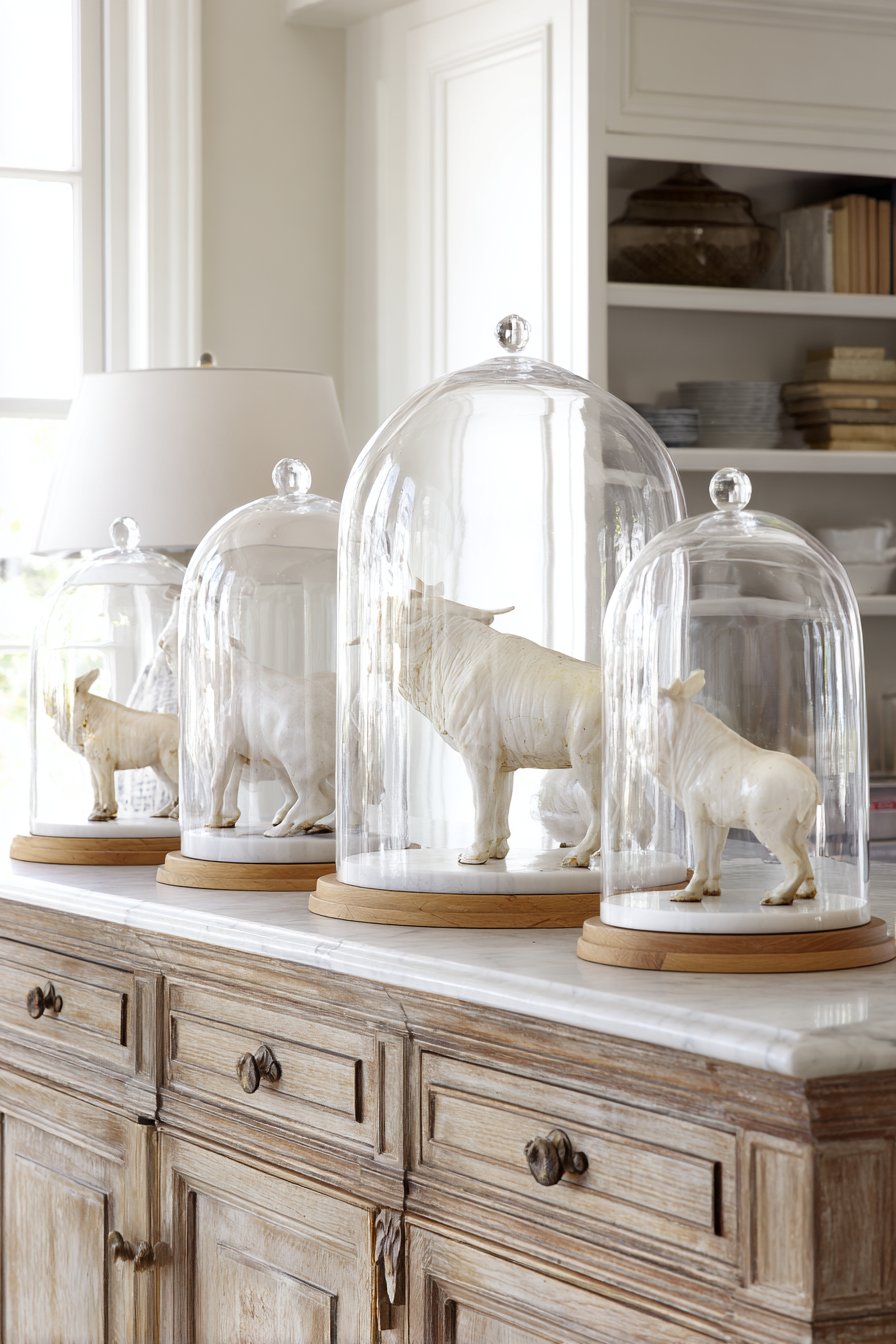
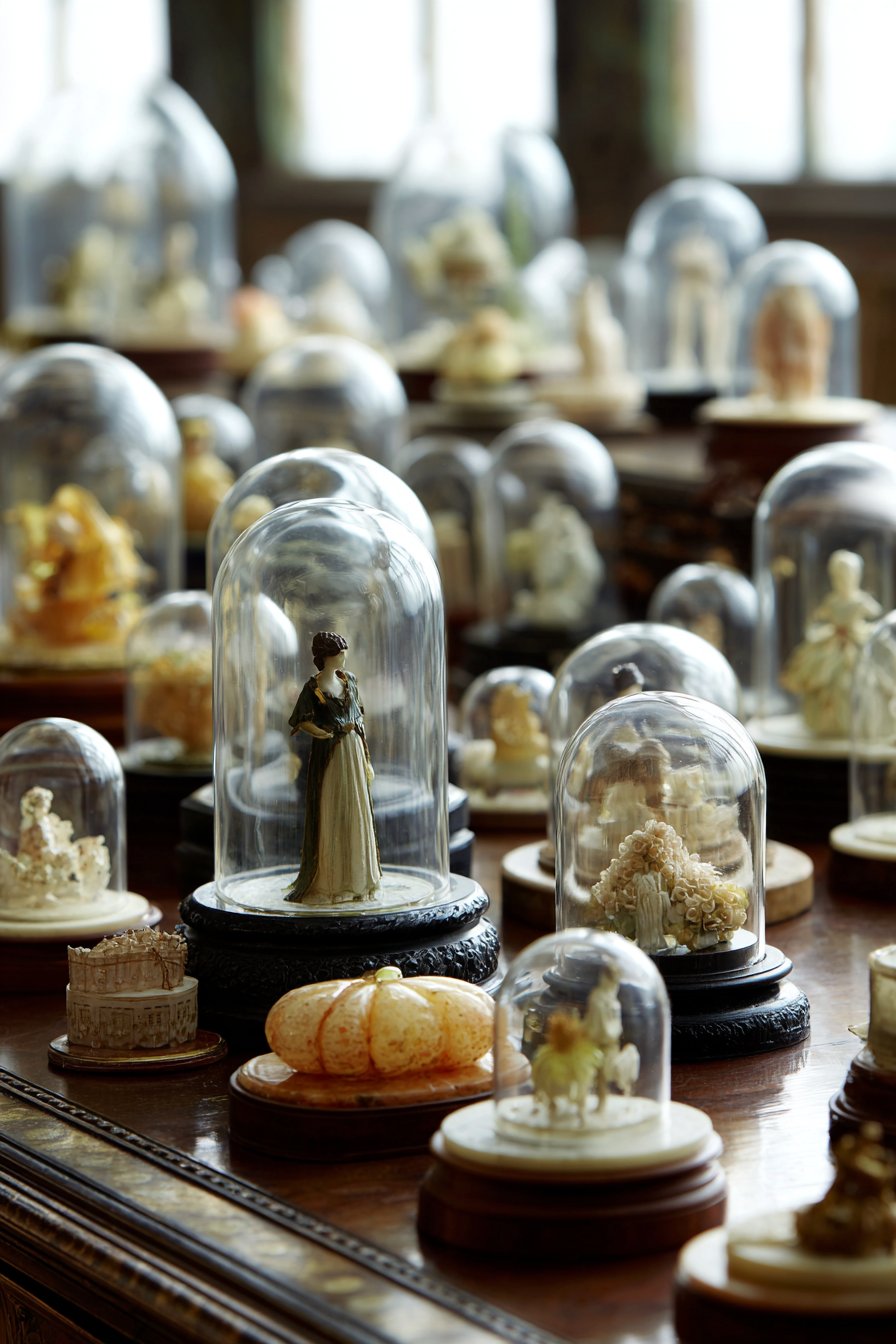
Elegance and protection converge when individual glass cloches and dome covers create miniature display environments for special figurines on a vintage dresser or sideboard surface. Each cloche positioned on a small wooden base or marble platform elevates delicate porcelain pieces literally and figuratively, signaling their importance while providing dust protection and physical barriers against accidental damage. The varied heights and sizes of glass domes introduce organic rhythm across the furniture surface, preventing monotony while accommodating figurines of different scales.
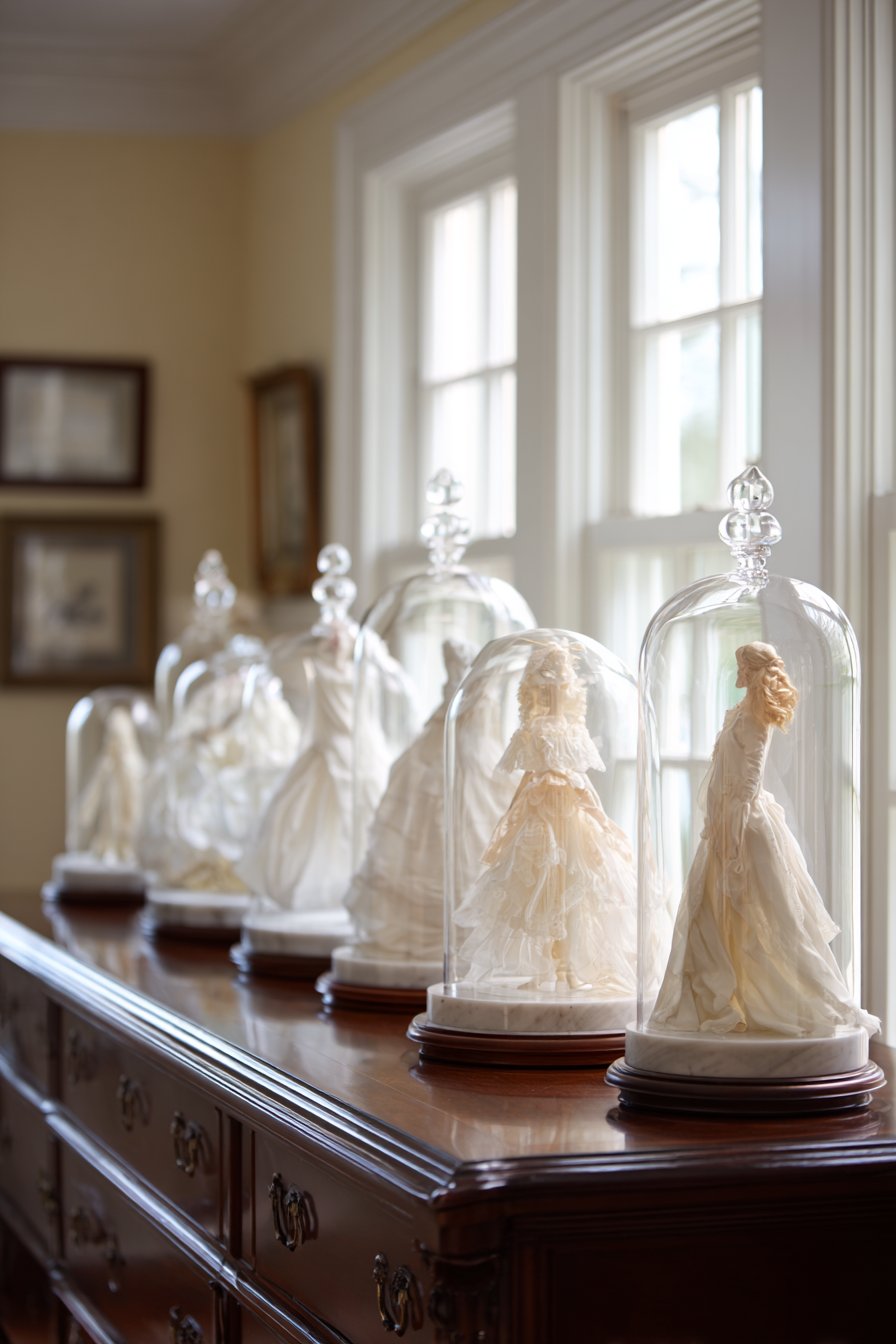
This display approach works particularly well for extremely delicate or valuable pieces that require extra protection—antique bisque dolls, fine porcelain flowers, or rare limited editions that shouldn’t be handled frequently. The glass domes create individual stage-like environments where each figurine performs a solo rather than competing in an ensemble, allowing proper appreciation of intricate details, delicate painting, or complex sculptural elements that might be overlooked in crowded group displays.
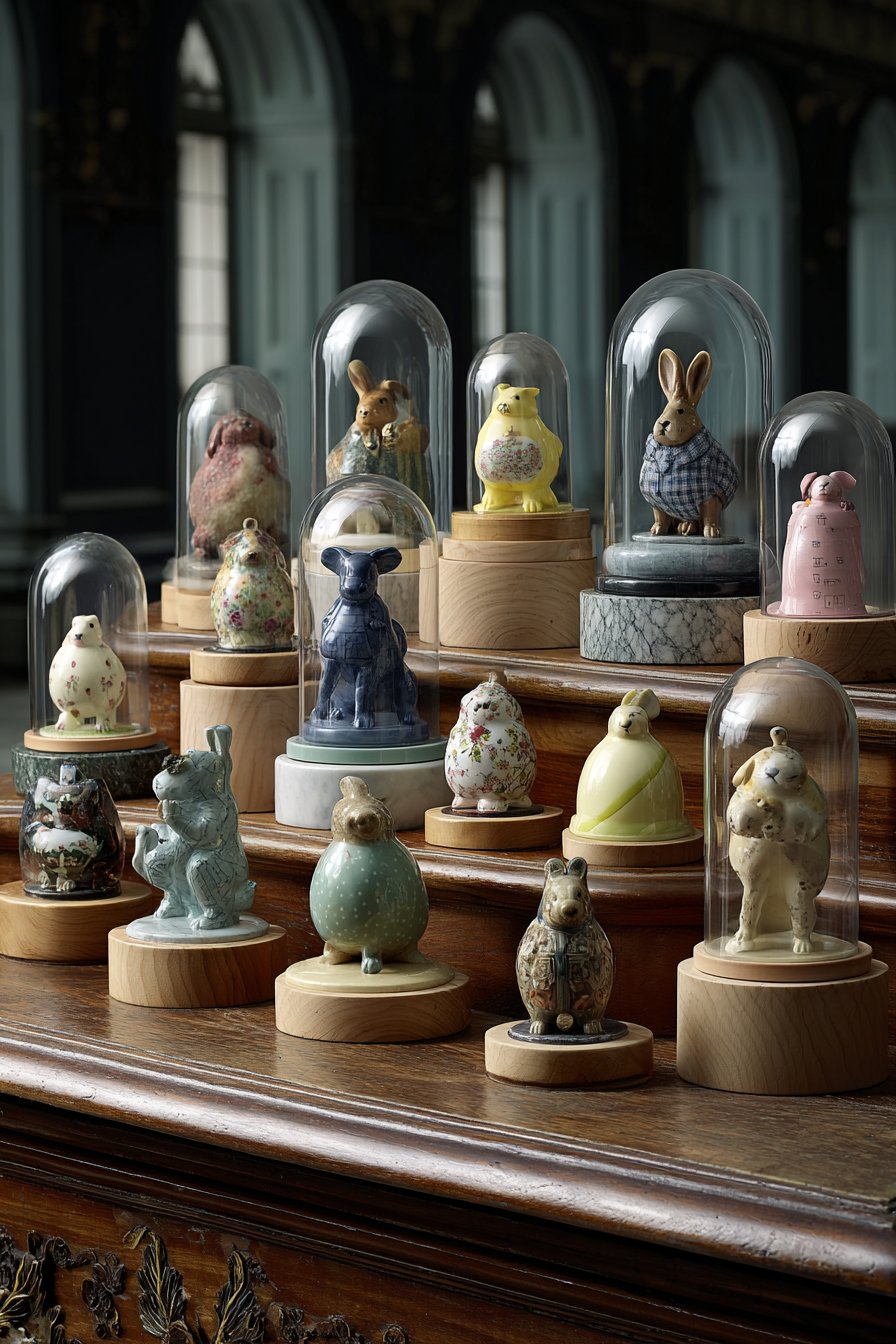
Soft natural lighting filtering through the transparent covers creates subtle optical effects—slight distortions, gentle refractions, concentrated highlights—that add visual interest while maintaining clear views of the protected pieces. The formality of this presentation method suits dining rooms, formal living spaces, or bedroom dressers where elegance and refinement define the aesthetic. It’s display as preservation, beauty as protection.
Key Design Tips:
- Choose cloche sizes that provide 1-2 inches of clearance around figurines to prevent a cramped appearance
- Position cloches at varying heights using bases or platforms to create dynamic composition
- Keep glass surfaces spotlessly clean—any dust or fingerprints are magnified by the dome shape
- Group odd numbers of cloches (3, 5, 7) for more visually pleasing arrangements
- Rotate which figurines receive cloche protection to give different pieces this special treatment
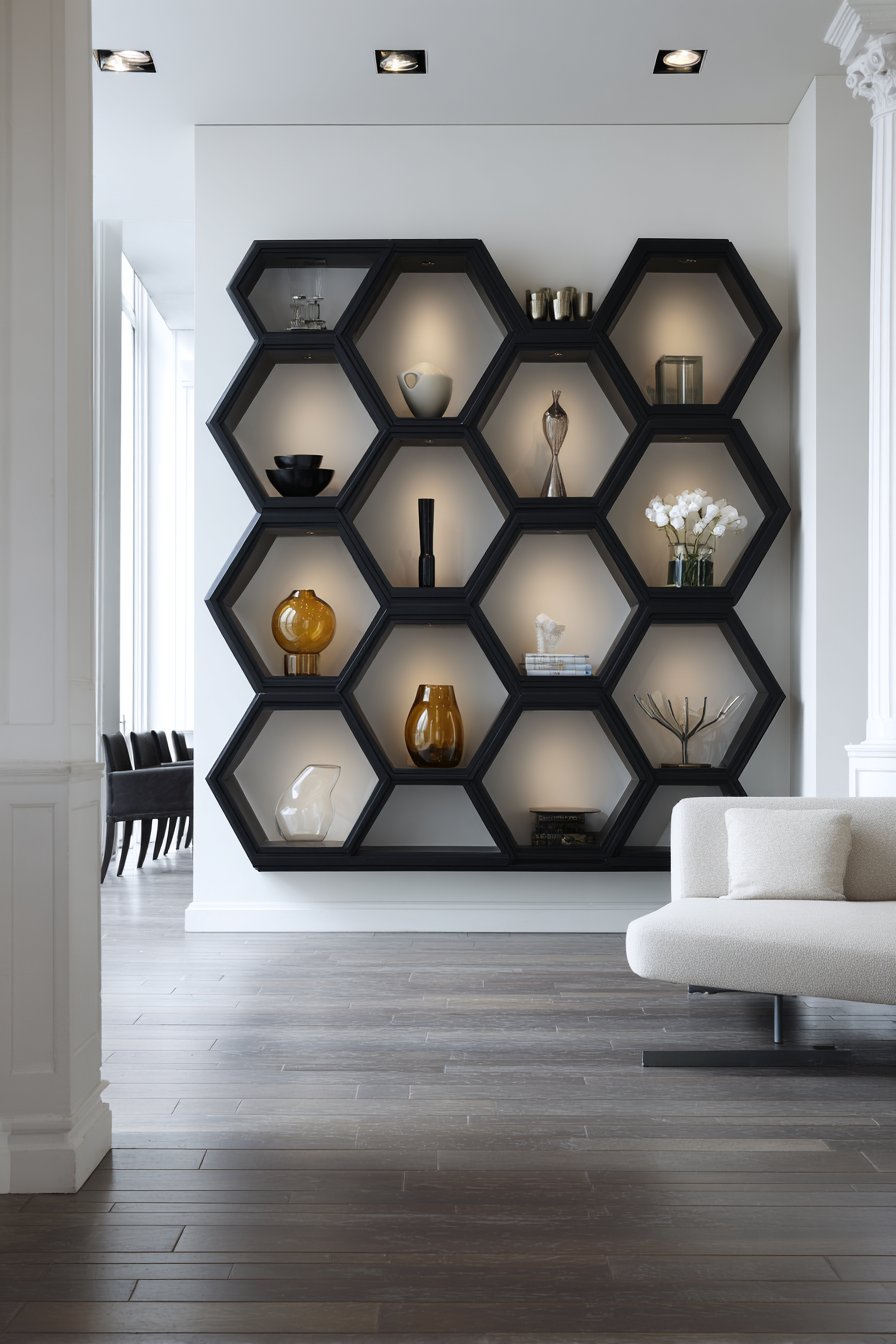
15. Geometric Honeycomb Wall System
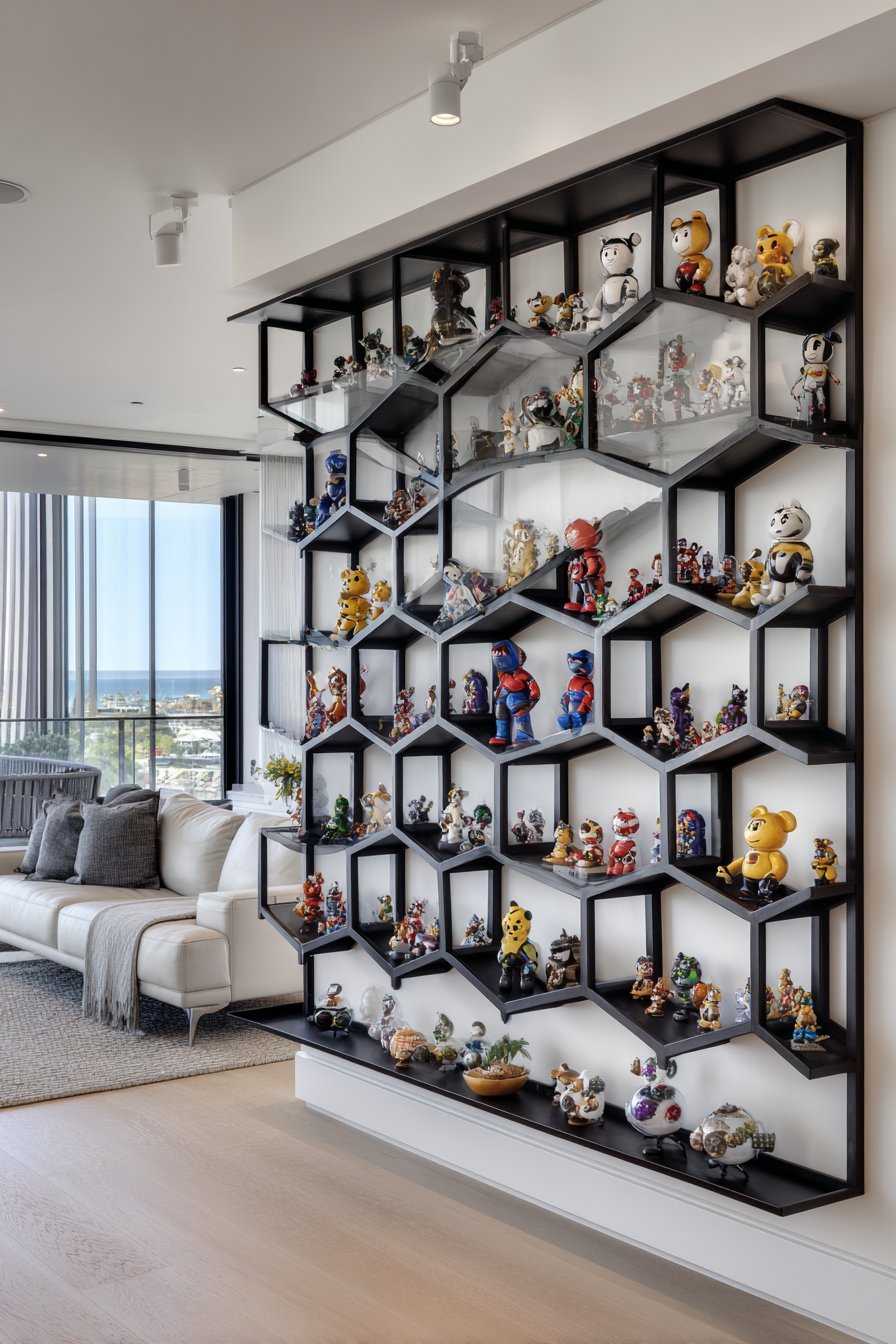
Contemporary design meets practical function in a geometric honeycomb wall shelf system where uniform hexagonal compartments in matte black metal create a striking modern backdrop for figurine arrangement. Each hexagon frames a single figurine or small grouping like a three-dimensional picture frame, transforming individual pieces into components of larger geometric art installation. This modular system embraces contemporary aesthetics while providing practical display solutions that can expand infinitely as collections grow.
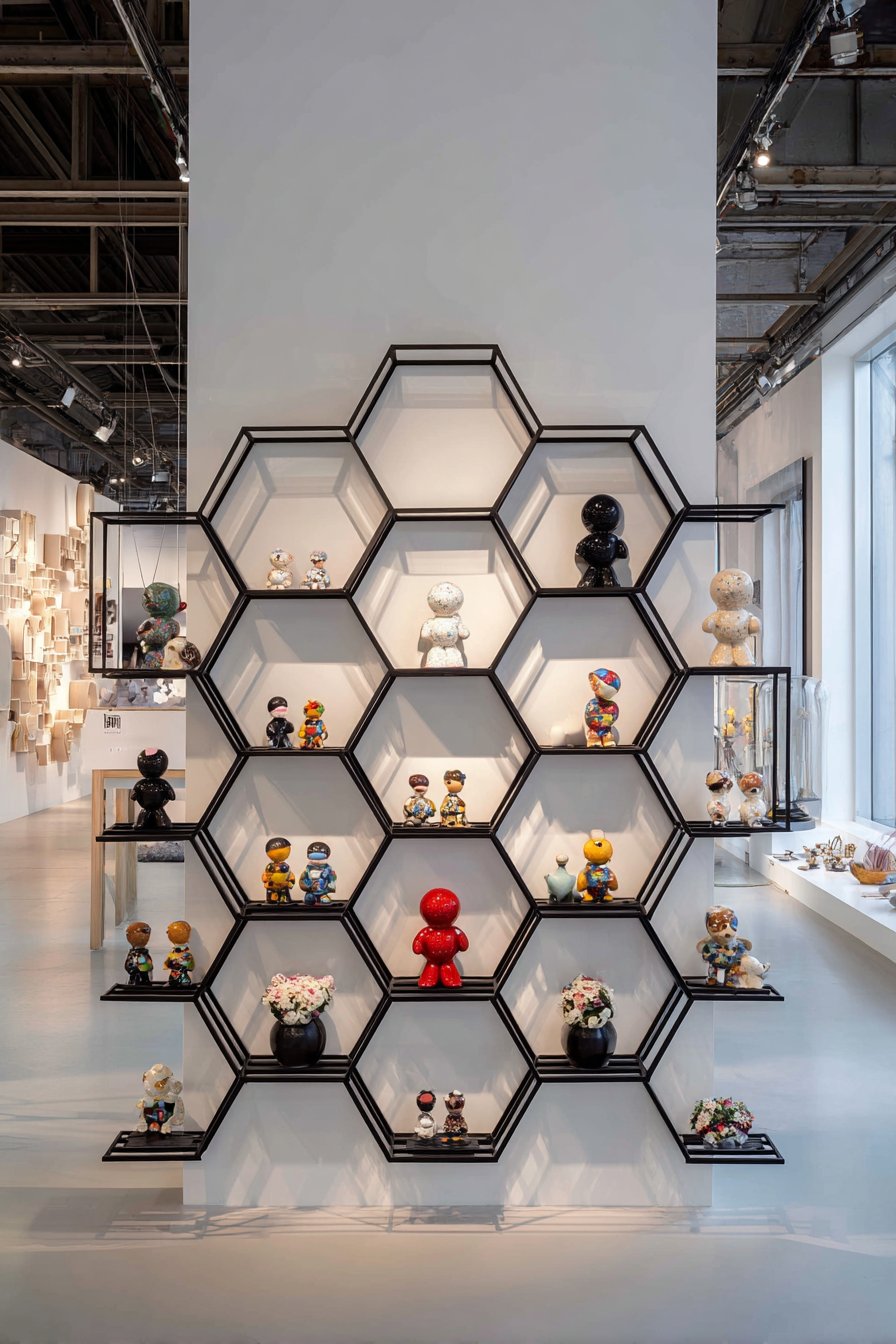
The uniform compartment size creates visual order and rhythm that contains and controls eclectic collections, preventing disparate styles from feeling chaotic or random. Mounted against a clean white wall in a modern living room, the honeycomb structure becomes architectural feature and display solution simultaneously. The black metal framework provides strong graphic element that grounds the display while allowing colorful figurines to pop with particular vibrancy against the light background.
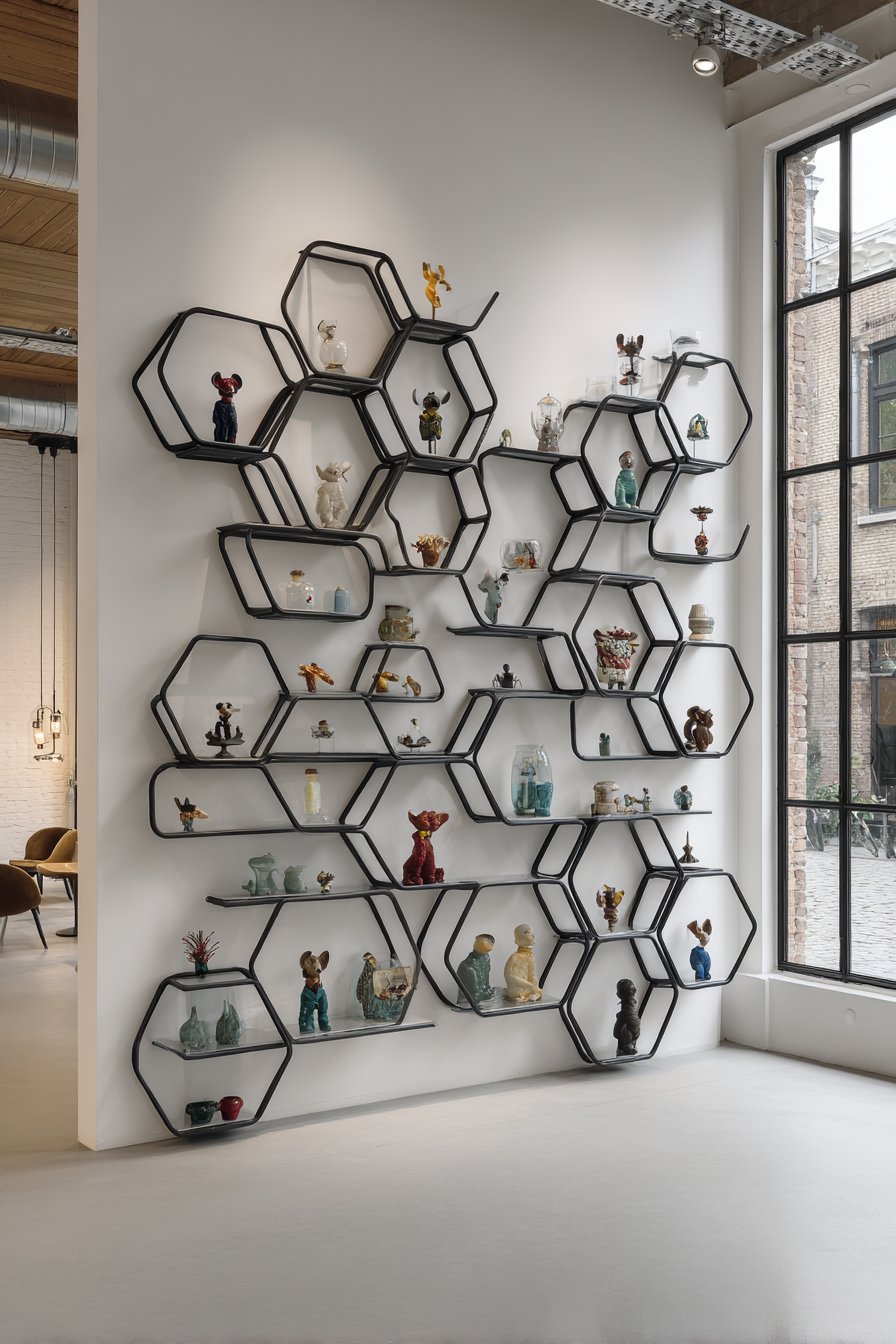
This system’s modular nature represents significant practical advantage—additional hexagons can be added vertically or horizontally as your collection expands, creating organic growth pattern that maintains visual cohesion. The geometric precision appeals to collectors with orderly sensibilities while the individual compartments allow for creative arrangements and thematic groupings within the larger structure.
Key Design Tips:
- Plan for expansion by leaving connection points open on your initial installation
- Create visual interest by varying how you fill compartments—some with single pieces, others with grouped items
- Use the honeycomb structure to guide color arrangements, creating gradients or patterns across the display
- Ensure hexagons are level and properly secured—geometric patterns make imperfections obvious
- Consider scale carefully—figurines should fit comfortably without touching hexagon edges
16. Vintage Printer’s Tray Compartmentalization
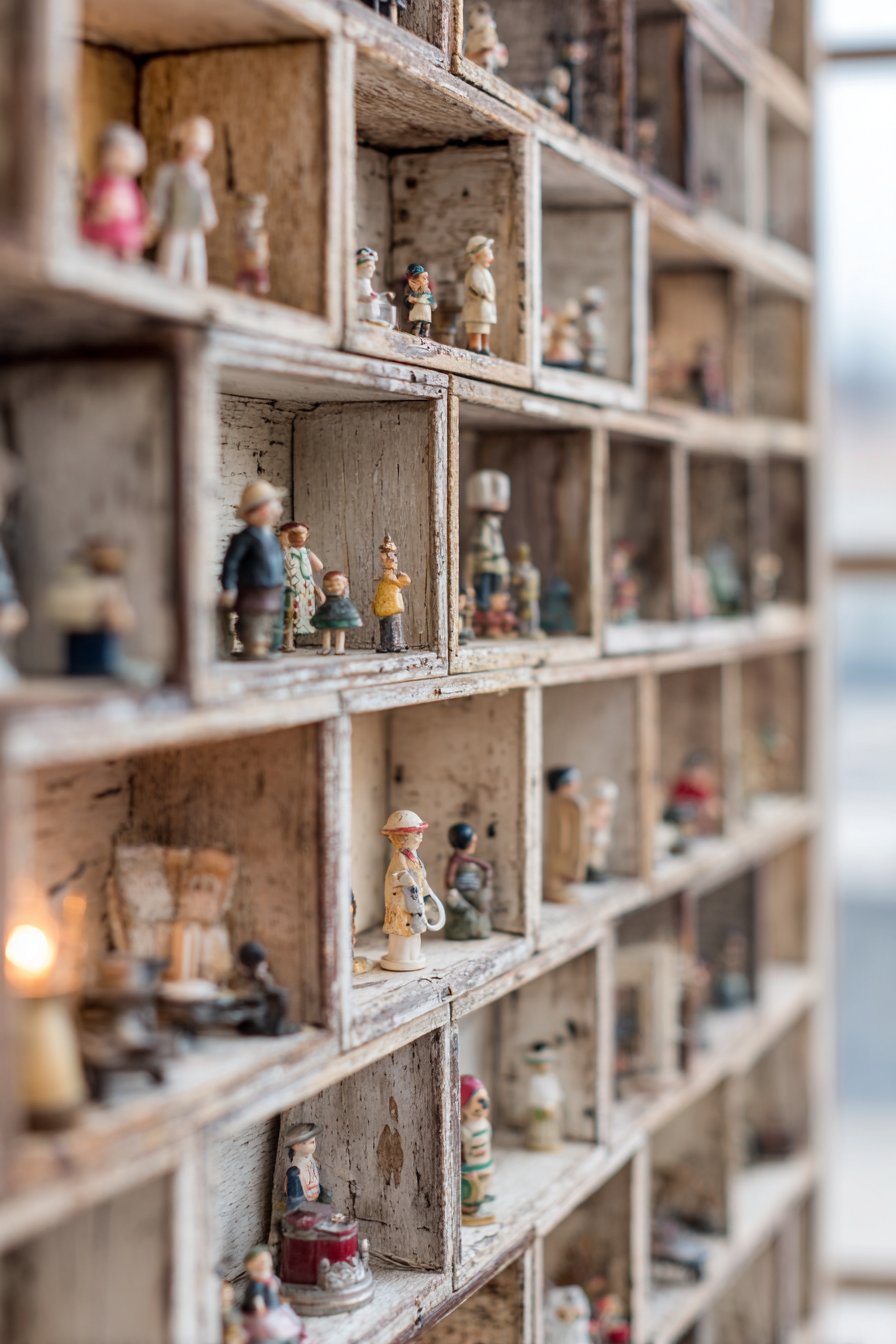
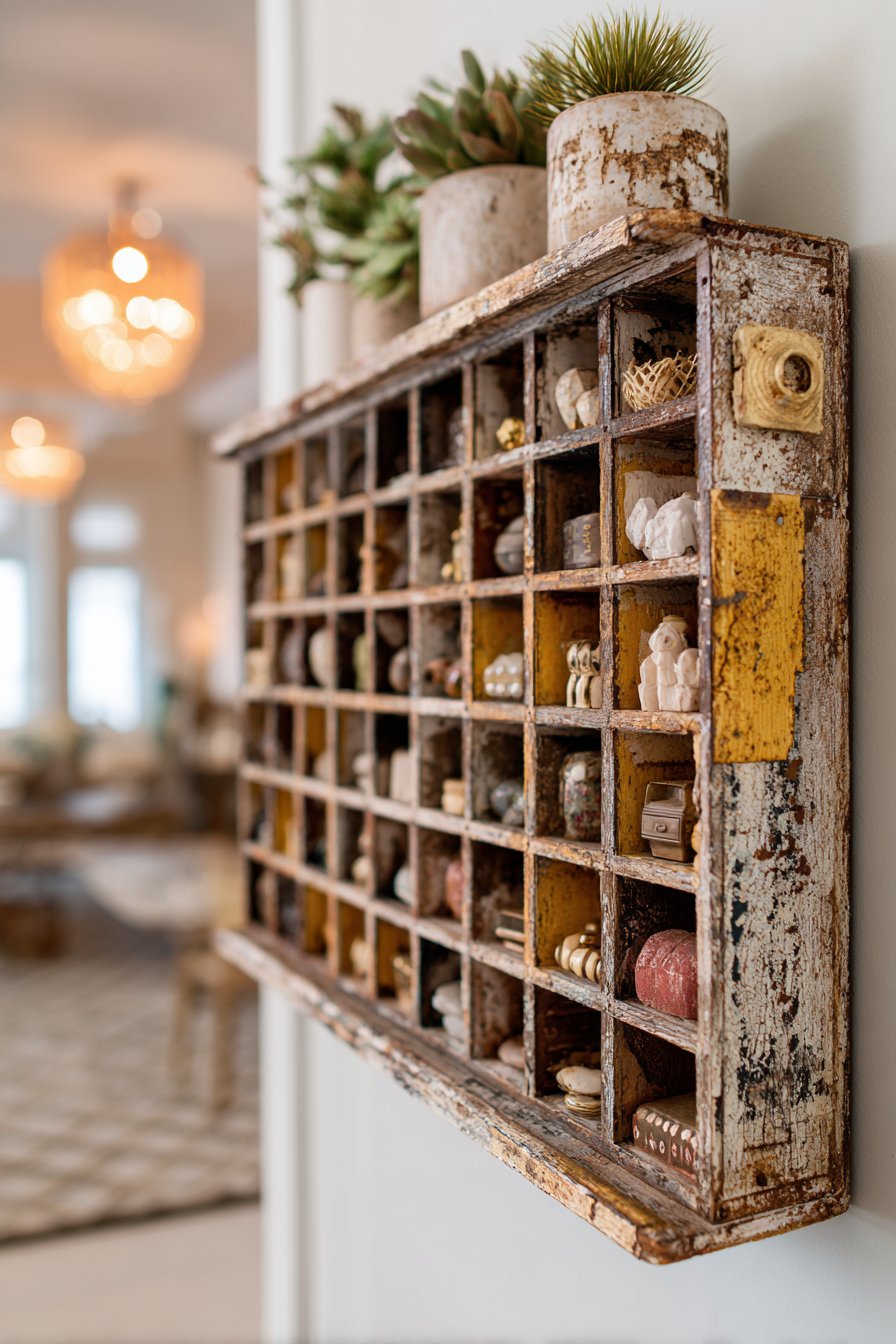
Creative repurposing reaches its zenith when a vintage printer’s tray or typesetter drawer finds new life as a wall-mounted display grid for miniature figurines and tiny collectibles. The numerous small compartments originally designed for organizing metal type now create perfect individual display spaces for diminutive treasures. The weathered wood showing authentic patina and wear adds character that new materials cannot replicate, suggesting history and craftsmanship that complements collectible items.
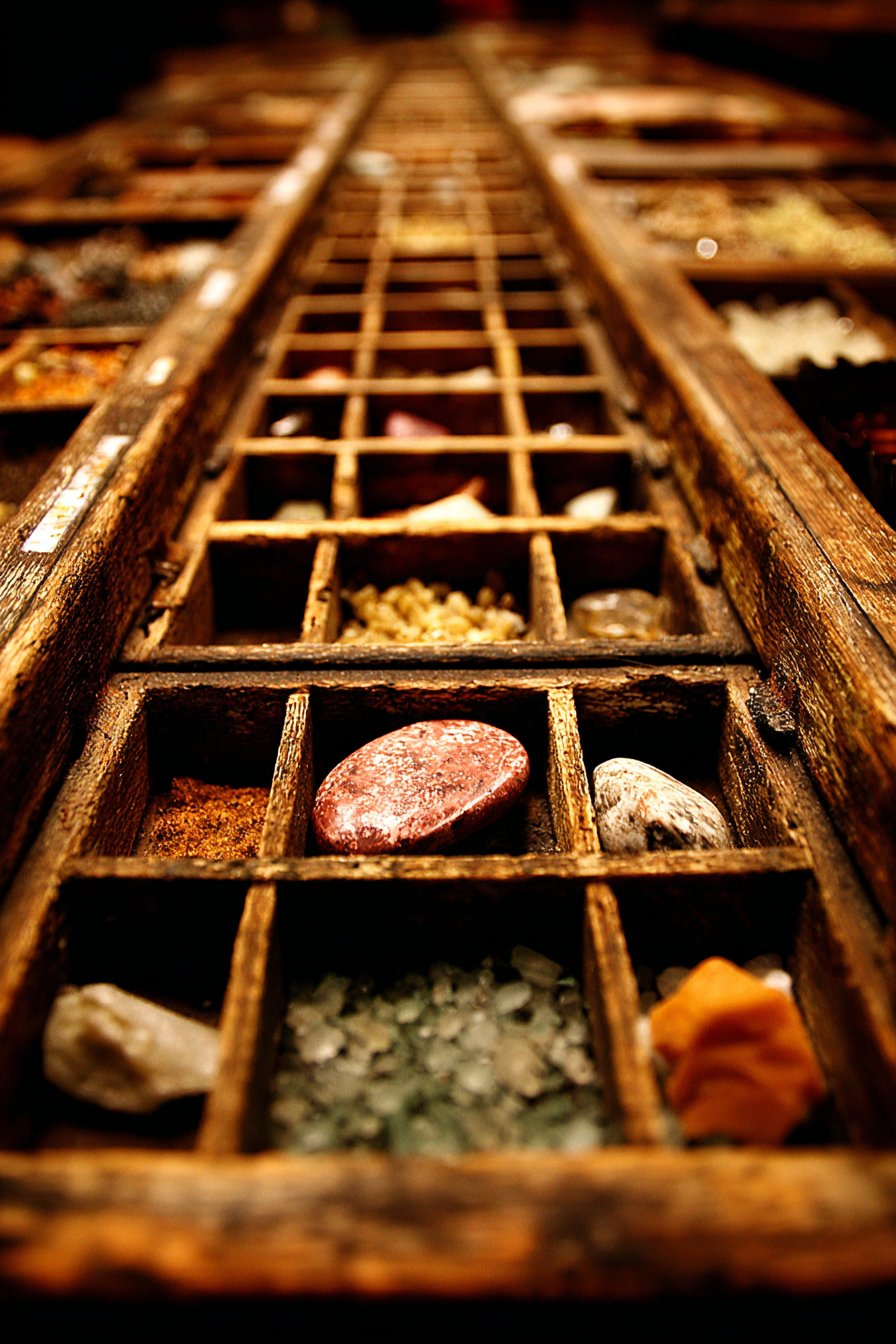
Each small section housing individual figurines creates a curated collection wall that doubles as three-dimensional art installation. The grid-like organization imposes order on potentially overwhelming numbers of tiny items, making it possible to display extensive miniature collections without creating visual chaos. This approach particularly suits collectors of tiny ceramic animals, miniature fairy garden figurines, or other diminutive collectibles that might get lost in traditional larger-scale display systems.
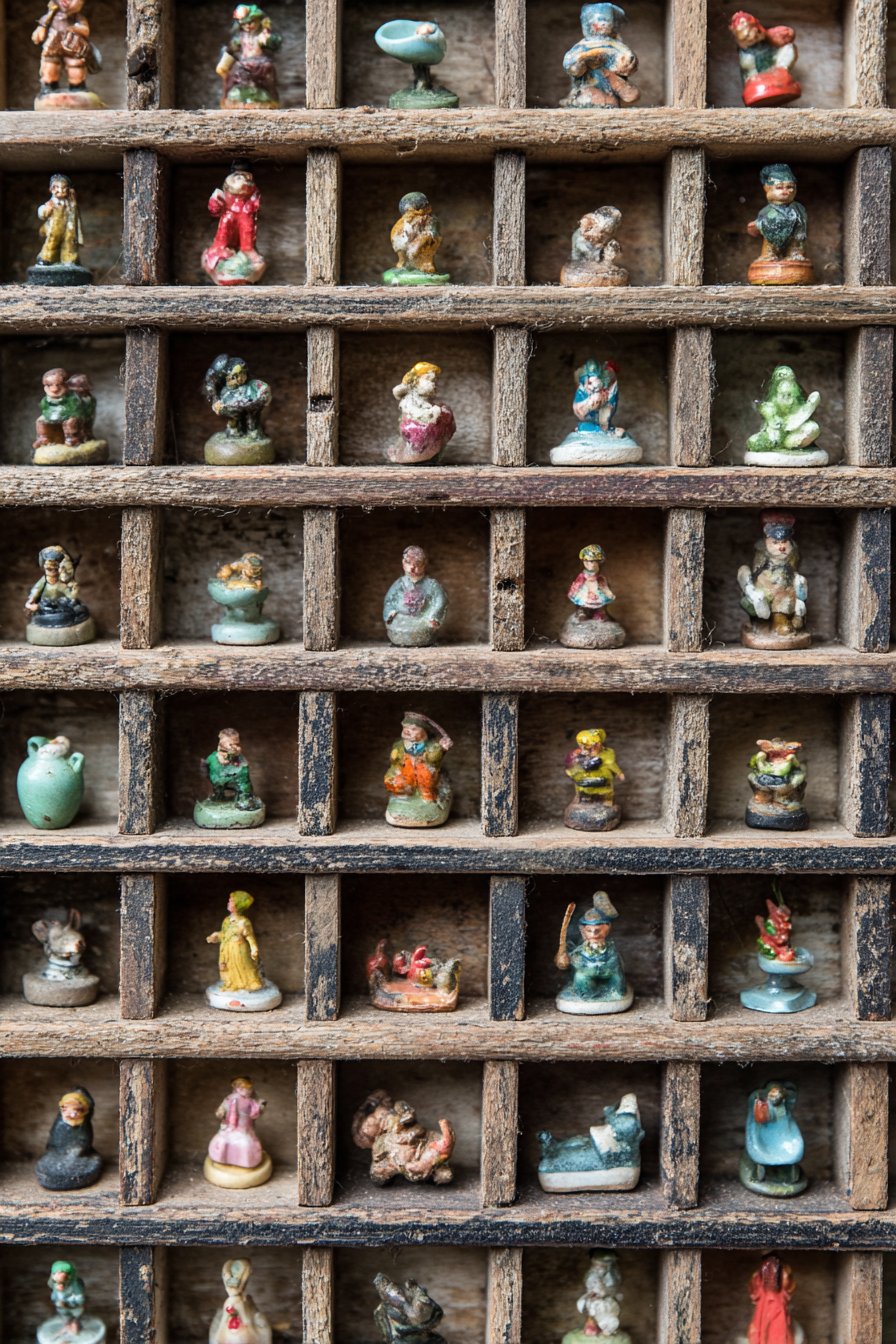
Positioned in a home office or study with warm task lighting, the printer’s tray becomes conversation piece and focal point, inviting closer inspection and rewarding detailed examination. The creative repurposing demonstrates environmental consciousness and appreciation for vintage craftsmanship while solving modern display challenges with historical solutions.
Key Design Tips:
- Secure the tray firmly to the wall—these pieces are surprisingly heavy when filled with figurines
- Group similar items together in adjacent compartments to create micro-collections within the larger display
- Leave some compartments empty to prevent visual overwhelm and provide breathing room
- Use the varying compartment sizes strategically, matching figurine scale to compartment dimensions
- Consider photographing the entire tray to create a visual inventory of your collection
17. Museum-Quality Glass Display Case Room Divider
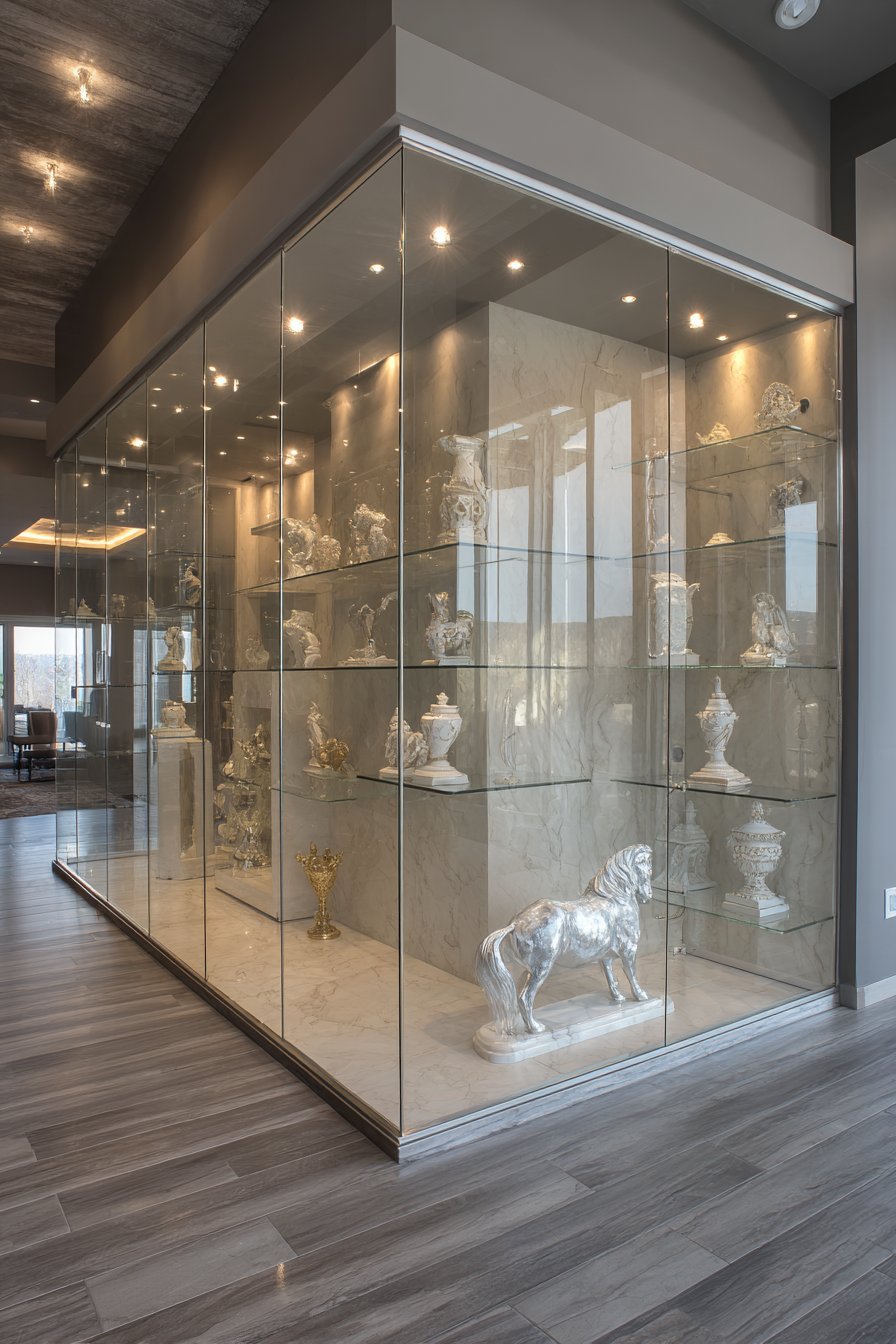
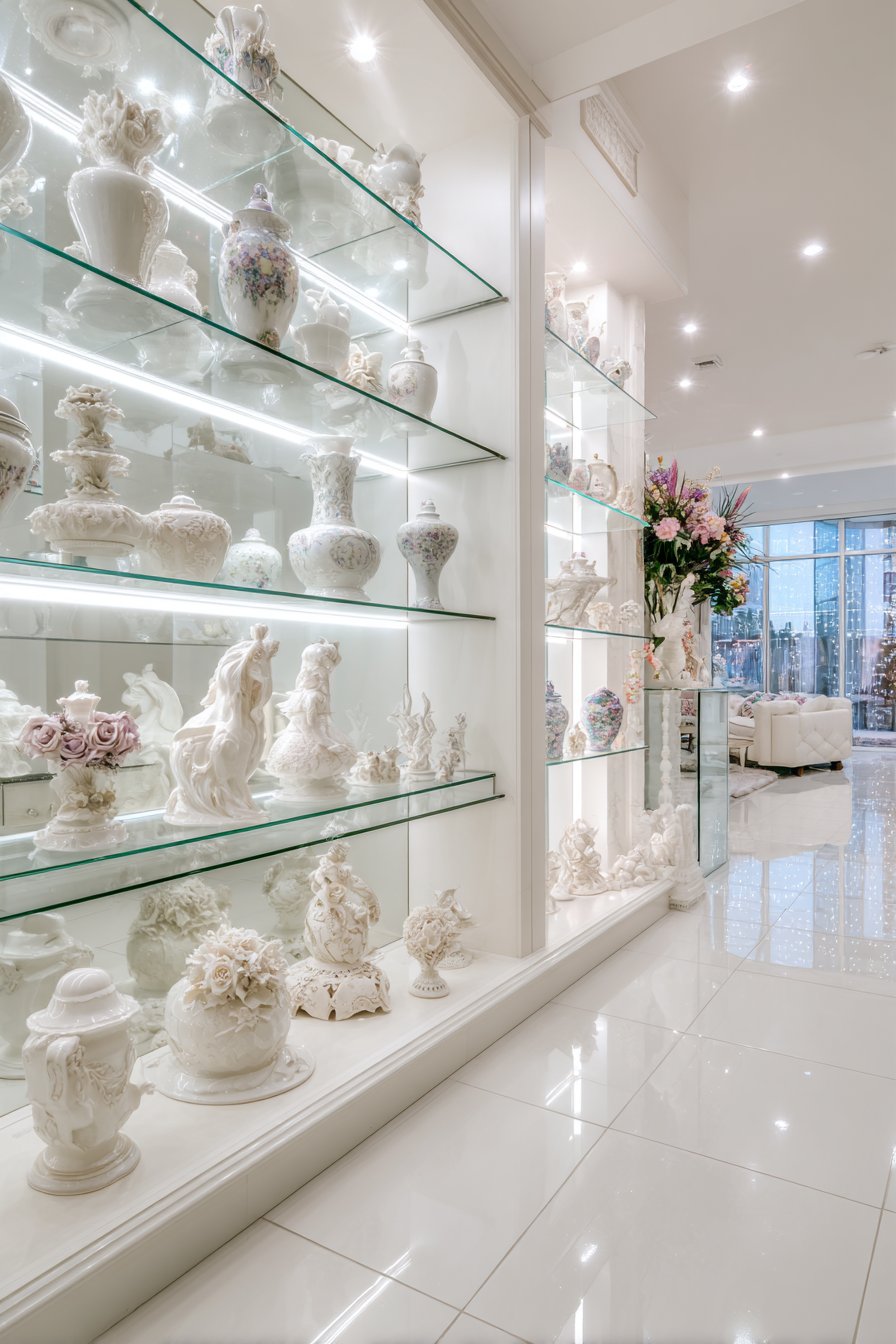
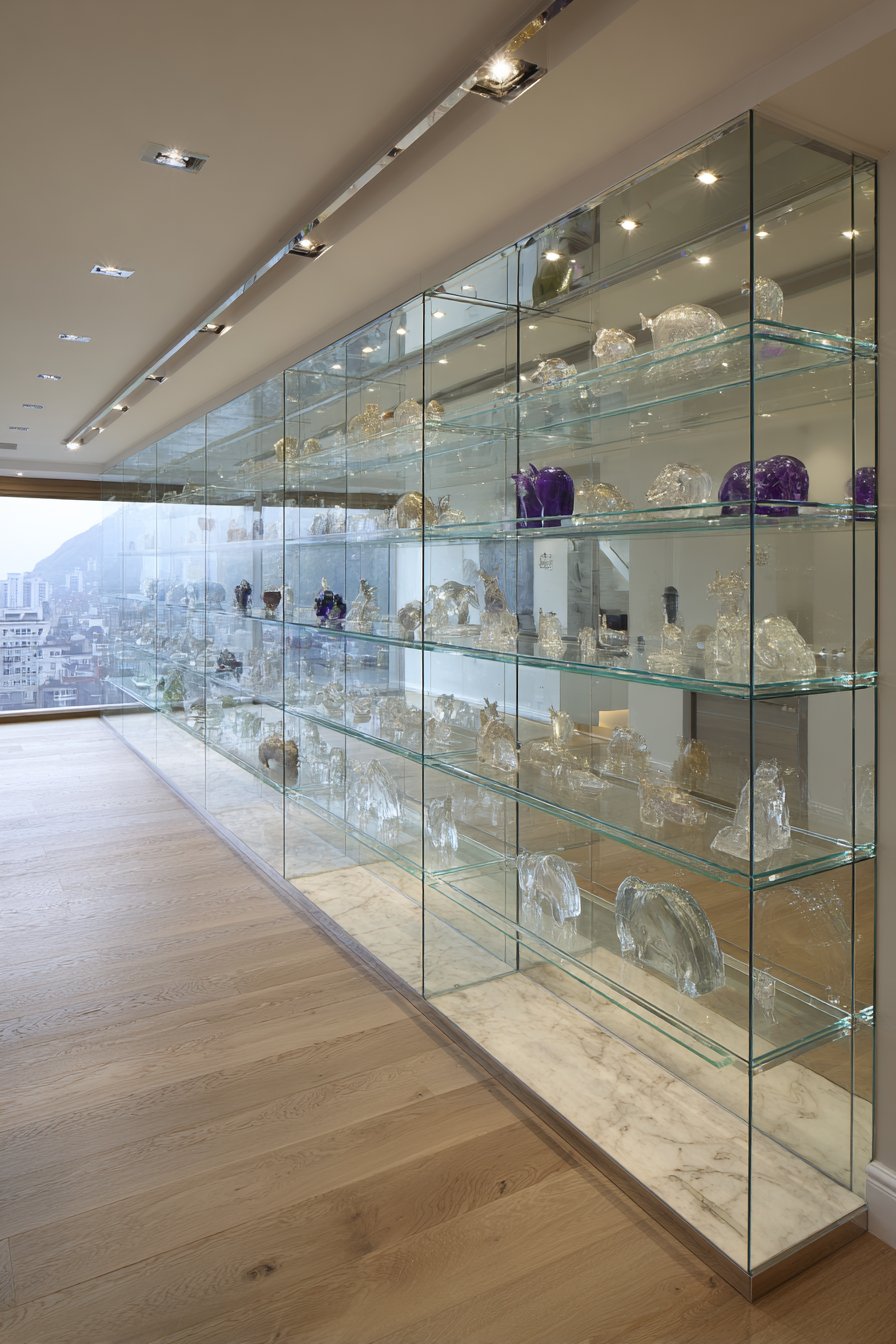
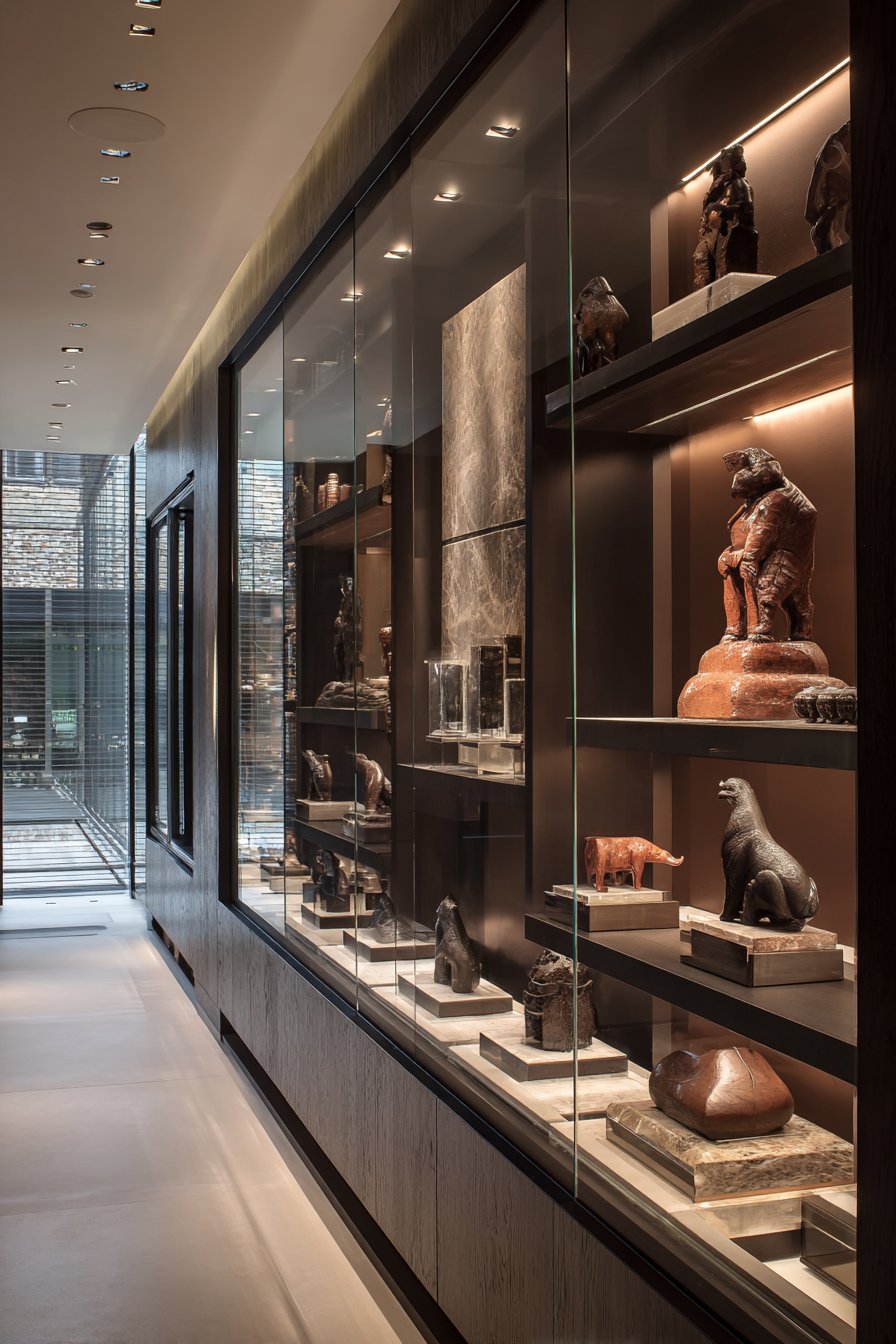
Investment in quality pays dividends in a custom-built floor-to-ceiling glass display case that functions as both room divider and museum-quality presentation system in open-concept living spaces. The frameless glass panels create nearly invisible boundaries that separate spaces while maintaining visual connection and light flow—critical in open floor plans where traditional walls would create unwelcome barriers. Adjustable shelving and individually adjustable LED spotlights for each significant piece demonstrate commitment to professional-level presentation.
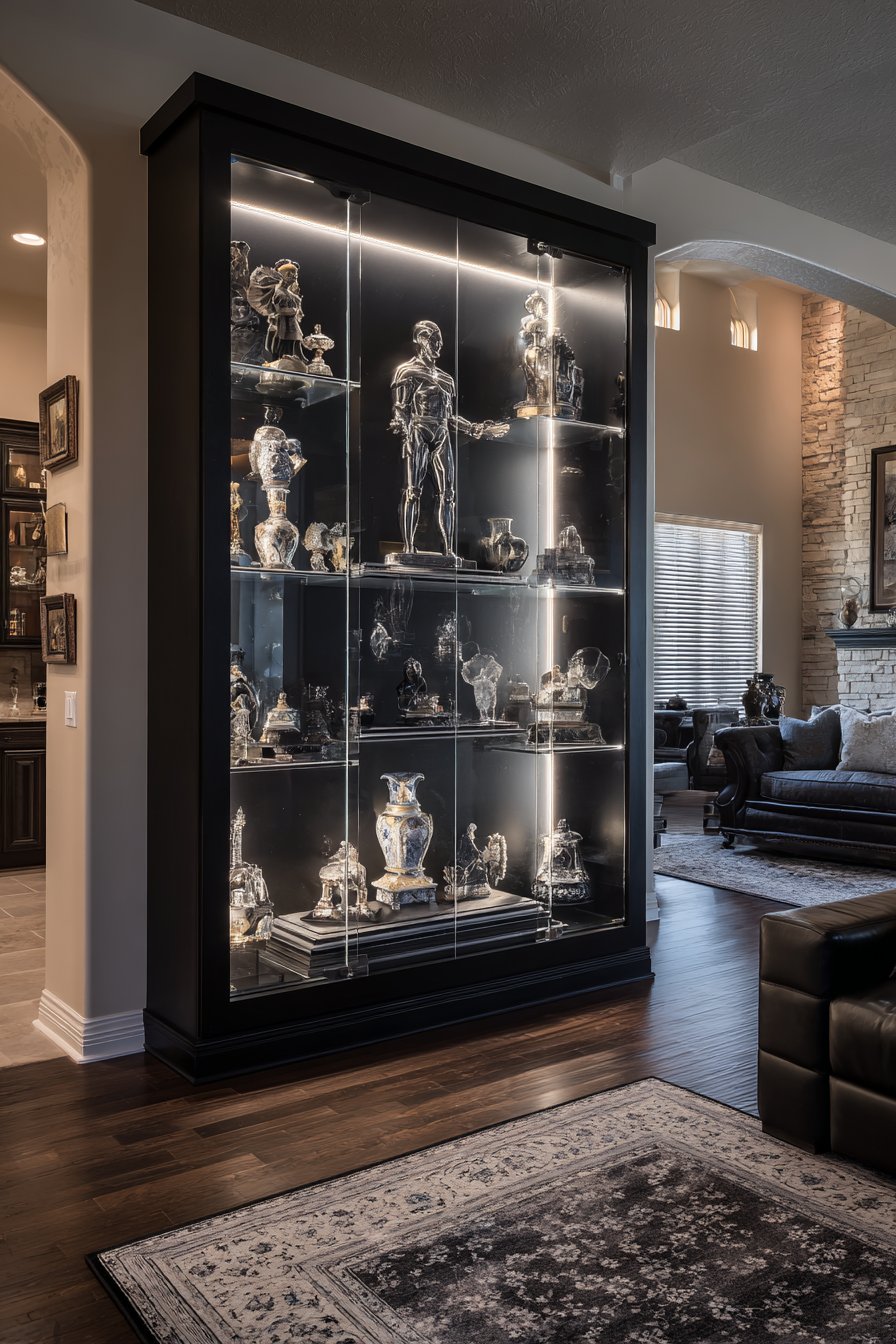
High-value porcelain and crystal figurines displayed with museum-level spacing and consideration receive the reverence they deserve in this installation. The generous space between pieces isn’t wasted—it’s essential negative space that allows proper appreciation of form, prevents visual competition, and creates the calm, contemplative viewing experience associated with gallery and museum displays. The transparent case allows views from both sides, making it functional sculpture that enhances the entire open living area.
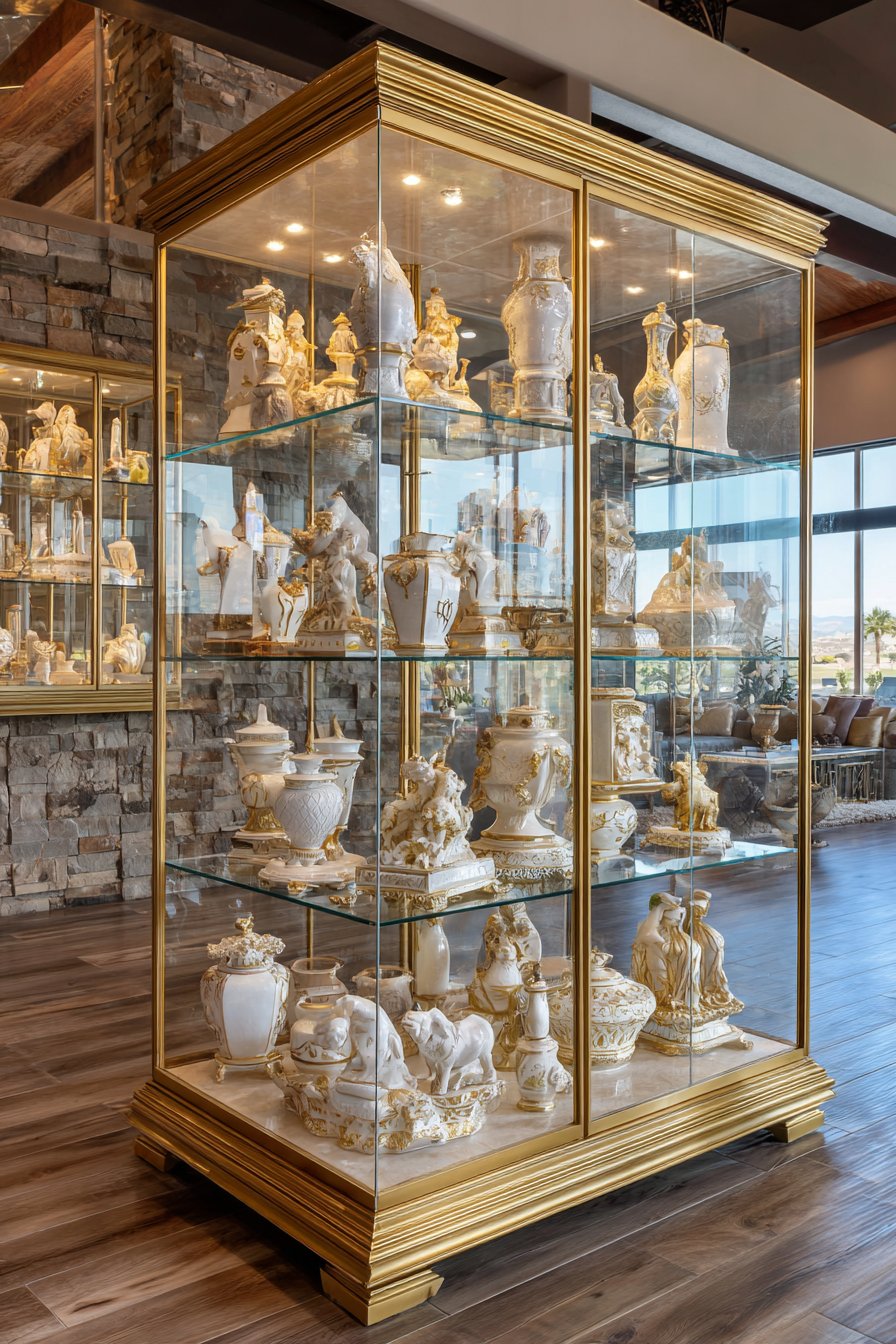
This approach suits serious collectors with valuable pieces warranting this level of investment in presentation and protection. The floor-to-ceiling scale transforms figurine display from hobby into architectural feature, from casual collection into curated exhibition. Professional interior photography captures the dramatic lighting and gallery-quality presentation, illustrating how residential display can achieve institutional standards.
Key Design Tips:
- Work with experienced fabricators who understand glass engineering and proper support systems
- Invest in museum-quality LED spotlights with excellent color rendering for accurate color presentation
- Maintain meticulous cleaning schedules—fingerprints show dramatically on frameless glass
- Consider security and insurance for valuable collections in highly visible display systems
- Plan for both task lighting (for viewing specific pieces) and ambient lighting (for overall effect)
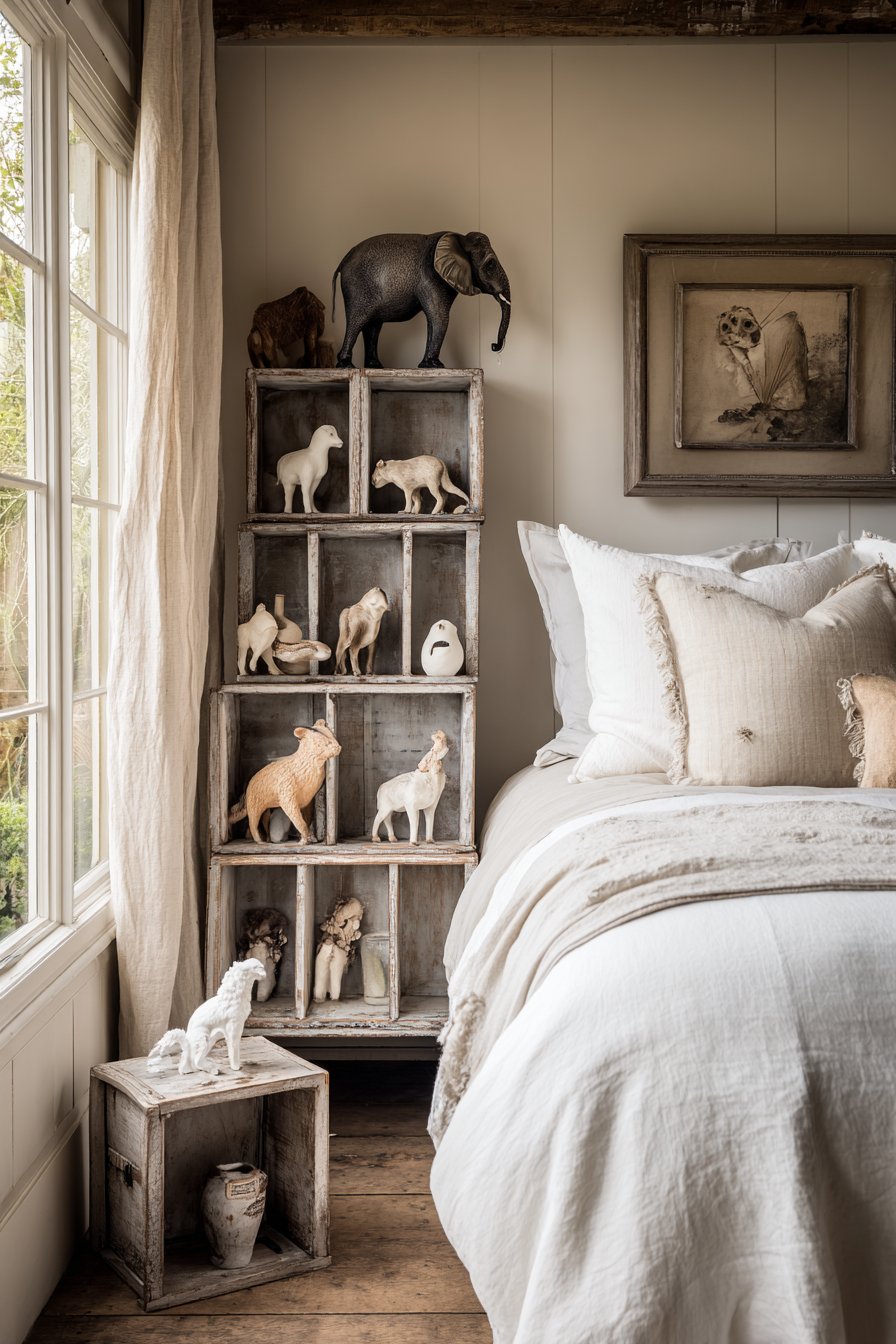
18. Rustic Wooden Crate Wall Installation
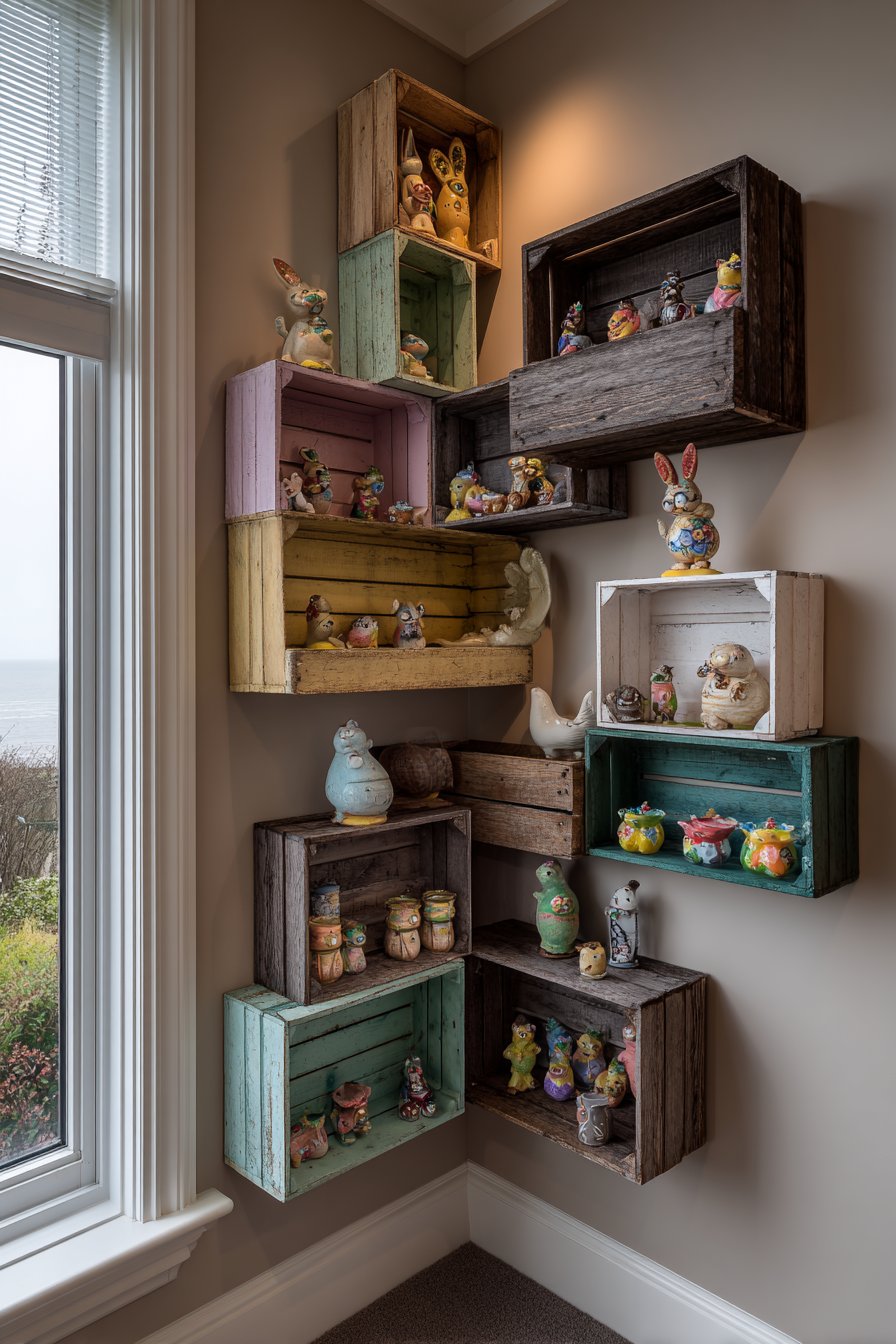
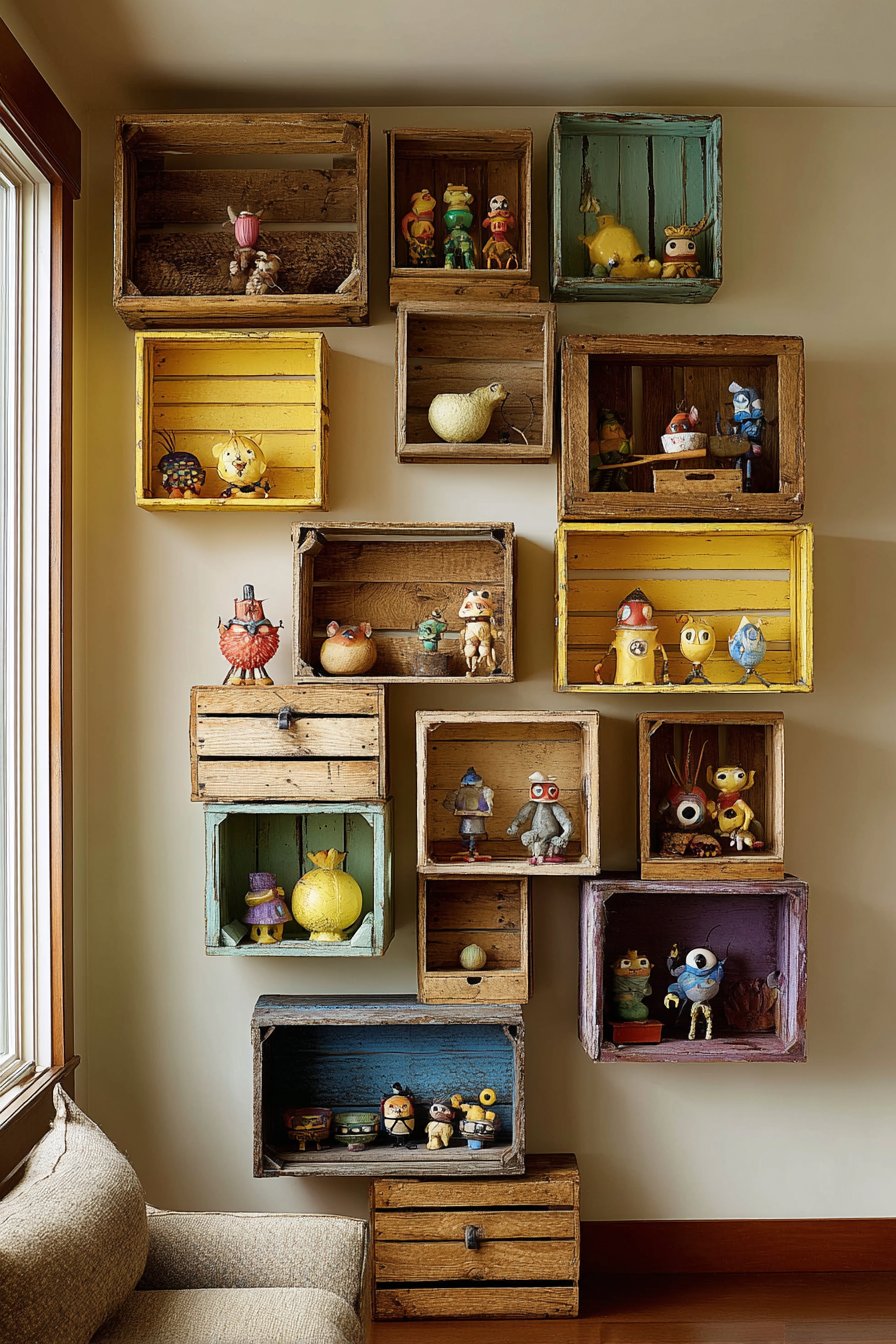
Budget-friendly creativity shines in a rustic wooden crate system where weathered crates in various sizes are stacked and secured to create an asymmetric wall arrangement of display niches. This DIY-friendly approach delivers stylish results without requiring custom carpentry or significant investment. The crates’ varied sizes allow for flexible arrangement, with each crate interior becoming an individual display environment that can be left natural or painted in soft pastels to complement figurine colors.
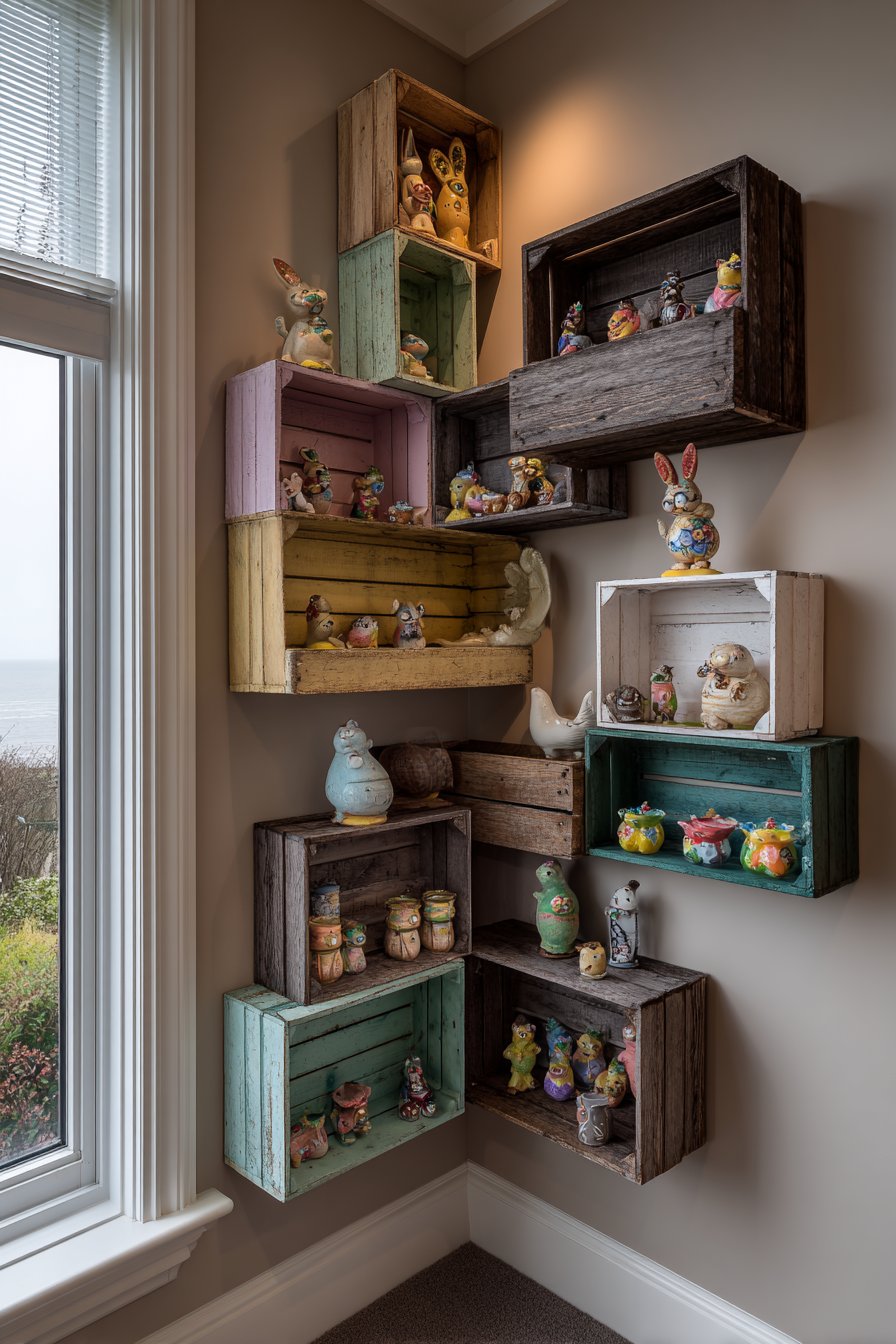
The casual arrangement of whimsical figurines, ceramic animals, and folk art pieces creates a bohemian aesthetic that celebrates personality over perfection. This approach suits collectors who appreciate charm, authenticity, and the handmade quality that mass-produced display systems cannot replicate. The weathered wood surfaces tell their own stories, adding layers of visual interest and textural variation that new materials lack.
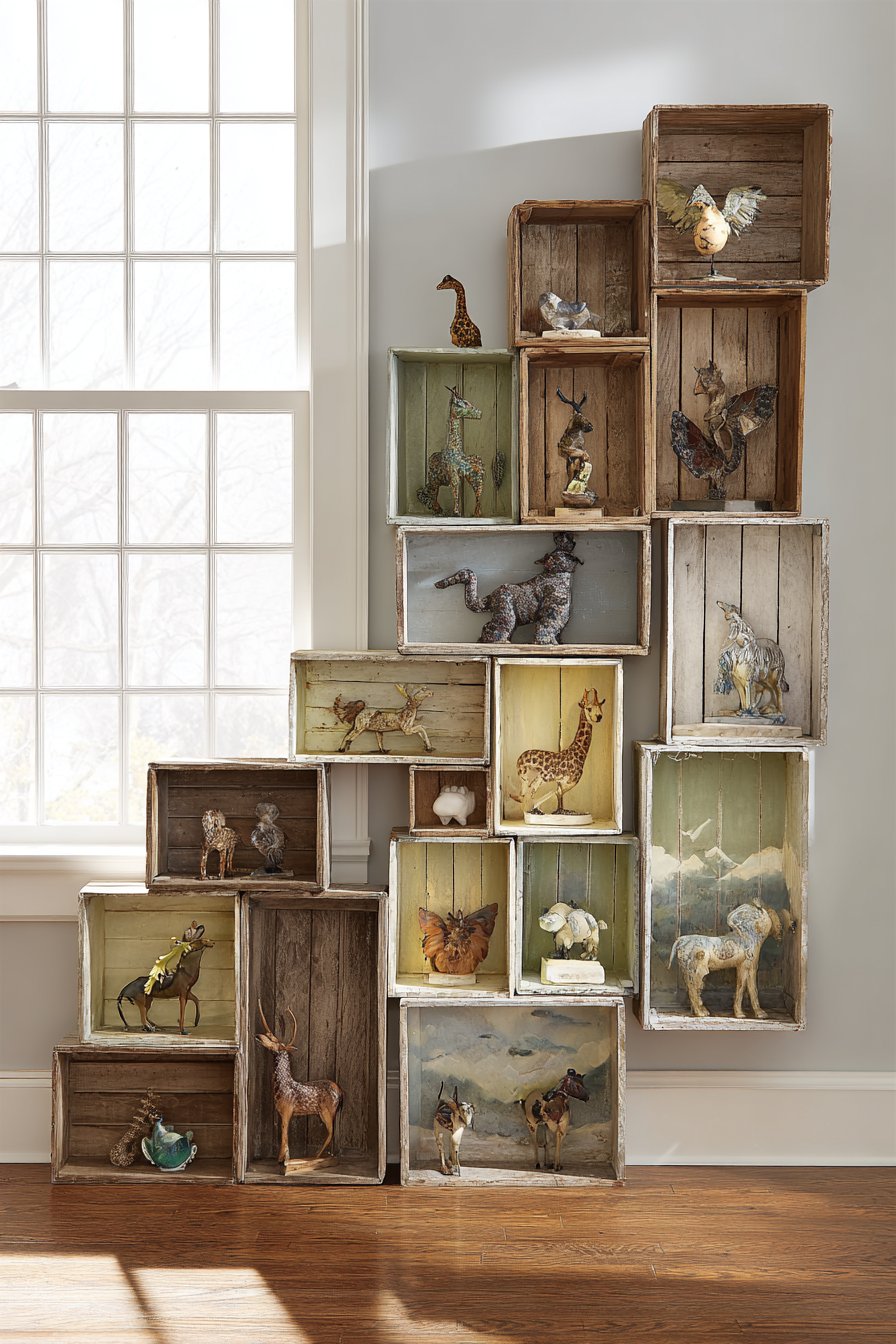
Natural lighting from nearby windows enhances the wood’s texture while creating shadow play within the various depths of different crate sizes. This installation proves that effective display solutions exist at every price point, and that creativity and resourcefulness can yield results as visually appealing as expensive custom systems. The DIY nature makes this approach particularly satisfying—you’ve created both the display and the collection it houses.
Key Design Tips:
- Secure crates to each other and to the wall with appropriate brackets to ensure stability
- Sand any rough edges or splinters that could damage figurines or hands reaching into crates
- Create visual balance by distributing size and visual weight across the installation
- Paint or stain some crates while leaving others natural to create color variation and depth
- Use the varied depths strategically—deeper crates for larger items, shallower ones for delicate miniatures
19. Single Statement Mantel Shelf
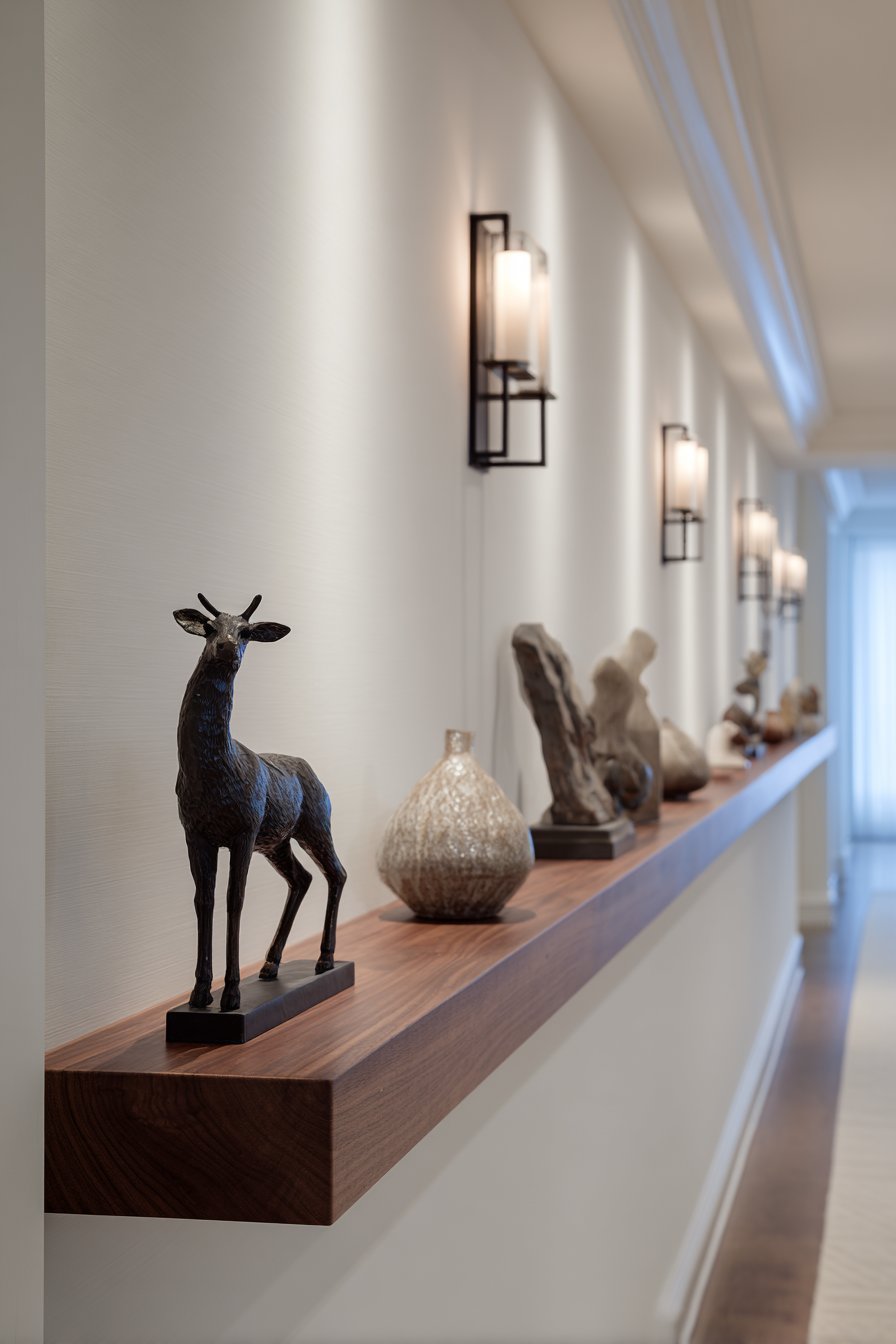
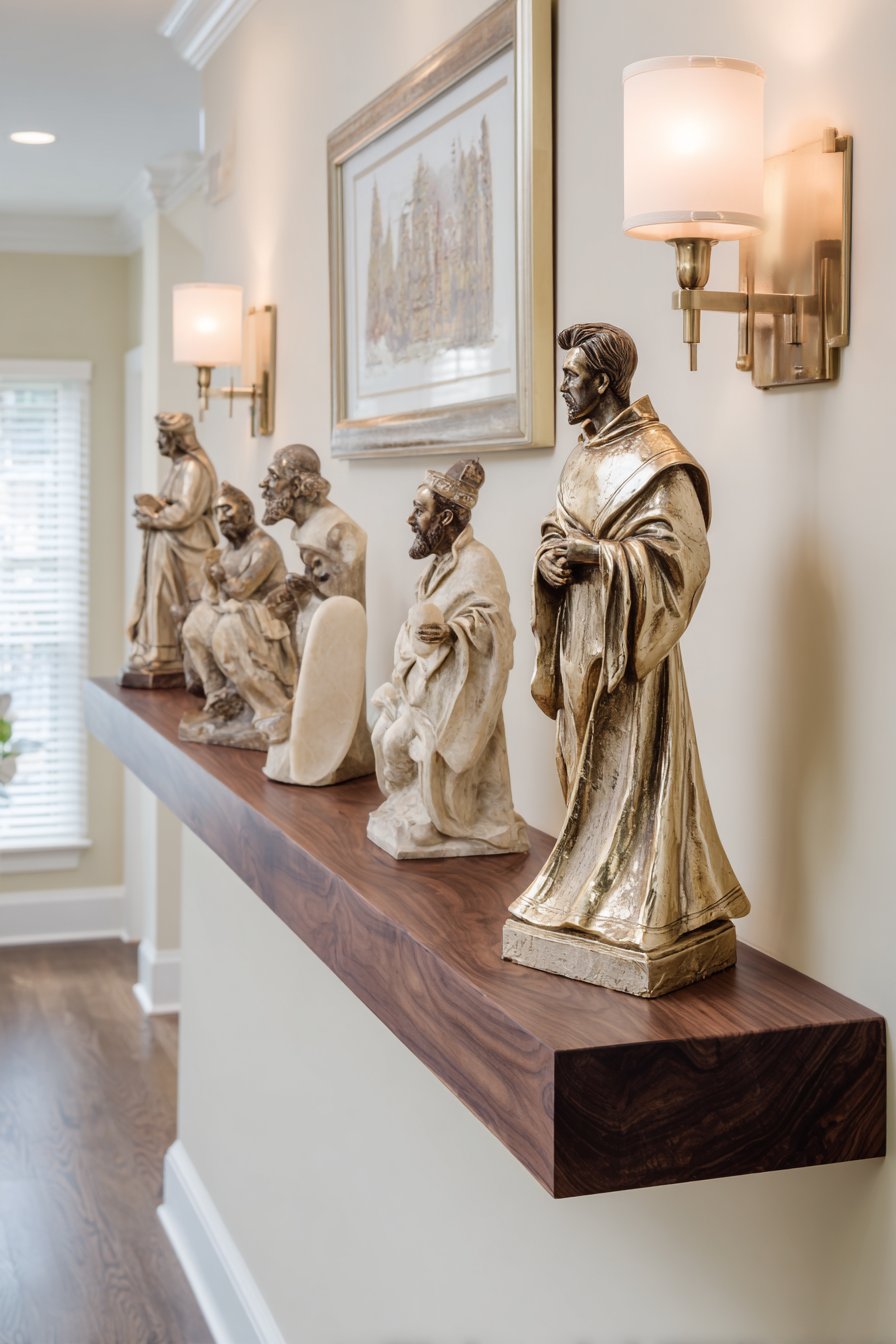
Restraint speaks volumes in a minimalist display featuring a single floating mantel shelf where a carefully edited selection of 5-7 statement figurines receives the spotlight they deserve. The thick walnut finish provides substantial, sculptural presence that commands attention even before considering the displayed items. This less-is-more approach requires curatorial discipline—only the very best pieces earn placement, creating a highly selective presentation that honors quality over quantity.
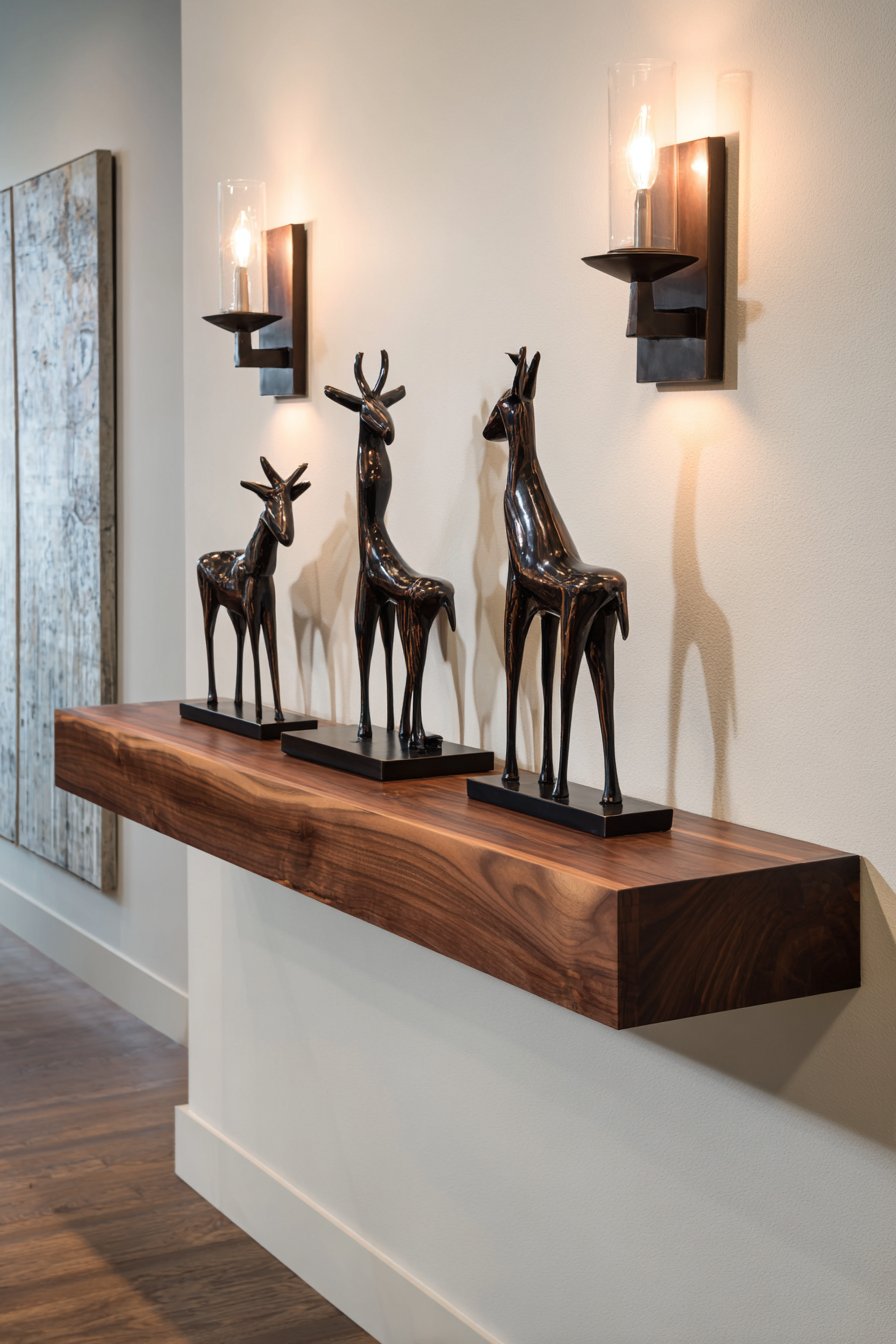
Generous breathing room between pieces allows proper appreciation of each figurine’s individual merit, form, and artistic achievement. The negative space isn’t empty—it’s active design element that provides visual rest and emphasizes the importance of selected items. Soft indirect lighting from wall sconces on either side creates even illumination without harsh shadows or hotspots, bathing the entire display in flattering, museum-quality light.
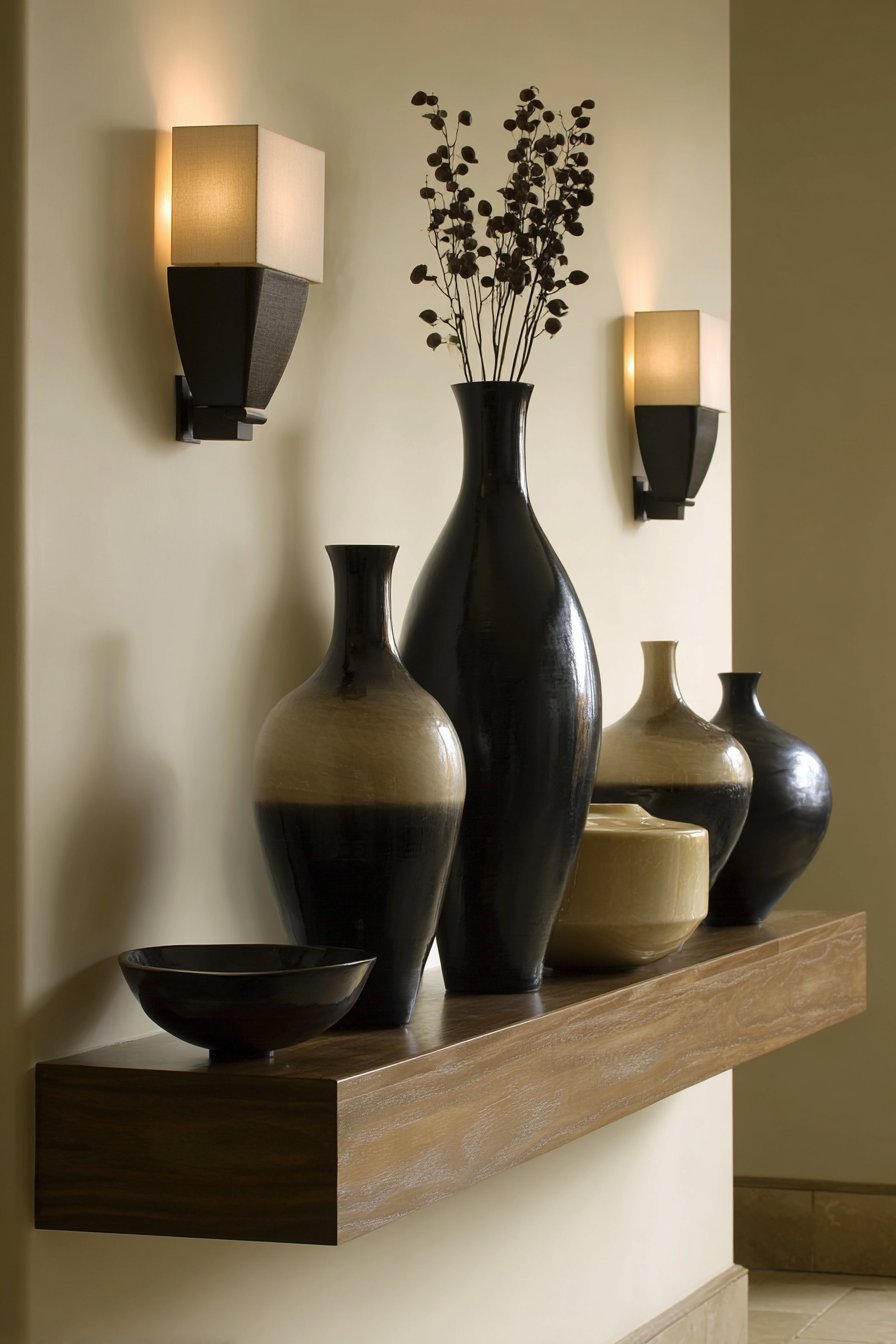
This minimalist approach suits contemporary homes and collectors who appreciate sophisticated restraint. The entryway location ensures the display greets visitors immediately upon arrival, making a strong first impression about your taste and design sensibility. The curated nature of the selection invites contemplation rather than overwhelming viewers with abundance.
Key Design Tips:
- Choose pieces with sculptural presence that can command attention in small numbers
- Vary heights dramatically to create visual rhythm with limited quantity
- Update the selection quarterly to prevent the display from becoming invisible through familiarity
- Ensure the mantel shelf itself is a quality piece worthy of the spotlight it receives
- Consider the view from the entry door when arranging pieces for optimal first impression
20. Backlit Window Shelf Installation
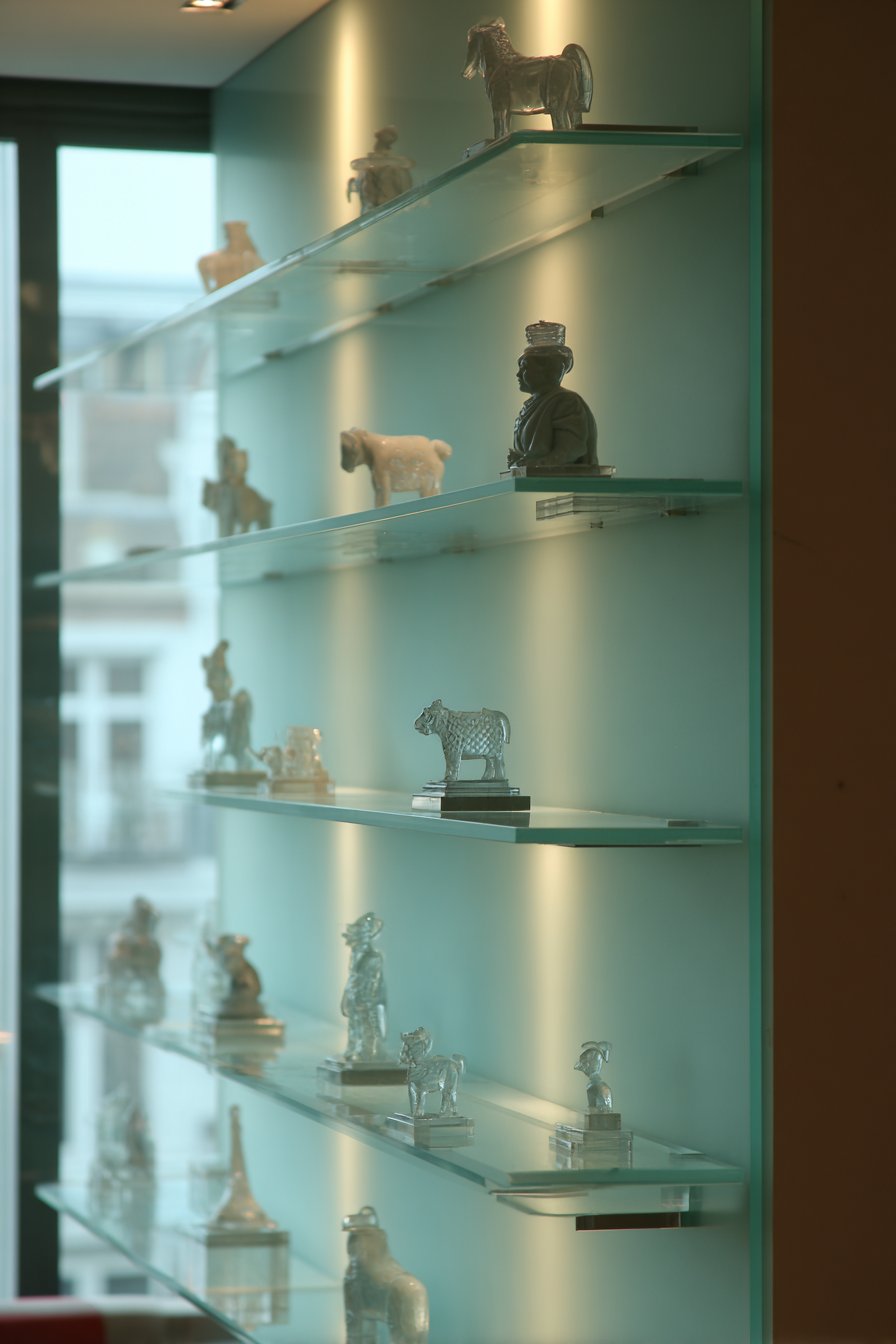
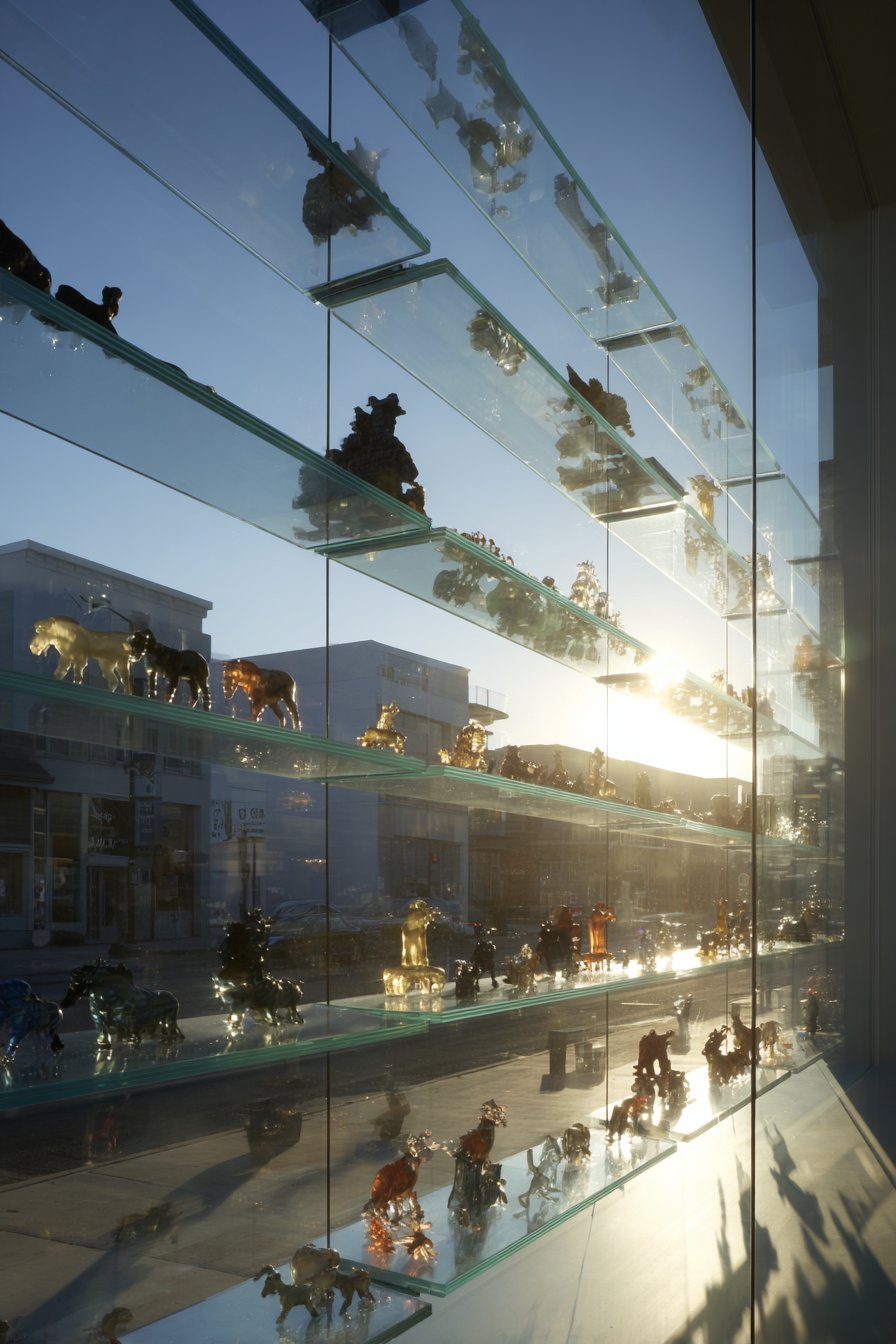
Innovation meets practicality when frameless glass shelves installed across a living room window utilize natural backlighting during the day while integrated LEDs provide evening illumination. The minimalist chrome brackets create nearly invisible support systems that allow glass shelves to appear to float in the window opening. This unconventional placement transforms windows from mere light sources into dynamic display environments that change character throughout the day.
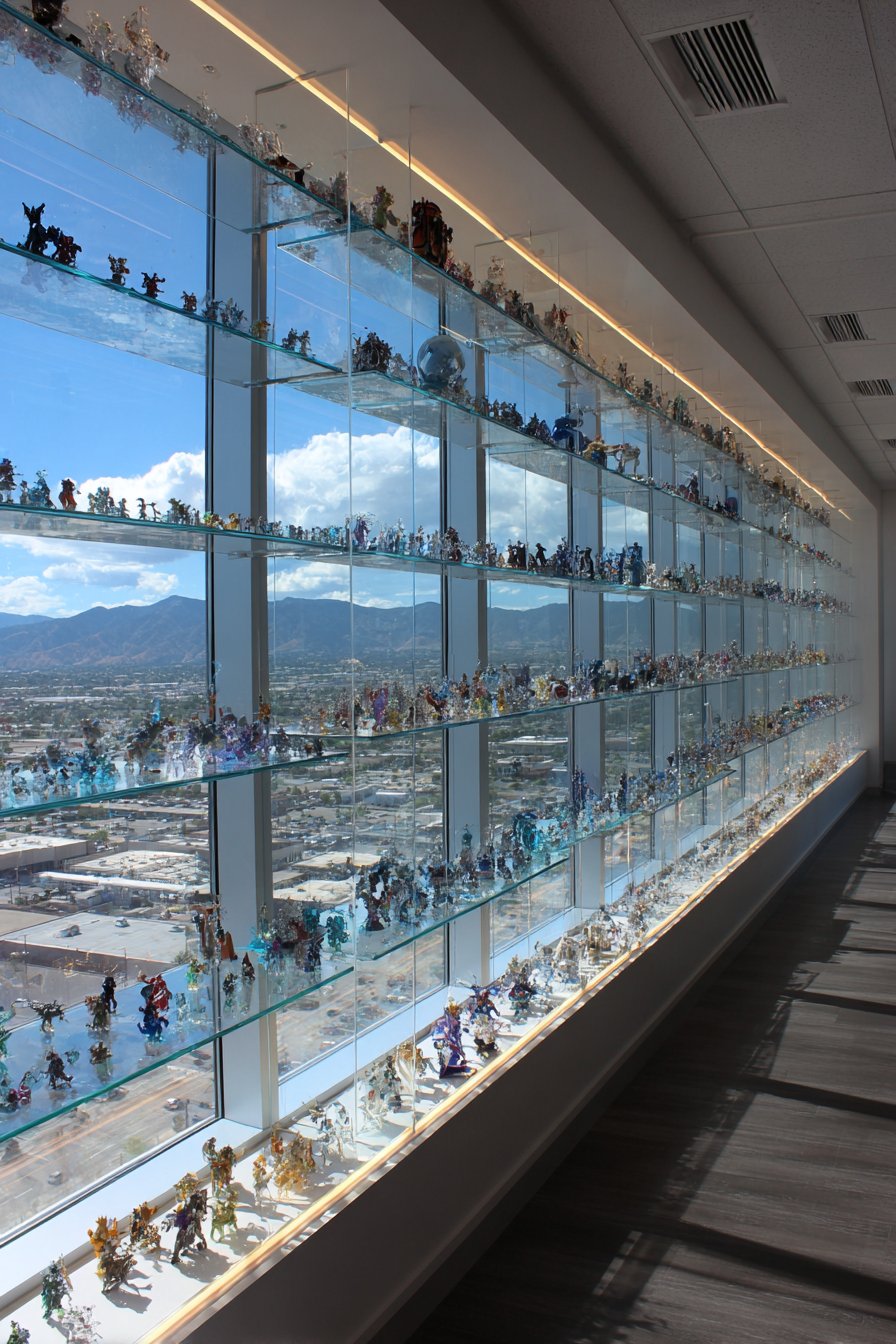
Translucent and colored glass figurines particularly benefit from this backlit presentation, as light passing through them reveals internal structures, enhances colors, and creates jewel-like effects impossible to achieve with front or overhead lighting. The window location provides constantly changing natural light throughout the day, transforming the display from gentle morning illumination through brilliant midday backlighting to soft afternoon glow. This organic variation keeps the display perpetually interesting.
Evening presents different magic when integrated LEDs take over, providing consistent illumination that allows the display to remain visible and attractive after dark. This dual lighting system ensures the display functions beautifully at all hours while the transparent materials prevent the shelves from blocking significant natural light from entering the room during daylight hours.
Key Design Tips:
- Choose UV-resistant materials for figurines to prevent sun damage from constant light exposure
- Install shelves on windows with blinds or curtains to control light intensity and protect pieces when needed
- Keep shelving heights varied to accommodate different figurine sizes while maintaining window functionality
- Clean shelves and figurines frequently—window locations collect dust from air circulation
- Select pieces with interesting silhouettes that create compelling shadow plays on adjacent walls
21. Integrated Bookcase Display Solution
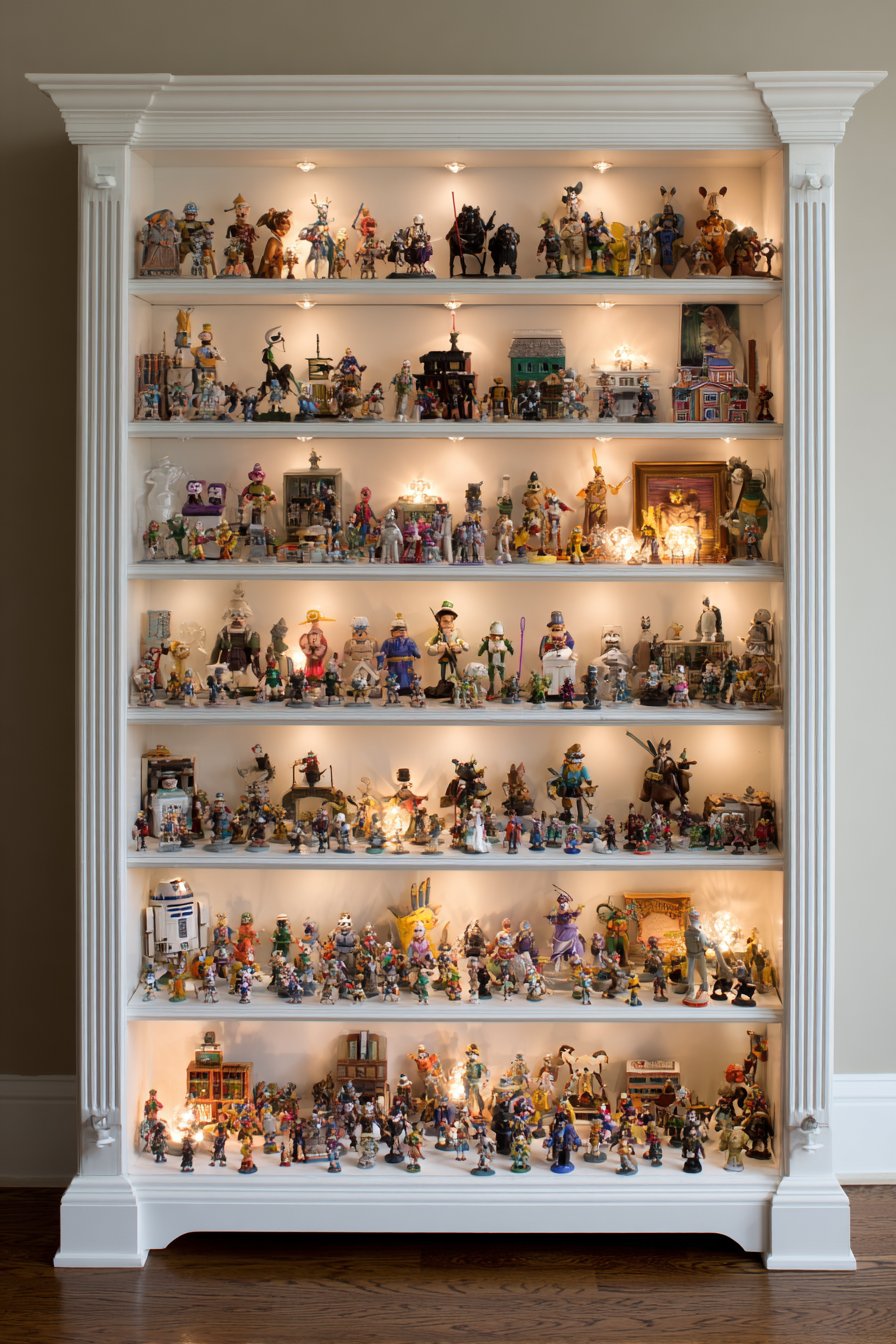
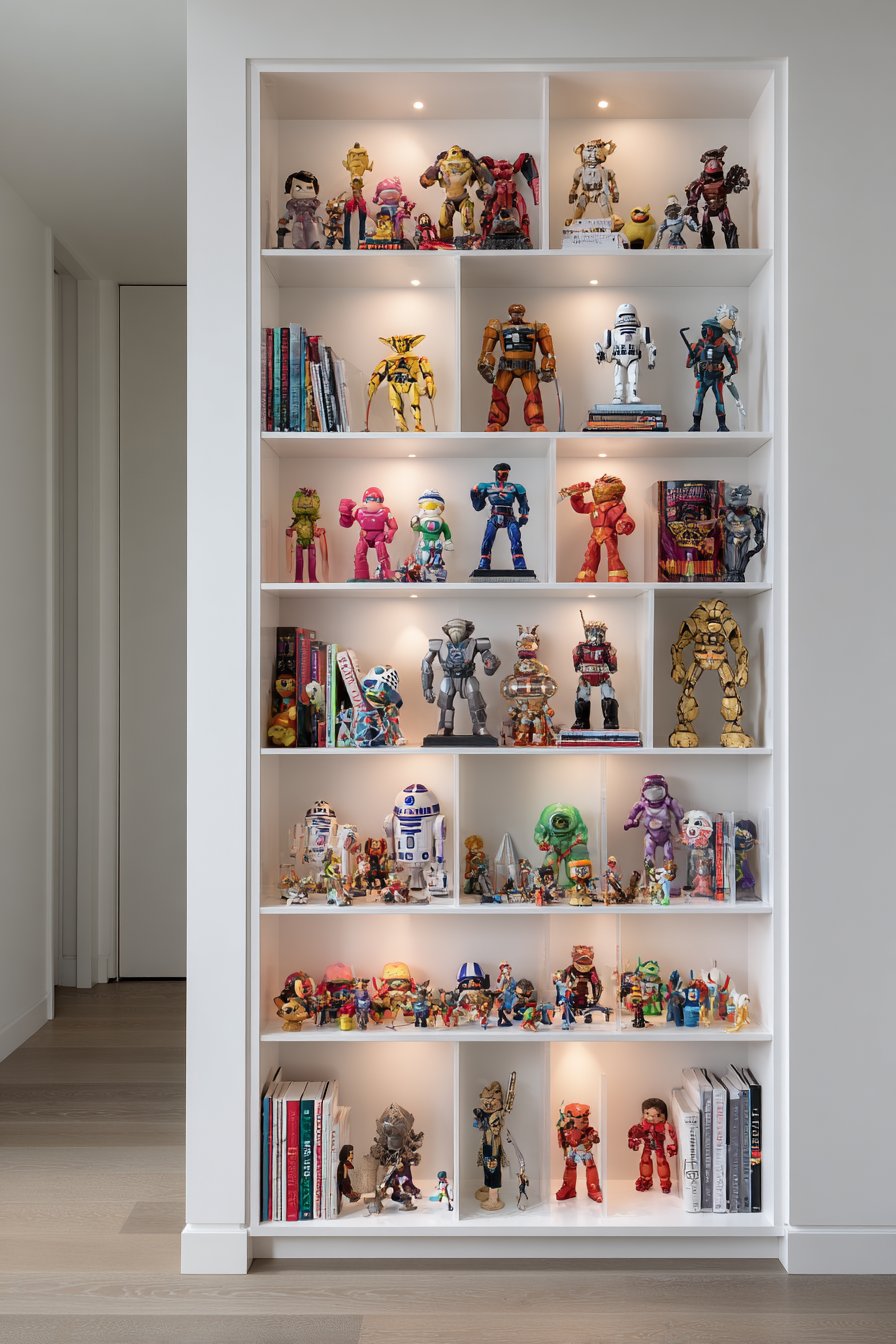
Harmony between function and display emerges when dedicated figurine shelves are interspersed among book storage in a white built-in bookcase, creating an integrated library and collection display that serves multiple purposes. The varying shelf heights accommodate both standard book sizes and taller figurines, with some sections specifically designed with extra vertical clearance for display purposes. This integration prevents collections from feeling isolated or separate from daily life, instead weaving them into the fabric of your living space.
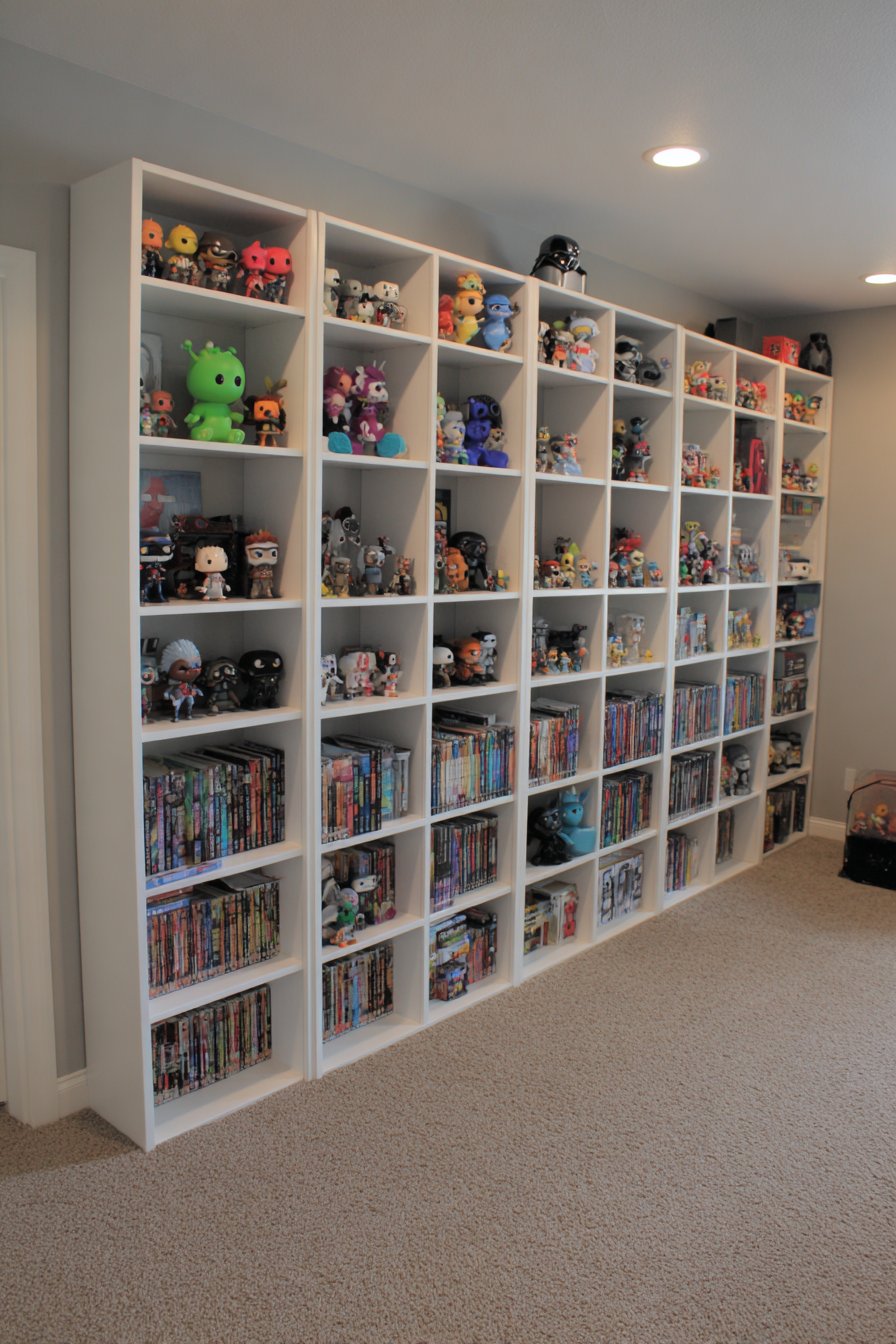
Thoughtful arrangement coordinates books and figurines through color coordination and thematic groupings—fantasy figurines might share shelves with science fiction novels, while delicate porcelain pieces complement leather-bound classics. Small battery-operated LED puck lights illuminate key figurines without requiring complex wiring or professional installation, making this an achievable upgrade for existing built-ins.
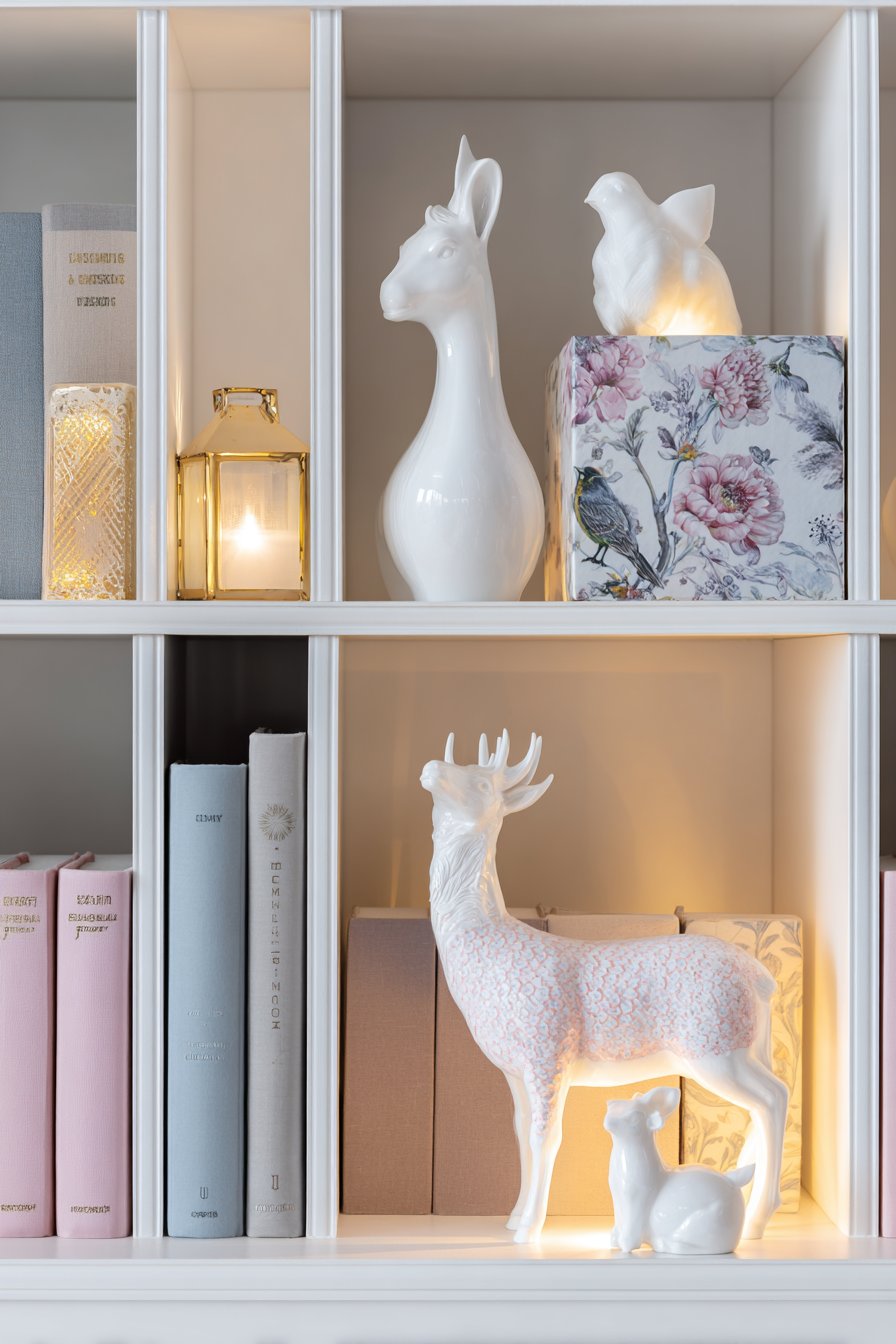
The balanced integration of literature and collectibles creates visual richness and textural variety that pure bookcase or pure display case cannot achieve alone. This approach suits bibliophiles who are also collectors, creating unified presentation that celebrates both passions equally. The white finish keeps the overall effect light and airy despite the density of items displayed.
Key Design Tips:
- Reserve eye-level shelves for your most prized figurines where they’ll receive maximum attention
- Create rhythm by alternating book-heavy shelves with display-heavy shelves
- Use books themselves as display risers, stacking horizontally to create varied heights for figurines
- Maintain some restraint—not every shelf needs figurines to prevent visual overwhelm
- Update both book and figurine arrangements seasonally to keep the display fresh and interesting
22. Repurposed Apothecary Cabinet Display
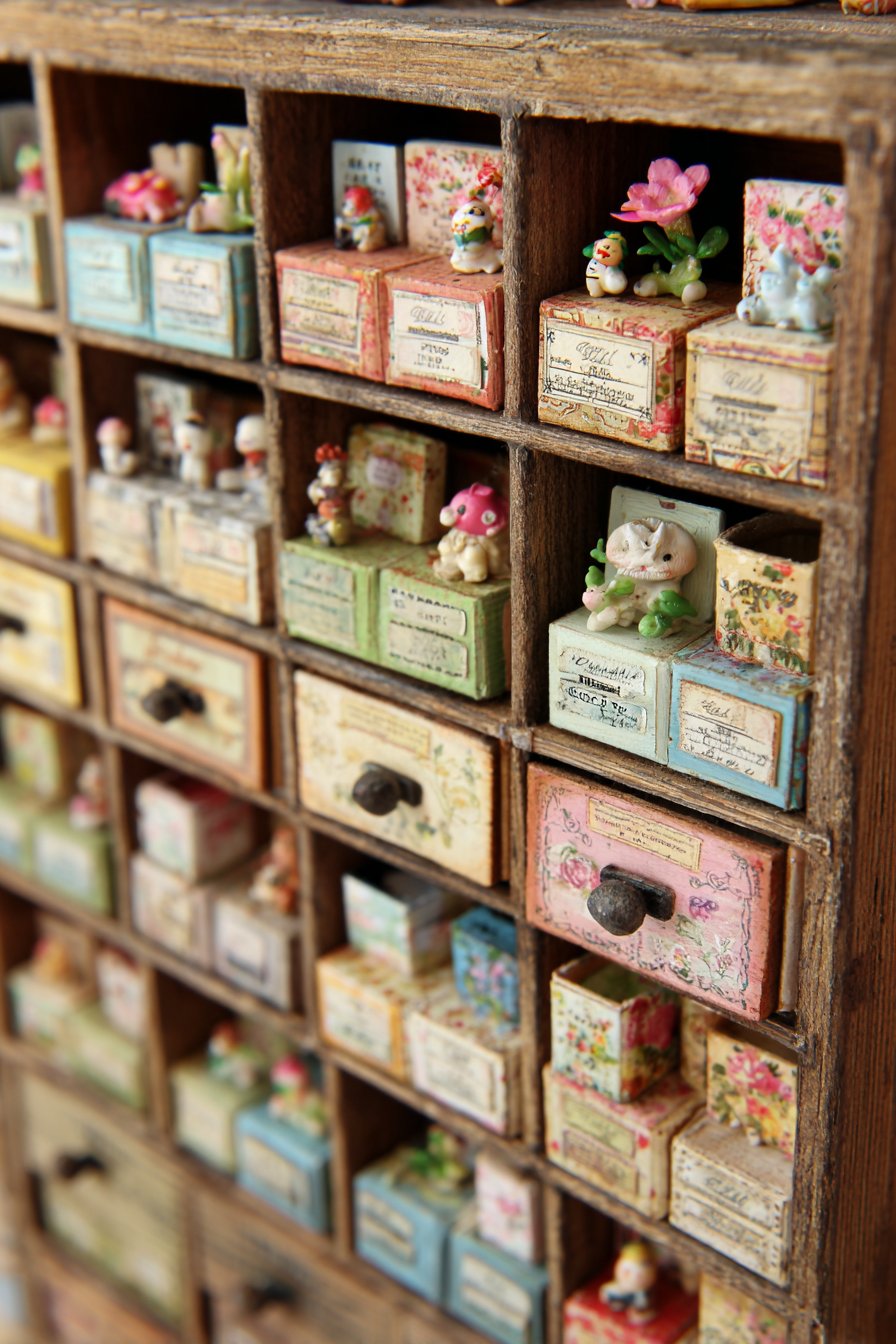
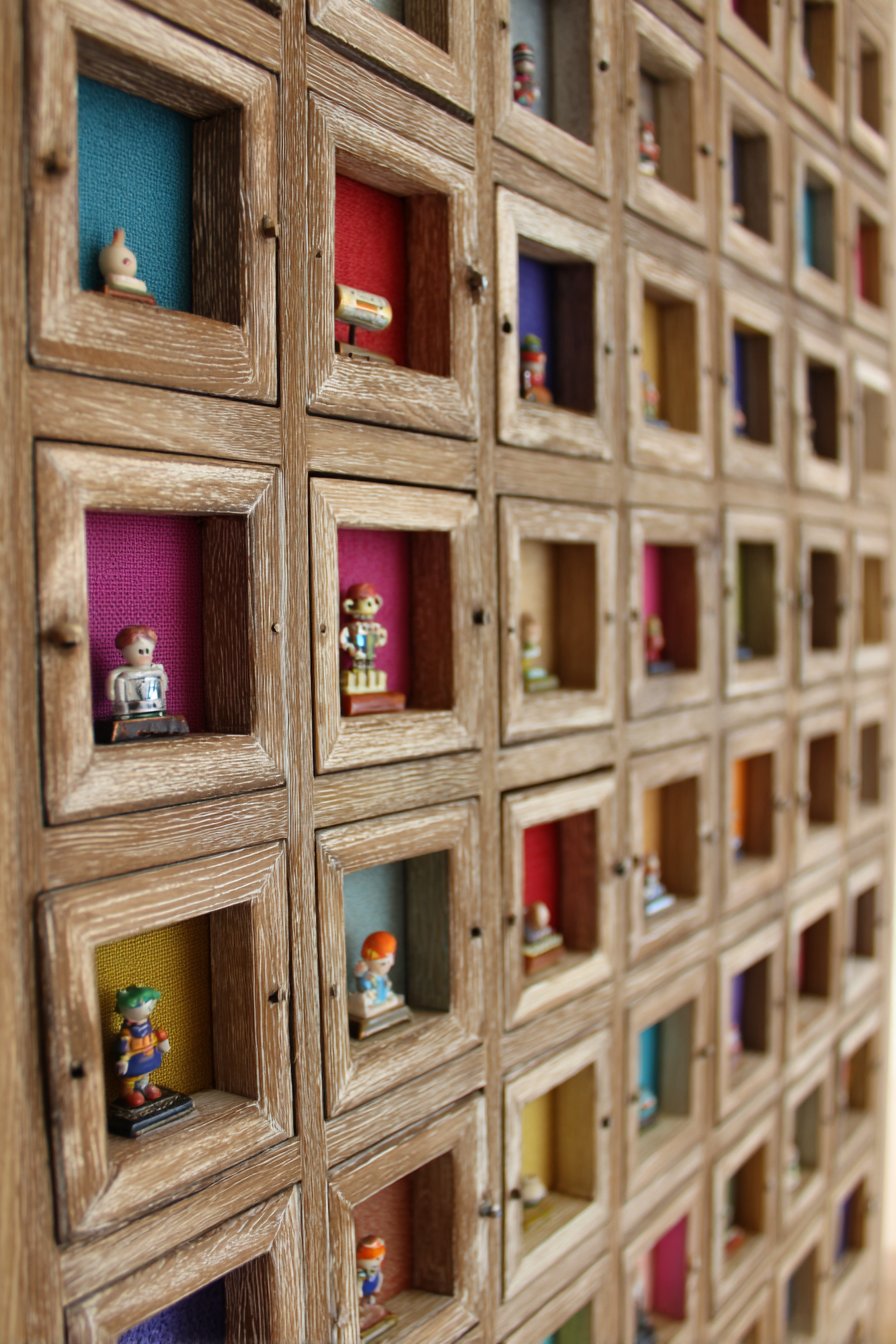
Character and organization unite when a vintage apothecary cabinet with multiple small drawers is repurposed with open fronts to create individual display boxes for figurine collections. Each drawer space, lined with complementary fabric or decorative paper, becomes a framed environment housing a single figurine or themed grouping. The grid-like arrangement of uniform compartments imposes visual order on eclectic collections while the aged wood cabinet provides warmth and vintage appeal.
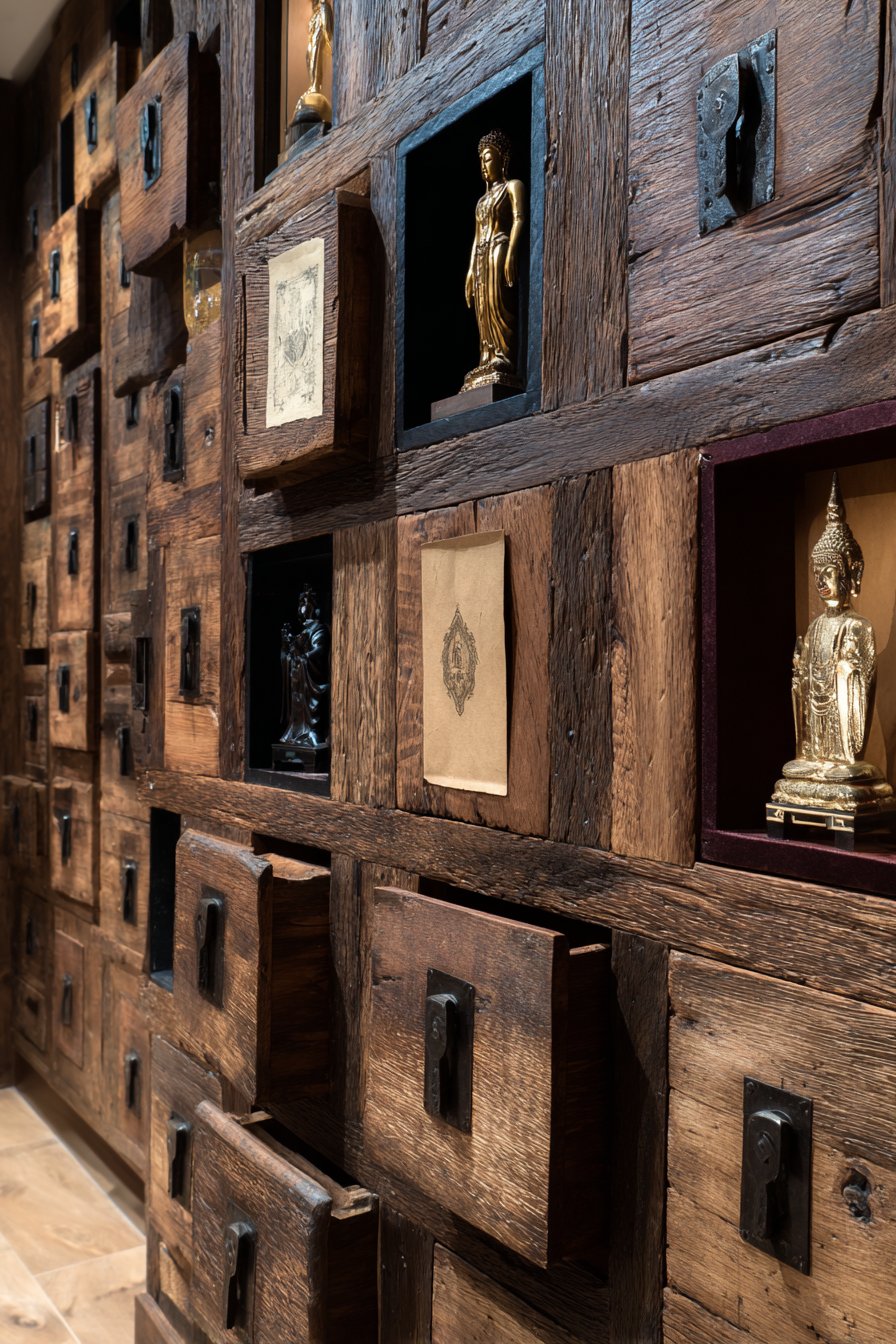
This creative furniture repurposing demonstrates how unexpected items can solve display challenges in ways purpose-built solutions cannot. The drawer dimensions typically work perfectly for small to medium figurines, while the substantial cabinet structure provides stability and presence. The compartmentalized approach allows for extensive collections to be displayed without creating chaos, as each piece receives its own defined space.
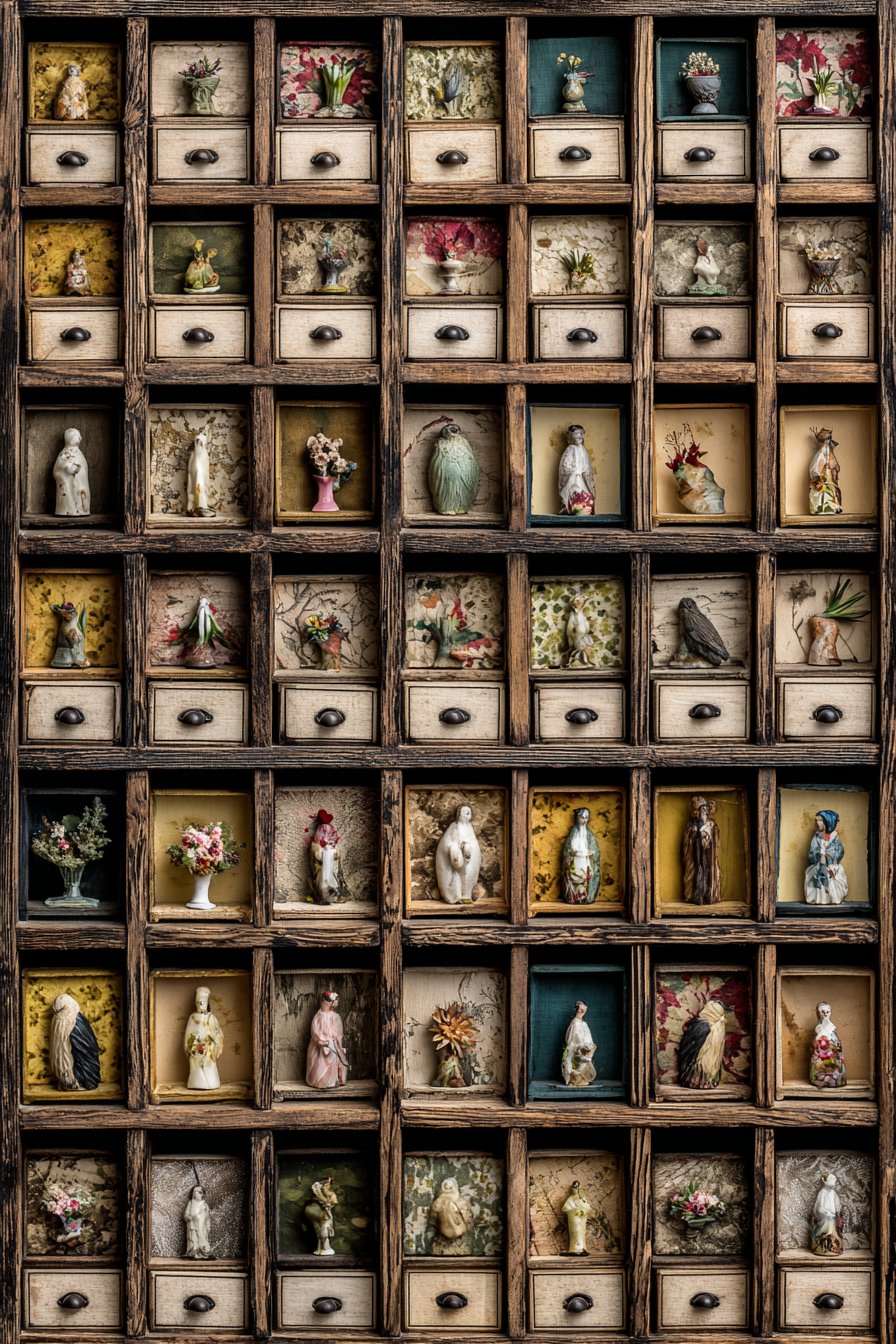
Positioned in a contemporary bedroom, the vintage cabinet creates interesting temporal tension—old housing new, traditional form serving modern function. This juxtaposition prevents the space from feeling too coordinated or design-conscious, instead introducing organic, collected-over-time character that makes rooms feel genuinely lived in rather than staged.
Key Design Tips:
- Remove drawer fronts cleanly to create proper display openings without splintering wood
- Line each compartment with material that complements or contrasts with figurine colors
- Create thematic groupings within drawers—all blues together, all animals together, all vintage pieces together
- Leave some compartments empty or minimally filled to prevent sensory overload
- Position the cabinet where all compartments are visible without requiring viewers to crouch or strain
23. Child-Friendly Cube Shelf System
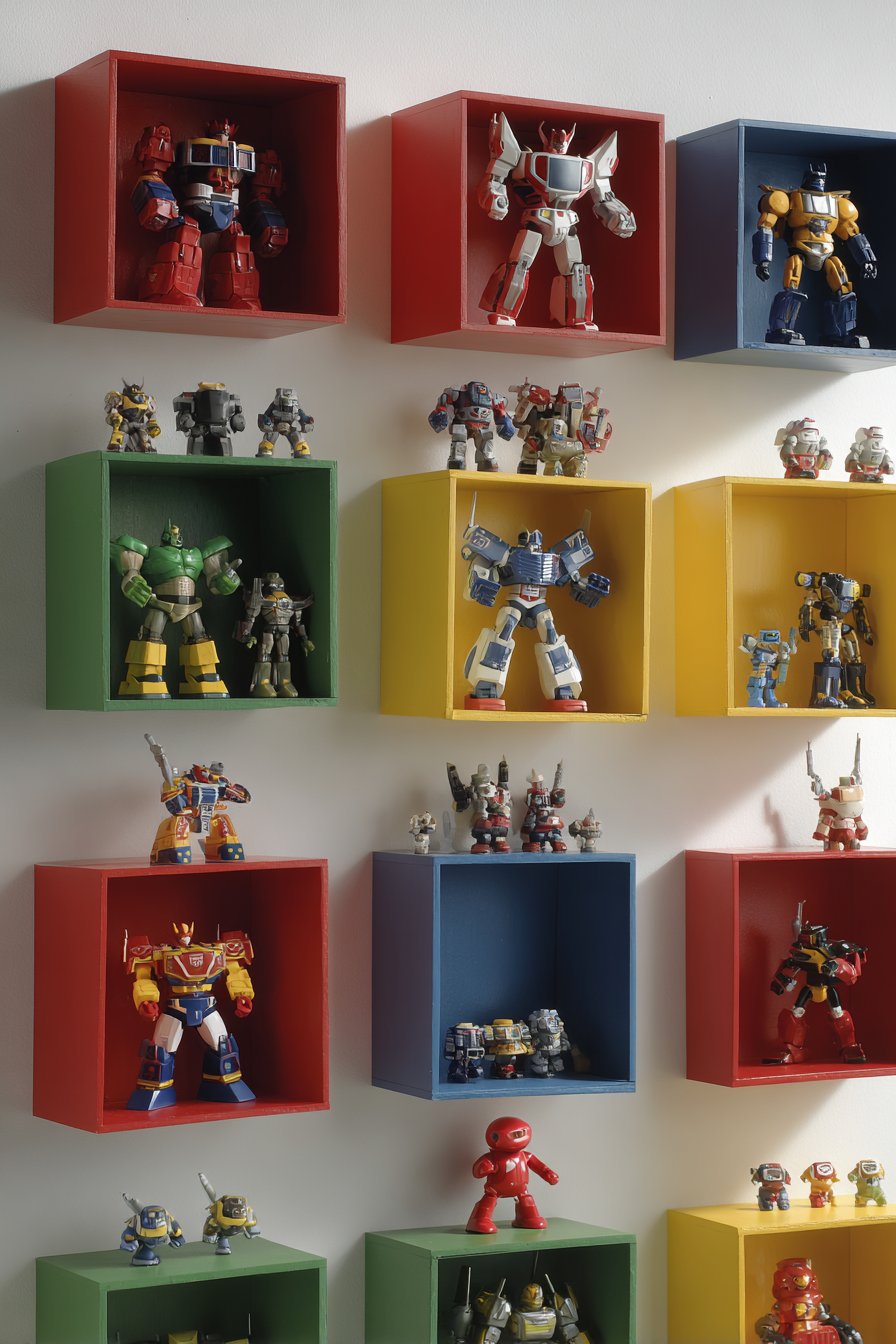
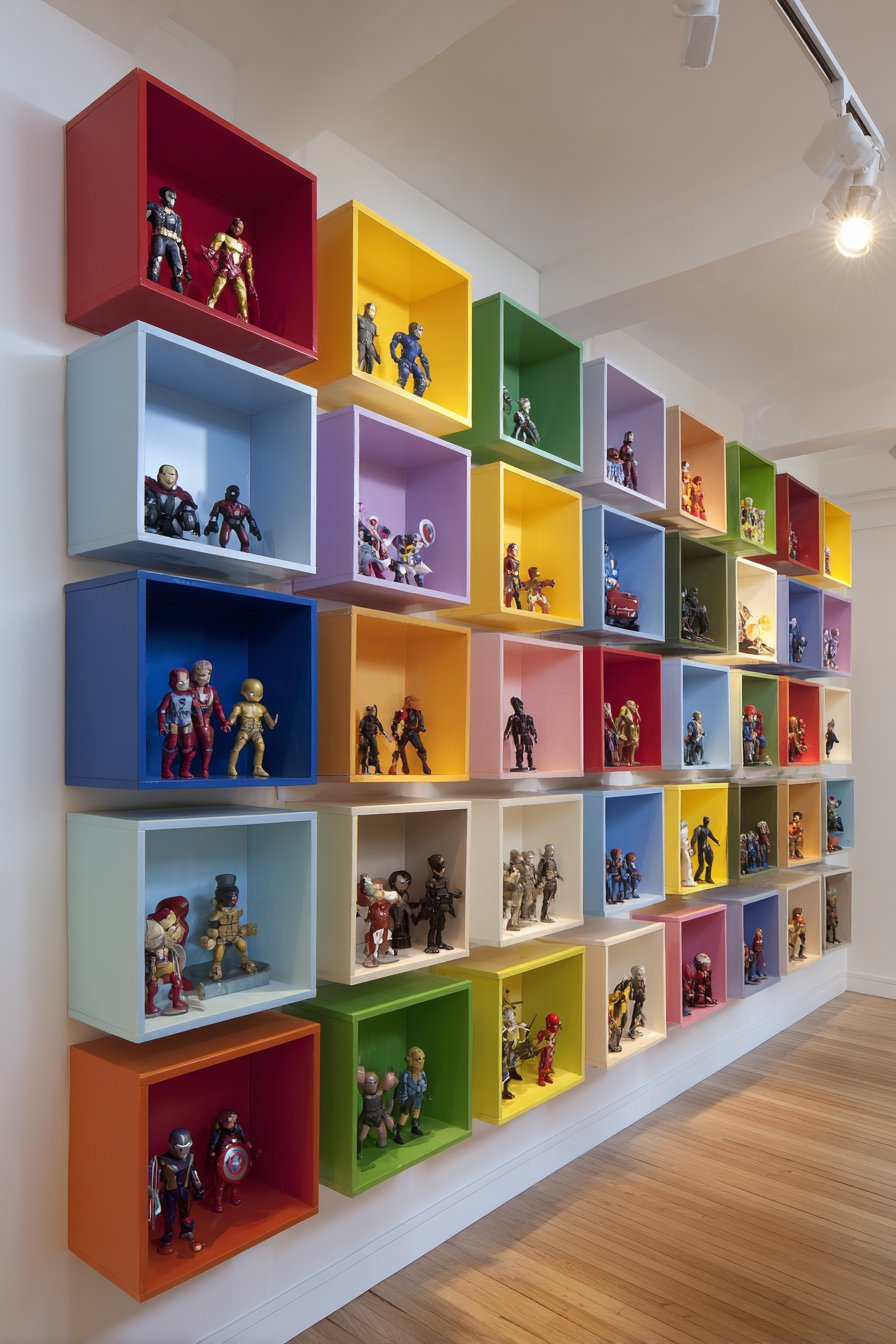
Accessibility and safety define a kid-friendly figurine display using sturdy wall-mounted box shelves in bright colors positioned at accessible heights for young collectors to arrange and enjoy their collections independently. The cube-shaped shelves in primary colors create a playful display grid that appeals to children’s aesthetic preferences while providing the structured organization that prevents toy chaos. This approach teaches children to value and care for their collectibles while making the display process participatory and fun.
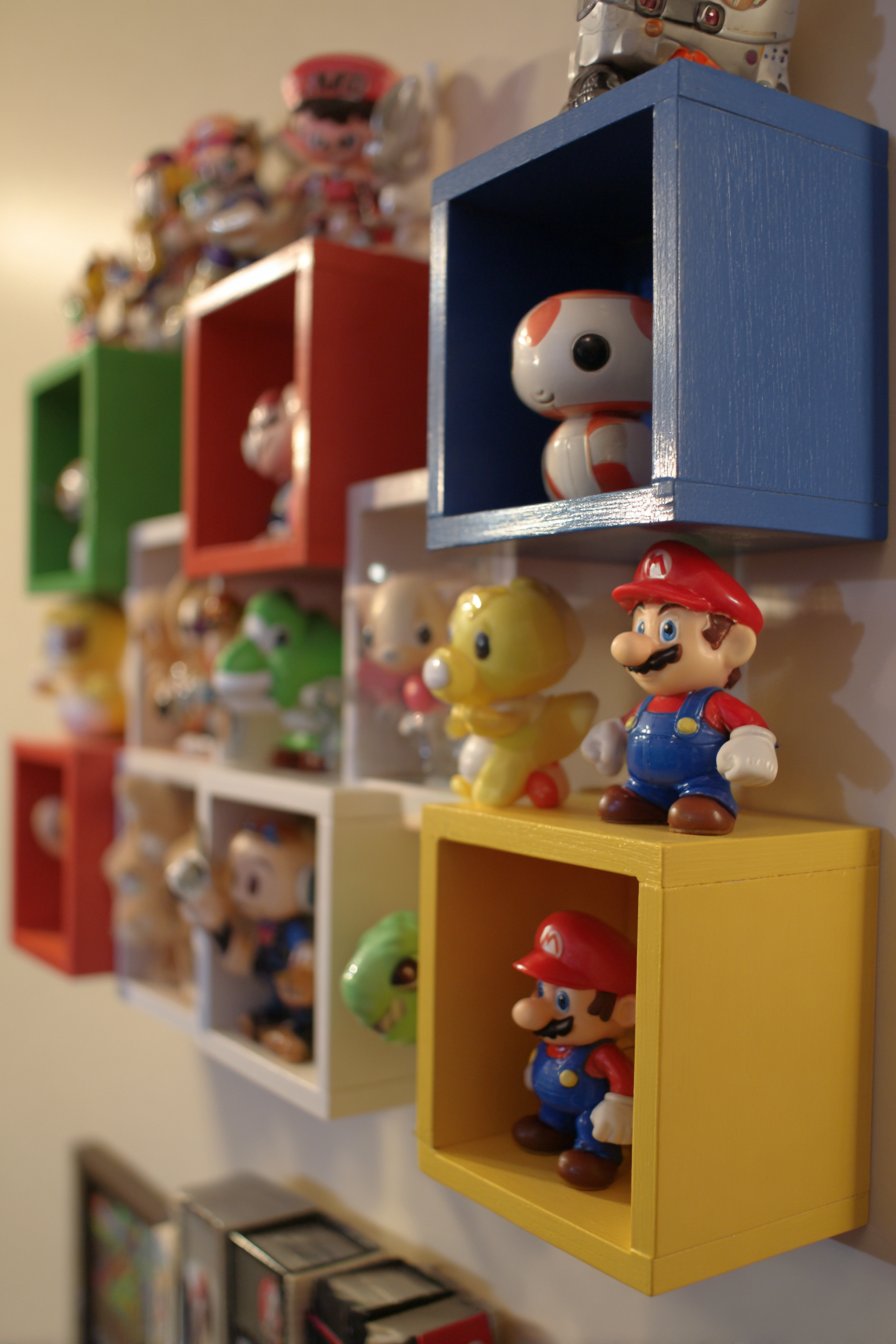
Action figures, collectible toys, and character figurines organized by theme or franchise create intuitive groupings that make sense to young minds. The adequate spacing between pieces prevents overcrowding while allowing room for collection growth—an important consideration when displaying children’s items that tend to multiply rapidly. The sturdy construction withstands enthusiastic handling while the wall mounting ensures stability and prevents toppling.
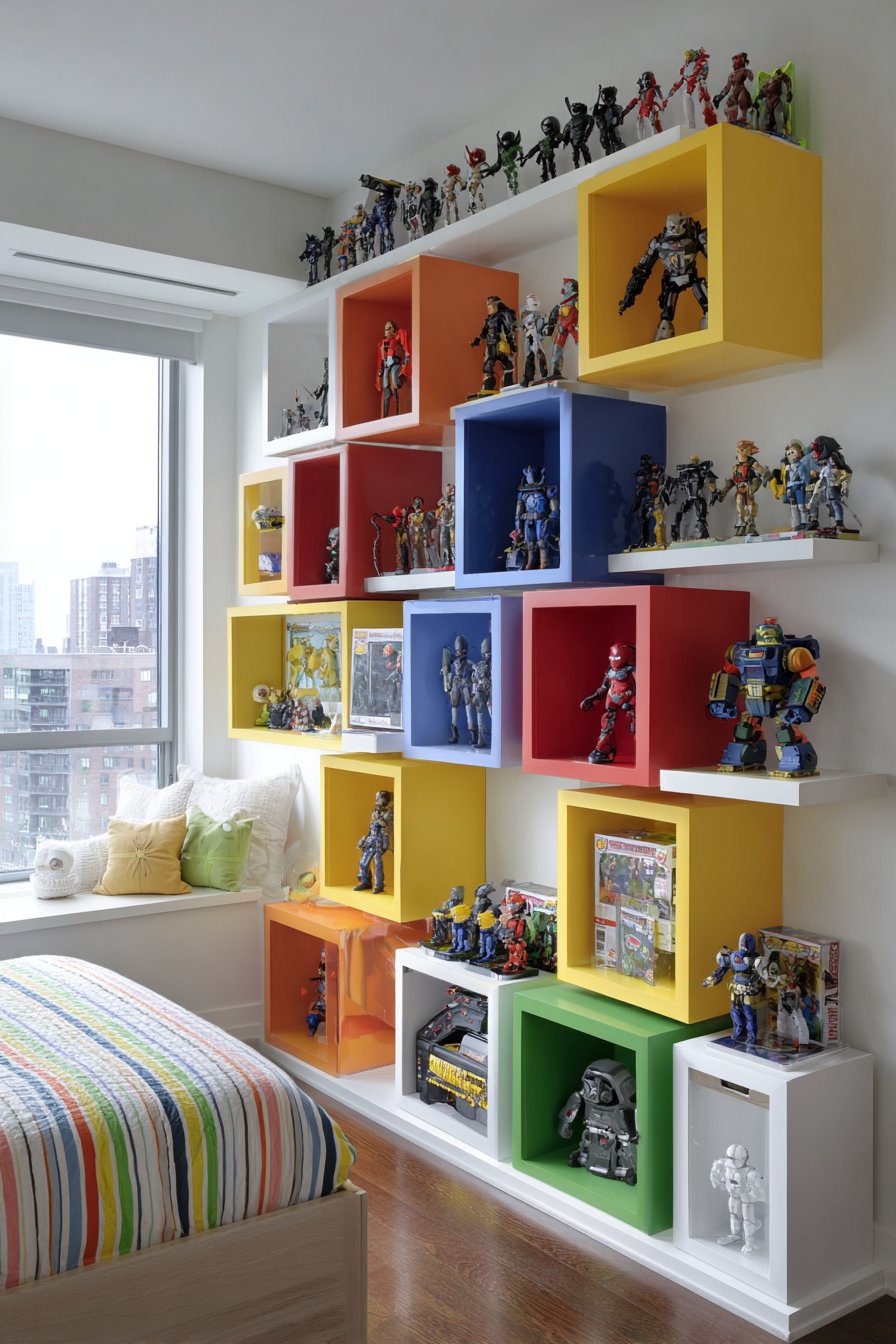
Natural lighting combined with overhead room lighting ensures good visibility at all times, important for displays that will be frequently accessed and rearranged. The child-centric design acknowledges that young collectors deserve displays as thoughtful as adult collections, fostering appreciation for organization and presentation that will serve them throughout life.
Key Design Tips:
- Mount lower shelves at child’s eye level to ensure they can see and access pieces safely
- Choose washable paint finishes for easy cleaning of inevitable fingerprints and smudges
- Limit each cube to 3-5 items to teach curation skills and prevent overwhelming displays
- Use the color-coding strategically—perhaps blue cubes for one type of toy, red for another
- Involve children in arrangement decisions to foster ownership and pride in their display
24. Space-Efficient Corner Shelf Tower
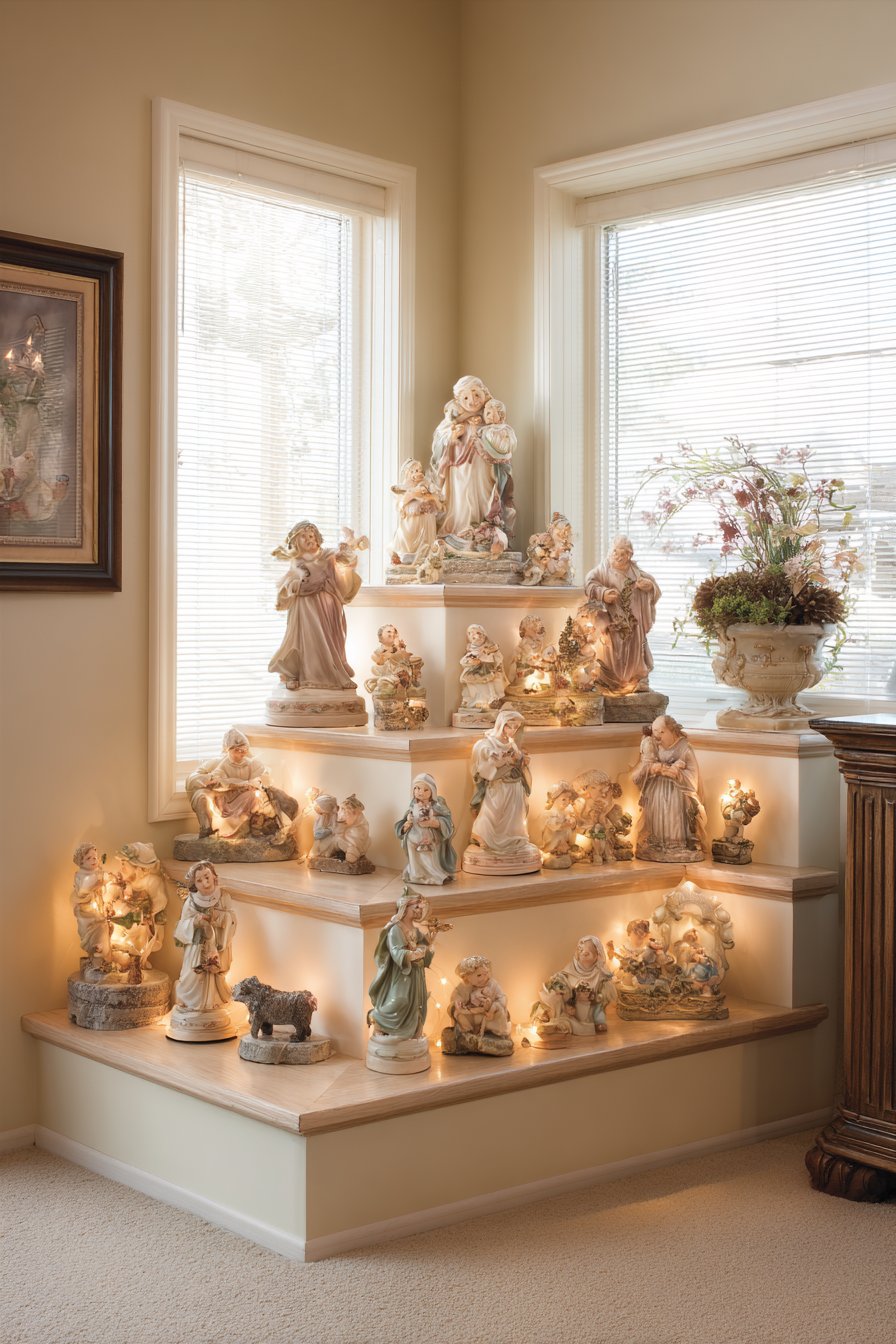
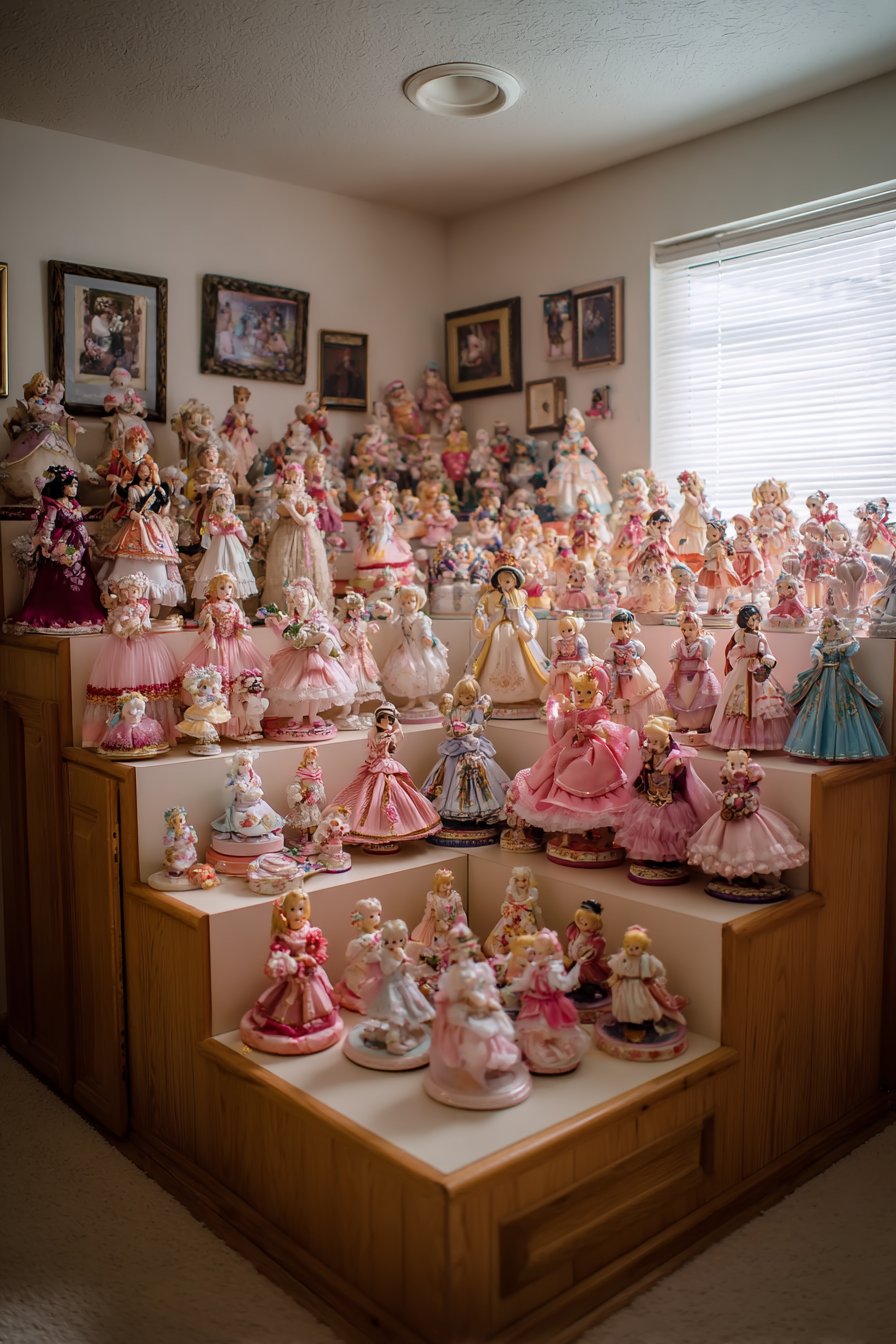
Unused corners transform into prime display real estate with a stepped corner shelf unit that maximizes often-wasted space while creating ascending display platforms for figurines of varying heights. The five-tier design in light oak finish features graduated shelf depths from top to bottom, with each level providing progressively more display space. This clever engineering turns architectural constraints into advantages, making the most of every square inch.
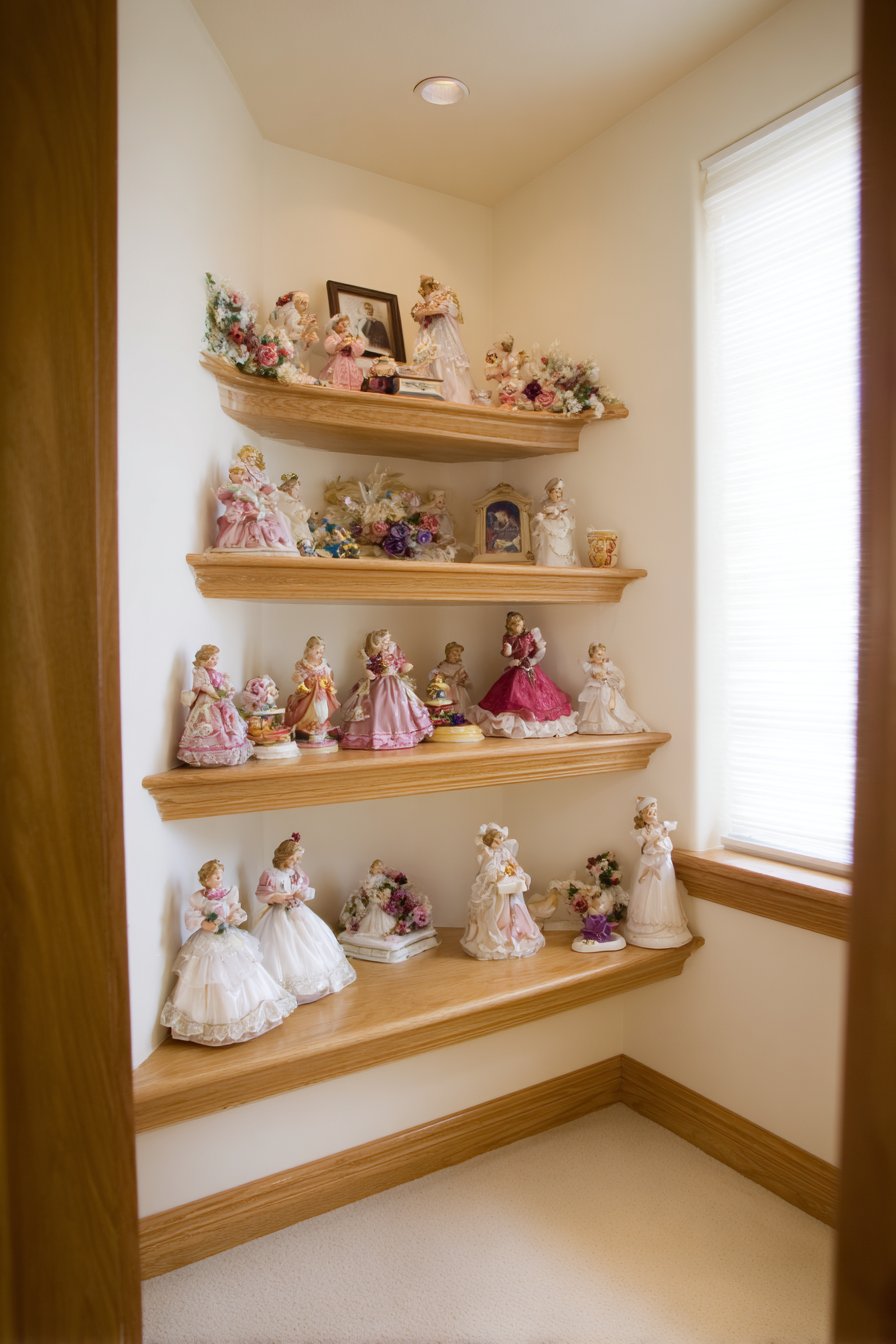
The strategic arrangement with largest pieces on lower shelves and delicate smaller items elevated follows sound design principles that create visual stability while ensuring fragile pieces remain out of harm’s way. The corner placement allows viewing from multiple room angles, making the display visible from various vantage points while the shelves’ progressive depth prevents back pieces from being obscured by front items.
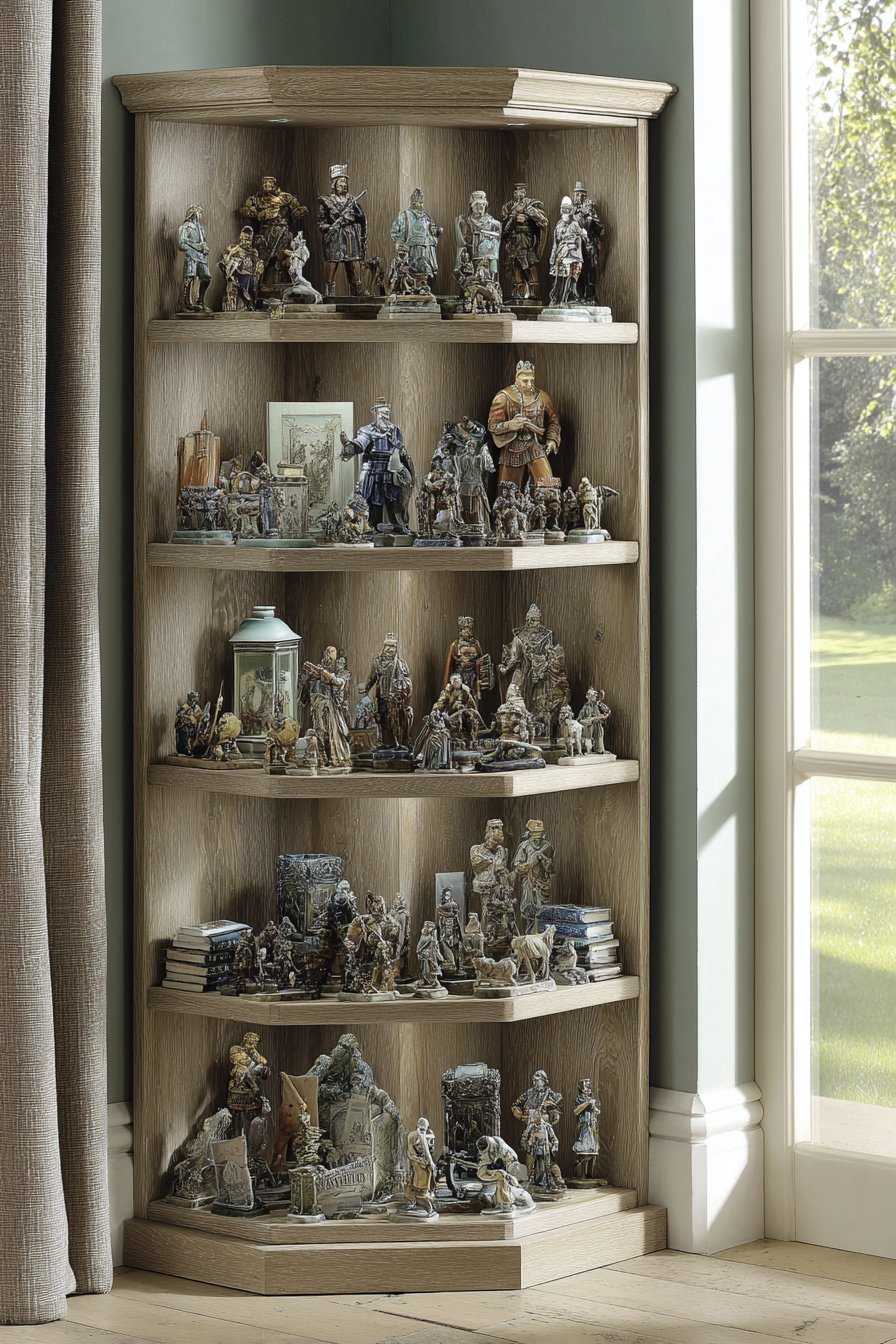
Soft natural light from adjacent windows illuminates the collection beautifully, with the corner position often capturing interesting cross-lighting from multiple directions. This display solution proves particularly valuable in smaller homes where floor space is precious and every square foot must serve multiple purposes or maximize efficiency.
Key Design Tips:
- Secure the top of the unit to the wall to prevent forward tipping with weight on upper shelves
- Use the varying depths strategically—deeper shelves for larger collections, shallower ones for featured pieces
- Create visual flow by arranging colors in gradients from bottom to top
- Keep the bottom shelf relatively spare to prevent the corner from feeling cluttered and heavy
- Consider the primary viewing angle when deciding which side should face into the room
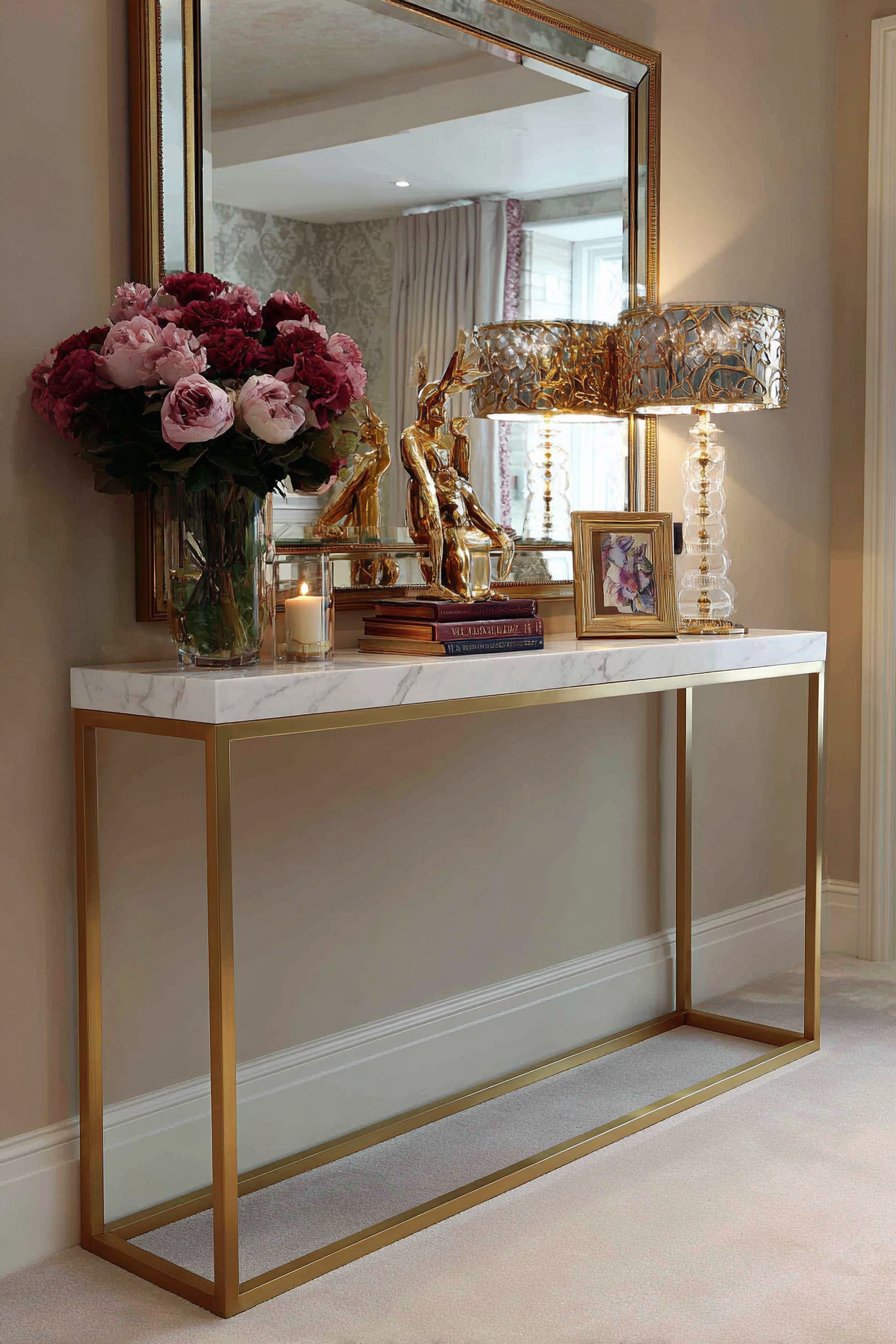
25. Mirror-Enhanced Console Display
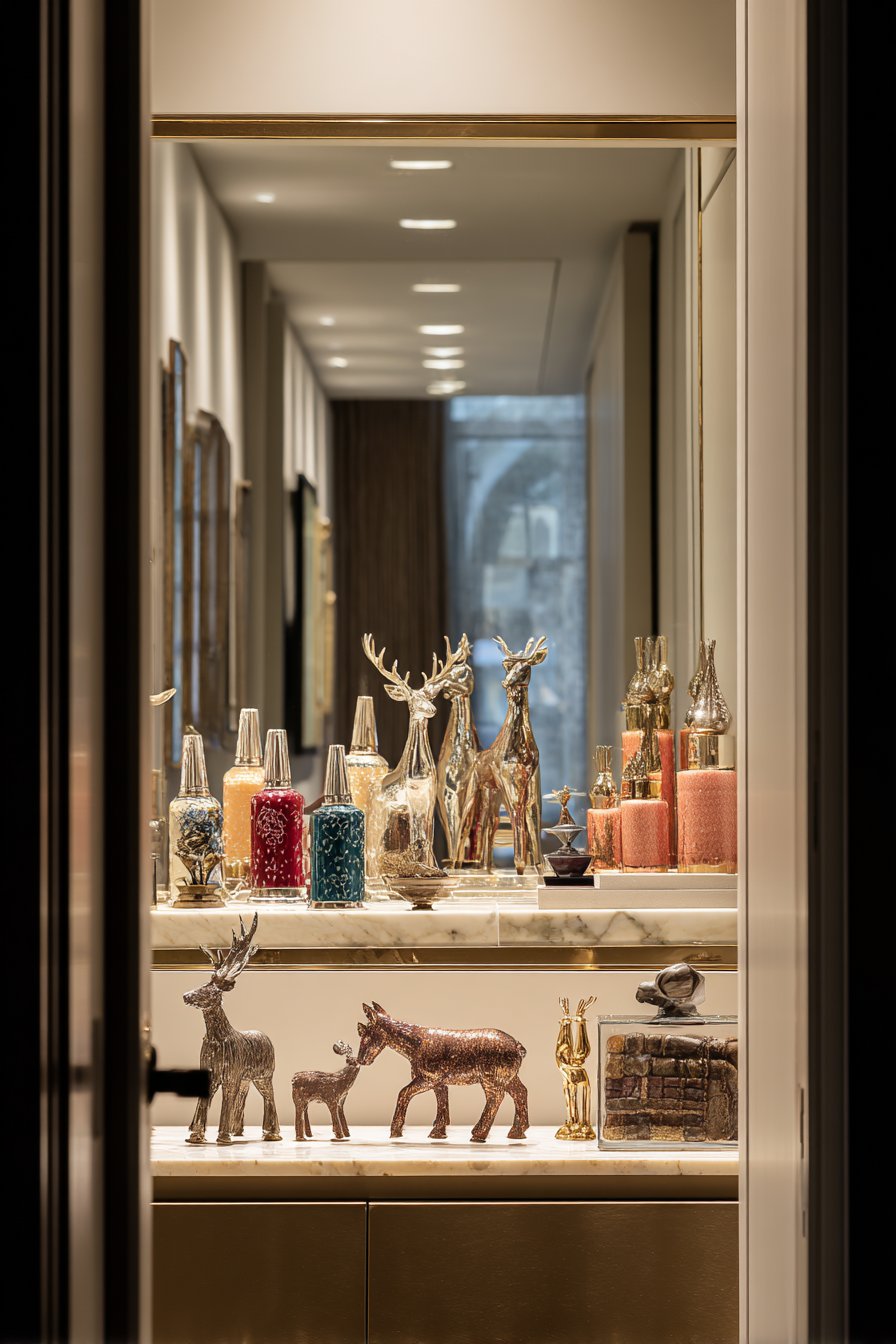
Optical illusion and practical display merge when a narrow console table against a hallway wall pairs with a large mirror mounted above to create the illusion of doubled display space through reflection. The slim console in brushed brass and marble provides an elegant platform for a rotating selection of special figurines without consuming excessive floor space—critical in hallway applications where traffic flow must be maintained.
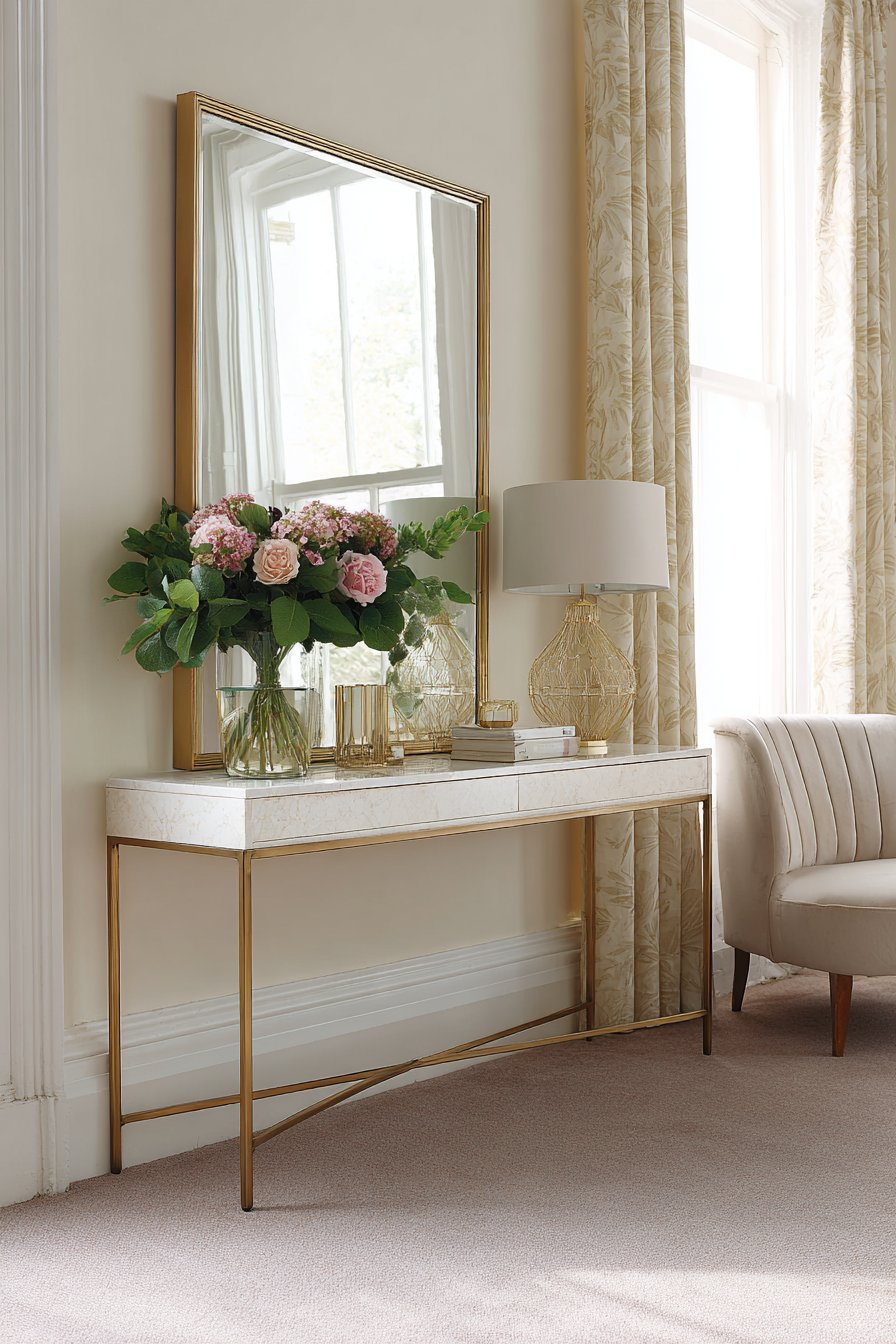
The mirror’s reflection creates visual depth and dimension that makes the narrow hallway feel more spacious while literally multiplying the visual impact of displayed figurines. Carefully chosen pieces in complementary colors create cohesive vignettes that look intentional rather than random. The refined styling and quality materials signal that this is curated presentation rather than convenient storage, elevating the hallway from mere passageway to gallery experience.
Detail-focused interior photography captures how the mirror reflection adds layers of visual interest, with reflected figurines creating symmetrical compositions and the play of light creating depth. This approach works beautifully in narrow spaces where traditional display cabinets would create bottlenecks or make movement difficult.
Key Design Tips:
- Choose figurines that look attractive from all angles since they’ll be viewed directly and in reflection
- Keep the console top relatively spare—3-5 pieces maximum—to maintain the elegant, curated effect
- Clean the mirror frequently to maintain clear reflections and maximum light reflection
- Consider the reflected view from down the hallway when arranging pieces
- Rotate displayed pieces monthly to give the hallway fresh visual interest and showcase different collection items
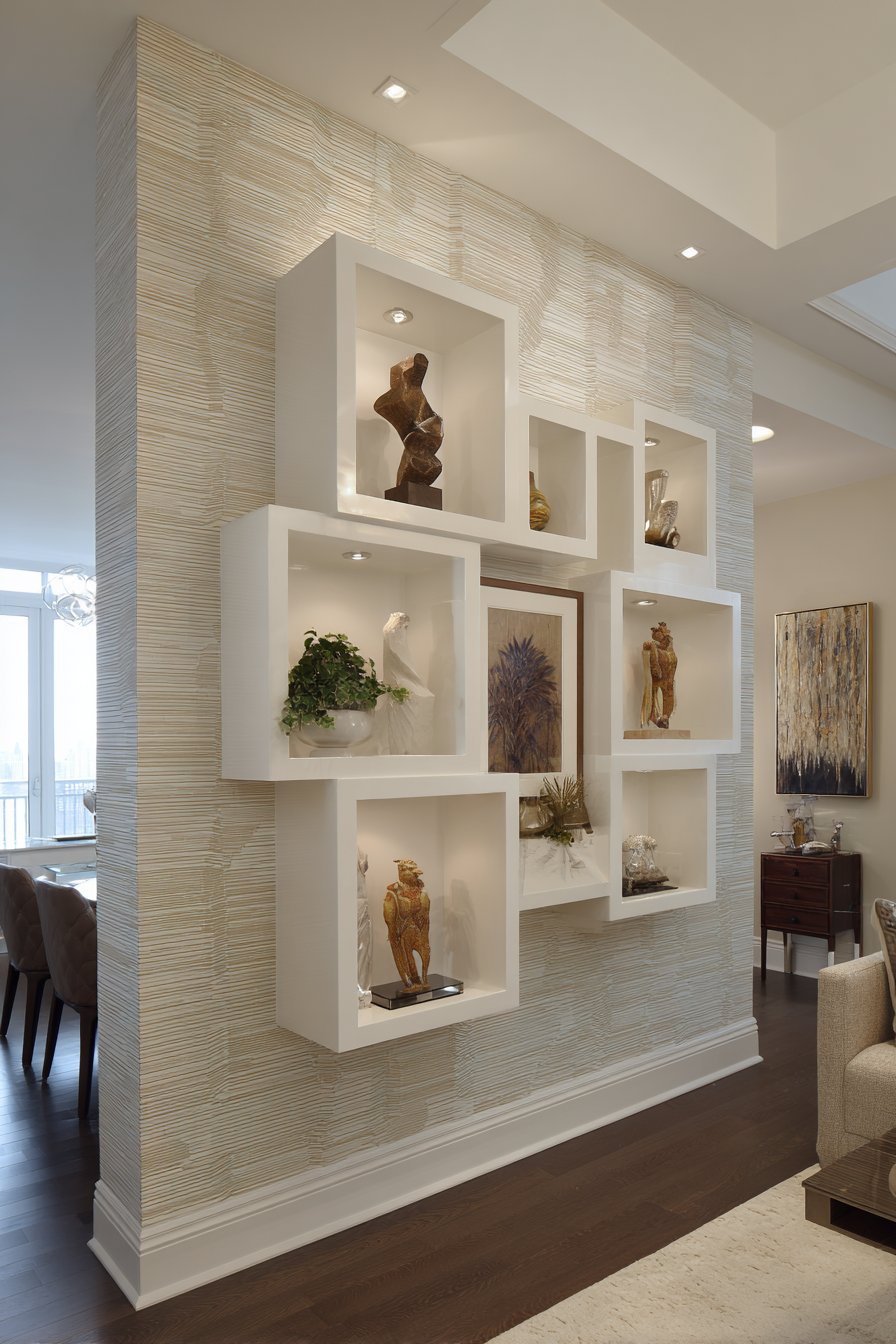
26. Abstract Floating Cube Wall Installation
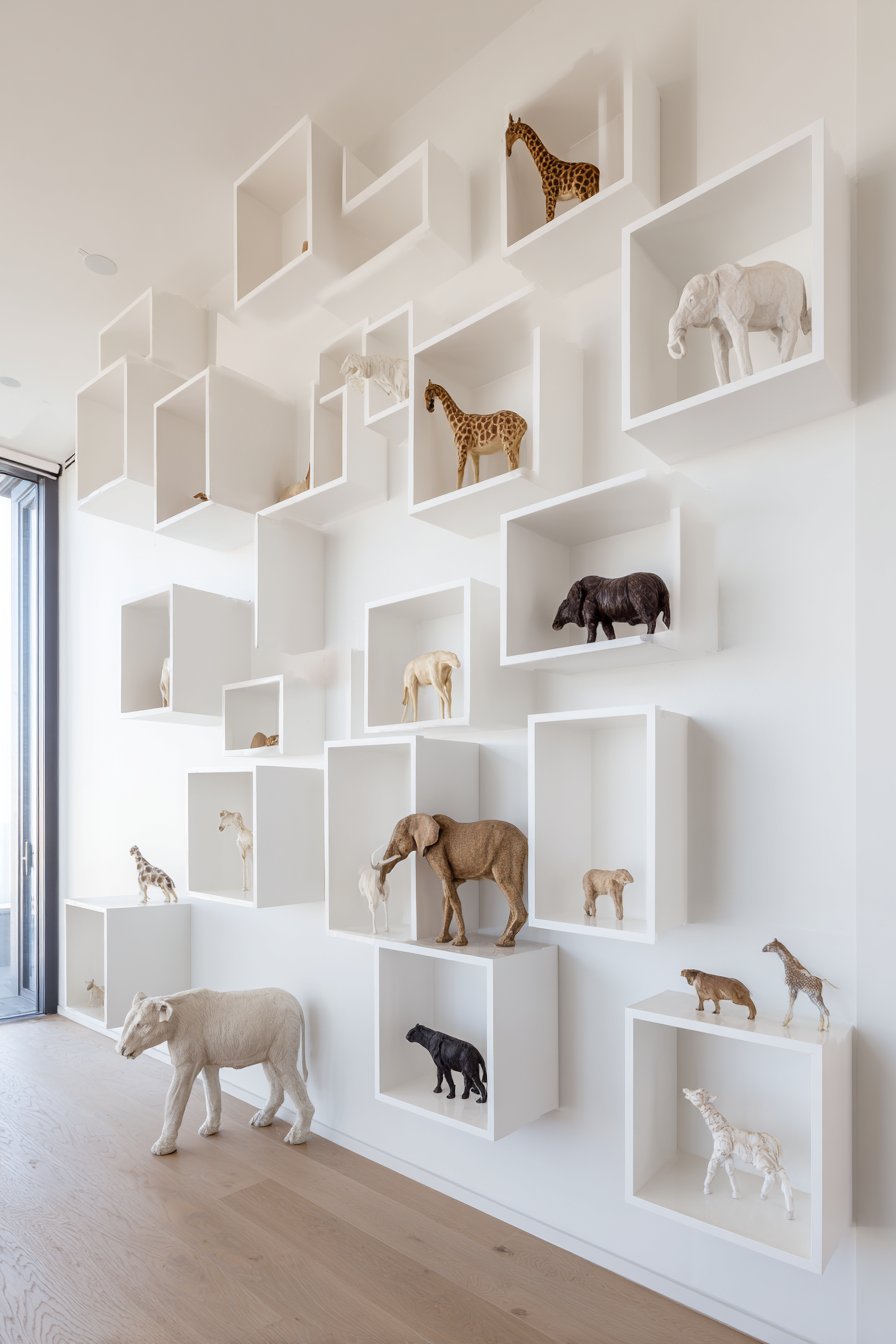
Contemporary aesthetics meet functional display in a series of floating cube shelves arranged in abstract patterns on a feature wall, creating dynamic three-dimensional display opportunities. The white lacquered cubes with open fronts provide clean-lined niches that frame individual figurines or small groupings like miniature shadow boxes. The asymmetric arrangement prevents the installation from feeling too rigid or predictable, instead creating visual movement and interest that draws the eye across the wall’s surface.
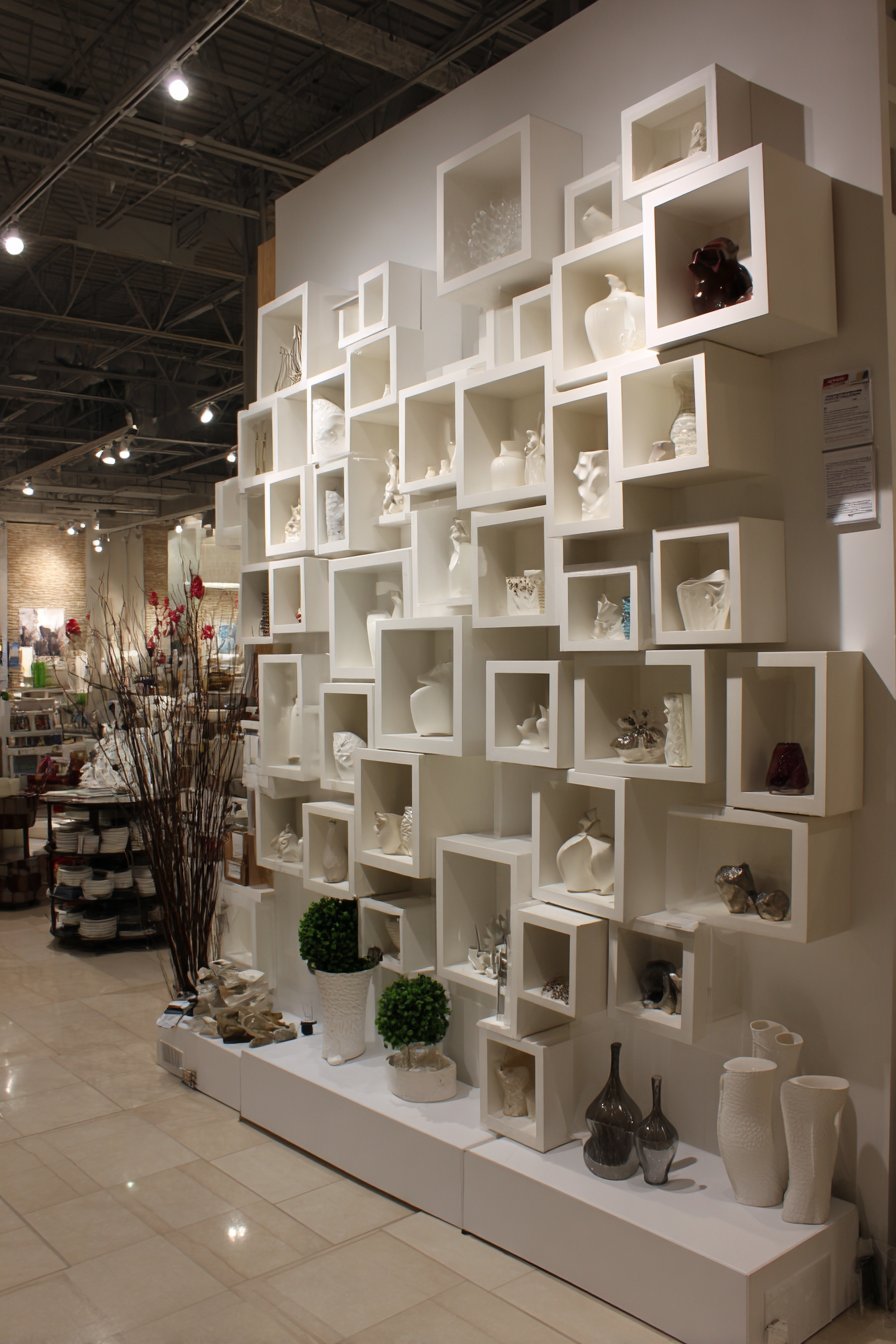
Each cube frames its contents like a mini gallery, isolating pieces from their neighbors to prevent visual competition while creating focused viewing experiences. This approach allows disparate styles and colors within a collection to coexist peacefully, as the physical separation reduces potential clashes. The floating installation creates sculptural wall art that functions simultaneously as storage and display, proving that practical solutions can also be beautiful.
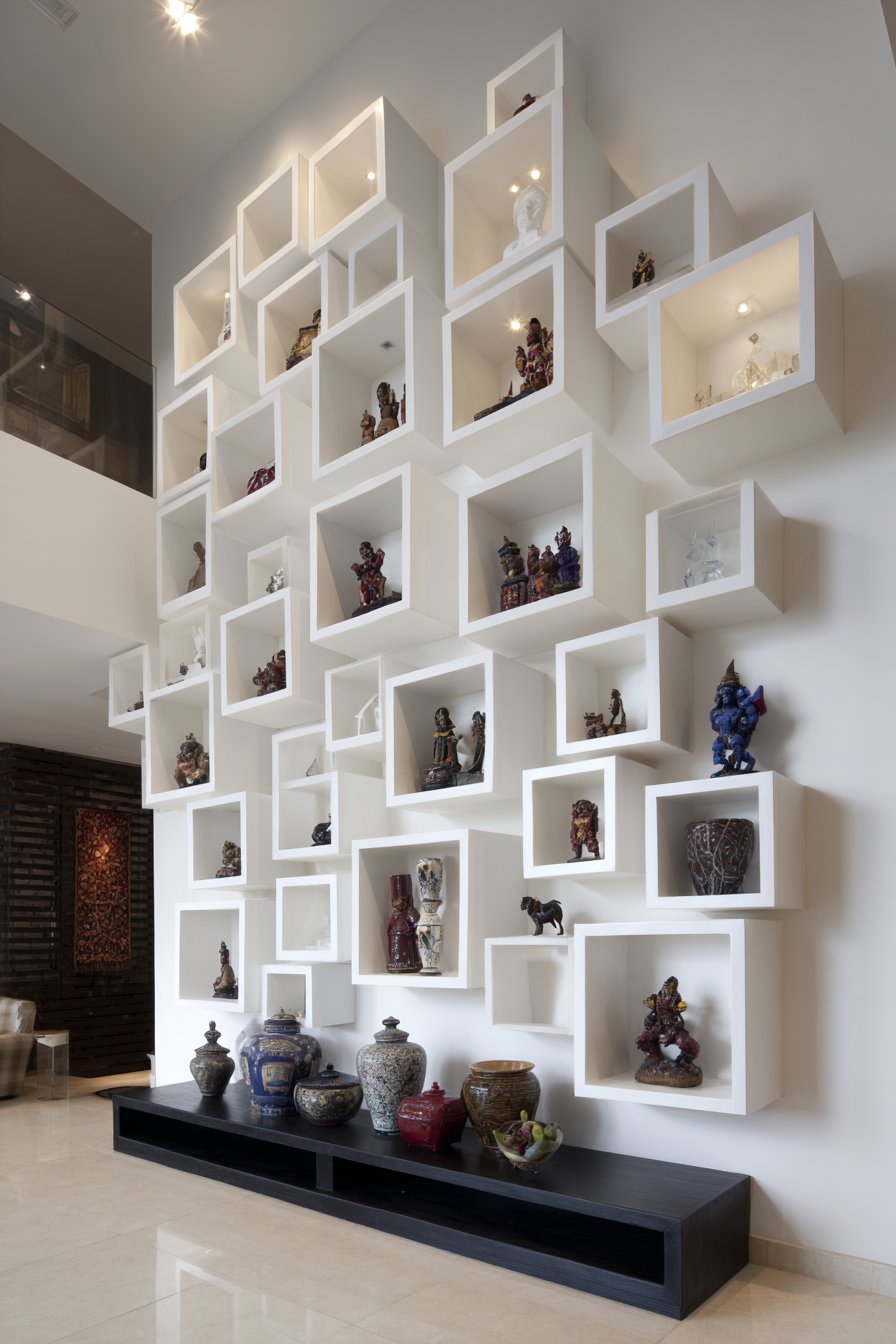
Positioned in a modern living room with neutral decor, the installation serves as functional art and conversation starter, with the clean white cubes allowing colorful or unusual figurines to command maximum attention. The modular nature means the composition can grow or be reconfigured as needs change—additional cubes can be added, existing cubes repositioned, creating an evolving display that grows with your collection.
Key Design Tips:
- Plan the overall composition on paper before drilling any holes to ensure balanced visual weight
- Mix cube sizes and orientations (some horizontal, some vertical) for varied visual rhythm
- Use the negative space between cubes as active design element rather than empty space to fill
- Limit each cube to 1-3 items to maintain the clean, curated aesthetic
- Consider creating thematic or color groupings across clusters of adjacent cubes
27. Versatile Acrylic Riser Collection
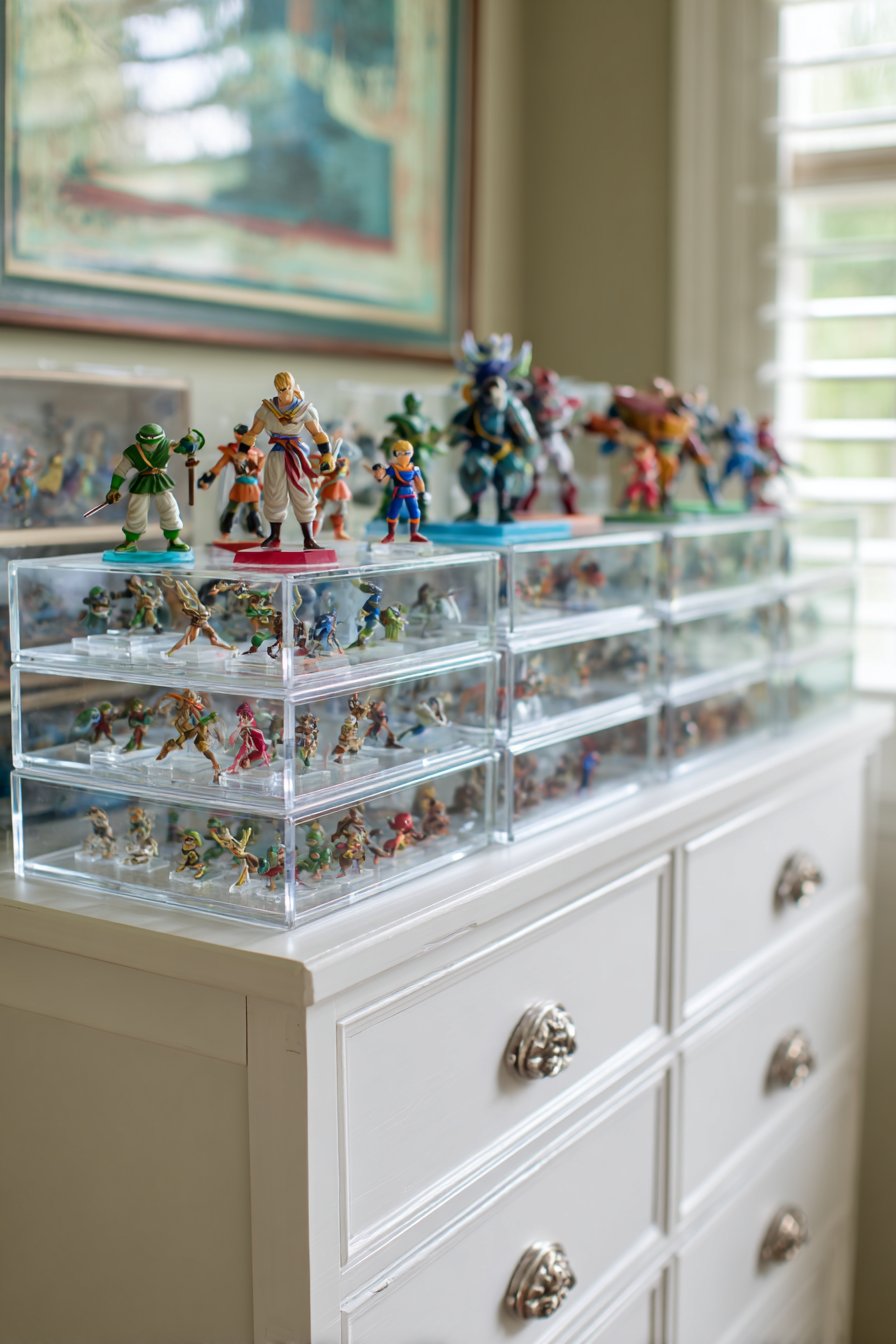
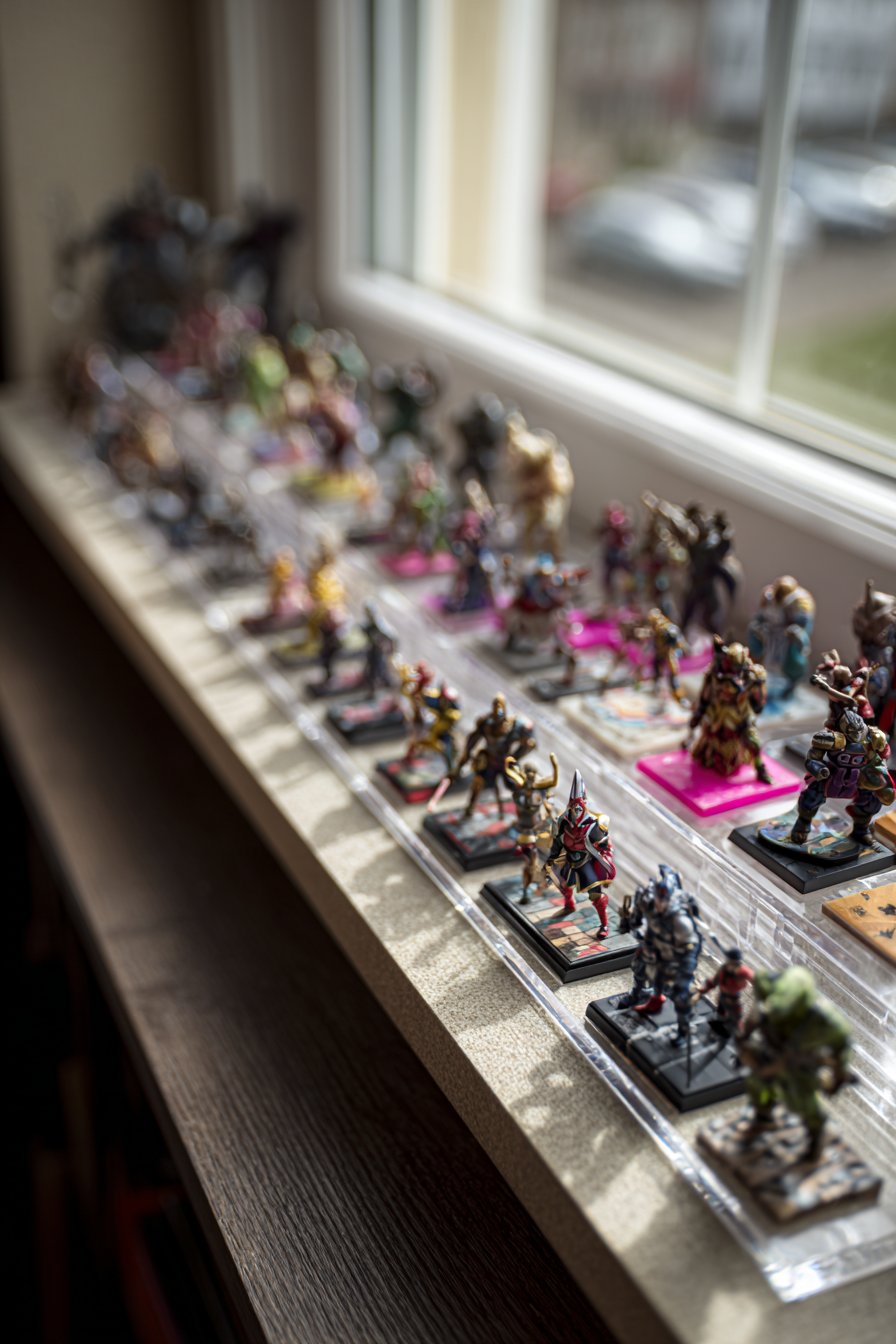
Budget consciousness meets practical flexibility in clear acrylic risers and stands of various heights that create elevated display platforms on existing furniture surfaces without permanent installation. The transparent construction virtually disappears, keeping focus squarely on figurines while the varying heights create tiered arrangements that maximize visibility for every piece. This non-permanent solution appeals to renters, frequent movers, or anyone hesitant to commit to built-in systems.
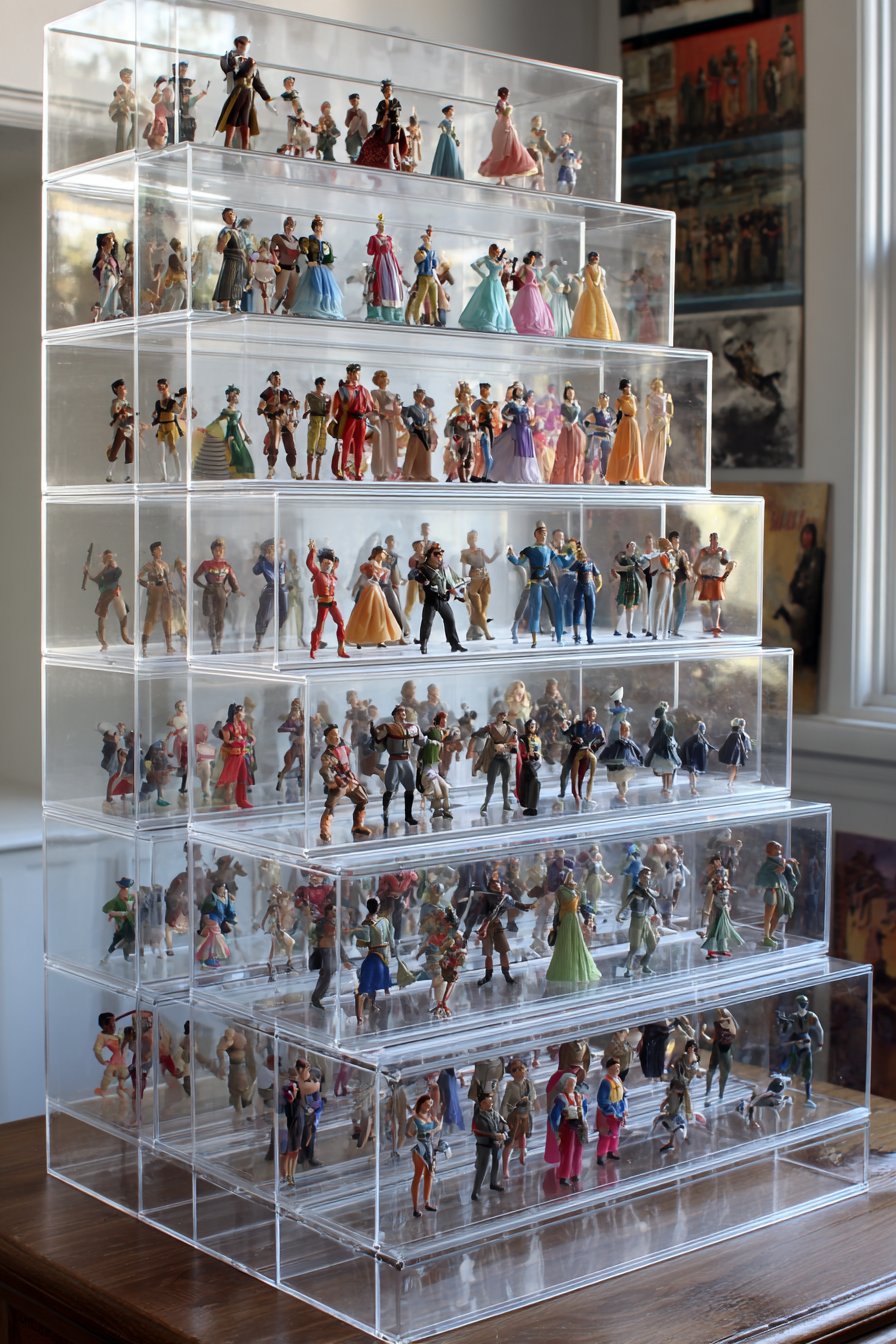
Multiple risers create dimensional staging on dresser tops, bookshelves, or any flat surface, accommodating collections of different sizes and heights with ease. The lightweight acrylic construction makes rearrangement effortless—entire displays can be refreshed in minutes without tools, allowing for frequent updates that keep collections feeling fresh. Natural window light passes through the transparent acrylic creating minimal visual obstruction while occasionally adding subtle refractive highlights.
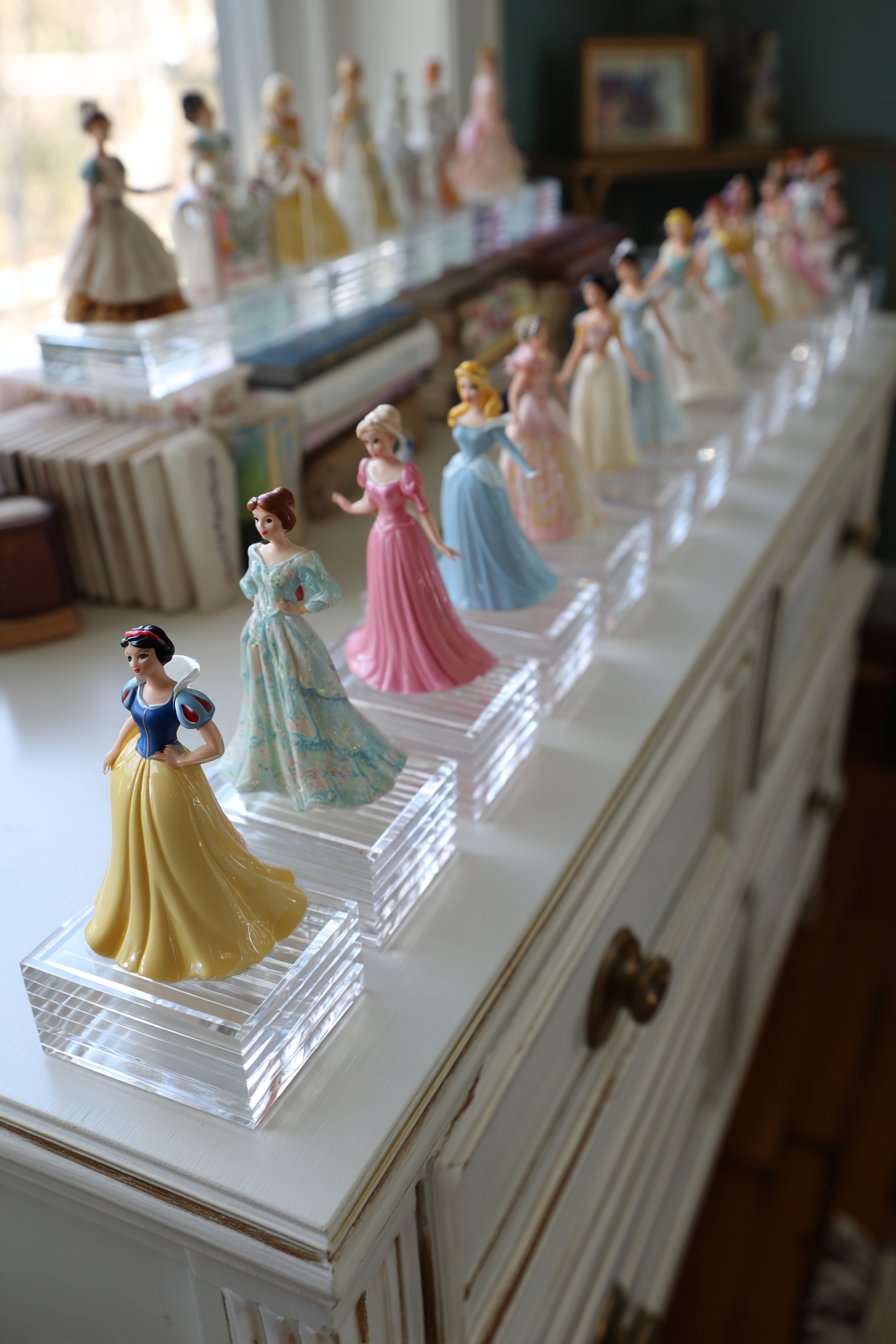
This versatile approach proves that effective display solutions don’t require significant investment or permanent installation. The risers’ portability means collections can move with you from space to space or home to home, making them ideal for collectors in transitional life stages or anyone who values flexibility above permanence.
Key Design Tips:
- Invest in risers of at least three different heights (2″, 4″, 6″) for maximum versatility
- Group similar-sized figurines on each riser level for visual cohesion
- Clean acrylic regularly with appropriate non-abrasive cleaners to maintain clarity
- Create visual interest by varying riser placement—some centered, some offset—rather than rigid alignment
- Use risers to create focal points on otherwise flat surfaces, drawing attention to specific areas
Why These Figurine Display Ideas Excel
The twenty-seven figurine display ideas presented here represent comprehensive solutions for every type of collector, living situation, and design aesthetic. What makes these approaches particularly effective is their acknowledgment that figurine display isn’t one-size-fits-all—the perfect solution for a collector of delicate vintage porcelain differs dramatically from the ideal setup for someone amassing modern designer toys or whimsical ceramic animals. These ideas span traditional and contemporary styles, permanent and flexible installations, high-investment custom solutions and budget-friendly DIY approaches, ensuring every collector can find strategies that align with their specific needs, space constraints, and aesthetic preferences.
The emphasis throughout these concepts on lighting—whether natural daylight, integrated LEDs, or strategic spotlighting—reflects the understanding that proper illumination transforms good displays into exceptional ones. Light reveals texture, emphasizes form, creates depth, and draws attention to details that might otherwise go unnoticed. Many of these ideas incorporate innovative lighting solutions, from the hidden LED strips beneath minimalist floating shelves to the individual puck lights within entertainment center displays to the natural backlighting of window-mounted installations. This attention to illumination demonstrates sophisticated understanding of how light interacts with three-dimensional objects and how thoughtful lighting elevates presentation quality.
Flexibility and accessibility emerge as recurring themes across these twenty-seven approaches, recognizing that collections evolve and grow over time. Picture ledge shelves allow effortless rotation, acrylic risers can be endlessly reconfigured, modular honeycomb systems expand infinitely, and even seemingly permanent solutions like built-in alcoves incorporate adjustable shelving to accommodate changing needs. This adaptability ensures displays remain functional and relevant as collections mature, preventing the frustration of outgrowing expensive custom solutions or feeling locked into arrangements that no longer serve current needs.
Protection balanced with visibility represents another crucial element threading through these ideas. Glass-fronted curio cabinets, individual cloches, enclosed shadow boxes, and sealed display cases acknowledge that many figurines are delicate, valuable, or irreplaceable—they require protection from dust, accidental damage, and environmental factors while remaining visible for enjoyment. These protective display solutions demonstrate that showcasing and safeguarding aren’t mutually exclusive goals but rather complementary priorities that can be simultaneously addressed through thoughtful design.
The integration of display solutions within existing furniture and architectural elements—entertainment centers, bookcases, alcoves, corner spaces—reflects contemporary design sensibilities that prize cohesion over segregation. Rather than treating collections as separate entities requiring dedicated furniture, many of these approaches weave display opportunities into the fabric of daily living spaces, creating harmony between collectibles and the rooms that house them. This integration prevents collections from feeling like add-ons or afterthoughts and instead positions them as intentional elements within carefully considered design schemes.
Budget accessibility across these twenty-seven ideas ensures that effective figurine display isn’t reserved for those willing to invest thousands in custom solutions. DIY approaches using repurposed ladders, vintage crates, and printer’s trays deliver character and functionality at minimal cost. Simple acrylic risers and picture ledges provide flexibility without breaking budgets. These economical options prove that creativity and resourcefulness often yield results as satisfying as expensive alternatives, democratizing access to quality display solutions regardless of financial resources.
The diversity of aesthetics represented—from traditional corner curios and vintage apothecary cabinets to minimalist floating shelves and industrial étagères—ensures collectors can find approaches that harmonize with their existing interior design rather than fighting against it. A bohemian home requires different display solutions than a minimalist loft, and a traditional formal living room demands different presentation than a contemporary open concept space. This stylistic range acknowledges that effective display must work within existing design frameworks rather than imposing incompatible aesthetics.
Space efficiency appears repeatedly across these concepts, with vertical solutions like étagères and corner towers, narrow installations like console table displays, and integrated approaches like bookcase shelving all addressing the reality that many collectors work within spatial constraints. These space-conscious solutions prove that limited square footage needn’t limit display ambitions—height can substitute for width, integration can replace dedicated furniture, and creative placement can transform overlooked areas into prime display real estate.
The attention to practical considerations—weight distribution, stability, cleaning access, rotation convenience—demonstrates that beautiful displays must also be functional ones. Wall-mounted systems require proper anchoring, glass surfaces need regular cleaning, open shelving collects dust requiring accessible arrangement, and frequently updated displays benefit from tool-free reconfiguration. These practical concerns receive appropriate attention throughout these ideas, ensuring that implemented solutions remain livable and maintainable rather than becoming burdensome or impractical over time.
Finally, the curation principles woven throughout—generous spacing, odd-numbered groupings, height variation, thematic organization, strategic editing—provide actionable guidance that transcends specific display systems. These principles apply whether you’re arranging five figurines on a mantel shelf or fifty pieces across a honeycomb wall system, offering universal wisdom that elevates any display approach. Understanding these foundational concepts empowers collectors to make confident decisions about arrangement, selection, and presentation regardless of which specific display solution they ultimately choose.
Conclusion
Figurine display represents the intersection of collection and decoration, where cherished objects transcend mere possession to become integral elements of interior design. The twenty-seven ideas explored here demonstrate that displaying figurines effectively requires consideration of multiple factors—spatial constraints, architectural context, collection characteristics, lighting conditions, aesthetic preferences, budget realities, and practical needs—all working together to create presentations that honor both the objects themselves and the spaces they inhabit.
Whether you’re drawn to the museum-quality presentation of floor-to-ceiling glass cases, the accessible flexibility of picture ledge galleries, the budget-friendly creativity of repurposed vintage pieces, or the space-efficient ingenuity of corner towers and window installations, the right display solution exists for your specific situation. The key lies in honestly assessing your collection’s needs, your space’s opportunities and limitations, and your own priorities regarding accessibility, protection, aesthetics, and investment.
Begin by evaluating what you’re working with—the size, fragility, and style of your current collection and its anticipated growth. Consider your available space and existing design aesthetic. Determine your budget and willingness to commit to permanent versus temporary solutions. Then explore the approaches presented here, mixing and matching elements from different ideas to create a customized display strategy that addresses your unique circumstances. Remember that display solutions can evolve over time, starting simple and expanding as collections and resources grow.
The most successful figurine displays balance protection with visibility, organization with creativity, restraint with abundance, and individual piece appreciation with cohesive overall presentation. They enhance rather than overwhelm the spaces they occupy, creating visual interest without chaos, showcasing collections without dominating rooms. When thoughtfully executed, figurine displays transform collections from things we own into stories we tell, from possessions we store into art we experience, from hobbies we pursue into identities we express through our living spaces.
