
The entryway is more than just a passageway into your home—it’s the opening statement of your personal design narrative, the first glimpse guests receive of your aesthetic sensibilities, and a functional space that sets the tone for everything that follows. Yet despite its importance, the entryway wall often remains an afterthought, a blank canvas waiting to be transformed into something memorable and meaningful. Whether you’re working with a grand foyer or a modest entrance, the wall space in your entryway presents endless opportunities to combine beauty with functionality, creating a welcoming atmosphere that reflects your unique style while serving the practical needs of daily life.
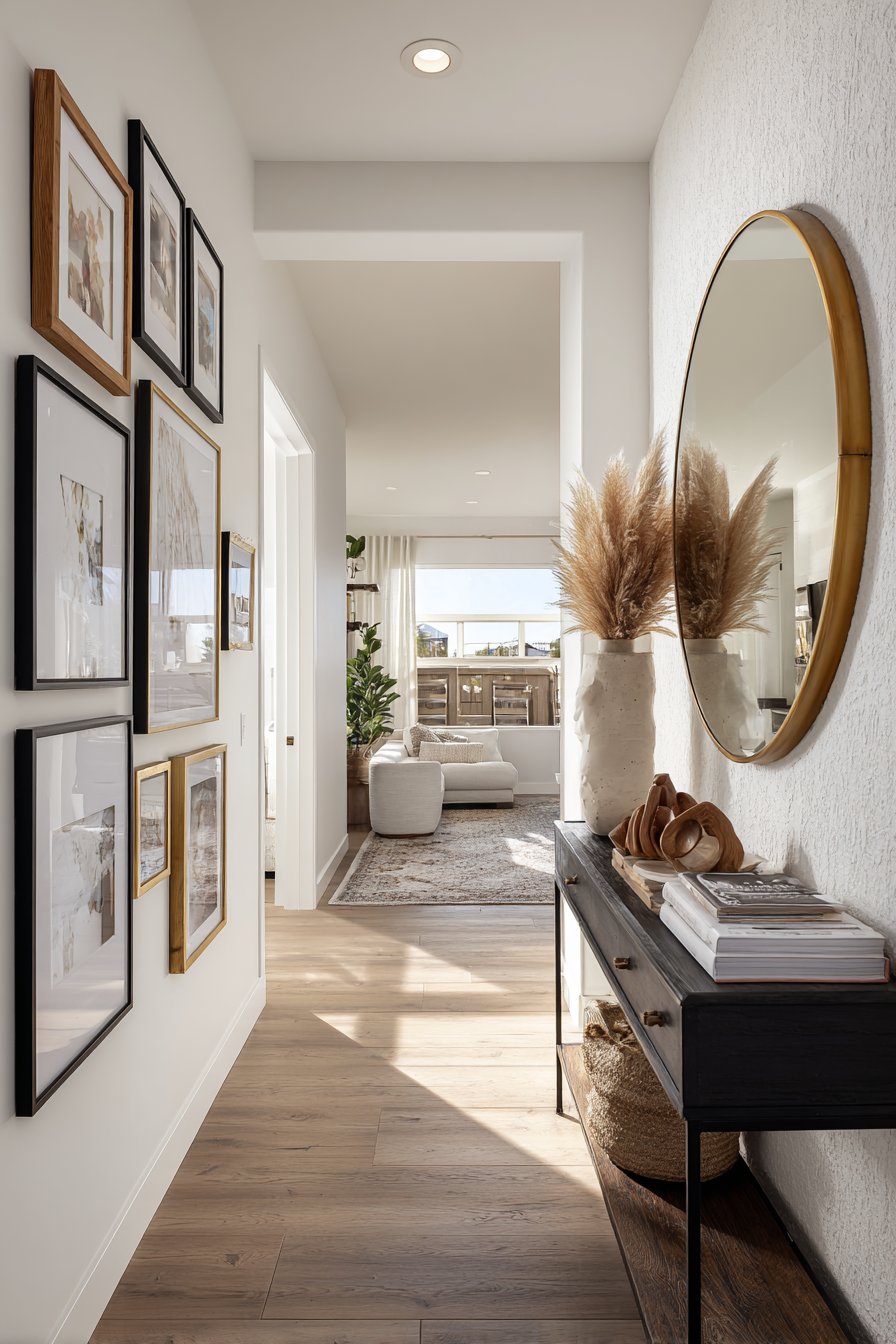
In today’s design landscape, entryway walls have evolved far beyond simple coat hooks and mirrors. They’ve become showcases for personal expression, organizational hubs for busy families, and carefully curated displays that demonstrate sophisticated design thinking. From minimalist floating shelves that celebrate negative space to elaborate gallery walls that tell visual stories, from rustic reclaimed wood installations to sleek modern console arrangements, the possibilities are as diverse as the homeowners who create them. The key lies in understanding how different materials, colors, textures, and arrangements can work together to create an entryway that’s both beautiful and purposeful.
This comprehensive guide explores twenty-three distinctive entryway wall ideas, each offering a unique approach to this often-overlooked space. We’ll journey through various design styles—from Scandinavian simplicity to bohemian eclecticism, from traditional elegance to industrial edge—examining how different elements come together to create cohesive, functional, and visually striking entryway walls. Whether you’re drawn to bold accent colors, appreciate the timeless appeal of neutral palettes, or seek clever storage solutions disguised as beautiful design, you’ll find inspiration and practical guidance for transforming your entryway wall into a space that welcomes, organizes, and delights every single day.
1. Modern Minimalist Floating Shelf Display
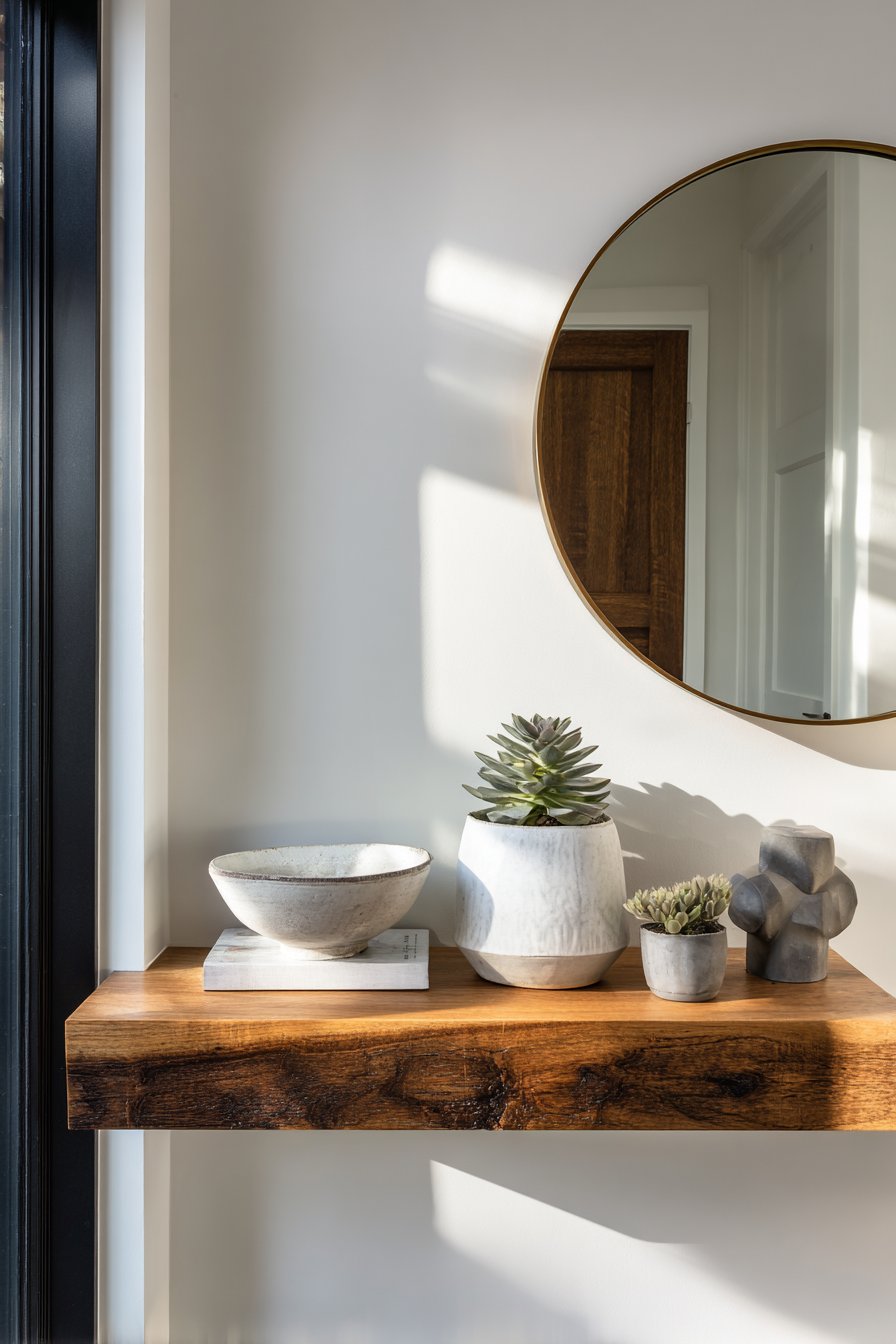
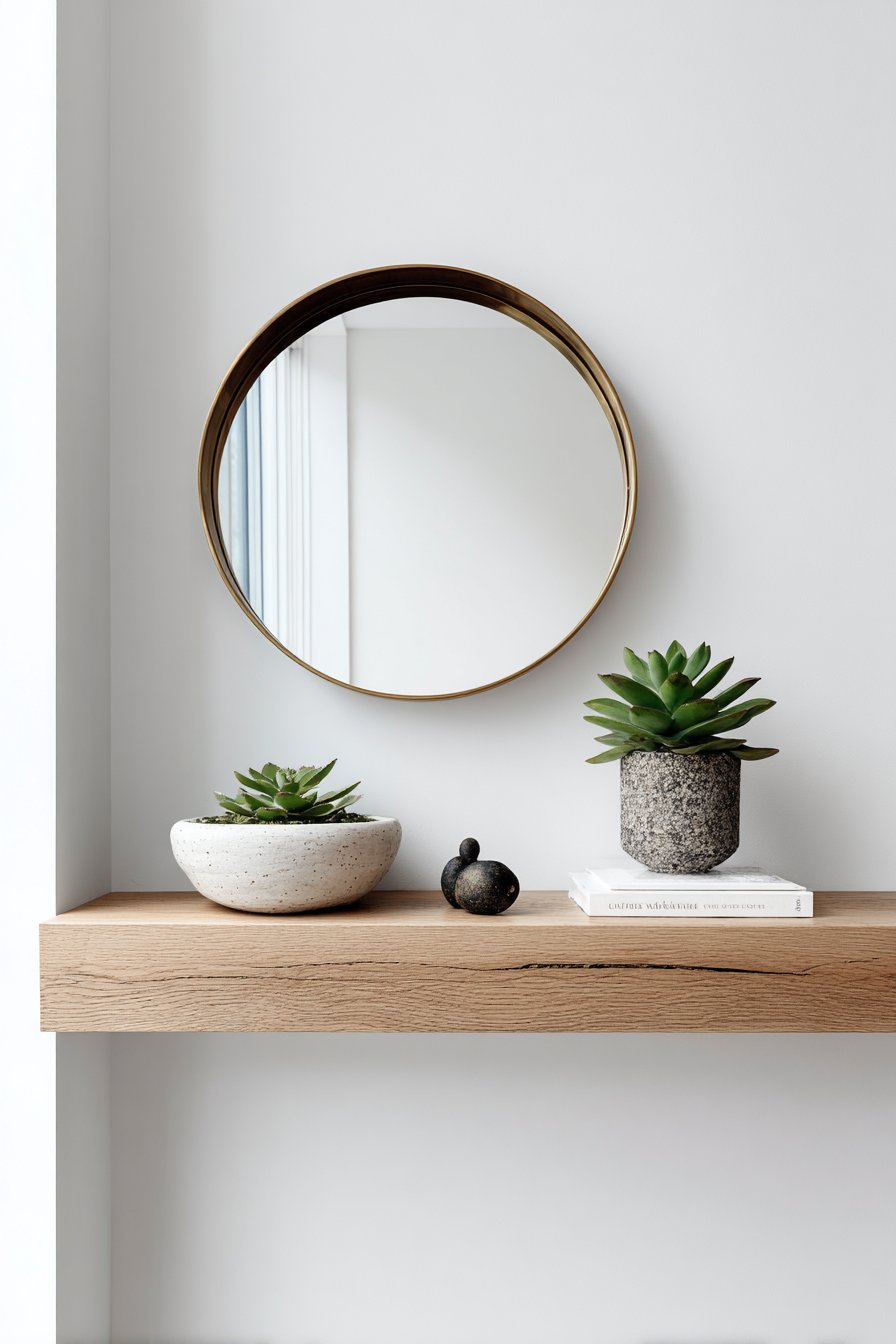
The beauty of minimalist design lies in its restraint, and nowhere is this more elegantly demonstrated than in a carefully curated floating shelf display against a soft warm white wall. This entryway wall idea centers on a sleek white oak floating shelf that appears to hover effortlessly, creating a sense of weightlessness that’s both modern and inviting. The magic happens in the careful selection and placement of objects: a handcrafted ceramic bowl with organic curves, a small potted succulent adding a touch of living greenery, and an abstract sculpture that serves as a conversation starter. Each piece is chosen not just for its individual beauty but for how it contributes to the overall composition.
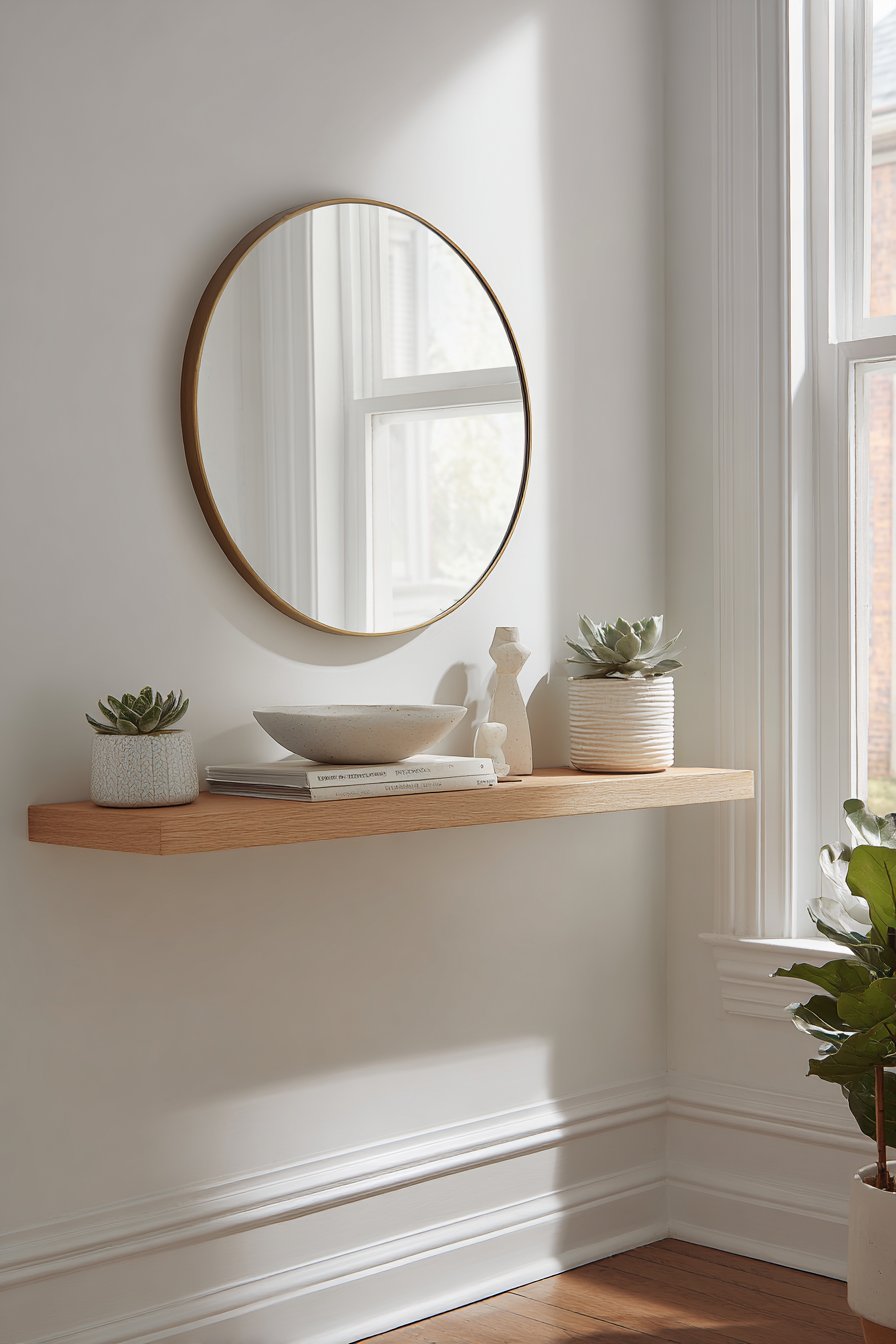
The wall color plays a crucial supporting role in this design, with its soft warm white providing a clean backdrop that allows the displayed objects to truly shine. Above the shelf, a simple round mirror with a thin brass frame adds both functionality and a touch of warmth through its metallic accent. The brass picks up ambient light and creates subtle reflections that add depth to the space without overwhelming the minimalist aesthetic. This approach to entryway wall design proves that less can indeed be more, creating a sophisticated first impression that speaks to refined taste and intentional living.
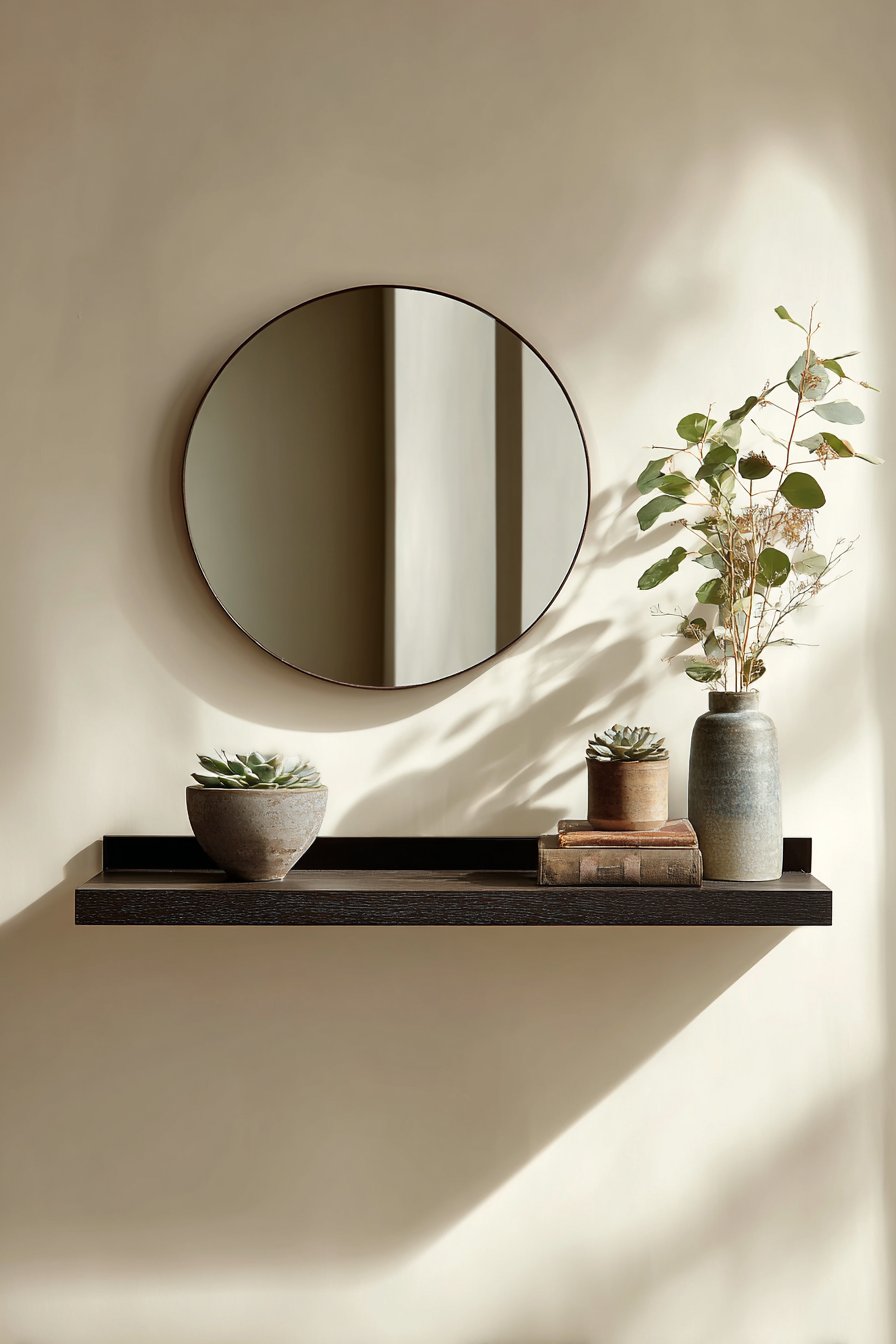
What makes this design particularly effective is how it balances form and function. The floating shelf serves as a practical surface for keys, sunglasses, or mail, while the mirror provides a last-minute appearance check before heading out the door. The succulent requires minimal maintenance yet brings life to the space, while the ceramic bowl and sculpture add artistic interest without cluttering the visual field. Natural daylight creates subtle shadows that emphasize the shelf’s floating effect, adding dimension and interest throughout the day as light conditions change.
Key Design Tips:
- Select a floating shelf in quality hardwood with visible grain for subtle texture and warmth
- Limit displayed objects to three to five carefully chosen pieces to maintain visual clarity
- Choose items in varying heights to create visual interest while maintaining balance
- Position the shelf at a comfortable height for daily use, typically 36-42 inches from the floor
- Use the mirror to reflect natural light and visually expand the entryway space
- Rotate decorative objects seasonally to keep the display fresh without requiring a complete redesign
2. Practical Mudroom-Style Organization System
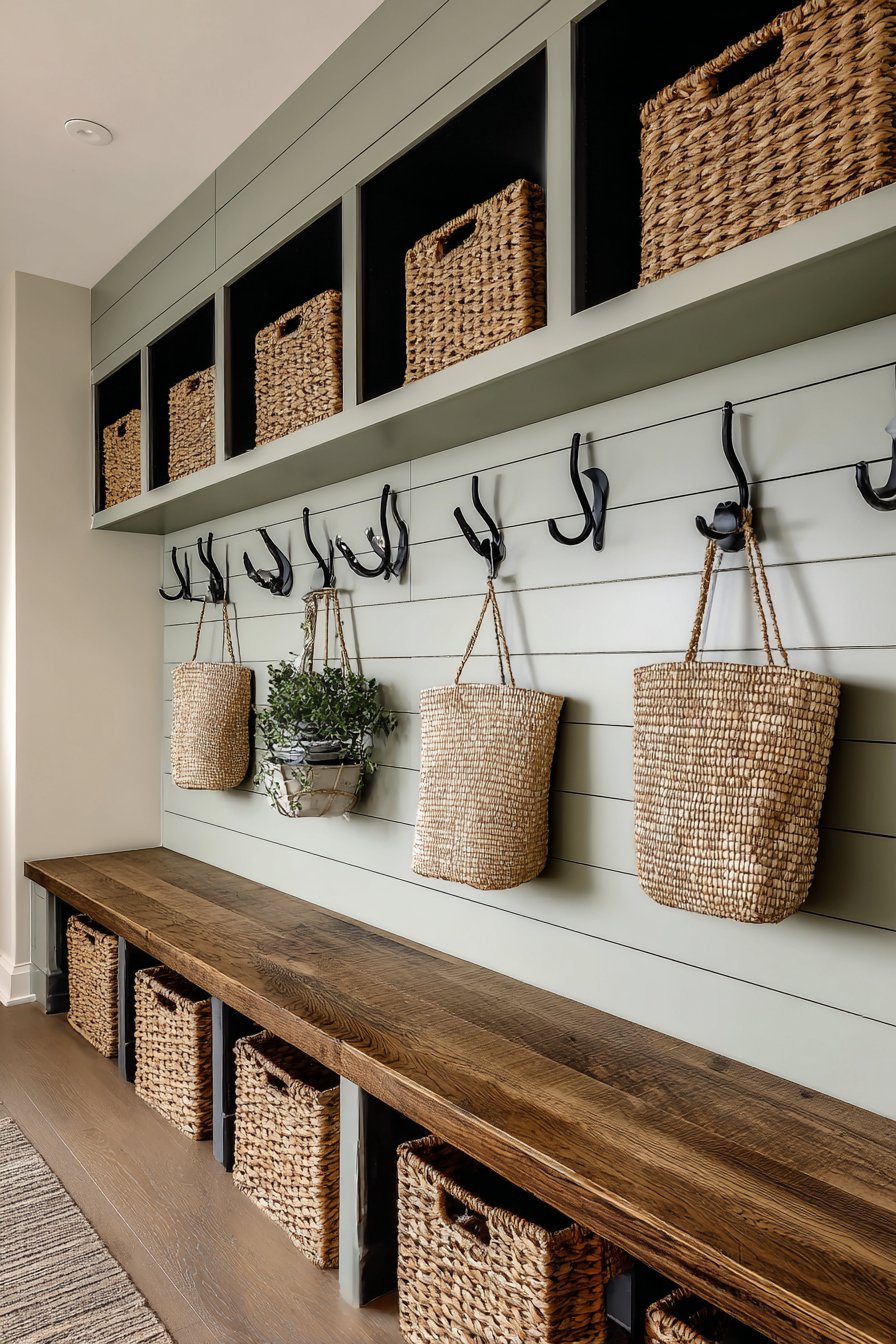
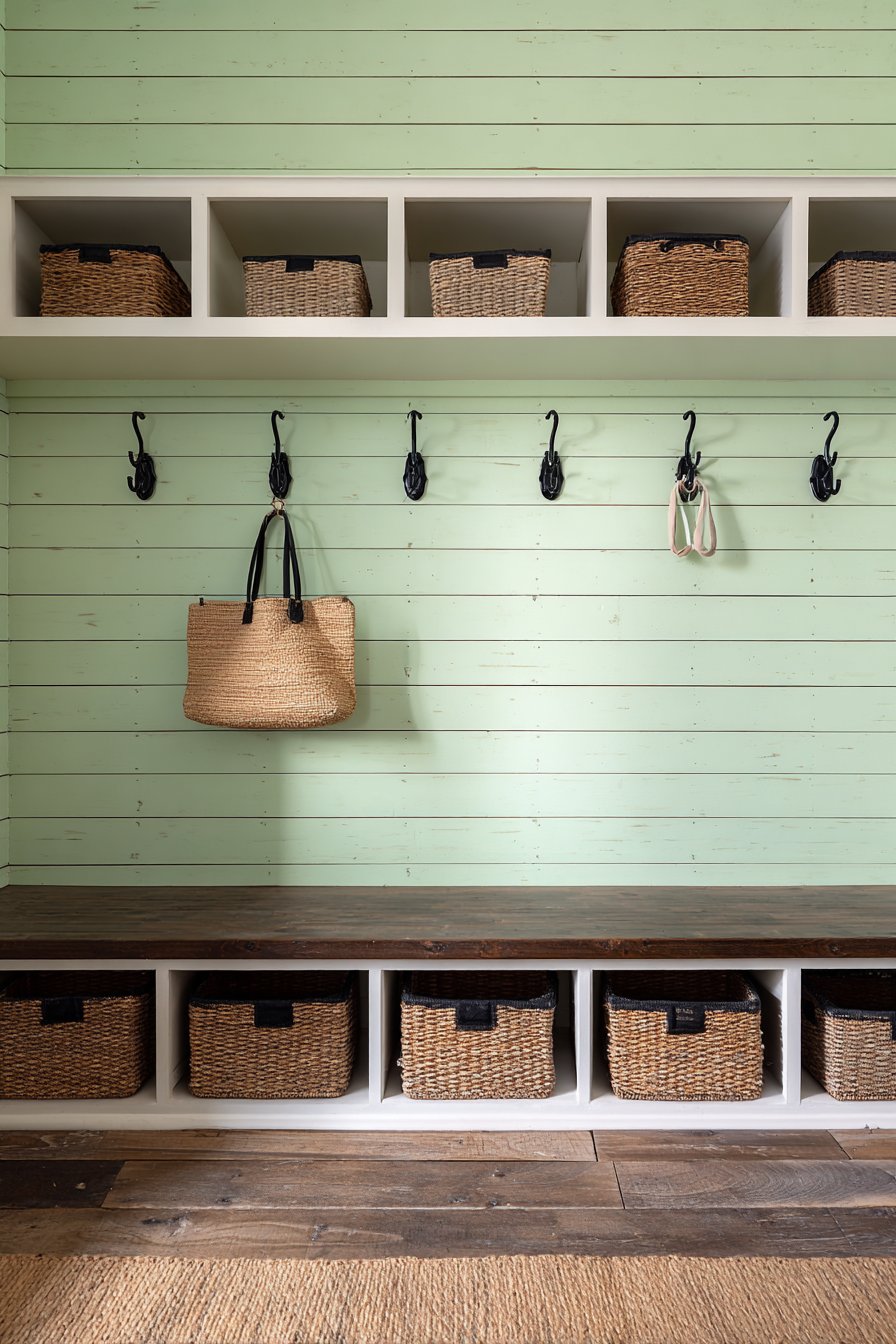
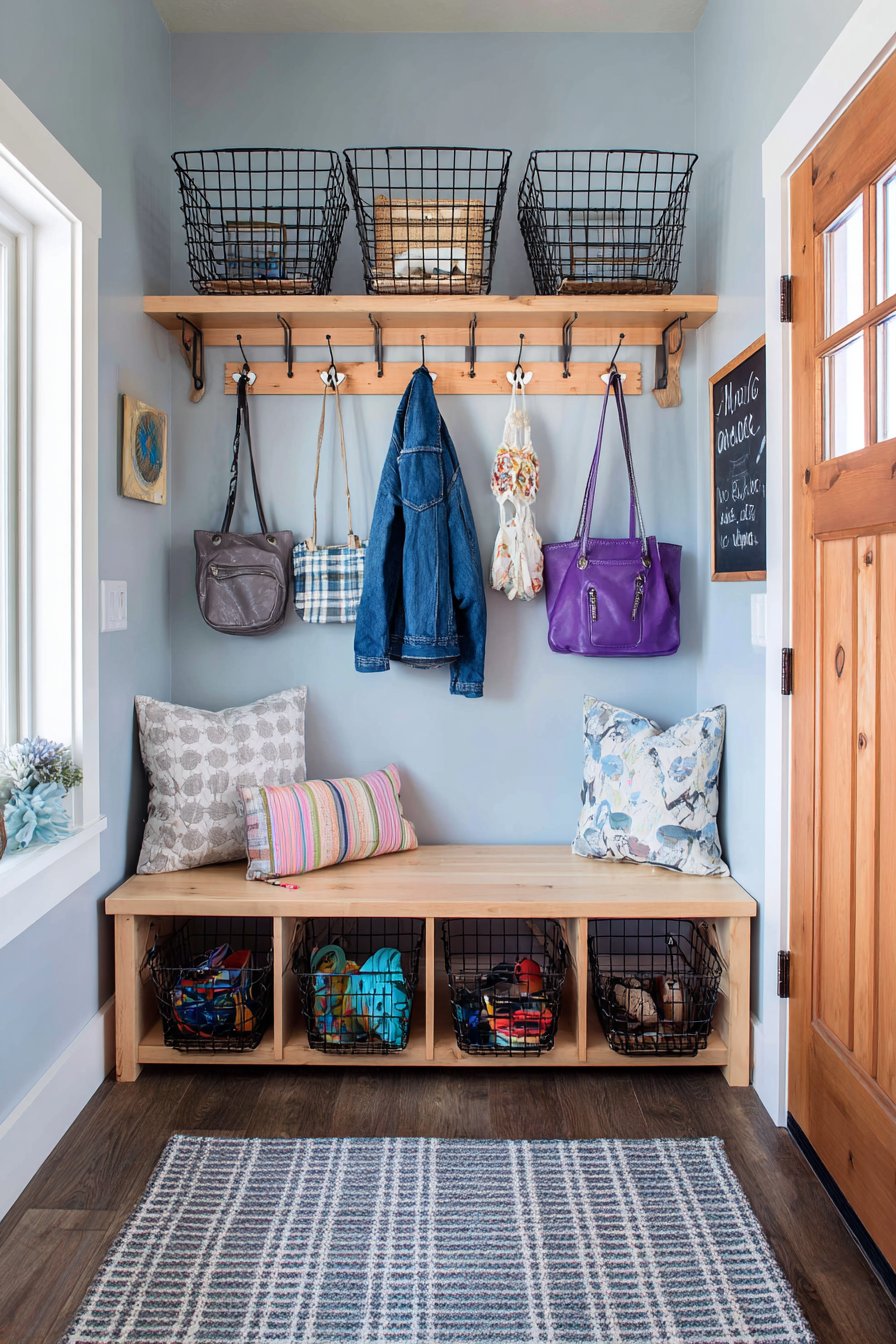
For families juggling busy schedules and active lifestyles, the mudroom-style entryway wall idea offers the perfect marriage of organization and aesthetics. This design transforms your entryway wall into a hardworking organizational hub featuring individual cubby sections that provide designated spaces for each family member. The shiplap paneling painted in soft sage green creates a soothing backdrop that brings a touch of nature indoors while maintaining a fresh, contemporary feel. Each cubby contains matte black coat hooks mounted at practical heights, accommodating everything from backpacks to jackets, while lower bench seating with built-in storage compartments keeps shoes and seasonal items neatly tucked away.
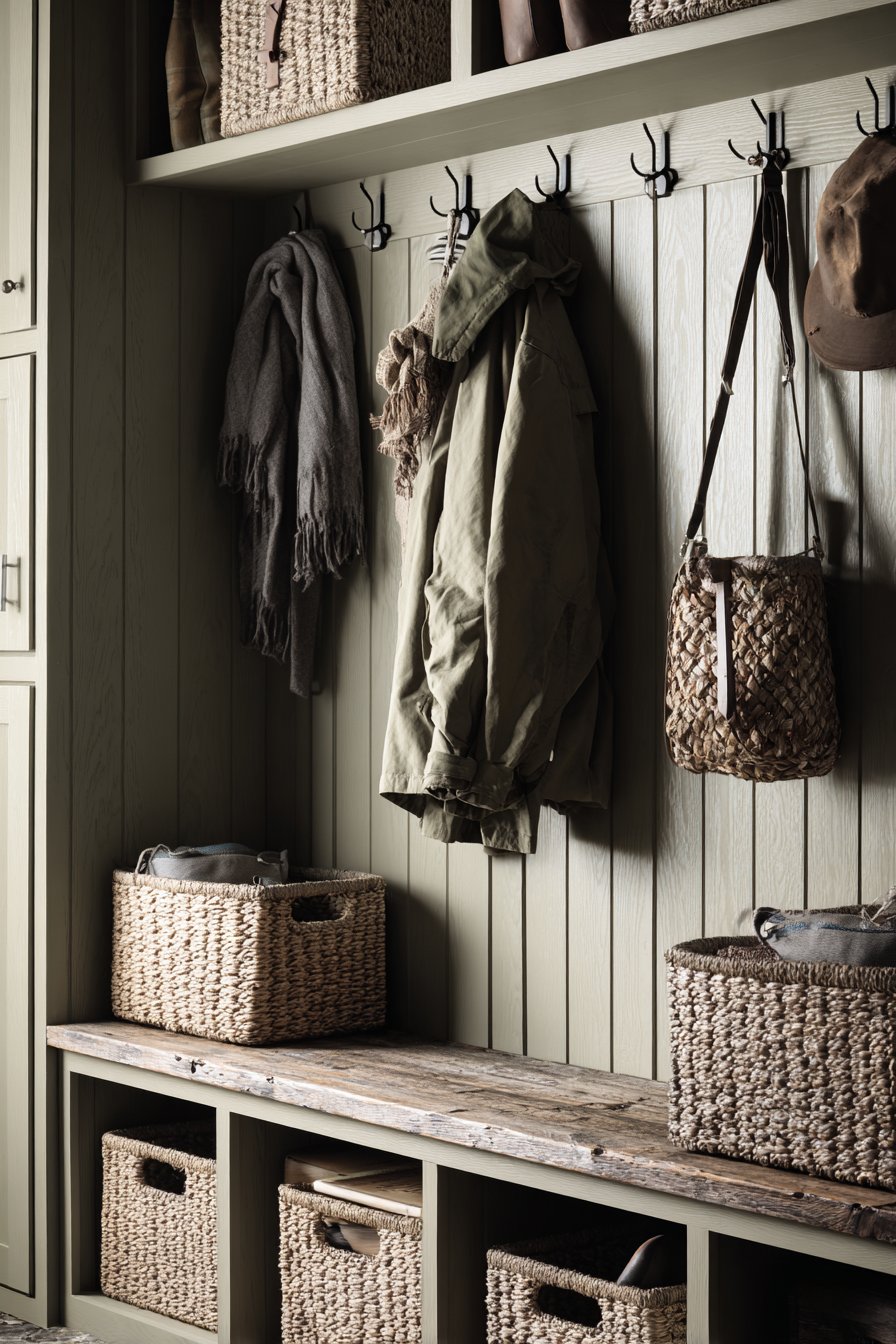
The genius of this system lies in its thoughtful functionality. Woven baskets nestled in the lower cubbies provide attractive storage for scarves, gloves, and other small items that tend to accumulate near the door. The natural texture of the baskets adds warmth and visual interest while keeping clutter concealed. The bench component serves double duty, offering a comfortable spot to sit while putting on shoes and providing hidden storage beneath. This is the kind of practical design that makes daily life smoother, reducing morning chaos and creating a sense of order that extends throughout the home.
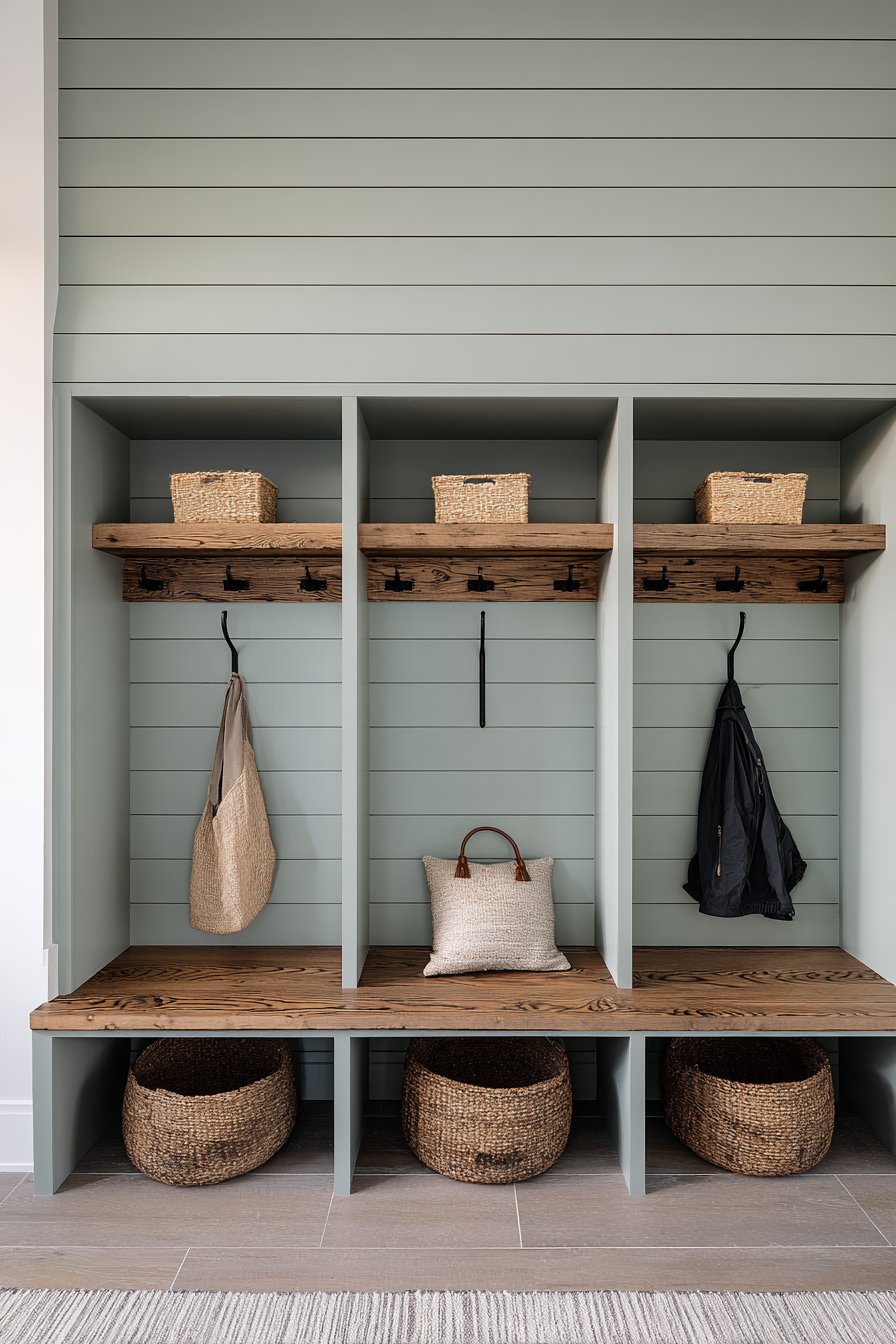
The soft sage green wall color deserves special attention for its versatility and calming effect. This shade works beautifully with the natural wood tones of the bench and the organic texture of the woven baskets, creating a cohesive palette that feels both current and timeless. The shiplap paneling adds architectural interest and texture without overwhelming the space, its horizontal lines creating a sense of width that can make even a narrow entryway feel more spacious. The matte black hardware provides crisp contrast and a modern edge that keeps the design from feeling too traditional or country-cottage sweet.
Key Design Tips:
- Plan cubby dimensions based on the number of household members and their storage needs
- Install hooks at varying heights to accommodate both children and adults comfortably
- Choose a bench height of 18 inches for optimal comfort when sitting to change shoes
- Select woven baskets with handles for easy removal when contents need to be accessed
- Apply semi-gloss paint to shiplap for easier cleaning in this high-traffic area
- Add individual labels or tags to each cubby to maintain organization and personal responsibility
- Ensure adequate ventilation in storage compartments to prevent moisture and odor buildup
3. Sophisticated Symmetrical Gallery Wall
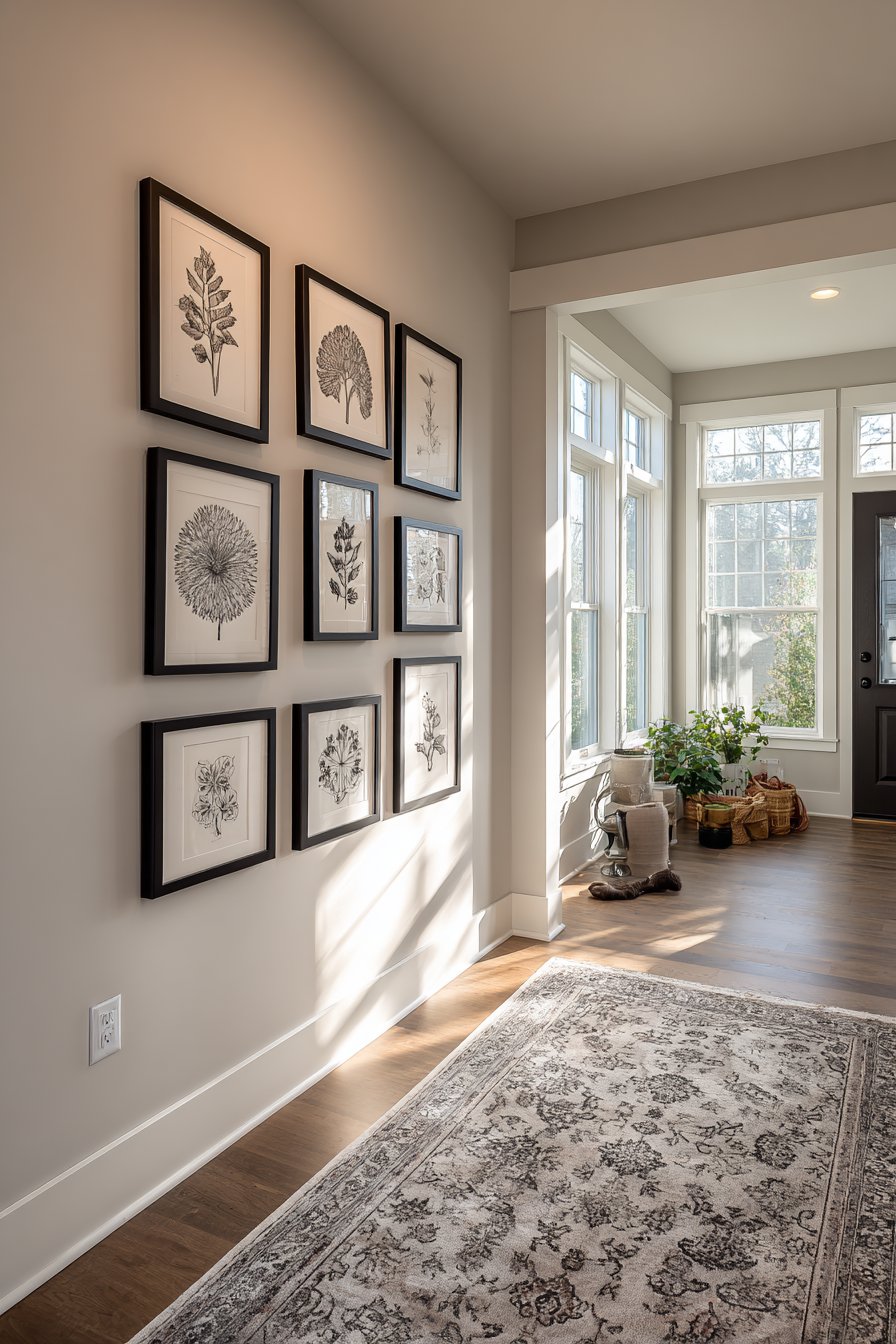
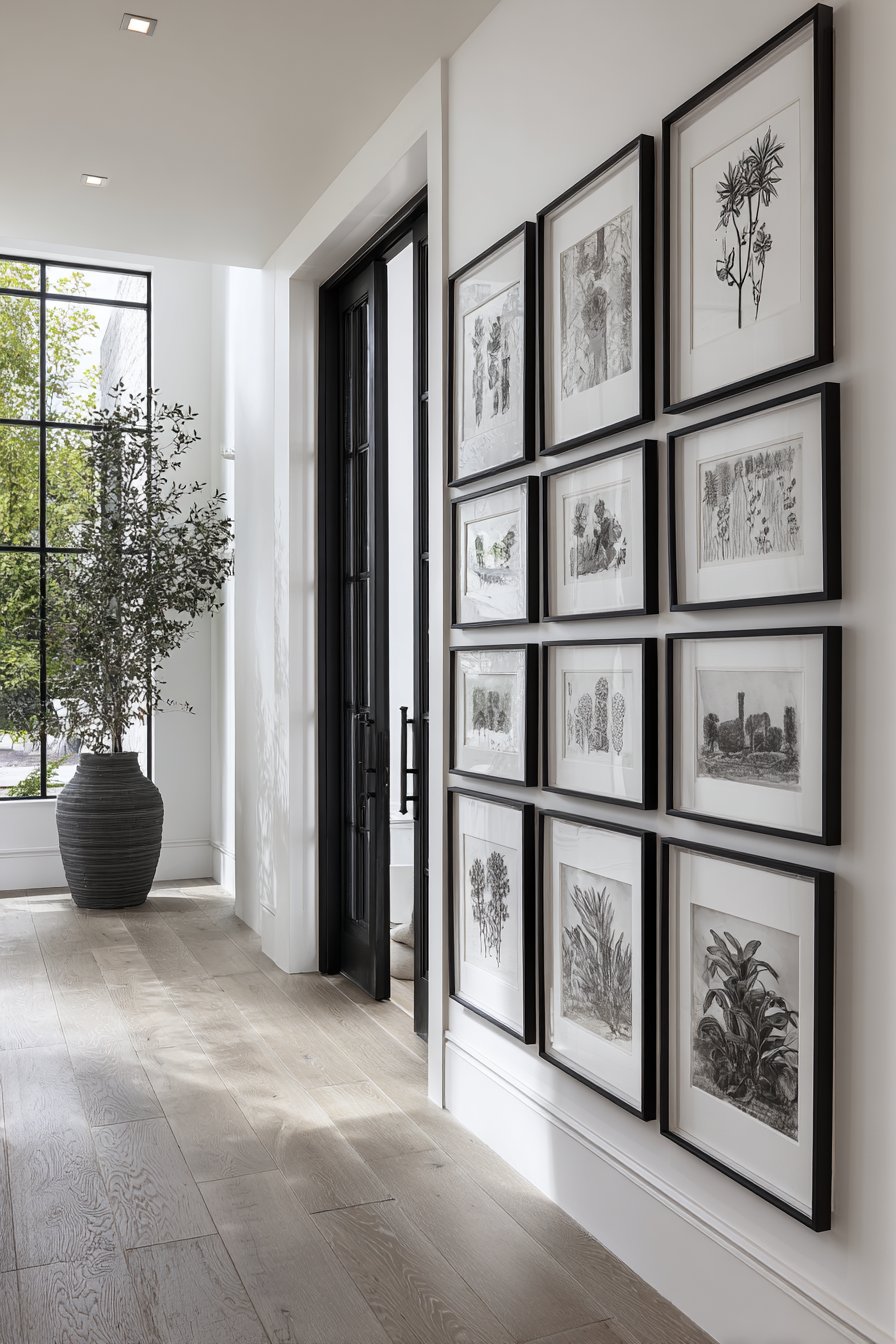
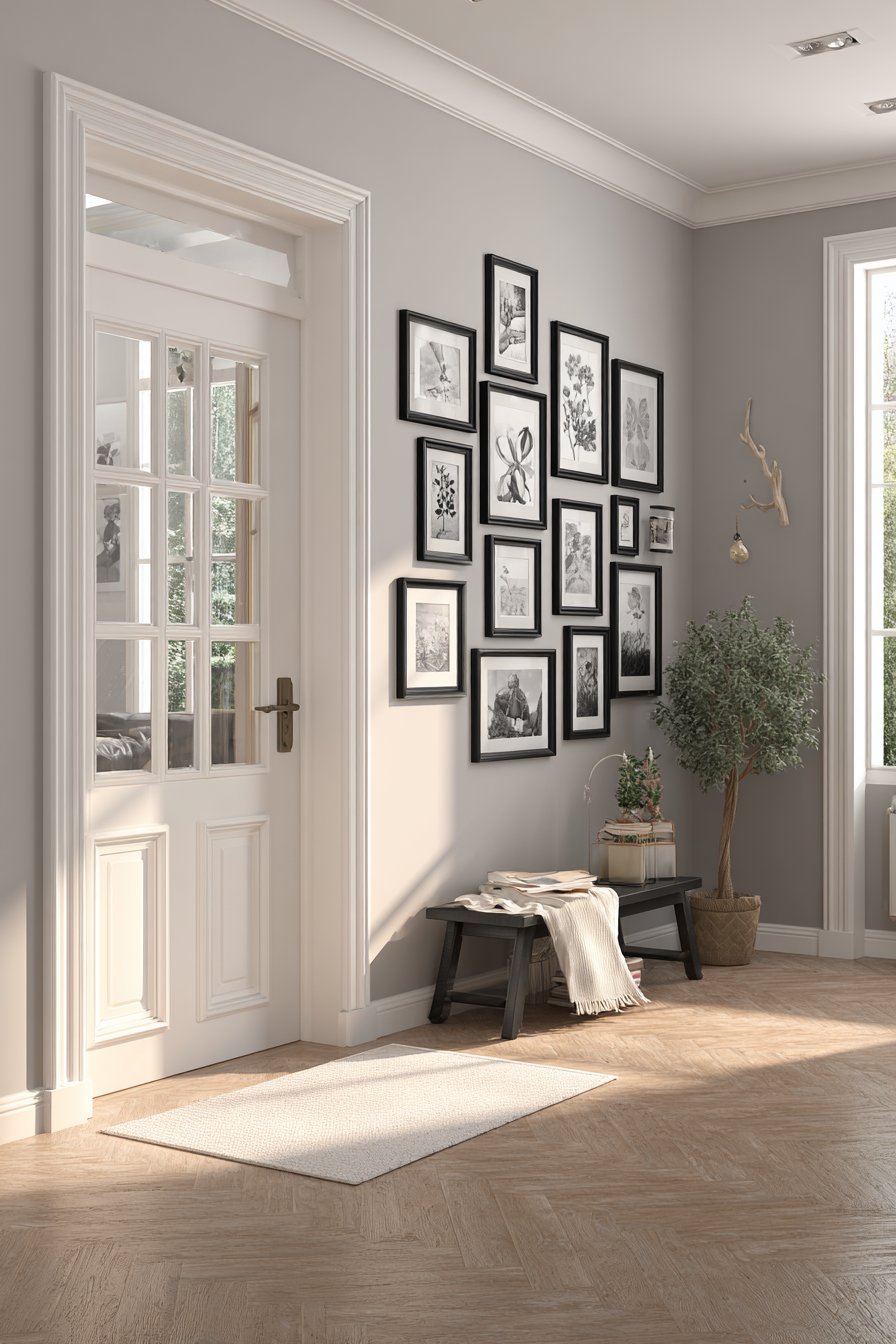
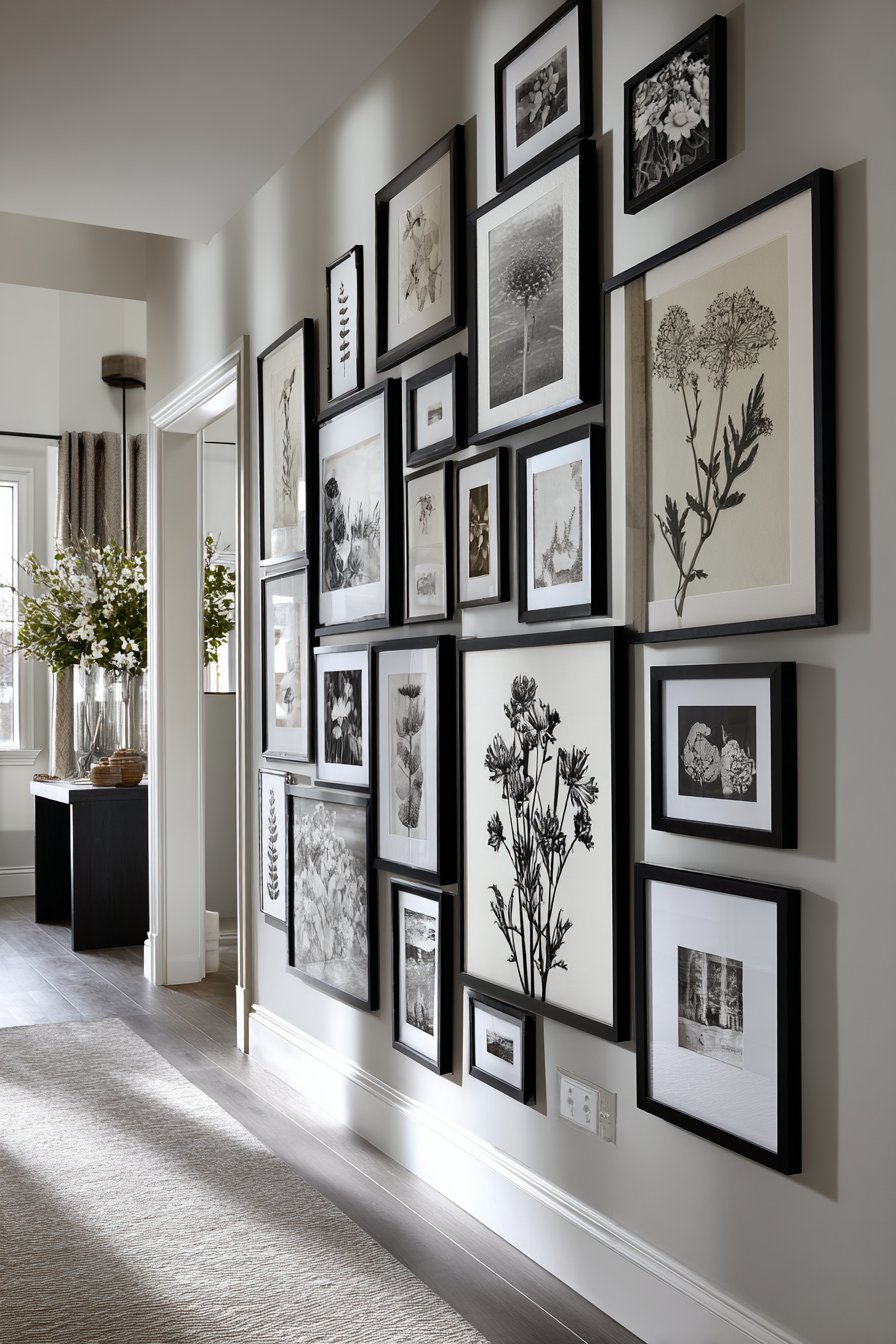
The gallery wall remains one of the most popular entryway wall ideas, and for good reason—it offers unparalleled opportunity for personal expression and visual impact. This particular approach emphasizes symmetry and cohesion through the use of matching matte black frames in various sizes, all arranged in a carefully planned grid pattern against a light gray wall. The frames contain a curated collection of black and white photography and botanical prints, creating a sophisticated monochromatic display that feels both timeless and contemporary. The grid arrangement brings order and intentionality to the composition, making even a large collection of images feel organized and purposeful rather than chaotic.
The choice of black and white imagery is both practical and artistic. It creates visual harmony across diverse subjects, from landscape photography to close-up botanical studies, ensuring that the overall effect is cohesive despite the variety of content. The light gray wall color provides the perfect neutral backdrop, offering enough contrast to make the black frames pop without creating harsh visual tension. Natural lighting from a nearby window plays across the surface of the frames, creating subtle shadows and highlights that add depth and dimension to the flat wall surface.
What elevates this gallery wall beyond a simple collection of framed prints is the careful attention to spacing and alignment. Each frame is positioned with precision, maintaining consistent gaps between pieces that create visual breathing room while allowing the eye to move smoothly across the entire composition. The varying sizes of the frames add interest and prevent monotony, but the strict adherence to the grid pattern and consistent frame style keeps the overall effect sophisticated rather than scattered. This is gallery wall design at its most refined, demonstrating that rules and structure can coexist beautifully with creativity and personal expression.
Key Design Tips:
- Plan your layout on the floor before making any wall holes to perfect the arrangement
- Use a level and measuring tape to ensure precise alignment and consistent spacing
- Maintain 2-3 inches between frames for a cohesive gallery wall appearance
- Choose frame depths that match or are very similar to create a unified look
- Mat all artwork consistently, using either all white mats or all black for maximum impact
- Hang the center of your gallery wall at eye level, typically 57-60 inches from the floor
- Create a paper template of your layout and tape it to the wall to visualize before hanging
- Update the artwork periodically while keeping the frame arrangement to refresh the display
4. Rustic Reclaimed Wood Accent Wall
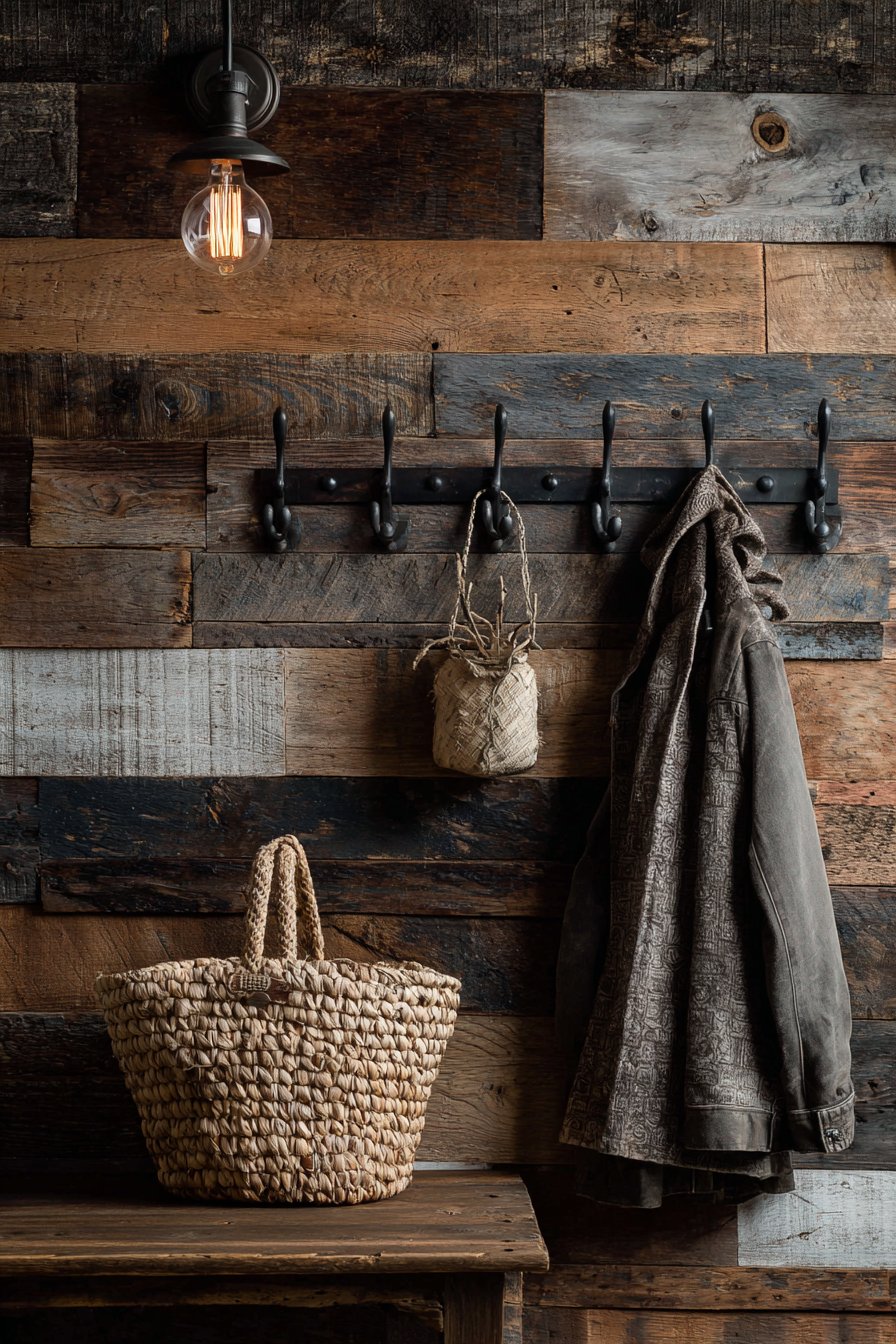
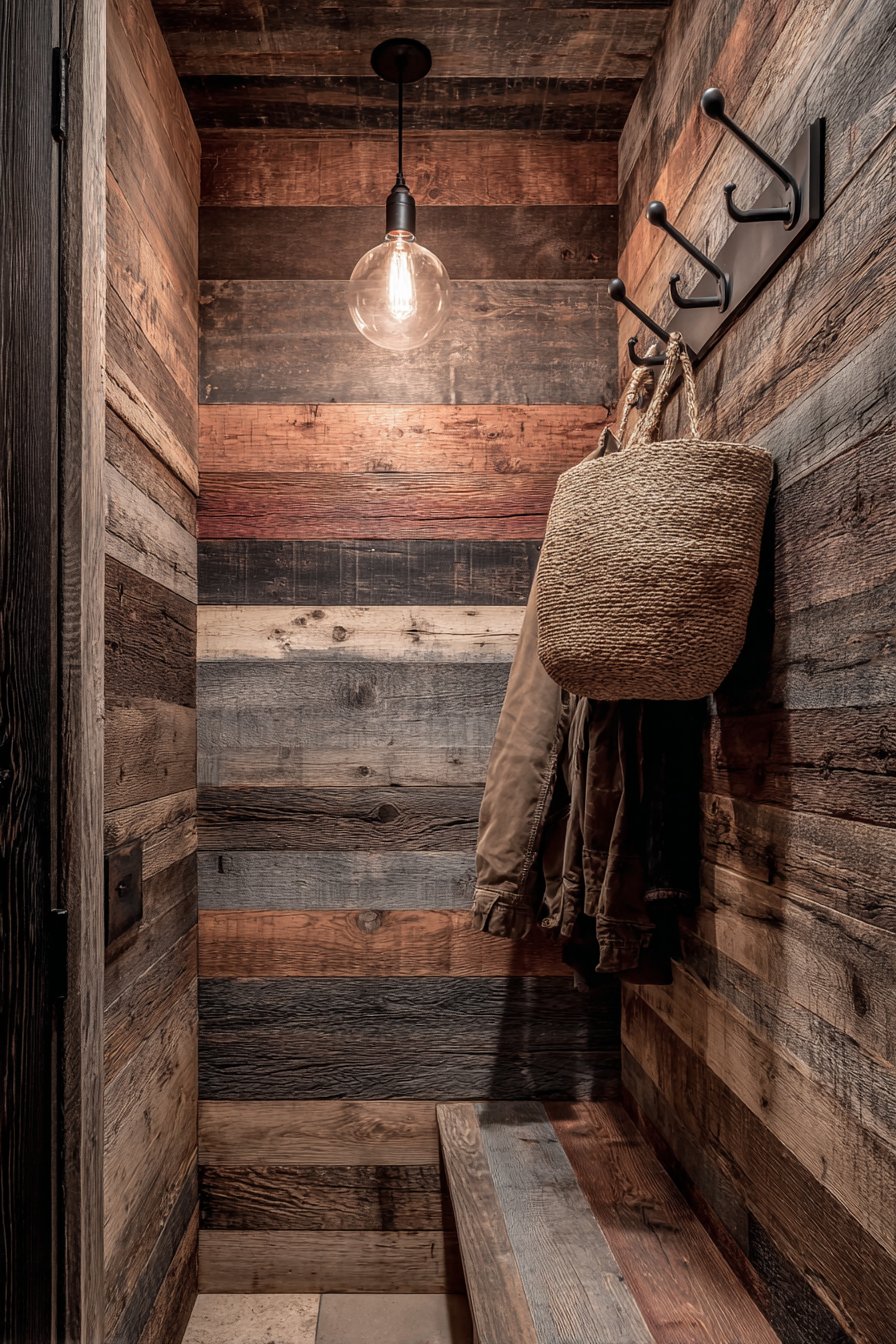
There’s something deeply appealing about the authenticity of reclaimed wood, and this entryway wall idea harnesses that appeal to create a space with genuine character and warmth. The horizontal planks of reclaimed wood span the wall in varied natural tones ranging from honey to dark walnut, each board telling its own story through weathered grain patterns, nail holes, and the subtle patina that only time can create. This variation in tone and texture transforms what could be a simple accent wall into a rich, layered backdrop that serves as both art and architecture. The wood’s natural imperfections—the knots, the grain variations, the slight color differences—are celebrated rather than hidden, creating an authentic rustic aesthetic.
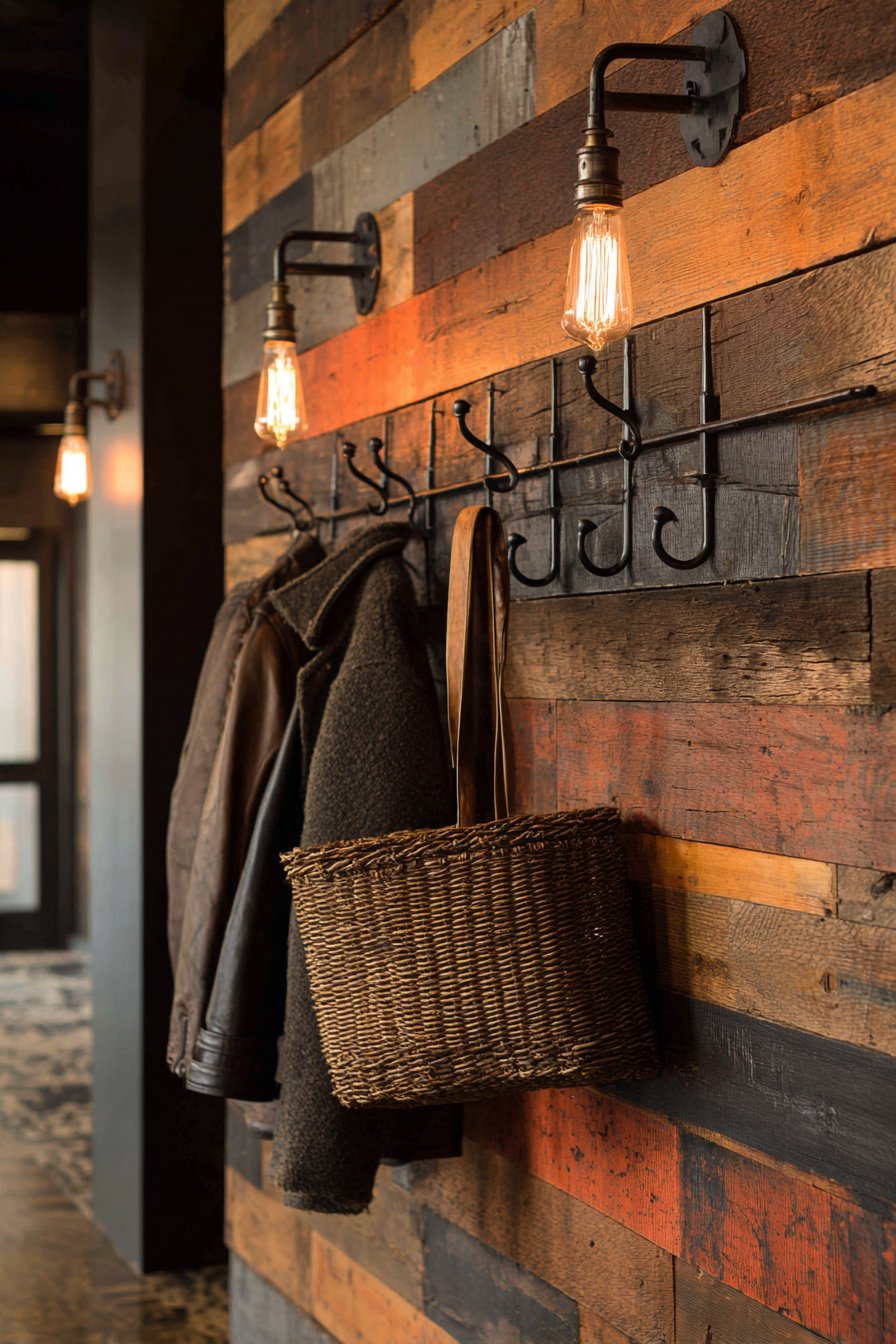
Mounted against this textured backdrop, a wrought iron coat rack with multiple hooks provides functional beauty. The industrial-style metalwork complements the rustic wood without competing with it, the dark iron finish creating visual weight and presence. The hooks hold practical items—a woven basket perfect for corralling small essentials, a seasonal jacket ready for quick departures—demonstrating how form and function can coexist seamlessly. An industrial-style Edison bulb wall sconce adds both ambient lighting and another layer of vintage-industrial charm, its exposed filament creating warm, inviting light that enhances the wood’s natural tones.
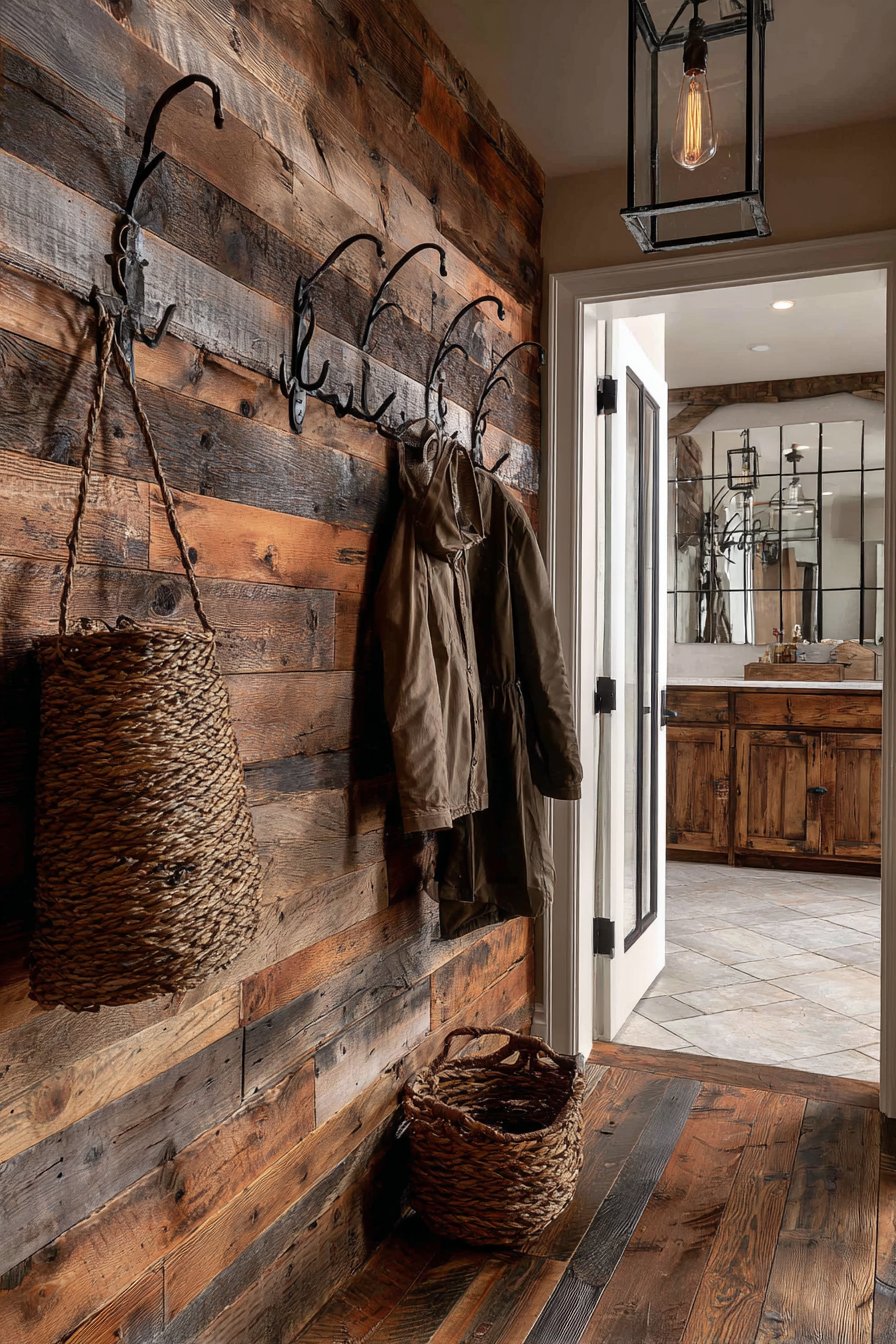
The photography of this space requires special attention to capture the rich texture and authentic character of the reclaimed wood. Professional lighting emphasizes the natural material variations, bringing out the depth of the grain and the subtle color shifts from plank to plank. The interplay of light and shadow across the uneven surface creates visual interest that changes throughout the day, ensuring the wall never looks flat or one-dimensional. This is entryway wall design for those who appreciate authenticity, who value materials with history and character, and who want their home’s first impression to convey warmth and genuineness.
Key Design Tips:
- Source reclaimed wood from reputable suppliers who can verify its origin and treatment history
- Clean and seal reclaimed wood properly to prevent splinters while maintaining its weathered appearance
- Mix plank widths for added visual interest and a more authentic reclaimed look
- Install planks horizontally to create a sense of width in narrow entryways
- Choose hardware and accessories in complementary finishes like wrought iron, aged brass, or oil-rubbed bronze
- Position lighting to graze across the wood surface, highlighting texture and grain patterns
- Apply a matte or satin finish sealer to protect the wood while preserving its natural appearance
- Consider the weight of reclaimed wood and ensure proper wall anchoring for heavy installations
5. Contemporary Navy Blue Console Statement
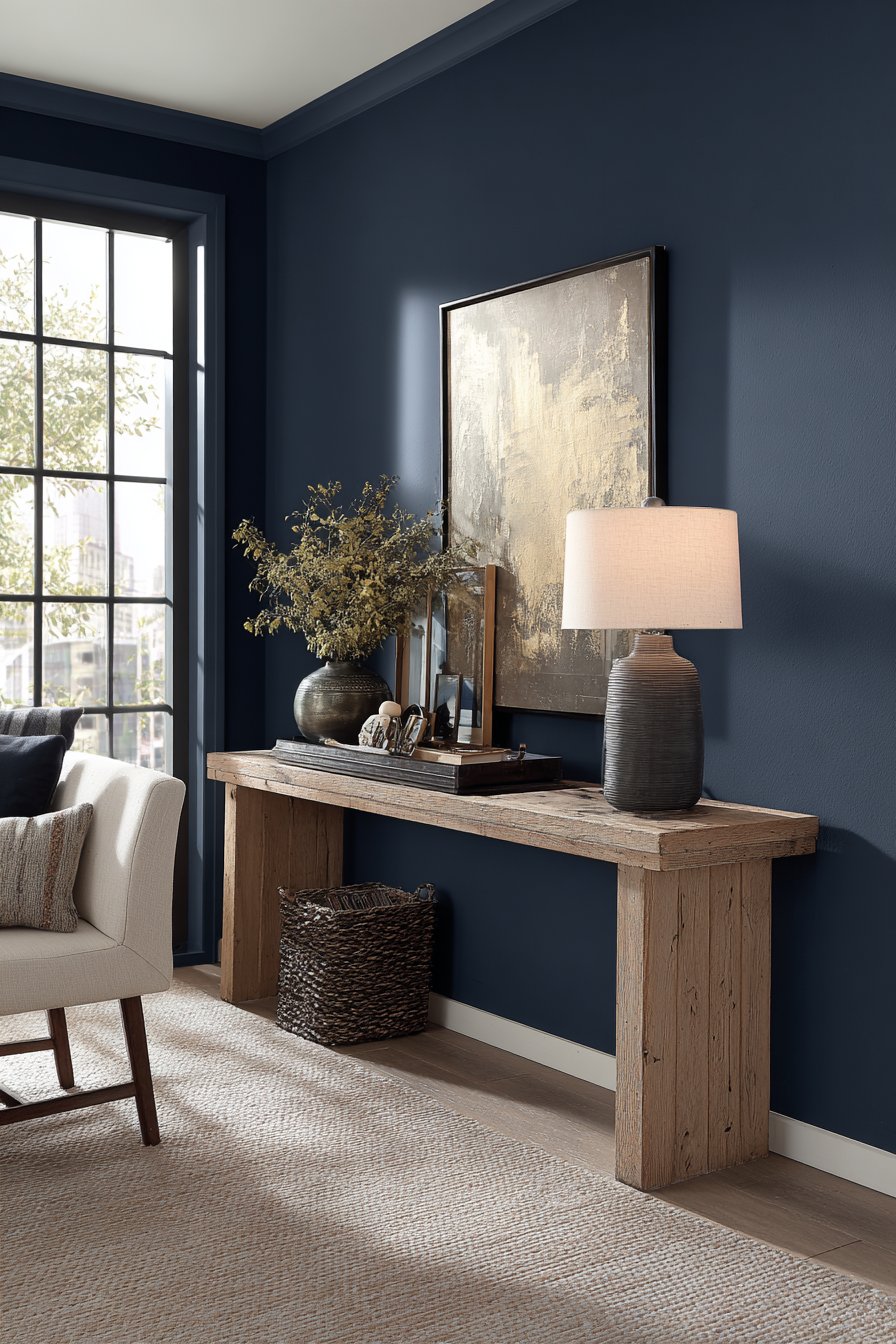
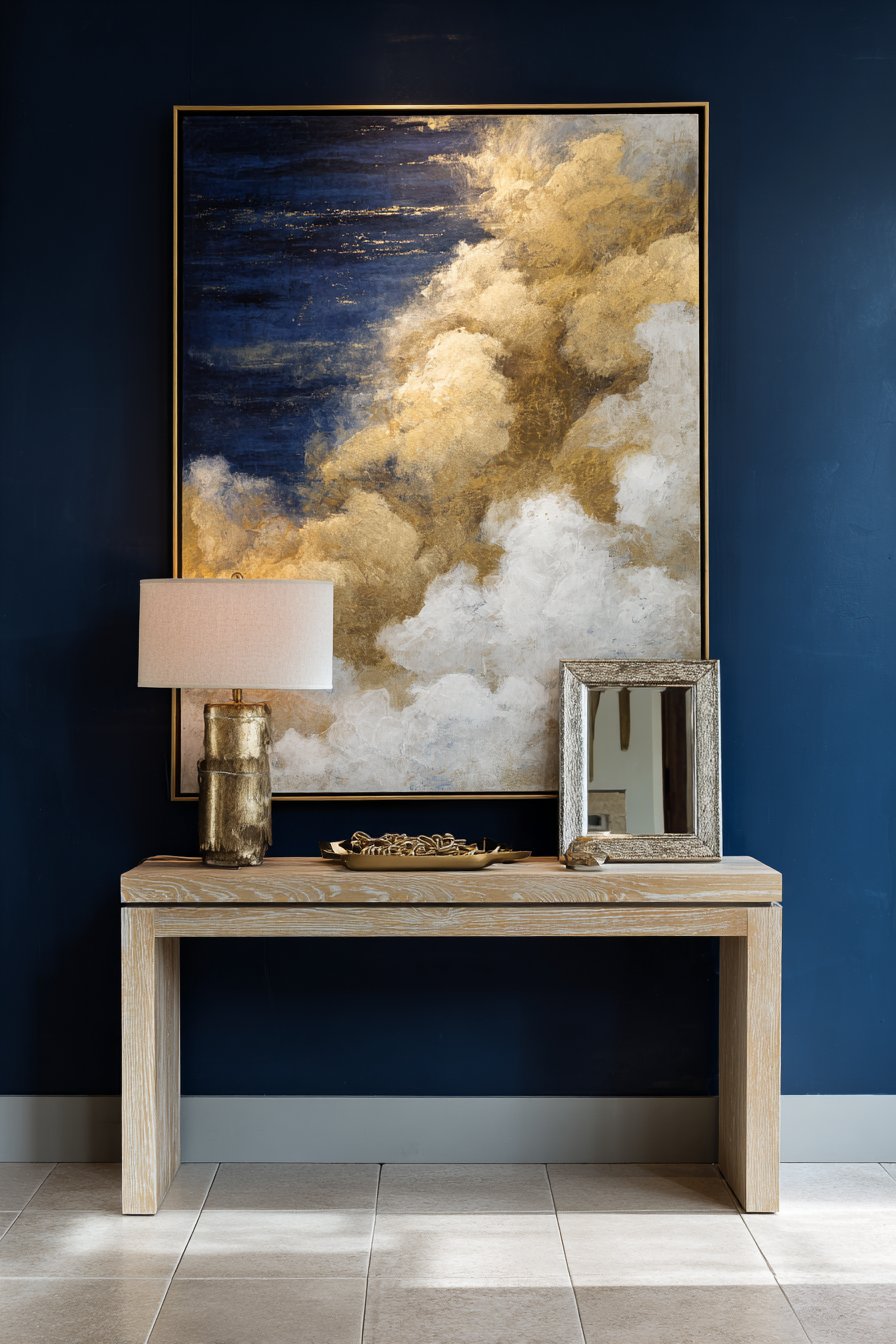
Bold color choices can transform an entryway from forgettable to unforgettable, and this design demonstrates the sophisticated impact of a deep navy blue accent wall. The rich, saturated color creates immediate drama and depth, serving as a striking backdrop for a narrow console table in light natural wood. This pairing of deep blue and natural wood is design gold—the warmth of the wood grain balances the coolness of the navy, creating a contrast that feels both modern and inviting. The console holds carefully selected items: a table lamp with a neutral linen shade that provides soft lighting, a decorative tray for corralling keys and everyday essentials, and a small framed mirror leaning casually against the wall with intentional informality.
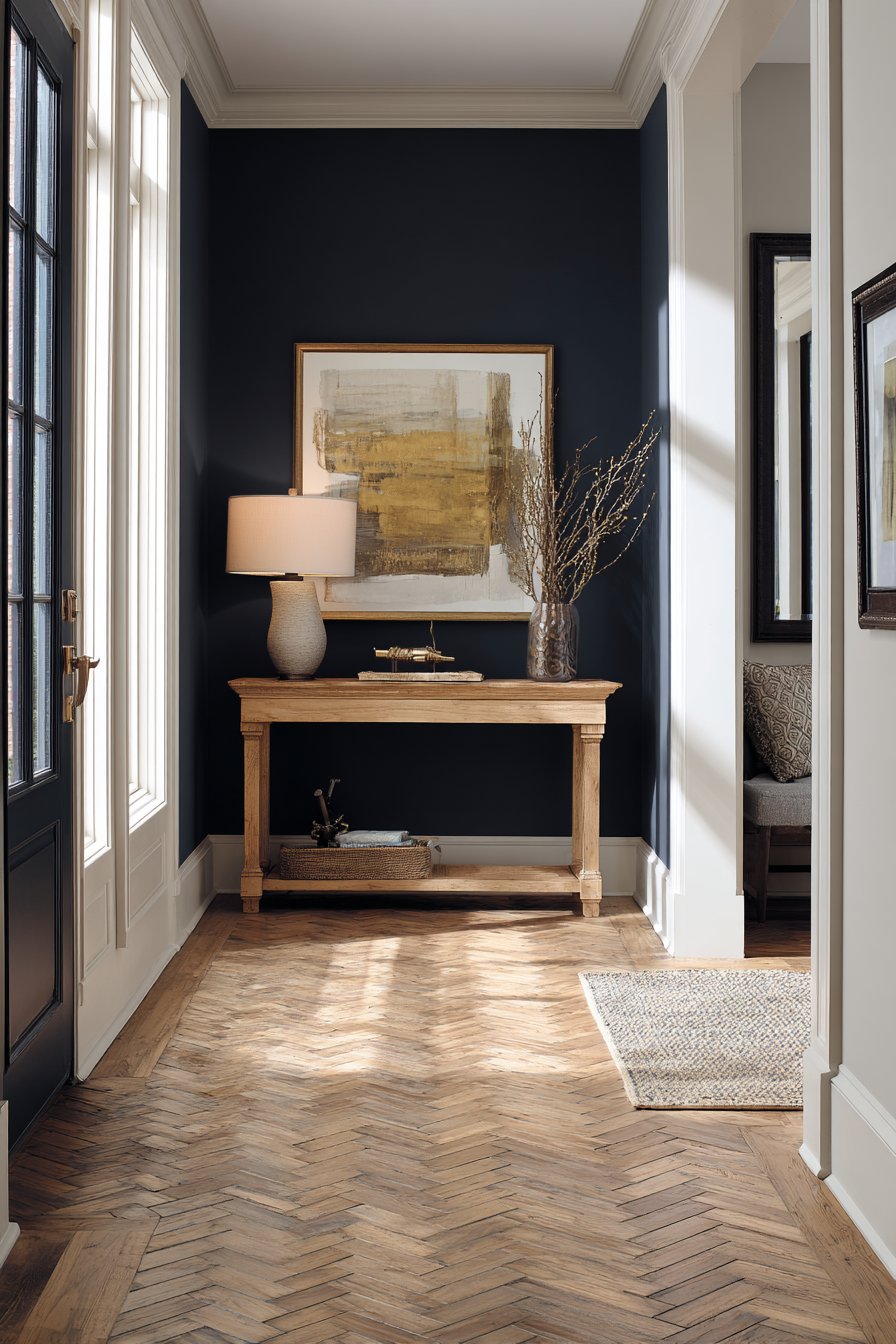
Above the console, a large abstract canvas featuring gold and navy tones serves as the focal point, its generous size making a bold statement that anchors the entire composition. The artwork picks up the wall color while introducing metallic gold accents that add a layer of luxury and visual warmth. This repetition of the navy blue in both the wall and the artwork creates cohesion, while the gold tones tie to the warm wood of the console, demonstrating how thoughtful color coordination elevates design from good to exceptional.
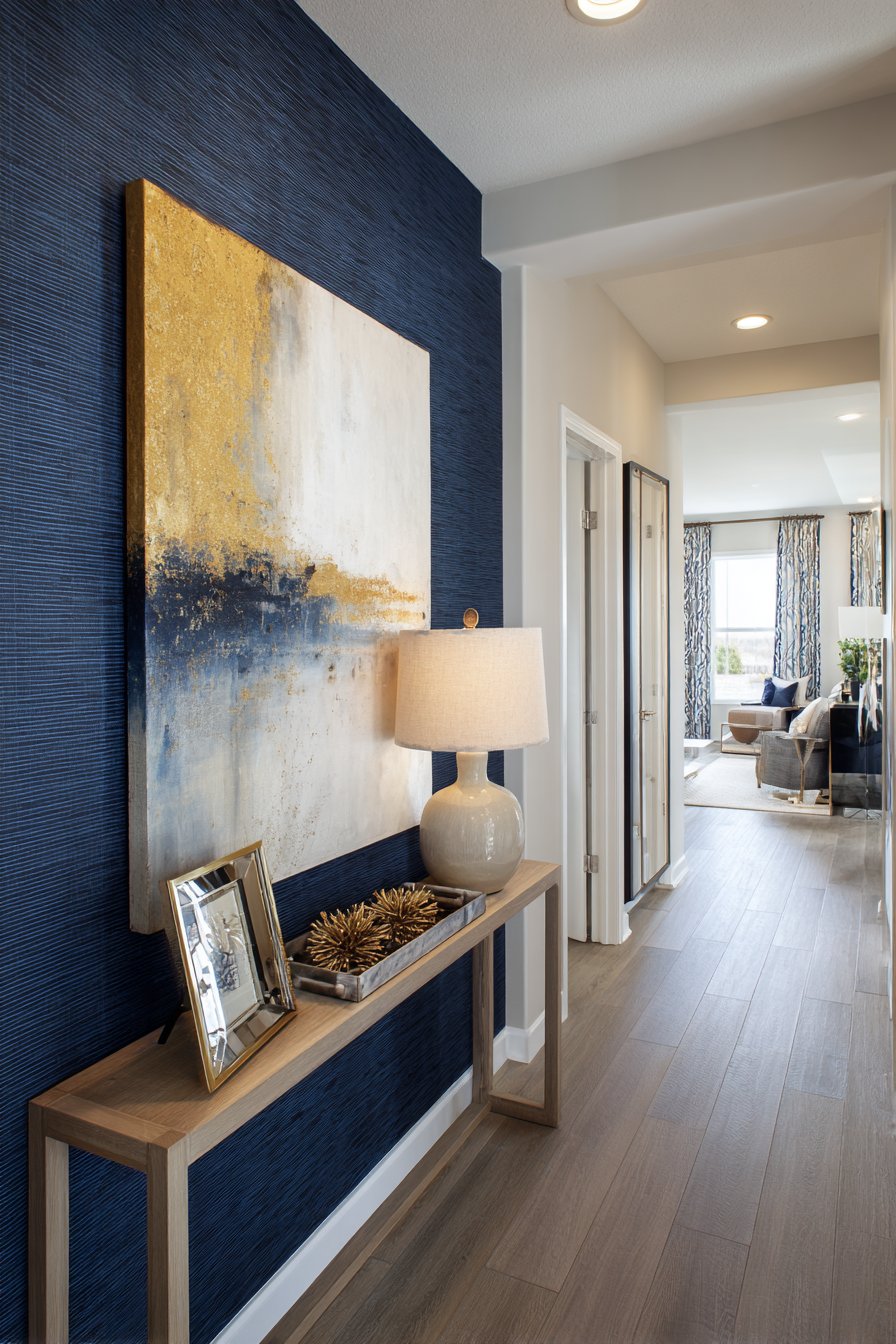
The styling of the console demonstrates restraint and intention—each object serves a purpose, whether functional or aesthetic. The table lamp provides necessary task lighting for sorting mail or finding keys, while its linen shade diffuses light softly, preventing glare. The decorative tray isn’t just beautiful; it creates a designated landing spot for daily essentials, preventing counter clutter. The leaning mirror adds casual sophistication, its relaxed placement suggesting effortless style rather than rigid formality. Wide-angle interior photography captures how these elements work together, the soft natural light revealing the depth and richness of the navy blue while showcasing the layered styling approach.
Key Design Tips:
- Test navy blue paint samples in your entryway’s lighting conditions before committing to the full wall
- Choose a console table no deeper than 12-14 inches to avoid obstructing traffic flow in narrow entries
- Layer lighting with both the table lamp and ambient overhead lighting for flexibility
- Select artwork that’s proportional to your wall—aim for 2/3 to 3/4 the width of the console
- Keep the console surface styled with odd numbers of objects (3 or 5) for visual balance
- Use the decorative tray to create a defined “drop zone” for keys, sunglasses, and small items
- Consider the sheen of your navy paint—matte for a sophisticated, modern look, or eggshell for subtle light reflection
- Anchor the console to the wall if you have children or pets to prevent tipping
6. Scandinavian Peg Rail Simplicity
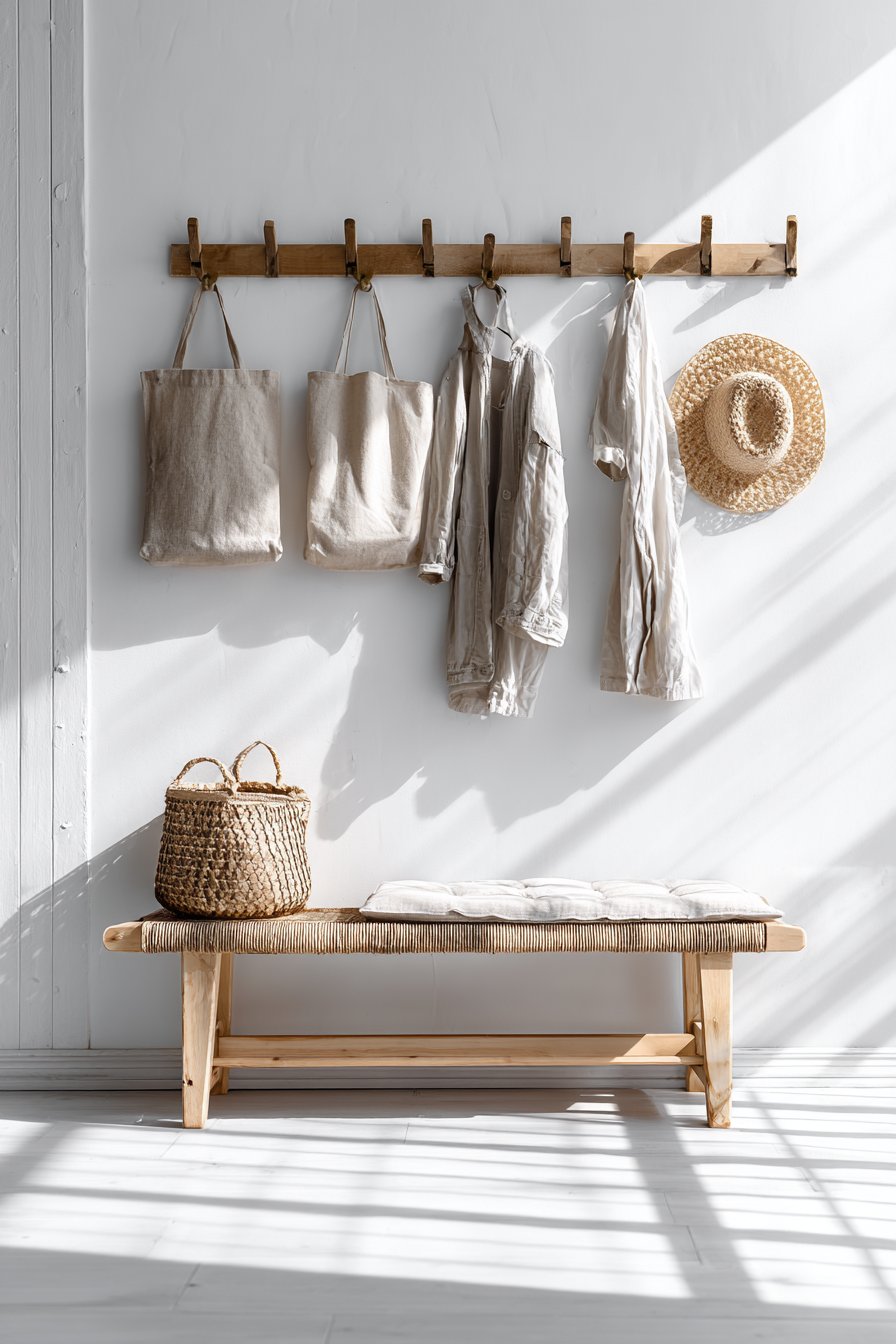
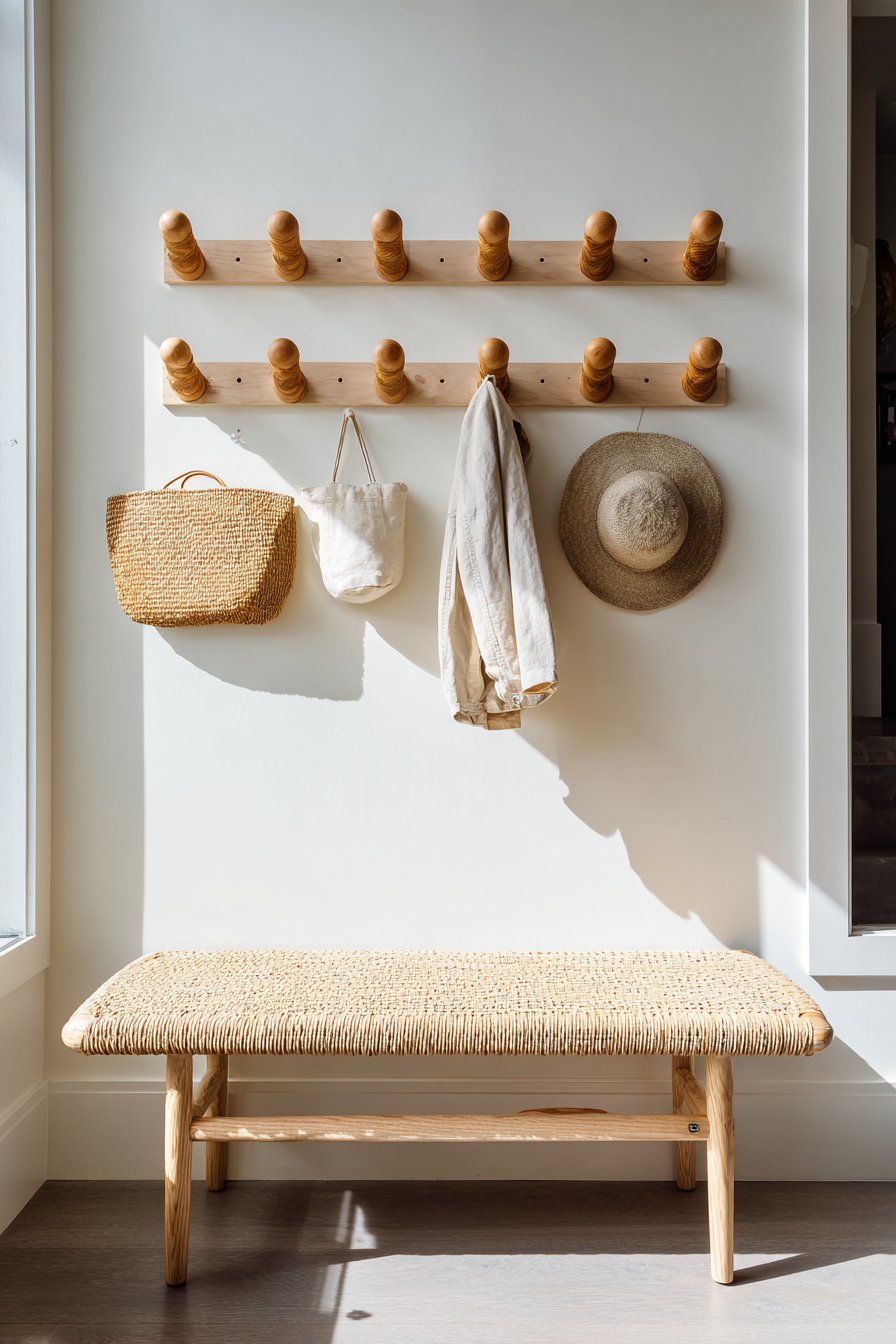
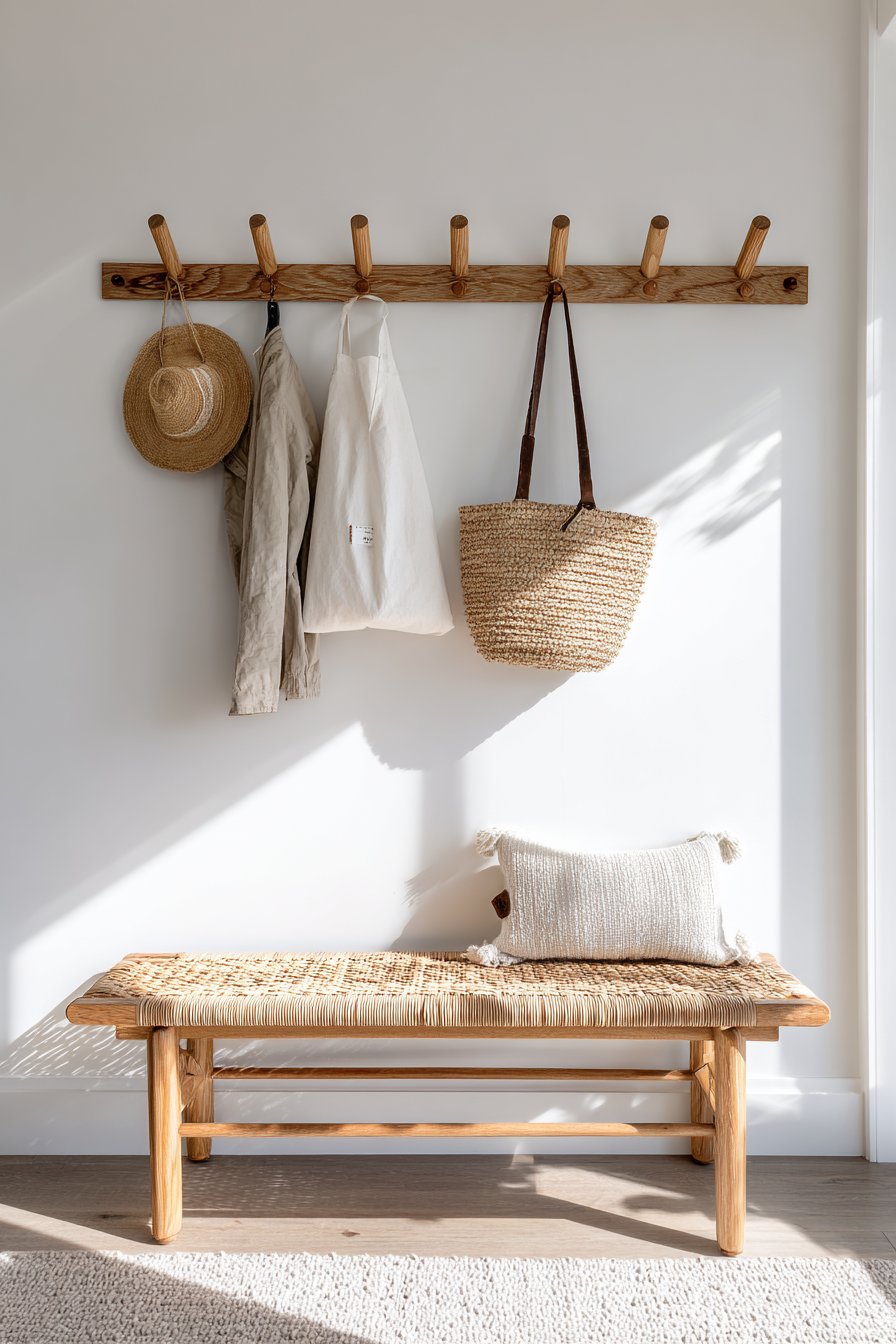
Scandinavian design principles—simplicity, functionality, natural materials, and light—come together beautifully in this peg rail entryway wall idea. The wooden pegs mounted on a pristine white wall at varying heights create a display that’s both practical and aesthetically pleasing, embodying the Scandinavian philosophy that everyday objects can and should be beautiful. Simple canvas tote bags, a woven straw hat, and a light jacket hang from the pegs, their natural materials and neutral colors contributing to the overall sense of calm and order. Below, a low wooden bench with elegant hairpin legs and a woven seat cushion provides a place to sit while maintaining the light, airy aesthetic.
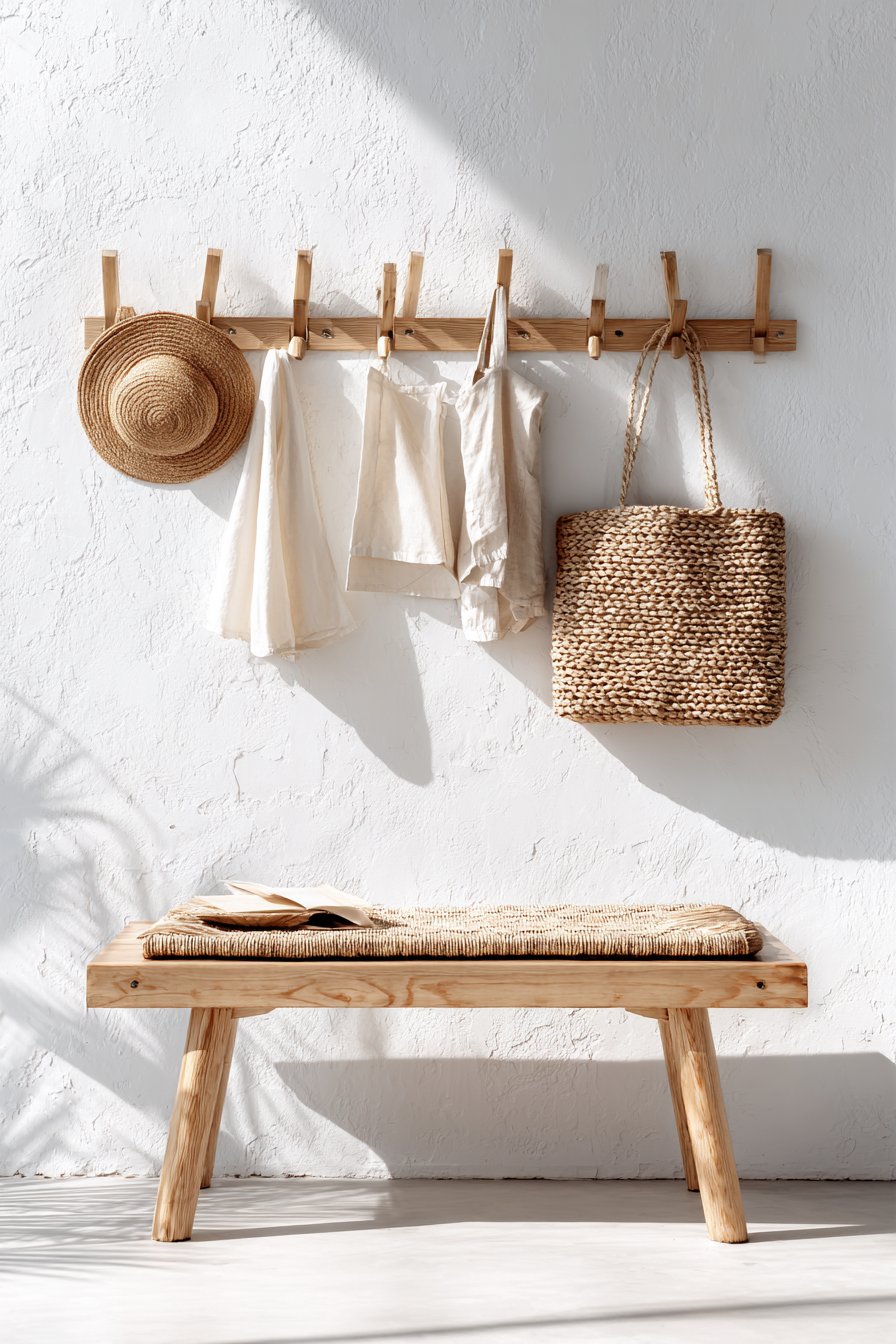
The genius of the peg rail system lies in its flexibility and simplicity. Unlike traditional coat racks with fixed hooks, pegs at varying heights can accommodate different items and create visual interest through varied hanging levels. The simplicity of the round wooden pegs against the white wall creates a pleasing rhythm, while their natural wood tone adds warmth without overwhelming the space. This is design that breathes, that doesn’t feel cluttered or heavy, that welcomes you home with its clean lines and uncluttered surfaces.
Natural light is essential to achieving the authentic Scandinavian look, and this design maximizes its impact. Light floods the space, bouncing off the white walls and creating a bright, airy atmosphere that’s characteristic of Nordic design. The woven textures—the seat cushion, the straw hat, the canvas bags—add subtle visual interest and warmth without introducing pattern or color that would disrupt the serene palette. Professional interior photography emphasizes this minimal yet functional design approach, capturing the clean lines and natural materials that make Scandinavian style so enduringly popular.
Key Design Tips:
- Install pegs at multiple heights—some at 5 feet for adult coats, others lower for children or bags
- Choose pegs in natural wood tones like oak, beech, or ash for authentic Scandinavian appeal
- Maintain ample spacing between pegs—at least 6-8 inches—to prevent a cluttered appearance
- Select a bench with a low profile (no higher than 18 inches) to maintain visual lightness
- Keep color schemes strictly neutral with whites, grays, natural woods, and subtle earth tones
- Incorporate organic textures through woven materials, linen, and natural fibers
- Maximize natural light with sheer window treatments or no treatments at all
- Edit regularly to maintain the minimalist aesthetic—one in, one out is a good rule
7. Bold Geometric Wallpaper Statement
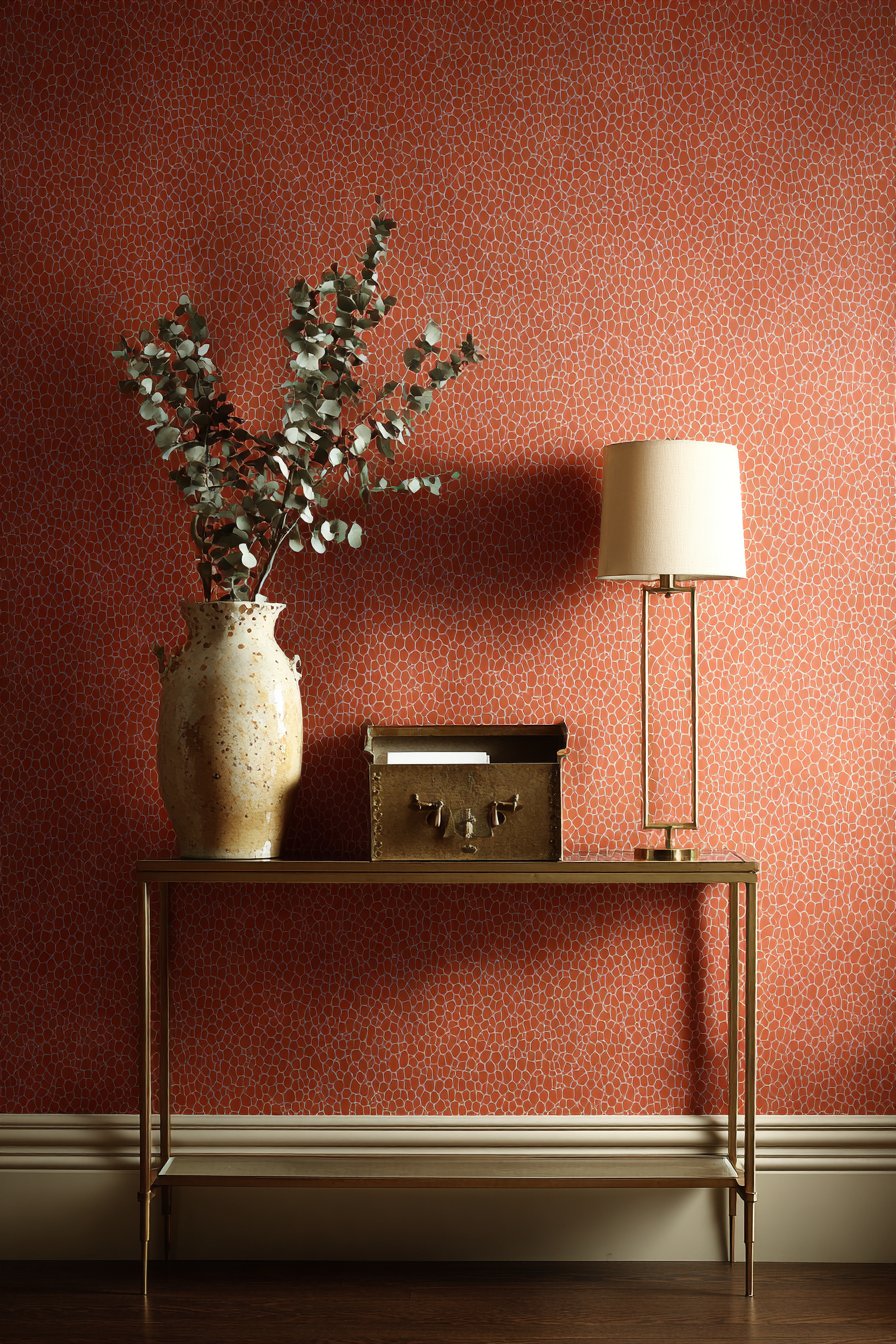
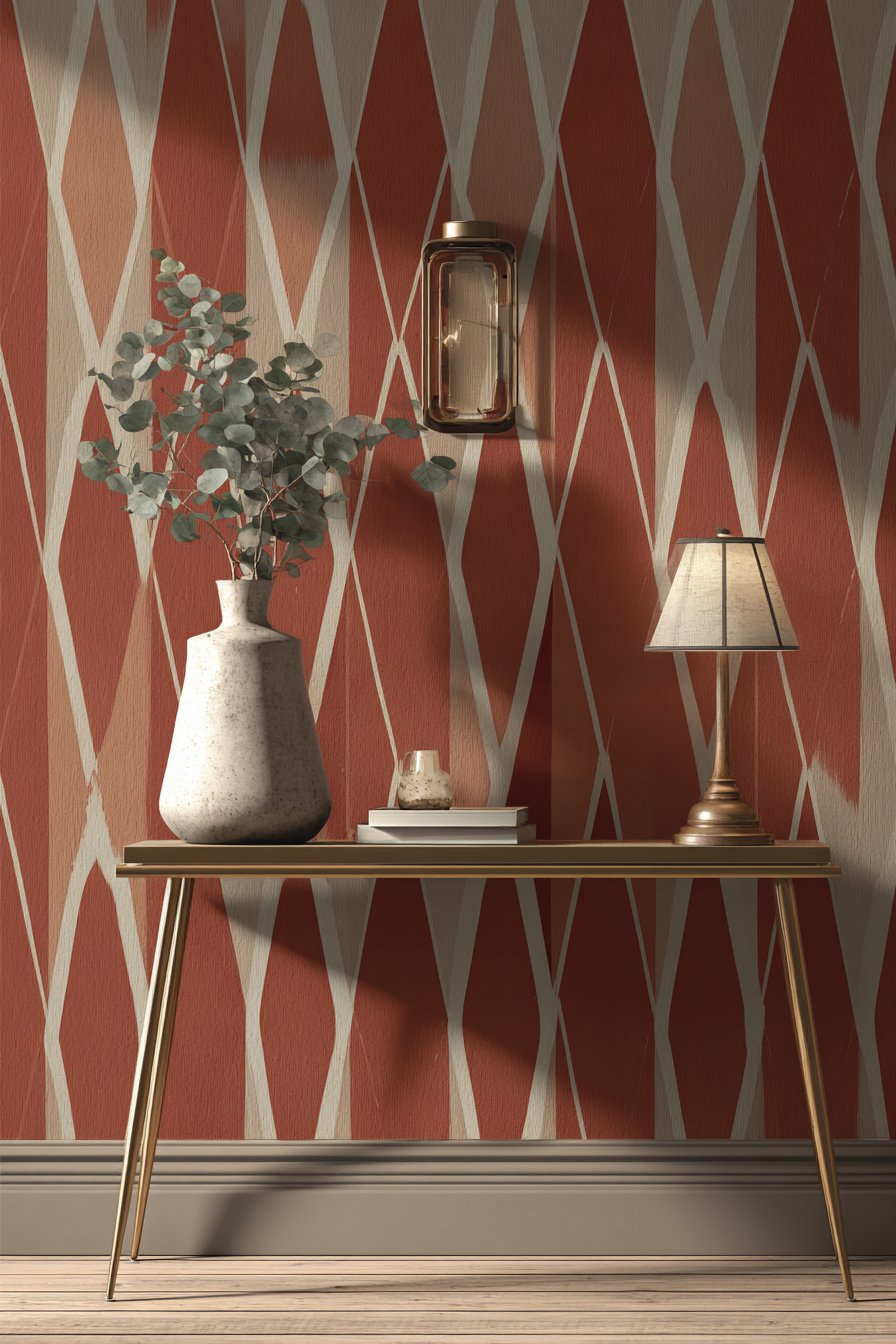
For those who aren’t afraid of pattern and color, a bold geometric wallpaper accent wall creates an entryway that’s impossible to ignore. This design features wallpaper in muted terracotta and cream tones, its geometric pattern providing visual interest and contemporary style without overwhelming the space. Against this striking backdrop, a slim console table with gold metal legs appears almost sculptural, its minimalist form preventing competition with the busy wallpaper pattern. The console is styled with restraint—a tall ceramic vase holding fresh eucalyptus branches and a vintage-style table lamp—allowing the wallpaper to remain the star of the show.
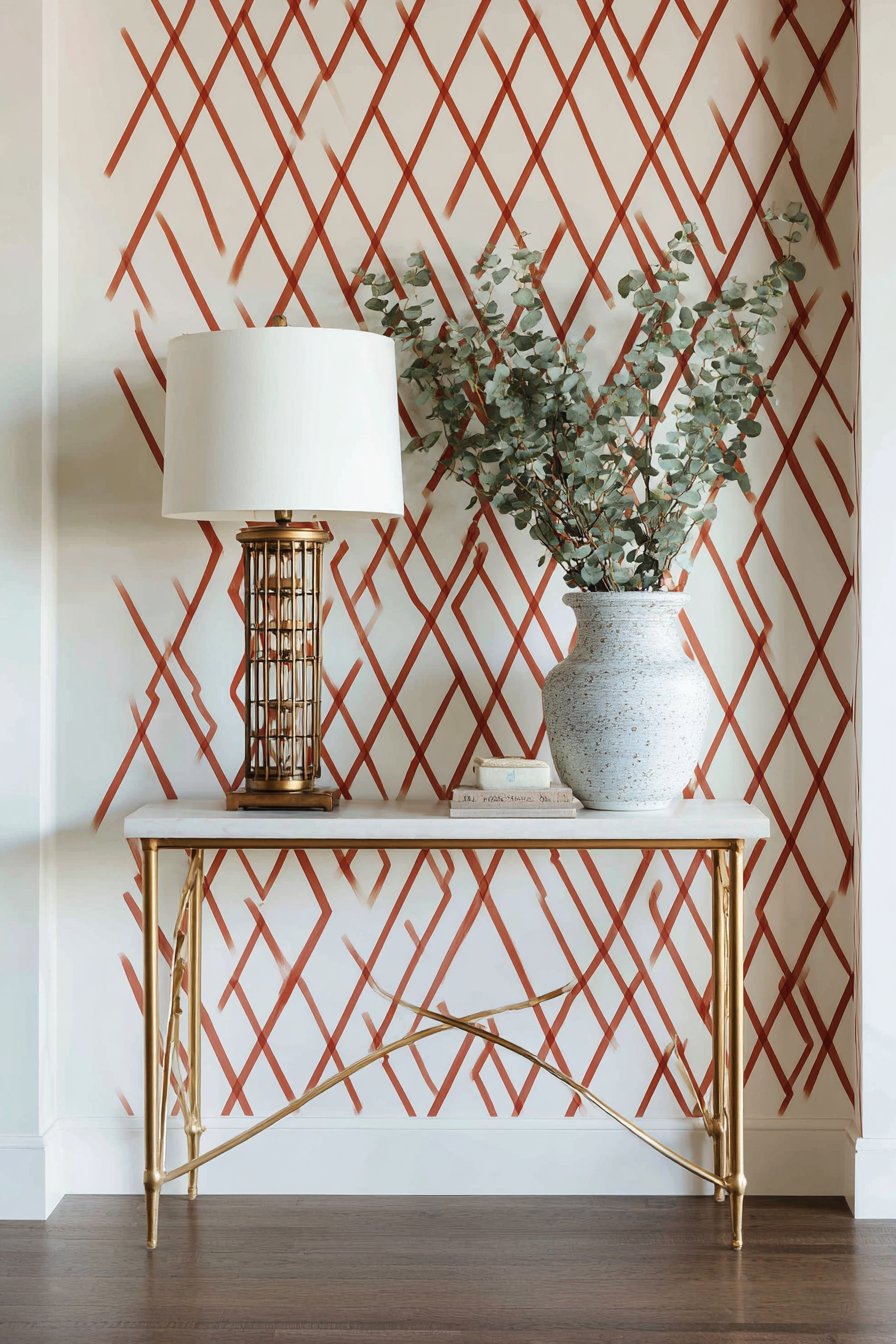
The choice of muted terracotta rather than bright, saturated colors is key to this design’s success. The warm, earthy tone feels inviting rather than aggressive, while the cream creates breathing room within the pattern. The geometric design adds modern edge and personality, transforming a simple entryway wall into a design feature that makes a statement about the homeowner’s confidence and style. A decorative wall-mounted mail organizer in brass finish adds functional detail while picking up the gold tones of the console legs, creating subtle metallic accents that add a touch of glamour.
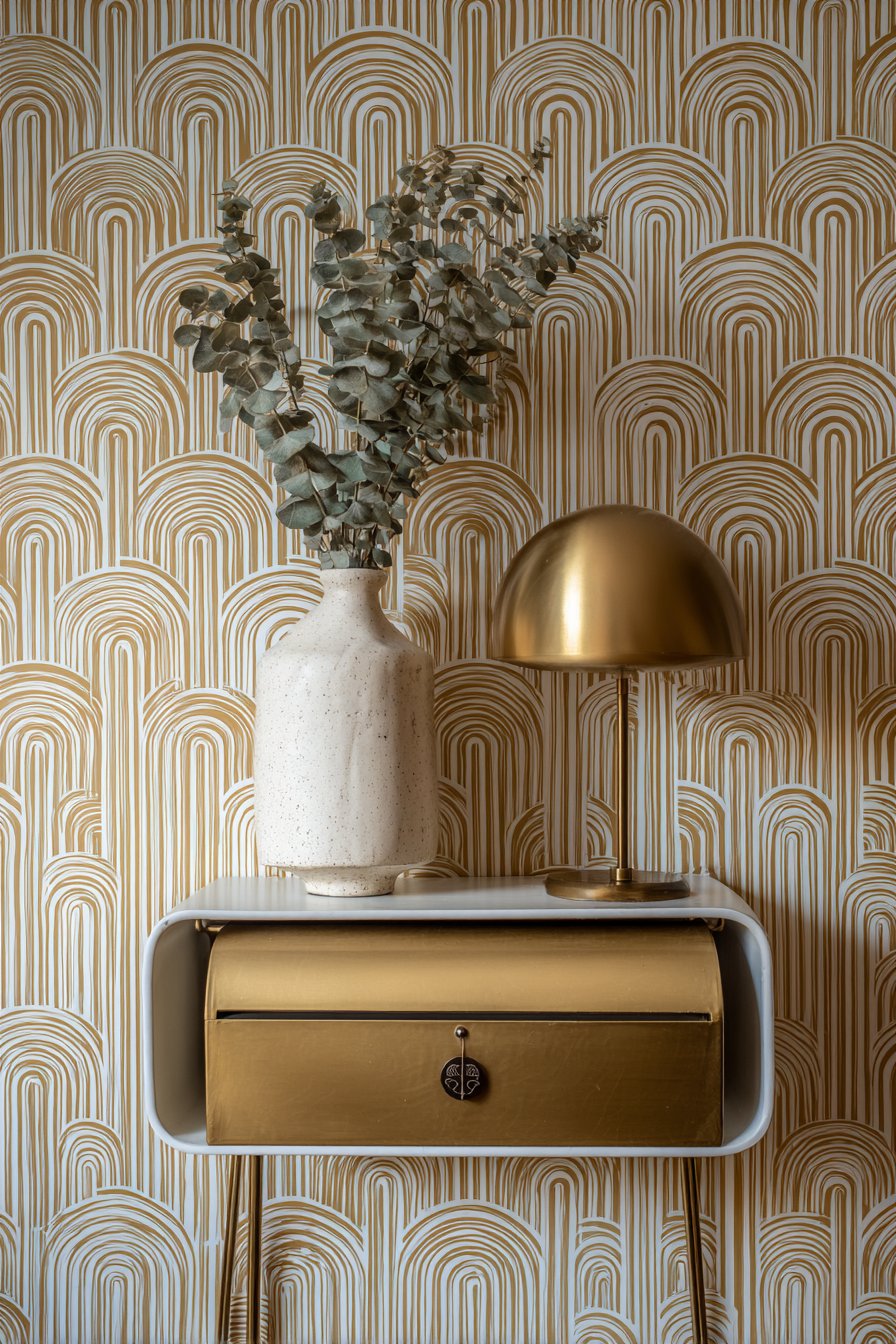
Interior design photography captures both the pattern detail and the warm color scheme, requiring balanced exposure that doesn’t blow out the lighter cream tones while maintaining the richness of the terracotta. The styling of the console demonstrates how to accessorize a patterned wall—keeping accessories simple and minimal allows the wallpaper to shine while preventing visual chaos. The eucalyptus branches add organic movement and natural color that complements rather than competes with the geometric pattern, while the brass mail organizer proves that practical additions can also be beautiful.
Key Design Tips:
- Choose removable wallpaper for renters or those who like to change designs frequently
- Test wallpaper samples on your wall for at least 24 hours to see how they look in different lighting
- Limit other patterns in the space when using bold wallpaper—keep rugs, cushions, and accessories solid
- Select furniture with clean lines and minimal detail to balance the pattern’s visual weight
- Use metallic accents strategically to add sophistication without adding more pattern
- Consider scale—larger geometric patterns work better in more spacious entryways
- Match one color from the wallpaper in your accessories for a cohesive look
- Hire a professional for wallpaper installation to ensure pattern matching and smooth application
8. Classic Wainscoting Elegance
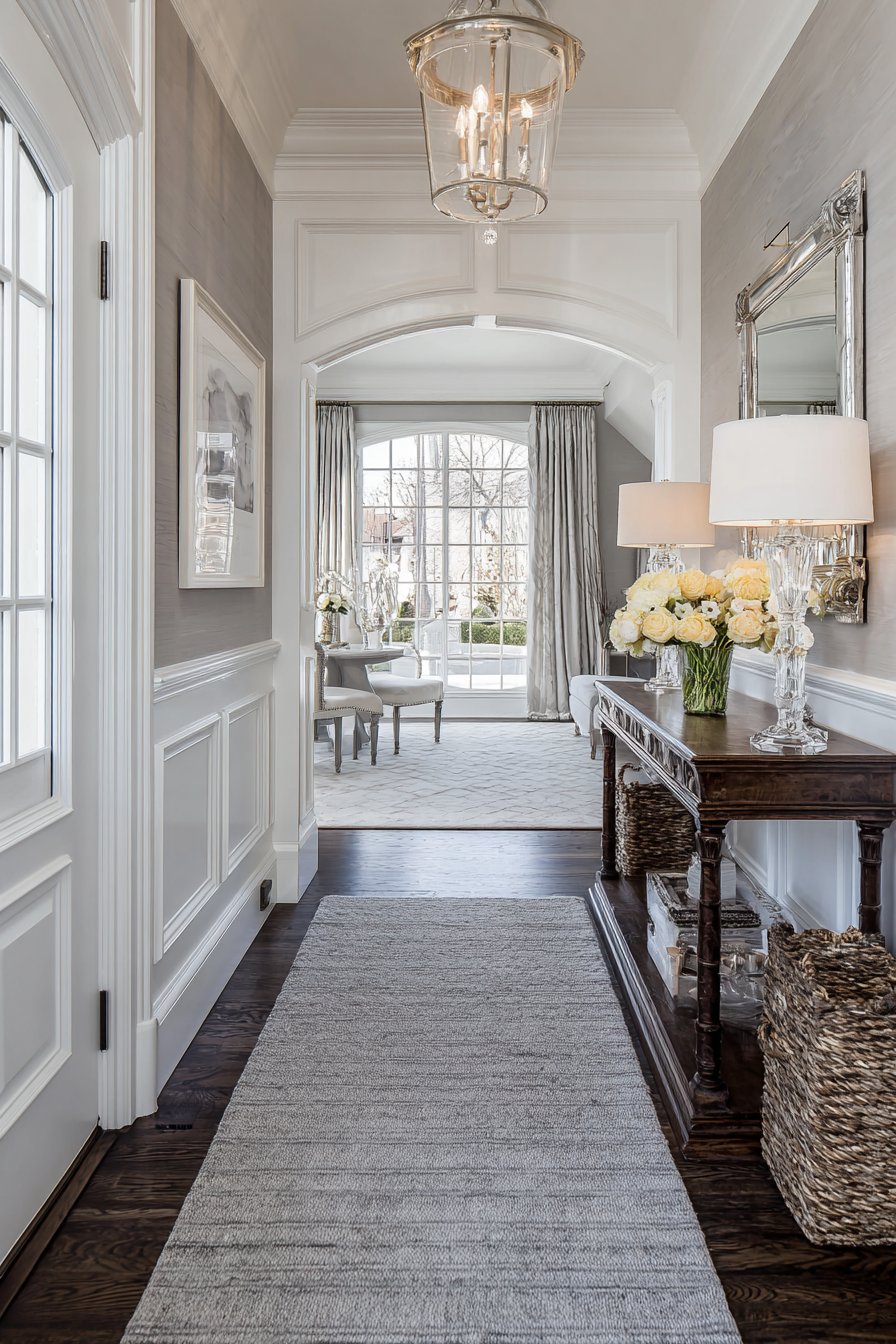
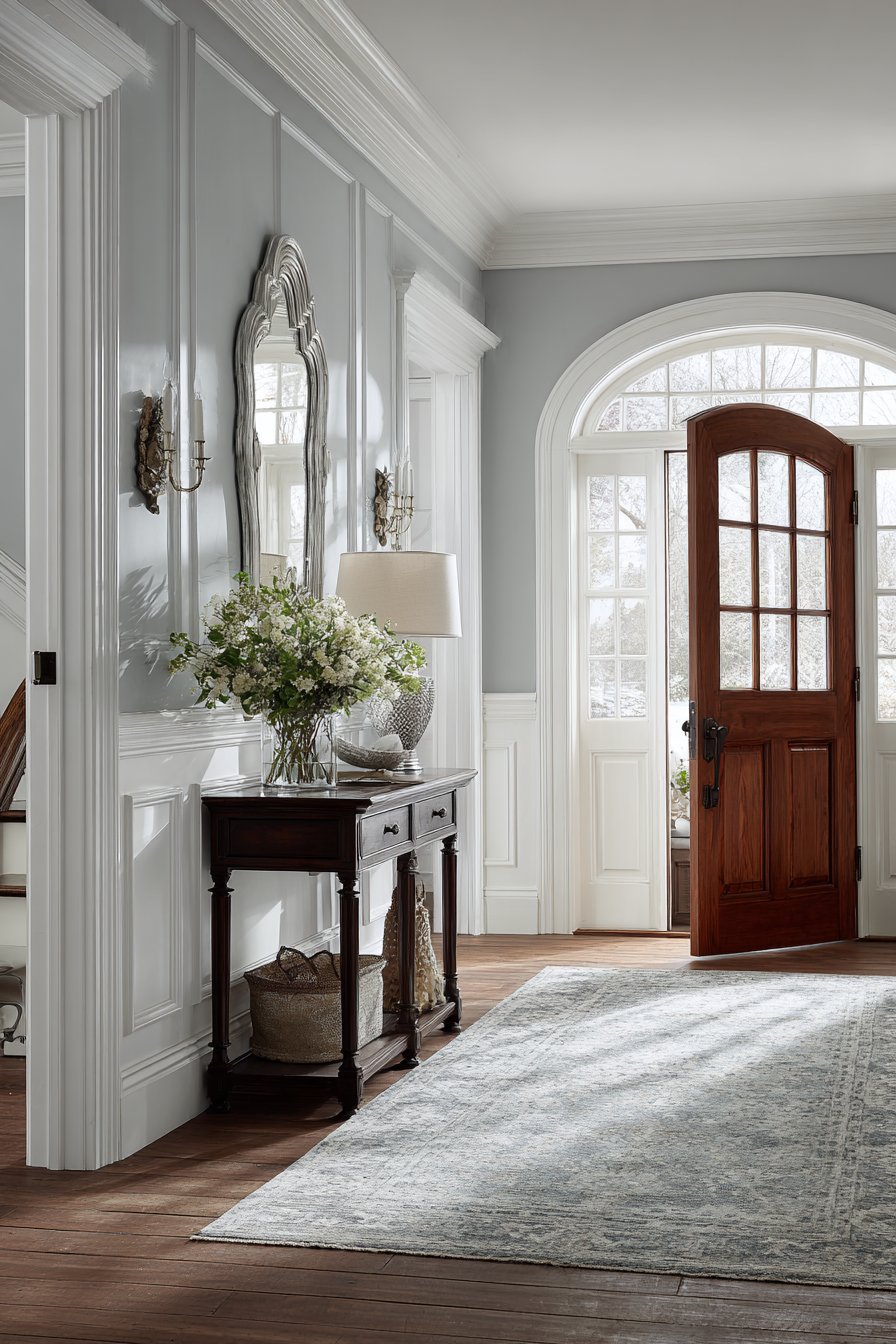
Traditional architectural details like wainscoting bring timeless elegance to entryway walls, and this design showcases how classic elements can create sophisticated first impressions. The raised panel molding covers the lower two-thirds of the wall, painted in crisp white that emphasizes the dimensional detail and craftsmanship. A chair rail provides the transition point to the upper wall, which features soft gray paint—a combination that feels both traditional and current. This two-tone approach adds visual interest and architectural substance to even basic walls, creating the impression of quality and attention to detail.
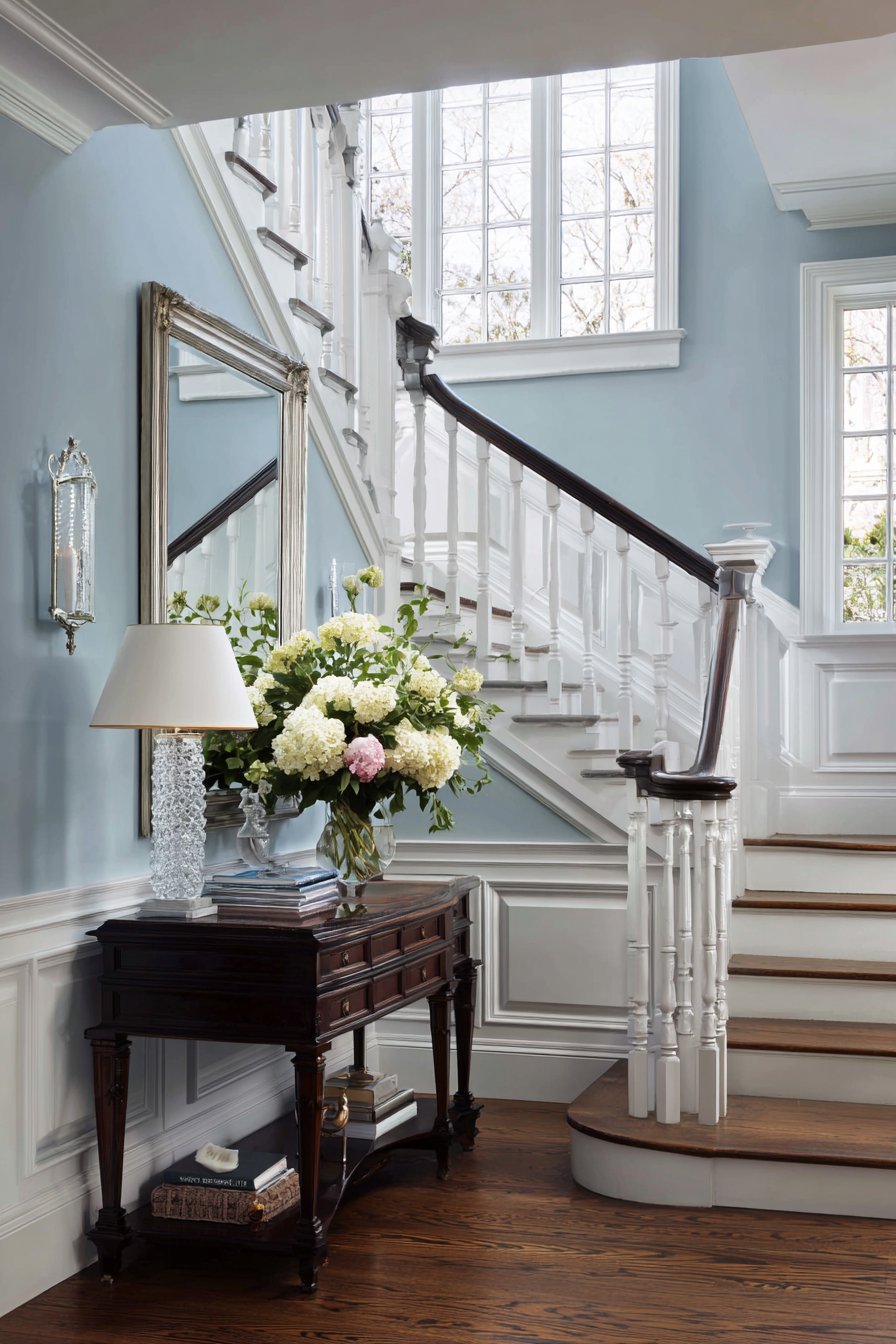
Below the wainscoting, a traditional console table in dark wood provides rich contrast to the white millwork. The wood’s deep tone grounds the design and adds warmth, preventing the white and gray color scheme from feeling cold or sterile. Above the console, a silver-framed mirror hangs at the perfect height for functionality, its frame finish introducing another metallic element that adds subtle glamour. The console is elegantly styled with a crystal table lamp and fresh flowers, accessories that enhance the refined traditional aesthetic without appearing stuffy or overly formal.
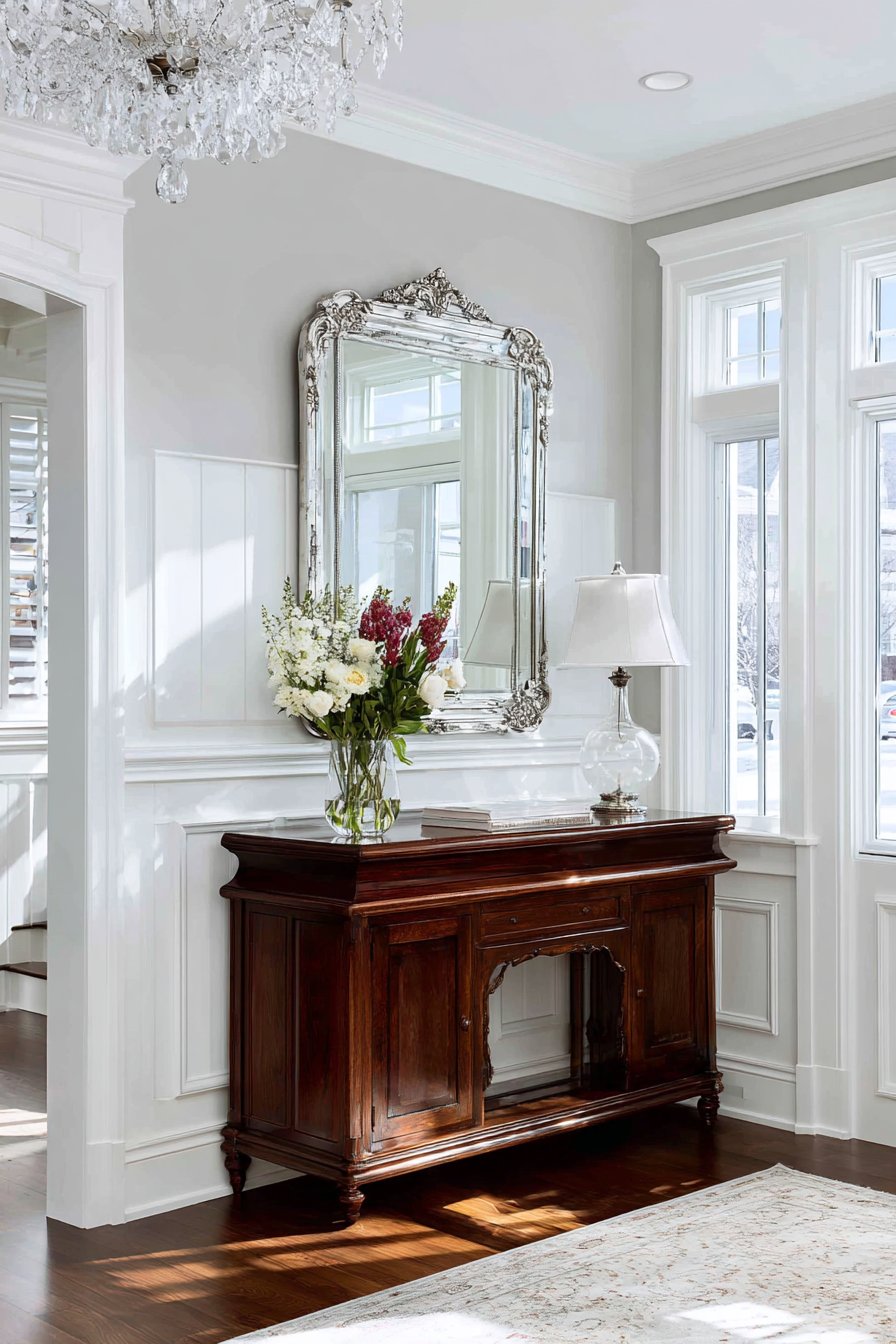
Professional photography with natural window light is essential to capturing the architectural detail of the wainscoting. The angled light reveals the shadows and highlights created by the raised panels, emphasizing the three-dimensional quality that makes this treatment so appealing. The overall effect is one of quiet elegance and enduring style—this is design that won’t look dated in five years because it draws from classical proportions and time-tested elements rather than fleeting trends. It’s an entryway wall that suggests a home where quality and tradition are valued.
Key Design Tips:
- Ensure wainscoting height is proportional to your ceiling height—typically one-third to two-thirds of the wall
- Use high-quality paint in semi-gloss or satin finish for wainscoting to allow easy cleaning
- Install chair rail at 32-36 inches from the floor for standard ceiling heights
- Paint wainscoting and trim before installing to achieve the smoothest finish
- Consider pre-fabricated wainscoting panels for easier DIY installation
- Choose upper wall colors that complement rather than match the trim color for subtle sophistication
- Caulk all seams and joints before painting for a seamless, professional appearance
- Use a small foam roller for painting panel details to avoid brush marks
9. Modern Farmhouse Shiplap Charm
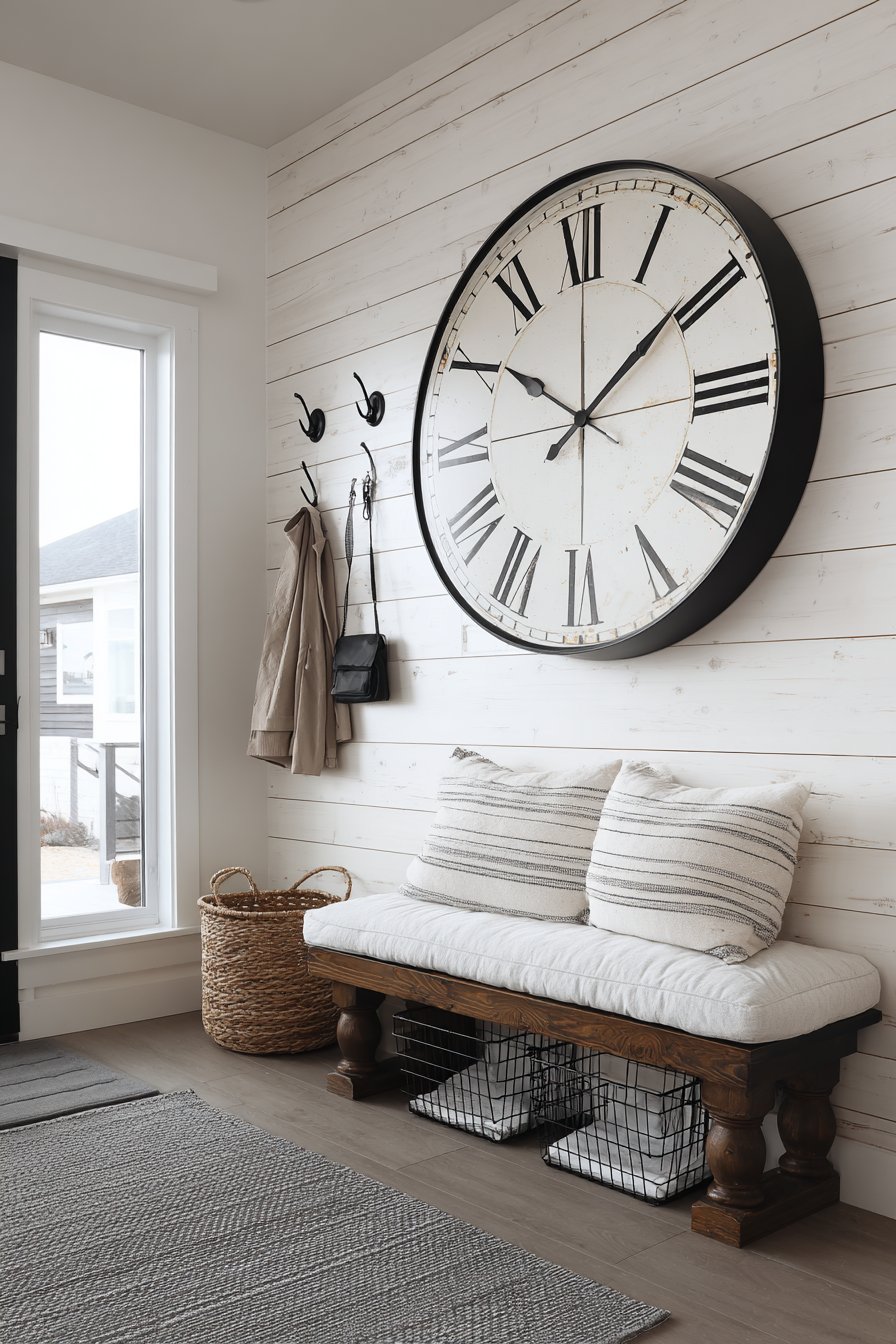
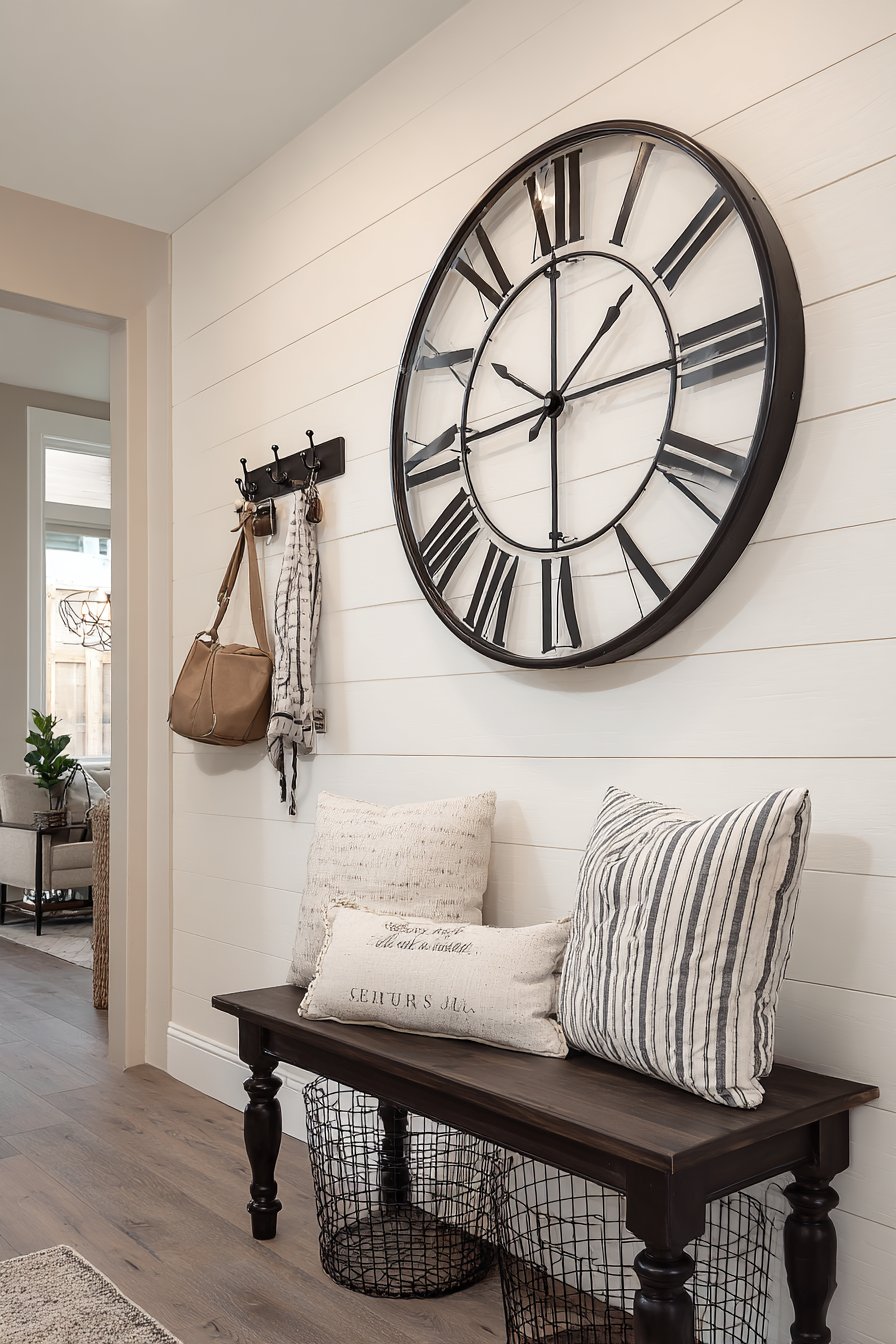
The modern farmhouse style continues its reign as one of the most popular design aesthetics, and this shiplap entryway wall idea demonstrates why. The white-washed shiplap finish creates subtle texture and horizontal lines that add architectural interest without overwhelming the space. The large vintage-inspired clock serves as the focal point, its oversized proportions and distressed finish adding character and practical functionality—no more fumbling for your phone to check the time as you head out the door. Below, a bench with turned legs and a cushion in classic ticking stripe fabric provides comfortable seating that balances the rustic wall treatment.
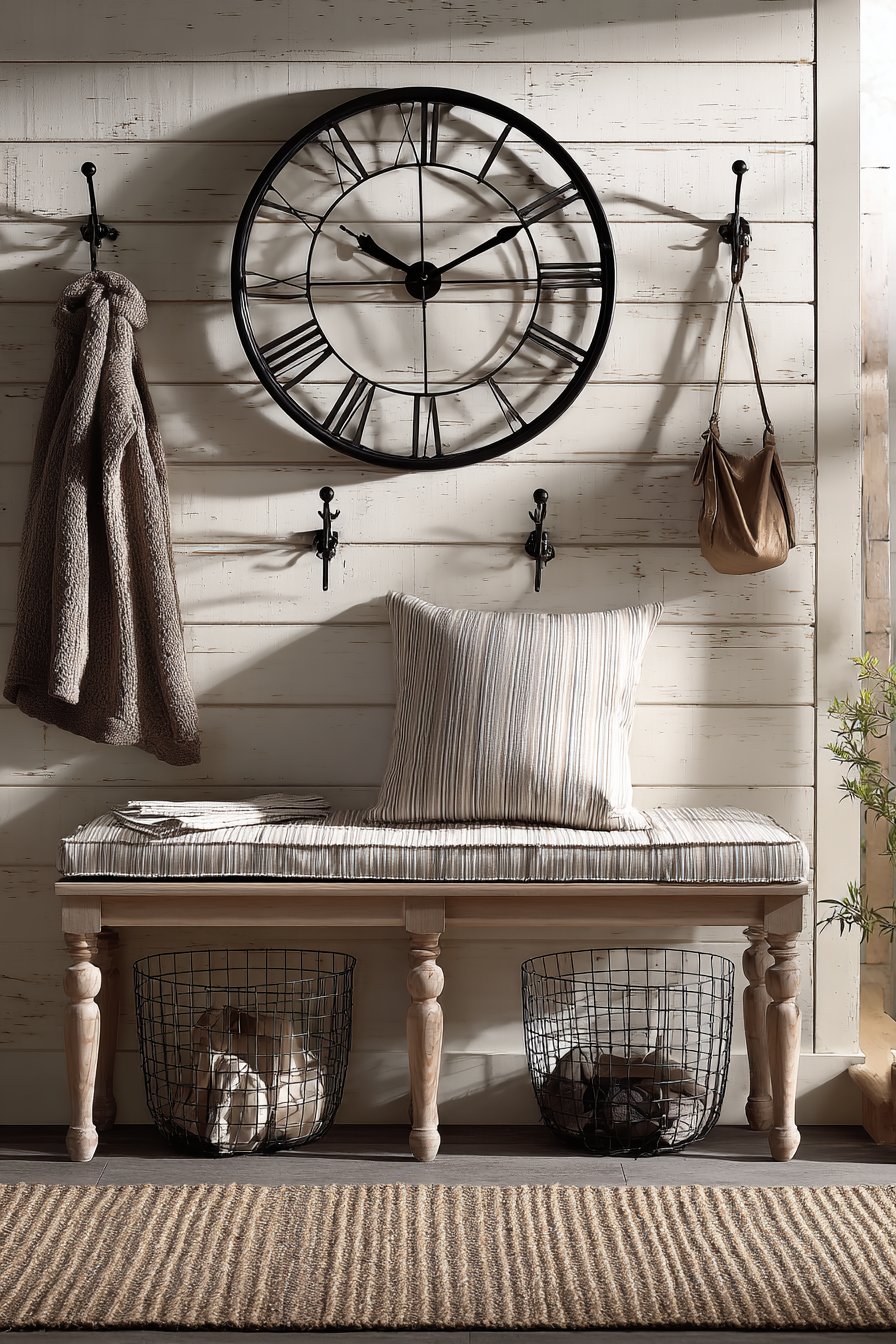
Wire baskets tucked underneath the bench offer practical storage that looks intentional rather than afterthought. They’re perfect for shoes, pet supplies, or seasonal items that need to be accessible but hidden from view. Black metal hooks mounted beside the clock create designated spots for keys and small bags, their simple industrial style complementing the farmhouse aesthetic without competing with it. This combination of rustic charm and modern functionality is the hallmark of successful modern farmhouse design—spaces that feel warm and collected while serving the practical needs of contemporary life.
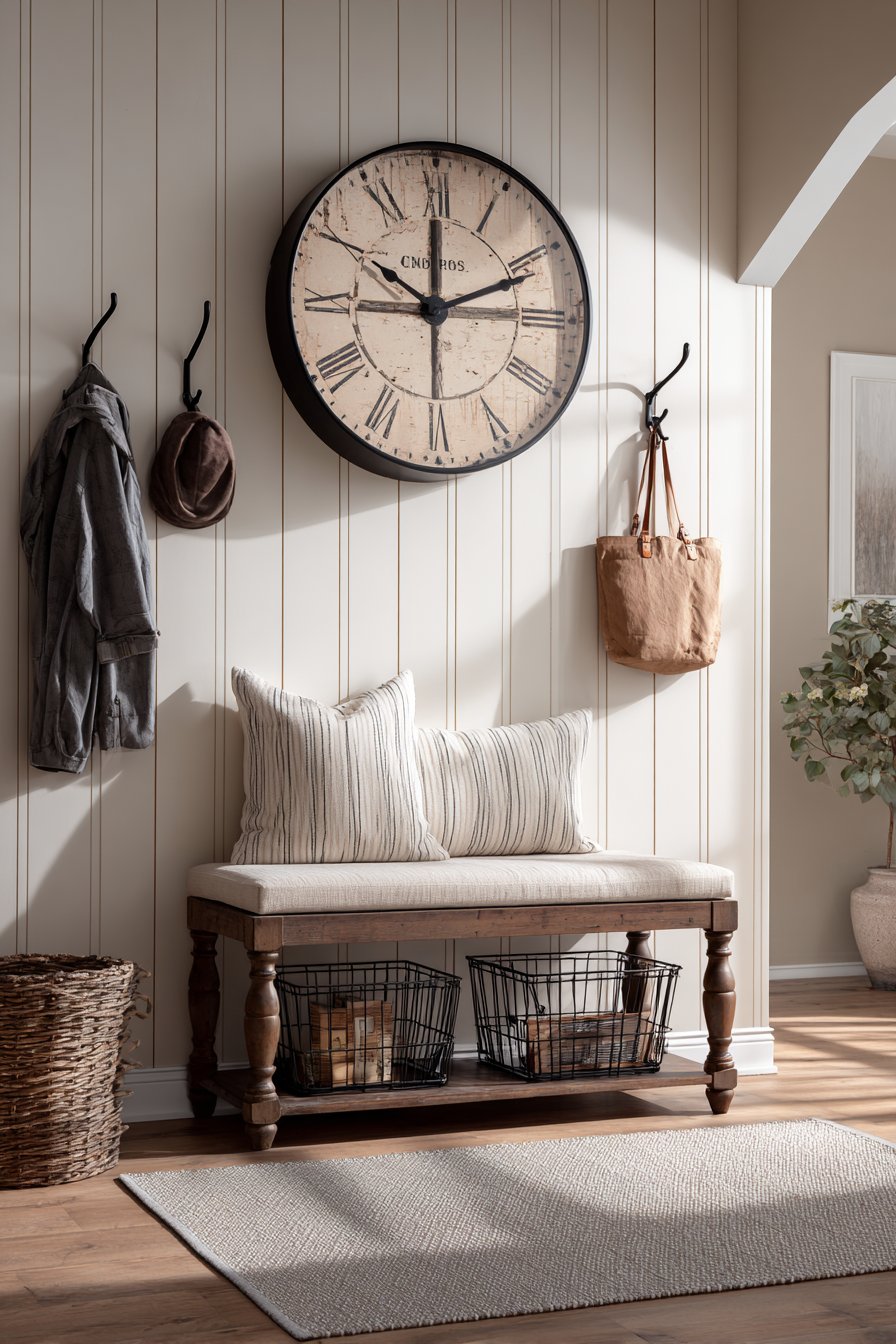
Wide-angle interior photography captures the casual yet curated farmhouse aesthetic that makes this style so appealing. The soft natural lighting highlights the wood texture of the shiplap, revealing the grain and the subtle variations in the white-wash finish. The styling feels effortless—the striped cushion, the wire baskets, the vintage clock—yet each element is carefully chosen to contribute to the overall farmhouse narrative. This is the kind of entryway that makes guests feel immediately welcome and comfortable, where the design suggests a home that’s lived in and loved rather than styled for a magazine and never touched.
Key Design Tips:
- Install shiplap with slight gaps between boards for authentic appearance and to accommodate wood movement
- Apply white-wash finish using diluted paint or specialized white-wash products for translucent coverage
- Choose a clock with a diameter of 24-36 inches for proper proportion as a focal point
- Select bench cushions in durable, washable fabrics suitable for high-traffic areas
- Use wire baskets in galvanized or black finishes that coordinate with other metal elements
- Mount hooks at staggered heights for visual interest and to accommodate different items
- Consider adding a small shelf above the bench for additional display or storage
- Maintain the white and neutral color scheme with occasional black accents for modern farmhouse authenticity
10. Eclectic Bohemian Wall Display
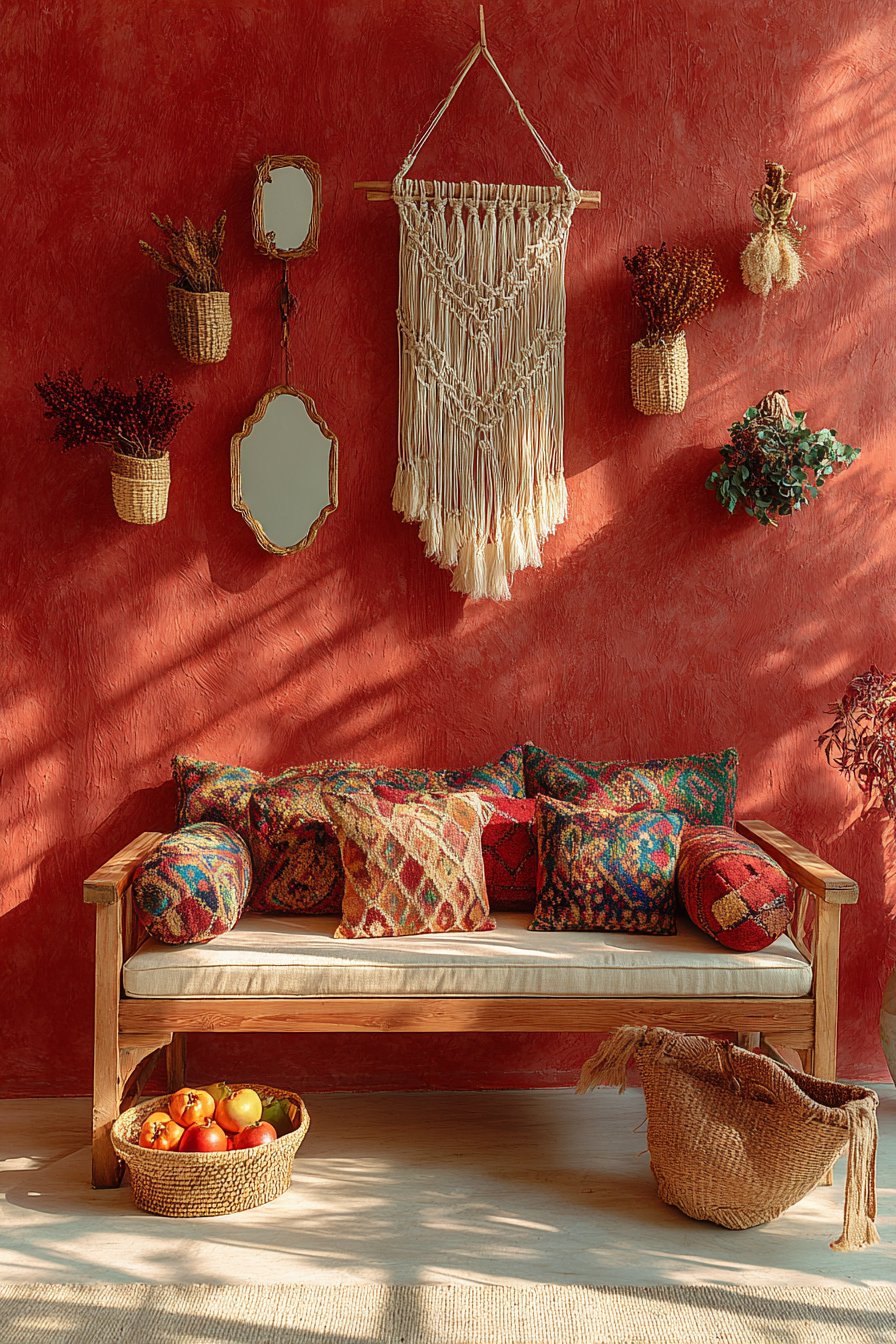
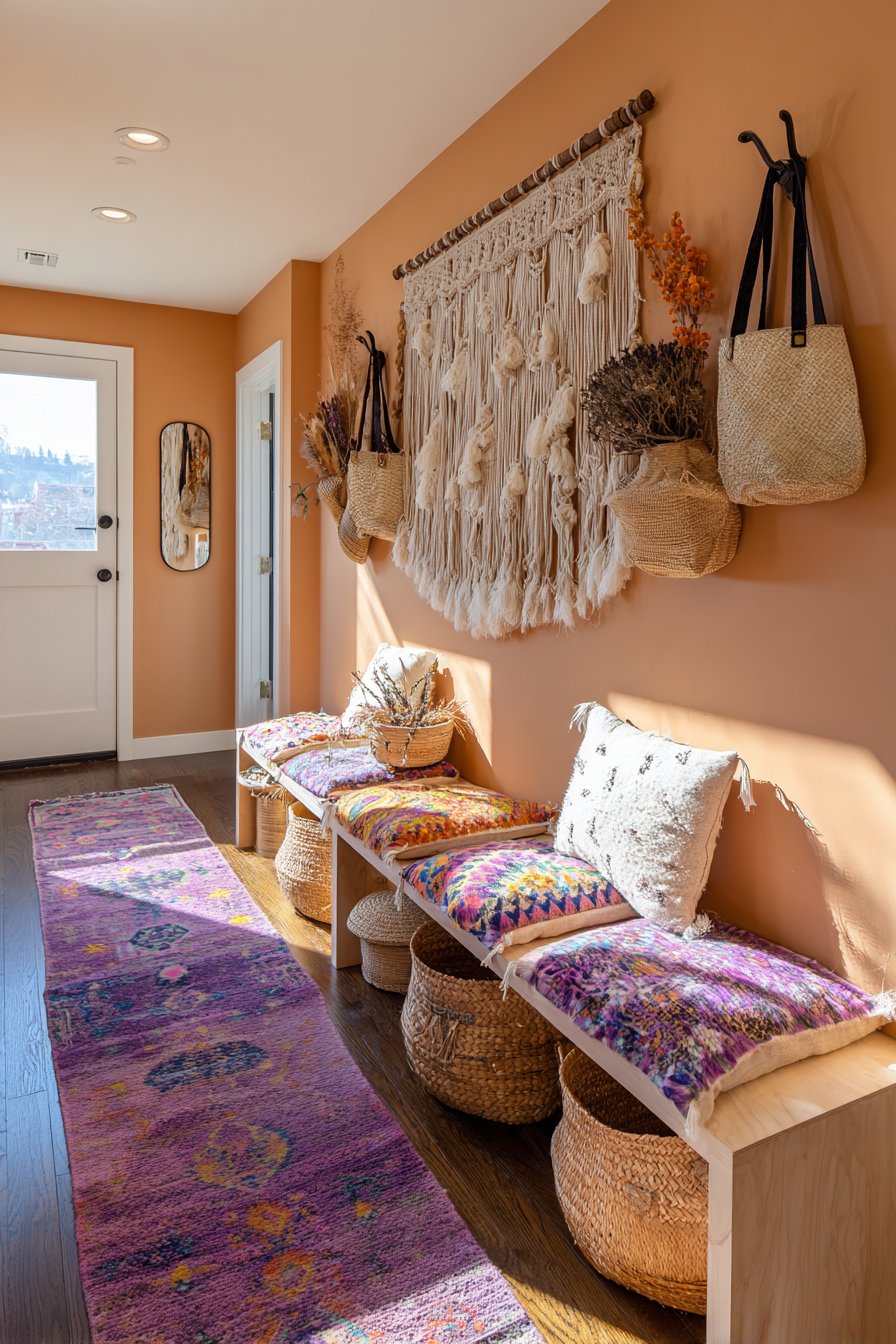
For free spirits and those who appreciate layered, collected-over-time aesthetics, this bohemian entryway wall idea offers rich texture, organic materials, and artistic expression. The macramé wall hanging takes center stage, its intricate knotwork and natural cotton fibers creating sculptural interest and handmade charm. Surrounding the macramé, small woven baskets, dried flower arrangements, and vintage mirrors in various shapes create a curated collection that feels personal and meaningful. The wall color—warm terracotta—provides the perfect backdrop for this eclectic display, its earthy tone enhancing the natural materials and organic aesthetic.
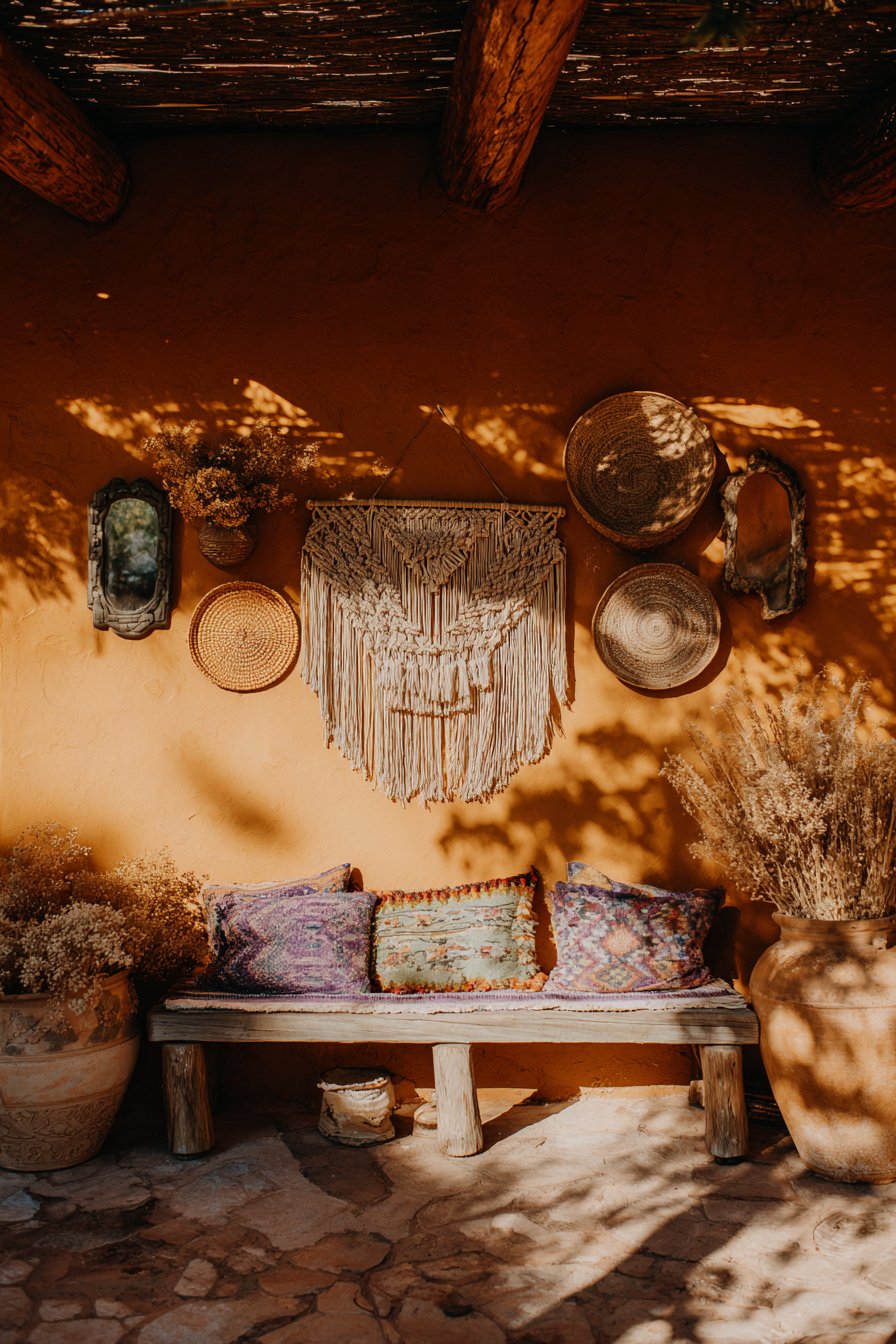
Below the wall display, a low wooden bench with colorful patterned cushions provides seating that’s both comfortable and visually exciting. The cushions introduce additional patterns and colors that complement rather than match, embodying the bohemian principle that more is more when done with confidence and intention. Natural lighting creates interesting shadows from the textured macramé, adding dimension and emphasizing the three-dimensional quality of the wall display. This is design for those who reject minimalism in favor of richness, who see their entryway as an opportunity for self-expression rather than just a functional transition space.
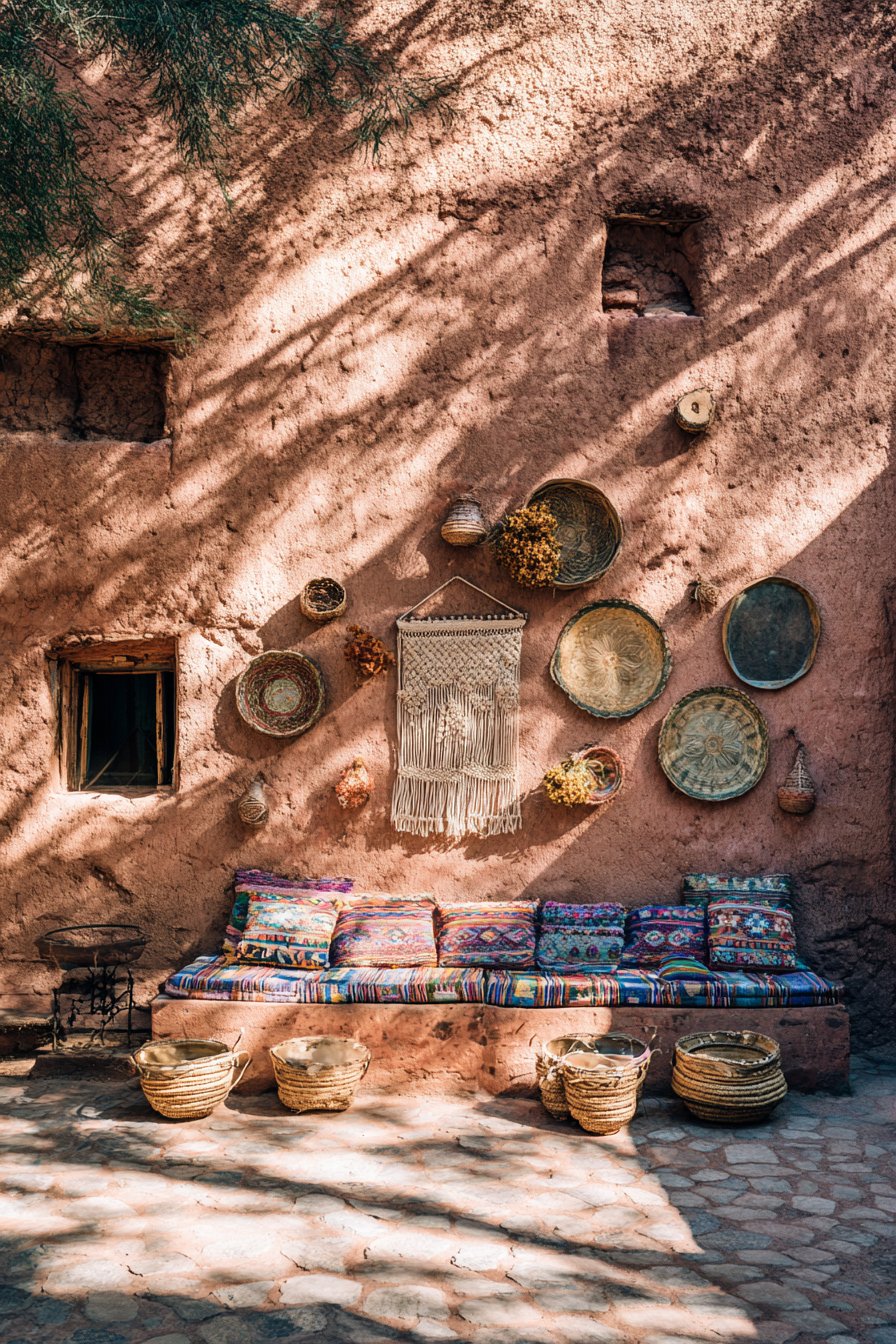
Interior photography of bohemian spaces requires capturing the layered, collected aesthetic without making it appear cluttered or chaotic. The key is showcasing how different textures—woven materials, dried botanicals, reflective mirrors—work together to create visual interest and depth. The attention to textile details and organic materials is crucial, as these elements define bohemian style. This entryway wall tells a story of travels, treasures, and artistic appreciation, creating an immediate impression that the homeowner values creativity, global influences, and handcrafted beauty.
Key Design Tips:
- Create visual balance by distributing different elements—macramé, mirrors, baskets—across the wall space
- Choose a dominant color (like terracotta) to unify diverse elements and prevent visual chaos
- Layer textures strategically—smooth mirrors, nubby macramé, woven baskets—for dimensional interest
- Incorporate living or dried plants to add organic elements essential to bohemian style
- Mix vintage and new pieces for authentic collected-over-time appearance
- Use odd numbers of objects for more dynamic, less formal compositions
- Ensure adequate wall anchoring for heavier items like macramé and mirrors
- Rotate elements seasonally to keep the display fresh and prevent it from feeling stagnant
11. Minimalist Floating Credenza Design
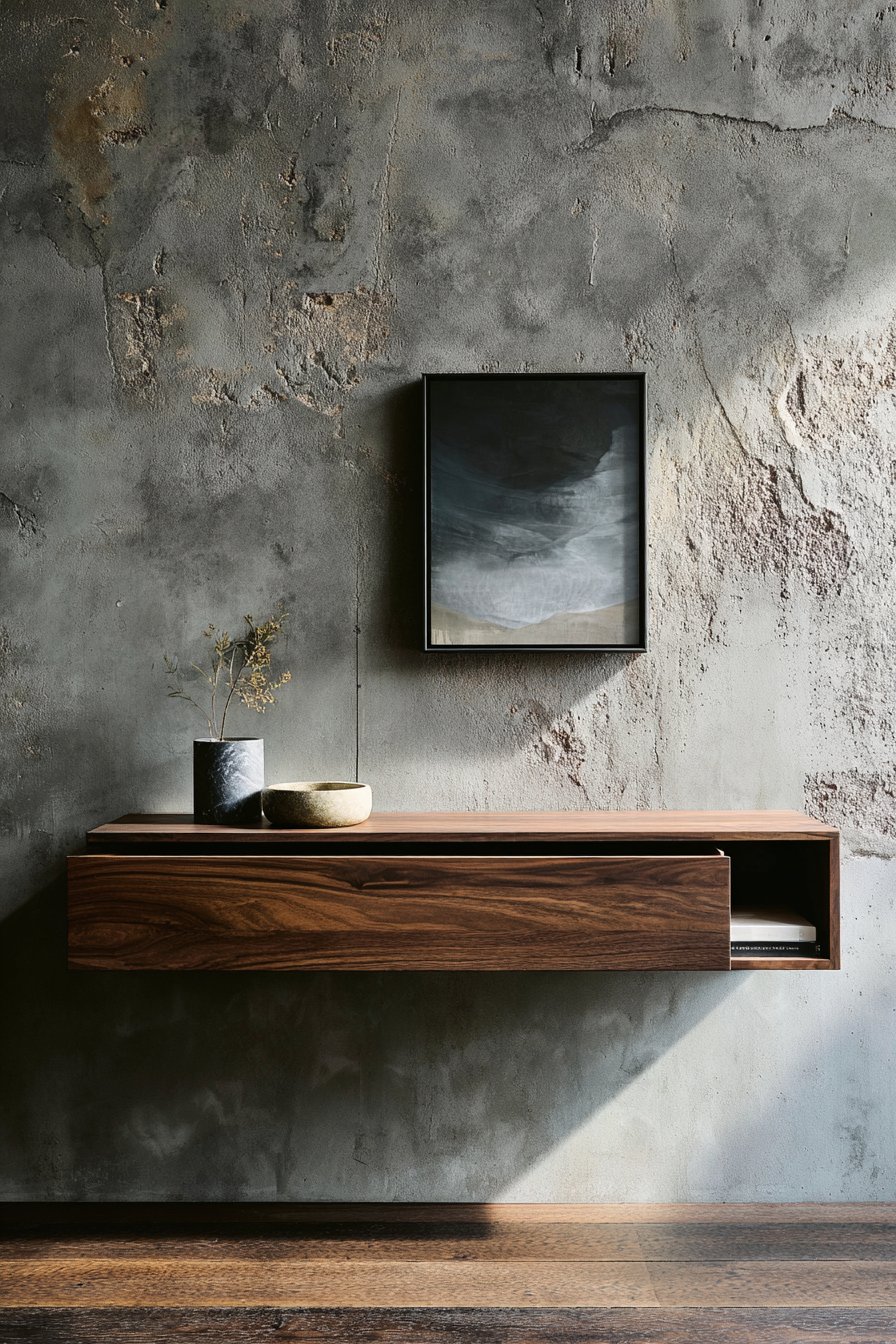
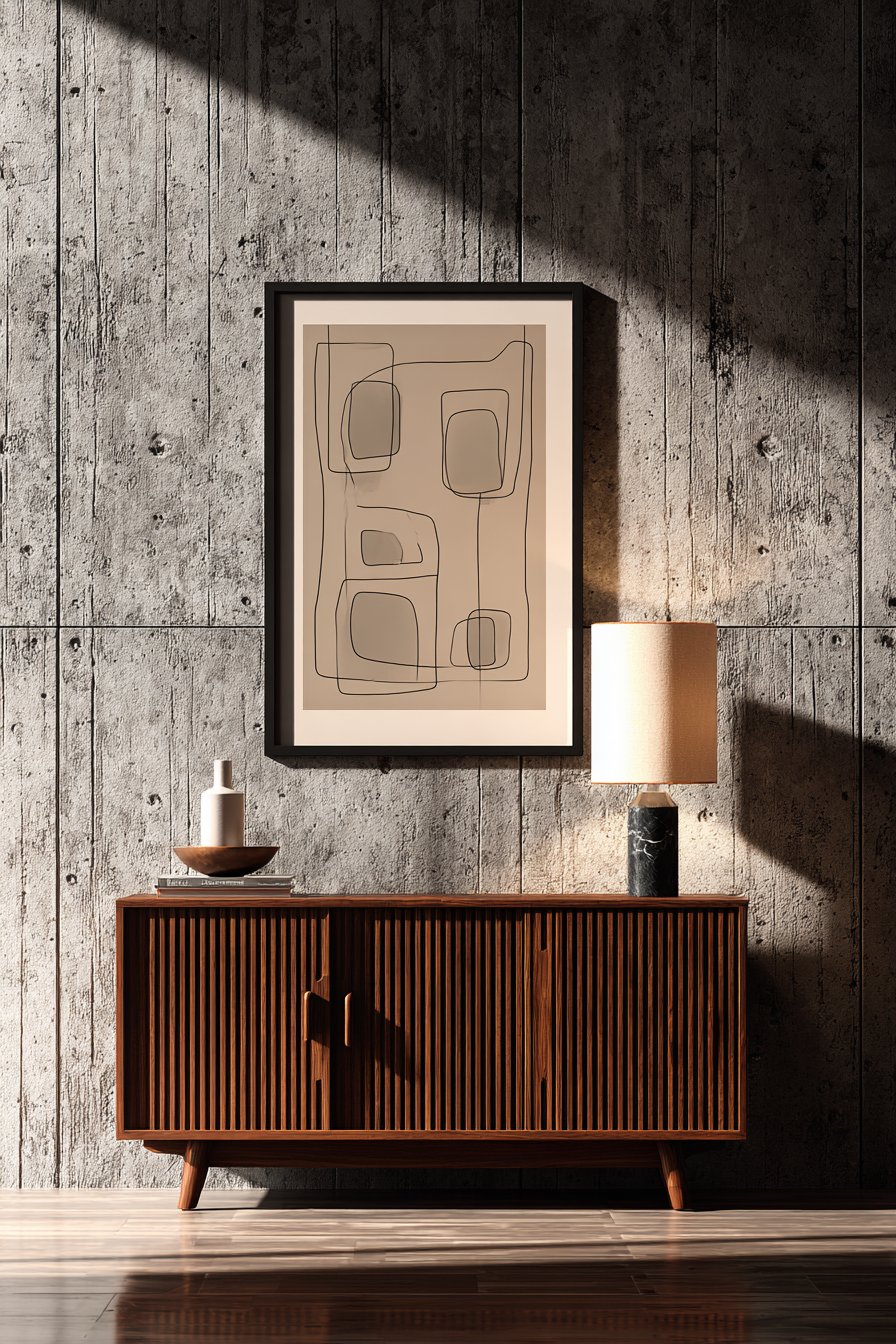
Contemporary minimalism reaches new heights in this floating credenza entryway wall idea, where clean lines and material contrast create sophisticated simplicity. The walnut wood credenza mounted against a textured concrete-look wall finish appears to float effortlessly, its lack of visible support creating visual intrigue and modern appeal. Above, a single large-scale abstract print in a thin black frame provides artistic interest without cluttering the clean aesthetic. The credenza top is styled with restraint—only a small ceramic dish and a table lamp with marble base occupy the surface, each object chosen for its sculptural quality and functional purpose.
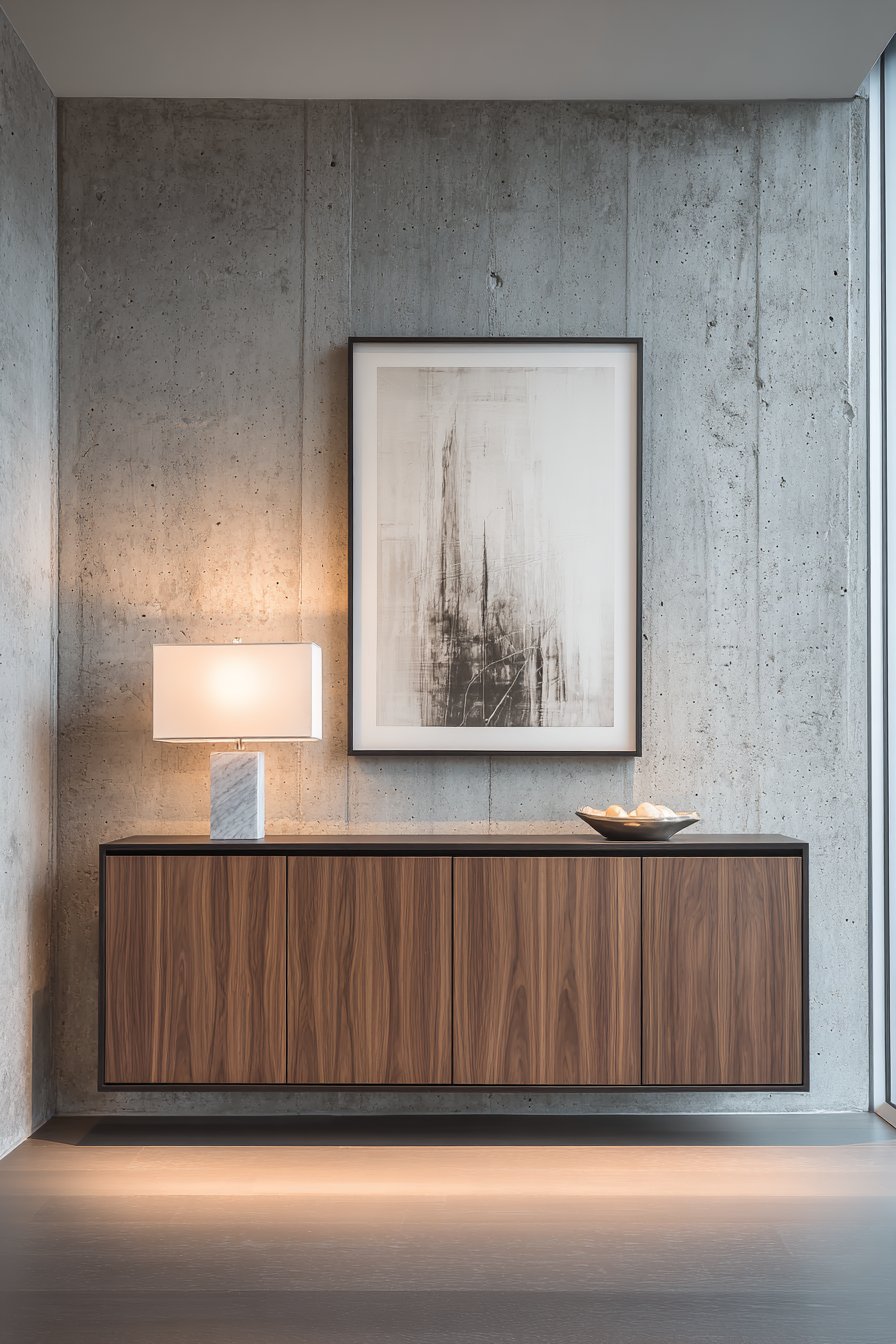
The material contrast between the smooth, rich walnut and the raw, textured concrete-look wall creates the visual interest that makes this minimalist design compelling rather than cold. The walnut brings warmth through its natural grain and honey tones, while the concrete adds industrial edge and contemporary cool. This juxtaposition of organic and industrial, warm and cool, smooth and textured demonstrates sophisticated design thinking—creating interest through material variation rather than through accumulation of objects.
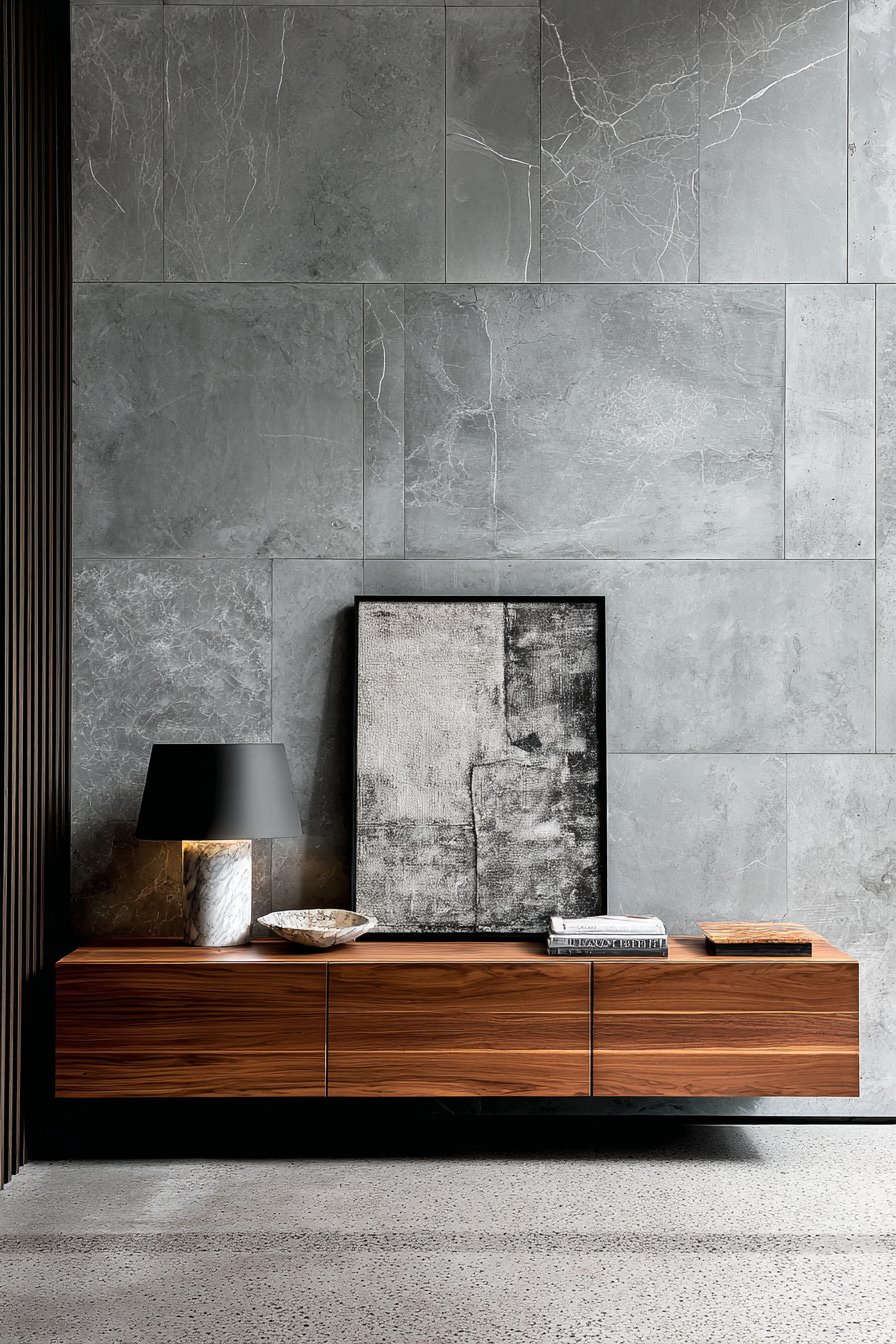
Professional interior photography with dramatic side lighting is essential to capturing this design’s essence. The angled light emphasizes the material contrast, revealing the wood grain’s depth and the concrete wall’s texture. Shadows add drama and dimension, transforming a simple credenza into a sculptural element. This approach to entryway wall design appeals to those who appreciate quality over quantity, who find beauty in restraint, and who want their home’s first impression to communicate refined taste and contemporary sensibility.
Key Design Tips:
- Ensure proper installation with heavy-duty wall anchors rated for the credenza’s weight plus contents
- Choose credenza depth of 12-16 inches for adequate storage without protruding too far into the space
- Install at a height that allows comfortable access—typically 30-34 inches from the floor
- Select LED lighting for the marble-base lamp to prevent heat damage to the stone
- Use cable management systems to hide electrical cords and maintain the clean aesthetic
- Apply concrete-look finish products according to manufacturer specifications for authentic texture
- Limit surface styling to 2-3 objects maximum to maintain minimalist principles
- Choose abstract art with colors that complement the walnut and concrete tones
12. Practical Family Command Center
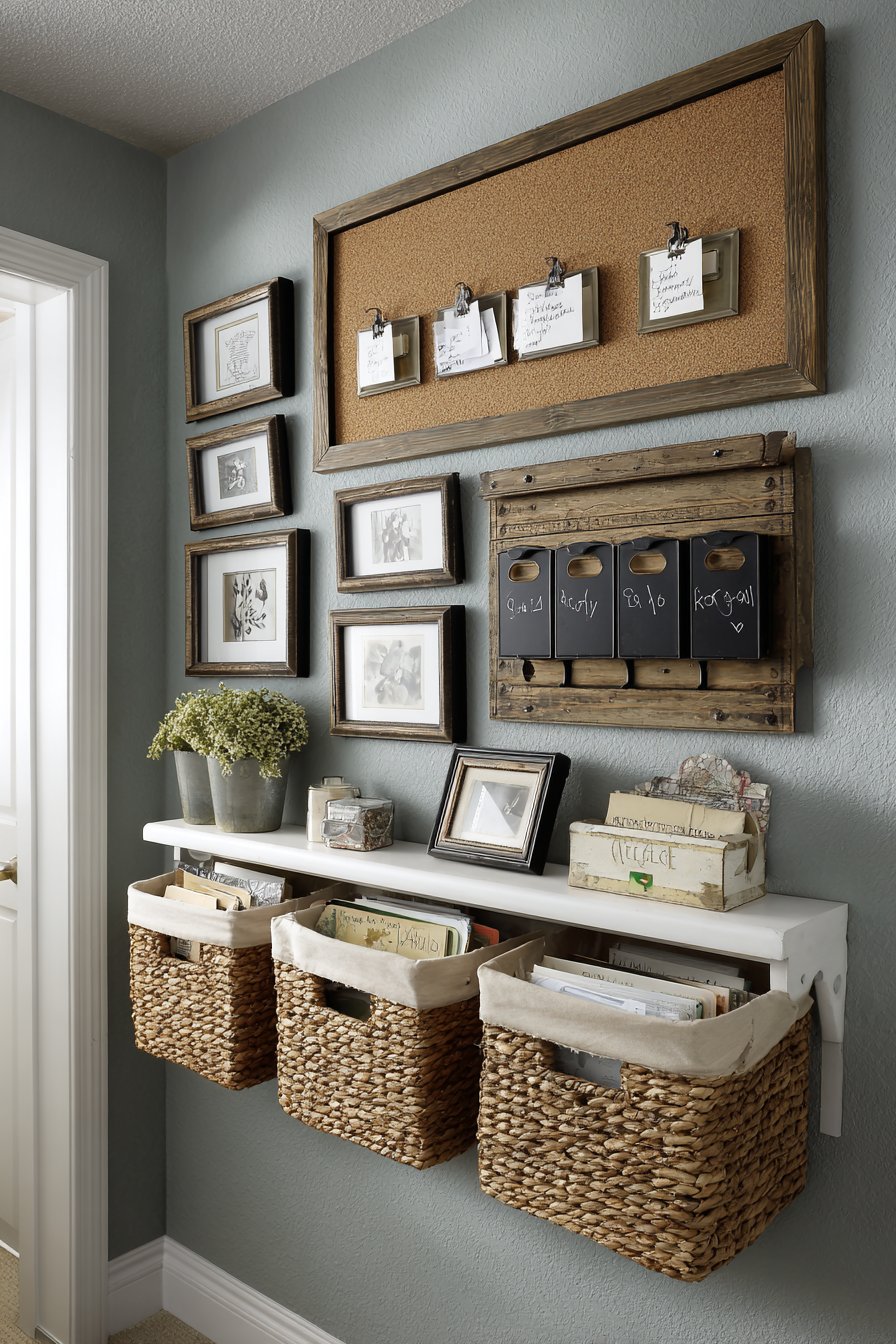
For households where organization is essential to maintaining sanity, this family command center entryway wall idea transforms chaos into order. The large cork board in a natural wood frame serves as the central organizing element, providing space for calendars, permission slips, artwork, and reminders. Metal mail slots add industrial charm while sorting incoming mail by family member or category. A small chalkboard for messages creates a analog communication hub in our digital age—a place for quick notes, encouraging words, or the week’s meal plan. The wall painted in soft blue-gray provides a calming backdrop that doesn’t compete with the organizational elements.
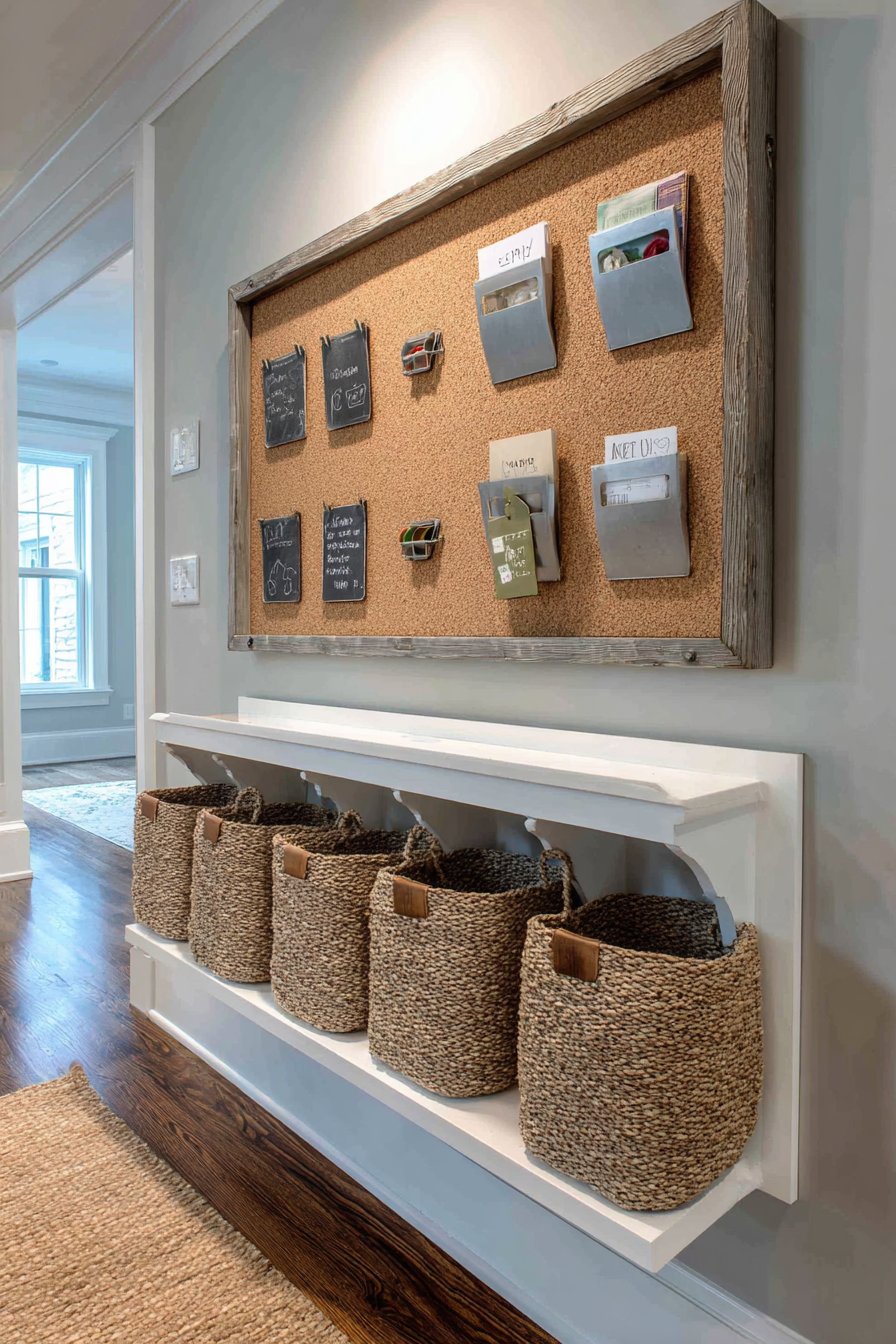
Below the command center, a narrow shelf holds labeled baskets for each family member—a designated spot for each person’s items prevents the mixing and losing of belongings that can derail busy mornings. The organization system is both practical and attractive, proving that functional doesn’t have to mean ugly. The soft blue-gray wall color deserves special mention for its psychological impact—blue tones are known to reduce stress and promote calm, an ideal quality for a space designed to organize the chaos of family life.
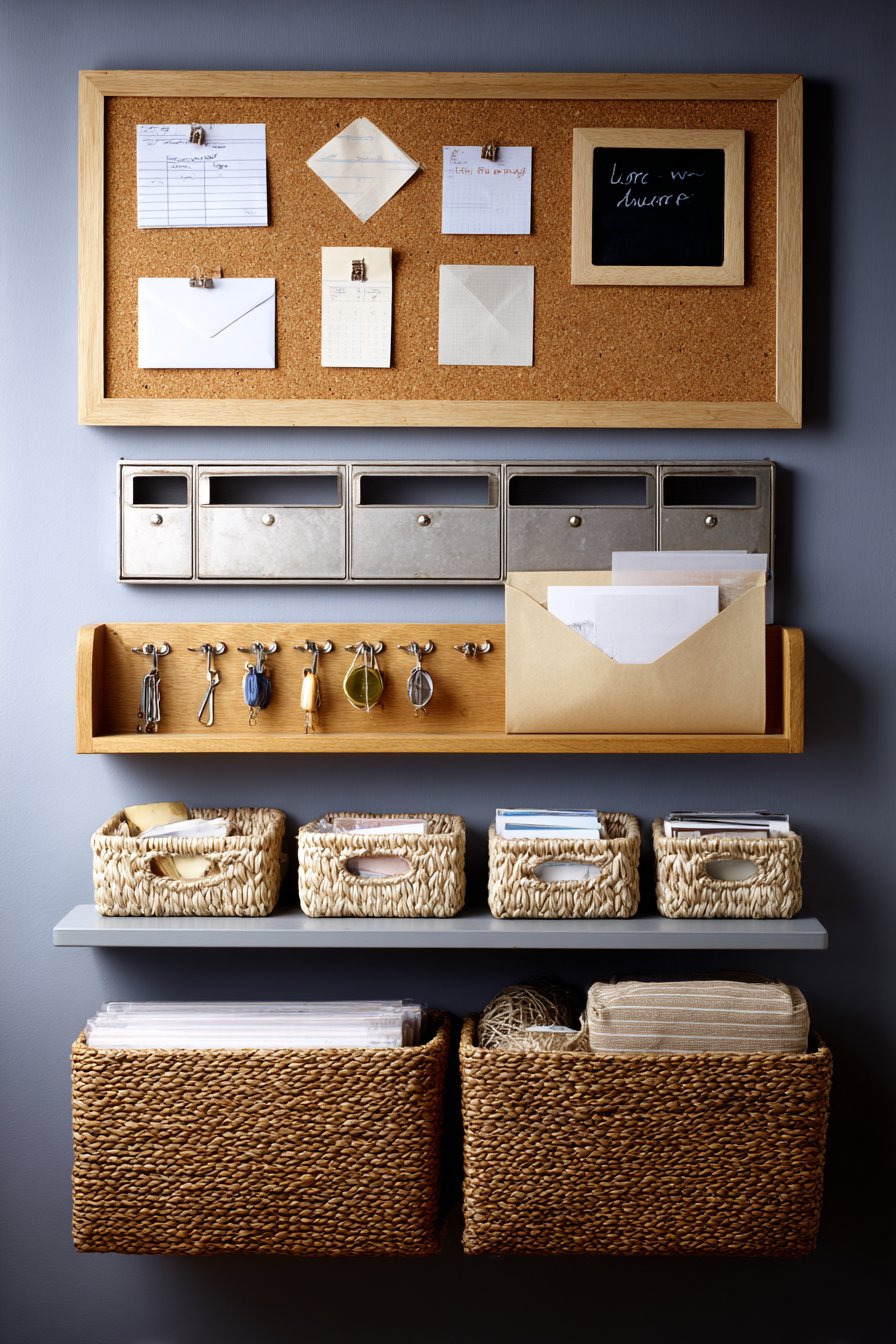
The composition photographed with even lighting shows the organized, functional approach to entryway wall design, emphasizing everyday usability rather than styled perfection. This is design for real life, for families with schedules to coordinate and papers to track. The labels on the baskets aren’t just decorative—they create accountability and help maintain the organizational system. This entryway wall idea recognizes that for many households, the entry isn’t just about making a good first impression on guests; it’s about creating systems that make daily life more manageable and less stressful.
Key Design Tips:
- Size the cork board generously—at least 3 feet wide for a family of four or more
- Install cork board with the bottom edge at approximately 36 inches for easy access by children and adults
- Use metal mail slots with label holders for flexibility as family needs change
- Choose a chalkboard with a quality wood frame that can be easily refinished if damaged
- Select baskets with sturdy construction that can withstand daily use and abuse
- Create a color-coding system for family members using colored labels or basket liners
- Position the shelf low enough for children to access independently, fostering responsibility
- Maintain the system with weekly reviews to prevent paper pile-up and keep it functional
13. Dramatic Black and Gold Contrast
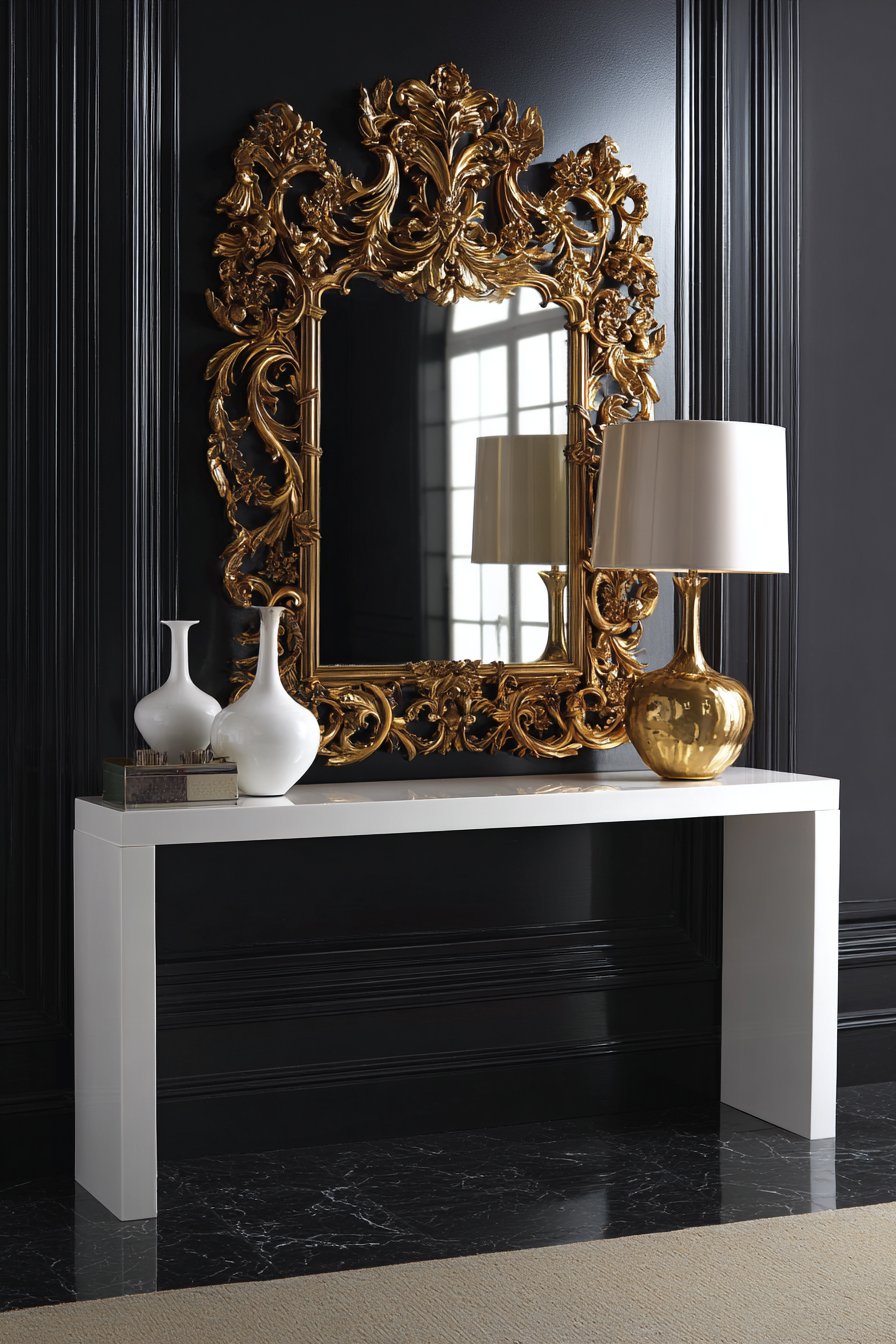
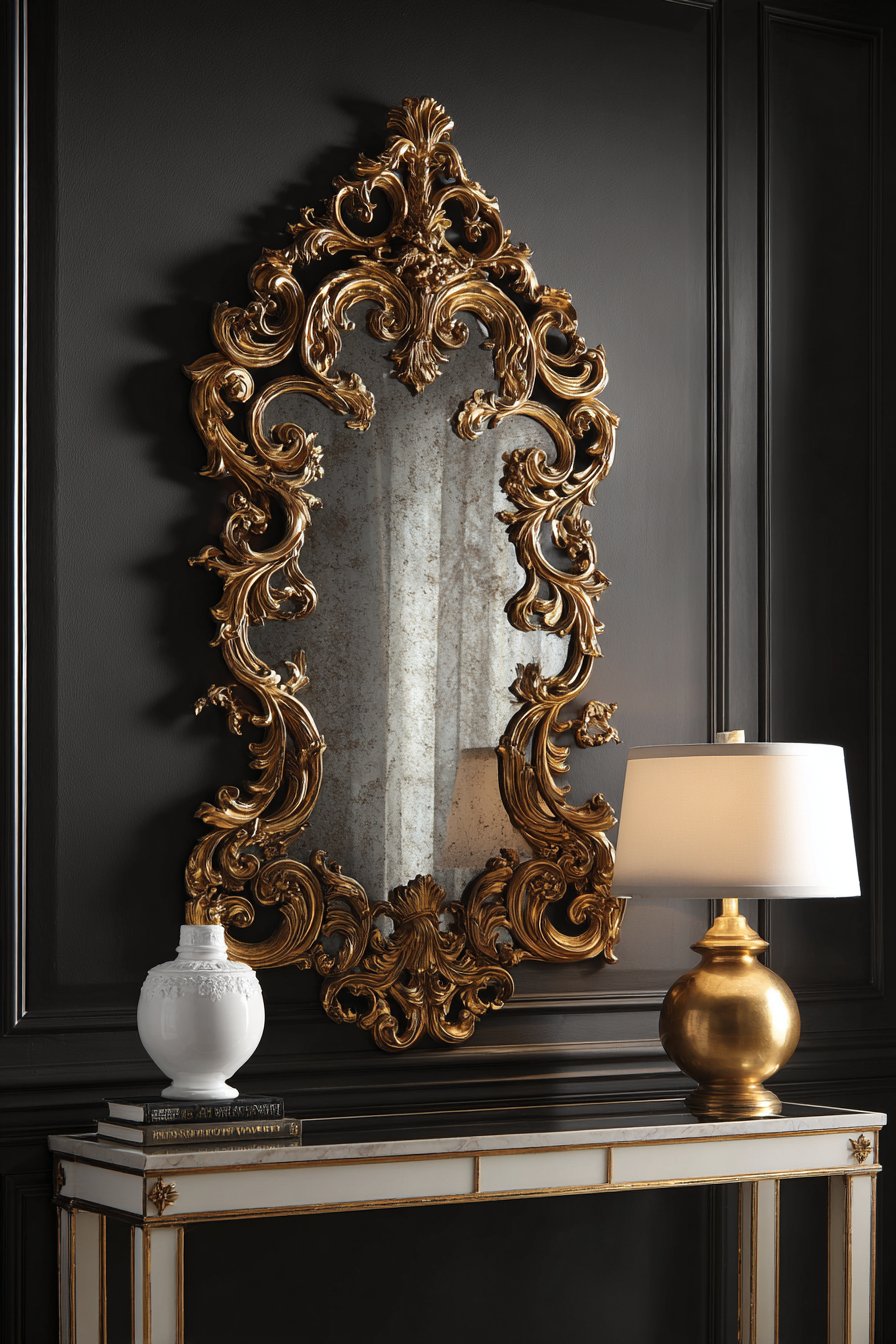
Bold design choices create memorable spaces, and this dramatic black accent wall with gilded baroque mirror demonstrates the power of high-contrast design. The matte black wall creates instant drama, its deep, light-absorbing quality making the space feel intimate and sophisticated. Against this dark backdrop, a large gilded baroque-style mirror becomes a show-stopping focal point, its ornate frame and reflective surface creating a stunning interplay of light and shadow. Below, a sleek console table in glossy white lacquer provides striking contrast, its reflective finish bouncing light and preventing the dark wall from feeling heavy or oppressive.
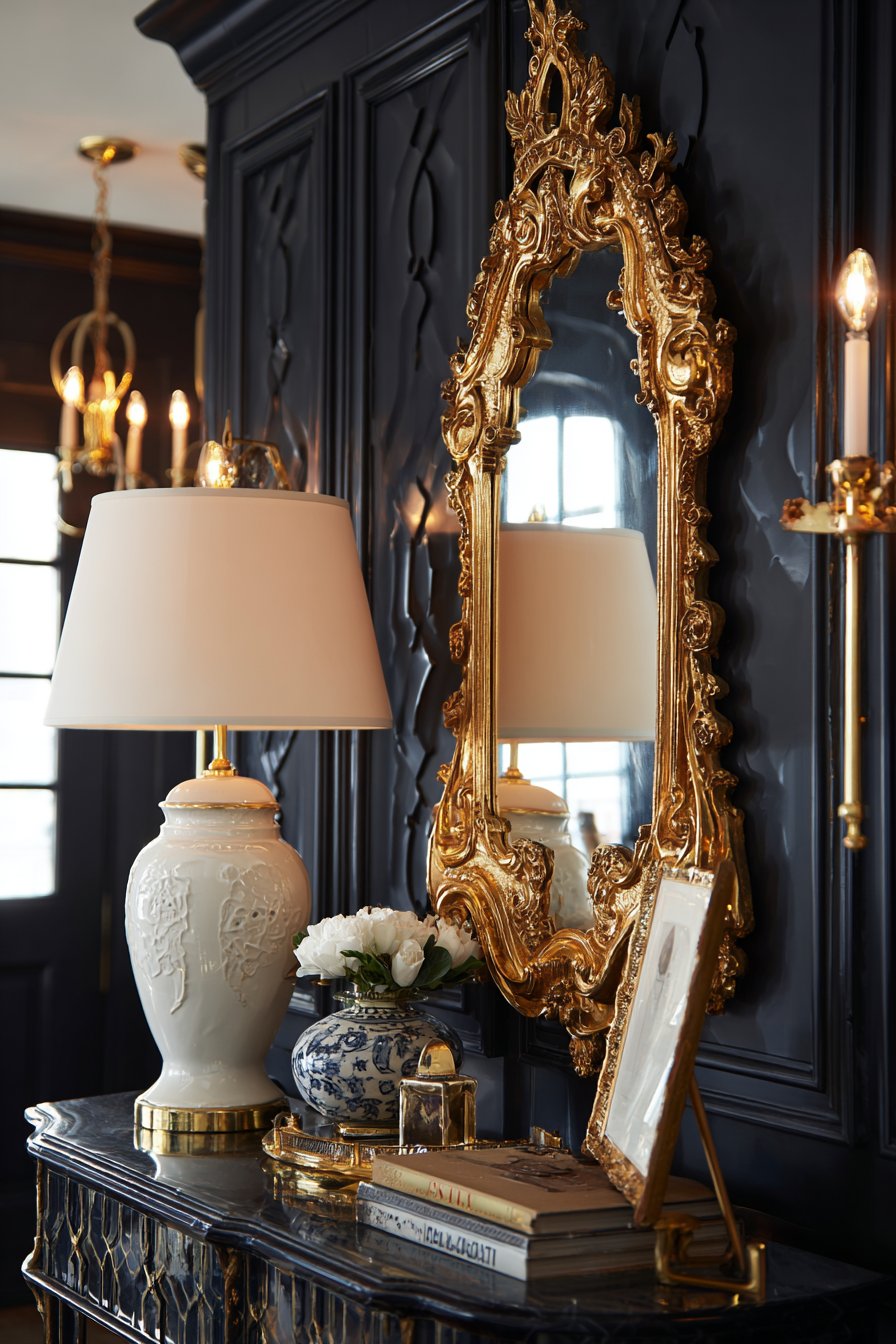
The styling of the white lacquer console continues the dramatic theme with carefully chosen accessories. A gold table lamp introduces warm metallic tones that echo the mirror’s gilded frame, while a white ceramic vase maintains the monochromatic scheme with subtle textural variation. The combination of matte black wall, glossy white console, reflective mirror, and metallic gold accents creates a layered play of surfaces and finishes that’s visually dynamic and undeniably glamorous.
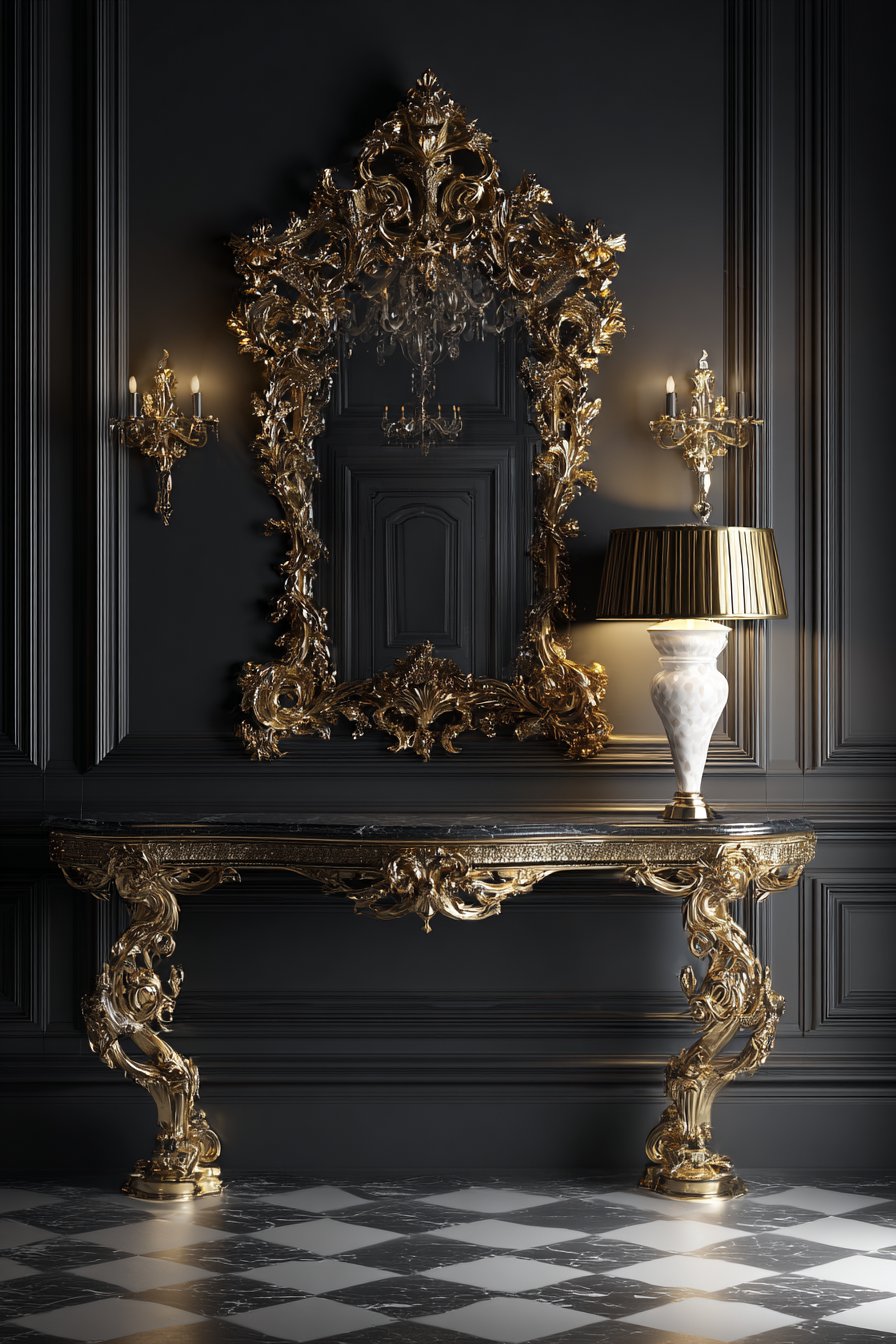
Professional lighting techniques are crucial to photographing this design effectively. The lighting must highlight the interplay of reflective surfaces—the mirror glass, the glossy console, the metallic gold accents—while showing the depth and richness of the matte black wall. The ornate mirror detailing requires adequate illumination to be appreciated, its baroque curves and gilded finish creating sculptural interest that adds luxury and drama. This is entryway wall design for those who embrace boldness, who want their home’s first impression to be unforgettable and unapologetically glamorous.
Key Design Tips:
- Use premium matte black paint to achieve the deep, velvety finish essential to this look
- Ensure adequate lighting—black walls require approximately 50% more light than lighter walls
- Choose a baroque mirror with substantial weight and quality gilding for authentic luxury appeal
- Position the mirror to reflect natural light from windows or doors to maximize brightness
- Select glossy white lacquer furniture with smooth, flawless surfaces—imperfections show dramatically
- Clean reflective surfaces regularly to maintain the pristine, glamorous appearance
- Add dimmable lighting options to control the drama level and accommodate different moods
- Balance the dark wall with lighter flooring and adequate ambient lighting to prevent cave-like feeling
14. Coastal-Inspired Serenity
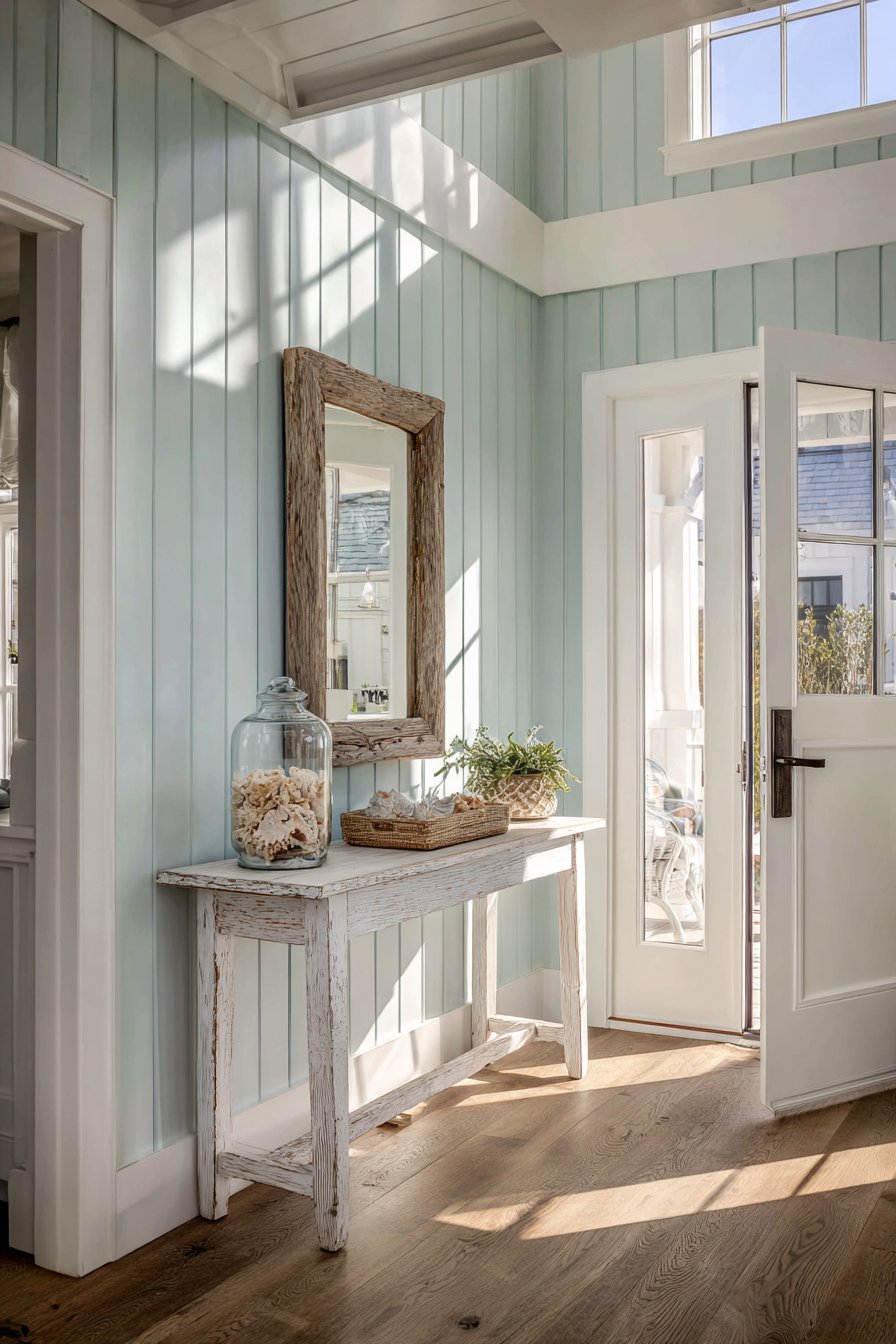
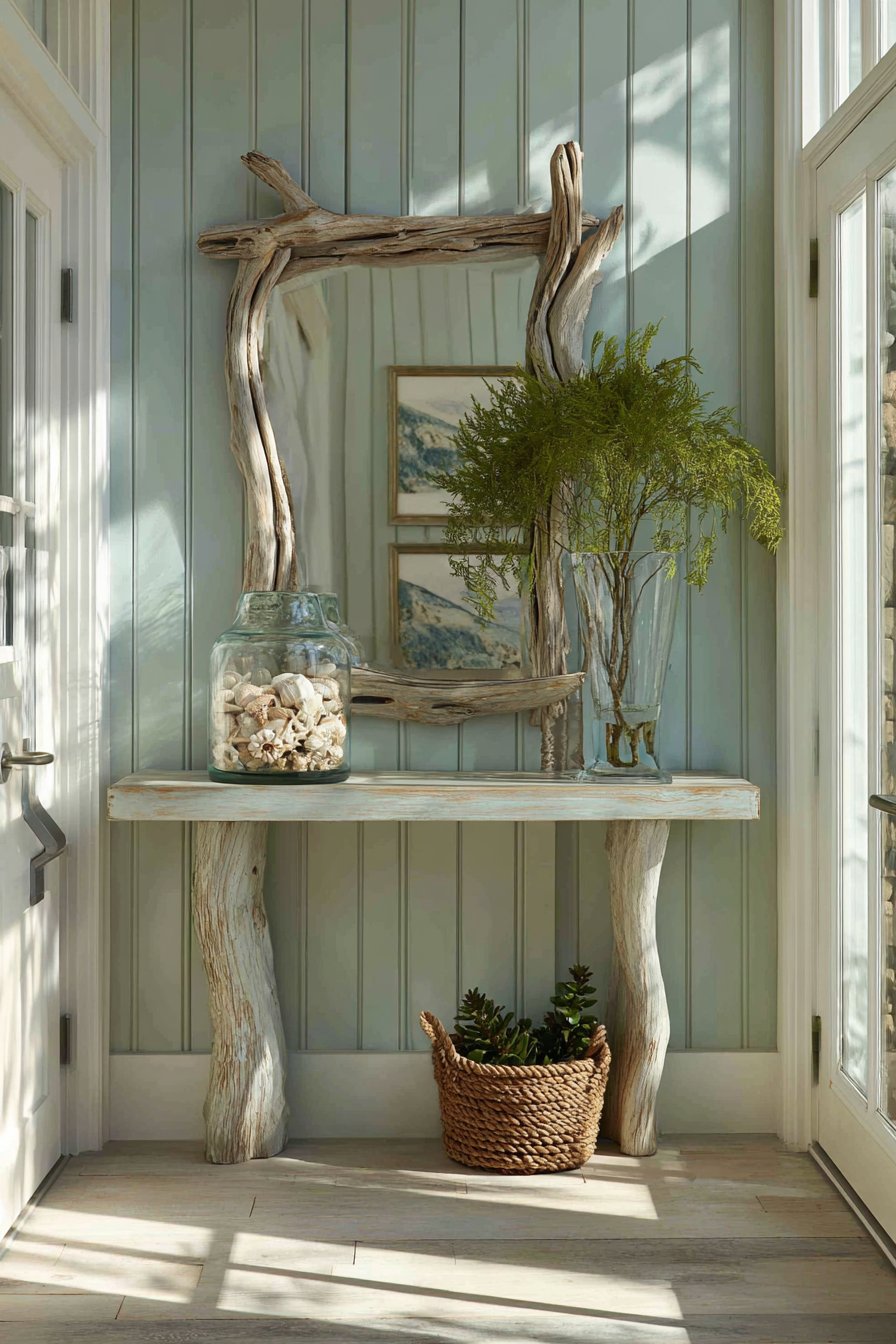
For those who find peace in beach-inspired aesthetics, this coastal entryway wall idea brings the serenity of the shore into your home. The vertical shiplap painted in soft seafoam blue immediately establishes the coastal theme, its gentle color evoking ocean waters and sea glass. A driftwood-framed mirror hangs above a whitewashed wooden console table, both elements incorporating the weathered, sun-bleached materials characteristic of coastal design. The styling embraces beach-found treasures—a glass jar filled with collected shells, a rope-wrapped hurricane candle holder, and a small potted air plant that requires minimal care while adding living greenery.
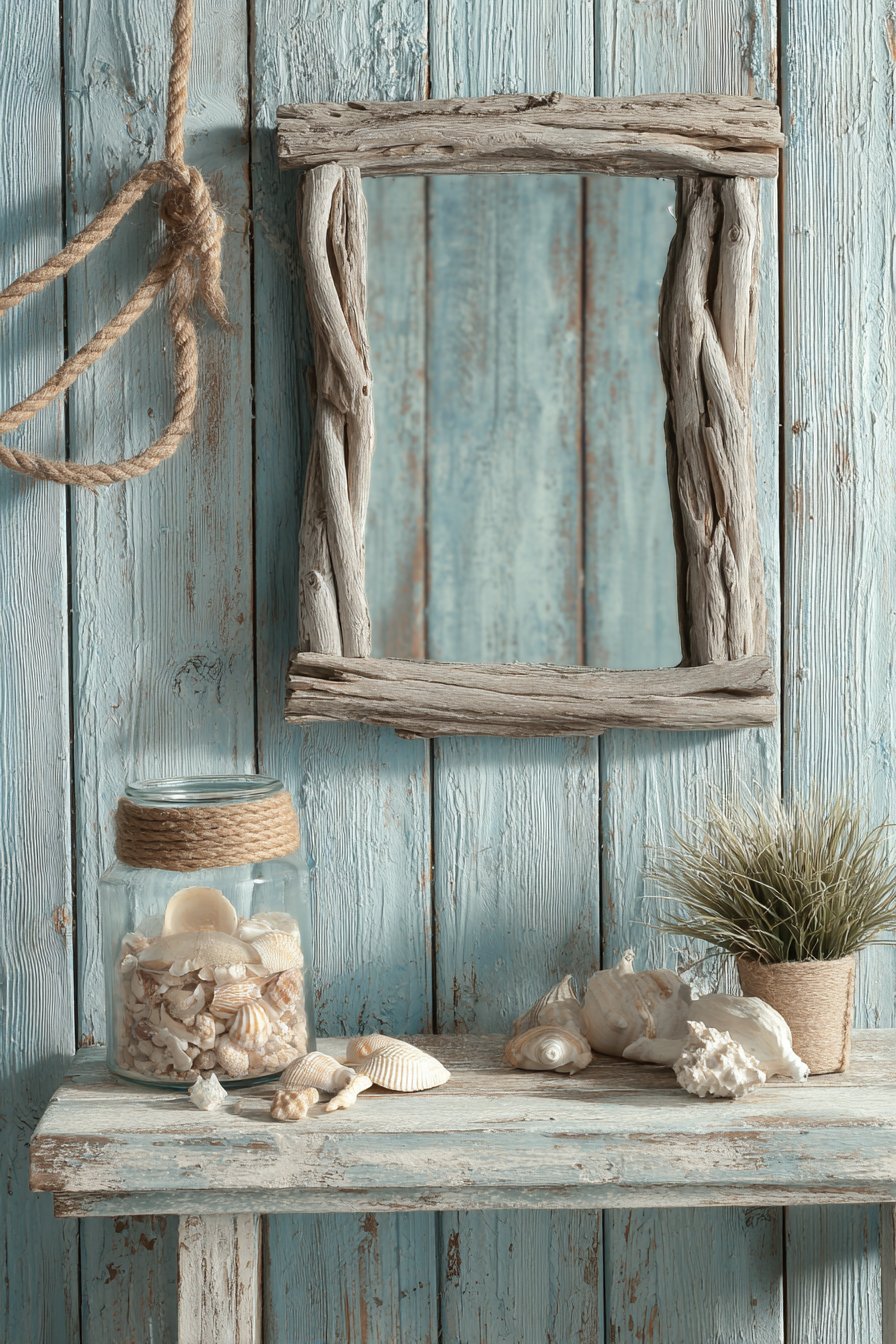
The beauty of coastal design lies in its ability to create relaxation and ease, and this entryway achieves that through its soft color palette, natural materials, and organic accessories. The seafoam blue is neither too green nor too blue, striking the perfect balance that reads as water-inspired without being literal. The whitewashed console and driftwood mirror frame bring in the weathered, beachy aesthetic without requiring actual beach artifacts. These are materials and finishes that can be achieved anywhere, making coastal style accessible to landlocked homes as well as beachfront properties.
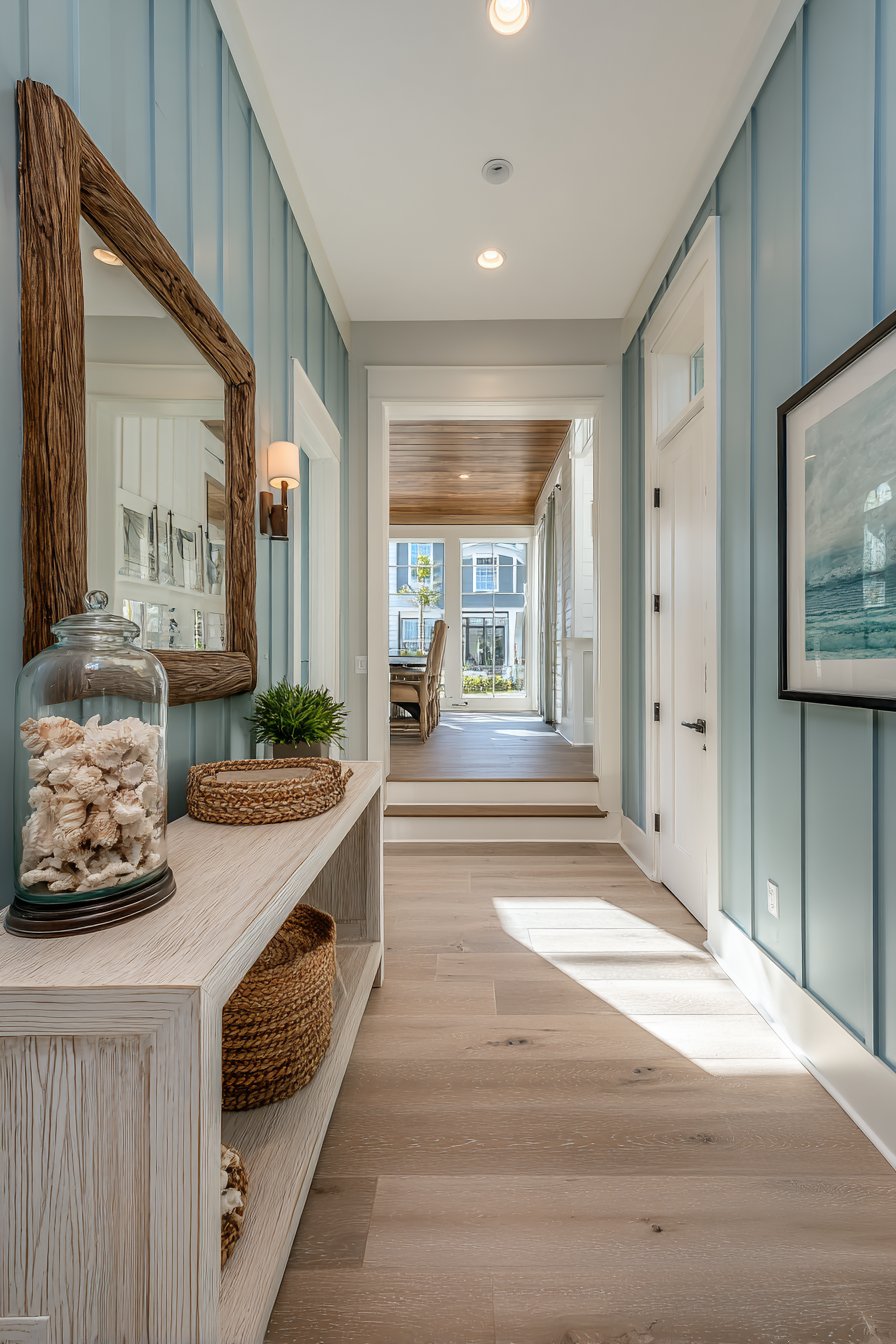
Wide-angle interior photography with bright natural light is essential to capturing the breezy, beach-house aesthetic this design embodies. The bright lighting emphasizes the soft, sun-bleached quality of the whitewashed wood and driftwood elements. The weathered material textures—the worn wood grain, the smooth shells, the twisted rope—create tactile interest that invites touch. This is an entryway that makes you breathe deeper and slow down, bringing the calming influence of the coast into daily life regardless of your actual location.
Key Design Tips:
- Choose seafoam blue with gray undertones to avoid the color reading as mint or turquoise
- Apply whitewash finish using diluted white paint over natural wood for authentic beach-weathered appearance
- Source driftwood from craft suppliers if beach collecting isn’t an option in your location
- Display shells and coastal finds in clear glass containers to create visible collections
- Incorporate rope elements through wrapped candle holders, mirror frames, or drawer pulls
- Use weathered or distressed finishes on wood elements for authentic coastal character
- Keep the color palette soft and muted—whites, seafoam, sand, driftwood gray
- Add subtle nautical elements sparingly to avoid theme-park aesthetics—less is more
15. Mid-Century Modern Authenticity
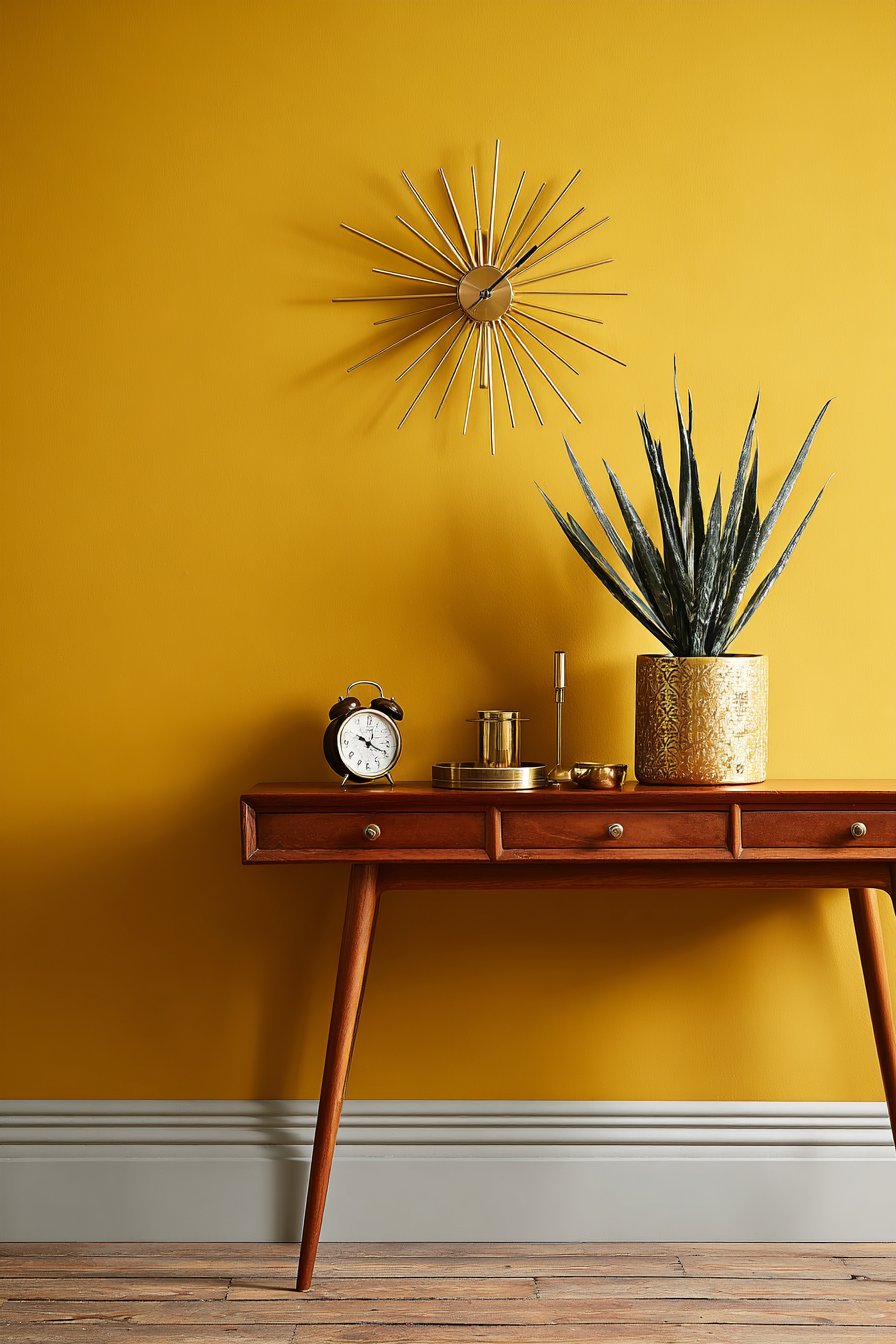
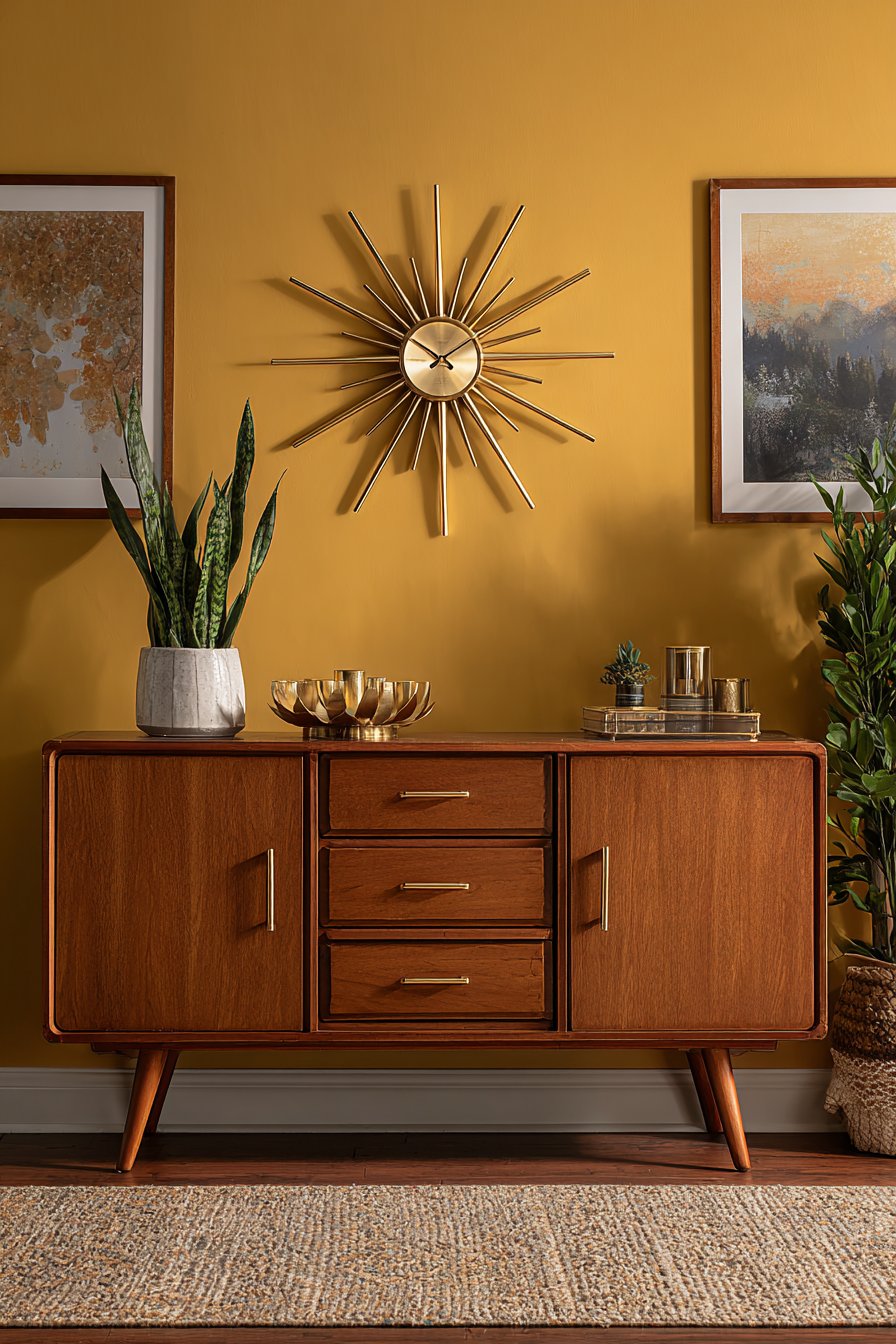
The enduring appeal of mid-century modern design is on full display in this entryway wall idea featuring classic period elements and warm, saturated color. The teak console table with its characteristic tapered legs stands against a warm mustard yellow accent wall, the color combination instantly transporting you to the optimistic design era of the 1950s and 60s. Above, a starburst clock in brass finish serves as both functional timepiece and iconic mid-century decorative element, its radiating spokes creating sculptural interest and period authenticity.
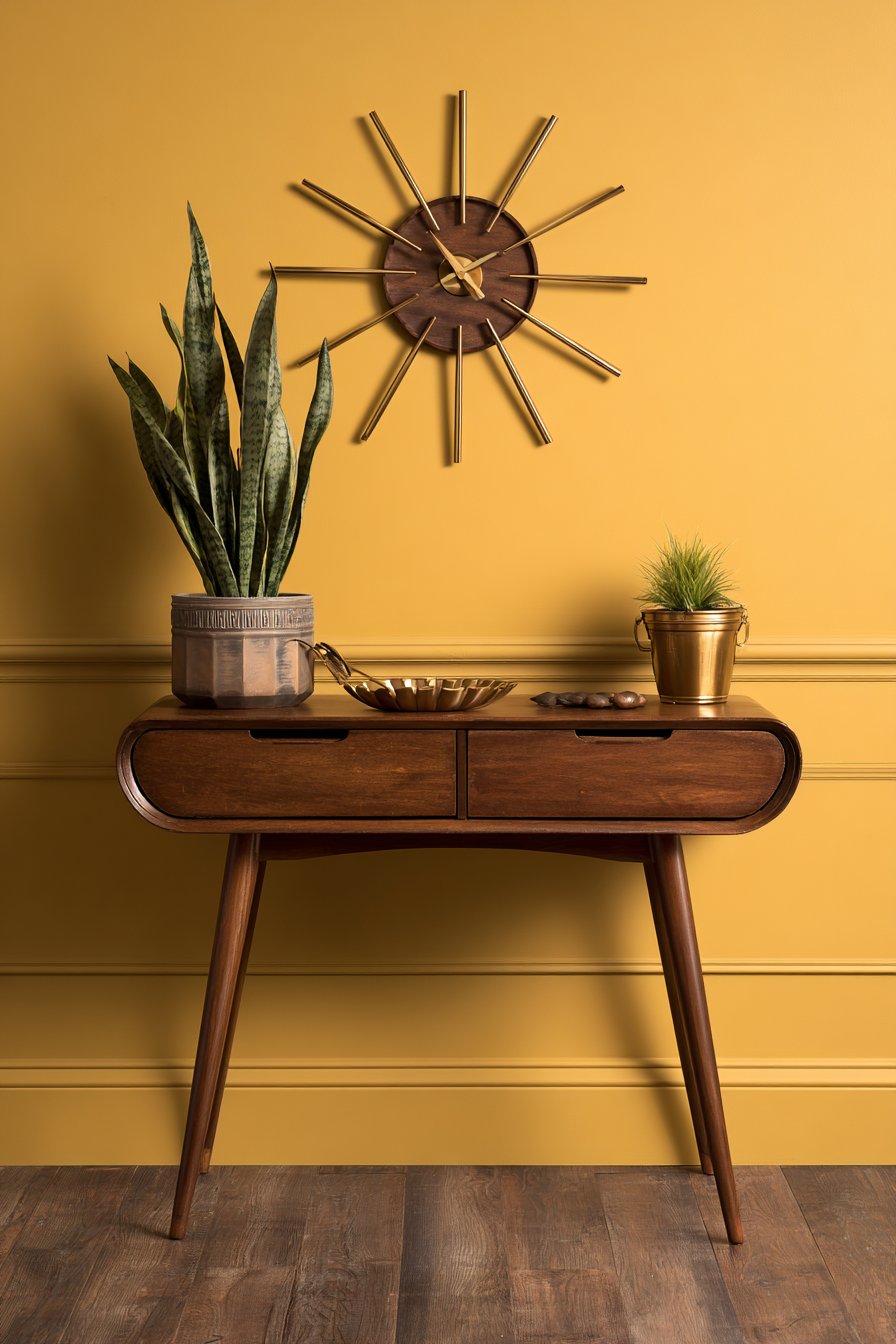
The console is styled with carefully chosen accessories that enhance rather than compete with the vintage aesthetic. A ceramic planter holds a snake plant—a period-appropriate choice that was as popular in mid-century homes as it is today for its architectural form and easy care. A vintage brass catchall dish provides a designated spot for keys and small items while adding another layer of warm metallic tone. The combination of the teak wood, brass accents, and mustard yellow creates a warm, optimistic palette characteristic of mid-century design’s hopeful, forward-looking ethos.
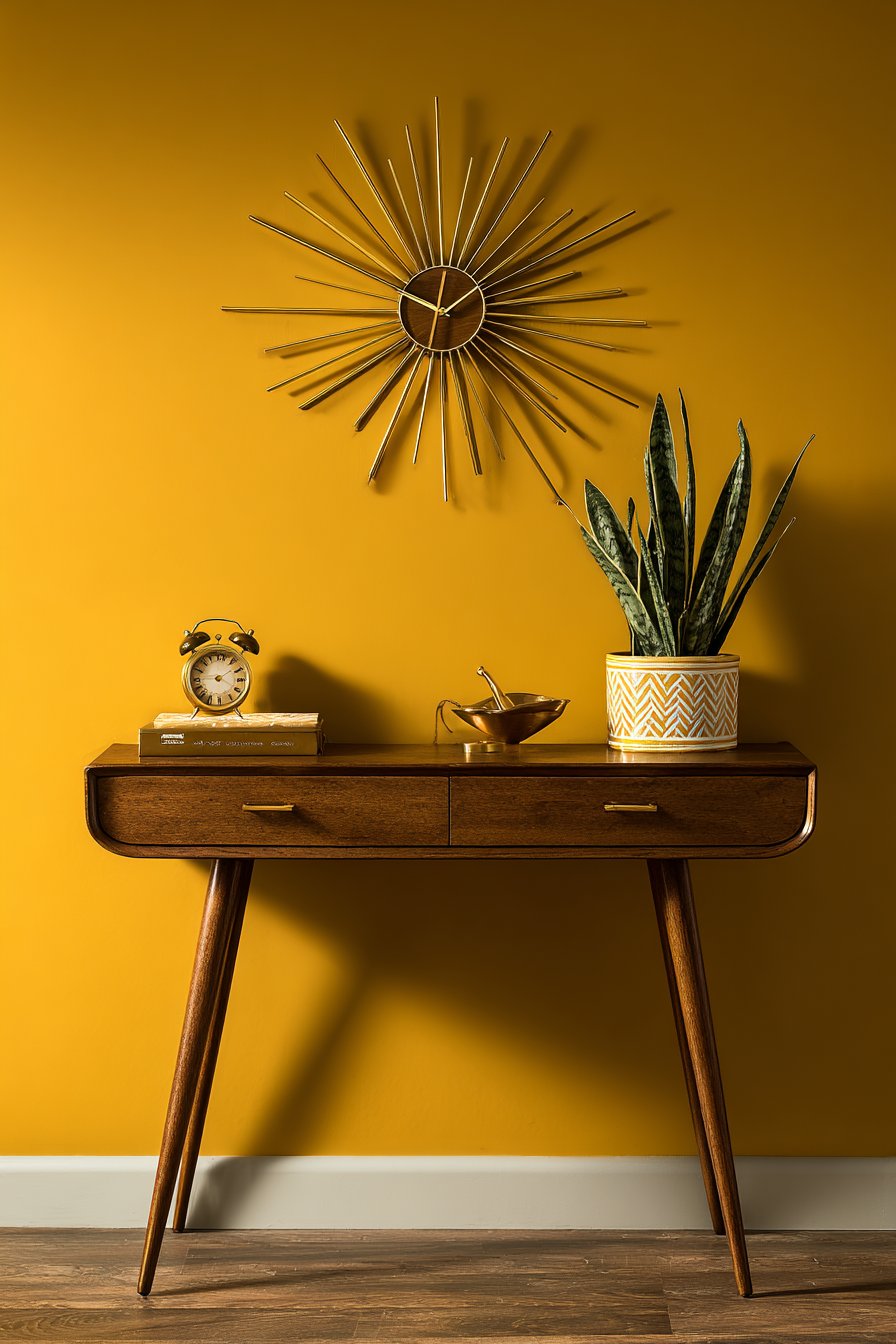
Professional photography with period-appropriate styling and warm lighting captures the authentic mid-century design elements and rich color palette. The warm lighting enhances the golden tones of both the brass and the mustard yellow wall, creating a cohesive glow. The teak’s rich wood grain is highlighted, showing the quality craftsmanship and beautiful materials that define mid-century furniture. This is design for those who appreciate the iconic style of a specific era, who value authenticity over reproduction, and who want their entryway to make a bold, warm statement about their design sensibilities.
Key Design Tips:
- Source authentic vintage pieces when possible for true mid-century character and quality
- Choose wall colors in period-appropriate saturated tones—mustard, avocado, orange, teal
- Select furniture with characteristic mid-century features: tapered legs, organic curves, quality hardwoods
- Incorporate iconic accessories like starburst clocks, ceramic planters, and brass accents
- Keep spaces uncluttered—mid-century design valued simplicity and clean lines
- Use warm-toned lighting to enhance the era’s optimistic, golden glow
- Mix authentic vintage pieces with quality reproductions for an affordable approach
- Research period design to understand authentic mid-century aesthetics versus modern interpretations
16. Maximalist Gallery Wall Extravaganza
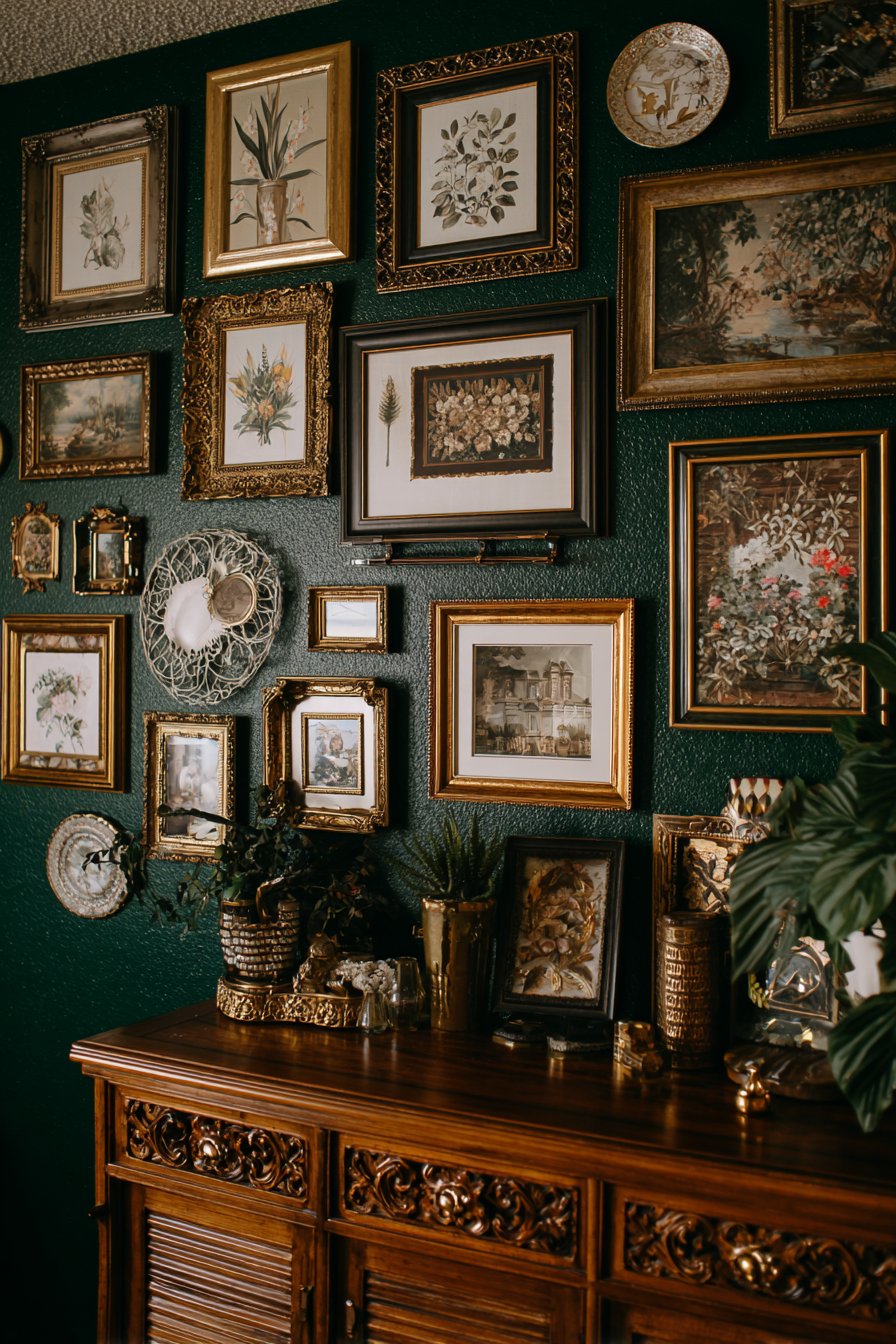
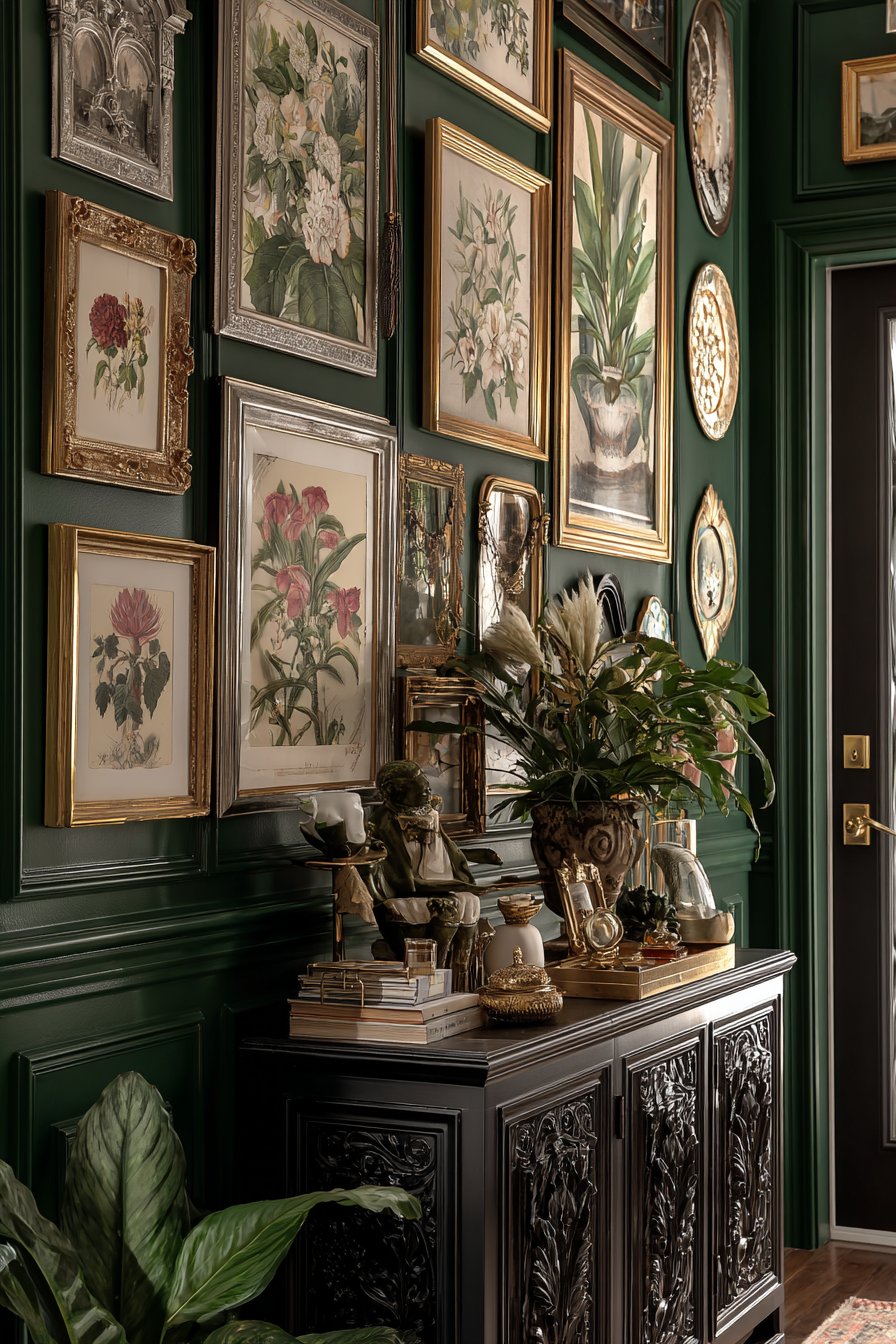
For those who believe more is more, this maximalist gallery wall entryway idea embraces abundance with confidence and flair. Ornate vintage frames in mixed metallic finishes—gold, silver, and bronze—create a treasure-trove effect displaying botanical prints, vintage portraits, and decorative plates. The deep emerald green wall provides a jewel-toned backdrop that enhances the richness of the metallic frames and creates a sense of luxurious depth. Below, a carved wooden console holds an eclectic mix of decorative objects that continue the layered, collected aesthetic.
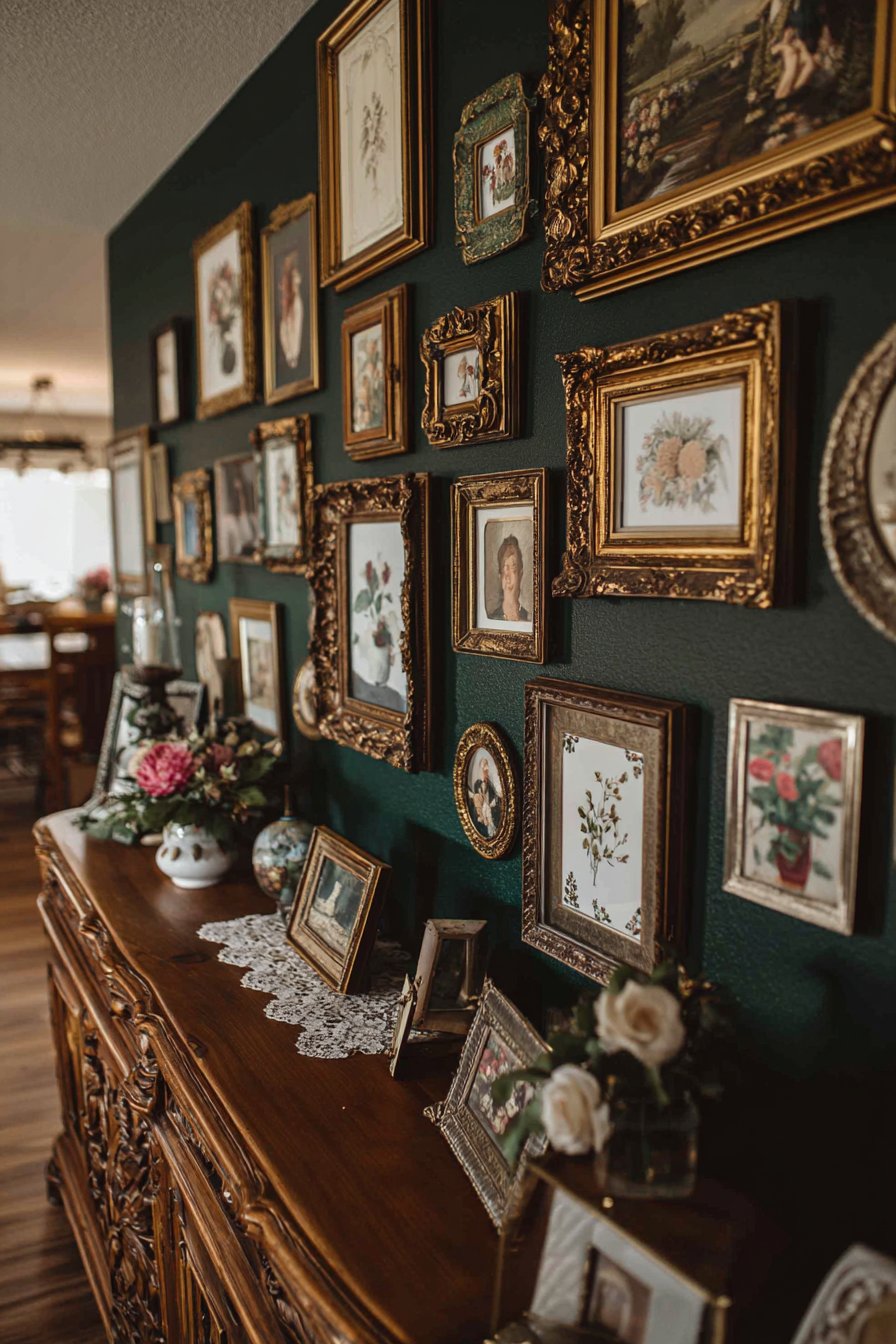
What makes this maximalist approach successful rather than chaotic is the underlying cohesion created by the limited color palette and the consistent level of ornamentation. While the frames vary in finish, they share a similar level of decorative detail and vintage character. The emerald green wall unifies the diverse elements, providing a strong backdrop that can support the visual weight of multiple frames and objects. The carved wooden console adds another layer of ornate detail that complements rather than competes with the wall display.
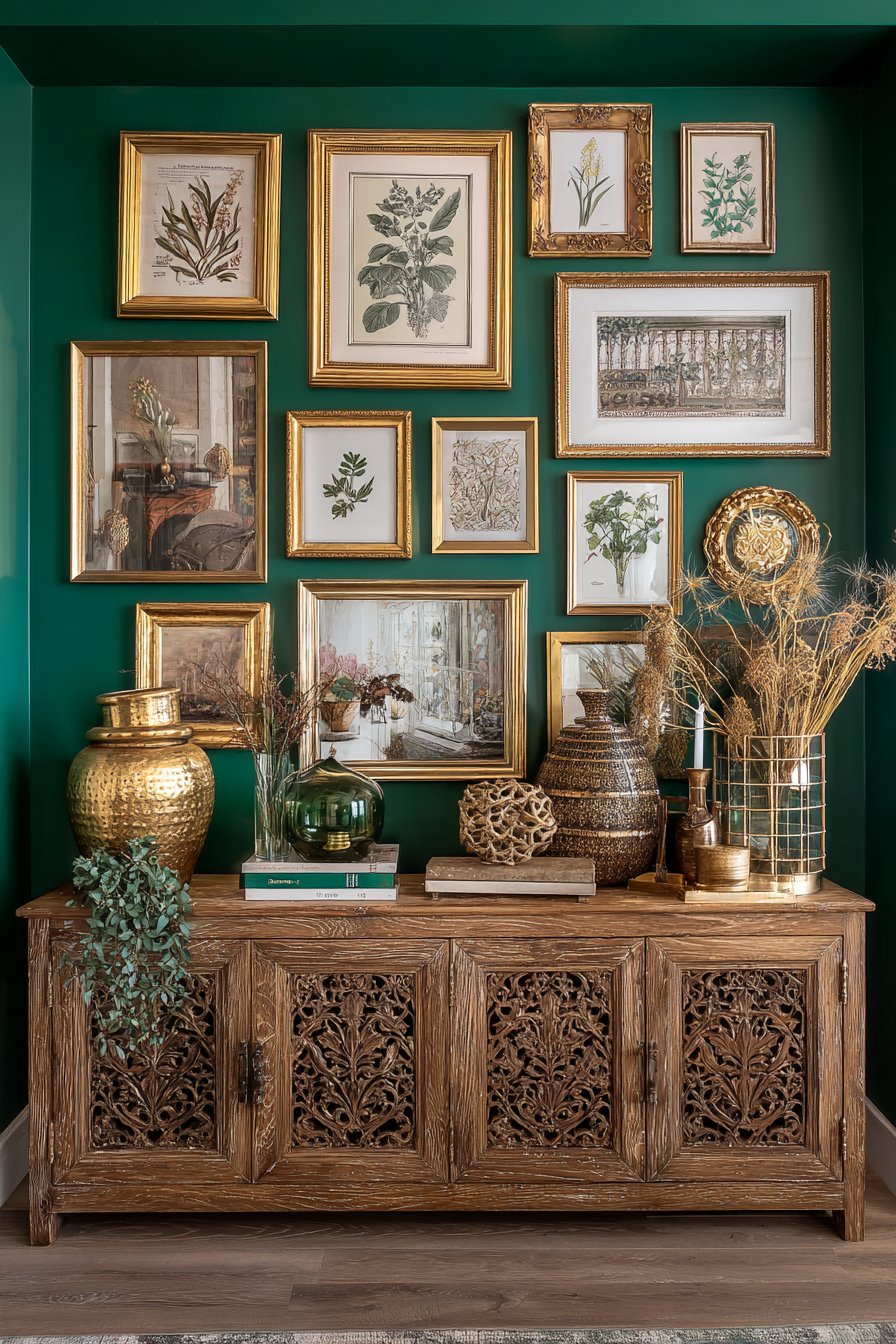
Interior photography must capture the rich, layered aesthetic without making the space appear cluttered or overwhelming. Lighting that highlights the frame details is essential—the interplay of light on the different metallic finishes creates sparkle and visual interest. The depth of the emerald green wall requires proper exposure to show its richness without losing detail in shadows. This is entryway wall design for collectors, for those who appreciate ornamentation and historical references, for homeowners who want their space to feel curated and personal rather than minimal and spare.
Key Design Tips:
- Start with the largest or most ornate frame and build the gallery around it as the focal point
- Mix frame finishes but maintain a consistent level of ornamentation for cohesion
- Choose a deep, saturated wall color that can support the visual weight of multiple frames
- Include varying frame sizes to create dynamic visual rhythm and prevent grid-like uniformity
- Incorporate dimensional elements like decorative plates for three-dimensional interest
- Allow frames to nearly touch to create the dense, collected appearance characteristic of maximalism
- Use museum putty or picture-hanging strips for lightweight items to avoid excessive wall holes
- Step back frequently during installation to assess the overall balance and make adjustments
17. Contemporary Ledge Gallery System
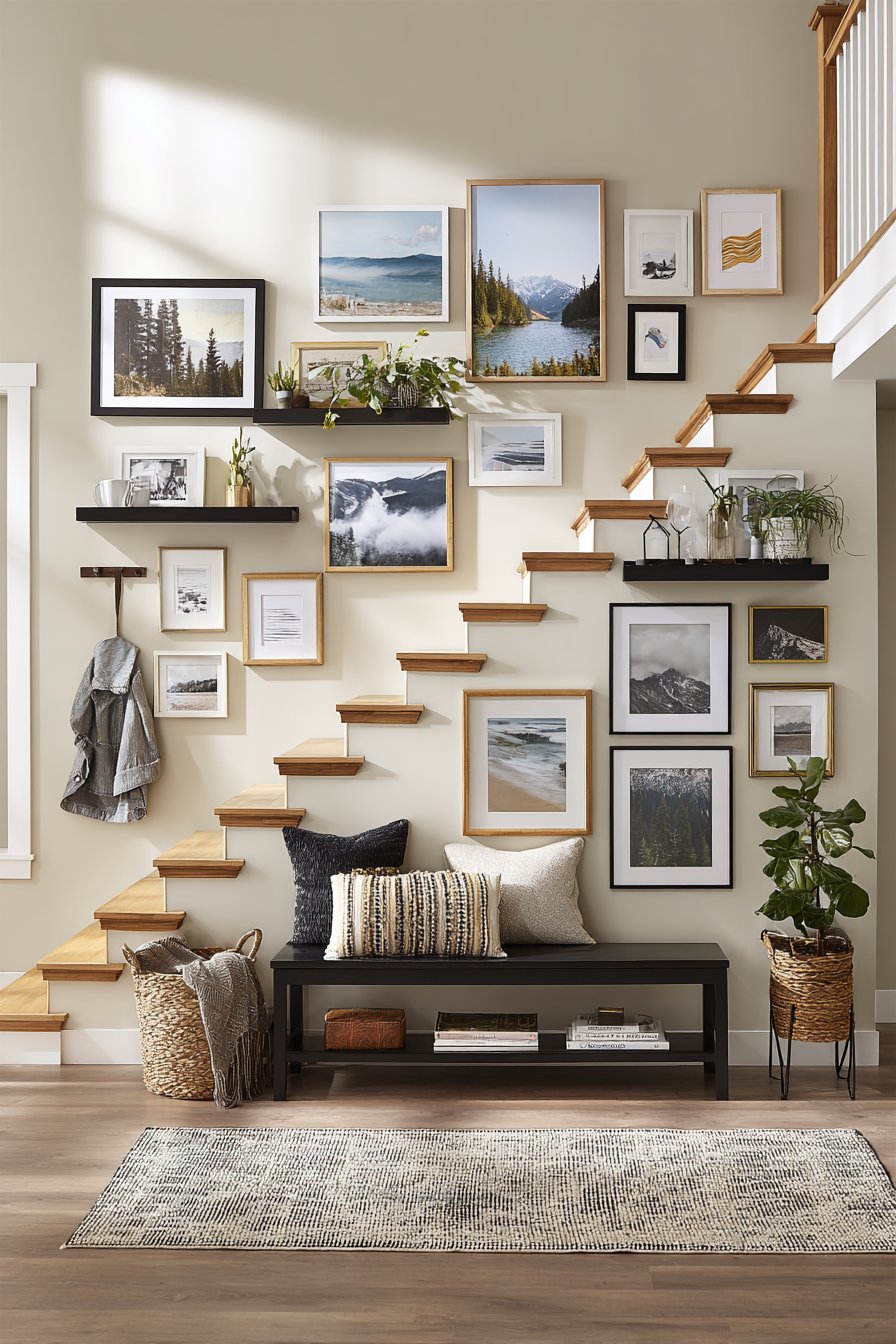
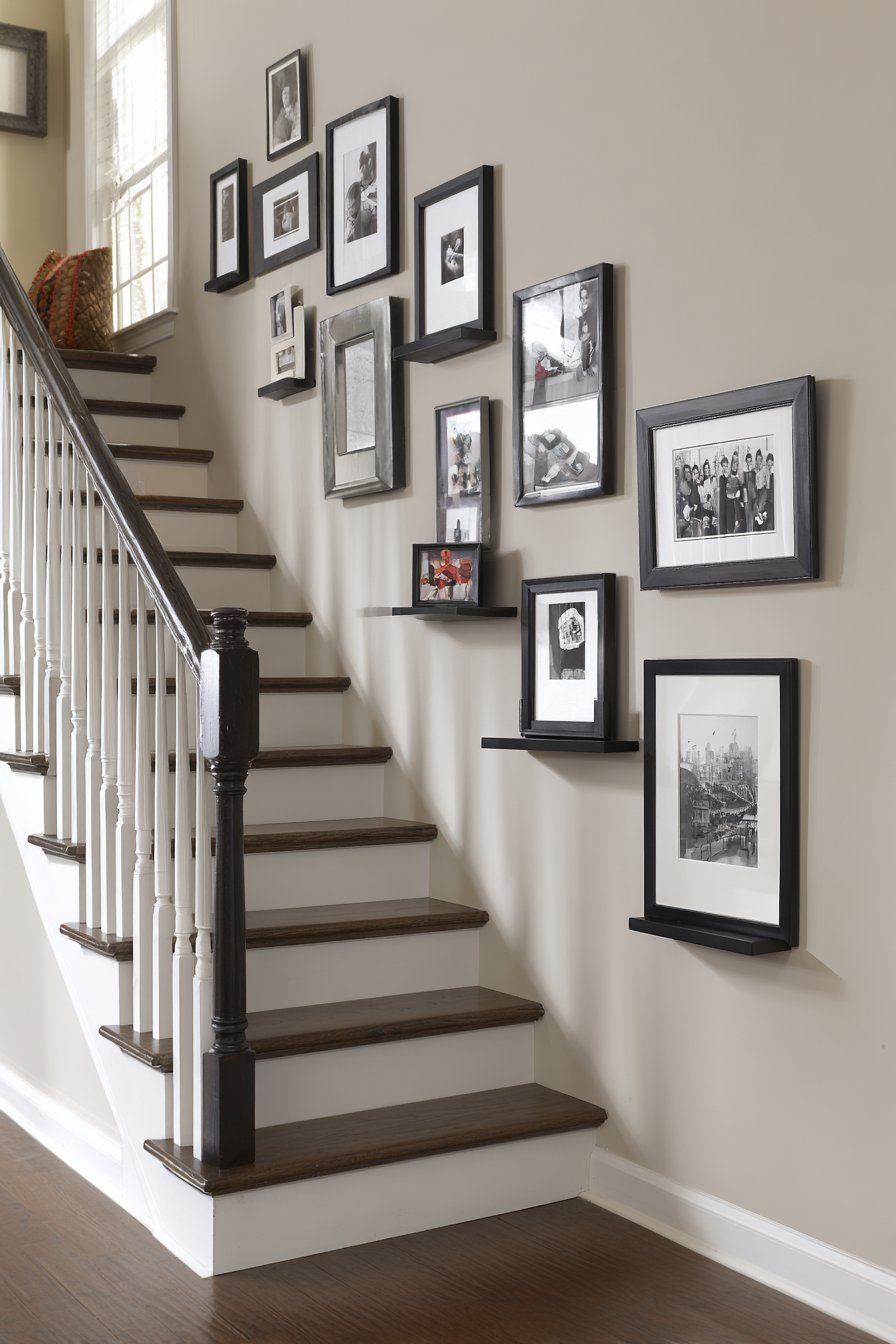
This modern approach to gallery walls offers flexibility and ease through a ledge system that eliminates the commitment of traditional hanging methods. Three floating picture ledges in matte black finish are mounted at staggered heights, creating visual interest through their asymmetrical arrangement. Artwork and photographs lean casually against the wall in varied frame sizes and styles, their changeable display allowing for seasonal updates, new acquisitions, or simply the mood for change without requiring any new wall holes or measurements.
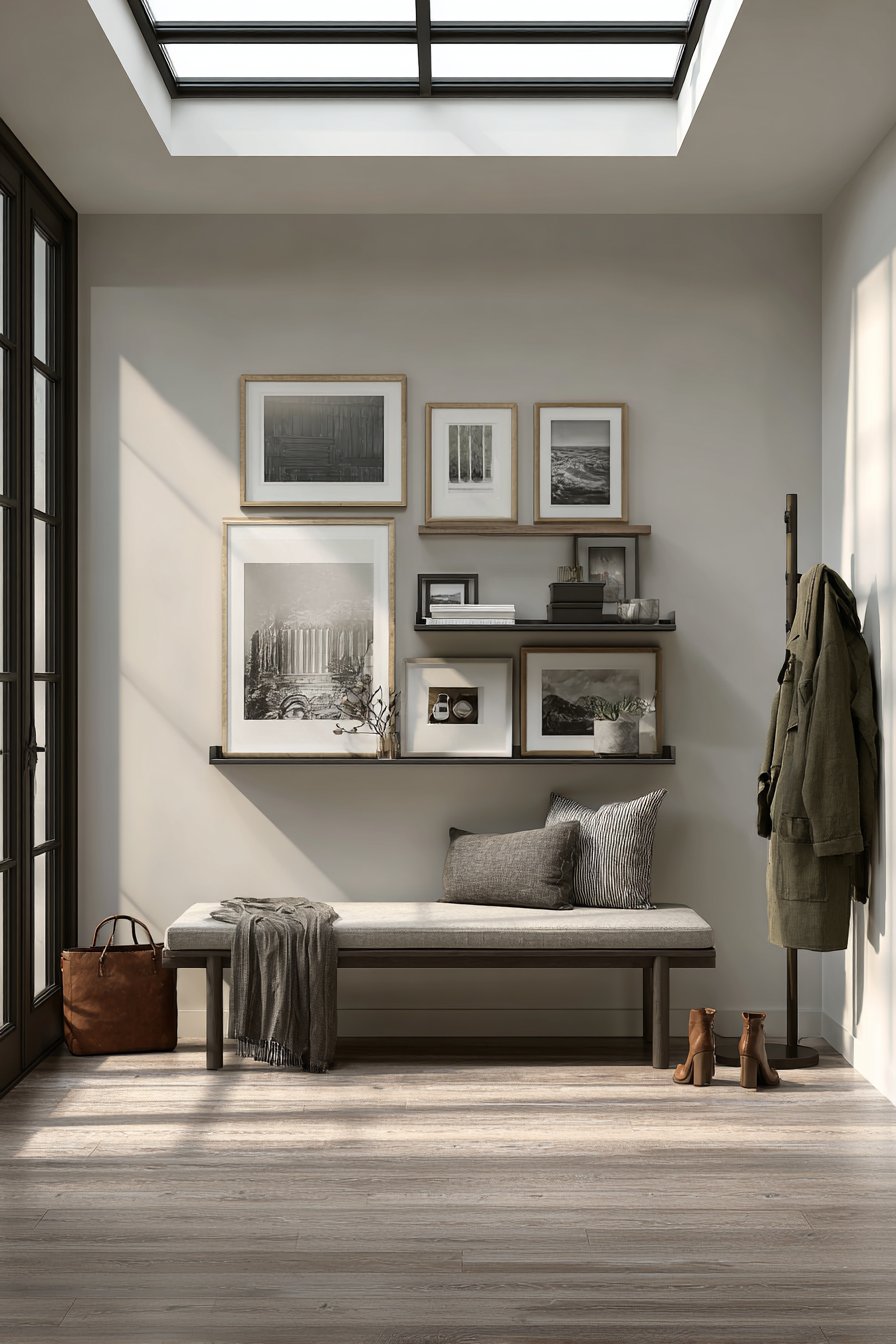
The genius of the ledge gallery system is its flexibility. Unlike traditional gallery walls where changing the arrangement requires patching holes and repainting, ledge systems allow you to rotate artwork as often as you like. Mix framed photographs with small plants, books, or decorative objects to create layered, dimensional displays that feel casual and collected. The light greige wall provides a neutral backdrop that allows the artwork and frames to be the stars, while the matte black ledges create crisp definition and modern edge.
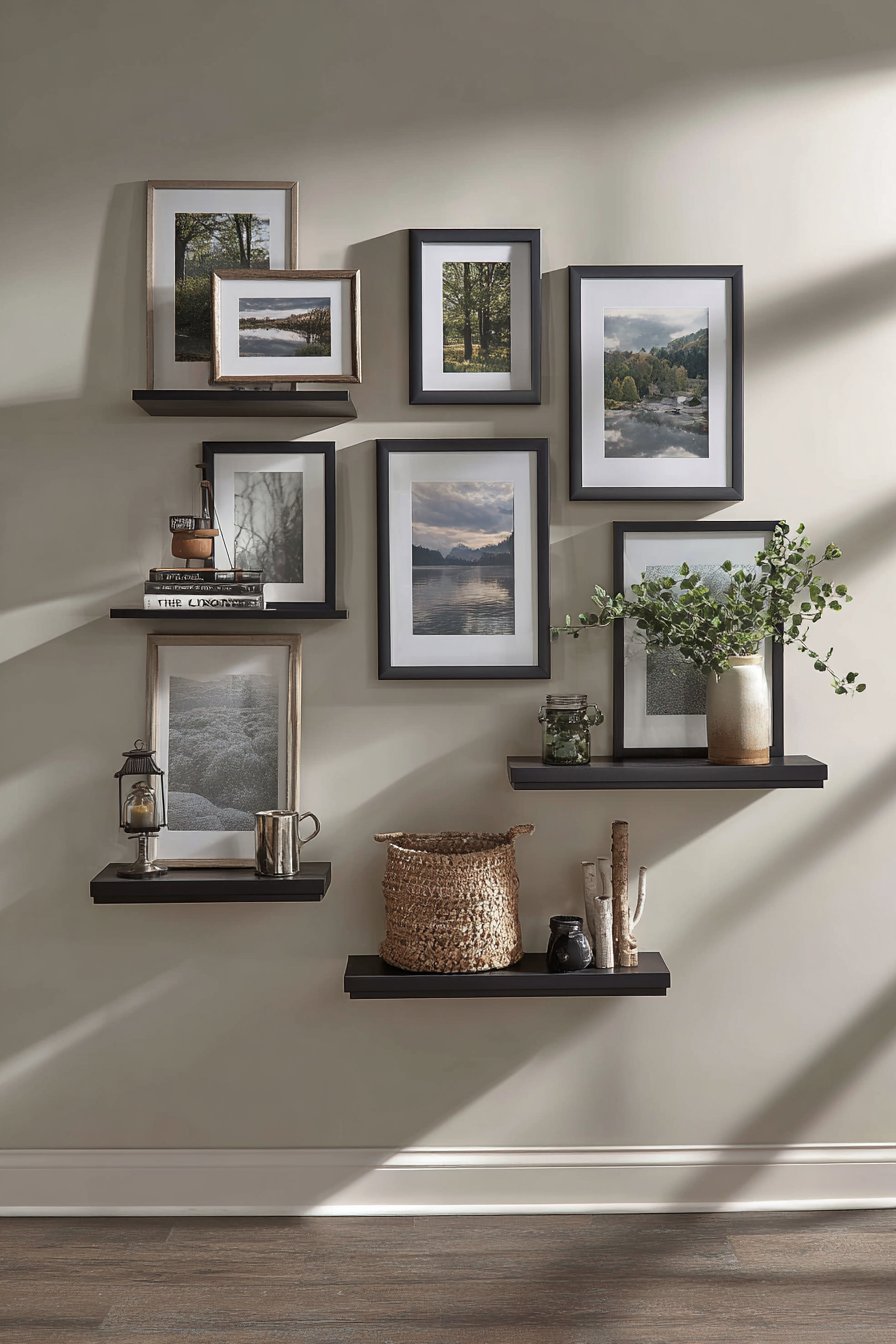
Natural lighting from above creates subtle shadows that emphasize the dimensional quality of the leaning frames and objects, adding depth to what could otherwise be a flat wall surface. Professional photography shows the flexible, modern approach to art display, capturing the casual yet intentional styling that makes ledge galleries so appealing. This is design for those who like to refresh their spaces regularly, who acquire new art and photographs they want to display, or who simply appreciate the relaxed, layered look of leaning frames over the more formal precision of traditional hanging.
Key Design Tips:
- Install ledges with heavy-duty brackets rated for the weight you plan to display
- Stagger ledge heights with at least 12-18 inches between them for proper visual separation
- Mix frame sizes and orientations (vertical and horizontal) for dynamic compositions
- Layer smaller frames in front of larger ones for depth and dimension
- Include a few non-art objects like small plants or books for varied texture and interest
- Use museum wax or sticky tack behind frames to prevent sliding on the ledges
- Change your display seasonally to take full advantage of the system’s flexibility
- Maintain an odd number of ledges (3 or 5) for more dynamic visual impact than even numbers
18. Industrial Loft Edge
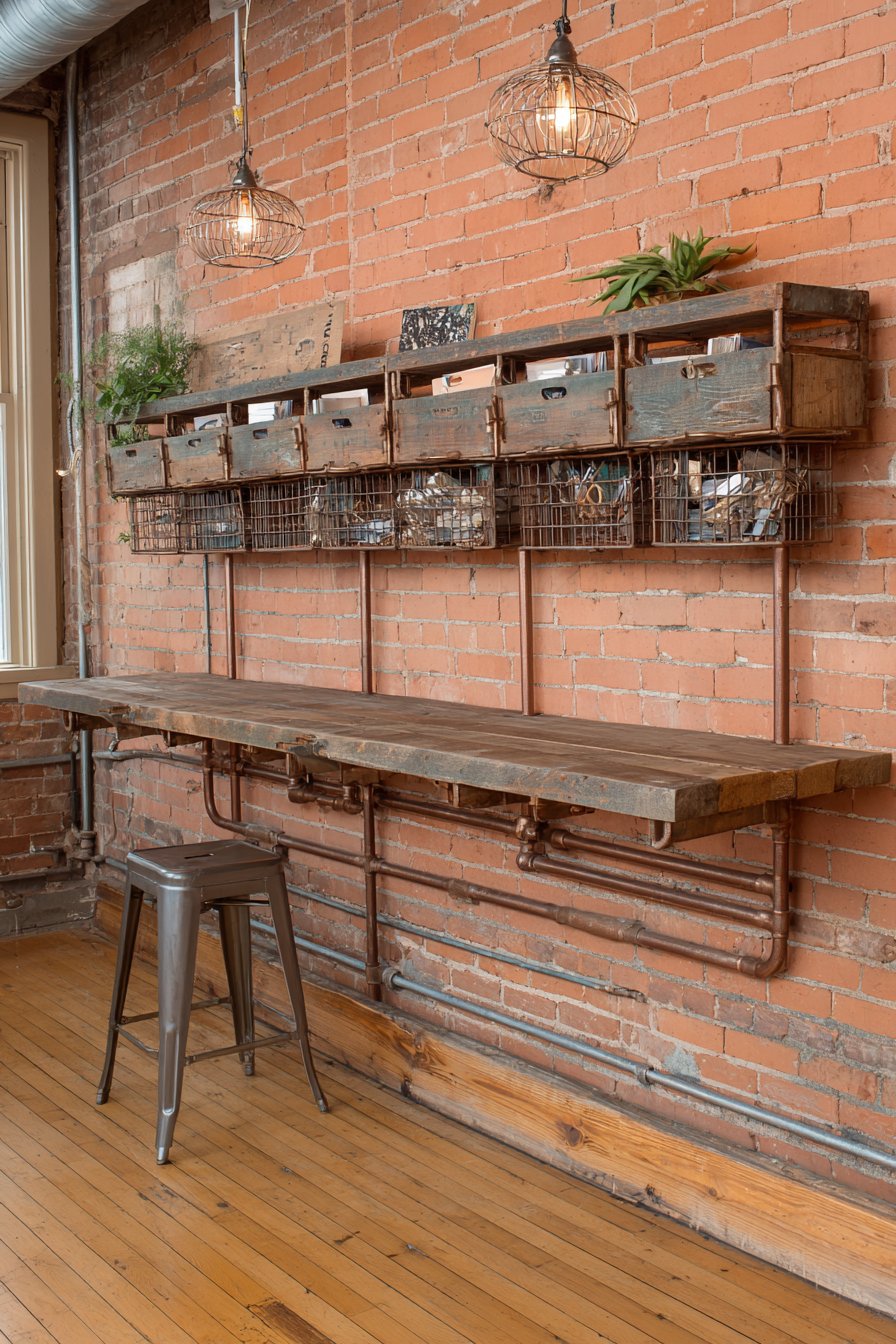
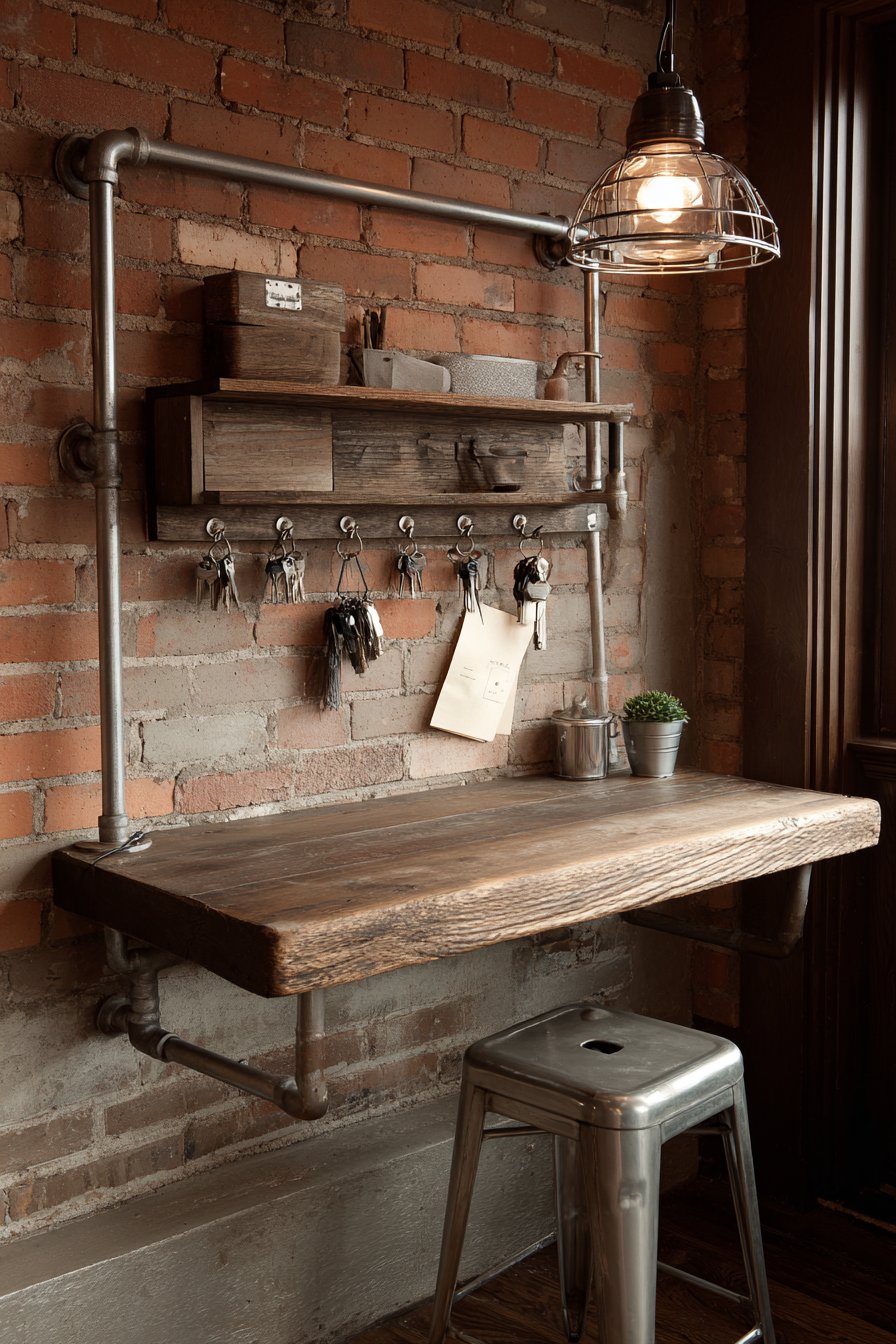
The industrial aesthetic celebrates raw materials and utilitarian design, and this entryway wall idea embraces those principles with authentic character. The exposed brick wall in natural reddish-brown tones provides instant texture and historic character, its imperfect surface and varied brick colors creating visual interest that manufactured materials can’t match. A metal pipe shelf system with reclaimed wood planks offers practical storage that looks intentionally designed rather than afterthought. The industrial materials—iron pipe and weathered wood—complement the brick’s rawness while providing functional surfaces for keys, mail, and small plants.
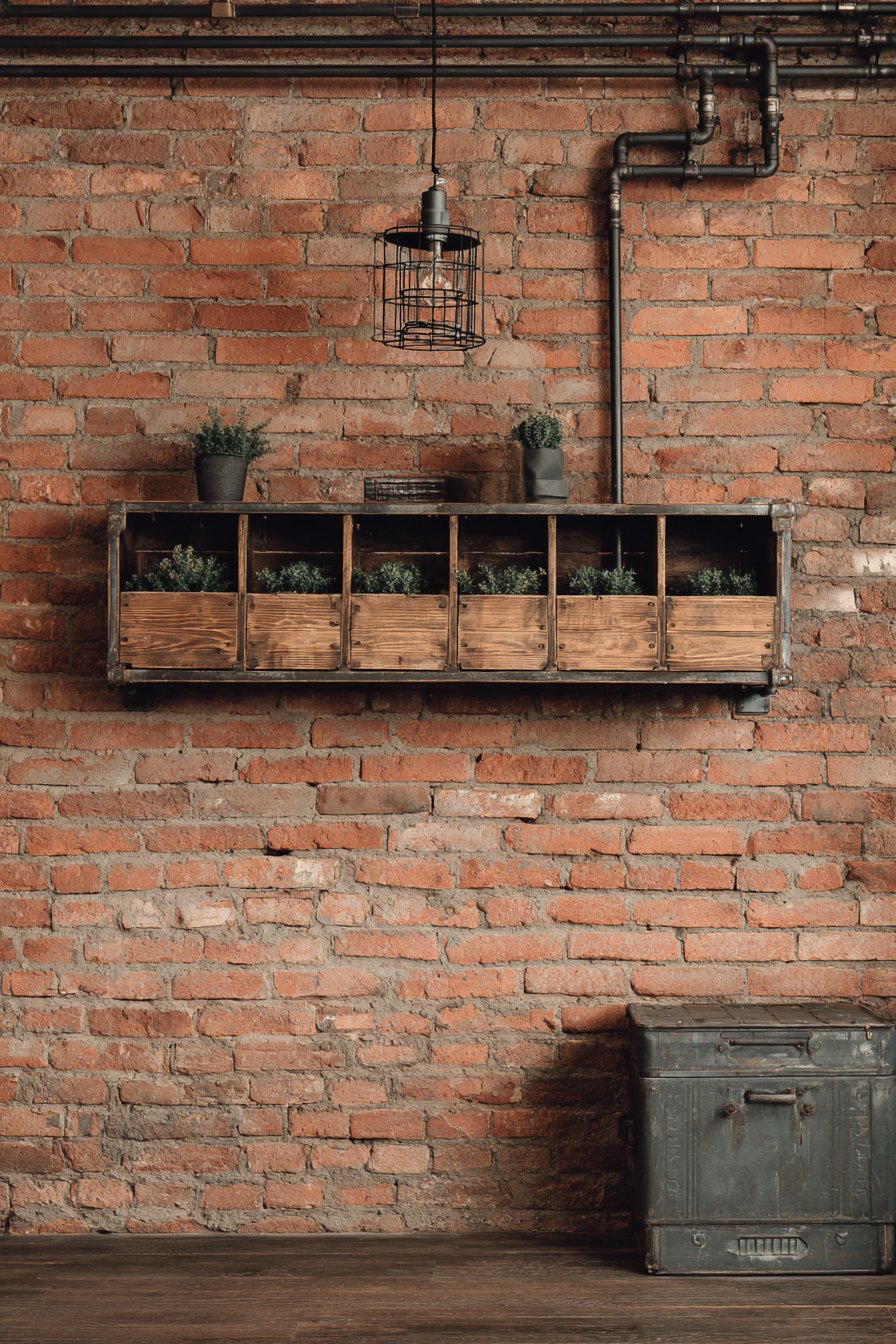
A vintage-style cage pendant light hangs nearby, its exposed bulb and metal cage construction continuing the industrial theme while providing necessary task lighting. A metal stool serves as additional surface space, its simple construction and raw metal finish maintaining the utilitarian aesthetic. This combination of brick, metal, and reclaimed wood creates the authentic industrial look that’s become so popular in loft conversions and urban homes.
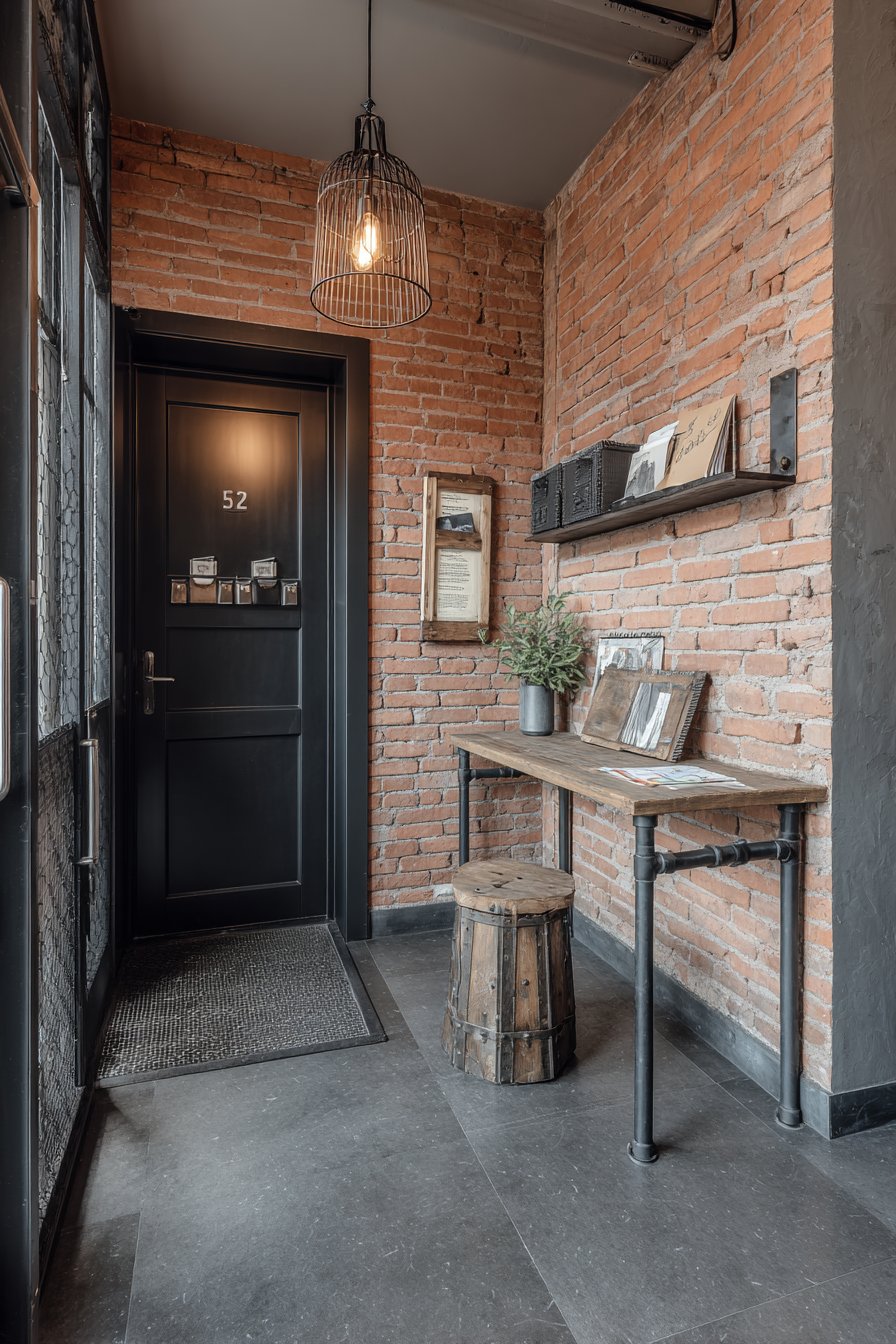
Wide-angle photography captures the raw, urban character essential to industrial design. The lighting emphasizes the brick texture—each mortar line, color variation, and surface irregularity that gives exposed brick its appeal. The metal patina on the pipe shelving and pendant light shows the age and character that make industrial materials so visually interesting. This is design for those who appreciate authenticity, who value materials with history and visible age, who want their entryway to feel like it belongs in a renovated warehouse or factory building rather than a suburban tract home.
Key Design Tips:
- If you don’t have existing brick, consider brick veneer or faux brick panels for the look
- Use galvanized or black iron pipe for shelf systems to maintain industrial authenticity
- Source reclaimed wood with visible wear, nail holes, and color variation for authentic character
- Choose Edison-style bulbs or vintage-replica lighting for period-appropriate illumination
- Incorporate metal elements in matching finishes—all black iron or all galvanized for cohesion
- Allow the raw materials to be the stars—keep decorative accessories minimal and utilitarian
- Seal exposed brick to prevent dust and crumbling while maintaining the natural appearance
- Balance the heavy industrial elements with a few organic touches like plants to prevent coldness
19. Japanese-Inspired Zen Minimalism
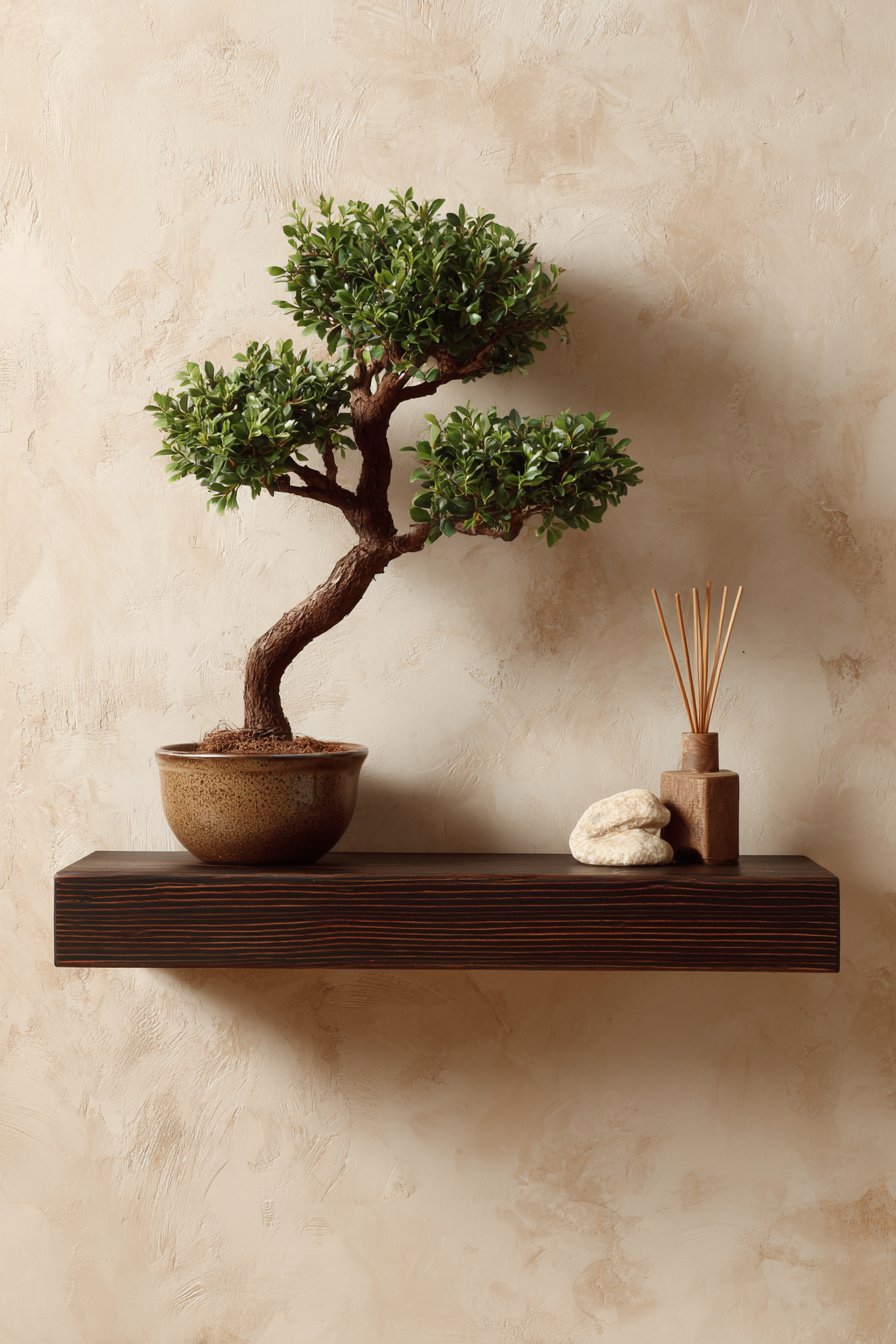
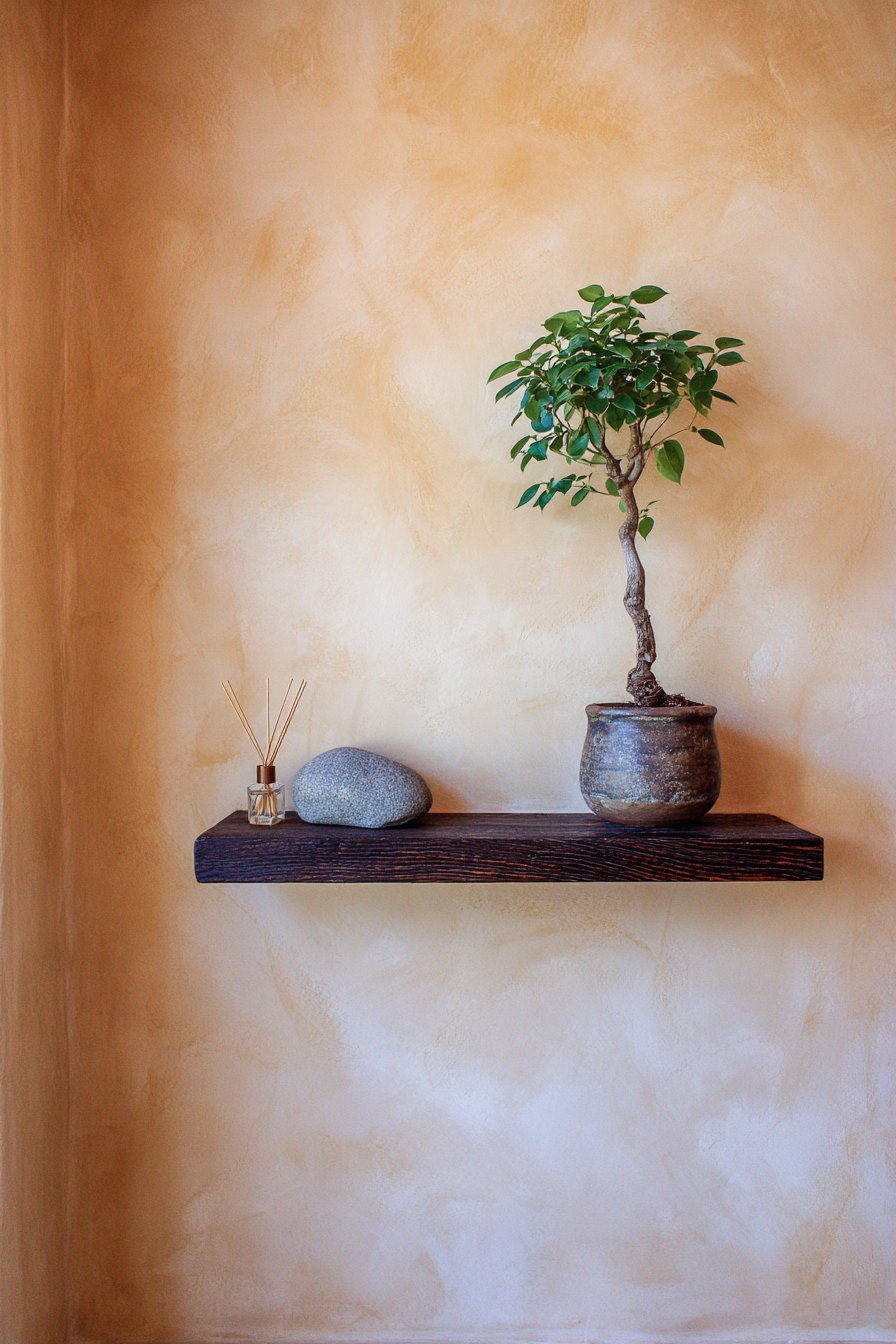
The principles of Japanese design—simplicity, natural materials, mindful placement, and appreciation of negative space—create a sense of calm and intentionality in this entryway wall idea. A simple floating shelf in dark stained wood appears to hover against a smooth plaster wall in warm cream tone, the minimal intervention allowing the wall itself to be appreciated as a design element. On the shelf, a single bonsai tree in a ceramic pot represents the Japanese appreciation for nature and careful cultivation, while a small stone sculpture adds natural material and sculptural form. A reed diffuser provides subtle fragrance, its simple glass container and natural reeds maintaining the aesthetic purity.
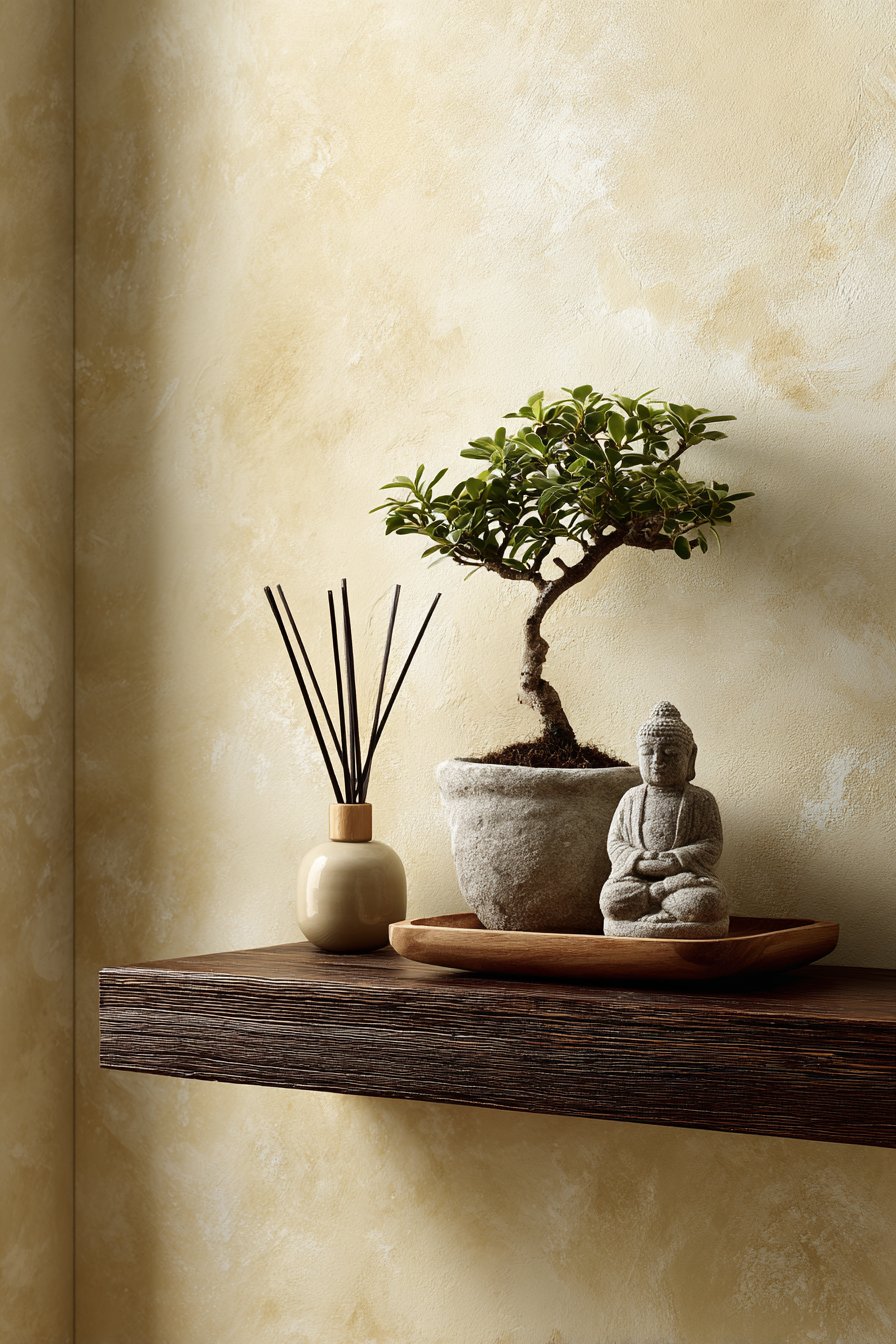
The beauty of this design lies in what’s not included as much as what is. The negative space—the expanses of unadorned wall—is as important as the objects displayed. This approach to design requires restraint and confidence, trusting that less truly can be more when each element is chosen and placed with intention. The dark wood shelf against the warm cream wall creates a subtle but definite contrast, grounding the composition without creating visual heaviness.
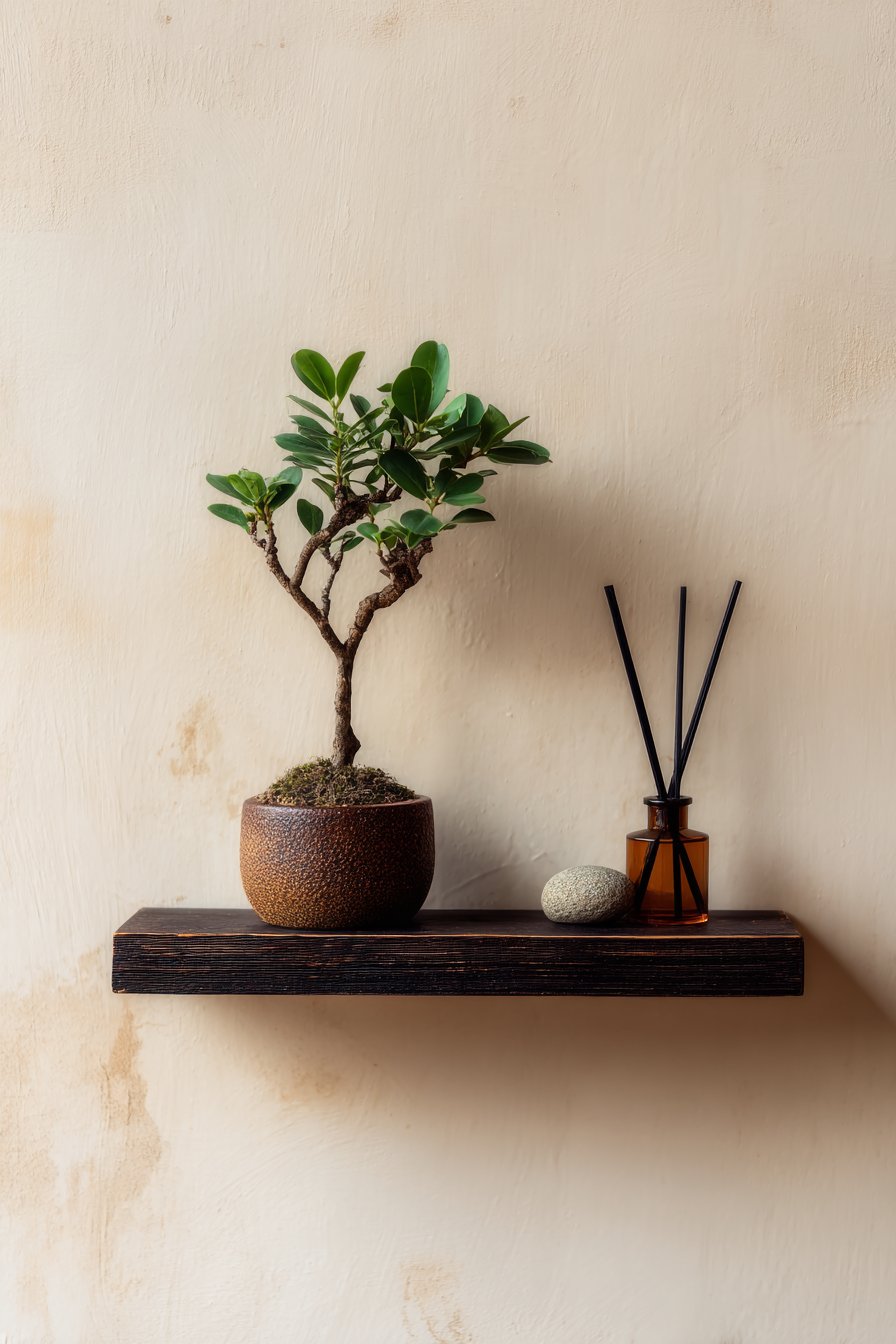
The composition photographed with soft, even natural lighting emphasizes the zen-like simplicity and careful placement of each element. The lighting doesn’t create dramatic shadows or highlights; instead, it reveals the objects gently, allowing their forms and textures to be appreciated without artificial enhancement. This is design for those who seek calm in their living spaces, who appreciate the meditative quality of carefully curated simplicity, who want their entryway to be a moment of pause and breath before entering or leaving the outside world.
Key Design Tips:
- Limit displayed objects to one to three items maximum to maintain zen aesthetic
- Choose objects with natural materials—wood, stone, ceramic, living plants
- Embrace negative space as an active design element rather than empty wall to be filled
- Select a warm, neutral wall color that creates calm rather than visual stimulation
- Position objects with careful attention to balance and intentional placement
- Maintain strict minimalism—resist the urge to add more items over time
- Incorporate living elements like bonsai that require care and attention, fostering mindfulness
- Use natural, indirect lighting that doesn’t create harsh shadows or dramatic contrasts
20. French Country Romance
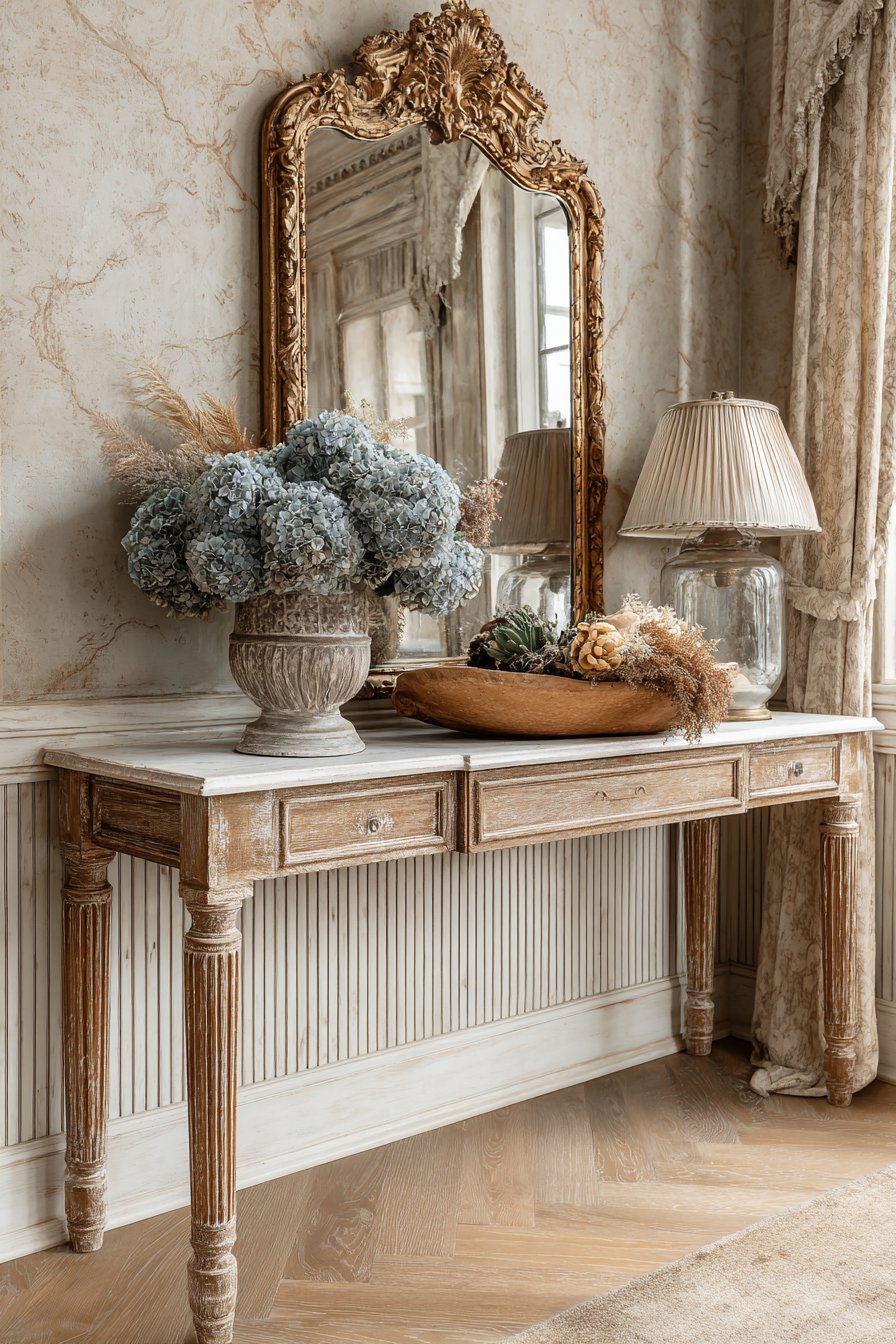
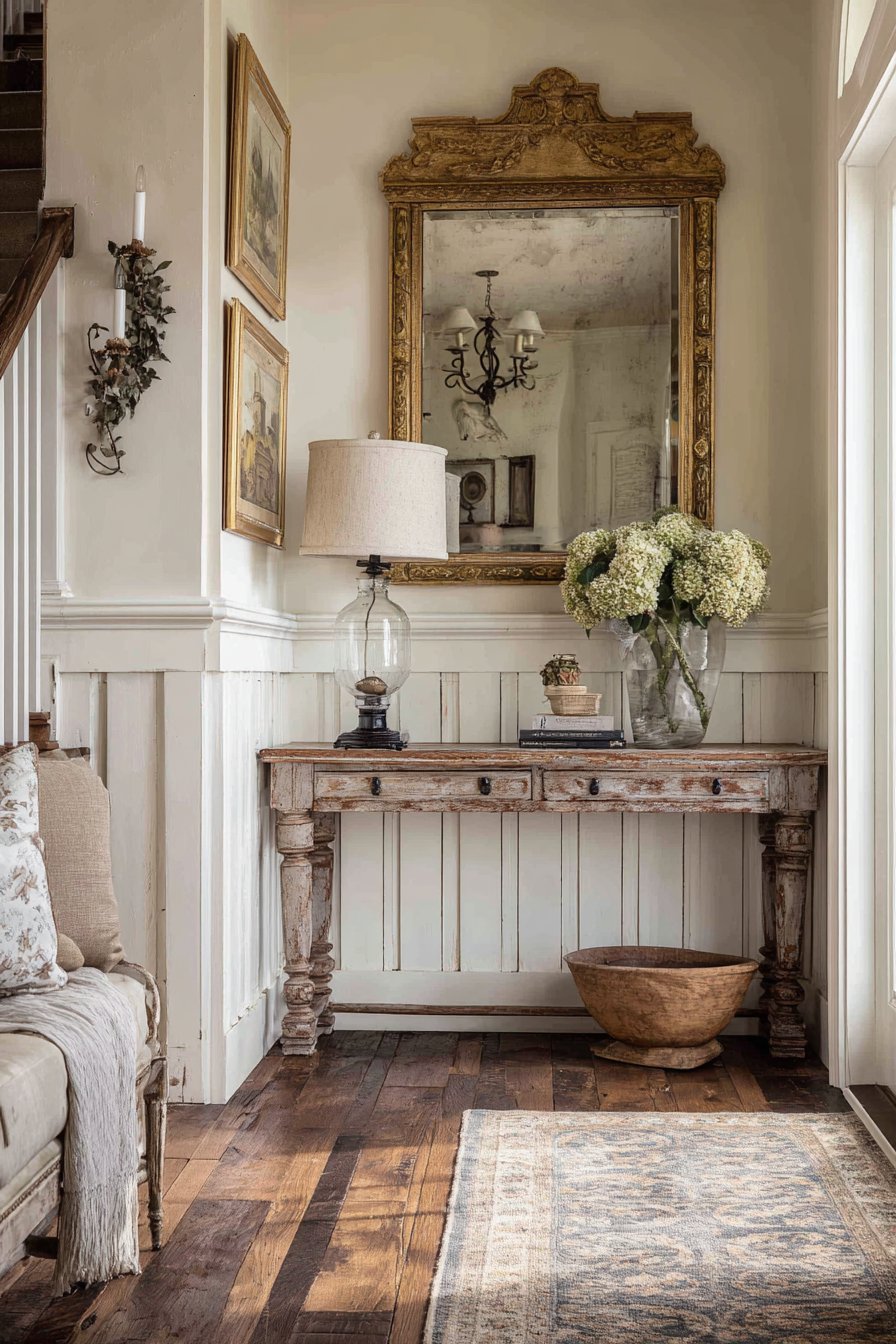
The charm of French country design—elegant yet rustic, refined yet comfortable—manifests beautifully in this entryway wall idea. Beadboard paneling painted in antique white covers the lower portion of the wall, adding architectural detail and cottage character. Above, the wall continues in the same antique white, creating a light, bright backdrop for carefully chosen accessories. A distressed wood console with graceful cabriole legs embodies French country’s combination of elegance and rustic charm, its weathered finish suggesting age and history.
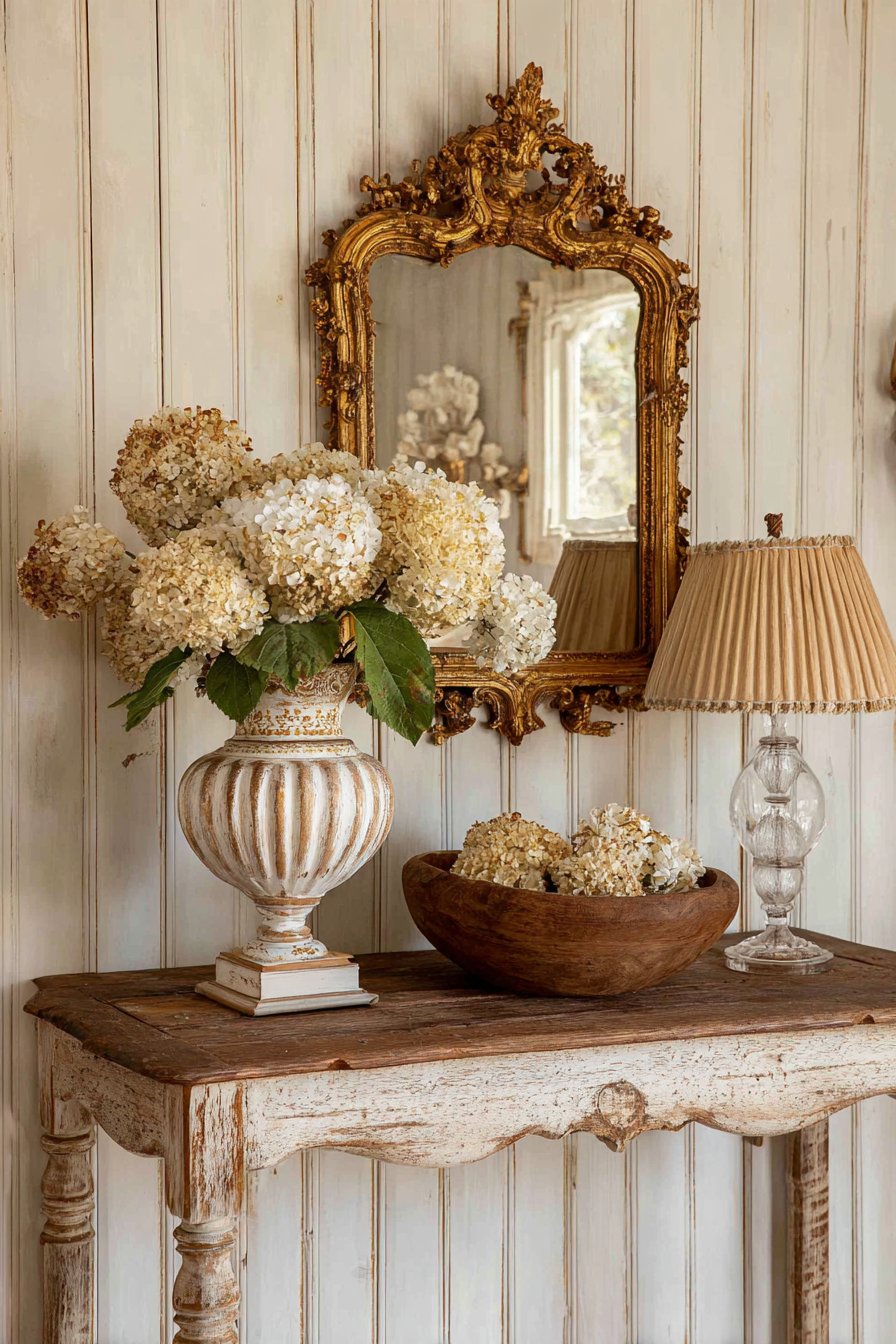
The console is styled with quintessentially French country elements: a mercury glass lamp that provides soft, romantic lighting, and a wooden dough bowl filled with preserved hydrangeas in soft, faded tones. An ornate gilt mirror hangs above, its decorative frame adding a touch of formality and elegance that balances the rustic elements. The combination of refined shapes—the cabriole legs, the ornate mirror—with rustic materials and weathered finishes creates the sophisticated-yet-comfortable aesthetic that defines French country style.
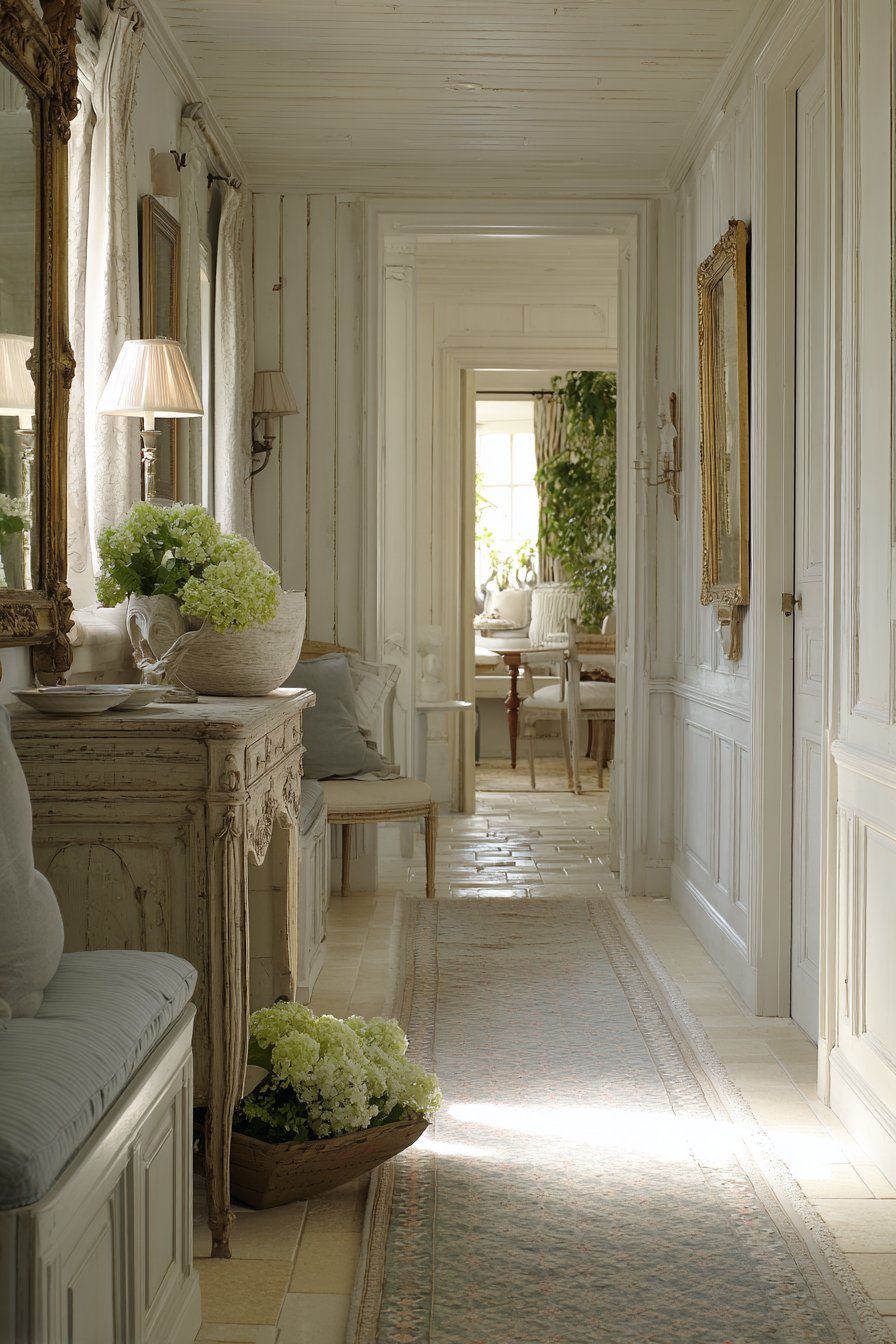
Interior photography with soft romantic lighting captures the elegant, lived-in French aesthetic and vintage material finishes. The lighting should be warm and gentle, creating the kind of soft glow you’d find in a French countryside home. The distressed wood finish, the tarnished mercury glass, the faded hydrangeas—these elements of gentle aging and patina are essential to the style and deserve photographic emphasis. This is design for those who appreciate European influences, who value comfort and elegance equally, who want their entryway to feel like it belongs in a French cottage rather than a modern suburban home.
Key Design Tips:
- Install beadboard with proper spacing and use quality primer and paint for a smooth finish
- Choose furniture with French country hallmarks: cabriole legs, distressed finishes, gentle curves
- Incorporate ornate but not overly gilded mirrors and accessories for refined elegance
- Use soft, muted colors—antique white, soft gray, faded lavender, weathered blue
- Display dried or preserved flowers in soft, faded tones rather than bright fresh arrangements
- Add mercury glass, aged metals, and weathered wood for authentic French country character
- Create subtle patina on new pieces using distressing techniques for aged appearance
- Keep the overall effect comfortable and livable—French country shouldn’t feel precious or untouchable
21. Modern Glam Luxury
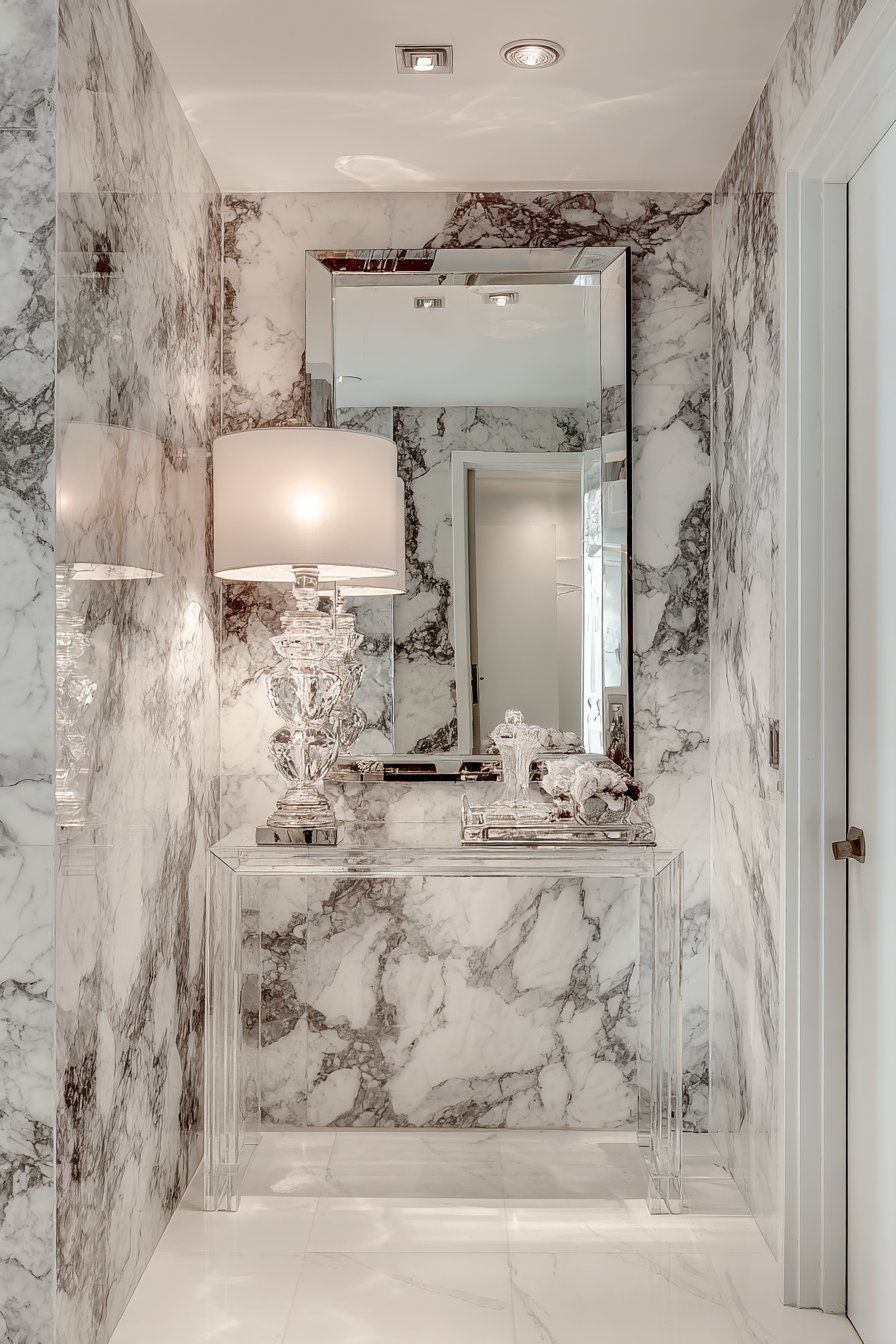
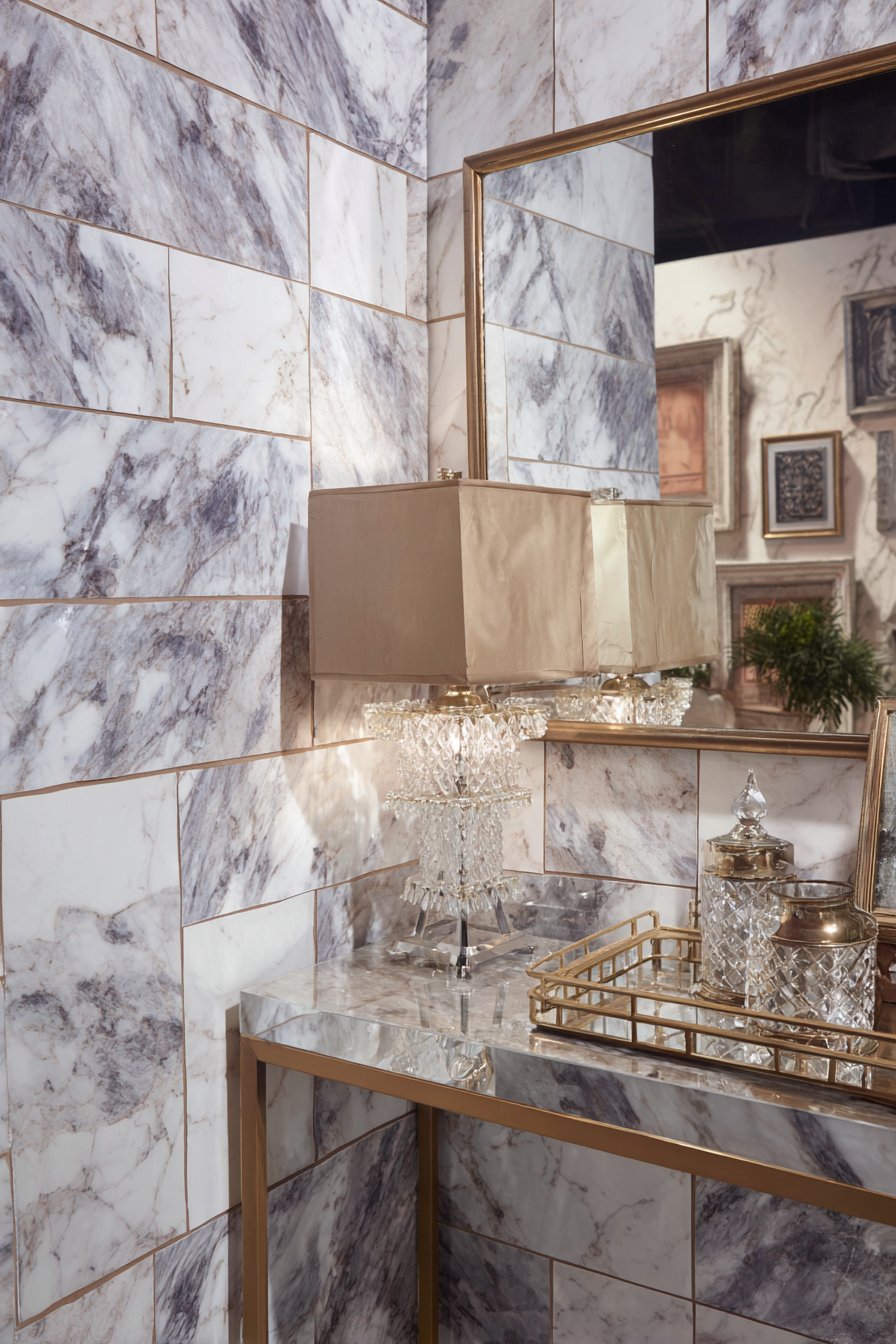
For those who appreciate luxury and contemporary style, this modern glam entryway wall idea delivers sophistication and visual impact. A marble-look porcelain tile accent wall in white with gray veining creates an instantly luxurious backdrop, the natural stone appearance adding elegance without the maintenance challenges of actual marble. Against this backdrop, a lucite console table with brass frame appears to float, its transparent acrylic panels maintaining visual lightness while the brass provides warm metallic glamour.
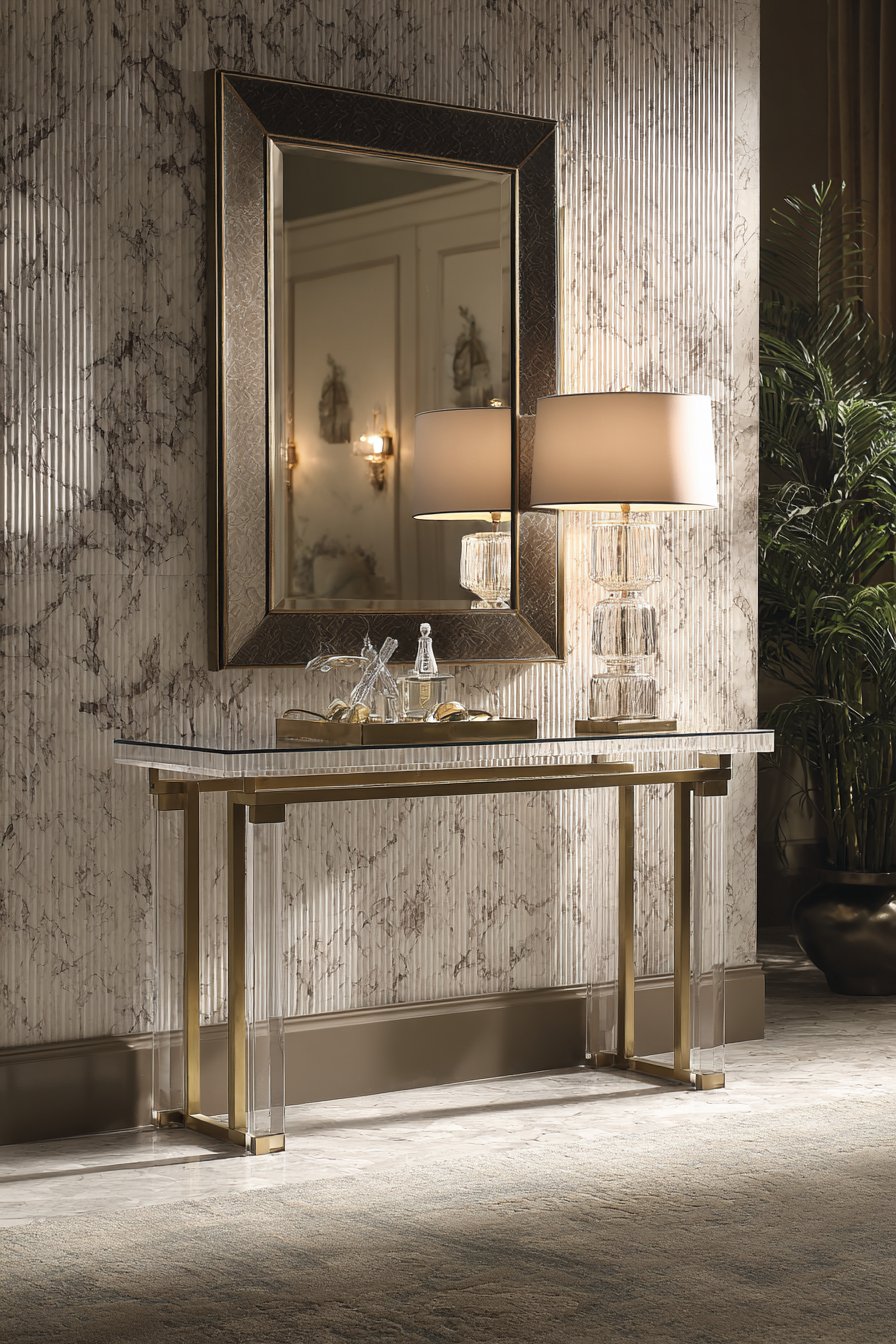
The console styling continues the luxe theme with carefully chosen accessories: a crystal table lamp that sparkles and refracts light, and a mirrored tray that adds another layer of reflection and glamour. Above, a large frameless mirror with beveled edges hangs, its reflective surface multiplying light and creating the illusion of expanded space. The combination of marble-look tile, lucite, brass, crystal, and mirror creates a symphony of reflective, luxurious surfaces that define modern glamour.
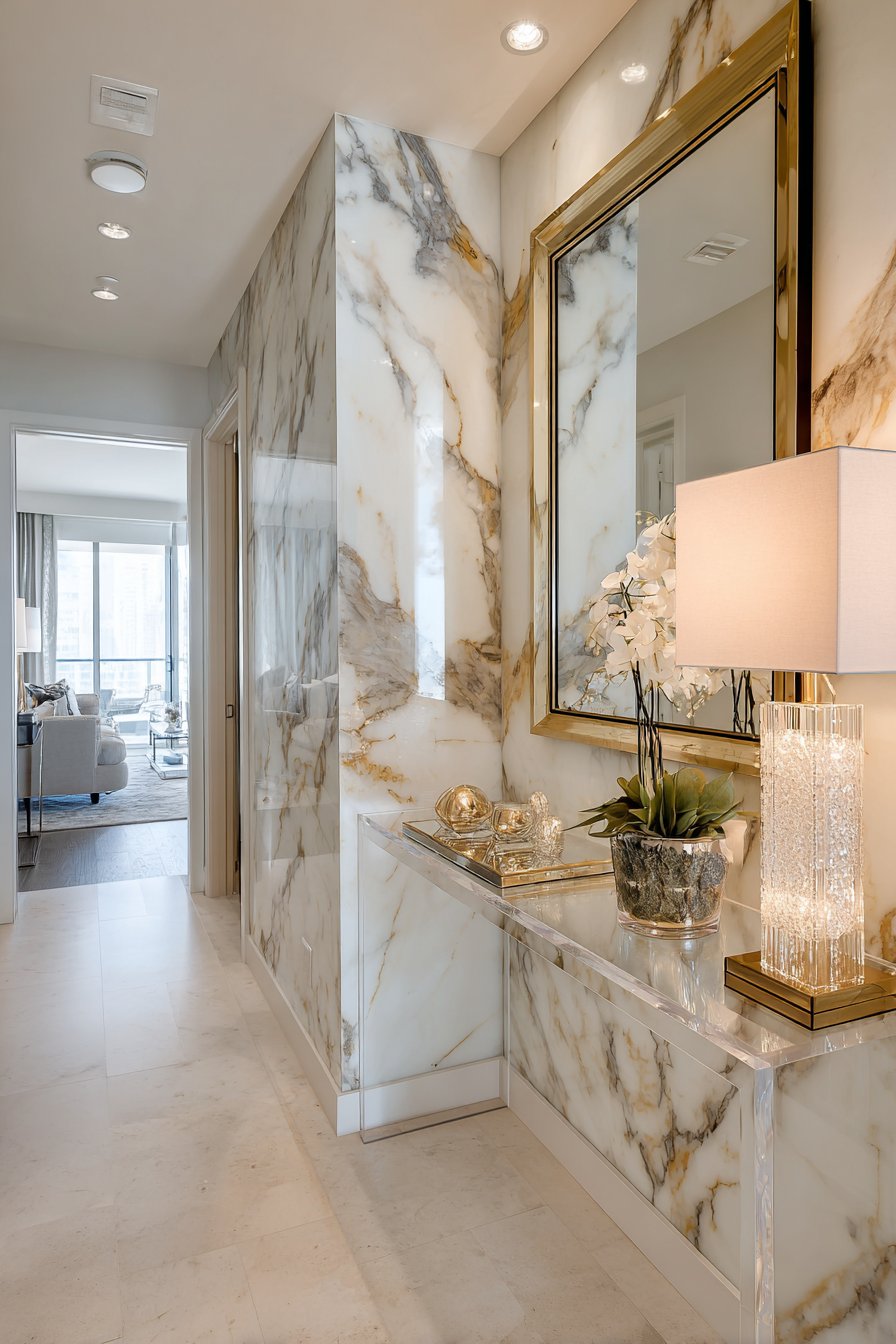
Professional photography with bright, even lighting is essential to capturing the reflective surfaces and sophisticated material palette. The lighting must be carefully controlled to show the crystal’s sparkle, the brass’s warm glow, the mirror’s reflection, and the marble’s veining without creating glare or hot spots. This is design for those who want their entryway to feel like a luxury hotel lobby, who appreciate high-end materials and finishes, who aren’t afraid of a little glamour and shine in their decor.
Key Design Tips:
- Choose porcelain tile with realistic marble veining rather than uniform patterns for authentic appearance
- Hire a professional for tile installation to ensure proper layout and minimal grout lines
- Clean lucite regularly with appropriate cleaners to prevent scratching and maintain clarity
- Use brass in a consistent finish throughout—all polished or all brushed—for cohesion
- Position lighting to highlight but not create glare on reflective surfaces
- Keep the color palette neutral with whites, grays, and metallics for sophisticated restraint
- Display only the highest-quality accessories—modern glam demands impeccable quality
- Ensure adequate lighting—reflective surfaces need light to create their full effect
22. Timeless Transitional Style
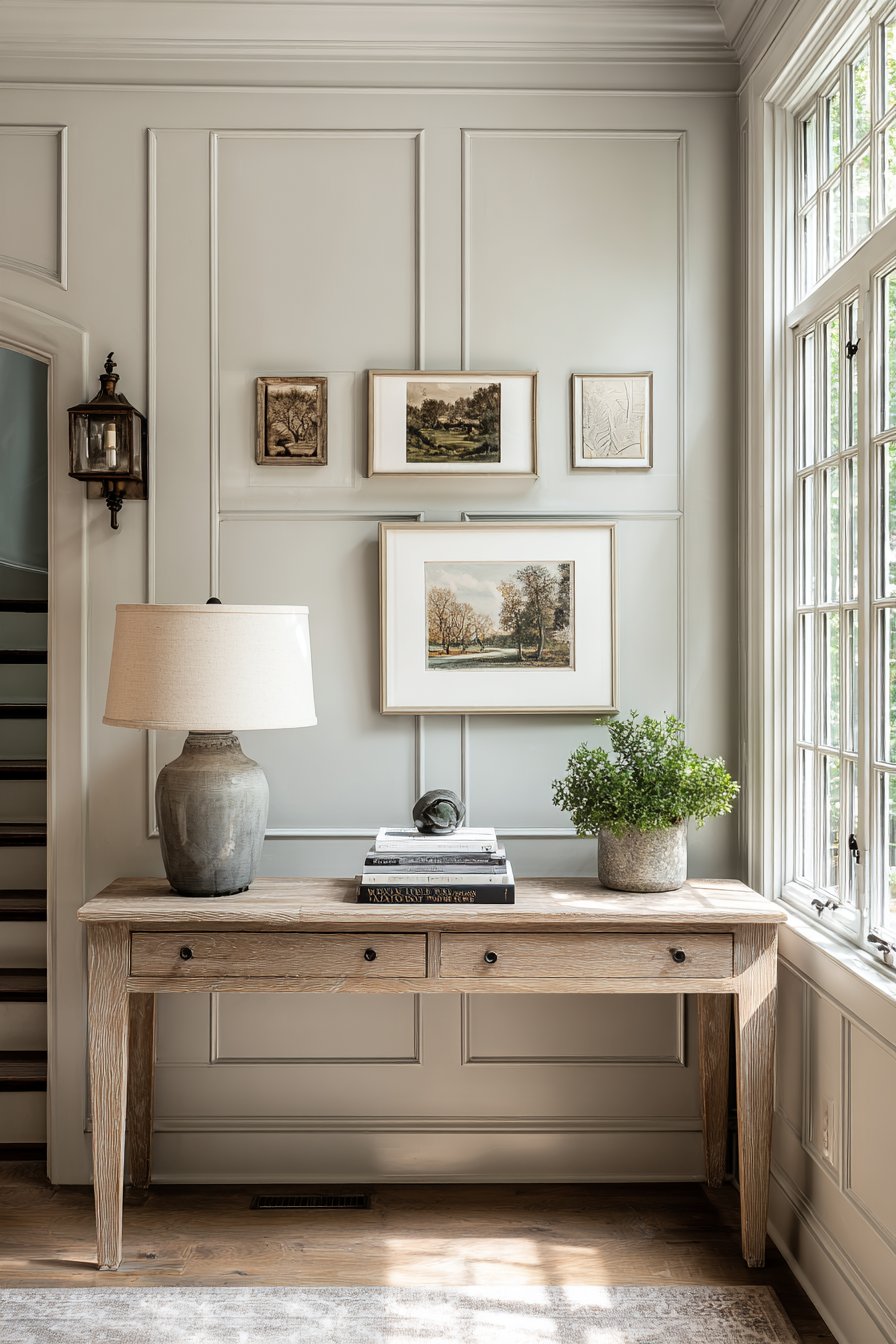
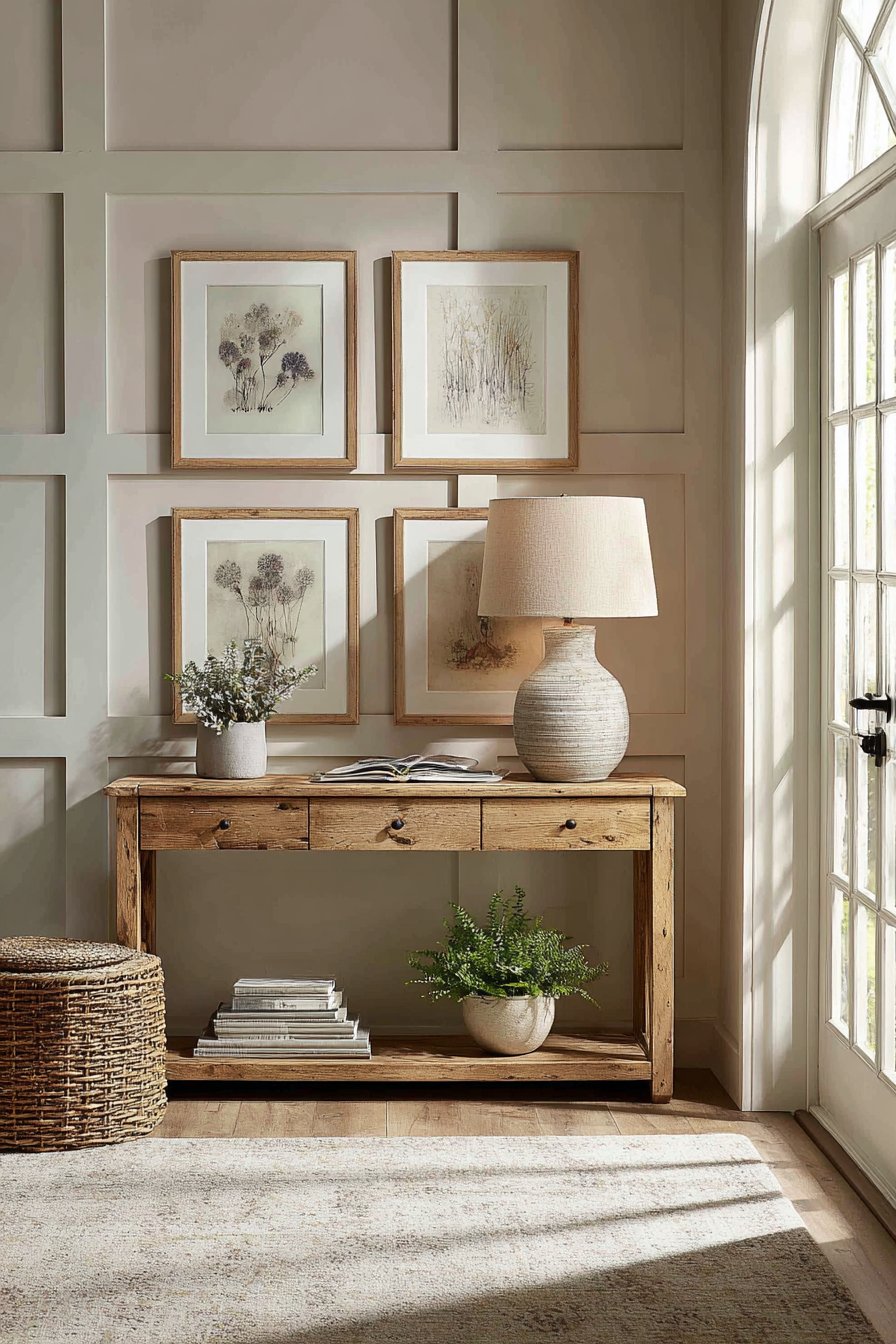
Transitional design bridges traditional and contemporary styles, and this entryway wall idea demonstrates that versatile aesthetic perfectly. Board and batten wall treatment painted in soft greige adds architectural detail that feels both classic and current—the vertical lines are traditional, but the soft greige color and simplified molding details read as contemporary. A console table in medium-toned wood with simple drawer pulls maintains the transitional balance, neither too ornate for modern tastes nor too plain for traditional preferences.
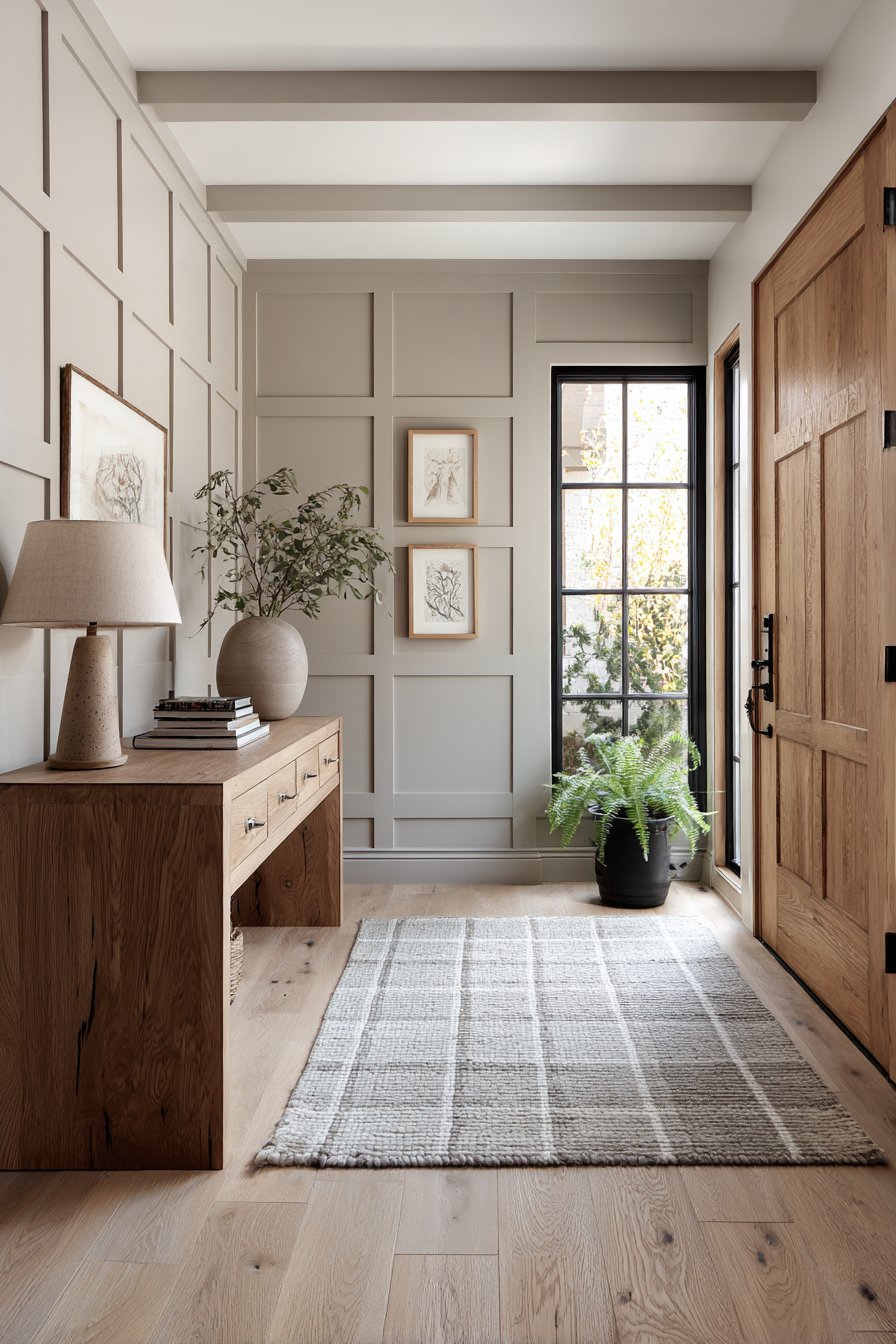
The console is styled with accessible, widely appealing elements: a ceramic table lamp with clean-lined base, stacked books that add height and personality, and a small potted fern that introduces organic life. Three coordinating framed prints hang above in a horizontal row, their simple arrangement and neutral tones maintaining the transitional aesthetic. The overall effect is sophisticated but approachable, designed but not intimidating—the kind of space that appeals to a wide range of tastes and ages gracefully.
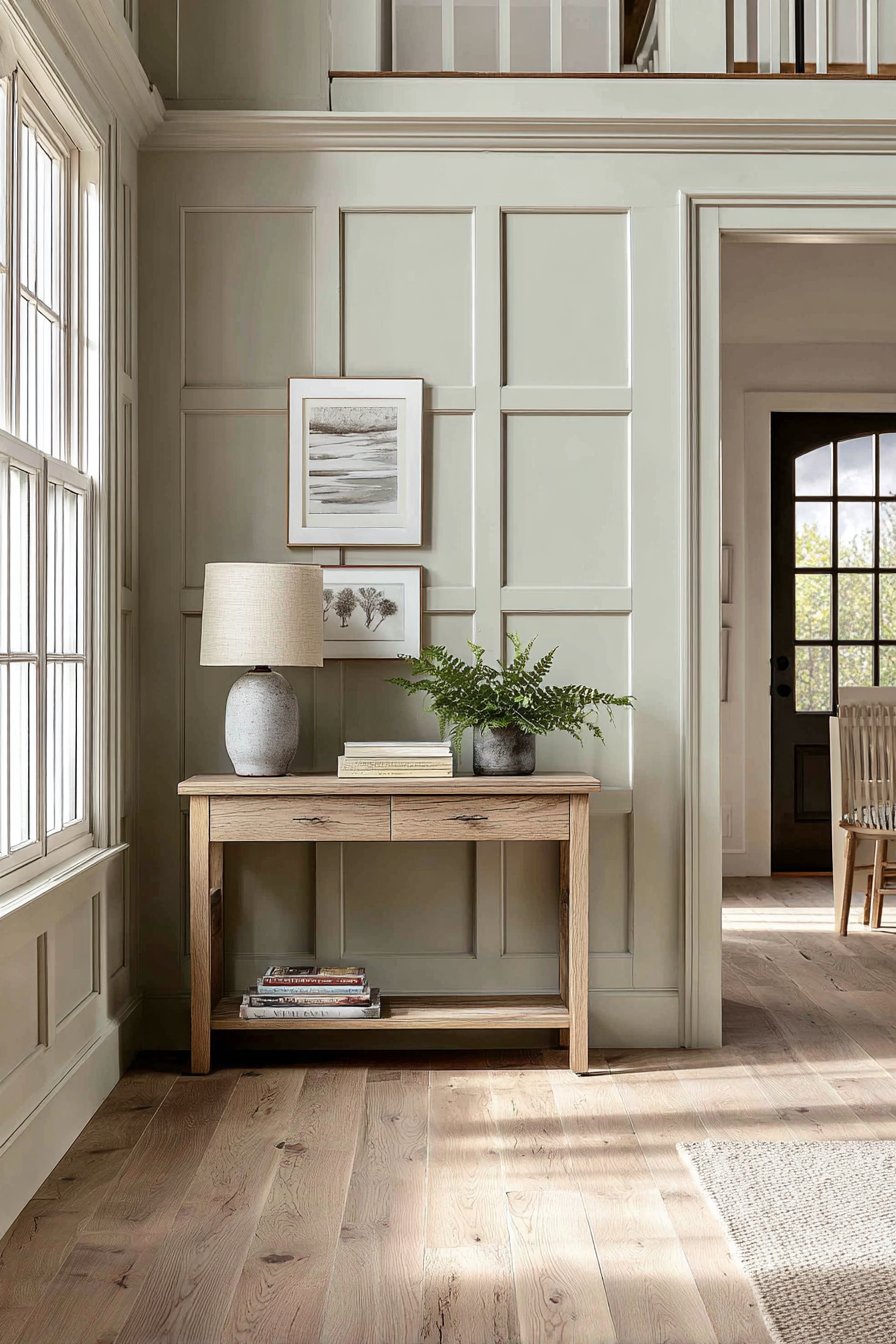
Wide-angle interior photography with natural window light showcases the timeless, versatile design approach and subtle architectural detail. The soft greige color requires careful exposure to show its warmth without looking washed out. The board and batten detail creates subtle shadows that add dimension without being dramatic. This is design for those who want their home to feel current but not trendy, sophisticated but not stuffy, designed but livable—the sweet spot that transitional style occupies so successfully.
Key Design Tips:
- Choose greige tones with careful attention to undertones—test samples in your actual lighting
- Install board and batten with consistent spacing for professional appearance—typically 12-24 inches
- Select furniture that balances traditional silhouettes with modern simplification
- Keep accessories neutral and simple rather than ornate or highly decorative
- Use a mix of materials—wood, ceramic, natural fibers—for subtle texture without pattern
- Arrange wall art in simple, symmetrical groupings rather than complex gallery walls
- Maintain a neutral color palette with greiges, soft whites, and medium wood tones
- Update seasonally with small changes to accessories rather than requiring major redesigns
23. Playful Eclectic Pattern Mix
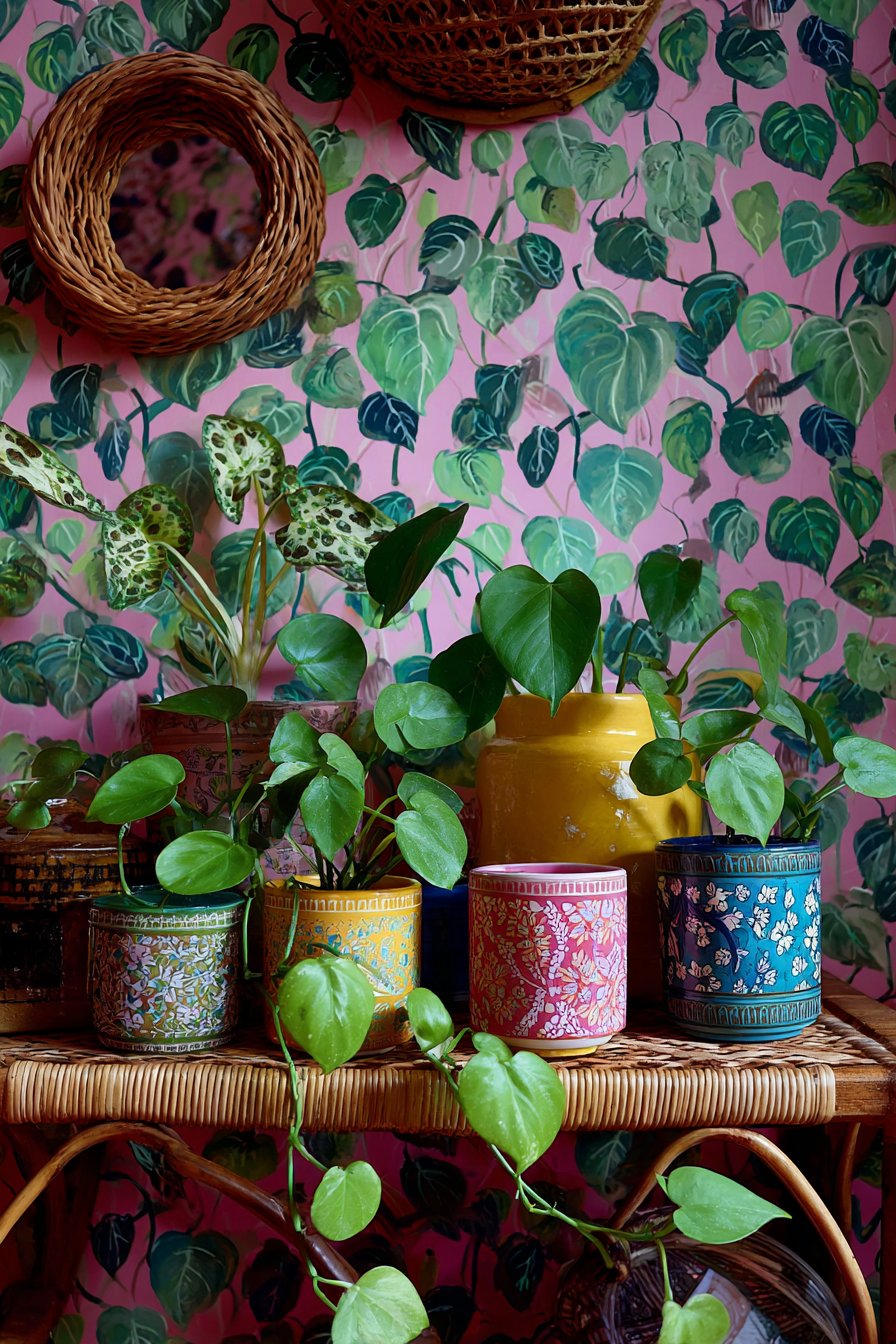
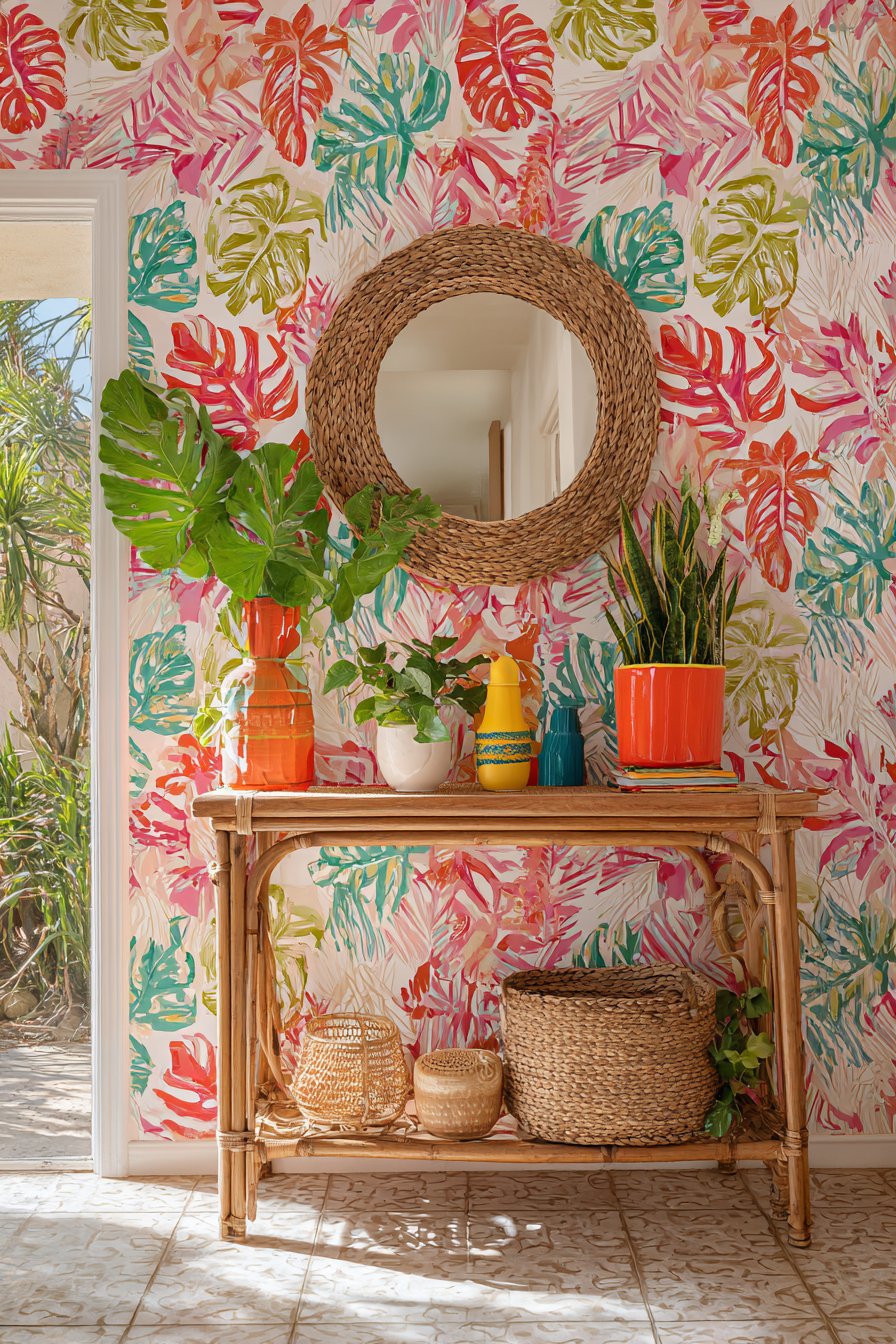
For those who embrace color, pattern, and personality, this eclectic entryway wall idea celebrates joyful self-expression. Peel-and-stick removable wallpaper featuring a bold tropical leaf pattern in greens and pinks transforms the wall into an instant focal point, the oversized botanical print adding drama and contemporary style. The removable aspect makes this a renter-friendly option that delivers maximum impact with minimal permanent commitment.
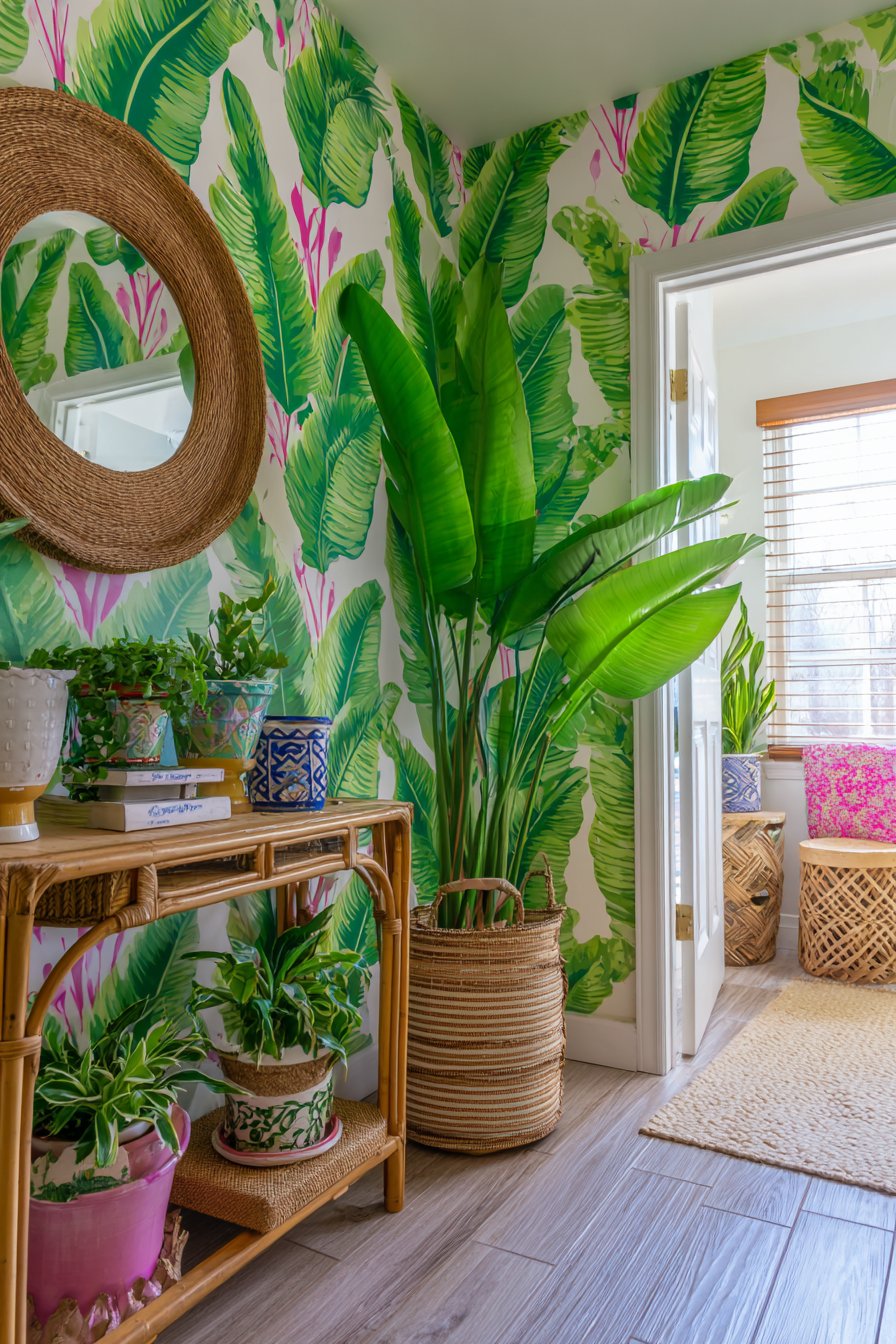
Against this vibrant backdrop, a vintage rattan console table provides organic texture and bohemian charm, its woven construction adding another layer of pattern and visual interest. The console is styled with a collection of colorful ceramic planters in varying sizes and colors, each holding trailing plants that add living movement and green tones that echo the wallpaper. Woven wall baskets and a round jute mirror add textural interest and natural materials that balance the bold pattern with organic elements.
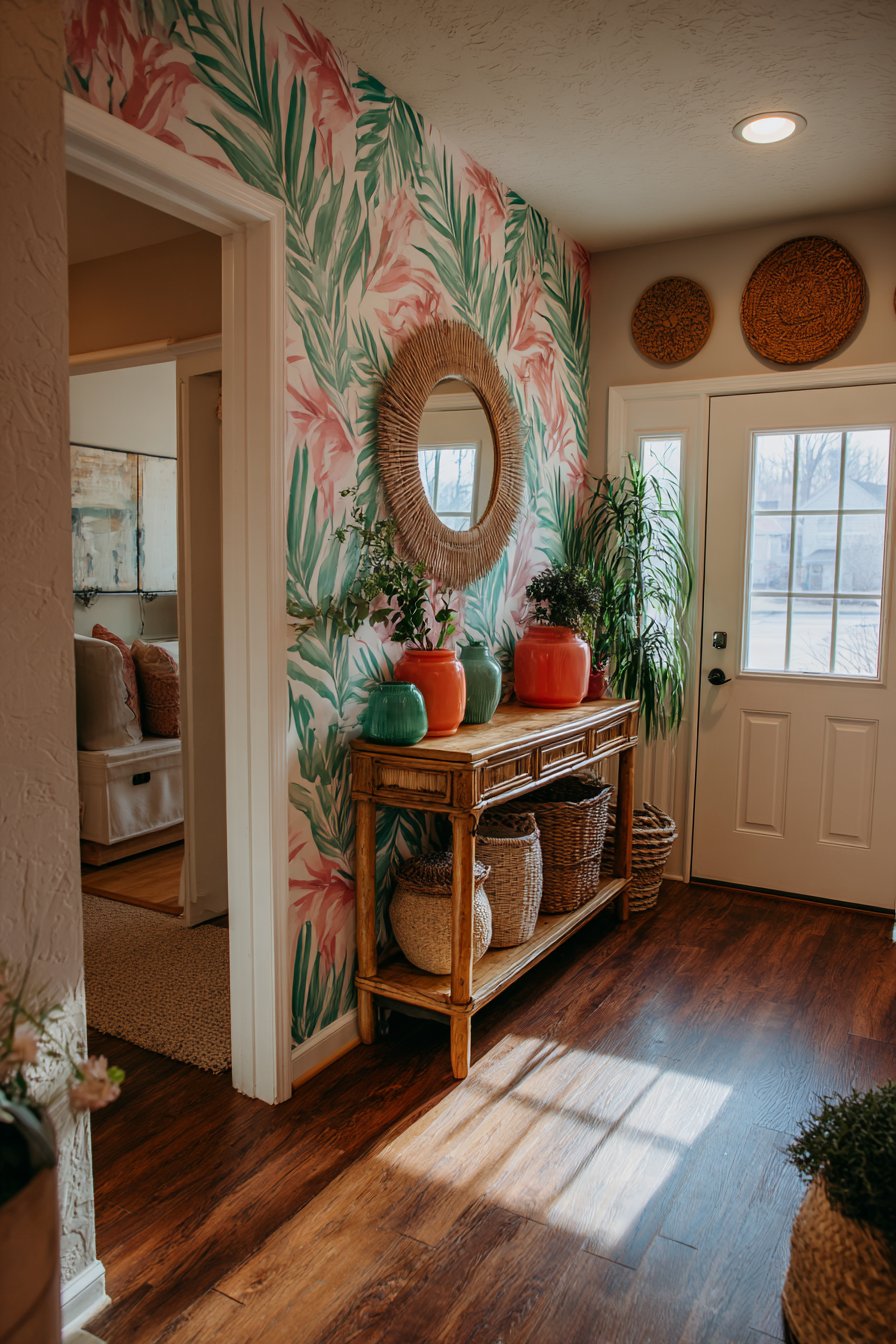
Interior design photography with vibrant natural lighting captures the playful, personality-filled approach to entryway design with emphasis on pattern and plant life. The lighting must be bright enough to show the wallpaper pattern clearly and bring out the various colors in the ceramic planters. The trailing plants add movement and organic shapes that soften the geometric pattern of the wallpaper. This is design for those who reject beige neutrality, who want their home to feel alive and joyful, who see their entryway as an opportunity to share their colorful personality with everyone who enters.
Key Design Tips:
- Choose removable wallpaper from quality manufacturers for easy installation and clean removal
- Test a small section of removable wallpaper on your wall before committing to the full installation
- Balance bold wallpaper patterns with solid-colored furniture and accessories to prevent visual overload
- Select plants that thrive in your entryway’s lighting conditions for healthy, attractive growth
- Group planters in odd numbers (3, 5, 7) for more dynamic compositions
- Mix plant varieties with different leaf shapes and growth habits for visual interest
- Use woven and natural materials to add organic texture that balances bold patterns
- Rotate ceramic planter colors seasonally while keeping the same wallpaper for fresh looks
Why These Entryway Wall Ideas Work: Design Principles and Practical Applications
The twenty-three entryway wall ideas presented in this article represent more than just attractive design options—they embody fundamental principles of successful interior design that can be applied to any space in your home. Each design demonstrates how thoughtful attention to color, texture, material, scale, and function creates spaces that are both beautiful and practical. From the minimalist floating shelf to the maximalist gallery wall, from rustic reclaimed wood to sleek modern lucite, these ideas span the full spectrum of design possibilities, ensuring that regardless of your personal aesthetic, budget, or spatial constraints, you’ll find inspiration that speaks to your unique situation.
What makes these entryway wall ideas particularly successful is their emphasis on achievable, realistic design that real people can implement in real homes. Unlike fantasy designs that require unlimited budgets or professional installation, these concepts work within typical dimensions, standard ceiling heights, and accessible price points. The modern farmhouse shiplap can be installed by confident DIYers with basic tools. The peg rail system requires only a drill and level. The ledge gallery offers flexibility without commitment. Even the more ambitious options like the wainscoting or reclaimed wood accent wall can be accomplished with proper planning and, if needed, professional help for specific aspects of the installation.
The color strategies employed across these designs demonstrate sophisticated understanding of how hue, value, and saturation impact spatial perception and emotional response. The soft sage green of the mudroom-style system creates calm in what’s often a chaotic space. The deep navy blue accent wall adds drama without overwhelming. The warm terracotta behind the bohemian display enhances the organic materials. The crisp white wainscoting brightens and opens. The deep emerald green supports the visual weight of the maximalist gallery. Each color choice is intentional, serving both aesthetic and functional purposes while demonstrating how paint—one of the most affordable design tools—can completely transform a space.
Material selection throughout these designs shows how combining different textures, finishes, and substances creates visual interest and depth. The contrast between smooth lucite and warm brass in the modern glam design. The interplay of matte black paint and glossy white lacquer in the dramatic contemporary entry. The combination of rough reclaimed wood and smooth wrought iron in the rustic design. The pairing of soft woven textiles with hard ceramic surfaces in the bohemian display. These material combinations aren’t accidental—they’re calculated choices that create tactile and visual interest, preventing spaces from feeling flat or one-dimensional.
Functionality is woven throughout every design, proving that beautiful spaces can and should serve practical purposes. The mudroom system organizes family chaos. The command center manages paper flow and schedules. The peg rail system provides flexible hanging storage. The console tables offer surfaces for keys and mail. The mirrors provide last-minute appearance checks. The baskets conceal clutter. The hooks hold everyday items. Every design element serves a purpose beyond pure aesthetics, demonstrating that form and function aren’t opposing forces but complementary aspects of successful design.
The lighting considerations evident in each design reveal sophisticated understanding of how both natural and artificial light affects spatial perception and material appearance. The wide-angle interior photography emphasized throughout captures how professional lighting techniques can showcase texture, create depth, and reveal true colors. Natural daylight streaming through windows is maximized in Scandinavian and coastal designs. Dramatic side lighting emphasizes material contrasts in minimalist spaces. Soft romantic lighting enhances French country charm. Task lighting illuminates command centers and console surfaces. Understanding and controlling light—both in photography and in actual living spaces—separates amateur design attempts from professional-quality results.
Scale and proportion receive careful attention across all these designs, ensuring that elements relate properly to each other and to the overall space. Mirrors are sized appropriately for the walls they occupy. Console tables maintain proper proportions to the wall height. Gallery walls are arranged with attention to spacing and frame relationships. Shelves are mounted at heights that serve their functional purposes. Benches are sized for comfortable seating. These considerations of scale aren’t obvious when executed correctly, but their absence would be immediately noticeable, creating spaces that feel awkward or ill-planned.
The style diversity represented—from mid-century modern to French country, from industrial to bohemian, from minimalist to maximalist—demonstrates that successful entryway wall design isn’t about following a single trend but about understanding your own aesthetic preferences and implementing them with confidence and skill. Each style has its own material vocabulary, color preferences, and organizational principles, and understanding these characteristics allows you to create authentic representations rather than generic interpretations. The warm mustard and teak of mid-century modern. The distressed finishes and ornate details of French country. The exposed materials and utilitarian forms of industrial design. The layered textures and global influences of bohemian style. Each aesthetic tells a different story and creates a different emotional response.
The practical tips integrated throughout each design section provide actionable guidance that bridges the gap between inspiration and implementation. These aren’t vague suggestions but specific recommendations: paint sheens for different applications, appropriate heights for mounting elements, methods for achieving authentic finishes, strategies for maintaining organizational systems, techniques for proper installation, considerations for material selection. This level of specific, practical information transforms these ideas from beautiful images to achievable projects, empowering readers to take action in their own homes with confidence.
Storage and organization solutions appear throughout these designs, acknowledging that entryways must manage the flow of stuff that comes in and out of our homes daily. Baskets, cubbies, hooks, shelves, drawers, mail slots, and command centers all address the practical reality that entryways accumulate items that need designated homes. The most successful designs make storage attractive rather than hiding it, proving that organizational elements can contribute to the overall aesthetic rather than detracting from it. The wire baskets under the farmhouse bench. The labeled bins in the command center. The decorative tray on the navy console. The woven baskets in the coastal design. Storage becomes part of the design narrative rather than an afterthought.
The emphasis on natural materials throughout many of these designs—reclaimed wood, rattan, woven textiles, ceramic, stone, live plants—reflects contemporary values of sustainability, authenticity, and connection to nature. These materials bring warmth, texture, and organic beauty that manufactured products struggle to match. They age gracefully, developing patina and character over time rather than simply looking worn. They connect our homes to the natural world, providing the biophilic design elements that research shows improve our well-being. Whether it’s the reclaimed wood accent wall, the woven bohemian baskets, the driftwood coastal mirror, the teak mid-century console, or the ceramic vessels throughout, natural materials ground these designs in authenticity.
The flexibility and adaptability built into several designs—particularly the ledge gallery system and the removable wallpaper approach—acknowledge that our tastes, collections, and needs change over time. Design doesn’t have to be permanent to be intentional. Systems that allow for easy updates, seasonal changes, or evolving displays serve homeowners who like to refresh their spaces without major renovations. This flexibility is particularly valuable in entryways, where holiday decorations, seasonal wreaths, or changing artwork can be easily accommodated without requiring new nail holes or paint touch-ups.
Color psychology principles are evident in the wall color choices throughout these designs. The calming blue-gray of the command center reduces stress in what could be a chaotic organizational space. The energizing mustard yellow of the mid-century design creates optimism and warmth. The serene seafoam of the coastal entry promotes relaxation. The grounding sage green of the mudroom system creates calm. The sophisticated navy blue adds depth and drama. The warm terracotta of the bohemian display creates coziness and earthiness. These aren’t random color choices but intentional selections based on the psychological and emotional effects of different hues.
Conclusion: Creating Your Perfect Entryway Wall
The entryway wall represents a unique design opportunity in your home—a space that must balance the practical demands of daily life with the aesthetic desire to create a beautiful, welcoming first impression. As these twenty-three diverse ideas demonstrate, there’s no single “right” way to approach this space. Instead, successful entryway wall design emerges from thoughtful consideration of your specific needs, aesthetic preferences, spatial constraints, and lifestyle requirements. Whether you’re drawn to the clean simplicity of Scandinavian minimalism, the collected richness of maximalist galleries, the organized functionality of command centers, or the bold drama of contrasting colors and luxe materials, the key is implementing your chosen style with intention, attention to detail, and confidence.
As you move forward with your own entryway wall transformation, remember that the most successful designs share certain characteristics regardless of their specific aesthetic: they balance beauty with function, they use materials and colors intentionally, they pay attention to scale and proportion, they incorporate adequate lighting, and they reflect the personality and needs of the people who live in the space. Don’t be afraid to combine elements from different designs if that serves your specific situation—perhaps the organizational system of the command center with the color palette of the coastal design, or the minimalist restraint of the floating shelf with the material warmth of reclaimed wood.
Start by honestly assessing your entryway’s current challenges and opportunities. What do you need this space to do? Is organization the primary concern, or are you seeking purely aesthetic improvement? How much wall space do you have to work with? What’s your budget? What’s your skill level for DIY projects? Once you’ve answered these practical questions, explore which of these design ideas resonates most strongly with your personal aesthetic. Create a mood board, gather samples, test paint colors, and take the time to plan carefully before making permanent changes. The small investment of planning time pays dividends in results that you’ll love living with for years to come.
Remember that entryway wall design doesn’t have to happen all at once. You might start with a fresh paint color and a simple mirror, adding organizational elements as budget allows. You could begin with a floating shelf and minimal styling, gradually building your display as you find perfect objects. The ledge gallery system offers the flexibility to start small and expand over time. The key is beginning with a clear vision and working toward it systematically rather than making random additions that never quite gel into a cohesive whole.
Your entryway wall is the first thing you see when you come home and the last thing you see when you leave. It greets your guests and sets the tone for their entire visit. It deserves the same thoughtful design attention you’d give to more obviously important rooms. Whether you choose dramatic black walls with gilded mirrors, practical mudroom cubbies with sage green shiplap, coastal serenity with seafoam and driftwood, or any of the other ideas presented here, approach your project with confidence. Armed with the principles, tips, and inspiration from these diverse designs, you’re ready to transform your entryway wall from overlooked transition space into a beautiful, functional, and personally meaningful part of your home.
