
Creating a beautiful living room in an apartment can feel like a delightful challenge, especially when you’re working with limited square footage. The key to success lies in understanding that “cute” doesn’t mean sacrificing functionality or sophistication—instead, it’s about curating a space that reflects your personality while maximizing every inch of your home. Whether you’re a first-time renter, a seasoned apartment dweller, or someone downsizing to urban living, the right design approach can transform even the most modest living room into a charming, inviting retreat that feels both spacious and intimately cozy.
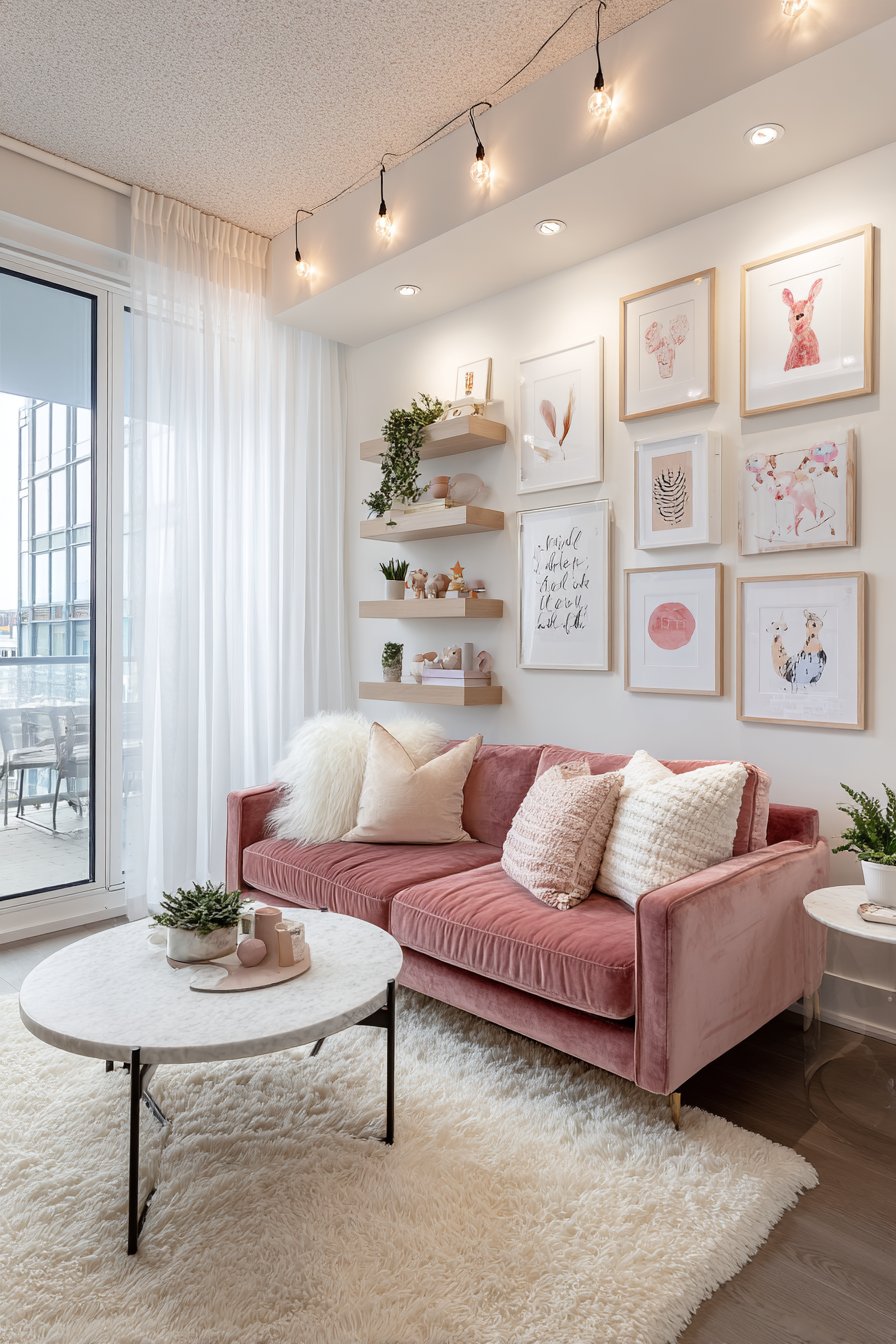
The beauty of apartment living room design is that it encourages creativity and intentionality. Unlike large homes where furniture can sometimes feel lost in expansive rooms, apartments demand thoughtful curation where every piece serves a purpose and contributes to the overall aesthetic. From Scandinavian minimalism to bohemian eclecticism, from vintage romance to industrial chic, there’s a design approach perfectly suited to your taste and lifestyle. The secret is understanding how to balance visual appeal with practical functionality, ensuring your living room works as hard as it looks good.
In this comprehensive guide, we’ll explore twenty-seven distinct cute living room ideas specifically tailored for apartment living. Each concept demonstrates how smart furniture choices, clever storage solutions, and thoughtful styling can create spaces that are both adorable and eminently livable. You’ll discover how to work with challenging layouts, maximize natural light, incorporate your favorite design styles, and create multi-functional spaces that adapt to your daily needs. Whether you’re drawn to soft pastels and romantic textures, bold colors and modern lines, or earthy tones and natural materials, these ideas will inspire you to create a living room that truly feels like home.
1. Compact Sectional Seating with Cozy Textiles
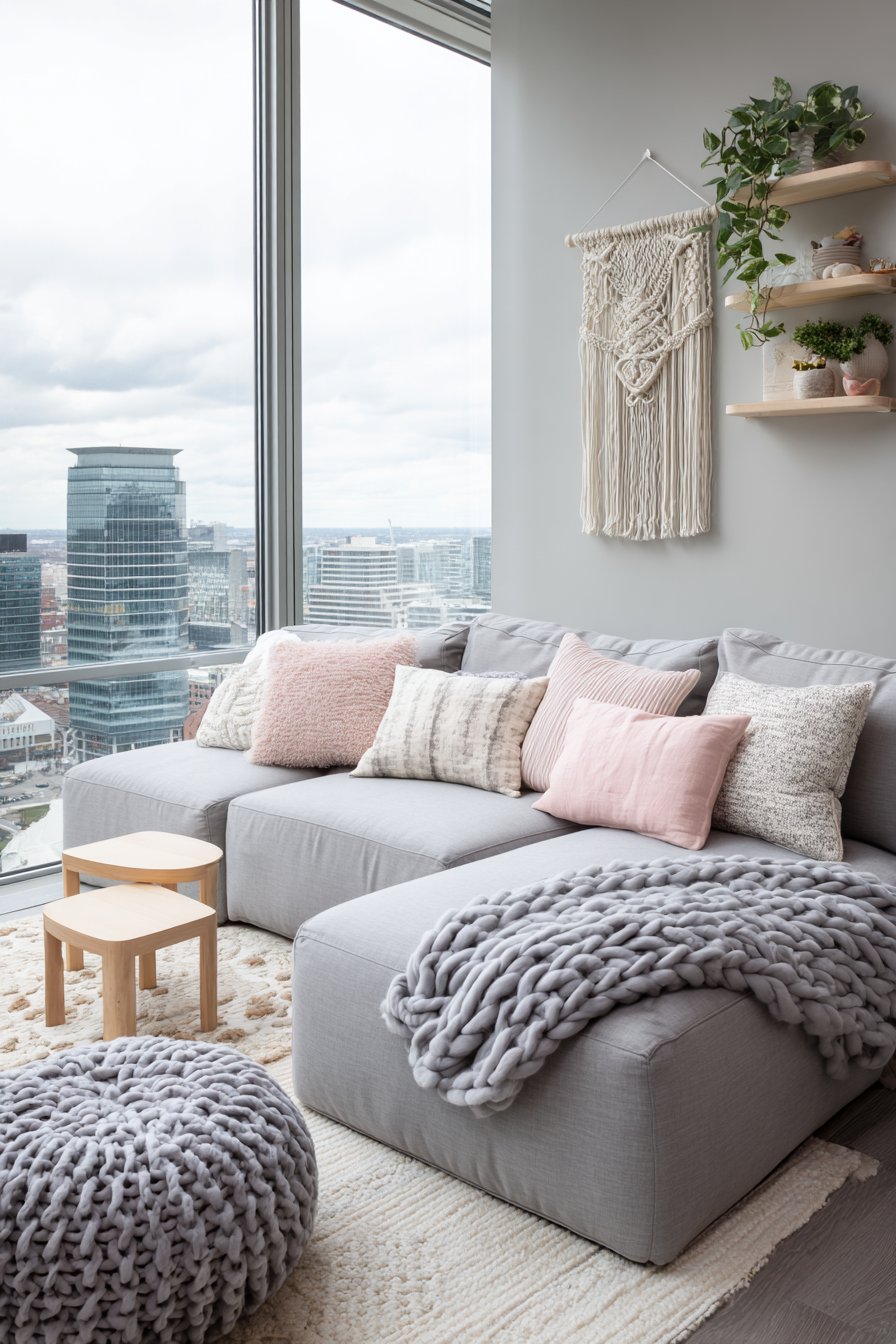
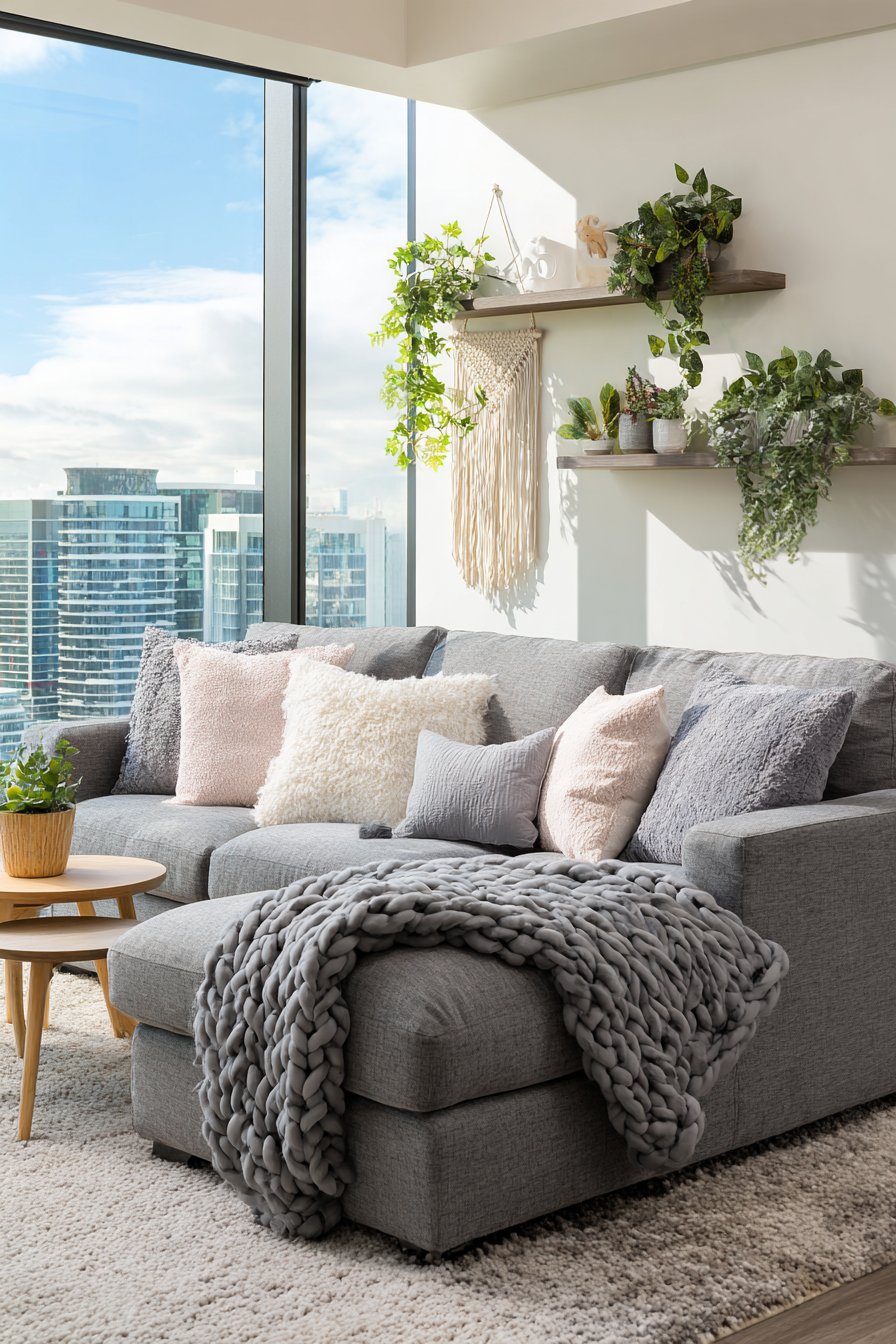
The foundation of this charming apartment living room centers around a thoughtfully sized sectional sofa in soft grey fabric, proving that comfort and style can coexist even in limited square footage. The sectional’s compact proportions ensure it doesn’t overwhelm the room while still providing ample seating for relaxing or entertaining. Draped across the cushions, oversized knit throw blankets in cream and oatmeal tones invite you to curl up with a good book, while an array of patterned cushions in pastel shades—think dusty rose, sage green, and powder blue—add visual interest without creating visual chaos.
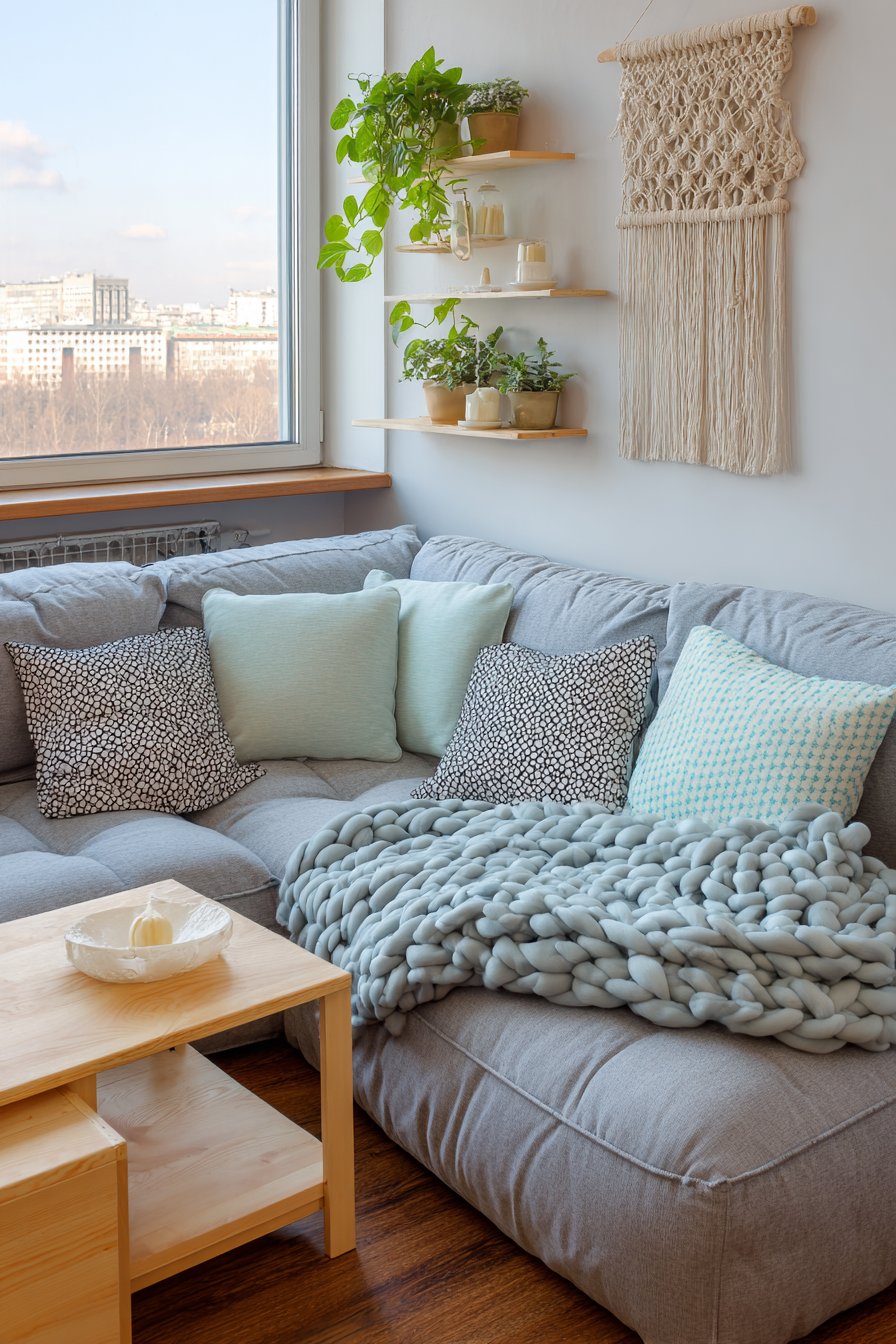
The nesting coffee table set in light wood serves as both a practical surface and a clever space-saving solution. These tables can be separated when you need extra surface area for entertaining or tucked together to maximize floor space during daily living. Above the sofa, a macramé wall hanging introduces textural depth and bohemian flair, its intricate knots and natural cotton fibers creating a focal point that draws the eye upward, making the room feel taller and more expansive.
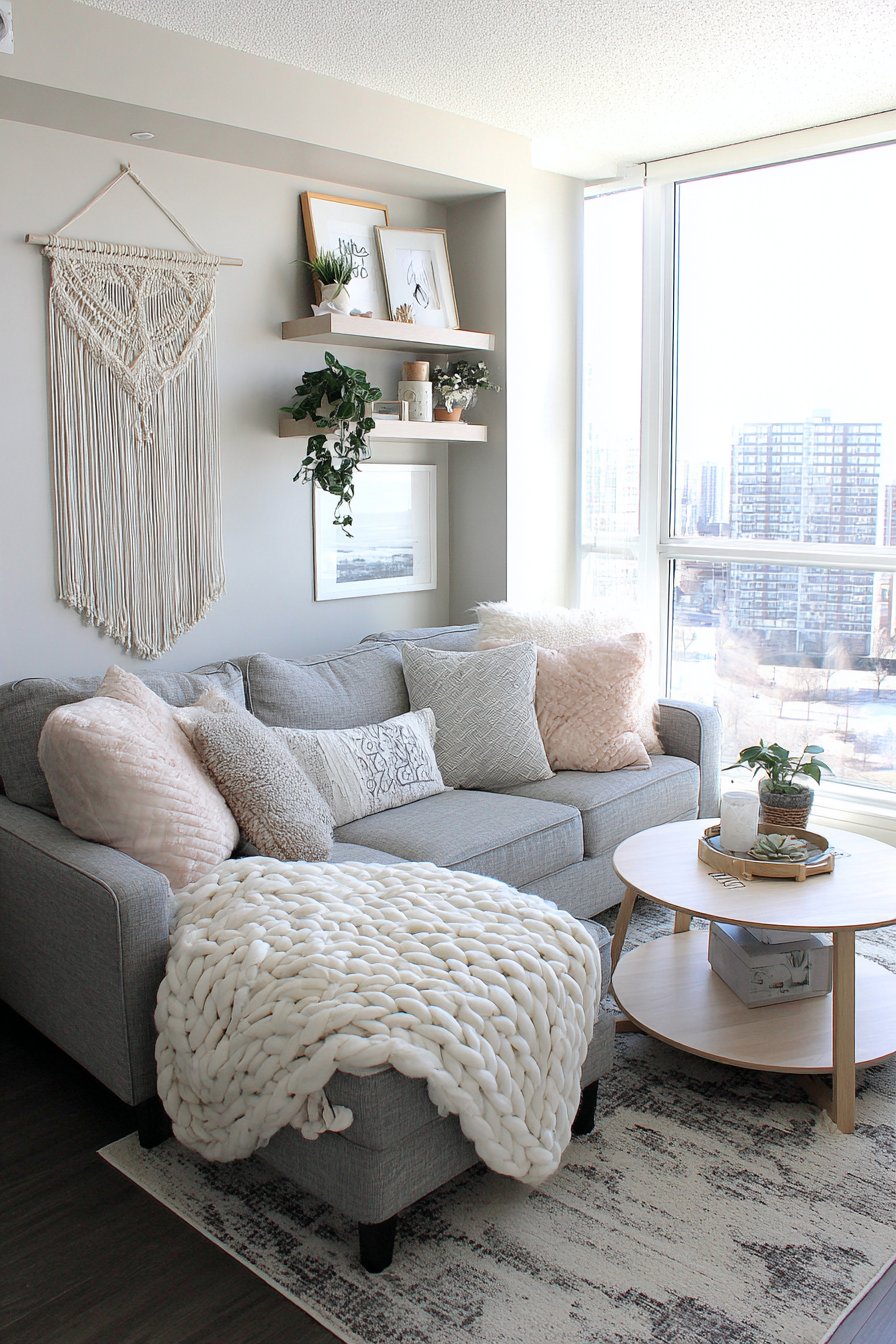
Floating shelves installed at varying heights showcase trailing pothos plants whose cascading vines soften the room’s edges and bring life to the vertical spaces. This strategic use of greenery not only purifies the air but also creates visual movement that makes the room feel more dynamic. The wide-angle composition captures how natural daylight streams through the window, illuminating the various textures—from the chunky knit of the throws to the smooth grain of the wood tables—and highlighting how smart furniture choices can make even compact spaces feel both cozy and surprisingly spacious.
Key Design Tips: Choose a sectional with a smaller footprint specifically designed for apartments; incorporate nesting tables that offer flexibility without permanent space commitment; use vertical space with floating shelves to keep floor areas open; layer textiles in complementary neutral tones to add warmth without visual clutter; introduce trailing plants to create the illusion of a larger, more connected space; ensure adequate natural light to make textured elements shine and prevent the room from feeling cramped.
2. Romantic Blush Velvet Lounge
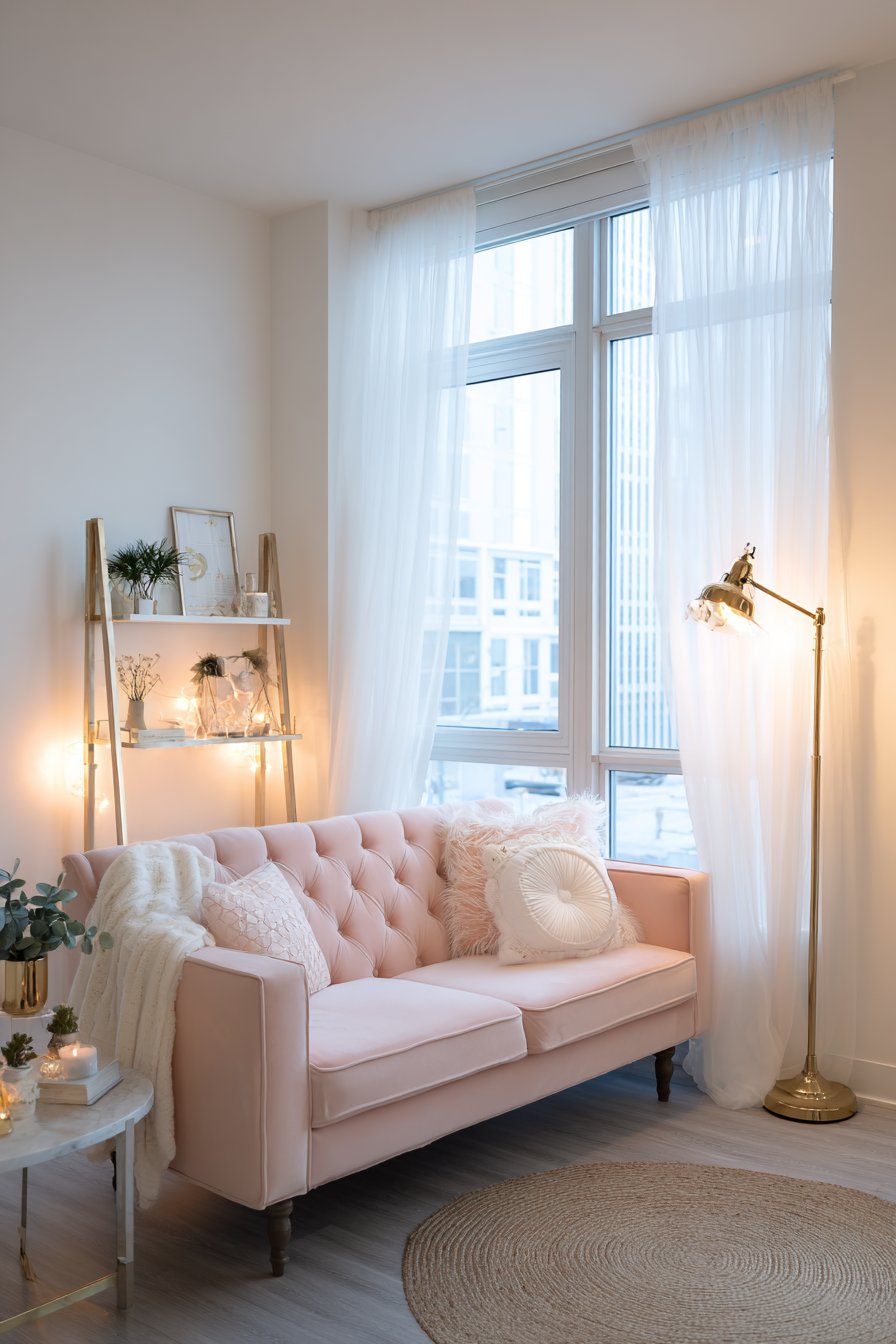
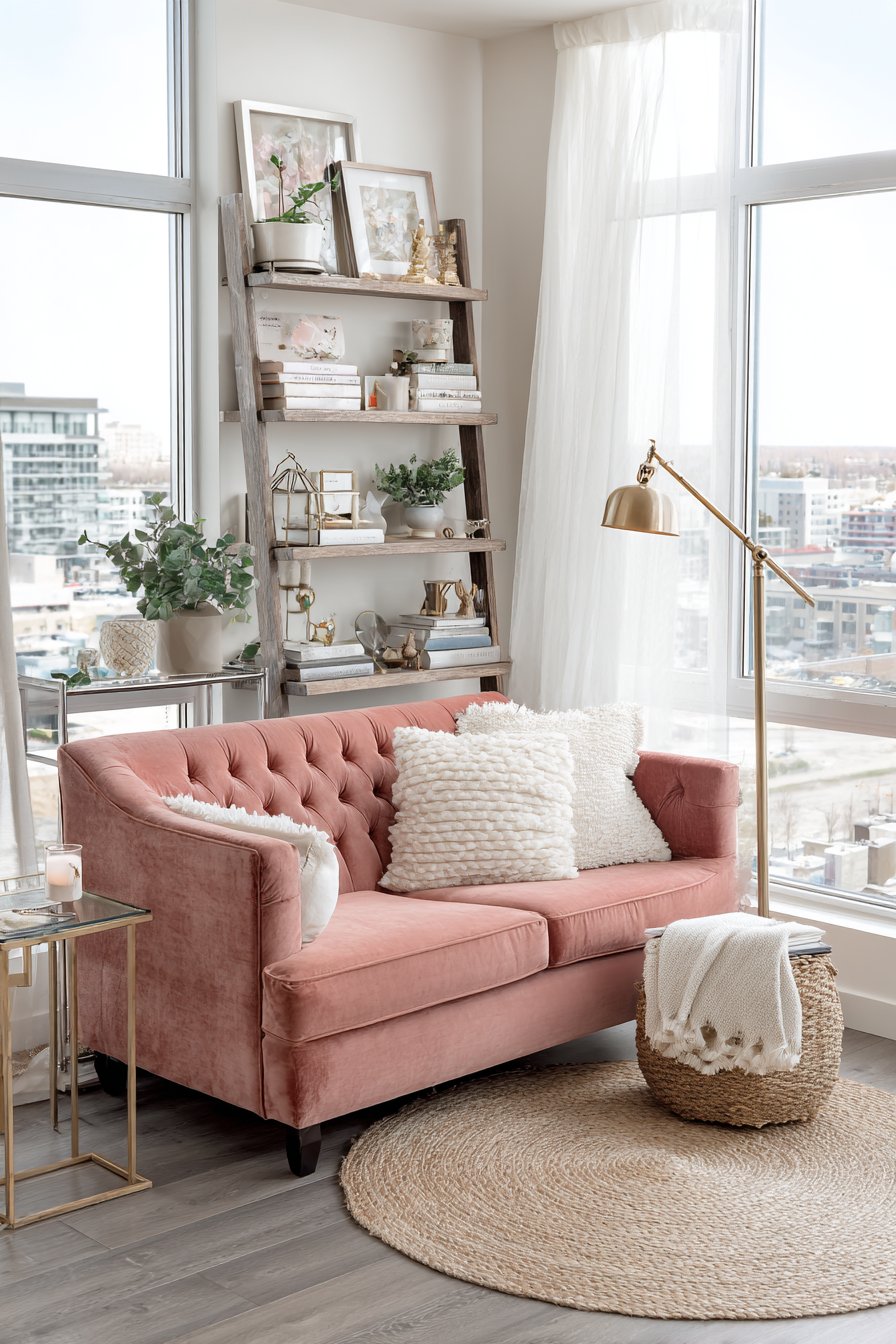
This enchanting living room design centers on a small-scale tufted loveseat upholstered in the most gorgeous dusty rose velvet, a piece that immediately establishes the room’s romantic and feminine character. The velvet’s subtle sheen catches light beautifully throughout the day, creating depth and visual interest while the button tufting adds classic elegance without feeling overly formal. Paired with a vintage-inspired brass floor lamp featuring an adjustable arm and fabric shade, the seating area becomes the perfect spot for evening reading or quiet contemplation.
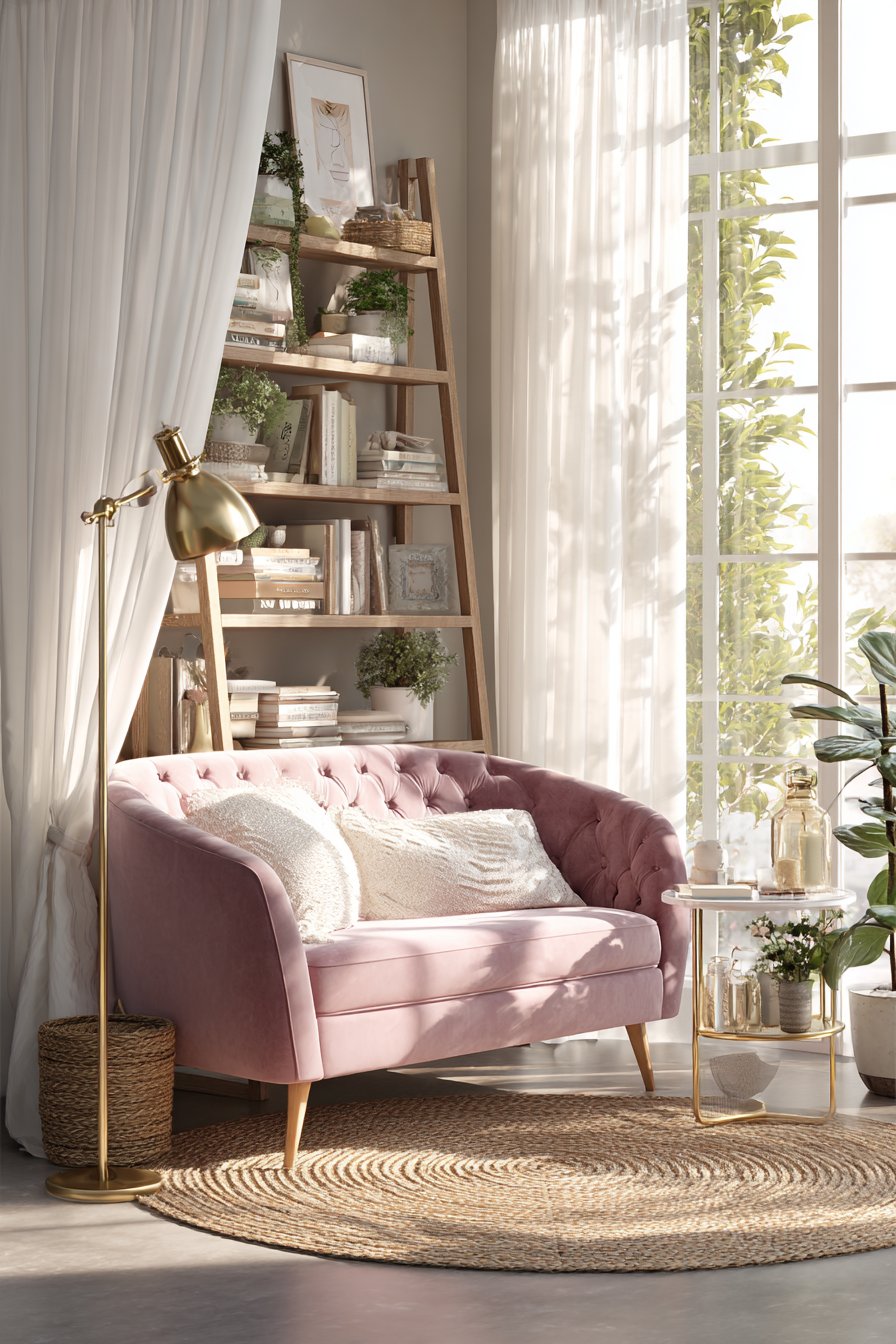
A round jute rug anchors the space, its natural texture and neutral tone providing earthy contrast to the velvet’s luxurious softness. The circular shape is particularly clever in small apartments, as it helps define the seating area without the harsh lines of rectangular rugs that can make compact spaces feel even more confined. Against one wall, a ladder shelf—leaning rather than wall-mounted—displays a carefully curated collection of books arranged both vertically and horizontally, small potted succulents in ceramic containers, and decorative trinkets that tell your personal story.
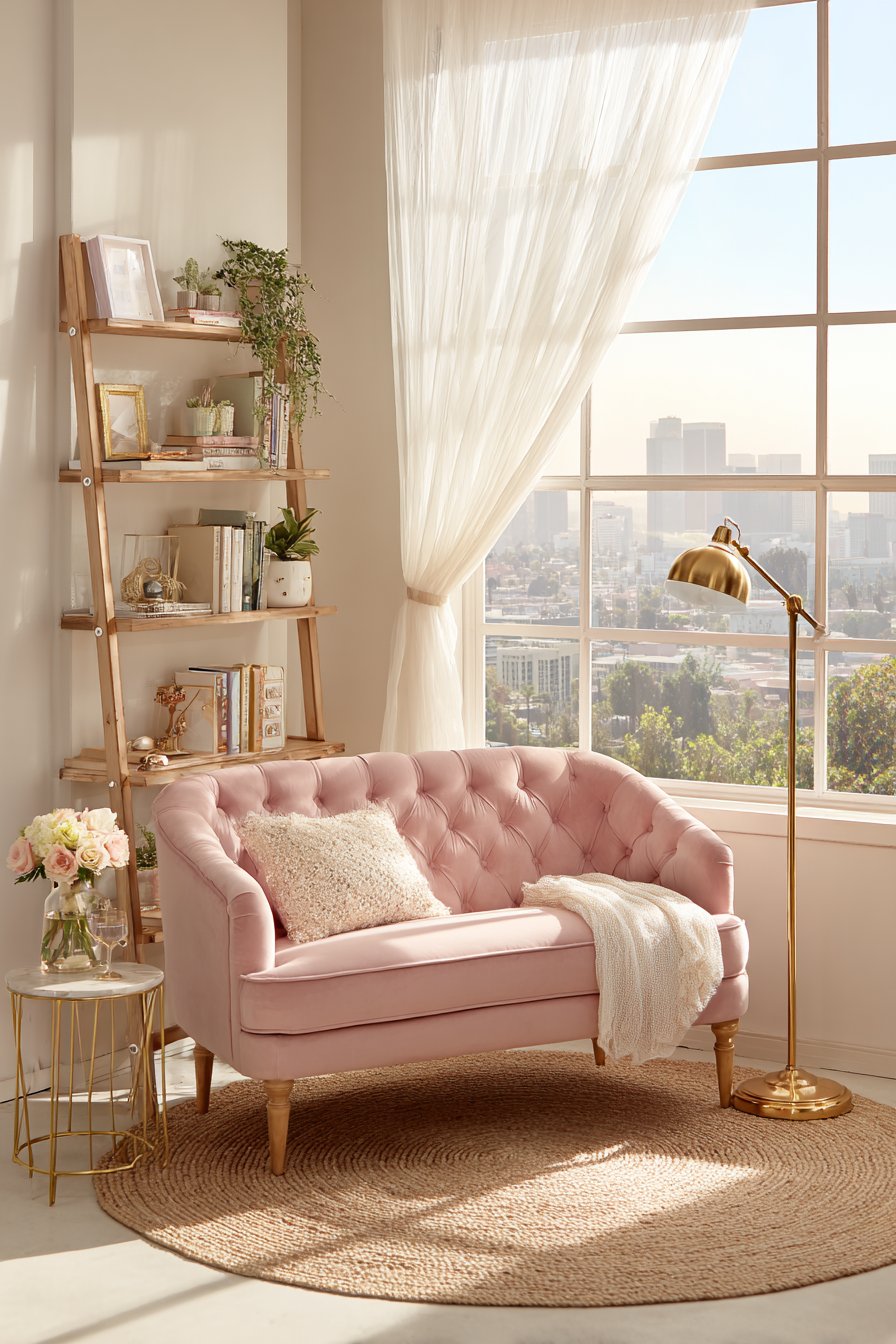
Sheer white curtains diffuse natural light beautifully, creating a soft, dreamy glow that enhances the room’s romantic atmosphere while maintaining privacy. The professional interior photography captures how balanced exposure can showcase the delicate color palette—from the blush pink of the loveseat to the warm beige of the jute to the brass accents that tie everything together. This approach to apartment living proves that you don’t need a large space to create a room that feels both sophisticated and utterly charming.
Key Design Tips: Invest in one statement furniture piece like a velvet loveseat to anchor your design; choose ladder shelves for storage that doesn’t require wall mounting (perfect for renters); use round rugs in small spaces to soften corners and improve flow; incorporate brass or gold accents to add warmth and elegance without overwhelming the palette; hang sheer curtains to maximize natural light while maintaining privacy; curate decorative displays thoughtfully rather than cluttering surfaces; select a cohesive color story and stick to it for a polished, intentional look.
3. Multi-Functional Daybed Design
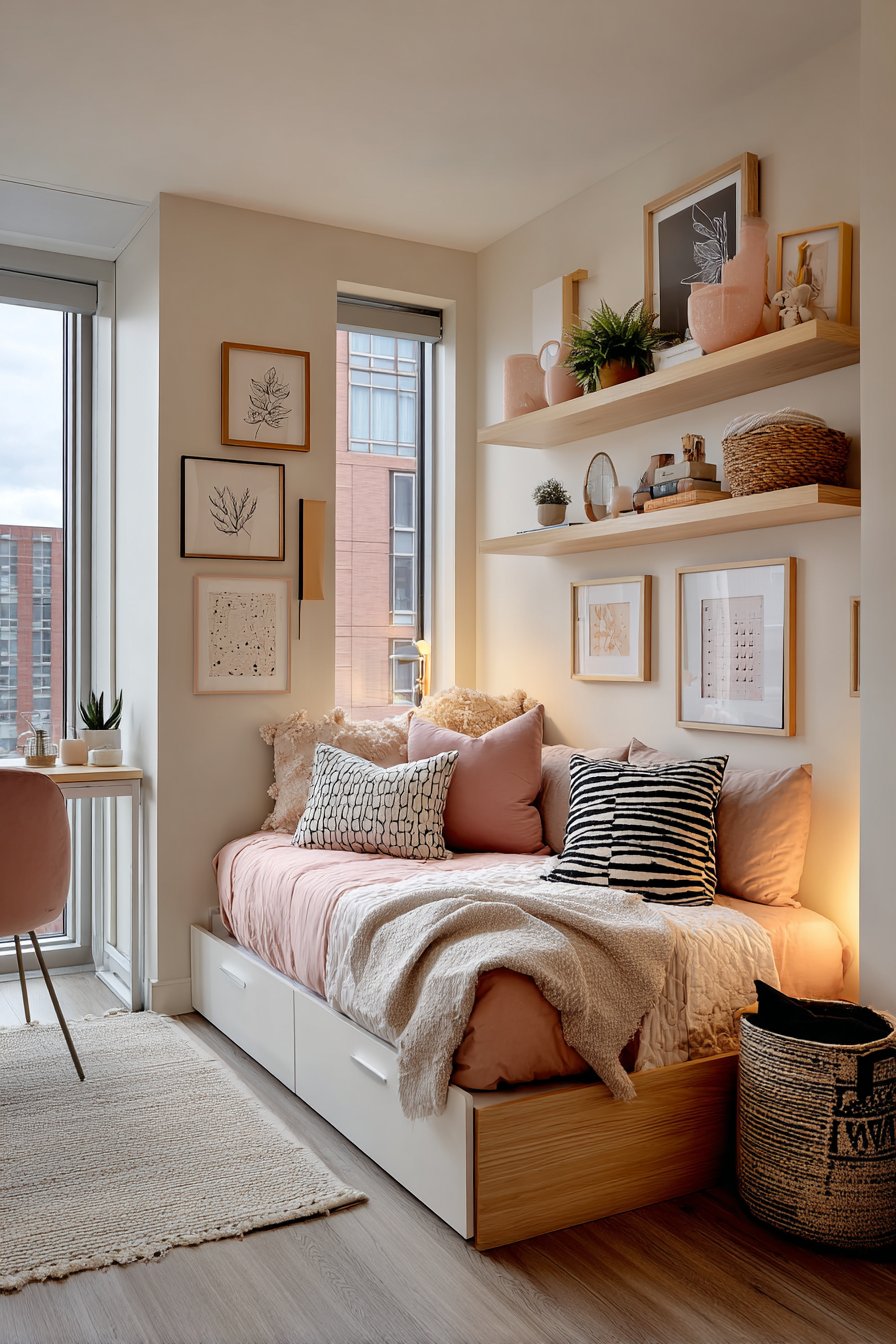
This ingenious living room solution showcases how a sleek daybed with built-in storage drawers can revolutionize apartment living by serving multiple purposes without sacrificing style. The daybed, styled with coordinating throw pillows featuring geometric patterns in navy, mustard, and grey, functions as comfortable seating during the day and transforms into a guest bed when needed—perfect for those frequent overnight visitors or for your own relaxation. The storage drawers beneath provide valuable hidden space for seasonal items, extra linens, or belongings you want accessible but out of sight.
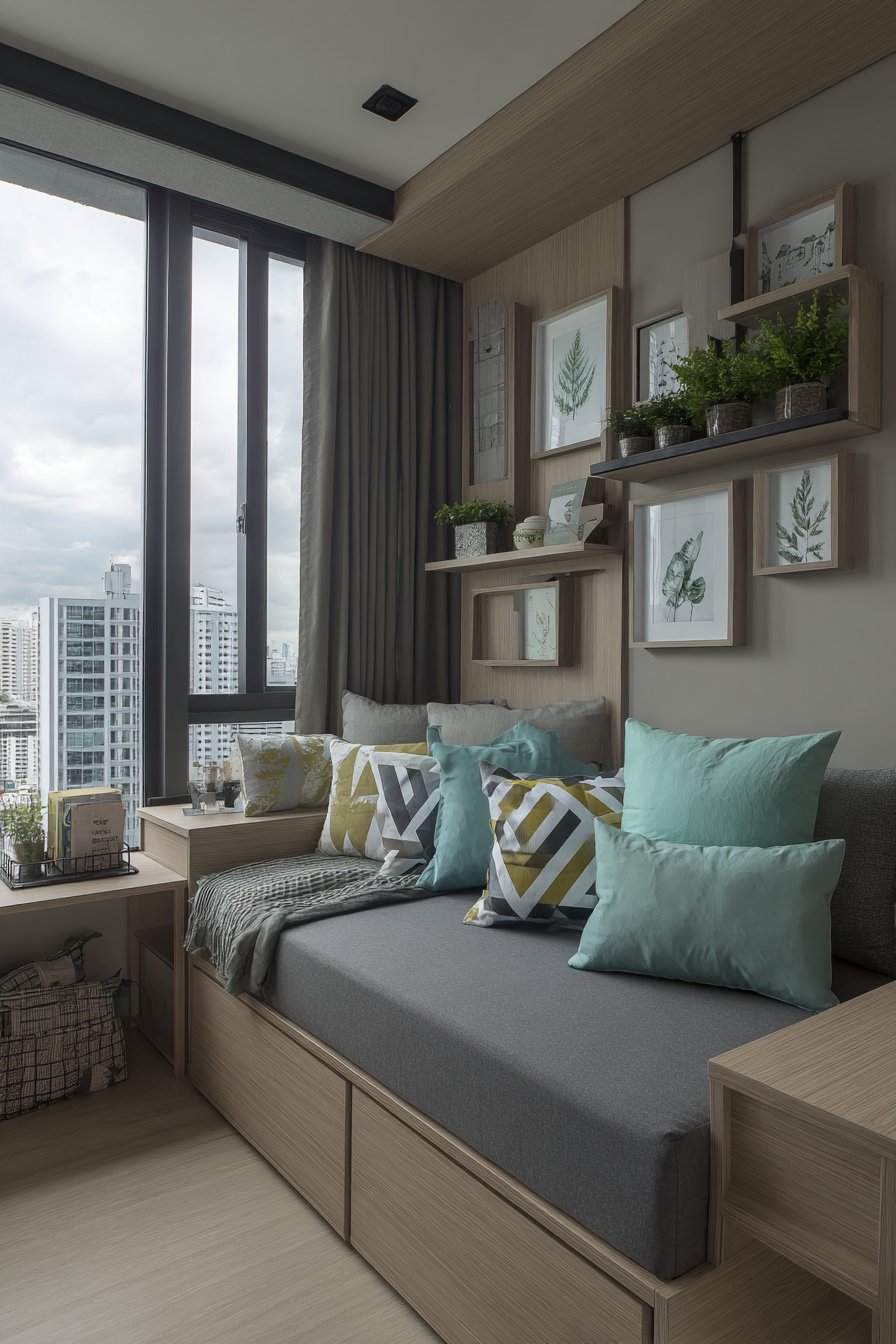
A fold-down wall-mounted desk adds another layer of functionality to this hardworking space. When not in use, it folds flat against the wall, disappearing completely and preserving precious floor space. When needed for work or hobbies, it provides a sturdy surface without the permanent footprint of a traditional desk. Above this workspace, a gallery wall of framed botanical prints creates visual interest and brings nature indoors, with each print carefully selected to complement the room’s color palette.
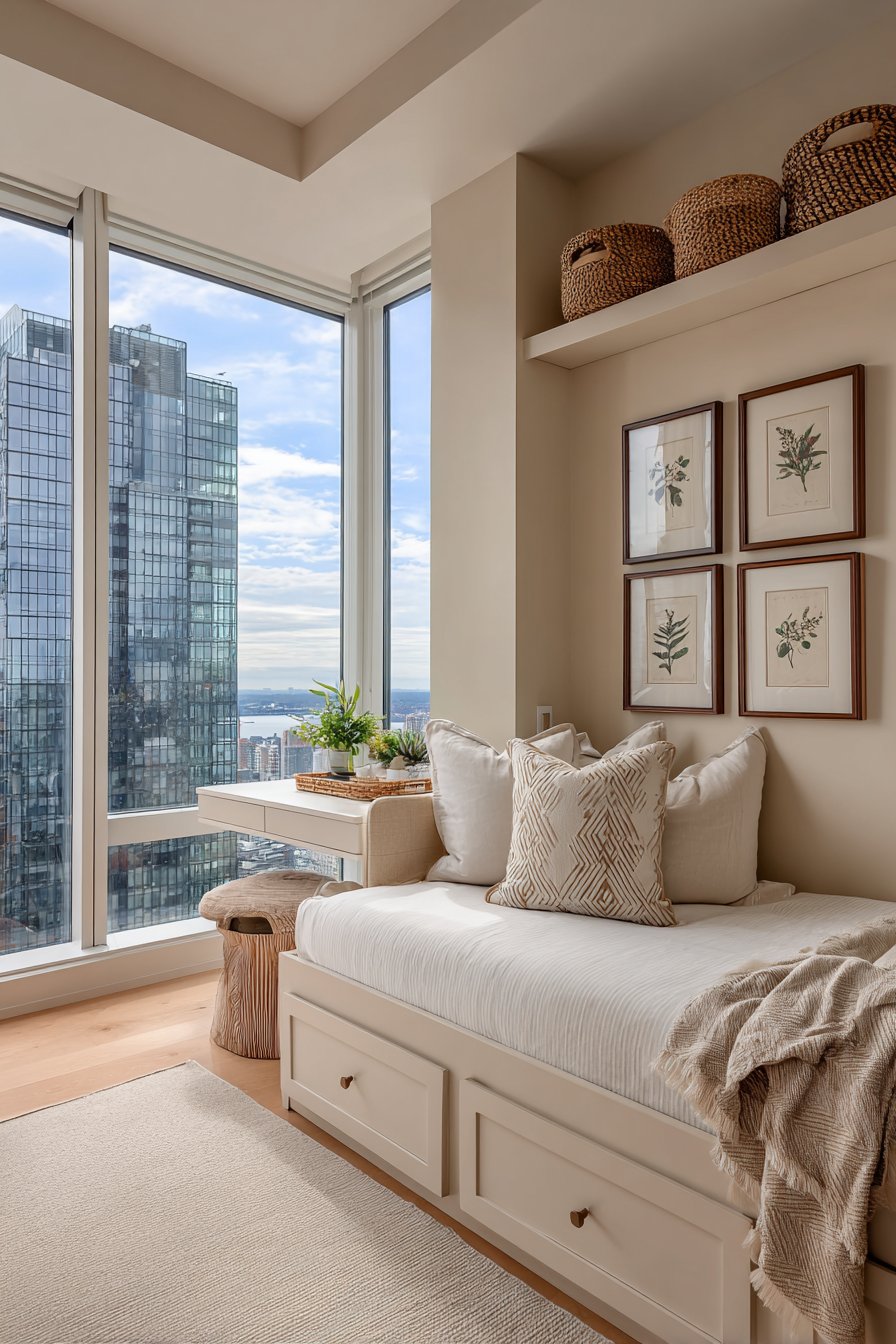
Natural oak floating shelves hold decorative baskets in varying sizes—practical for corralling remotes, chargers, and other small items—while small potted ferns add organic shapes and vibrant green hues that energize the space. The interior design photography emphasizes how soft natural lighting showcases these clever space-saving solutions, proving that apartment living rooms can be both adorable and remarkably efficient. The key is choosing furniture that works overtime, ensuring every piece earns its place through both function and aesthetic appeal.
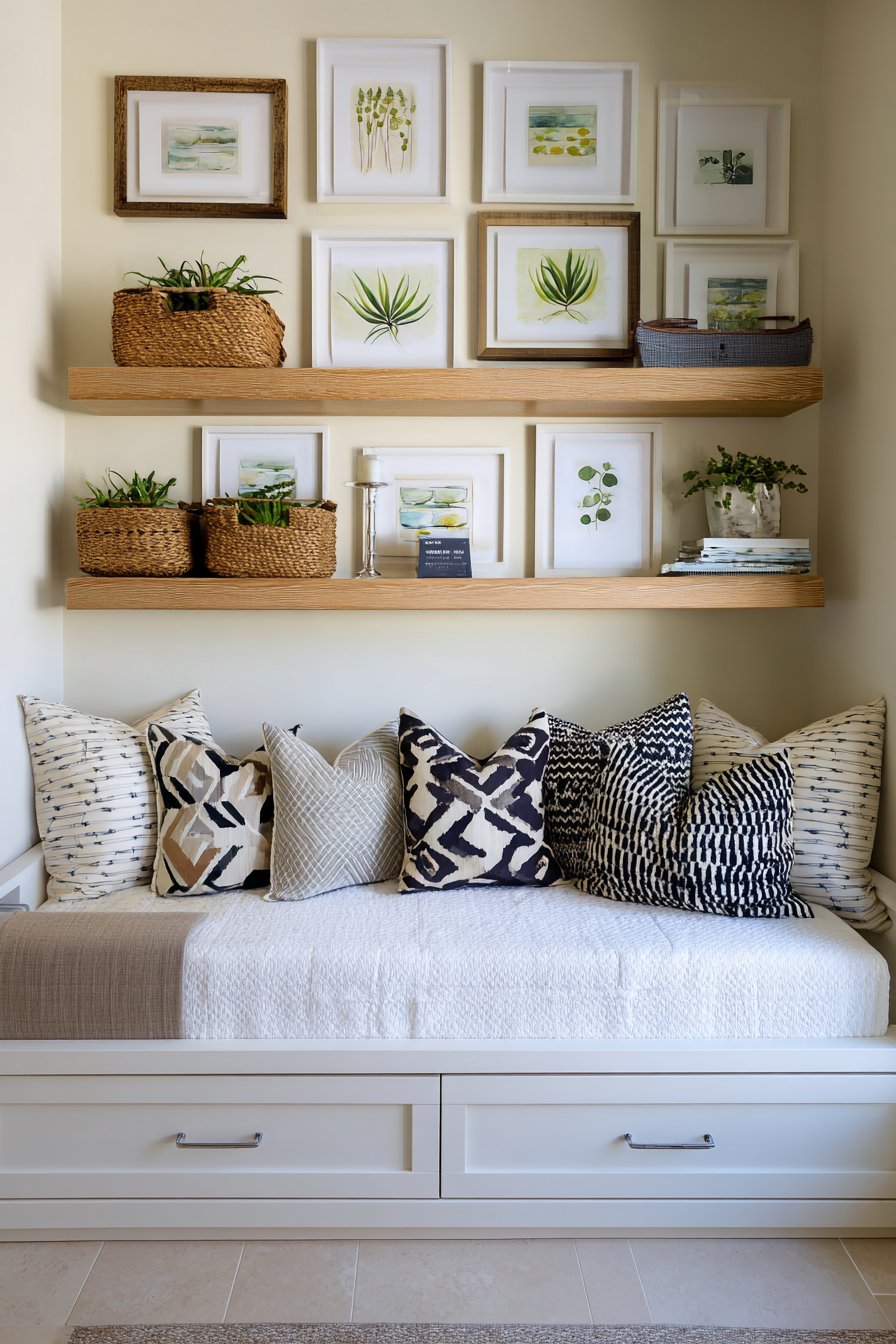
Key Design Tips: Select a daybed with storage to maximize functionality in limited square footage; install fold-down furniture for workspaces that disappear when not needed; use geometric patterns to add visual interest without overwhelming small spaces; incorporate floating shelves to free up floor space while providing display and storage; choose coordinating rather than matching pillows for a collected, layered look; add plants at varying heights to create depth and visual movement; ensure your furniture serves multiple purposes to justify its footprint in compact apartments.
4. Light and Airy Cream Minimalism
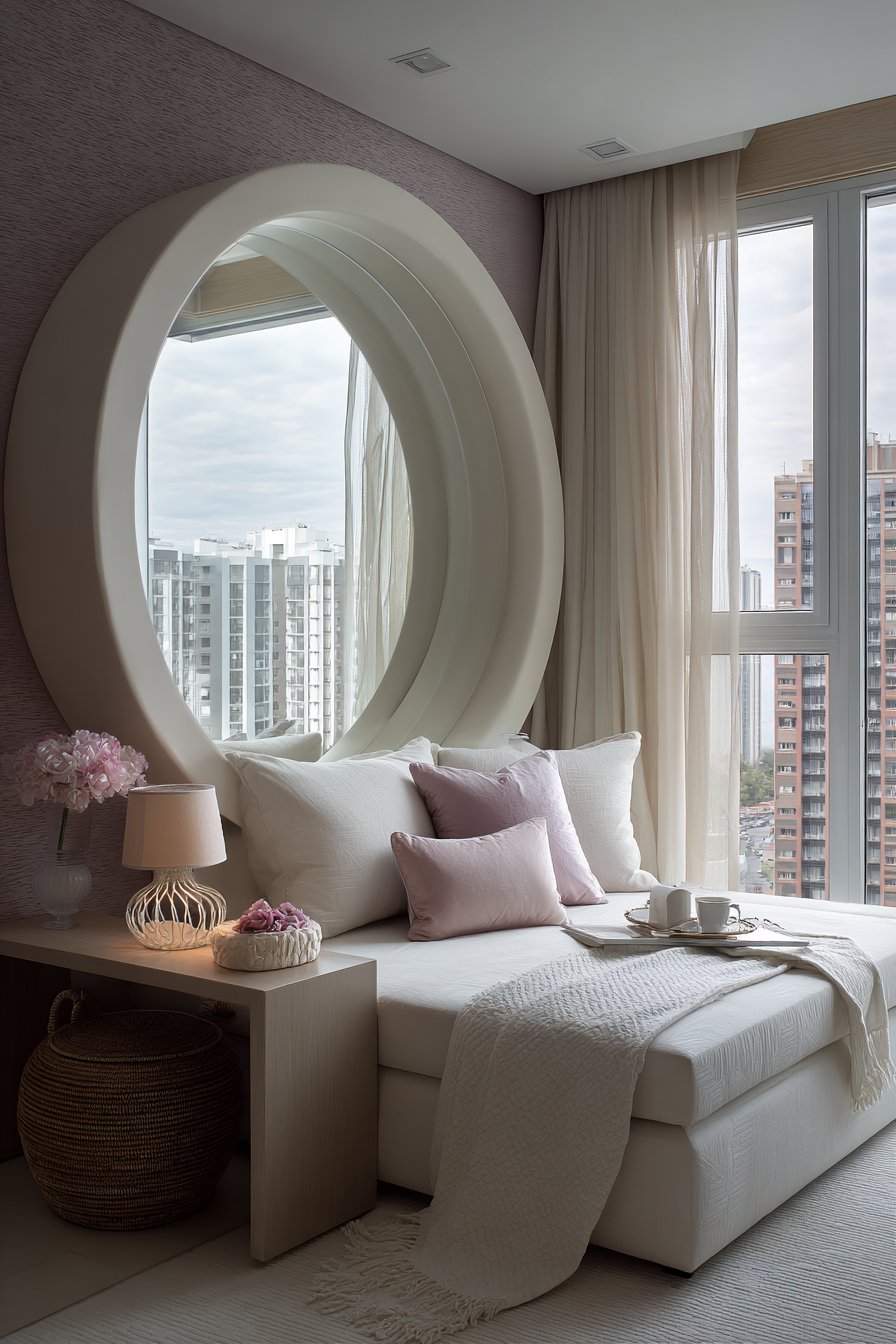
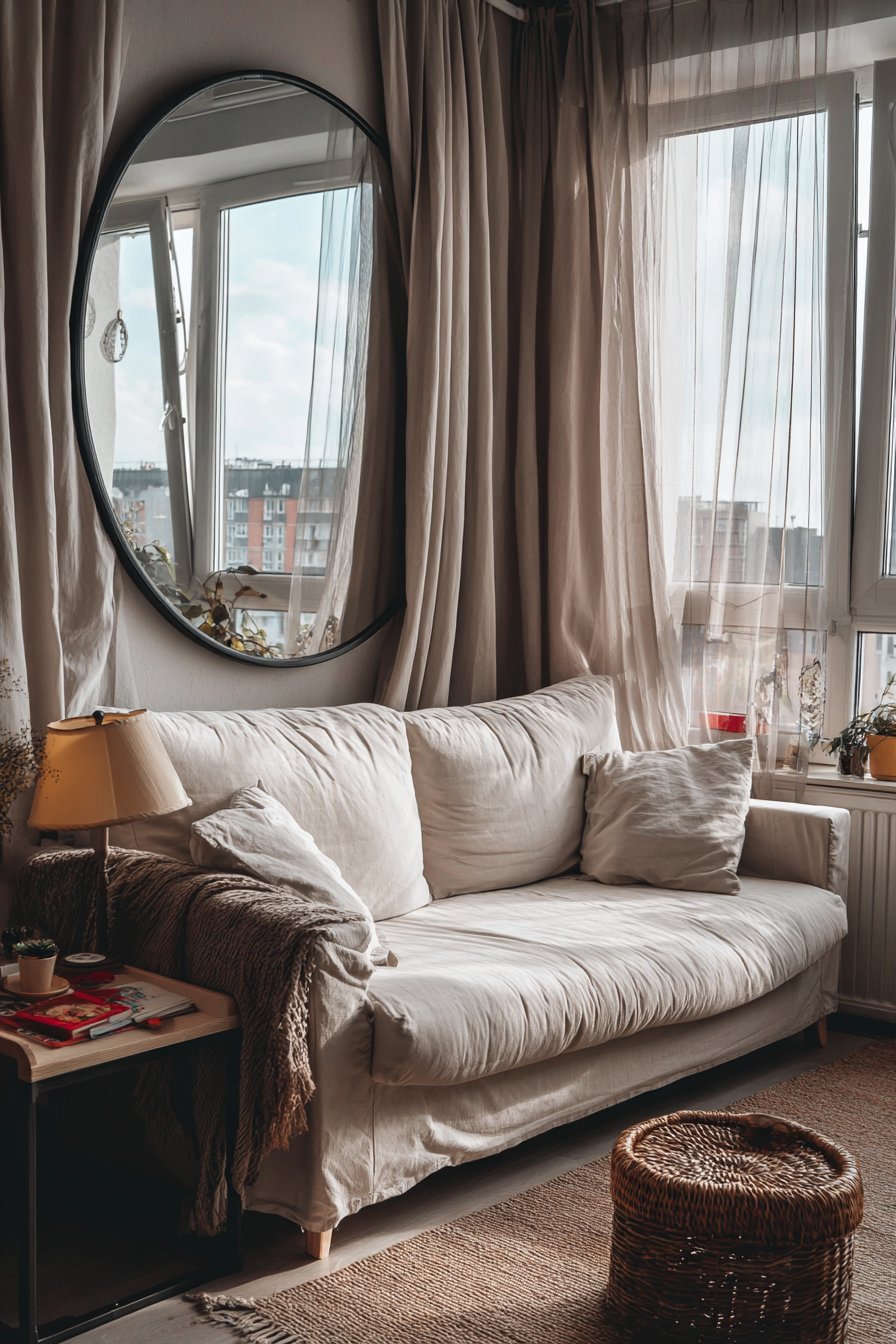
The essence of this living room lies in its commitment to creating visual spaciousness through carefully chosen elements that reflect and amplify light. A petite modern sofa in cream linen anchors the room with its clean lines and neutral palette, positioned strategically beneath a large round mirror that works magic by visually doubling the perceived space. This mirror placement is no accident—by reflecting the window opposite, it brings additional natural light into the room while creating the illusion of another window, making the apartment feel more open and connected to the outdoors.
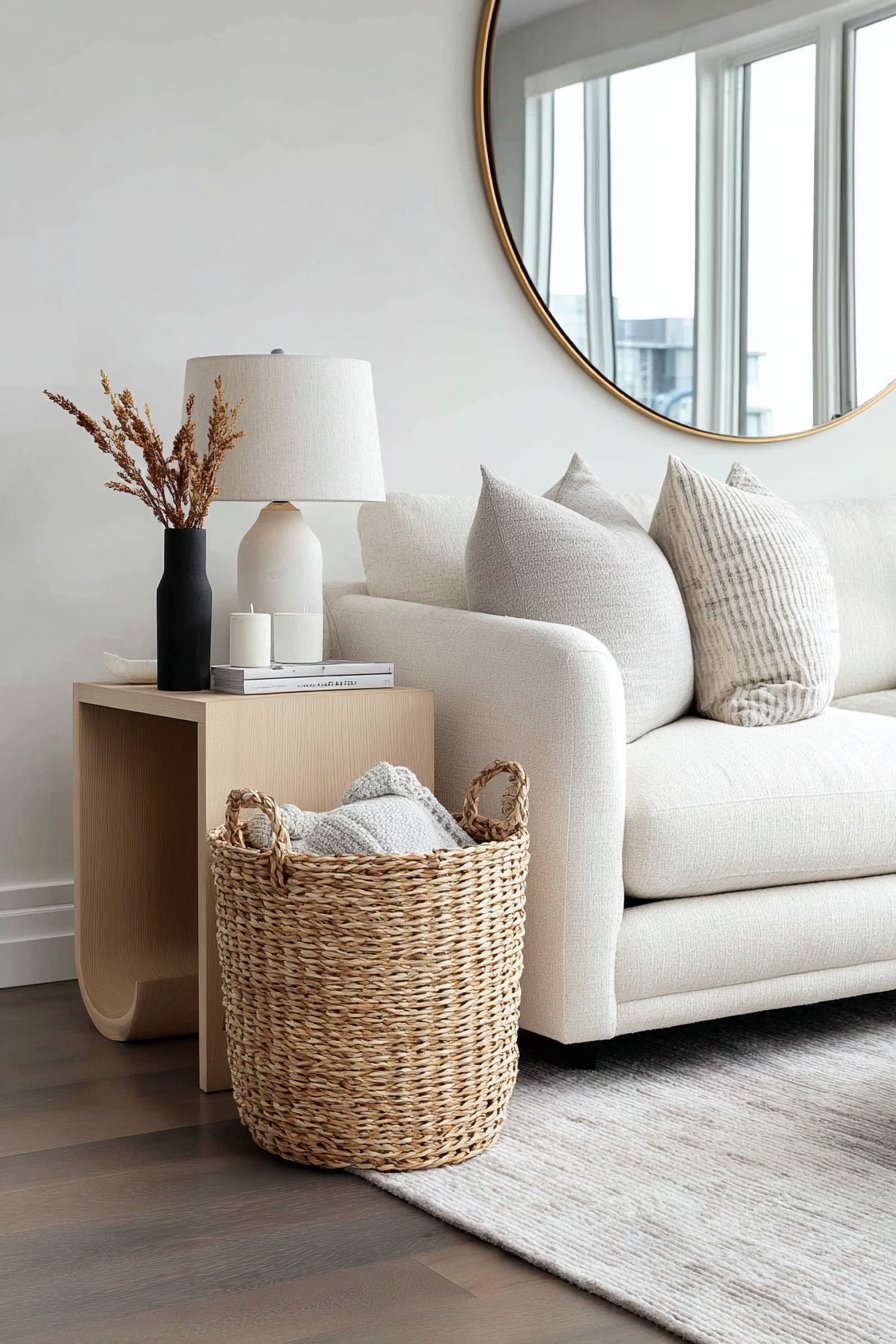
A C-shaped side table in brushed metal demonstrates the beauty of flexible furniture design. This innovative piece slides its base under the sofa arm, allowing the table surface to hover over your seating area—perfect for laptop work, coffee, or meals without blocking pathways or claiming permanent floor space. Topped with a small table lamp featuring a linen fabric shade, it provides task lighting exactly where you need it while maintaining the room’s airy aesthetic through its slim profile and light-reflecting metallic finish.
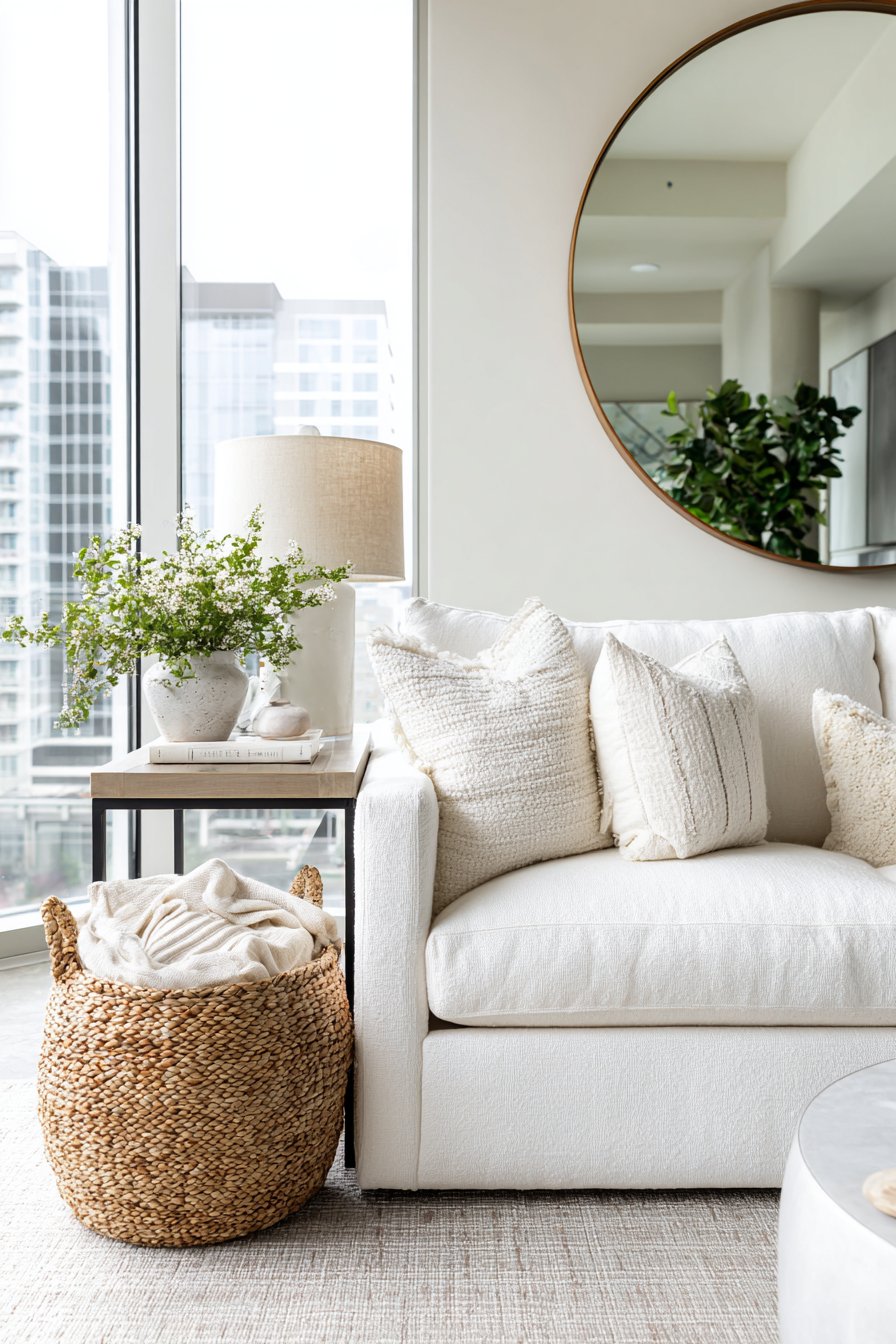
A woven basket in natural seagrass serves dual duty, storing extra throw blankets while functioning as a decorative element that introduces texture and organic warmth to the pale palette. The wide-angle perspective photography showcases how the clever use of reflective surfaces—from the mirror to the metallic table to the cream sofa’s subtle sheen—creates layers of light that make this compact apartment living room feel surprisingly spacious. The result is a space that feels open, calm, and effortlessly sophisticated despite its modest dimensions.
Key Design Tips: Use large mirrors strategically to reflect light and create the illusion of more space; choose cream and neutral tones to maximize brightness and airiness; select C-shaped or nesting tables for flexibility without permanent floor commitment; incorporate metallic finishes to reflect light and add subtle sophistication; store practical items like blankets in decorative baskets that enhance rather than detract from the design; position furniture to maximize natural light flow through the space; keep the color palette cohesive and light to prevent visual fragmentation that makes small rooms feel cluttered.
5. Cozy Corner Reading Retreat
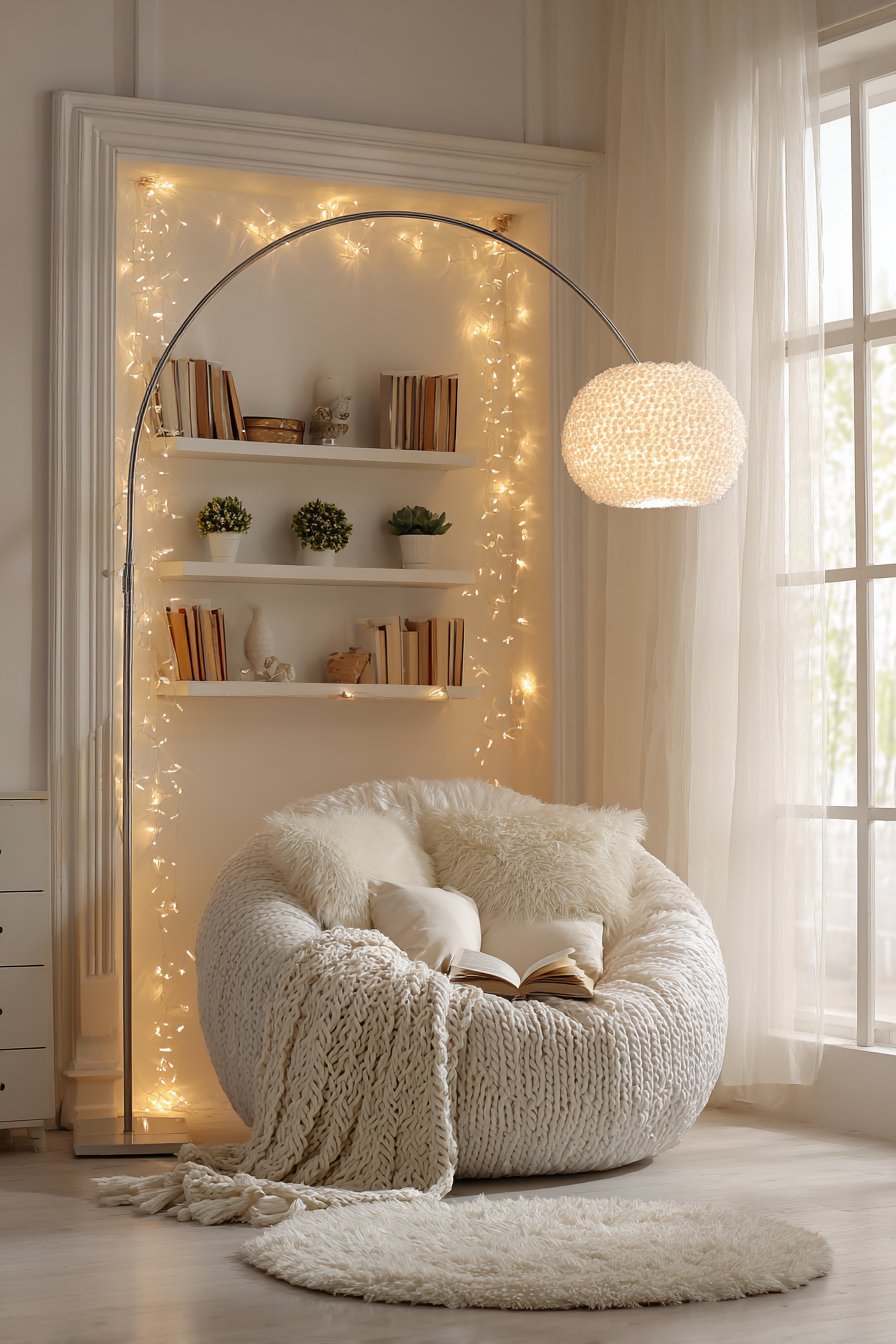
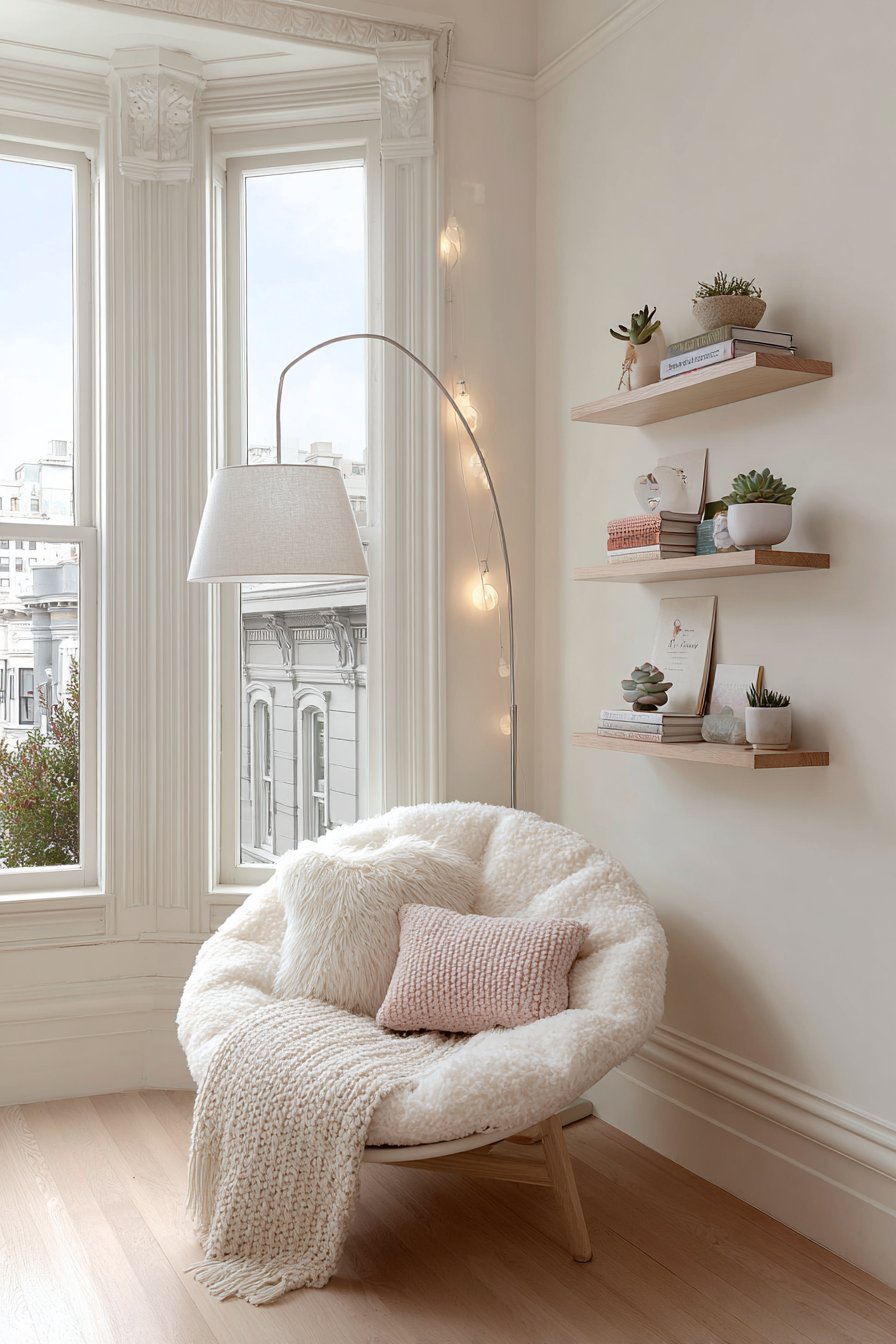
This delightful living room design dedicates precious square footage to creating a personal sanctuary—a corner reading nook that transforms unused space into your favorite spot in the apartment. The centerpiece is a comfortable papasan chair, that iconic bowl-shaped seat that cradles you in complete comfort, adorned with fluffy cushions in cream and grey tones and a chunky knit throw in soft blush. This setup invites hours of reading, relaxation, or simply gazing out the window while enjoying your morning coffee.
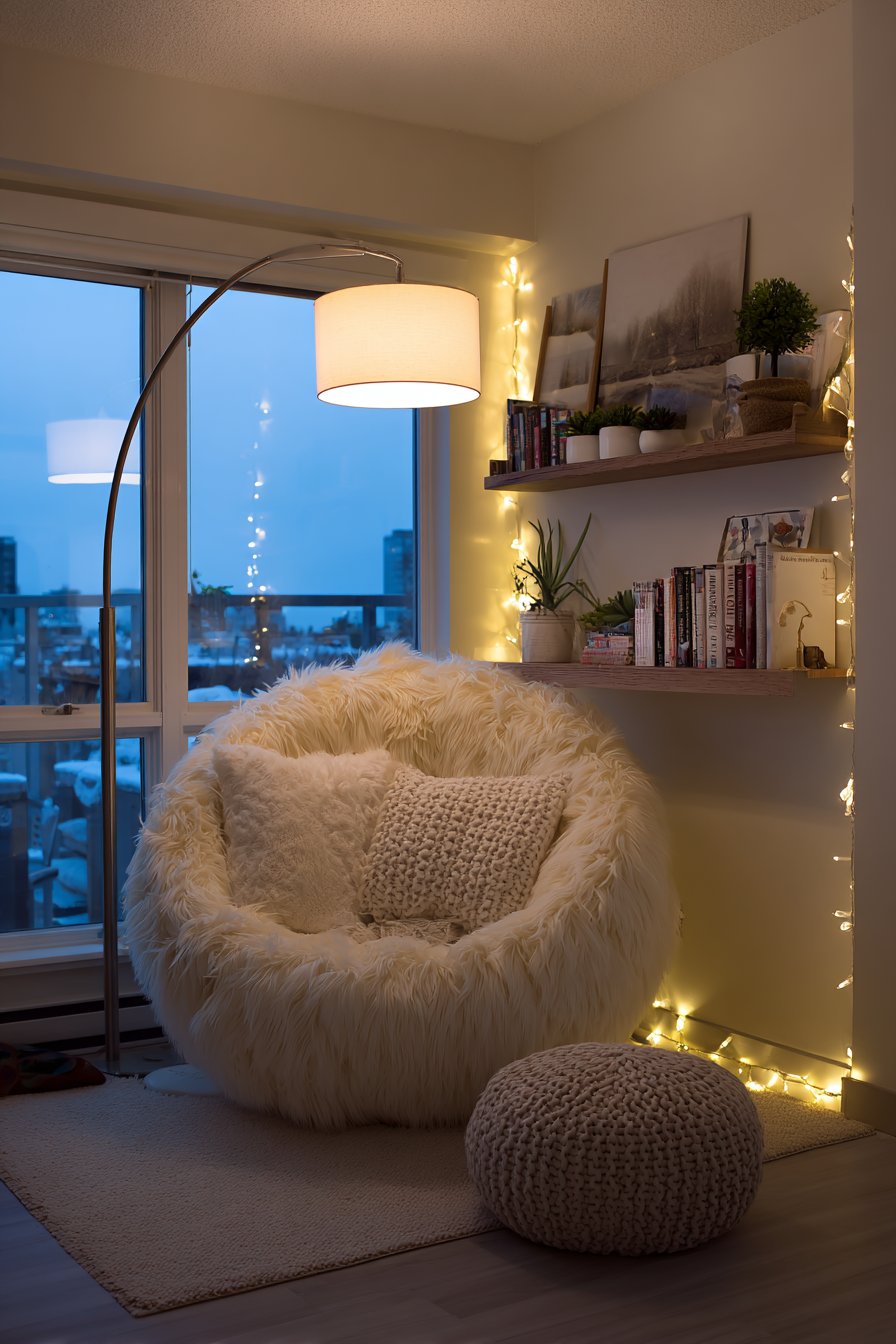
A tall arc floor lamp curves gracefully over the seating area, providing focused lighting that’s perfect for reading without the harsh glare of overhead fixtures. The lamp’s adjustable nature means you can direct light exactly where you need it, whether you’re deep in a novel or working on a craft project. Wall-mounted floating shelves create a personal library within arm’s reach, displaying a curated collection of beloved books arranged by color or size, interspersed with small succulent arrangements in ceramic planters that bring life and color to the display.
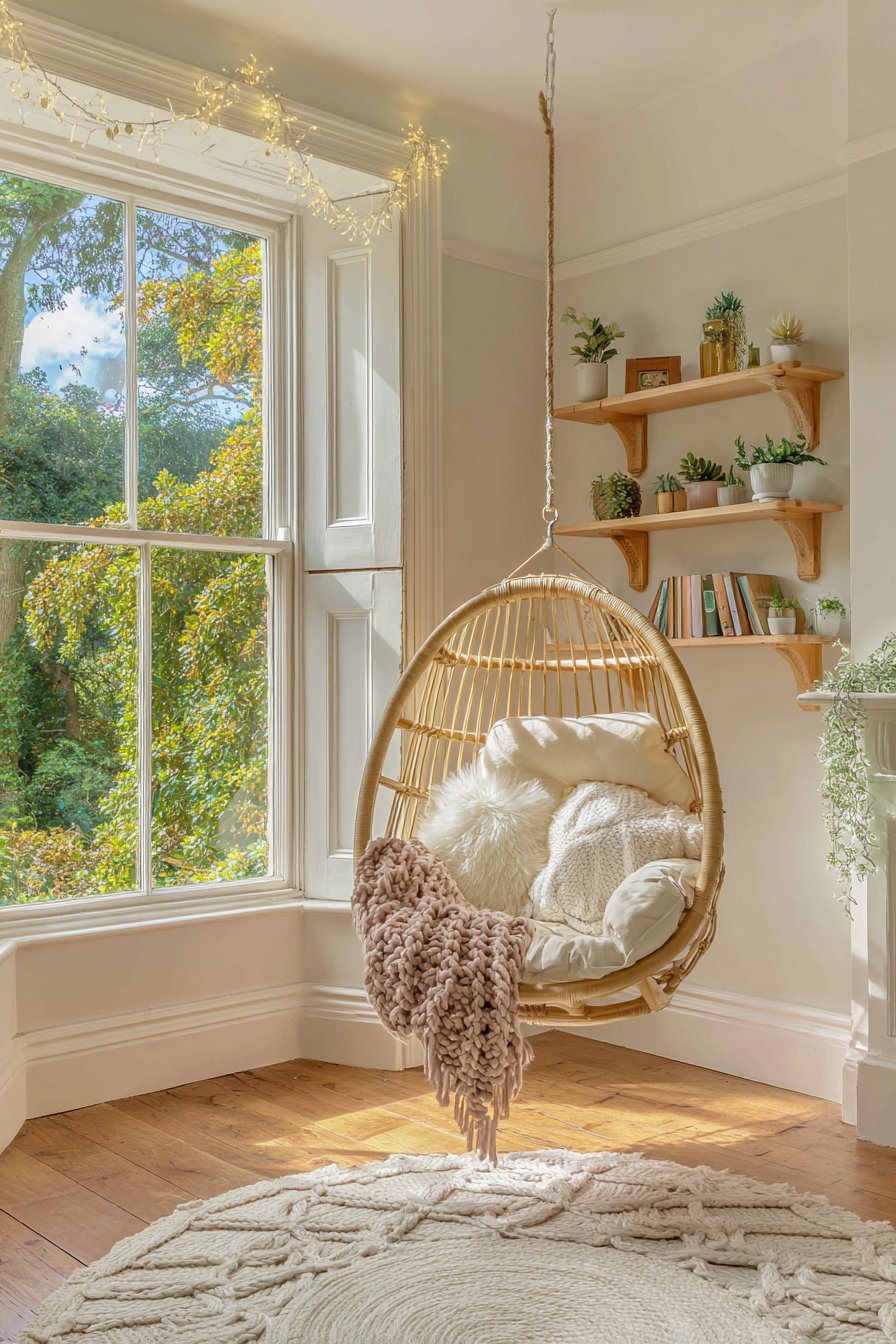
Fairy lights strung along the corner ceiling add a touch of whimsy and create ambient lighting for evening hours, their warm glow transforming the nook into a magical retreat when the sun sets. Natural lighting from the nearby window provides ideal reading conditions during daylight hours, while the professional interior photography captures how different textures—from the woven rattan of the papasan to the chunky knit throw to the smooth ceramic planters—work together to create a space that feels both intimate and inviting. This design proves that even in small apartments, carving out a dedicated relaxation zone can dramatically improve your quality of life.
Key Design Tips: Create dedicated zones within your living room for specific activities; use papasan or bowl chairs for ultimate comfort in small footprints; install arc floor lamps to provide task lighting without claiming table space; arrange books by color for visual impact and easier selection; incorporate fairy lights for ambient evening lighting and magical atmosphere; position reading nooks near natural light sources whenever possible; layer different textures to create tactile richness that makes small spaces feel more luxurious; use floating shelves to display books and plants without furniture footprints.
6. Modern Sage Green Sophistication
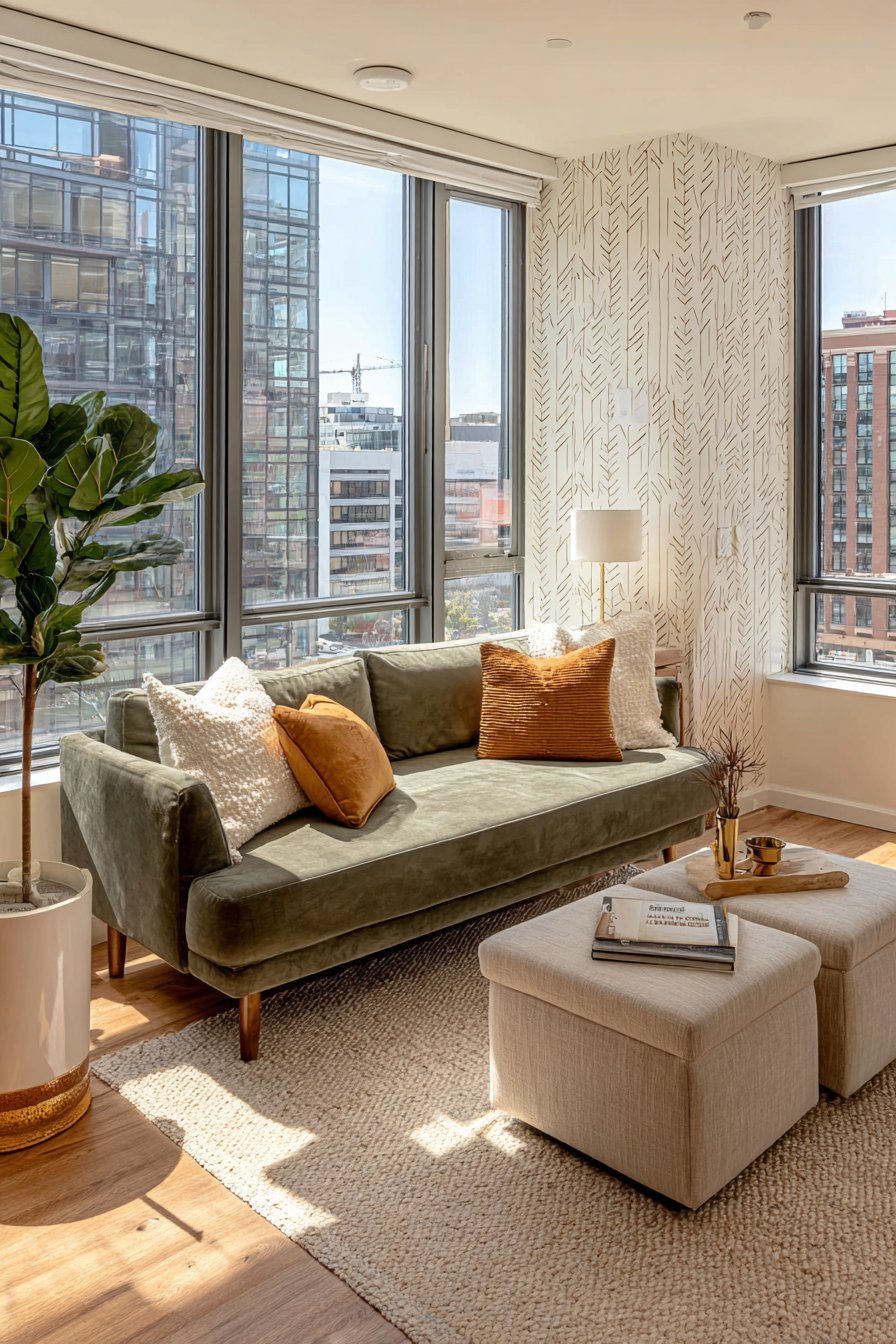
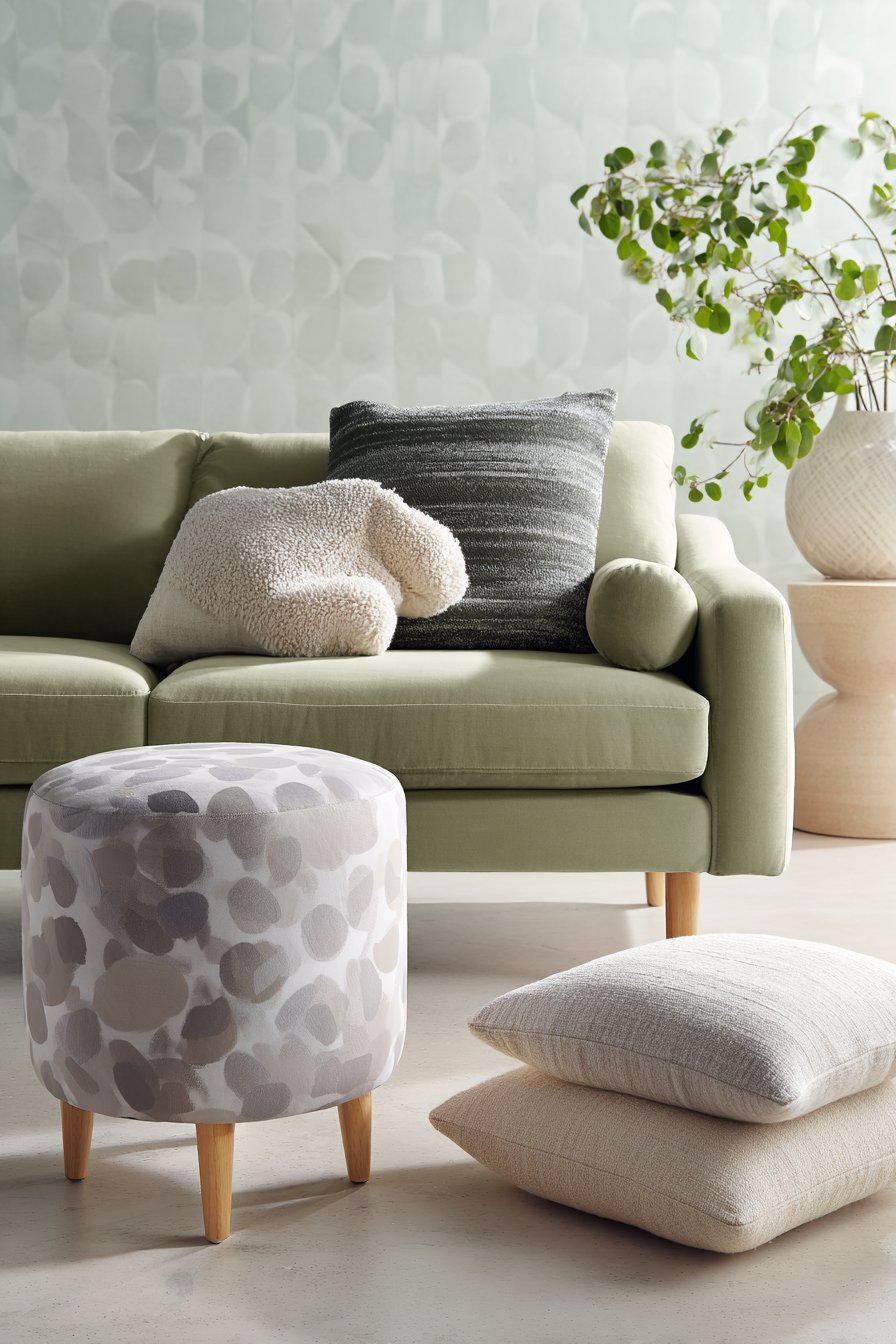
This contemporary apartment living room demonstrates how a single bold color choice can define an entire space while maintaining modern sophistication. The low-profile sofa in sage green fabric becomes the room’s statement piece, its muted yet distinctive hue bringing nature-inspired calm while the tapered wooden legs add mid-century modern character. Mixed metallic accent pillows in brass, copper, and brushed nickel create visual interest and catch light beautifully, their shimmer providing luxury touches that elevate the overall design.
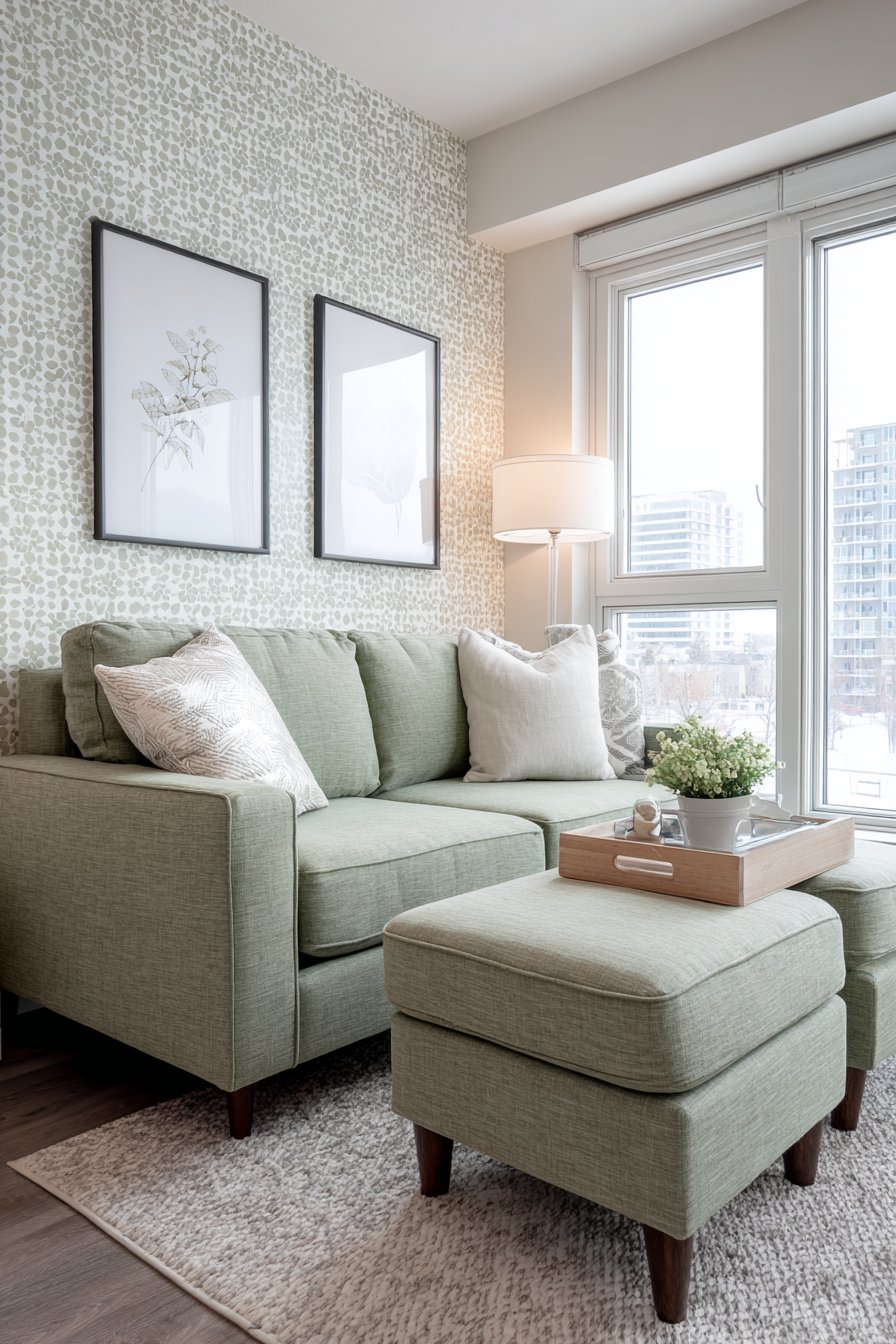
A nesting ottoman set in complementary grey fabric offers incredible versatility—use them together as a coffee table, separate them for additional seating when guests arrive, or tuck the smaller pieces away when you need to maximize floor space for activities like yoga or play. This flexibility is crucial in apartment living where your needs change throughout the day and week. The peel-and-stick removable wallpaper featuring a subtle geometric pattern transforms one wall into an accent feature without the permanent commitment or damage concerns that typically plague renters.
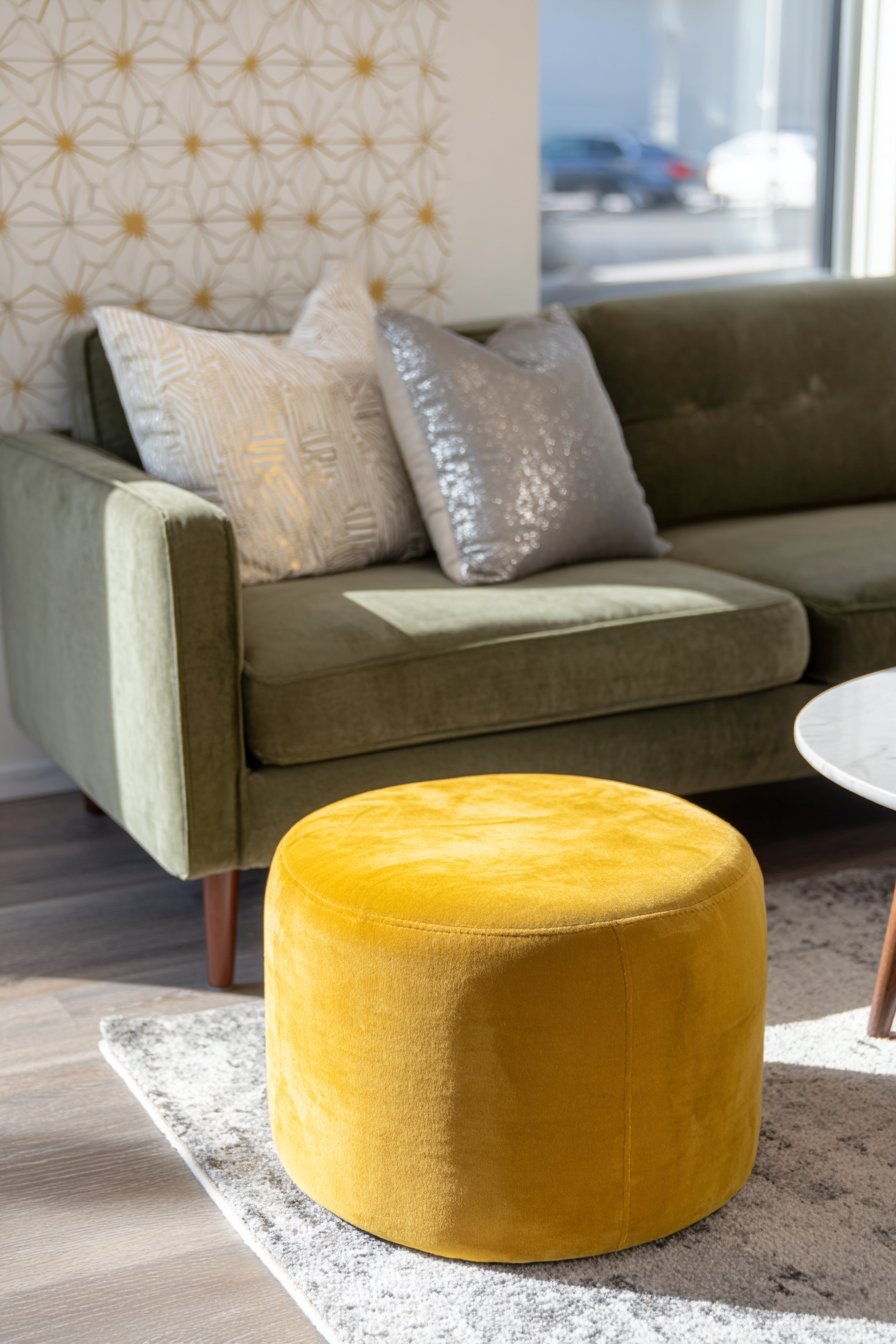
The detail-focused interior photography captures how balanced natural lighting highlights the fresh, youthful color scheme while showcasing the various metallic finishes on the pillows and accessories. This approach to renter-friendly design proves you can create a fully customized, magazine-worthy living room even in a temporary space. The sage green acts as a neutral backdrop that pairs beautifully with both warm and cool metallics, creating a sophisticated palette that feels both current and timeless.
Key Design Tips: Choose one statement color for your main furniture piece to anchor the design; use removable wallpaper to create accent walls without damaging surfaces; incorporate metallic accents in multiple finishes for depth and luxury; select nesting ottomans for maximum flexibility in seating and table surfaces; opt for low-profile furniture to make ceilings appear higher; mix warm and cool tones for visual complexity; ensure any major design choices are renter-friendly if you’re not in a permanent residence; use tapered legs on furniture to maintain visual lightness and make cleaning easier.
7. Scandinavian Simplicity with Natural Elements
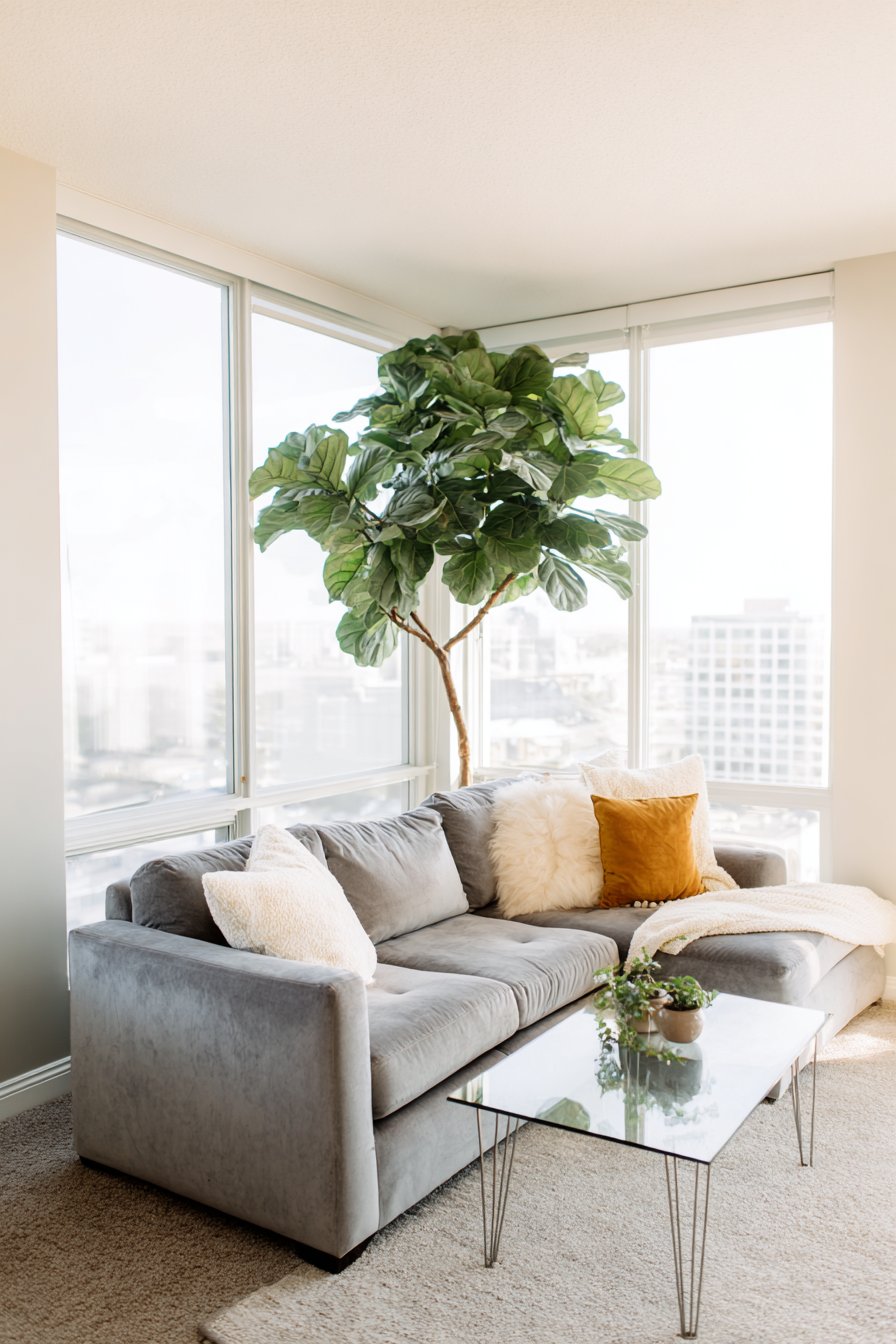
This living room embodies the essence of Scandinavian design philosophy—functional beauty achieved through simplicity, natural materials, and thoughtful composition. A compact L-shaped sectional in soft grey chenille fabric maximizes seating while the L-configuration naturally defines the living area without requiring additional furniture or dividers. The chenille’s plush texture invites touch and provides visual softness that keeps the minimal aesthetic from feeling cold or austere.
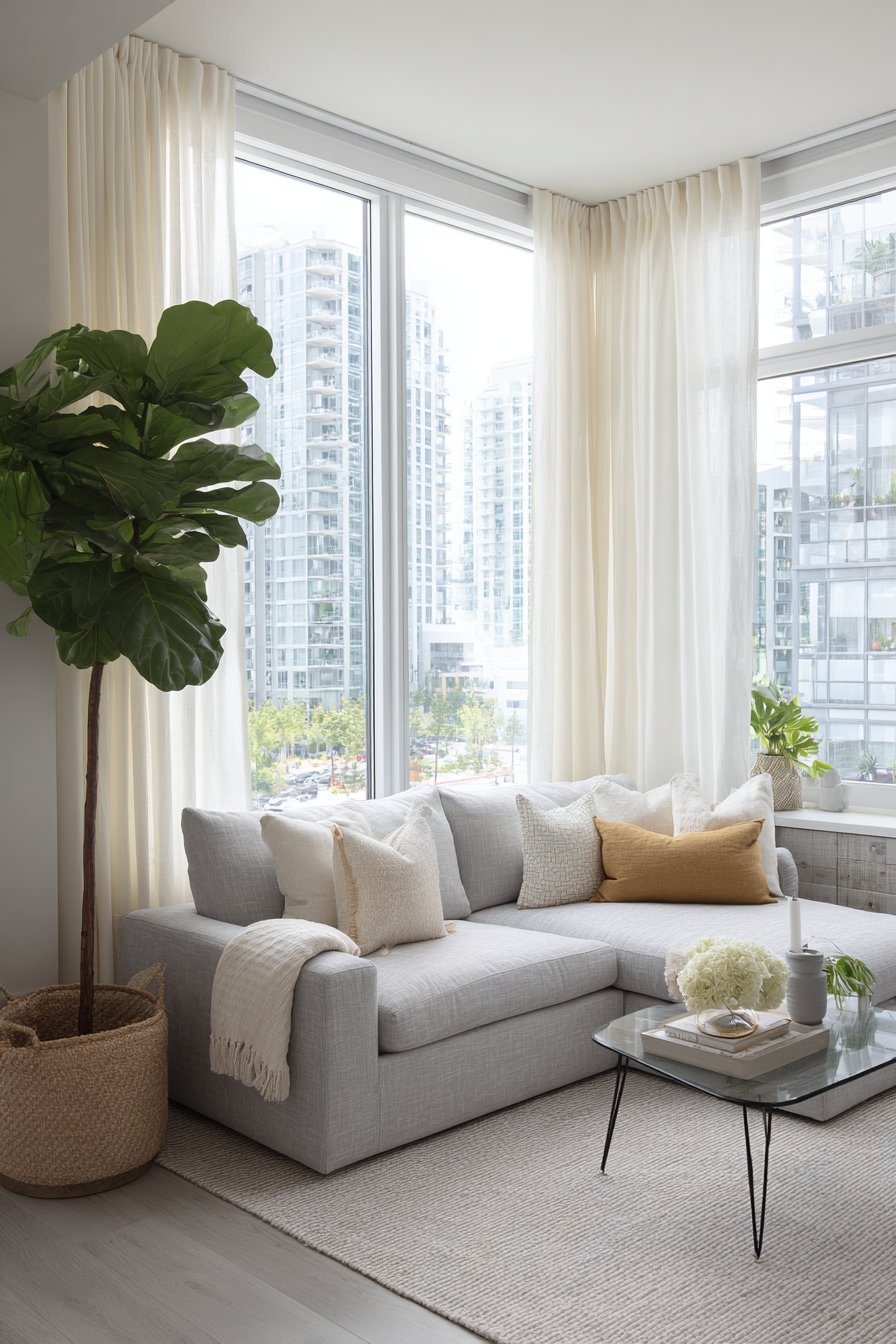
A glass-top coffee table with slender hairpin legs maintains visual lightness, its transparent surface allowing light to pass through and preventing the center of the room from feeling blocked or heavy. This choice is particularly smart in apartments where maintaining sight lines helps spaces feel larger. In one corner, a large indoor fiddle leaf fig tree becomes living sculpture, its broad leaves and dramatic height drawing the eye upward and bringing the vitality of nature indoors—a cornerstone of Scandinavian interior design that recognizes our inherent need for connection with the natural world.
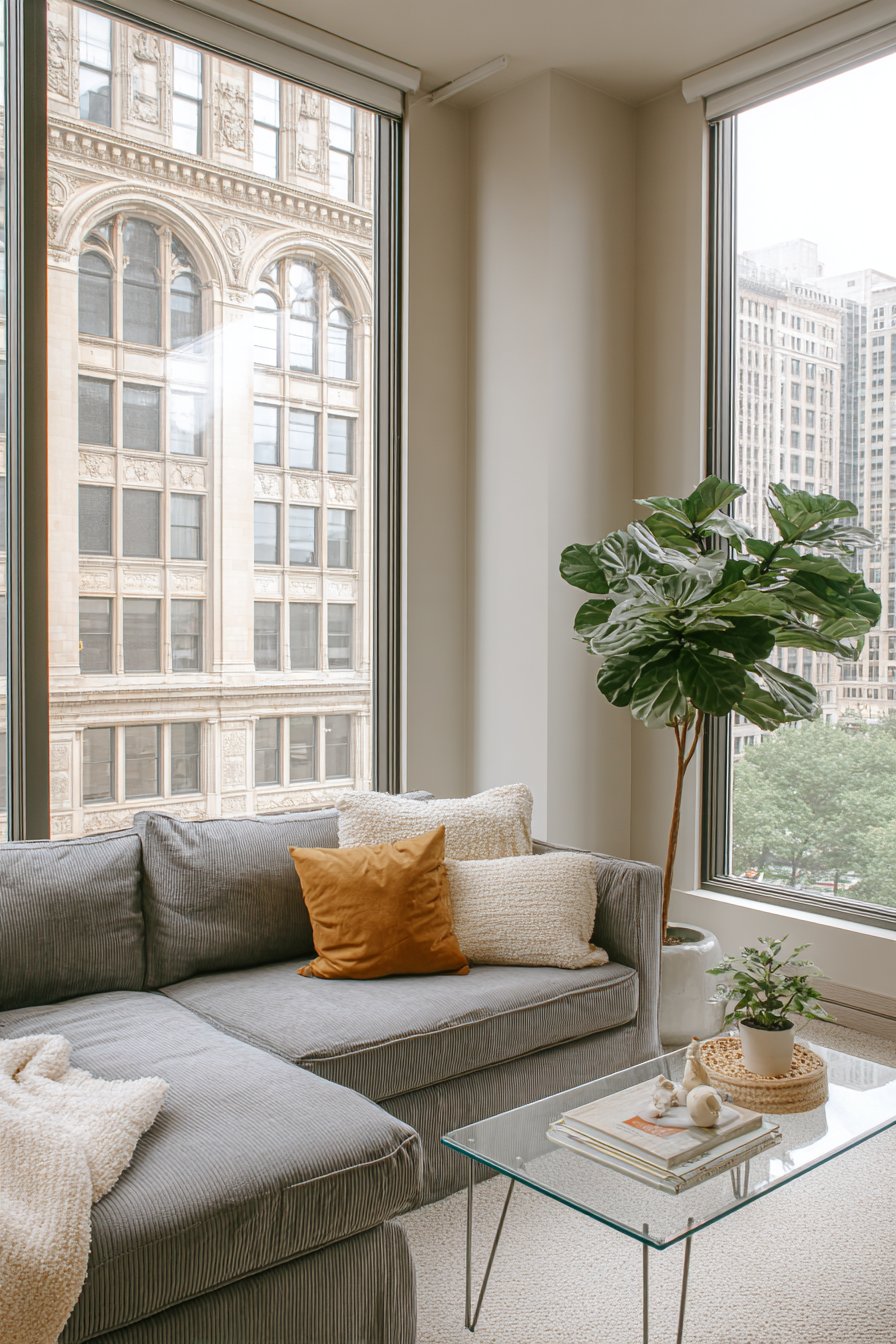
Textured throw pillows in mustard and cream tones provide pops of warmth against the grey sectional, their colors echoing the natural palette found in Nordic landscapes. The wide-angle interior design photography showcases the smart furniture arrangement—everything positioned to maximize floor space and natural light flow while the soft diffused daylight emphasizes the inviting textures throughout. This approach creates a living room that feels simultaneously spacious and cozy, demonstrating that less truly can be more when every element is chosen with intention.
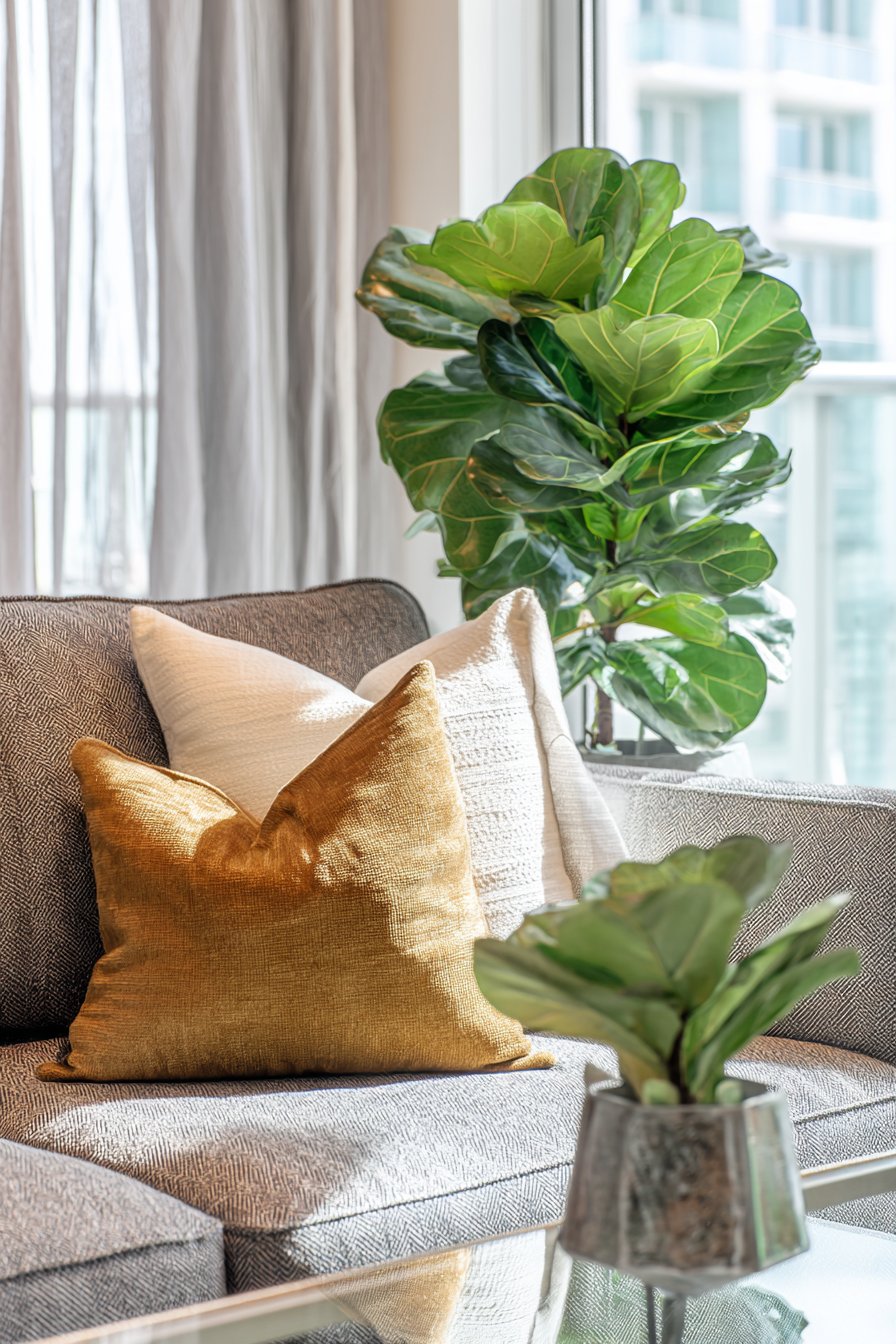
Key Design Tips: Embrace the Scandinavian principle of “lagom” (just right) by selecting only essential furniture; use L-shaped sectionals to define living areas in open-plan apartments; choose glass-topped tables to maintain visual openness and light flow; incorporate large statement plants like fiddle leaf figs for drama and air purification; add warmth to grey palettes with mustard, ochre, or warm cream accents; maximize natural light by keeping window treatments minimal; select furniture with visible legs to create a sense of spaciousness; invest in quality over quantity for a curated, intentional look.
8. Convertible Navy Futon Functionality
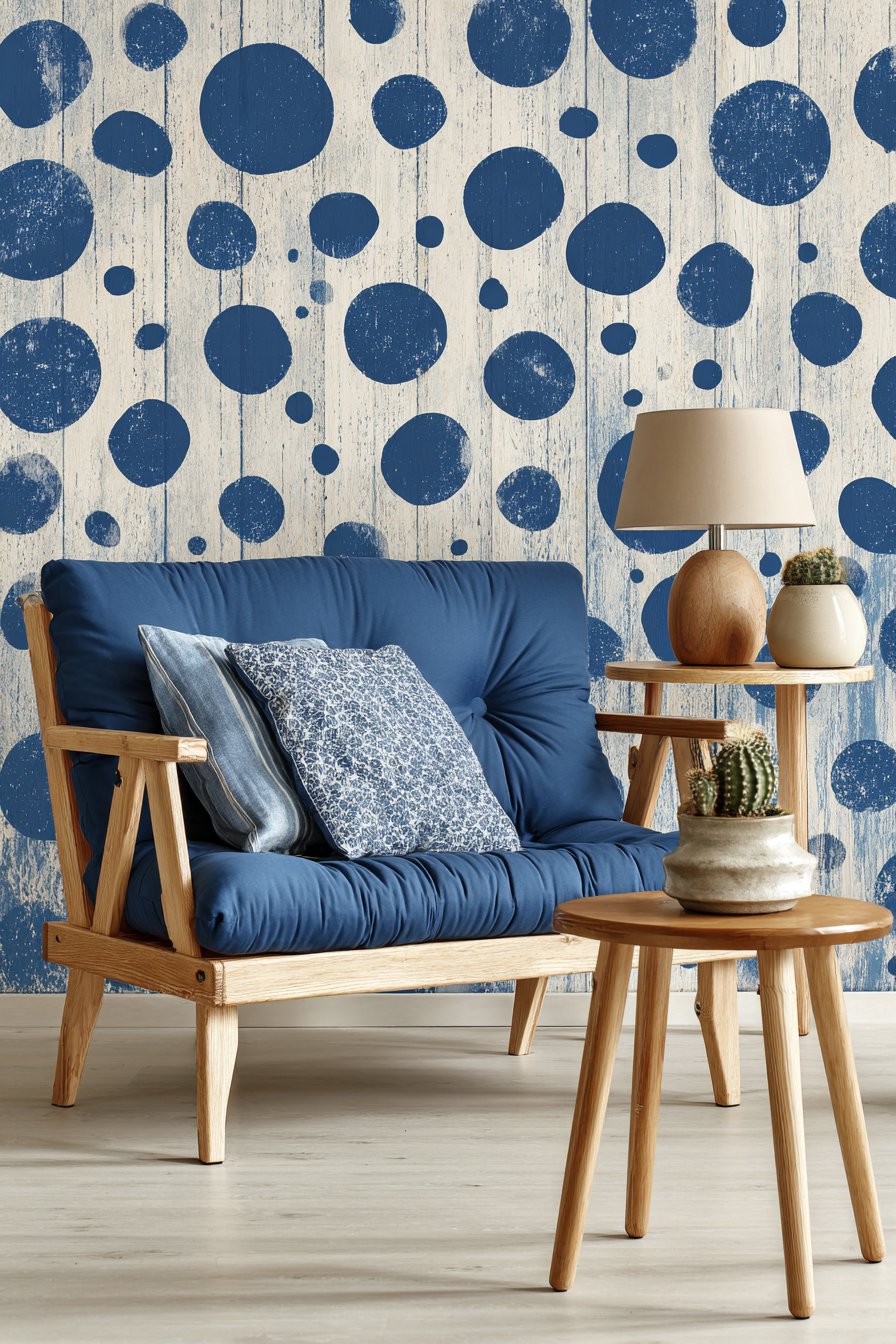
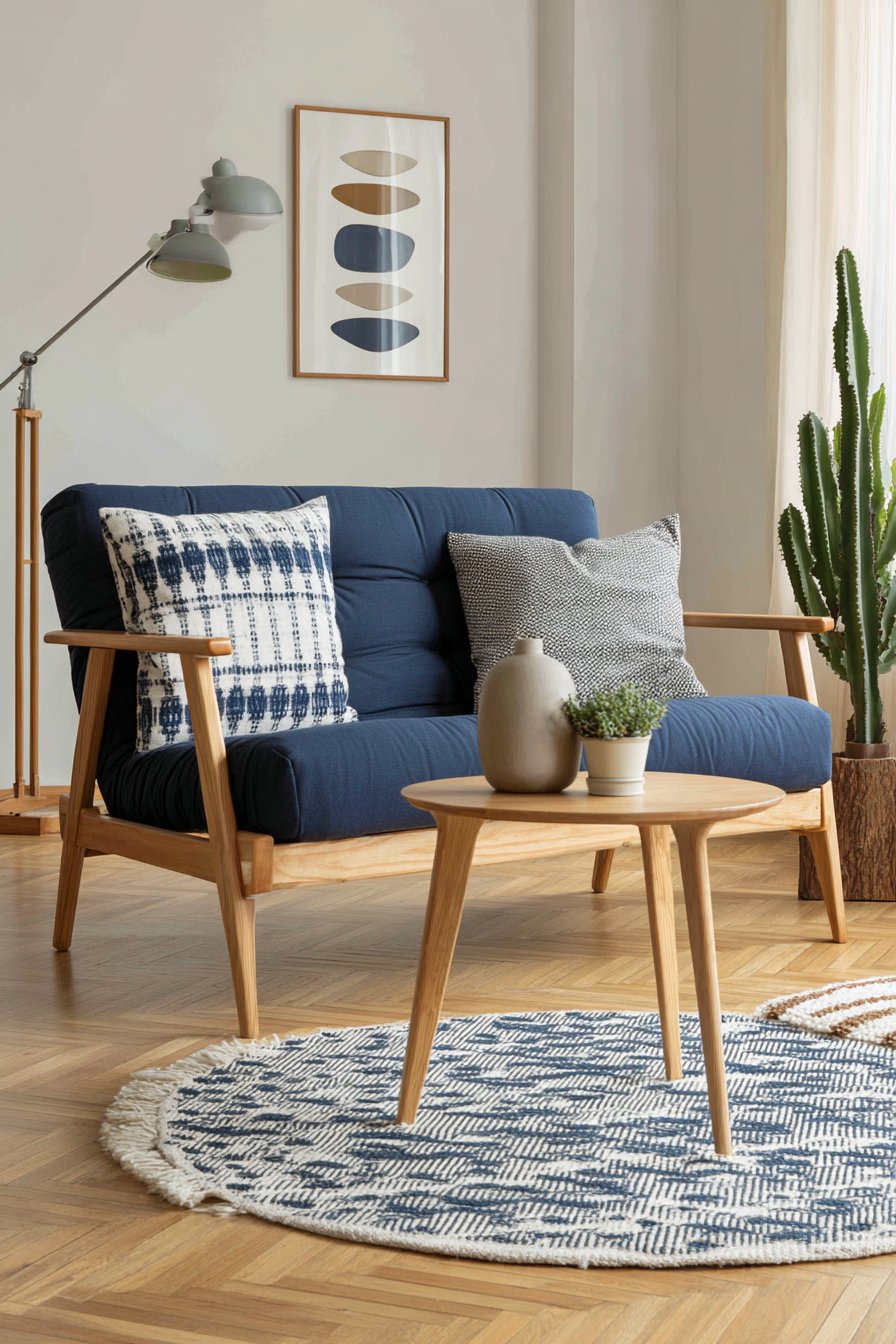
This practical living room design centers on a convertible futon sofa that epitomizes smart apartment living—stylish enough for daily use yet transforming effortlessly into a comfortable bed for overnight guests. The navy blue upholstery provides rich, saturated color that anchors the room while hiding wear and stains better than lighter alternatives. The mid-century modern wooden arms add architectural interest and warmth, their honey-toned wood creating beautiful contrast against the deep blue fabric.
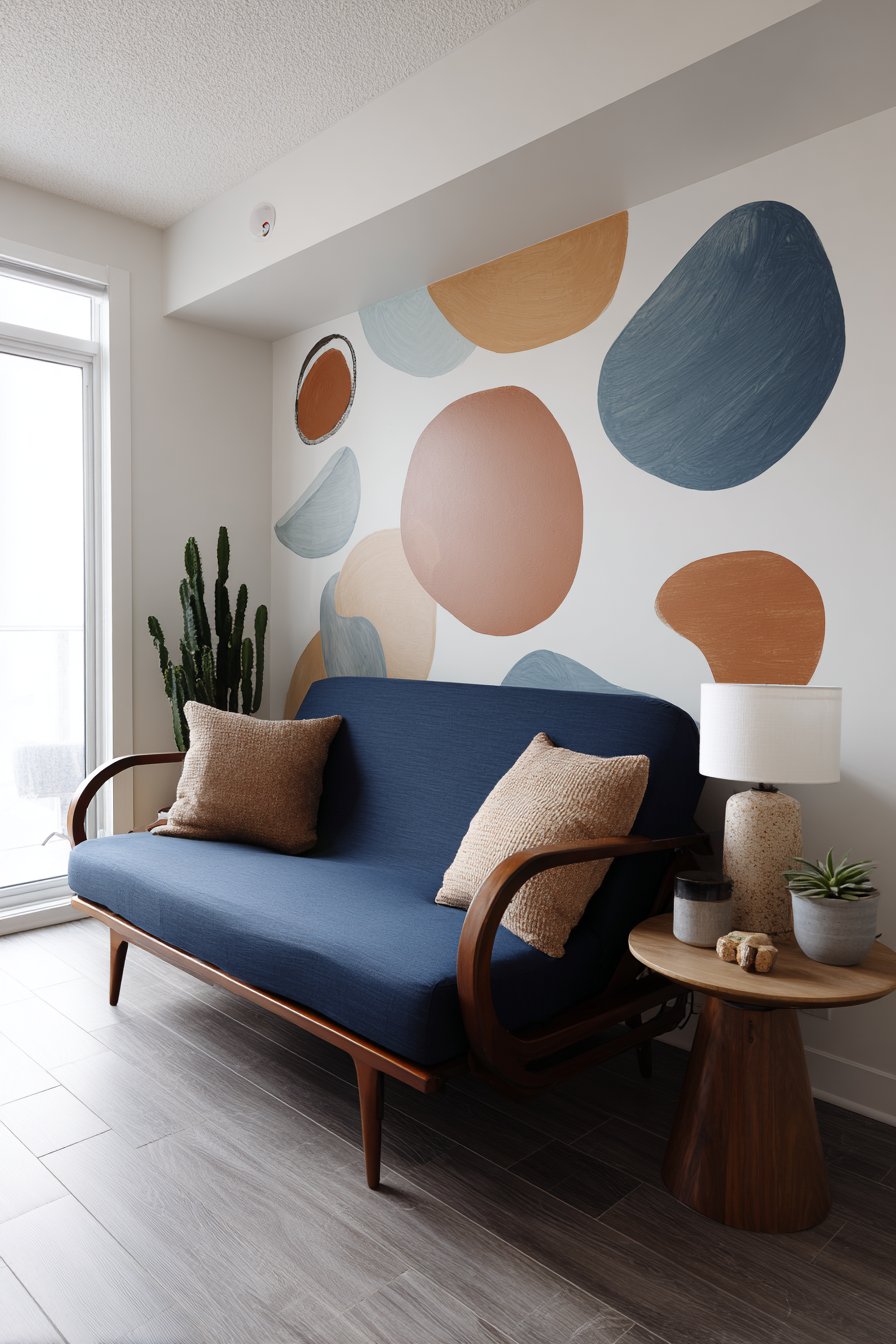
A round side table in natural wood continues the warm wood theme while its circular shape ensures safety and easy navigation in tight quarters—no sharp corners to bump into during midnight trips to the kitchen. This table holds a ceramic table lamp with a simple linen shade that provides soft ambient lighting, plus a small potted cactus that adds life without demanding much maintenance or space. Removable wall decals in abstract shapes inject personality and visual interest without the commitment or wall damage of traditional art or paint.
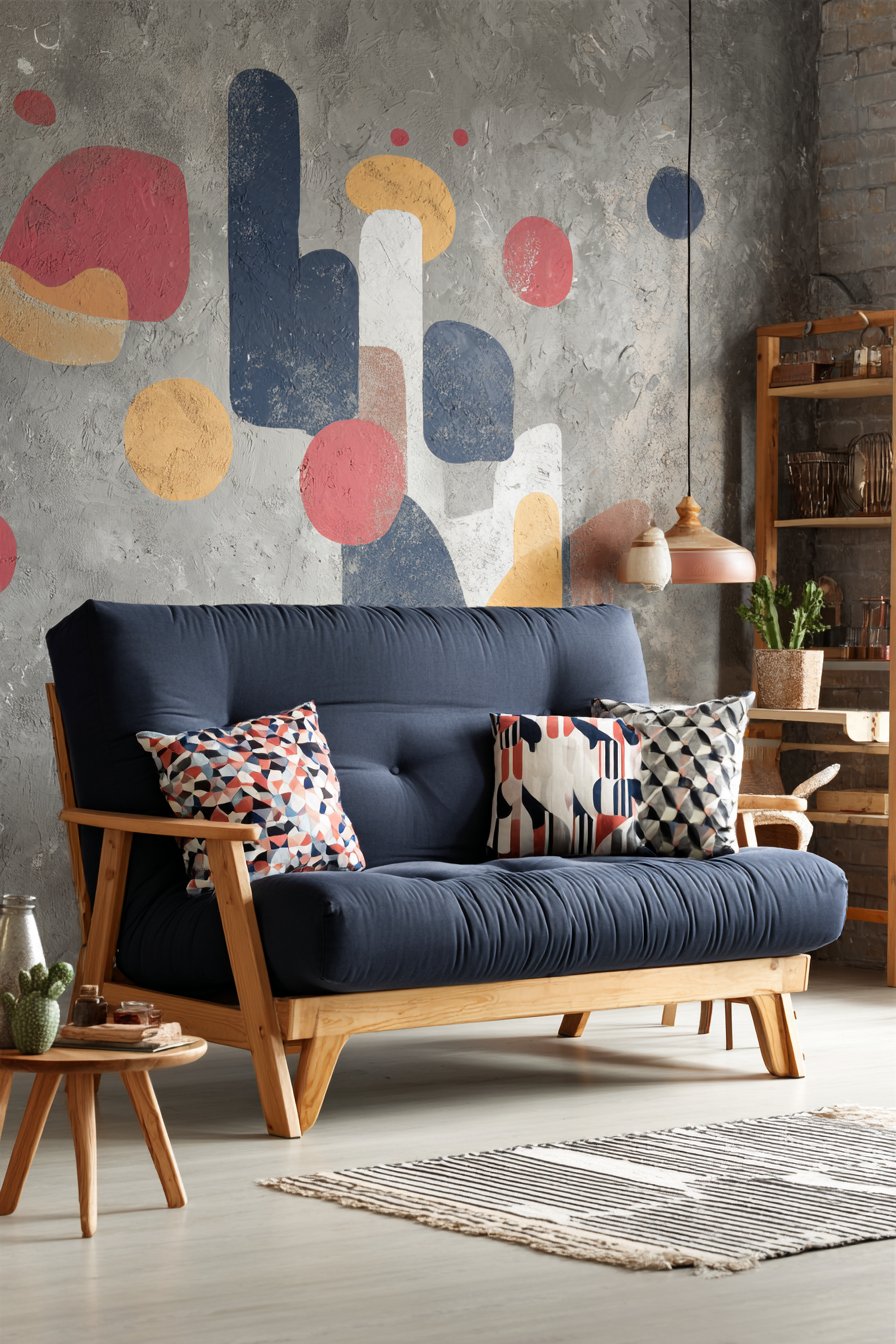
The professional interior photography with natural lighting captures this practical yet charming setup that’s ideal for studio apartment living where the living room must often serve multiple functions. The navy blue creates a sophisticated backdrop that works with various accent colors, allowing you to refresh the space’s look simply by changing throw pillows or accessories. This design proves that multi-functional furniture doesn’t mean compromising on style—with thoughtful selection, your futon can be just as attractive as a traditional sofa while offering significantly more flexibility.
Key Design Tips: Invest in a quality futon with upgraded mattress for comfort in both positions; choose darker upholstery colors for durability and stain resistance; incorporate mid-century elements for timeless appeal; use removable wall decals to personalize rental spaces without damage; select round tables in small spaces to improve traffic flow and safety; add low-maintenance plants like cacti or succulents for greenery without commitment; ensure convertible furniture is easy to operate for regular use; style futons like traditional sofas with pillows and throws to enhance their appearance.
9. Budget-Friendly Scandinavian Brightness
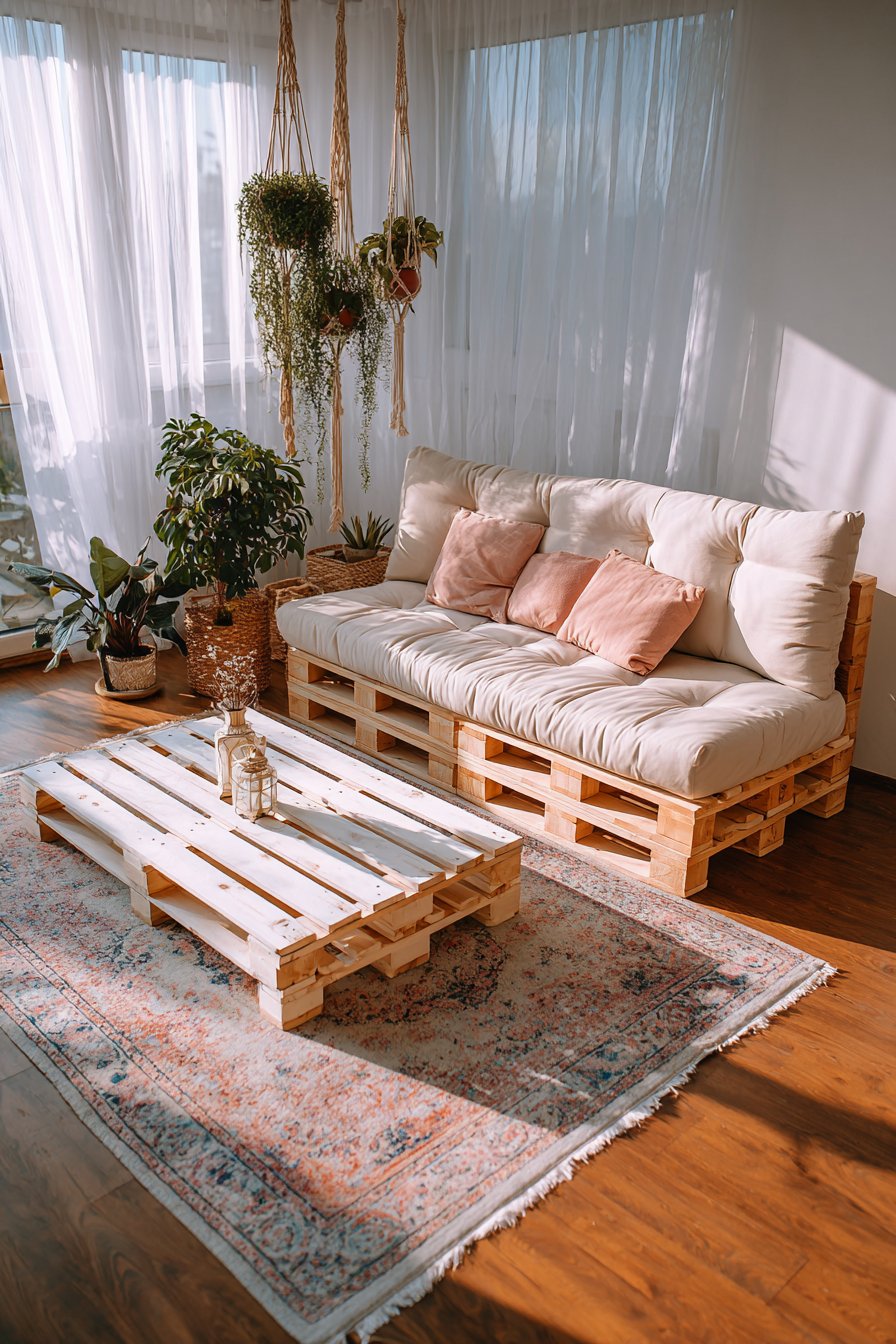
This inspiring living room demonstrates that achieving beautiful design doesn’t require unlimited budgets—with creativity and smart shopping, you can create a bright, airy space that rivals high-end interiors. The small-scale Scandinavian-style sofa in light beige fabric provides comfortable seating without overwhelming the room, its clean lines and simple form embodying the “less is more” philosophy. Paired with a DIY pallet coffee table painted in soft white, the space proves that upcycled and handmade pieces can look just as polished as store-bought furniture when executed thoughtfully.
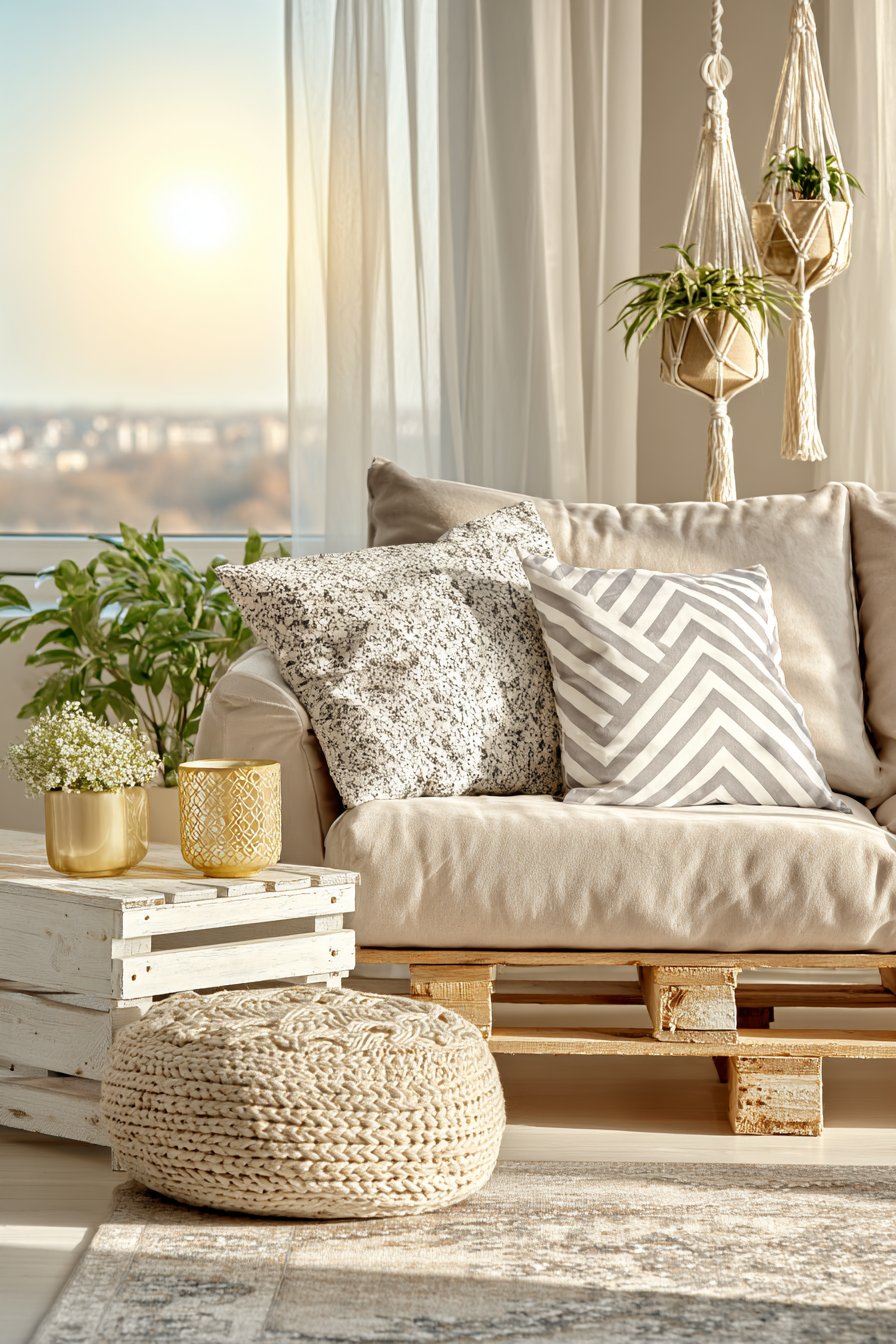
Macramé plant hangers suspend trailing plants at varying heights throughout the room, creating a vertical garden that draws the eye upward and makes the ceiling feel higher. This dimensional approach to greenery—with some plants at floor level, others on surfaces, and these hanging specimens at different heights—creates visual movement and makes the small space feel more dynamic and alive. The plants themselves, likely pothos or philodendron varieties chosen for their low-light tolerance and air-purifying properties, bring vitality and fresh oxygen to the apartment.
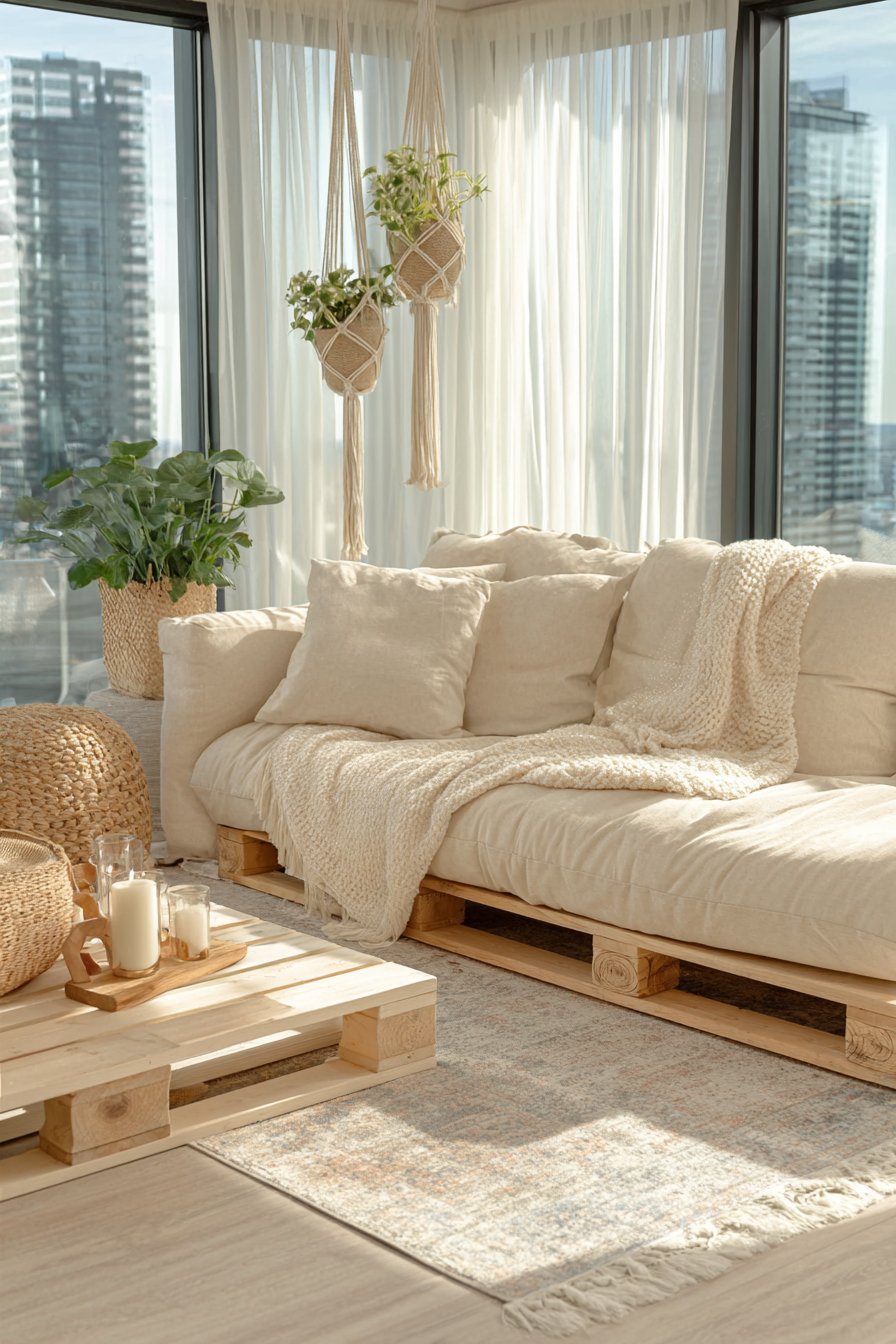
A vintage-inspired area rug in muted pastels—perhaps featuring faded floral patterns or geometric designs in soft pink, sage, and cream—defines the seating zone while adding pattern and visual interest to the light color scheme. Interior design photography capturing golden hour lighting as it streams through sheer curtains showcases the fresh, airy aesthetic achievable with budget-friendly decor solutions. This approach emphasizes that great design is more about vision and creativity than expensive purchases.
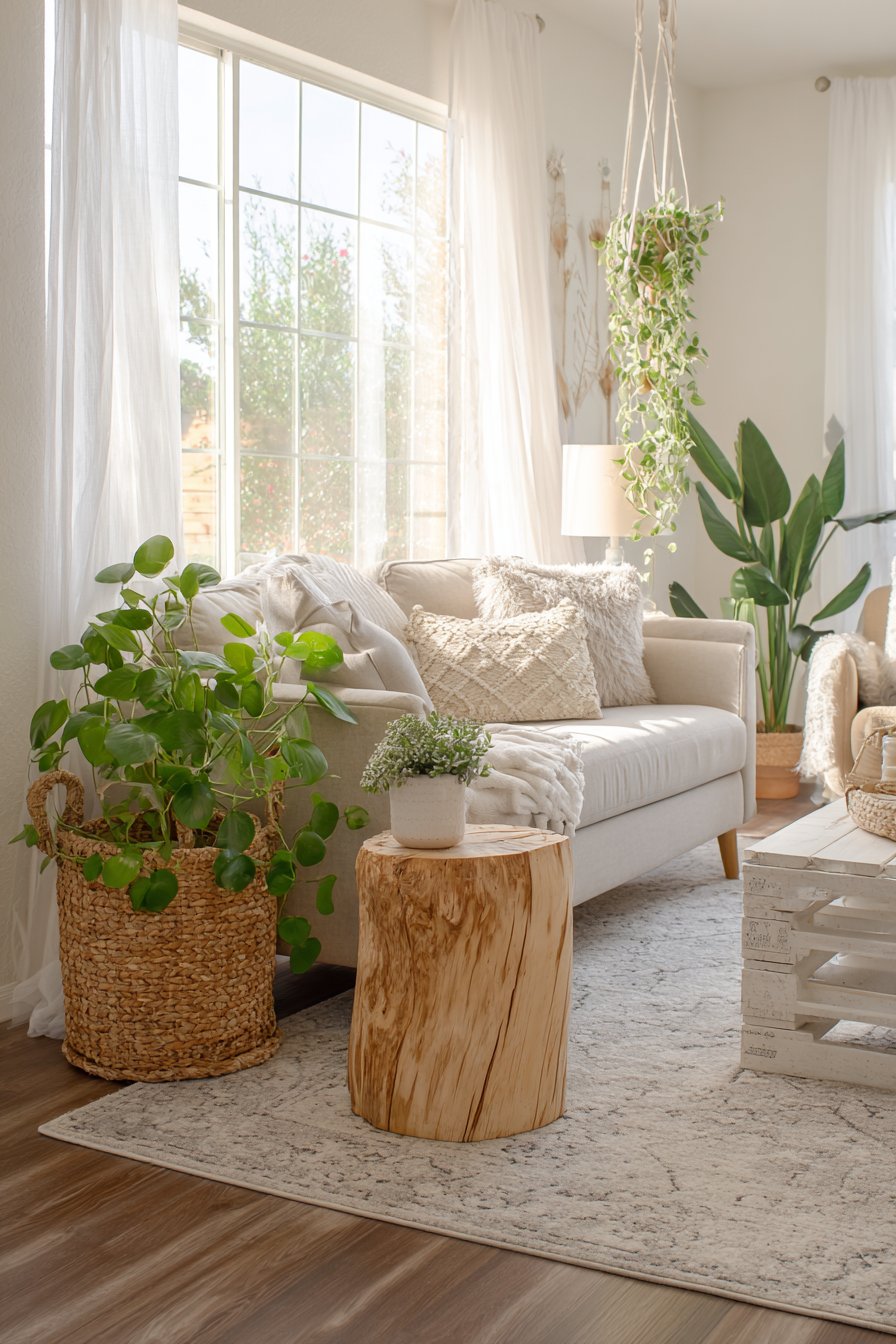
Key Design Tips: Embrace DIY projects like pallet furniture for unique, budget-friendly pieces; paint upcycled items in light colors for a fresh, cohesive look; use macramé plant hangers to add bohemian charm without floor space commitment; shop vintage and thrift stores for unique rugs and accessories; choose light, neutral colors to maximize brightness in small spaces; position furniture to capture the best natural light; create vertical interest with plants at varying heights; remember that great style comes from thoughtful curation rather than expensive purchases.
10. Romantic Blush and White Elegance
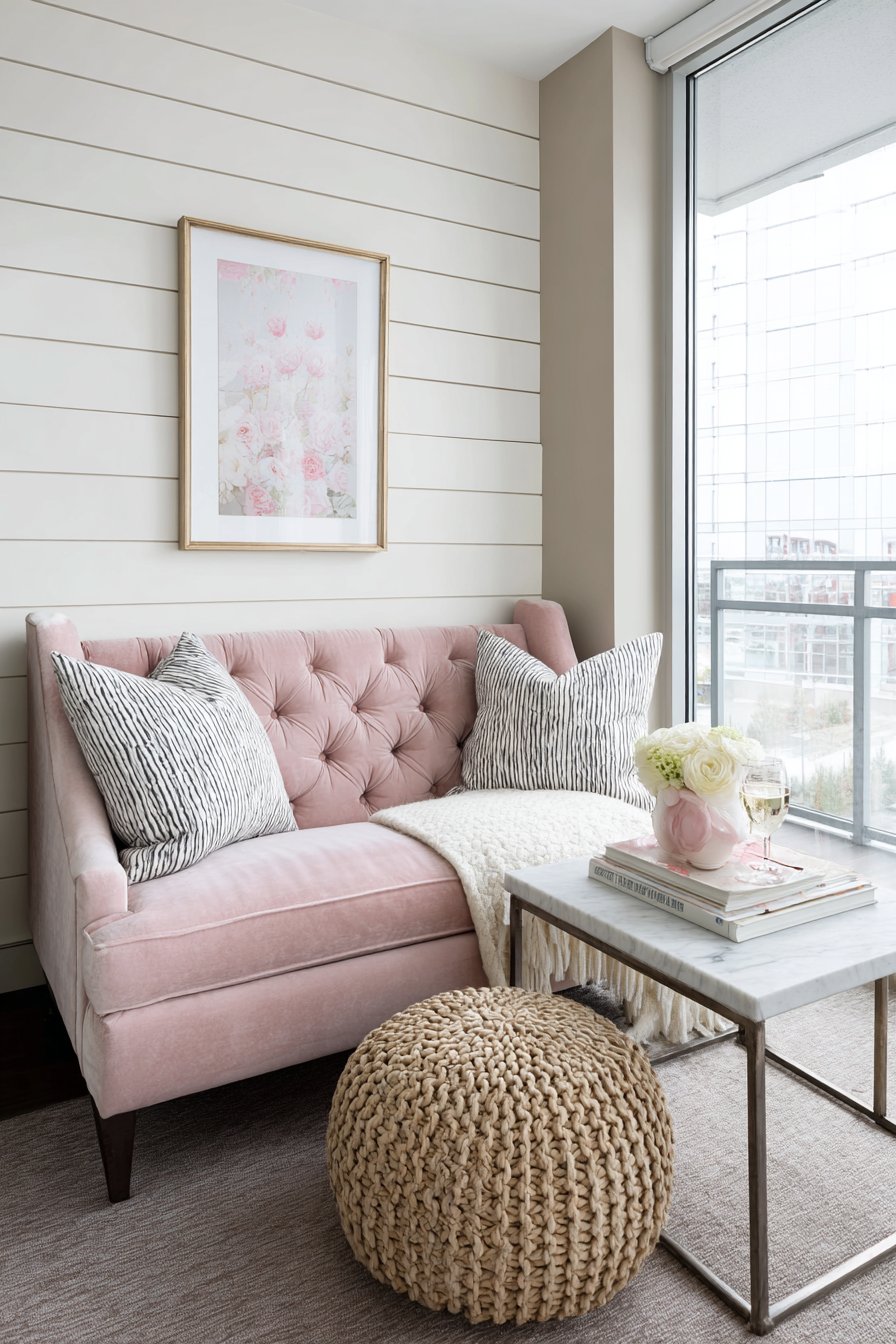
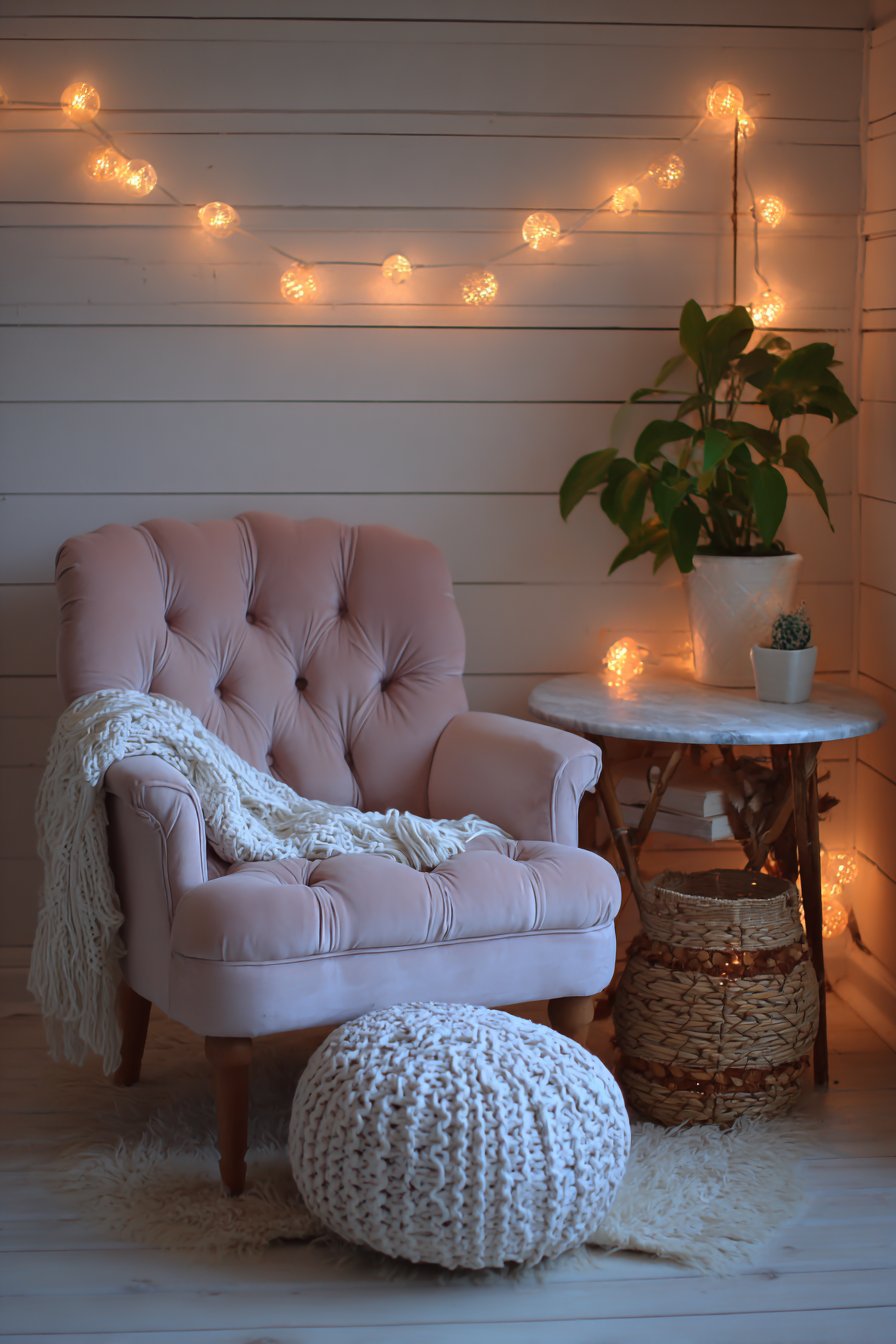
This feminine and romantic living room design centers on a tufted loveseat in blush pink velvet, a piece so beautiful it becomes the room’s jewelry—luxurious, eye-catching, and utterly enchanting. The velvet’s soft pile and subtle sheen create depth and visual interest while the button tufting adds traditional elegance that feels both classic and current. Positioned against a shiplap accent wall painted in soft white, the contrast highlights the loveseat’s gorgeous color while the shiplap’s horizontal lines create the illusion of a wider room.
A marble-topped nesting table set brings sophisticated functionality to the space, their elegant stone surfaces and slender metal legs providing flexible surface options that can be arranged together or separately depending on your needs. A floor pouf in woven natural fiber—perhaps jute or seagrass—offers additional seating or functions as a footrest, its organic texture preventing the romantic aesthetic from becoming too precious or impractical. This mix of refined and relaxed elements creates a living room that’s beautiful enough for entertaining but comfortable enough for everyday living.
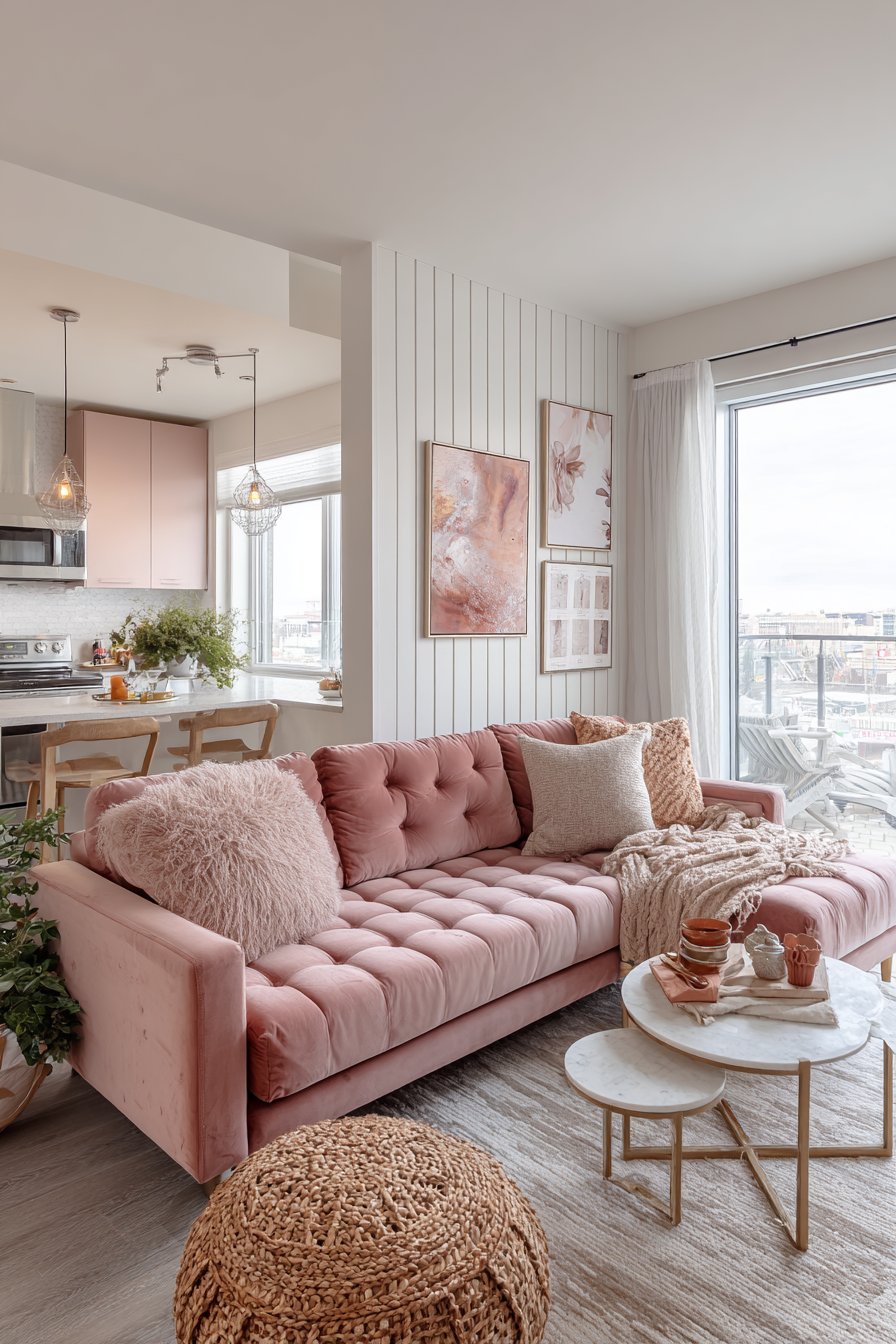
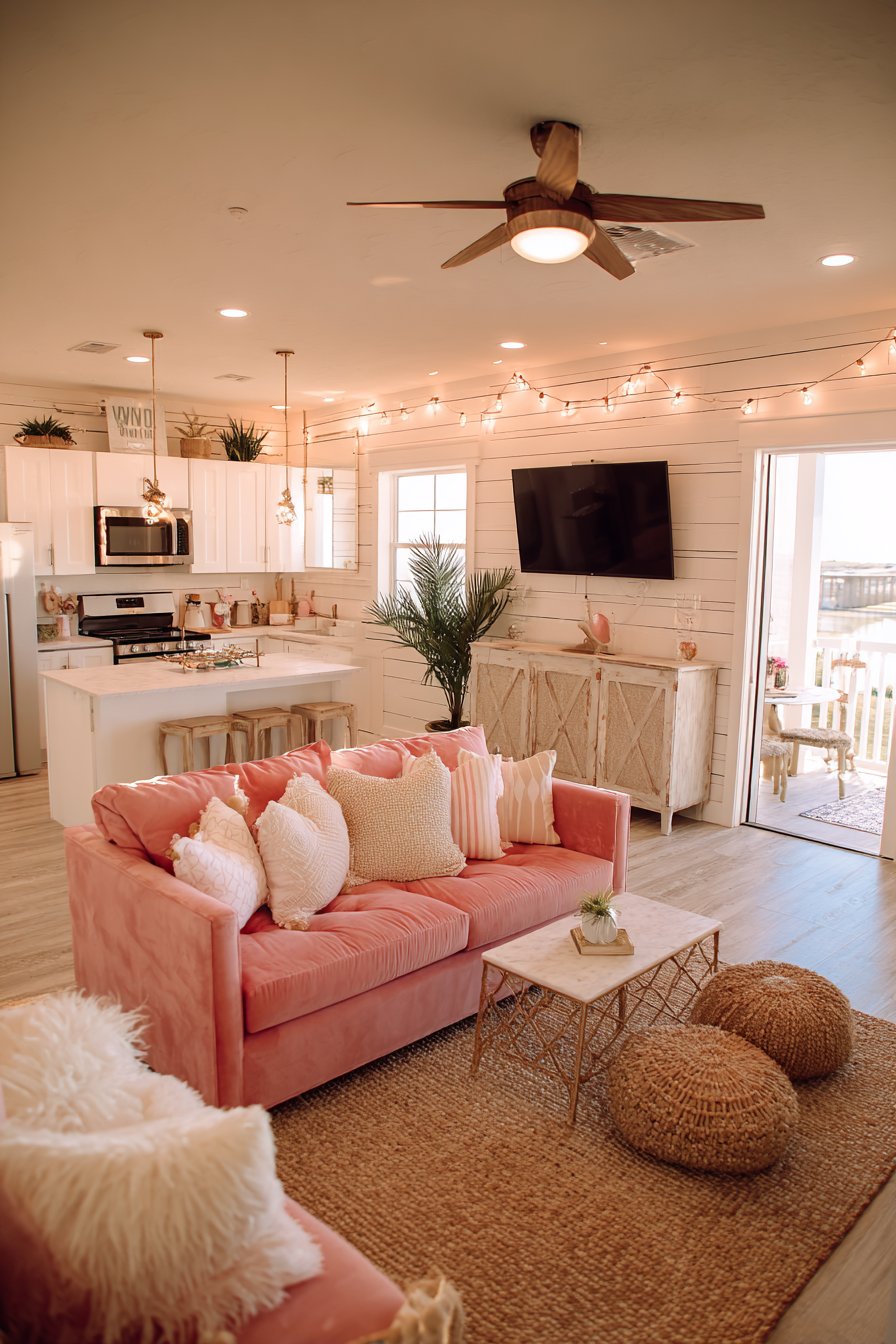
String lights draped across the ceiling create a magical ambient glow that transforms the space in evening hours, their warm light enhancing the romantic atmosphere and providing soft illumination that’s more flattering and intimate than overhead fixtures. The wide-angle photography captures this feminine yet functional space with balanced exposure that highlights the romantic color palette—soft pinks, warm whites, and natural tones—alongside the various textures from plush velvet to smooth marble to woven fiber. This design proves that romantic aesthetics can coexist beautifully with practical apartment living.
Key Design Tips: Create impact with one luxurious statement piece like a velvet loveseat; use shiplap (real or peel-and-stick) to add architectural interest to rental walls; choose nesting tables for flexible surface options in small spaces; incorporate natural fiber poufs for additional seating that’s easy to move; install string lights for romantic ambient lighting; mix refined and rustic elements to prevent overly precious aesthetics; ensure your romantic design includes practical seating and surface options; use marble or stone accents to add sophistication and elegance; keep walls light to make colored furniture pieces pop.
11. Smart Storage Ottoman Solution
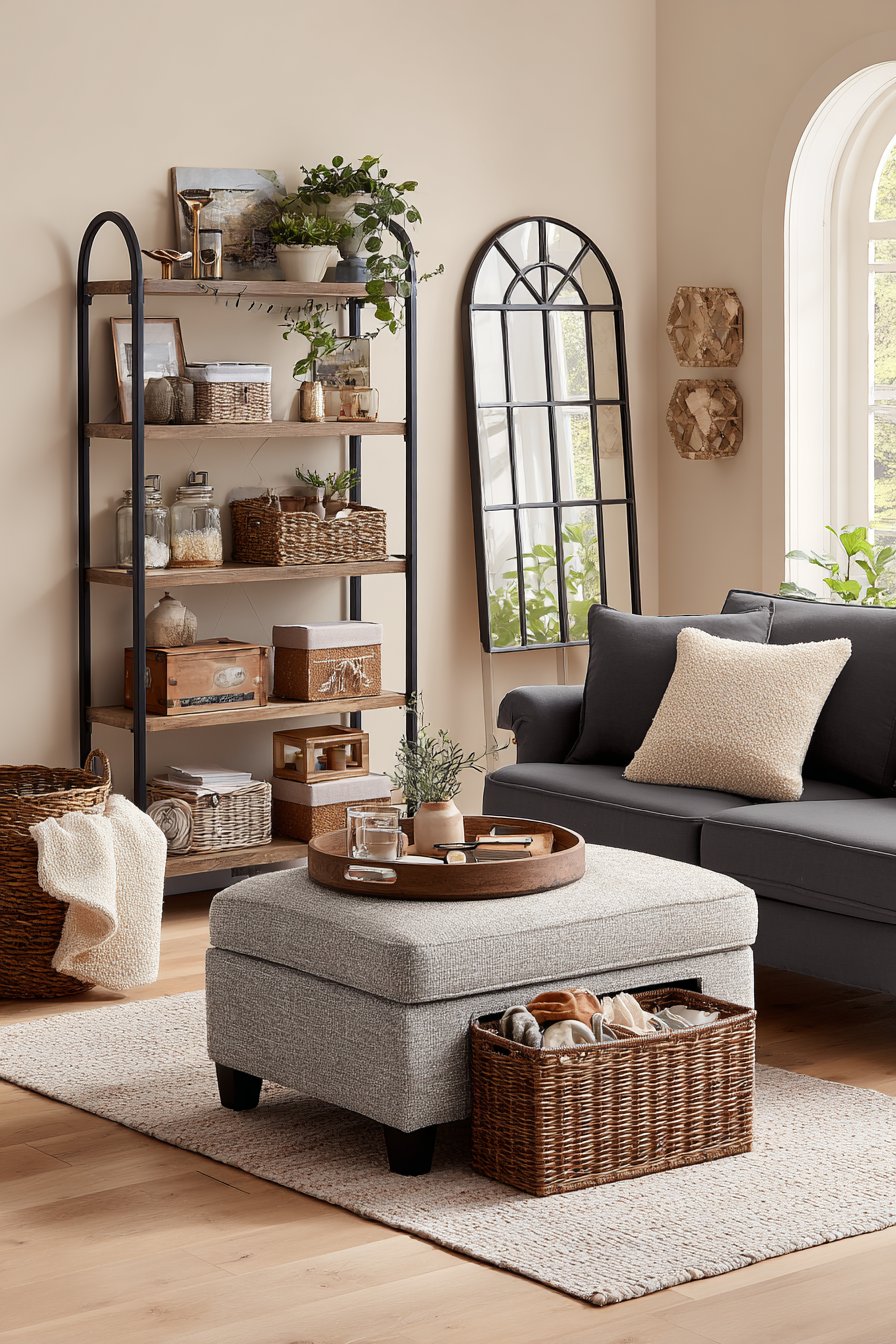
This organization-focused living room design demonstrates how smart furniture choices can solve storage challenges while maintaining style and comfort. The centerpiece is a storage ottoman upholstered in textured grey fabric—perhaps a linen weave or subtle herringbone—that serves triple duty as coffee table, extra seating, and hidden storage for blankets, games, or other living room essentials. A wooden serving tray placed on top provides a stable surface for drinks and remotes while protecting the fabric from spills and stains.
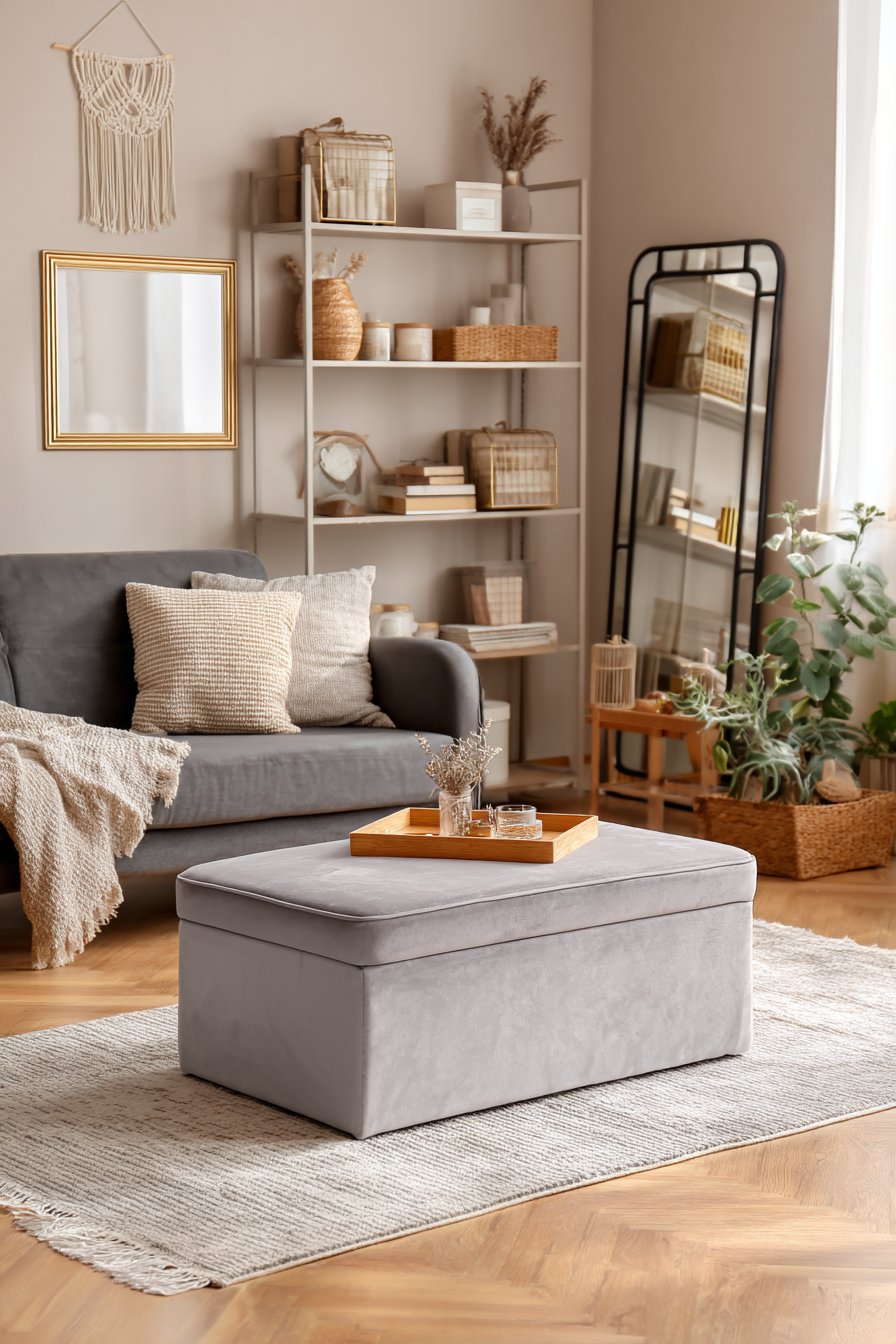
The compact apartment-sized sofa in charcoal grey anchors the space without overwhelming it, its darker shade hiding daily wear while providing sophisticated contrast to lighter walls. Wall-mounted shelving displays decorative boxes in coordinating colors—perfect for storing smaller items like charging cables, remote controls, or personal accessories—alongside books arranged both vertically and horizontally, and small plants that bring life to the organized displays. This approach keeps clutter contained while ensuring everything has a designated home.
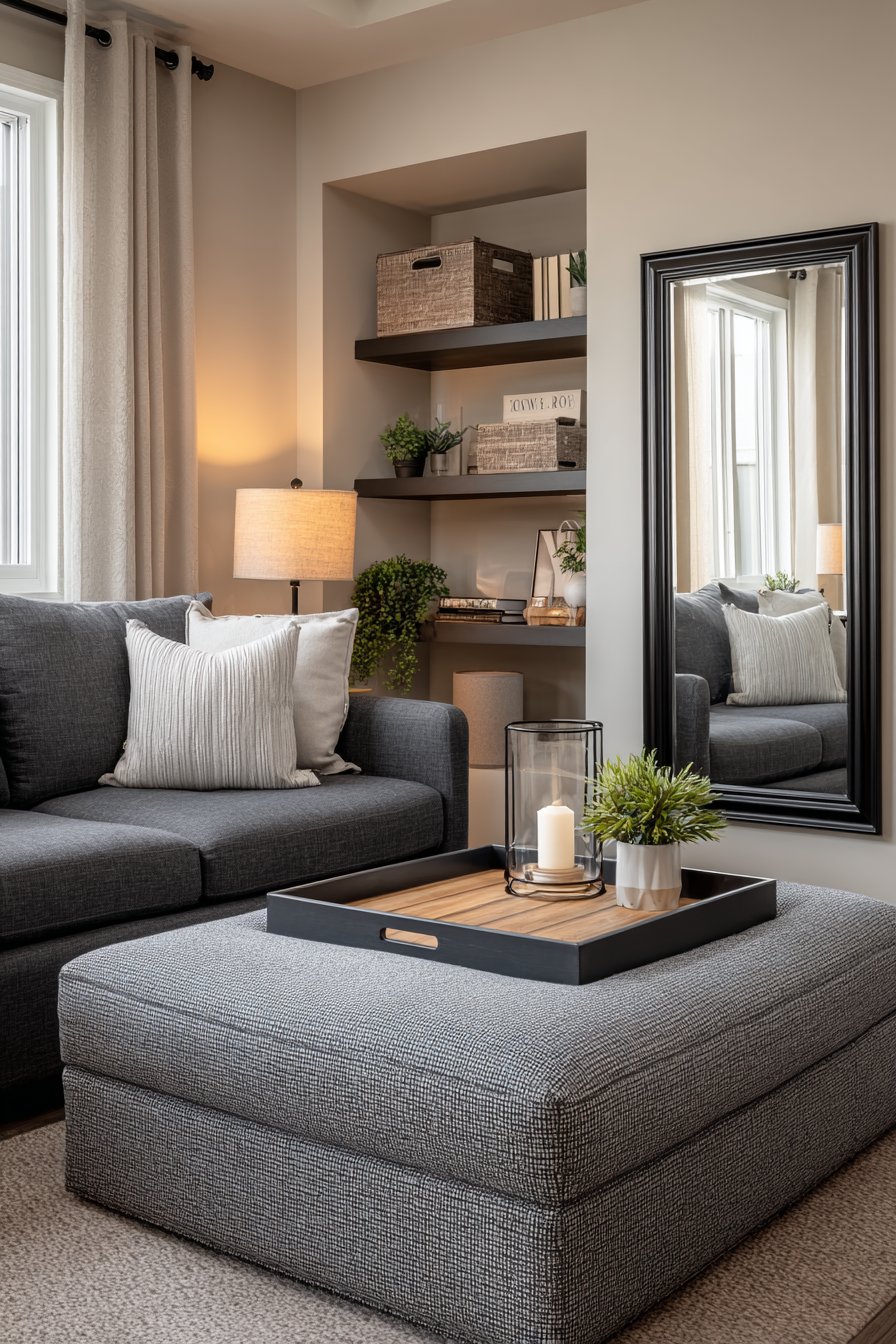
A large mirror with an ornate decorative frame leans casually against the wall rather than being hung, creating an effortlessly chic look while reflecting natural light throughout the room. This leaning technique is particularly appealing for renters who want to avoid wall damage, and the mirror’s reflection visually expands the space while adding glamour. Professional interior photography showcases this organization-focused design with natural lighting that emphasizes the practical storage solutions elegantly integrated into an attractive living space. The result is a room that looks pulled together while accommodating all the realities of daily apartment life.
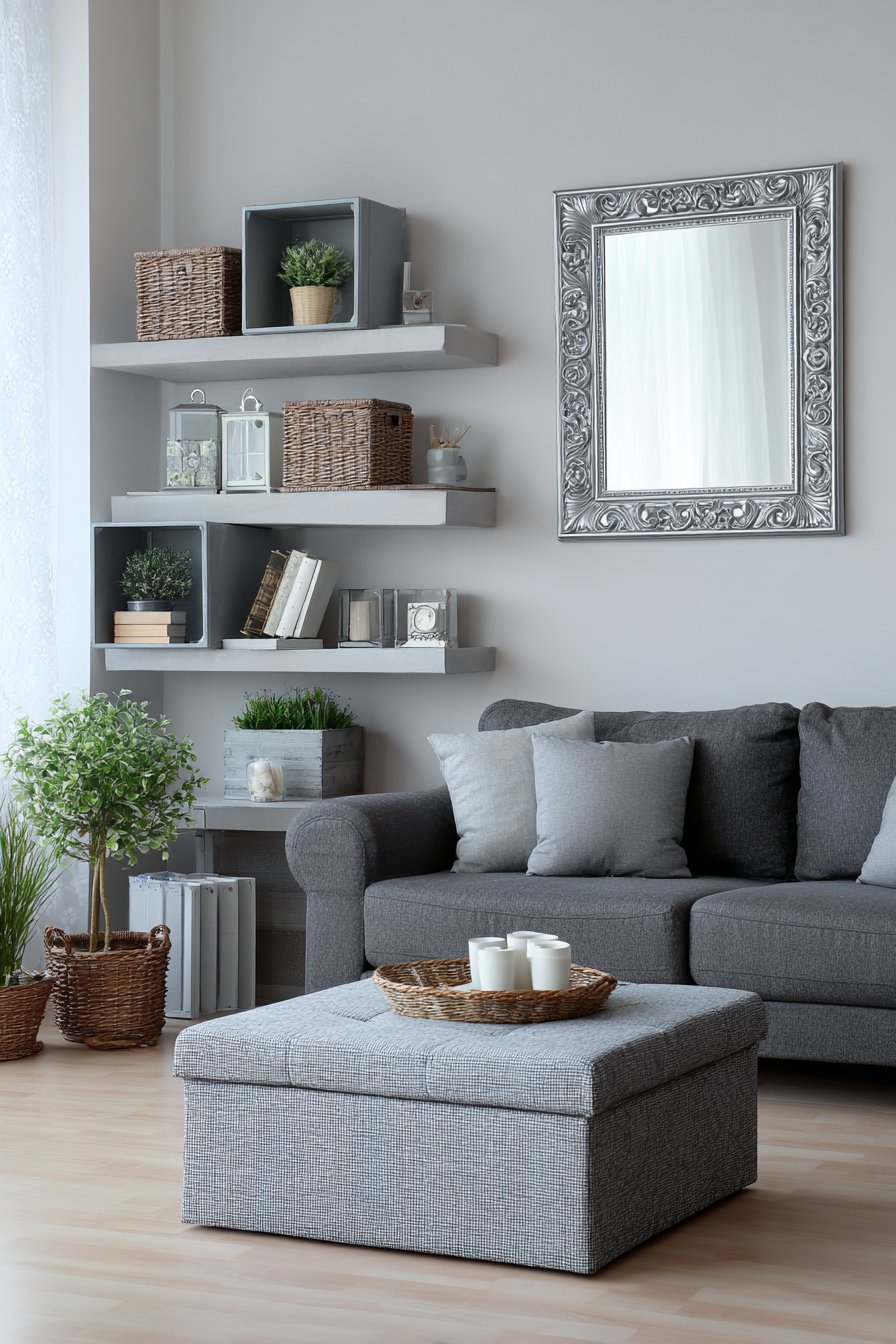
Key Design Tips: Choose storage ottomans that open easily for regular access; use serving trays on upholstered surfaces to create stable table areas; select apartment-sized furniture specifically designed for smaller spaces; install wall-mounted shelving to maximize vertical storage; use decorative boxes to conceal clutter while maintaining aesthetic appeal; lean large mirrors instead of hanging to avoid wall damage; incorporate charcoal and grey tones for sophistication and practicality; ensure every piece of furniture serves multiple functions; create designated homes for common items to maintain organization; mix open and closed storage for visual interest.
12. Bohemian Floor Seating Lounge
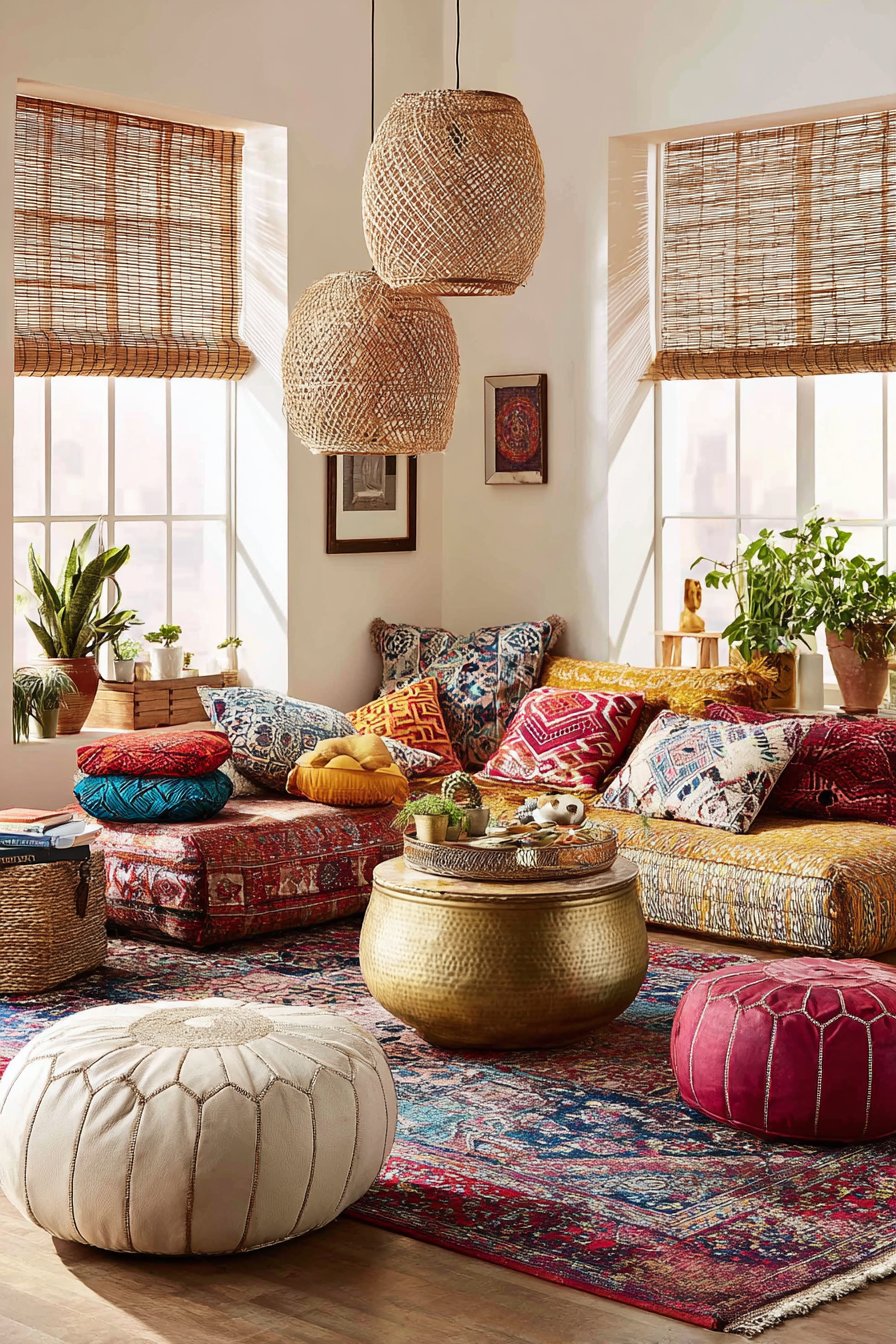
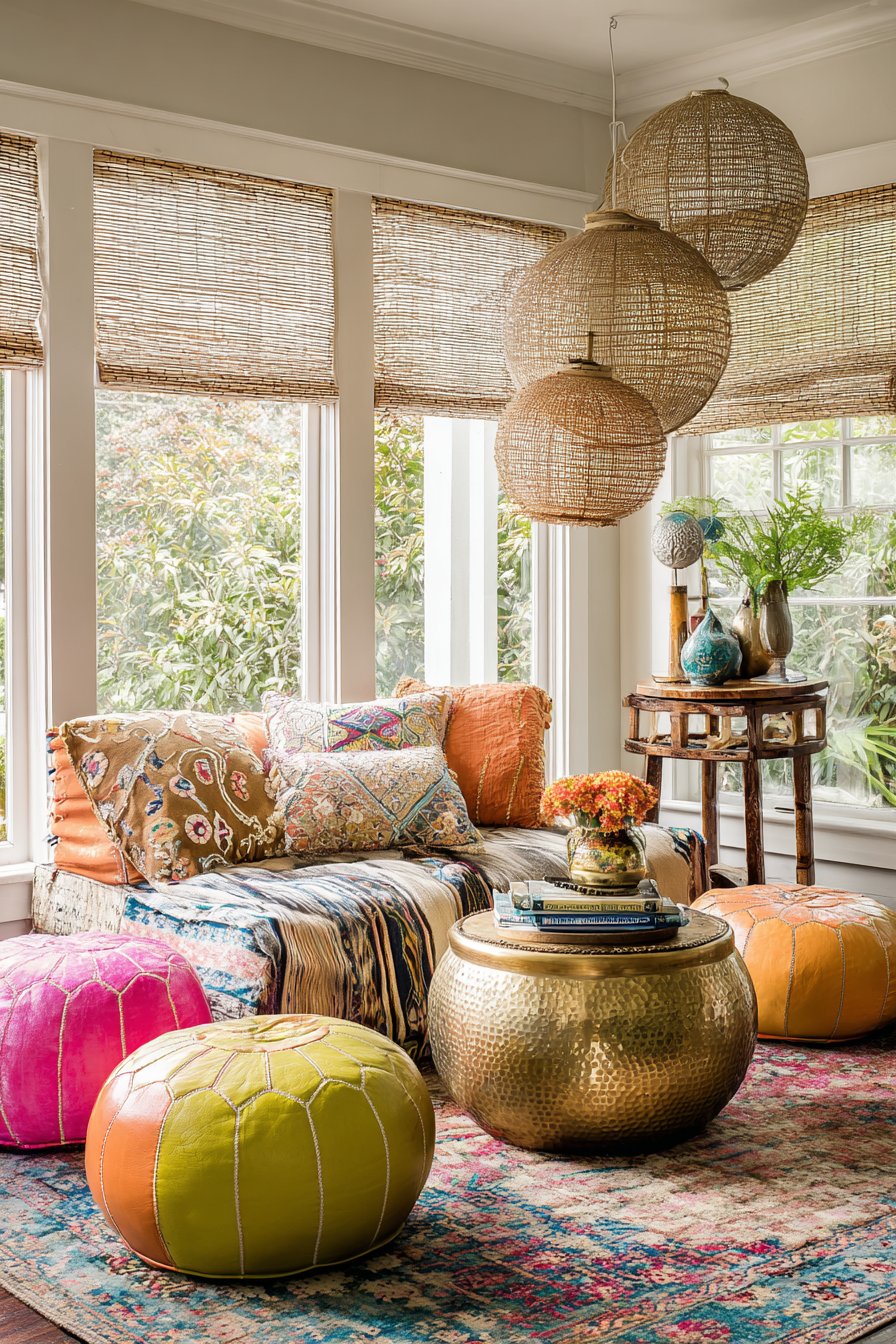
This eclectic living room embraces bohemian principles by creating a low-level lounge area that encourages relaxation and intimate conversation. The arrangement features oversized floor cushions in various patterns—think vintage kilim prints, embroidered mandalas, and block-printed florals—that can be rearranged easily to accommodate different numbers of guests or activities. A Moroccan-style leather pouf in rich cognac or natural tan serves as both additional seating and a small table, its authentic craftsmanship and traditional design adding worldly sophistication.
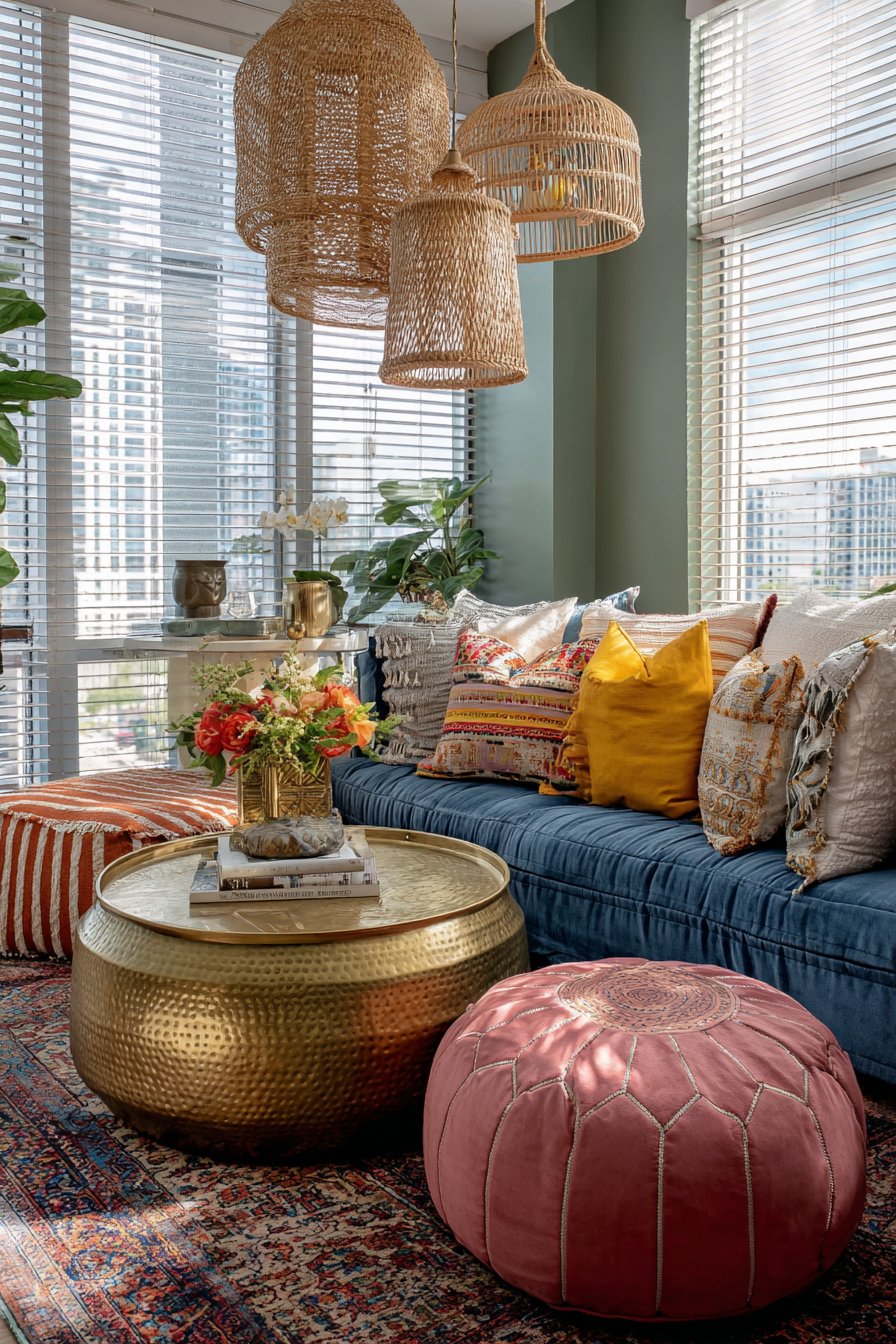
A small round coffee table in hammered brass catches and reflects light beautifully, its artisanal surface showing the marks of hand-crafting that make each piece unique. This table sits atop a vintage Persian-style rug in faded jewel tones—perhaps featuring traditional medallion patterns in weathered ruby, sapphire, and emerald that have softened to beautiful muted shades. The rug anchors the low seating arrangement while adding pattern, color, and a sense of history to the space.
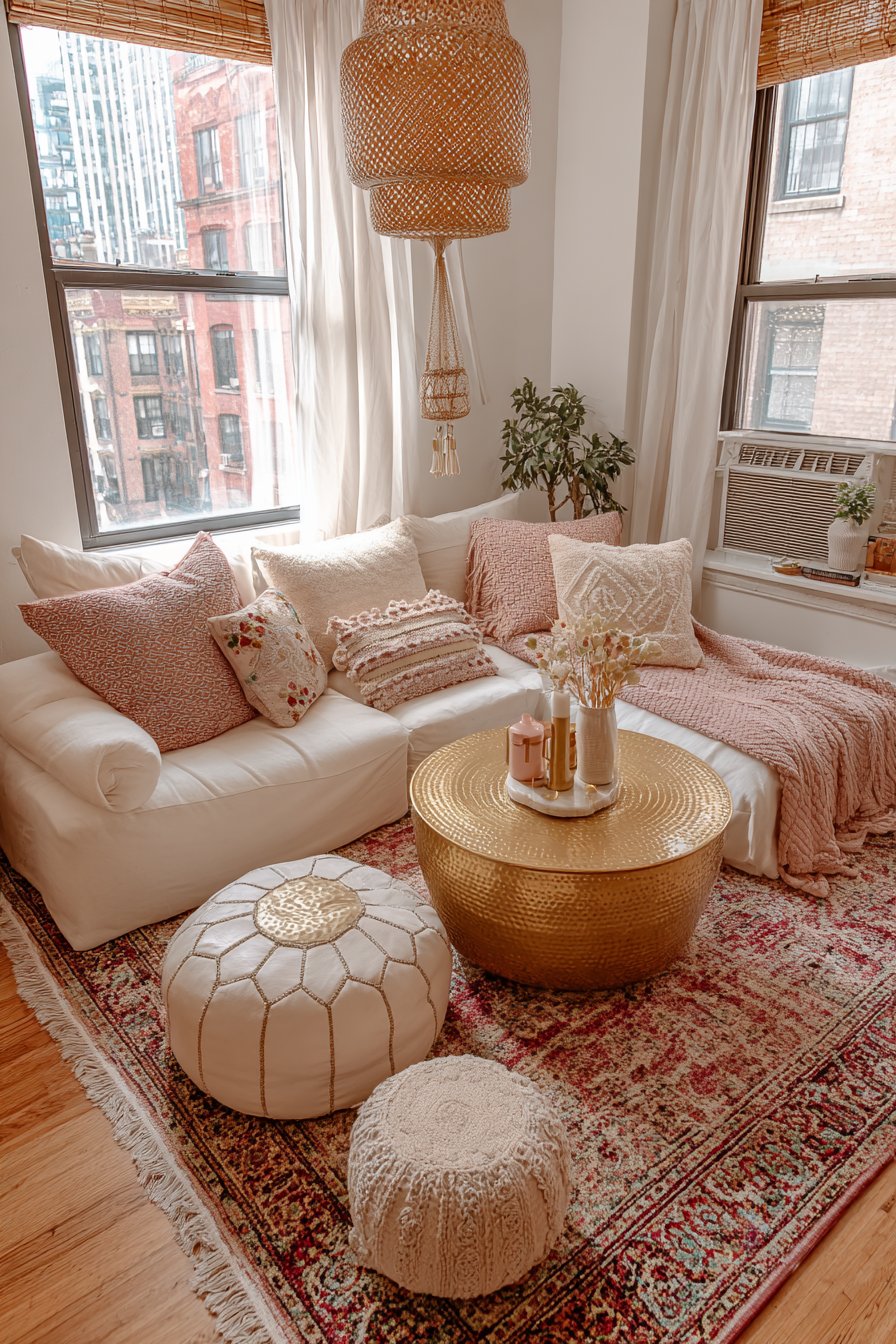
Hanging rattan pendant light fixtures add textural warmth and create a defined lighting zone over the seating area, their natural woven construction filtering light in beautiful patterns across the ceiling and walls. Natural daylight filters through bamboo blinds, creating striped shadow patterns that change throughout the day and connect the interior to the natural world outside. The interior design photography captures this eclectic yet cohesive layered look, showcasing how mixing patterns, textures, and cultural influences can create a living room that feels collected, personal, and utterly unique.
Key Design Tips: Mix patterns confidently but keep them in a cohesive color family; use floor seating to create intimate, conversation-friendly arrangements; incorporate authentic global textiles and accessories for character; choose low coffee tables appropriate for floor seating heights; layer multiple rugs for added warmth and visual interest; install pendant lights to define seating zones in open spaces; use natural window treatments like bamboo or rattan; embrace imperfection and handcrafted items for bohemian authenticity; arrange seating to encourage face-to-face interaction; create comfort through abundant cushions and textiles.
13. Minimalist Oatmeal Serenity
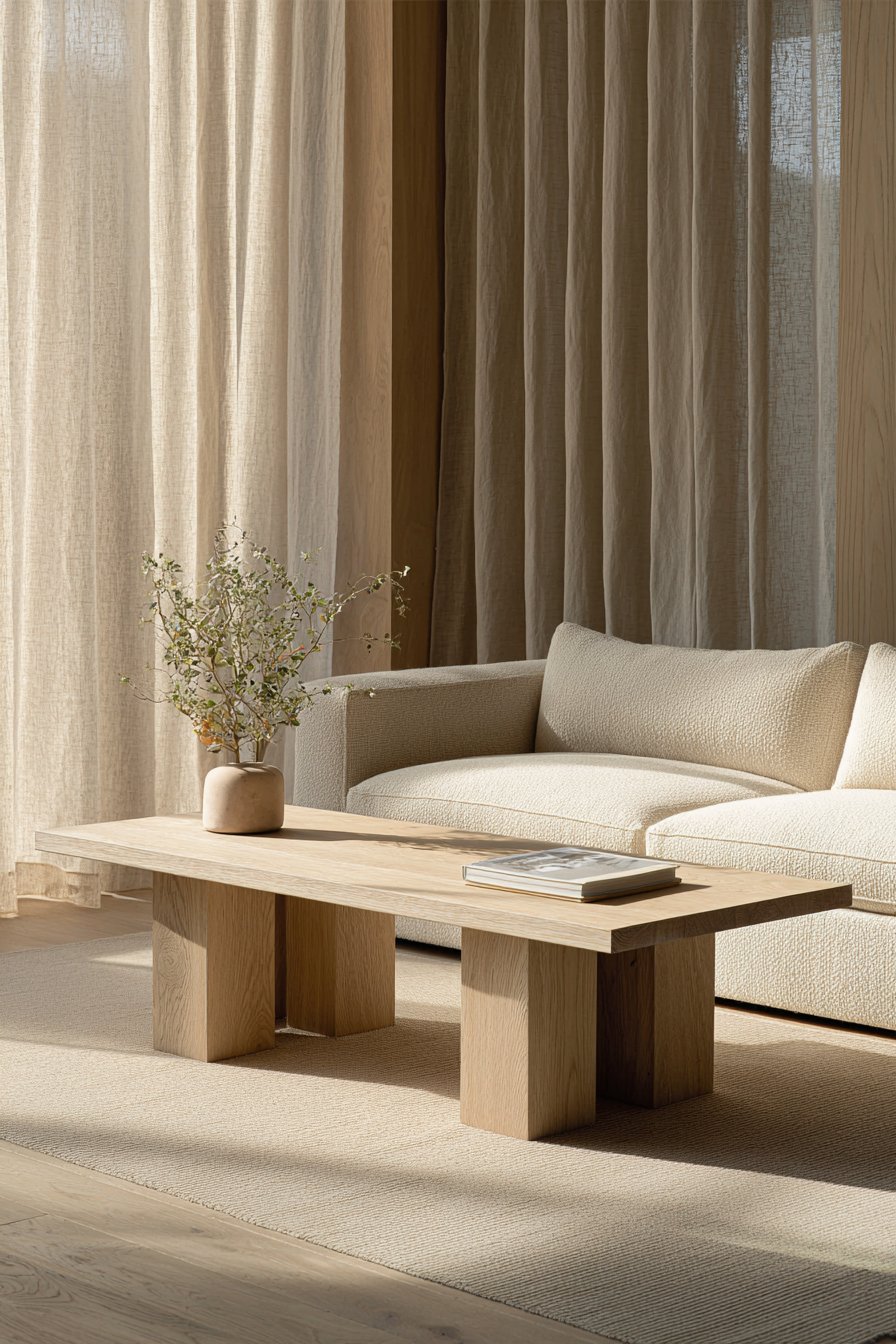
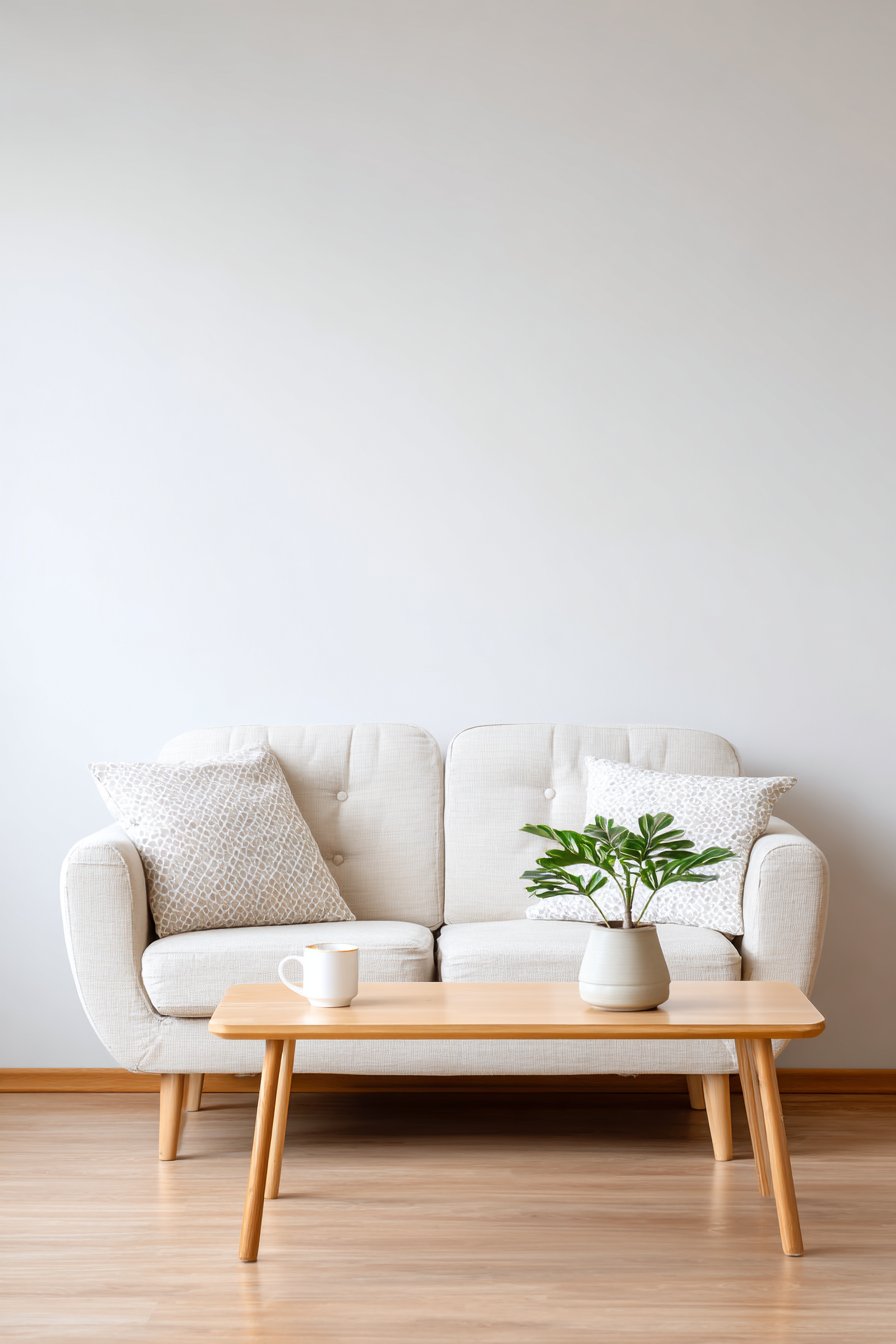
This calming living room demonstrates the power of minimalist design to create peaceful, uncluttered spaces that serve as sanctuaries from busy urban life. The streamlined two-seater sofa in oatmeal linen features clean lines and wooden block legs that elevate it slightly off the floor, creating visual lightness while making cleaning underneath easier. The linen’s natural texture and neutral color provide subtle visual interest without the distraction of bold patterns or colors, allowing your mind to rest and reset.
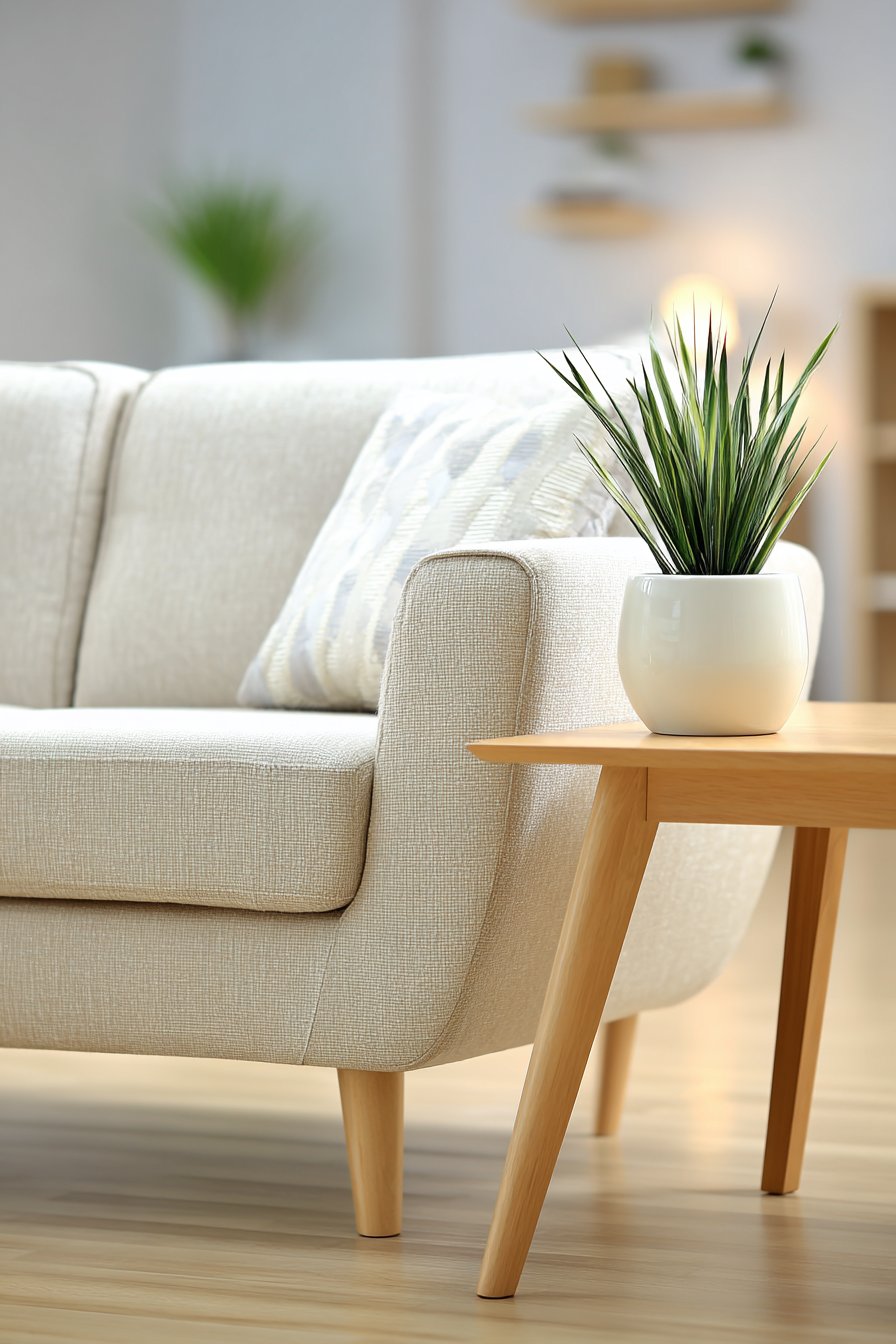
A simple rectangular coffee table in light oak continues the natural material theme, its honest wood grain and minimal form embodying the “form follows function” principle at minimalism’s core. There are no unnecessary decorative elements, no hidden compartments or complicated mechanisms—just a beautiful, well-crafted table that serves its purpose perfectly. A single statement plant in a simple ceramic planter—perhaps a sculptural monstera or dramatic snake plant—adds the only touch of life and color needed, its organic form providing contrast to the geometric furniture while improving air quality.
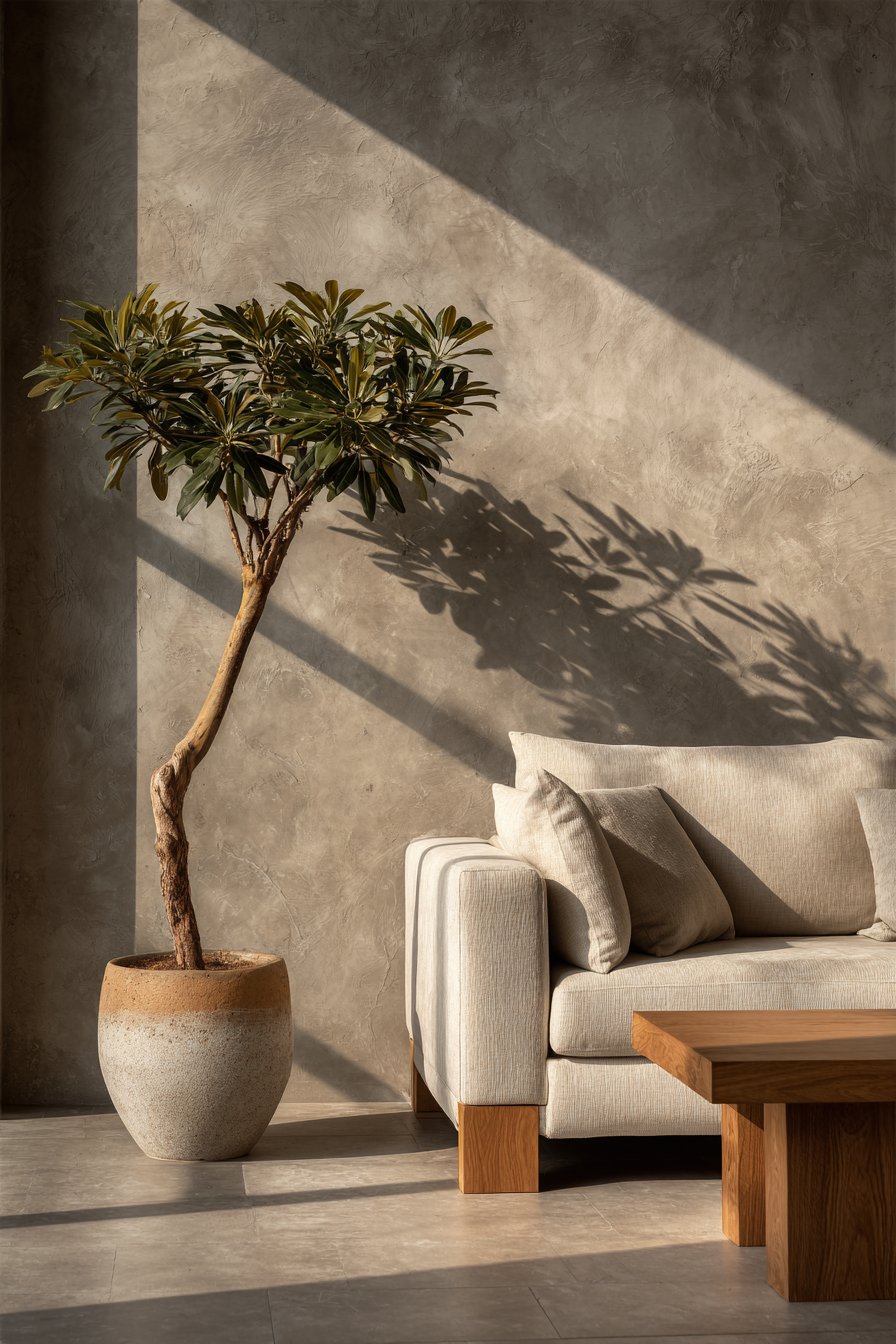
The wide-angle interior photography with soft natural lighting emphasizes the calm, uncluttered approach to small apartment living, showcasing how the pared-back aesthetic creates a sense of spaciousness that busier designs cannot achieve. The focus shifts from quantity to quality, where each carefully chosen piece earns its place through both function and form. This design proves that minimalism isn’t about deprivation or austerity—it’s about intentionally creating space for what truly matters, both physically and mentally.
Key Design Tips: Embrace the “less is more” philosophy by selecting only essential items; choose quality pieces that will last rather than trendy, disposable furniture; use neutral, natural colors to create calming environments; Select furniture with visible legs to create visual lightness; invest in beautiful storage solutions to keep clutter hidden; incorporate one statement plant rather than multiple small ones; allow negative space to exist—empty areas are part of the design; focus on natural materials like linen, wood, and ceramic; ensure every item serves a clear purpose; resist the urge to fill every surface and corner.
14. Cheerful Yellow Statement Seating
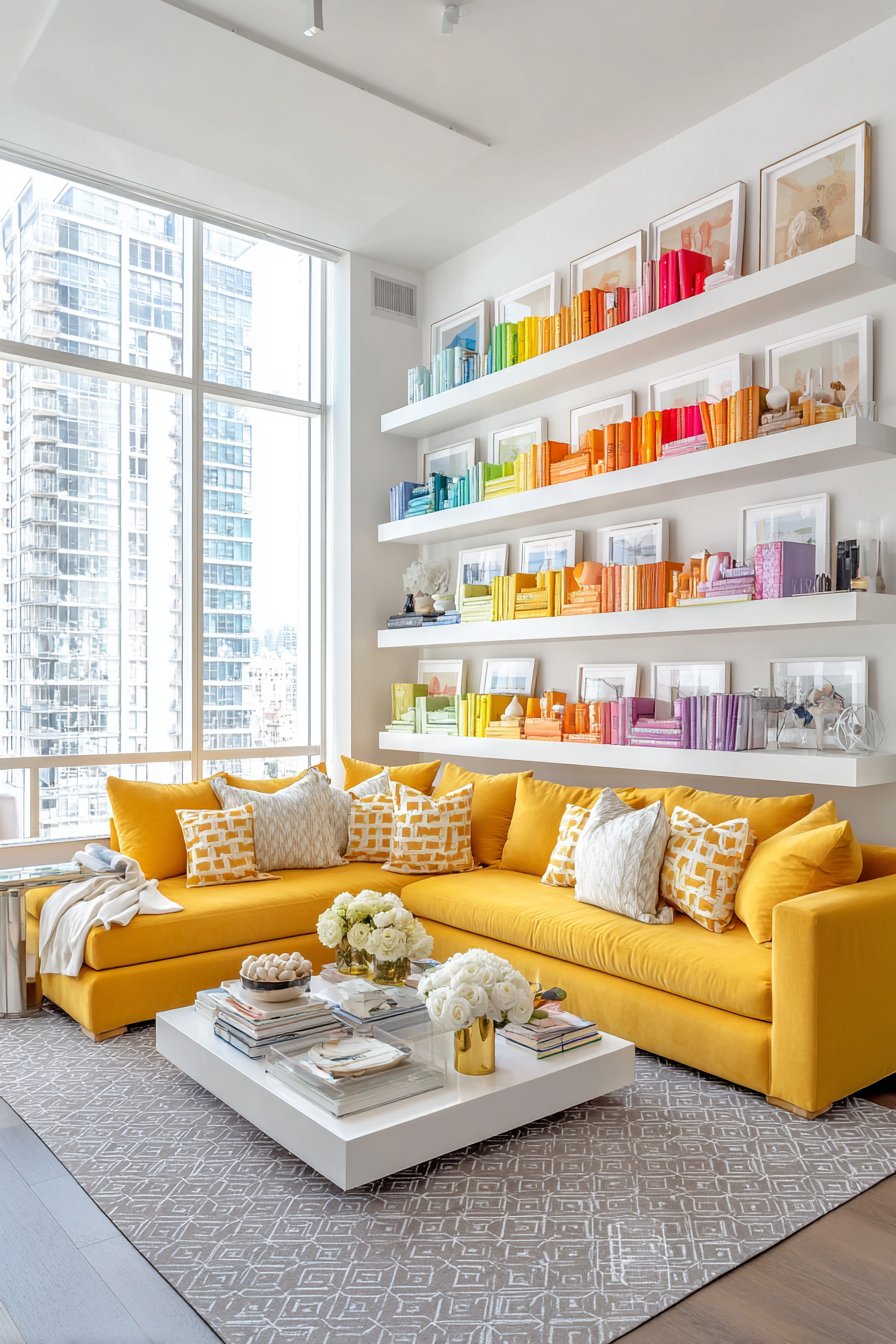
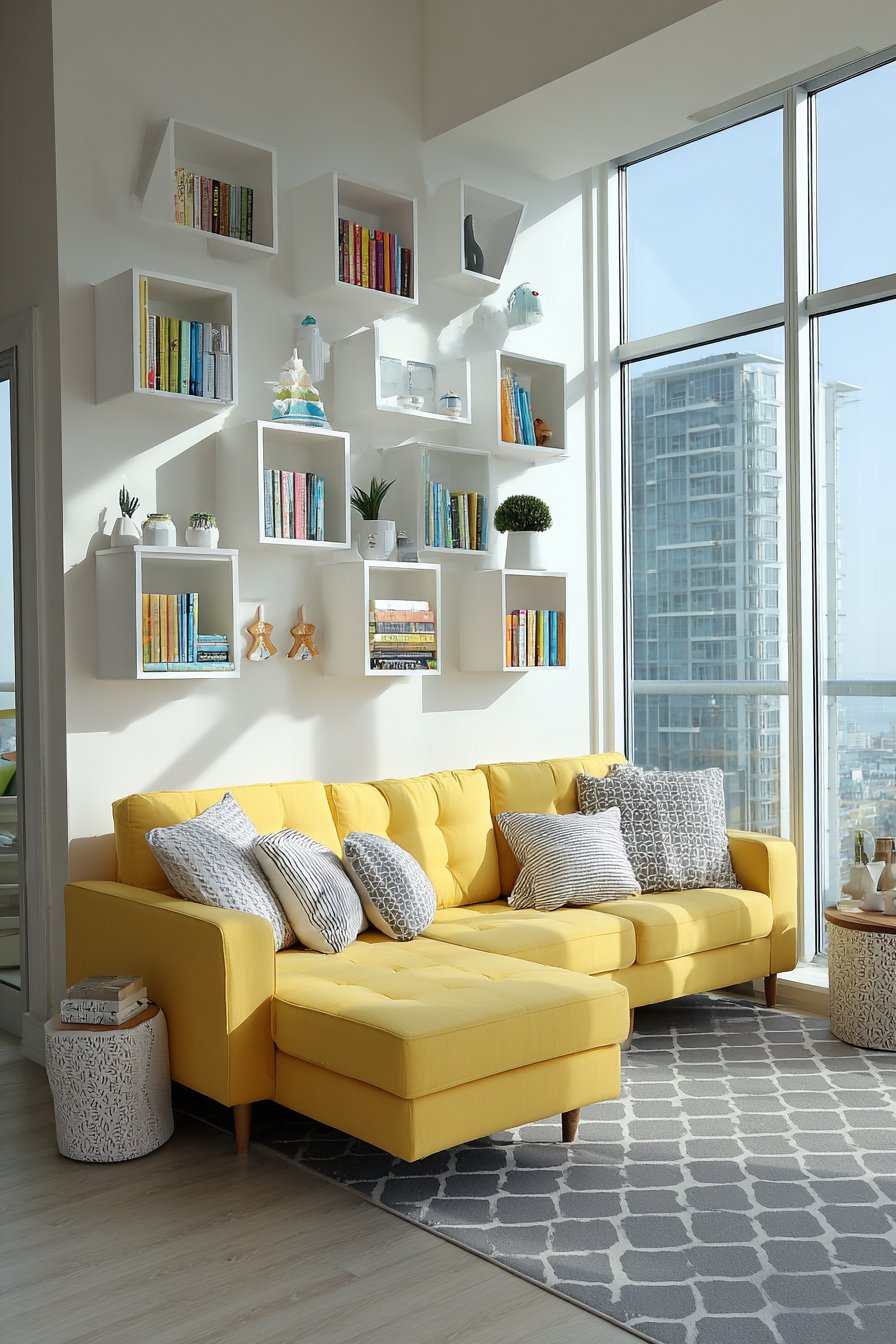
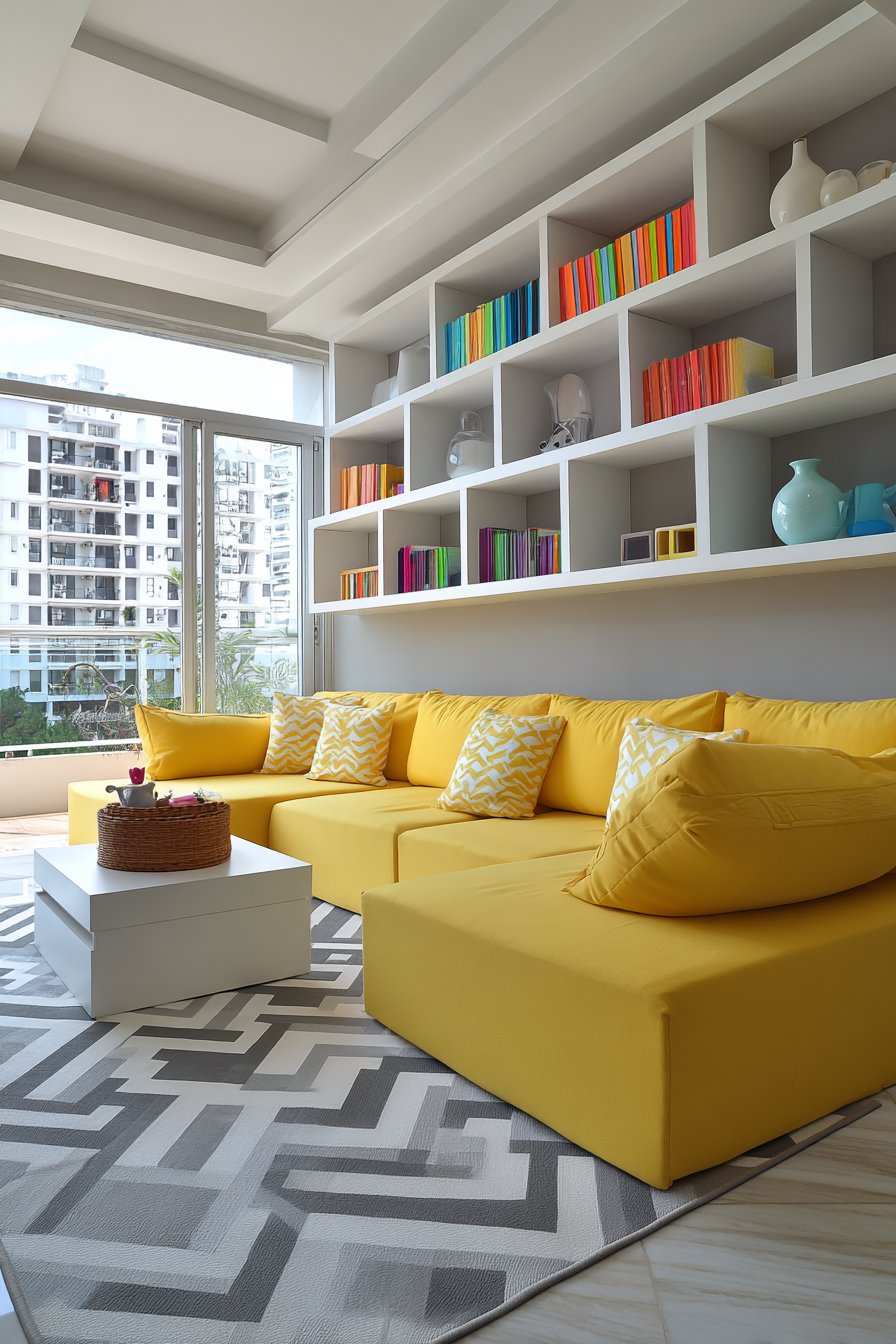
This energetic living room design demonstrates how a bold color choice can transform a neutral space into something truly memorable. The petite sectional in sunny yellow fabric serves as an instant mood-lifter, its cheerful hue bringing warmth and optimism that’s particularly valuable in apartments with limited natural light or urban views. Despite its vibrant color, the sectional’s compact scale ensures it enhances rather than overwhelms the room, proving that bold doesn’t have to mean large.
White floating shelves create a gallery wall system where colorful books are arranged by spine color, creating a rainbow effect that’s both visually striking and surprisingly calming in its organization. Interspersed among the books, small decorative objects—perhaps vintage cameras, ceramic animals, or travel souvenirs—add personal touches that tell your story. This curated approach to display turns functional book storage into an art installation that serves as the room’s secondary focal point.
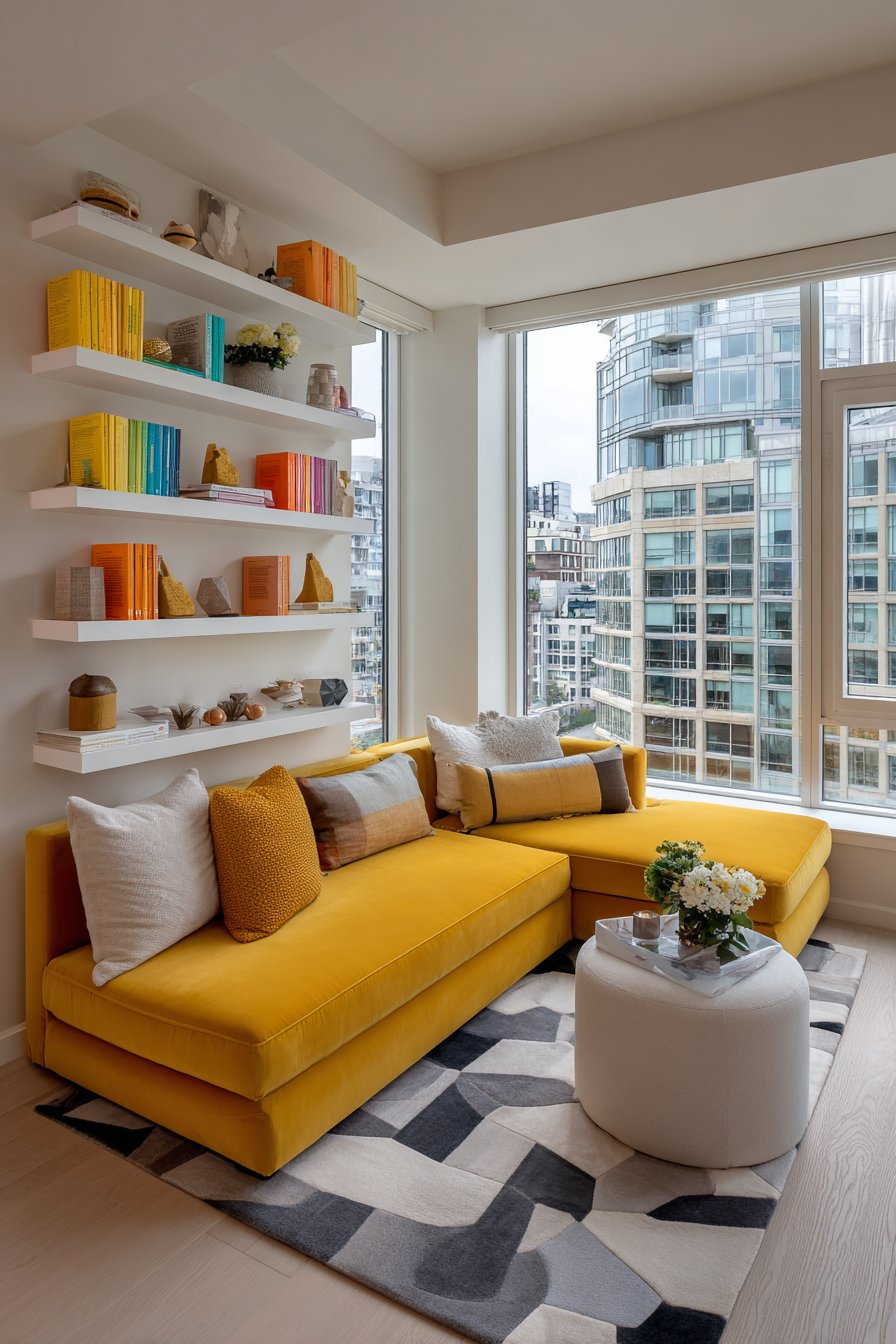
A geometric patterned rug in grey and white provides visual grounding for the vibrant yellow seating, its neutral palette ensuring the bold furniture remains the star while adding pattern and defining the living zone. Natural light from large windows illuminates the space beautifully, captured with professional interior photography that highlights the bold yet balanced color choices and youthful energy. This design is perfect for personalities who see their home as an expression of their optimistic, creative spirit and aren’t afraid to embrace color in unexpected ways.
Key Design Tips: Don’t fear bold furniture colors in small spaces—they create personality and focal points; arrange books by color for visual impact and artistic display; use white shelving to showcase colorful items without competition; balance bold furniture with neutral rugs and walls; maximize natural light to prevent bold colors from feeling overwhelming; Choose compact sectionals for small-space seating solutions; incorporate geometric patterns in neutral tones for visual interest; ensure your bold color choice reflects your personality; use floating shelves to create gallery walls without floor furniture; let one bold element shine by keeping other pieces more subdued.
15. Vintage Glamour with Emerald Velvet
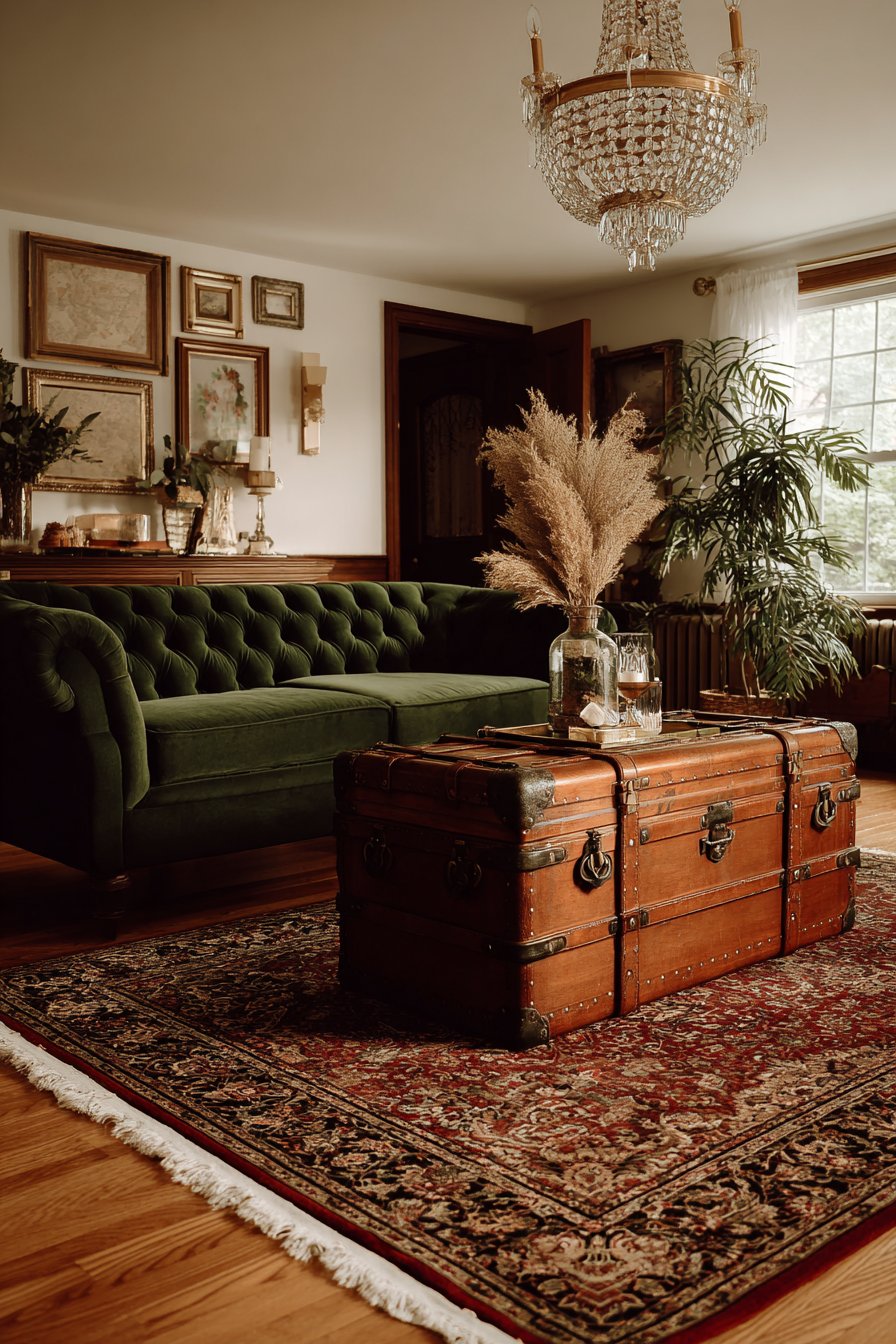
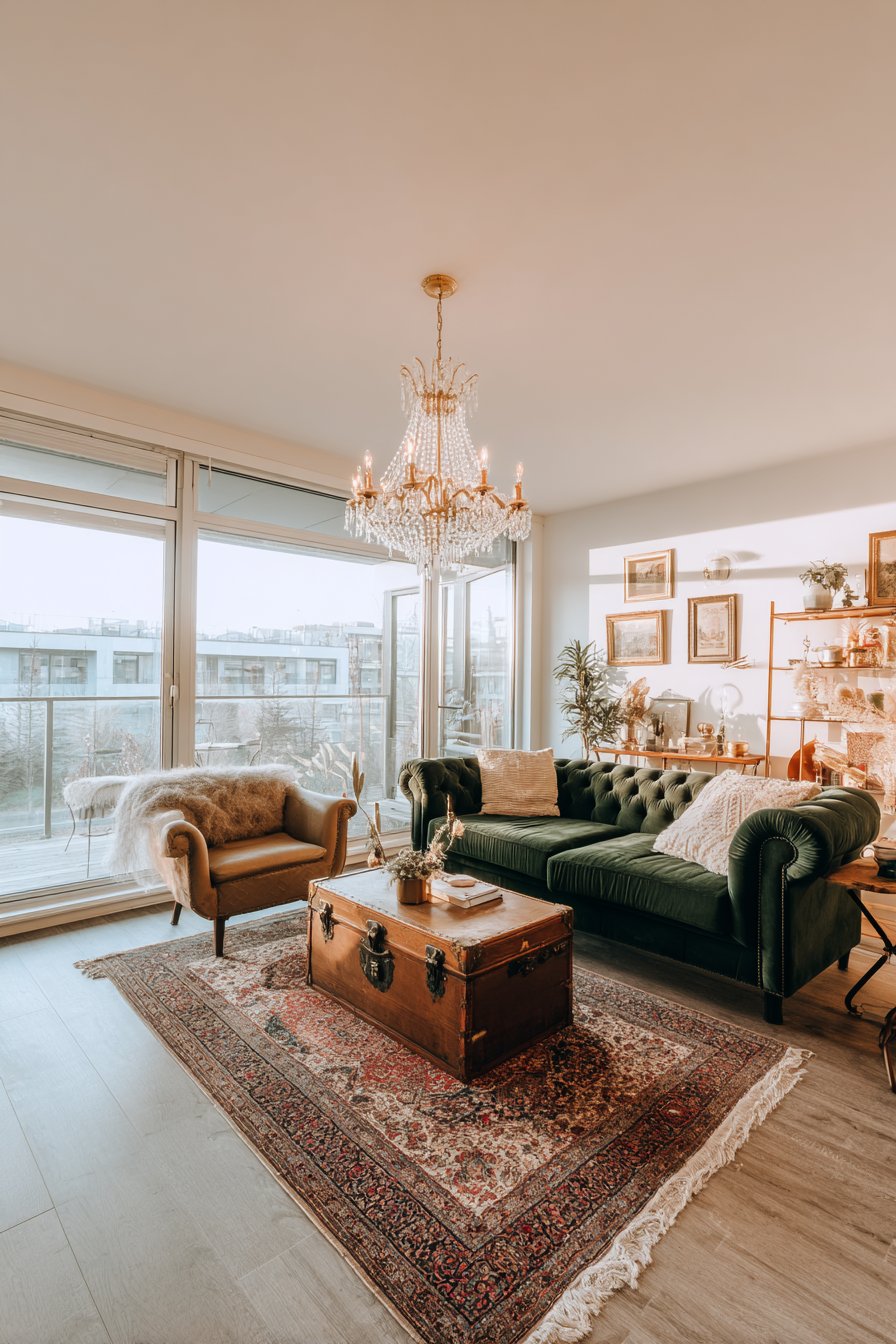
This sophisticated living room channels vintage elegance through carefully selected pieces that evoke old-world charm while remaining entirely functional for modern apartment living. The small velvet Chesterfield sofa in emerald green makes an immediate impact, its deep jewel tone and classic button tufting creating luxury and formality that’s balanced by its compact proportions. The emerald hue brings richness and depth while the velvet’s texture catches light beautifully, creating subtle variations in tone throughout the day.
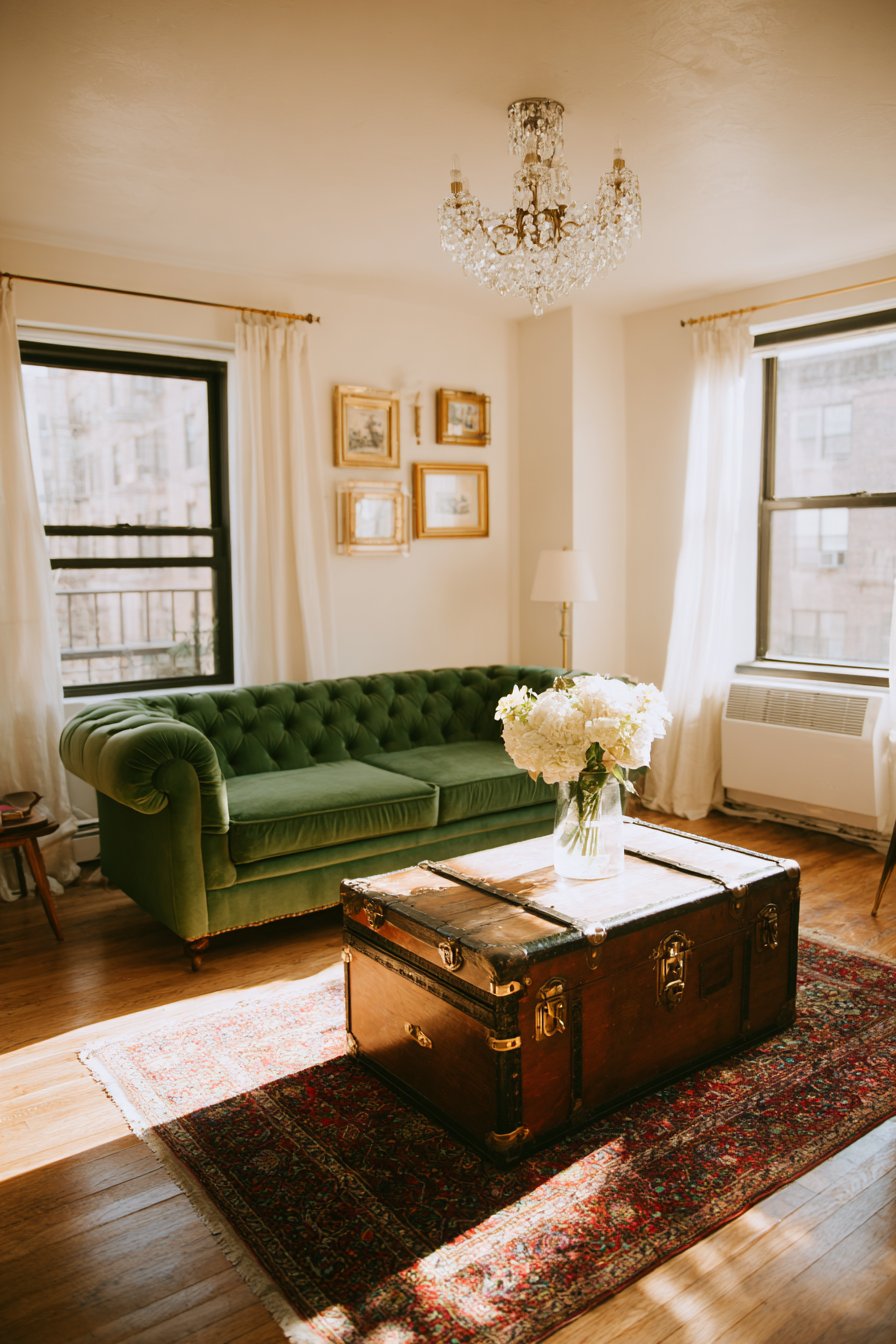
A refinished wooden trunk serving as a coffee table adds character and provides hidden storage—imagine vintage leather straps, brass corners, and a weathered patina that suggests stories of travels past. This piece grounds the room with its solid presence while offering practical storage for blankets, photo albums, or seasonal items. Antique brass picture frames in various sizes and styles create an eclectic gallery wall that showcases family photos, vintage botanical prints, or black and white photography, their golden tones echoing the trunk’s hardware.
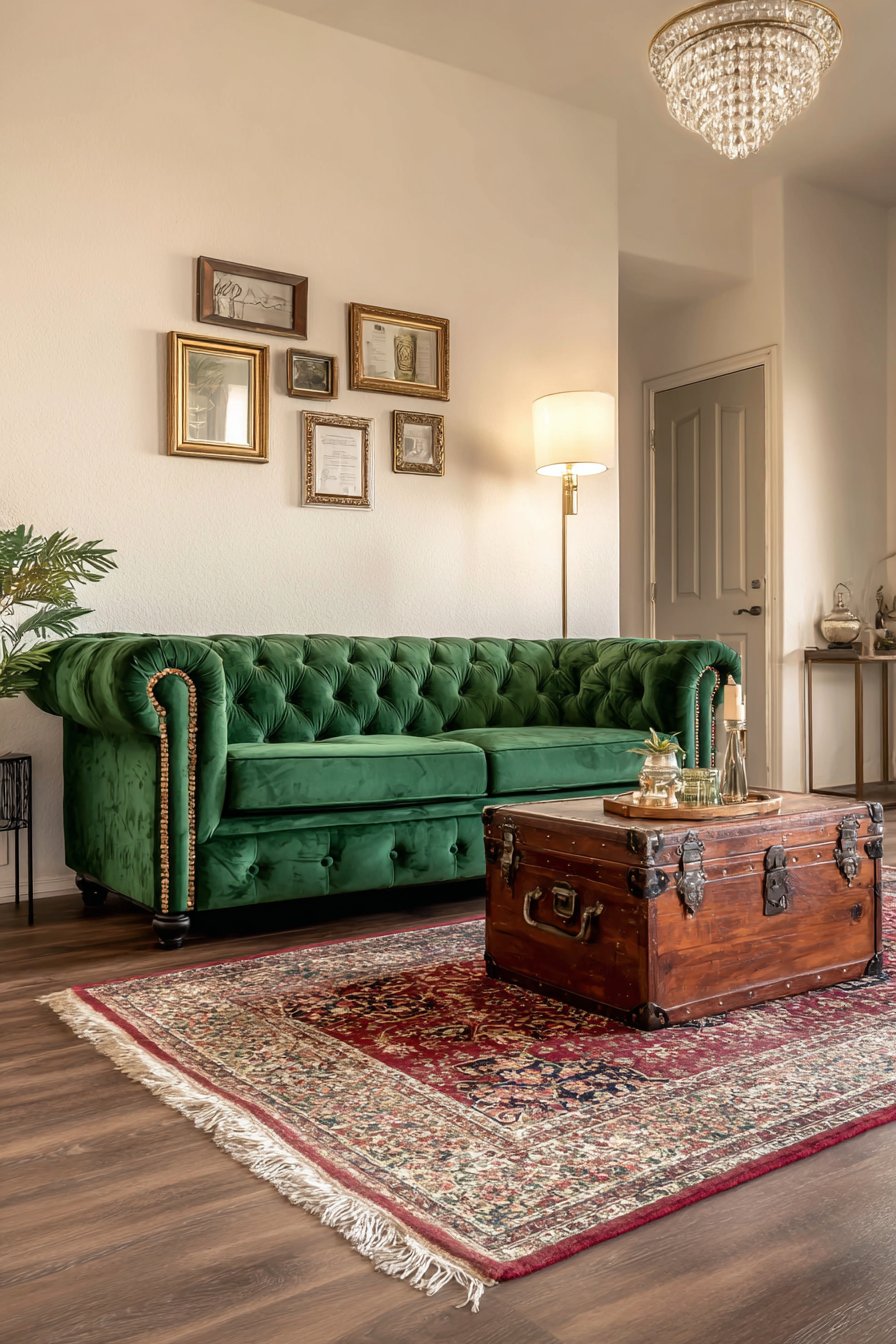
A crystal chandelier adds unexpected elegance overhead, its prismatic drops catching and scattering light in rainbow sparkles across the walls. This grand gesture elevates the entire space, proving that even rental apartments can accommodate glamorous lighting with proper installation or landlord permission. A Persian-style runner in rich tones—deep reds, navy blues, and golden yellows—warms the hardwood floor while adding pattern and traditional elegance. Interior design photography with warm natural lighting captures the collected-over-time aesthetic and sophisticated charm achievable even in compact quarters.
Key Design Tips: Invest in one jewel-toned statement piece for instant sophistication; use vintage trunks as coffee tables for character and storage; Create eclectic gallery walls with mismatched frames in the same finish; Consider a statement chandelier to add glamour and elegance; incorporate Persian or Oriental rugs for traditional richness; mix vintage and reproduction pieces for a collected look; Choose emerald, sapphire, or ruby tones for sophisticated jewel-tone palettes; refinish vintage furniture for unique, characterful pieces; allow brass and gold tones throughout for cohesive warmth; embrace maximalist touches in small doses for impact without overwhelming.
16. Hygge-Inspired Scandinavian Comfort
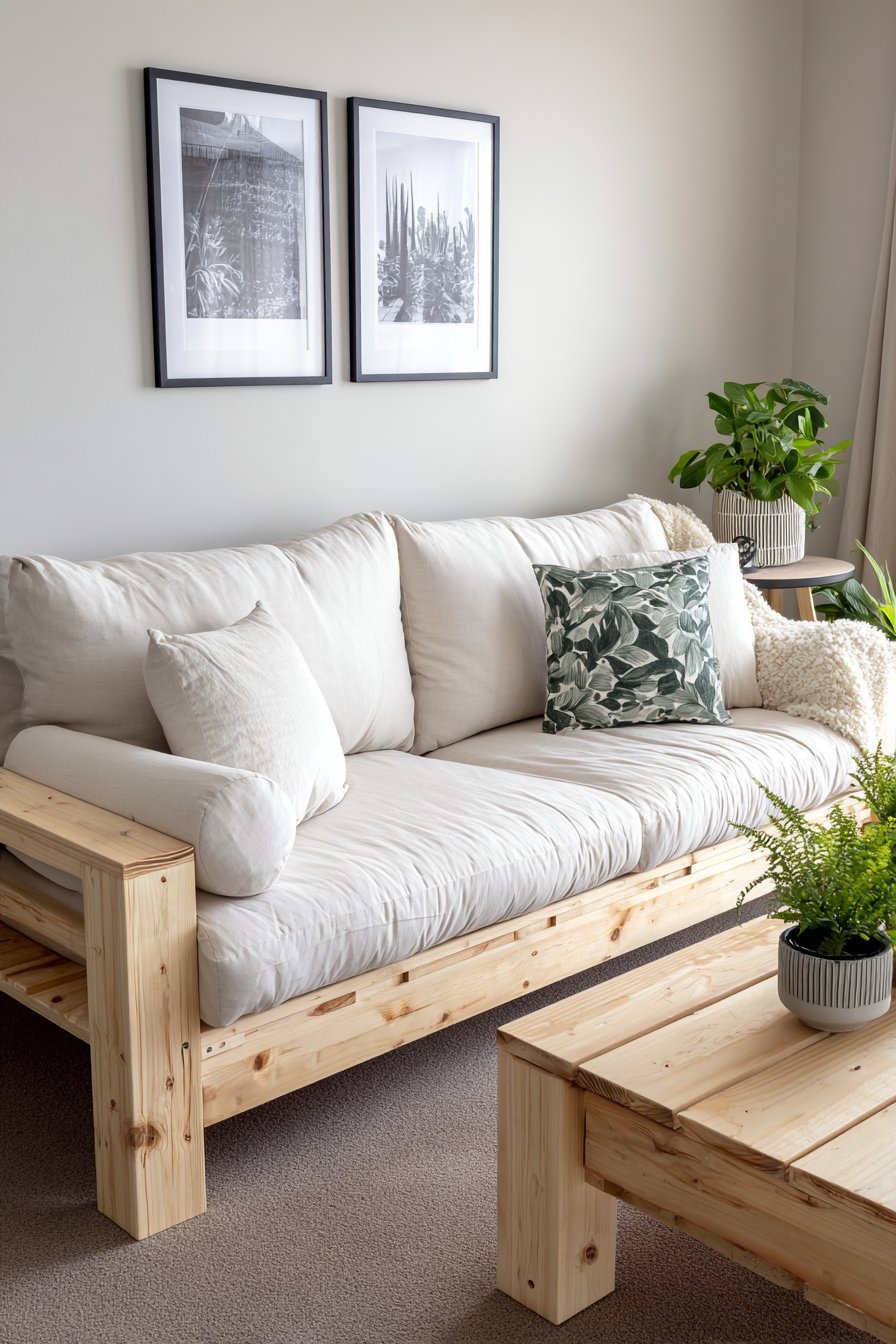
This warmly minimalist living room embodies the Danish concept of “hygge”—that untranslatable feeling of cozy contentment and well-being. The light wood frame sofa with removable linen covers in natural white creates the foundation, its simple construction and washable slipcovers balancing beauty with practicality. The exposed wood frame showcases beautiful birch grain while the linen’s relaxed drape and lived-in texture prevent the space from feeling too precious or untouchable.
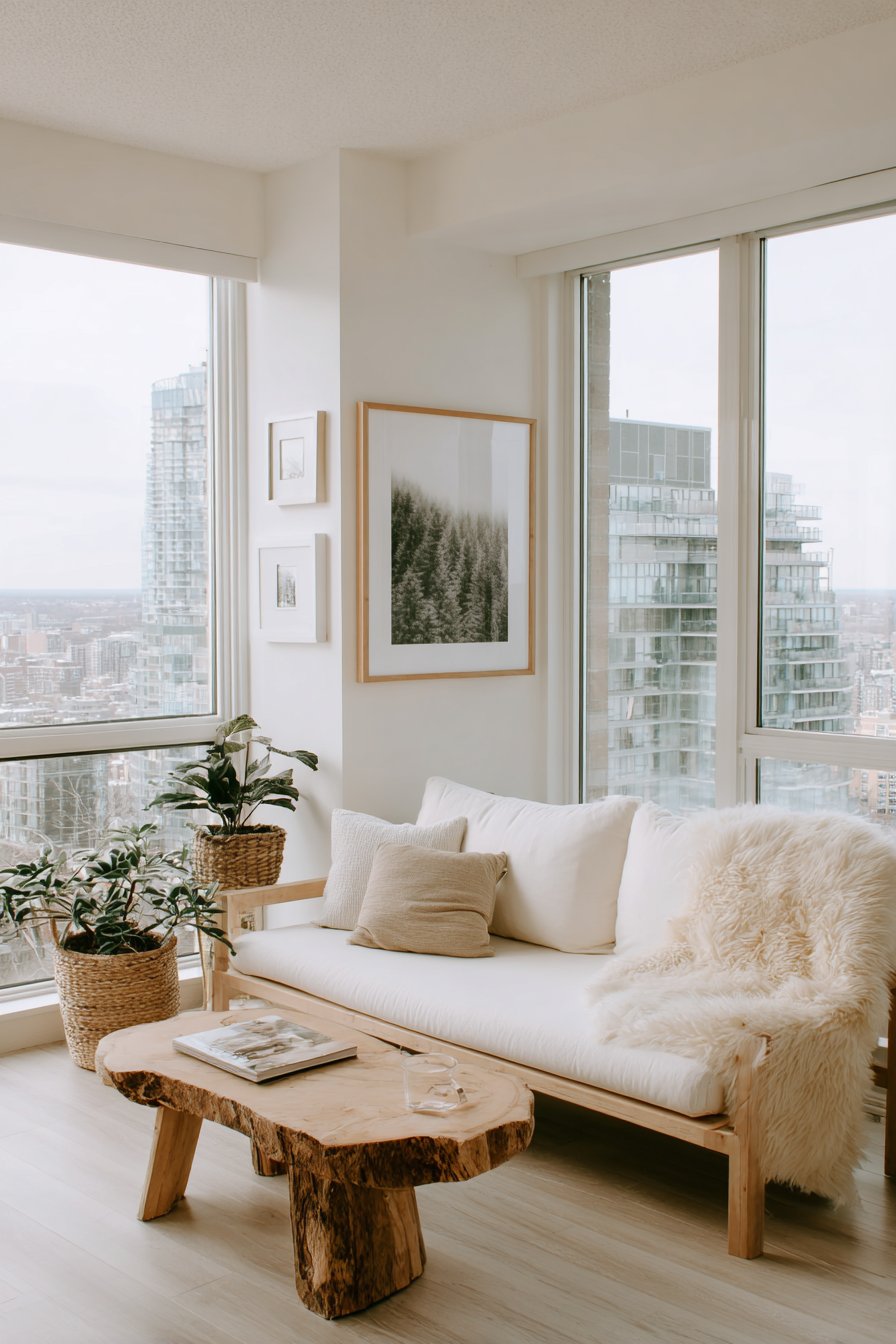
A simple birch coffee table continues the light wood theme, its clean lines and honest construction reflecting Scandinavian design values of functionality and natural materials. Draped casually over the sofa’s arm, a sheepskin throw adds luxurious textural warmth—its natural lanolin-rich fibers providing both visual softness and actual warmth for chilly evenings. Potted plants in simple ceramic planters in whites and greys bring controlled doses of green life, while black and white photography prints in simple wooden frames create a gallery wall with graphic impact that respects the minimal aesthetic.
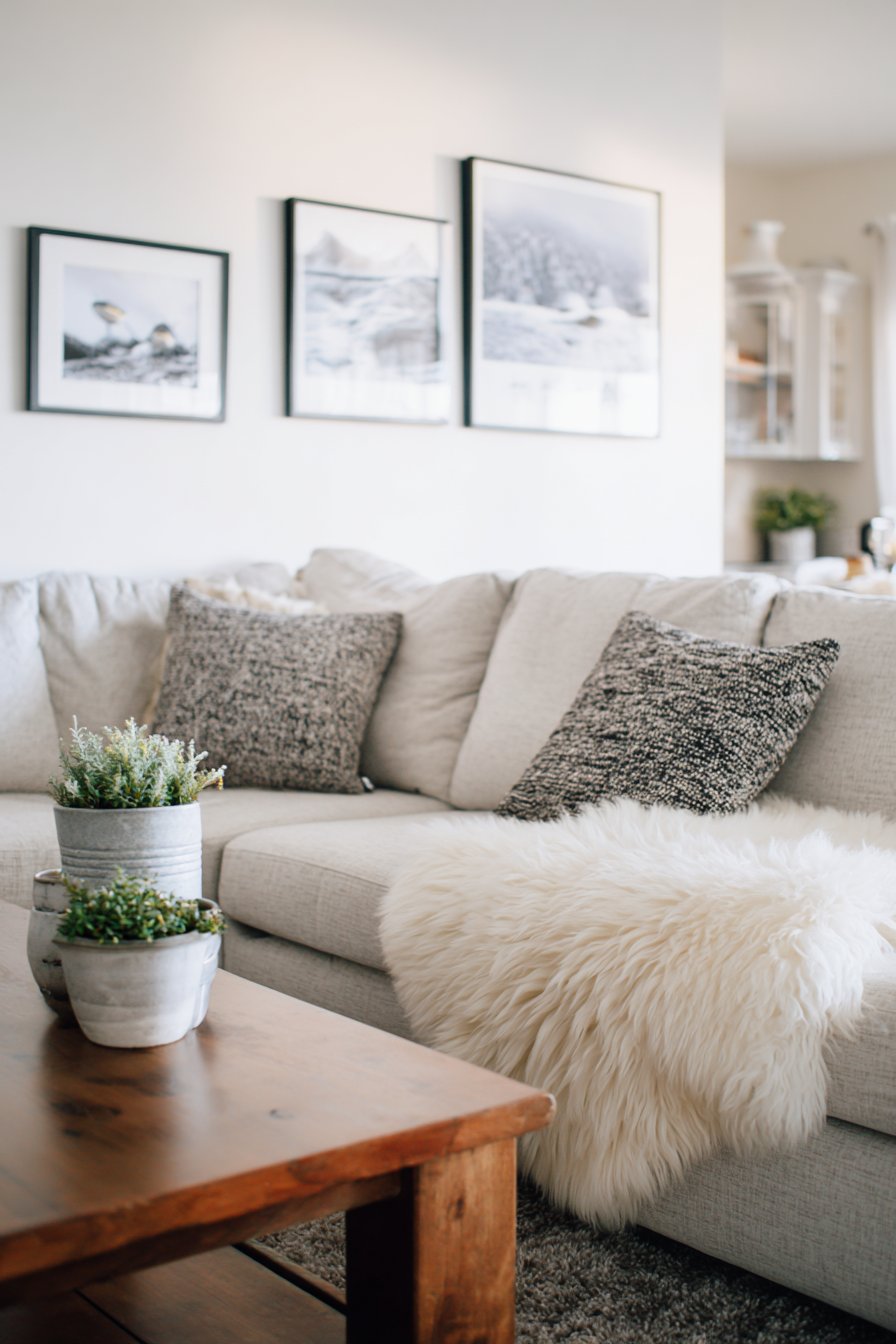
The wide-angle photography captures this hygge-inspired space with soft diffused natural light that emphasizes the clean lines and organic materials central to Scandinavian design. The overall effect is a living room that feels simultaneously calming and inviting, proving that minimalism doesn’t mean cold or austere—when executed with warmth and texture, it creates spaces that nurture well-being and contentment. This is design focused on how spaces make us feel rather than how they impress others.
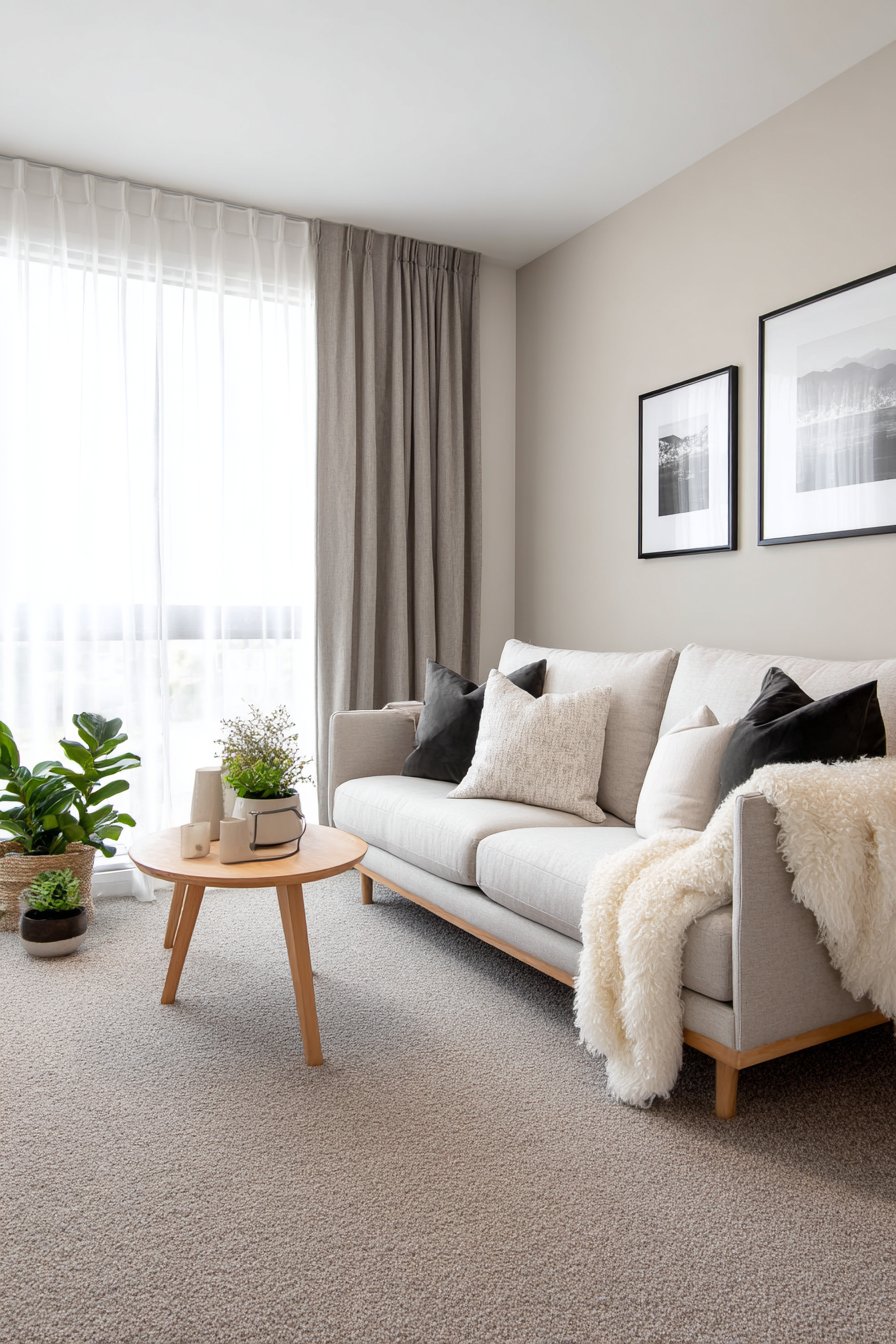
Key Design Tips: Choose furniture with removable, washable covers for practical beauty; incorporate natural materials like wood, linen, and wool; Add sheepskin throws for instant hygge warmth and texture; use ceramic planters in neutral tones for cohesive plant displays; create gallery walls with black and white photography; Maximize natural light to create the bright, airy Scandinavian aesthetic; select light woods like birch, ash, or light oak; embrace imperfection and lived-in comfort; focus on creating feelings of contentment and well-being; keep color palettes neutral with organic accents.
17. Transformable Multi-Purpose Living
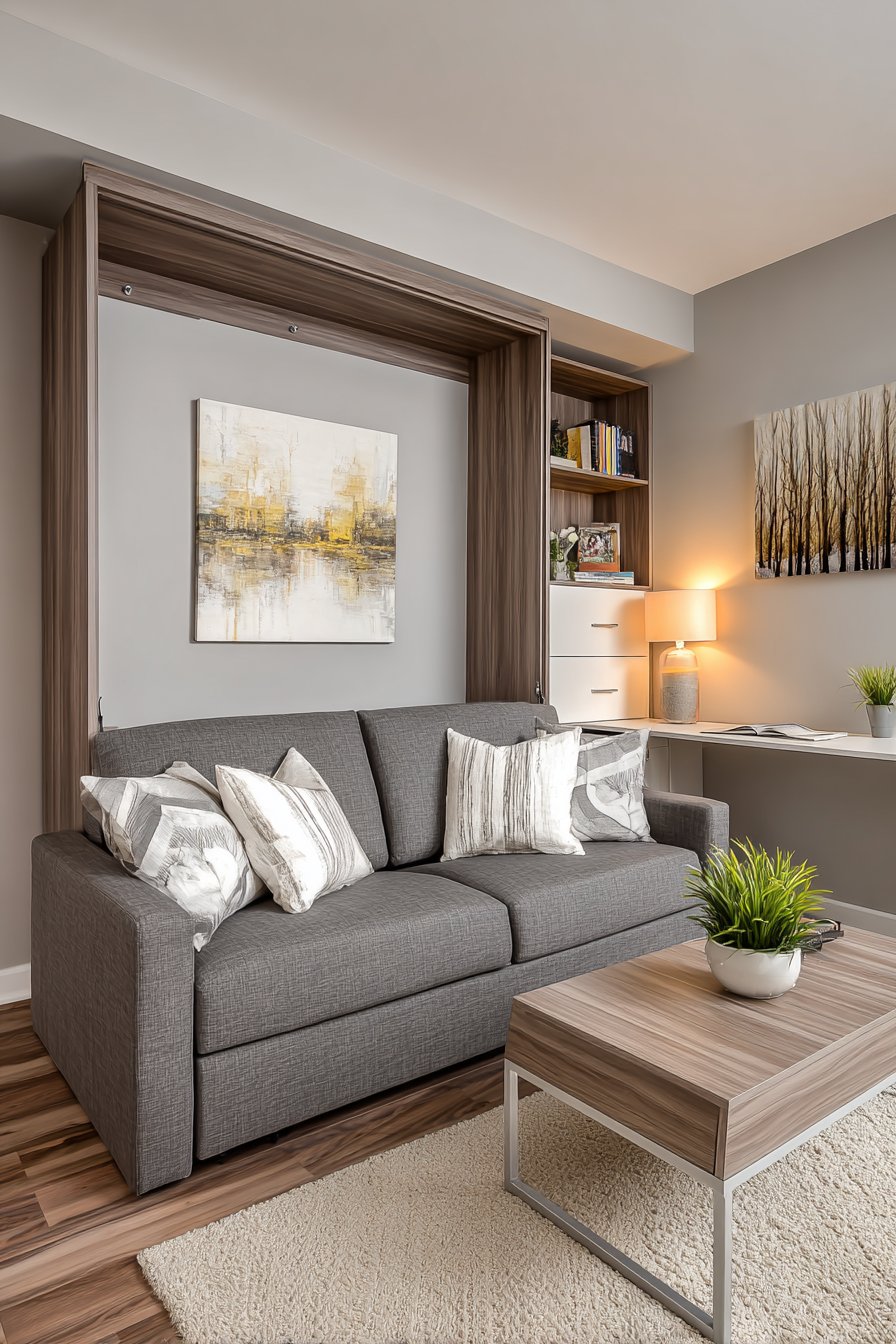
This brilliant living room design tackles one of apartment living’s biggest challenges—making one space serve multiple functions without feeling chaotic or cluttered. The sleeper sofa in medium grey fabric features hidden storage compartments beneath the chaise section, perfect for storing bedding, seasonal clothing, or items you need accessible but not visible. When guests stay overnight, the sofa converts easily to a comfortable bed without requiring you to clear the room or rearrange furniture.
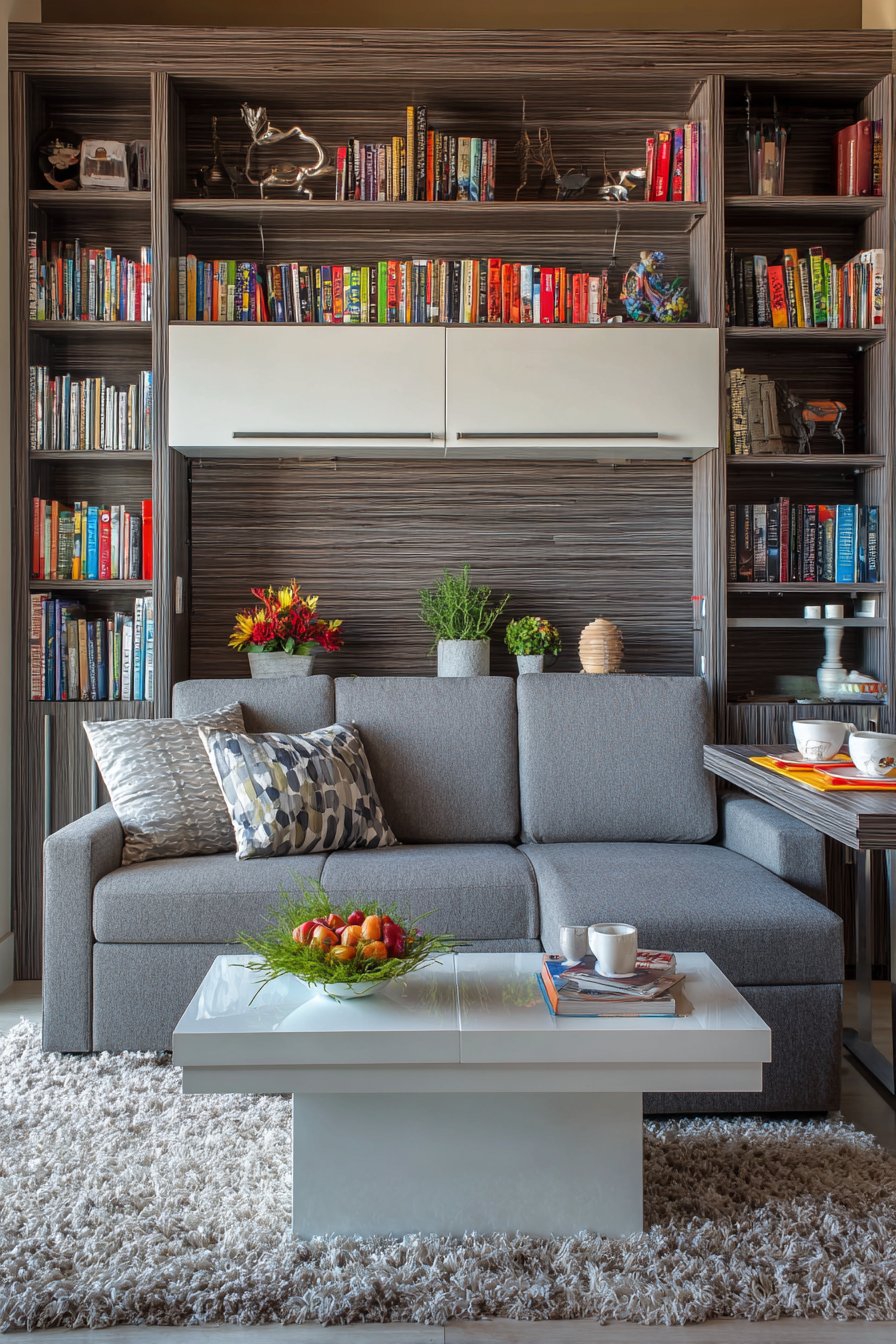
A lift-top coffee table provides workspace and dining surface when needed, its top raising to comfortable height for laptop work or meals while revealing hidden storage beneath for remotes, magazines, and other living room essentials. This transformable design means you don’t need a separate desk or dining table, saving both space and money. Against one wall, a wall-mounted fold-down desk creates a home office zone that disappears completely when not in use, attached to the wall with sturdy brackets that support the work surface and fold flat when you want to reclaim the floor space.
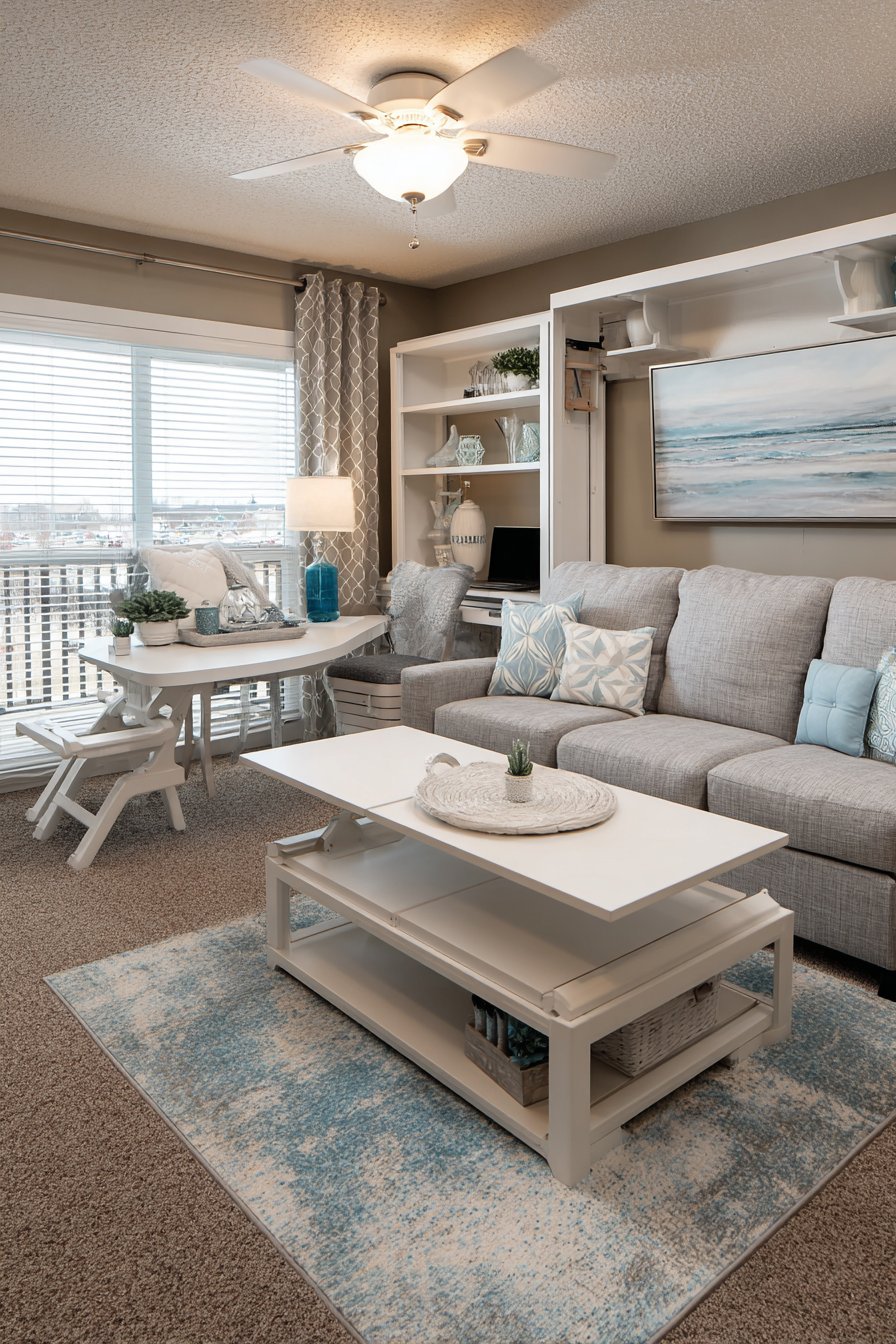
Professional interior photography showcases this transformable layout with balanced lighting that demonstrates how one small space serves multiple purposes throughout the day—living room, office, dining area, and bedroom—while maintaining an adorable aesthetic appeal that never feels institutional or overly utilitarian. The medium grey color scheme provides sophisticated neutrality that works for all the space’s various functions, while thoughtful styling with plants, artwork, and textiles ensures it always feels like a home rather than a dorm room.
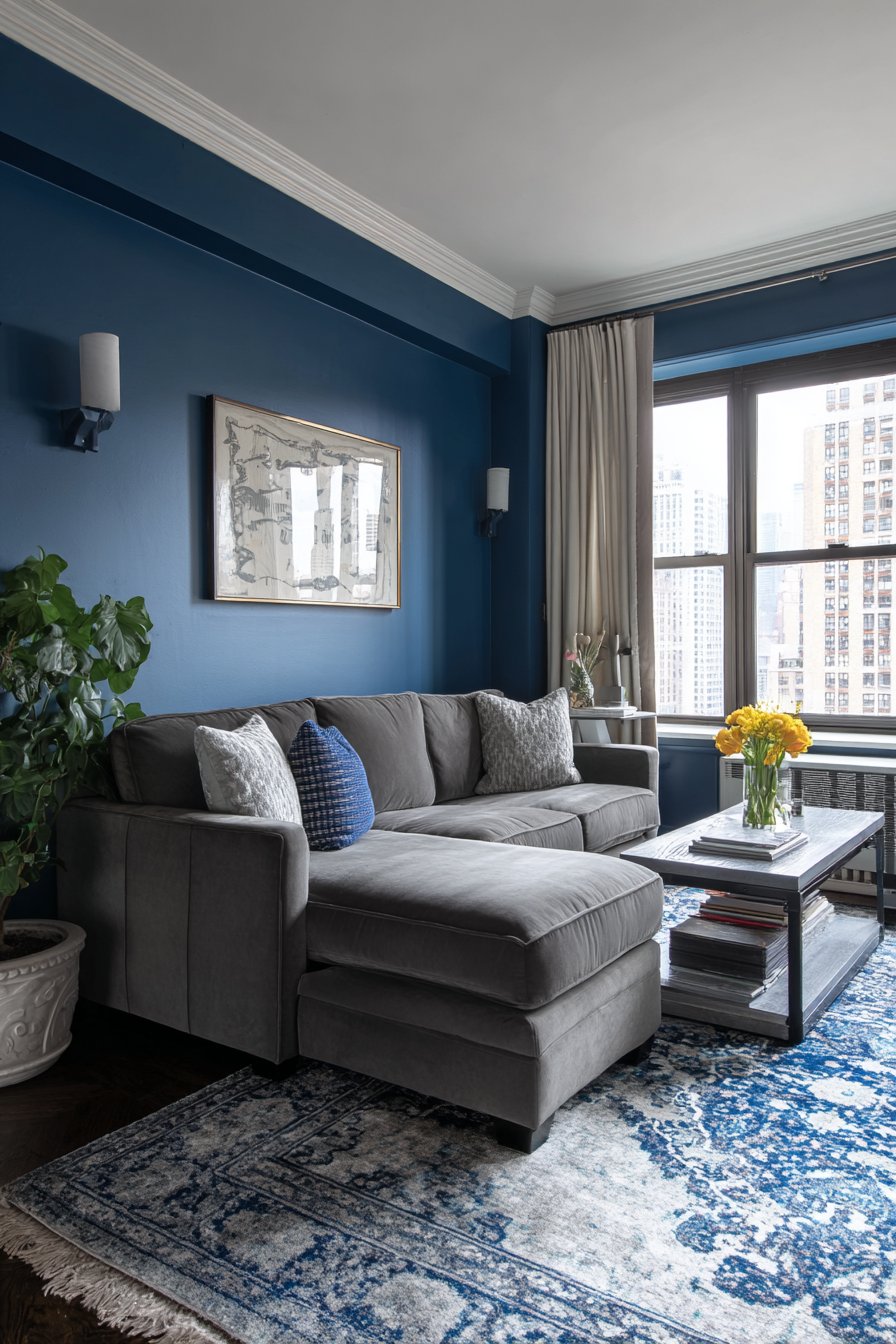
Key Design Tips: Invest in quality sleeper sofas with comfortable mattresses for regular use; choose lift-top coffee tables for workspace and dining flexibility; Install fold-down desks for home offices in small apartments; use medium grey tones that work for multiple functions; Incorporate hidden storage in every possible furniture piece; ensure transformable furniture is easy to operate daily; style multi-purpose spaces to feel cohesive across all functions; consider how your space needs change throughout the day and week; select furniture that serves at least two purposes; maintain attractive aesthetics even when furniture is in different configurations.
18. Coastal Breeziness in Navy and White
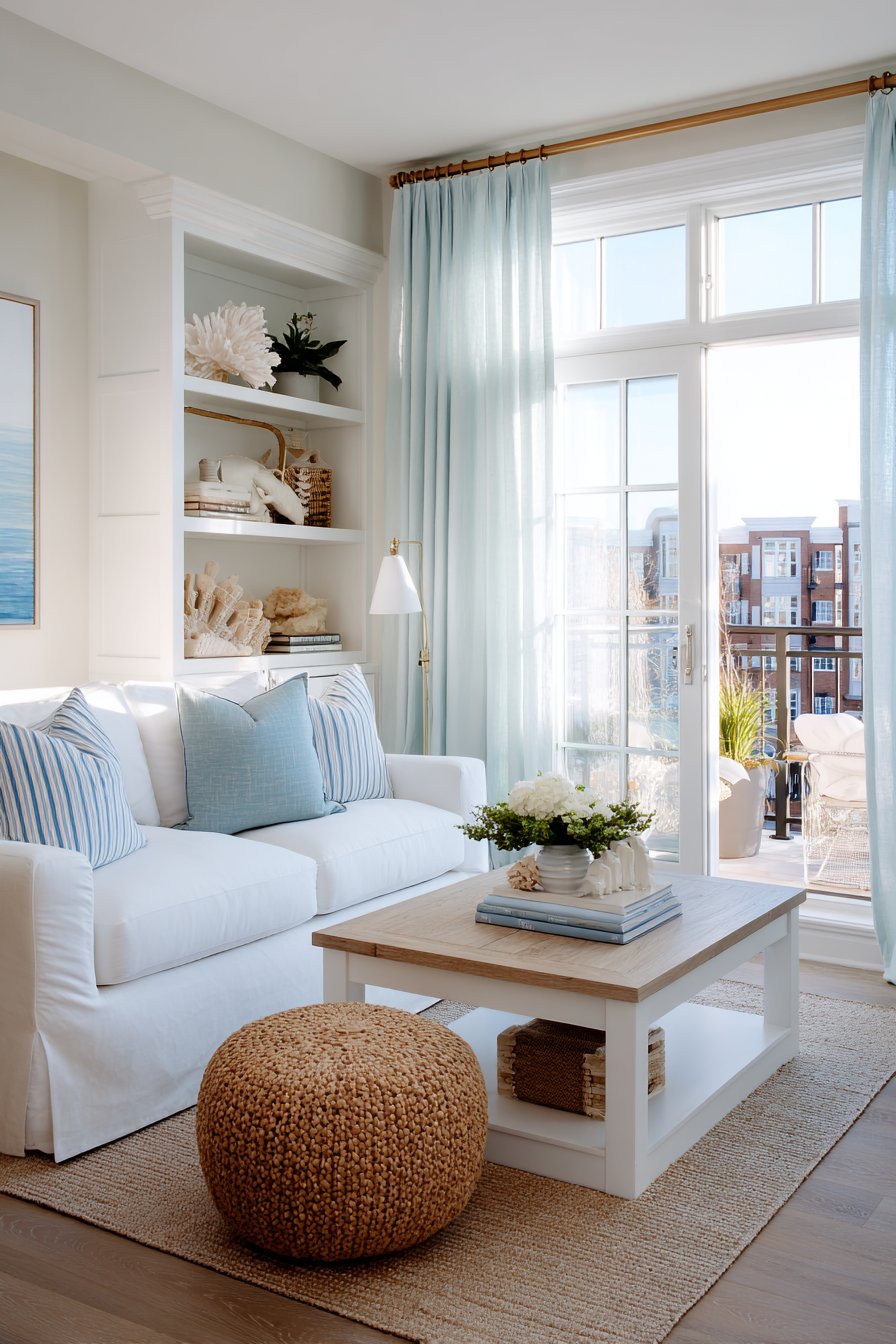
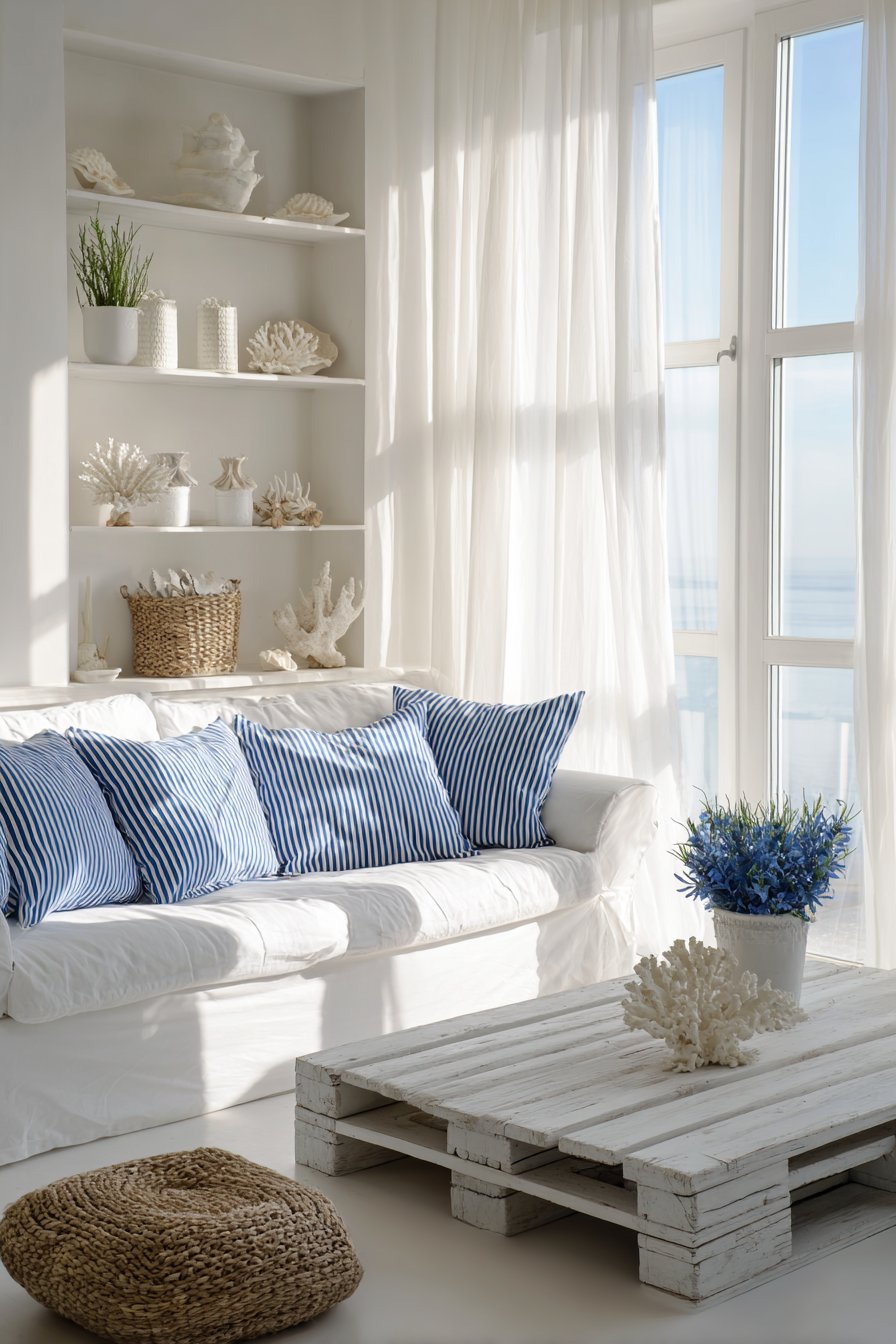
This refreshing living room brings beach house charm to apartment living through a carefully curated coastal palette and relaxed styling. The slipcovered sofa in crisp white forms the foundation, its washable cotton slipcover practical for real life while its relaxed fit creates that effortless, lived-in look characteristic of coastal interiors. Navy and white striped throw pillows inject classic nautical pattern while maintaining the clean, fresh color scheme that defines coastal design.
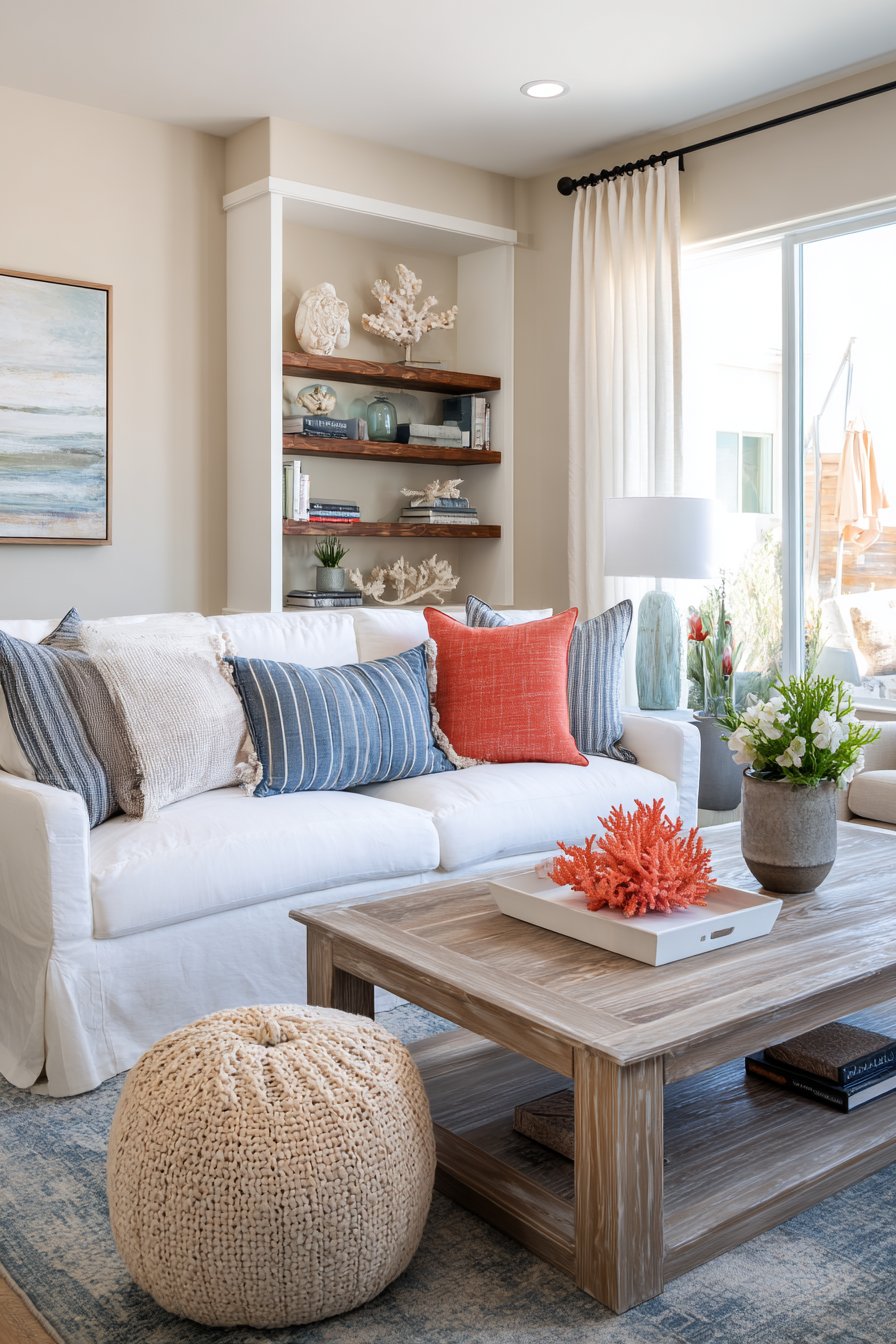
A whitewashed wooden coffee table adds weathered beach house character, its distressed finish suggesting years of sandy feet and sea-salt air even if it’s never left the city. A natural fiber pouf in braided jute or seagrass provides additional seating or serves as a footrest, its organic texture and neutral tone grounding the blue and white palette with earthy warmth. Coral and shell decorative accents arranged thoughtfully on open shelving add thematic touches without becoming kitschy—perhaps a few beautiful shells collected from beach walks, a piece of weathered driftwood, or coral-inspired ceramic objects.
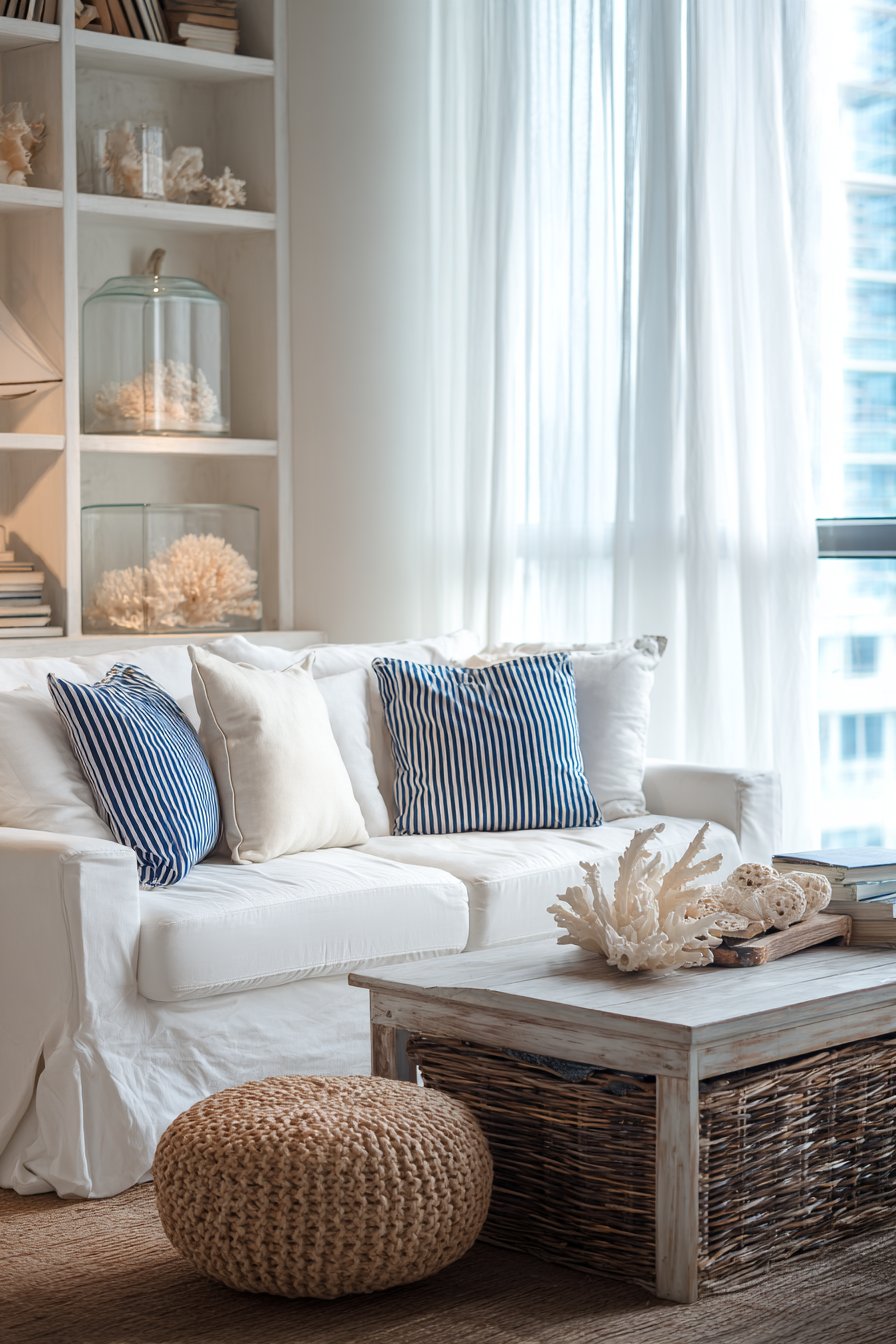
Sheer white curtains allow natural light to flood the space, their gauzy fabric moving gently with air currents and creating that breezy, relaxed atmosphere essential to coastal style. The interior design photography emphasizes this light color palette and relaxed atmosphere, capturing how coastal design brings vacation-home serenity to everyday apartment living. The result is a space that feels perpetually sun-soaked and carefree, providing a mental escape to the beach regardless of your actual location.
Key Design Tips: Use white slipcovers for classic coastal appeal and easy washing; incorporate navy and white stripes for timeless nautical pattern; Choose whitewashed or driftwood-finish furniture for beach house character; add natural fiber elements like jute, sisal, and seagrass; display beach findings and coral sparingly to avoid kitsch; maximize natural light with sheer white window treatments; keep the palette predominantly white and blue with natural accents; create a relaxed, lived-in look rather than formal arrangements; bring in ocean-inspired colors like aqua, seafoam, and sand; focus on creating a breezy, carefree atmosphere.
19. Industrial Chic Leather and Metal
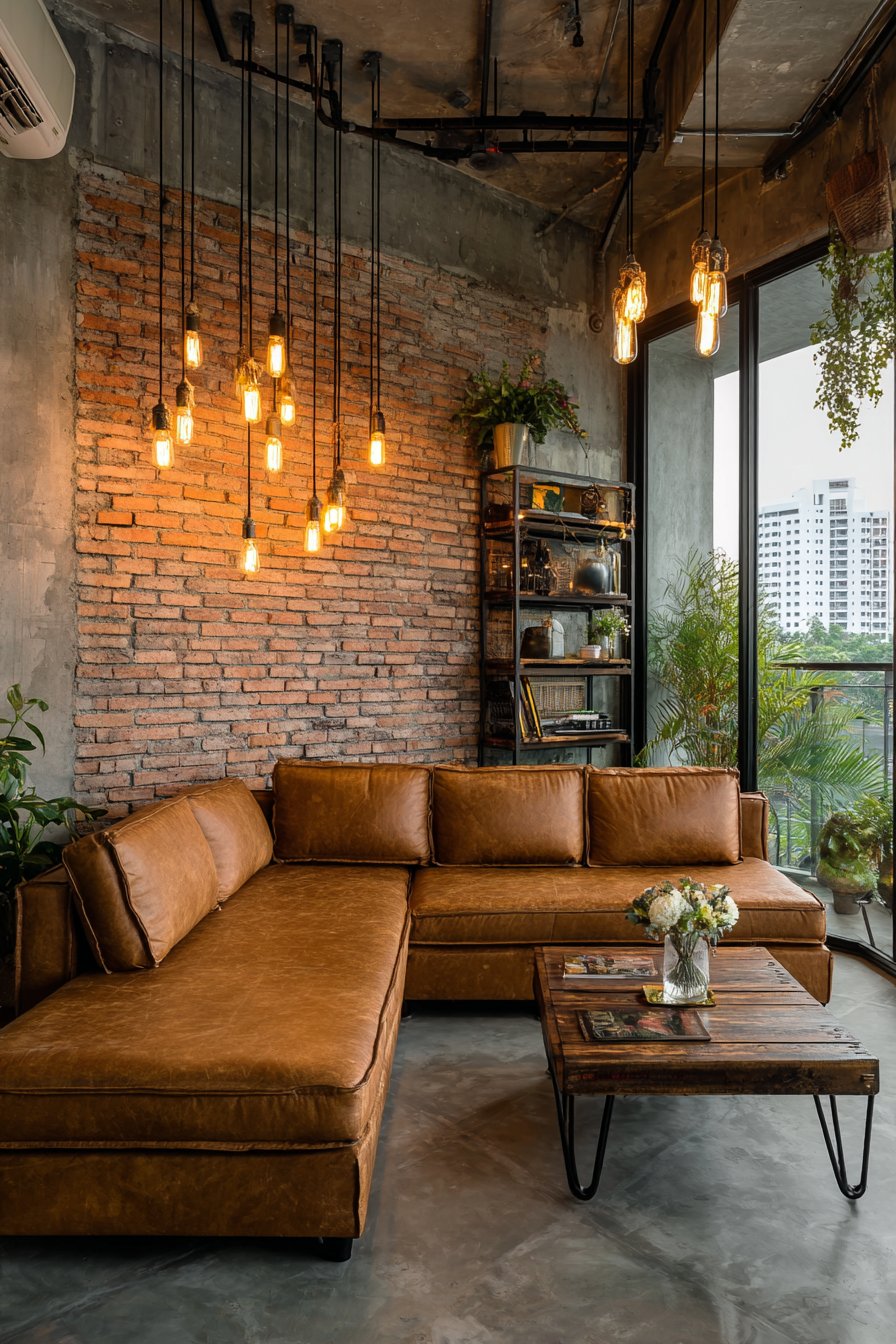
This edgy living room demonstrates how industrial design elements can create surprisingly cozy apartment spaces when balanced with warm materials and thoughtful styling. The compact leather sofa in rich cognac brown provides both visual warmth and durable seating that actually improves with age, developing a beautiful patina that adds character over time. Its clean lines and quality leather upholstery elevate the industrial aesthetic beyond cold warehouse vibes into something genuinely livable and sophisticated.
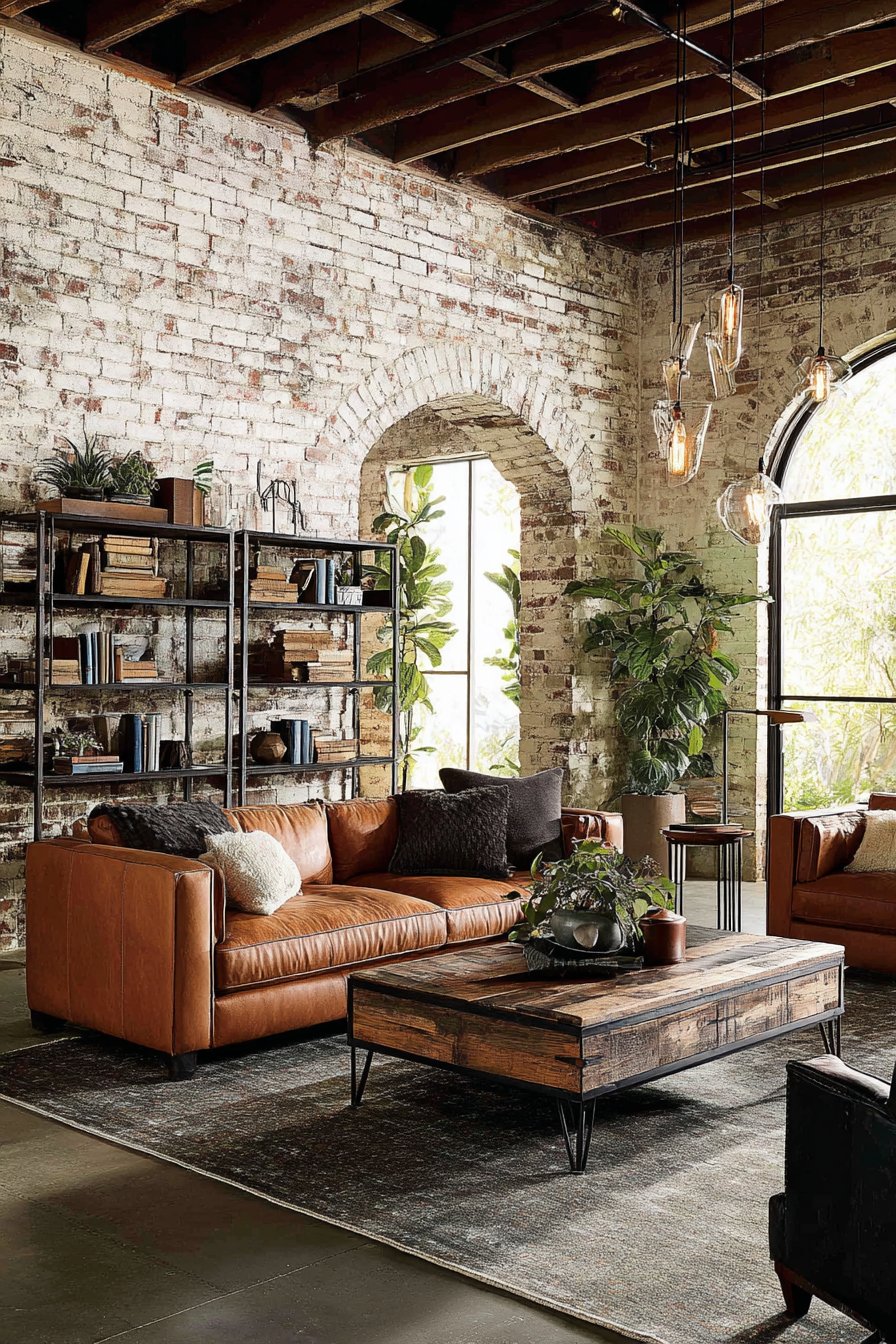
A reclaimed wood coffee table on black metal hairpin legs perfectly embodies industrial-chic style—the weathered wood showing its history through variations in tone, knots, and grain while the sleek metal legs provide structural honesty characteristic of industrial design. Against one wall, exposed brick (whether original architecture or applied brick veneer) provides textural backdrop and authentic urban character, its warm red tones complementing the leather and wood beautifully.
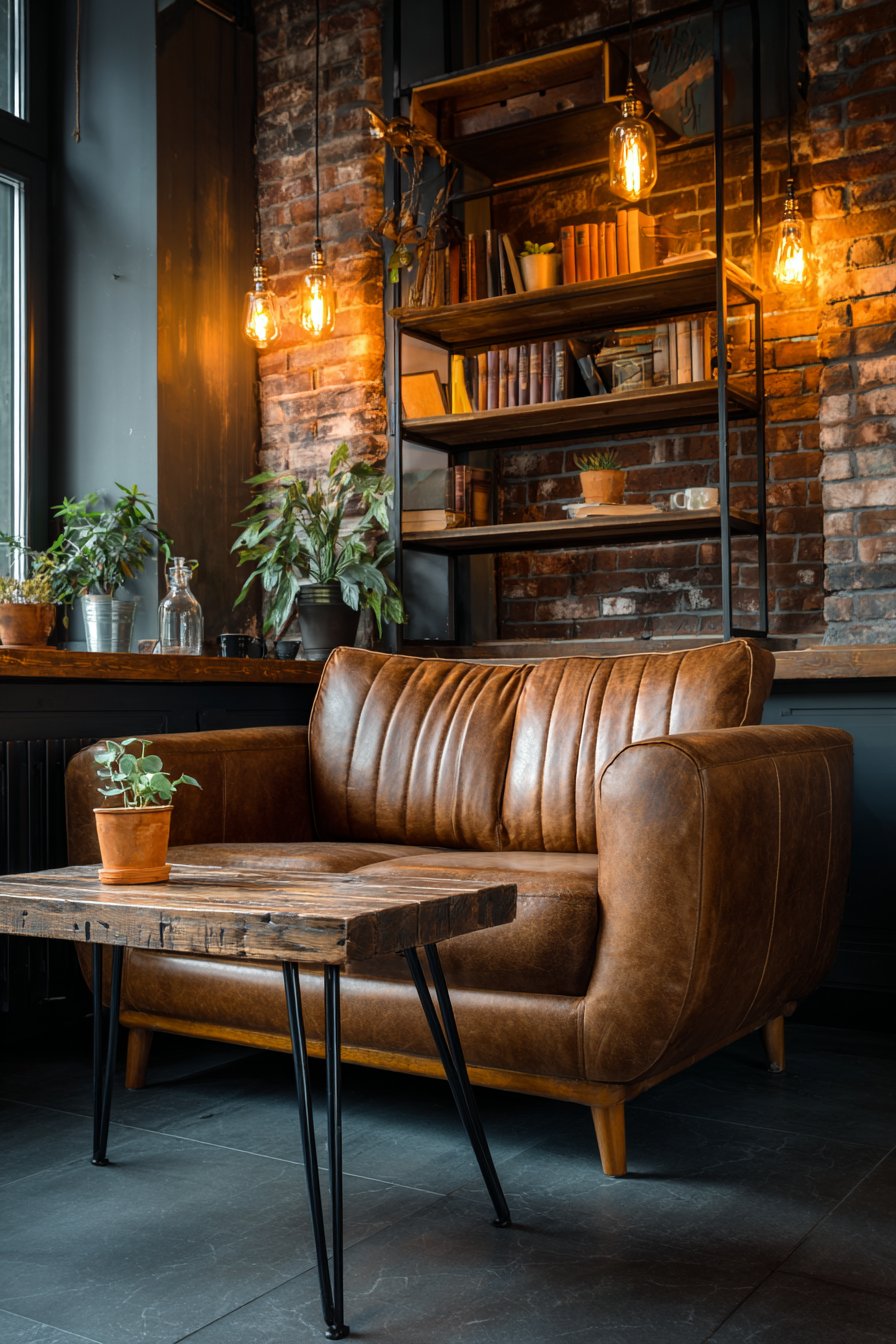
Edison bulb pendant lights hang at varying heights from black cord, their visible filaments and warm amber glow creating ambiance while celebrating the beauty of exposed mechanics—a hallmark of industrial style. A vintage metal bookshelf, perhaps salvaged from an old factory or library, displays books, potted plants, and meaningful objects, its utilitarian construction and honest materials fitting perfectly with the industrial theme. Natural daylight from tall windows combines with warm artificial lighting in photography that balances the masculine industrial elements with genuine residential comfort, proving that this style works beautifully in apartment settings.
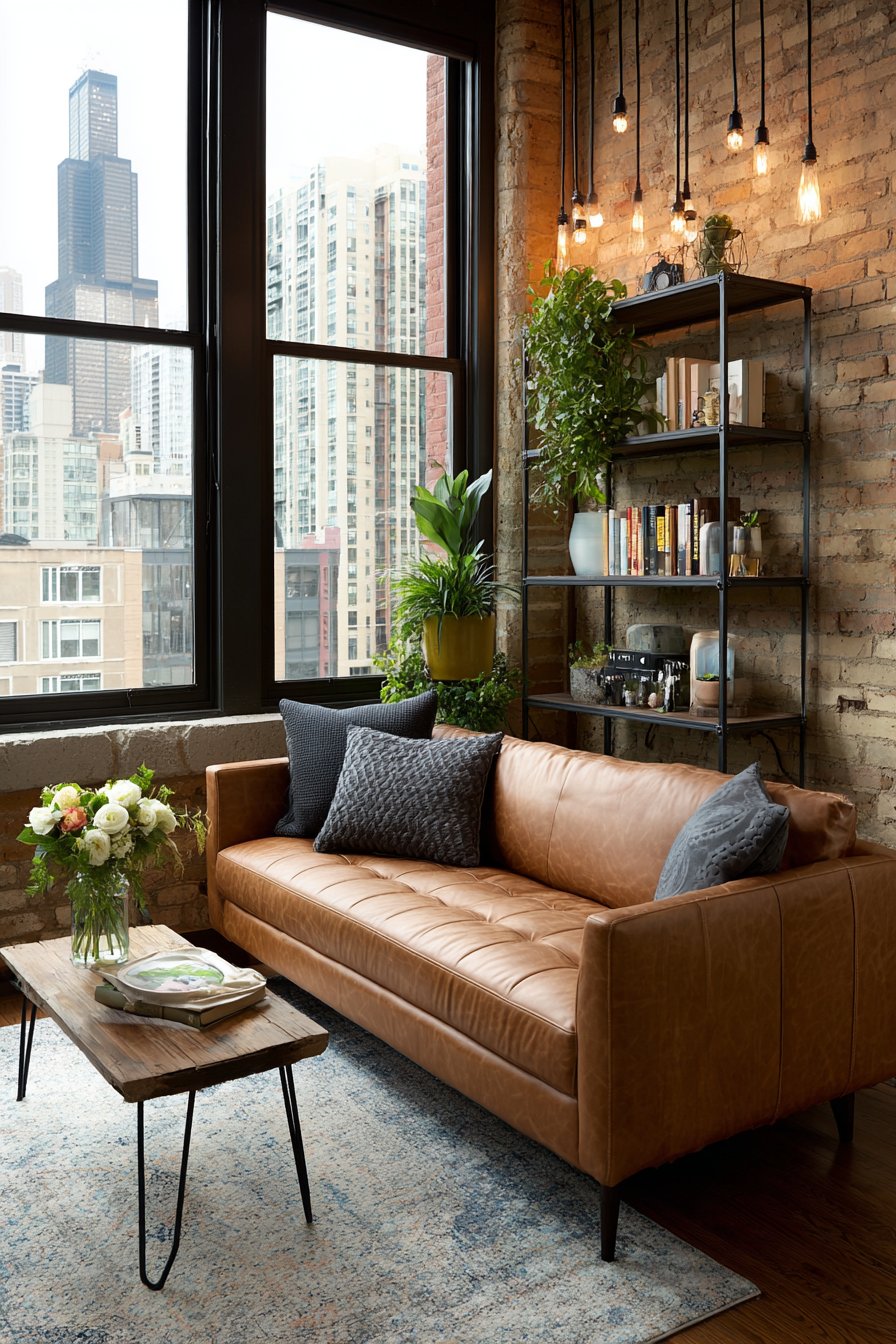
Key Design Tips: Balance industrial hardness with warm materials like leather and wood; use reclaimed wood for character and sustainability; incorporate exposed brick (real or veneer) for textural interest; hang Edison bulb lighting for industrial authenticity and warm glow; Choose metal furniture and shelving in black or gunmetal finishes; allow patina and wear to develop naturally on materials; mix vintage industrial pieces with modern comfort; maintain high ceilings or create vertical space with tall shelving; use cognac or warm brown leather for inviting warmth; celebrate honest materials and visible construction; keep the palette in warm neutrals, blacks, and natural wood tones.
20. Shabby Chic Lavender Romance
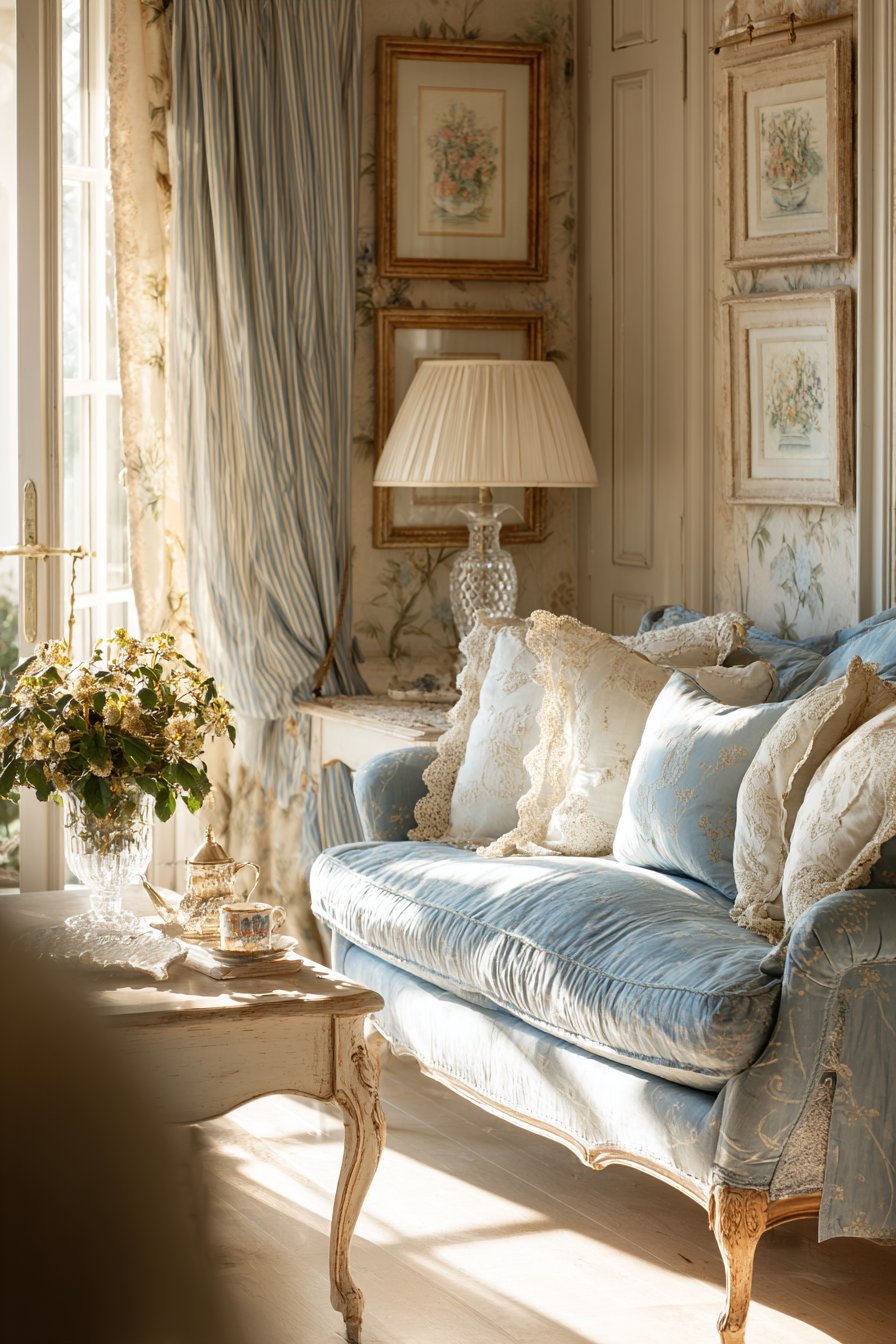
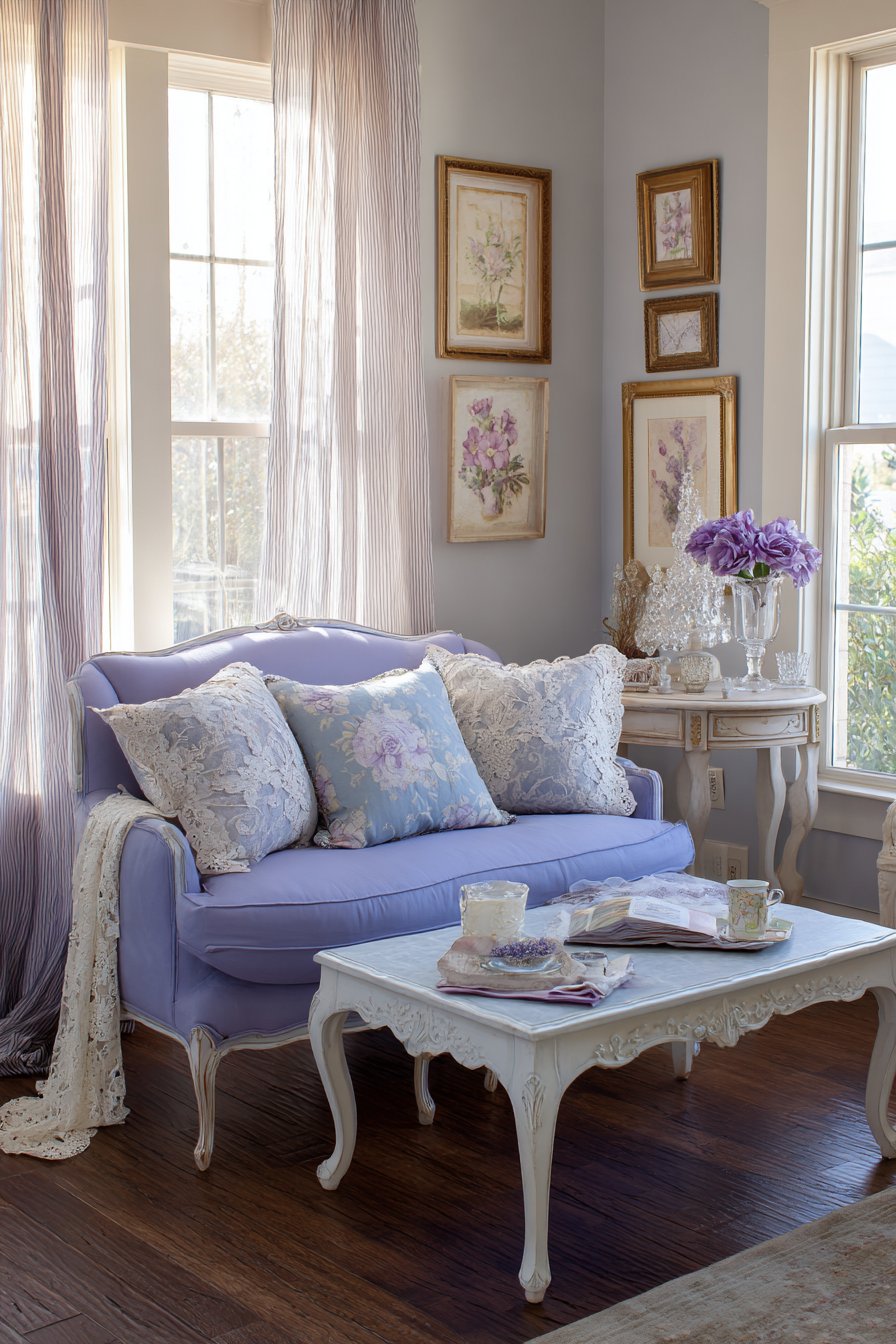
This dreamy living room creates a romantic sanctuary through soft colors, vintage-inspired furniture, and delicate details that transport you to a French countryside cottage. The small-scale rolled-arm sofa in soft lavender fabric makes an immediate impression, its gentle purple hue both unexpected and utterly charming. The rolled arms add traditional elegance while lace-trimmed throw pillows introduce vintage femininity and handcrafted charm that makes the space feel personal and collected.
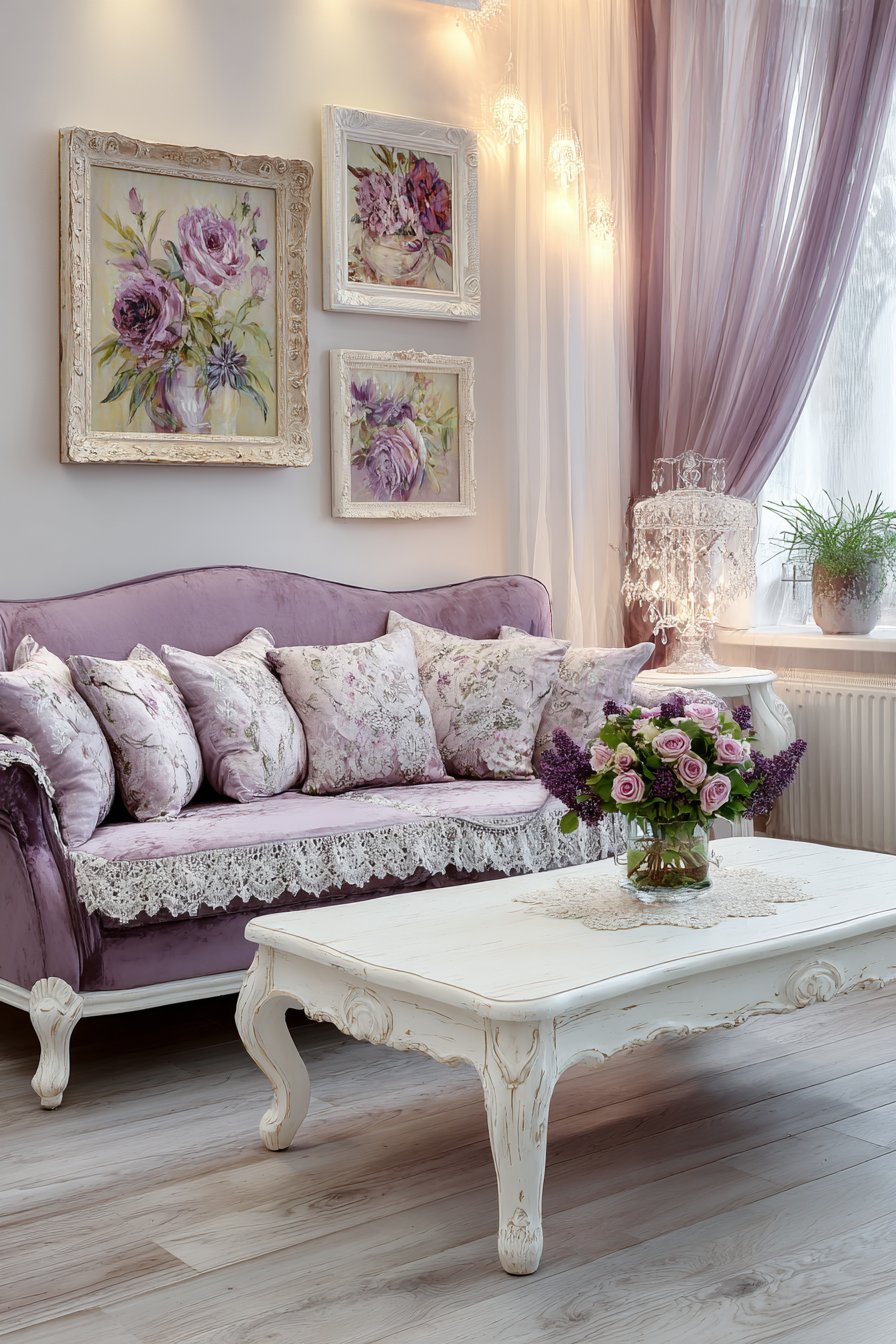
A distressed white coffee table with gracefully curved legs exemplifies shabby chic style—perhaps showing subtle chips in the paint that reveal layers of previous colors beneath, creating that perfectly imperfect aged appearance that defines the aesthetic. A crystal table lamp with a fabric shade trimmed in delicate fringe provides ambient glow that flatters both the space and its occupants, its traditional form and elegant materials adding refined beauty.
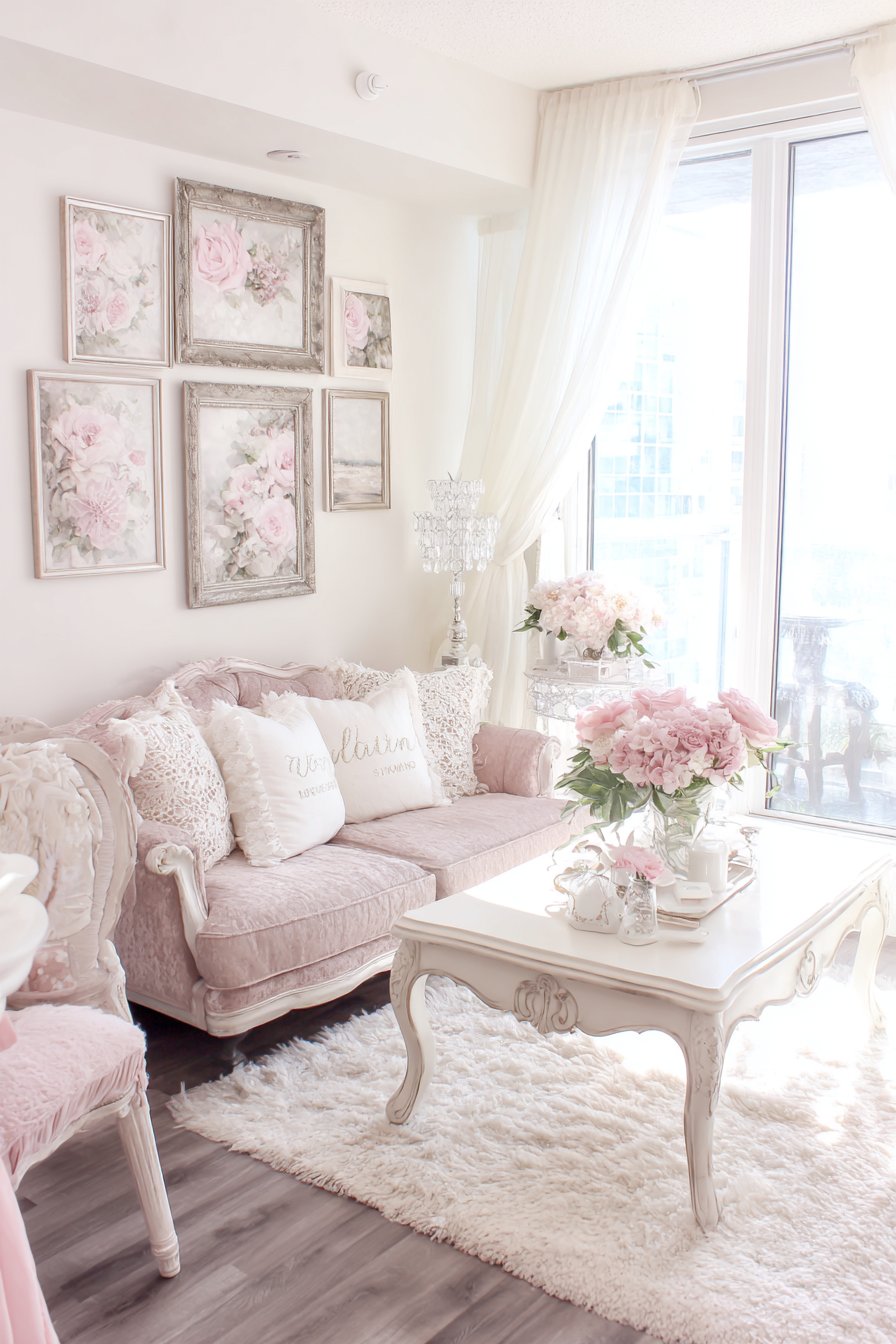
Floral watercolor prints in ornate gold or cream frames create a gallery wall that reinforces the romantic, vintage theme—imagine soft roses, peonies, and wildflowers painted in gentle pastels that echo the lavender sofa. Wide-angle interior photography with golden hour lighting streaming through gauzy curtains captures the dreamy, feminine aesthetic perfect for compact living, showcasing how layers of soft textures, gentle colors, and vintage details create spaces that feel like stepping into a beautiful daydream.
Key Design Tips: Embrace unexpected colors like lavender for romantic, memorable spaces; Use distressed furniture for shabby chic authenticity; add lace or crochet details for vintage femininity; Choose crystal or glass lamps for elegant lighting; create gallery walls with floral art in ornate frames; Install gauzy curtains that diffuse light beautifully; incorporate curved furniture legs for traditional elegance; layer soft textures throughout for romantic comfort; allow imperfections and worn patinas for authentic shabby chic; focus on creating dreamy, feminine atmospheres; use soft pastels and whites as your color foundation.
21. Urban Jungle Plant Paradise
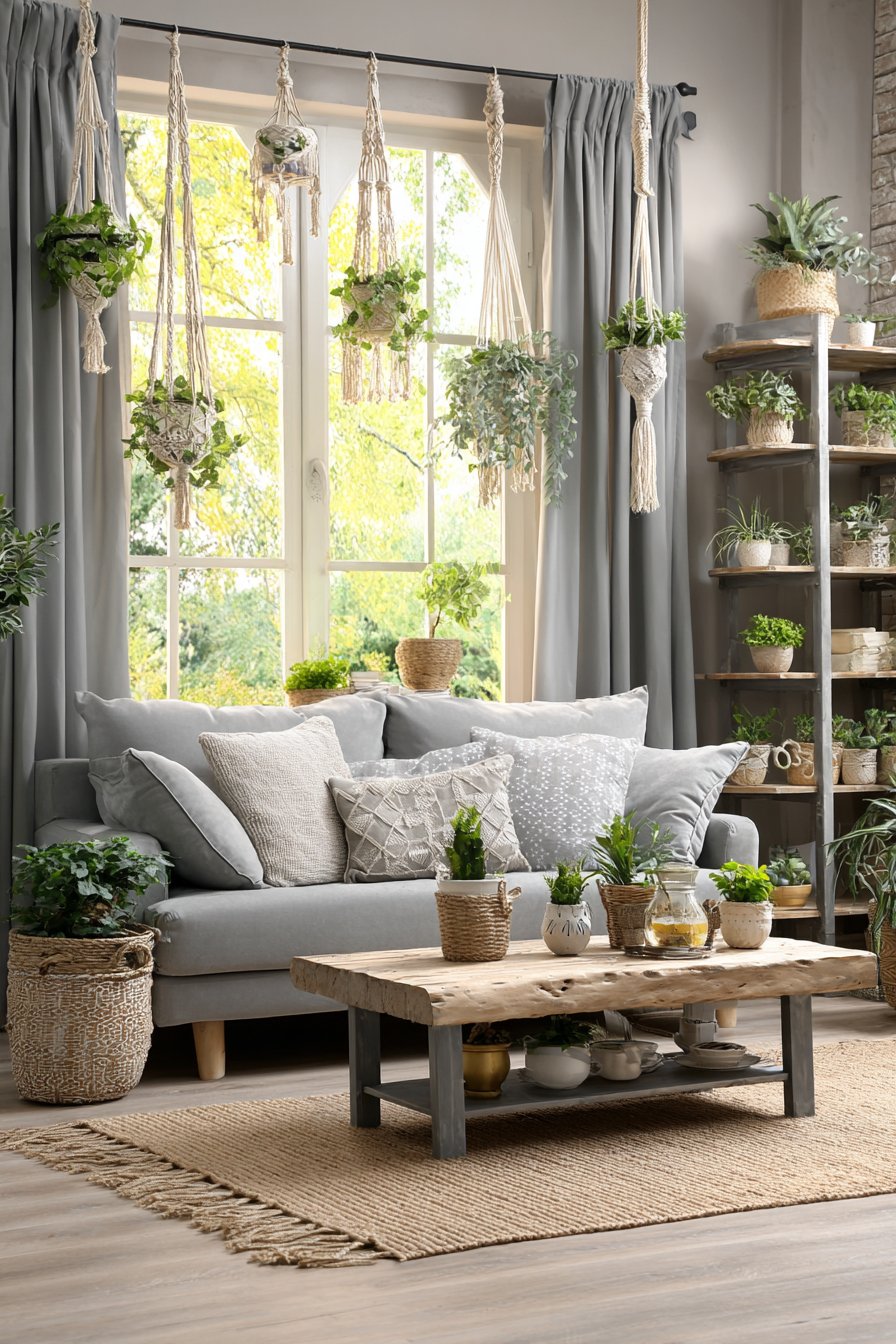
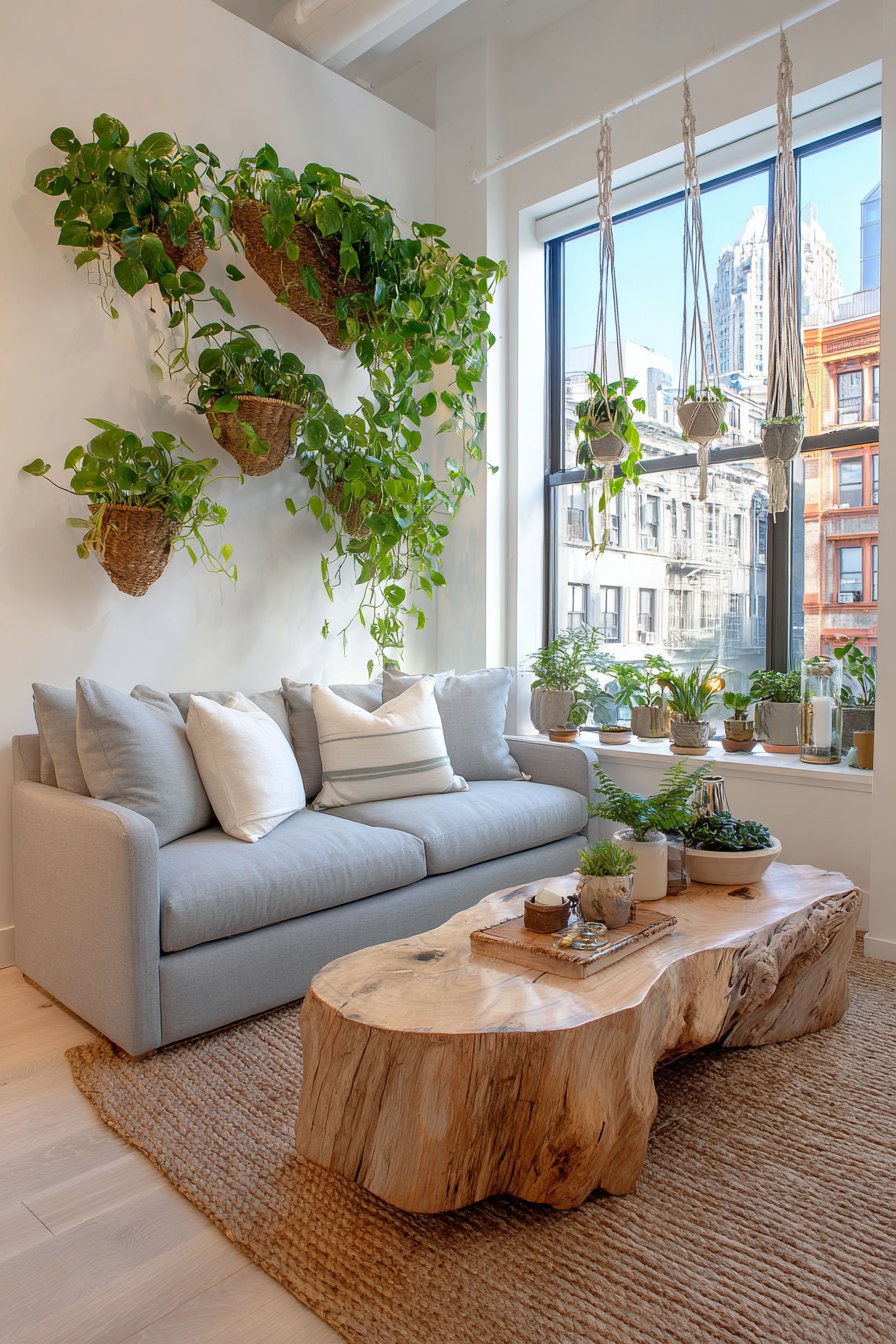
This verdant living room celebrates biophilic design by surrounding inhabitants with abundant greenery that purifies air, reduces stress, and connects urban apartment dwellers with nature. The simple grey loveseat provides neutral backdrop for the real stars of this space—an impressive collection of potted plants displayed on tiered plant stands that maximize vertical growing space, wall-mounted planters that create living art installations, and hanging macramé holders suspending trailing varieties at varying heights throughout the room.
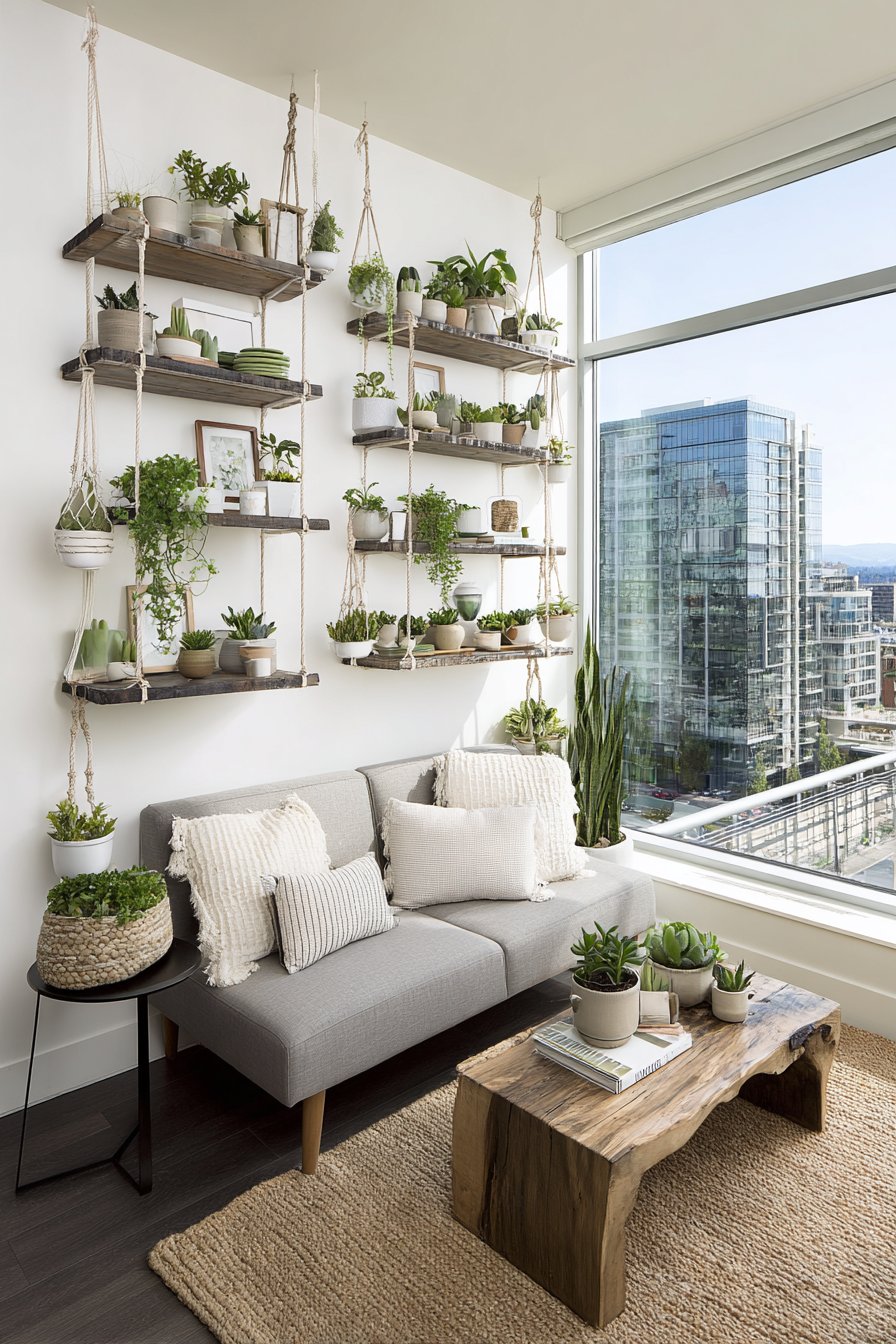
A live-edge wood coffee table brings natural organic shapes into the space, its irregular edge celebrating the tree’s natural form while the smooth top surface provides practical functionality. This piece bridges the gap between indoors and outdoors, its honest materiality reminding us of forests even in the heart of the city. A jute area rug adds earthy texture underfoot, its natural fiber construction and neutral tone providing foundation that allows the verdant greenery to remain the focal point.
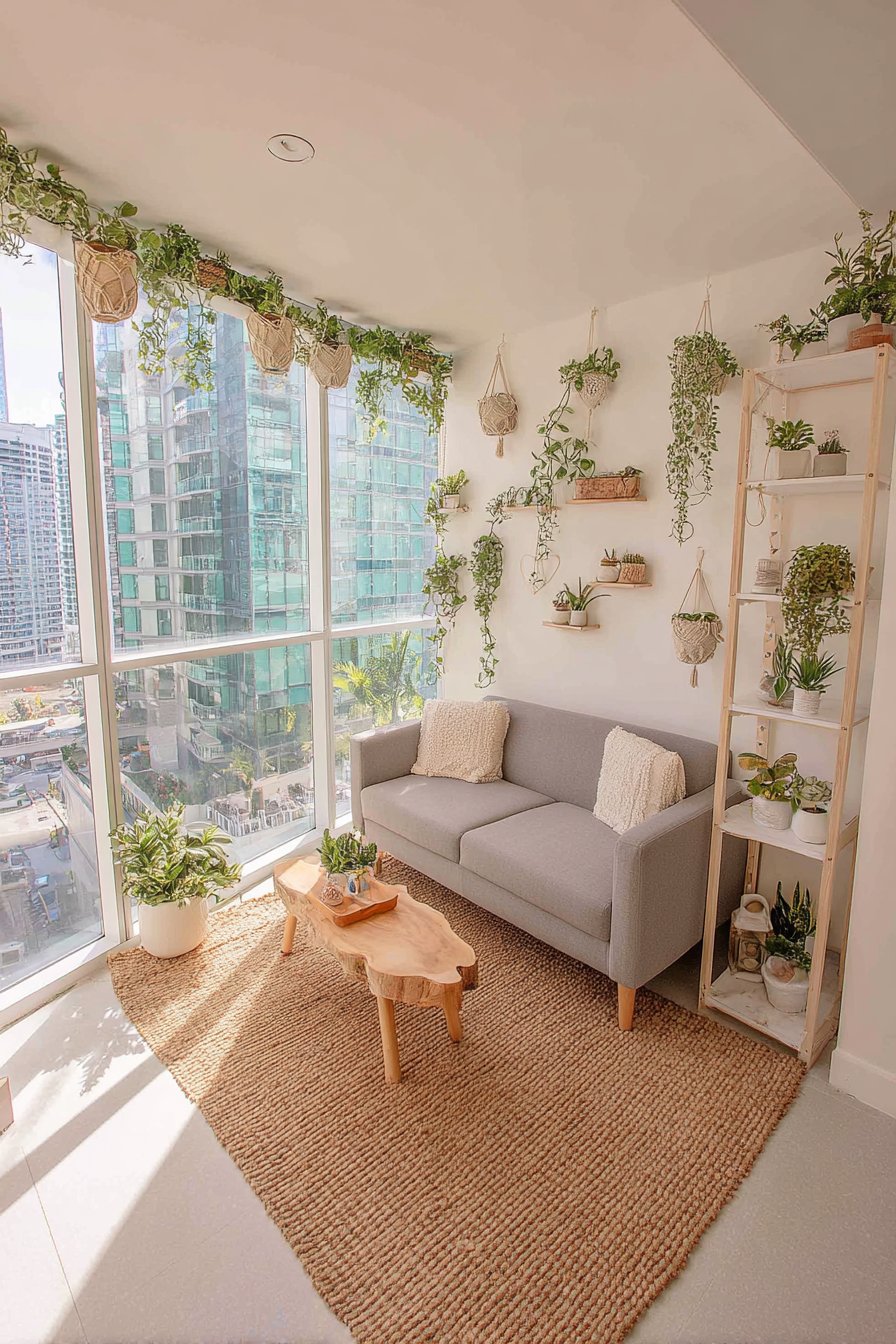
Large windows provide the ample natural light these plants require, while the interior design photography captures the lush, nature-inspired apartment oasis with balanced exposure showing how plants at various heights create depth and visual movement. Species might include easy-care varieties like pothos, philodendron, snake plants, and ZZ plants mixed with showier specimens like bird of paradise or monstera. This design proves that even small apartments can accommodate impressive plant collections when you utilize vertical space creatively.
Key Design Tips: Use tiered plant stands to display multiple plants in limited floor space; Install wall-mounted planters for vertical gardens; hang trailing plants at varying heights for dimensional interest; choose a neutral sofa to let plants be the color; Incorporate live-edge wood for natural, organic elements; use jute or sisal rugs for earthy texture; maximize natural light for healthy plant growth; select easy-care plants for successful urban jungle; create plant groupings rather than scattering individually; purify air naturally with plants like pothos, snake plants, and peace lilies; embrace biophilic design for improved well-being.
22. Mid-Century Modern Mustard Accent
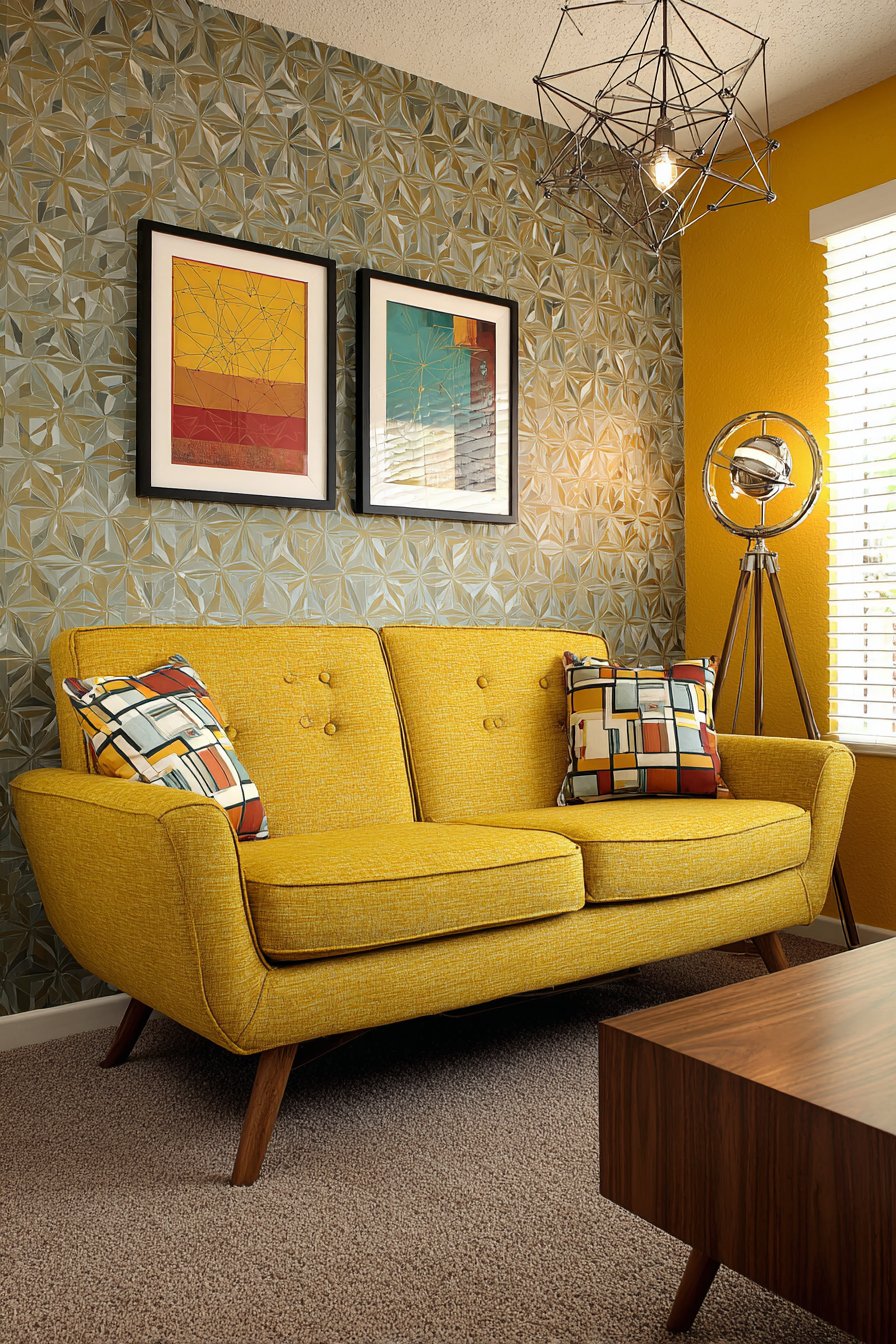
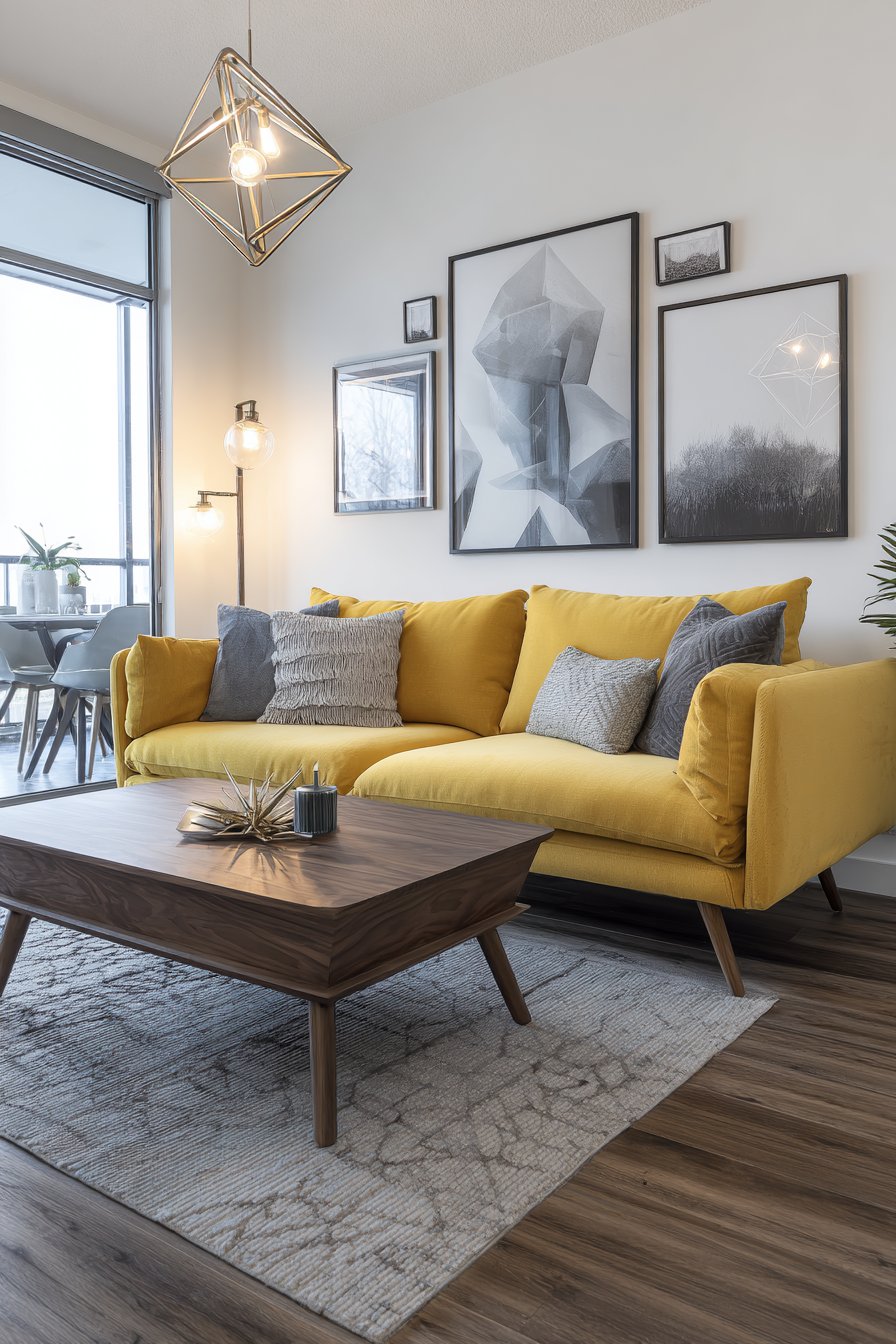
This stylish living room channels the optimism and clean lines of mid-century modern design through iconic furniture forms and period-appropriate colors. The low-profile sofa with tapered wooden legs in cheerful mustard yellow fabric immediately establishes the era and mood—this golden-yellow hue was ubiquitous in 1950s and 60s interiors and feels both retro and remarkably current. The tapered legs, often in walnut or teak tones, provide the signature silhouette that defines mid-century furniture.
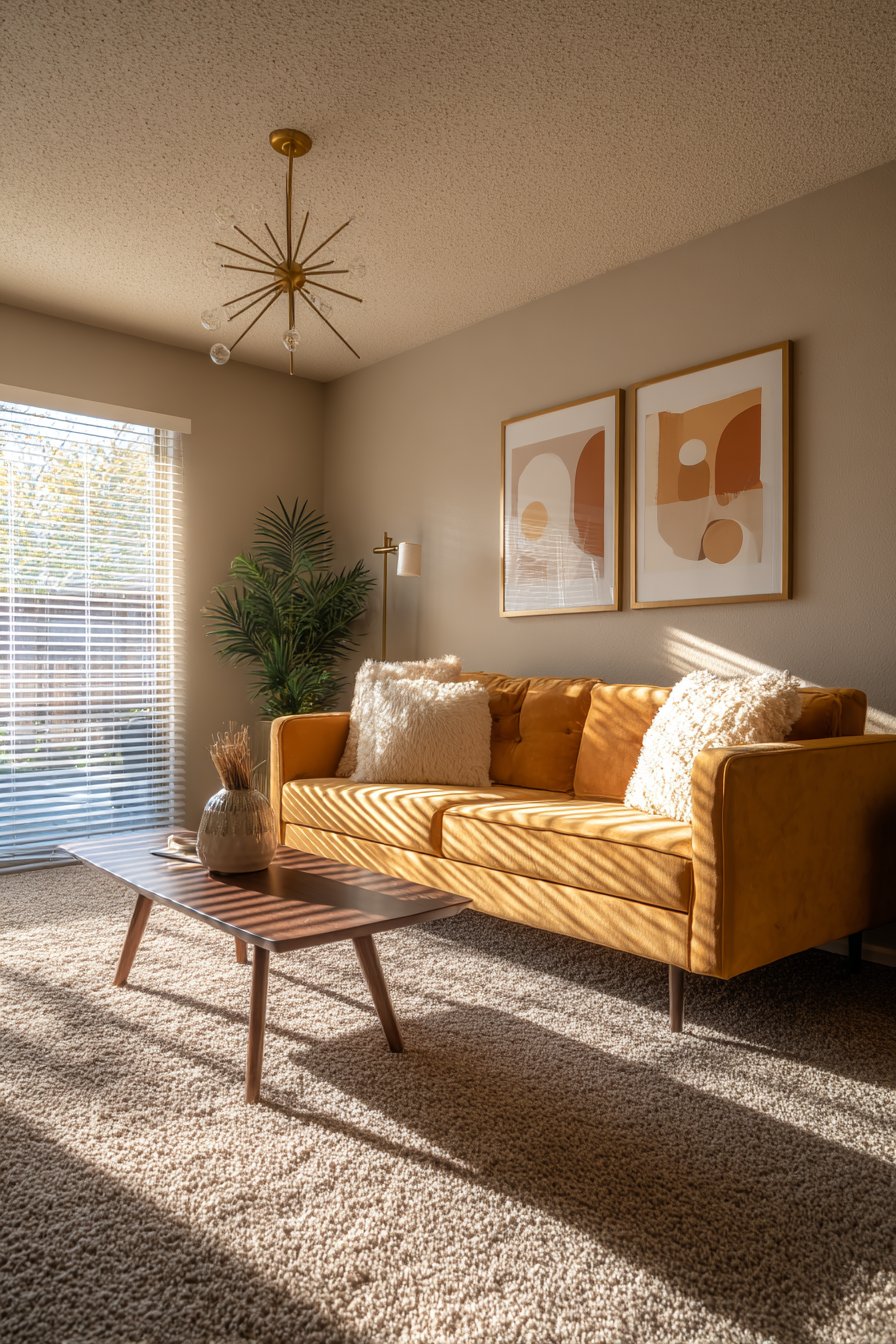
A sculptural walnut coffee table serves as functional art, perhaps featuring the kidney-bean shape, boomerang form, or tiered design characteristic of the period. The rich, dark walnut wood provides gorgeous contrast to the mustard upholstery while showcasing the beautiful grain patterns that mid-century designers celebrated. Overhead, a geometric mobile in brass or colorful shapes rotates gently with air currents, providing kinetic art that changes the visual composition throughout the day—these Calder-inspired pieces were period favorites.
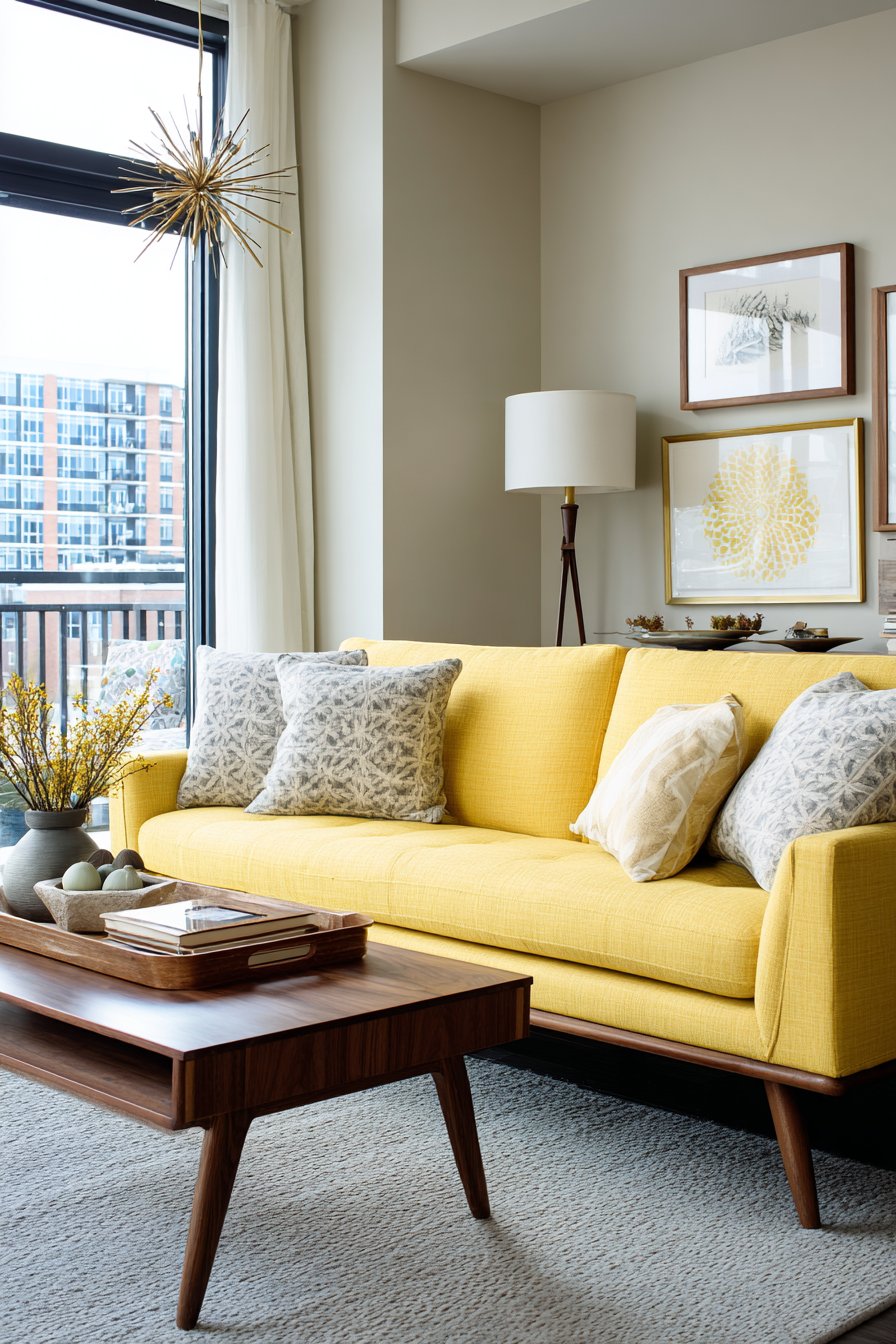
Abstract art prints in period-appropriate frames adorn the walls—think bold geometric compositions, atomic-age patterns, or stylized natural forms in the saturated colors favored by the era. A sputnik-style floor lamp with multiple arms extending like sun rays provides ambient lighting while serving as sculptural statement, its space-age form perfectly embodying mid-century optimism about technology and the future. Professional photography captures this retro-inspired space with natural lighting that highlights the iconic silhouettes and warm wood tones that make mid-century modern perpetually appealing.
Key Design Tips: Choose low-profile furniture with tapered wooden legs for authentic mid-century style; incorporate mustard, orange, or avocado accent colors; Select sculptural coffee tables in walnut or teak; add geometric mobiles for kinetic art; Display abstract or atomic-age inspired artwork; use sputnik or arc lamps for period lighting; Showcase beautiful wood grains in furniture; maintain clean lines and minimal ornamentation; mix warm and cool tones for visual interest; celebrate optimistic, space-age design motifs; invest in authentic or high-quality reproduction pieces.
23. Modern Farmhouse Linen and Distressed Wood
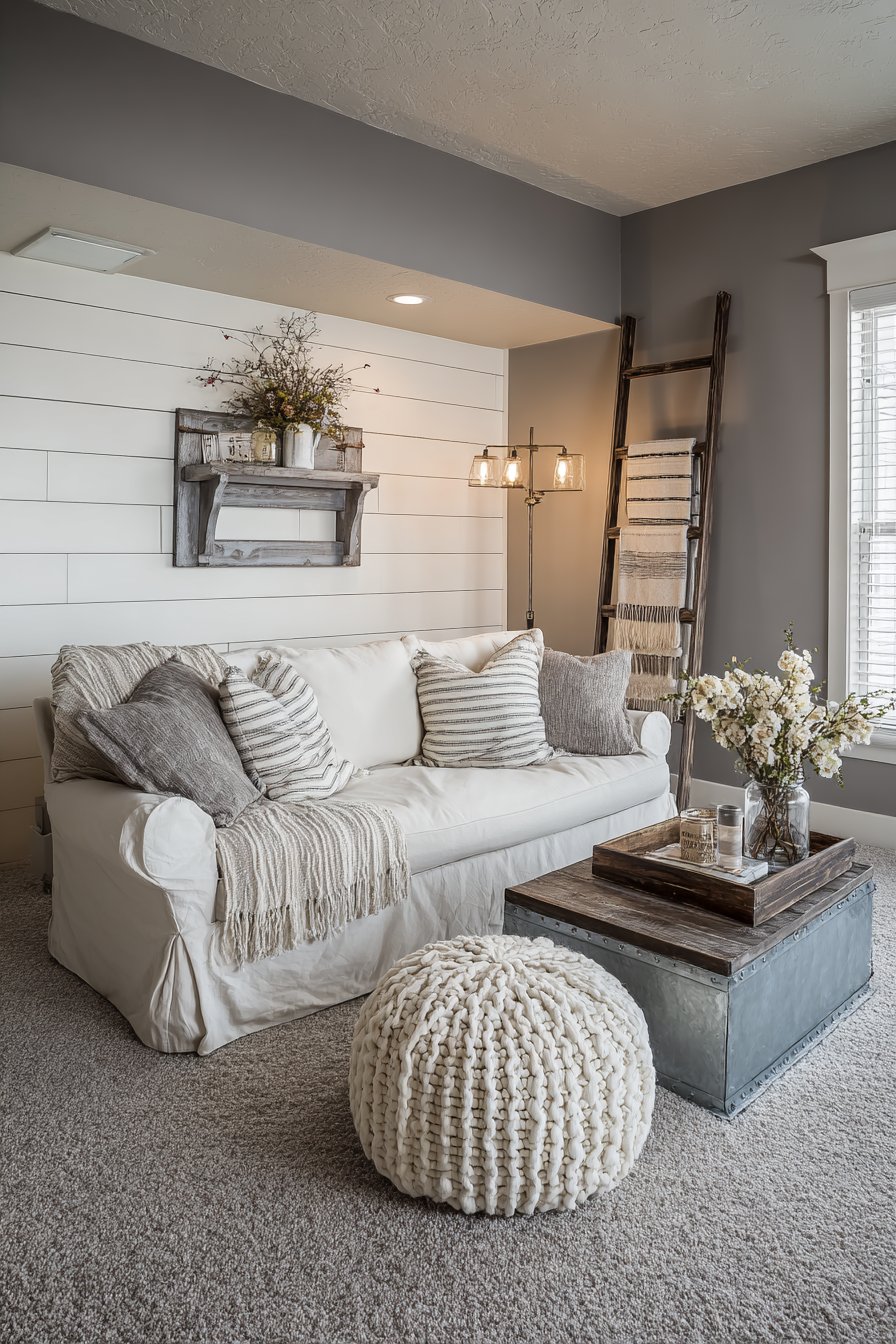
This charming living room blends the rustic warmth of farmhouse style with contemporary livability, creating spaces that feel collected and comfortable without sacrificing modern conveniences. The slipcovered sofa in natural linen provides the foundation—its washable cover practical for real life while its relaxed fit and natural fabric create that effortless, farmhouse aesthetic. The linen’s subtle texture and neutral color work beautifully with both rustic and refined elements.
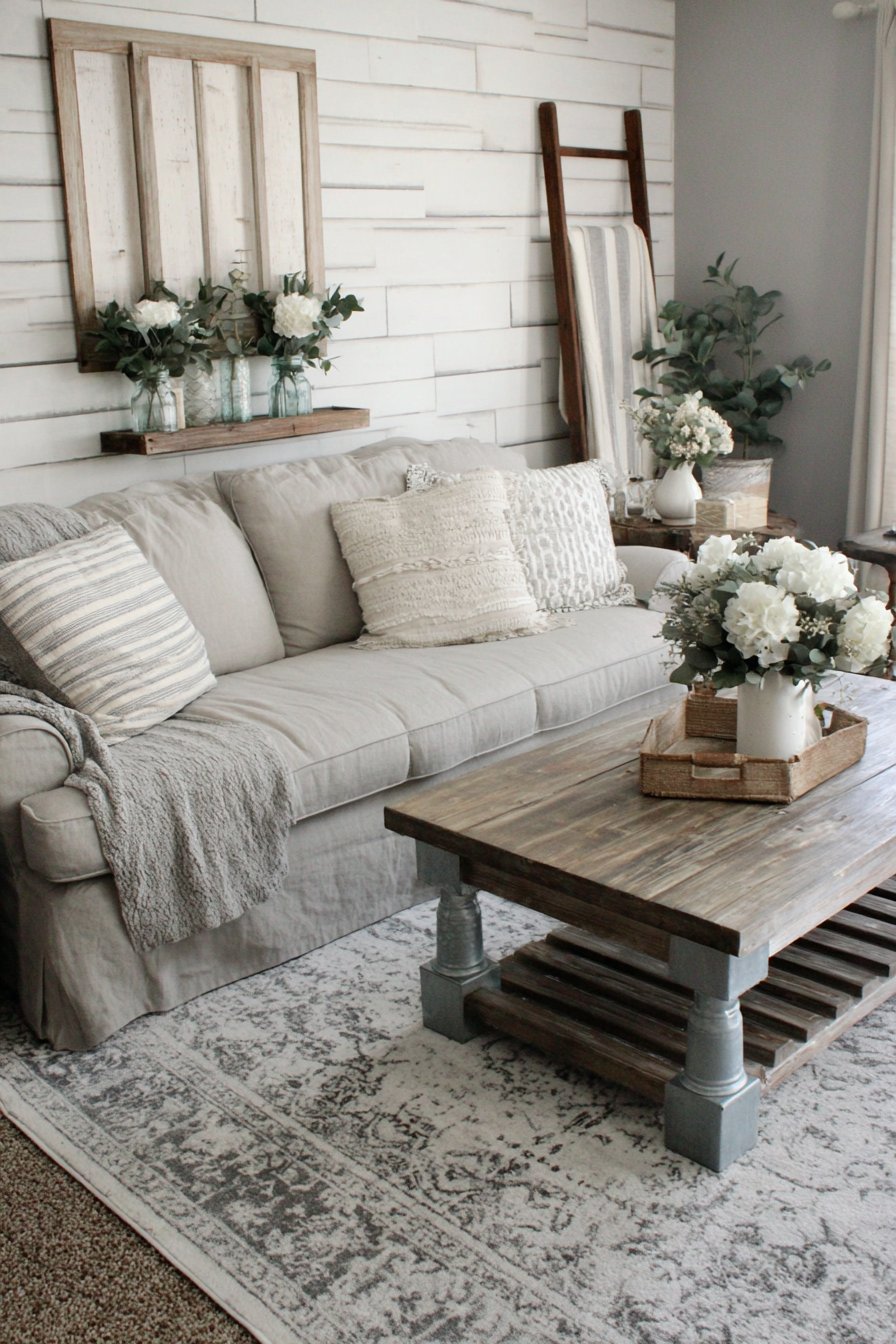
A distressed wooden coffee table shows intentional aging through techniques like wire brushing, scraping, or applying and partially removing layers of paint. This weathered appearance suggests years of family use and creates the “farmhouse found” look that defines the style. Galvanized metal accents—perhaps a tray on the coffee table, planters holding herbs or flowers, or decorative objects on shelves—add industrial farmhouse character while their silver-grey tones provide cool contrast to warm wood.
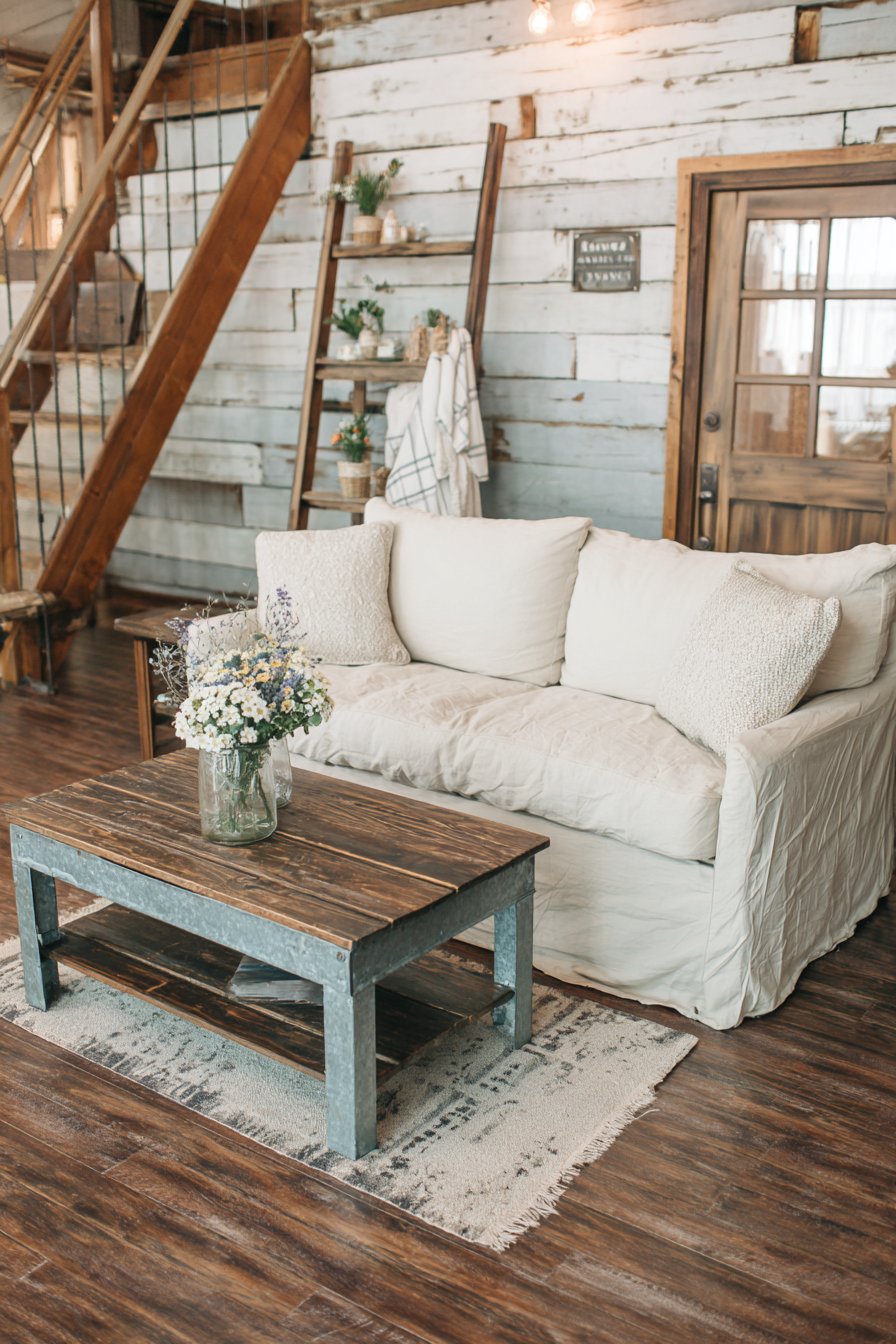
Against one wall, a shiplap accent wall painted in soft grey-white provides classic farmhouse architecture without overwhelming the small space—the horizontal lines actually make the room feel wider. A vintage-style ladder leans against this wall displaying throw blankets in various textures—chunky knits, soft fleece, linen weaves—creating both practical storage and decorative display. Mason jar vases hold fresh or dried flowers, their humble glass containers and simple blooms embodying farmhouse appreciation for beauty in ordinary things. Wide-angle interior photography with soft natural lighting captures the rustic-meets-refined aesthetic achievable even in apartment settings.
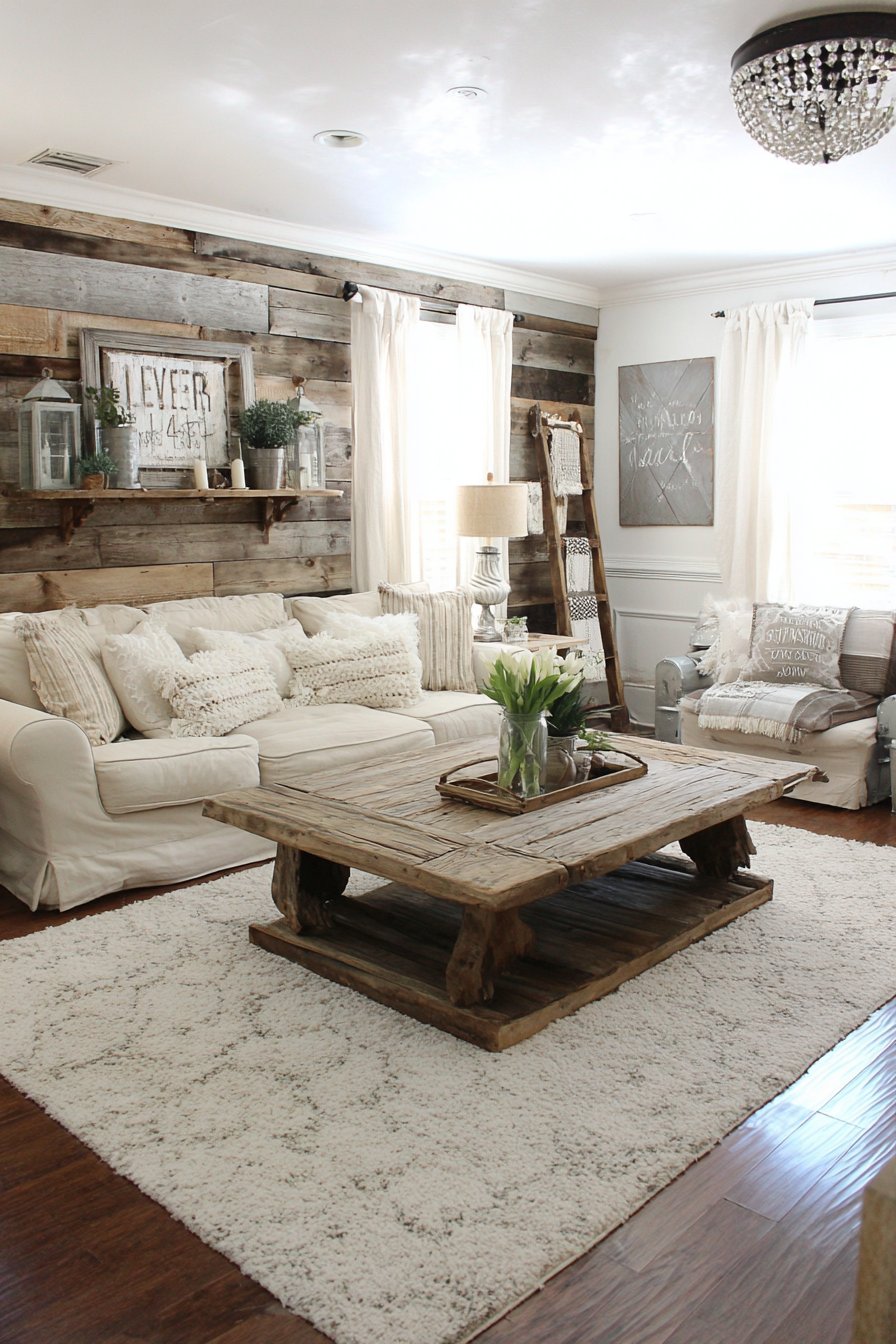
Key Design Tips: Use natural linen slipcovers for farmhouse softness and practicality; Incorporate distressed wood furniture for rustic character; add galvanized metal accents for industrial farmhouse appeal; Install shiplap (real or peel-and-stick) for architectural interest; display blankets on vintage ladders for decorative storage; Use mason jars as vases for humble charm; keep color palettes in soft whites, greys, and natural woods; mix rustic and refined elements for modern farmhouse balance; choose practical, washable fabrics; celebrate imperfection and aged materials; focus on creating comfortable, lived-in spaces.
24. Sleek Contemporary Modular Flexibility
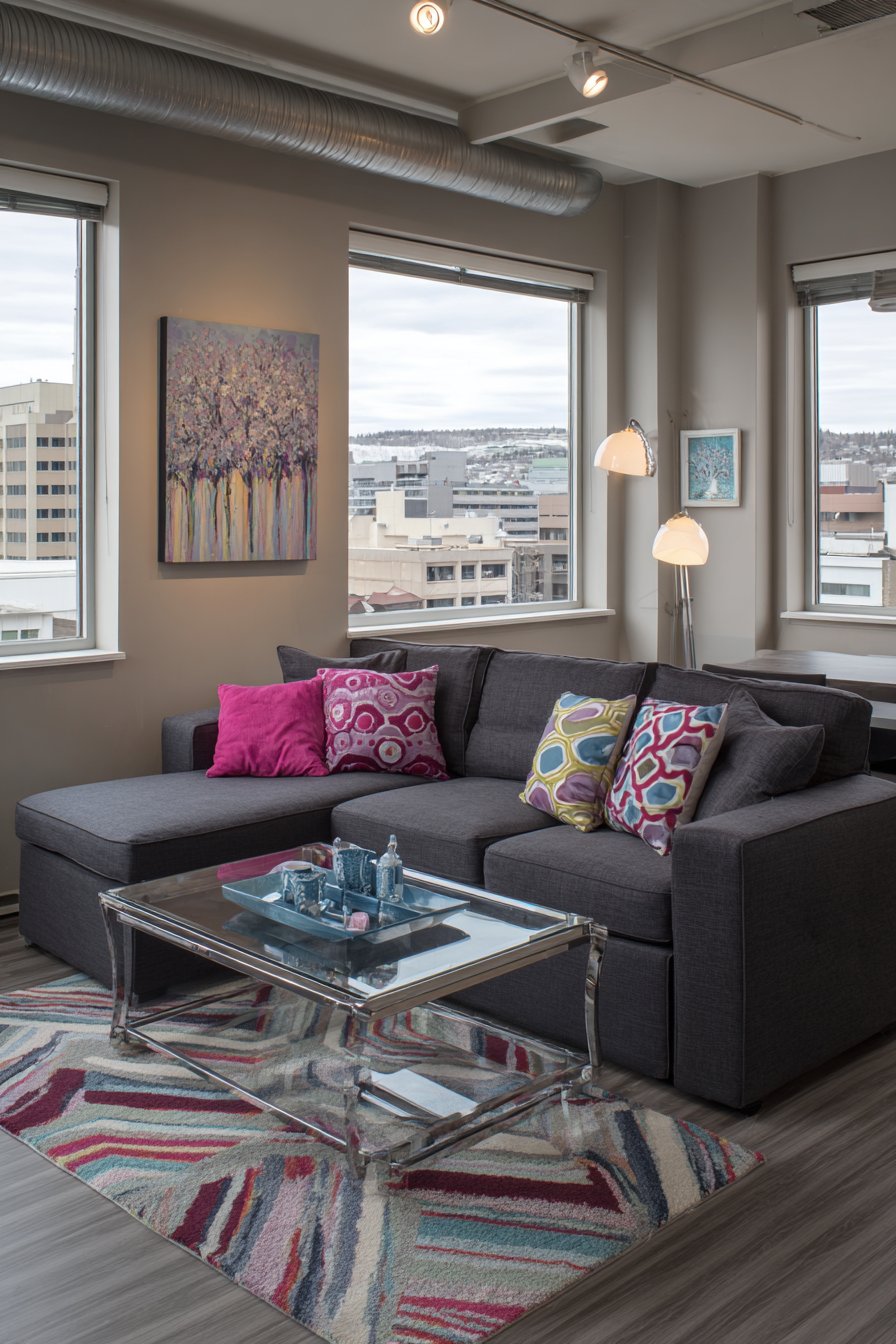
This forward-thinking living room embraces contemporary design through clean lines, modular flexibility, and bold accents that create spaces feeling current and sophisticated. The modular sofa configuration in charcoal grey consists of individual sections that can be rearranged as needed—separating into individual chairs for conversation circles, forming an L-shape for movie viewing, or creating a straight line against a wall for parties. This adaptability is crucial in apartment living where your spatial needs shift regularly.
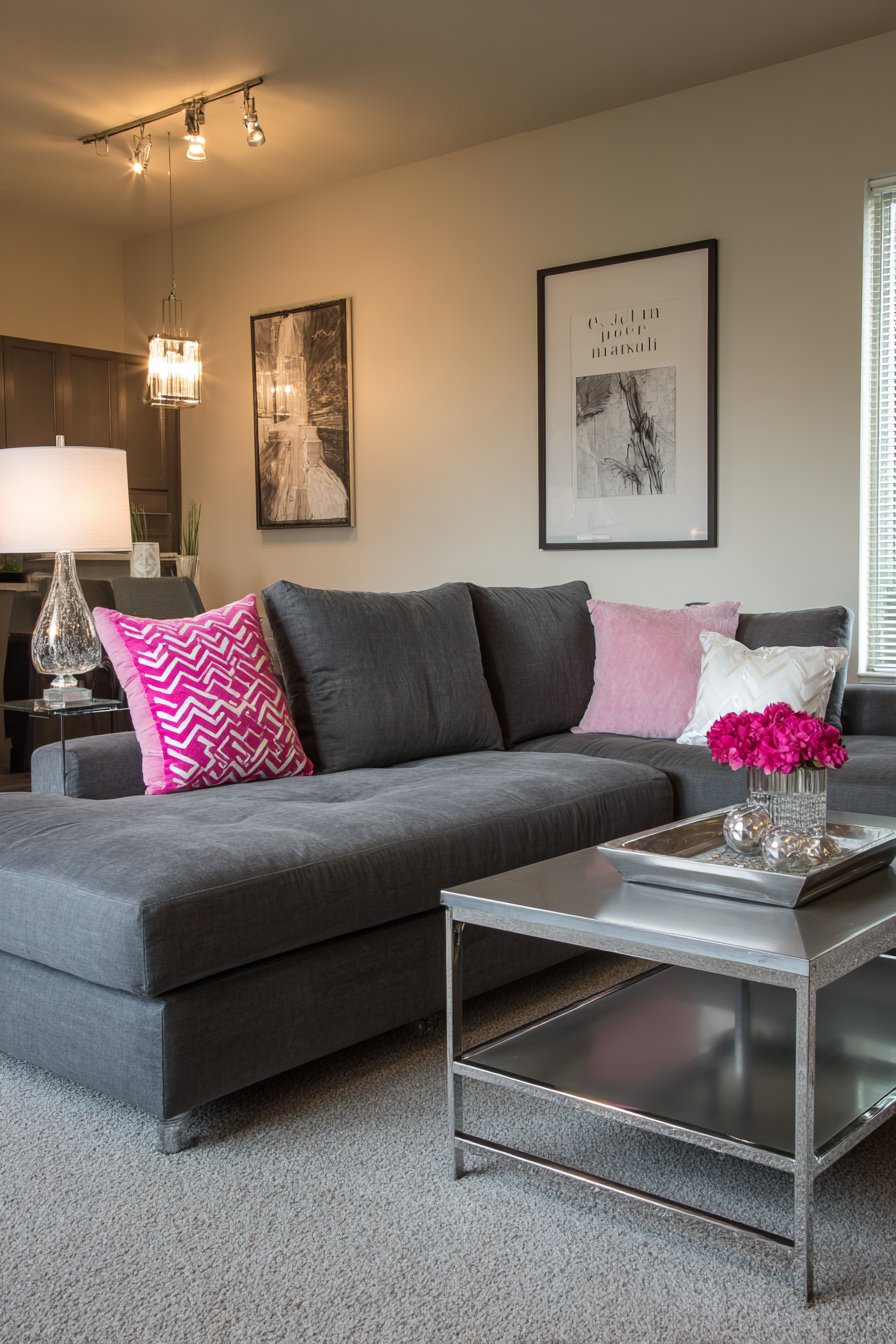
A sleek chrome and glass coffee table maintains the modern aesthetic through its transparent surface and reflective metal frame—nothing hidden, all structural elements exposed and celebrated for their honest beauty. Geometric throw pillows in bold colors—perhaps electric blue, vibrant coral, or sunny yellow—inject personality and visual interest while remaining easily changeable as your tastes evolve or seasons change. Track lighting installed on the ceiling illuminates artwork on the walls with focused beams, creating gallery-like presentation in your apartment.
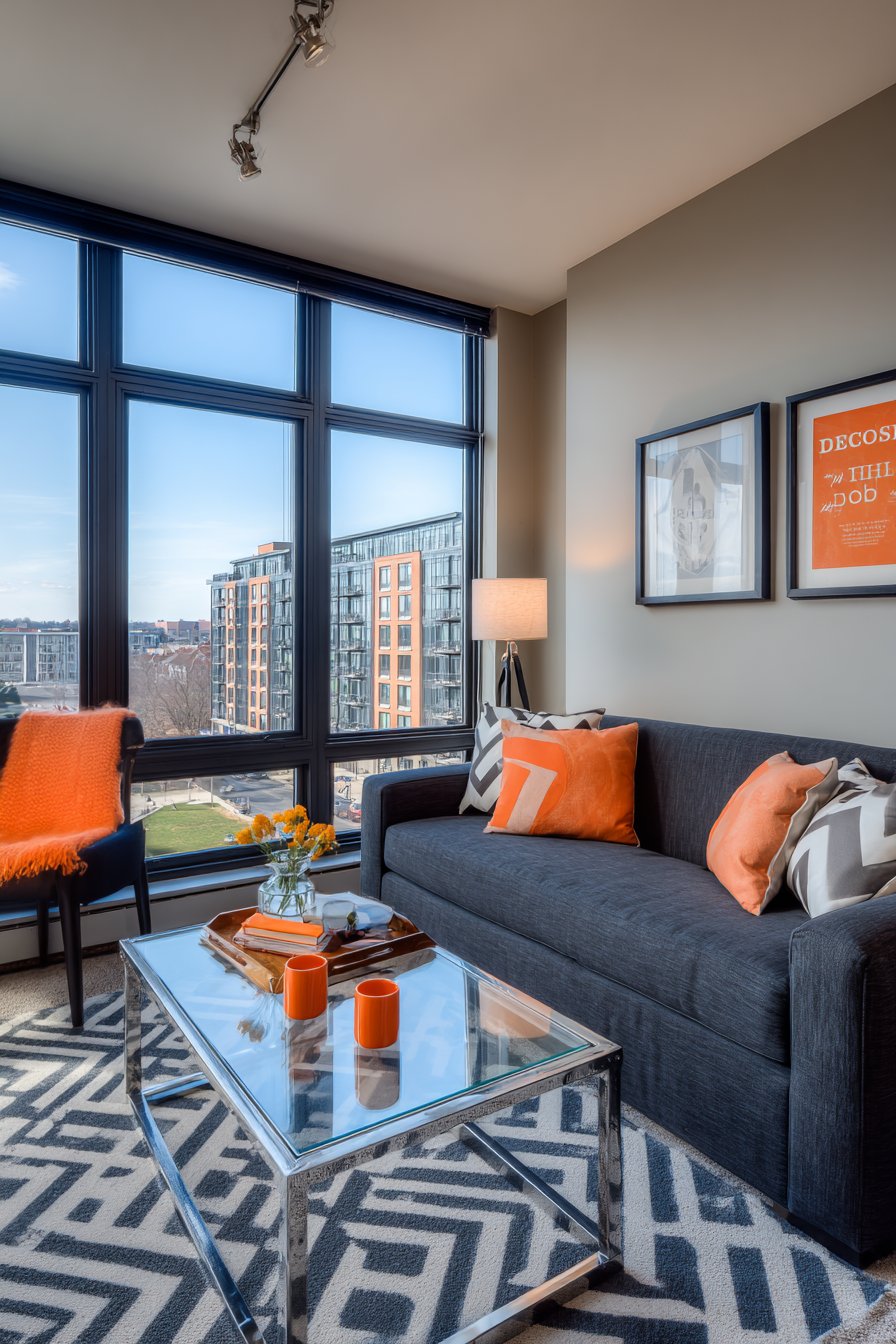
The professional interior photography with crisp, even lighting captures the clean lines and flexible furniture arrangement optimized for small apartment living. The charcoal grey provides sophisticated neutrality that works with any accent color you choose, while the modular system ensures your furniture arrangement can evolve with your life without requiring new purchases. This design celebrates contemporary values of flexibility, honesty in materials, and bold personal expression within clean, minimal frameworks.
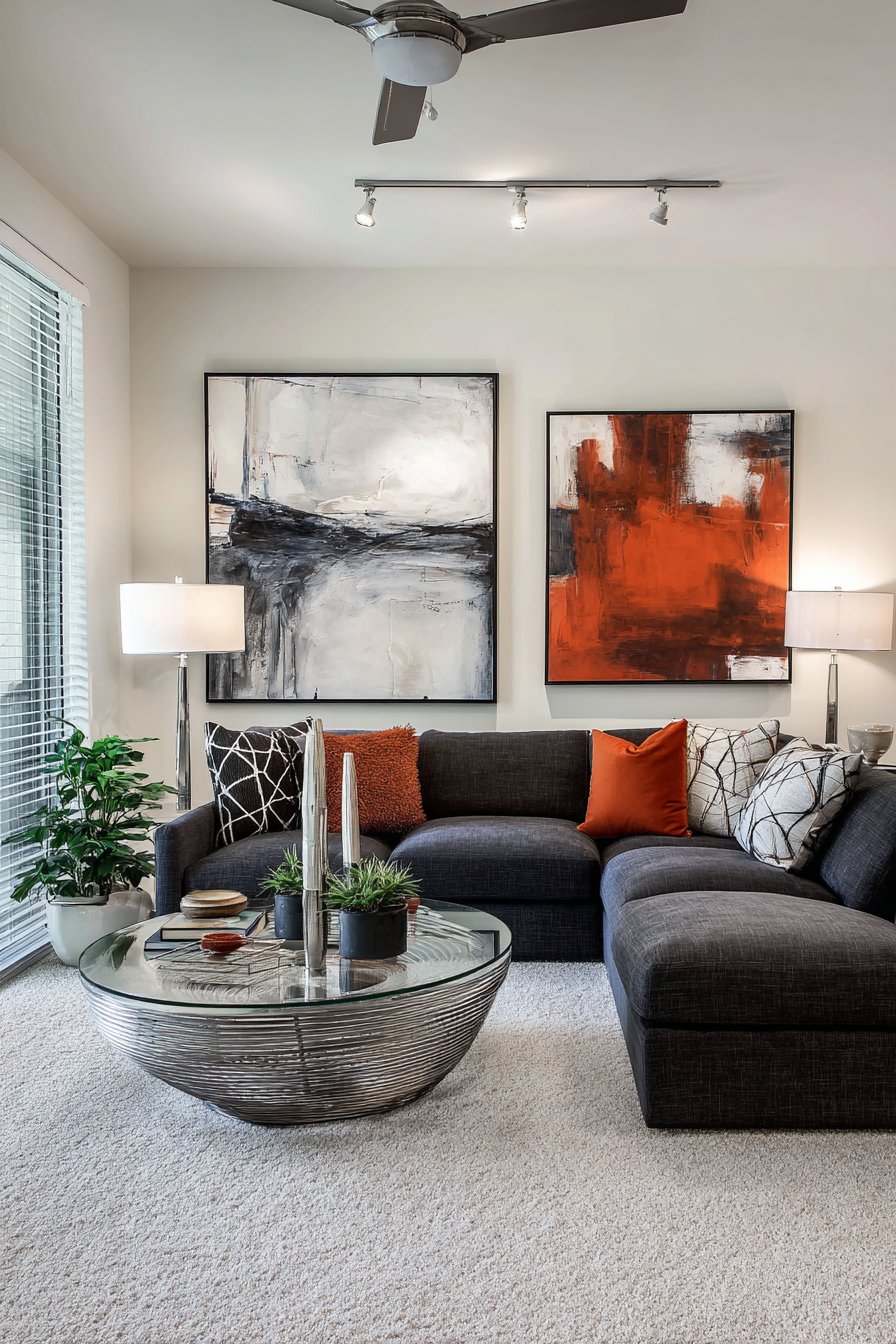
Key Design Tips: Choose modular furniture that reconfigures for different needs; use charcoal or dark grey as sophisticated neutral base; Incorporate glass and chrome for sleek contemporary style; add bold geometric pillows for changeable color impact; install track lighting for flexible, focused illumination; Display contemporary art with gallery-style presentation; maintain clean lines throughout furniture selections; celebrate transparency and honest materials; ensure furniture can adapt as your life changes; mix neutral foundations with bold accent moments; embrace minimal ornamentation for contemporary sophistication.
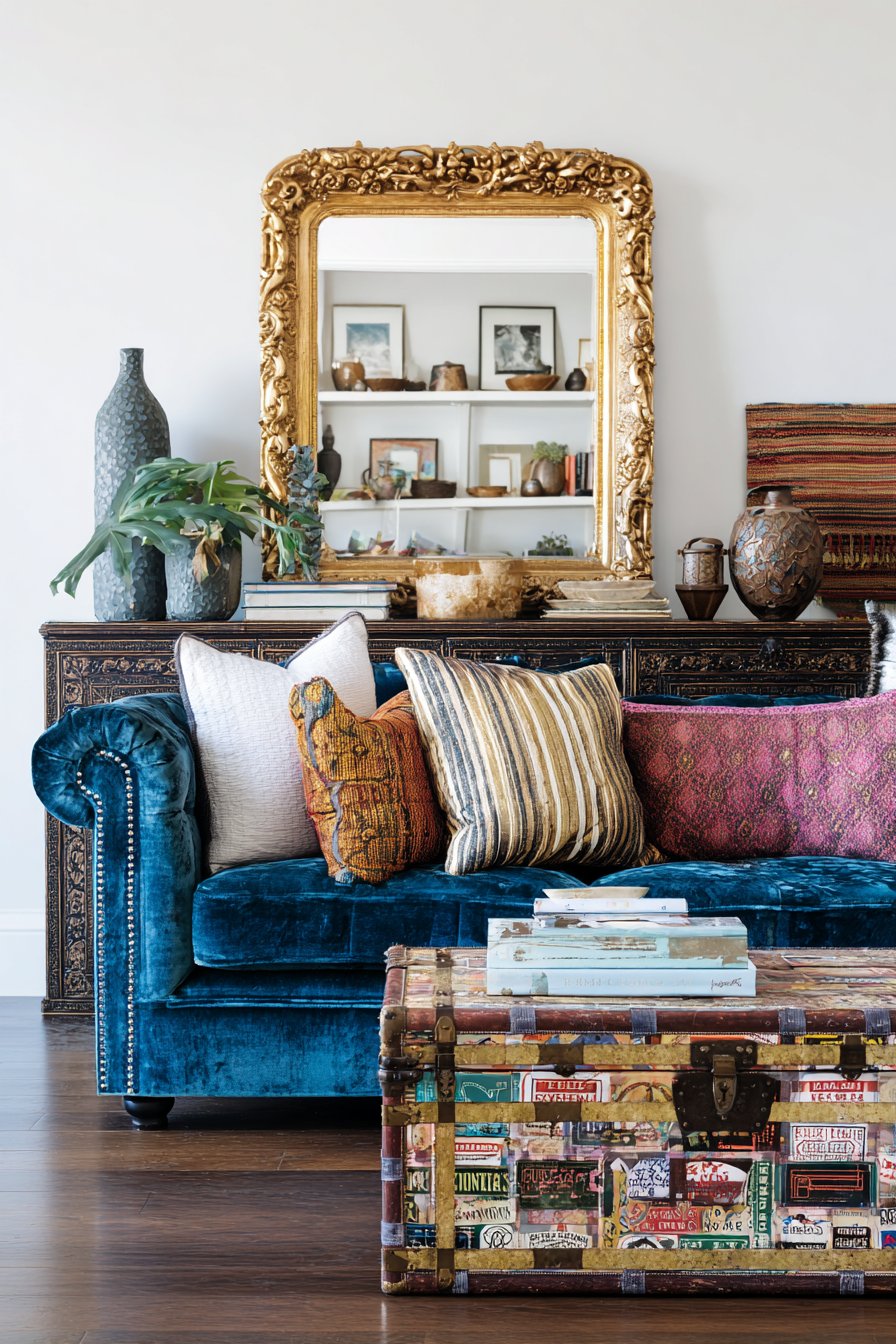
25. Collected Eclectic Peacock Blue
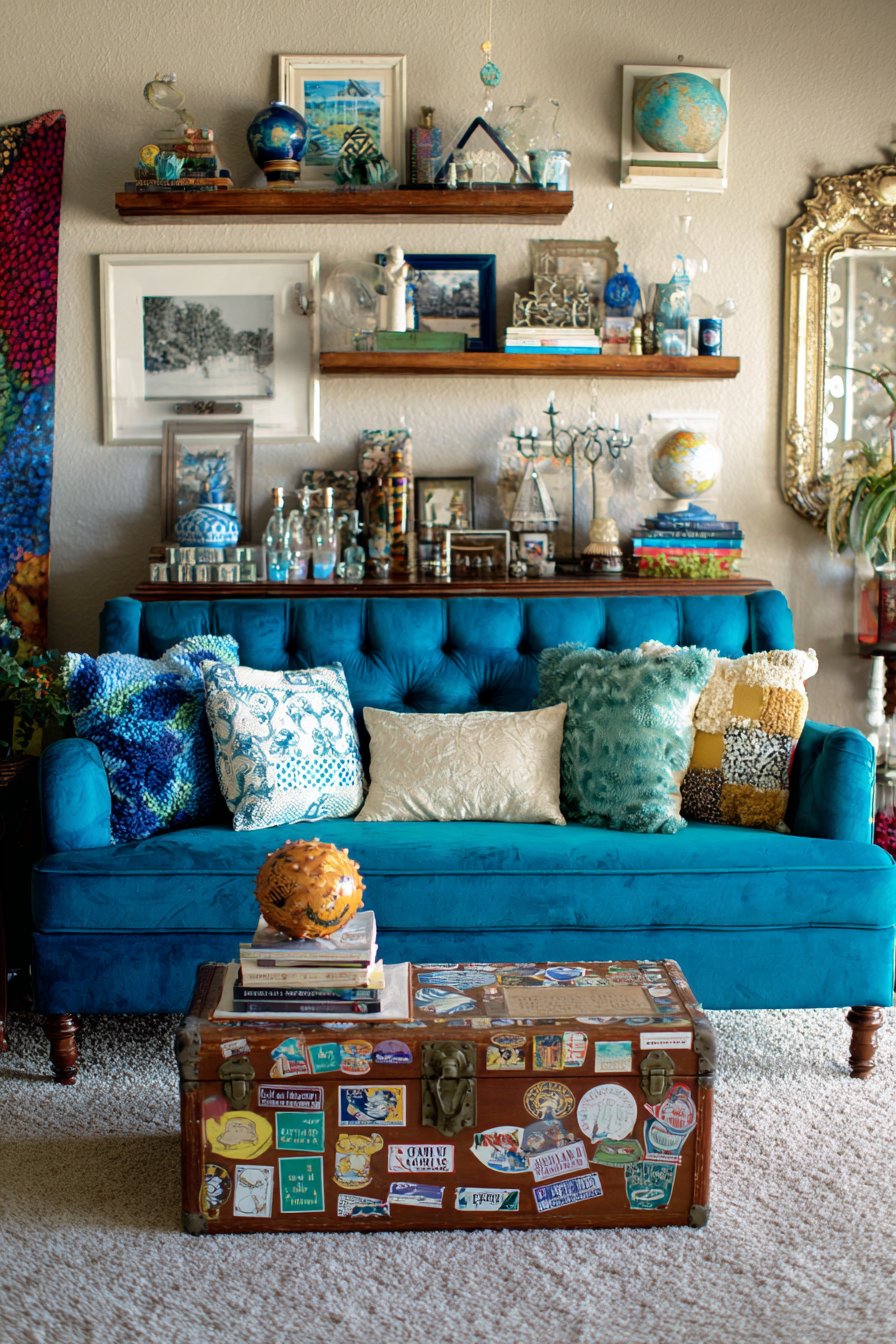
This personality-rich living room celebrates eclectic design by fearlessly mixing periods, styles, and sources into a cohesive whole that tells your unique story. The vintage velvet sofa in peacock blue becomes the jewel of the room, its saturated color and luxurious texture making an unforgettable statement. Whether genuinely vintage or vintage-inspired, this piece sets the tone for a space where conventional matching is abandoned in favor of collected character.
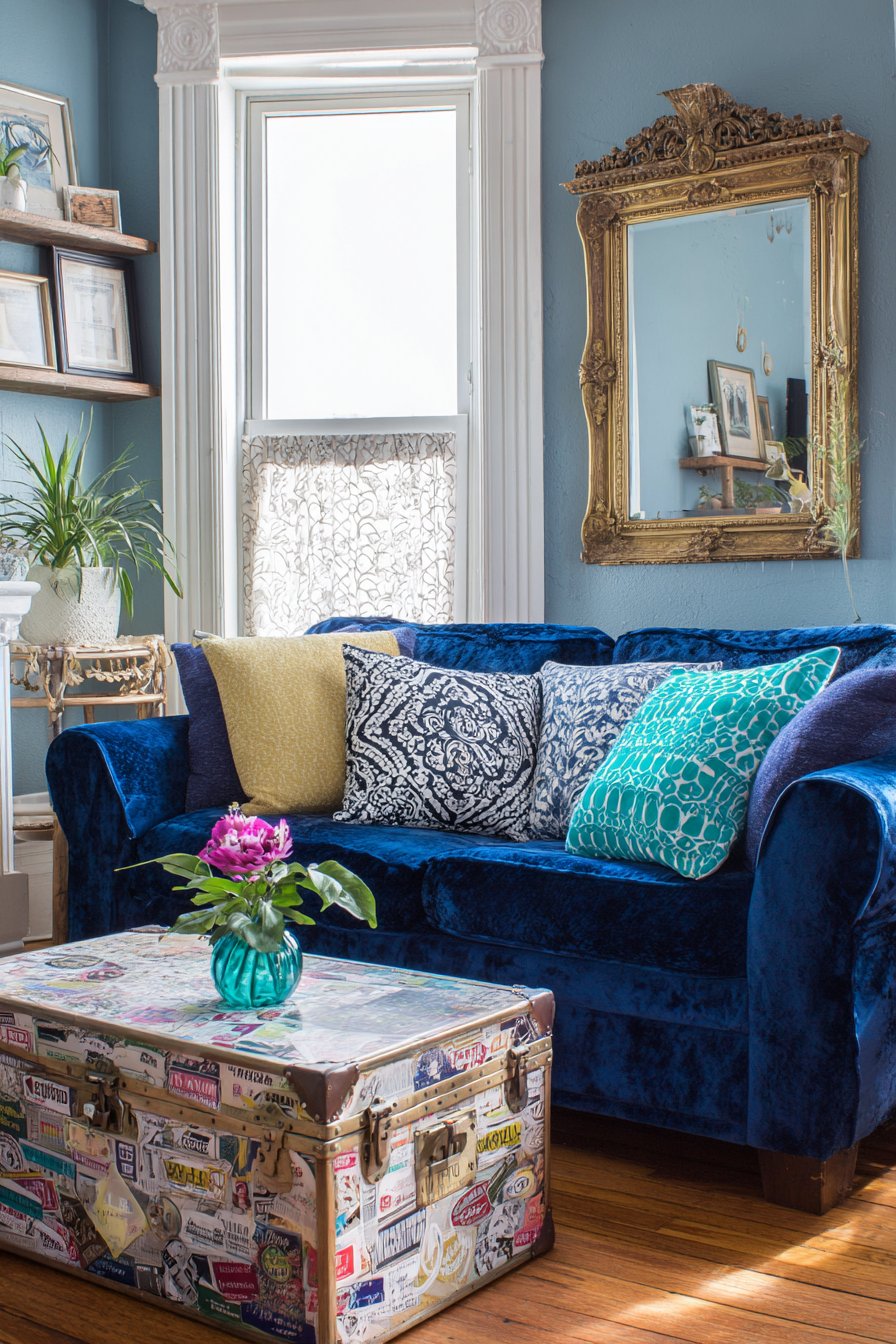
A repurposed trunk coffee table covered in travel stickers creates conversation and nostalgia—imagine vintage hotel labels, national park stickers, and travel destinations accumulated over years, each one sparking memories and stories. This piece exemplifies eclectic design’s celebration of personal history over catalog-perfect coordination. Mismatched throw pillows in various patterns and textures—perhaps ikat, suzani, velvet, and embroidered designs—create a collected look that suggests accumulation over time rather than one-day purchasing.
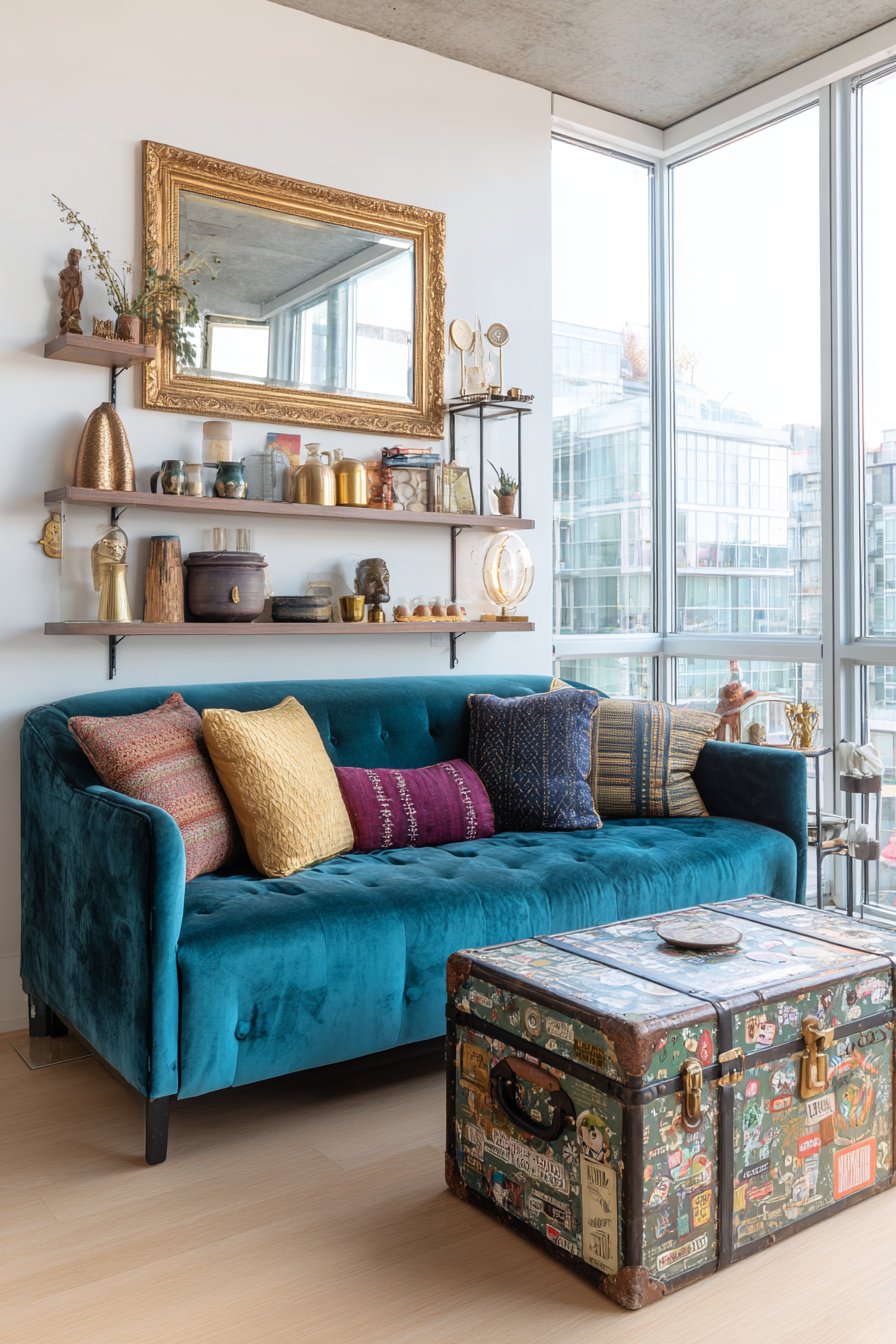
An antique gilt mirror with ornate frame reflects light while adding glamorous vintage elegance, its golden tones warming the cool peacock blue and creating visual richness. Global-inspired textiles and artifacts displayed on floating shelves might include Moroccan pottery, Indian block prints, Turkish kilim fragments, or Mexican folk art—each piece chosen for personal meaning rather than design coordination. The photography combines natural and artificial lighting to celebrate this curated, personality-filled space where every item has a story and conventional rules don’t apply.
Key Design Tips: Build eclectic spaces around one bold statement piece; mix periods, styles, and sources confidently; Incorporate global textiles and artifacts with personal meaning; use mismatched patterns that share a color family; Display collections thoughtfully rather than cluttering; Add antique mirrors for vintage elegance and light reflection; celebrate repurposed and vintage furniture; Tell your personal story through decor choices; Don’t worry about matching—focus on pieces you love; Layer patterns, textures, and colors boldly; Ensure eclectic doesn’t become chaotic by maintaining some unifying elements like color palette.
26. Monochromatic Grey Sophistication
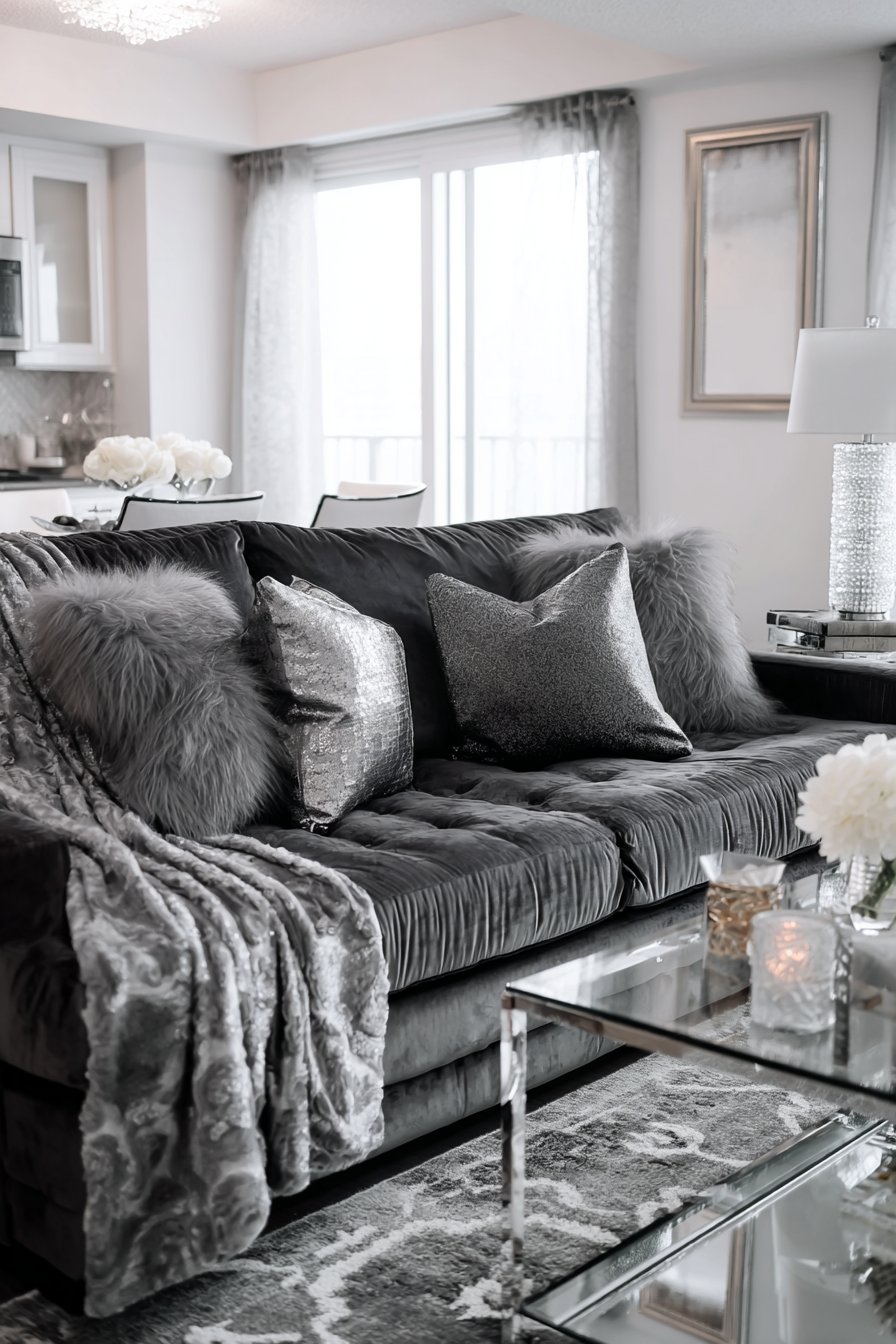
This refined living room demonstrates the sophisticated power of monochromatic design executed with varying shades, textures, and materials. The space layers grey from deepest charcoal to palest silver across the small sofa’s upholstery, textured throw blankets in cable knit and waffle weaves, and patterned area rug featuring geometric or abstract designs in multiple grey tones. This tonal approach creates depth and visual interest without the complexity of multiple colors.
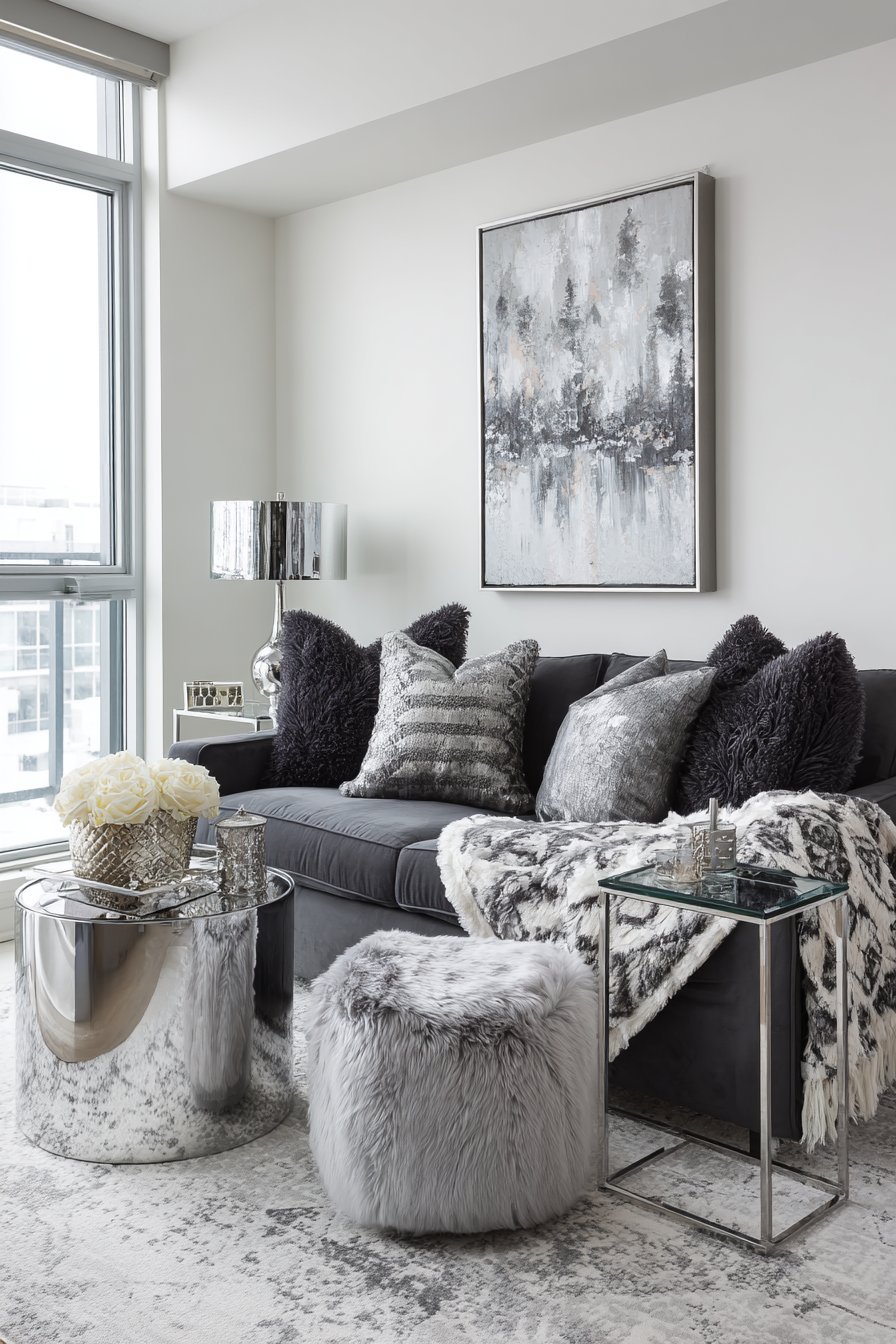
Chrome and glass accent tables maintain the cool-toned palette while their reflective surfaces bounce light around the room, preventing the grey from feeling dark or oppressive. The glass tops provide surface area without visual weight—crucial in small apartments where maintaining sight lines helps spaces feel larger. Varying textures prevent the monochromatic scheme from becoming monotonous—imagine smooth velvet next to chunky knit next to crisp linen next to glossy ceramic, each material catching light differently and providing tactile variety.
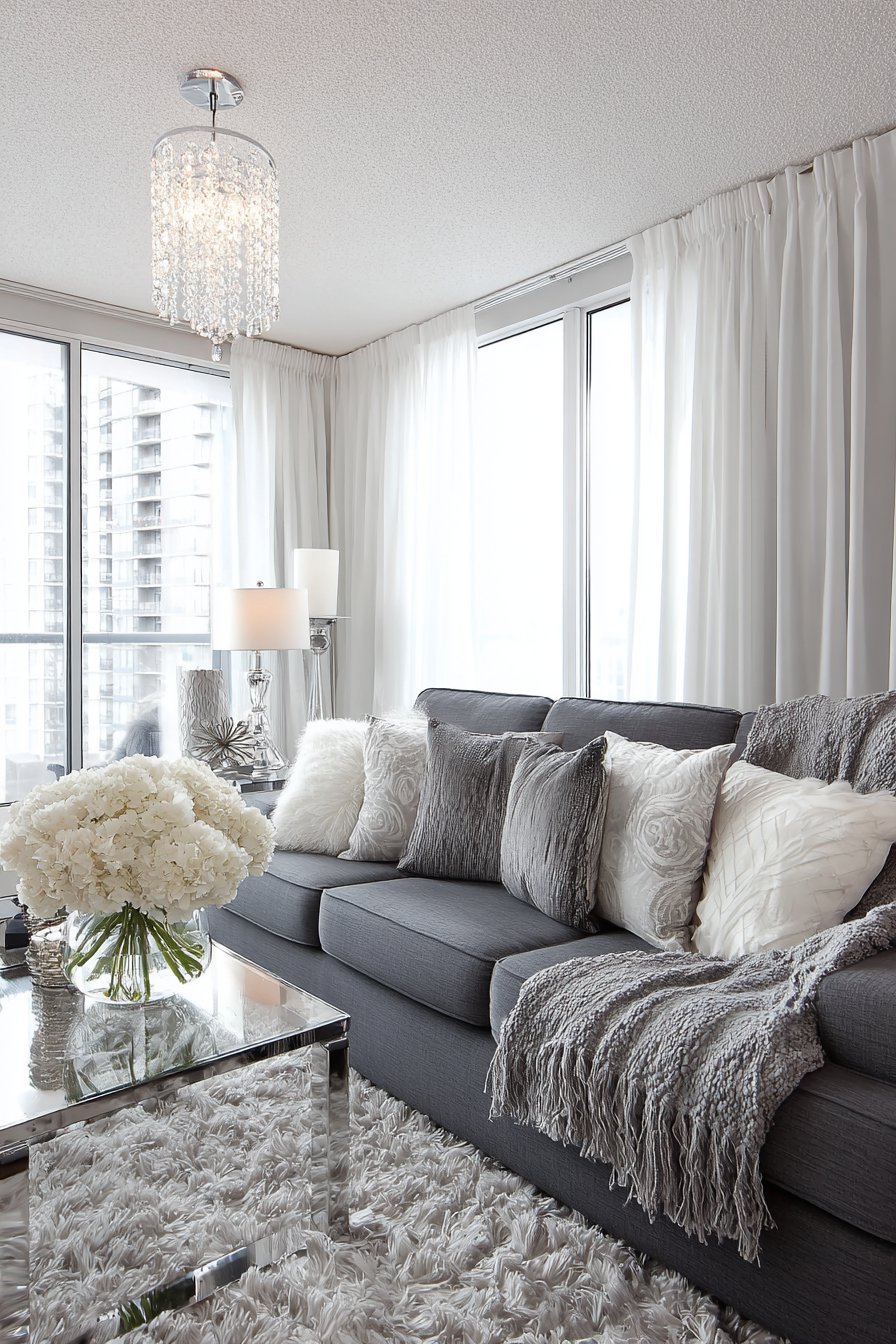
White trim and ceiling keep the space from feeling enclosed or dark, their crisp brightness providing contrast that makes the grey tones appear more intentional and sophisticated rather than simply neutral or boring. Wide-angle photography with balanced natural lighting demonstrates how a single color family creates sophisticated cohesion in compact apartment quarters, proving that you don’t need multiple colors to achieve visual interest—you simply need to thoughtfully vary tone, texture, and material within your chosen hue.
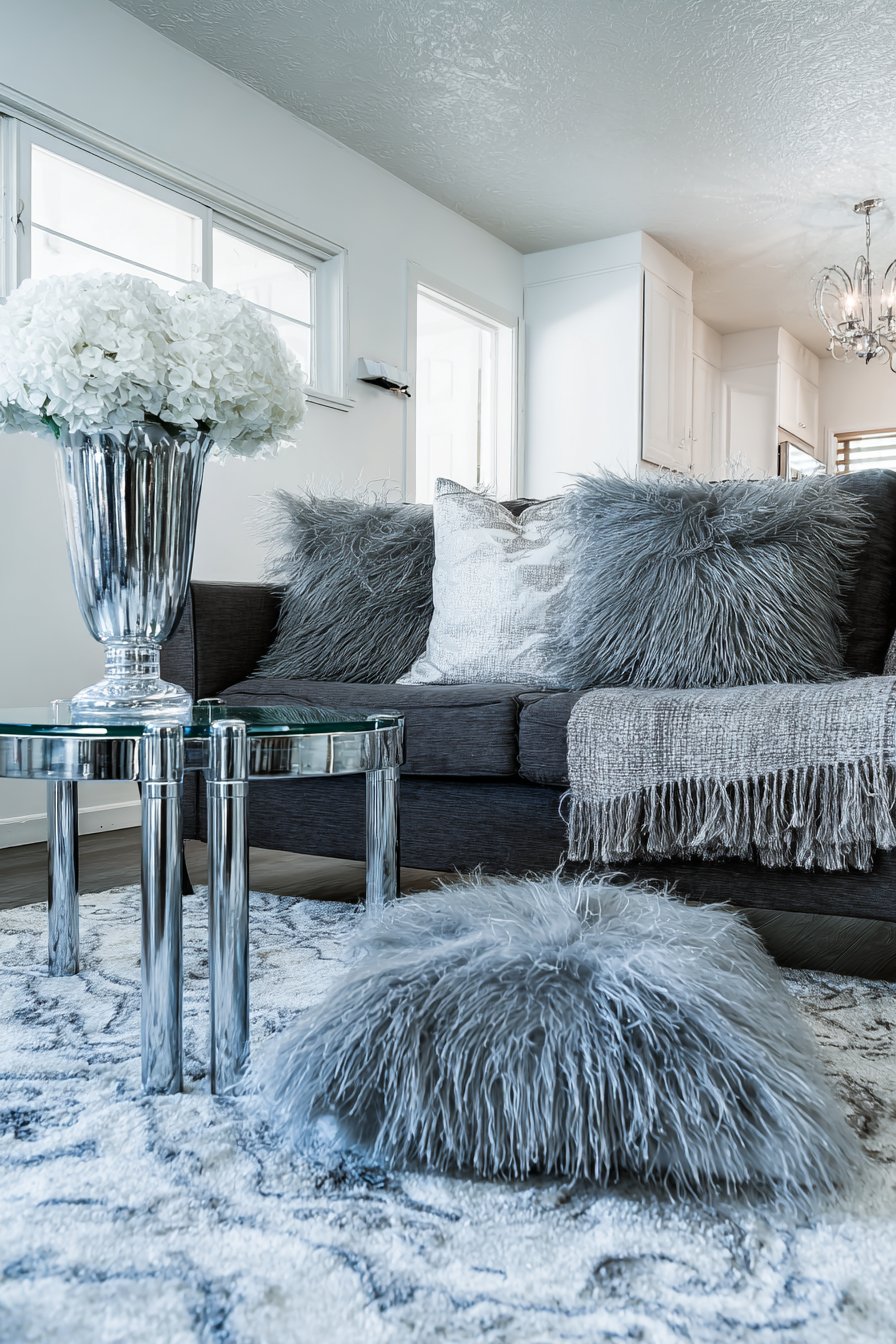
Key Design Tips: Use multiple shades of one color for sophisticated depth; Vary textures extensively to prevent monotony in monochrome; Incorporate reflective surfaces to maximize light in dark color schemes; Keep ceilings and trim bright white for contrast; Choose chrome, glass, and metallic accents for cool sophistication; Layer textiles in the same color family but different materials; Use pattern within your monochrome to add visual interest; Ensure adequate natural and artificial lighting; Select furniture that showcases the range from light to dark; Don’t fear dark colors in small spaces when executed with variety; Trust that sophisticated monochrome creates cohesion.
27. Budget-Conscious Creative Curation
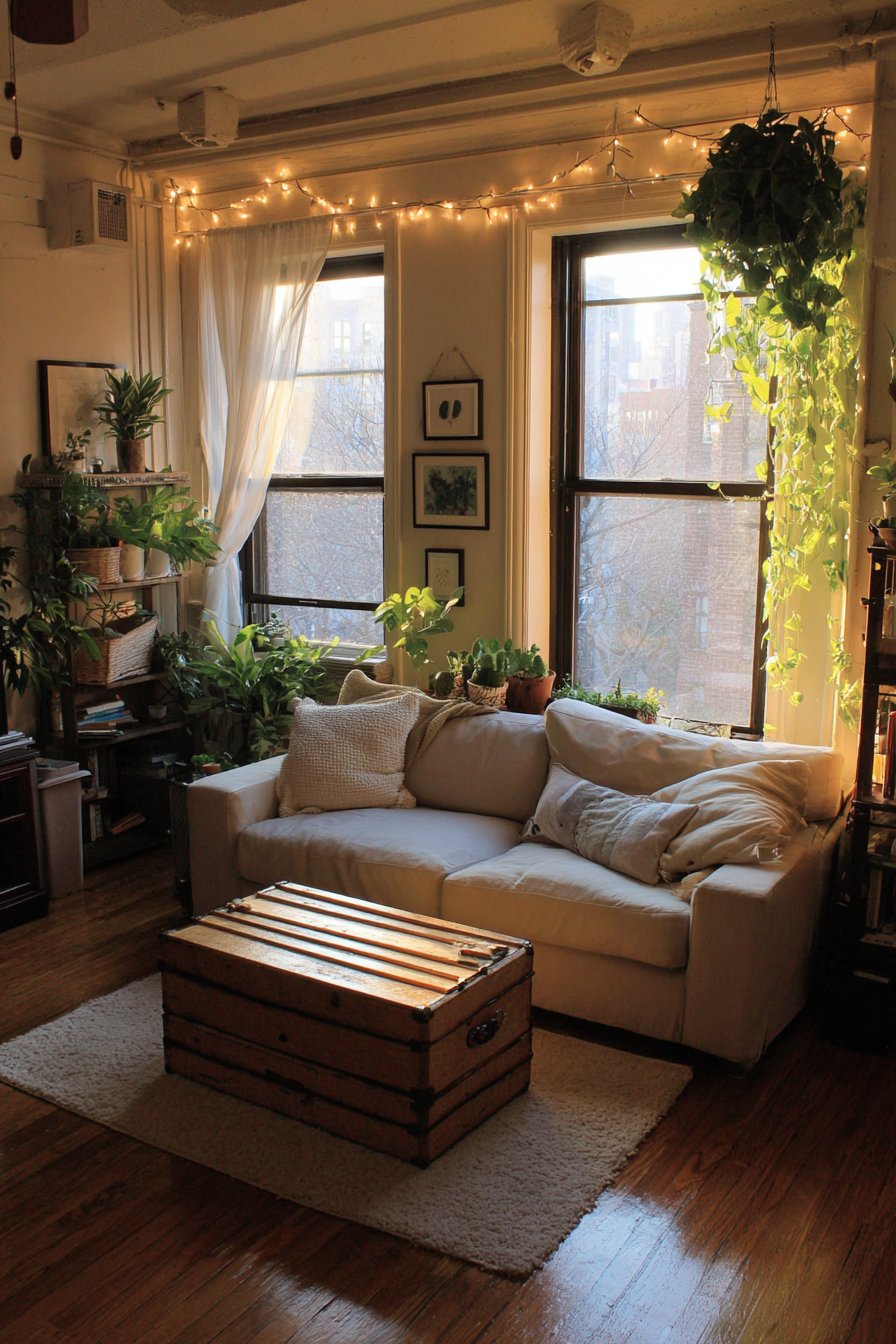
This inspiring living room proves that stunning design doesn’t require unlimited budgets—with creativity, resourcefulness, and an eye for potential, you can achieve charming apartment living on modest means. The foundation is a simple IKEA sofa enhanced dramatically with custom throw pillow covers sewn from trending fabrics purchased by the yard—perhaps velvet, linen, or patterned cotton that reflects your style perfectly. These DIY covers transform basic pillows into custom decor at a fraction of retail prices.
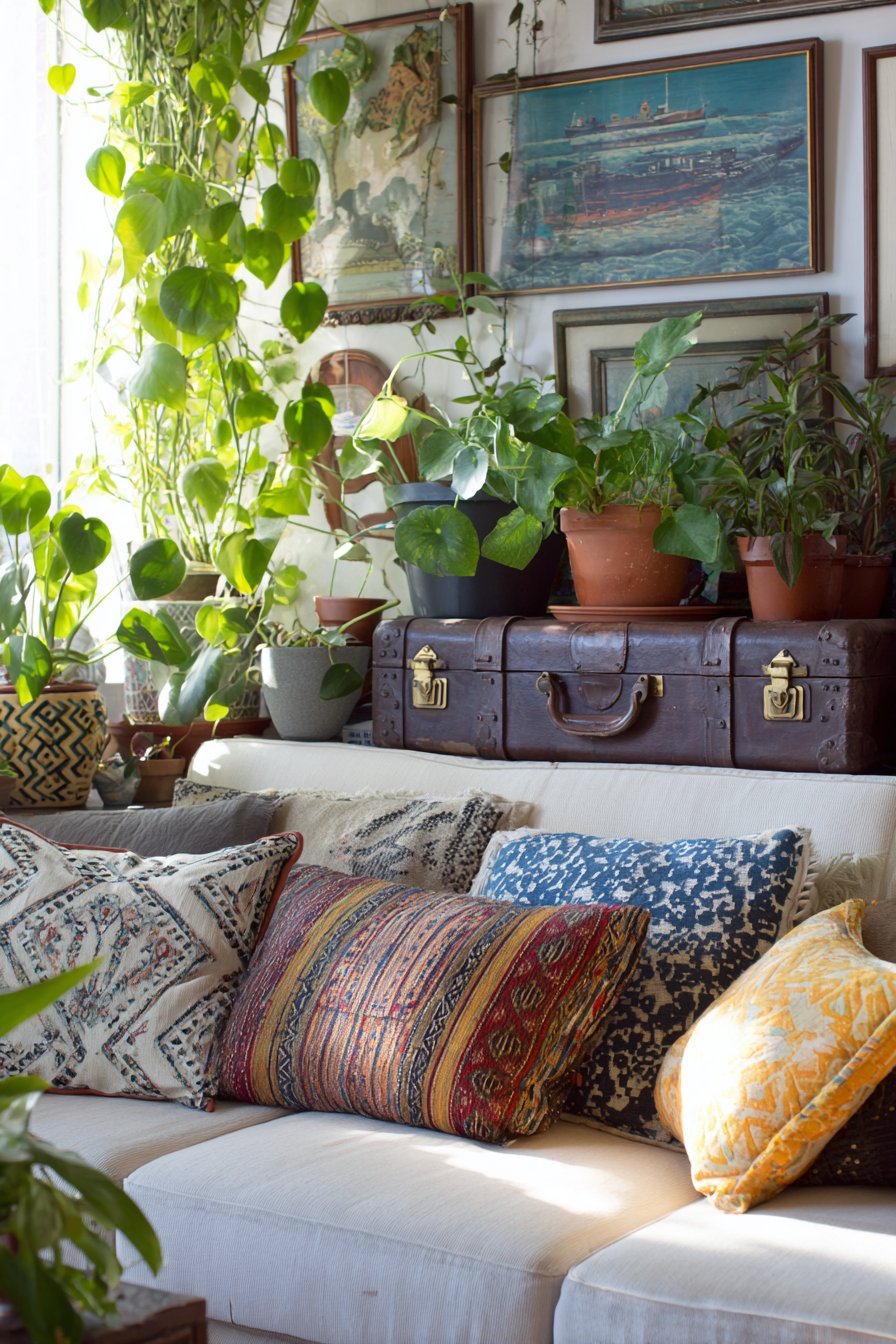
A DIY coffee table made from stacked vintage suitcases creates both storage (inside the cases) and surface area while adding serious character and conversation value. These might be genuine vintage finds from thrift stores or flea markets, their worn leather, vintage travel stickers, and brass corners telling stories while costing significantly less than new furniture. Thrifted artwork in mismatched frames creates an intentional gallery wall—the frames might be spray-painted in one coordinating color to create cohesion, while the varied art reflects your personal taste.
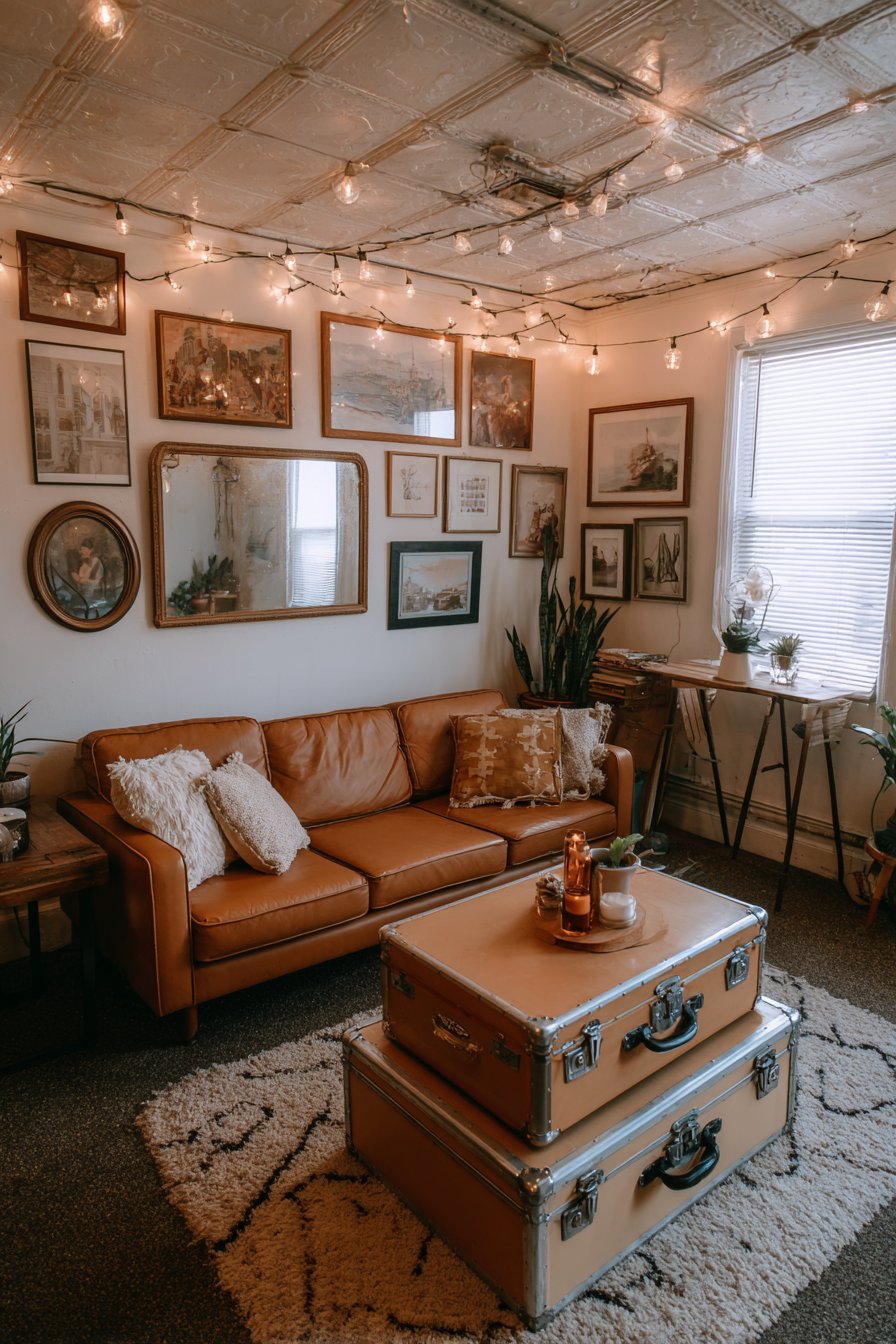
Affordable string lights add ambiance without electrician costs, their warm glow creating atmosphere for evening relaxation or entertaining. Plants propagated from cuttings (free from friends or your own plants) fill repurposed containers—perhaps vintage tins, thrifted vases, or painted mason jars—bringing life and color without nursery prices. Interior design photography with natural lighting celebrates this creative, resourceful approach to achieving charming apartment living on a budget, proving that investment and creativity matter far more than spending.
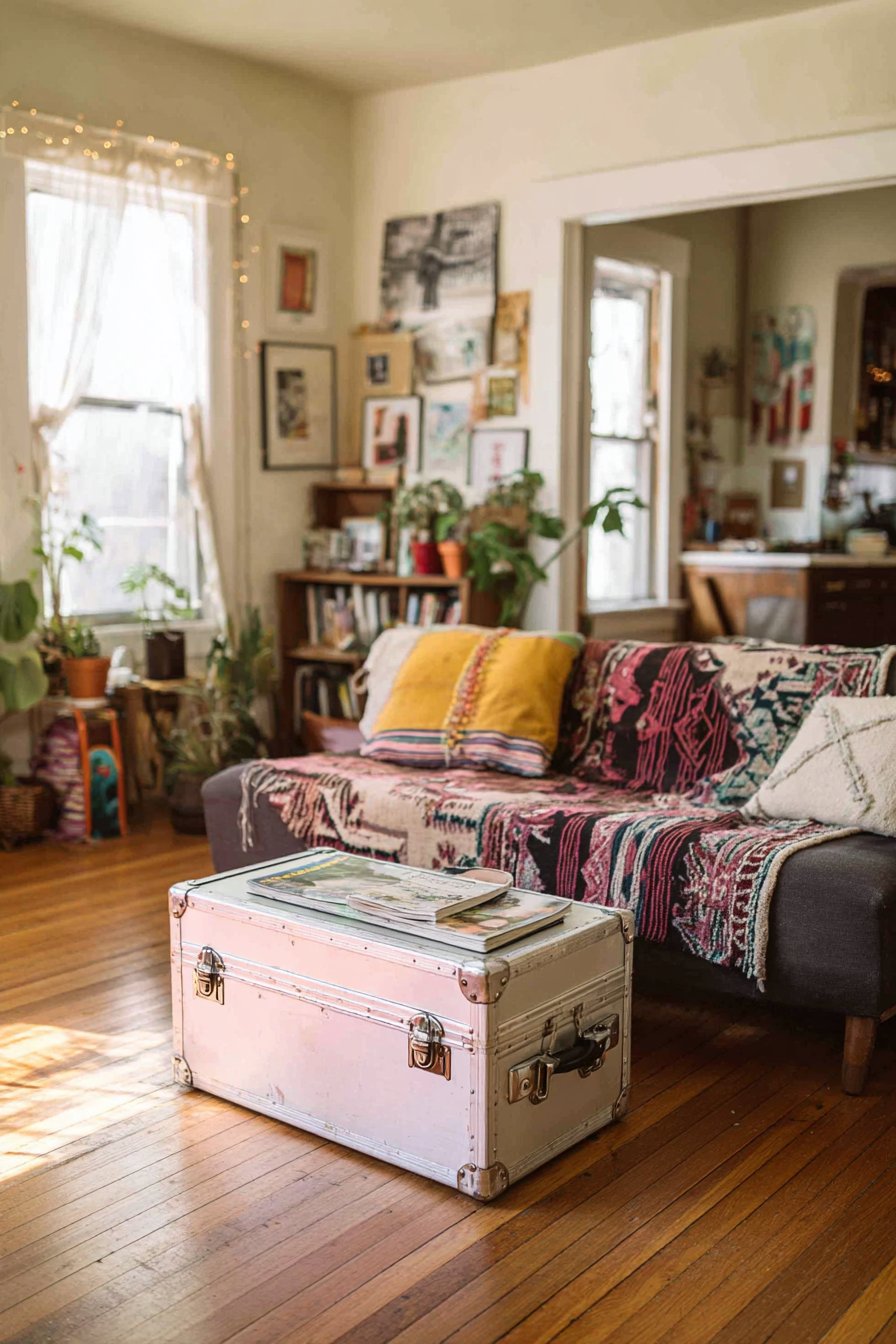
Key Design Tips: Upgrade basic furniture with DIY details like custom pillow covers; Create coffee tables from creative materials like stacked suitcases; Shop thrift stores and flea markets for unique, affordable pieces; Unify mismatched frames with spray paint in one color; Use string lights for affordable ambient lighting; Propagate plants from cuttings instead of buying; Repurpose containers as planters and storage; Invest time and creativity rather than money; Focus on one quality piece and fill around it affordably; Embrace DIY projects to customize your space; Remember that great style comes from vision, not budgets; Shop estate sales and garage sales for hidden treasures.
Why These Cute Living Room Ideas Work for Apartments
The twenty-seven designs presented above represent the best approaches to creating cute, functional, and stylish living rooms specifically optimized for apartment living. Each concept addresses common apartment challenges—limited square footage, rental restrictions, multifunctional needs, and budget constraints—while delivering spaces that feel personal, intentional, and genuinely charming.
What makes these ideas particularly effective is their emphasis on smart furniture selection that prioritizes pieces serving multiple purposes. Whether it’s storage ottomans that function as coffee tables, sleeper sofas that accommodate guests, modular seating that reconfigures for different needs, or nesting tables that expand and contract as required, each design recognizes that apartment furniture must work harder than its suburban counterpart. This functionality never comes at the expense of aesthetics—proving that practical and beautiful aren’t mutually exclusive.
The color strategies employed across these designs demonstrate sophisticated understanding of how palette choices affect perceived space. Light, neutral foundations in creams, greys, and whites maximize brightness and create the illusion of larger rooms, while strategic bold accent pieces in jewel tones, pastels, or saturated colors inject personality without overwhelming limited square footage. Monochromatic schemes prove that restricting your palette creates cohesion and sophistication, while eclectic approaches show that mixing colors works when unified by thoughtful curation.
Texture plays a crucial role in making small apartments feel luxurious and visually rich. From plush velvets and soft linens to natural jutes and woven rattans, from smooth glass and polished metals to rough reclaimed woods and weathered leathers, these designs layer varied materials that create depth and interest without requiring additional space. This textural variety prevents minimal spaces from feeling sparse while ensuring maximal rooms avoid visual chaos.
Vertical space utilization appears throughout these concepts as a critical strategy for apartment living. Floating shelves, wall-mounted desks, hanging planters, and tall plant stands draw the eye upward, making ceilings feel higher while freeing precious floor space. This vertical thinking transforms walls from blank barriers into functional, beautiful storage and display opportunities that don’t compromise your ability to move freely through the room.
The lighting approaches demonstrated across these designs recognize that apartments often lack the abundant natural light of single-family homes. Strategic mirror placement reflects and multiplies available light, sheer curtains diffuse harsh rays while maintaining brightness, and layered artificial lighting—from string lights and pendant fixtures to arc floor lamps and table lamps—ensures these spaces remain welcoming and functional regardless of outdoor conditions or time of day.
Renter-friendly solutions appear throughout, acknowledging that many apartment dwellers cannot make permanent modifications. Removable wallpaper creates accent walls without paint, leaning mirrors avoid wall mounting, freestanding ladder shelves provide storage without installation, and slipcovers allow furniture transformation without reupholstery. These approaches ensure your design vision can be realized regardless of landlord restrictions.
Storage integration proves essential across every design, recognizing that apartment living demands creative solutions for belongings. From built-in storage beneath daybeds and inside ottomans to decorative baskets and boxes that conceal clutter while enhancing aesthetics, these designs demonstrate that organization and beauty must coexist. The best apartment living rooms keep daily necessities accessible yet invisible, maintaining the cute aesthetic while accommodating real life.
Style diversity across these concepts ensures that every personality and preference finds representation. Whether you’re drawn to Scandinavian minimalism, bohemian eclecticism, industrial edge, vintage romance, coastal breeziness, or contemporary sleekness, these designs prove that apartment living doesn’t dictate a particular aesthetic—any style can be successfully executed in compact spaces with proper scaling and thoughtful curation.
The emphasis on personalization throughout these ideas recognizes that the cutest living rooms reflect their inhabitants authentically. Gallery walls display meaningful art and photos, plant collections reflect horticultural interests, DIY projects add handmade character, and curated objects tell personal stories. These aren’t showroom spaces designed to impress strangers—they’re homes designed to nurture and reflect the people living in them.
Budget consciousness appears as a recurring theme, with designs ranging from investment-piece luxury to creative resourcefulness. Some concepts celebrate splurging on statement furniture that will last years, while others demonstrate how thrifted finds, DIY projects, and clever repurposing create equally charming results at fraction of retail costs. This range acknowledges that apartment dwellers exist across every economic spectrum, and beautiful living spaces are achievable regardless of budget.
Conclusion
Creating a cute living room in your apartment is entirely achievable regardless of your space’s size, shape, budget, or restrictions. The twenty-seven ideas presented here demonstrate that with thoughtful furniture selection, creative problem-solving, strategic color and texture use, and authentic personalization, any apartment living room can become a charming, functional sanctuary that genuinely feels like home.
The key takeaways from these designs emphasize choosing furniture that serves multiple purposes, utilizing vertical space to maximize storage and display without sacrificing floor area, layering textures for visual richness in limited square footage, incorporating adequate lighting through both natural and artificial sources, and most importantly, infusing your space with personality through curated objects, meaningful art, and design choices that reflect your authentic taste.
Remember that the cutest living rooms aren’t necessarily the most expensive or the largest—they’re the spaces where thoughtful design meets genuine livability, where every piece has earned its place through both function and beauty, and where you feel completely, authentically yourself. Don’t be intimidated by your apartment’s limitations; instead, view them as creative parameters that encourage innovation and intentionality.
Start with one concept that resonates with your style and needs, adapt it to your specific space and circumstances, and gradually build your ideal living room through thoughtful additions and edits over time. Your apartment living room has tremendous potential to become the cute, welcoming space you deserve—these ideas are your blueprint for making that vision reality.
