
Creating a cozy living room is about more than just aesthetics—it’s about crafting a sanctuary where you can unwind, connect with loved ones, and truly feel at home. In today’s fast-paced world, our living spaces serve as personal retreats, and the right design choices can transform an ordinary room into an extraordinary haven of comfort and style. Whether you’re drawn to minimalist Scandinavian influences, rustic farmhouse charm, or eclectic bohemian vibes, the key to achieving that coveted cozy atmosphere lies in thoughtful layering of textures, strategic lighting, and intentional use of color and materials.
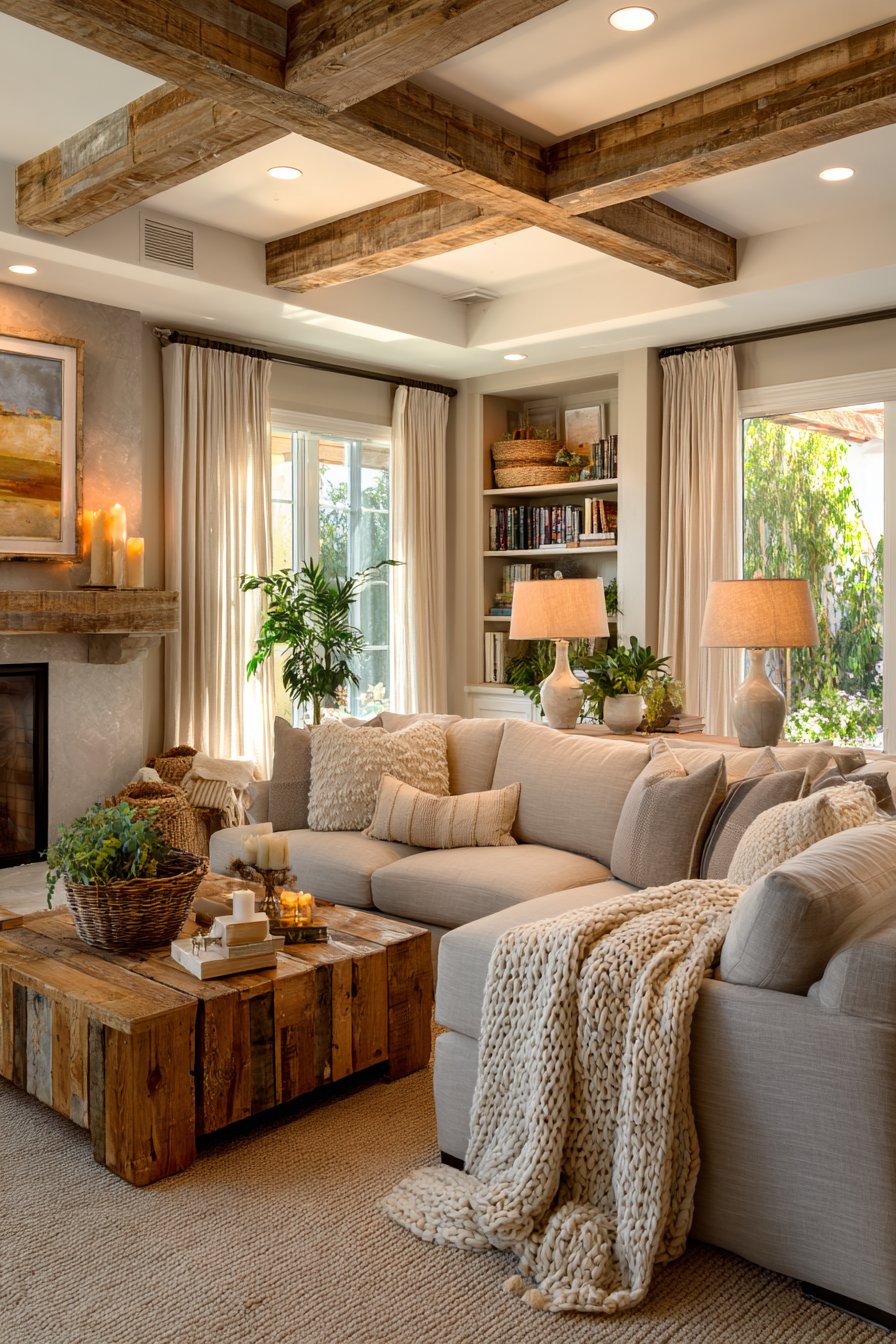
The beauty of cozy living room design is its versatility and accessibility. You don’t need a complete renovation or unlimited budget to create a warm, inviting space. Often, it’s the small details—a chunky knit throw draped over a sofa arm, the soft glow of layered lighting, or the organic warmth of natural wood accents—that make the most significant impact. These elements work together to engage our senses and create an environment that feels both personally meaningful and universally welcoming.
In this comprehensive guide, we’ll explore twenty-seven distinct approaches to cozy living room design, each offering unique insights into creating spaces that balance style with comfort. From showcasing the power of plush textiles and sectional seating to highlighting the warmth of natural materials and the intimacy of reading nooks, these ideas demonstrate how diverse design elements can come together to create rooms that truly feel like home. Whether you’re redesigning your entire living space or simply seeking fresh inspiration for a quick refresh, you’ll discover practical tips and creative solutions that can be adapted to suit your personal style and living situation.
1. Plush Sectional Comfort with Textured Layers
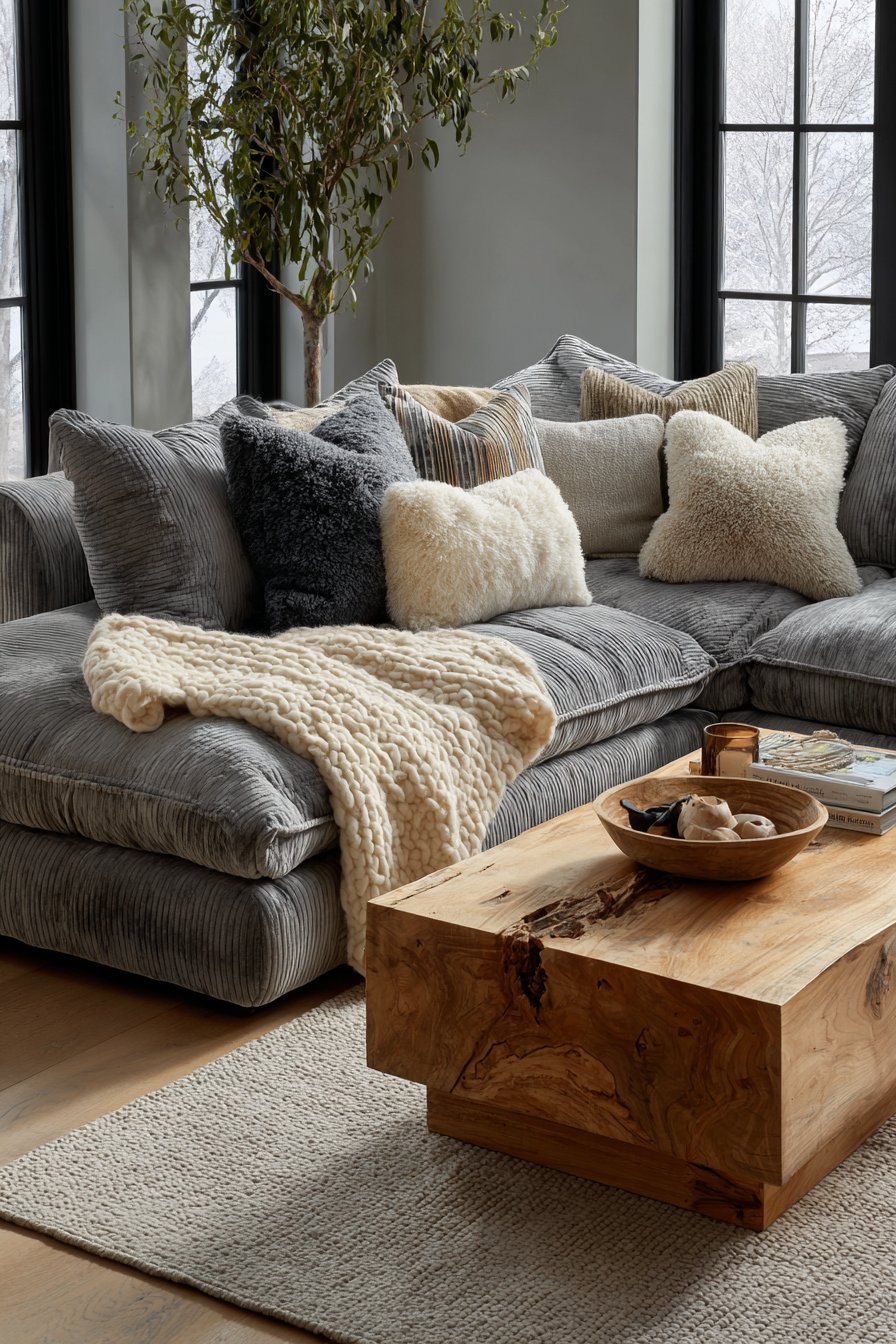
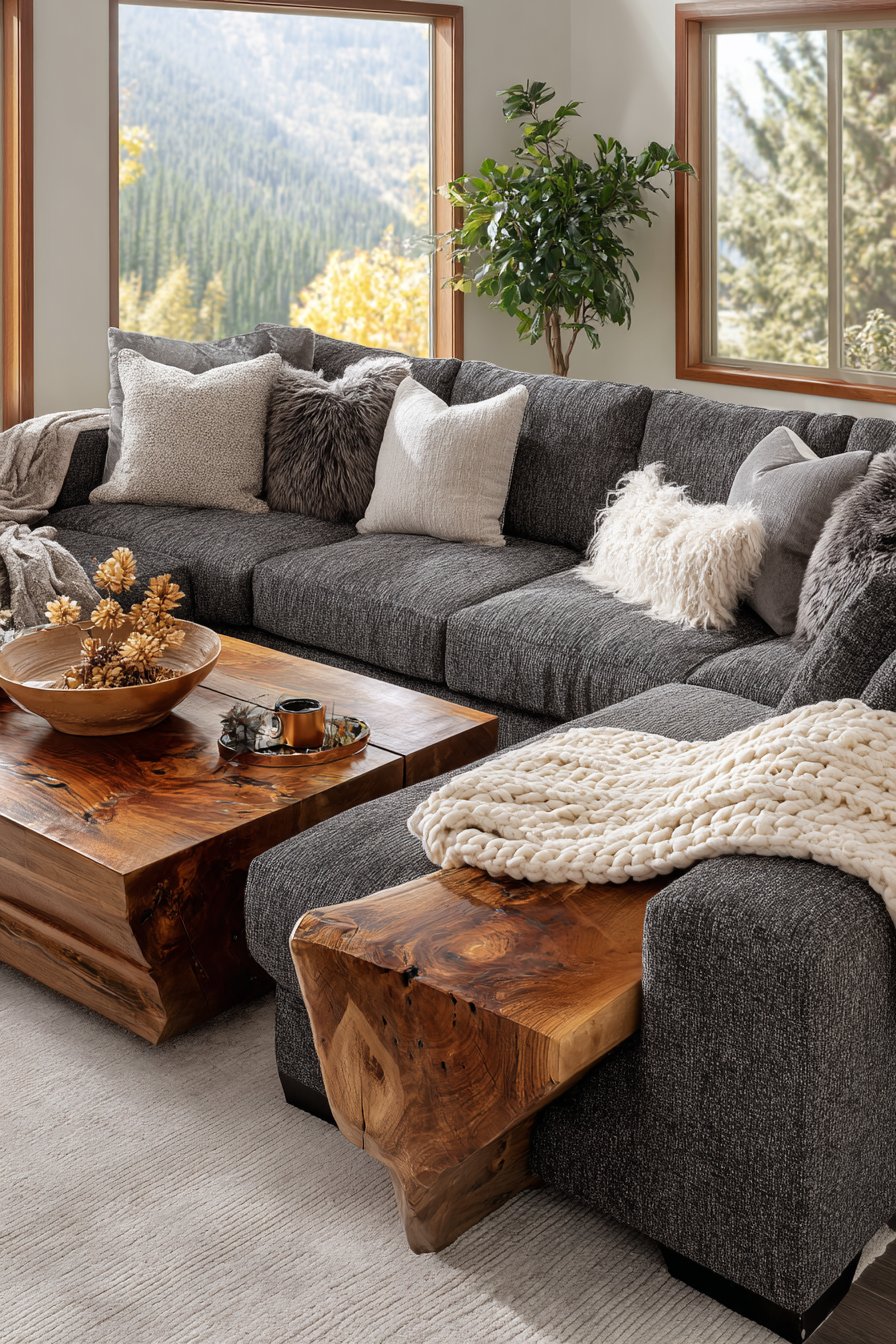
The foundation of any truly cozy living room begins with seating that invites you to sink in and stay awhile. A deep-seated sectional sofa upholstered in soft grey chenille fabric creates an irresistible anchor for relaxation and gathering. The beauty of this approach lies in its generous proportions—oversized cushions that cradle you in comfort, paired with multiple throw pillows in varying textures including velvet, linen, and faux fur. This layering of fabrics creates visual depth while offering tactile variety that makes the space feel curated and lived-in.
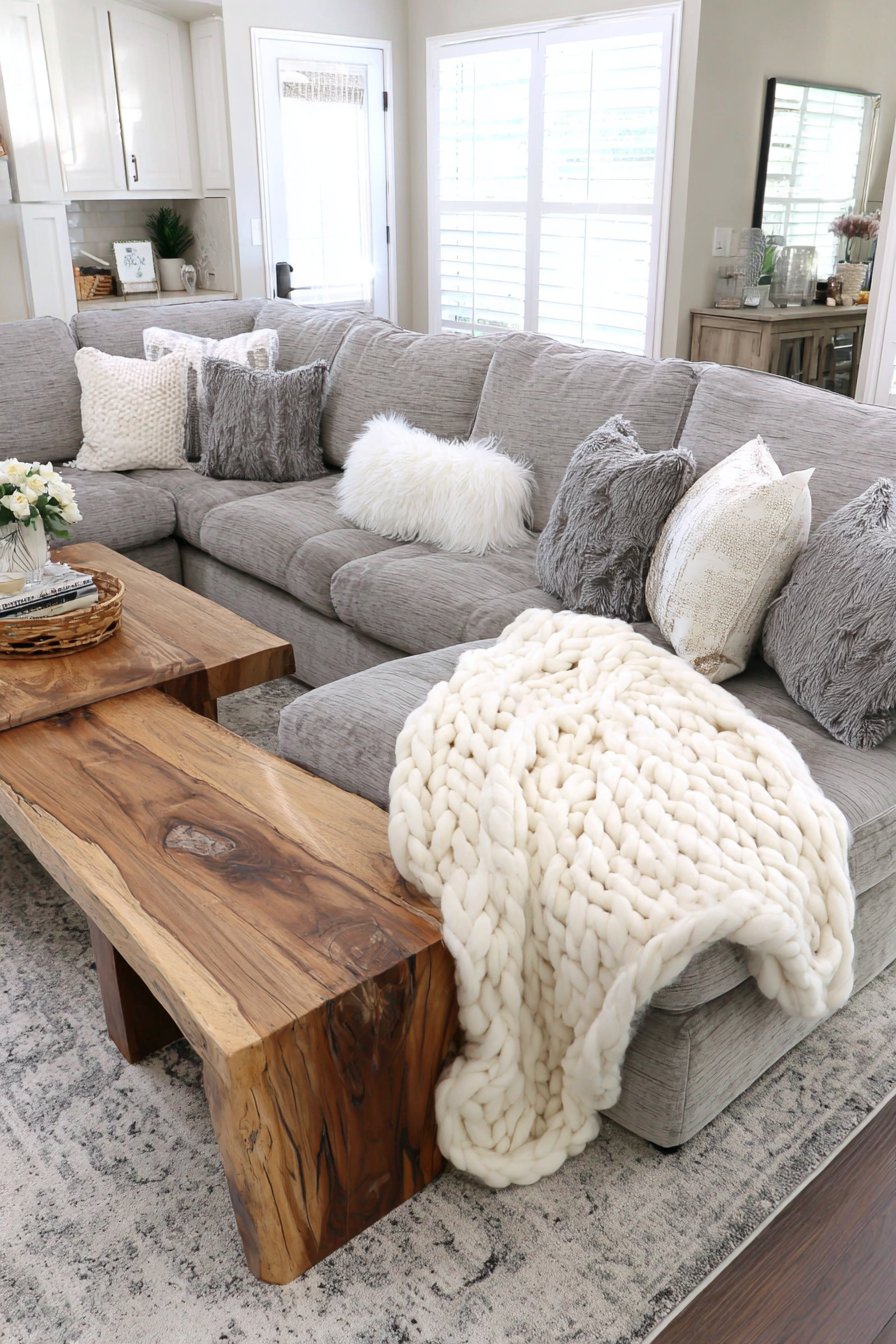
The magic happens when you introduce that essential cozy element: the chunky cable-knit throw blanket in cream, casually draped over the armrest as if someone just finished curling up with a good book. This seemingly effortless styling speaks to the heart of cozy design—spaces that look beautiful but feel genuinely functional and accessible. The positioning of the sectional facing a rustic wood coffee table with visible grain patterns and natural edge details creates a conversation area that feels both intimate and welcoming.
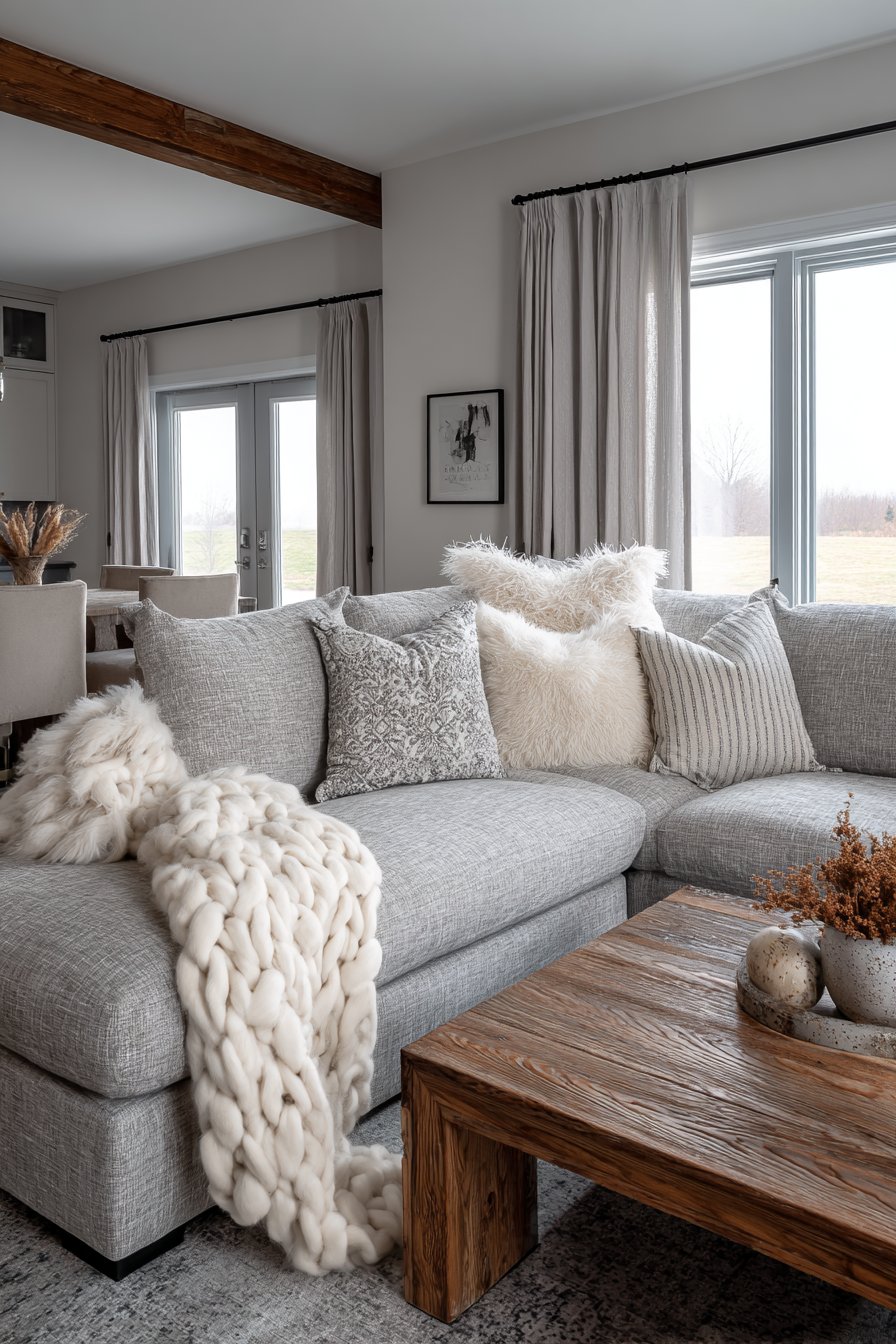
What elevates this design from merely comfortable to truly cozy is the attention to lighting and how it interacts with the varied textures. Soft diffused natural light from nearby windows creates gentle shadows that highlight the plush fabric textures, making the chenille appear even more inviting and the throw pillows more dimensional. The interplay of light across different materials—from the smooth velvet to the nubby linen to the fluffy faux fur—creates visual interest that changes throughout the day as natural light shifts.
Key Design Tips:
- Layer at least three different textures in your throw pillow collection to create depth and visual interest
- Choose a sectional with deep seats (at least 40 inches) for maximum lounging comfort
- Position your sofa to take advantage of natural light while avoiding direct glare on seating areas
- Select a neutral base color for large furniture pieces, allowing you to easily update the look with colorful accessories
- Invest in quality chenille or performance fabrics that feel luxurious while standing up to daily use
2. Window-Side Reading Retreat
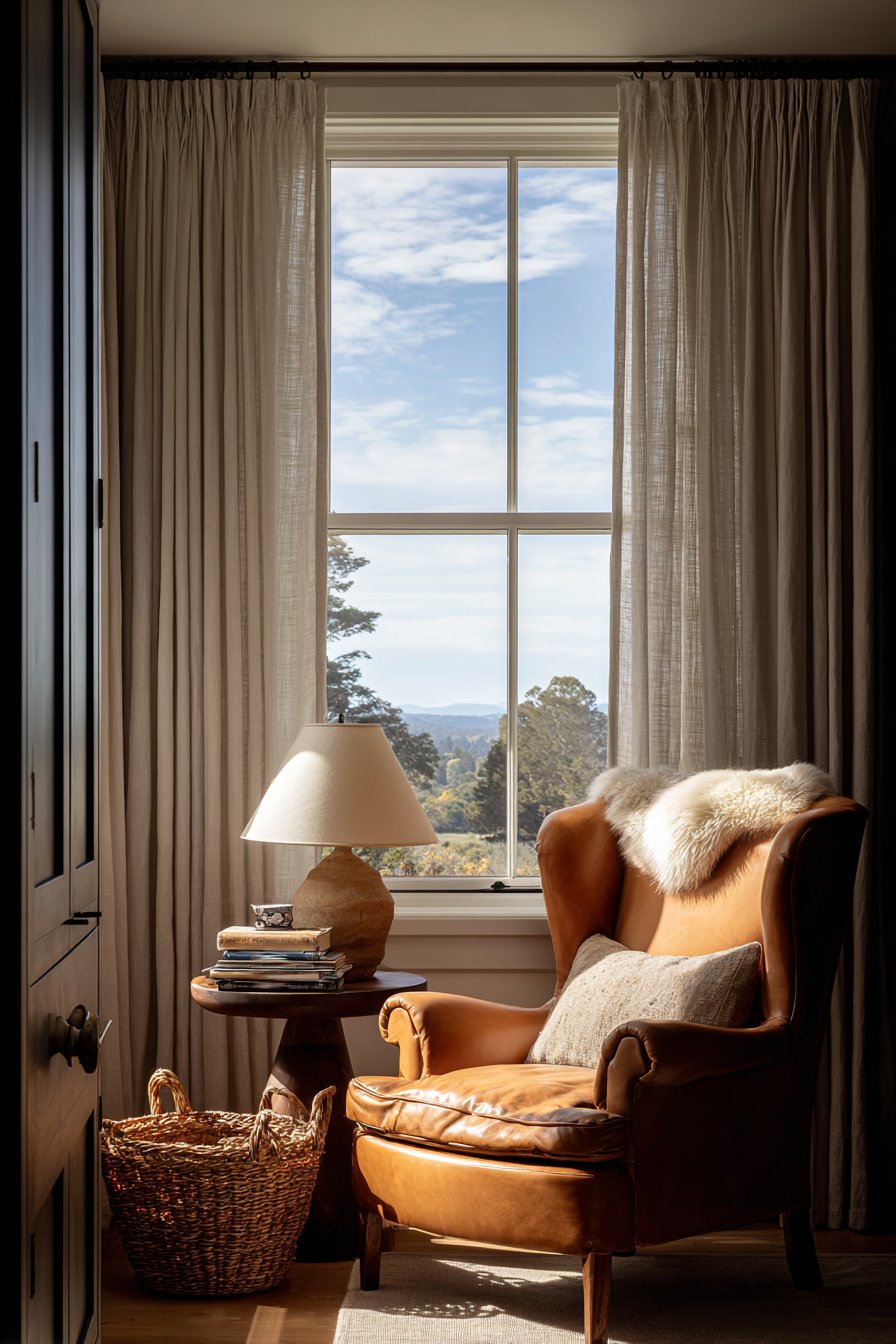
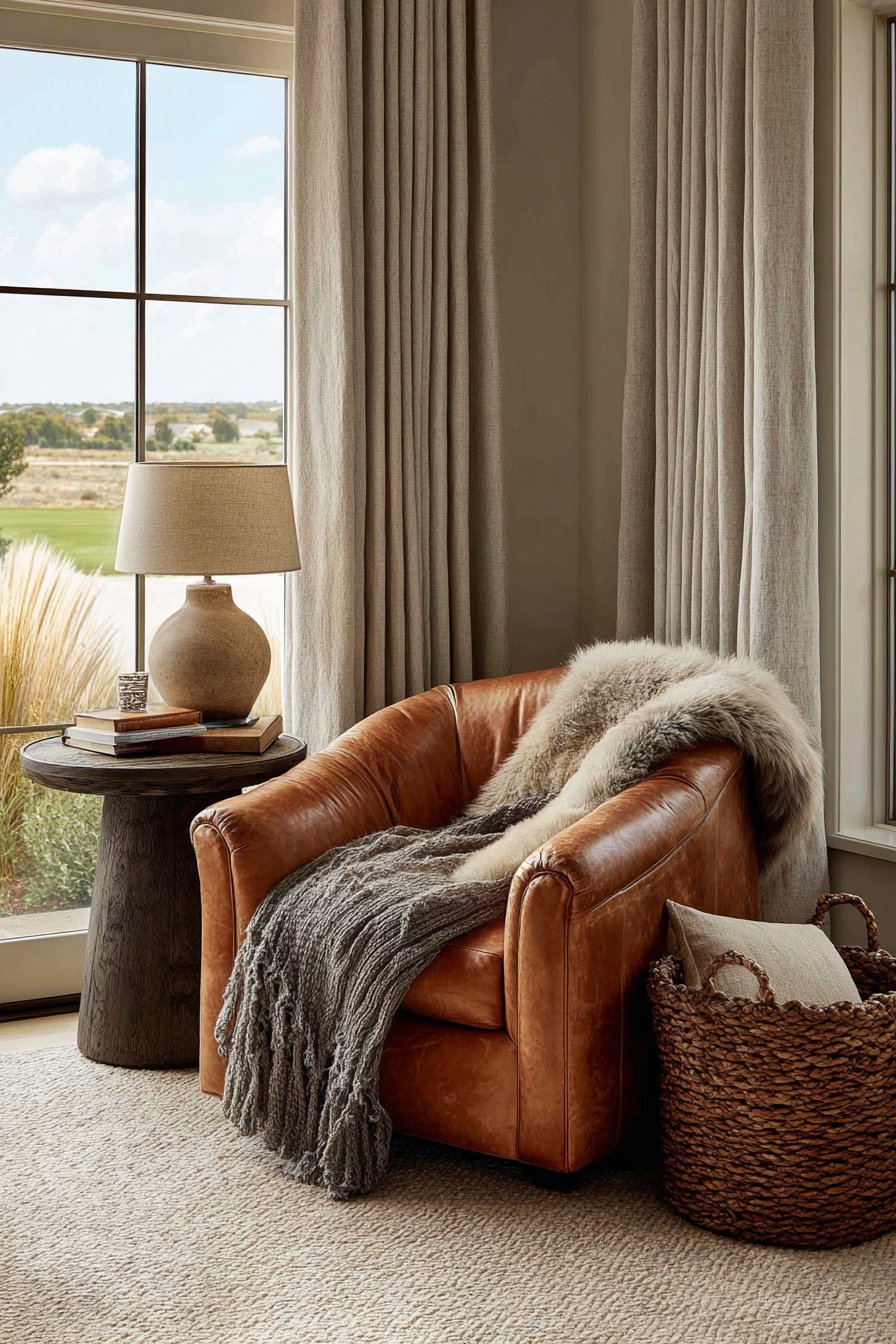
There’s something inherently peaceful about a dedicated reading nook, especially when positioned to capture natural daylight. This design concept centers on an oversized armchair upholstered in warm caramel leather that develops a beautiful natural patina over time, telling the story of countless hours spent lost in books. The chair’s generous proportions provide the kind of enveloping comfort that makes it difficult to leave, while the leather’s warmth and character add a sophisticated yet approachable element to the space.
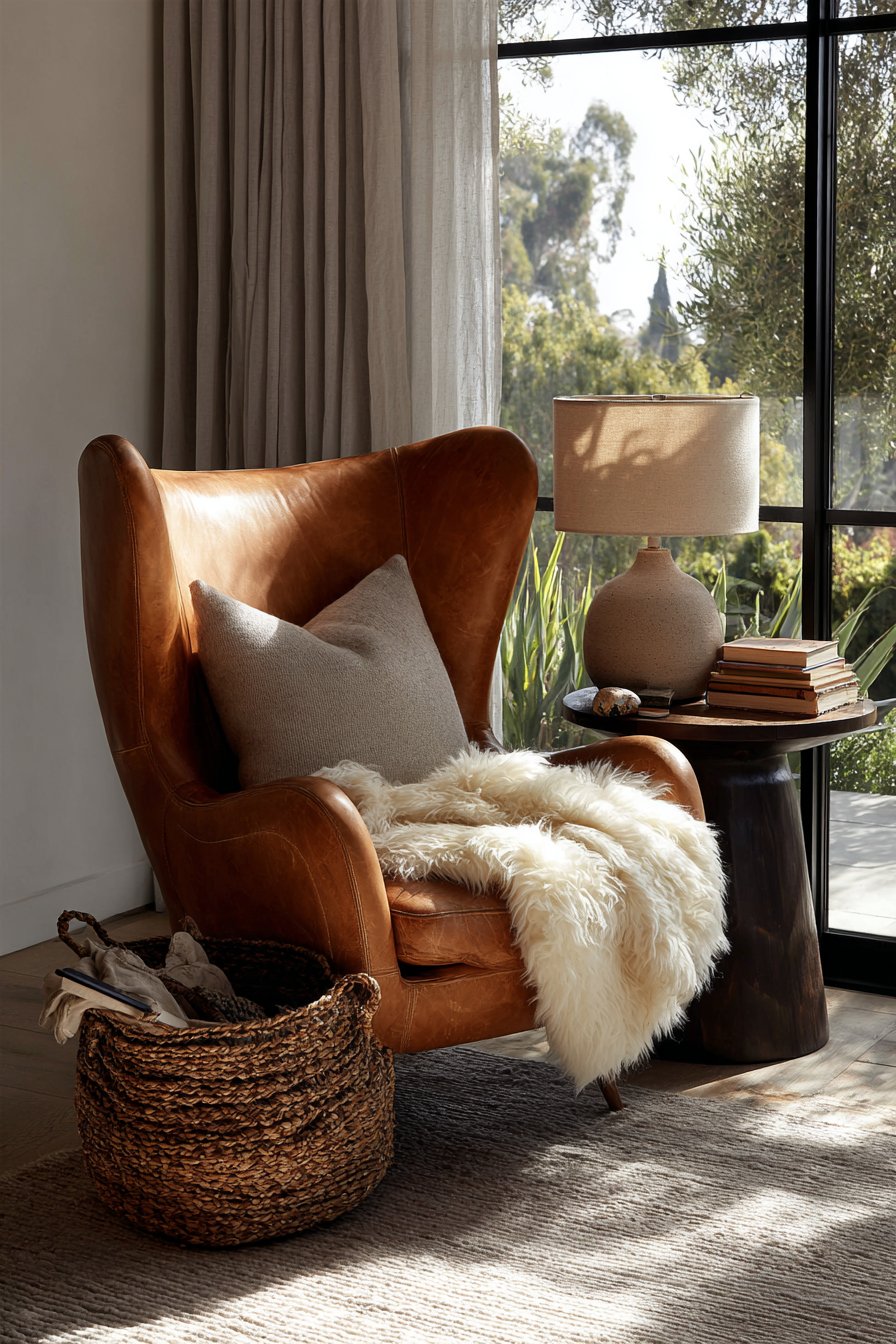
The supporting elements in this vignette are thoughtfully chosen to enhance both function and atmosphere. A small round side table in dark walnut provides the perfect perch for a ceramic table lamp with a linen shade—essential for extending reading hours into the evening. The stack of well-loved books on the table surface speaks to the space’s purpose while adding vertical interest and personal character. The sheepskin throw draped over the chair back introduces another layer of texture and warmth, inviting you to snuggle in during cooler months.
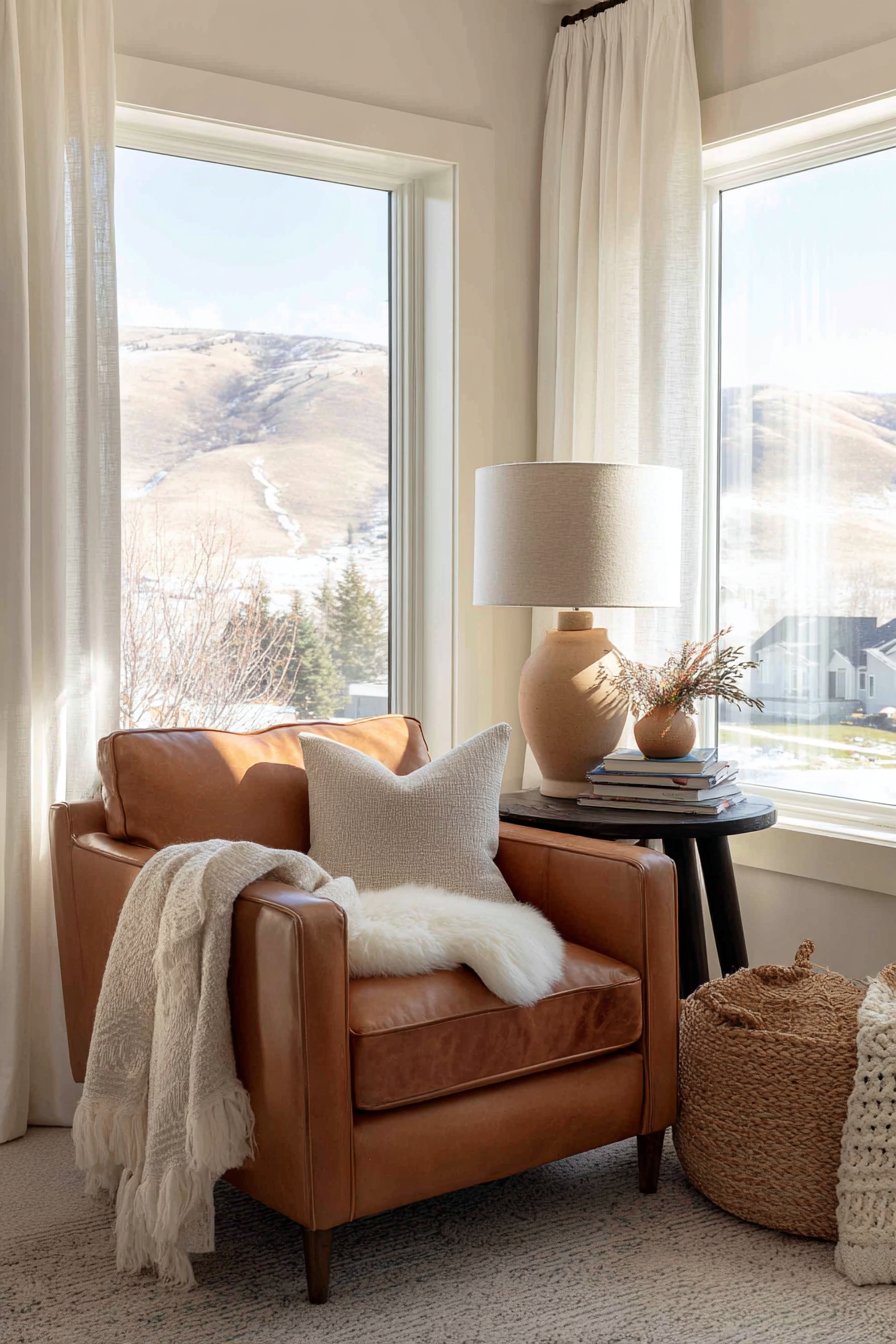
What makes this reading nook truly special is its relationship with natural light. Sheer curtains filter and soften the daylight, creating optimal reading conditions without harsh glare while maintaining a connection to the outdoors. The woven basket positioned nearby for storing extra blankets demonstrates how practical storage can be seamlessly integrated into a cozy design scheme. This is a space that understands the ritual of reading—the need for good light, comfortable seating, a place for your coffee cup, and easy access to warmth.
Key Design Tips:
- Position reading chairs perpendicular to windows to avoid glare on pages while maximizing natural light
- Choose leather furniture with full-grain or top-grain quality that will develop character over time
- Include adjustable task lighting for evening reading sessions
- Keep a basket or ottoman nearby for storing throws, creating easy access to comfort layers
- Select side tables with enough surface area for books, beverages, and reading glasses
3. Fireplace as the Heart of Home
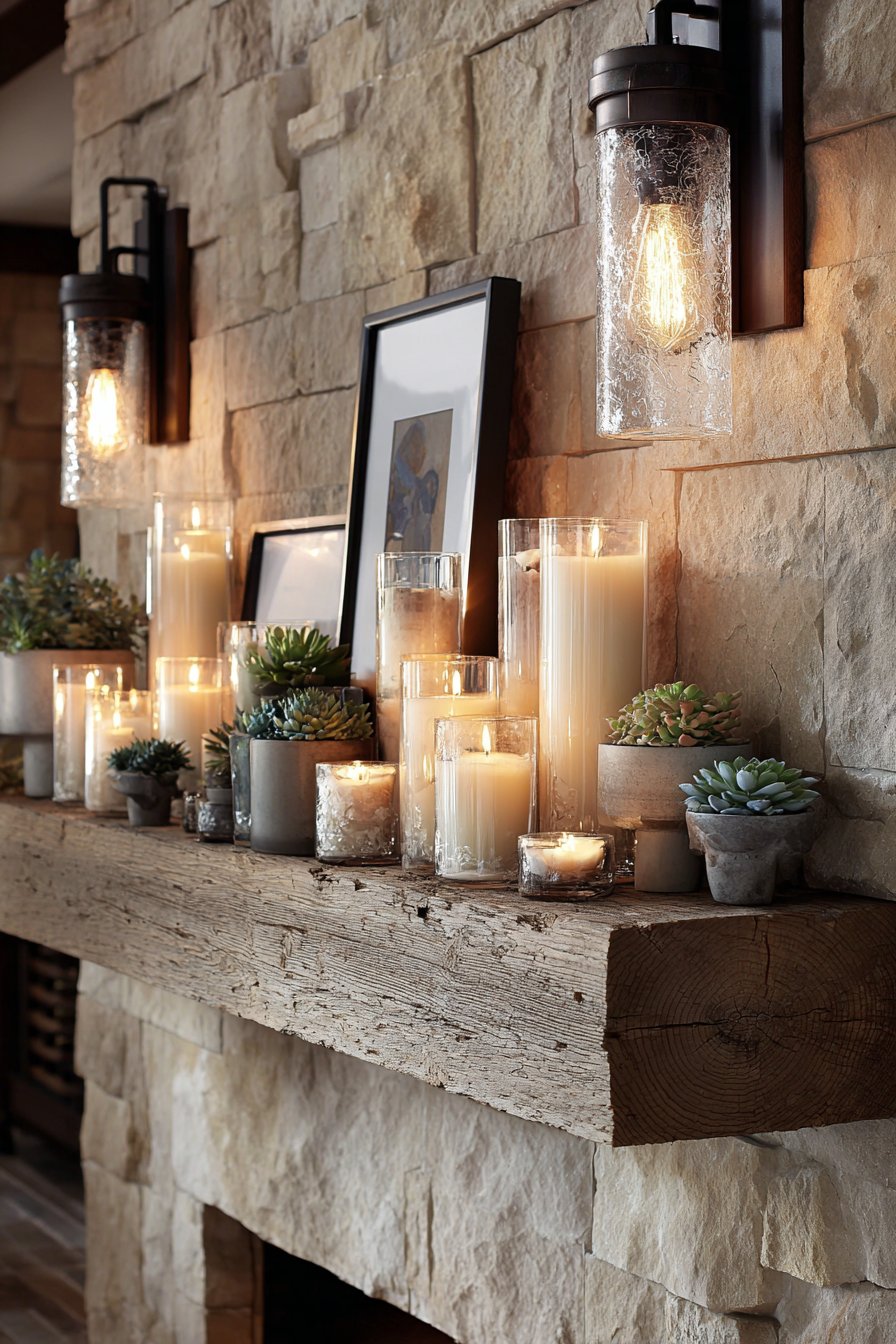
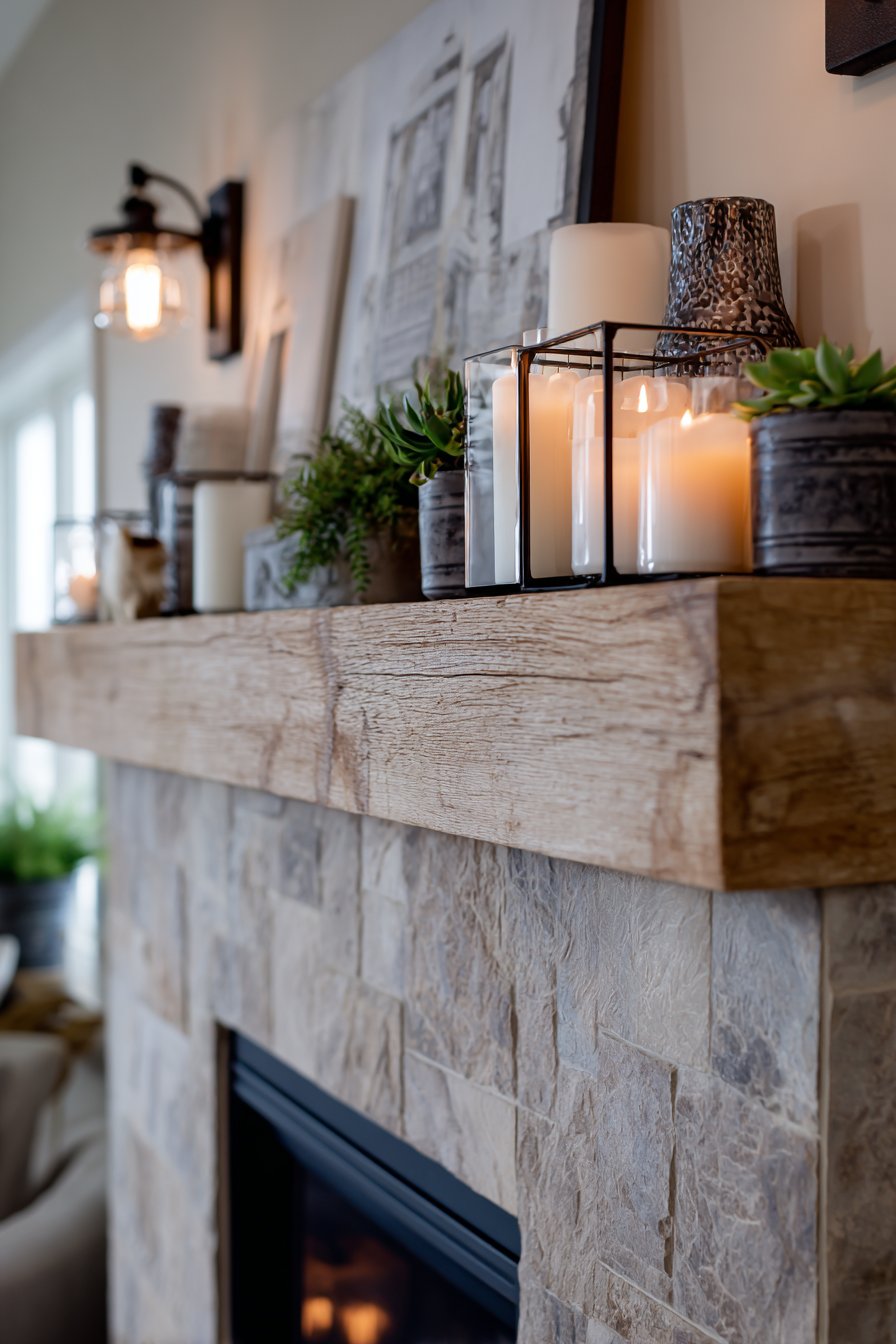
A statement fireplace serves as more than just a heat source—it becomes the emotional and visual anchor of a cozy living room. This design showcases a reclaimed barn wood mantel displaying a carefully curated collection that includes candles in varying heights, small potted succulents, and framed family photos. The mantel styling demonstrates restraint and intention, with each piece serving a purpose while contributing to the overall composition. The stacked stone fireplace surround features natural color variations in warm greys and taupes, creating organic visual interest that reflects the beauty of natural materials.
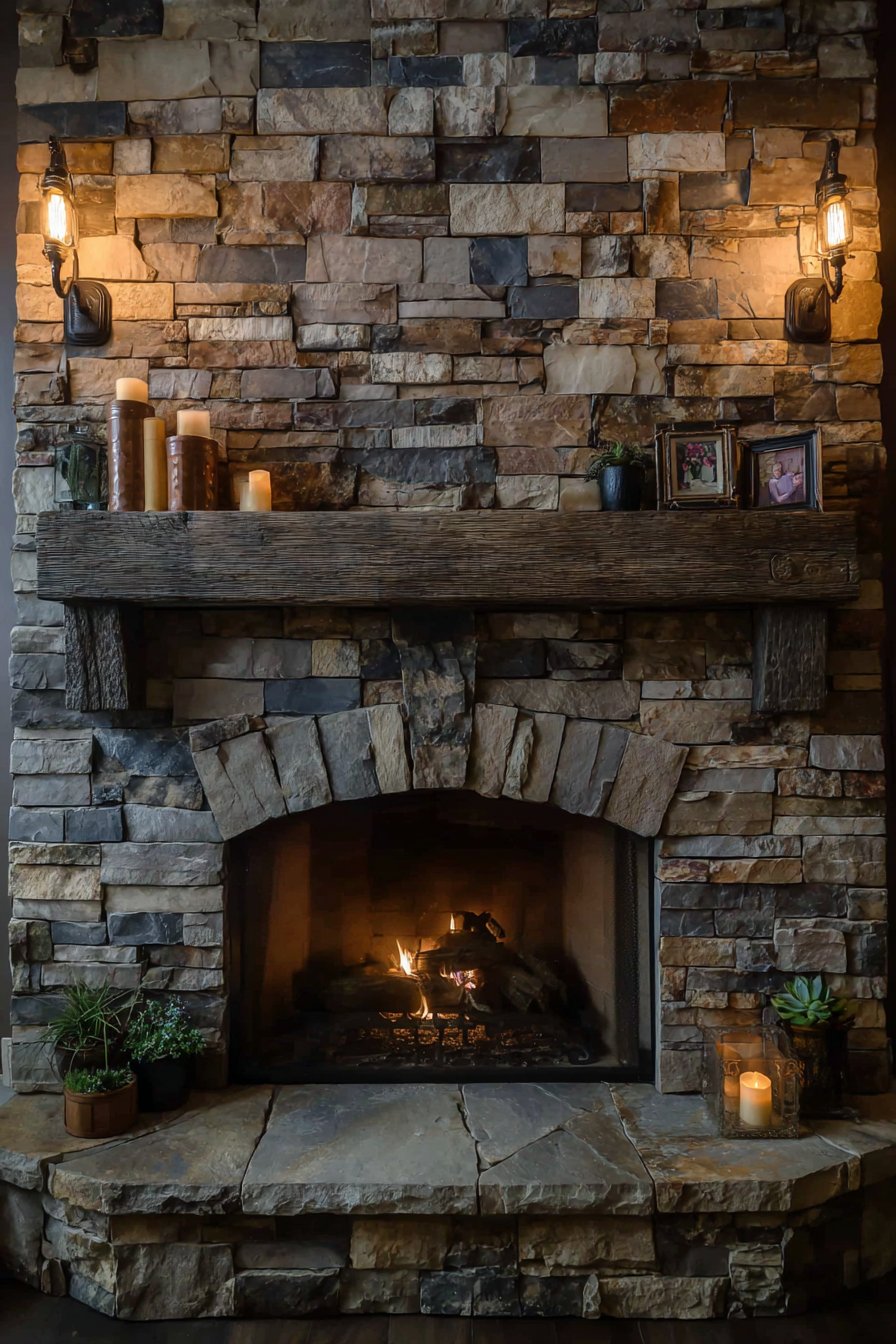
The architectural impact of this fireplace design is enhanced by thoughtful lighting choices. Two matching wall sconces with Edison bulbs flank the mantel, providing warm ambient light that complements the flickering firelight below. This layered lighting approach ensures the fireplace remains a focal point even when not in use, while creating that essential cozy glow during evening hours. The warm tones of the Edison bulbs echo the color temperature of firelight, creating visual harmony that feels natural and inviting.
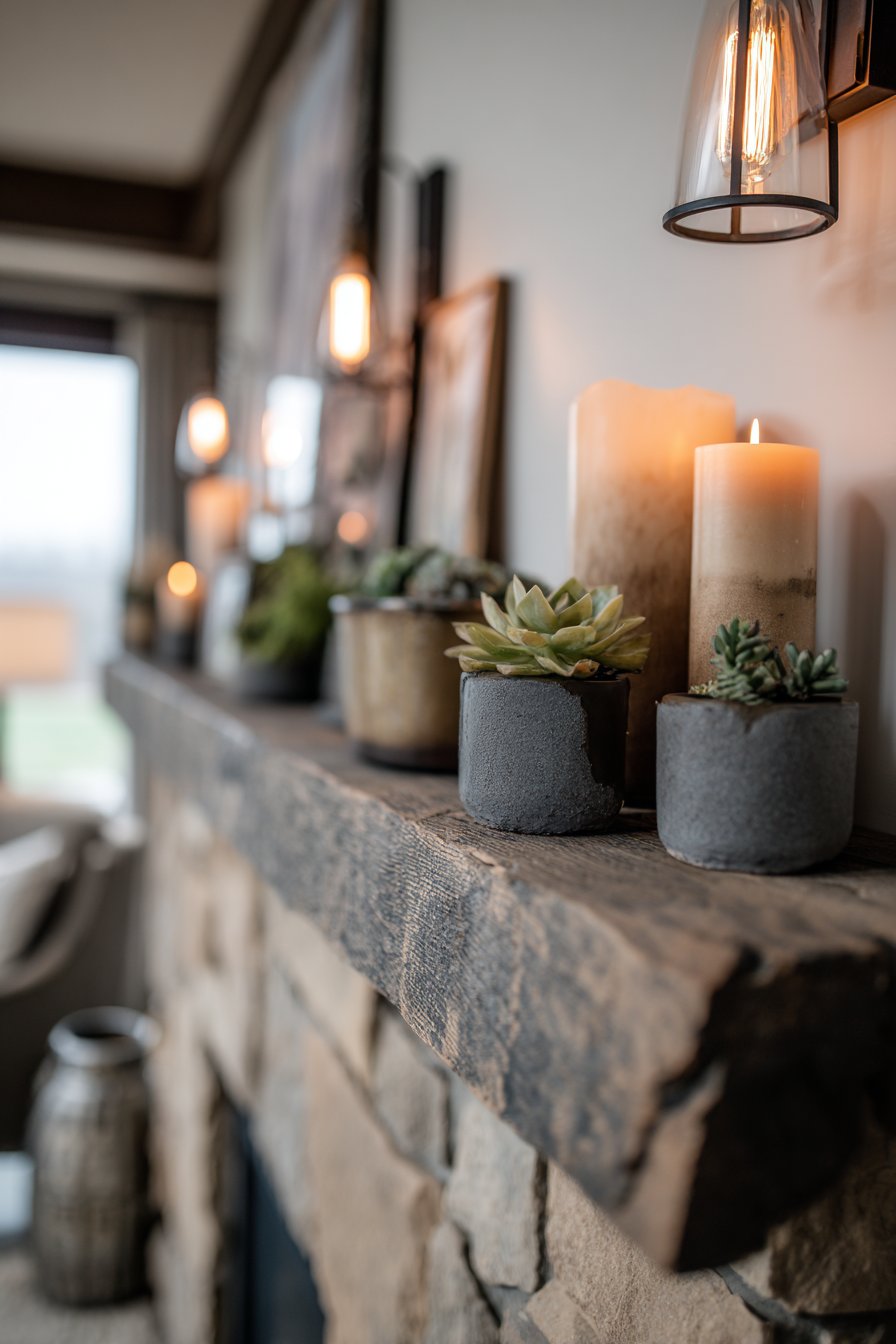
The real magic of this fireplace design lies in its ability to create atmosphere. The combination of natural stone texture, reclaimed wood character, candlelight, and firelight produces a multi-sensory experience that engages sight, warmth, and even sound as logs crackle. This is a space designed for gathering, for conversations that last long into the evening, for creating memories around a timeless architectural element that has brought people together for centuries.
Key Design Tips:
- Keep mantel styling to odd-numbered groupings for visual balance (3, 5, or 7 items)
- Mix heights and textures in your mantel display to create visual rhythm
- Install dimmer switches on sconces for adjustable ambient lighting
- Choose stone with natural color variation rather than uniform surfaces for added depth
- Position seating to face or angle toward the fireplace to encourage gathering and conversation
4. Gallery Wall Storytelling
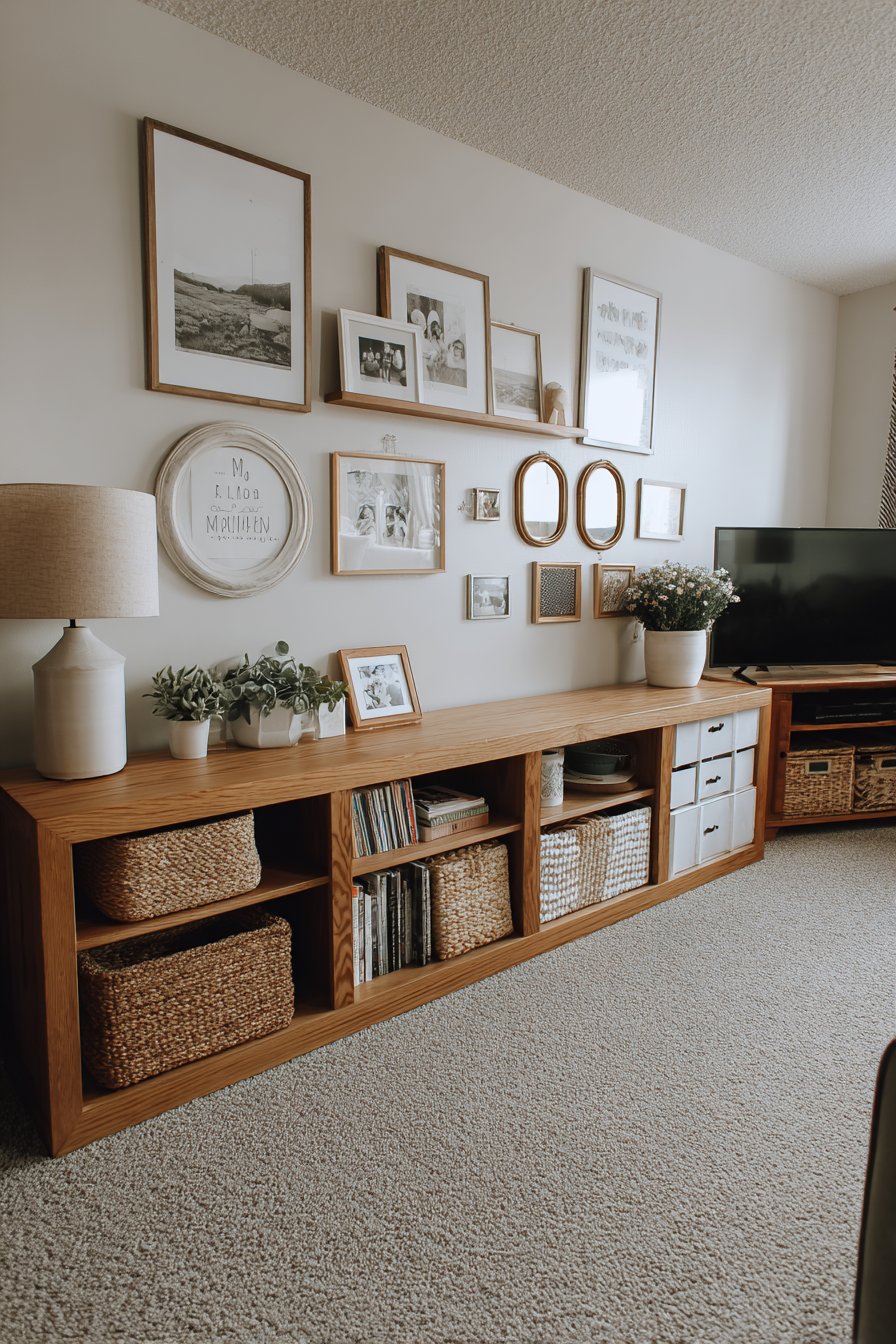
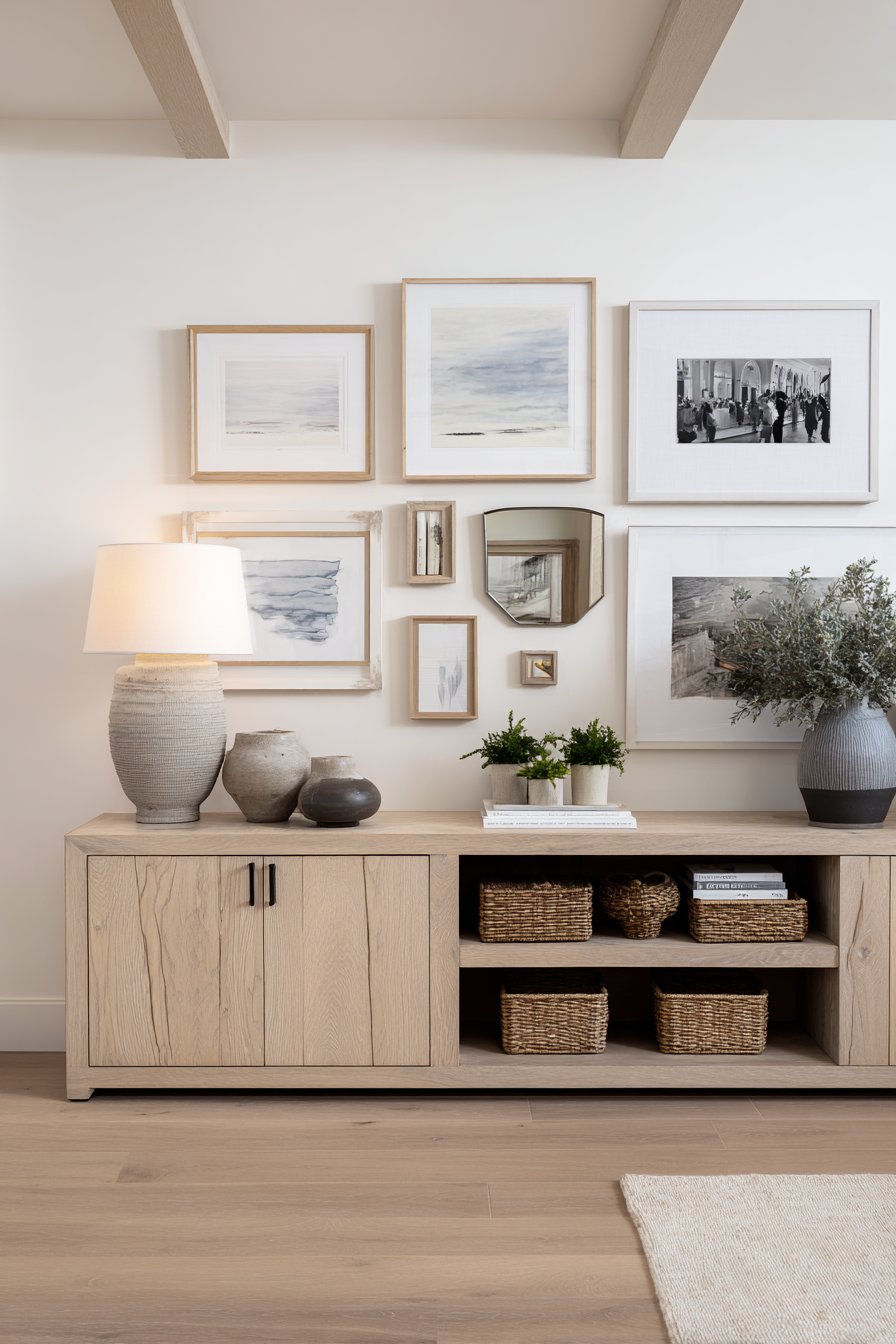
A thoughtfully composed gallery wall transforms a blank space above a media console into a personal narrative that makes your living room uniquely yours. This design features a mix of framed art prints, black and white family photographs, and small decorative mirrors in varied frame styles, creating a collected-over-time aesthetic that feels authentic and meaningful. The key to success lies in the composition—maintaining visual balance while embracing variety in frame sizes, shapes, and finishes creates dynamic interest without chaos.
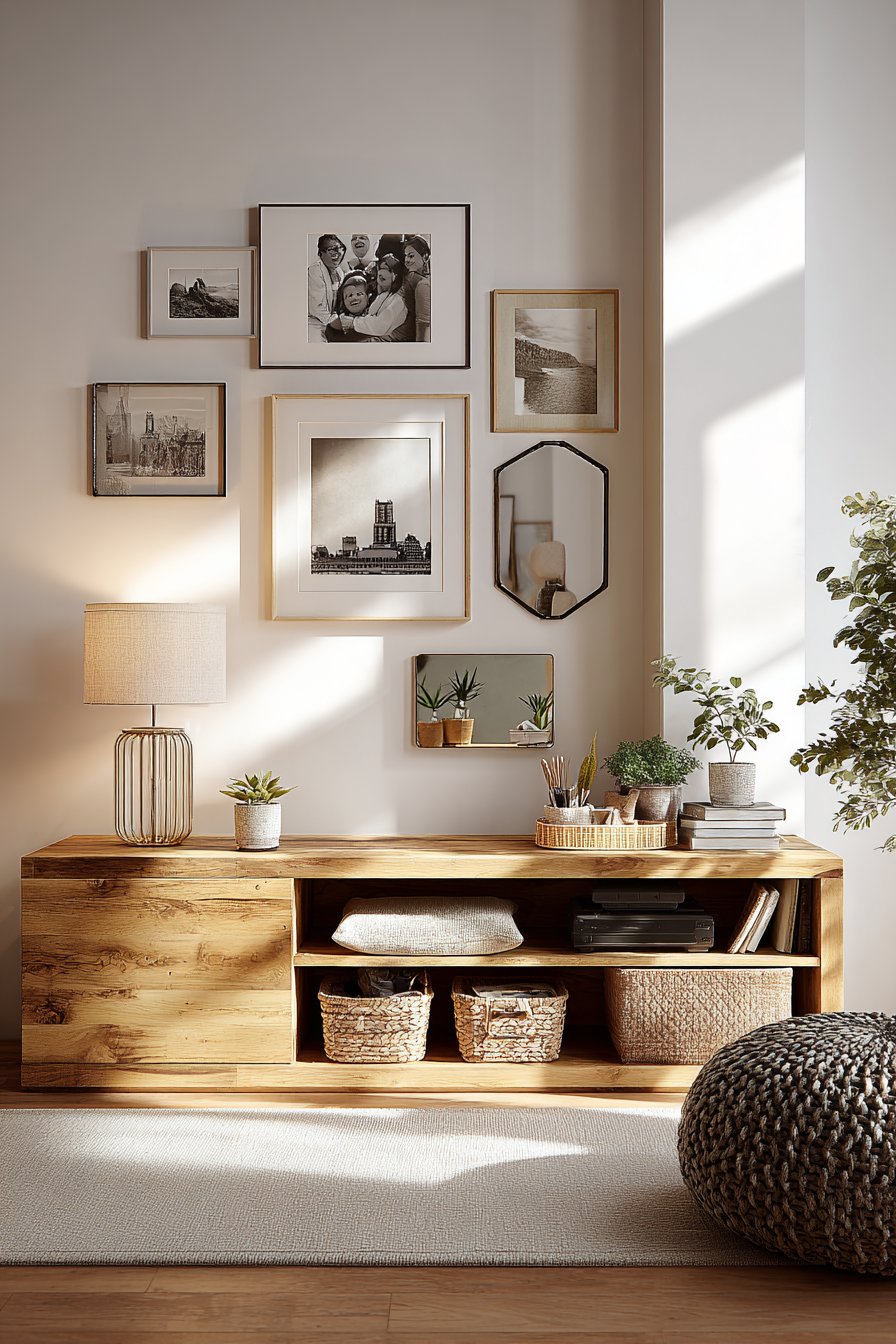
The foundation for this gallery wall is a low-profile media console in natural oak with visible wood grain, providing both practical storage and a beautiful horizontal line that grounds the wall arrangement above. The console’s styling demonstrates how to balance function with aesthetics—a table lamp provides task lighting while woven storage baskets conceal clutter and small potted plants add life and organic texture. This layered approach to styling creates depth and prevents the console from looking sparse or overly staged.
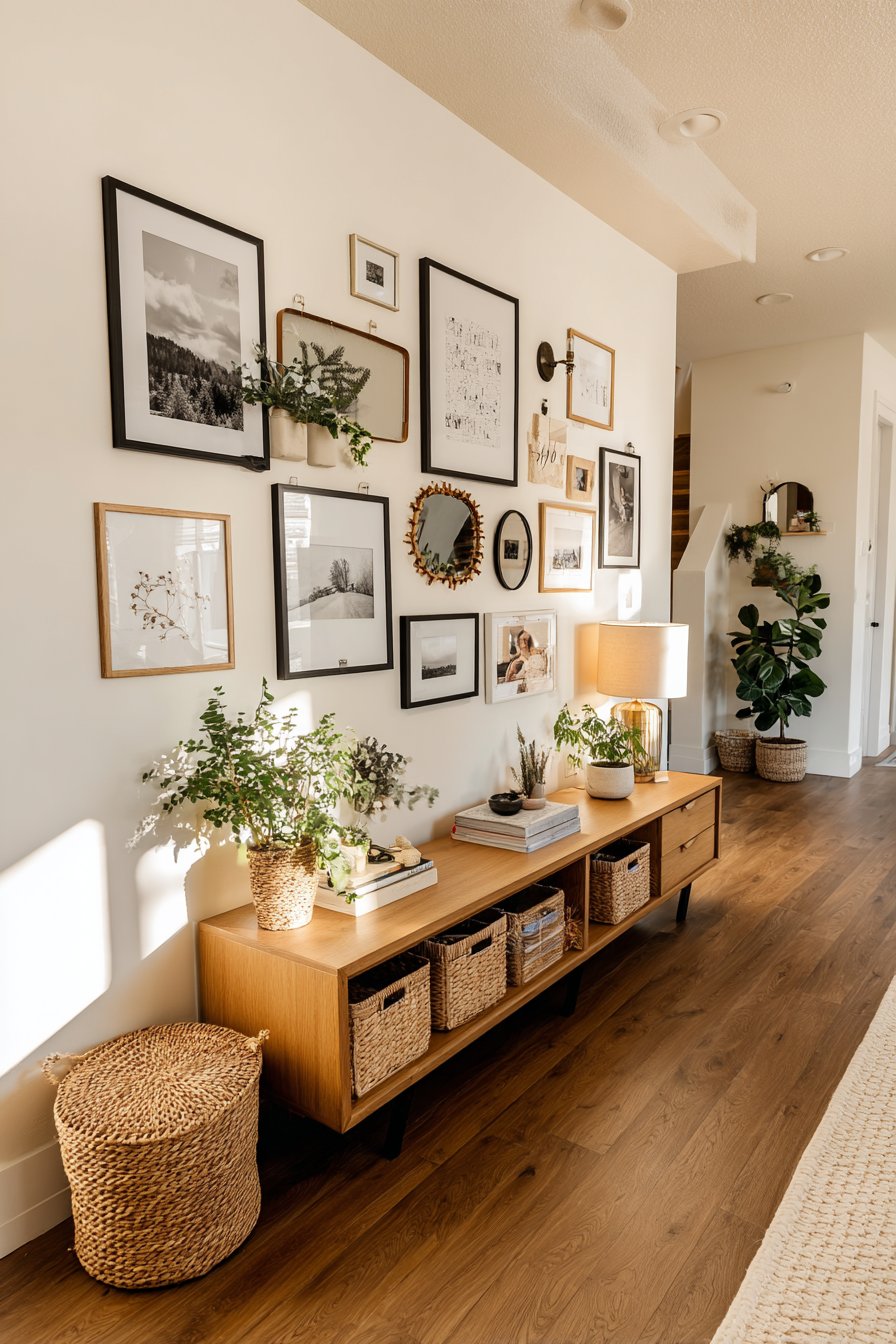
What makes this gallery wall particularly effective is how it interacts with natural lighting throughout the day. The varied frame finishes and mirror surfaces catch and reflect light differently, creating subtle shifts in how the wall appears as daylight moves across the space. The mirrors serve a dual purpose—adding light reflection while creating small moments of surprise within the composition. This is a living installation that grows and evolves, where frames can be swapped and rearranged as your family and interests change.
Key Design Tips:
- Create a paper template of your gallery wall layout on the floor before committing to wall holes
- Maintain consistent spacing between frames (typically 2-3 inches) for a cohesive look
- Include at least one mirror to add depth and light reflection
- Vary frame styles but maintain some common element like color or material for unity
- Position the center of your gallery wall at eye level (approximately 57-60 inches from the floor)
5. Layered Window Elegance
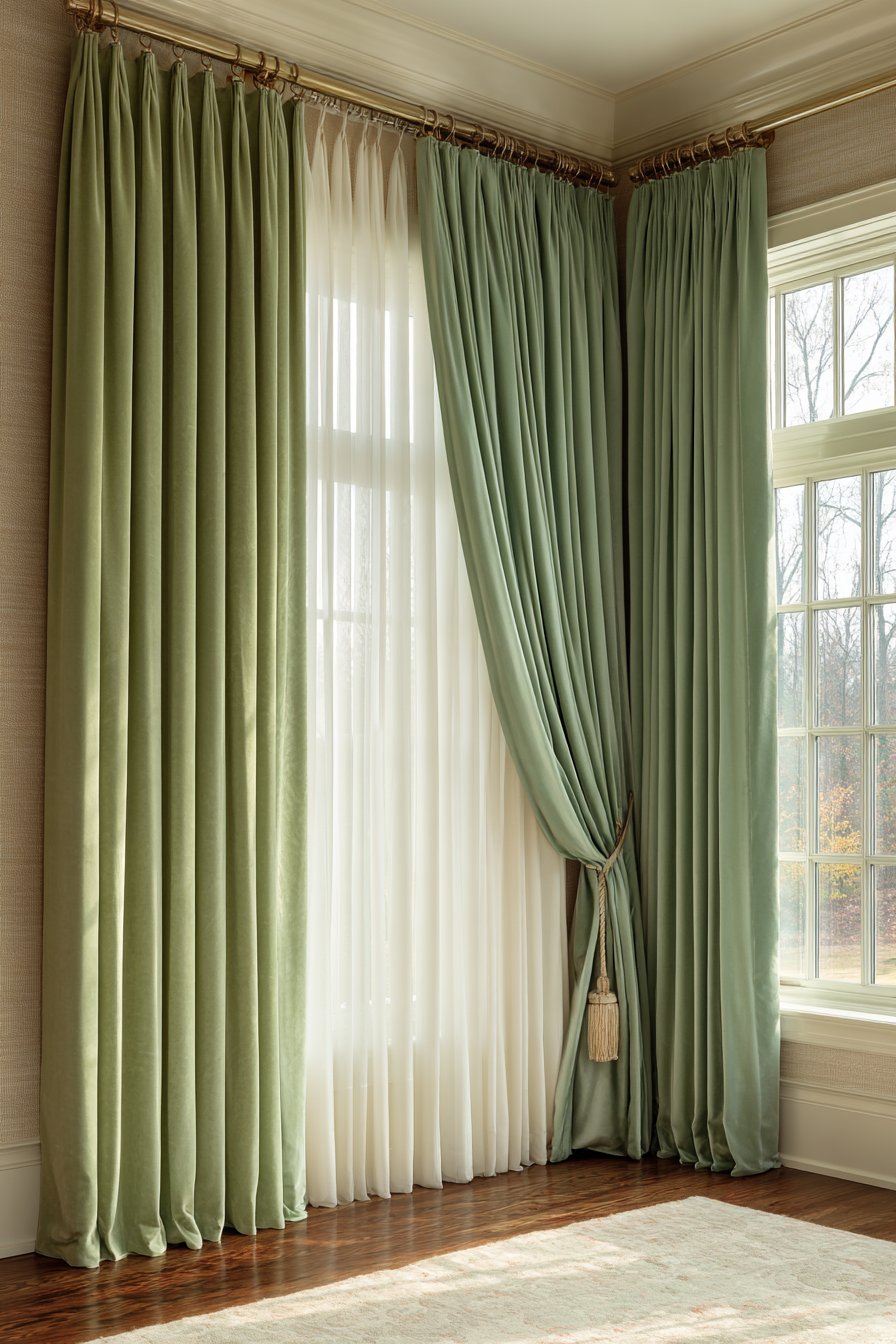
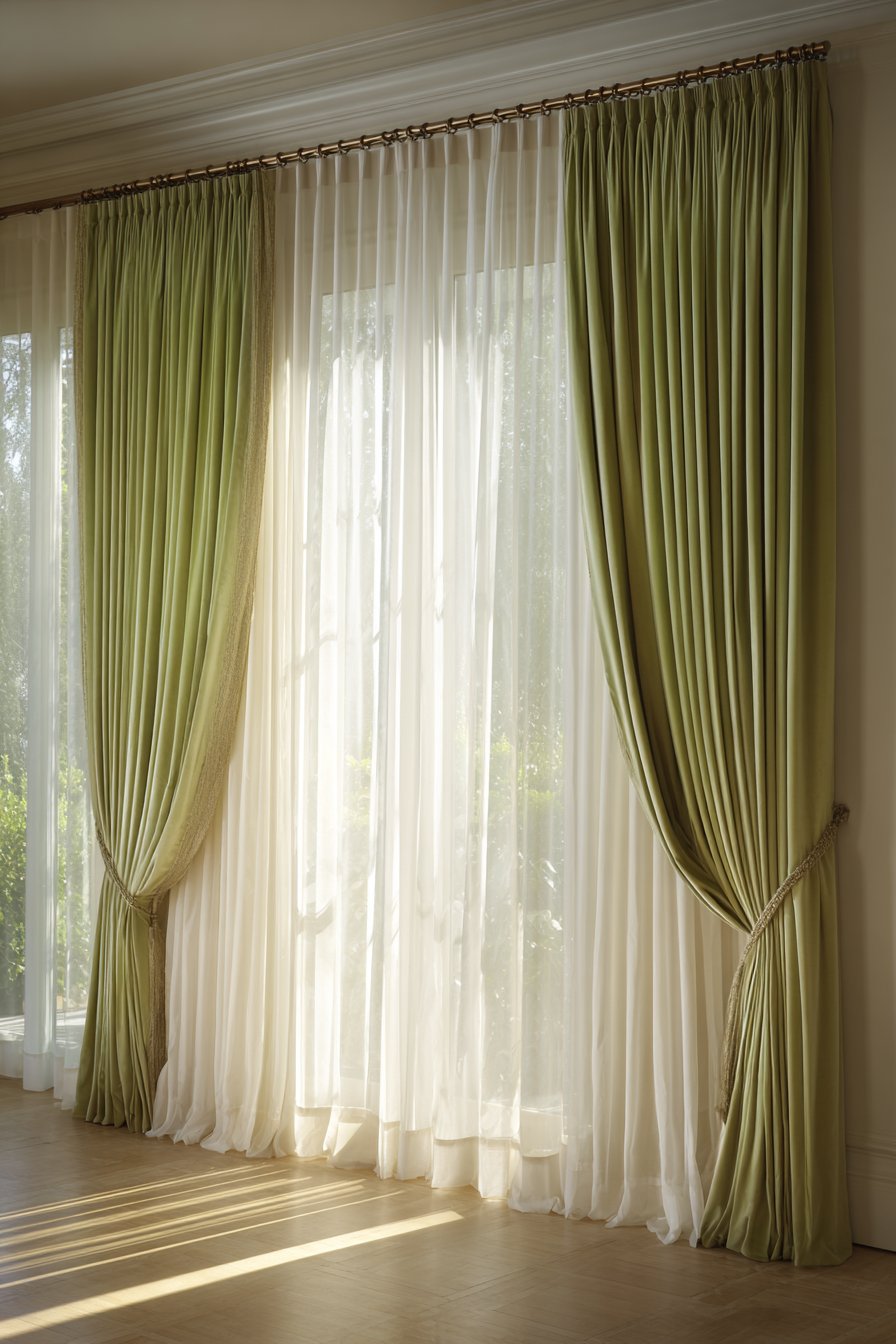
Window treatments have the power to completely transform a room’s atmosphere, and this design demonstrates the sophisticated beauty of layering. Sheer white linen curtains provide the foundation layer, filtering natural light to create a soft, diffused glow that feels ethereal and peaceful. The addition of floor-length velvet drapes in soft sage green introduces color, texture, and light control, while the brushed brass rods with simple finials add a touch of refined elegance. The decision to mount curtains at ceiling height is crucial—it draws the eye upward and creates the illusion of taller windows and more spacious rooms.
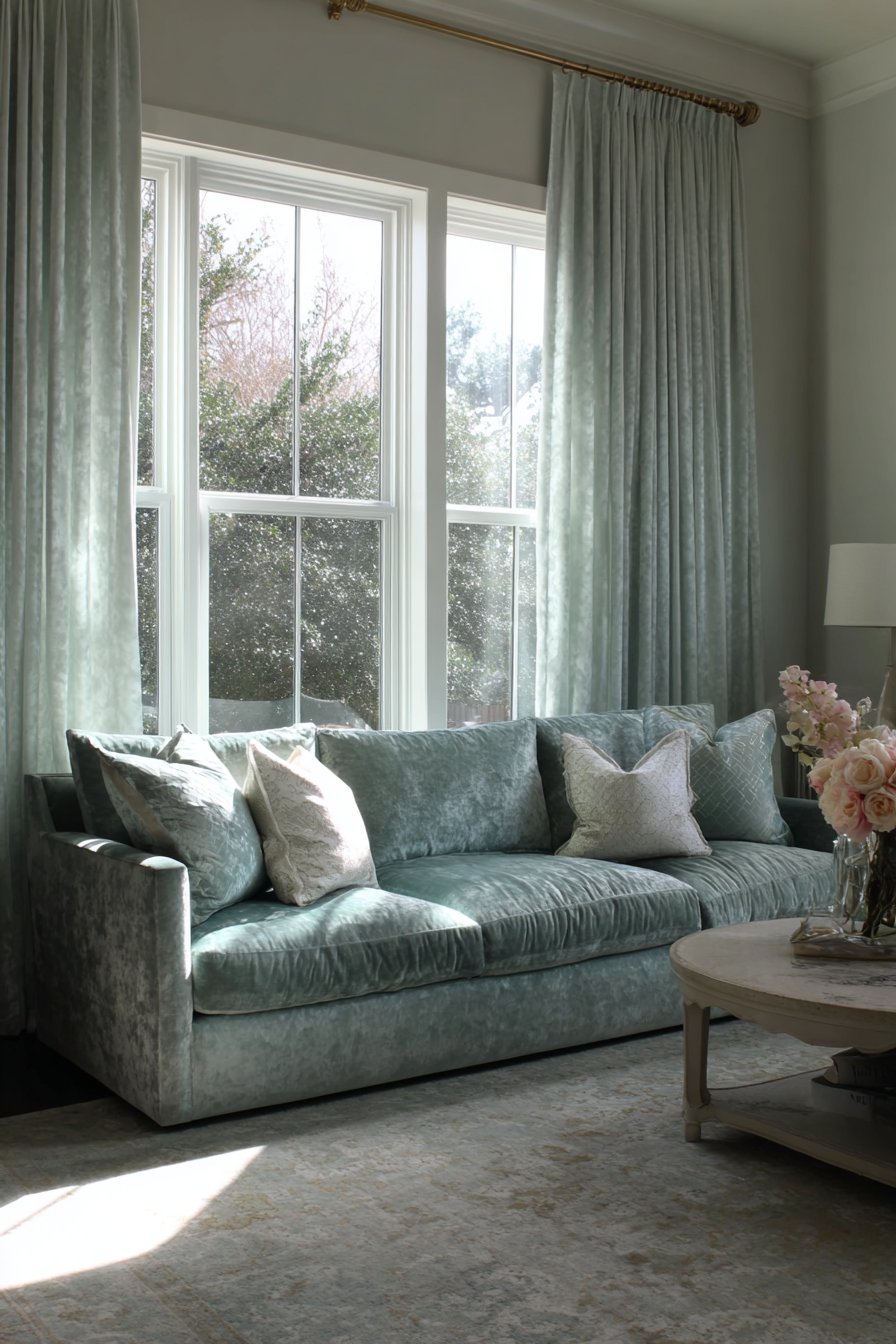
The fabric choices in this layered window treatment tell a story of thoughtful design. The crisp white sheers maintain privacy during the day while preserving the connection to natural light and outdoor views. When afternoon light filters through, the sheers create a luminous quality that makes the entire room feel airy and uplifted. The velvet drapes provide substantial weight and drape beautifully, their soft sage green hue introducing a nature-inspired color that complements rather than competes with other room elements.
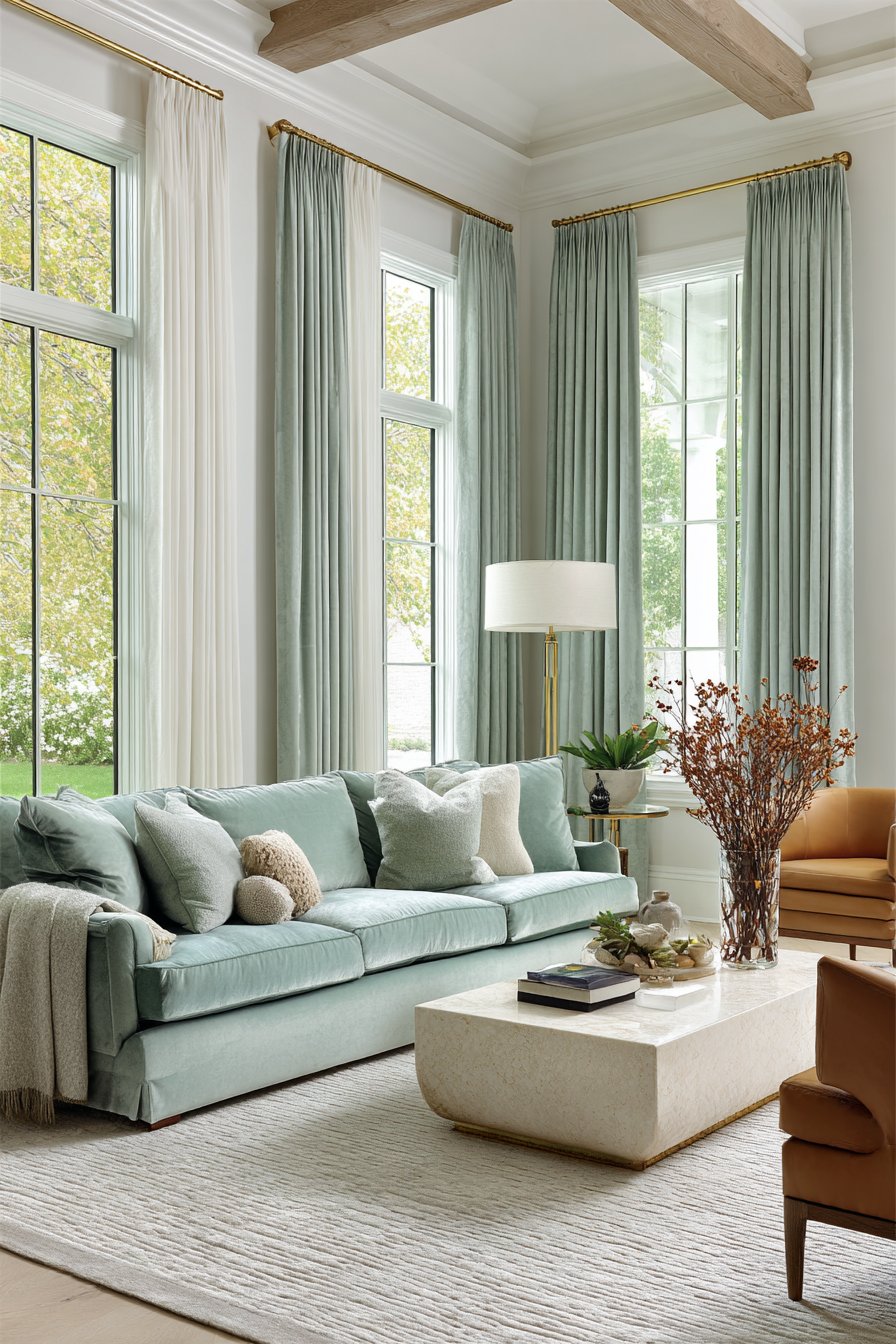
The true brilliance of this approach becomes evident throughout the day as changing light conditions interact with the layered fabrics. Morning light creates a bright, energizing atmosphere with sheers pulled and drapes open. Afternoon sun can be softened by drawing the drapes partially closed, filtering light through velvet for a warmer glow. Evening finds the drapes drawn completely, creating a cocoon-like sense of enclosure and comfort that’s essential to cozy living spaces.
Key Design Tips:
- Install curtain rods 4-6 inches above the window frame and extend 4-6 inches beyond on each side
- Choose curtain panels that puddle slightly on the floor (1-2 inches) for a luxurious look
- Layer sheers underneath heavier drapes for maximum light control flexibility
- Select curtain hardware in warm metals like brass or bronze to add warmth to the space
- Ensure drapes are fullness ratio of 2-2.5 times the window width for proper gathering
6. Natural Fiber Foundation
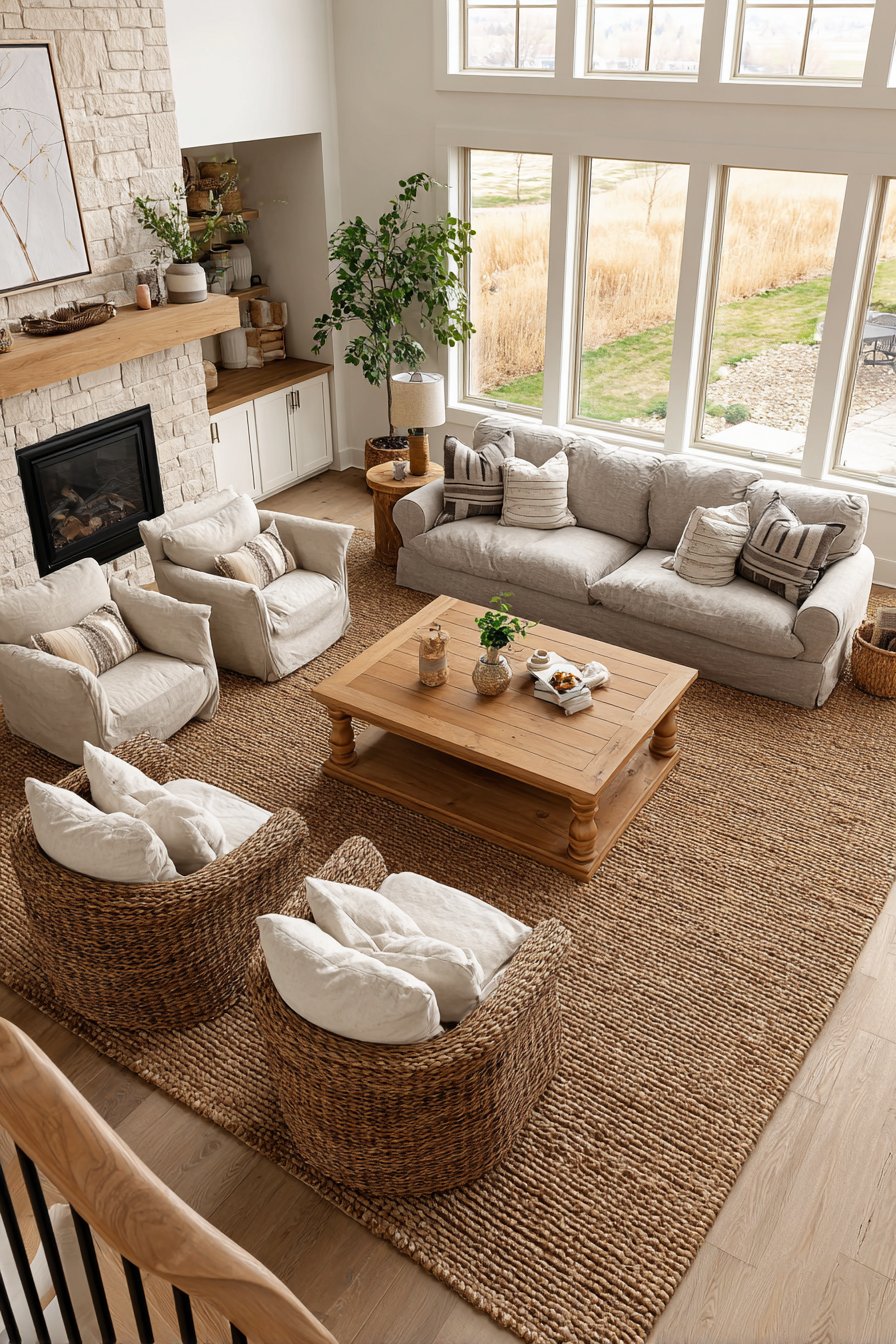
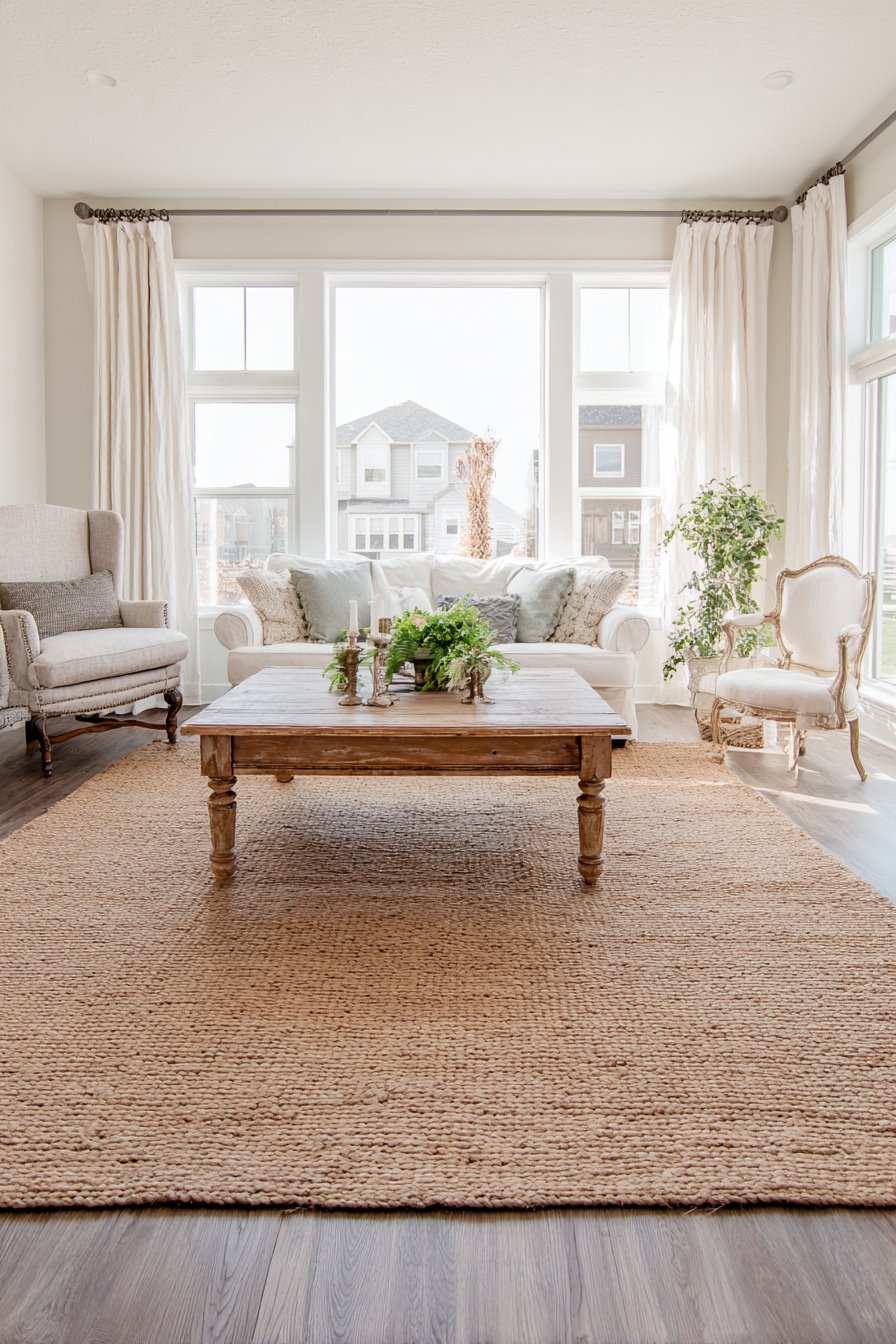
The foundation of a cozy living room often literally begins at the floor, and this design showcases the transformative power of a handwoven jute area rug with natural color variations and visible texture. The rug serves as more than just a decorative element—it defines the seating area, provides acoustic softening, and introduces an essential layer of organic texture that grounds the entire space. The natural variations in the jute fiber create subtle visual interest that changes with light and viewing angle, offering depth without pattern competition.
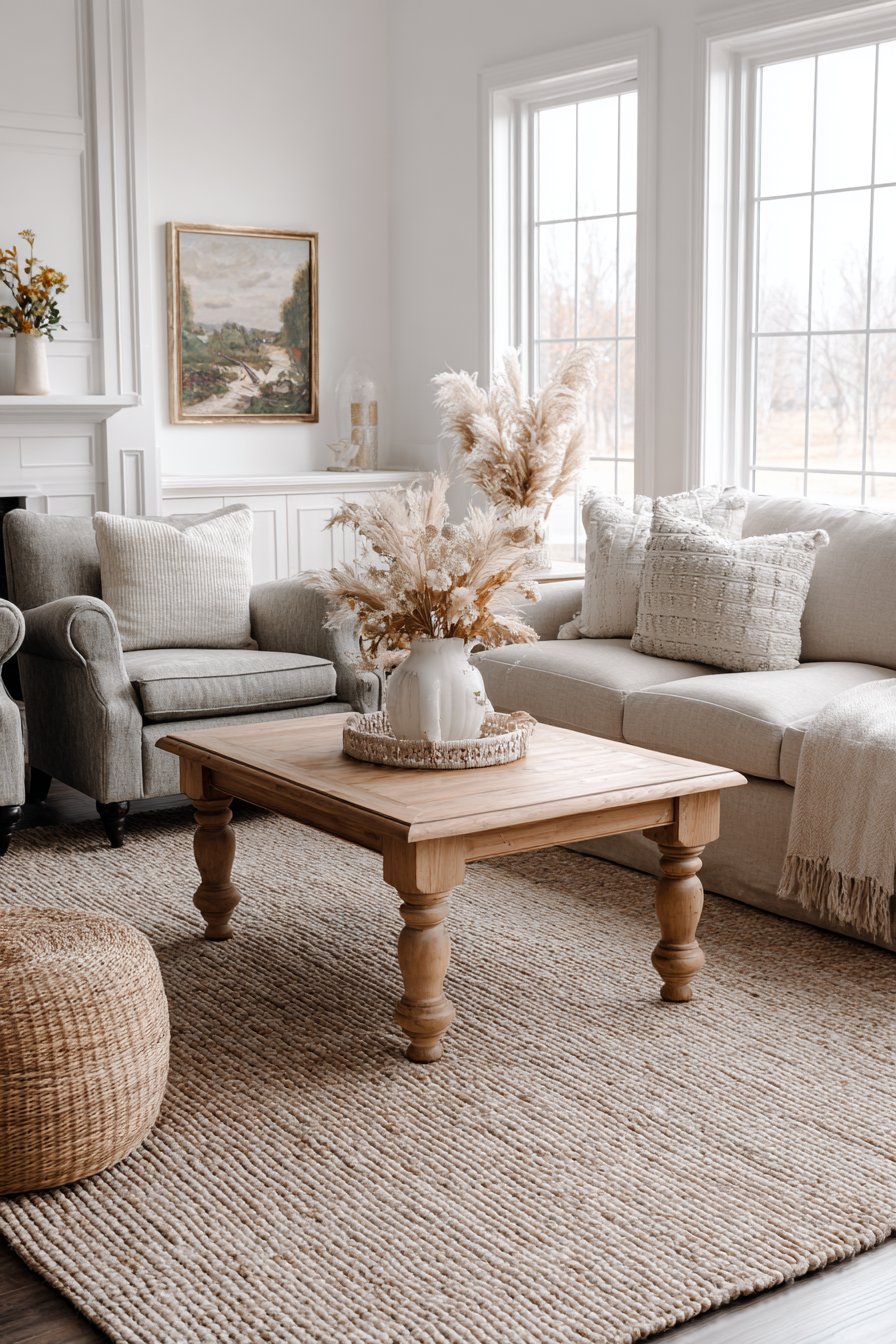
Building upon this natural foundation, the furniture arrangement demonstrates how varied pieces can create a cohesive, collected look. A wooden coffee table with turned legs occupies the rug’s center, surrounded by a linen sofa and two mismatched vintage armchairs reupholstered in complementary neutral fabrics. This mixing of furniture styles prevents the space from feeling too matched or showroom-perfect, instead creating that lived-in, accumulated-over-time quality that defines truly cozy interiors. Each piece brings its own character while contributing to the overall neutral, textured aesthetic.
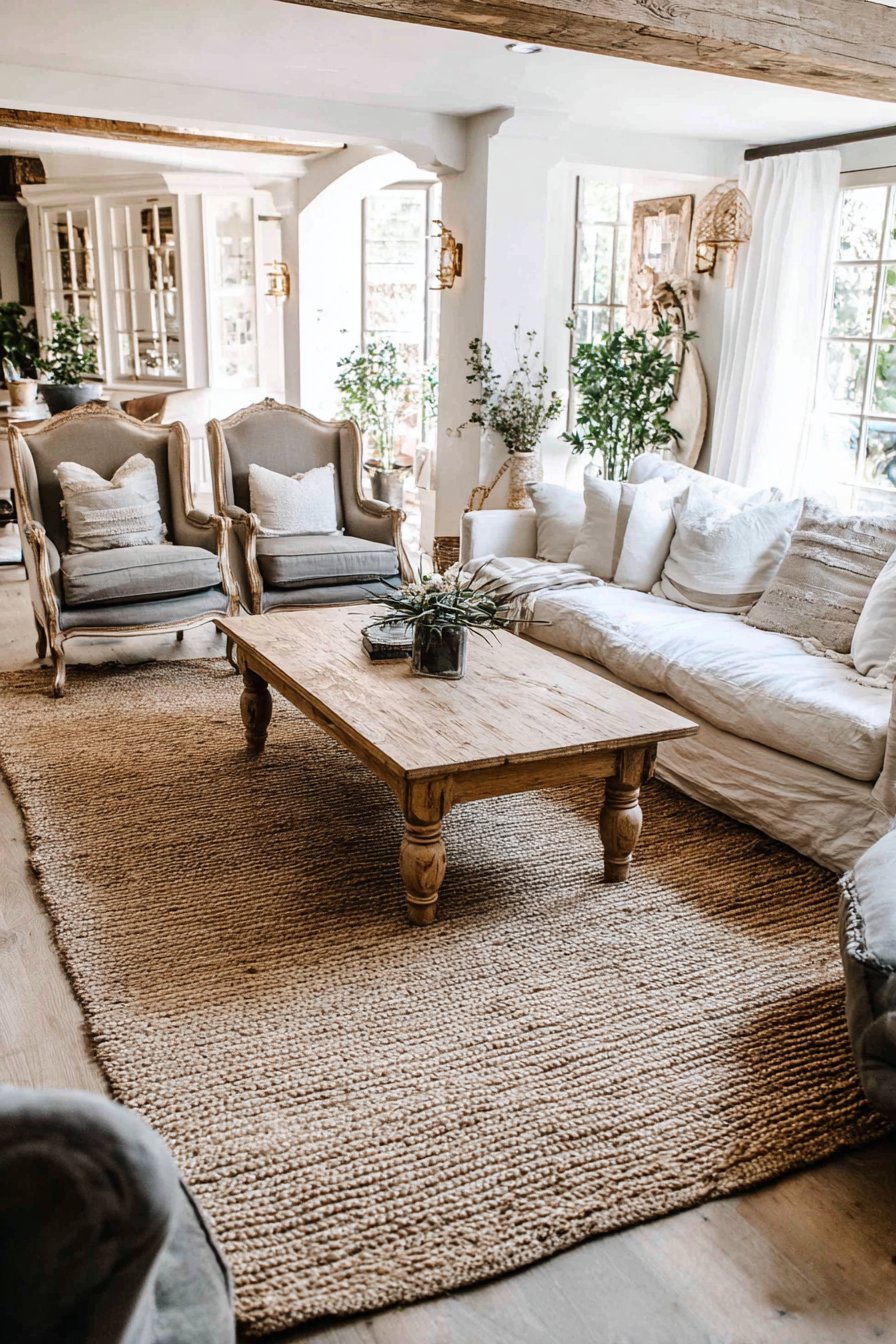
The layering of textures in this space creates exceptional visual warmth without relying on color for impact. The rough, tactile quality of jute contrasts beautifully with smooth linen upholstery, while the turned wood details of the coffee table add another textural dimension. This approach proves that neutral doesn’t mean boring—when you layer varied textures in similar color tones, you create sophisticated depth that remains calming and cohesive. The space invites touch as much as sight, engaging multiple senses in the experience of comfort.
Key Design Tips:
- Choose natural fiber rugs in high-traffic areas as they’re durable and hide dirt well
- Ensure your area rug extends at least 12-18 inches beyond furniture on all sides
- Layer a smaller patterned rug over a larger natural fiber rug for added visual interest
- Vacuum natural fiber rugs regularly but avoid excessive moisture which can cause mildew
- Mix furniture styles but maintain a consistent color palette for cohesion
7. Built-In Window Seat Haven
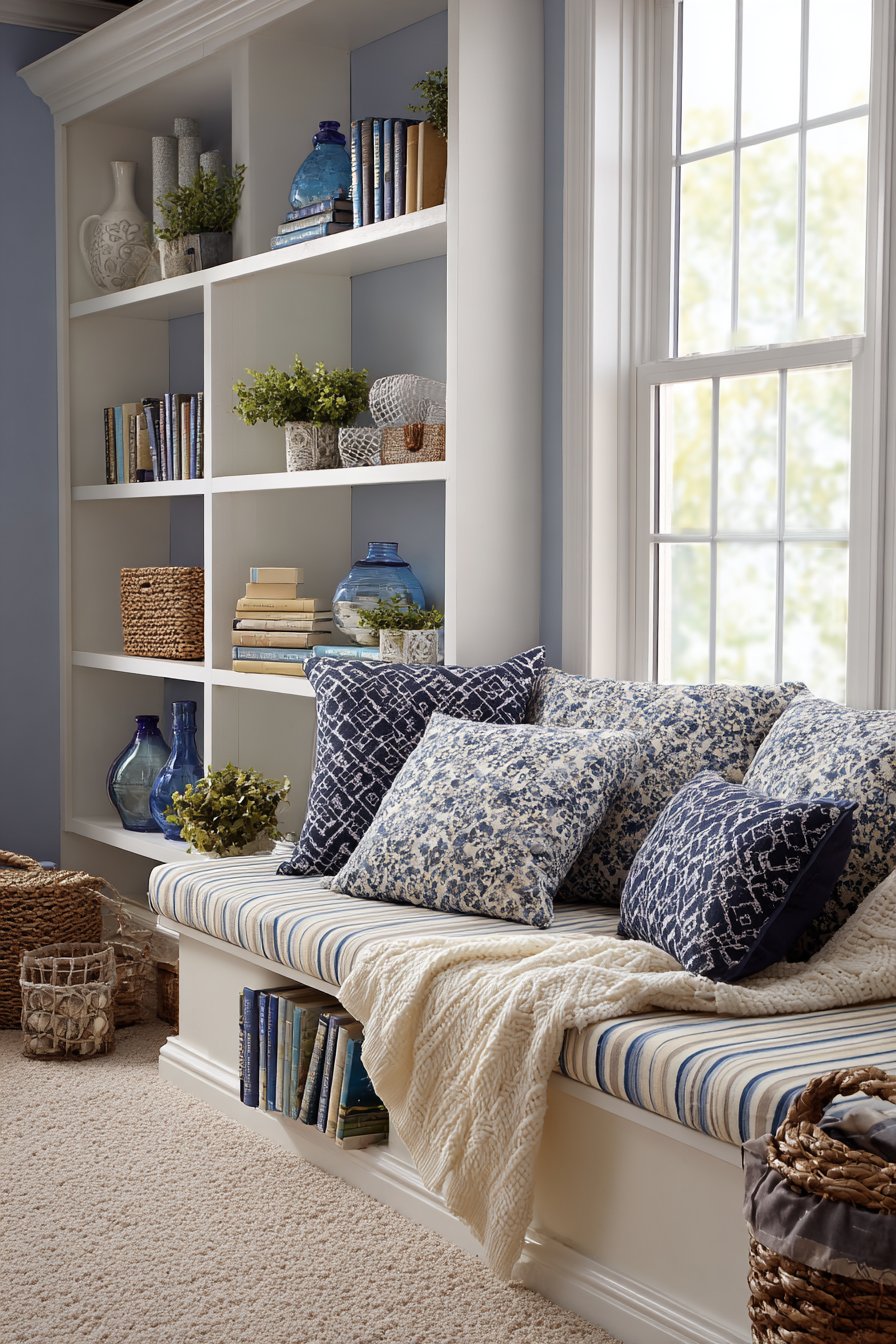
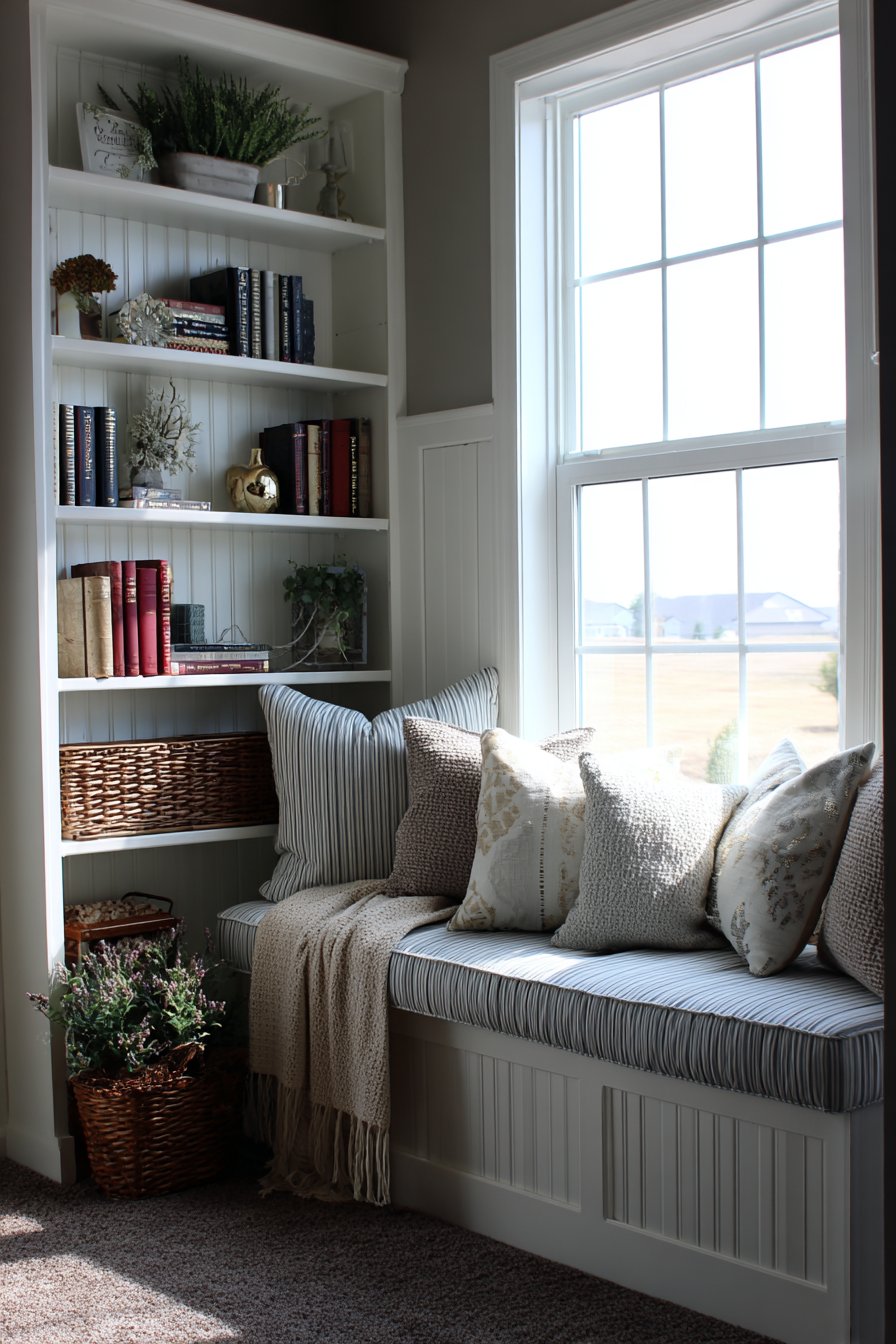
The built-in window seat represents the ultimate in cozy living room design—a dedicated space for relaxation, reading, or simply gazing out the window. This design features a cushioned bench upholstered in classic striped ticking fabric, providing both comfort and timeless style. The flanking built-in shelving creates a frame for the window seat while offering extensive storage and display opportunities. The shelves hold a mix of color-organized books, decorative objects, woven baskets for concealing clutter, and small indoor plants that add life and air-purifying benefits.
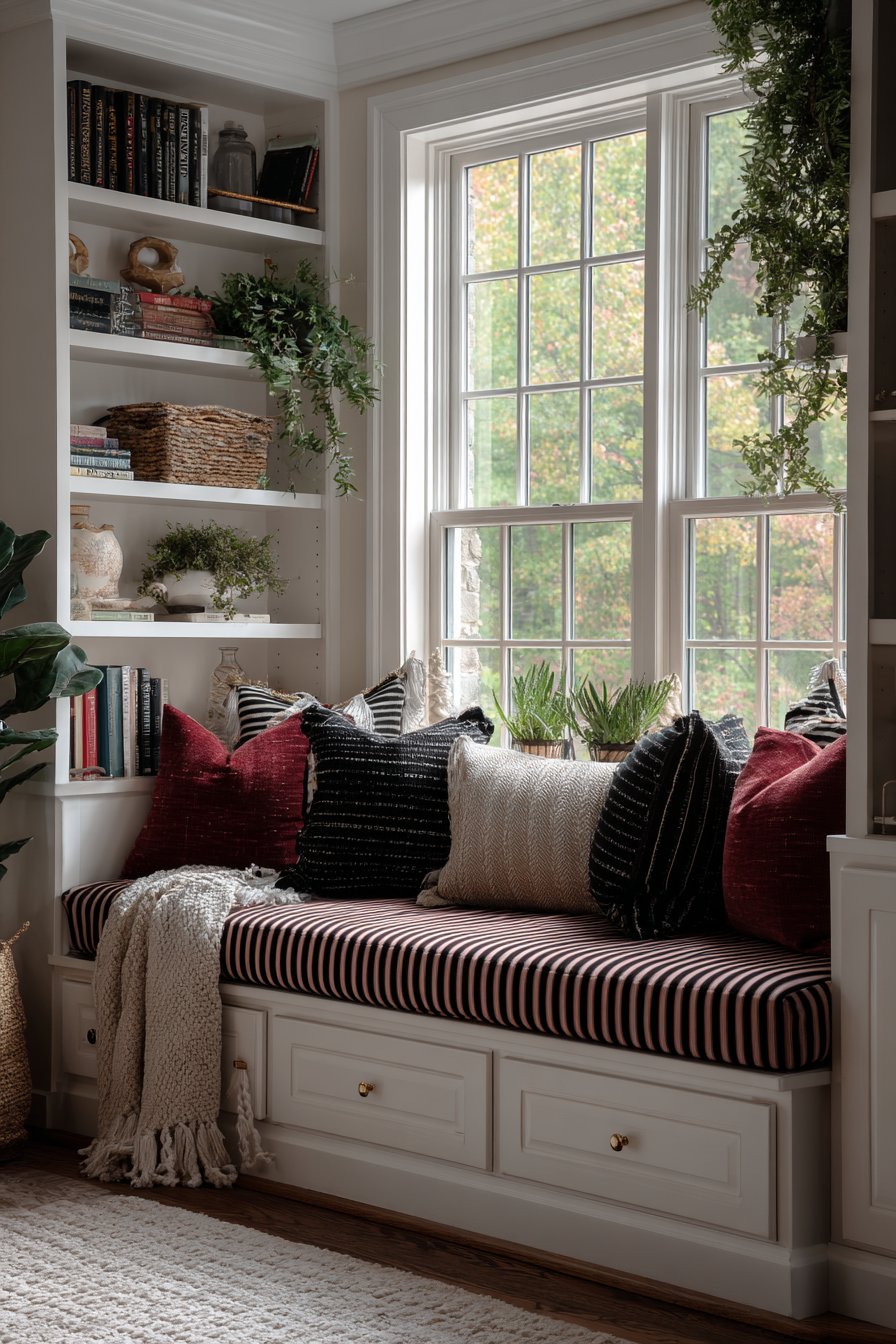
The genius of this design lies in its marriage of form and function. The window seat cushion transforms an often-underutilized architectural feature into premium seating, while the built-in shelving maximizes vertical storage without consuming floor space. The styling of the shelves demonstrates restraint and intention—books organized by color create visual calm, while varied objects and baskets prevent monotony and provide practical storage for items you want accessible but not always visible. The small plants interspersed throughout add organic shapes and color that soften the linear nature of the shelving.
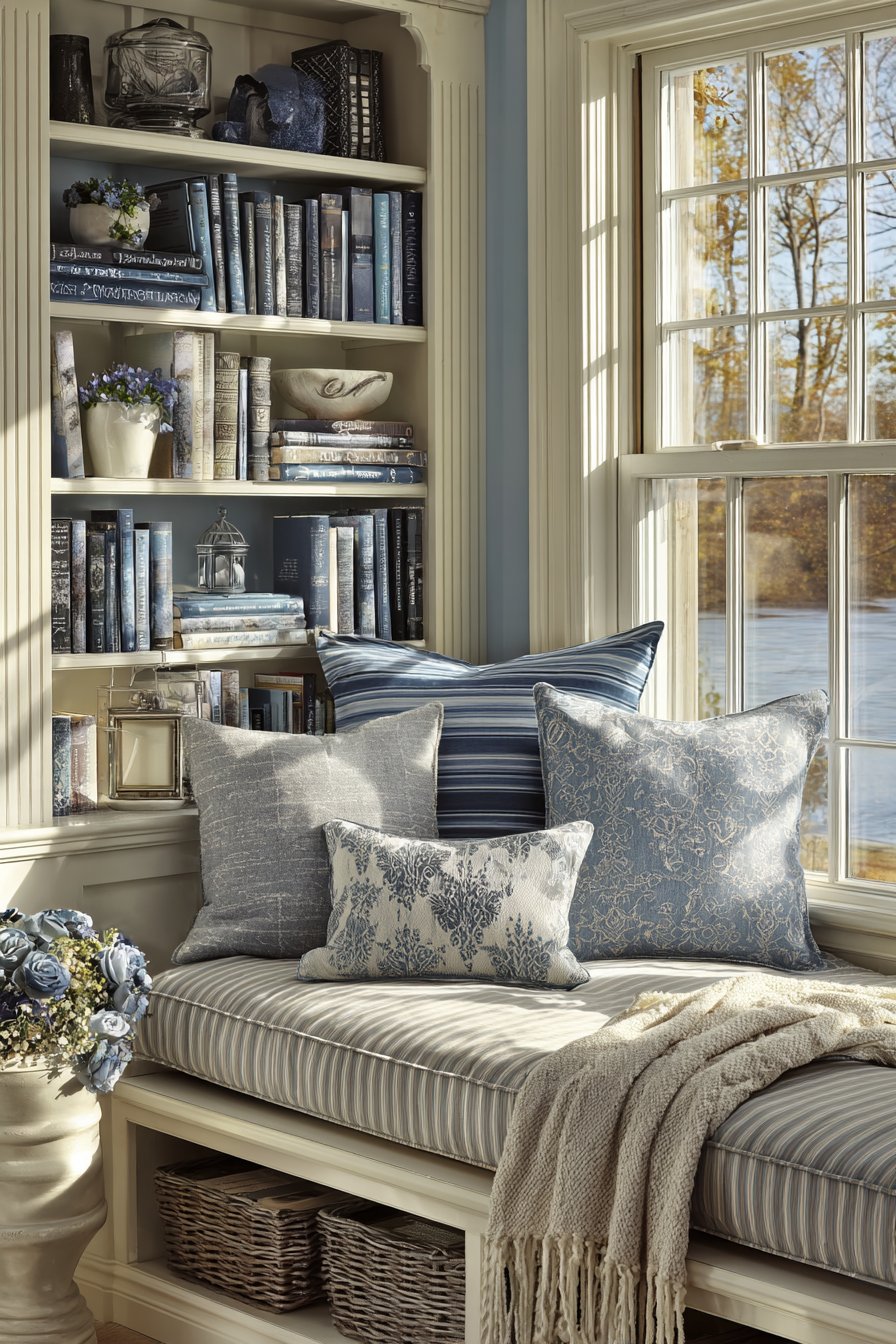
Natural light flooding through the window makes this reading nook particularly special during daytime hours. The multiple throw pillows in coordinating patterns and soft throw blanket transform the window seat into an irresistible spot for settling in with a book or simply enjoying a quiet moment. This is a space that children and adults alike will claim as their favorite spot in the home, a testament to good design’s ability to create environments that support both solitude and comfort.
Key Design Tips:
- Ensure window seat depth is at least 18-24 inches for comfortable seating
- Add cushion thickness of 4-6 inches for optimal comfort without overwhelming the space
- Install under-seat storage with lift-up cushions to maximize functionality
- Use open shelving for frequently accessed items and closed storage for visual calm
- Include electrical outlets nearby for reading lamps or device charging
8. Layered Lighting Mastery
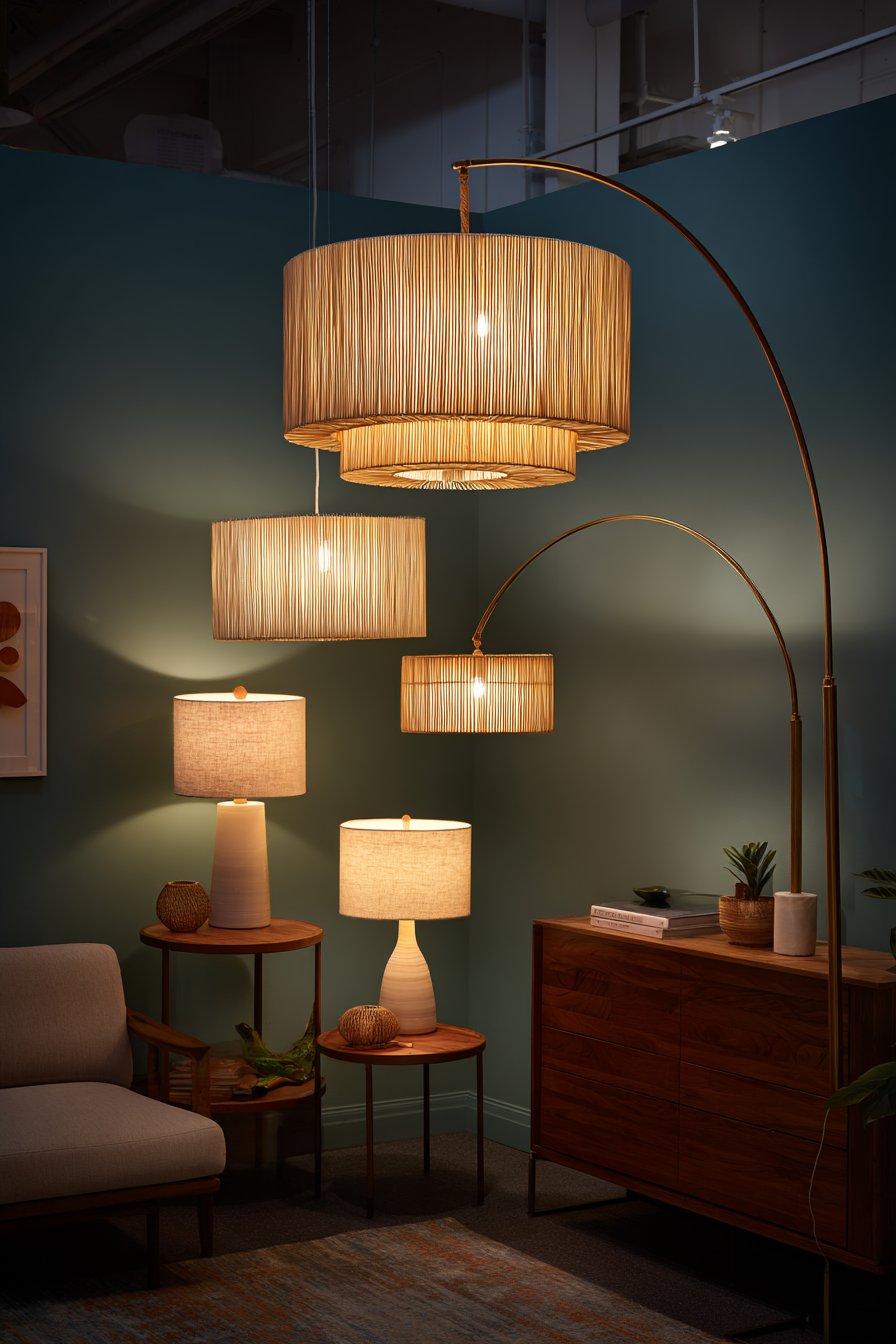
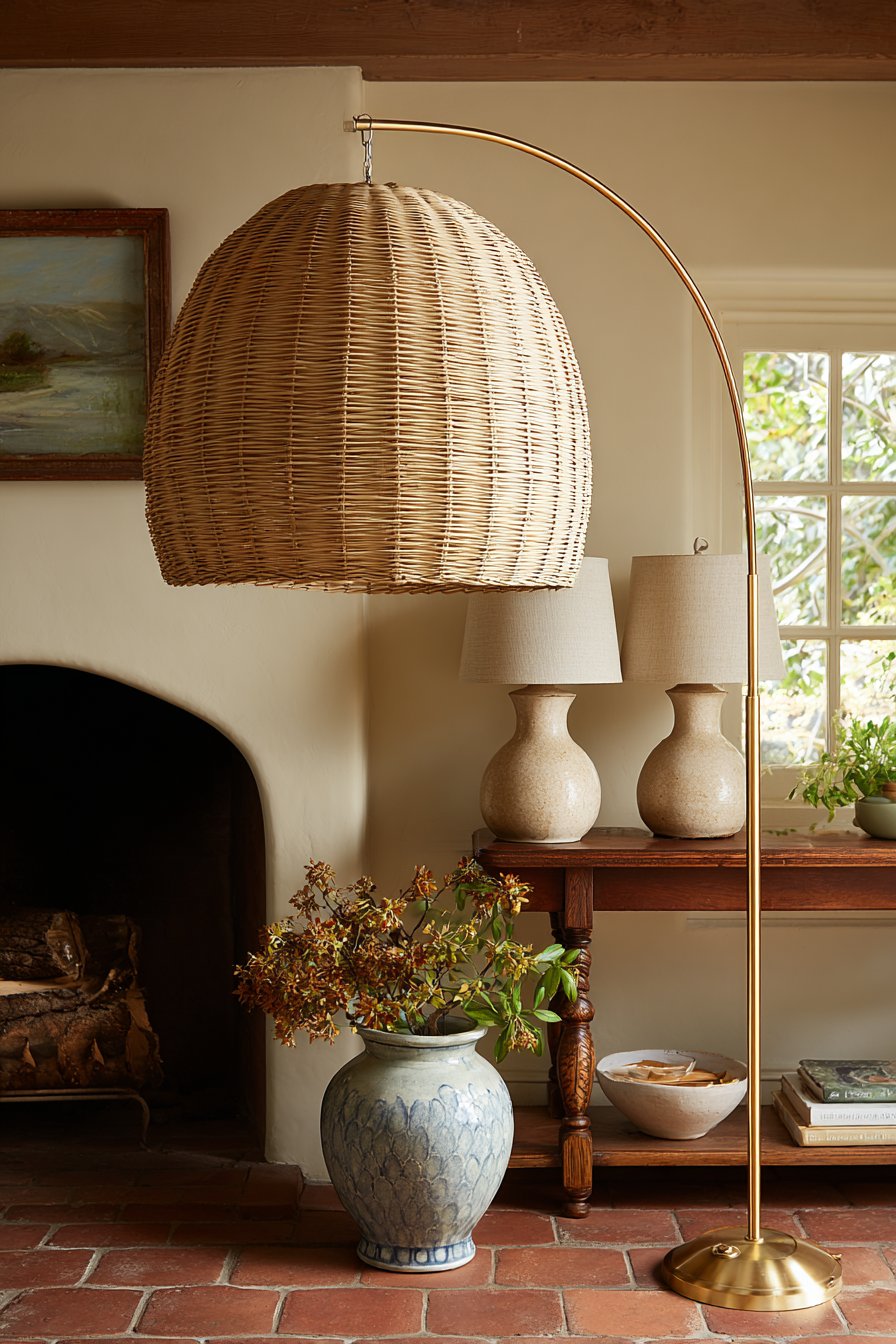
Exceptional living room lighting goes far beyond a single overhead fixture, and this design demonstrates the transformative power of layered illumination. A central pendant light with a natural rattan shade provides ambient lighting while introducing organic texture and visual interest to the ceiling plane. Two matching table lamps with ceramic bases and neutral linen shades on side tables offer task lighting for reading and close work, while a modern arc floor lamp with brushed brass finish arches gracefully over a reading chair, providing focused illumination exactly where needed.
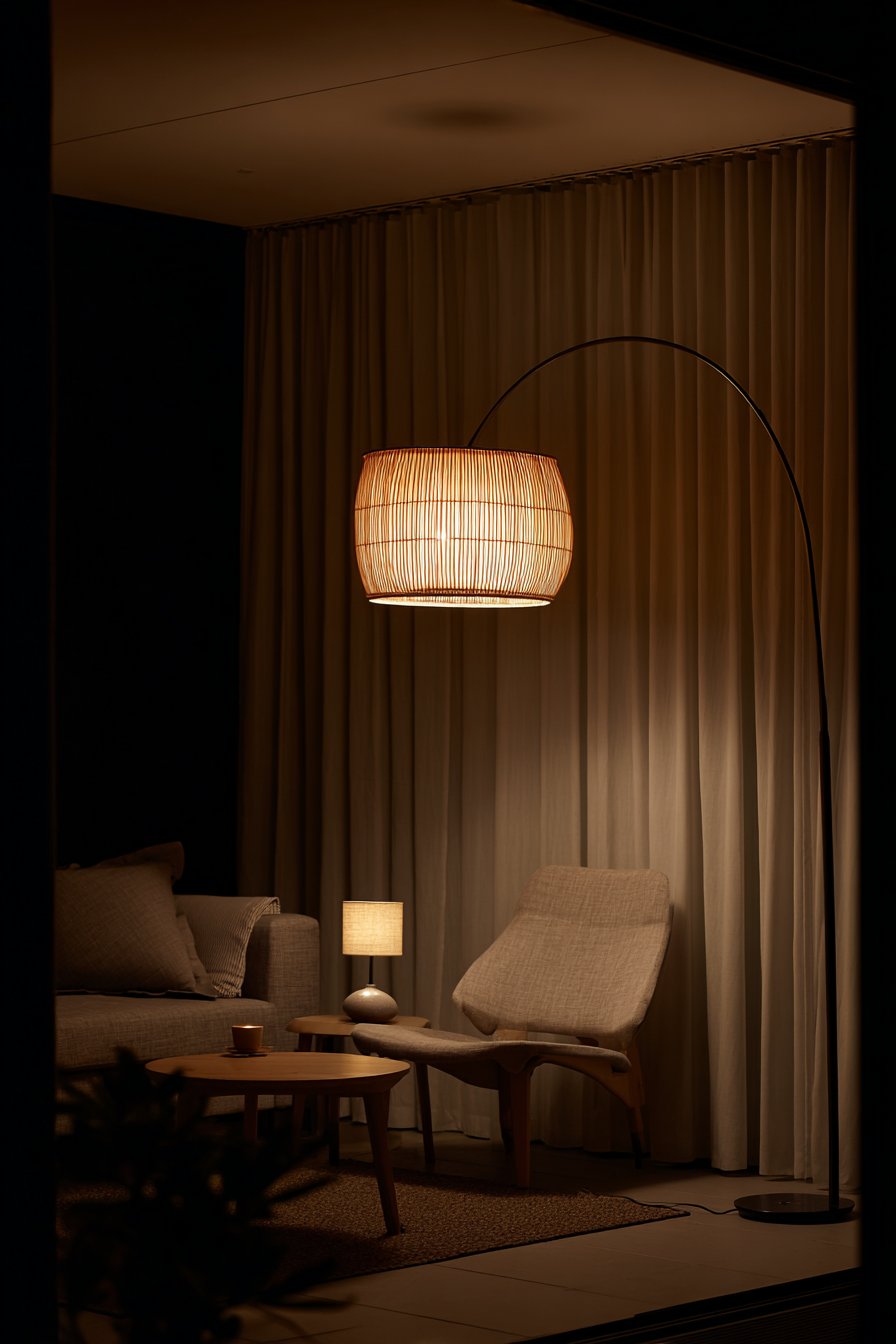
The varied light sources create distinct pools of illumination throughout the space, each serving specific functions while contributing to the overall atmosphere. The pendant light draws the eye upward and provides general illumination that makes the room navigable and welcoming. Table lamps create intimate circles of light perfect for evening conversations or reading, their linen shades diffusing the light source for a soft, flattering glow. The arc floor lamp demonstrates how directional lighting can be both functional and sculptural, its brass finish catching and reflecting light while its adjustable nature allows for customized positioning.
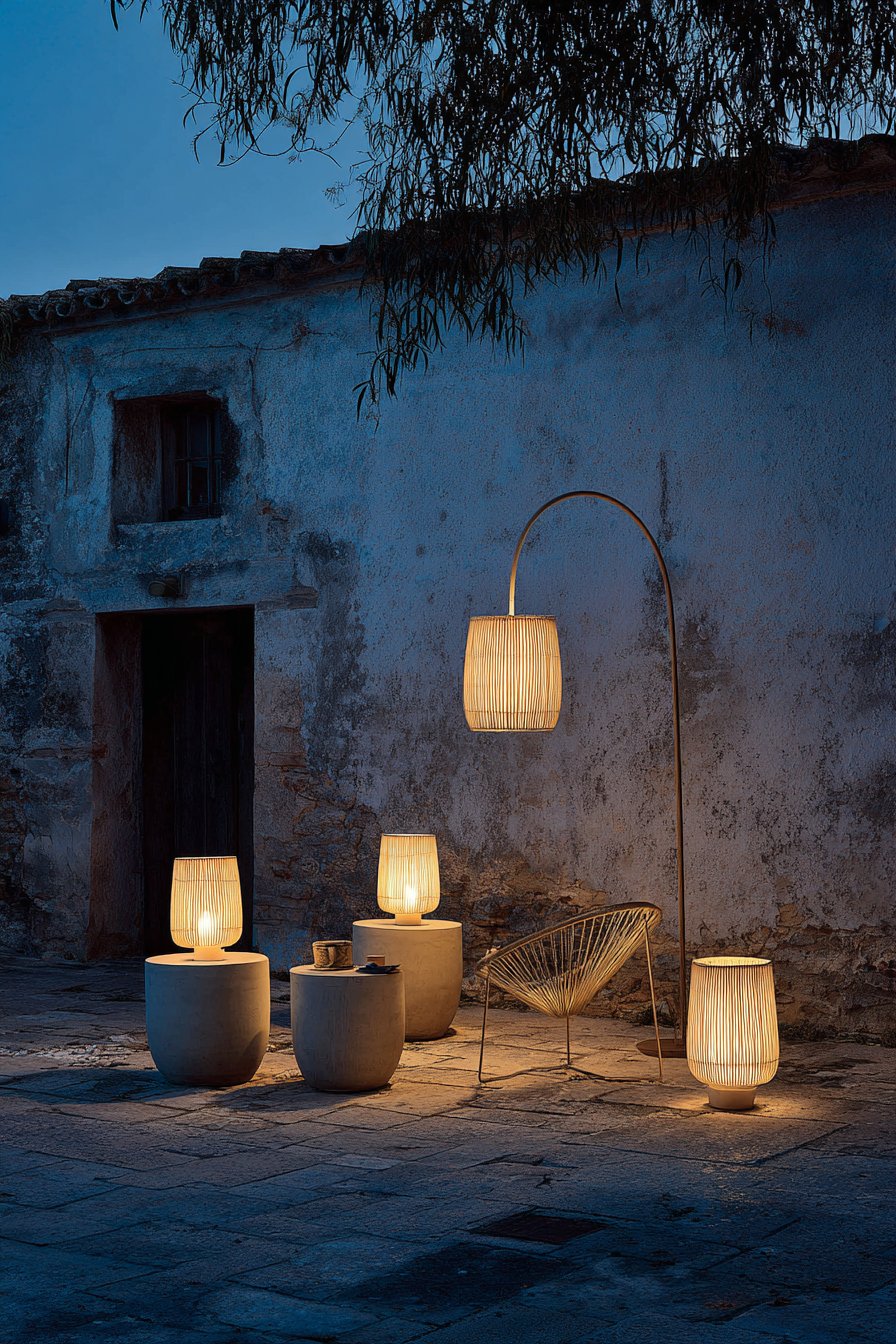
What makes this lighting scheme particularly effective for creating coziness is its ability to create different moods throughout the day and for various activities. During evening hours with all lights dimmed, the space feels intimate and relaxing. For reading or detailed work, individual lights can be brightened while others remain low. The warm glow from multiple light sources eliminates harsh shadows and creates the kind of enveloping illumination that makes a space feel truly welcoming and comfortable.
Key Design Tips:
- Include at least three different light sources in every living room for optimal flexibility
- Install dimmer switches on all lighting circuits for adjustable ambiance
- Choose warm white bulbs (2700-3000K) for living spaces to create inviting atmosphere
- Position task lighting 40-42 inches above seating surfaces for optimal reading conditions
- Mix lighting types (ambient, task, and accent) rather than relying on a single overhead fixture
9. Pillow Texture Symphony
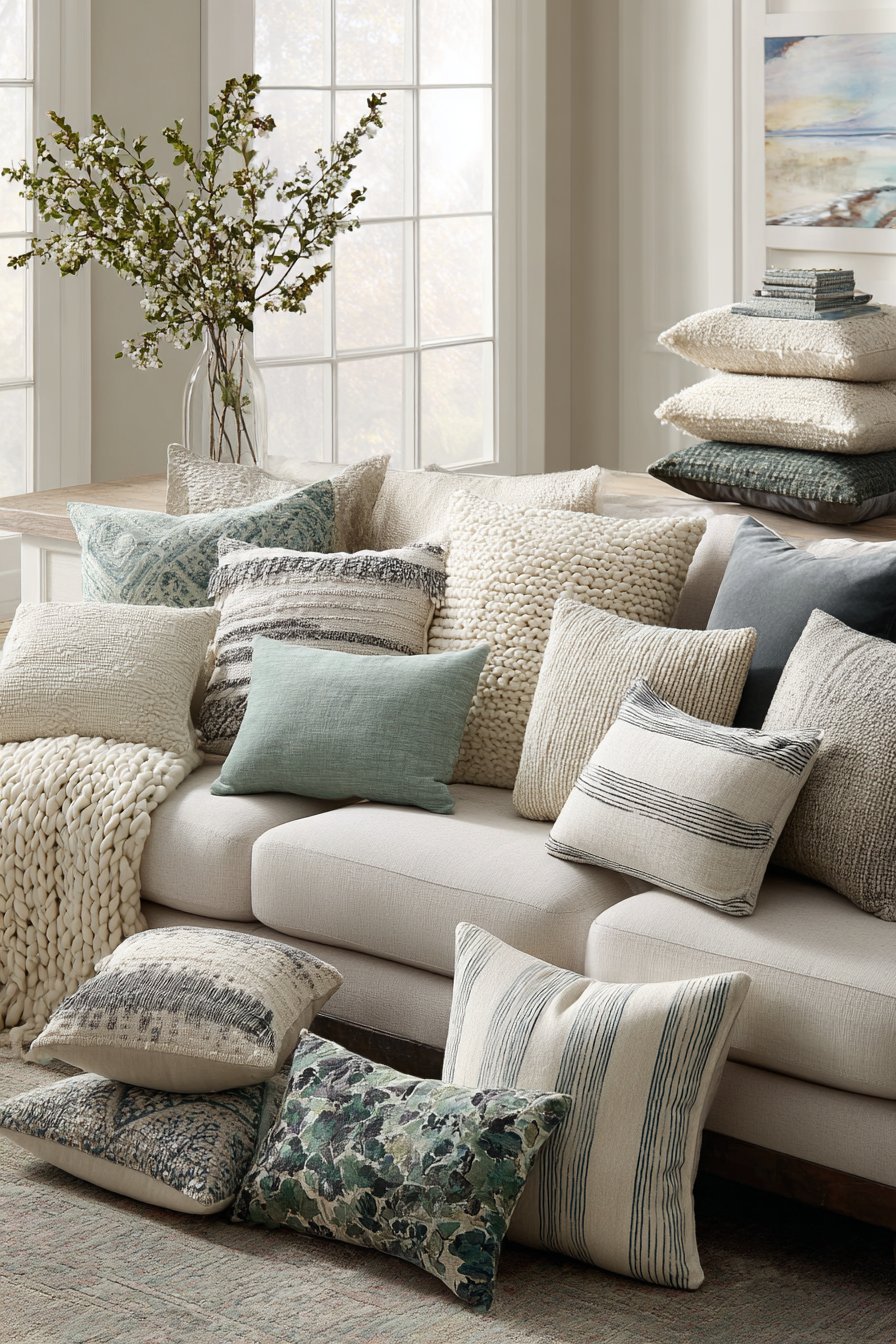
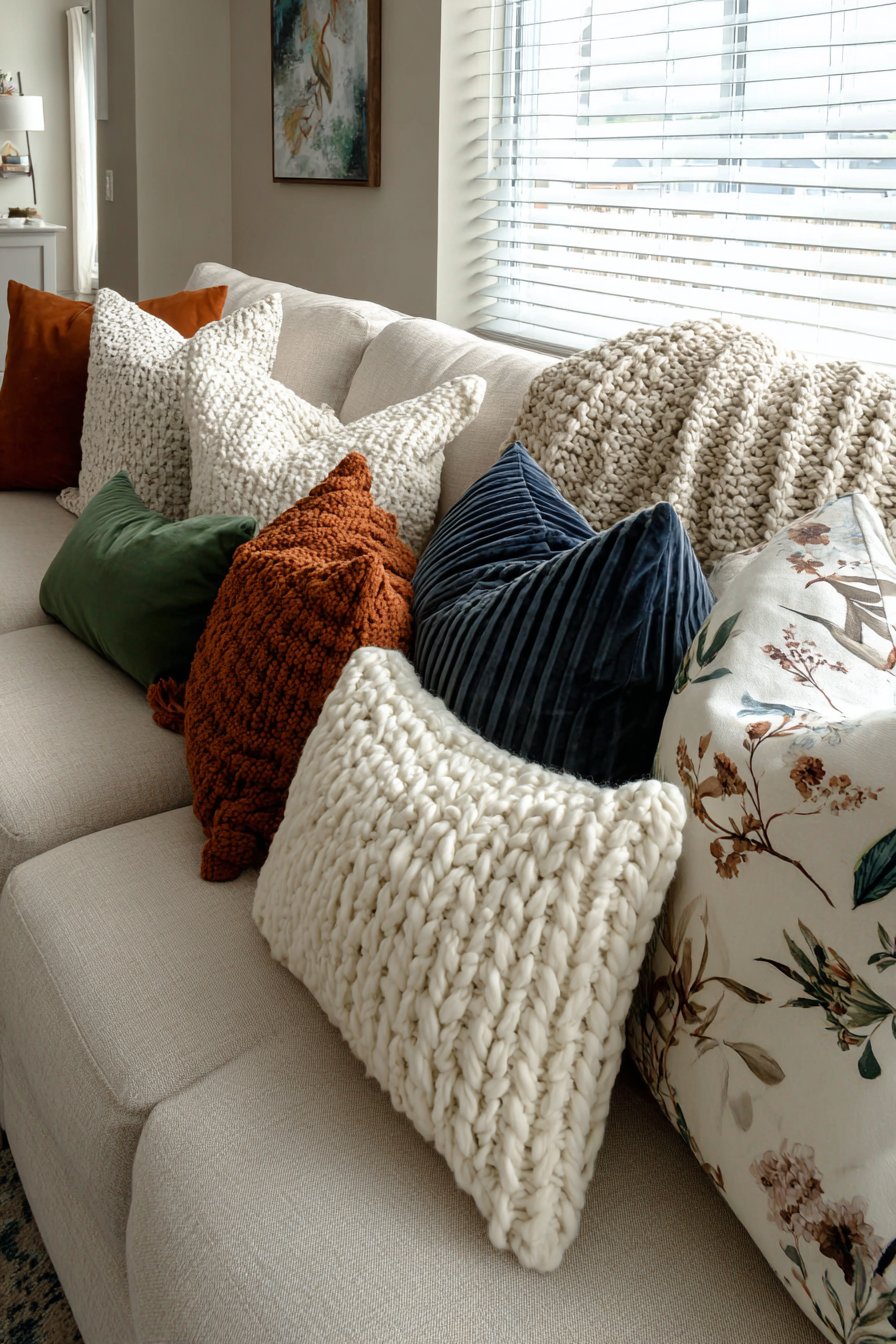
The art of pillow arrangement might seem simple, but this design reveals how thoughtfully chosen and arranged throw pillows can transform a neutral sofa into a cozy focal point. The collection includes chunky knit covers that add substantial texture and handmade appeal, linen pillows with subtle stripes that introduce pattern without overwhelming, velvet cushions in muted jewel tones that catch light beautifully, and patterned options with geometric or botanical prints that add visual interest. The cohesive color palette of warm neutrals, soft blues, and earthy greens ensures that despite the variety, the overall effect remains harmonious and intentional.
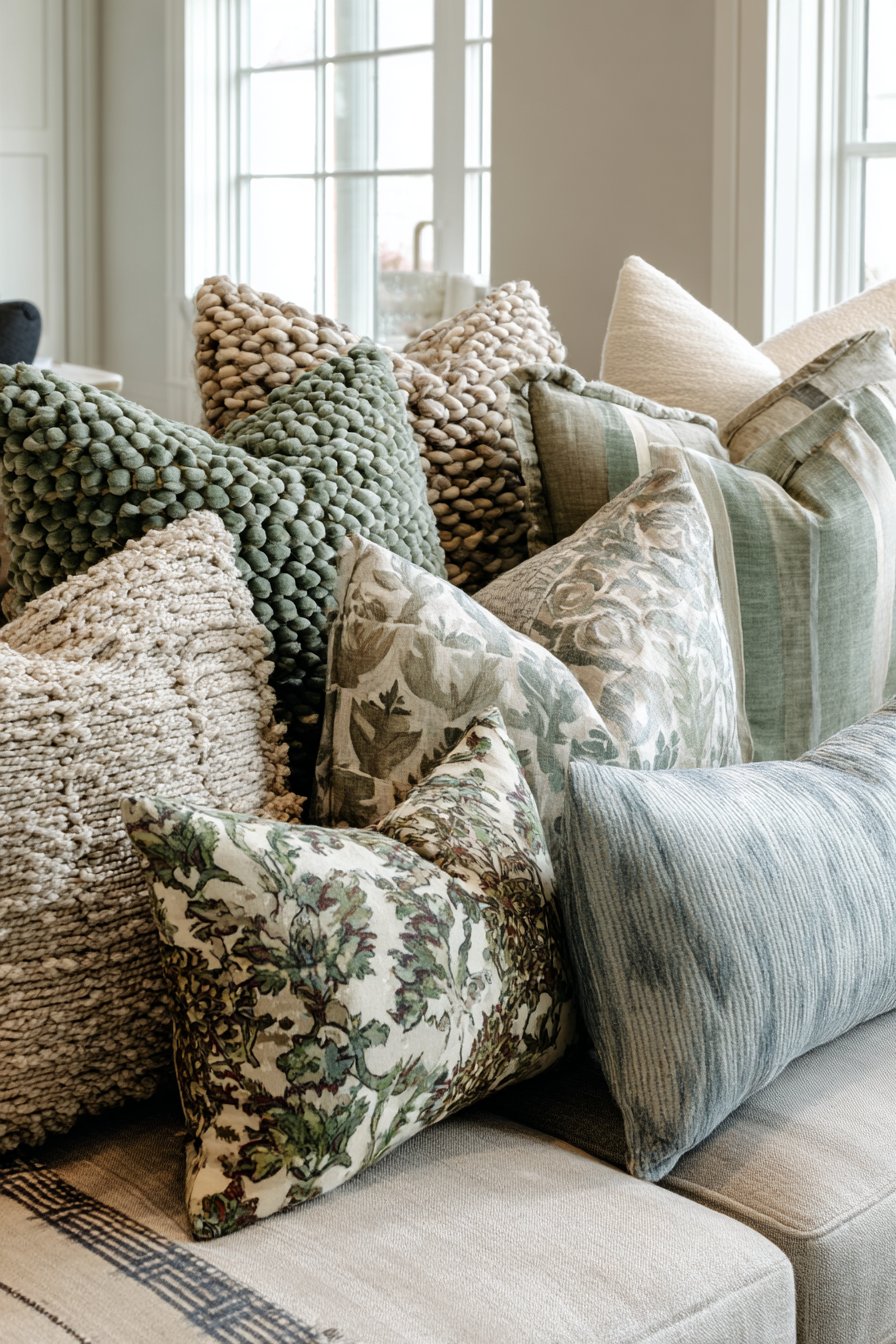
Each pillow texture serves a distinct purpose beyond mere decoration. The chunky knit covers introduce tactile warmth and visual weight, their dimensional surfaces creating shadows and highlights that change with lighting conditions. Linen pillows provide a natural, slightly rumpled quality that prevents the arrangement from feeling too perfect or staged. Velvet introduces luxury and light reflection—as you move through the room, velvet pillows appear to change color subtly as light hits their pile from different angles. The patterned pillows provide focal points and visual energy that draw the eye.
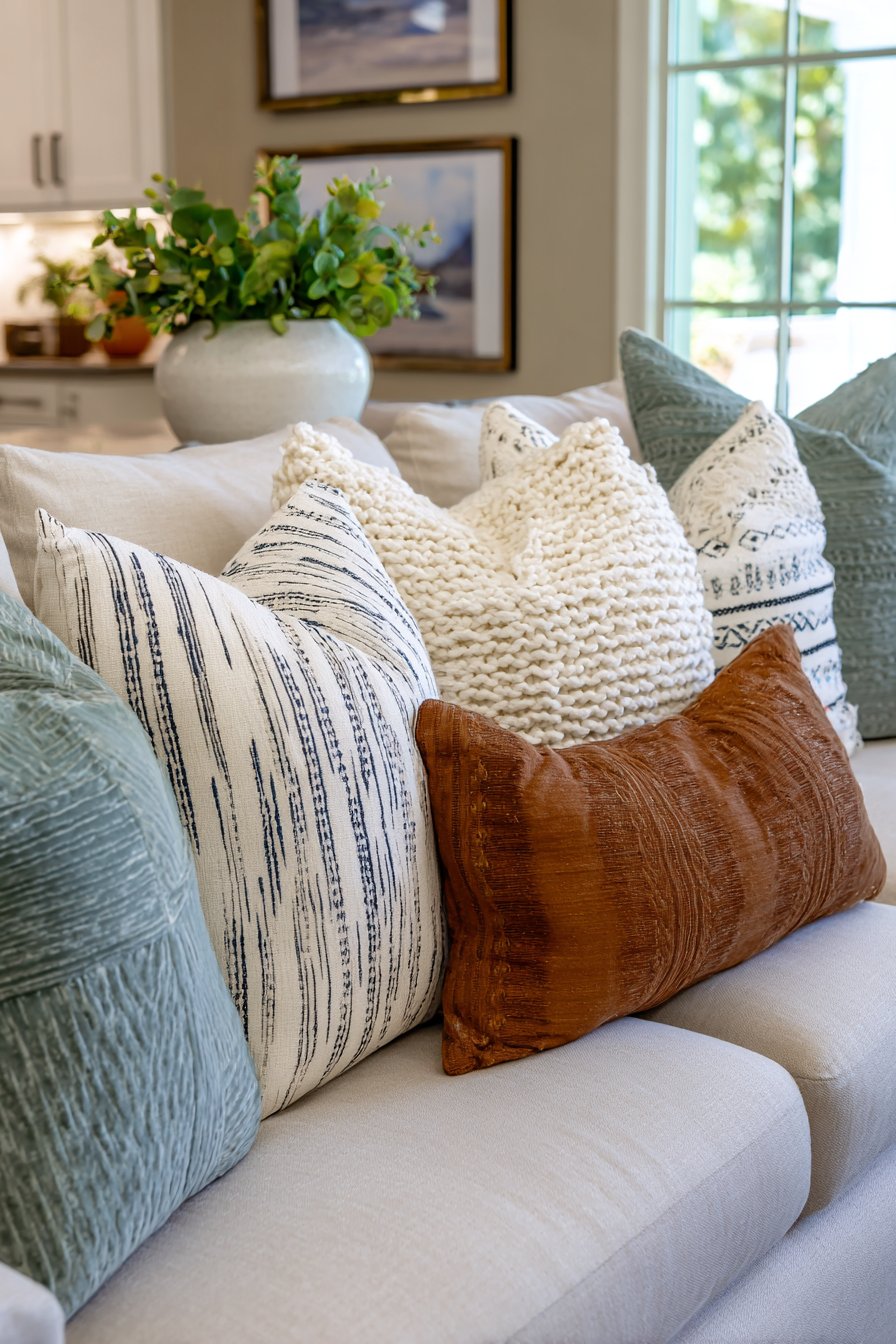
The arrangement strategy is equally important as the selection. Varying pillow sizes from large (22-24 inches) in the back corners to medium (20 inches) in front to smaller accent pillows (16-18 inches) creates depth and prevents a flat, uniform appearance. Mixing pattern scales—from large geometric designs to small botanical prints—adds complexity without chaos. The result is a sofa that invites you to sink in, grab a pillow, and settle in for extended relaxation.
Key Design Tips:
- Include 5-7 pillows on a standard sofa, 8-10 on a sectional for a full, cozy look
- Mix three types of textures and limit patterns to 2-3 for visual cohesion
- Use larger pillows in back corners and progressively smaller sizes toward the front
- Choose removable, washable covers for easy maintenance
- Stick to a color palette of 3-4 colors that appear elsewhere in your room design
10. Styled Coffee Table Centerpiece
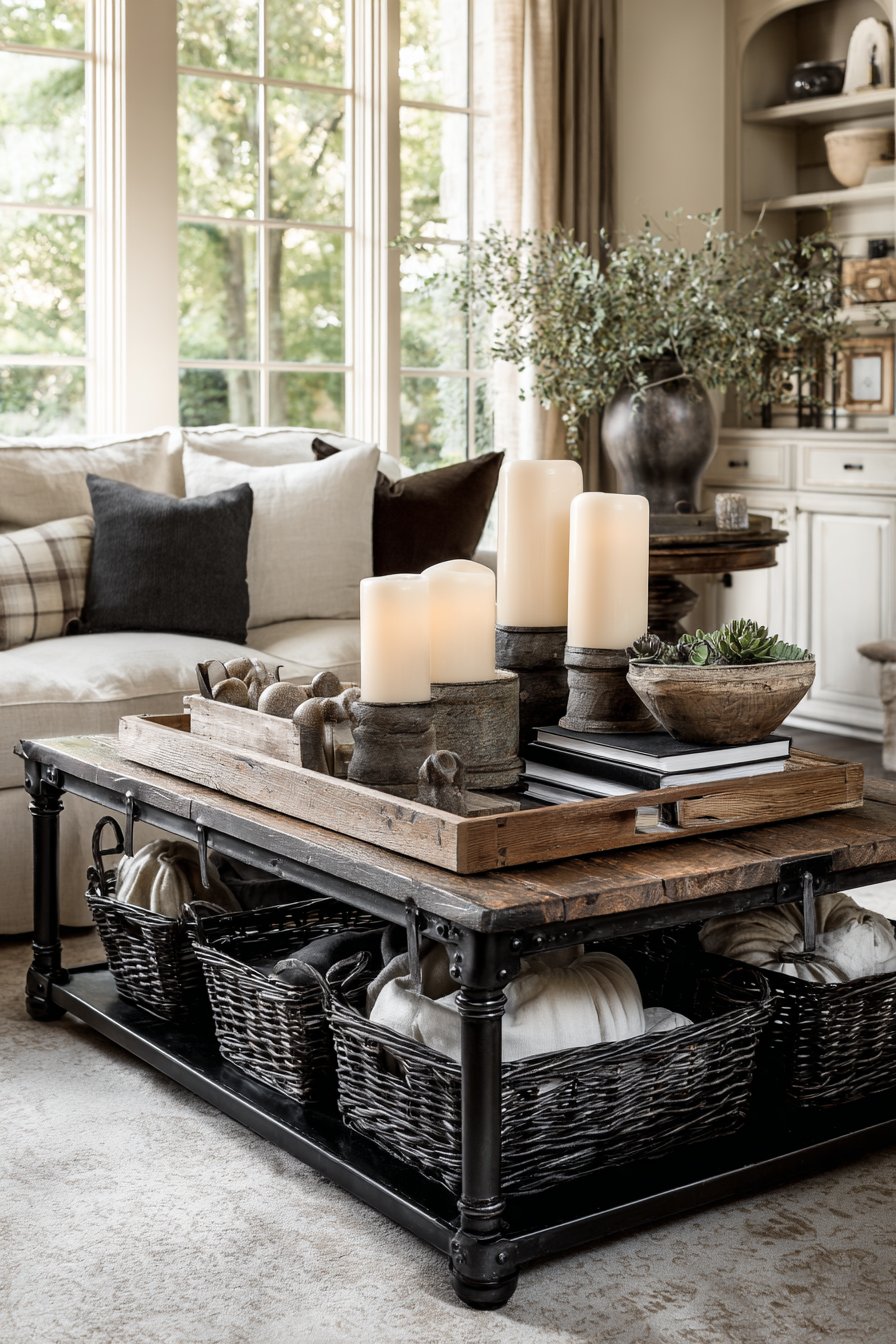
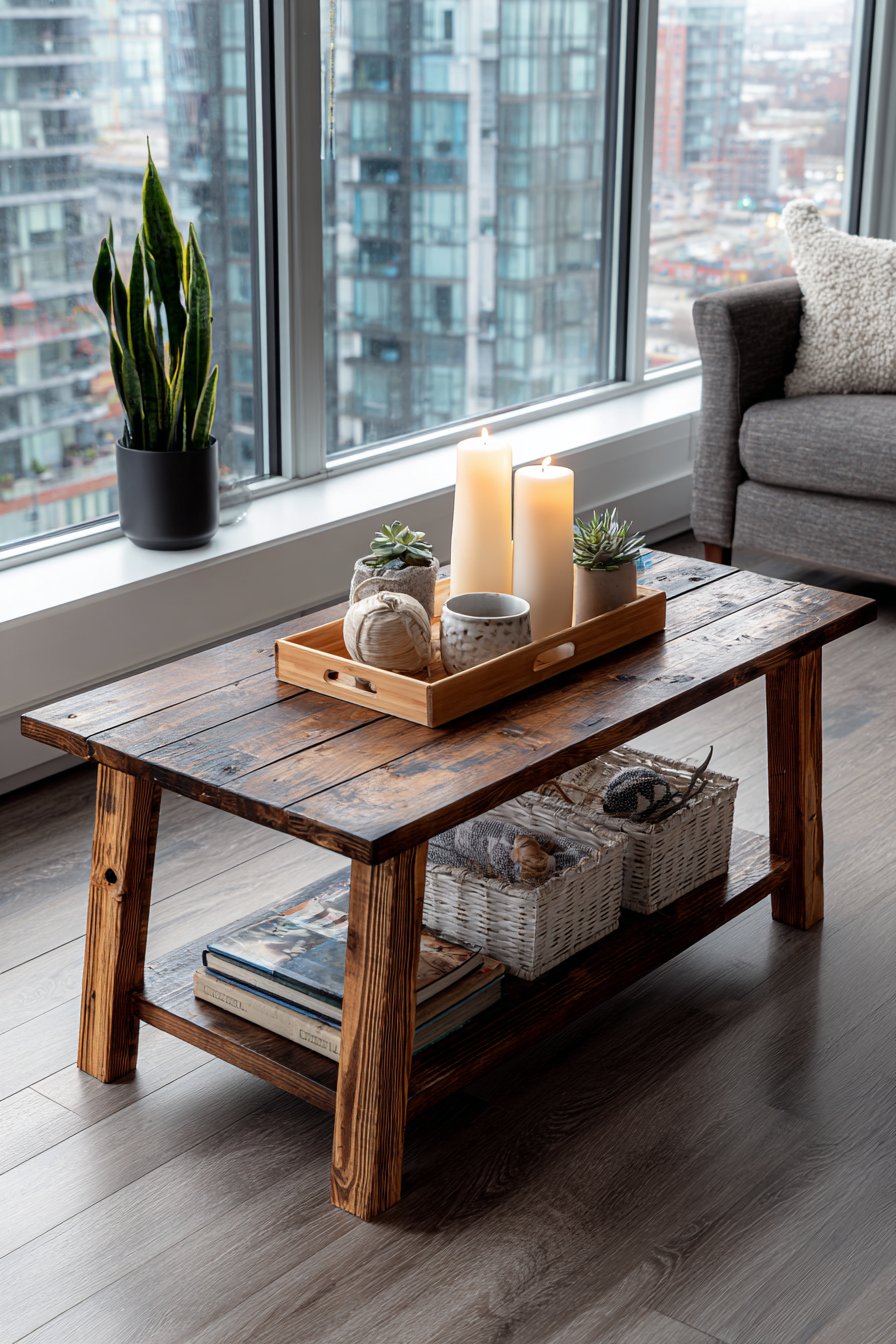
A coffee table serves as the central hub of living room activity, and this design demonstrates how thoughtful styling can balance aesthetics with function. A wooden tray provides structure and delineation, holding pillar candles of varying heights that can be lit for ambiance, a small ceramic bowl with decorative objects that add personality, a few carefully selected hardcover books stacked artfully that introduce color and interest, and a small potted plant or succulent arrangement that adds life and organic form. The coffee table itself features reclaimed wood construction with a lower shelf that accommodates woven storage baskets, proving that beauty and practicality can coexist harmoniously.
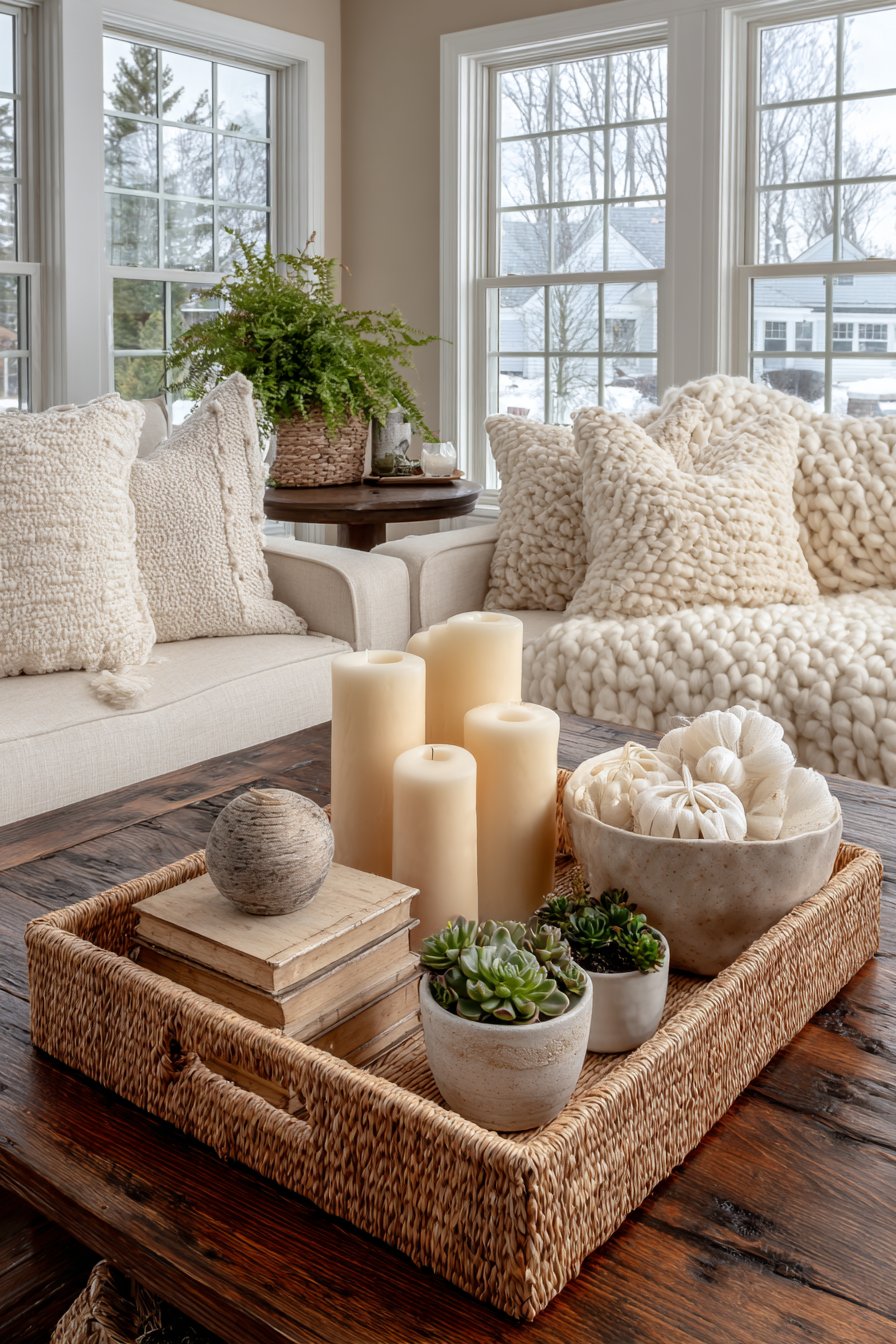
The tray-based styling approach offers multiple benefits beyond aesthetics. It creates visual organization, grouping items together so they read as a cohesive vignette rather than random objects. The tray can be easily moved when you need the full table surface for entertaining or activities, providing flexibility that’s essential in well-used spaces. The varied heights of items within the tray create visual rhythm—the vertical lines of candles contrast with the horizontal mass of stacked books, while the organic form of the plant or succulent introduces natural curves that soften the composition.
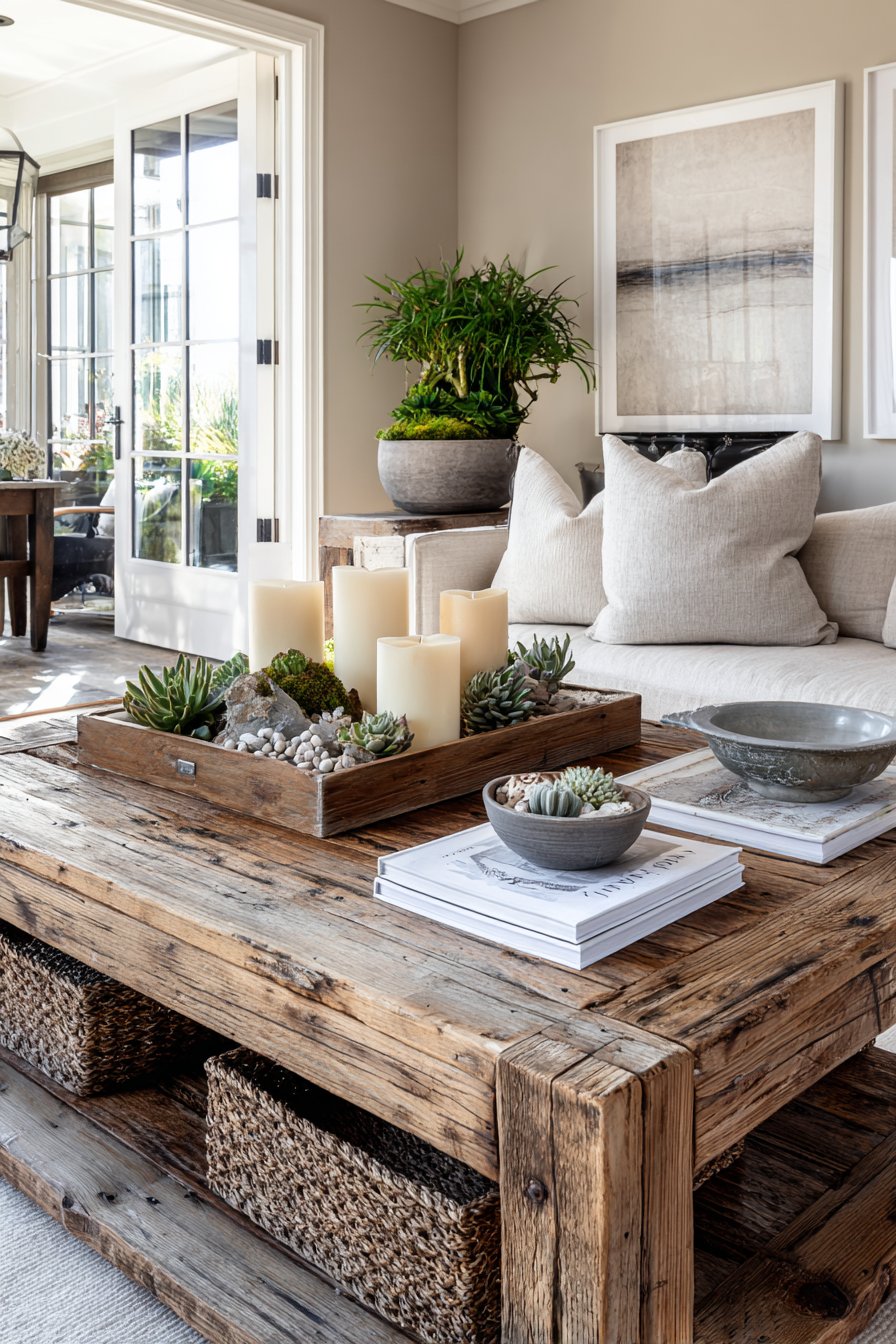
The lower shelf storage demonstrates smart design thinking for cozy, lived-in spaces. Woven baskets conceal the everyday items that tend to accumulate—remote controls, coasters, reading glasses, magazines—keeping them accessible but visually contained. This approach acknowledges that truly cozy living rooms are used and enjoyed, not just displayed, and provides solutions for managing the items that make life comfortable without sacrificing aesthetic appeal.
Key Design Tips:
- Use a decorative tray to corral smaller items and create easy movability
- Vary heights of objects using the rule of three (low, medium, high elements)
- Keep the center of the table relatively clear for practical use during entertaining
- Choose books with covers that complement your color scheme
- Include one living element (plant or fresh flowers) to add vitality and natural beauty
11. Warm Wood Accent Integration
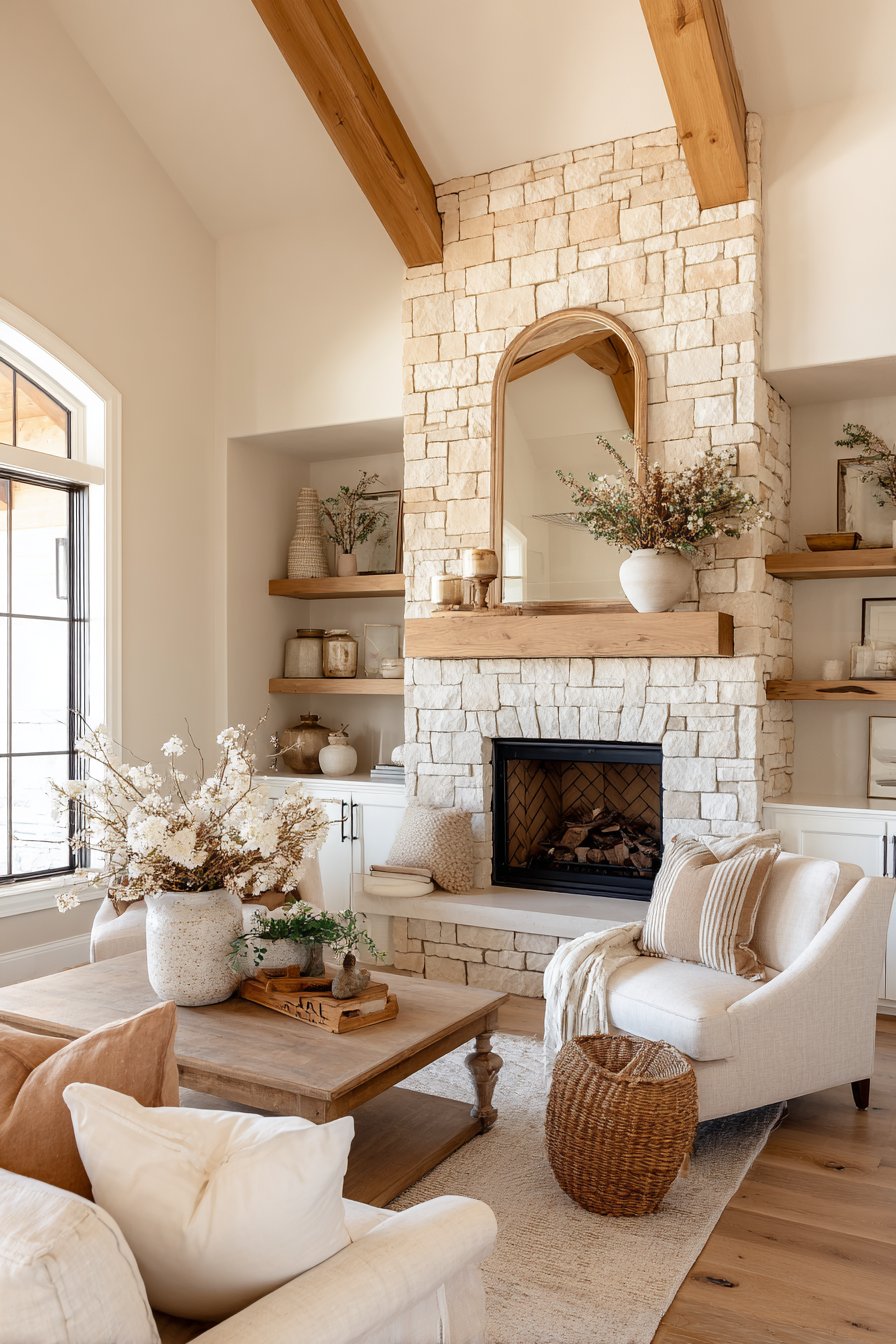
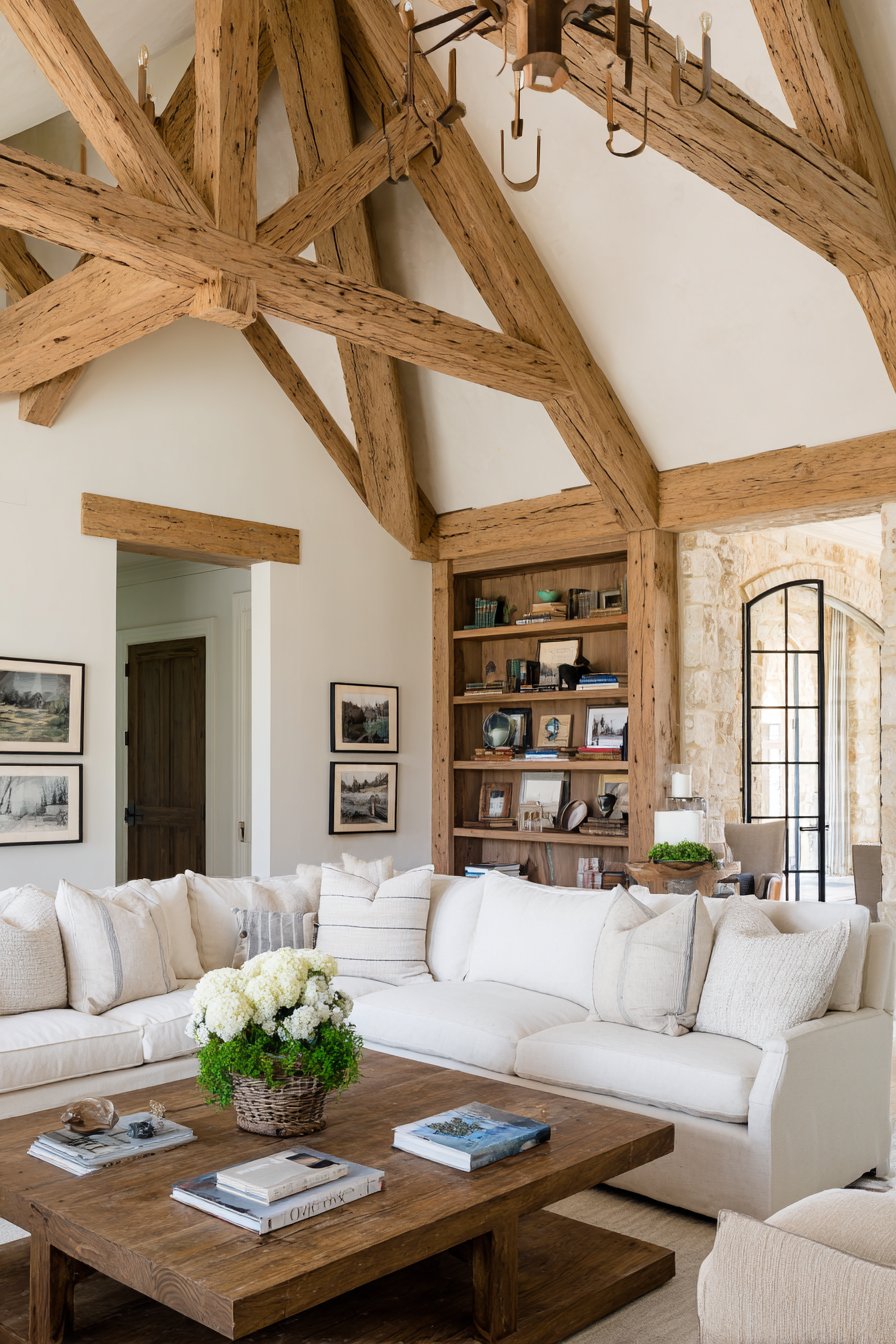
Natural wood elements bring unparalleled warmth and organic beauty to cozy living spaces, and this design showcases how varied wood tones can work together harmoniously. Exposed ceiling beams in warm honey tones draw the eye upward and add architectural character, while a solid wood coffee table with live edge details celebrates the natural form and grain of the tree. Floating shelves made from reclaimed barn wood introduce history and texture, and wooden picture frames in various finishes tie the look together. The wood tones range from light oak to deeper walnut shades, creating depth through variation while maintaining cohesion through their shared natural warmth.
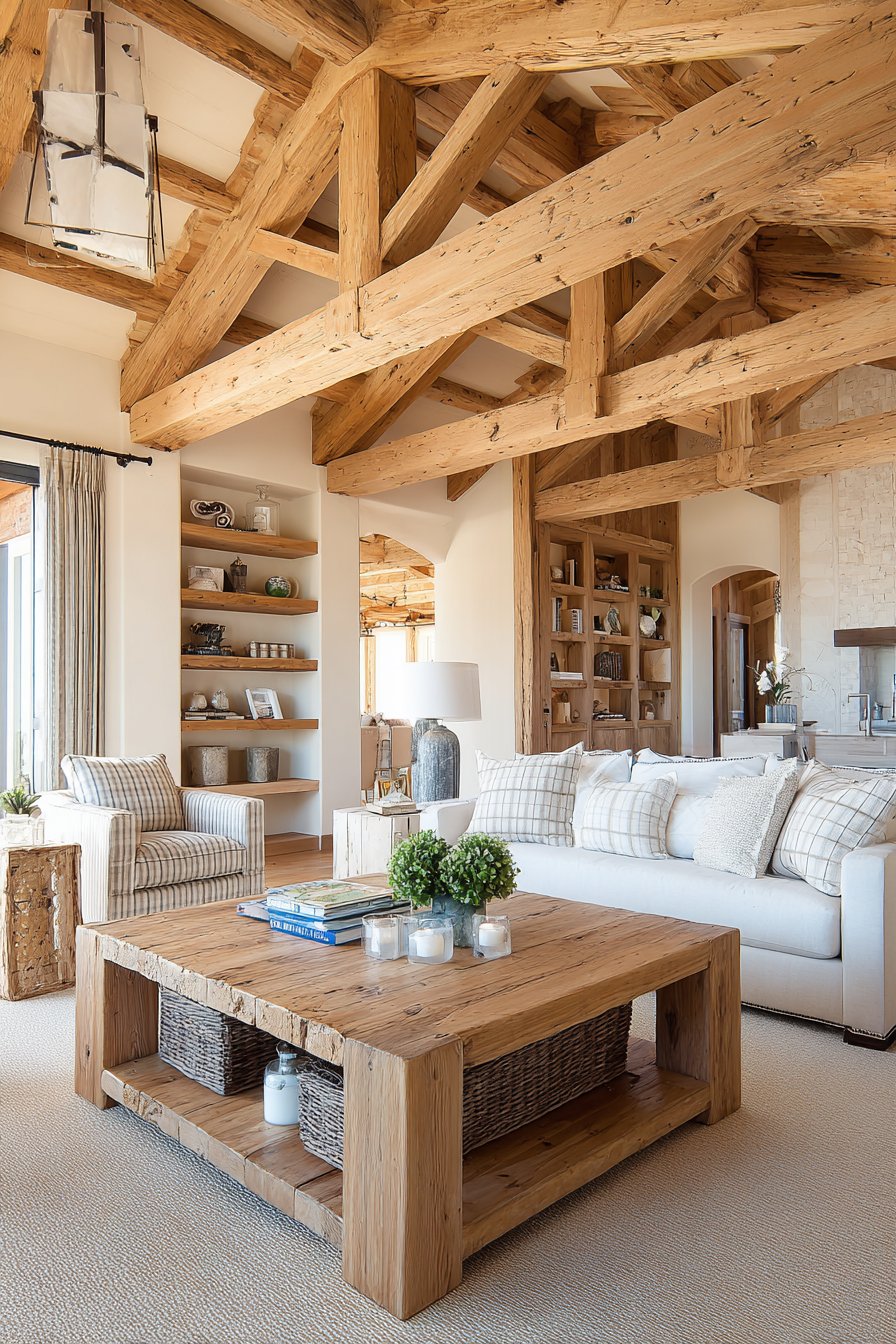
The strategic placement of wood elements throughout the vertical plane of the room creates visual flow and prevents any single area from feeling weighted. Ceiling beams establish presence overhead, floating shelves occupy the middle zone of the walls, and the coffee table anchors the floor level. This distribution ensures the eye travels naturally through the space, experiencing the warmth of wood at every level. The varied applications—structural beams, functional furniture, decorative frames—demonstrate wood’s versatility as both a building material and design element.
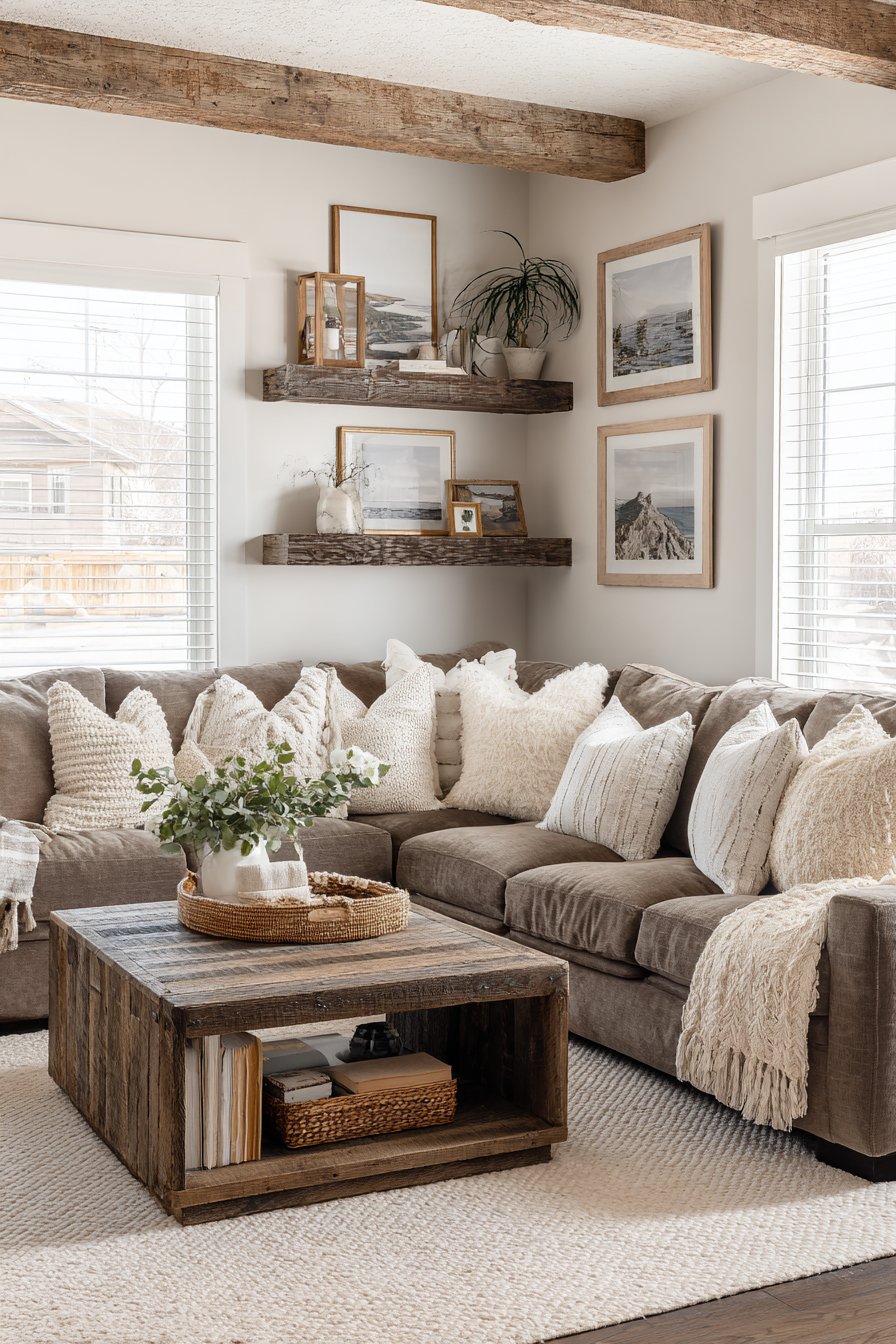
What makes this approach particularly successful for creating coziness is wood’s inherent warmth and the way it interacts with light. Natural wood grain patterns create subtle visual interest that never feels busy or overwhelming. As natural light moves across these surfaces throughout the day, the grain becomes more or less pronounced, the color appears warmer or cooler, creating a living quality that synthetic materials cannot replicate. The tactile quality of wood—its temperature, texture, and slight give—engages our senses in ways that contribute to psychological comfort.
Key Design Tips:
- Mix 2-3 different wood tones within the same warm or cool family for cohesion
- Incorporate both finished and raw wood textures for varied visual interest
- Use wood grain direction to guide the eye through spaces
- Balance warm wood tones with cool textiles or wall colors to prevent overwhelming warmth
- Choose reclaimed or sustainably harvested wood for environmental responsibility
12. Indoor Garden Integration
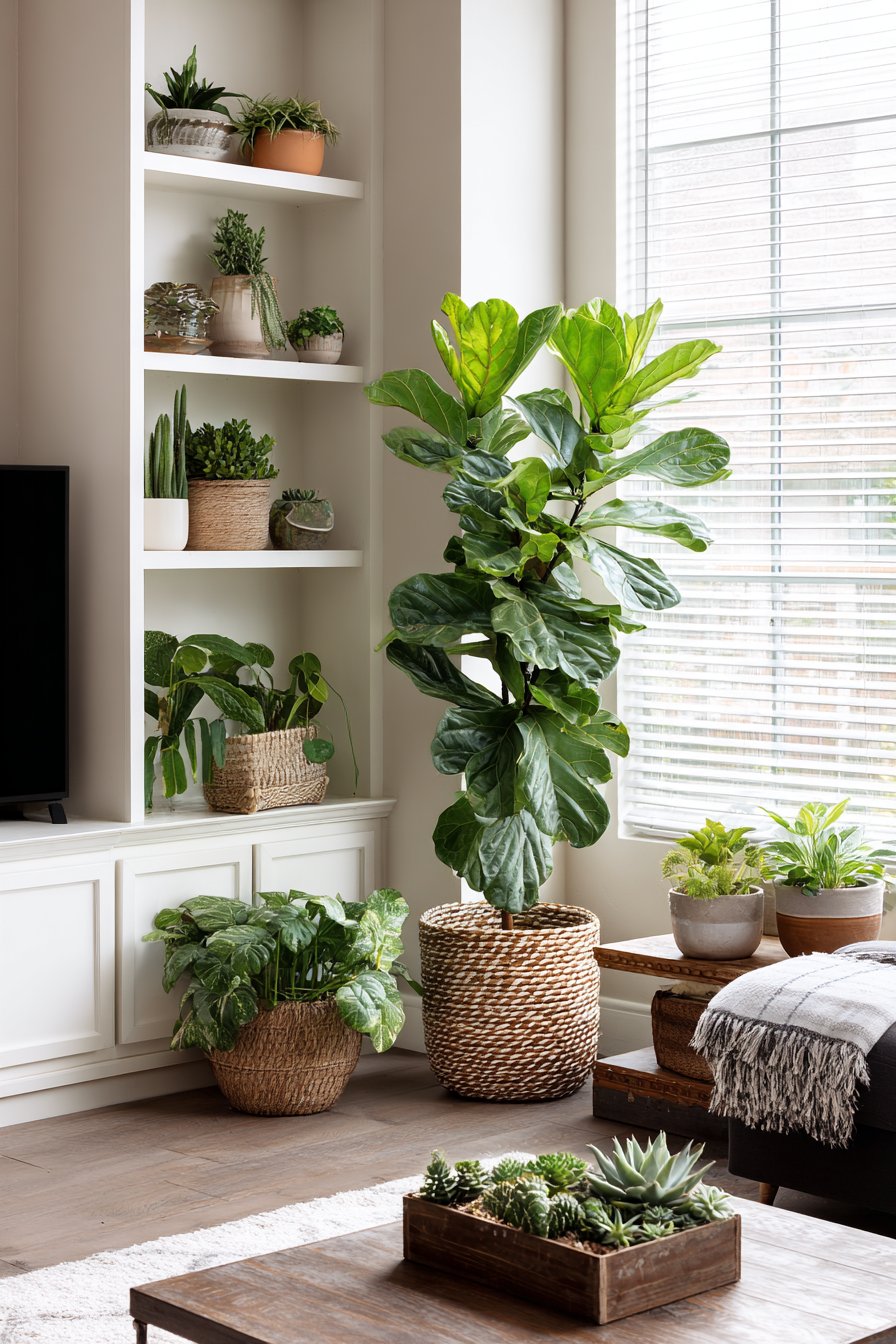
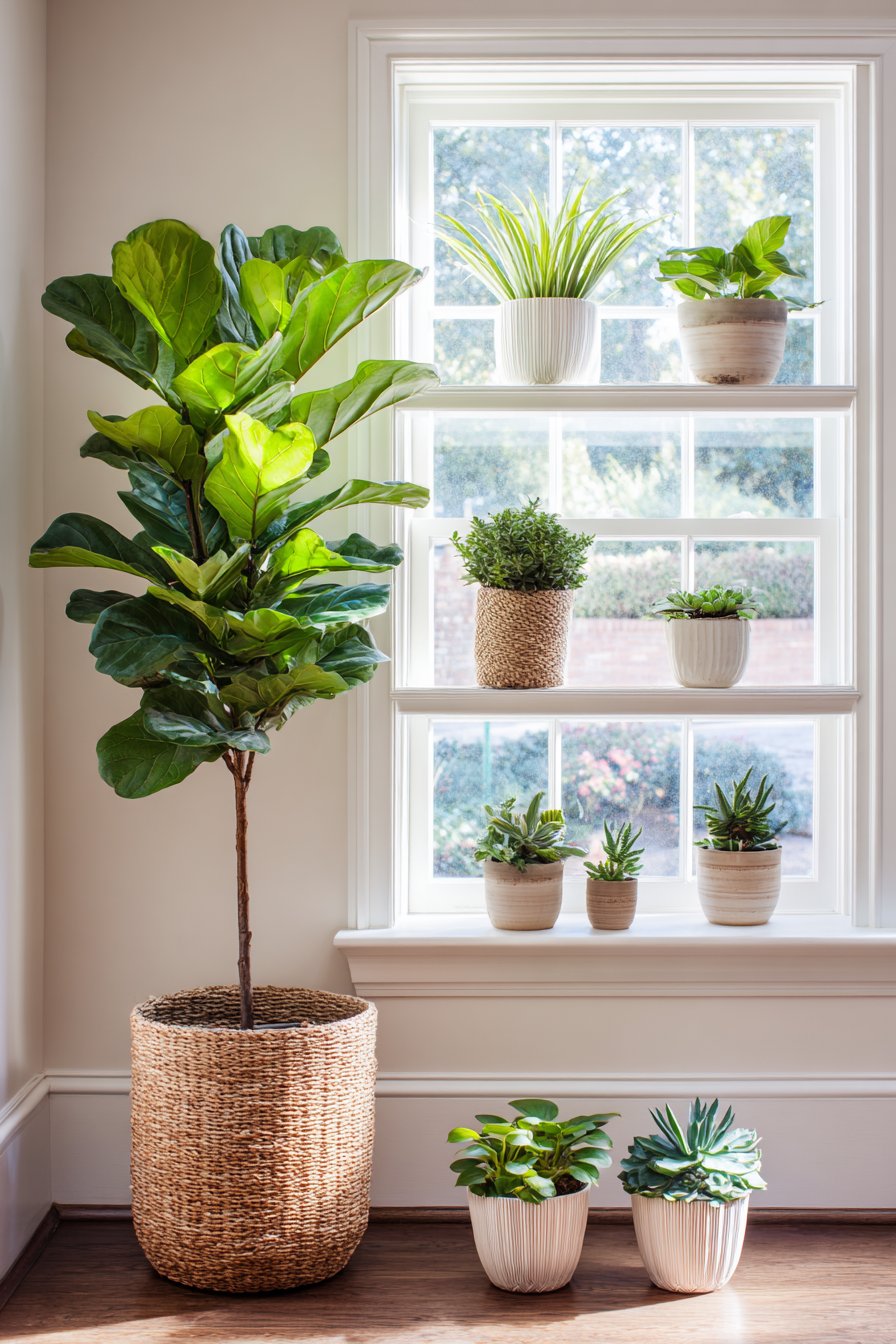
Bringing nature indoors through strategic plant placement transforms a living room into a fresh, vibrant space that feels connected to the outdoors. This design features a tall fiddle leaf fig in a woven basket planter positioned near windows where it can receive adequate light while making a dramatic vertical statement. A collection of smaller potted plants on floating shelves creates a living display that changes and grows over time, while trailing pothos in a macrame hanger introduces graceful movement and draws the eye upward. Succulents arranged on the coffee table provide low-maintenance greenery at the room’s center, accessible and easy to appreciate up close.
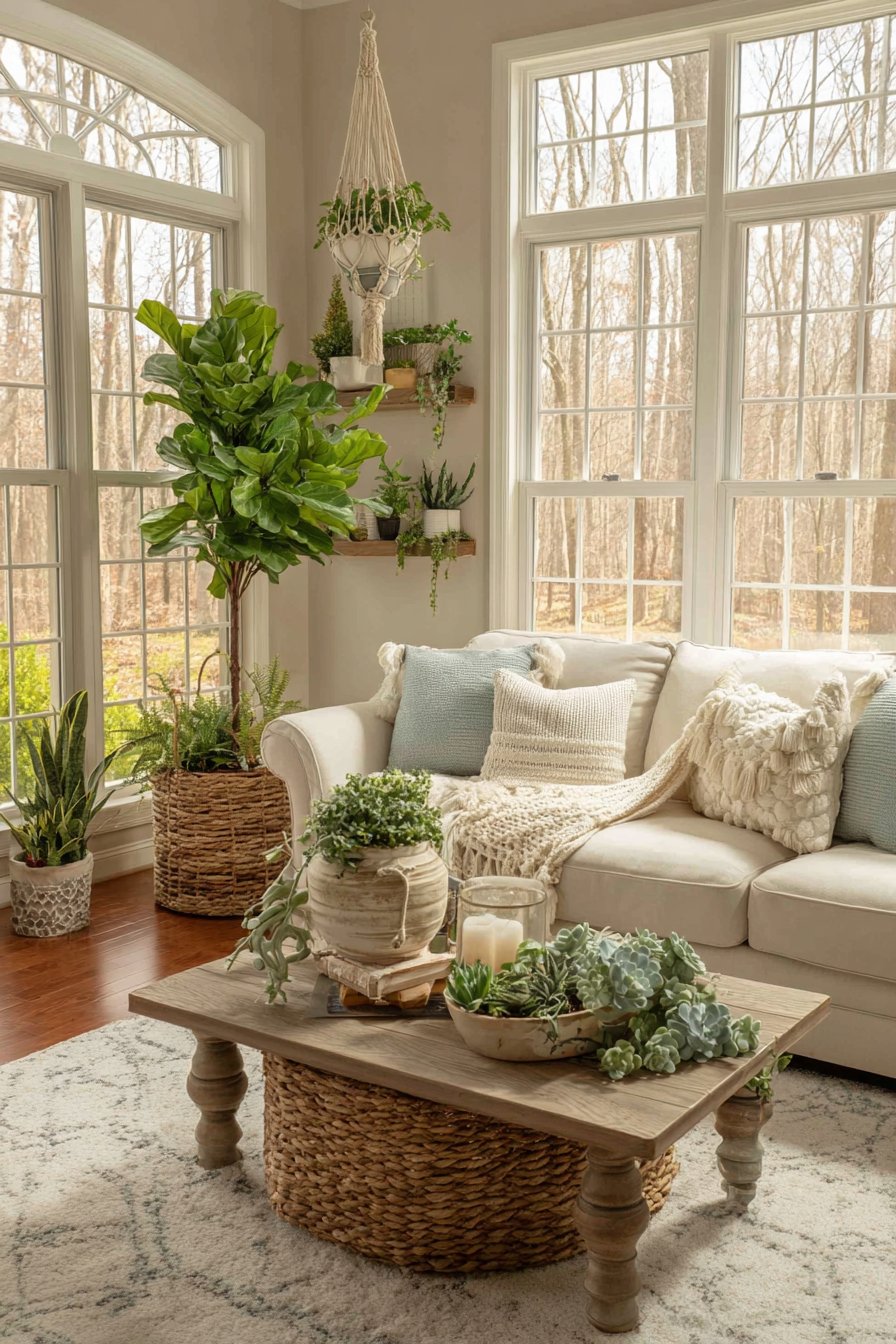
The variety of plant types, sizes, and placements demonstrates sophisticated understanding of how greenery functions in interior design. The tall fiddle leaf fig serves as a living sculpture, its large leaves and tree-like form creating architectural presence. Mid-level plants on shelves fill the often-neglected middle zone of walls, creating visual interest at eye level. Trailing plants add movement and softness, their cascading vines creating organic lines that contrast beautifully with architectural straight edges. Table-level succulents invite close inspection and provide opportunities for hands-on connection with nature through occasional watering and care.
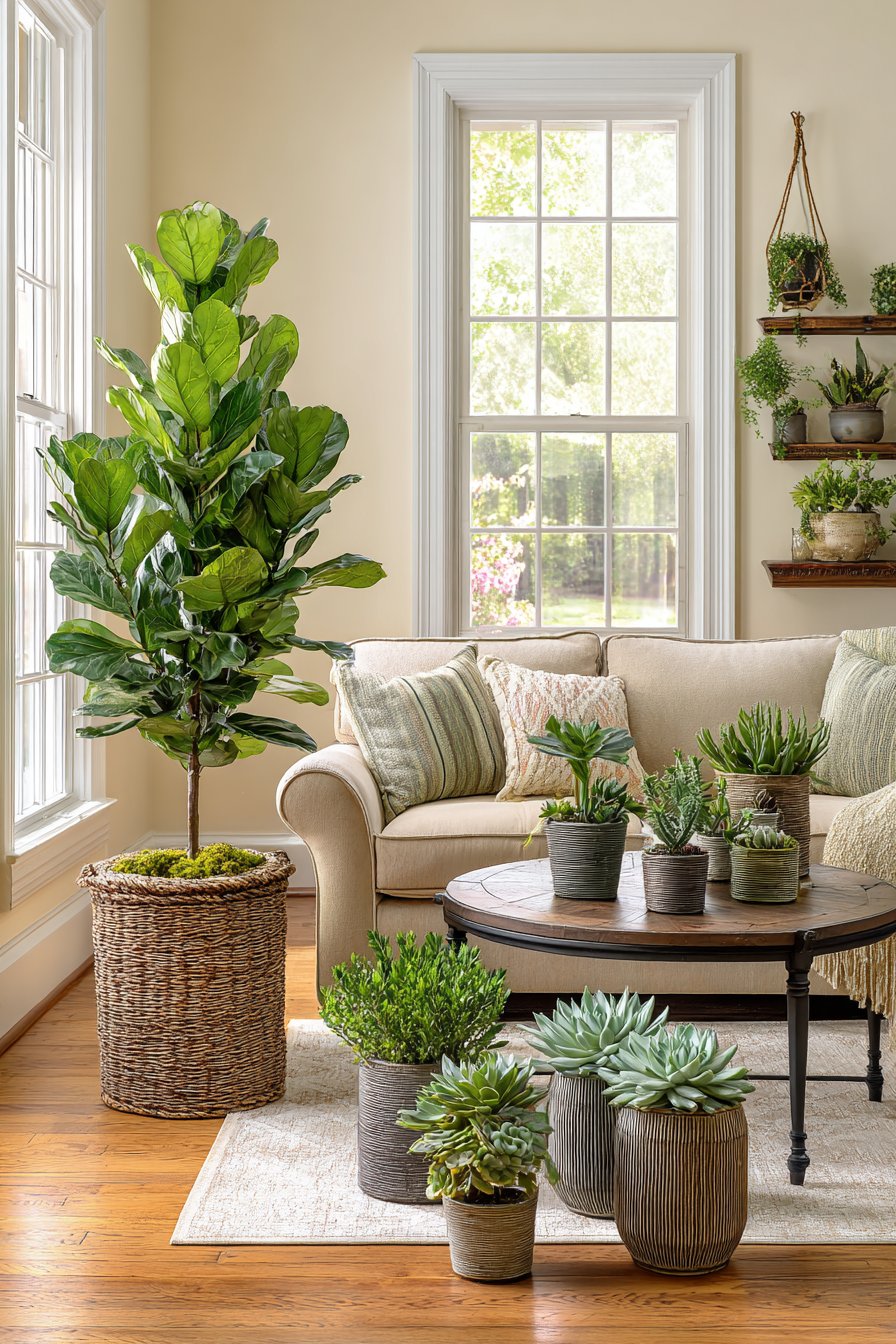
Beyond their visual contribution, these plants serve practical purposes that enhance coziness. They improve air quality through natural filtration, add humidity to indoor environments, and create subtle sound absorption that softens acoustics. The presence of living things that require care creates a nurturing dynamic in the home, while their growth and seasonal changes introduce an element of time and natural rhythm to interior spaces. The varied leaf textures, from the broad fiddle leaf fig to delicate pothos to sculptural succulents, add another layer to the room’s overall textural richness.
Key Design Tips:
- Choose plants appropriate for your available natural light conditions
- Group plants in odd numbers (3, 5, 7) for more dynamic visual arrangements
- Vary plant heights using stands, shelves, and hanging solutions
- Use decorative planters that complement your overall design aesthetic
- Include a mix of easy-care plants like pothos and snake plants with showier varieties
13. Serene Neutral Palette
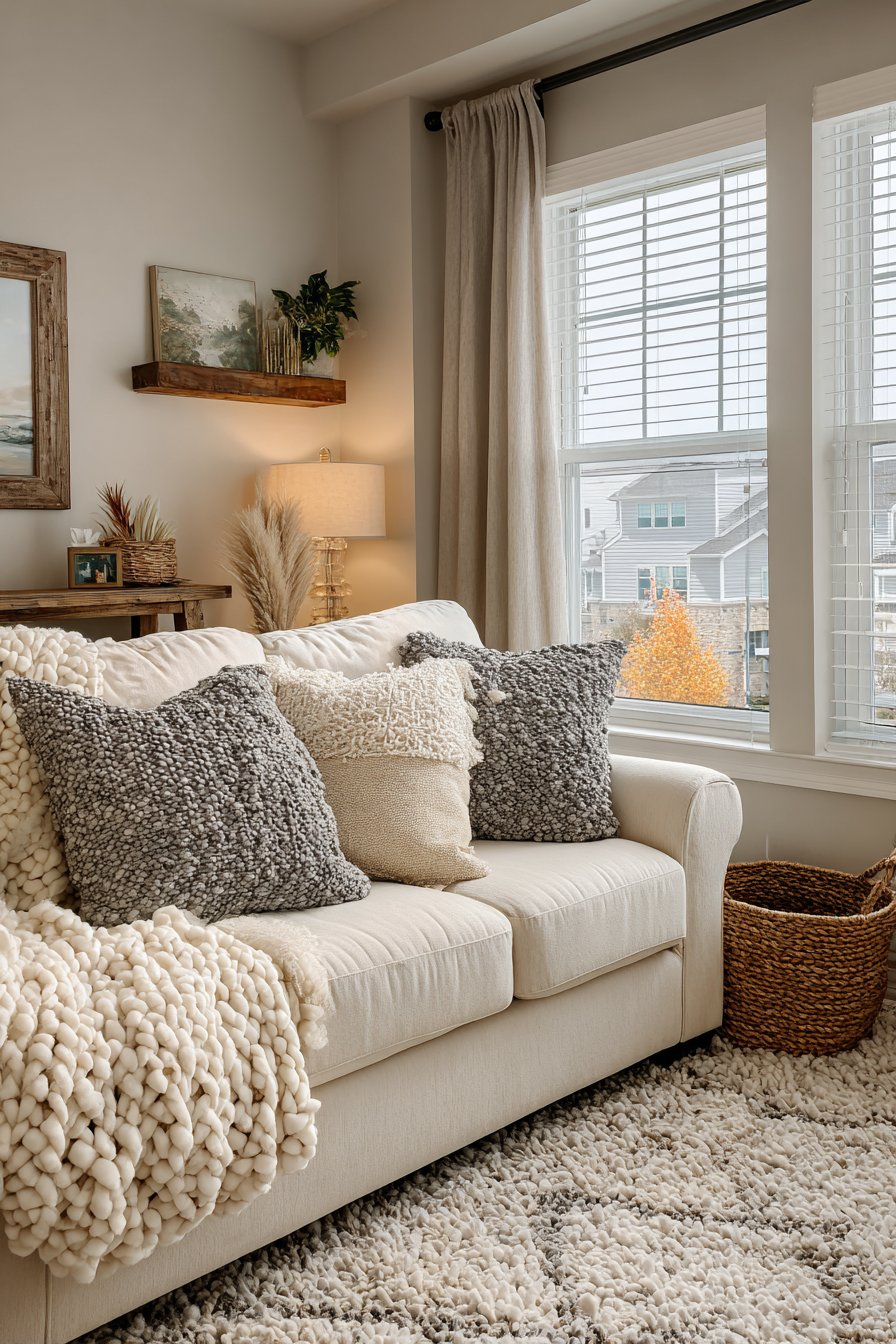
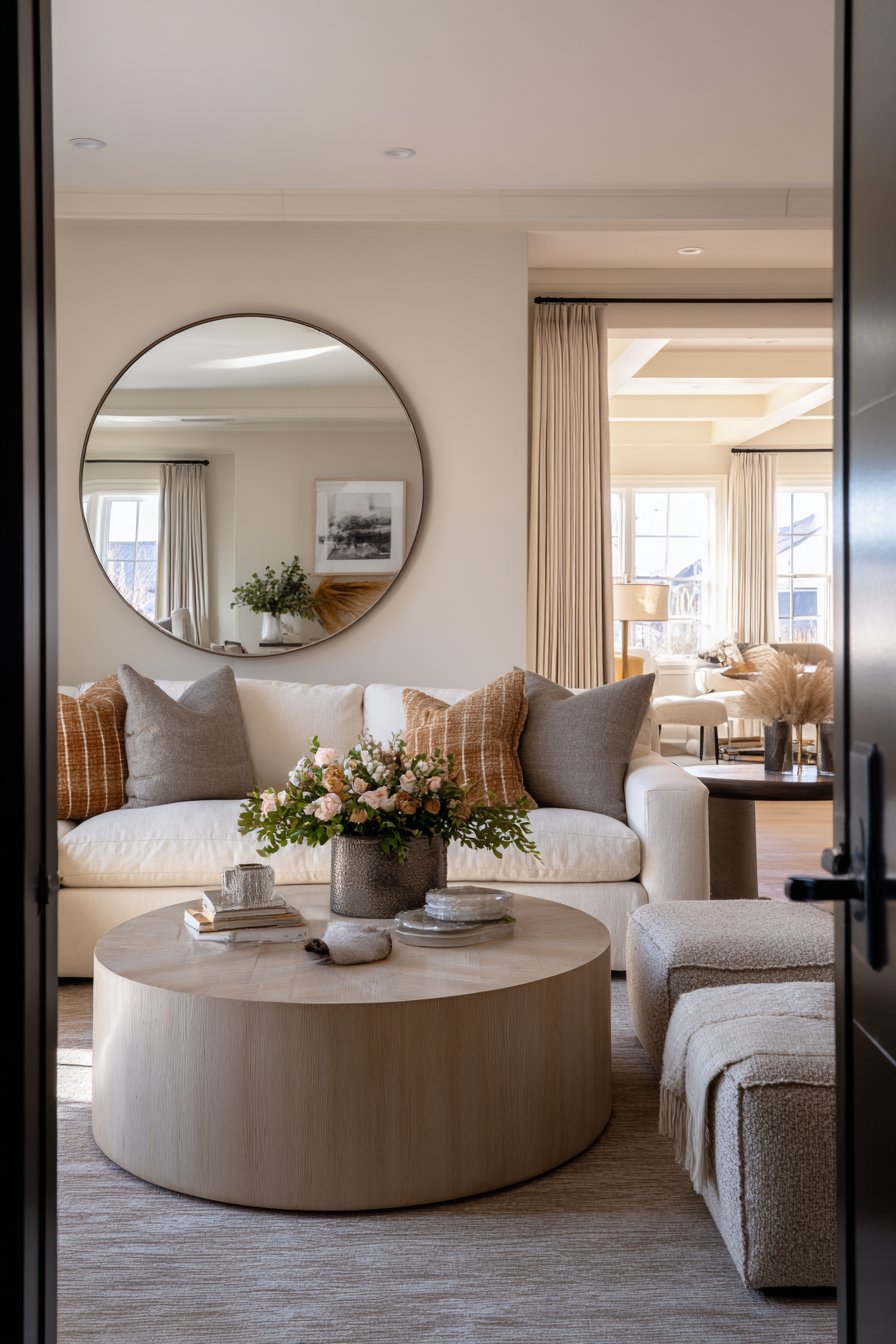
A neutral color palette creates a foundation for exceptional coziness, and this design proves that neutral doesn’t mean boring. The room features a cream-colored sofa that provides a soft, inviting anchor, paired with taupe linen curtains that filter light beautifully while adding subtle warmth. Grey textured accent pillows introduce variation within the neutral spectrum, while white walls with warm undertones prevent the space from feeling cold or clinical. Natural wood elements and woven textures add depth and prevent the monochromatic scheme from feeling flat, demonstrating how material variety can create interest within a limited color range.
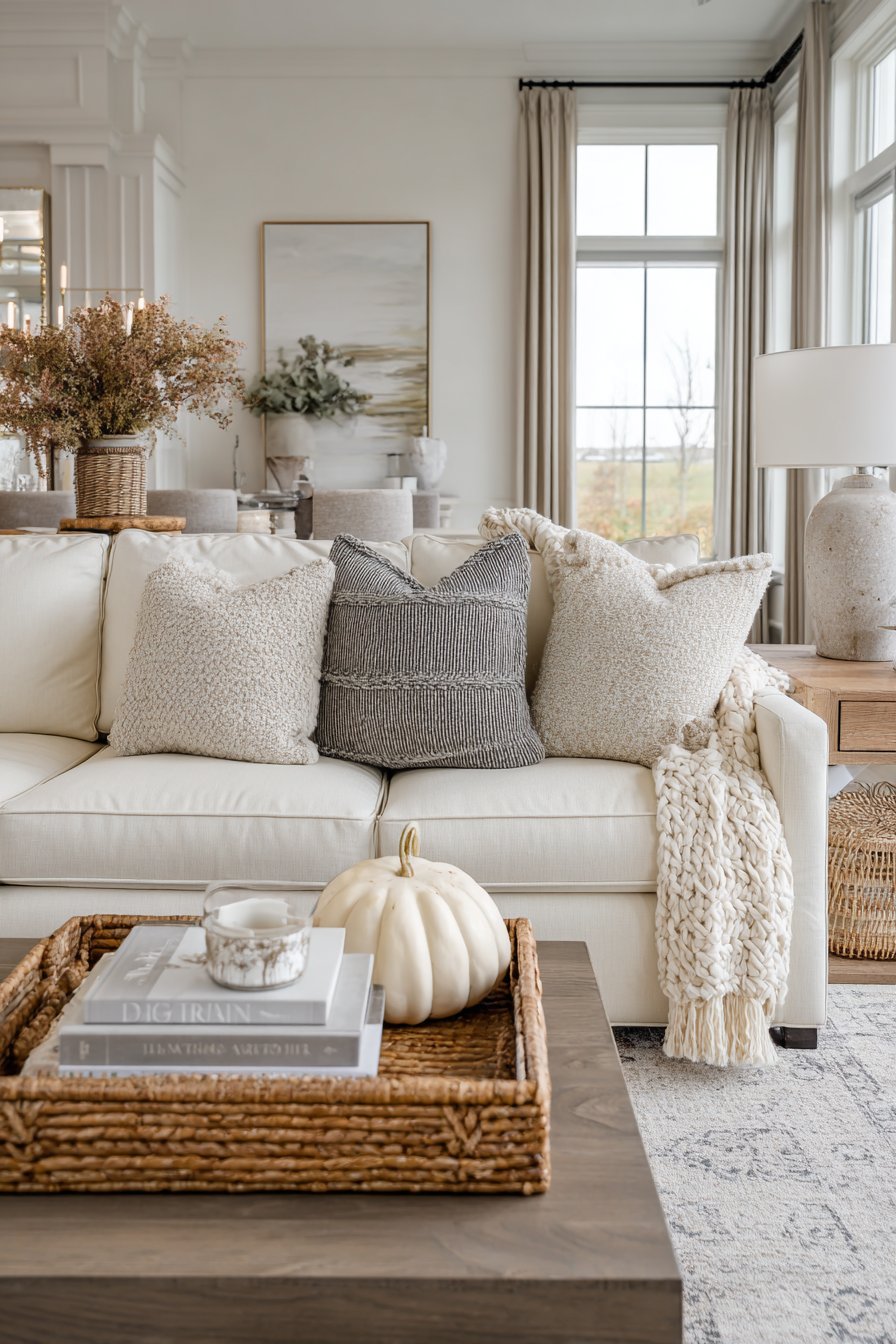
The genius of this neutral approach lies in its sophisticated use of undertones and textures. The cream sofa has warm undertones that prevent it from reading as stark white, creating an inviting rather than sterile impression. The taupe curtains bridge cream and grey beautifully, their linen texture adding visual interest through subtle slubs and variations. The grey pillows introduce cooler tones in varied textures—perhaps a smooth velvet alongside a chunky knit—creating tonal depth. The warm white walls serve as a neutral backdrop that allows these subtle color variations to shine without competing for attention.
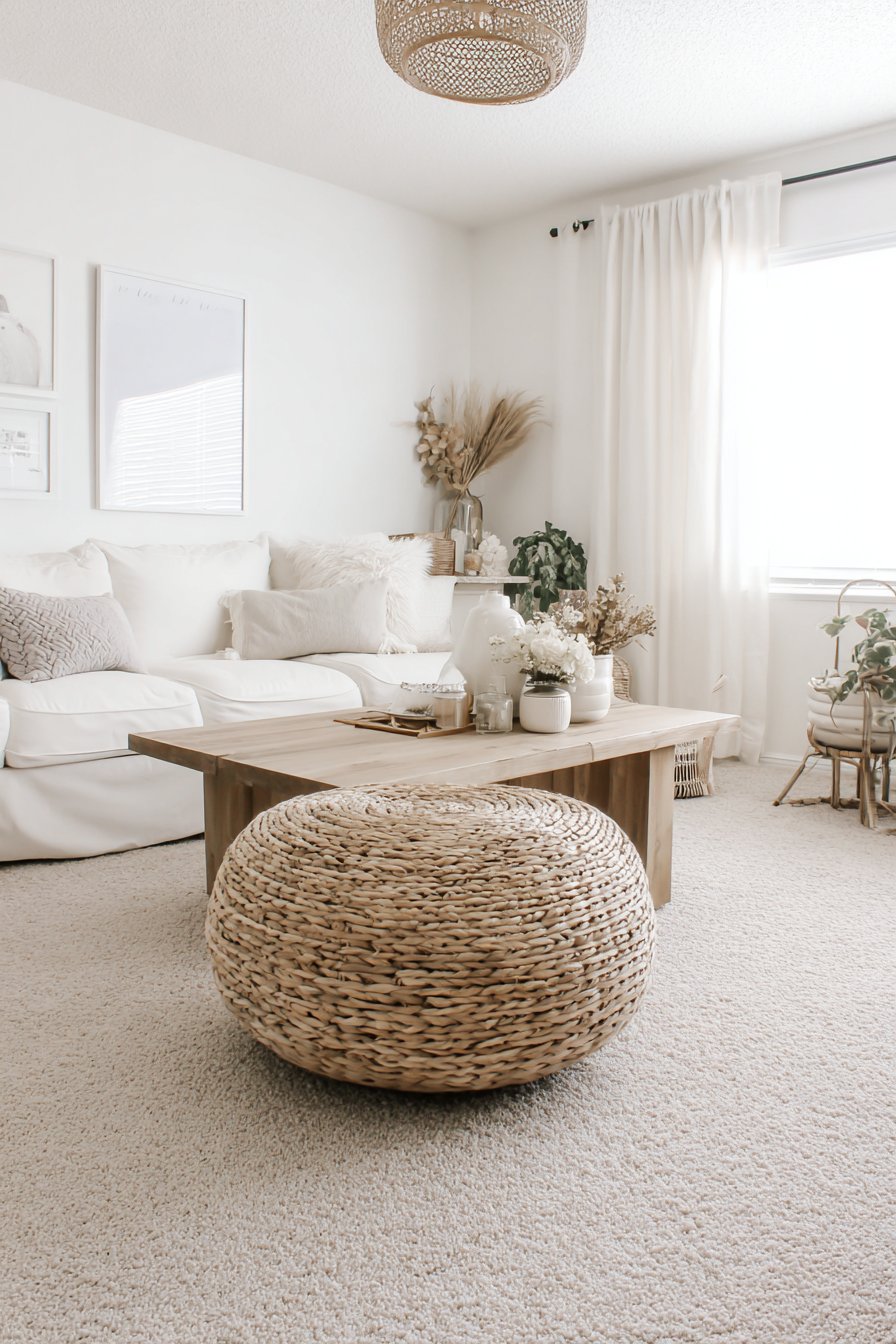
This neutral palette creates psychological comfort through its calming, cohesive nature. The eye isn’t jarred by strong color contrasts or busy patterns, instead moving smoothly through the space and resting comfortably on each element. The subtle variations in tone and texture provide enough visual interest to prevent boredom while maintaining the serene quality that makes you want to settle in and stay. Natural light interacts beautifully with neutral palettes, creating subtle shifts in how colors appear throughout the day that keep the space feeling dynamic despite its restraint.
Key Design Tips:
- Layer at least 4-5 different neutral tones from warm whites to deeper taupes for depth
- Mix warm and cool neutrals carefully, ensuring one temperature dominates for cohesion
- Introduce texture through materials rather than relying solely on color for interest
- Include wood tones to prevent neutral schemes from feeling too monochromatic
- Use natural light to your advantage as it will reveal subtle undertone variations
14. Woven Basket Storage Solutions
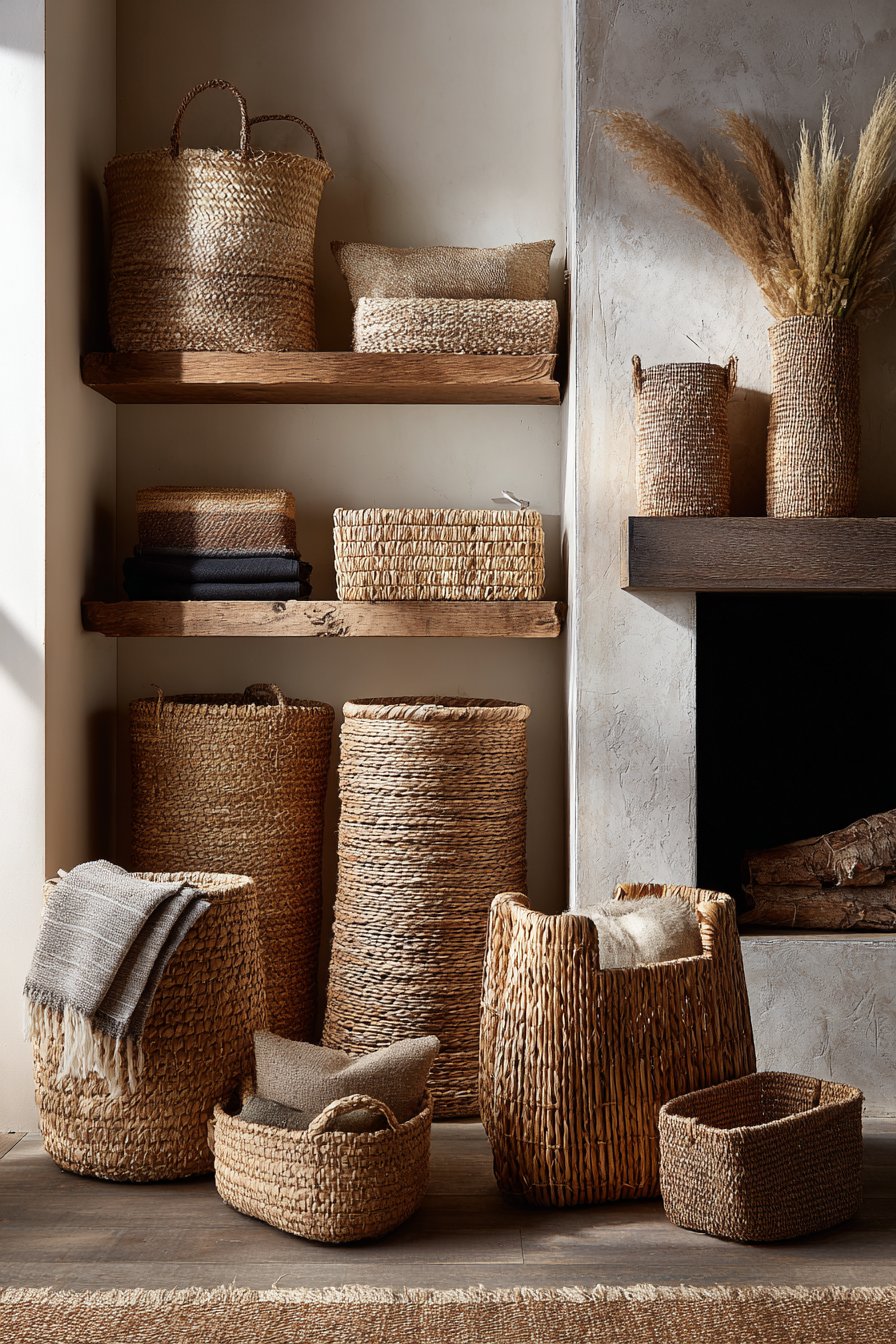
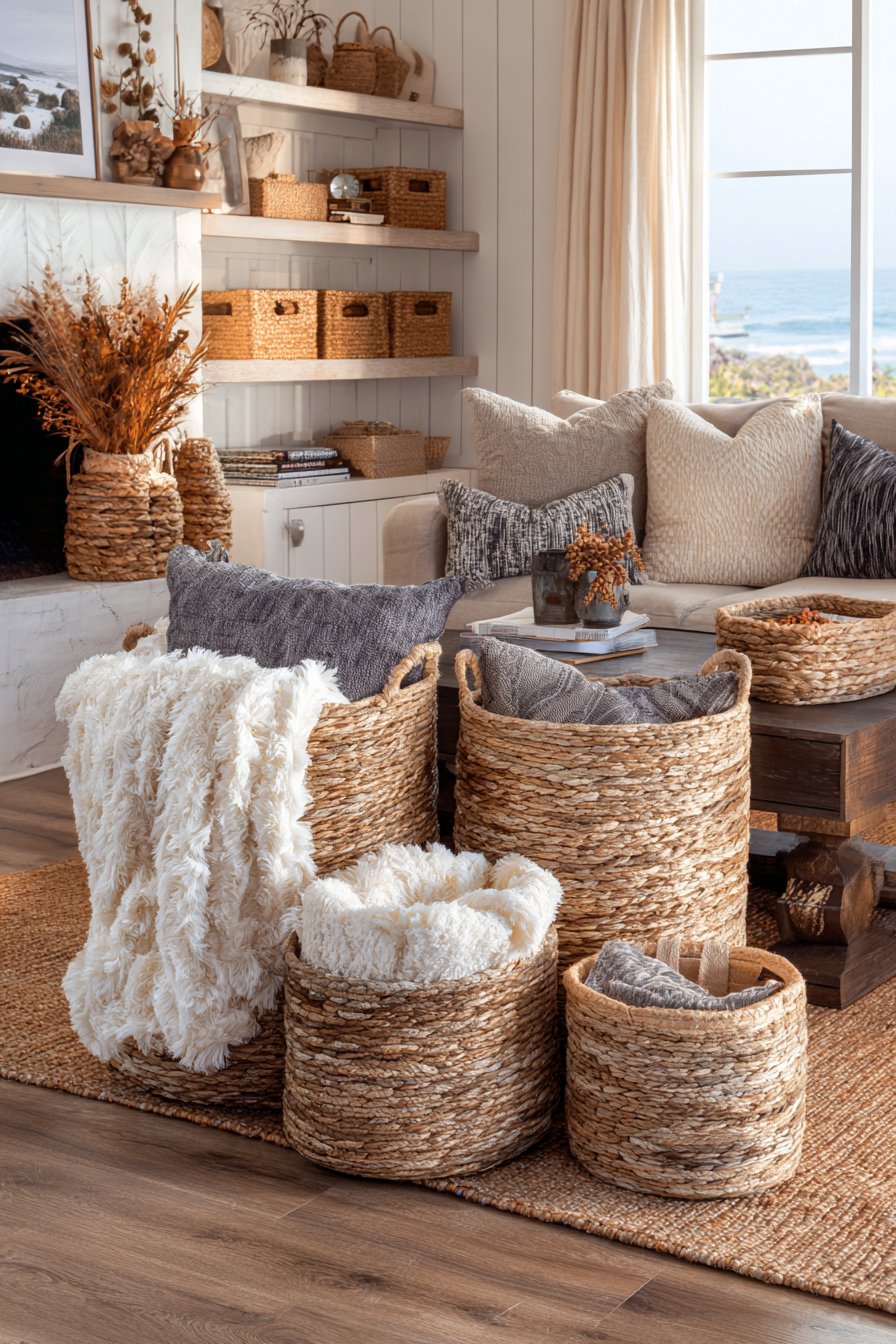
Functional storage becomes beautiful design when executed thoughtfully, and this collection of woven baskets demonstrates how organization can enhance rather than detract from coziness. Baskets in varying sizes and natural materials including seagrass, water hyacinth, and rattan serve multiple purposes throughout the room. Large floor baskets positioned near seating hold throw blankets, keeping them accessible for chilly evenings while providing textural interest. Medium baskets on shelves contain magazines, remote controls, and other items you want accessible but not always visible. Smaller baskets on surfaces corral miscellaneous items like charging cables or reading glasses, preventing surface clutter.
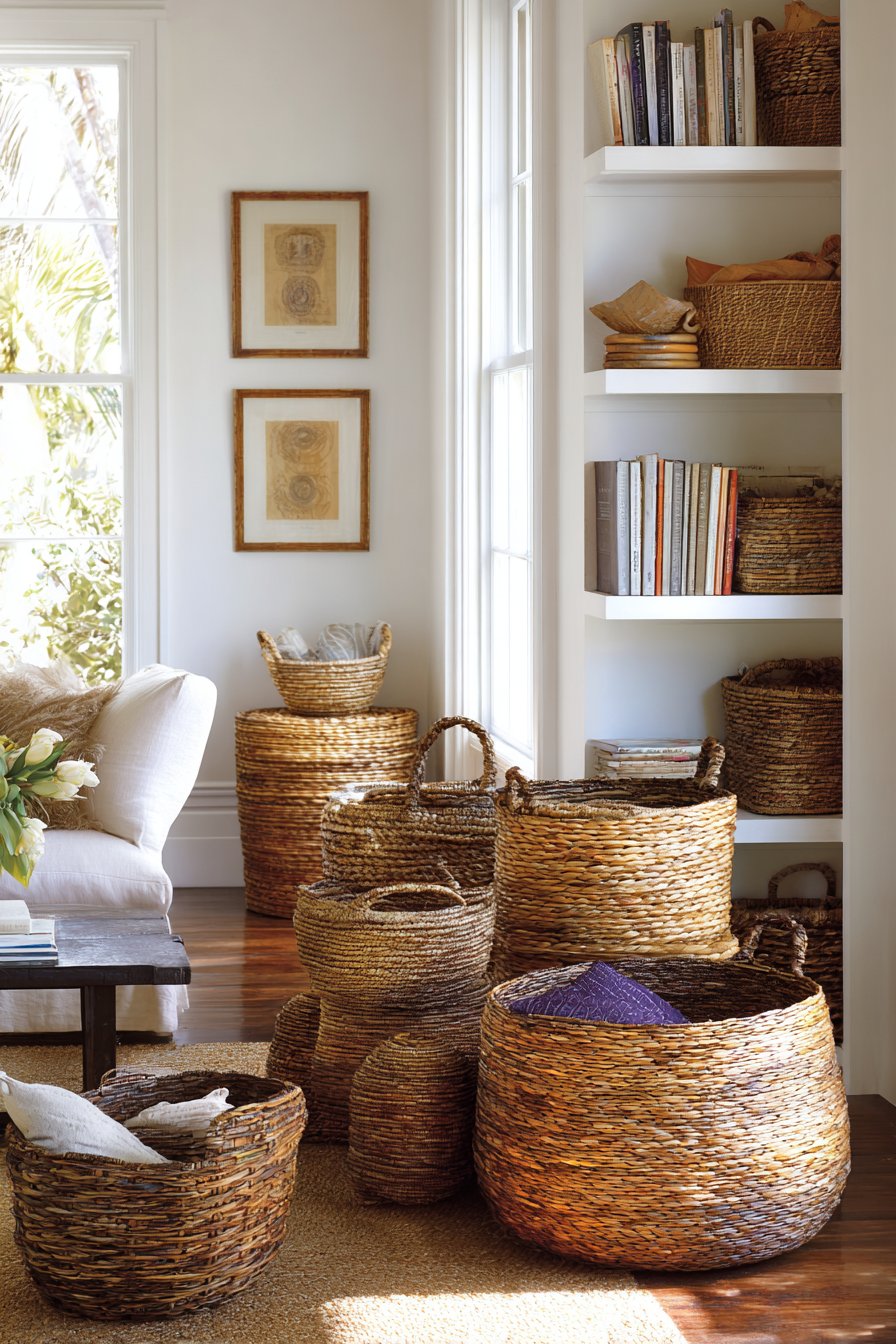
The material variety among the baskets creates visual interest while maintaining cohesion through shared natural tones and handcrafted quality. Seagrass baskets feature tight, uniform weaving with a subtle sheen that catches light. Water hyacinth baskets offer more texture with their chunky, irregular weave and slightly darker tone. Rattan provides smooth, classic appeal with its consistent color and traditional basket form. Together, these natural materials introduce organic texture that complements rather than competes with other room elements, while their warm neutral tones support the overall color scheme.
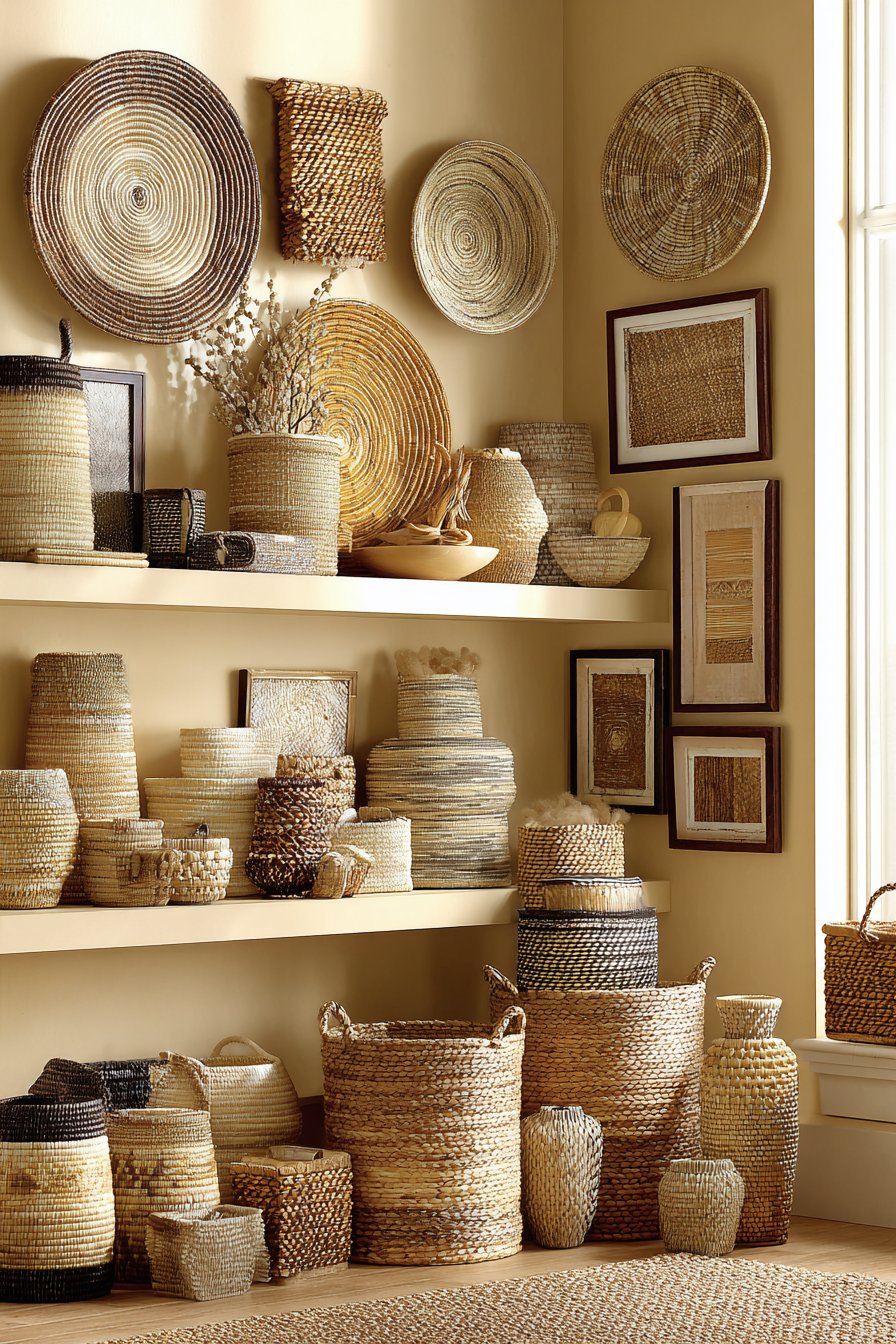
The strategic placement of these baskets throughout the room demonstrates smart design thinking about how people actually use living spaces. Floor baskets near seating acknowledge that blankets tend to migrate to wherever people sit, providing attractive homes for these essential comfort items. Shelf baskets solve the challenge of visible storage without introducing heavy furniture pieces. Surface baskets prevent the accumulation of small items that create visual chaos. This is storage that works with human behavior rather than against it, making it easy to maintain an organized, cozy appearance.
Key Design Tips:
- Choose baskets with handles for easy portability and accessibility
- Mix basket sizes but maintain similar color tones for visual cohesion
- Position storage baskets where items naturally accumulate for easy organization
- Label baskets if used for specific purposes to maintain organization
- Replace plastic storage containers with natural baskets wherever visible for elevated aesthetics
15. Curated Eclectic Mix
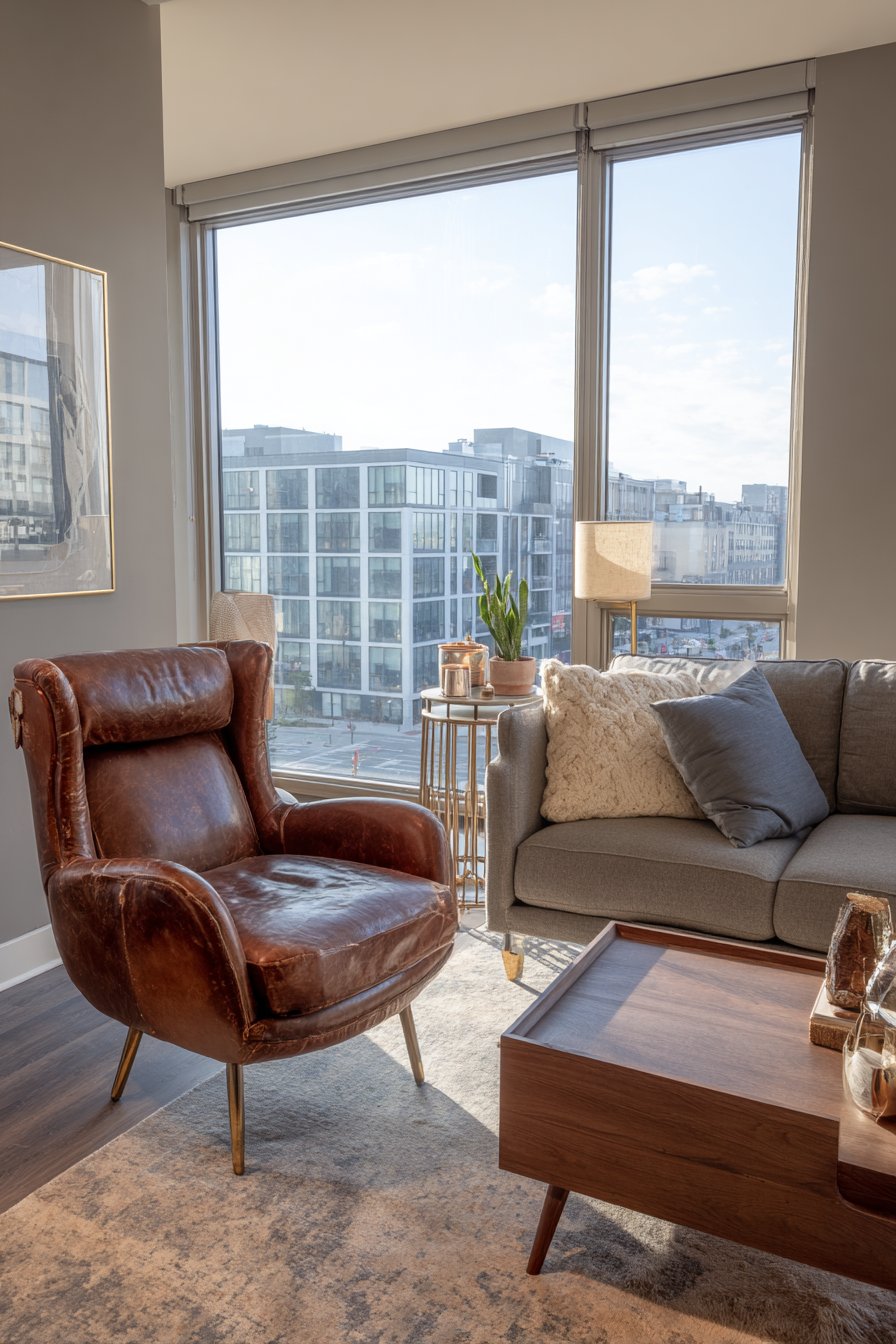
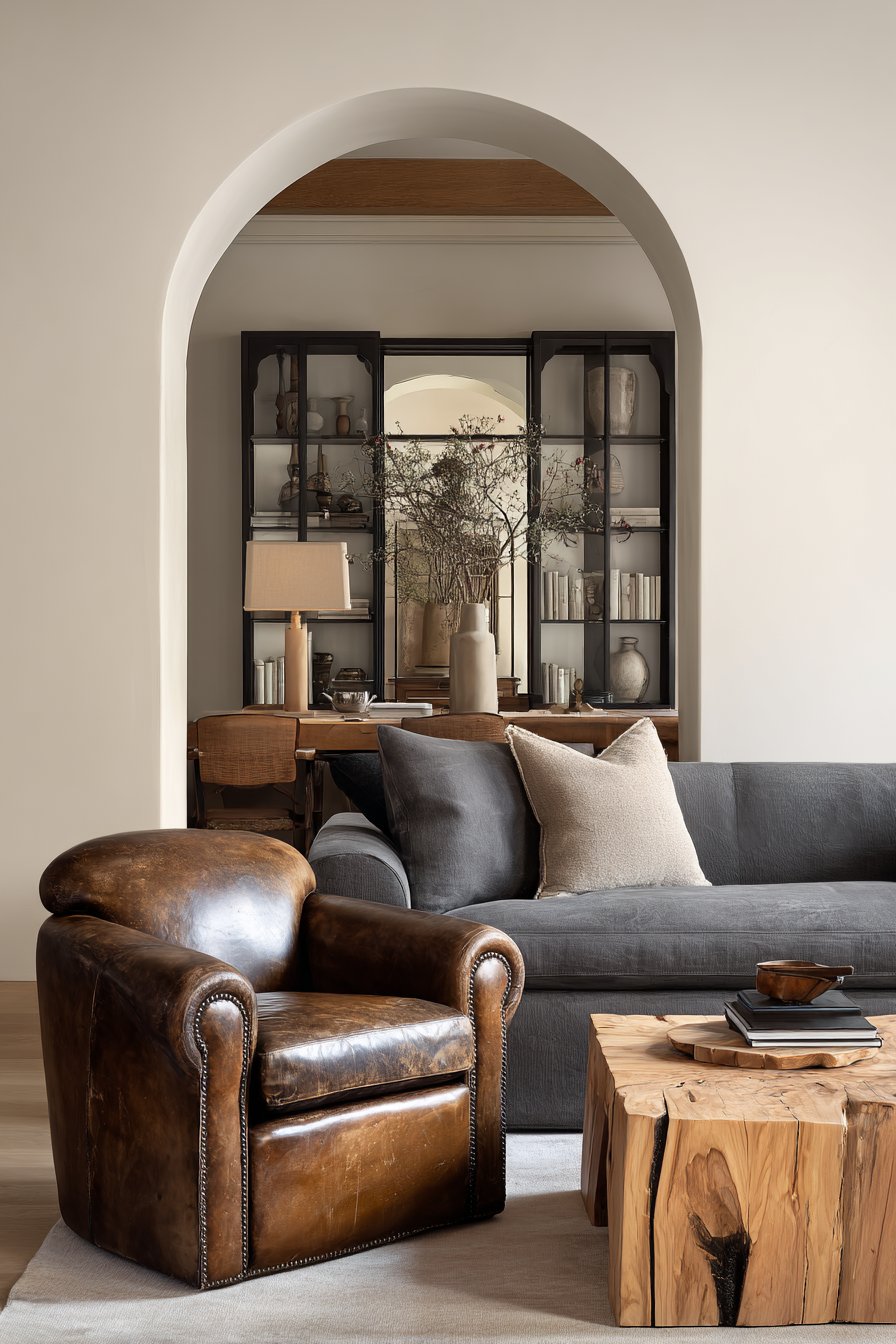
The collected-over-time aesthetic requires careful curation to feel intentional rather than haphazard, and this design demonstrates how diverse furniture styles can coexist beautifully. A modern low-profile sofa provides clean lines and contemporary comfort, while a vintage leather armchair showing natural patina introduces history and character. A mid-century inspired coffee table bridges modern and vintage with its iconic silhouette, and contemporary side tables offer functional storage with current design sensibility. The common thread connecting these varied pieces is a neutral color palette and similar wood tones that create cohesion despite stylistic differences.
This approach to furniture selection mirrors how real homes evolve—pieces are acquired over time, sometimes inherited, sometimes purchased new, creating a layered history that tells the story of the people who live there. The modern sofa might represent a recent investment in comfort and current style. The vintage leather chair could be a beloved flea market find or family heirloom, its worn leather testament to years of use. The mid-century coffee table demonstrates appreciation for timeless design that transcends trends. Together, they create a space that feels authentic and personal rather than catalog-perfect.
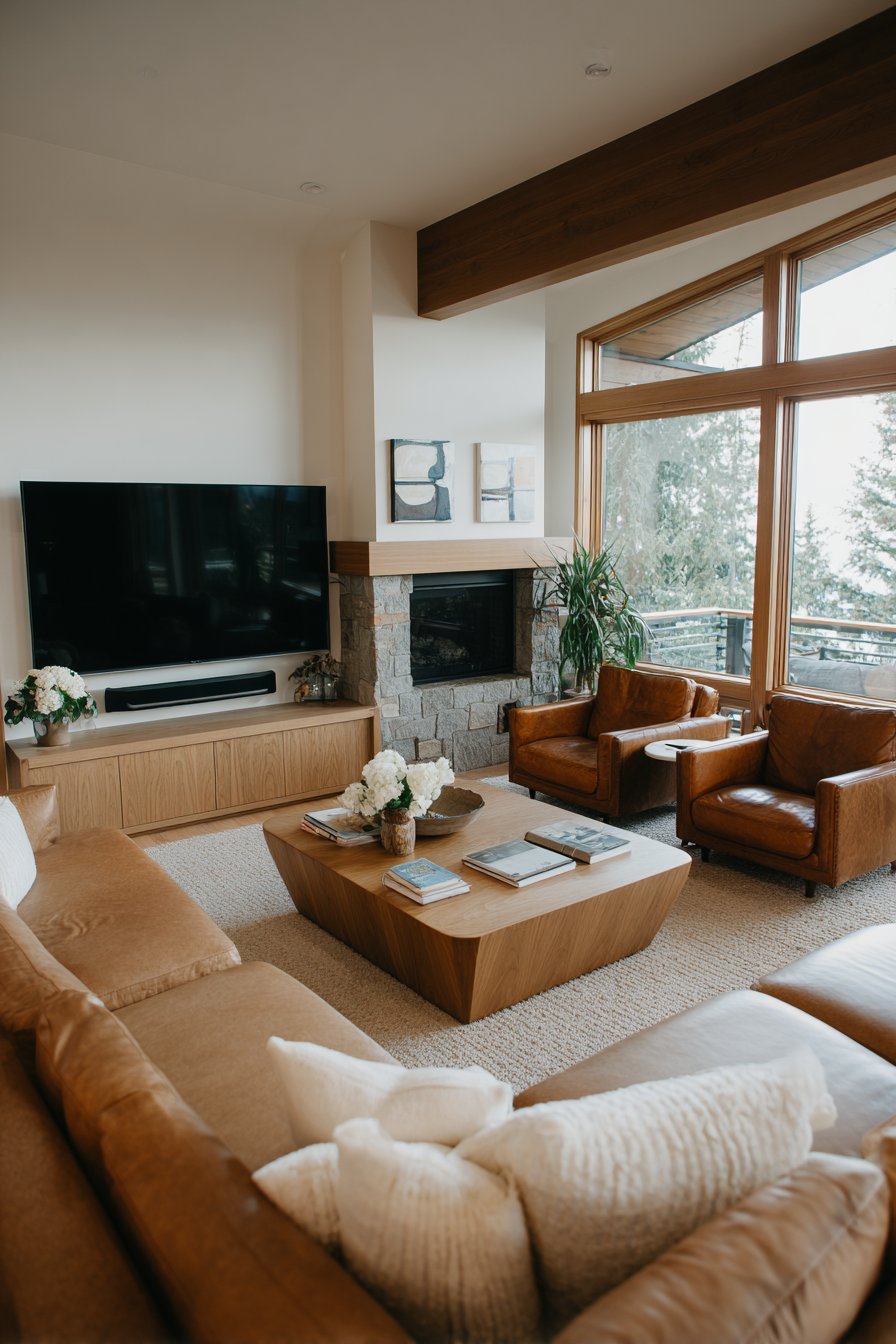
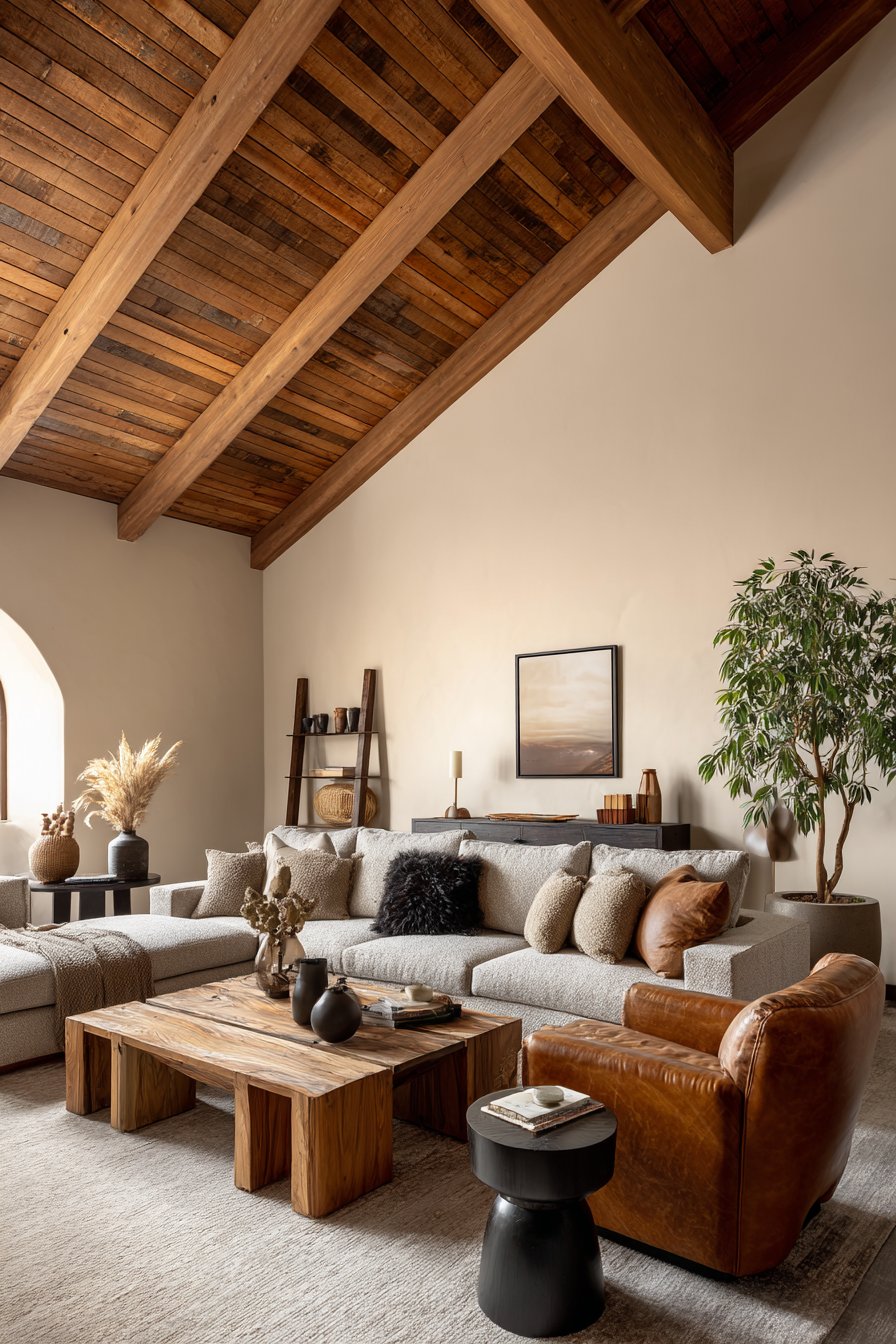
The success of this eclectic approach relies on careful attention to proportion, scale, and visual weight. The pieces work together because they’re similarly sized and don’t compete for dominance. The color palette, while allowing for material variety (leather, upholstery fabric, various woods), remains cohesive through neutral tones and warm undertones. The styles, though different, share a commitment to quality and craftsmanship that creates an underlying harmony. This is a room that looks like it evolved organically, creating the kind of personal, collected atmosphere that defines truly cozy spaces.
Key Design Tips:
- Limit your mix to 2-3 distinct style periods to prevent visual chaos
- Ensure pieces share a common element like color palette, material, or scale
- Balance ornate vintage pieces with cleaner-lined contemporary items
- Invest in quality pieces across different price points rather than buying matching sets
- Allow your collection to evolve over time rather than completing the room all at once
16. Textured Shiplap Accent Wall
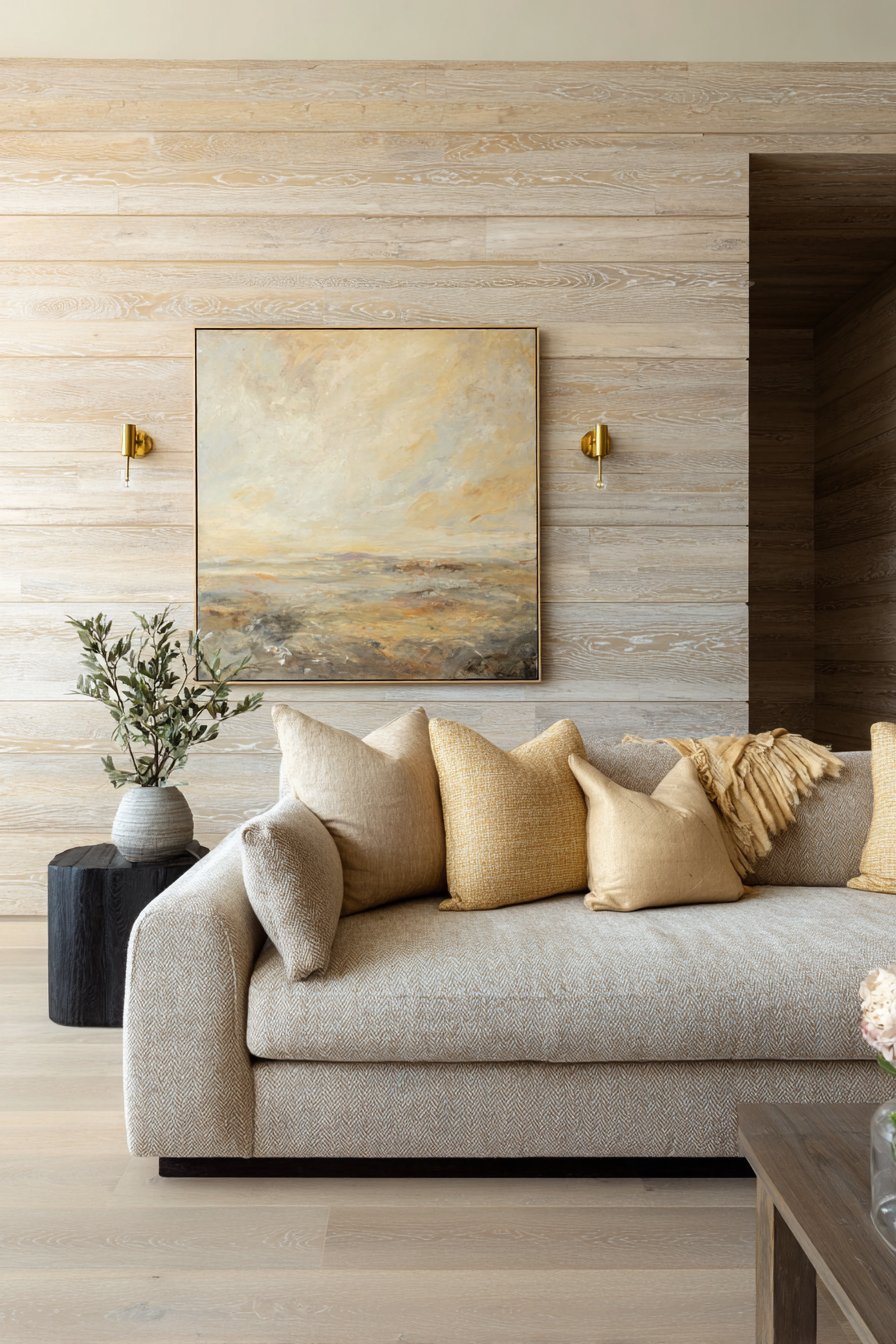
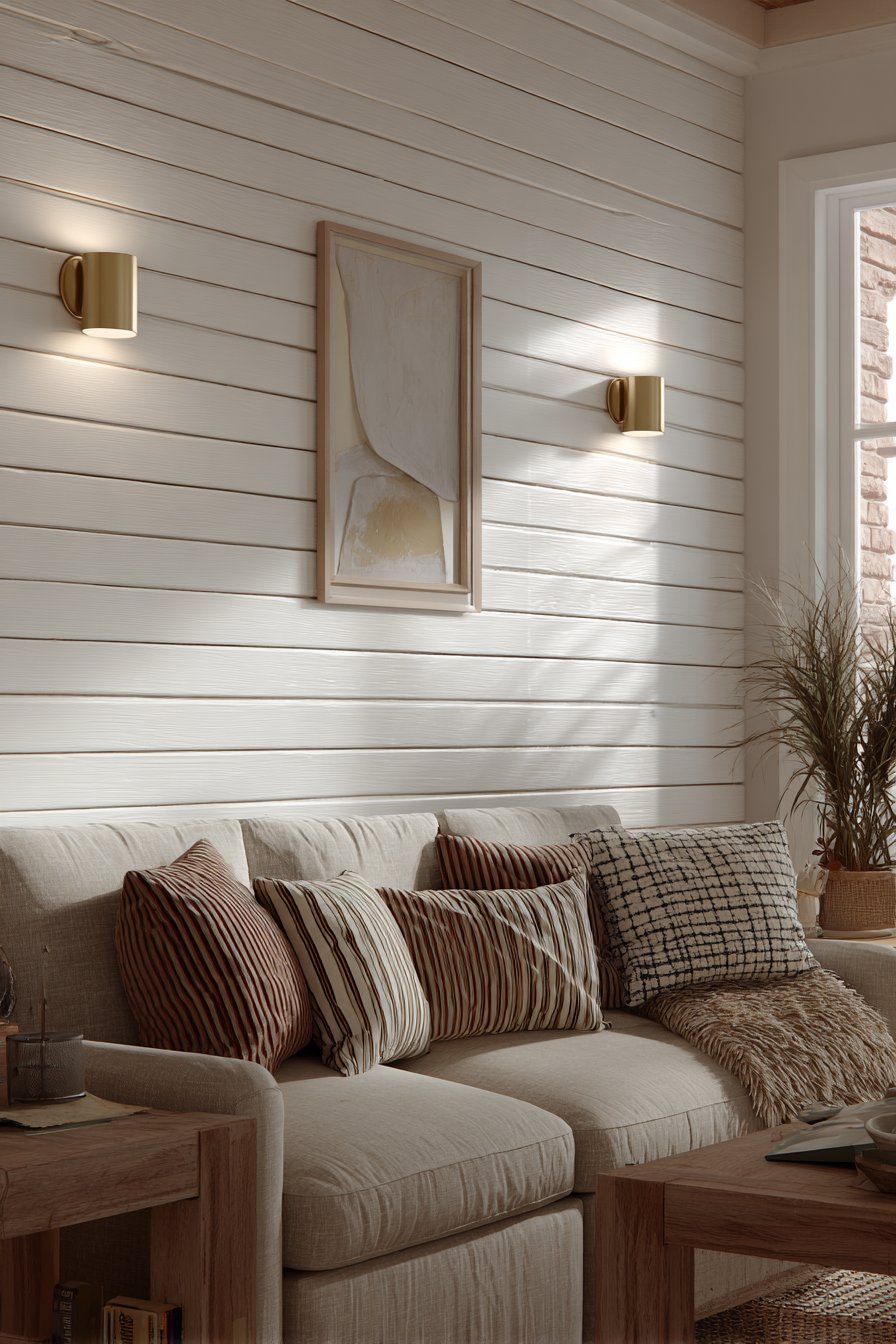
An accent wall introduces architectural interest without overwhelming a space, and this textured shiplap design demonstrates how subtle interventions can create significant impact. Horizontal shiplap boards painted in soft warm white create dimensional texture that catches light differently throughout the day, casting gentle shadows between boards that emphasize the wall’s three-dimensional quality. Simple wall-mounted sconces with brass fixtures flank a large piece of abstract art in muted earth tones, creating a curated focal point that draws the eye. The shiplap provides a sophisticated backdrop that elevates the art while adding its own textural interest to the space.
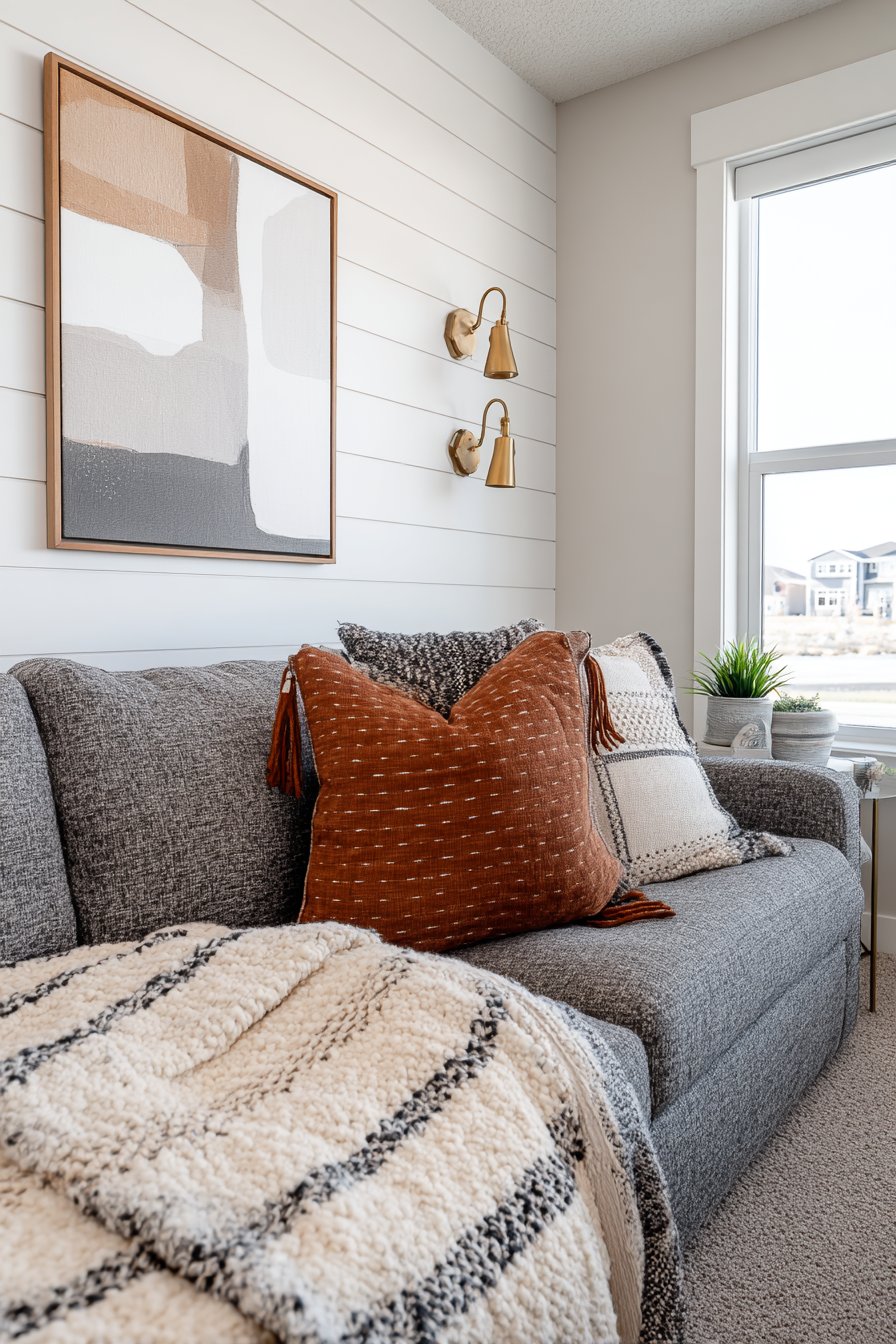
The choice of horizontal shiplap installation creates visual width, making the room feel more expansive while adding the cozy warmth of visible wood texture. The soft warm white paint color prevents the texture from feeling too rustic or busy—it’s present and impactful without dominating. The subtle shadows created between boards change with natural light conditions, creating a living quality where the wall appears slightly different in morning versus afternoon versus evening light. This dynamic quality keeps the space feeling fresh and prevents the background from becoming invisible.
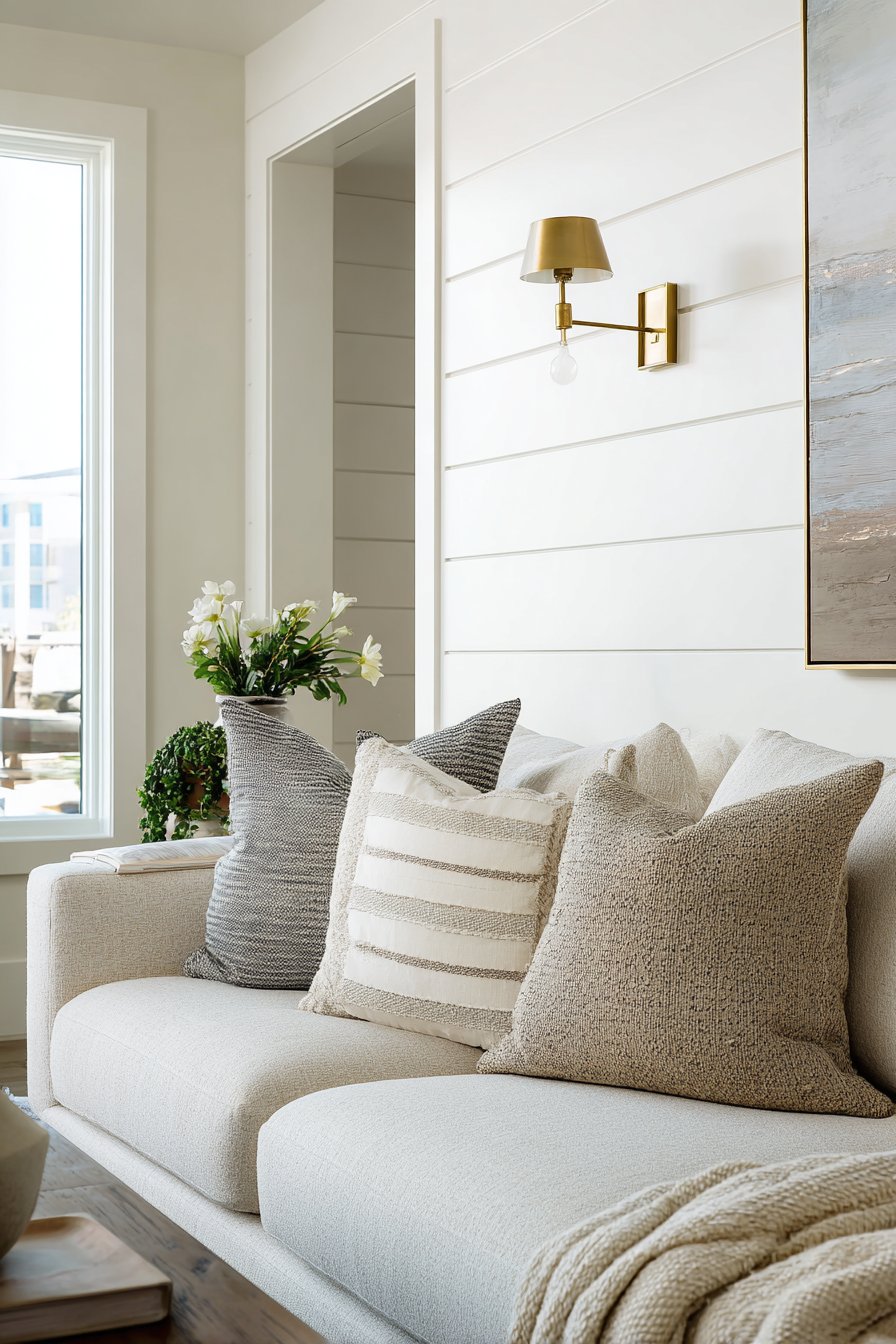
The integration of lighting and art with the textured wall demonstrates sophisticated layering. The brass sconces provide both functional illumination and decorative presence, their warm metal finish complementing the white shiplap while adding another textural dimension. The abstract art in earth tones creates color interest against the neutral backdrop, its muted palette ensuring it enhances rather than overwhelms. Together, these elements create a focal wall that provides visual interest, textural richness, and practical illumination—a multi-functional design intervention that maximizes impact while maintaining the room’s overall calm, cozy atmosphere.
Key Design Tips:
- Install shiplap horizontally to create visual width, vertically to emphasize height
- Use 1/4-inch spacing between boards for visible shadow lines without excessive gaps
- Paint accent walls in the same color as surrounding walls for subtle texture focus
- Position wall sconces 60-66 inches from the floor for optimal light distribution
- Choose art that complements rather than matches your color scheme for sophisticated appeal
17. Hidden Storage Integration
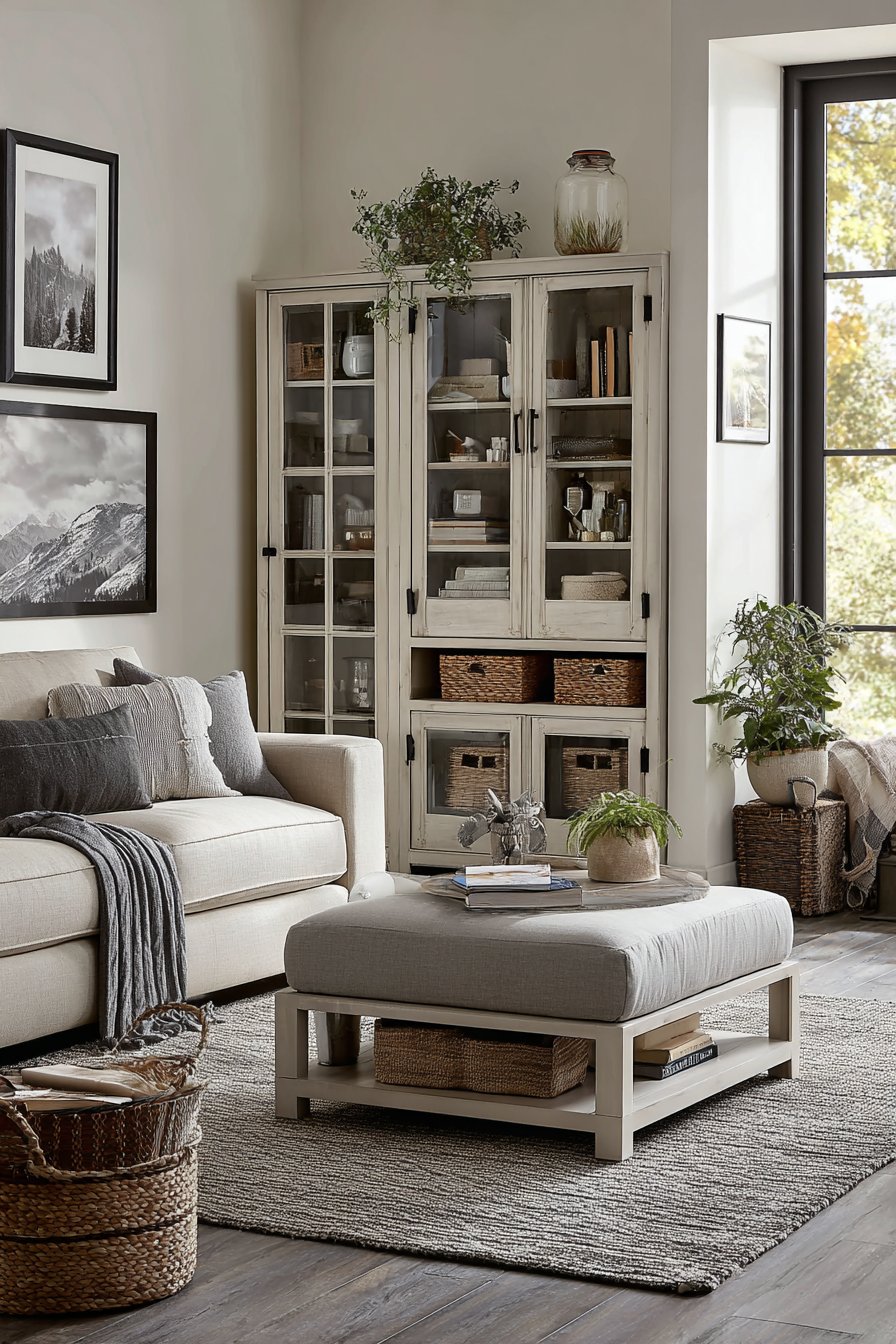
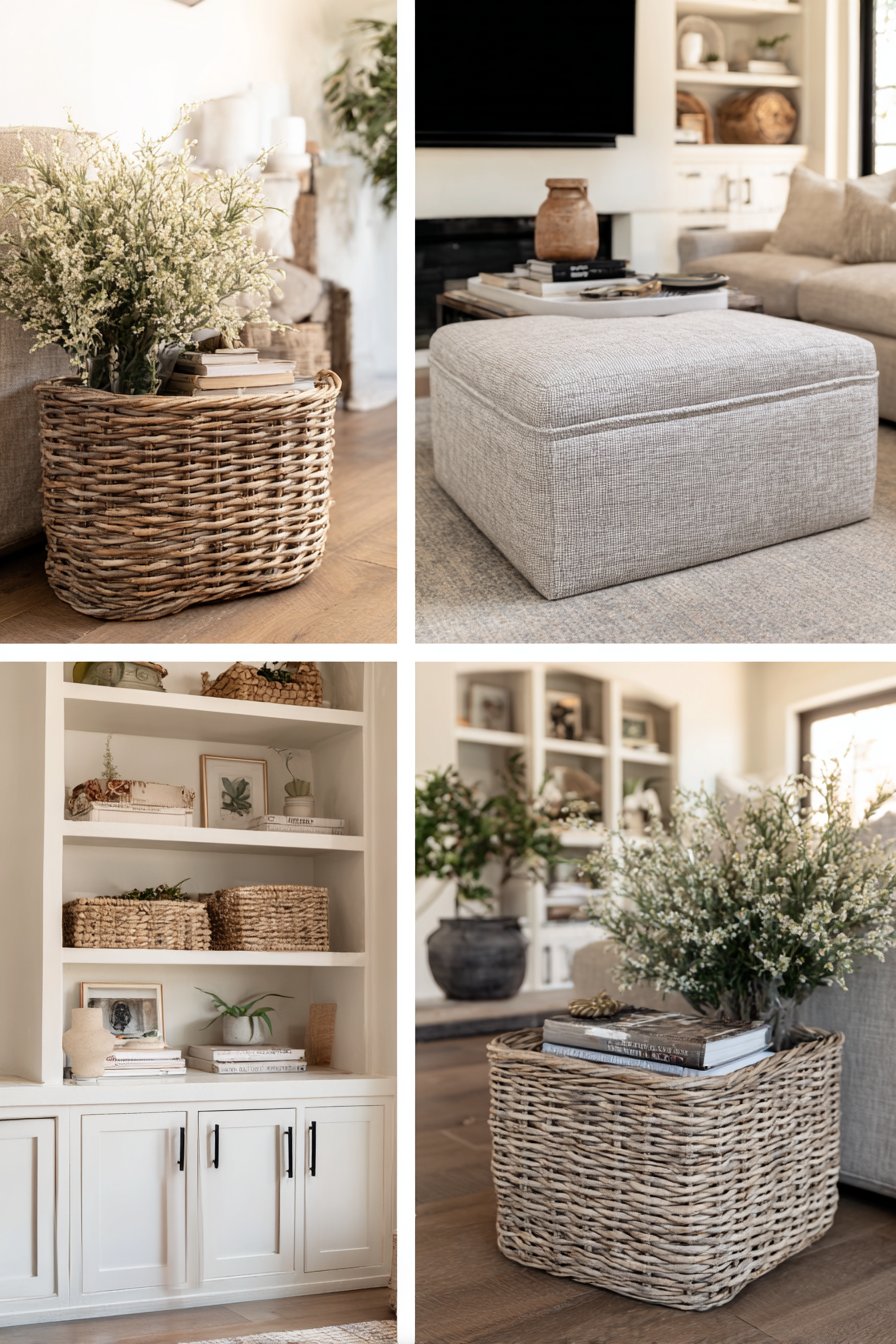
Cozy living rooms maintain their appeal through smart storage that keeps clutter at bay while preserving aesthetics, and this design showcases multiple integrated storage solutions. A media console features closed cabinets that conceal electronics and cords while open shelving displays books and decorative baskets, balancing hidden and visible storage. Built-in cabinetry with glass-front upper cabinets allows curated display of beautiful items while lower closed cabinets hide less attractive necessities. A storage ottoman upholstered in soft grey linen provides additional seating, a footrest, and hidden storage accessed via a lift-top—triple functionality in a single piece.
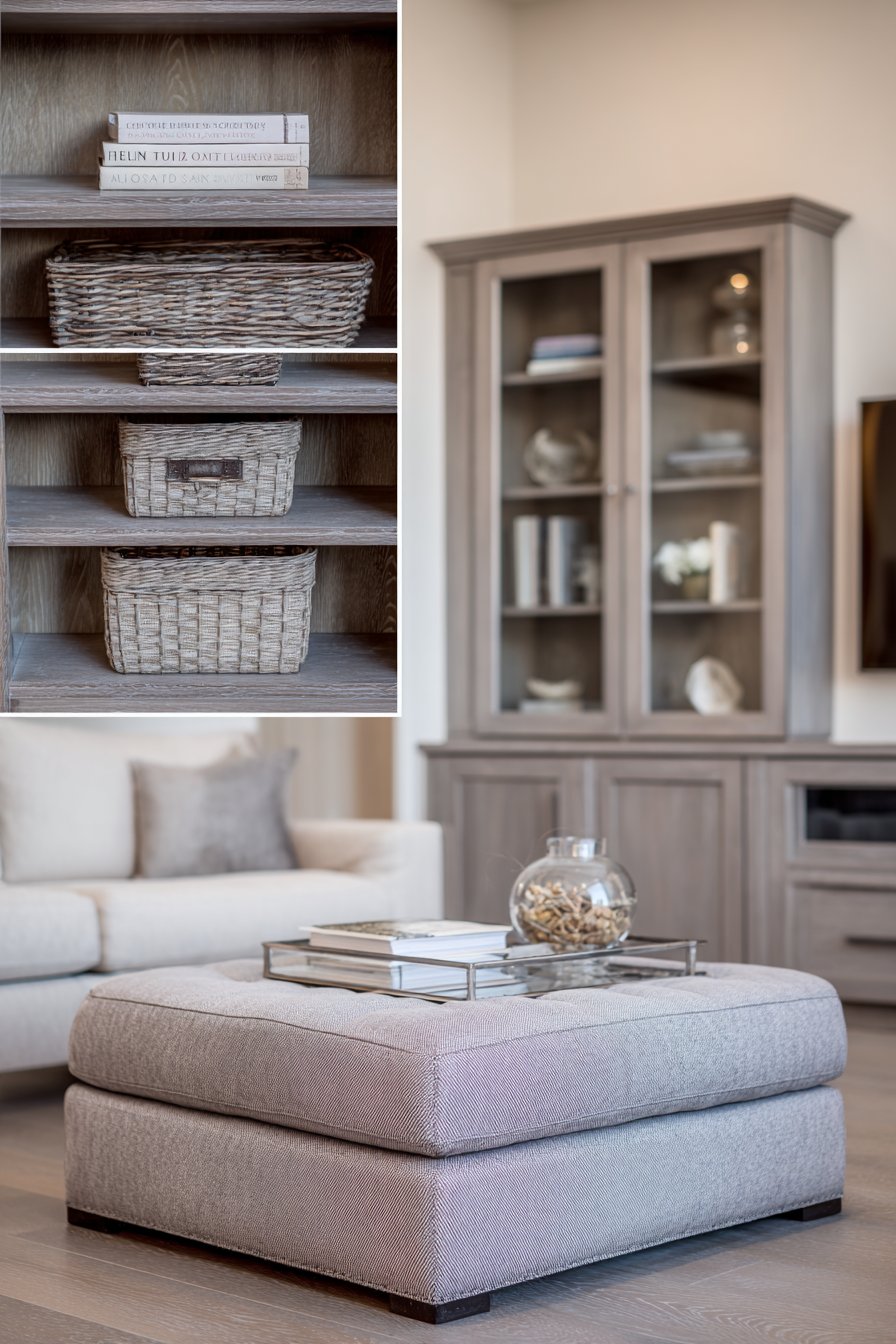
The media console design demonstrates how thoughtful proportions create both beauty and function. The closed lower cabinets with quality hardware provide ample hidden storage for media equipment, games, and other items you want accessible but not visible. The open shelving above creates breathing room and display opportunities—books arranged by color create visual calm, while styled baskets provide attractive homes for items like remotes and chargers. This combination of open and closed storage prevents the console from feeling heavy while maximizing its organizational capacity.
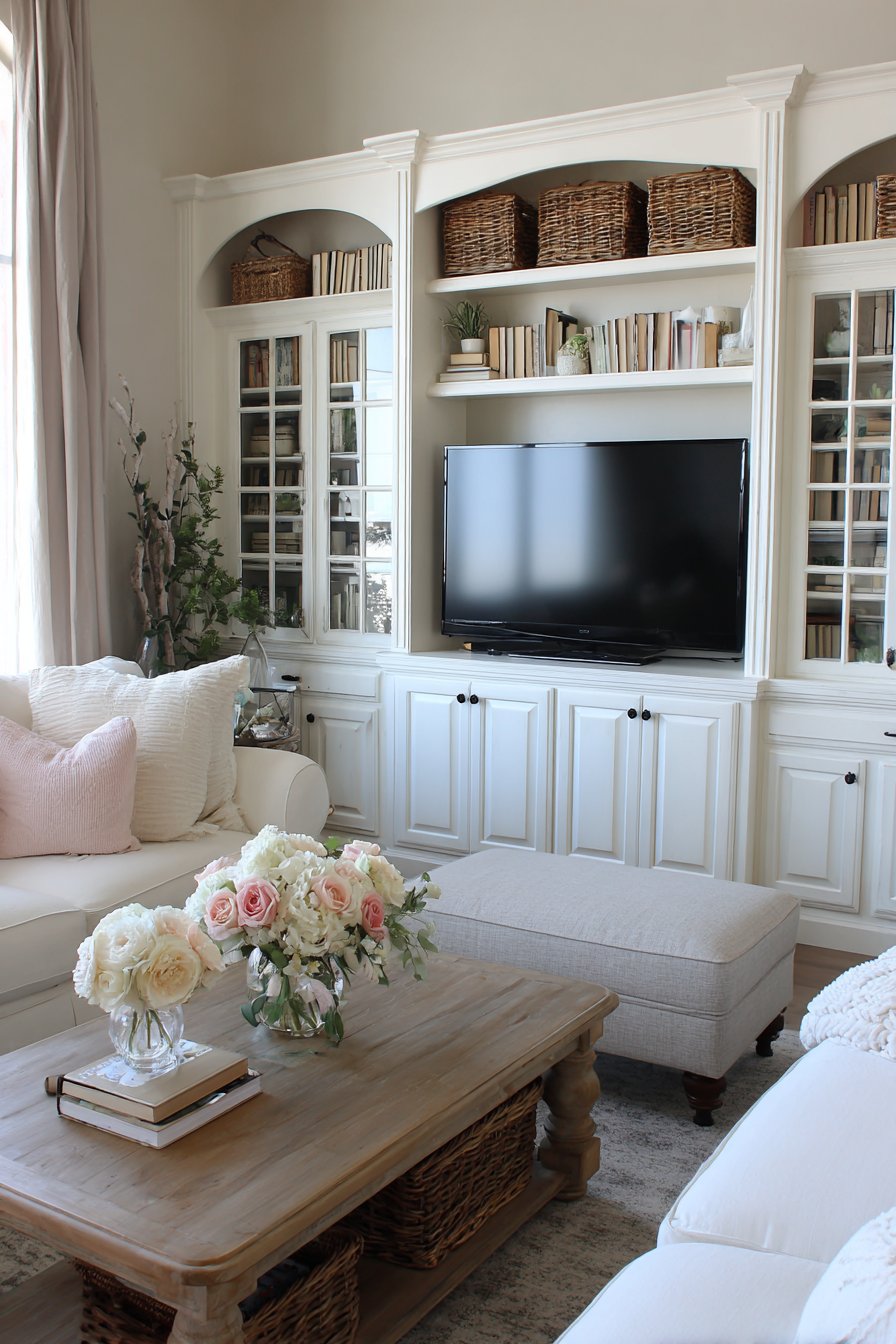
The built-in cabinetry takes storage integration to the next level, looking like intentional architecture rather than afterthought furniture. Glass-front upper cabinets create opportunity for curated displays—perhaps special glassware, collected items, or beautifully bound books—while the transparency prevents the cabinets from making the room feel closed in. Lower closed cabinets provide substantial storage without visual weight. The storage ottoman represents perhaps the cleverest solution—it’s beautiful enough to coordinate with other furniture, functional enough to serve multiple purposes, and practical enough to hide the everyday items that tend to accumulate in living spaces.
Key Design Tips:
- Aim for a 60/40 split between closed and open storage for visual balance
- Invest in quality hardware and soft-close mechanisms for daily-use pieces
- Choose storage ottomans with structured sides that won’t collapse when sat upon
- Style open shelving with a mix of vertical books, horizontal stacks, and decorative objects
- Include cable management solutions in media consoles to prevent cord chaos
18. Textile Layering Mastery
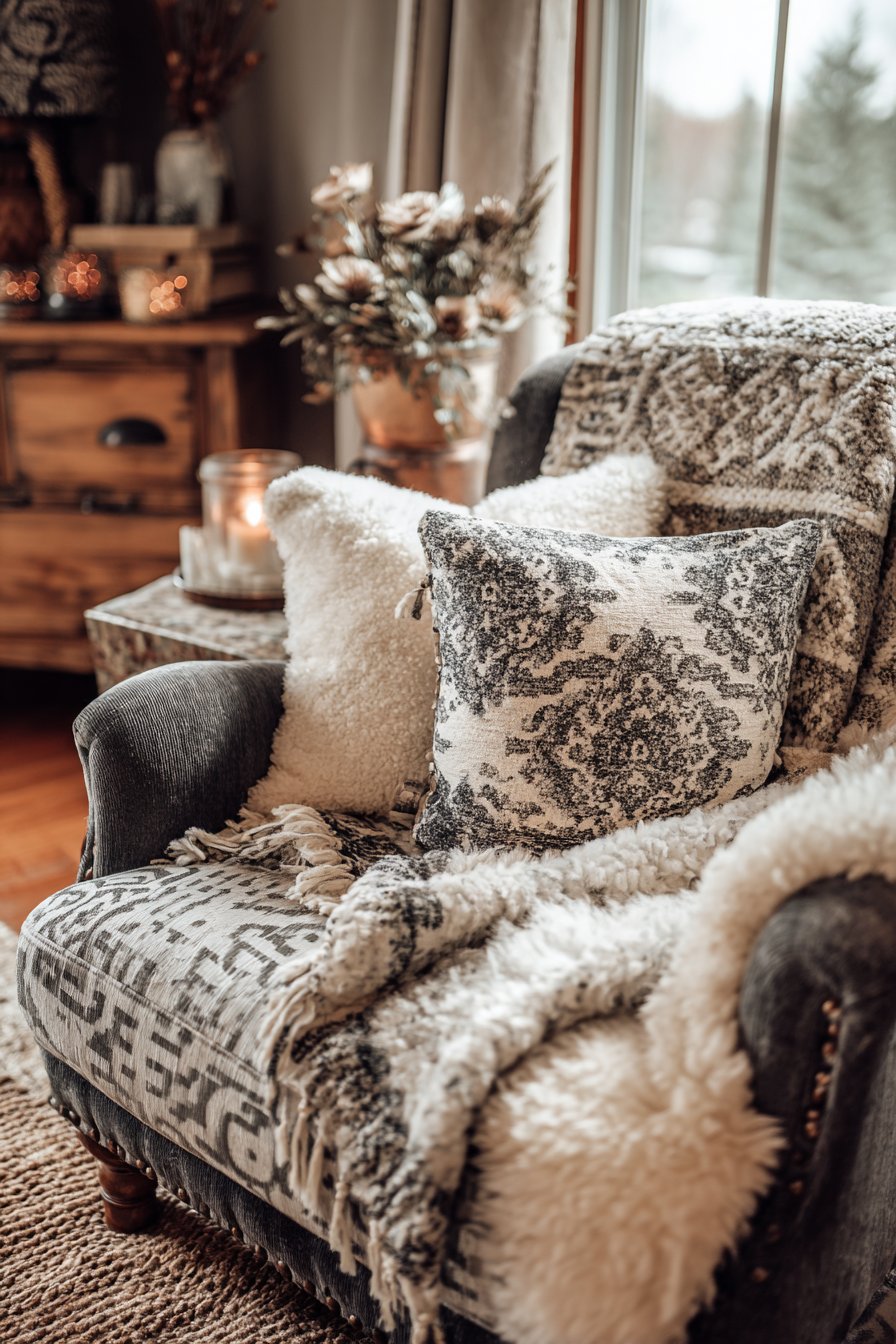
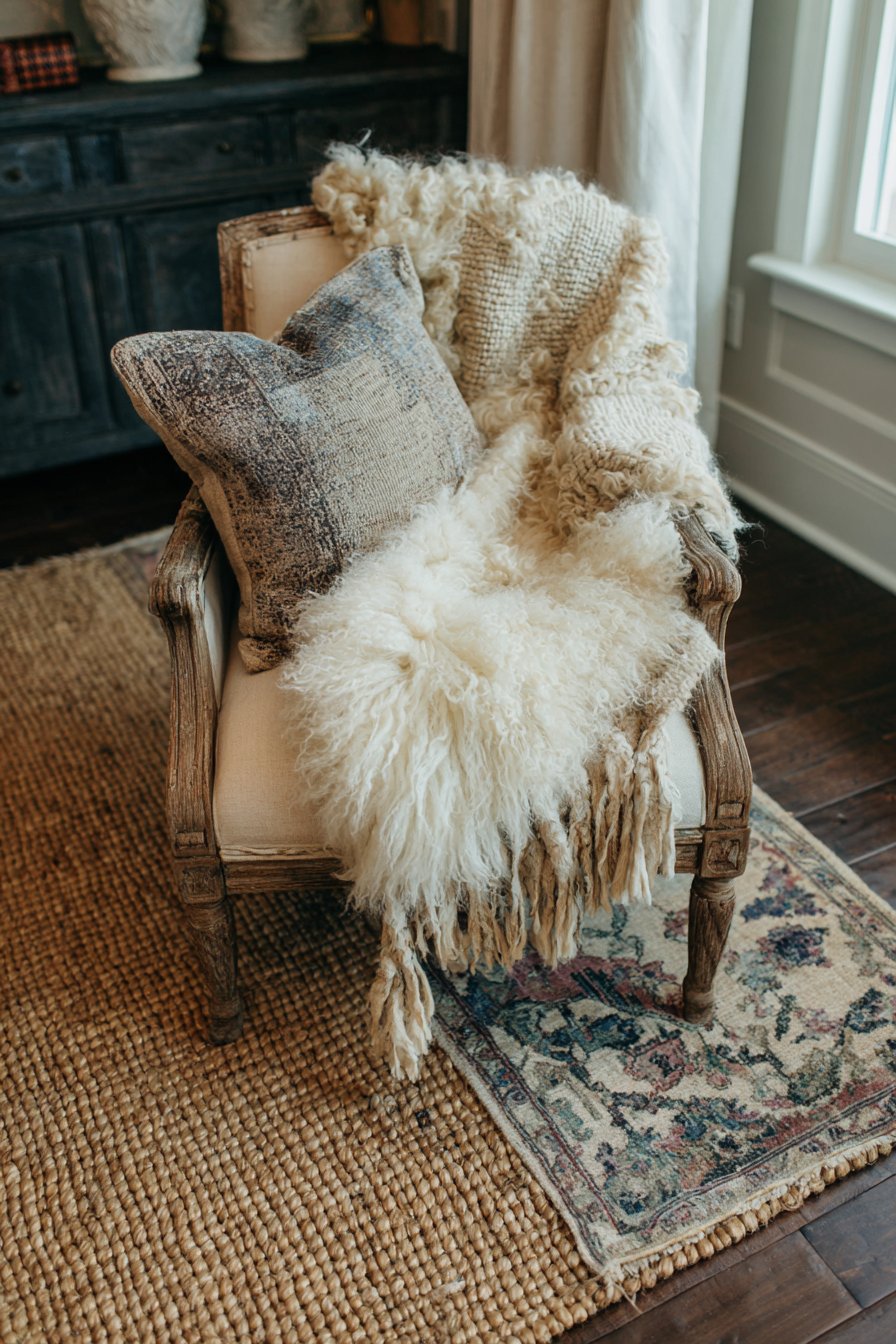
The foundation of exceptional coziness often lies in layered textiles, and this design demonstrates how multiple textile layers create both visual and tactile richness. The foundation begins with a natural jute area rug that provides texture and defines the space. A vintage-inspired wool rug with faded medallion pattern layers on top, introducing pattern and additional softness underfoot. Linen curtains with subtle texture frame windows, while velvet and linen throw pillows on seating provide color and variety. Chunky knit blankets draped over furniture arms and a sheepskin throw over a chair complete the textile symphony, creating a space that invites touch as much as sight.
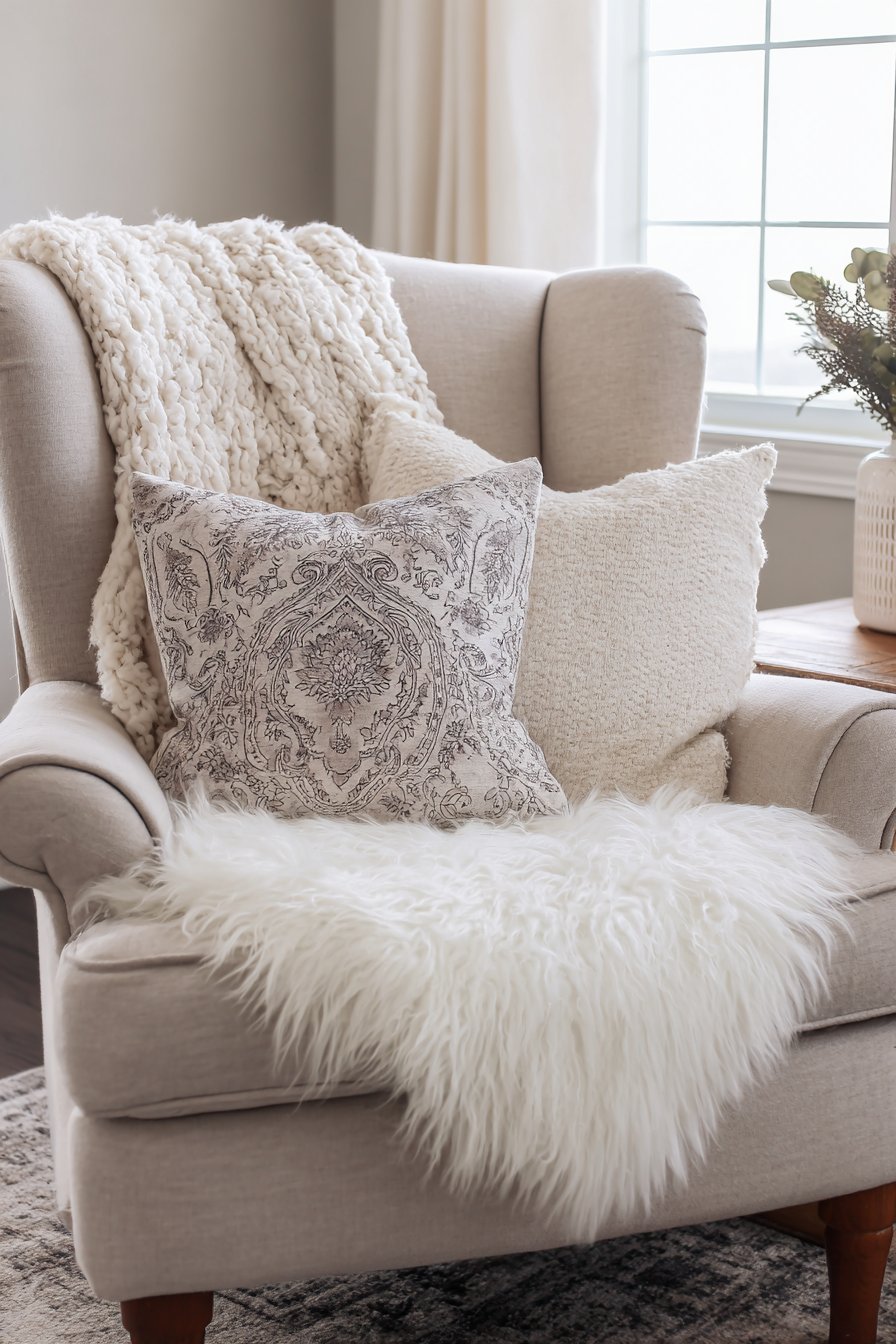
Each textile layer serves distinct visual and functional purposes while contributing to the overall effect. The jute foundation rug provides durability and organic texture, its natural fibers hiding dirt while offering pleasant tactility. The wool rug layered on top introduces pattern without overwhelming—the faded medallion design suggests history and age while the pattern adds visual interest to floors. Linen curtains filter light beautifully, their natural slubs and texture creating visual depth. Velvet pillows catch and reflect light dramatically, appearing to change color as you move. Chunky knit throws introduce substantial texture and cozy appeal, while sheepskin provides luxurious softness.
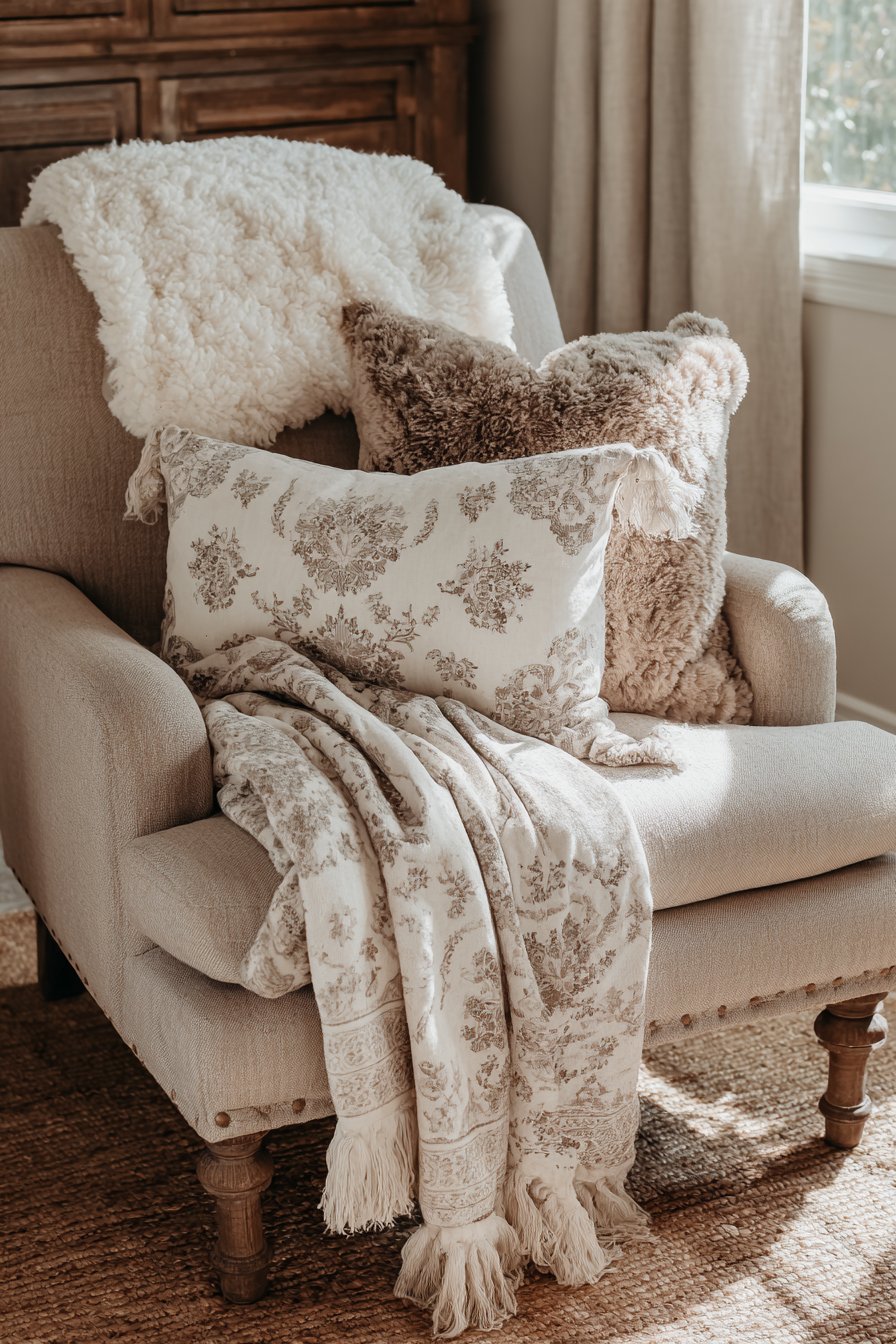
The color coordination across these varied textiles demonstrates sophisticated restraint. The palette remains in complementary neutral tones—natural jutes and creams, faded wool colors, warm linens, and carefully chosen accent colors in pillows. This cohesion allows the textural variety to shine without creating visual chaos. The layering strategy ensures comfort in every season—lighter linens and cotton for warmth, heavier wool and faux fur for cold months—while maintaining year-round visual appeal. This is textile layering that understands both aesthetics and practicality, creating spaces that look beautiful and feel comfortable every day.
Key Design Tips:
- Layer rugs by placing smaller patterned rugs over larger neutral foundations
- Mix textile textures but keep the color palette cohesive for harmony
- Include at least 4-5 different fabric textures in a living room for proper depth
- Wash natural fiber textiles according to manufacturer instructions to maintain appearance
- Rotate seasonal textiles (lighter in summer, heavier in winter) to refresh the space
19. Intimate Reading Corner
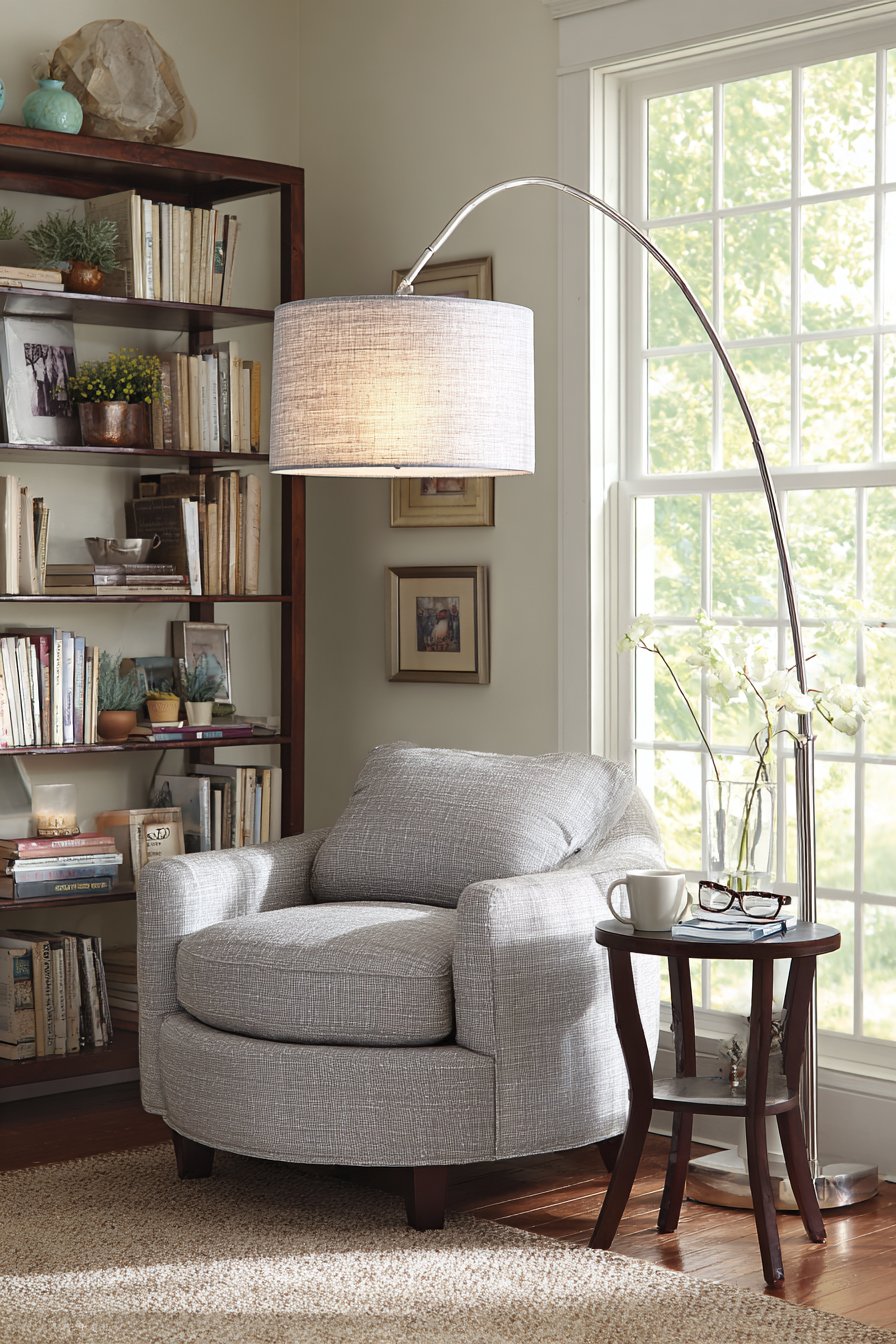
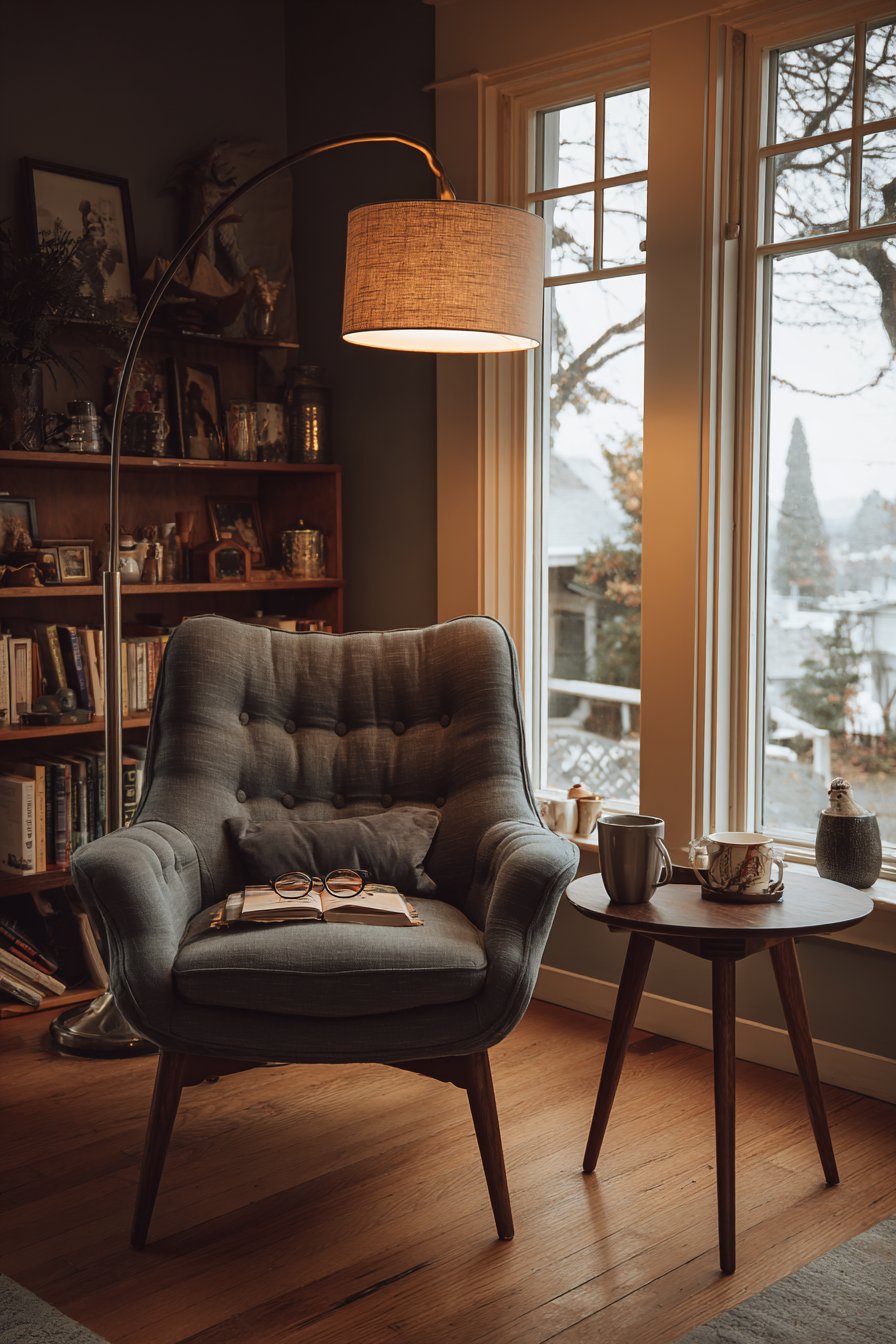
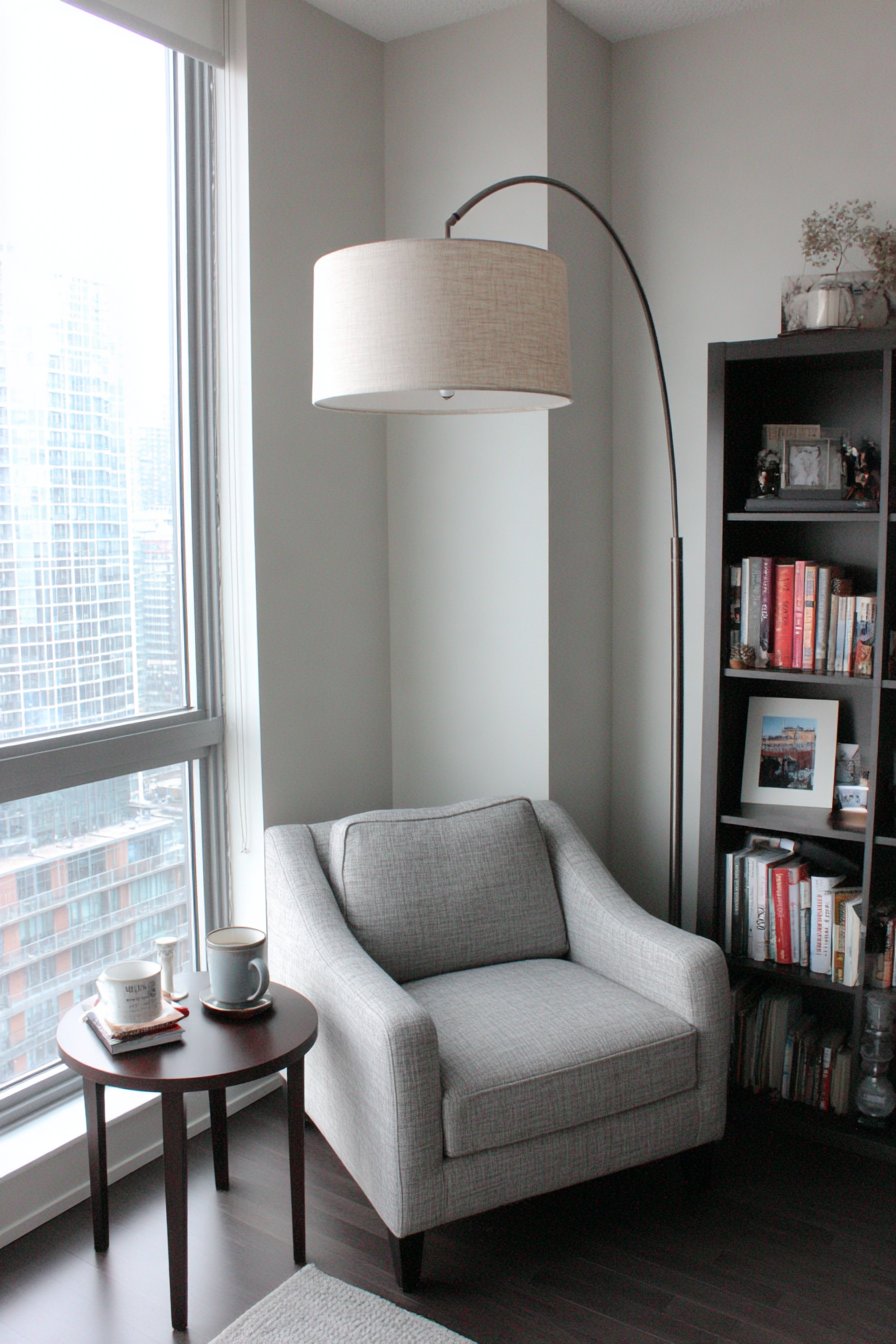
A dedicated reading corner creates a personal sanctuary within the larger living space, and this design showcases how to craft an inviting literary retreat. A comfortable reading chair upholstered in soft grey linen provides the foundation, positioned to receive abundant natural light from a nearby window. A tall arched floor lamp with fabric shade stands ready to extend reading hours into evening, its adjustable arm allowing for customized light positioning. A small round side table in dark wood provides the perfect surface for reading glasses, a ceramic mug, and the current book, while a tall bookshelf filled with beloved books and personal mementos creates a backdrop that celebrates the joy of reading.
The positioning of this corner demonstrates understanding of how readers actually use space. The chair placement perpendicular to the window captures natural light while avoiding direct glare on pages—optimal for comfortable daytime reading. The nearby bookshelf creates easy access to the next read without requiring a trip across the room, encouraging the kind of spontaneous book selection that leads to extended reading sessions. The side table size is carefully considered—large enough for essentials but small enough not to intrude on the intimate scale of the corner. Together, these elements create a space that supports the reading ritual in every practical way.
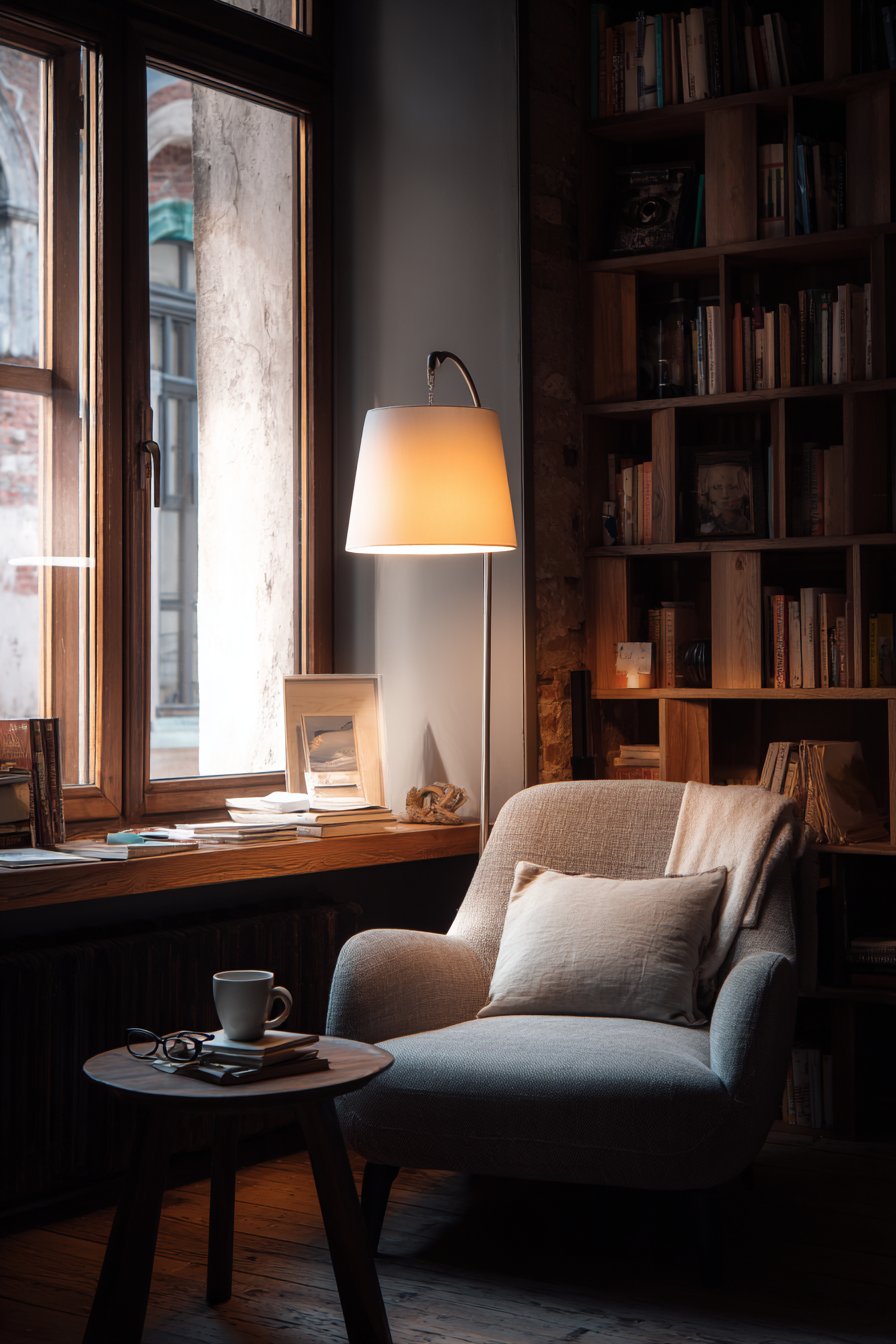
What elevates this corner from merely functional to truly cozy is its personal nature. The bookshelf displays aren’t perfectly styled—they show the reality of a well-read collection with books of varying sizes, some worn spines indicating favorites, personal mementos interspersed that trigger memories. The corner receives natural light but feels enclosed and safe, creating that essential sense of retreat. The soft grey linen of the chair invites sinking in for extended periods, while the adjustable lamp ensures you can read comfortably whatever the time of day. This is a space designed by and for someone who truly loves reading, and that authenticity creates its appeal.
Key Design Tips:
- Position reading chairs to receive natural light from the side rather than behind or in front
- Choose adjustable task lighting with a minimum of 450 lumens for comfortable reading
- Include a side table large enough for a beverage, book, and glasses (18-24 inches diameter)
- Create easy access to book collections without requiring leaving the chair
- Add a small ottoman or footrest for ultimate reading comfort
20. Modern Fireplace Minimalism
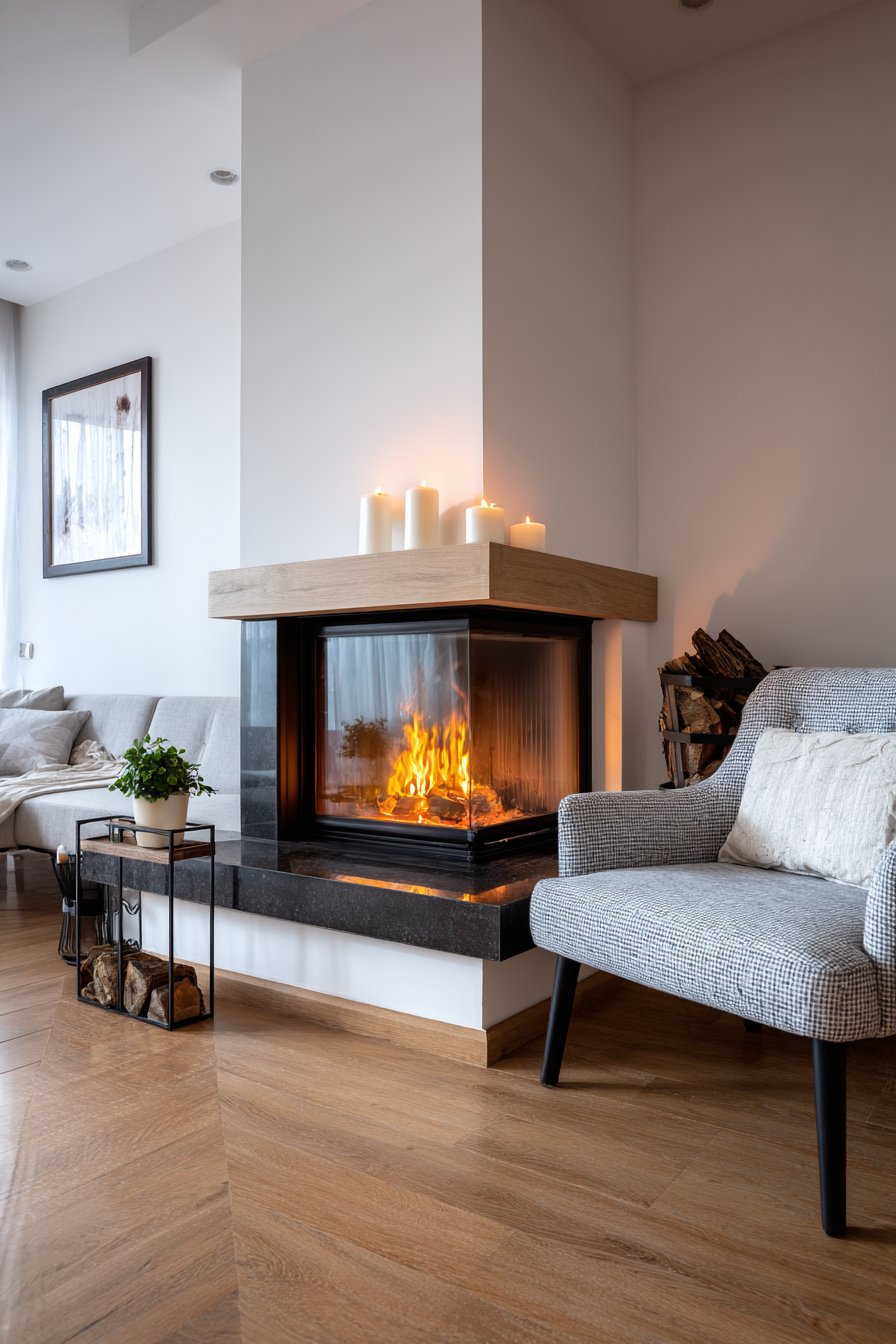
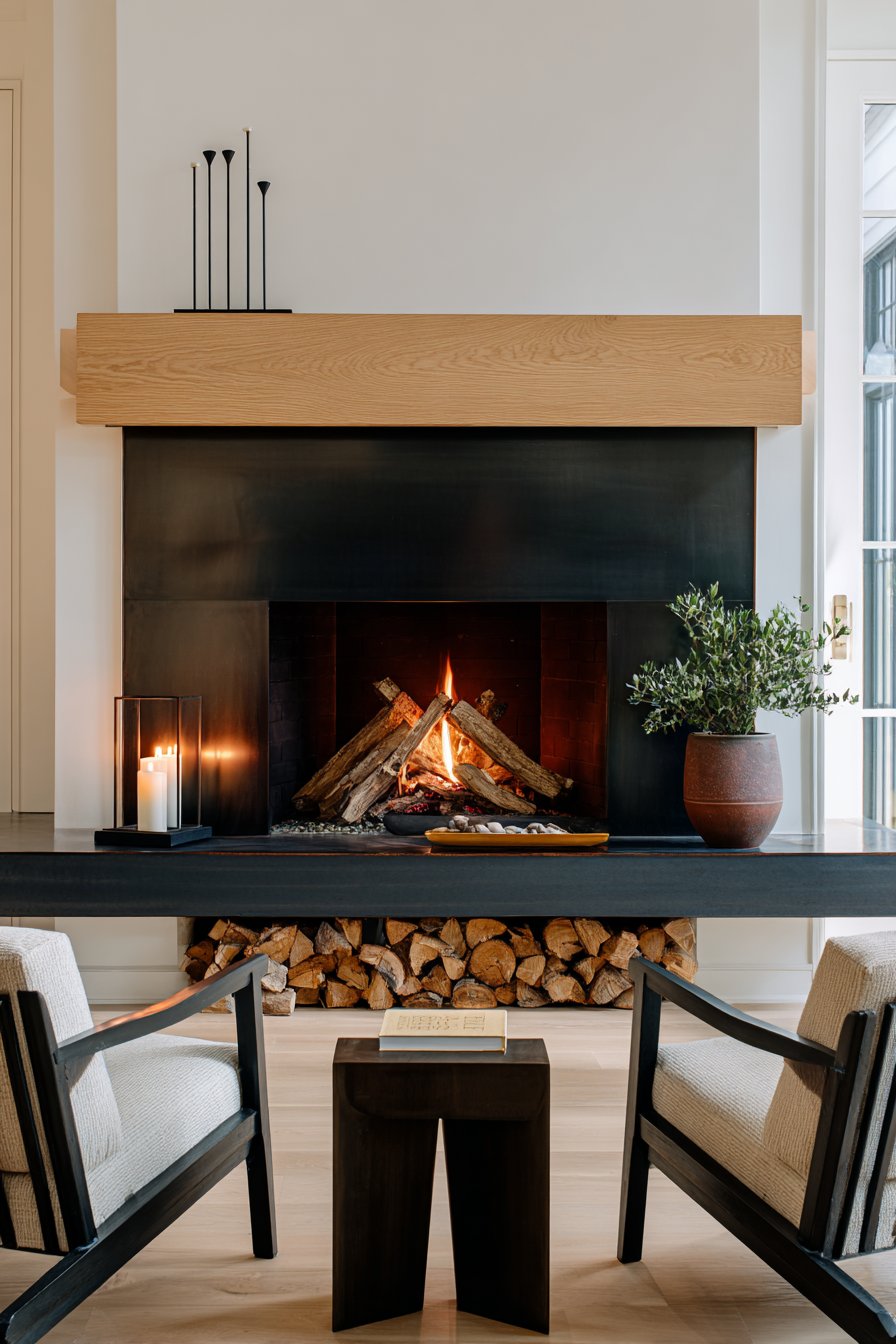
A fireplace can serve as a cozy focal point even in contemporary spaces, and this design demonstrates how minimalist aesthetics can create warmth. The fireplace features a sleek black metal surround that creates strong visual contrast against white walls, its clean lines embodying modern simplicity. A simple wooden mantel in light oak provides the perfect perch for minimal styling—a few pieces of decorative firewood in a black metal holder that’s both functional and sculptural, two pillar candles, and a small potted plant. Two comfortable chairs face the fireplace, creating an intimate conversation area that capitalizes on the focal point.
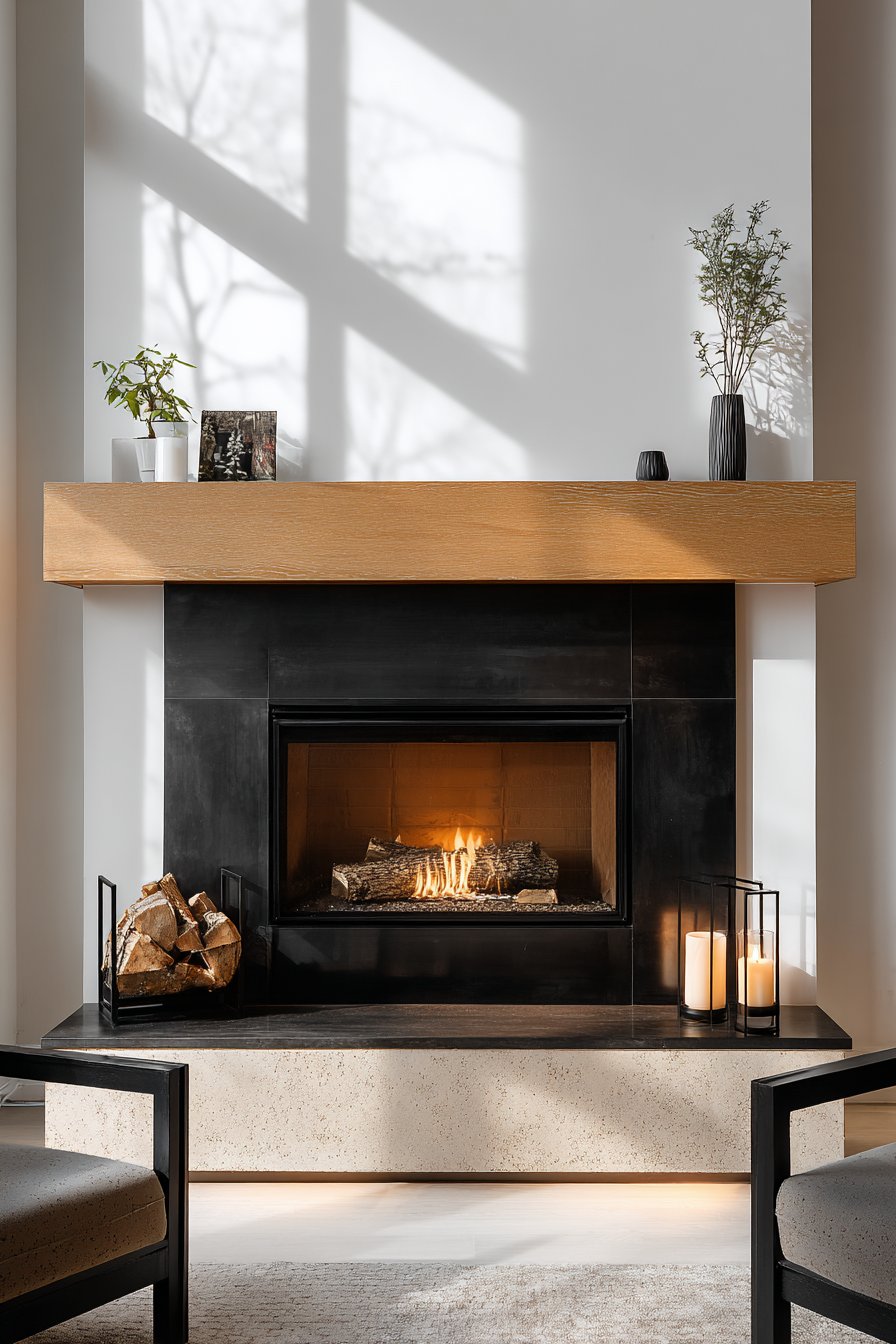
The restrained approach to mantel styling demonstrates confidence and sophistication—less is indeed more when each item is carefully chosen and thoughtfully placed. The decorative firewood holder serves double duty as art and storage, its black metal echoing the fireplace surround while the natural wood inside adds organic warmth. The pillar candles provide additional light sources and the romance of open flame even when the fireplace isn’t lit. The small potted plant introduces life and natural form, softening the geometric lines of the fireplace architecture. This minimal styling ensures the fireplace itself remains the star.
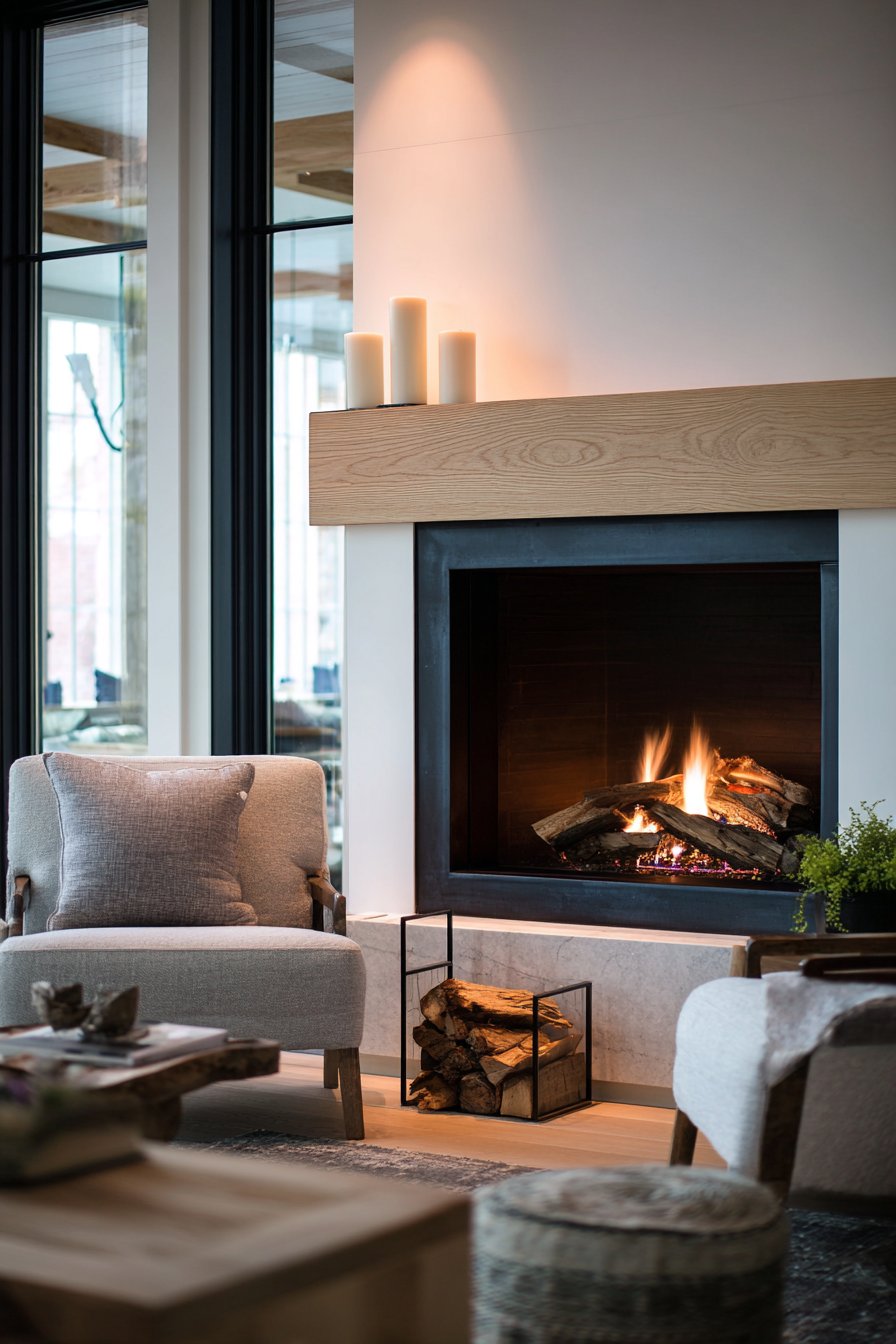
The furniture arrangement facing the fireplace creates an intentional gathering space that encourages face-to-face conversation. The chairs are positioned close enough for comfortable conversation but far enough apart to respect personal space, with the fireplace serving as a third point in the triangle of interaction. During operation, the firelight creates warm ambient glow that complements natural daylight, while evening finds the fire as the primary light source, creating dramatic, intimate atmosphere. This is minimalist design that understands how to create coziness through restraint, letting quality materials and thoughtful placement do the work.
Key Design Tips:
- Keep minimalist mantel styling to 3-5 items maximum for clean impact
- Choose fireplace surrounds that contrast with wall colors for definition
- Position seating 8-10 feet from the fireplace for comfortable heat and viewing
- Include both functional and decorative elements in minimal styling
- Ensure the fireplace scale is appropriate for the room size (not overwhelming or underwhelming)
21. Personal Touch Display
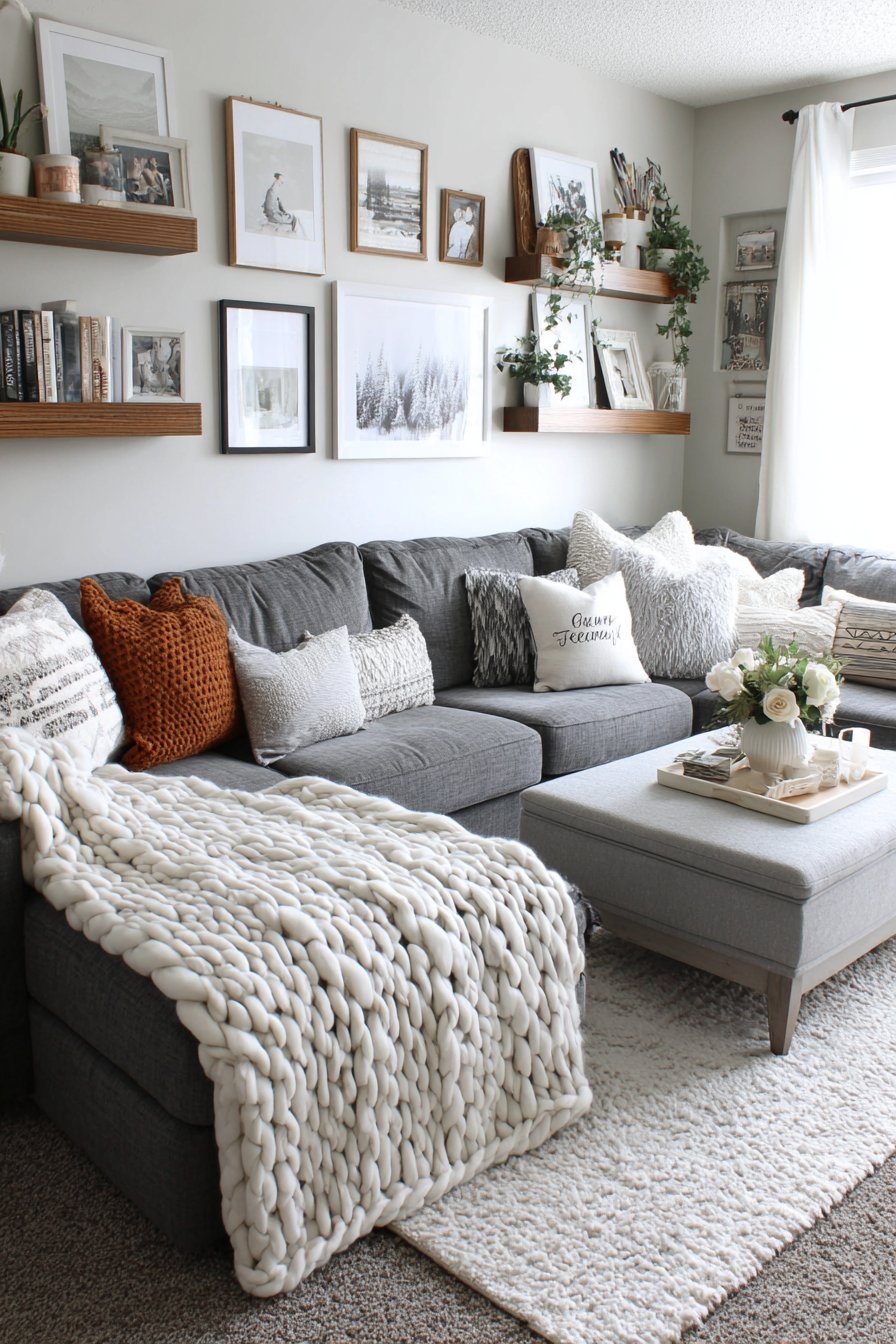
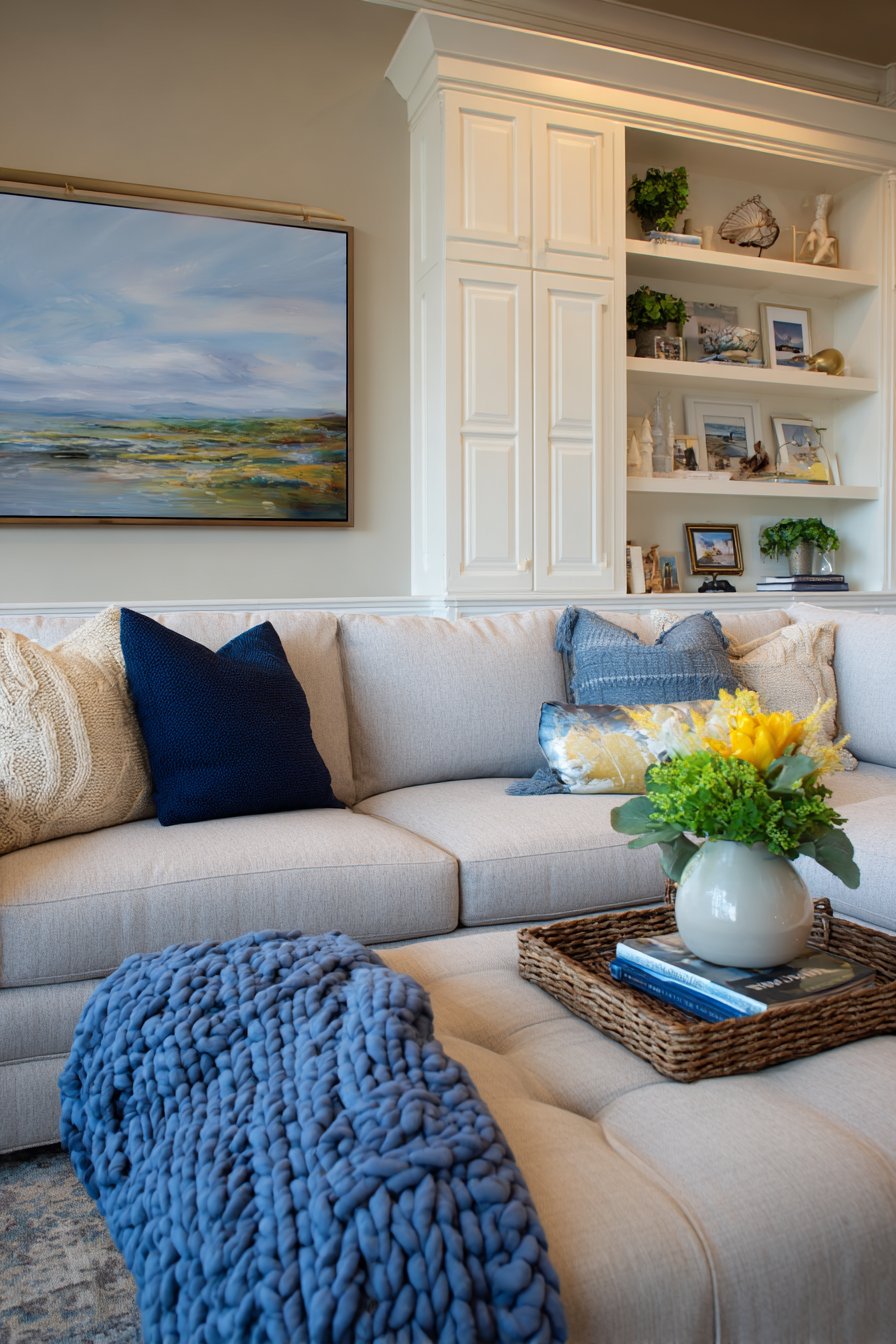
A cozy living room feels authentically lived-in through personal touches that tell your story, and this design demonstrates how to integrate meaningful items without creating clutter. Framed family photos in varied frame styles occupy shelves and walls, creating visual connection to loved ones and memories. Favorite books display prominently on coffee tables and shelving, their covers and titles revealing interests and tastes. A handmade ceramic vase holds fresh flowers or greenery, perhaps created by a friend or acquired on a special trip. Travel souvenirs arrange tastefully throughout, each piece carrying memories and conversations. A cozy throw blanket in a favorite color drapes over furniture, combining comfort with personal color preference.
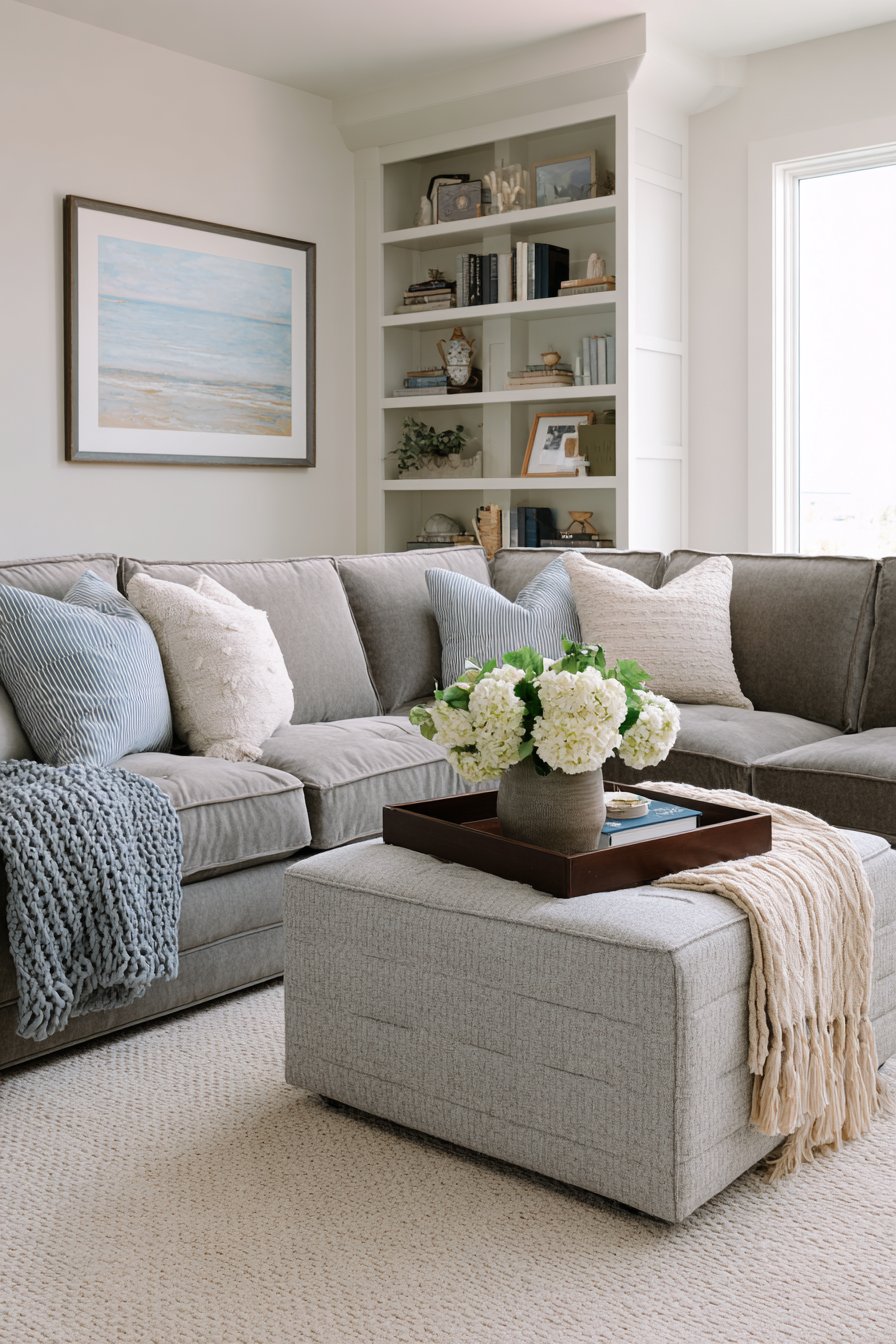
The key to successful personal display is thoughtful integration rather than overwhelming presence. Photos in varied frame styles feel collected and authentic rather than matchy-matchy, but they’re grouped in specific zones rather than scattered randomly throughout. Books are selected for display based on beautiful covers or meaningful content, not just to fill space. The handmade vase occupies a place of honor, perhaps on the mantel or a prominent shelf, where its unique qualities can be appreciated. Travel souvenirs are edited down to the most meaningful or beautiful pieces, integrated into the overall design rather than displayed in obvious tourist fashion.
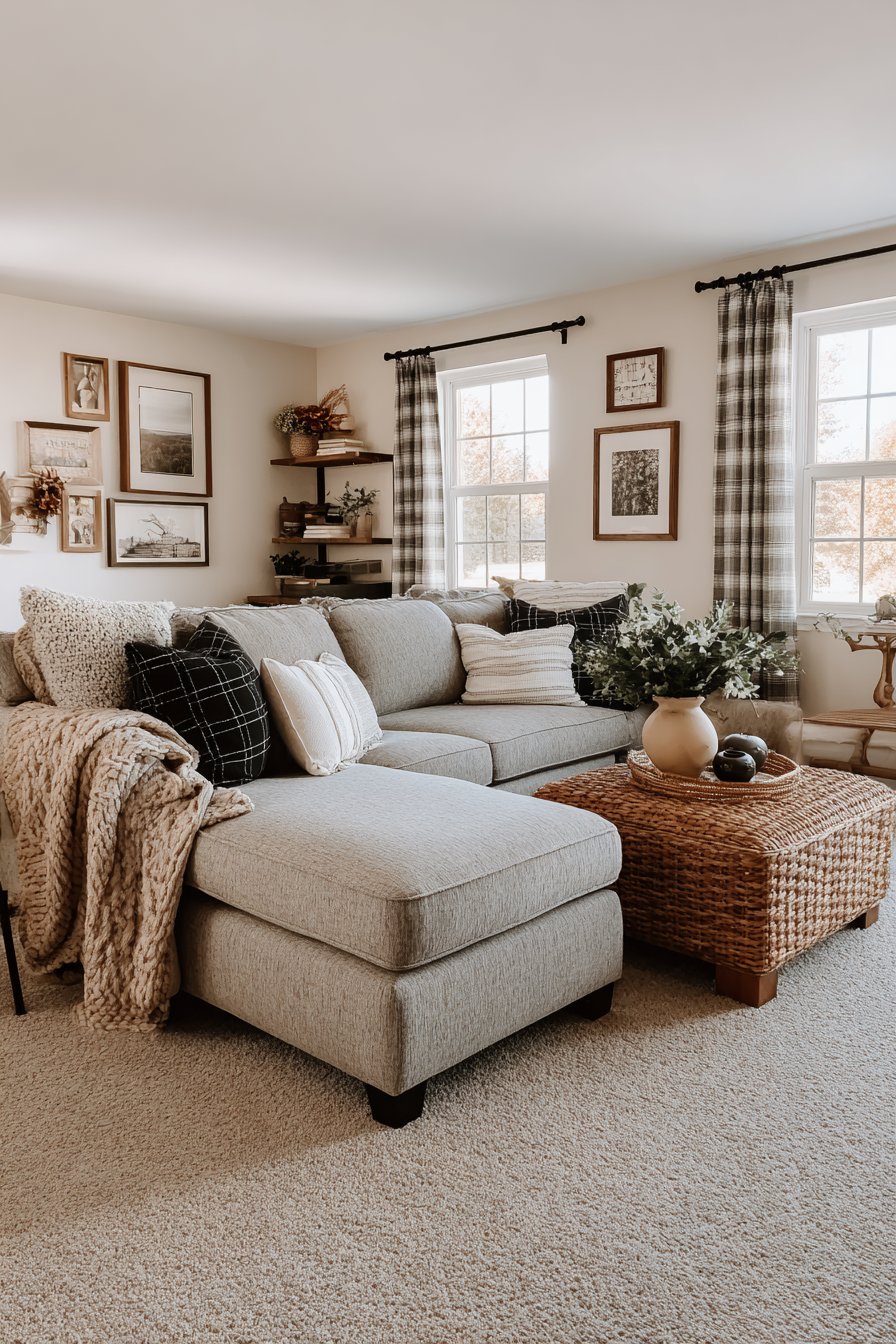
What makes this approach work is balance—the personal items enhance rather than dominate the space. They’re woven into the overall design, respecting the room’s aesthetic while adding layers of meaning and story. A visitor to this room would learn something about the inhabitants—their relationships, interests, travels, and values—without feeling overwhelmed by information. The space maintains its cozy appeal while becoming uniquely personal, impossible to replicate because it reflects specific lives, relationships, and experiences. This is design that acknowledges rooms exist to serve people, not to be showpieces, while still maintaining beauty and cohesion.
Key Design Tips:
- Limit personal photos to 2-3 display zones rather than scattering throughout the room
- Choose favorite books with attractive covers for coffee table and shelf display
- Edit travel souvenirs to the most meaningful or aesthetically pleasing pieces
- Integrate personal items into the overall design rather than creating separate display areas
- Update seasonal elements like flowers or throw colors to keep the space feeling fresh
22. Family-Friendly Sectional Setup
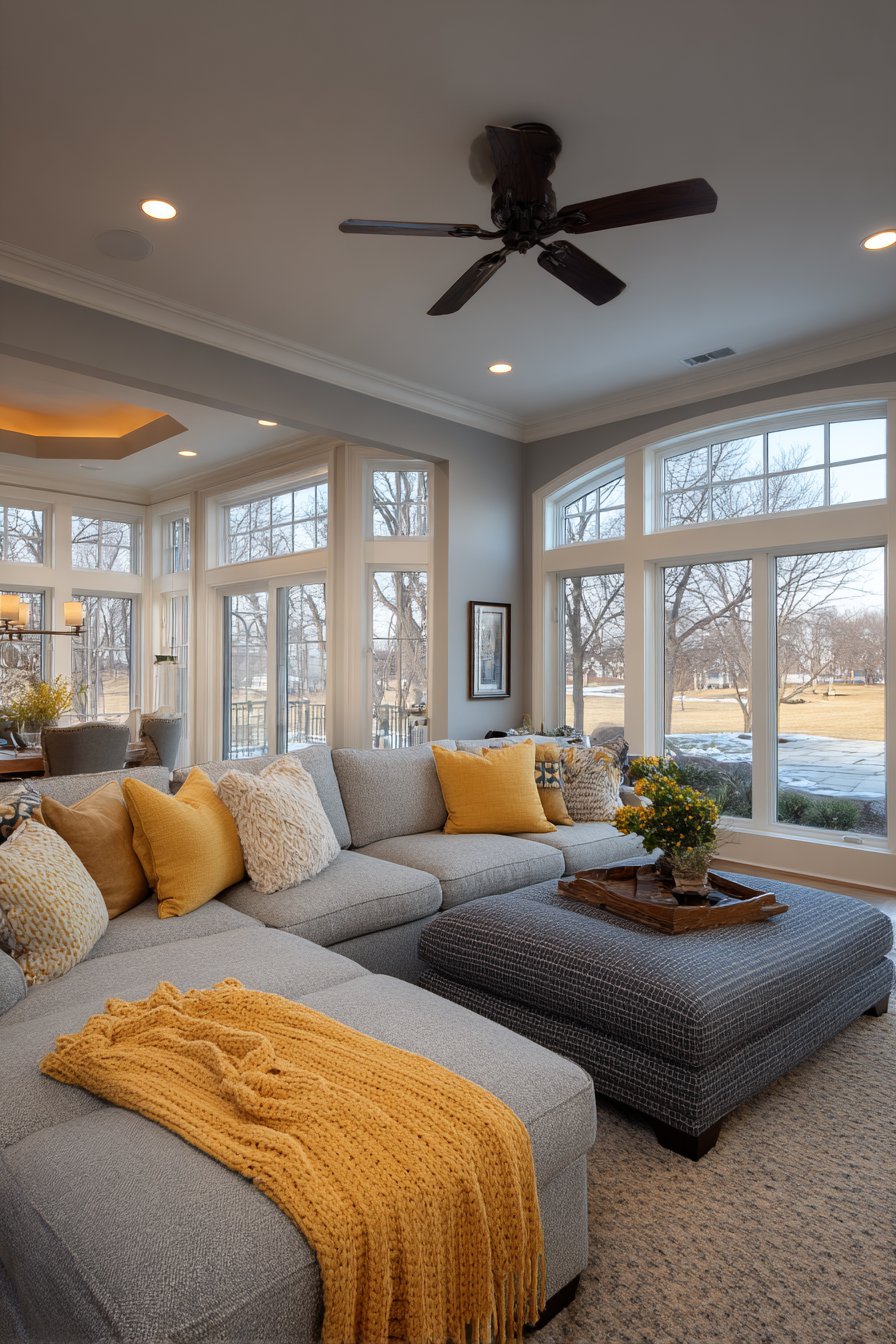
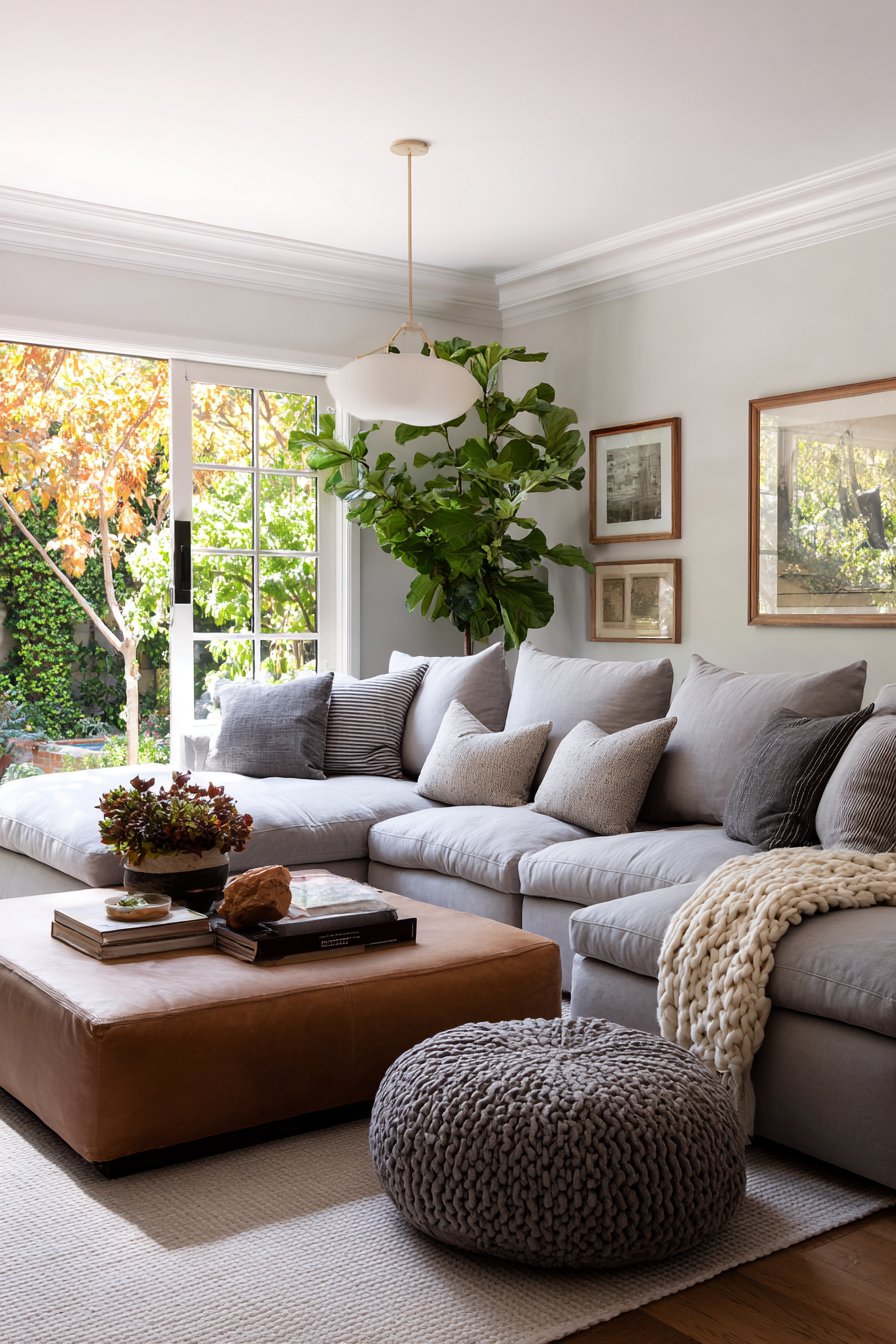
A family living room must balance style with durability and function, and this sectional configuration demonstrates how to achieve that balance beautifully. The sectional sofa features performance fabric upholstery in warm grey with subtle texture—beautiful enough for design appeal, durable enough for daily family use including kids and pets. The generous proportions include a chaise end perfect for stretching out, while the L-shape configuration creates defined seating that naturally encourages gathering. Multiple pillows and a cable-knit throw add comfort and coziness, while a large ottoman serves triple duty as coffee table, extra seating, and footrest.
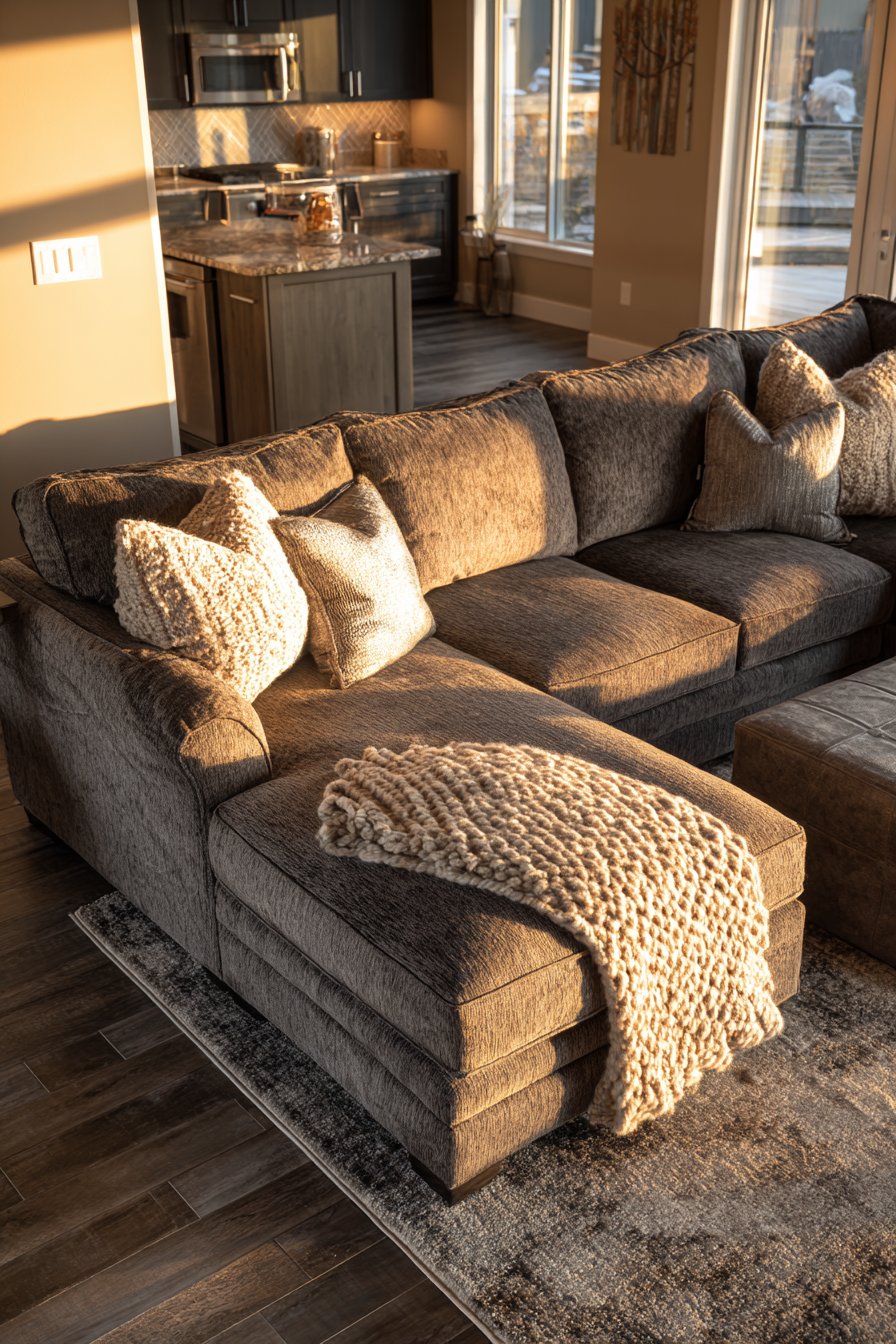
The performance fabric choice demonstrates smart design thinking for high-traffic family spaces. Modern performance fabrics have come remarkably far—they resist staining, clean easily, and maintain their appearance through heavy use, all while offering the soft hand and beautiful drape of traditional upholstery fabrics. The warm grey color hides minor marks while remaining light enough to feel fresh and inviting. The subtle texture adds visual interest while helping to camouflage the inevitable wear that comes with family life. This is a sofa that can handle spilled juice, muddy paw prints, and Saturday morning cartoons without showing the worse for wear.
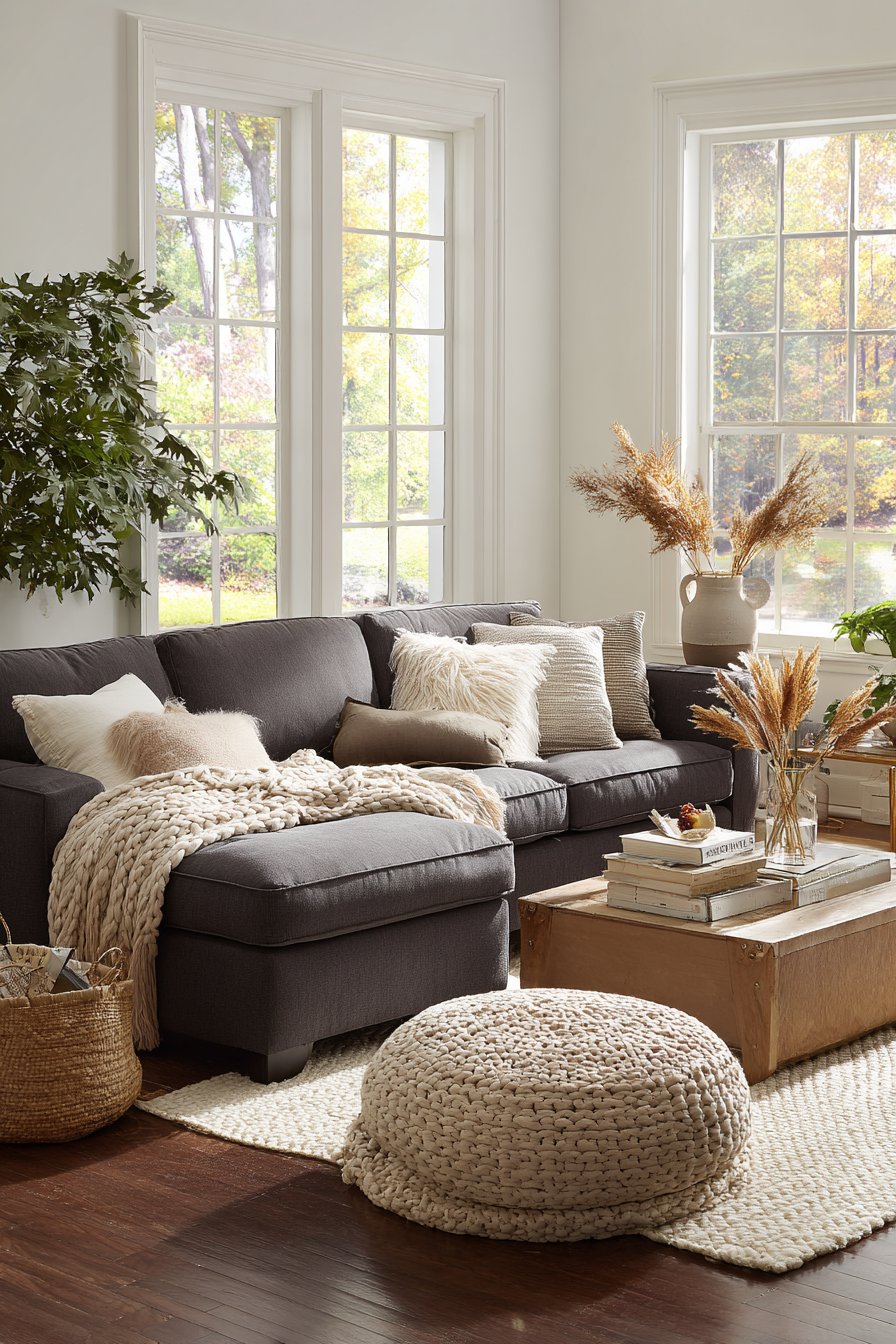
The sectional configuration itself maximizes seating in a footprint-efficient way—important for family rooms where space must accommodate multiple activities. The chaise end creates a coveted spot for lounging with books or devices, while the main seating handles family movie nights and homework sessions. The large ottoman eliminates sharp coffee table corners (a blessing with small children) while providing flexible surface space that can be cleared quickly when needed. This is family-friendly design that doesn’t sacrifice style, proving that beautiful and practical can coexist harmoniously in spaces where real life happens.
Key Design Tips:
- Choose performance fabrics rated for heavy use (30,000+ double rubs for durability)
- Opt for sectionals with removable, washable cushion covers for easy maintenance
- Include an ottoman instead of traditional coffee table for flexibility and safety
- Ensure the sectional scale is appropriate for your room (measure carefully before purchasing)
- Add plenty of throw pillows and blankets for comfort and to soften the large furniture mass
23. Natural Light Maximization
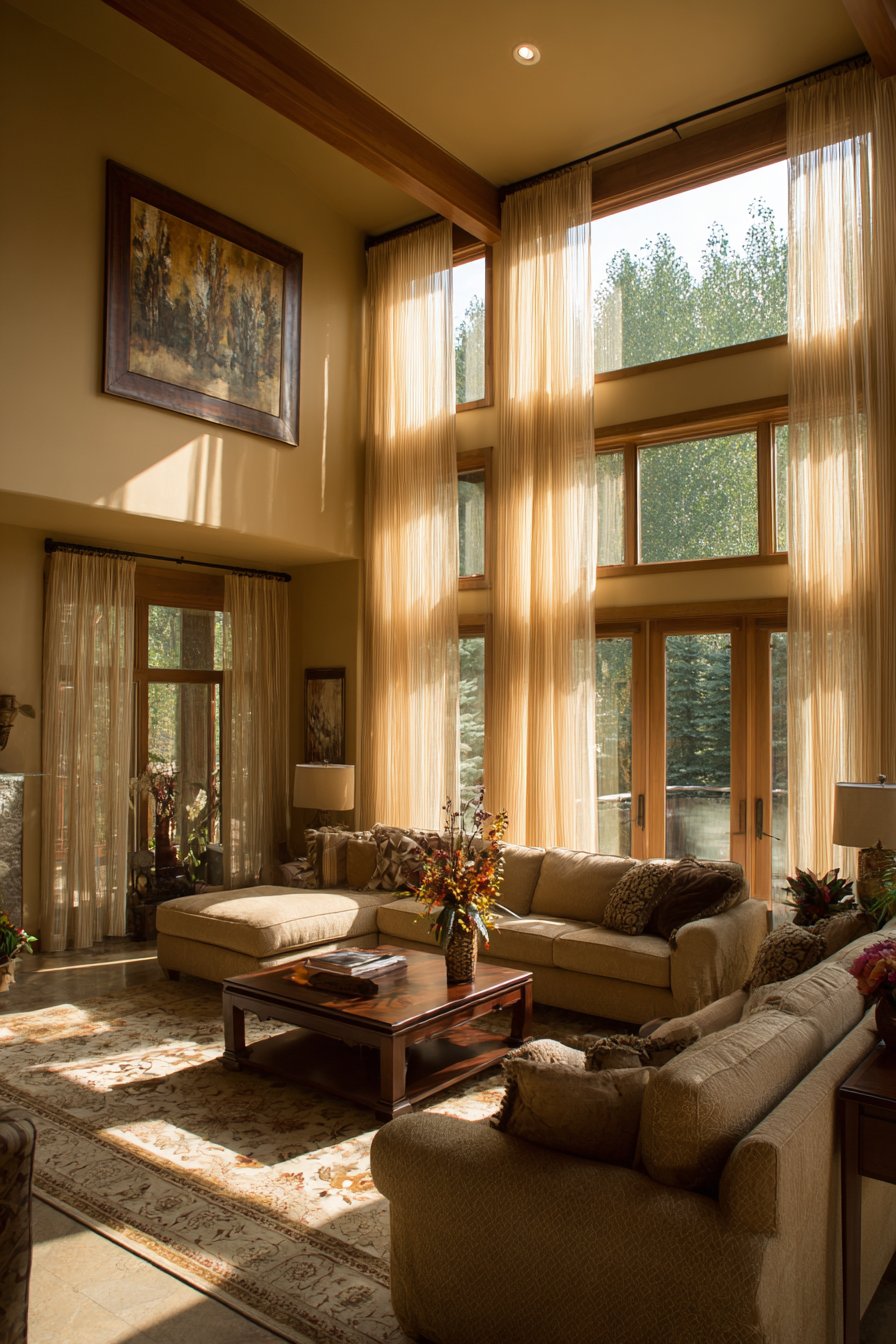
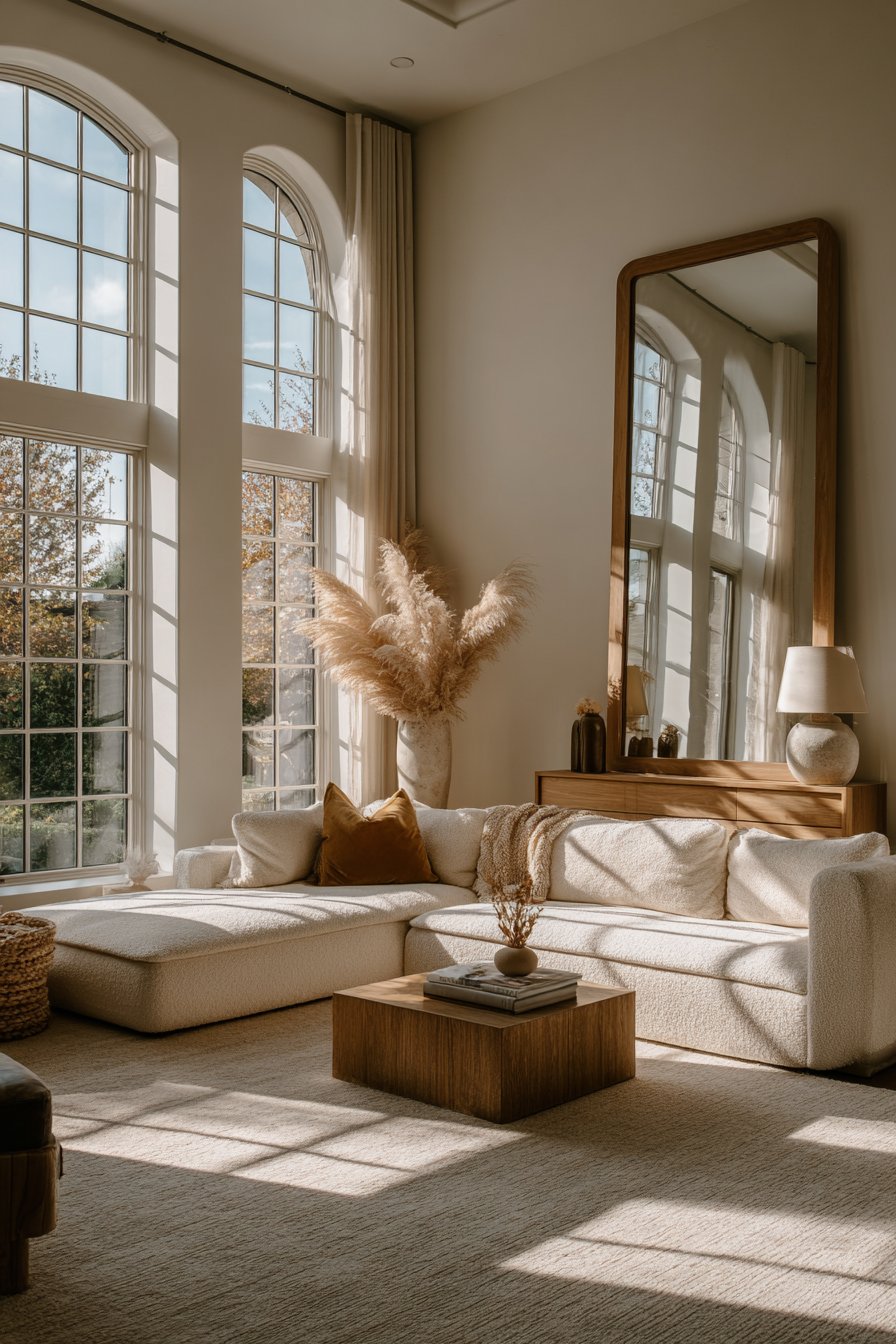
Light transforms spaces, and this design demonstrates strategies for maximizing natural illumination while maintaining warmth and coziness. Large windows feature minimal treatments that allow maximum light penetration—perhaps sheer panels or simple Roman shades that can be raised completely during the day. A large mirror with simple wood frame hangs opposite the windows, reflecting and amplifying natural light throughout the room while creating the illusion of additional windows. Light-colored walls in warm whites and furnishings in neutral tones further enhance the bright, airy feeling. Strategic placement of reflective surfaces and the absence of heavy, light-blocking furniture near windows ensures illumination reaches every corner.
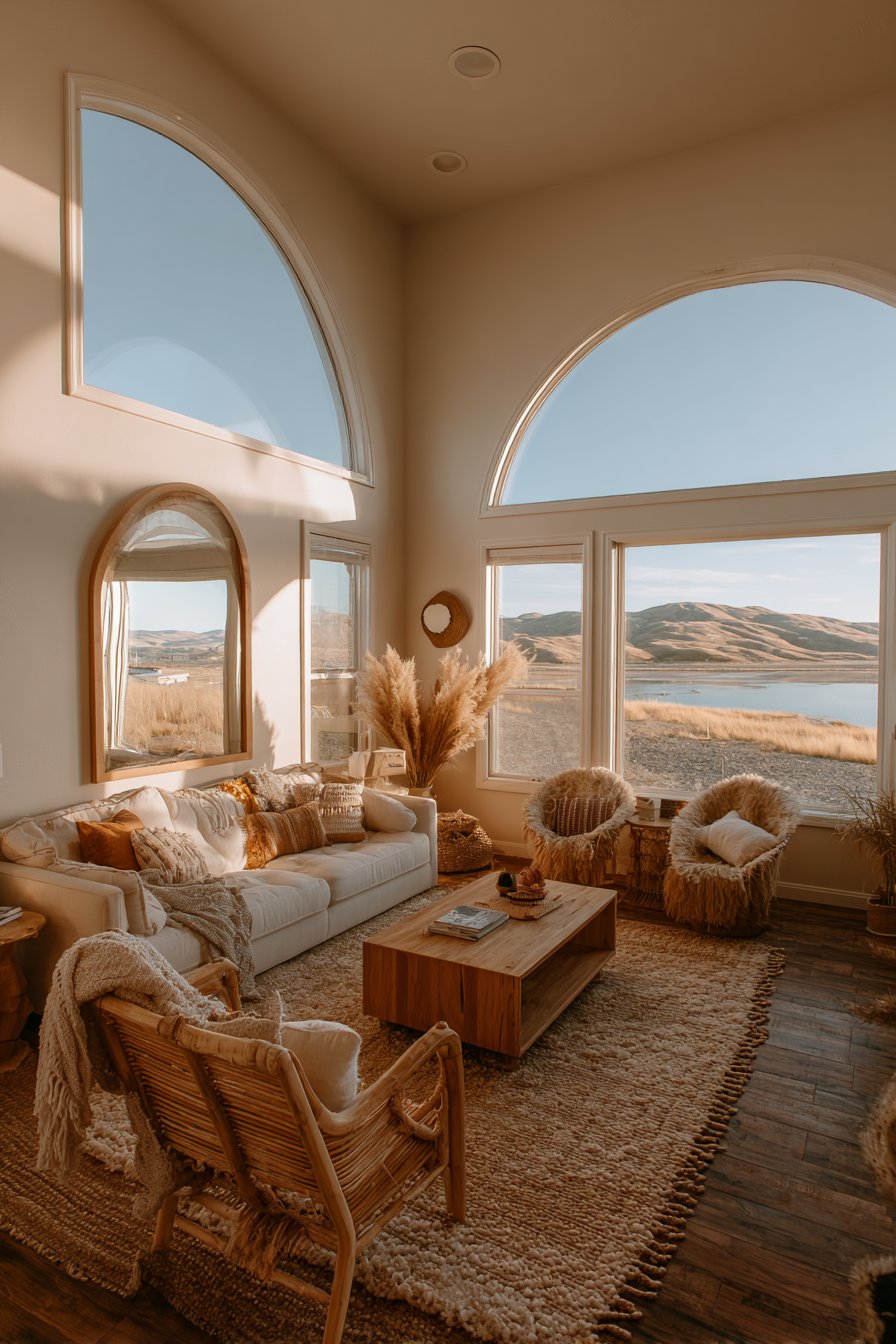
The window treatment strategy reflects understanding that natural light is a precious resource in interior spaces. The minimal approach—whether no treatments at all or simple, easily operated options—ensures that daylight floods the space unimpeded. This decision works best in spaces without privacy concerns or where morning sun won’t disturb sleep, making it ideal for living rooms. The ability to raise or draw treatments provides control when needed, but the default position welcomes maximum light. The result is a space that changes dramatically throughout the day as the sun moves, creating dynamic interest through nothing more than natural light patterns.
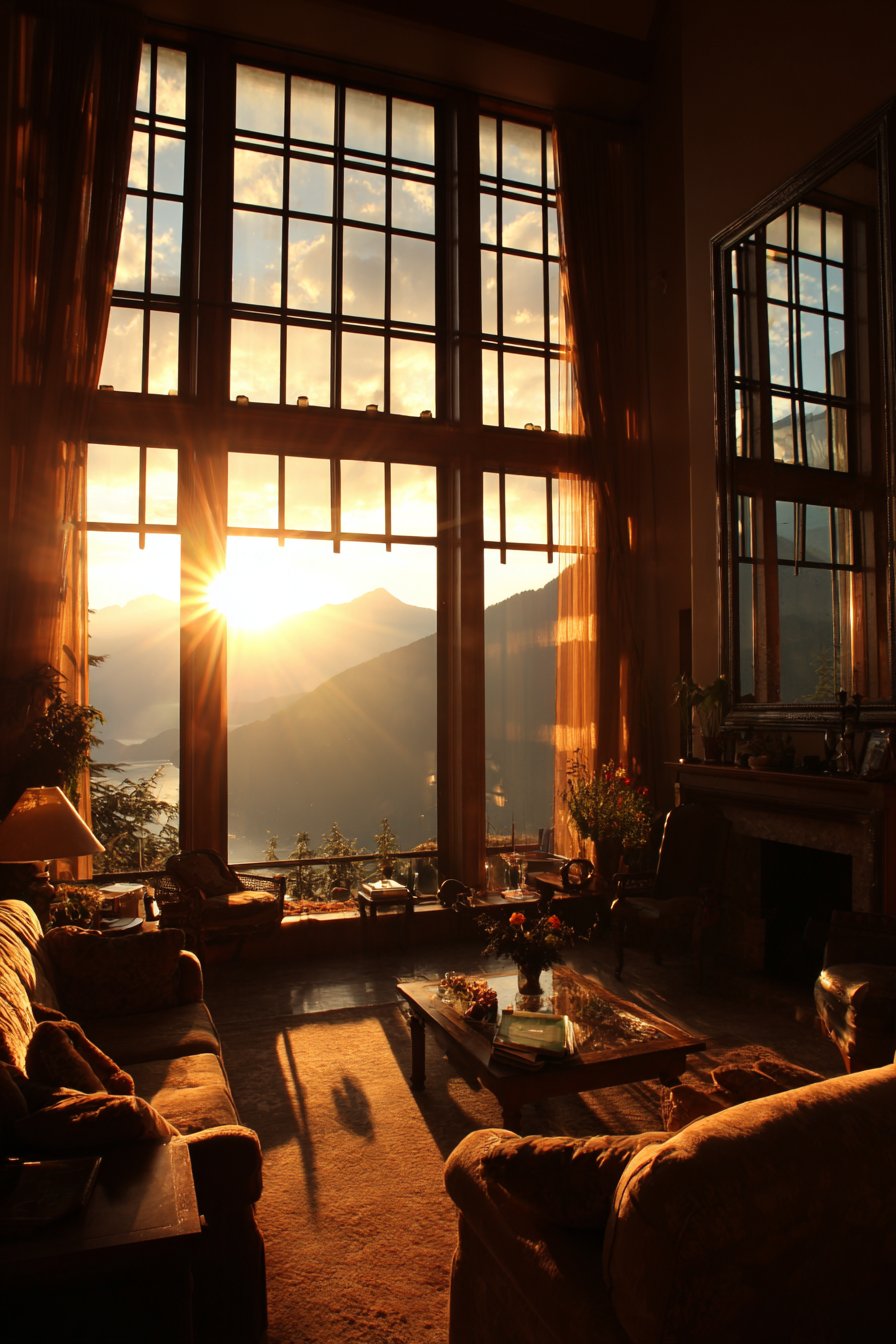
The mirror placement demonstrates sophisticated understanding of how to amplify light through reflection. Positioned opposite windows, the mirror catches incoming light and bounces it back into the room, effectively doubling the brightness and creating visual depth. The wood frame ensures the mirror feels like intentional decor rather than purely functional glass. Light-colored walls and furnishings work with rather than against the natural light, reflecting it throughout the space rather than absorbing it. During golden hour, this room absolutely glows, filled with warm, natural illumination that creates the ultimate cozy atmosphere without any artificial lighting needed.
Key Design Tips:
- Position mirrors opposite windows to maximize light reflection and amplification
- Keep window areas clear of large furniture that might block light flow
- Choose sheer or easily operated window treatments for maximum light control
- Paint walls in warm whites rather than cool whites to maintain coziness despite brightness
- Use glossy or semi-glossy paint finishes to reflect more light than matte options
24. Curated Bookshelf Styling
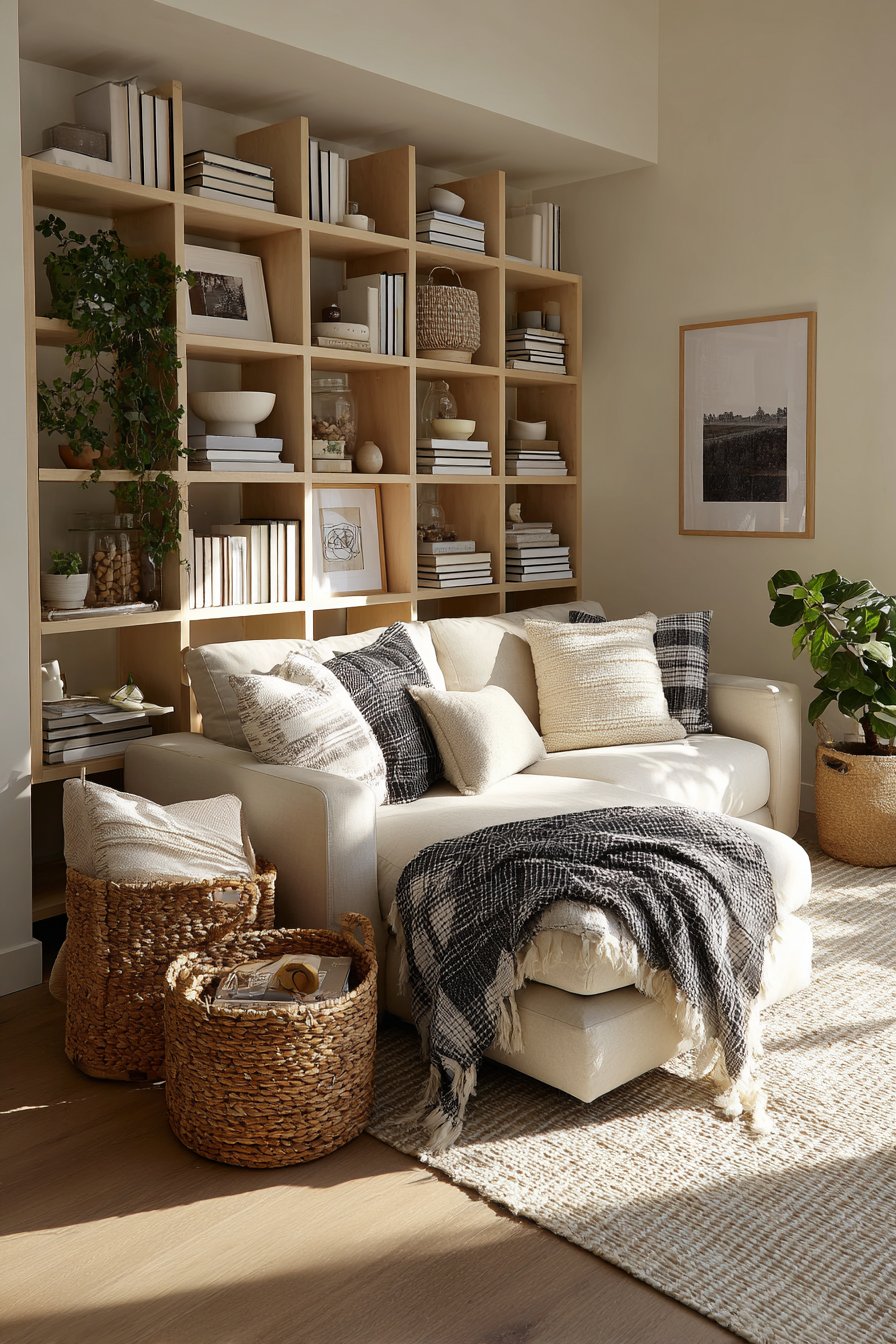
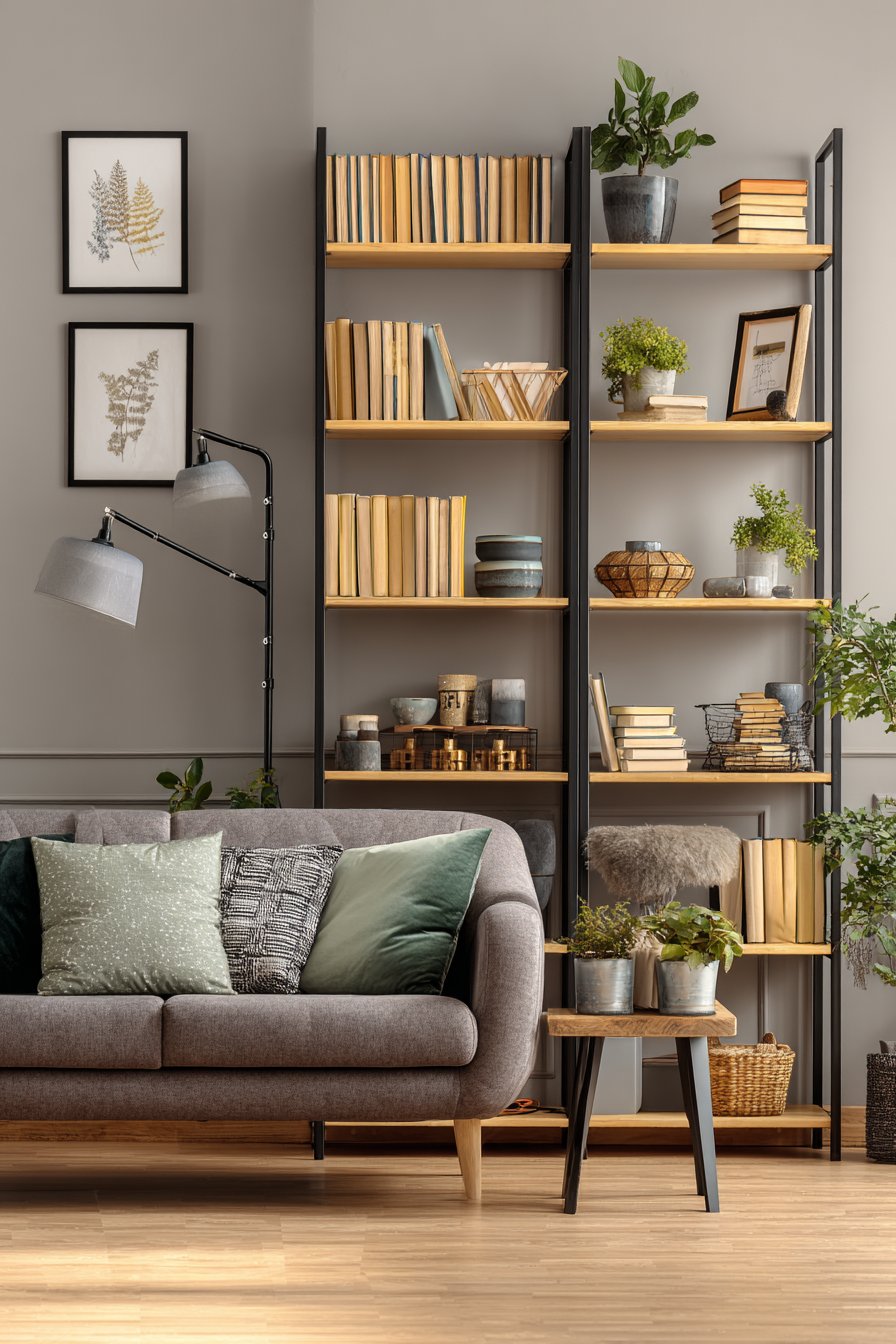
A well-styled bookshelf balances aesthetics with functionality, and this design demonstrates the art of creating visual interest while maintaining practical book storage. Books are arranged in varied orientations—some vertical in traditional fashion, others horizontal in stacks that create visual rhythm and provide platforms for decorative objects. Small potted plants intersperse throughout, adding life and organic form that softens the linear nature of shelving. Decorative bowls, framed photos, and woven baskets provide additional visual interest while serving practical purposes. The overall effect feels intentional yet not overly designed, as if the shelf evolved naturally over time.
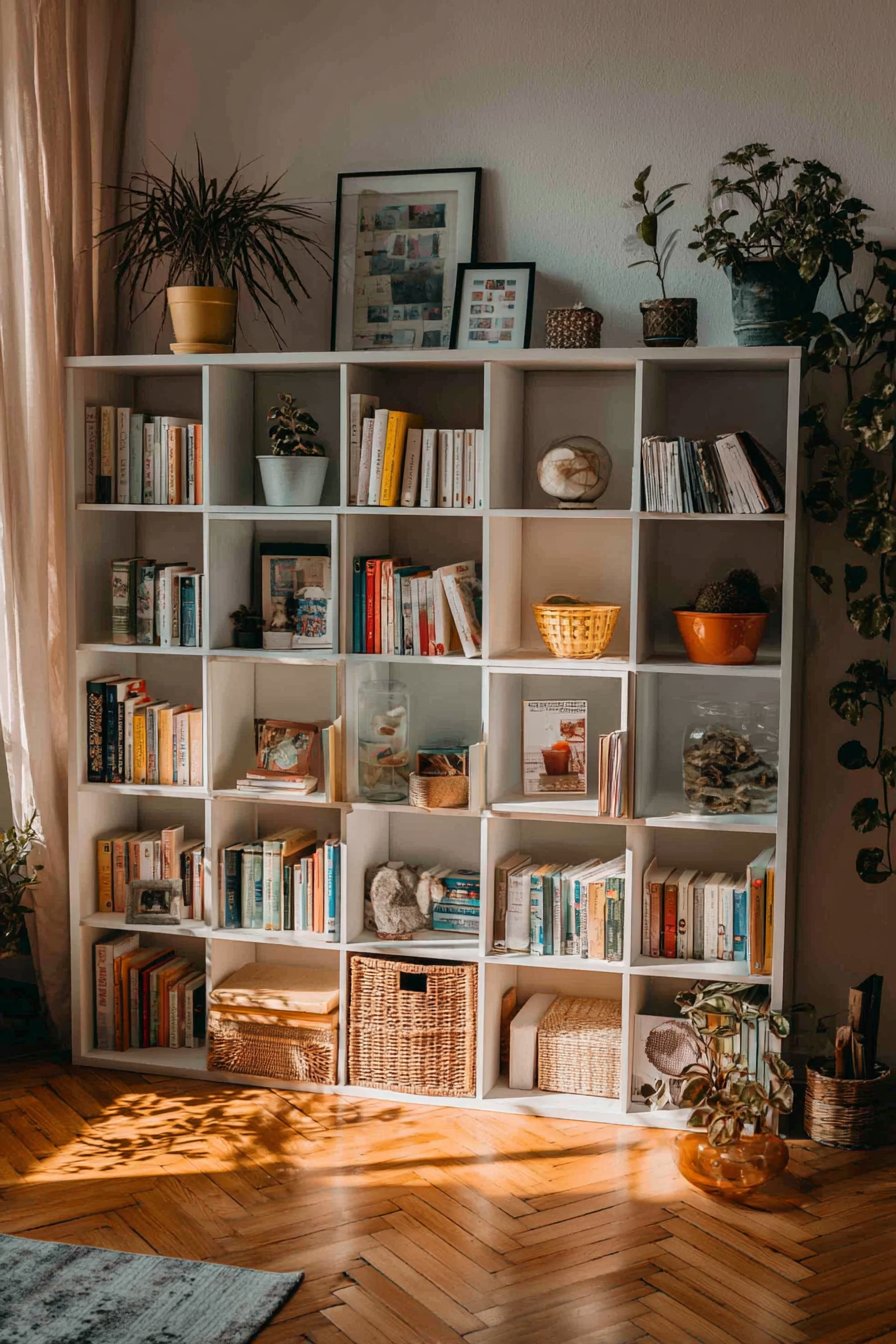
The mixed orientation approach to book arrangement creates visual dynamism that prevents the shelf from feeling like a library catalog. Vertical rows provide efficient storage and showcase book spines—perhaps organized by color for visual calm or by subject for practical access. Horizontal stacks break up the vertical lines while creating pedestals for displaying decorative objects at varied heights. This mixed approach also accommodates books of different sizes more elegantly than strict vertical arrangement, preventing awkward gaps or forced organization. The varied rhythms create visual interest that rewards closer inspection.
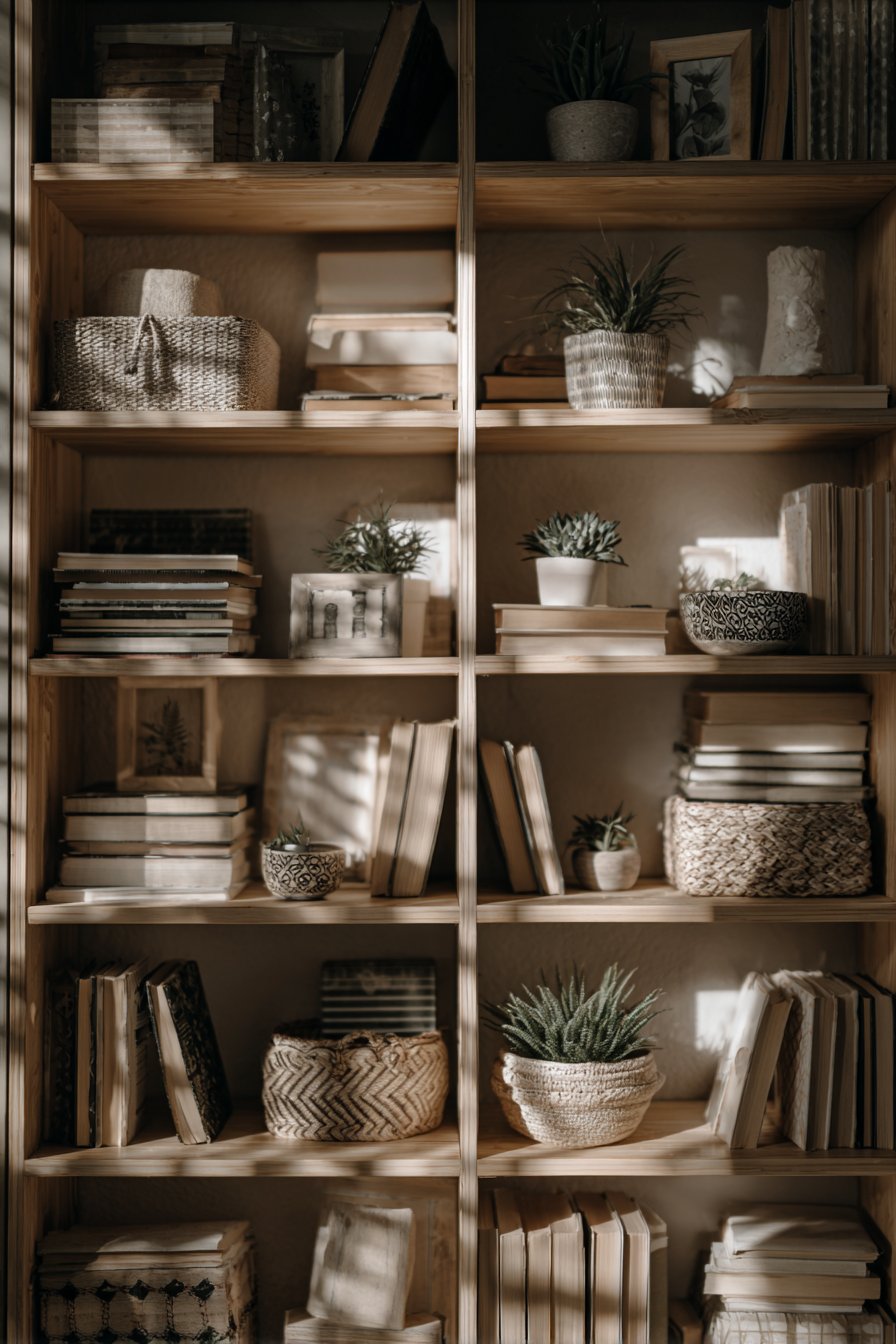
The integration of decorative elements demonstrates restraint and purpose. Plants aren’t scattered randomly but placed thoughtfully to create visual balance—perhaps a trailing pothos on an upper shelf with a small succulent below. Decorative bowls might hold small items like paper clips or bookmarks, combining beauty with function. Framed photos appear in strategic locations, creating focal points without overwhelming. Woven baskets on lower shelves provide attractive homes for items that don’t need to be visible but should be accessible. This is styling that respects both form and function, creating a shelf that’s beautiful to look at and practical to use.
Key Design Tips:
- Follow the rule of thirds when placing decorative objects for balanced composition
- Stack books in groups of 3-5 for visual stability and interest
- Leave some breathing room—not every inch needs to be filled
- Vary object heights using books as platforms to create dimension
- Group like items (all plants together, all frames together) for visual cohesion
25. Warm Metallic Accent Details
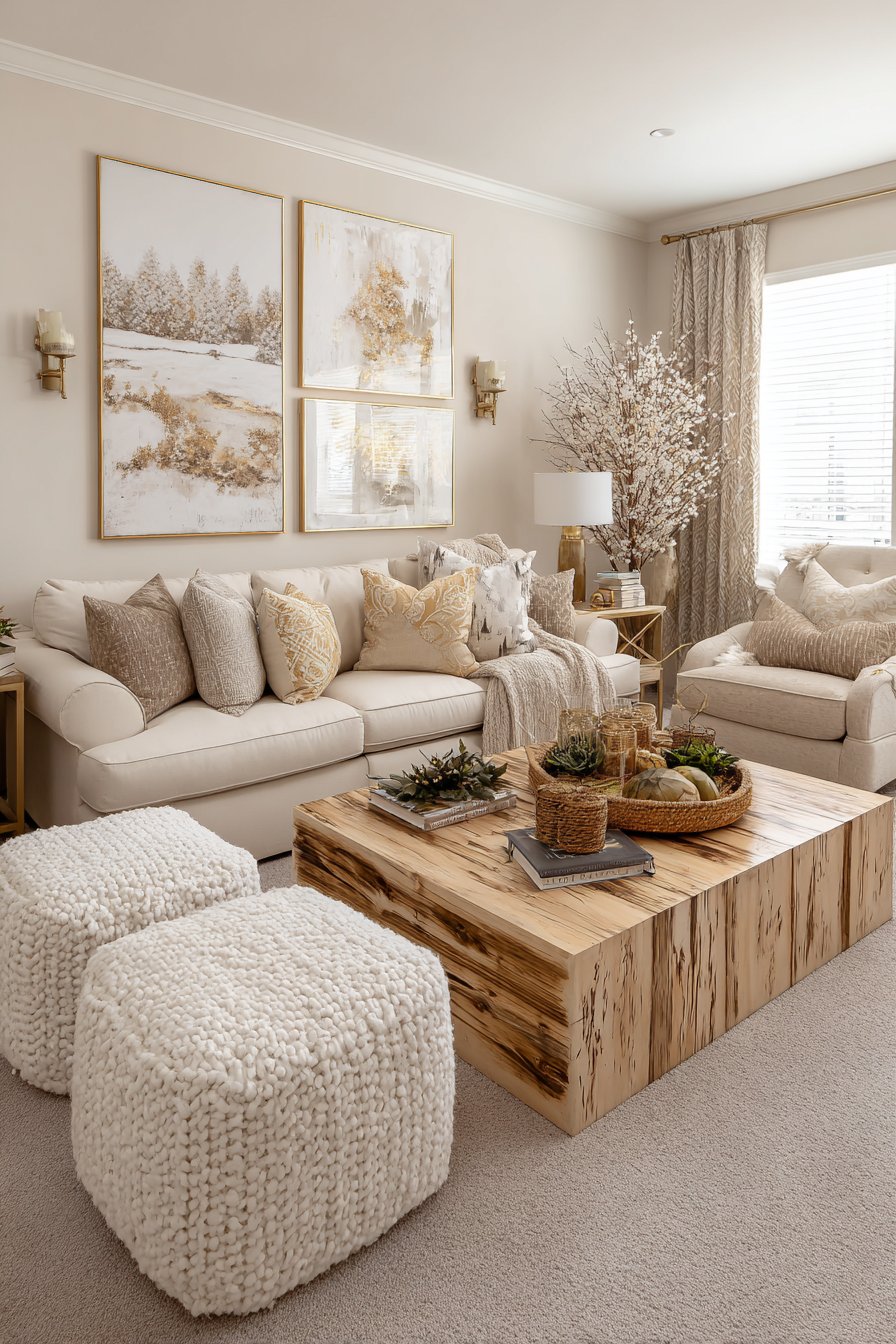
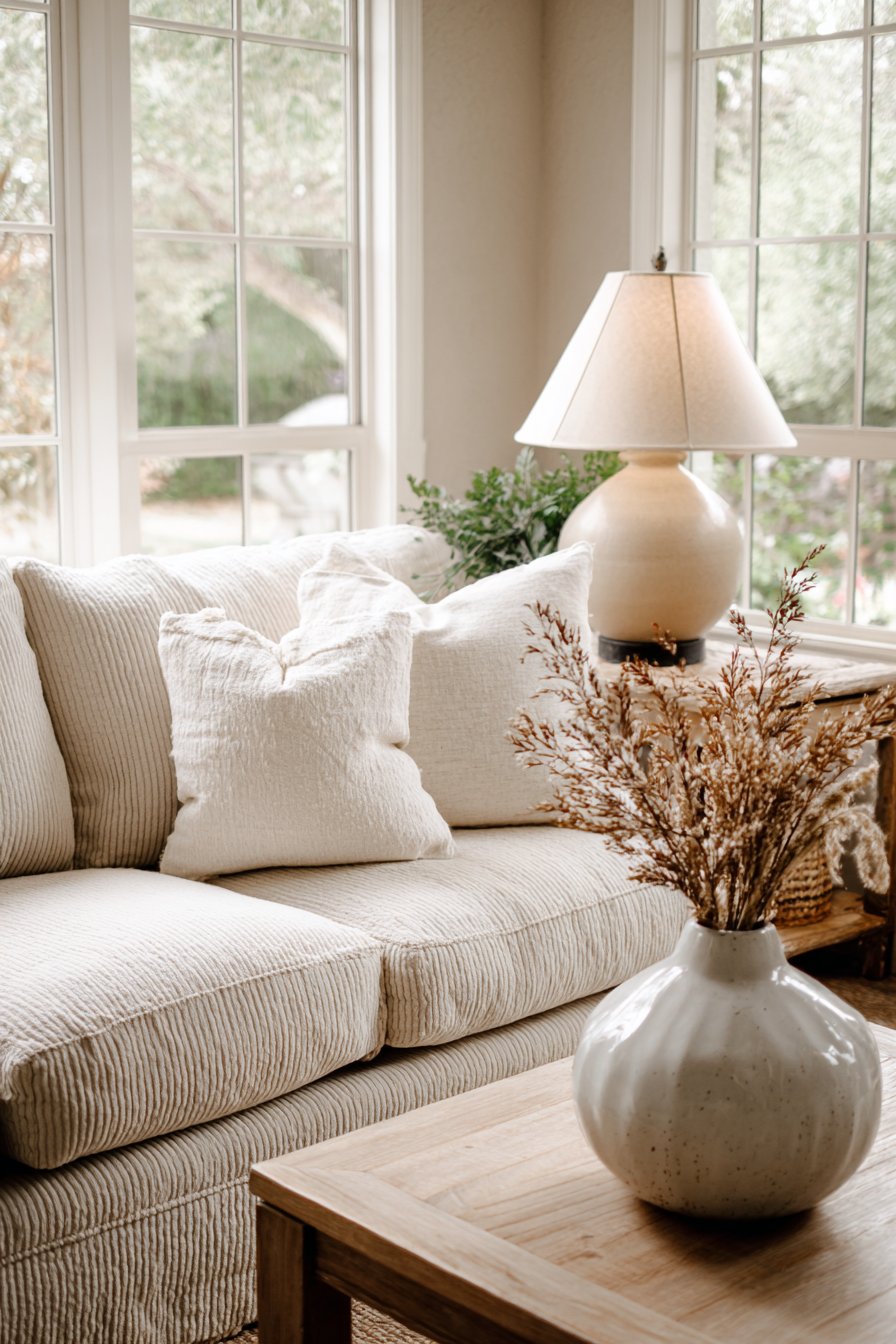
Metallic finishes add sophistication and warmth when chosen and placed thoughtfully, and this design showcases warm metals throughout the space. Brushed brass and antique bronze appear in table lamp bases, creating soft light reflection and elegant presence. Picture frames in matching warm metals tie the walls into the room’s overall design. Curtain rods in brushed brass span windows with understated elegance. Decorative objects including candlesticks, small sculptures, or trays in warm metals add finishing touches throughout. The metals show natural variations and slight patina rather than high polish, creating an aged, collected quality that enhances coziness.
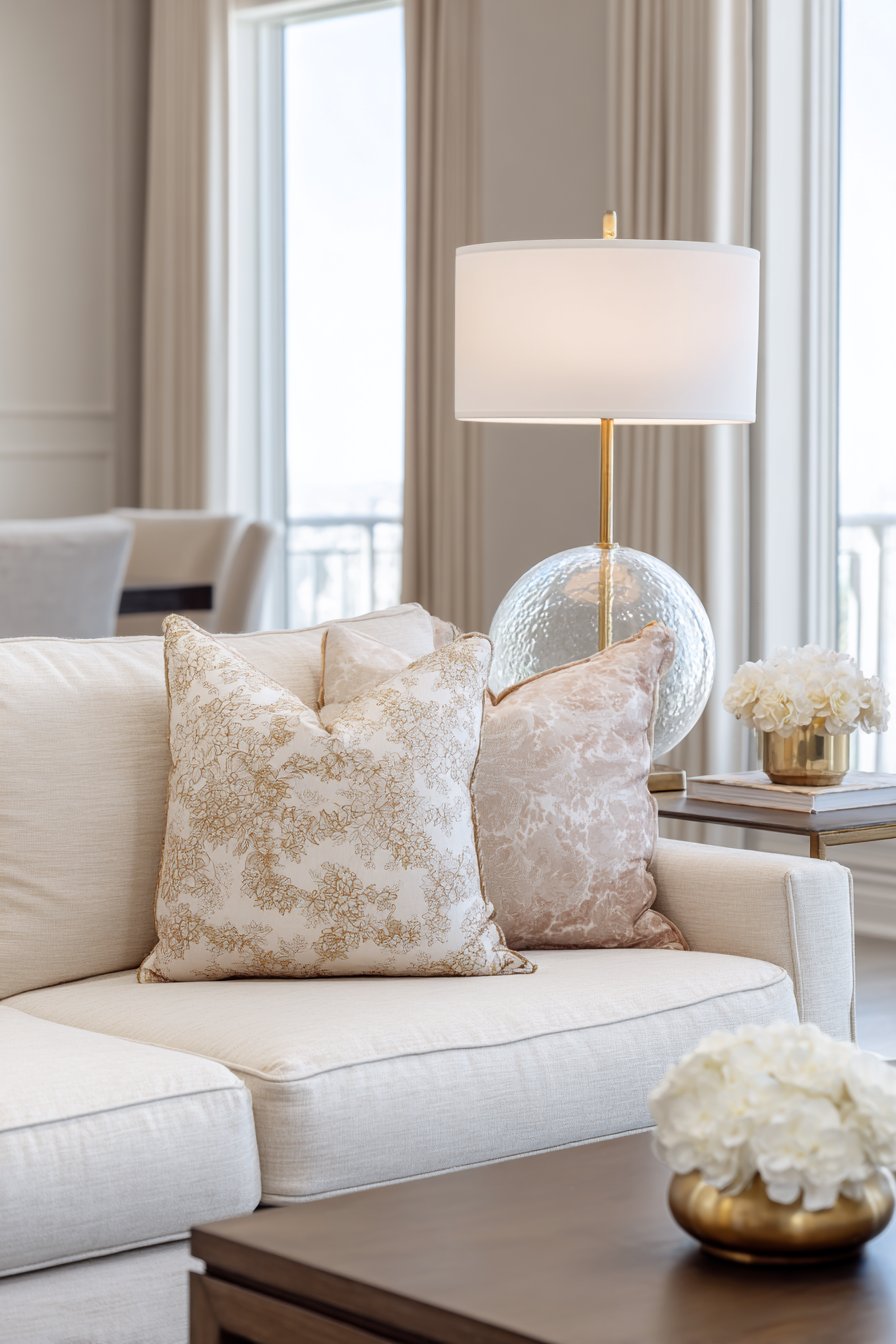
The choice of warm metals rather than cool silvery finishes fundamentally affects the room’s atmosphere. Brass, bronze, copper, and warm gold tones complement the warm neutrals and natural wood elements typically found in cozy spaces, creating cohesion across materials. The brushed or antiqued finishes prevent the metals from reading as too formal or shiny, instead suggesting age and quality that aligns with collected, lived-in aesthetics. The subtle variations in finish—some pieces more golden, others more bronzed—create depth within the metallic palette much like varying wood tones creates depth within natural materials.
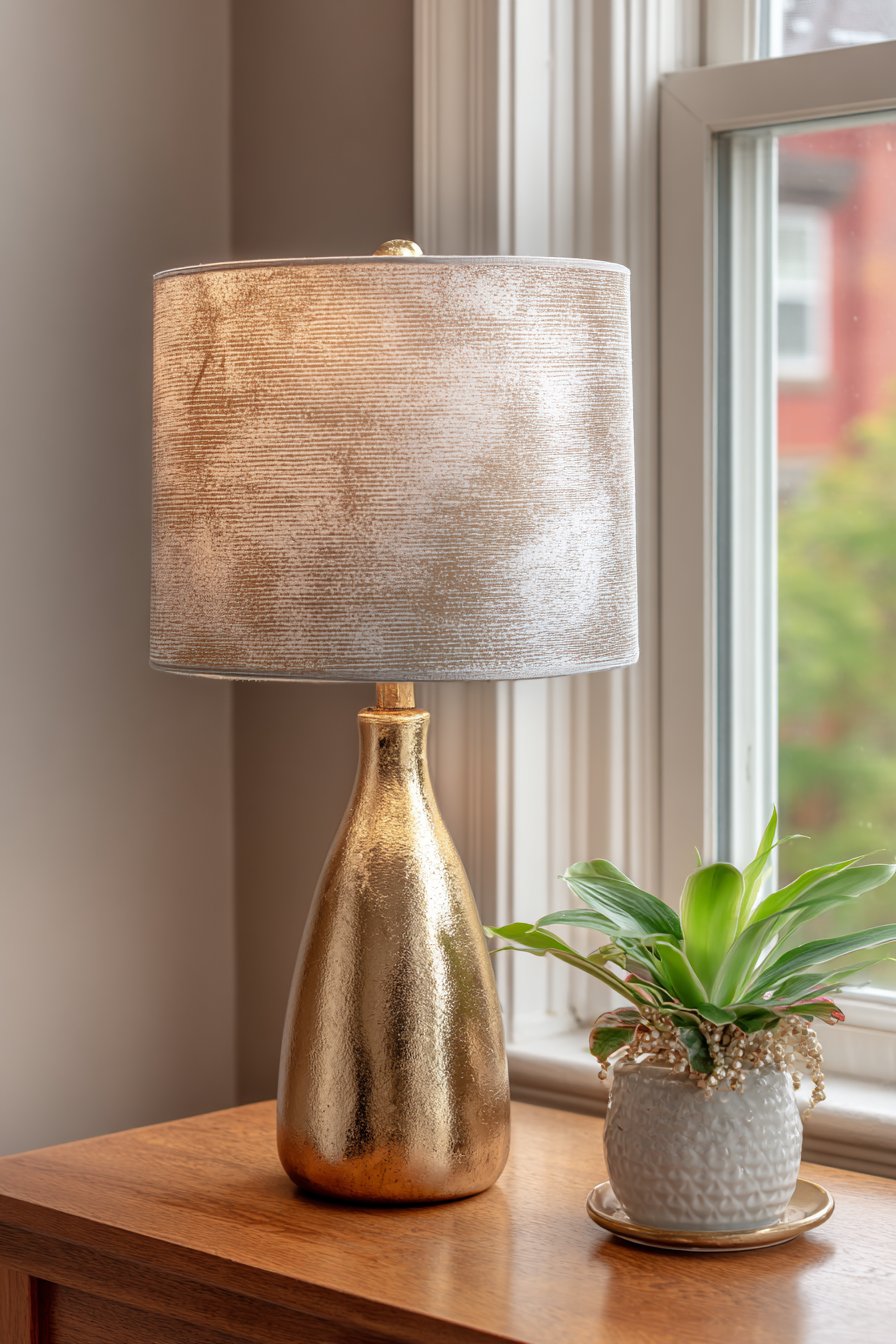
The strategic placement of metallic accents throughout the vertical and horizontal planes creates cohesive flow. Curtain rods at ceiling height draw the eye upward while framing windows elegantly. Lamp bases occupy table surfaces, providing both function and decorative presence. Picture frames at various heights on walls create connection between architectural elements and furniture. Smaller decorative objects on surfaces provide finishing touches that catch light and add visual interest. Together, these elements create a thread of warm metallic presence that ties the room together without overwhelming, demonstrating how accent materials can enhance overall design when used with restraint and intention.
Key Design Tips:
- Stick to either warm metals (brass, bronze, copper) or cool metals (silver, chrome) for cohesion
- Choose brushed or antiqued finishes rather than high polish for less formal appeal
- Repeat metallic finishes in at least 3-5 locations throughout the room for visual flow
- Mix metallic finishes slightly (different tones of brass, for example) for collected appeal
- Balance metallic elements with natural materials to prevent overly formal feeling
26. Monochromatic Blue Serenity
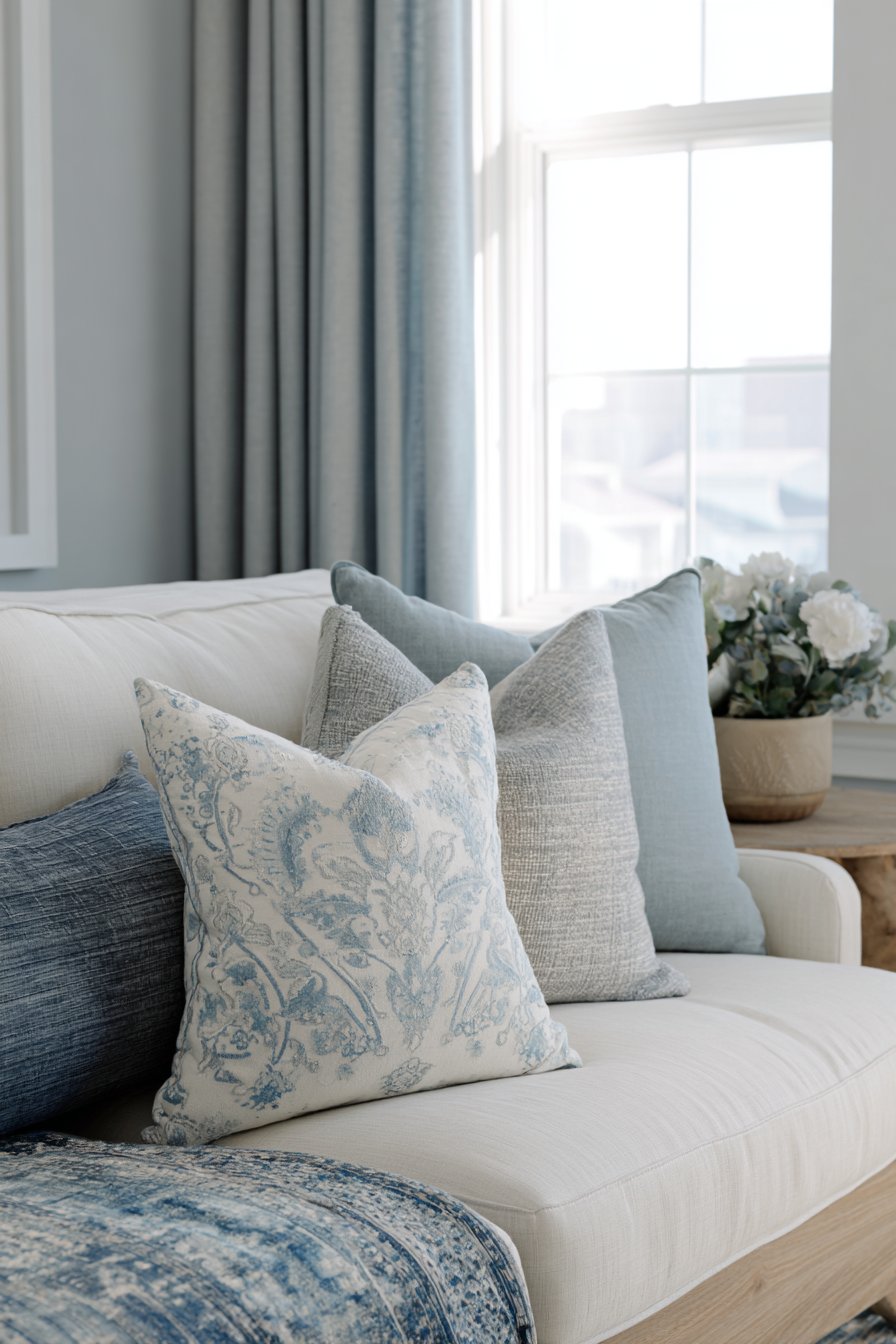
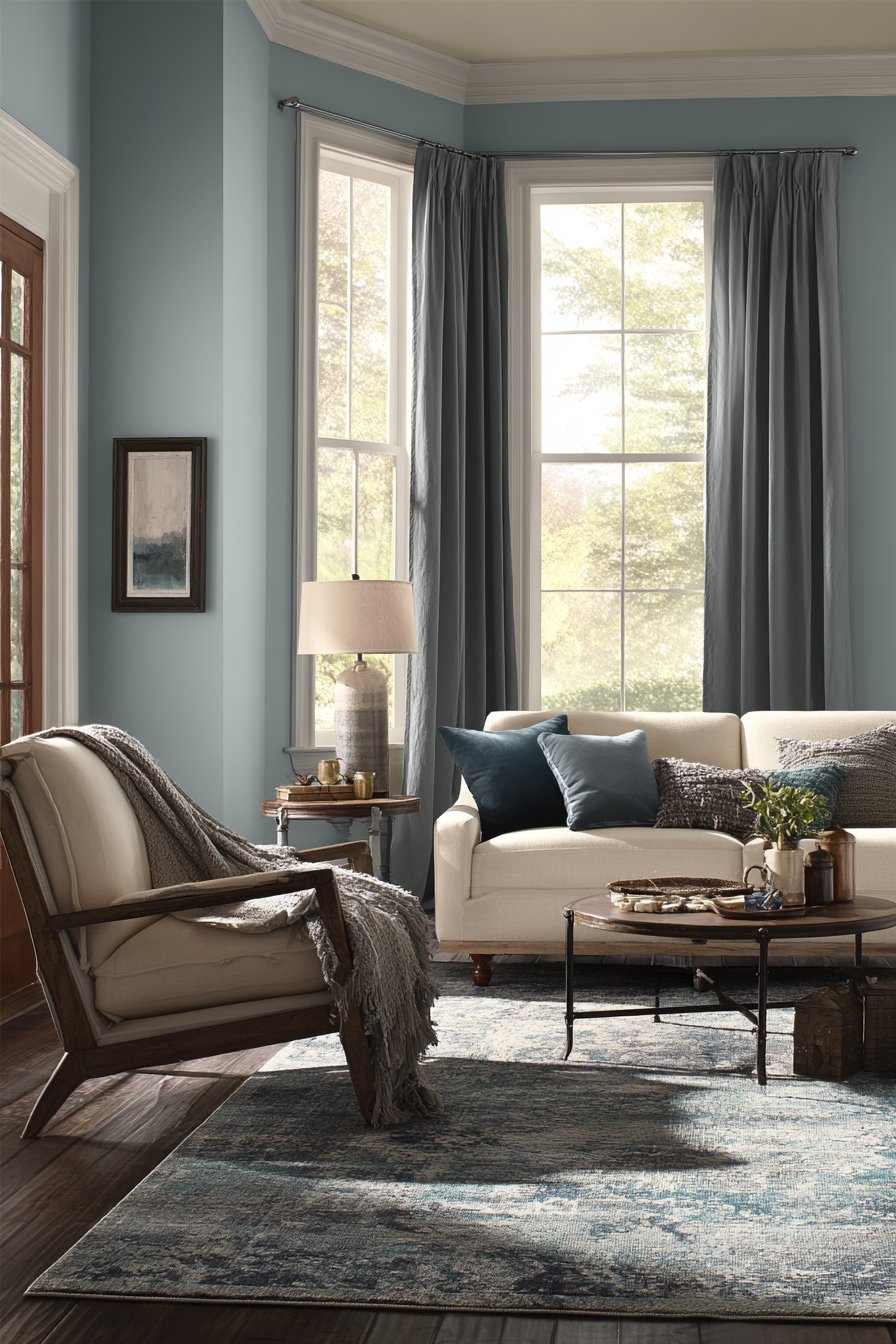
A monochromatic color scheme creates sophisticated cohesion while allowing for surprising depth, and this blue-based palette demonstrates the approach beautifully. Soft blues range from pale sky blue on walls to deeper slate blue in accent pillows, with medium blue-grey curtains and a faded blue vintage rug bridging the tonal range. Natural wood furniture and cream-colored upholstery prevent the blue palette from feeling cold, introducing warmth that balances the cool tones. The varied shades create visual depth while maintaining serene, harmonious atmosphere that feels calming yet visually interesting.
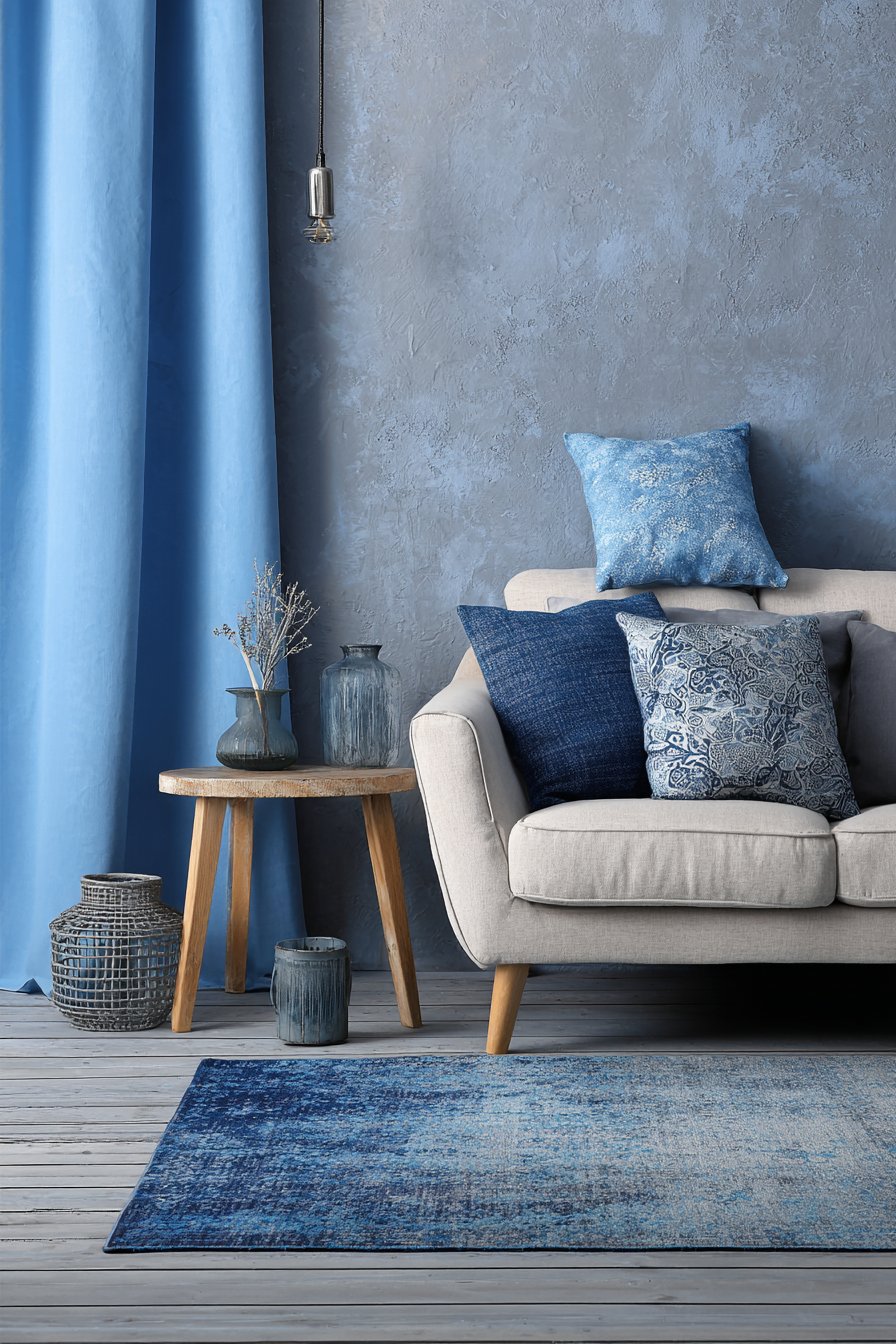
The success of this monochromatic approach relies on varying the value (lightness and darkness) and saturation (intensity) of blue rather than introducing many different hues. Pale wall blue provides an airy backdrop that makes the room feel spacious and peaceful. Medium blue-grey curtains add substance without heaviness, their soft drape creating vertical interest. Deeper slate blue pillows create focal points and visual anchors, preventing the lighter blues from floating away. The faded vintage rug ties all the tones together while introducing pattern and additional color variation through age-related fading and patina.
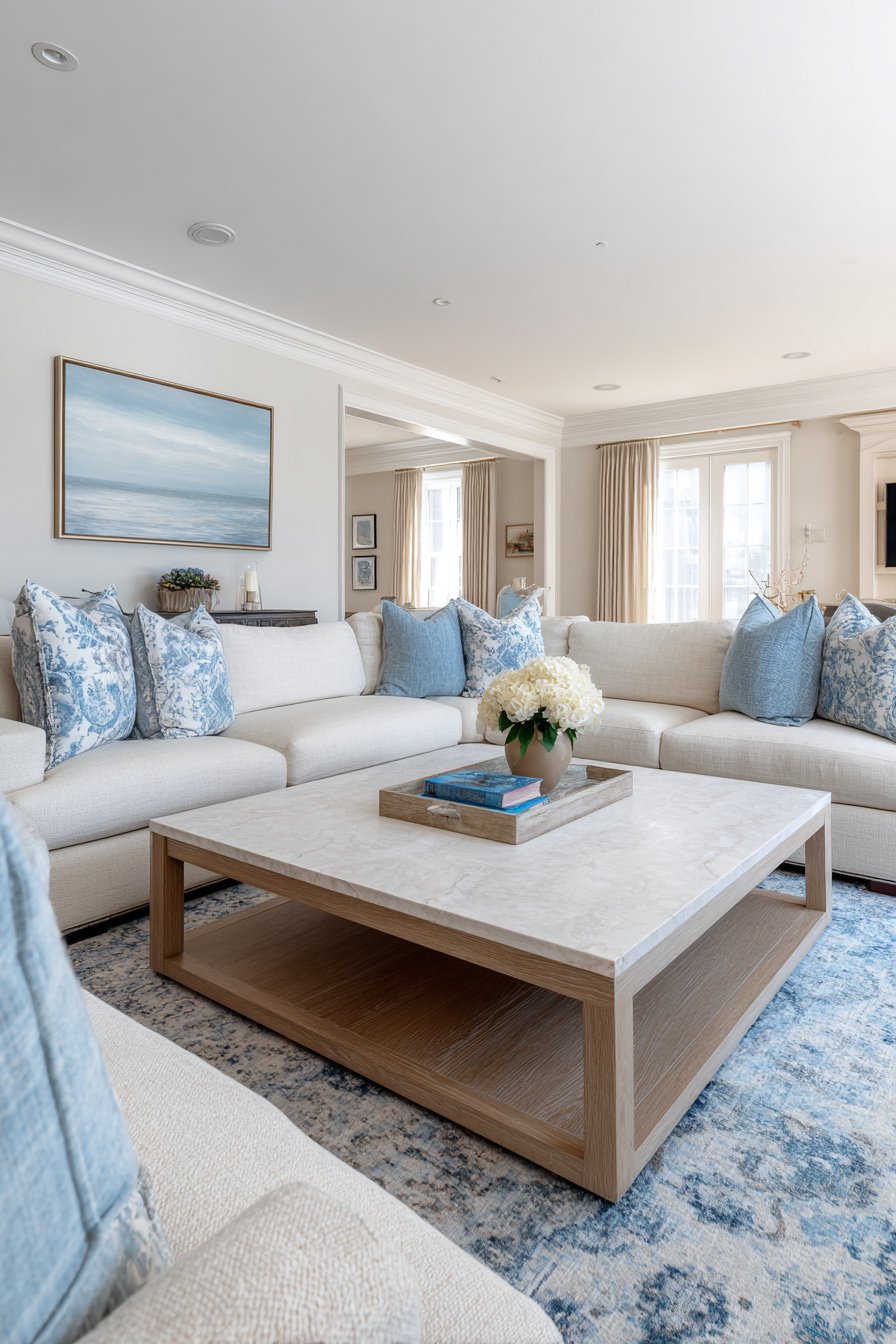
The introduction of warm elements prevents this cool color scheme from feeling cold or unwelcoming. Natural wood in honey or walnut tones adds essential warmth, while cream upholstery provides neutral relief from the blue saturation. These warm elements might constitute only 20-30% of the room’s color story, but their impact is significant in creating balance and livability. The result is a room that feels serene and cohesive through its color discipline while remaining warm and welcoming through thoughtful material choices—proving that cool colors can indeed create cozy atmospheres when balanced appropriately.
Key Design Tips:
- Include at least 4-5 different values of your chosen color for proper depth
- Vary saturation levels from pale/greyed tones to more saturated versions
- Balance cool color schemes with warm wood tones and neutral fabrics
- Use the 60-30-10 rule: 60% main color, 30% secondary color, 10% accent
- Include varied patterns and textures to prevent monochromatic schemes from feeling flat
27. Conversation-Focused Furniture Arrangement
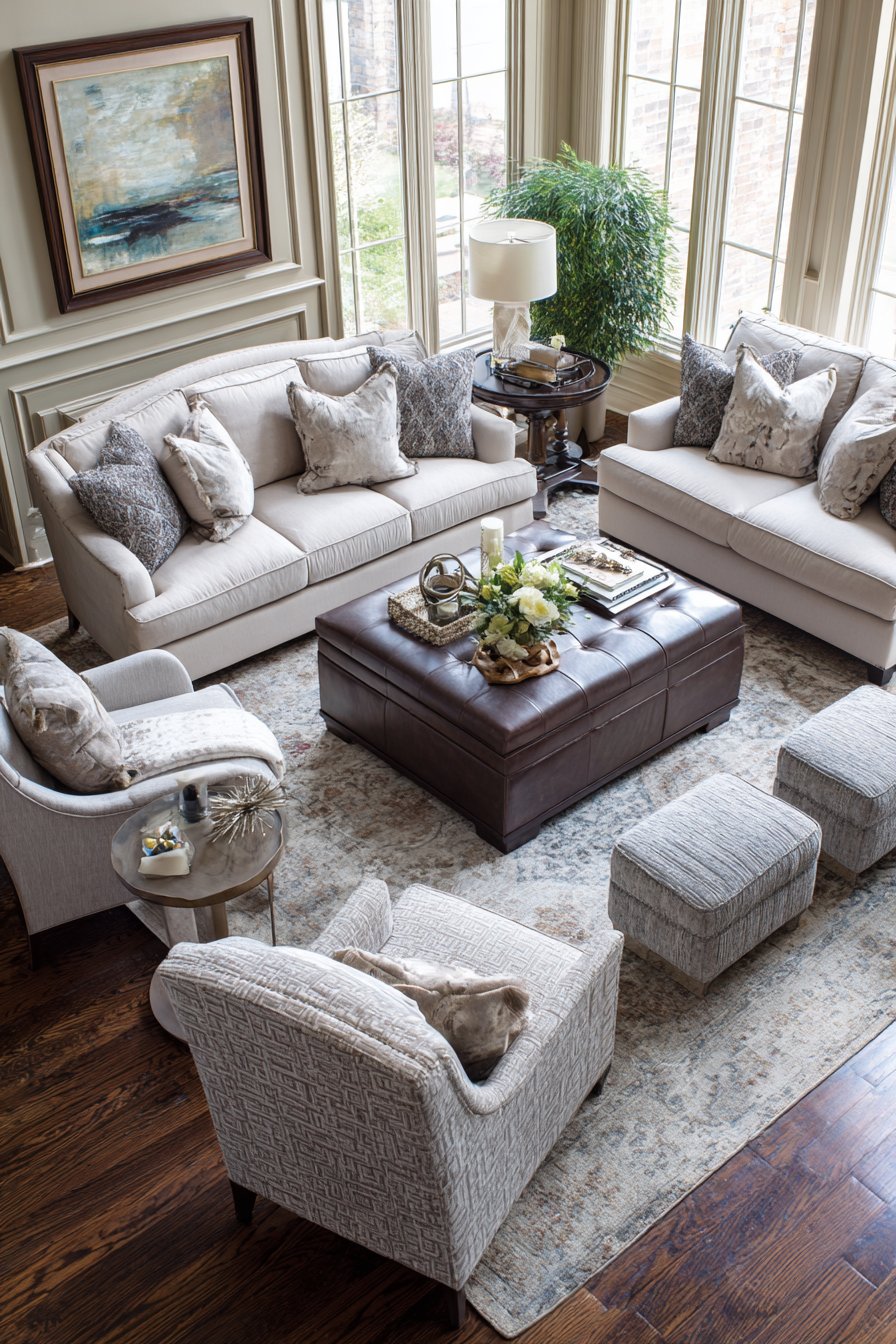
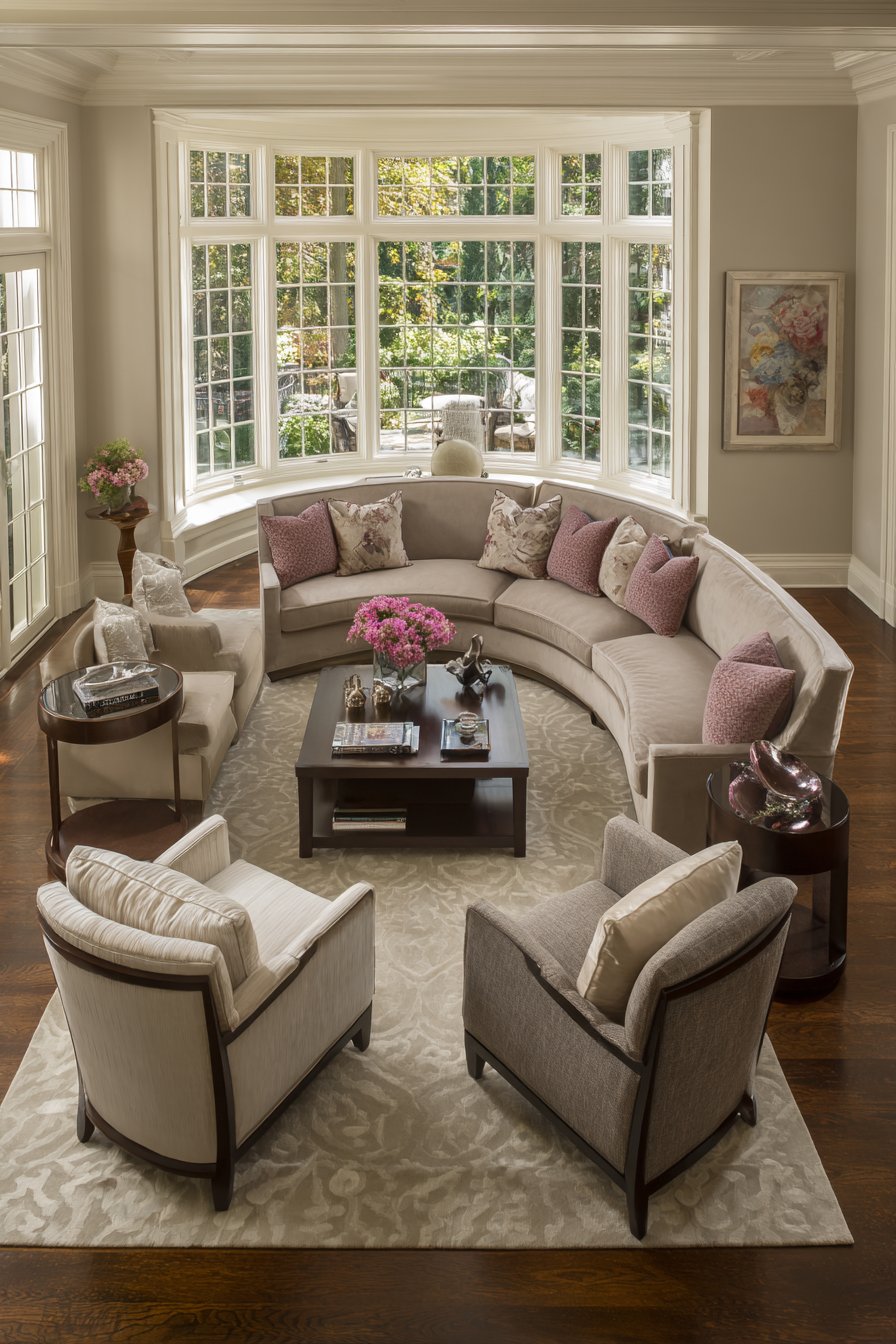
The layout of furniture fundamentally affects how a room functions and feels, and this conversation-focused arrangement demonstrates how thoughtful positioning creates intimacy and connection. Two sofas face each other across a coffee table, creating the primary conversation axis. Two accent chairs positioned at the ends create an intimate grouping that naturally encourages face-to-face interaction while maintaining comfortable personal space. All seating is upholstered in complementary neutral fabrics with varied textures, providing visual cohesion while preventing monotony. A large area rug defines and anchors the seating arrangement, creating a room within the room.
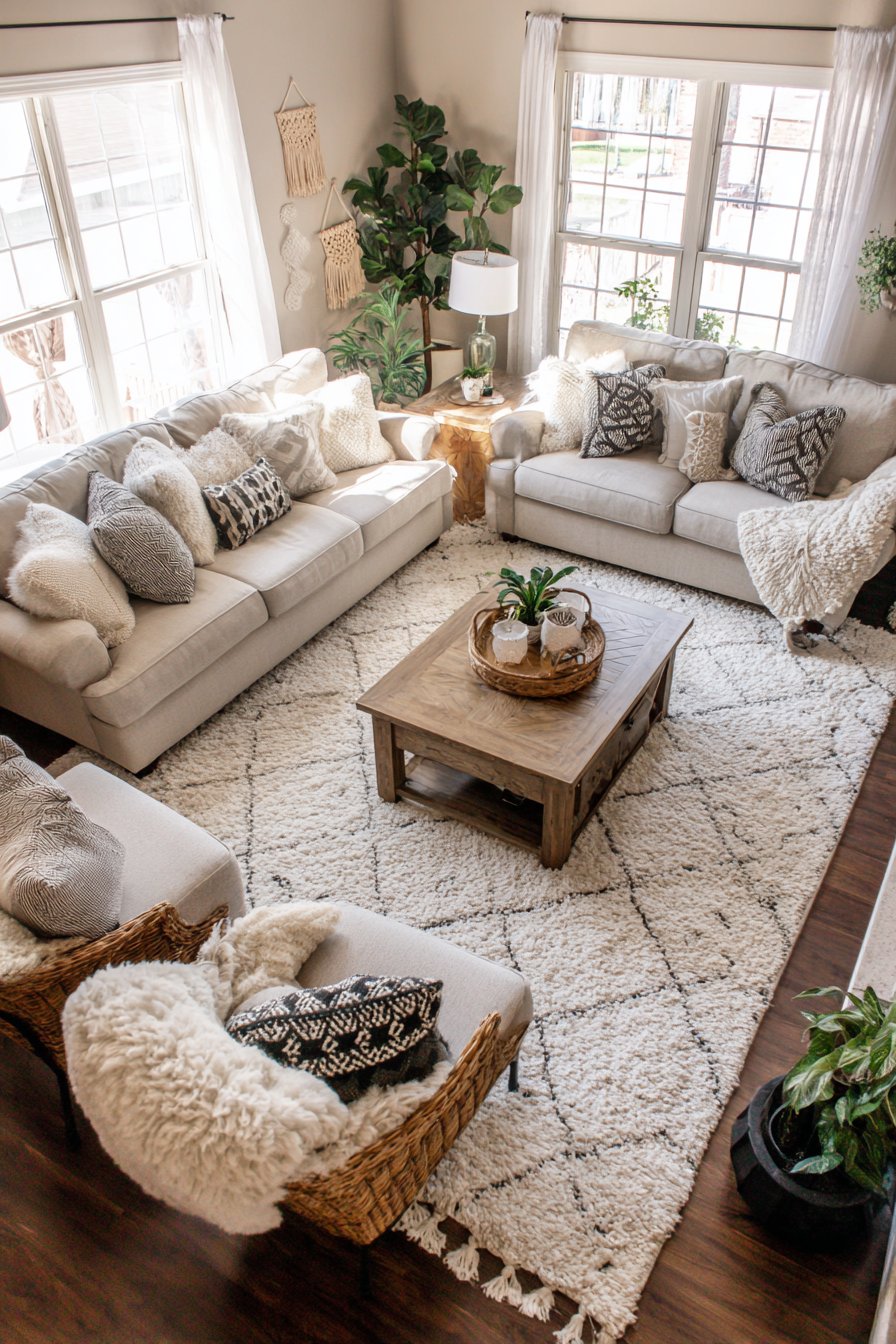
This symmetrical arrangement reflects classical design principles that create psychological comfort through balance and order. The facing sofas establish equal seating hierarchy—no single seat dominates, making conversations feel balanced and democratic. The accent chairs at the ends complete the grouping while offering alternative seating for those who prefer a slight remove from the main conversation. The coffee table at the center provides a focal point and practical surface for beverages and shared items, facilitating the social function of the space. The overall composition creates what designers call a “conversation pit”—a dedicated zone for interaction separate from other room functions.
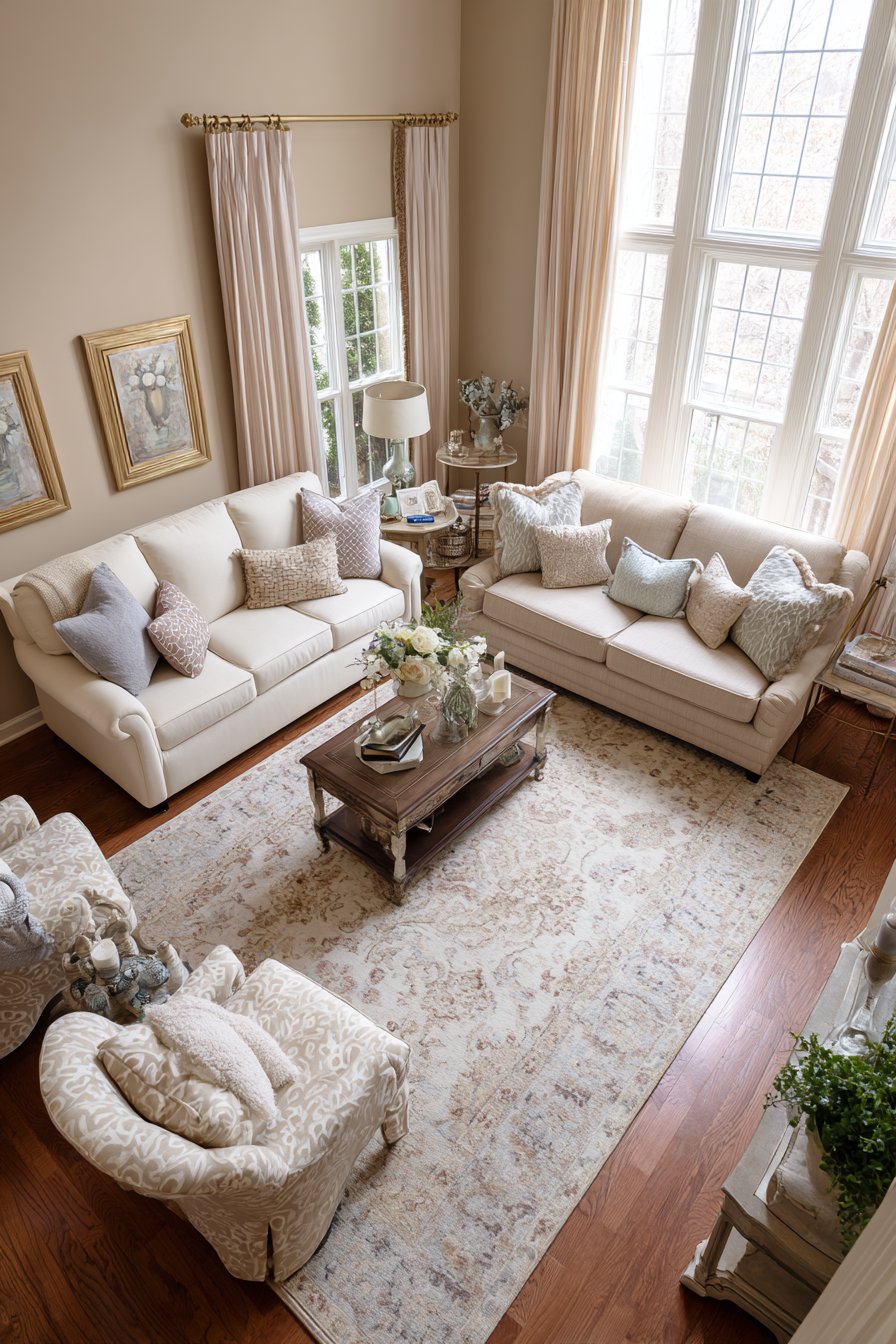
The rug’s role in this arrangement goes beyond mere decoration—it defines the conversation zone both visually and psychologically. The rug’s edges should extend beyond furniture on all sides, creating a unified field that signals “this is the conversation area.” Seating positioned entirely on the rug feels cohesive and connected, while furniture placed half-on, half-off can feel uncertain or unstable. The large scale of the rug required for this arrangement (typically 9×12 or larger) makes a design statement while serving the practical function of unifying the furniture grouping and softening acoustics for better conversation quality.
Key Design Tips:
- Position seating 8-10 feet apart for comfortable conversation distance
- Ensure all seating has easy access to surfaces for beverages (side tables or shared coffee table)
- Choose a rug large enough that all furniture front legs rest on it at minimum
- Create sight lines that allow everyone to see each other without craning necks
- Include varied seating options (sofa, chairs, ottoman) to accommodate different preferences and numbers of people
Why These Cozy Living Room Decor Ideas Work
These twenty-seven design approaches succeed in creating genuinely cozy living spaces because they address the fundamental elements that contribute to comfort, warmth, and livability. The best cozy living room decor ideas understand that coziness is multi-sensory—it’s not just about how a room looks, but how it feels, both physically and emotionally. Each design strategy addresses specific aspects of creating welcoming spaces: plush textiles engage our sense of touch, layered lighting creates visual warmth and practical illumination, natural materials connect us to the organic world, and personal touches make spaces feel authentic and meaningful.
The emphasis on texture throughout these ideas reflects a deep understanding of how material variety creates visual and tactile richness. Cozy spaces layer different textures—smooth leather against chunky knits, rough jute beneath soft velvet, natural linen alongside polished wood—creating complexity that rewards both sight and touch. This textural approach works because it mimics the natural world where varied surfaces coexist harmoniously. Interior designers specializing in residential comfort know that texture can substitute for color in creating visual interest, allowing for soothing neutral palettes that remain engaging through material variety.
Lighting strategies in these cozy living room decor ideas demonstrate sophisticated understanding of how illumination affects mood and function. The consistent emphasis on layered lighting—combining ambient, task, and accent sources—ensures rooms can adapt to different activities and times of day. Natural light is maximized through strategic window treatments and reflective surfaces, while artificial lighting is carefully planned to create warm, inviting pools of illumination rather than harsh, clinical brightness. The use of dimmers, varied light sources, and warm-toned bulbs creates flexibility that allows inhabitants to customize atmosphere to match their needs and moods.
The integration of natural elements throughout these designs speaks to biophilic design principles—our innate connection to nature and natural materials. Whether through substantial elements like reclaimed wood beams and live-edge coffee tables or smaller touches like potted plants and woven baskets, the presence of natural materials creates psychological comfort and connection to the organic world. These elements often age beautifully, developing patina and character that synthetic materials cannot replicate, contributing to the collected, lived-in quality that defines truly cozy spaces.
Storage solutions integrated throughout these ideas address a practical reality: cozy rooms are used and enjoyed, which means they accumulate the items that make life comfortable. Rather than treating storage as an afterthought, these designs incorporate beautiful baskets, built-in shelving, and multi-functional furniture that keep everyday items accessible while maintaining visual calm. This approach acknowledges that real coziness requires both beauty and practicality—a room can look perfect in photos but feel uncomfortable if there’s nowhere to store the blankets you actually use or the books you’re currently reading.
The color palettes emphasized in these cozy living room decor ideas tend toward warm neutrals and muted tones, creating soothing backdrops that don’t overwhelm or fatigue the eye. This doesn’t mean cozy rooms must be beige and boring—rather, these neutral foundations allow texture, natural materials, and carefully chosen accent colors to shine. The sophisticated use of varied tones within neutral palettes creates depth and interest without chaos, proving that restraint in color can actually create more visual richness when combined with material variety.
Personal touches integrated throughout these designs transform generic spaces into homes that reflect the people who inhabit them. Family photos, beloved books, travel souvenirs, and handmade items tell stories and create emotional connections that transcend aesthetic rules. The best cozy spaces balance design principles with personal expression, creating rooms that look intentional and beautiful while feeling authentically lived-in and meaningful. This is perhaps the ultimate characteristic of truly cozy rooms—they serve the people who use them rather than existing as design showpieces.
The furniture arrangements demonstrated in these ideas prioritize conversation and connection, reflecting understanding that living rooms serve social functions. Whether through intimate reading nooks for solitary comfort or conversation-focused seating arrangements for gathering, these designs consider how people actually use spaces. Comfortable seating in varied forms—from deep sectionals to cozy armchairs to flexible ottomans—ensures everyone can find their preferred spot for relaxing or engaging with others.
Scale and proportion receive careful attention throughout these cozy living room decor ideas. Furniture is appropriately sized for rooms, creating comfortable navigation paths while filling spaces adequately. Oversized elements like large sectionals or substantial coffee tables create anchoring presence, while smaller accent pieces prevent rooms from feeling heavy or overcrowded. This attention to scale ensures rooms feel balanced and harmonious rather than cramped or sparse—essential to creating psychological comfort.
The emphasis on quality over quantity throughout these designs reflects a shift toward more sustainable, meaningful consumption. Rather than filling rooms with trendy items that will quickly feel dated, these ideas prioritize investing in fewer, better pieces that will age well and remain relevant across style cycles. This approach aligns with the collected, curated aesthetic that defines cozy spaces while also promoting more sustainable design practices that reduce waste and consumption.
Seasonal adaptability appears throughout these ideas, with design elements that can be easily updated to reflect changing weather and light conditions. Lighter textiles for warm months, heavier throws and pillows for cold seasons, and the ability to adjust lighting for shorter or longer days ensure rooms remain comfortable year-round. This flexibility prevents rooms from feeling static while allowing for regular refreshment without major renovation.
The integration of indoor plants in many of these designs addresses both aesthetic and practical benefits. Beyond their visual contribution, plants improve air quality, add humidity to indoor environments, and create living elements that change and grow over time. This introduction of nature indoors connects to broader wellness trends while serving the practical purpose of making spaces feel fresh and vibrant.
Window treatments throughout these ideas balance natural light admission with privacy and light control needs. The emphasis on layering—sheer panels underneath heavier drapes—provides flexibility to adjust for changing conditions while adding textural interest. Ceiling-mounted treatments and floor-length panels create visual height and elegance that elevate even standard windows into design features.
The consistent presence of area rugs in these cozy living room decor ideas serves multiple purposes—defining spaces, softening acoustics, adding warmth underfoot, and introducing pattern or texture at the foundation of rooms. Natural fiber rugs provide durability and organic texture, while layered rugs create visual interest and allow for easier updates as styles evolve. The size and placement of rugs receives careful consideration, with appropriately scaled rugs that extend beyond furniture creating cohesive, well-proportioned spaces.
These design approaches work because they’re rooted in timeless principles of comfort, beauty, and function rather than following fleeting trends. While individual elements may reflect current styles, the underlying focus on creating warm, welcoming, livable spaces ensures these ideas will remain relevant regardless of changing design fashions. This timelessness makes them valuable investments of both time and resources—rooms designed around these principles will feel comfortable and beautiful for years rather than requiring constant updates to remain current.
Conclusion
Creating a cozy living room is an achievable goal for anyone willing to thoughtfully consider how design elements work together to create warmth, comfort, and personal expression. The twenty-seven ideas explored in this article demonstrate that coziness doesn’t require unlimited budgets or professional designers—rather, it emerges from understanding fundamental principles of texture layering, strategic lighting, natural material integration, and thoughtful arrangement of spaces that serve the people who use them.
The consistent themes throughout these designs—plush textiles, varied lighting sources, natural materials, personal touches, practical storage, and furniture arranged for comfort and connection—provide a framework for creating your own cozy sanctuary. Whether you implement one idea completely or draw elements from multiple approaches, the key is to remain true to your personal style and needs while honoring the principles that make spaces feel welcoming and warm.
Remember that the most successful cozy living rooms evolve over time, accumulating meaningful pieces and developing character through use and life. Start with quality foundational elements—comfortable seating, appropriate lighting, and practical storage—then layer in textiles, natural elements, and personal touches that make the space uniquely yours. Don’t be afraid to experiment with texture combinations, furniture arrangements, or color palettes until you find what feels right for your space and lifestyle.
Your living room should be a retreat from the world, a place where you can relax completely, connect with loved ones, and truly feel at home. Use these ideas as inspiration, adapt them to your circumstances, and trust your instincts about what makes you feel comfortable and happy. The most cozy living room is ultimately the one that serves you best—where you want to spend time, where you feel restored, and where the stresses of daily life melt away in an atmosphere of warmth, comfort, and beauty.
