
The dining room serves as the heart of the home—a gathering place where families share meals, friends create memories, and celebrations come to life. In cottage-style homes, this space takes on an especially warm and inviting character, blending rustic charm with comfortable elegance. Whether you’re drawn to weathered wood finishes, vintage collectibles, or the soft glow of natural light filtering through linen curtains, cottage dining rooms offer endless possibilities for creating a space that feels both timeless and personal.
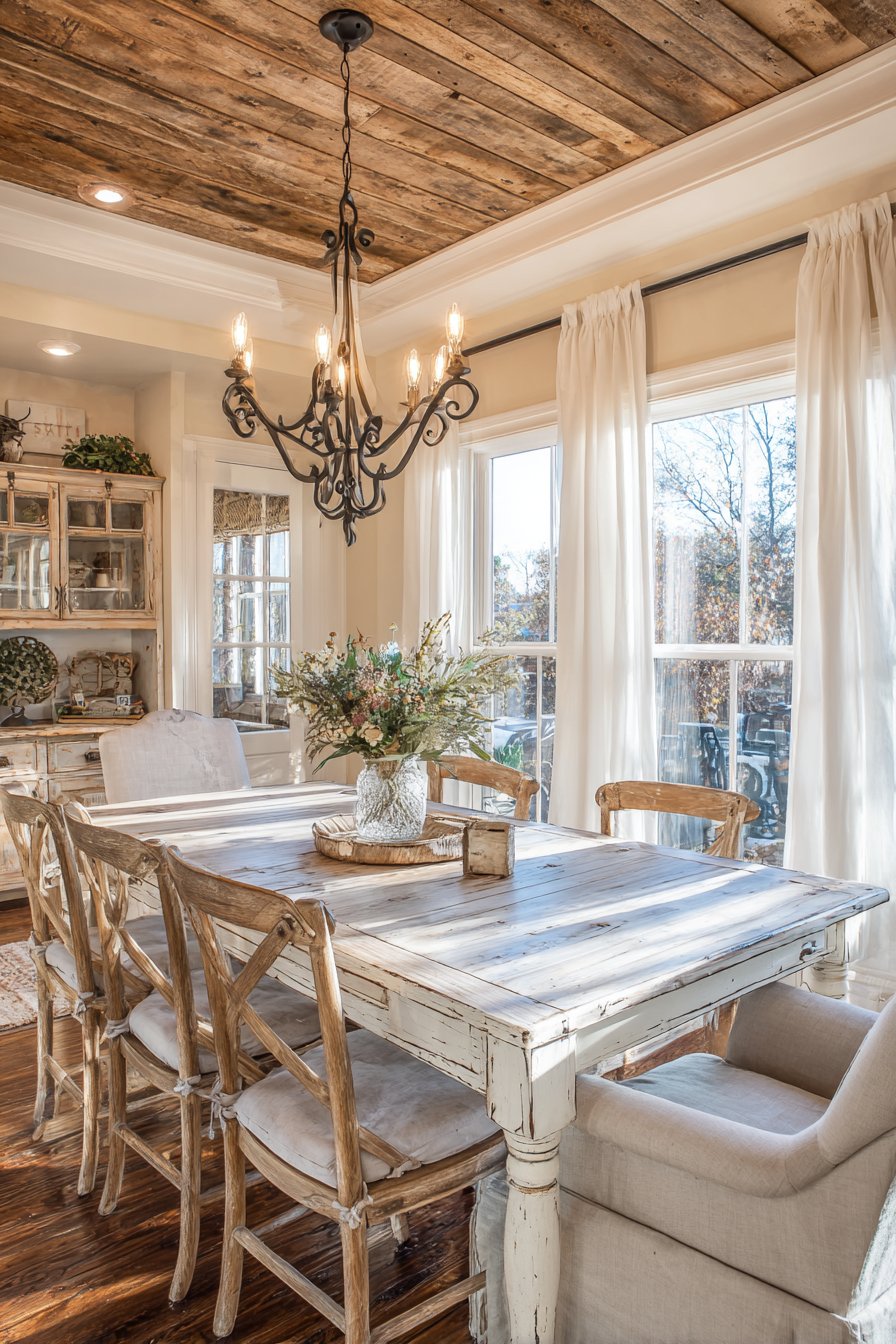
Cottage style embraces imperfection and celebrates authenticity. Unlike formal dining spaces that can feel stiff or intimidating, cottage dining rooms welcome you with their lived-in character and approachable design. This aesthetic draws inspiration from English countryside homes, French farmhouses, and American rustic traditions, resulting in spaces that feel collected over time rather than decorated all at once. The beauty lies in the mix—mismatched chairs around a farmhouse table, vintage china displayed in an antique hutch, and architectural details like exposed beams or shiplap walls that add texture and depth.
In this comprehensive guide, we’ll explore 29 distinctive cottage dining room ideas that showcase the versatility and enduring appeal of this beloved design style. From cozy breakfast nooks perfect for morning coffee to expansive harvest tables that accommodate large gatherings, each concept offers unique inspiration for transforming your dining space. You’ll discover practical tips for incorporating authentic materials, creating functional storage solutions, and layering textures to achieve that signature cottage warmth. Whether you’re working with a compact corner or a generous room with architectural character, these ideas will help you create a dining space that invites lingering conversations and cherished moments.
1. Round Pedestal Table Cottage Dining Room
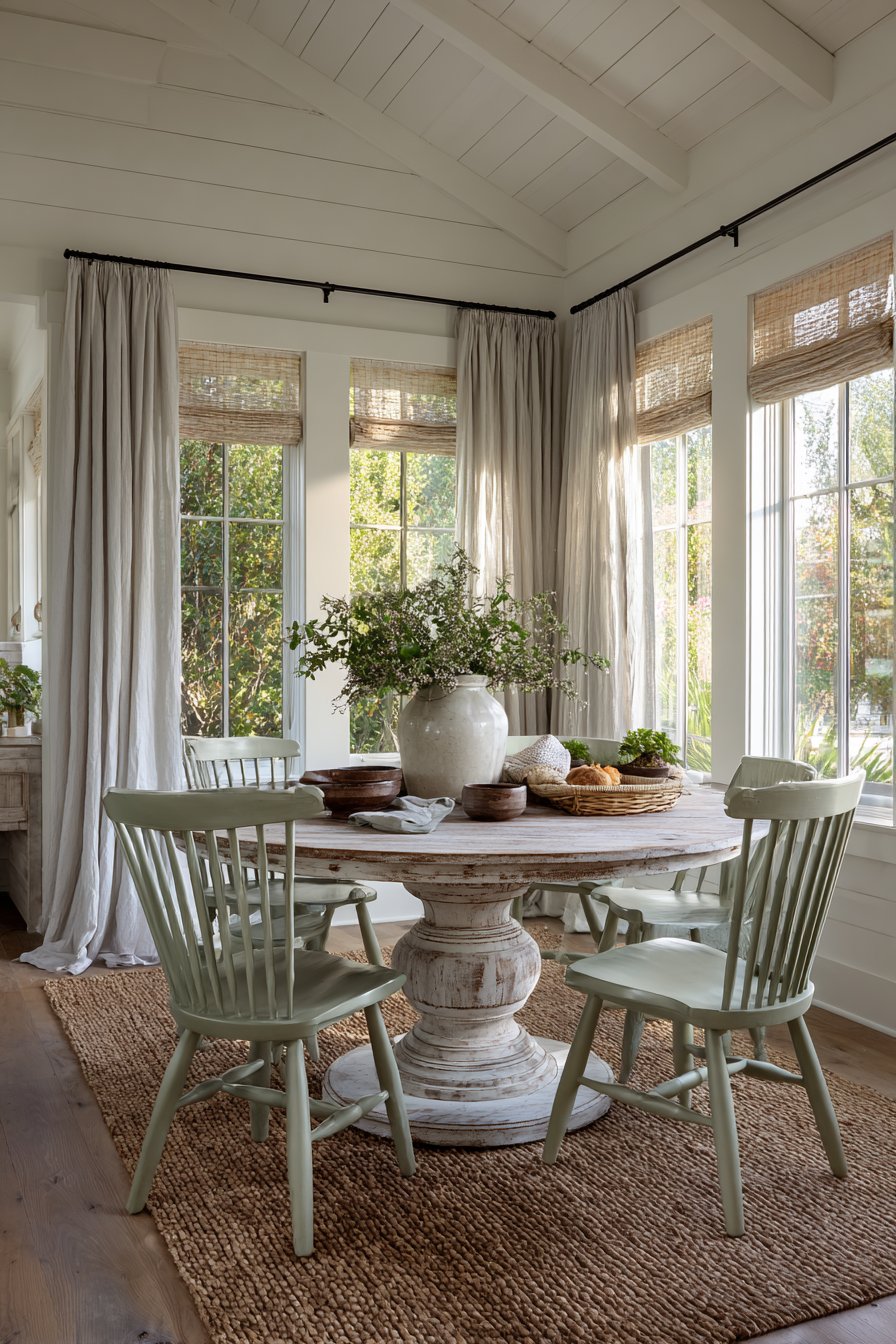
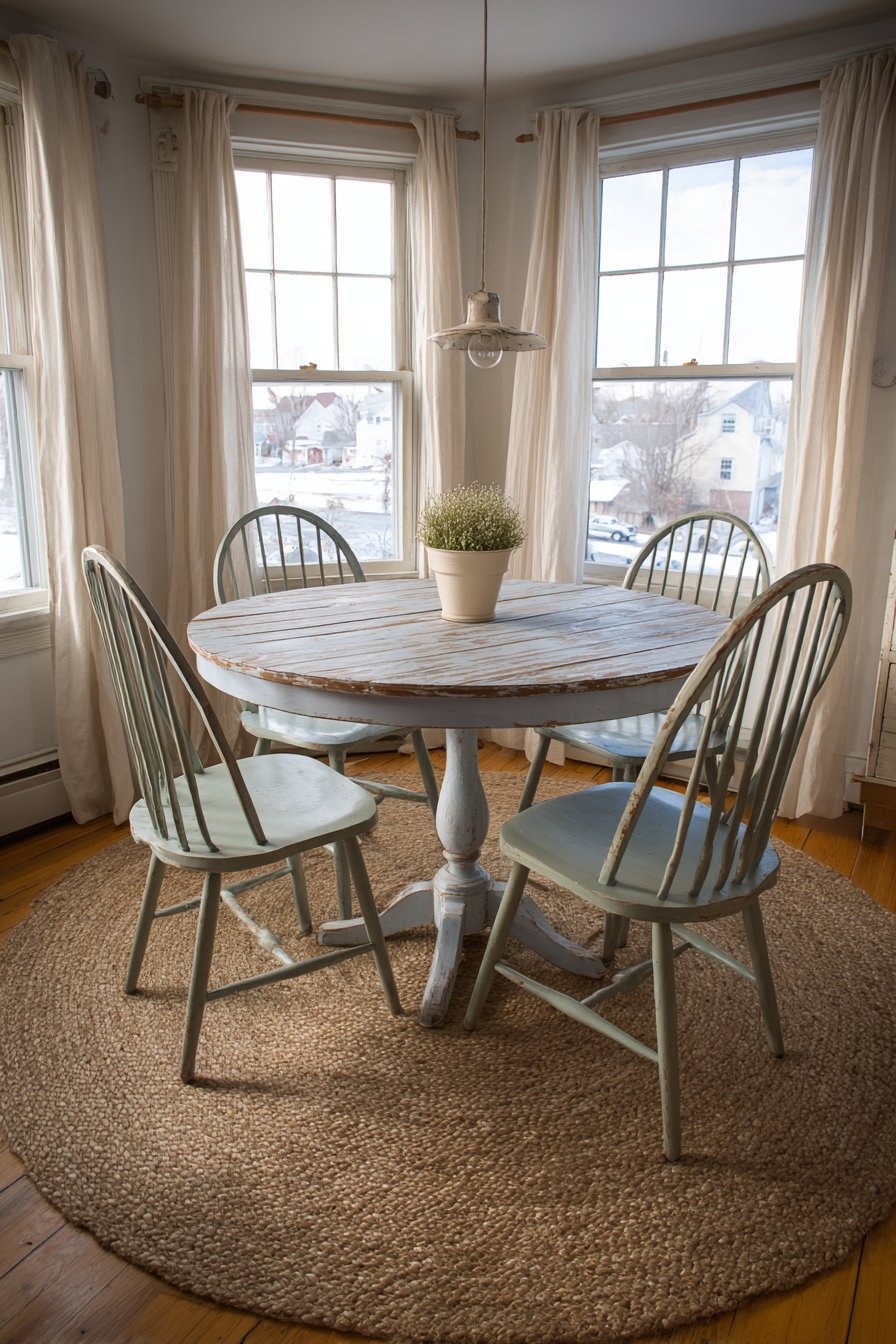
A round pedestal table crafted from reclaimed pine becomes the focal point of this intimate cottage dining room, its natural finish showcasing beautiful wood grain variations that tell a story of age and character. The circular shape promotes conversation and creates a democratic seating arrangement where everyone feels equally included in the gathering. Four Windsor-style chairs painted in a distressed sage green finish surround the table, their traditional spindle backs adding vertical interest while maintaining the room’s casual elegance.
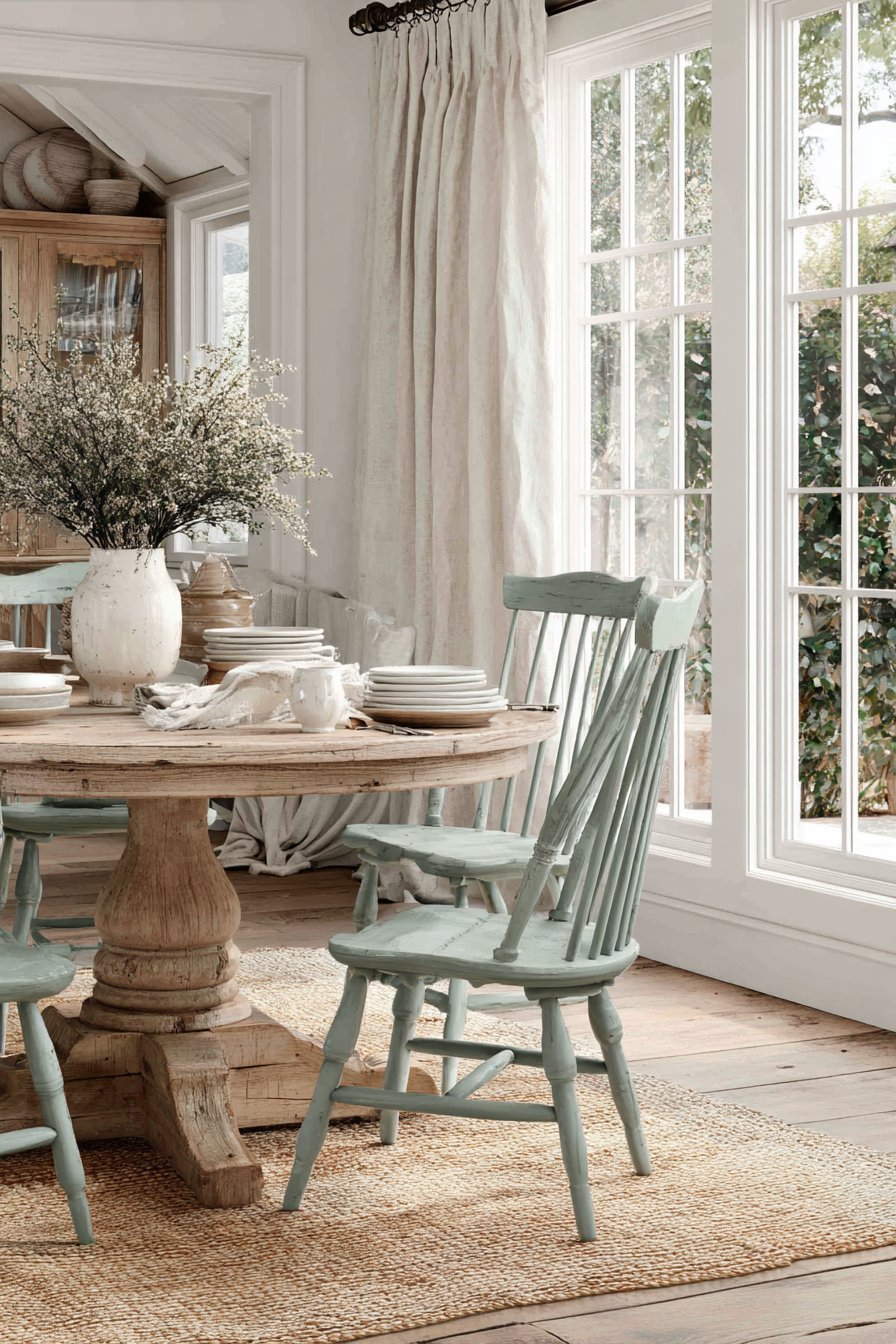
The foundation of this space features a woven jute rug that anchors the dining arrangement while adding natural texture underfoot. This practical choice not only defines the dining zone but also introduces an organic element that complements the wood tones throughout the room. The neutral color palette allows other design elements to shine without competing for attention, creating a cohesive and calming environment.
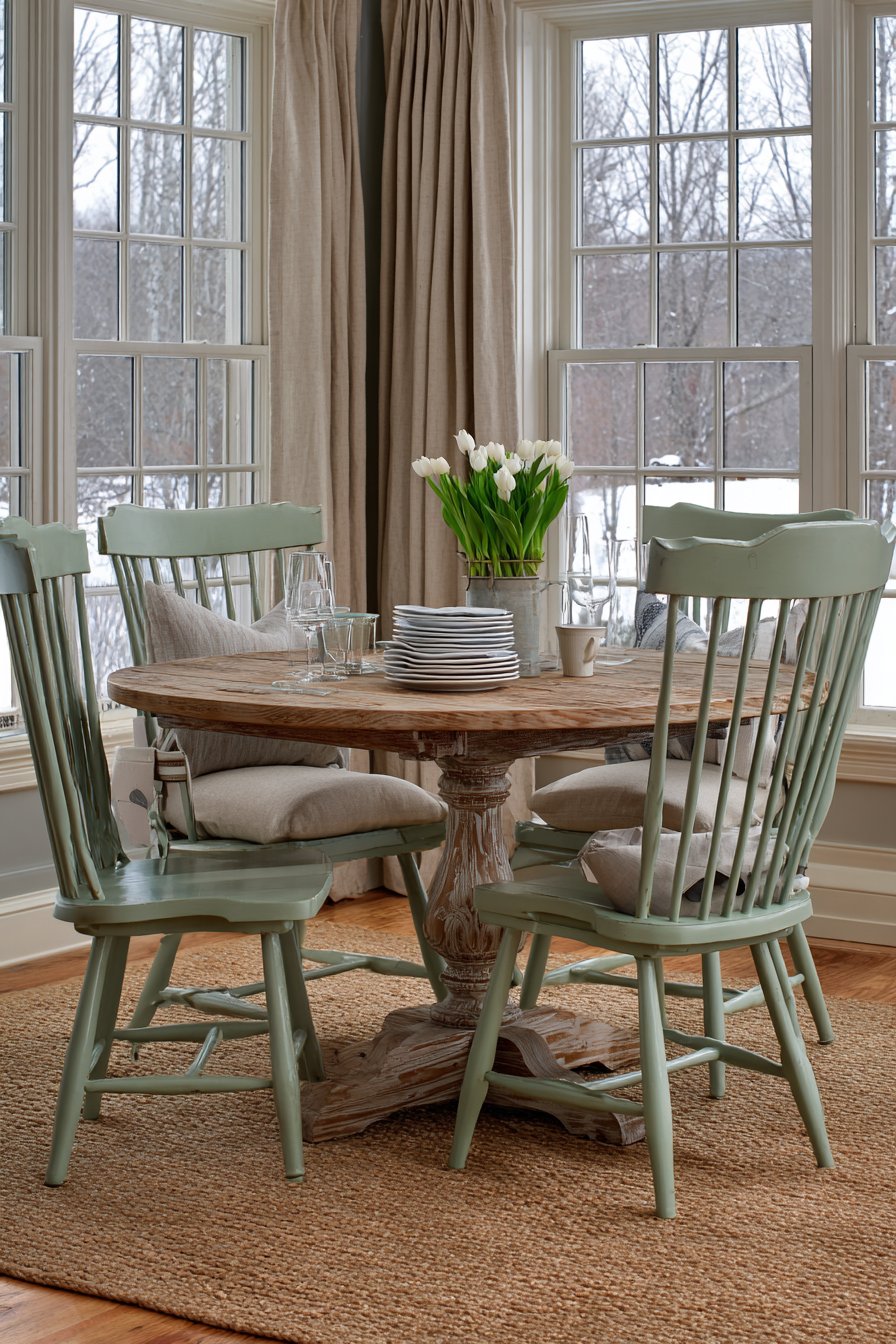
Natural light floods the space through divided-light windows dressed with simple linen café curtains that filter the sunshine into a soft, diffused glow. These half-length window treatments maintain privacy while maximizing light—a hallmark of cottage design that emphasizes connection to the outdoors. The curtains’ relaxed drape and natural fiber content reinforce the unpretentious cottage aesthetic.
Key Design Tips:
- Select a round table for smaller dining rooms to improve traffic flow and create intimate conversation settings
- Incorporate reclaimed wood furniture pieces to add instant character and environmental consciousness
- Choose painted chairs in soft, muted colors rather than bright hues to maintain cottage authenticity
- Layer natural fiber rugs under dining tables for texture, warmth, and noise reduction
- Install divided-light windows or window grilles to add architectural detail characteristic of cottage homes
2. Corner Bench Built-In Dining Nook
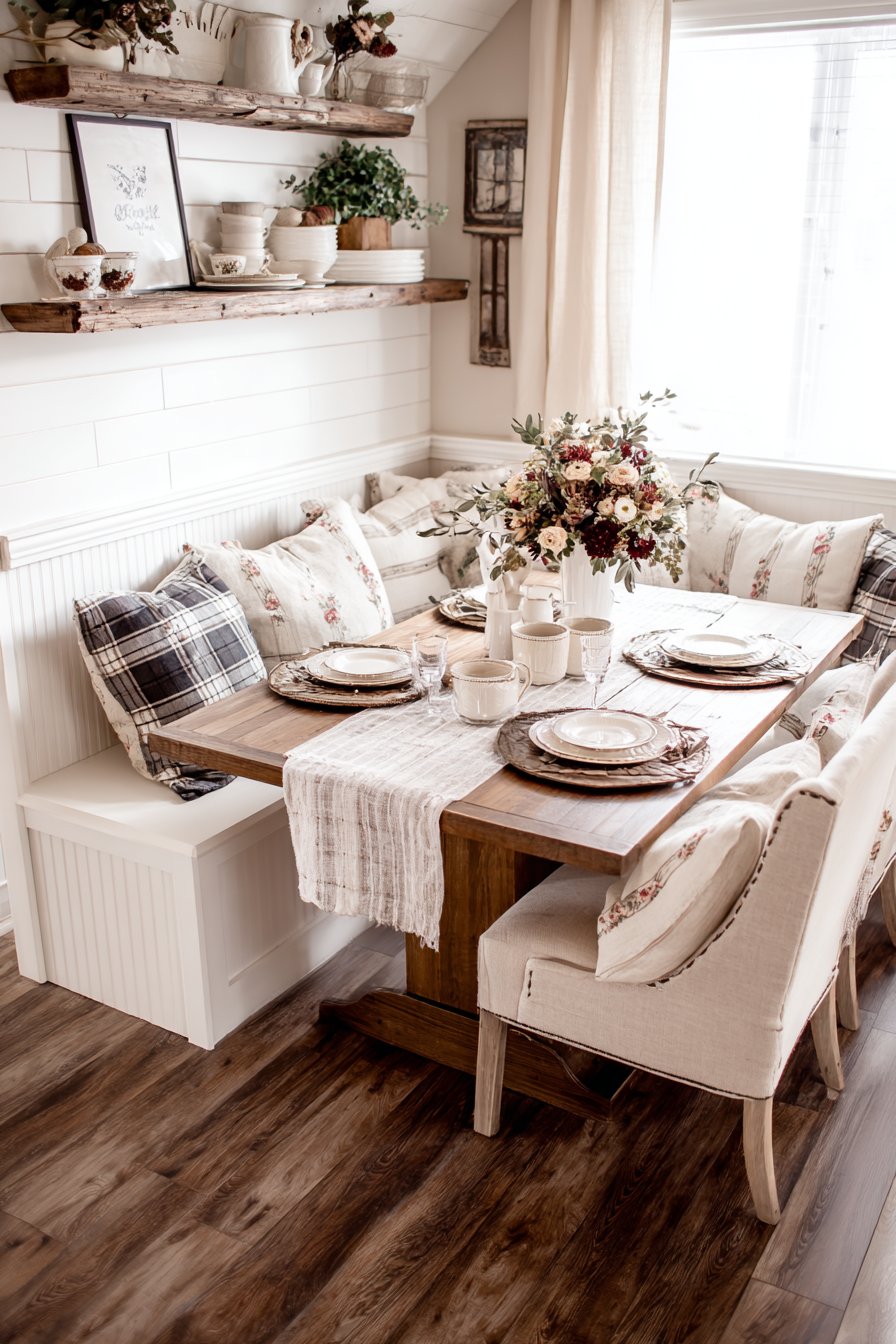
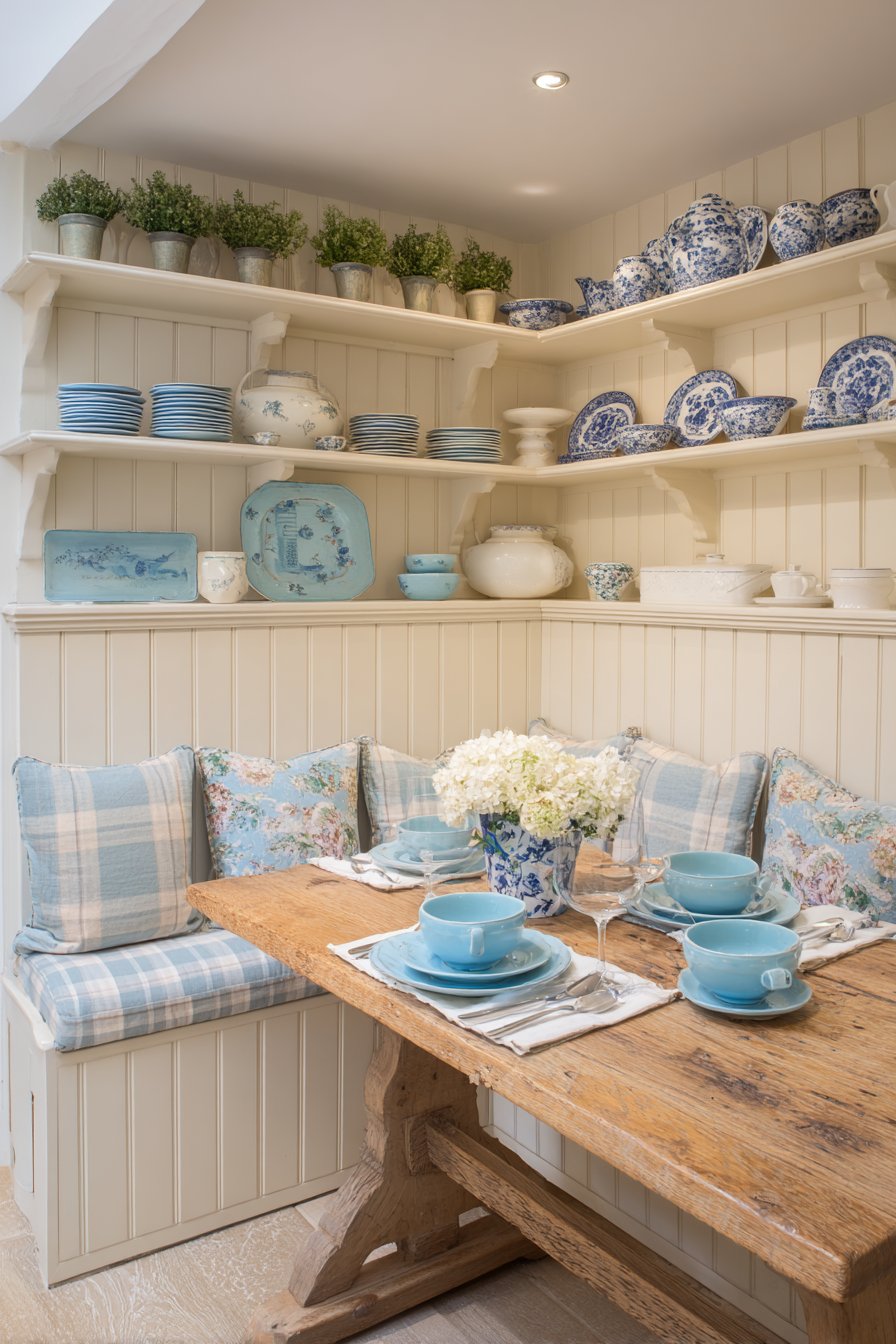
This space-efficient cottage dining room maximizes functionality through a built-in corner bench with beadboard backing painted in warm white, creating both seating and architectural interest. The L-shaped banquette wraps around a rustic wooden table, providing comfortable accommodations for four to six diners while conserving floor space—an ideal solution for smaller homes or open-concept layouts. Plaid cushions in muted blues and creams offer comfort and pattern, while vintage floral throw pillows add softness and cottage charm.
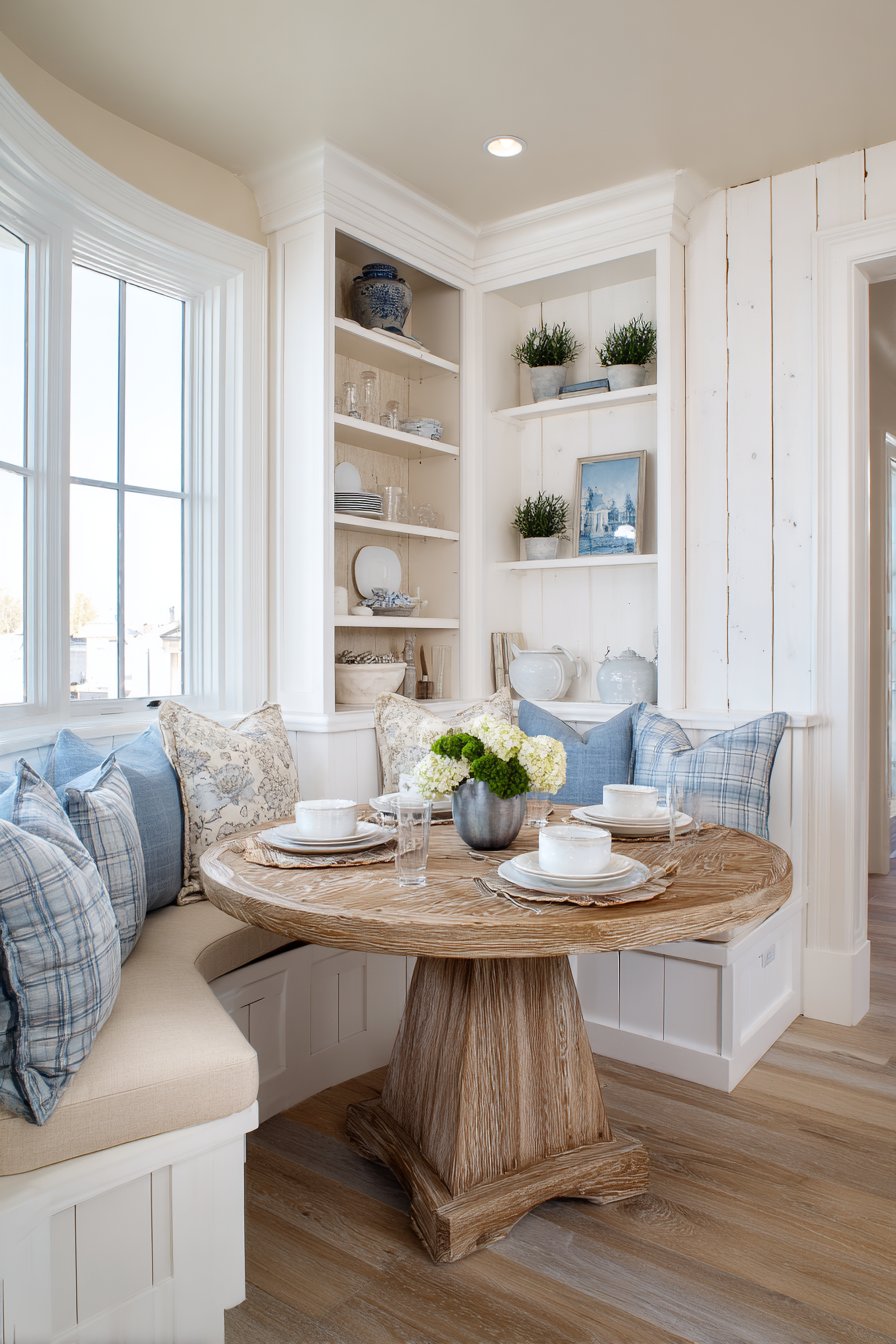
The beadboard paneling serves multiple purposes beyond mere decoration. This classic wall treatment adds subtle vertical texture, protects walls from chair damage, and reinforces the cottage aesthetic through its traditional craftsmanship. The warm white paint color brightens the corner space while maintaining a soft, inviting appearance that works beautifully with natural wood tones.
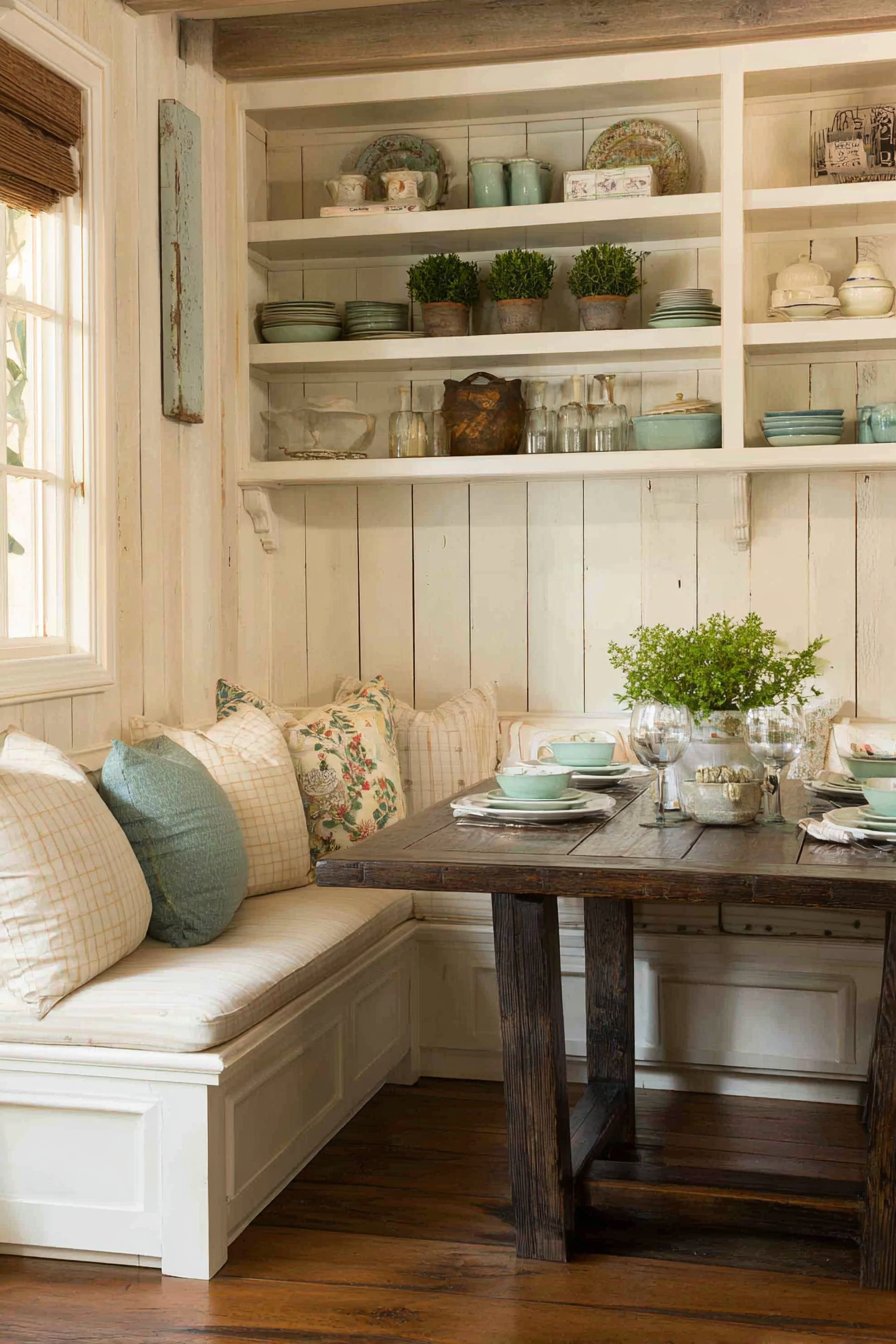
Open shelving mounted above the bench displays vintage dishware and potted herbs, transforming functional storage into decorative display. This approach to organization keeps everyday items accessible while showcasing collections that reflect the homeowner’s personality. Fresh herbs in terracotta pots add living greenery and practical culinary ingredients within arm’s reach of the dining table.
Key Design Tips:
- Design built-in seating with storage drawers or lift-top compartments to maximize space efficiency
- Use beadboard paneling at chair-rail height to add cottage character while protecting walls
- Mix solid-colored cushions with patterned pillows for visual interest without overwhelming small spaces
- Install open shelving at varying depths to accommodate different sized dishware and decorative items
- Incorporate living plants in dining areas to purify air and add fresh, organic elements
3. Exposed Brick Accent Wall Dining Room
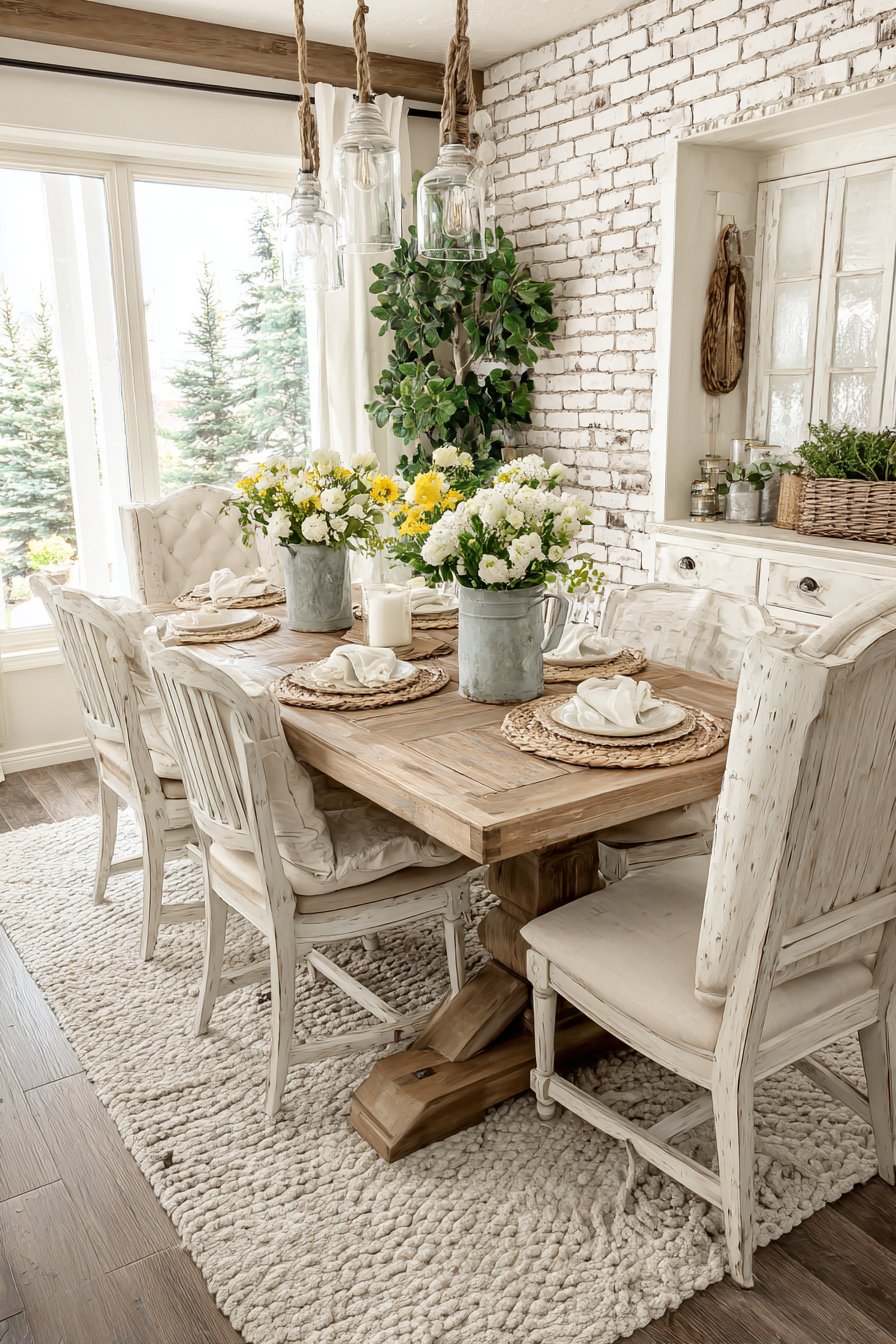
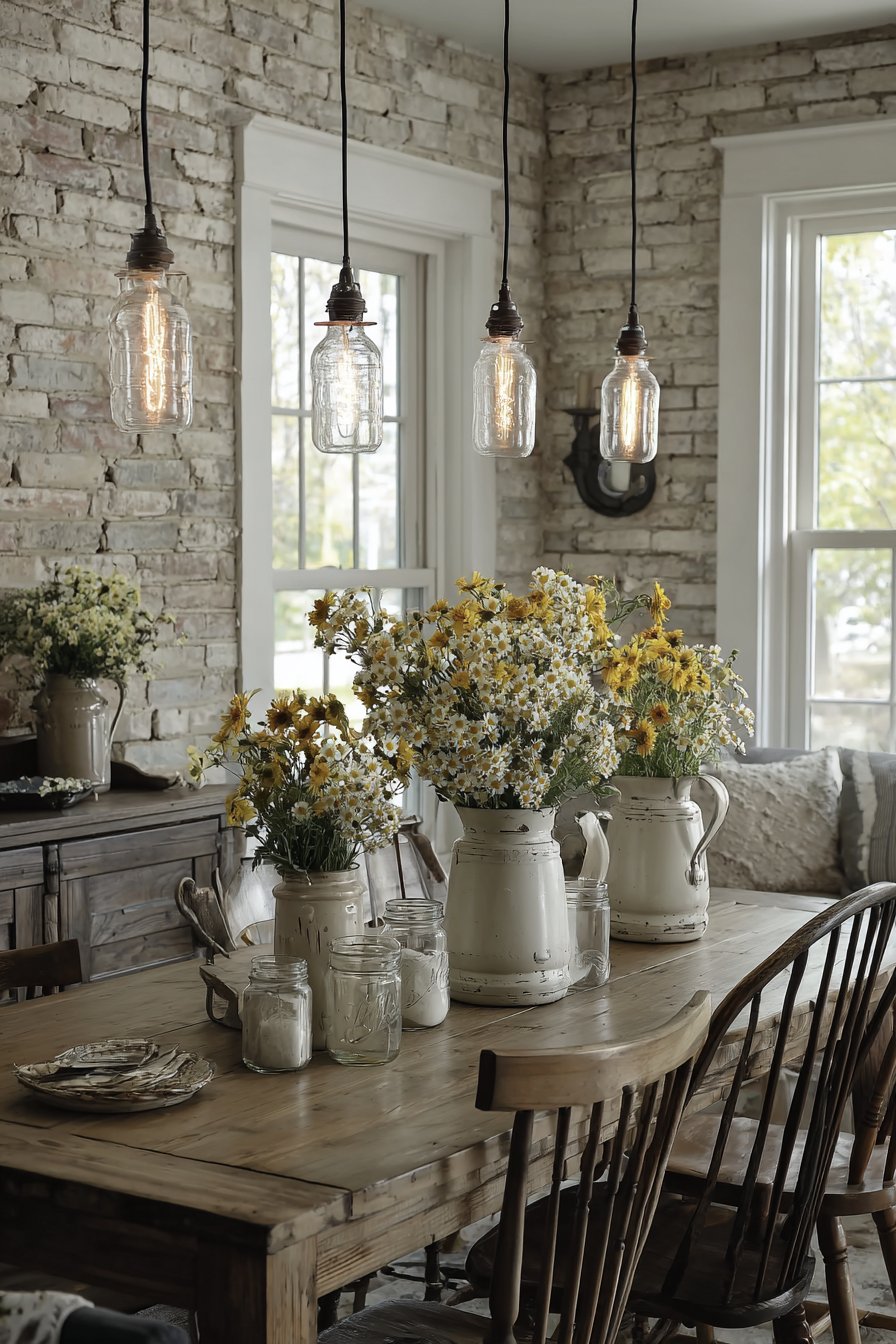
Exposed brick painted in a soft whitewash creates stunning texture in this cottage dining room, where the slightly irregular surface adds depth and visual interest that flat walls cannot achieve. The whitewashing technique allows the brick’s natural variations to show through while lightening the overall appearance, preventing the wall from feeling too heavy or industrial. This treatment strikes the perfect balance between rustic character and cottage refinement.
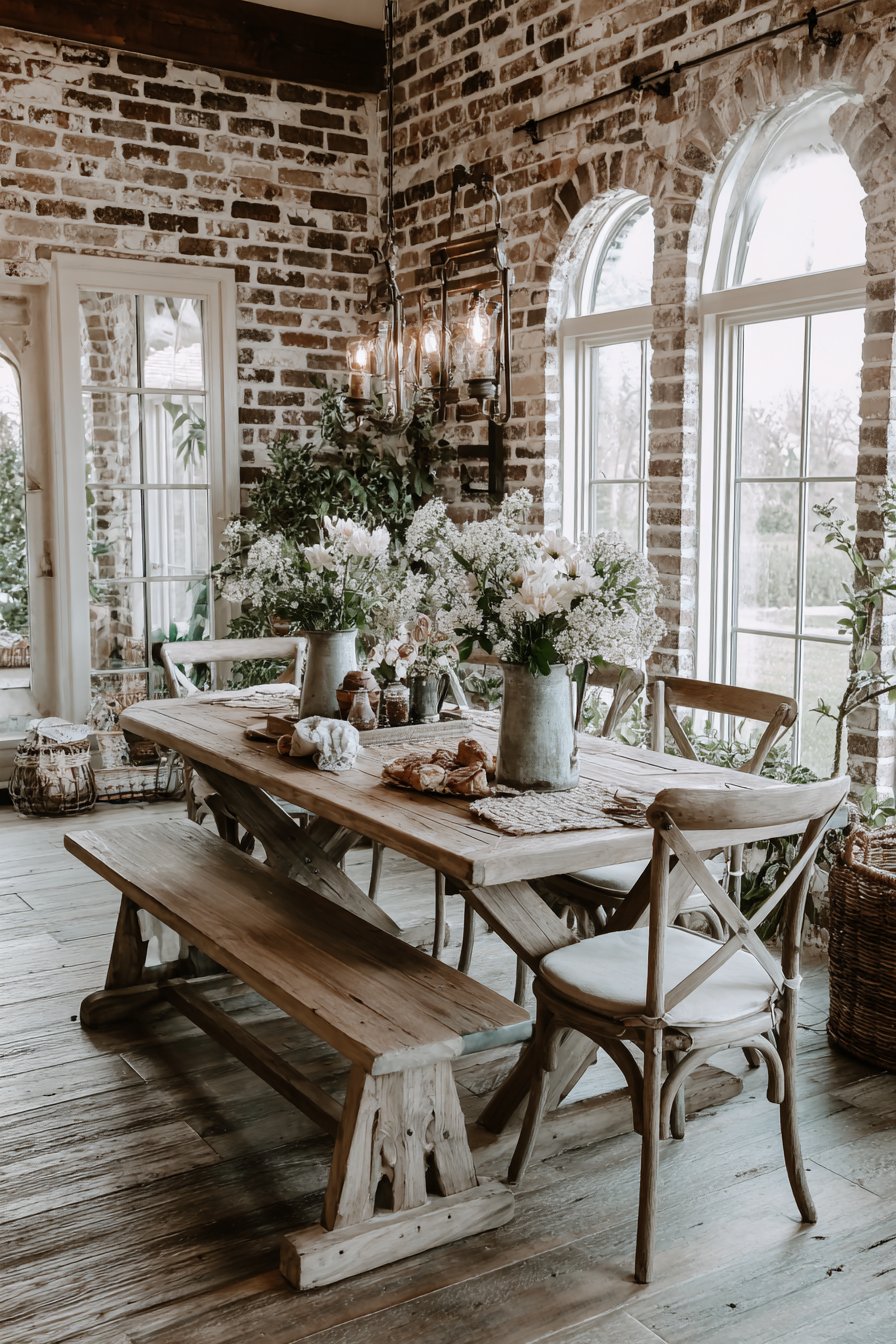
A farmhouse trestle table in honey-toned oak commands attention in the center of the room, its substantial presence anchored by a sturdy X-shaped base that speaks to traditional craftsmanship. The warm wood tones create beautiful contrast against the cool-toned whitewashed brick, establishing a sophisticated color palette that feels both grounded and airy. Six mismatched antique chairs surround the table, each piece contributing its own history and personality to the ensemble.
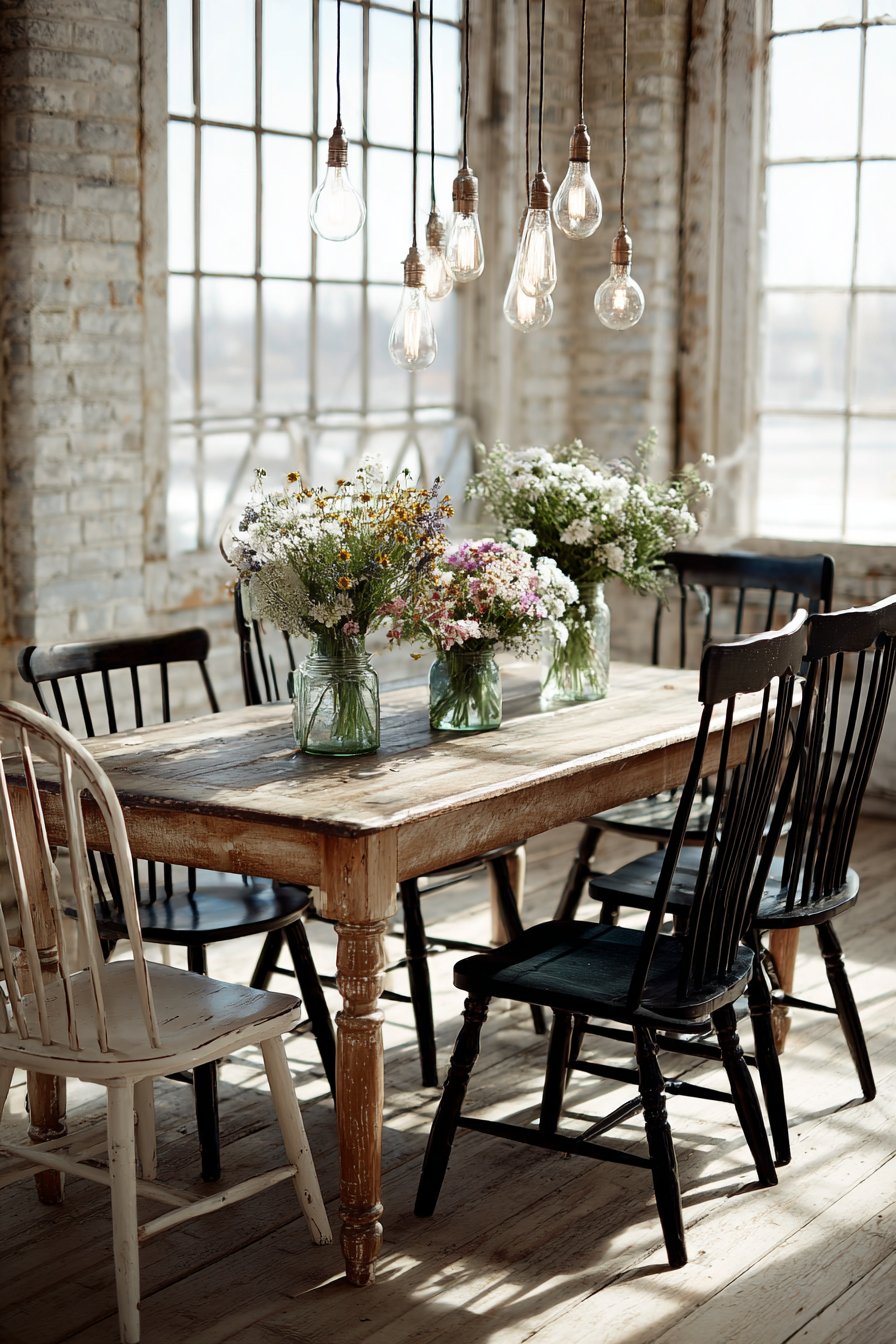
Mason jar pendant lights hang at varied heights above the table, their Edison bulbs casting warm, ambient light that enhances the room’s inviting atmosphere. This creative lighting solution exemplifies cottage style’s embrace of repurposed and unconventional materials. Fresh wildflowers arranged in vintage pitchers serve as centerpieces, bringing seasonal color and natural beauty to the table setting.
Key Design Tips:
- Apply whitewash or limewash to exposed brick for a softer cottage appearance while preserving texture
- Choose trestle-base tables for stability and traditional farmhouse appeal
- Vary pendant light heights to create visual interest and provide layered illumination
- Source mismatched antique chairs from estate sales and flea markets for authentic cottage character
- Rotate seasonal centerpieces featuring local flowers and natural elements
4. Shiplap Wall Gray and White Dining Room
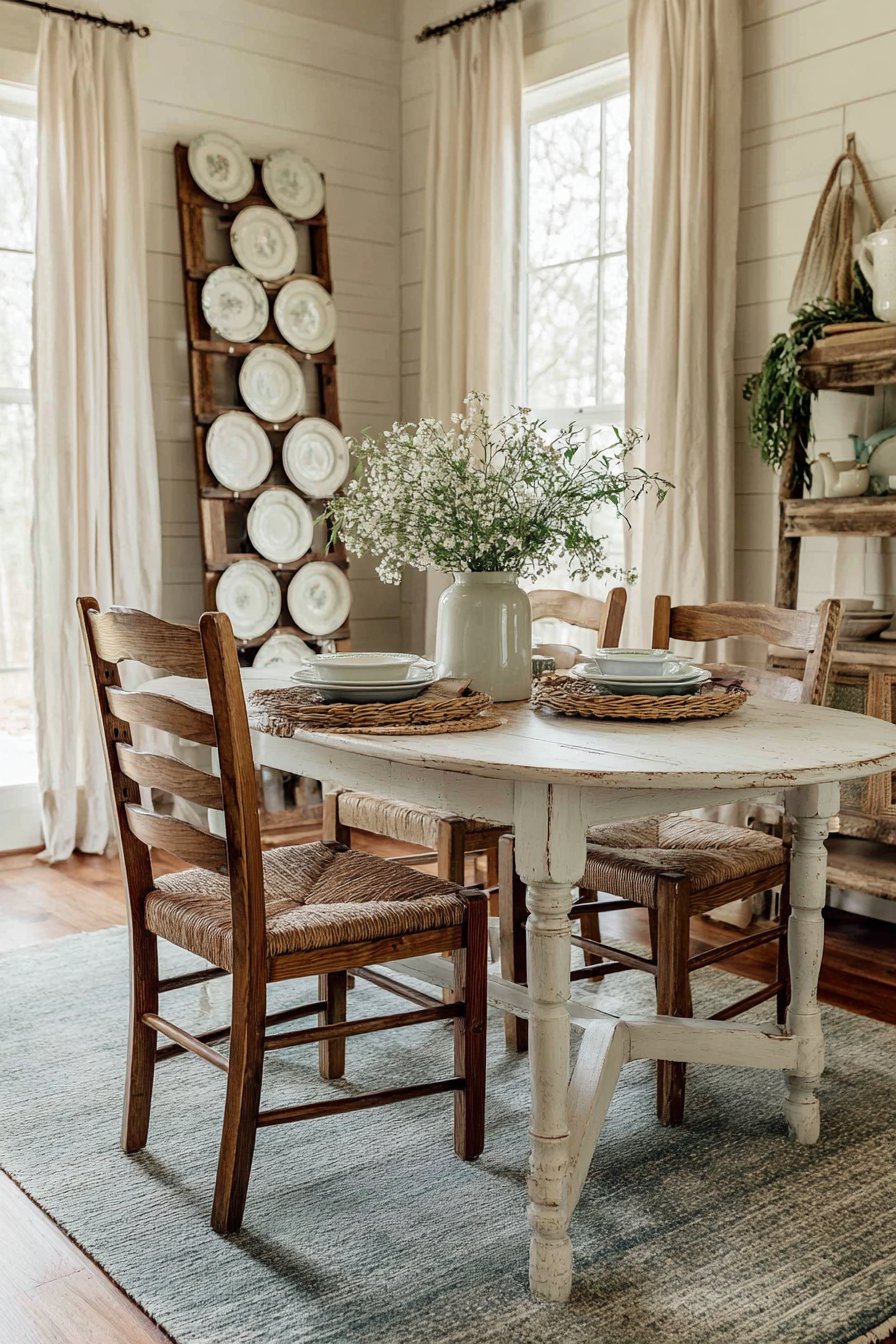
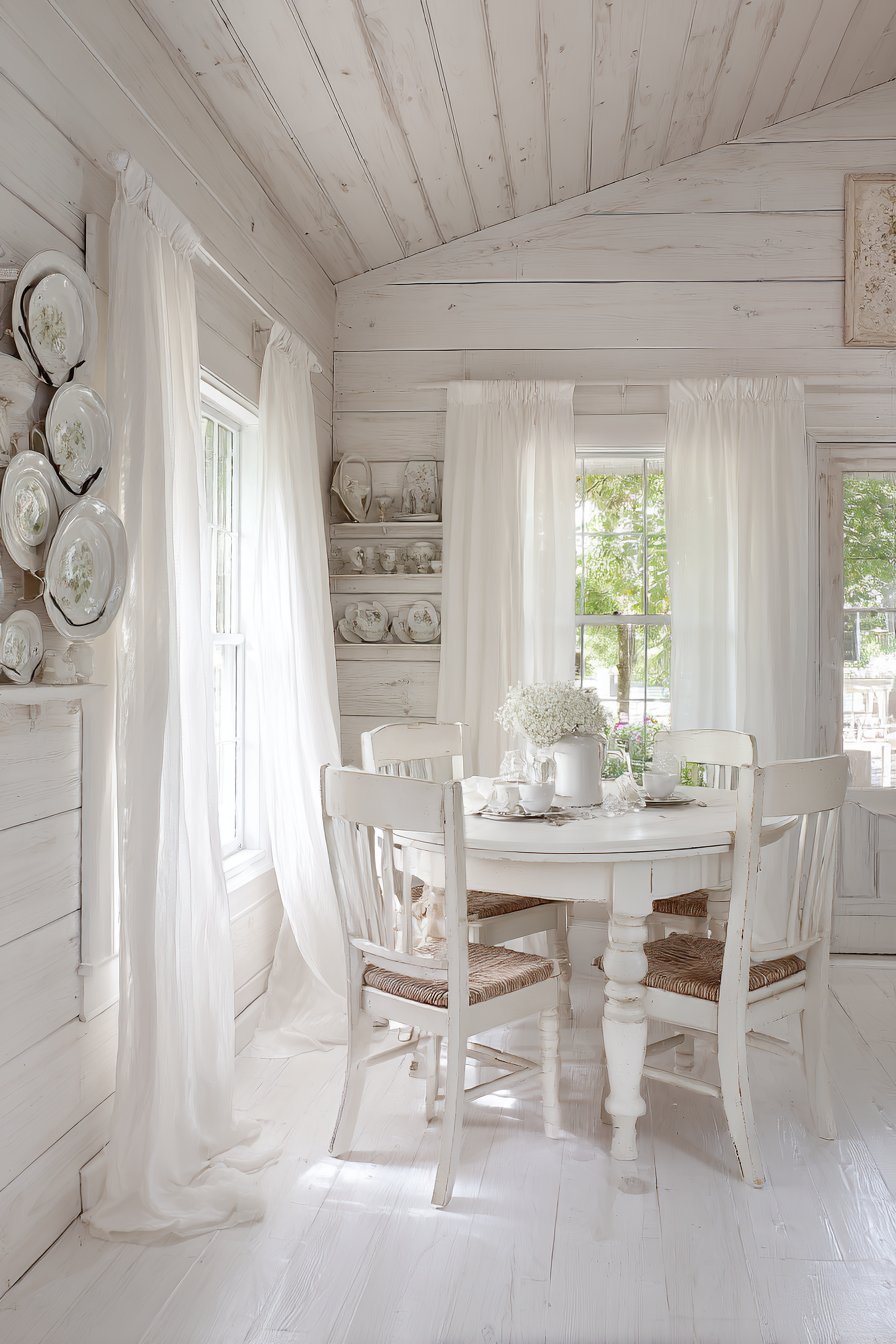
Pale gray shiplap walls with crisp white trim molding create a serene backdrop in this compact cottage dining room, where the horizontal wood planking adds subtle texture without overwhelming the space. The soft gray color provides sophistication while maintaining the light, airy quality essential to cottage design. White painted trim around windows and doors adds definition and architectural detail that elevates the simple material into something special.
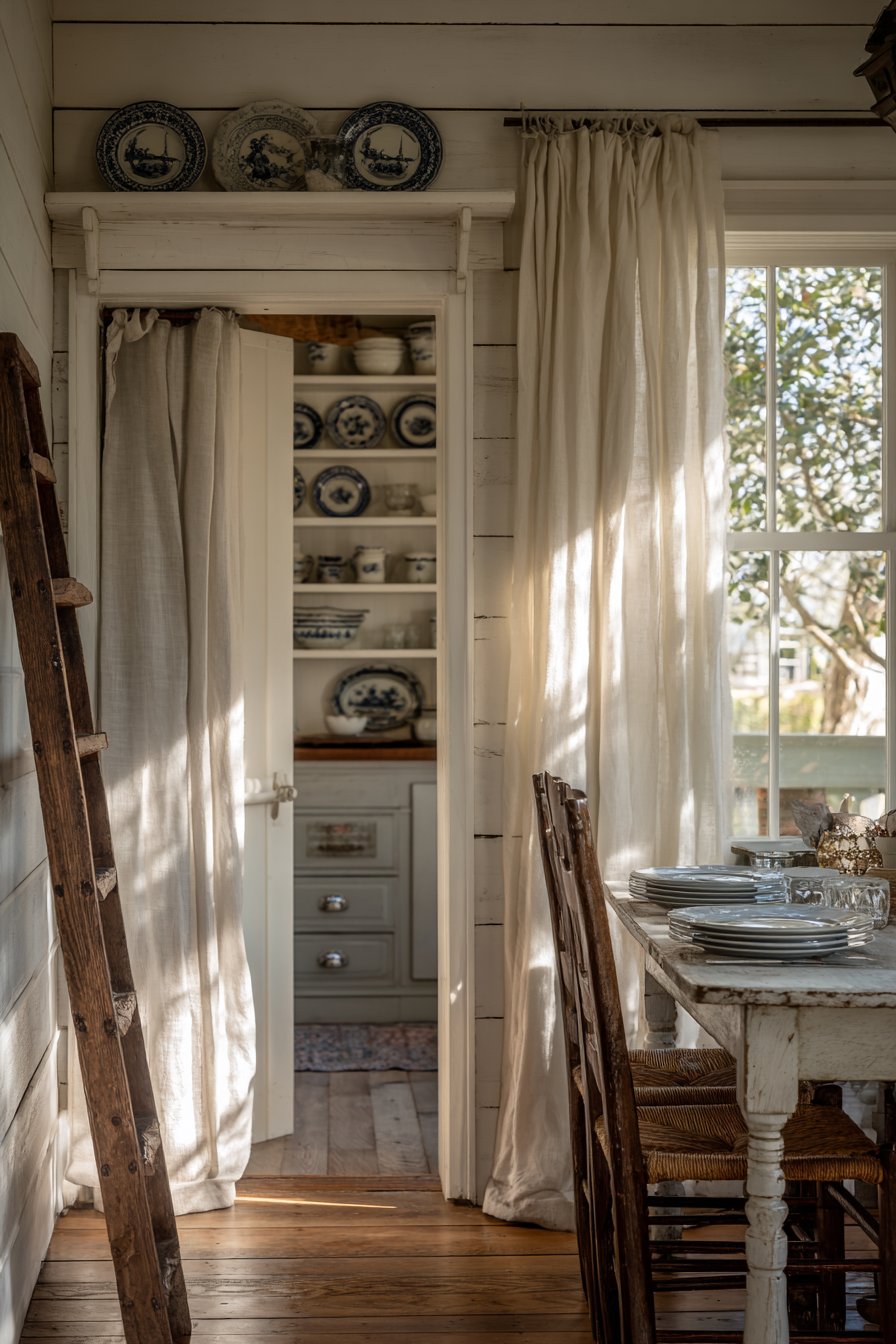
A drop-leaf table in distressed white finish offers remarkable versatility, functioning as a small console against the wall for everyday use and expanding to accommodate dinner guests when needed. This practical furniture choice respects the room’s compact footprint while refusing to compromise on hospitality. The distressed paint finish reveals hints of wood beneath, suggesting years of use and family gatherings.
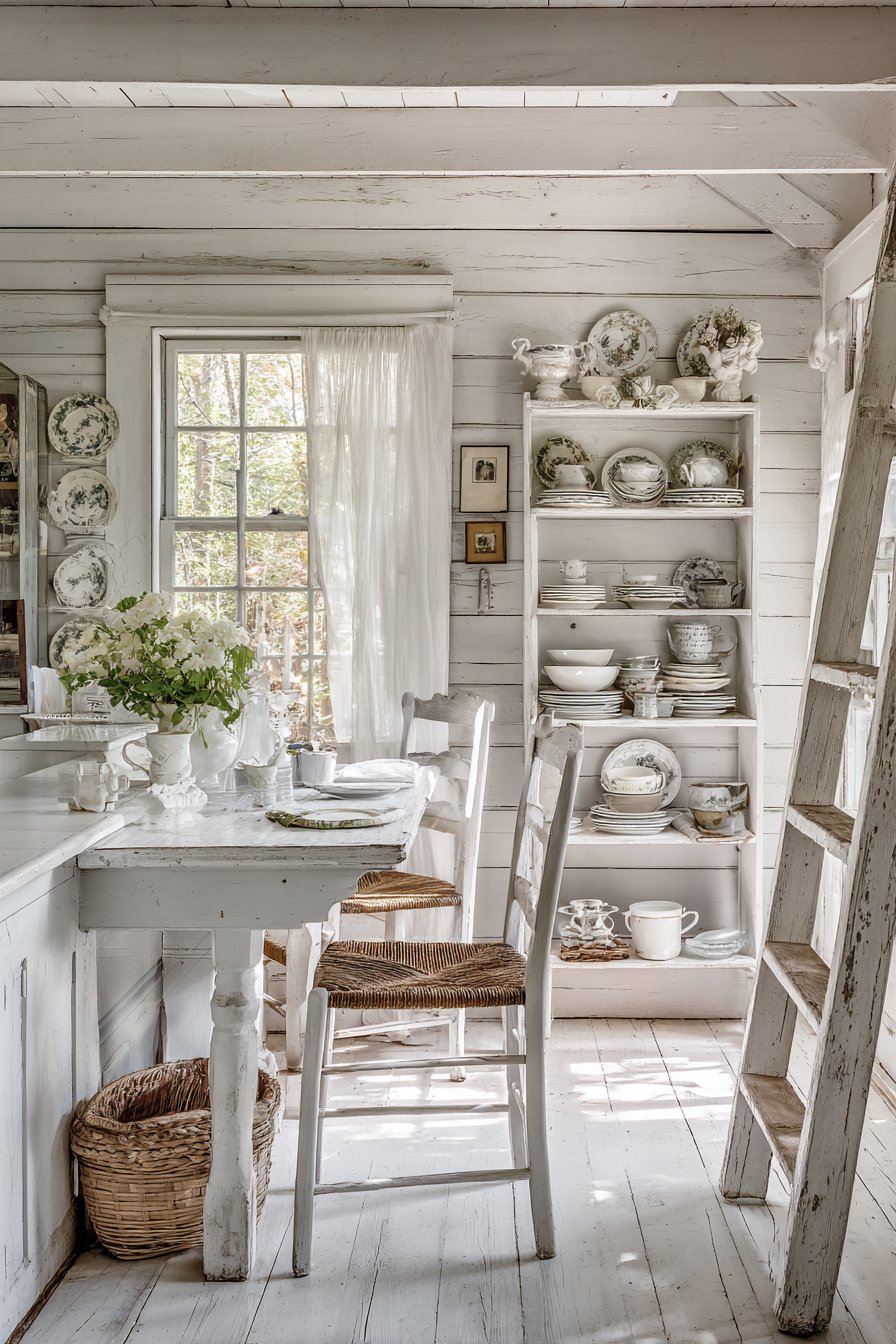
Ladder-back chairs with woven rush seats provide traditional seating that remains lightweight and visually unobtrusive. These classic cottage chairs can easily be moved aside when the table is contracted, and their natural rush seats introduce organic texture that complements the painted wood elements. A vintage plate rack mounted on the wall displays treasured china collections, turning functional storage into decorative focal point.
Key Design Tips:
- Install shiplap horizontally to make smaller rooms appear wider and more spacious
- Select drop-leaf or gate-leg tables for dining rooms that serve multiple purposes
- Display heirloom china and collectibles on open racks rather than hiding them in cabinets
- Use distressed paint finishes to add age and character to new furniture pieces
- Maintain consistent white trim throughout to unify different wall treatments and colors
5. Natural Wood Paneling Cottage Dining Room
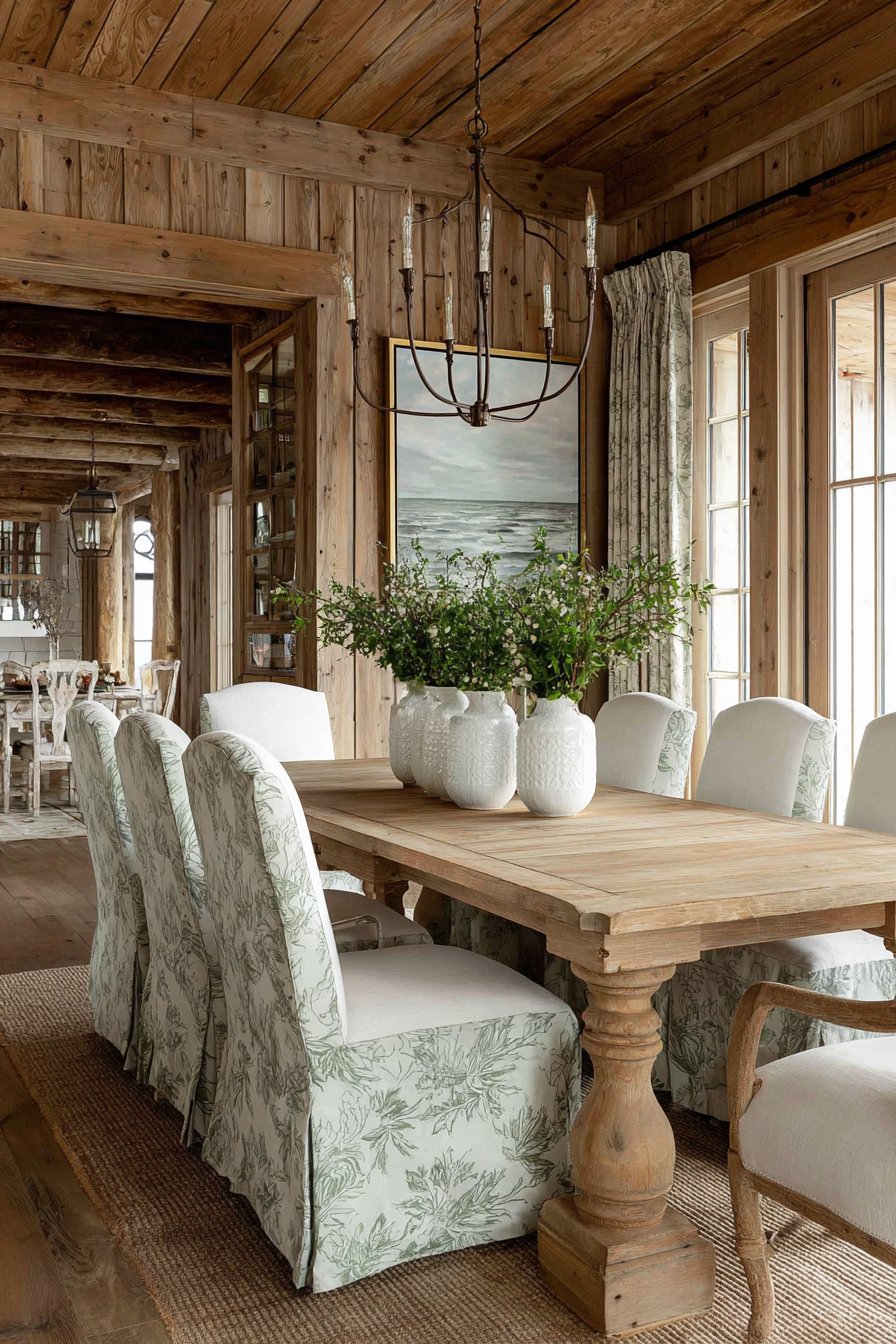
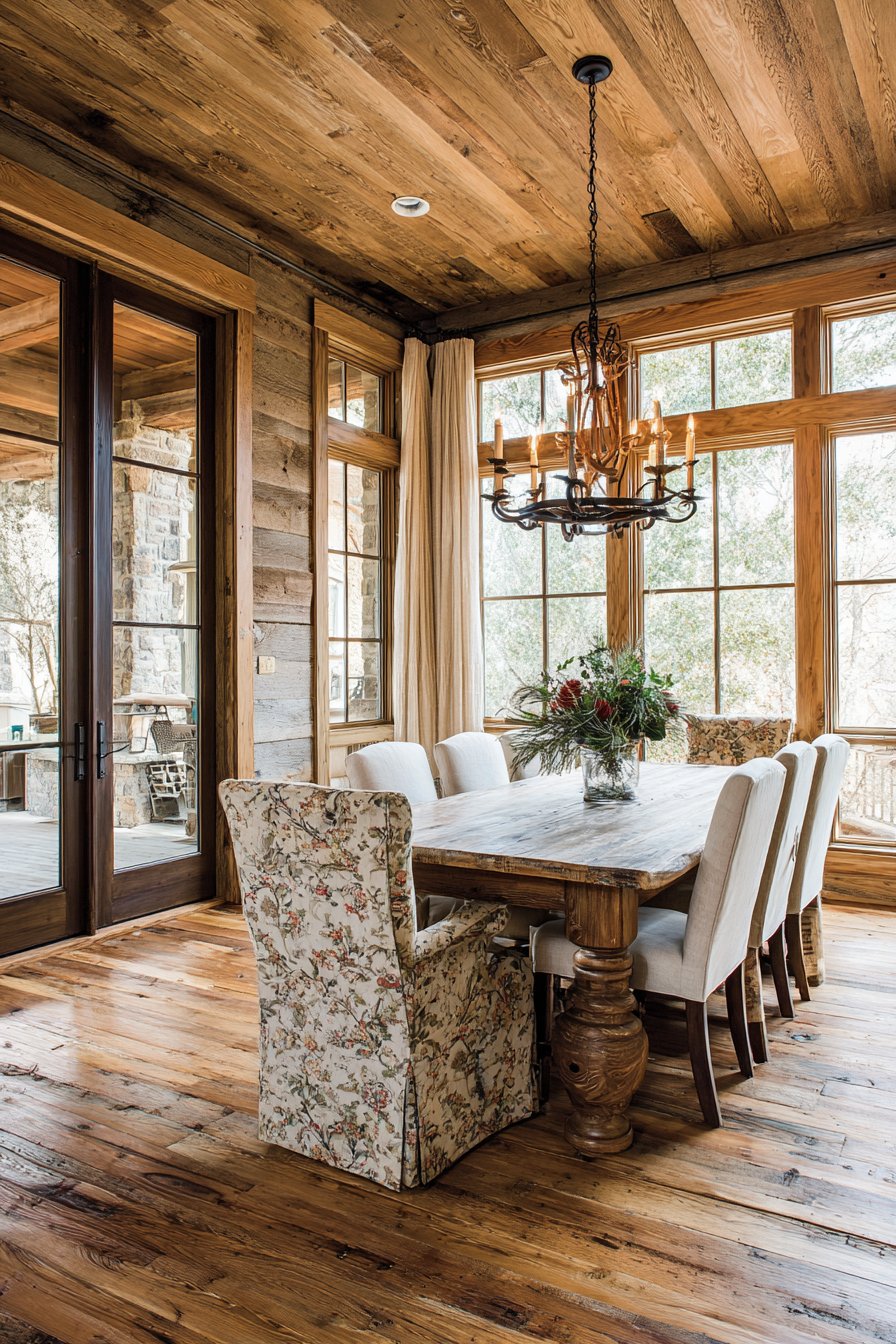
Tongue-and-groove wood paneling stained in natural oak tones envelops this cottage dining room, covering both walls and ceiling to create a warm, cabin-like atmosphere. The continuous wood treatment establishes an intimate, cocooning effect that makes the space feel protected and comfortable. The natural stain allows the oak’s beautiful grain patterns to shine through, celebrating the wood’s inherent beauty rather than concealing it.
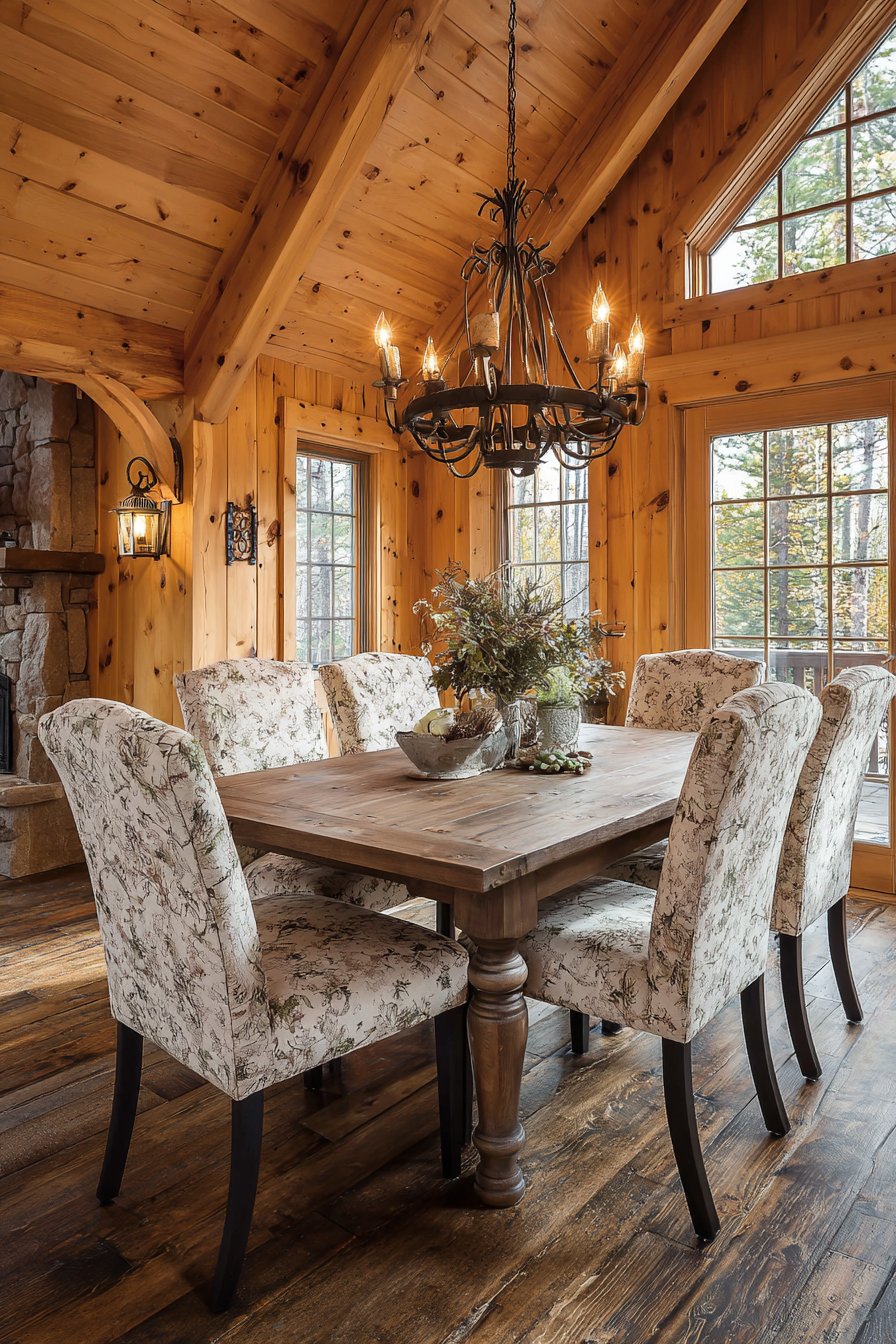
A rectangular farmhouse table with turned legs sits atop wide-plank flooring, its substantial presence anchoring the room while providing generous surface area for family-style dining. The turned legs add traditional detail that references colonial American furniture design, connecting this contemporary space to historical cottage traditions. Upholstered dining chairs covered in faded floral fabric soften the abundance of wood surfaces while introducing pattern and color.
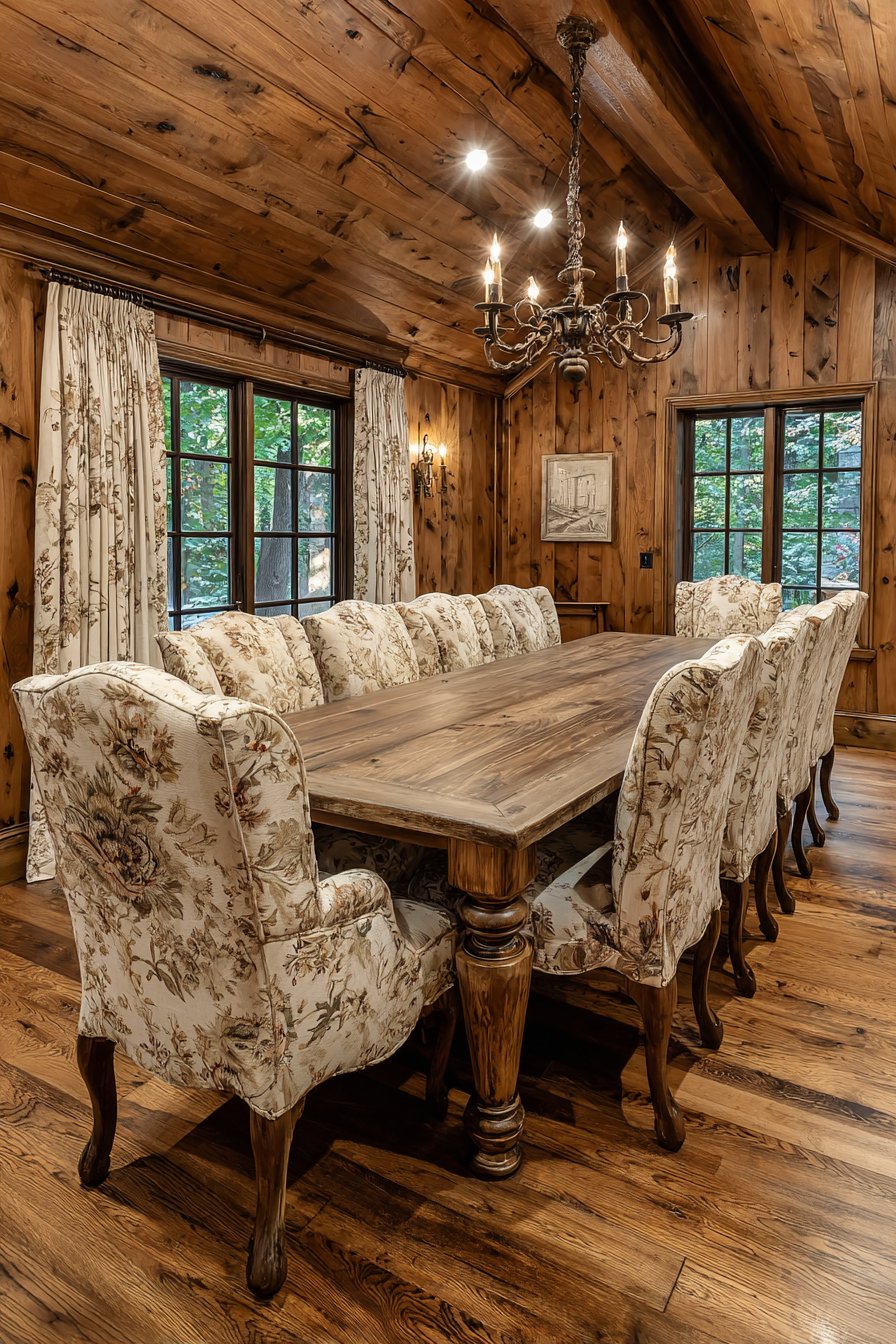
A rustic wooden chandelier with wrought iron accents hangs above the table, its design echoing the room’s natural materials while adding visual interest overhead. The fixture’s aged appearance complements the wood paneling’s warm tones, creating cohesive design that feels intentional rather than matched. This lighting choice provides adequate illumination while reinforcing the cottage aesthetic through its handcrafted appearance.
Key Design Tips:
- Balance extensive wood surfaces with upholstered furniture to prevent rooms from feeling too hard or cold
- Select natural wood stains over paint when working with quality wood species like oak or pine
- Install tongue-and-groove paneling with expansion gaps to prevent buckling from humidity changes
- Incorporate wrought iron elements to add visual weight and traditional cottage character
- Use wide-plank flooring to enhance the rustic, historic feeling of cottage spaces
6. Vintage Farmhouse Hutch Display
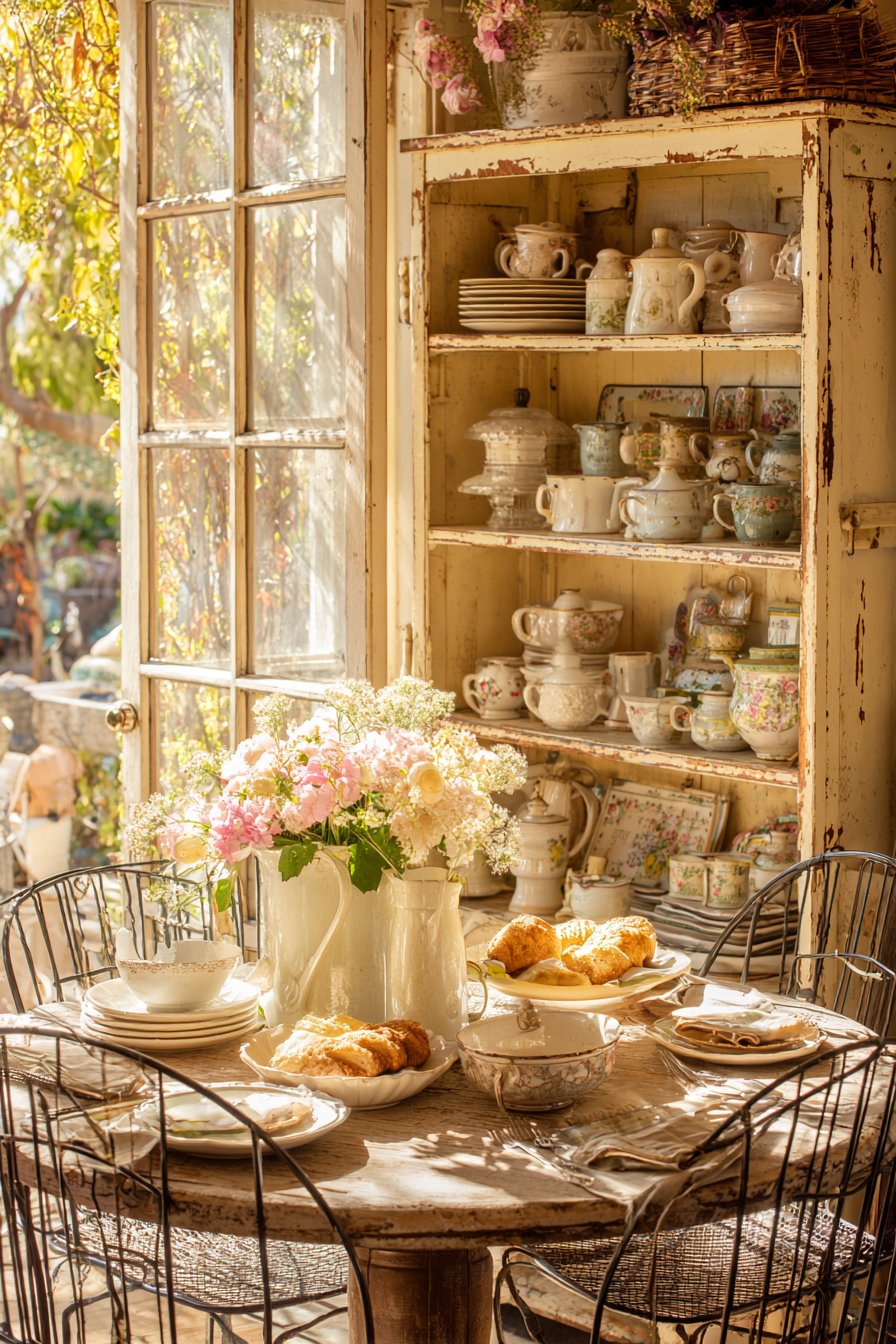
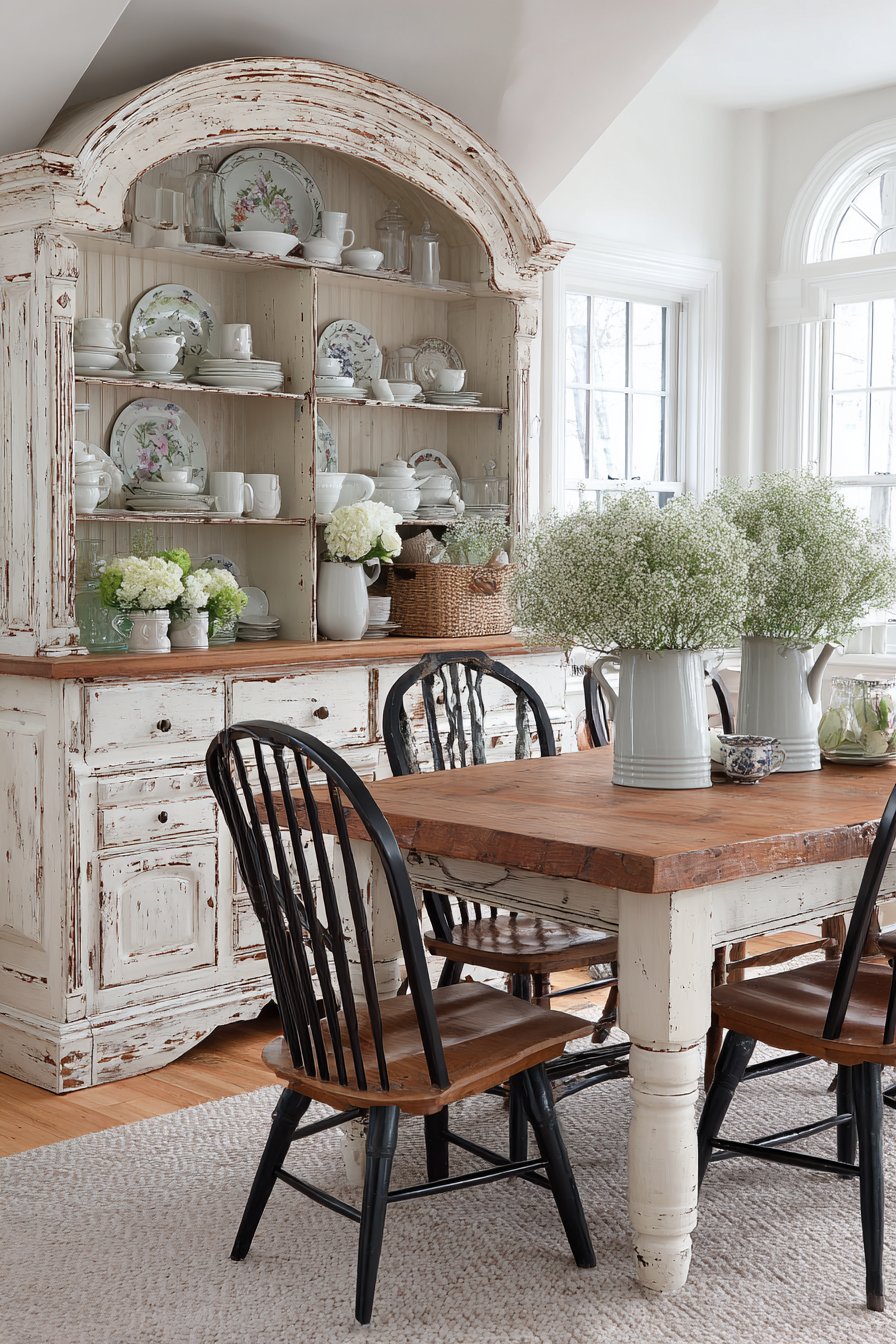
A vintage farmhouse hutch in chippy white paint becomes the statement piece in this cottage dining room, its weathered finish revealing layers of history through intentionally worn edges and corners. The substantial piece provides both storage and display opportunities, with lower cabinets concealing everyday items while upper shelves showcase collections of ironstone and transferware. This combination of function and beauty epitomizes cottage design philosophy.
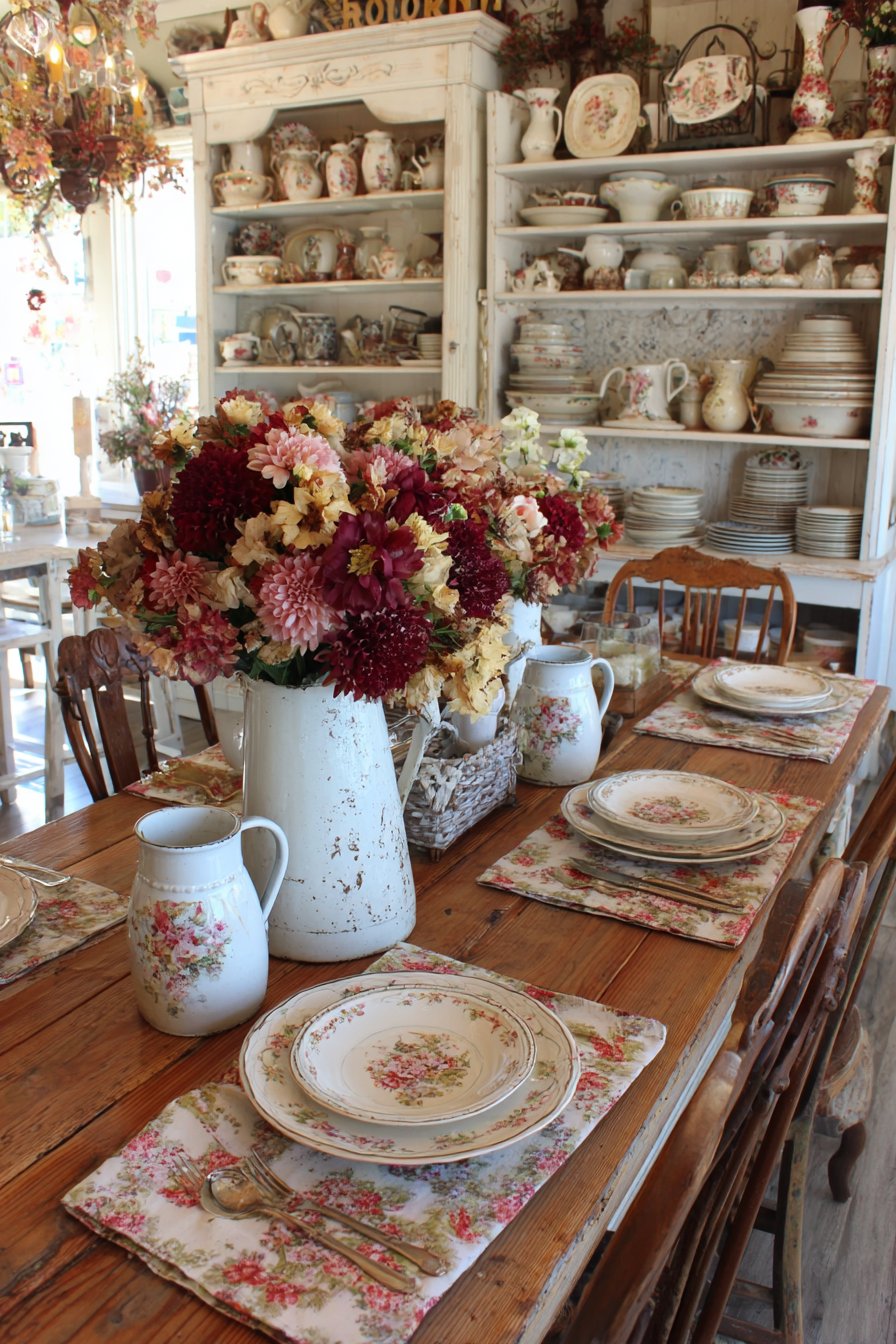
The adjacent dining table features a scrubbed pine top paired with a painted base, creating visual interest through the combination of natural wood and painted surfaces. This treatment adds depth to what might otherwise be a simple piece, demonstrating how finish choices can elevate furniture personality. Garden-style dining chairs mixing metal and wood elements surround the table, their varied textures contributing to the room’s collected-over-time appearance.
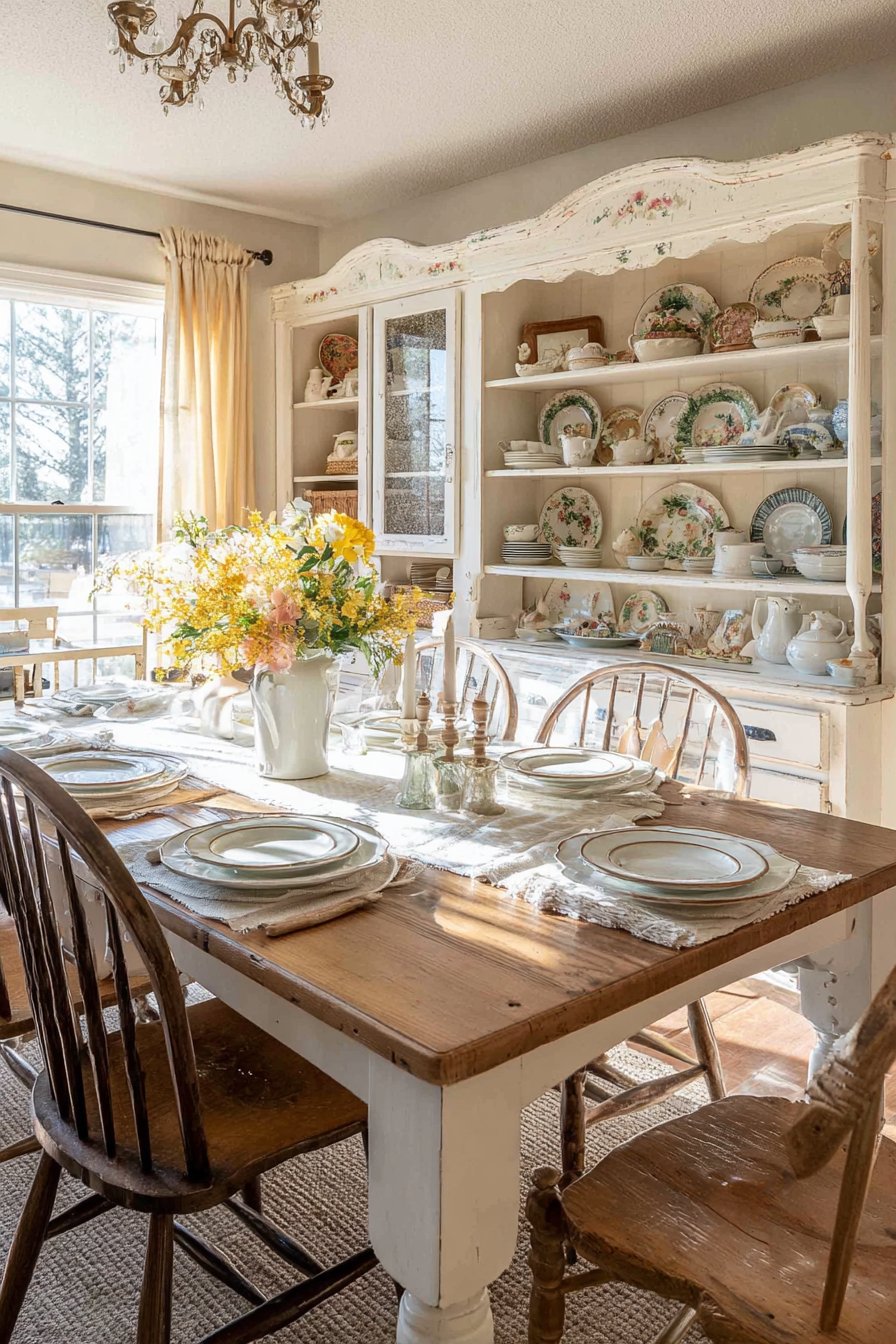
Fresh cut flowers arranged in enamelware pitchers add living color and organic shapes to the carefully curated setting. These simple, practical vessels perfectly suit the cottage aesthetic, their utilitarian design and chip-worn surfaces adding to rather than detracting from the arrangement’s charm. The flowers bring the garden indoors, maintaining the cottage connection to nature and seasonal rhythms.
Key Design Tips:
- Seek out vintage hutches with original chippy paint rather than artificially distressing new pieces
- Display collections cohesively by grouping similar items like all-white dishware or blue-and-white china
- Combine painted and natural wood finishes on furniture for added visual interest
- Use functional vintage items like enamelware and ironstone rather than purely decorative objects
- Refresh floral arrangements weekly to maintain cottage freshness and connection to seasons
7. Cozy Breakfast Nook with Built-In Seating
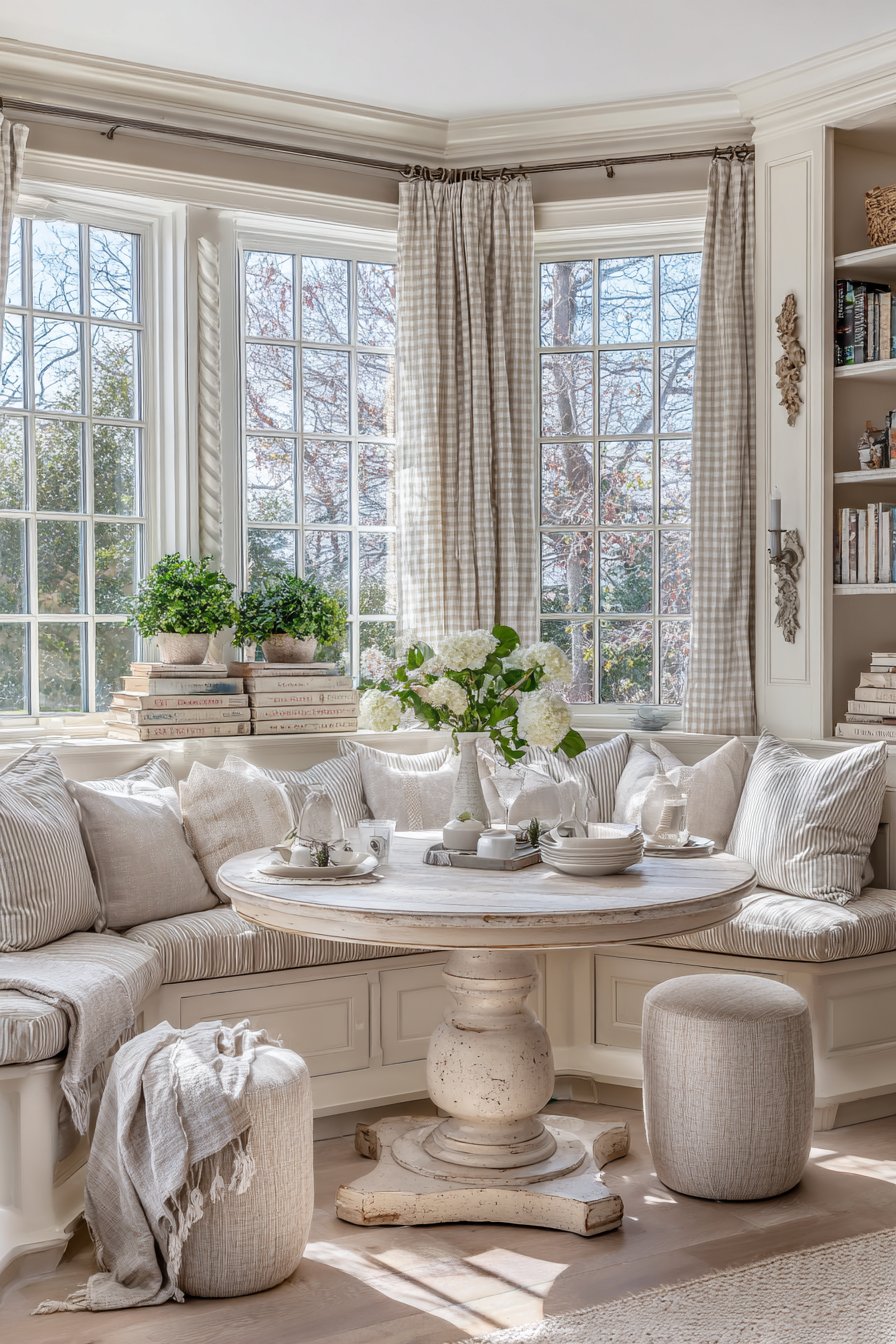
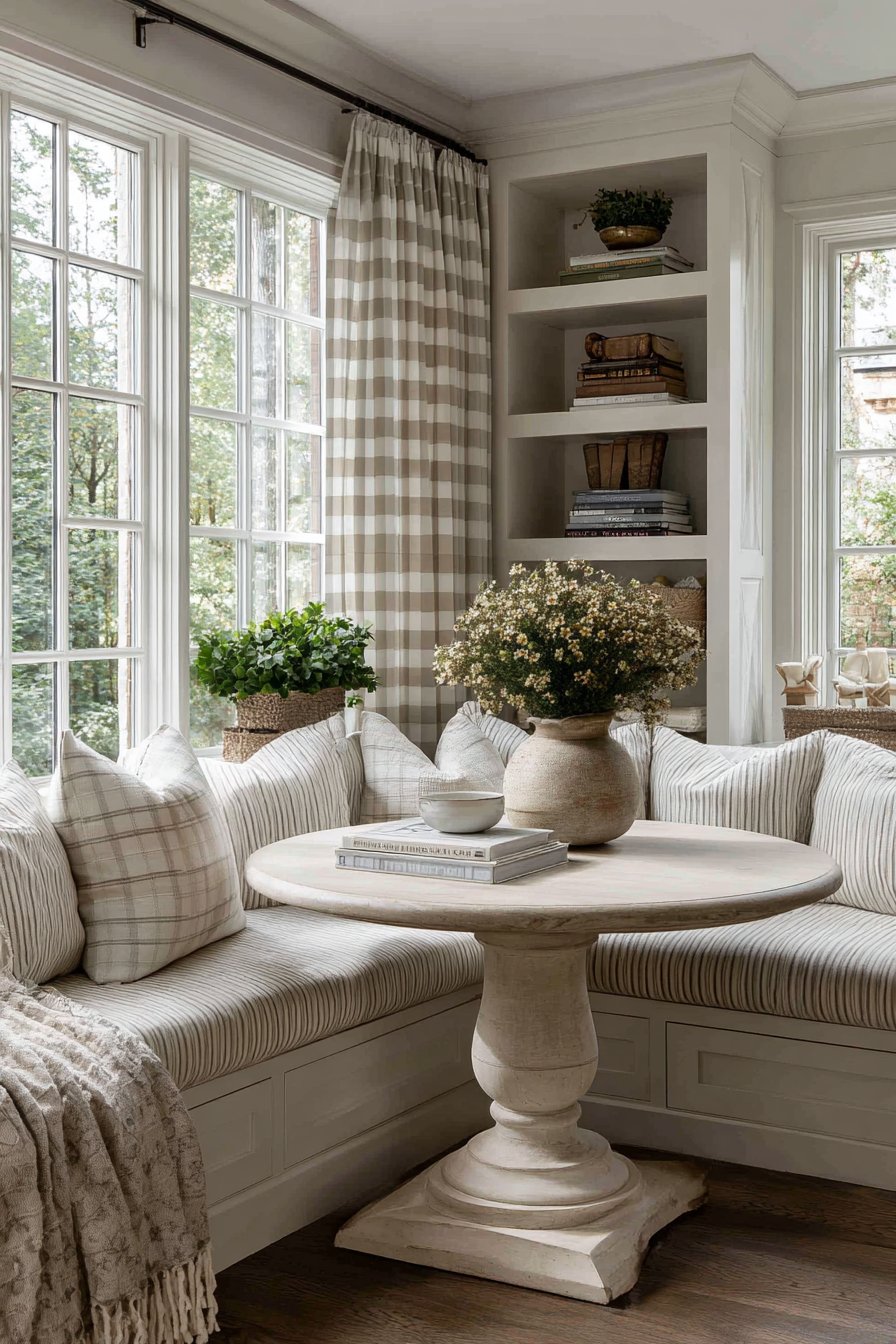
Built-in L-shaped seating upholstered in classic ticking stripe fabric creates an inviting breakfast nook within this cottage dining room, maximizing seating capacity while maintaining a cozy, intimate scale. The blue and cream striped pattern adds visual interest without overwhelming the small space, and the durable cotton fabric stands up to daily use while remaining soft and comfortable. This permanent seating solution eliminates the need for multiple chairs, creating cleaner lines and easier floor cleaning.
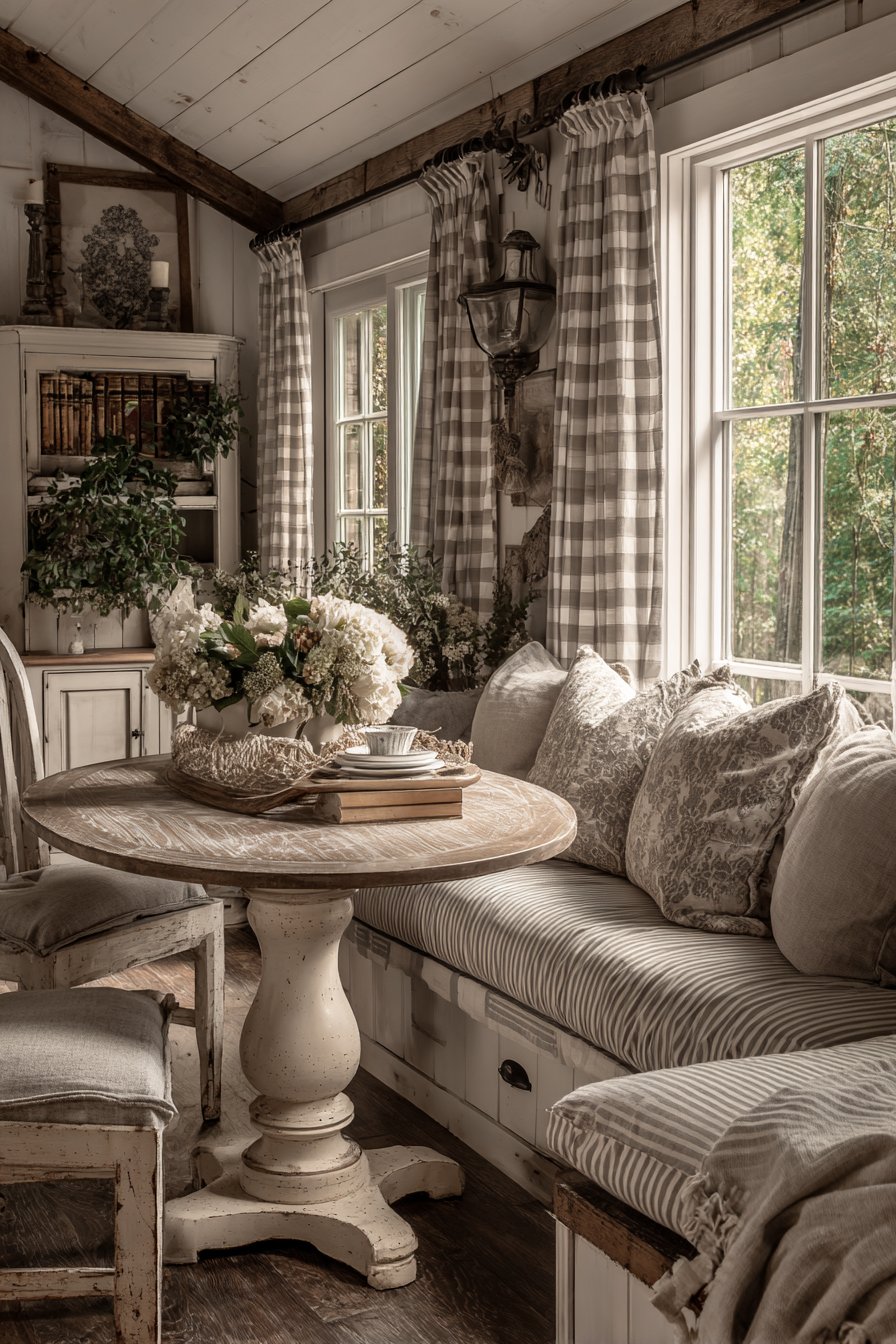
A small round pedestal table in distressed cream finish centers the nook, its compact size perfectly proportioned for morning coffee and casual meals. The pedestal base eliminates corner table legs, allowing diners to slide in and out of the banquette seating more easily. Stacked vintage books and potted plants line the windowsill, adding personality and life to the space without requiring floor space.
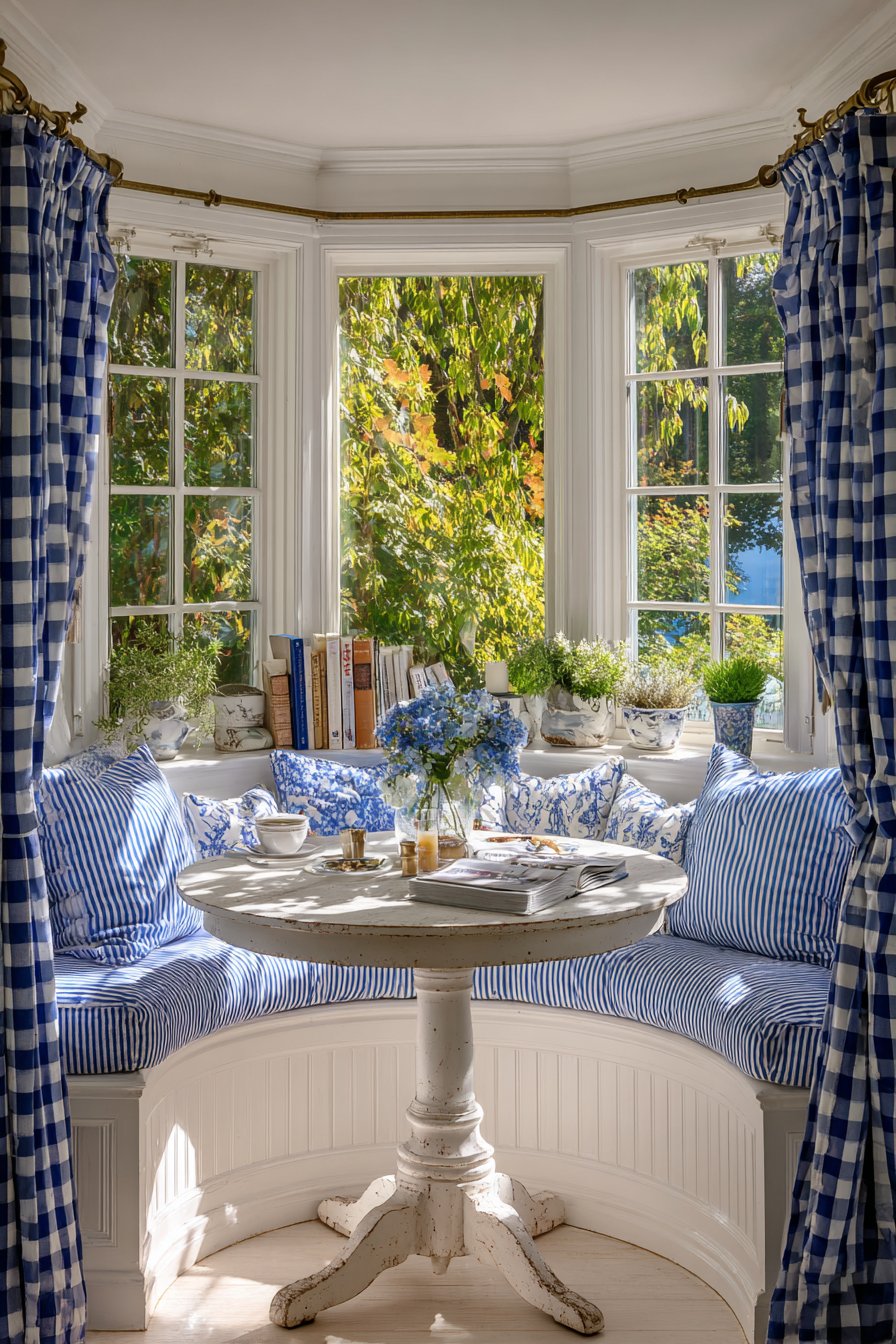
Gingham curtains in coordinating blue and white frame multiple windows, their cheerful pattern reinforcing the cottage aesthetic while filtering natural light into a soft, diffused glow. The gathered curtains add softness to the architectural lines and create rhythm through their repeated pattern. This breakfast nook demonstrates how even the smallest dining areas can achieve big cottage charm through thoughtful design and attention to detail.
Key Design Tips:
- Design built-in banquettes 18 inches deep and 18 inches high for optimal dining comfort
- Choose durable, washable fabrics like ticking stripe and denim for high-use seating
- Select round pedestal tables for breakfast nooks to maximize knee room and traffic flow
- Layer window treatments with café curtains below and valances above for adjustable privacy
- Utilize windowsills for display rather than leaving them empty and unused
8. Board-and-Batten Butter Yellow Dining Room
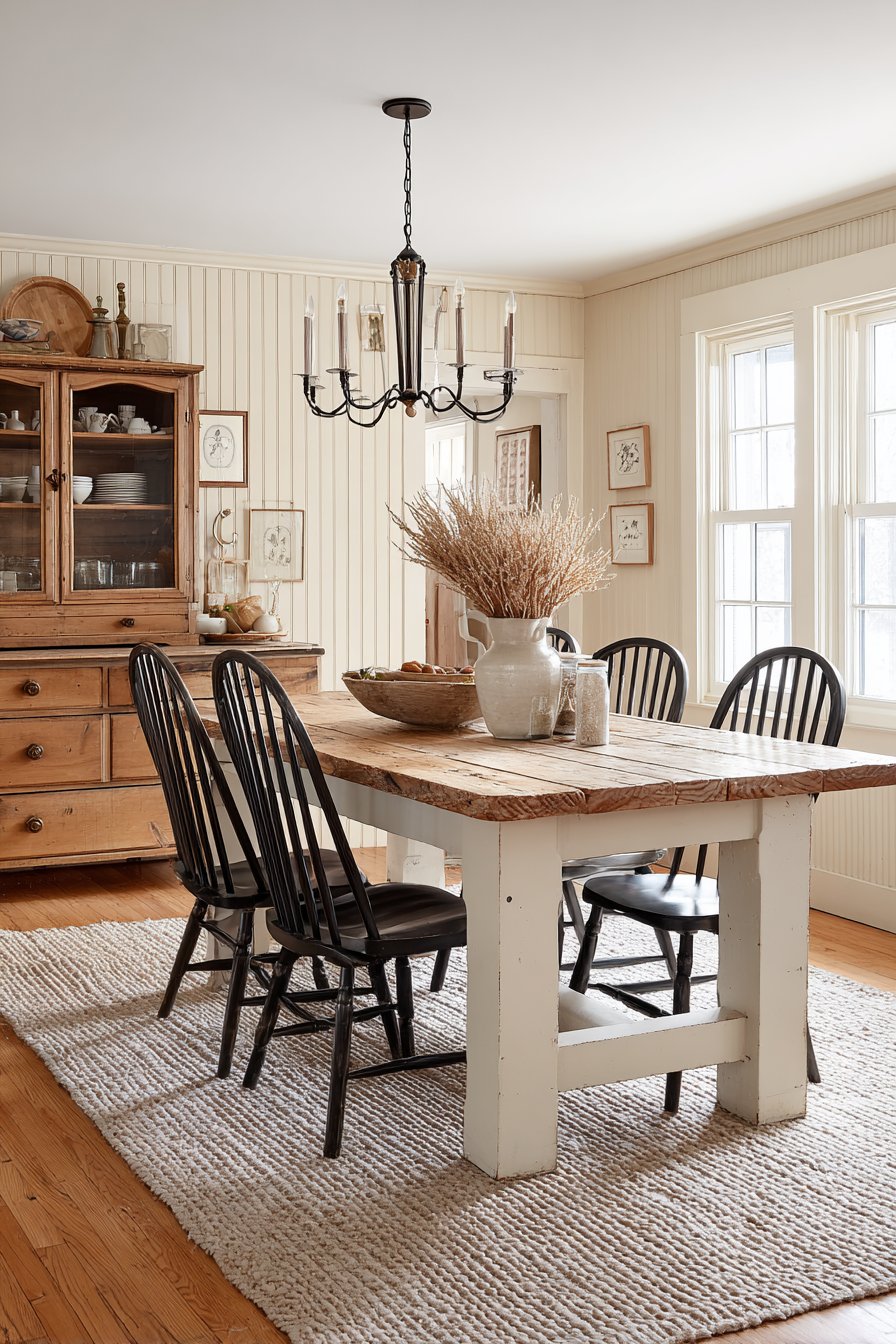
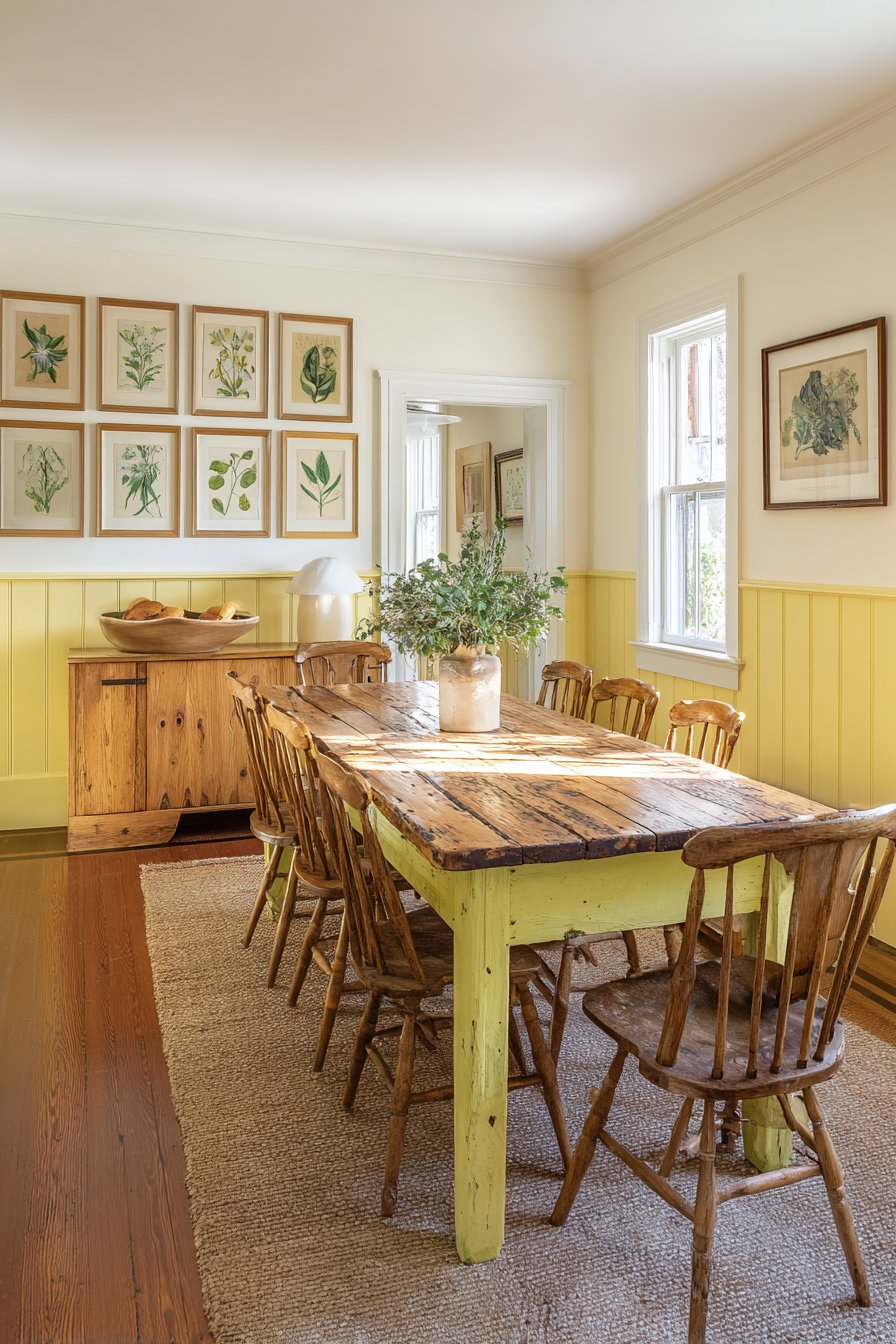
Board-and-batten wall treatment painted in soft butter yellow brings sunshine into this cheerful cottage dining room, the vertical battens adding architectural dimension while the warm color creates an inviting atmosphere. This classic wall treatment originated as practical weatherproofing in barns and cottages but has evolved into a beloved decorative element that adds instant cottage character. The butter yellow hue feels optimistic without being overwhelming, making it suitable for rooms receiving varying amounts of natural light.
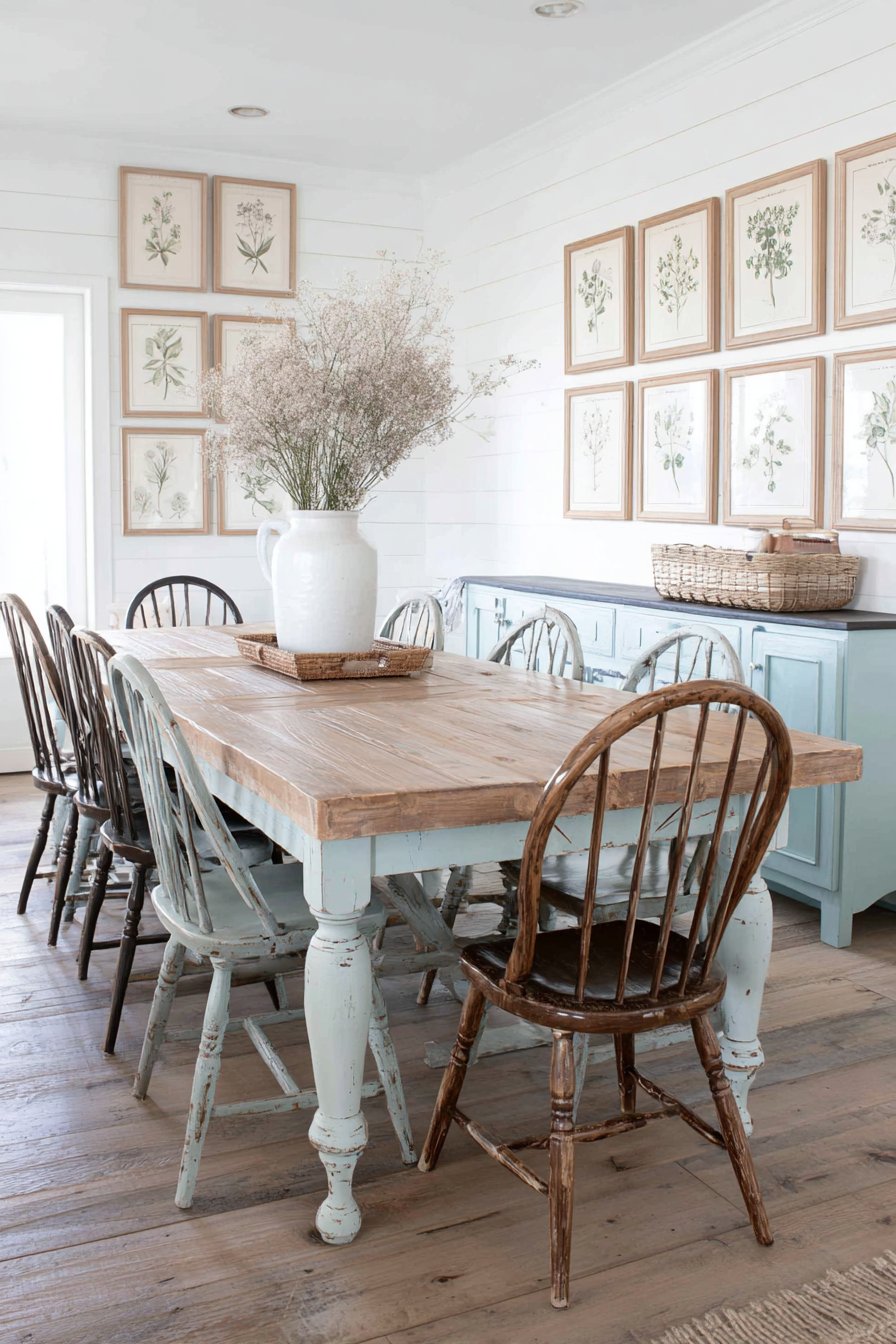
A rectangular dining table features a painted base with natural wood plank top showing authentic wear marks that tell stories of years of family dinners. This combination of painted and natural wood creates visual interest while allowing the beautiful wood grain to remain visible. Bentwood chairs in various stages of distressing surround the table, their curves softening the table’s angular form while their varied finishes add to the collected appearance.
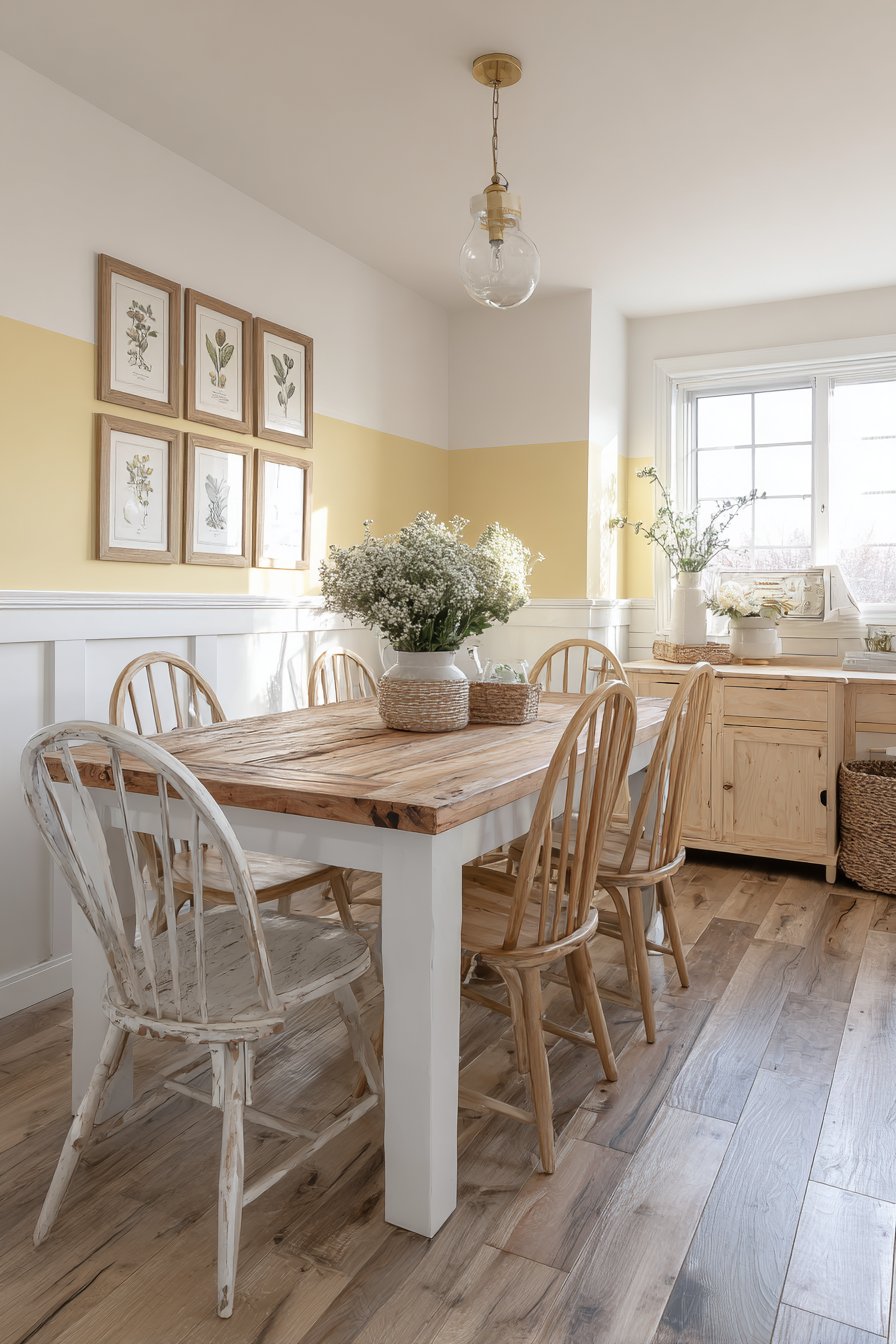
A gallery wall of vintage botanical prints adorns the wall above a simple sideboard, creating a vertical focal point that draws the eye upward and adds sophistication to the cottage space. The botanical subjects reinforce the cottage connection to gardens and nature, while their vintage frames and slightly faded appearance maintain authenticity. The sideboard below provides practical storage for linens and serving pieces while offering a surface for displaying seasonal decorations.
Key Design Tips:
- Install board-and-batten with battens spaced 12-16 inches apart for proper visual proportion
- Choose warm, soft yellow tones rather than bright or cool yellows for cottage authenticity
- Embrace authentic wear on furniture rather than concealing it with refinishing
- Create gallery walls using odd numbers of frames for more dynamic visual interest
- Position sideboards away from walls slightly to allow for electrical outlet access and air circulation
9. Exposed Beam Ceiling Dining Room
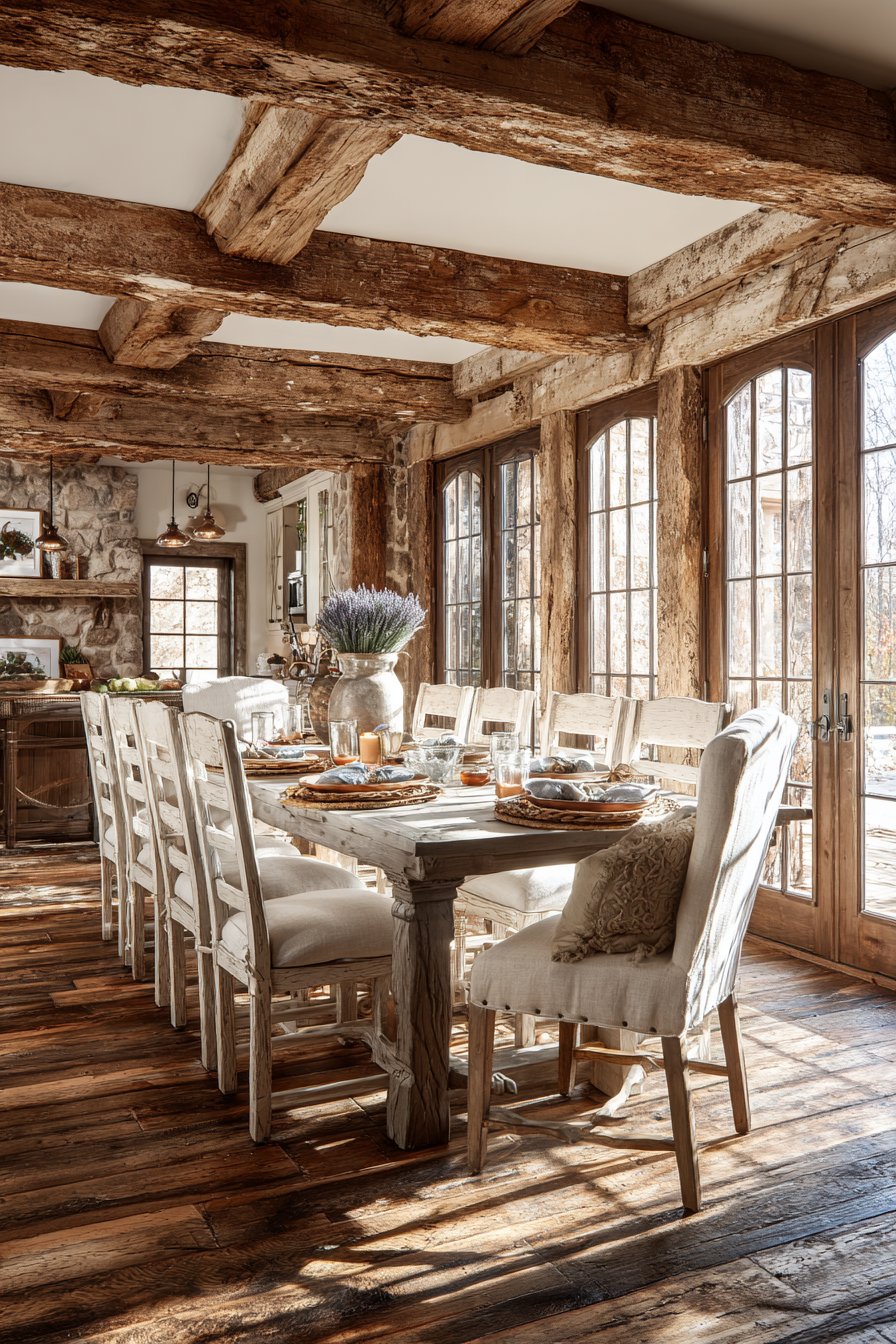
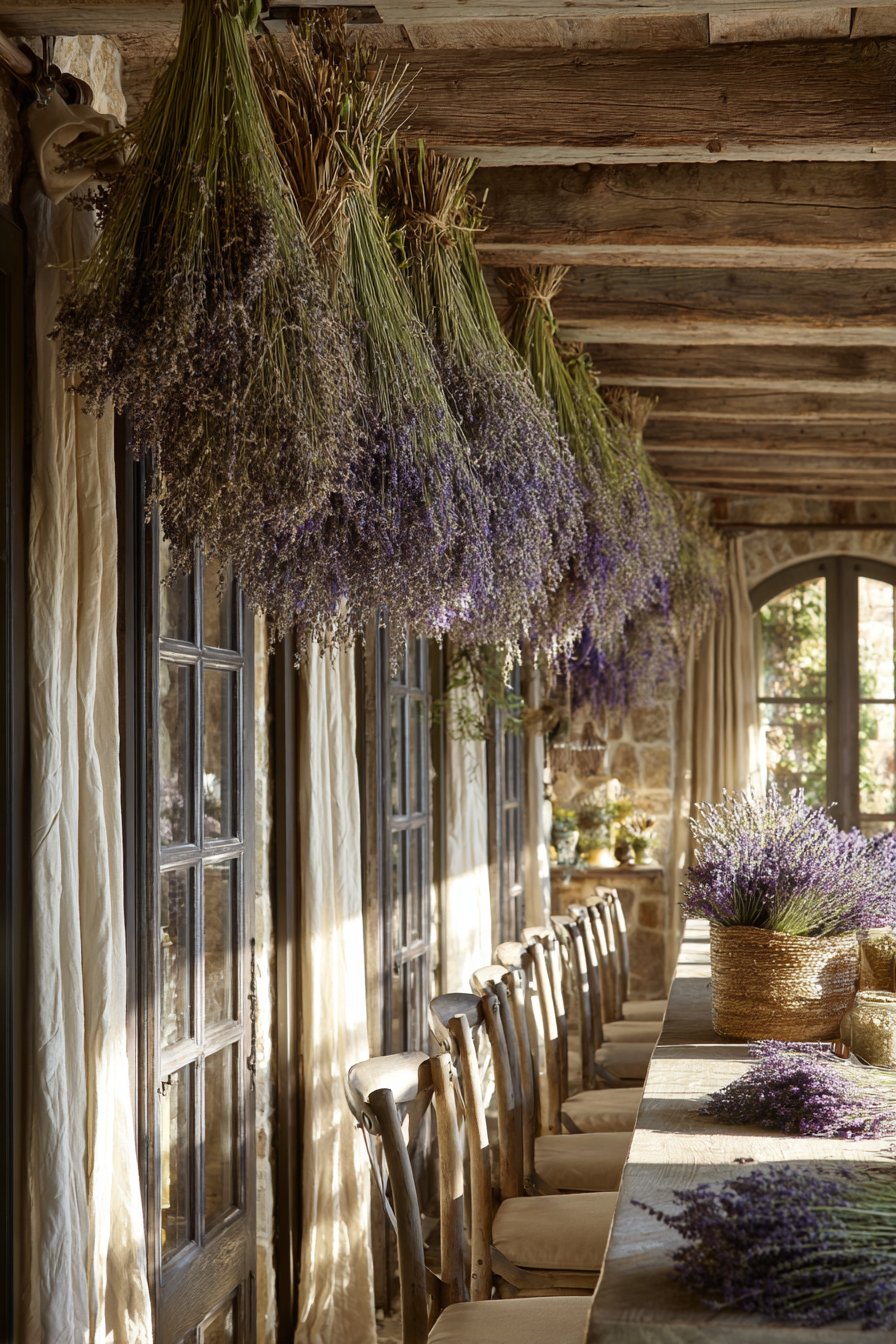
Open ceiling construction featuring painted white beams contrasting against natural wood tongue-and-groove planking creates dramatic architectural interest in this cottage dining room. The exposed structure adds height and volume to the space while the white beams prevent the ceiling from feeling too dark or heavy. This treatment showcases the home’s construction in a way that adds rather than detracts from the finished space.
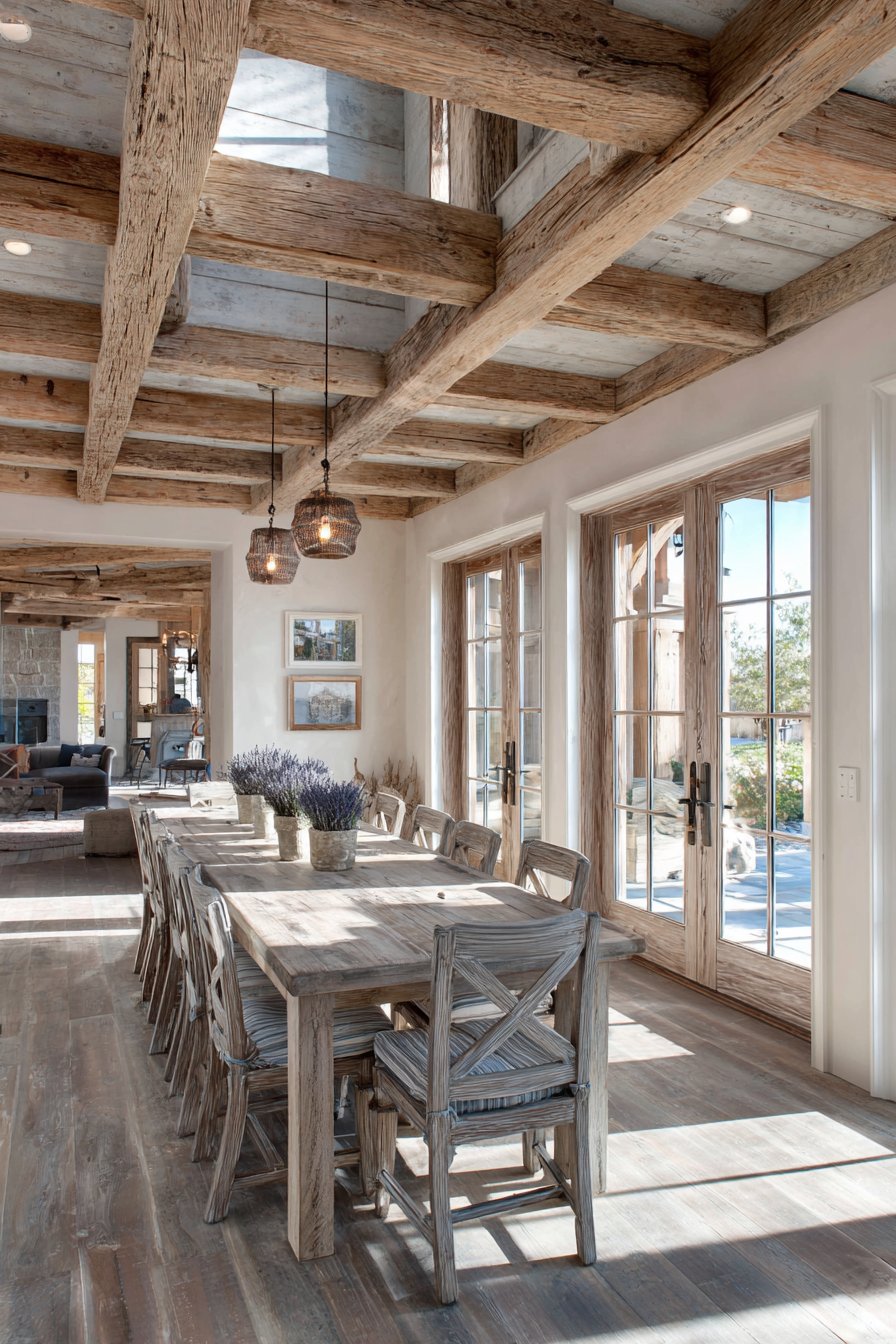
A long harvest table in weathered gray finish stretches across the room, accommodating eight ladder-back chairs with cushioned seats for comfortable extended dining. The table’s substantial length makes it ideal for family gatherings and dinner parties, while its weathered finish suggests years of use and shared meals. Bundles of dried lavender hang from the overhead beams, adding subtle color, texture, and gentle fragrance to the space.
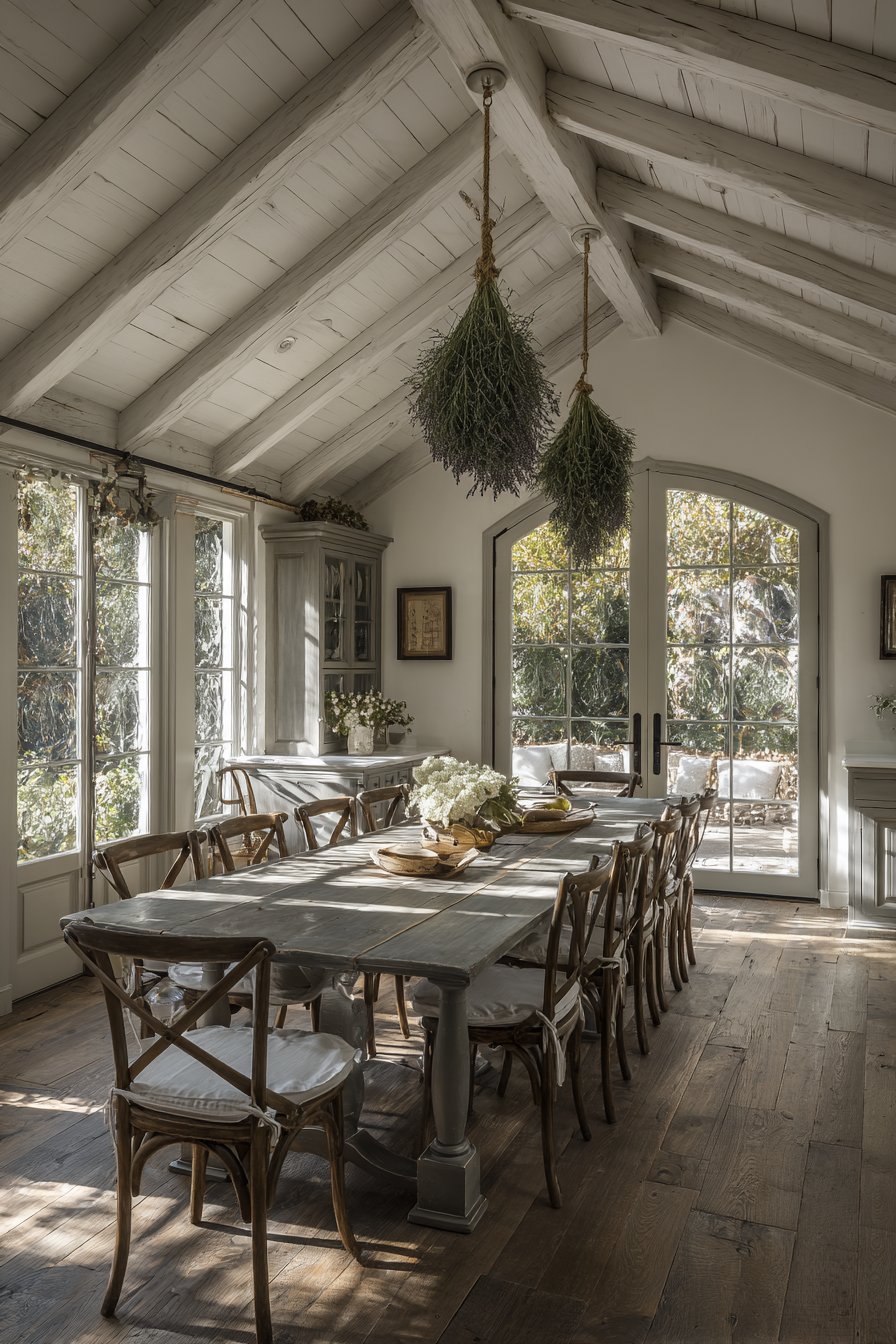
French doors with original wavy glass panes let in dappled sunlight that creates ever-changing patterns across the table throughout the day. These antique doors with their irregular glass add tremendous character while connecting the dining room to outdoor spaces. The wavy glass distortion creates privacy without sacrificing light, and the historic windows become architectural features worth celebrating rather than replacing.
Key Design Tips:
- Paint ceiling beams white to reflect light and prevent dark overhead spaces
- Select harvest tables at least 10-12 feet long for comfortable seating of 8-10 guests
- Hang dried herbs and flowers from ceiling beams for cottage charm and subtle fragrance
- Preserve original wavy glass windows for their historic character and light-distorting beauty
- Position dining tables near French doors to facilitate indoor-outdoor entertaining
10. Repurposed Door Dining Table
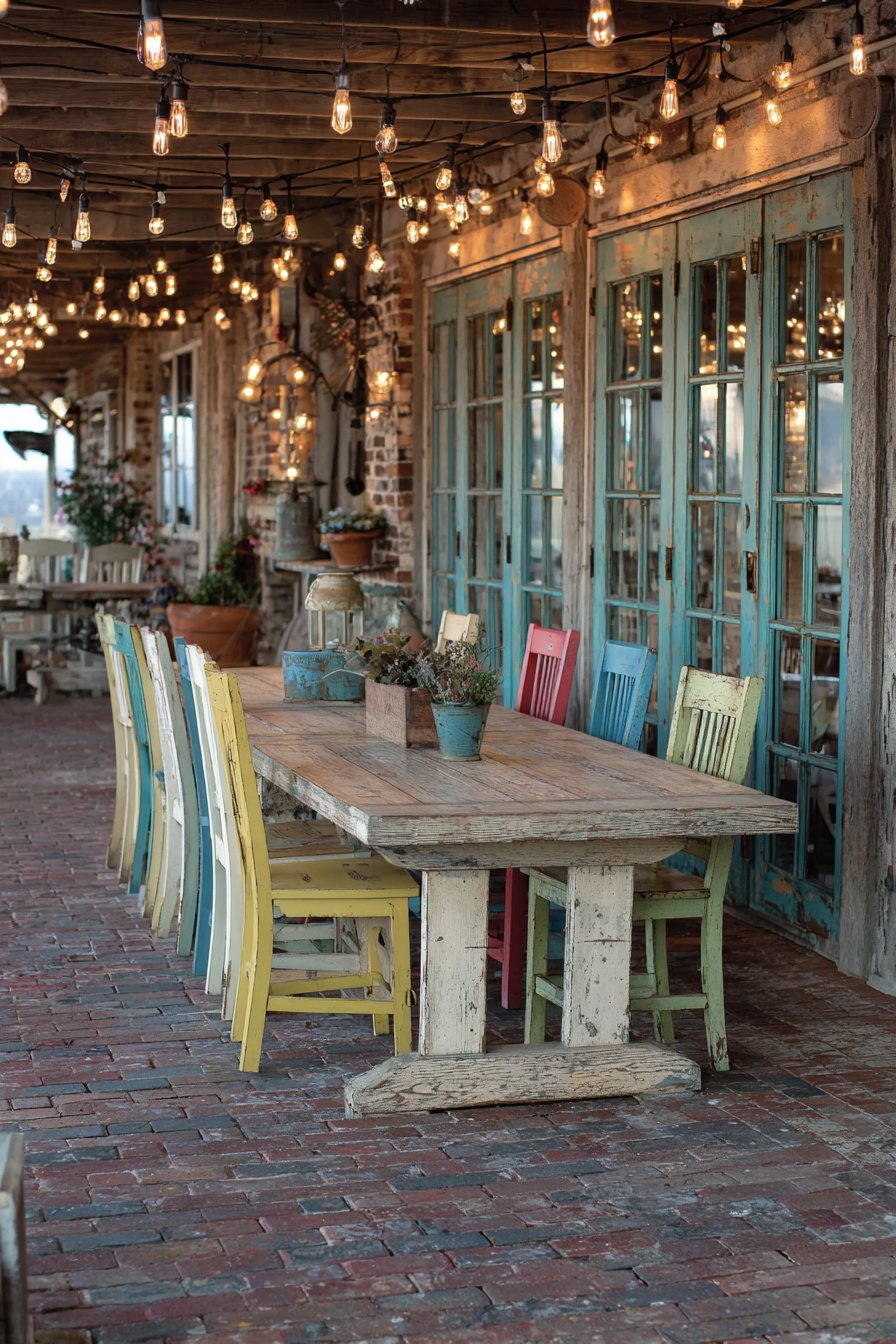
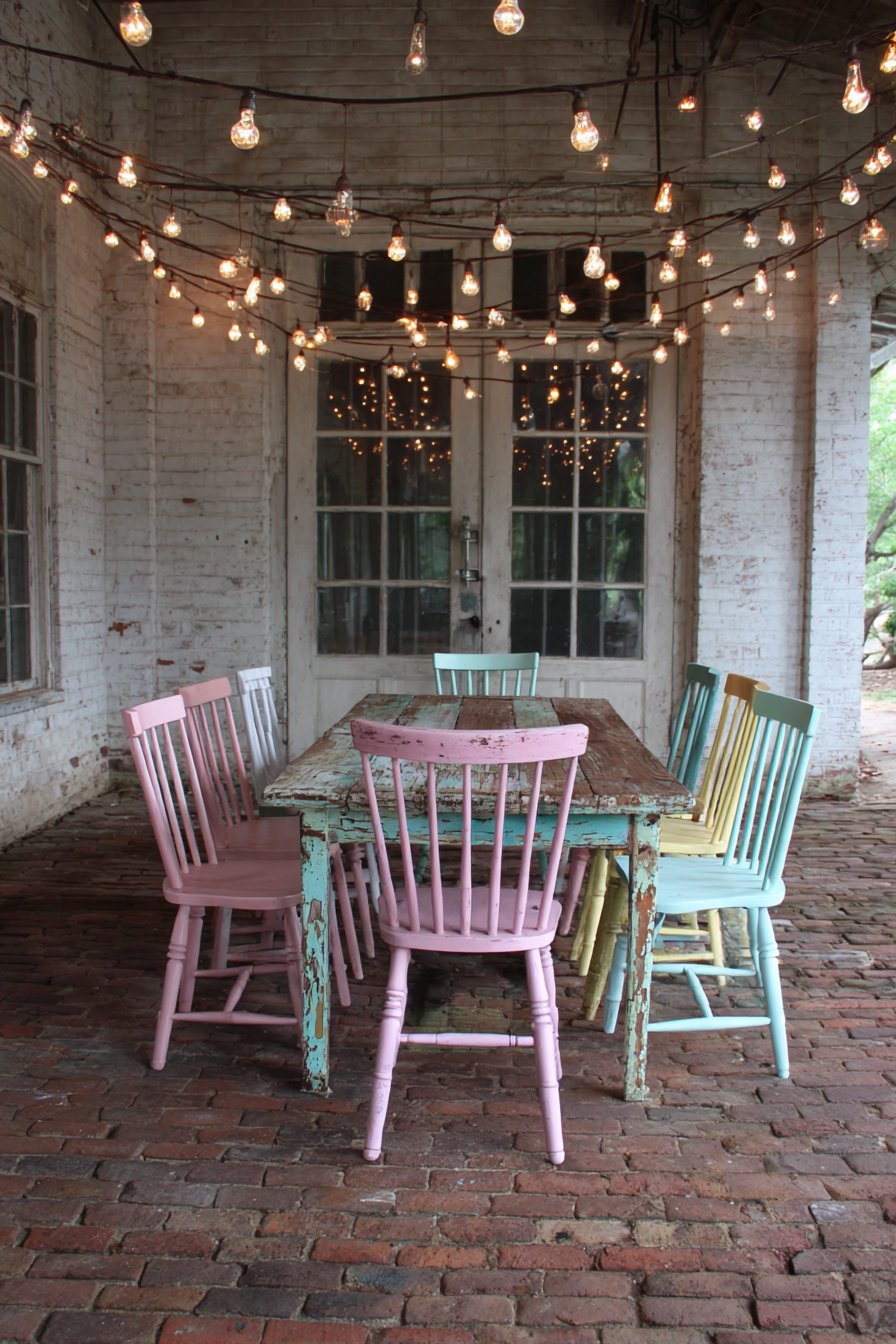
An antique door repurposed as a dining table top creates an unexpected and conversation-worthy centerpiece in this creative cottage dining room. The door’s raised panels, original hardware holes, and layered paint become decorative elements that add texture and history to every meal. A custom-built trestle base supports the door, raising it to proper dining height while providing sturdy support for this unconventional tabletop.
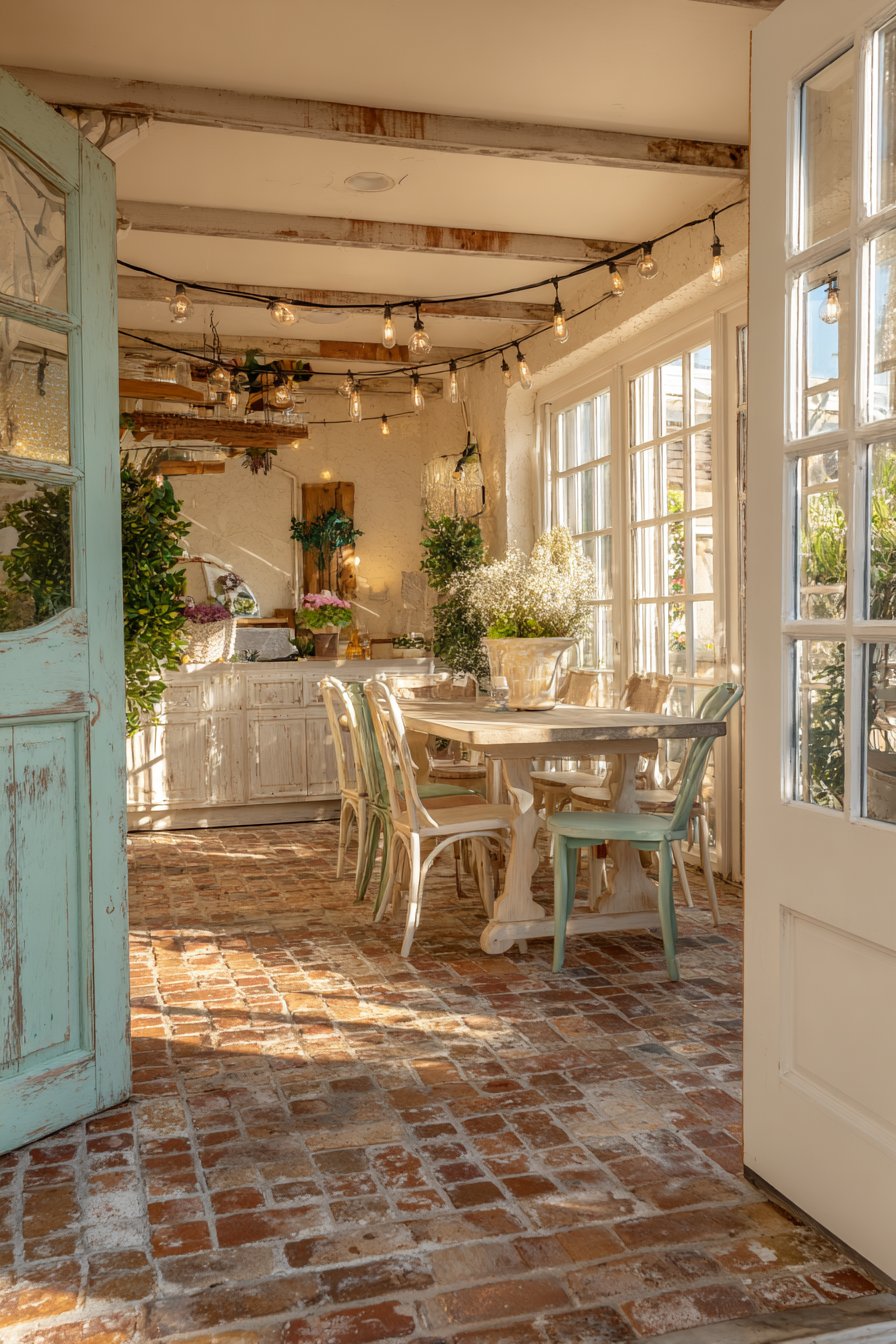
Mismatched vintage chairs painted in soft pastels—dusty rose, sage green, pale blue, and butter yellow—surround the table, creating an eclectic look that epitomizes cottage’s embracing of individuality over matching sets. Each chair’s unique design and color contributes to the space’s collected-over-time appearance, suggesting that pieces were acquired gradually through flea market finds and family inheritances rather than purchased as a coordinated set.
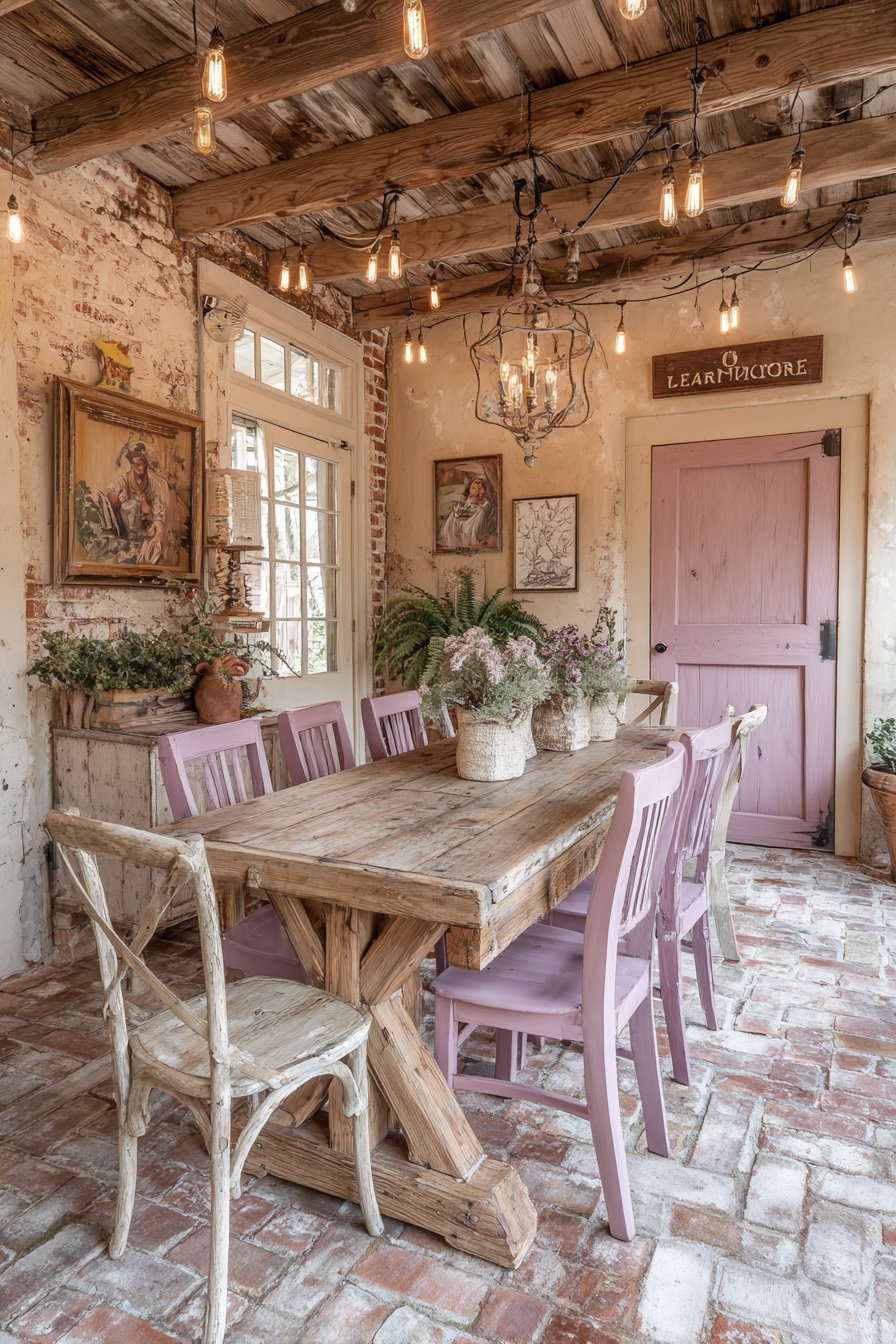
String lights with vintage-style bulbs crisscross overhead, their warm glow creating enchanting ambiance for evening meals and gatherings. This casual lighting approach adds whimsy and romance while providing functional illumination. Brick flooring with a worn patina adds authentic cottage character underfoot, its irregular surface and aged appearance contributing to the room’s rustic charm.
Key Design Tips:
- Source old doors from architectural salvage yards and estate sales for authentic character
- Seal repurposed furniture thoroughly to protect surfaces from moisture and heat
- Paint mismatched chairs in colors from the same tonal family for cohesion despite variety
- Install dimmer switches on string lights for adjustable ambiance throughout the day
- Embrace worn brick and stone flooring rather than replacing with modern alternatives
11. Wainscoting Two-Tone Cottage Dining Room
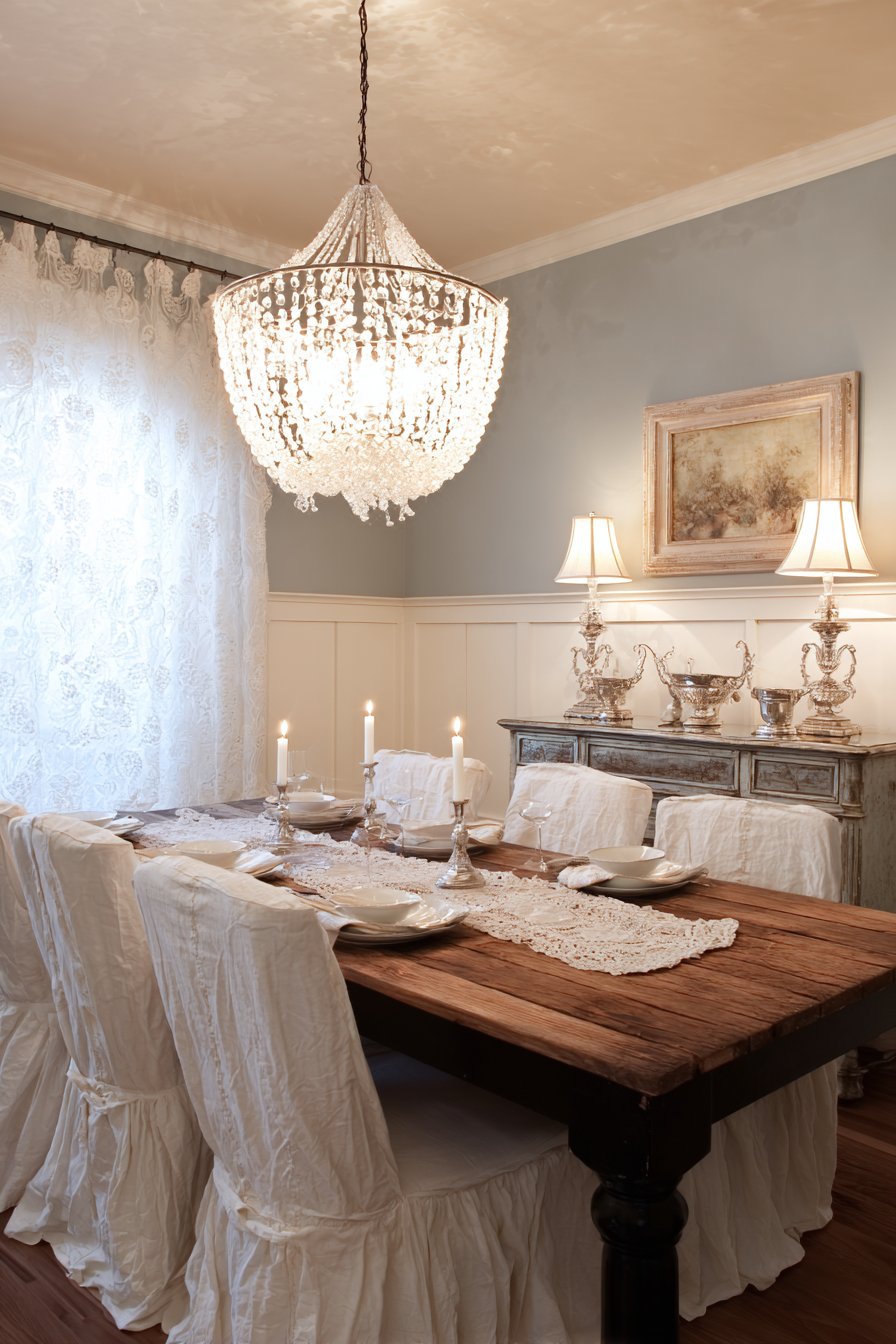
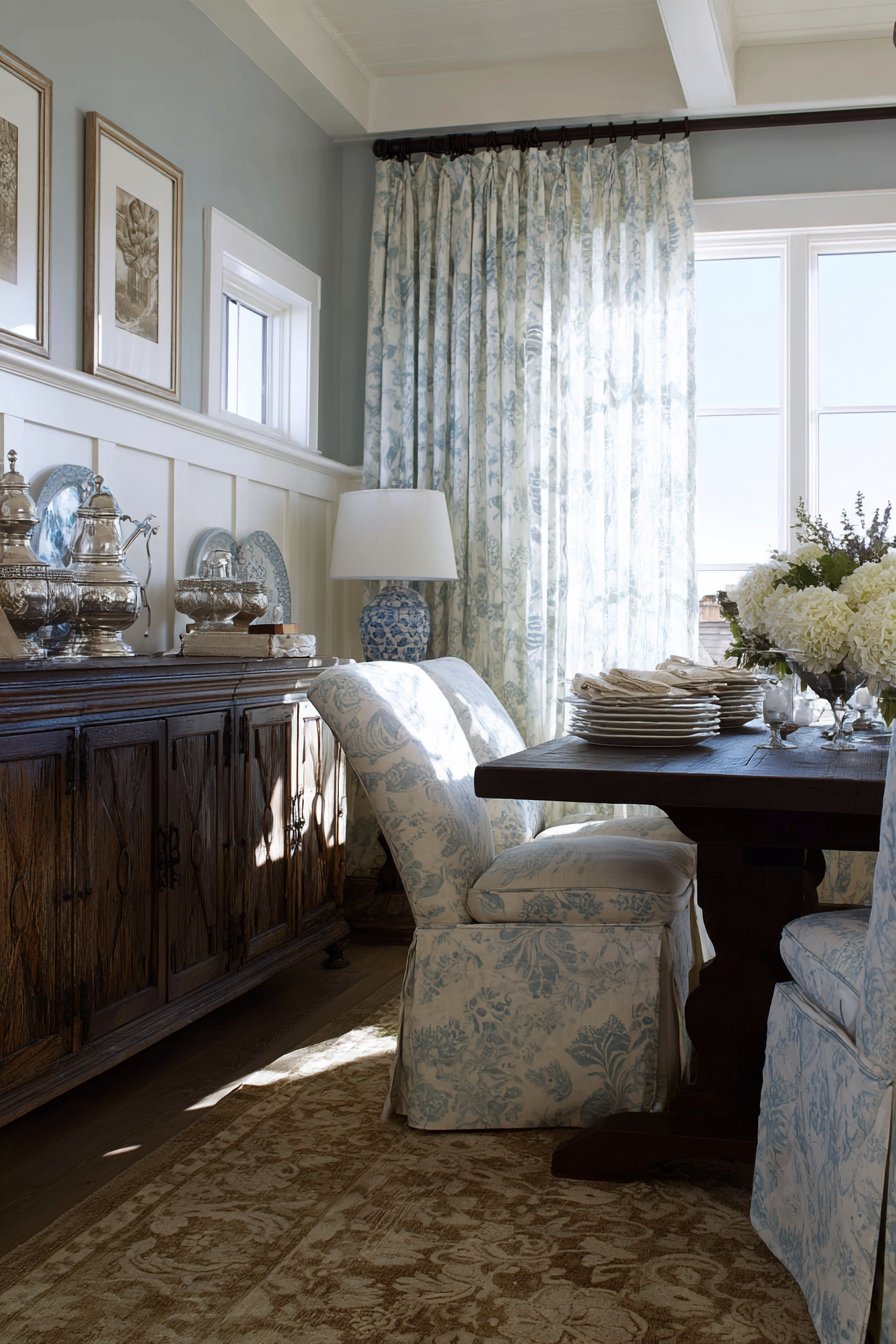
Wainscoting painted in dove gray below chair rail molding creates elegant contrast with cream walls above, establishing sophisticated two-tone treatment in this refined cottage dining room. The gray lower portion adds depth while providing practical protection against chair backs and daily wear. The simple chair rail molding serves as the dividing line between colors, adding architectural detail that elevates basic painted walls into something special.
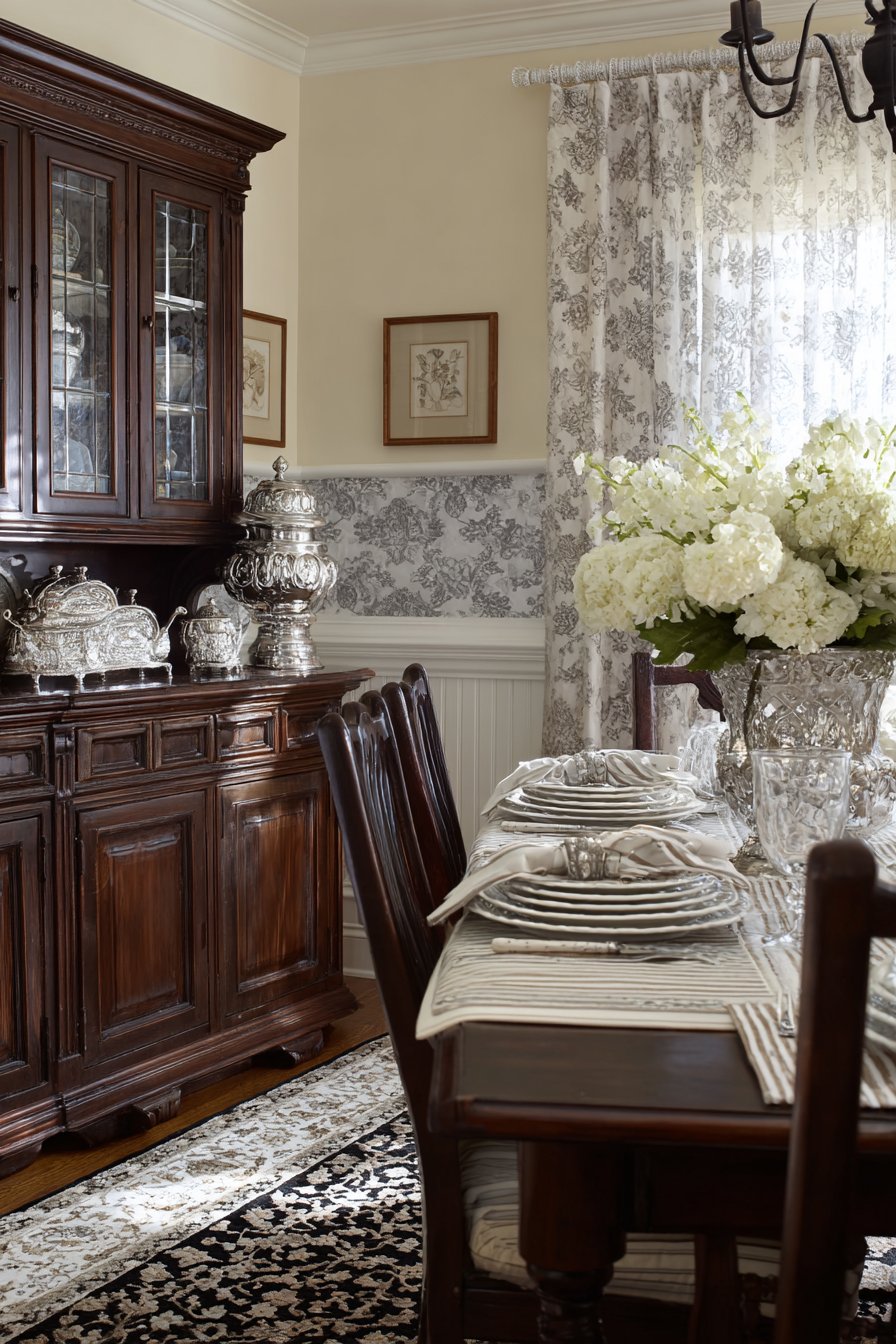
A gate-leg table in dark walnut provides flexibility through drop leaves that expand and contract based on dining needs, making this piece ideal for cottages where space must serve multiple purposes. The rich walnut finish adds warmth and formality, balancing the room’s casual cottage elements with touches of refinement. Slipcover dining chairs in natural linen surround the table, their relaxed, washable covers embodying cottage practicality while maintaining elegant simplicity.
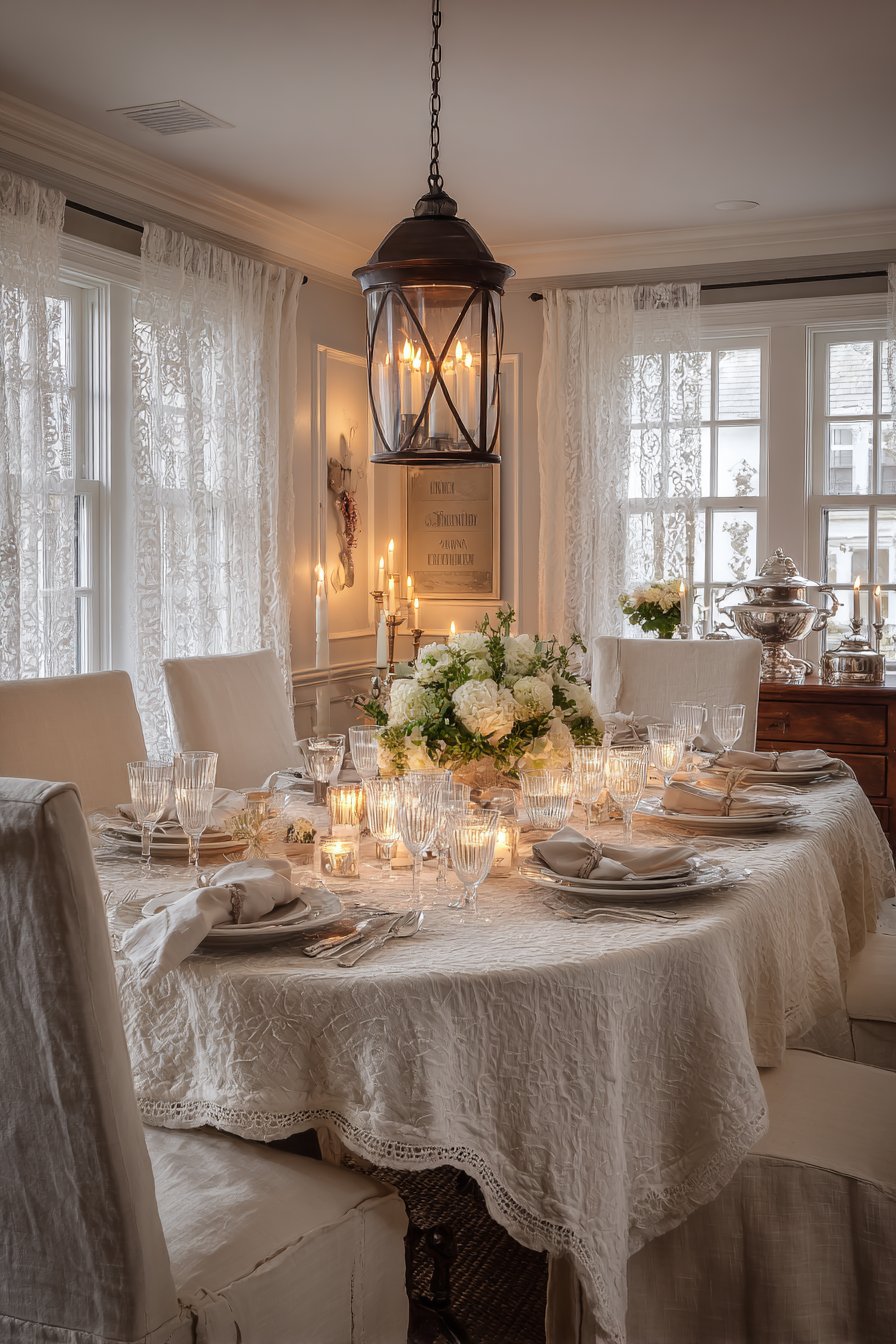
An antique sideboard displays vintage silver serving pieces, their tarnished patina adding to rather than detracting from their beauty in the cottage aesthetic. These functional art pieces represent family history and traditional entertaining, standing ready for special occasions while adding decorative interest daily. Soft diffused lighting filters through lace curtains, creating romantic ambiance that enhances the room’s gentle color palette.
Key Design Tips:
- Install wainscoting to chair rail height (32-36 inches) for proper proportion in dining rooms
- Choose darker colors below chair rails where walls receive more wear and damage
- Select gate-leg tables with sturdy hinge mechanisms and locking support brackets
- Use slipcovers on dining chairs for easy cleaning and seasonal style changes
- Display vintage silver without polishing it excessively to maintain authentic patina
12. Window Seat Storage Dining Room
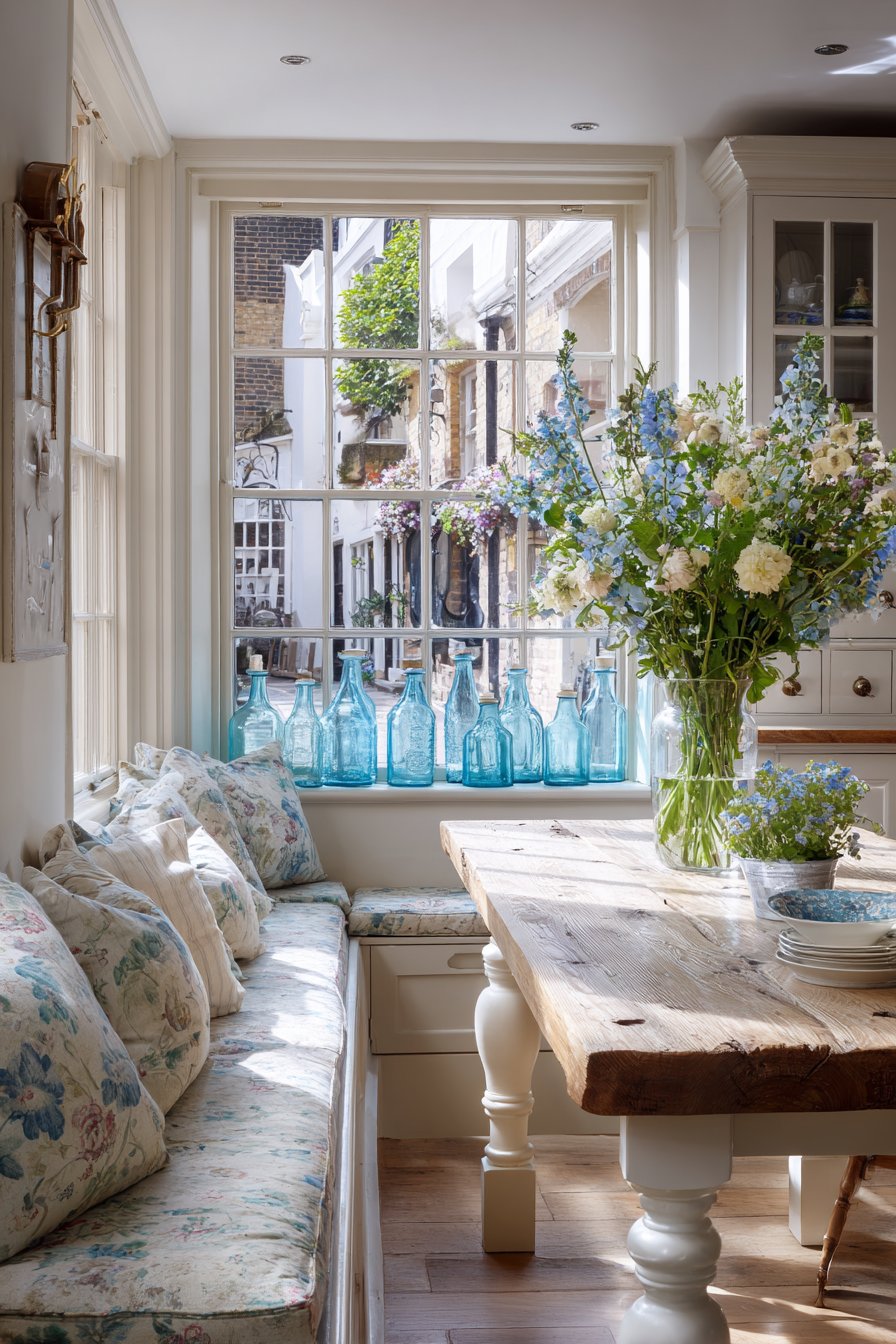
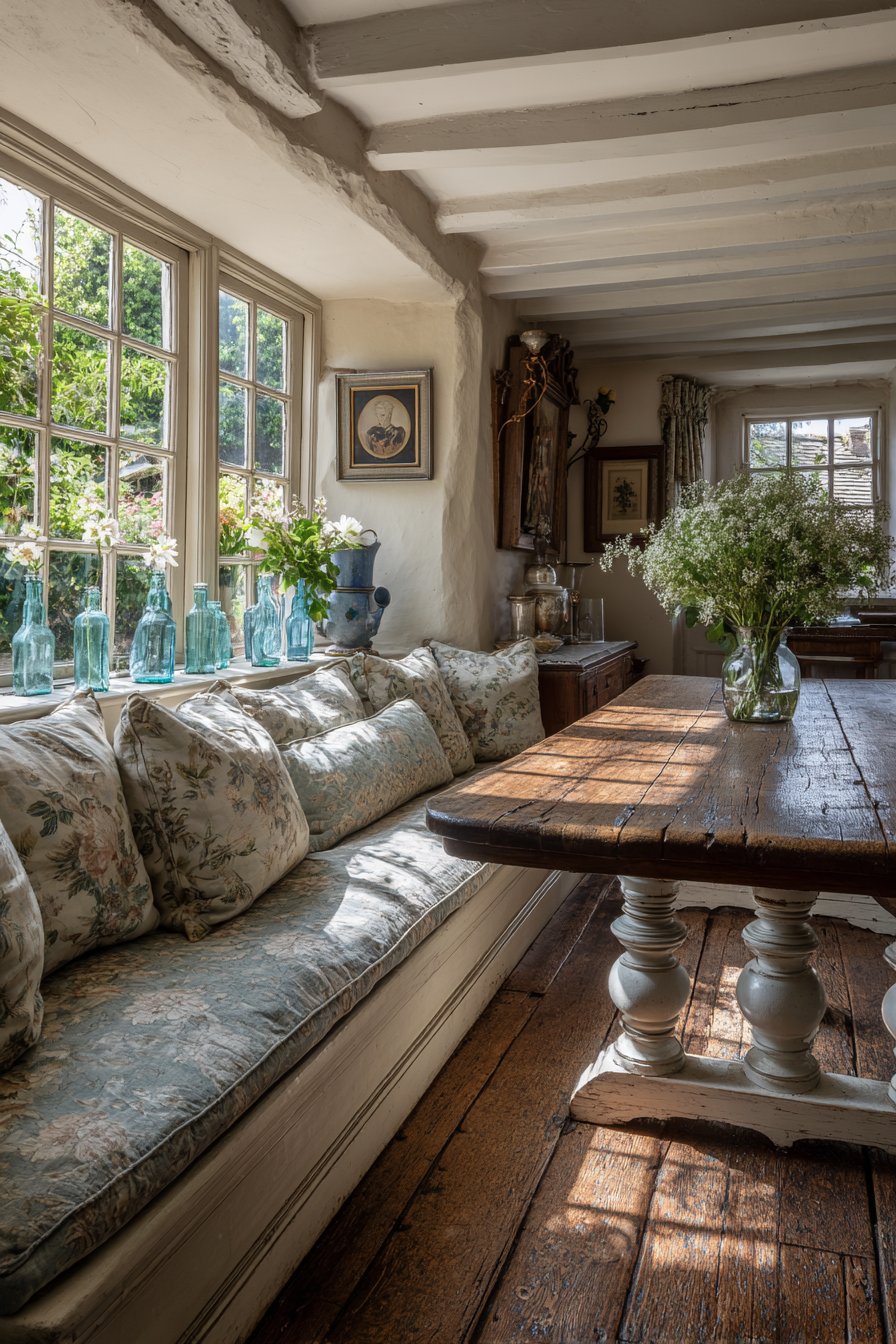
A window seat with hidden storage beneath provides both seating and practical organization in this clever cottage dining room design. The upholstered seat in faded floral chintz adds softness and pattern while concealing generous storage for table linens, seasonal decorations, and serving pieces. This multifunctional element maximizes the room’s utility without requiring additional furniture that would crowd the space.
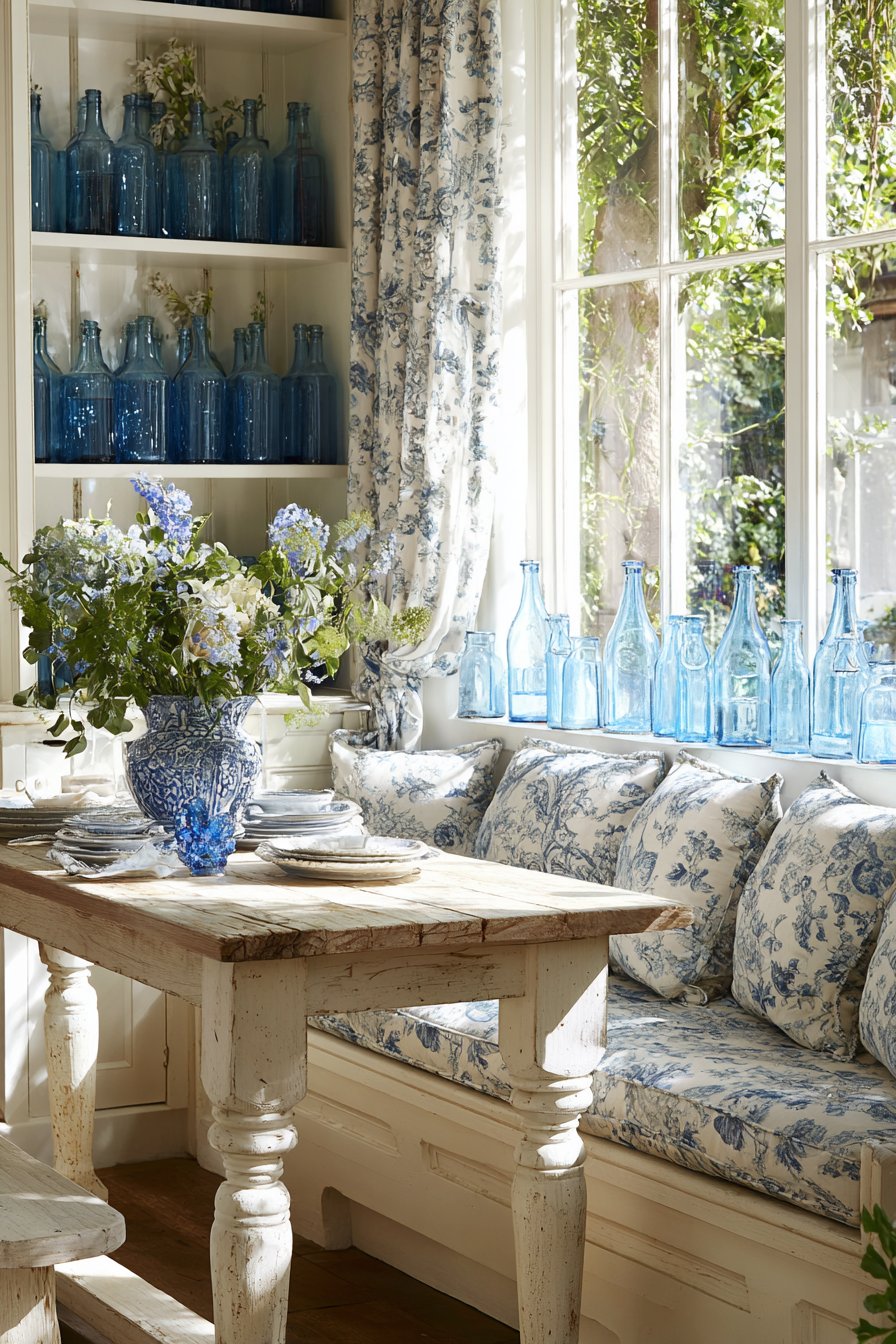
The adjacent dining table features turned legs painted white with a scrubbed pine top, combining painted and natural wood elements for visual interest. Church pew benches positioned along one side of the table offer additional seating that reinforces the cottage aesthetic through their historic reference and simple design. These long benches accommodate flexible seating numbers and can slide completely under the table when not in use.
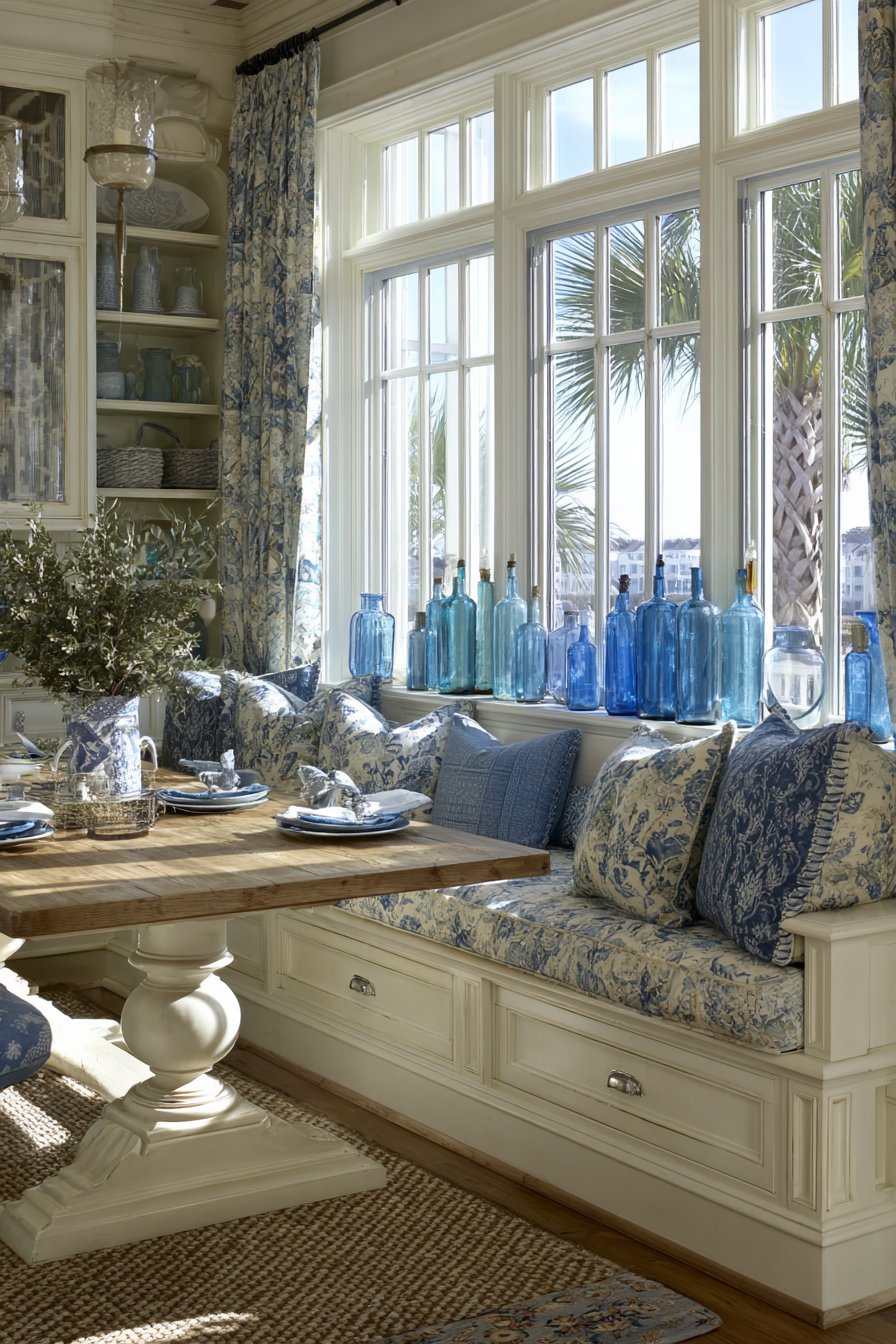
Vintage glass bottles in varying shades of blue line the windowsill, catching afternoon light and casting colored reflections across the table. This simple collection adds cottage charm without requiring significant investment, and the bottles’ transparency allows light to pass through while adding decorative interest. The blue glass creates cohesion through repeated color even as bottle shapes and sizes vary.
Key Design Tips:
- Build window seats 18 inches high with hinged tops for accessible storage
- Upholster window seats in durable, patterned fabrics that hide wear better than solids
- Source church pews from salvage yards for authentic cottage seating options
- Collect colored glass bottles in single color families for cohesive window displays
- Position window seats perpendicular to dining tables to create conversation areas
13. Sage Green Shiplap Dining Room
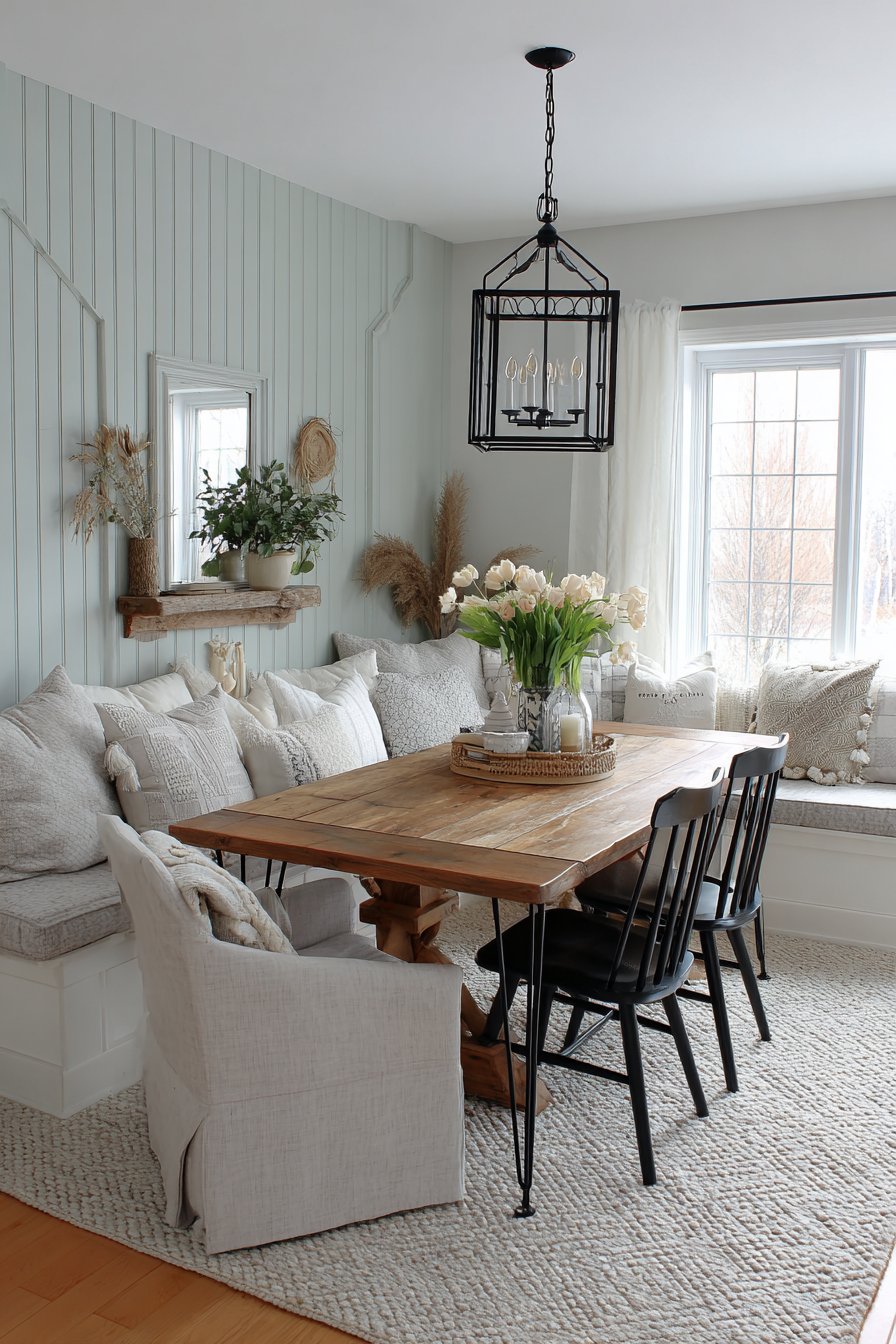
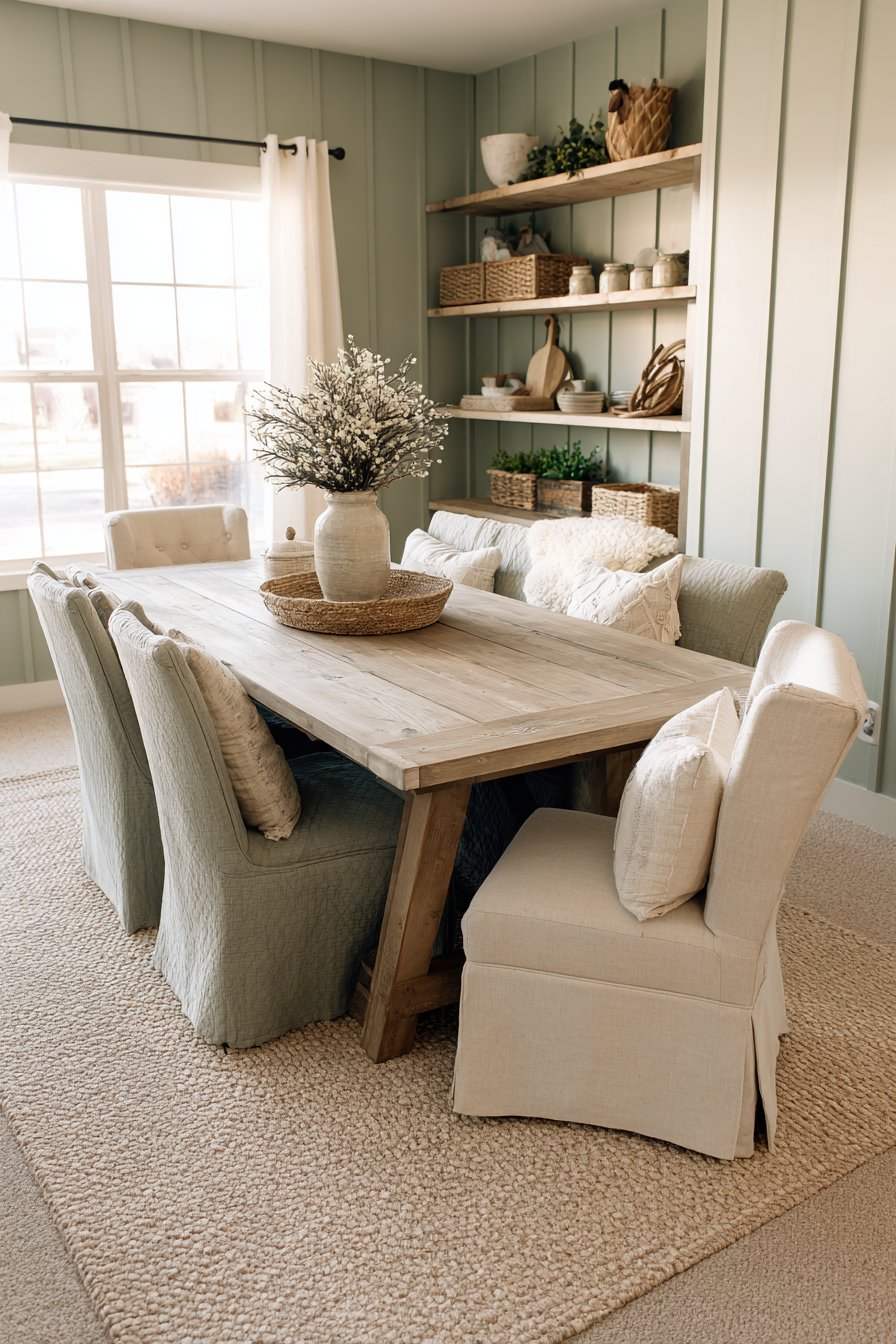
Vertical shiplap walls in pale sage green create a soft, nature-inspired backdrop in this serene cottage dining room. The vertical orientation of the planking adds visual height, making the ceiling appear taller than horizontal installation would achieve. The sage green color brings a touch of the outdoors inside while remaining neutral enough to work with various furniture styles and seasonal decorations.
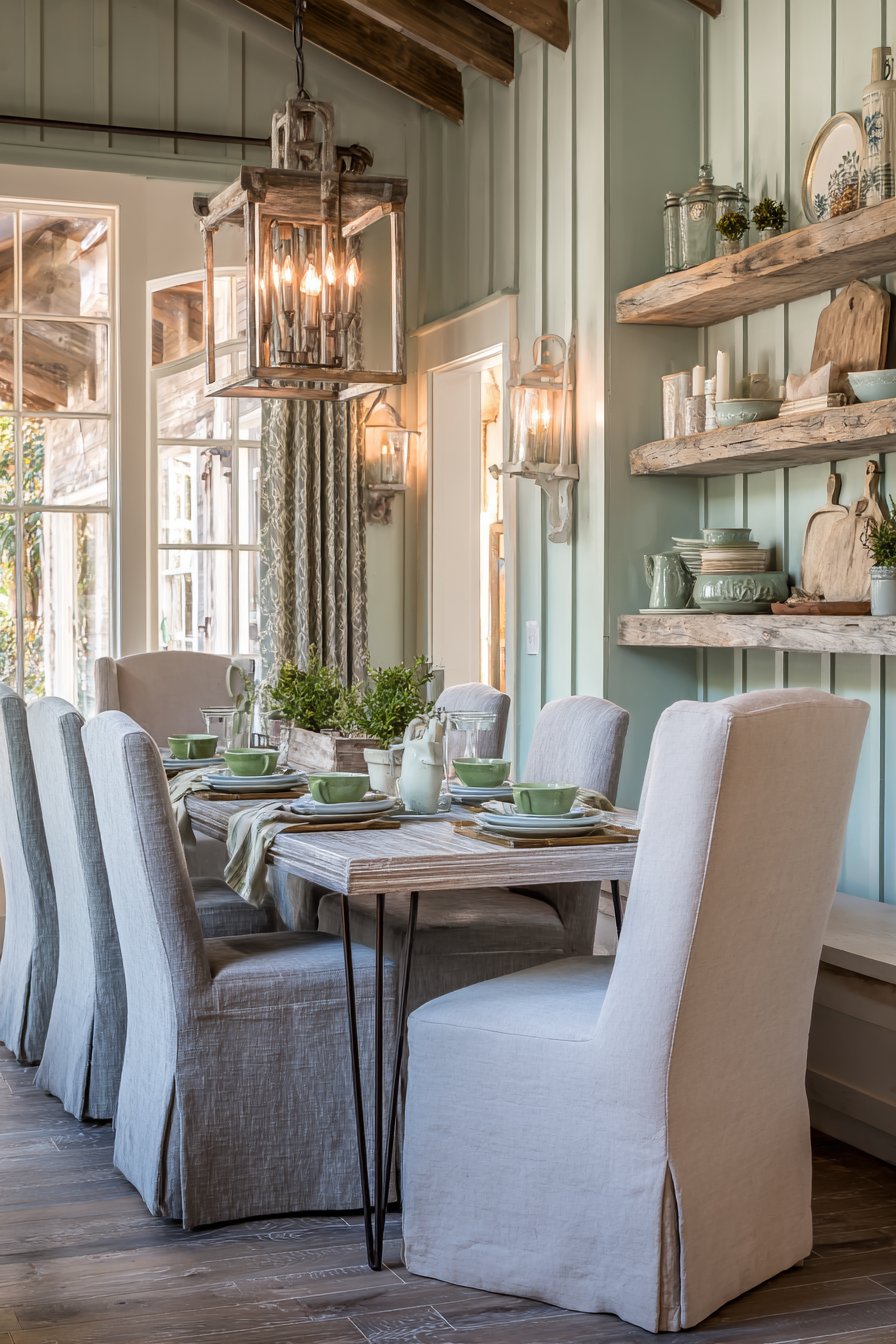
A farmhouse table with sleek hairpin legs combines rustic and industrial elements, demonstrating how cottage style can successfully incorporate modern touches. The juxtaposition of weathered wood top and metal legs creates visual interest while keeping the piece feeling light and uncluttered. A mix of upholstered and wooden chairs in neutral tones surrounds the table, providing seating variety that accommodates different comfort preferences.
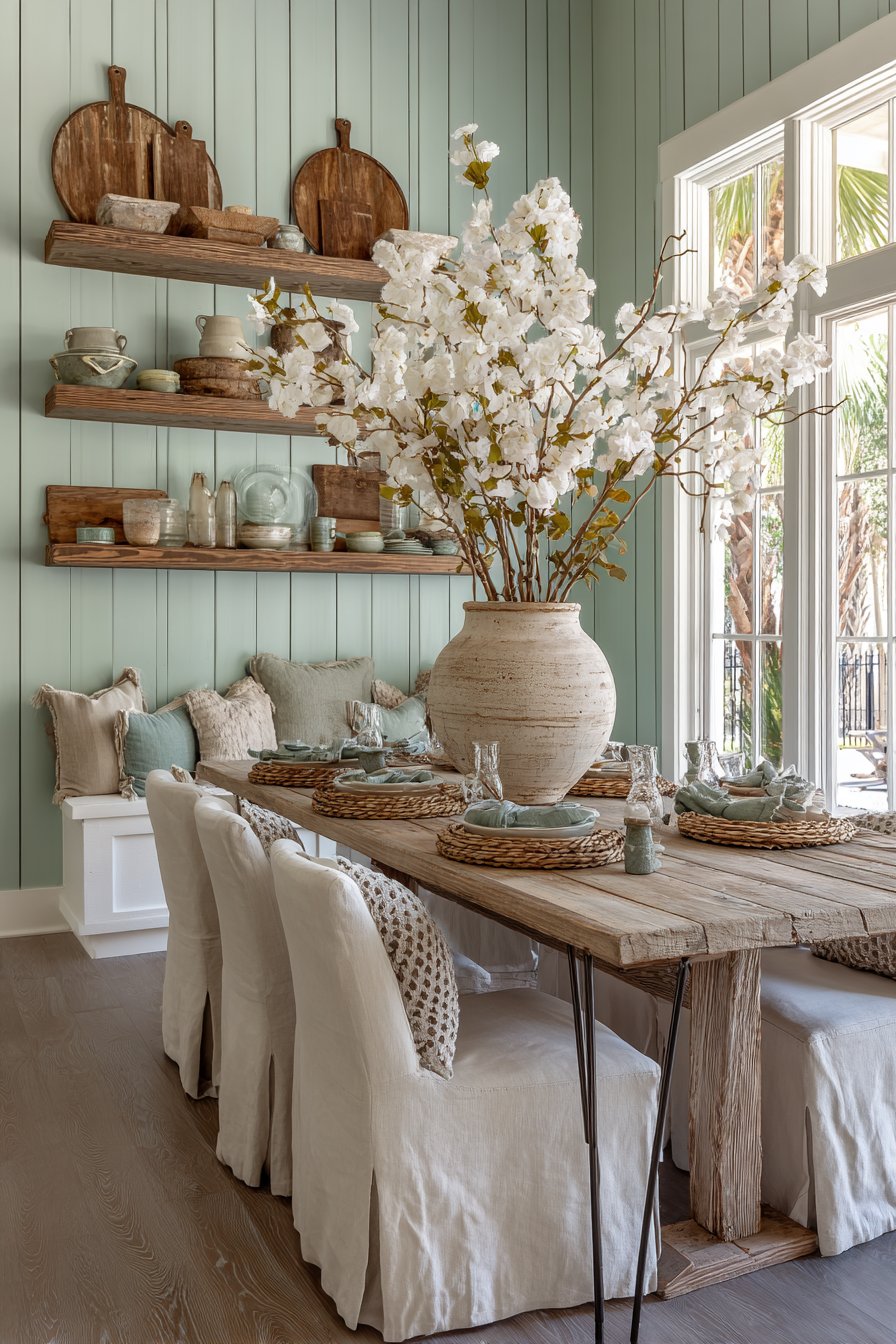
Open shelving displays vintage ironstone and cutting boards, their white and cream tones creating beautiful contrast against the sage walls. The practical open storage keeps everyday items accessible while creating an organized, aesthetically pleasing display. The vertical shelves also draw the eye upward, emphasizing the room’s height and creating a sense of spaciousness.
Key Design Tips:
- Install shiplap vertically in rooms with standard 8-foot ceilings to create height illusion
- Choose muted green tones inspired by nature rather than bright or artificial greens
- Combine vintage and modern elements for updated cottage style with contemporary appeal
- Display collections of similar items together for visual impact and organized appearance
- Select hairpin legs for furniture when seeking industrial-cottage fusion aesthetic
14. Stone Fireplace Focal Point Dining Room
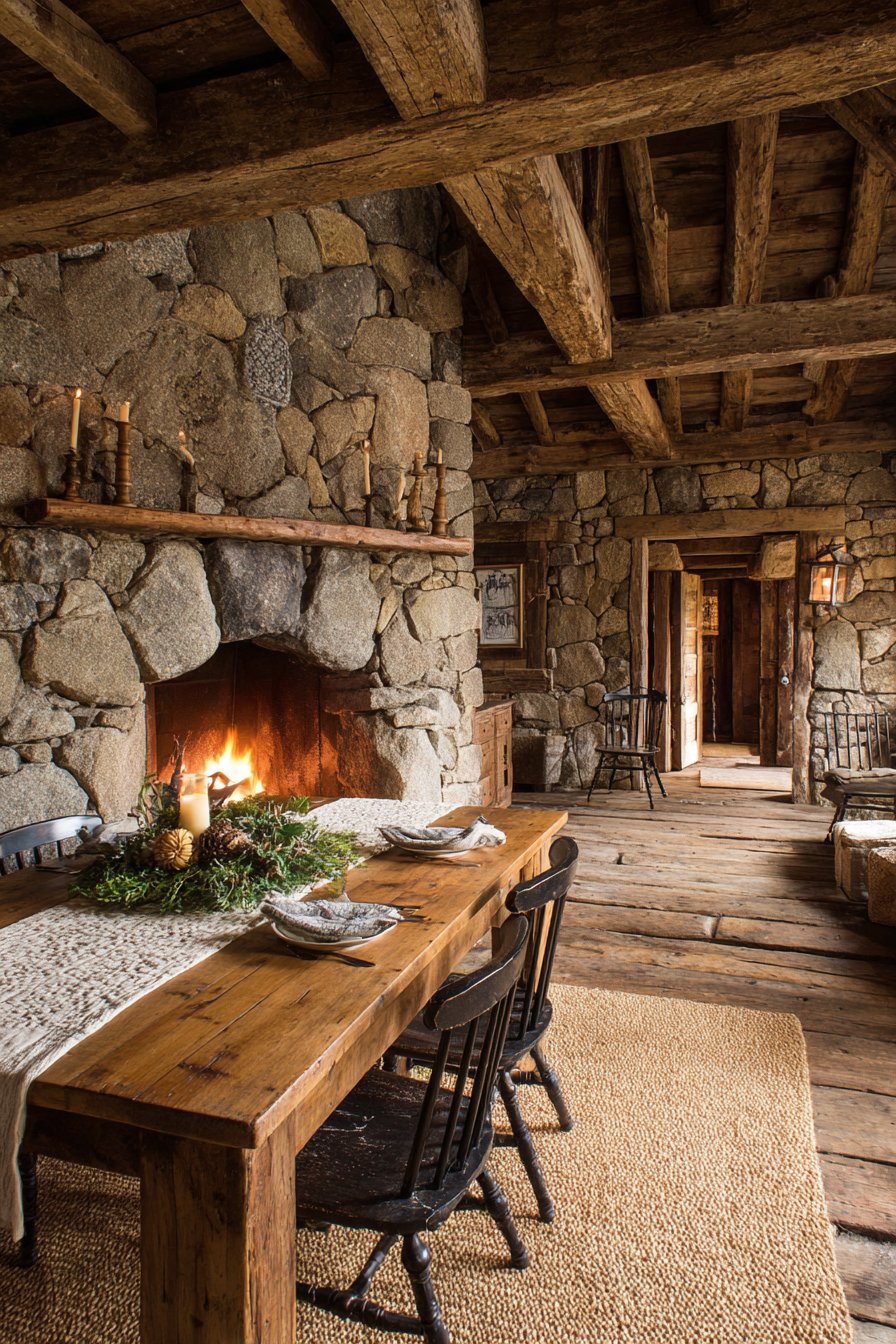
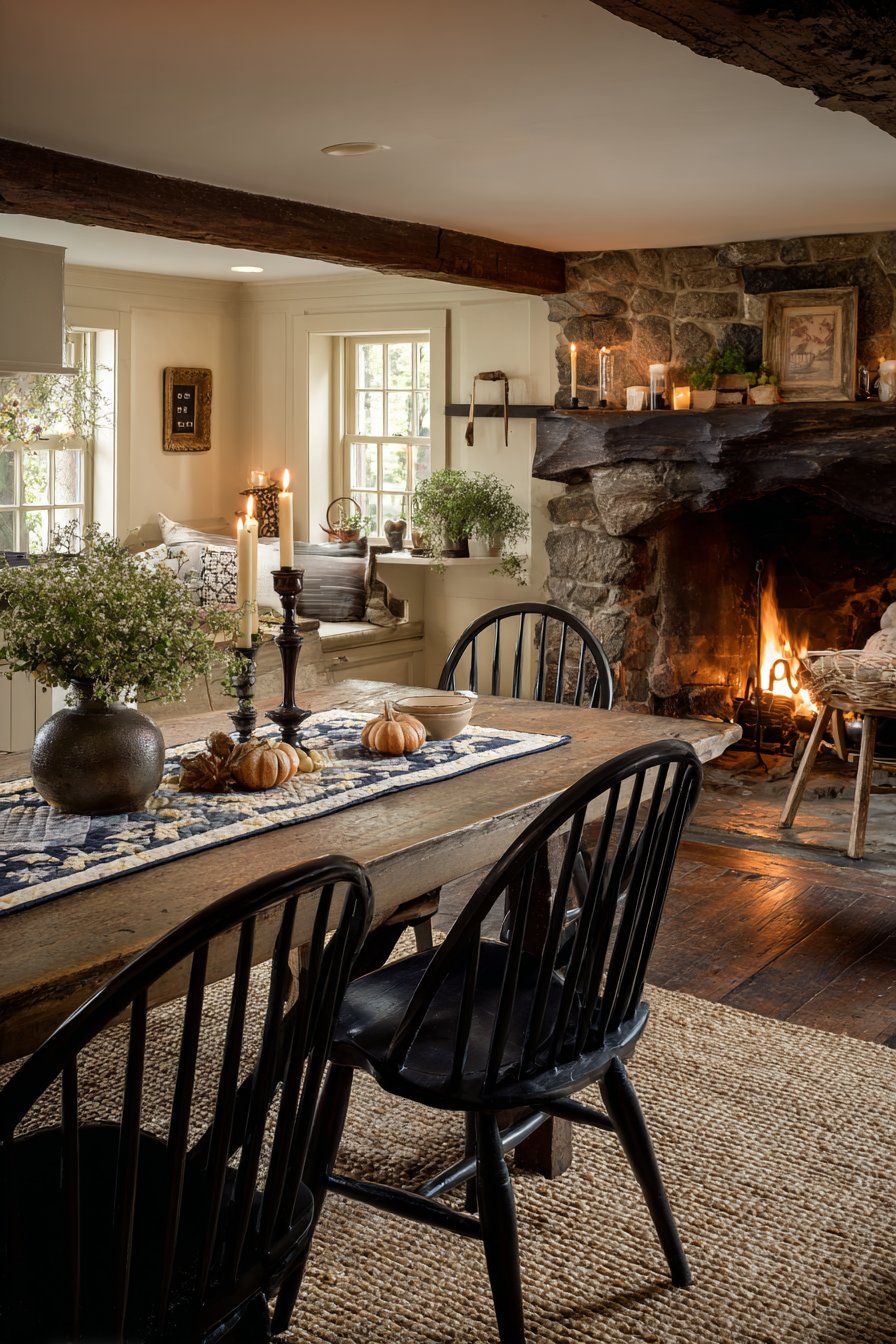
A stone fireplace serves as the commanding focal point in this cozy cottage dining room, its rough-hewn surface and crackling fire creating warmth and ambiance that makes every meal special. The simple wooden mantel displays vintage candlesticks in varying heights, their weathered finishes and dripping wax speaking to years of use. This fireplace transforms the dining room from merely functional to truly inviting, making it a space where families naturally gather.
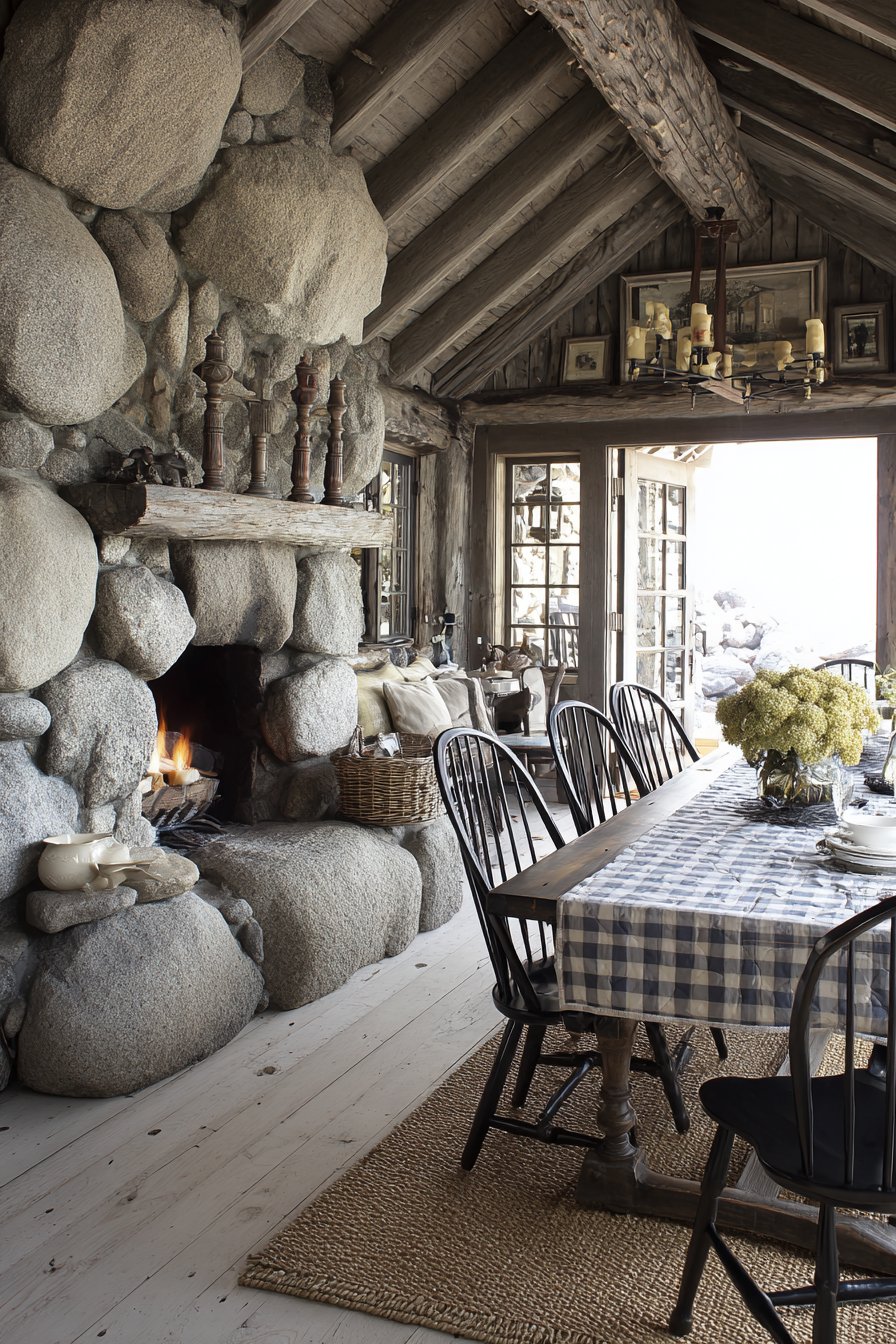
The dining table positions strategically near the fireplace, allowing diners to enjoy both the fire’s warmth and light during meals. A quilted table runner in traditional patchwork pattern adds textile softness and handmade charm, while seasonal centerpieces change throughout the year to reflect nature’s rhythms. Windsor chairs in original dark finish provide seating that feels substantial and authentic, their time-worn appearance adding to the room’s historic cottage character.
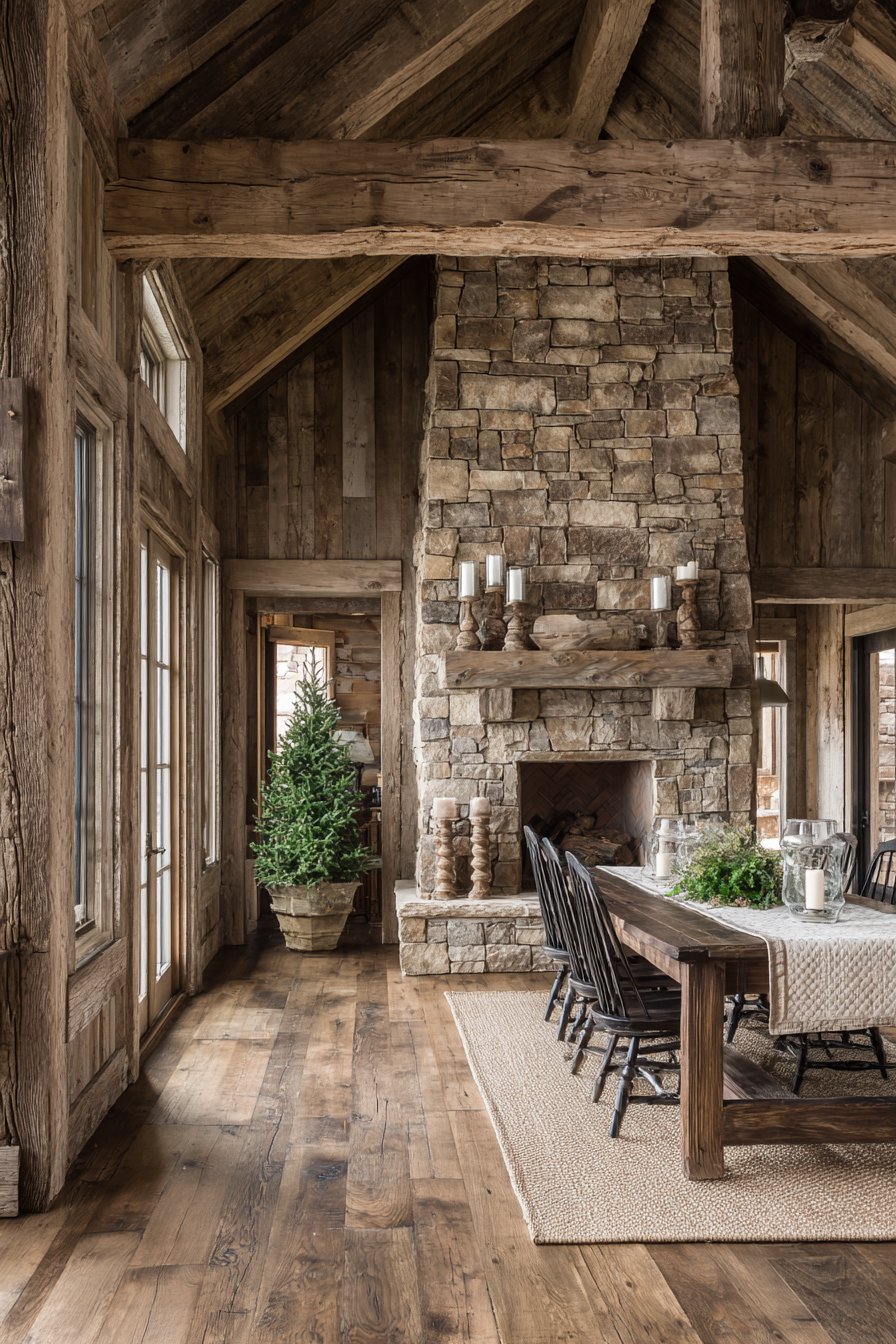
A braided wool rug in traditional pattern defines the dining area on wide plank floors, its circular form echoing the intimate gathering space created by the table arrangement. The rug’s concentric circles of color add visual interest underfoot while providing softness and sound absorption. This layered approach to flooring adds warmth both literally and visually.
Key Design Tips:
- Position dining tables 4-6 feet from fireplaces to benefit from warmth without excessive heat
- Select natural stone over manufactured for authentic cottage character and aging patina
- Use quilted textiles to add handmade cottage charm and family history connections
- Preserve original dark finishes on antique chairs rather than painting or refinishing them
- Choose braided rugs in sizes that extend at least 24 inches beyond all table edges
15. Painted Brick Industrial Cottage Dining Room
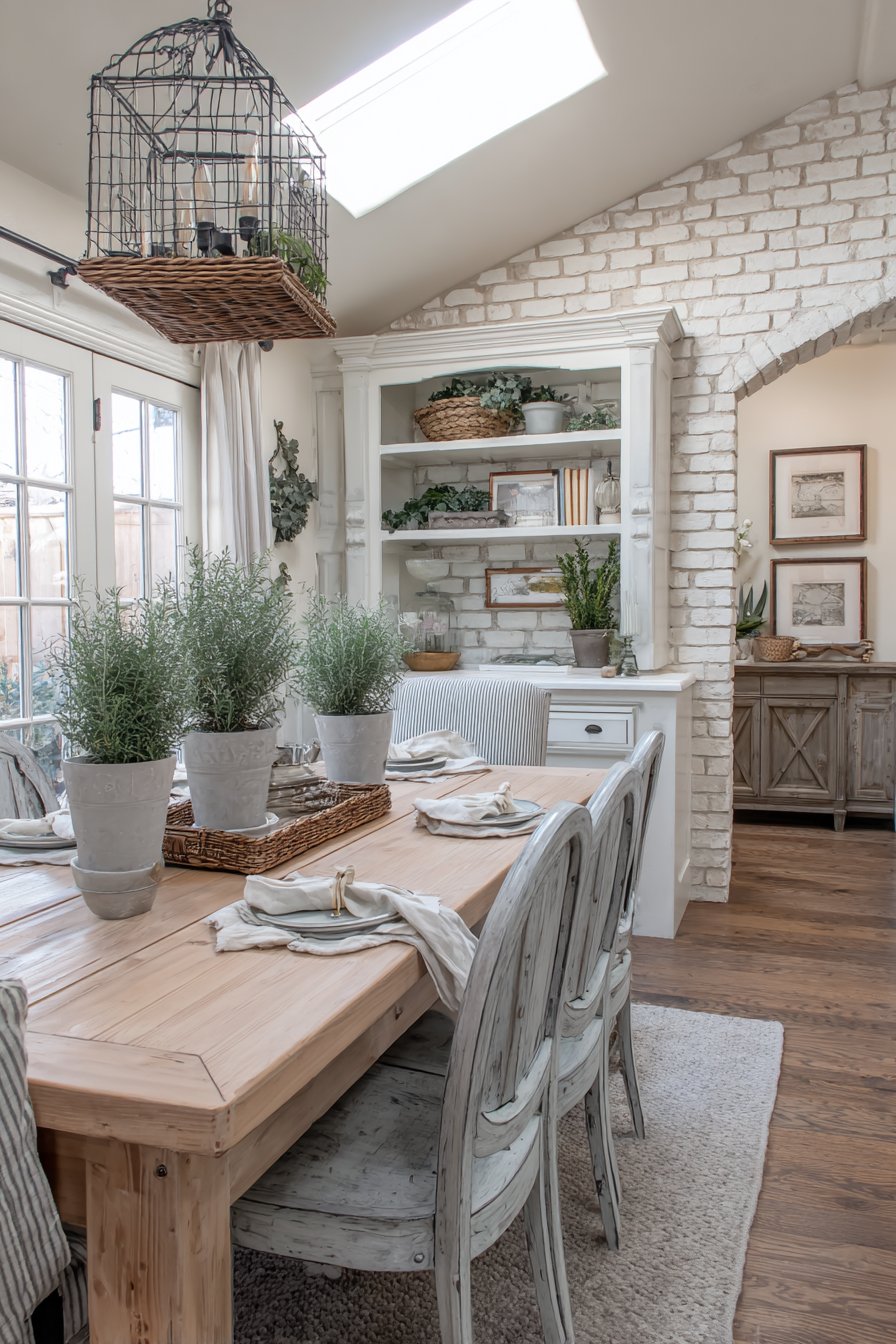
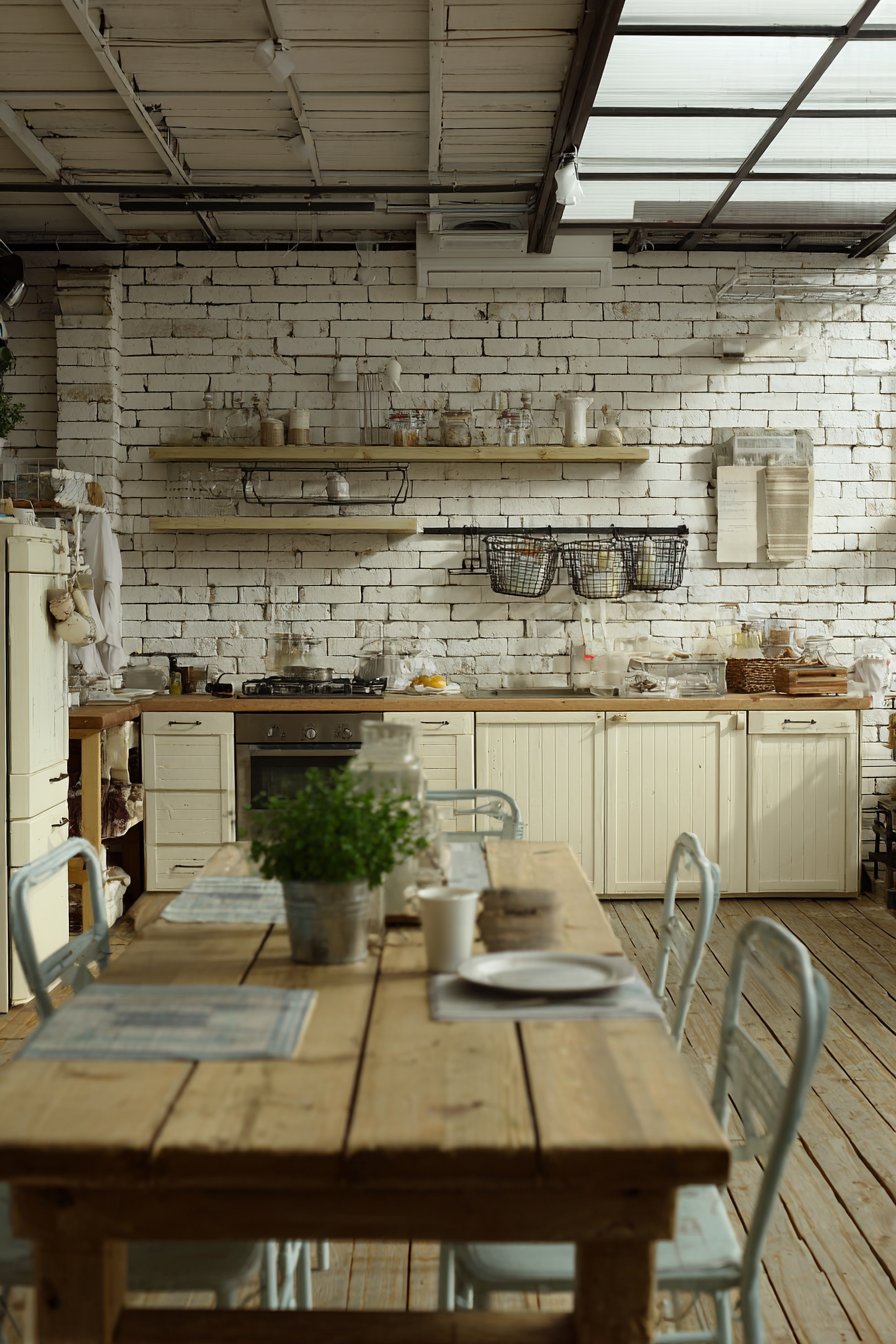
Painted brick in soft white creates textured backdrop to a pine trestle table in this cottage dining room that successfully bridges rustic and industrial aesthetics. The white-painted brick maintains the material’s inherent texture while brightening the space and creating a neutral canvas for other elements. This treatment respects the architectural character while updating the look for contemporary cottage living.
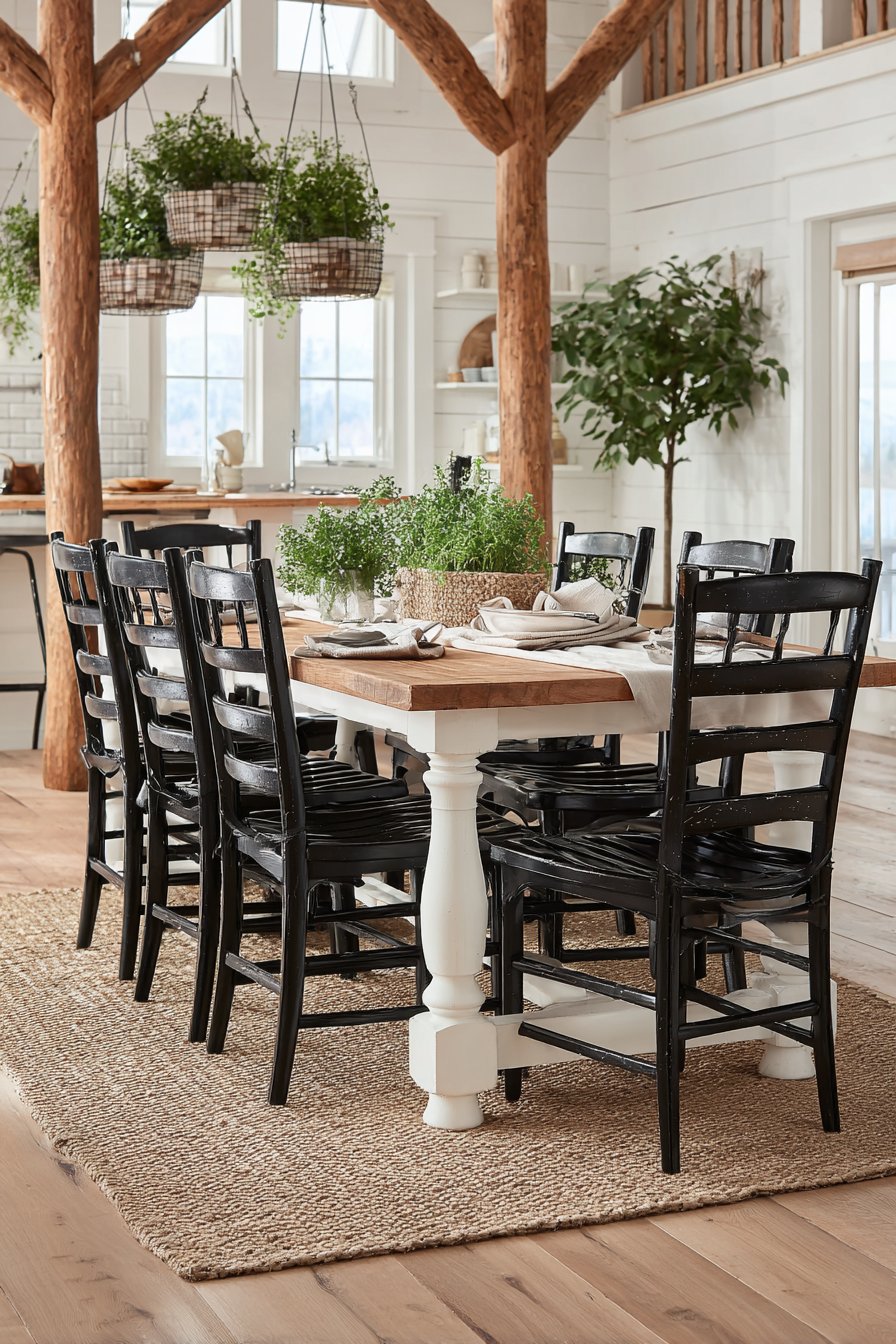
Bistro-style metal chairs with distressed finish provide casual seating that references French café culture while maintaining cottage charm. Their lightweight construction makes them easy to move, and their weathered metal finish suggests outdoor use and years of service. Hanging wire baskets suspended from ceiling hooks store linens and serving pieces, creating practical vertical storage that keeps items accessible while clearing valuable counter and cabinet space.
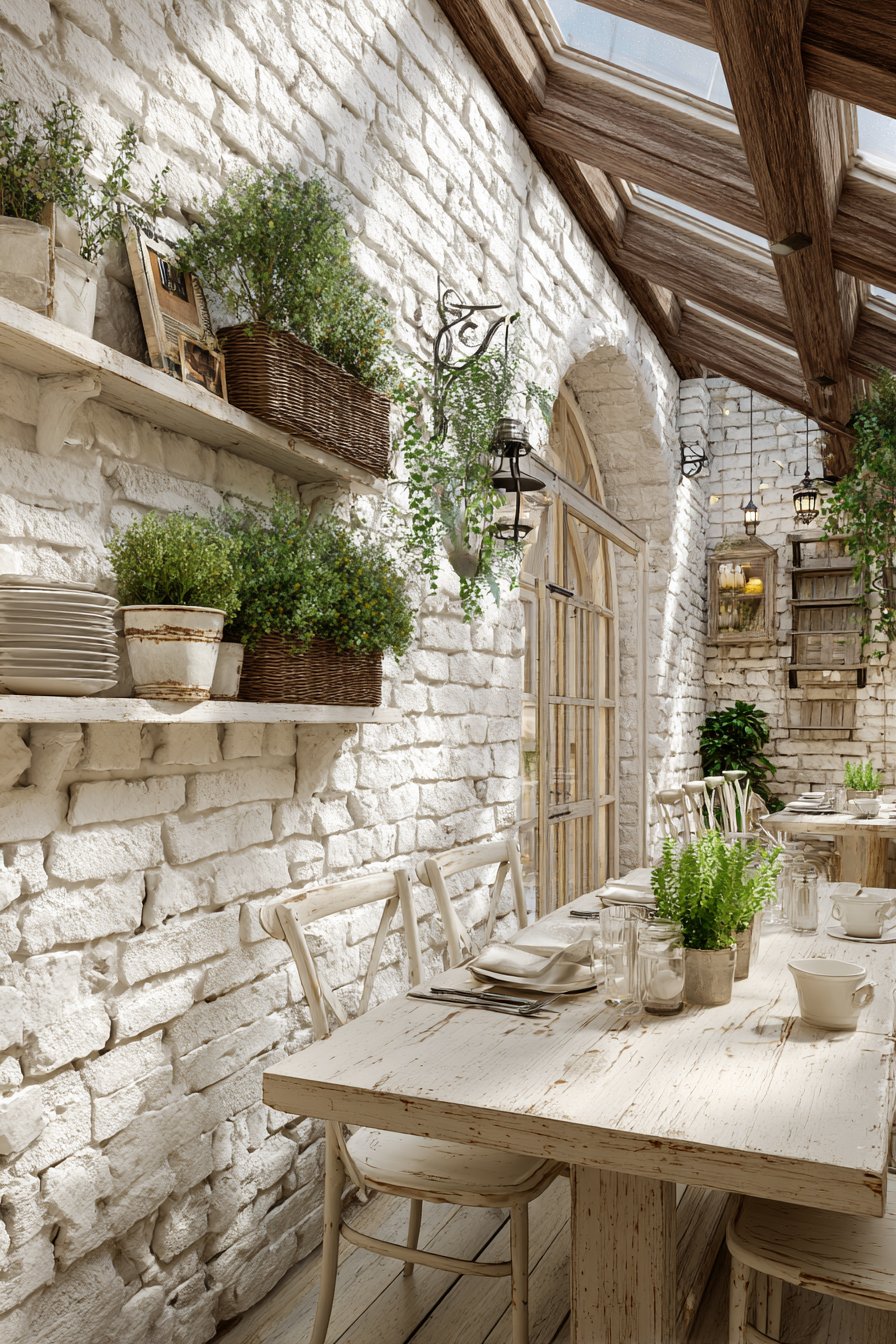
Potted herbs positioned directly on the dining table add fresh greenery and practical culinary ingredients within arm’s reach. This living centerpiece changes throughout the season and provides interactive elements for diners who might snip fresh basil or rosemary during meal preparation. Natural daylight from skylights creates even, shadow-free illumination that showcases the room’s textures and materials.
Key Design Tips:
- Use flat white or warm white paint on brick rather than stark bright white
- Select French bistro chairs for combining casual cottage comfort with European influence
- Install ceiling hooks rated for substantial weight when hanging storage solutions
- Grow culinary herbs in dining rooms with adequate natural light for practical decoration
- Add skylights when possible to provide even natural lighting throughout the day
16. Banquette Tufted Linen Dining Room
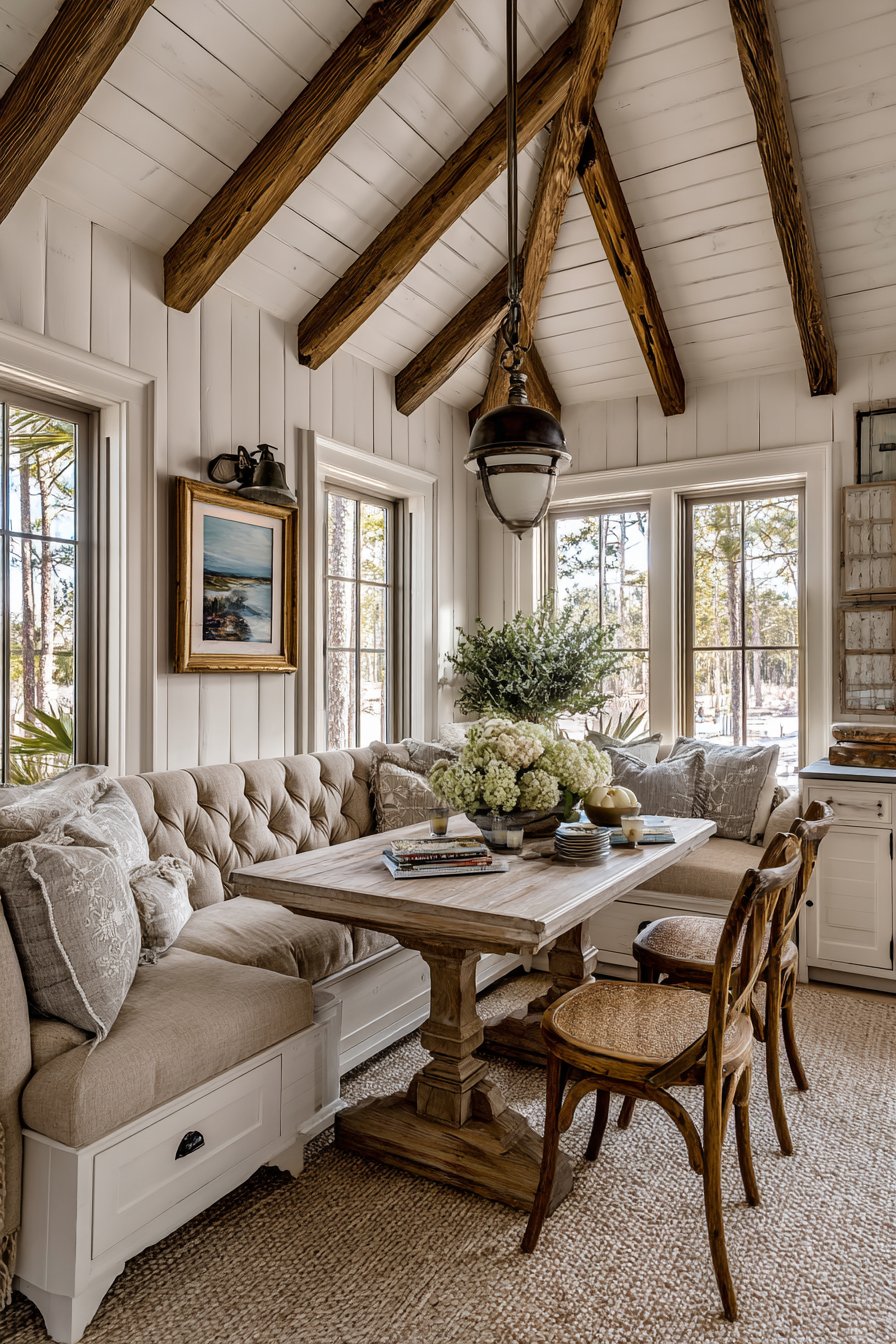
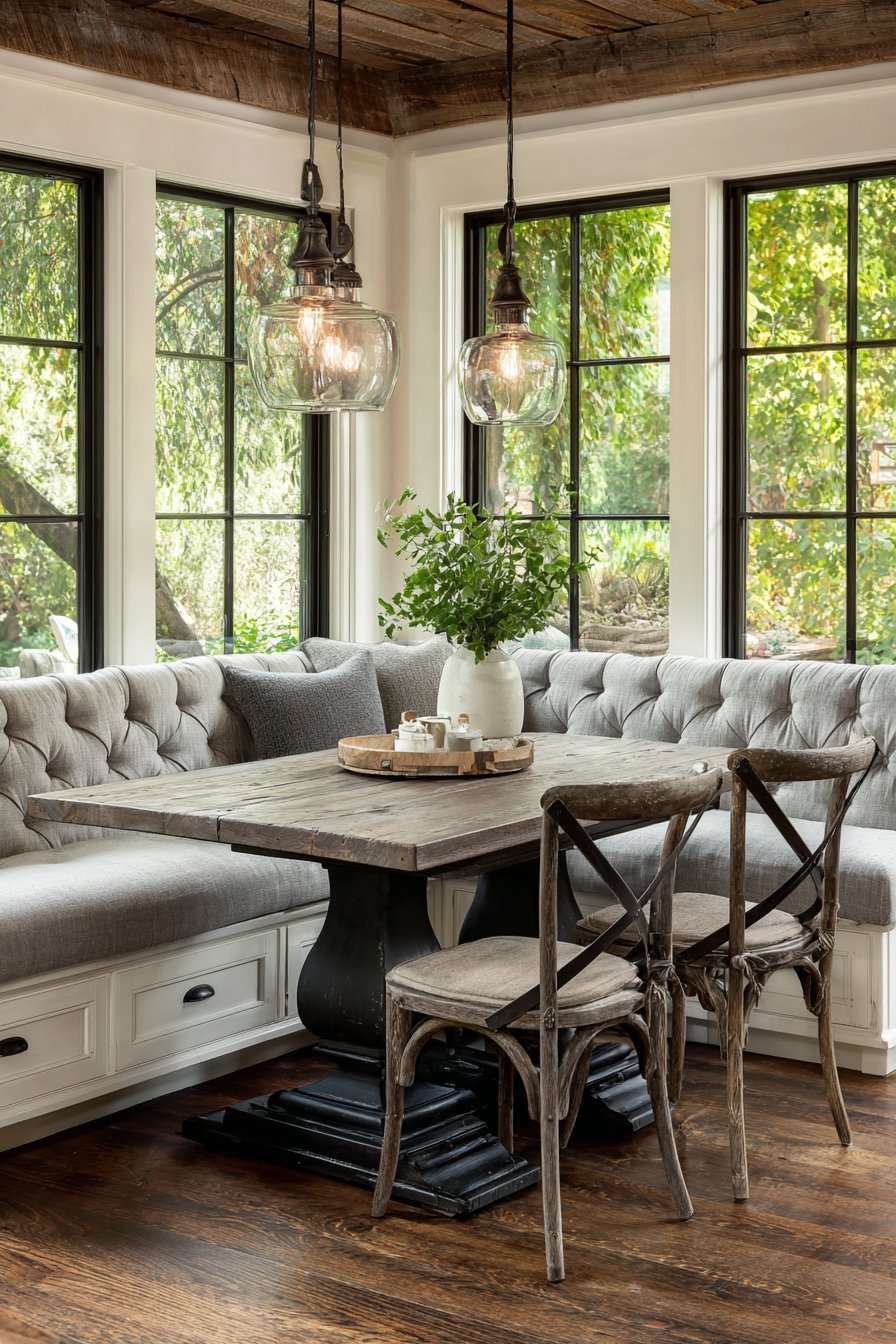
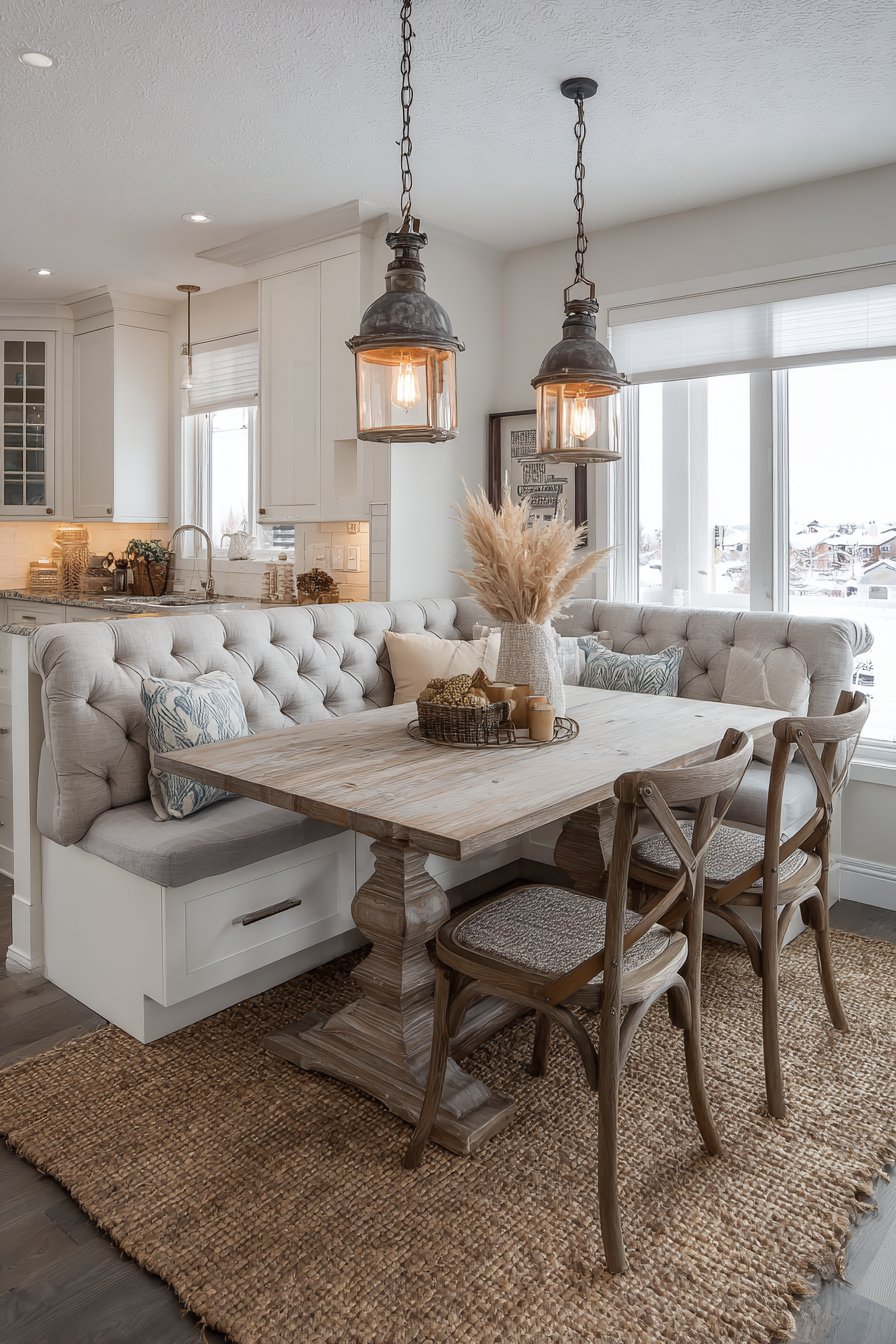
A built-in banquette with tufted linen upholstery creates luxurious yet practical seating in this cottage dining room, the button-tufted details adding traditional elegance while storage drawers beneath maximize functionality. The neutral linen fabric maintains cottage simplicity while introducing subtle texture and sophisticated comfort. This permanent seating solution anchors the dining area while providing generous storage for items used less frequently.
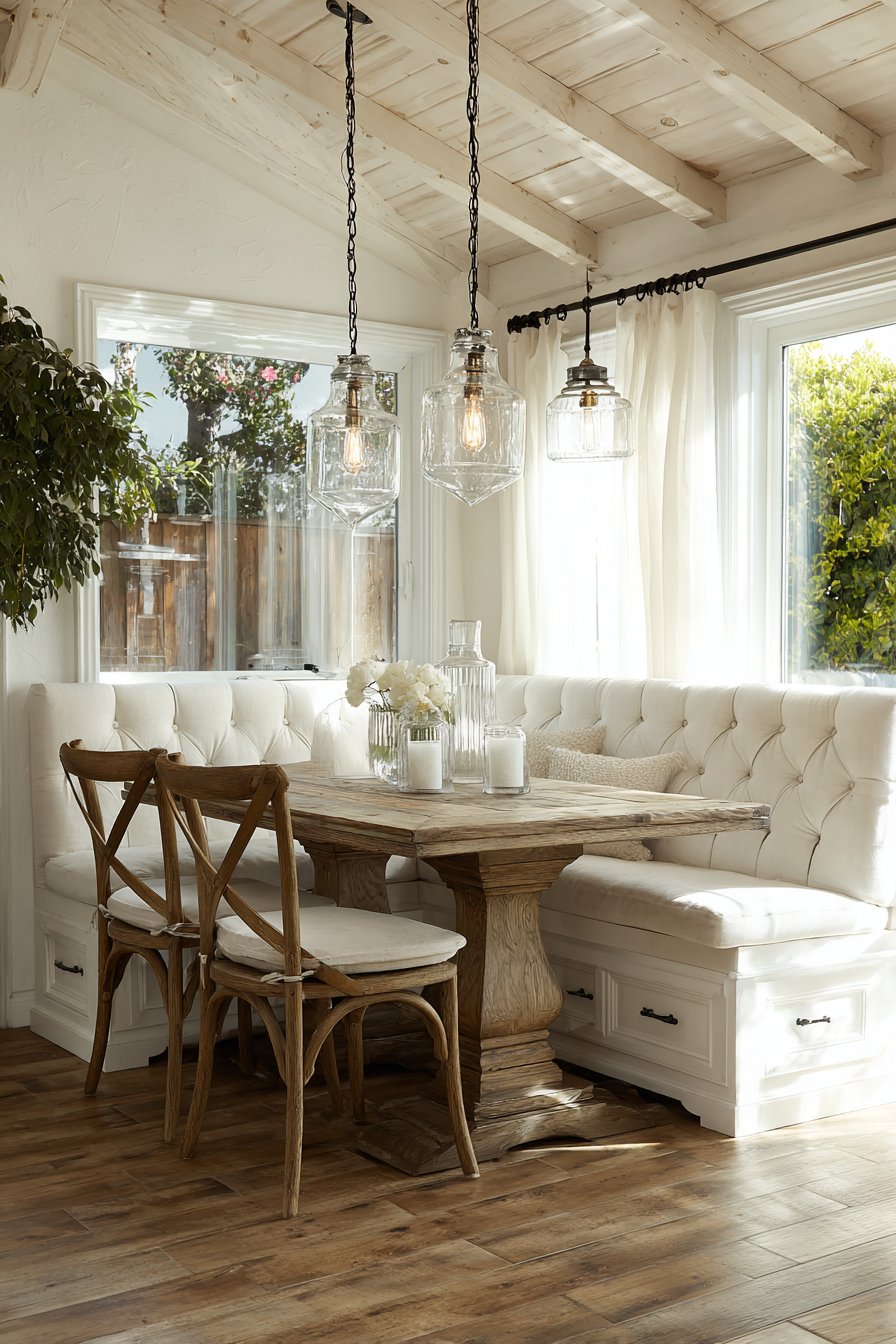
A square farmhouse table with chunky turned legs centers the dining space, its substantial proportions balancing the banquette’s visual weight. The table’s square shape works particularly well with L-shaped banquette seating, creating conversation-friendly geometry where all diners can easily see and interact with each other. Cross-back chairs in weathered oak complete the seating arrangement, their X-shaped back design adding visual interest and traditional cottage detail.
Vintage schoolhouse pendant lights provide overhead illumination, their milk glass shades diffusing light softly while their aged brass or bronze fixtures add authentic period detail. These lights reference the one-room schoolhouses of early American education, connecting this dining space to cottage’s celebration of simple, functional design. The fixtures hang at ideal height to illuminate the table without interfering with sight lines across it.
Key Design Tips:
- Design tufted banquettes with button spacing of 6-8 inches for proper visual proportion
- Install drawer storage beneath banquettes using full-extension slides for accessibility
- Select square tables for dining rooms where banquettes occupy corner positions
- Hang pendant lights 30-36 inches above table surfaces for proper illumination without glare
- Choose cross-back chairs when seeking traditional cottage character with comfortable support
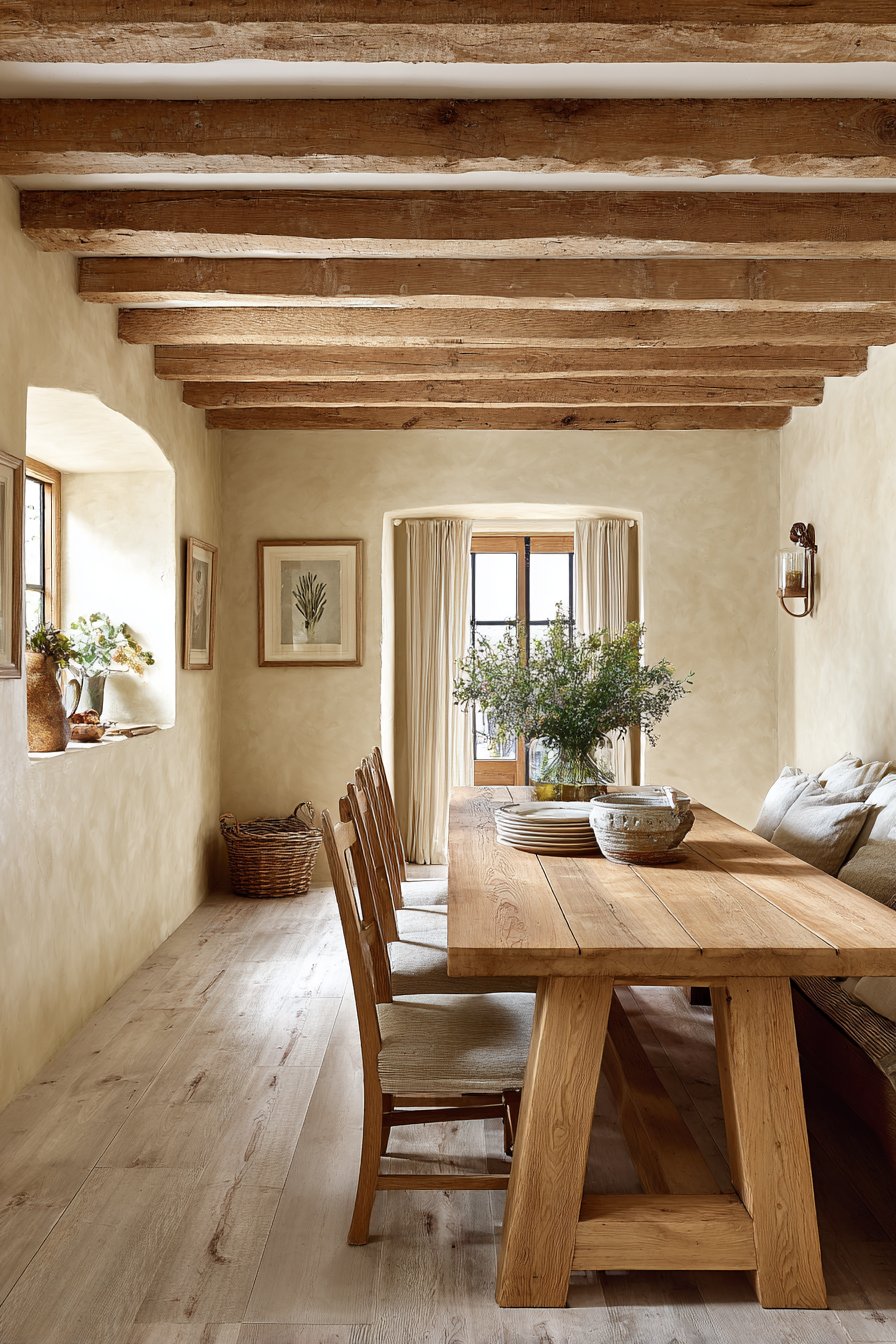
17. Natural Plaster Refectory Table Dining Room
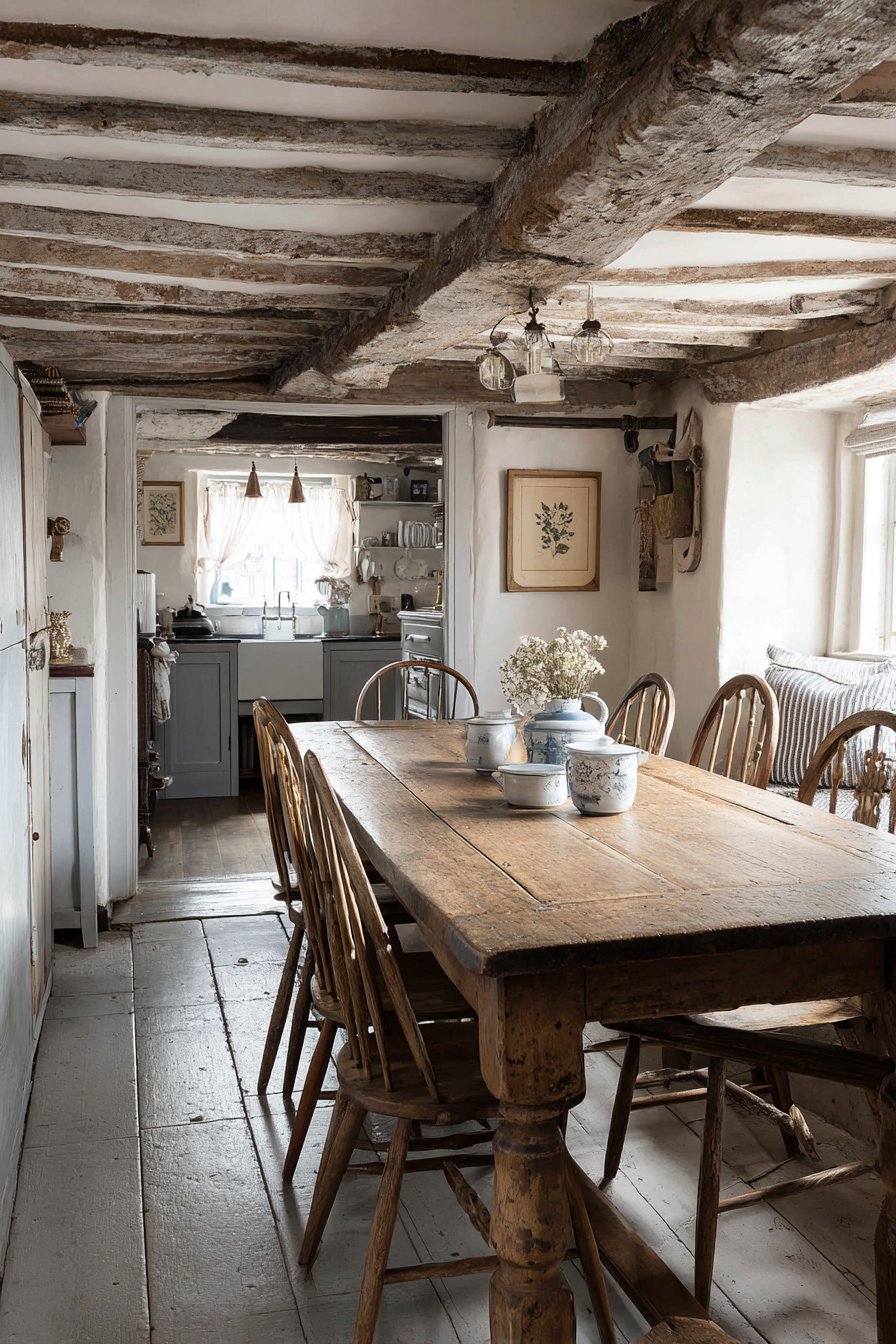
Plaster walls in warm cream showing subtle texture variations create Old World charm in this cottage dining room, their slightly irregular surface adding depth and handcrafted character. The plaster’s natural imperfections and gentle color shifts across the wall surface contribute authenticity that flat drywall cannot achieve. This traditional wall treatment references European cottage construction while creating a sophisticated neutral backdrop.
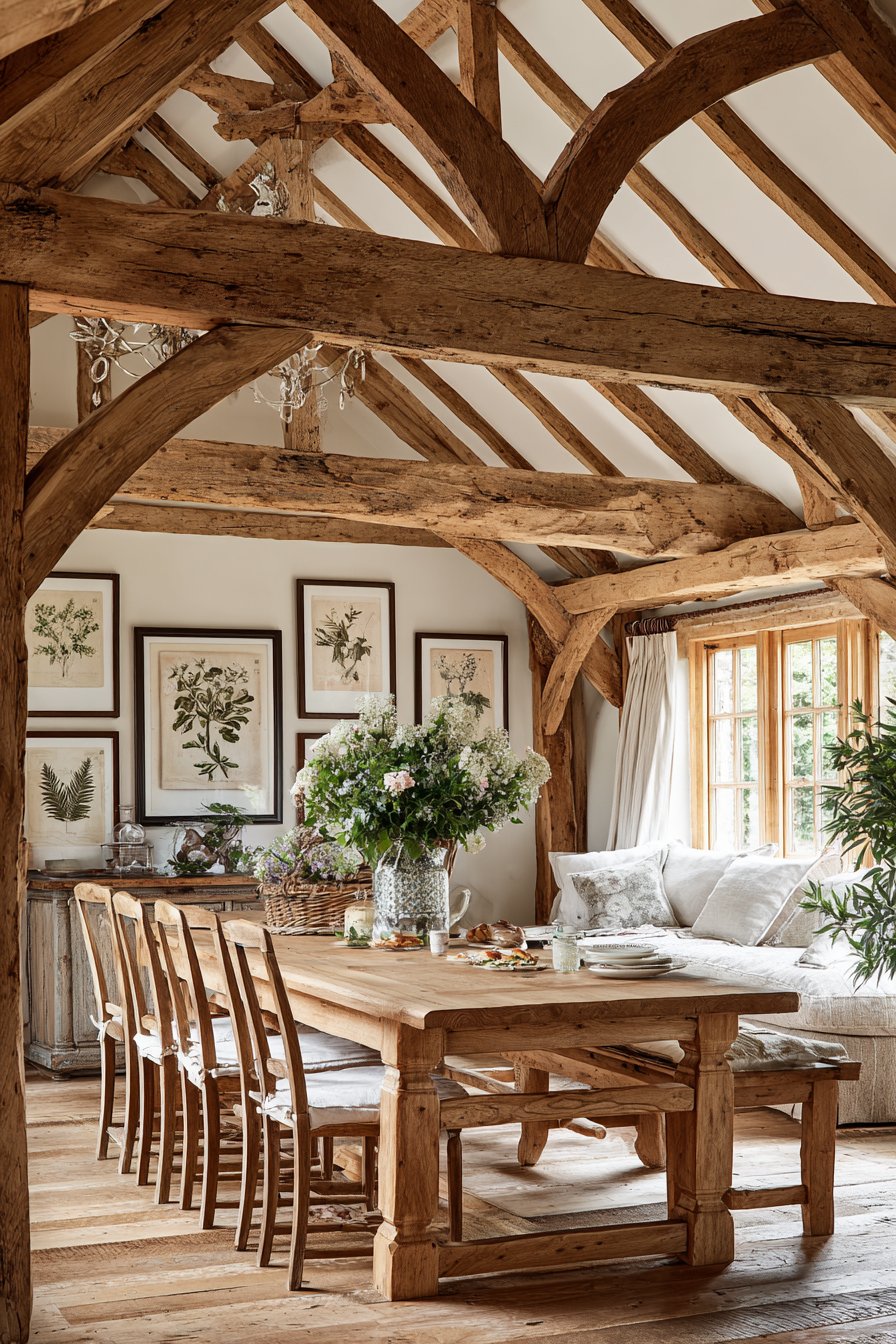
A refectory-style table in natural oak with breadboard ends seats eight on simple wooden chairs, its monastery-inspired design bringing historic gravitas to everyday dining. The breadboard ends—perpendicular pieces that cap the table’s ends—prevent warping while adding traditional craftsmanship detail. The table’s substantial length and thickness communicate permanence and gather-around hospitality central to cottage living.
Exposed rafters overhead add architectural interest without the refinement of finished ceiling beams, celebrating the home’s structure in its raw, functional state. Botanical artwork in distressed frames adorns the walls, bringing nature indoors through vintage pressed flowers and antique plant illustrations. These scientific-style prints add educational interest while maintaining cottage’s connection to the natural world.
Key Design Tips:
- Apply venetian plaster or lime plaster for authentic Old World cottage wall texture
- Select refectory tables for their historic character and exceptional durability
- Leave ceiling rafters exposed and unfinished for authentic rustic cottage atmosphere
- Frame botanical prints in simple, distressed wood frames rather than ornate gilt options
- Position artwork at eye level (57-60 inches to center) for proper viewing height
18. Wagon Wheel Chandelier Farmhouse Dining Room
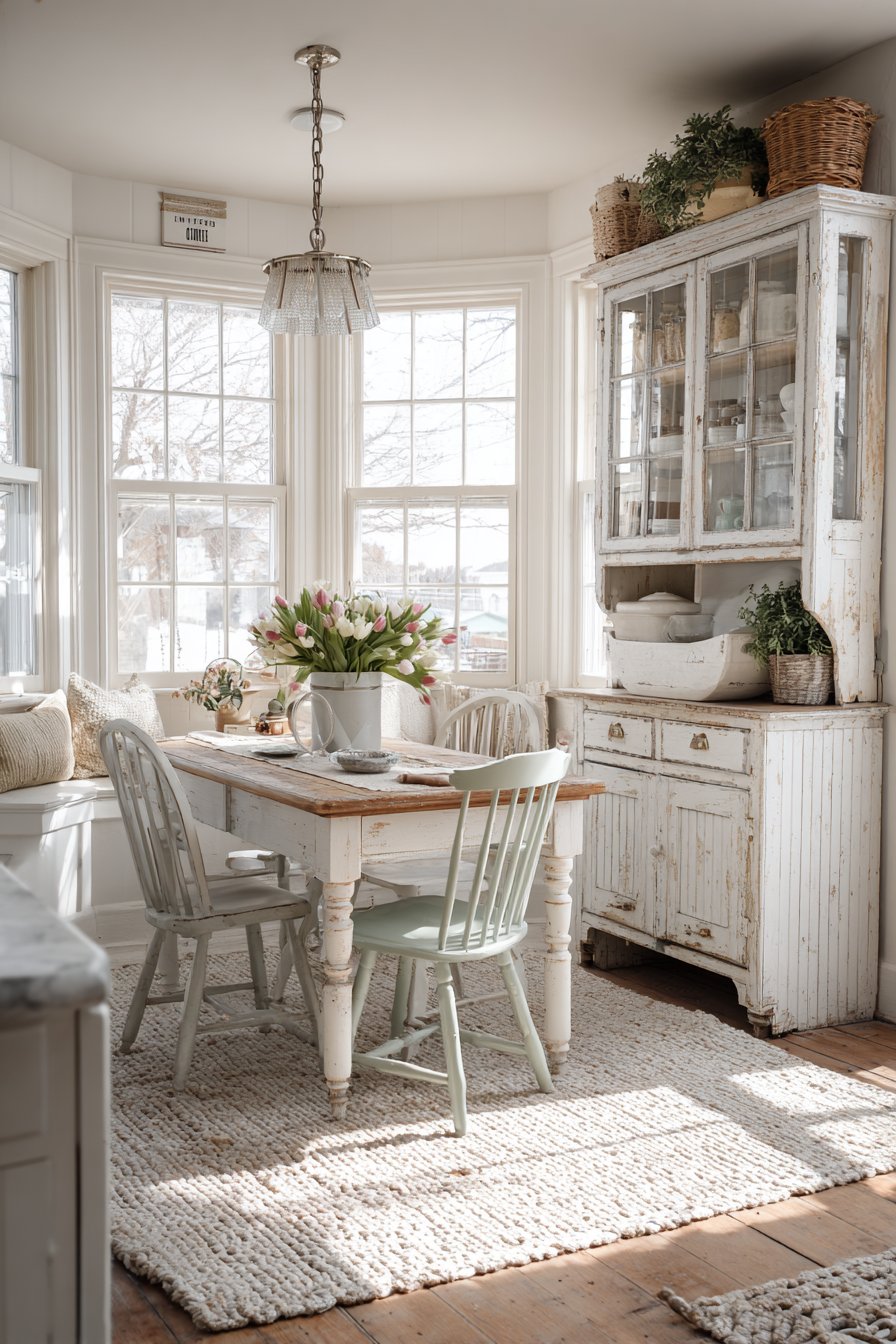
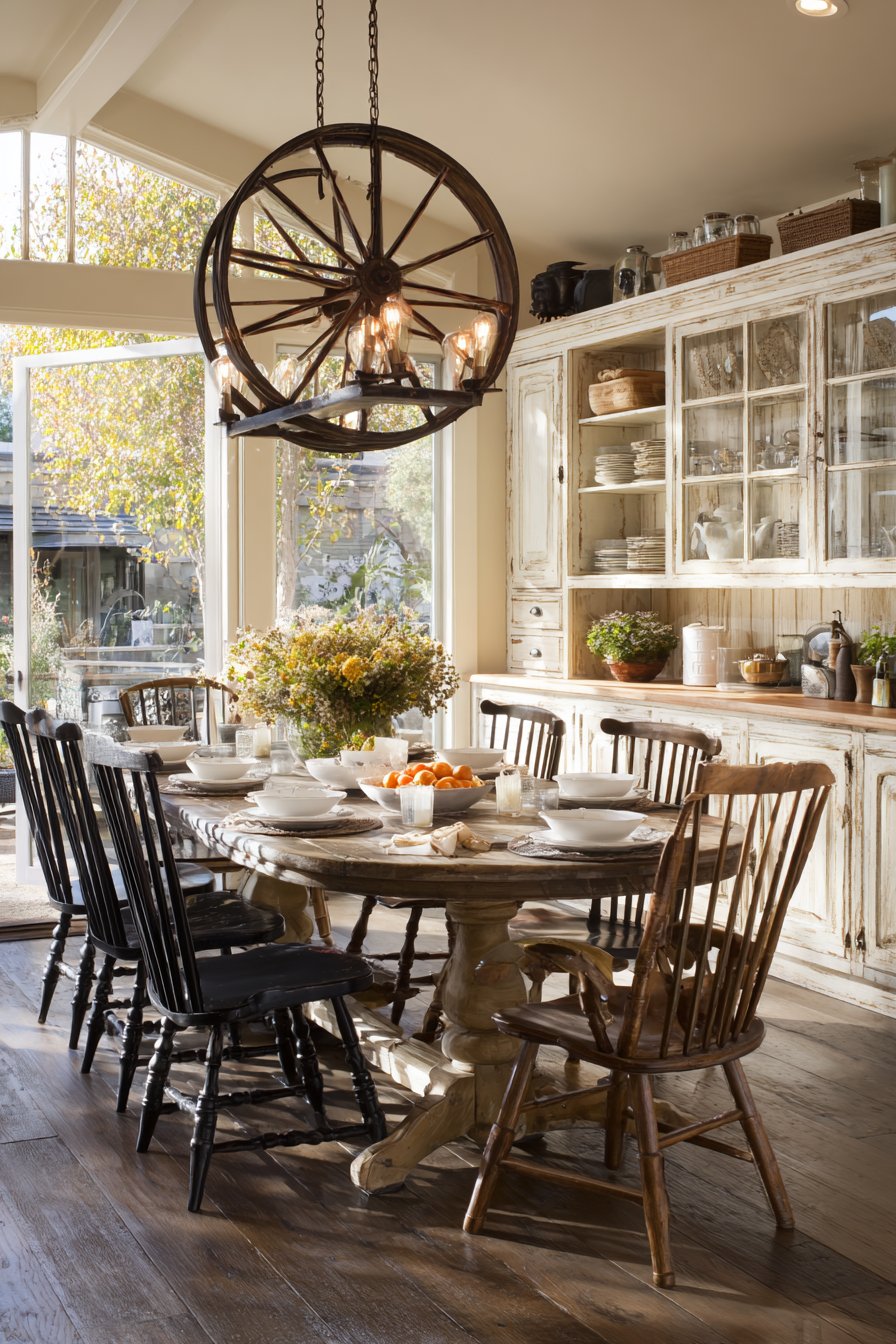
A wagon wheel chandelier converted for electrical use creates dramatic focal point above the farmhouse table in this cottage dining room that celebrates agricultural heritage. The wheel’s weathered wood and substantial scale make bold statement overhead, while the upward-facing lights softly illuminate the ceiling, creating ambient glow that bounces down into the space. This repurposed element connects contemporary cottage living to pioneer resourcefulness.
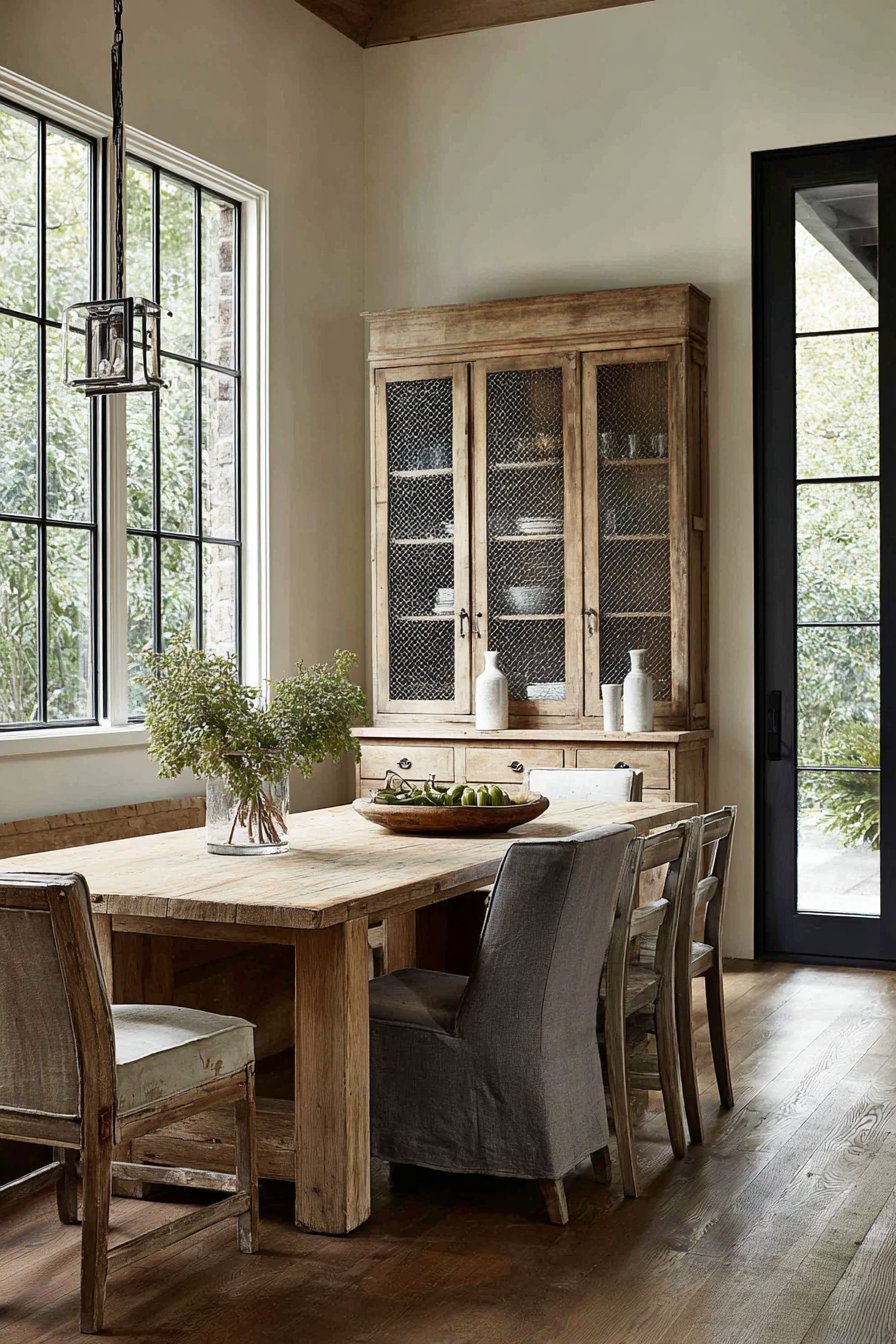
A mix of vintage dining chairs includes some pieces retaining original paint while others show natural wood, creating an eclectic collection that suggests decades of family use. This varied seating arrangement epitomizes cottage’s embrace of imperfection and accumulated possessions over time. Each chair contributes unique character, making dinner seating choices part of the room’s personality.
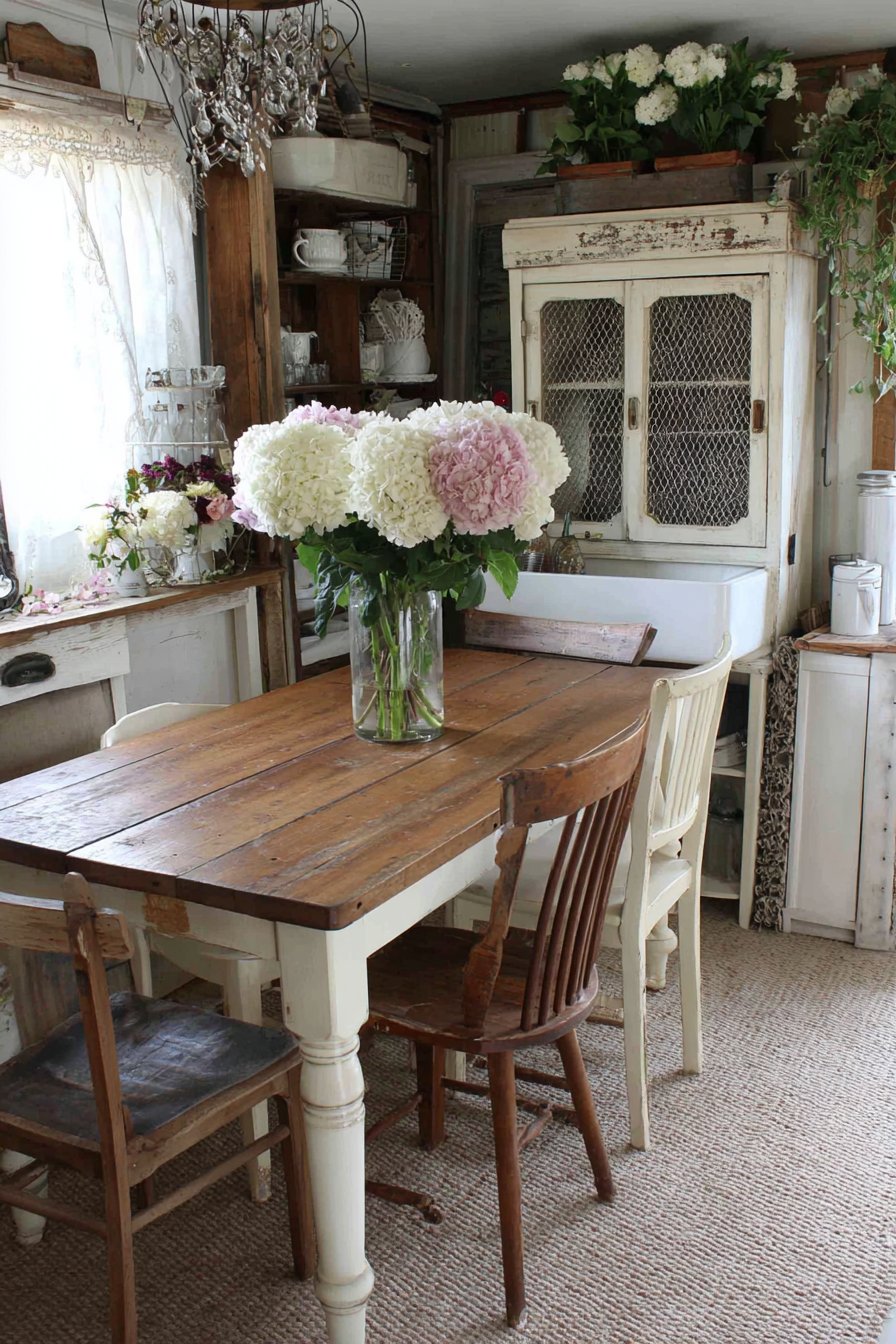
A farmhouse sink repurposed as a server holds fresh flowers in this creative reuse of salvaged architectural elements. The deep basin accommodates large arrangements, and the sink’s porcelain finish provides crisp white contrast to surrounding wood tones. Chicken wire cabinet doors on a corner hutch add rustic texture while allowing displayed items to remain visible, creating practical storage that doubles as decoration.
Key Design Tips:
- Ensure wagon wheel chandeliers are properly wired by licensed electricians for safety
- Mix chair styles unified by similar scale and height for cohesive eclectic arrangements
- Repurpose salvaged sinks as planters or beverage stations for creative cottage charm
- Install chicken wire on cabinet doors using staple gun and decorative molding to conceal edges
- Display everyday items like dishes and linens behind chicken wire for farmhouse aesthetic
19. Glossy White Beadboard Ceiling Dining Room
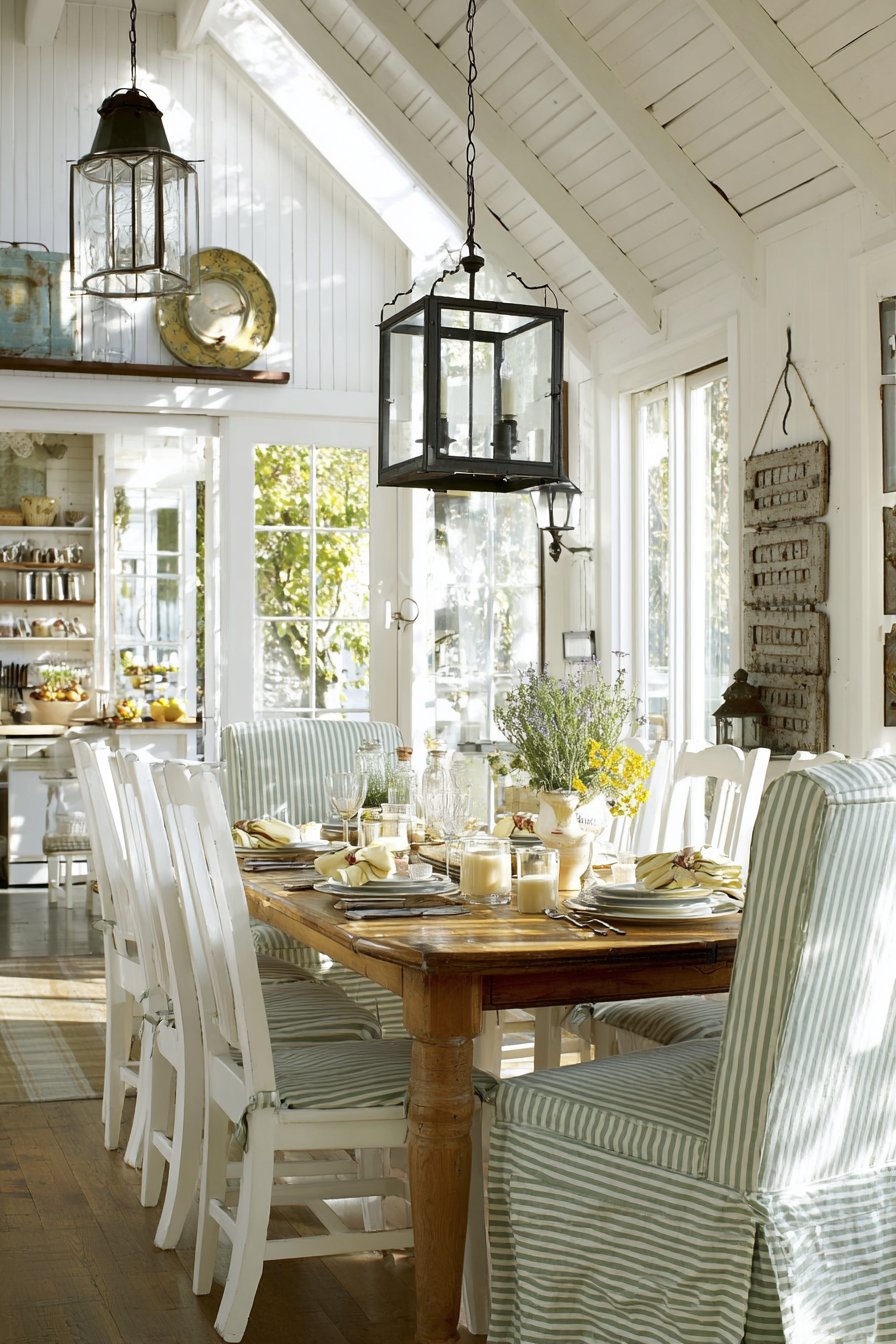
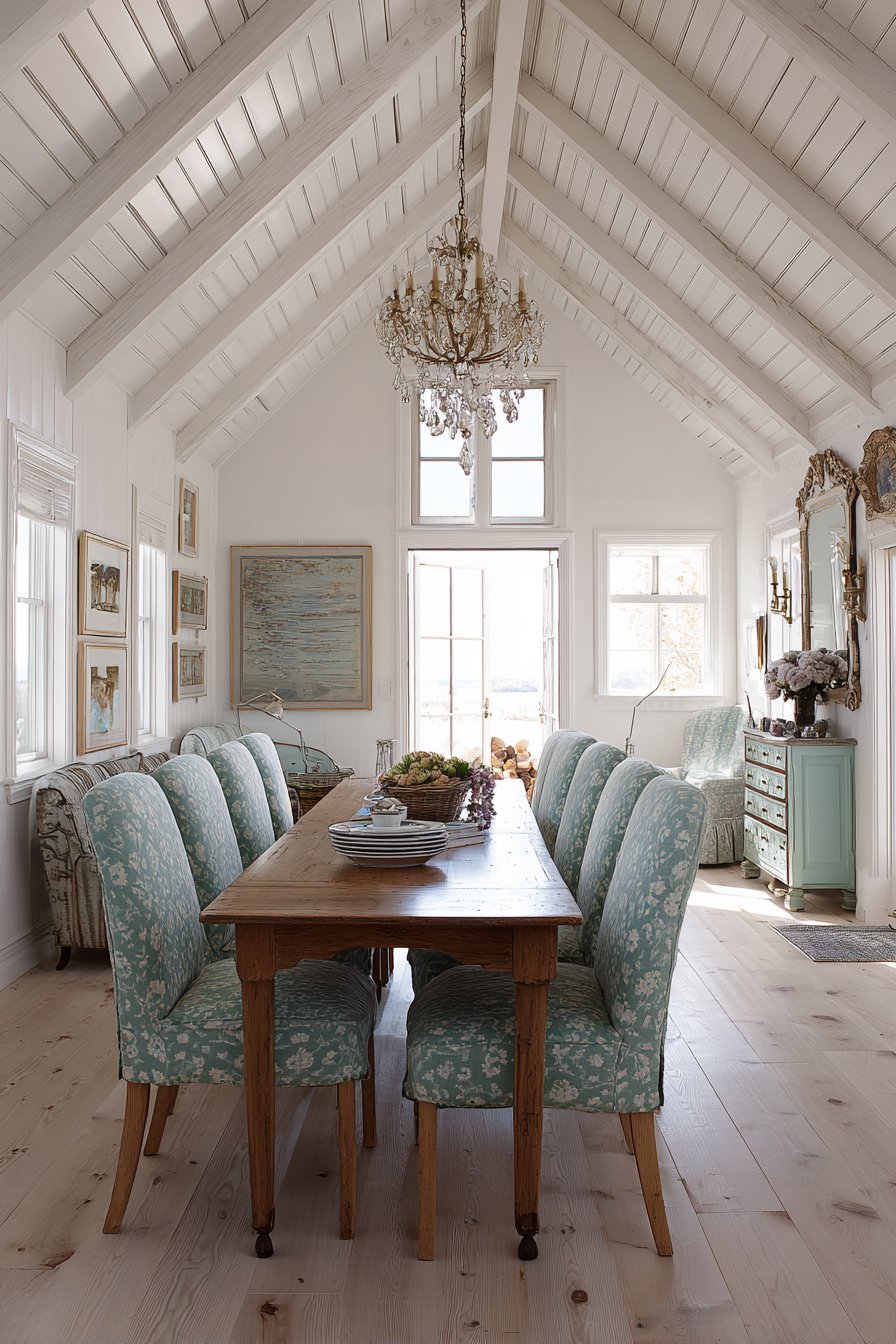
Beadboard ceiling painted glossy white reflects natural light throughout this cottage dining room, brightening the space while adding subtle linear texture overhead. The glossy finish, rather than flat paint, maximizes light reflection and creates subtle visual interest through light play across the narrow boards. This traditional ceiling treatment adds cottage character while solving the problem of dark or uninspiring overhead spaces.
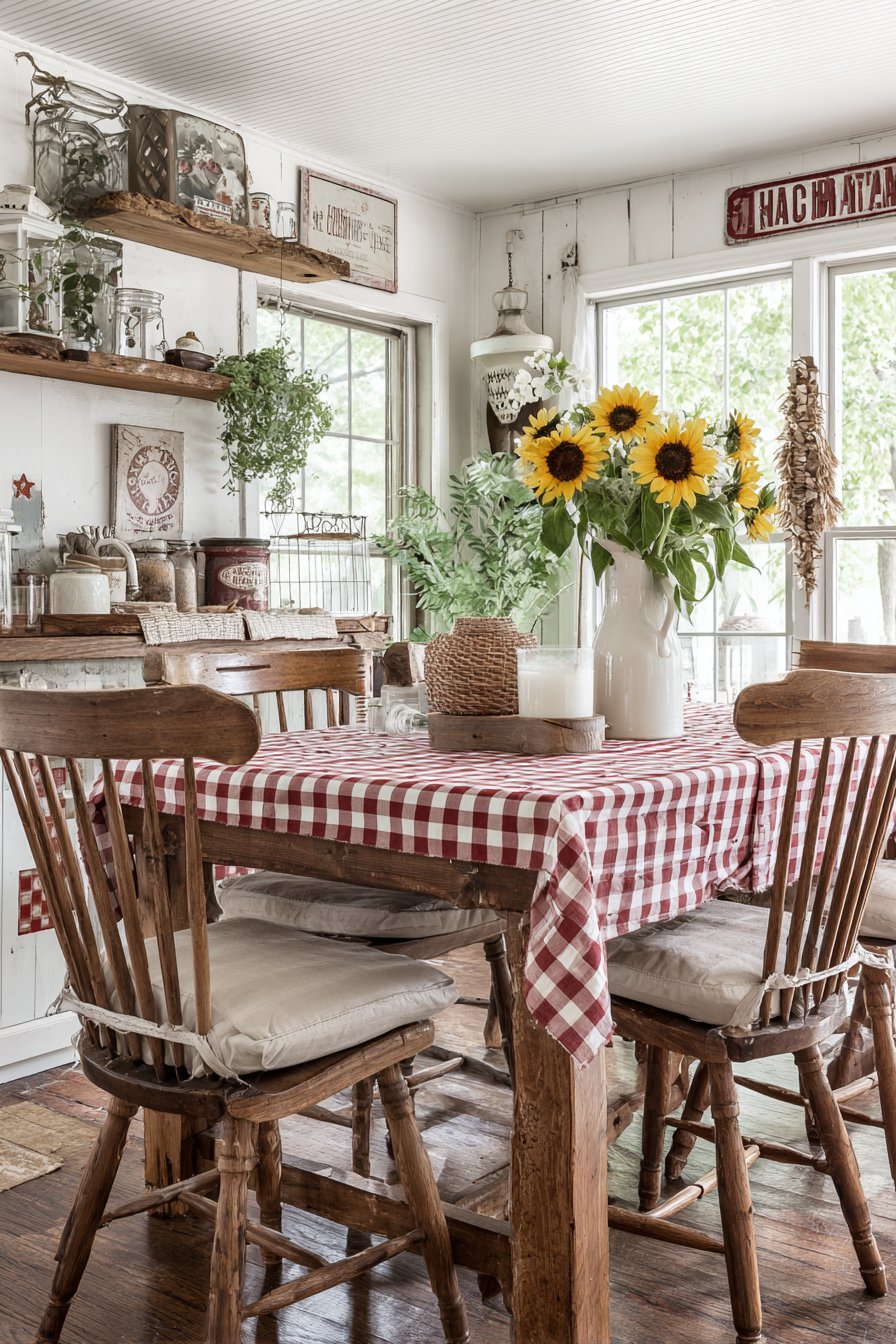
A gate-leg drop-leaf table in cherry wood provides flexible dining space that expands for gatherings and contracts for daily use in this multipurpose room. The rich cherry wood adds warmth and formality, elevating the casual cottage aesthetic with touches of traditional furniture craftsmanship. Upholstered parsons chairs in grain sack fabric offer comfortable seating, their simple straight lines and neutral striped covering maintaining unfussy cottage character.
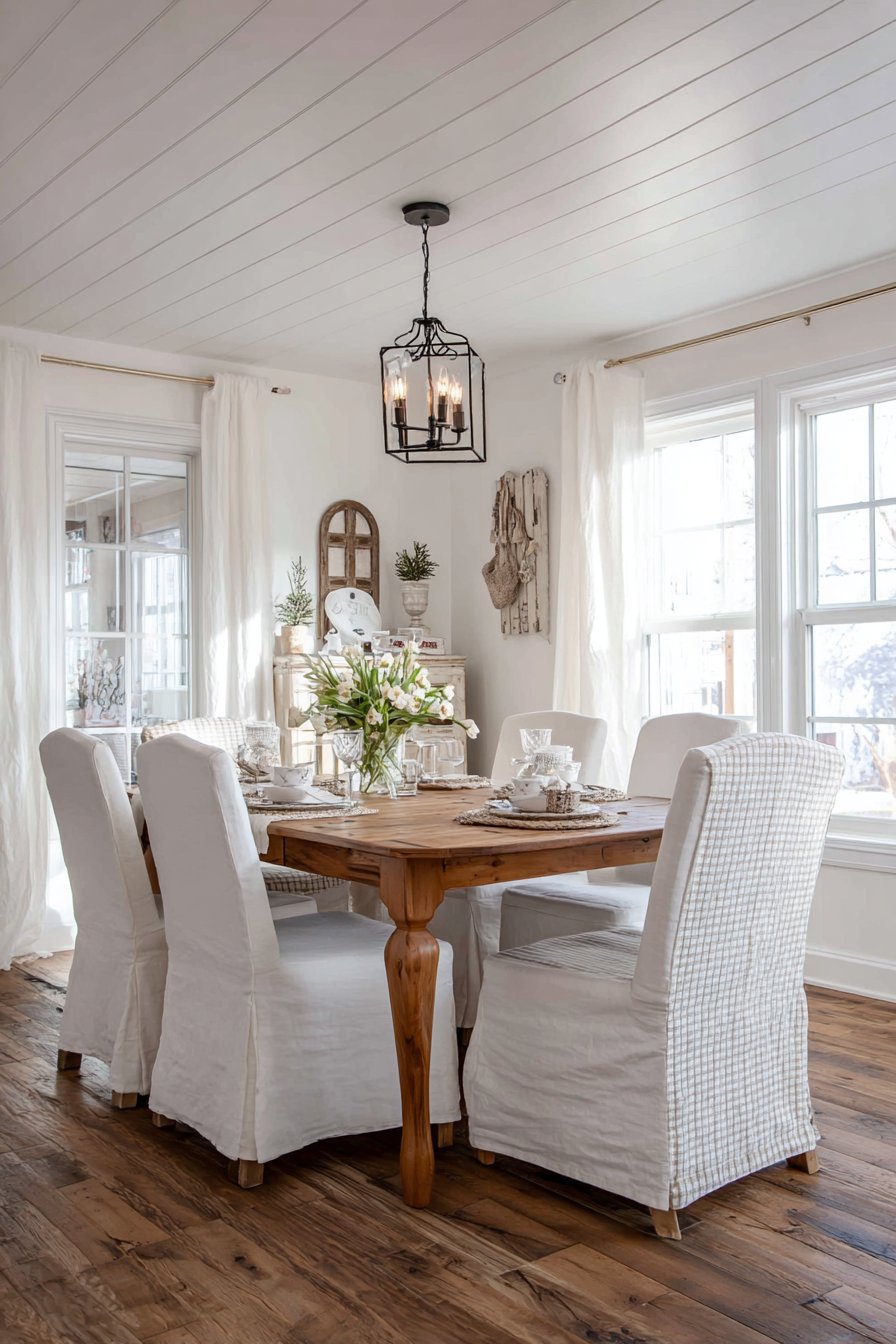
Vintage architectural salvage pieces serve as wall decor—old corbels, decorative molding fragments, and reclaimed hardware create three-dimensional art that celebrates craftsmanship and history. These elements add texture and visual interest while requiring no ongoing care like living plants or regular updating like photographs. The salvaged pieces tell stories of buildings past while finding new purpose in this cottage space.
Key Design Tips:
- Use glossy or semi-gloss paint on ceilings to maximize light reflection in darker rooms
- Select furniture with drop-leaves and folding elements for rooms serving multiple purposes
- Upholster parsons chairs in durable striped ticking for cottage-appropriate formal seating
- Mount architectural salvage on walls using appropriate anchors for the item’s weight
- Create gallery walls mixing salvaged architectural elements with framed art for dimension
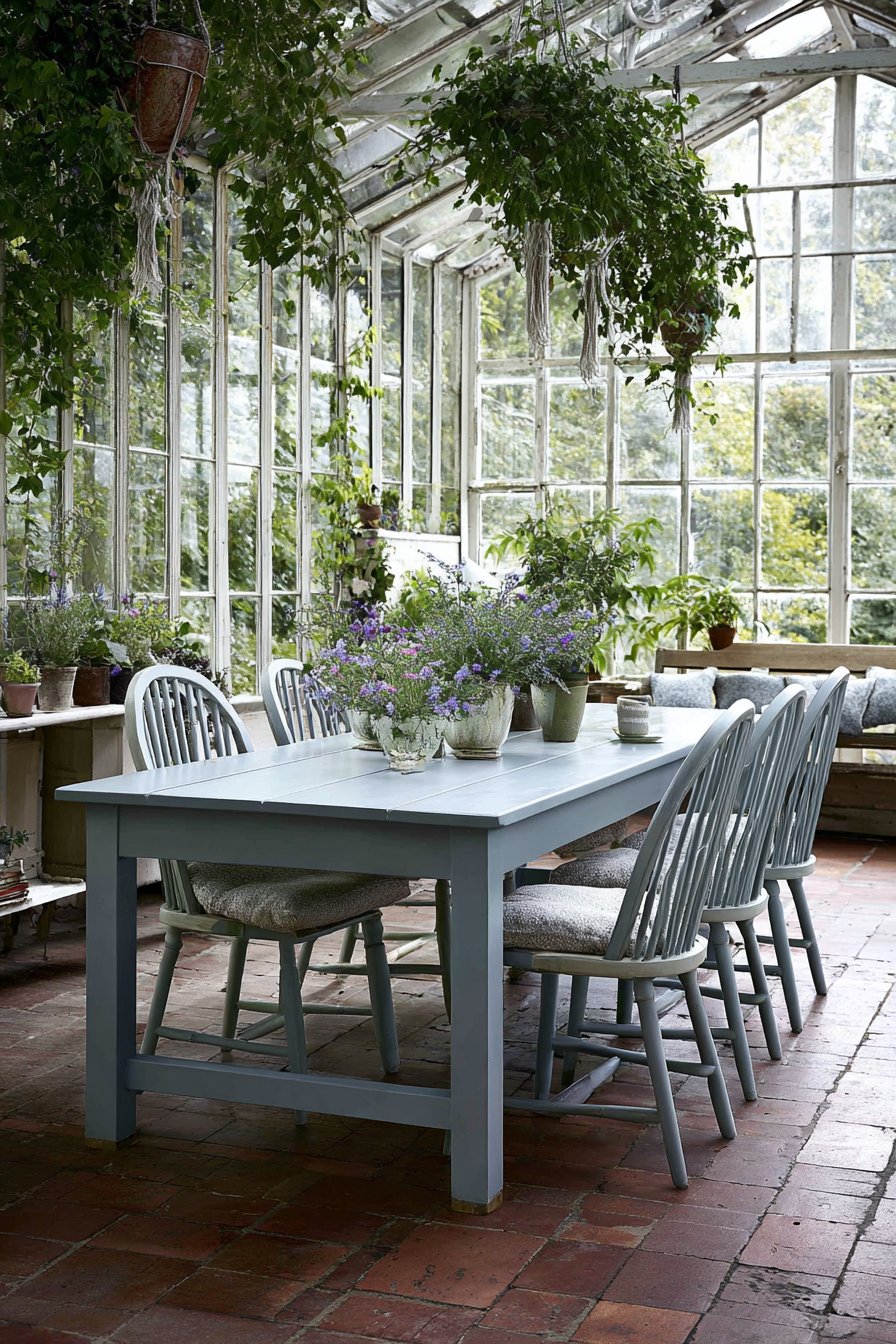
20. Conservatory-Style Window Wall Dining Room
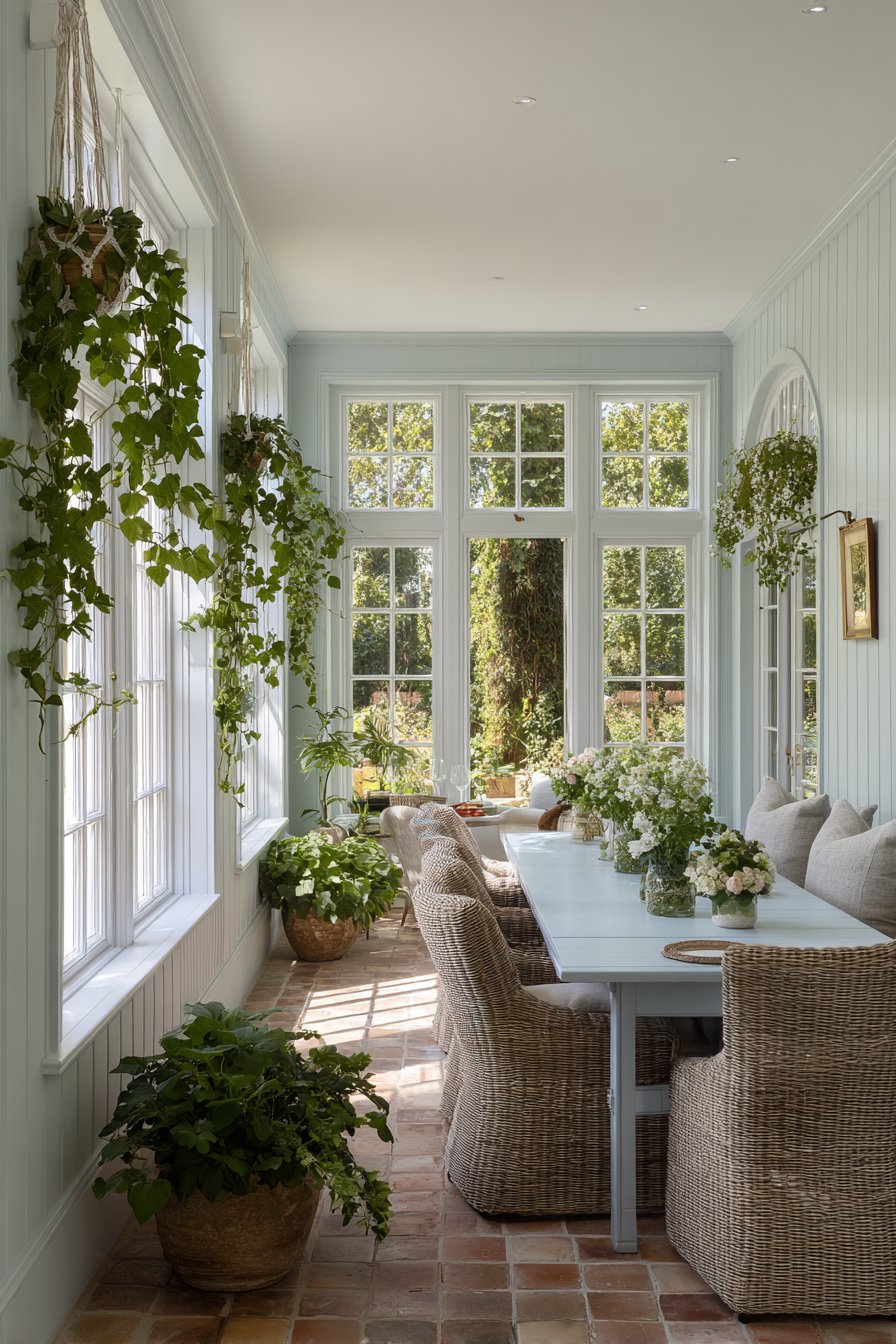
Large casement windows creating a greenhouse effect flood this cottage dining room with natural light, blurring the boundaries between interior and exterior spaces. The expansive glazing allows diners to feel connected to gardens and changing weather while remaining comfortable indoors. This window wall transforms the simple act of eating into an experience of being within nature.
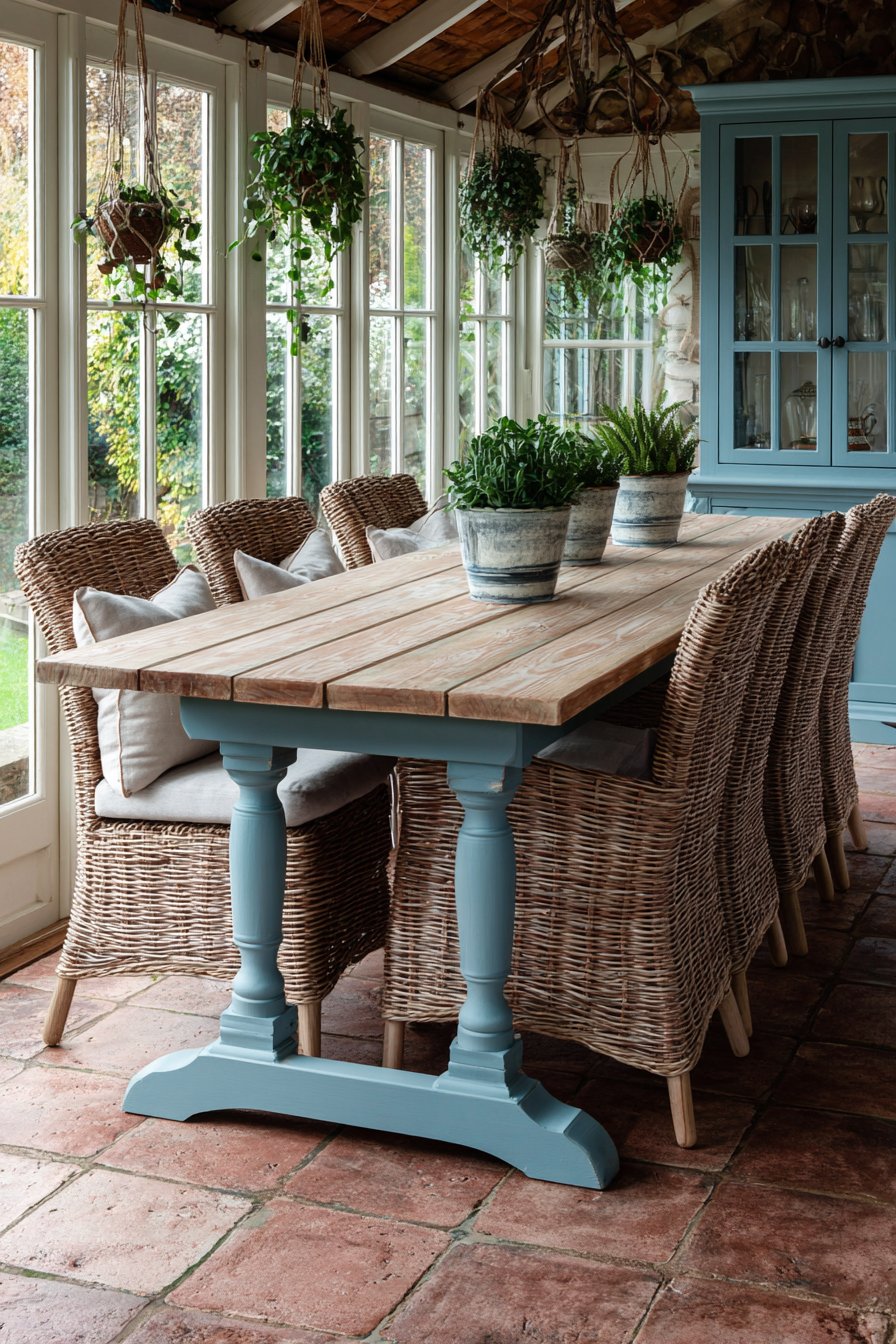
A painted trestle table in soft blue-gray accommodates wicker dining chairs with cushions, the combination introducing casual, garden-room aesthetic to indoor dining. The wicker chairs’ natural texture and lightweight construction reference outdoor furniture while their cushions provide indoor comfort. Hanging plants in macramé holders add vertical interest and bring living greenery to eye level, creating layers of plant life throughout the space.
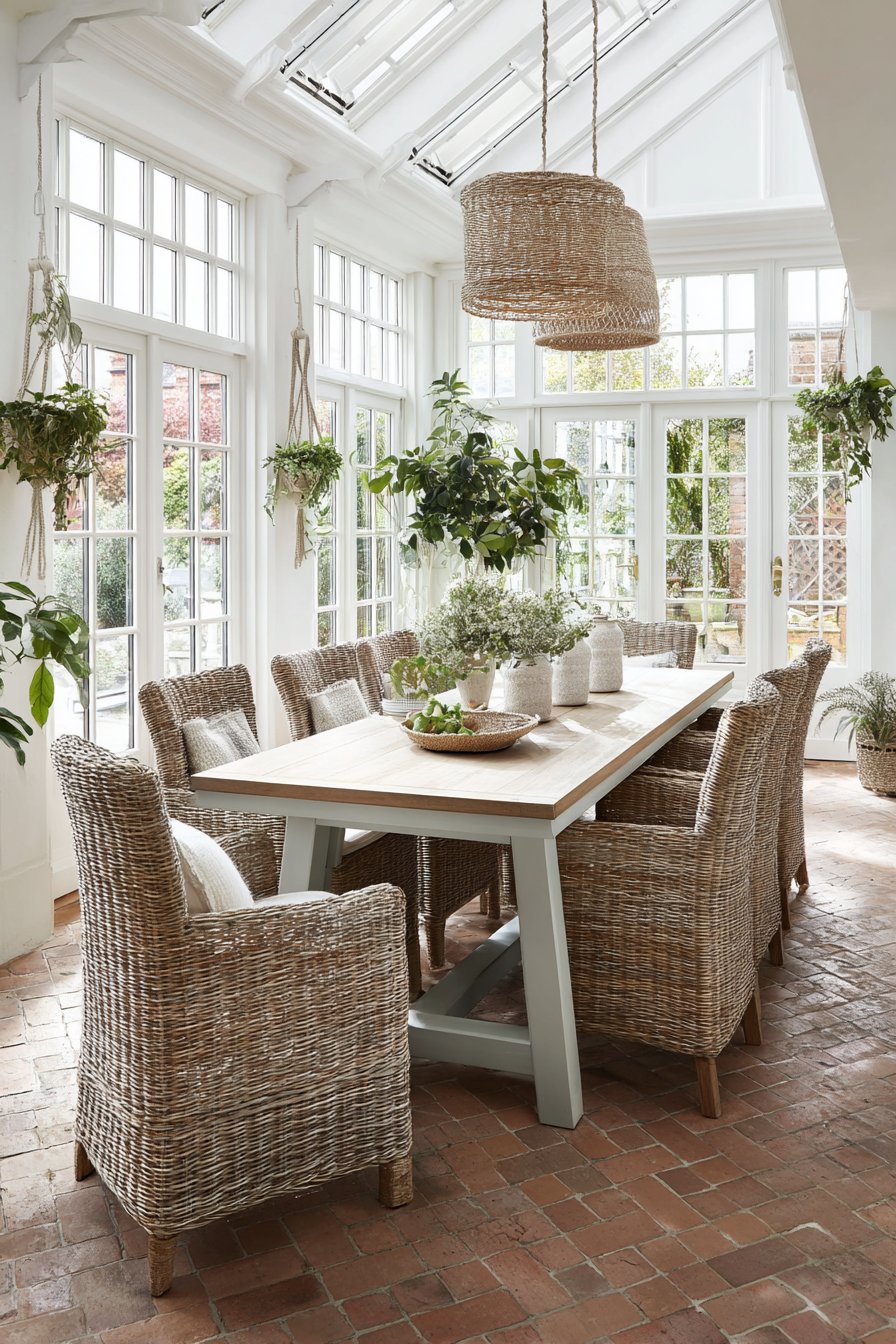
Terracotta tile flooring provides warmth and durability while referencing Mediterranean cottage traditions. The tiles’ natural color variations and slightly irregular edges add handmade character, and their thermal mass helps regulate temperature in this sun-filled space. The tiles also connect visually to the terracotta pots holding plants throughout the room, creating material cohesion.
Key Design Tips:
- Install casement windows rather than double-hung for maximum opening and ventilation
- Select outdoor-rated wicker furniture for indoor use when seeking casual garden room aesthetic
- Hang plants at varying heights to create vertical interest and natural screening
- Choose terracotta or saltillo tiles for cottage floors with Mediterranean or garden room influences
- Add removable cushions to wicker seating for comfort and seasonal style updates
21. Corner Cupboard Milk Paint Display
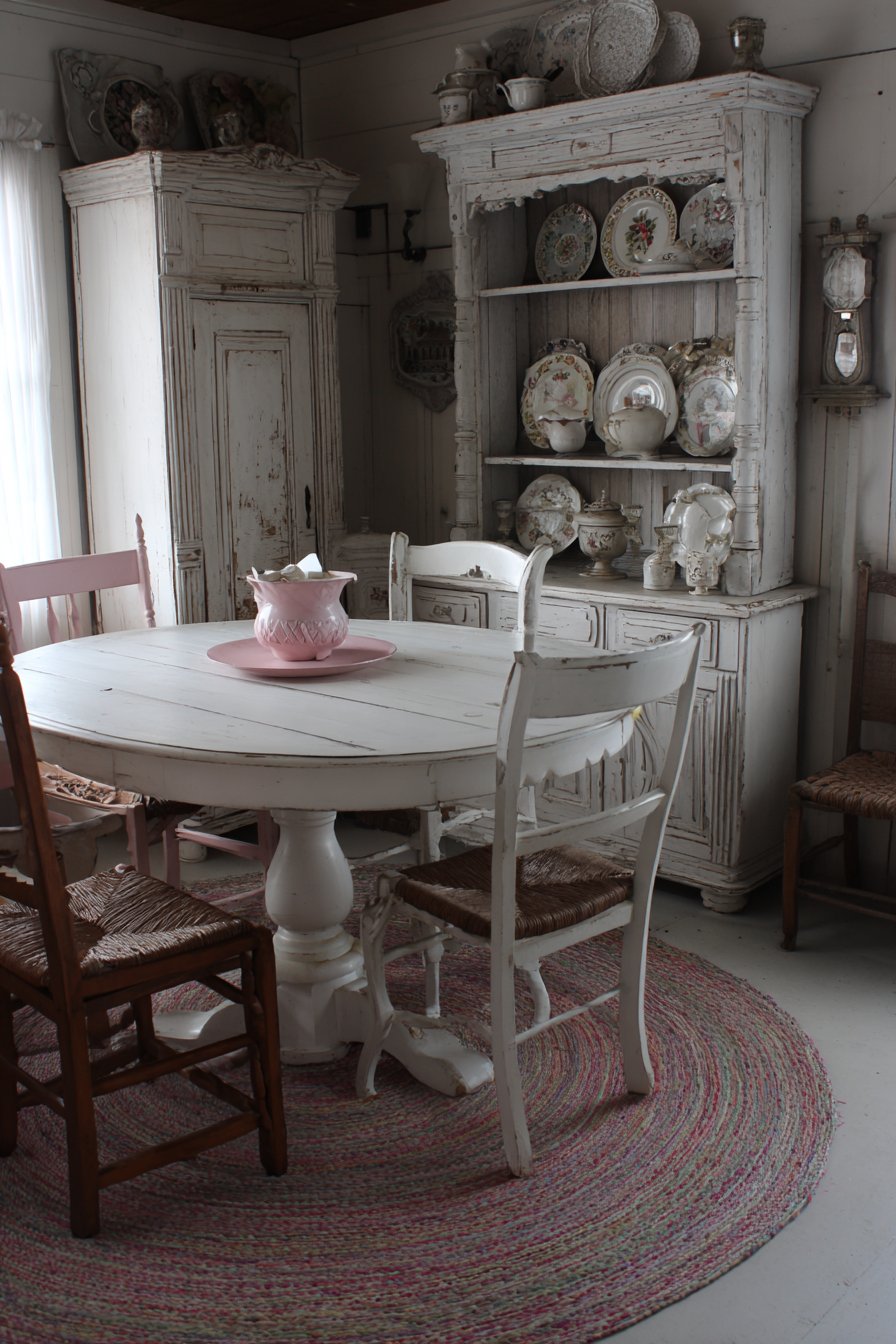
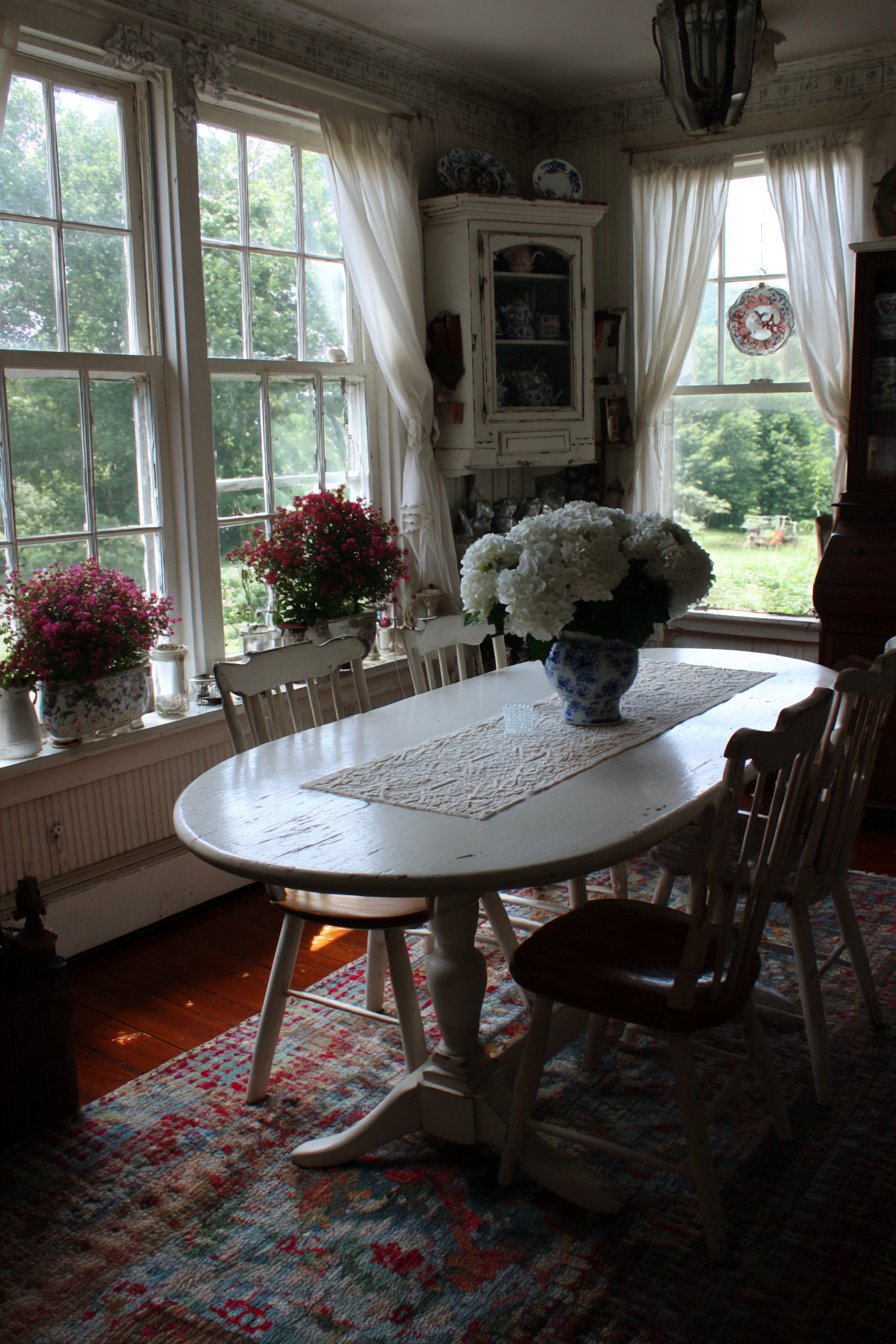
A corner cupboard in original milk paint finish becomes the treasured focal point of this cottage dining room, its authentic aged surface displaying decades of wear in the most beautiful way. The cupboard displays vintage transferware—blue and white china in various patterns that share common color but vary in design. This collection represents years of gathering pieces from different sources, creating a display that tells family and hunting stories.
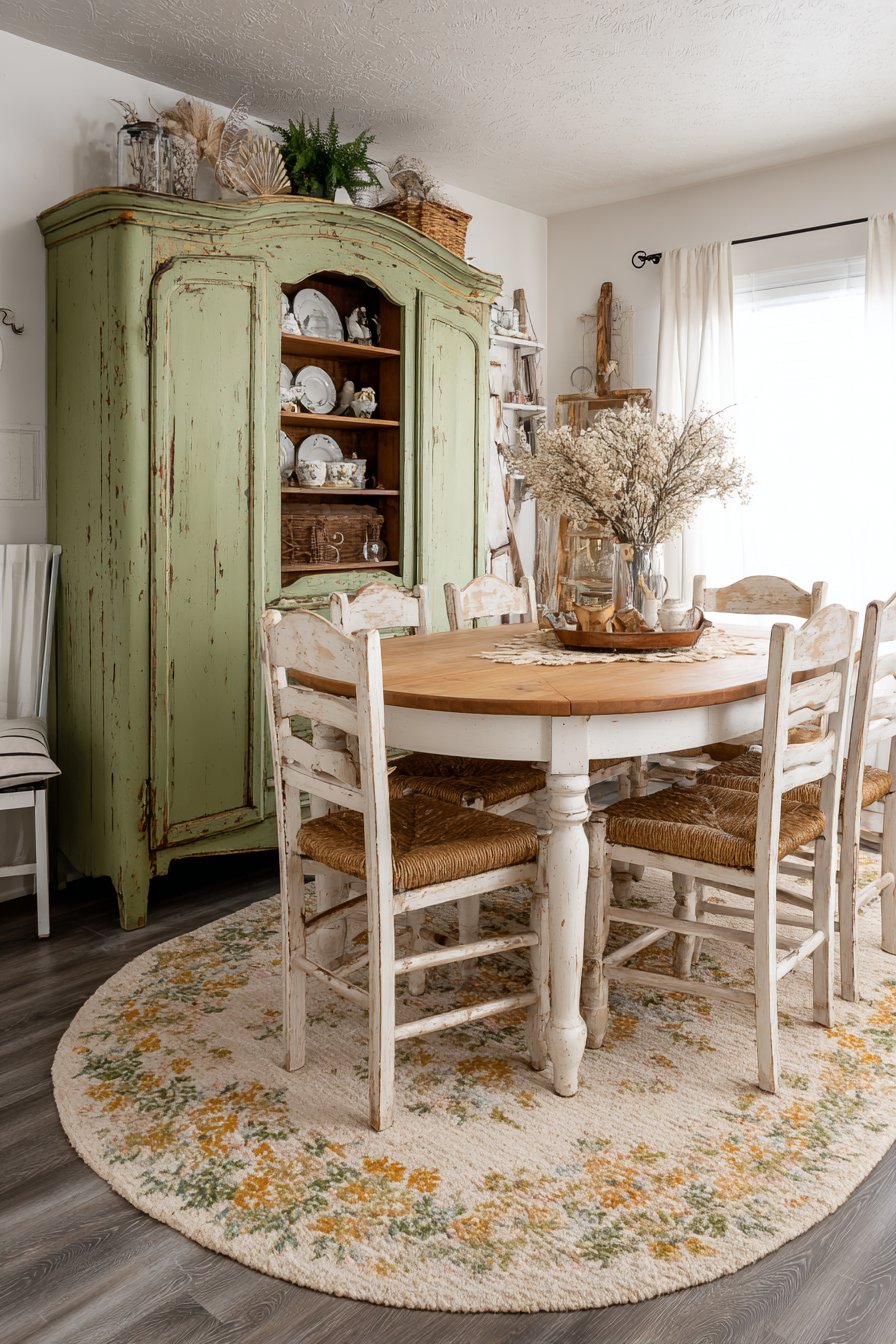
The adjacent oval dining table features a pedestal base painted in chippy white, its distressed finish revealing wood and earlier paint layers beneath. The oval shape softens the room’s geometry while accommodating more diners than a rectangular table of similar length. Ladder-back chairs with woven seats surround the table, their traditional construction and natural materials reinforcing cottage authenticity.
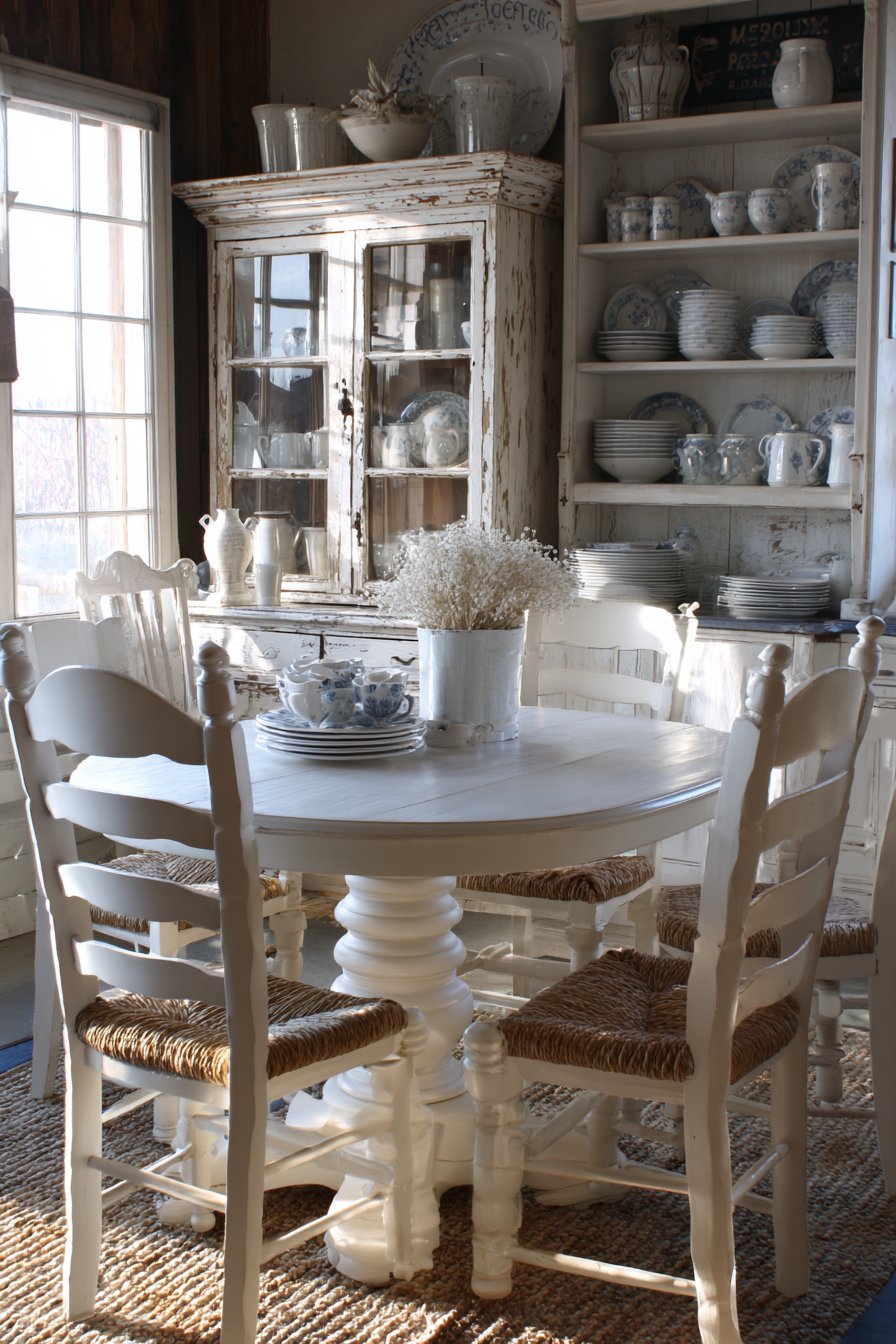
A braided rag rug adds color and pattern beneath the table, its concentric circles of recycled fabric representing cottage resourcefulness and handcraft traditions. The rug’s soft texture provides comfort underfoot while protecting floors from chair movement. The varied colors within the rug help tie together disparate elements throughout the room.
Key Design Tips:
- Preserve original milk paint finishes rather than stripping them for contemporary perfection
- Collect transferware in single color combinations for cohesive display despite pattern variety
- Select oval tables to maximize seating capacity while softening room geometry
- Position corner cupboards to anchor room corners and provide display for collections
- Layer braided rugs beneath dining tables that extend beyond table dimensions on all sides
22. Modern Cottage Fusion Dining Room
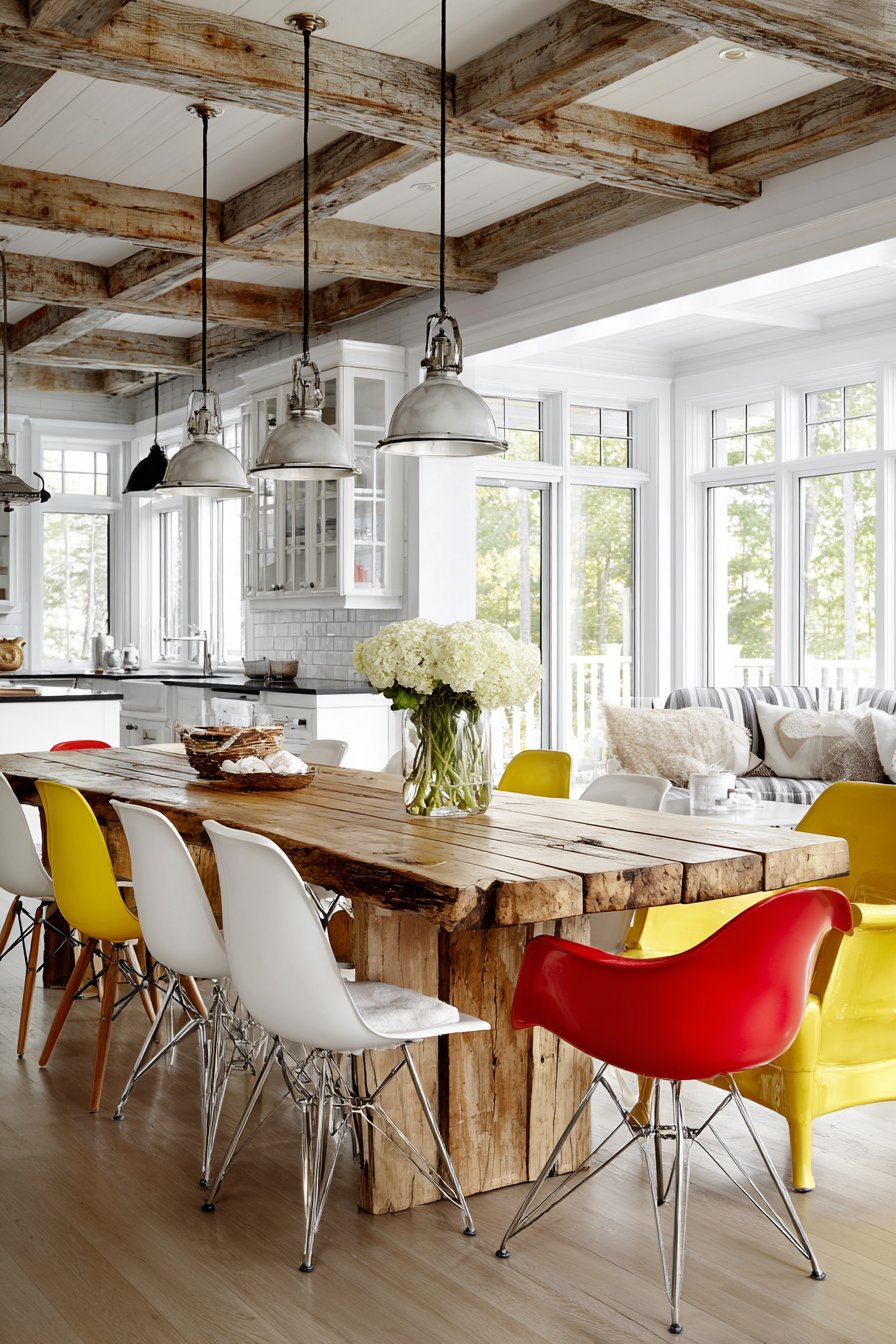
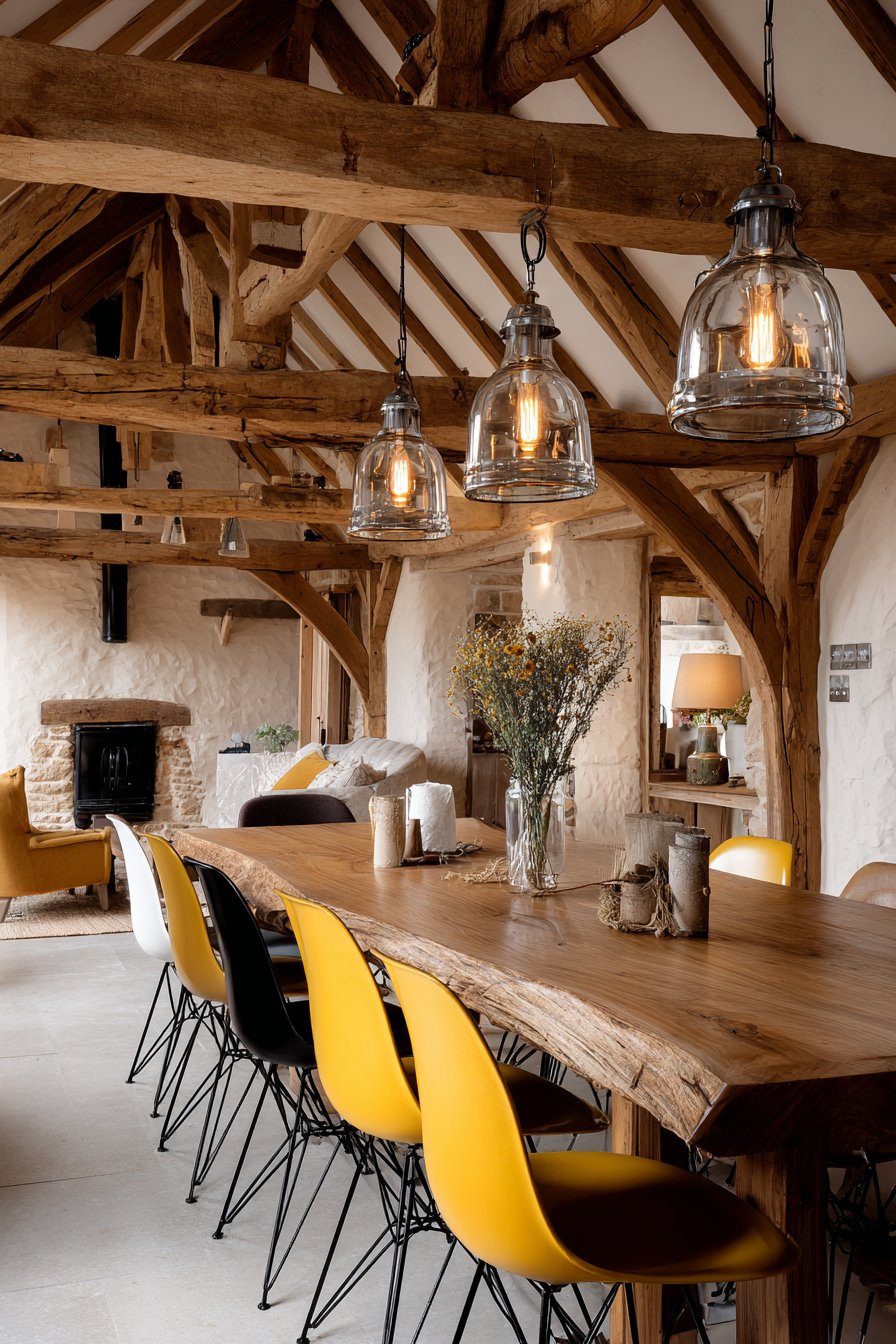
Rough-hewn ceiling beams in natural wood contrast dramatically with white plaster walls in this cottage dining room that successfully bridges traditional and contemporary aesthetics. The substantial beams showcase wood’s natural edge and character while the pristine white walls provide clean backdrop. This combination honors cottage’s historic roots while creating space that feels fresh and current.
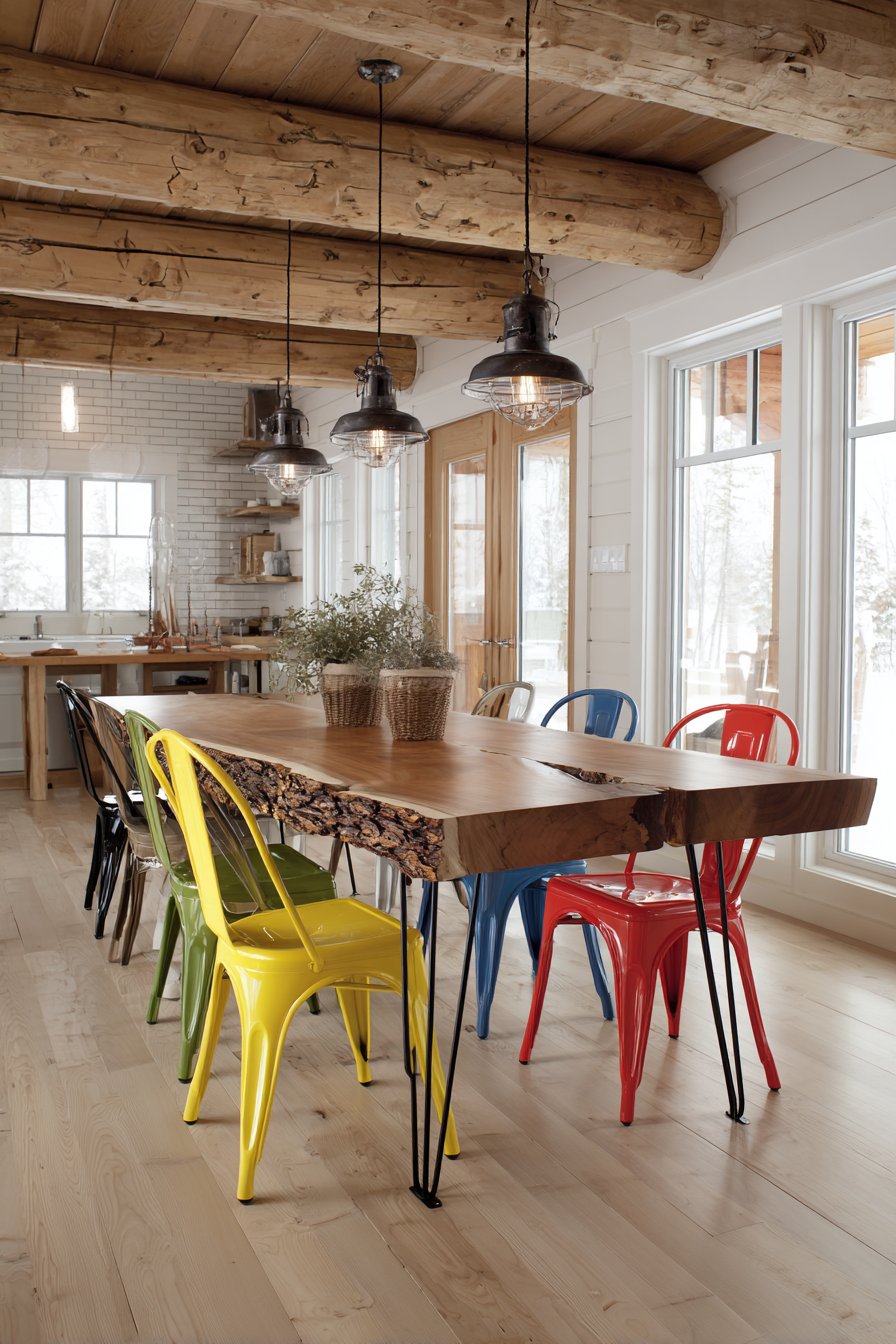
A live-edge wooden table with metal hairpin legs provides stunning contrast between organic and industrial elements. The table’s natural edge preserves the tree’s original shape, celebrating wood’s natural beauty, while the sleek metal legs add contemporary touch. Eames-style molded chairs in various colors create eclectic seating that combines mid-century modern design with cottage’s embrace of mismatched elements.
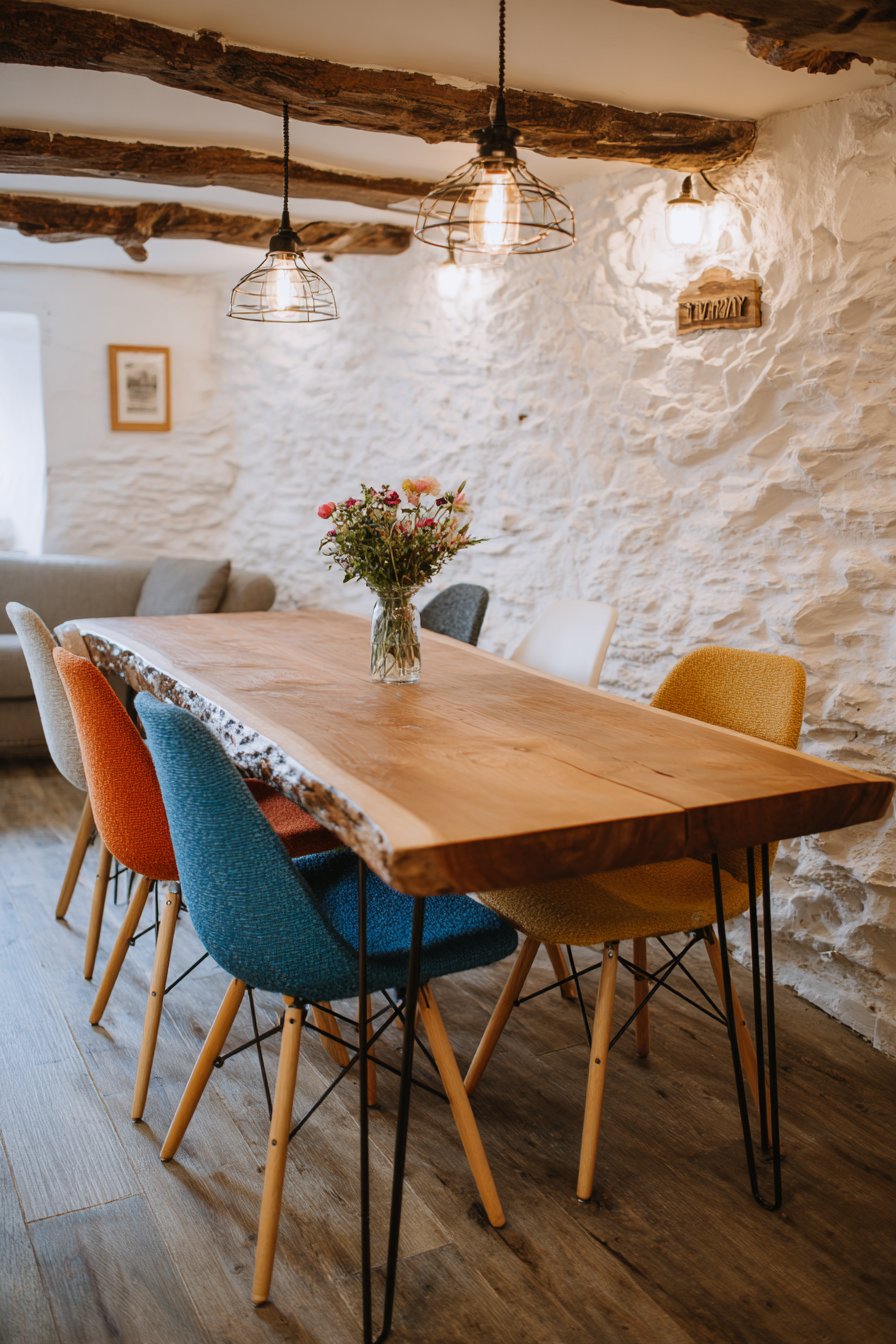
Industrial pendant lights add contemporary touches through their Edison bulbs and minimal cage designs. These fixtures provide functional task lighting while their exposed bulbs and simple forms prevent the space from feeling overly decorated. The mixing of eras and styles demonstrates cottage’s evolution beyond purely rustic traditional design.
Key Design Tips:
- Combine rough natural elements with refined contemporary pieces for updated cottage aesthetic
- Select live-edge tables from sustainable sources or fallen trees when possible
- Mix modern chair designs in varied colors from same tonal family for cohesion
- Install industrial-style lighting fixtures with dimmer switches for adjustable ambiance
- Balance rustic architectural elements with contemporary furniture to prevent dated appearance
23. Dutch Door Garden Connection Dining Room
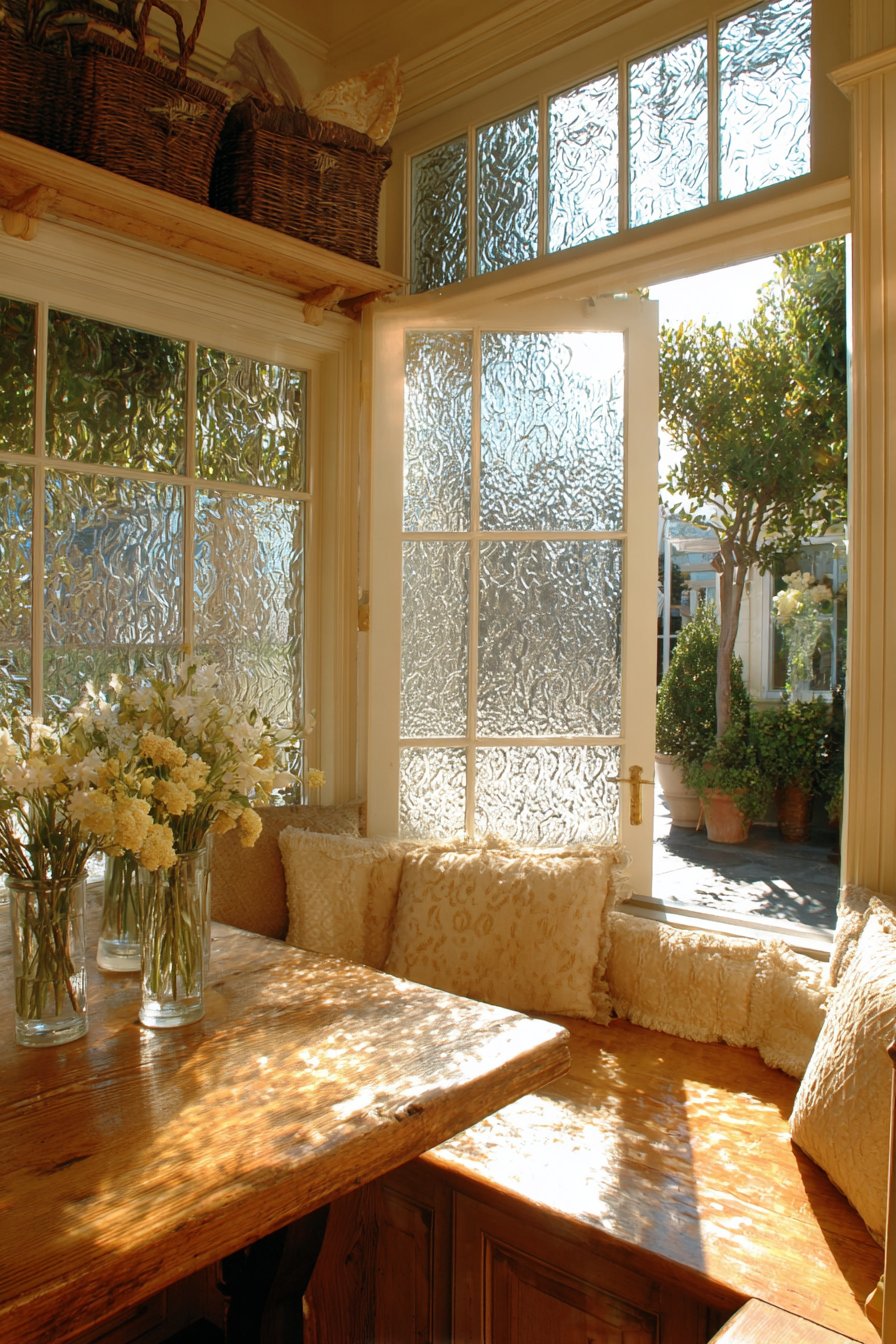
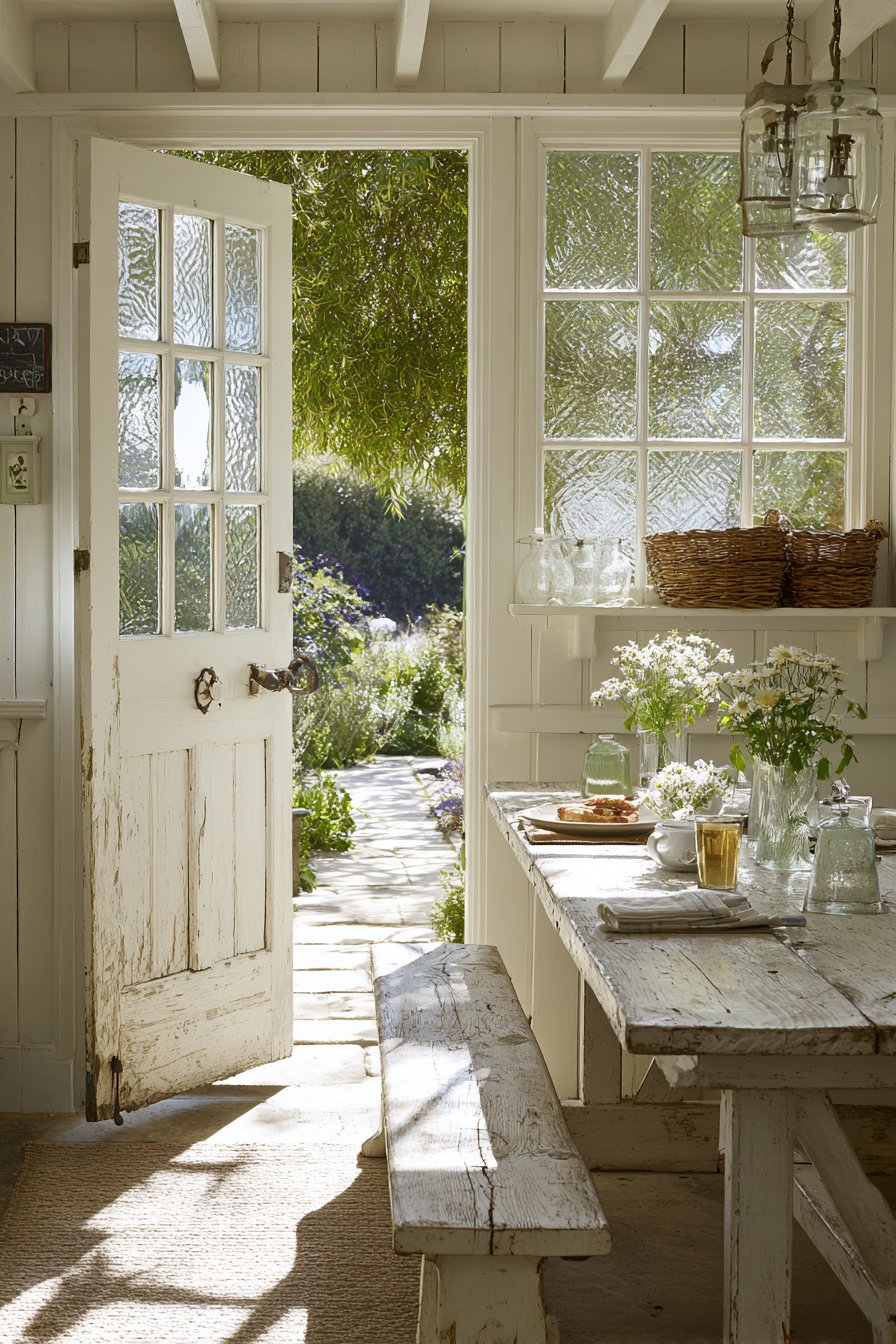
A Dutch door opening to the garden serves as the defining feature of this cottage dining room, its top half featuring original wavy glass panes that admit light while the bottom half can remain closed for pet or child containment. This traditional door style creates flexible connection to outdoor spaces, allowing fresh air and garden views while maintaining security. The door becomes both functional and decorative element that anchors the room’s garden-inspired aesthetic.
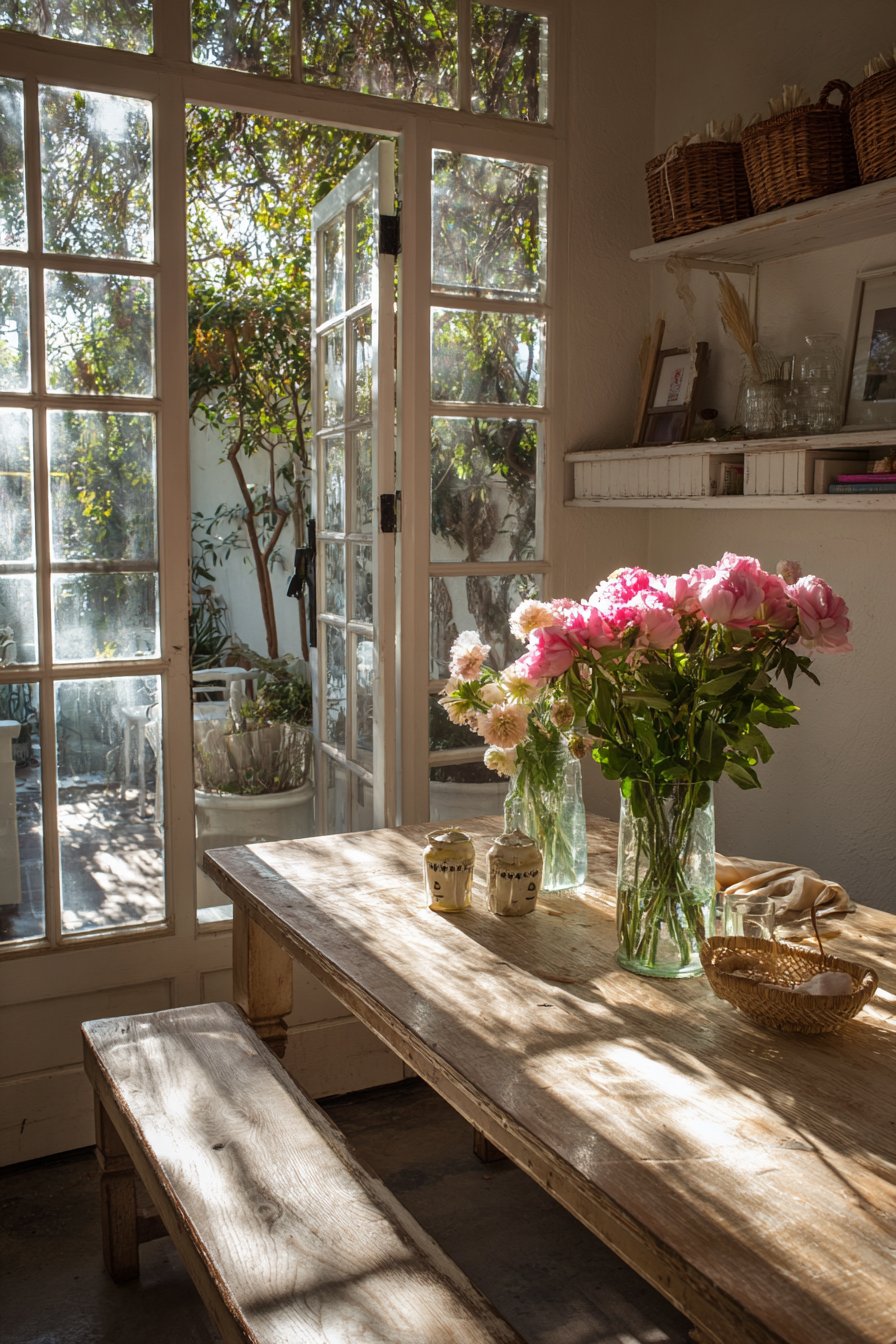
A scrubbed pine table with bench seating on one side maximizes space efficiency while creating casual, family-friendly dining arrangement. The bench accommodates flexible numbers of diners and can seat children more easily than individual chairs. Mismatched milk glass vases hold fresh garden flowers, their white translucent finish creating cohesive display despite varied forms.
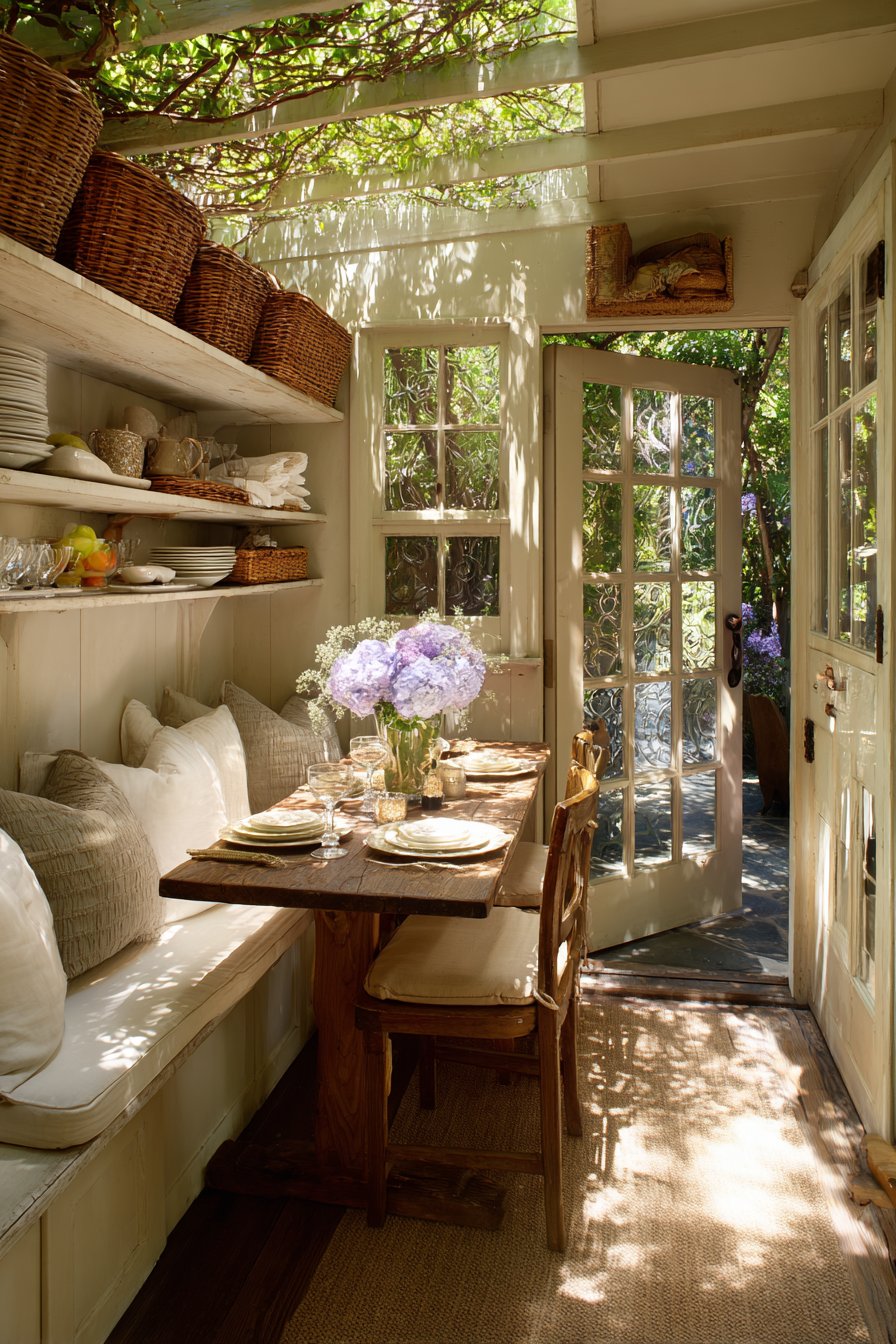
A peg rail with vintage baskets provides practical storage for items used frequently but best kept off counters. This traditional Shaker-inspired solution adds cottage character while solving storage needs without requiring cabinetry. Soft morning light streams through the Dutch door’s upper glass panes, creating dappled shadows that change throughout the day as sun moves across the sky.
Key Design Tips:
- Install Dutch doors between indoor and outdoor spaces for flexible ventilation control
- Preserve original wavy glass in vintage doors for character and light diffusion
- Build dining benches 18 inches high without arms for easy entry and exit
- Collect milk glass in varied forms for cohesive white displays that accommodate any flower
- Mount Shaker-style peg rails 60-66 inches high for accessible storage
24. Reclaimed Barn Wood Dining Table
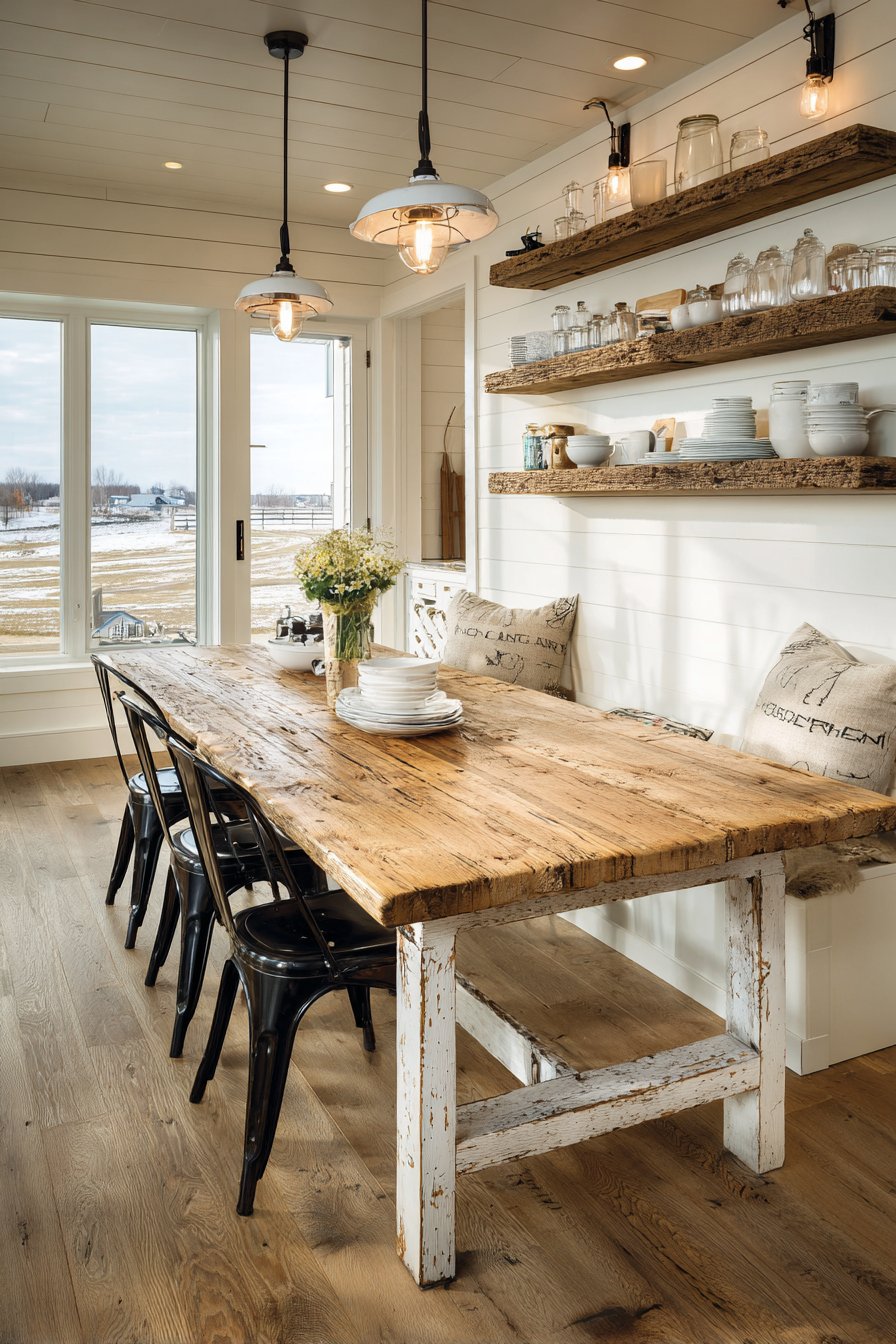
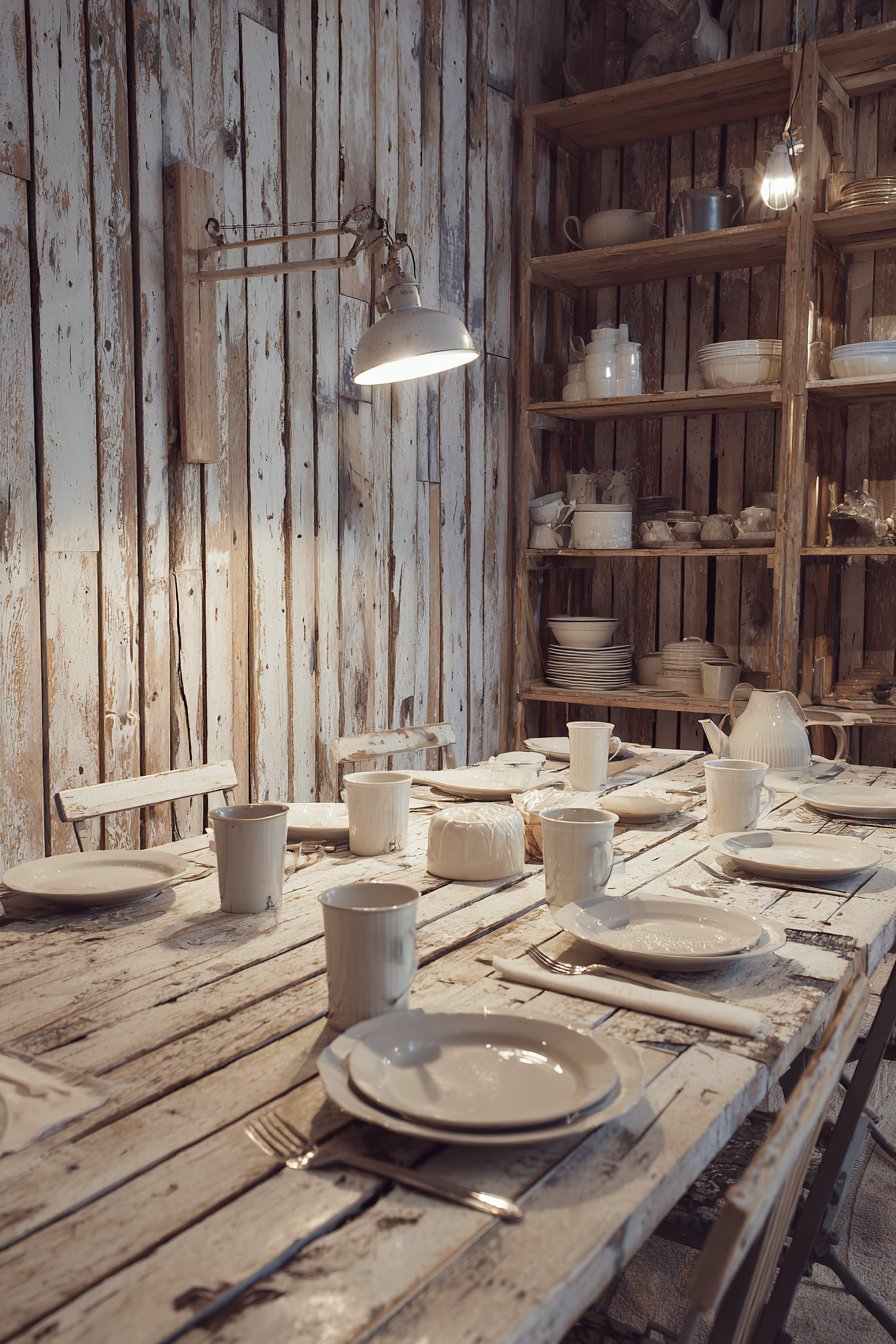
A farmhouse table crafted from reclaimed barn wood with visible nail holes and weathering creates the centerpiece of this authentically rustic cottage dining room. Each mark and imperfection tells stories of the wood’s previous life, adding depth of character that new lumber cannot achieve. The substantial planks and traditional joinery demonstrate craftsmanship while the distressed surface invites use without concern for adding new marks.
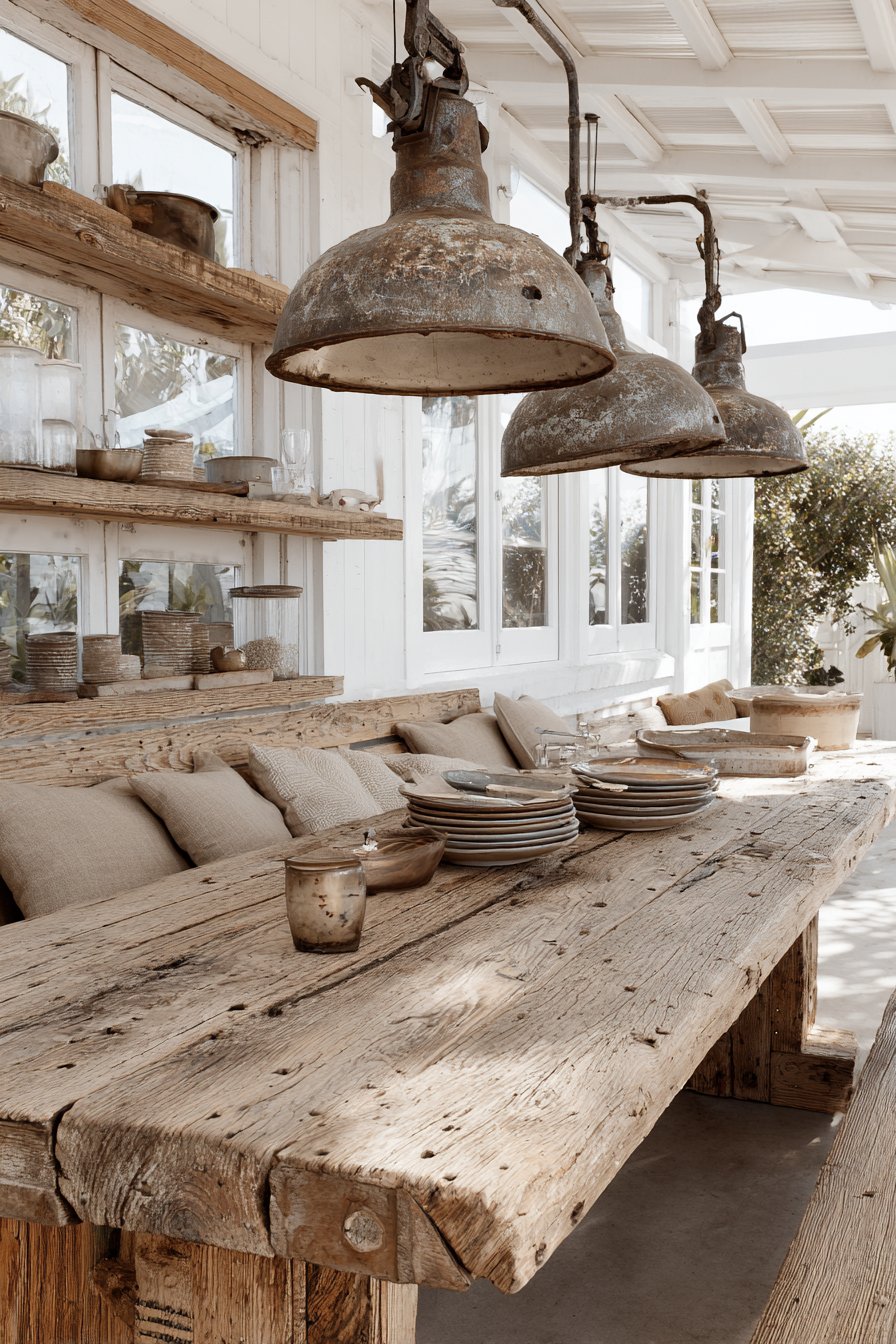
Folding garden chairs in metal with original chippy paint serve as flexible seating that can be easily stored when not needed. Their weathered painted finish and utilitarian design add to the room’s collected appearance while their folding function provides practical flexibility. Enamelware light fixtures with gooseneck arms provide task lighting, their industrial-farmhouse aesthetic complementing the rustic table.
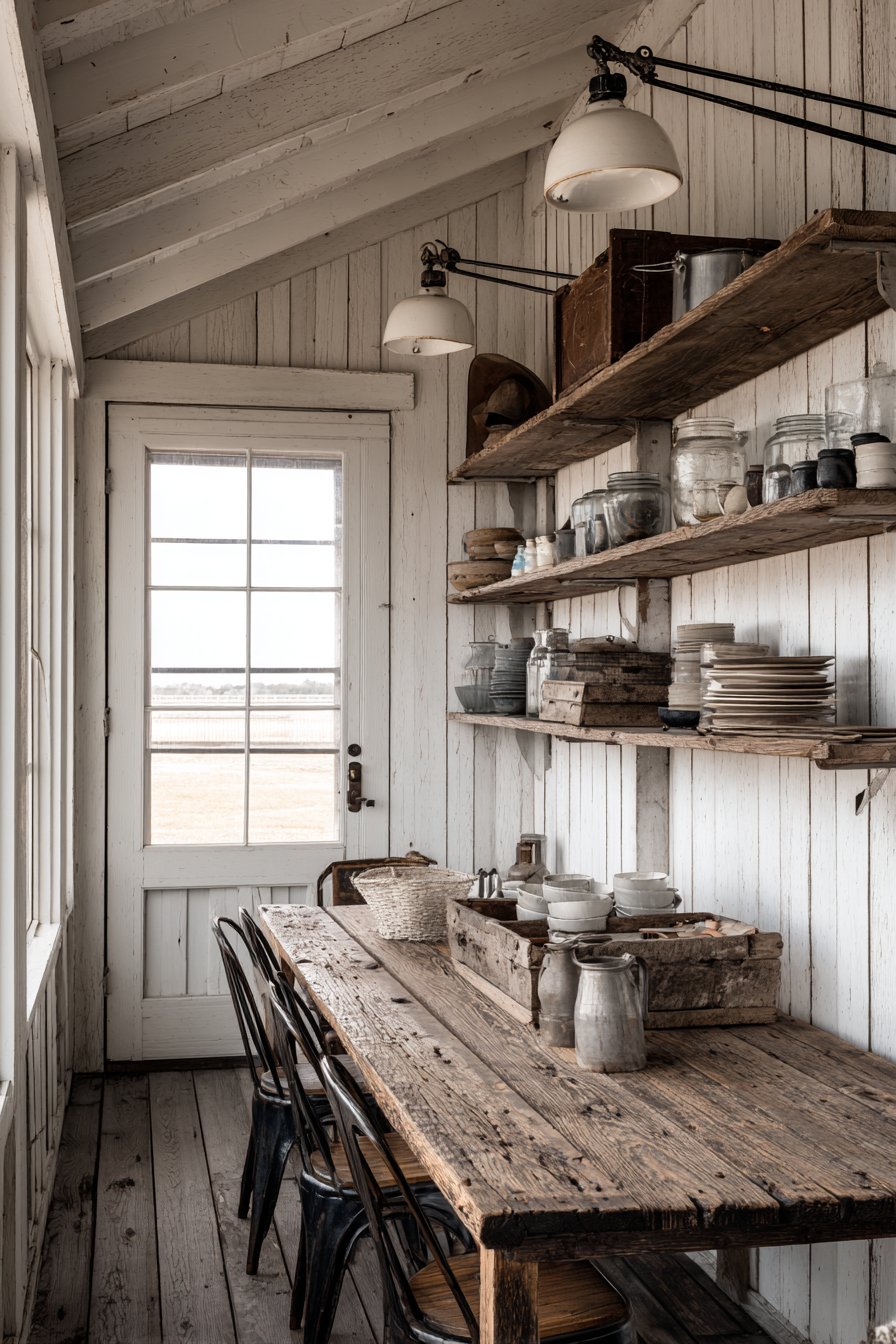
Open shelving constructed from salvaged wood holds everyday dishes, creating display storage that keeps necessities accessible while adding decorative interest. The rough-sawn boards and simple bracket supports reference barn construction, tying the shelving to the table’s reclaimed materials. This approach to storage eliminates upper cabinets, keeping the room feeling open and casual.
Key Design Tips:
- Source reclaimed barn wood from demolition companies or specialized lumber yards
- Leave nail holes and weathering marks visible rather than filling or sanding them
- Seal reclaimed wood thoroughly to prevent splinters while preserving aged appearance
- Use folding chairs as supplemental seating that stores easily when not needed
- Install industrial-style gooseneck lights on dimmer switches for adjustable task lighting
25. Plate Rail Traditional Cottage Dining Room
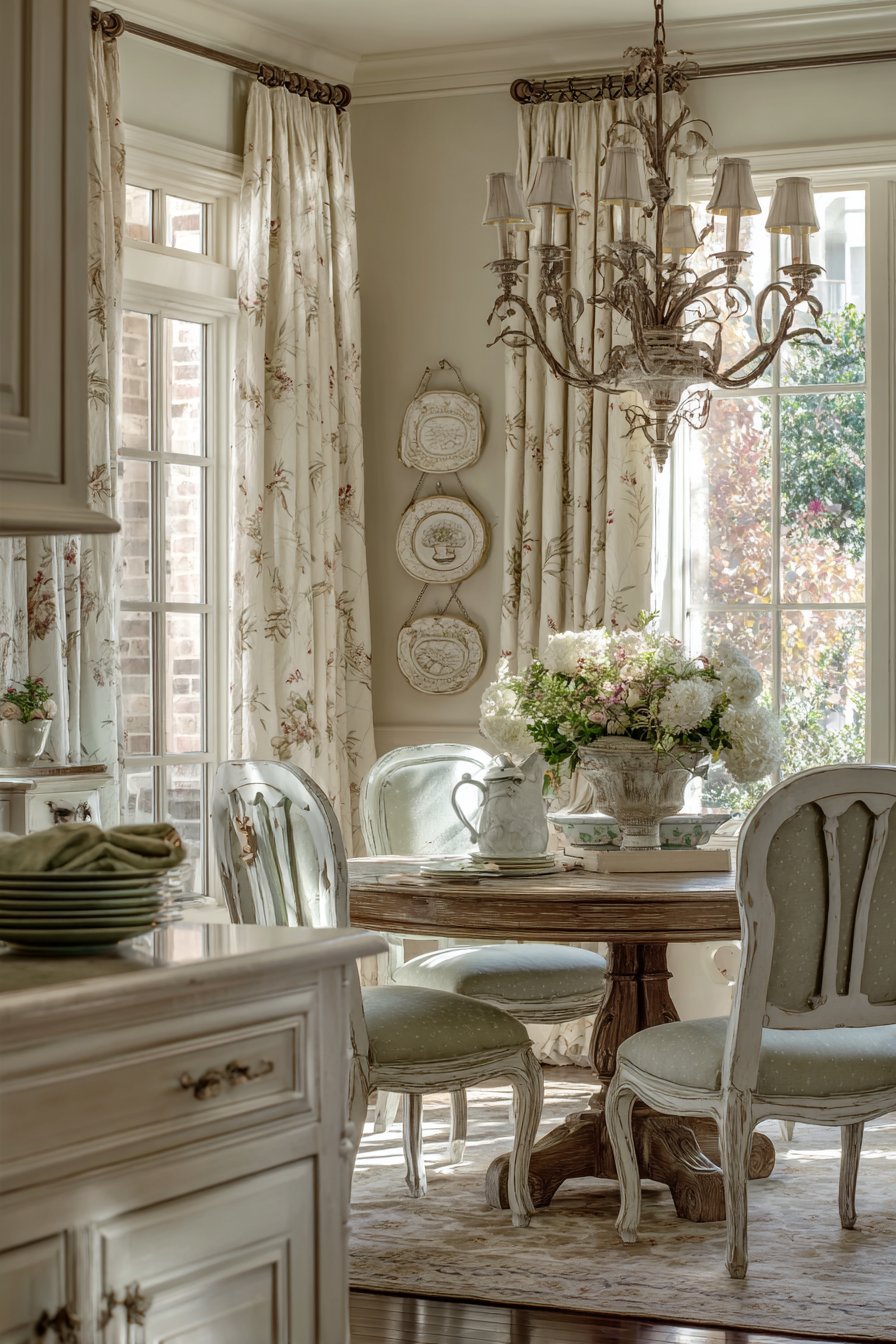
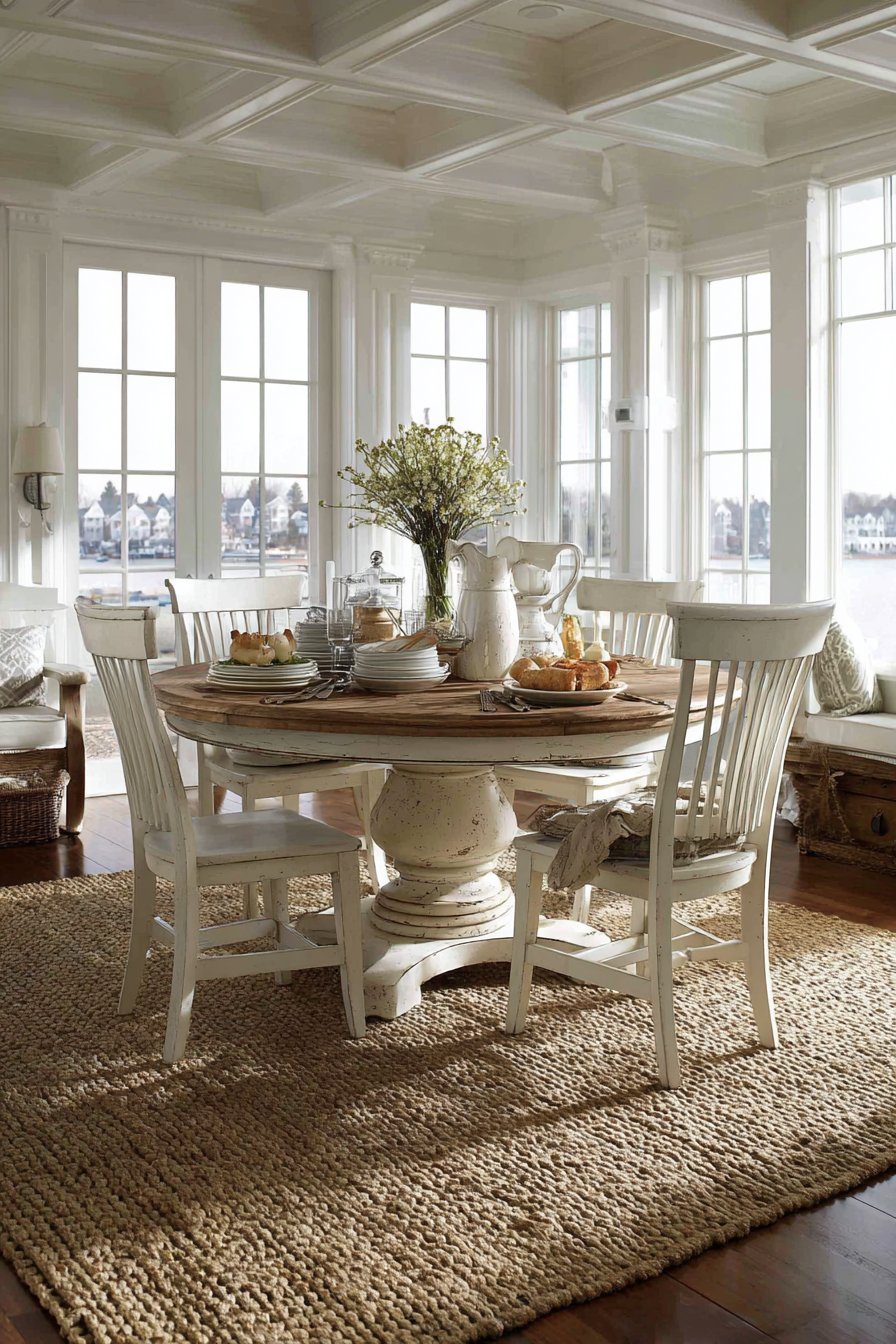
Plate rail molding circling the room displays vintage ironstone platters and pitchers in this traditionally detailed cottage dining room. The rails, positioned at picture rail height, create architectural interest while providing practical display for collections. This Victorian-era detail adds cottage refinement while solving the problem of storing and displaying special serving pieces.
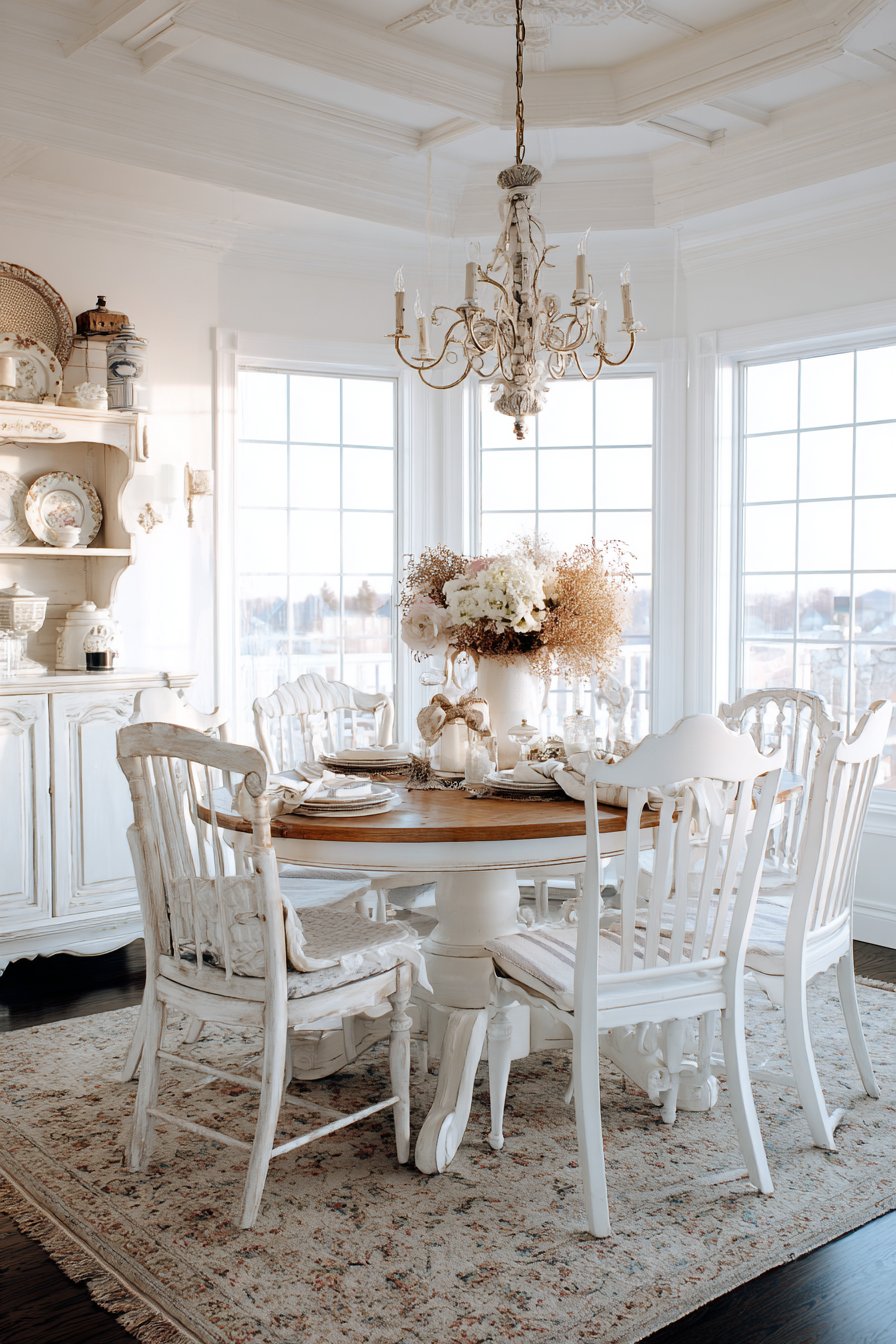
A round oak pedestal table extends with leaves for gatherings, its traditional design accommodating four for everyday dining and eight when fully expanded. The pedestal base allows chairs to be positioned without table legs interfering, maximizing seating comfort. Pressed-back chairs show original carved details in their backs, their traditional design and carved embellishments adding decorative interest from all angles.
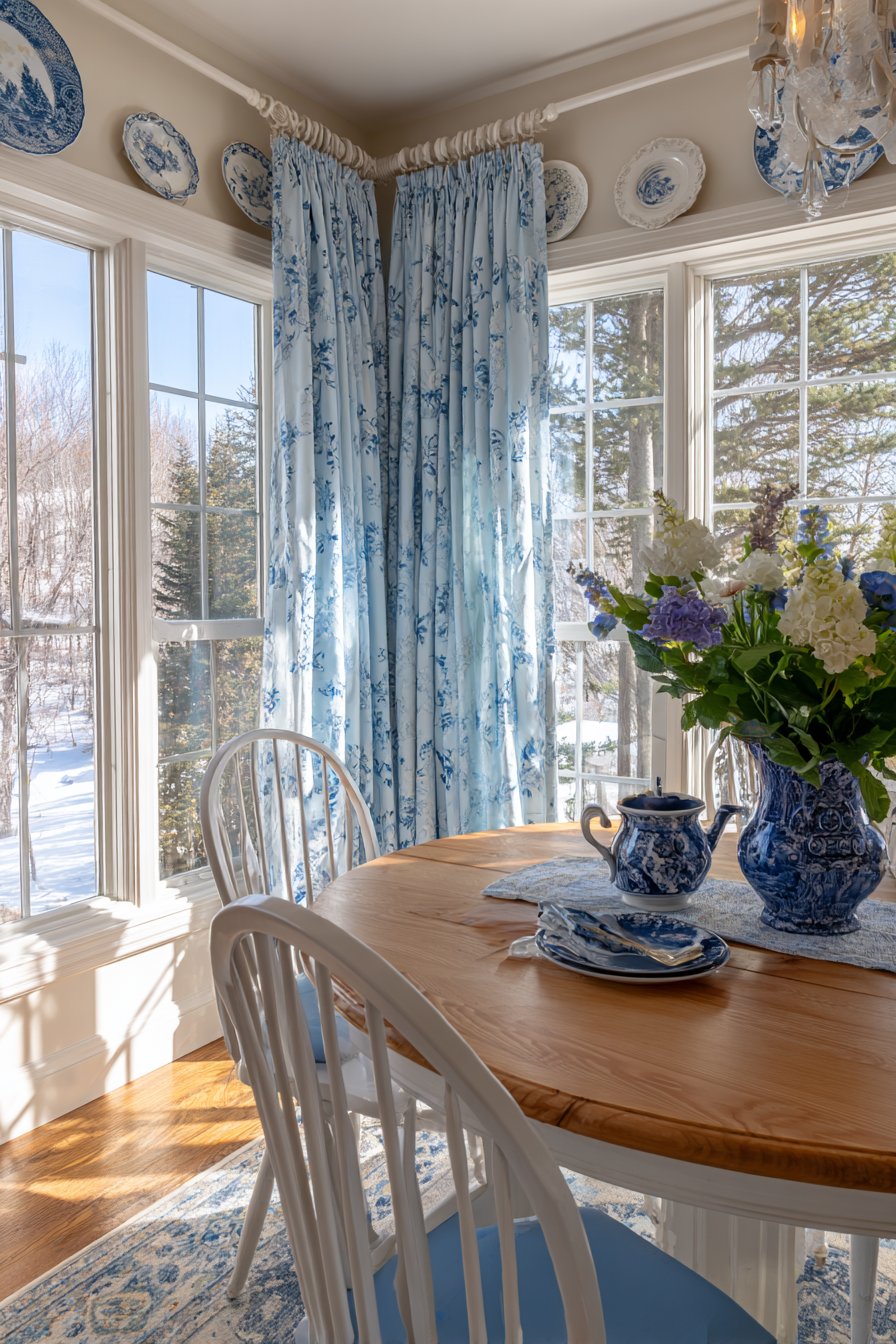
A vintage hooked rug anchors the space beneath the table, its hand-worked wool surface adding warmth, color, and pattern. The rug’s folk art imagery and irregular edges speak to handcraft traditions, while its durable construction stands up to high-traffic dining room use. Natural light through multiple windows creates bright, airy atmosphere that showcases the room’s collections and architectural details.
Key Design Tips:
- Install plate rails 6-8 inches below ceiling to create proper display proportion
- Secure displayed plates with spring-loaded plate hangers or grooved rails
- Select round extension tables with self-storing leaves for convenient size adjustment
- Preserve original carved details on antique chairs rather than painting over them
- Position hooked rugs with furniture legs resting entirely on or entirely off the rug
26. Natural Stone Accent Wall Dining Room
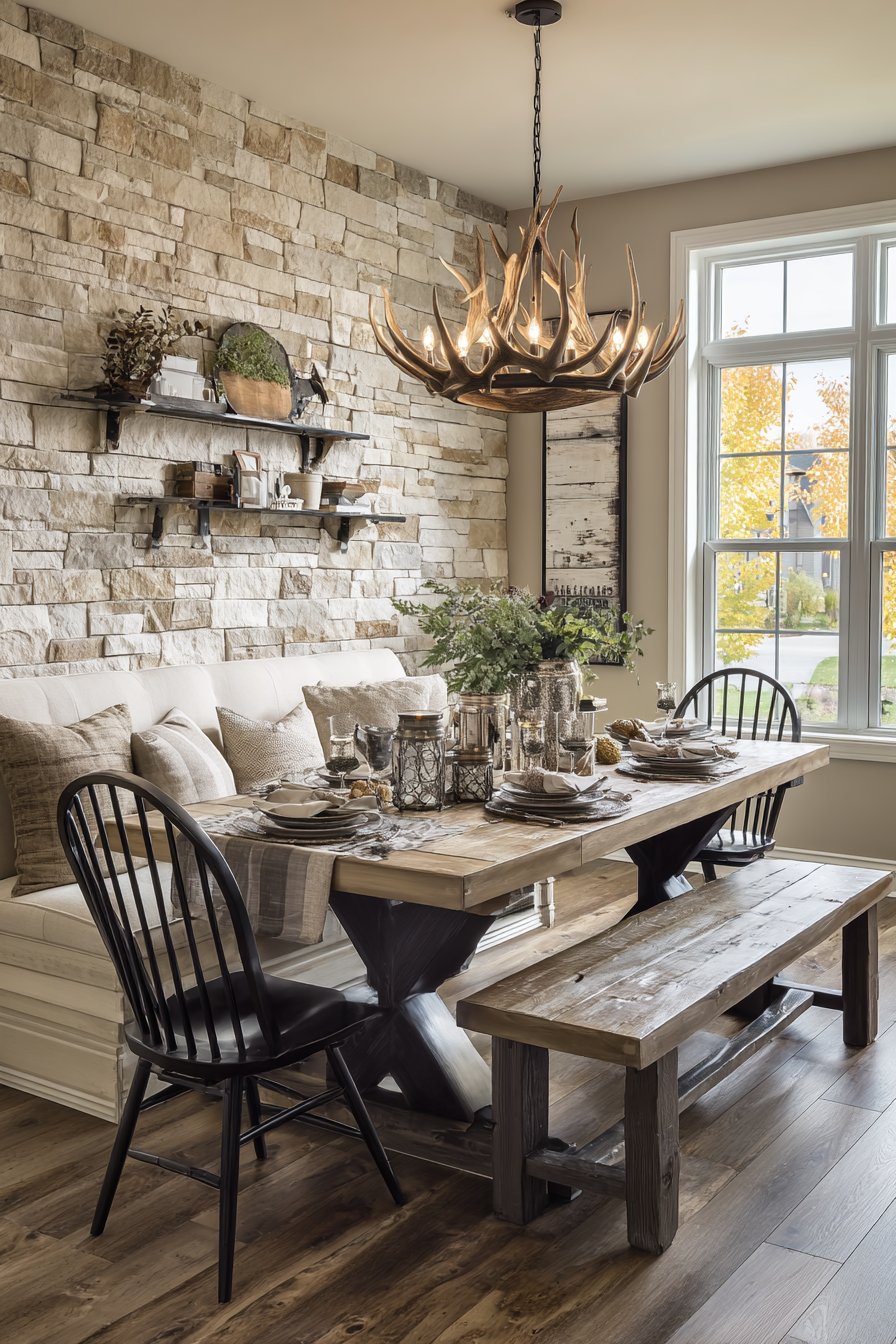
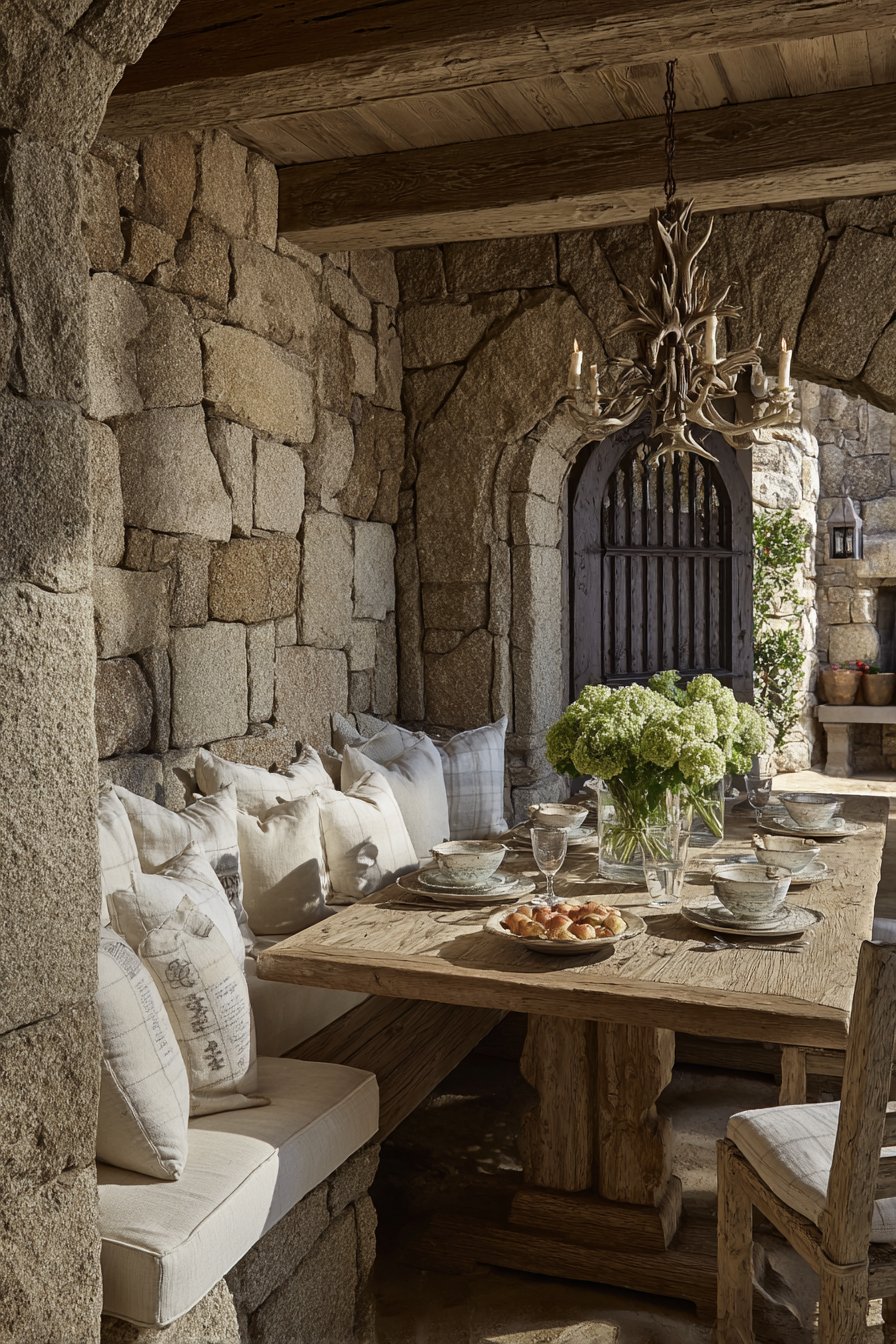
A stone accent wall featuring natural stacking creates dramatic texture in this cottage dining room where the varied earth tones and irregular surfaces add organic beauty. The dry-stacked appearance—stones fitted together without visible mortar—showcases the mason’s skill while creating shadow lines that change throughout the day with moving light. This natural material brings outdoor elements inside while providing visual weight that anchors the space.
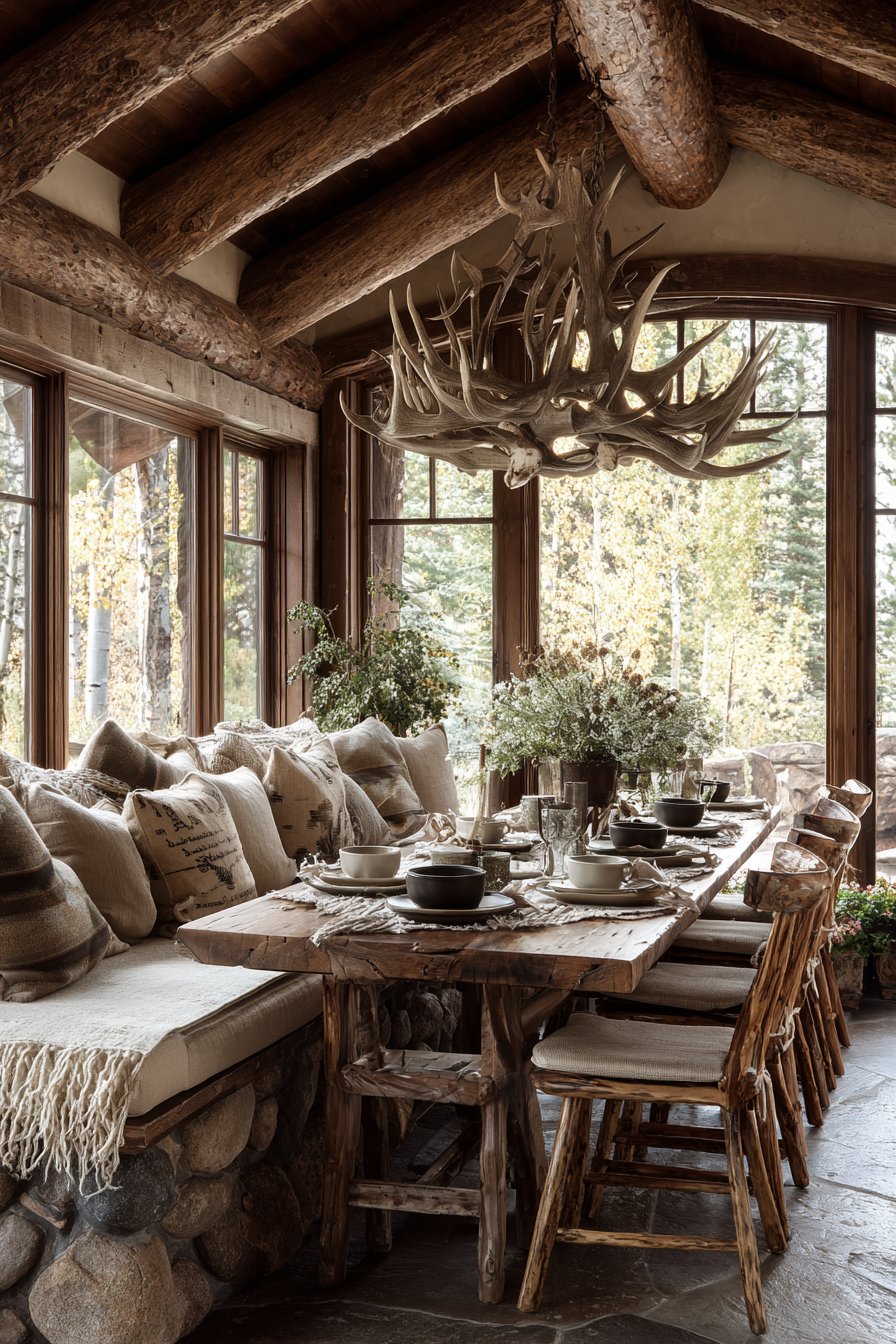
A rustic farm table with bench on one side and chairs on the other provides family-style seating that encourages closeness and conversation. The bench seating allows children to sit together easily and accommodates one or two additional guests when needed. An antler chandelier adds organic sculptural element overhead, its natural form and neutral coloring complementing the stone wall.
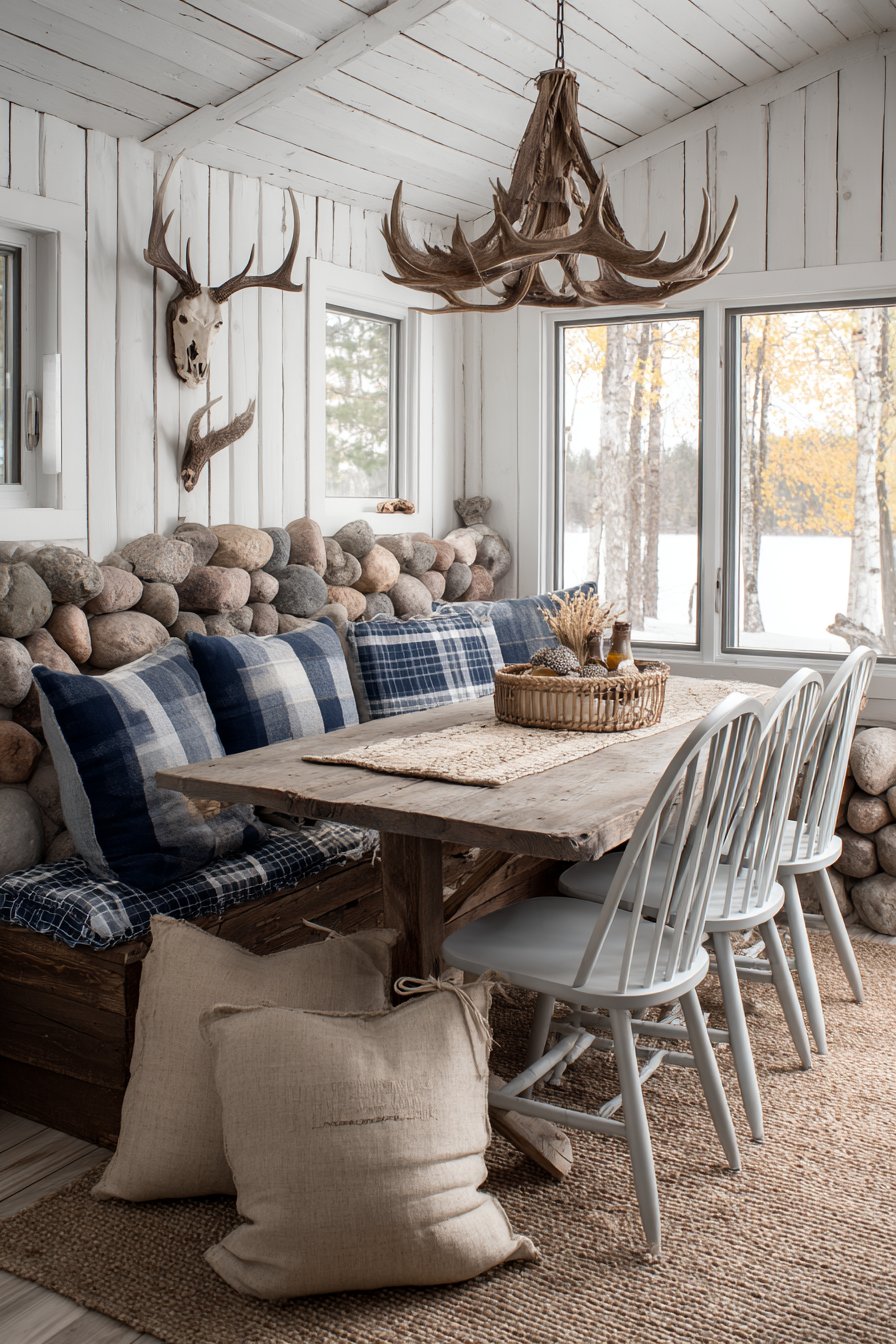
Vintage grain sack pillows on the bench add comfort while introducing traditional textile patterns. The grain sacks’ original printing and worn fabric speak to agricultural heritage, connecting this dining space to cottage’s farming roots. The pillows’ linear stripes add pattern without competing with the stone wall’s strong texture.
Key Design Tips:
- Select local stone varieties for authentic regional cottage character
- Seal natural stone walls with breathable sealer to protect while allowing moisture movement
- Combine bench and chair seating to accommodate varied guest numbers flexibly
- Choose antler chandeliers made from naturally shed antlers for ethical sourcing
- Use vintage grain sacks as pillow covers to add authentic agricultural textile elements
27. Butler’s Pantry Adjacent Display
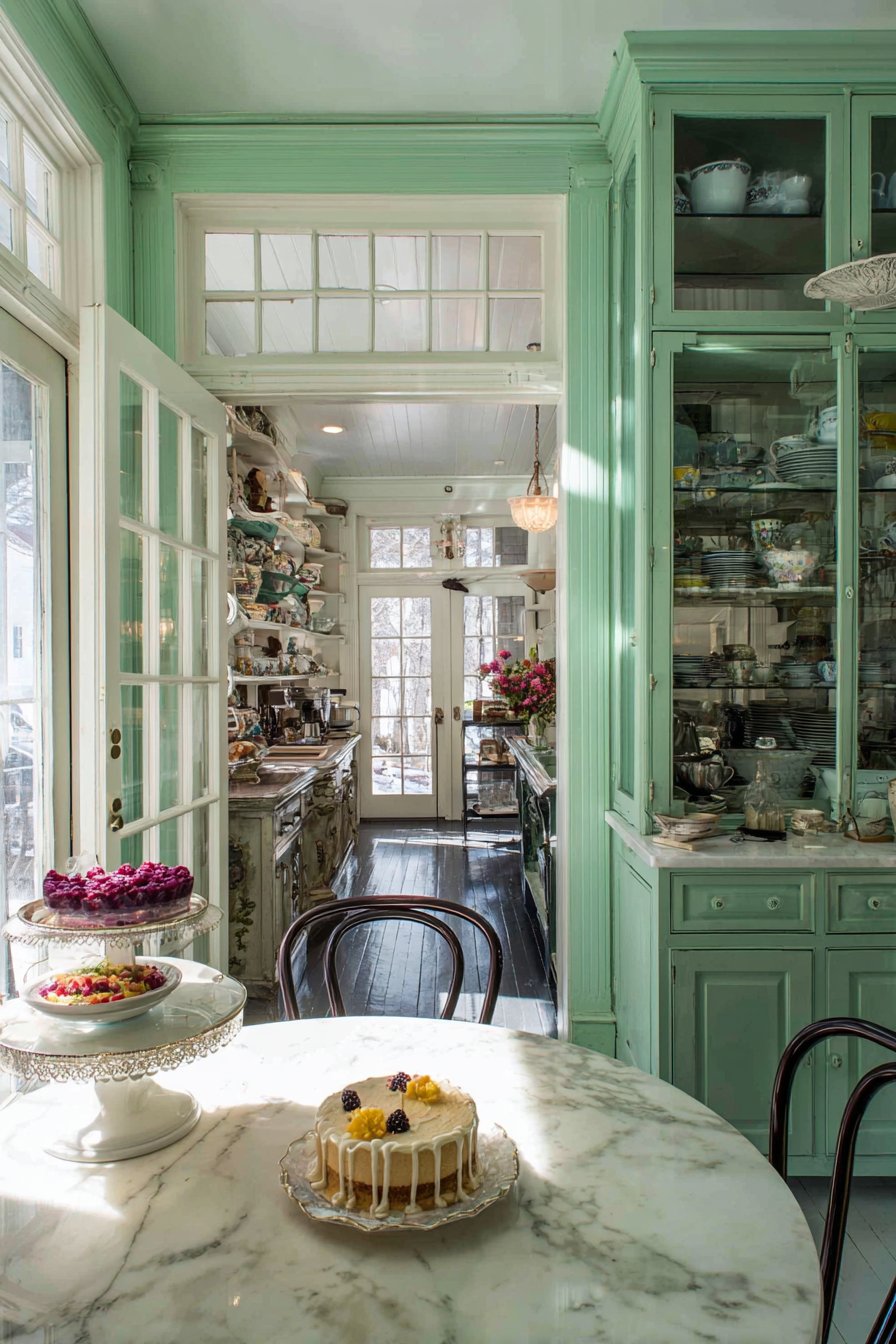
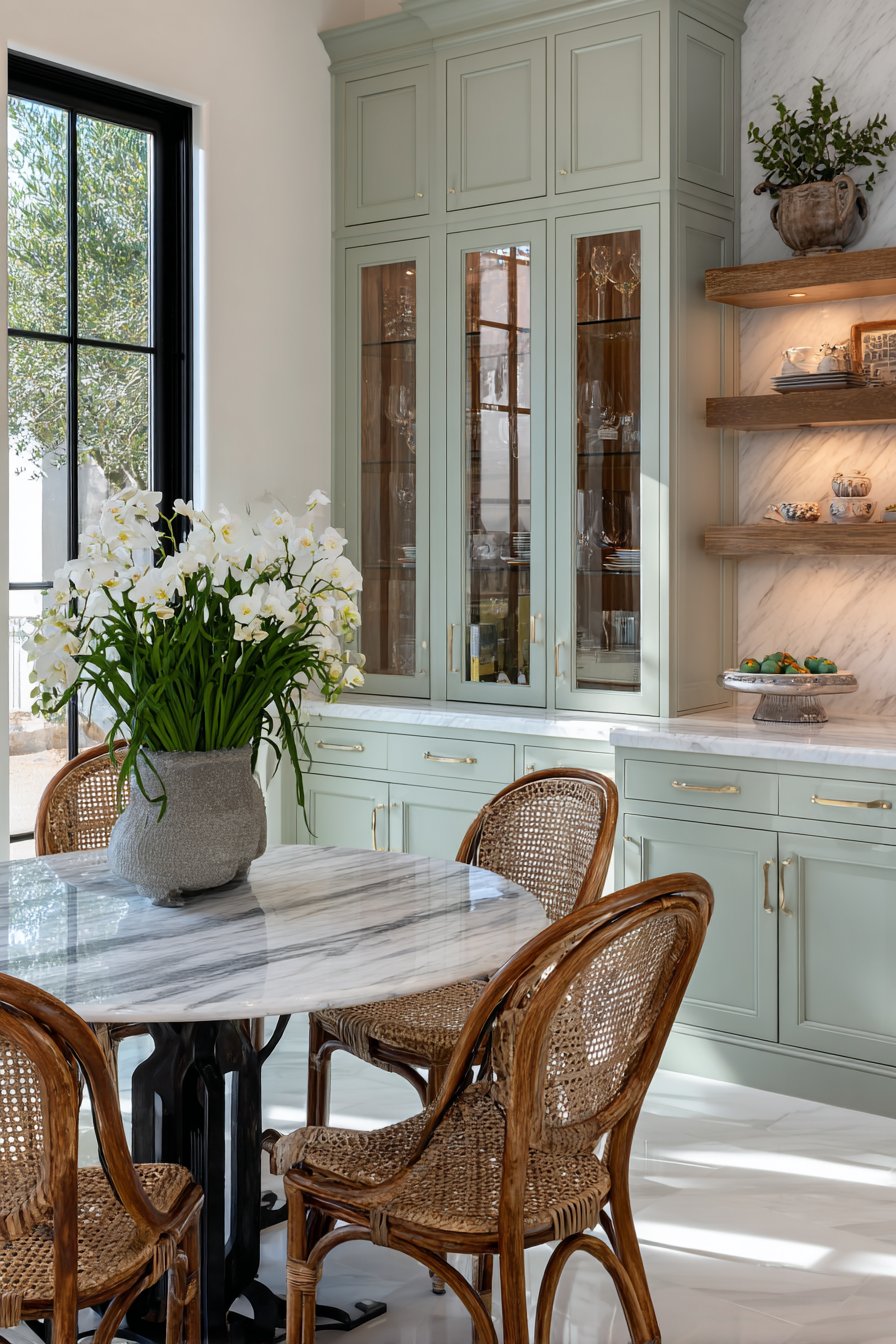
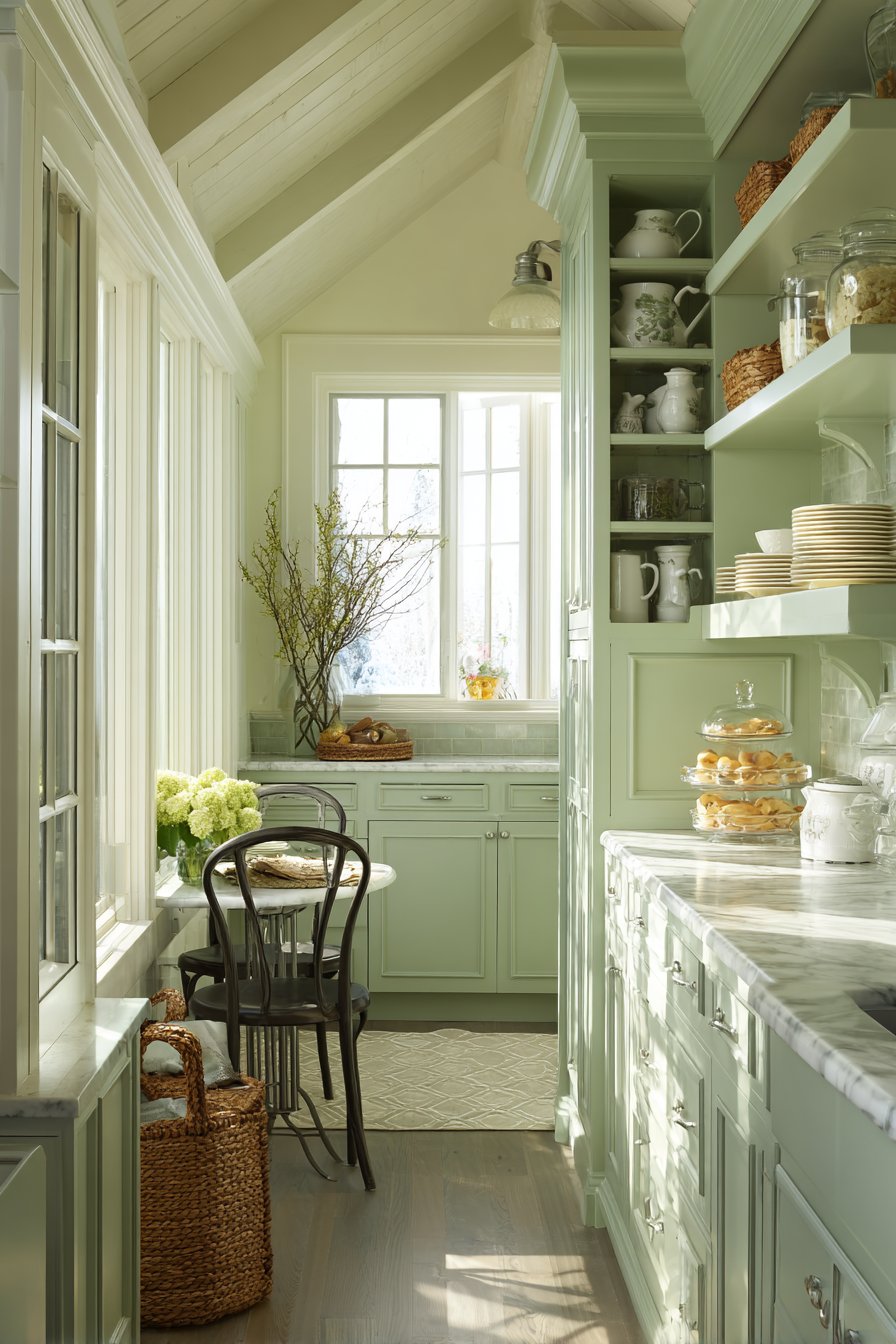
A butler’s pantry adjacent to the dining area features glass-front cabinets in soft green paint, creating visible storage that keeps items organized while adding decorative interest. The glass fronts encourage maintaining organized, aesthetically pleasing arrangement while the soft green color adds cottage charm. This transitional space between kitchen and dining room provides practical staging area for meals and storage for special occasion items.
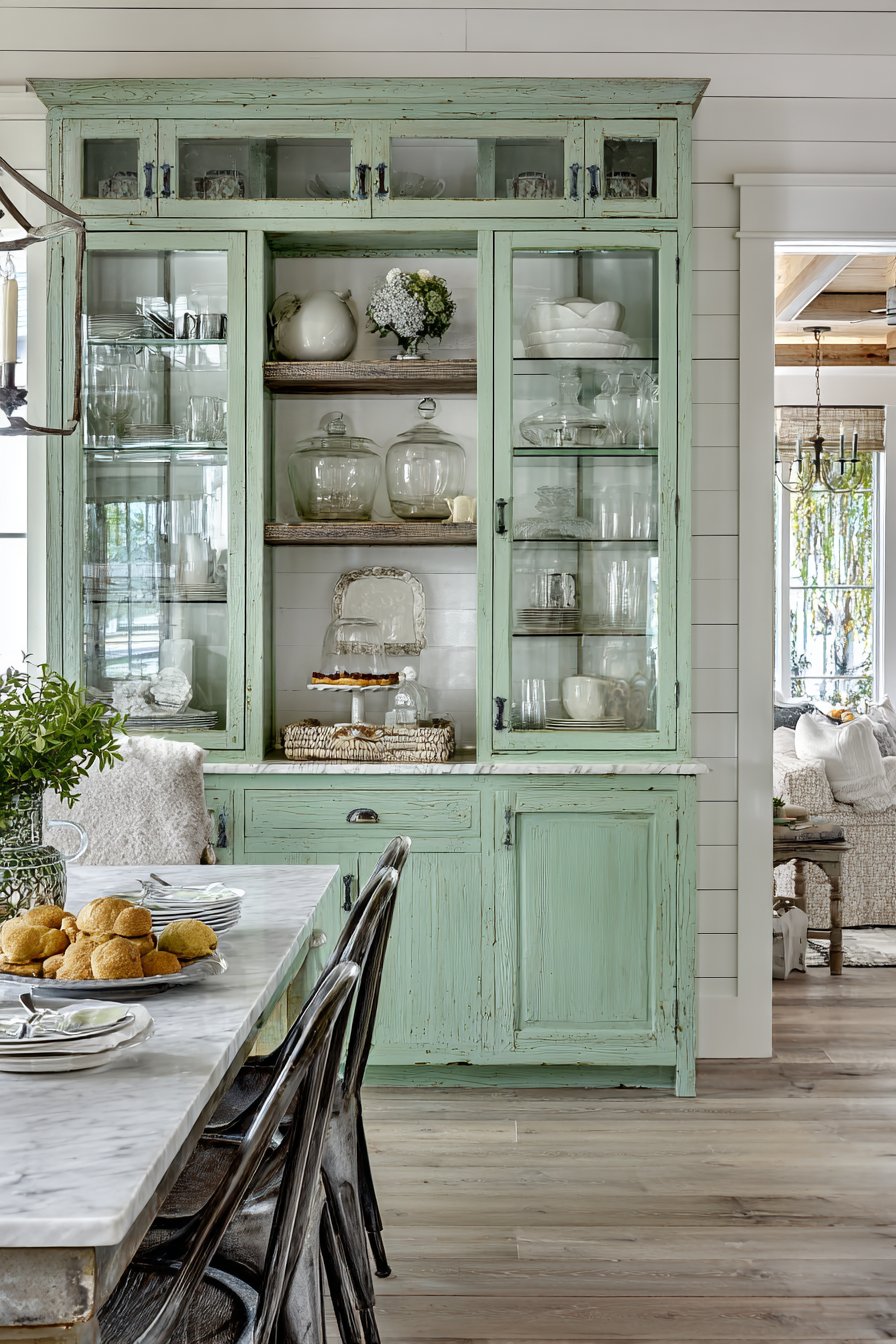
The dining space features a marble-top table with cast iron base, combining elegant material with industrial structure. The cool marble surface provides ideal workspace for baking and food preparation while its smooth finish creates sophisticated dining surface. Bentwood café chairs provide seating that references Viennese coffee house tradition while maintaining cottage simplicity through their unpainted wood finish.
Vintage cake stands and serving pieces displayed on open shelving create curated collection that combines function and decoration. These pieces stand ready for use during entertaining while adding visual interest daily. The open shelving keeps items visible and accessible, encouraging their use rather than storage in closed cabinets.
Key Design Tips:
- Install glass-front cabinets in butler’s pantries to encourage organized, attractive storage
- Choose marble table tops for natural coolness ideal for pastry preparation
- Select bentwood chairs for their traditional café aesthetic and remarkable durability
- Display serving pieces on open shelving rather than storing them behind closed doors
- Paint pantry cabinetry in colors slightly more saturated than main room walls for definition
28. European Limestone Conservatory Dining Room
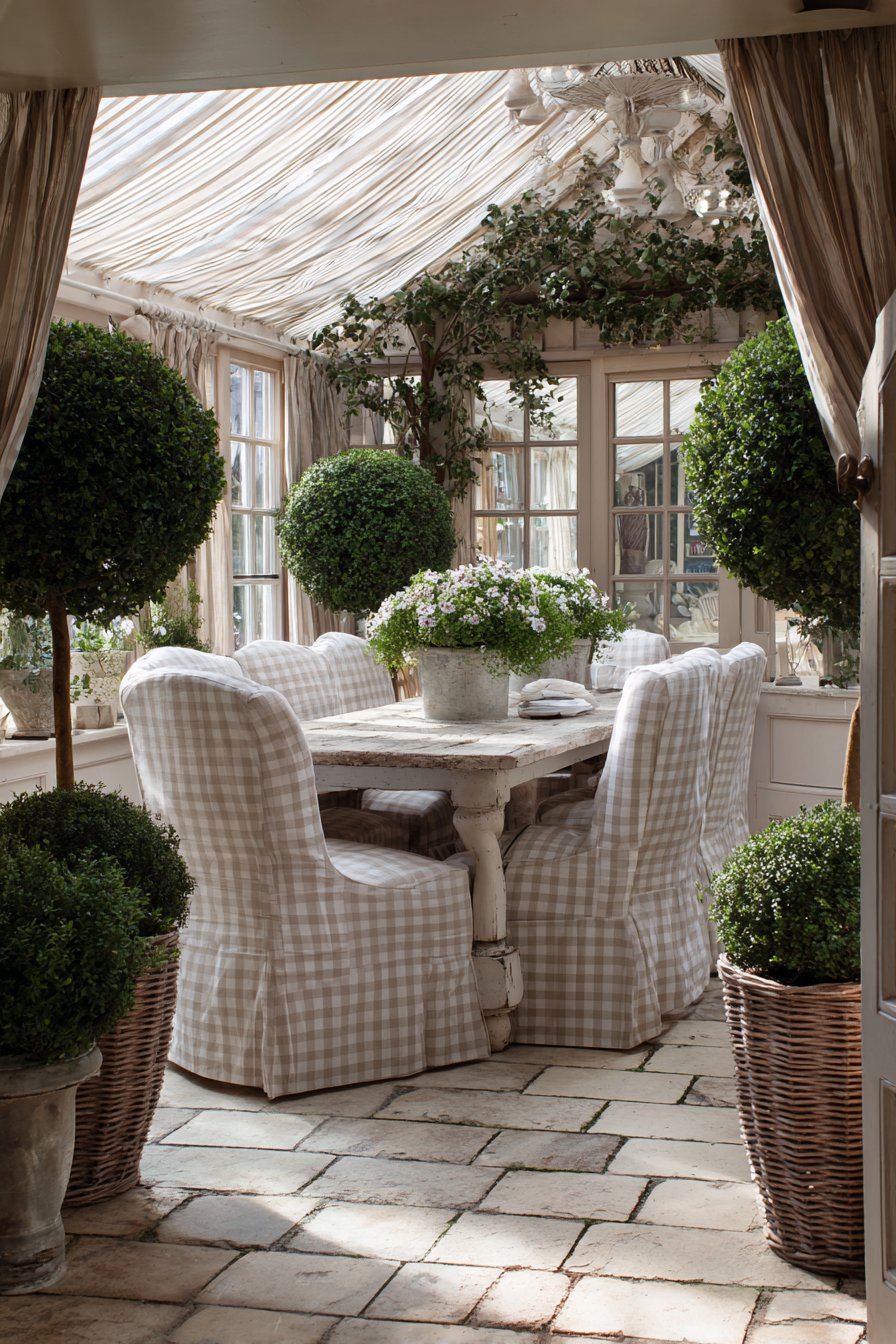
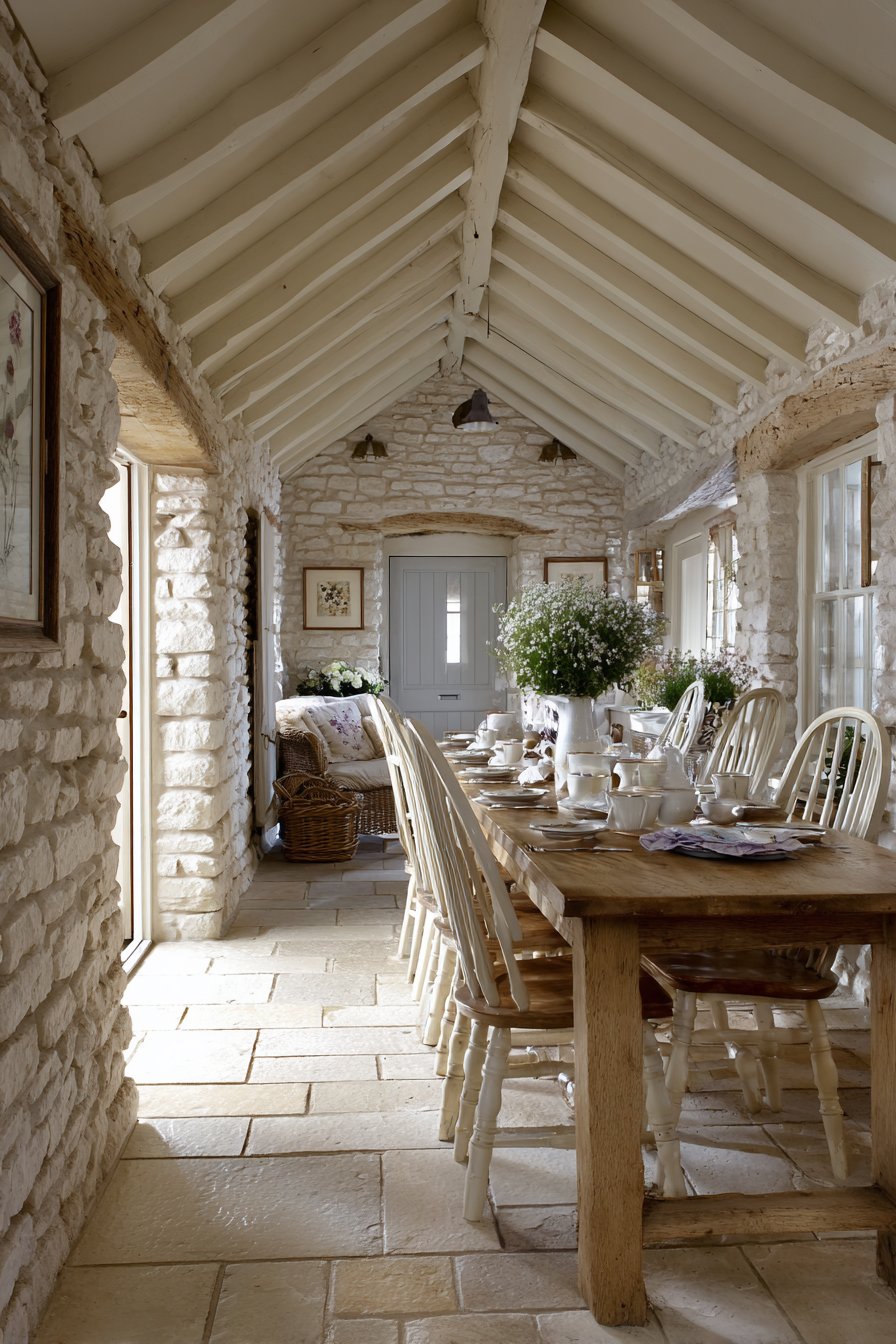
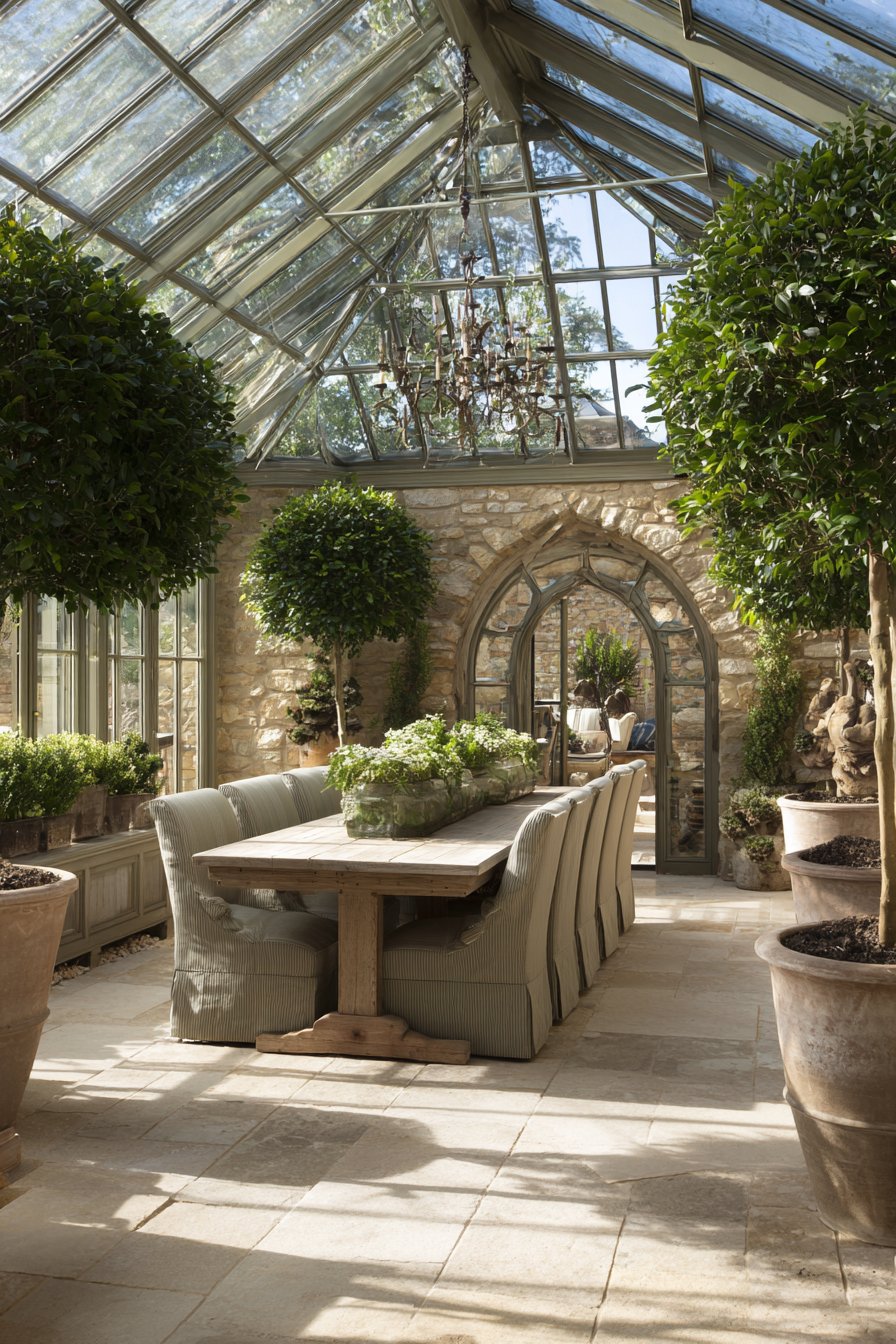
A window wall with multiple panes creates greenhouse effect in this European-influenced cottage dining room where abundant natural light and garden views define the space. The divided-light windows add architectural detail while their abundance creates seamless transition between indoors and outdoors. This conservatory-style approach makes dining feel like an al fresco experience regardless of weather.
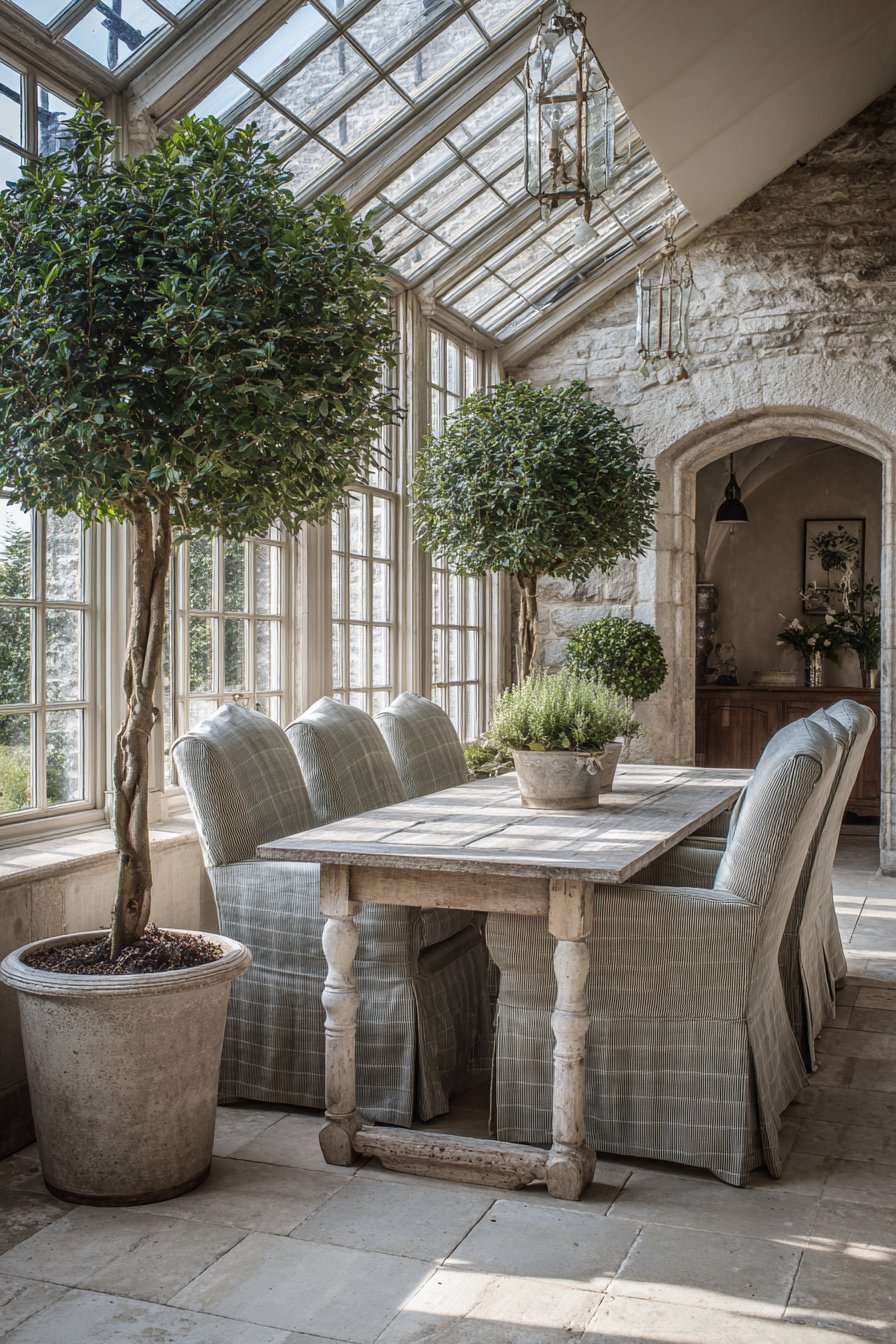
A trestle table in whitewashed finish seats six upholstered dining chairs in faded ticking fabric, the combination creating casual elegance appropriate for cottage entertaining. The whitewashed table brightens the space while allowing wood grain to show through, and the ticking stripe upholstery adds subtle pattern and texture. Potted topiary trees flank the window, their formal shapes adding structured green elements that frame the view.
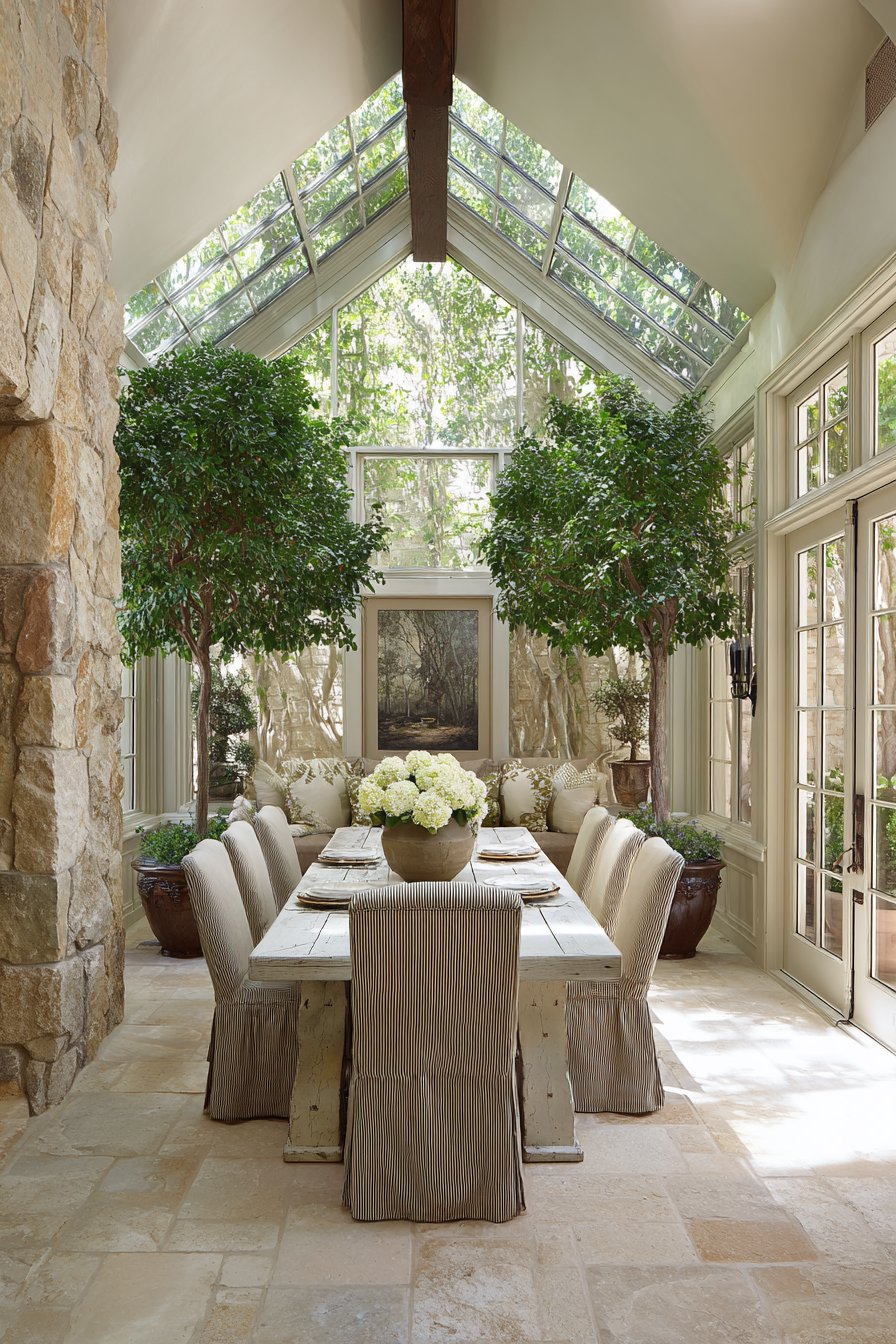
Limestone tile flooring adds European cottage influence through its natural variations and soft coloring. The stone’s cool surface helps moderate temperature in this sun-filled space while its tumbled or honed finish prevents slipperiness. The limestone’s neutral earth tones create cohesive palette with the whitewashed furniture and natural materials throughout the room.
Key Design Tips:
- Select limestone tiles with honed or tumbled finishes for slip resistance
- Whitewash furniture rather than painting solidly to preserve wood grain visibility
- Place potted topiaries symmetrically to frame windows and create formal structure
- Choose upholstery fabrics in classic patterns like ticking stripe for timeless appeal
- Install proper drainage for rooms with extensive windows to handle condensation
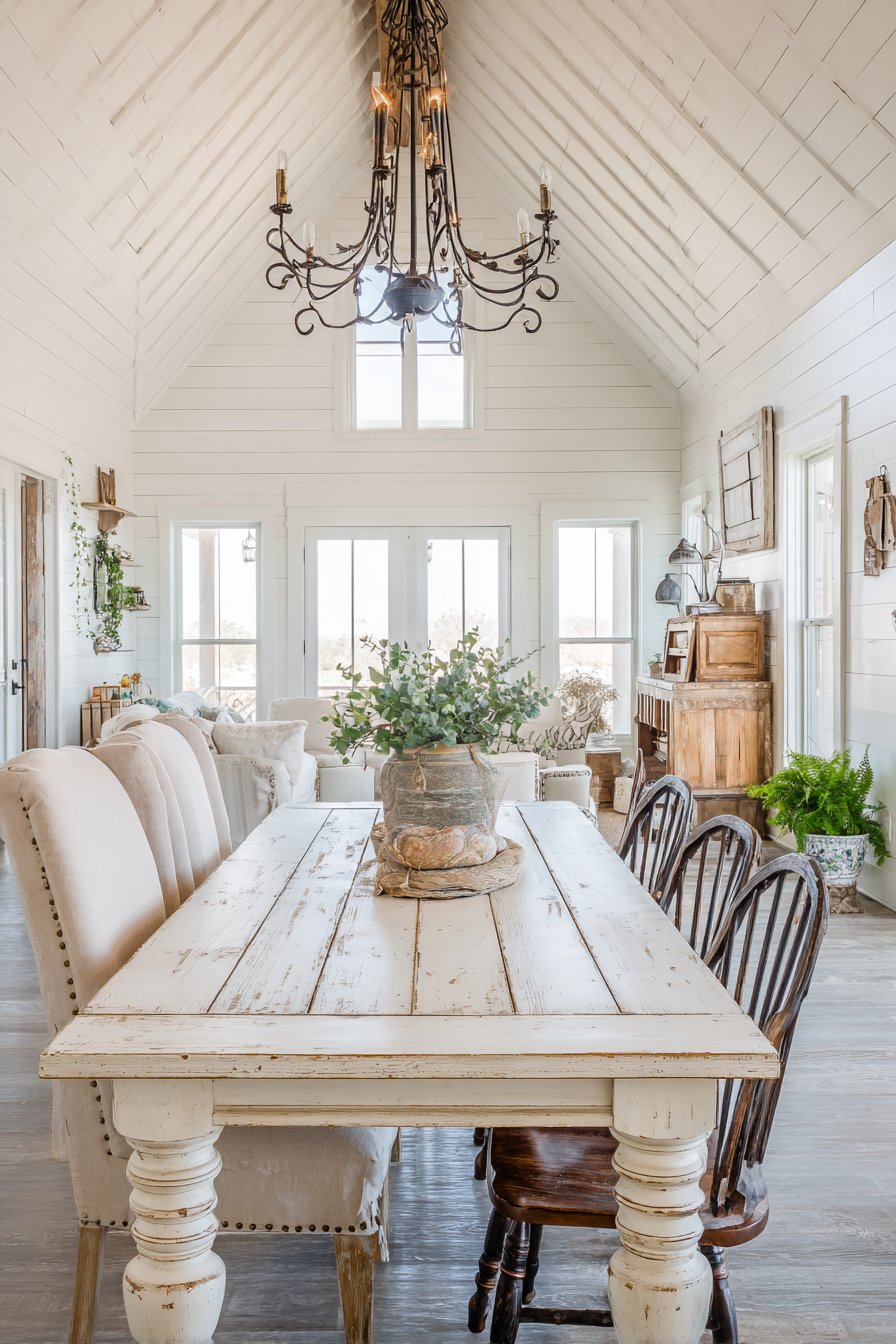
29. Vaulted Ceiling Exposed Collar Ties
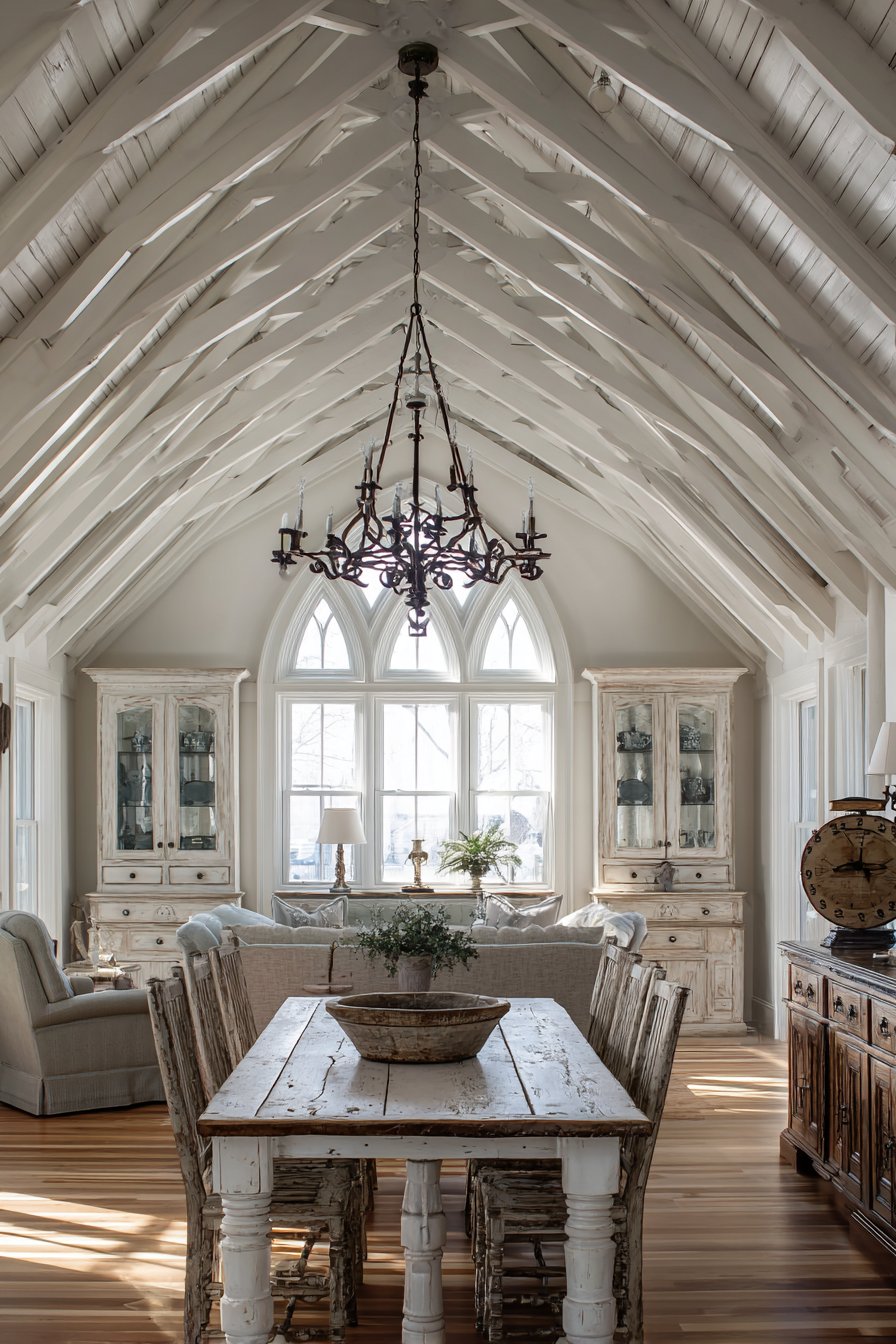
A vaulted ceiling featuring exposed collar ties painted white creates dramatic sense of height in this cottage dining room where architectural bones become the decoration. The white-painted structural elements draw the eye upward while the increased volume makes the space feel generous and grand despite modest square footage. This ceiling treatment showcases the home’s construction as beautiful rather than concealing it behind drywall.
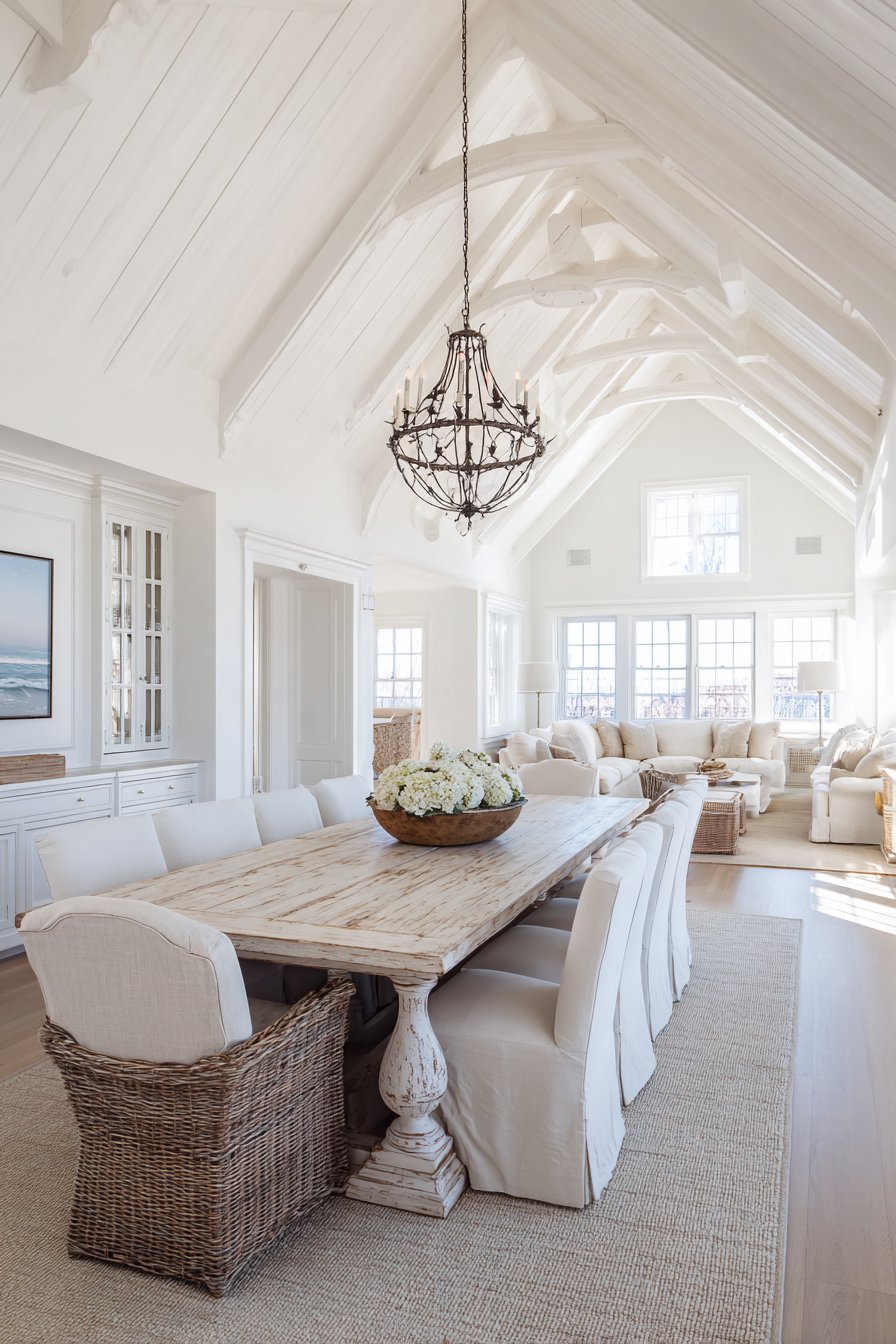
A farmhouse table with turned legs in distressed white finish centers beneath a wrought iron chandelier, the traditional elements combining to create classic cottage aesthetic. The turned legs add decorative detail that elevates the simple table form, while the distressed finish suggests generations of family use. The wrought iron chandelier’s substantial scale matches the room’s height while its traditional candelabra form references historical lighting.
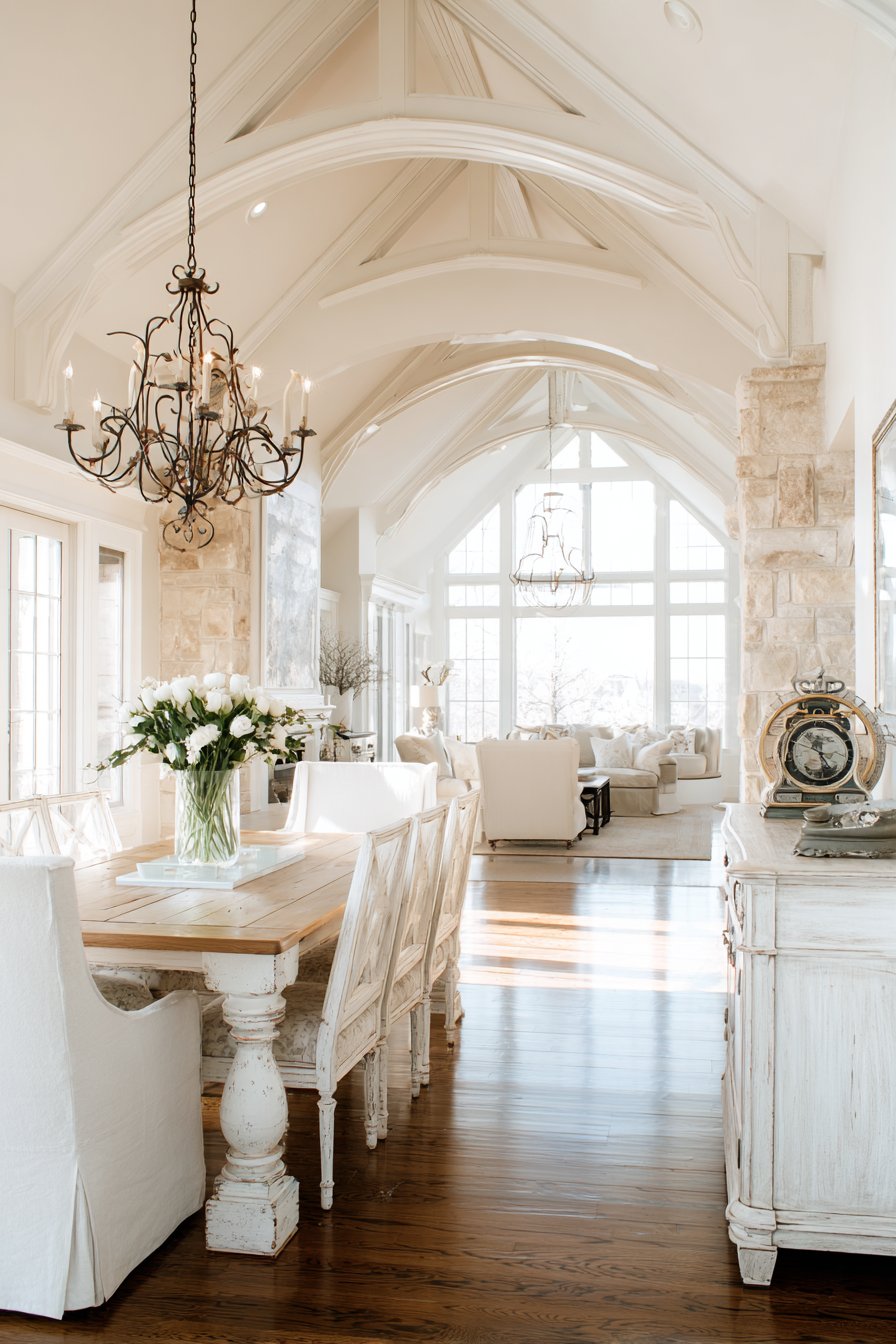
A mix of spindle-back chairs and upholstered host chairs provides seating variety that adds visual interest and accommodates different comfort preferences. The host chairs at table ends receive upholstery for added comfort during extended meals, while side chairs maintain traditional spindle-back design. A vintage grain scale serves as decorative accent on the sideboard, adding functional sculpture that references agricultural heritage.
Key Design Tips:
- Paint collar ties and exposed trusses white to maximize light reflection in high-ceiling spaces
- Select chandeliers sized appropriately for ceiling height (add 3 inches diameter per foot of height)
- Combine spindle-back side chairs with upholstered host chairs for comfortable varied seating
- Display vintage scales and weights as sculptural elements celebrating measurement and craftsmanship
- Ensure vaulted ceiling rooms have adequate heat circulation to prevent warmth collecting overhead
Why These Cottage Dining Room Ideas Represent the Best in Design
These 29 cottage dining room ideas represent the pinnacle of authentic, livable design that honors tradition while remaining relevant for contemporary living. Each concept demonstrates fundamental principles that make cottage style enduringly popular: the embrace of natural materials, celebration of craftsmanship, layering of textures, and creation of spaces that prioritize comfort and authenticity over perfection. Unlike passing trends that quickly feel dated, these cottage dining rooms achieve timeless appeal through their connection to architectural heritage and honest use of materials.
The versatility showcased across these designs proves that cottage style adapts beautifully to various space configurations, from cozy breakfast nooks to expansive rooms with soaring ceilings. Whether working with vintage architectural elements like exposed brick and ceiling beams or incorporating them into newer construction through shiplap and board-and-batten treatments, cottage design creates warmth and character. The emphasis on natural light throughout these spaces—through divided-light windows, French doors, and strategic window treatments—connects inhabitants to daily rhythms and seasonal changes, enhancing wellbeing and creating ever-changing interior landscapes.
The furniture selections in these cottage dining rooms exemplify quality over quantity, choosing substantial pieces built to last generations rather than disposable furnishings. Farmhouse tables, trestle bases, Windsor chairs, and pedestal tables represent furniture forms perfected over centuries of use, their designs proven through time. The combination of painted and natural wood finishes adds depth and visual interest while the acceptance of distressed surfaces and authentic wear marks celebrates real life rather than showroom perfection. This approach creates dining spaces that welcome use and gathering rather than demanding careful preservation.
The color palettes throughout these cottage dining rooms favor soft, nature-inspired hues—sage greens, butter yellows, warm creams, and soft grays—that create calming environments conducive to extended conversations and relaxed dining. These colors work harmoniously with natural wood tones and white elements, creating schemes that feel cohesive without being overly matched. The restraint in color allows materials, textures, and architectural details to take center stage while maintaining rooms that feel bright and welcoming rather than dark or oppressive.
Storage solutions integrated throughout these designs demonstrate cottage style’s practical nature. Built-in hutches, corner cupboards, open shelving, and plate rails provide abundant storage while turning everyday items into decorative displays. This approach eliminates the need for extensive closed cabinetry, keeping rooms feeling open and uncluttered while ensuring necessities remain accessible. The display of collections—whether vintage dishes, ironstone, or serving pieces—adds personality and tells stories about the inhabitants’ interests and heritage.
The lighting strategies employed across these cottage dining rooms create layered, adjustable illumination suitable for various activities and times of day. Natural light takes priority through generous windows and minimal window treatments, while artificial lighting includes ambient fixtures like chandeliers, task lighting from pendants, and accent lighting highlighting collections or architectural features. This thoughtful approach ensures spaces remain functional throughout the day while creating atmosphere for evening entertaining.
The incorporation of vintage and antique elements throughout these designs adds authenticity impossible to achieve with reproduction pieces. Whether antique doors repurposed as tables, salvaged sinks serving as planters, vintage hutches displaying collections, or architectural fragments serving as wall art, these pieces contribute history and character. Their imperfections and signs of age add depth and interest that perfect new items cannot match, creating spaces that feel collected over time rather than decorated in a single shopping trip.
The textile choices—linen curtains, ticking stripe upholstery, grain sack pillows, quilted table runners, and braided rugs—add softness and pattern while referencing cottage traditions of resourcefulness and handcraft. Natural fiber content ensures durability and aging that improves rather than degrades appearance. The layering of textiles at windows, on seating, and under tables creates warmth and acoustic softening while introducing pattern and texture that prevents rooms from feeling sparse or hard.
The connection to nature maintained throughout these cottage dining rooms—through abundant windows, fresh flowers, potted herbs, botanical prints, and natural materials—enhances wellbeing and creates life-filled spaces. This biophilic approach recognizes humans’ innate connection to the natural world and designs environments that support this relationship. The changing seasons become part of the interior experience through shifting light patterns, seasonal flowers, and views to gardens and landscapes.
The flexibility demonstrated across these designs accommodates various lifestyle needs, from intimate family dinners to large holiday gatherings. Drop-leaf tables, gate-leg designs, extension tables, and flexible seating arrangements ensure spaces adapt to changing requirements. Built-in banquettes, church pews, and benches supplement traditional chairs, providing seating options that work for different group sizes and ages. This adaptability ensures cottage dining rooms remain relevant throughout life stages and circumstances.
The emphasis on authentic materials—reclaimed wood, natural stone, plaster walls, brick, and limestone—creates spaces with substance and longevity. These materials age beautifully, developing patinas and character that synthetic alternatives cannot achieve. Their natural variations and imperfections add visual interest while their durability ensures spaces remain beautiful for decades. This investment in quality materials represents cottage style’s long-term thinking and rejection of disposable culture.
The architectural details preserved and celebrated throughout these designs—exposed beams, wainscoting, beadboard, shiplap, plate rails, and moldings—add dimension and craft that elevate simple rooms into special spaces. These elements reference historical construction methods while providing practical benefits like wall protection and visual interest. Their inclusion demonstrates respect for architectural heritage and commitment to creating rooms with character and depth.
The balanced approach to formality across these cottage dining rooms creates spaces suitable for everyday use without sacrificing special occasion worthiness. Unlike formal dining rooms that sit unused except for holidays or casual eat-in kitchens that lack atmosphere, these cottage spaces welcome daily family dinners while rising to entertaining requirements. This versatility ensures maximum use and value from the space.
The integration of modern conveniences within traditional cottage aesthetics proves that historic style accommodates contemporary living requirements. Whether incorporating dimmer switches, installing adequate task lighting, ensuring proper storage, or selecting durable modern materials alongside vintage pieces, these designs function beautifully for current lifestyles. This balance prevents spaces from feeling like museum recreations while maintaining authentic cottage character.
These cottage dining room ideas succeed because they create spaces that feel like home—comfortable, welcoming, and authentic. They reject perfectionism and embrace the beauty of lived-in spaces where family and friends gather, meals are shared, and memories are created. The design choices throughout prioritize human experience over aesthetic rigidity, resulting in rooms that serve their inhabitants beautifully while maintaining enduring visual appeal.
Conclusion
Creating a cottage dining room that captures authentic charm while serving your family’s needs requires thoughtful attention to materials, furniture selection, architectural details, and the layering of textures and colors. The 29 ideas presented throughout this article demonstrate cottage style’s remarkable versatility and enduring appeal, from intimate breakfast nooks to grand rooms with soaring ceilings. Each design celebrates natural materials, honest craftsmanship, and the beauty of imperfection that makes cottage spaces feel welcoming and real.
The key to successful cottage dining room design lies in balancing aspirational beauty with practical functionality. Choose substantial furniture built to last, embrace authentic wear and patina rather than pursuing perfection, layer natural textiles for warmth and softness, maximize natural light through generous windows and minimal treatments, and display cherished collections rather than hiding them away. These principles create spaces that grow more beautiful with use and age, developing character and soul that new spaces lack.
Whether you’re working with existing architectural features like exposed beams and brick walls or adding cottage character through shiplap, board-and-batten, or beadboard treatments, remember that authenticity trumps perfection in cottage design. Mix vintage and new pieces, combine painted and natural wood finishes, display everyday items as decoration, and create flexible seating arrangements that adapt to various occasions. Most importantly, design a space that welcomes gathering, encourages lingering conversations, and feels like the heart of your home—because that’s what cottage dining rooms do best.
