
In the world of interior design, corners often represent untapped potential—those awkward angles where walls meet, creating spaces that are frequently overlooked or underutilized. Yet these very corners hold remarkable opportunities for creative expression and practical storage solutions. Corner shelves have emerged as one of the most versatile and impactful design elements in modern homes, offering a perfect marriage of functionality and aesthetic appeal. Whether you’re working with a compact urban apartment where every square inch counts or a spacious suburban home with architectural features to highlight, corner shelving can transform these transitional spaces into focal points that capture attention and serve genuine purpose.
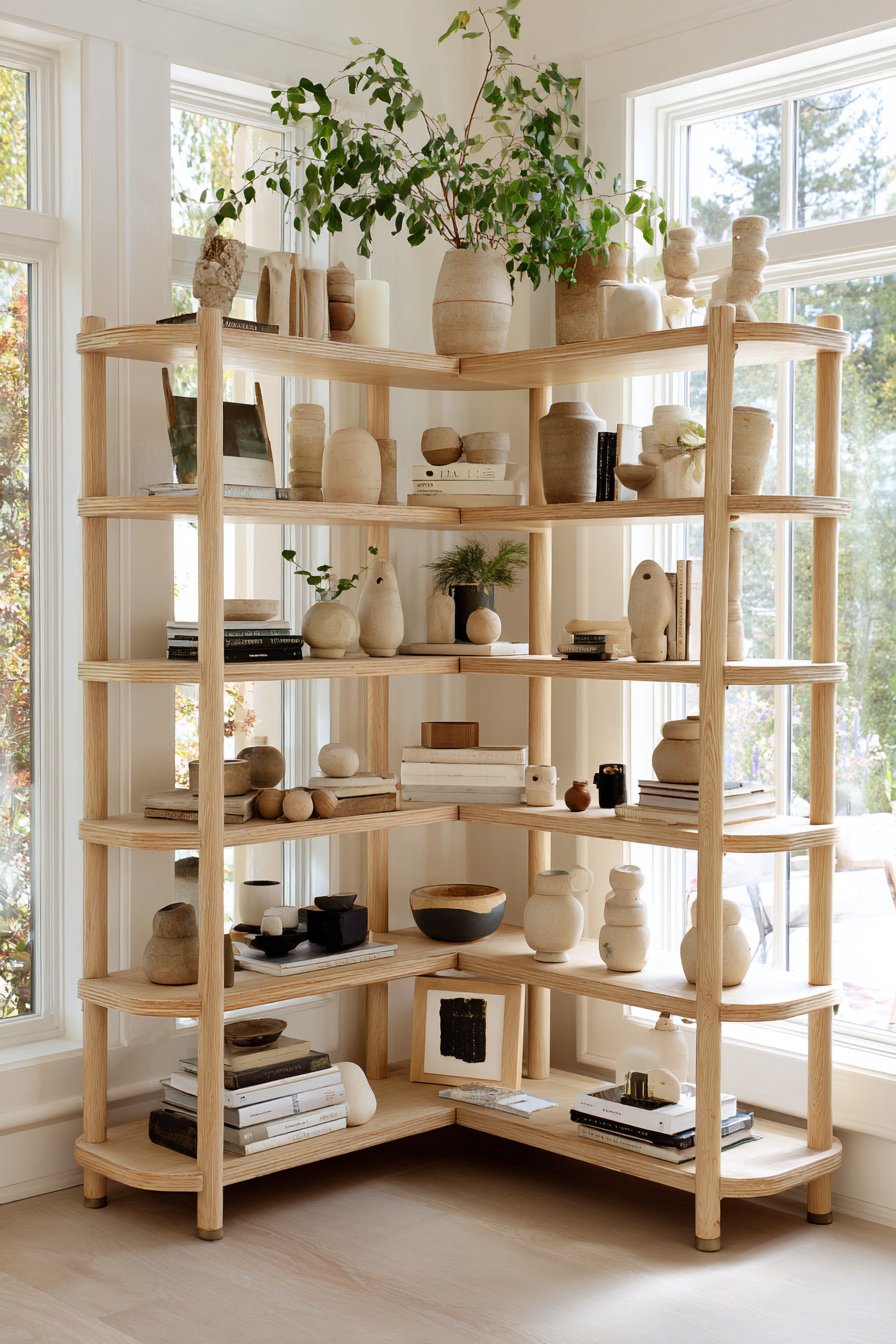
The beauty of corner shelf ideas lies in their incredible diversity. From floating minimalist designs that seem to defy gravity to substantial built-in units that become architectural features in their own right, corner shelves adapt to virtually any design style, room function, and spatial constraint. They provide vertical storage that draws the eye upward, making rooms feel more expansive while keeping floor space open and uncluttered. Beyond mere storage, these installations become curated galleries for displaying cherished objects, living plants, beloved books, and personal collections that tell the story of who you are.
In this comprehensive guide, we’ll explore twenty-three distinctive corner shelf concepts that span the full spectrum of interior design styles—from rustic farmhouse charm to sleek contemporary minimalism, from bohemian eclecticism to industrial urban edge. Each approach offers unique solutions for different rooms, aesthetic preferences, and functional needs. You’ll discover how to maximize small spaces, create dramatic focal points, incorporate lighting for ambiance, and select materials that complement your existing decor. Whether you’re a seasoned design enthusiast or just beginning to explore the possibilities of thoughtful home styling, these corner shelf ideas will inspire you to see every angle of your home in a new light.
1. Floating Reclaimed Wood Corner Display
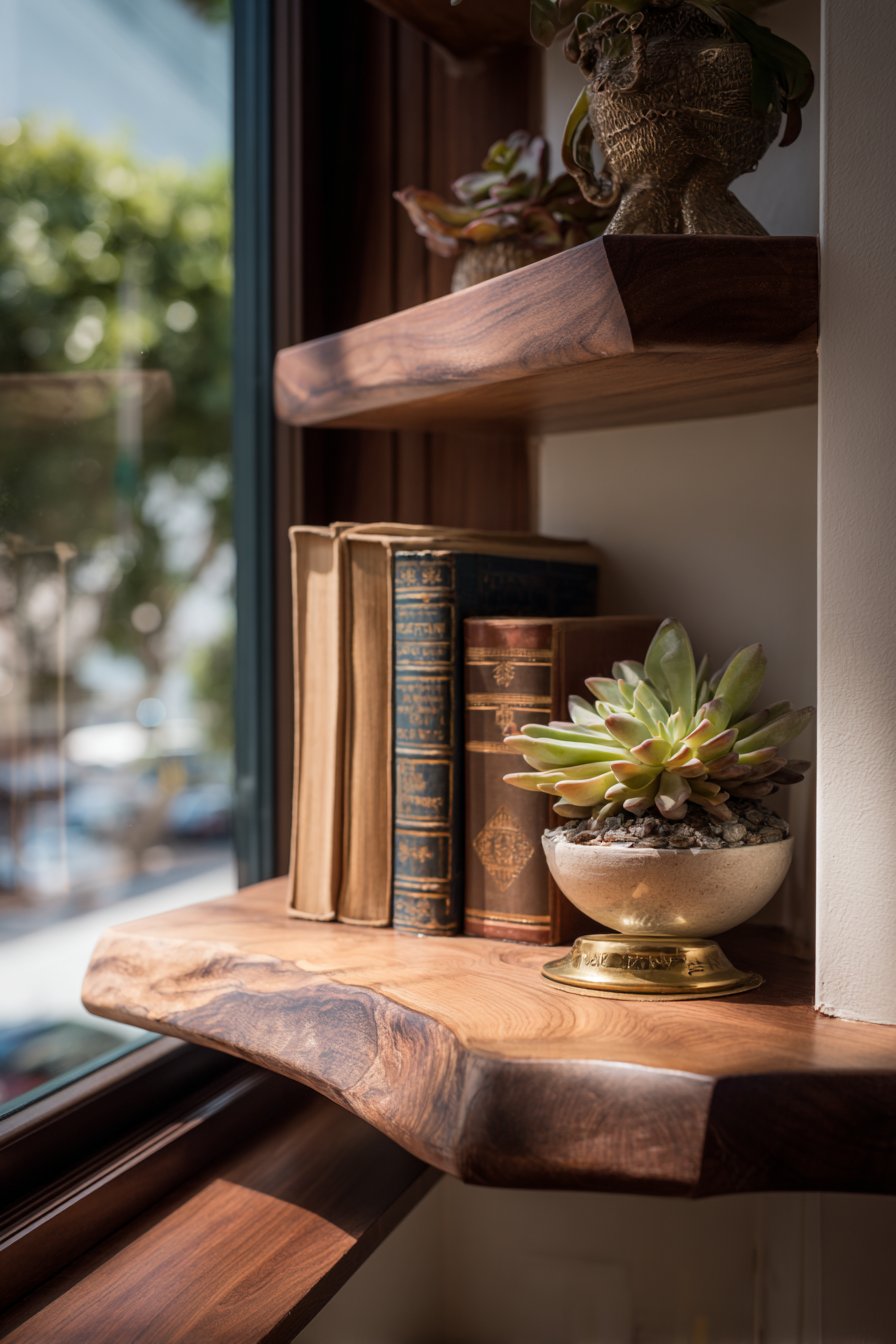
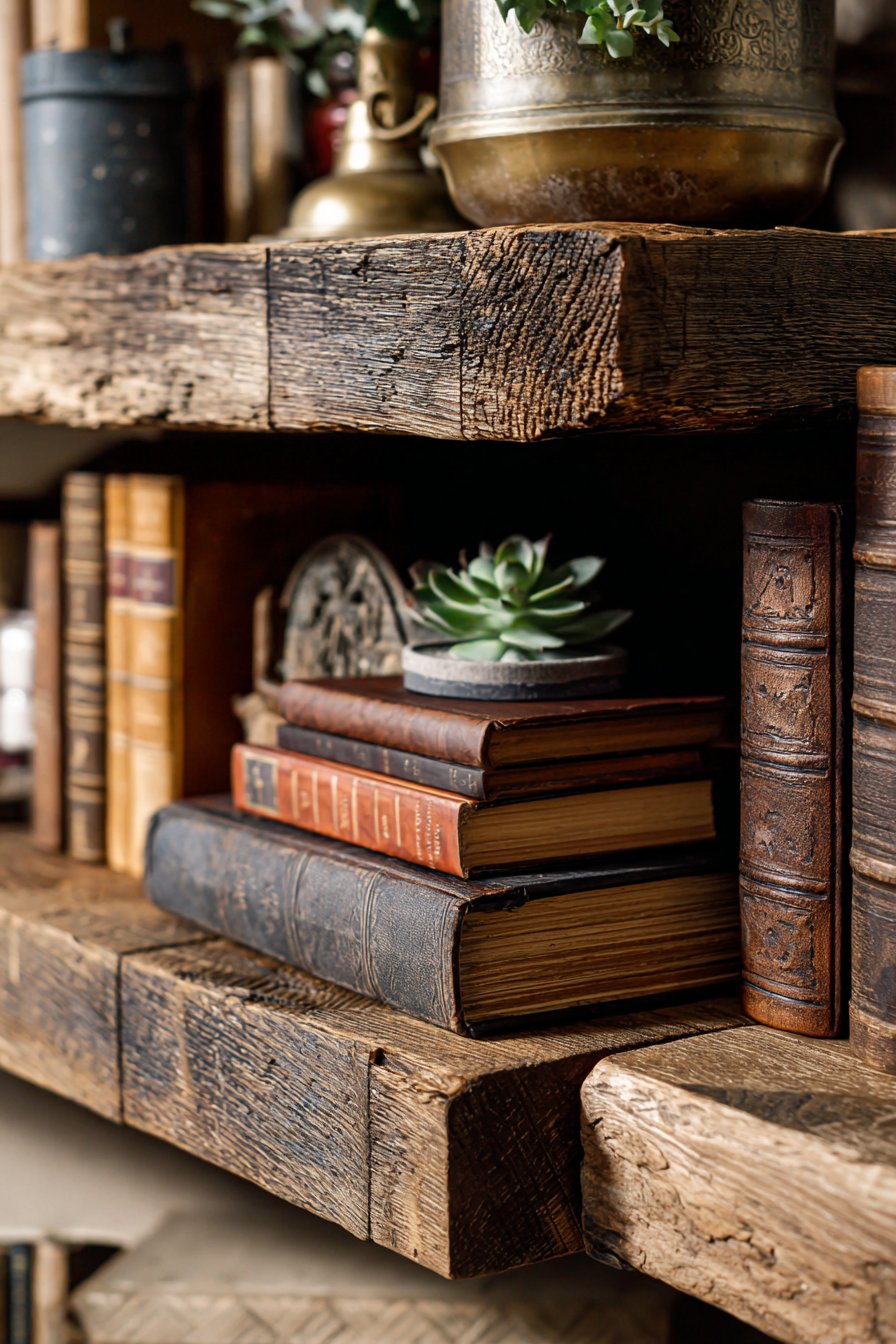
The warmth of reclaimed wood brings instant character to any space, and when fashioned into a floating corner shelf, it creates a focal point that balances rustic charm with contemporary installation methods. This three-tier corner shelf system showcases the natural beauty of salvaged timber, with visible grain patterns that tell stories of the wood’s previous life and natural edge details that celebrate organic imperfection. Positioned in a cozy reading nook, these shelves become more than storage—they’re a testament to sustainable design and appreciation for materials with history.
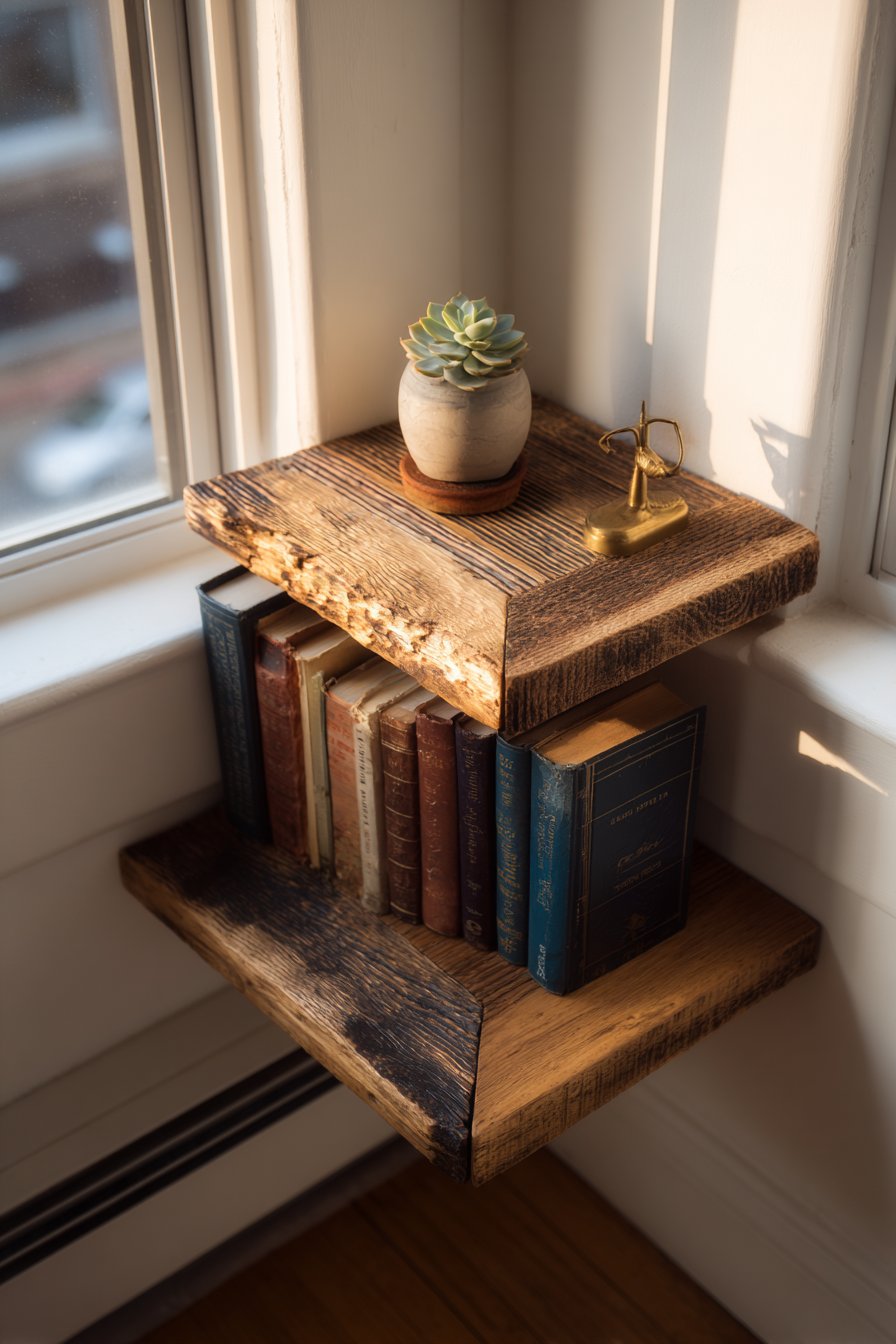
The careful curation of items displayed on these shelves demonstrates how corner installations can reflect personal interests and create intimate moments within larger rooms. Hardcover books lean comfortably against one another, their spines creating a vertical rhythm of colors and typography. A small succulent in a handmade ceramic pot introduces living greenery that softens the wood’s texture, while a vintage brass bookend adds metallic accent and functional purpose. The arrangement feels collected rather than contrived, suggesting a space that has evolved organically over time.
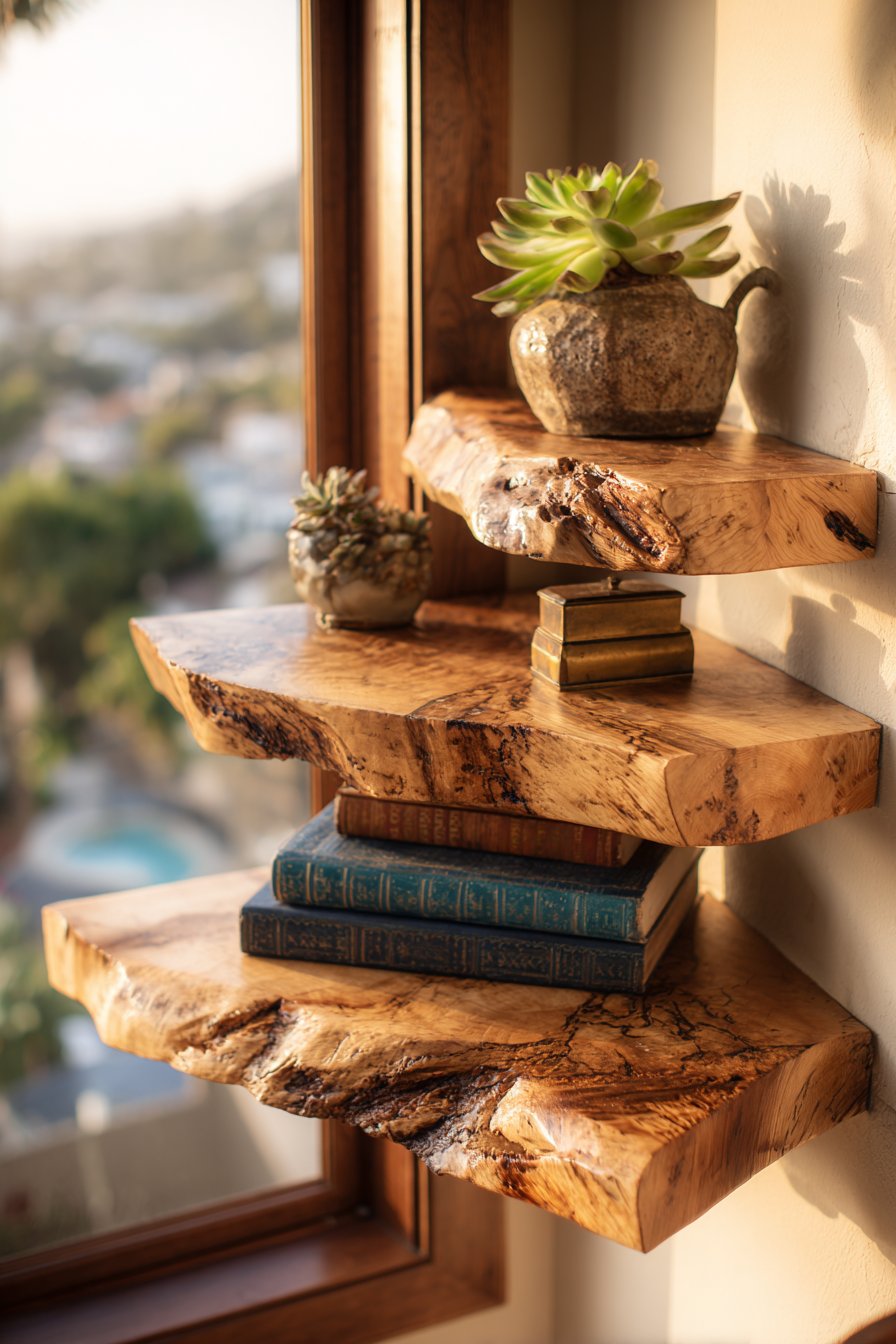
Lighting plays a crucial role in bringing this corner shelf installation to life. Warm afternoon sunlight streaming through a nearby window creates dynamic shadows and highlights across the wood surface, emphasizing every groove, knot, and variation in the grain. This natural illumination changes throughout the day, transforming the corner display from bright and energizing in the morning to warm and contemplative as evening approaches. The interplay between light and texture creates visual interest that static decor simply cannot achieve.
Key Design Tips:
- Source reclaimed wood from reputable salvage yards to ensure structural integrity while gaining authentic character
- Install floating shelf brackets that can support substantial weight, as reclaimed wood tends to be denser than new lumber
- Maintain irregular spacing between shelf tiers to accommodate items of varying heights and create visual rhythm
- Position the installation near natural light sources to maximize the dynamic qualities of wood grain and texture
- Balance heavier items on lower shelves while keeping lighter decorative pieces on upper tiers for both aesthetic and practical stability
2. Modern Minimalist Office Corner Solution
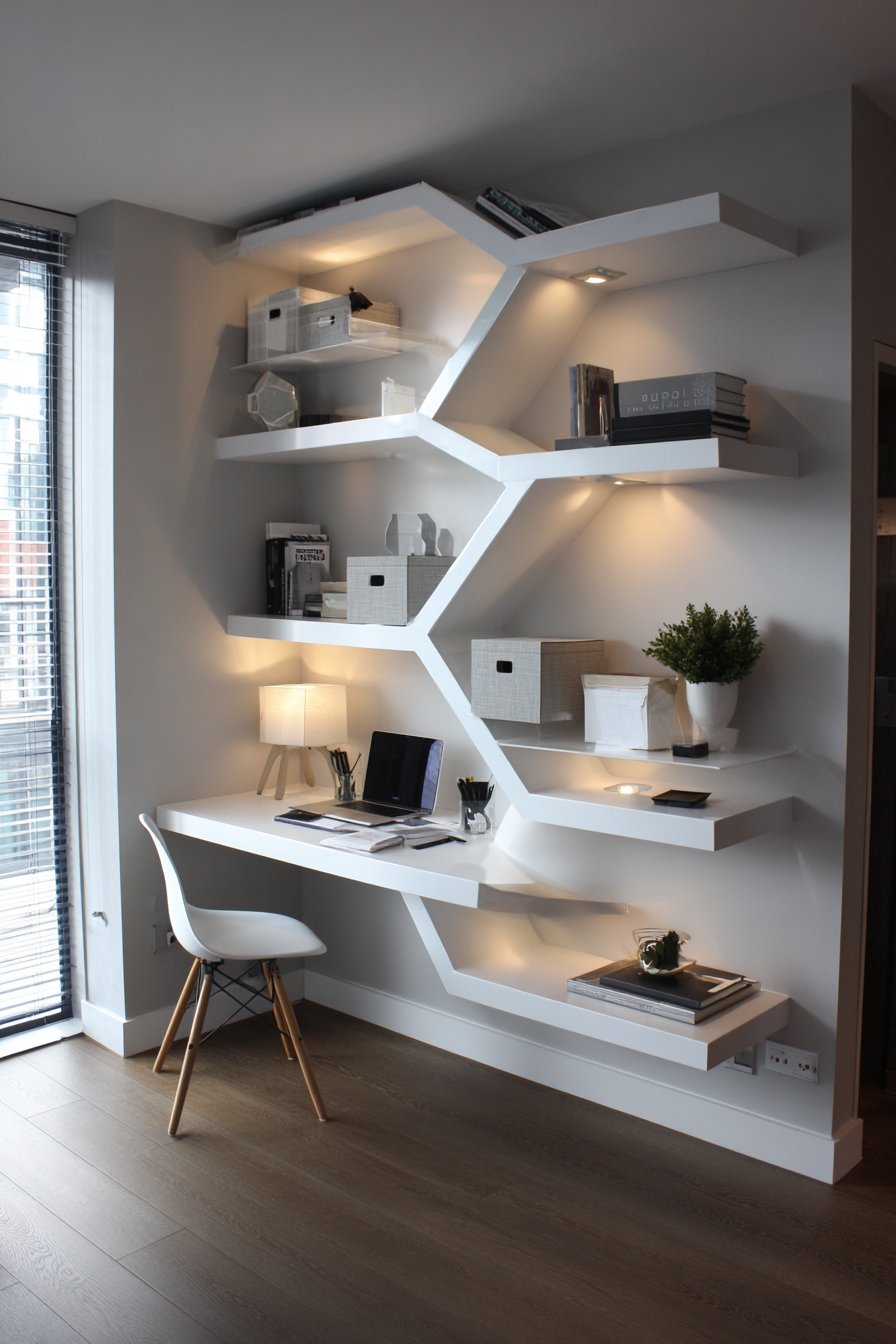
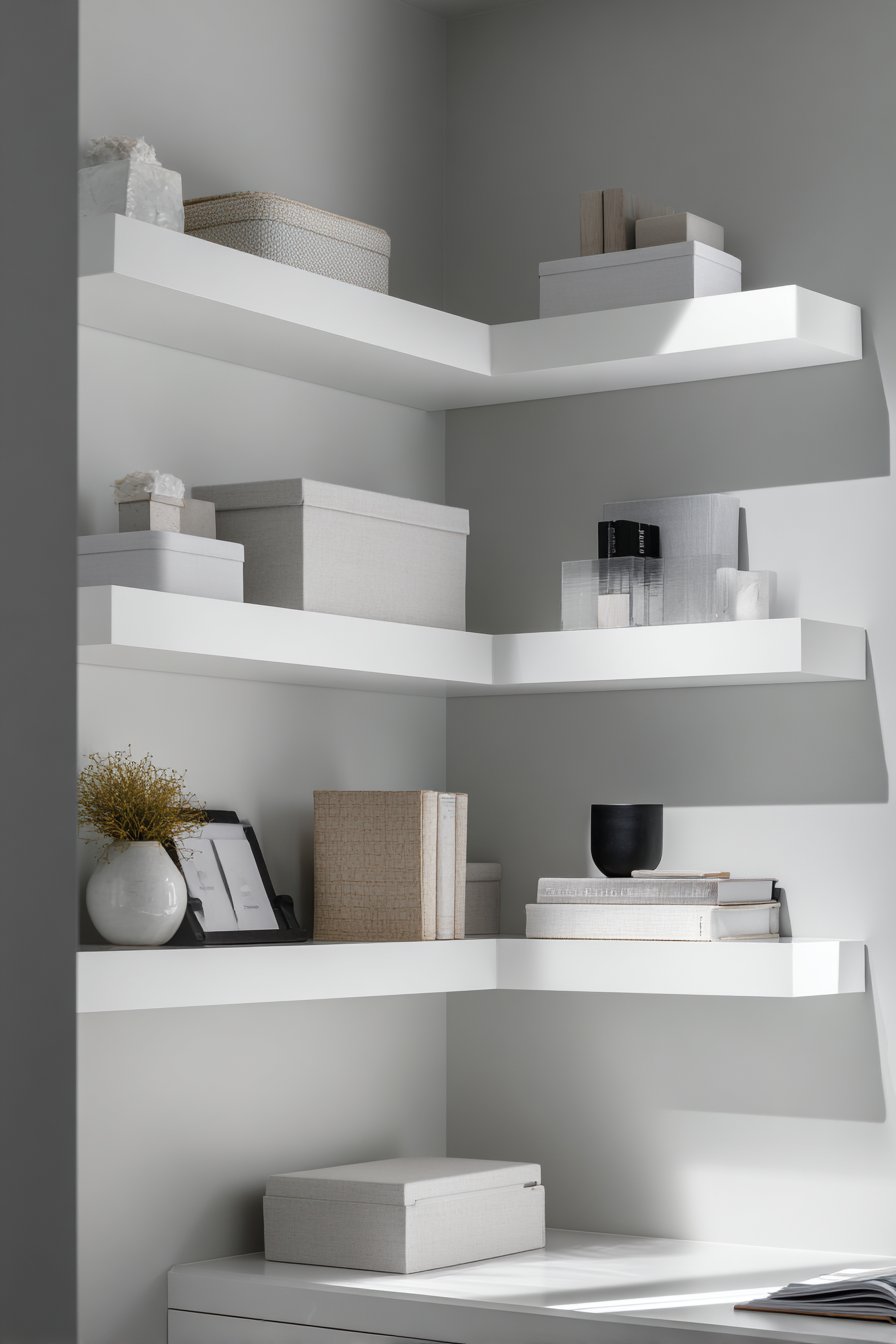
Clean lines and purposeful simplicity define this contemporary corner shelf approach, where sleek white floating shelves with hidden mounting brackets create an almost architectural quality against soft gray walls. This design philosophy embraces the “less is more” principle, allowing the geometric precision of the corner shelf installation to become the statement rather than relying on elaborate ornamentation. In a modern home office setting, this minimalist approach reduces visual clutter and promotes mental clarity—essential qualities for productive work environments.
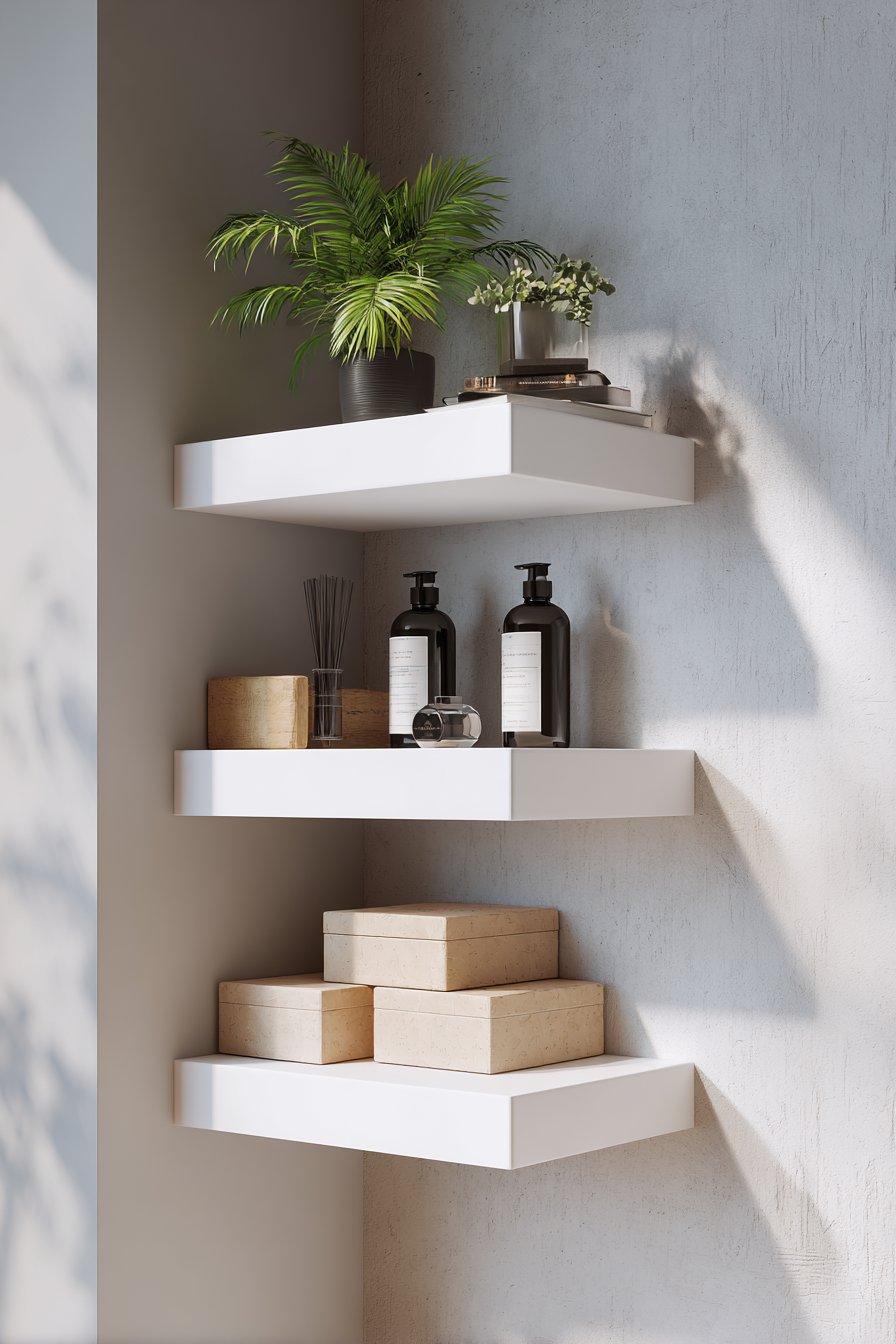
The functionality of this corner shelf system extends beyond mere display; it actively supports workflow organization. Office supplies nestle in designated spots, their arrangement both accessible and aesthetically pleasing. A small desk plant introduces organic form into the geometric composition, its curved leaves providing visual relief from the straight edges dominating the space. Decorative storage boxes in complementary neutral tones—soft beige, warm taupe, cool gray—maintain the monochromatic palette while concealing smaller items that might otherwise create visual noise.
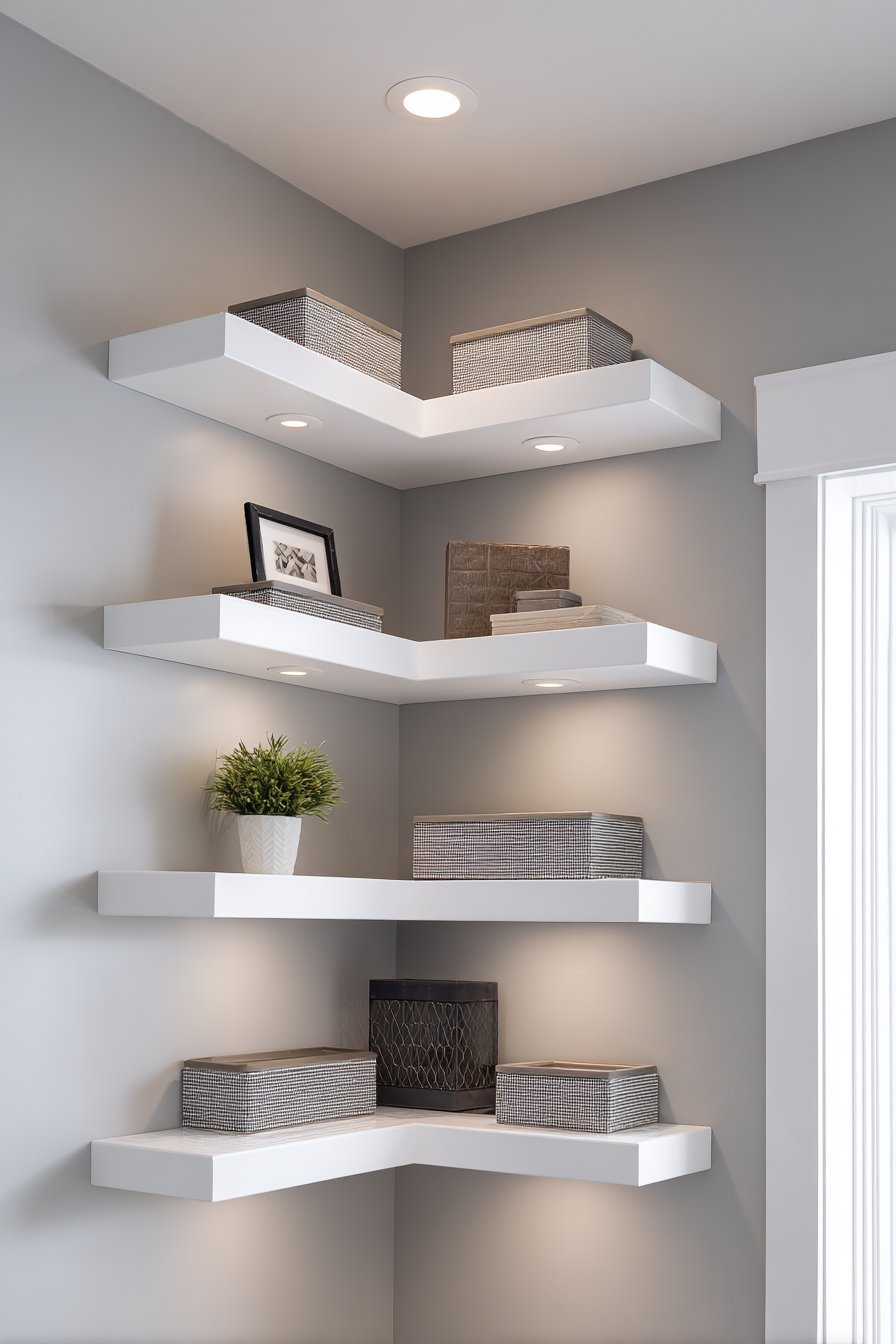
Lighting design elevates this minimalist installation from simple to sophisticated. Recessed lighting positioned directly above casts subtle downward illumination that defines each shelf edge through gentle shadow play. This technique creates dimensional awareness without dramatic contrast, maintaining the serene atmosphere essential to minimalist design. The shadows shift throughout the day as natural light mixes with artificial sources, adding subtle movement to an otherwise static composition.
Key Design Tips:
- Select floating shelves with weight ratings appropriate for office equipment and books to prevent sagging over time
- Maintain consistent spacing between shelves—typically 10-12 inches for office supplies and standard books
- Use the rule of thirds when arranging items, leaving approximately one-third of each shelf surface empty to preserve the minimalist aesthetic
- Coordinate storage containers in a limited color palette of two to three neutral shades for cohesive visual flow
- Install shelves at ergonomic heights that allow easy reach from a seated position without stretching or straining
3. Rustic Ladder-Style Corner Feature
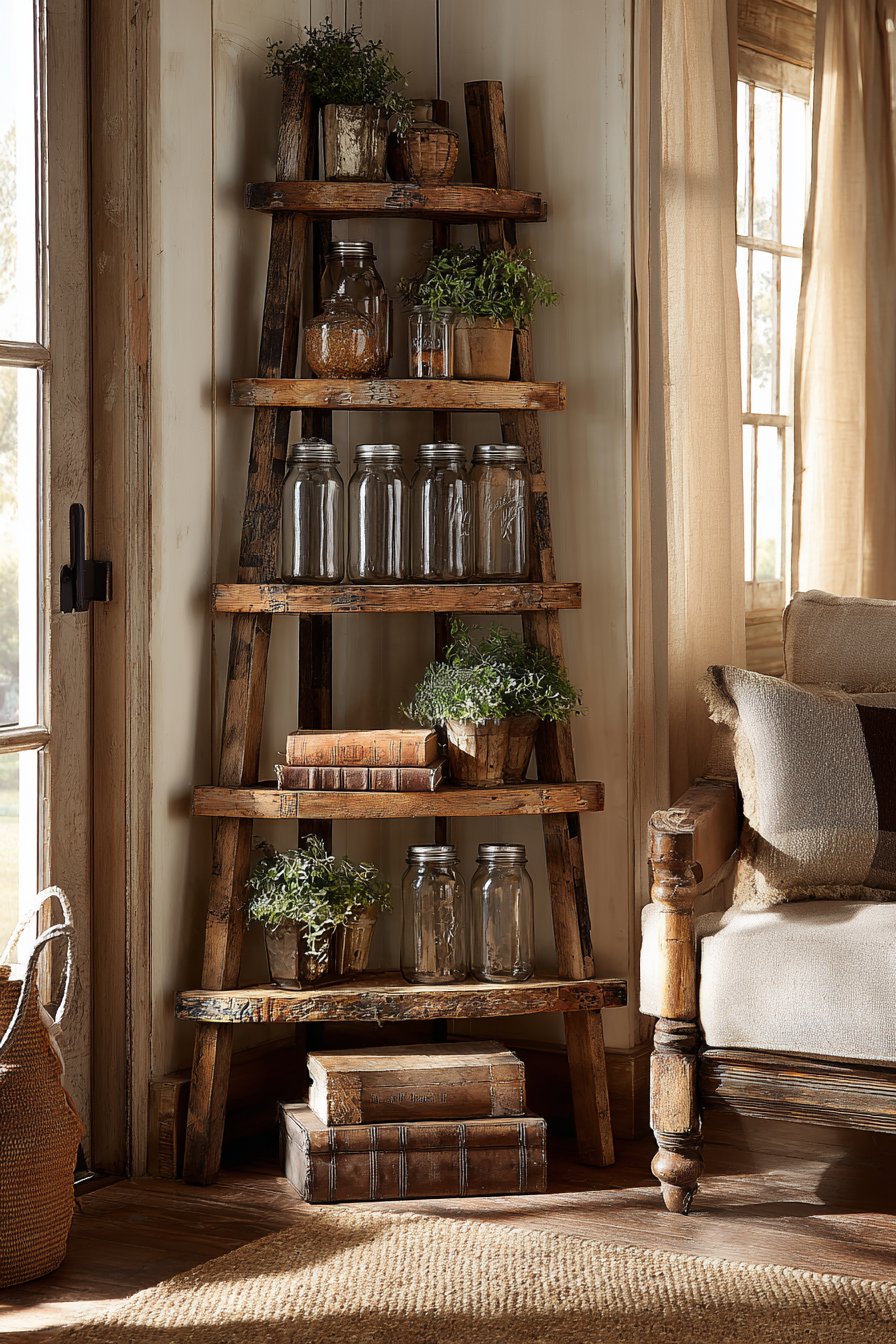
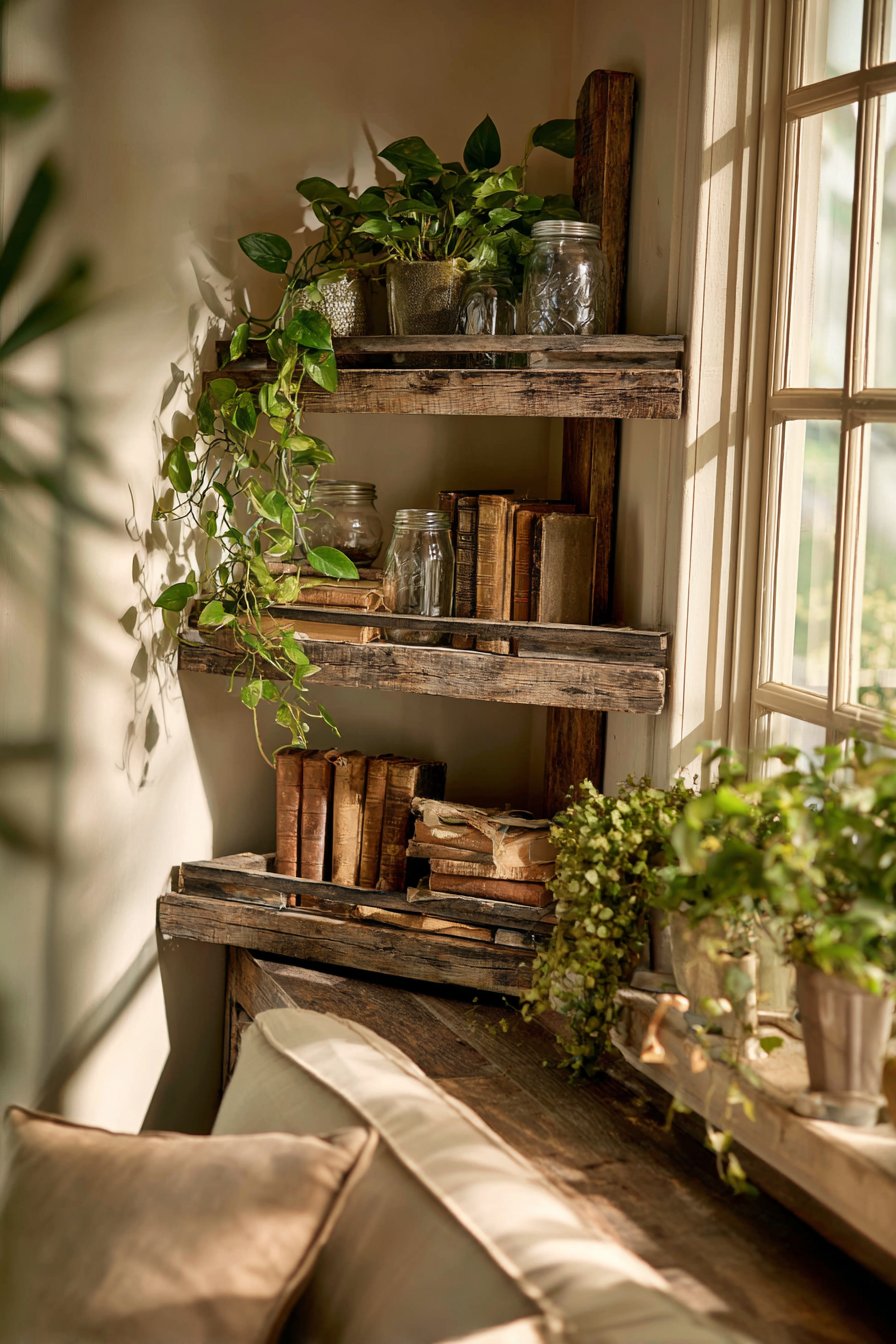
The ladder-style corner shelf brings architectural verticality and rustic authenticity to living spaces through its distinctive tiered construction. Crafted from weathered barn wood with five graduated tiers, this substantial piece makes a bold statement that celebrates handcrafted construction and the beauty of aged materials. The natural patina of barn wood—with its silvered surface, visible nail holes, and weathering patterns—cannot be replicated by artificial aging techniques, making each piece genuinely unique and imbued with authentic history.
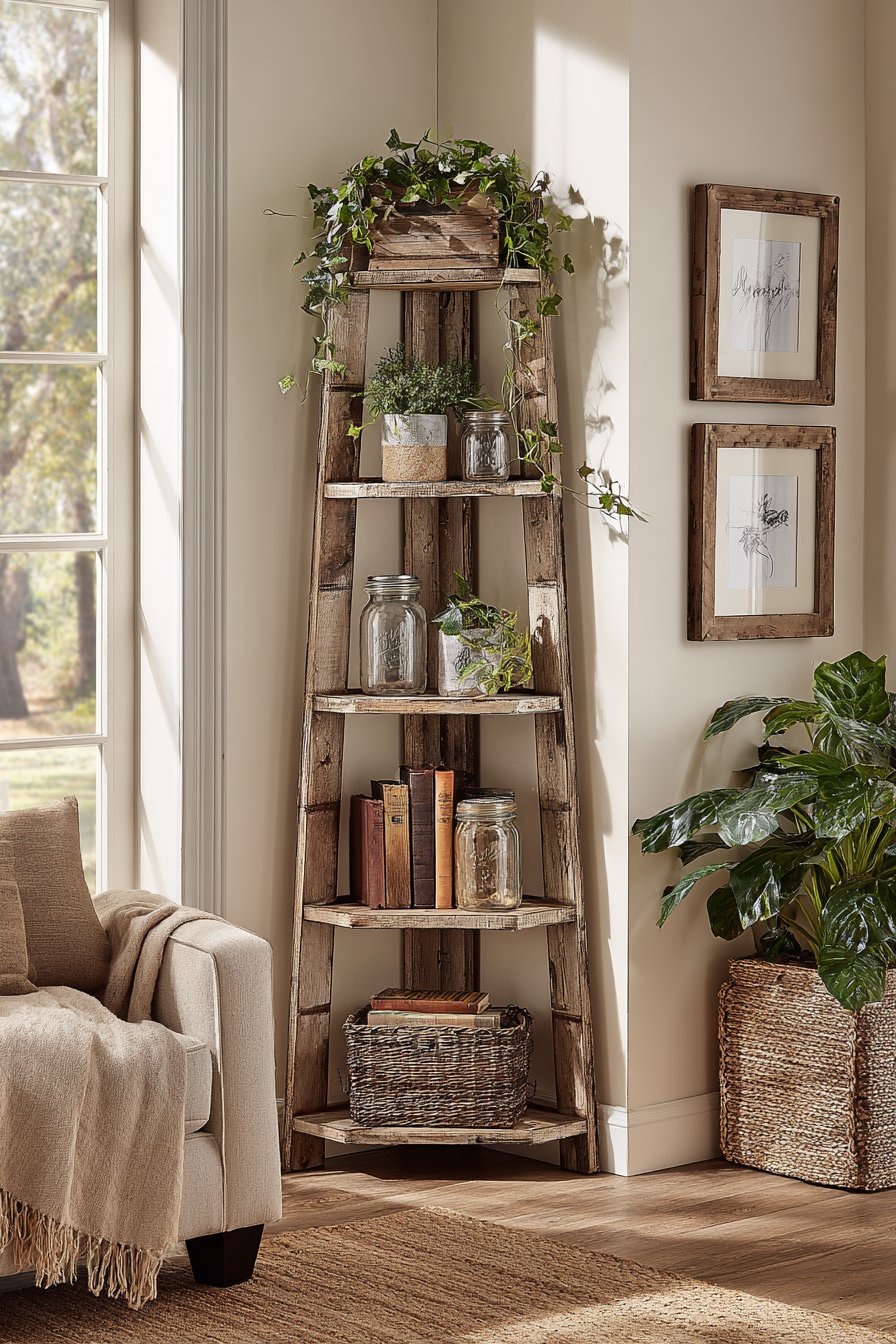
This farmhouse-style corner shelf becomes a canvas for eclectic styling that honors its rustic heritage. Vintage mason jars in various sizes cluster together, some holding dried flowers, others displaying collected curiosities like buttons or old keys. Trailing pothos plants cascade gracefully from upper tiers, their heart-shaped leaves creating living curtains of green that soften the rigid geometry of the ladder structure. Antique books with worn leather spines and faded gilt lettering stack horizontally and vertically, their well-loved appearance perfectly complementing the weathered wood.
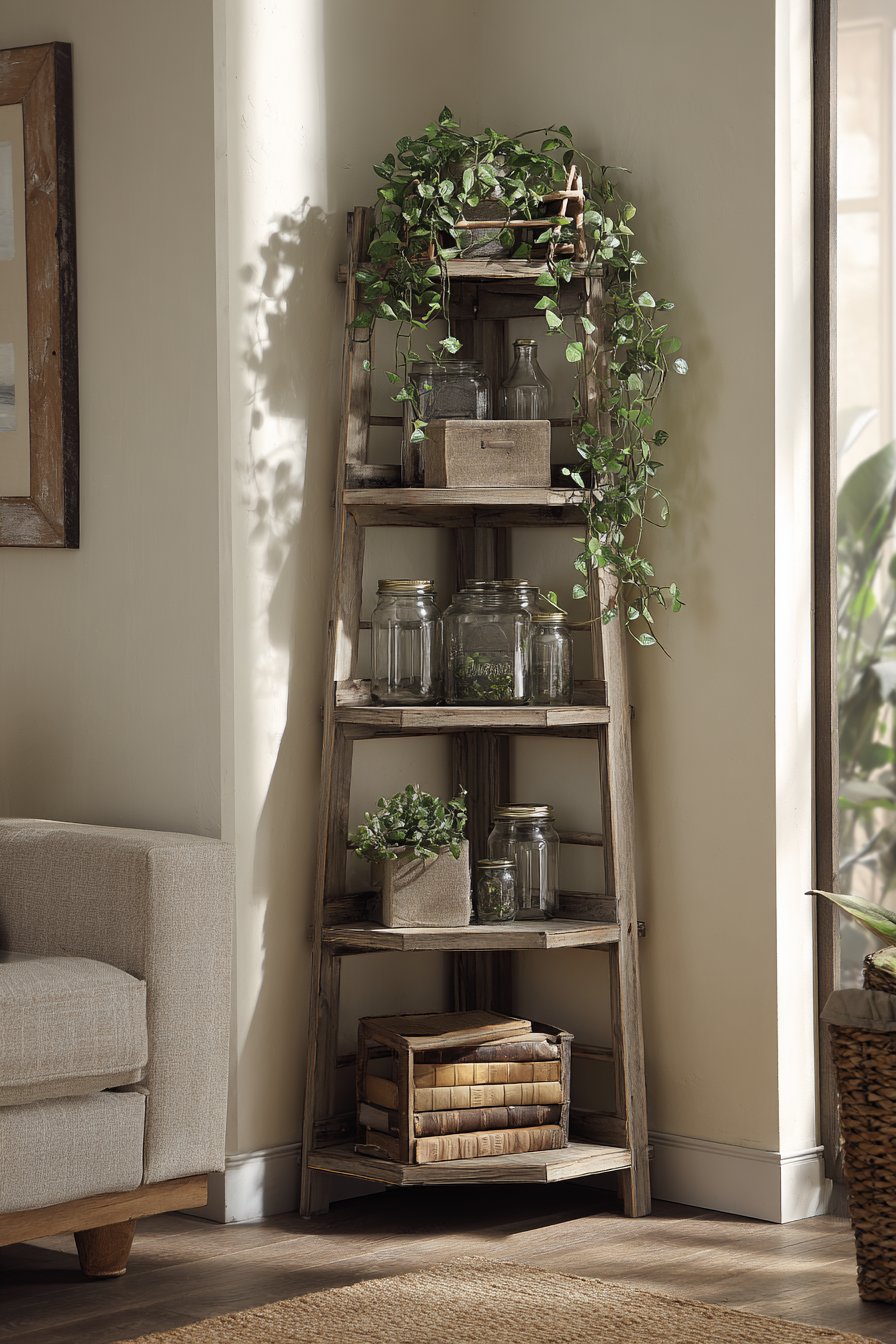
Natural morning light transforms this corner installation throughout the early hours, creating a warm glow across the distressed wood surface. As sunlight moves across the space, it illuminates different aspects of the display—catching the curve of a glass jar, highlighting the veining in a leaf, creating long shadows that emphasize the dimensional quality of the stacked books. This dynamic lighting reinforces the connection between natural materials and natural light sources, fundamental principles in farmhouse design aesthetics.
Key Design Tips:
- Ensure the ladder-style unit is securely anchored to wall studs at multiple points to prevent tipping, especially with heavier items on upper shelves
- Embrace asymmetrical arrangements that feel organic rather than forcing perfect symmetry
- Mix functional items with purely decorative pieces to create authentic farmhouse styling rather than museum-like display
- Allow trailing plants to grow naturally rather than constantly pruning them into controlled shapes
- Incorporate vintage pieces that show honest wear rather than artificially distressed new items for authentic character
4. Industrial Pipe and Wood Corner System
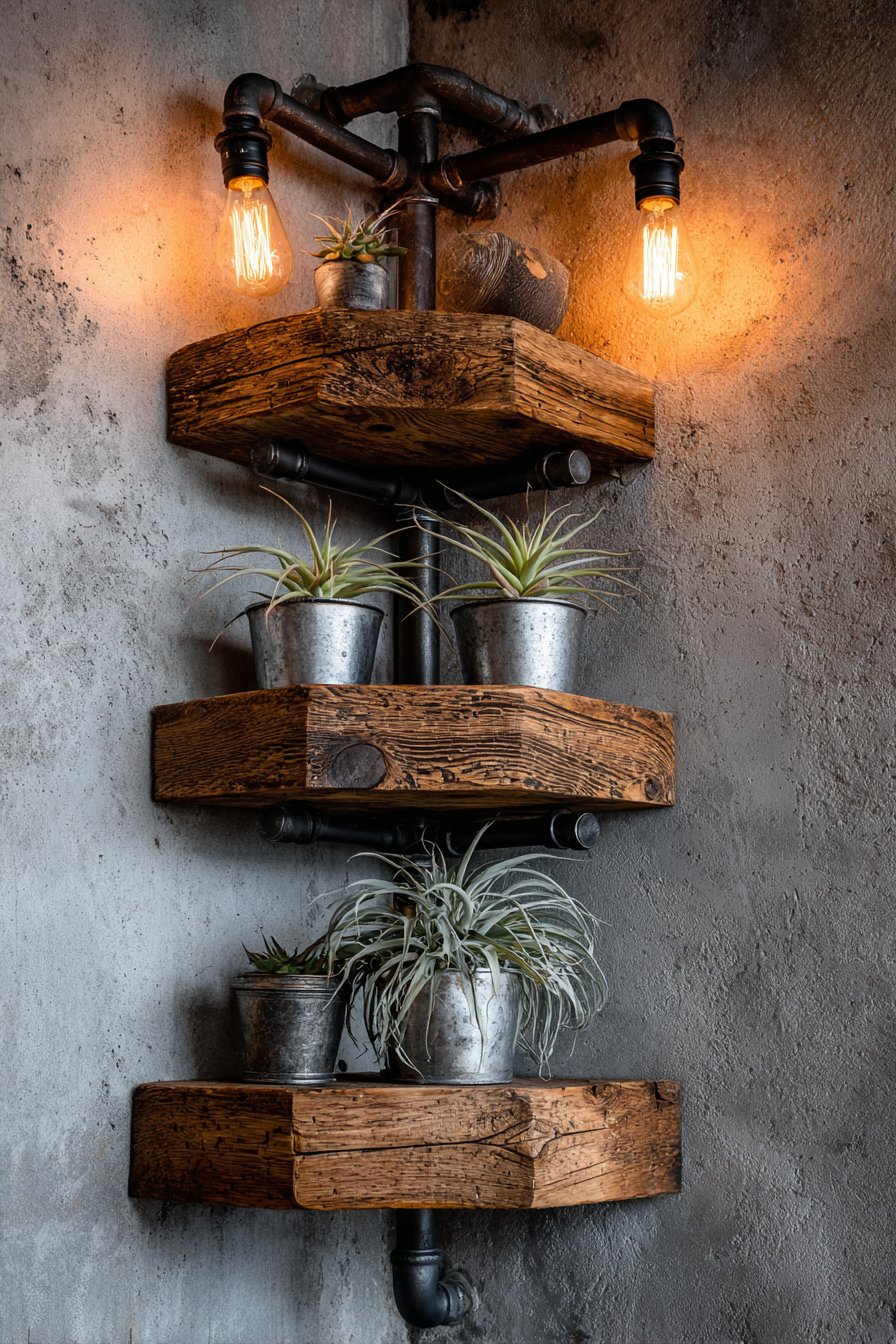
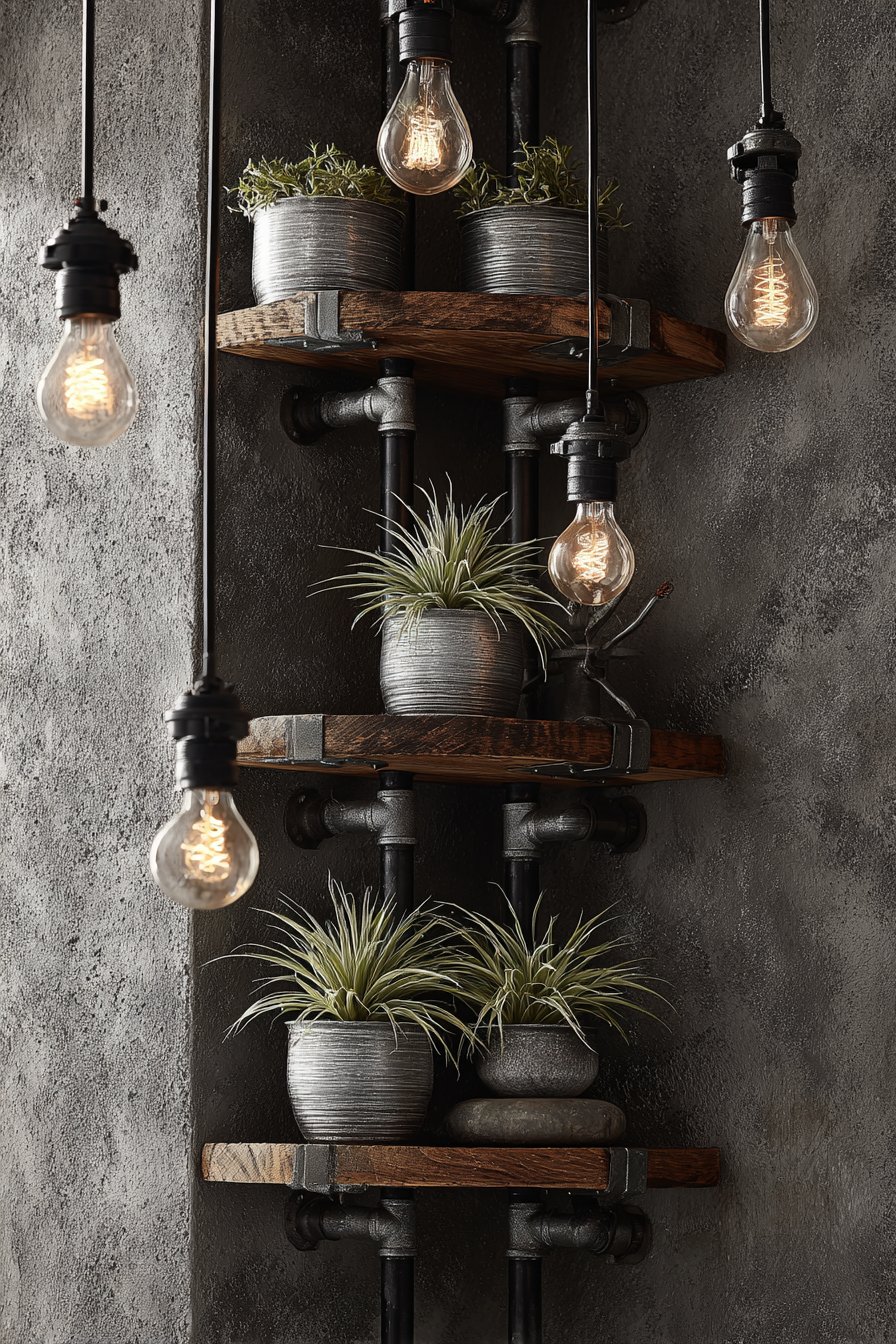
Raw materials and exposed construction define this industrial corner shelf concept, where black metal pipe framework provides structural support for reclaimed wood planks across five substantial tiers. This aesthetic celebrates the beauty of utilitarian design, drawing inspiration from converted loft spaces and urban warehouses where function takes precedence over ornamentation. The robust construction can support considerable weight, making it ideal for displaying heavier objects or extensive collections while maintaining the intentionally unfinished appearance central to industrial style.
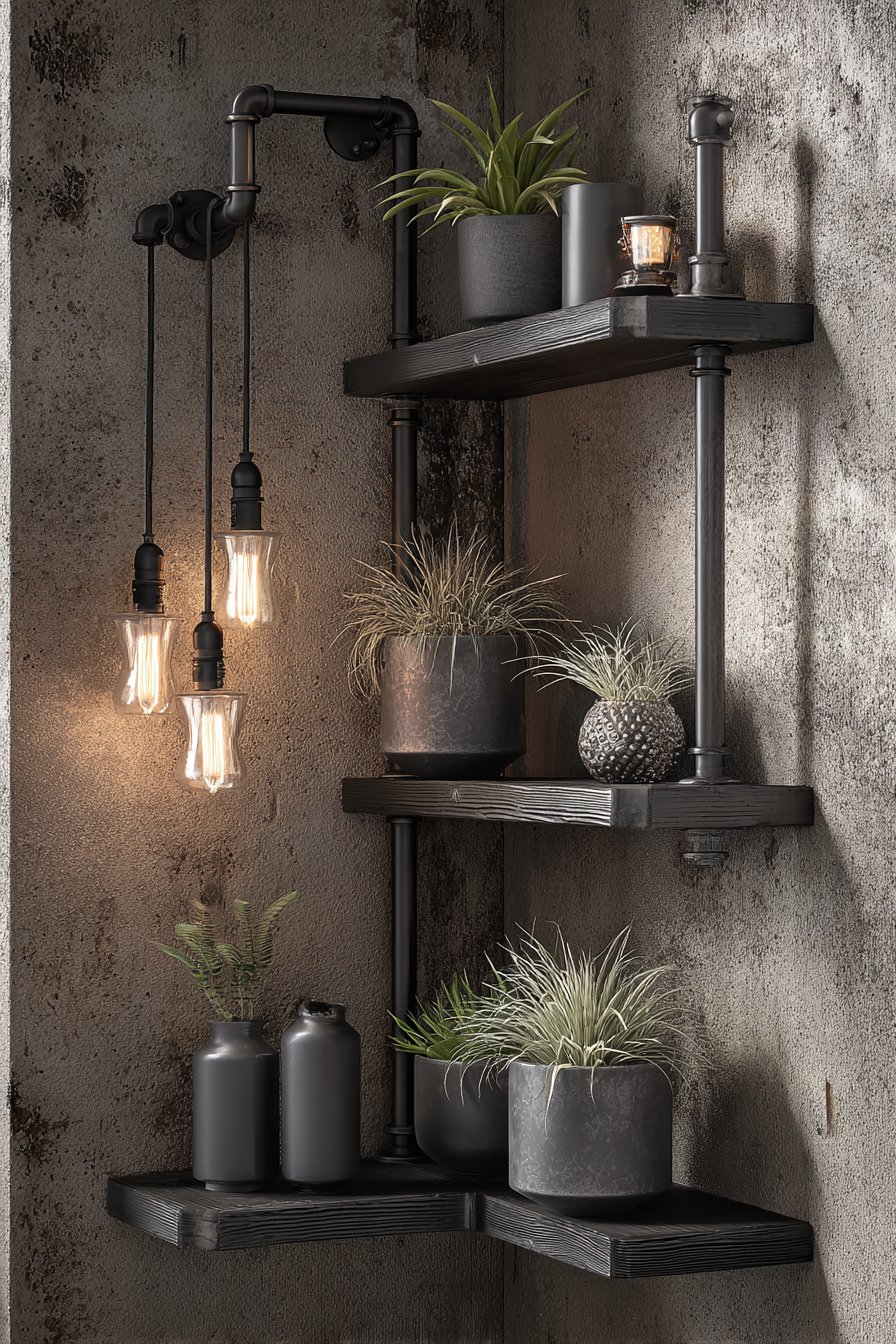
The styling of this corner shelf amplifies its urban edge through carefully selected accessories that complement rather than contradict the industrial framework. Exposed Edison bulb string lights weave through the metal pipes, their warm filament glow creating atmospheric lighting that contrasts with the cool metal and weathered wood. Metallic planters in brushed steel or antiqued copper hold sculptural air plants, whose minimal root systems align perfectly with the low-maintenance aesthetic of industrial design. Vintage industrial objects—old pulleys, gear mechanisms, or factory molds—become conversation pieces that honor the manufacturing heritage this style celebrates.
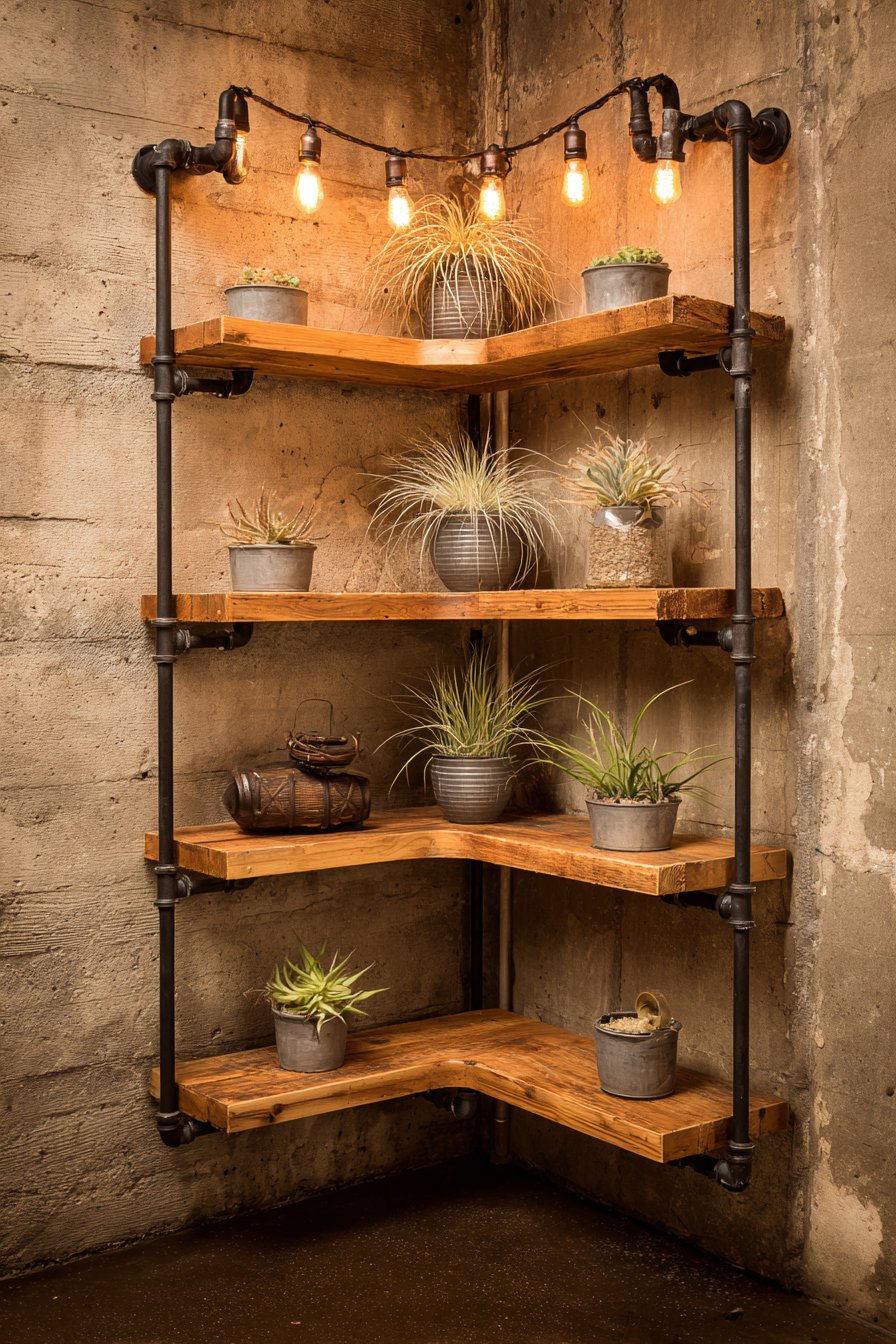
The concrete wall background serves as the perfect canvas for this industrial installation, its neutral gray tone and slightly rough texture echoing the unfinished quality of the materials. This backdrop allows the corner shelf to read clearly as a dimensional object rather than blending into decorated walls. The combination of raw concrete, weathered wood, and black metal creates a cohesive material palette rooted in construction and manufacturing—the very foundation of industrial design philosophy.
Key Design Tips:
- Use galvanized or powder-coated black pipe fittings for authentic industrial appearance and rust prevention
- Vary the depth of shelves from top to bottom, with deeper lower shelves for heavier items and shallower upper shelves for lighter displays
- Leave wood planks unsealed or finish with clear matte sealer to preserve their weathered character rather than glossy varnishes
- Incorporate vintage industrial lighting as both functional illumination and decorative element
- Balance metal and wood elements equally throughout the composition rather than allowing one material to dominate
5. Bohemian Macrame Hanging Corner Organizer
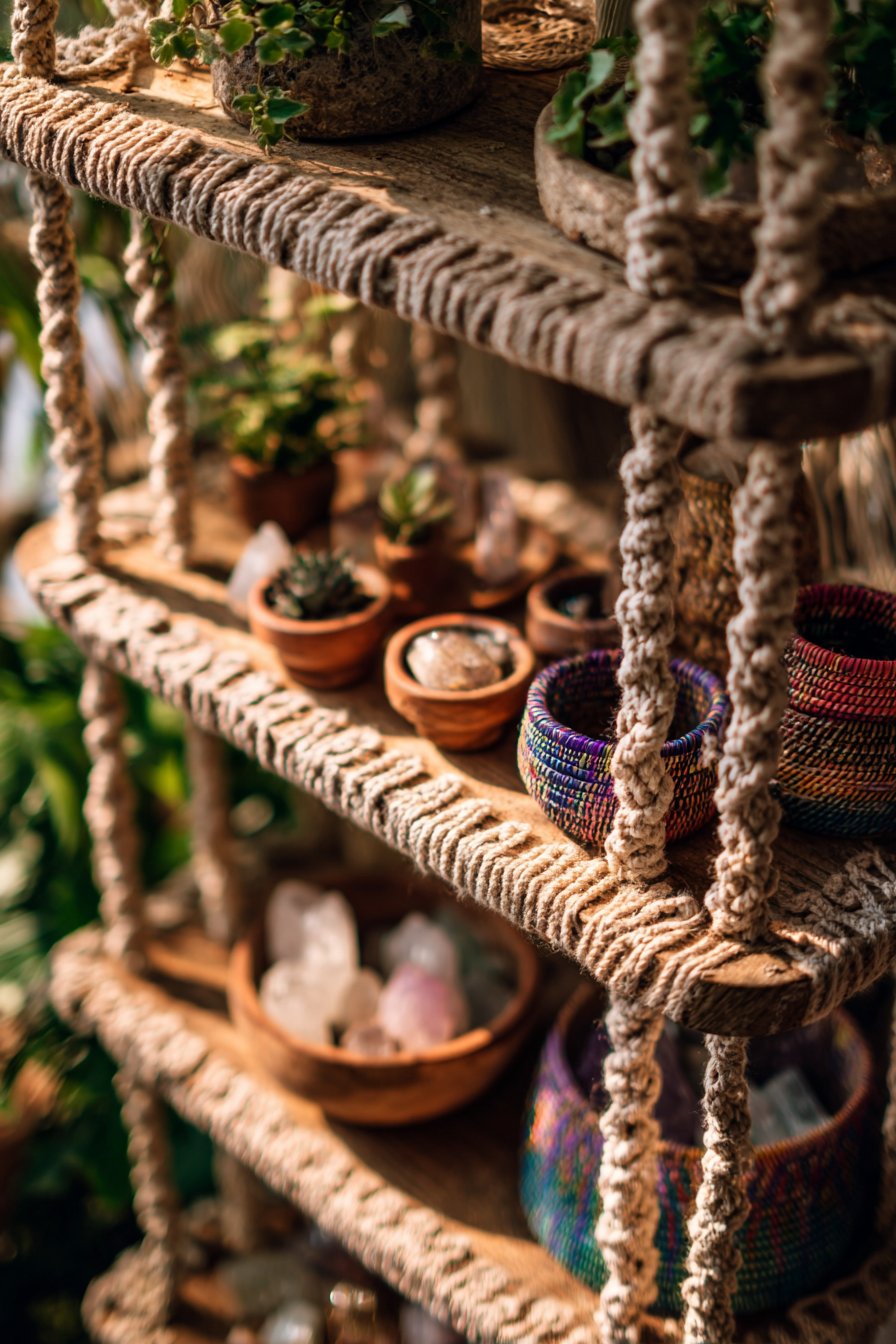
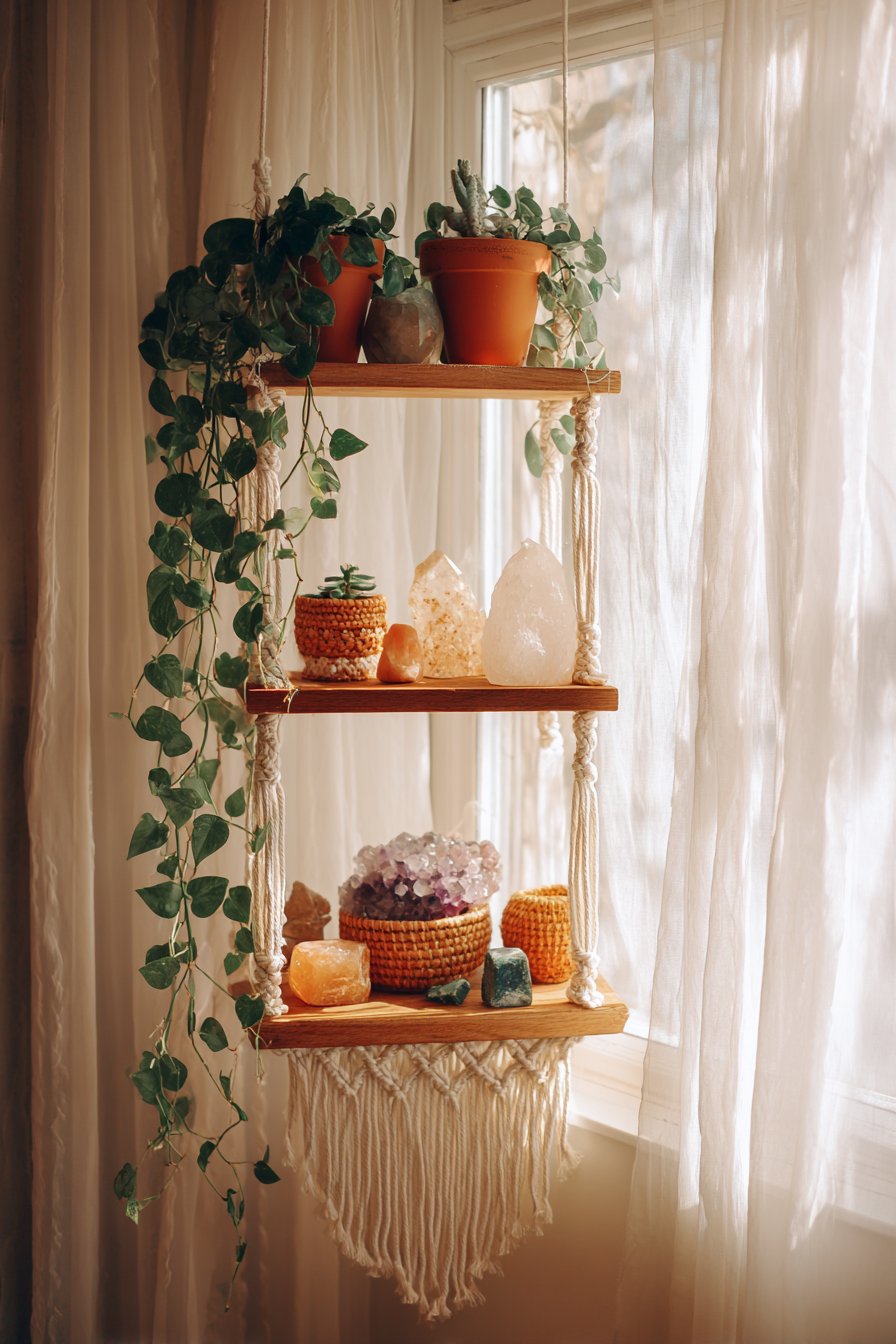
Bringing fiber arts into three-dimensional storage, the macramé hanging corner shelf introduces softness and handcrafted artistry into the typically hard-edged world of shelving. Natural jute rope knotted in intricate patterns creates the supporting structure, while wooden dowels provide the horizontal platforms for displaying cherished objects. This approach transforms the corner into a suspended gallery that seems to float in space, its connection to the ceiling creating vertical visual movement that draws the eye upward and makes rooms feel taller and more expansive.
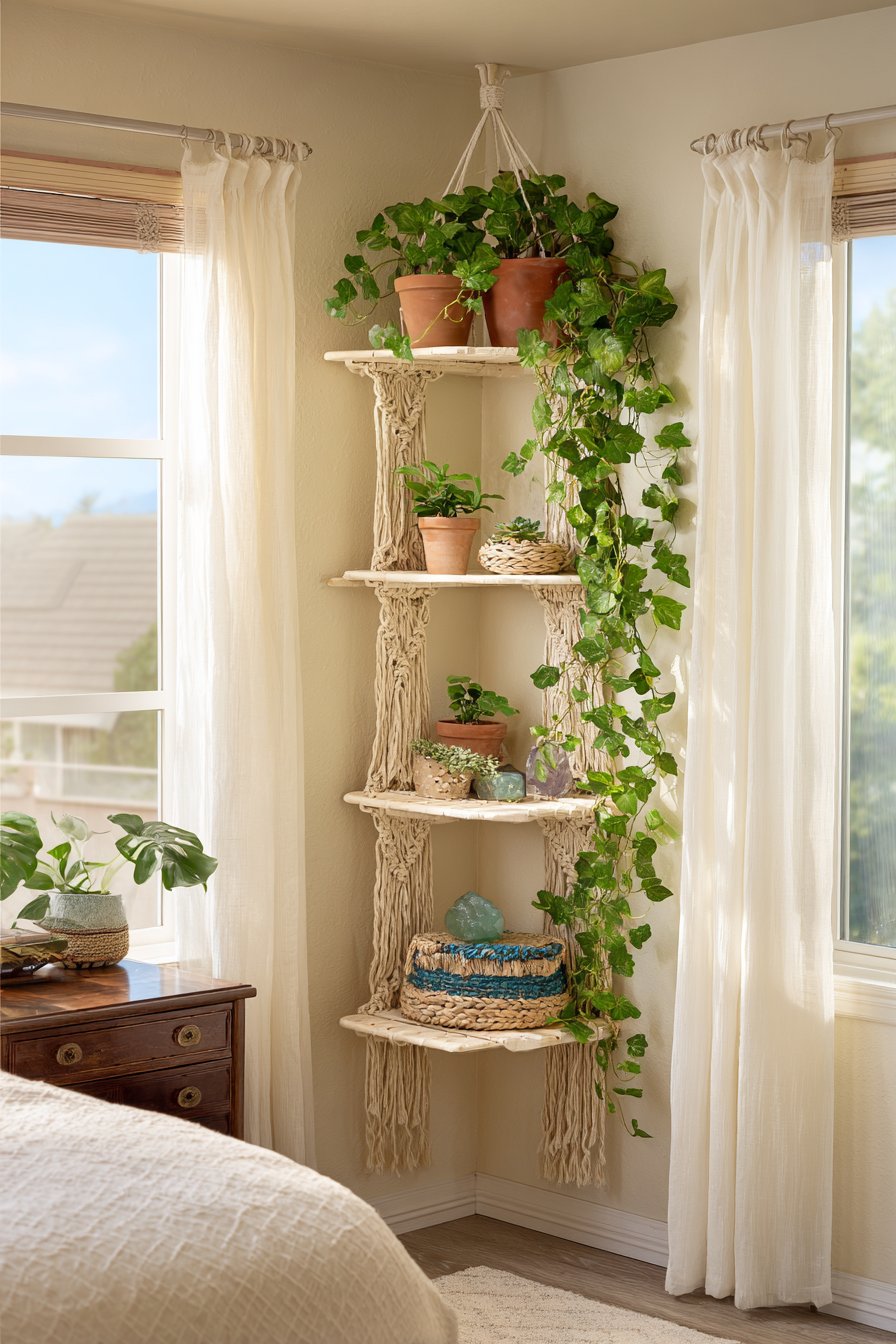
The bohemian styling of this corner shelf celebrates organic materials and global influences. Small terracotta pots nestle into the rope cradles, their warm orange clay complementing the natural fiber tones while supporting trailing ivy that cascades downward in living green waterfalls. Colorful woven baskets from various cultural traditions—perhaps a Ghanaian bolga basket, a Mexican otomi design, or Native American-inspired patterns—add textural and chromatic richness. Crystal specimens catch and refract light, their geometric clarity providing striking contrast against the organic fibers and living plants.
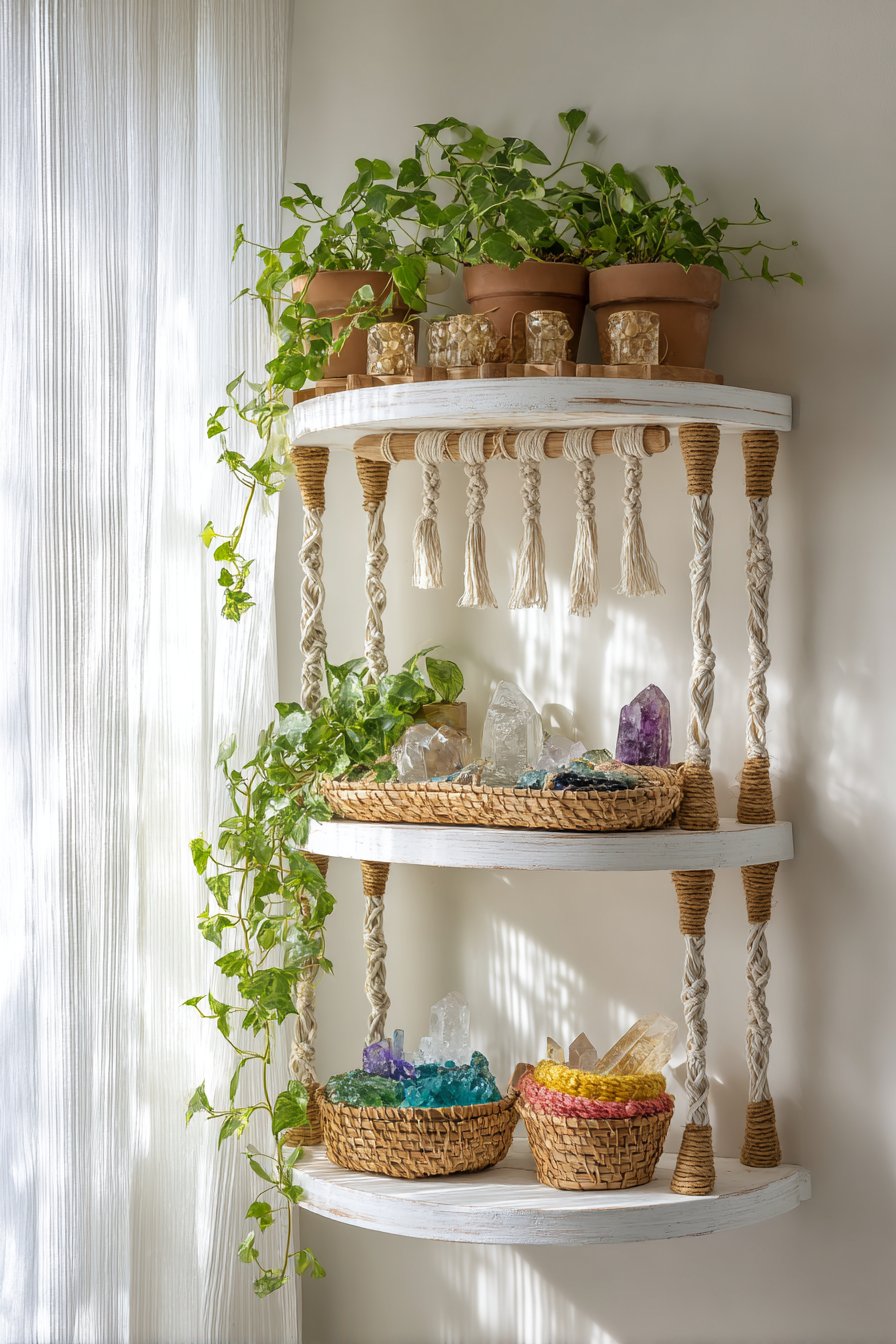
Soft diffused daylight filtering through sheer curtains creates the ideal lighting environment for this bohemian corner installation. Unlike harsh direct sunlight that might fade fabrics or stress plants, this gentle illumination creates a dreamy, ethereal quality that aligns perfectly with bohemian sensibilities. The lightweight nature of the macramé allows it to sway almost imperceptibly with air currents, adding subtle movement that makes the corner feel alive and responsive rather than static and fixed.
Key Design Tips:
- Use sturdy ceiling anchors rated for significantly more weight than your loaded shelf will actually bear, as fiber stretches over time
- Incorporate wooden dowels that extend slightly beyond the rope for visual weight and easier item placement
- Mix plant types with varying water needs and light requirements to ensure the entire display remains healthy
- Layer textures by combining smooth ceramics, rough baskets, crystalline minerals, and soft textiles
- Adjust rope lengths to create uneven tier heights for more organic, less regimented appearance
6. Scandinavian Light Birch Corner Shelves
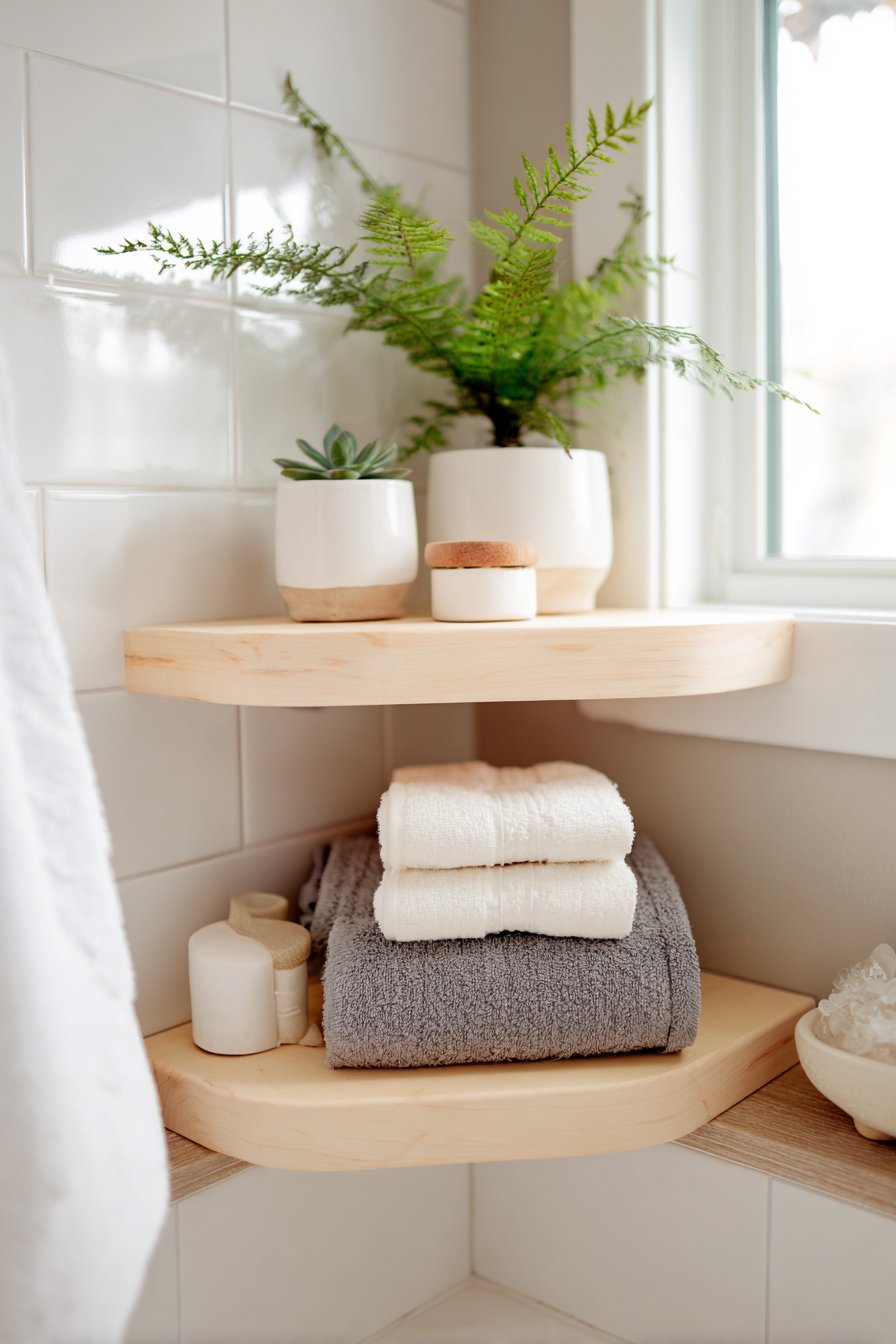
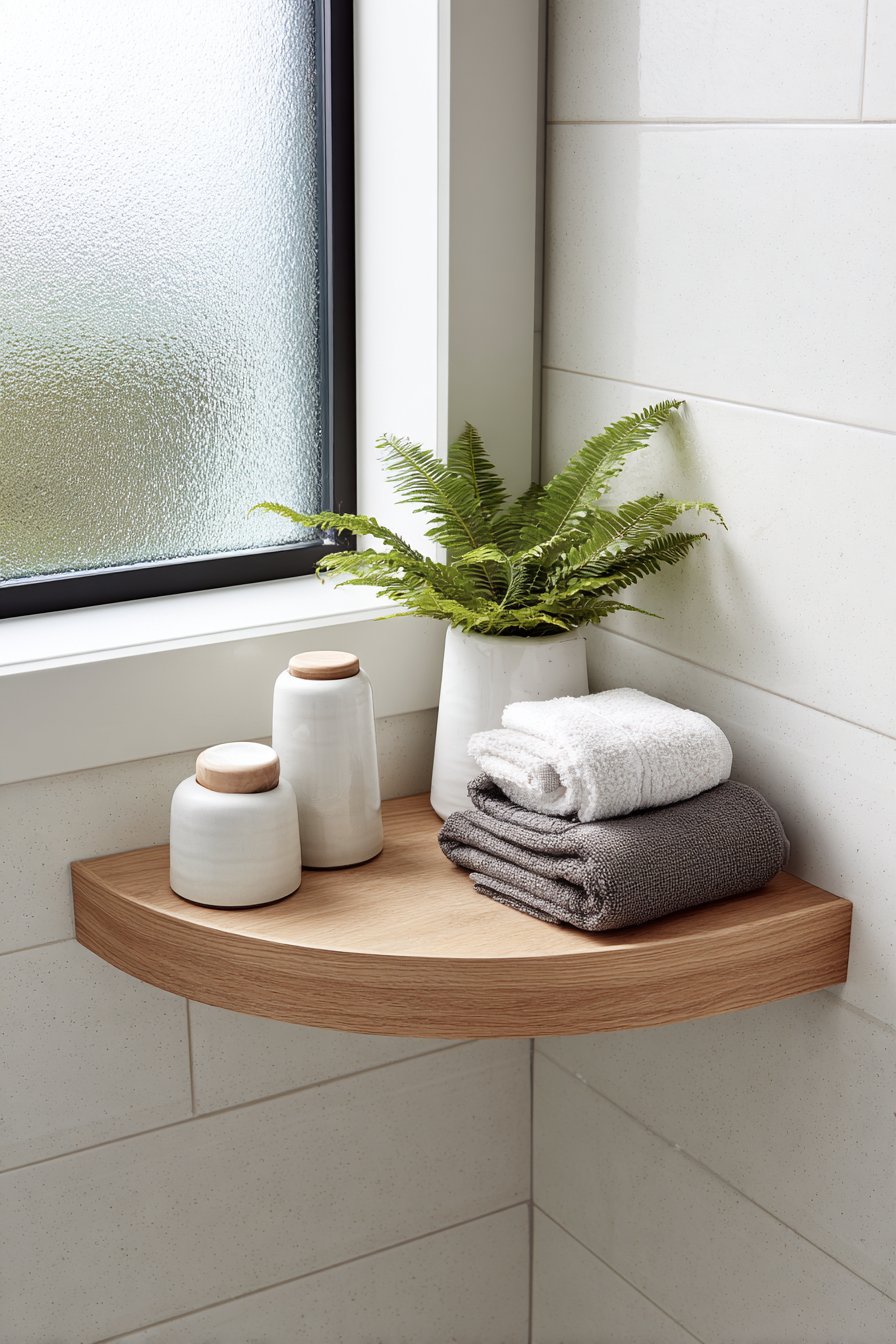
The Scandinavian design philosophy of “lagom”—not too much, not too little, just right—finds perfect expression in these light birch floating corner shelves. The pale blonde wood with its subtle grain and rounded edges embodies Nordic simplicity, bringing warmth without heaviness and structure without rigidity. Positioned in a bright bathroom where natural light is abundant, these shelves maintain the airy, uncluttered aesthetic fundamental to Scandinavian interiors while providing essential storage and display surfaces.
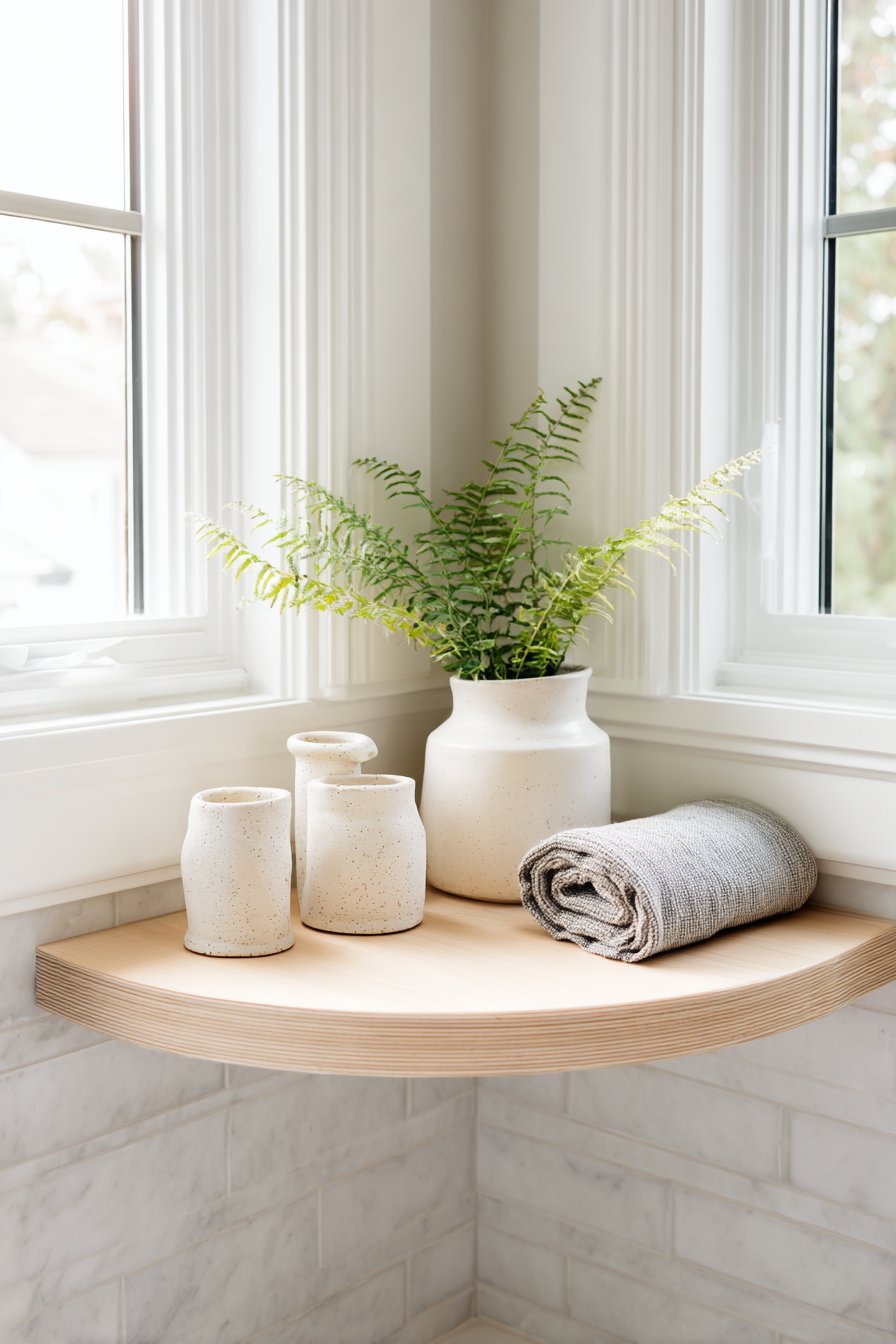
The carefully curated items on these corner shelves demonstrate restraint and intentionality characteristic of Nordic design. White ceramic containers with clean lines hold bathroom essentials, their pure color creating striking contrast against the warm wood while maintaining the light, bright atmosphere. Rolled linen towels in soft gray nestle compactly on the middle tier, their natural fiber texture and muted tone perfectly aligned with Scandinavian material preferences. A small potted fern introduces living greenery, its delicate fronds adding organic movement while purifying air—a practical benefit valued in Nordic homes where long winters mean limited fresh air circulation.
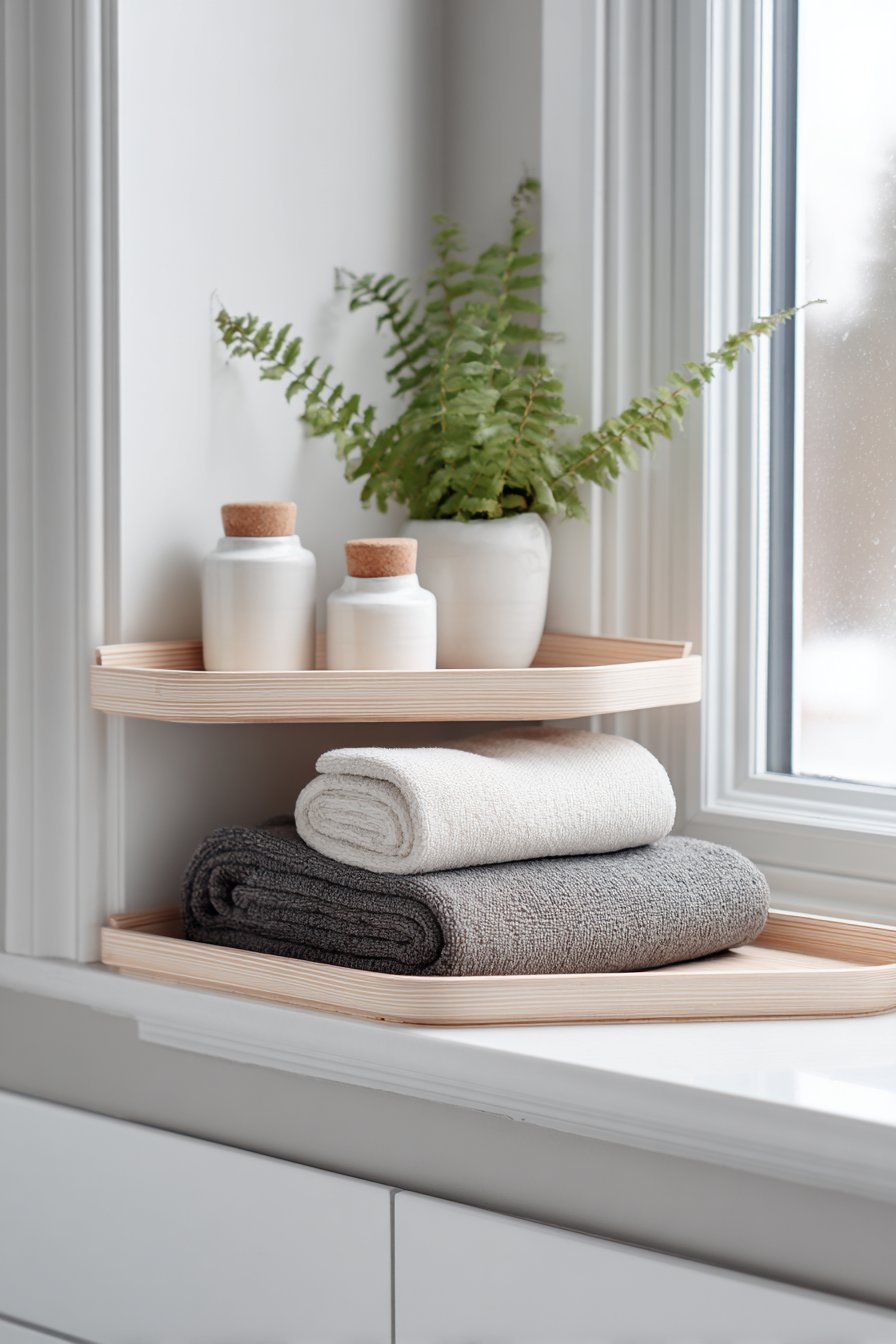
Natural light from a frosted window creates gentle highlights across the birch wood surface, emphasizing its smooth finish and subtle grain patterns. The frosted glass diffuses direct sunlight into soft, even illumination that prevents harsh shadows while maintaining privacy—a classic Scandinavian solution to the challenge of bringing light into private spaces. This thoughtful lighting approach creates a serene, spa-like atmosphere where every element works in harmony toward the goal of peaceful simplicity.
Key Design Tips:
- Choose birch or other light woods native to Scandinavia for authentic Nordic aesthetic
- Limit displayed items to essentials plus one or two decorative elements per shelf to maintain characteristic restraint
- Use a limited color palette dominated by whites, grays, and natural wood tones with perhaps one accent color
- Incorporate natural materials like linen, ceramic, and living plants rather than synthetic alternatives
- Maintain clean surfaces and uncluttered compositions, editing regularly to prevent accumulation
7. Compact Bamboo Kitchen Corner Storage
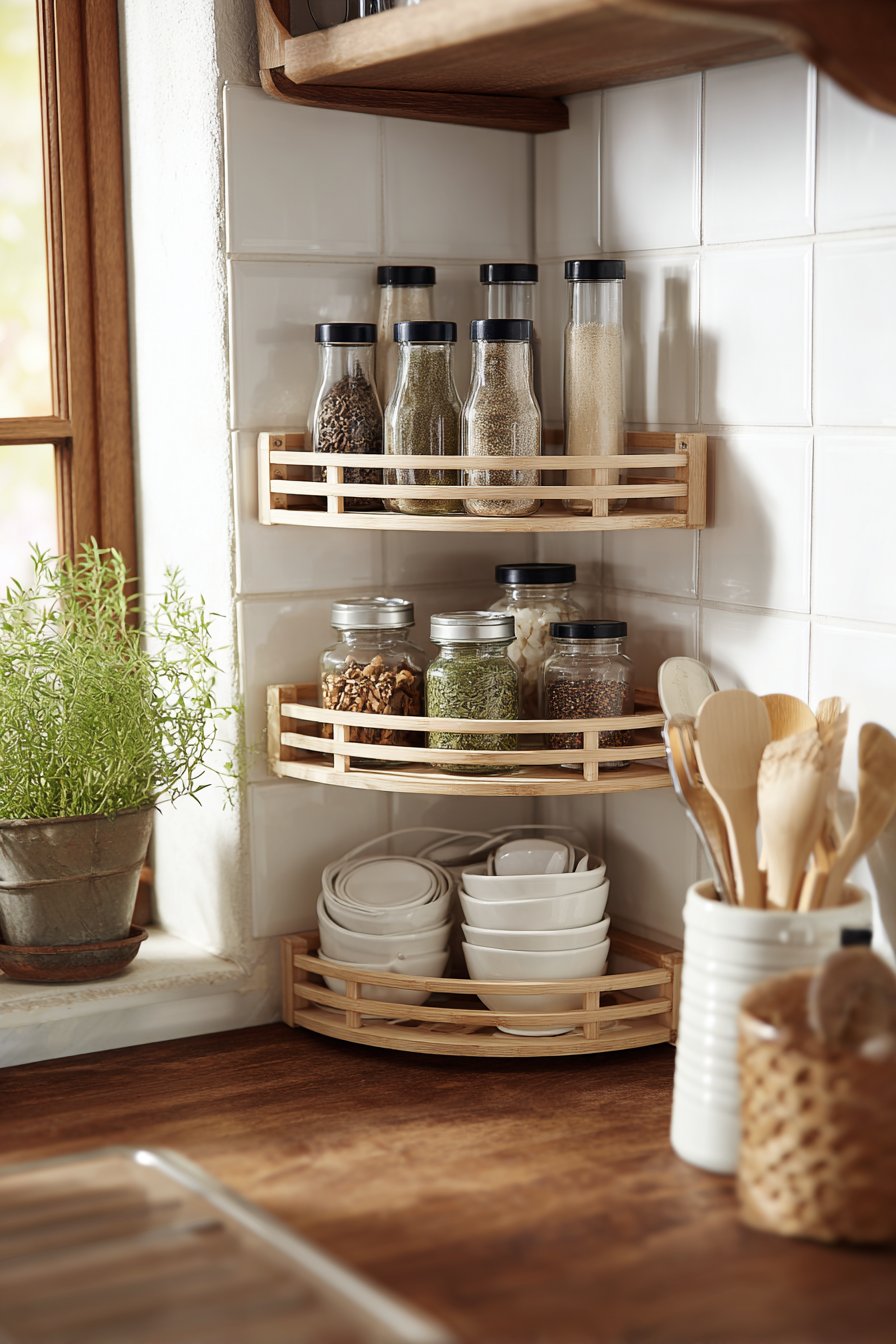
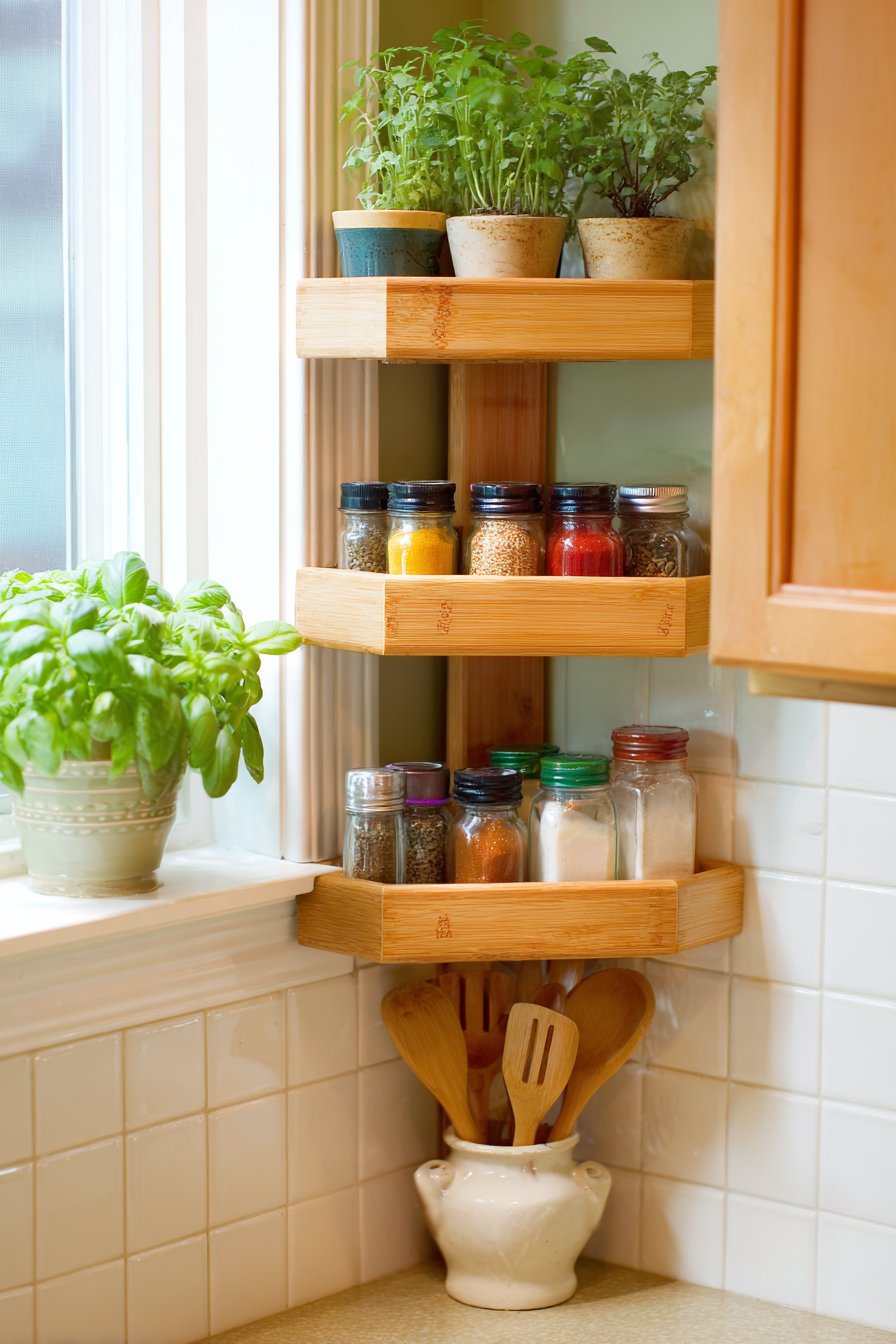
Small kitchens demand creative solutions, and this compact three-tier bamboo corner shelf maximizes vertical space in a narrow kitchen corner without overwhelming the area. Bamboo’s rapid growth rate and sustainable harvesting practices make it an environmentally conscious choice, while its natural strength-to-weight ratio provides durability despite its lightweight appearance. The warm honey tones of bamboo bring organic warmth into kitchens that might otherwise feel cold or institutional, creating a welcoming atmosphere in the heart of the home.
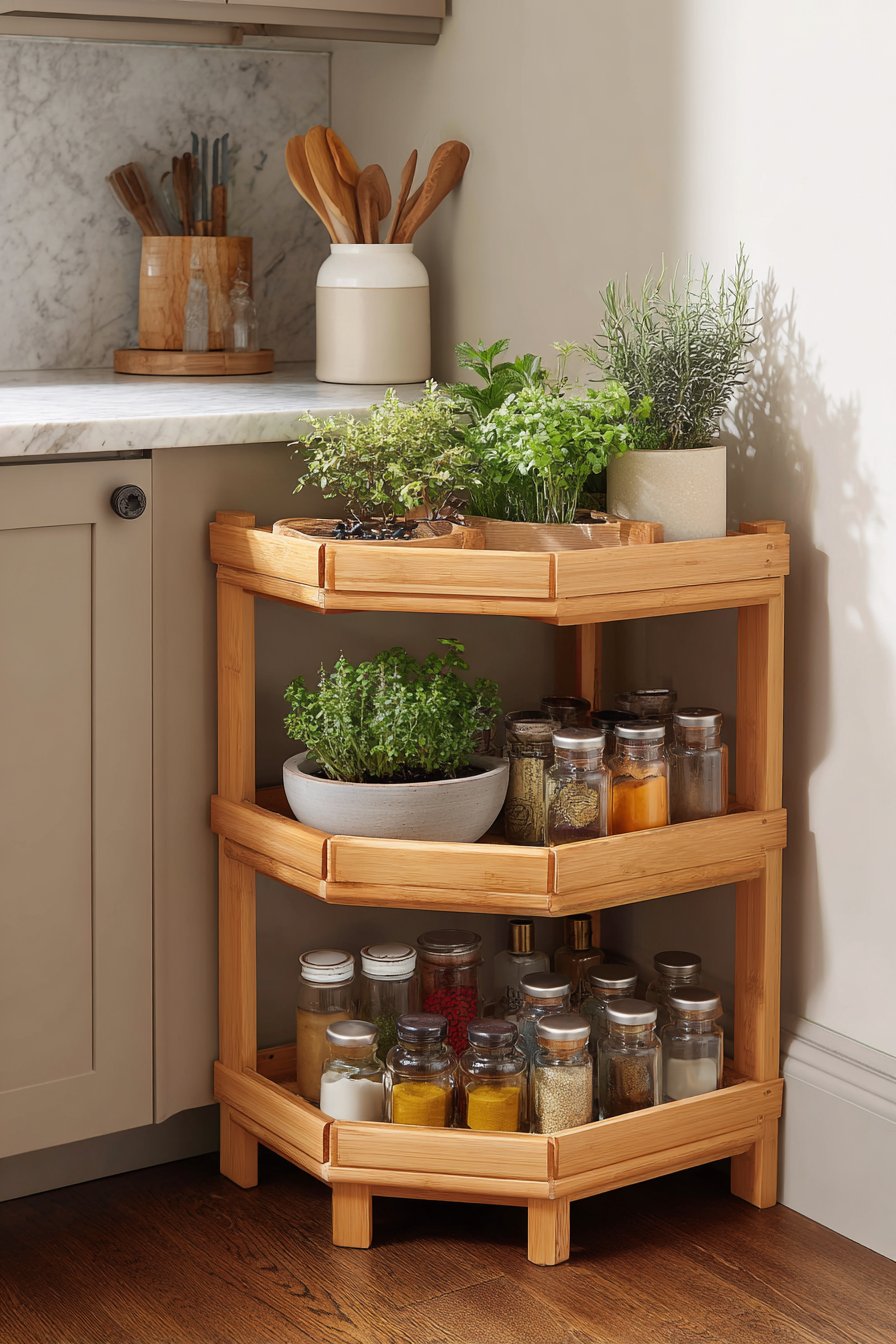
The practical organization achieved through this corner shelf demonstrates how functional storage can also be visually appealing. Everyday spice jars arranged by height or frequency of use become an accessible display that streamlines cooking processes. Small cooking utensils rest in a handmade ceramic holder, their vertical storage saving drawer space while keeping essential tools within arm’s reach. A miniature herb garden on the top tier brings fresh ingredients into the cooking zone—snip basil for pasta, pluck thyme for roasted vegetables, or garnish dishes with fresh parsley, all without leaving the prep area.
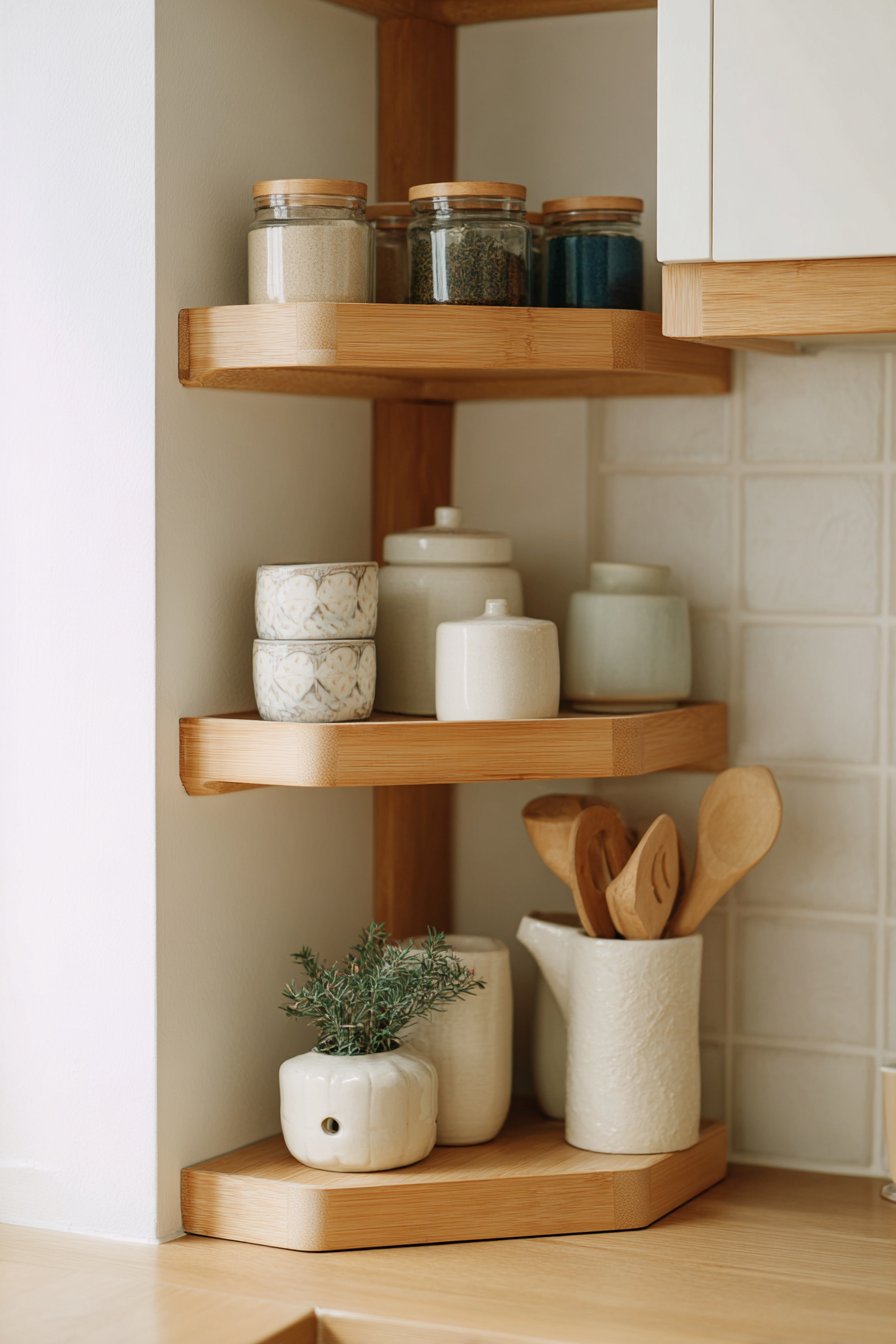
Under-cabinet lighting illuminates this practical corner solution, making it functional even during evening meal preparation when natural light has faded. This strategic lighting placement eliminates shadows that could make finding specific spices or utensils difficult, while also highlighting the bamboo’s attractive grain patterns. The warm LED glow creates inviting ambiance that transforms utilitarian kitchen storage into a design feature that contributes to the overall aesthetic quality of the space.
Key Design Tips:
- Select bamboo shelves with water-resistant treatment appropriate for kitchen environments where humidity and occasional splashes occur
- Organize spices in uniform containers for visual cohesion and easier identification
- Position the shelf within comfortable reach from main prep areas but away from direct heat sources like stovetops
- Use the top tier for items accessed less frequently while keeping daily essentials at mid-level for ergonomic efficiency
- Incorporate small drainage trays under herb pots to protect bamboo from water damage
8. Mid-Century Modern Teak Corner Display
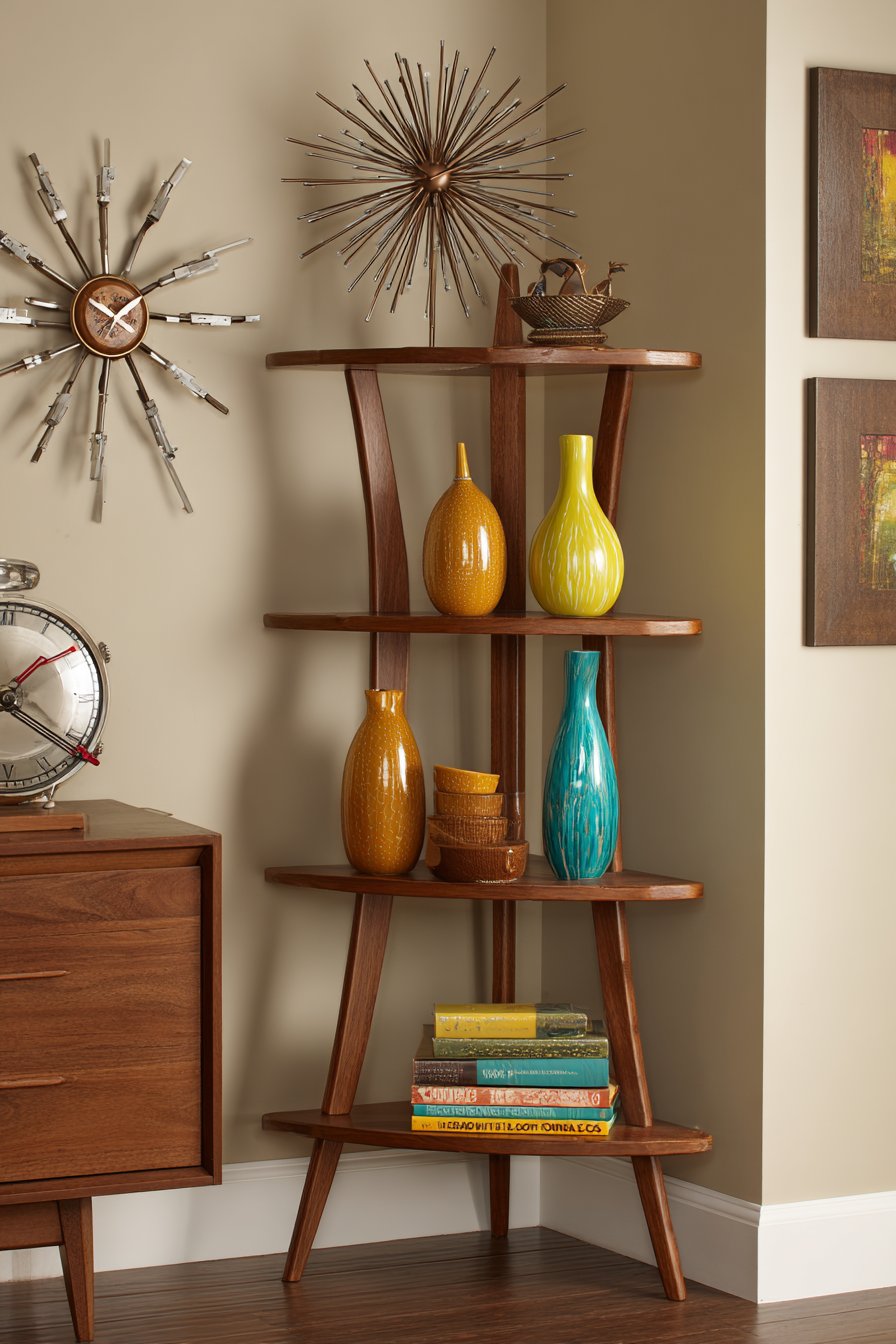
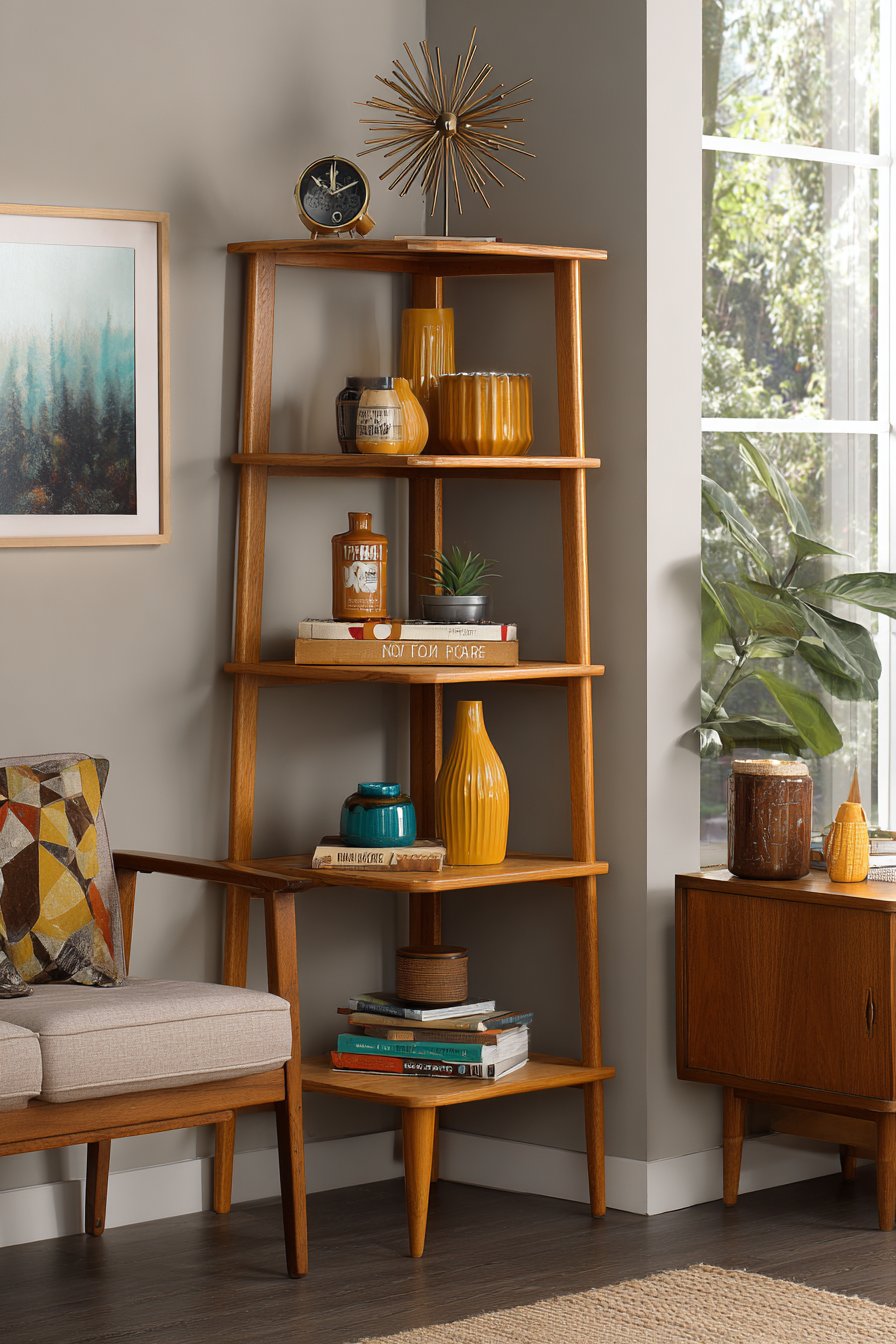
The enduring appeal of mid-century modern design shines through this tapered teak corner shelf with angled legs and geometric open shelving. The warm reddish-brown tones of teak wood, prized in the 1950s and 60s for its beauty and durability, create instant vintage atmosphere while the clean geometric lines prevent the piece from feeling dated. This style represents a pivotal moment in design history when functionality and beauty were considered inseparable qualities, and that philosophy remains relevant in contemporary interiors.
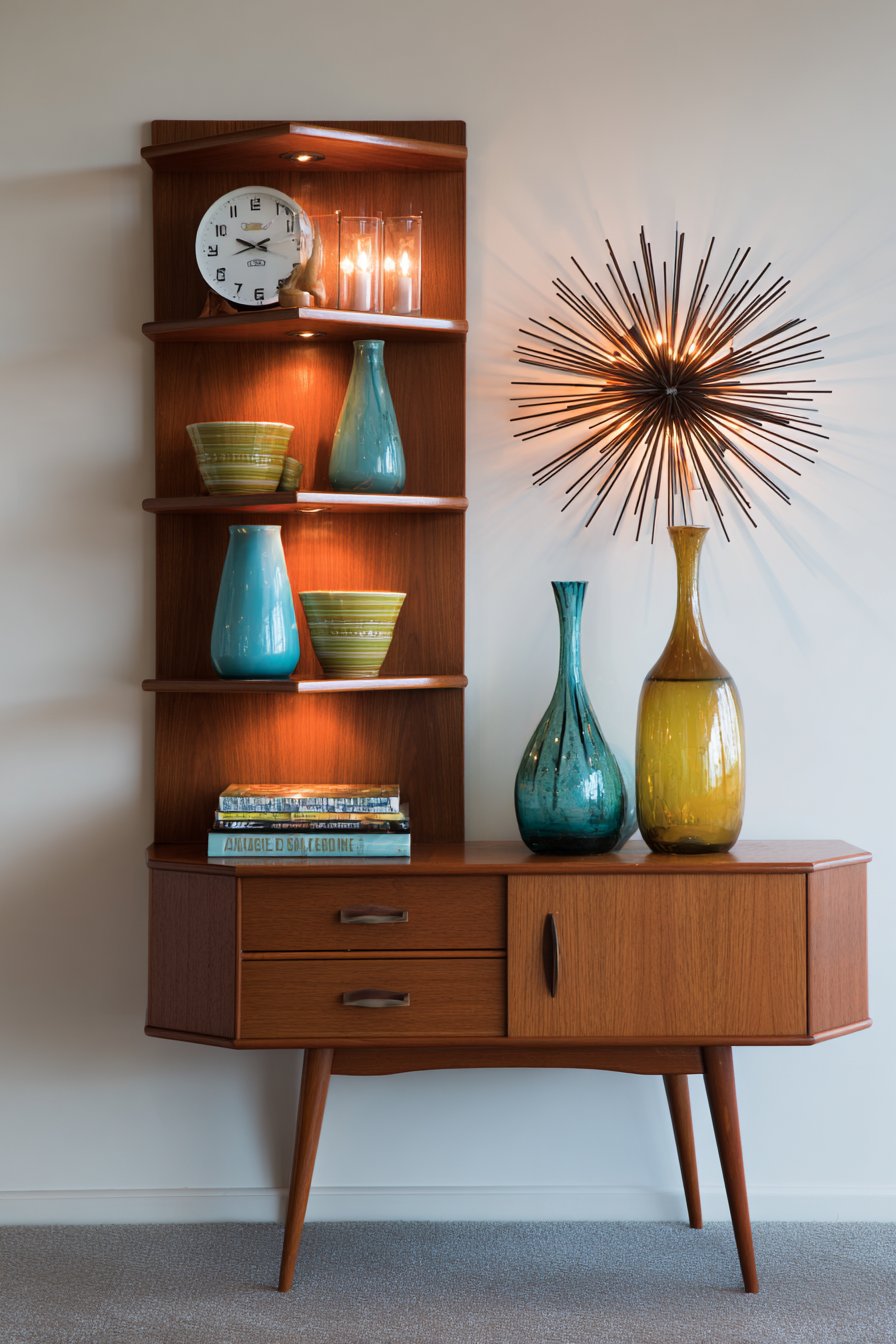
Period-appropriate accessories transform this corner shelf into a time capsule of mid-century aesthetic values. A starburst clock with radiating metal spokes captures the atomic age’s optimism and fascination with space exploration. Ceramic vases in signature mid-century colors—mustard yellow, teal blue, burnt orange—display their sculptural forms, many from renowned designers like Bitossi or Carstens. Coffee table books celebrating 1960s design, architecture, and graphic arts lean against one another, their vibrant covers creating colorful vertical accents that complement the warm teak.
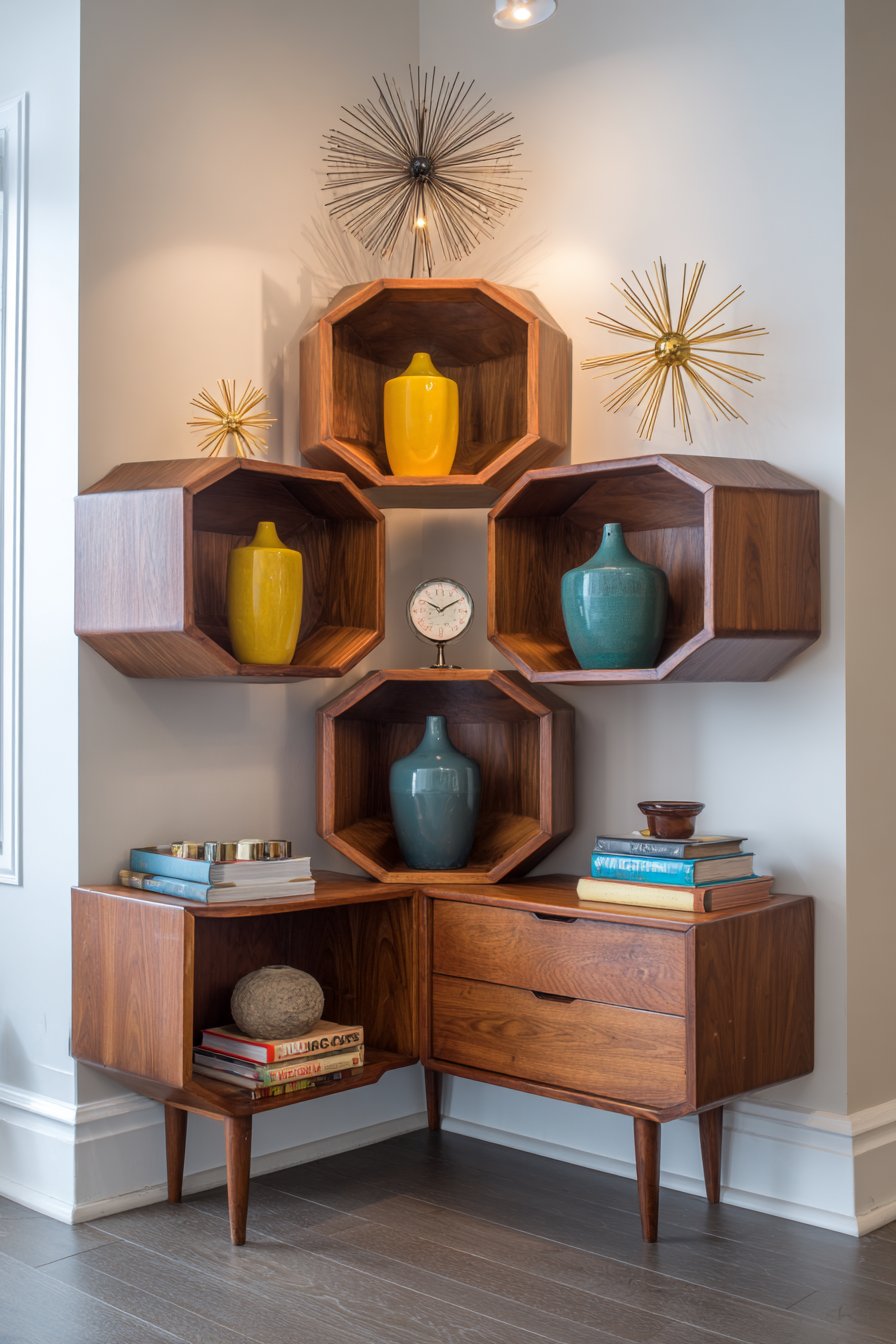
Warm ambient lighting recreates the cozy atmosphere characteristic of mid-century interiors, where table lamps with fabric shades created pools of golden light throughout rooms. This softer illumination approach contrasts with today’s bright, uniform lighting schemes, instead creating intimate zones and emphasizing the corner shelf as a special vignette within the larger room. The nostalgic quality of this lighting reinforces the vintage character while maintaining livability for modern use.
Key Design Tips:
- Seek authentic vintage teak pieces or high-quality reproductions that honor original construction methods and proportions
- Focus on the characteristic mid-century color palette of warm woods, mustard, teal, orange, and avocado green
- Incorporate iconic design objects from the era even if smaller reproductions rather than expensive originals
- Maintain the period’s preference for clean surfaces and uncluttered displays rather than overcrowding shelves
- Mix authentic vintage finds with quality modern pieces to create livable spaces rather than museum recreations
9. Glass and Chrome Modern Bathroom Corner Shelves
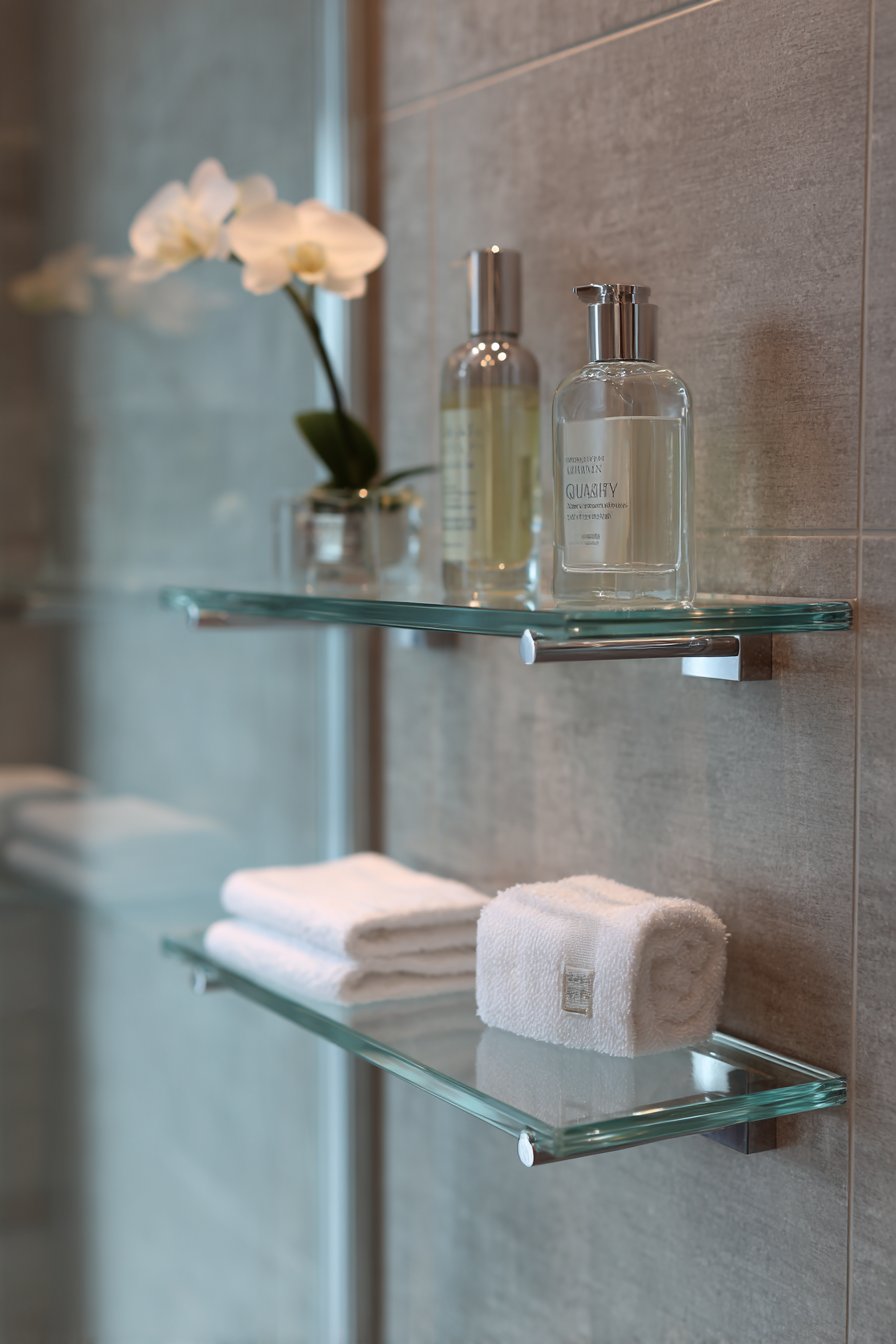
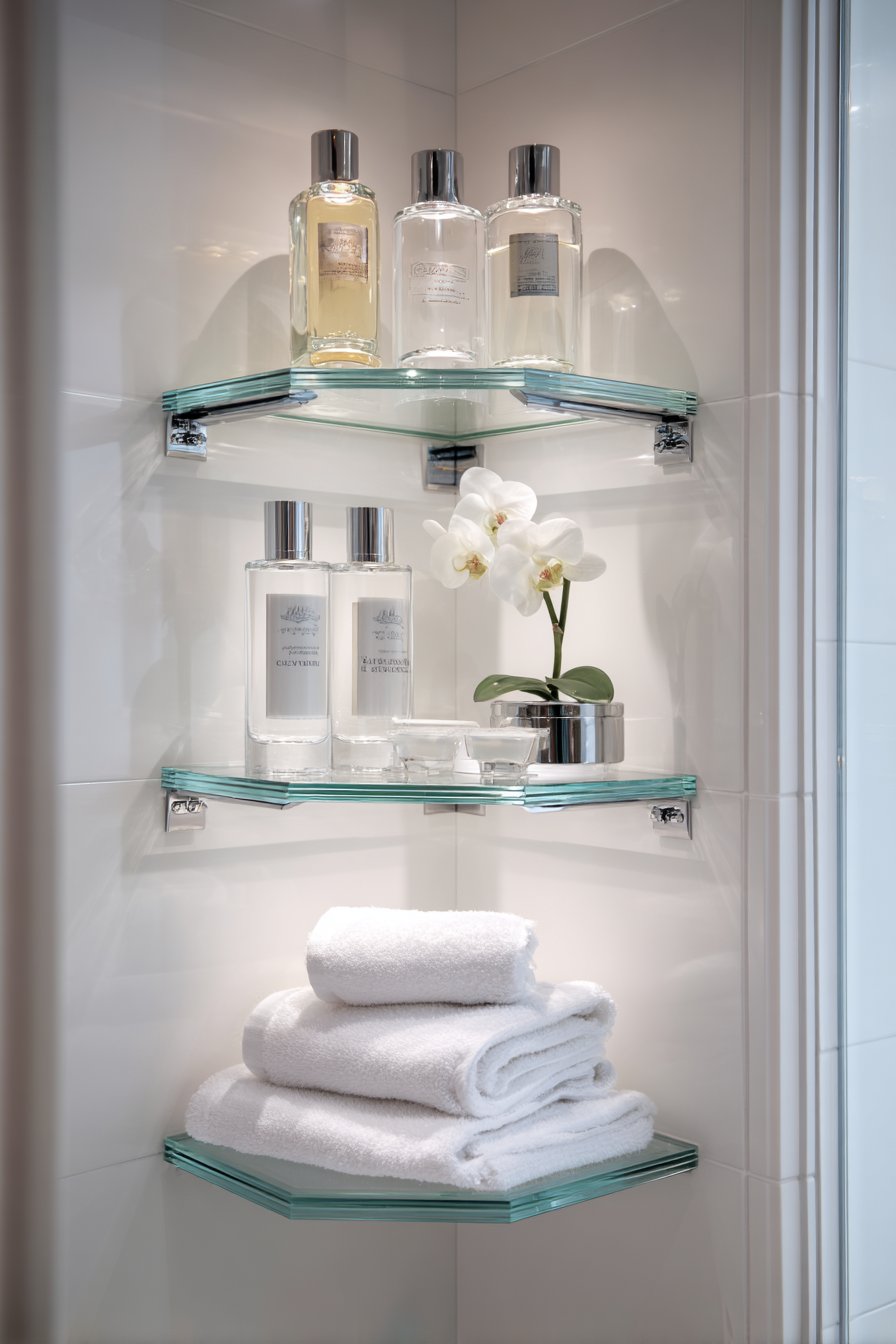
Transparency and reflection define this contemporary corner shelf approach, where tempered glass platforms suspended on polished chrome brackets create an almost invisible storage solution. This minimalist installation allows light to pass through and around it rather than creating visual barriers, making it ideal for bathrooms where maintaining a sense of spaciousness is paramount. The glass edges catch and refract light, creating subtle prismatic effects that add visual interest without the weight of solid shelving materials.
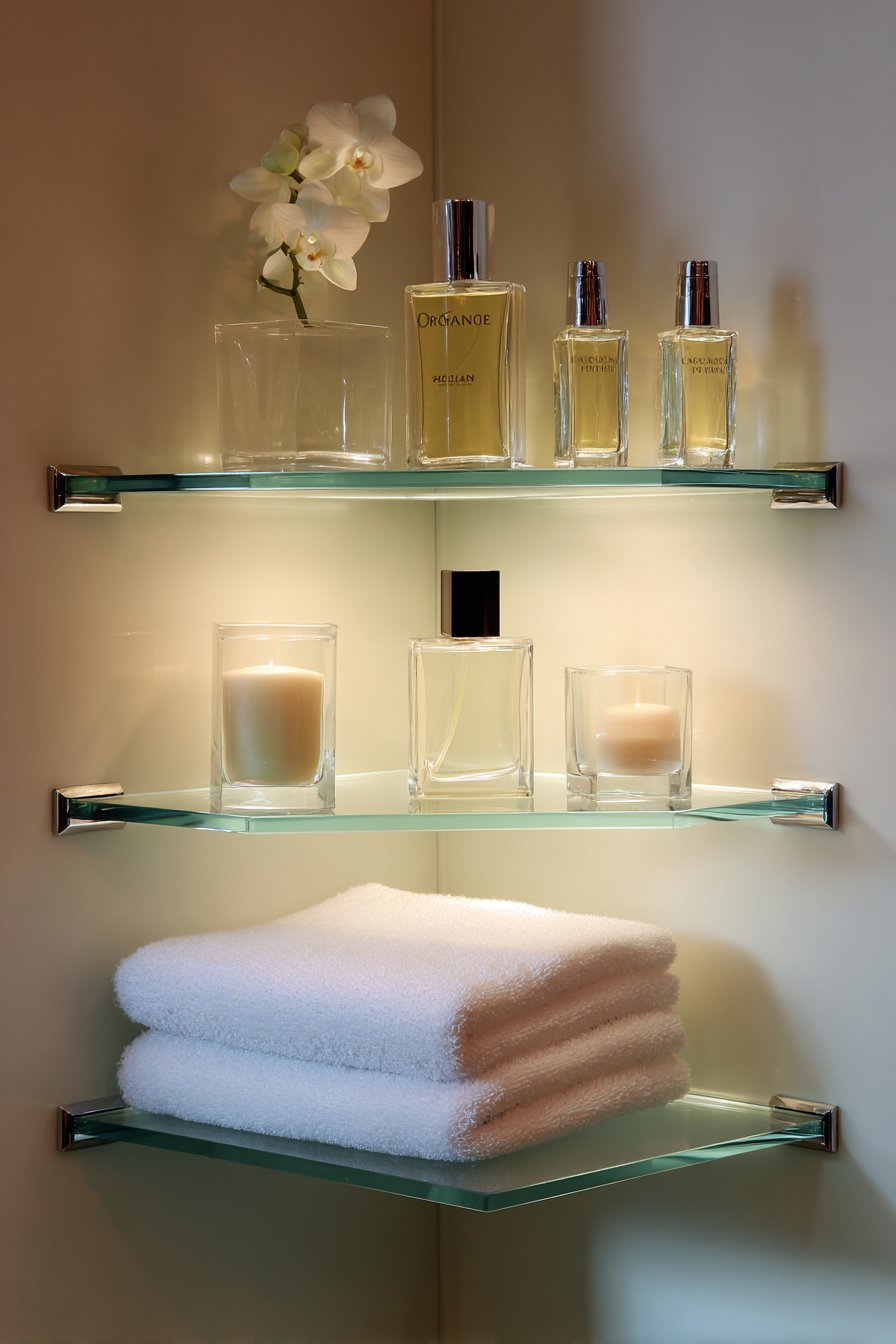
The luxury toiletries displayed on these glass corner shelves become part of the decor rather than items to hide away. Elegant bottles in sophisticated packaging—perhaps minimalist Swedish skincare, French parfum houses, or artisanal apothecary lines—stand like small sculptures, their varied forms and subtle colors creating a curated collection. Folded white towels, crisp and pristine, rest on the middle tier, their geometric folds creating satisfying right angles and clean lines. A small orchid in a clear glass vase introduces organic form and living color while maintaining transparency that aligns with the overall aesthetic.
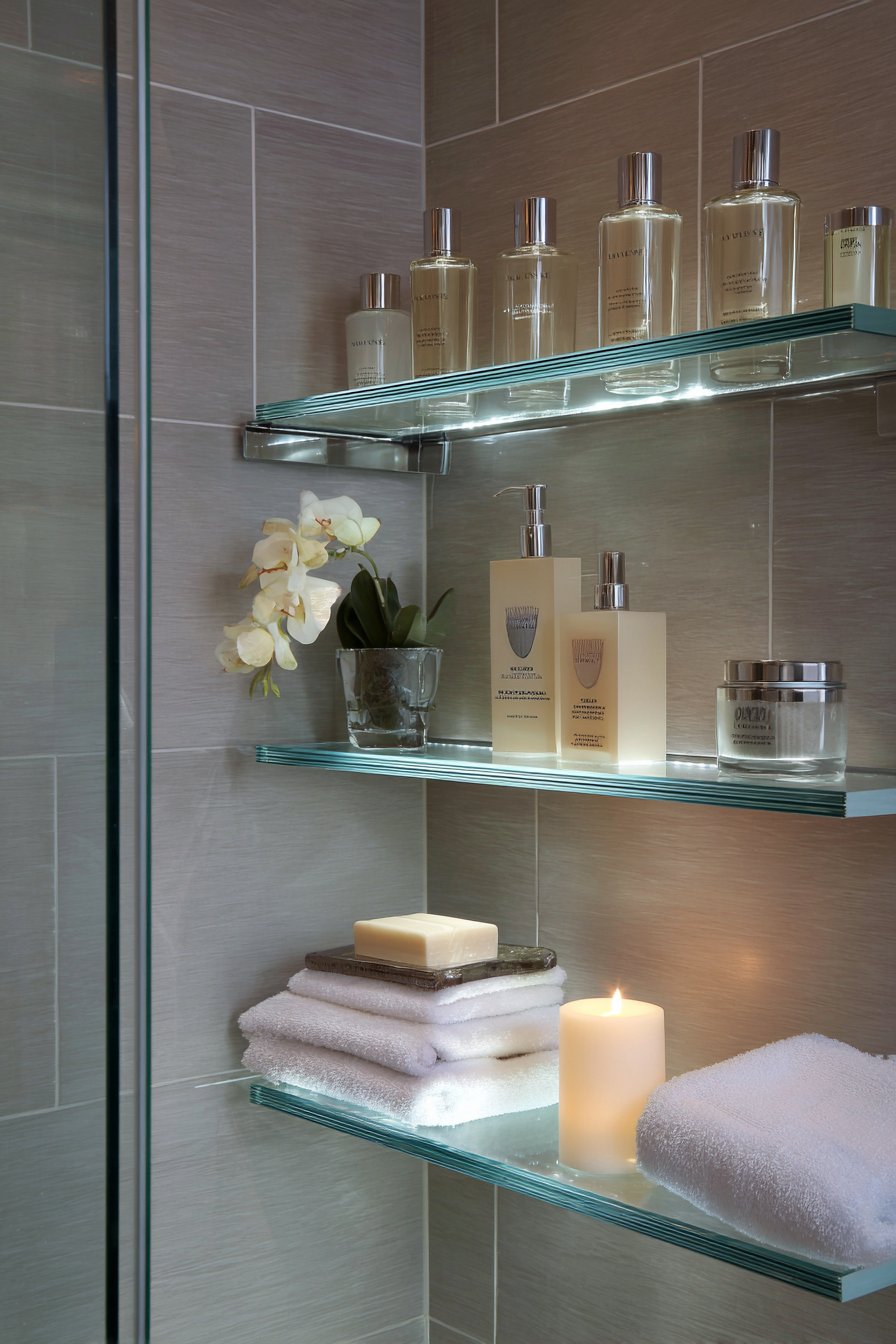
Recessed LED lighting installed below each shelf tier creates a subtle upward glow that passes through the glass, producing a floating effect that seems to defy physics. This lighting technique, popular in high-end spas and hotels, transforms functional bathroom storage into an ambient feature that contributes to relaxation and luxury. The gentle illumination also provides practical task lighting for grooming activities without the harshness of overhead fixtures.
Key Design Tips:
- Use tempered glass rated for bathroom humidity and designed specifically for shelf applications
- Polish chrome brackets regularly to prevent water spots and maintain their reflective quality
- Limit displayed items to create breathing room and preserve the light, airy quality
- Choose toiletries with aesthetically pleasing packaging or decant products into matching dispensers for visual cohesion
- Install LED lighting on dimmer switches to adjust ambiance from bright task lighting to subtle nighttime glow
10. Built-In Traditional Corner Library Shelving
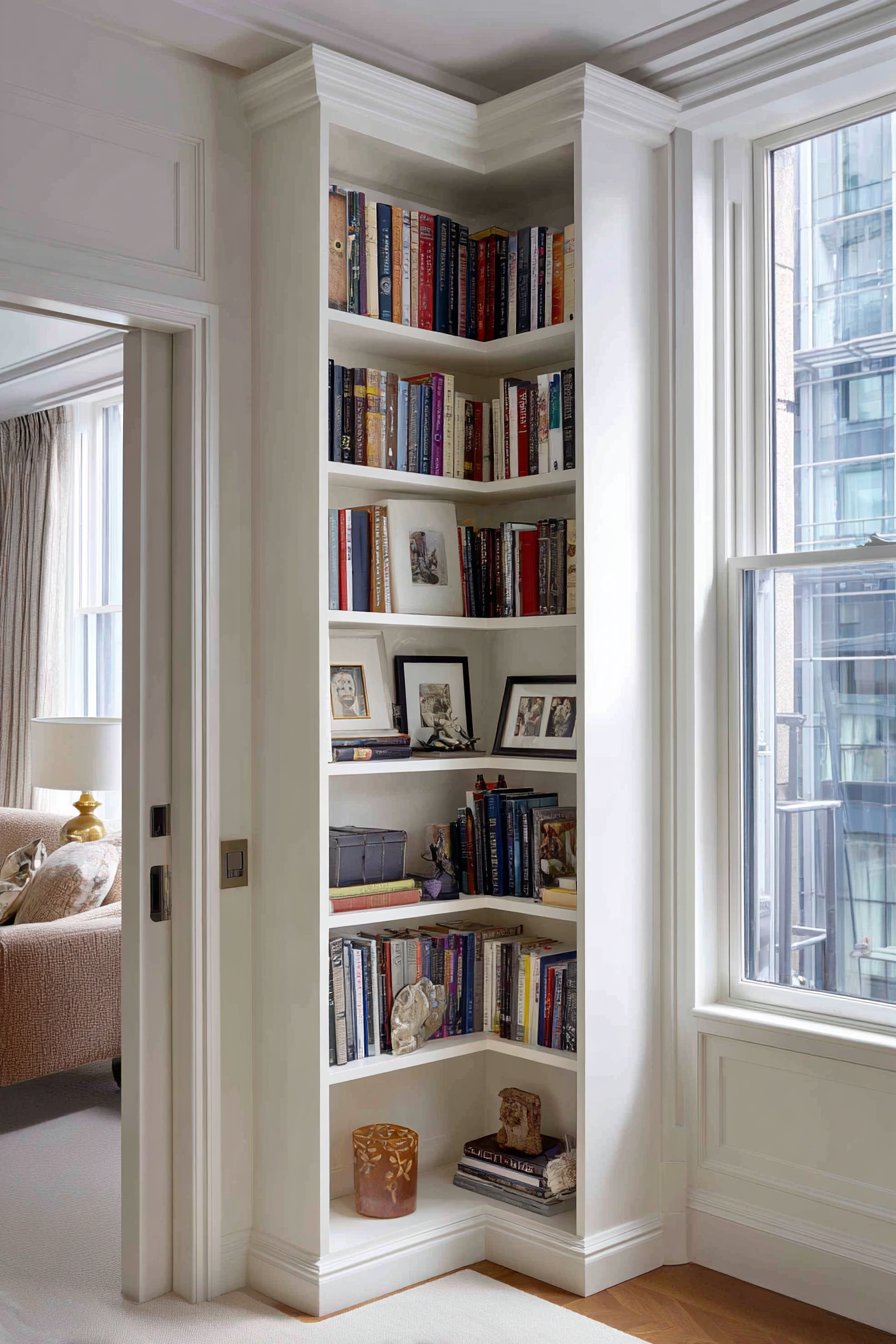
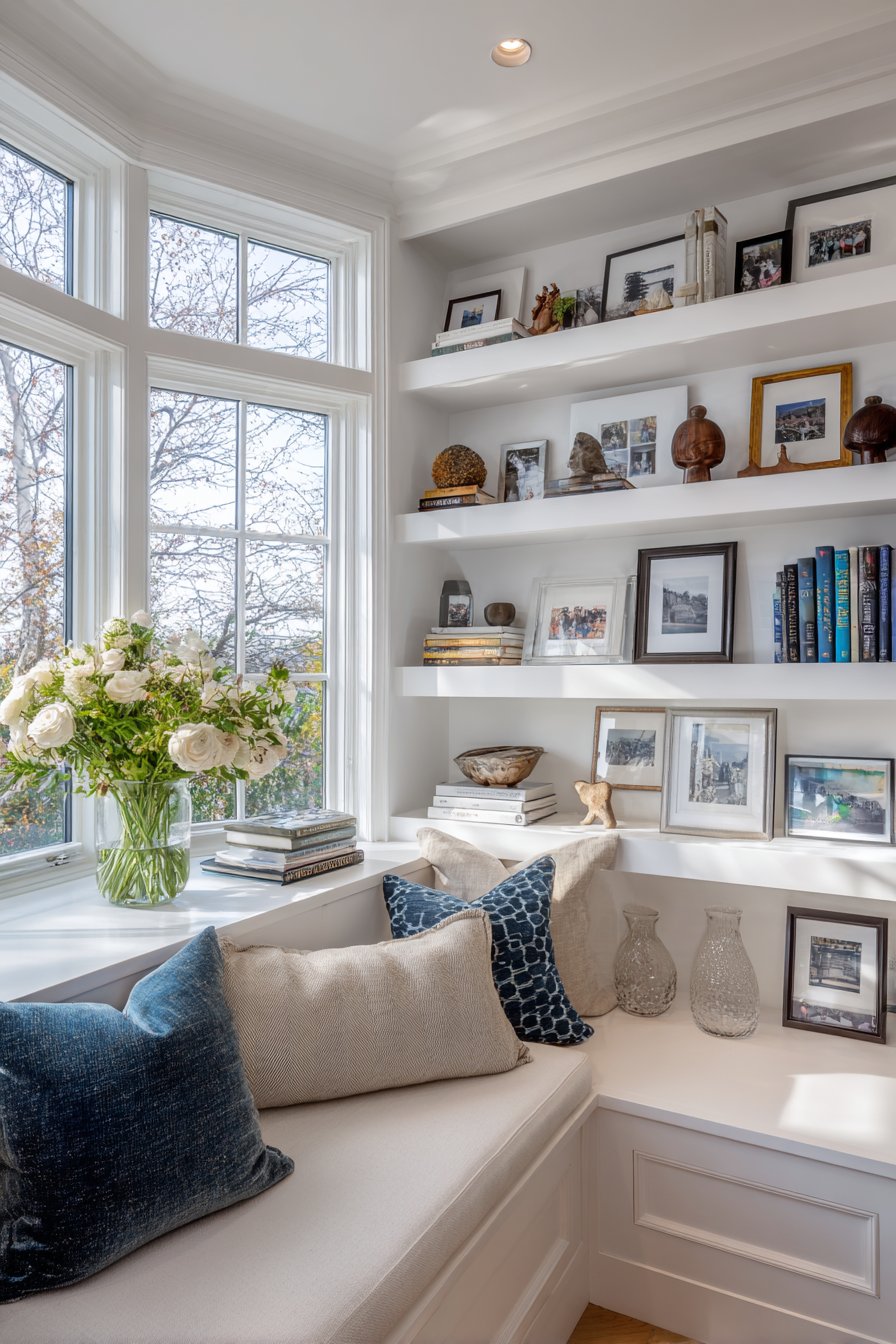
Architectural integration reaches its pinnacle in custom built-in corner shelving that becomes a permanent feature of the home’s structure. This floor-to-ceiling installation in white-painted finish fits seamlessly into a traditional living room alcove, appearing as if it were always part of the original architectural plan. Built-ins represent significant investment in both materials and skilled carpentry, but they deliver unmatched customization, maximizing every inch of available corner space while adding substantial value to the property.
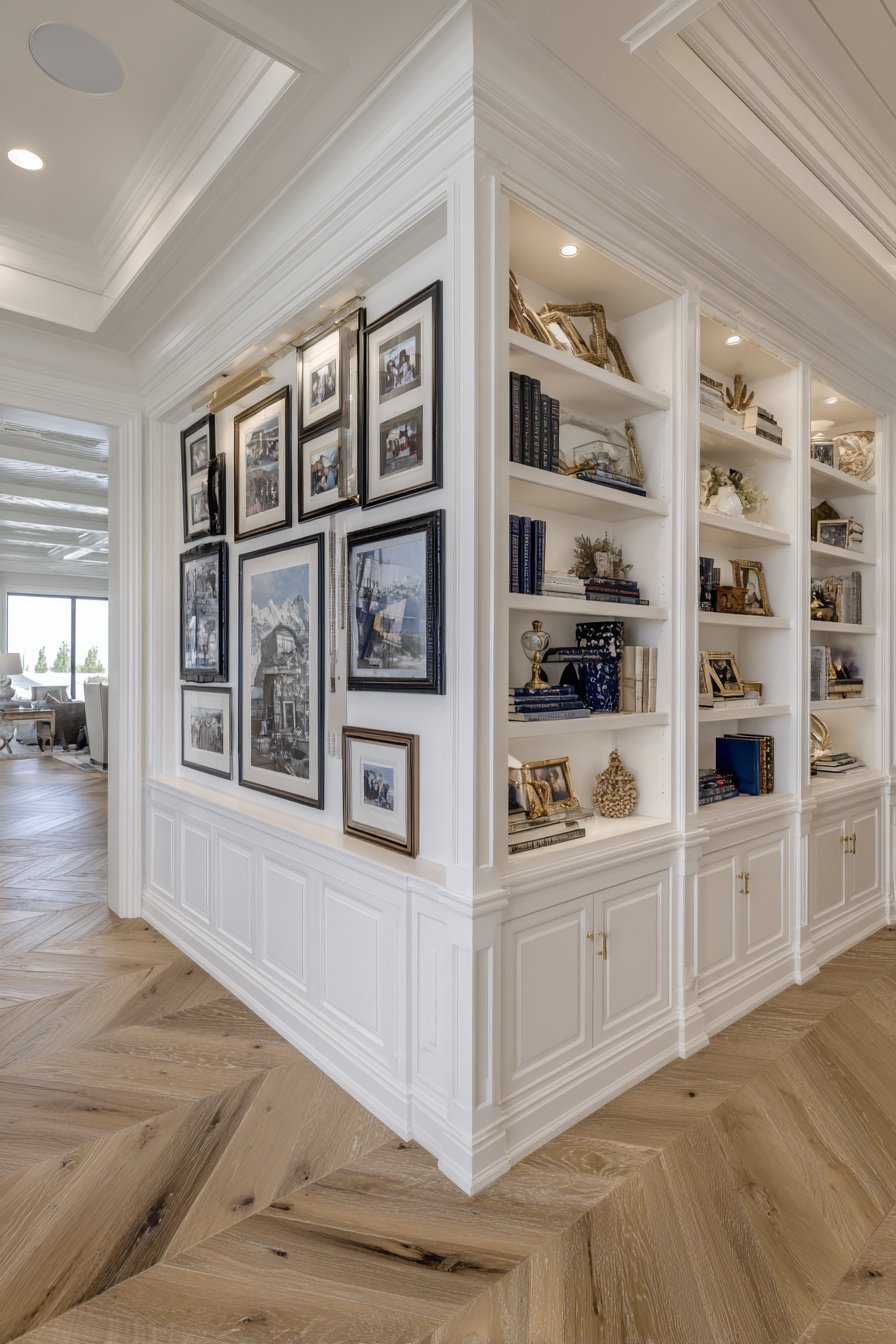
The thoughtful curation displayed across these extensive shelves tells a family’s story through carefully arranged objects and meaningful collections. Family photographs in varied frame sizes—vintage black and white portraits, color snapshots from vacations, formal studio portraits—create a visual autobiography that spans generations. Hardcover books arranged by color create rainbow-effect shelving that’s both visually striking and revealing of personal reading preferences. Decorative objects with personal significance—perhaps a ceramic piece from a memorable trip, a inherited vase from a grandparent, or handmade pottery from a local artisan—transform the corner shelf from mere storage into a three-dimensional scrapbook.
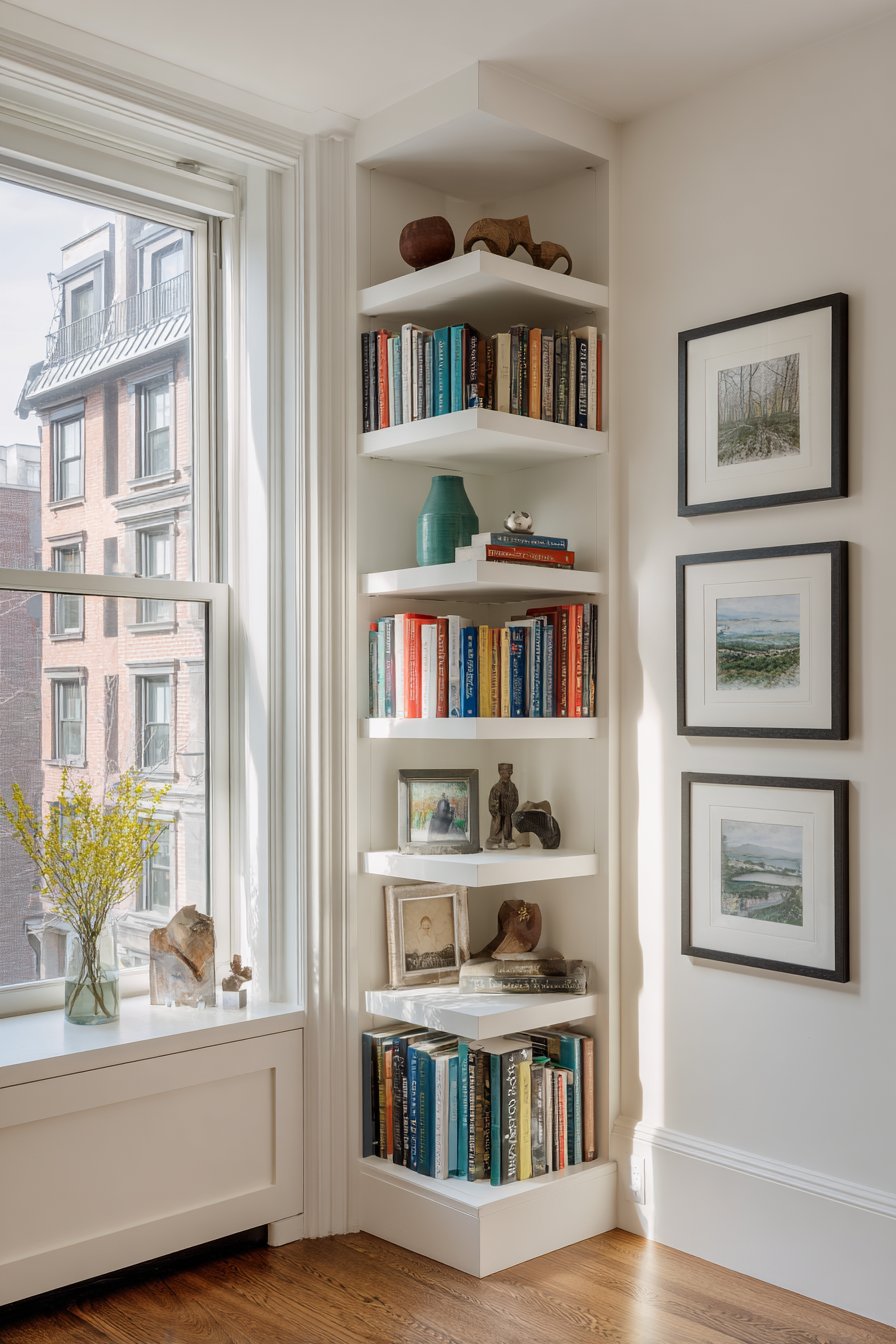
Natural light from adjacent windows provides even, consistent illumination that changes gradually throughout the day rather than creating dramatic shifts. This gentle lighting approach allows the white-painted shelving to reflect and amplify available light, brightening the entire corner while preventing the shadowy recesses that can occur in deep built-in installations. The white finish also serves as a neutral backdrop that allows the displayed items’ colors and forms to take center stage.
Key Design Tips:
- Work with experienced carpenters who can ensure built-ins are level, plumb, and properly anchored to wall studs and floor joists
- Vary shelf heights to accommodate items of different scales rather than uniform spacing
- Incorporate adjustable shelving on some tiers to allow future rearrangement as collections evolve
- Use quality paint with durable finish appropriate for surfaces that will be frequently touched when arranging items
- Plan built-ins to align with existing architectural features like crown molding, baseboards, and door frames for cohesive integration
11. Botanical Wrought Iron Corner Plant Stand
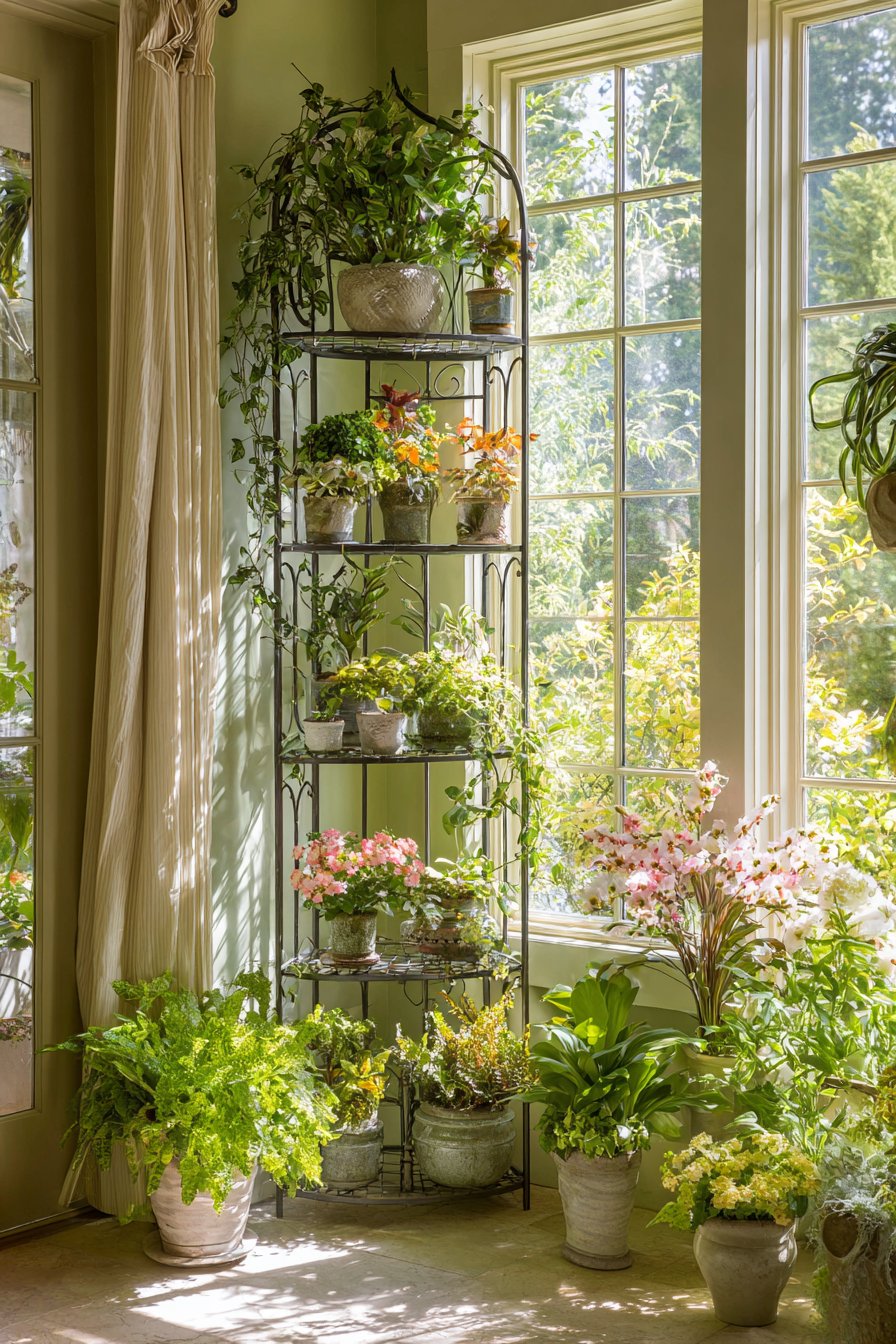
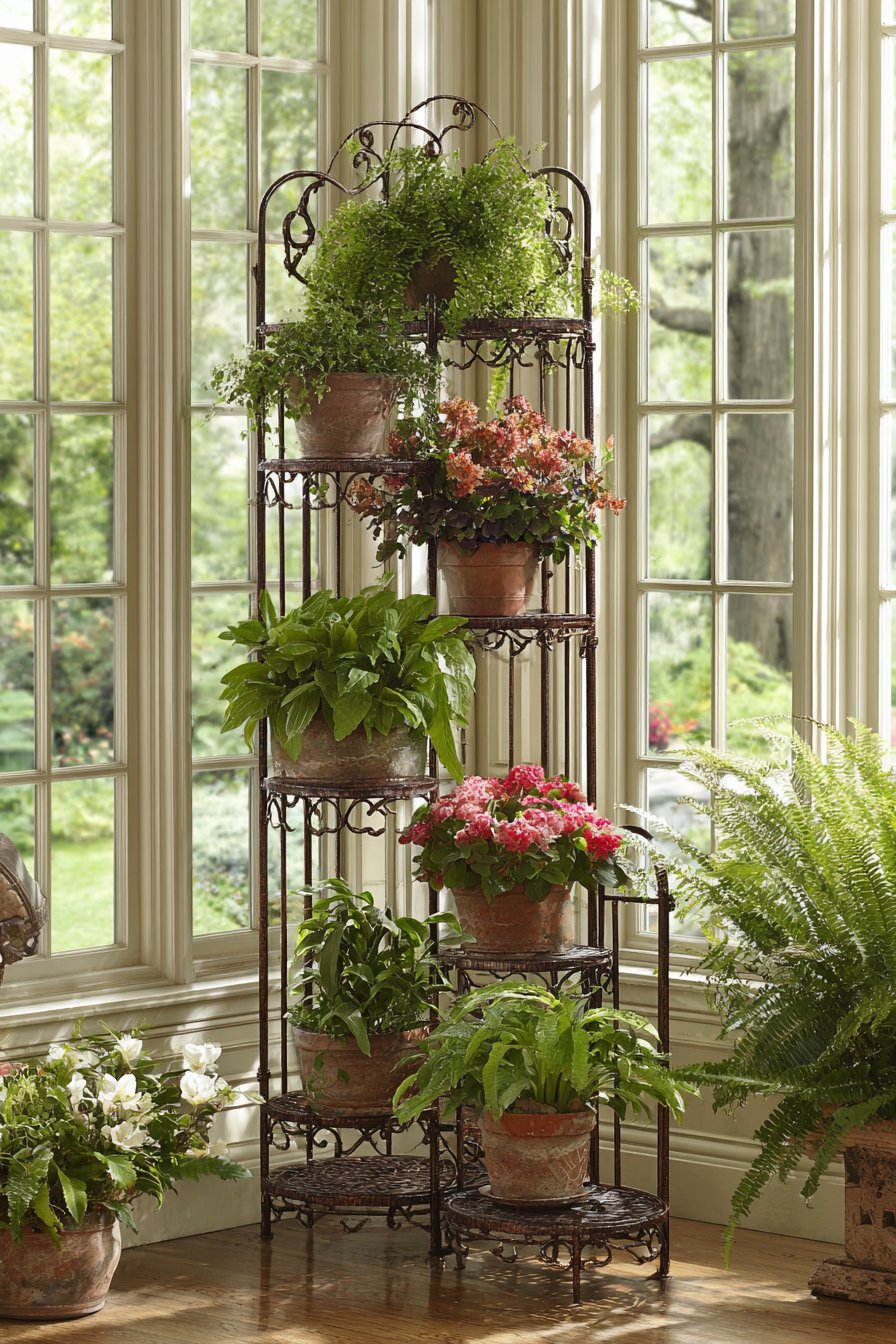
For plant enthusiasts, dedicated botanical displays transform corners into thriving indoor gardens that bring nature inside year-round. This multi-tiered wrought iron corner shelf stand with curved decorative details provides the structural support and aesthetic framework for vertical plant arrangements. The dark metal framework creates striking contrast against living greenery, its strength supporting substantial potted plants while its open construction allows light to reach foliage at multiple levels.
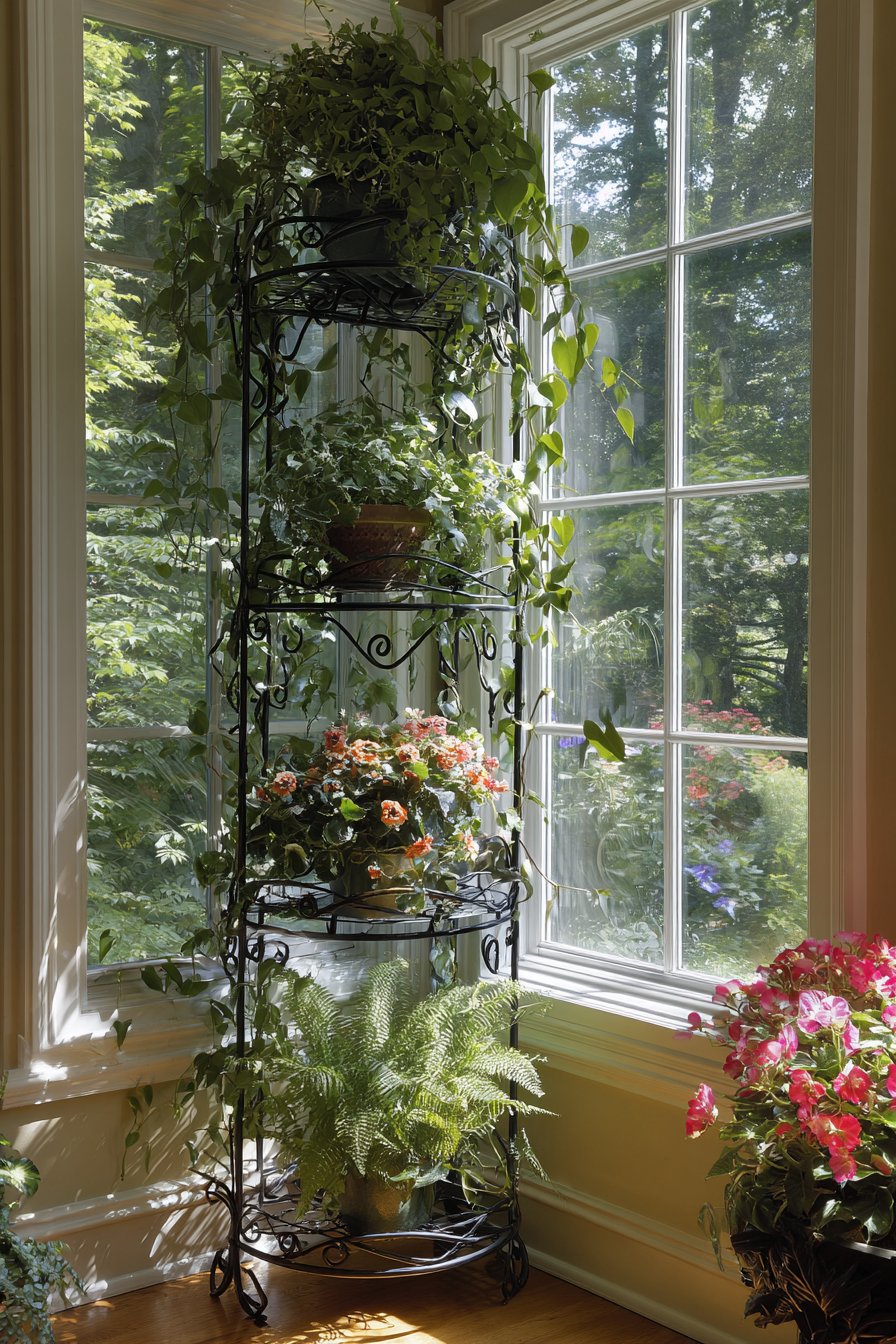
The vertical garden composition on this corner shelf demonstrates thoughtful plant selection based on varying light and water requirements. Ferns with their delicate fronds occupy upper tiers where humidity rises and light is brightest. Philodendrons with their dramatic heart-shaped leaves cascade from middle positions, their trailing vines creating natural curtains of greenery. Flowering begonias add color pops at lower levels where they’re easily visible and accessible for deadheading spent blooms. This layered approach creates visual interest through varied textures, forms, and colors while ensuring each plant thrives in conditions suited to its needs.
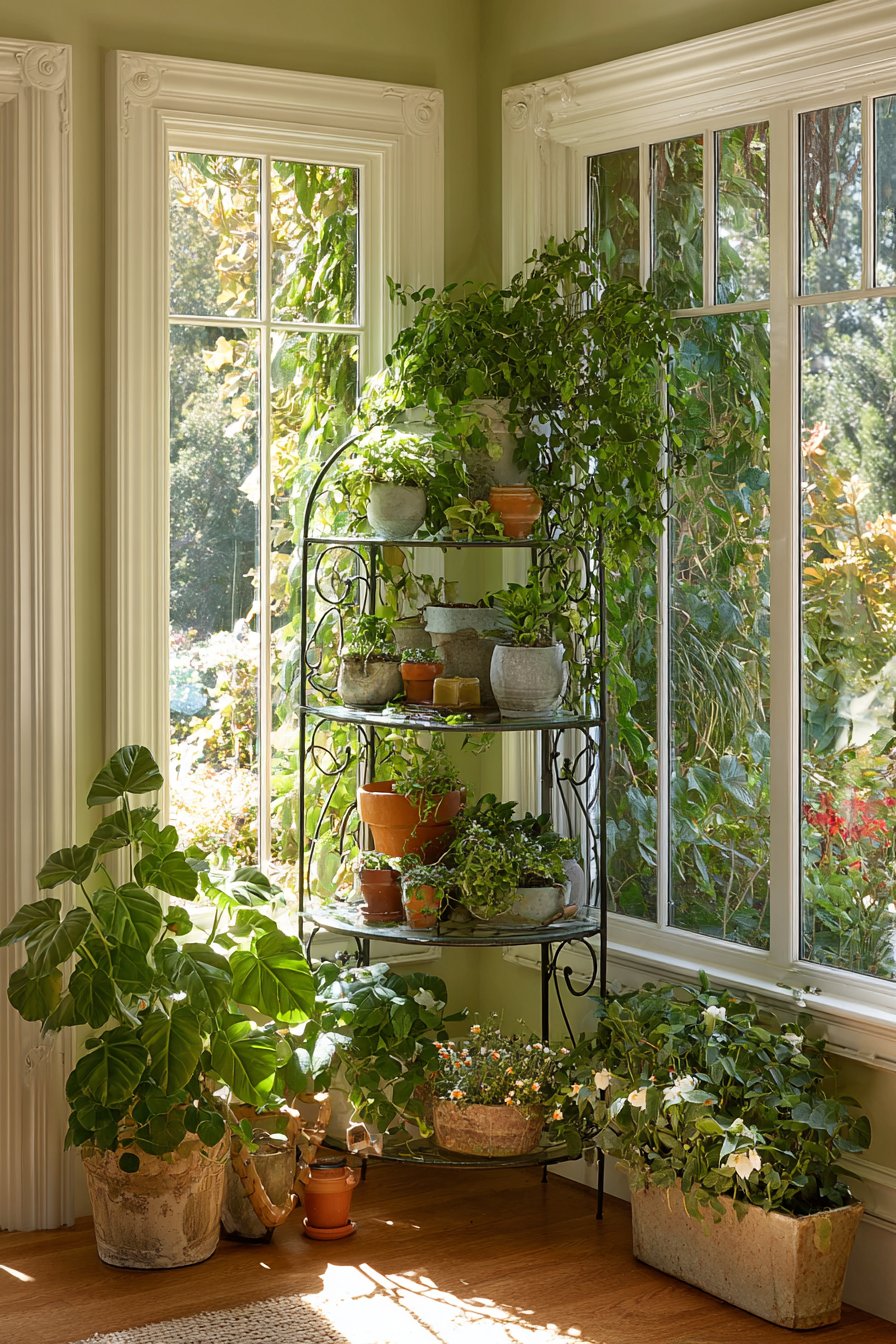
Morning sunlight streaming through nearby windows bathes the corner plant display in gentle illumination, creating dappled shadows through overlapping foliage. This natural lighting creates the dynamic, ever-changing quality of outdoor gardens within interior spaces. As the sun moves across the sky, different plants become highlighted, creating a living display that never looks exactly the same twice—a quality that brings vitality and movement into static interior environments.
Key Design Tips:
- Choose wrought iron or powder-coated metal that won’t rust from regular plant watering and humidity
- Place saucers or trays under all pots to protect floors and the stand itself from water damage
- Arrange plants with similar watering needs on the same tiers to streamline care routines
- Rotate plants periodically to ensure even light exposure and prevent lopsided growth toward light sources
- Prune and maintain plants regularly to prevent overcrowding as they mature and expand
12. LED-Illuminated Dark Walnut Corner Shelves
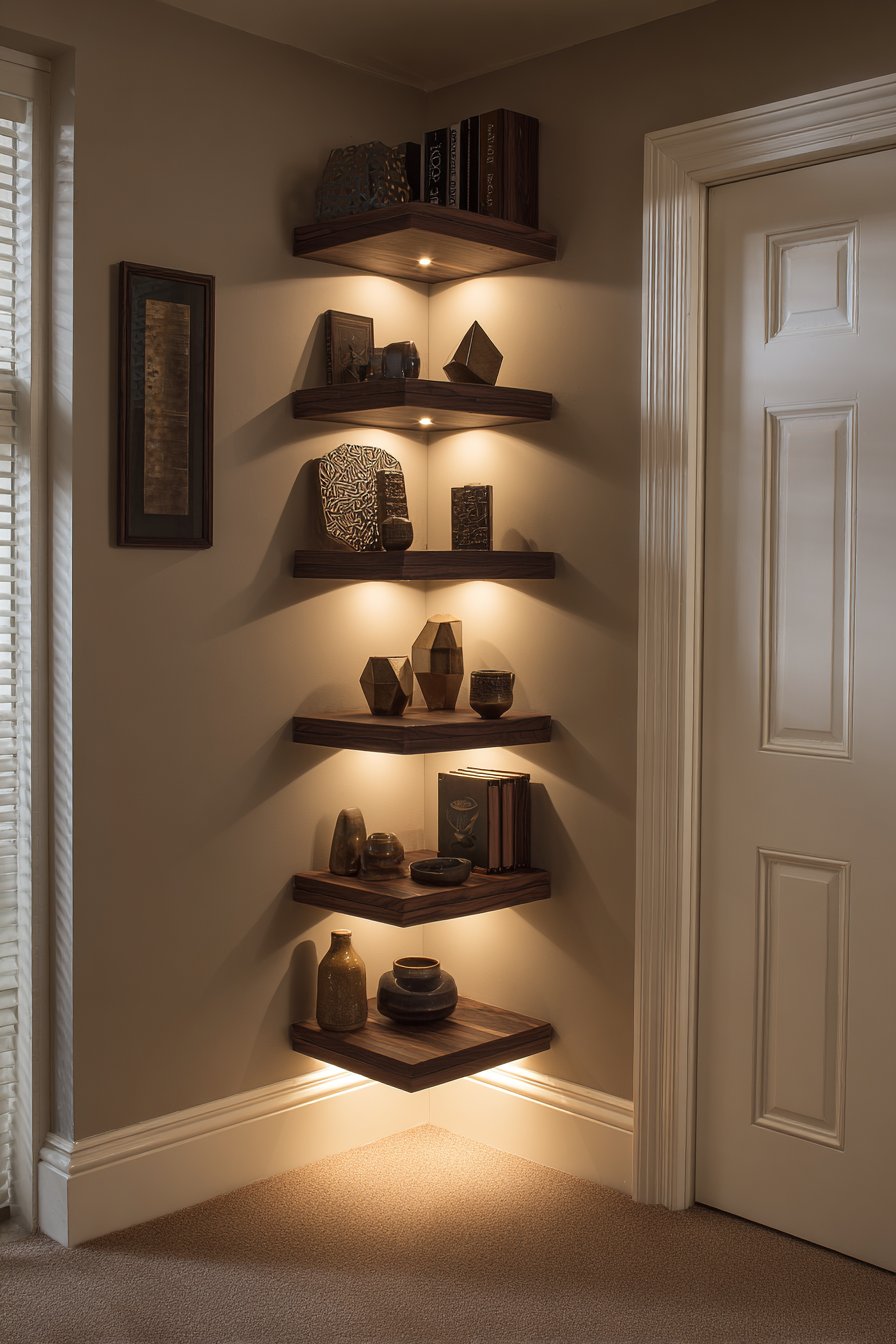
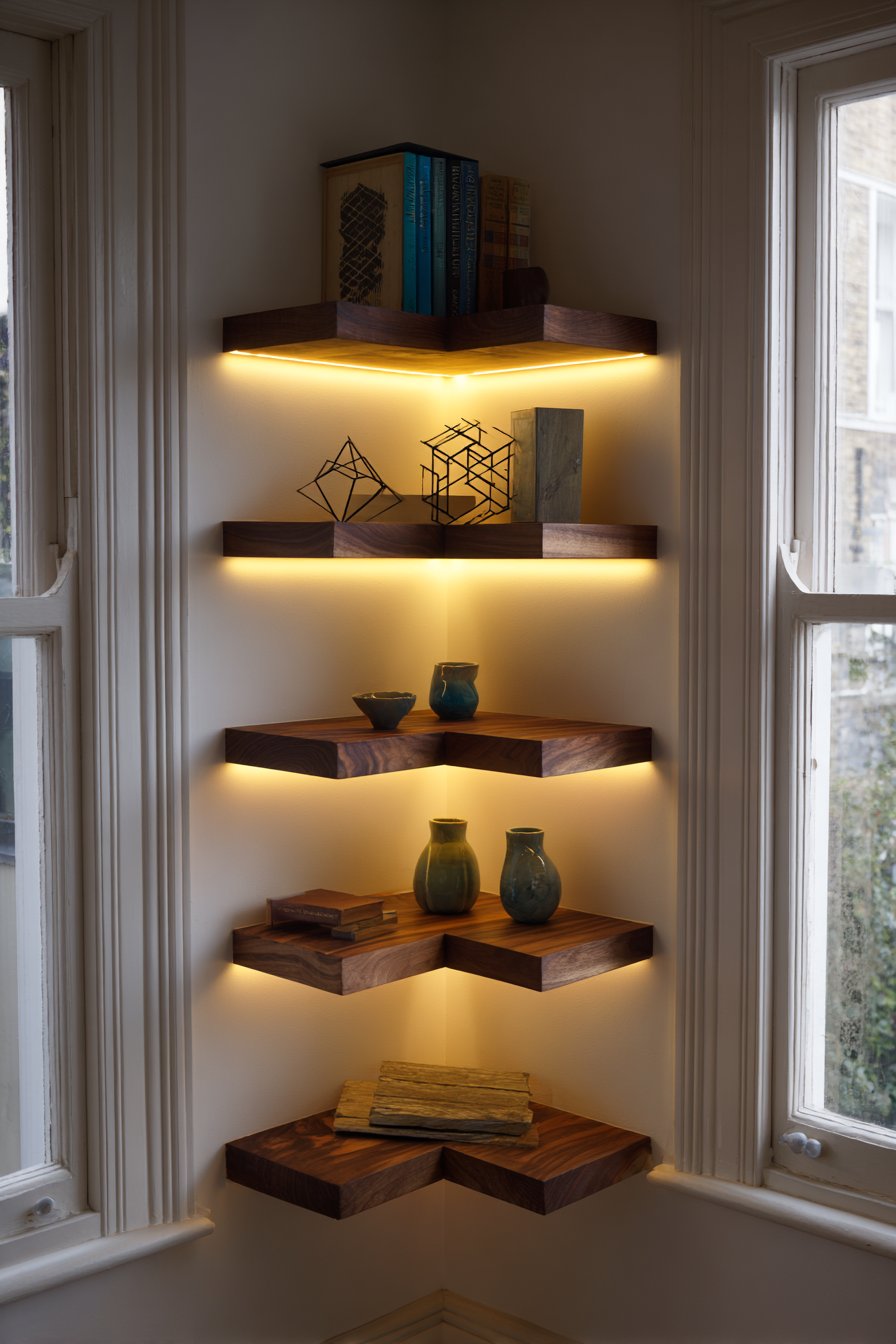
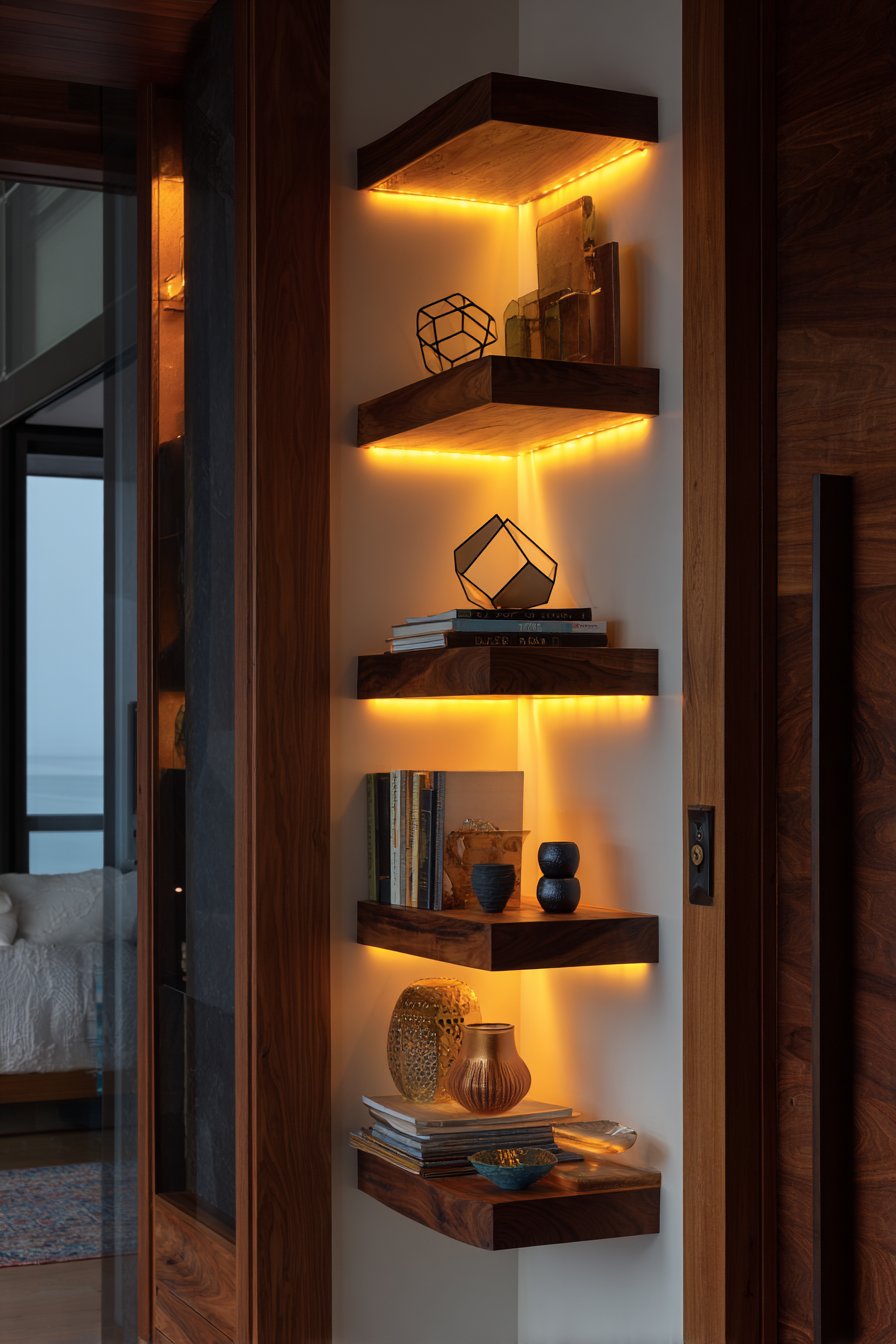
Integrated lighting transforms ordinary corner shelving into a focal point that functions equally well day and night. This dark walnut floating shelf system with built-in LED strip lighting along each tier creates dramatic ambiance in contemporary bedrooms where lighting contributes to mood and atmosphere. The rich chocolate tones of walnut wood provide sophisticated backdrop for displayed objects while the warm LED glow creates visual separation between shelf tiers and adds dimensional depth.
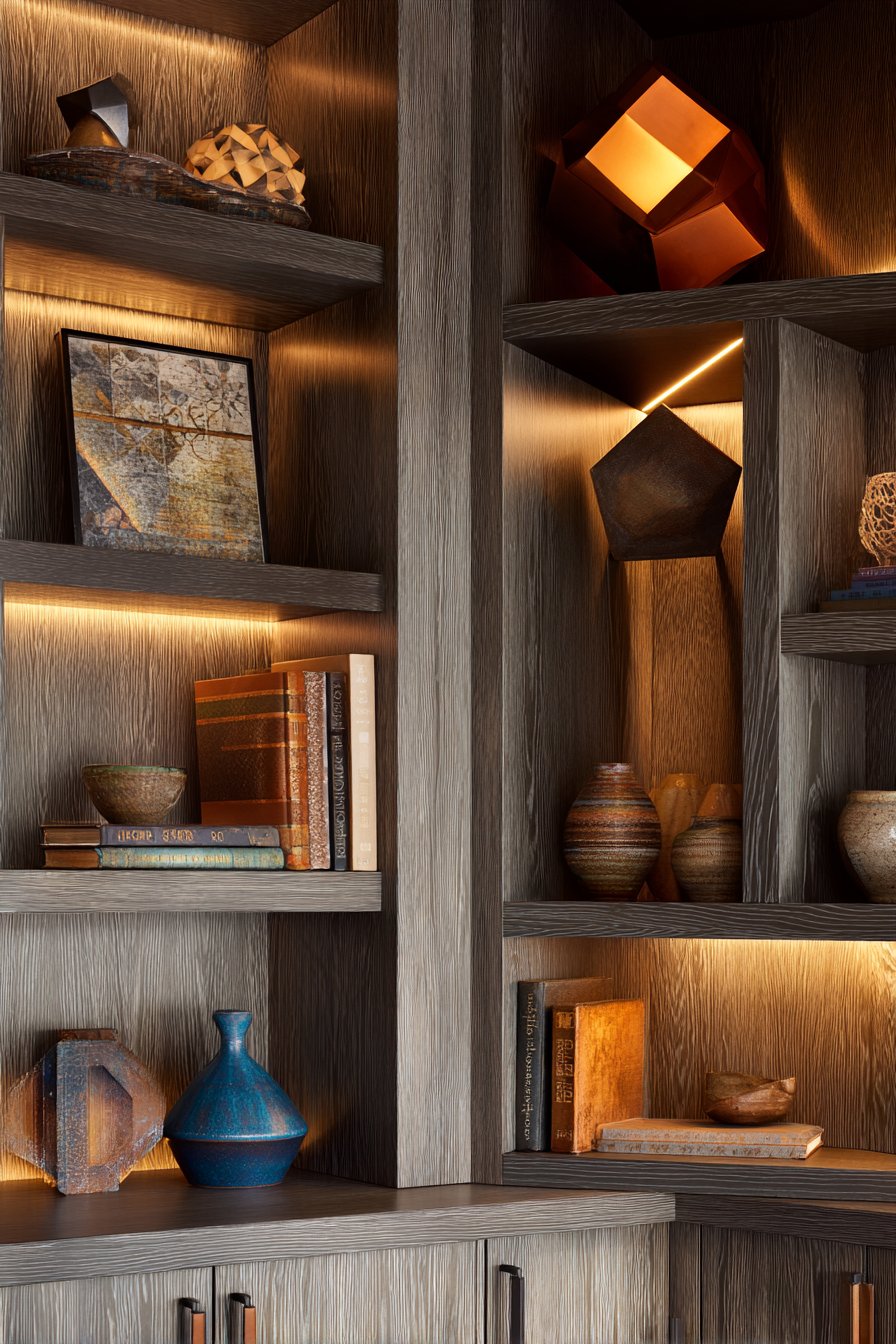
The objects selected for this illuminated display gain additional presence through strategic lighting. Geometric sculptures with interesting angles cast intriguing shadows that change based on viewing angle. Art books with beautiful spines become easier to browse when edges are clearly defined by underlighting. A carefully curated collection of ceramic pieces—perhaps vintage studio pottery or contemporary artisan work—takes on gallery-quality presentation when individually highlighted by the warm glow.
The dual functionality of display and illumination makes this corner shelf particularly valuable in bedrooms where multiple lighting sources create flexibility for different activities and times of day. Reading before sleep requires different illumination than getting dressed in the morning, and the dimmable nature of LED strips allows customization. Evening settings with low, warm light create calming atmosphere conducive to relaxation, while brighter settings provide adequate task lighting when needed.
Key Design Tips:
- Select LED strips with appropriate color temperature—warmer (2700-3000K) for bedrooms, cooler for task-oriented spaces
- Install lighting on dimmer switches or smart controls that allow adjustment from bright to subtle
- Conceal wiring within walls during installation or use cord covers that match wall color for clean appearance
- Position LED strips toward the back of shelf undersides to prevent direct glare while maximizing surface illumination
- Choose dark wood finishes that create strong contrast with light objects and make LED glow more dramatic
13. Chippy White Farmhouse Corner Kitchen Shelving
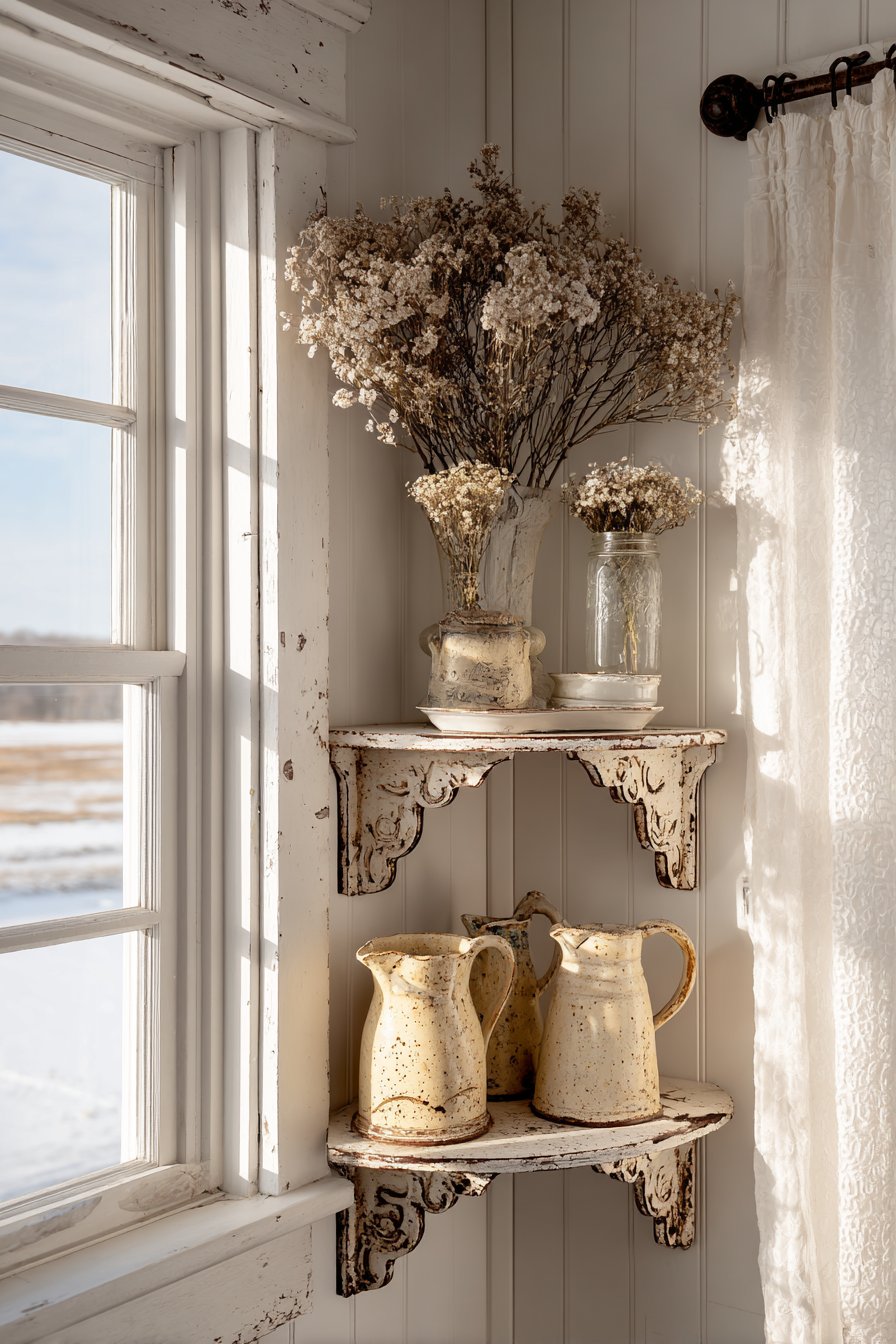
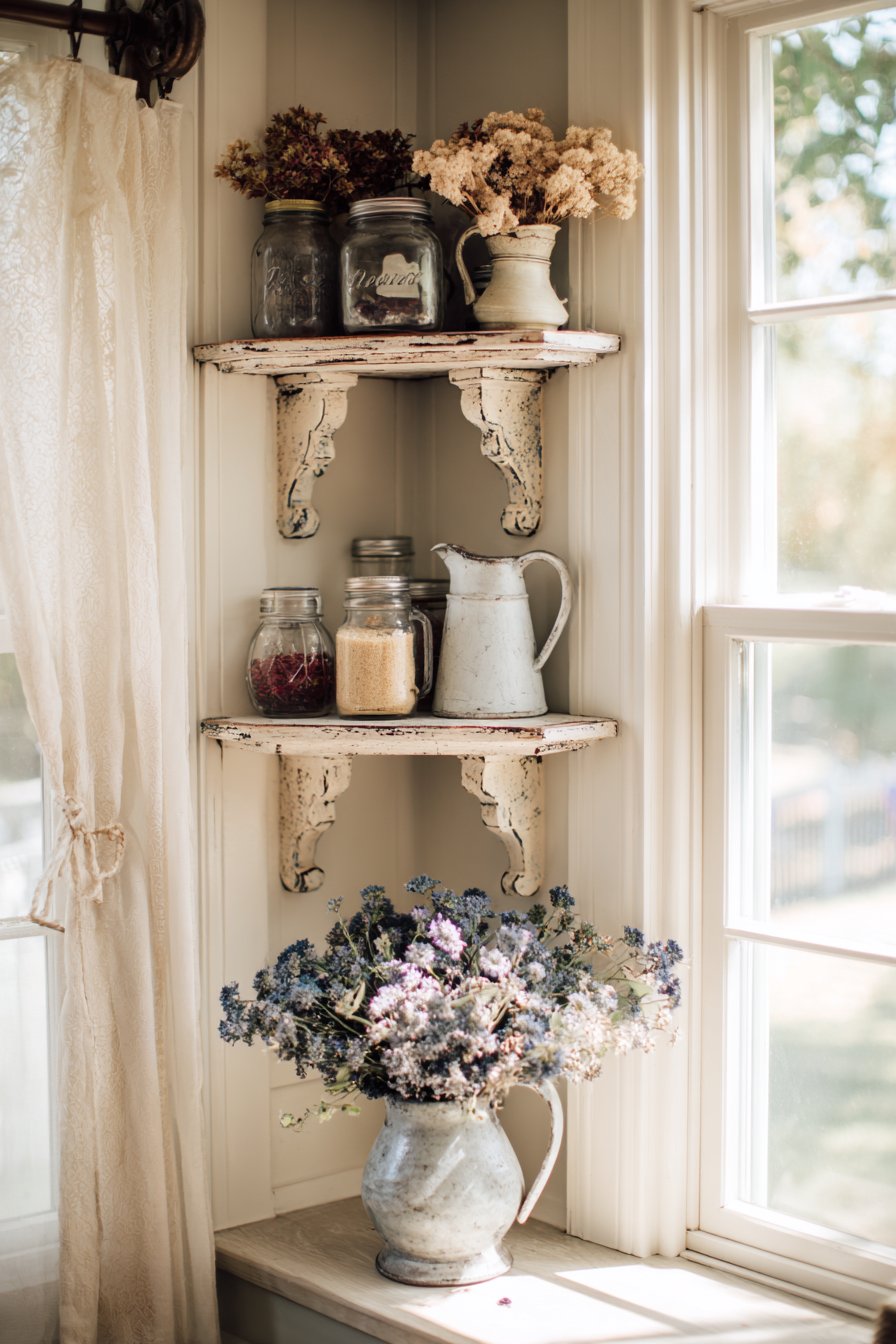
Distressed finishes and vintage styling characterize this farmhouse corner shelf installation where deliberately aged white paint creates shabby chic appeal. The chippy paint finish—intentionally worn at edges and showing underlying wood in high-traffic areas—cannot be replicated convincingly through artificial distressing techniques alone; authentic vintage pieces or quality reproductions using traditional milk paint achieve the most believable results. Decorative corbel brackets add architectural detail while providing structural support, their curved profiles softening the geometric angles of the corner installation.
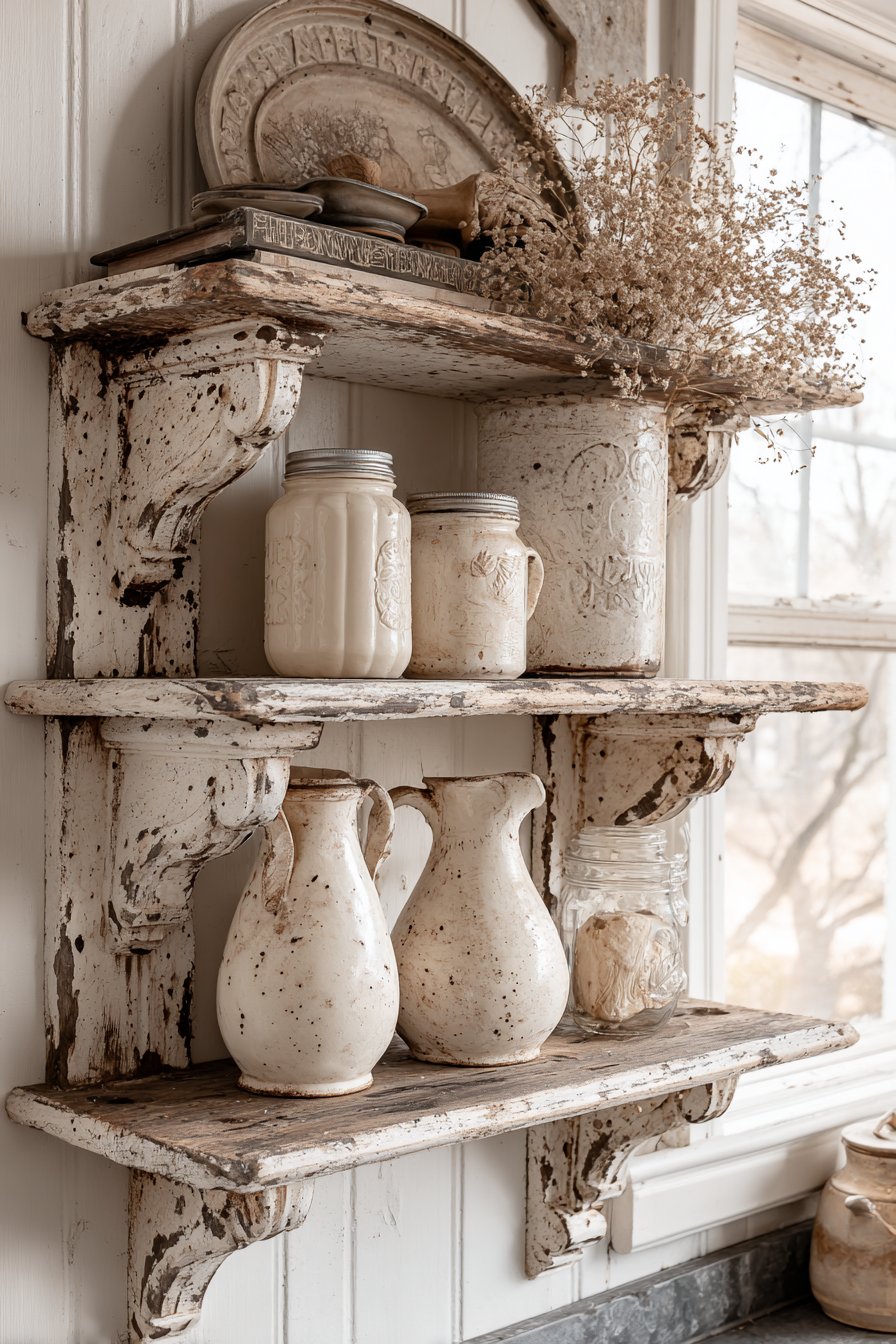
The collection of vintage enamelware, mason jars, and antique ceramics displayed on these shelves embodies farmhouse aesthetic values. White enamelware with its characteristic blue rim might include a pitcher, colander, or utensil holder, their functional forms elevated to decorative status. Mason jars filled with dried lavender, wheat stalks, or hydrangeas bring natural elements indoors while celebrating the preserving tradition central to farmhouse heritage. Antique ceramic pitchers in cream glazes with crazing patterns show honest age that aligns perfectly with the distressed shelving.
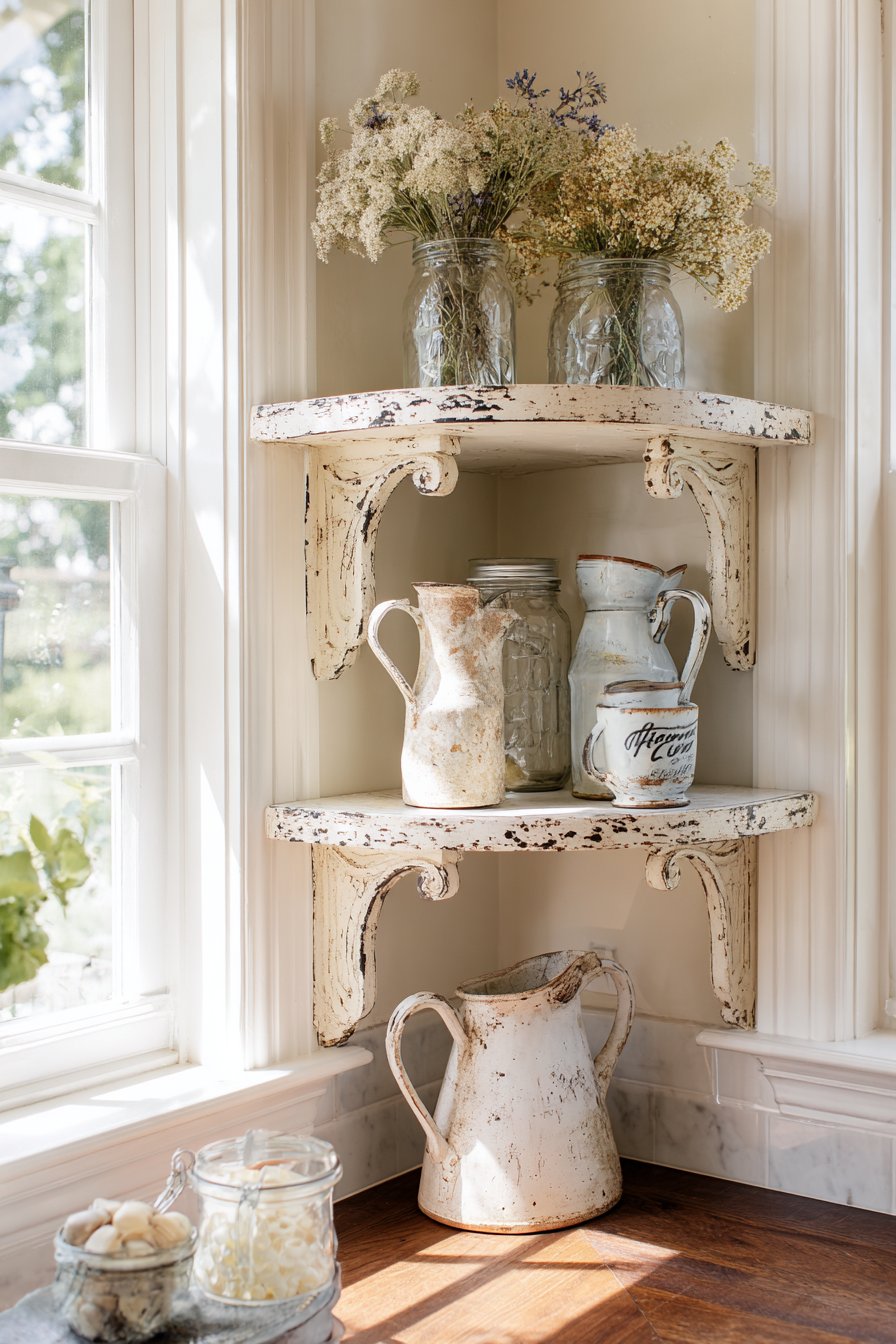
Natural daylight from a nearby kitchen window highlights the textured surfaces and imperfect finishes that give farmhouse style its authentic character. Unlike sleek modern finishes that aim for perfection, farmhouse aesthetics celebrate the beauty of wear, use, and patina developed over time. The interplay of light across chippy paint surfaces emphasizes depth and dimension, revealing layers of paint and wood that tell stories of the piece’s history—real or imagined.
Key Design Tips:
- Apply milk paint for authentic farmhouse finish that naturally chips and distresses over time
- Distress strategically at edges, corners, and high-contact areas where natural wear would occur
- Mix truly vintage finds with quality reproductions rather than relying entirely on new items
- Embrace imperfection—slightly uneven spacing, minor paint drips, and surface variations add authenticity
- Use natural, muted colors associated with farmhouse style: whites, creams, soft grays, and weathered wood tones
14. Brushed Nickel Corner Shower Caddy System
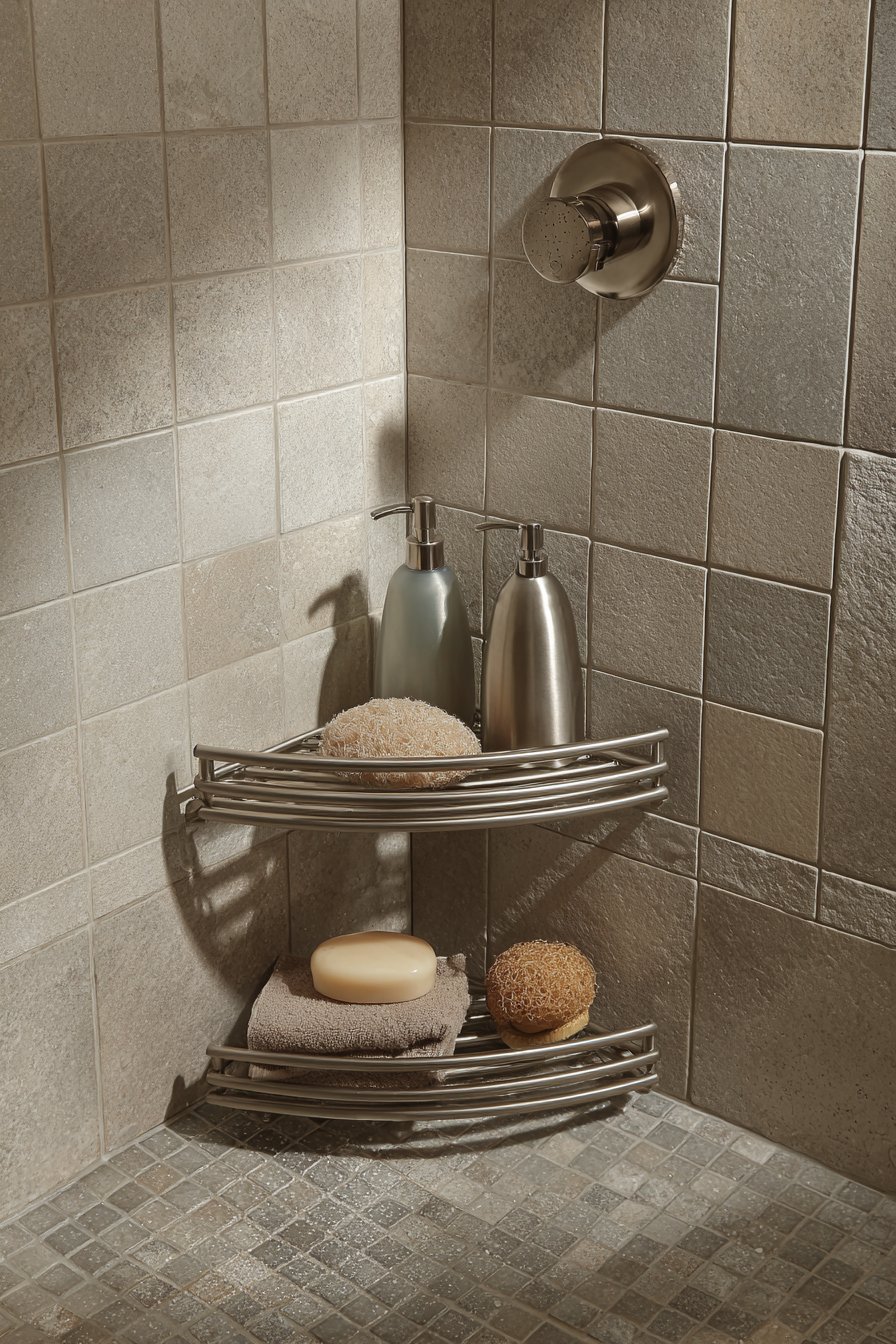
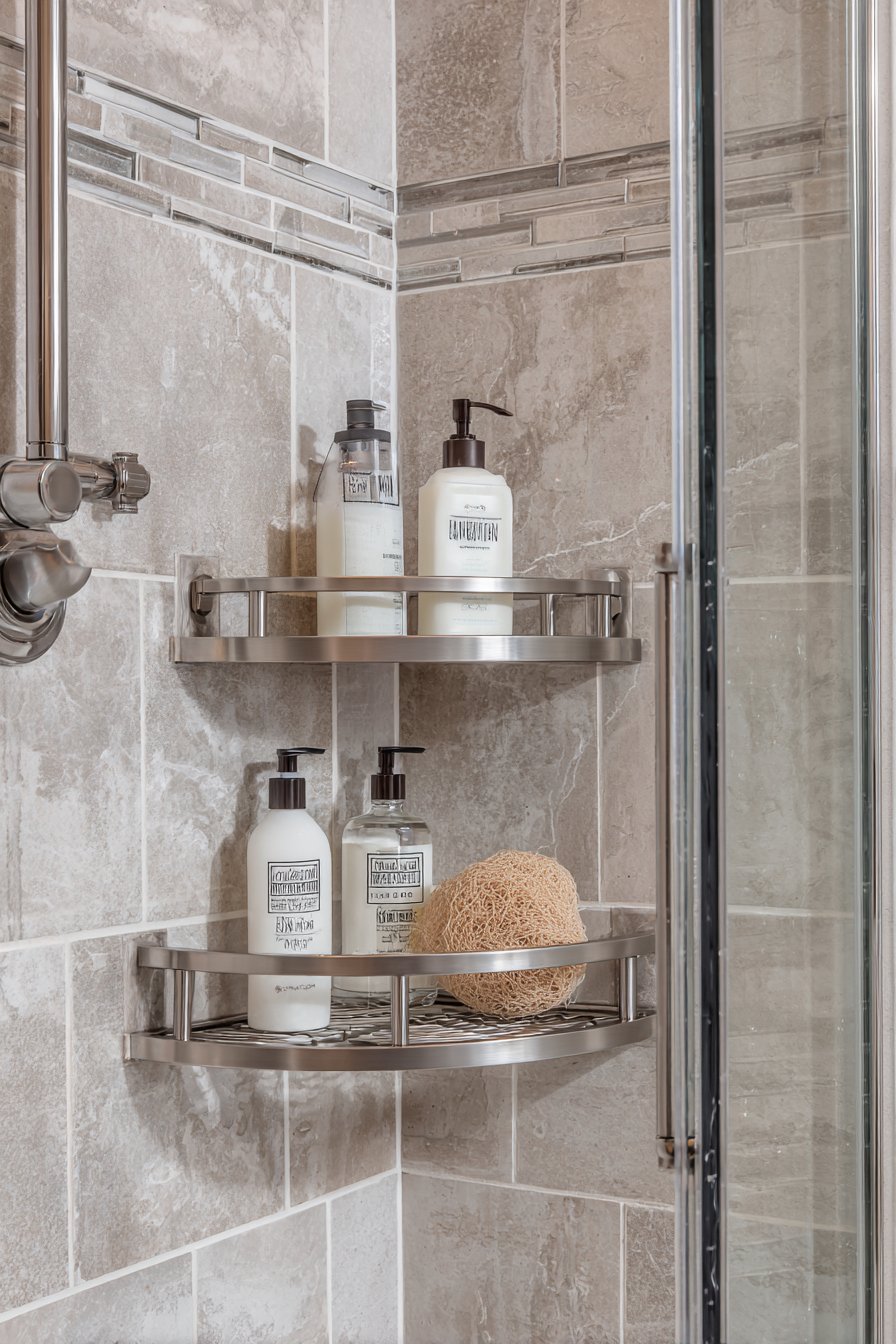
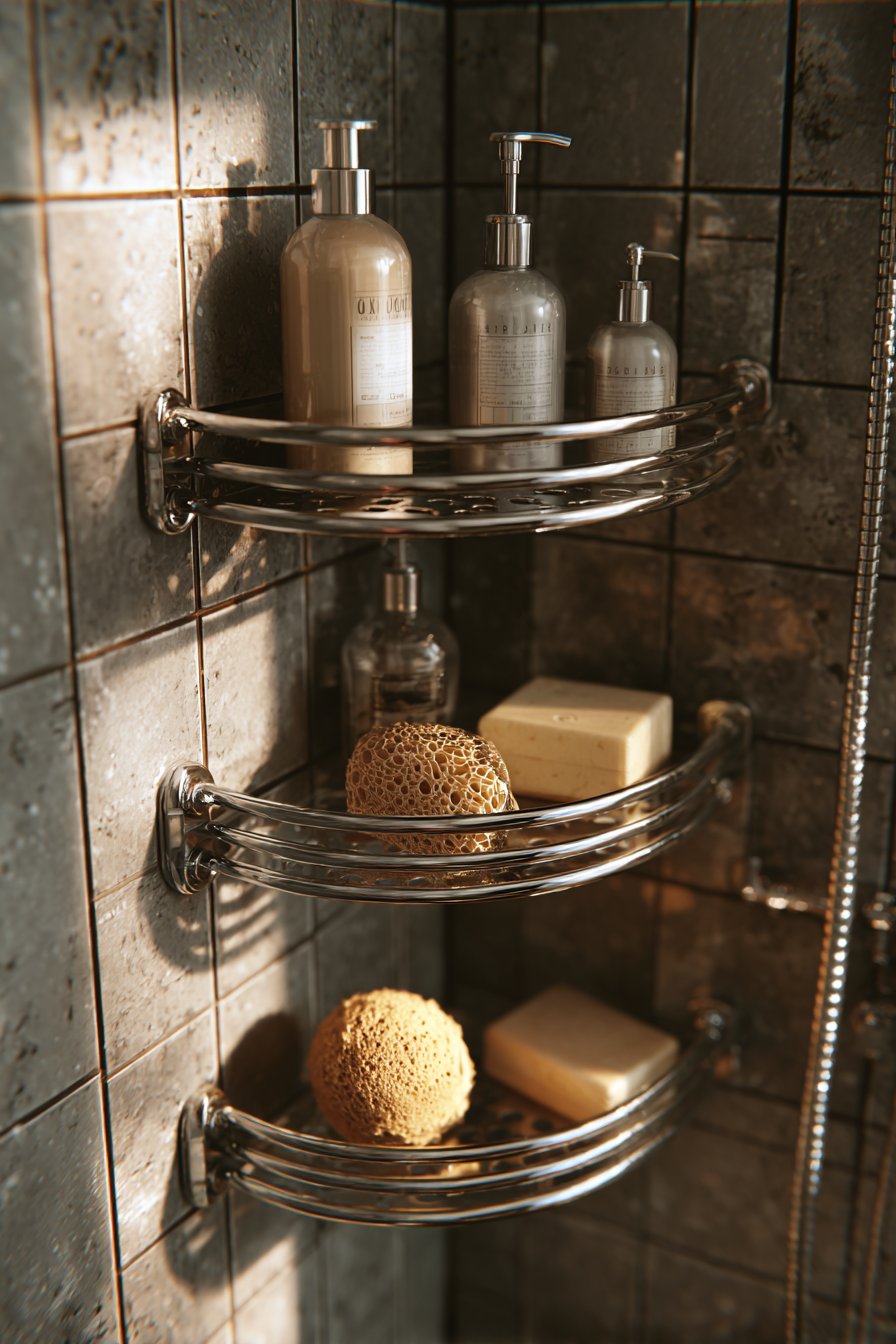
Practical bathroom storage meets sleek contemporary design in this corner shower shelf system crafted from brushed nickel. The multiple tiers provide organized storage for daily shower essentials while the metal finish resists water damage, soap scum, and the mineral deposits that can accumulate in wet environments. Drainage slots engineered into each shelf tier prevent water pooling that could promote mildew growth or create slippery surfaces, demonstrating how thoughtful design addresses both aesthetic and functional concerns.
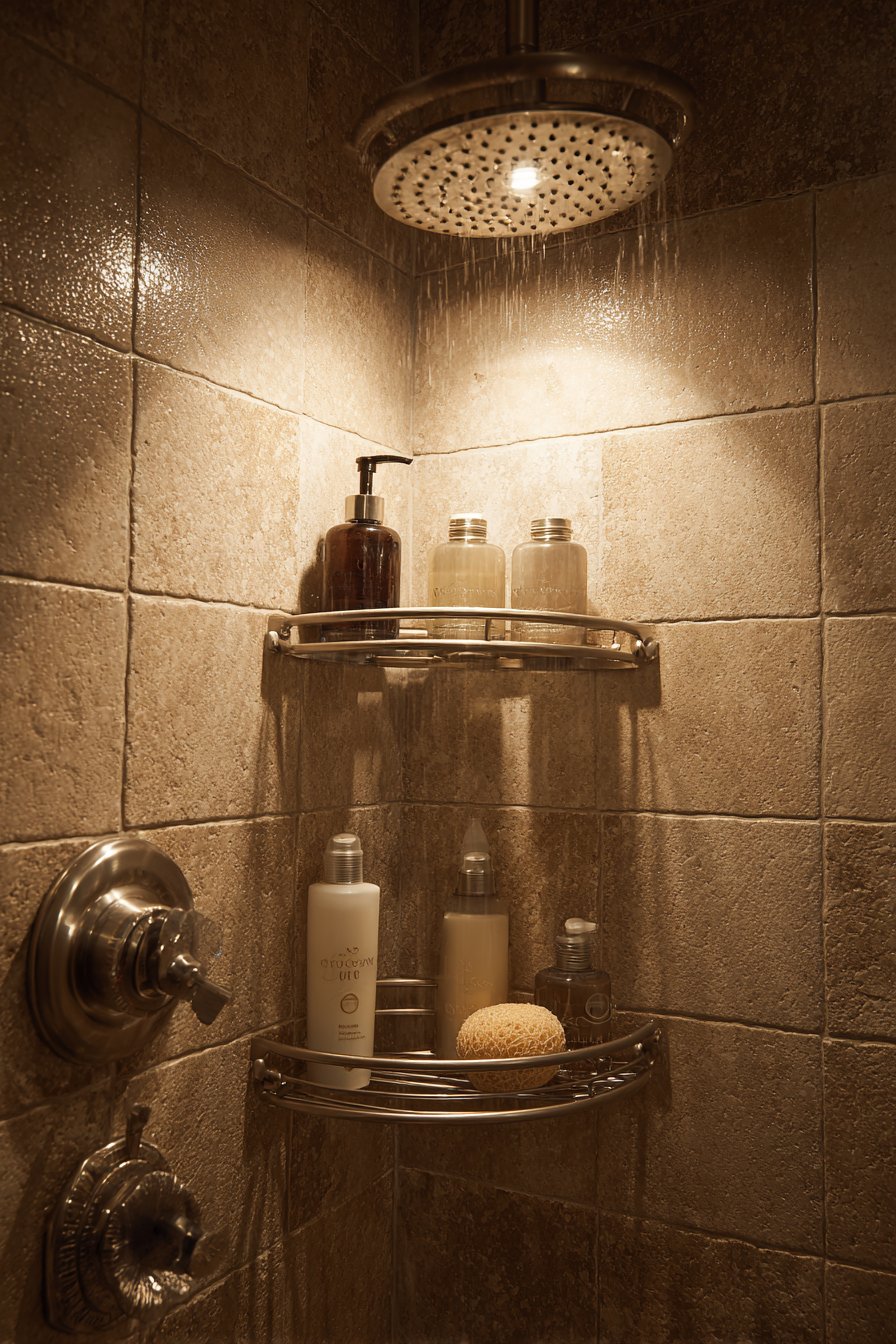
The organization of shower products on these corner shelves transforms utilitarian storage into streamlined efficiency. Shampoo and conditioner bottles stand at attention on the upper tier, their labels facing forward for easy identification. Liquid soap dispensers occupy the middle position at comfortable reaching height. A natural sea sponge rests on the lower tier where water drains away efficiently, its organic form providing textural contrast against the smooth metal surfaces. This logical arrangement based on frequency of use and ergonomic access makes daily routines more efficient.
Bathroom lighting reflecting off wet tile surfaces and brushed metal creates dynamic interplay between light, water, and reflective materials. The brushed finish prevents harsh glare while maintaining the reflective quality that makes small bathrooms feel more spacious. Water droplets catching light create temporary prismatic effects, adding visual interest to what might otherwise be purely functional storage. This attention to how materials interact with water and light elevates practical corner shelving into thoughtful design.
Key Design Tips:
- Choose rust-resistant metals specifically rated for constant water exposure—brushed nickel, stainless steel, or brass
- Verify weight capacity, as filled shampoo bottles and product containers create substantial load
- Install at heights that accommodate all household members comfortably while keeping products within easy reach
- Select units with adequate drainage to prevent standing water and subsequent mildew issues
- Clean regularly with appropriate products that remove soap scum without damaging metal finish
15. Asymmetrical Black Metal Honeycomb Corner Feature
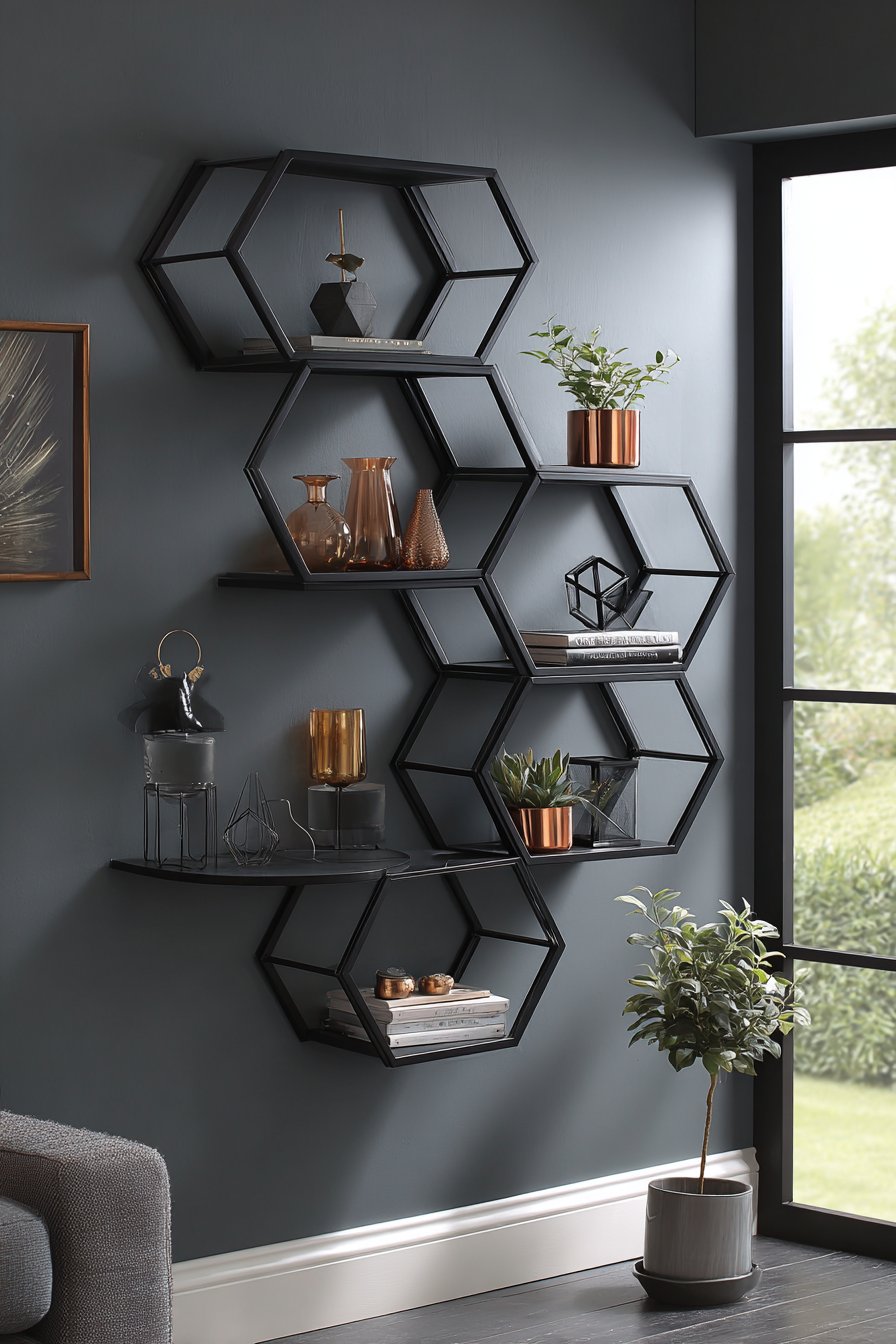
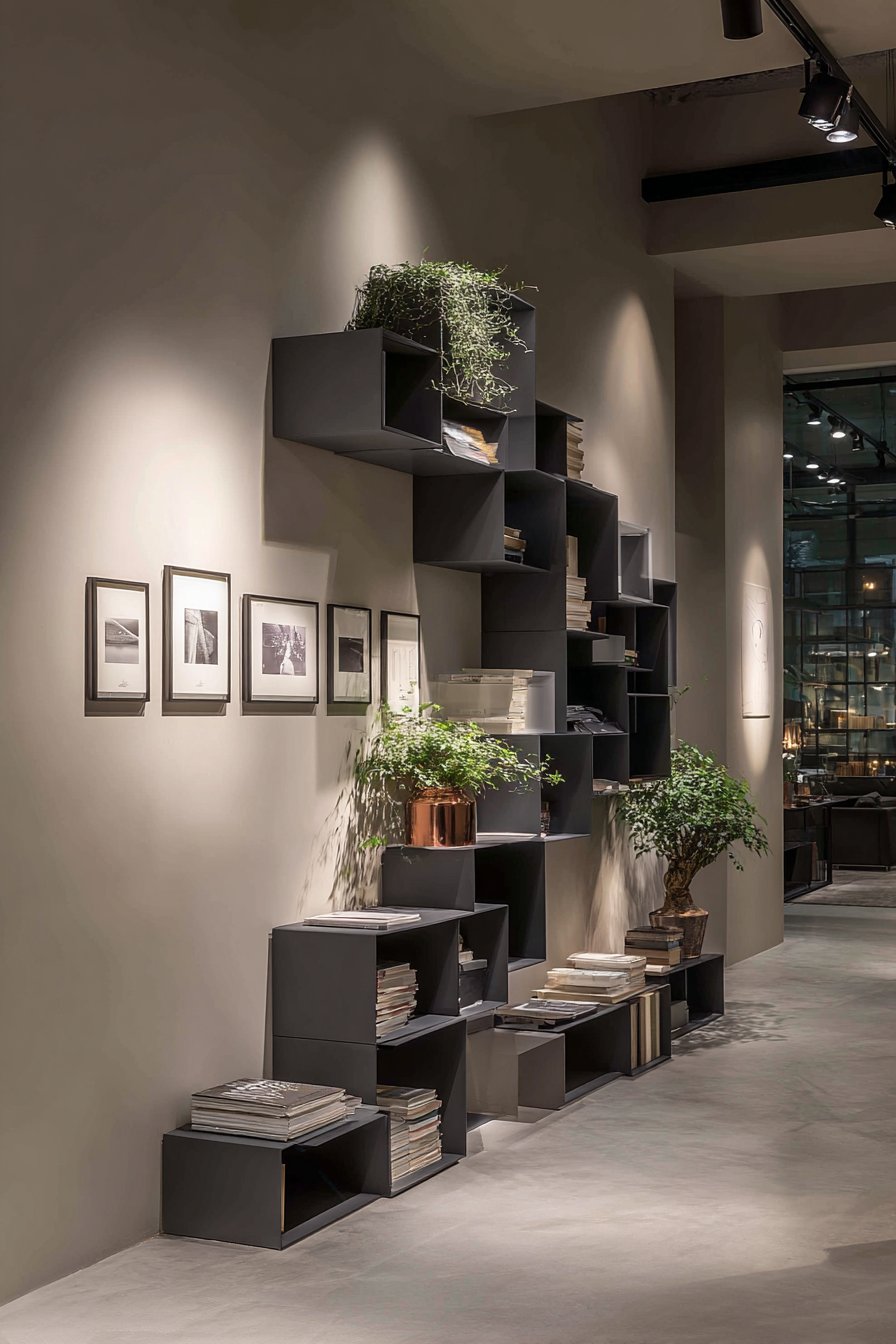
Breaking from traditional tiered shelving, this geometric corner shelf system employs an asymmetrical honeycomb pattern in matte black metal to create sculptural impact. The modular hexagonal compartments can be configured in countless arrangements, allowing personalization based on available space and design preferences. This contemporary approach treats the corner shelf as three-dimensional wall art that happens to provide storage, elevating functional furniture into artistic installation.
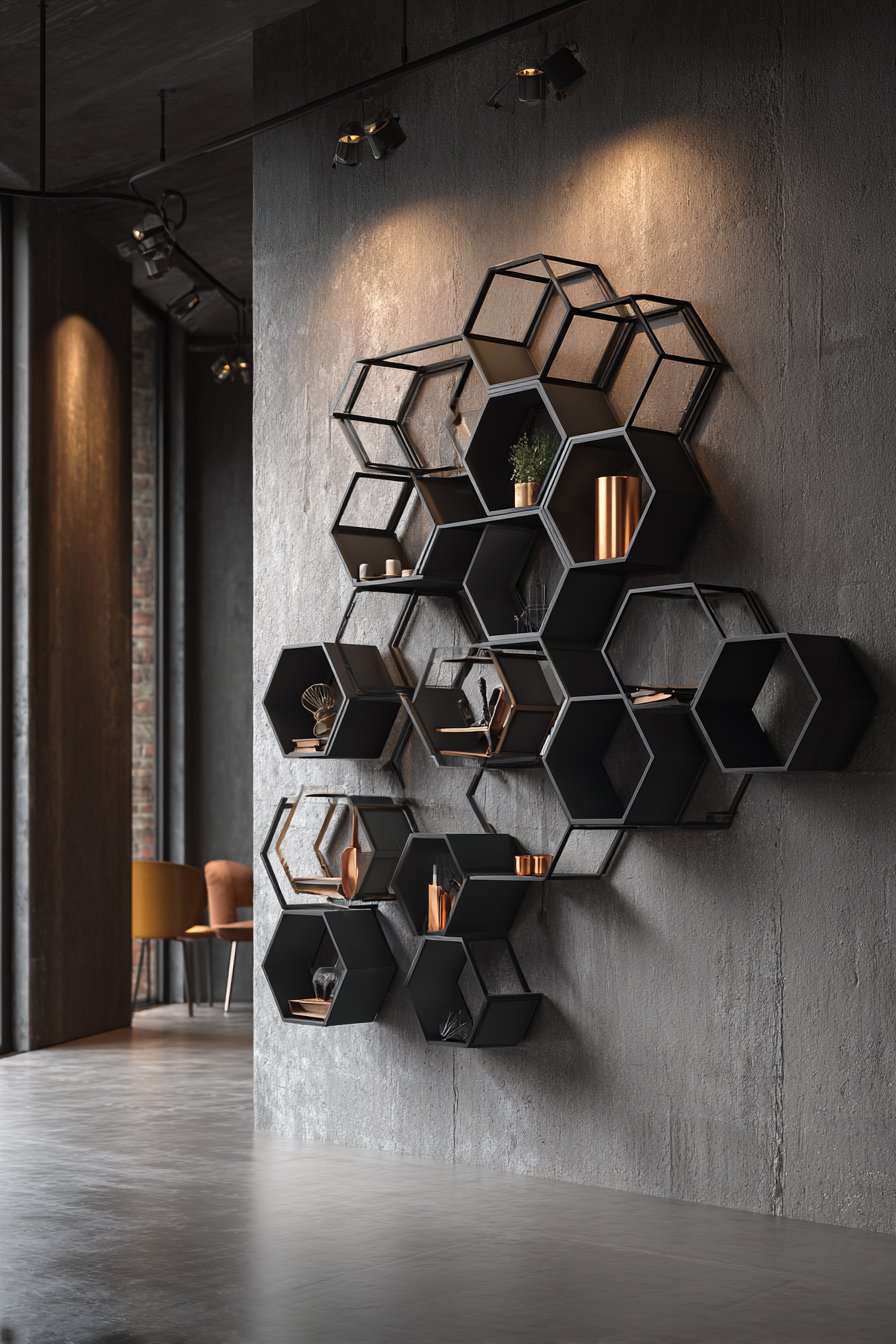
The styling of this geometric corner shelf emphasizes its architectural qualities through carefully selected objects that complement rather than compete with the strong structural framework. Small plants in copper pots introduce warm metallic accents and organic forms that soften the rigid geometry. Curated art objects—perhaps a small abstract sculpture, a designer toy, or a ceramic piece with interesting form—occupy select hexagons, creating intentional negative space that allows the eye to rest. Design books positioned at varying angles break the horizontal-vertical orientation typical of traditional shelving, adding visual dynamism.
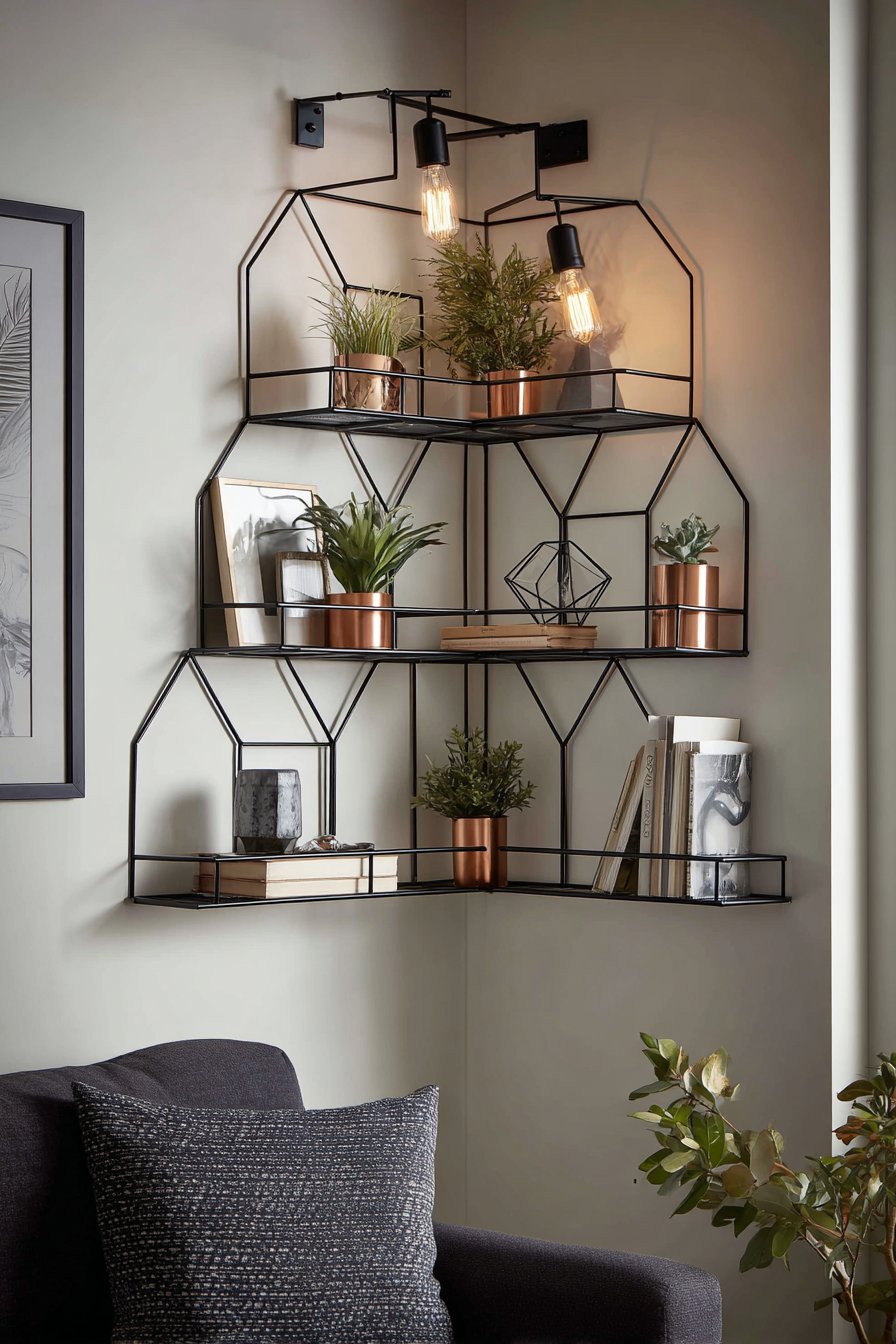
Directional track lighting positioned to graze across the honeycomb structure emphasizes its three-dimensional quality through dramatic shadow play. The geometric pattern casts complex shadows on the wall behind, creating a secondary layer of visual interest that changes based on light direction and time of day. This lighting approach transforms the corner shelf from a static storage solution into a kinetic installation that responds to environmental conditions.
Key Design Tips:
- Plan the honeycomb configuration before installation, sketching layouts to ensure balanced asymmetry
- Anchor securely to wall studs at multiple points, as the weight distribution in asymmetrical designs can create unexpected stress points
- Limit displayed items to prevent visual chaos—the geometric structure itself provides substantial visual interest
- Consider the relationship between filled and empty hexagons, using negative space as intentional design element
- Use the strong geometry to anchor contemporary spaces while introducing organic elements through plants and natural objects
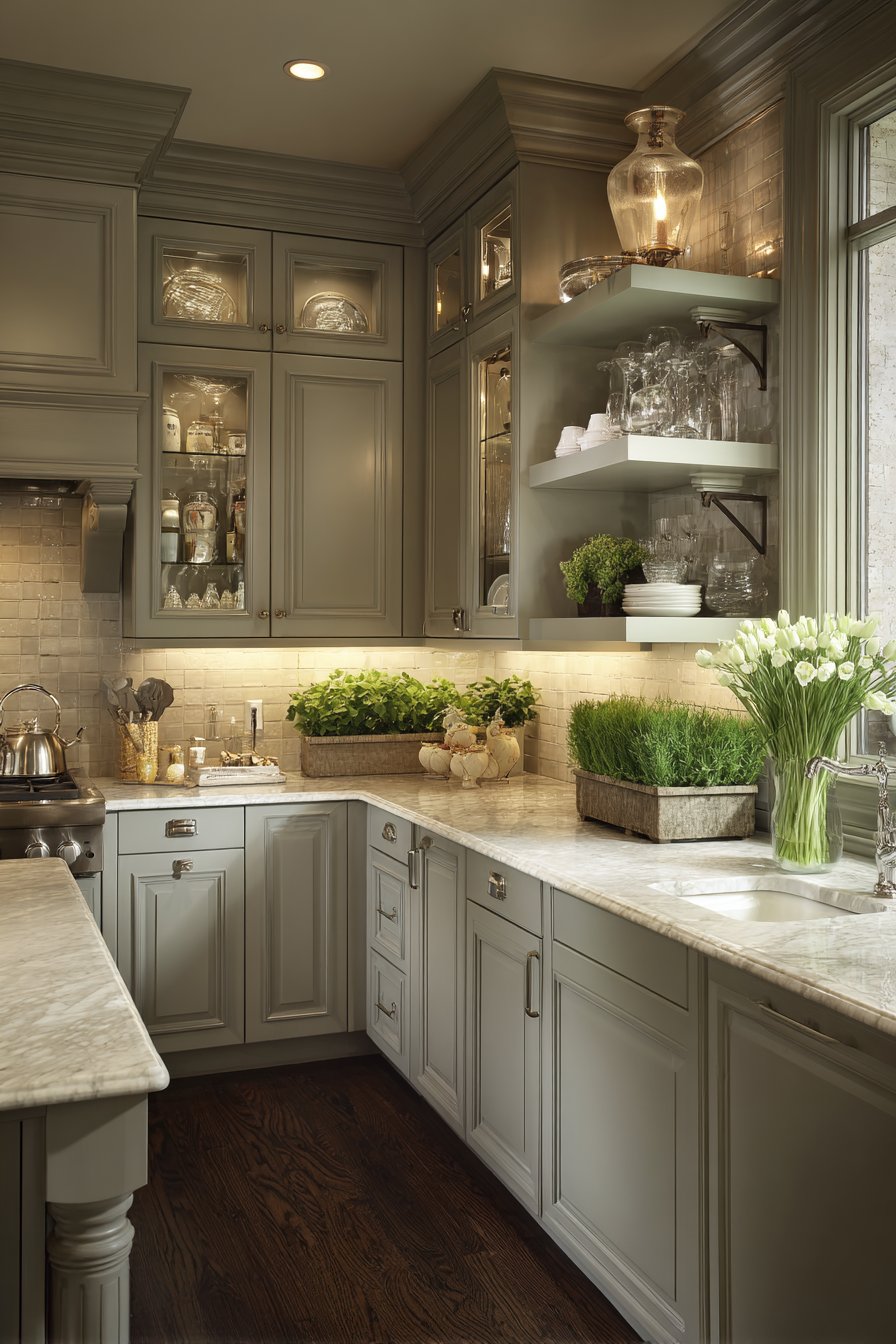
16. Open Wood Kitchen Corner Shelving with Iron Brackets
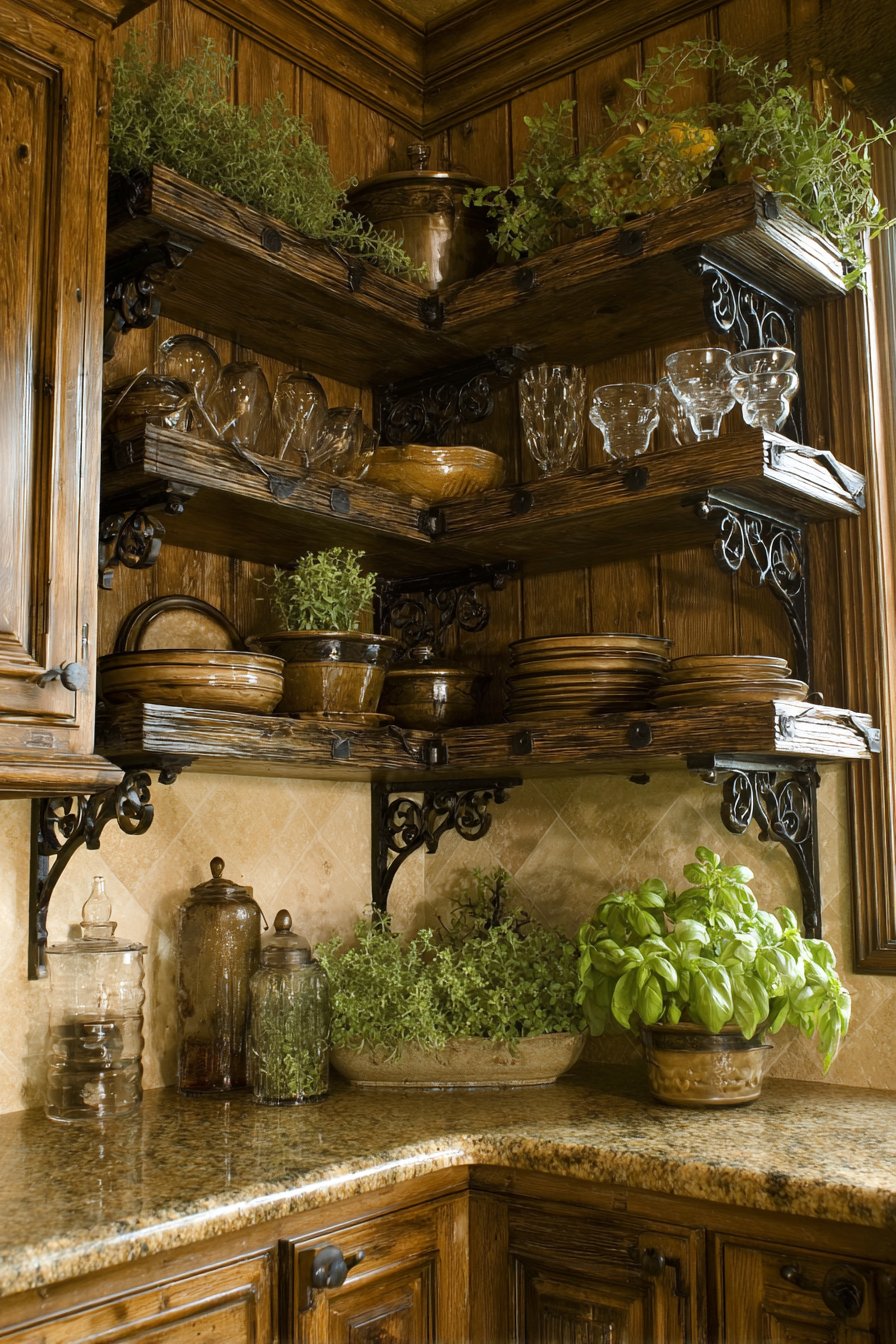
Traditional kitchen design finds practical expression in open wooden corner shelves supported by decorative iron brackets, positioned strategically above countertop work surfaces. This installation brings frequently used items within easy reach while adding visual warmth through natural wood tones. The two-tier configuration provides adequate storage without overwhelming the space—a critical balance in kitchens where counter space is precious and visual clutter can make food preparation feel chaotic.
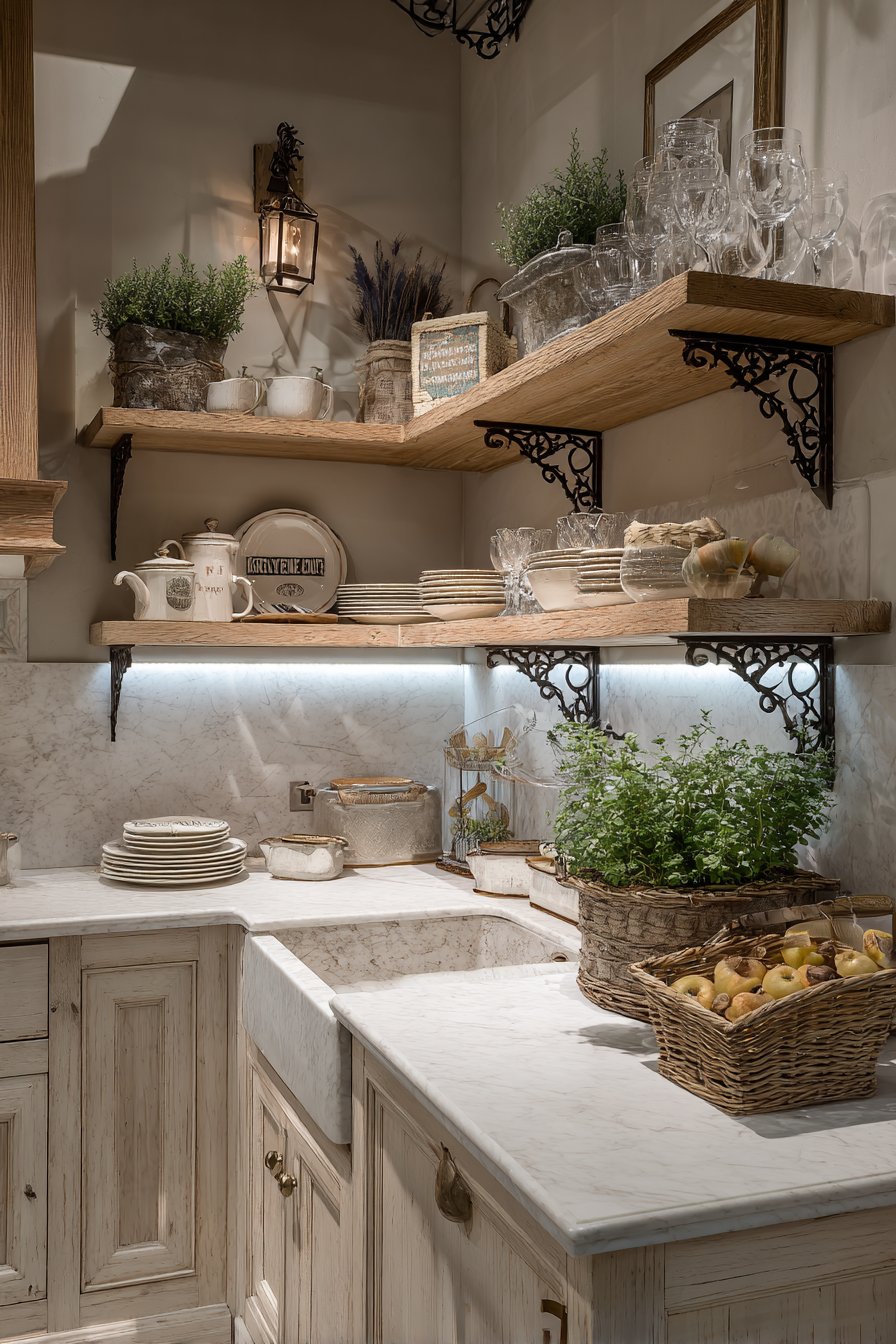
The display of everyday dishes, vintage glassware, and potted herbs demonstrates how functional storage can enhance both utility and aesthetics. Stacked dinner plates ready for quick table setting occupy one section, while drinking glasses and mugs hang from integrated hooks or rest upright for easy access. Small terracotta pots holding fresh herbs—basil, rosemary, oregano, thyme—create a living kitchen garden that provides both visual interest and culinary ingredients. This integration of beauty and function exemplifies the best of traditional kitchen design where form follows function without sacrificing visual appeal.
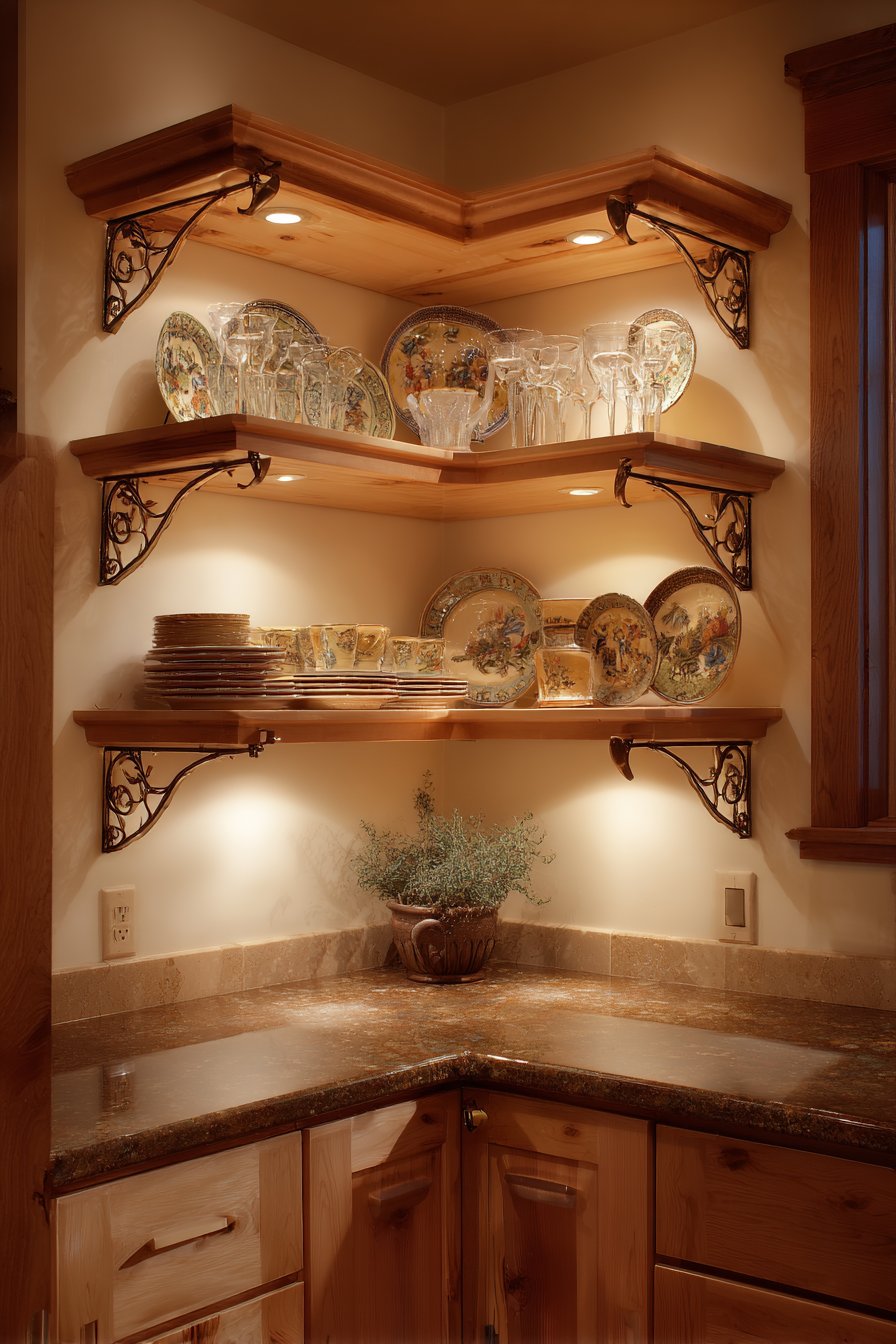
Under-cabinet lighting installed along the counter backsplash provides task illumination that makes the corner shelf contents clearly visible during food preparation. This practical lighting consideration prevents the shadowy corners that can occur in kitchen work zones, while also highlighting the warm wood tones and creating inviting ambiance. The combination of natural wood, practical organization, and thoughtful lighting creates a corner that feels both hardworking and welcoming.
Key Design Tips:
- Select wood species that can withstand kitchen humidity and temperature fluctuations—oak, maple, or sealed pine work well
- Install iron brackets rated for the combined weight of shelves plus displayed items with safety margin
- Position shelves high enough to avoid head bumps but low enough for comfortable reach—typically 18-24 inches above counter
- Arrange dishes and glassware logically based on frequency of use, keeping daily items most accessible
- Maintain herb plants with adequate light and regular watering, replacing as needed to keep display fresh and functional
17. Nautical Rope and Reclaimed Wood Corner Display
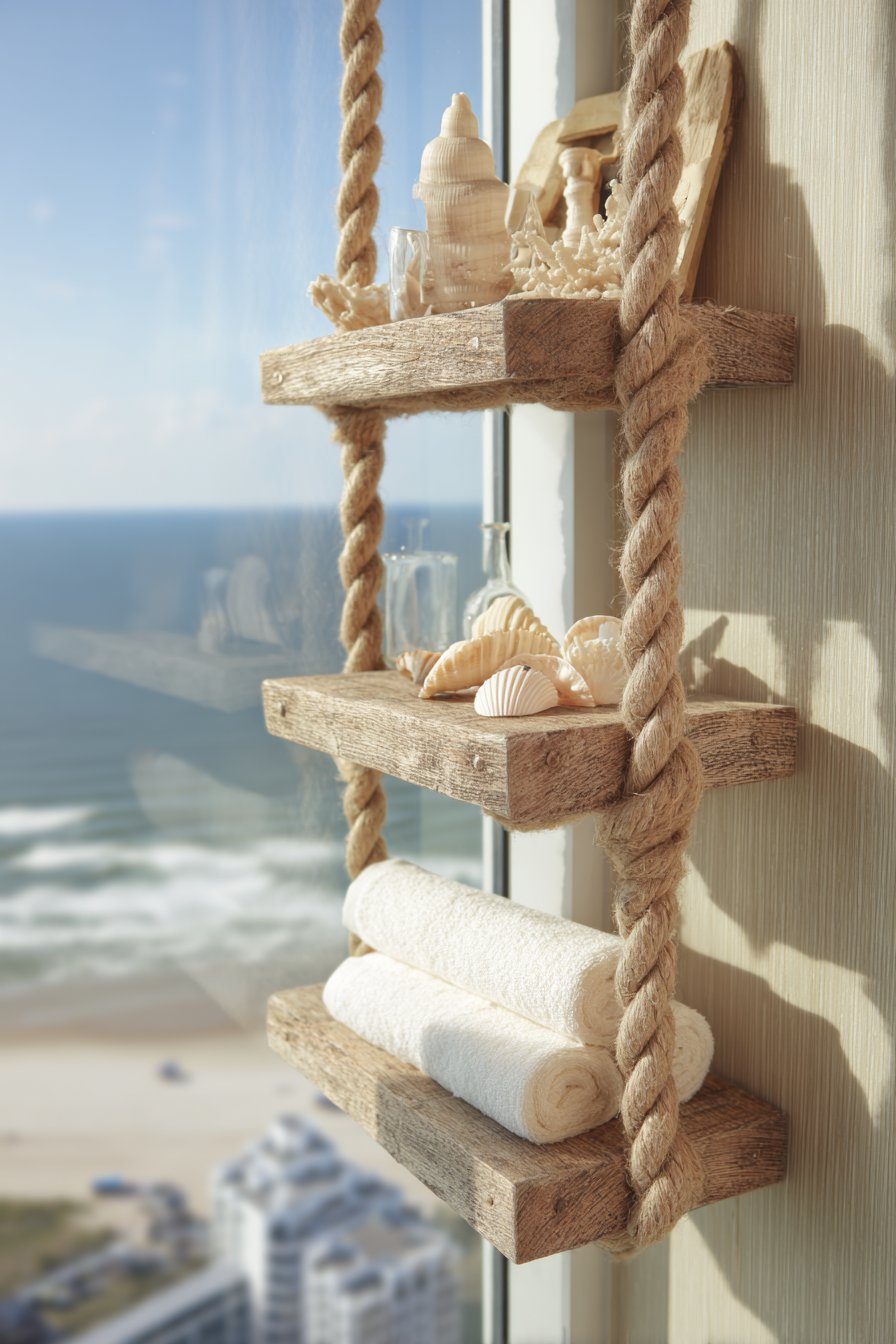
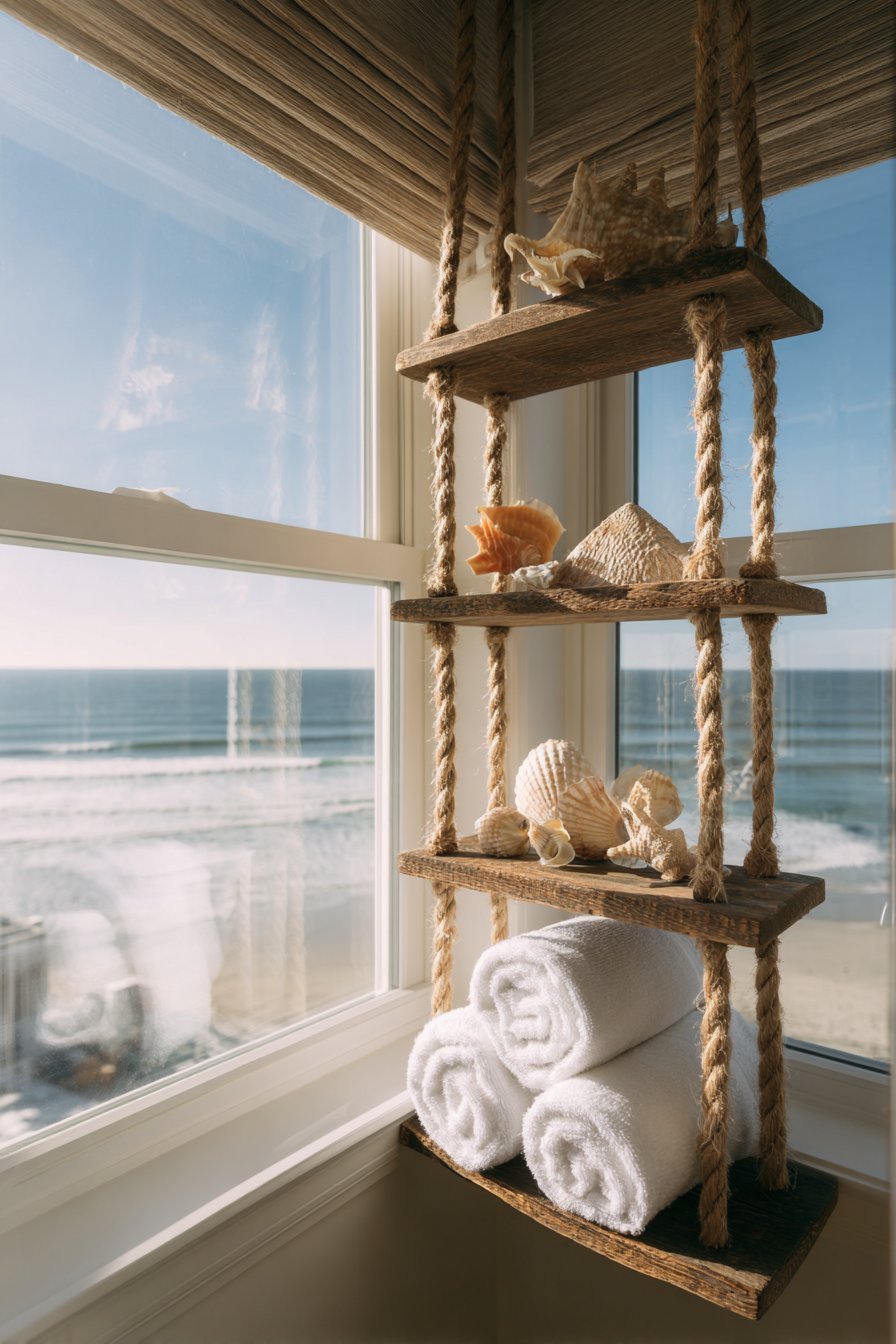
Maritime inspiration meets sustainable design in this rope-suspended corner shelf where natural manila rope supports reclaimed wood planks in a coastal bedroom. The thick rope—perhaps 1-2 inches in diameter—provides substantial structural support while making strong visual statement that immediately communicates coastal aesthetic. The hand-tied knots and rope’s natural fiber texture create organic appeal that contrasts beautifully with the angular geometry of the wooden shelf platforms.
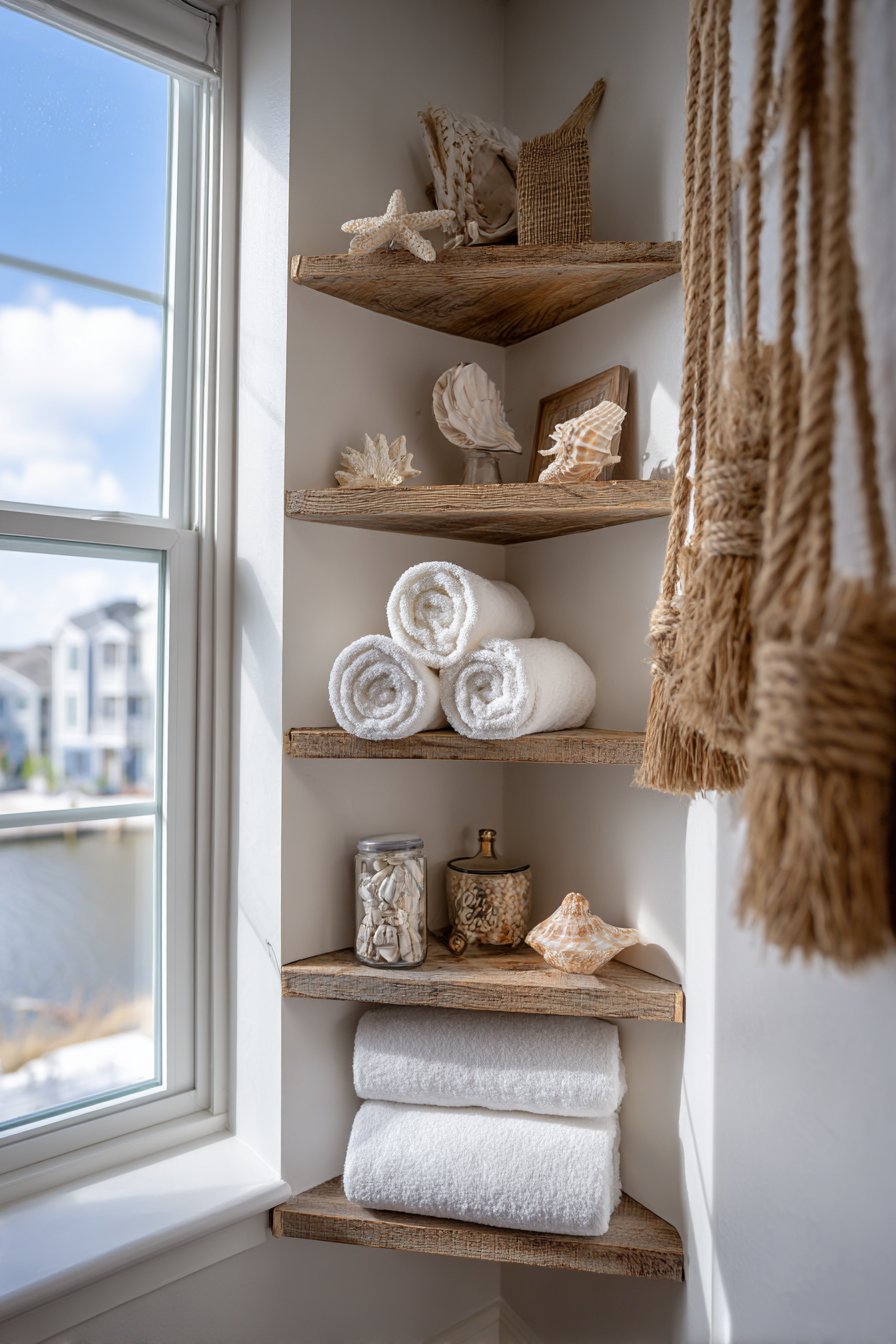
The coastal styling extends to carefully selected accessories that evoke seaside living without resorting to obvious cliché. Beach-collected shells—perhaps unusual spiral forms, sand dollars, or pieces of sea glass—rest in small groupings that suggest genuine beachcombing rather than purchased collections. Maritime decor might include vintage brass instruments, knotted rope in decorative patterns, or weathered driftwood pieces. Rolled white towels in the crisp, fresh style of seaside resorts complete the coastal atmosphere while providing practical bathroom storage.
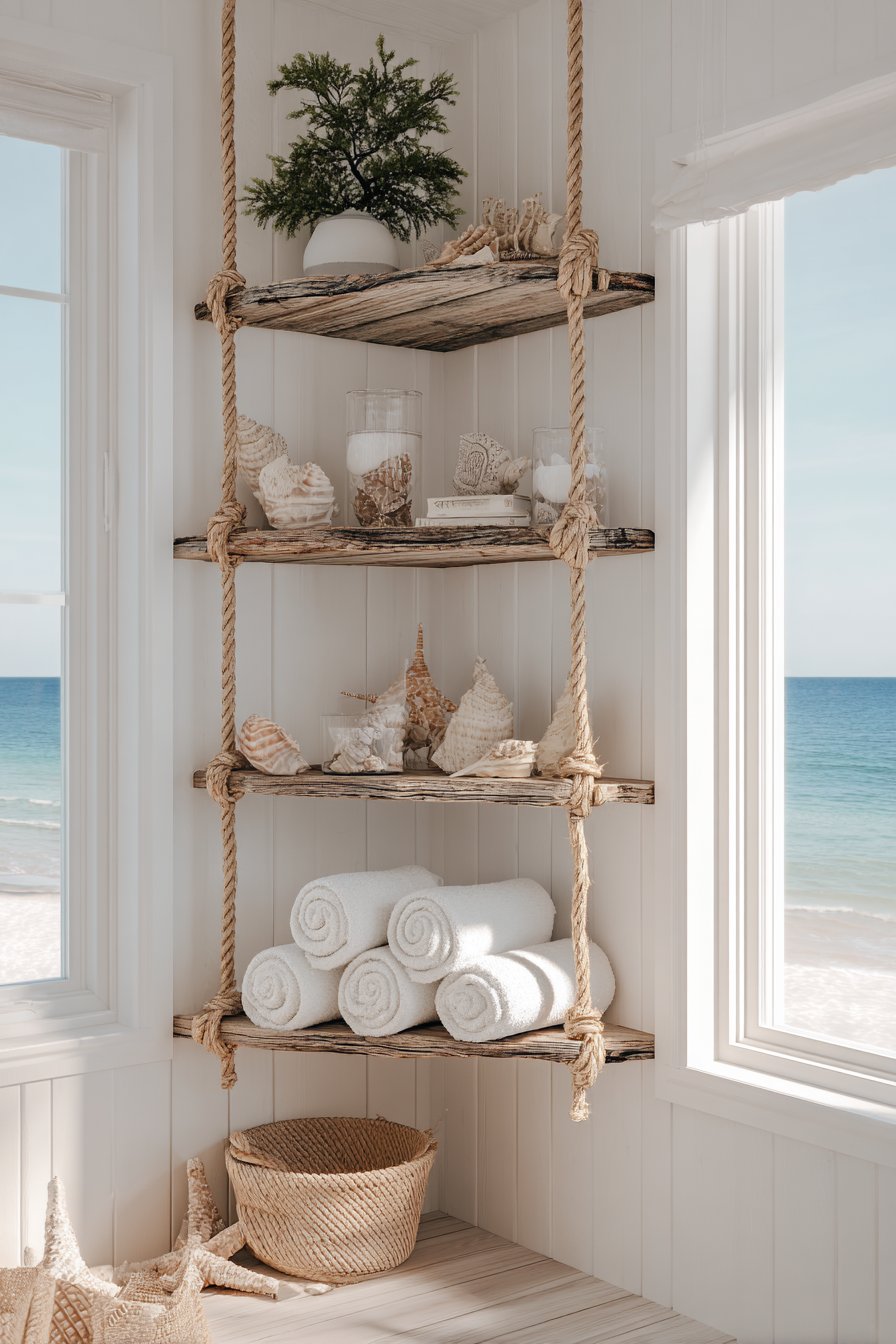
Soft natural light from ocean-view windows—or any window with bright, clear quality—creates the breezy, relaxed atmosphere essential to coastal design. The interplay of light on rope texture, weathered wood, and collected natural objects creates subtle shadows and highlights that suggest the ever-changing quality of seaside environments. This lighting approach maintains the connection to natural coastal settings where bright sun, sea, and sky dominate the visual experience.
Key Design Tips:
- Use marine-grade manila rope rated for the weight of loaded shelves plus substantial safety margin
- Seal reclaimed wood planks with water-resistant finish appropriate for humid bathroom environments
- Secure rope to ceiling joists or blocking with heavy-duty eye hooks designed for suspended loads
- Maintain balanced loading on shelves to prevent tilting—heavier items toward wall, lighter toward rope edge
- Embrace the natural movement of suspended shelves rather than fighting to keep them perfectly static
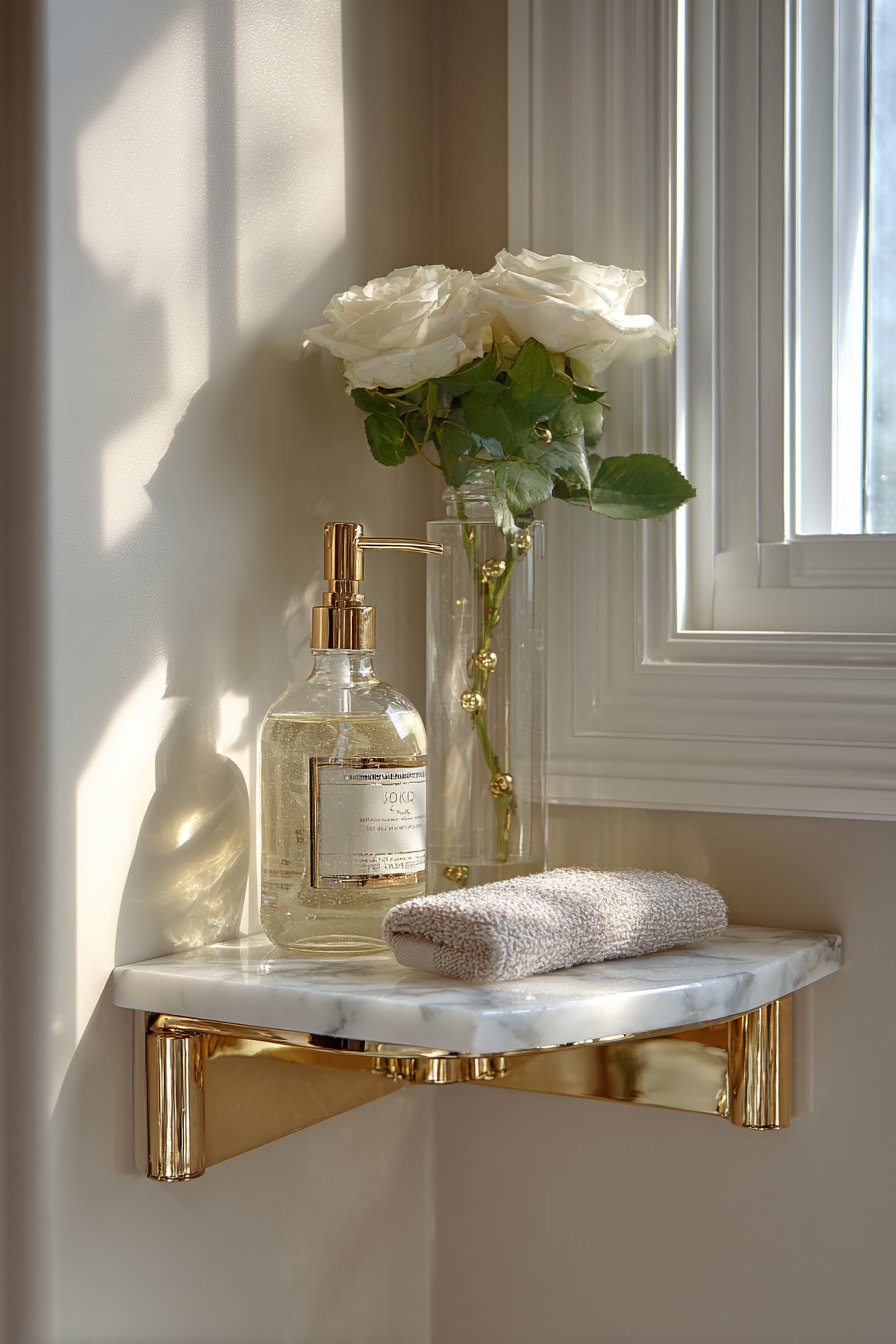
18. Luxurious Carrara Marble Corner Shelf
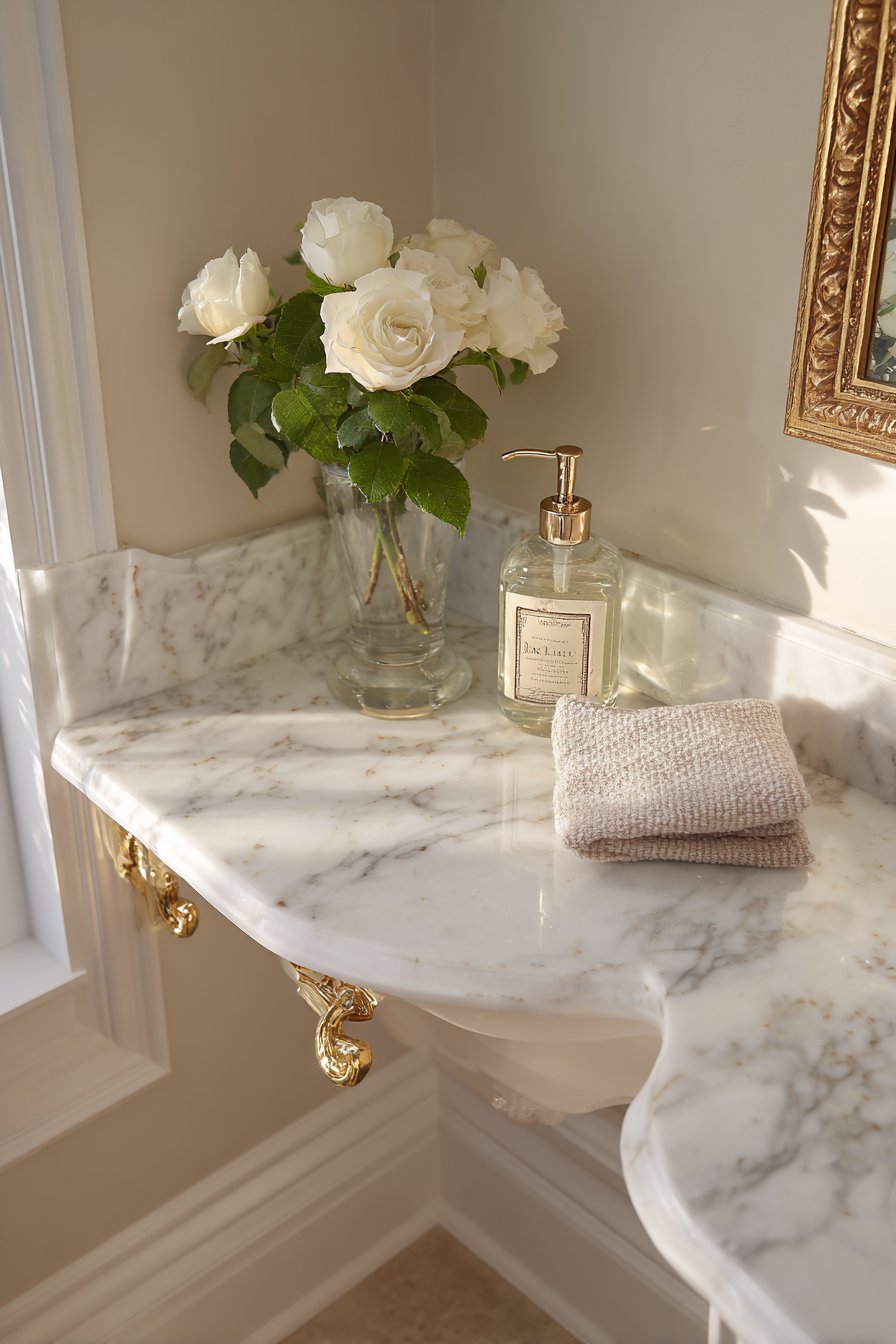
Premium materials elevate corner shelving from functional storage to luxury design statement, as demonstrated by this white Carrara marble shelf with subtle gray veining. The natural stone’s cool, smooth surface and distinctive patterning—created by geological processes over millennia—cannot be replicated by manufactured alternatives, making each installation unique. Gold-finished brackets provide both structural support and decorative accent, their warm metallic sheen creating beautiful contrast against the cool marble.
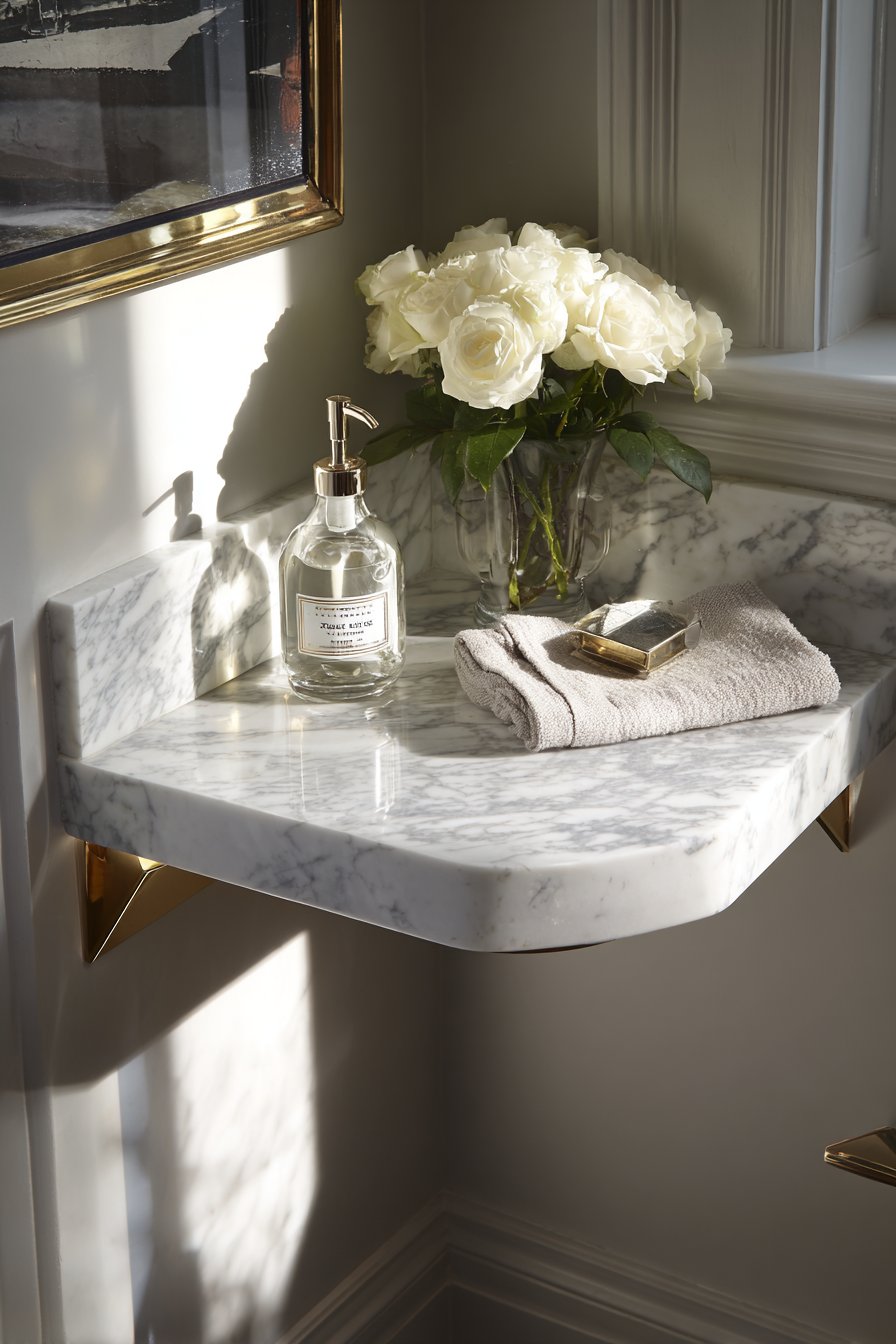
The refined styling of this elegant powder room corner shelf demonstrates restraint and quality over quantity. High-end hand soap in a clear glass dispenser allows the liquid’s color and clarity to become part of the visual composition while maintaining the transparent quality that prevents visual clutter. A small crystal vase holds a few perfect white roses—perhaps three to five stems—arranged simply to showcase their natural form rather than elaborate floral design. A linen hand towel in pristine white or soft neutral completes the luxurious yet understated tableau.
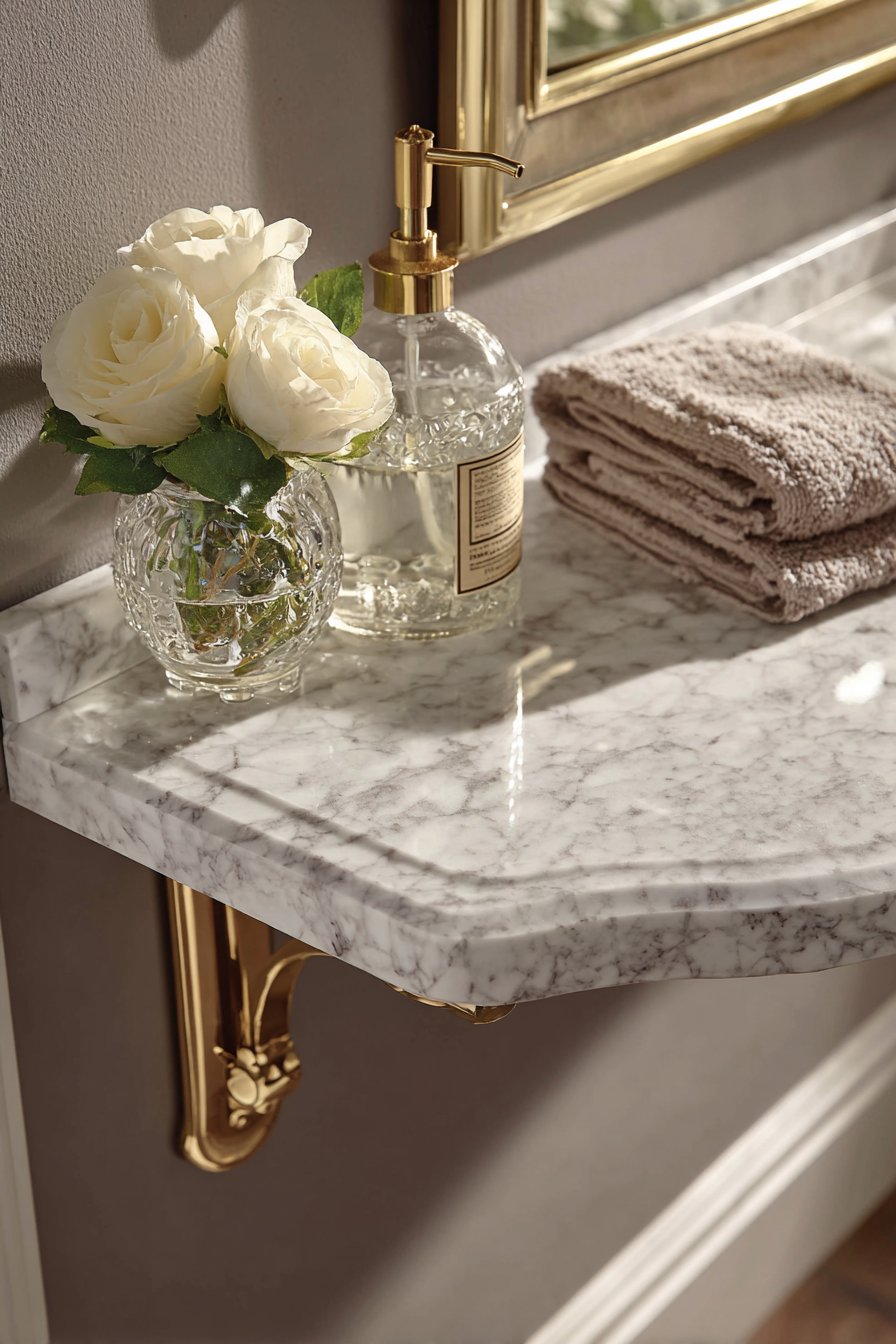
Vanity lighting carefully positioned to avoid harsh shadows creates soft reflections on the polished marble surface, emphasizing its natural veining patterns without creating glare. The interplay of light on polished stone, gold metal, and glass surfaces creates sophisticated visual texture through reflection and refraction. This lighting approach enhances the premium materials’ inherent beauty while maintaining the serene, spa-like atmosphere appropriate for powder rooms where guests experience a home’s design quality in intimate detail.
Key Design Tips:
- Use stone-rated brackets with appropriate weight capacity, as marble is significantly heavier than wood
- Seal marble with quality stone sealer to protect against water damage and staining from soaps or cosmetics
- Limit displayed items to preserve the luxurious simplicity that allows the premium material to shine
- Coordinate metal finishes throughout the powder room for cohesive design—if brackets are gold, consider gold faucets and hardware
- Wipe marble regularly with pH-neutral cleaners designed specifically for natural stone to maintain its beauty
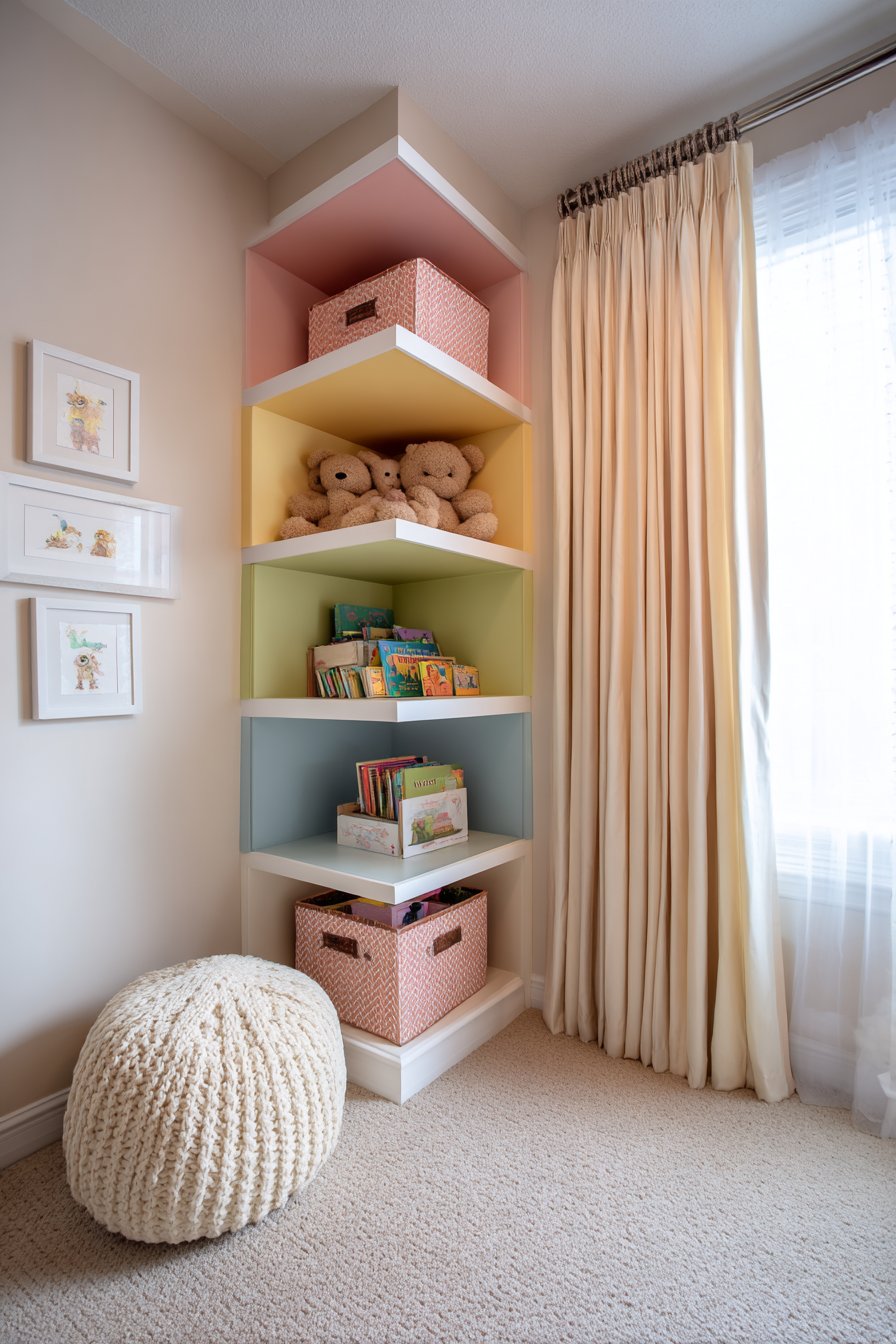
19. Whimsical Pastel Rainbow Kids Corner Shelving
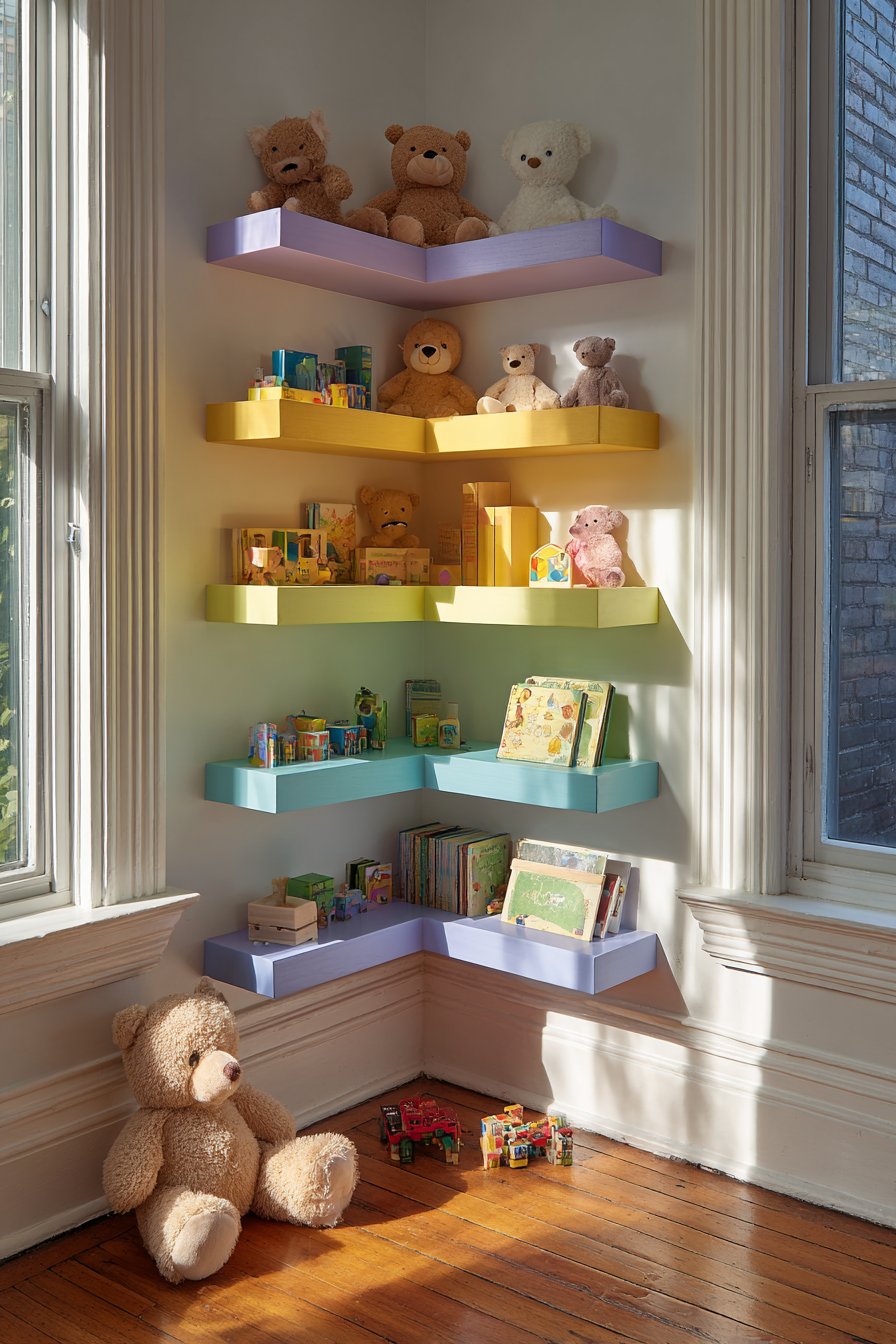
Designing for children requires balancing playful aesthetics with practical functionality, as exemplified by this colorful corner shelf unit featuring soft pastel rainbow tiers. Each shelf painted in gentle variations of pink, lavender, mint, lemon, and peach creates cheerful atmosphere without the overwhelming intensity of primary colors. The installation height considers child-scale ergonomics, positioning shelves where young hands can reach favorite toys and books independently, fostering self-sufficiency and organizational skills.
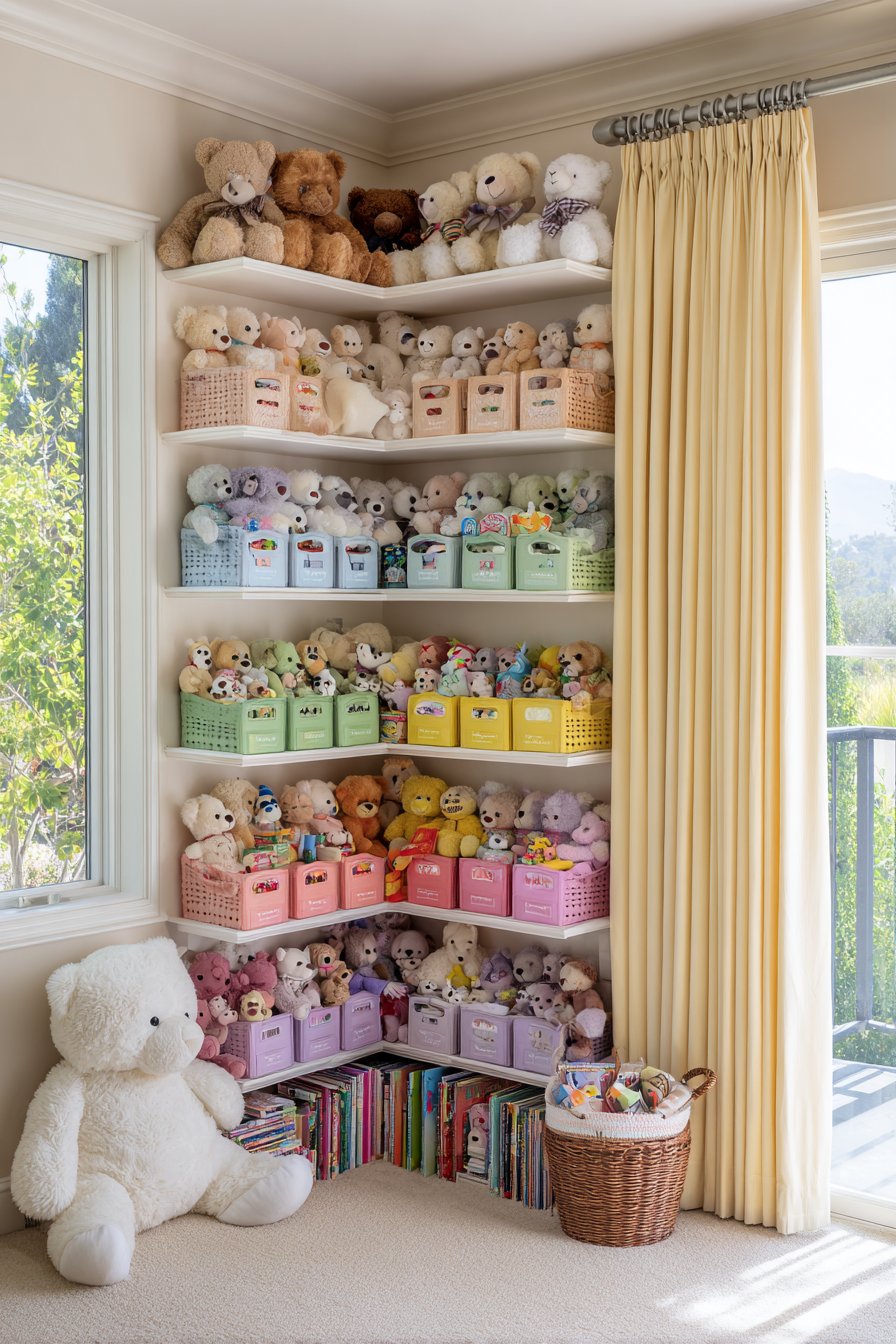
The thoughtful organization of children’s items demonstrates how corner shelves can teach categorization and tidiness while maintaining visual appeal. Stuffed animals arranged by size or color create parade of soft friends ready for imaginative play. Board books stand upright with spines visible, encouraging emerging readers to select titles independently. Small toy storage bins in coordinating colors contain building blocks, art supplies, or puzzle pieces, making cleanup straightforward enough for children to manage with minimal adult assistance.
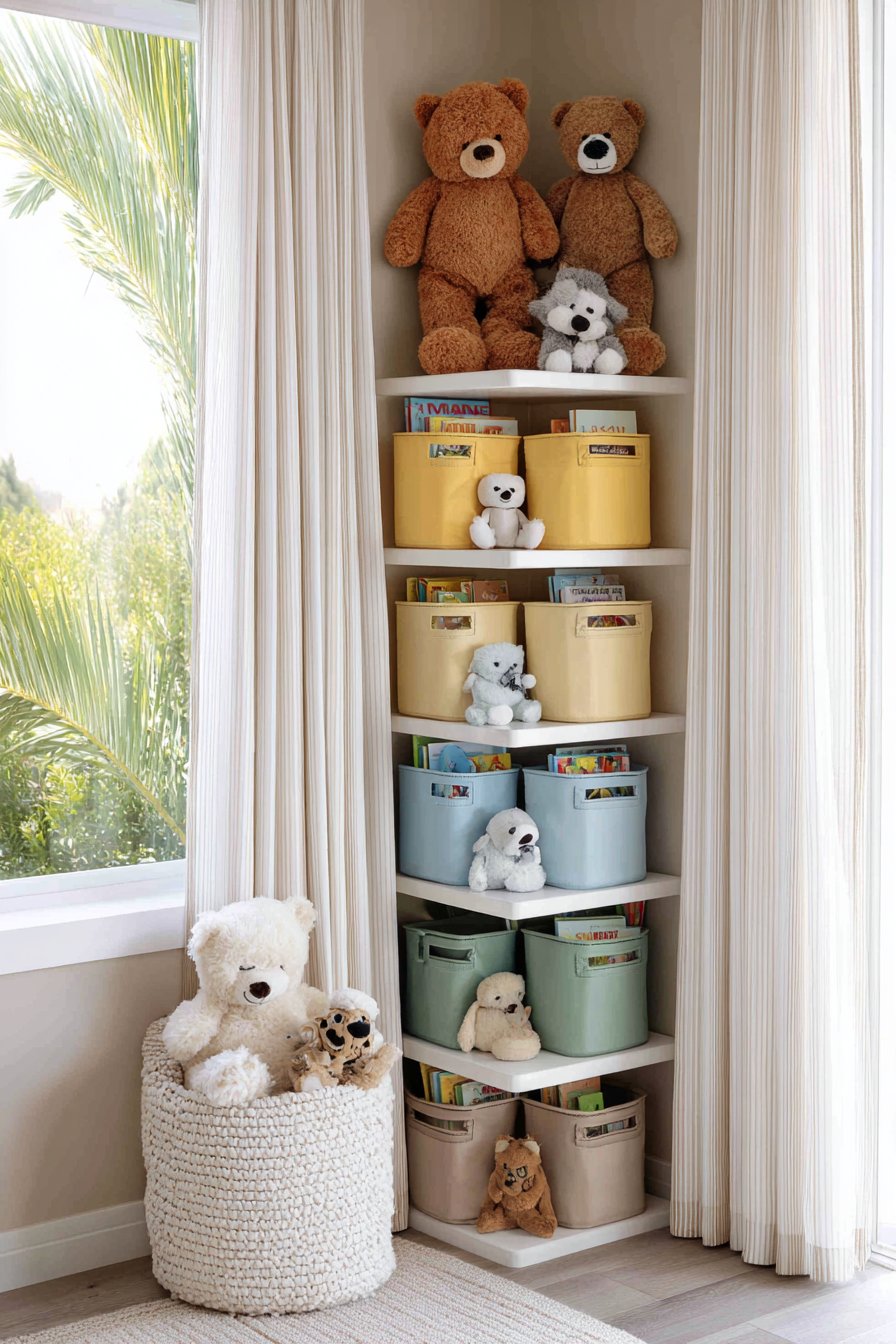
Natural afternoon light flooding through nursery windows creates bright, cheerful environment that supports healthy development and positive mood. The pastel colors appear soft and soothing in this gentle illumination, avoiding the garish quality that can occur with saturated hues in bright light. This thoughtful color and lighting combination creates space that’s stimulating enough to encourage play and learning but calm enough to support rest and quiet activities.
Key Design Tips:
- Use low-VOC paint formulated for children’s spaces to ensure air quality safety
- Round shelf edges and corners to prevent injury during active play
- Anchor the unit securely to prevent tipping if children attempt to climb
- Choose washable paint finishes that can be cleaned when inevitable spills and marks occur
- Involve children in organization decisions to encourage ownership and maintenance of their space
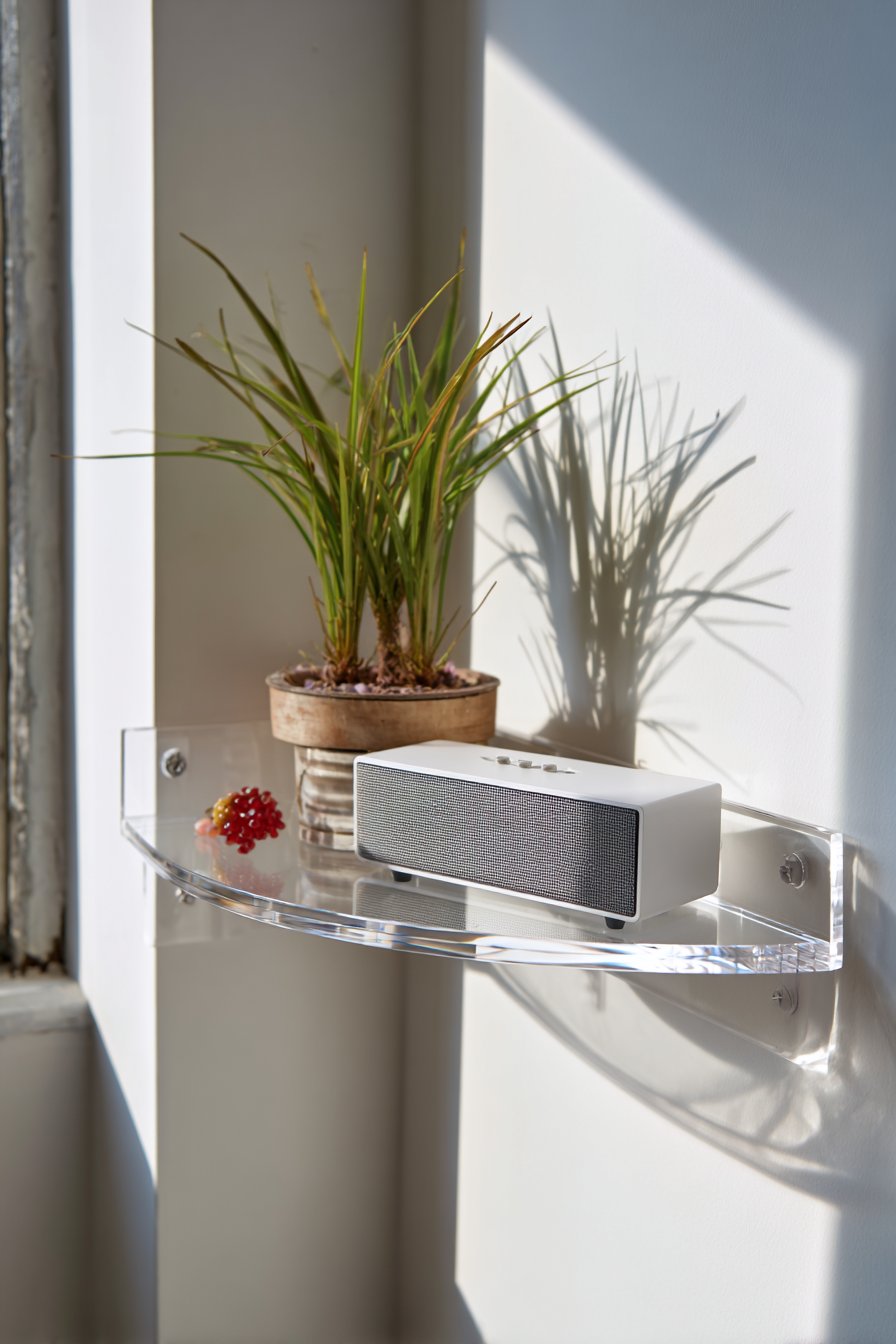
20. Transparent Acrylic Modern Office Corner Display
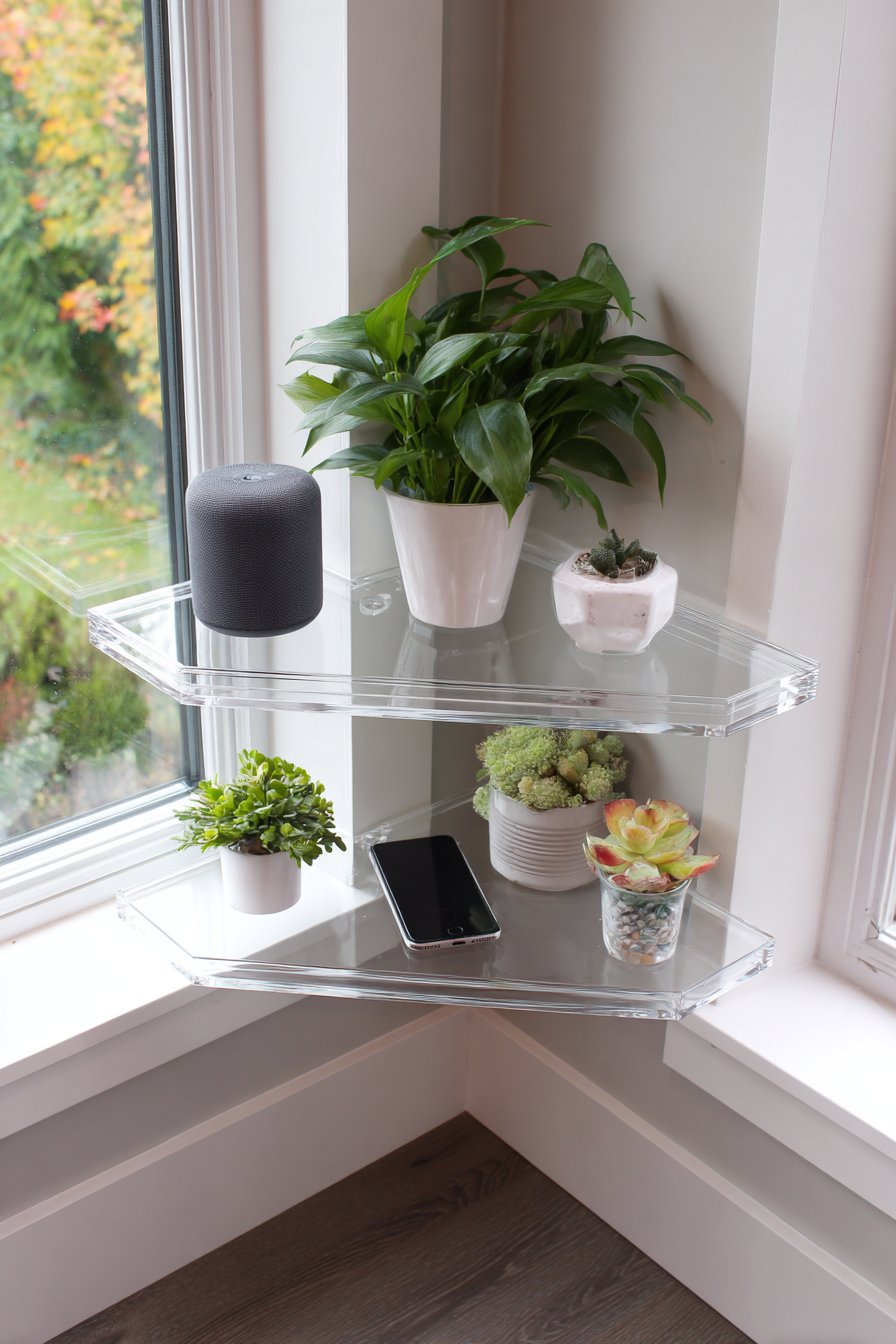
Nearly invisible storage solutions allow other design elements to take center stage, as demonstrated by these transparent acrylic floating corner shelves. The crystal-clear material virtually disappears in well-lit spaces, creating the illusion that displayed objects float independently in the corner. This minimalist approach suits contemporary home offices where reducing visual clutter supports focus and productivity, while the structural integrity of quality acrylic provides reliable support for office accessories and technology.
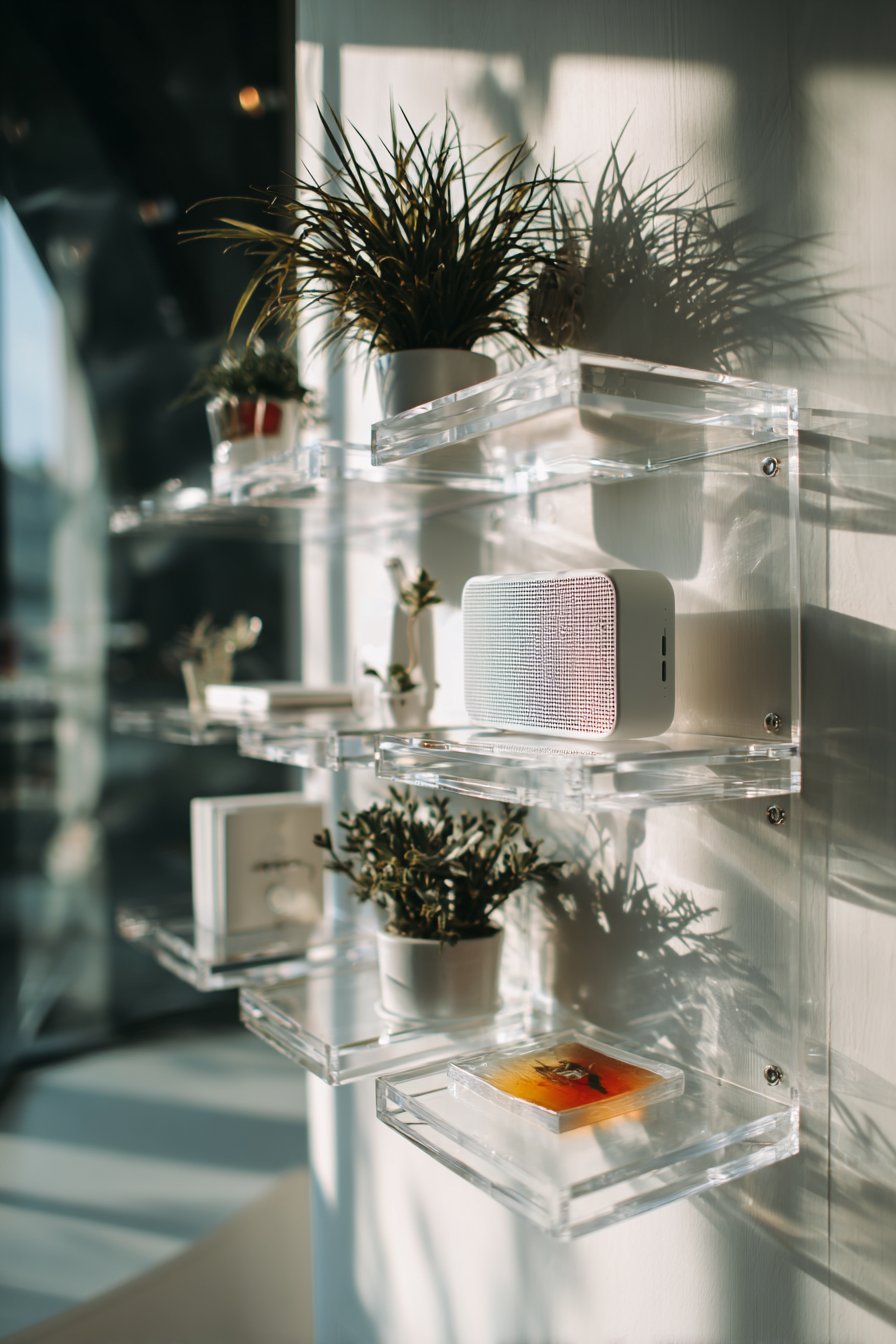
The strategic styling of these invisible shelves emphasizes their nearly magical quality. Small desk accessories—perhaps a sculptural paperweight, a minimalist desk calendar, or a premium pen set—appear to hover without visible support. A wireless speaker maintains connectivity for background music or conference calls without requiring surface space on the primary work desk. Air-purifying plants like pothos or snake plant improve office air quality while their green foliage creates striking contrast against the transparent shelving, appearing to grow from thin air.
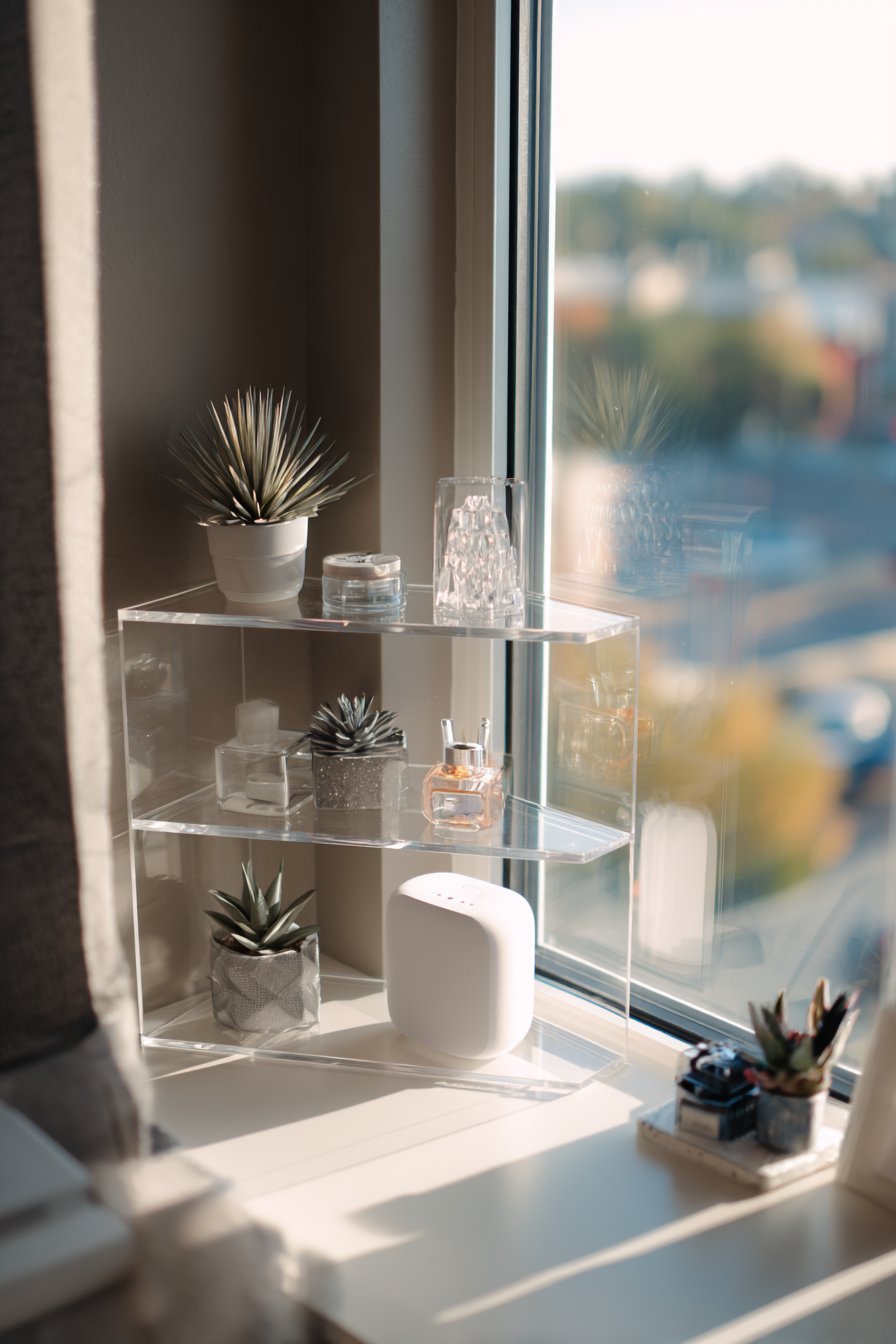
Natural daylight creates subtle effects on the acrylic surfaces—gentle reflections and refractions that reveal the material’s presence without dominating the visual field. Unlike glass which can create more pronounced reflections and weight, acrylic maintains extreme lightness in both physical and visual terms. This quality allows the corner to remain open and airy even while providing functional storage, a valuable characteristic in home offices where maintaining a sense of spaciousness supports creative thinking and reduces claustrophobia during long work sessions.
Key Design Tips:
- Choose cast acrylic rather than extruded for superior clarity and scratch resistance
- Clean with microfiber cloths and acrylic-specific cleaners to prevent scratching and maintain clarity
- Position away from direct heat sources as acrylic can warp at relatively low temperatures
- Use specialized acrylic brackets and mounting hardware designed to distribute weight without cracking edges
- Limit displayed items to preserve the floating effect—overcrowding defeats the purpose of invisible shelving
21. Traditional Mahogany Corner Library Tower
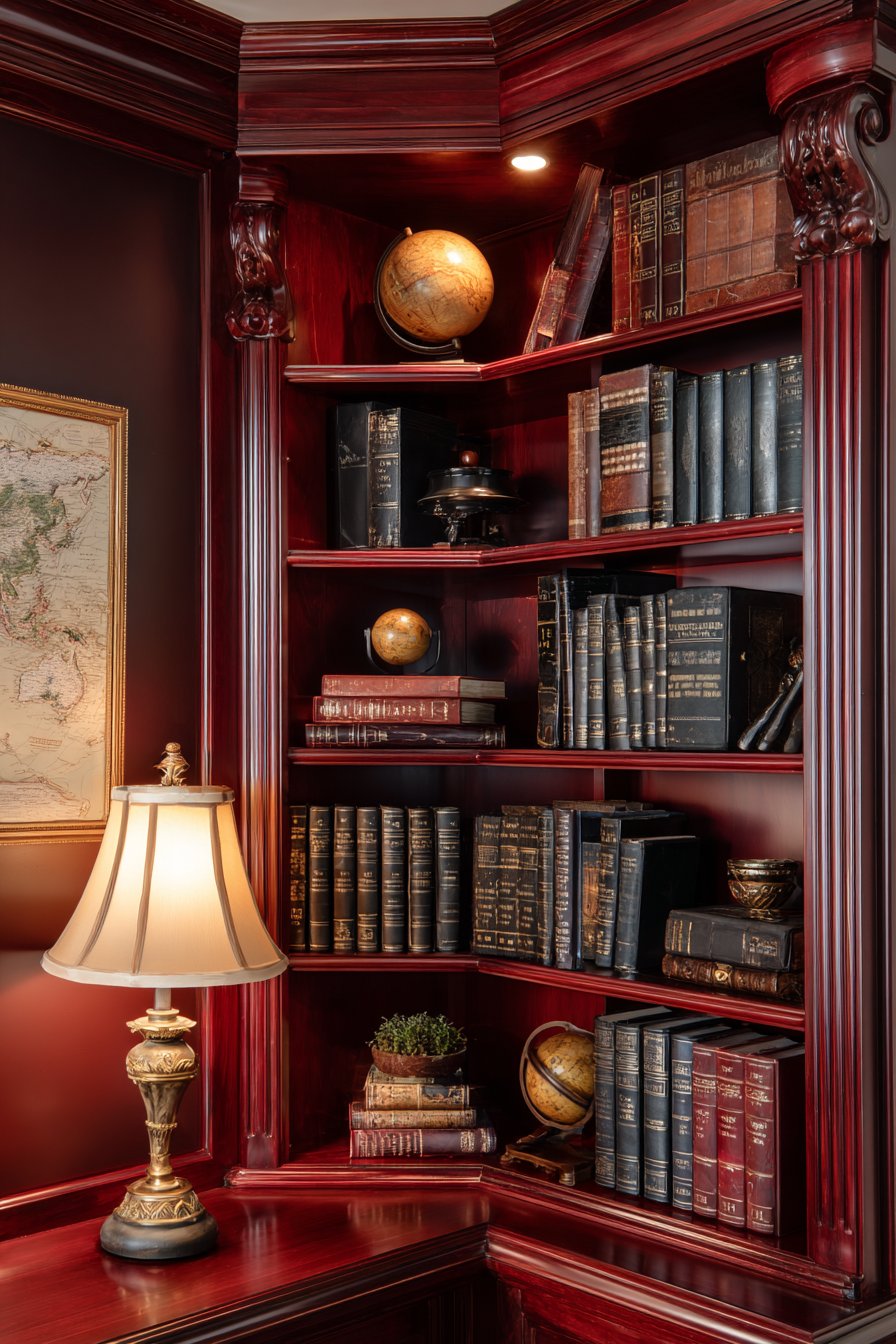
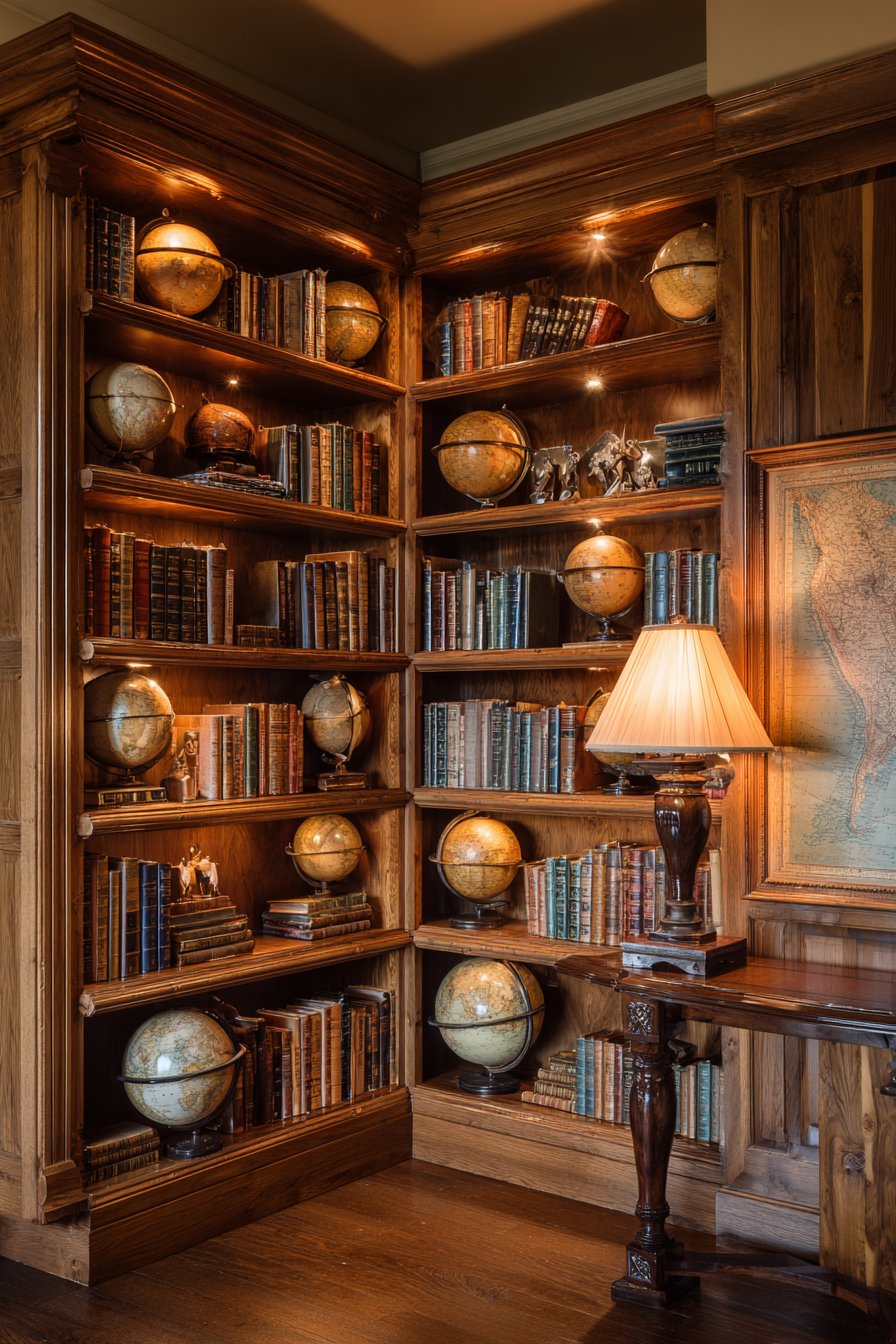
Substantial presence and timeless elegance define this floor-to-ceiling corner shelf unit crafted from rich mahogany wood with traditional molding details. The dark reddish-brown tones of mahogany create sophisticated atmosphere appropriate for classic library settings where reading, reflection, and intellectual pursuit take precedence. Traditional molding details—perhaps crown molding at the top, decorative trim between sections, and carved details on visible edges—reference historical furniture making traditions while providing visual interest through dimensional shadow play.
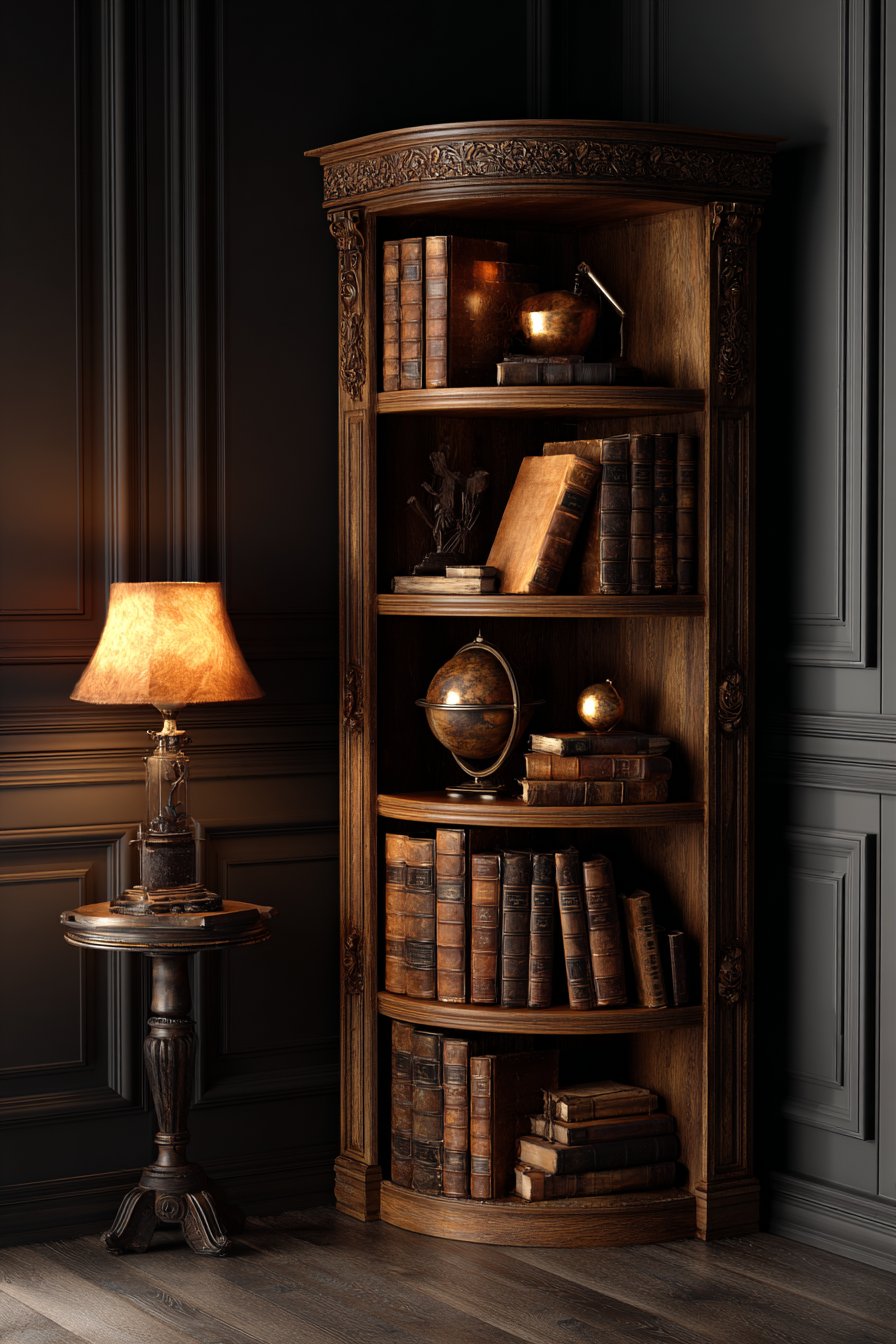
The extensive book collection and treasured heirlooms displayed across multiple shelves transform this corner into a personal archive of knowledge and family history. Leather-bound books with gilt-edged pages stand spine-out in traditional library fashion, their titles creating vertical text rhythm. Antique globes—perhaps a terrestrial globe showing historical geography and a celestial globe mapping constellations—reference the Age of Exploration and scientific inquiry. Family heirlooms like inherited silver pieces, vintage photographs in period frames, or porcelain collections tell generational stories and create connections to personal history.
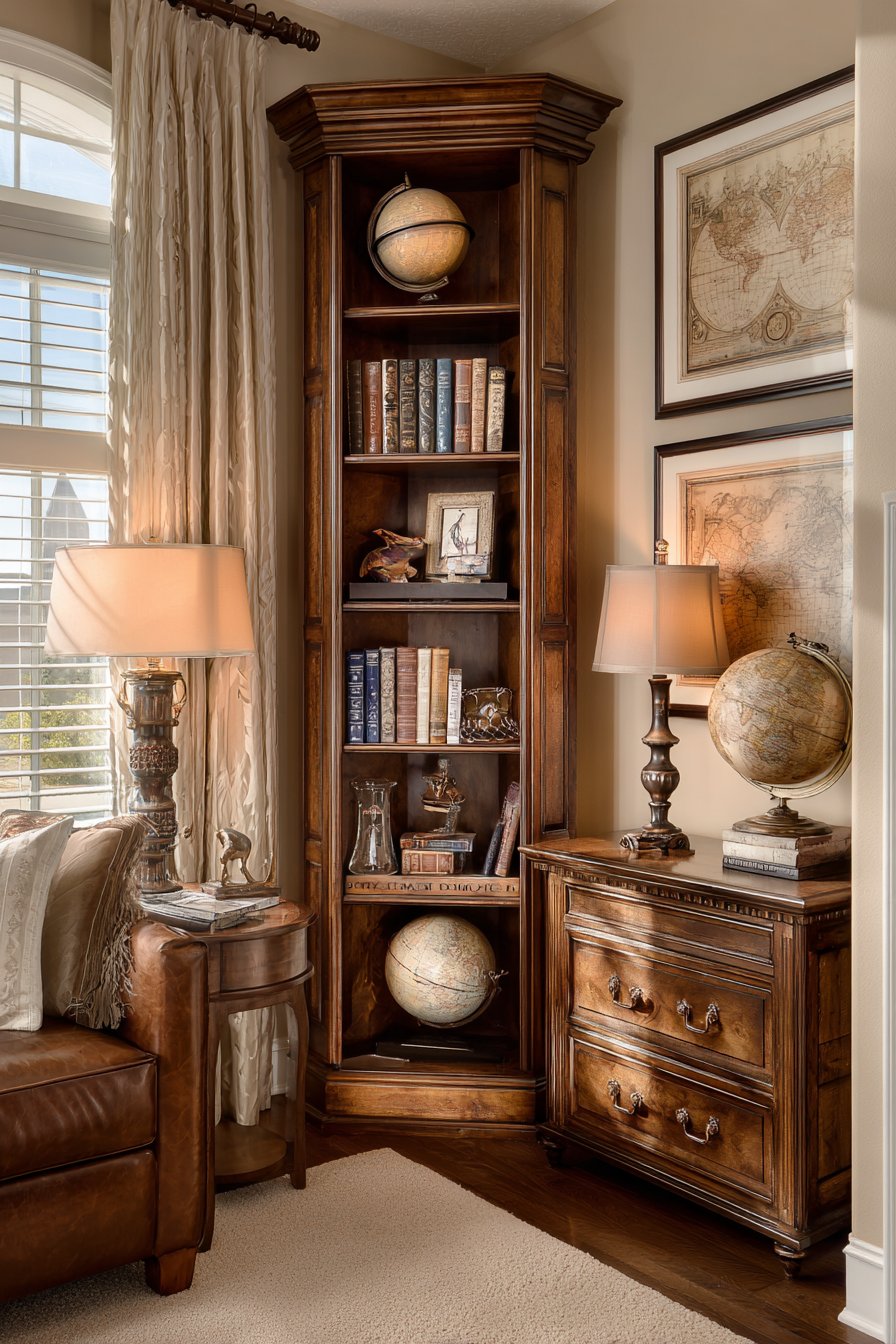
Warm table lamp light—perhaps from a traditional banker’s lamp with green glass shade or a classic brass reading lamp—creates pools of golden illumination that invite settling into a nearby chair with a favorite book. This layered lighting approach differs from uniform overhead illumination, instead creating intimate zones of light and shadow that add depth and atmosphere. The combination of rich wood tones and warm lamplight creates the cozy, contemplative environment ideal for reading and quiet conversation.
Key Design Tips:
- Invest in quality construction with dovetail joints and solid wood rather than veneer over particle board
- Arrange books using traditional library methods—by subject, author, or size—rather than only by color
- Incorporate adequate lighting at reading height, typically around 40-50 inches from the floor
- Allow some shelves to hold fewer items, creating breathing room that prevents overwhelming visual density
- Rotate displayed heirlooms seasonally to keep the installation feeling fresh while protecting delicate items from prolonged light exposure
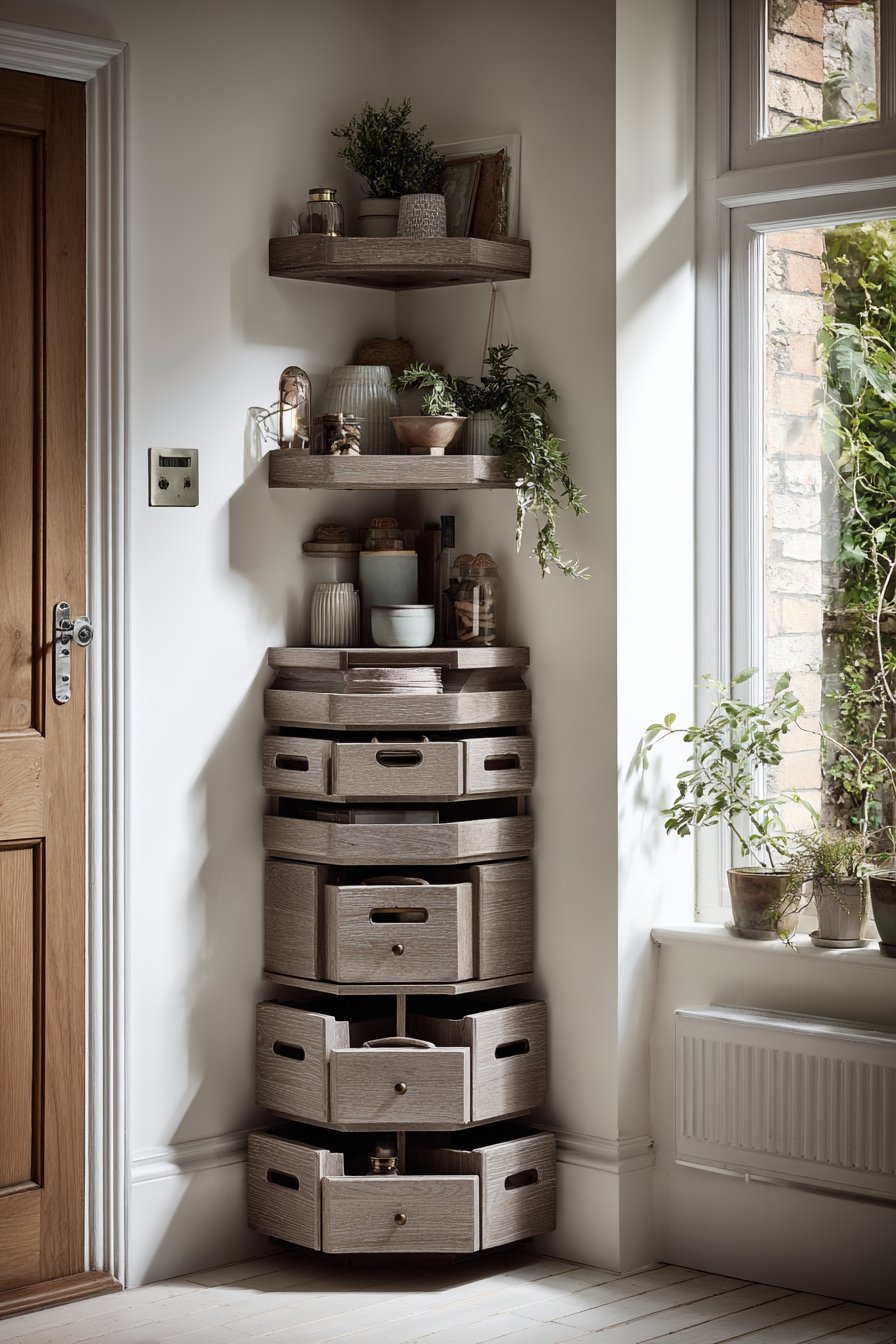
22. Multifunctional Gray Oak Corner Unit with Drawers
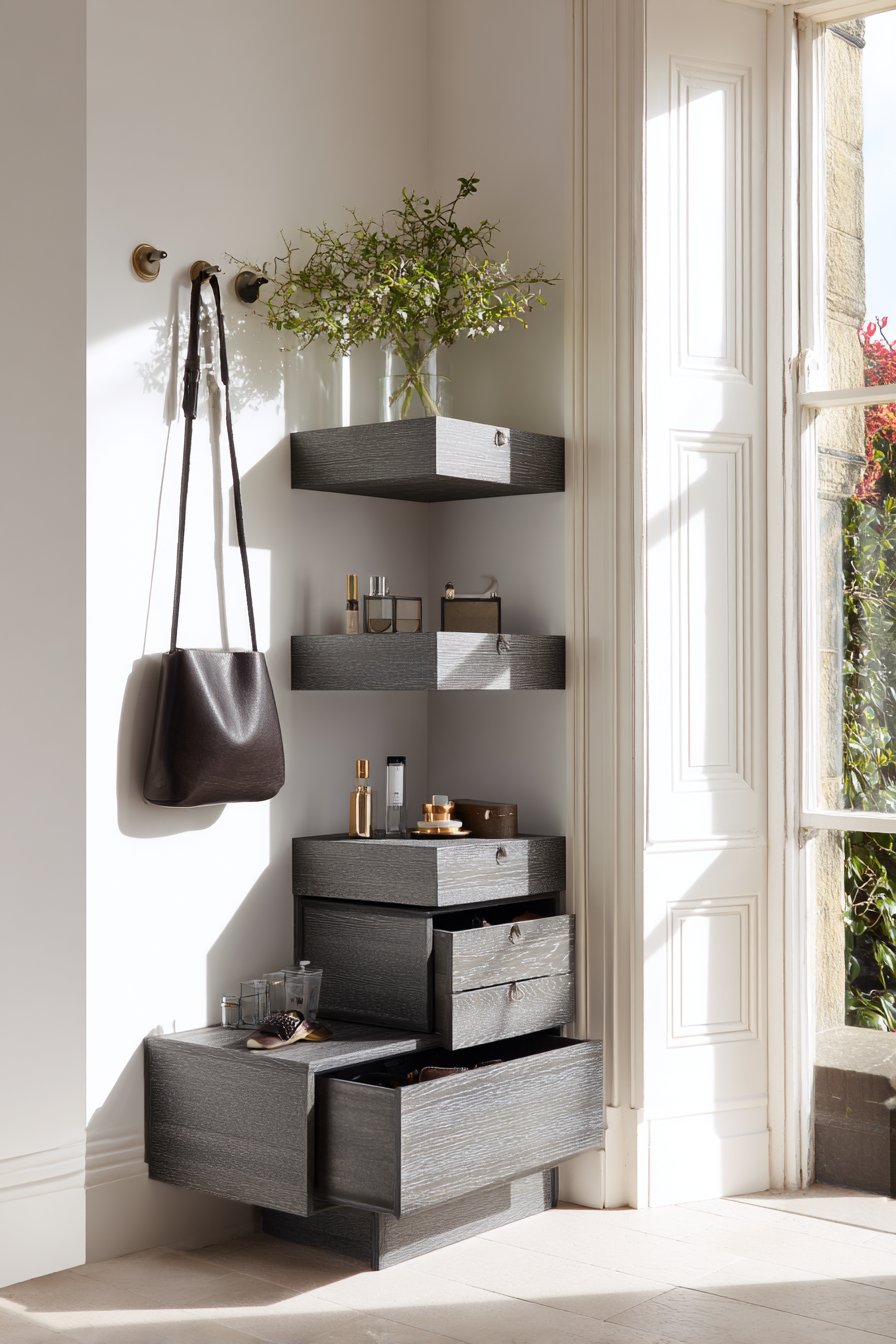
Versatile storage combining open display and concealed organization makes this gray-washed oak corner unit particularly valuable in entryways where multiple storage types serve different needs. The upper corner shelf tiers provide open display space for items meant to be seen—perhaps a decorative bowl for keys, a small plant that welcomes arriving guests, or a framed family photograph. Lower drawers conceal everyday essentials like mail, dog leashes, spare umbrellas, or seasonal accessories, maintaining tidy appearances while keeping necessary items accessible.
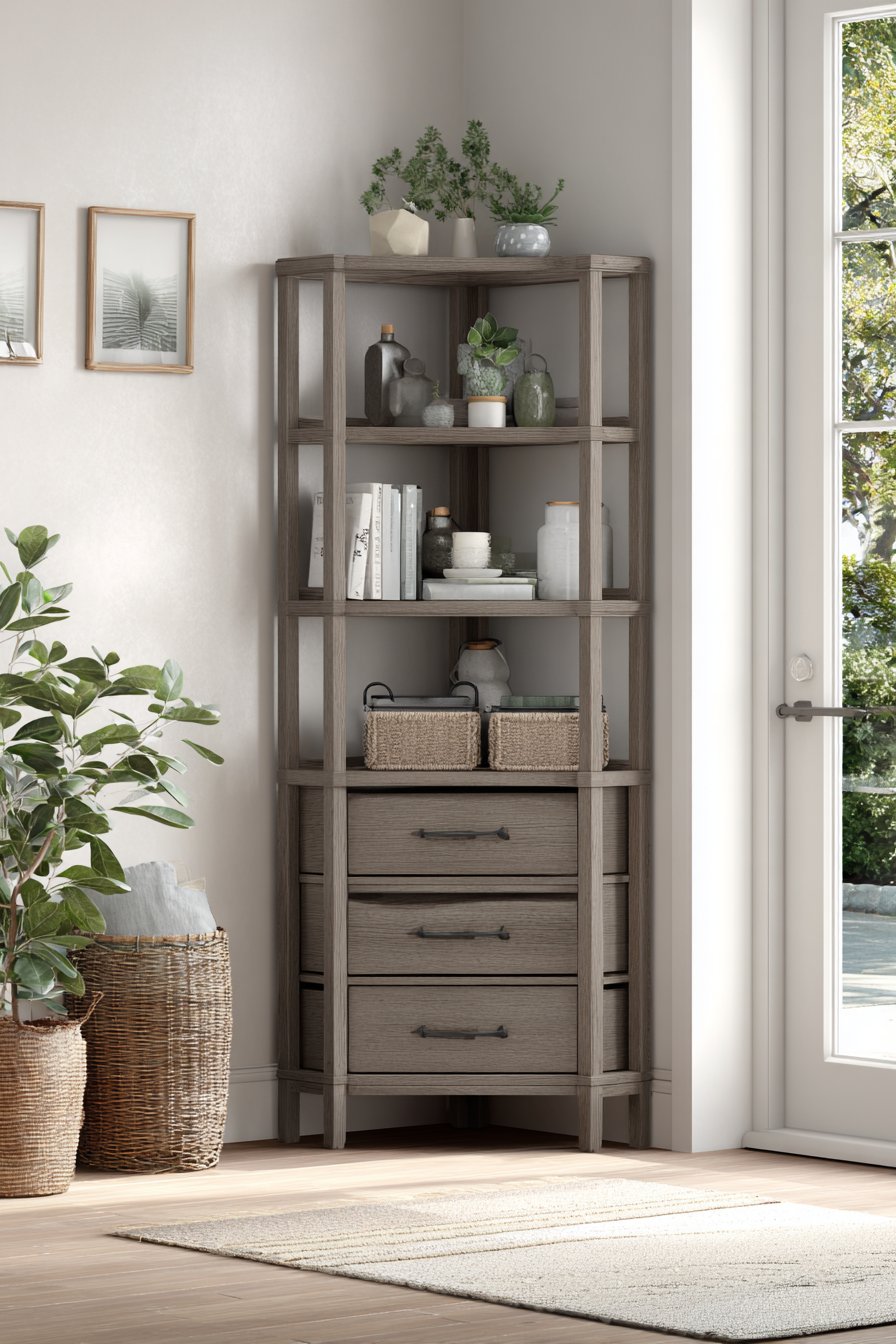
The gray-wash finish on oak wood creates contemporary aesthetic that bridges traditional and modern design sensibilities. The technique allows oak’s distinctive grain pattern to remain visible while the gray tones provide cooler, more neutral palette than natural oak’s warm honey colors. This finish works particularly well in entryways serving as transition spaces between exterior and interior environments, where flexible design accommodates both traditional and contemporary architectural styles.
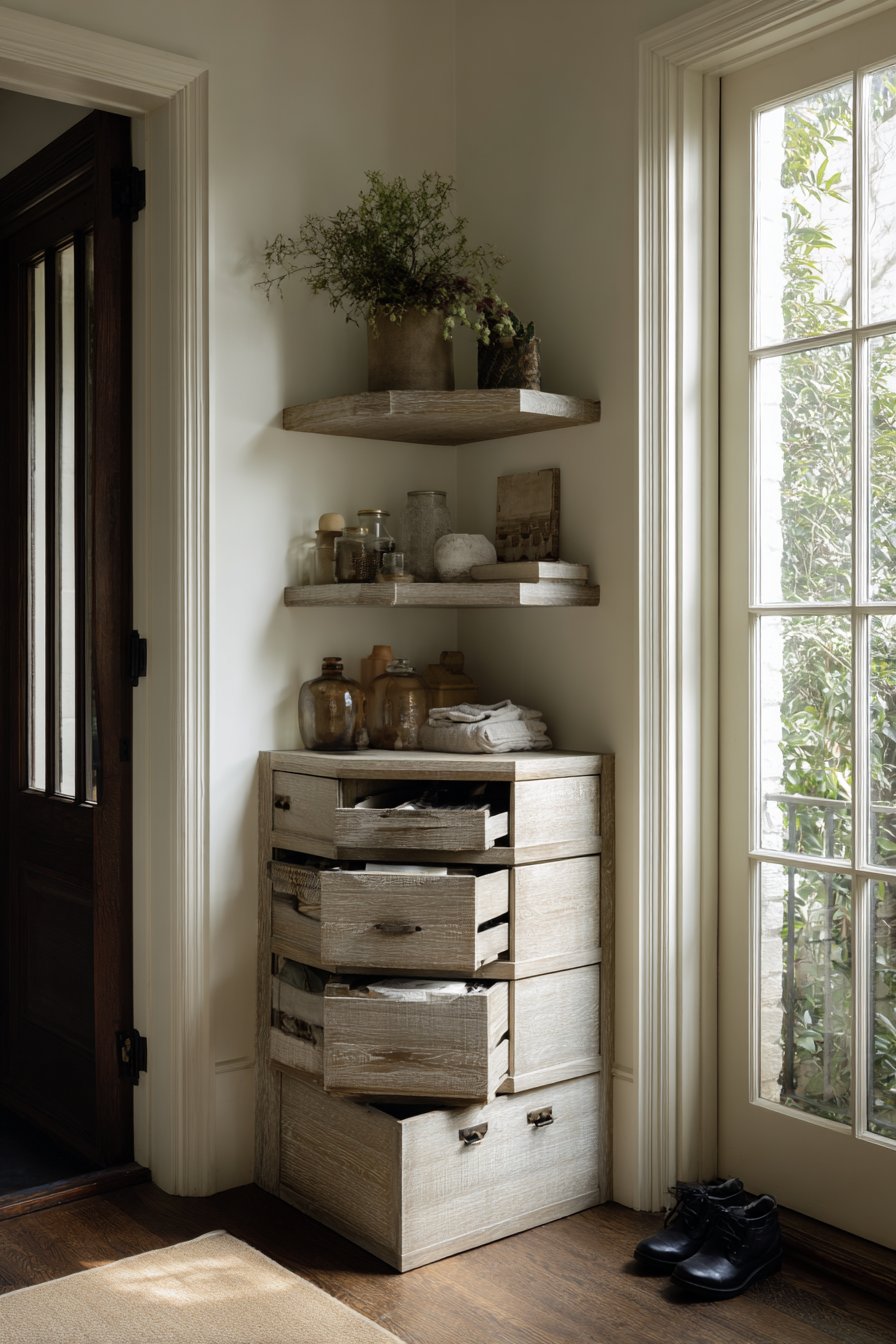
Natural light from sidelight windows flanking the front door creates welcoming illumination that makes the entryway feel open and inviting rather than dark and cramped. This natural lighting highlights the subtle color variations in the gray-washed wood while providing adequate illumination for practical tasks like sorting mail or finding keys. The combination of natural materials, thoughtful storage solutions, and good lighting creates an entryway that functions efficiently while making positive first impressions.
Key Design Tips:
- Select drawer hardware that complements the gray-wash finish—brushed nickel, matte black, or aged brass work well
- Install the unit at appropriate height for entry table function—typically 30-32 inches for the primary surface
- Include felt or cork lining in drawers designated for keys or other items that might scratch wood
- Maintain visual balance between open and closed storage based on household organizational needs
- Style upper shelves minimally to avoid cluttered first impression while keeping lower drawers well-organized for function
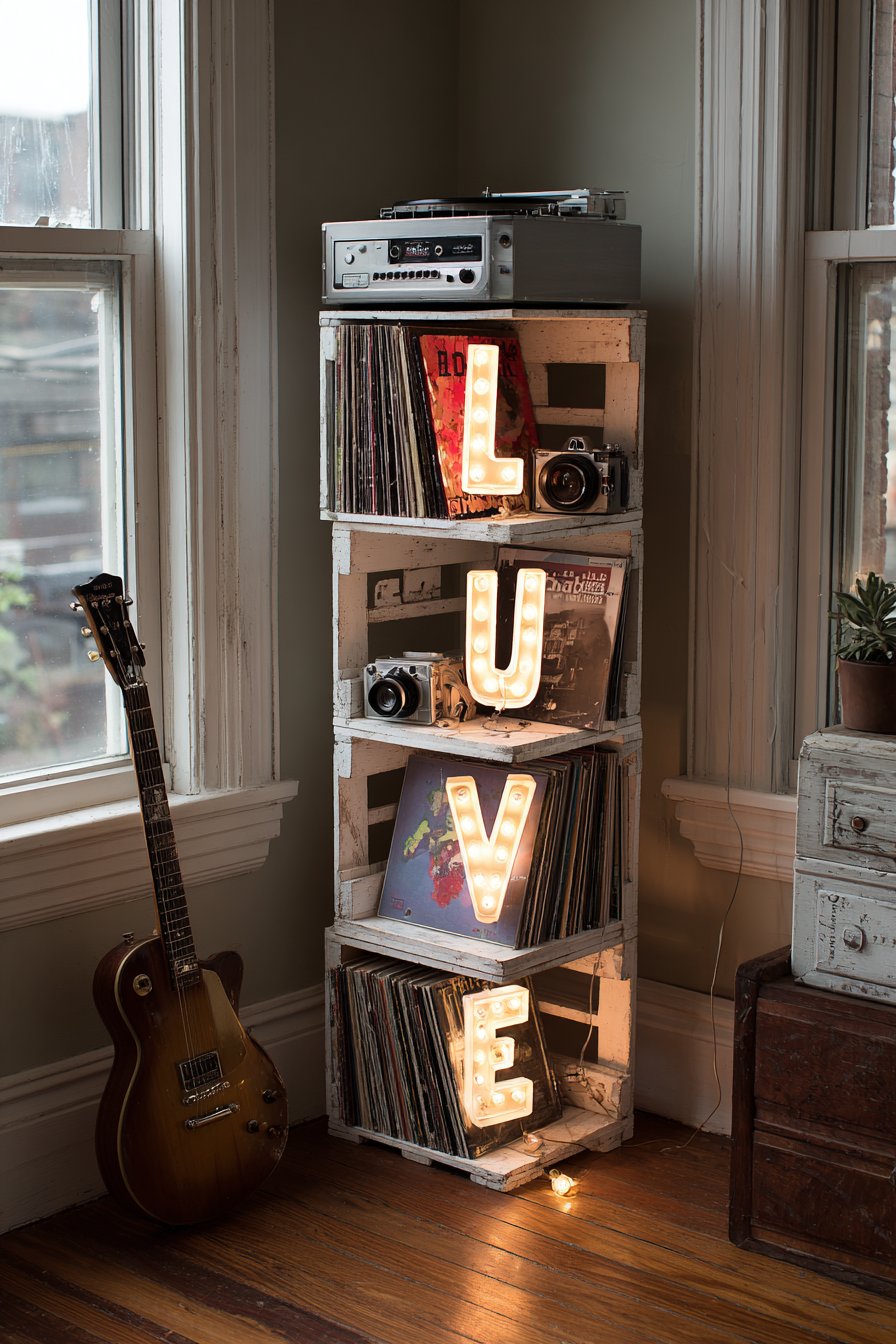
23. Budget-Friendly Repurposed Crate Corner Display
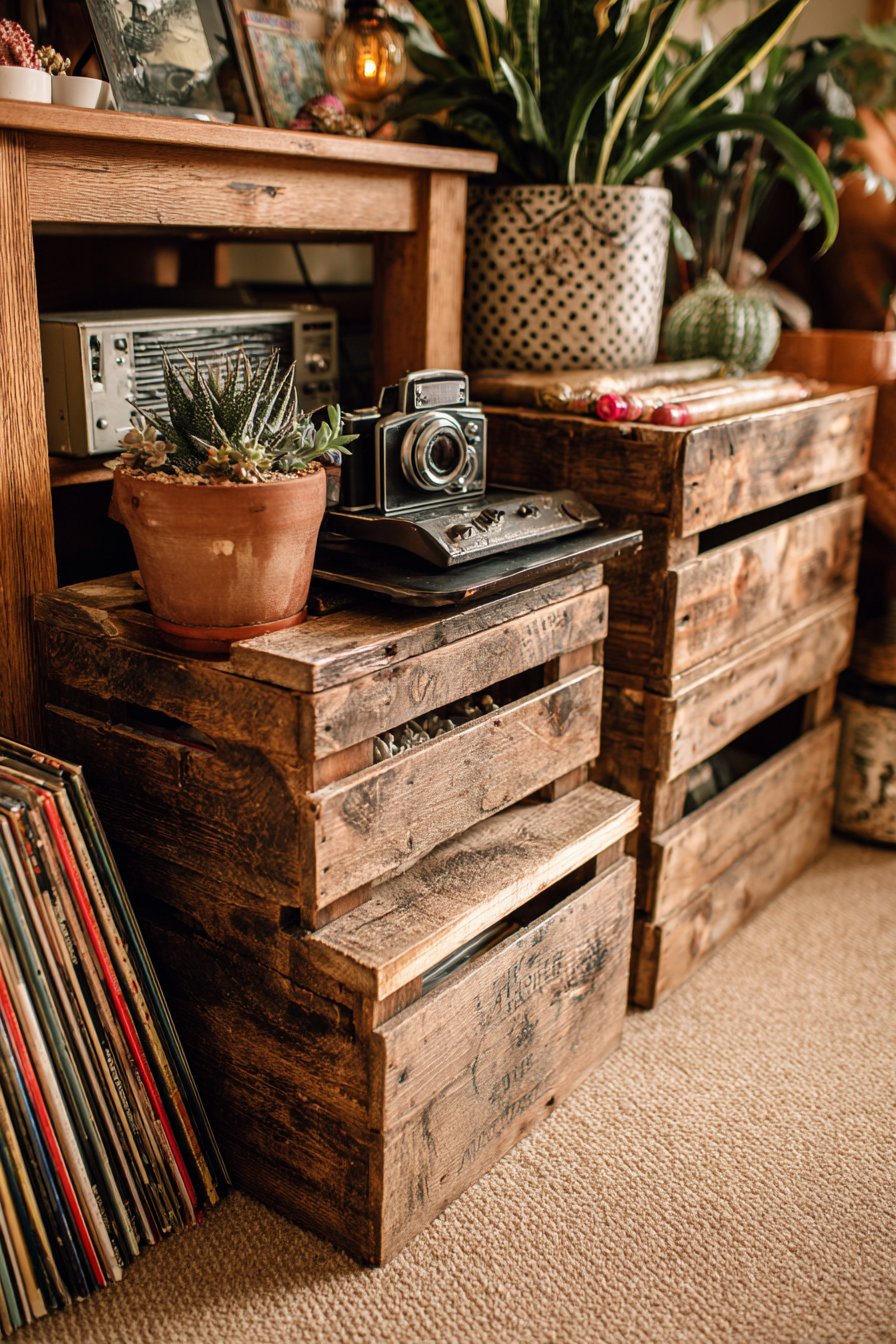
Creative DIY solutions prove that effective corner shelving doesn’t require significant financial investment, as demonstrated by this repurposed wooden crate installation. Simple wooden crates—perhaps vintage fruit crates, wine boxes, or new unfinished wood crates from craft stores—stack and secure to create eclectic storage with authentic handmade character. The visible construction, natural wood variations, and sometimes-present original markings or stenciled text add personality impossible to achieve with manufactured furniture.
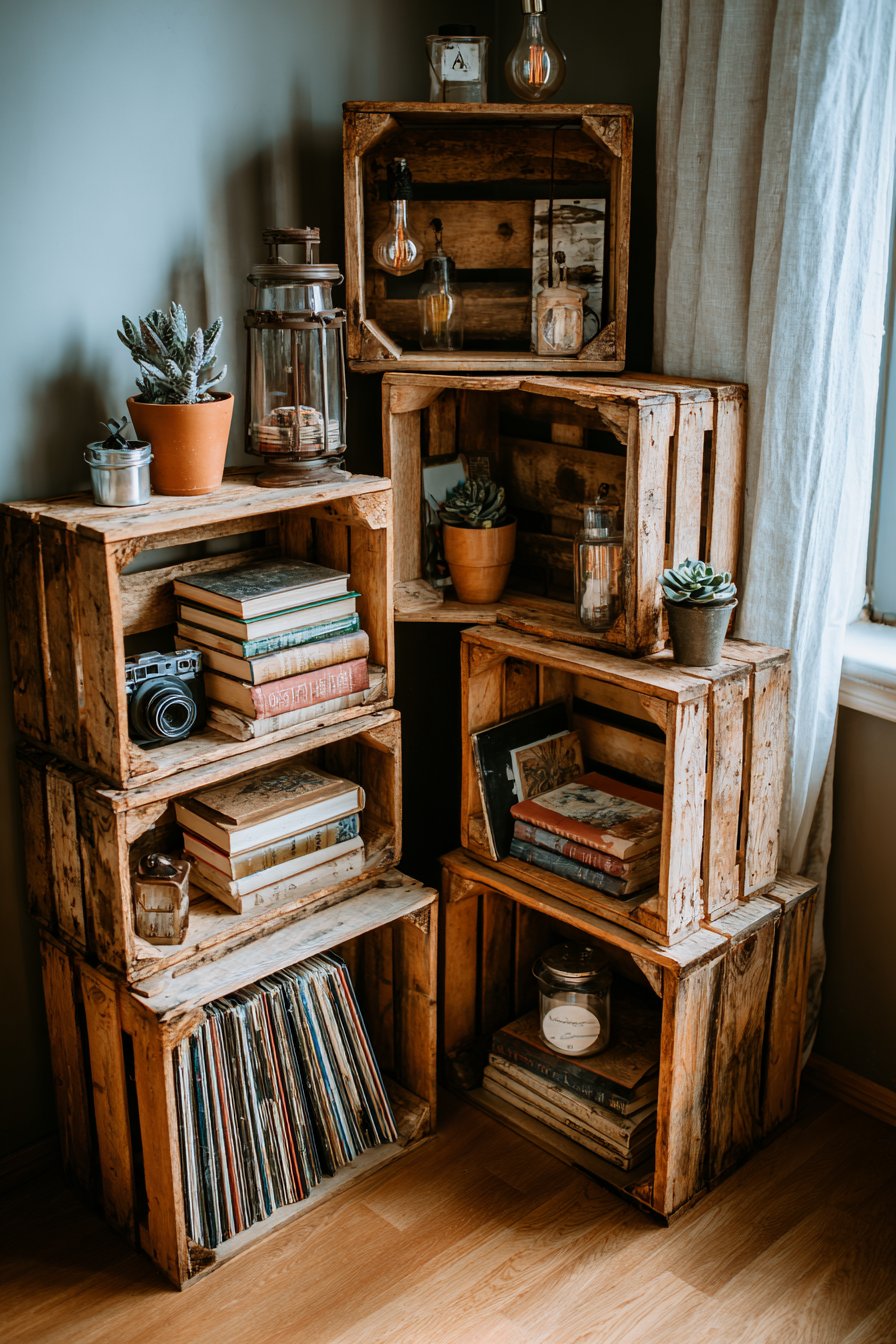
The casual styling celebrates personal interests and collections with unaffected authenticity. Vinyl record collection stored vertically allows easy browsing of album cover art while protecting discs from warping. Vintage cameras displayed as sculptural objects honor obsolete technology while creating conversation pieces about photography’s evolution. Potted succulents requiring minimal care thrive in various light conditions, their architectural forms and varied colors adding living elements without demanding extensive maintenance.
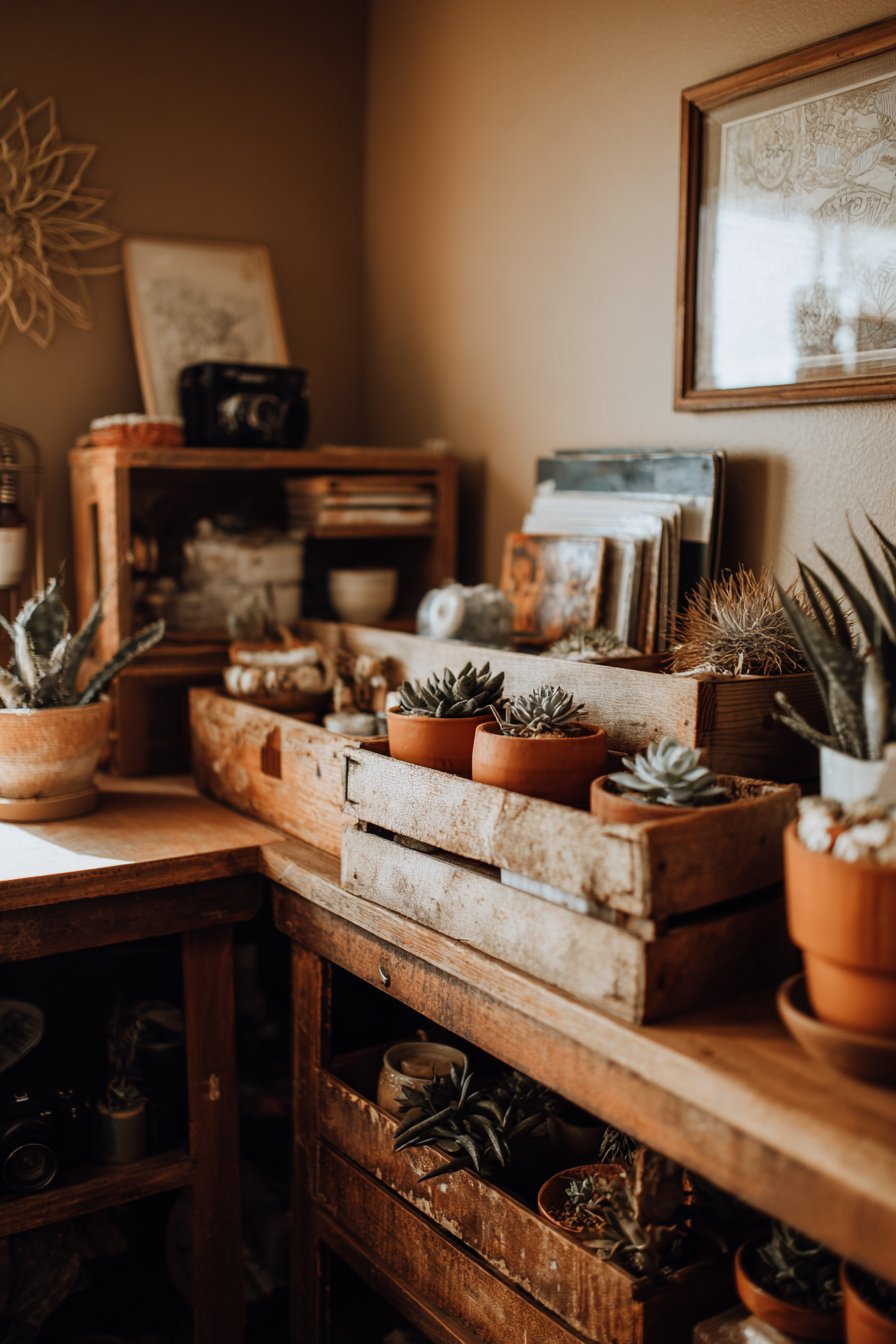
Warm Edison bulb lighting strung nearby or mounted above creates cozy, creative atmosphere aligned with the DIY aesthetic. The exposed filament bulbs reference industrial design while their warm amber glow creates inviting ambiance. This informal lighting approach suits the unpretentious nature of repurposed furniture, creating spaces that feel personally authentic rather than professionally styled.
Key Design Tips:
- Sand rough edges and apply clear sealer to protect wood and prevent splinters while maintaining natural appearance
- Secure crates to each other and to walls using L-brackets, screws, or appropriate anchoring systems
- Mix crate orientations—some with openings facing forward, others sideways—to create varied compartment sizes
- Embrace imperfections and variations between crates rather than trying to achieve uniform appearance
- Use this budget approach to test corner shelf concepts before investing in permanent installations
Why These Corner Shelf Ideas Represent the Best in Interior Design
The twenty-three corner shelf concepts explored in this comprehensive guide represent the full spectrum of contemporary interior design possibilities, demonstrating how corner spaces can transform from neglected afterthoughts into celebrated focal points. Each approach addresses specific design challenges while showcasing distinct aesthetic philosophies, material preferences, and functional solutions. From the sustainable beauty of reclaimed wood to the contemporary elegance of transparent acrylic, from the handcrafted artistry of macramé to the architectural permanence of built-in installations, these corner shelf ideas prove that there’s no single correct approach to designing these transitional spaces.
The diversity of styles represented—Scandinavian minimalism, industrial urban edge, bohemian eclecticism, mid-century modern nostalgia, traditional library elegance, and farmhouse charm—ensures that readers with varying tastes will find inspiration aligned with their personal aesthetic preferences and existing home decor. This variety acknowledges that great design isn’t about following rigid rules but rather about understanding principles that can be adapted to individual circumstances, spatial constraints, and personal collections. Whether you’re furnishing a compact studio apartment where every square foot counts or styling a spacious family home with architectural character to highlight, these corner shelf ideas provide practical starting points for creative exploration.
The emphasis on material authenticity throughout these concepts reflects contemporary design values that prioritize genuine craftsmanship over superficial imitation. Reclaimed wood that bears honest marks of its previous use, hand-knotted macramé that showcases fiber arts traditions, naturally aged brass that develops authentic patina, and sustainably harvested bamboo that honors environmental responsibility—these material choices demonstrate how corner shelving can embody broader values about sustainability, quality, and respect for artisanal traditions. In an era of mass production and disposable furniture, these approaches celebrate objects made to last and improve with age.
Functionality remains paramount across all these corner shelf ideas, proving that beautiful design must serve genuine practical needs to succeed in real homes occupied by real families. Kitchen corner shelves that keep cooking essentials within arm’s reach, bathroom installations that organize toiletries while withstanding humidity, home office solutions that reduce desktop clutter, and children’s room storage that encourages independence—each concept addresses specific functional requirements while maintaining aesthetic integrity. This integration of beauty and utility represents design at its most successful, creating spaces that work efficiently while inspiring daily appreciation.
The lighting considerations woven throughout these descriptions acknowledge that even the most beautifully styled corner shelf fails if inadequately illuminated. Natural light that shifts throughout the day, integrated LED systems that provide ambient glow, task lighting that supports specific activities, and decorative fixtures that become design elements themselves—these varied approaches demonstrate how thoughtful lighting transforms corner installations from static furniture into dynamic features that respond to environmental conditions and usage patterns. Understanding how light interacts with materials, creates shadows, and affects mood elevates corner shelf design from simple storage to sophisticated interior architecture.
The range of installation methods—from floating shelves that appear to defy gravity to substantial built-ins that become permanent architectural features, from suspended macramé that sways gently with air currents to freestanding units that allow flexibility—provides options suitable for various skill levels, rental restrictions, and commitment levels. DIY enthusiasts can tackle repurposed crate projects or floating shelf installations, while those preferring professional results can commission custom built-ins or invest in quality furniture pieces. This accessibility ensures that improving corner spaces doesn’t require unlimited budgets or advanced carpentry skills.
Cultural and historical references embedded in several concepts—mid-century modern’s atomic age optimism, industrial design’s celebration of manufacturing heritage, Scandinavian minimalism’s response to long northern winters, bohemian style’s global influences—connect contemporary interiors to broader design movements and philosophical traditions. Understanding these contextual foundations helps homeowners make informed choices that align with personal values rather than following trends without comprehension. A corner shelf becomes more meaningful when selected based on genuine affinity for its underlying design philosophy.
The styling approaches demonstrated across these twenty-three concepts teach fundamental principles applicable far beyond corner shelving. The importance of negative space in minimalist designs, the power of asymmetry in creating visual interest, the effectiveness of repetition in establishing rhythm, the value of contrast in defining forms—these timeless design principles transfer to countless other interior design challenges. Learning to style corner shelves effectively builds skills that improve ability to curate bookshelves, arrange mantel displays, compose gallery walls, and organize any surface throughout the home.
Seasonal adaptability, though not explicitly detailed in each concept, remains possible across virtually all these approaches. Holiday decorations can rotate through displays, seasonal color palettes can shift with changing weather, living plants can be swapped as light conditions change throughout the year—this flexibility ensures corner shelves remain relevant and engaging rather than static installations that fade into background familiarity. The best corner shelf designs accommodate evolution and personalization over time.
The emphasis on authentic materials, honest construction, and quality craftsmanship reflects a broader movement away from disposable design toward investments in pieces that will serve households for years or decades. A well-constructed walnut corner shelf or marble installation represents not mere furniture but a commitment to quality that reduces waste, honors skilled trades, and creates homes with depth and permanence. This approach contrasts sharply with fast-furniture culture while providing more satisfying, sustainable results.
Conclusion
Corner spaces represent some of the most overlooked opportunities in interior design, yet as these twenty-three distinctive approaches demonstrate, they hold remarkable potential for both functional storage and aesthetic impact. Whether you’re drawn to the warmth of natural wood, the sleekness of modern materials, the charm of vintage styling, or the organic appeal of handcrafted fiber arts, there’s a corner shelf solution that aligns with your design sensibilities and practical needs. The key lies in thoughtful selection of materials that complement your existing decor, careful consideration of the functional requirements the space must serve, and intentional styling that reflects your personal interests and collections.
As you contemplate implementing corner shelf ideas in your own home, remember that the most successful installations balance beauty and utility, honor material authenticity, incorporate appropriate lighting, and maintain flexibility for future evolution. Start by carefully assessing your available corner spaces—their dimensions, existing lighting conditions, proximity to windows or doors, and the room functions they serve. Consider which style approaches resonate most authentically with your aesthetic preferences and which functional needs your corner storage must address.
Don’t hesitate to adapt and combine elements from multiple concepts to create hybrid solutions uniquely suited to your circumstances. Perhaps you love the floating installation method of the minimalist approach but prefer the warm wood tones of the mid-century concept, or maybe you appreciate the botanical focus of the plant stand but want to interpret it through industrial materials. The best interior design emerges when homeowners confidently adapt principles to personal situations rather than rigidly following prescriptive rules.
Begin with one corner installation to test your design instincts and build confidence before tackling additional spaces. Learn from the process—what works well, what you’d adjust, how the installation affects room function and flow. Share your corner shelf projects with design-enthusiast friends or online communities to gather feedback and inspiration. Most importantly, allow your corner shelves to evolve organically, adding and removing items as your collections grow, seasonal interests shift, and life circumstances change. The corners of your home deserve the same thoughtful attention as more prominent features, transforming these transitional spaces into celebrated design elements that enhance both the beauty and functionality of every room.
