
In today’s evolving world of remote work and hybrid lifestyles, the bedroom has transcended its traditional role as merely a place for rest. It has become a multifunctional sanctuary where we sleep, work, study, and pursue our passions. The challenge lies in seamlessly integrating a productive workspace into this personal retreat without compromising comfort or aesthetic appeal. Corner desks have emerged as the perfect solution, offering a smart way to maximize underutilized spaces while creating dedicated work zones that feel both functional and inspiring. These ingenious furniture pieces transform awkward corners into purposeful areas, proving that even the smallest bedrooms can accommodate a fully functional workspace.
The beauty of corner desk setups lies in their remarkable versatility and adaptability to various design styles and spatial constraints. Whether you’re working with a spacious master suite or a compact studio apartment, corner desks offer endless possibilities for customization. From minimalist Scandinavian designs that embrace simplicity and natural light to luxurious executive setups that exude sophistication, there’s a corner desk solution for every personality and lifestyle. The key is understanding how to leverage that often-forgotten corner space to create a workspace that not only meets your functional needs but also complements your bedroom’s existing aesthetic and enhances your overall well-being.
This comprehensive guide explores twenty-five distinctive corner desk ideas that showcase the breadth of possibilities available for bedroom workspaces. Each design concept demonstrates how thoughtful planning, creative problem-solving, and attention to detail can transform a simple corner into an inspiring and productive environment. From space-saving fold-down desks perfect for studio living to elaborate built-in systems that offer abundant storage, these ideas span the spectrum of design styles, budgets, and functional requirements. Whether you’re a student seeking a dedicated study area, a professional working from home, a creative individual needing an inspiration station, or simply someone who wants a quiet spot for personal correspondence, you’ll find solutions that resonate with your needs and inspire your imagination.
1. Sophisticated Floating L-Shaped Workspace
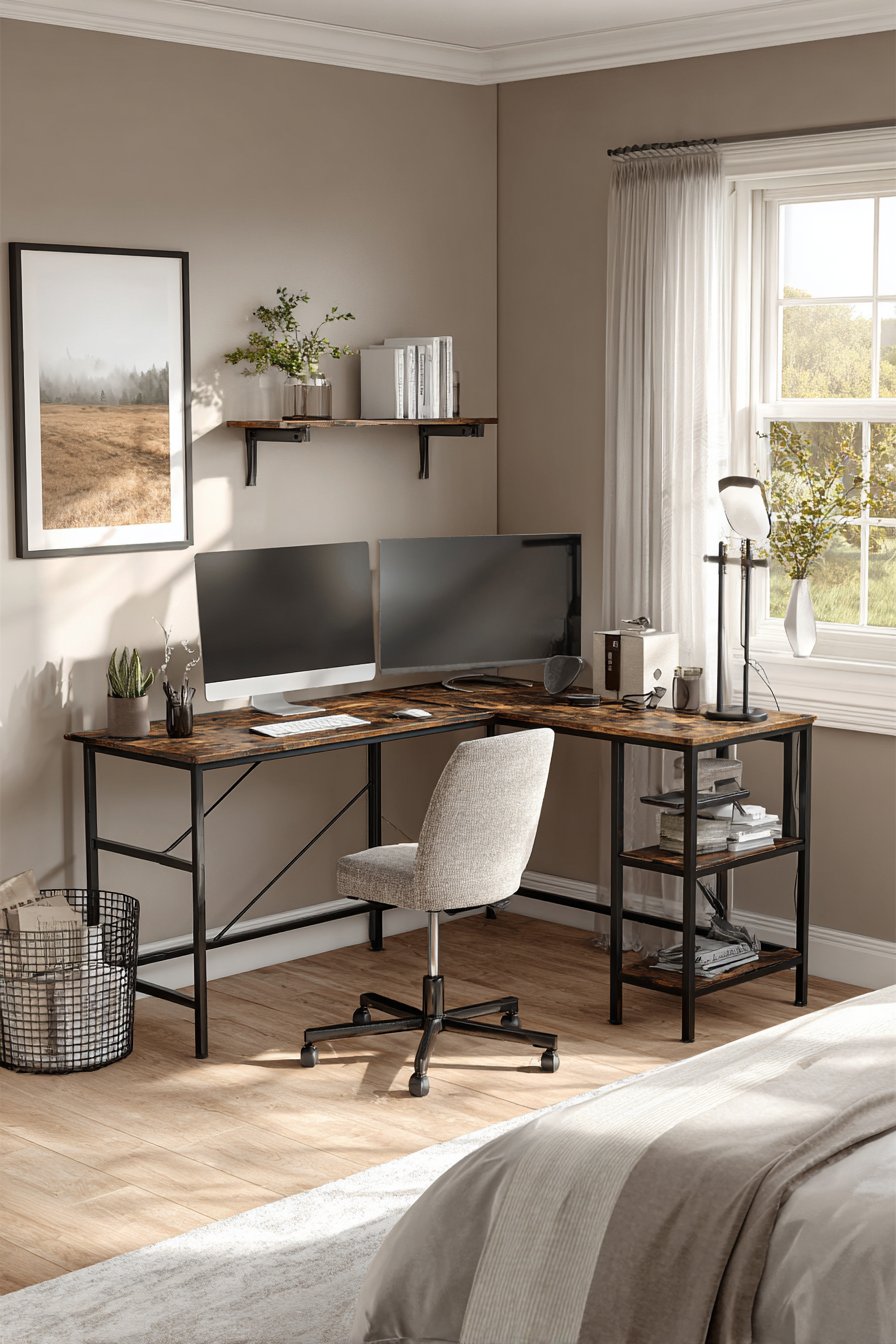
The floating L-shaped corner desk represents the pinnacle of modern bedroom workspace design, combining sleek aesthetics with exceptional functionality. This setup features a warm walnut finish that brings natural elegance to the room while the wall-mounted construction creates an illusion of spaciousness by revealing the floor beneath. The L-shaped configuration maximizes the corner’s potential, providing ample surface area for multiple tasks—from computer work to creative projects—without encroaching on the bedroom’s living space. A monitor mounted on an adjustable arm offers ergonomic flexibility, allowing you to position your screen at the perfect angle and height for optimal comfort during extended work sessions.
The integration of floating shelves above the desk adds vertical dimension to the workspace while maintaining the clean, streamlined aesthetic. These shelves serve dual purposes: displaying carefully curated books and small plants that bring life to the corner while providing easily accessible storage for frequently used items. The ergonomic chair upholstered in neutral fabric ensures comfort during long working hours without visually overwhelming the space. Natural light flooding through the adjacent window eliminates the need for harsh artificial lighting during daytime hours, creating a pleasant working environment that promotes focus and productivity.
What sets this design apart is its seamless integration with the bedroom environment. Rather than feeling like an afterthought or intrusion, the workspace becomes an intentional and harmonious element of the room. The warm wood tones create visual continuity with other wooden elements in the bedroom, while the floating construction maintains an open, airy feel. A contemporary table lamp provides task lighting for evening work sessions, its sleek design complementing the modern aesthetic. The partially visible bed in the frame reminds us that this is indeed a bedroom workspace, thoughtfully designed to accommodate both rest and productivity.
Key Design Tips:
- Install floating desks at a comfortable height of 28-30 inches to ensure proper ergonomic positioning
- Choose warm wood tones like walnut or oak to add natural warmth that contrasts beautifully with modern elements
- Position the desk perpendicular to windows to minimize screen glare while maximizing natural light benefits
- Invest in cable management solutions to keep cords hidden and maintain the clean floating aesthetic
- Select an adjustable monitor arm to promote better posture and reduce neck strain during extended work periods
- Incorporate living plants on shelves to improve air quality and add organic visual interest to the workspace
2. Space-Saving Triangular Desk Solution
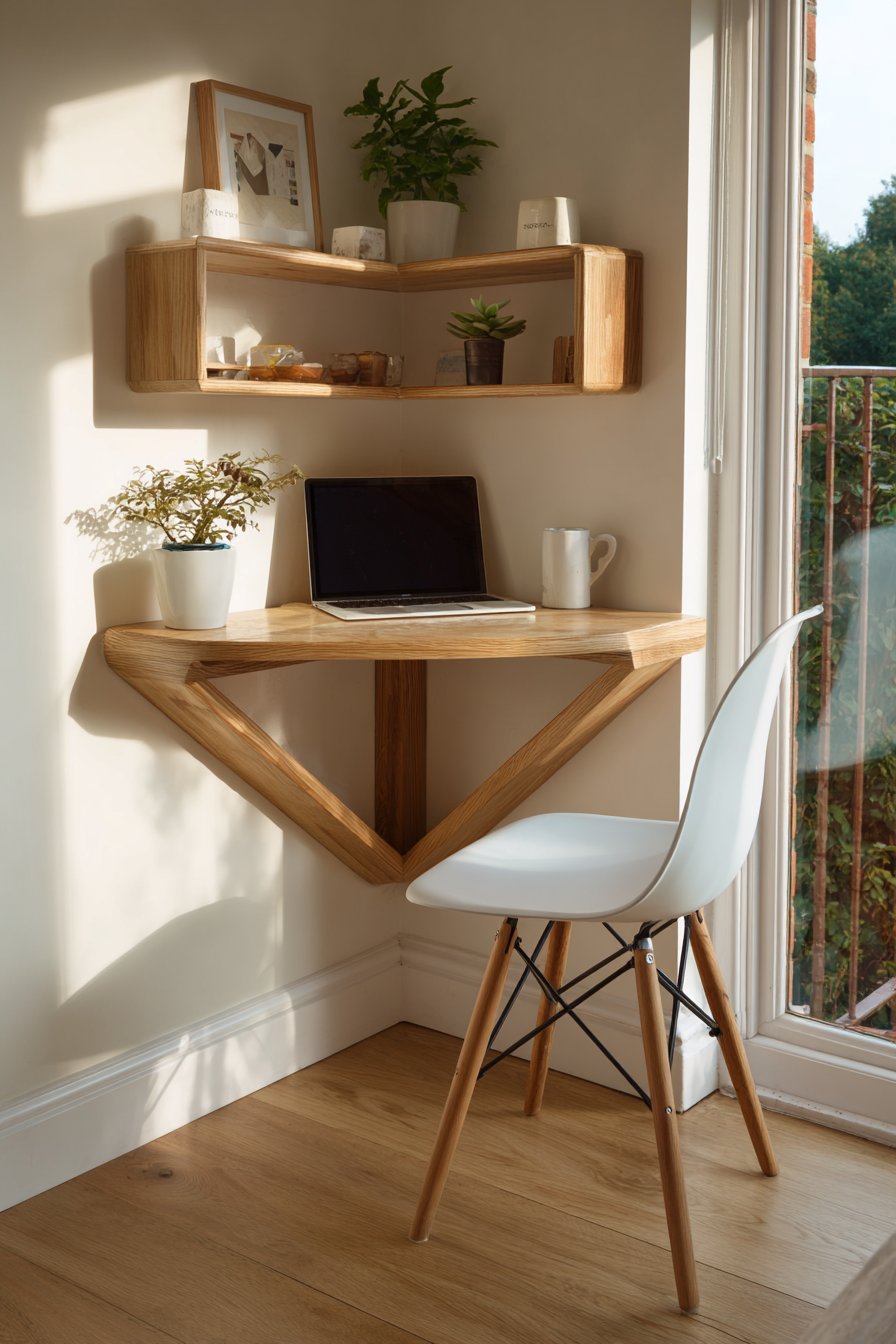
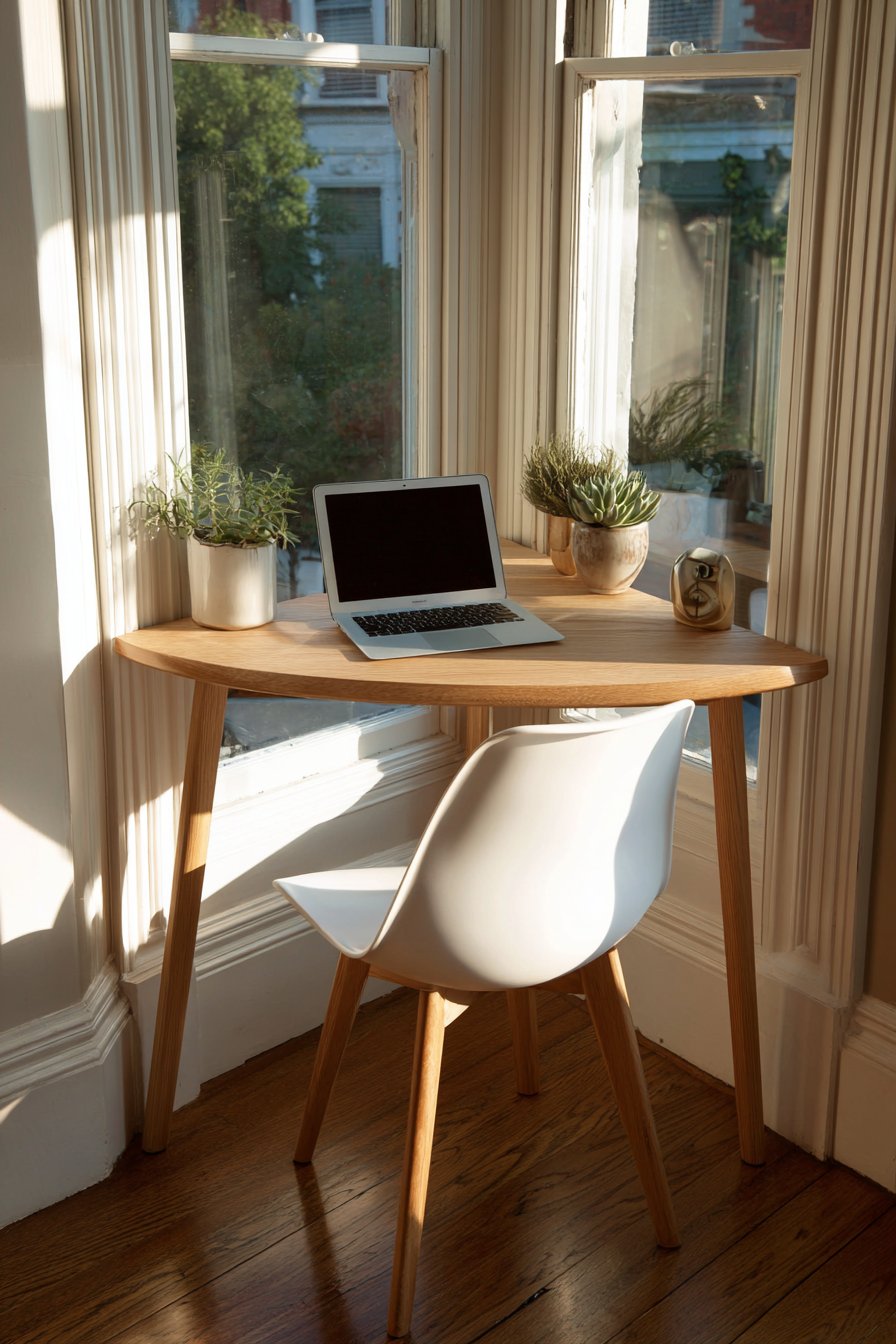
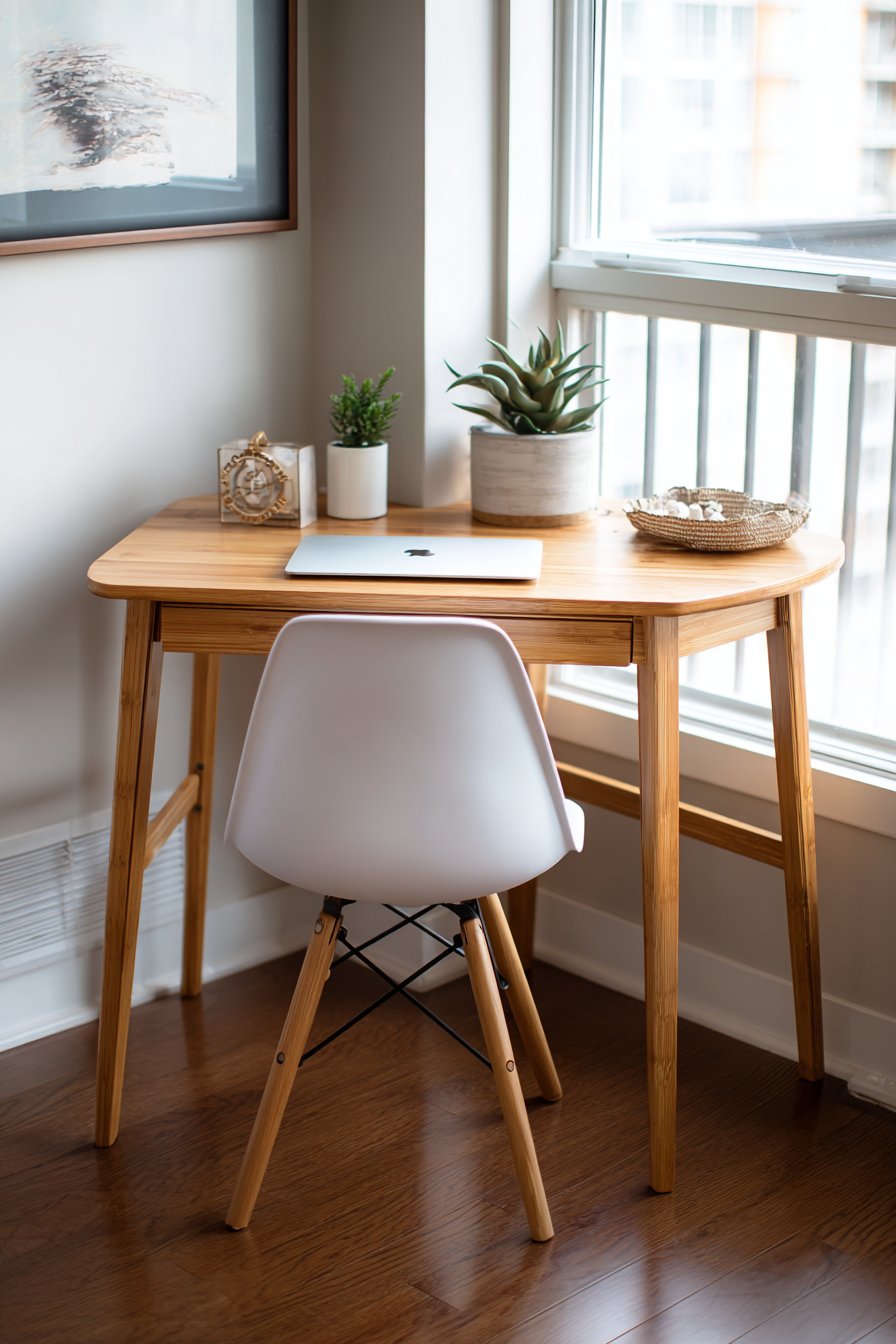
For small bedrooms where every square foot matters, the triangular corner desk offers an ingenious solution that proves you don’t need expansive square footage to create a functional workspace. This compact design features clean Scandinavian lines crafted from light oak, a material choice that reflects natural light and prevents the corner from feeling dark or cramped. The triangular shape is specifically engineered to fit snugly into corner angles, utilizing space that would otherwise remain empty and wasted. Paired with a minimalist white chair that tucks completely under the desk when not in use, this setup demonstrates how thoughtful design can maximize limited space without sacrificing functionality.
The beauty of this minimal approach lies in its restraint and intentionality. A slim laptop and small succulent plant comprise the entirety of the desktop arrangement, creating a clutter-free environment that promotes mental clarity and focus. This spartan aesthetic isn’t merely about appearances—it reflects a philosophy of mindful consumption and purposeful living. The light oak construction adds warmth without visual weight, while the simple geometric form creates a sense of order and calm. Morning light streaming through a nearby window illuminates the workspace naturally, reducing eye strain and creating an inviting atmosphere that makes sitting down to work feel less like a chore and more like a pleasant ritual.
This design excels in studio apartments, children’s bedrooms, or any situation where spatial constraints demand creative solutions. The compact footprint leaves maximum floor space available for other bedroom activities, while still providing a dedicated work zone that psychologically separates professional tasks from personal relaxation. The Scandinavian influence ensures the desk doesn’t clash with various decorating styles, making it remarkably versatile. Despite its small size, the triangular desk offers sufficient surface area for a laptop, notebook, and a few essential items—proving that a productive workspace doesn’t require an expansive desktop.
Key Design Tips:
- Measure your corner angle precisely before purchasing or building a triangular desk to ensure a perfect fit
- Choose light-colored woods like oak, birch, or ash to reflect light and make small spaces feel larger
- Keep desktop items to an absolute minimum to maintain the sense of spaciousness and reduce visual clutter
- Position the desk near a window to eliminate the need for daytime artificial lighting
- Select a chair that can completely tuck under the desk to free up floor space when not in use
- Add a single small plant to bring life to the workspace without overwhelming the minimalist aesthetic
3. Bohemian Creative Corner Sanctuary
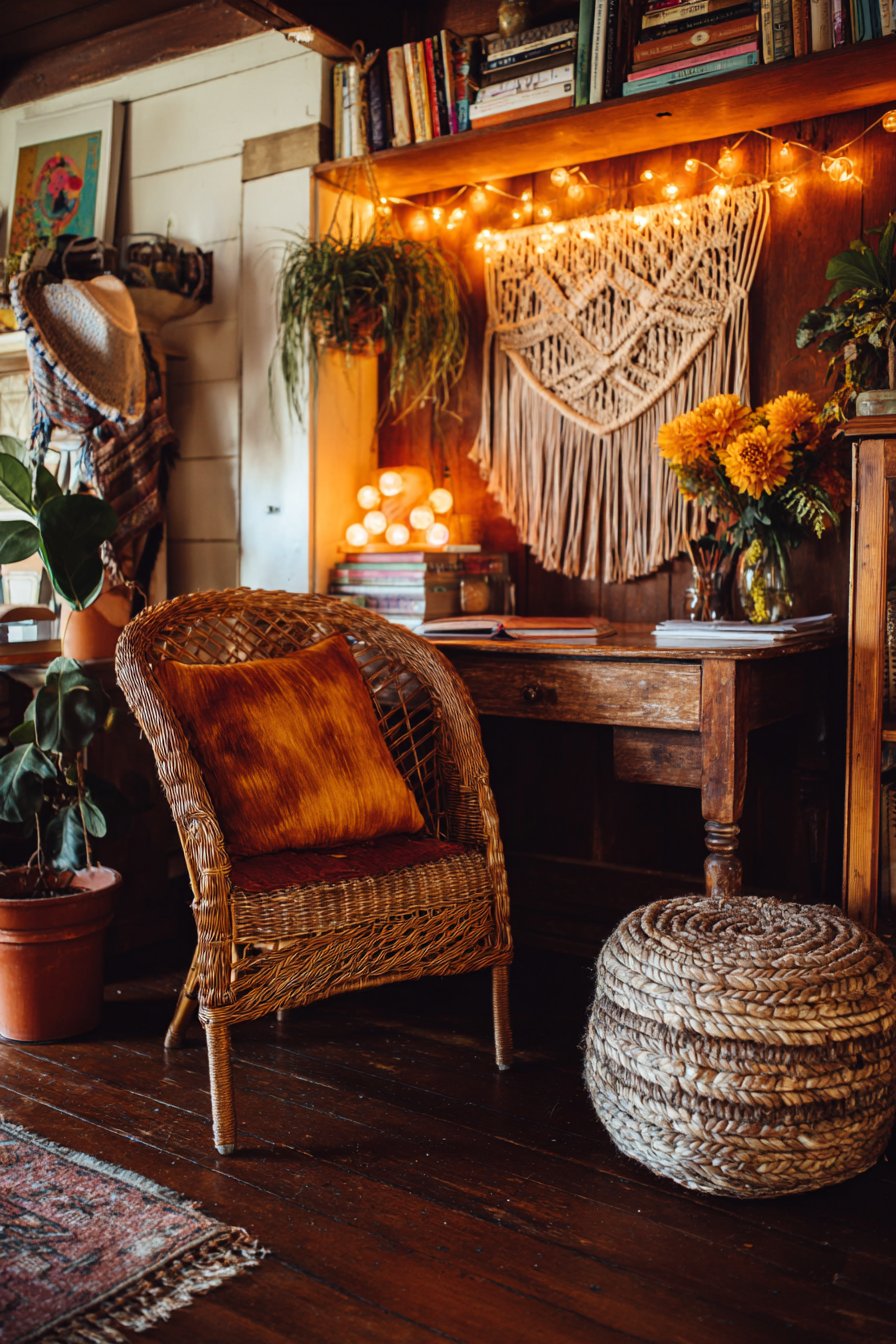
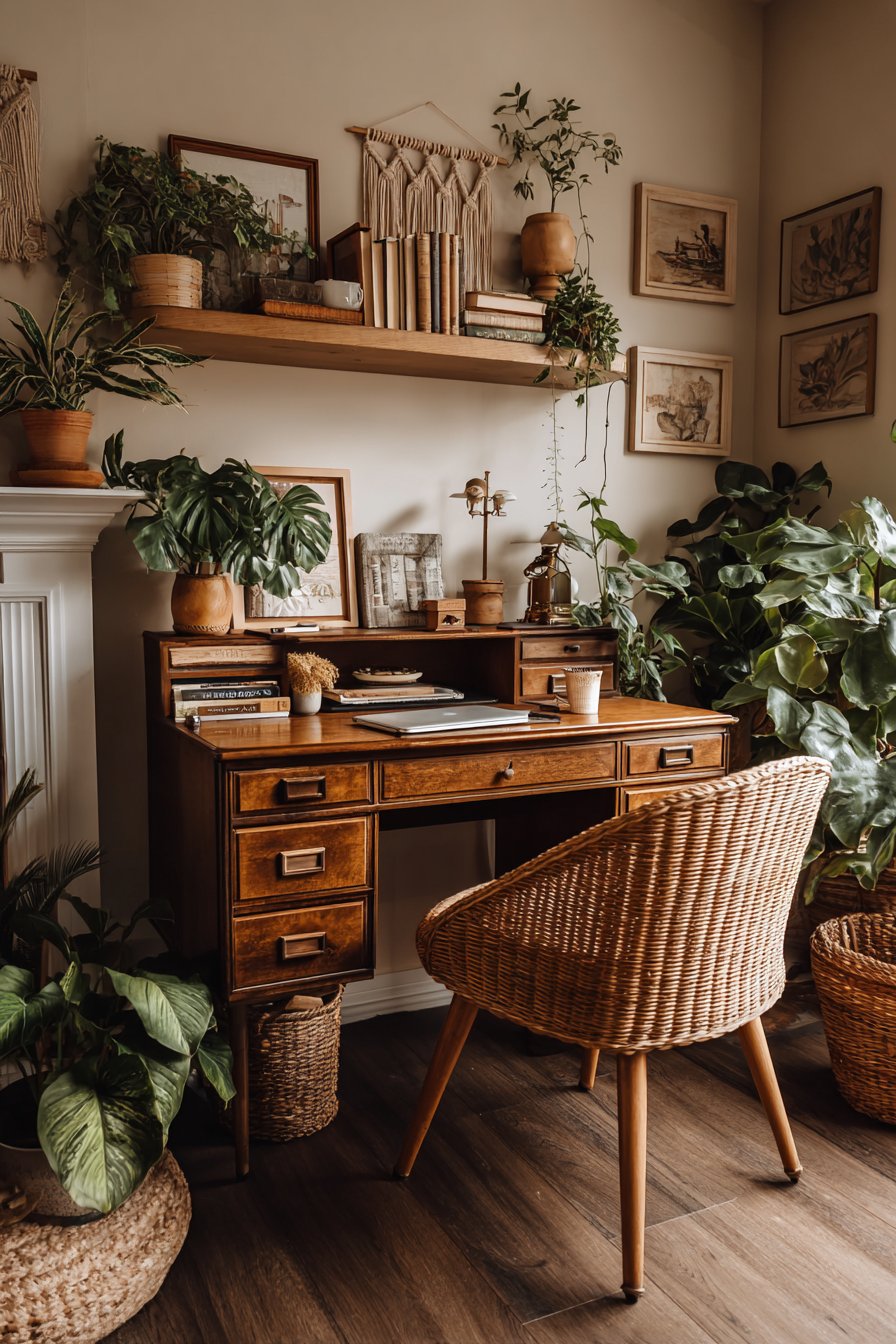
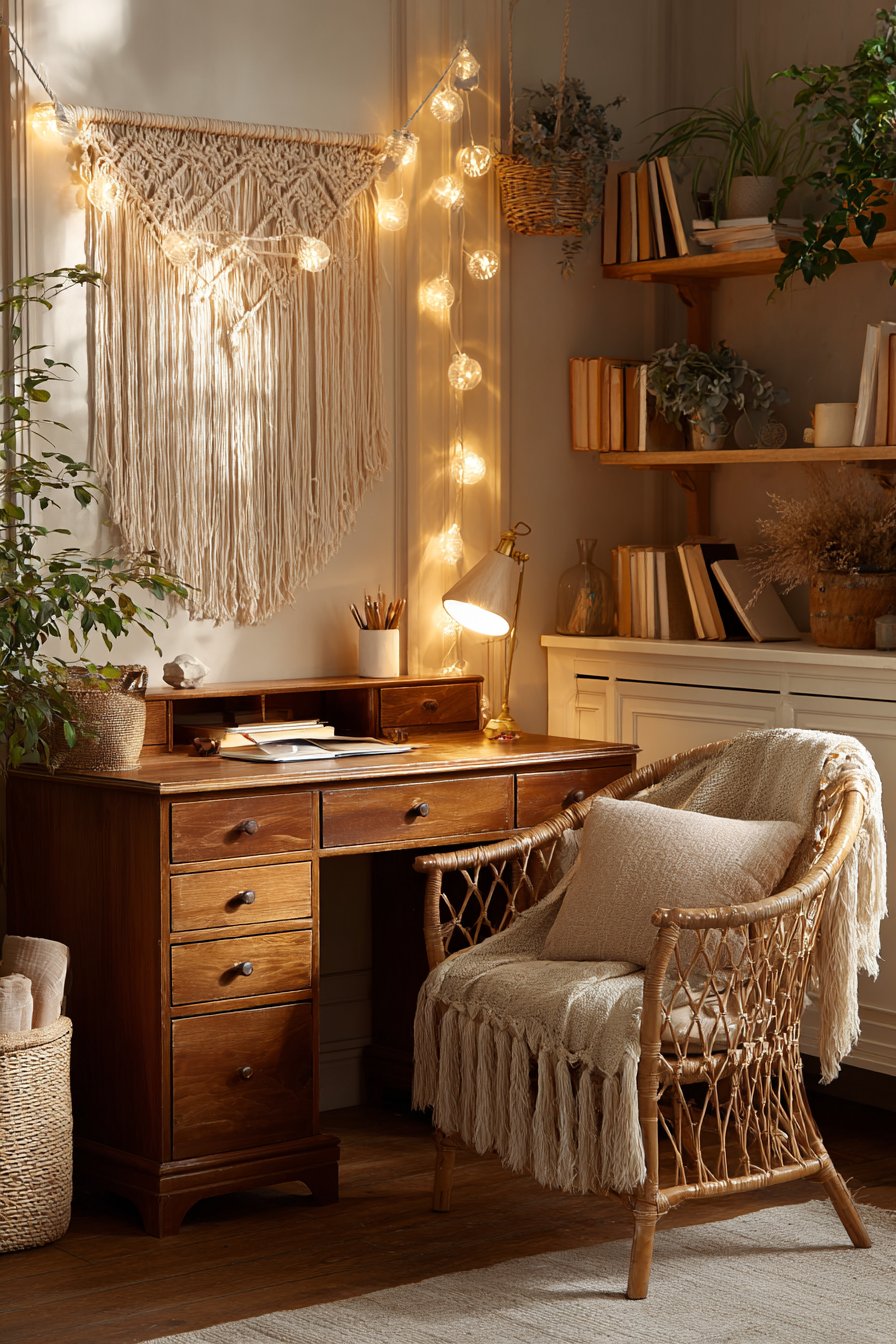
The bohemian corner desk design celebrates eclecticism, creativity, and personal expression, transforming a simple workspace into an inspiring creative sanctuary. This setup features a vintage wooden writing desk with character-rich patina and imperfections that tell stories of previous owners and past uses. Positioned at the corner with a rattan accent chair that adds organic texture, the workspace immediately establishes a warm, welcoming atmosphere. Above the desk, floating shelves display an artfully arranged collection of books with colorful spines, potted plants in various sizes, and meaningful personal objects that spark joy and inspiration. A macramé wall hanging adds textural dimension and bohemian authenticity, its intricate knots creating visual interest against the wall.
Lighting in this space embraces the bohemian philosophy of creating intimate, cozy environments. Warm string lights draped along the shelves or across the corner provide ambient illumination that feels more like atmospheric glow than functional lighting. This soft, diffused light creates a nurturing environment perfect for creative work, journaling, or late-night correspondence. Natural textiles throughout the space—woven baskets, fabric storage boxes, and perhaps a small kilim rug beneath the desk—reinforce the handcrafted, globally-inspired aesthetic. Earth-tone accessories in terracotta, ochre, sage, and cream create a warm, grounded color palette that feels both energizing and calming.
What makes this design particularly appealing is its celebration of individuality and personal history. Unlike mass-produced modern setups, the bohemian corner desk encourages mixing vintage finds with contemporary elements, creating a one-of-a-kind space that reflects the owner’s unique journey and interests. The layered textures—rough wood, smooth rattan, soft macramé, organic plants—create sensory richness that stimulates creativity and makes spending time at the desk genuinely pleasurable. This approach works beautifully for artists, writers, students, or anyone who wants their workspace to feel less like a corporate office and more like a personal creative haven.
Key Design Tips:
- Shop vintage and secondhand stores for unique wooden desks with character and history
- Layer multiple textures including wood, rattan, fabric, and natural fibers to create bohemian depth
- Incorporate plants generously to bring life, color, and air-purifying qualities to your workspace
- Use warm, dimmable lighting options like string lights or salt lamps for adjustable ambiance
- Display meaningful personal items and collections to make the space truly your own
- Choose a color palette inspired by earth tones and natural materials for a grounded, harmonious feel
- Mix patterns thoughtfully through textiles, avoiding overwhelming the space while maintaining bohemian character
4. Industrial Loft-Style Corner Workspace
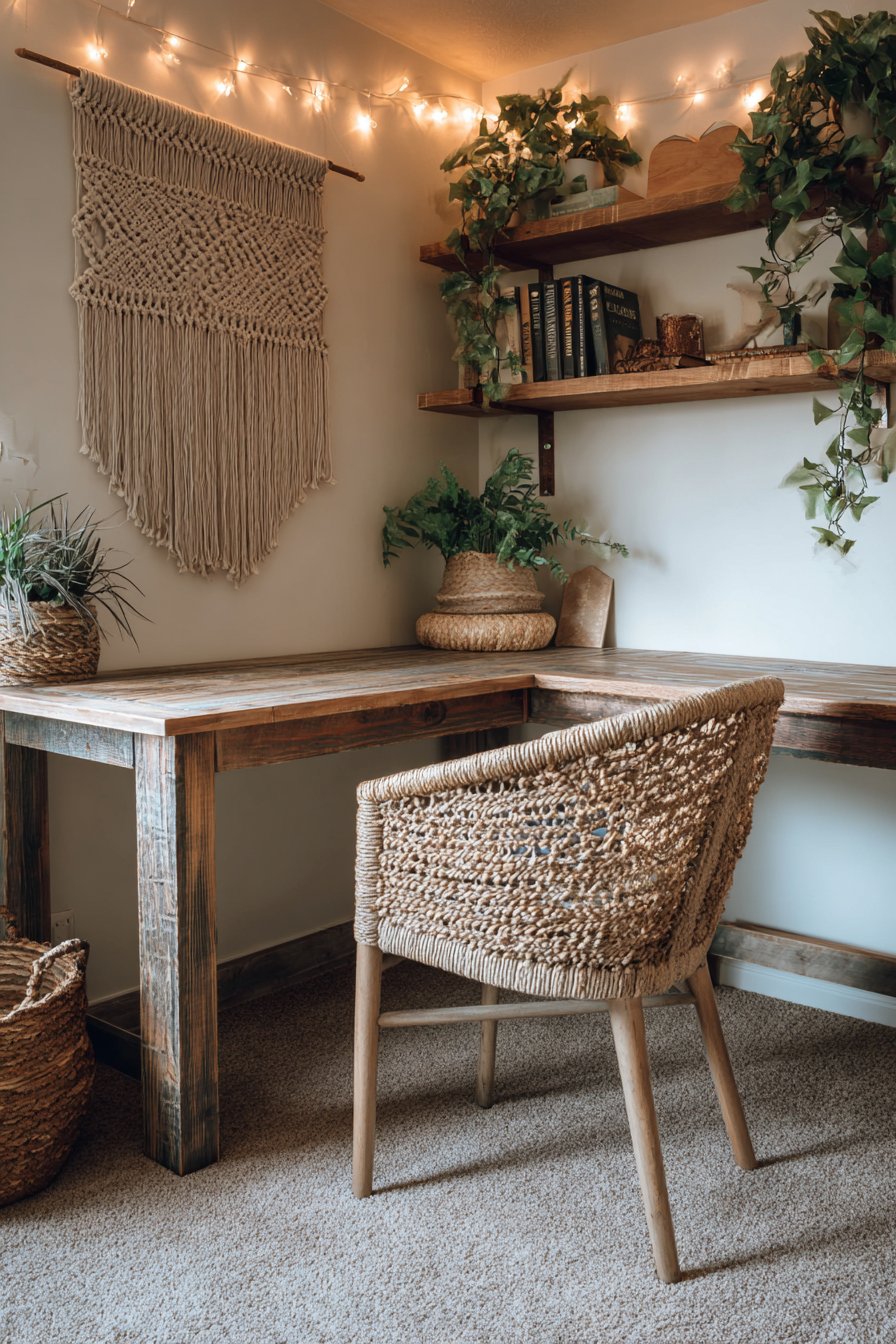
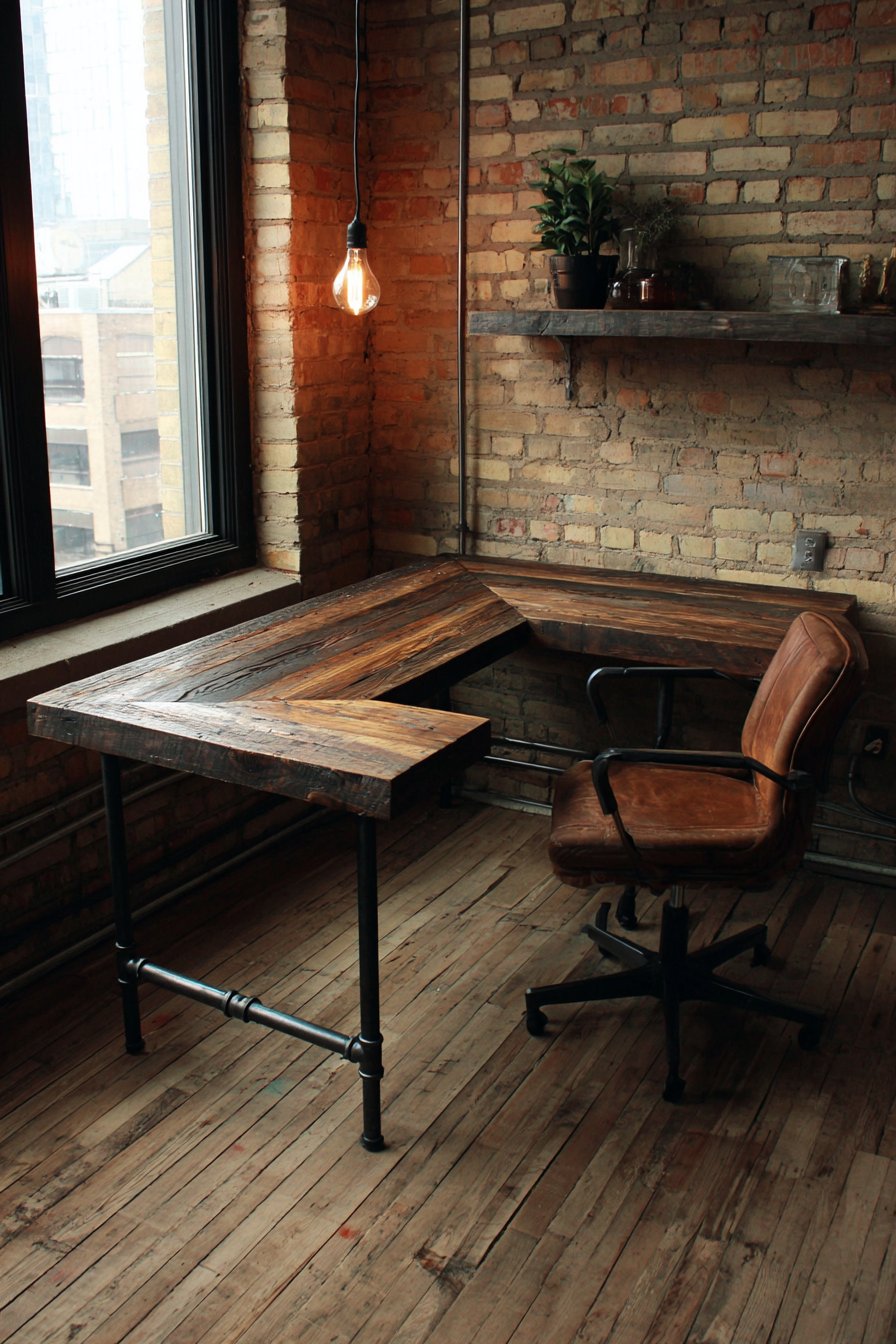
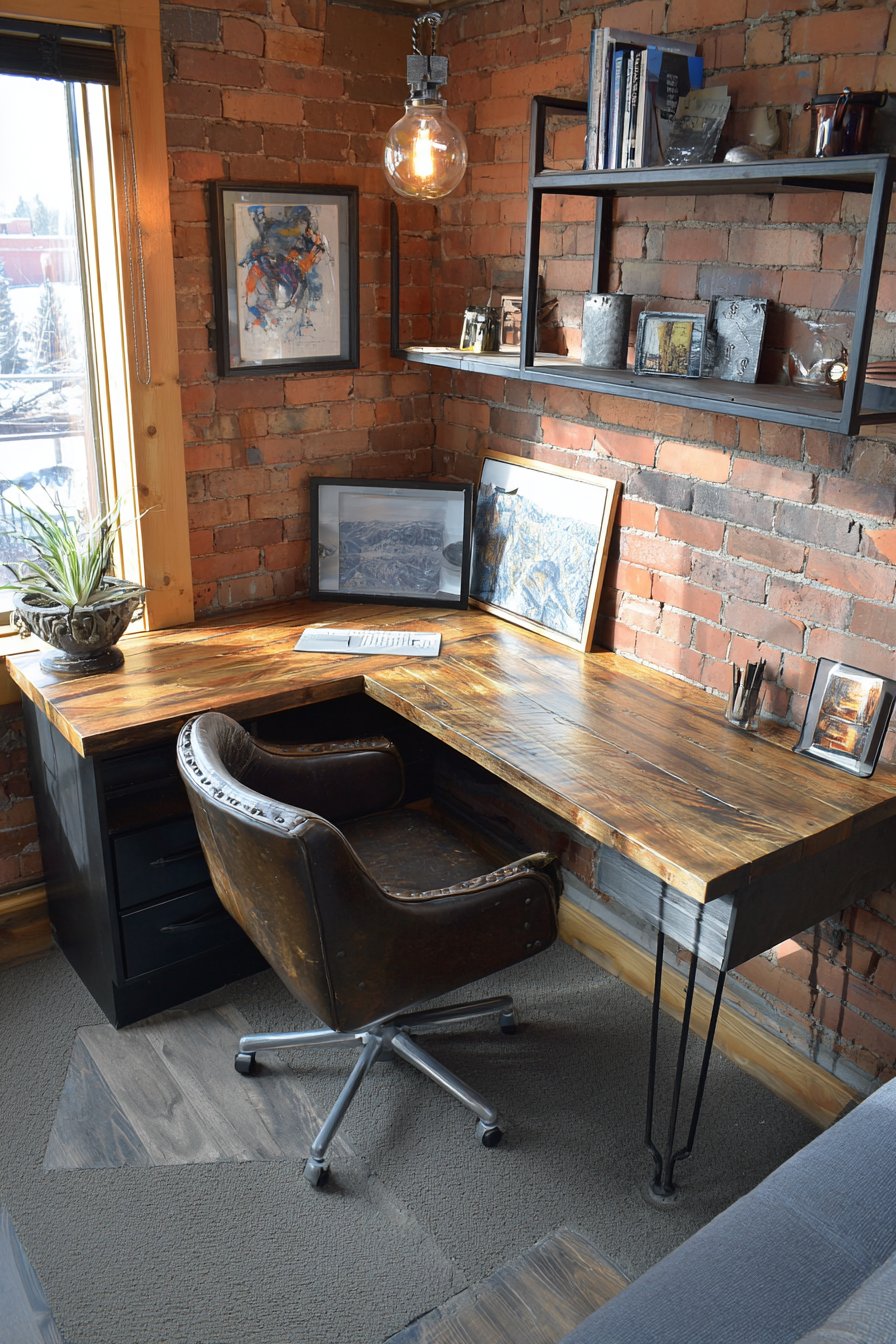
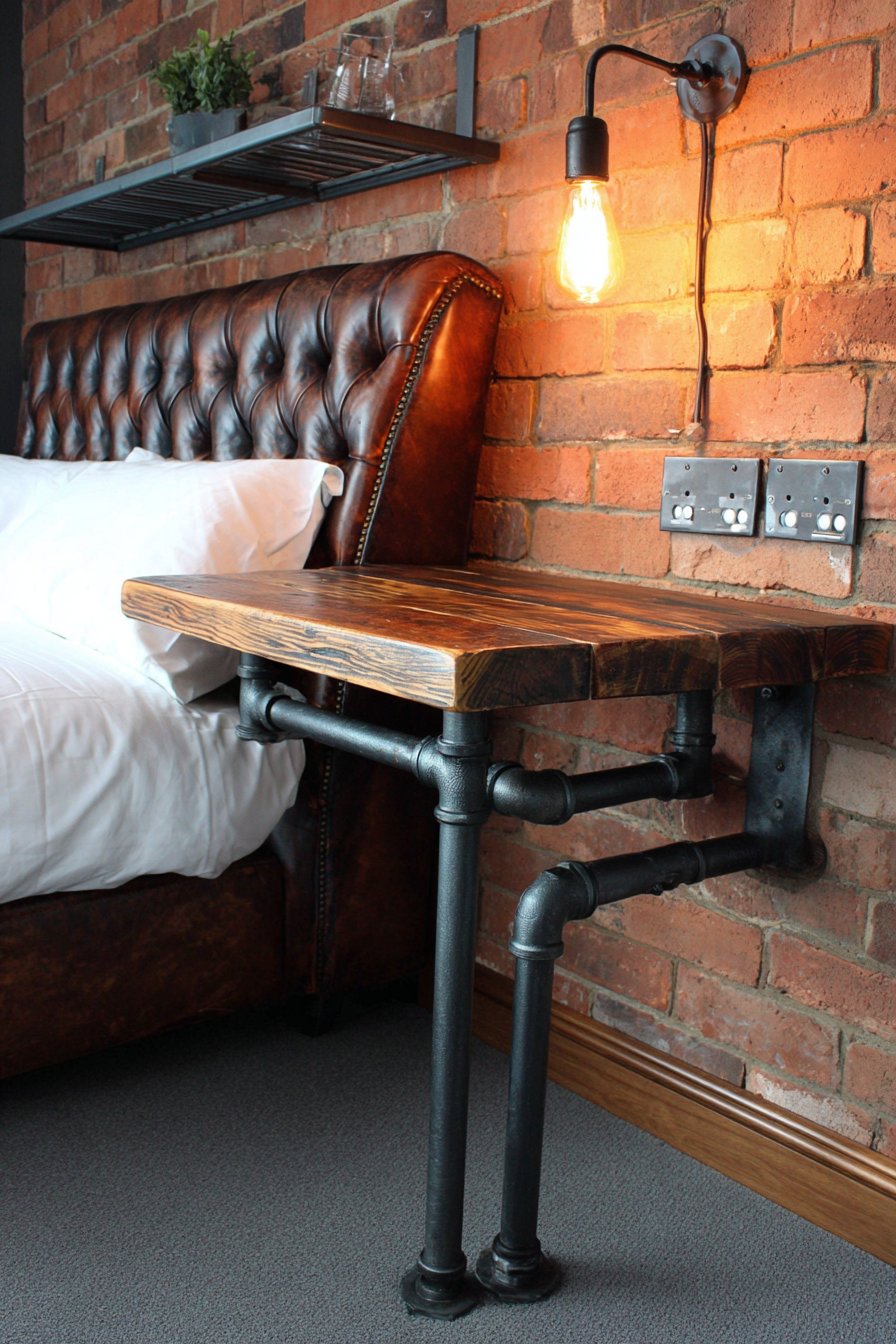
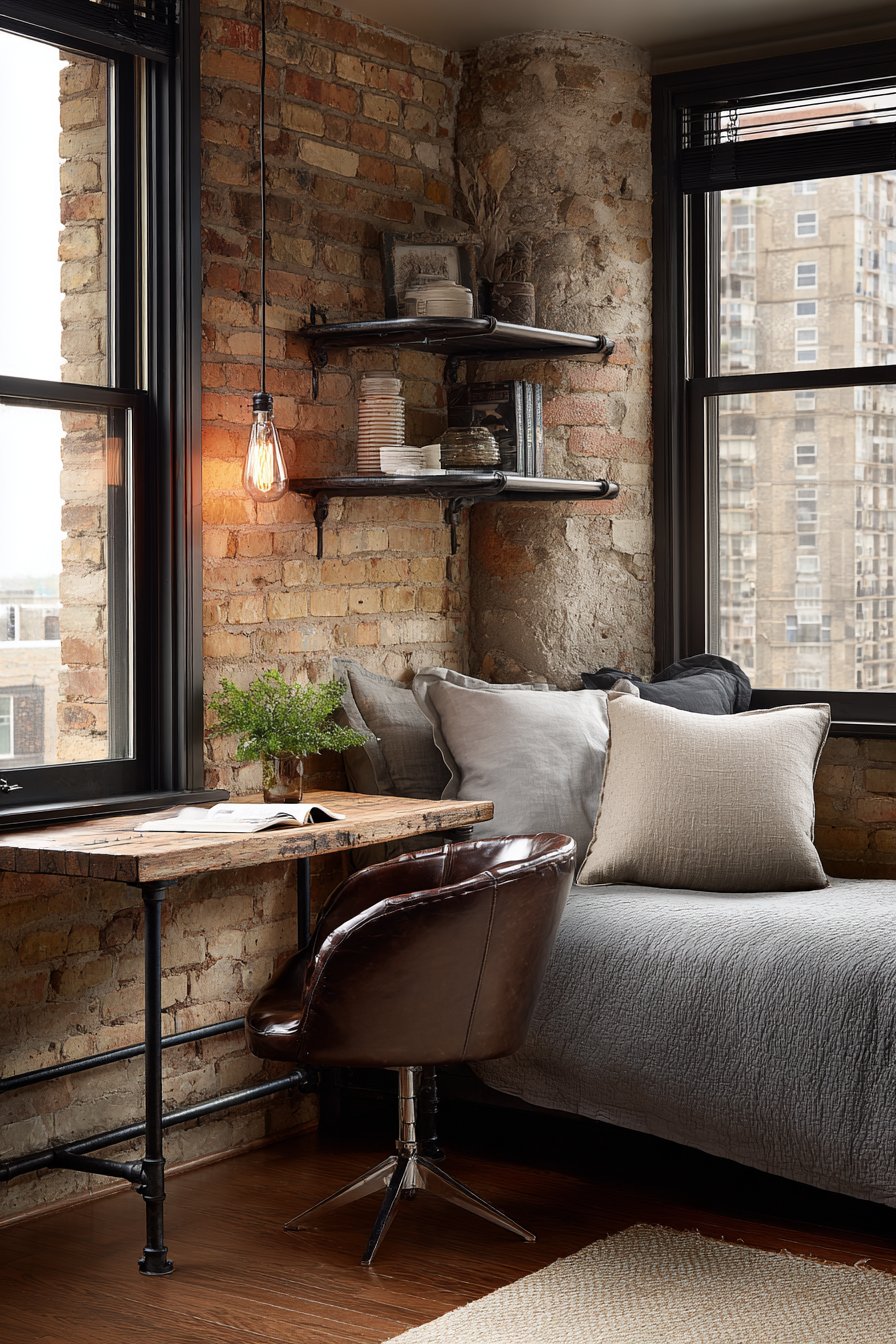
The industrial corner desk design brings raw, utilitarian aesthetics into the bedroom, creating a workspace with undeniable character and edge. This custom-built setup features a reclaimed wood desktop with visible grain, knots, and imperfections that celebrate the material’s natural beauty and history. Black metal pipe legs provide industrial-strength support while establishing the edgy aesthetic that defines this style. Positioned against an exposed brick wall corner, the desk gains architectural drama and textural interest that manufactured walls simply cannot provide. A vintage leather task chair, worn and softened with age, adds warmth and comfort to the otherwise hard-edged environment, creating a perfect balance between industrial toughness and livable comfort.
Open metal shelving mounted above the desk extends the industrial theme while providing essential storage without visual bulk. The airy shelves—perhaps fashioned from black iron pipes and reclaimed wood planks—display minimal decor with intentionality: a few favorite books, a sculptural object, maybe a single plant in a concrete pot. An Edison bulb pendant light hanging over the workspace serves as both functional task lighting and decorative focal point, its exposed filament and vintage styling epitomizing industrial design philosophy. The warm amber glow from the Edison bulb softens the raw materials, preventing the space from feeling cold or unwelcoming.
This design particularly appeals to those who appreciate authenticity, craftsmanship, and materials that show honest wear. The industrial aesthetic celebrates function over decoration, utility over prettiness, yet achieves a sophisticated look through careful curation and restraint. The contrast between rough brick, smooth leather, weathered wood, and cold metal creates visual interest that keeps the eye engaged. For loft dwellers or anyone with industrial-leaning tastes, this corner desk setup proves that workspaces can be both highly functional and aesthetically compelling. The robust construction ensures longevity, while the timeless industrial aesthetic means the desk won’t look dated as trends evolve.
Key Design Tips:
- Source reclaimed wood from salvage yards or specialty suppliers for authentic character and sustainability
- Use black iron pipe fittings to construct desk legs or shelving for genuine industrial construction
- Expose brick walls if possible, or use brick veneer panels to achieve the industrial backdrop
- Choose vintage leather furniture that shows natural patina and wear for authentic industrial warmth
- Install Edison bulbs in cage pendant fixtures for period-appropriate industrial lighting
- Keep decorative elements minimal and utilitarian to maintain the industrial aesthetic’s integrity
- Incorporate metal accents in matte black finishes throughout the space for cohesive styling
5. Minimalist White Floating Corner System
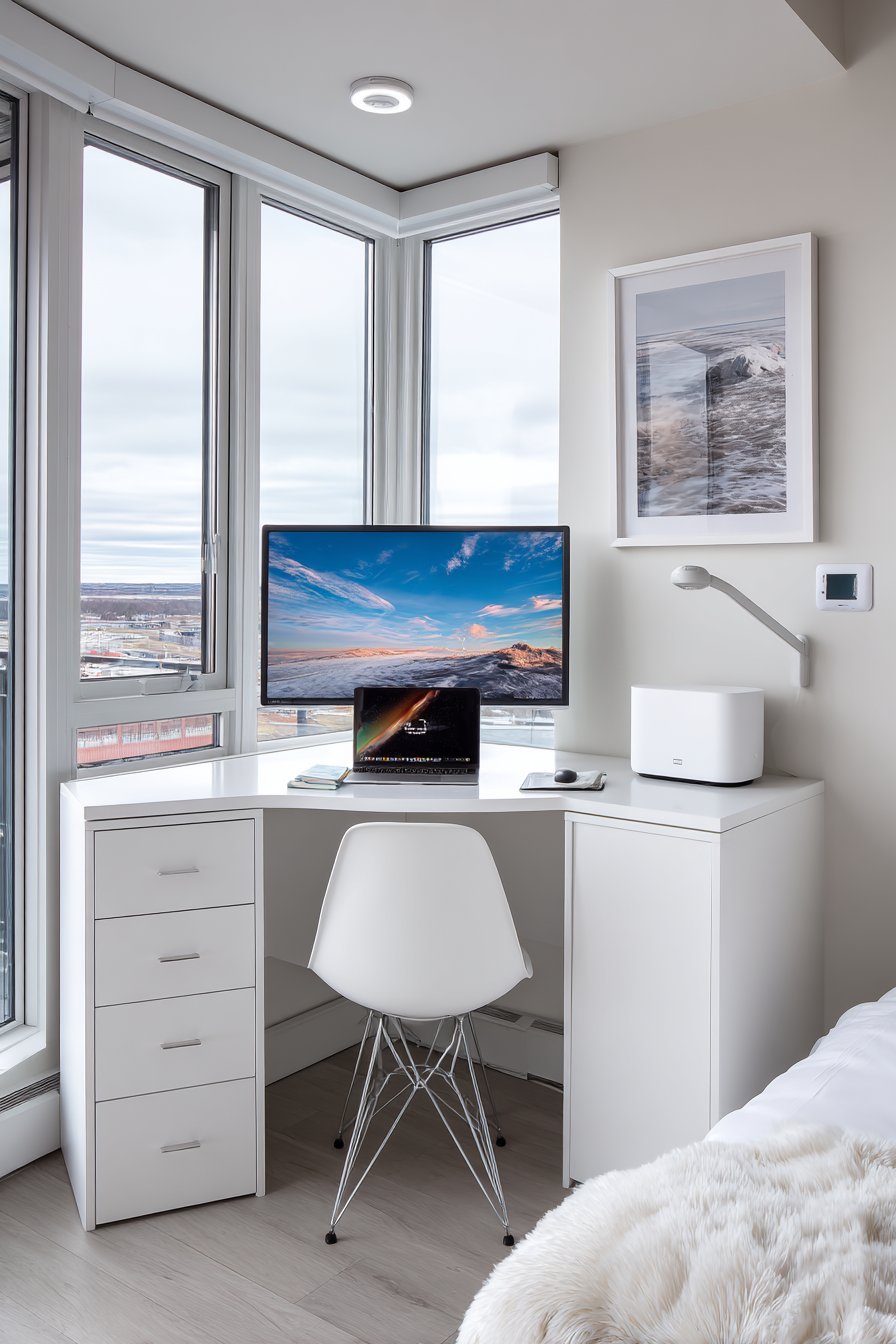
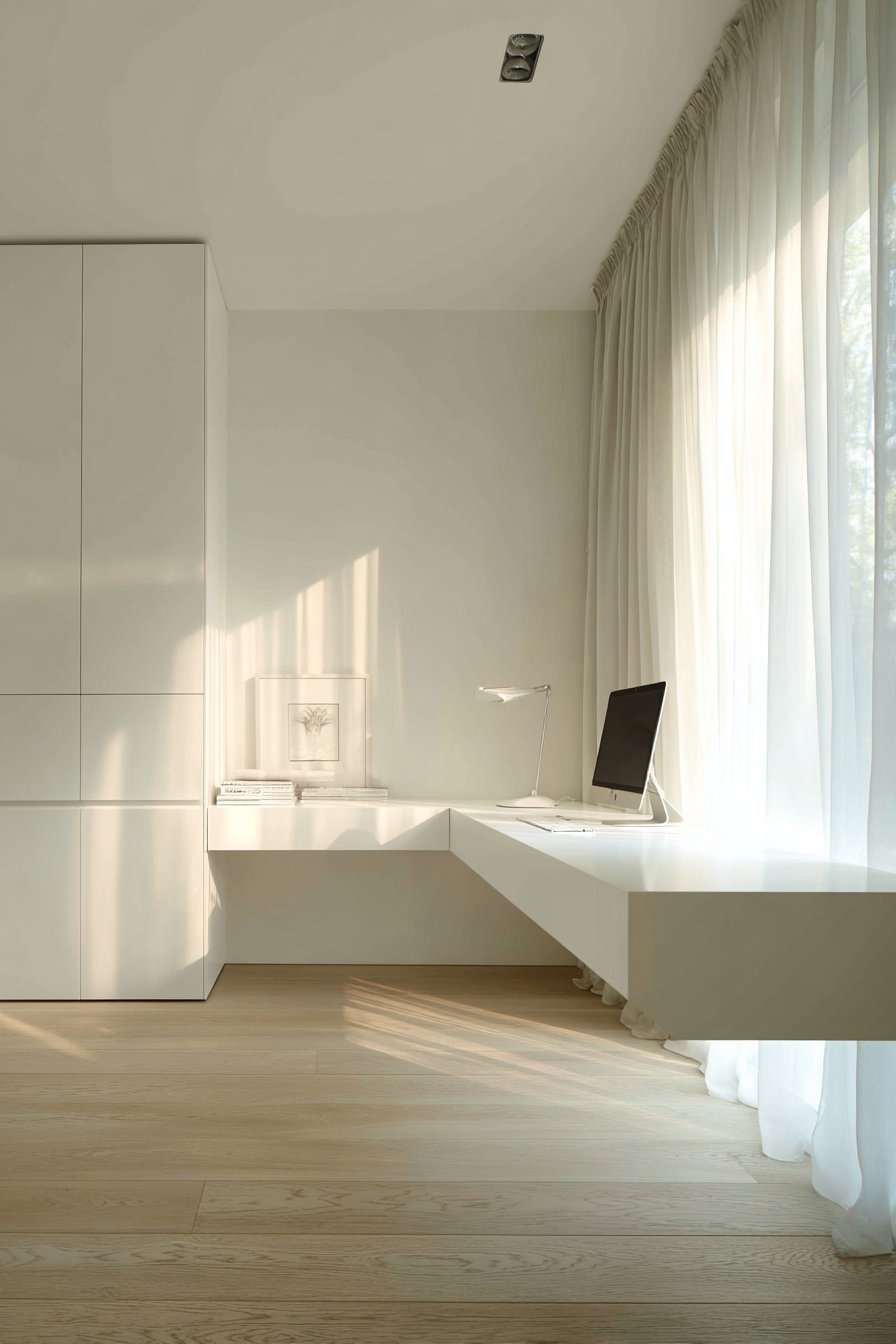
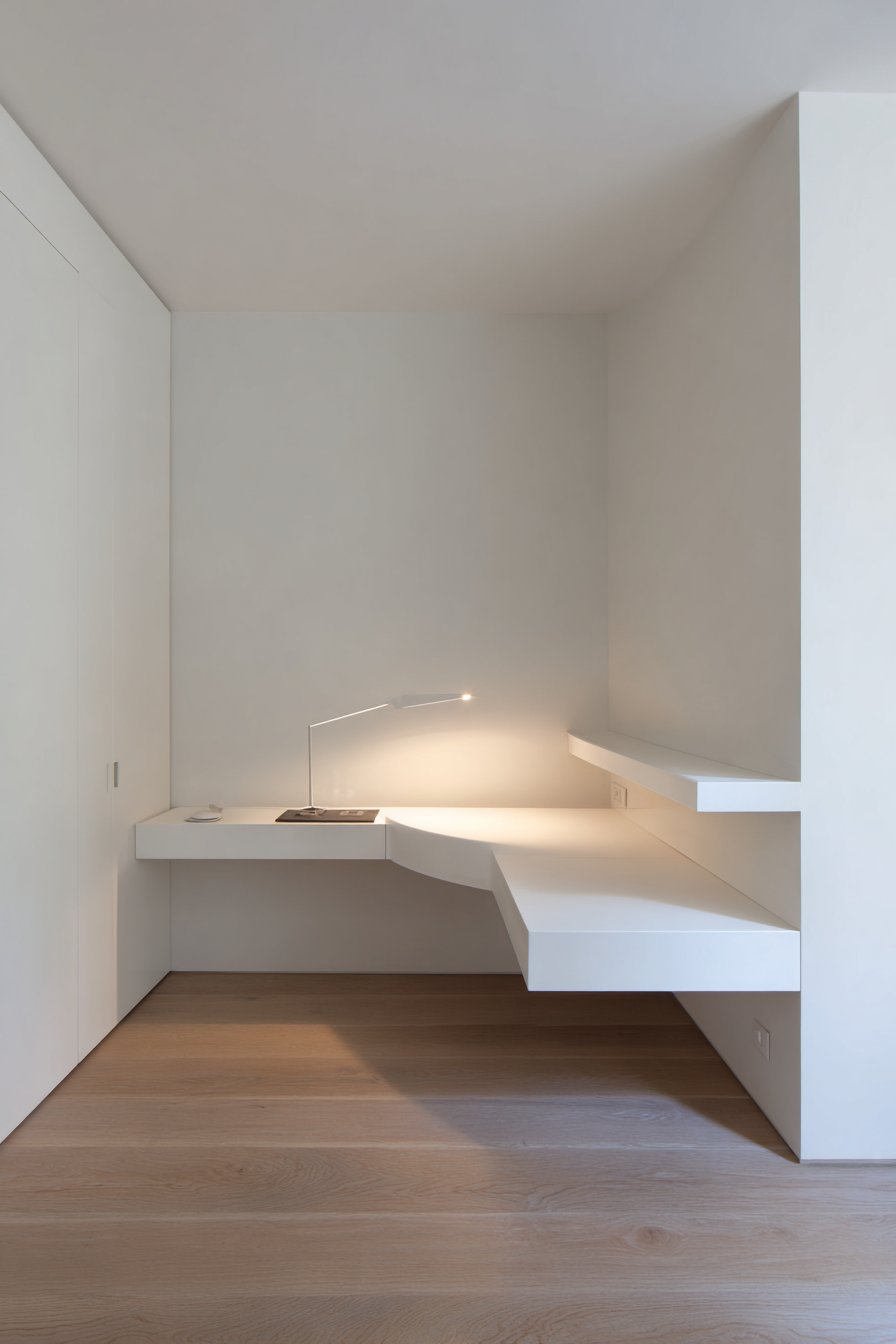
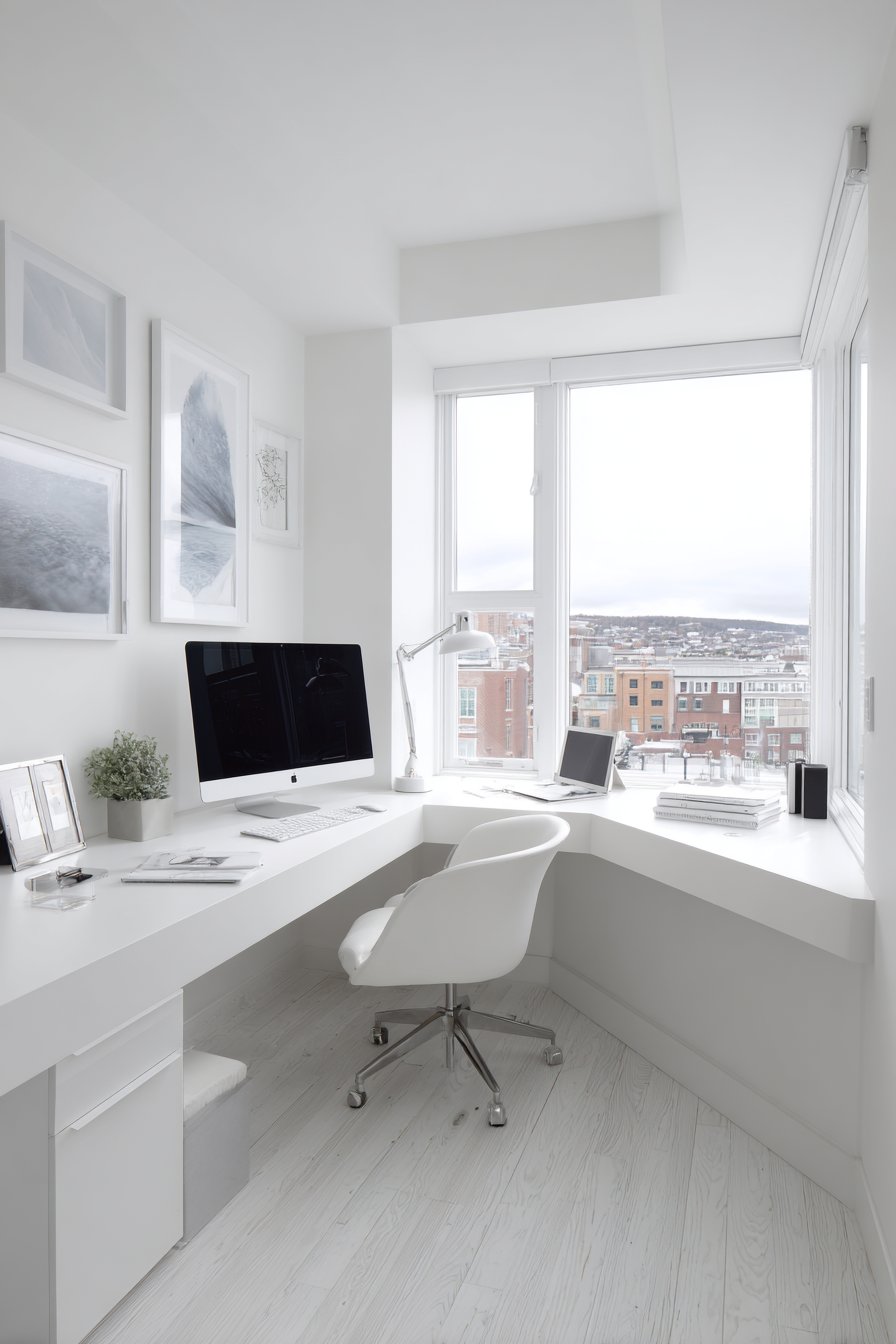
The minimalist corner desk embodies the philosophy that less is genuinely more, creating a workspace of remarkable serenity and focus through restraint and thoughtful editing. This sleek white floating corner desk forms an L-shaped configuration that maximizes workspace while maintaining visual lightness. The wall-mounted design eliminates bulky legs and reveals the floor beneath, creating an impression of spaciousness essential in minimalist interiors. Hidden cable management systems keep technology’s necessary but unsightly cords completely out of view, preserving the clean aesthetic that defines minimalist design. A single monitor setup with wireless peripherals eliminates visual clutter, while a simple modern desk lamp provides focused task lighting with sculptural simplicity.
The surrounding environment reinforces the minimalist principles of clarity, order, and calm. White walls reflect and amplify natural light, creating a bright, airy atmosphere that promotes alertness and concentration. Light wood flooring in pale oak or ash adds warmth without compromising the clean aesthetic, providing just enough contrast to prevent the space from feeling sterile. The absence of unnecessary decoration isn’t about coldness or inhospitality—rather, it reflects a deliberate choice to eliminate distractions and create an environment optimized for focus and productivity. Every element present in this space has earned its place through functionality or essential aesthetic contribution.
This minimalist approach particularly benefits those who find visual clutter mentally draining or work in fields requiring deep concentration. The spare aesthetic reduces decision fatigue and environmental stimulation, allowing mental energy to flow toward work rather than processing visual noise. The white color palette reflects light beautifully, making even small corners feel open and expansive. While minimalism may appear simple, achieving this level of refinement requires careful planning, high-quality materials, and disciplined editing. The result, however, is a workspace of remarkable tranquility that supports productivity while contributing to the bedroom’s overall sense of calm.
Key Design Tips:
- Invest in high-quality white finishes that won’t yellow over time and resist showing wear
- Plan comprehensive cable management before installation to maintain the clean aesthetic
- Choose furniture with hidden storage to keep necessary items accessible but out of sight
- Limit your color palette to whites, light woods, and perhaps one subtle accent color
- Select simple, sculptural desk accessories that serve dual aesthetic and functional purposes
- Incorporate texture through materials rather than patterns to add interest without clutter
- Position the desk to maximize natural light, reducing need for multiple light sources
6. Farmhouse Cottage Corner Charm
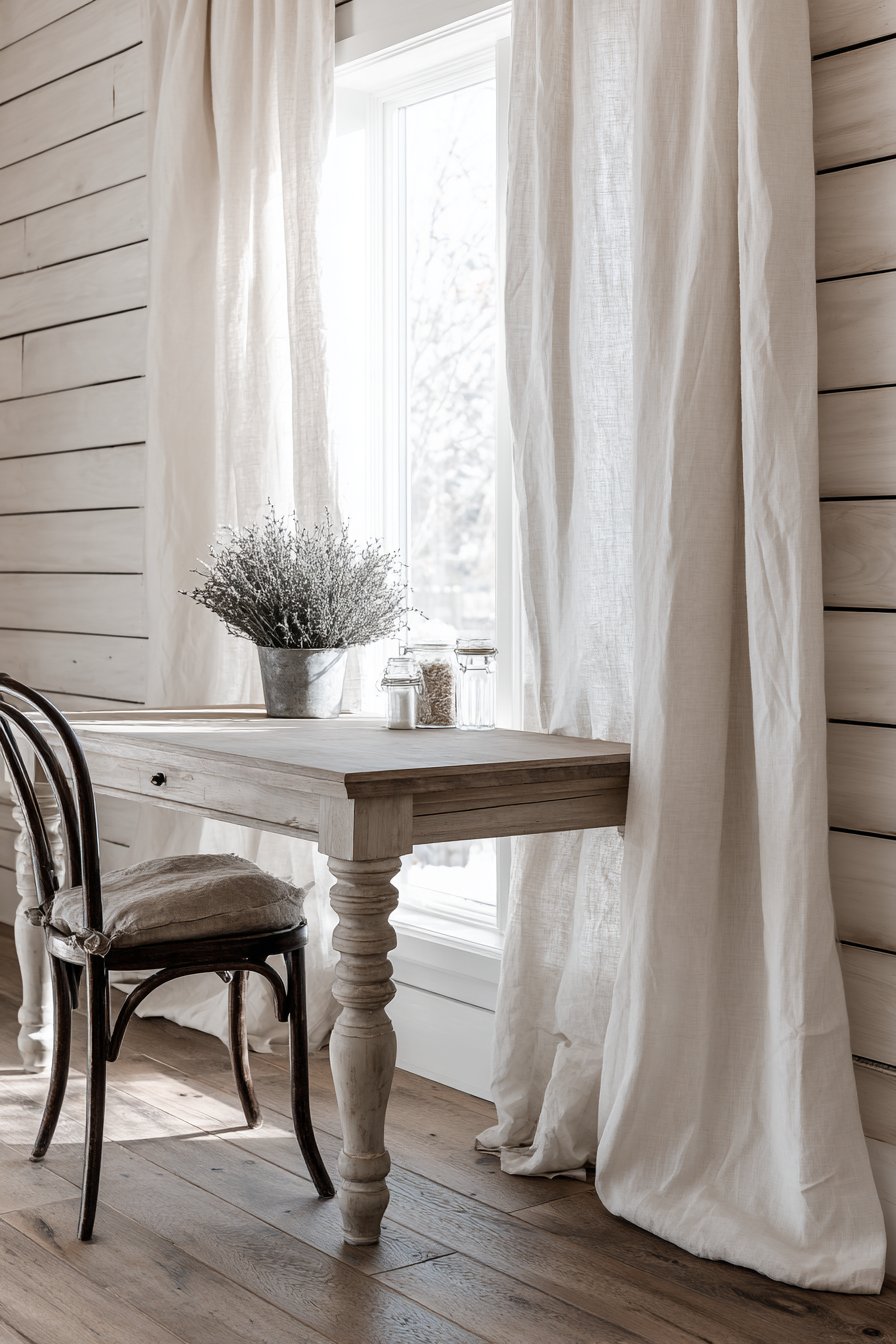
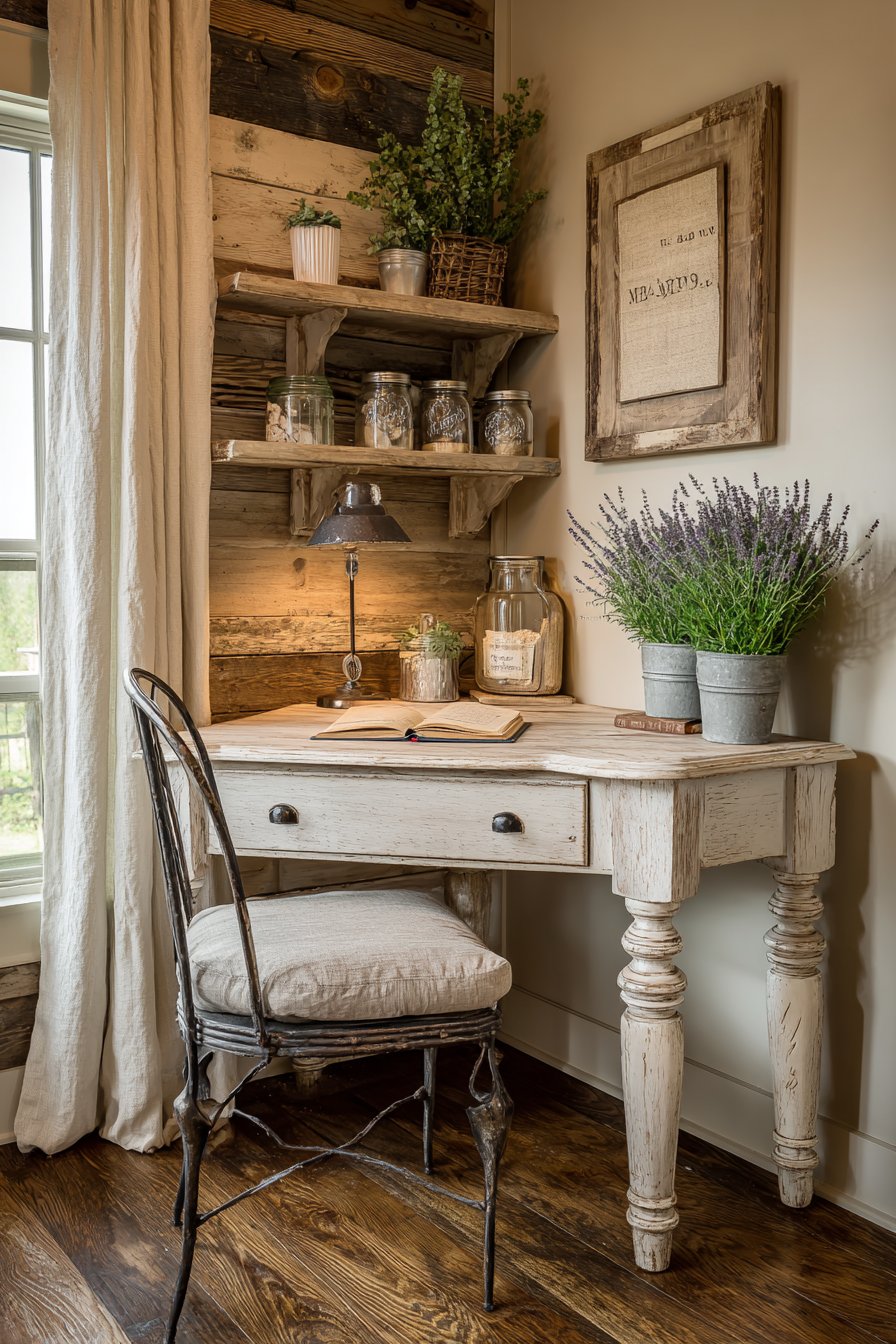
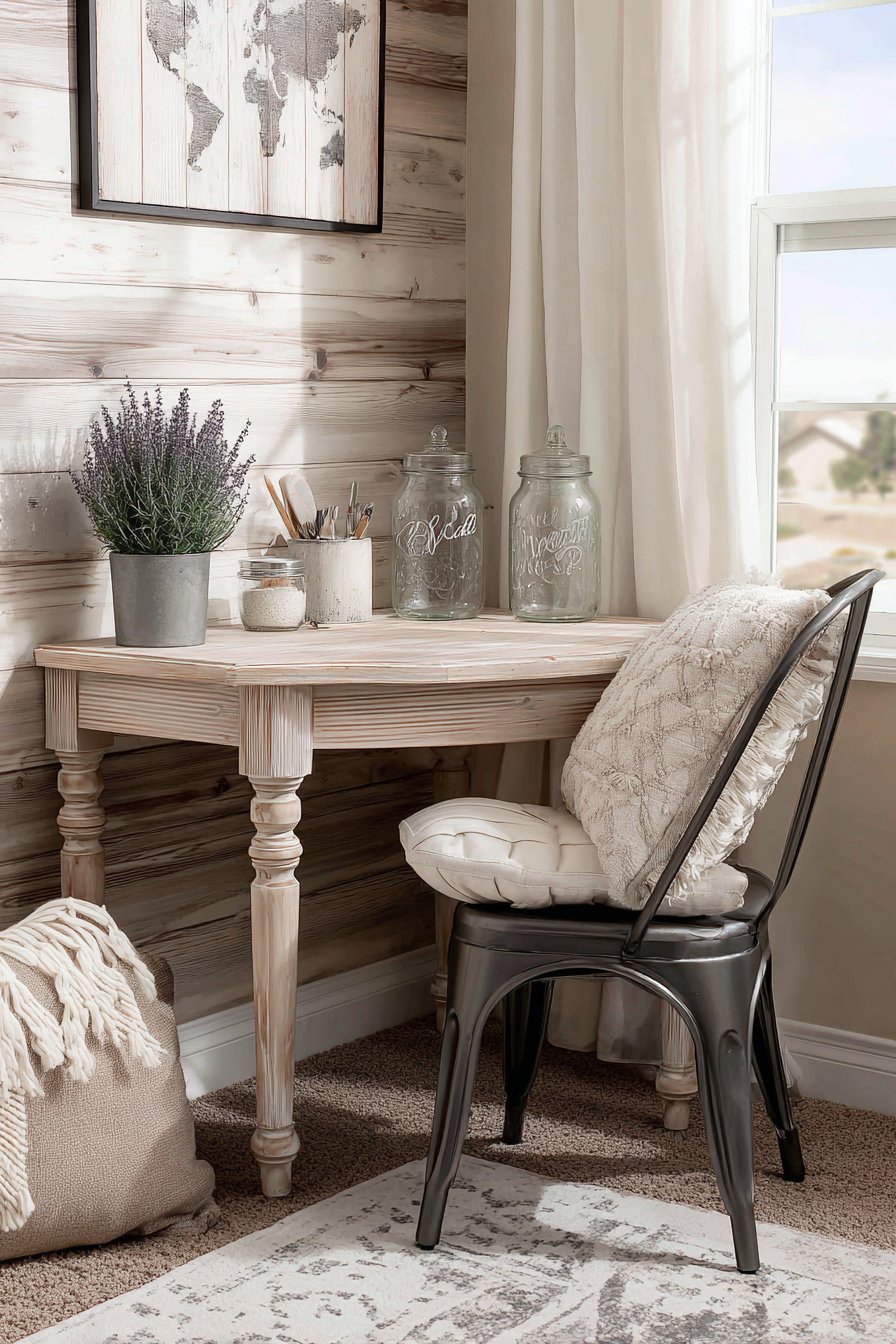
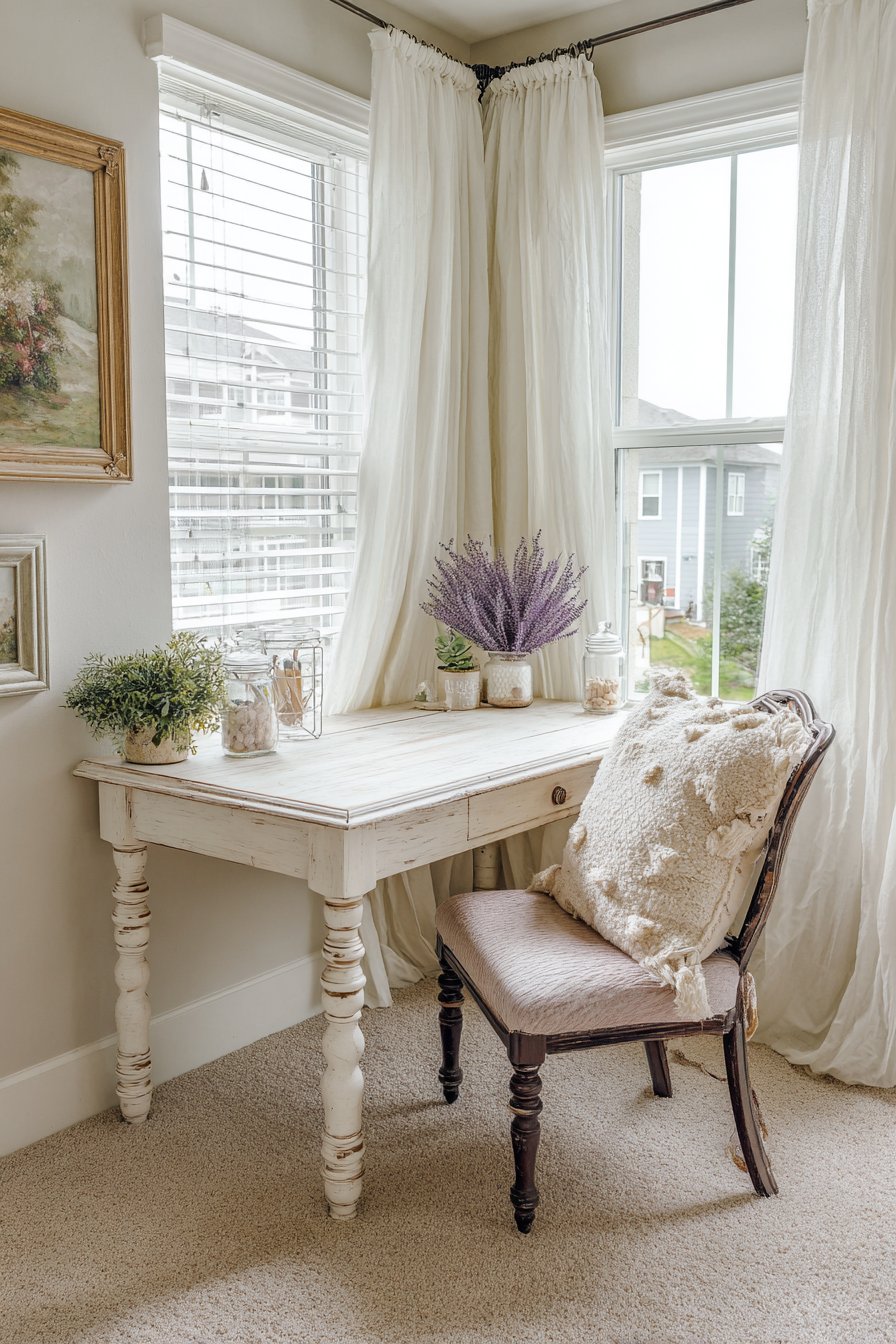
The farmhouse corner desk brings rustic warmth and cottage charm into the bedroom, creating a workspace that feels cozy, welcoming, and deeply comforting. This design features a whitewashed wooden desk with turned legs that reference traditional furniture craftsmanship, standing in beautiful contrast to the clean lines dominating contemporary design. A vintage-inspired metal chair with a cushioned seat provides comfortable seating while reinforcing the farmhouse aesthetic through its simple, utilitarian form. Mason jar desk organizers—a quintessential farmhouse element—hold pens, pencils, and small supplies with practical charm. A small potted lavender plant adds both visual appeal and subtle fragrance that makes working at the desk a multisensory pleasure.
The shiplap accent wall behind the desk establishes authentic farmhouse character while providing textural interest that plain drywall cannot match. This horizontal wood paneling, painted in soft white or pale cream, catches light and creates gentle shadows that add dimensional depth to the corner. Natural daylight streaming through sheer curtains nearby bathes the workspace in soft, diffused illumination that changes throughout the day, connecting the indoor workspace to outdoor rhythms. The overall effect combines the comfort of cottage living with the functionality of a modern workspace, creating an environment where productivity feels less like work and more like a pleasant domestic activity.
This design particularly appeals to those who find inspiration in traditional crafts, natural materials, and the slower pace of country living. The farmhouse aesthetic celebrates handmade quality, functional beauty, and the accumulation of cherished objects over time rather than trendy disposable purchases. The whitewashed finish adds brightness without stark modernism, while the turned legs and metal chair reference historical furniture forms that have proven their utility across generations. For anyone seeking a workspace that feels nurturing, grounded, and connected to domestic traditions, the farmhouse corner desk offers a perfect solution that honors both heritage and contemporary needs.
Key Design Tips:
- Choose furniture with traditional detailing like turned legs, beadboard panels, or simple carvings
- Apply whitewash or milk paint finishes to new wood for authentic farmhouse patina
- Install shiplap accent walls for textural interest and period-appropriate backdrop
- Incorporate natural materials including wood, metal, cotton, and ceramic throughout the space
- Use vintage or vintage-inspired accessories like mason jars, enamelware, and simple pottery
- Select a soft, neutral color palette with whites, creams, soft grays, and natural wood tones
- Add fresh or dried flowers and herbs to bring natural beauty and subtle fragrance to your workspace
7. Vibrant Teen Study Corner
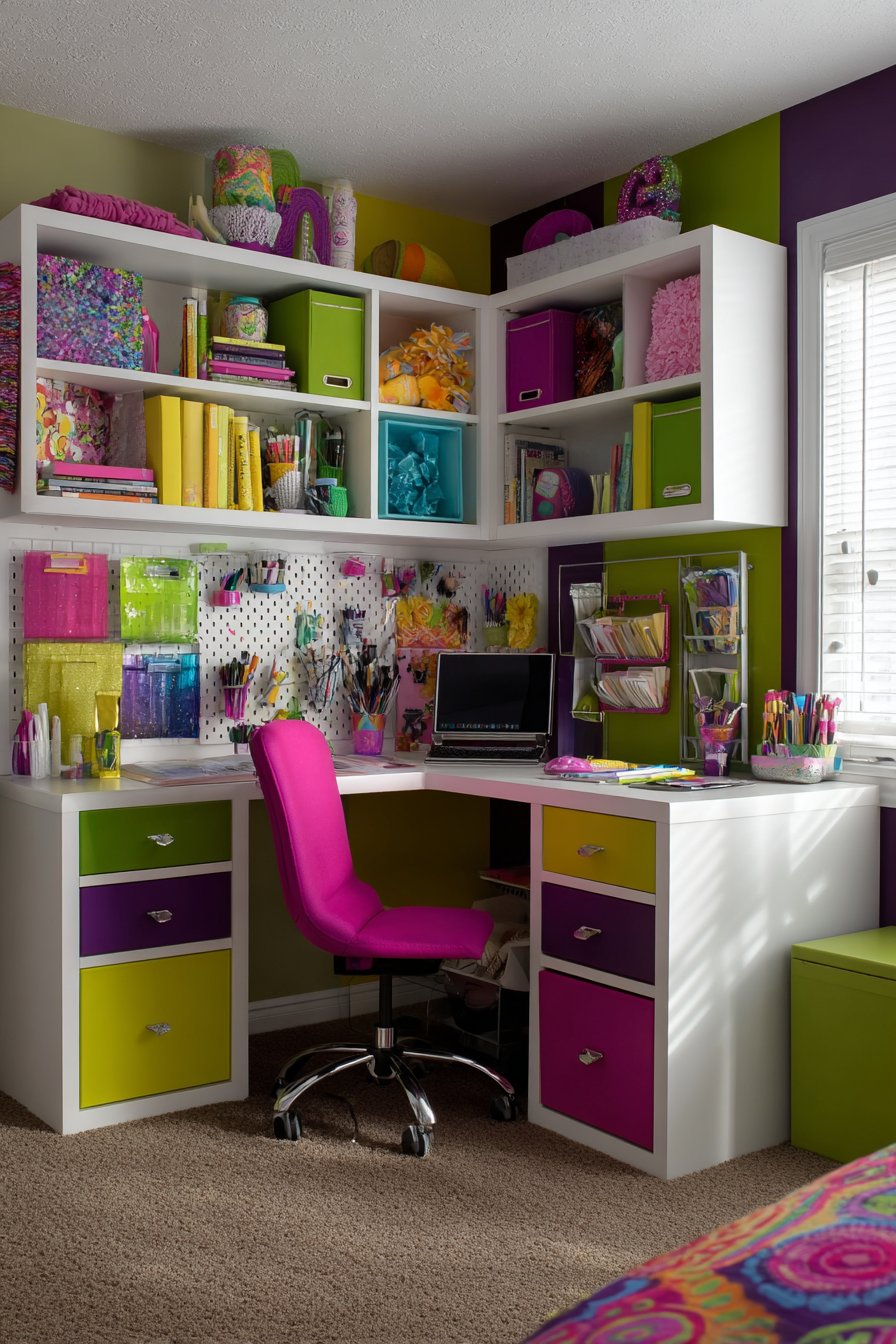
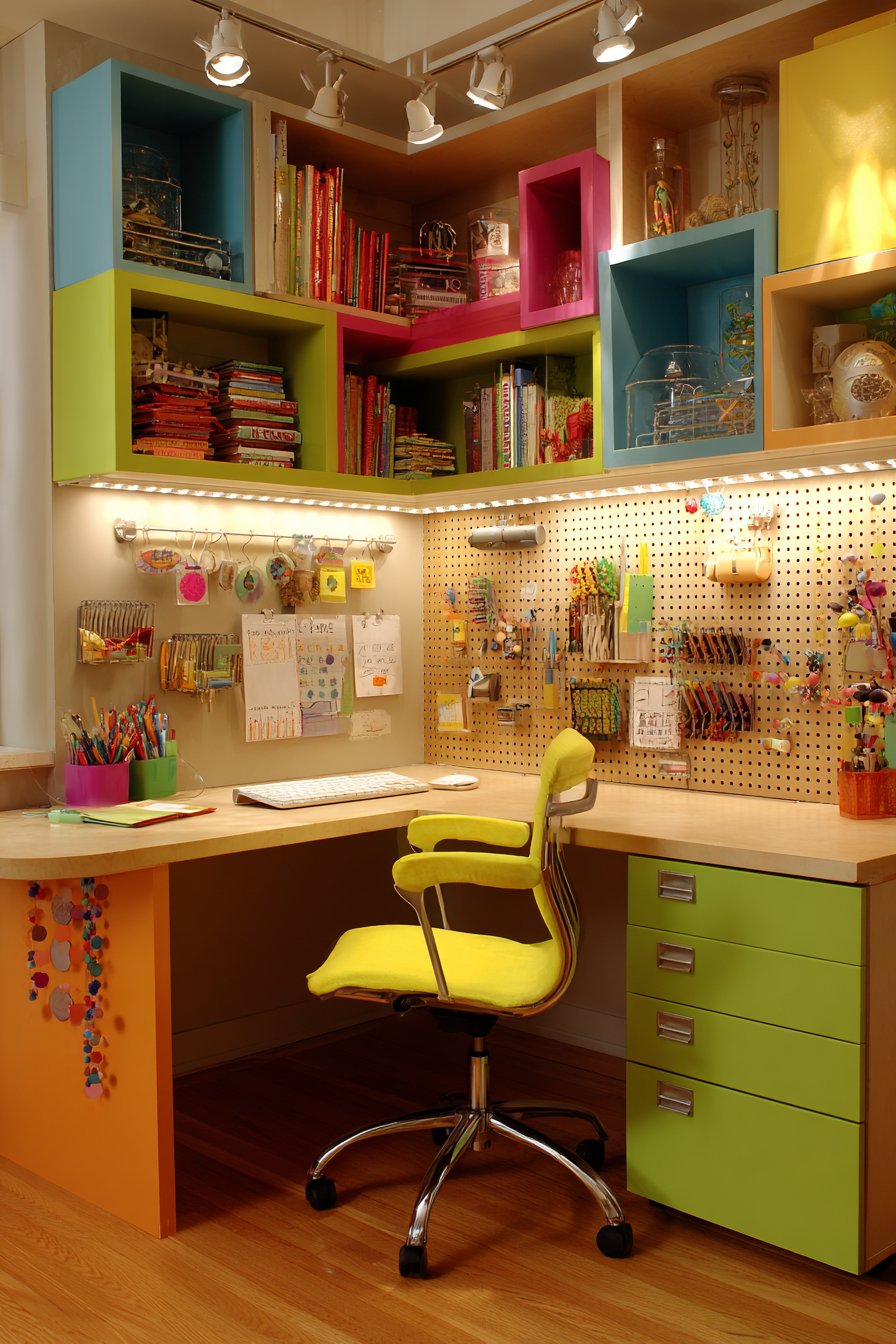
The teen bedroom corner desk tackles the unique challenge of creating a workspace that supports academic success while reflecting youthful energy and personal style. This design features a colorful laminate corner desk unit with built-in storage cubbies that keep school supplies, textbooks, and personal items organized and accessible. A rolling task chair in a bright accent color—perhaps electric blue, vibrant coral, or energizing lime—adds personality and allows easy movement between desk areas and other parts of the room. A pegboard wall organizer mounted above the desk provides customizable storage for supplies, headphones, inspirational photos, and decorative items that can evolve as the teen’s interests change. LED strip lighting installed under floating shelves provides both functional task lighting and atmospheric ambiance perfect for studying or late-night creative projects.
The setup recognizes that teenagers use their workspaces for far more than homework alone. This corner desk accommodates computer work, creative projects, hobby activities, video calls with friends, and personal expression—serving as command center for the teenager’s busy life. The built-in storage cubbies eliminate excuses for disorganization by providing designated homes for different types of materials. The colorful aesthetic energizes the space and makes sitting down to study feel less like drudgery and more like engaging with a personal creative zone. The adjustable lighting allows the teen to customize the atmosphere depending on the task—bright and focused for studying, softer and more ambient for creative work or relaxation.
What makes this design particularly successful is its acknowledgment that teenagers benefit from spaces reflecting their identity and providing autonomy. Rather than imposing adult aesthetic preferences, this vibrant corner desk celebrates youthful energy while establishing organizational systems that support academic and creative success. The pegboard’s customizable nature allows the space to evolve as the teen grows and interests shift, while the functional design ensures it continues serving practical needs through high school and potentially into college years. This workspace becomes not just a desk, but a personal territory where the teenager exercises independence, creativity, and developing organizational skills.
Key Design Tips:
- Involve the teenager in design decisions to ensure the space reflects their personality and needs
- Choose durable laminate surfaces that withstand heavy daily use and resist showing wear
- Incorporate abundant and varied storage solutions to support organization of school and personal items
- Install pegboard systems that offer flexibility as interests and storage needs evolve
- Add LED lighting with adjustable brightness and color options for customizable ambiance
- Select furniture with rounded corners and stable construction for safety and durability
- Create distinct zones for computer work, writing, and creative activities within the corner space
- Use color strategically to energize and personalize without overwhelming the broader bedroom aesthetic
8. Luxury Executive Home Office Corner
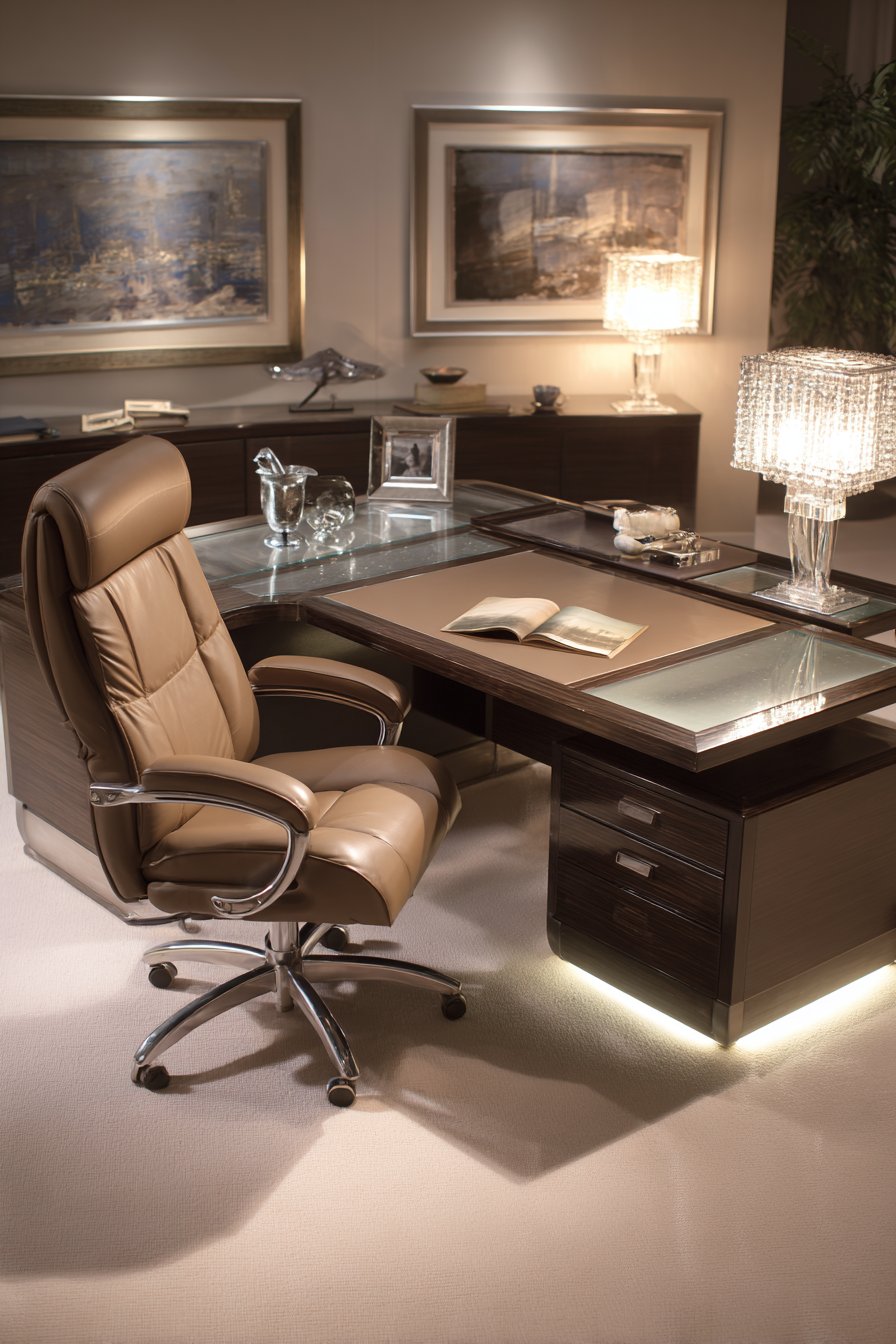
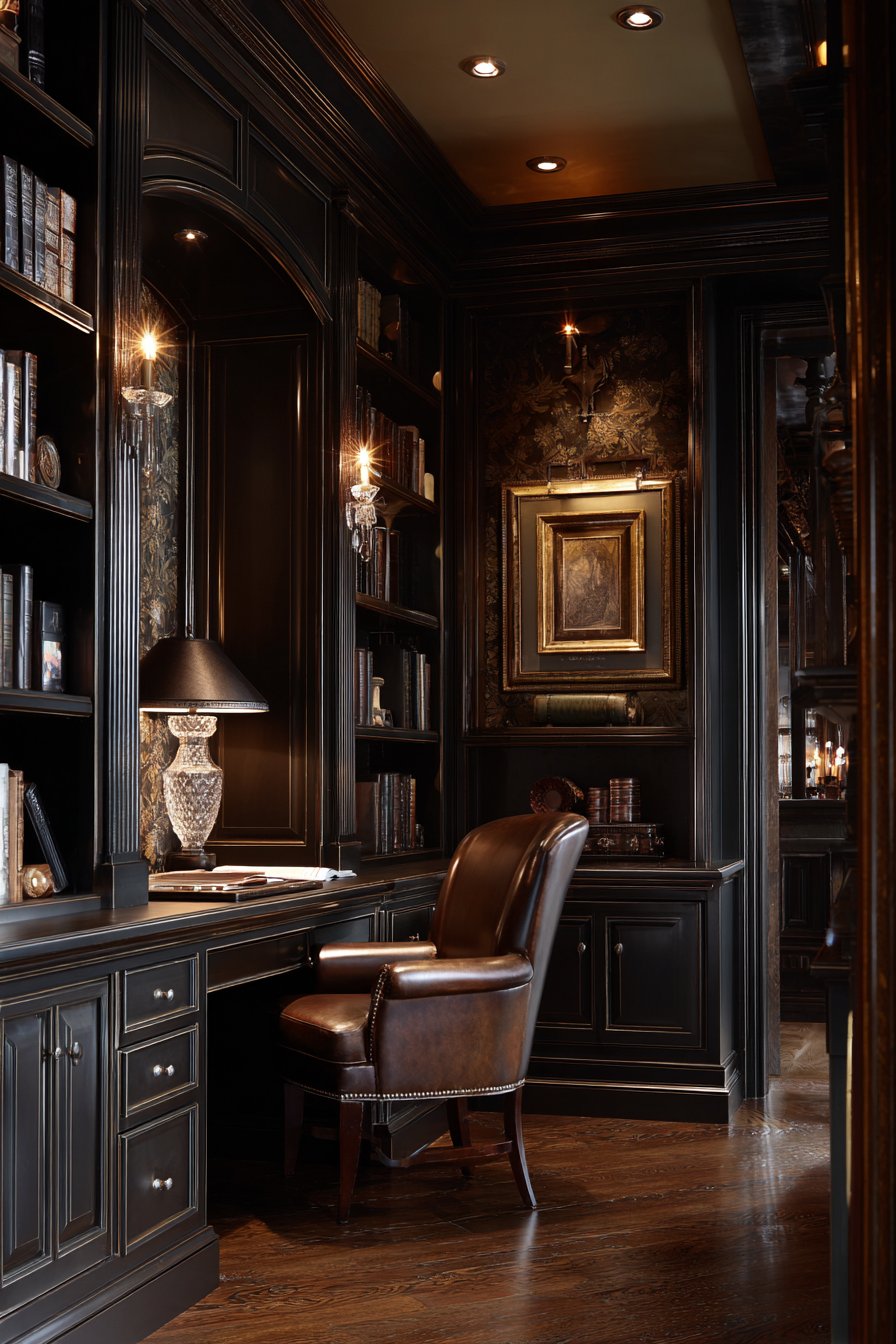
The luxury corner desk elevates the bedroom workspace to executive-level sophistication, proving that working from home doesn’t require compromising on professional quality or refined aesthetics. This custom-built corner workstation showcases rich espresso wood with a leather desktop inlay—a classic executive detail that adds tactile luxury and prevents desktop scratches. The craftsmanship evident in the construction, finish, and detailing signals quality and permanence rather than temporary makeshift arrangements. An executive-style ergonomic chair upholstered in cognac leather provides exceptional comfort during extended work sessions while maintaining the sophisticated aesthetic. Built-in drawers and filing systems keep important documents organized and secure, eliminating the need for additional storage furniture that might clutter the bedroom.
Lighting in this space achieves elegant functionality through a crystal table lamp that provides both task illumination and decorative sophistication. The warm glow from this refined fixture creates an atmosphere of calm concentration suitable for focused work or important video conferences. Framed artwork carefully selected to complement the desk’s rich tones hangs on the adjacent wall, adding cultural refinement and preventing the corner from feeling purely utilitarian. Every element in this luxury setup has been selected for quality, longevity, and timeless appeal rather than following fleeting trends. The result is a workspace that commands respect and facilitates professional excellence while integrating seamlessly into the upscale bedroom environment.
This design particularly suits executives, professionals, or anyone who conducts significant business from home and wants their workspace to reflect their success and standards. The investment in quality furniture, fine materials, and thoughtful details pays dividends in enhanced productivity, comfort, and the psychological benefits of working in an environment that reflects professional achievement. The espresso and cognac color palette creates warmth and richness without feeling dark or oppressive, while the leather elements add luxury without ostentation. For those who view their bedroom workspace as more than temporary expedience but rather as a permanent home office deserving thoughtful investment, this luxury corner desk provides the perfect solution.
Key Design Tips:
- Invest in solid wood construction with quality joinery that will last decades rather than years
- Choose premium upholstery materials like top-grain leather that age beautifully with proper care
- Incorporate built-in storage solutions to eliminate need for additional filing cabinets or storage units
- Select ergonomic seating that supports health and comfort during extended work sessions
- Install task lighting that provides adequate illumination while contributing to the refined aesthetic
- Add one or two pieces of quality artwork to elevate the space beyond purely functional
- Maintain a cohesive color palette using rich, warm tones that create professional atmosphere
- Include subtle luxury details like leather desk accessories, quality pens, or a small clock
9. Scandinavian Natural Light Corner
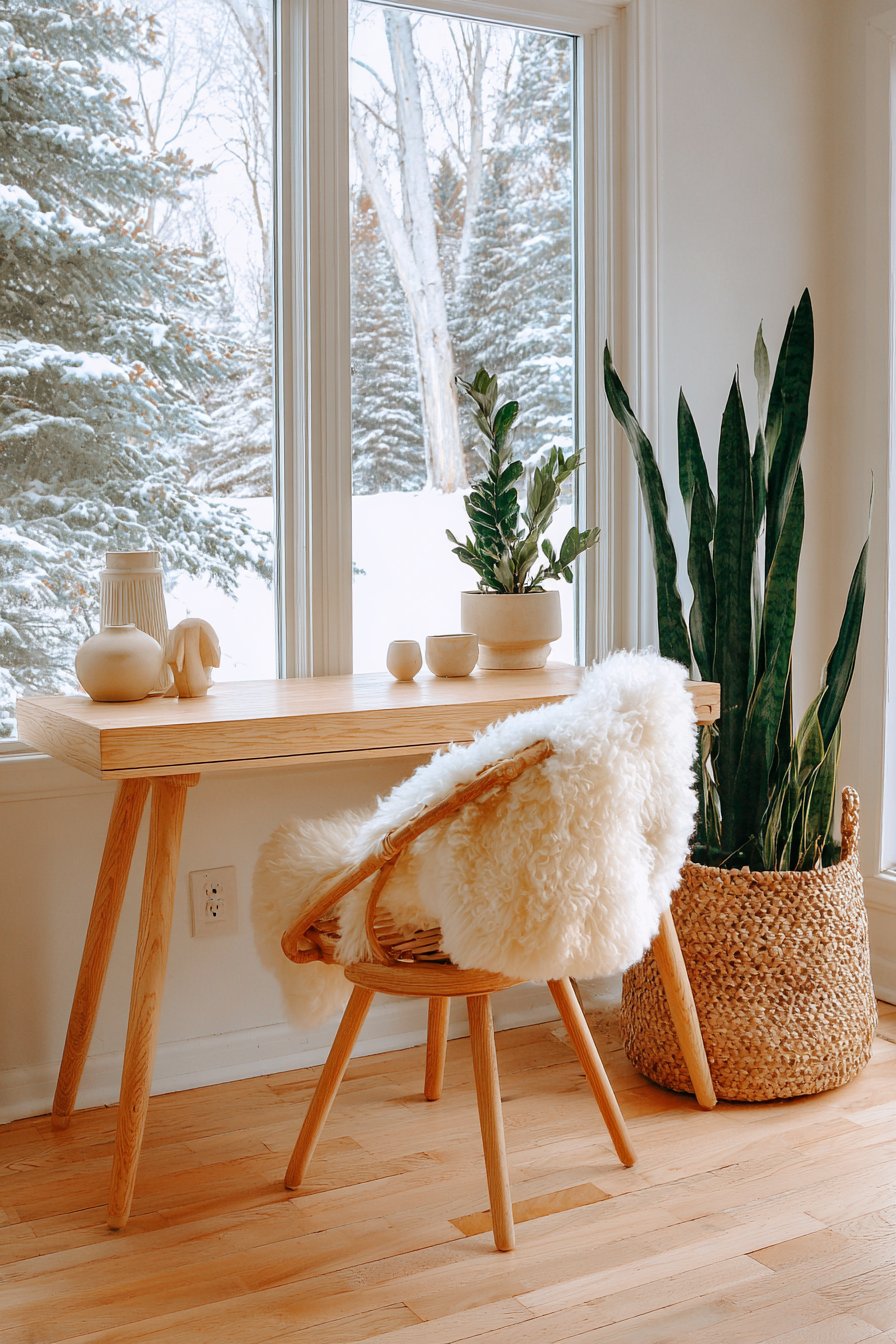
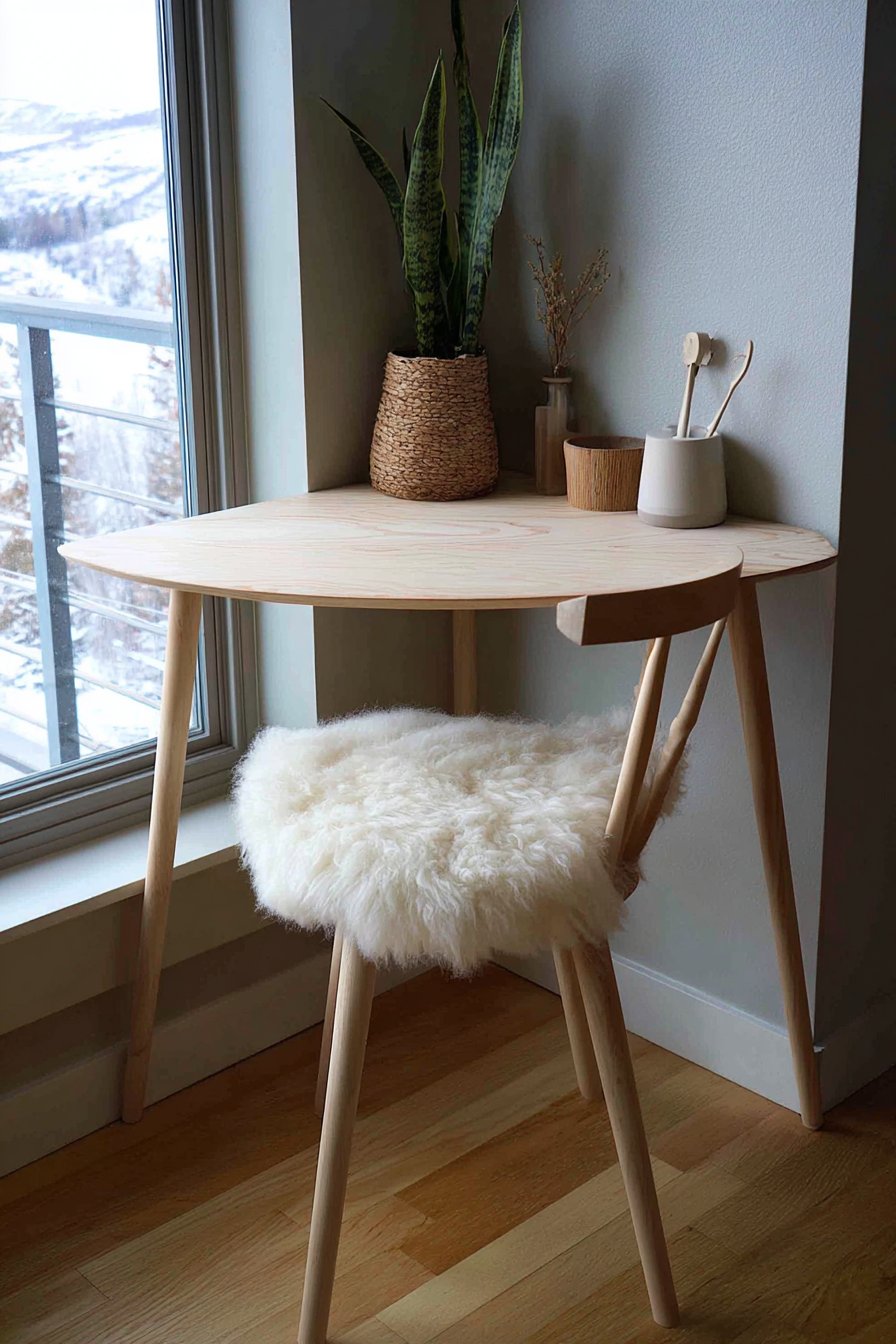
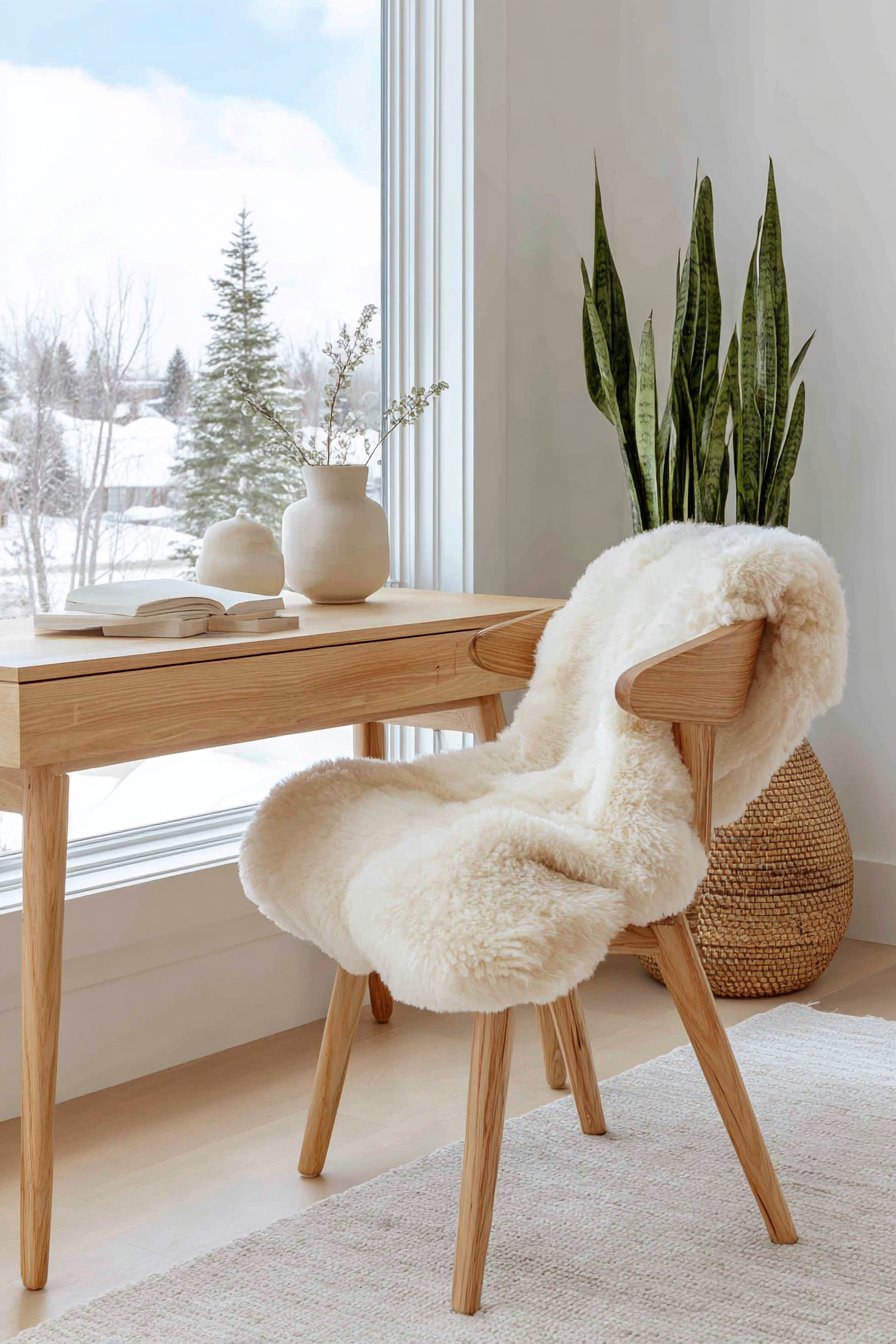
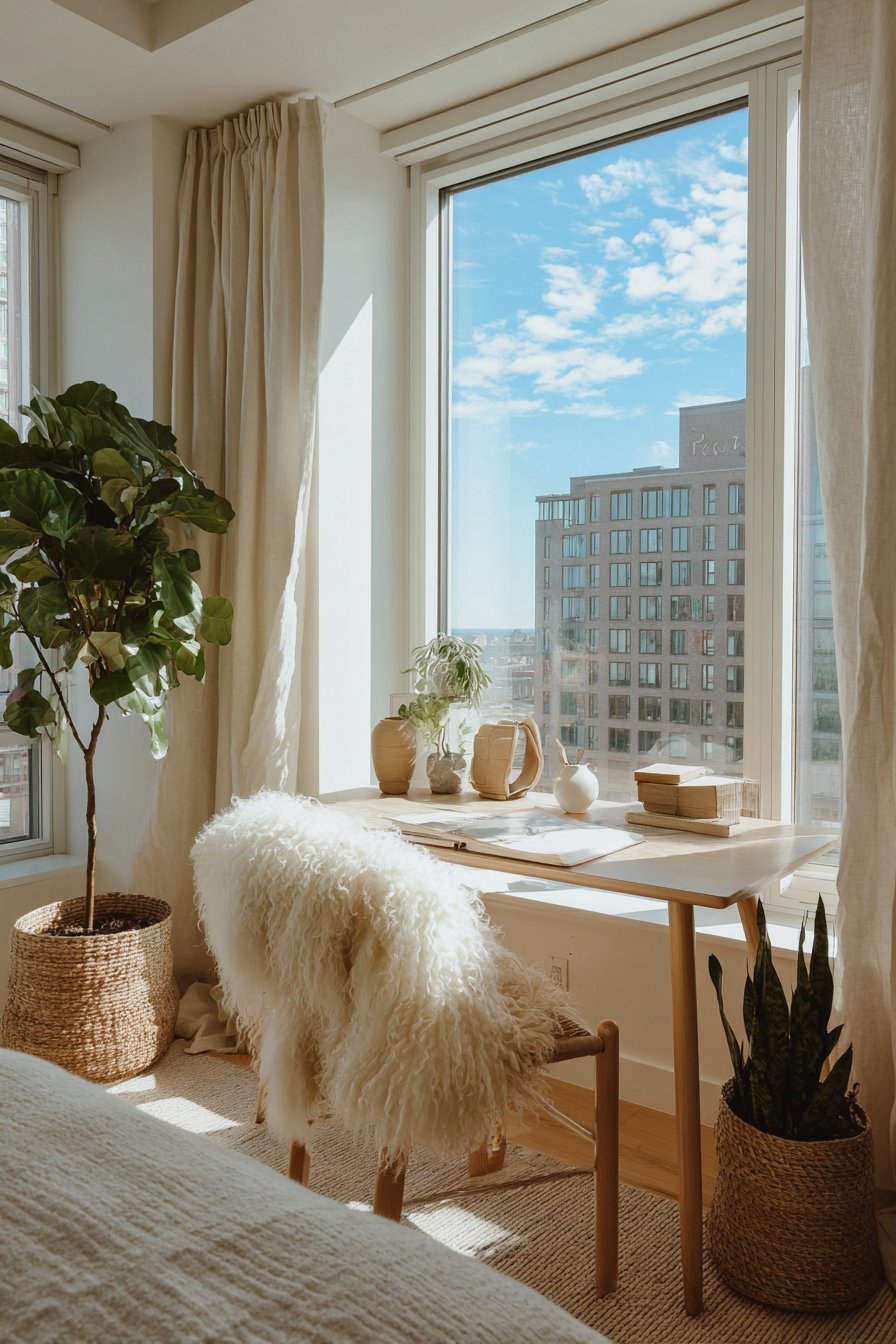
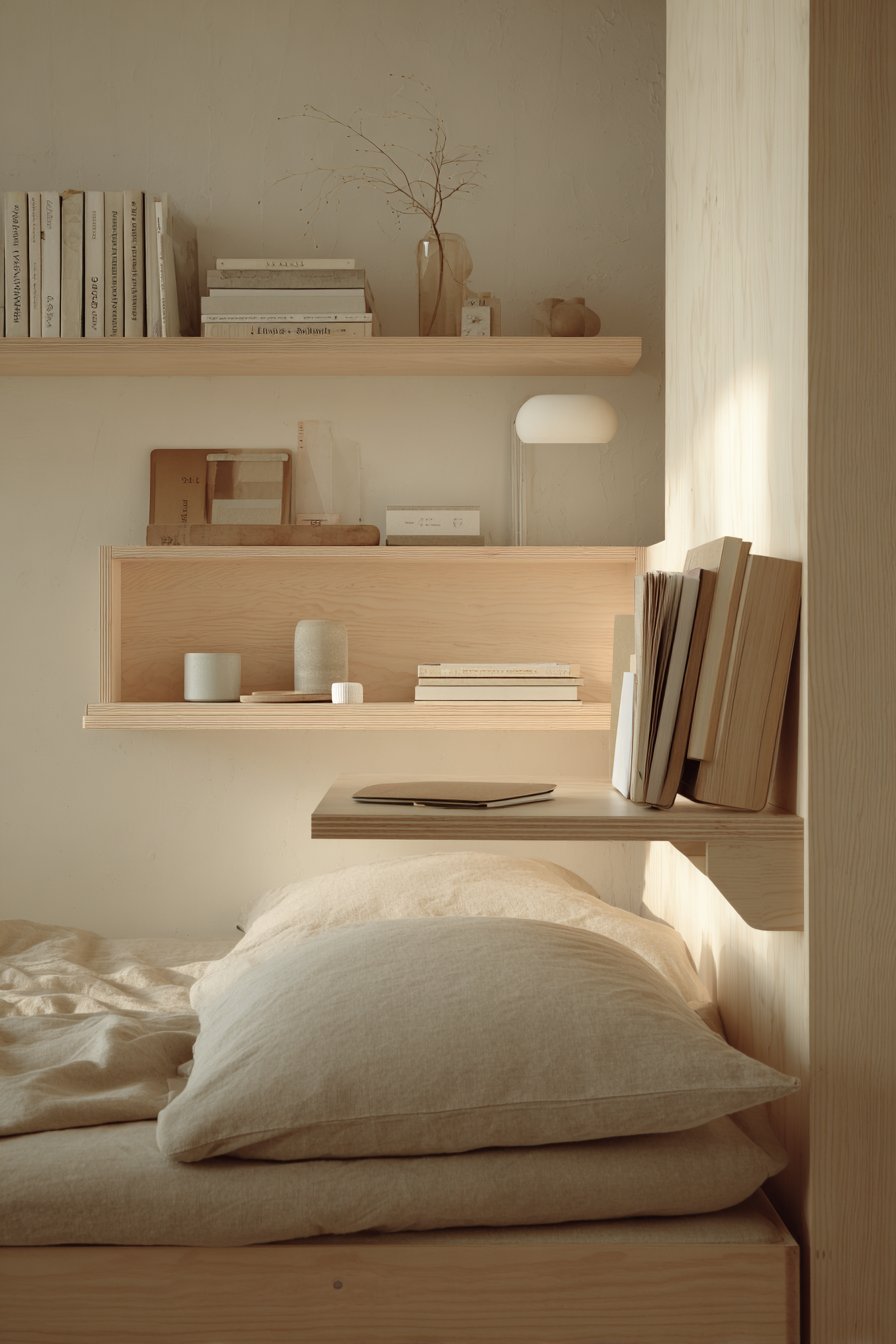
The Scandinavian corner desk design embraces the Nordic philosophy of hygge—creating cozy comfort through simplicity, natural materials, and connection to light. This workspace features a light birch wood corner desk with tapered legs and organic curves that reference mid-century Scandinavian furniture design. The pale wood reflects natural light beautifully, contributing to the bright, airy atmosphere characteristic of Scandinavian interiors. A simple wooden chair gains comfort and texture from natural sheepskin draped across the seat—a classic Nordic touch that adds warmth without bulk. Ceramic desk accessories in muted tones of white, gray, and soft beige maintain the minimal aesthetic while providing functional storage. A single snake plant in a handwoven basket brings organic life to the workspace while requiring minimal maintenance.
The positioning of this desk takes full advantage of the adjacent large window, flooding the corner with abundant natural light throughout the day. This emphasis on natural illumination reflects the Scandinavian response to long, dark winters—maximizing available daylight becomes essential for mental health and wellbeing. The workspace feels connected to outdoor elements and seasonal changes rather than artificially isolated from nature. The restrained color palette of whites, pale woods, and soft neutrals prevents visual distraction, creating an environment of calm clarity that supports both focused work and creative thinking. Every element has been carefully edited to include only what’s necessary and beautiful, embodying the Scandinavian principle of lagom—not too little, not too much, but just right.
This design philosophy creates workspaces that feel simultaneously stimulating and restful—an apparently paradoxical combination that Nordic design achieves through masterful balance. The natural materials create warmth that prevents minimalism from becoming cold, while the abundant light and pale colors create spaciousness that prevents coziness from becoming claustrophobic. For those who value simplicity, quality craftsmanship, and connection to natural elements, the Scandinavian corner desk offers a workspace that nurtures both productivity and wellbeing. The timeless aesthetic ensures the space won’t feel dated, while the functional design supports various work activities from computer tasks to creative handwork.
Key Design Tips:
- Position desks to maximize natural light exposure, preferably adjacent to windows
- Choose pale woods like birch, ash, or light oak for authentic Scandinavian aesthetic
- Incorporate natural textiles including wool, linen, cotton, and sheepskin for warmth and texture
- Maintain a minimal color palette focused on whites, grays, and natural wood tones
- Add a single statement plant rather than multiple smaller plants to maintain simplicity
- Select furniture with clean lines, tapered legs, and organic curves characteristic of Nordic design
- Use ceramic, glass, or natural material accessories rather than plastic or bright colors
- Ensure adequate task lighting for darker months while preserving the emphasis on natural light
10. Space-Saving Fold-Down Wall Desk
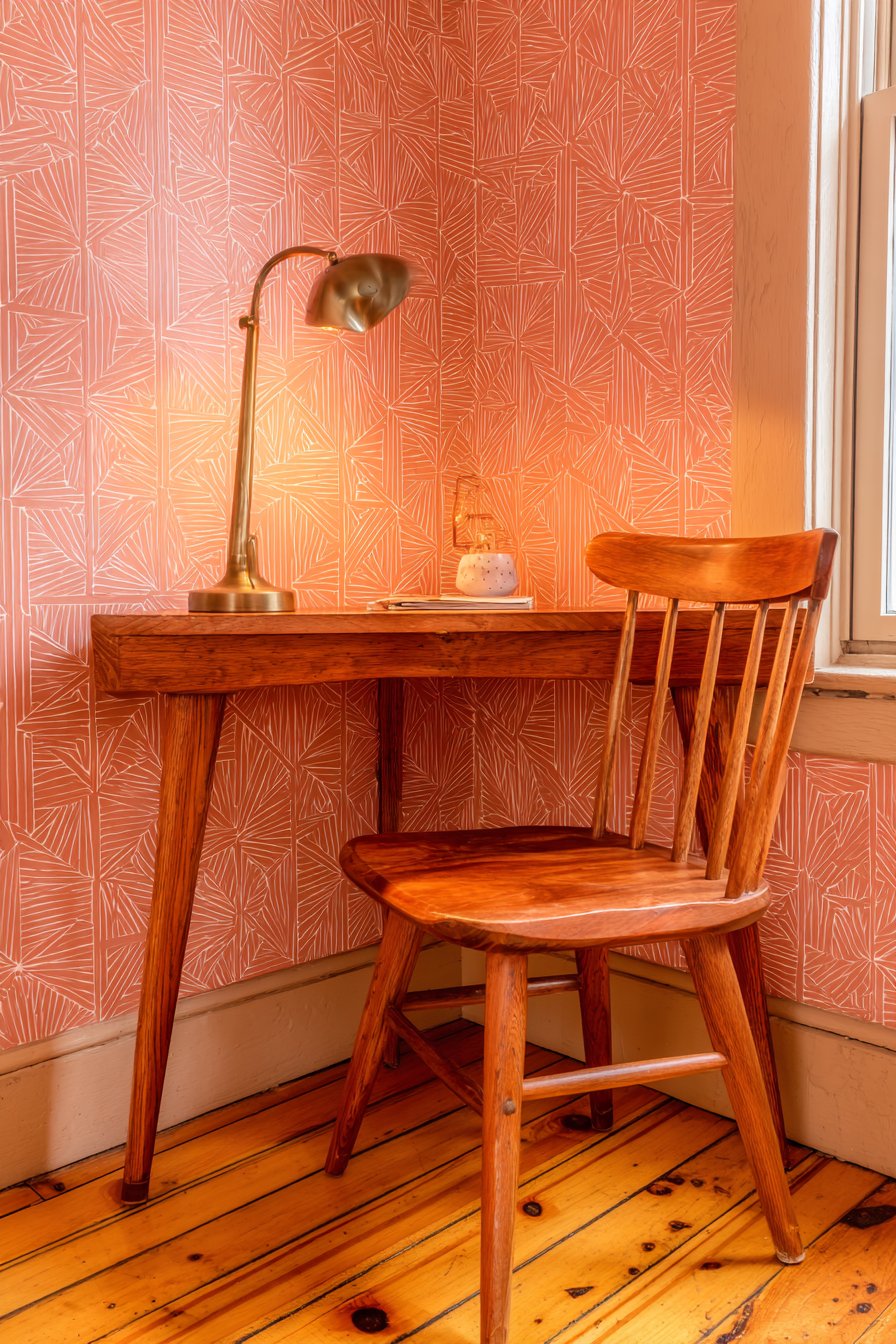
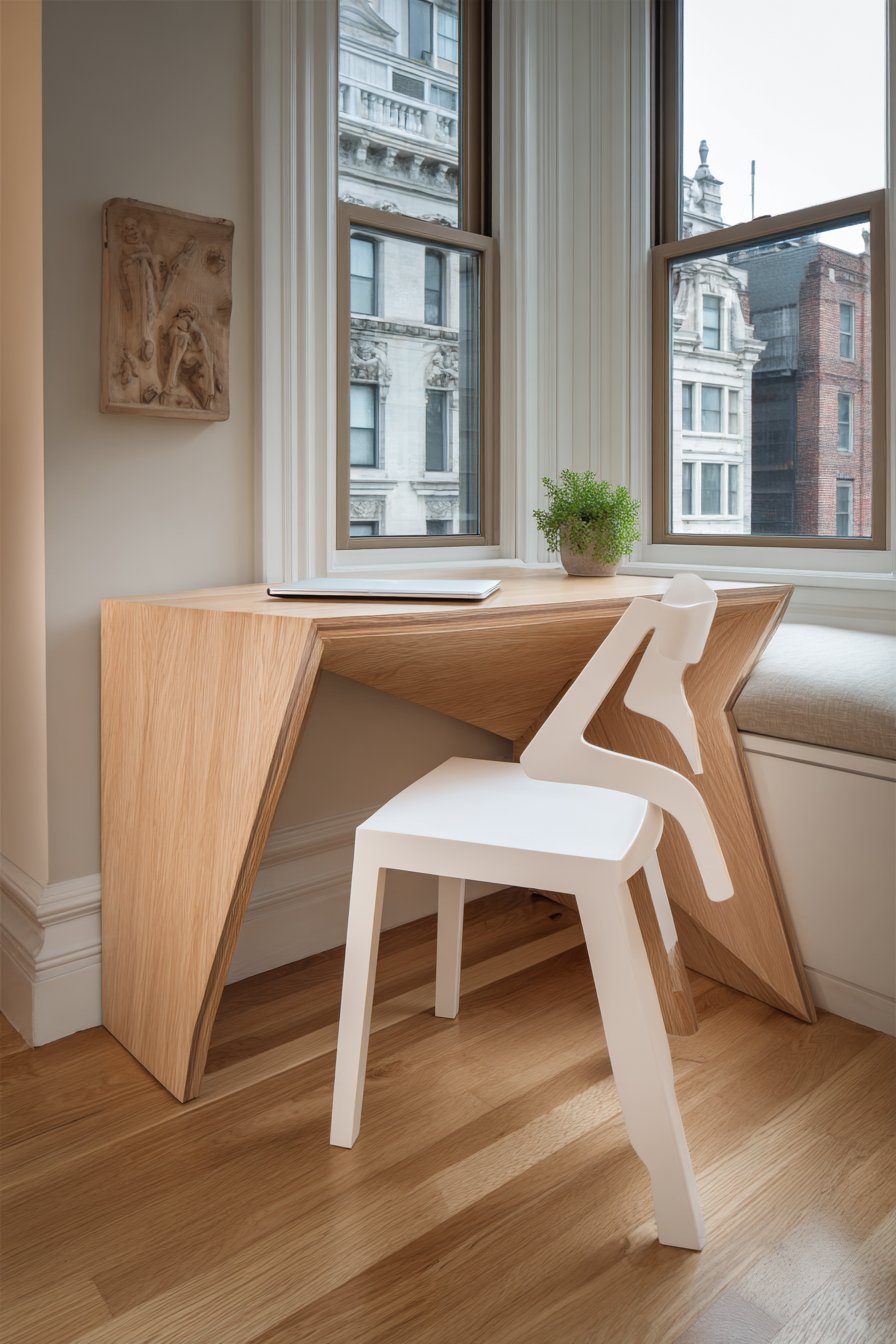
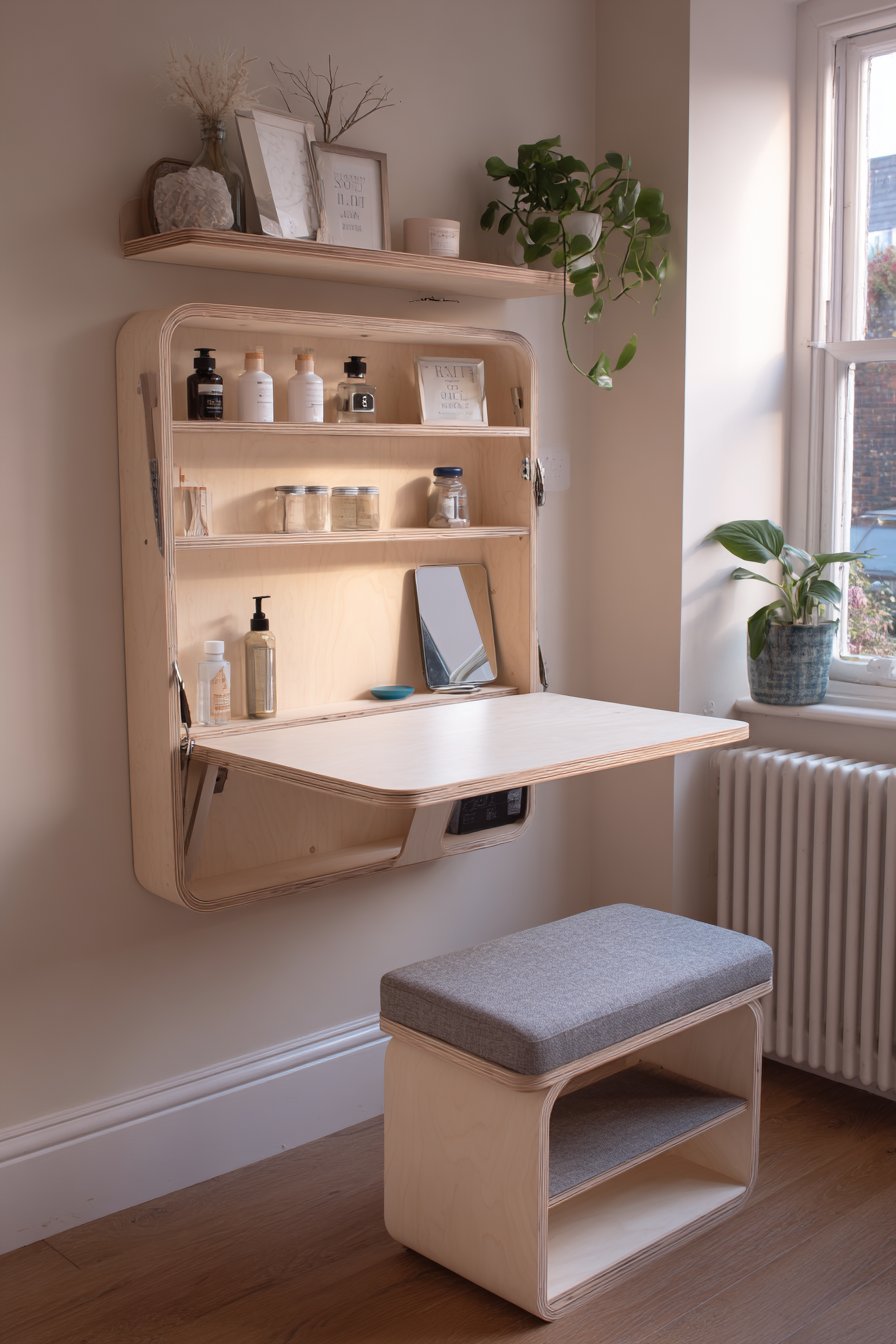
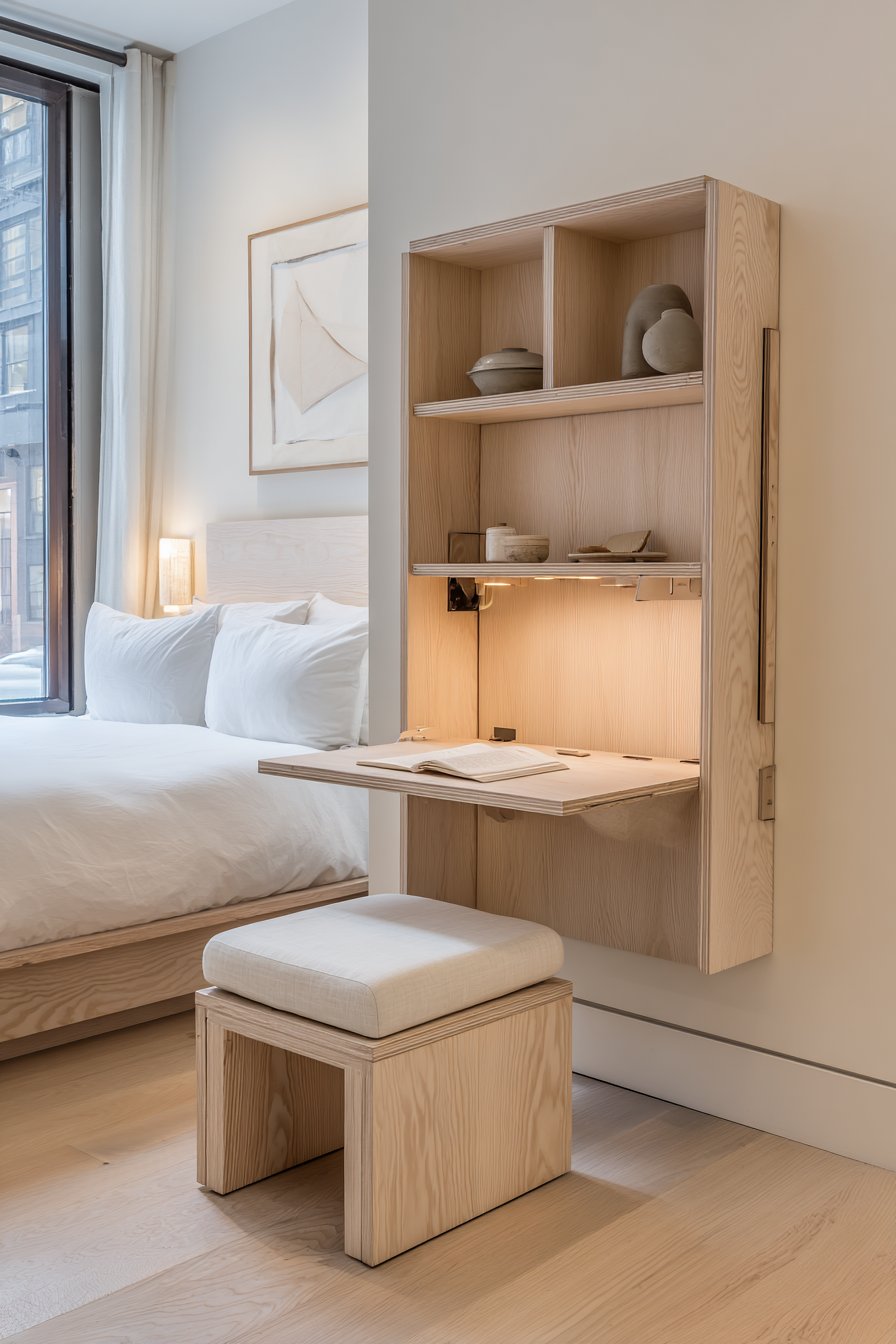
The fold-down wall-mounted desk represents the ultimate space-saving solution for compact bedrooms, studio apartments, or multi-functional spaces where flexibility is paramount. This clever design features a desk surface in natural ash veneer that folds down from the wall when needed and folds up flush when not in use, instantly transforming the corner from workspace to open floor space. Integrated storage compartments within the wall-mounted unit keep essential supplies accessible even when the desk is folded up, while additional items can be stored in the revealed cavity when the desk is in the down position. A stackable stool tucks underneath the desk or stores elsewhere when not needed, eliminating the visual bulk of a permanent chair. Minimalist floating shelves above the fold-down desk provide display space and storage that remains accessible regardless of the desk’s position.
The transformative nature of this design offers remarkable psychological benefits beyond mere space savings. The ability to literally put work away at the end of the day creates clear boundaries between professional and personal time—especially valuable in studio apartments where physical separation of life zones is impossible. When folded up, the desk disappears entirely, allowing the bedroom to fully reclaim its primary function as a rest and relaxation zone. The natural ash veneer ensures the folded-up desk reads as an attractive wood panel rather than obviously utilitarian furniture, maintaining aesthetic harmony in the space. The built-in storage compartments demonstrate thoughtful design that anticipates real-world needs rather than just creating a novel folding mechanism.
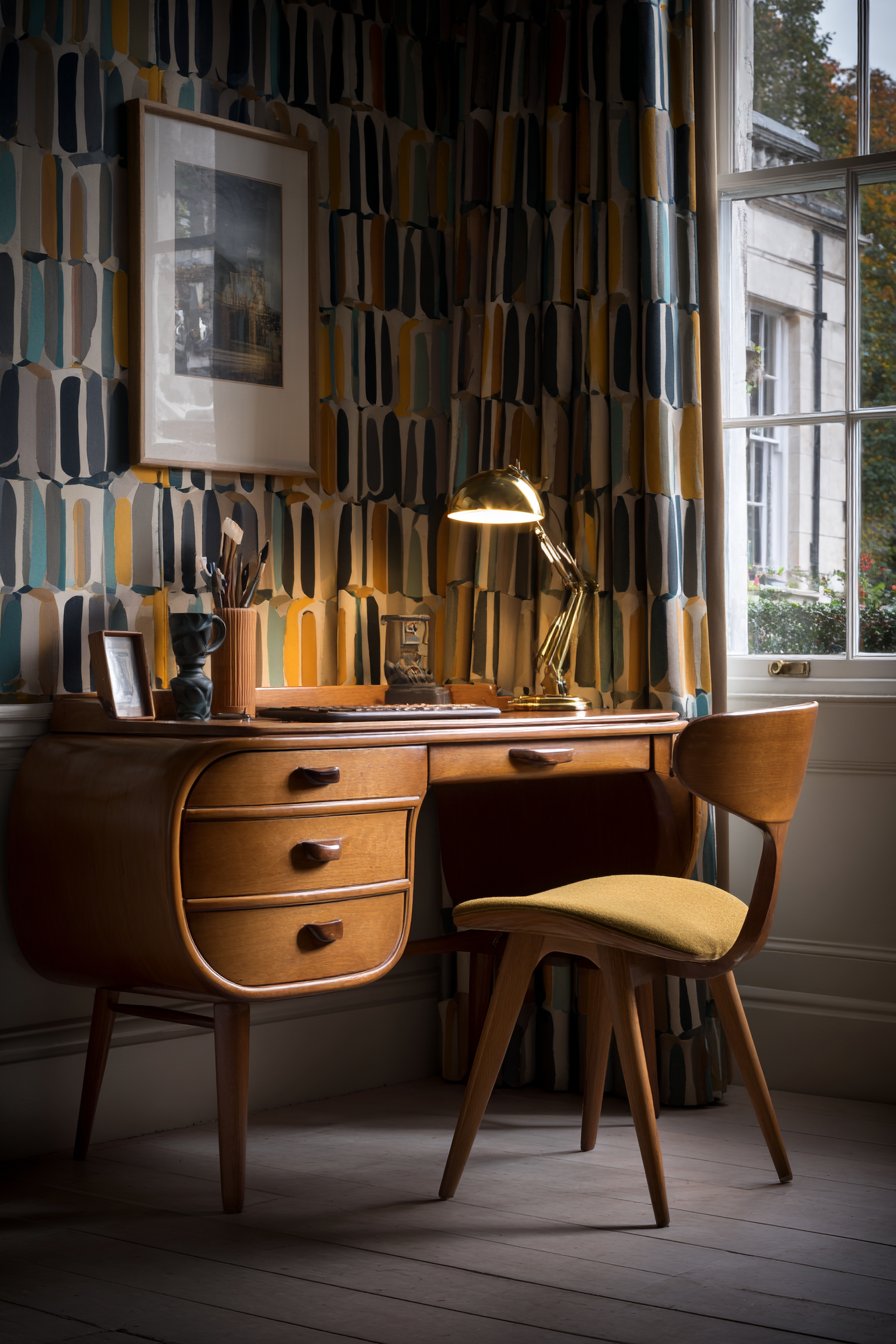
This solution particularly benefits urban dwellers in compact apartments, students in dormitories, or anyone seeking to maximize flexibility in limited square footage. The fold-down desk enables true multi-functionality—a studio apartment can serve as bedroom, living room, and office without furniture crowding or compromising any function. The installation does require proper wall mounting into studs or with appropriate anchors capable of supporting the weight of the desk surface and typical desktop items. The investment in quality installation and hardware pays off in years of reliable service. For those who value adaptability, efficiency, and thoughtful design that respects spatial constraints, the fold-down corner desk offers an ingenious solution that traditional furniture simply cannot match.
Key Design Tips:
- Ensure proper wall mounting with secure anchoring into studs or using heavy-duty wall anchors
- Choose quality folding mechanisms with smooth operation and secure locking in both positions
- Include integrated storage to eliminate need for separate organizers when desk is folded
- Select a surface material that’s attractive from both sides since it may be visible when folded
- Keep the desk depth moderate (12-16 inches) to maintain comfortable workspace without excessive wall projection
- Test the folding mechanism repeatedly before final installation to ensure smooth operation
- Consider adding a small chalkboard or whiteboard to the underside for notes and reminders
- Pair with lightweight, easily moved seating that doesn’t need permanent placement
11. Mid-Century Modern Retro Corner
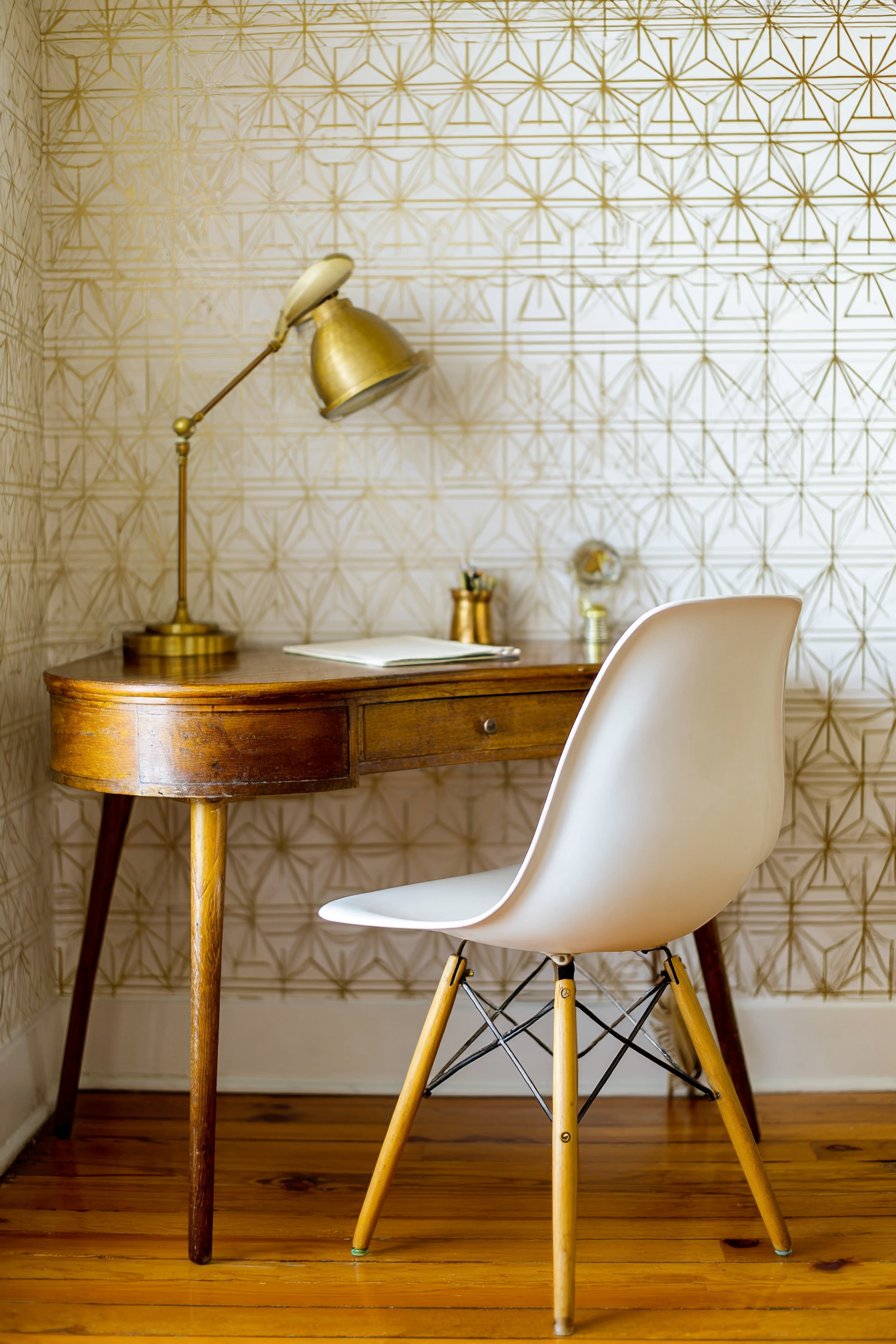
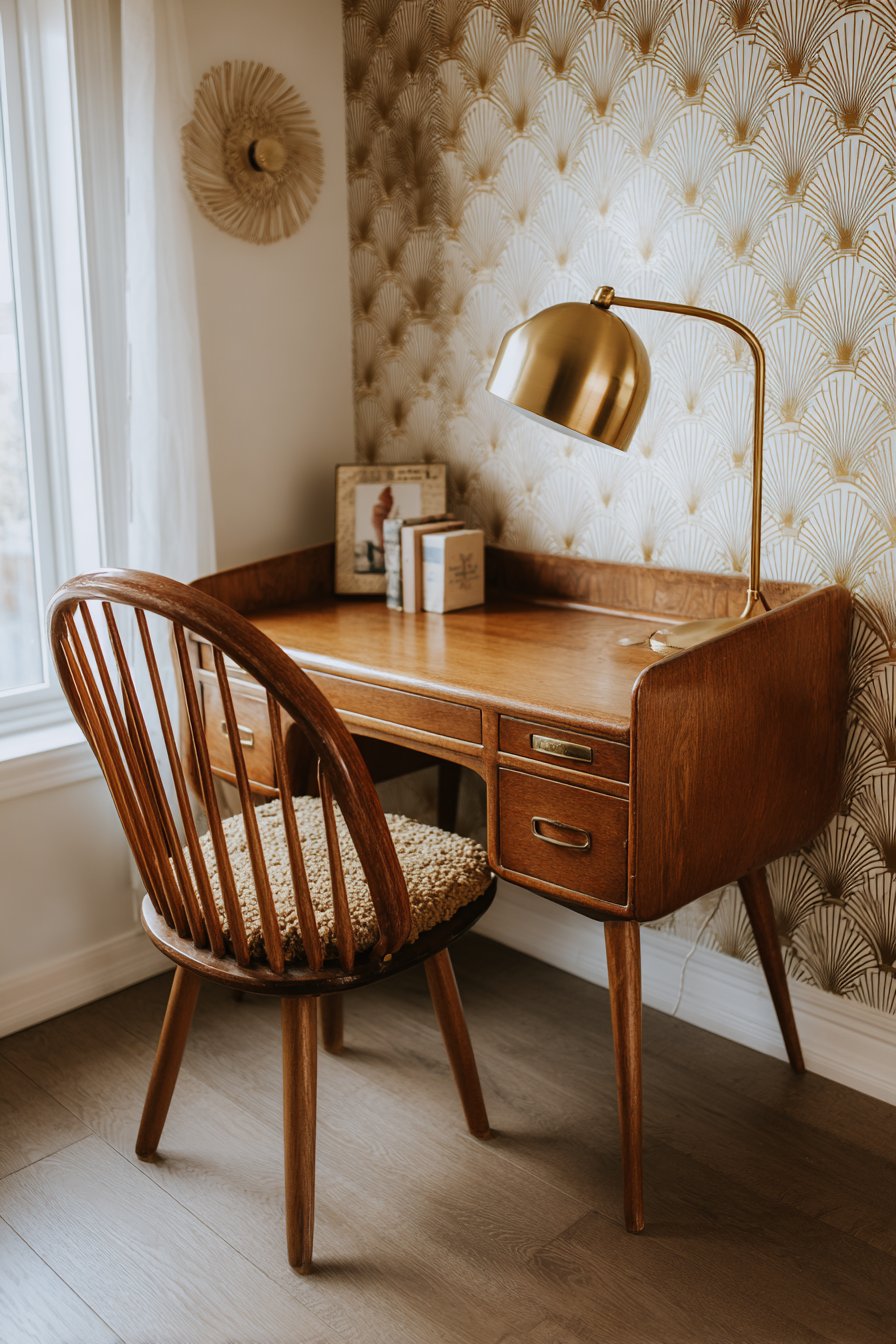
The mid-century modern corner desk celebrates the enduring appeal of 1950s and 60s design, bringing retro sophistication and timeless style into the contemporary bedroom. This setup features a teak corner desk with angled legs tapering to elegant points—a hallmark of mid-century furniture design. The kidney-shaped writing surface, characteristic of the period’s organic modernism, creates visual interest while providing a comfortable work area. A vintage Eames-style molded chair in fiberglass or wood adds authentic period character and remarkable comfort despite its minimal padding. A brass desk lamp with an articulating arm provides adjustable task lighting while epitomizing the era’s embrace of functional, well-designed objects. Period-appropriate accessories including a ceramic ashtray repurposed as a pen holder, vintage books, and perhaps a small transistor radio complete the authentic ambiance.
The geometric wallpaper accent behind the desk adds visual drama and period authenticity. Bold patterns featuring atomic starbursts, abstract shapes, or stylized botanical motifs were signature elements of mid-century interior design, adding personality without overwhelming the space. The wallpaper’s colors should coordinate with the desk’s warm teak tones—perhaps incorporating mustard yellow, burnt orange, avocado green, or teal blue that were popular during the era. Natural light balanced with warm artificial lighting creates the inviting atmosphere characteristic of mid-century homes, where thoughtful illumination was considered essential to comfortable living. The overall effect transports the corner to another era while maintaining complete functionality for contemporary work needs.
This design appeals to those who appreciate the optimism, craftsmanship, and aesthetic innovations of the mid-century period. Unlike reproduction furniture that often cuts corners on materials and construction, authentic or high-quality mid-century inspired pieces feature solid wood construction, quality veneers, and joinery techniques that ensure longevity. The clean lines and organic shapes characteristic of the era have proven their timeless appeal—mid-century modern remains perpetually stylish rather than feeling dated. For collectors, design enthusiasts, or anyone drawn to the sleek sophistication of post-war modernism, the mid-century corner desk creates a workspace that honors design history while serving contemporary needs beautifully.
Key Design Tips:
- Seek authentic vintage pieces or quality reproductions from reputable manufacturers
- Choose warm woods like teak, walnut, or rosewood for authentic mid-century palette
- Incorporate iconic furniture designs from known designers when budget permits
- Add geometric patterns through wallpaper, artwork, or textiles characteristic of the era
- Select brass or brushed gold metal finishes for lighting and hardware
- Include organic curved forms alongside angular pieces for characteristic mid-century balance
- Display period-appropriate accessories including vintage ceramics, books, or small sculptures
- Maintain clean lines and avoid clutter to preserve the era’s emphasis on streamlined living
12. Dedicated Gaming Corner Station
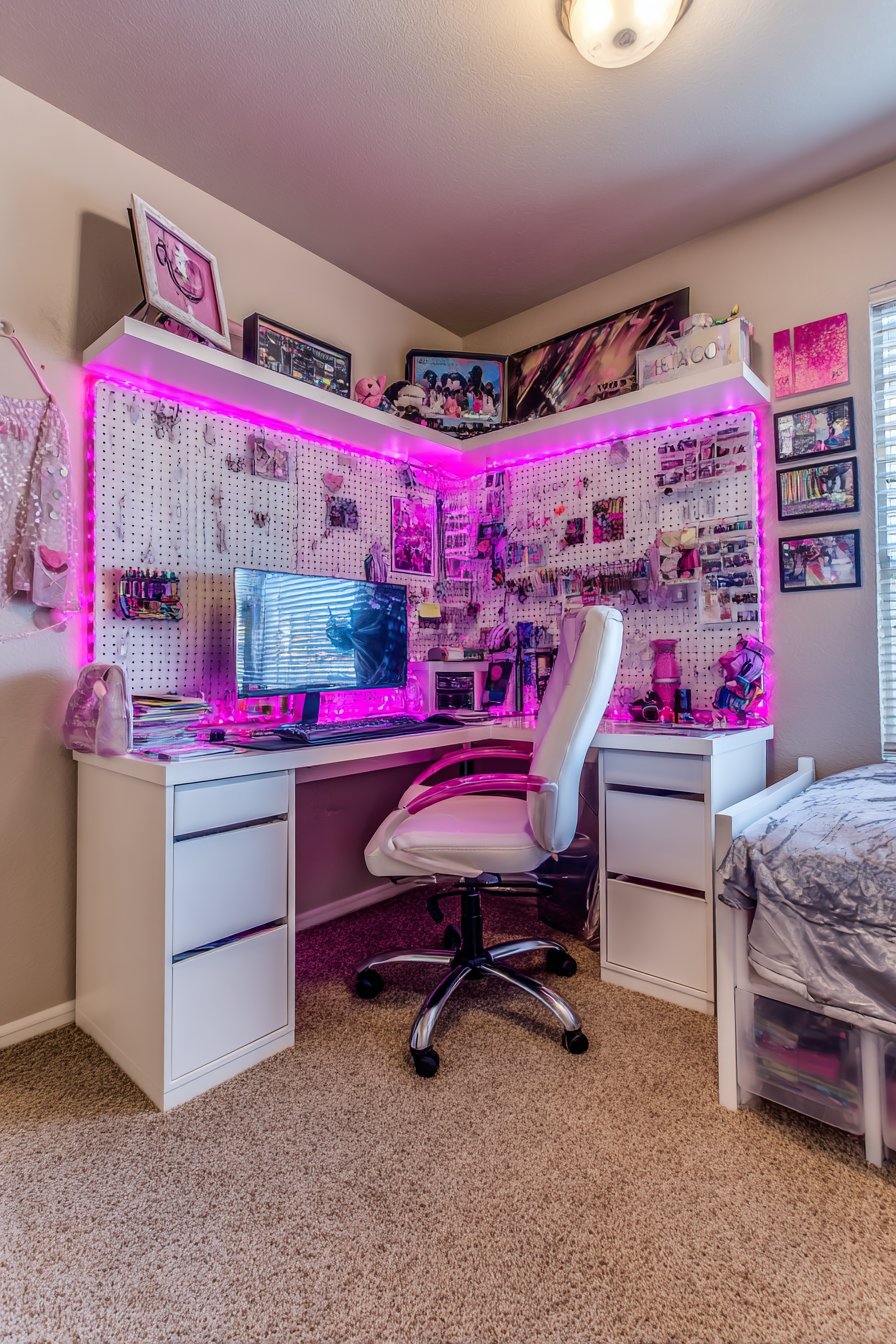
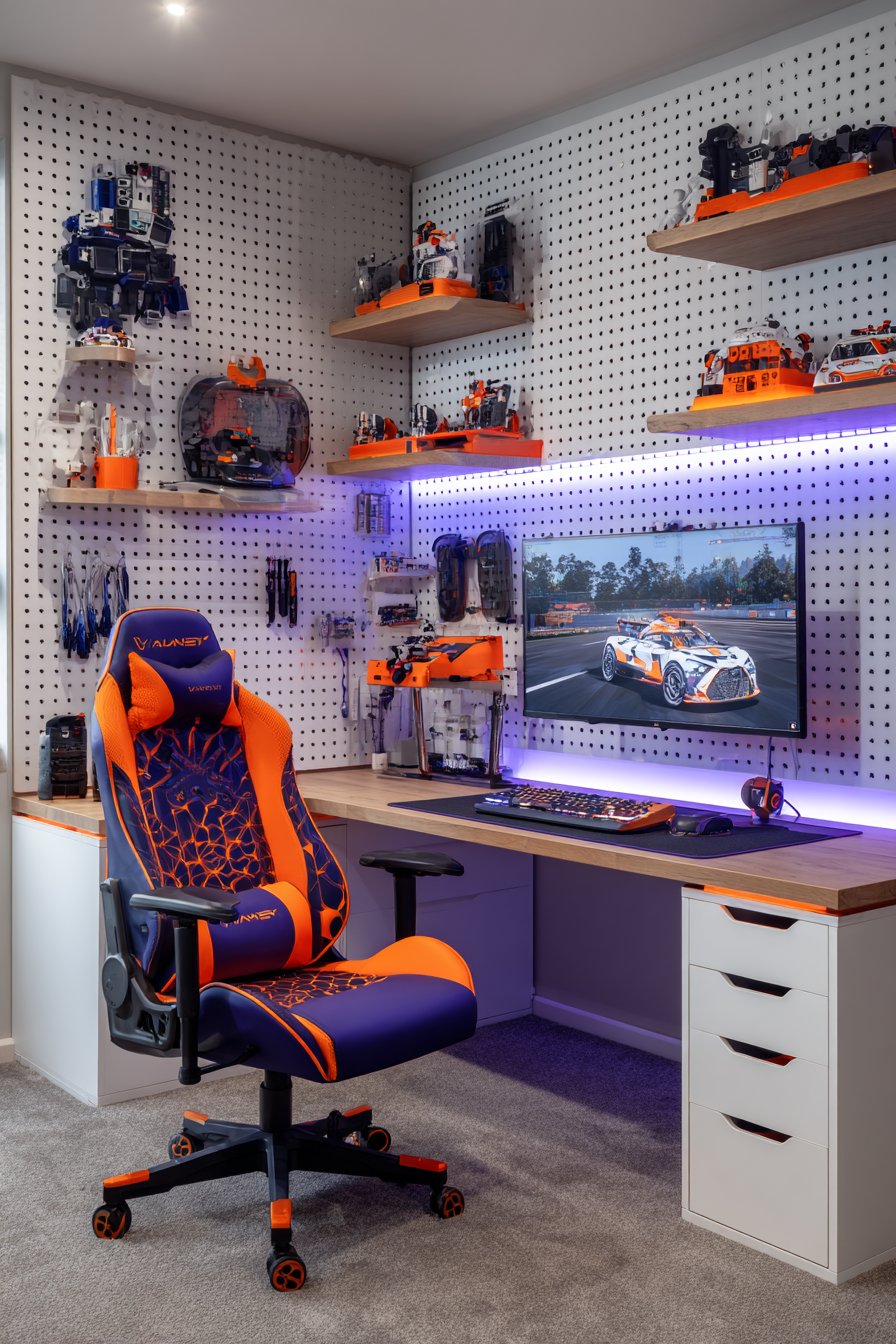
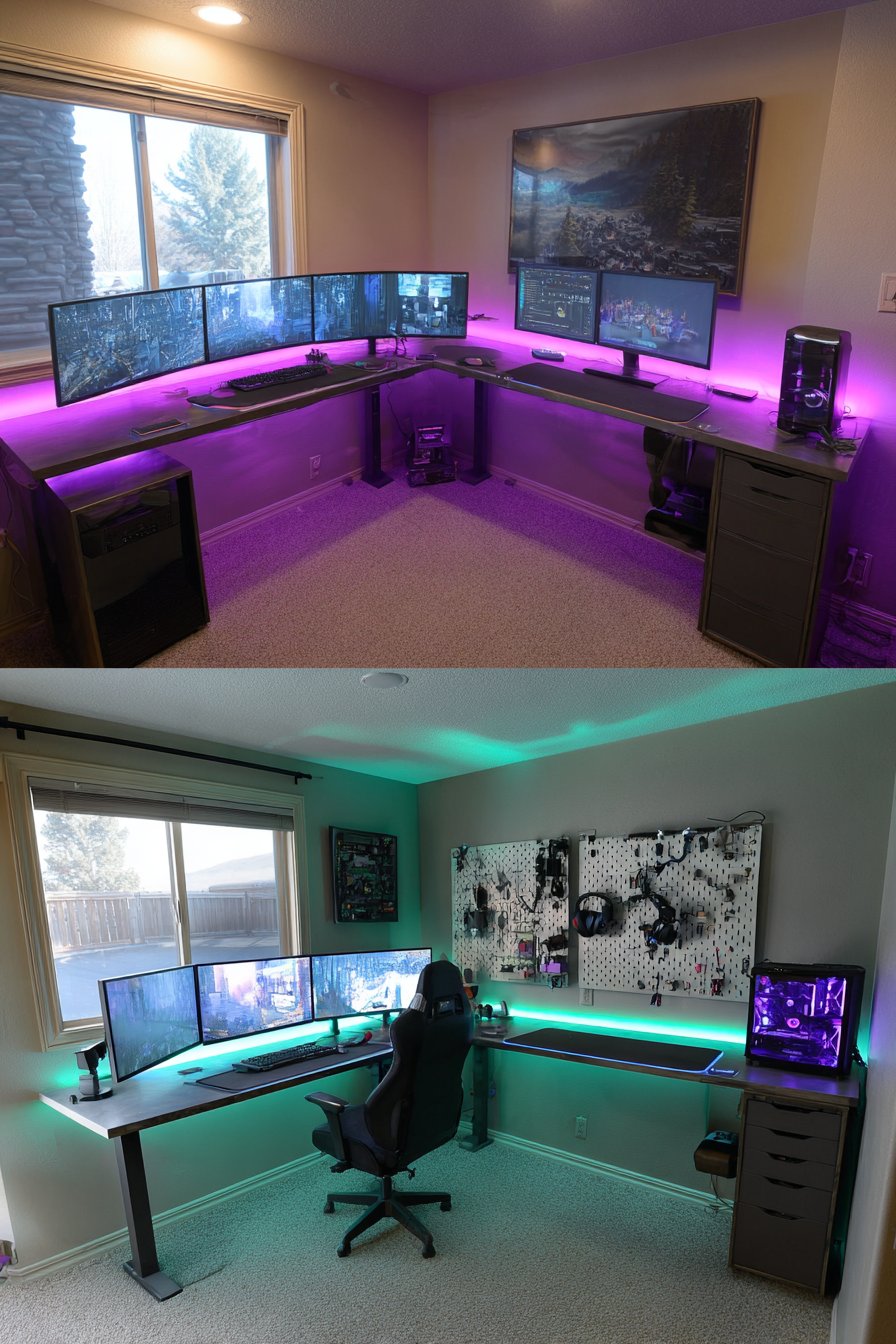
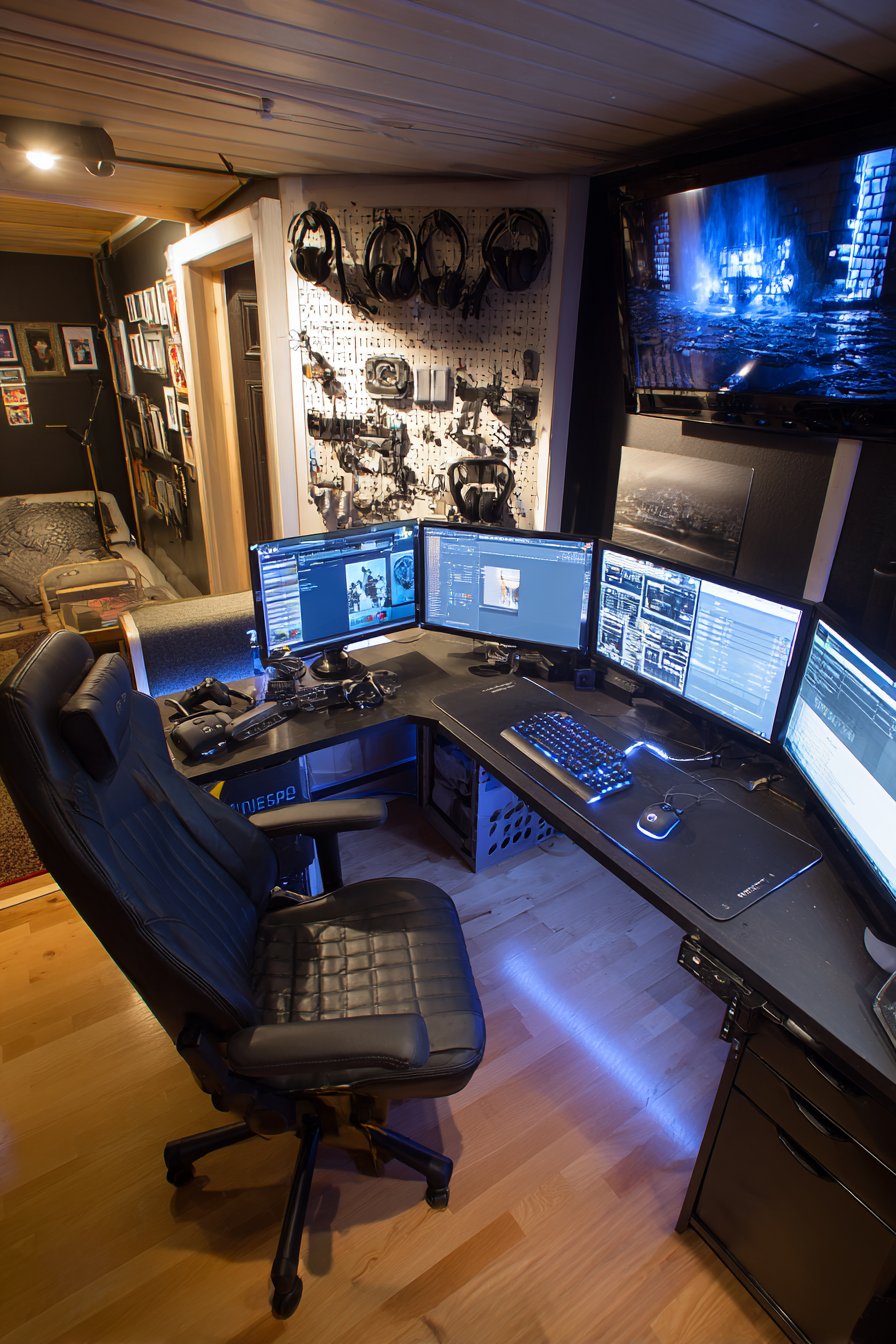
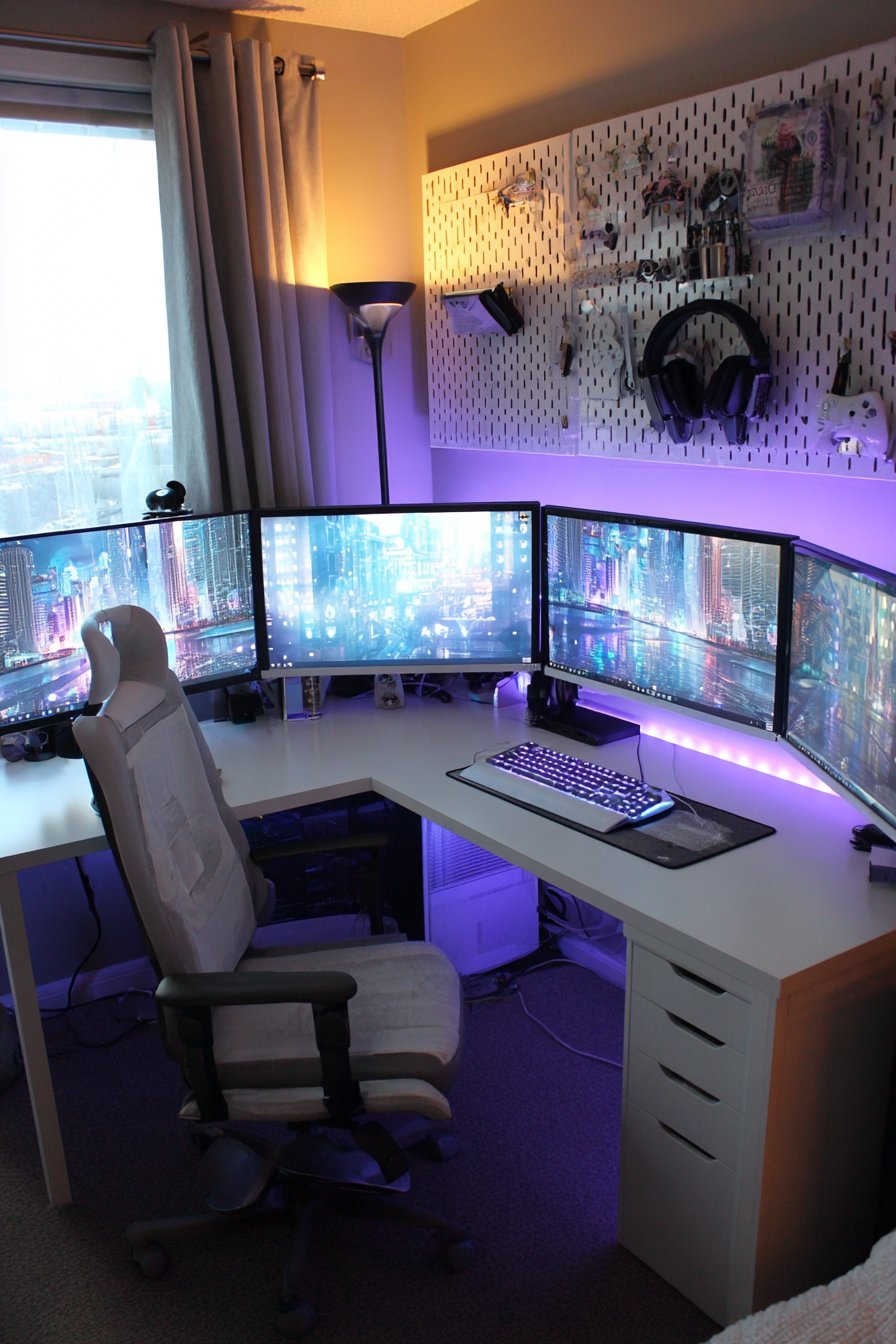
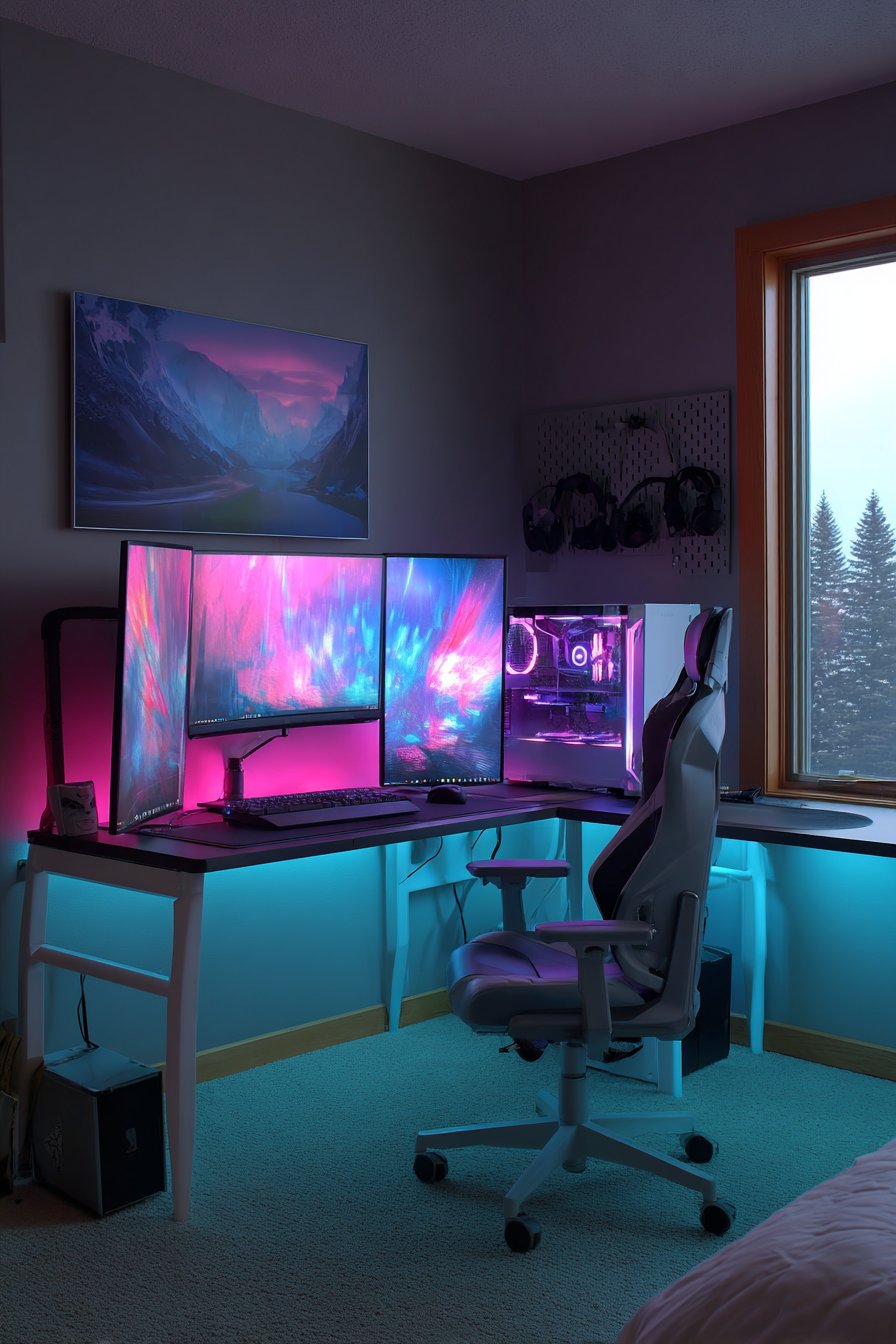
The gaming corner desk transforms the bedroom workspace into an immersive entertainment hub optimized for extended gaming sessions. This L-shaped corner gaming station features LED underglow lighting that creates atmospheric ambiance while reducing eye strain during night gaming. Cable management grommets built into the desk surface keep numerous gaming peripherals’ cords organized and accessible without creating tangled messes. The multiple monitor setup mounted on adjustable arms allows gamers to optimize viewing angles for different game types—perhaps a primary large curved monitor for immersive gaming flanked by smaller displays for streaming, chat, or game guides. A dedicated gaming chair with lumbar support and adjustable features ensures comfort during marathon sessions. A pegboard system holding headphones, controllers, charging cables, and other gaming accessories keeps essential equipment organized and within easy reach.
RGB lighting strips installed along desk edges or behind monitors add customizable color that many gamers love, creating an atmosphere that can shift from energizing during gameplay to calming during breaks. The lighting isn’t merely decorative—properly positioned LEDs reduce eye strain by providing ambient illumination that prevents stark contrast between bright screens and dark surroundings. The corner configuration creates an immersive gaming cockpit feel while maintaining connection to the broader bedroom. Despite the gaming focus, the setup remains appropriate for a bedroom environment rather than transforming the entire space into a gaming cave. Soft furnishings visible in the frame remind us this space serves multiple purposes and maintains comfortable livability.
This design recognizes that gaming has evolved from childhood pastime to legitimate hobby and even profession for many people. The investment in quality equipment, proper ergonomics, and organized storage reflects respect for gaming as an activity deserving thoughtful setup. The corner location provides the semi-enclosed feeling gamers often prefer while keeping gaming equipment from dominating the entire bedroom. For esports enthusiasts, streamers, or anyone who spends significant time gaming, this corner desk provides the functionality, comfort, and atmosphere to support their passion. The cable management and organizational systems prevent the common problem of gaming setups becoming chaotic tangles of cords and equipment scattered across surfaces.
Key Design Tips:
- Invest in a desk with dimensions adequate for multiple monitors and peripheral equipment
- Install comprehensive cable management systems before setting up equipment
- Choose ergonomic gaming chairs with adjustable lumbar support and armrests
- Position monitors at arm’s length distance with tops at or slightly below eye level
- Add ambient LED lighting behind monitors to reduce eye strain during extended sessions
- Create pegboard or wall-mounted storage for controllers, headsets, and accessories
- Ensure adequate ventilation around gaming PC or console to prevent overheating
- Include a small side table or shelf for drinks, snacks, or personal items within easy reach
13. Feminine Elegant Corner Vanity Desk
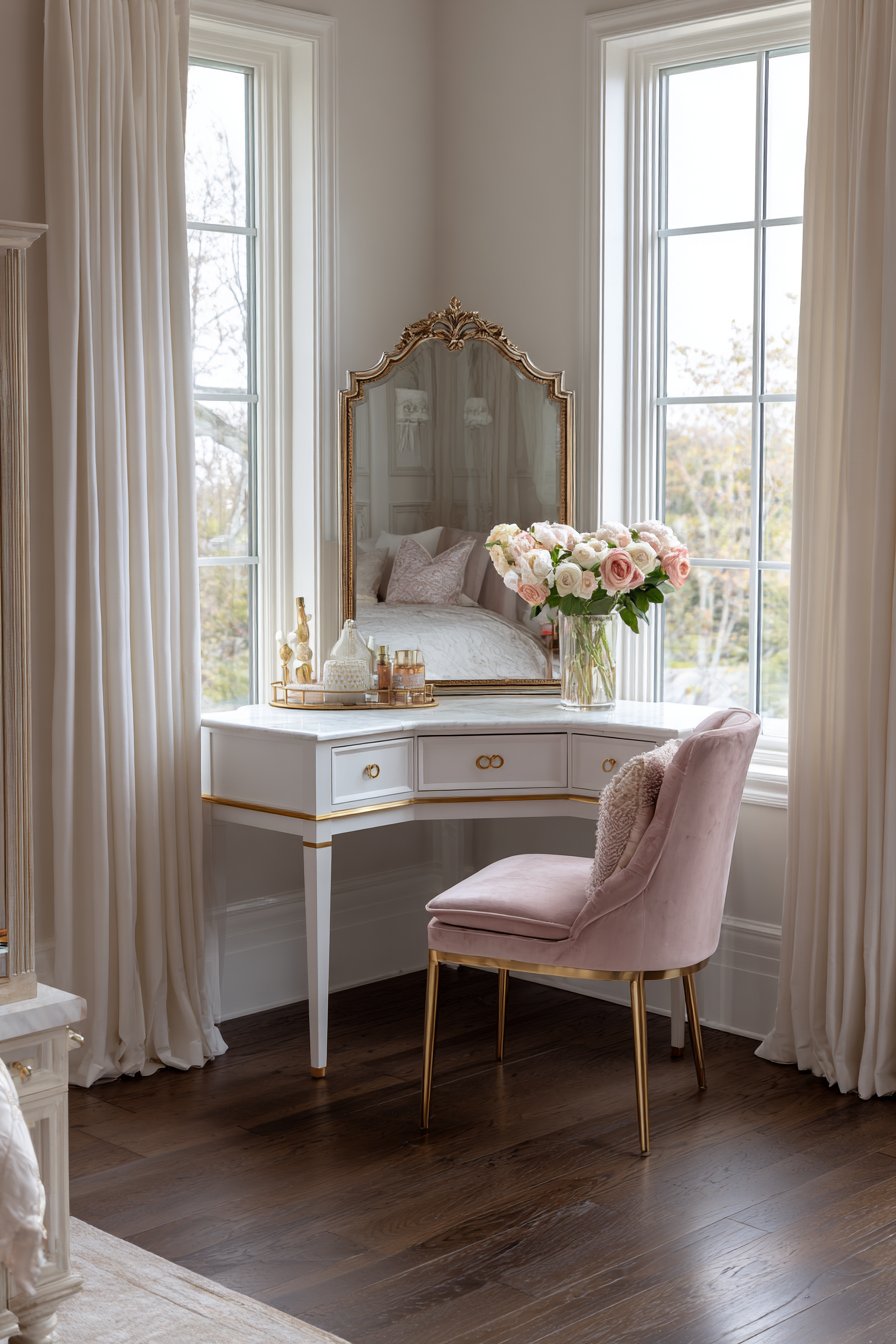
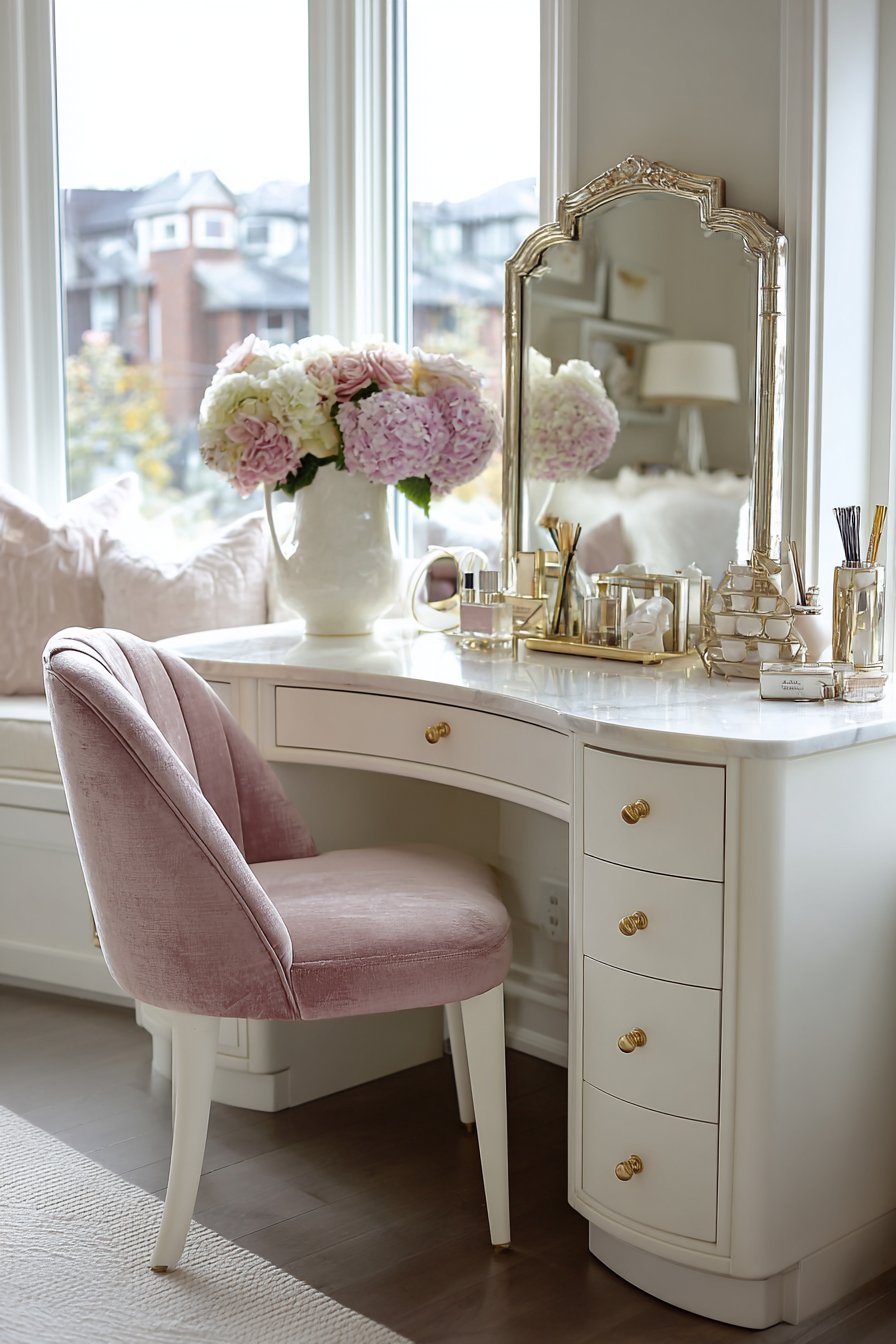
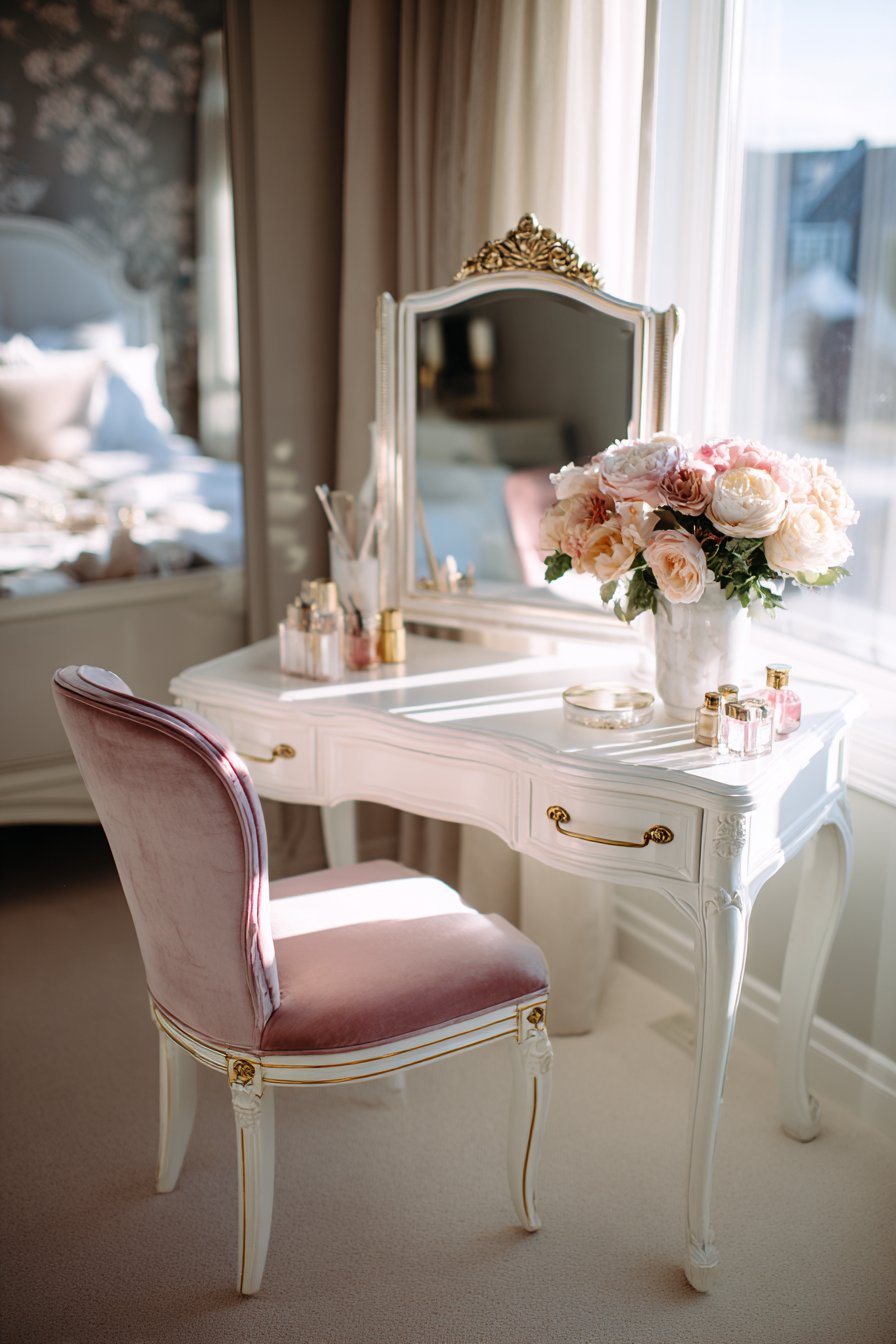
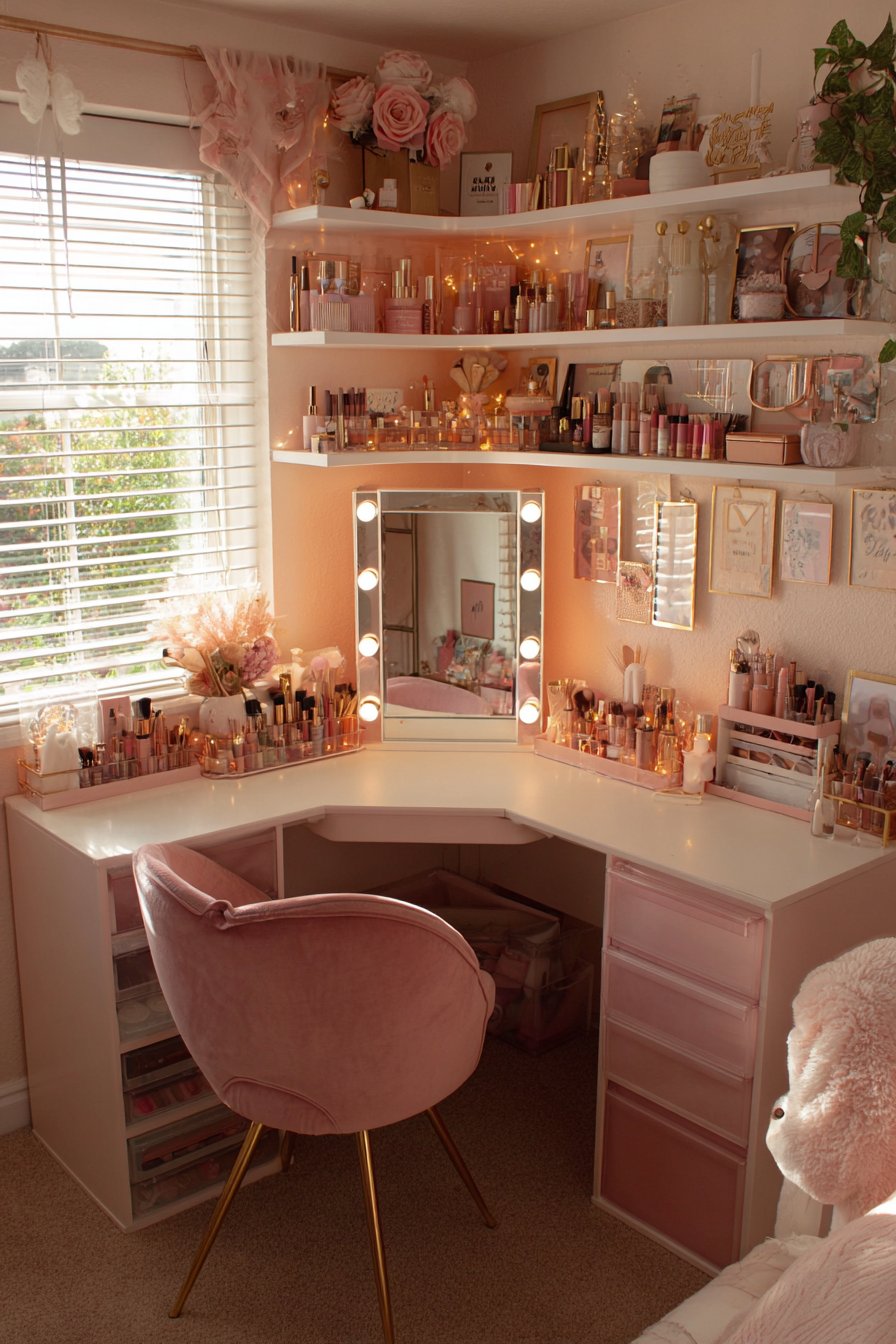
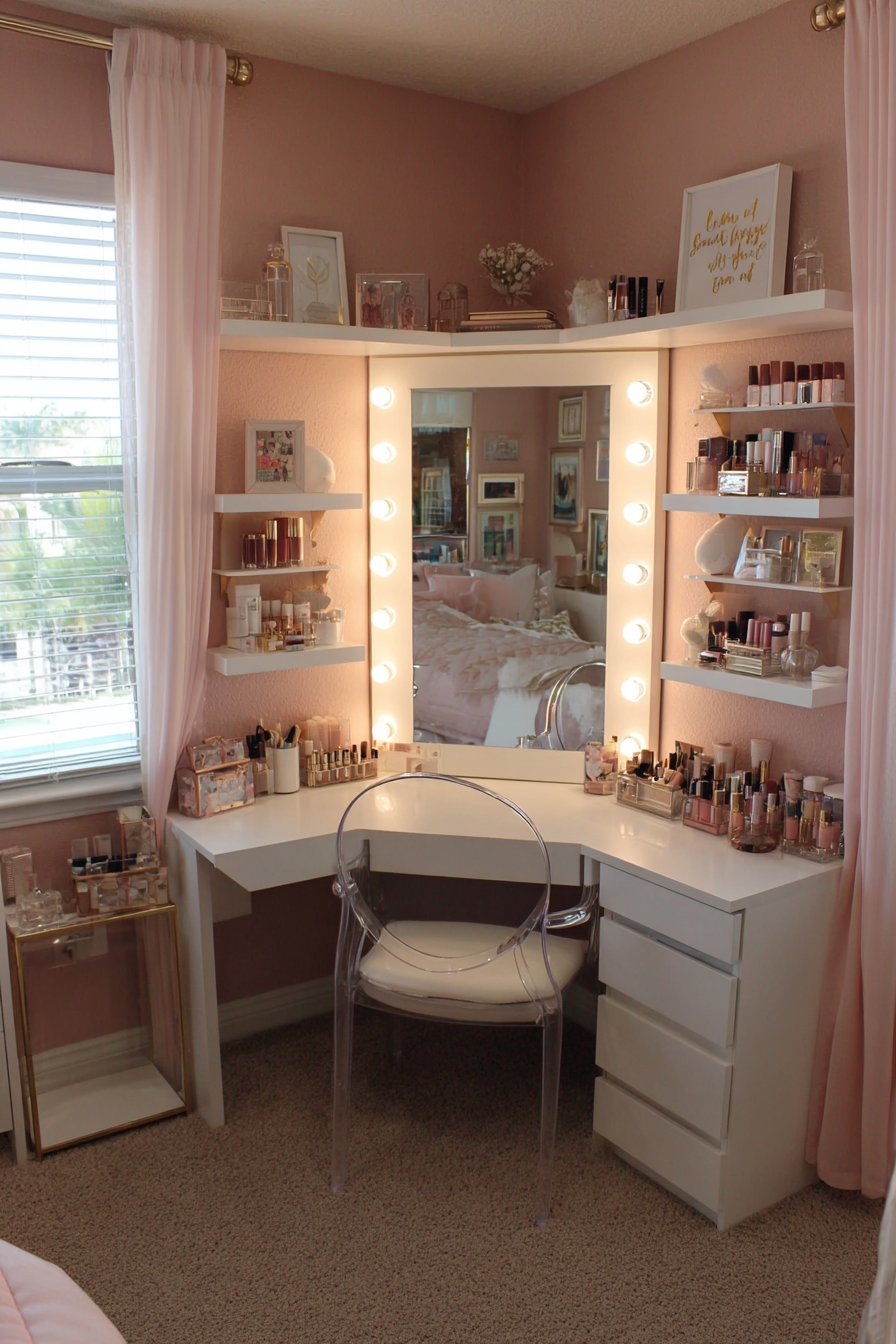
The feminine corner desk design creates a sophisticated workspace with elegant details and refined aesthetics that celebrate classic femininity. This white corner desk features gold hardware accents and curved edges that soften the utilitarian nature of workspace furniture. The combination of pristine white surfaces with warm gold metal creates a luxurious feel without excessive ornamentation. A blush pink velvet desk chair adds sumptuous texture and on-trend color that feels both contemporary and timeless. Marble desk accessories—perhaps a pen holder, small tray, and desk organizer—introduce natural stone’s organic patterns and cool sophistication. Fresh flowers in a ceramic vase bring living beauty and subtle fragrance that makes working at the desk a genuinely pleasant sensory experience.
An elegant mirror with ornate frame mounted above the desk serves dual purposes: reflecting natural window light to brighten the corner and creating the vanity element that many women appreciate having in their personal space. The mirror allows the desk to serve double duty for both work tasks and personal grooming, maximizing the corner’s utility. Soft pastel bedroom elements visible in the background—perhaps blush bedding, cream curtains, or soft gray walls—create cohesive visual flow between the workspace and sleeping area. The overall aesthetic balances professional functionality with personal style, creating a corner that feels distinctly feminine without veering into overly frilly territory that would date quickly or feel juvenile.
This design particularly appeals to women who want their workspace to reflect their aesthetic preferences and personal style rather than defaulting to masculine-coded neutrals or utilitarian designs. The white and gold palette creates brightness and optimism, while the velvet and marble materials introduce tactile luxury. The inclusion of fresh flowers acknowledges that many women appreciate bringing natural beauty into their daily environment. The elegant mirror and thoughtful details elevate the corner desk from purely functional necessity to a personal sanctuary where work and self-care activities can both take place comfortably. For women working from home or students seeking a dedicated study area, this feminine corner desk creates a space that genuinely feels like their own.
Key Design Tips:
- Choose white furniture with quality finishes that won’t yellow or show wear quickly
- Incorporate gold or brass hardware for warm metallic accents that read as luxurious
- Select one upholstered piece in a soft texture like velvet for tactile comfort
- Add natural stone accessories through marble, quartz, or alabaster pieces
- Include fresh flowers or quality faux botanicals to bring organic beauty to the space
- Hang a decorative mirror to reflect light and serve dual functional purposes
- Maintain a cohesive color palette using whites, soft neutrals, and one accent color
- Choose furniture with feminine curves rather than harsh angular lines for softer aesthetic
14. Rustic Cabin Corner Retreat
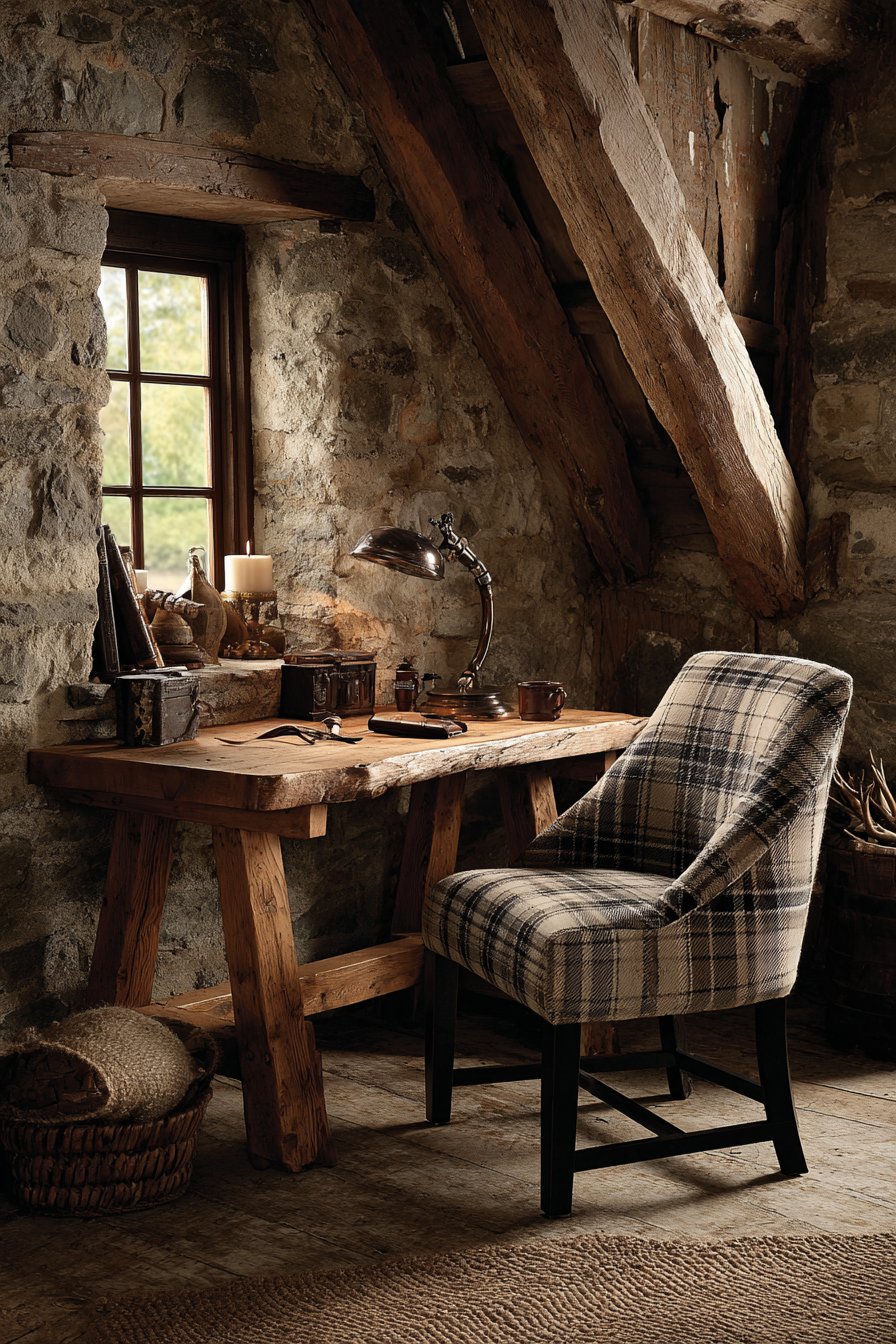
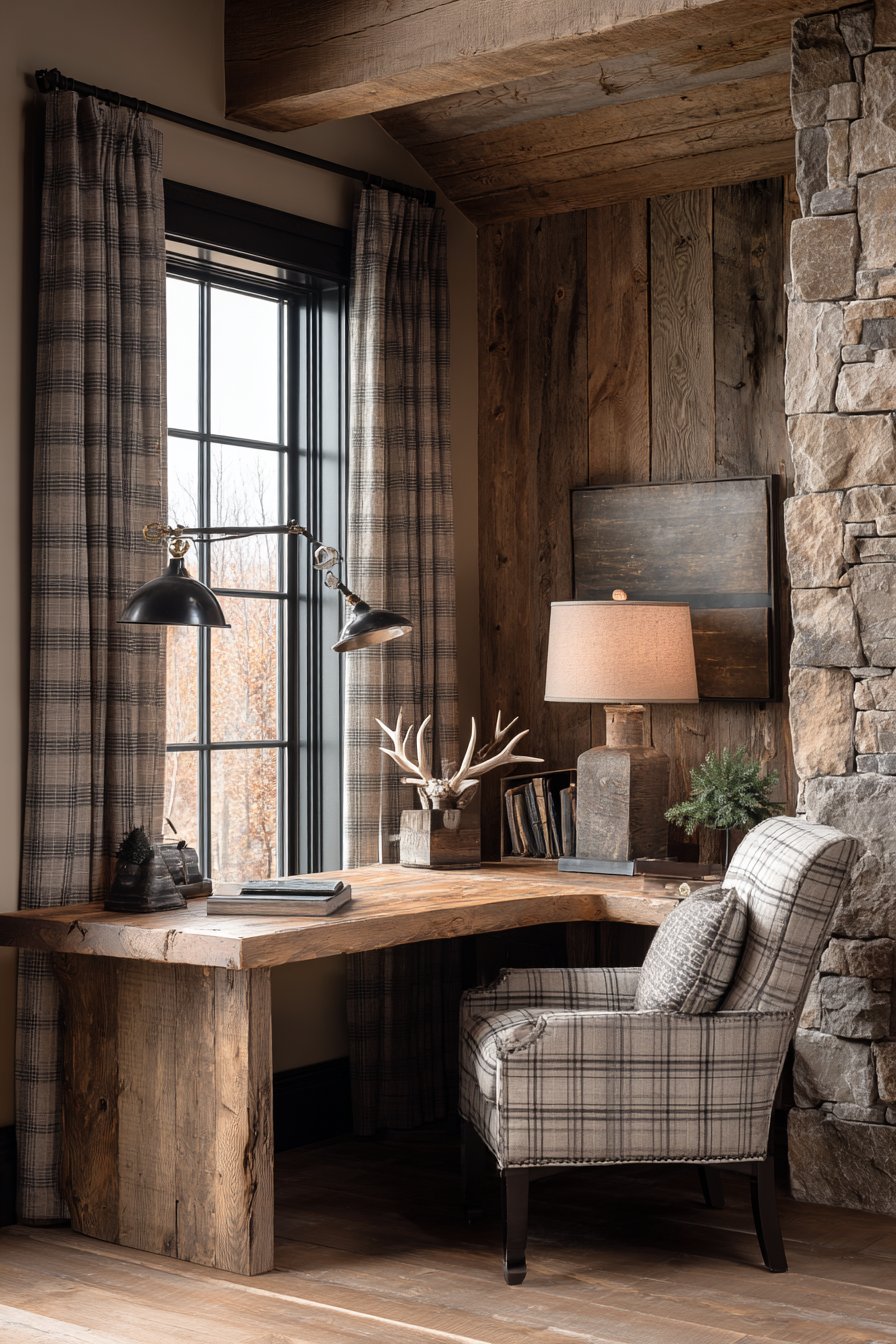
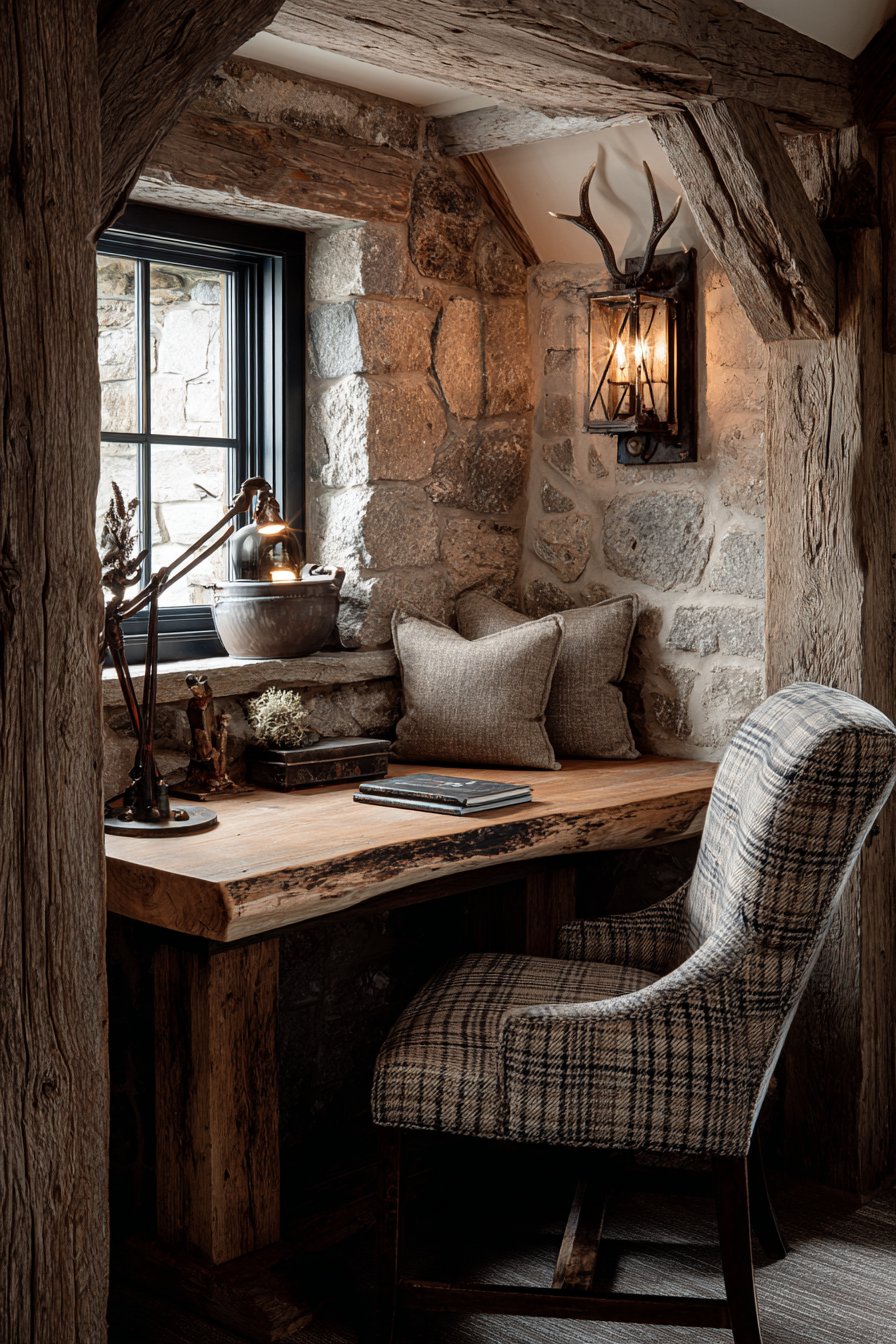
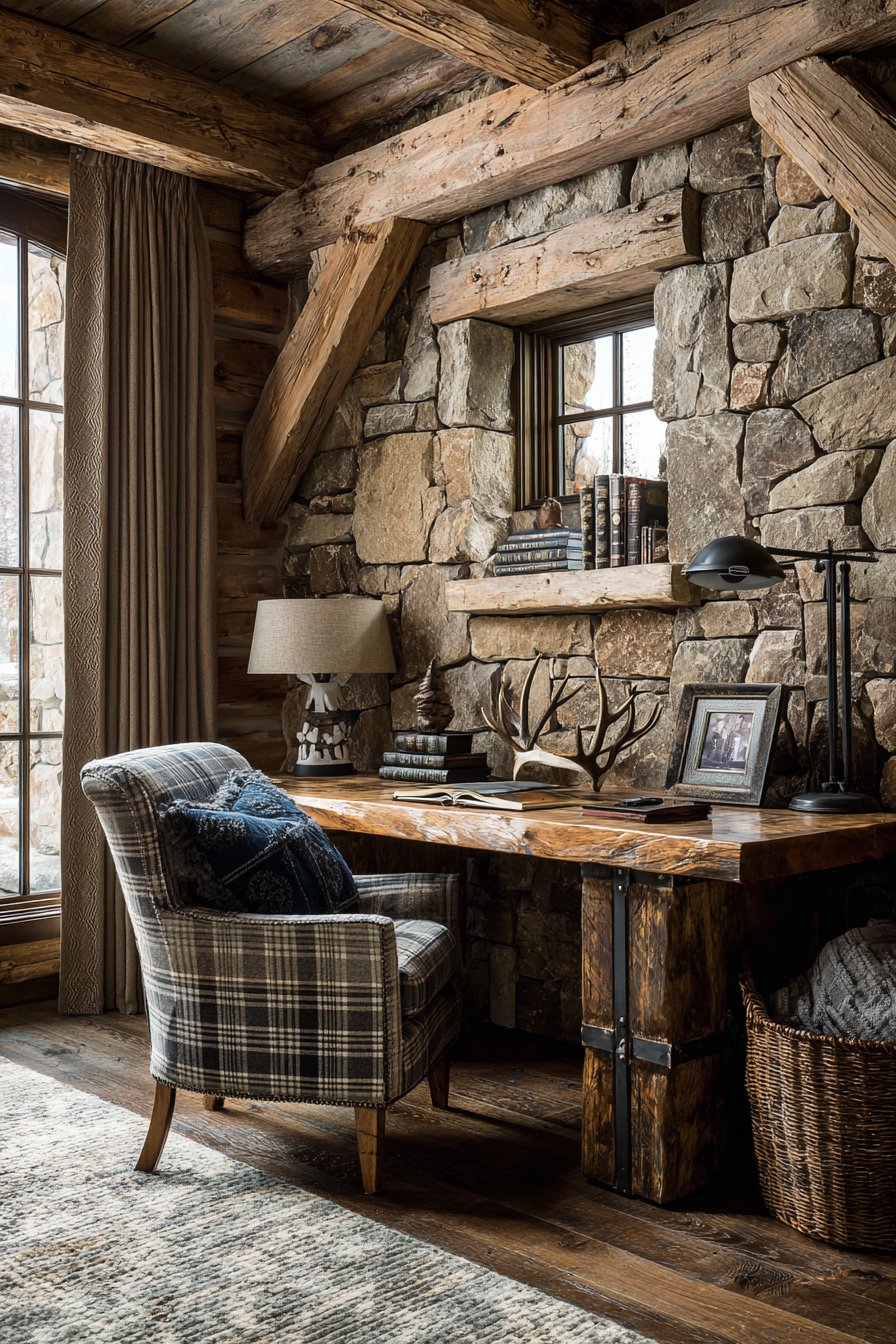
The rustic cabin corner desk brings the warmth and character of mountain lodge living into the bedroom workspace. This design features a solid pine corner desk with live-edge detail that preserves the natural contours of the tree trunk, celebrating organic forms and raw natural beauty. Wrought iron hardware including drawer pulls and decorative corner brackets adds handcrafted character while providing sturdy functionality. A comfortable upholstered chair in plaid fabric—perhaps a classic buffalo check or tartan pattern—adds softness and traditional cabin style. Antler-themed desk accessories and a vintage-style banker’s lamp with green glass shade complete the rustic aesthetic, referencing hunting lodge and frontier traditions without requiring actual animal products.
The exposed wood beam visible overhead and stone accent wall create authentic rustic ambiance that transports the corner to a mountain retreat. These architectural elements provide textural richness and historical character that drywall and modern construction simply cannot match. Natural lighting filtering through small paned windows—characteristic of older cabin architecture—creates dappled illumination that changes throughout the day, connecting the indoor workspace to outdoor environments. The overall effect feels grounded, warm, and connected to natural materials and traditional craftsmanship. This isn’t rustic as affectation but rather as genuine appreciation for vernacular architecture and handmade quality.
This design appeals to those who find inspiration in wilderness, tradition, and the slower pace of cabin living. The rustic aesthetic celebrates imperfection, natural variation, and materials that show honest wear rather than requiring pristine maintenance. The live-edge desk detail ensures each piece is unique, connecting the user to the specific tree from which it was made. For mountain dwellers, outdoor enthusiasts, or anyone seeking to bring the comfort of cabin living into their urban or suburban home, this rustic corner desk creates a workspace that feels grounding, authentic, and connected to natural heritage. The sturdy construction and timeless styling ensure decades of service rather than trendy disposability.
Key Design Tips:
- Seek live-edge wood slabs for desk surfaces to preserve natural beauty and ensure uniqueness
- Choose solid wood construction rather than veneers for authentic rustic character
- Incorporate wrought iron hardware and accents for traditional cabin metalwork
- Add natural stone elements through accent walls, coasters, or decorative pieces
- Select textiles in traditional patterns like plaid, buffalo check, or Fair Isle
- Include antler sheds or antler-inspired decor as nod to mountain lodge tradition
- Use warm-toned lighting that mimics firelight rather than harsh white illumination
- Display vintage or vintage-inspired accessories that reference frontier or outdoor themes
15. Contemporary Glass and Chrome Corner
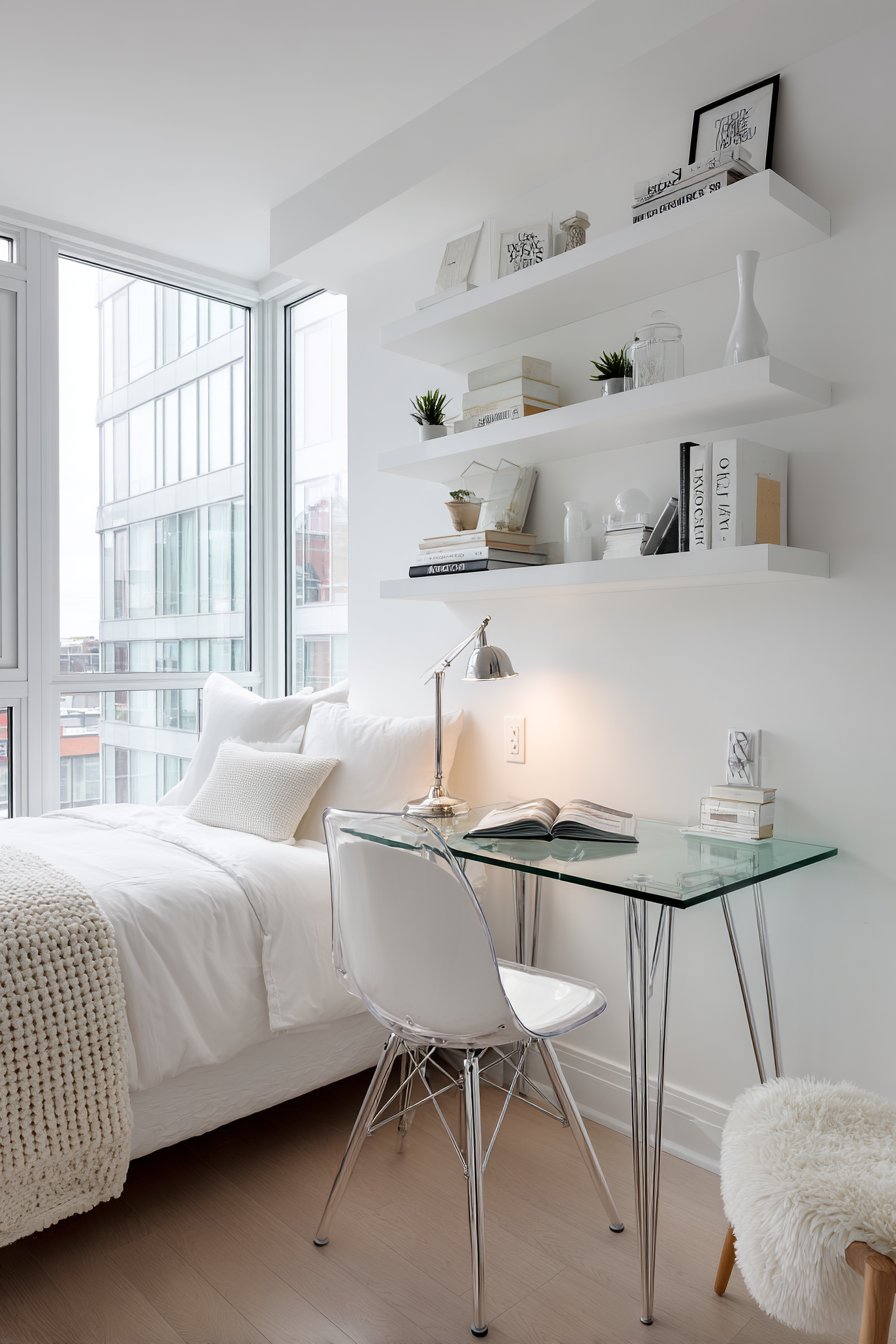
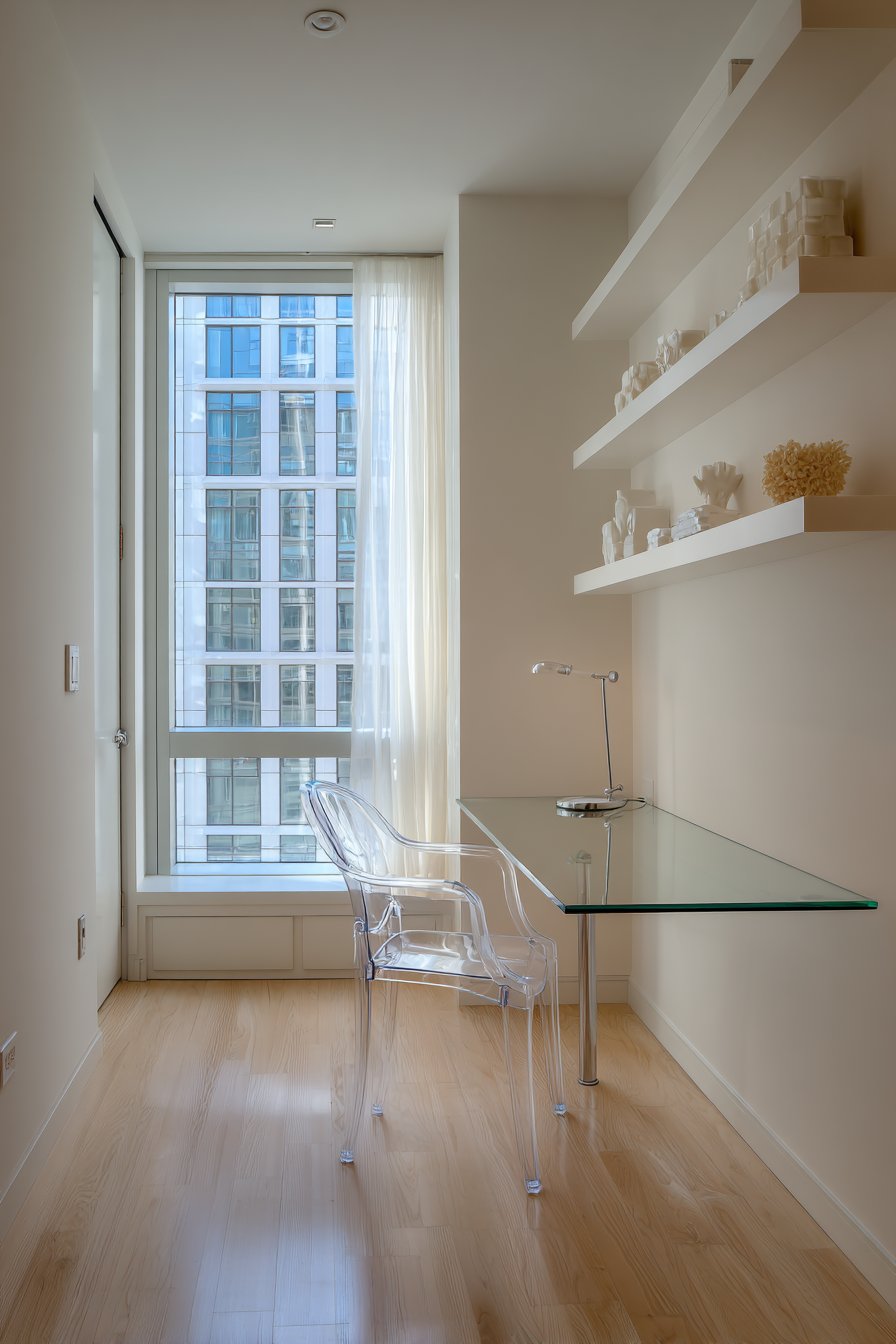
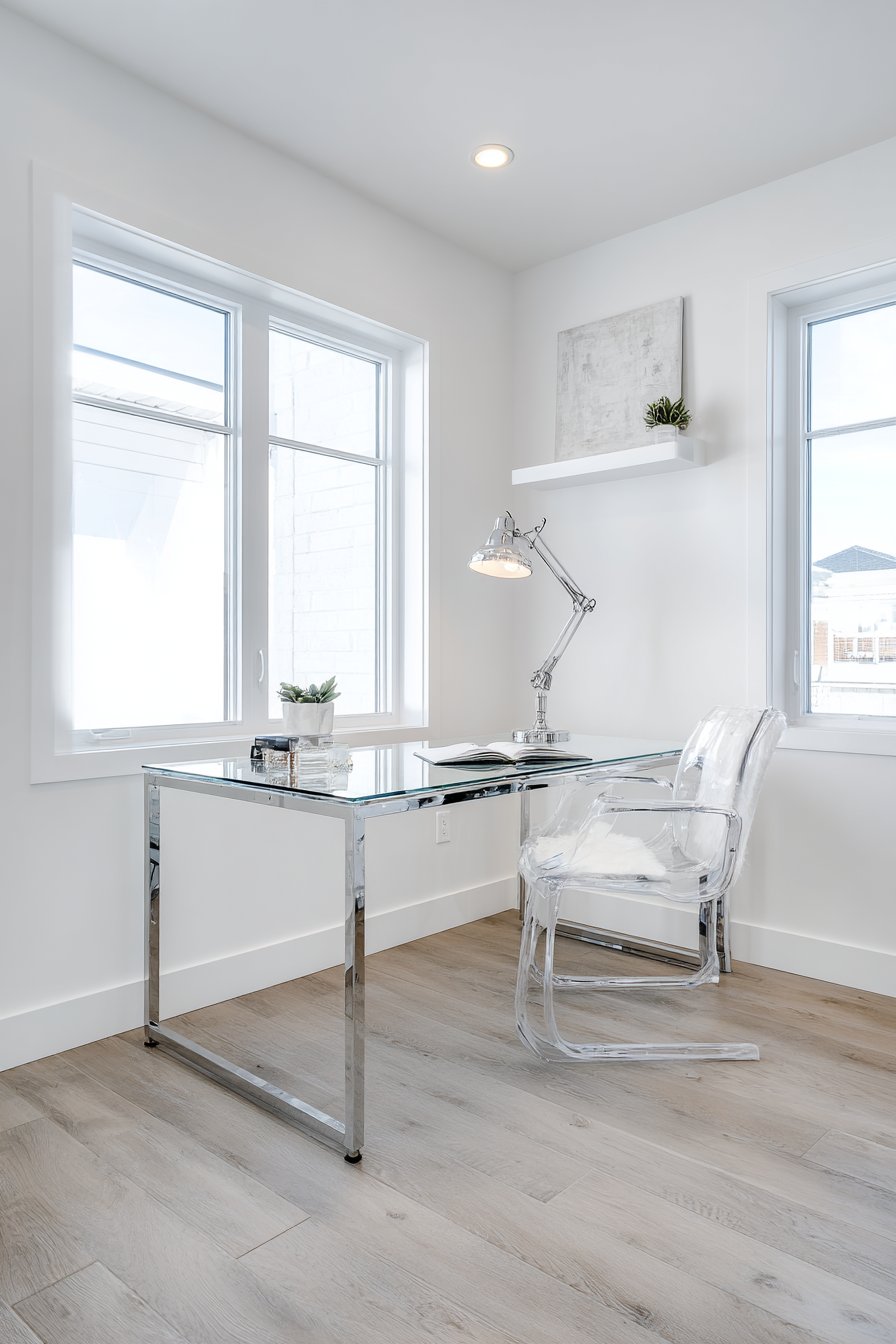
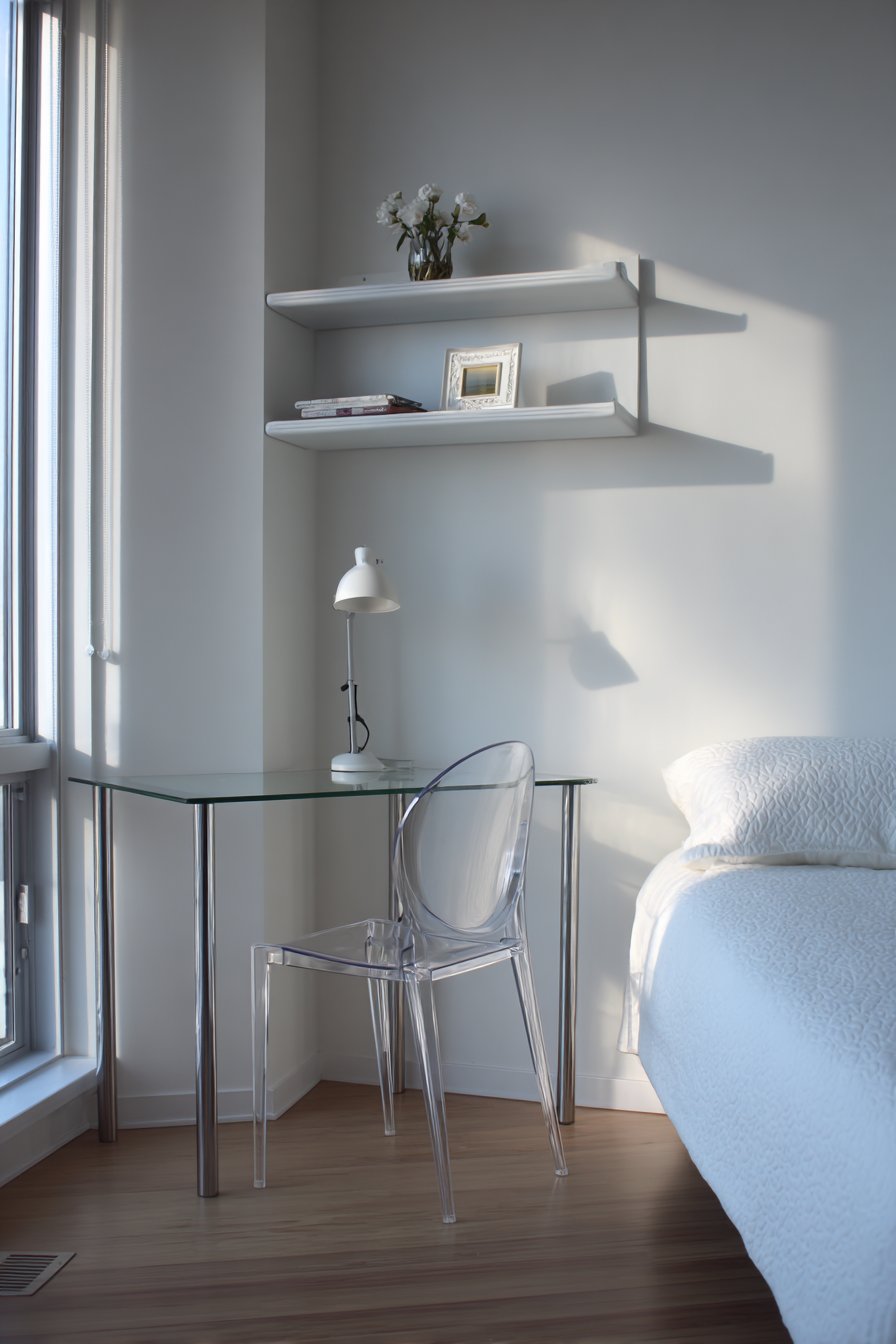
The contemporary corner desk showcases modern minimalism through material transparency and sleek metal finishes. This design features a glass-top corner desk supported by slim chrome legs that create visual lightness by allowing views through and beneath the workspace. The transparent surface prevents the corner from feeling heavy or enclosed while providing ample work area for computer tasks and paperwork. A ghost chair—the modern classic made of clear polycrylic—maintains the transparent aesthetic while providing comfortable seating that virtually disappears from view. This material choice is particularly clever in small bedrooms where visible furniture mass can make spaces feel cramped. A single architectural desk lamp with sculptural form provides focused task lighting while serving as the corner’s primary decorative element.
Floating white shelves mounted above the desk provide necessary storage and display space without compromising the contemporary aesthetic. The shelves hold minimal decor—perhaps a few carefully chosen art books, a single sculptural object, and one small plant. This restraint prevents the corner from becoming cluttered while maintaining the clean, uncluttered look essential to contemporary design. The transparent furniture allows bedroom elements behind and beneath the desk to remain visible, creating visual continuity rather than sectioning off the workspace as a separate zone. The chrome and glass materials reflect light beautifully, contributing to the bright, airy atmosphere that makes even small corners feel spacious.
This design excels in small bedrooms, studio apartments, or any situation where maintaining visual openness is essential. The transparent materials create functional workspace without the visual weight of solid furniture. The contemporary aesthetic works beautifully in modern urban environments, appealing to those who appreciate cutting-edge design and technological sophistication. The glass surface requires regular cleaning to maintain its pristine appearance but rewards this maintenance with sparkling clarity. For minimalists, modern design enthusiasts, or anyone seeking to maximize spatial perception in limited square footage, the contemporary glass and chrome corner desk provides elegant functionality that enhances rather than compromises the bedroom environment.
Key Design Tips:
- Choose tempered glass for desk surfaces to ensure safety and durability
- Select chrome or brushed nickel metal finishes for contemporary aesthetic cohesion
- Incorporate transparent furniture including acrylic chairs to maintain visual lightness
- Keep desktop items to absolute minimum to preserve the clean, uncluttered look
- Add one sculptural lamp or accessory for visual interest without compromising simplicity
- Clean glass surfaces regularly with streak-free cleaner to maintain pristine appearance
- Position the desk to maximize natural light that will play beautifully through transparent materials
- Avoid ornate or traditional accessories that would clash with the modern aesthetic
16. Built-In Custom Corner Workspace
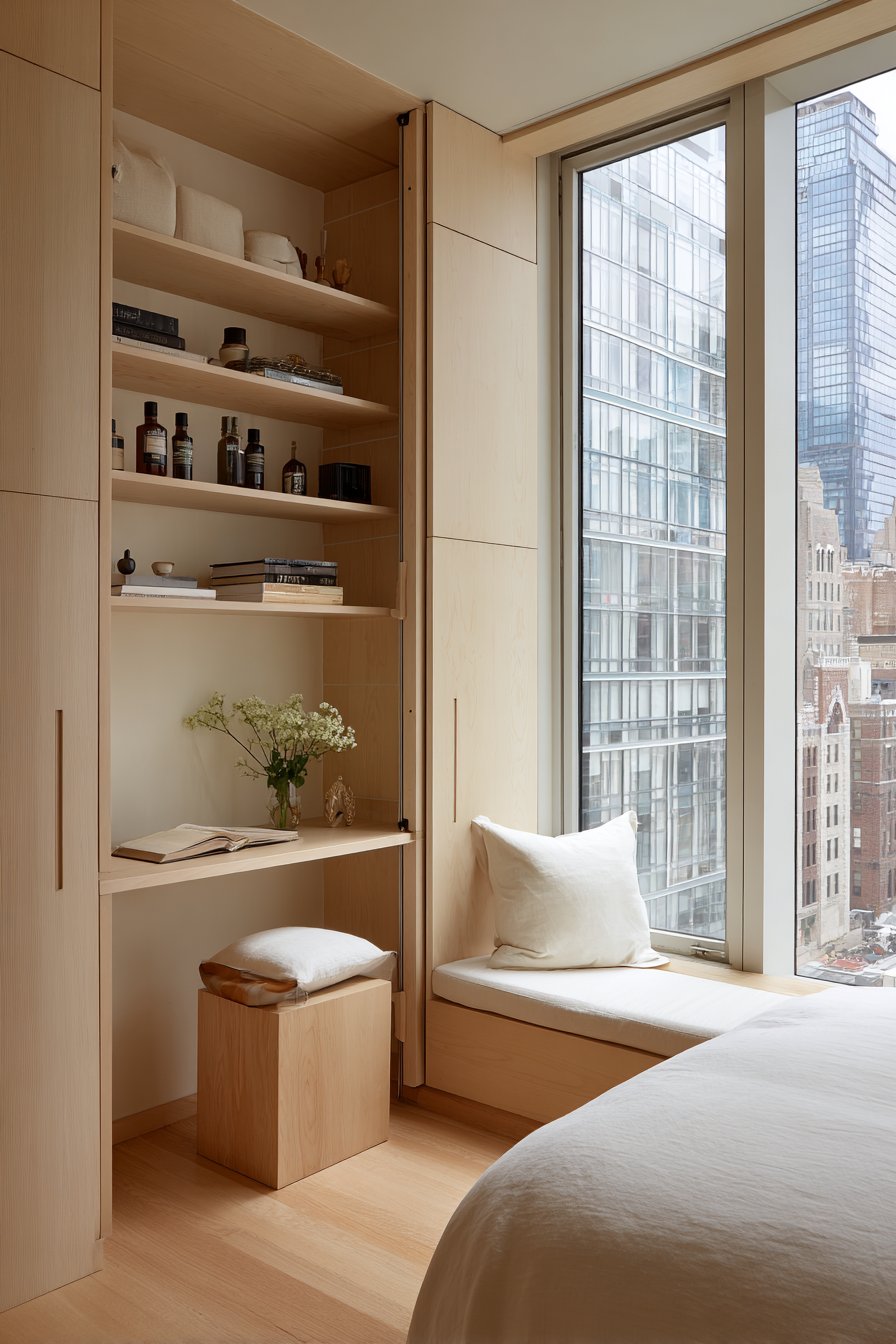
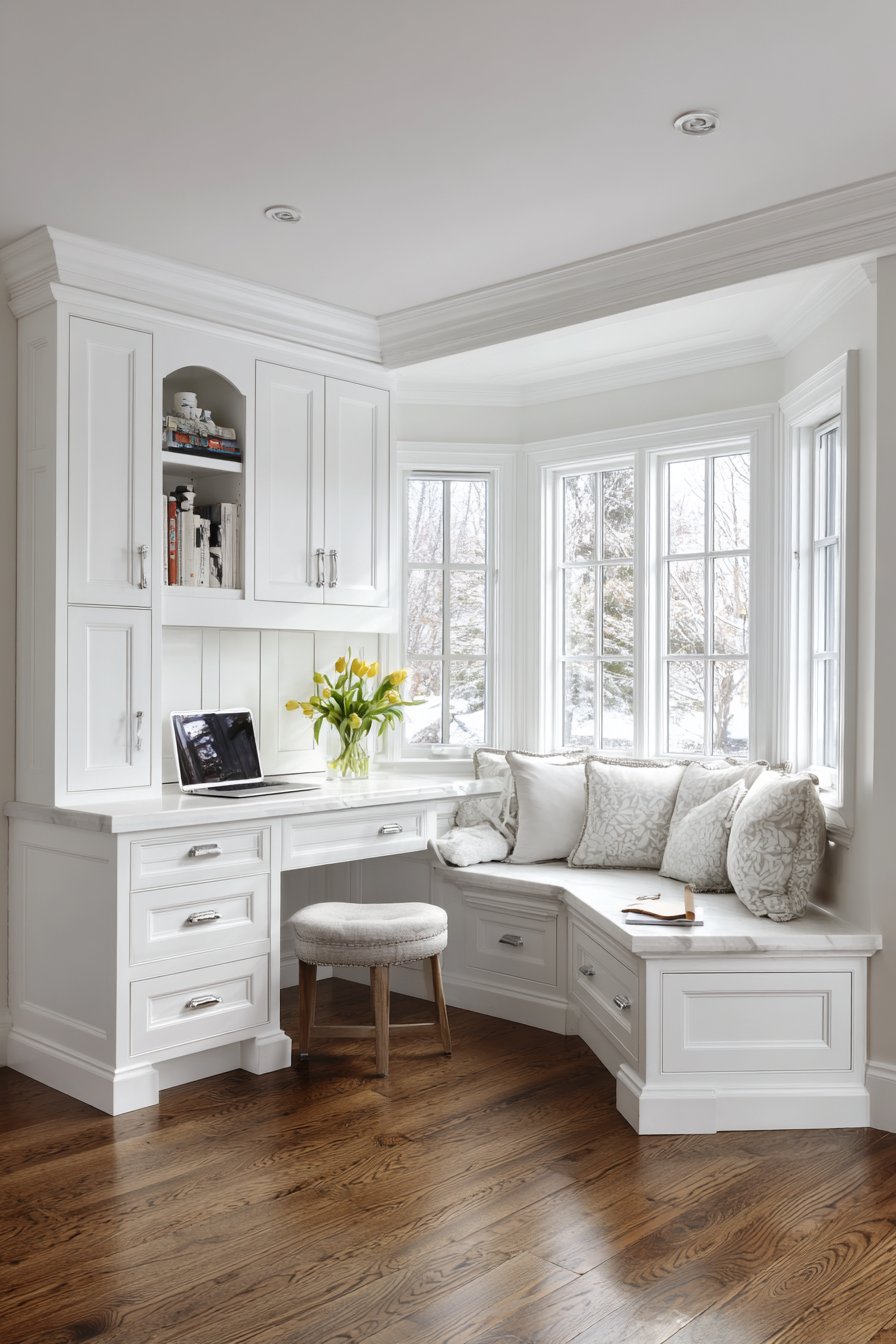
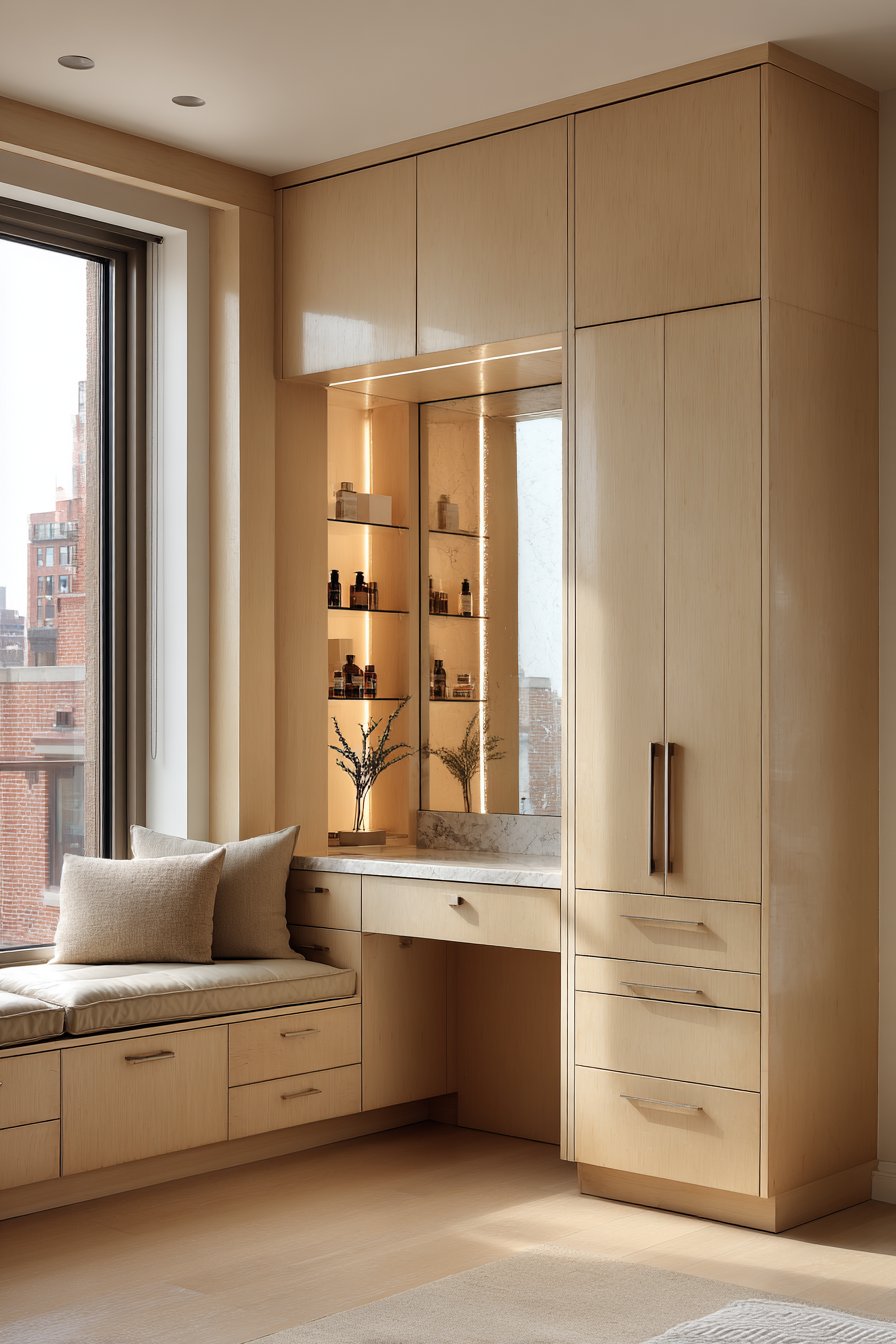
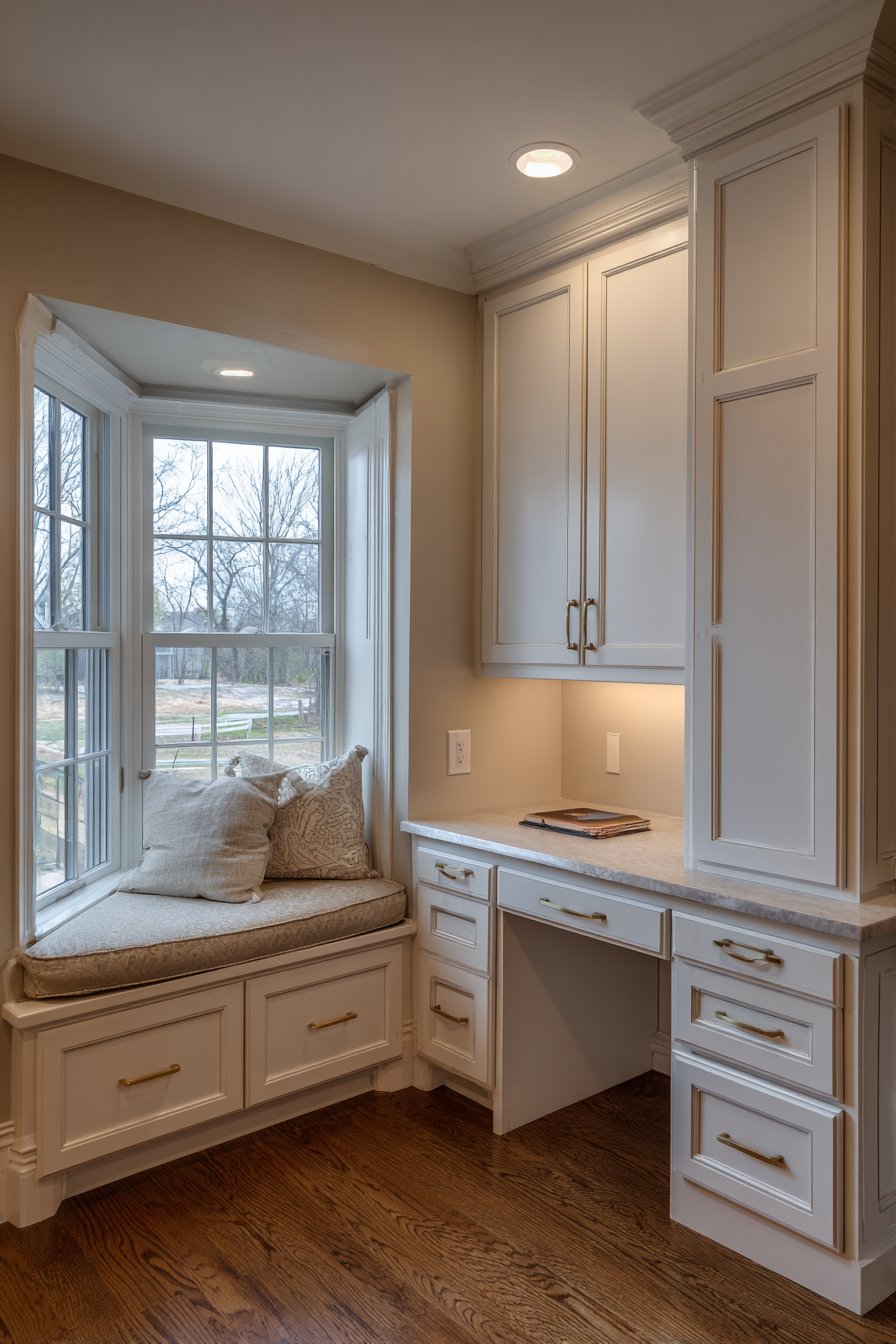
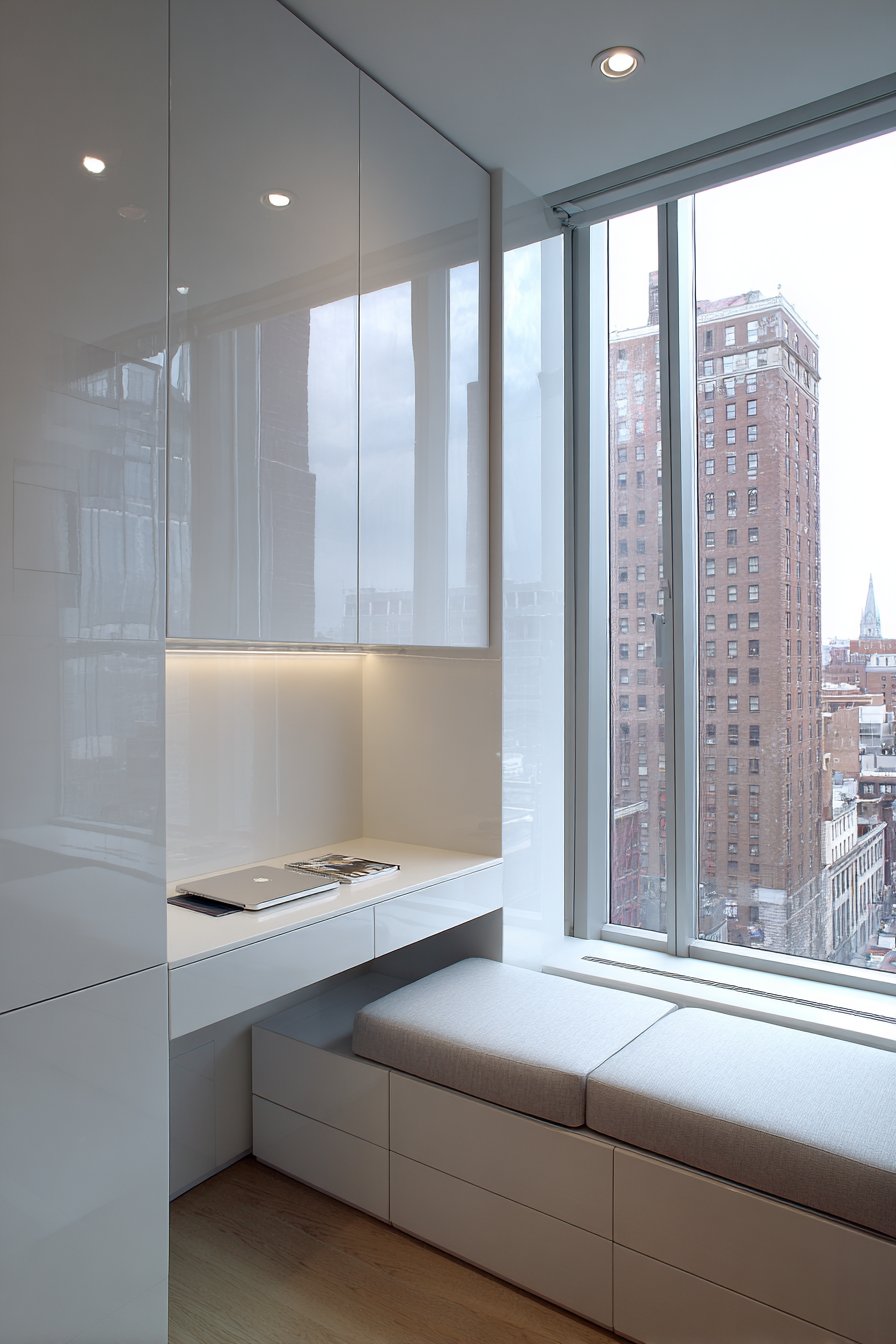
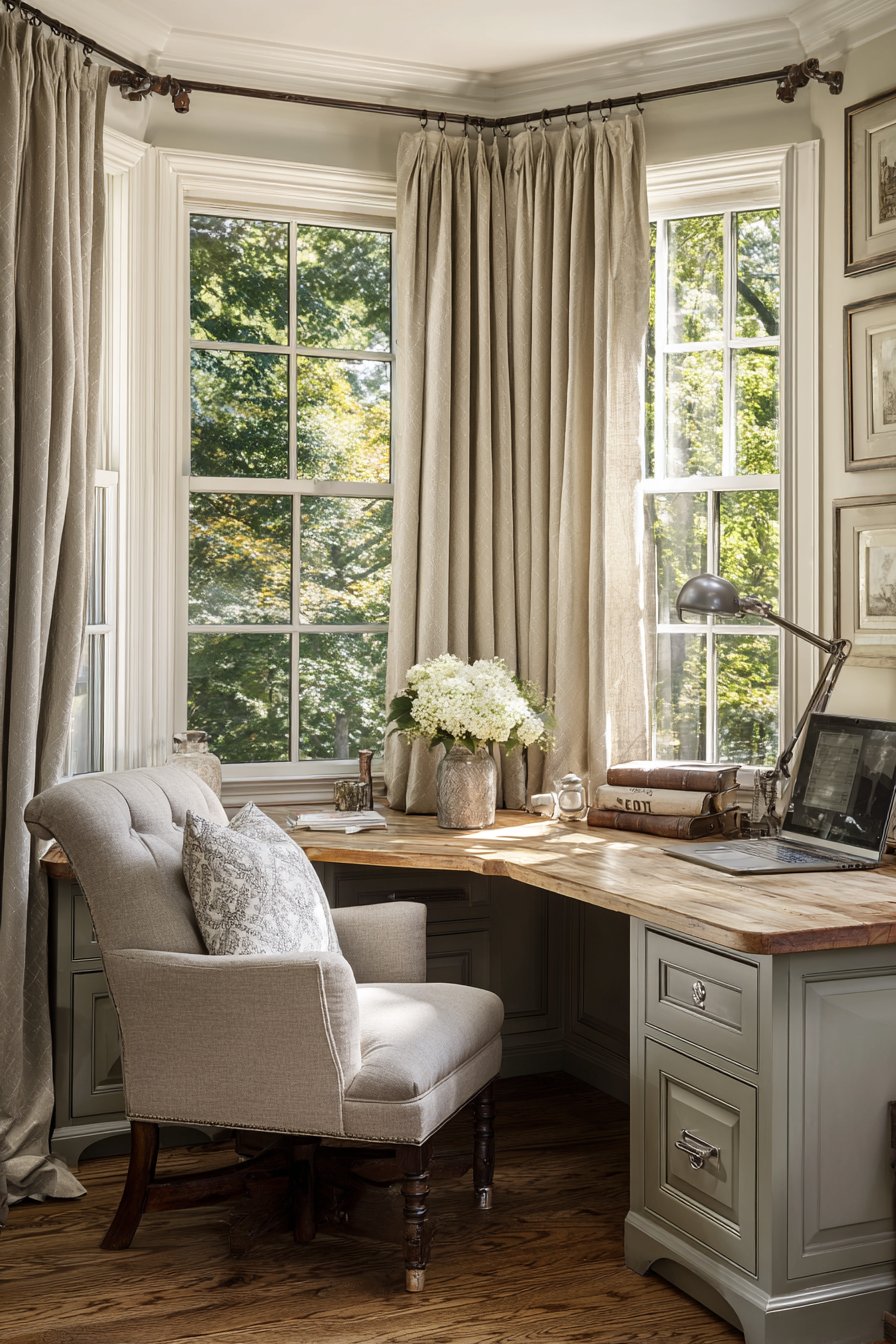
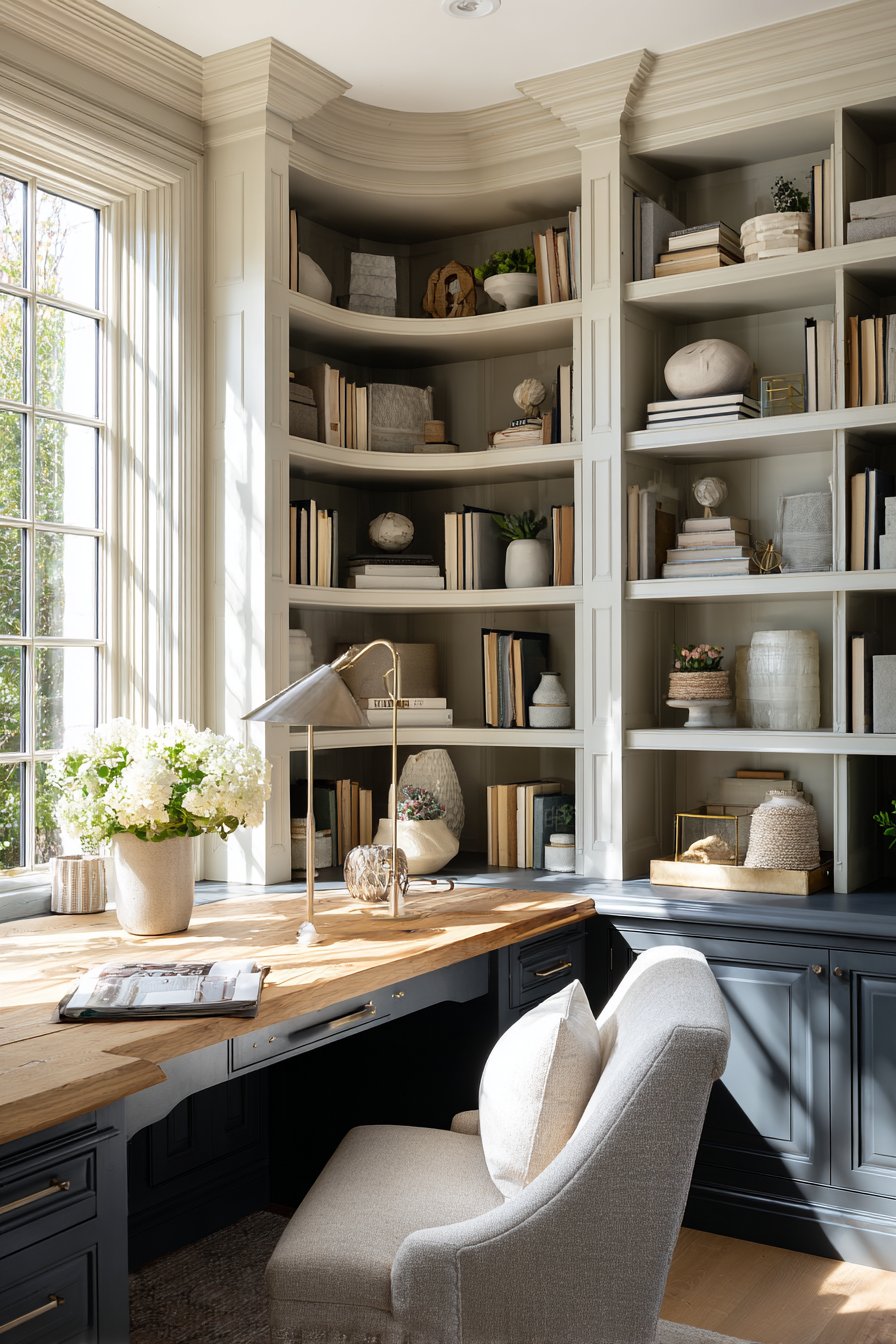
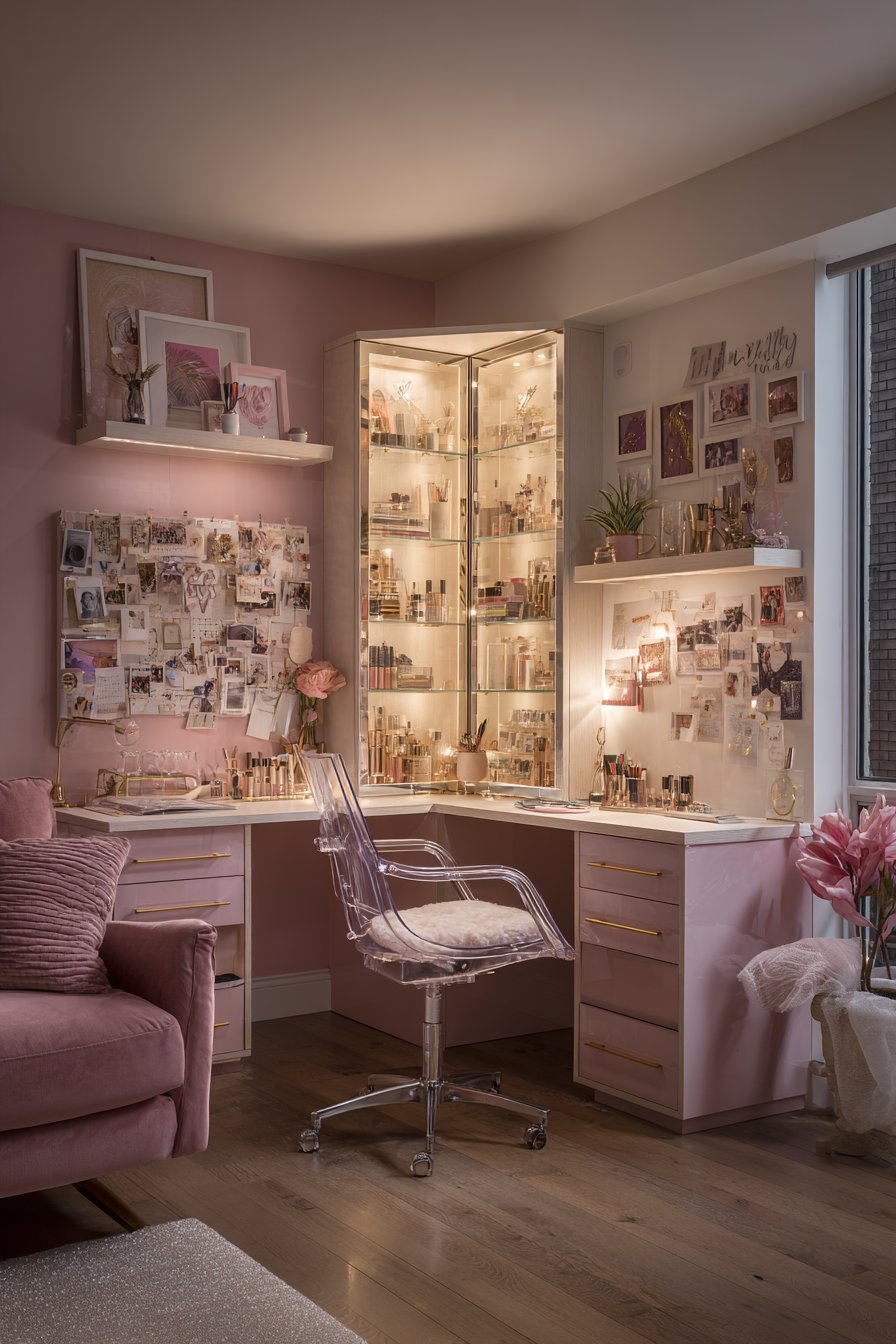
The built-in corner desk represents the pinnacle of custom bedroom workspace design, integrating the desk seamlessly into the room’s architecture through floor-to-ceiling cabinetry. This sophisticated approach features custom millwork that incorporates the corner workspace within a comprehensive storage and organization system. The desk surface in engineered quartz matches countertop aesthetics while providing exceptional durability and stain resistance—crucial for a work surface that will see daily use. Integrated lighting illuminates the work surface and shelving, eliminating shadows and creating optimal task visibility. Soft-close drawers and hidden storage compartments maximize functionality while maintaining clean exterior lines. A cushioned window seat adjacent to the desk provides additional seating for reading or casual work with a laptop.
The floor-to-ceiling design capitalizes on vertical space often wasted in standard furniture arrangements. Upper cabinets store less frequently accessed items while keeping them dust-free and organized. Middle zone shelving displays favorite books, photographs, and decorative objects at eye level. Lower cabinets and drawers provide easily accessible storage for daily use items including office supplies, files, and technology accessories. The custom nature allows the design to accommodate the room’s specific dimensions, architectural features, and the user’s particular storage needs. The built-in approach creates a polished, permanent quality that elevates the bedroom’s overall design while maximizing every inch of available space.
This design suits homeowners willing to invest in permanent improvements that add both functionality and property value. Unlike freestanding furniture that you’ll take with you when moving, built-in cabinetry becomes part of the home itself—an investment that benefits current use while enhancing resale appeal. The custom design allows accommodation of specific requirements: extra file storage for home-based professionals, extensive book shelving for avid readers, or specialized storage for creative supplies. The integrated approach eliminates the need to purchase separate desk, shelving, and storage furniture, potentially saving money long-term despite higher initial investment. For those seeking the ultimate in customized workspace solutions, the built-in corner desk delivers unmatched functionality and sophisticated integration.
Key Design Tips:
- Hire experienced millworkers or cabinetmakers for professional installation and custom fit
- Choose durable surface materials like quartz, solid surface, or hardwood for the desk area
- Integrate LED lighting within cabinetry for shadow-free task illumination
- Include a variety of storage types including drawers, cabinets, and open shelving
- Invest in quality soft-close mechanisms for drawers and doors
- Plan power outlet and cable management solutions during the design phase
- Match or complement existing bedroom woodwork and finishes for cohesive design
- Consider adding a window seat or built-in bench if space and windows allow
17. Coastal Beach House Corner
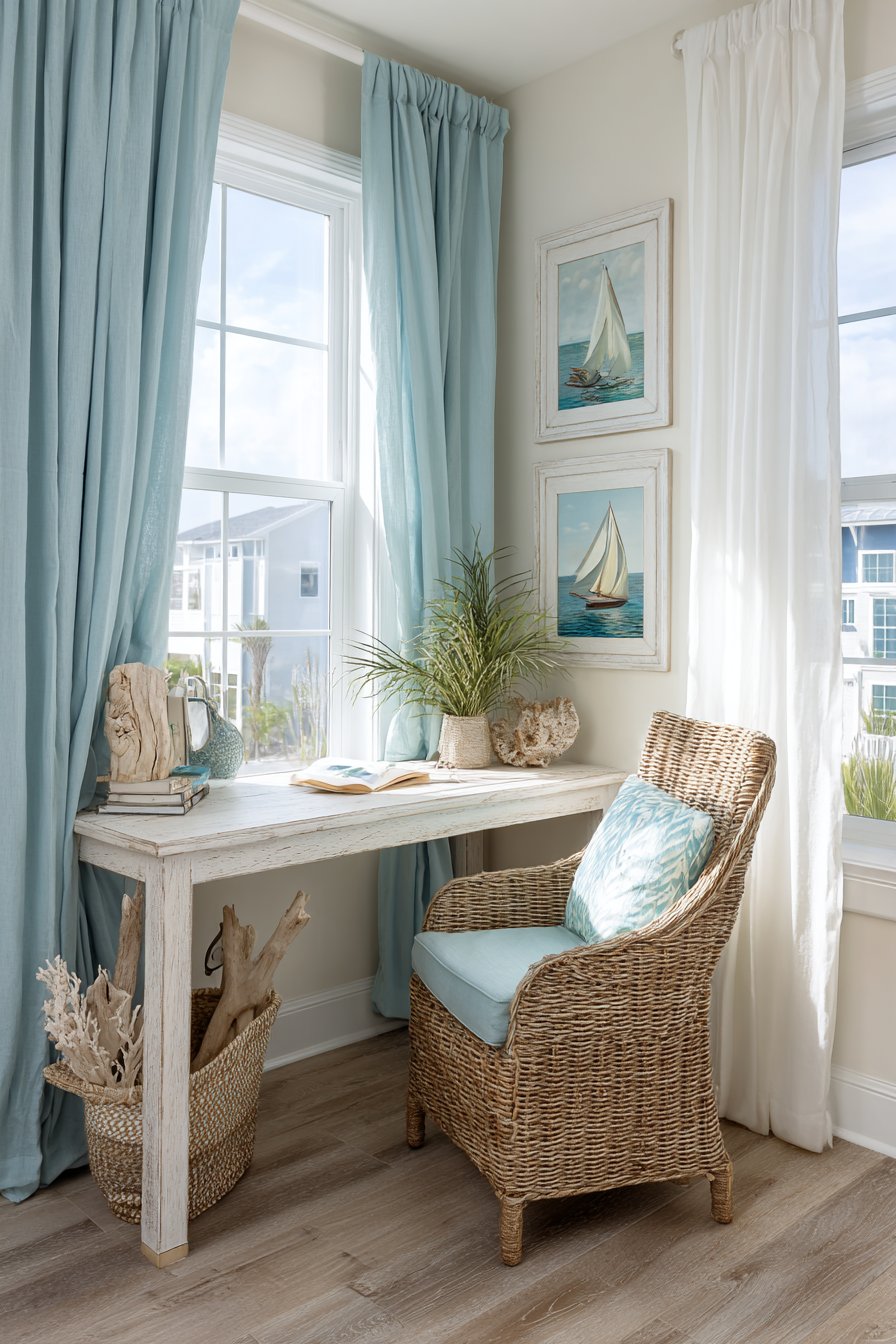
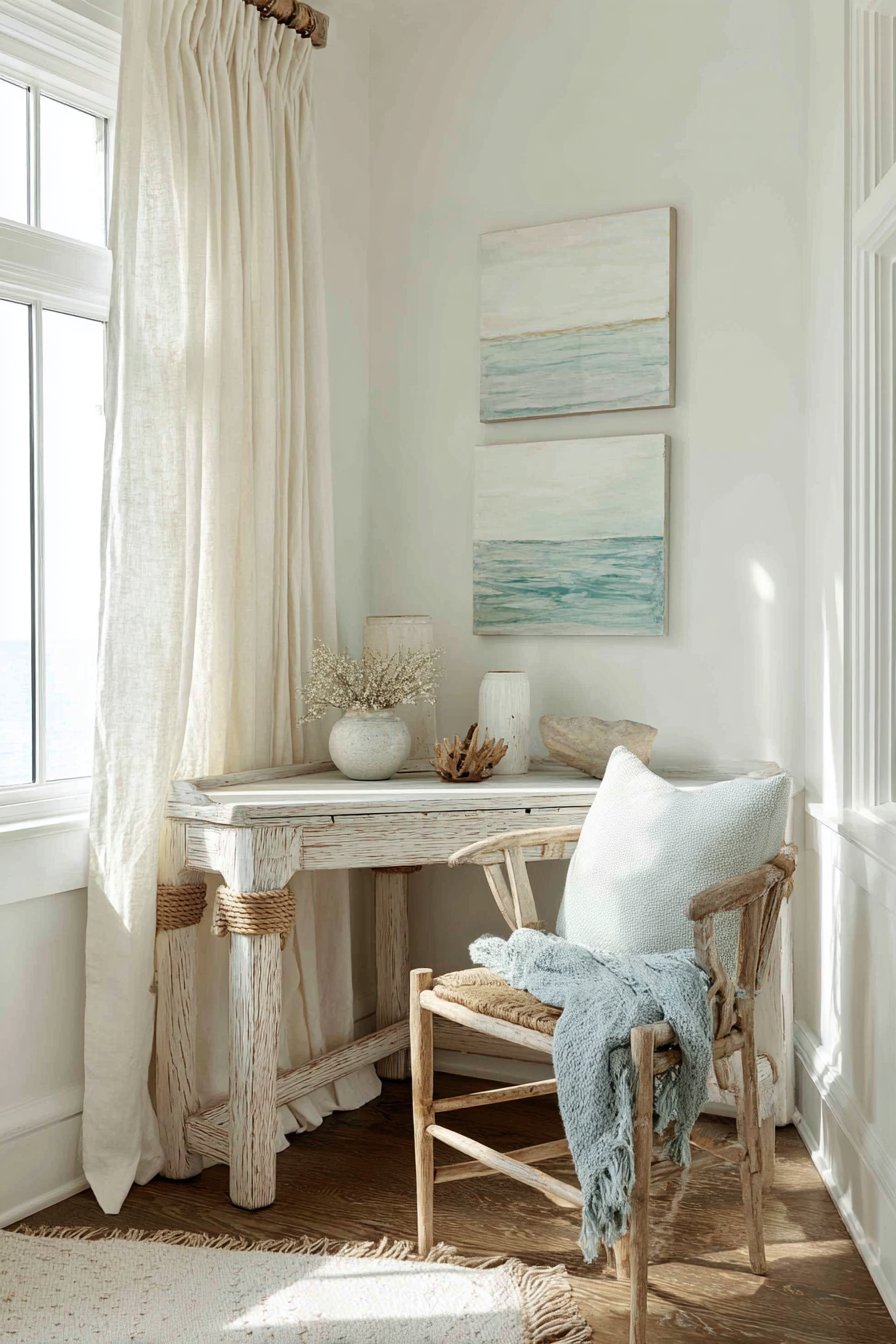
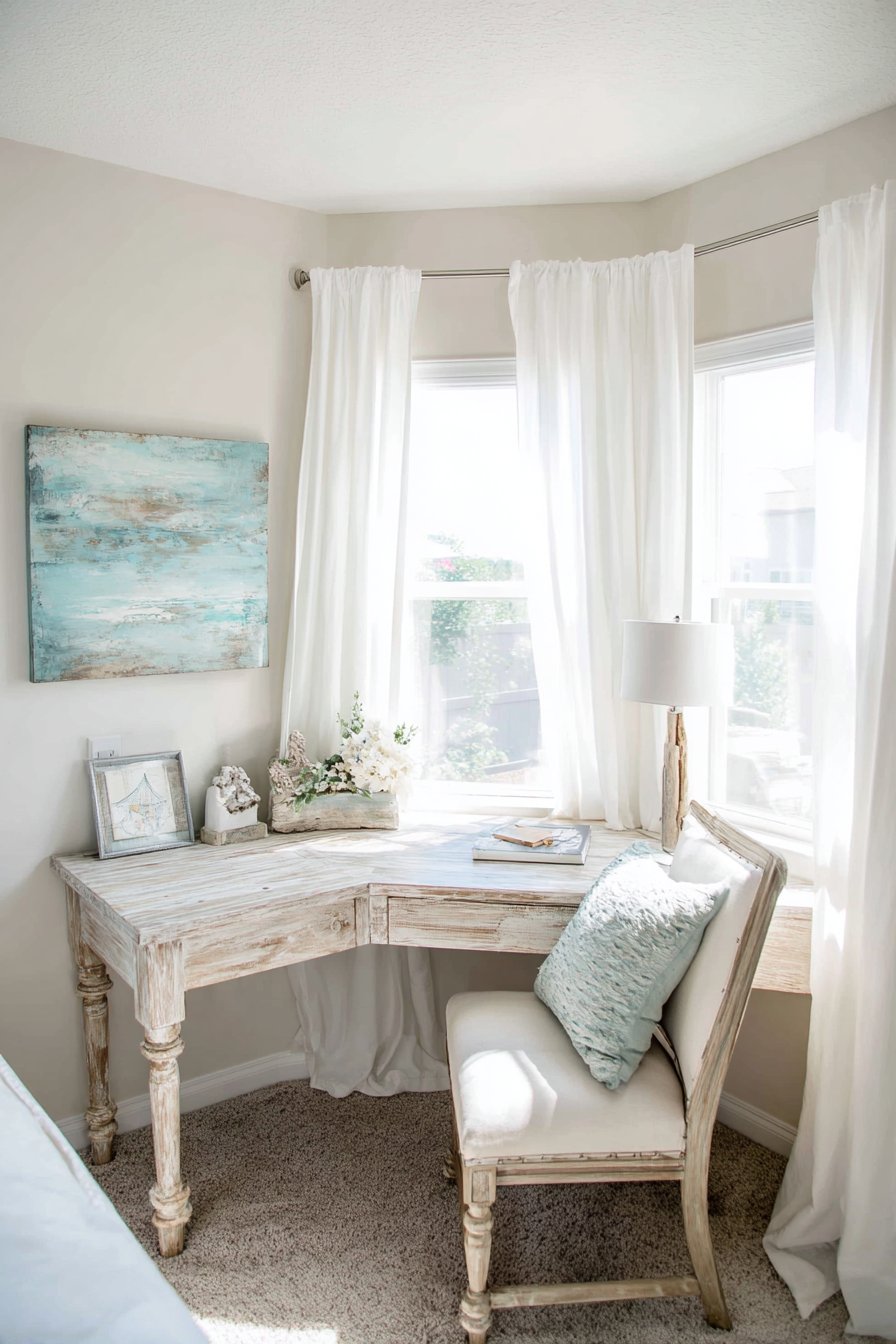
The coastal corner desk brings breezy beach house style into the bedroom workspace, creating an environment that feels perpetually vacation-like. This design features a whitewashed wood corner desk with rope-wrapped legs—a nautical detail that adds textural interest and thematic authenticity. The whitewashed finish creates the sun-bleached appearance of driftwood while protecting the wood and brightening the corner. A weathered teak chair contributes additional coastal character through its silvery-gray patina that references outdoor furniture aged by salt air and sunshine. Driftwood accessories including a sculptural piece holding pens or a natural branch used as jewelry organization bring authentic beach finds into the workspace. Nautical-themed prints on the wall above—perhaps vintage navigation charts, watercolor seascapes, or black and white beach photography—reinforce the coastal theme without feeling overly literal or kitschy.
Natural linen curtains filter soft sunlight, creating the diffused illumination characteristic of beach houses where harsh sun is tempered through light fabrics. The sandy neutral tones and aqua accents throughout the space reference the beach landscape of sand, driftwood, and sea. This color palette creates a calming environment perfect for focused work or creative thinking. The coastal aesthetic embraces natural imperfection—weathered wood, faded fabrics, and organic shapes—creating a relaxed atmosphere that reduces stress rather than demanding perfect maintenance. The overall effect transports you mentally to a beach cottage even if you’re miles from the ocean, creating a workspace that feels more like retreat than obligation.
This design particularly appeals to beach lovers, vacation home owners, or anyone seeking to infuse their daily environment with the relaxed energy of coastal living. The coastal aesthetic works beautifully in actual beach communities but also brings vacation vibes to landlocked locations. The whitewashed wood and natural textiles create brightness without stark coldness, while the aqua accents add refreshing color that energizes without overwhelming. The weather-resistant materials characteristic of coastal design—teak, rope, linen—bring durability alongside aesthetic appeal. For those who find inspiration and calm in beach environments, this coastal corner desk creates a workspace that captures vacation feelings while supporting productive work.
Key Design Tips:
- Choose naturally weather-resistant woods like teak or treated pine for authentic coastal character
- Apply whitewash or pickling techniques to new wood for beach-weathered appearance
- Incorporate rope details through wrapped legs, drawer pulls, or decorative accessories
- Add nautical elements subtly rather than overwhelming with literal beach kitsch
- Use a color palette of whites, sandy neutrals, and soft blues or aquas
- Select natural fiber textiles including linen, cotton, and jute
- Display actual beach finds like driftwood, shells, or sea glass collected from meaningful locations
- Choose furniture with relaxed, casual lines rather than formal or ornate styles
18. Transitional Two-Tone Corner
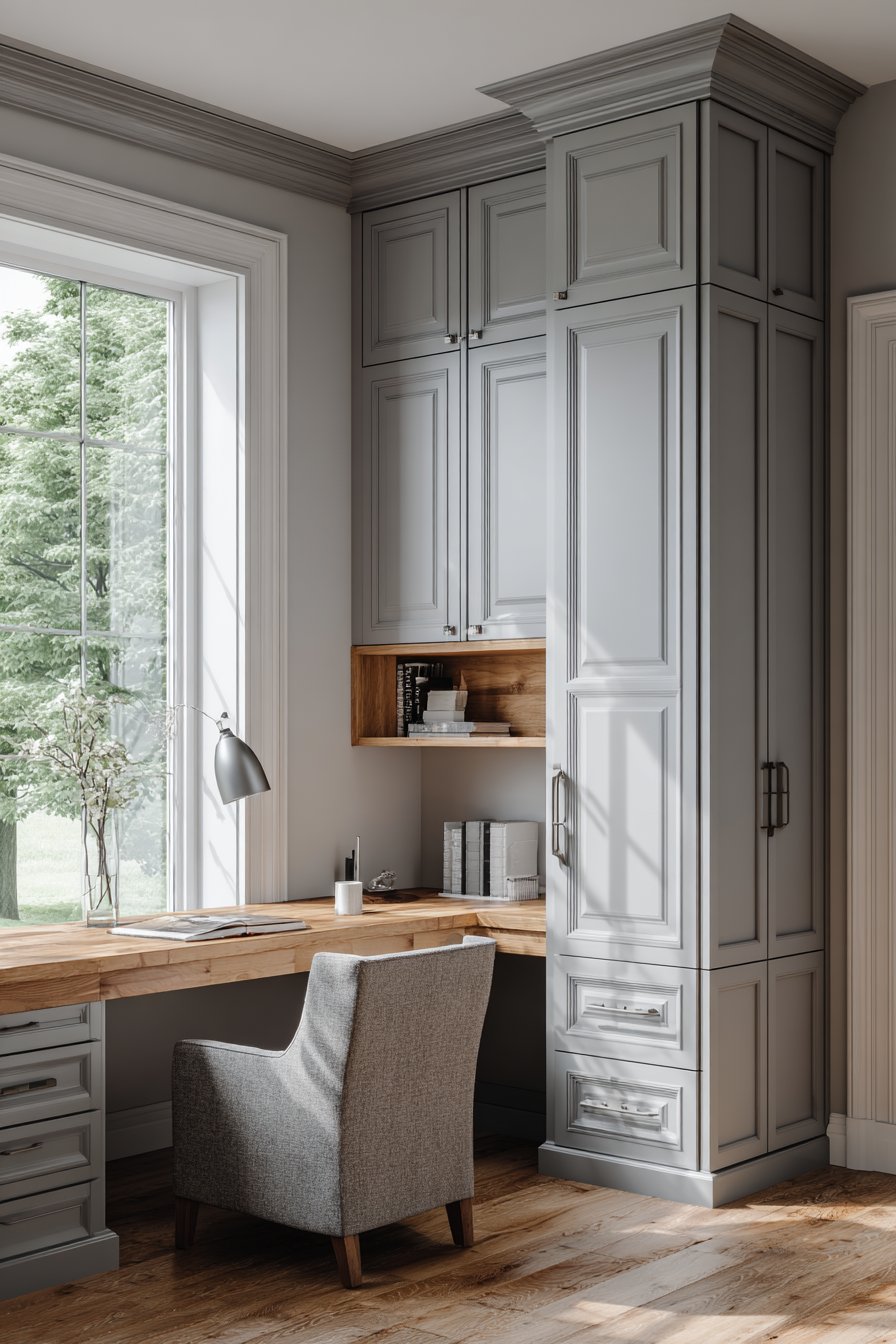
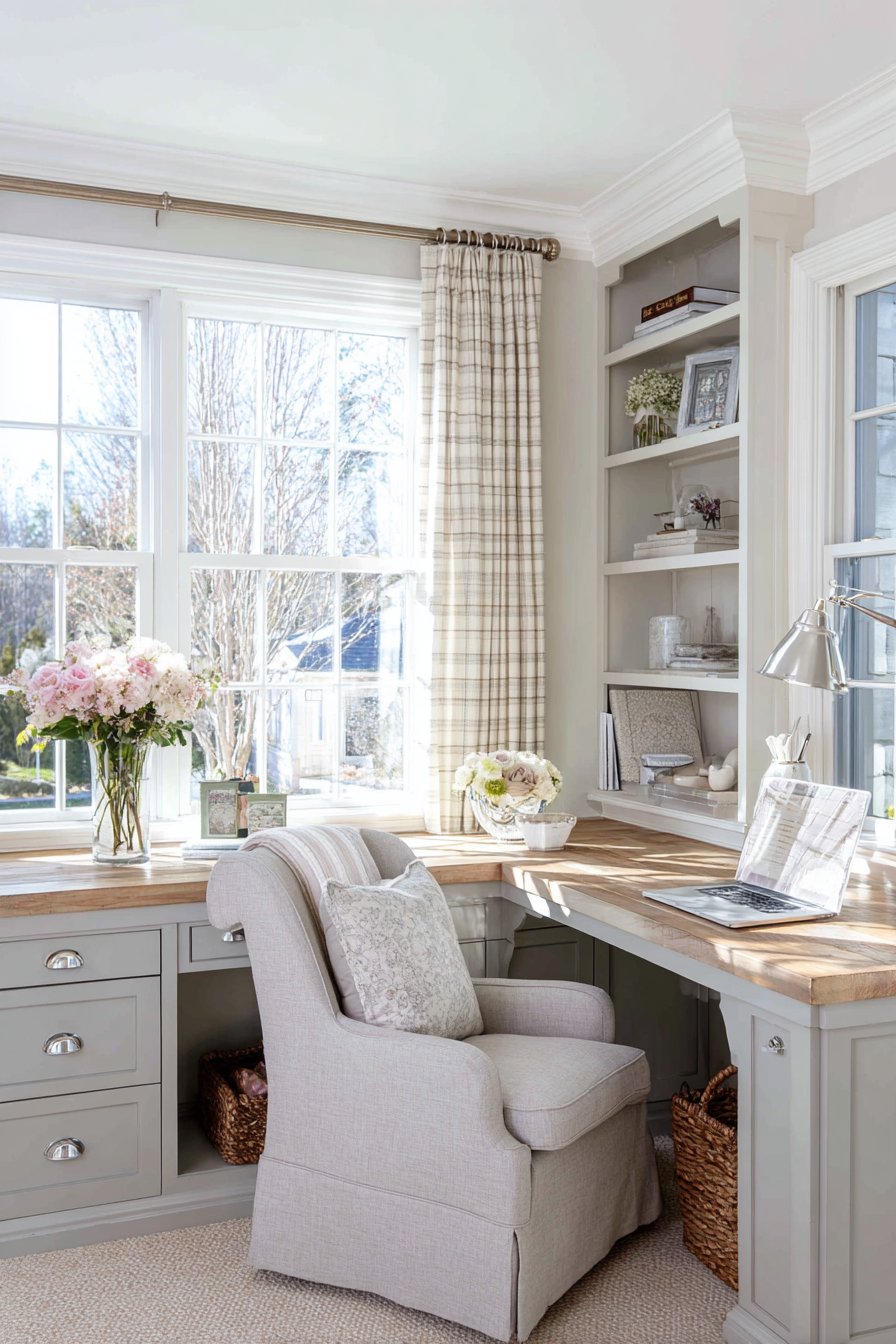
The transitional corner desk bridges traditional and contemporary aesthetics, creating a versatile workspace that adapts to evolving decorating styles. This design features a two-tone corner desk with gray base cabinets providing storage and a natural oak desktop surface offering warmth and organic texture. This combination of painted wood and natural wood creates visual interest while maintaining versatility—the gray grounds the piece in contemporary style while the oak references traditional craftsmanship. An upholstered desk chair in neutral fabric—perhaps a linen-cotton blend in warm taupe—provides comfortable seating that coordinates with various color schemes. A brushed nickel task lamp offers adjustable lighting with hardware finishes that work equally well with warm or cool metal accents. Organized desktop accessories maintain function without cluttering the surface.
The transitional style’s defining characteristic is its ability to feel current without being trendy, traditional without being dated. This balanced approach creates workspaces that won’t require redesign as tastes evolve or when moving between homes with different architectural styles. The two-tone coloring provides visual interest while the simple lines prevent the piece from feeling heavy or overly ornate. Natural lighting from a nearby window supplements the task lamp, creating layered illumination appropriate for various work activities. The overall aesthetic feels refined but approachable, sophisticated but comfortable—achieving a difficult balance that makes transitional design enduringly popular.
This design particularly suits those who appreciate both traditional and modern elements, homeowners in transition between decorating styles, or anyone seeking versatile furniture that adapts to various contexts. The neutral color palette ensures the desk coordinates with changing accent colors and decorating trends without requiring replacement. The quality construction and timeless styling mean the piece remains functional and attractive for decades rather than feeling dated after a few years. For pragmatists seeking maximum versatility or those who simply can’t choose between traditional and contemporary aesthetics, the transitional corner desk provides the perfect solution—honoring both design traditions while committing fully to neither.
Key Design Tips:
- Combine painted surfaces with natural wood tones for classic two-tone transitional look
- Choose neutral colors like gray, taupe, or soft white for painted elements
- Select simple hardware in brushed nickel or aged bronze that bridges style categories
- Incorporate both curved and straight lines for balance between traditional and contemporary
- Add upholstered seating in neutral solids rather than bold patterns
- Include a mix of open and closed storage for functional and aesthetic balance
- Choose lighting with simple, classic forms rather than ornate or ultra-modern designs
- Maintain a restrained color palette that allows flexibility with changing accent colors
19. Height-Adjustable Children’s Learning Corner
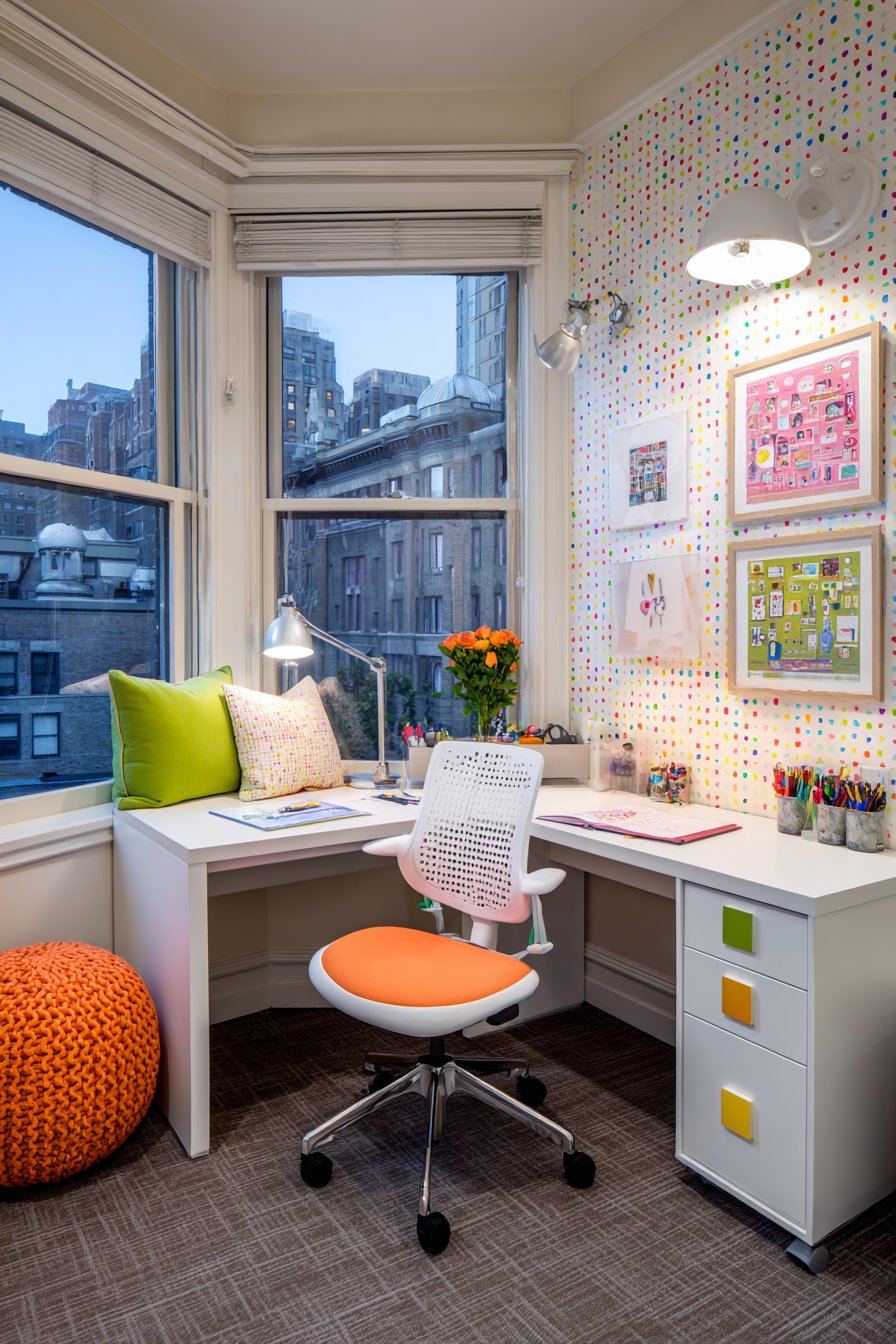
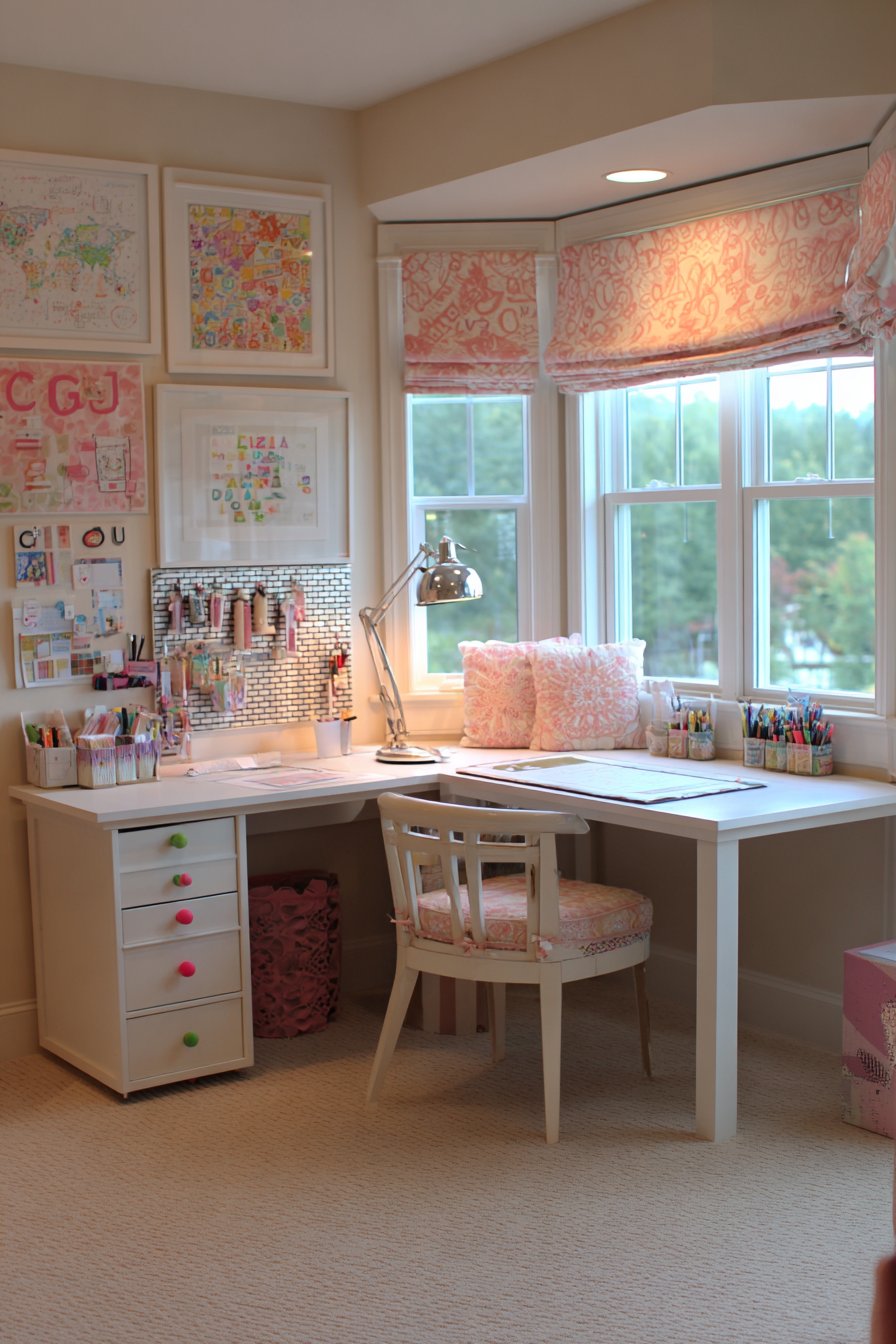
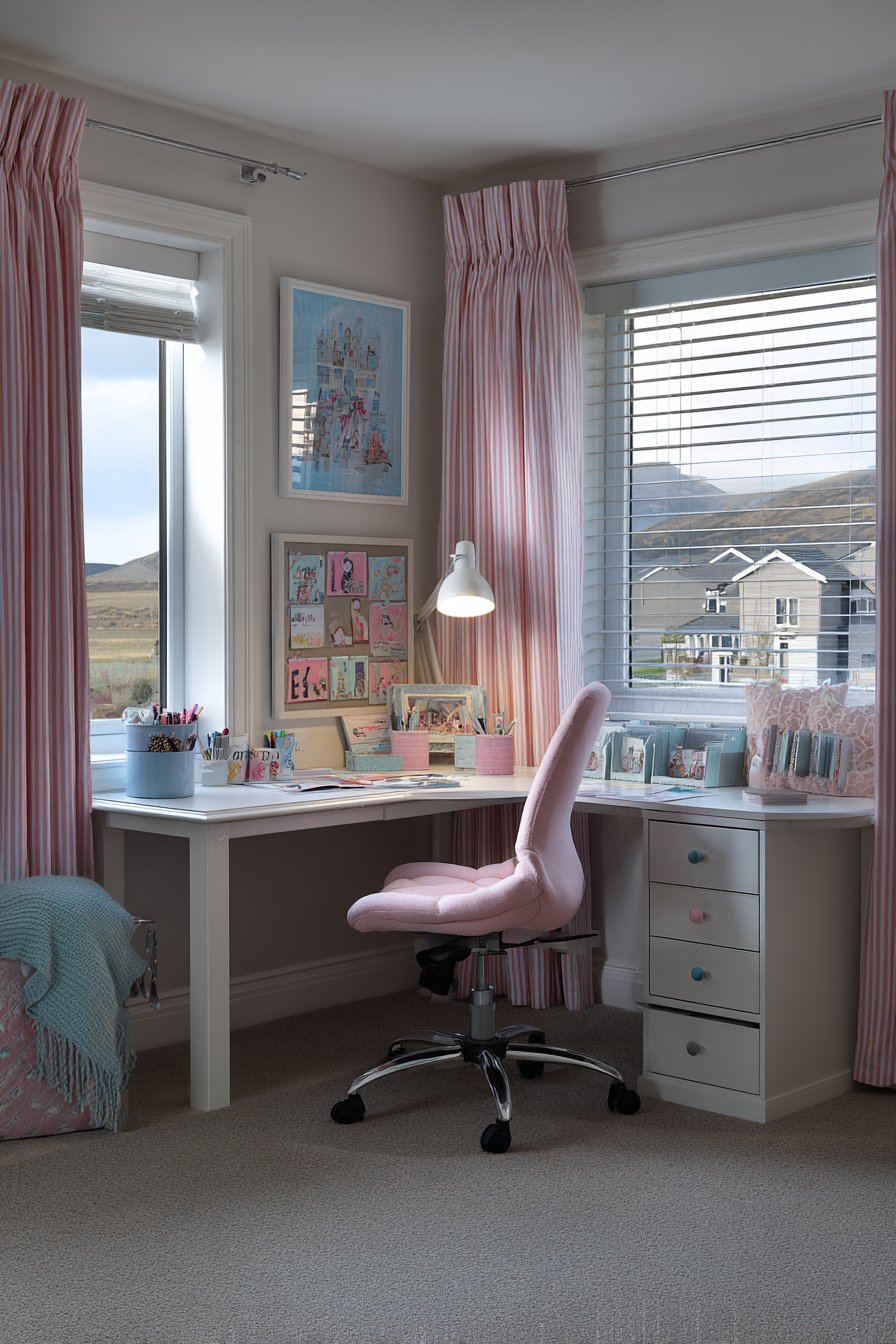
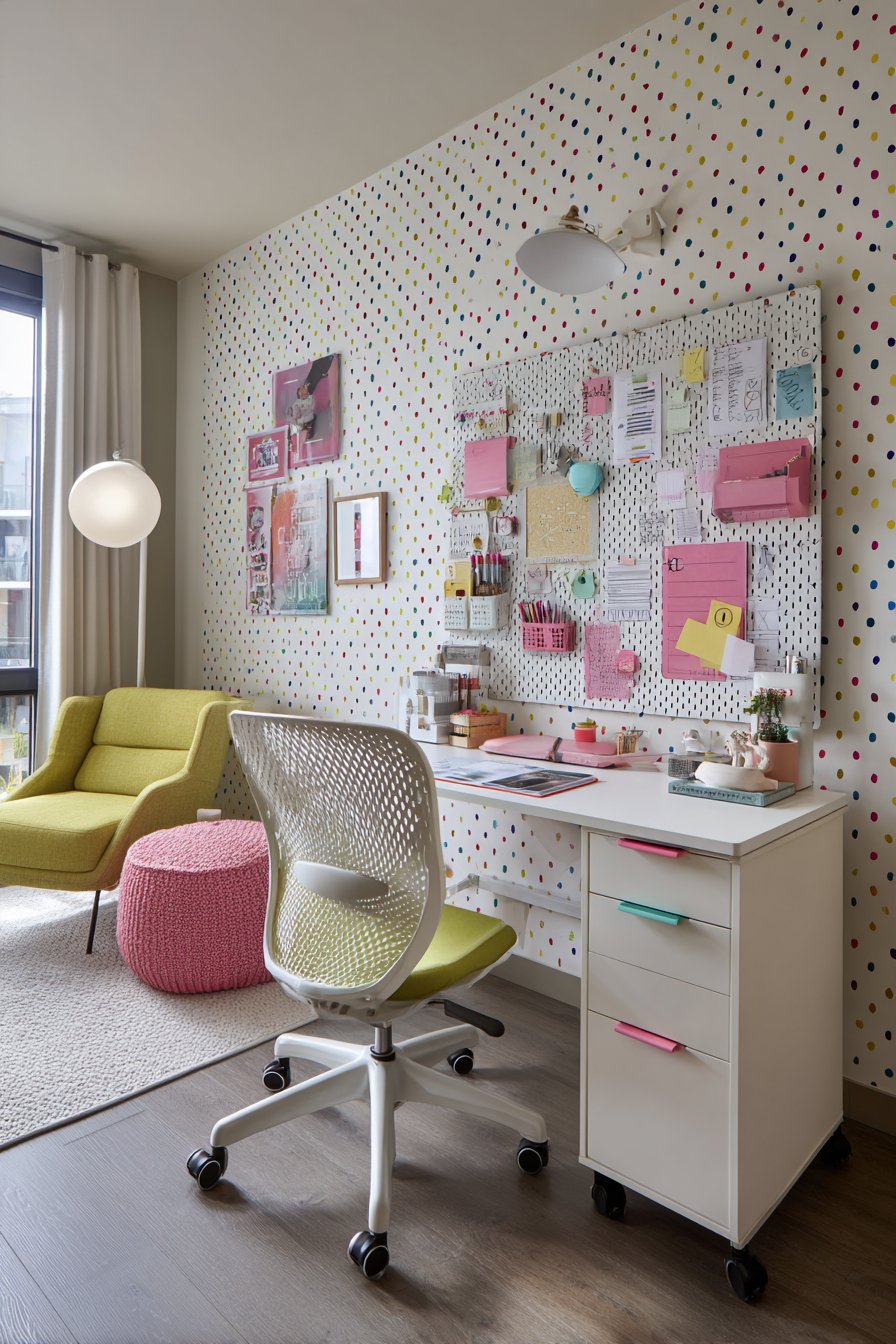
The children’s corner desk prioritizes adaptability, ergonomics, and creating an environment that supports learning and development. This design features a height-adjustable corner desk in bright white with colorful drawer pulls that add personality while making the furniture kid-friendly and appealing. The adjustability ensures the desk grows with the child from early elementary through middle school years—a crucial feature that maximizes the furniture investment and ensures proper ergonomics at every stage. An ergonomic kids’ chair on casters allows movement and proper posture support, recognizing that children often need more position changes than adults during focused work. The bulletin board wall covering provides expansive space for displaying artwork, achievement certificates, and school projects—celebrating accomplishments and personalizing the space.
Organized supply caddies keep art materials, school supplies, and homework essentials accessible but contained, teaching organizational skills from early ages. Alphabet wall decals and educational posters create a learning-focused environment that reinforces classroom lessons and stimulates curiosity. The colorful drawer pulls in rainbow hues make the white desk feel playful rather than sterile while maintaining a foundation that won’t feel juvenile as the child matures. Overhead lighting plus a dedicated desk lamp ensure proper illumination for homework and reading—critical for preventing eye strain during extended study sessions. The overall design balances fun kid-friendly elements with serious learning functionality.
This design recognizes that supporting children’s academic success requires more than just providing any flat surface—it demands thoughtful consideration of ergonomics, organization, lighting, and creating an environment that makes learning appealing. The height-adjustable feature alone justifies the investment by ensuring proper posture and comfort throughout the child’s growth. The bulletin board celebrates achievements and provides motivation through visual reminders of past successes. The organized storage systems teach children that everything has a place, establishing habits that serve them throughout life. For parents wanting to support their children’s education and create dedicated study spaces, this corner desk provides comprehensive functionality that grows with the child.
Key Design Tips:
- Invest in quality height-adjustable mechanisms that operate smoothly and lock securely
- Choose durable, easy-to-clean surfaces that withstand daily use by children
- Add engaging colors through hardware and accessories rather than large furniture pieces
- Create extensive wall storage for displaying artwork and school achievements
- Ensure adequate task lighting to prevent eye strain during homework sessions
- Include age-appropriate organizational systems that teach filing and sorting skills
- Select furniture with rounded corners and stable construction for safety
- Position the desk where parents can provide supervision while allowing independence
20. Japanese Zen Corner Meditation
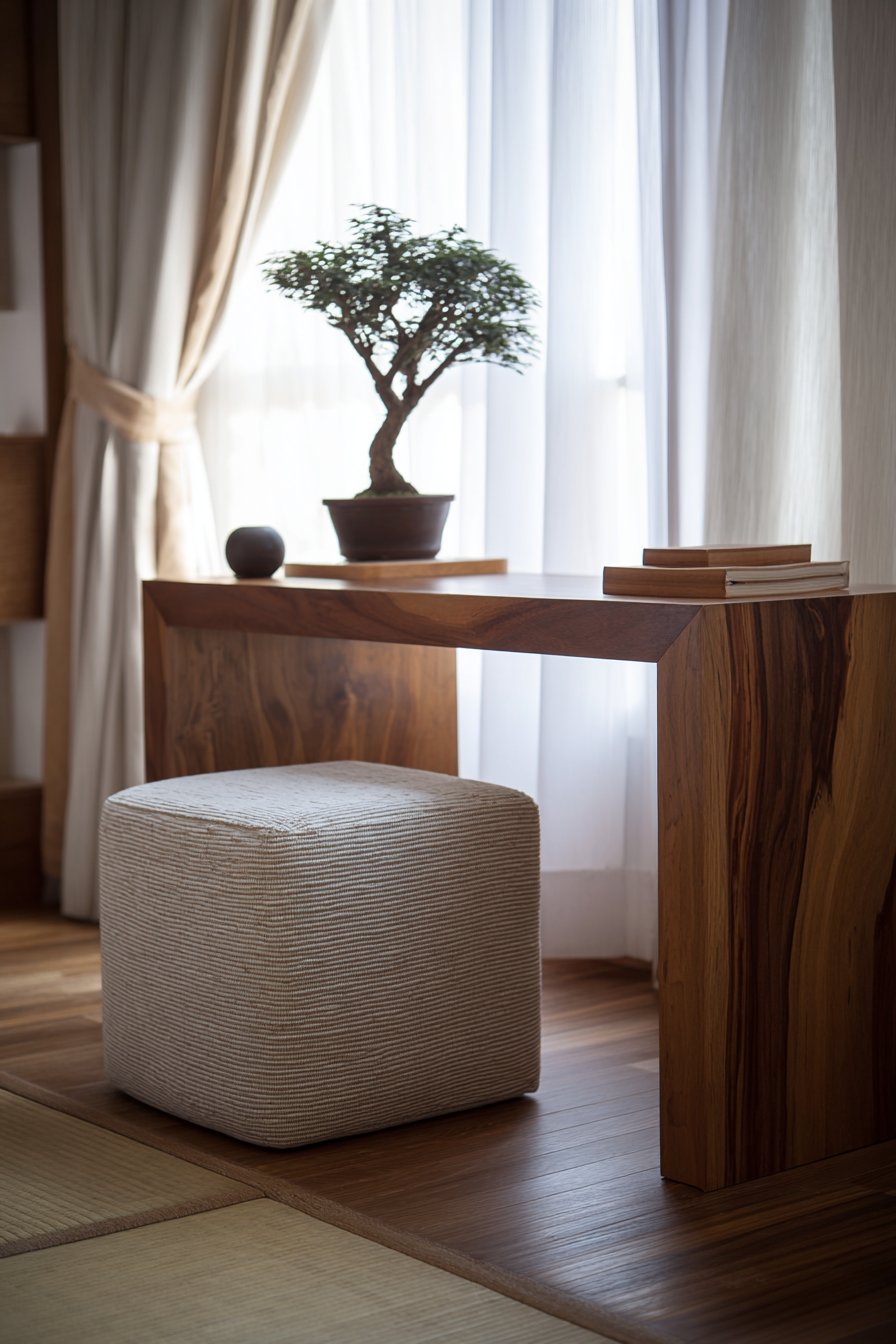
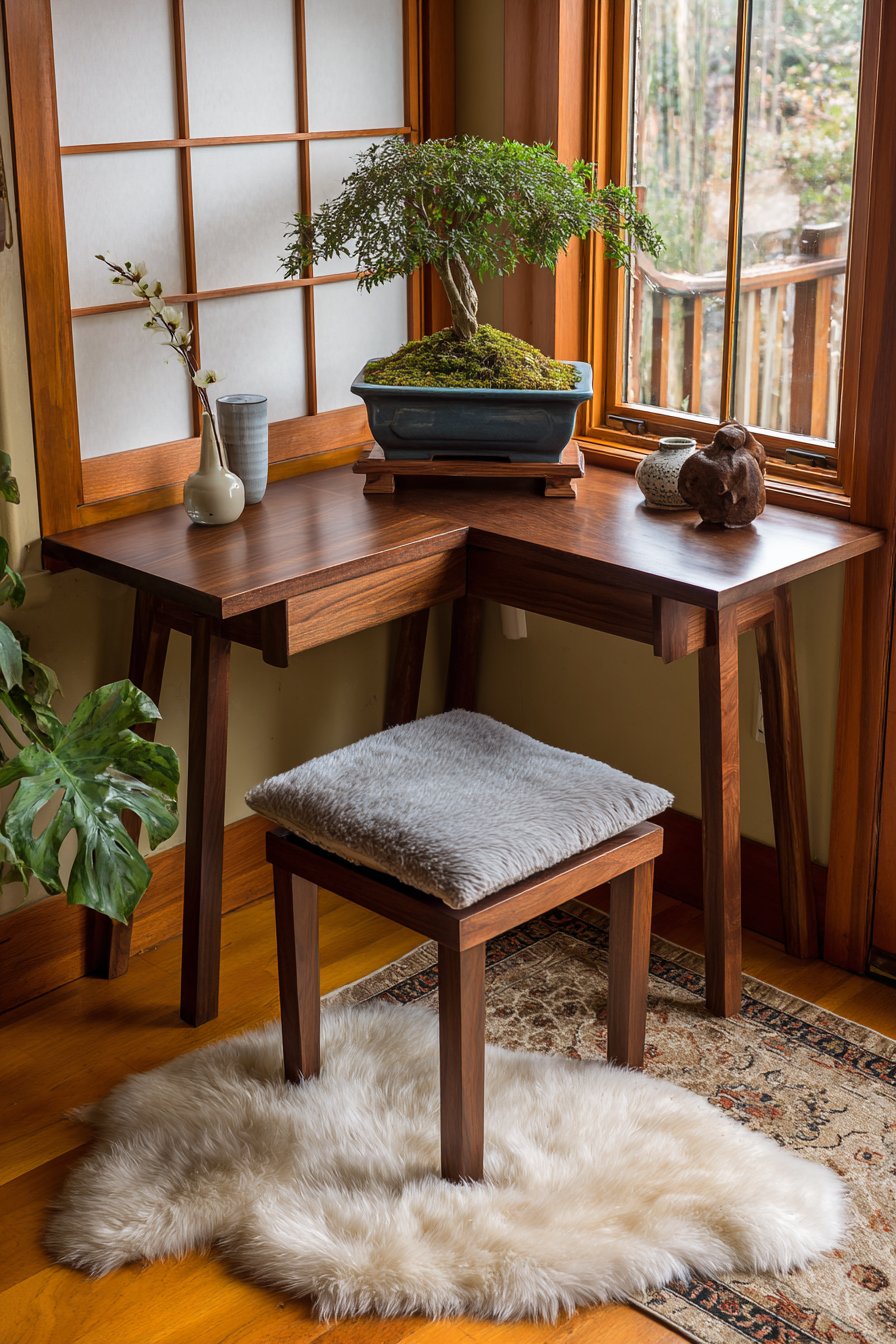
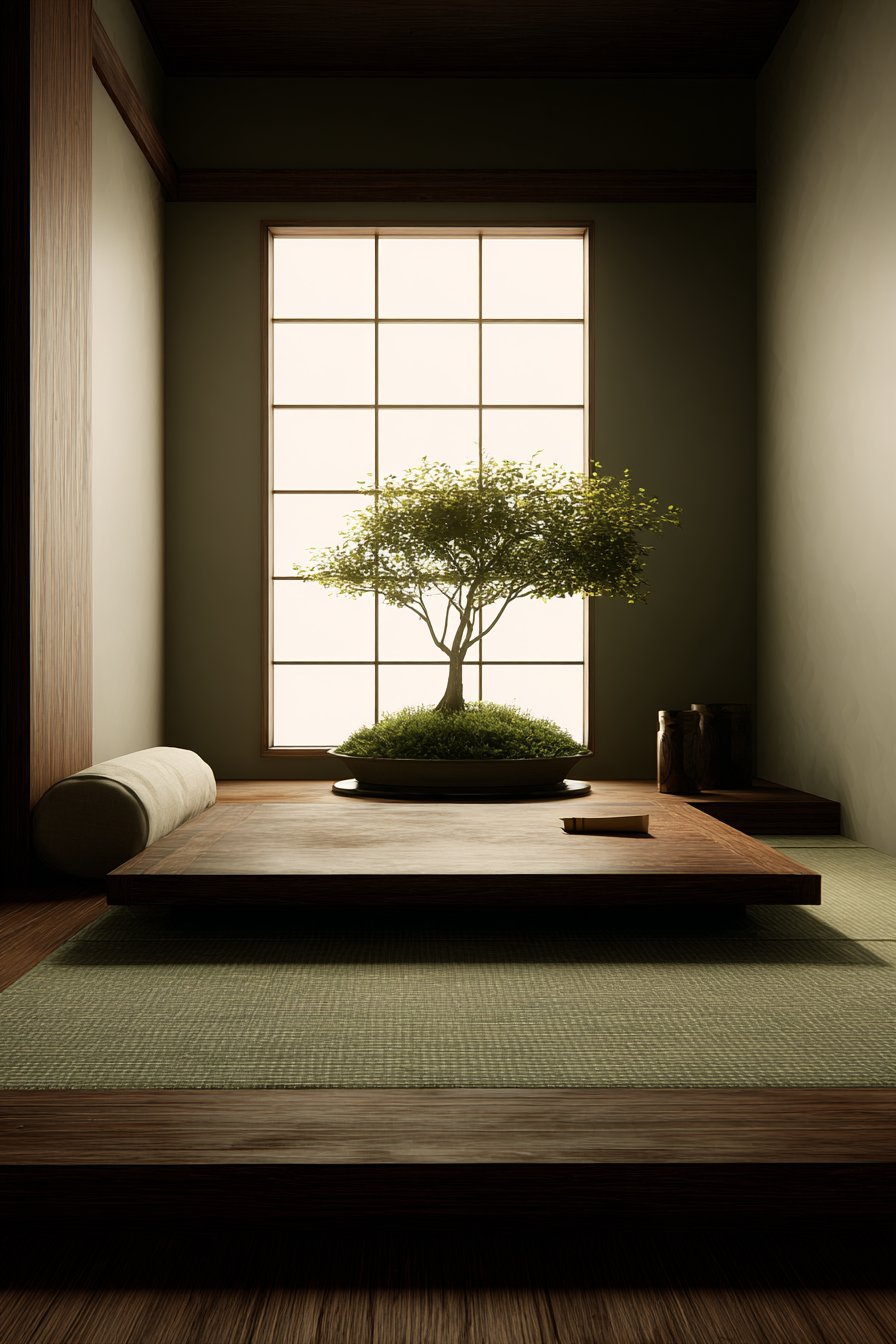
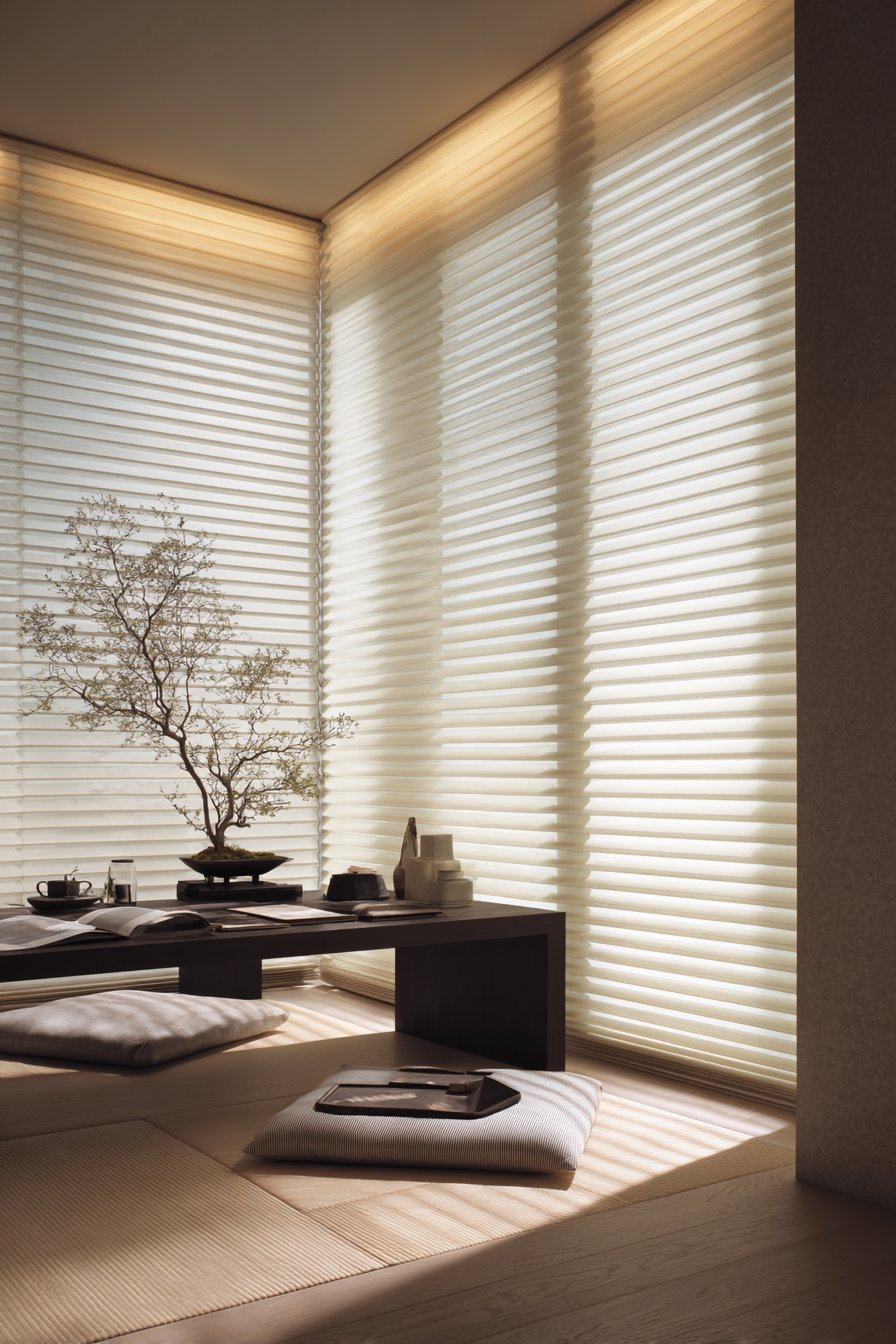
The Japanese-inspired corner desk creates a workspace infused with zen philosophy, emphasizing simplicity, mindfulness, and connection to natural materials. This low-profile corner desk in dark walnut features clean lines and absolutely no visible hardware, reflecting Japanese design principles of restraint and hidden construction techniques. The minimalist approach extends to seating—floor cushion seating on a tatami mat provides grounding connection to floor level traditional Japanese posture. A single bonsai tree on the desk surface serves as living art that requires daily attention and care, bringing meditative practice into the workspace. Shoji screen-inspired window treatments filter light softly while providing privacy and visual serenity.
The minimalist approach isn’t about deprivation but rather about careful curation—each object present has been thoughtfully selected for essential functionality or meaningful beauty. The low desk height aligns with traditional Japanese practices of floor-level living that encourage mindfulness of body position and movement. The dark walnut wood grain provides the sole decoration, its natural patterns offering organic visual interest without requiring additional ornamentation. Soft, diffused natural lighting creates a tranquil atmosphere conducive to contemplative work, meditation, or creative practice. The overall environment encourages presence, focus, and connection to essential activities rather than multitasking distraction.
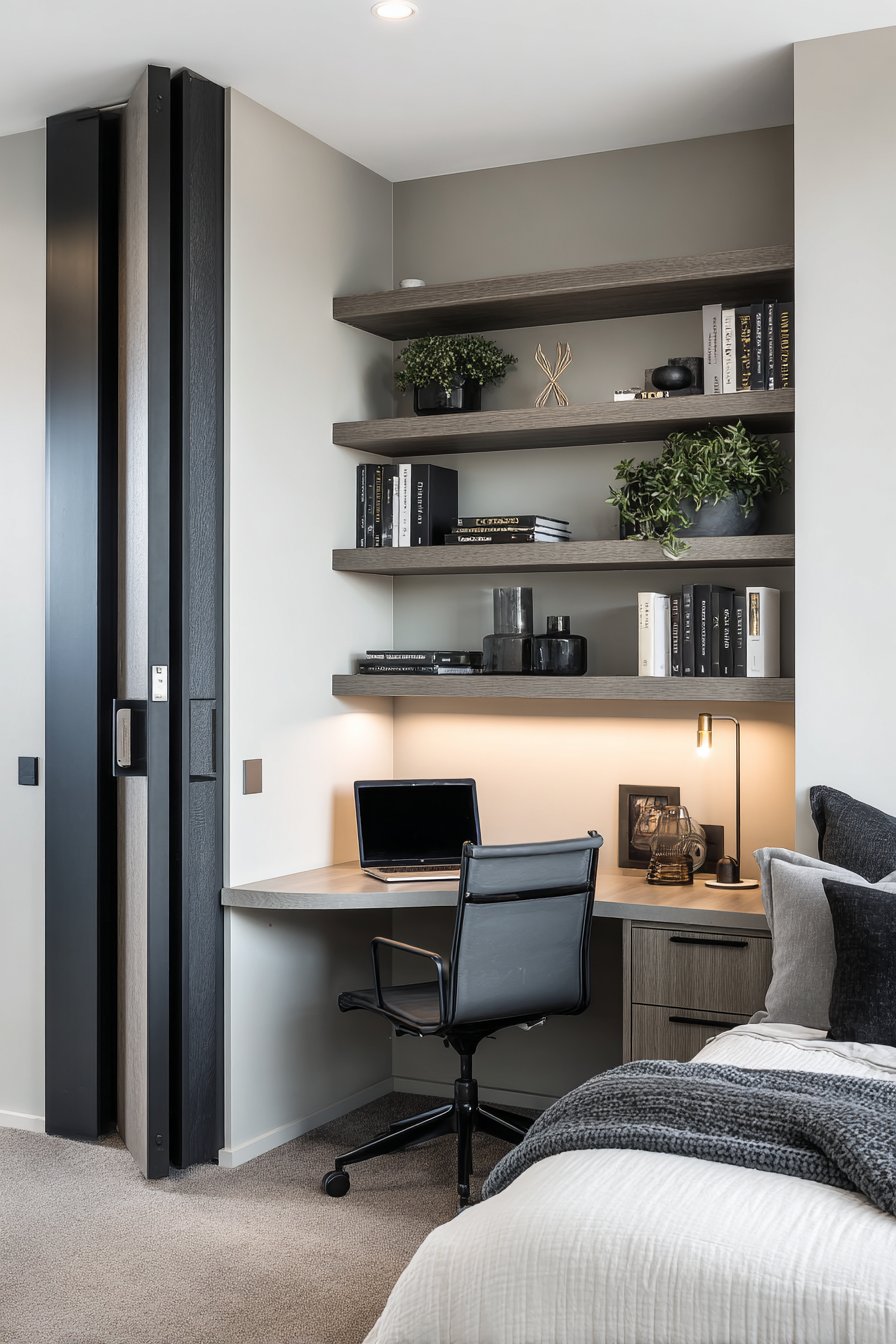
This design appeals to those practicing meditation, embracing minimalist philosophy, or drawn to Japanese aesthetics and cultural practices. The zen workspace creates an environment fundamentally different from typical American office settings—rather than maximizing productivity through stimulation, it cultivates focus through reduction and serenity. The low-profile furniture and floor seating may require adjustment for Western users accustomed to chair height desks, but many find the posture changes beneficial for focus and physical health. For those seeking to integrate contemplative practices into daily work or wanting workspace that supports mindfulness rather than hustle culture, the Japanese zen corner desk offers a radical alternative to conventional home office design.
Key Design Tips:
- Choose low-profile furniture proportioned for floor seating rather than chair height
- Select dark wood with beautiful grain that serves as the primary visual element
- Eliminate visible hardware through hidden construction and simple push-latch mechanisms
- Add a single living plant that requires daily care and attention
- Install shoji screen-style window coverings for diffused natural light
- Maintain absolute minimal desktop arrangement with only essential items present
- Incorporate natural materials including wood, stone, paper, and natural fibers
- Create quiet, uncluttered space that supports meditation and contemplative practice
21. Vertical Storage Small Space Corner
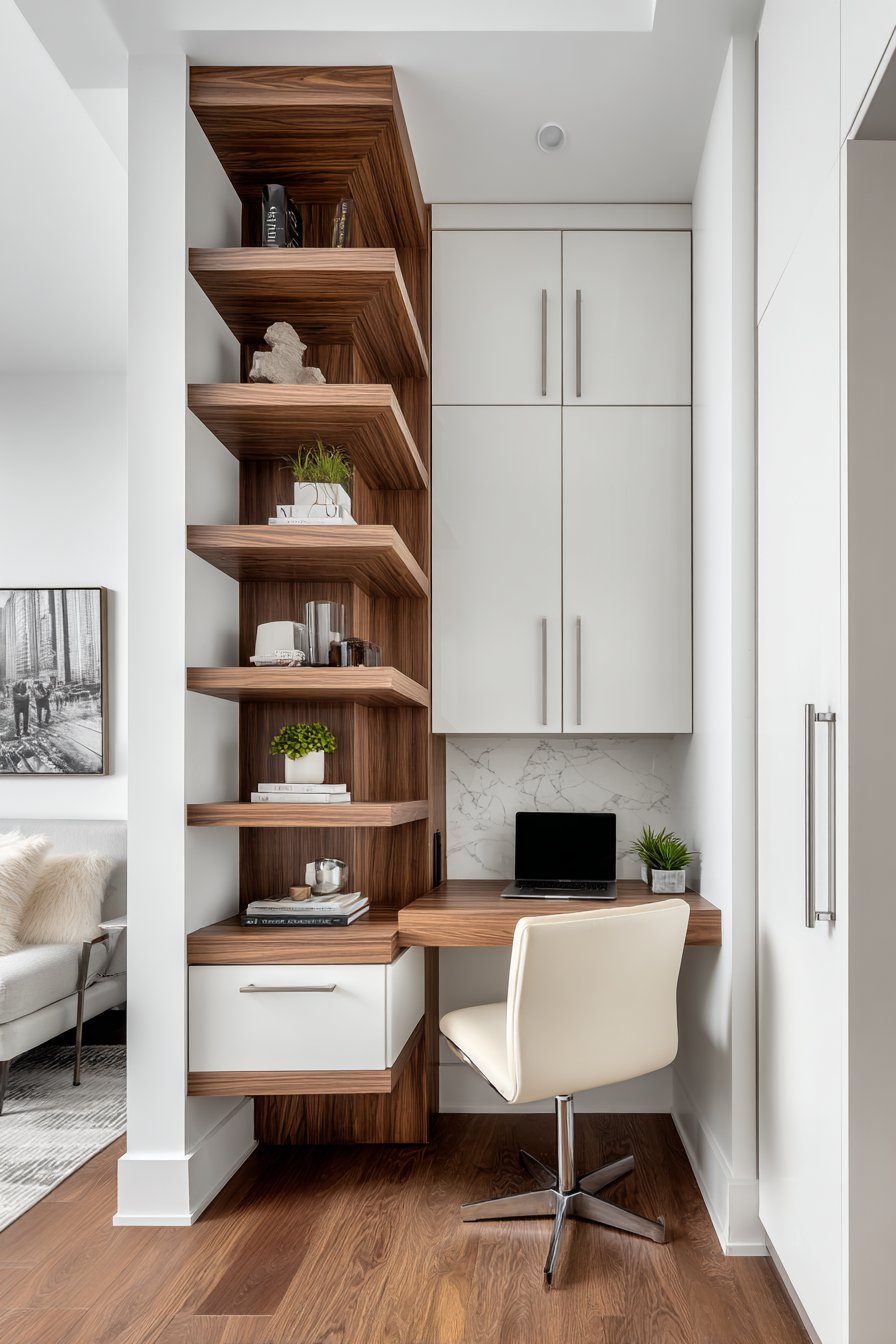
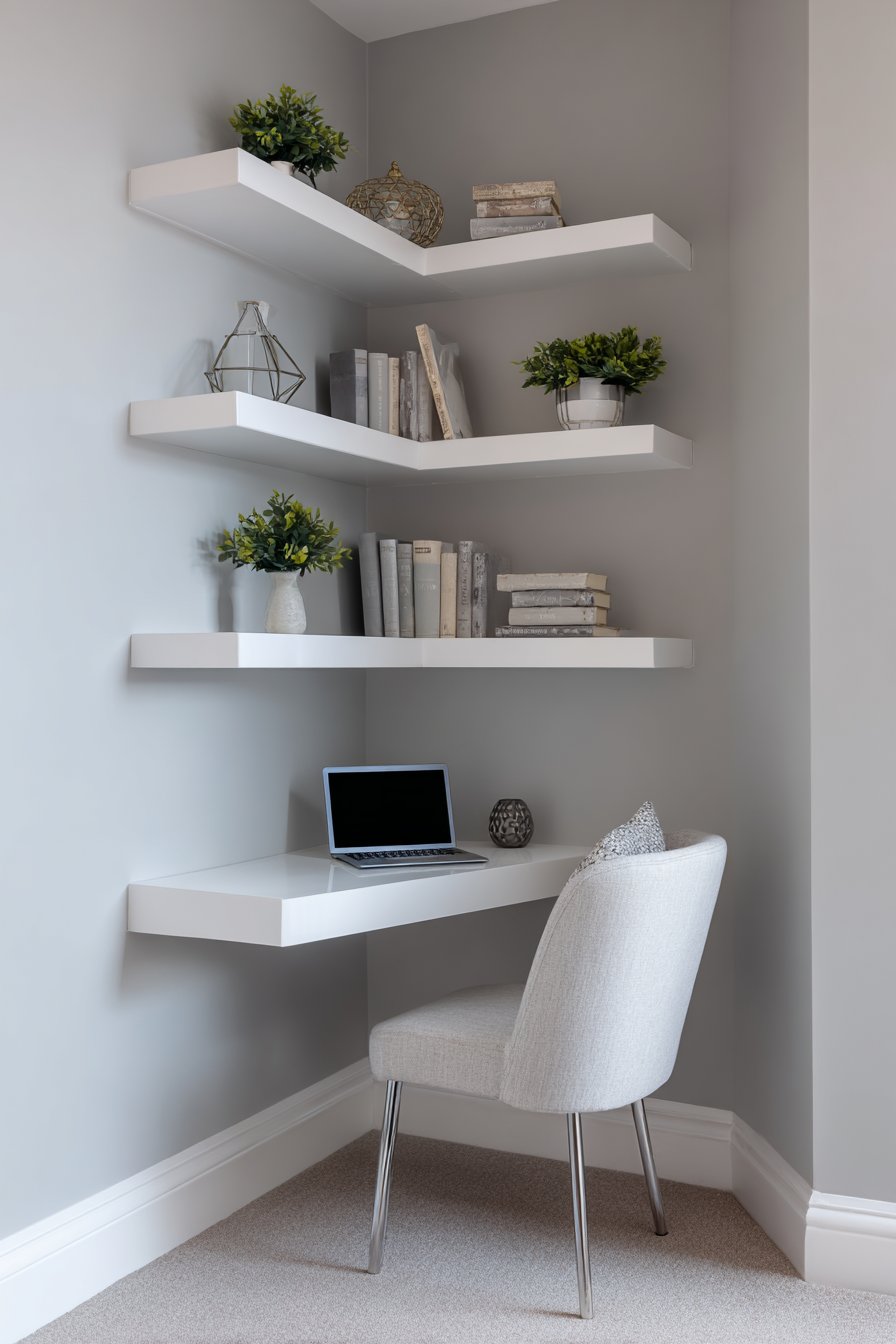
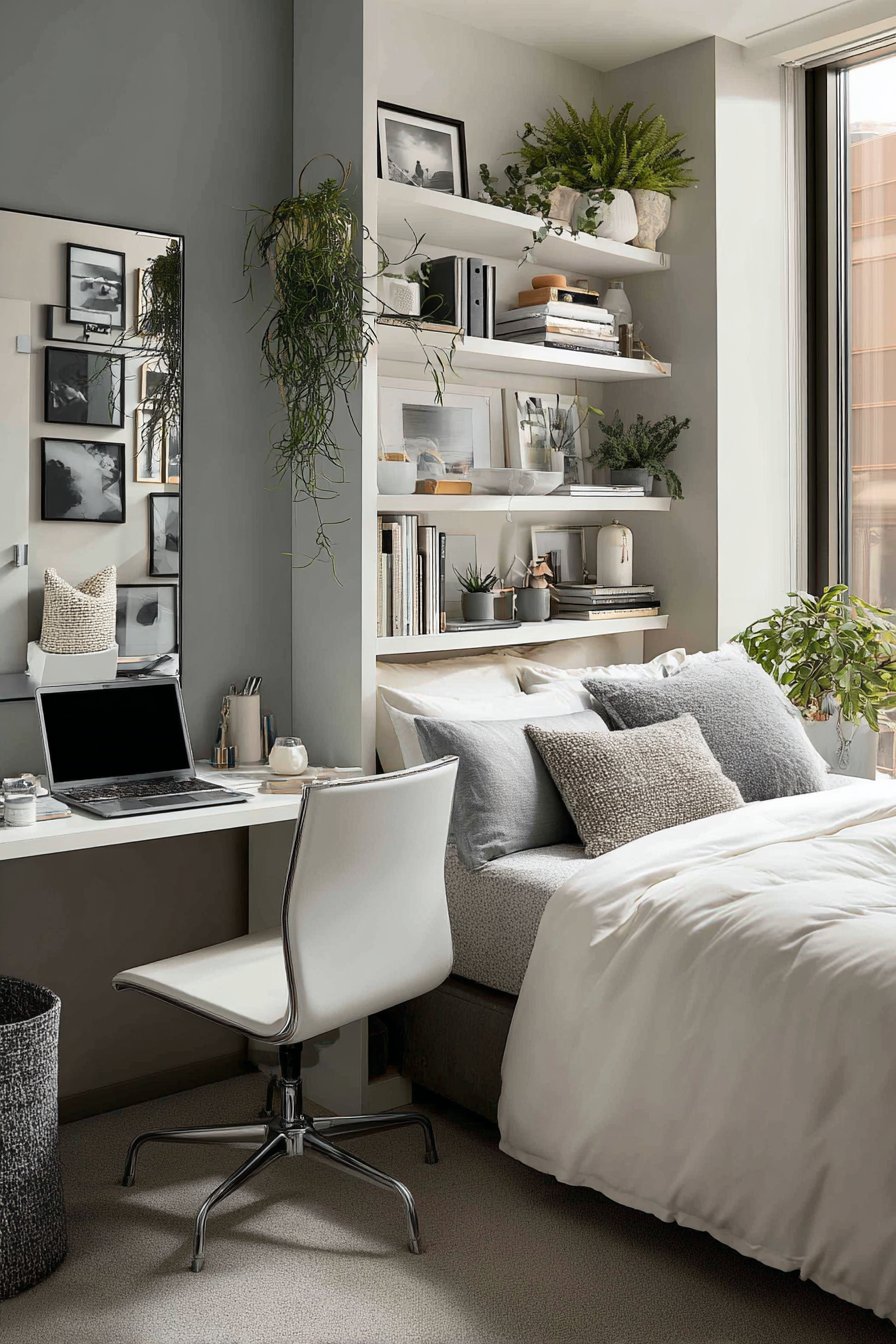
The vertical storage corner desk addresses the challenging reality of creating functional workspace in genuinely small bedrooms where floor space is at a premium. This design features a narrow corner desk with minimal horizontal footprint paired with tiered floating shelves that extend upward along the wall intersection. The vertical design capitalizes on often-wasted wall space, creating substantial storage and display capacity without consuming precious floor area. The compact desk surface accommodates laptop workspace while shelves display books, plants, and decorative items organized by height and frequency of use. A modern task chair with slim profile tucks completely under the desk when not in use, further minimizing the spatial footprint. Concealed cable management maintains clean aesthetics even in close quarters.
The psychology of vertical design extends beyond mere storage capacity—drawing the eye upward creates an impression of spaciousness that contradicts the room’s actual dimensions. The tiered shelves create visual rhythm as the eye travels from desk surface upward, engaging attention and creating interest in a corner that might otherwise feel cramped. Strategic use of open shelving rather than closed cabinets prevents the vertical storage from feeling heavy or oppressive. The narrow desk requires discipline in maintaining clear surfaces since limited space doesn’t tolerate clutter, but this constraint actually benefits focus by removing visual distractions. The overall solution proves that small spaces can accommodate fully functional workspaces through creative vertical thinking.
This design particularly benefits urban apartment dwellers, students in small dormitories, or anyone maximizing limited square footage. The vertical approach requires secure wall mounting capable of supporting the combined weight of shelves and their contents—professional installation may be advisable for safety and peace of mind. The solution works especially well in rooms with high ceilings where vertical dimension can compensate for limited horizontal space. For those facing genuine spatial constraints but unwilling to compromise on functional workspace, this vertical storage corner desk demonstrates that limitation often sparks the most creative and effective solutions.
Key Design Tips:
- Mount shelves securely into wall studs or use heavy-duty anchors rated for the weight load
- Graduate shelf depth from deeper at desk level to shallower as height increases
- Organize items on shelves by frequency of use, with daily items at arm’s reach
- Choose a narrow desk depth (18-20 inches) that provides adequate workspace without excessive projection
- Select a slim profile chair that tucks completely under desk when not in use
- Install cable management behind and beneath desk to prevent cord visibility
- Use vertical space all the way to ceiling if possible for maximum storage capacity
- Light shelves from below or above to prevent shadows and highlight displayed items
22. Art Deco Glamorous Corner
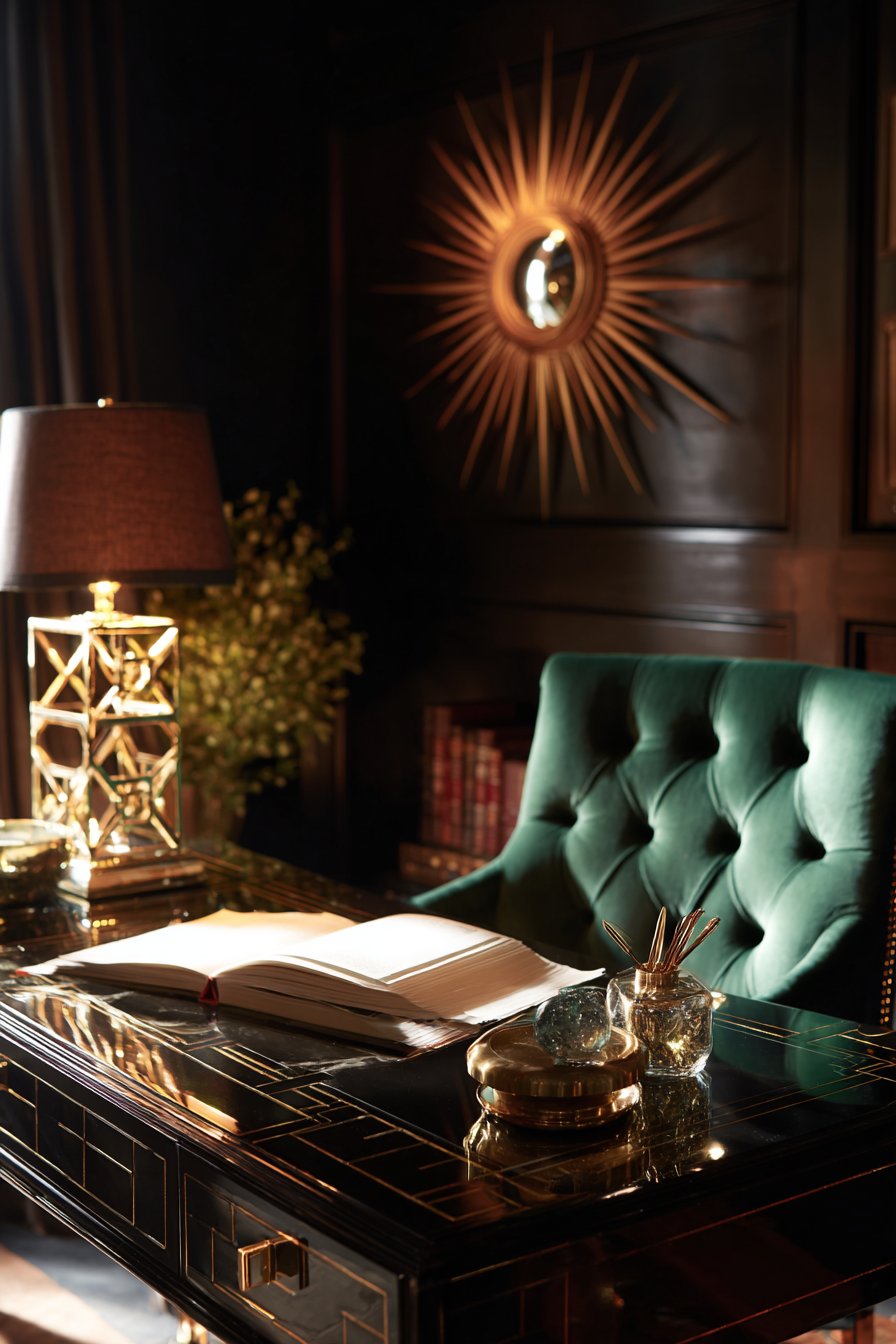
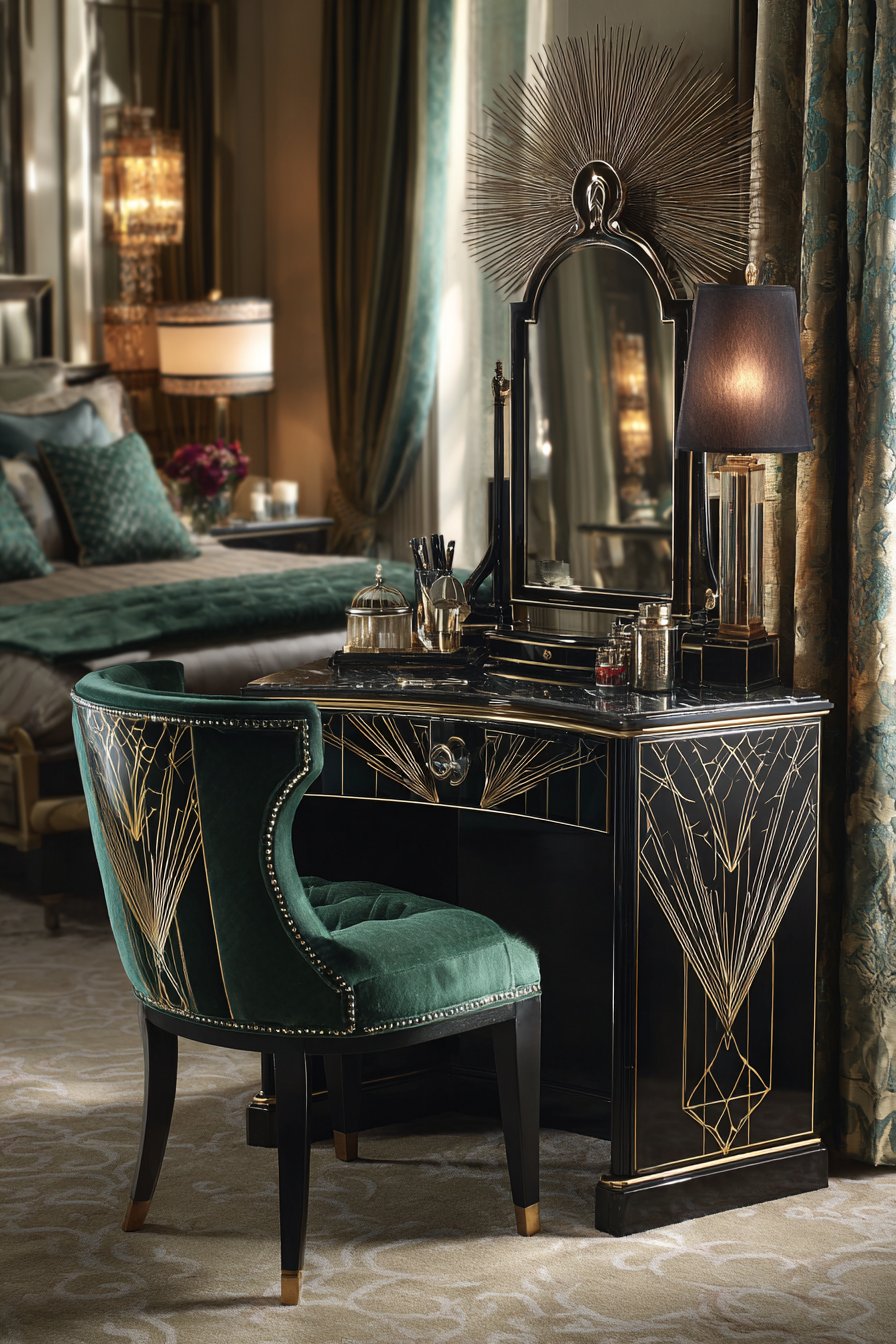
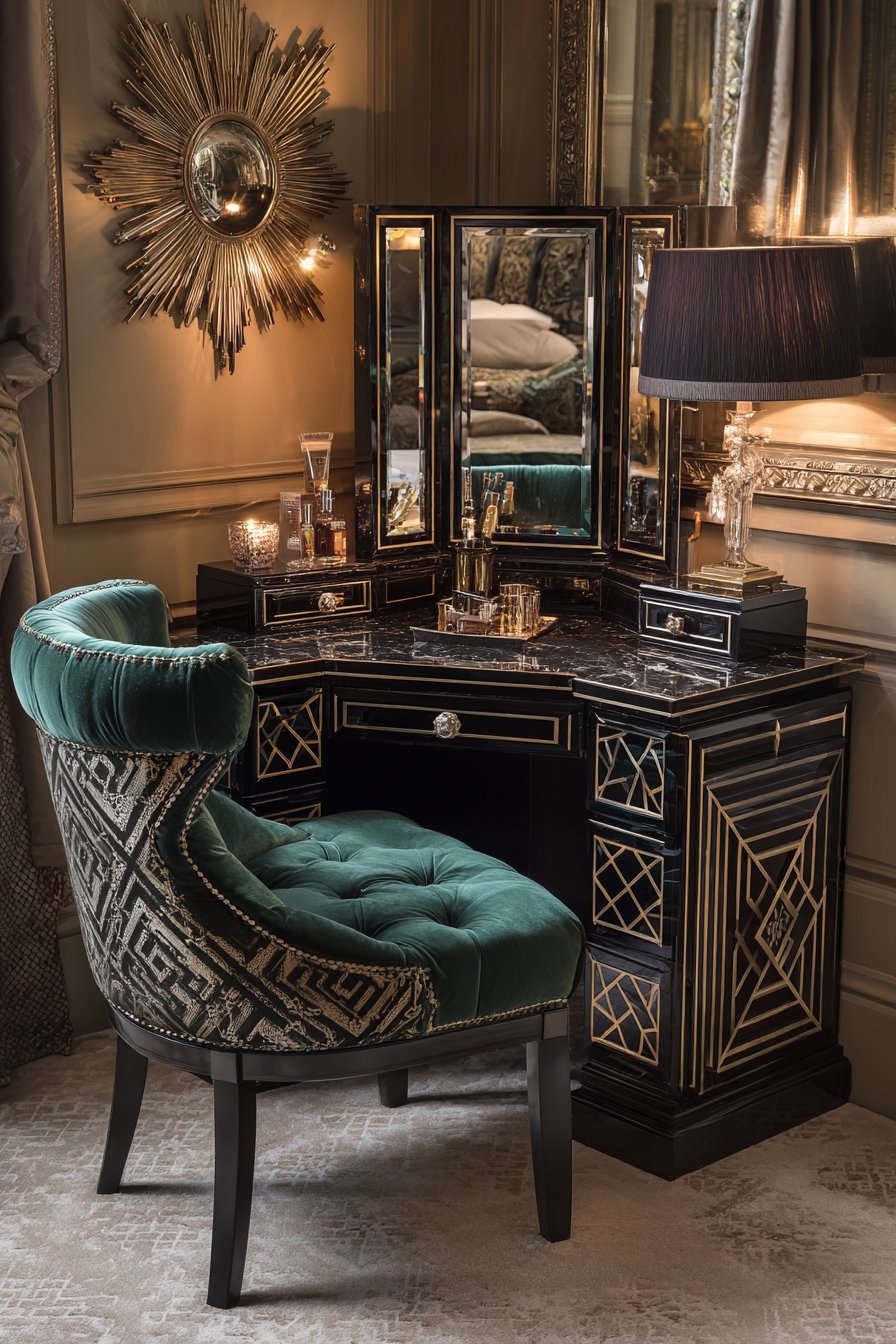
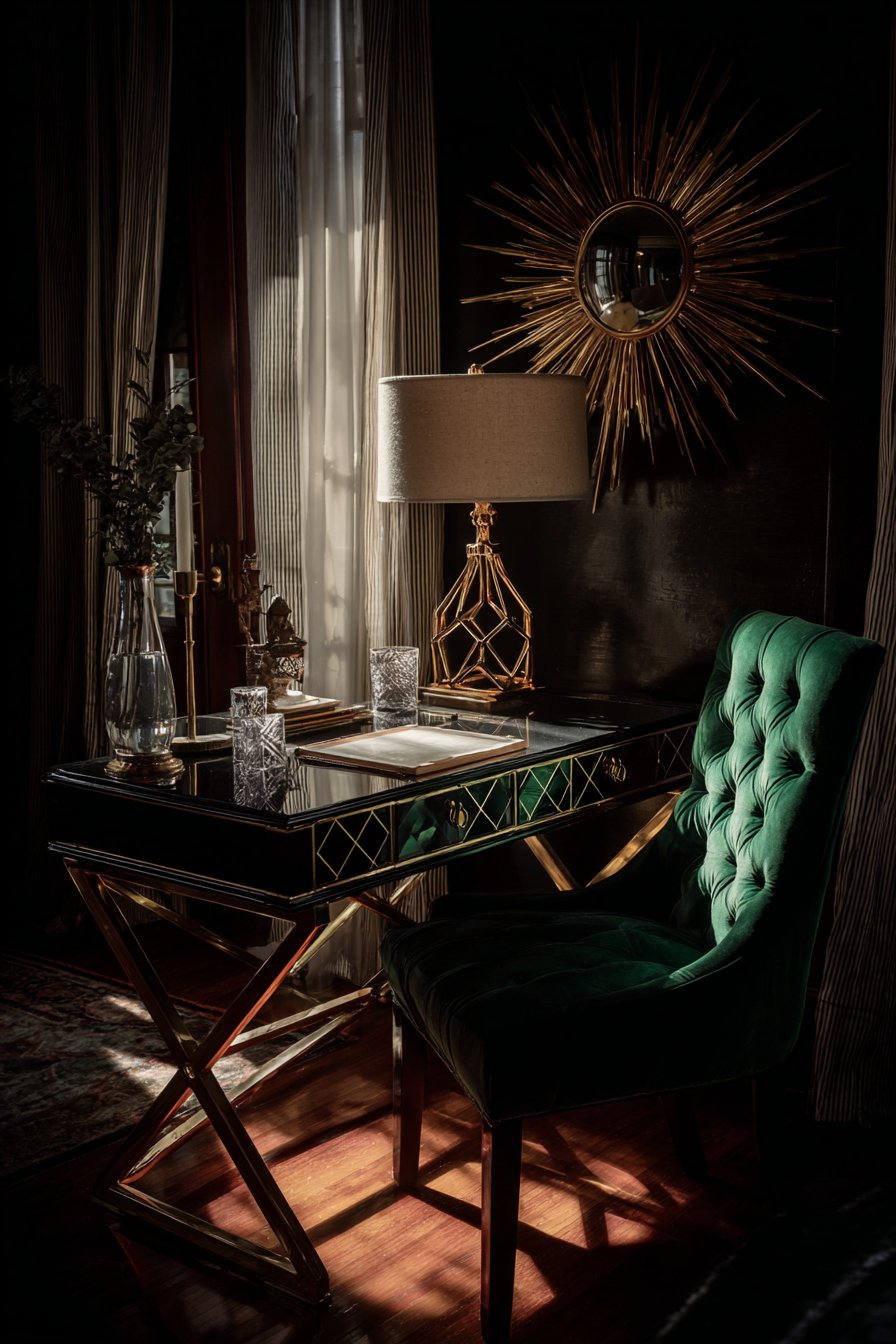
The art deco corner desk brings 1920s glamour and geometric sophistication into the contemporary bedroom workspace. This design showcases a corner vanity desk hybrid in high-gloss black lacquer with geometric gold inlay details—characteristic of art deco’s love of luxury materials and precise ornamentation. The glossy surface reflects light dramatically while the gold geometric patterns add visual richness without organic decoration. A velvet tufted chair in emerald green provides sumptuous seating that captures the opulent spirit of the jazz age. A sunburst mirror mounted above the desk serves as both functional element and iconic art deco motif. Luxe marble desk accessories including a pen set, small tray, and paperweight introduce natural stone’s inherent glamour.
Ambient lighting from a geometric brass table lamp creates dramatic illumination that references art deco’s theatrical sensibility. The lamp’s angular form and metallic finish epitomize the machine age aesthetic that defined the era. Rich bedroom textiles visible in the background—perhaps jewel-toned velvet bedding or geometric patterned wallpaper—extend the art deco aesthetic throughout the space. The overall effect feels luxurious, confident, and slightly theatrical—characteristics that made art deco the choice of movie palaces, ocean liners, and sophisticated urban apartments in its heyday. The bold geometric patterns and dramatic color contrasts create visual excitement that energizes the workspace.
This design appeals to those who appreciate theatrical glamour, geometric design, and the optimistic sophistication of the interwar period. Art deco’s emphasis on luxury, craftsmanship, and dramatic visual impact creates workspaces that feel special and inspiring rather than merely functional. The black, gold, and jewel tone palette creates richness without the softness of pastels or the casualness of neutrals. The geometric patterns and angular forms create structured visual interest that stimulates without overwhelming. For those drawn to Old Hollywood glamour, Jazz Age sophistication, or anyone wanting workspace that makes them feel elegant and powerful, the art deco corner desk delivers distinctive style that stands apart from contemporary minimalism.
Key Design Tips:
- Choose high-gloss lacquer finishes in black, white, or deep jewel tones for authentic art deco aesthetic
- Incorporate geometric patterns through inlay, wallpaper, or decorative accessories
- Add metallic accents in brass, gold, or chrome with geometric or sunburst motifs
- Select luxurious materials including marble, velvet, lacquer, and polished metals
- Use bold color contrasts including black and gold, navy and cream, or emerald and brass
- Include at least one sunburst design element as iconic art deco signature
- Choose angular, geometric furniture forms rather than organic curves
- Add dramatic lighting that creates shadows and highlights architectural details
23. Professional L-Shaped Home Office
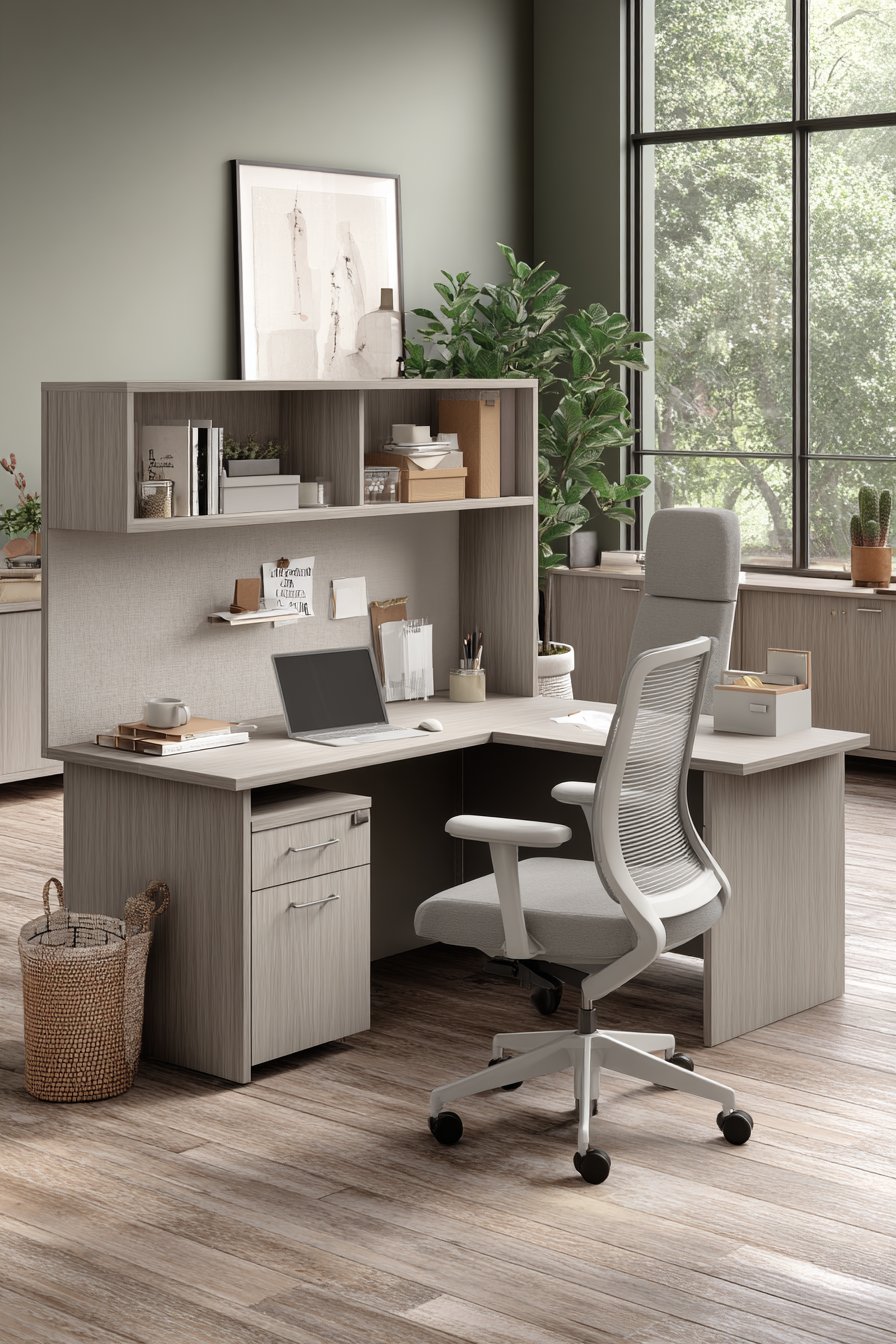
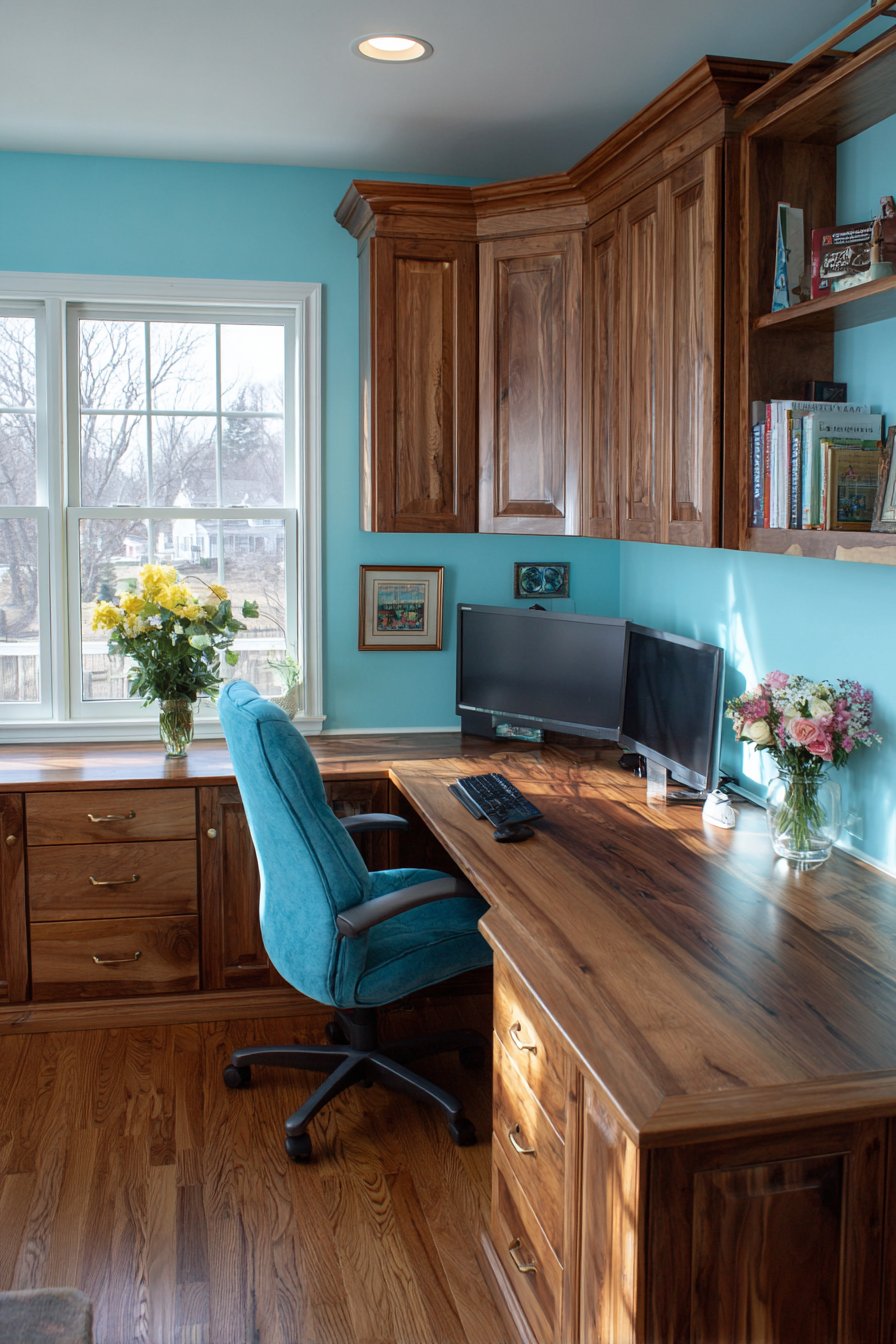
The professional L-shaped corner workstation transforms the bedroom corner into a comprehensive home office capable of supporting full-time remote work. This setup features ample work surface in an L-configuration with hutch storage above and integrated filing system below. The generous dimensions accommodate dual monitors, inbox trays, supply holders, and active projects without feeling cramped. An ergonomic executive chair provides comfort during extended work sessions while maintaining professional appearance for video conferences. The organization systems including desktop filing, drawer dividers, and hutch compartments create homes for various work materials, reducing visual clutter and improving efficiency.
The design balances professional functionality with bedroom aesthetics through a cohesive color palette that coordinates with existing room decor. Rather than introducing stark office furniture that clashes with residential warmth, this solution maintains harmony through thoughtful material and finish selection. Natural window light supplemented by adjustable desk lighting creates optimal illumination for computer work and paper tasks. The comprehensive storage eliminates the need for additional filing cabinets or storage furniture that would further consume bedroom space. The professional quality of the setup enables legitimate business activities rather than makeshift arrangements that compromise productivity or comfort.
This design suits professionals working remotely full-time, consultants running home-based businesses, or anyone conducting substantial work from their bedroom. The investment in quality office furniture pays dividends in improved productivity, reduced physical strain, and psychological benefits of working in a proper office environment. The L-shaped configuration provides extensive workspace while the corner placement maximizes efficiency. The hutch storage keeps reference materials accessible while maintaining organized appearance essential for video calls with colleagues or clients. For those treating home office work as their primary career rather than occasional convenience, this professional corner desk provides the comprehensive functionality required for long-term success.
Key Design Tips:
- Invest in commercial-grade office furniture designed for daily professional use
- Ensure adequate work surface dimensions for computer equipment and active projects
- Choose ergonomic seating that supports health during extended sitting periods
- Create comprehensive filing and storage systems to maintain organization
- Install layered lighting including ambient, task, and accent illumination
- Select finishes and colors that coordinate with bedroom decor for visual harmony
- Plan adequate electrical outlets and cable management for technology requirements
- Position the desk to create professional video call backgrounds that don’t show beds
24. Shabby Chic Vintage Corner
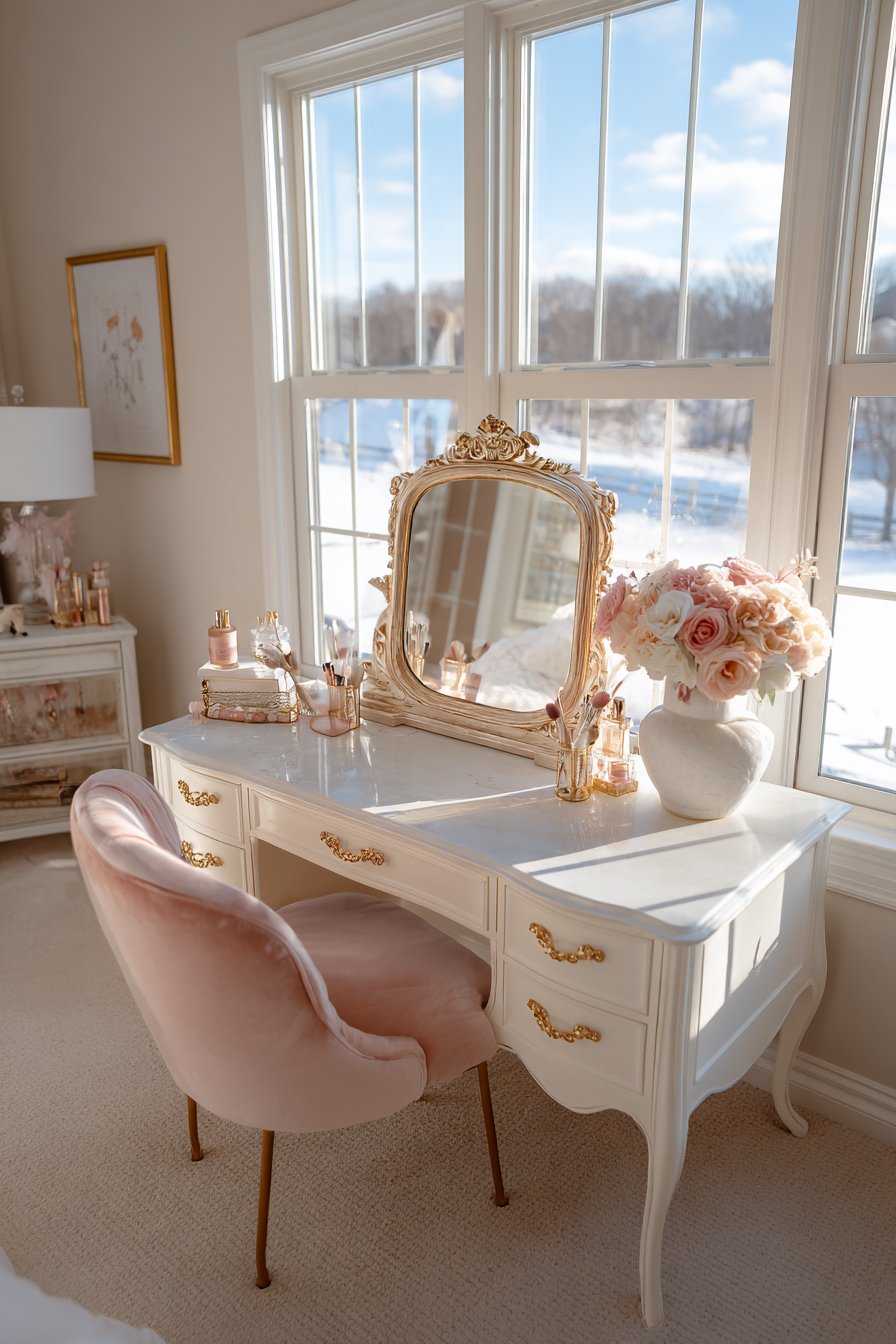
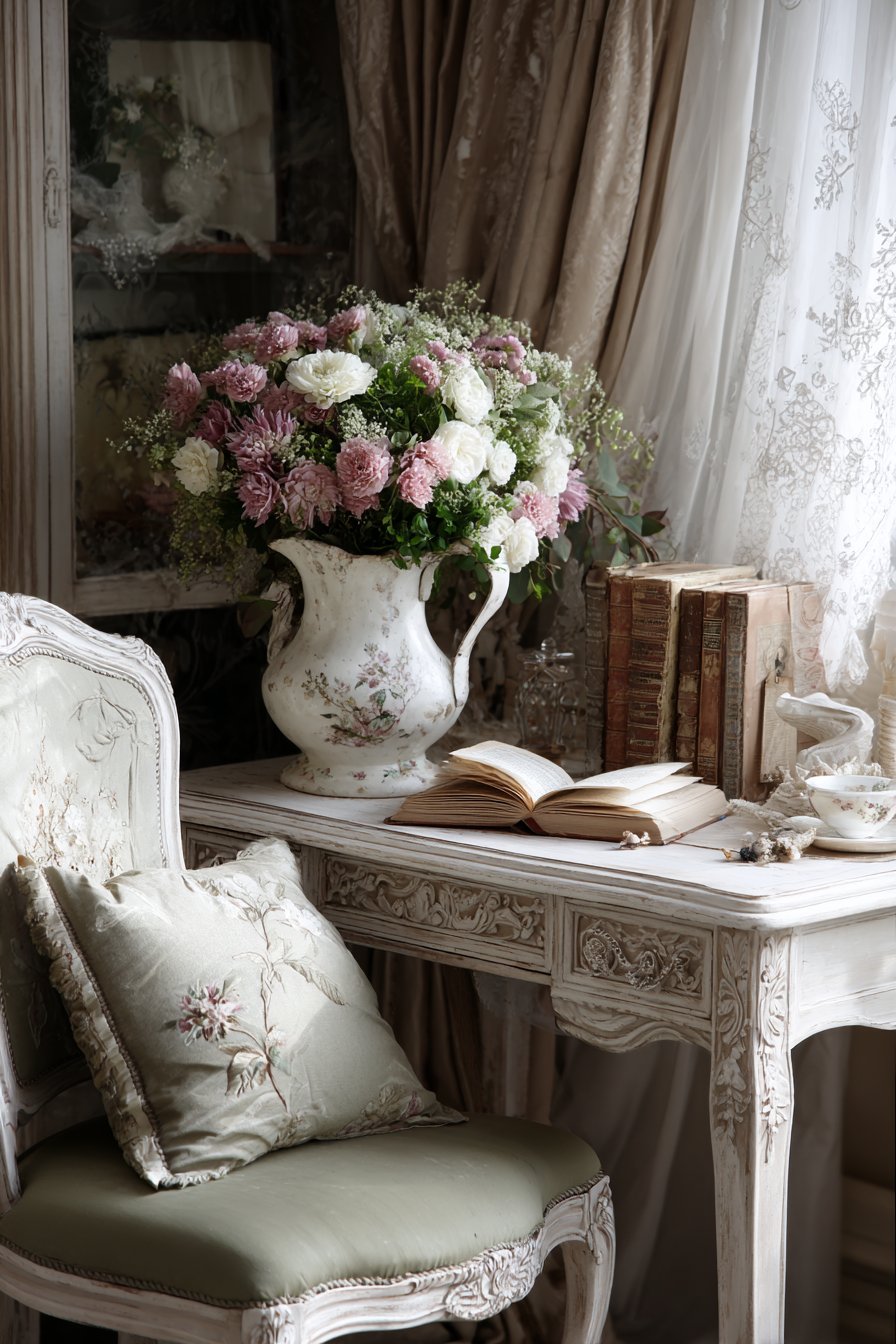
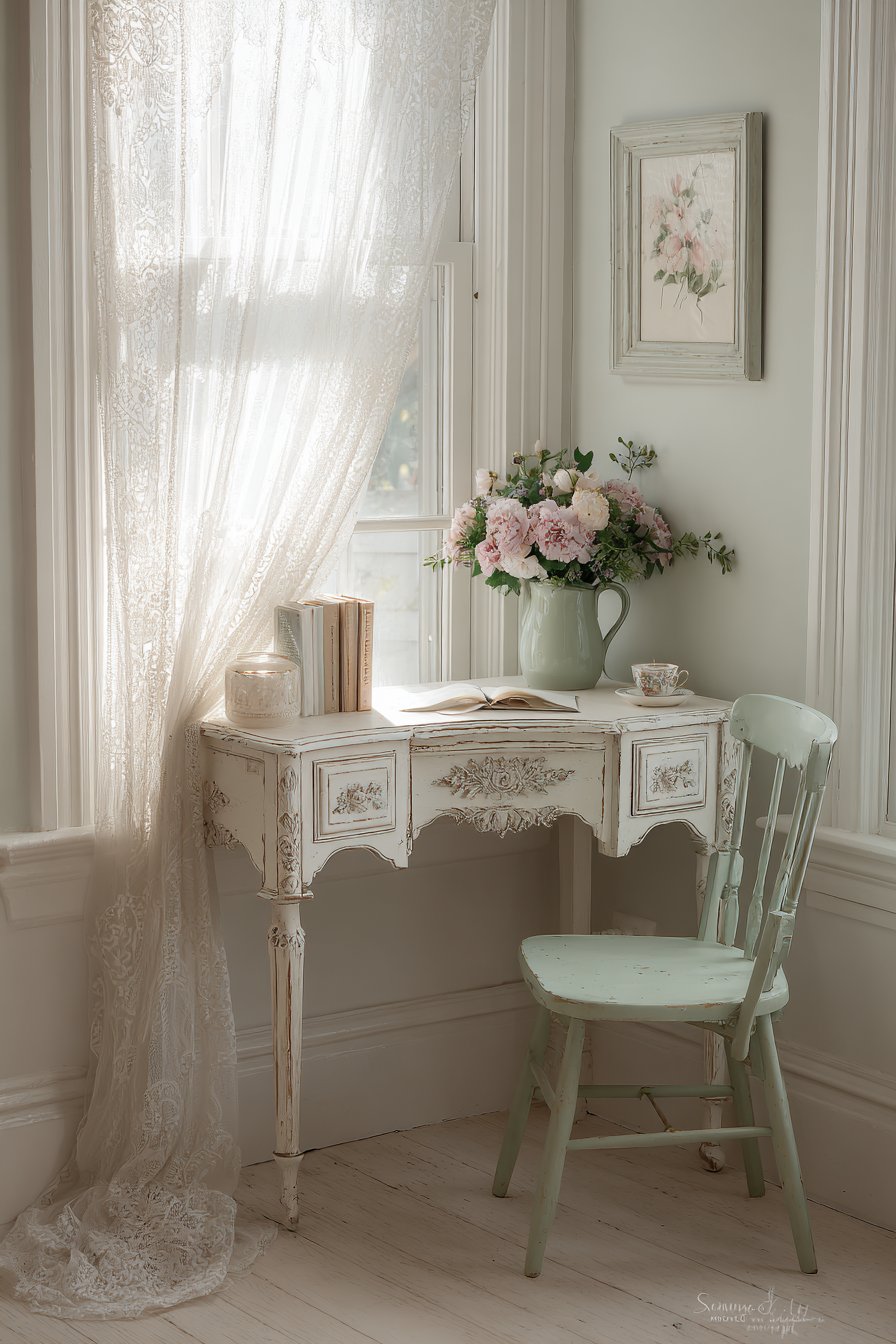
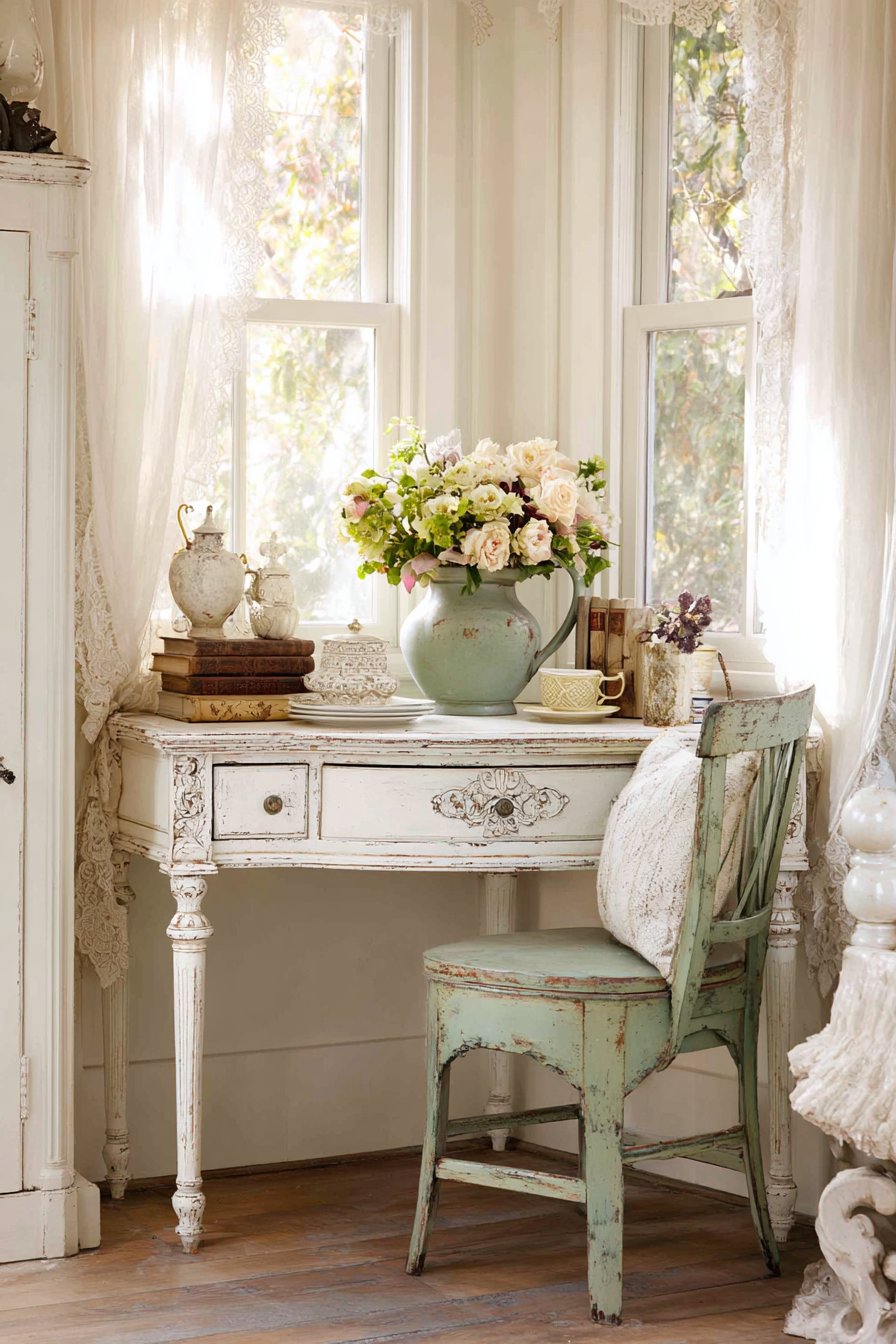
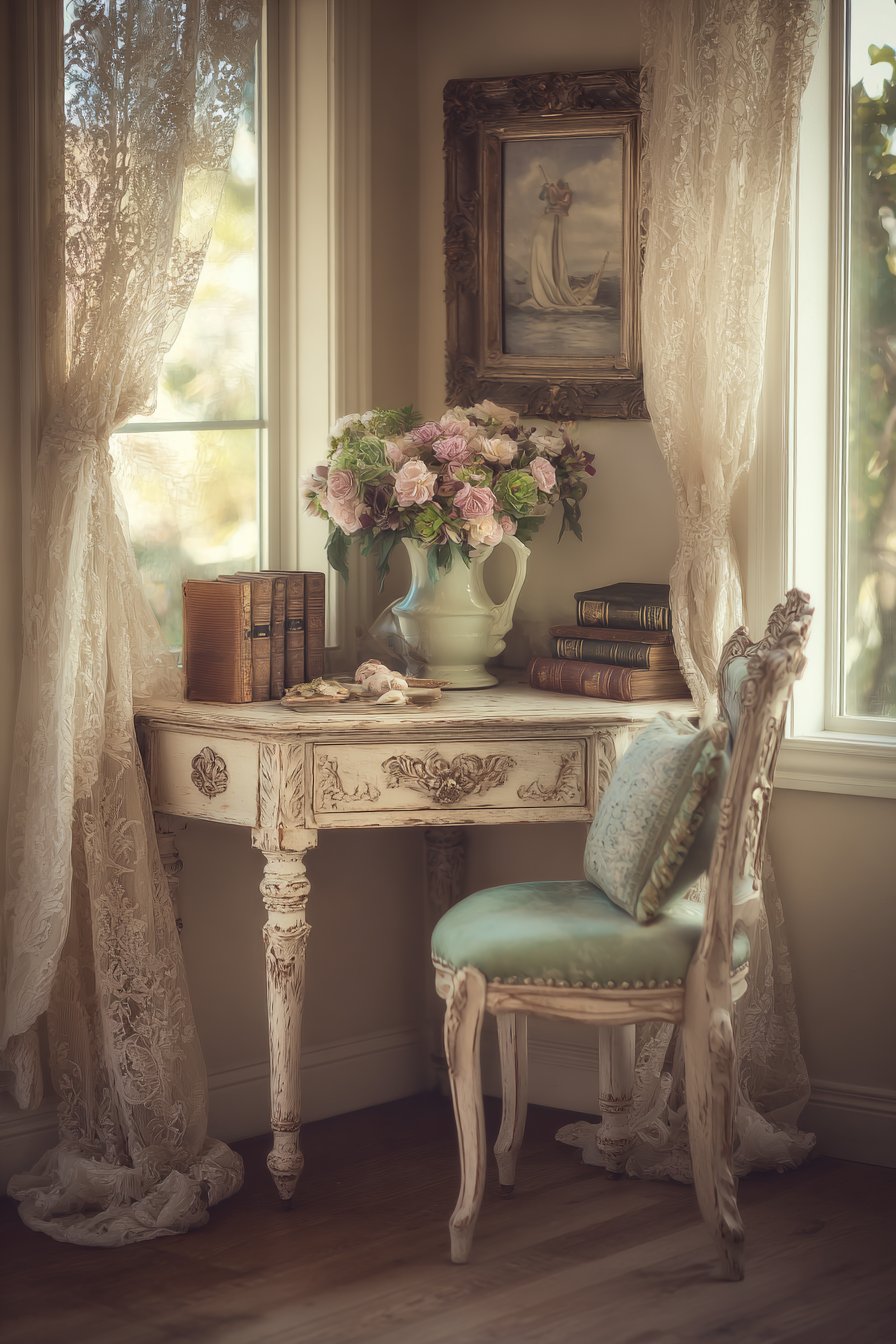
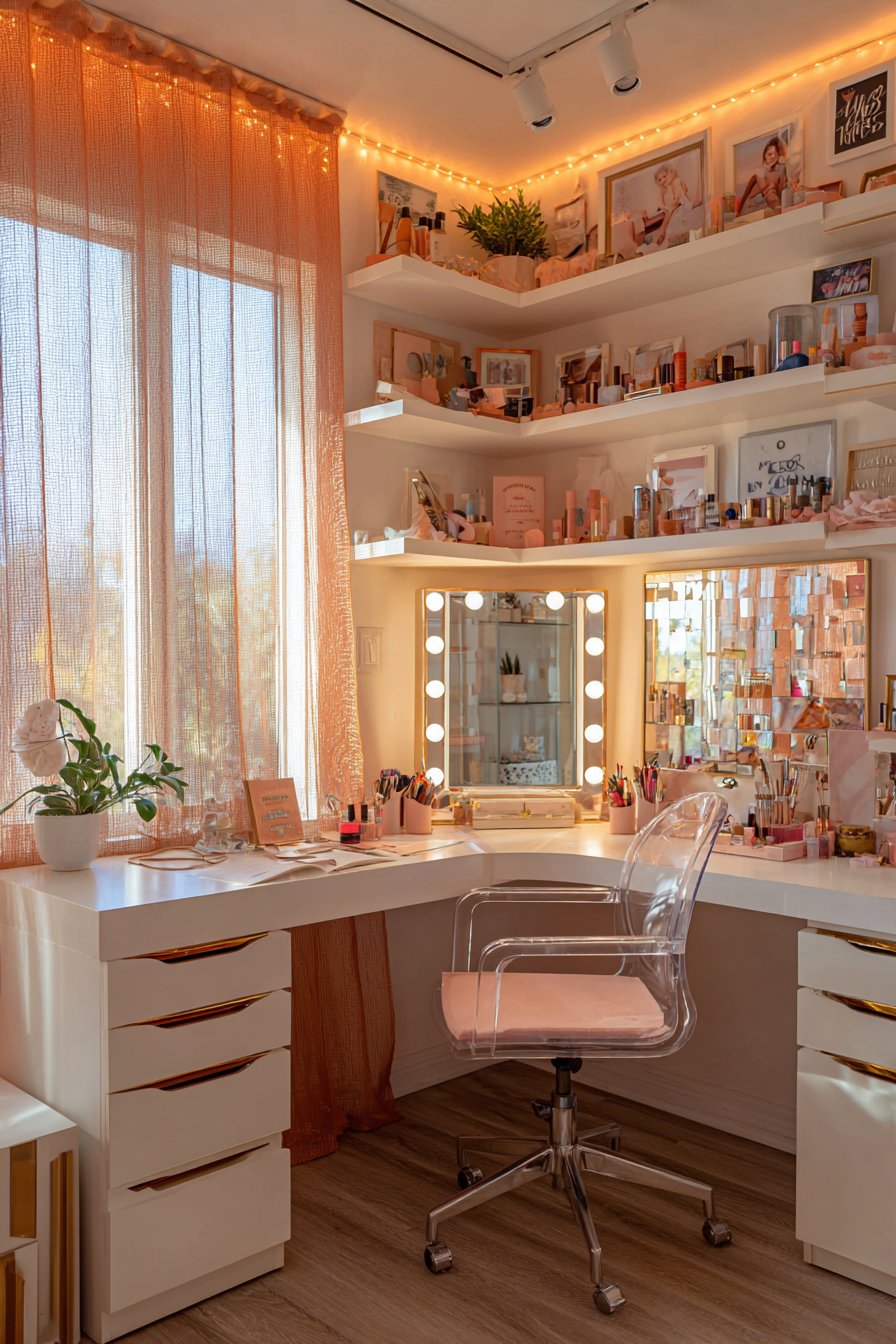
The shabby chic corner desk celebrates romantic vintage aesthetics through distressed finishes, ornate details, and soft feminine touches. This design features a distressed white corner desk with ornate carved details and decorative hardware that references French provincial or Victorian furniture traditions. The purposely aged finish creates the appearance of cherished heirloom furniture passed through generations. A mismatched vintage chair painted in soft sage adds eclectic charm while the slightly worn finish contributes to the lived-in aesthetic that defines shabby chic. A lace curtain panel softens the window treatment while fresh flowers in a vintage pitcher add romantic touch and natural beauty.
The collection of antique books and china displayed on the desk and nearby shelves tells visual stories while adding textural layers and vintage authenticity. These aren’t merely decorative props but potentially functional items or meaningful collections that reflect the owner’s interests and history. Soft natural lighting filtering through gauzy curtains creates the diffused glow characteristic of shabby chic interiors—nothing harsh or clinical penetrates this gentle space. The overall environment feels charming, relaxed, and welcoming rather than demanding perfection or pristine maintenance. The purposeful imperfections and distressed finishes celebrate natural aging and patina rather than fighting time’s inevitable marks.
This design appeals to those who love vintage aesthetics, romantic decorating, and the treasure-hunting aspect of assembling collected rather than purchased decor. Shabby chic’s forgiving nature—where chips, cracks, and wear add character rather than diminishing value—creates relaxed environments that don’t demand constant maintenance. The soft colors, floral elements, and vintage textiles create feminine workspaces without saccharine excess. For those drawn to flea markets, estate sales, and grandmother’s attic rather than contemporary furniture showrooms, the shabby chic corner desk creates a workspace filled with history, romance, and individual character impossible to achieve through retail purchase alone.
Key Design Tips:
- Shop vintage and secondhand sources for authentic aged furniture rather than new distressed pieces
- Apply DIY distressing techniques to new furniture using sanding and paint layering
- Choose soft, romantic colors including whites, creams, soft pinks, sage, and dove gray
- Incorporate ornate carved details, decorative hardware, and vintage-style elements
- Mix and mismatch furniture pieces in complementary colors rather than matched sets
- Display vintage books, china, lace, and romantic accessories that tell personal stories
- Use soft, flowing textiles including lace, embroidered linens, and floral patterns
- Embrace imperfections and natural wear as character rather than flaws requiring correction
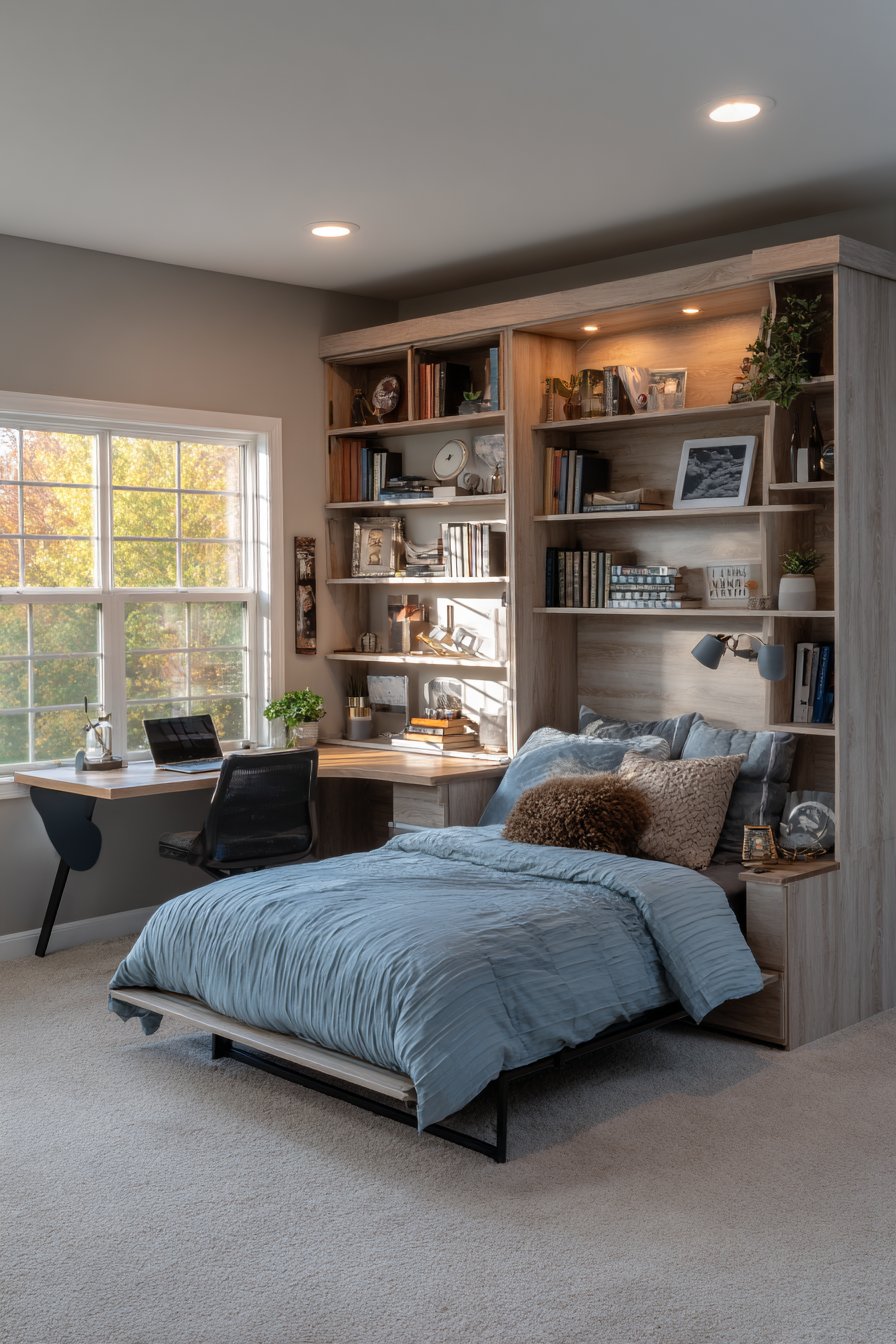
25. Multi-Functional Murphy Bed Corner
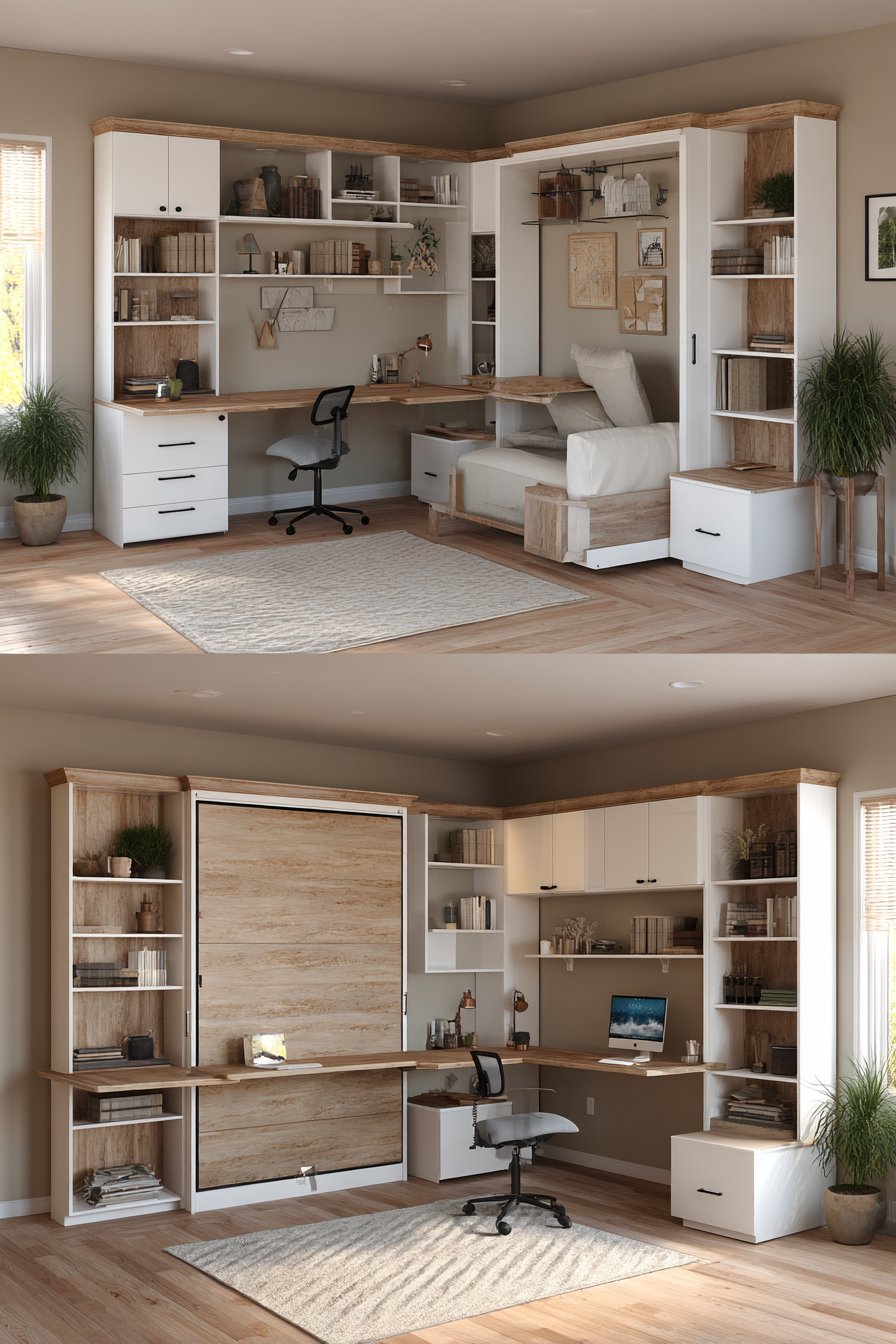
The Murphy bed corner desk represents ultimate space efficiency, demonstrating how creative design can integrate workspace within transforming furniture systems. This ingenious design features a wall-mounted fold-down bed system that incorporates a corner desk remaining accessible whether the bed is raised or lowered. The clever engineering ensures the desk surface and adjacent shelving serve functional purposes in both configurations. When the bed folds up against the wall, the corner desk becomes the room’s focal point with the full workspace accessible. When the bed folds down for sleeping, the desk remains usable for nightstand functions or quick tasks. Neutral finishes in light gray and white oak maximize versatility and coordinate with various decorating styles.
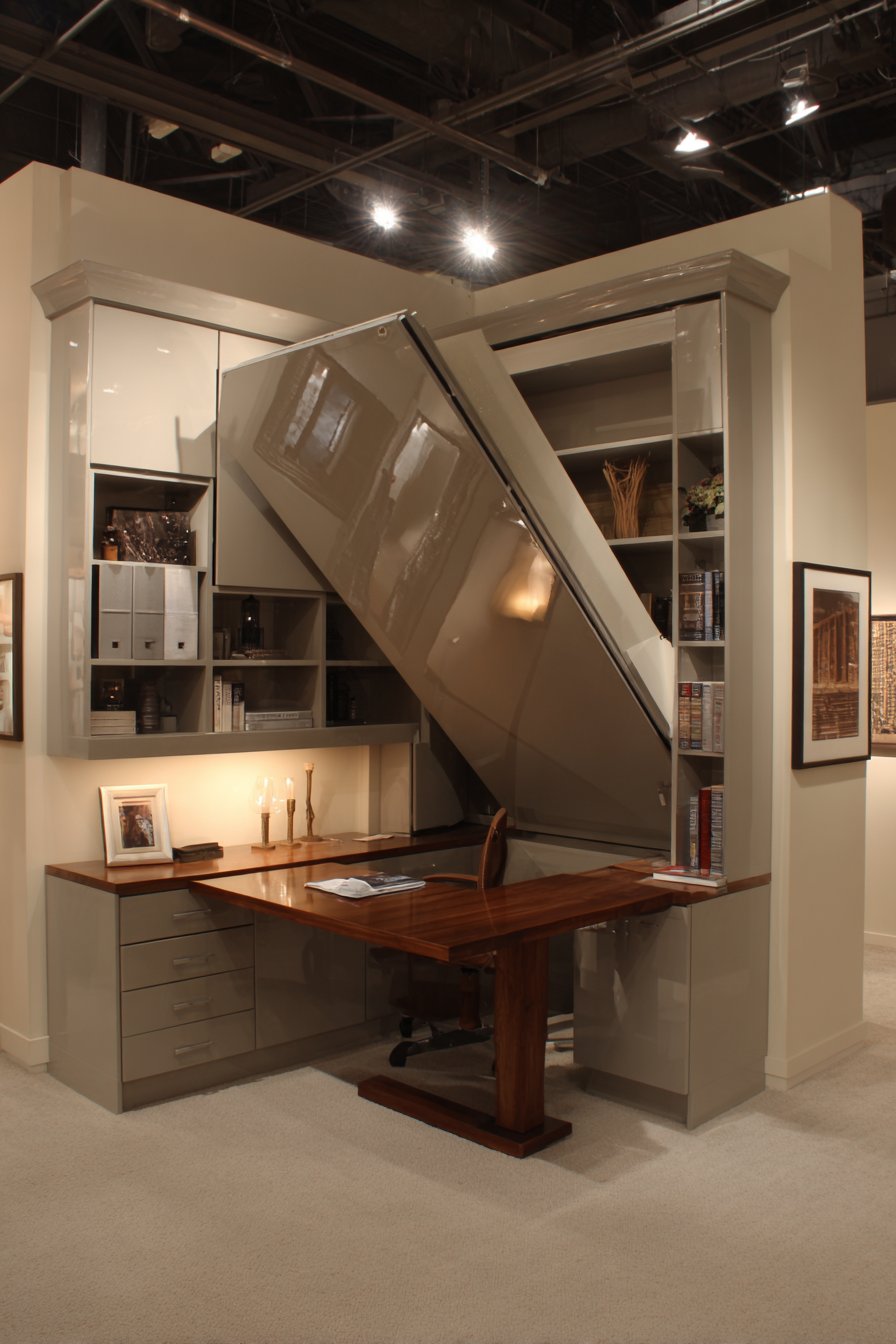
The transformational capability provides remarkable flexibility for studio apartments, guest rooms that double as offices, or any space requiring multiple functions from limited square footage. During waking hours, the room functions as productive home office. At night, the bed deploys quickly to create comfortable sleeping quarters. The mechanism’s quality determines long-term satisfaction—cheap hardware fails quickly while professional systems operate smoothly for years. The integrated shelving serves both configurations, perhaps holding books and work materials when in office mode and personal items and bedtime reading when in bedroom mode. The seamless transformation enables genuine multi-functionality rather than uncomfortable compromises.
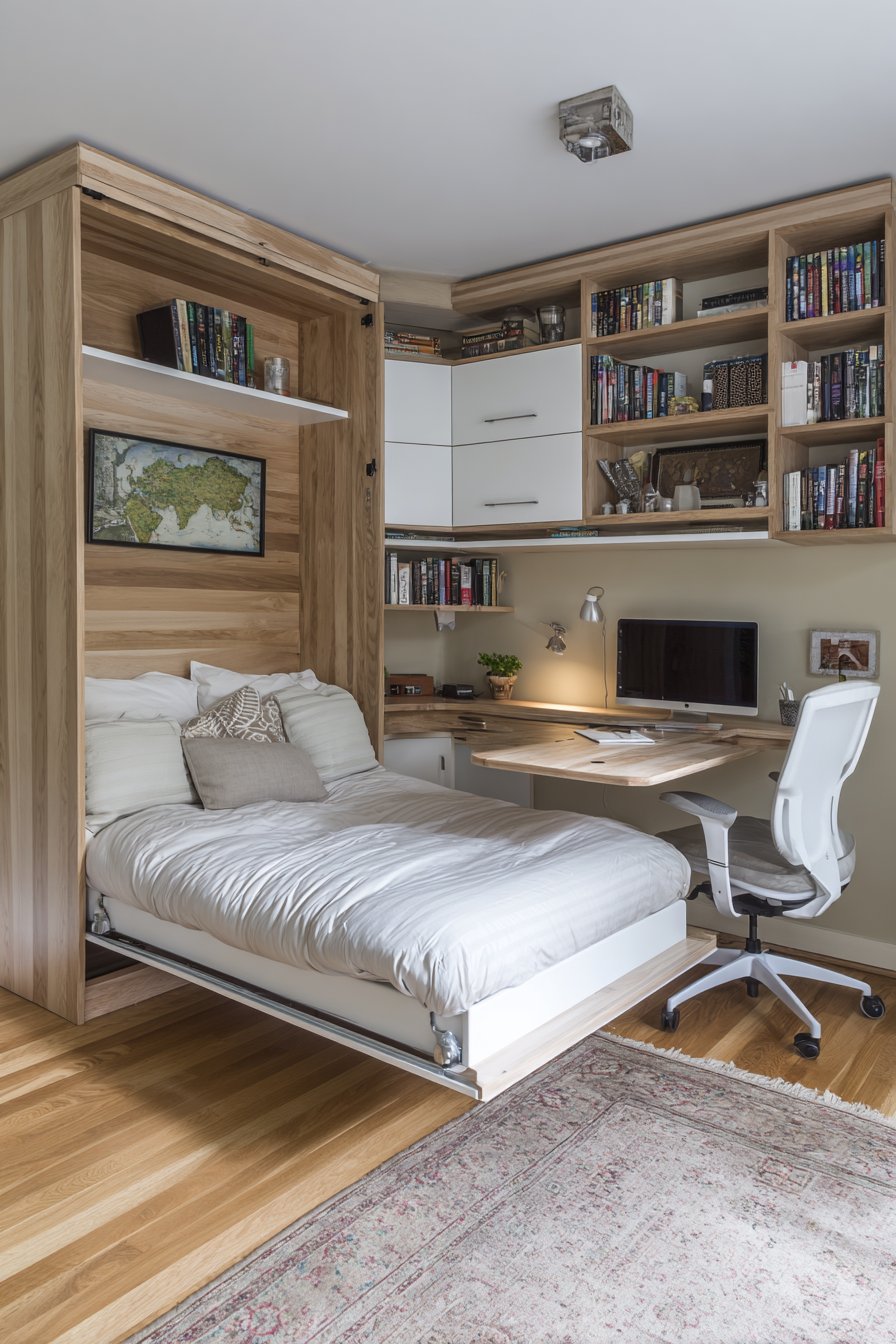
This design suits urban dwellers paying premium prices per square foot, young professionals in studio apartments, or homeowners wanting guest rooms that serve daily functions rather than sitting empty between visits. The Murphy bed configuration requires professional installation and quality hardware capable of supporting the bed’s weight safely and operating smoothly through repeated cycles. The initial investment exceeds typical furniture costs but provides functionality impossible through conventional pieces. For those committed to maximizing every square inch or refusing to sacrifice either bedroom or office capability, the Murphy bed corner desk delivers innovative solution that honors both needs without compromising either function.
Key Design Tips:
- Invest in quality Murphy bed mechanisms from reputable manufacturers for safety and longevity
- Ensure professional installation with proper wall mounting into structure rather than drywall alone
- Choose integrated desk and shelving designed specifically for the Murphy bed system
- Select neutral finishes that work for both office and bedroom functions
- Plan adequate clearance space in front for safe bed deployment and operation
- Include mattress retention system to prevent shifting during bed raising and lowering
- Consider spring-assisted mechanisms for easier operation requiring less physical effort
- Add organizational features that serve both configurations for maximum versatility
Why These Corner Desk Designs Represent the Best Bedroom Workspace Solutions
Each corner desk design featured in this comprehensive guide represents thoughtful solutions to the universal challenge of creating functional workspace within bedrooms. These designs excel because they recognize that corner desks must satisfy multiple criteria simultaneously: maximizing limited floor space, providing adequate work surfaces, offering storage solutions, maintaining aesthetic harmony with bedroom decor, and supporting various work activities from computer tasks to creative projects. The diversity of styles—from minimalist Scandinavian to ornate art deco, from rustic cabin to contemporary glass—ensures options for every aesthetic preference and practical requirement.
The space-efficiency inherent in corner desk configurations makes them ideal for bedrooms where square footage is precious and must serve multiple functions. Unlike traditional rectangular desks that require wall space and clearance on multiple sides, corner desks utilize often-wasted corner spaces while providing surprisingly generous work surfaces through L-shaped or triangular configurations. This efficiency proves especially valuable in urban apartments, children’s bedrooms, studio spaces, and master suites where dedicating entire rooms to home offices isn’t feasible. The corner placement also creates psychological benefits—the semi-enclosed feeling provides focus and separation from bedroom relaxation areas without requiring physical walls or room division.
The bedroom corner desk ideas showcase how workspace integration can enhance rather than compromise bedroom environments when approached thoughtfully. Rather than dragging institutional office furniture into personal spaces, these designs demonstrate how desks can complement existing bedroom aesthetics through coordinated materials, finishes, and styling. The floating desks maintain visual lightness, built-in systems maximize storage efficiency, fold-down designs enable transformation, and vintage pieces add character—each approach offers specific advantages while maintaining bedroom warmth and livability. The variety of storage solutions—from open shelving to closed cabinets, pegboard systems to hutch compartments—addresses real organizational needs that prevent workspaces from becoming chaotic clutter zones.
The ergonomic considerations evident throughout these designs acknowledge that bedroom workspaces increasingly support extended work sessions requiring proper seating, adequate lighting, and comfortable positioning. Height-adjustable children’s desks grow with users, executive chairs provide lumbar support, monitor arms enable optimal screen positioning, and layered lighting reduces eye strain. These functional elements don’t compromise aesthetic appeal but rather integrate thoughtfully into overall designs. The attention to cable management, organizational systems, and practical accessories reflects understanding that beautiful designs must also function effectively for daily use rather than merely photographing well.
The style diversity represented—including Scandinavian, industrial, bohemian, farmhouse, mid-century modern, minimalist, transitional, coastal, art deco, shabby chic, and Japanese zen—ensures compatibility with various bedroom decorating schemes and personal preferences. Rather than forcing style compromise, these corner desk solutions complement and enhance existing room aesthetics. The material variety—incorporating wood, metal, glass, leather, marble, rattan, and various finishes—provides texture and visual interest while serving functional purposes. The attention to authentic style representation rather than generic interpretations demonstrates respect for design traditions and ensures results that feel cohesive and intentional.
The inclusion of specialized solutions—gaming stations with RGB lighting and multiple monitors, teen study corners with adaptable storage, luxury executive setups with premium materials, children’s learning corners with educational features—acknowledges that bedroom workspaces serve diverse users with varying needs. Students require different functionality than remote professionals; creative individuals need different setups than gamers; children benefit from different features than adults. This recognition of user diversity and specific requirements elevates these designs beyond one-size-fits-all approaches, providing targeted solutions that genuinely address real-world needs and preferences across different life stages and work activities.
The space-saving innovations featured—including fold-down Murphy bed systems, triangular compact desks, vertical storage solutions, and wall-mounted floating designs—prove that even the smallest bedrooms can accommodate functional workspaces through creative thinking and innovative furniture design. These solutions don’t require spacious rooms or luxury square footage but rather demonstrate how thoughtful design maximizes available space regardless of dimensions. The transformational capabilities of some designs enable true multi-functionality where spaces serve different purposes at different times rather than being permanently dedicated to single uses.
The integration of natural elements—plants, natural wood, stone materials, organic textiles—throughout many designs reflects understanding that bringing nature into workspace improves air quality, reduces stress, and creates more pleasant working environments. The emphasis on natural lighting in positioning and window treatments acknowledges circadian rhythm importance and the psychological benefits of connection to outdoor light cycles. These biophilic design elements transform corners from purely utilitarian workstations into nurturing environments that support wellbeing alongside productivity.
The adaptability evident in transitional designs, adjustable systems, and neutral palettes ensures these corner desk solutions remain relevant as needs evolve, tastes change, or users move between homes with different characteristics. Rather than trendy designs that date quickly, these solutions emphasize timeless principles, quality construction, and versatile styling that maintains appeal across years or decades. The investment in quality materials and thoughtful design pays long-term dividends in continued satisfaction and avoided replacement costs.
Conclusion
Creating a functional and inspiring corner desk workspace in your bedroom represents an investment in both productivity and personal wellbeing. The twenty-five designs explored in this comprehensive guide demonstrate that corner desks offer remarkable versatility, accommodating everything from compact student study areas to comprehensive professional home offices, from gaming battlestations to zen meditation spaces. The corner configuration’s inherent efficiency makes it ideal for bedrooms where space serves multiple functions and every square foot must work intelligently.
The diversity of styles, materials, and approaches ensures that regardless of your aesthetic preferences, spatial constraints, or functional requirements, there’s a corner desk solution that will enhance your bedroom while supporting your work activities. Whether you’re drawn to the clean simplicity of Scandinavian minimalism, the raw character of industrial design, the romantic charm of shabby chic vintage, or the sophisticated glamour of art deco styling, these workspace ideas prove that functional necessity doesn’t require aesthetic compromise.
As remote work, hybrid schedules, and home-based activities continue shaping how we use our living spaces, the bedroom workspace has evolved from temporary expedient to permanent fixture requiring thoughtful design consideration. The corner desk solutions presented here honor this evolution by providing workspace that genuinely serves our needs while maintaining the bedroom’s essential character as a restful sanctuary. By carefully considering ergonomics, storage, lighting, materials, and aesthetic integration, you can create a corner workspace that enhances rather than compromises your bedroom environment.
We encourage you to experiment with these ideas, adapting elements that resonate with your personal style and practical needs. Perhaps you’ll combine the space efficiency of floating construction with the warmth of farmhouse styling, or merge the organization systems of professional setups with the aesthetic appeal of mid-century design. The most successful bedroom corner desks reflect their users’ unique personalities, requirements, and aesthetic sensibilities rather than following prescriptive formulas. Use these designs as inspiration and starting points, then customize them to create a workspace that truly serves your individual needs while making your bedroom a place where both productivity and rest can flourish harmoniously.
