
The boundary of your property is more than just a functional barrier—it’s the first architectural statement your home makes to the world. A thoughtfully designed compound wall serves multiple purposes: it provides security and privacy, defines property lines, reduces noise pollution, and most importantly, sets the aesthetic tone for your entire property. In an era where curb appeal significantly influences property value and personal satisfaction, the compound wall has evolved from a purely utilitarian structure to a canvas for architectural expression and design innovation.
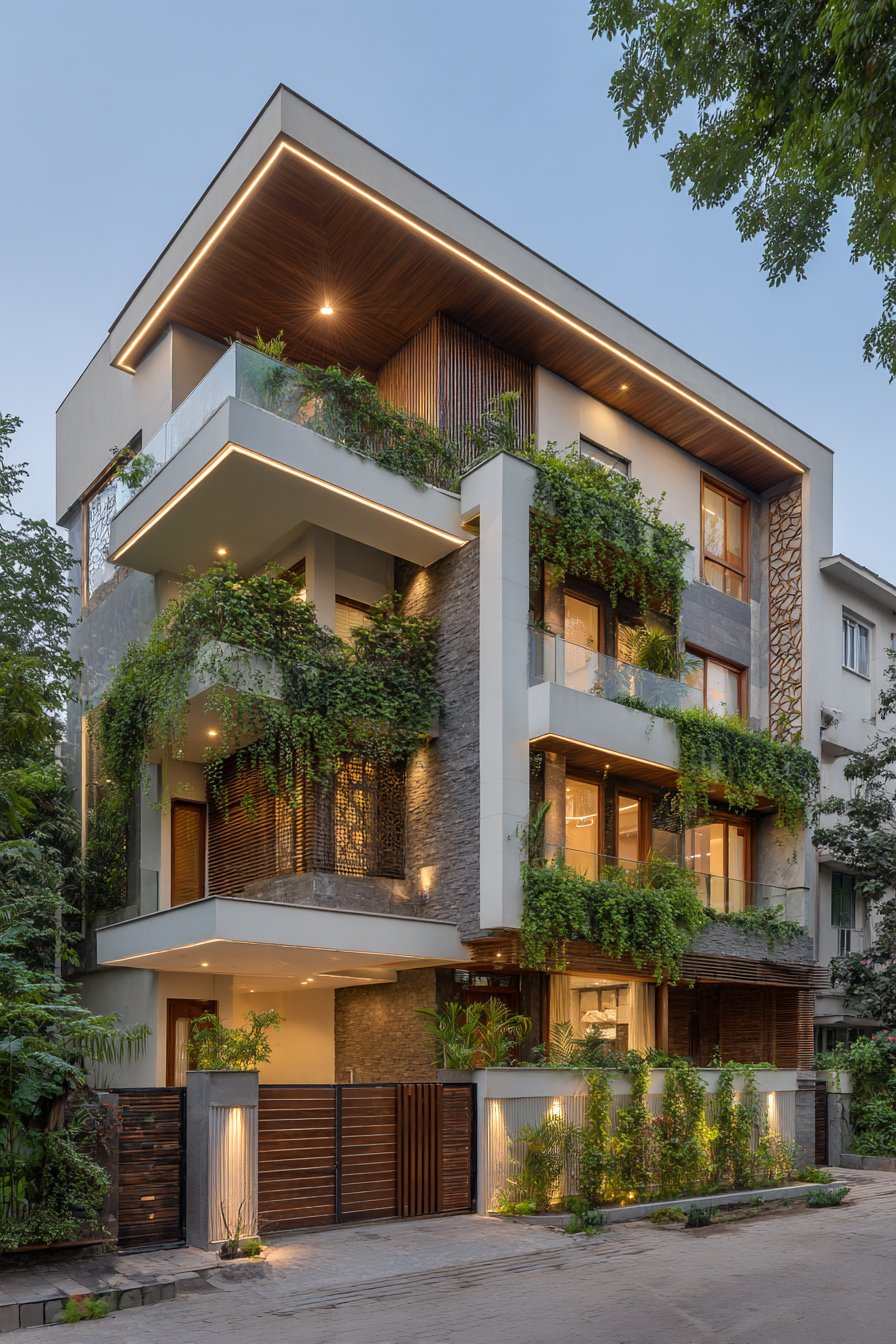
Modern homeowners increasingly recognize that their compound wall is an extension of their home’s architecture and personal style. Whether you’re drawn to the timeless elegance of natural stone, the clean lines of contemporary concrete, the warmth of wood accents, or the industrial edge of metal elements, your choice of compound wall design speaks volumes about your aesthetic sensibilities. The right compound wall doesn’t just enclose your property—it enhances the neighborhood streetscape, complements your home’s architectural style, and creates a harmonious transition between public and private spaces.
This comprehensive guide explores twenty-five distinctive compound wall ideas, each offering unique combinations of materials, textures, finishes, and design philosophies. From traditional brick constructions that evoke heritage charm to cutting-edge sustainable designs incorporating living green walls, we’ll examine practical solutions that balance beauty, functionality, and budget considerations. Whether you’re building a new boundary wall or renovating an existing structure, these expertly curated ideas will inspire you to create a compound wall that truly reflects your home’s character while meeting contemporary standards for durability, maintenance, and visual appeal.
1. Modern Grey Cement Render with Linear Patterns
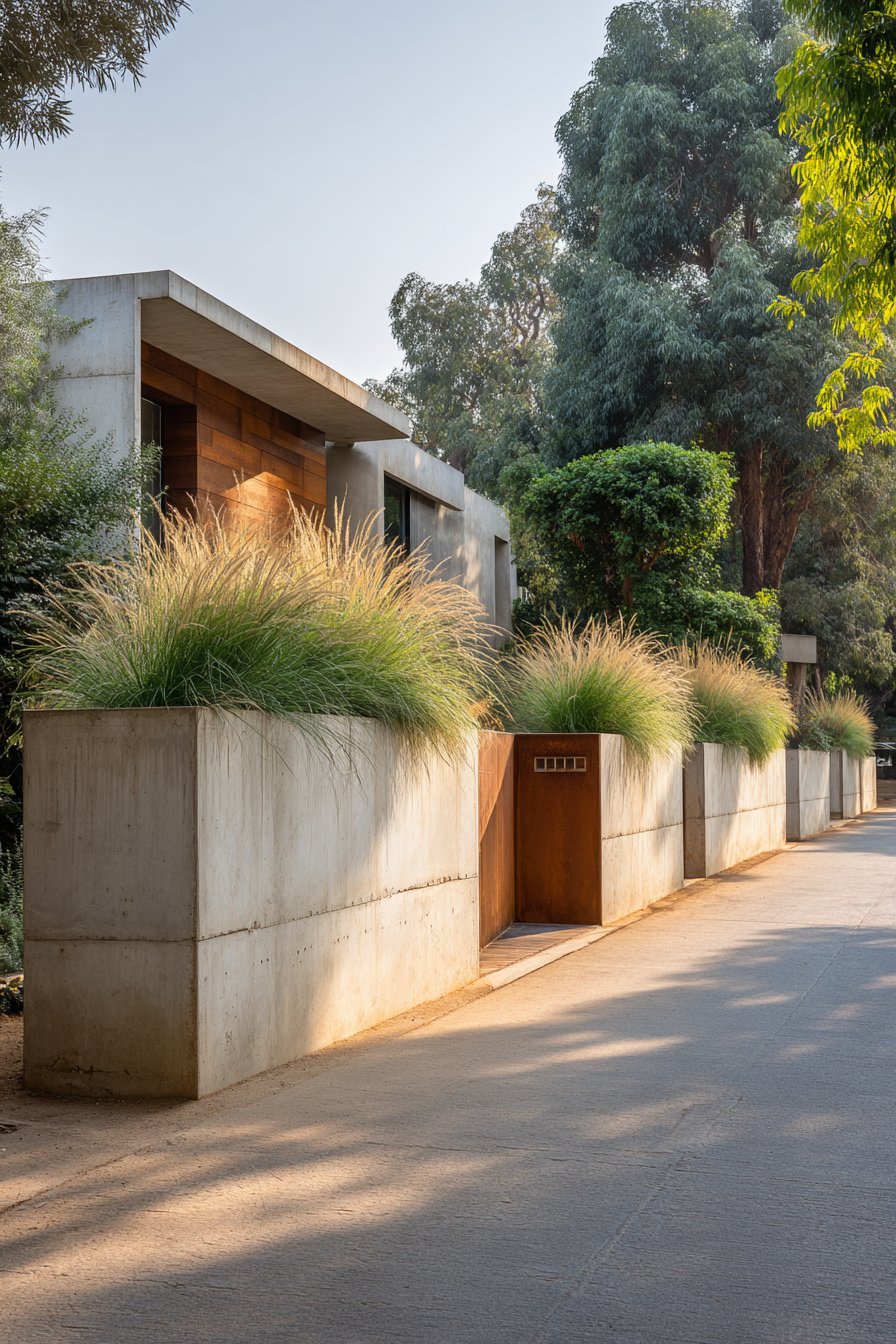
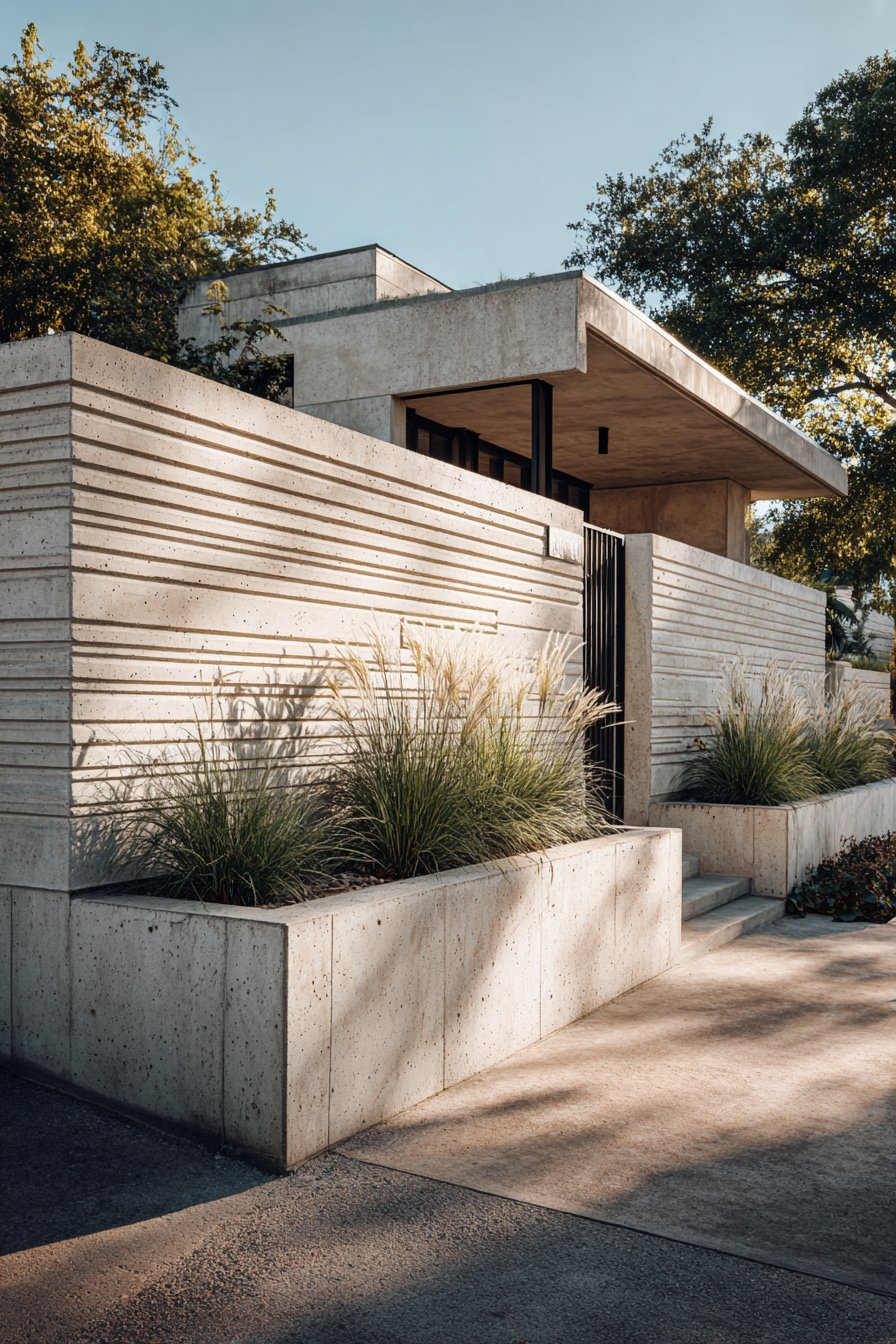
The contemporary compound wall featuring smooth grey cement render demonstrates how minimalist design can create maximum impact. This design showcases horizontal grooves meticulously carved into the rendered surface, creating a sophisticated linear pattern that adds depth and visual interest to an otherwise flat plane. Standing at a practical eight-foot height, this wall provides adequate privacy while maintaining an approachable scale that doesn’t overwhelm the streetscape. The flat concrete cap finished in a contrasting charcoal tone not only protects the wall from weather damage but also creates a defining horizontal line that emphasizes the wall’s clean geometry.
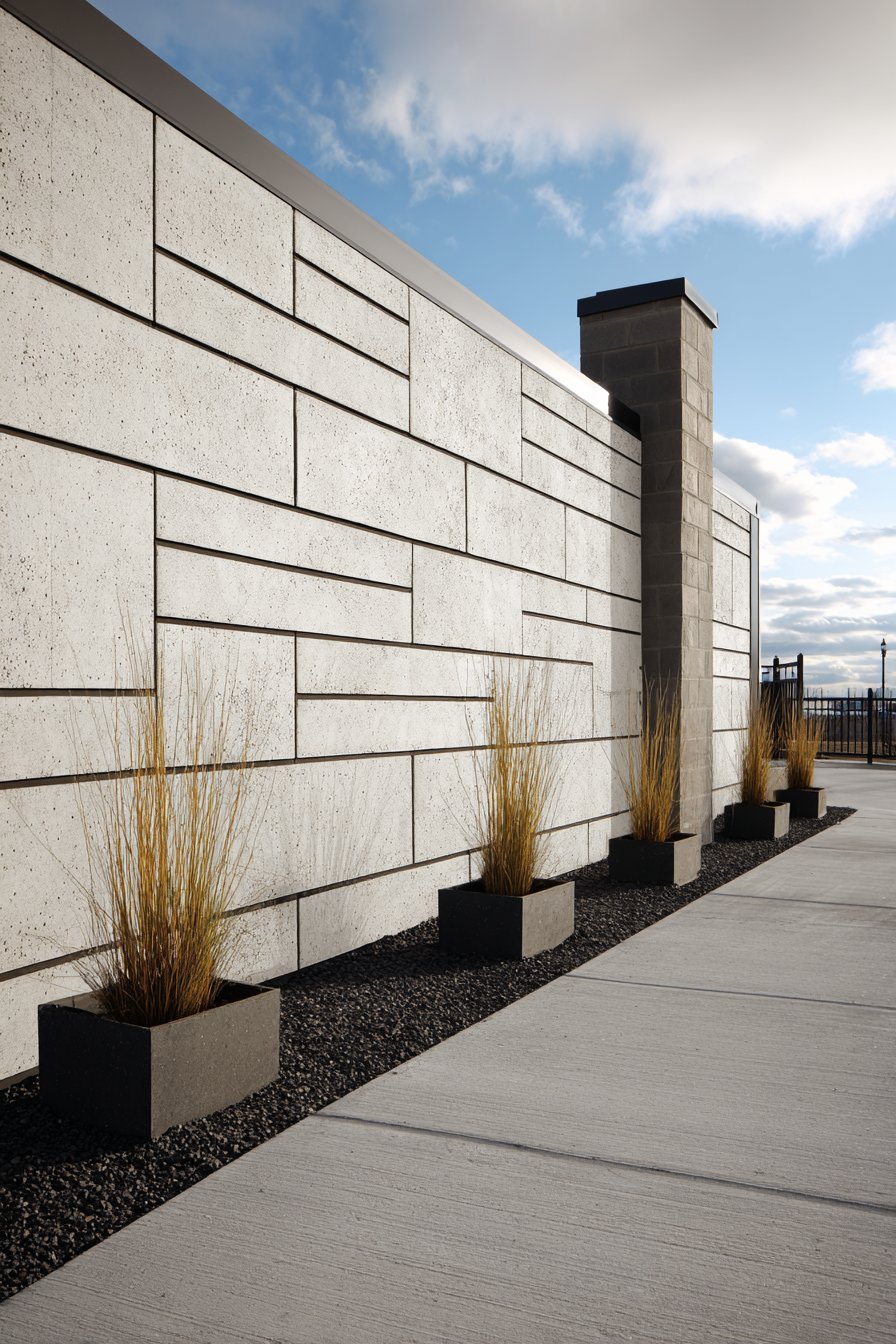
What elevates this design beyond standard rendered walls is the integration of functional elements with aesthetic considerations. Rectangular metal planters positioned at regular intervals break up the wall’s expanse while introducing organic elements through ornamental grasses. These planted sections create rhythm along the wall’s length and soften the industrial character of the cement and metal materials. The grasses move gently with the breeze, adding dynamic movement to the static structure.
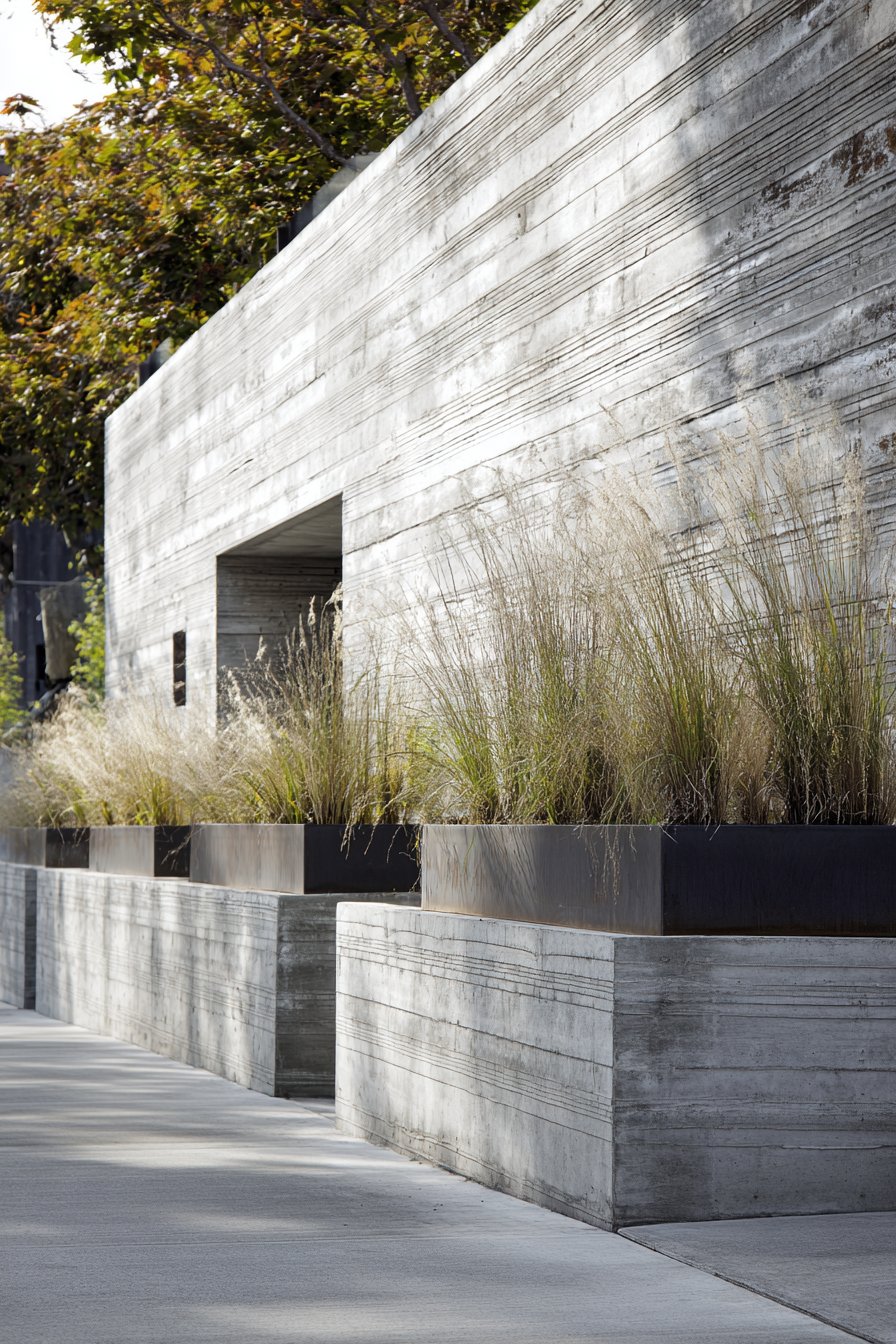
The beauty of this design lies in its interplay of light and shadow throughout the day. The horizontal grooves catch sunlight at different angles, creating subtle shadow lines that emphasize the wall’s dimensional quality. During morning and evening hours, when light strikes at lower angles, these grooves become more pronounced, transforming the wall into a dynamic surface rather than a flat barrier. The smooth render finish provides a perfect backdrop for these shadow effects while remaining practical and low-maintenance.
Key Design Tips:
- Ensure grooves are consistently spaced and deep enough (minimum 15mm) to create meaningful shadow lines
- Use high-quality cement render with proper waterproofing additives to prevent moisture penetration and cracking
- Select drought-resistant ornamental grasses for planters to minimize maintenance requirements
- Consider the wall’s orientation when planning groove direction to maximize shadow effects during peak viewing hours
- Apply a breathable sealant to the render finish to protect against staining while allowing moisture vapor to escape
2. Natural Stone Cladding with Rustic Character
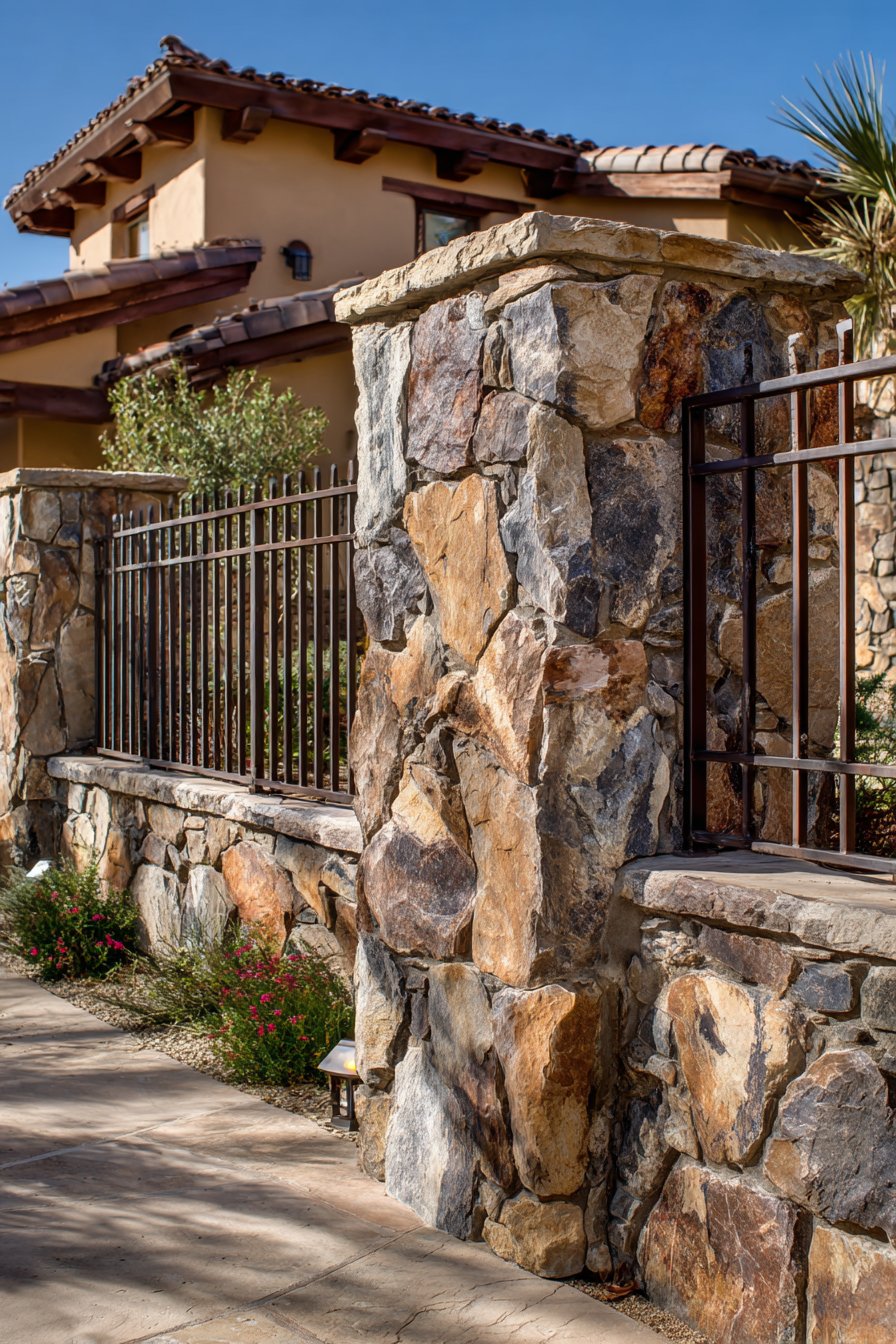
Embracing the timeless appeal of natural materials, this compound wall idea showcases irregular stone cladding in a harmonious palette of earth tones including beige, tan, and grey. The stones, varying in size and shape, are carefully mortared together to create an organic texture that recalls traditional dry-stone walls while providing modern structural integrity. This design approach celebrates natural imperfection, with each stone’s unique color variation, surface texture, and dimensional quality contributing to the wall’s overall character. The result is a boundary that feels substantial and permanent, as though it has stood for generations.
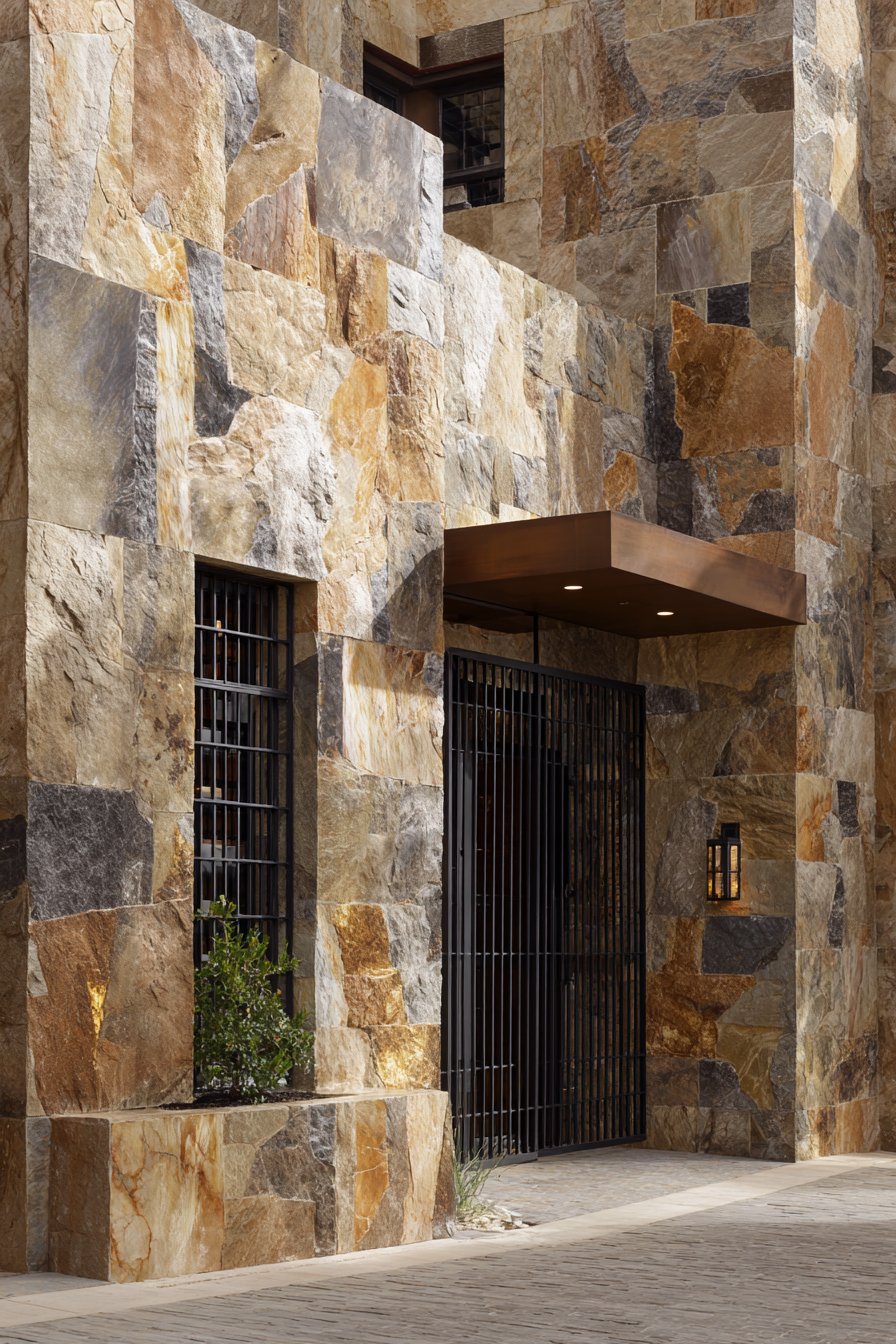
The incorporation of a black wrought iron gate provides both functional access and aesthetic contrast against the neutral stone palette. The simple vertical bar design maintains visual openness while ensuring security, and the dark finish creates a focal point that draws the eye to the entrance. The gate’s traditional metalwork complements rather than competes with the rustic stone, creating a cohesive design narrative that speaks to craftsmanship and quality materials.
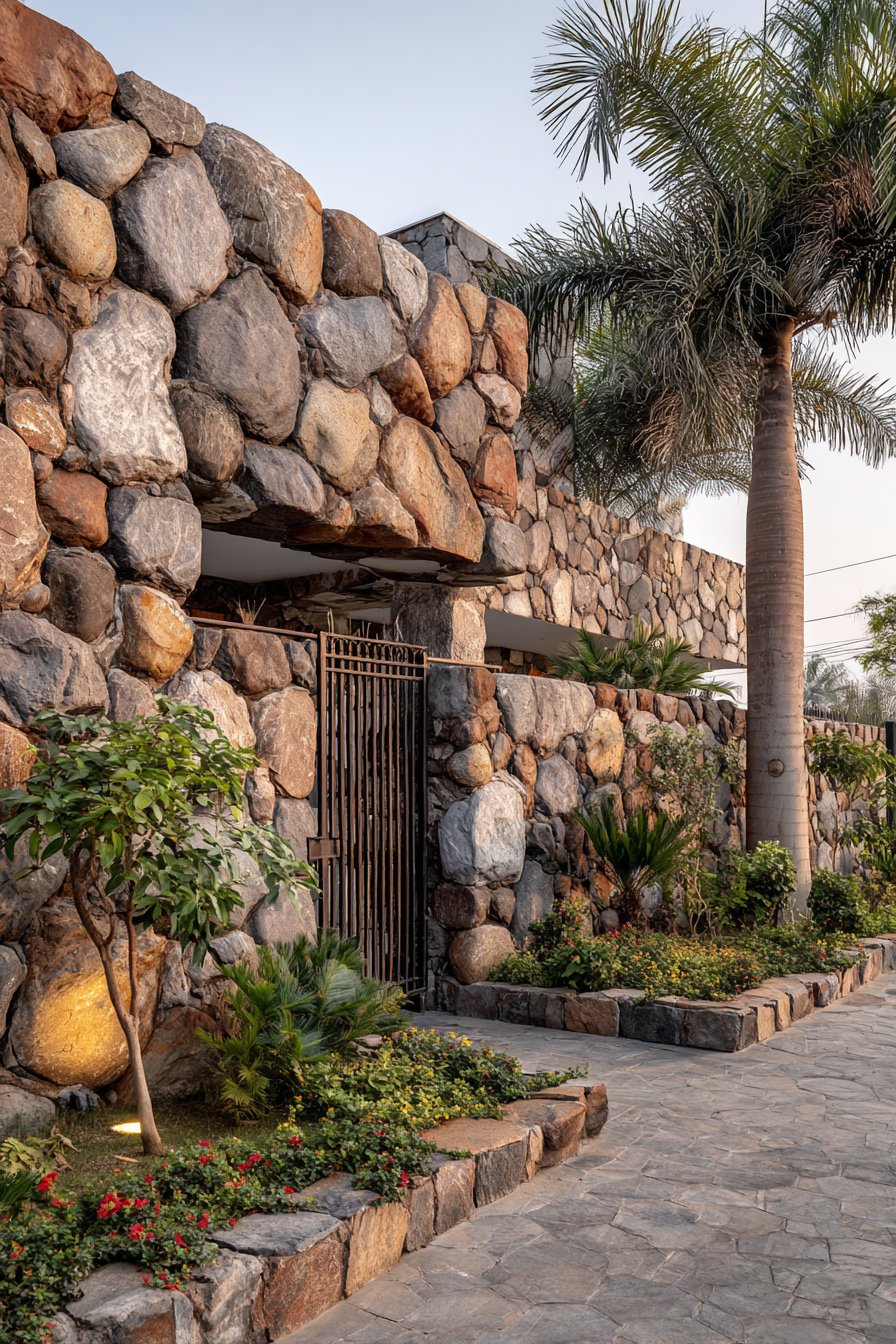
Landscape lighting integrated at the wall’s base serves a dual purpose in this design. Practically, it illuminates pathways and enhances nighttime security by eliminating dark corners where intruders might hide. Aesthetically, the upward-directed light grazes the stone surface, dramatically highlighting the texture and creating deep shadows between individual stones. This nighttime transformation gives the wall an entirely different character after dark, showcasing the three-dimensional quality of the stonework in ways that daylight cannot achieve.
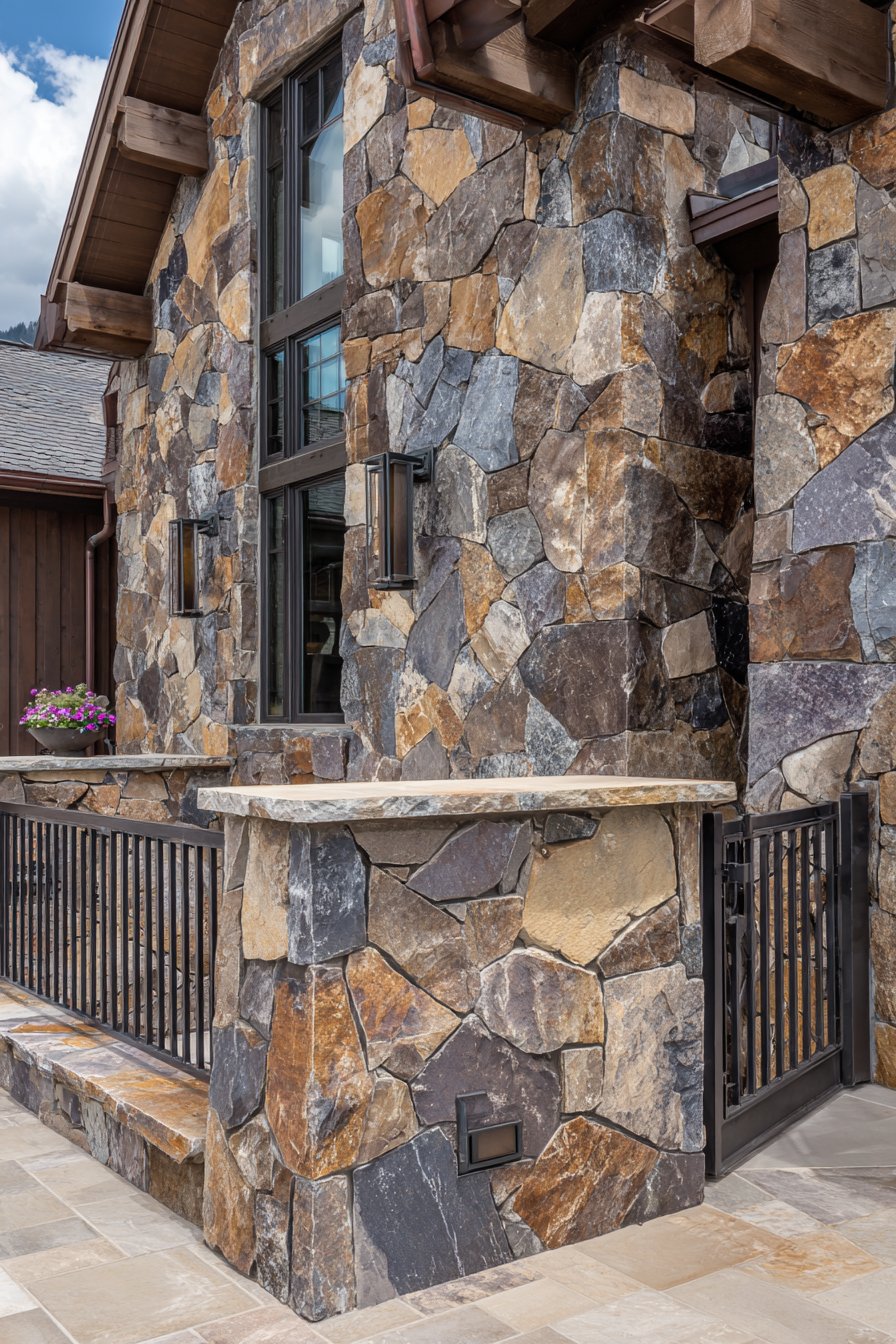
The authenticity of this design lies in its embrace of natural material variations. Unlike manufactured products with uniform appearance, each section of this wall tells a slightly different story through variations in stone size, color, and texture. This organic quality creates visual interest across the wall’s entire length while maintaining overall coherence through the consistent earth-tone palette.
Key Design Tips:
- Source stones locally when possible to ensure climate compatibility and reduce transportation costs
- Work with experienced stone masons who understand proper load distribution and mortar techniques
- Plan stone layout before installation to achieve balanced color and size distribution
- Install proper drainage behind the stone cladding to prevent water accumulation and frost damage
- Use non-slip coping stones on the wall cap to prevent water pooling and provide safe surface for maintenance access
- Select wrought iron gate finishes with rust-resistant treatment suitable for your climate conditions
3. Contemporary Dual-Material Design with Metal Accents
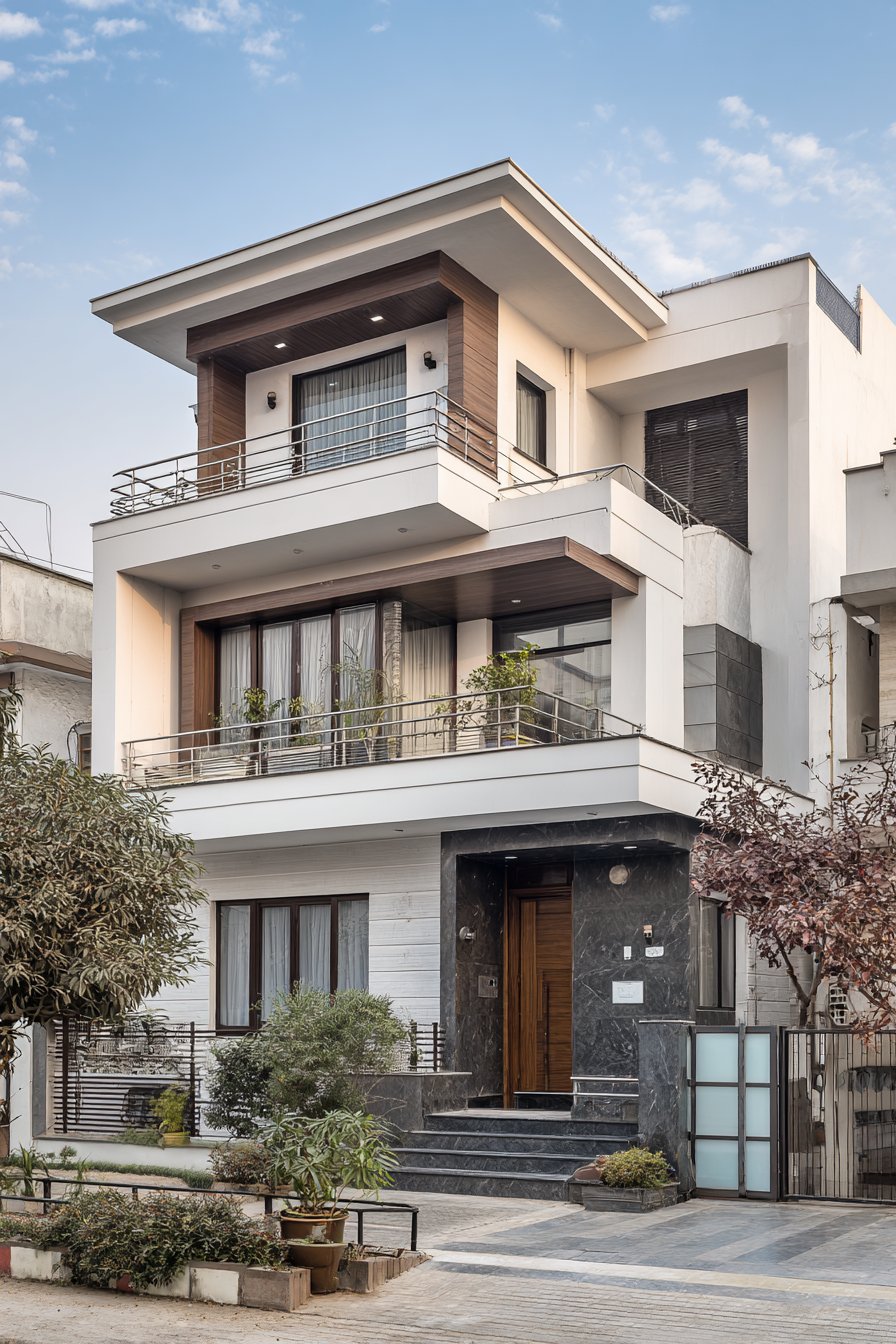
This sophisticated compound wall exemplifies the power of material contrast in contemporary architecture. The design divides vertically, with the lower half clad in dark grey granite slabs featuring a polished finish that reflects light and creates a sense of refinement. The upper portion transitions to white textured plaster, providing visual lightness that prevents the wall from appearing too heavy or imposing. This intentional division creates horizontal emphasis while the granite’s polished surface adds an element of luxury typically associated with high-end residential architecture.
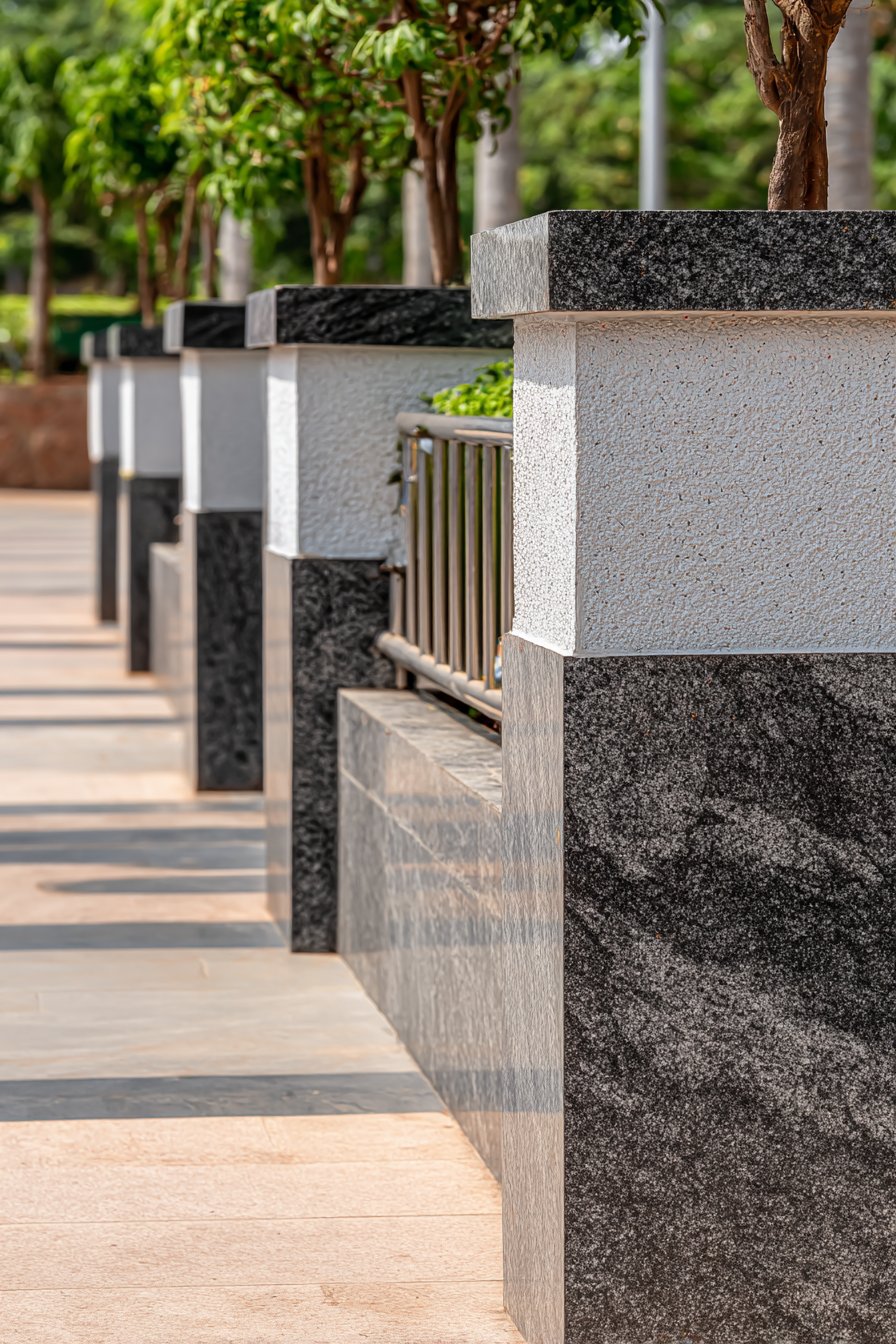
Stainless steel horizontal railings spanning between structural pillars introduce a third material that bridges the granite and plaster sections. These railings serve multiple purposes: they reduce the visual mass of an otherwise solid wall, allow air circulation, provide a modern industrial accent, and create interesting shadow patterns as sunlight filters through. The spacing between horizontal rails is calculated to maintain privacy while preserving a sense of openness—a balance that’s particularly important for urban properties where compound walls can otherwise feel claustrophobic.
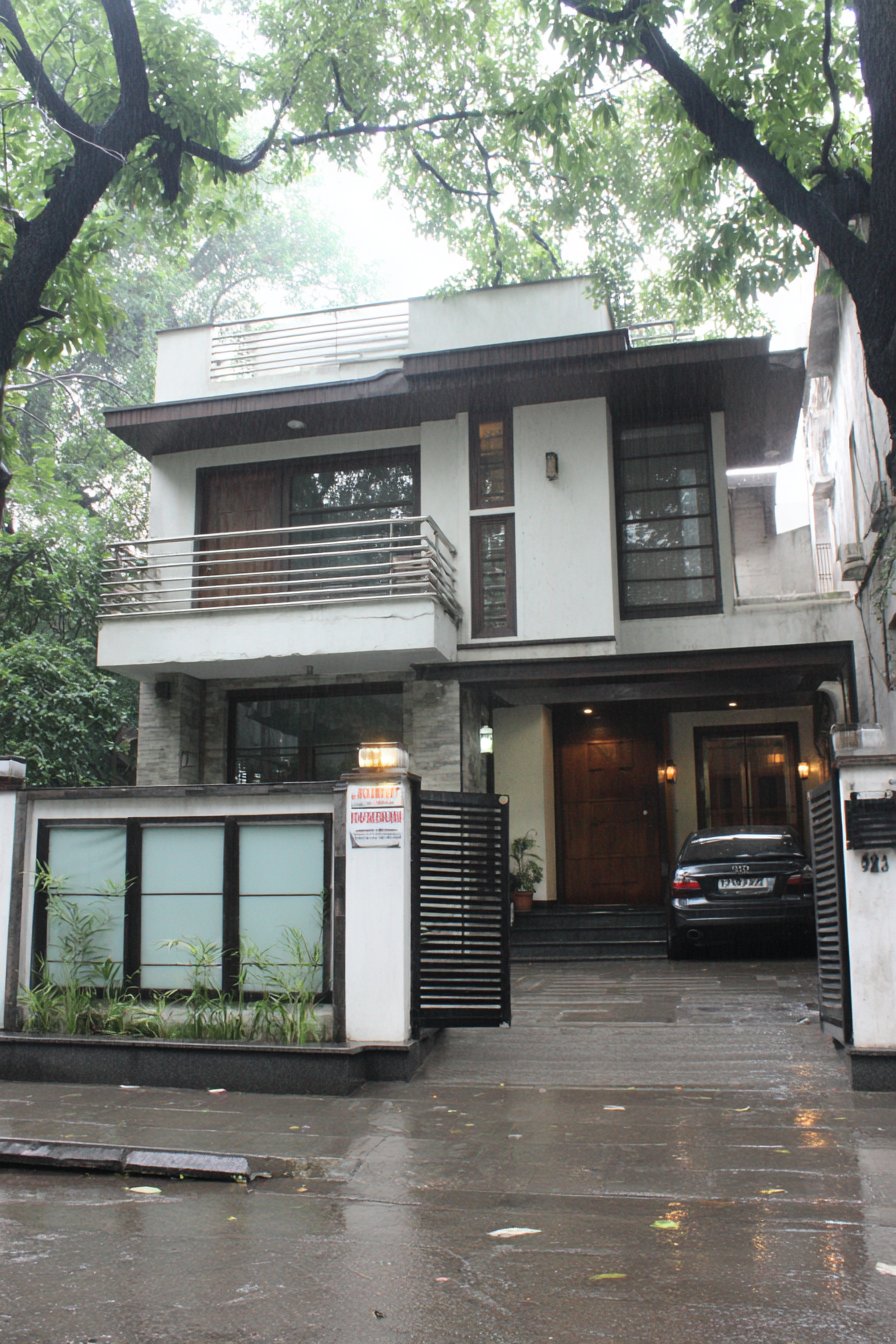
The pedestrian gate featuring frosted glass panels continues the theme of transparency while maintaining privacy. The translucent glass allows light to pass through while obscuring direct views, creating an elegant entrance that feels welcoming rather than forbidding. The frosted finish also provides practical benefits, hiding fingerprints and minor scratches while diffusing harsh sunlight that might otherwise create glare.
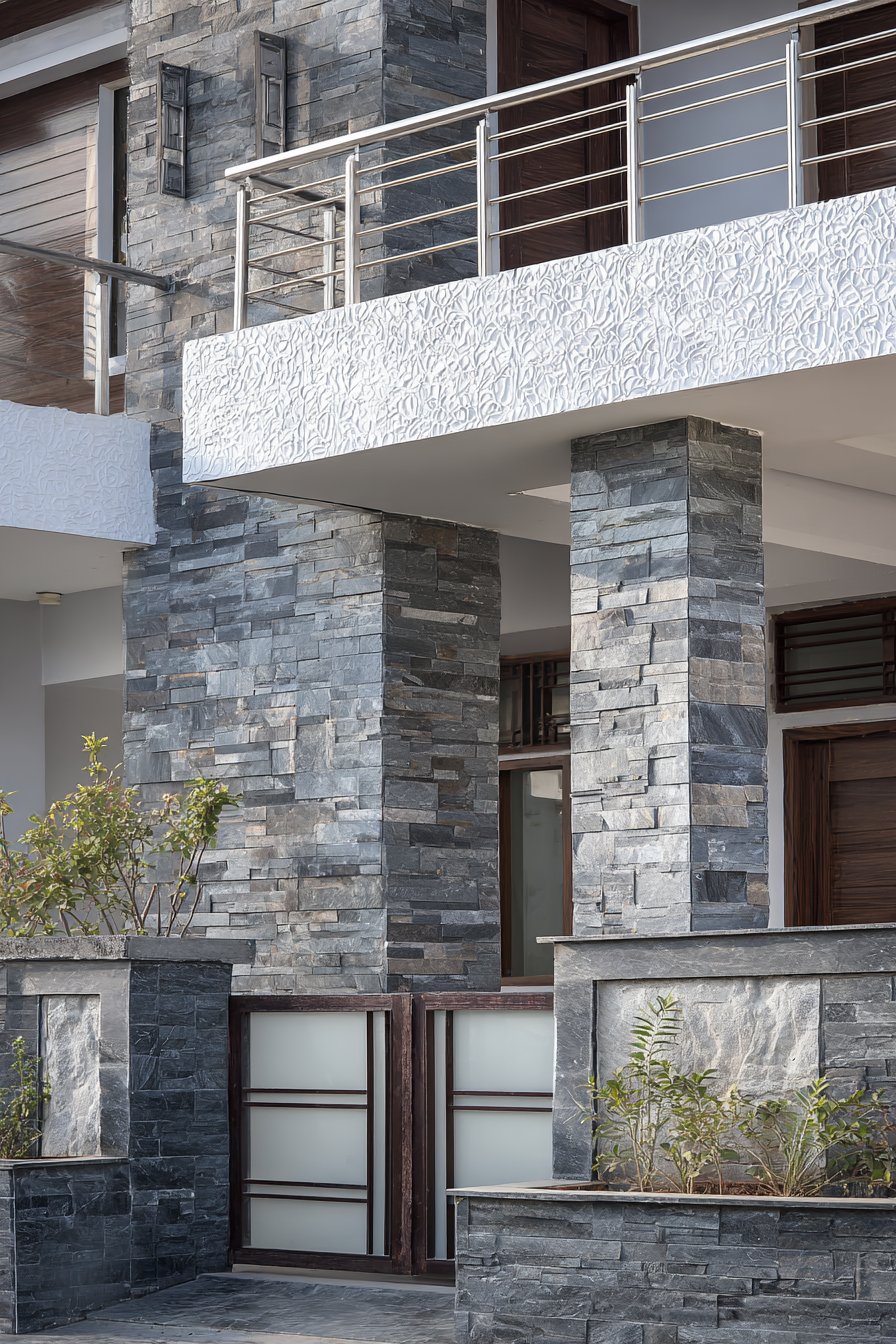
Material transitions in this design are executed with precision, demonstrating how different textures and finishes can coexist harmoniously when united by a cohesive color palette and thoughtful proportioning. The dark grey granite grounds the composition, the white plaster provides breathing space, and the stainless steel adds contemporary edge—each material playing its specific role in the overall composition.
Key Design Tips:
- Ensure granite slabs are properly sealed to prevent staining and facilitate easy cleaning
- Use UV-resistant textured plaster on the upper section to prevent yellowing and maintain bright white appearance
- Specify marine-grade stainless steel for railings in coastal areas to prevent corrosion
- Install hidden fasteners for railings to maintain clean visual lines
- Consider the wall’s height carefully—the dual-material approach works best when proportions are balanced, typically with the lower granite section comprising 40-50% of total height
- Include weep holes in the granite section to allow moisture drainage and prevent efflorescence
4. Minimalist White Rendered Sanctuary
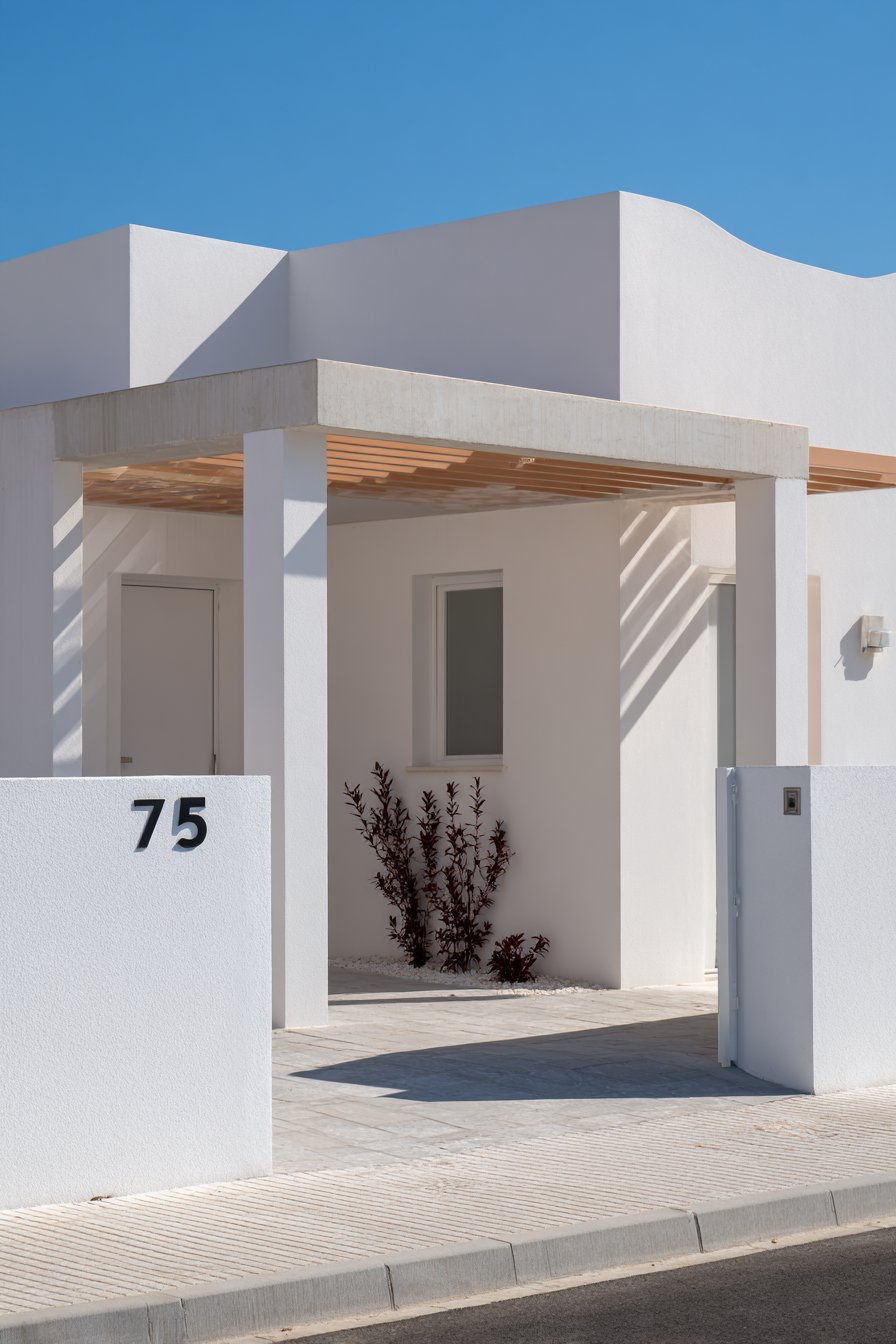
Minimalism reaches its zenith in this pristine compound wall design that proves simplicity, when executed flawlessly, creates profound impact. The smooth white rendered finish represents the ultimate restraint, eschewing ornamentation in favor of pure geometric form and impeccable surface quality. Every detail serves a purpose: the cantilevered concrete cap creates a distinctive shadow line that adds dimensional interest without additional ornamentation, while the precise edges and corners demonstrate the craftsmanship required to achieve true minimalist aesthetics.
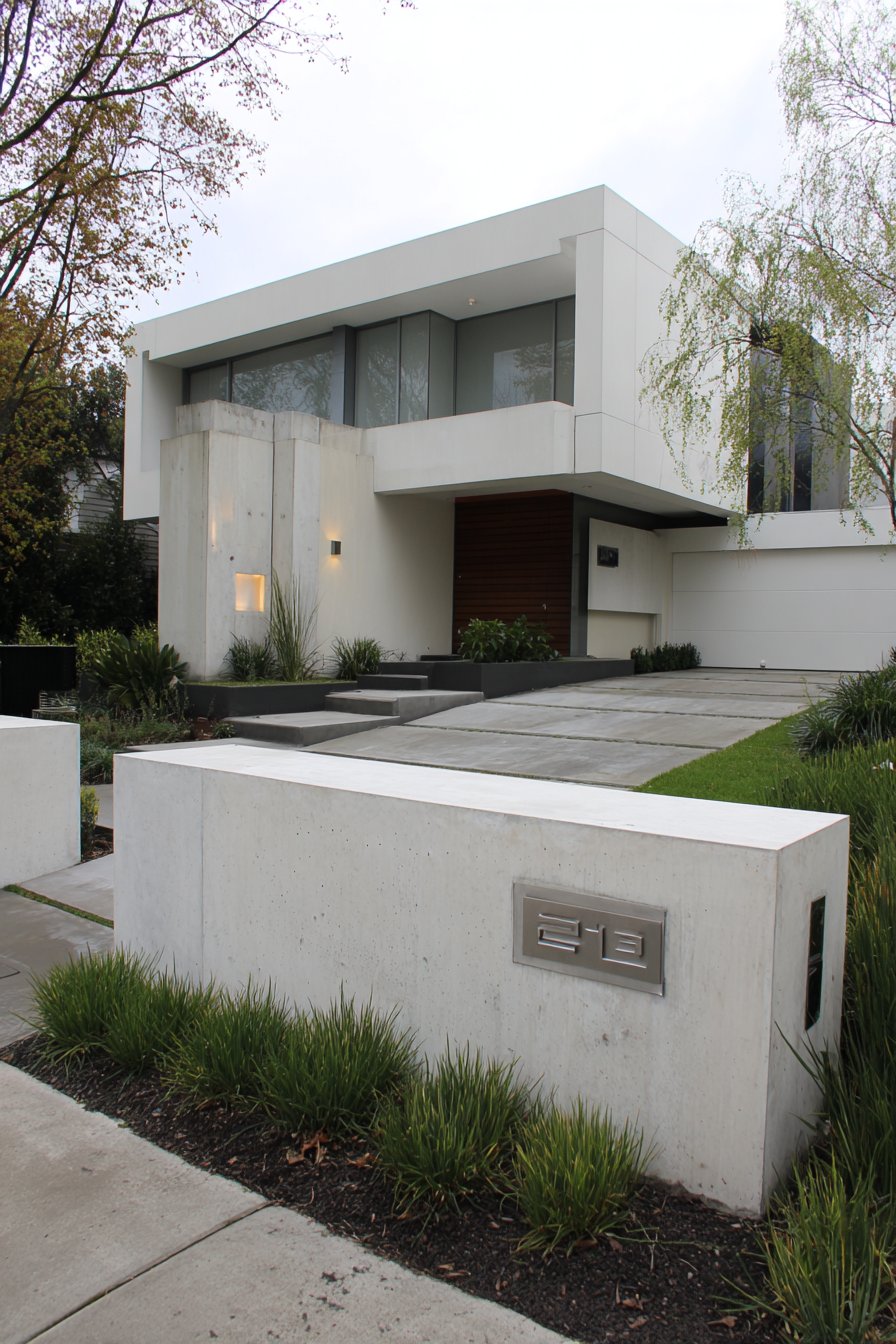
The integrated house numbers in brushed stainless steel provide the only decorative element, and their restraint is entirely intentional. Mounted flush with the wall surface, these numbers function as subtle jewelry—present and purposeful but never competing with the wall’s serene simplicity. The brushed finish prevents harsh reflections while ensuring the numbers remain legible in various lighting conditions, and the stainless steel’s durability ensures they’ll maintain their appearance for decades.
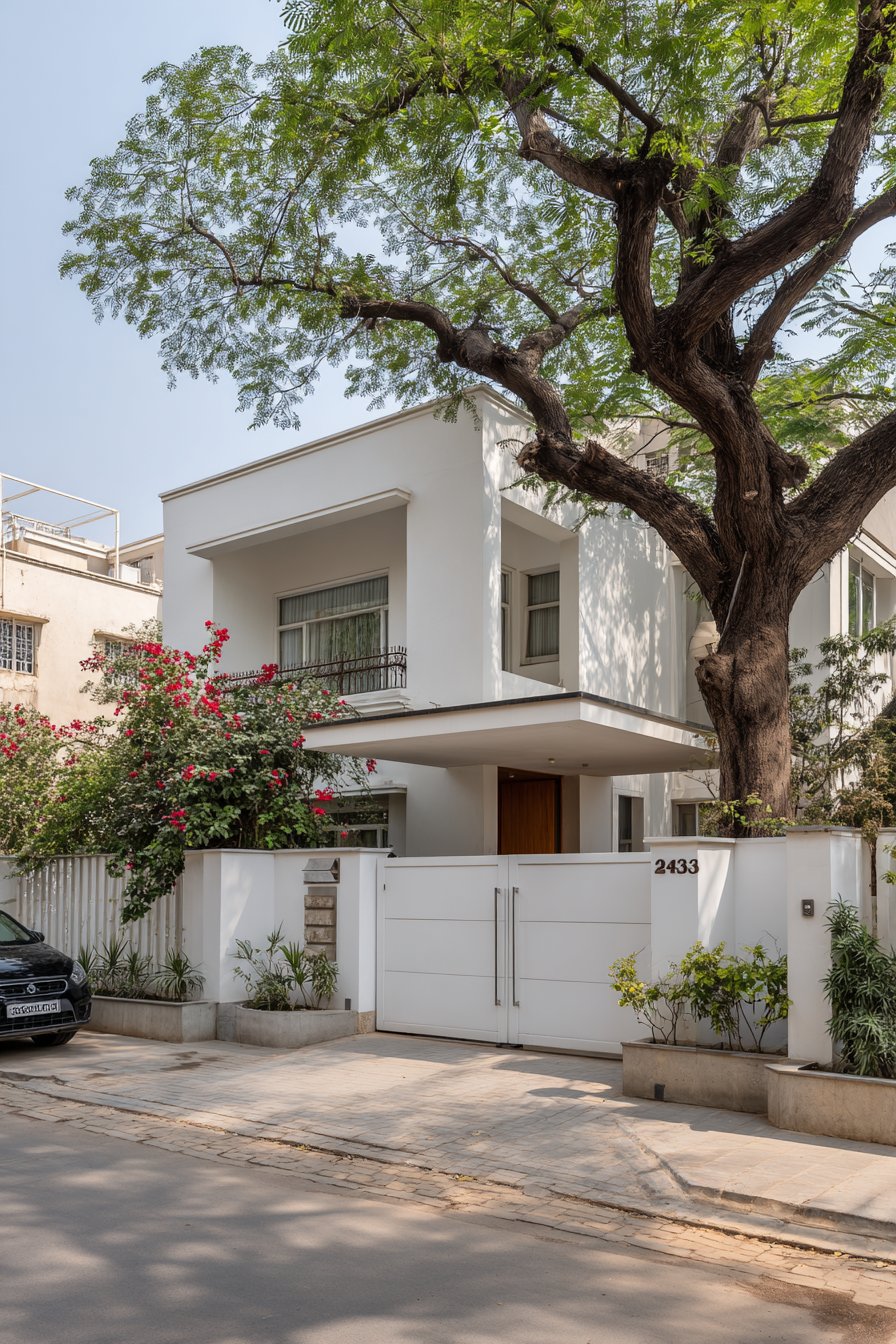
The automated sliding gate represents minimalist functionality at its finest. The hidden mechanisms mean no visible tracks, chains, or operating hardware mar the wall’s clean aesthetic. The gate surface maintains the same white finish and smooth texture as the surrounding wall, creating a seamless appearance when closed. Only the subtle vertical joint reveals the gate’s presence, maintaining the mystery of how entry is achieved—a sophisticated detail that elevates the entire design.
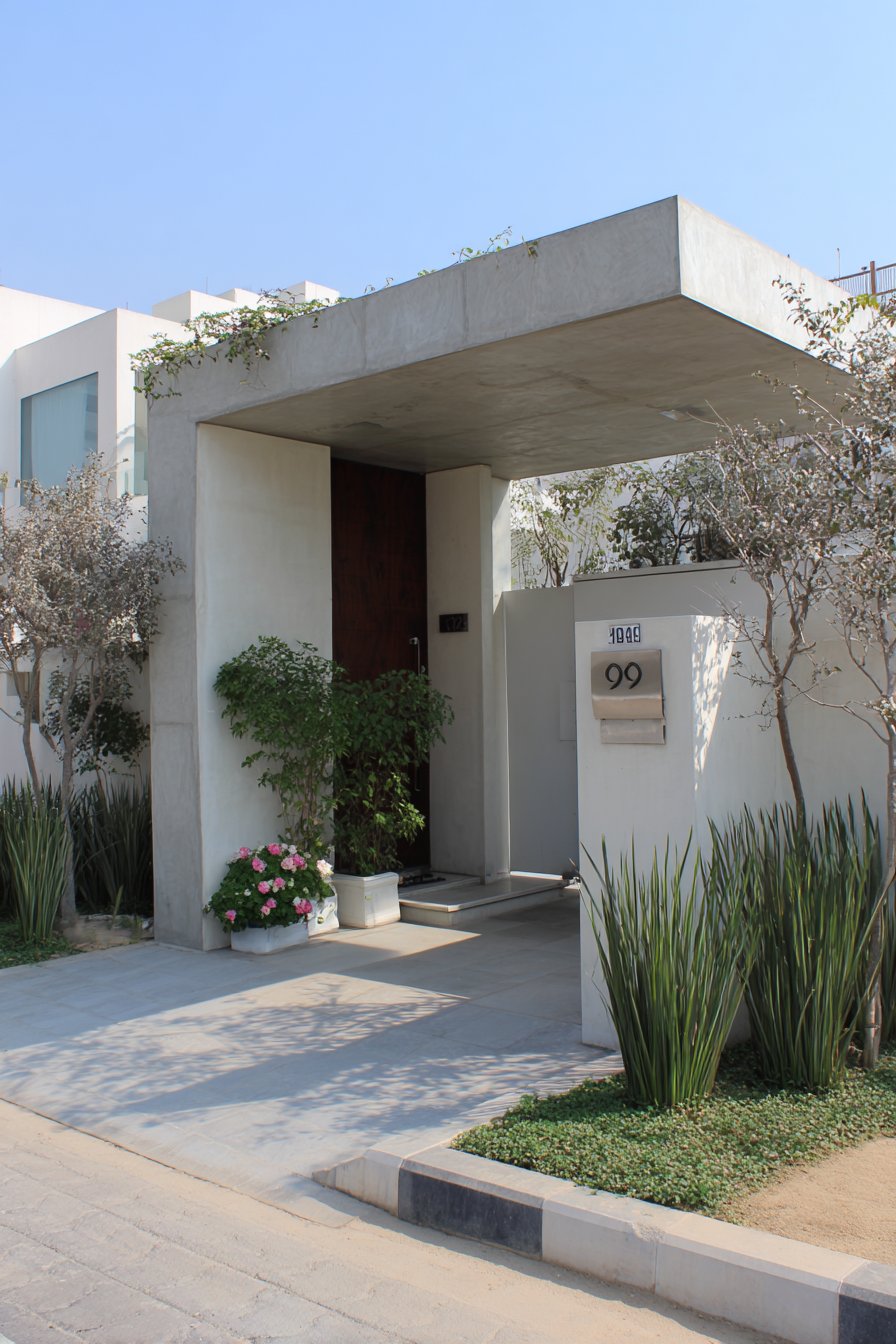
This approach to compound wall design requires exceptional execution because there are no decorative elements to distract from imperfections. Every surface must be perfectly smooth, every corner precisely aligned, every transition carefully detailed. The payoff is a wall that projects calm confidence and timeless elegance, serving as a neutral backdrop that allows the home’s architecture and landscaping to take center stage.
Key Design Tips:
- Invest in premium-quality render systems specifically formulated for exterior applications with superior crack resistance
- Ensure substrate is properly prepared and primed before render application to prevent future delamination
- Use bright white pigments with maximum lightfastness ratings to prevent yellowing over time
- Detail the cantilevered cap with adequate structural support and waterproofing to prevent water infiltration
- Specify automated gate systems from reputable manufacturers with proven reliability and quiet operation
- Plan for regular cleaning and maintenance—white surfaces show dirt but cleaning restores them to like-new condition
- Consider applying a hydrophobic coating that repels water and dirt while maintaining the matte white finish
5. Traditional Red Brick Heritage Wall
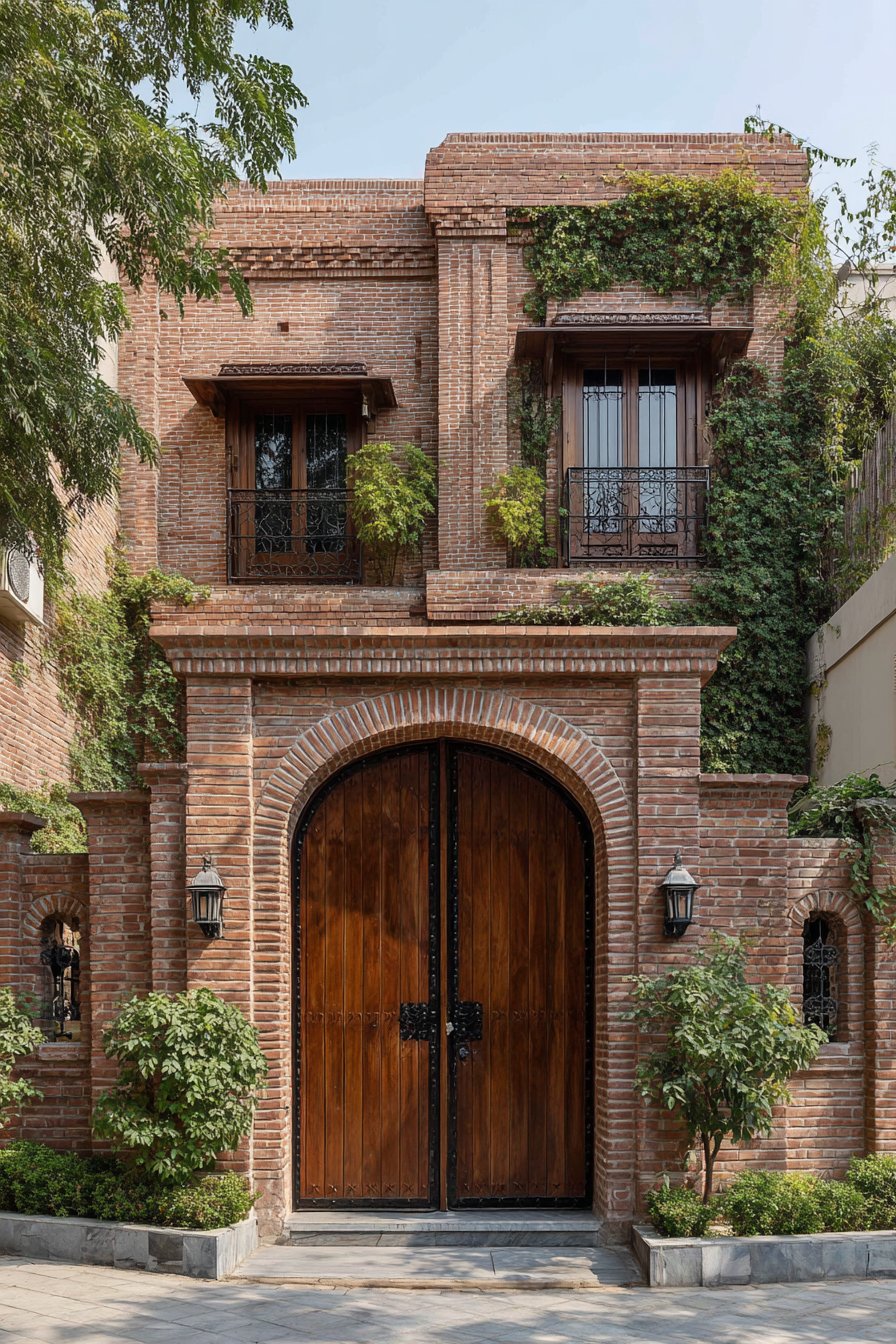
There’s an enduring appeal in traditional red brick construction that transcends passing trends, and this compound wall celebrates that timeless quality. Built using the classic running bond pattern, where each brick overlaps the one below by half its length, the wall demonstrates masonry techniques perfected over centuries. The exposed brick showcases its natural color variations—from deep terracotta to lighter salmon tones—creating subtle visual texture that enriches the wall’s appearance. Decorative corbelling at the cap, where bricks project slightly beyond the wall face in stepped formation, and pilasters positioned at intervals demonstrate how traditional bricklaying techniques can create architectural interest through pattern and projection rather than applied ornamentation.
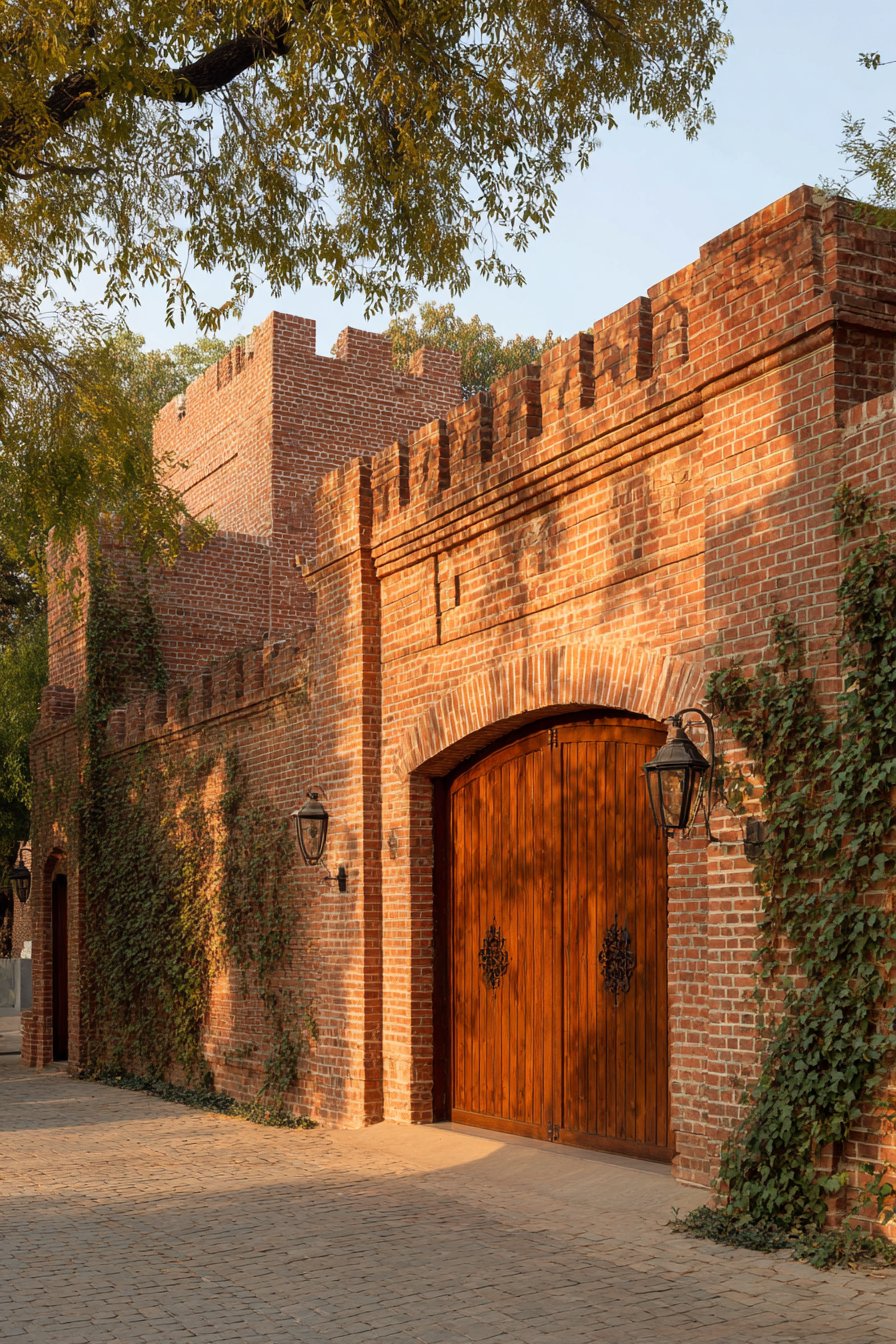
The arched wooden double gate serves as the compound wall’s focal point, its design rooted in classical architecture where arched openings symbolized welcome and abundance. The substantial timber construction, complemented by traditional iron hardware including strap hinges and decorative bolt heads, speaks to craftsmanship and permanence. The arch form itself is both structurally sound—distributing loads efficiently to either side—and aesthetically pleasing, its curved top providing relief from the otherwise linear quality of brick coursing.
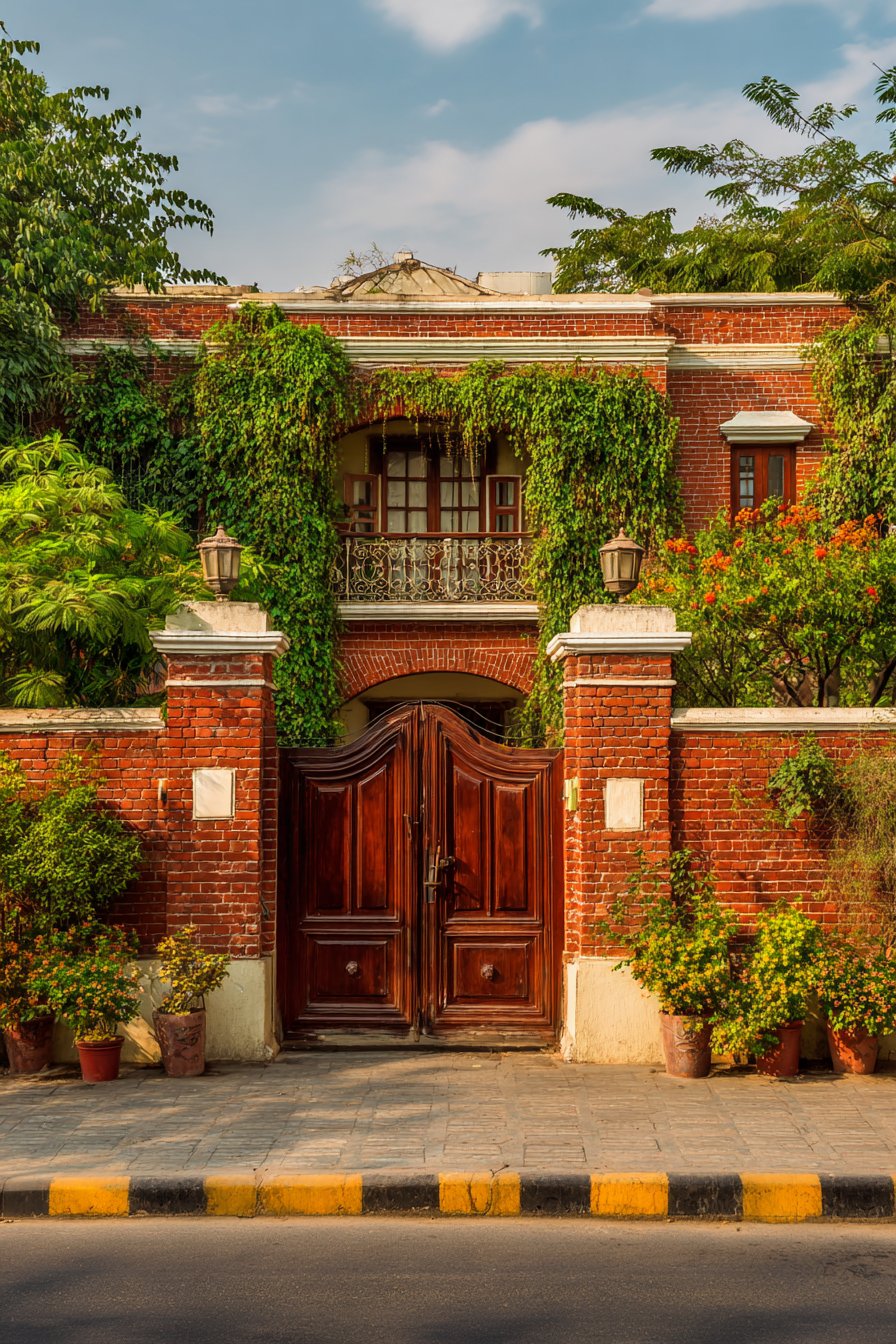
Climbing ivy partially covering one section introduces an organic element that enhances the wall’s heritage character. Rather than viewing vegetation as a maintenance problem, this design embraces it as a feature that adds seasonal interest and softens the hard edges of masonry. The ivy’s dark green foliage creates beautiful contrast against the warm brick tones while providing habitat for beneficial insects and birds. Over time, this living element will develop its own character, with seasonal changes creating an ever-evolving aesthetic.
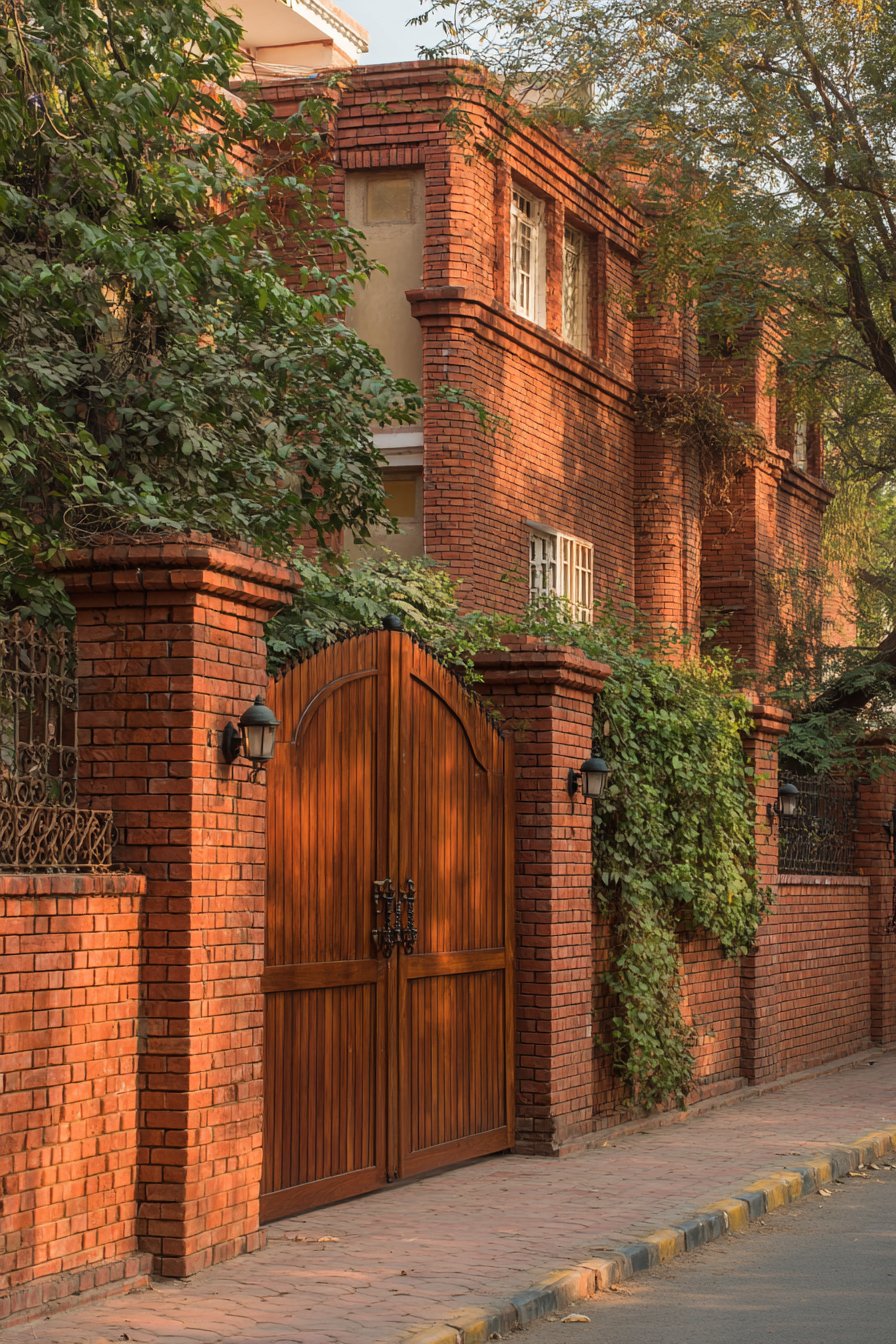
The beauty of this traditional approach lies in its proven longevity. Properly constructed brick walls can stand for centuries with minimal maintenance, developing a weathered patina that many consider more beautiful than the original fresh construction. Each brick’s subtle color variation, the mortar joints’ slight inconsistencies, and the ivy’s organic growth patterns combine to create a compound wall with authentic character that manufactured materials struggle to replicate.
Key Design Tips:
- Use high-quality facing bricks rated for severe weathering exposure in your climate zone
- Ensure proper foundation depth below frost line to prevent seasonal movement and cracking
- Point mortar joints using traditional lime-based mortars for better breathability and period authenticity
- Install copper or lead flashing above the wooden gate to protect the arch from water damage
- Treat wooden gate elements with preservatives suitable for ground contact and regular weather exposure
- Control ivy growth through annual pruning to prevent it from damaging mortar joints or becoming overgrown
- Consider installing a damp-proof course at the wall’s base to prevent rising moisture from causing efflorescence
6. Industrial Raw Concrete Aesthetic
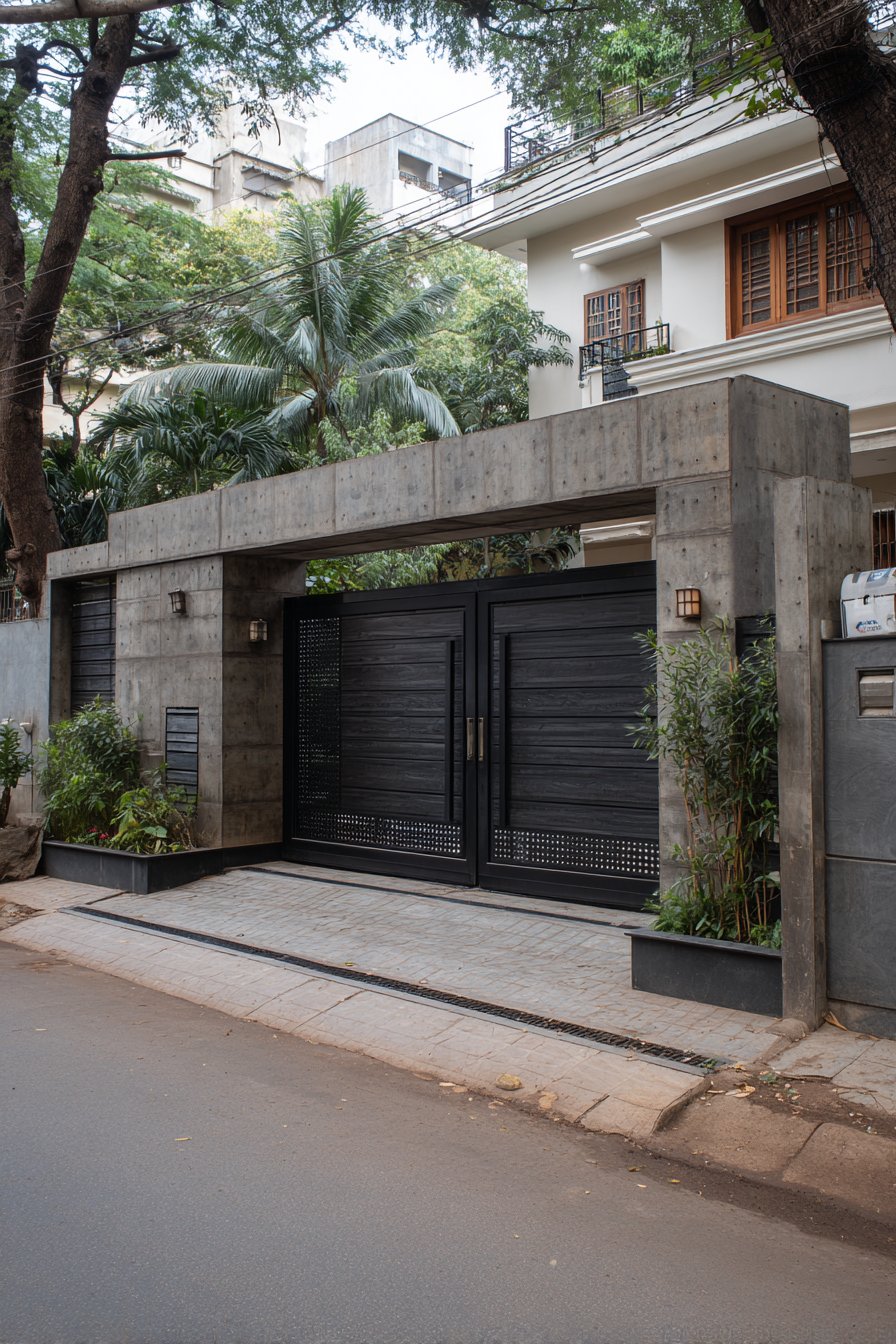
Embracing the raw, unfinished aesthetic that celebrates materials in their most honest form, this industrial-style compound wall showcases concrete in all its utilitarian glory. The visible formwork texture—horizontal lines created by the wooden boards used during concrete pouring—remains as an intentional design feature rather than being concealed. Sections of exposed aggregate, where the surface is treated to reveal the stones within the concrete mix, add textural variation and visual interest. This approach transforms what might be considered construction imperfections into deliberate design elements that communicate authenticity and architectural confidence.
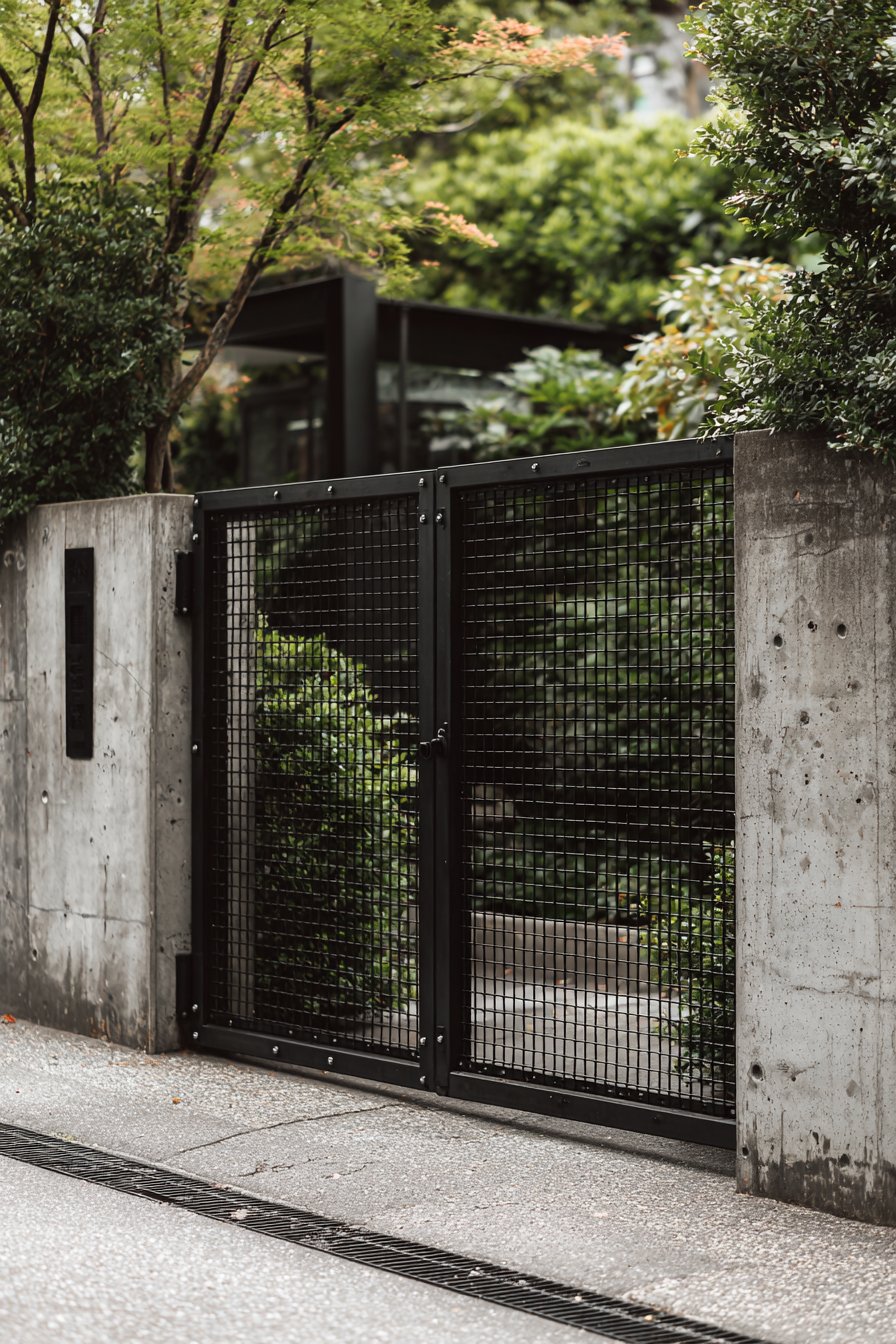
The black powder-coated steel frame gate with welded mesh infill perfectly complements this industrial aesthetic. The gate’s honest expression of its materials and construction methods—visible welds, exposed framework, utilitarian mesh—aligns with the wall’s raw concrete character. The powder coating provides durability and weather resistance while the black finish creates strong contrast against the lighter concrete, making the entrance clearly legible while maintaining the overall industrial design vocabulary.
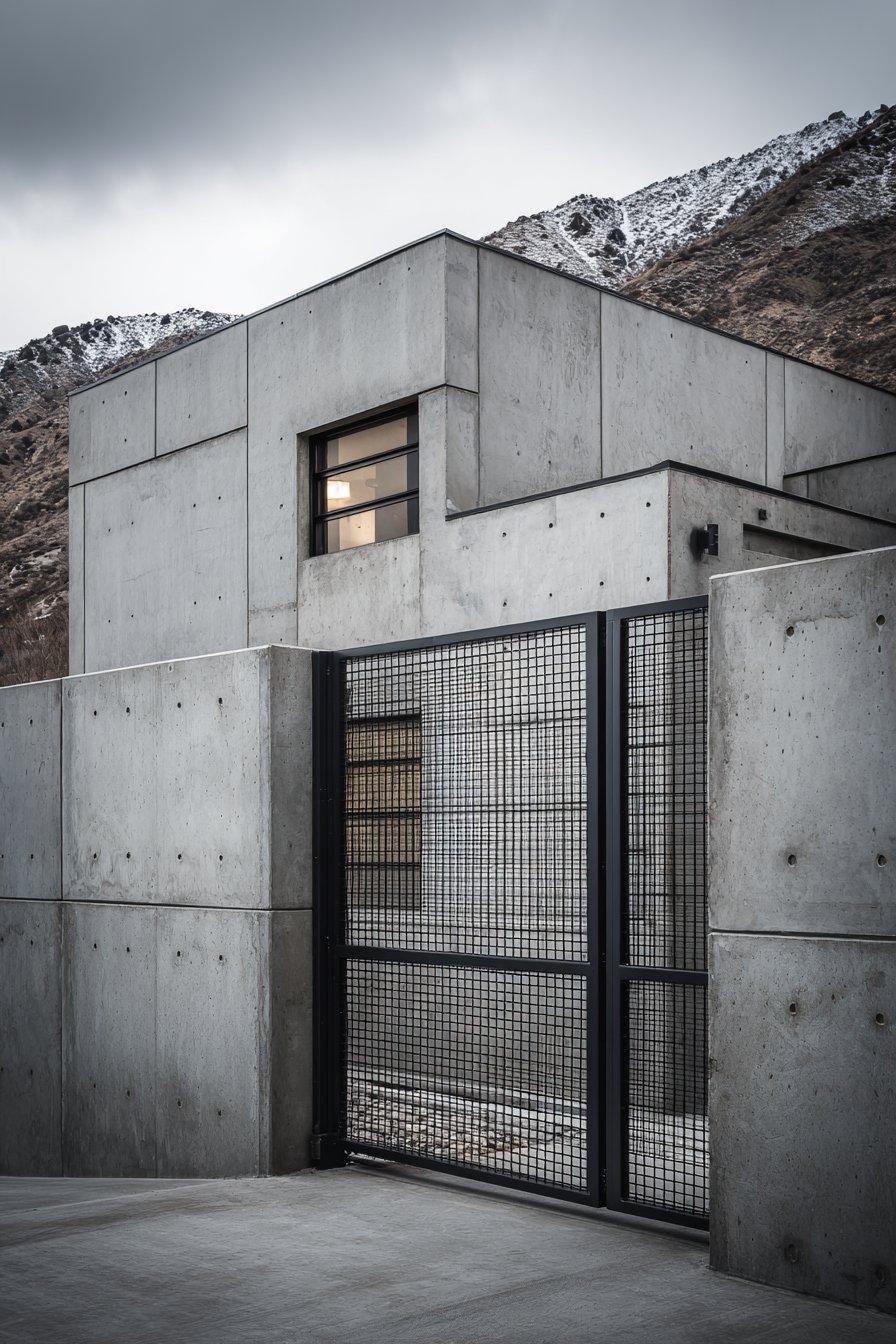
Linear drainage channels integrated into the wall’s design demonstrate how functional requirements can become aesthetic features when thoughtfully detailed. Rather than hiding drainage infrastructure, these channels are celebrated as part of the wall’s composition, their geometric precision providing counterpoint to the organic texture of the formwork and aggregate. This transparency about the wall’s functional requirements aligns with industrial design philosophy, which values honesty and utility over decorative concealment.
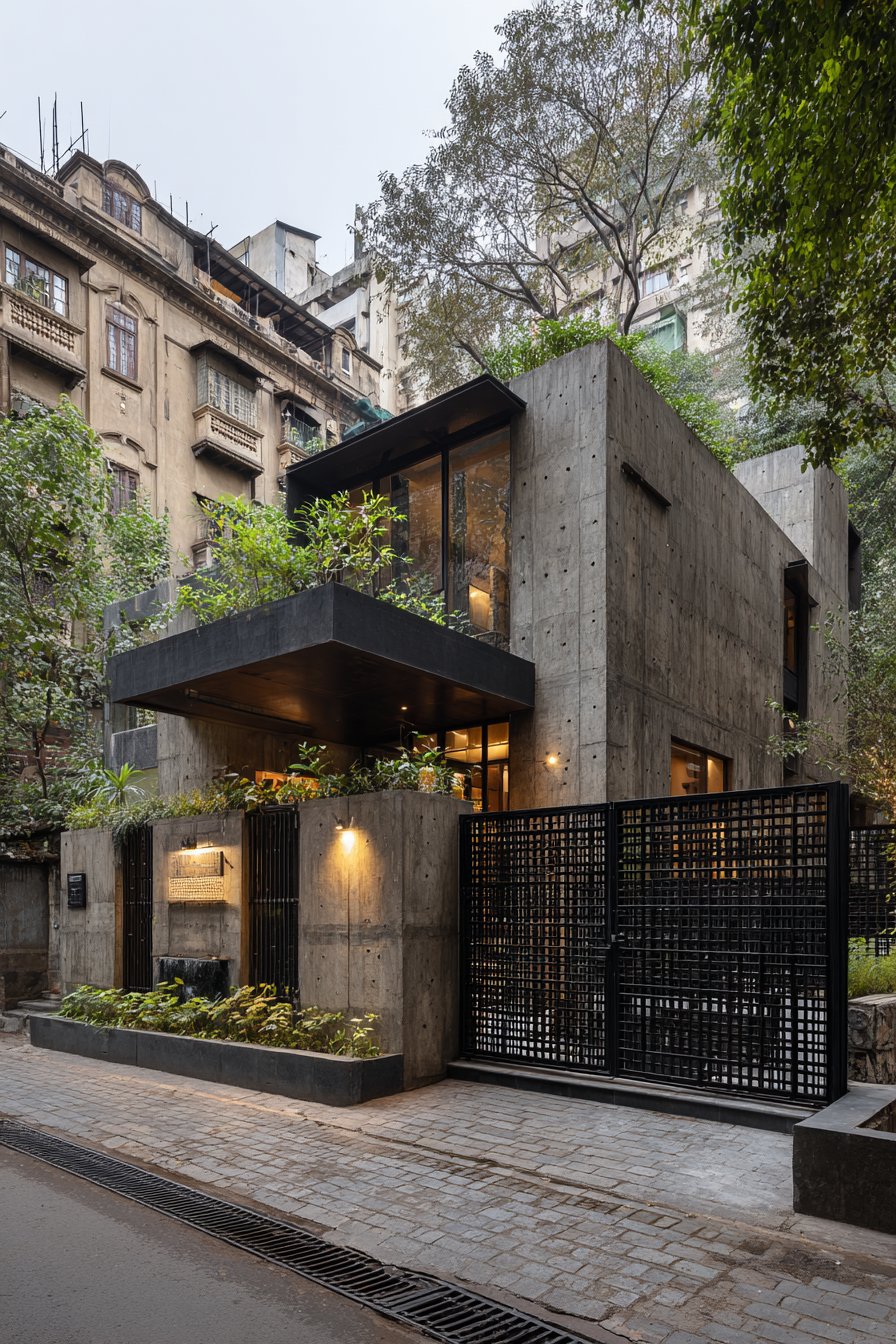
The minimal ornamentation in this design is entirely intentional. Industrial aesthetics reject applied decoration in favor of letting materials and structure speak for themselves. The concrete’s natural grey tone, the texture created by construction processes, and the straightforward functionality of drainage and gate hardware provide all the visual interest needed. This restraint creates a powerful architectural statement that communicates confidence and contemporary sensibility.
Key Design Tips:
- Use high-quality plywood for formwork to achieve consistent texture patterns across all poured sections
- Plan formwork board orientation carefully to create intentional pattern direction
- Seal exposed concrete surfaces with penetrating sealers that protect without creating glossy finish
- Ensure proper concrete mix design with adequate strength and durability for exterior exposure
- Detail drainage channels with adequate slope for efficient water removal
- Specify heavy-duty welded mesh with appropriate spacing for security while maintaining visual openness
- Apply rust-inhibiting primer to all steel elements before powder coating for maximum longevity
- Consider board-formed concrete techniques for more pronounced formwork texture if desired
7. Mediterranean Terracotta Warmth
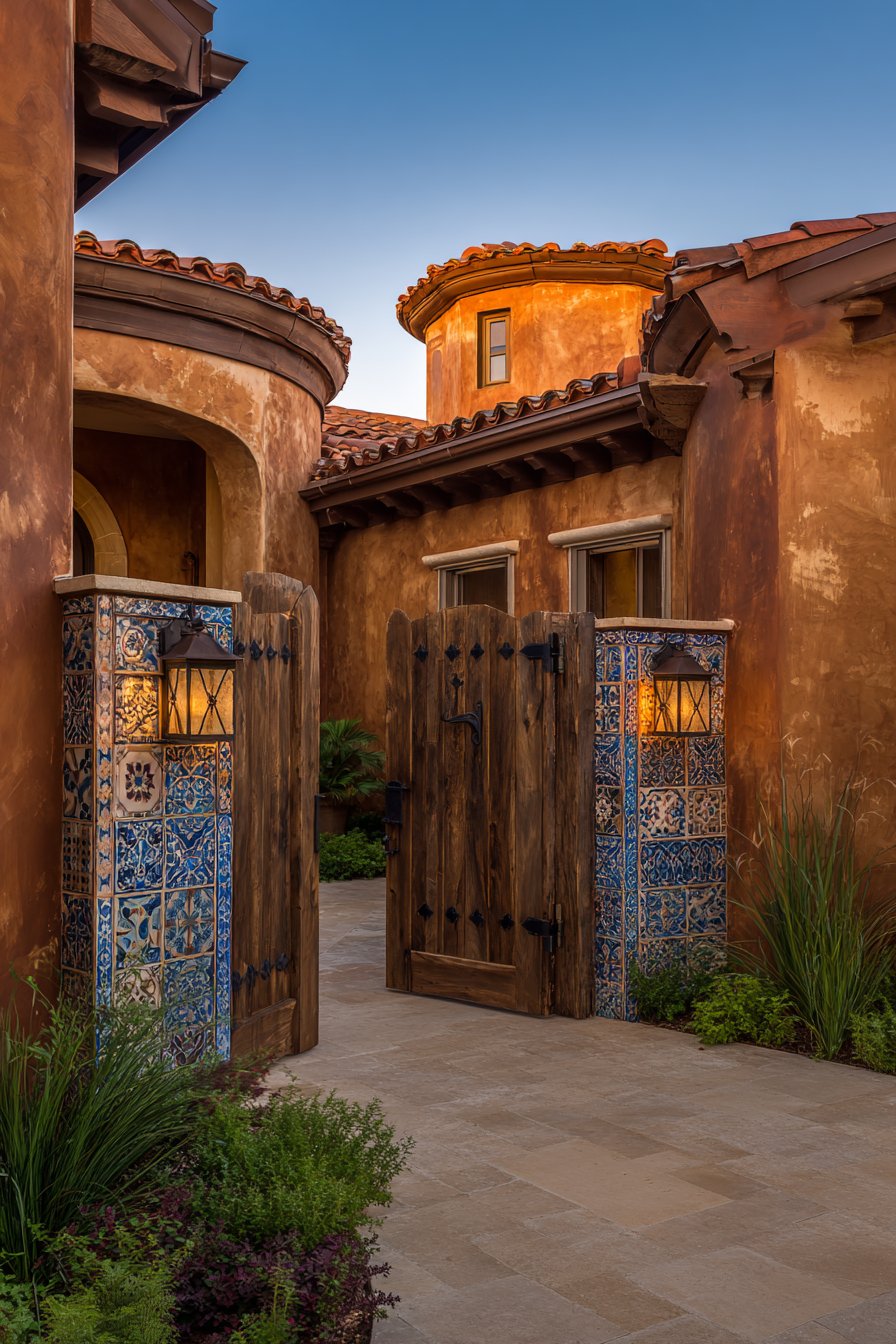
Transport yourself to sun-drenched Mediterranean coastlines with this compound wall design that celebrates warm earth tones and artisanal craftsmanship. The terracotta-colored stucco finish, showing subtle texture variations that reveal the hand-troweled application, creates an authentic aged appearance reminiscent of centuries-old European village walls. The warm orange-red hue works harmoniously with natural light throughout the day, appearing vibrant in morning sun and richly saturated during golden hour. Curved wall sections introduce organic flowing lines that contrast with typical straight boundary walls, creating a softer, more welcoming aesthetic that feels residential rather than fortress-like.
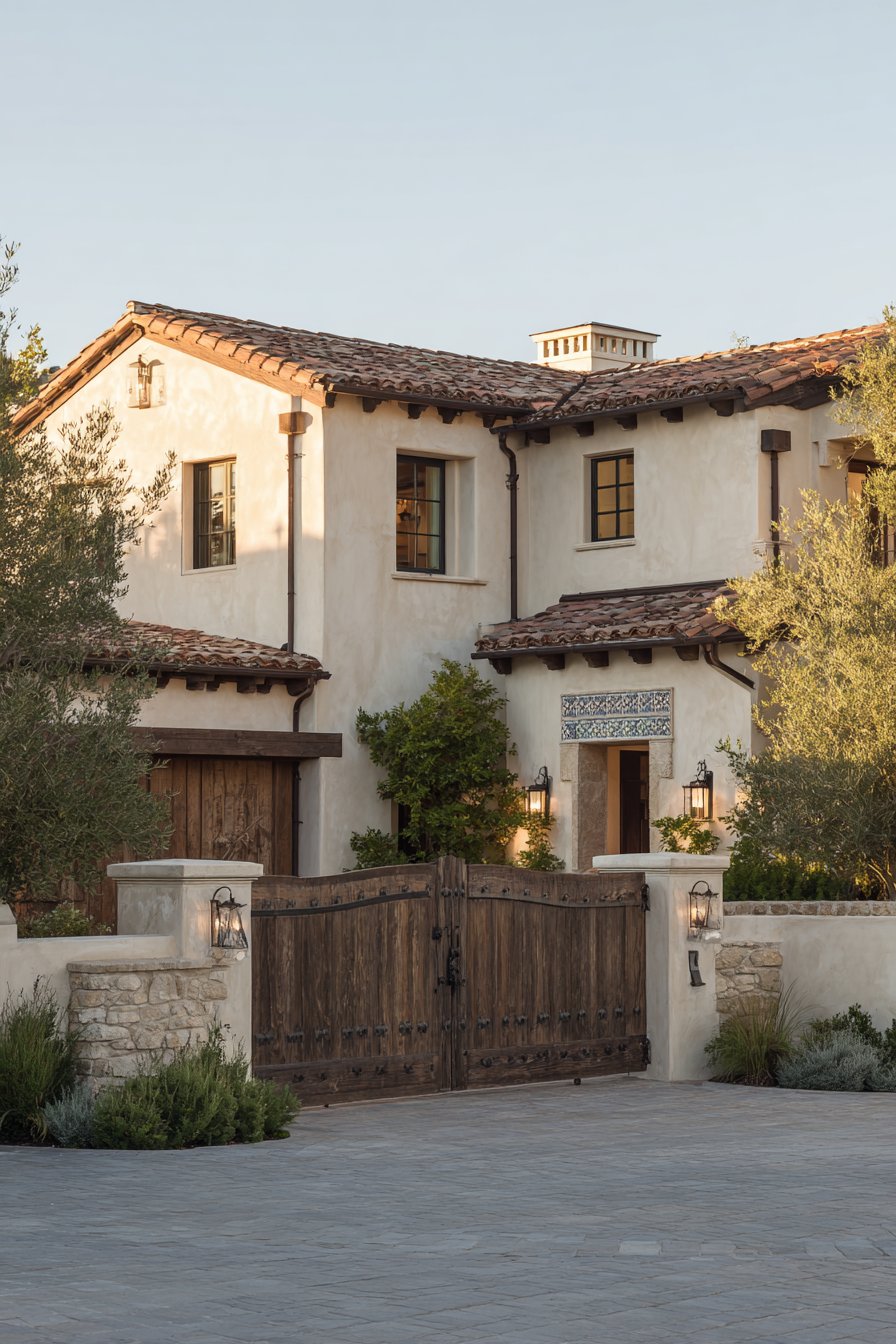
Decorative tile accents in traditional blue and white patterns positioned near the entrance serve as jewel-like details against the warm terracotta background. These handpainted ceramic tiles, whether featuring geometric patterns, floral motifs, or abstract designs, reference the rich tile-making traditions of Spain, Portugal, Morocco, and Italy. Their placement at the entrance creates a focal point that signals the transition from public street to private residence, much like the elaborately tiled entries found in Mediterranean architecture.
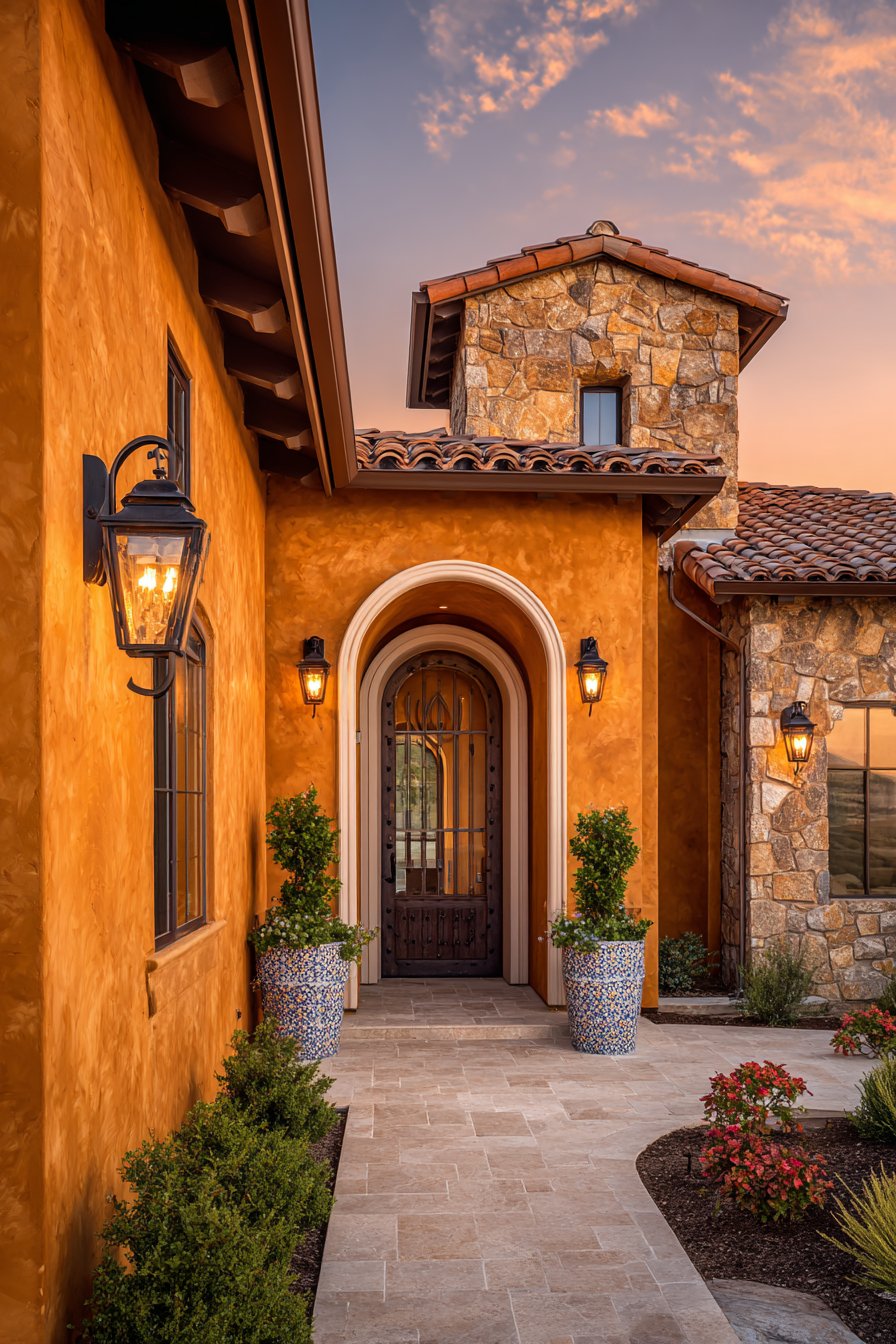
The rustic wooden gate with iron studs and substantial hinges reinforces the Old World character. The heavy timber construction and visible iron hardware communicate permanence and craftsmanship, while the slightly weathered appearance—whether authentic aging or artfully applied finish—adds to the sense of heritage. Iron studs arranged in decorative patterns provide both structural reinforcement and visual interest, their dark metal contrasting beautifully against weathered wood tones.
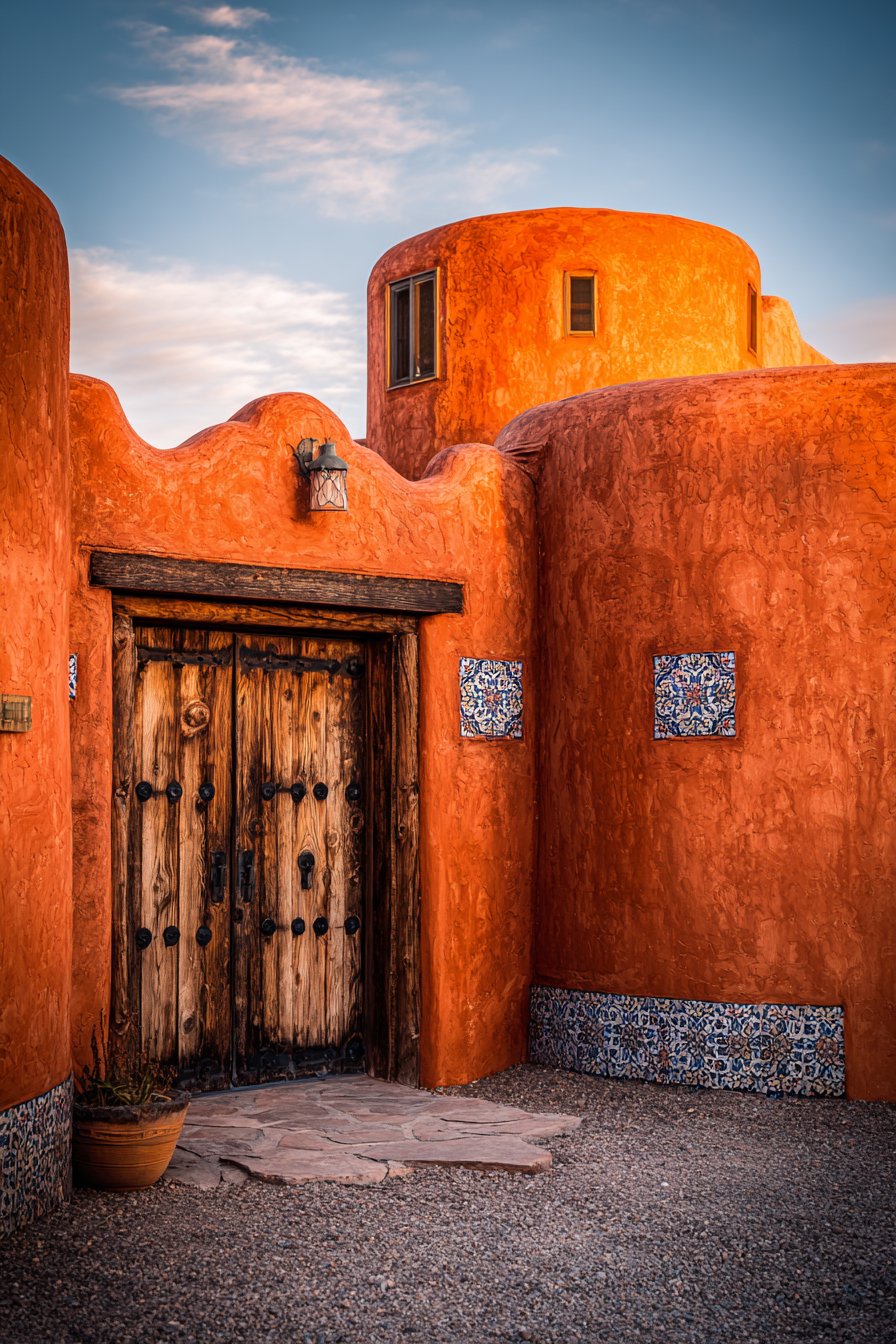
Terracotta tile cap stones provide the finishing touch, protecting the wall top from water penetration while reinforcing the Mediterranean color palette. These semi-cylindrical tiles, laid in overlapping fashion, create distinctive scalloped edges along the wall’s profile and add dimensional shadow lines. Beyond their aesthetic contribution, they provide excellent weather protection, shedding rainwater away from the wall’s core.
Key Design Tips:
- Use authentic mineral-based pigments in stucco to achieve rich terracotta color that won’t fade significantly
- Apply stucco in multiple coats with varied trowel techniques to create authentic texture variations
- Source hand-painted tiles from artisanal producers for authentic character and color depth
- Treat wooden gate with UV-resistant stains or oils to maintain color while allowing natural grain to show
- Install tile cap stones with proper mortar bedding and overlapping to ensure weather-tight installation
- Consider adding climbing plants like bougainvillea or jasmine to enhance Mediterranean character
- Plan wall curves carefully with adequate radius to ensure structural integrity while maintaining flowing lines
8. Vertical Wooden Slat Contemporary Design
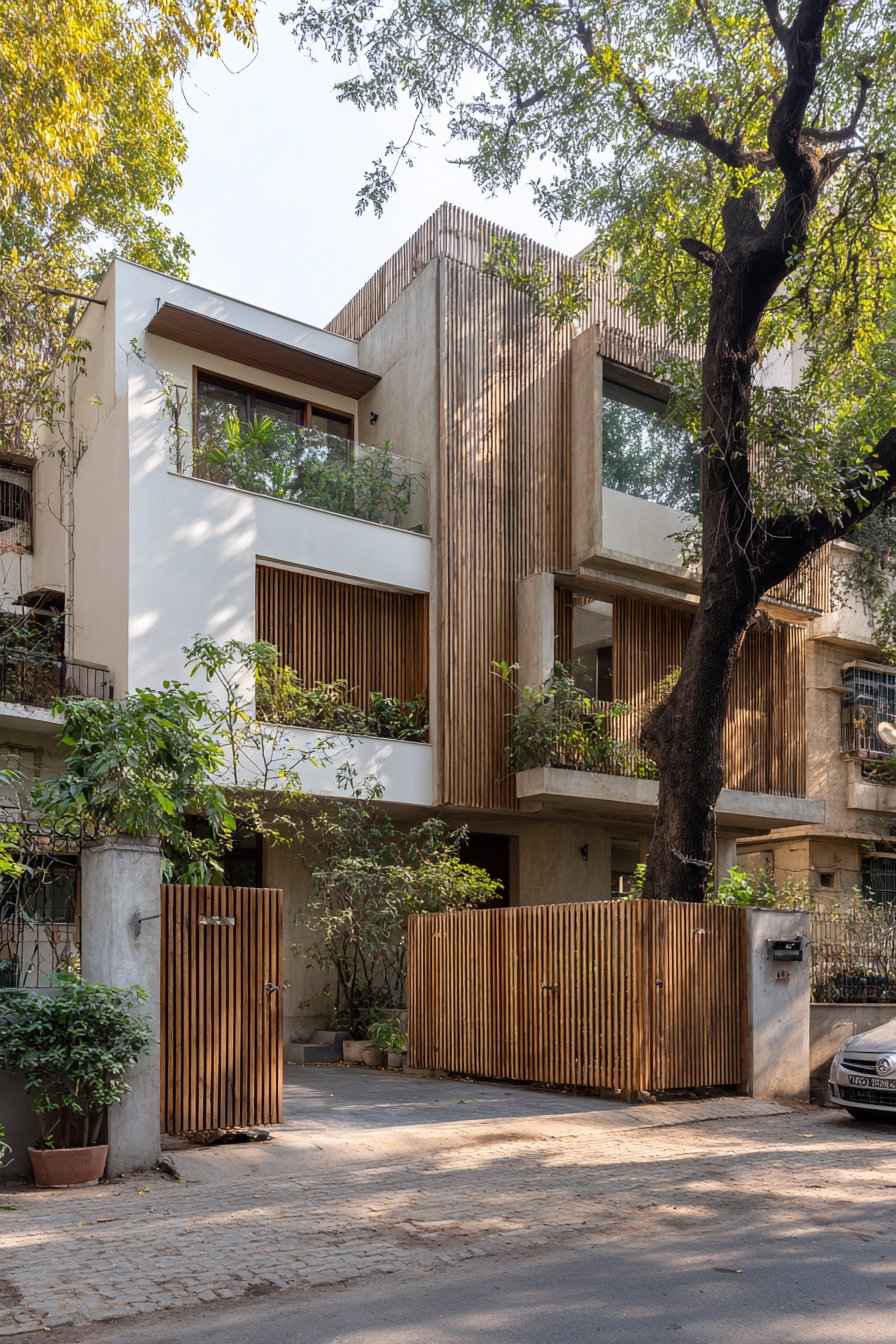
This contemporary compound wall design demonstrates how natural materials can be deployed in modern compositions to create privacy without complete visual barrier. Vertical wooden slats in natural teak finish are mounted on a solid concrete base wall, creating a two-tier composition where the lower concrete portion provides security and the upper slatted section allows light and air passage. The slats are precisely spaced to balance privacy with transparency—close enough to obscure direct views into the property but far enough apart to maintain visual connection with the surrounding environment and create intriguing shadow patterns.
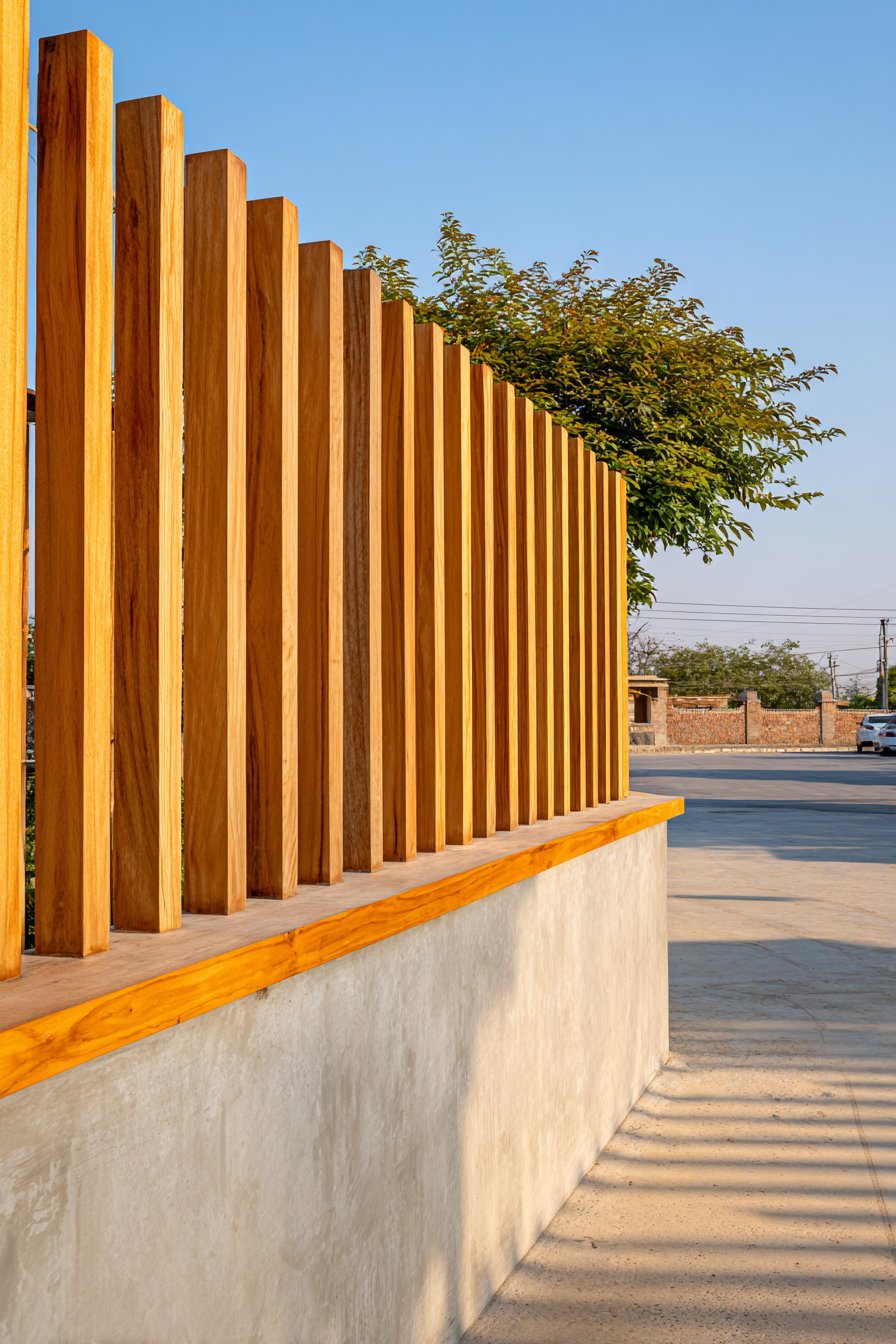
Natural teak was selected for its exceptional durability and beautiful aging characteristics. Unlike softer woods that deteriorate quickly in exterior conditions, teak contains natural oils that resist moisture, insects, and decay. As it weathers, teak develops a silvery-grey patina that many find even more attractive than the original honey-brown color. The vertical orientation of the slats emphasizes height and creates clean contemporary lines, while their uniform spacing creates rhythmic repetition that’s visually calming yet architecturally sophisticated.
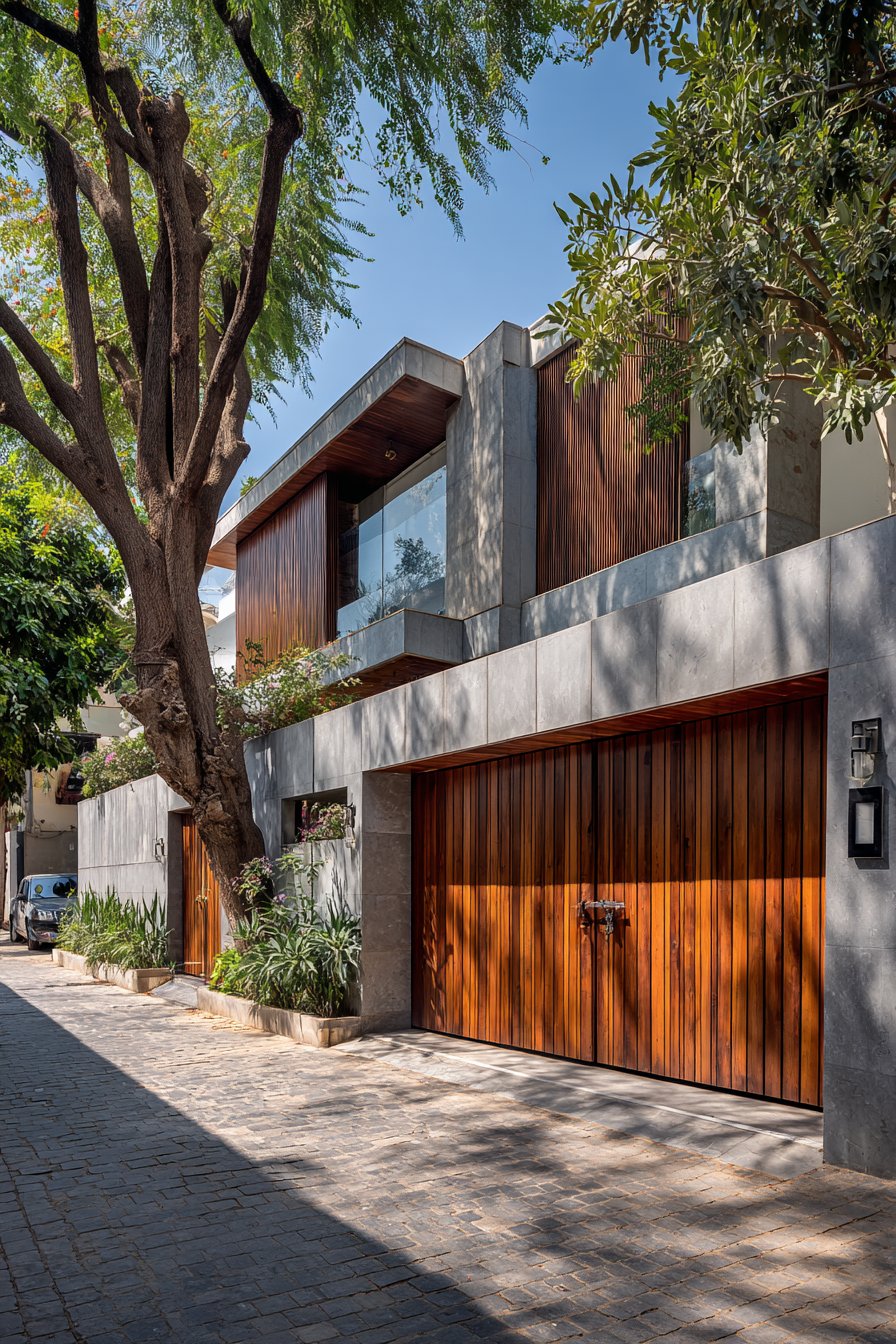
The modern sliding gate continues the wooden slat design vocabulary, maintaining visual continuity across the compound wall’s length. The gate’s sliding mechanism, mounted on industrial-grade rollers, provides smooth operation while the continuation of the slat pattern makes the gate nearly invisible when closed—only the subtle track at ground level reveals its presence. This seamless integration demonstrates the importance of carrying design elements consistently throughout all components of the compound wall system.
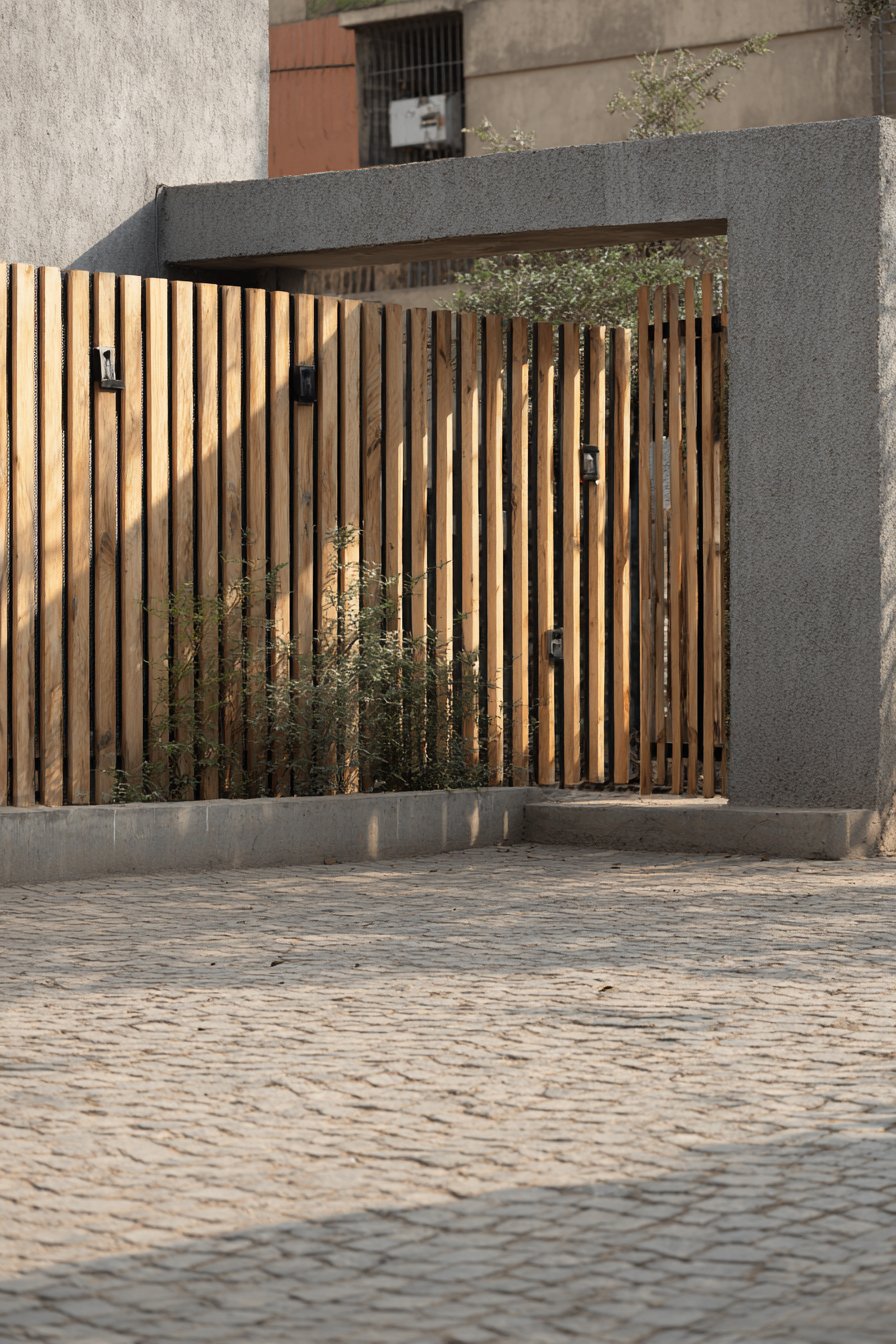
Shadow patterns created by the slatted sections provide dynamic visual interest throughout the day. As the sun moves across the sky, light filtering through the gaps between slats creates ever-changing striped patterns on the ground and on surfaces within the property. These shadows animate the space, adding temporal dimension to the wall’s spatial function. The interplay between solid and void, opacity and transparency, creates a sophisticated boundary that feels contemporary and thoughtfully designed.
Key Design Tips:
- Specify teak from sustainably managed plantations with FSC certification for environmental responsibility
- Mount slats with hidden stainless steel fasteners to maintain clean visual appearance
- Ensure adequate air gap between wood slats and concrete backing to allow air circulation and prevent moisture accumulation
- Calculate slat spacing based on desired privacy level—typically 50-75mm gaps for privacy with airflow
- Treat teak with UV-resistant oils if you wish to maintain the natural honey color rather than allowing grey patina to develop
- Install proper drainage at the concrete base to prevent water pooling around wooden elements
- Use marine-grade sliding hardware to ensure smooth gate operation and longevity
9. Perforated Corten Steel Modern Screen
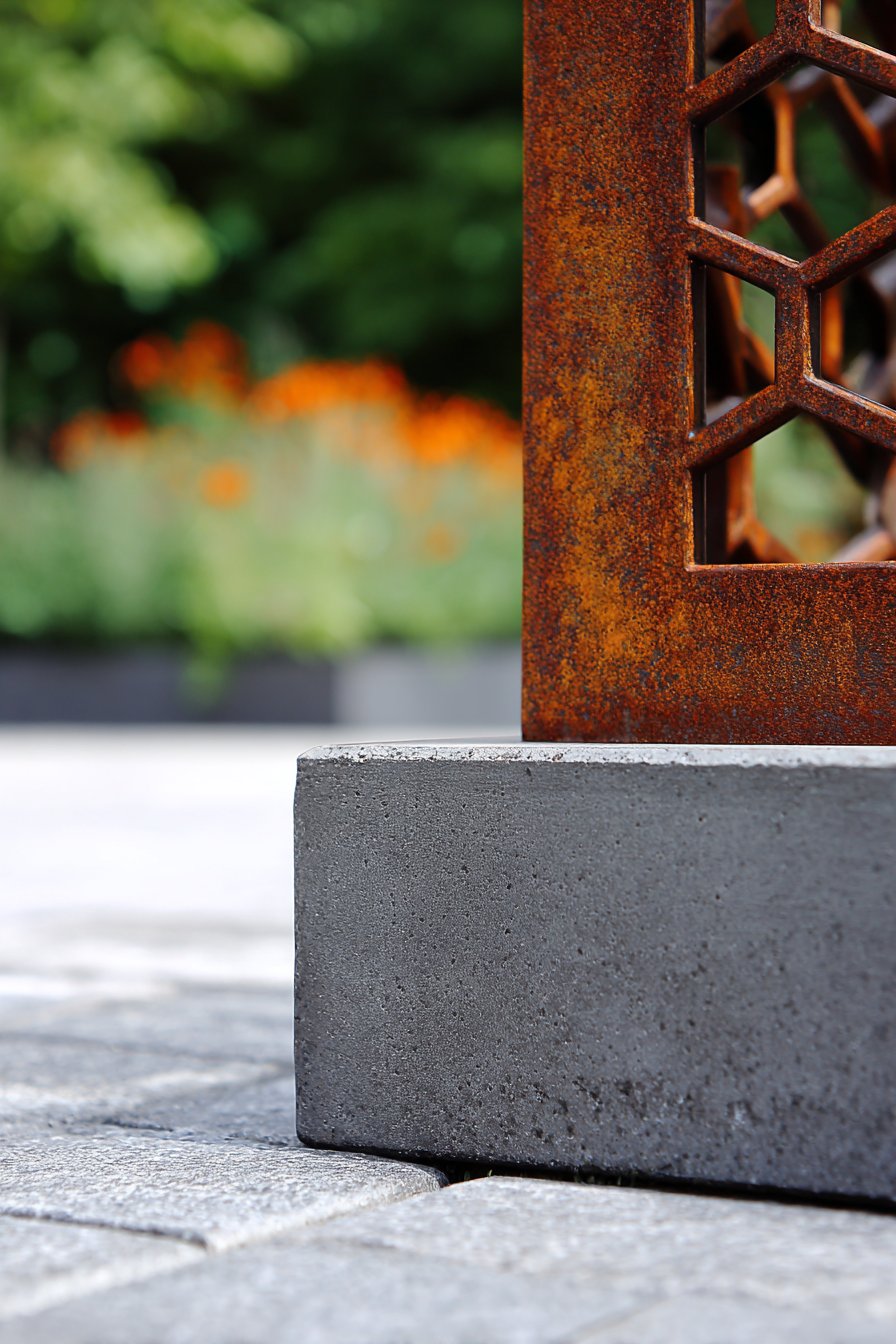
This cutting-edge compound wall design showcases how industrial materials can be transformed into artistic architectural elements through thoughtful perforation and natural weathering processes. Corten steel panels feature geometric cutout patterns that create intricate light-filtering screens, their weathered rust patina developing naturally over several months from orange-red to rich chocolate brown. This oxidation process is not deterioration but rather a protective layer that prevents further corrosion, creating a maintenance-free finish with exceptional longevity. The geometric cutouts—whether circular, triangular, hexagonal, or custom patterns—transform functional boundary into artistic installation.
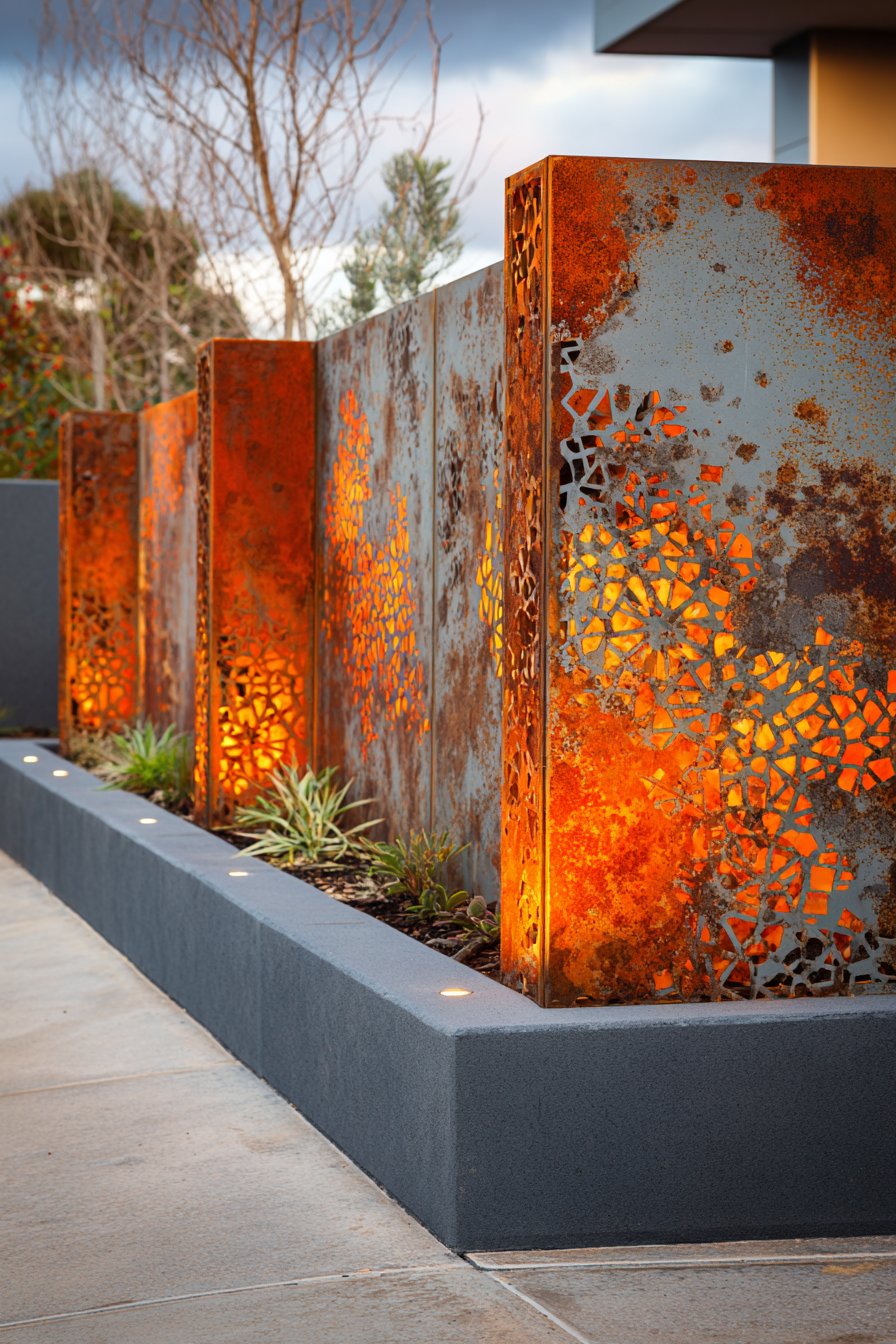
The panels are mounted on a low concrete base painted in charcoal grey, creating tonal harmony with the oxidized steel while providing solid foundation and ground-level security. This two-material approach balances transparency and opacity, with the lower solid portion preventing unwanted access while the upper perforated section maintains visual interest and allows air circulation. The charcoal base color grounds the composition and prevents the bright rust colors from appearing too warm or overwhelming.
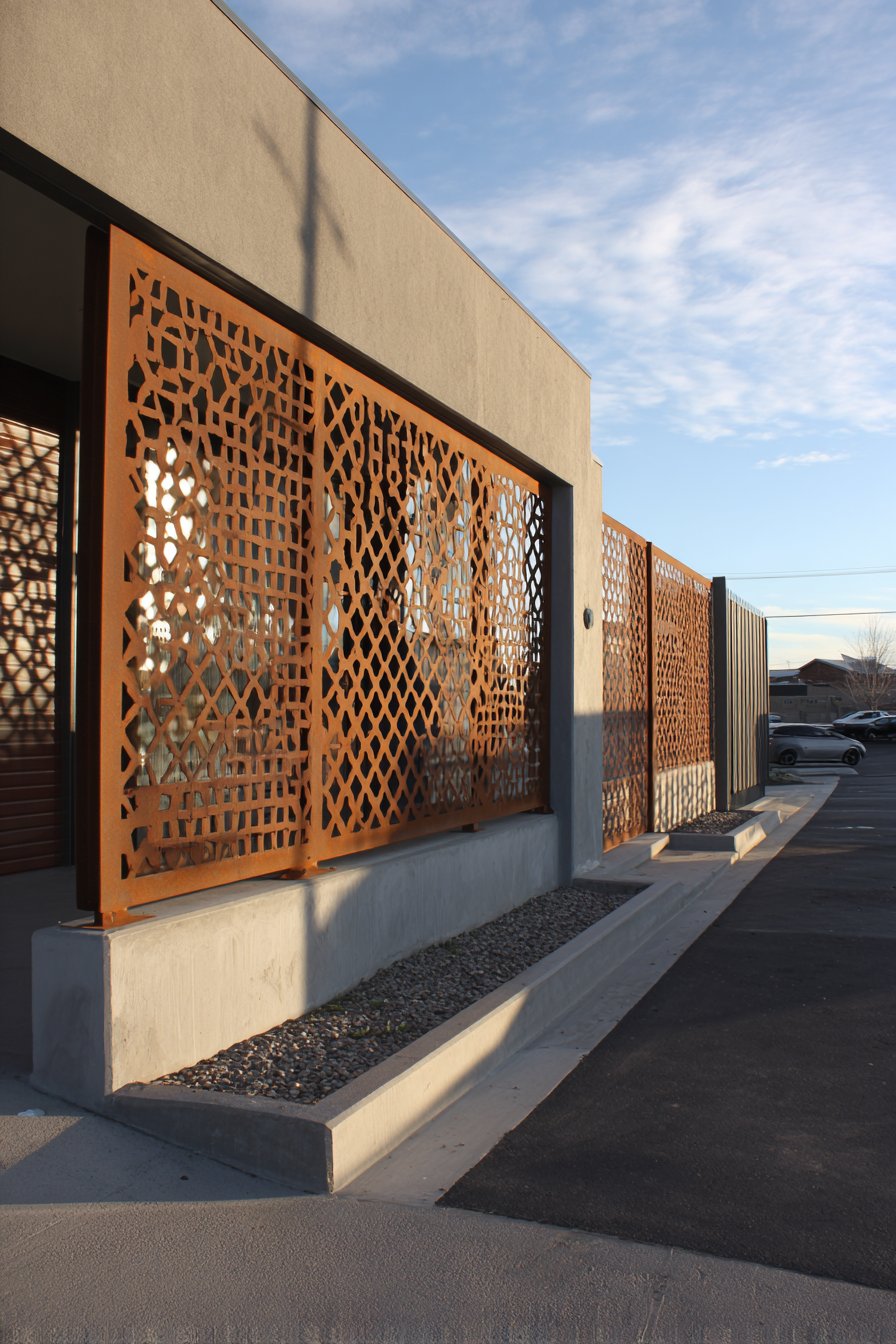
The contemporary sliding gate mirrors the perforated design, ensuring visual continuity while providing necessary access. When closed, the gate’s perforations align with adjacent panel patterns, making the entrance nearly invisible—a subtle sophistication that rewards close observation. The sliding mechanism allows the gate to operate smoothly despite the panels’ substantial weight, and the industrial hardware complements the corten steel’s utilitarian character.
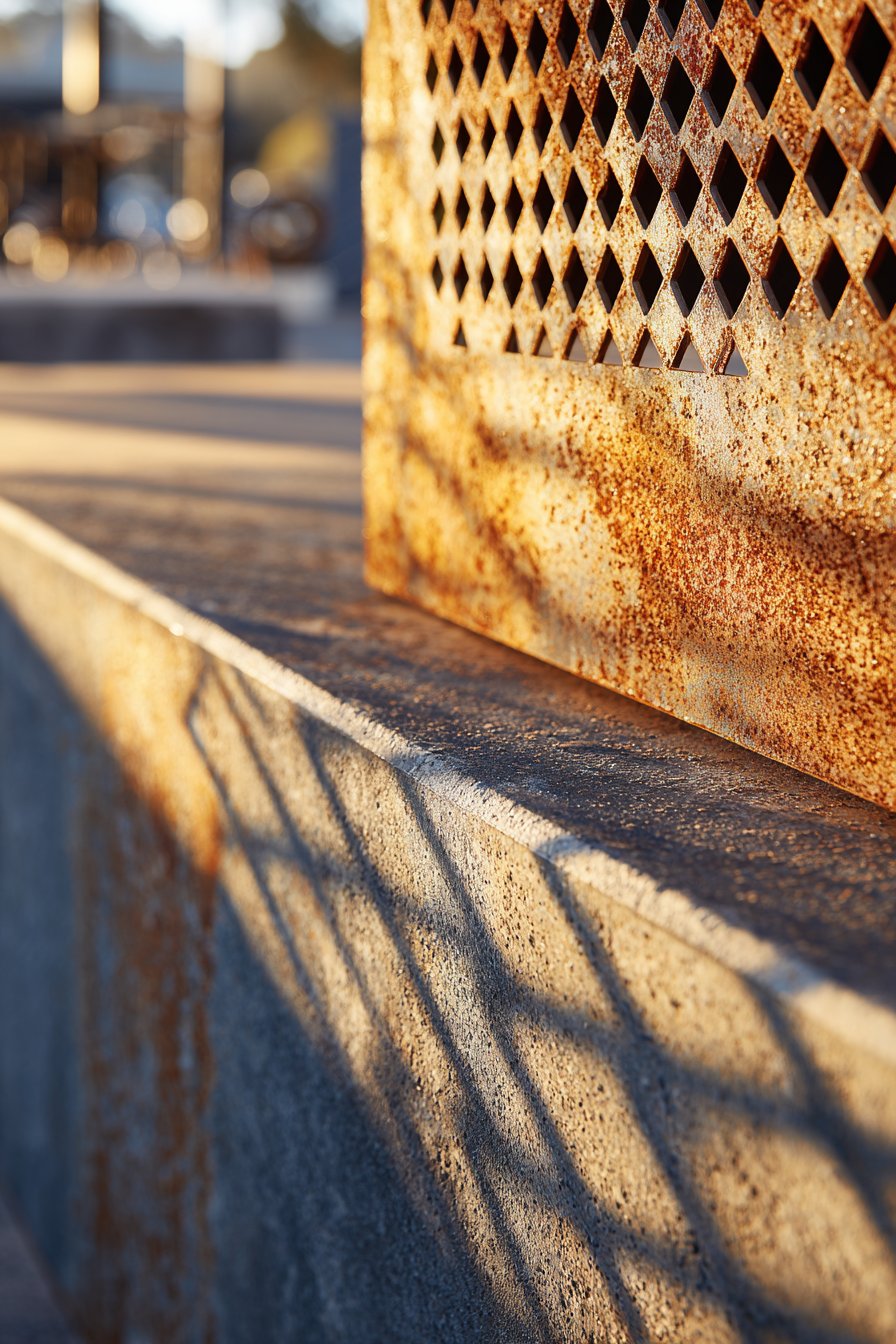
Light filtering through the geometric perforations creates spectacular shadow effects, projecting intricate patterns onto adjacent surfaces. These shadows change throughout the day as the sun’s angle shifts, creating a dynamic installation that transforms mundane boundary into interactive art. During evening hours, interior lighting can create the reverse effect, with warm light glowing through the cutouts to create welcoming illumination visible from the street.
Key Design Tips:
- Allow corten steel to weather naturally for 6-12 months before final evaluation of color and texture
- Install panels with adequate spacing from vertical surfaces to prevent rust staining on adjacent materials
- Ensure panels are properly sealed at edges to prevent rust runoff onto concrete base or paving
- Design cutout patterns with structural engineering input to maintain panel integrity and wind resistance
- Consider pattern orientation relative to sun path for optimal shadow effects during key viewing times
- Protect newly installed panels from excessive moisture during initial weathering period
- Apply clear sealant to fully weathered corten if you want to halt the oxidation at a particular color stage
10. Stacked Ledge Stone Dimensional Wall
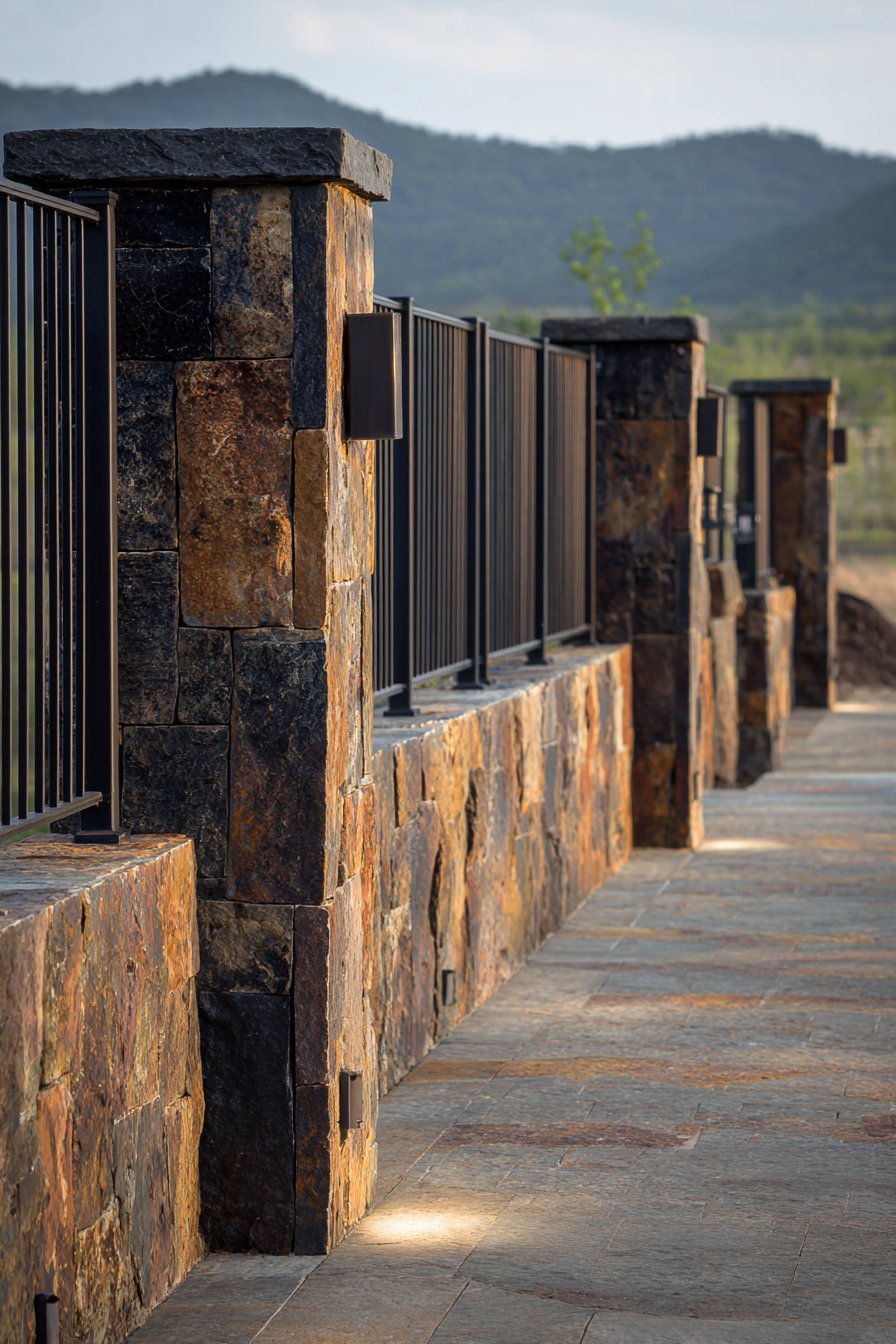
Natural stone takes center stage in this compound wall design featuring stacked ledge-style veneer in a carefully curated palette of earth tones. The ledge stone pieces, varying from thin elongated strips to more substantial rectangular sections, are arranged in horizontal courses that create strong linear emphasis while the varied stone thickness produces dimensional relief and deep shadow lines. Colors range from warm tans and taupes to cool greys and slate tones, creating visual richness that changes with lighting conditions. The irregular nature of the stone pieces prevents monotony, with each section of wall having unique character while maintaining overall coherence through consistent horizontal orientation.
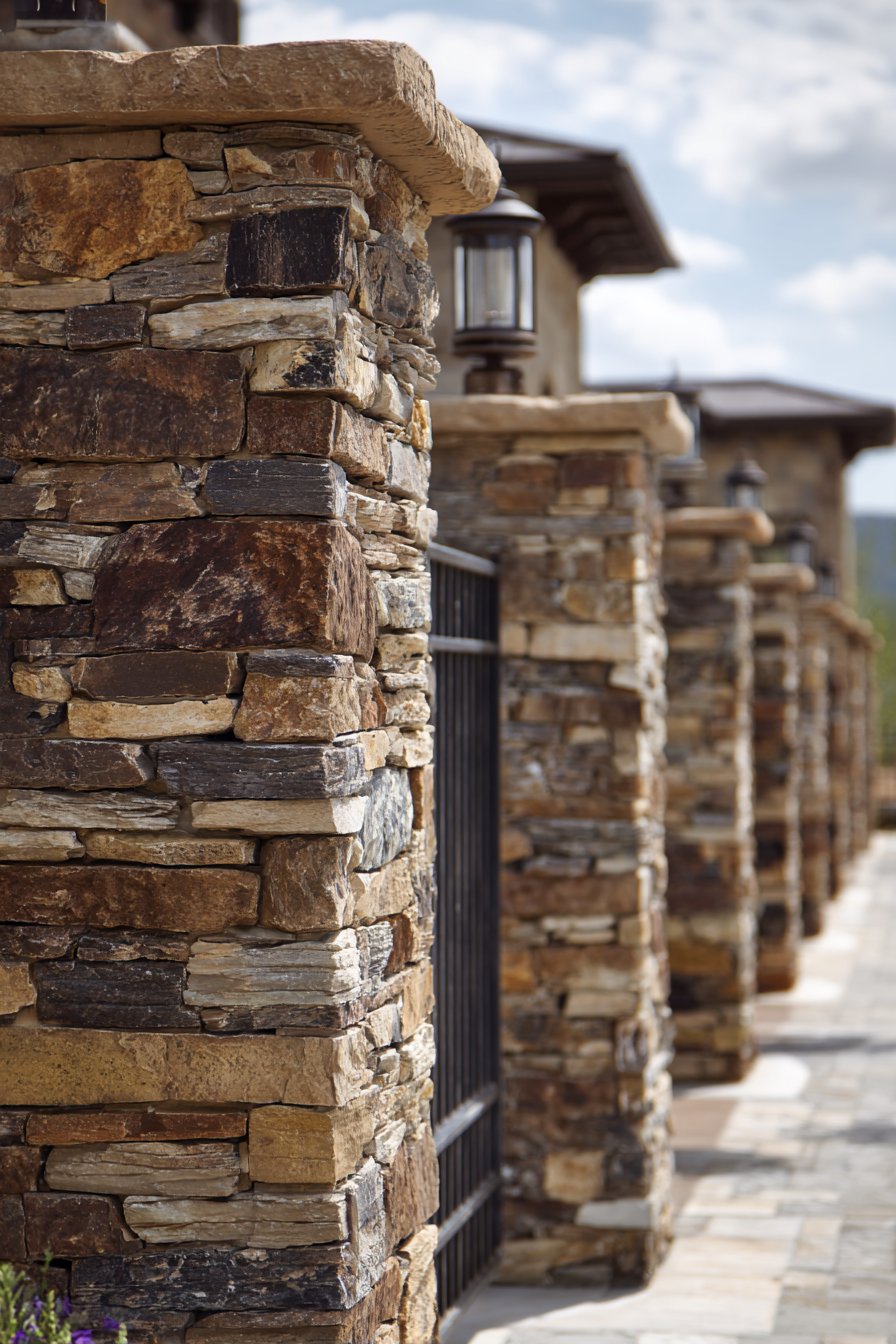
Black metal railing tops the wall with simple vertical pickets that provide security without blocking views. The railing’s minimalist design allows the stone to remain the visual focus while its dark finish creates crisp contrast against the neutral stone palette. The vertical orientation of the pickets provides counterpoint to the wall’s horizontal stone courses, creating visual balance through directional opposition. The railing height is carefully calculated to meet security requirements while maintaining appropriate scale relative to the wall’s mass.
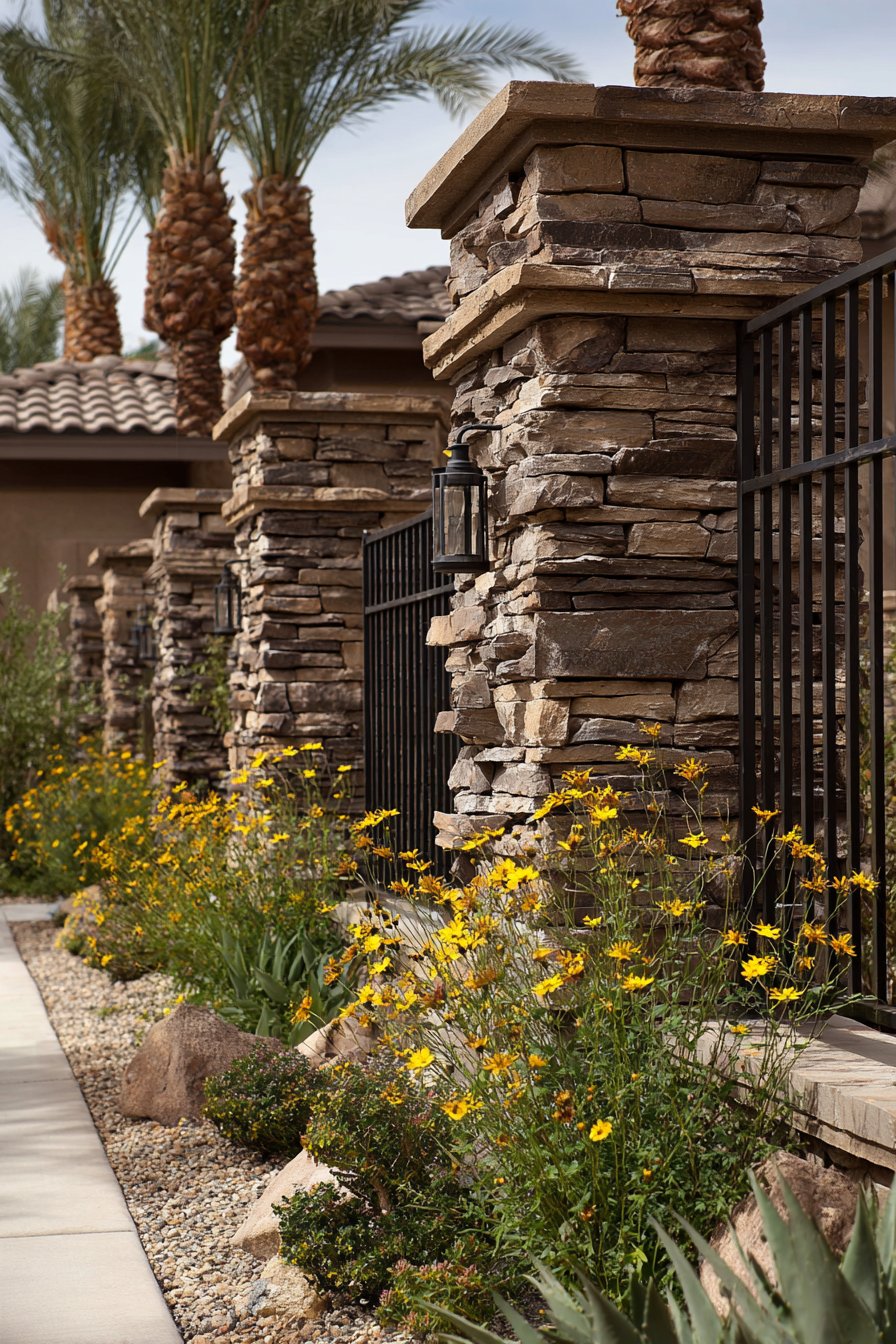
Integrated low-voltage lighting at pillar bases illuminates the stone texture after dark, transforming the wall’s appearance once the sun sets. The upward-directed light grazes the stone surface, creating dramatic shadows that emphasize the dimensional relief and revealing texture details invisible in flat daylight illumination. This nighttime transformation makes the wall a feature rather than just a boundary, creating ambient lighting that enhances both security and aesthetics. The warm LED lamps complement the earth-tone stone palette while providing energy-efficient operation.
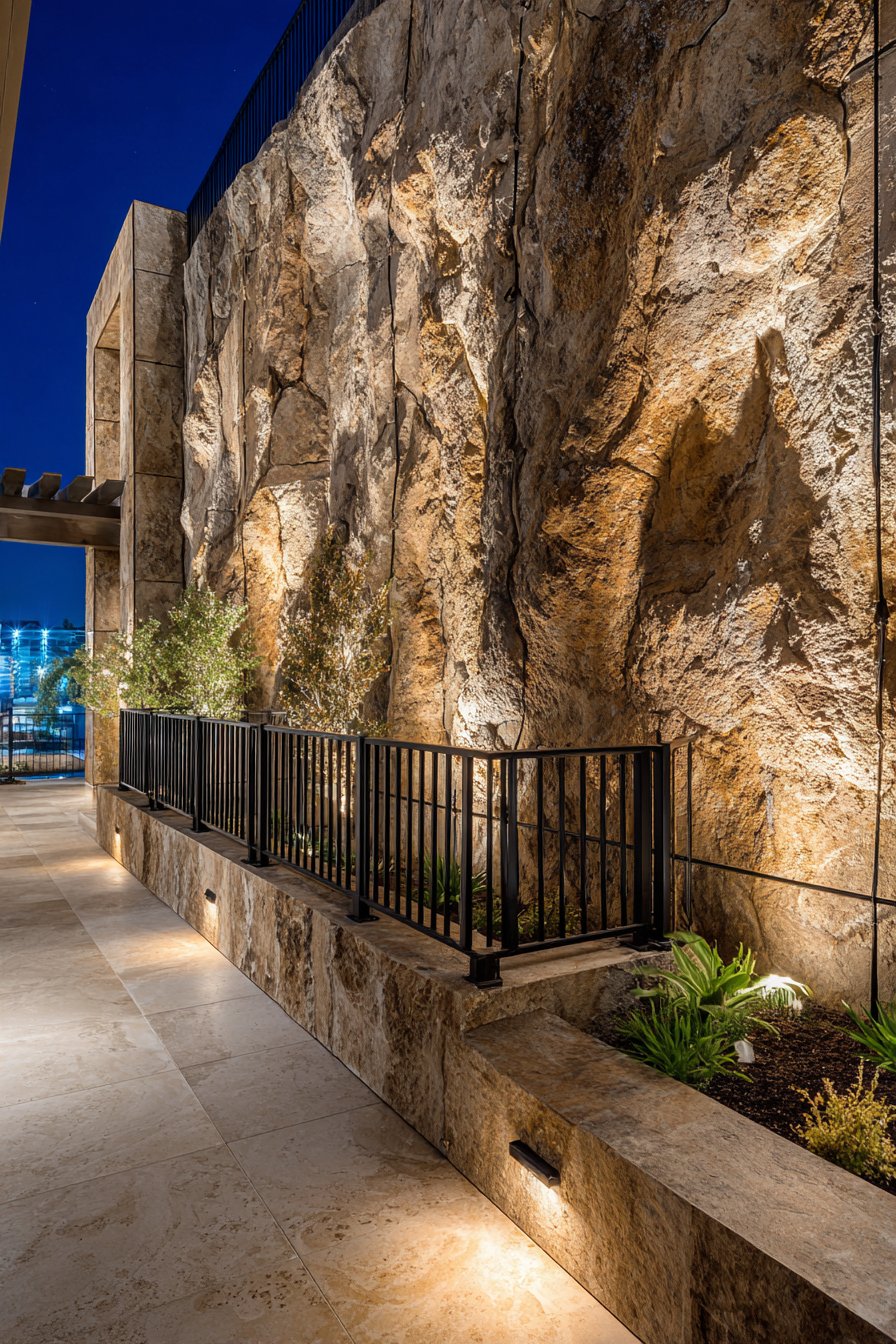
The organic quality of natural stone creates visual interest that manufactured materials struggle to replicate. Each stone’s unique color variation, natural texture, and irregular shape contributes to an overall composition that appears both intentional and organic. The deep shadow lines between individual stones create a three-dimensional quality that changes dramatically throughout the day as sunlight strikes from different angles, ensuring the wall never appears static or monotonous.
Key Design Tips:
- Select stones with similar thickness ranges to facilitate easier installation and more consistent coursing
- Ensure stones are suitable for your climate with appropriate freeze-thaw resistance ratings
- Install metal railing with proper anchoring into structural elements rather than just stone veneer
- Use corrosion-resistant metal finishes suitable for direct weather exposure
- Position uplighting fixtures to avoid creating glare for neighbors or passersby
- Specify warm-white LED lamps (2700-3000K) that complement stone’s earth tones
- Install proper water management systems behind stone veneer to prevent moisture accumulation
- Use non-combustible coping stones suitable for your climate conditions
11. Bamboo and Concrete Fusion Design
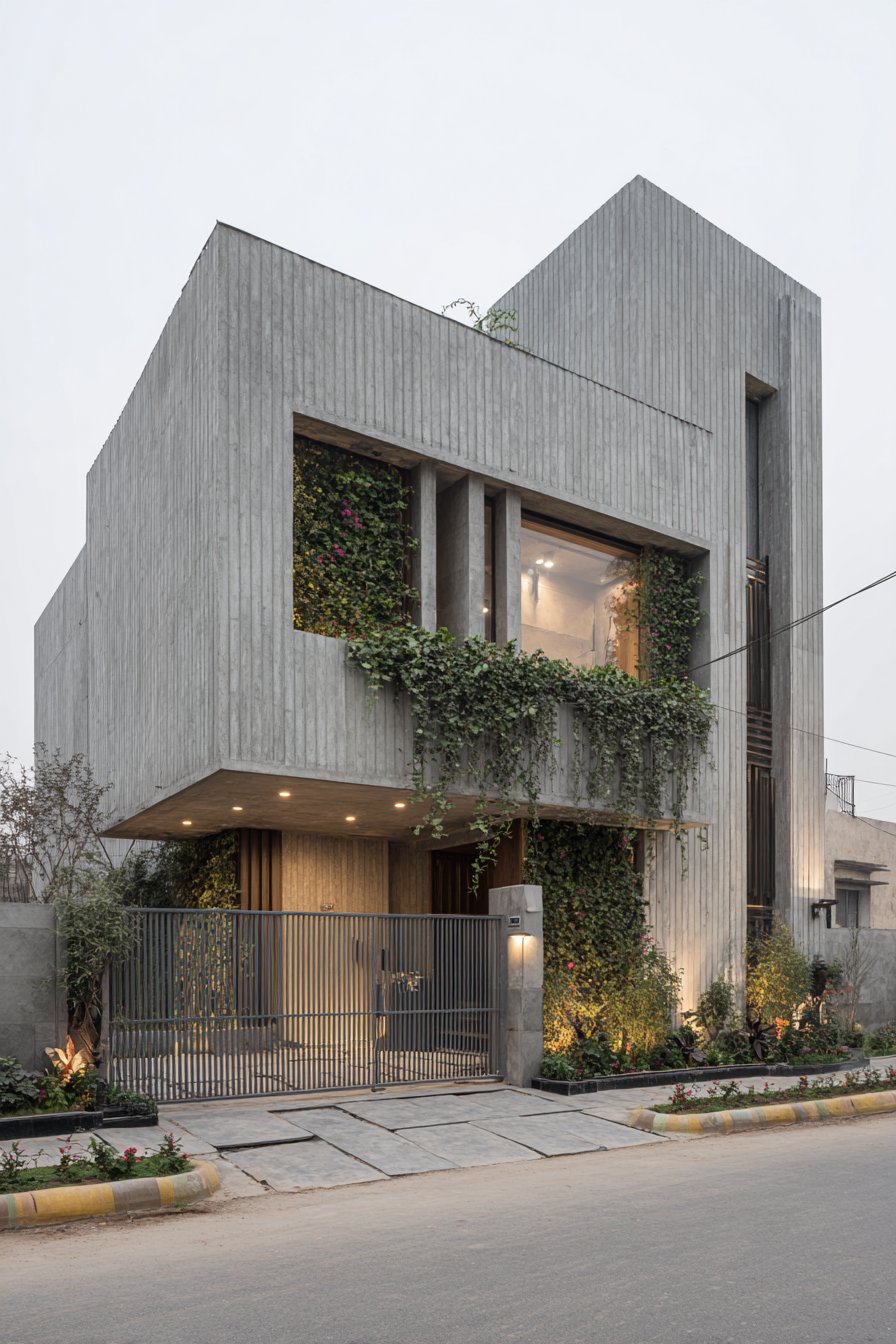
This innovative compound wall design demonstrates how organic and industrial materials can coexist harmoniously when deployed with thoughtful intention. Smooth grey concrete panels provide the structural foundation and create solid visual anchors at regular intervals, while sections of preserved natural bamboo mounted in metal frames create screening elements that soften the concrete’s severity. The bamboo sections are treated to resist moisture, insects, and UV degradation while retaining their natural appearance—the characteristic nodes, natural color variations, and organic forms that make bamboo visually distinctive.
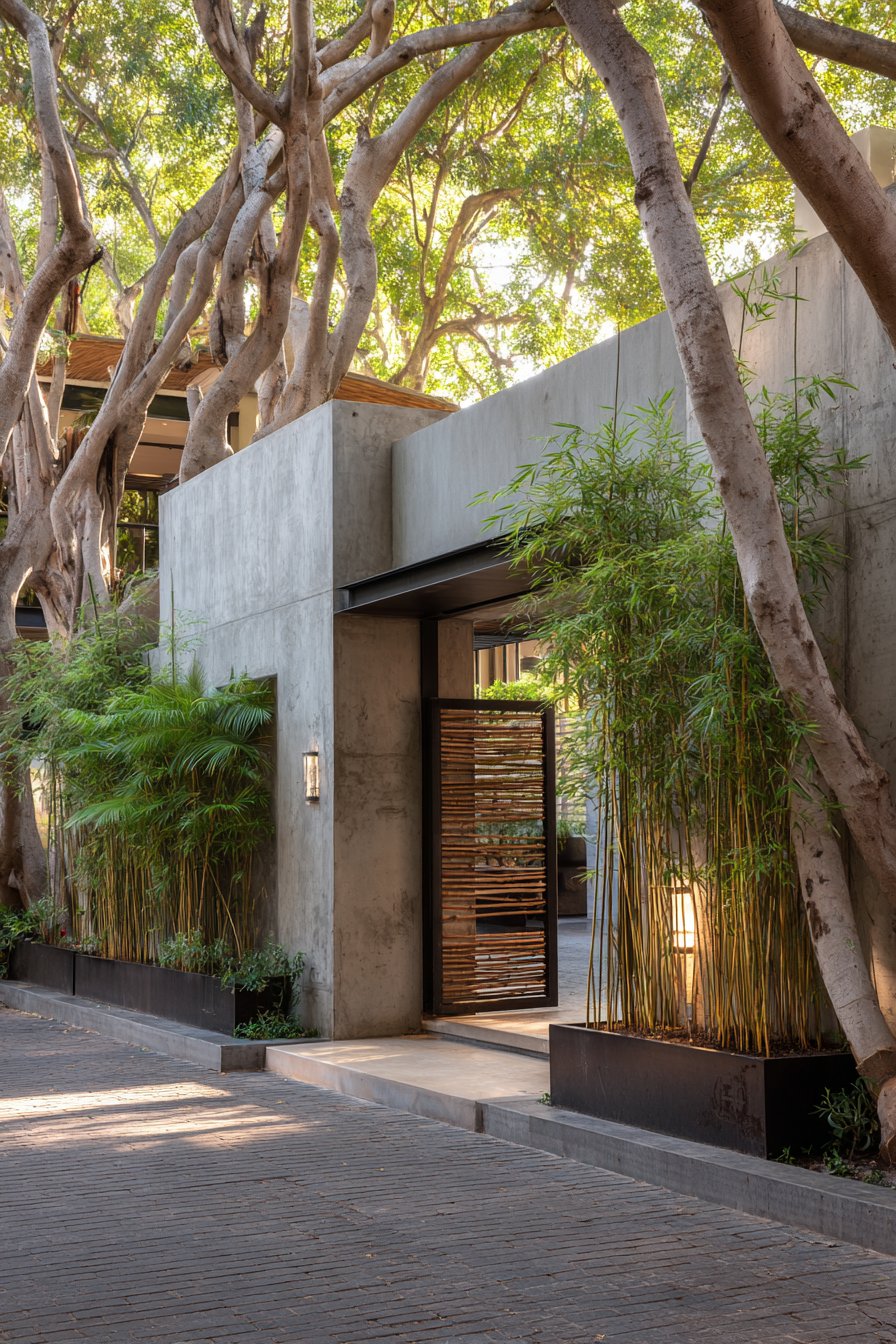
The contrast between materials creates compelling visual dialogue. Concrete represents permanence, strength, and contemporary industrial aesthetics, while bamboo introduces natural warmth, organic texture, and connection to sustainable building traditions. The metal frames holding the bamboo sections bridge these two material vocabularies, their precision-engineered geometry mediating between concrete’s solid planes and bamboo’s organic cylinders. This three-material composition—concrete, bamboo, metal—creates layered visual interest while each material serves specific functional and aesthetic purposes.
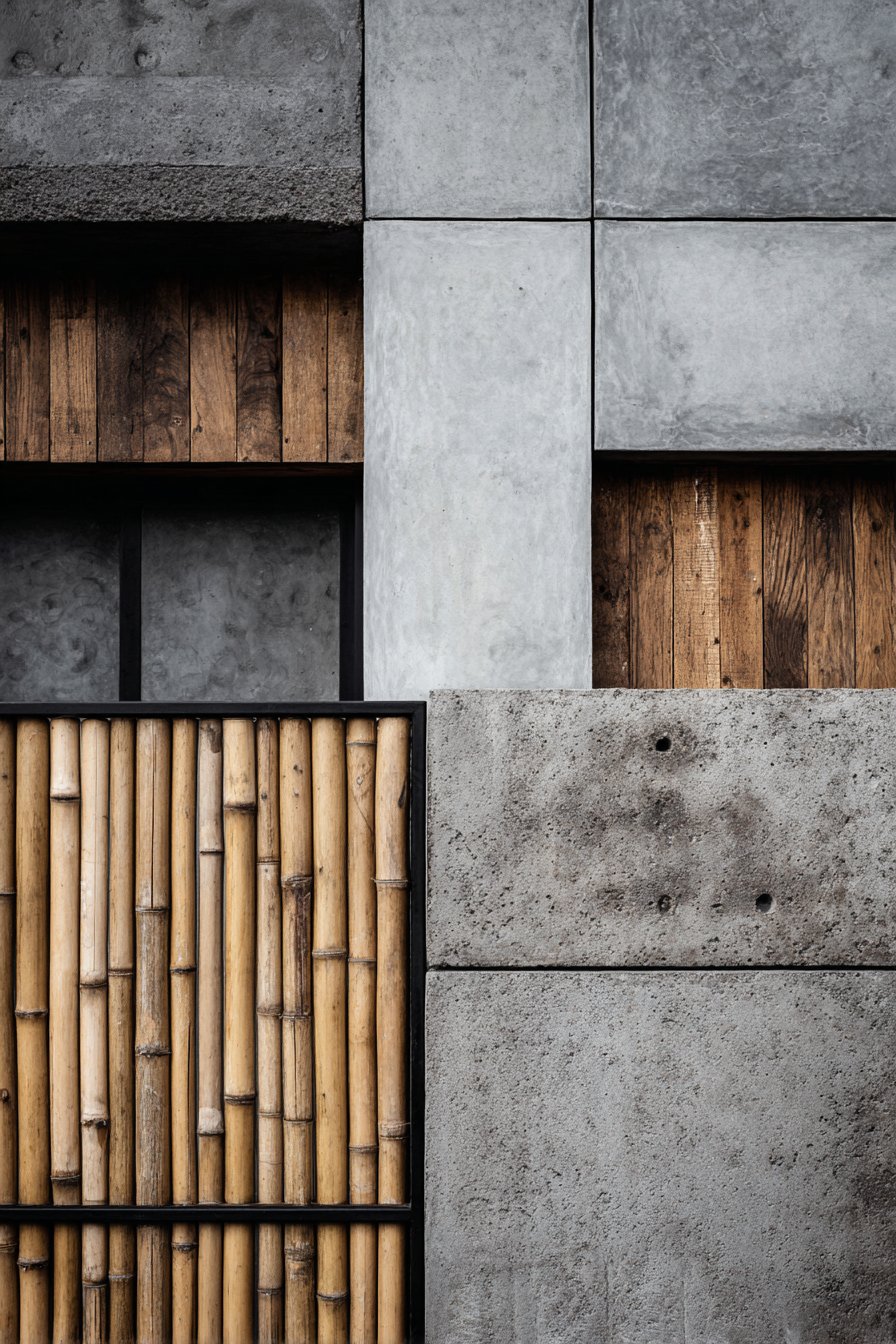
The minimalist steel frame gate with horizontal bamboo infill provides entry while maintaining the wall’s design vocabulary. The gate’s clean-lined frame echoes the metal frames used throughout the wall, creating visual continuity, while the bamboo infill relates to the screening sections. This consistent application of materials and forms creates a cohesive design narrative where every element reinforces the overall aesthetic strategy. The horizontal bamboo orientation in the gate provides counterpoint to the vertical orientation in the screening sections, adding subtle variation that prevents monotony.
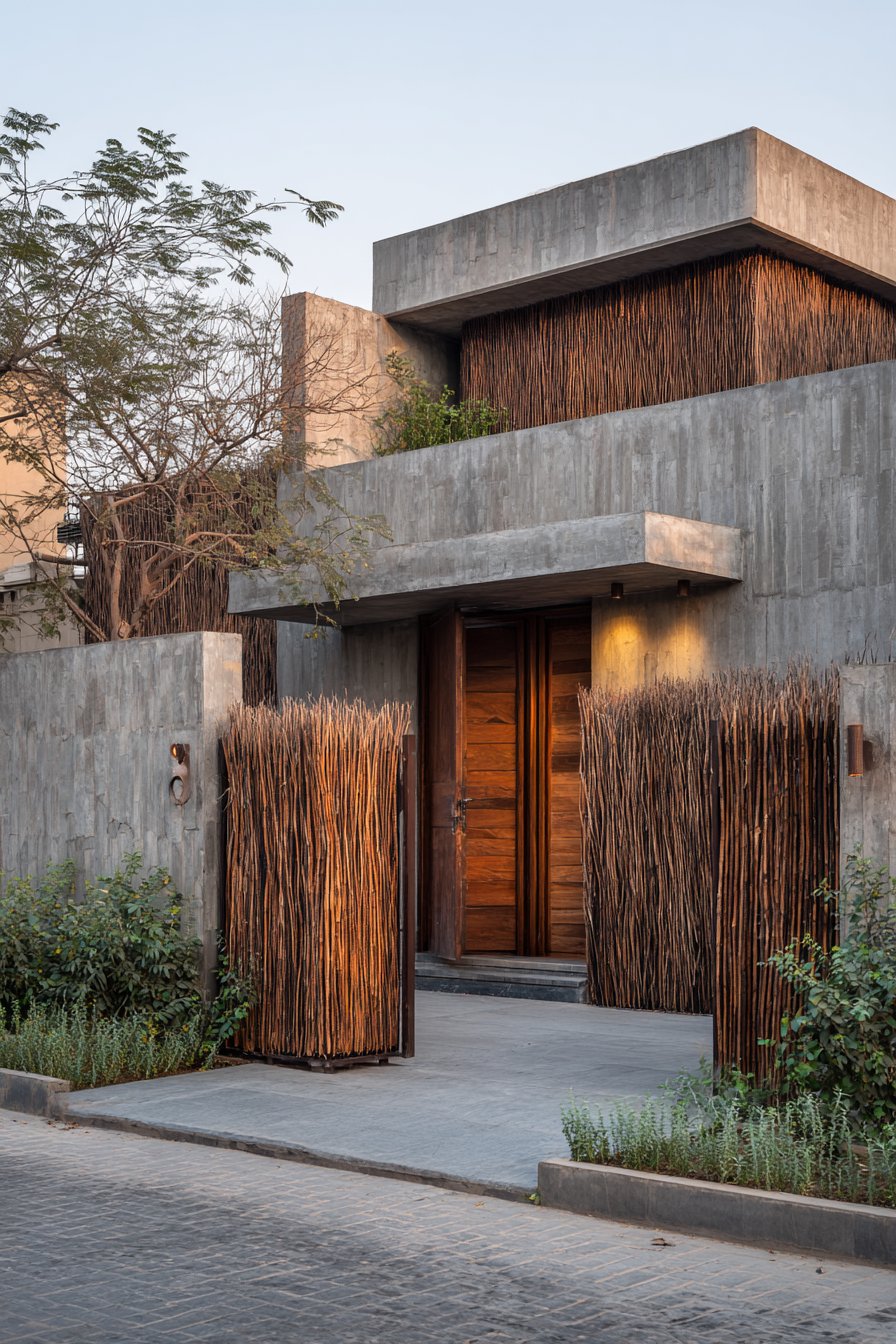
Natural lighting interaction with this mixed-material wall creates fascinating effects throughout the day. The concrete panels read as solid planes with subtle texture from their smooth finish, while light filters through and around bamboo sections, creating dappled shadows and highlighting the bamboo’s cylindrical forms. This interplay between opacity and partial transparency, solidity and lightness, creates a sophisticated boundary that feels contemporary yet connected to natural materials and traditional craftsmanship.
Key Design Tips:
- Specify bamboo treated with non-toxic preservatives safe for residential applications
- Ensure metal frames allow adequate airflow around bamboo to prevent moisture accumulation
- Use marine-grade stainless steel or powder-coated aluminum for frame construction to prevent corrosion
- Install bamboo sections with slight slope to allow water drainage and prevent pooling
- Consider bamboo’s natural expansion and contraction with humidity changes when detailing frames
- Seal concrete panels with breathable sealers that prevent staining while allowing moisture vapor transmission
- Design frames with removable elements to allow bamboo replacement if individual culms deteriorate over time
12. Textured Concrete Block Geometric Pattern
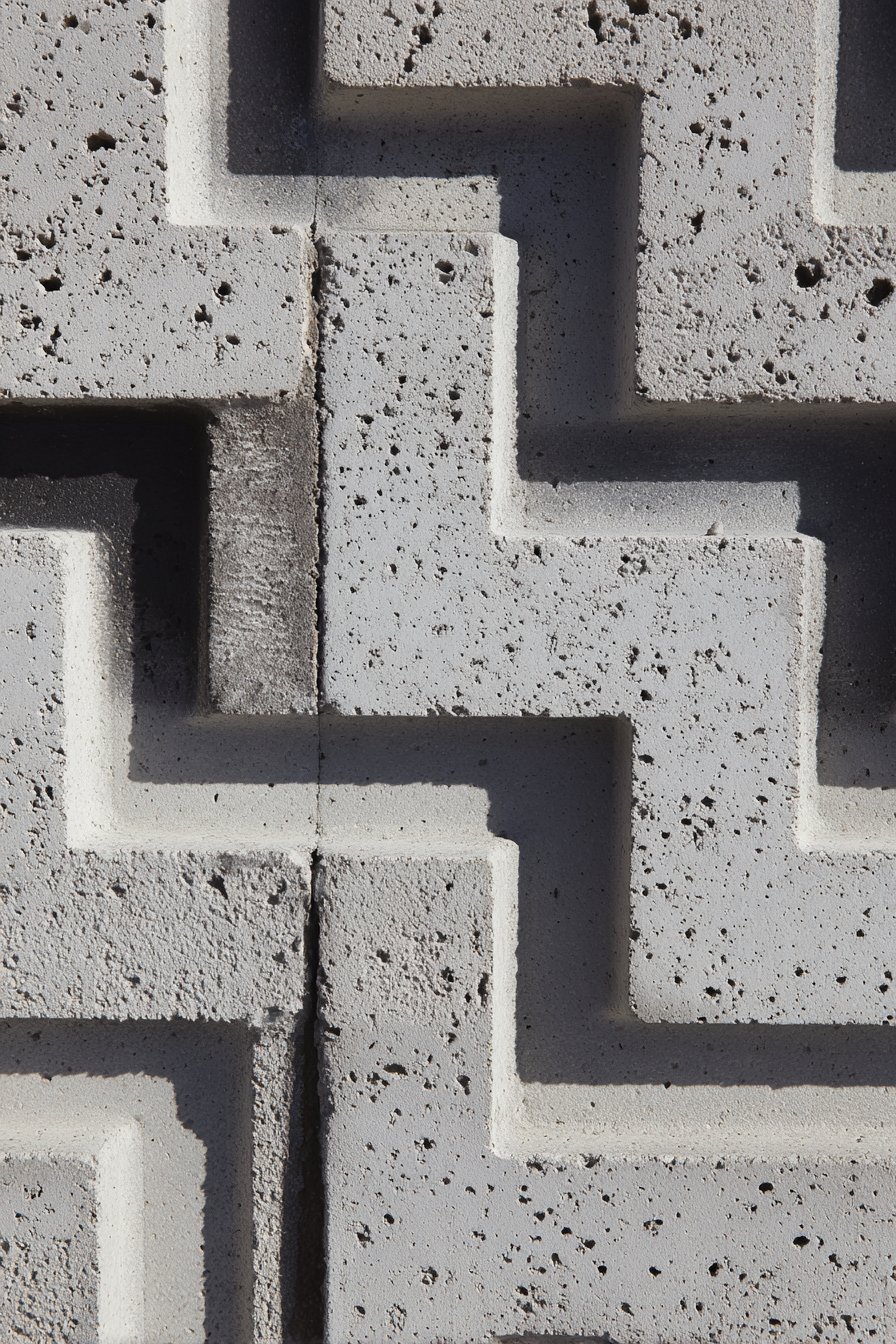
This compound wall celebrates the often-overlooked aesthetic potential of concrete masonry units through strategic pattern creation and surface texture selection. Split-face concrete blocks, featuring rough-textured surfaces created by mechanically splitting the blocks during manufacturing, are laid in stacked bond pattern where blocks align vertically rather than in traditional running bond. Deep recessed joints—typically 15-20mm—create pronounced shadow lines that emphasize the geometric grid and add dramatic three-dimensionality. The split-face texture catches light and creates subtle variations across each block’s surface, transforming a utilitarian material into an architectural feature.
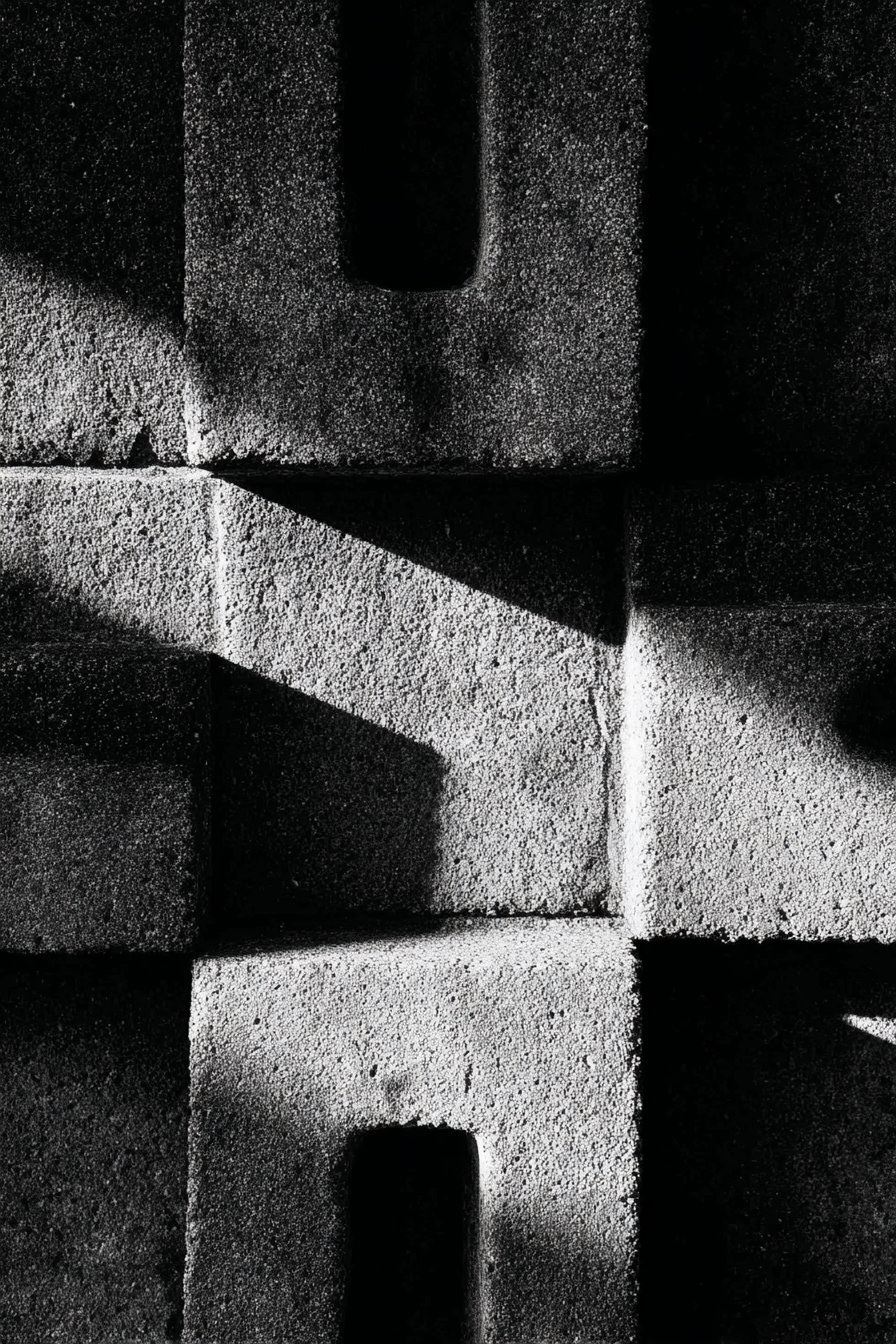
The stacked bond pattern, though less structurally interlocking than running bond, creates strong vertical and horizontal lines that emphasize the wall’s geometric nature. This grid pattern provides visual order and contemporary sensibility while the textured block faces prevent the composition from appearing too stark or industrial. The deep joints are essential to this design’s success—shallow joints would minimize the shadow effects that make the wall’s dimensional quality apparent, especially during times when sunlight strikes at low angles.
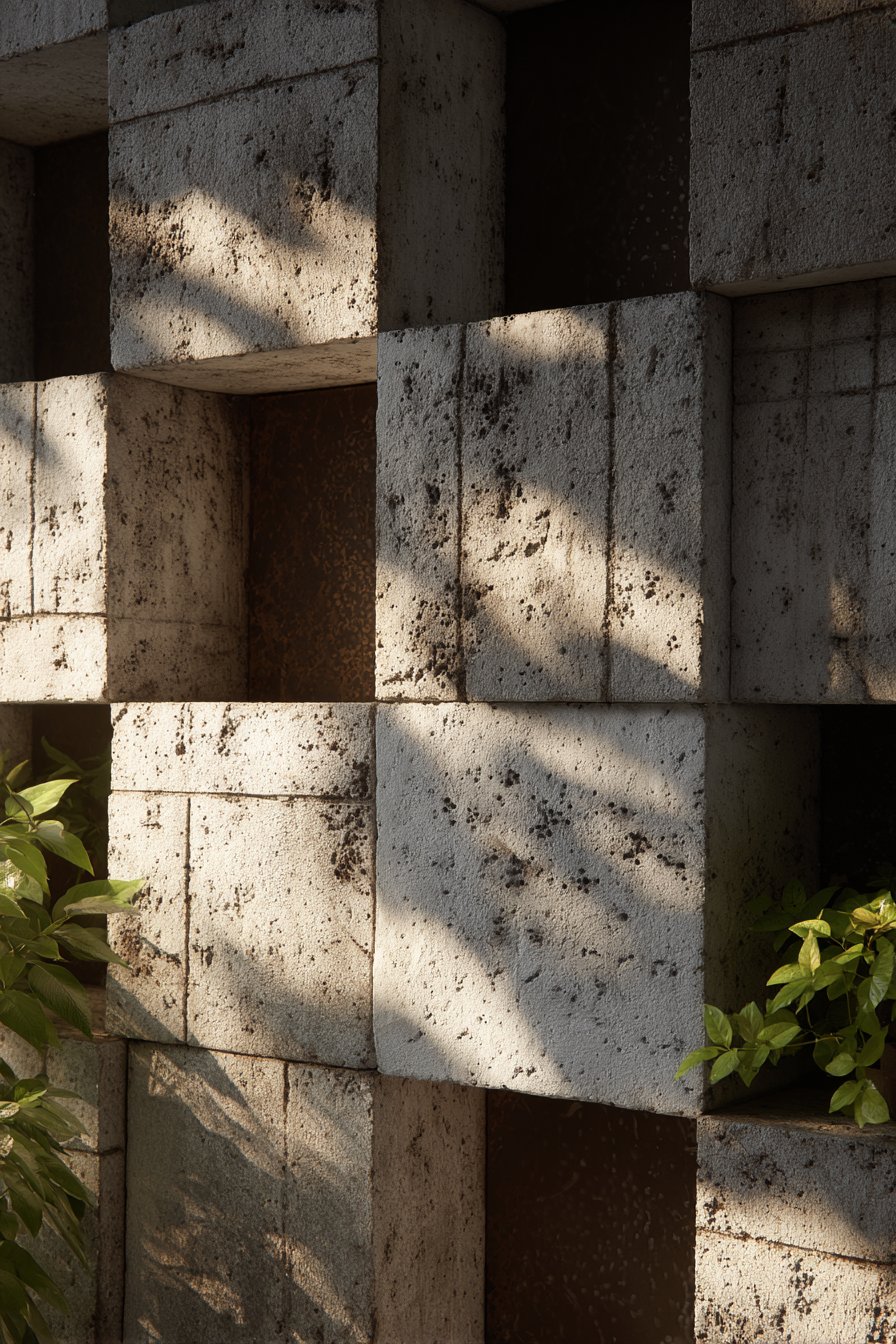
The steel plate gate with laser-cut house numbers demonstrates how functional elements can become design features through thoughtful execution. The gate’s thick steel plate construction provides security and durability while its substantial weight conveys quality and permanence. Laser-cut numbers integrated into the gate surface serve practical identification purposes while creating interesting light-filtering effects as daylight passes through the cutouts. The gate’s smooth steel surface provides textural contrast to the rough split-face blocks, creating visual interest through material opposition.
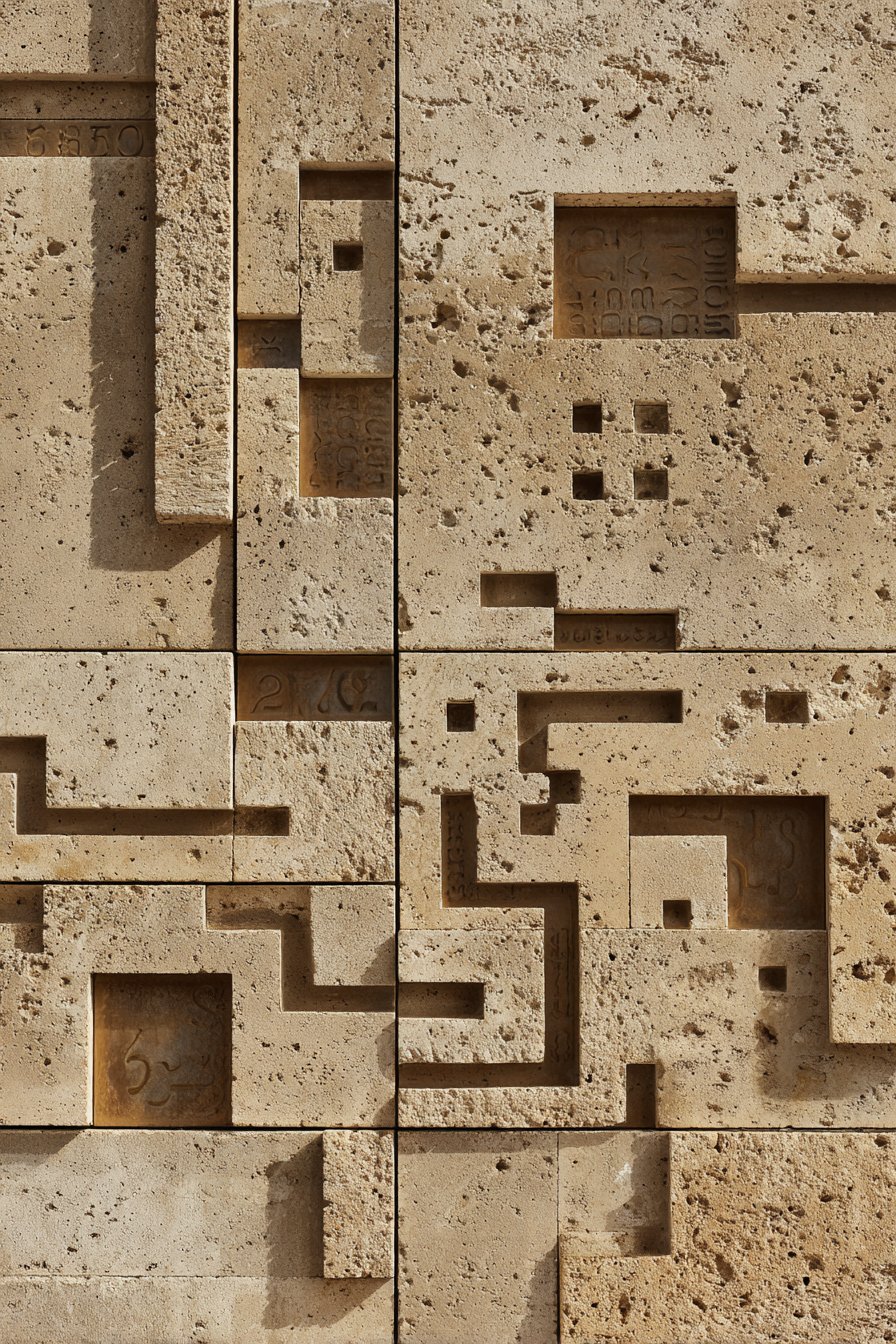
Shadow patterns created by the deep recessed joints and textured block surfaces provide the wall’s primary visual interest. Unlike smooth-faced walls that read as flat planes, this wall’s three-dimensional texture creates ever-changing appearances as sunlight moves across the sky. Morning and evening light, striking at low angles, emphasizes the texture and creates dramatic long shadows. Midday overhead sun creates different shadow patterns, highlighting horizontal surfaces and creating deeper darkness in the recessed joints.
Key Design Tips:
- Ensure consistent joint depth throughout construction by using proper tooling and skilled masons
- Select block colors carefully as split-face texture amplifies color variations visible in the aggregate
- Specify high-strength blocks rated for severe weathering in exterior applications
- Consider block orientation—horizontal or vertical splitting creates different texture directions
- Use steel gate thickness adequate for laser cutting without compromising structural integrity
- Apply rust-inhibiting primer to steel gate before finish coating
- Install proper foundation to prevent settling that could create uneven joints in stacked bond pattern
- Plan control joints at appropriate intervals to prevent random cracking
13. Whitewashed Brick Cottage Character
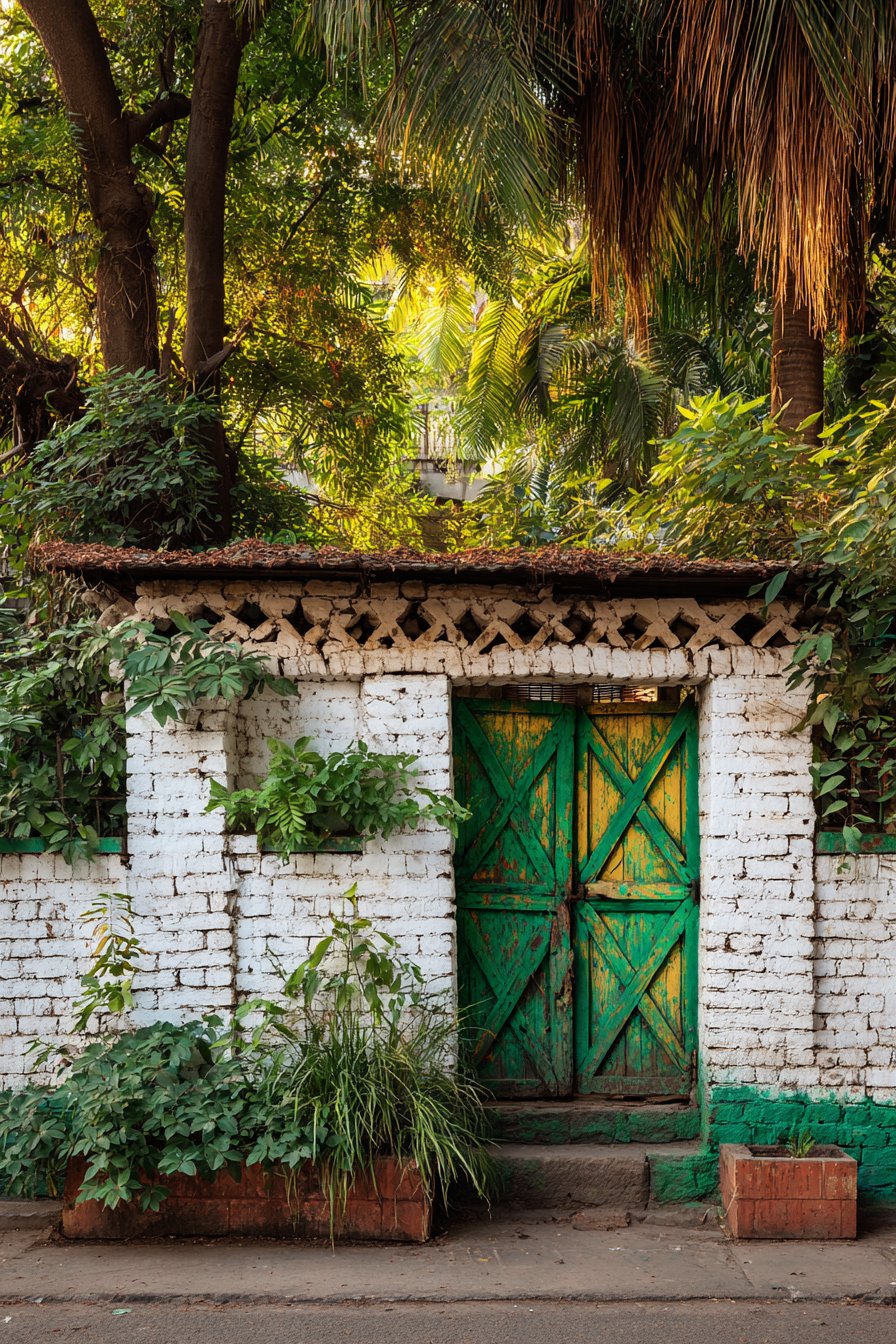
This charming compound wall design demonstrates how traditional materials can be updated through finish application while retaining their inherent character. The whitewashed brick construction allows subtle texture to show through the paint, creating visual interest while brightening the wall’s appearance. Unlike completely opaque paint that obliterates brick texture, the whitewash technique uses diluted paint that penetrates pores while allowing brick edges, mortar joints, and surface variations to remain visible. The result is a finish with depth and character that completely painted surfaces lack.
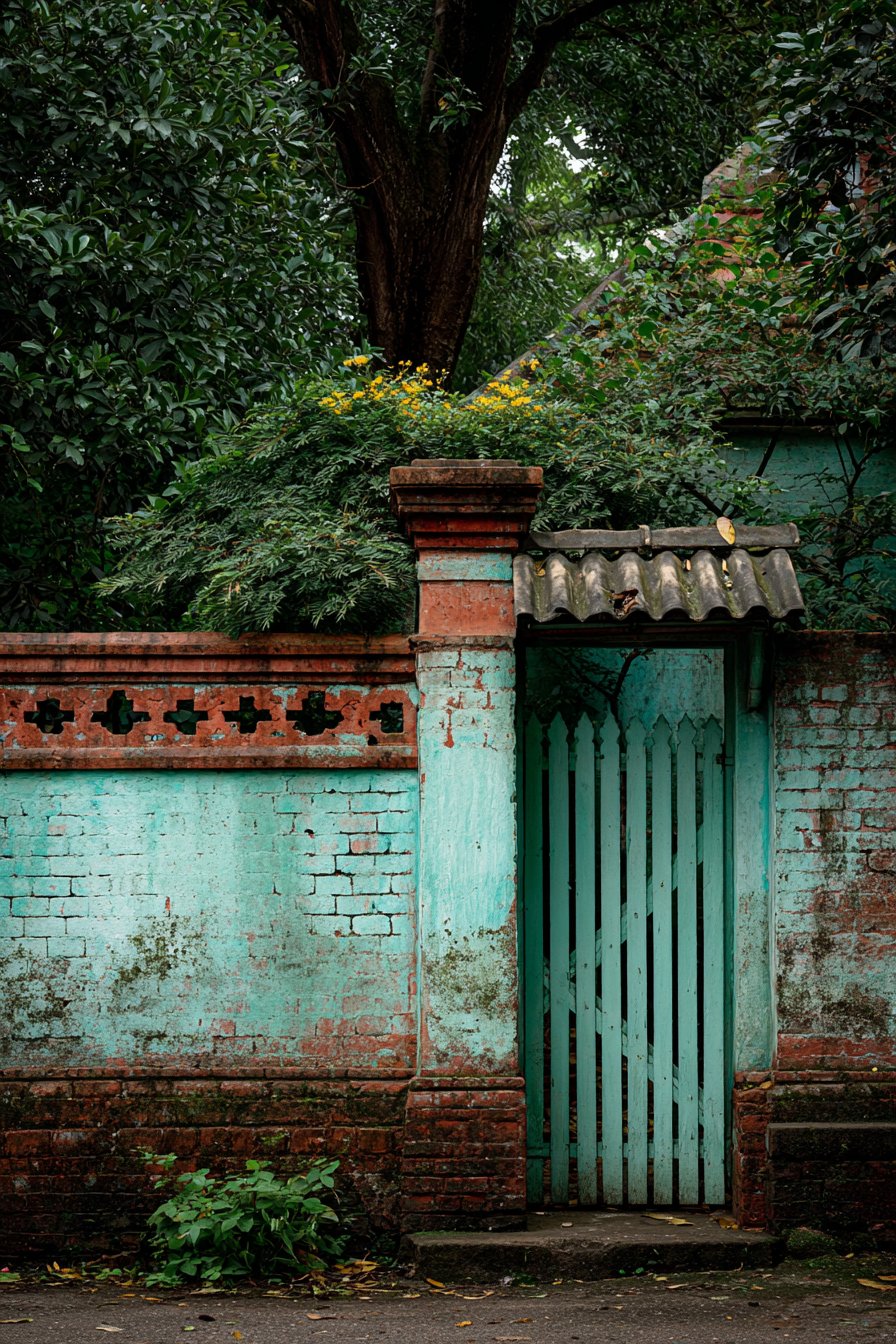
Decorative brick patterns near the wall’s top create visual interest through masonry technique rather than applied ornamentation. These patterns might include soldier courses where bricks stand vertically, basket weave arrangements, or corbelled projections where bricks extend slightly beyond the wall face. Such traditional bricklaying details reference heritage construction methods while providing relief from the repetitive running bond pattern dominant across the wall’s main expanse. These details demonstrate craftsmanship and attention to architectural tradition.
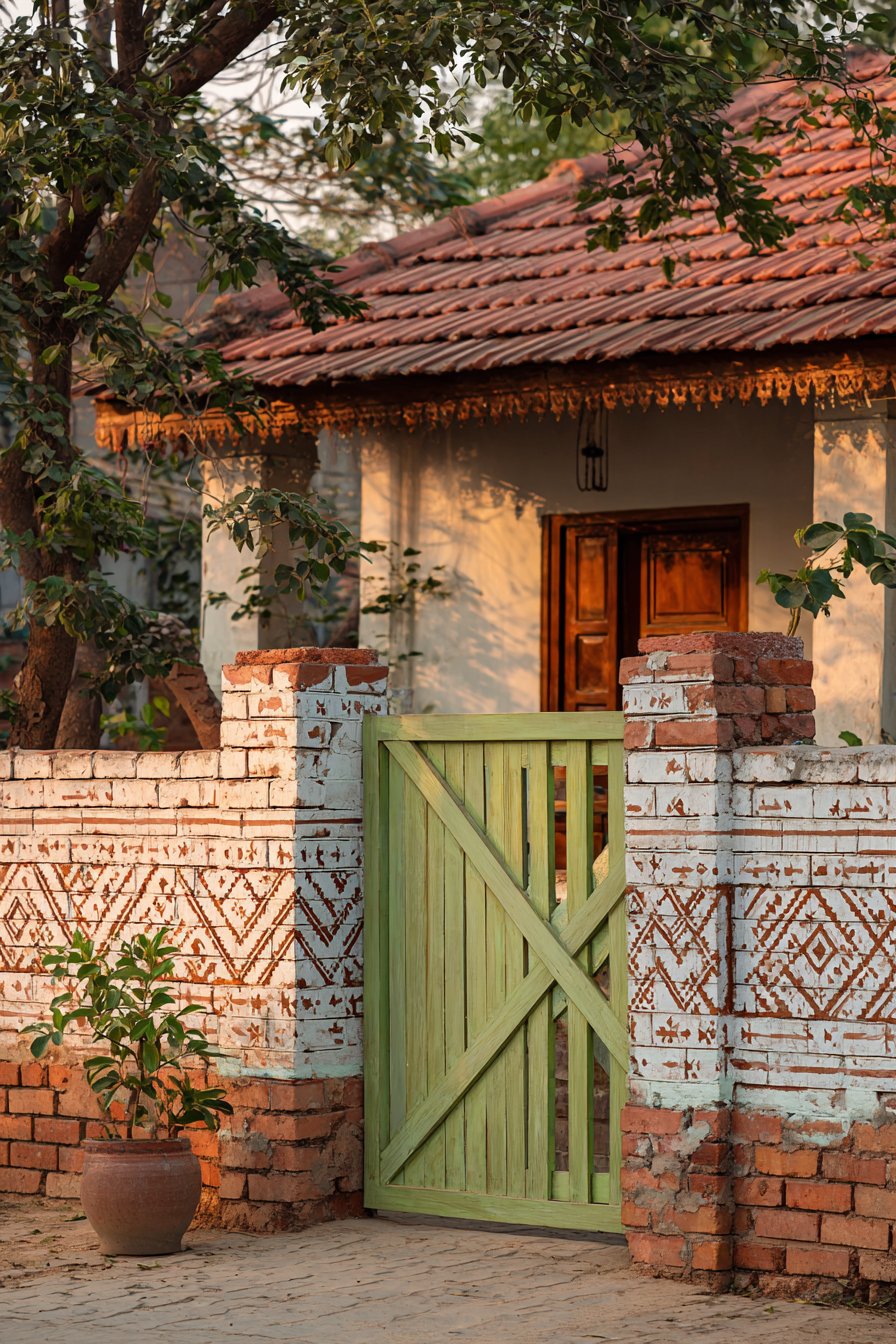
The traditional wooden gate painted in complementary sage green with diagonal bracing provides cottage-style charm while introducing soft color that harmonizes with the whitewashed brick. Sage green’s muted quality prevents it from competing with the brick’s subtle texture, while its connection to natural foliage colors creates warmth and approachability. The diagonal bracing, beyond providing structural support, creates visual interest through its angular geometry against the wall’s predominantly horizontal and vertical lines.
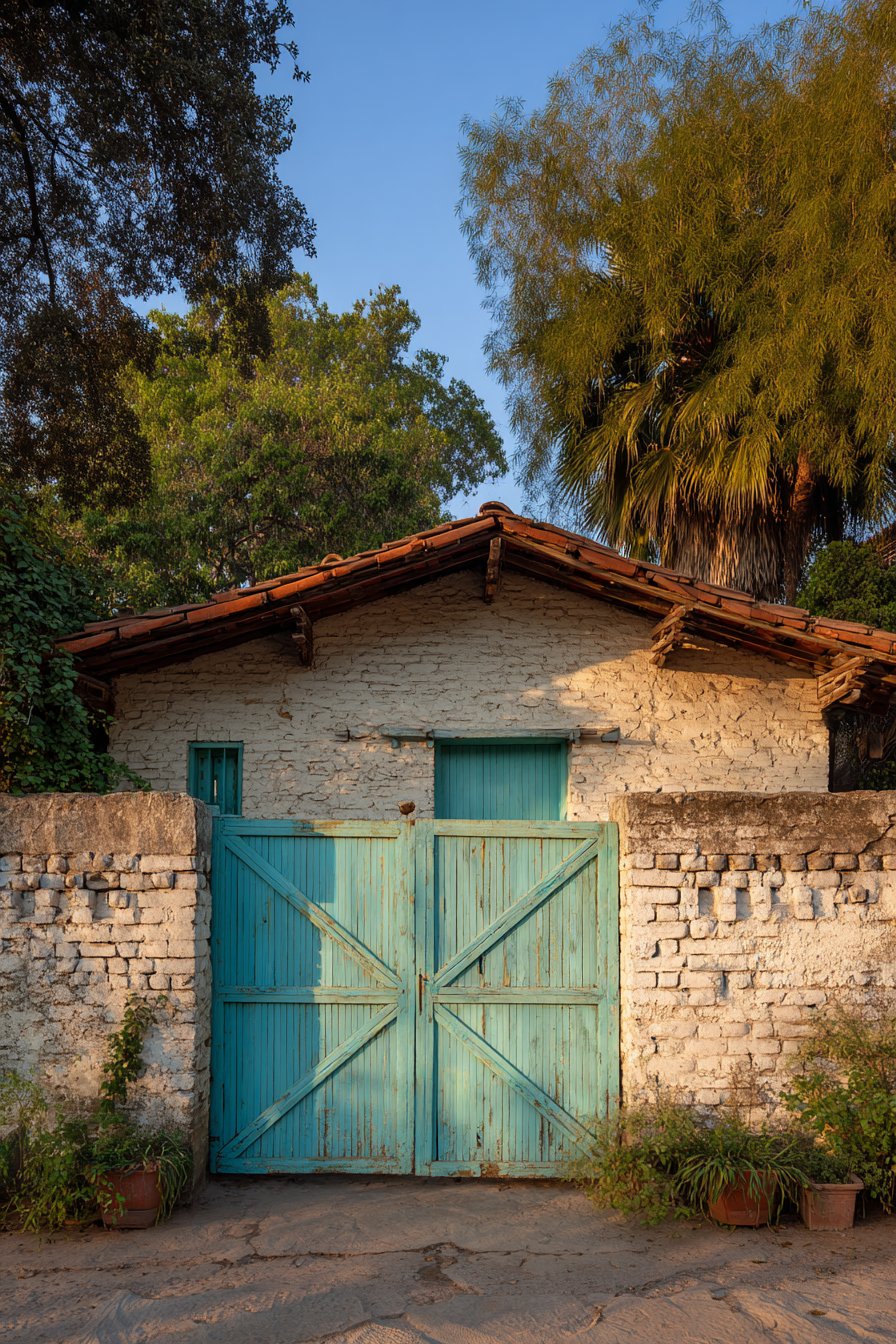
Clay tile cap in warm terracotta tone protects the wall top while introducing earthy color that grounds the composition. These traditional coping tiles, often semi-cylindrical or S-shaped in profile, shed water effectively while creating distinctive scalloped edges along the wall’s top profile. The terracotta’s warm orange-red tone provides beautiful contrast against the cool white brick, creating color interest while referencing traditional roofing materials found in cottage architecture.
Key Design Tips:
- Apply whitewash in thin coats to achieve desired opacity while maintaining visible texture
- Use breathable lime-based whitewash formulas on historical brick rather than impermeable latex paints
- Protect decorative brick patterns from water penetration with proper flashing and coping details
- Select exterior-grade wood for gate construction with proper treatment for ground contact and weather exposure
- Apply multiple coats of exterior paint to wooden gate for durable finish that withstands weathering
- Install clay tiles with proper mortar bedding and adequate overhang to direct water away from wall face
- Consider installing weep holes in lower brick courses to allow moisture drainage from wall interior
- Maintain whitewash with periodic reapplication every 3-5 years to keep fresh appearance
14. Porcelain Panel Luxury Wall
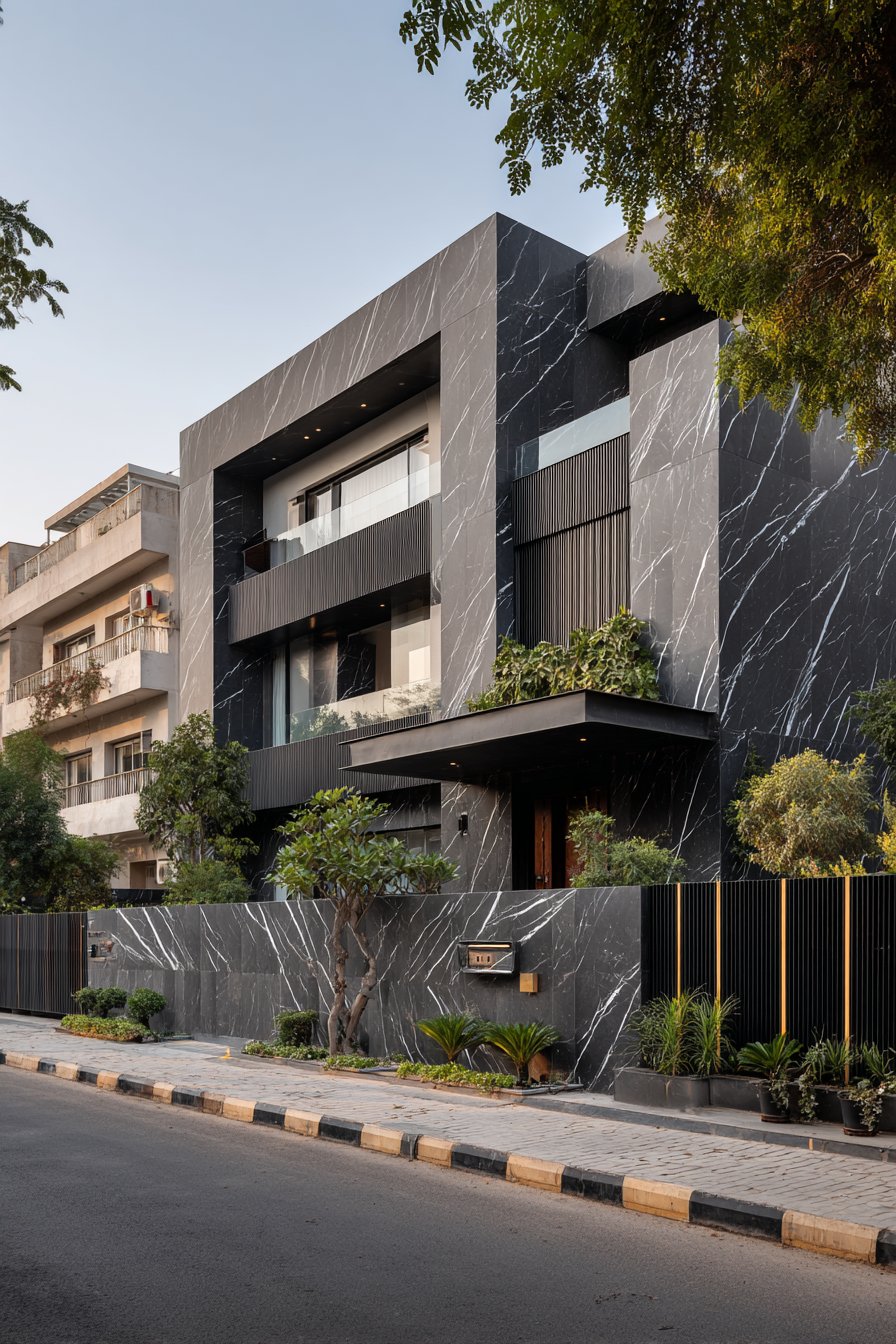
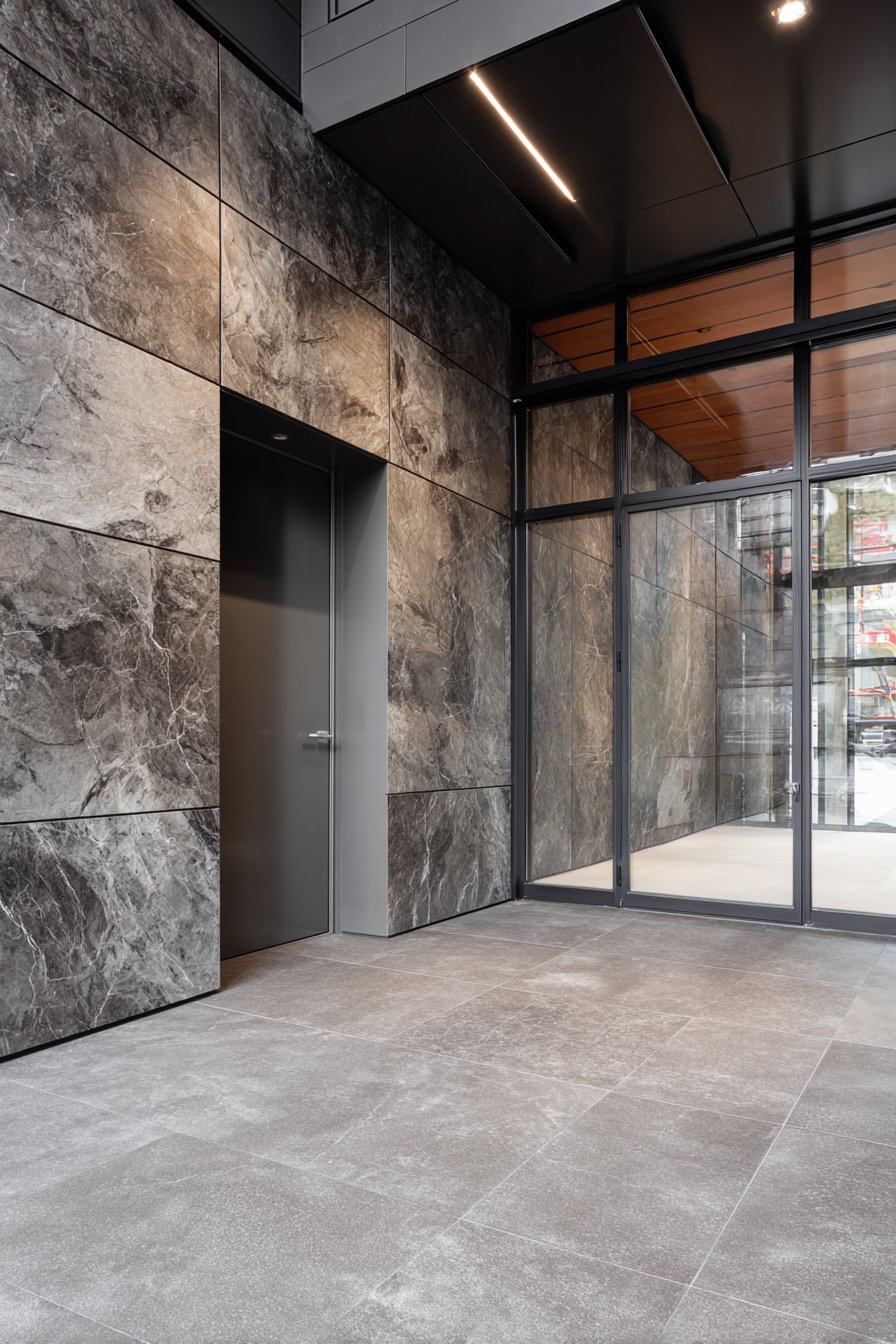
This ultra-contemporary compound wall design showcases how premium materials and sophisticated detailing create luxury-level aesthetics. Large format porcelain panels in dark grey with subtle marble-look veining are mounted on engineered metal frameworks, creating a floating appearance where panels seem suspended rather than stacked. The porcelain’s technical properties—extreme hardness, minimal water absorption, resistance to staining and fading—make it ideal for exterior applications, while its manufactured consistency ensures uniform appearance across large expanses. The marble veining pattern provides visual interest without actual marble’s maintenance requirements or cost.
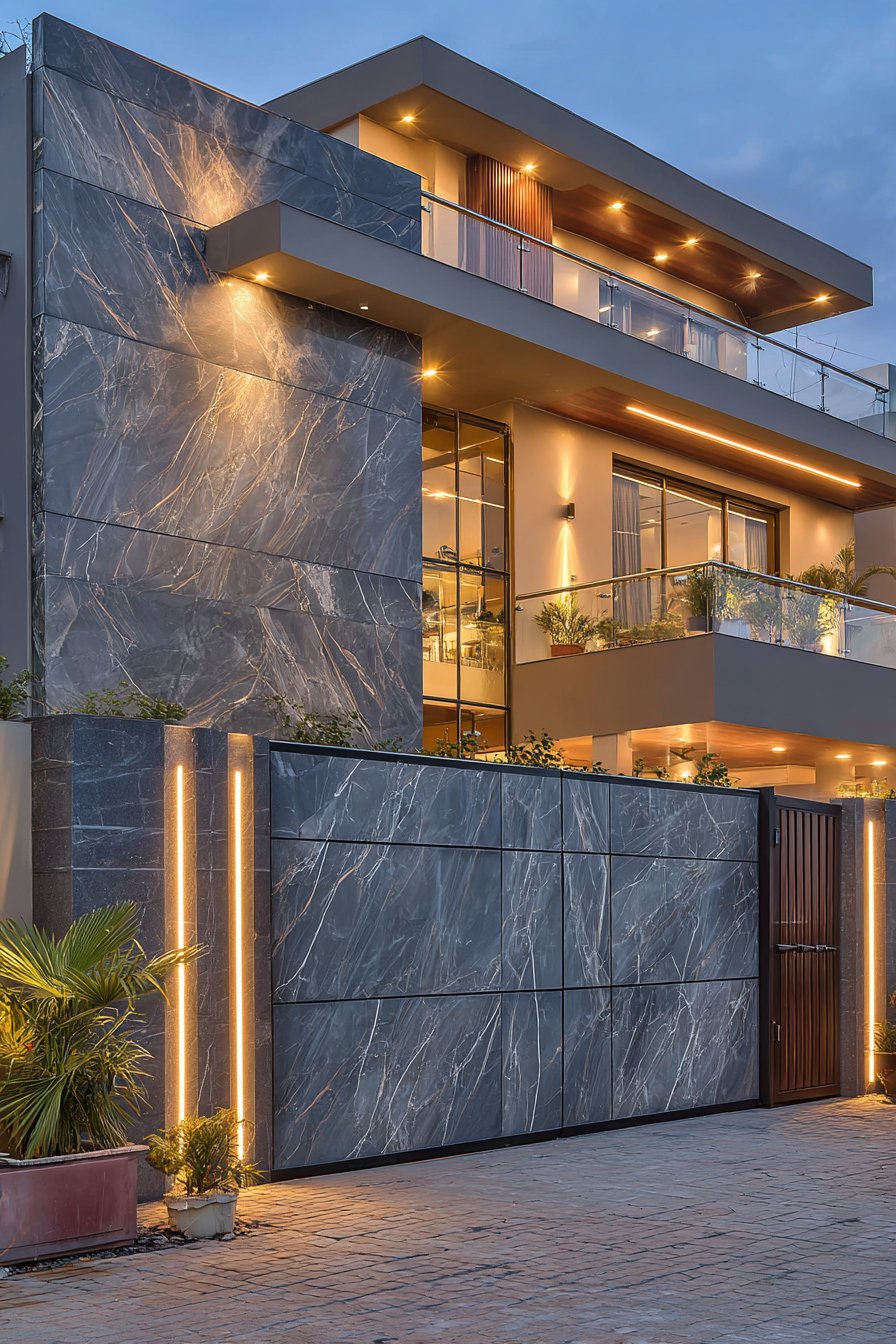
Frameless glass sections positioned at intervals create transparent elements that break the opacity of porcelain panels while maintaining boundary definition. These glass panels, typically laminated safety glass for security and durability, allow visual connection between property and street while providing physical barrier. The frameless installation, achieved through specialized hardware that eliminates visible frames, maintains clean contemporary aesthetics where material transitions occur without visual interruption. Glass sections also introduce light into areas that might otherwise feel enclosed by solid walls.
The motorized aluminum sliding gate with integrated LED lighting strips represents the pinnacle of contemporary gate technology. The automation provides convenience—operation via remote control, smartphone apps, or keypad entry—while the aluminum construction ensures durability without excessive weight. Integrated LED strips, typically mounted in recessed channels along horizontal or vertical lines, provide both functional illumination and aesthetic accent lighting. These lights can often be programmed for different colors or intensities, adding customizable decorative effects.
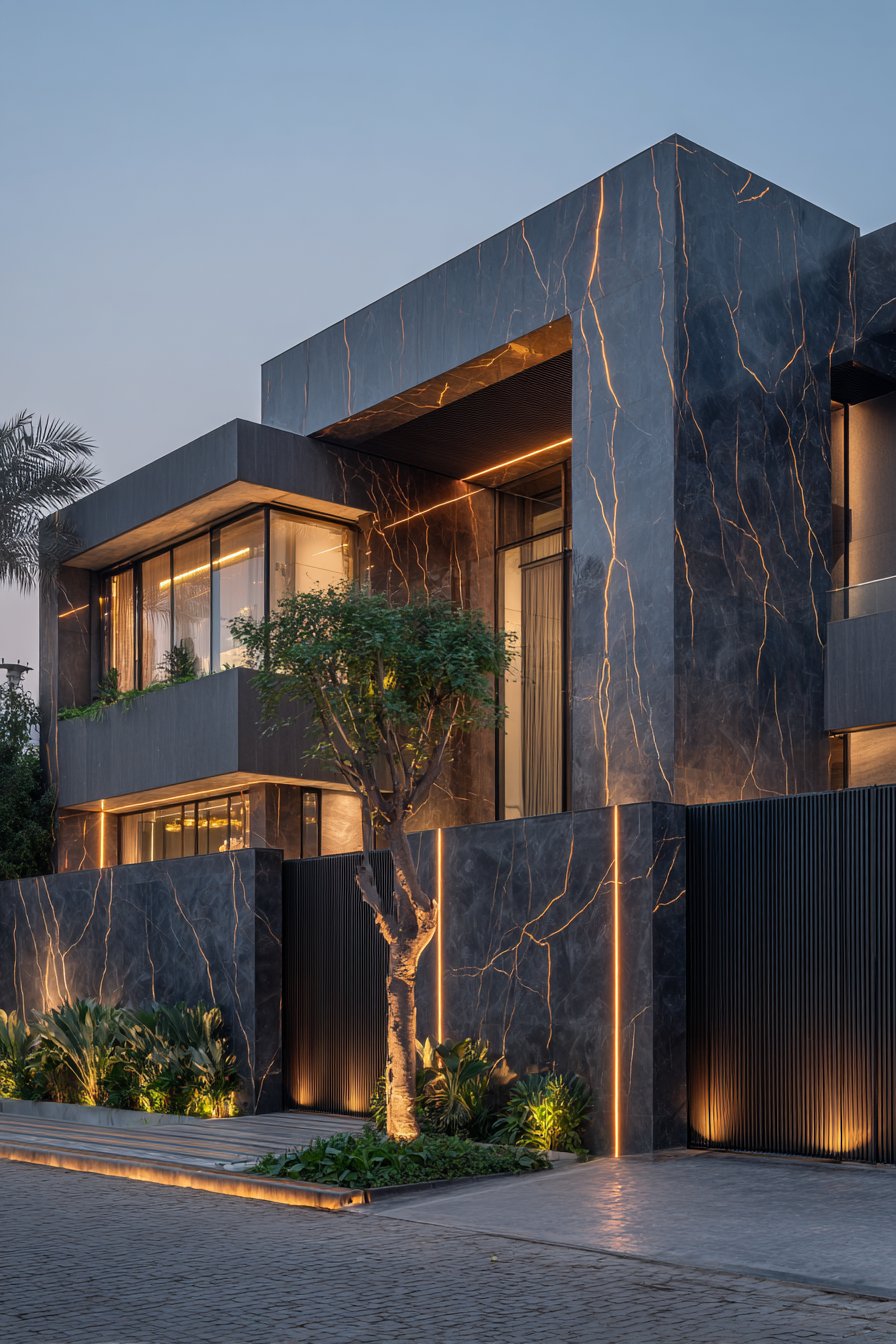
The premium material finishes throughout this design create cohesive luxury aesthetics where every surface demonstrates quality and refinement. The porcelain’s polished or matte finish, depending on preference, provides sophisticated appearance, while the veining patterns introduce organic visual interest. Glass transparency creates lightness and openness, while aluminum’s precise fabrication demonstrates contemporary manufacturing capabilities. The integration of lighting technology adds another layer of sophistication, particularly important for nighttime aesthetics and security.
Key Design Tips:
- Specify porcelain panels rated for exterior use with adequate frost resistance for your climate
- Ensure metal framework is engineered to support porcelain’s weight while allowing thermal expansion
- Use structural silicone adhesives specifically formulated for porcelain panel installation
- Install laminated or tempered glass meeting security standards for your region
- Detail frameless glass mounting to prevent water accumulation in hardware channels
- Select motorized gate systems with battery backup for operation during power outages
- Install LED strips with adequate IP ratings for exterior use and protection from water infiltration
- Consider UV-stable cable management for any visible wiring associated with motorization or lighting
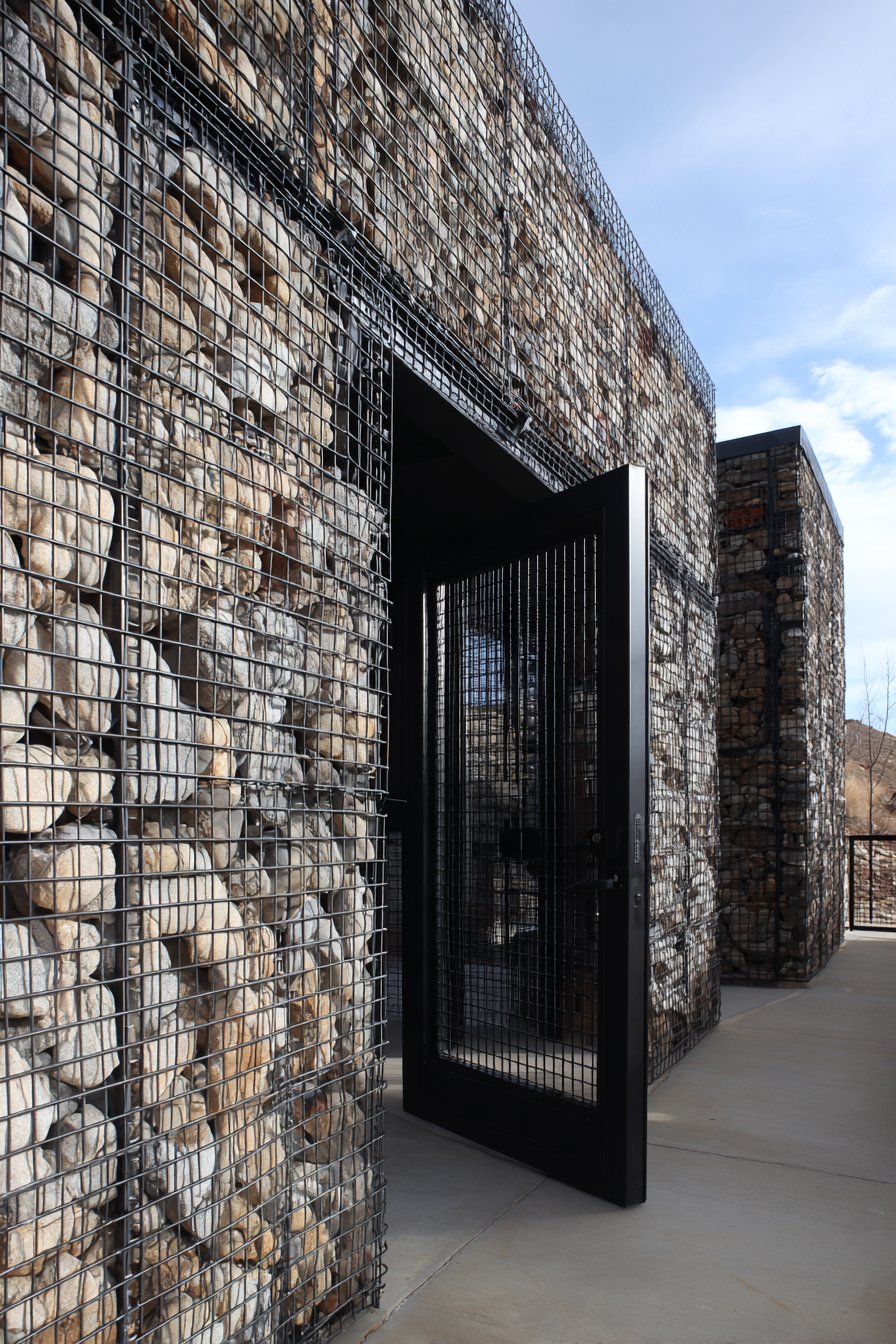
15. Gabion Wall Industrial Texture
This architecturally distinctive compound wall embraces gabion construction—wire mesh cages filled with stone—transforming civil engineering infrastructure into residential design feature. The gabions use wire mesh cages, typically made from galvanized or PVC-coated steel wire, filled with mixed grey river stones showing natural size and color variation. This construction method creates unique organic texture where each stone’s individual shape, color, and size contributes to the overall composition. The cage structure remains visible, its geometric grid providing order to the organic stone filling, creating fascinating contrast between manufactured precision and natural irregularity.
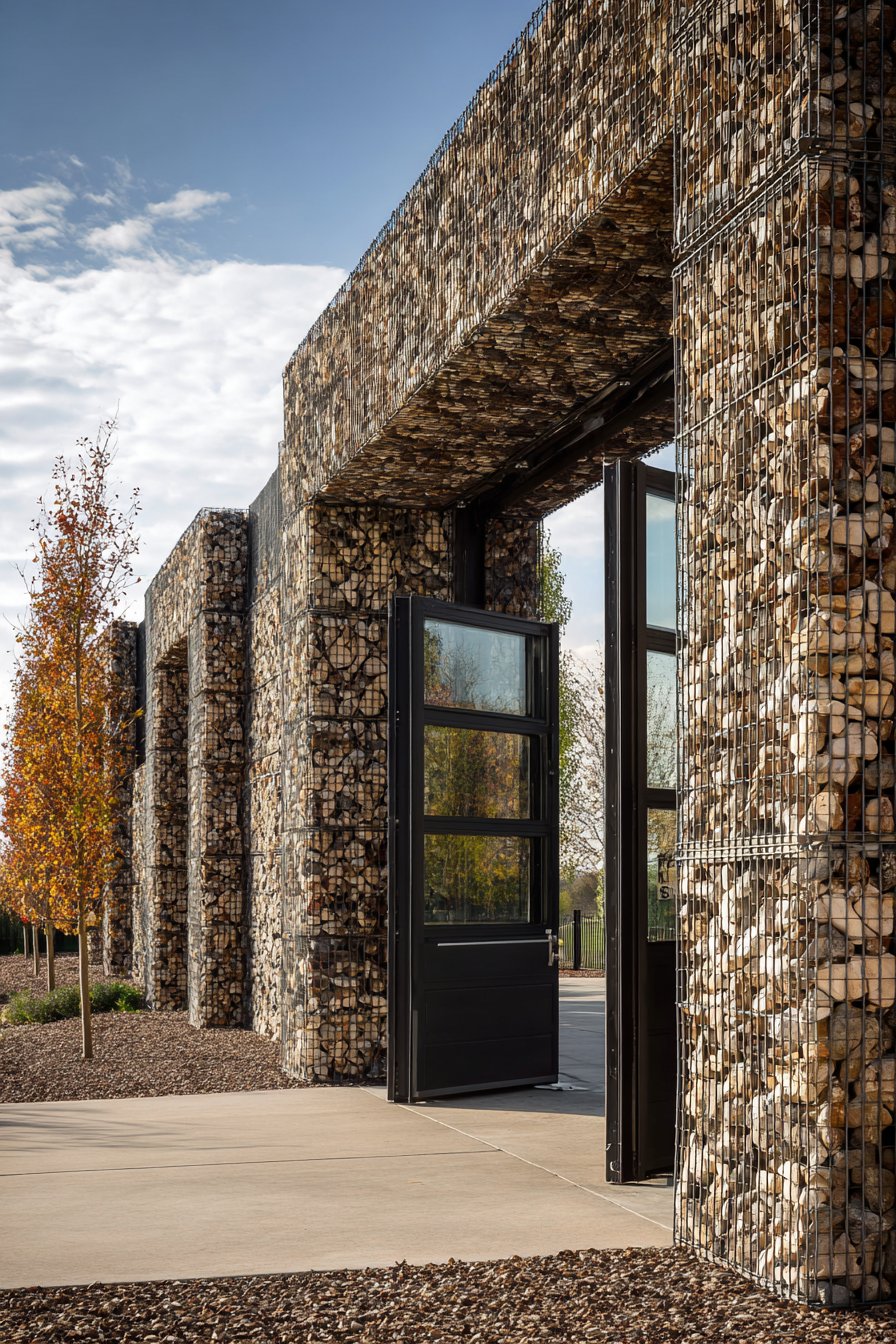
The stones’ mixed grey palette includes charcoal, slate, ash, and silvery tones, sometimes with occasional warmer browns or tans depending on local stone availability. This color variation prevents monotony while maintaining cohesive neutral scheme. The three-dimensional quality of gabion walls exceeds conventional solid walls—stones project at varying depths within the cages, creating dramatic shadow effects and textural richness. The gaps between stones allow air circulation and water drainage, making gabions particularly suitable for areas requiring permeable boundaries or drainage solutions.
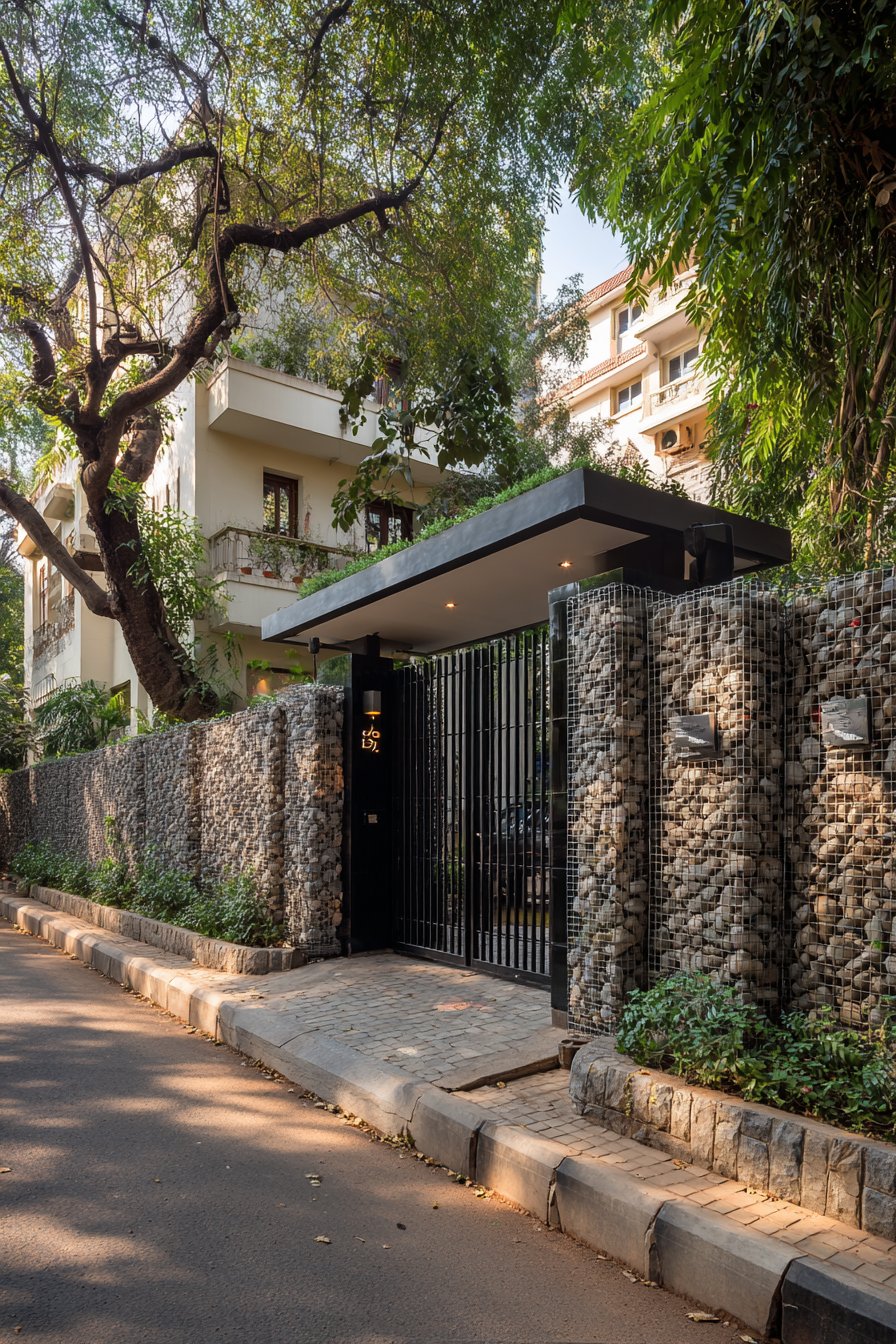
The black powder-coated steel frame gate with mesh infill maintains the industrial aesthetic while providing functional entry. The gate’s honest expression of materials and construction—visible framework, utilitarian mesh, minimal finish—aligns with the gabion wall’s straightforward materiality. The mesh infill echoes the wire cages used throughout the gabion construction, creating visual continuity where gate and wall share common design language. The powder coating provides durable weather protection while the black finish creates strong contrast against the lighter stone filling.
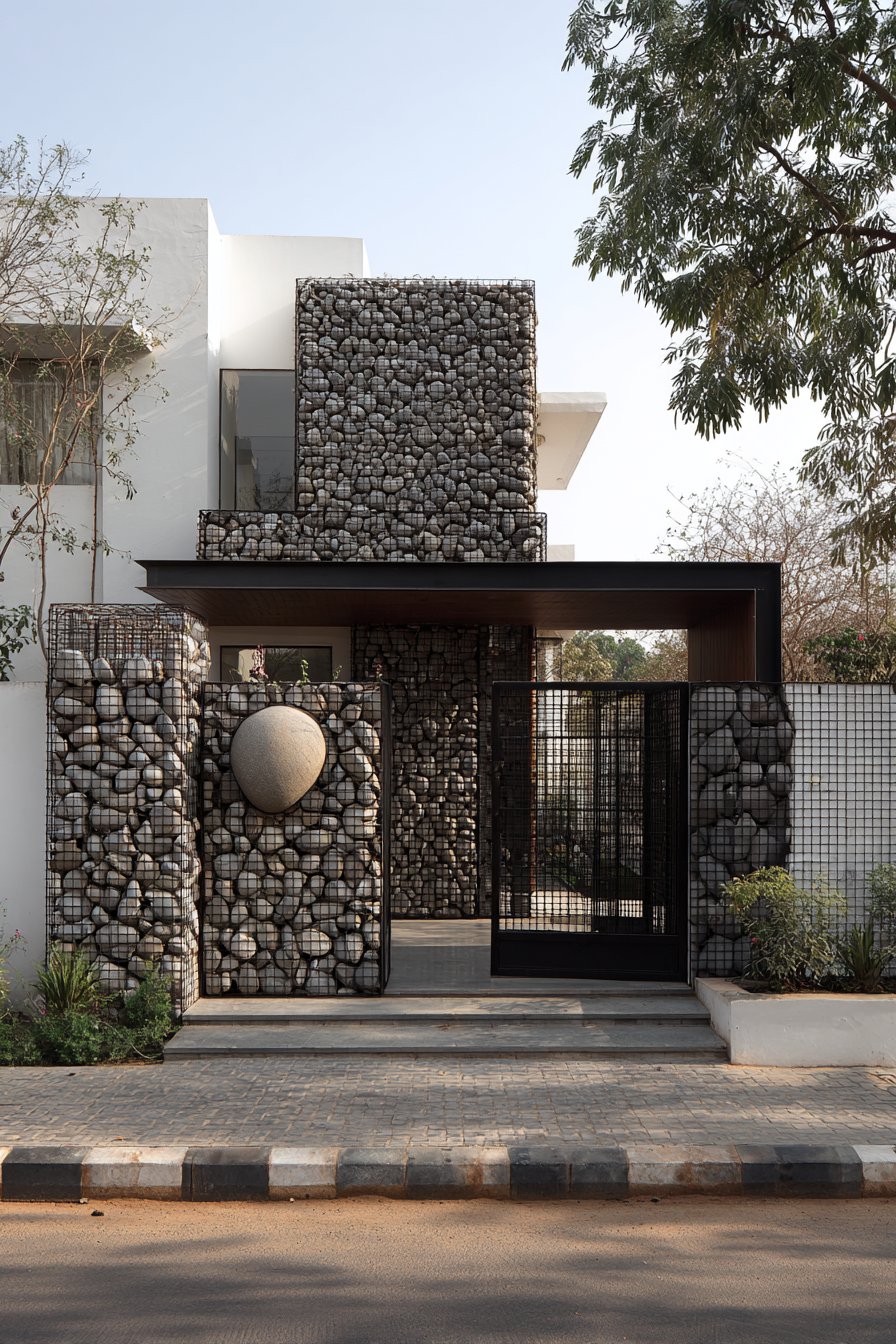
The unique gabion texture creates dimensional quality unmatched by conventional wall construction. Light and shadow play across the irregular stone surfaces throughout the day, with each stone catching light differently based on its shape, orientation, and color. The wire cages create additional shadow lines, their geometric precision providing framework for the stones’ organic randomness. This combination of order and chaos, precision and variation, manufactured and natural, creates compelling visual complexity.
Key Design Tips:
- Specify wire mesh with adequate gauge and coating for long-term durability in your climate
- Fill gabion cages with stones sized appropriately for mesh openings—typically 100-200mm stones
- Install geotextile fabric behind gabions if used as retaining structures to prevent soil migration
- Ensure proper foundation adequate for gabion weight—stones plus wire create substantial mass
- Consider maintenance access for removing debris that may accumulate in stone gaps over time
- Use marine-grade coatings on wire mesh in coastal environments to prevent accelerated corrosion
- Pack stones carefully during installation to minimize voids and achieve visually pleasing arrangement
- Detail proper drainage behind and below gabion structures to prevent water accumulation
16. Decorative Relief Plaster Traditional Wall
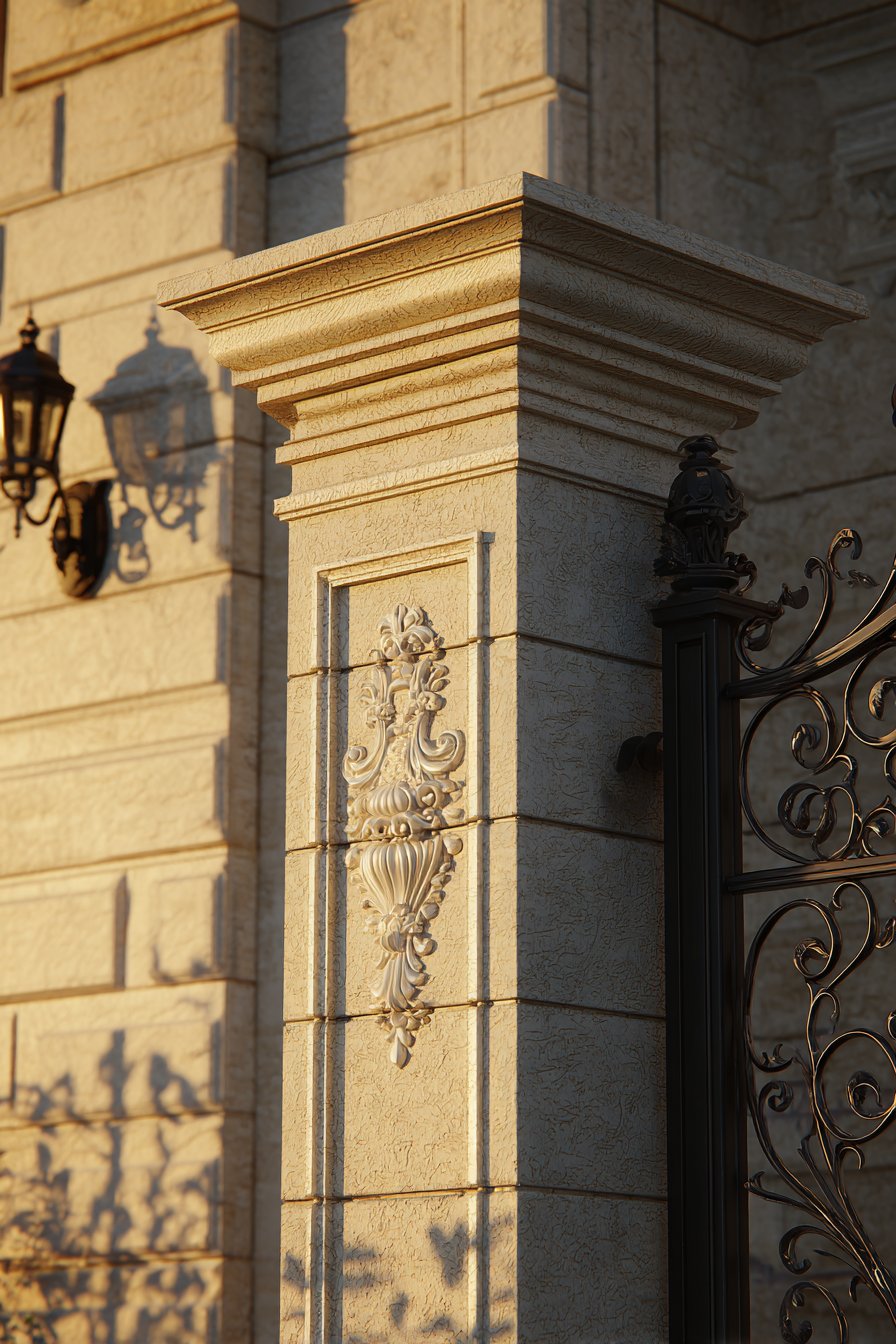
This elegant compound wall celebrates traditional plastering craftsmanship through decorative relief patterns molded directly into the surface. The base finish in warm beige tones with subtle texture provides sophisticated backdrop for the relief work concentrated near the entrance. These raised decorative patterns—geometric borders, floral motifs, or classical architectural elements—are created through specialized techniques where plaster is built up in layers or pressed into molds before hardening. The result is three-dimensional ornament that catches light and creates shadow effects, transforming flat wall surfaces into artistic installations.
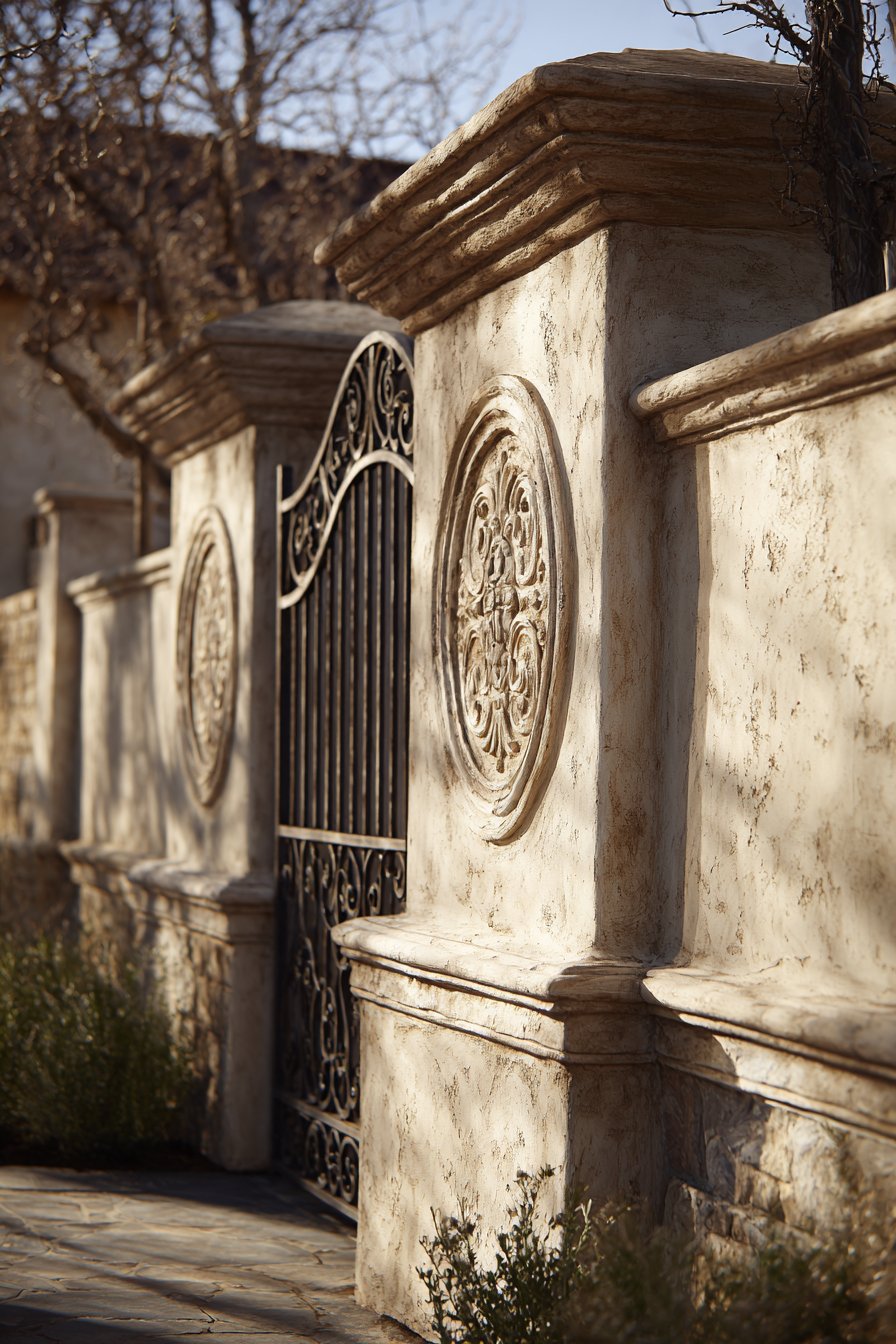
The warm beige color palette was carefully selected to create welcoming appearance while avoiding stark brightness of pure white or coldness of grey tones. Beige’s subtle warmth relates to natural earth tones and creates sense of approachability important for residential boundaries. The color also provides excellent backdrop for the relief patterns, allowing their dimensional quality to read clearly without color competition. Various beige shades from creamy off-white to deeper tan can be used to create subtle tonal variations across the wall’s expanse.
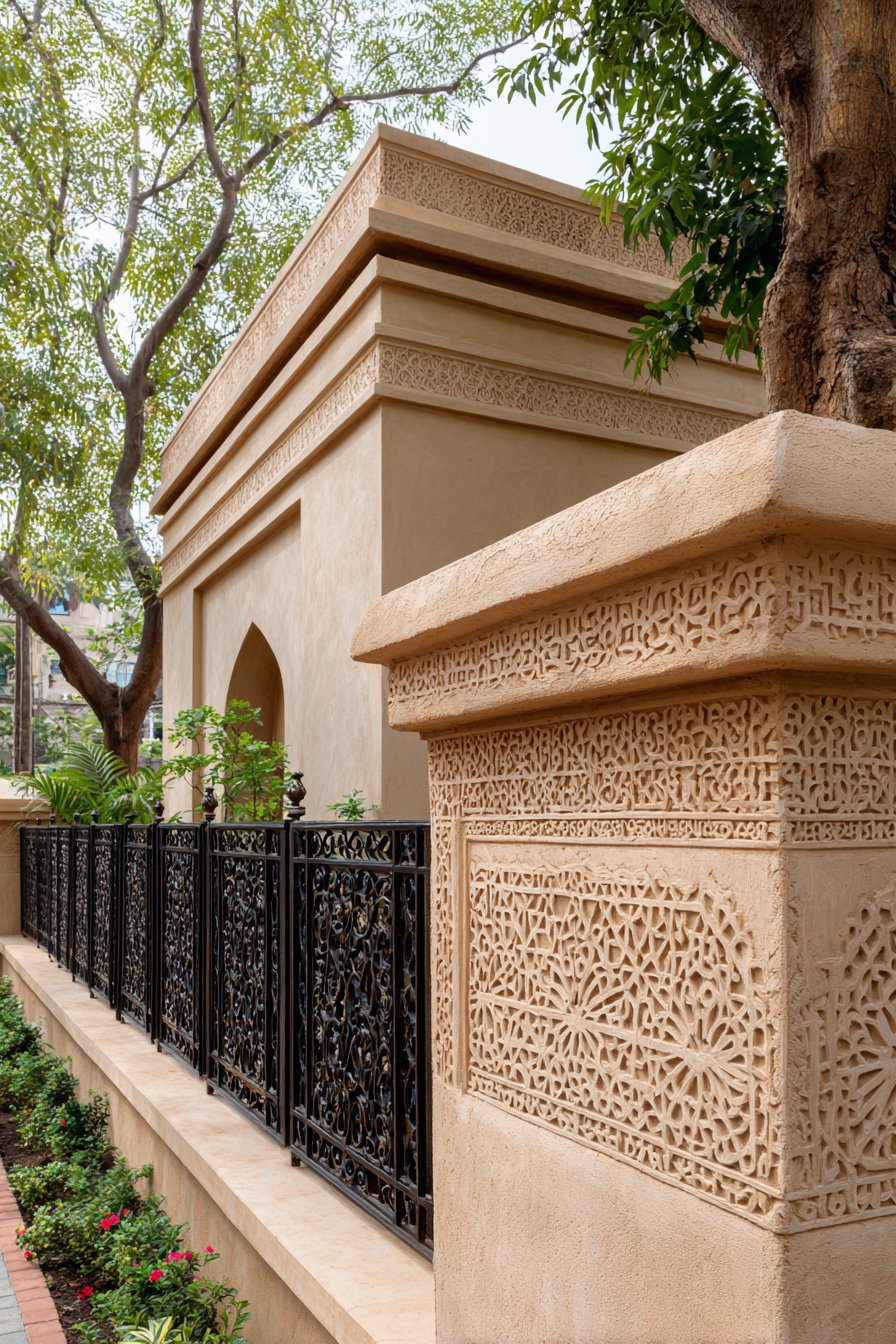
The wrought iron gate with scrollwork details painted black provides traditional elegance while serving as the compound wall’s focal point. The iron scrollwork—curved, flowing metal elements formed through heating and bending—demonstrates metalworking artistry and references classical architectural traditions. The black finish creates maximum contrast against the beige wall, ensuring the gate reads clearly as the entrance point. The ironwork’s curves and organic flowing lines provide counterpoint to the geometric quality of masonry and plaster, creating visual interest through form variety.
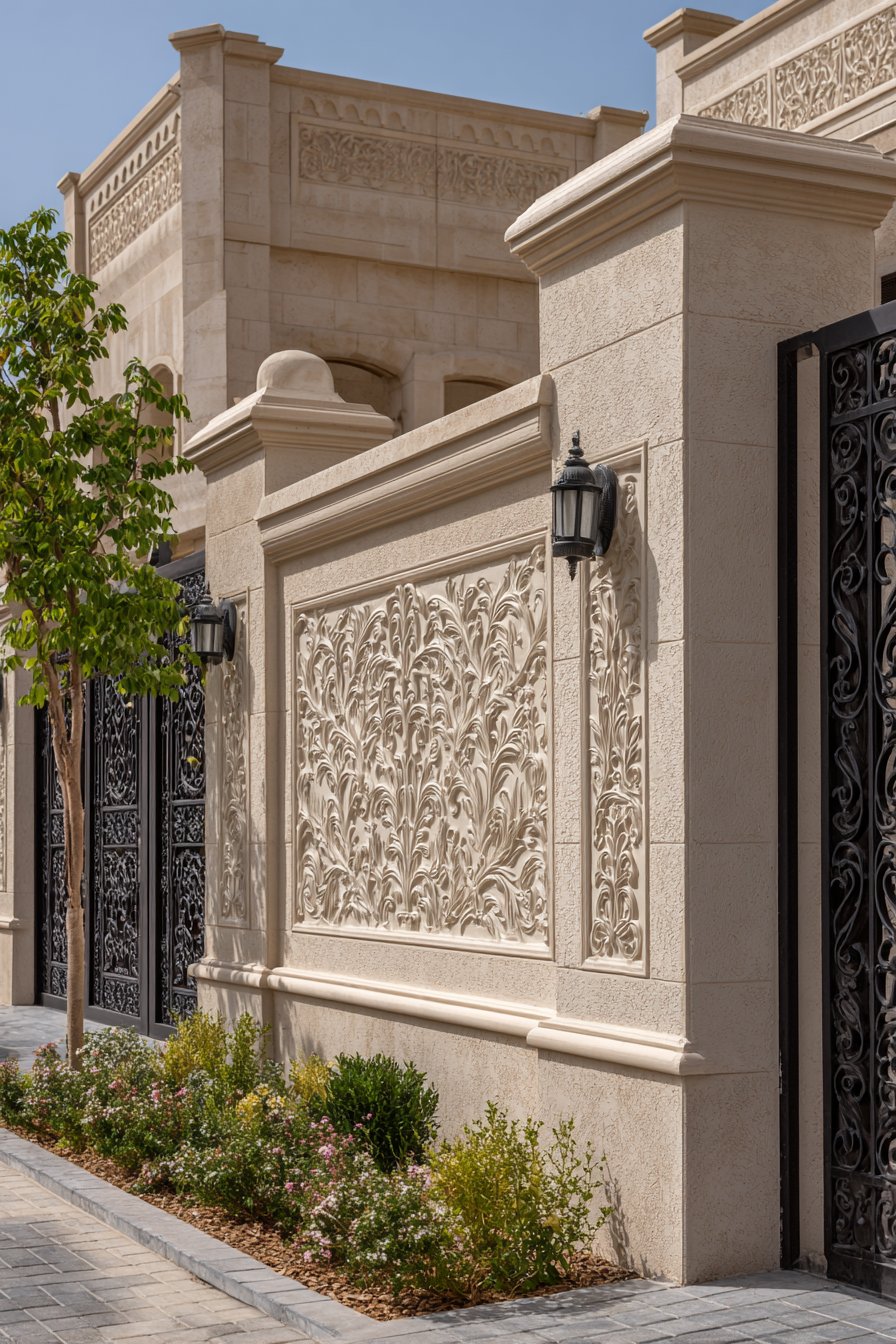
Sandstone cap stones finishing the wall top provide natural material complement to the rendered surfaces while offering practical weather protection. The sandstone’s warm tones harmonize with the beige plaster, while its natural texture creates subtle contrast with the smooth render finish. These coping stones shed water away from the wall face, preventing moisture penetration that could damage the decorative plasterwork below. The stone’s edges, whether cut square or slightly beveled, create clean horizontal lines that cap the composition.
Key Design Tips:
- Use traditional lime-based plasters for authentic heritage appearance and superior breathability
- Create relief patterns using skilled plasterers experienced in decorative techniques
- Protect relief patterns from water accumulation with adequate overhang from coping stones
- Apply mineral-based pigments integrated into plaster rather than surface paint for authentic color
- Treat wrought iron with rust-inhibiting primers before final black finish coat
- Select sandstone coping stones with adequate thickness (minimum 50mm) for durability and weather protection
- Install coping with slight slope or crown to direct water to wall edges rather than center
- Maintain plaster surfaces through periodic inspection and repair of cracks before moisture penetration occurs
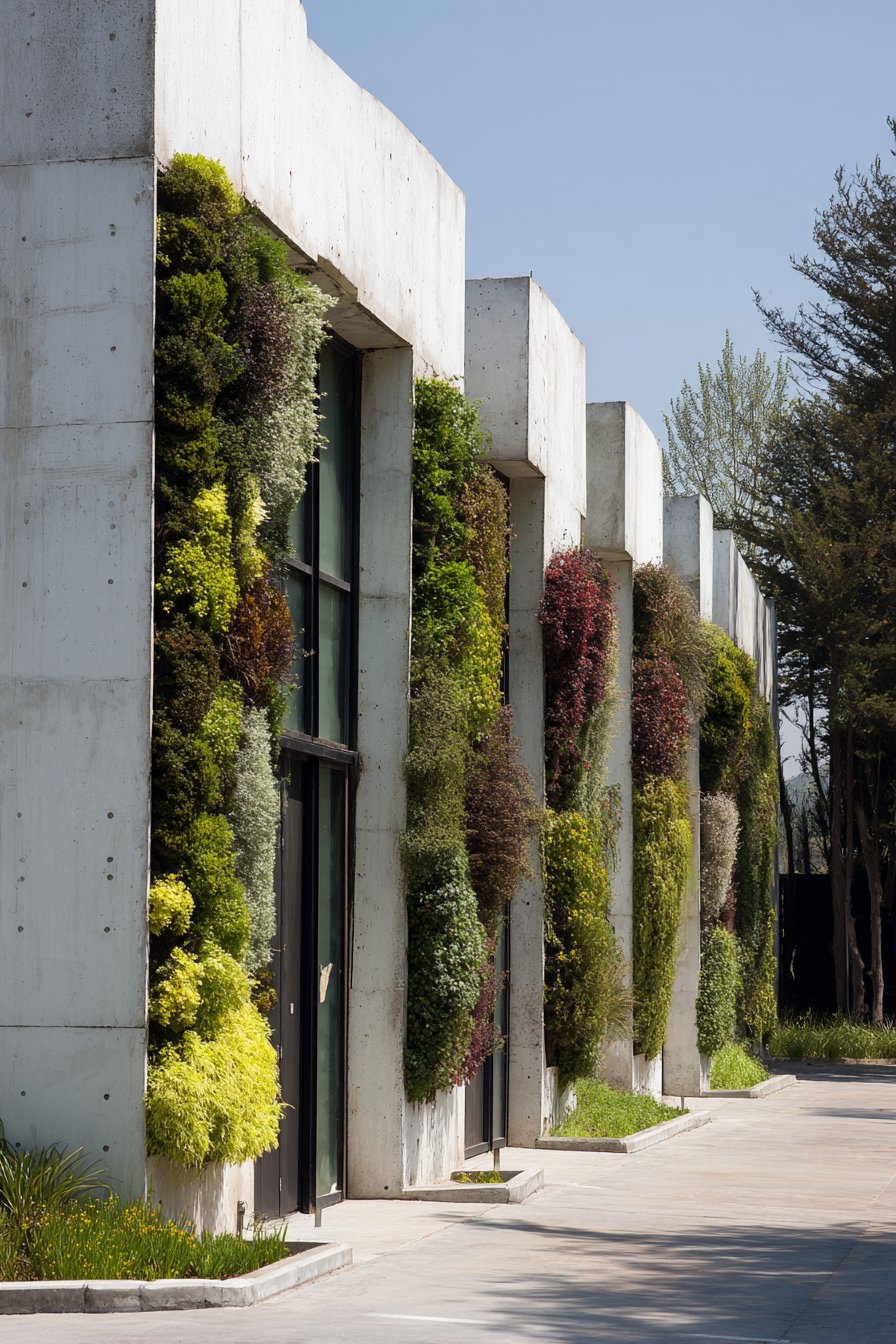
17. Vertical Green Wall Living Integration
This cutting-edge compound wall design integrates living plant material directly into the boundary structure, creating biophilic design that provides environmental benefits alongside aesthetic appeal. The vertical green wall sections feature modular panels supporting plant growth, integrated into a concrete frame structure that provides structural support and geometric order. The plants, selected for climate compatibility and minimal maintenance requirements, create natural screening while improving air quality, reducing urban heat island effects, and providing habitat for beneficial insects and birds. The living wall transforms static boundary into dynamic installation that changes with seasons and plant growth cycles.
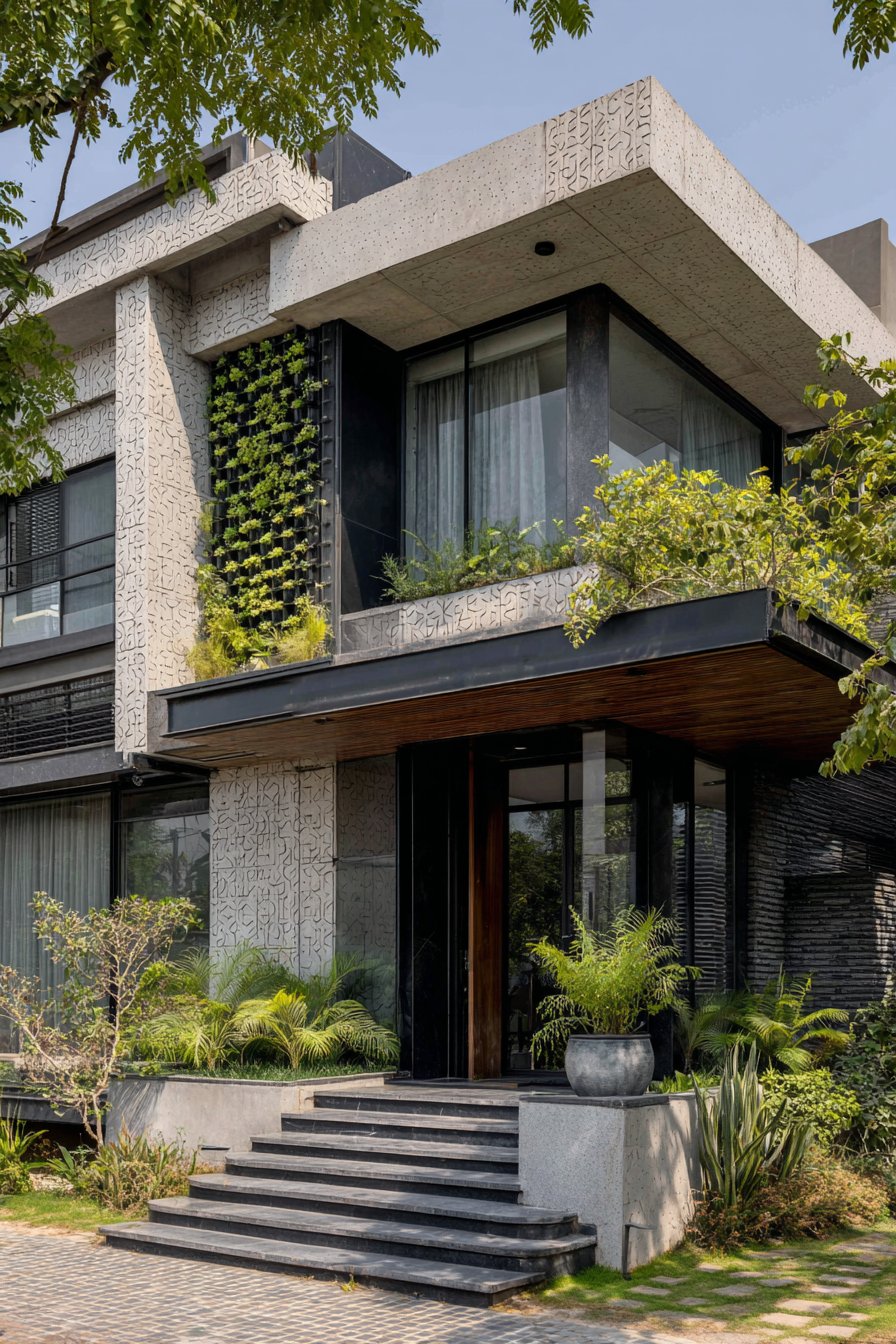
The concrete frame structure, finished in light grey with crisp edges, provides necessary support for the plant panels while creating visual order through its geometric precision. The frame’s modular design allows individual plant panels to be accessed for maintenance or replacement without affecting the entire wall. The light grey finish was selected to provide neutral backdrop that doesn’t compete with the plants’ green tones, while the sharp edges and clean lines create contemporary aesthetic that prevents the design from appearing too rustic or garden-like.
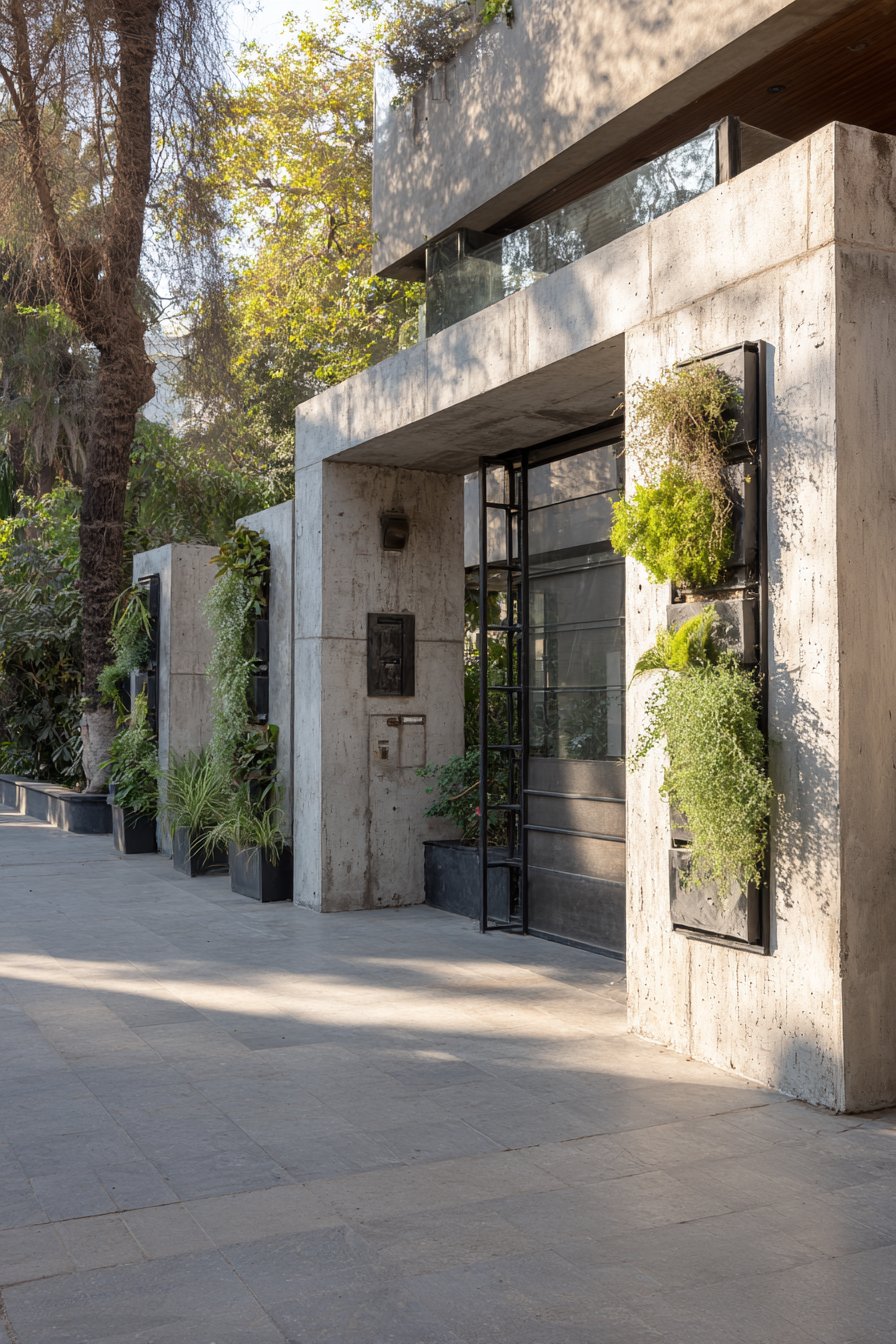
The modern glass and steel gate provides contemporary contrast to the organic plant walls, creating design tension that makes both elements more interesting. The gate’s transparency—achieved through large glass panels in minimal steel framework—maintains visual connection through the boundary while the plants provide actual screening. This combination of solid, living, and transparent elements creates layered composition where different materials serve specific functional and aesthetic roles. The steel framework’s precision-engineered geometry complements the concrete frame’s clean lines while providing counterpoint to the plants’ organic growth patterns.
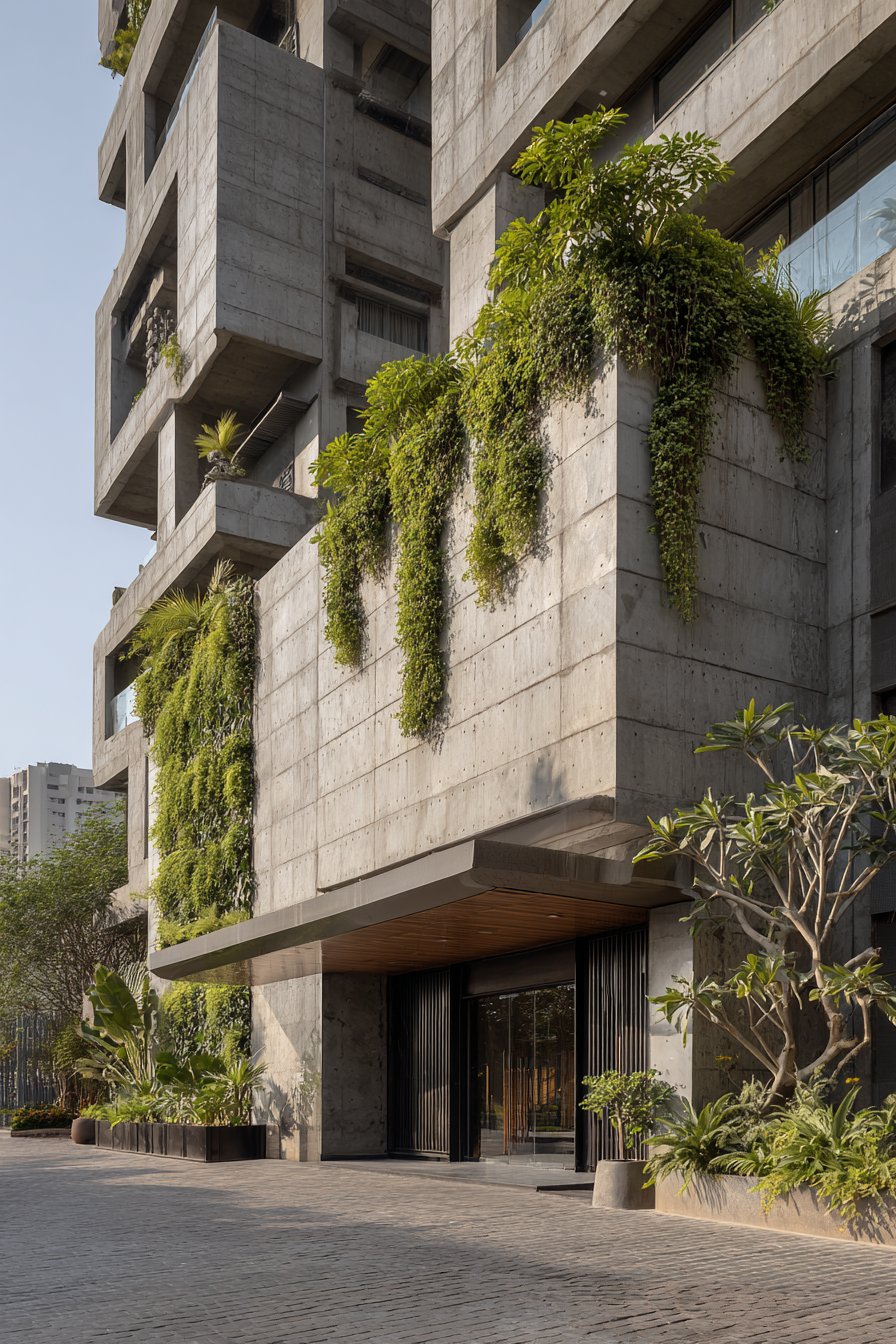
The biophilic design integration provides numerous benefits beyond aesthetics. The plants filter airborne particulates, absorb carbon dioxide, release oxygen, and provide cooling through evapotranspiration. The green wall creates habitat that supports biodiversity in urban environments where natural vegetation is limited. Psychologically, the presence of living plants has been shown to reduce stress, improve mood, and create more welcoming environments—important considerations for the boundary between private residence and public street.
Key Design Tips:
- Select plant species native to your region for best survival rates and minimal maintenance
- Design irrigation systems with automated controllers to maintain consistent moisture levels
- Install adequate drainage systems to prevent water damage to concrete frame and surrounding structures
- Choose modular plant panel systems that allow individual section replacement for maintenance
- Ensure concrete frame dimensions accommodate standard plant panel sizes for ease of installation and replacement
- Consider year-round appearance when selecting plants—evergreen species maintain coverage during winter months
- Install supplemental lighting if green wall sections receive inadequate natural light for plant health
- Plan for professional maintenance visits for pruning, fertilization, and plant health monitoring
18. Dry Stack Granite Monumental Wall
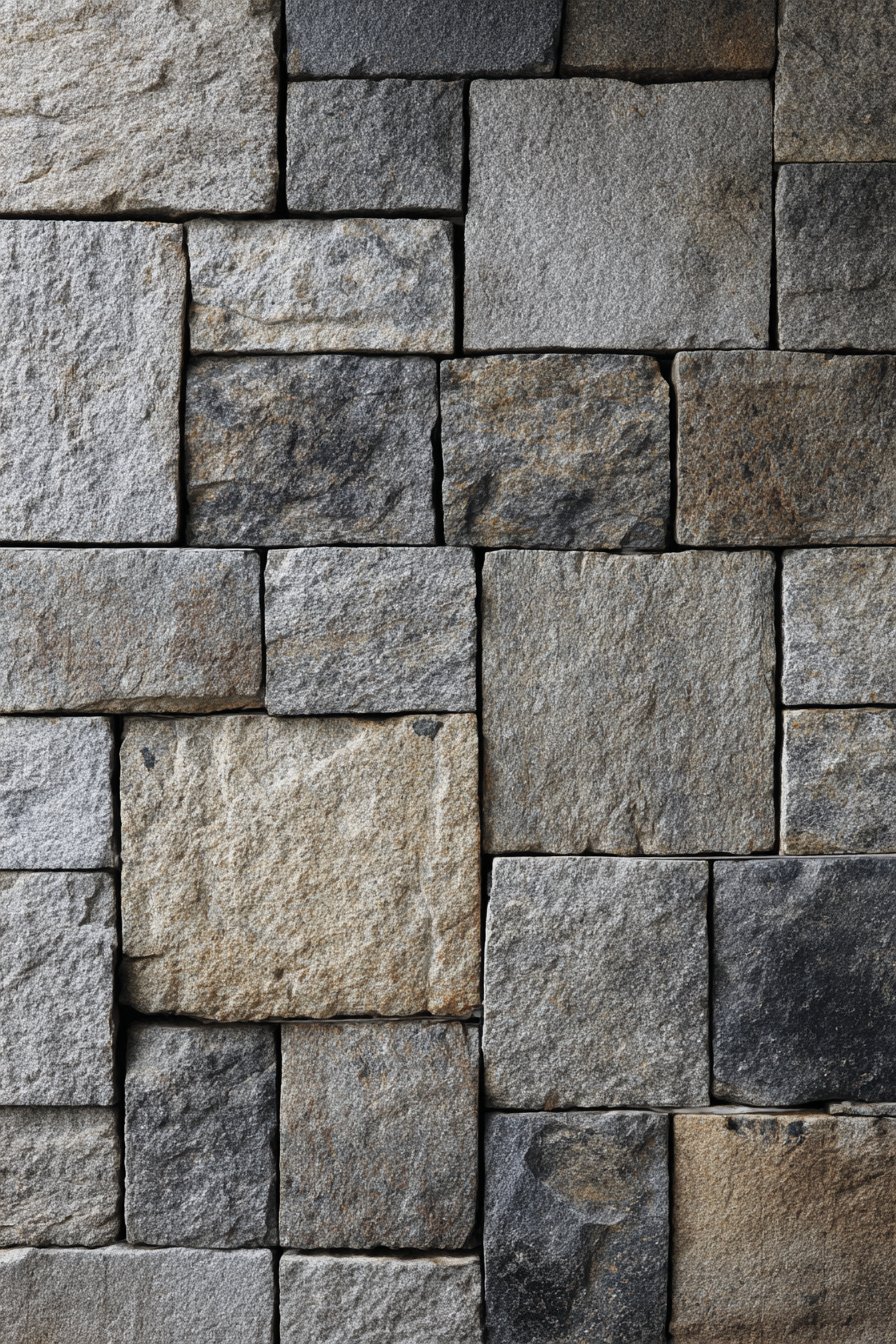
This impressive compound wall showcases rough-hewn granite blocks in dry stack construction where no visible mortar appears between stones, creating an authentic rustic appearance reminiscent of ancient stone walls built without modern adhesives. The granite blocks, with their natural edges and color variations ranging from light grey to charcoal, demonstrate substantial mass and permanence. Each block’s irregular shape requires skilled mason work to achieve stable construction without mortar bonds, relying instead on precise fitting and gravity to maintain stability. This construction method creates wall with powerful presence and connection to traditional building techniques.
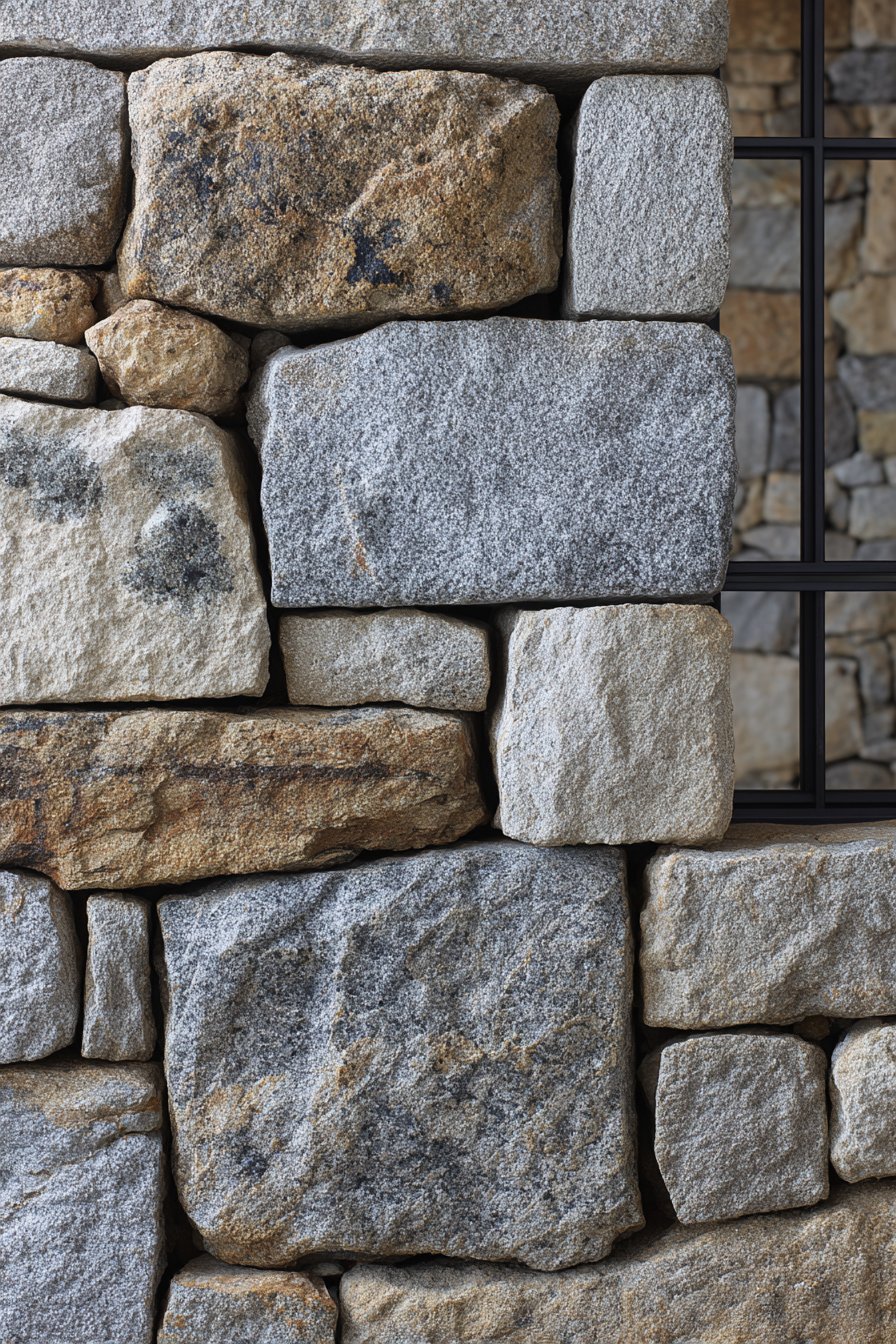
The rough-hewn texture of the granite blocks showcases the stone’s natural characteristics—crystalline structure, color banding, and natural fracture patterns created during quarrying. Unlike polished or precisely cut stones, these blocks retain their natural edges and surfaces, creating organic texture that changes dramatically with lighting conditions. The absence of mortar joints creates nearly continuous stone surface where individual blocks read as unified mass rather than assembled units. This visual solidity contributes to the wall’s monumental quality and sense of permanence.
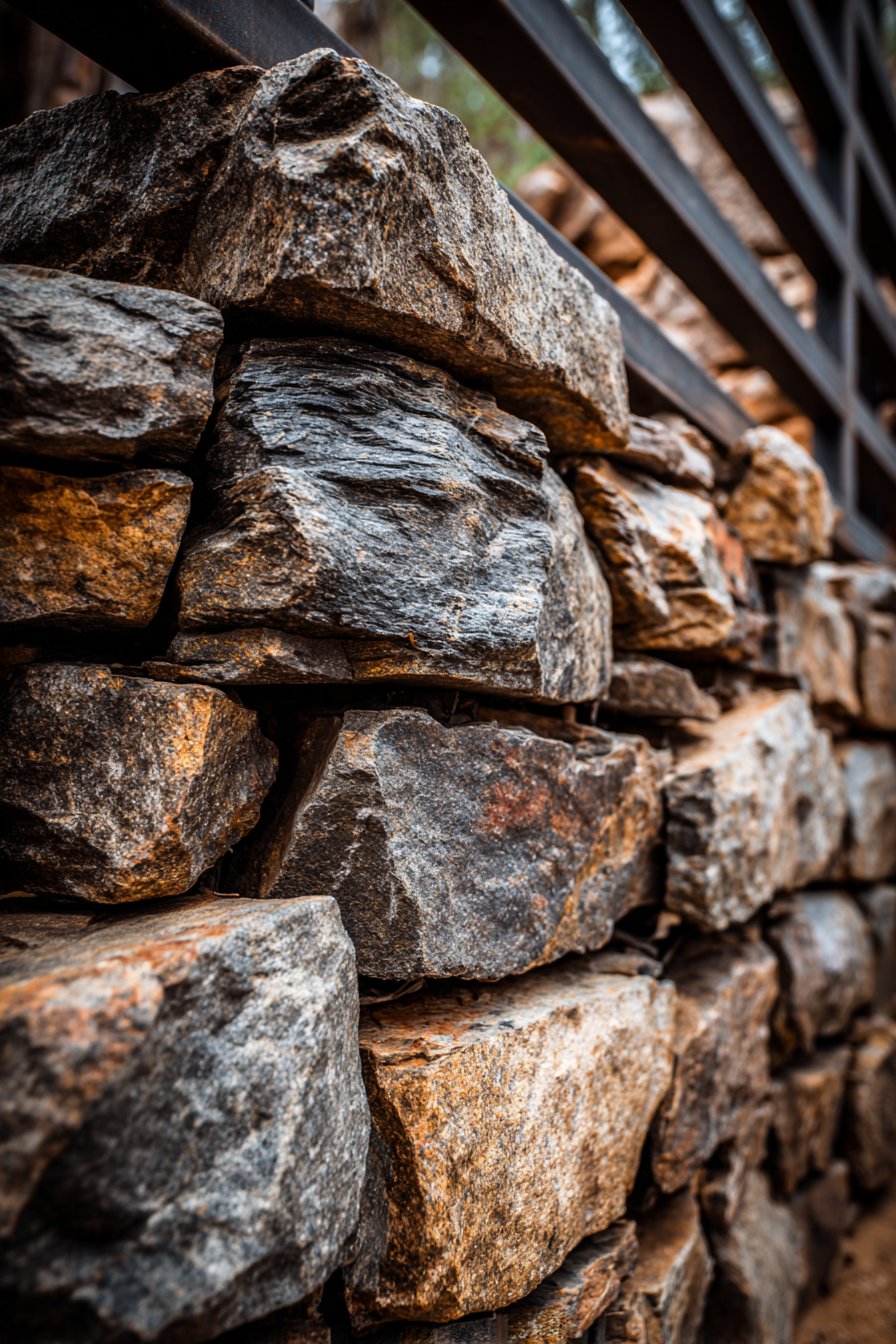
The simple steel gate frame with horizontal rails maintains minimalist approach that allows the granite’s powerful presence to dominate. The gate’s straightforward design—likely consisting of steel tube framework with three to five horizontal rails—provides security and entry control without competing with the stone’s visual impact. The steel’s industrial precision creates interesting contrast with the granite’s organic irregularity, while the horizontal rail orientation provides counterpoint to the blocks’ predominantly vertical jointing patterns.
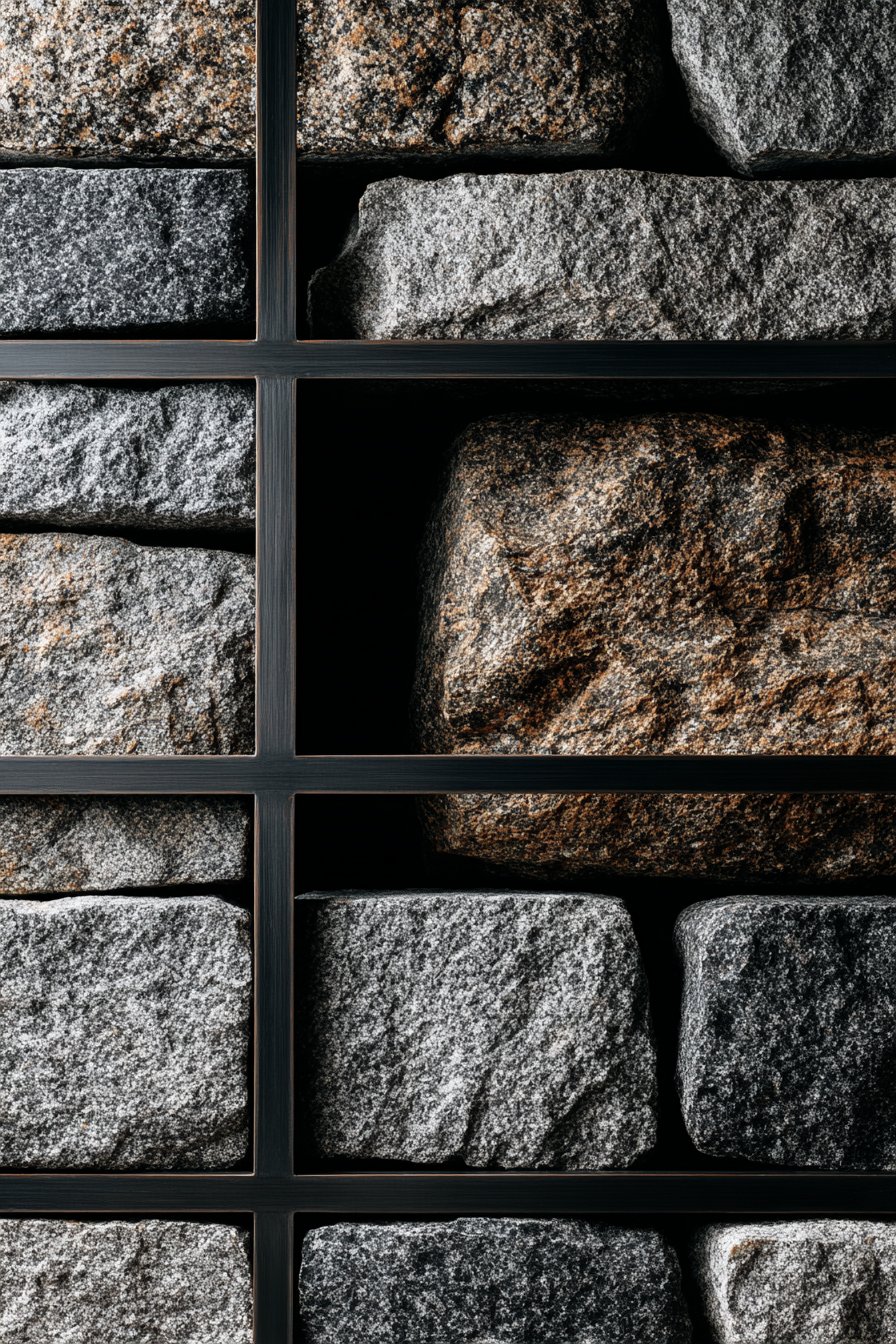
Light interaction with this rough-hewn granite creates spectacular effects throughout the day. The irregular surfaces catch light at countless angles, creating complex patterns of highlight and shadow across each block’s face. The natural stone edges create pronounced shadow lines where blocks meet, emphasizing the wall’s three-dimensional construction. During golden hour, when sunlight strikes at low angles, the texture becomes dramatically pronounced, with long shadows emphasizing every surface variation and edge detail.
Key Design Tips:
- Source granite blocks from reputable quarries providing consistent stone type and quality
- Employ experienced stone masons skilled in dry stack construction techniques
- Ensure foundation is substantial enough to support the considerable weight of granite masonry
- Select blocks with relatively flat top and bottom surfaces to facilitate stable stacking
- Design wall height appropriate for dry stack construction—typically limited to 6-8 feet for safety
- Install steel gate framework with proper anchoring into structural elements or dedicated pillars
- Apply rust-inhibiting treatment to steel elements before final finish
- Consider installing subtle tie-backs or pins in taller sections for additional stability while maintaining dry stack appearance
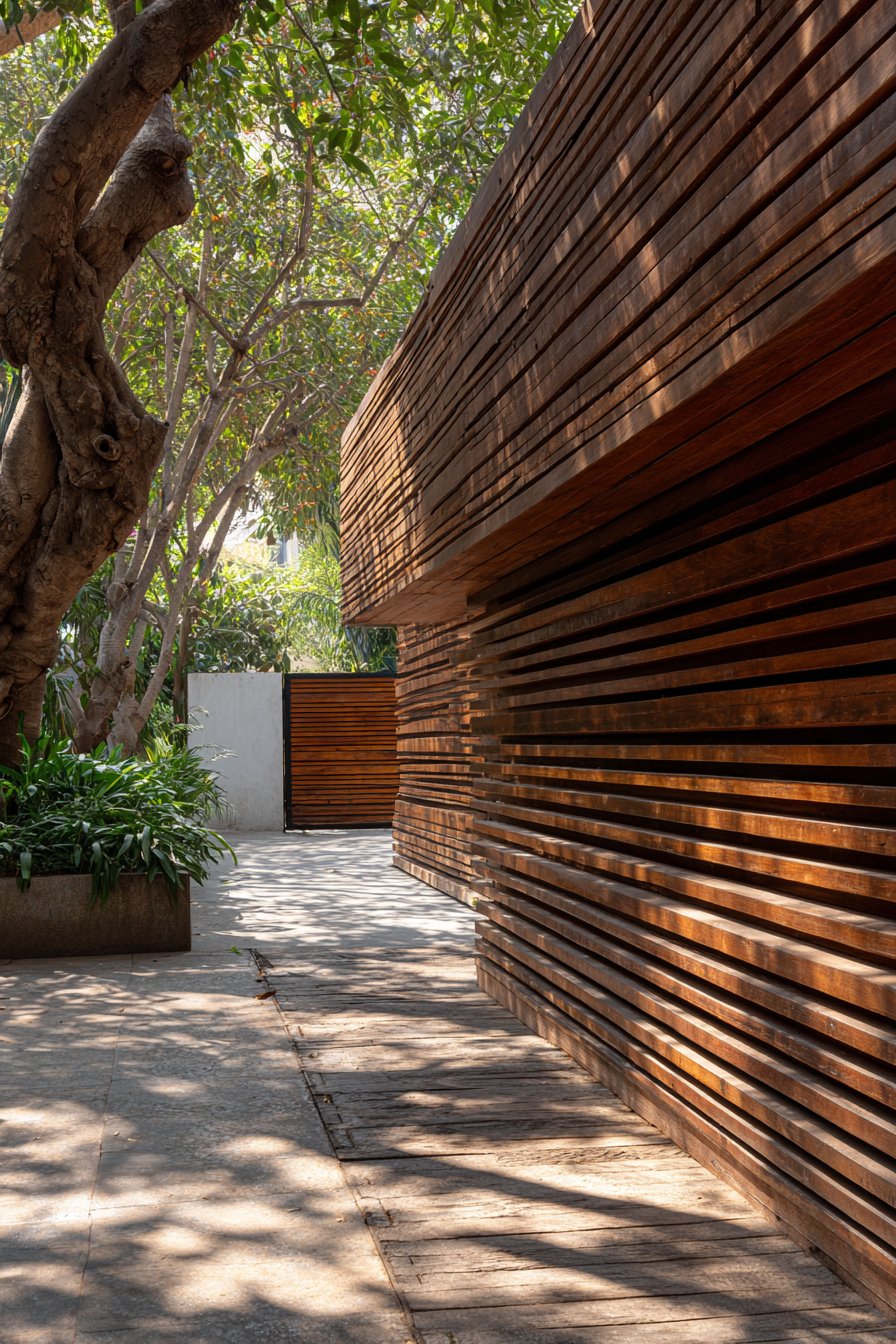
19. Dark Cedar Horizontal Plank Modern Wall
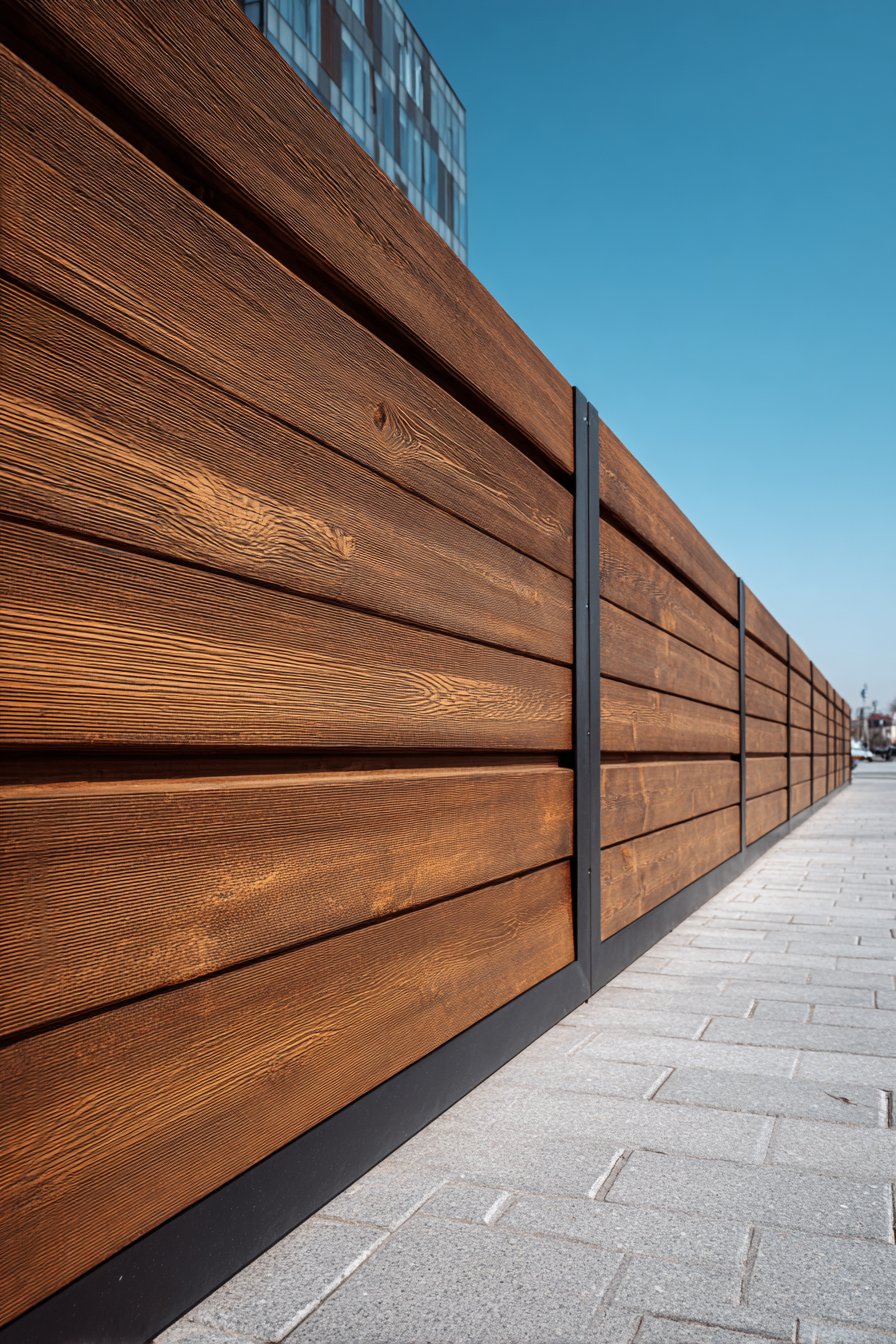
This contemporary compound wall demonstrates how wood can be deployed in clean-lined modern compositions to create warmth without sacrificing contemporary aesthetic. Horizontal wood planks in dark-stained cedar create strong linear emphasis while the rich brown tone provides organic warmth that softens the geometric precision. The planks are mounted with hidden fasteners on an engineered steel frame structure, ensuring no visible screws or nails interrupt the smooth surface. This attention to installation detail contributes to the refined appearance and demonstrates how contemporary design values seamless execution where construction methods remain invisible.
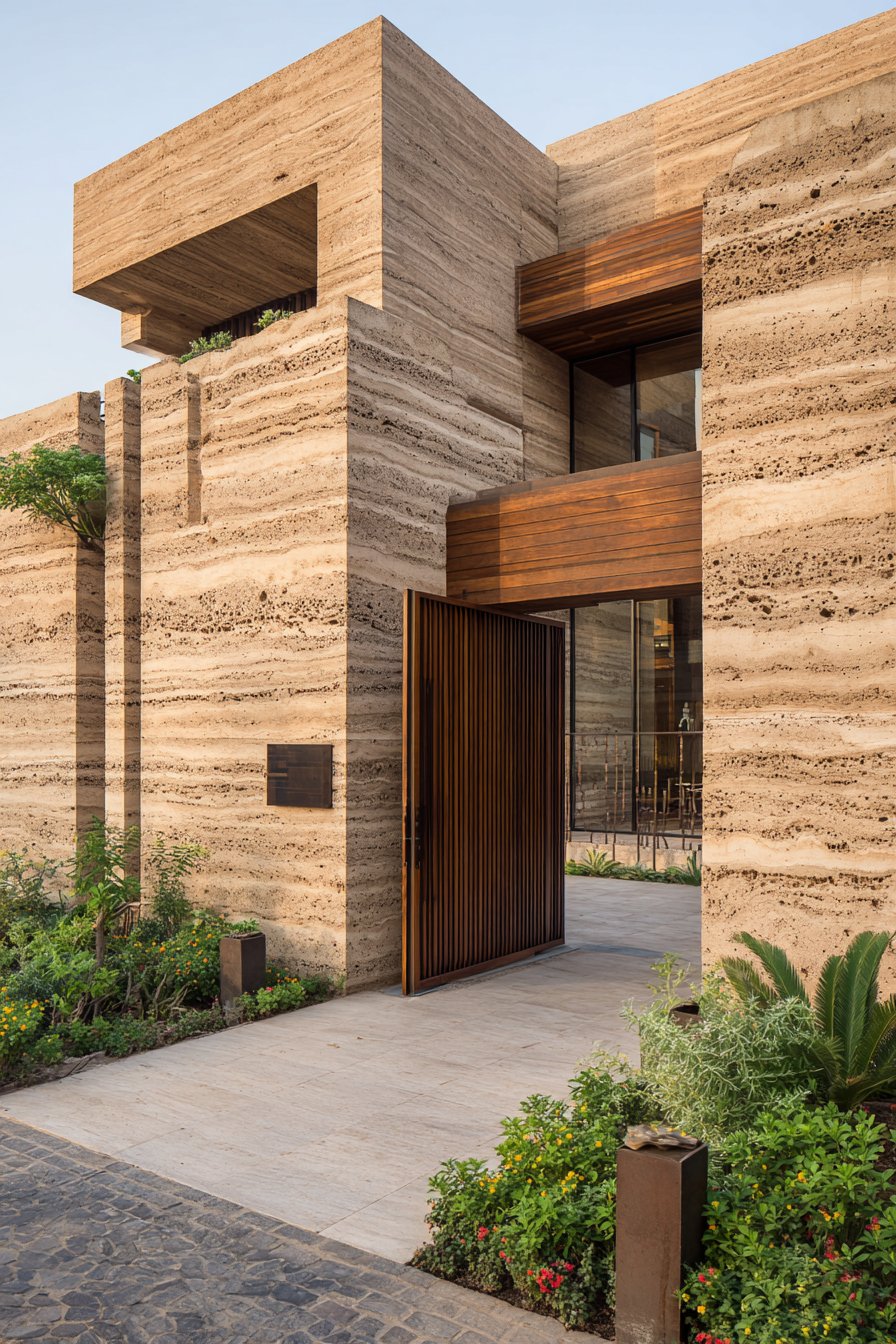
Dark-stained cedar was selected for both aesthetic and practical reasons. Cedar contains natural preservatives that resist decay, insects, and moisture damage better than many wood species, making it ideal for exterior applications. The dark stain—typically rich brown or chocolate tones—accentuates the wood grain while providing UV protection that extends the finish’s lifespan. The stain’s depth creates sophisticated appearance that feels more contemporary than natural wood tones while maintaining the material’s organic character and texture.
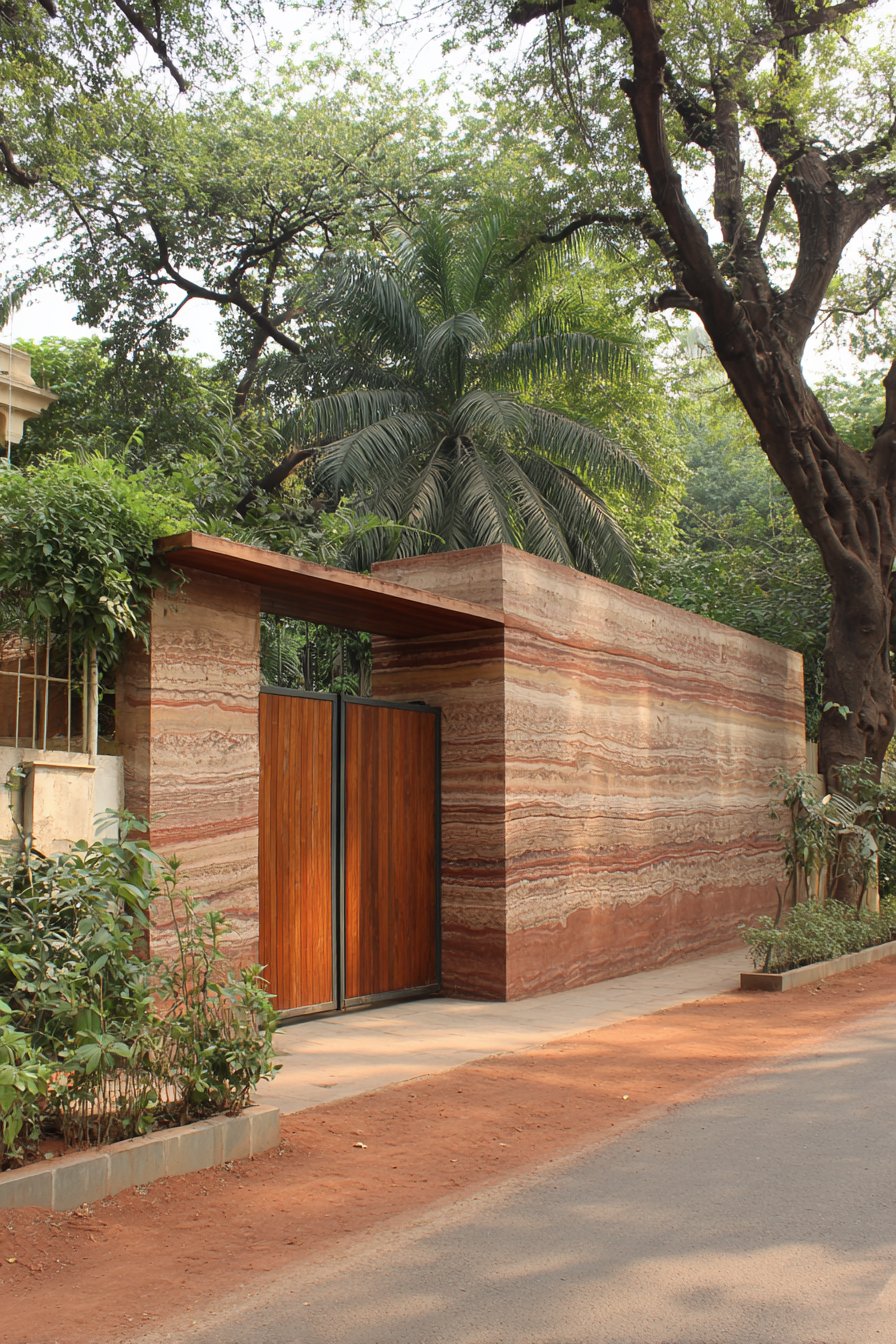
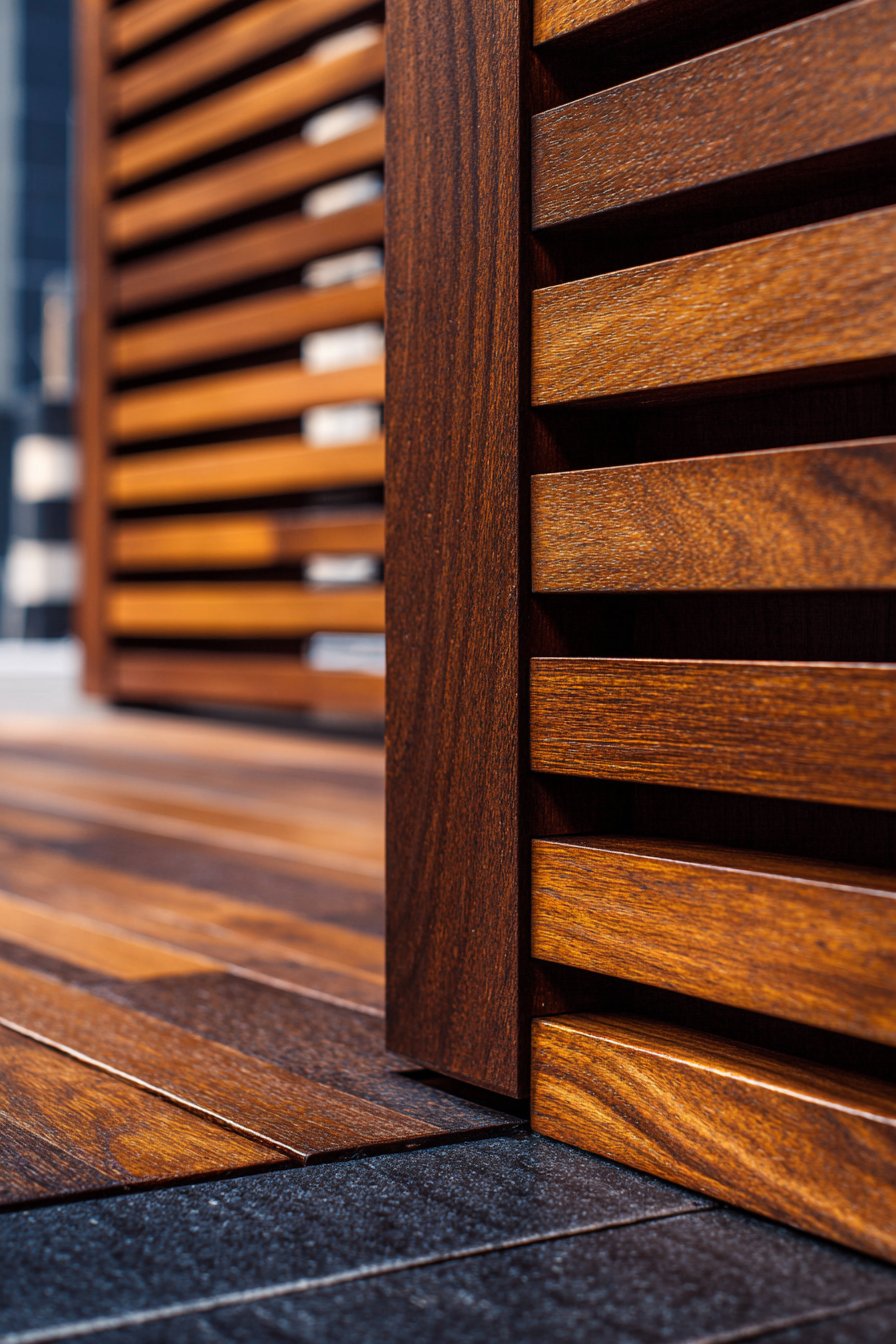
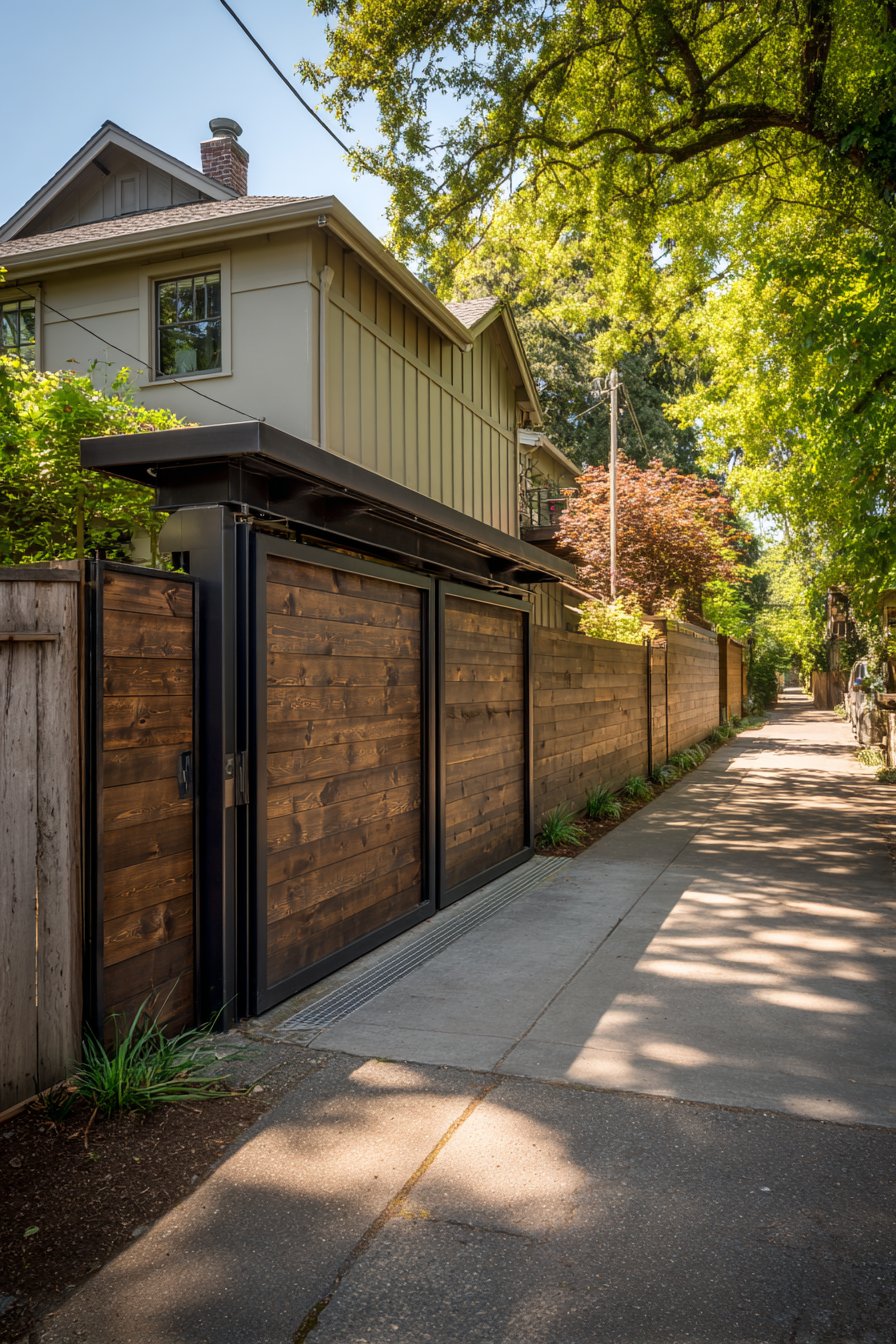
The matching plank-style sliding gate on industrial rollers provides entry while maintaining visual continuity across the compound wall’s entire length. The gate’s plank arrangement mirrors the wall sections, with horizontal boards aligned to create nearly invisible transition when closed. The industrial roller system, typically mounted on steel track, provides smooth operation while the exposed mechanism adds authentic industrial character. The rollers’ visibility is intentional design decision that celebrates functional hardware rather than concealing it.
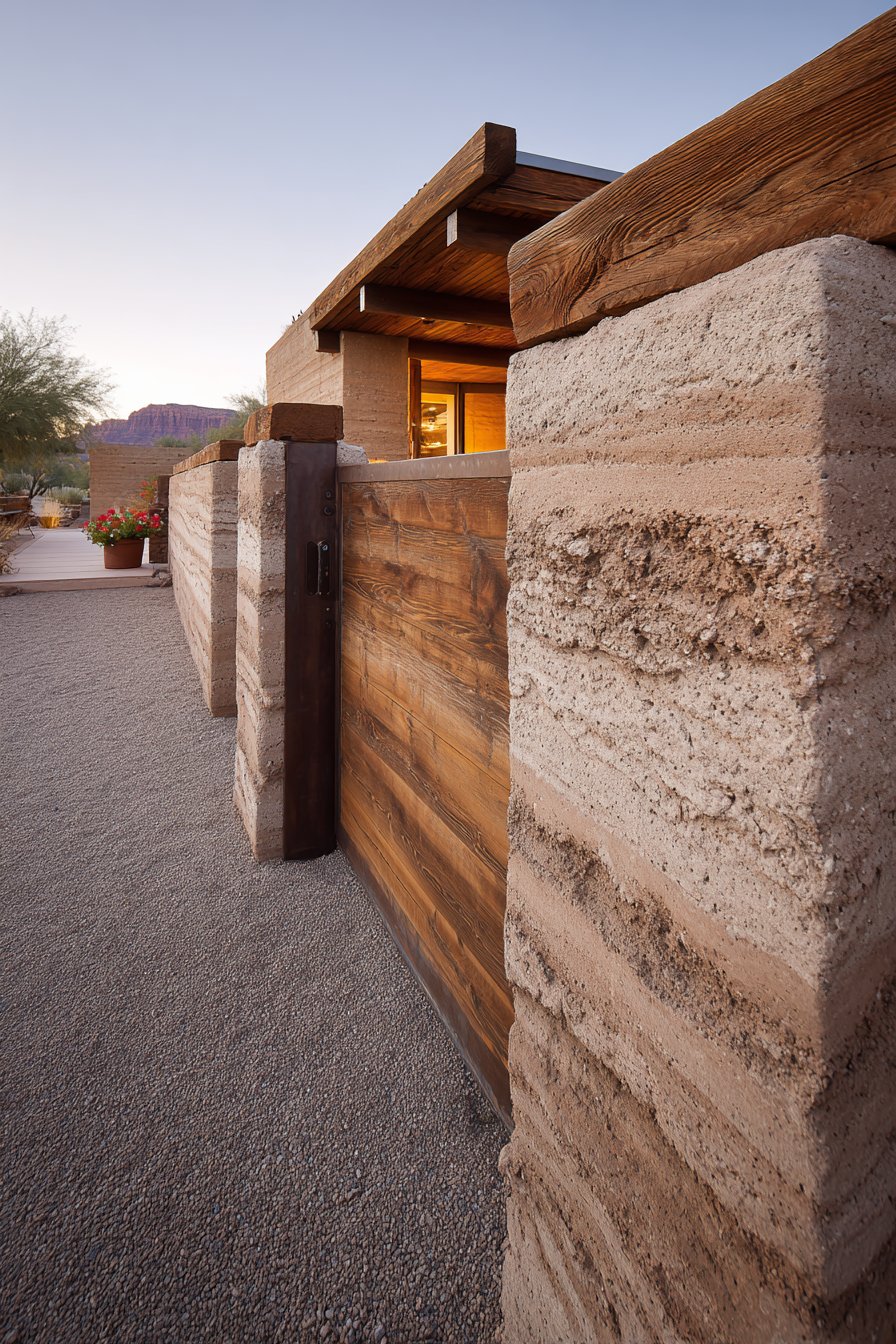
The concrete base painted black grounds the wooden elements both literally and visually. The black base provides solid foundation while its dark tone creates strong contrast with the dark brown cedar, preventing the wood from visually merging with the ground plane. This color blocking—black below, dark brown above—creates horizontal layering that emphasizes the wall’s linear quality while the dark palette maintains cohesive contemporary aesthetic. The base also provides practical protection, keeping wooden elements elevated above ground moisture and potential splash-back from rain.
Key Design Tips:
- Specify cedar from sustainably managed forests with appropriate certifications
- Use exterior-grade stains formulated for maximum UV and moisture resistance
- Install planks with adequate spacing for thermal expansion and contraction—typically 3-5mm gaps
- Ensure steel frame structure has rust-resistant treatment appropriate for your climate
- Detail plank installation to provide air gap behind wood for ventilation and moisture management
- Seal plank ends with end-grain sealer to prevent moisture absorption at cut edges
- Install sliding gate rollers rated for gate weight with sealed bearings for long-term smooth operation
- Plan for periodic stain maintenance every 3-5 years to maintain color and protection
20. Mid-Century Decorative Screen Block Wall
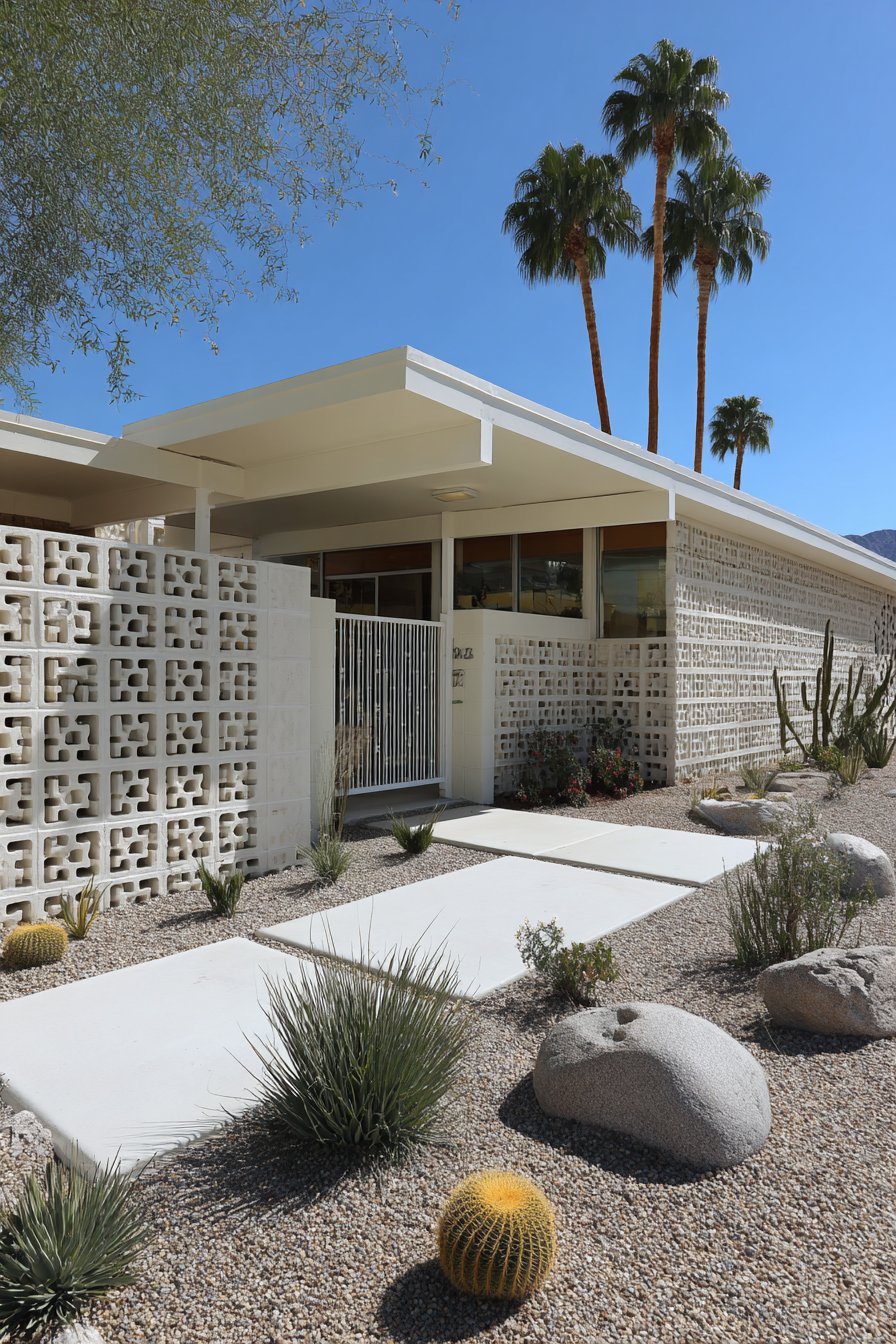
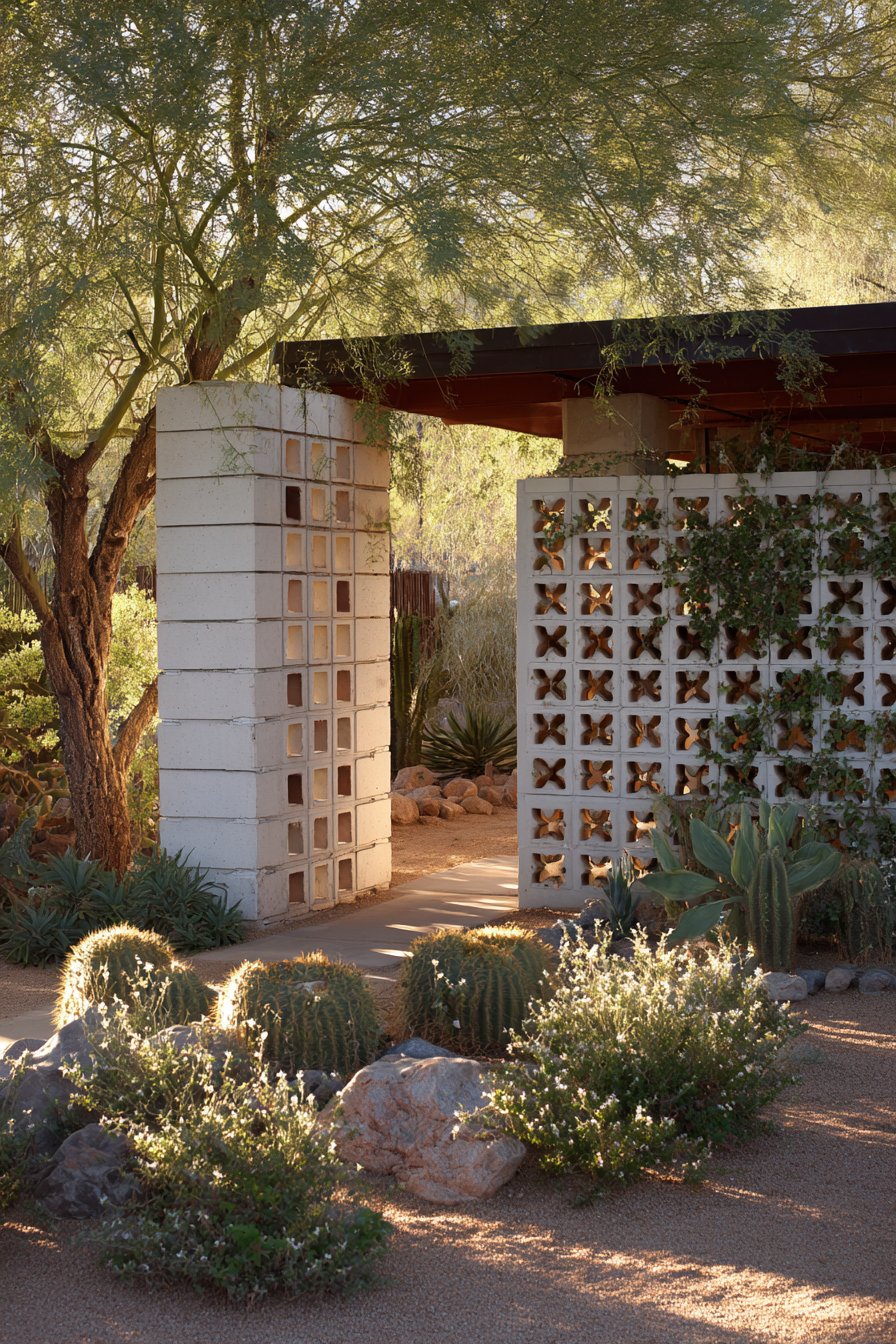
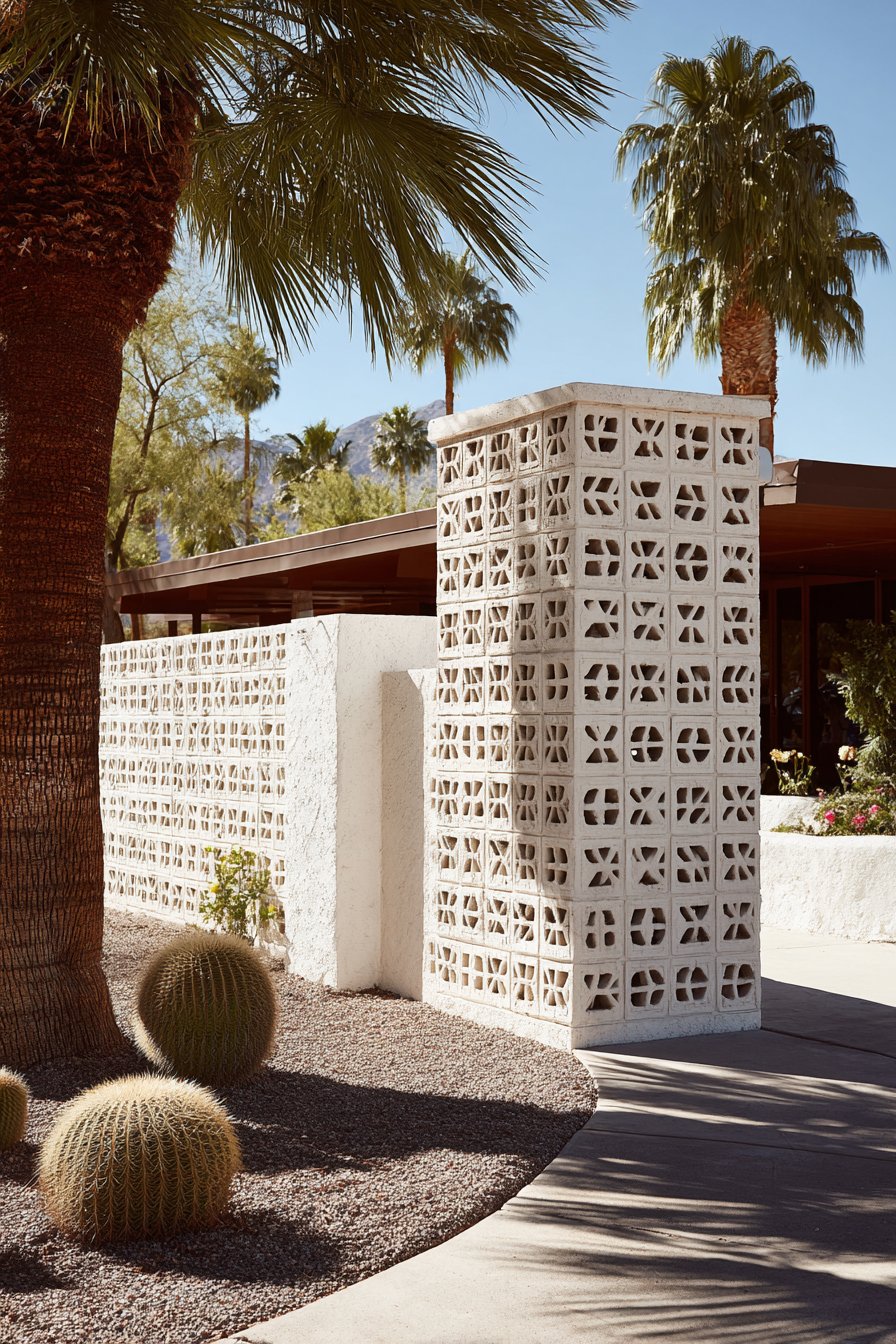
This compound wall celebrates mid-century modern design through decorative concrete screen blocks featuring geometric patterns that allow air flow and filtered light passage. The blocks’ open patterns—whether circular, diamond, hexagonal, or custom shapes—create visual interest while reducing the wall’s mass and maintaining connection between property and street. Stacked in running bond, the blocks create repetitive pattern that’s architecturally confident and period-appropriate. These screen blocks reference mid-century architecture’s embrace of indoor-outdoor living, pattern, and geometric form—values that remain relevant in contemporary design.
The geometric patterns cast fascinating shadows that change throughout the day as sunlight angles shift. Morning sun creates long shadows extending from the patterns, while midday overhead light projects patterns onto ground surfaces. Afternoon and evening light create different shadow effects, ensuring the wall’s appearance constantly evolves. These shadow patterns animate spaces on both sides of the wall, creating dynamic visual interest that solid walls cannot achieve. The filtered light also creates dappled illumination that’s more pleasant than harsh direct sun or complete shade.
Smooth stucco pillars at intervals, painted white, provide structural support while creating visual rhythm along the wall’s length. These pillars, typically positioned every 8-12 feet depending on structural requirements, serve dual purposes: they provide necessary support for the screen block sections and create vertical elements that break up the wall’s horizontal expanse. The white finish creates clean modern aesthetic while providing maximum contrast with the screen blocks’ shadows, making the geometric patterns more visually prominent.
The metal gate with similar geometric cutout design maintains visual continuity while providing functional entry. The gate’s patterns echo those in the screen blocks, creating cohesive design language where every element reinforces the mid-century modern aesthetic. The cutouts serve practical purposes—reducing gate weight, allowing air circulation, maintaining some visual connection when gate is closed—while providing decorative interest that makes the entrance architecturally significant rather than purely functional.
Key Design Tips:
- Source authentic mid-century screen block designs or high-quality modern reproductions
- Ensure blocks are rated for structural applications if used in load-bearing configurations
- Install proper vertical reinforcement in pillar locations to support screen block sections
- Apply UV-resistant stucco finish to pillars to maintain bright white appearance
- Design cutout patterns in metal gate to maintain adequate structural integrity while maximizing open area
- Consider orientation of screen blocks relative to sun path for optimal shadow effects
- Seal screen blocks if located in harsh climates to prevent water infiltration and freeze damage
- Plan for professional cleaning of screen block patterns where dust and debris may accumulate
21. Rammed Earth Sustainable Construction
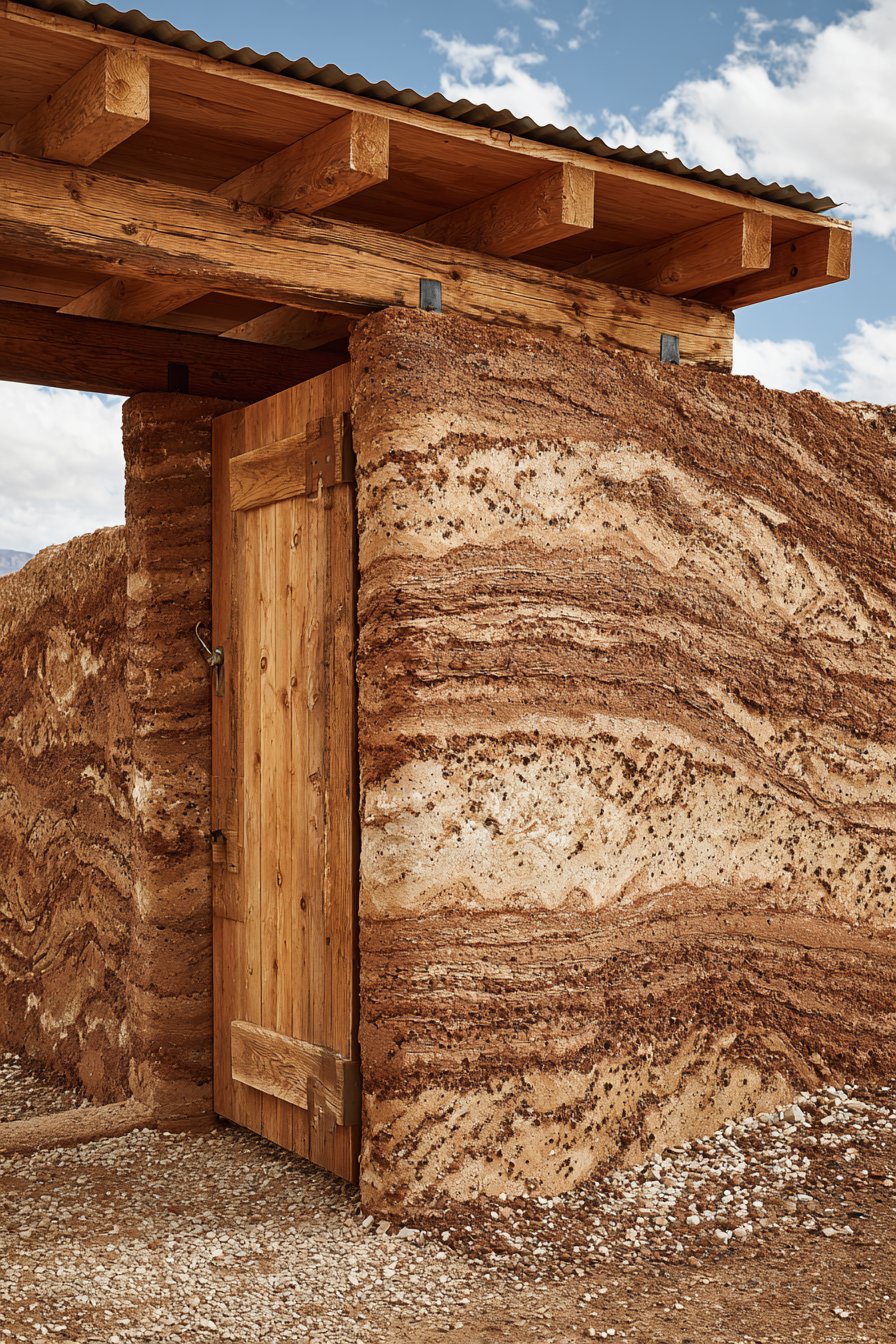
This environmentally conscious compound wall showcases rammed earth construction—an ancient building technique experiencing contemporary revival for its sustainability and aesthetic appeal. The compacted earth creates solid mass showing horizontal stratification layers in natural earth tones ranging from tan to reddish-brown, with color variations reflecting the soil composition used in construction. Each layer represents a separate pour and compaction cycle, creating distinctive banding that reveals the construction process. The compressed earth’s density provides excellent thermal mass, sound insulation, and structural integrity while using locally sourced, minimally processed materials.
The horizontal stratification layers create natural pattern without applied decoration, demonstrating how construction methods can generate aesthetic interest. The layers’ thickness varies depending on formwork height and compaction technique, typically ranging from 6-12 inches per lift. Color variations between layers occur naturally based on soil moisture content during mixing, compaction pressure, and subtle differences in soil composition. These variations prevent monotony while maintaining overall cohesive earth-tone palette. The rammed earth’s surface texture shows subtle variations from the compaction process, creating organic quality that’s visually softer than concrete.
Reclaimed wood beams serving as cap protection provide practical weather resistance while introducing complementary natural material. The wood cap, typically substantial beams 6-12 inches wide, protects the earth wall from rain erosion while the beam’s overhang directs water away from the wall face. Reclaimed wood brings its own history—nail holes, saw marks, weathering patterns—that adds character while supporting sustainable building practices through material reuse. The wood’s warm tones harmonize with earth walls while its linear form provides clean geometric cap to the organic earthen material below.
The simple steel frame gate with timber infill complements the natural material palette while maintaining contemporary sensibility. The gate combines industrial steel framework with warm timber panels, creating material dialogue that echoes the earth wall and wooden cap. This combination of natural and industrial materials represents balanced approach to sustainable design—using natural materials where appropriate while deploying manufactured products where they provide superior function or durability.
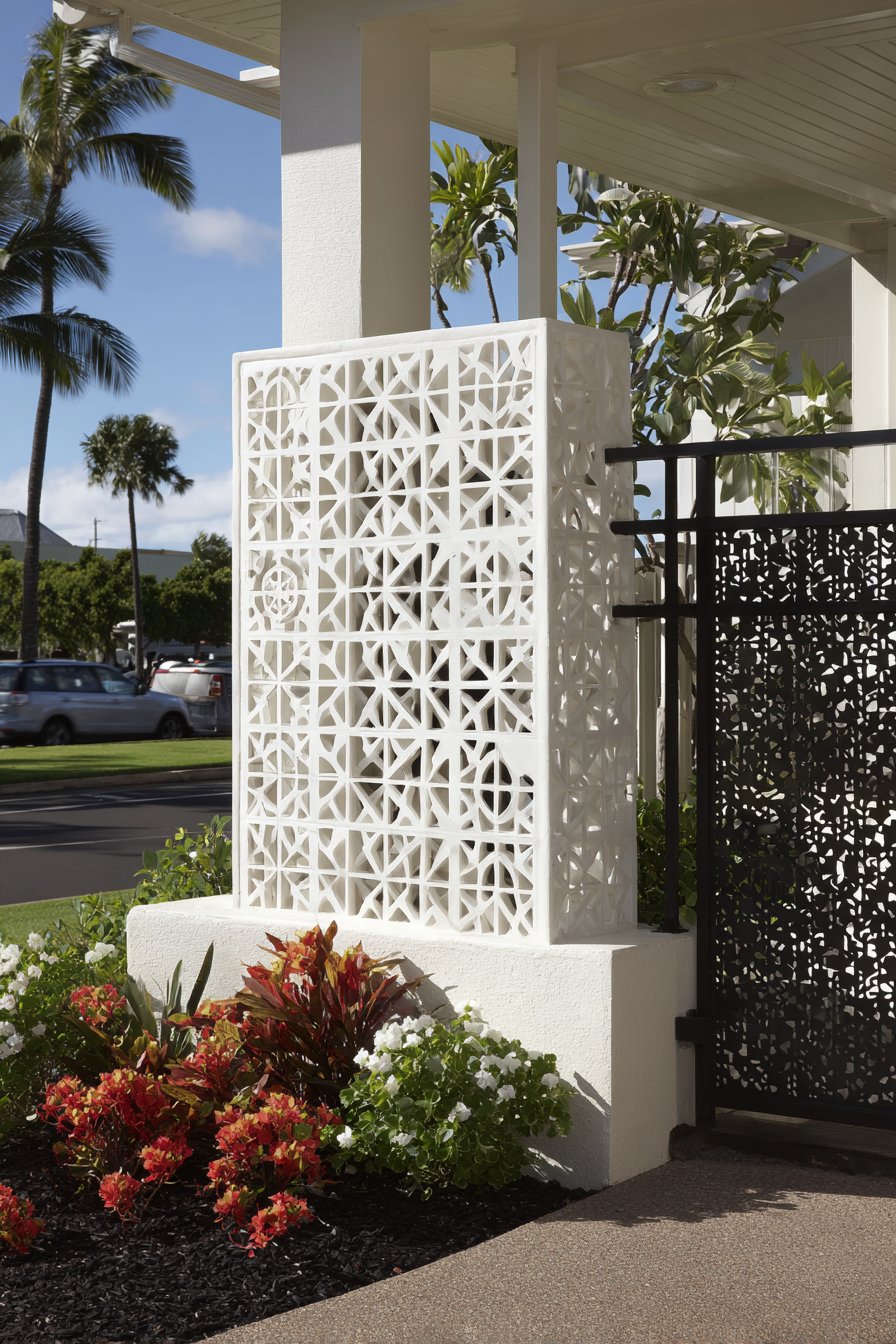
Key Design Tips:
- Source soil locally to reduce transportation impacts and ensure climate compatibility
- Test soil composition for appropriate clay, sand, and aggregate ratios before construction
- Ensure adequate foundation depth and width to support rammed earth’s considerable weight
- Install proper roof overhang or cap protection to prevent water erosion of earth surface
- Use formwork capable of withstanding compaction pressures without deformation
- Consider hiring experienced rammed earth contractors for structural integrity and aesthetic quality
- Seal reclaimed wood cap beams with preservatives to prevent decay while maintaining natural appearance
- Design proper drainage systems to direct water away from earth wall base
22. Slate Stone Contemporary Elegance
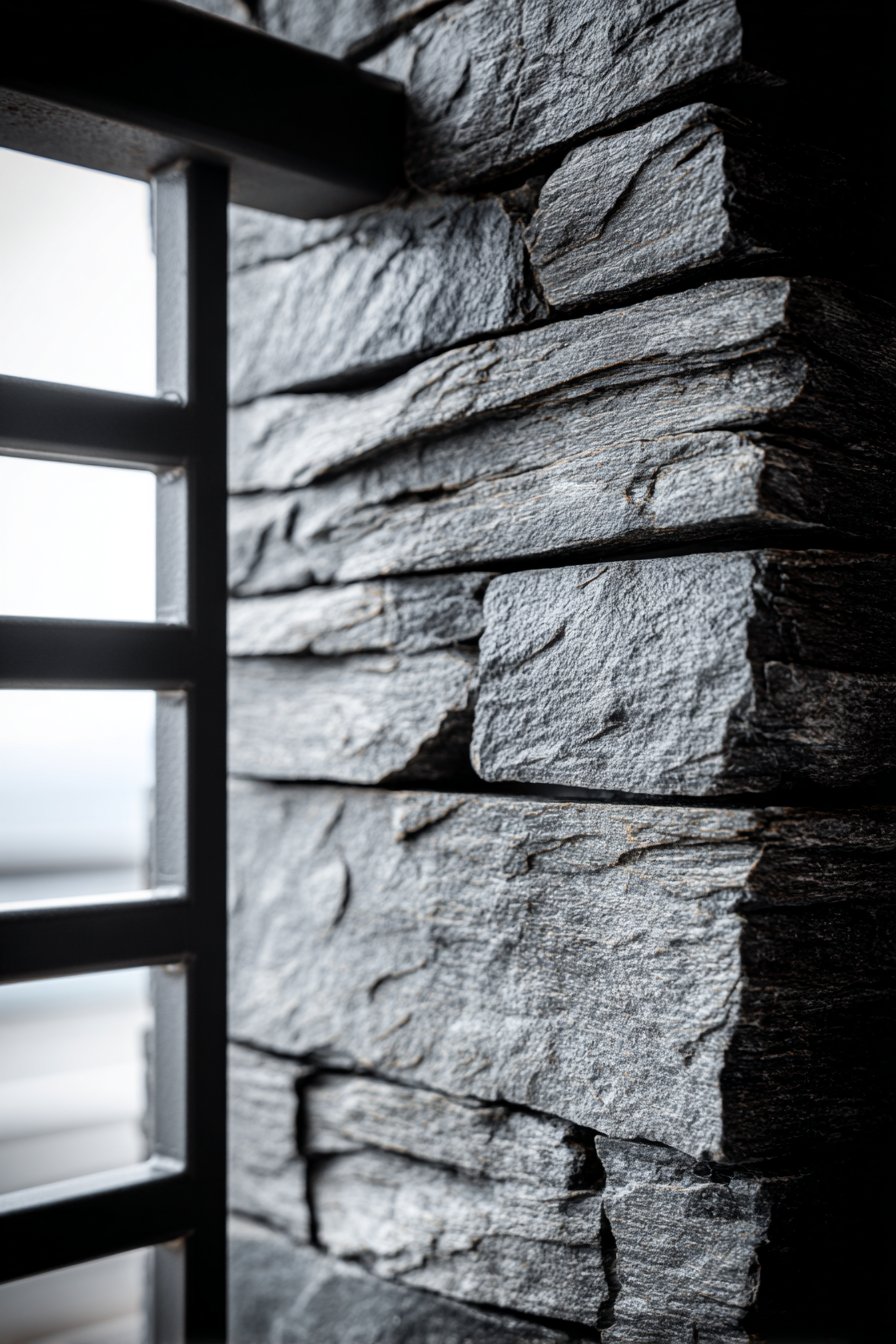
This sophisticated compound wall features slate stone cladding in dark grey to black tones arranged in horizontal courses that create clean contemporary lines. The natural cleft surface—created when slate is split along its natural grain during quarrying—produces dimensional texture that catches light and shadow beautifully. Each slate piece’s slight surface undulation creates visual interest while the horizontal coursing maintains ordered appearance. The dark palette creates dramatic presence that commands attention while maintaining elegant restraint appropriate for residential boundaries.
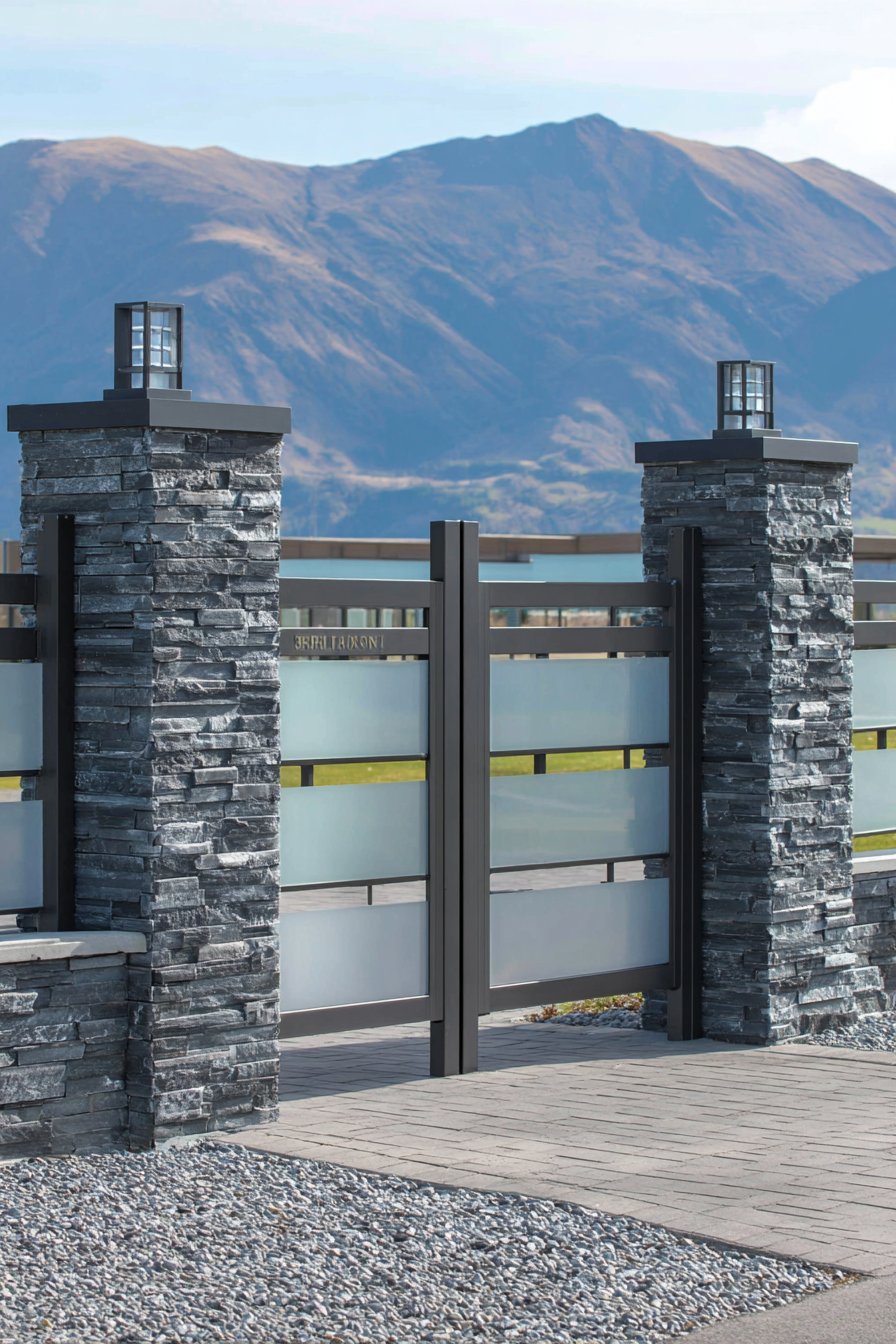
The slate’s natural cleft surface texture distinguishes this wall from smooth-faced alternatives. When slate is split rather than sawn, the resulting surface reveals the stone’s natural stratification and crystalline structure. This cleft surface creates countless small facets that reflect light differently, producing shimmering quality as viewing angle changes. The texture also creates tiny shadow pockets that add depth and prevent the dark stone from appearing flat or lifeless. The horizontal installation emphasizes the slate’s natural grain direction while creating strong linear emphasis.
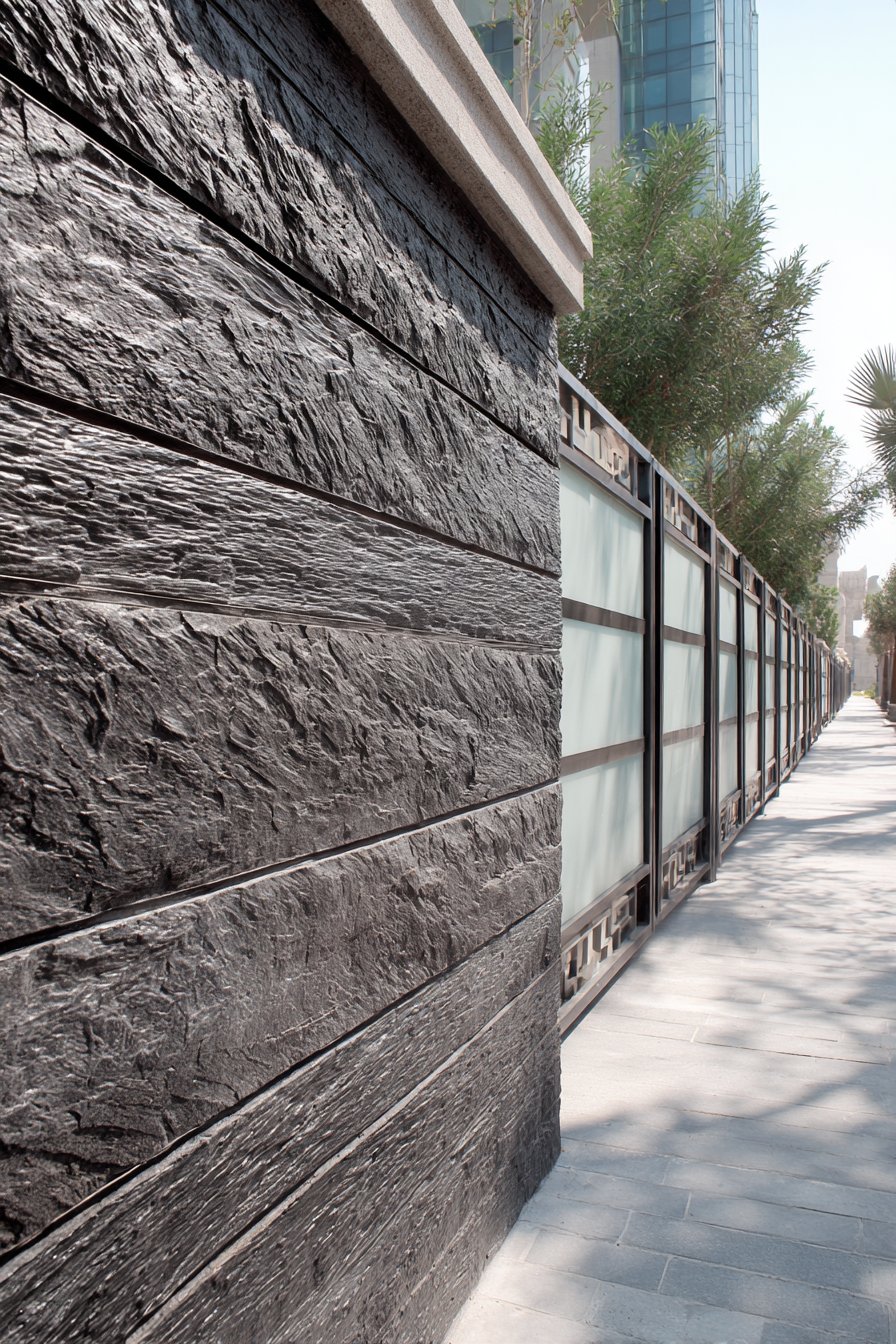
The stainless steel top rail provides modern contrast and weather protection while introducing reflective metal element that enhances the stone’s sophisticated character. The rail’s polished or brushed finish creates clean horizontal line that caps the composition while its metallic sheen provides visual counterpoint to the stone’s matte texture. Functionally, the rail protects the slate’s top edges from direct water exposure while providing smooth finished edge that’s safer and more refined than exposed stone tops.
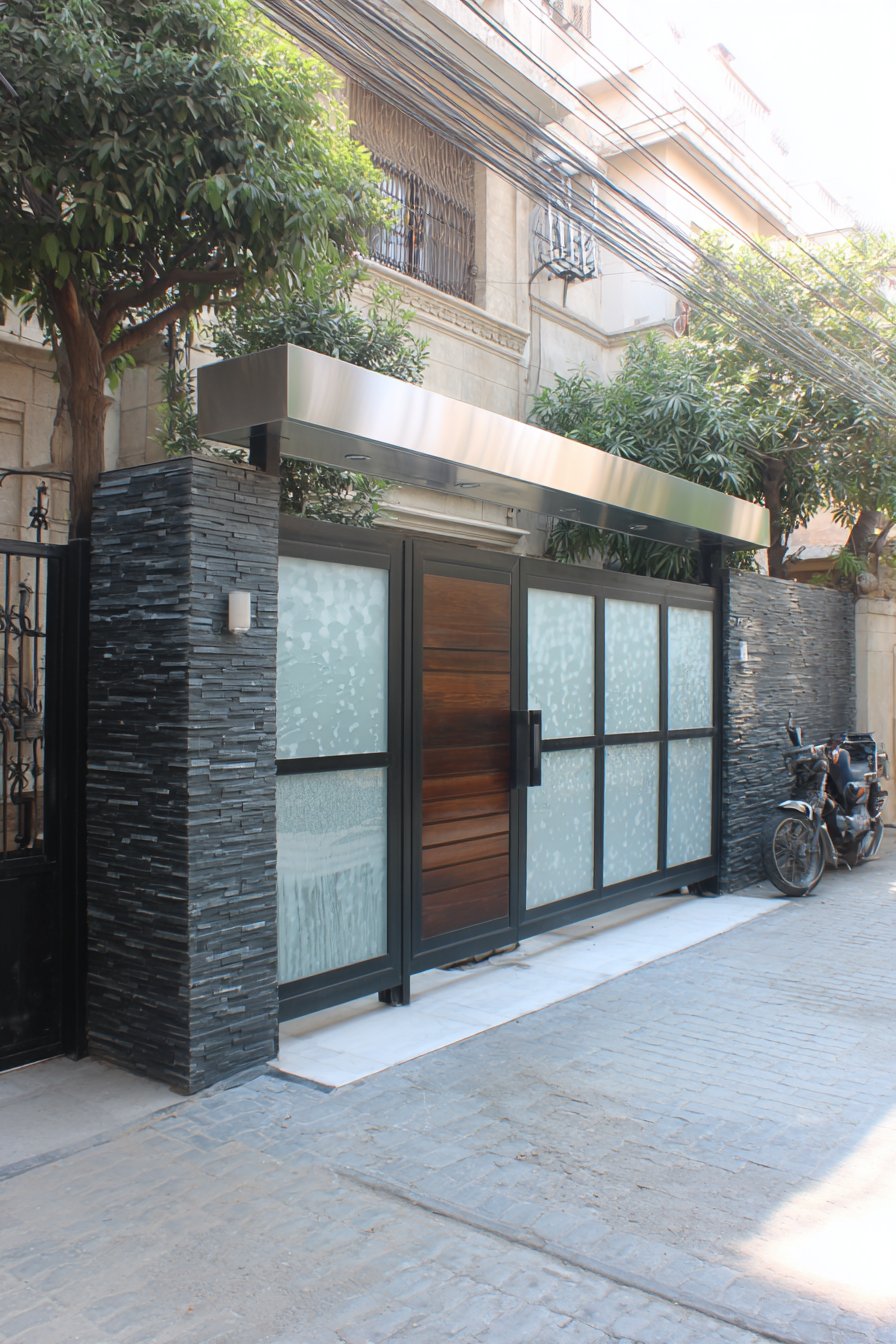
The contemporary gate in powder-coated aluminum with frosted glass inserts continues the modern luxury aesthetic while introducing transparency that balances the solid stone’s opacity. The aluminum framework, precisely fabricated with welded joints and seamless corners, demonstrates contemporary manufacturing capabilities. Frosted glass panels provide privacy while allowing light transmission, creating luminous quality especially when backlit. The combination of metal, glass, and stone creates multi-material composition that’s visually rich and thoroughly contemporary.
Key Design Tips:
- Select slate with consistent thickness ranges to facilitate easier installation and more uniform appearance
- Ensure slate is rated for exterior use in your climate with adequate freeze-thaw resistance
- Install with appropriate mortar joints that complement the stone’s dark color
- Detail stainless steel rail installation to prevent water accumulation in mounting hardware
- Specify marine-grade stainless steel in coastal environments to prevent corrosion
- Use tempered or laminated frosted glass in gate panels for safety and security
- Seal slate surfaces with penetrating sealers that enhance color while providing water repellency
- Design adequate foundation to support slate’s weight while preventing settling that could crack stones
23. Soft Blue-Grey Traditional Render
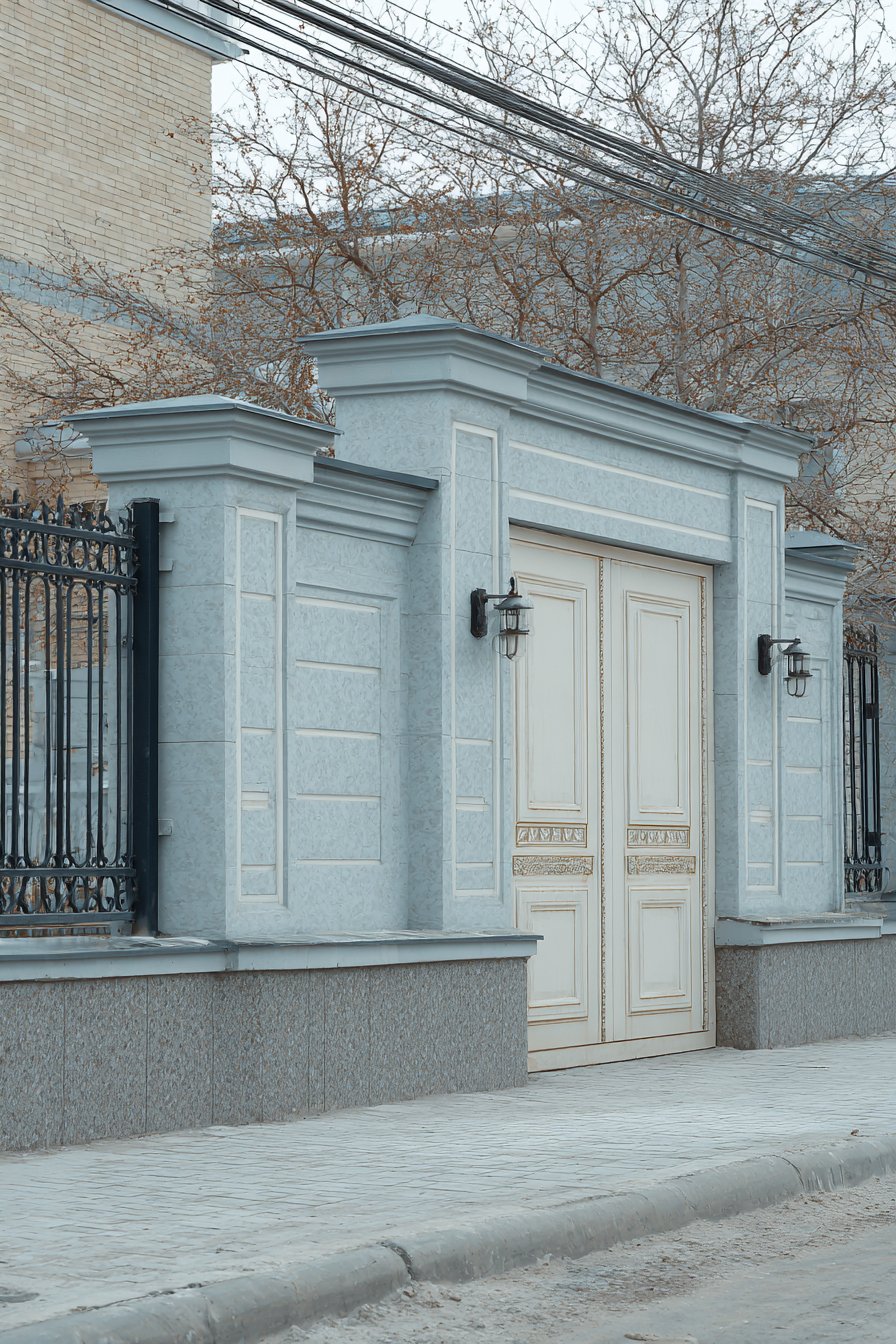
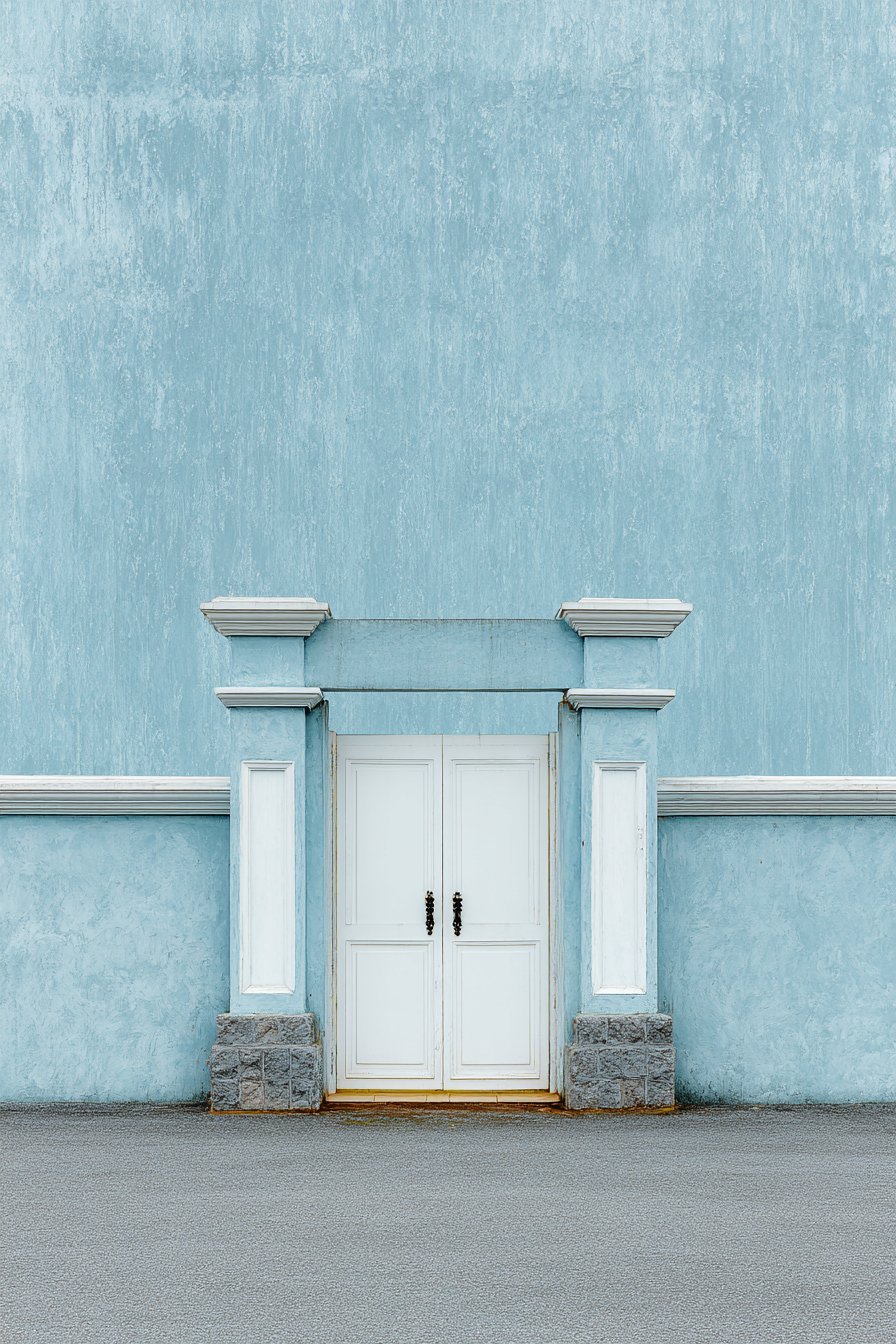
This charming compound wall features painted rendered finish in soft grey-blue tone that creates serene, welcoming appearance. The smooth texture results from skilled troweling that eliminates imperfections while maintaining subtle hand-applied character. The blue-grey color—somewhere between traditional grey and soft sky blue—provides unique character that distinguishes this wall from standard grey or white alternatives. This hue works particularly well in residential settings, creating calm sophisticated presence that complements various architectural styles from traditional to transitional.
Decorative pilasters at intervals, finished in slightly darker tone, create vertical emphasis while adding dimensional interest to otherwise flat wall surface. These engaged columns, projecting 4-6 inches from the main wall plane, reference classical architecture while providing visual rhythm along the wall’s length. The darker tone—perhaps several shades deeper in the same blue-grey family—creates subtle contrast that makes the pilasters read as separate architectural elements. The pilasters also serve structural function, providing reinforcement at intervals while creating natural locations for drainage or service access if needed.
Classic double swing gates in white with simple panel design create timeless entrance that balances formality with approachability. The white finish creates strong value contrast against the blue-grey wall, ensuring the entrance reads clearly as the access point. The simple panel design—typically featuring flat panels with modest edge molding—provides understated elegance without excessive ornamentation. Black iron hardware including hinges, handles, and decorative bolt heads adds traditional character while the dark metal provides accent color that grounds the soft pastel palette.
Stone cap in natural grey limestone provides durable weather protection while introducing natural material that complements the rendered finish. The limestone’s neutral grey tone bridges the wall’s blue-grey and the gate’s white, creating color harmony across the composition. The stone coping’s slight overhang directs water away from the rendered surface, preventing staining and reducing moisture penetration. The limestone’s natural texture provides subtle contrast with the smooth render while its density ensures long-term durability.
Key Design Tips:
- Use high-quality exterior render systems with integrated waterproofing for long-term durability
- Mix custom colors using fade-resistant pigments formulated for exterior applications
- Ensure pilaster projection is sufficient to create meaningful shadow lines—minimum 4 inches
- Detail pilaster caps with proper flashing to prevent water infiltration
- Specify exterior-grade paint systems for wooden gates with proper primer and multiple finish coats
- Treat iron hardware with rust-inhibiting coatings before installation
- Install limestone coping with adequate drip edges and proper slope for water shedding
- Plan for periodic cleaning and touch-up painting to maintain fresh appearance
24. Reclaimed Brick Eclectic Character
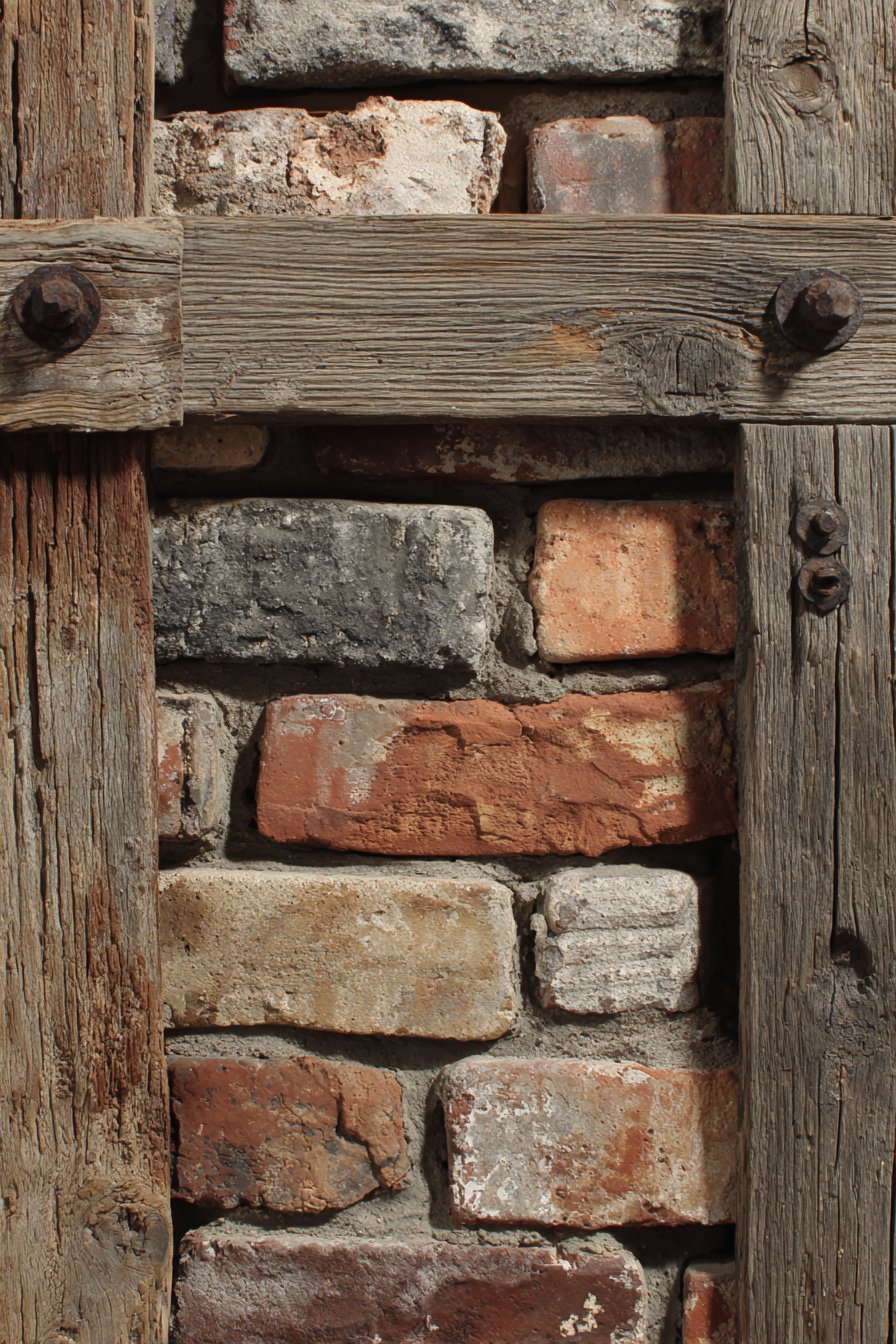
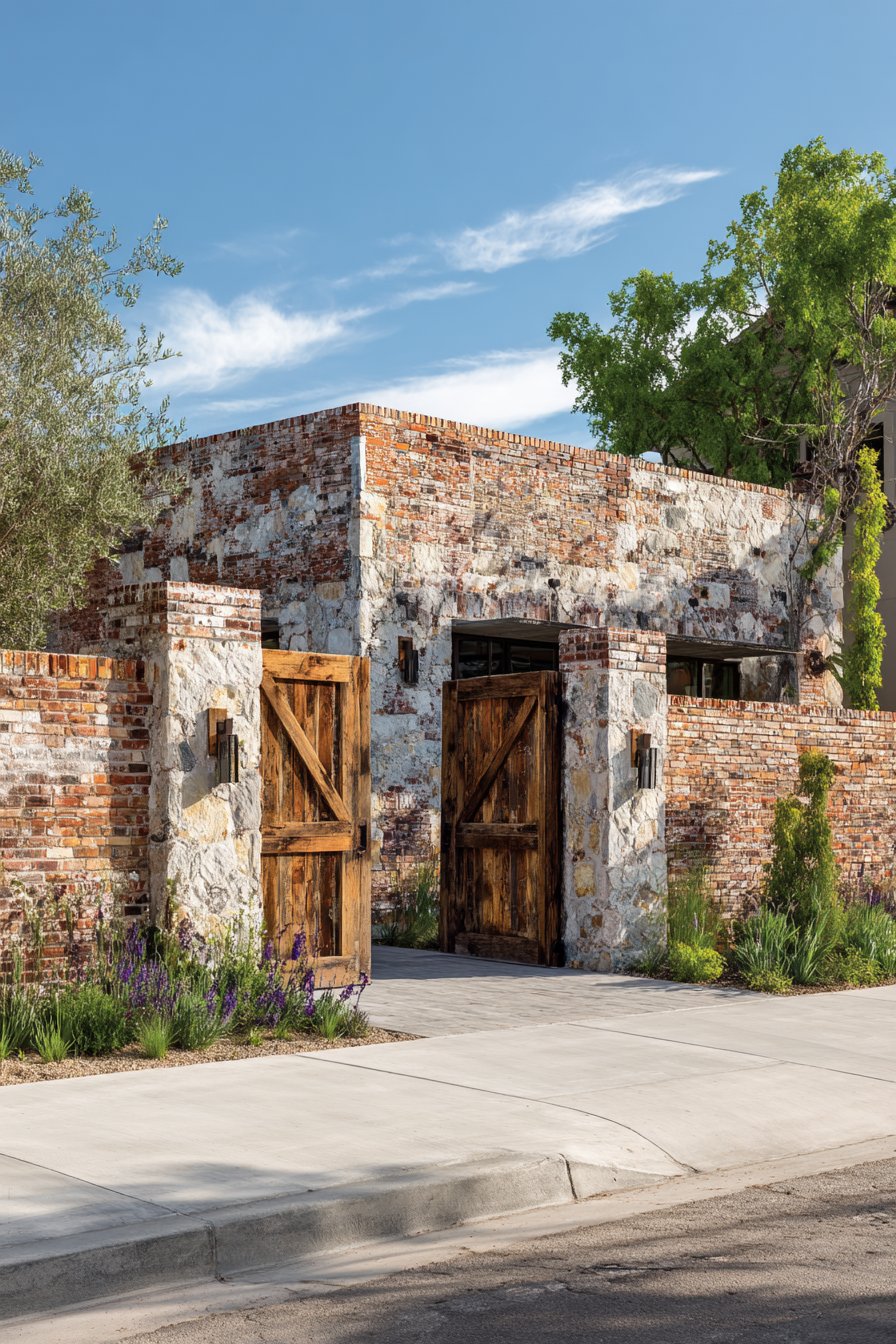
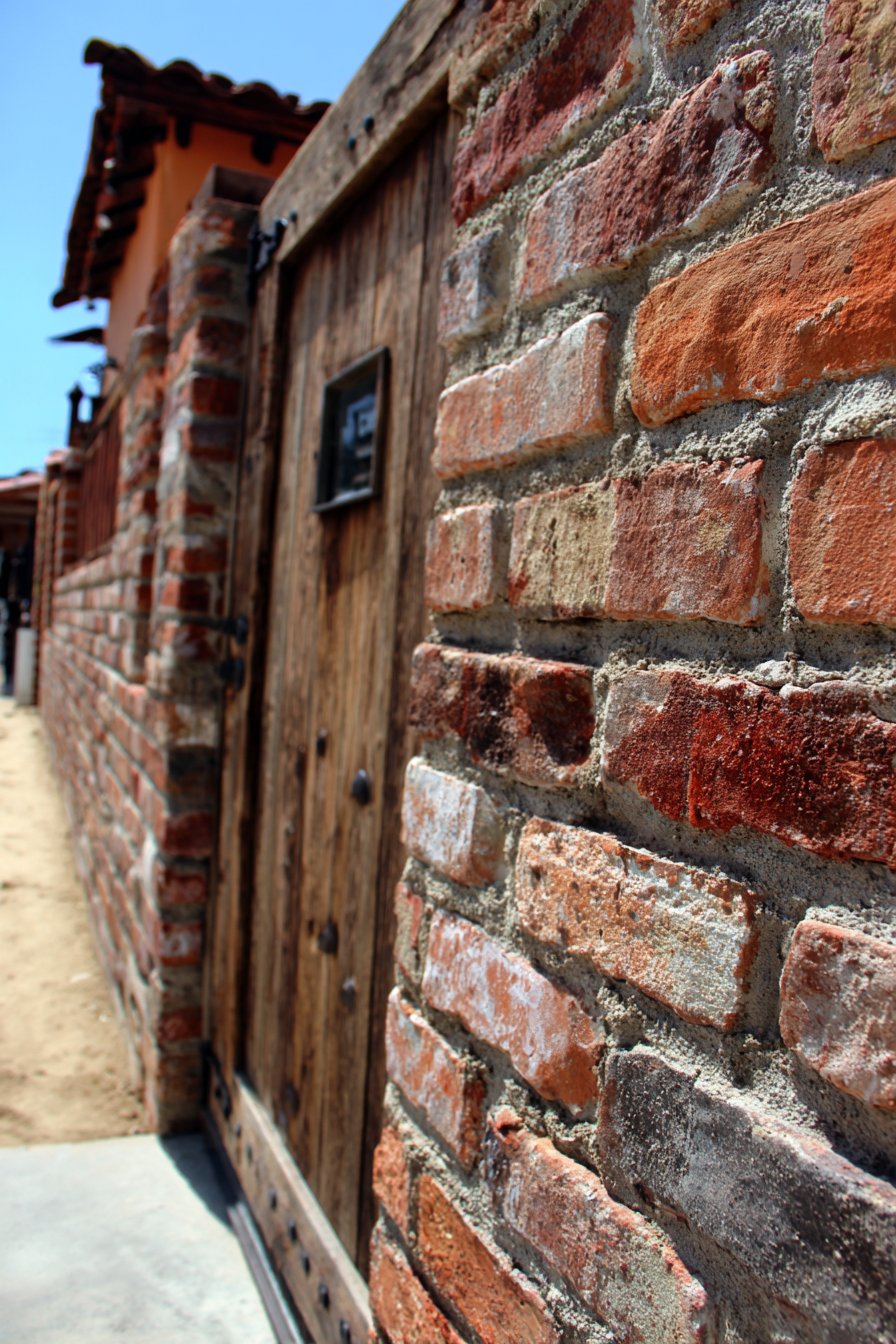
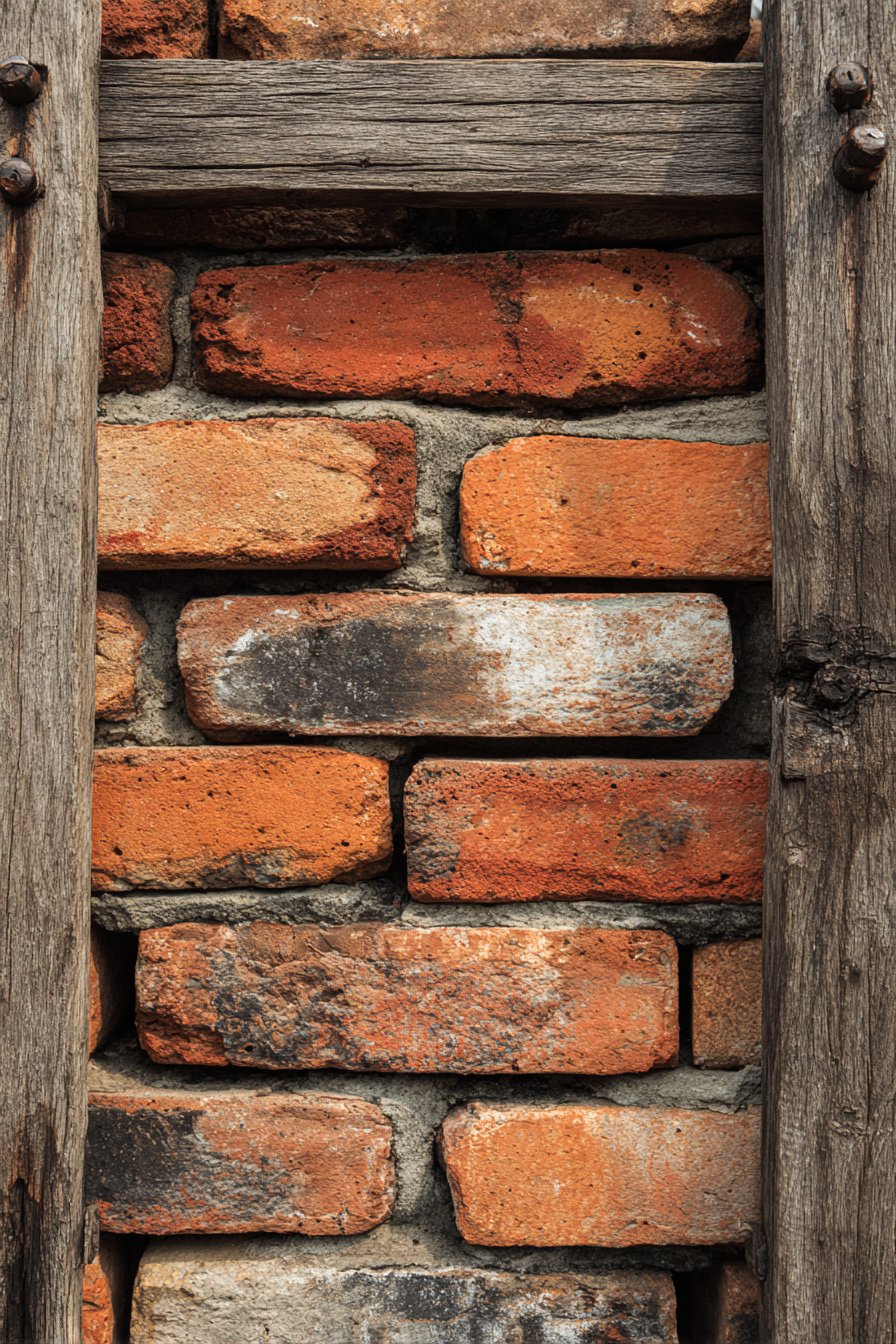
This characterful compound wall celebrates sustainable building practices through recycled brick in mixed tones that create eclectic texture with salvaged authenticity. The bricks, sourced from demolished buildings, show varied weathering and colors ranging from deep red to orange to brown, reflecting their different ages, firing processes, and original applications. Some bricks display mortar residue, chipped corners, or surface erosion—imperfections that contribute to the wall’s unique character rather than detracting from it. The mixed tones prevent monotonous appearance while the slightly irregular coursing adds to the authentic reclaimed aesthetic.
The varied weathering patterns visible across different bricks tell stories of their previous lives—perhaps decades or even centuries in earlier structures before being salvaged for reuse. Some bricks show darker surfaces from soot exposure, others display lighter weathering from prolonged outdoor exposure, while some retain their original fired color protected by their position in previous walls. This historical patina cannot be manufactured or artificially created, making each reclaimed brick wall truly unique. The sustainability aspect extends beyond material reuse to include reduced embodied energy compared to manufacturing new bricks.
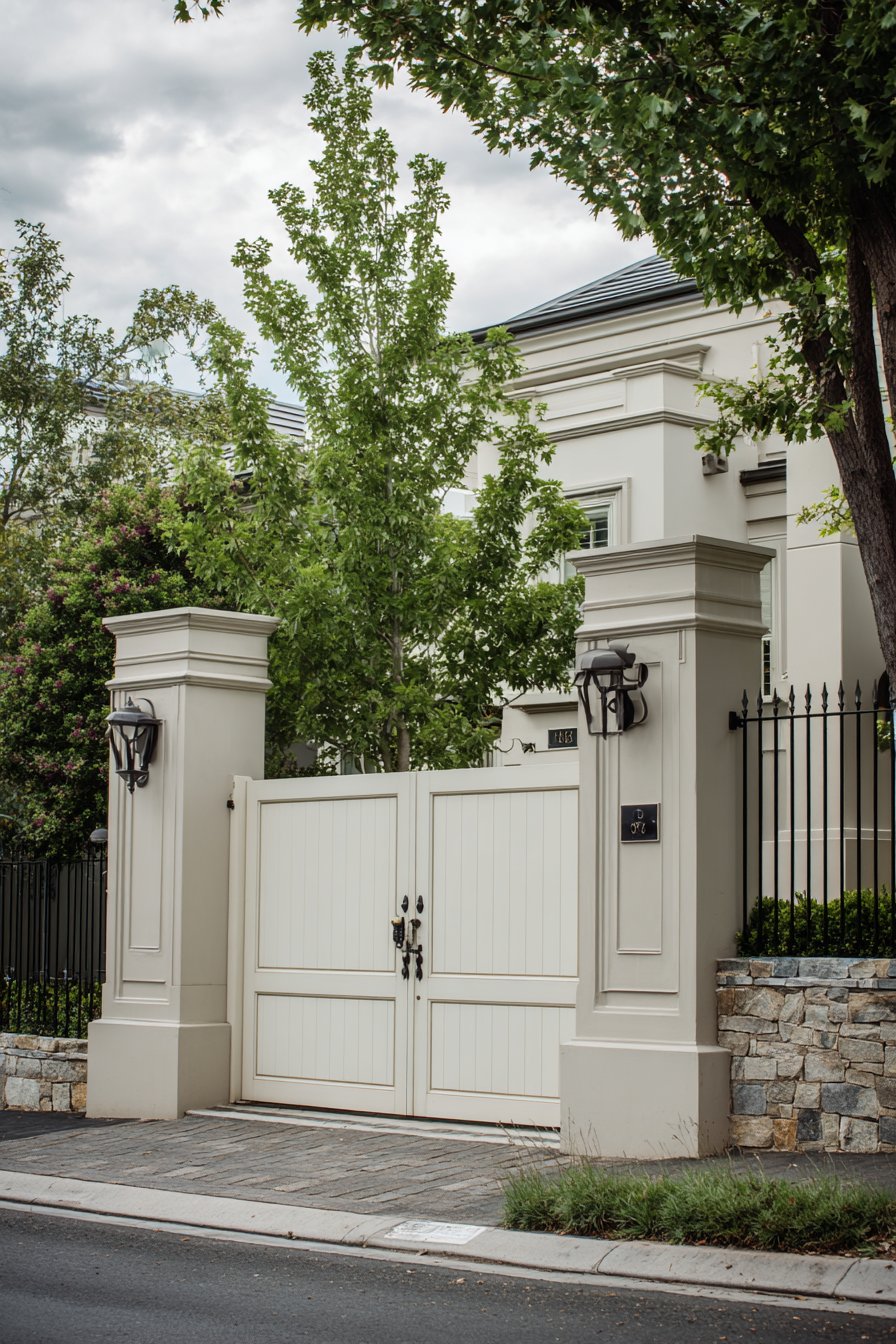
The rustic wooden gate with exposed bolts and simple cross-bracing complements the reclaimed brick’s salvaged character while maintaining honest expression of materials and construction. The gate’s design reveals its assembly method rather than concealing it—visible bolts, diagonal bracing members, natural wood grain all contributing to unpretentious aesthetic that values authenticity over perfection. The weathered or distressed wood finish harmonizes with the bricks’ aged appearance, creating cohesive composition where every element shares similar patina and character.
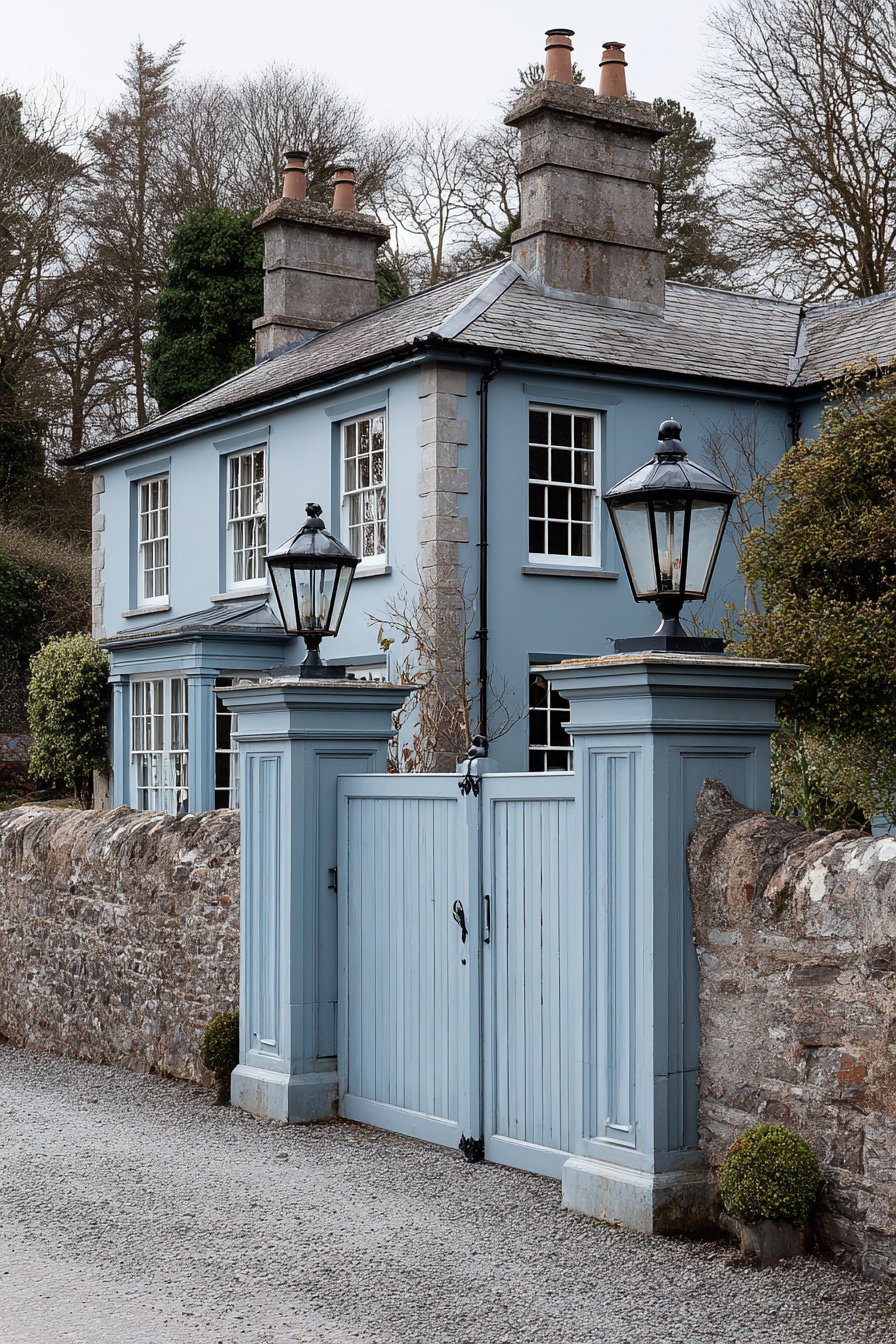
The unique character of reclaimed materials creates one-of-a-kind installations that cannot be precisely replicated. While general aesthetic can be planned, the specific brick colors, weathering patterns, and historical markings remain unpredictable, creating element of discovery during construction. This unpredictability requires flexibility and appreciation for organic design processes where the final appearance emerges through collaboration between designer, builder, and materials rather than following predetermined plan.
Key Design Tips:
- Source reclaimed bricks from reputable salvage yards that ensure structural quality despite cosmetic wear
- Inspect bricks for structural soundness, discarding any with deep cracks or excessive spalling
- Clean bricks carefully to remove old mortar while preserving desirable patina and character
- Plan brick layout to achieve balanced color distribution rather than clustering similar tones
- Use lime-based mortars that match the flexibility and breathability of original historic mortars
- Accept slight coursing irregularities as part of reclaimed brick’s authentic character
- Treat wooden gate with preservatives while maintaining weathered appearance
- Detail proper drainage and foundation to prevent premature deterioration of salvaged materials
25. Illuminated Concrete Minimalist Design
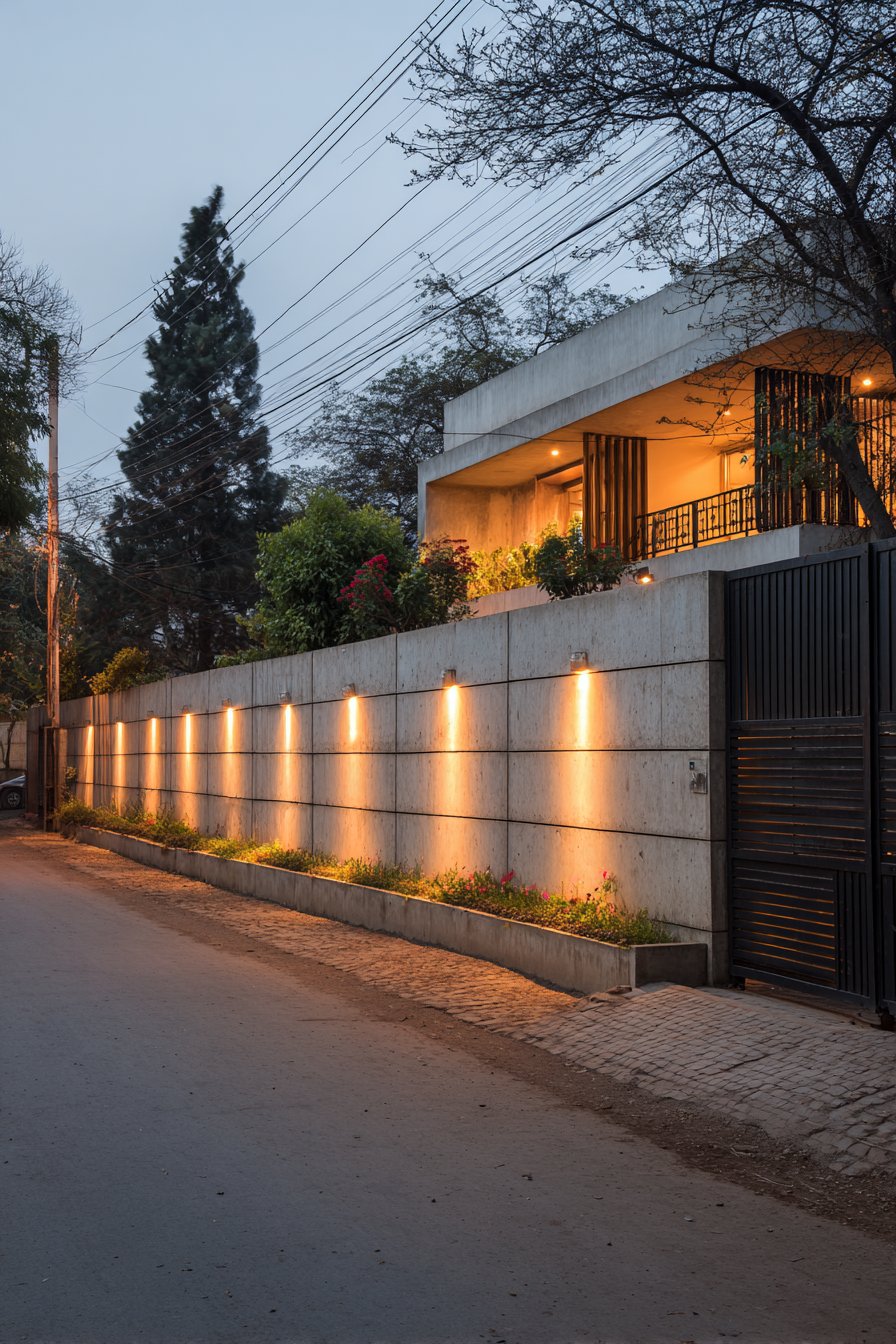
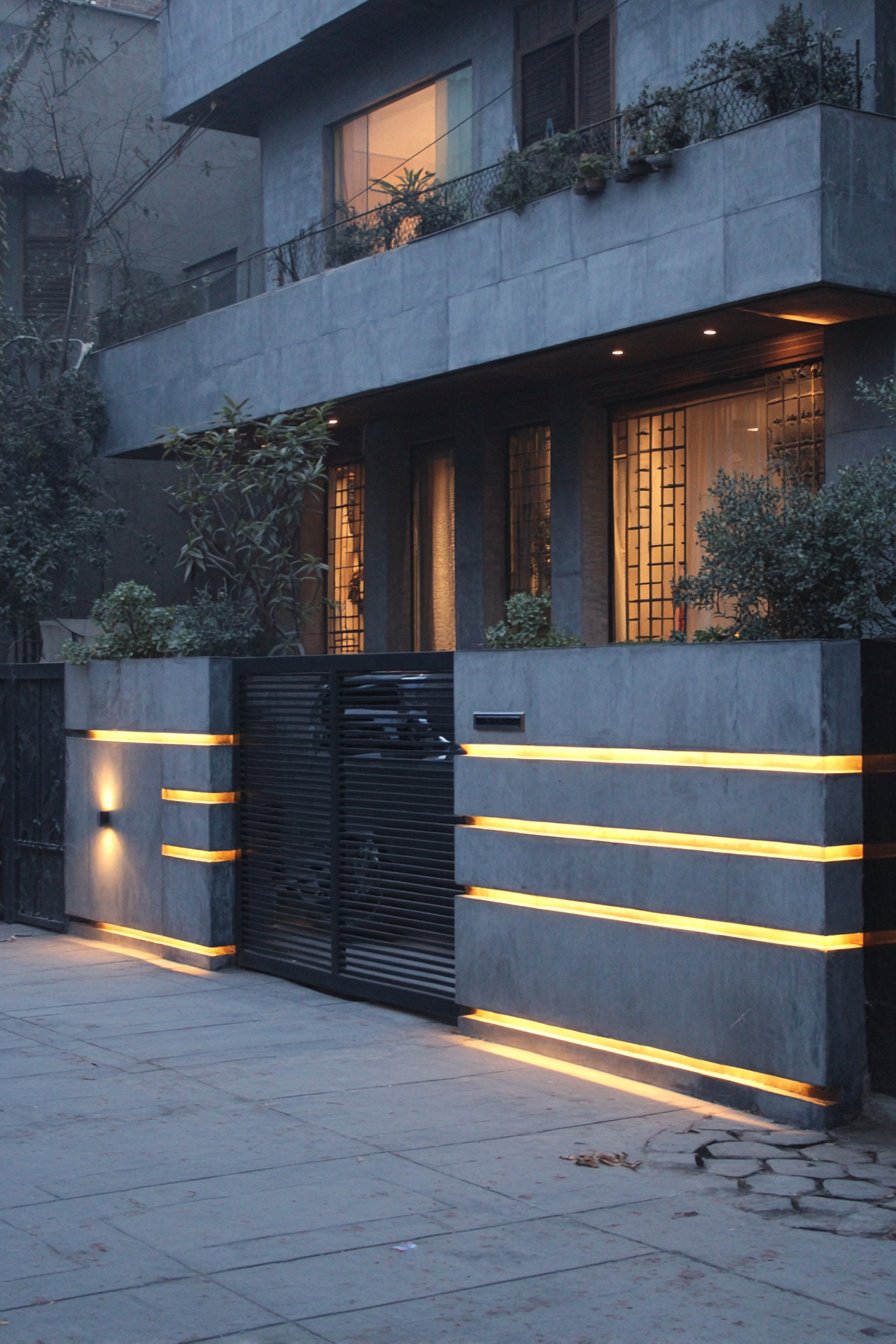
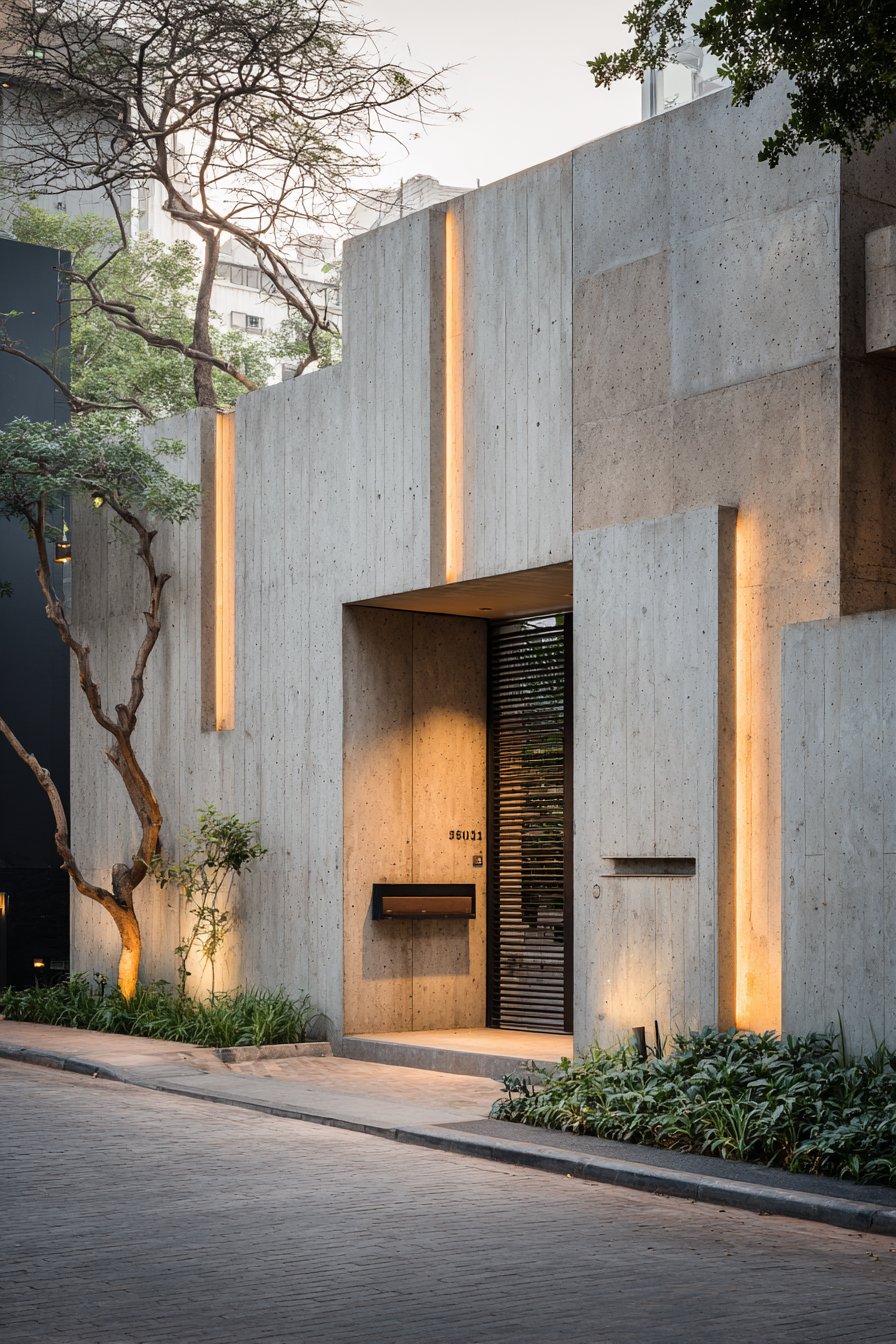
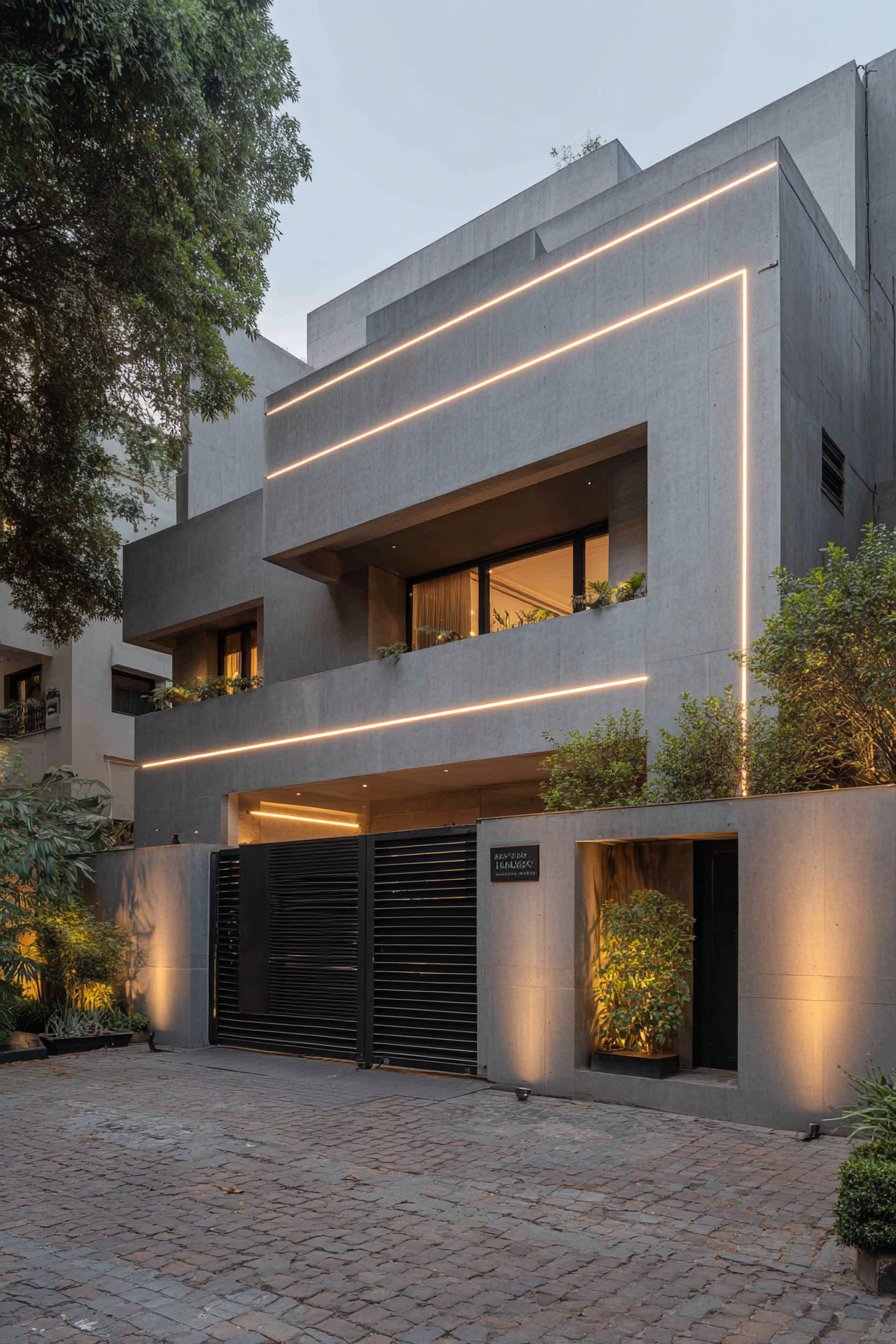
This cutting-edge compound wall features smooth concrete finish with integrated horizontal lighting channels that create dramatic nighttime illumination while remaining subtle architectural details during daylight hours. The concrete surface, sealed with matte finish in light grey tone, provides clean contemporary backdrop for the lighting integration. The horizontal channels, typically routed or formed into the concrete during installation, house LED strip lighting that remains hidden until illuminated. During day, these channels read as subtle shadow lines that create horizontal emphasis; at night, they transform into glowing accents that dramatically alter the wall’s appearance.
The lighting channels’ horizontal orientation emphasizes the wall’s length while creating strong linear composition. The channels are typically positioned at regular intervals—perhaps every 18-24 inches—creating rhythmic repetition that organizes the wall’s surface. The LED strips within produce consistent even illumination without visible hotspots or dark gaps, creating continuous glowing lines that appear to float on the concrete surface. The lighting color can typically be adjusted, allowing customization from warm white for welcoming ambiance to cool white for modern aesthetic, or even color-changing options for special occasions.
The minimalist steel gate with horizontal bars and automated mechanism continues the horizontal emphasis while providing functional entry. The gate’s simple bar design echoes the lighting channels’ linear quality, creating visual continuity between wall and gate. The automated mechanism—typically a sliding or swing gate operator—eliminates manual operation while the quiet motors and smooth movement enhance the luxury experience. The integration of gate automation with lighting controls allows coordinated operation where lights can activate when gate opens, enhancing both security and dramatic effect.
The nighttime transformation created by integrated lighting elevates this compound wall from daytime boundary to evening architectural feature. The illuminated channels create ambient light that enhances security while establishing sophisticated atmosphere. The upward or downward light spill from channels can also illuminate landscaping, pathways, or architectural features, extending the lighting’s functional benefits beyond pure aesthetics. The energy-efficient LED strips provide this dramatic effect while consuming minimal electricity and requiring infrequent replacement.
Key Design Tips:
- Detail lighting channels with adequate depth to fully recess LED strips and prevent damage
- Specify IP-rated LED strips suitable for exterior use with proper moisture protection
- Install dimmer controls to adjust lighting intensity for different occasions and times
- Ensure concrete mix includes adequate waterproofing additives to protect embedded electrical elements
- Use high-quality sealant in matte finish that maintains appearance while providing protection
- Specify automated gate systems with quiet operation and battery backup for power outages
- Install proper electrical infrastructure with GFCI protection and weatherproof connections
- Plan lighting control systems that allow programming for automatic operation schedules
Understanding the Best Compound Wall Ideas for Modern Properties
When evaluating these twenty-five compound wall ideas, several emerge as particularly versatile and effective for contemporary residential applications. The modern grey cement render with linear patterns offers exceptional value through its combination of affordable materials, low maintenance requirements, and sophisticated aesthetics that complement virtually any architectural style. This design proves that budget-conscious choices need not sacrifice visual impact, making it ideal for homeowners seeking contemporary appeal without premium material costs. The horizontal grooves create shadow play throughout the day, ensuring the wall appears dynamic rather than static, while the integrated planters introduce organic softening elements that prevent the industrial finish from feeling cold or unwelcoming.
The natural stone cladding approaches—whether stacked ledge stone, rough-hewn granite, or traditional stone veneer—represent timeless investment that appreciates with age rather than deteriorating. Stone’s inherent durability means these walls often outlast the structures they protect, requiring minimal maintenance beyond occasional cleaning and repointing. The authentic texture and color variation inherent in natural stone create visual interest that manufactured products struggle to replicate, while the material’s thermal mass provides beneficial temperature moderation. For properties in heritage neighborhoods or those seeking to establish roots and permanence, stone compound walls communicate stability and quality that lighter materials cannot achieve.
Contemporary dual-material designs combining contrasting surfaces—such as dark granite with white plaster, or concrete with wooden slats—demonstrate sophisticated understanding of proportion, balance, and material expression that defines modern architecture. These approaches require careful execution but reward attention to detail with compound walls that transcend mere boundary function to become architectural statements. The material contrasts create visual interest while allowing each material to perform its specific role: heavy materials at base providing security and grounding, lighter materials above reducing visual mass and maintaining openness. This layered approach reflects contemporary design philosophy valuing transparency, lightness, and connection between interior and exterior spaces.
Sustainable compound wall ideas incorporating rammed earth construction, vertical green walls, or reclaimed materials address growing environmental consciousness while creating distinctive aesthetics impossible to achieve with conventional methods. Rammed earth’s stratified layers tell the story of construction while providing excellent thermal performance and using minimally processed local materials. Living green walls transform boundaries into functional ecosystems that improve air quality, support biodiversity, and create dynamic installations that change with seasons. Reclaimed brick construction diverts materials from landfills while creating one-of-a-kind installations with authentic patina developed over decades or centuries. These sustainable approaches appeal to environmentally conscious homeowners while often proving cost-competitive with conventional construction when lifecycle costs are considered.
Premium material approaches utilizing travertine panels, slate cladding, or porcelain surfaces cater to luxury residential markets where material quality and sophisticated aesthetics justify higher investment. These walls make powerful architectural statements that significantly enhance property values while requiring relatively low maintenance given the materials’ inherent durability. The precision fabrication and installation required for these premium materials creates refined appearance where every detail demonstrates quality and attention to craftsmanship. For properties where first impressions are critically important—whether for personal satisfaction or resale value—these premium compound walls provide enduring beauty and distinction.
Industrial aesthetic compound walls featuring raw concrete, corten steel perforations, or gabion construction appeal to design-forward homeowners who appreciate materials in their honest, unfinished states. These approaches celebrate utilitarian beauty and authentic material expression rather than concealing construction beneath decorative finishes. The industrial vocabulary of exposed aggregate, visible formwork, weathered steel, and wire cages creates powerful visual impact while often proving surprisingly cost-effective since finishes are minimal or nonexistent. The weathering these materials undergo—concrete developing patina, corten developing protective rust layer, gabion stones settling into stable arrangement—is celebrated rather than resisted, creating walls that improve with age.
Traditional compound wall ideas utilizing red brick, decorative plasterwork, or painted render with classical details serve properties where heritage character and neighborhood compatibility are priorities. These time-tested approaches create familiar comfort and visual harmony with existing architecture while demonstrating respect for established building traditions. The craftsmanship visible in corbelled brickwork, relief plaster patterns, or carefully detailed pilasters communicates attention to quality that resonates across architectural eras. For conservation areas, historic neighborhoods, or traditional architectural styles, these classical approaches ensure compound walls enhance rather than conflict with surrounding context.
Technology-enhanced compound walls incorporating automated gates, integrated lighting channels, or security features address contemporary convenience and safety requirements while maintaining sophisticated aesthetics. The motorized gate systems eliminate manual operation hassles while providing security features like automatic closing, access control integration, and smartphone operation. Integrated LED lighting transforms nighttime aesthetics while improving security visibility and creating dramatic architectural effects. These technological integrations require careful planning and quality component selection but provide functionality that modern homeowners increasingly expect as standard features rather than luxury additions.
The diversity among these twenty-five compound wall ideas reflects the wide range of priorities, budgets, architectural contexts, and personal preferences that homeowners bring to boundary design decisions. Some prioritize minimal maintenance and longevity, favoring durable materials like stone or concrete. Others value sustainability, choosing rammed earth or living walls despite higher maintenance requirements. Some seek maximum curb appeal and property value enhancement through premium materials and sophisticated detailing. Others appreciate honest material expression and industrial aesthetics. The best compound wall idea for any specific property depends on carefully balancing these competing priorities against budget realities and practical constraints.
Conclusion
The compound wall surrounding your property represents far more than a functional boundary—it’s an architectural opportunity to express personal style, enhance curb appeal, and create a cohesive aesthetic that complements your home’s architecture while contributing positively to the neighborhood streetscape. The twenty-five ideas explored in this comprehensive guide demonstrate the remarkable diversity of approaches available, from traditional brick and stone constructions that evoke heritage and permanence to cutting-edge designs incorporating sustainable materials, living plants, or integrated technology. Each approach offers unique combinations of materials, textures, finishes, and design philosophies that can be tailored to specific contexts, budgets, and personal preferences.
The most successful compound wall designs achieve careful balance between multiple competing priorities. They must provide adequate security and privacy while avoiding fortress-like appearances that alienate neighbors and diminish street character. They should complement the home’s architecture and neighborhood context while expressing the owner’s individual style and preferences. They need to work within realistic budget constraints while achieving quality construction that will endure for decades. They must balance aesthetic aspirations with practical considerations like maintenance requirements, climate suitability, and local building regulations. Achieving this balance requires thoughtful planning, quality materials and craftsmanship, and willingness to invest appropriately in a structure that will literally frame your property for years to come.
Whether you’re drawn to the timeless elegance of natural stone, the clean contemporary lines of rendered concrete, the sustainable appeal of living green walls, the industrial edge of corten steel, or the warm character of wooden elements, the key is selecting an approach that authentically reflects your values and lifestyle while serving the practical needs of boundary definition, security, and privacy. Consider how materials will age and weather in your specific climate, what maintenance you’re realistically willing to undertake, how the wall will interact with your home’s architecture and landscaping, and what impression you want to create for visitors and passersby. Consult with experienced designers, architects, or builders who can help translate your vision into properly detailed and structurally sound construction that will stand the test of time.
As you embark on your compound wall project, remember that this investment in your property’s boundary will likely outlast many other home improvements. Take time to explore options thoroughly, gather inspiration from successful installations, and prioritize quality materials and skilled craftsmanship over shortcuts that may save money initially but compromise long-term satisfaction. Your compound wall is your home’s first impression—make it count by creating a boundary that you’ll be proud of for decades to come, that enhances your property’s value, and that contributes positively to your neighborhood’s character and appeal.
