
Creating an engaging and functional classroom environment goes far beyond simply arranging desks and chairs. The walls of a classroom serve as silent teachers, constant sources of inspiration, and reflections of the learning community within. Thoughtful class wall decoration ideas can transform sterile educational spaces into vibrant, welcoming environments that stimulate curiosity, reinforce learning objectives, and celebrate student achievement. Whether you’re an experienced educator looking to refresh your space or a new teacher establishing your first classroom, the strategic use of wall decorations can profoundly impact student engagement, behavior, and academic success.
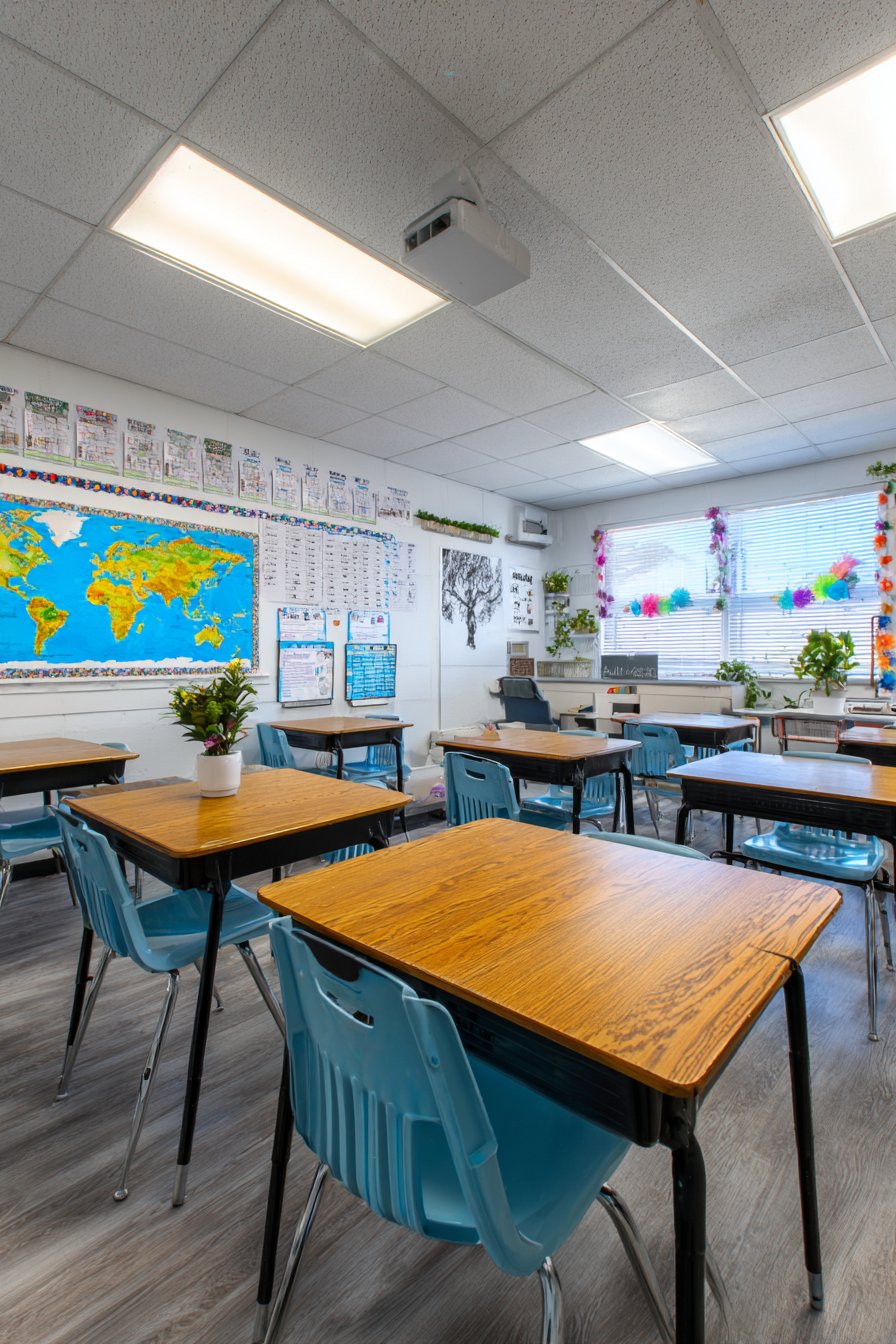
The power of a well-decorated classroom cannot be underestimated. Research consistently shows that visually rich learning environments enhance memory retention, support diverse learning styles, and create a sense of belonging among students. From interactive bulletin boards that invite participation to inspirational quotes that build resilience, from organizational systems that promote independence to cultural displays that celebrate diversity—each element contributes to a comprehensive learning ecosystem. The walls of your classroom communicate values, expectations, and possibilities to every student who enters.
This comprehensive guide presents twenty-nine innovative class wall decoration ideas that cater to various educational objectives, age groups, and teaching philosophies. You’ll discover approaches ranging from literacy-focused displays and STEM-oriented installations to social-emotional learning supports and behavior management systems. Each concept has been carefully designed to balance aesthetic appeal with educational function, ensuring that your classroom walls work as hard as you do. Whether you’re working with limited budgets, small spaces, or specific curricular requirements, these ideas will inspire you to create a classroom environment where learning comes alive on every wall.
1. Interactive Educational Bulletin Board Display
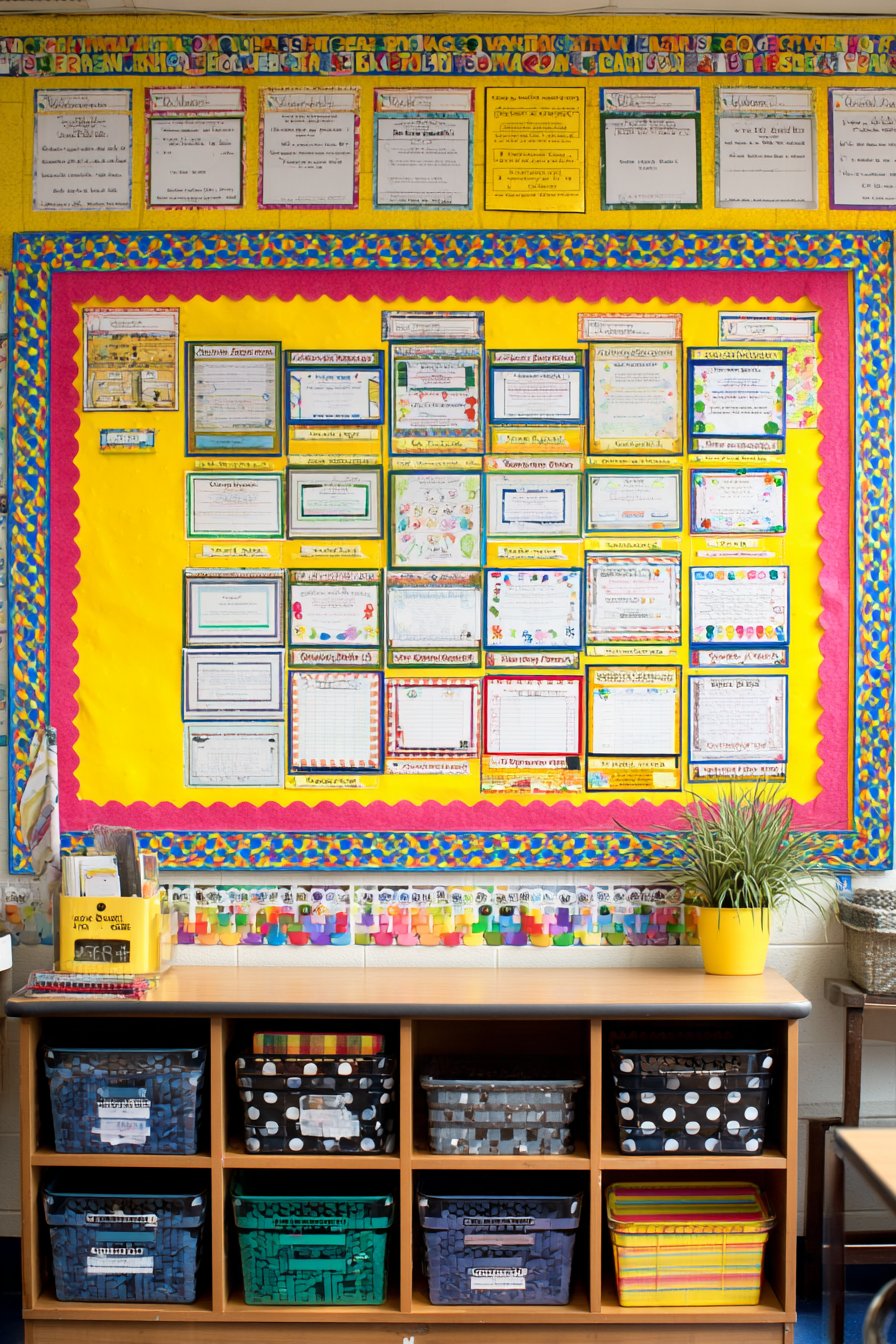
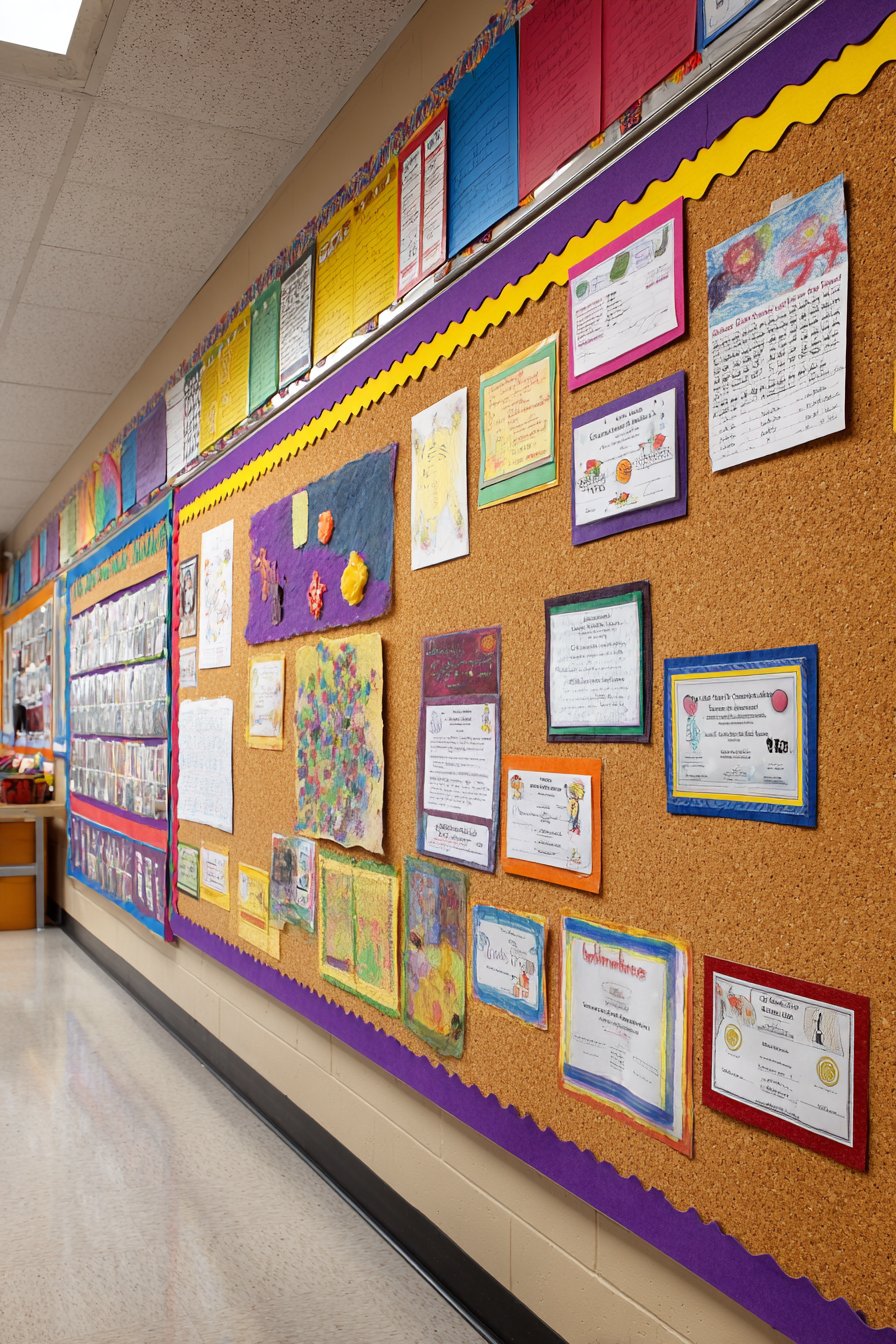
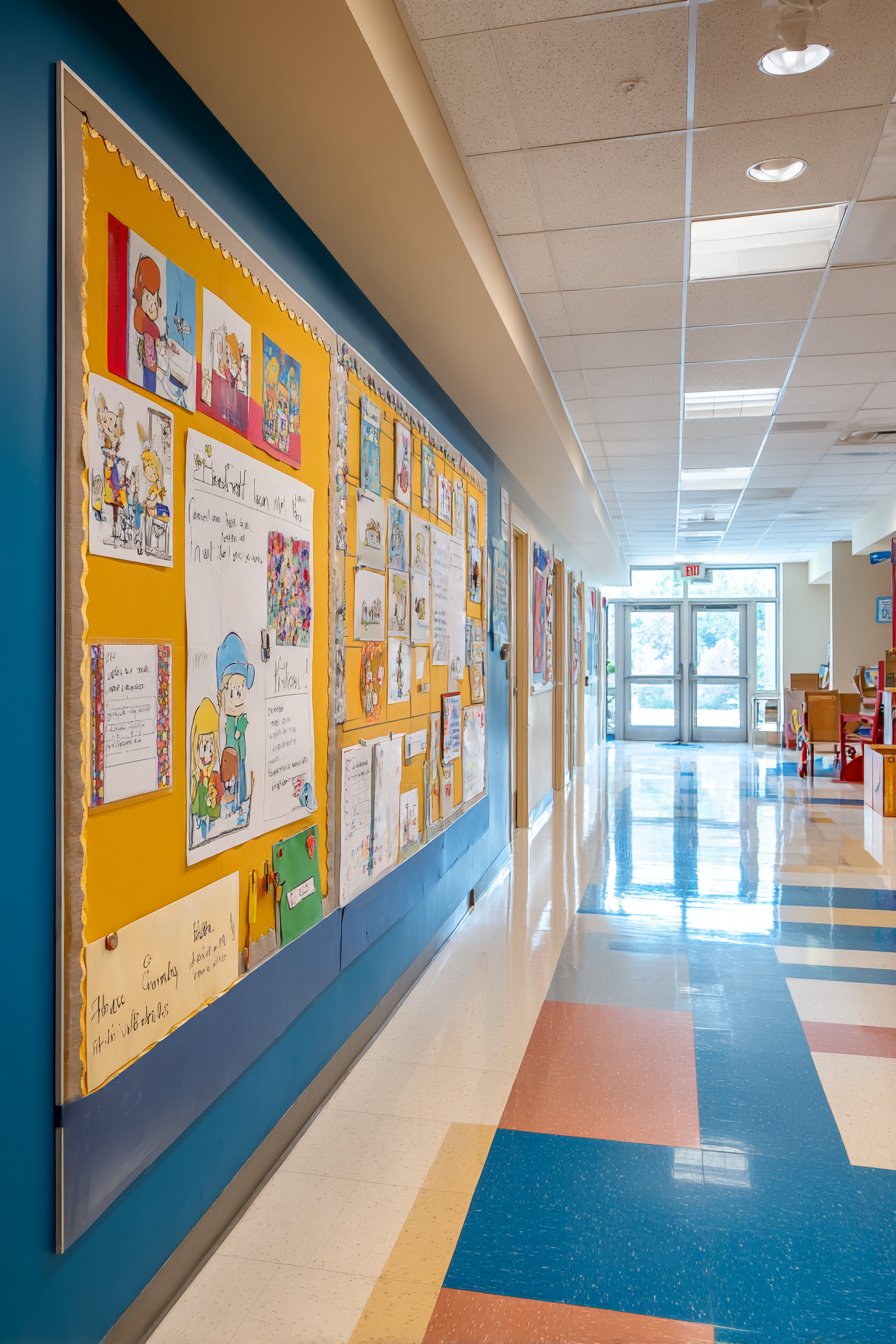
The foundation of effective classroom wall decoration begins with the interactive bulletin board—a dynamic space where learning becomes tangible and student work takes center stage. This approach features a large cork board surface meticulously organized with colorful borders that frame student work samples arranged in an appealing grid pattern. Hand-drawn artwork, writing assignments, and achievement certificates create a rotating gallery of accomplishment, each piece carefully mounted with decorative die-cut borders that add professional polish while celebrating individual effort. The texture of the cork provides a warm, natural backdrop that makes colored paper and student work pop visually, while the systematic grid arrangement teaches visual organization and equality of presentation.
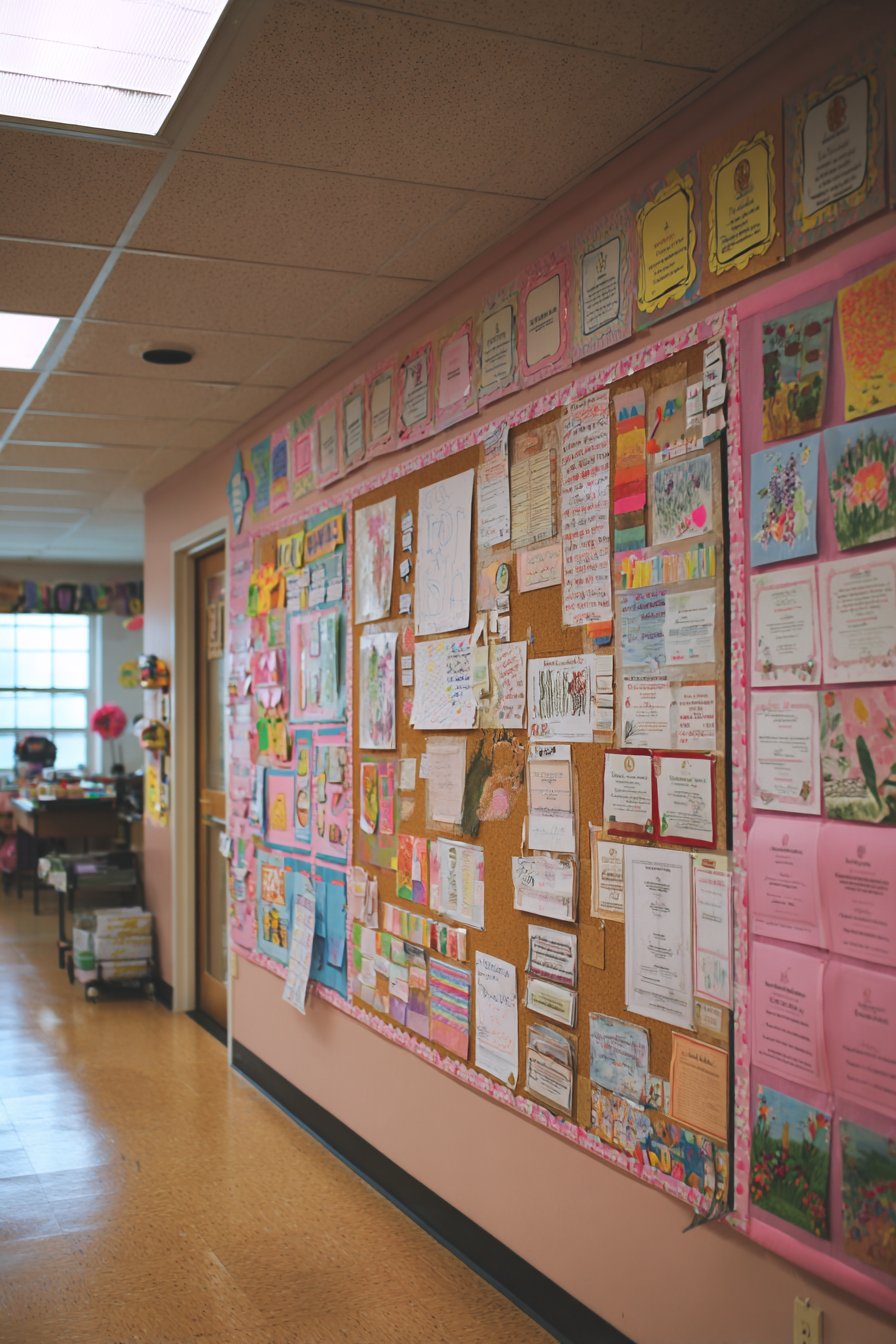
The strategic placement of this display ensures maximum visibility and interaction throughout the school day. Soft fluorescent classroom lighting creates even illumination across the entire surface, preventing shadows that might obscure student work and ensuring every piece receives equal attention. The organized presentation isn’t merely decorative—it serves multiple educational purposes including building student confidence, creating accountability for quality work, and providing visual examples of assignment expectations for current and future students.
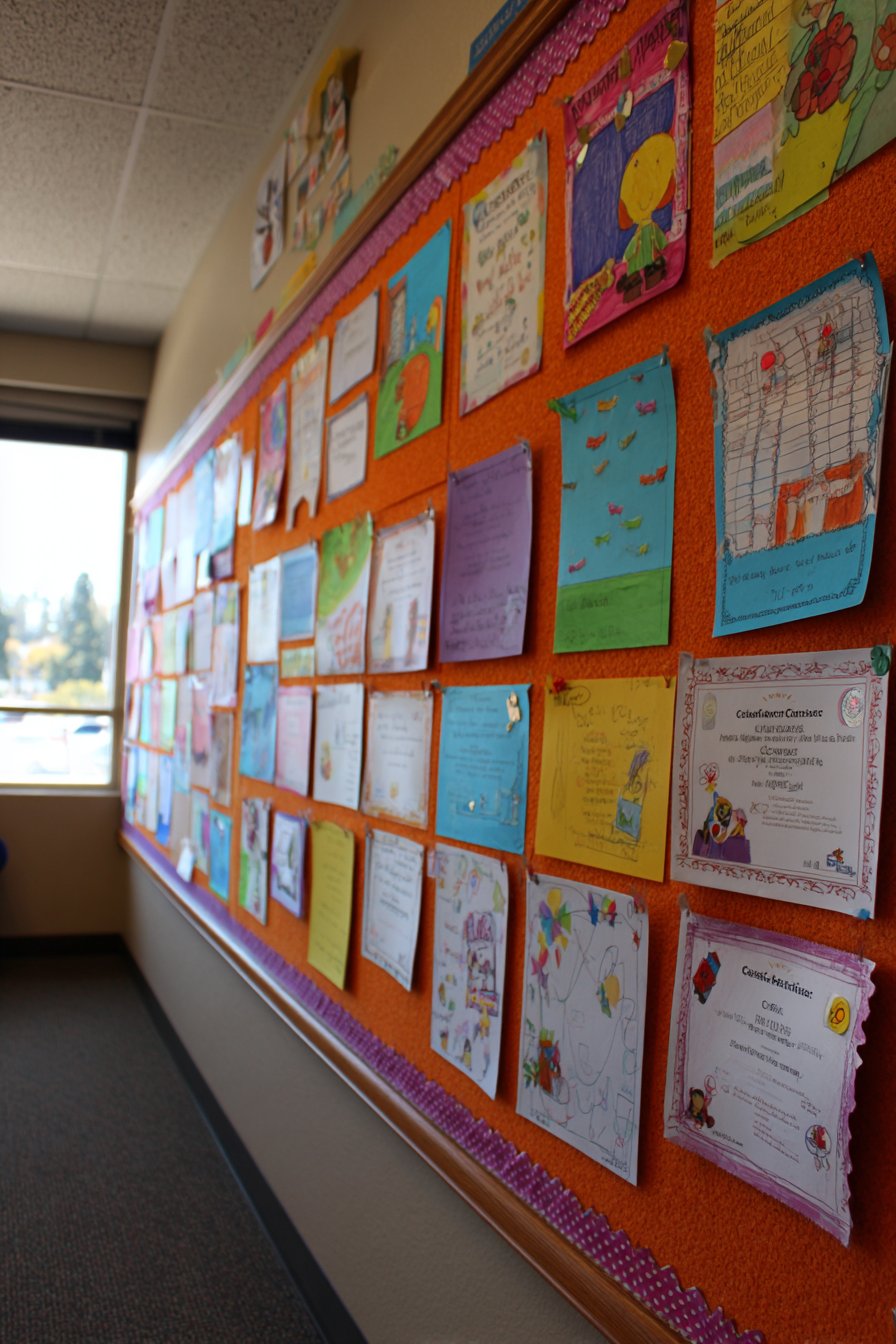
What makes this approach particularly effective is its flexibility and relevance to current learning objectives. The bulletin board transforms throughout the academic year, reflecting seasonal themes, current units of study, or specific skill development. Students develop pride in seeing their work professionally displayed, which motivates continued effort and attention to detail. The rotating nature of the display ensures freshness and continued engagement, preventing the visual stagnation that can occur with permanent decorations.
Key Design Tips:
- Use a consistent color scheme for borders that complements your overall classroom palette while providing visual coherence
- Create a rotation schedule to ensure all students see their work displayed equally throughout the year
- Include clear labeling with student names and assignment descriptions to add context and educational value
- Position the bulletin board at student eye level to maximize engagement and accessibility
- Incorporate three-dimensional elements occasionally to add depth and visual interest to the display
- Use high-quality mounting techniques like double-sided tape or staples to ensure work remains securely attached
2. Educational Chart and Reference Wall
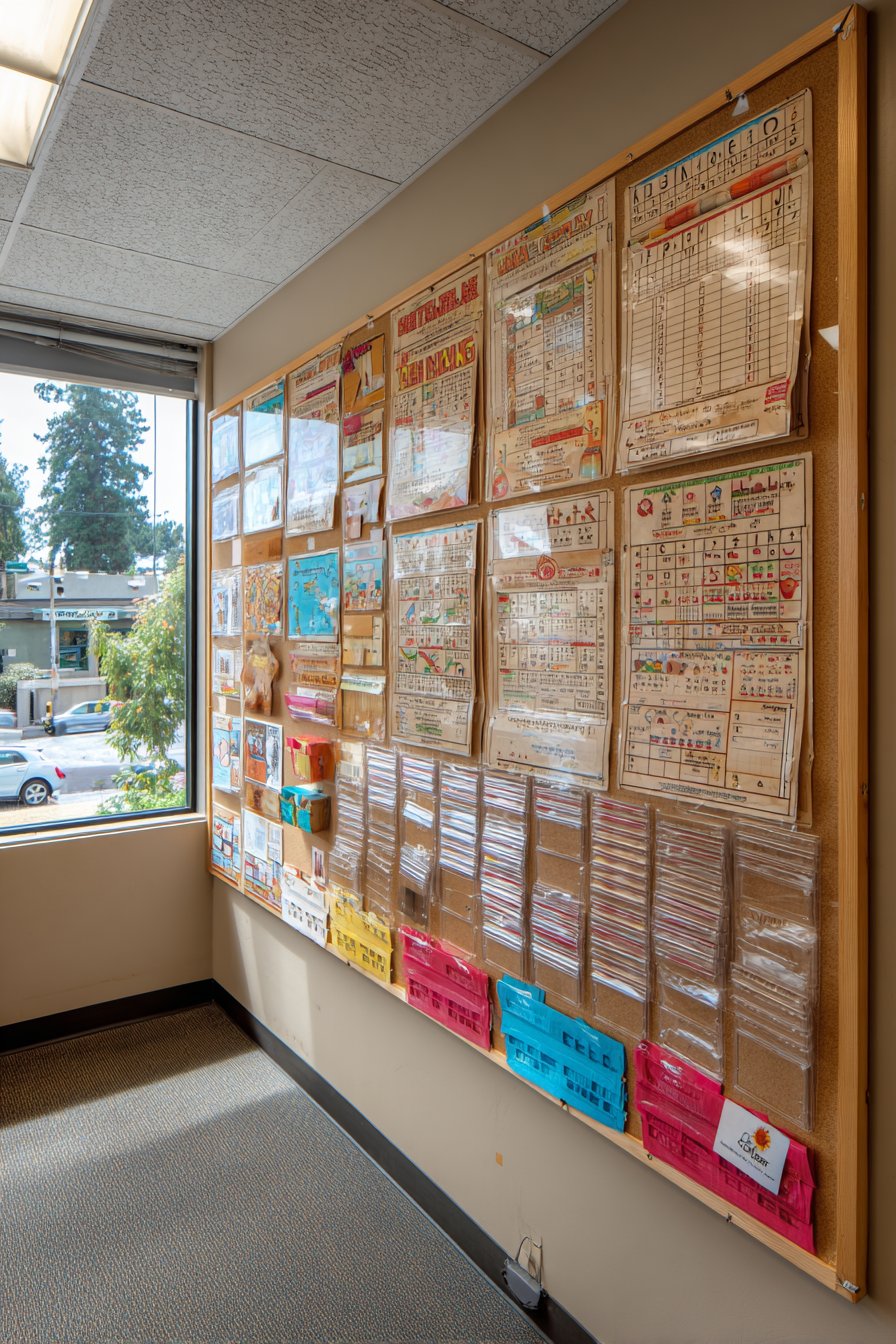
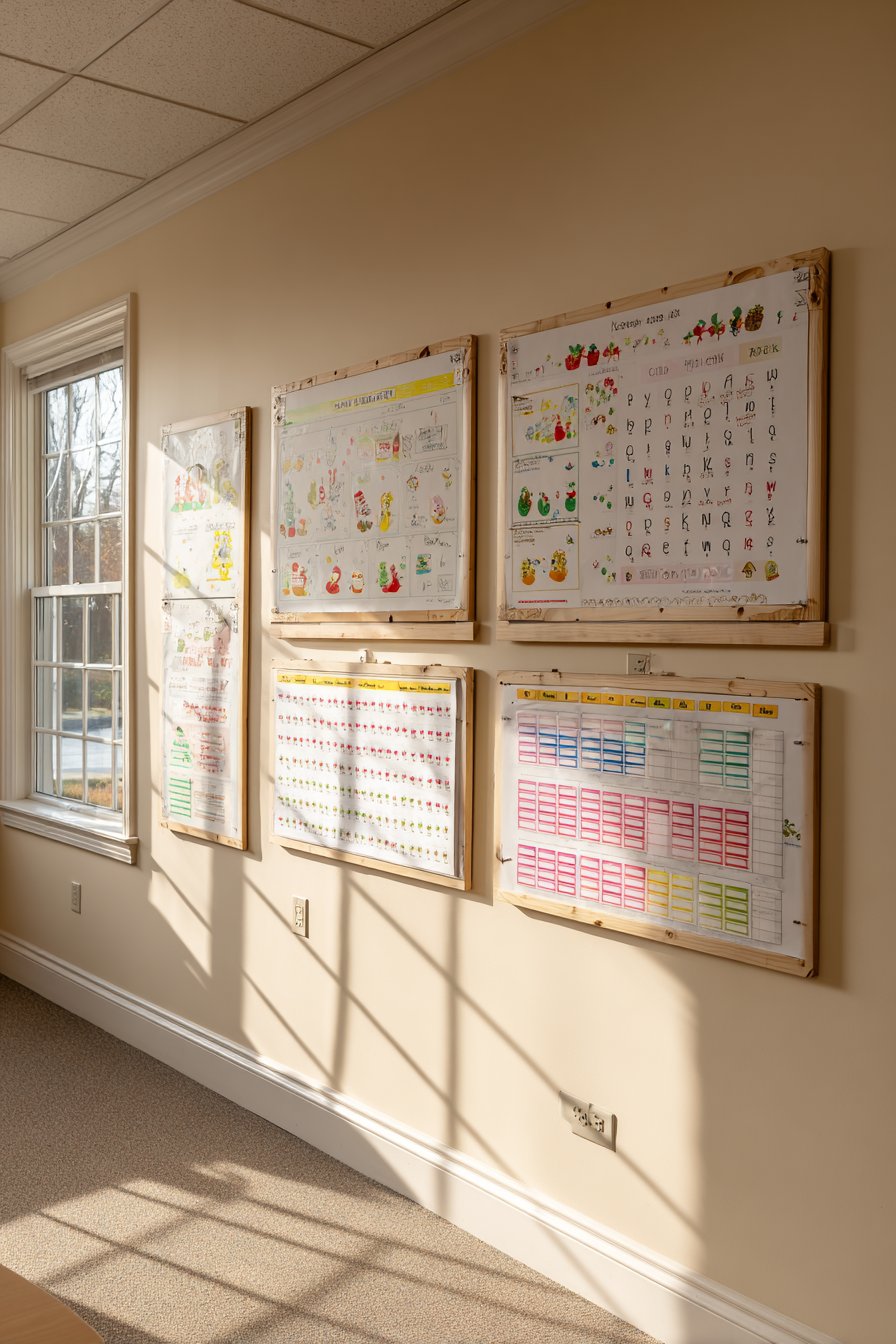
Transforming a neutral classroom wall into a comprehensive educational reference center creates a powerful learning tool that supports daily instruction and independent student work. This design features carefully selected alphabet and number charts mounted in coordinating wooden frames, creating a gallery-like presentation that elevates educational materials beyond typical classroom posters. Each chart incorporates playful illustrations rendered in primary colors—red, blue, and yellow—that capture attention while maintaining clarity and readability. The thoughtful typography ensures that letters and numbers are easily distinguishable, supporting early literacy and numeracy development for young learners.
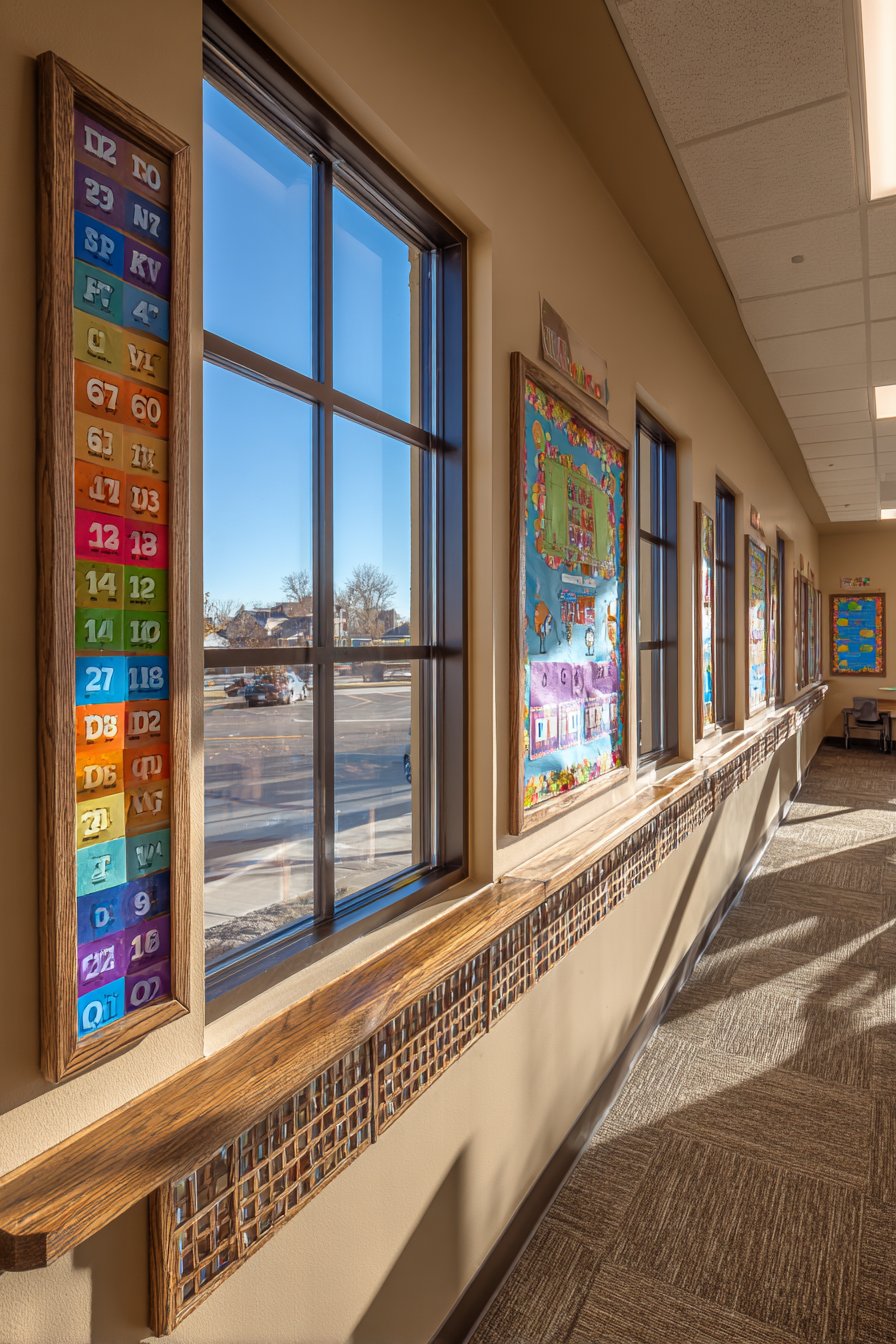
The arrangement extends beyond basic alphabet and number recognition to include a timeline display that builds historical thinking skills and a word wall featuring index cards preserved in clear plastic sleeves for durability and easy updates. Natural daylight streaming through classroom windows illuminates these educational materials throughout the day, reducing eye strain and creating an inviting learning atmosphere. The wooden frames add an element of permanence and value to these foundational learning tools, communicating to students that these references matter and deserve respectful presentation.
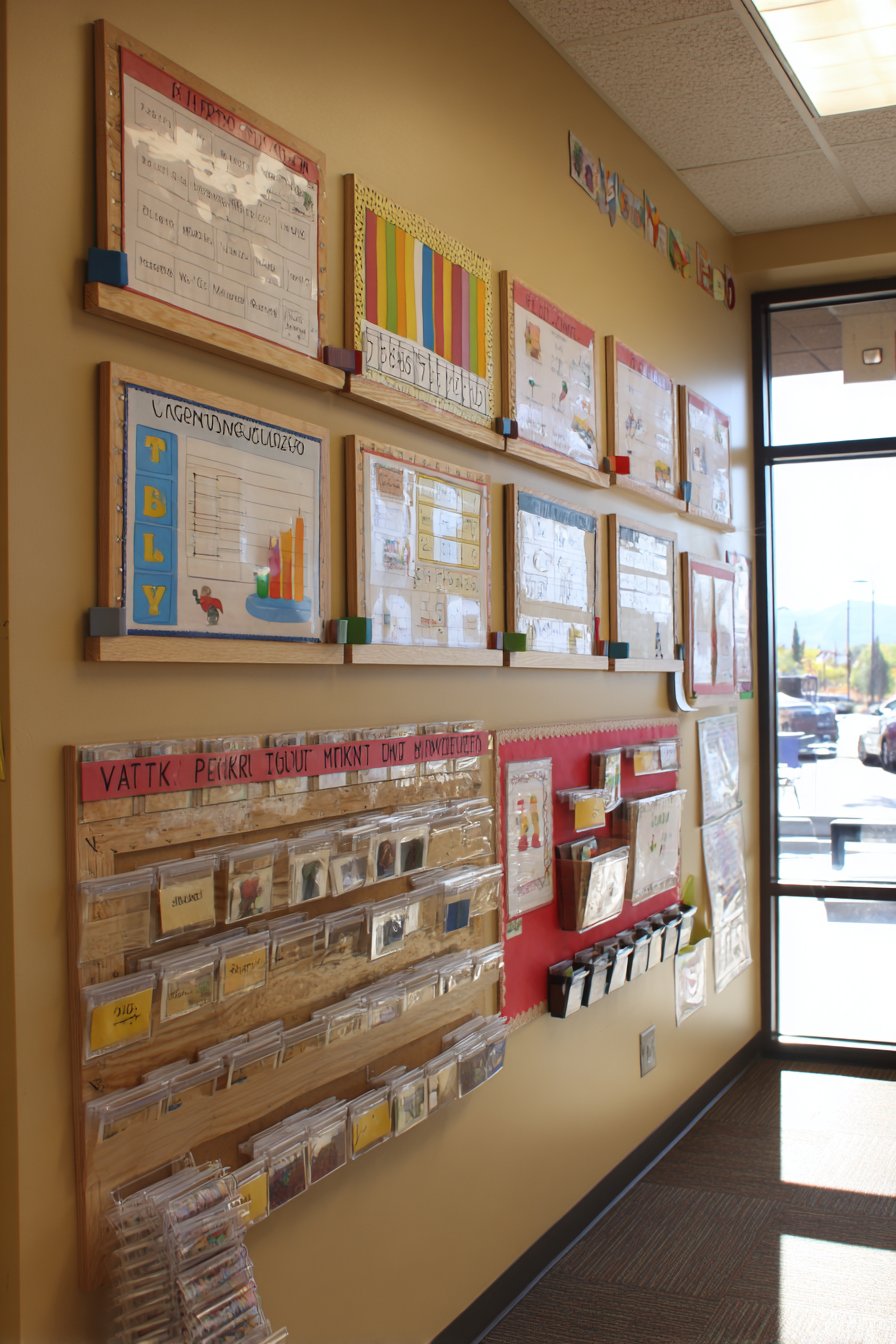
This comprehensive reference wall becomes increasingly valuable as the school year progresses and students internalize where to find specific information independently. The accessible arrangement—with materials positioned at appropriate heights for student viewing—promotes self-directed learning and reduces constant questions to the teacher. The combination of visual imagery with text supports multiple learning styles and helps English language learners connect words with meanings through illustrated context clues.
Key Design Tips:
- Invest in frames that can be easily opened to update or rotate educational content as curriculum evolves
- Arrange materials in a logical sequence that follows how students will use them (alphabetically, numerically, chronologically)
- Ensure sufficient spacing between framed pieces to prevent visual clutter and allow each element to be clearly distinguished
- Use consistent frame styles and colors to create visual unity while allowing the educational content itself to stand out
- Position the most frequently referenced materials at the most accessible eye level for your students’ age group
- Consider creating a “reference wall map” that helps students quickly locate specific information they need
3. Growth Mindset Inspiration Station
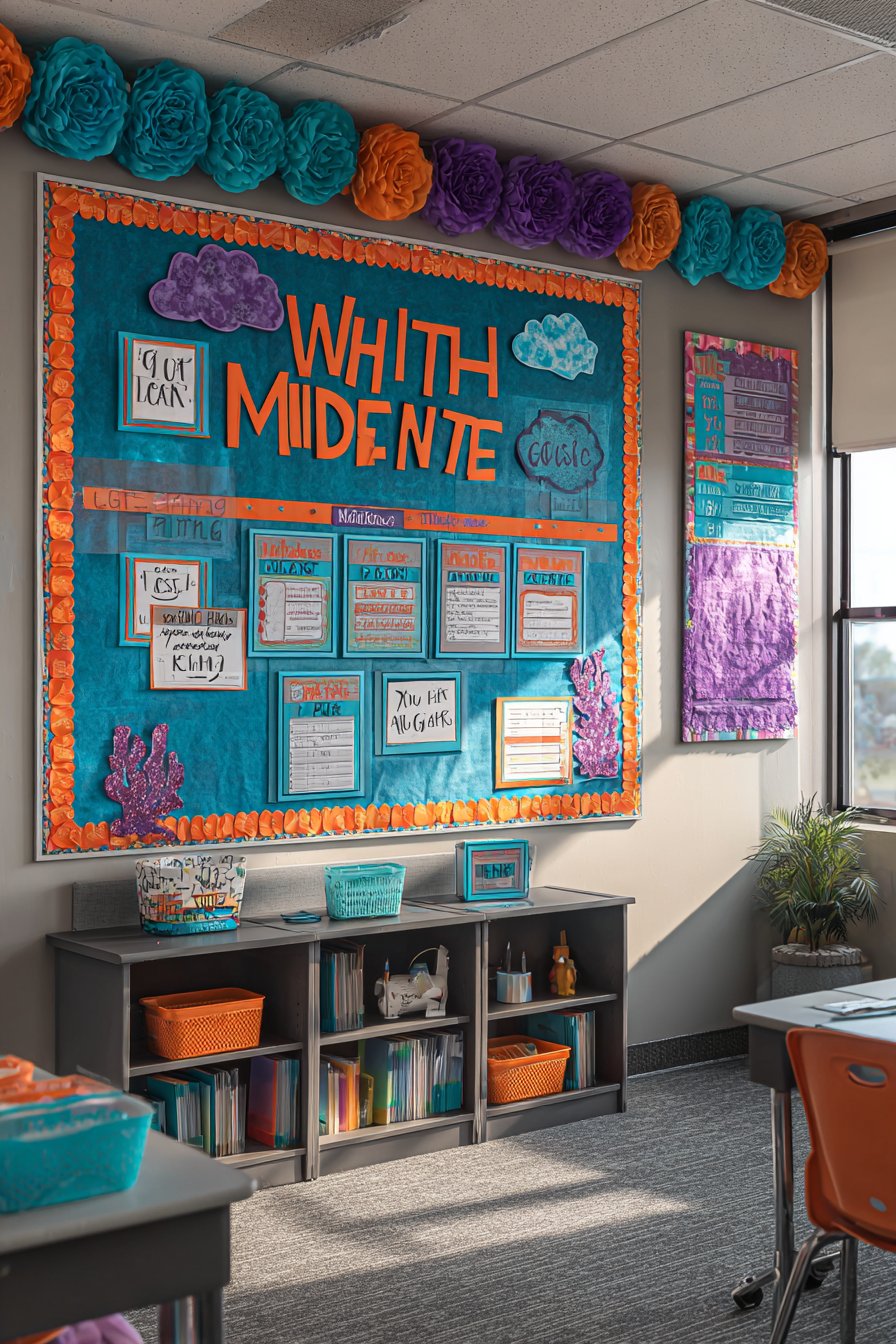
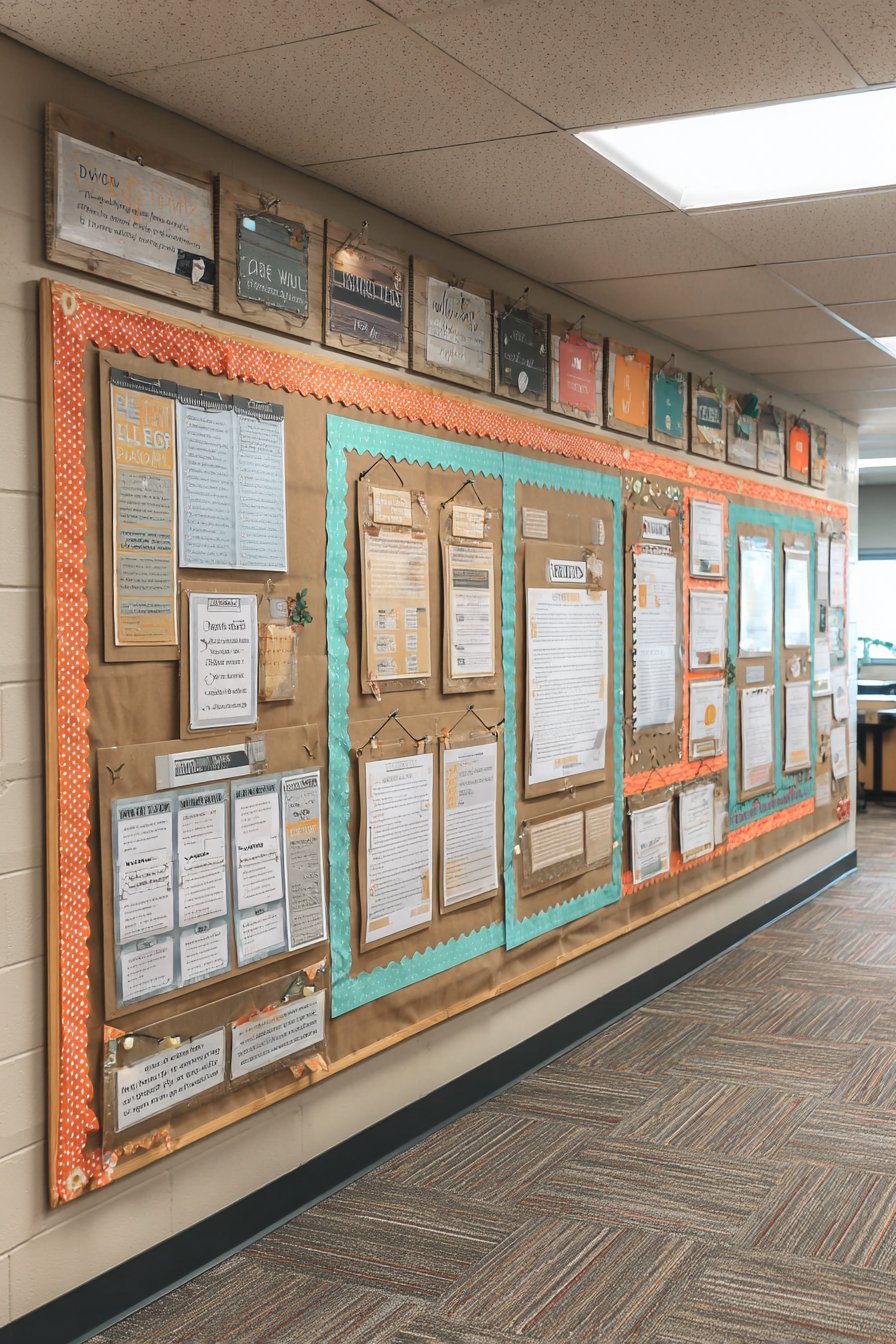
Creating a dedicated space for motivational messaging transforms classroom walls into daily sources of encouragement and resilience-building. This growth mindset inspiration station features hand-lettered typography on kraft paper backgrounds, creating an authentic, handcrafted aesthetic that feels personal and intentional. The bulletin board thoughtfully combines inspirational quotes about learning, persistence, and self-belief with student goal-setting sheets where learners articulate their academic and personal aspirations. Colorful border trim in coordinating teal and orange hues creates visual excitement while framing the motivational content in a cohesive, professional manner.
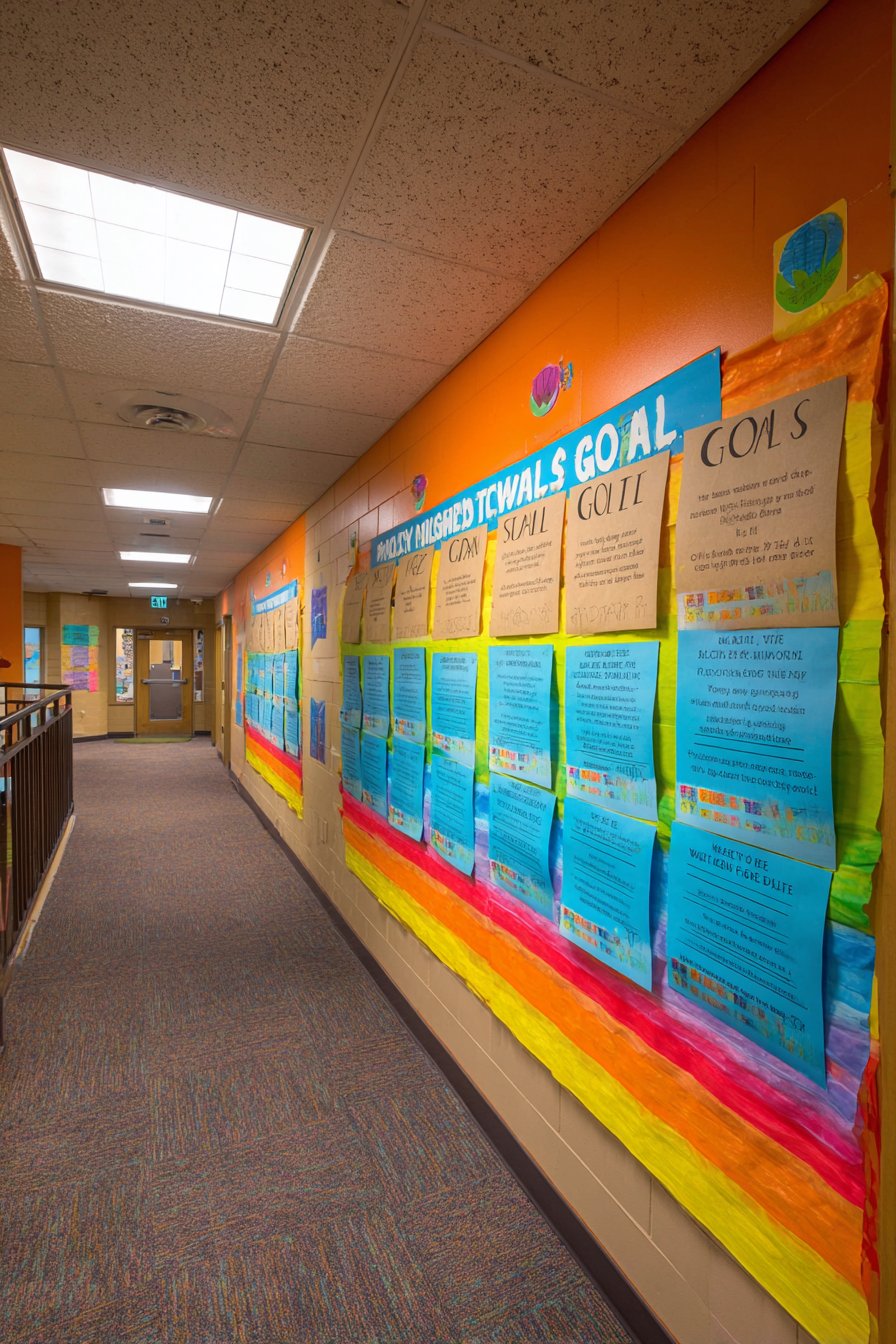
The layered paper elements create subtle shadows under ambient classroom lighting, adding dimensional interest that draws the eye and invites closer reading. Unlike commercial motivational posters that students may overlook through familiarity, the handcrafted nature of this display communicates that someone took time and care to create these messages specifically for this classroom community. The combination of teacher-selected quotes and student-generated goals creates a collaborative inspiration station that reflects both adult guidance and student voice.
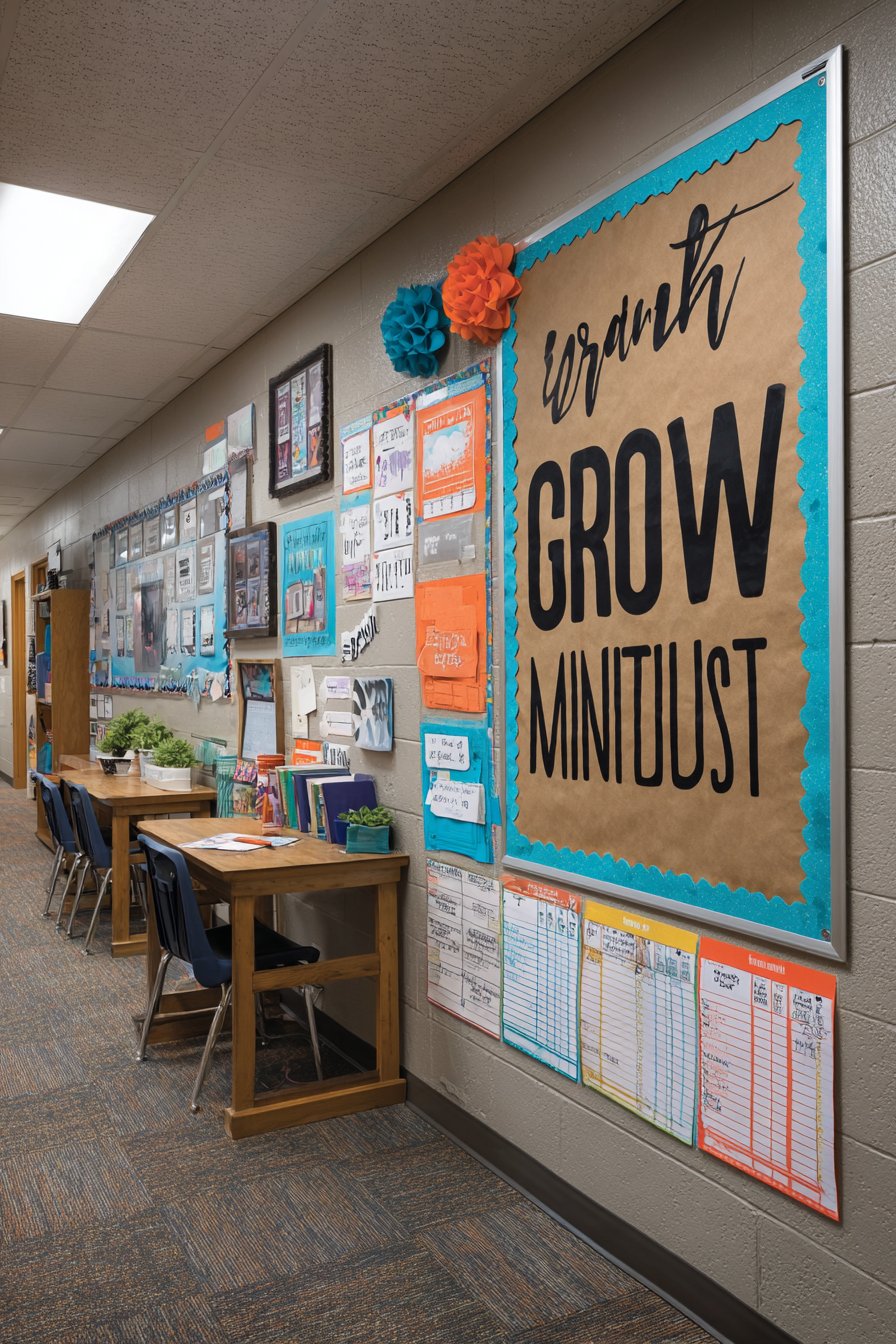
This approach to classroom wall decoration serves a crucial social-emotional learning function, particularly important in today’s educational landscape where building resilience and positive self-talk has become as essential as academic instruction. Students internalize messages they encounter repeatedly, and strategically placed growth mindset affirmations help reframe challenges as opportunities and mistakes as essential steps in the learning process. The visible display of personal goals creates accountability while celebrating the diversity of student aspirations.
Key Design Tips:
- Rotate quotes monthly to maintain freshness and relevance to current classroom challenges or seasonal themes
- Incorporate student input when selecting some motivational messages to increase ownership and relevance
- Use varied typography styles to create visual interest while maintaining readability from across the classroom
- Include diverse voices and perspectives in your quote selections to ensure all students see themselves represented
- Position goal-setting sheets where students can privately review and reflect on their progress
- Create a complementary “growth moment” section where students can share specific examples of persistence or improvement
4. Three-Dimensional Interactive Word Wall
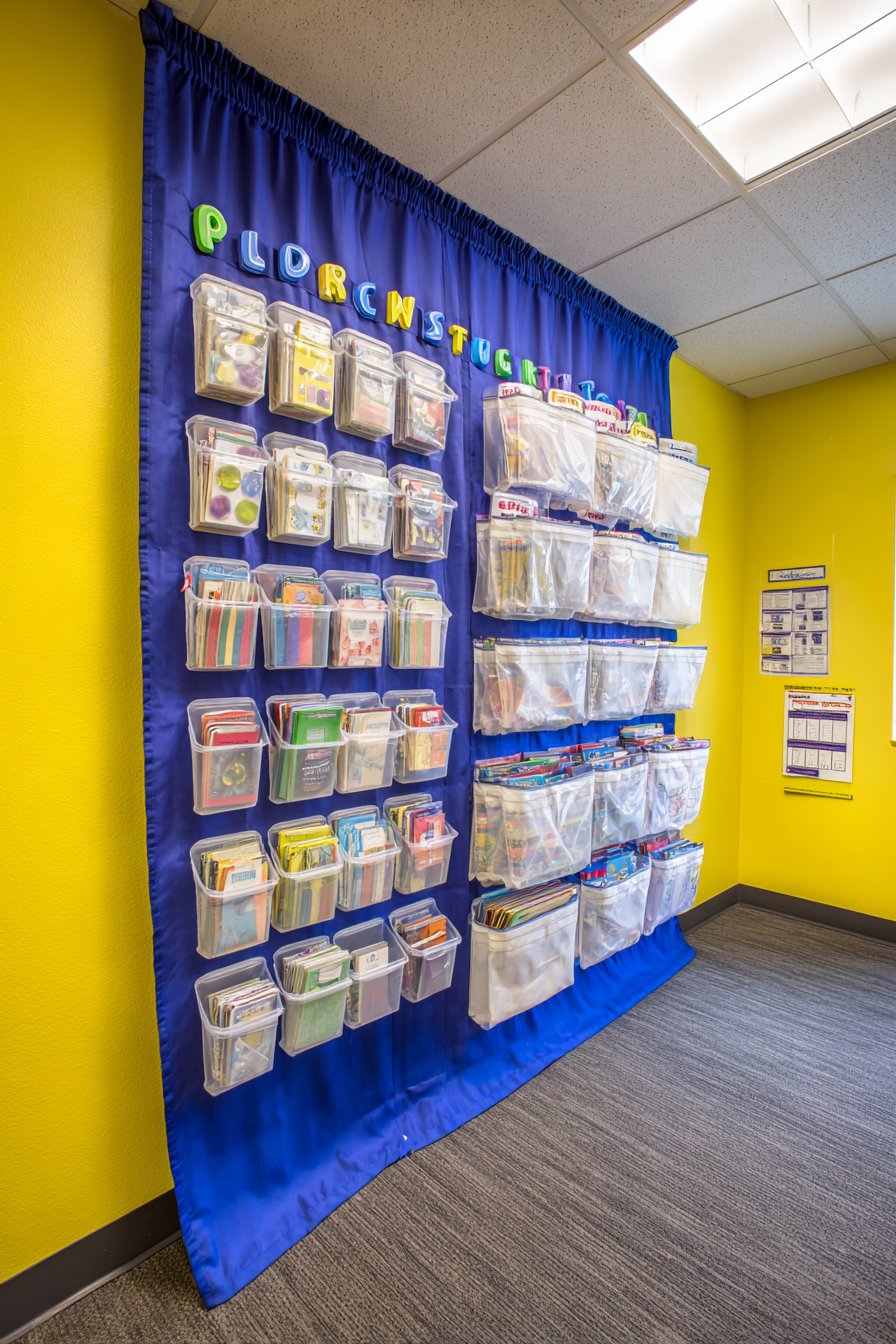
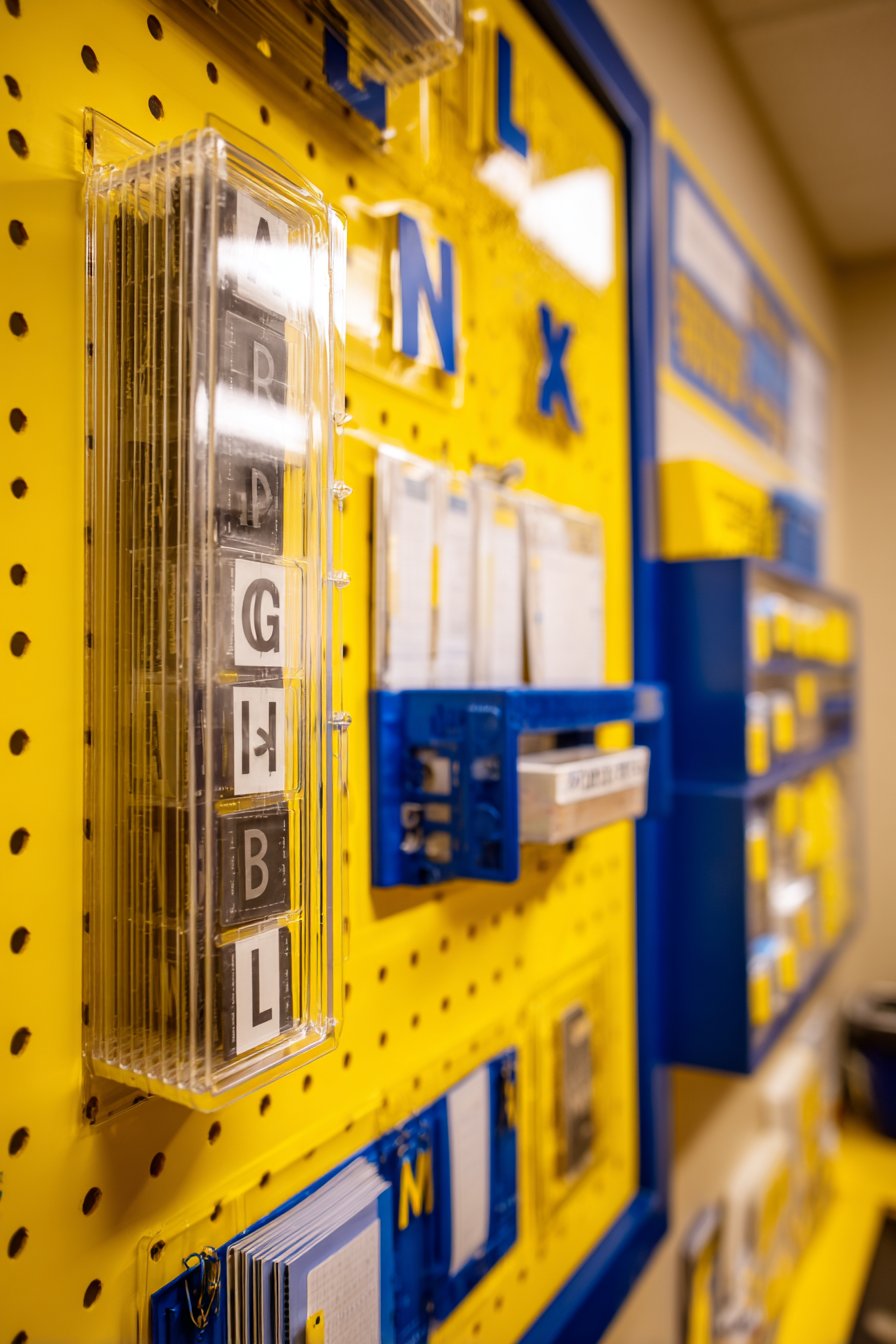
Elevating vocabulary instruction beyond flat paper displays, a three-dimensional word wall using pocket charts and laminated vocabulary cards creates a tactile, interactive learning tool that supports literacy development throughout the school day. This practical solution features clear plastic pockets methodically organized alphabetically and mounted on fabric-covered board with a bright yellow backing that energizes the space and ensures visibility from all classroom areas. The laminated vocabulary cards slide easily in and out of pockets, allowing for constant updates as new words enter the classroom lexicon and for removal when students master terms.
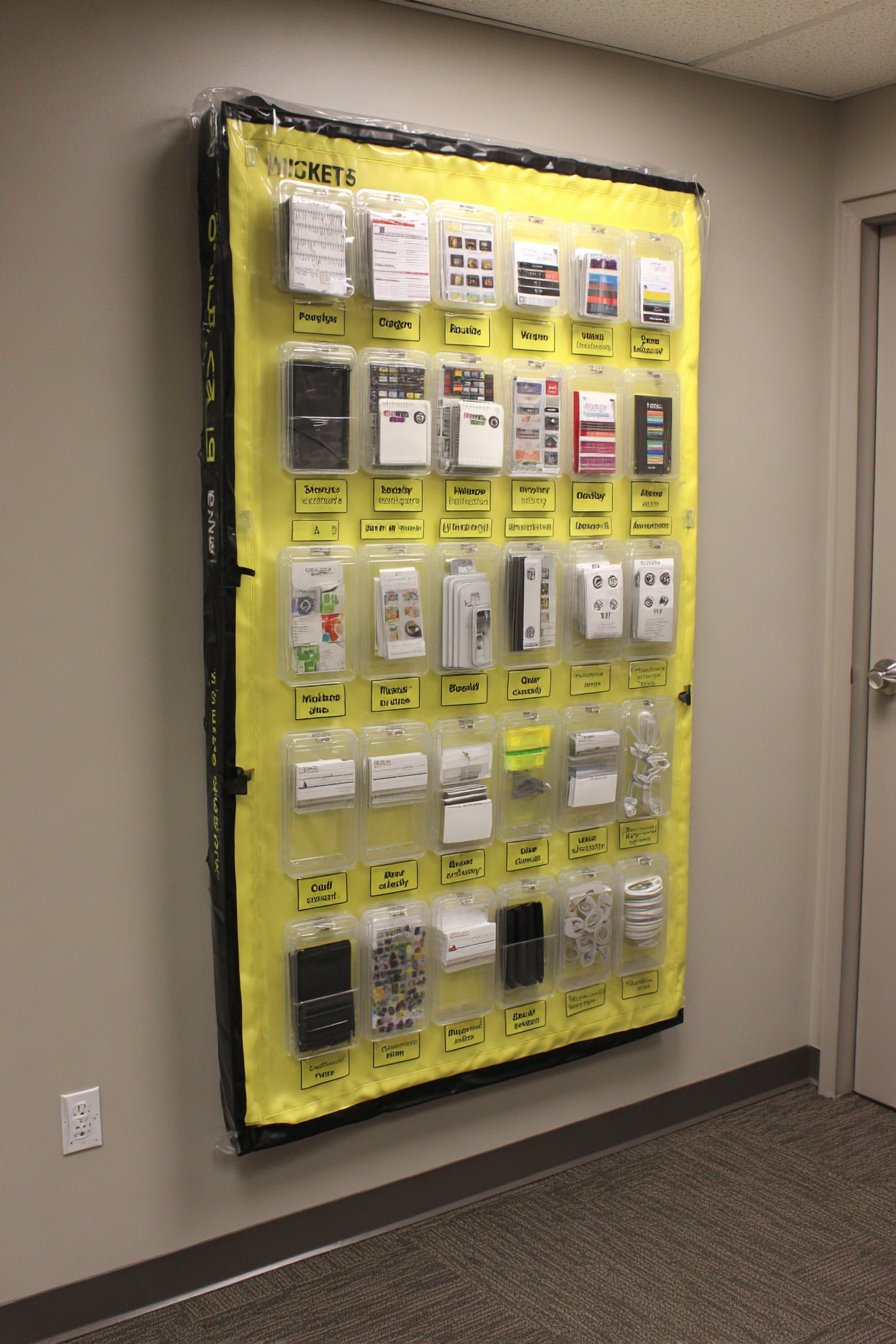
The functional design positions this word wall at an accessible height where students can independently add new vocabulary, move words they’re working to master, or select cards for writing activities. The clear plastic pockets protect vocabulary cards from damage while maintaining visibility, and the systematic alphabetical organization teaches dictionary skills and supports spelling development. Picture-word associations on many cards provide visual context clues that particularly benefit visual learners and students acquiring English as an additional language.
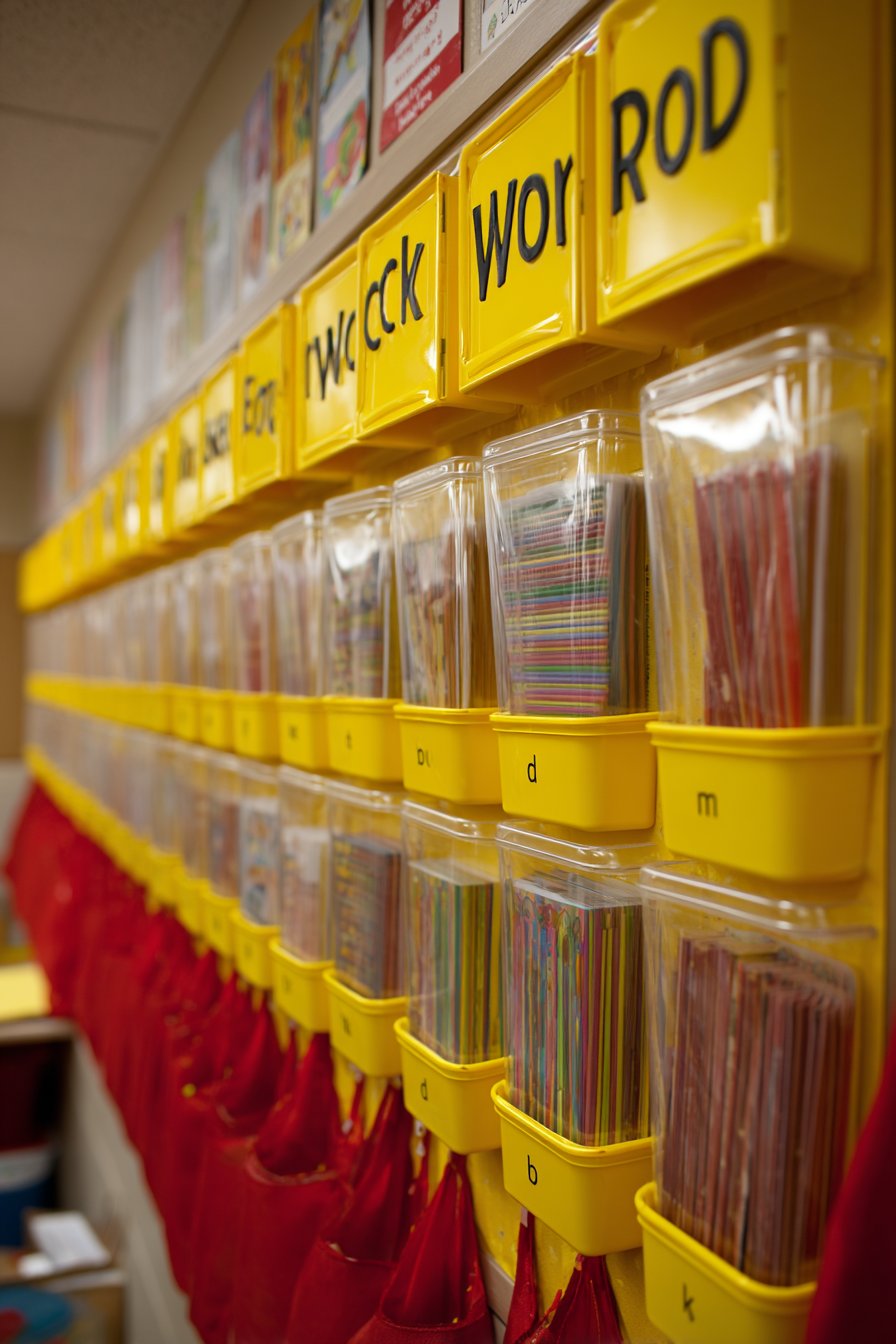
Balanced classroom lighting eliminates glare on the plastic pockets while ensuring clear visibility of both words and accompanying images. The moveable nature of this system transforms vocabulary learning from passive exposure to active engagement—students physically interact with words, creating stronger neural pathways and deeper understanding. The yellow backing serves both aesthetic and functional purposes, creating visual excitement while ensuring maximum contrast for optimal readability.
Key Design Tips:
- Create cards with consistent formatting including the word, part of speech, definition, and use in a sentence for comprehensive learning
- Organize pockets by frequency of use, with high-frequency sight words in the most accessible locations
- Include a section for “words we’re learning” separate from “words we’ve mastered” to create clear learning progression
- Use color-coding by subject area or word category to add another layer of organizational learning
- Laminate with quality materials to ensure durability throughout constant handling during the school year
- Position the word wall near writing centers or student work areas where vocabulary reference is most needed
5. Seasonal Celebration and Learning Display
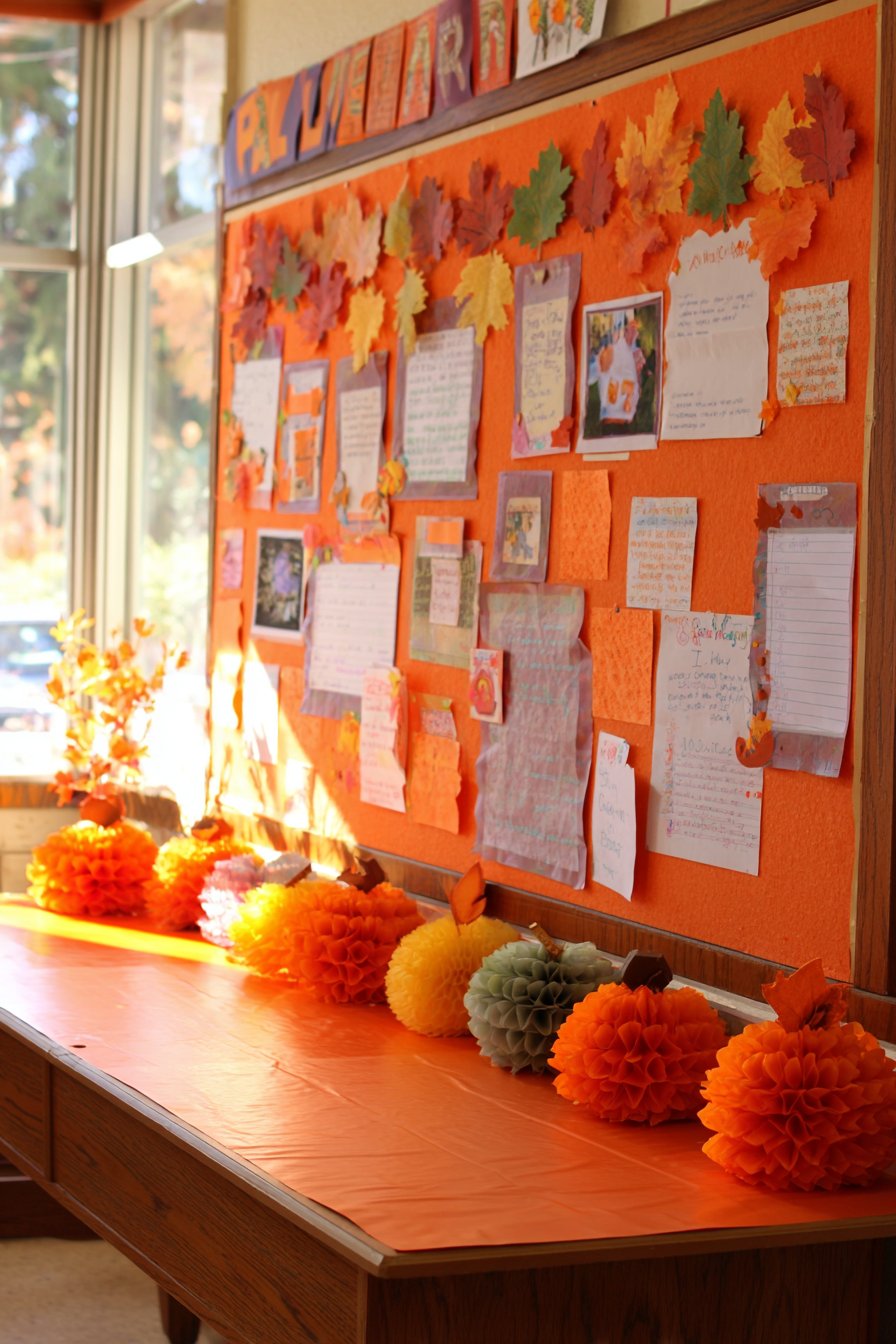
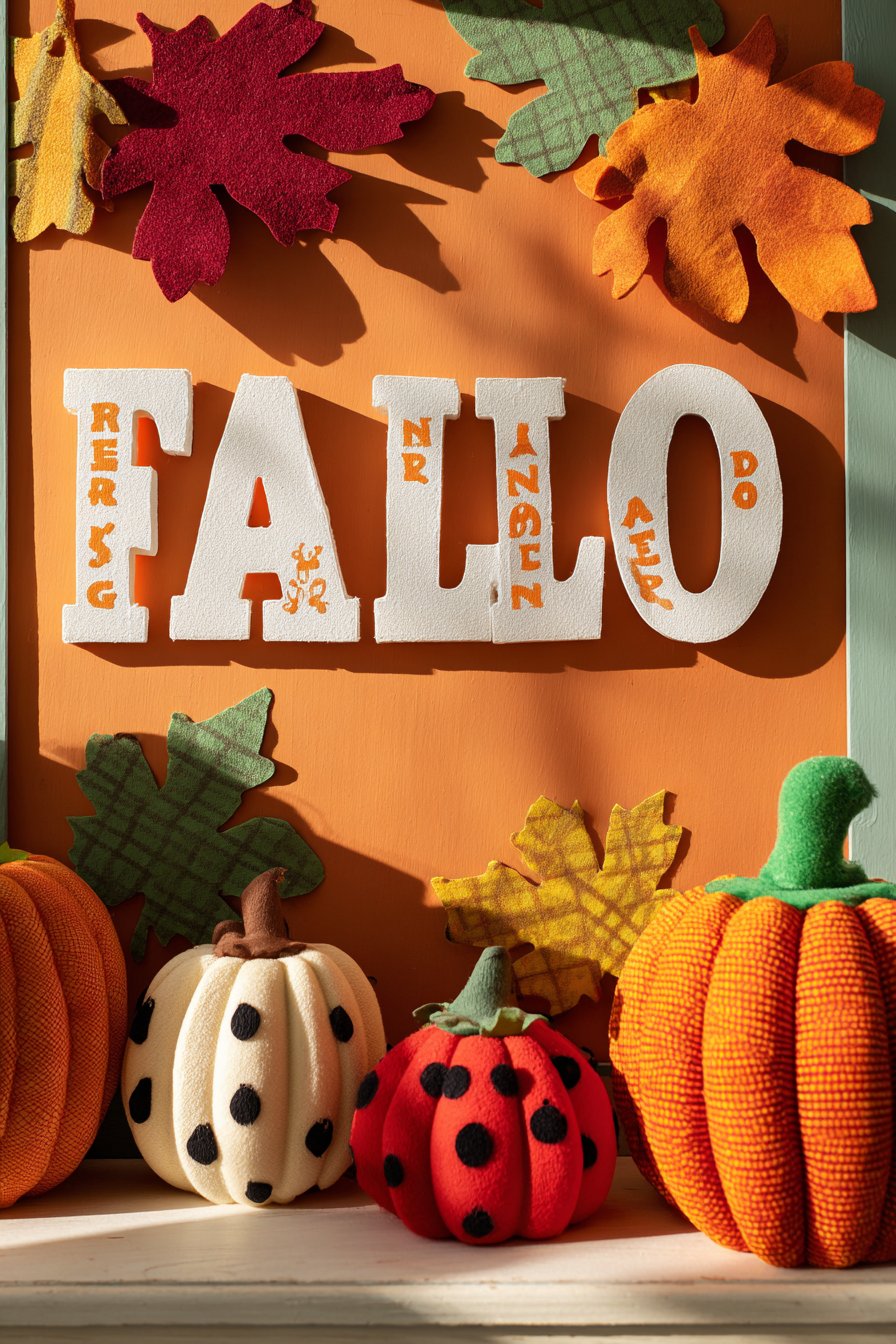
Connecting classroom learning to the natural world and seasonal changes creates relevance and excitement that can reenergize curriculum throughout the school year. This autumn-themed bulletin board features meticulously crafted paper leaf cutouts in harvest colors—deep oranges, golden yellows, and rich browns—that bring the beauty of fall indoors. Student writing projects mounted on warm orange background paper showcase seasonal narratives, descriptive paragraphs, or informational texts about autumn phenomena, connecting creative expression with observational learning. Three-dimensional pumpkin decorations constructed from layered construction paper add sculptural interest and demonstrate how simple materials can create impressive visual impact.

The “Fall Into Reading” header employs decorative letters that playfully reference the season while reinforcing literacy messages, creating a cohesive theme that ties visual aesthetics to educational objectives. Natural window light creates gentle highlights on the varied textures of construction paper, tissue paper, and writing paper, adding depth and visual interest throughout the day. The seasonal rotation of this display—transitioning from autumn to winter, spring, and summer—maintains novelty and connects classroom learning to students’ lived experiences of changing seasons.
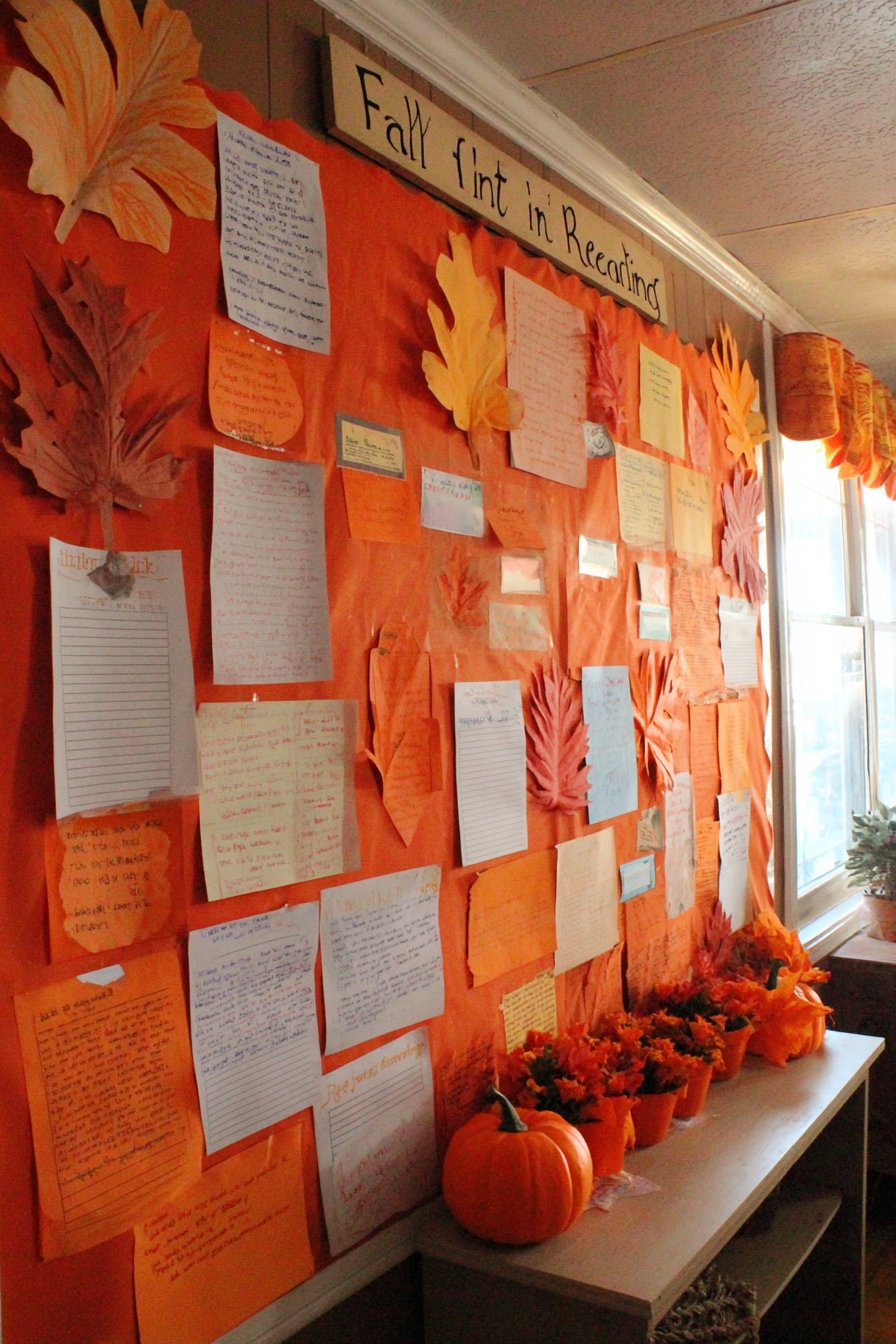
This approach to class wall decoration serves multiple educational purposes simultaneously: it creates visual interest, celebrates student work, teaches about natural cycles, provides writing motivation through thematic prompts, and creates a welcoming, dynamic environment that changes throughout the school year. The process of creating seasonal displays can become a collaborative classroom activity, building community while developing fine motor skills through cutting, arranging, and mounting decorative elements.
Key Design Tips:
- Plan seasonal transitions in advance to maintain continuity and reduce last-minute stress during busy teaching periods
- Involve students in creating three-dimensional elements to build ownership and develop artistic skills
- Connect seasonal themes to curriculum standards in science, social studies, or literacy to maximize educational value
- Photograph each seasonal display to create a year-long visual record that can inform future years’ planning
- Use repositionable adhesive to protect wall surfaces while allowing easy updates and changes
- Create storage systems for reusable seasonal elements to reduce preparation time in subsequent years
6. Scientific Discovery Space Display
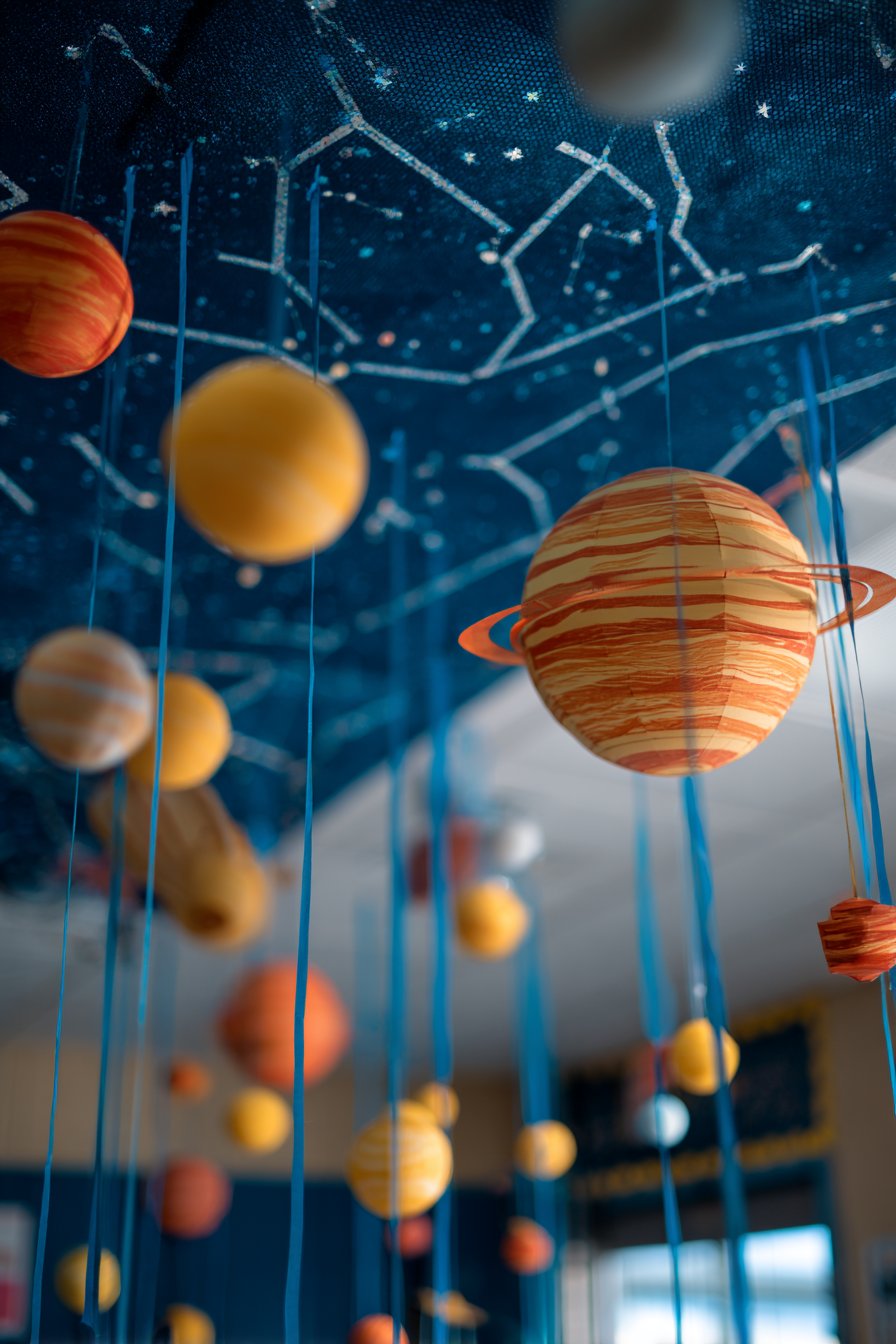
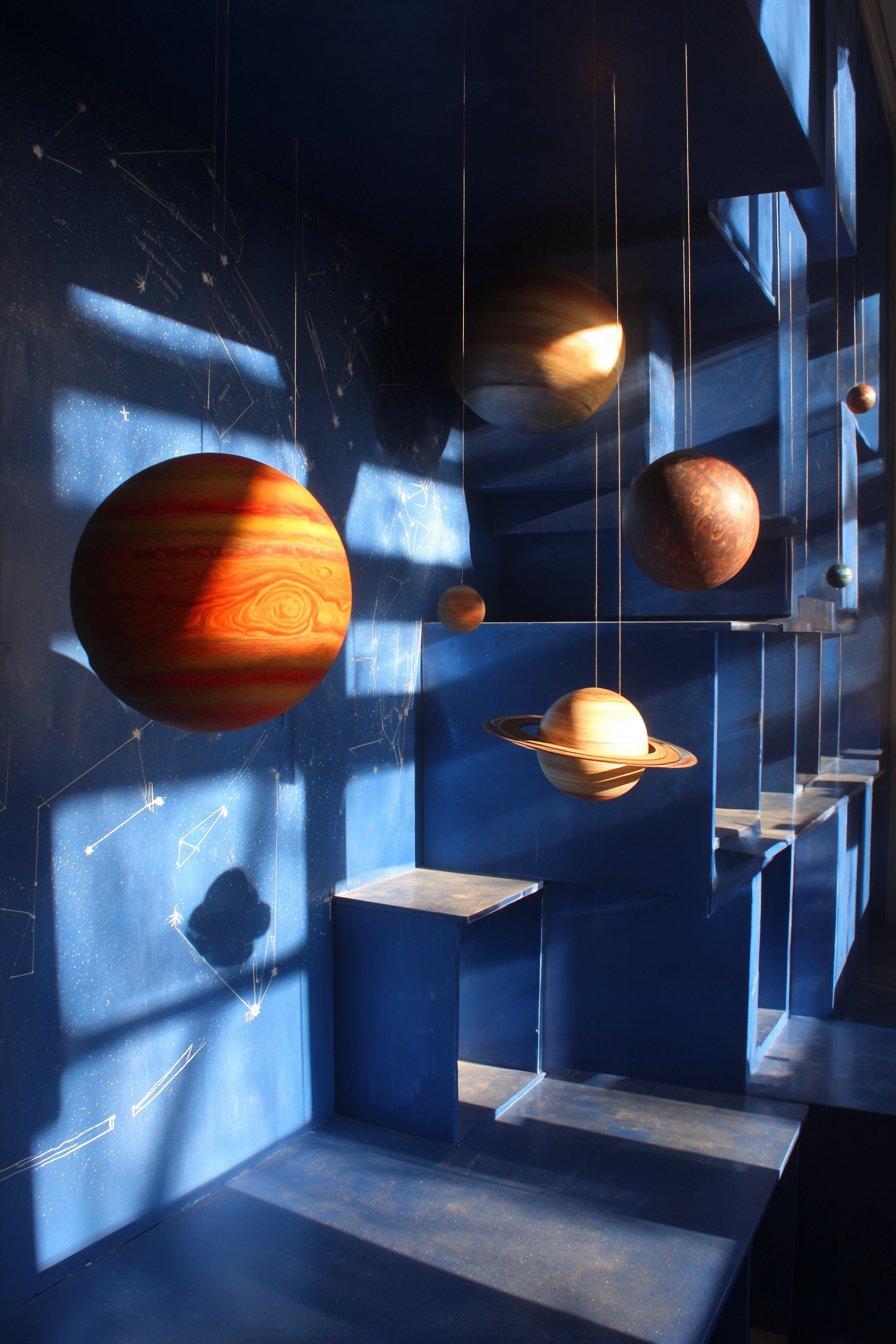
Transforming classroom walls into windows to the universe, a science-focused display creates wonder and curiosity while reinforcing STEM learning objectives. This immersive installation showcases the solar system with hand-painted planet models carefully suspended at varying heights to represent relative positions and create three-dimensional spatial understanding. The deep blue background evokes the vastness of space while providing optimal contrast for celestial bodies, and constellation patterns marked with glow-in-the-dark stars offer additional discovery opportunities during dim lighting or indoor recess periods. Educational facts accompanying each planet transform the display from mere decoration into a constant learning resource.
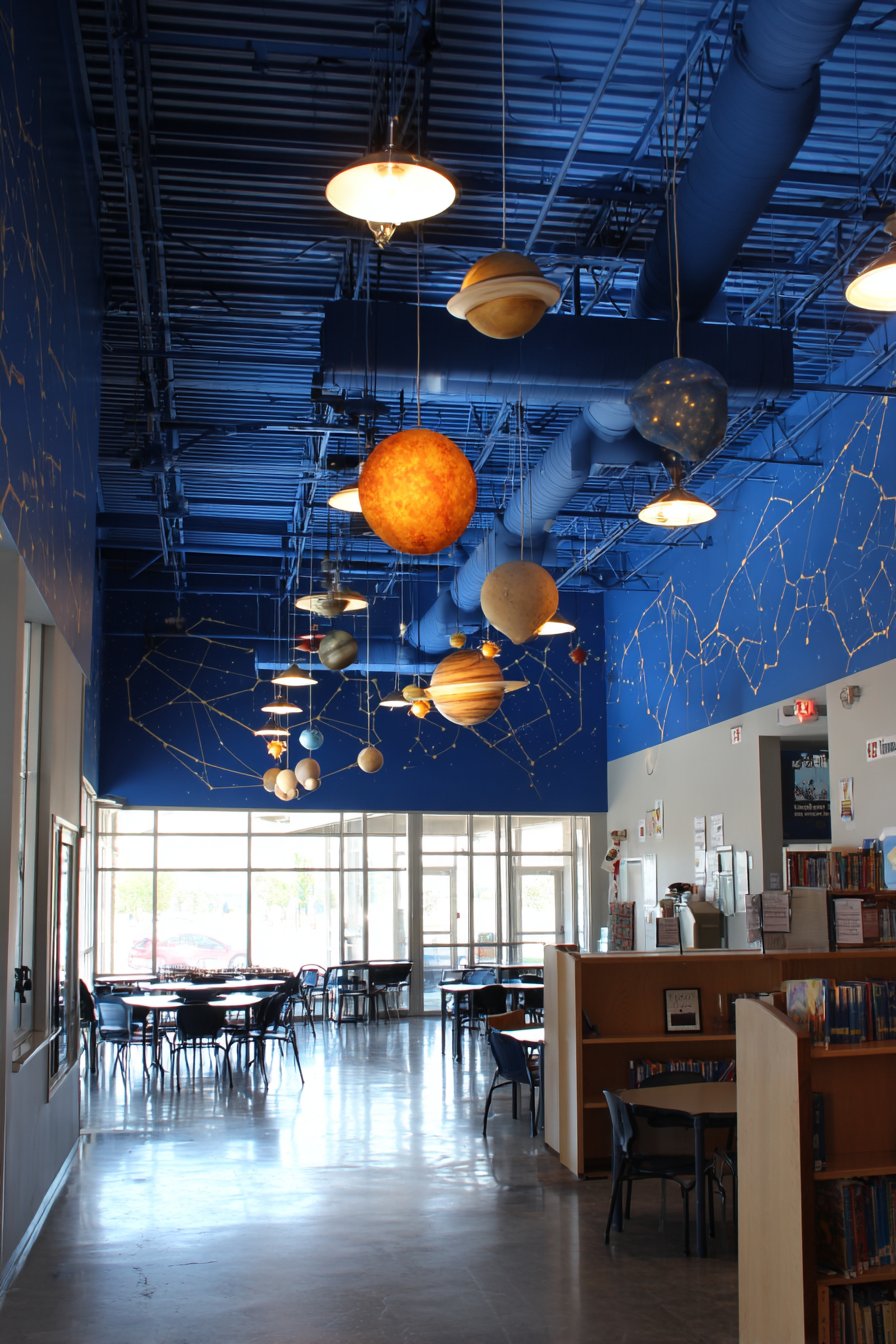
Display shelving positioned beneath the celestial installation holds student science projects, reference books, and scientific tools, creating a comprehensive science corner that encourages exploration and independent investigation. Classroom lighting deliberately creates dramatic shadows that enhance the space theme, with careful positioning ensuring that the three-dimensional planets cast realistic shadows similar to how celestial bodies appear in astronomical photography. The combination of visual impact and educational content makes this display equally effective for whole-class instruction, small group exploration, and individual student reference.
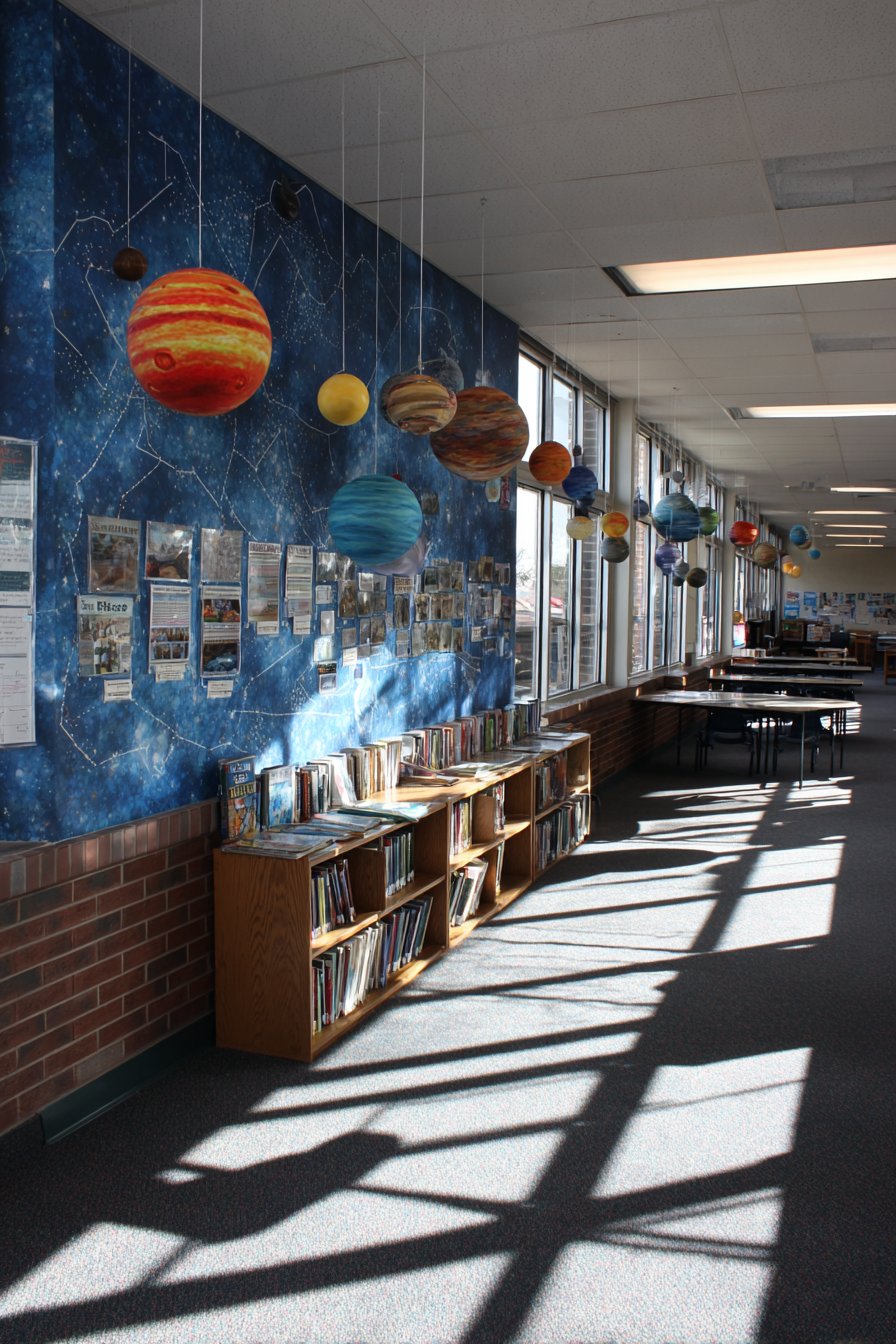
This approach demonstrates how class wall decoration ideas can extend far beyond bulletin boards to create immersive thematic environments. The three-dimensional nature engages spatial reasoning skills while the layered information—from basic planet identification to complex orbital mechanics—allows differentiated learning where students extract information appropriate to their current understanding level. The incorporation of glow-in-the-dark elements adds an element of surprise and delight that sustains interest throughout the unit and beyond.
Key Design Tips:
- Research accurate planet sizes, colors, and distinctive features to ensure scientific accuracy in your models
- Use fishing line or clear thread to suspend planets, creating the illusion of floating in space
- Position the sun off to one side rather than centered to teach about relative position in the solar system
- Include lesser-known celestial bodies like dwarf planets or the asteroid belt to extend learning for advanced students
- Create accompanying fact cards at varied reading levels to support diverse learners
- Incorporate student research by having them create fact sheets or mini-presentations about specific planets or space phenomena
7. Global Citizenship and Cultural Geography Center
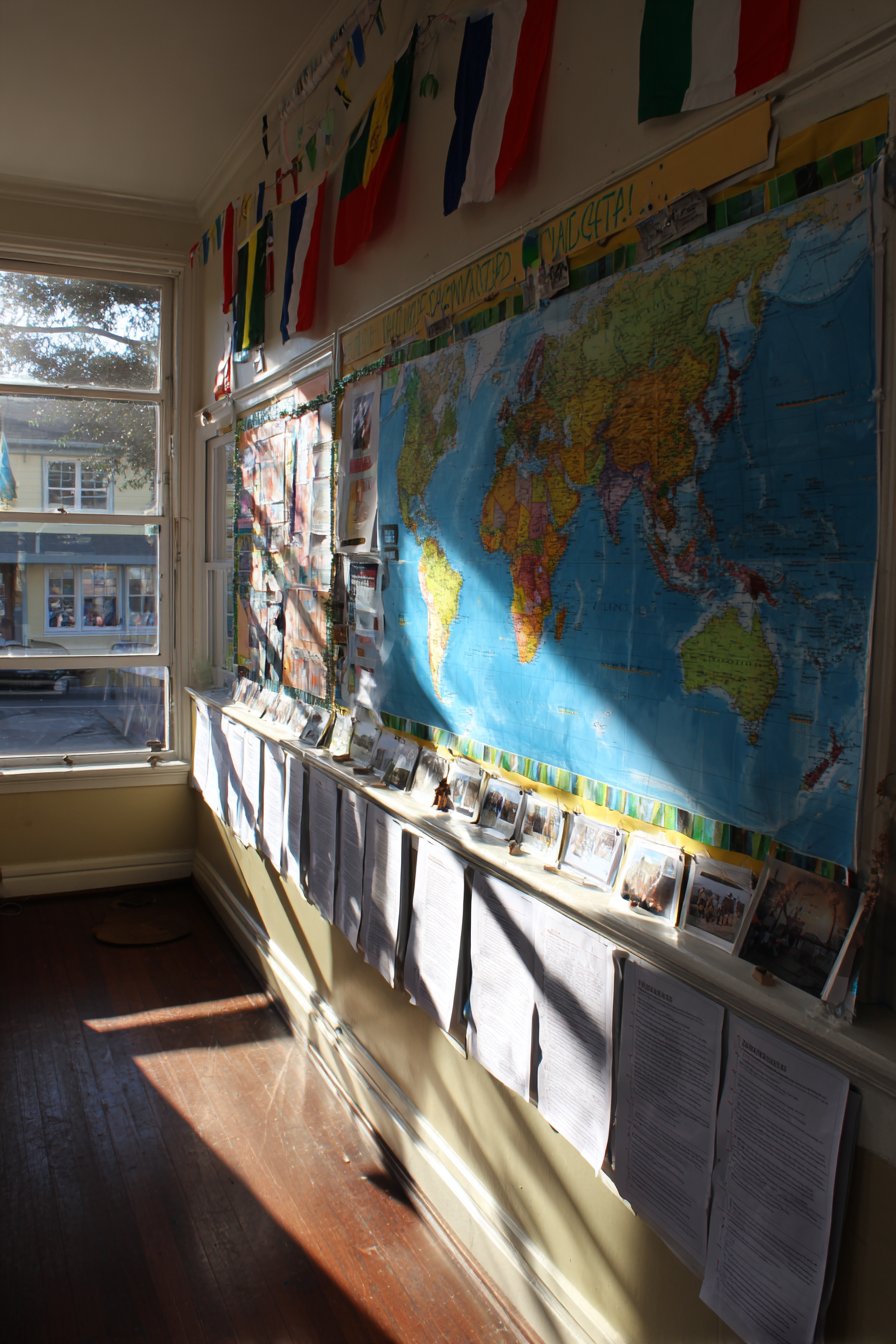
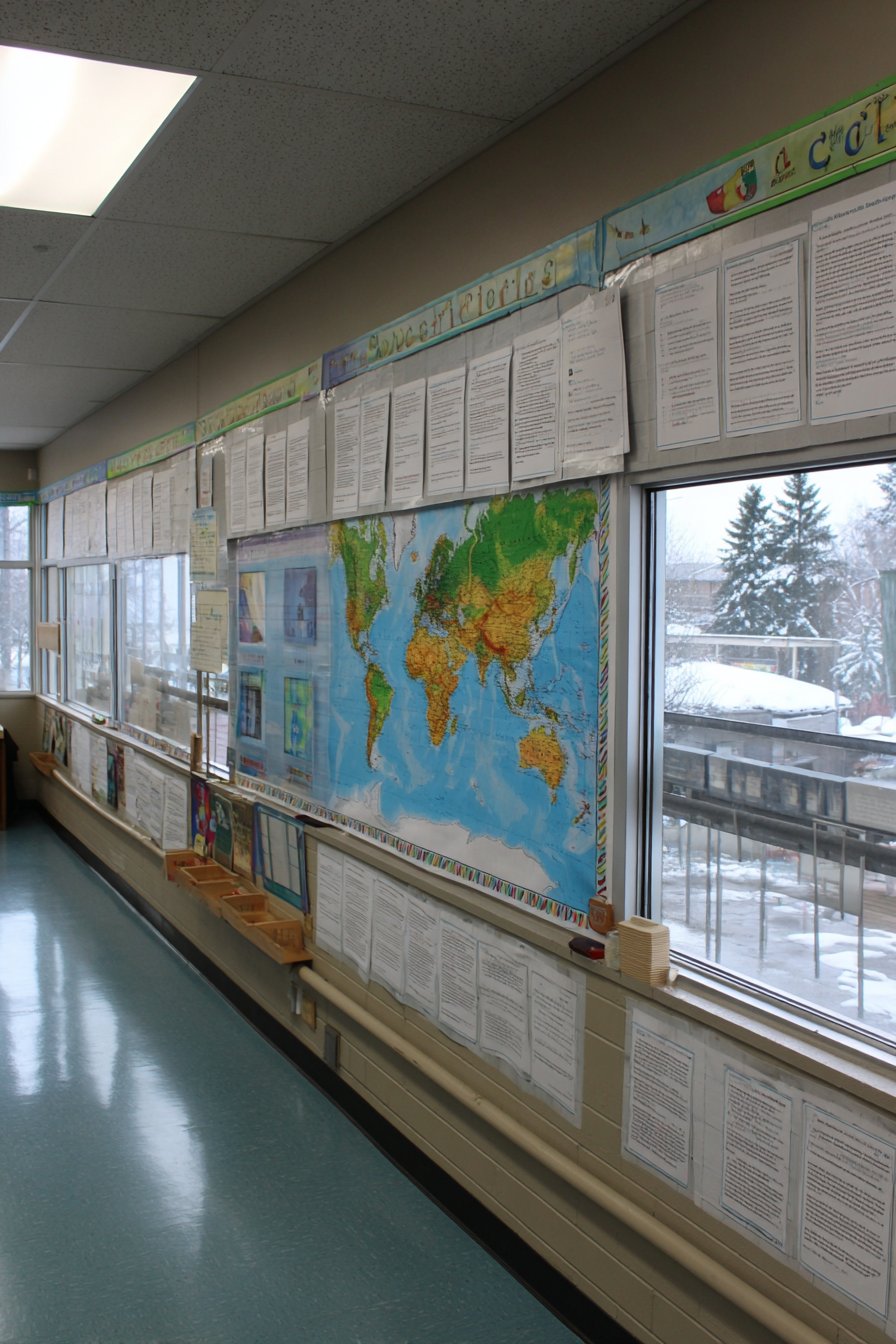
Developing global awareness and cultural competence begins with creating classroom environments that celebrate our interconnected world. This collaborative display features a large world map as its anchor, with colorful push pins marking countries students are studying, have connections to through family heritage, or are following through current events. The surrounding space showcases cultural artifacts, international flags representing classroom diversity, and travel postcards that bring distant places into immediate focus. Student research reports preserved in clear page protectors demonstrate deeper investigation into specific countries, cultures, or global issues.
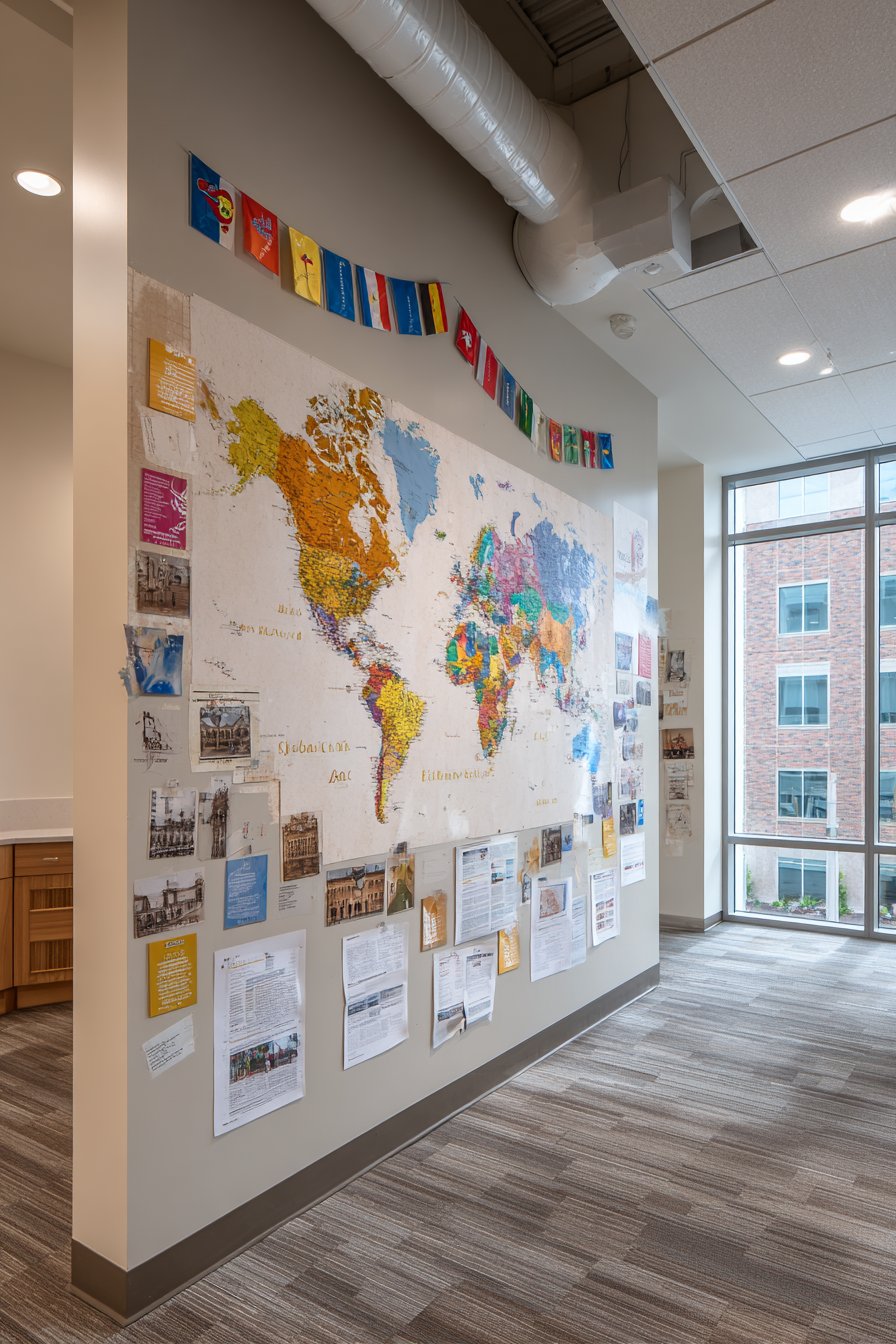
The “Global Citizens” header rendered in bold block letters establishes the thematic framework while communicating high expectations for students’ developing understanding of international interconnectedness. Natural lighting from adjacent windows illuminates the interactive geography wall throughout the day, creating an inviting space for individual exploration or small group discussions. The combination of tactile elements (students can touch the map, add new pins, arrange artifacts) with visual learning (flags, images, colors) and textual information (research reports, country facts) creates a multisensory learning experience.
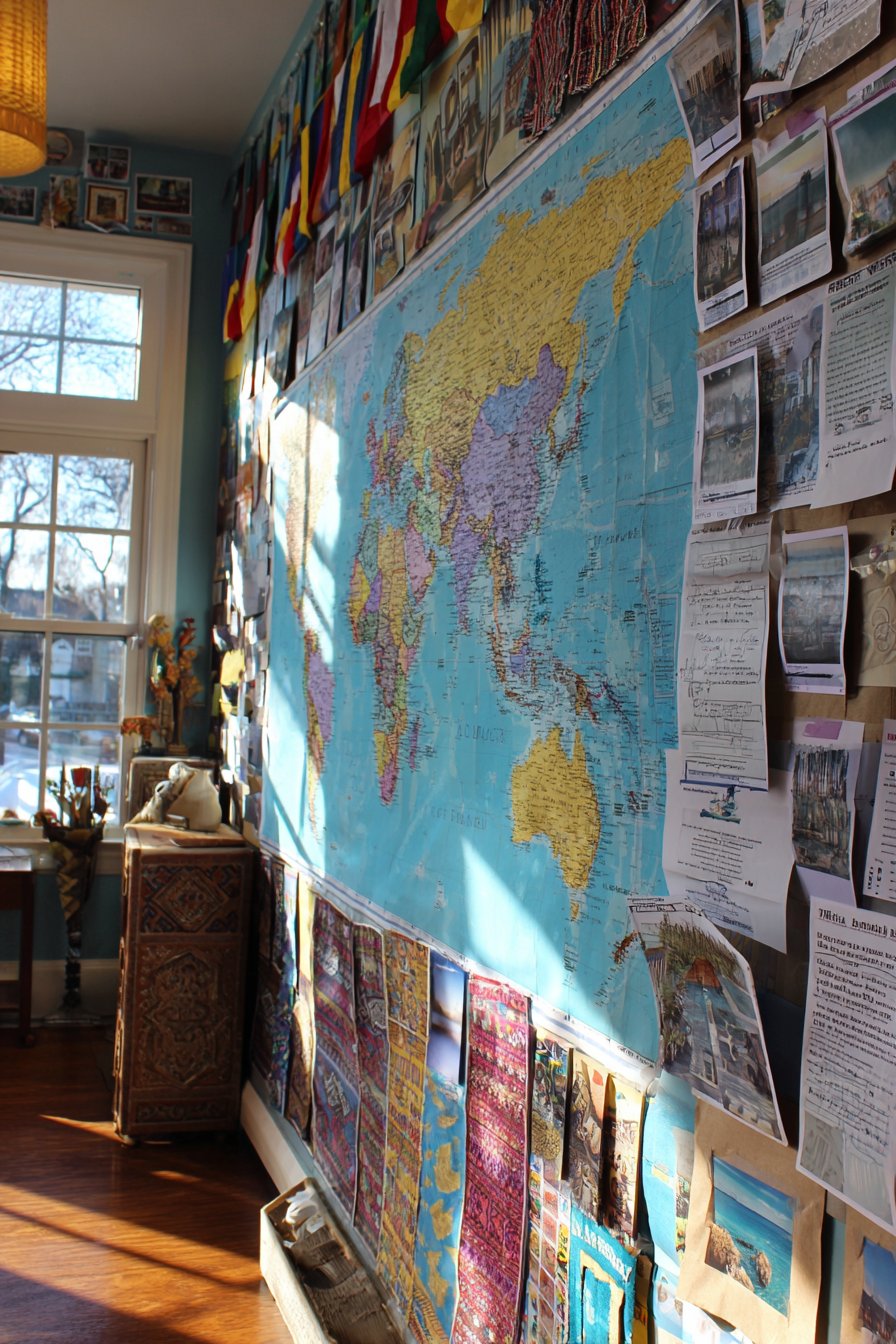
This display type grows more valuable throughout the school year as the map fills with pins, student research accumulates, and connections between various countries and cultures become apparent. The collaborative nature—where every student contributes to the collective geographic knowledge—builds classroom community while teaching that global awareness develops through shared learning rather than individual expertise. The prominence of this display communicates that understanding our world is a core educational priority.
Key Design Tips:
- Use different colored pins to represent different categories such as countries of heritage, countries being studied, or countries in current news
- Create a key or legend that helps students and visitors understand the significance of various pins and symbols
- Rotate featured countries regularly to maintain engagement and ensure diverse geographic representation
- Encourage students to bring in artifacts, postcards, or images from family travels to personalize the global connection
- Include three-dimensional elements like small flags on stands or cultural items that add depth and authenticity
- Pair the world map with a globe available for hands-on exploration of spatial relationships and relative distances
8. Literacy-Rich Reading Corner Integration
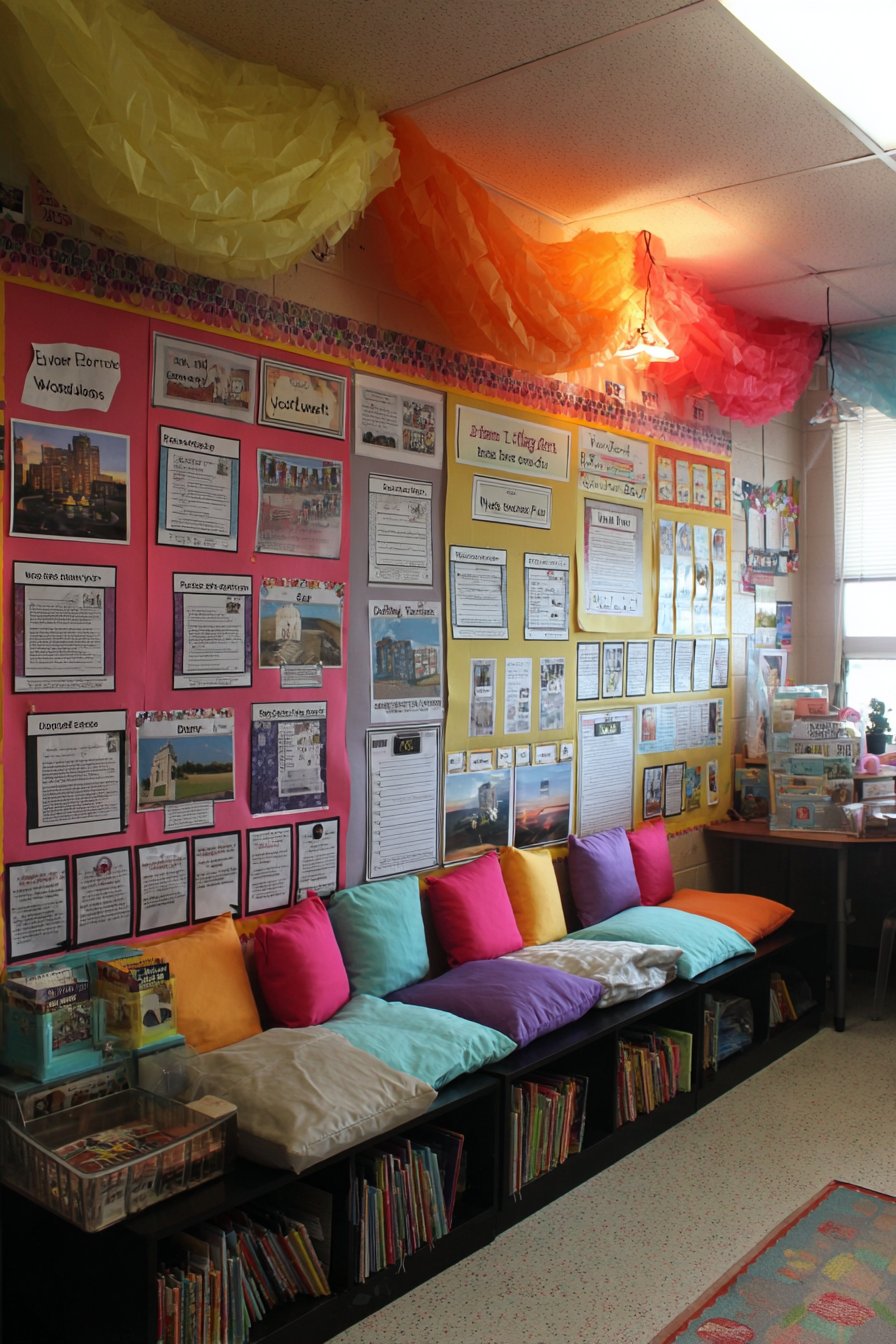
Creating a dedicated space that celebrates reading and literacy transforms classroom walls into gateways to literary adventures. This comprehensive literacy center features book recommendation posters where students advocate for favorite titles, genre classification charts that help young readers navigate the library, and a “Reading Hall of Fame” displaying student photos alongside their book reviews and reading achievements. The arrangement utilizes colorful fabric panels as backing material, adding softness and visual warmth while coordinating ribbon borders create structured sections within the larger display.
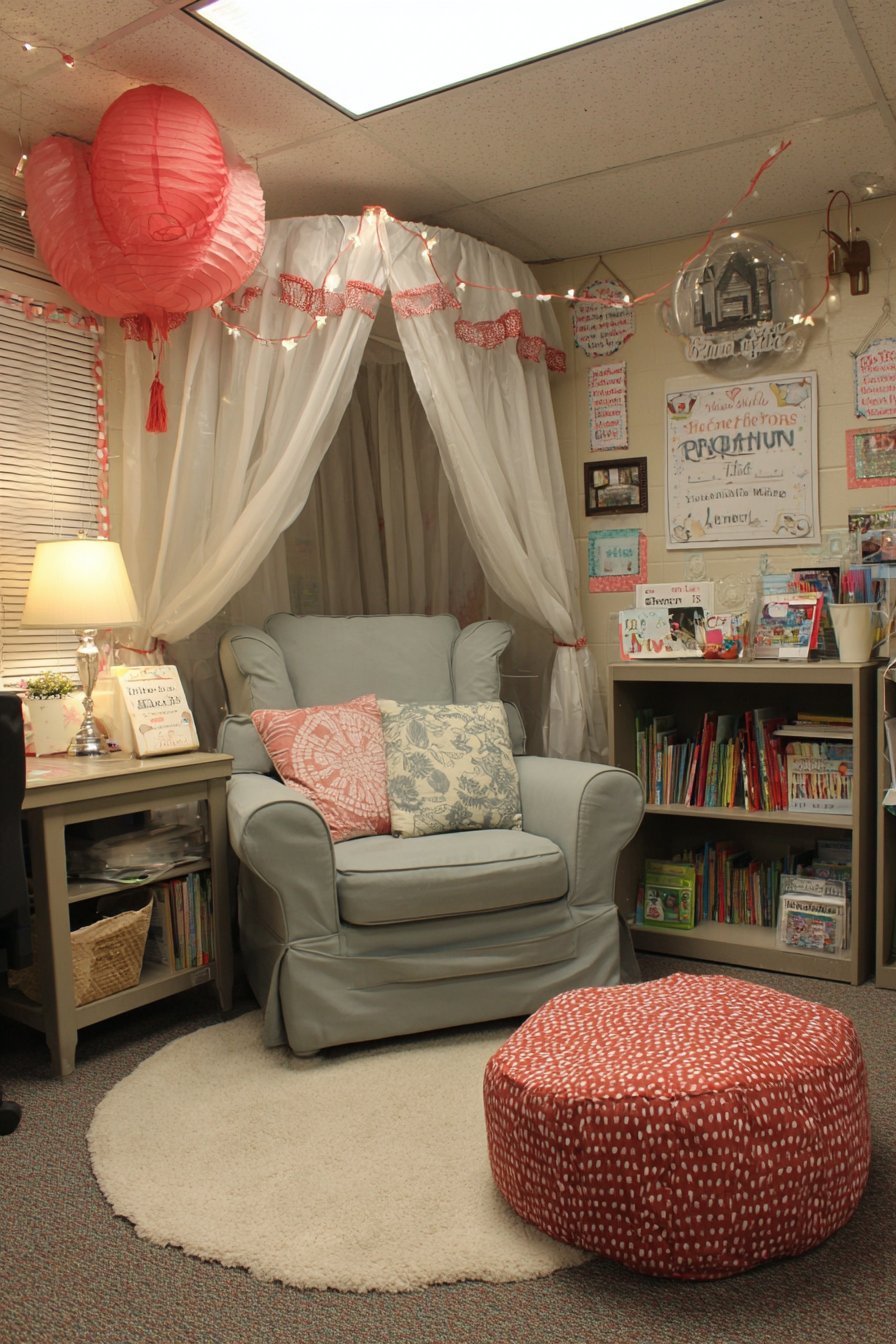
Soft overhead classroom lighting creates an inviting atmosphere that beckons students to curl up with a good book, while the strategic wall decoration serves constant instructional purposes—reinforcing genre characteristics, modeling book recommendation strategies, and celebrating reading accomplishment. The integration with the physical classroom library, where wall-mounted book display shelves showcase covers facing forward with coordinating basket organization below, creates a comprehensive literacy environment where every element supports the development of lifelong readers.
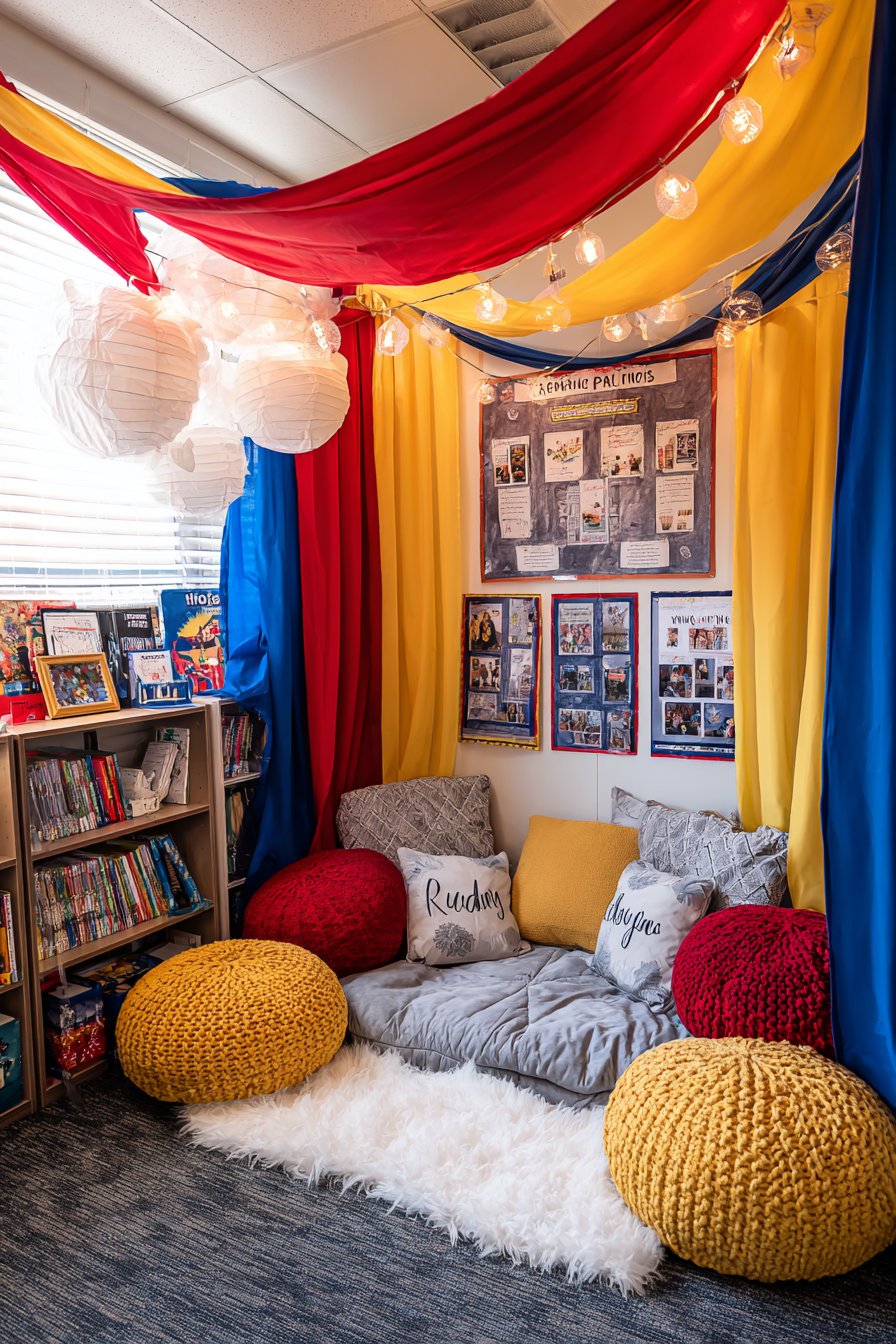
The inclusion of student voices through reviews and recommendations proves particularly powerful for building reading motivation. Students trust peer recommendations more readily than adult suggestions, and seeing classmates’ reading accomplishments displayed prominently creates positive social pressure and inspiration. The professional presentation of this reading corner—with framed posters, coordinated colors, and careful organization—communicates that literacy is valued and celebrated in this learning community.
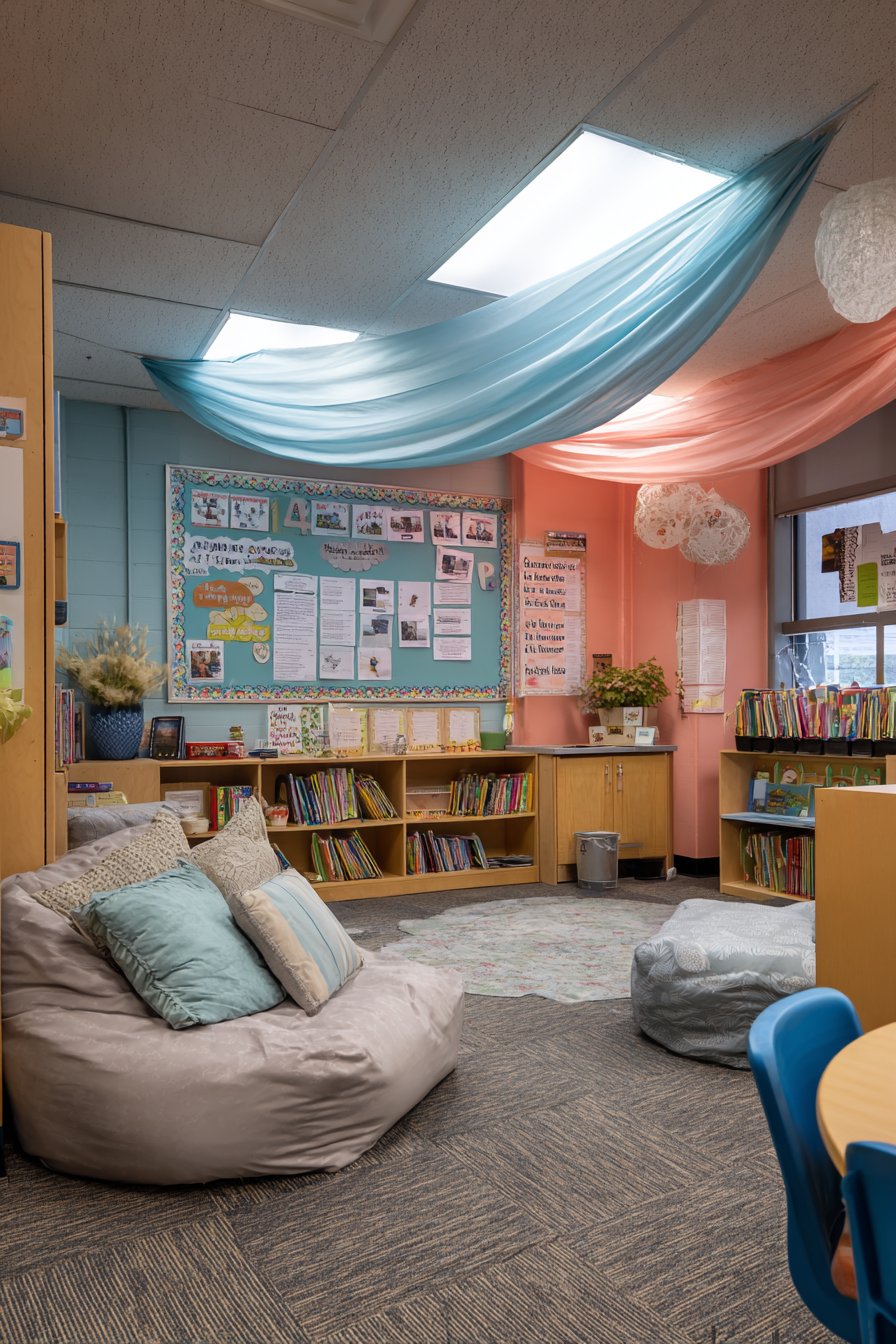
Key Design Tips:
- Update book recommendations monthly to maintain relevance and expose students to diverse titles throughout the year
- Include a variety of genres and reading levels in displayed recommendations to support all readers in the classroom
- Create templates for student book reviews that guide quality responses while allowing individual voice
- Use adjustable shelving that can be modified as book collections and student needs change
- Incorporate author study elements like biographical information or thematic connections between multiple works
- Position the reading corner in the quietest area of the classroom to create a true refuge for independent reading
9. Mathematical Thinking and Problem-Solving Wall
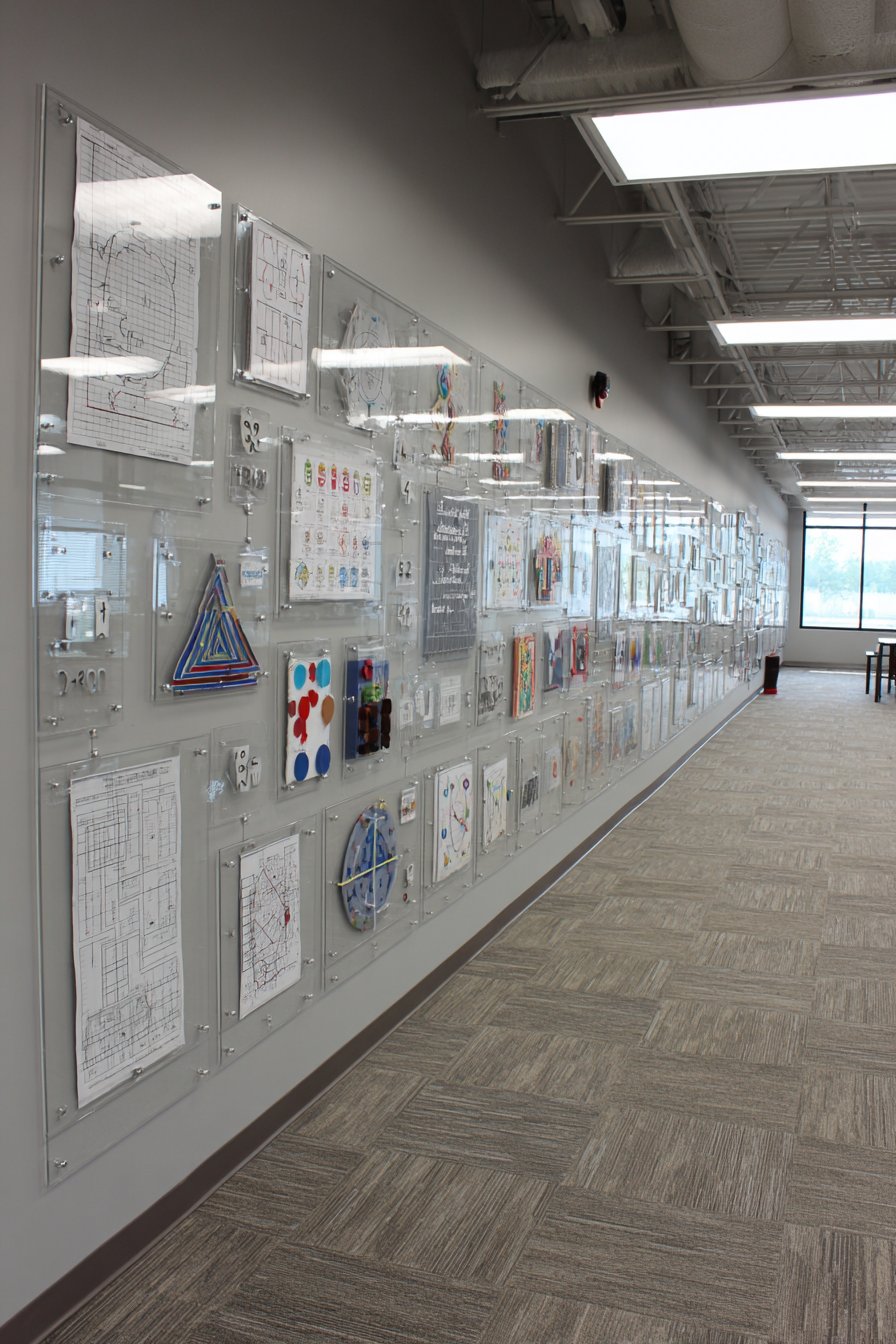
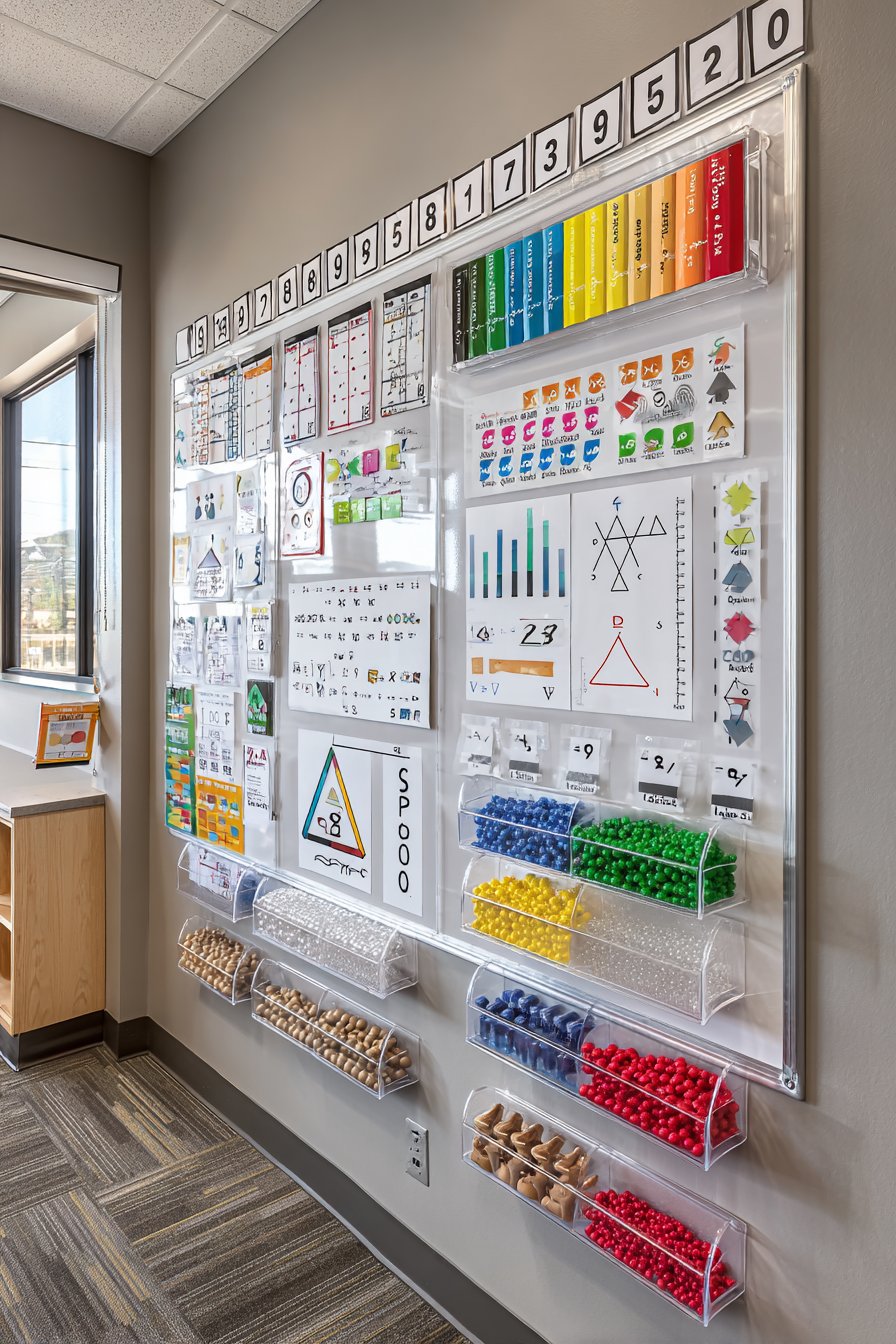
Transforming abstract mathematical concepts into visually accessible learning tools, a STEM-focused wall display creates constant reference materials that support numerical literacy and computational thinking. This installation features number lines demonstrating various mathematical relationships, geometric shape posters illustrating properties and formulas, and problem-solving strategy charts that provide step-by-step frameworks for approaching challenging questions. Clear acrylic holders contain daily math challenges that change regularly, with student solution examples demonstrating various approaches to the same problem.
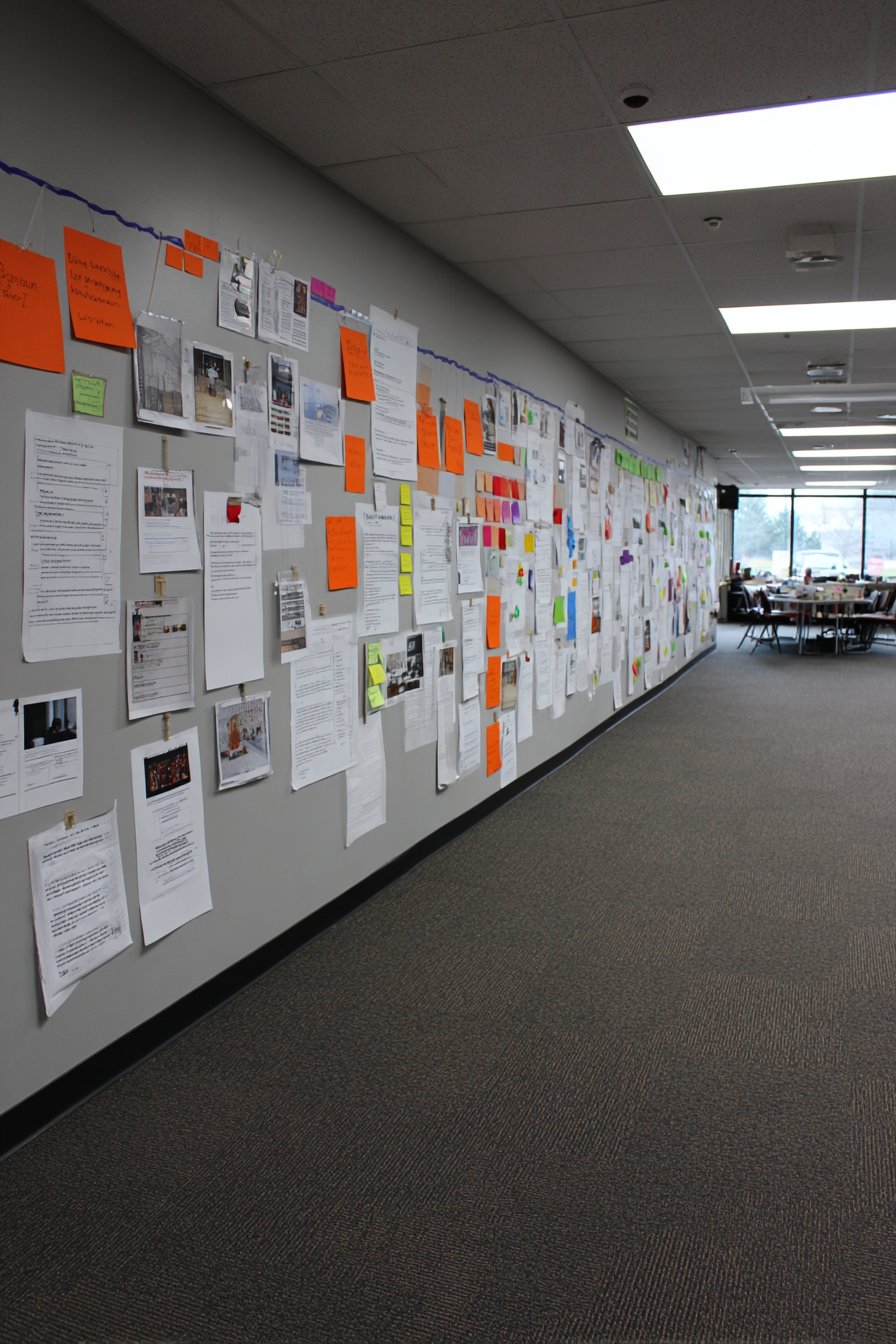
The neutral gray background provides optimal contrast for colorful educational materials without competing for visual attention, allowing the mathematical content itself to remain the focus. Balanced fluorescent lighting ensures visibility of all diagrams, formulas, and numerical relationships without creating glare that might obscure important details. The logical layout mirrors the sequential nature of mathematical thinking—moving from foundational concepts to more complex applications—teaching organizational thinking alongside computational skills.
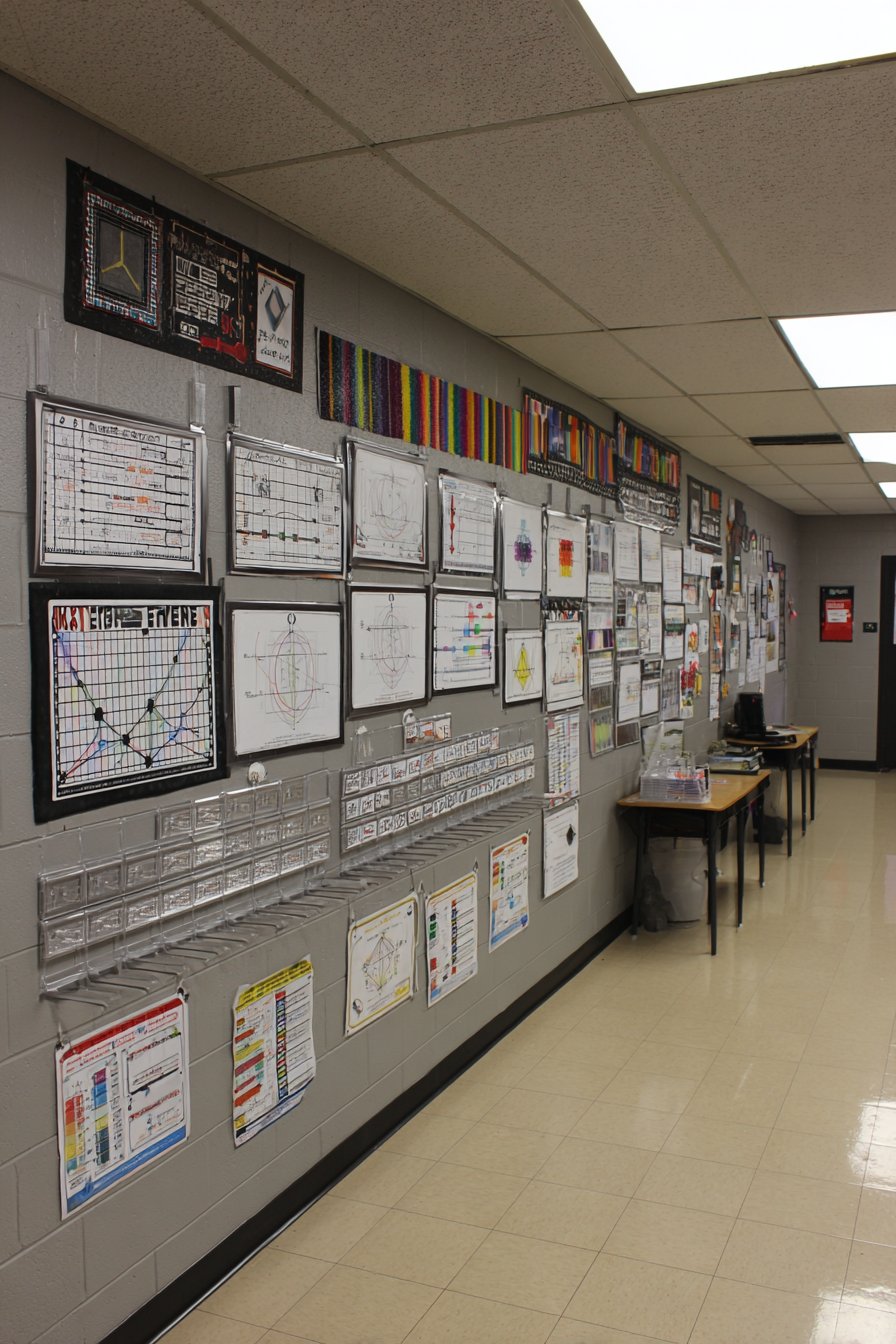
This approach to mathematical wall decoration serves both instructional and independence-building functions. During whole-class instruction, teachers can reference these permanent displays to reinforce concepts without recreating visual aids for each lesson. During independent work time, students can consult these references to check their thinking or review strategies without requiring teacher intervention. The inclusion of multiple solution examples for problems teaches that mathematics often has various valid approaches, encouraging flexible thinking and reducing math anxiety.
Key Design Tips:
- Organize materials by mathematical domain (number sense, geometry, measurement) to help students quickly locate needed references
- Use color-coding consistently throughout the display to reinforce categorical relationships
- Include real-world application examples that demonstrate why specific mathematical concepts matter outside the classroom
- Update daily math challenges at a consistent time to create routine and anticipation
- Showcase student work that demonstrates particularly creative or efficient problem-solving approaches
- Incorporate manipulatives on nearby shelving so students can physically model concepts displayed on the wall
10. Positive Behavior Management System
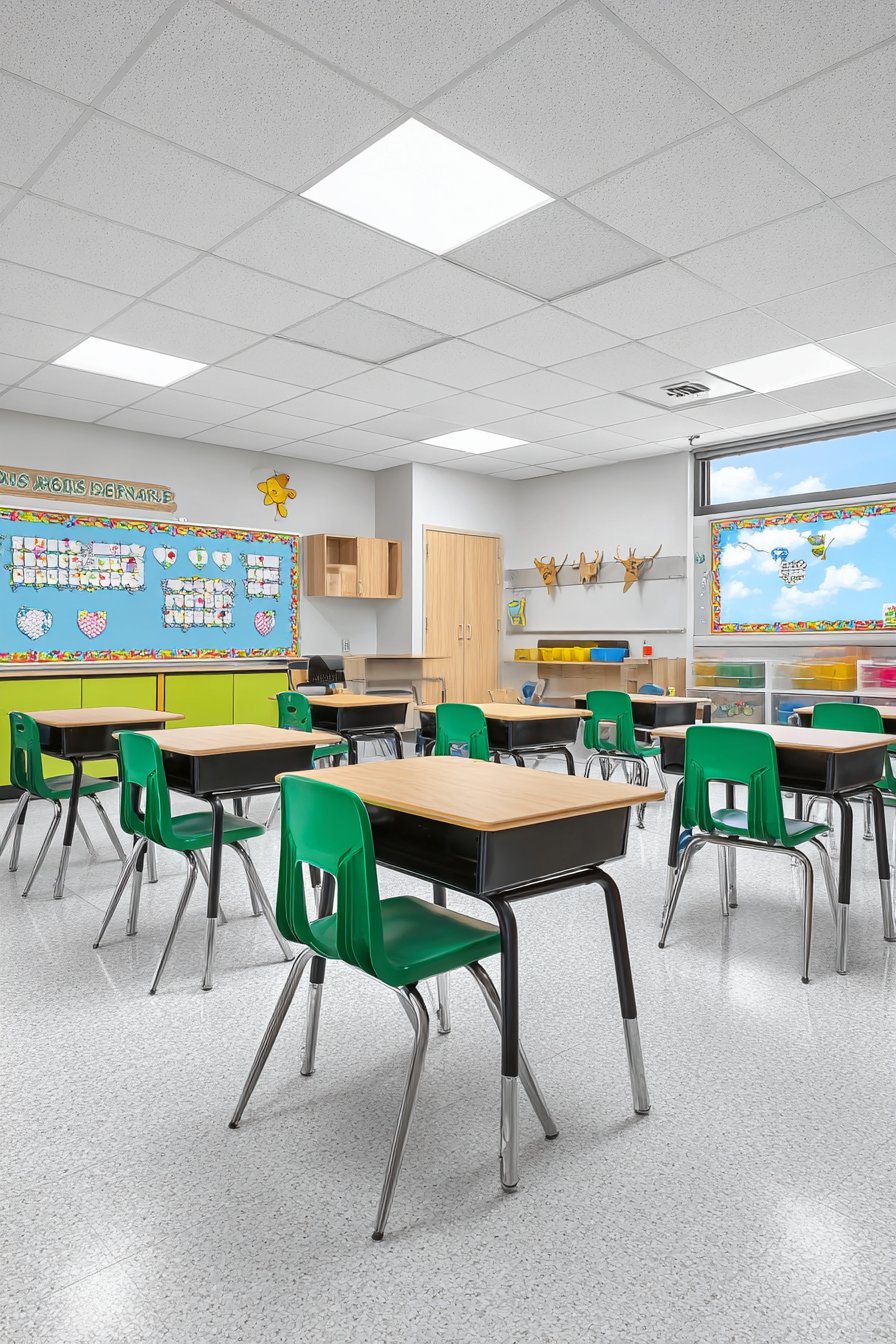
Creating visual systems for behavior expectations and achievement transforms classroom management from reactive discipline to proactive positive reinforcement. This thoughtfully designed display features a clear behavior chart with student names, achievement stickers recognizing positive choices, and a classroom expectations poster utilizing visual icons that support comprehension for students at all reading levels. The tiered display board employs a traffic light system with green, yellow, and blue sections, while clothespins bearing individual student names move throughout the day to reflect behavioral choices.
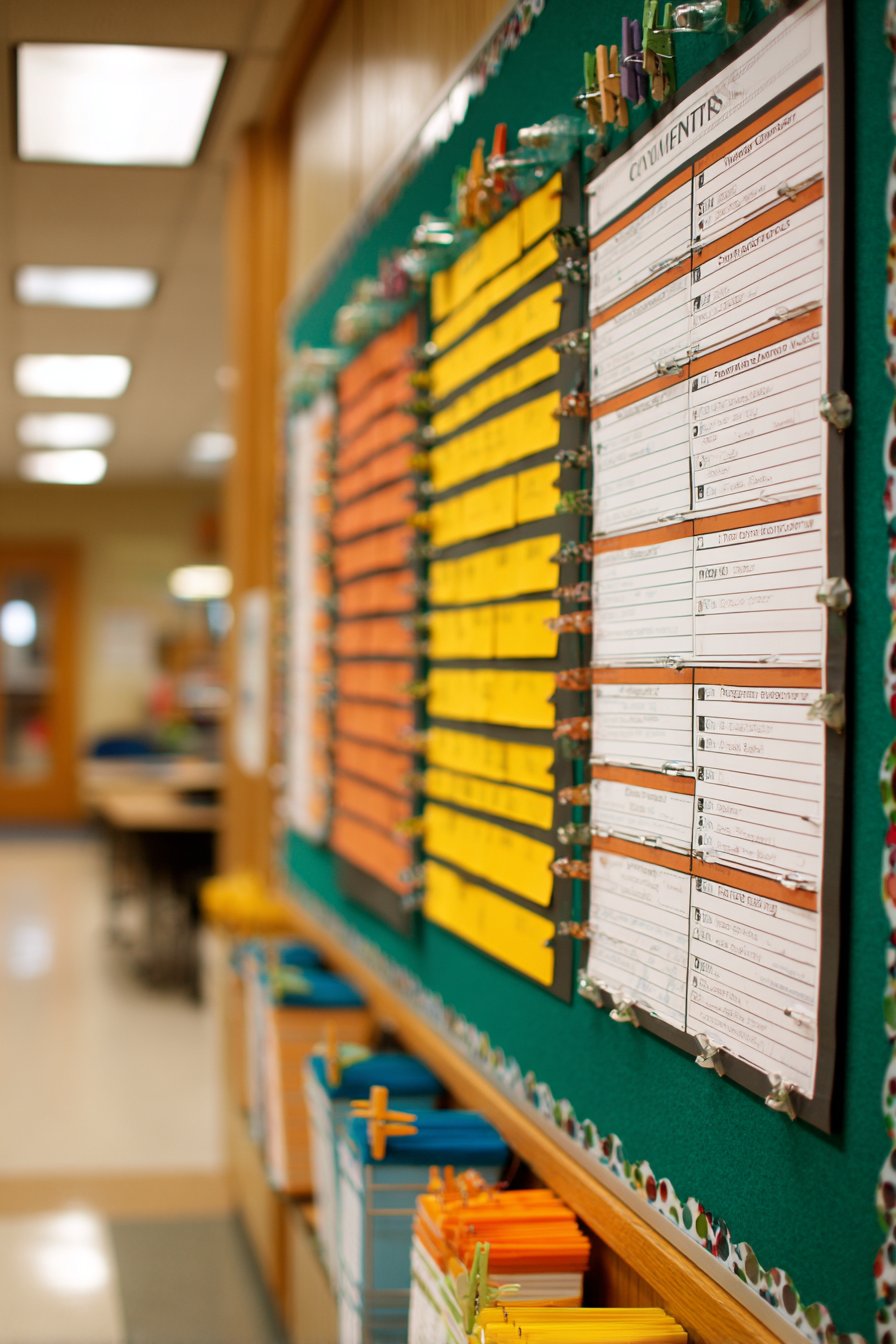
Warm classroom lighting creates a welcoming feel that prevents the behavior system from seeming punitive or harsh, instead framing it as a supportive tool for self-monitoring and growth. The visual nature of the system allows students to quickly understand their current status and make informed choices about behavior modification, while the public nature creates gentle accountability without shaming. The focus remains firmly on positive reinforcement, with achievement stickers and recognition far more prominent than any consequences for choices needing improvement.
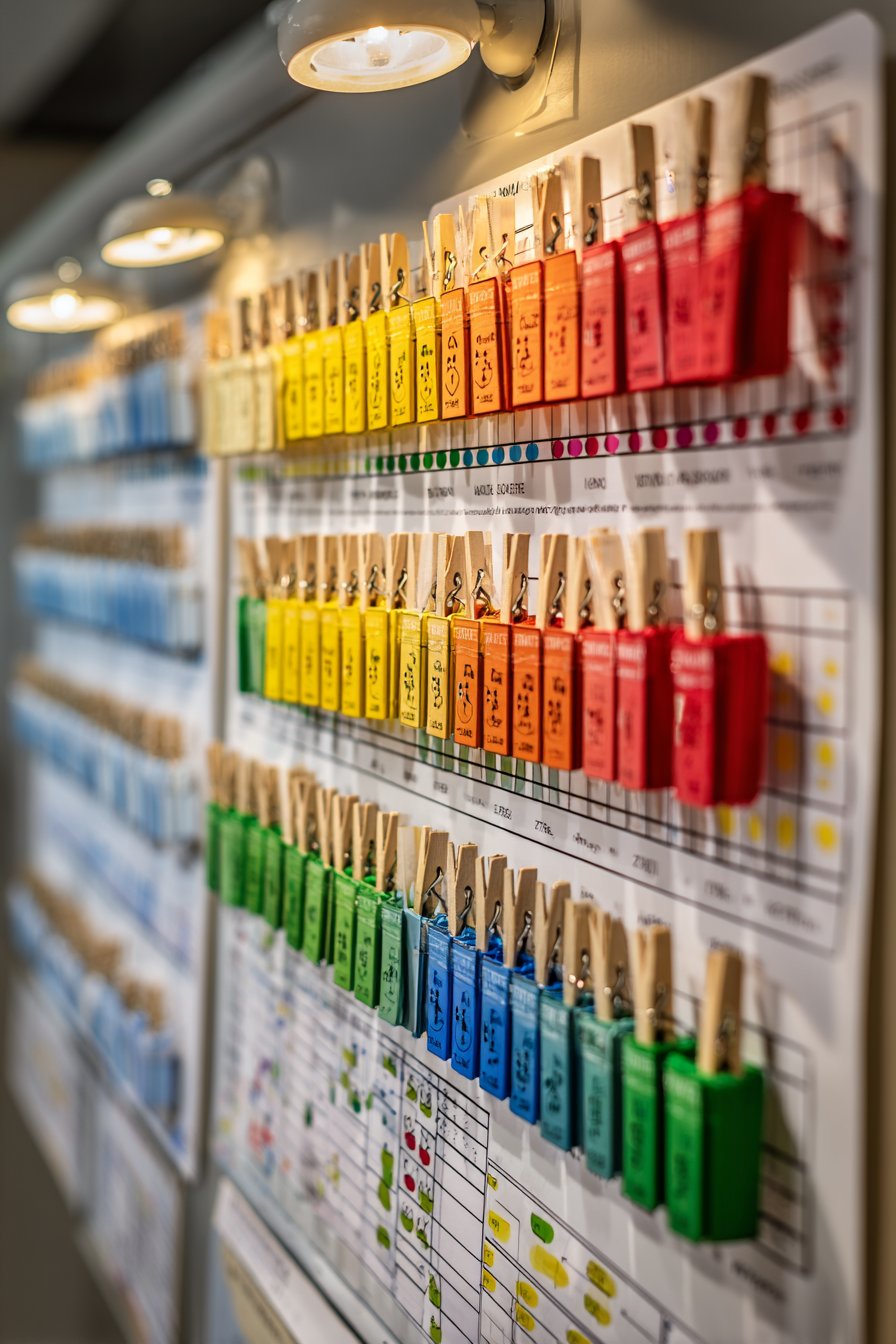
What distinguishes effective behavior management displays from problematic ones is the emphasis on teaching and celebrating rather than merely monitoring and punishing. This system includes clear visual representations of expected behaviors—showing students what respectful listening, safe hallway walking, or kind peer interaction looks like in practice. The moveable clothespins allow for frequent positive movement as students make good choices throughout the day, and many teachers implement “fresh start” periods where all students return to the green section, emphasizing that past mistakes don’t define future potential.
Key Design Tips:
- Position the behavior chart where it’s easily visible to you for efficient updates but not the primary focal point for classroom visitors
- Create clear criteria for moving between sections so the system feels fair and predictable to all students
- Implement regular positive movement opportunities to maintain hope and motivation even for struggling students
- Pair the visual system with private conversations about behavior patterns rather than public callouts
- Include a reflection component where students consider why they made specific choices and plan future improvements
- Consider individual behavior plans for students whose needs aren’t met by a whole-class system
11. Time Management and Calendar Integration
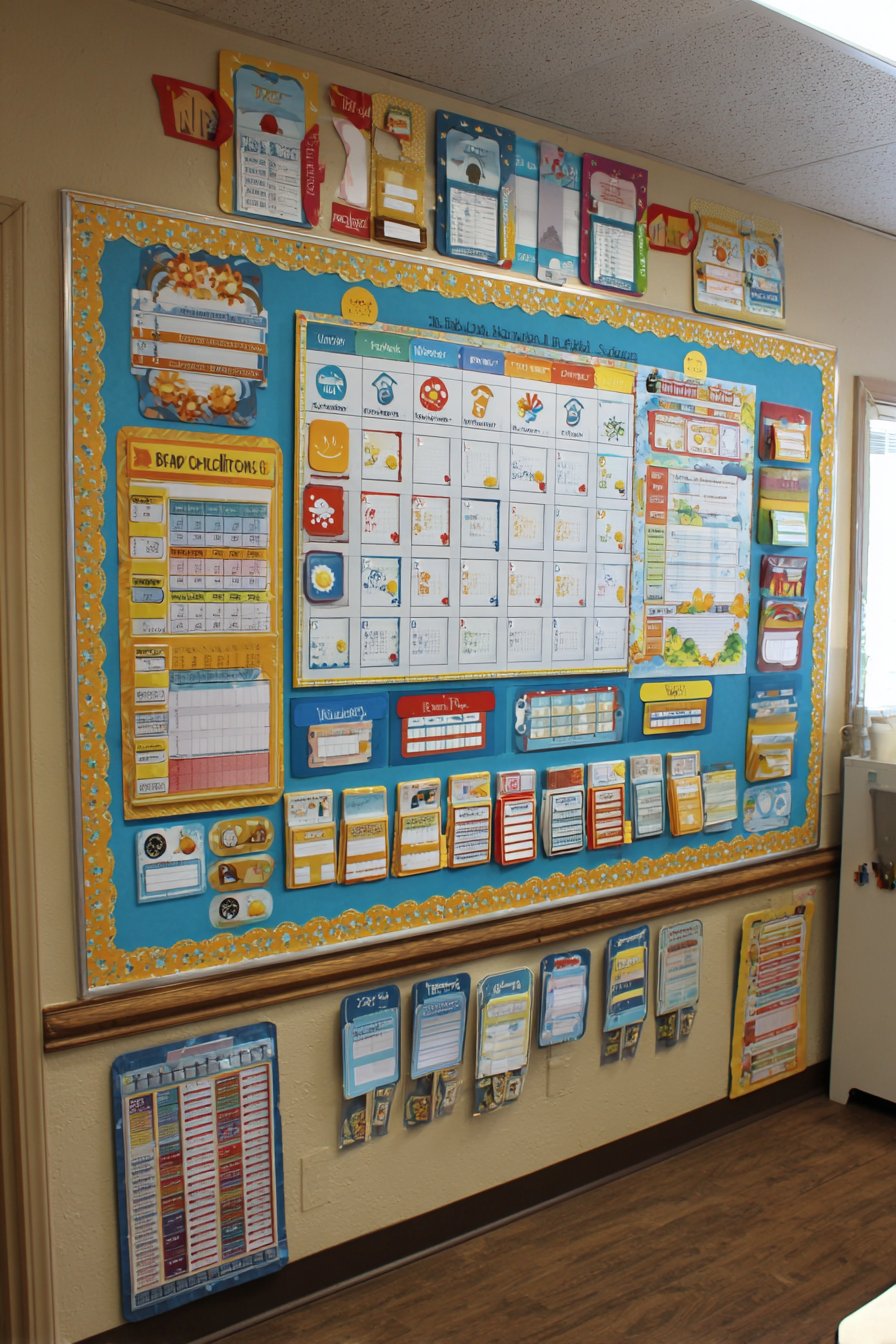
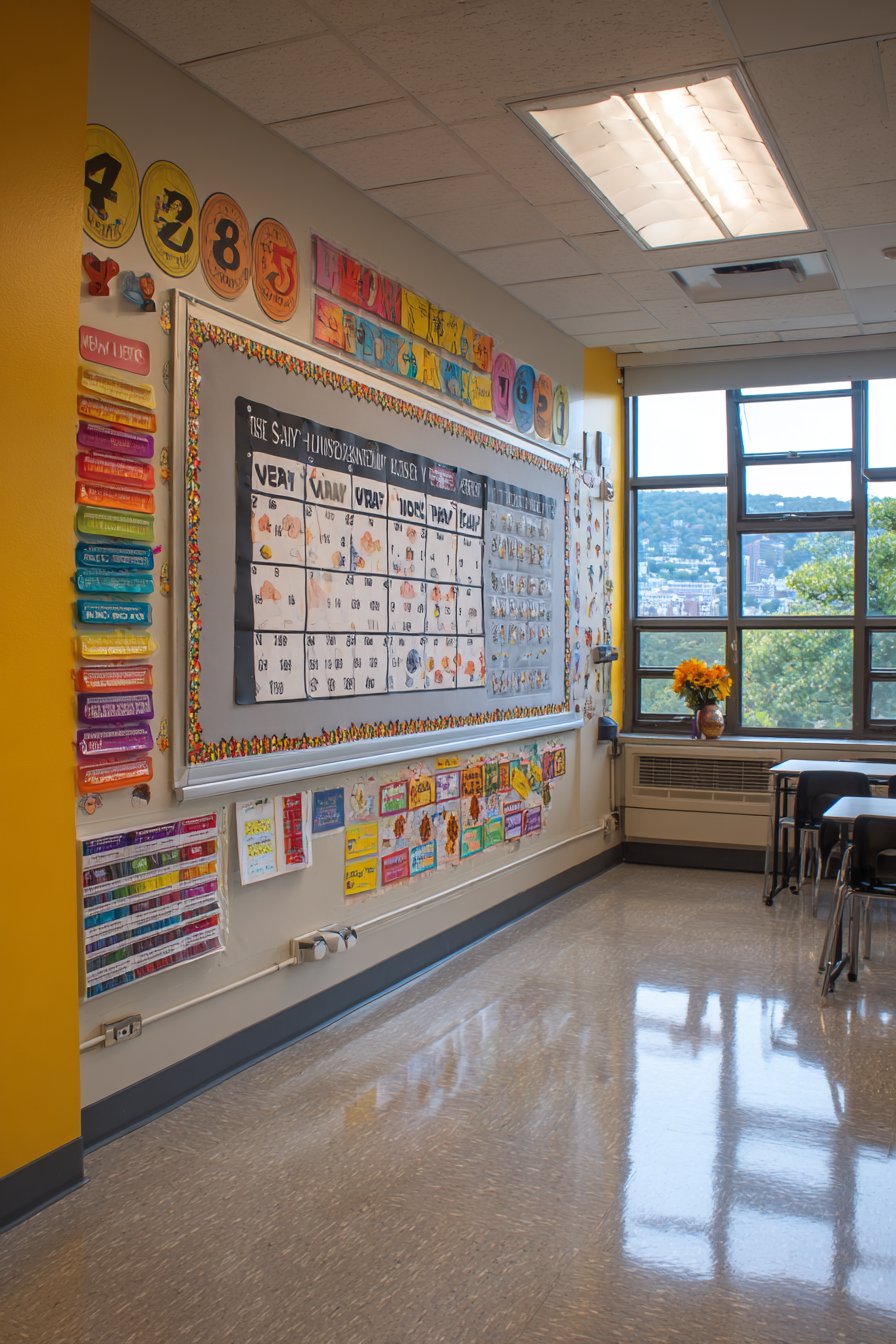
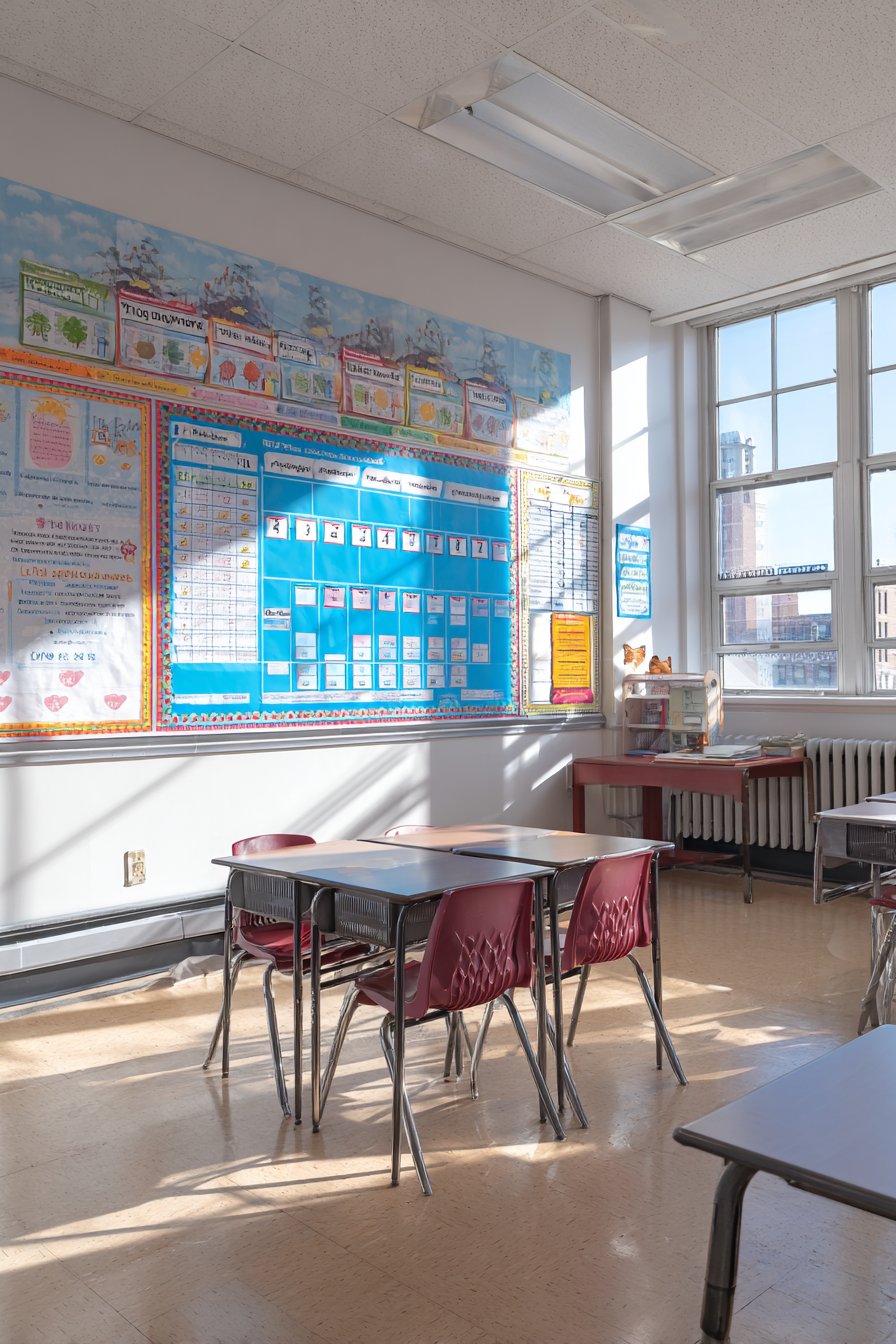
Developing temporal awareness and organizational skills, a comprehensive calendar and schedule display creates essential structure and predictability in the classroom environment. This functional installation features a large monthly calendar with interactive weather tracking where students record daily conditions, special events marked with distinctive icons, and a vertical timeline displaying the daily schedule in accessible visual format. The arrangement incorporates pocket chart days of the week with colorful, moveable number cards and seasonal borders that refresh quarterly to maintain visual interest.
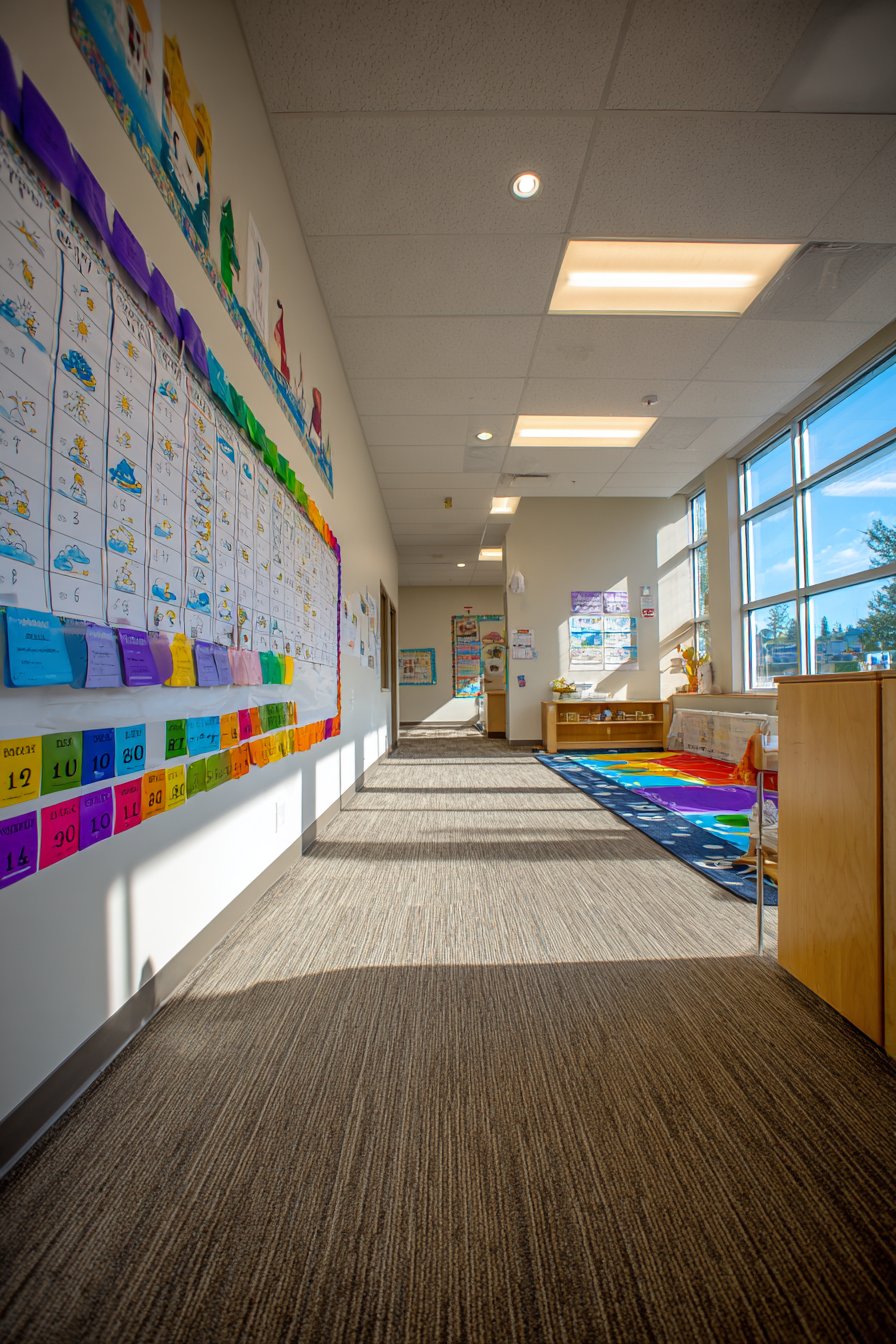
Natural daylight illuminates this functional daily reference area, ensuring clarity throughout the school day as students repeatedly consult the calendar to understand temporal relationships, count days until anticipated events, or review the schedule to prepare for transitions. The centrally located placement—with clear visibility from all student seating areas—ensures that every learner can independently access this crucial information, reducing repeated questions about “what’s happening today” or “how long until lunch.”
The educational value of this display extends far beyond simple date awareness. Students develop mathematical skills through calendar activities like counting, skip counting, and identifying patterns. They build predictive thinking by anticipating upcoming events and preparing accordingly. They learn that time can be measured, organized, and managed—essential executive functioning skills that support academic success across all subject areas. The daily interaction with this wall display creates routine and ritual that builds classroom community and individual confidence.
Key Design Tips:
- Create a consistent daily routine where a student helper updates the calendar date and weather as part of morning procedures
- Use clear, distinctive icons for special events that students can interpret even if reading skills are still developing
- Include yesterday, today, and tomorrow labels that help students understand past, present, and future temporal relationships
- Coordinate seasonal border changes with content curriculum to reinforce learning connections
- Add an analog clock nearby to support time-telling skill development in context
- Consider including a countdown to major events like field trips, performances, or breaks to build anticipation and excitement
12. Professional Student Art Gallery
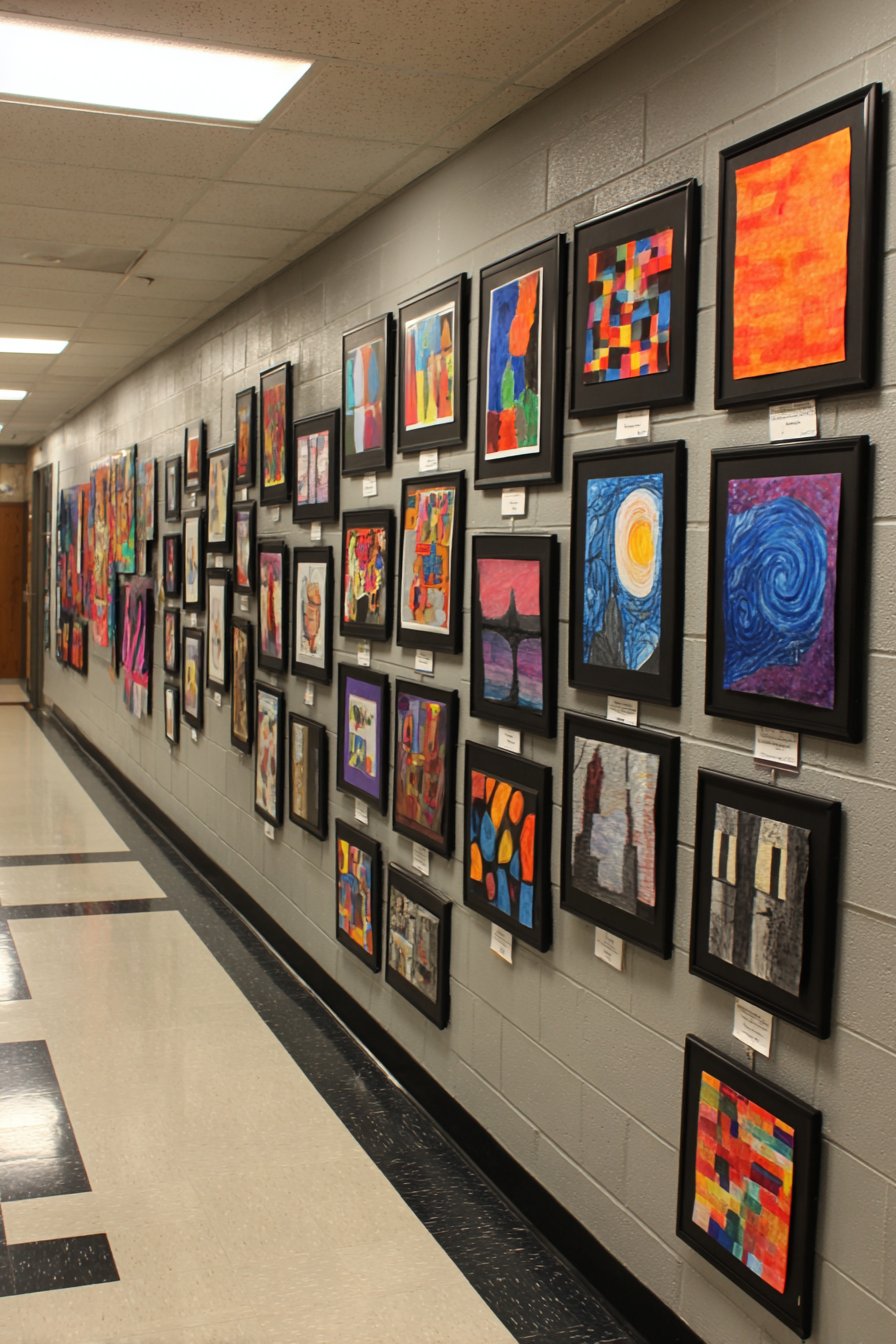
Elevating student artwork to museum-quality presentation creates powerful messages about the value of creative expression and individual artistic voice. This professional gallery installation features student paintings, drawings, and mixed-media projects displayed in uniform black frames that create cohesive visual unity while allowing individual pieces to shine. The clean white wall background provides gallery-like neutrality that emphasizes the colorful artwork itself, while descriptive artist statement cards positioned beneath each piece add context and encourage students to articulate their creative intentions and processes.
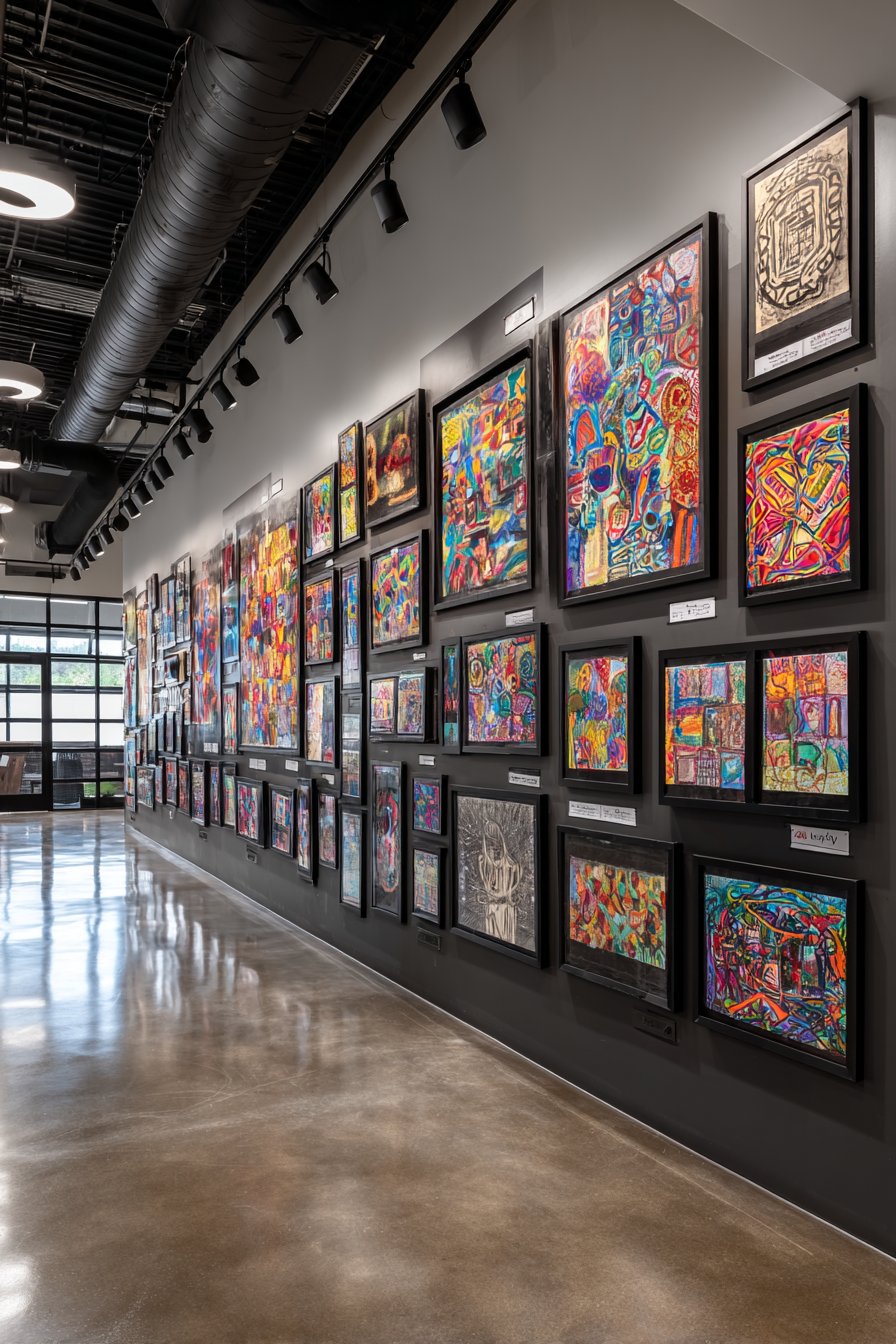
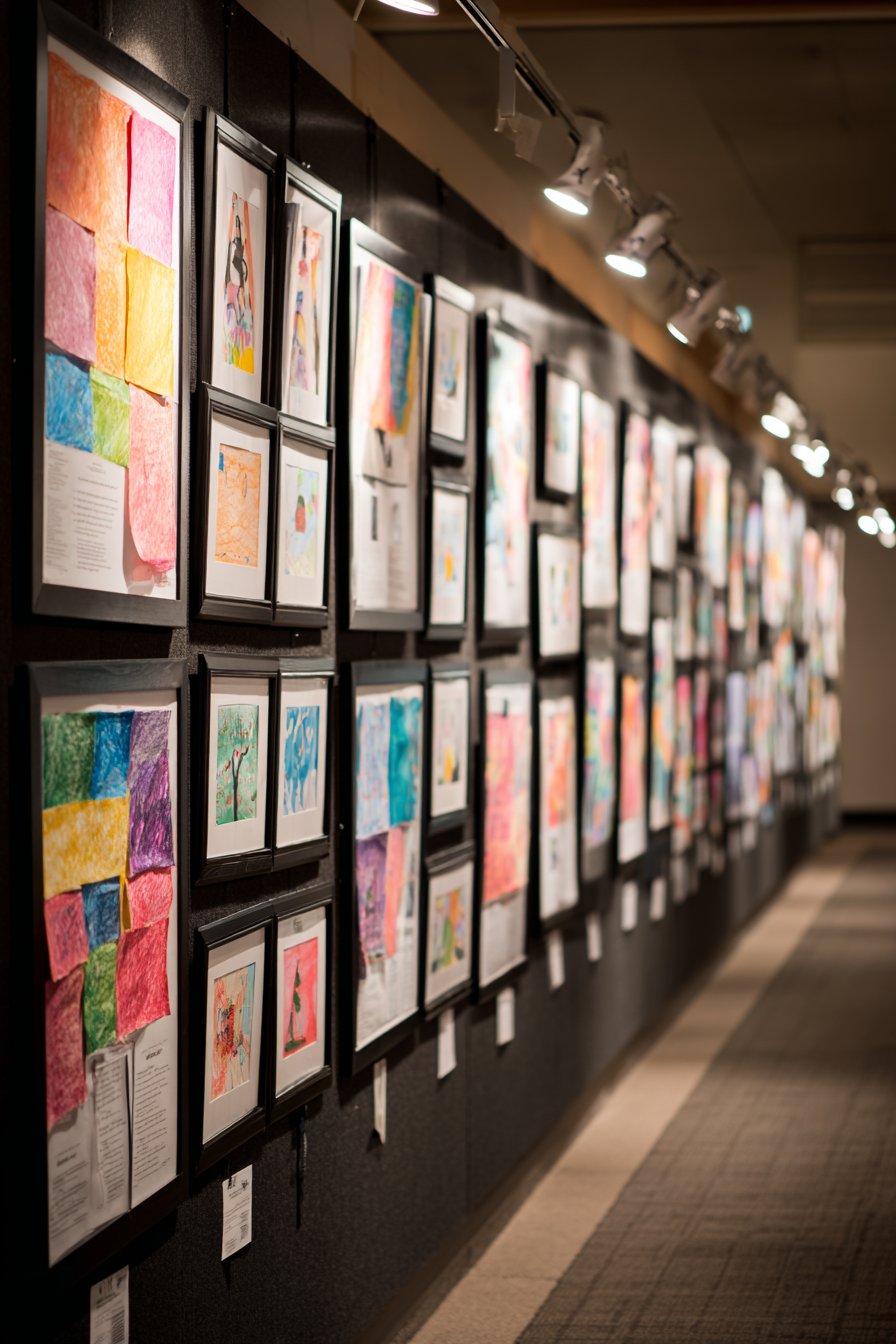
Track lighting creates focused illumination on individual artworks, mimicking professional gallery conditions and teaching students about how lighting affects visual presentation. This professional approach to displaying student work communicates respect for student creativity and effort in ways that simply stapling papers to bulletin boards cannot achieve. The gallery presentation teaches aesthetic appreciation, encourages careful observation of artistic choices, and builds student confidence by treating their work with the same seriousness as professional artists’ creations.
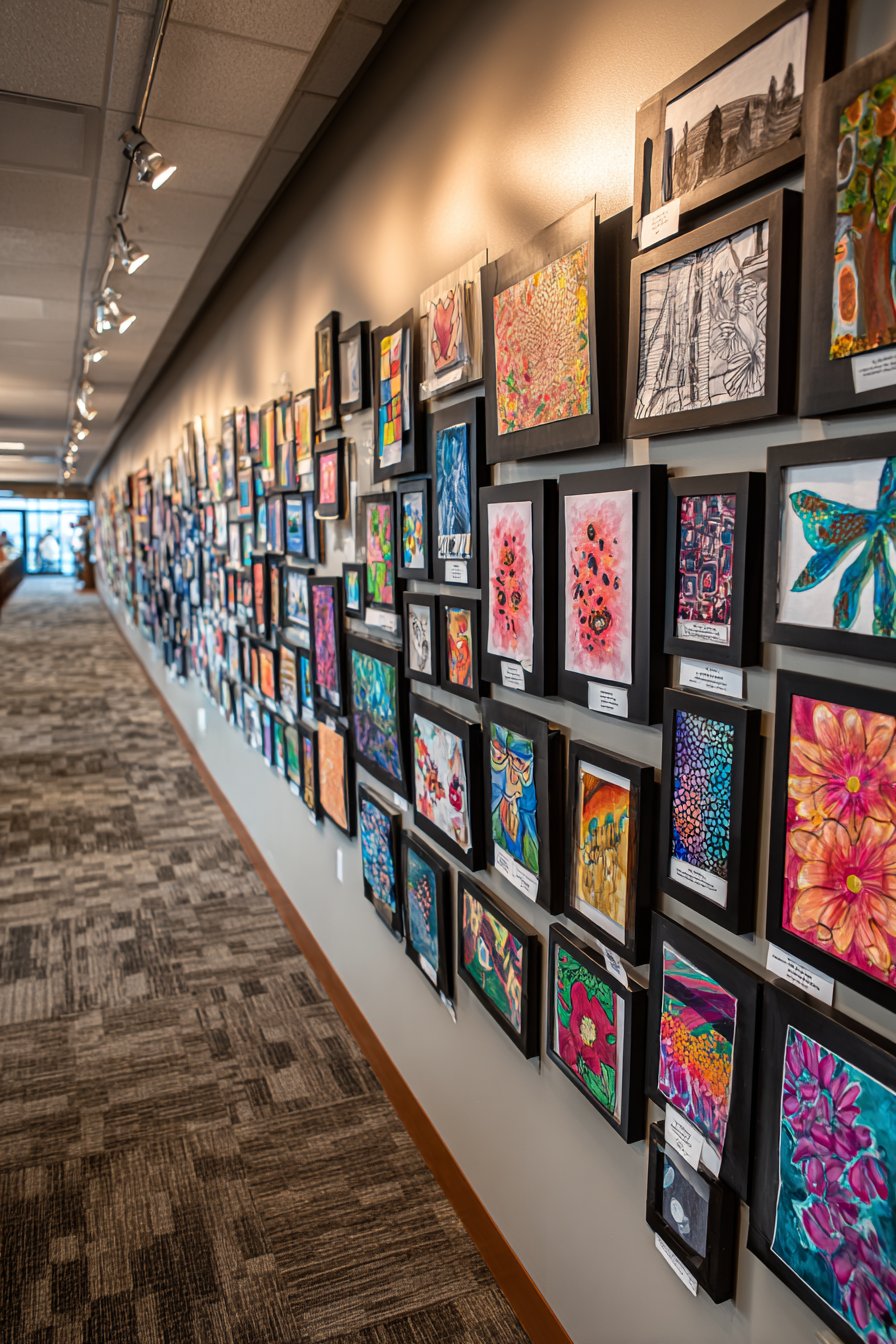
The rotating nature of this gallery—with new exhibitions featuring different students, themes, or techniques throughout the school year—maintains freshness and ensures every student experiences the pride of professional presentation. The museum-style approach can extend to creating opening receptions where students discuss their work with peers and visitors, developing communication skills alongside artistic abilities. This class wall decoration idea demonstrates how thoughtful presentation transforms good work into celebrated achievement.
Key Design Tips:
- Select frames that can easily open for rotating artwork while maintaining consistent size and style for visual coherence
- Create exhibition schedules that ensure equitable representation of all students throughout the year
- Encourage students to write artist statements that explain their inspiration, techniques, and intended meaning
- Include varied art forms and styles to demonstrate that artistic excellence takes many forms
- Position the gallery at adult eye level to signal that this work deserves serious attention and appreciation
- Consider creating opening reception events where student artists can explain their work to an audience
13. Bilingual Learning and Cultural Inclusion Display
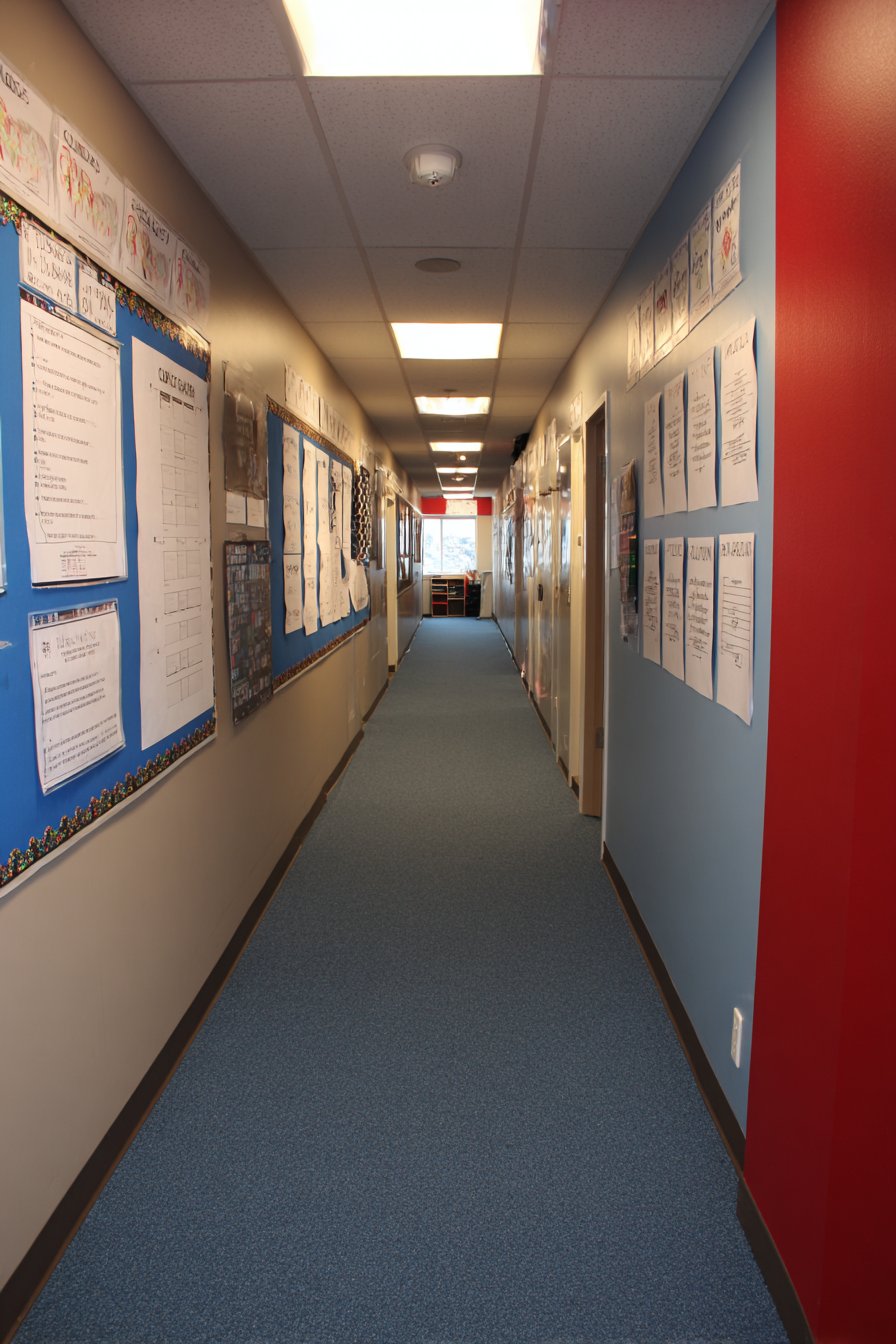
Honoring linguistic diversity while supporting language acquisition, a bilingual classroom display creates an inclusive environment where multiple languages receive equal status and support. This thoughtfully designed installation features dual-language vocabulary posters presenting terms in both Spanish and English, cognate word pairs that highlight linguistic connections and support transfer of knowledge between languages, and cultural celebration banners recognizing holidays and traditions from both linguistic communities. The color-coding system—blue for English terms and red for Spanish equivalents—creates visual organization that helps students quickly identify needed information.
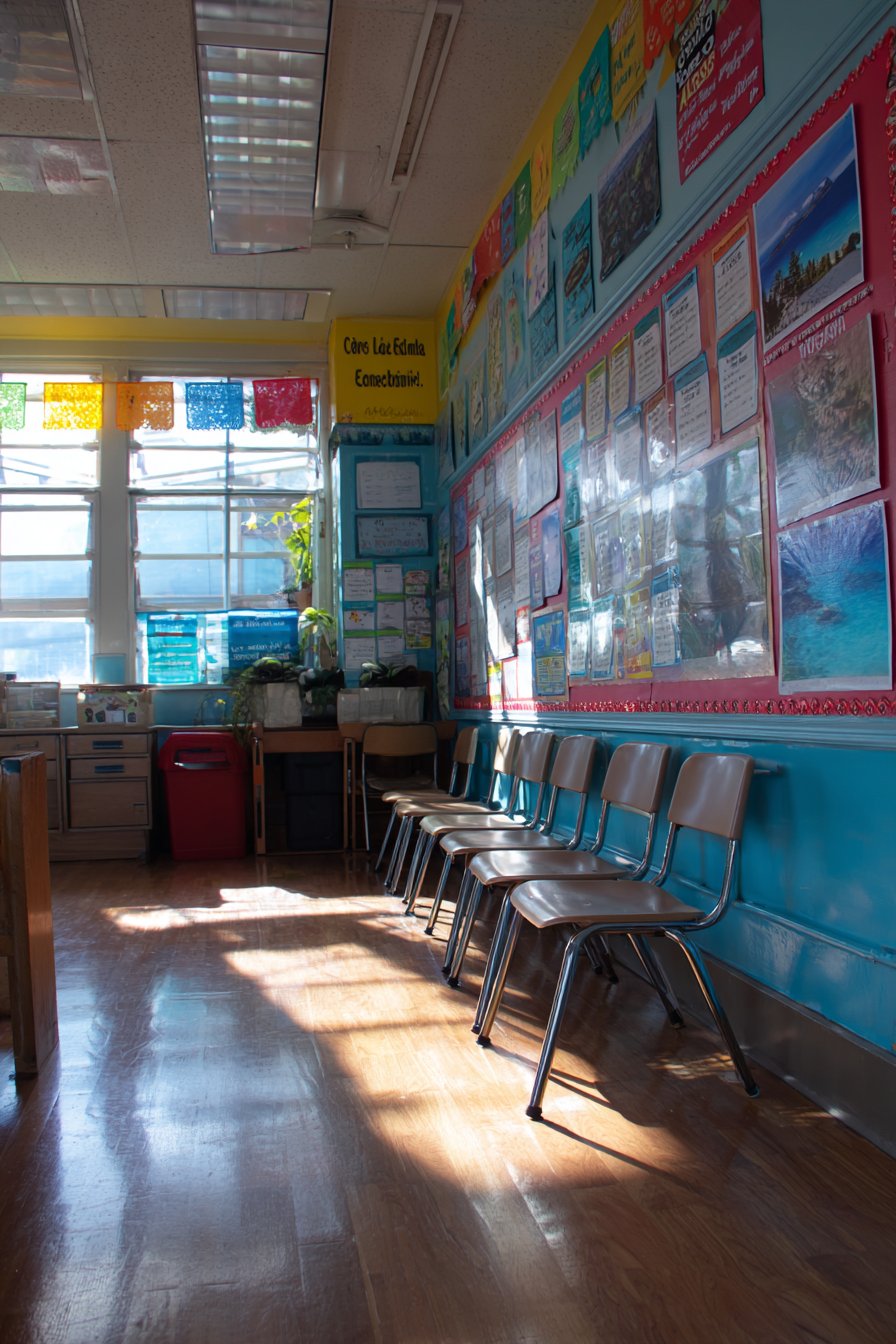
Even classroom lighting provides clear visibility of both languages without creating hierarchy or suggesting one language is more important than another. The laminated materials ensure durability despite constant use as students reference vocabulary throughout the day. The parallel text arrangements teach students to look for patterns and connections between languages rather than viewing them as separate, unrelated systems. For bilingual students, seeing their home language represented prominently validates their cultural identity and linguistic heritage while supporting academic English development.
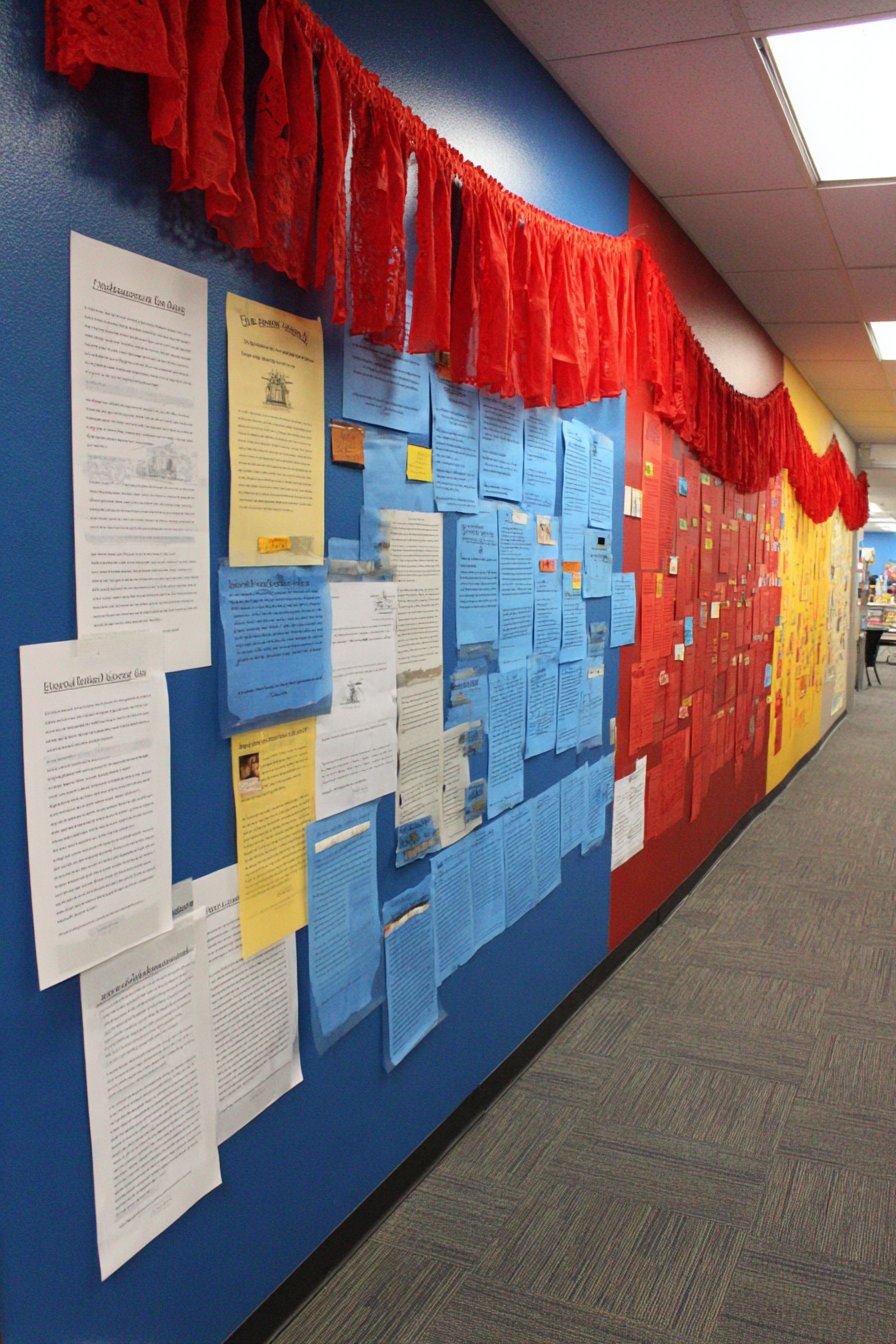
This display serves multiple student populations simultaneously—supporting Spanish-speaking students acquiring English, helping English-speaking students learn Spanish, and teaching all students about linguistic diversity and the value of multilingualism. The inclusion of cultural celebration elements extends the learning beyond mere vocabulary to encompass traditions, values, and worldviews associated with different linguistic communities. This approach transforms class wall decoration into a powerful equity tool that ensures all students see themselves and their languages represented and valued.
Key Design Tips:
- Ensure equal prominence and quality of materials in both languages to avoid suggesting one is more valuable
- Include accurate accent marks and special characters to model proper written form in both languages
- Organize cognate displays to help students recognize patterns and transfer learning between languages
- Rotate cultural celebration elements to represent diverse holidays and traditions throughout the year
- Consider adding additional languages represented in your classroom community to further expand inclusivity
- Partner with bilingual family members to ensure cultural and linguistic authenticity in your displays
14. Student Responsibility and Classroom Jobs System
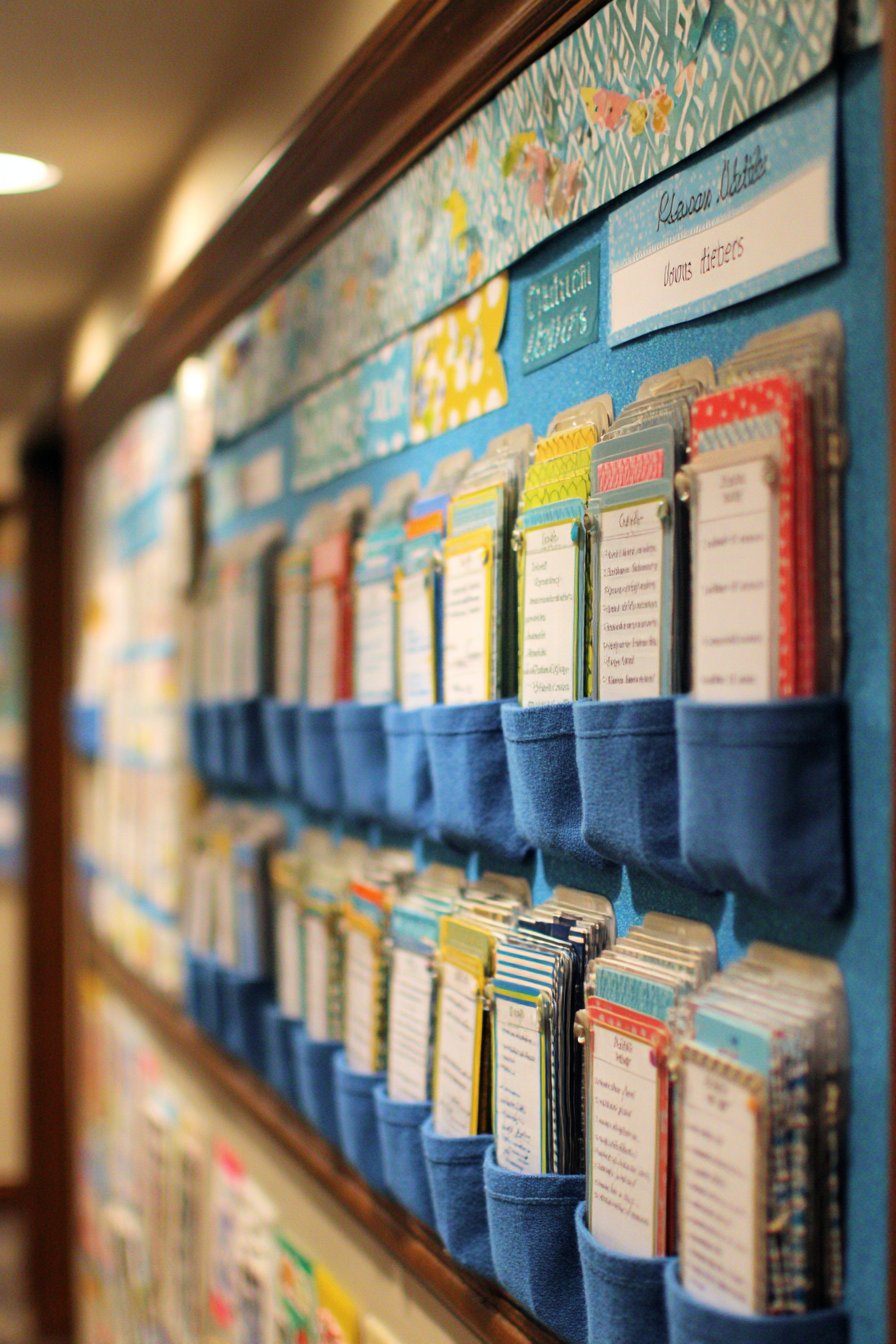
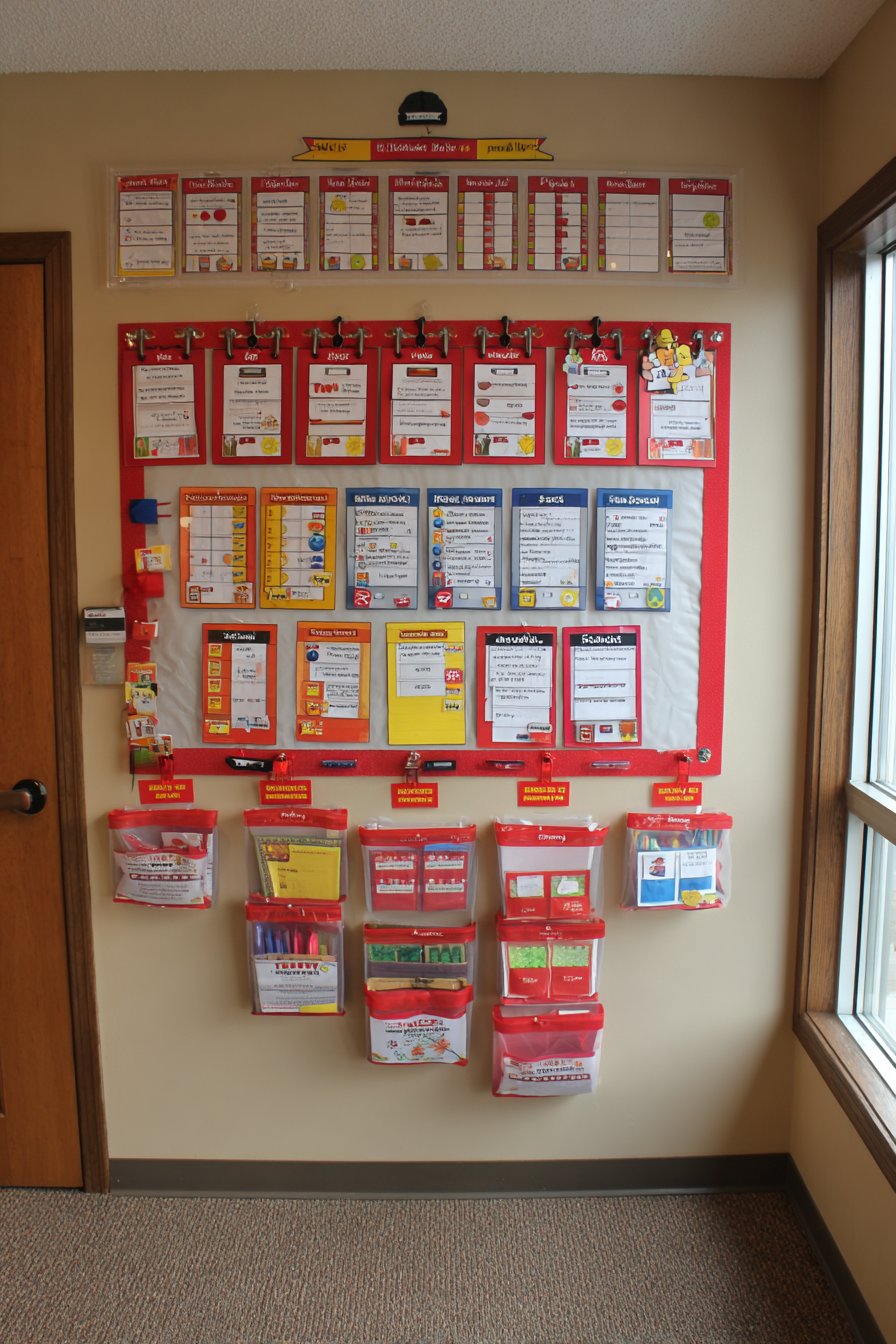
Developing ownership and accountability, a visual classroom jobs display transforms daily responsibilities into opportunities for contribution and leadership. This interactive system features an illustrated job chart with student names on moveable clips, detailed job descriptions with visual representations of tasks, and a transparent rotation schedule ensuring equitable distribution of opportunities throughout the year. Pockets hold job badges that students wear while performing their duties, creating visible accountability and pride in contribution. The “Classroom Helpers” header with cheerful graphics frames the display in positive, service-oriented language.
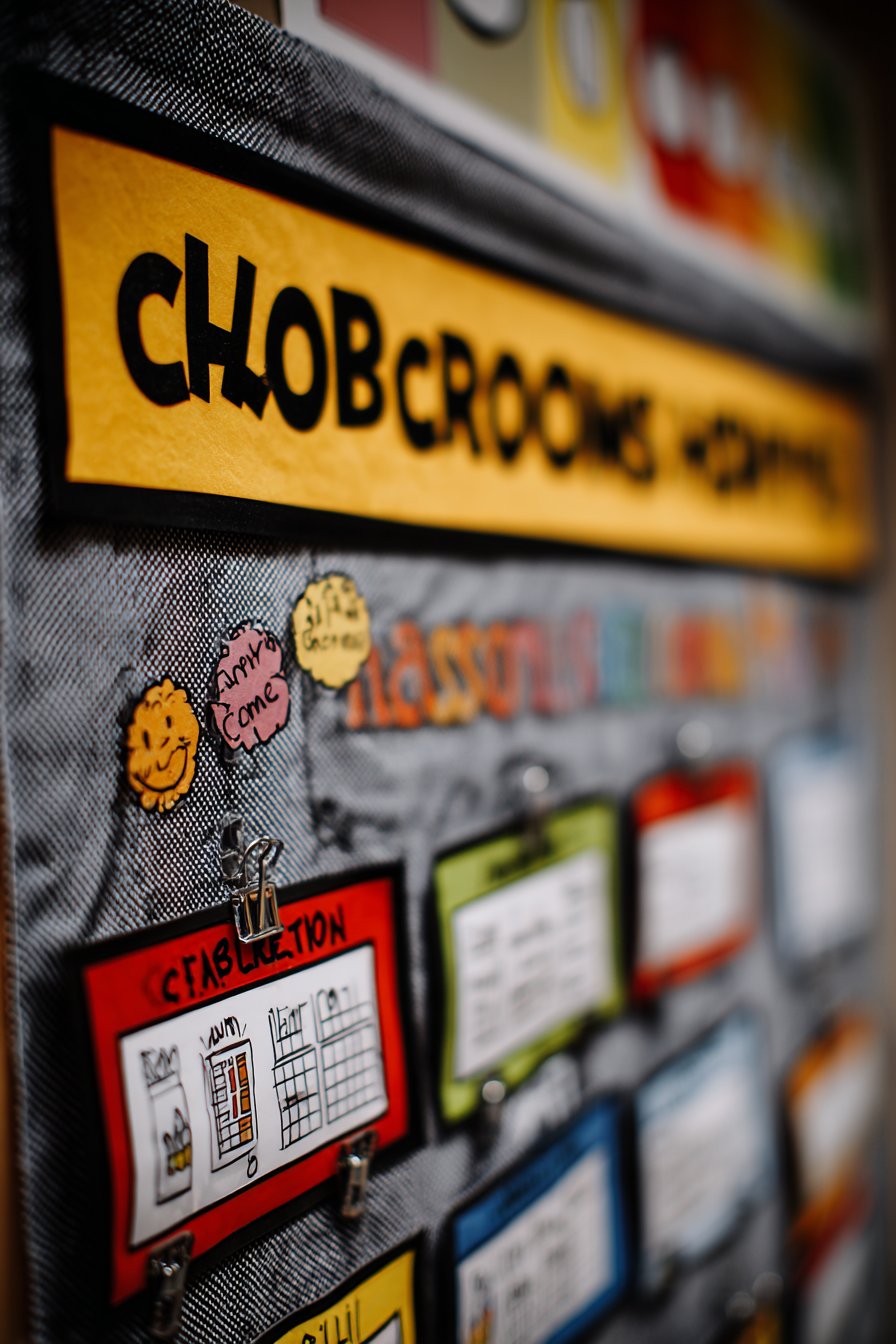
The fabric backing with Velcro attachments creates flexibility for adjusting jobs as classroom needs change or as students develop new capabilities. Soft overhead lighting ensures clear visibility without creating harsh shadows that might obscure information. The interactive organizational system encourages student independence—learners can check their current responsibilities without asking the teacher, prepare for upcoming jobs by reviewing descriptions, and take initiative in completing their assigned tasks.
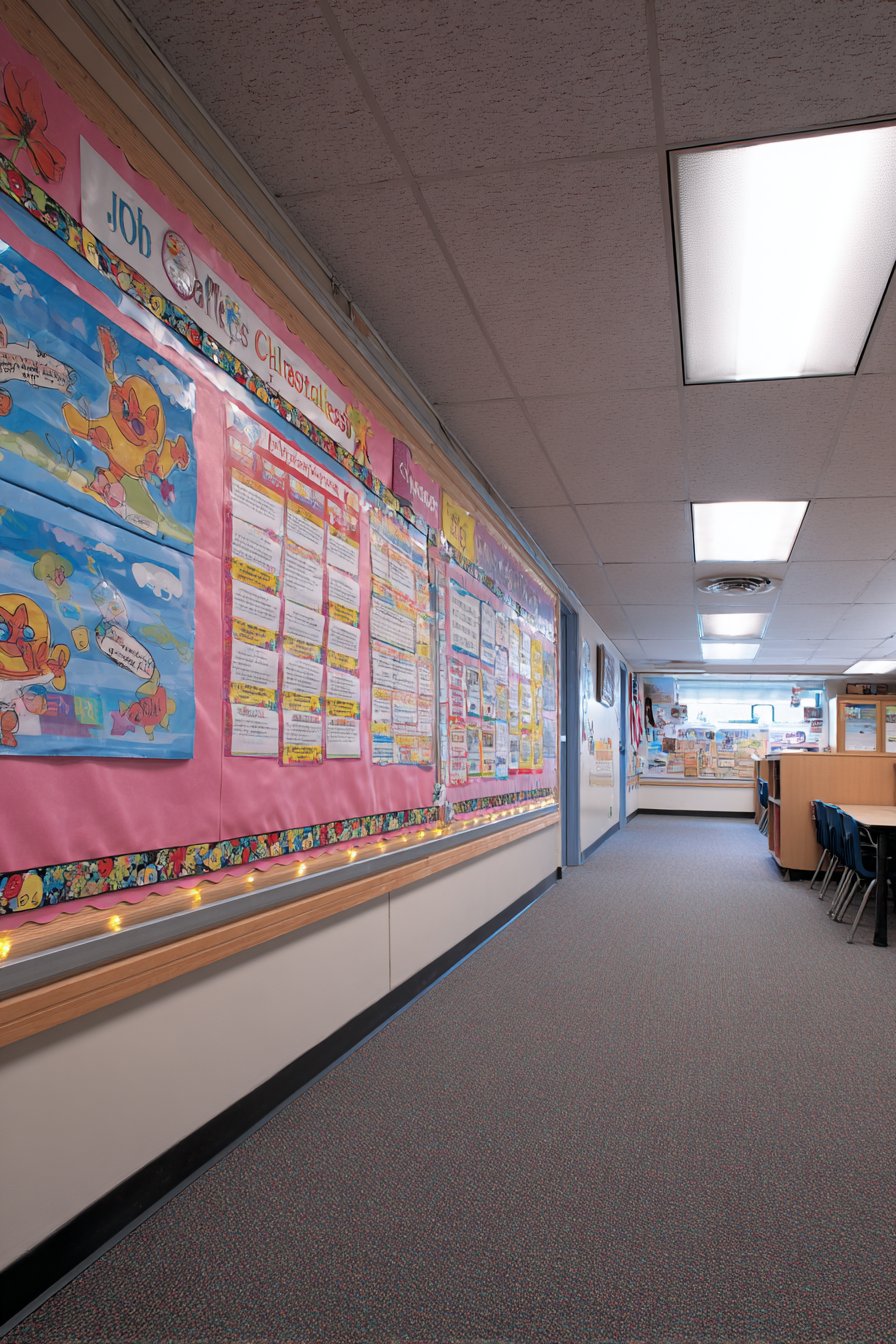
This class wall decoration idea serves crucial developmental purposes beyond mere classroom management. Students learn that communities function through shared responsibility, develop work ethic and follow-through, practice time management and task completion, and experience the satisfaction of meaningful contribution. The visual nature of the display—with clear job descriptions and rotation schedules—reduces confusion and conflict while teaching organizational systems that students will encounter throughout their academic and professional lives.
Key Design Tips:
- Create job descriptions that are clear, specific, and include both the task and the expected standard of completion
- Design a rotation system that ensures every student experiences various jobs throughout the year, building diverse skills
- Include both simple and complex jobs to provide appropriate challenges for different developmental levels
- Update job offerings as the school year progresses and students develop new capabilities and classroom needs evolve
- Celebrate exceptional job performance with specific recognition to reinforce desired work habits
- Consider student input when creating new jobs or modifying existing ones to build ownership and relevance
15. Writing Process and Workshop Reference Wall
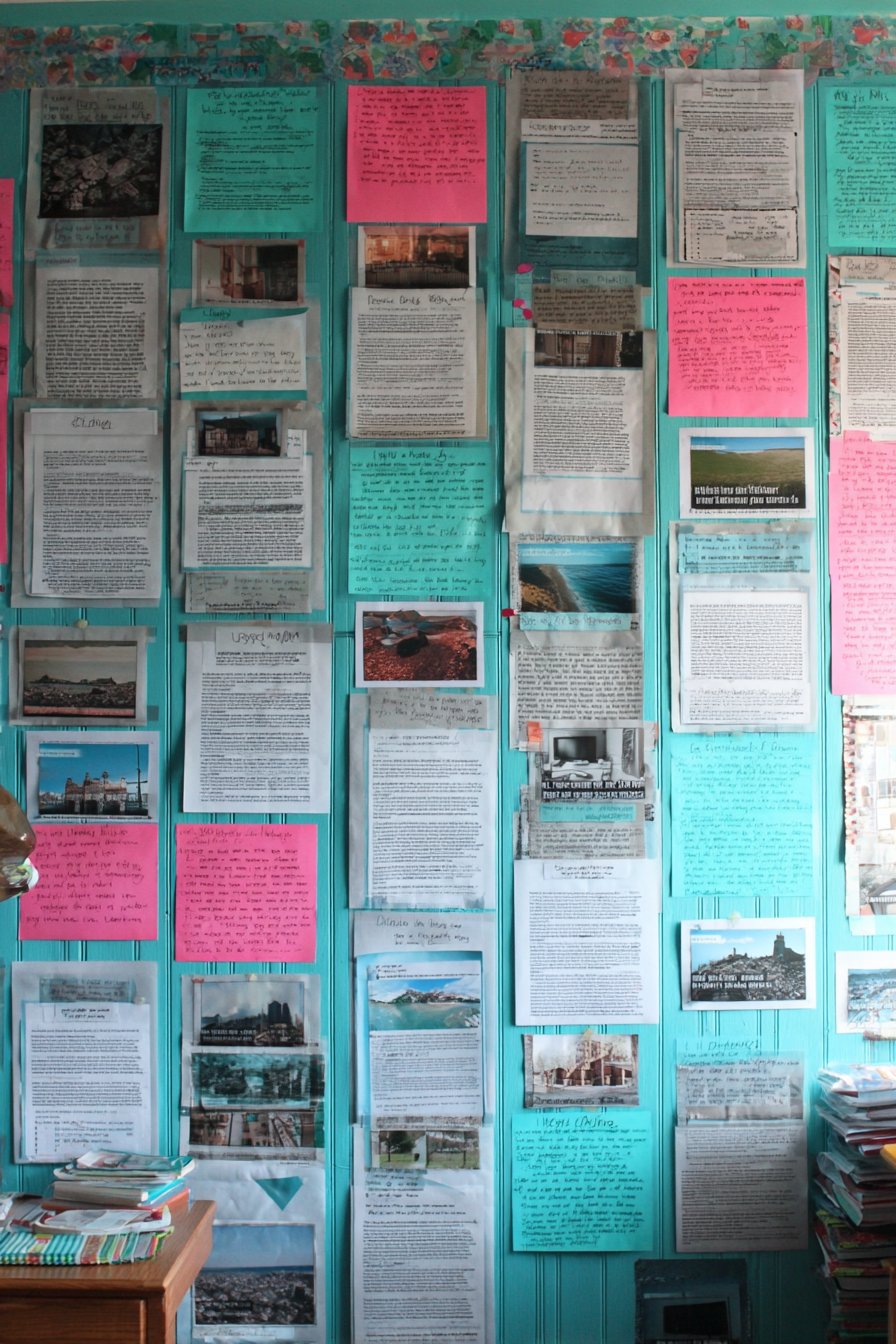
Supporting developing writers through every stage of composition, a writing process wall provides visual scaffolding that transforms abstract instruction into concrete, accessible strategies. This comprehensive display features anchor charts for each writing stage—brainstorming, drafting, revising, editing, and publishing—with detailed visual flowcharts and student exemplars demonstrating what success looks like at each level. The vertical timeline arrangement mirrors the sequential nature of the writing process while the consistent color-coding helps students quickly identify the stage they’re working within.
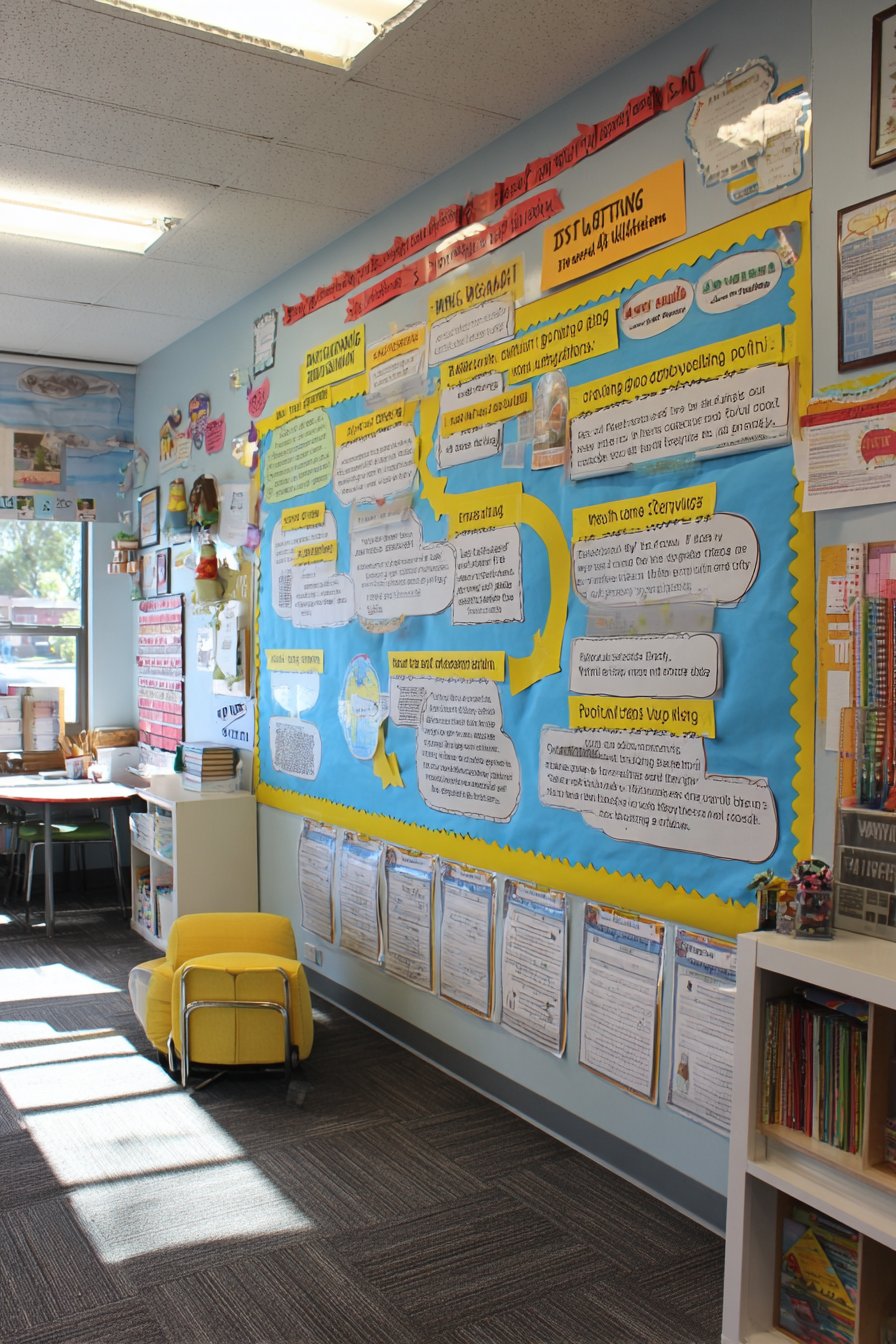
Balanced classroom lighting illuminates each stage equally, preventing any phase from appearing less important or accessible. The laminated charts withstand constant consultation as students reference strategies, check their progress through the writing process, and review exemplars for inspiration. The sequential instructional design teaches that quality writing emerges through process rather than single-draft perfection, reducing anxiety while building skills systematically. The inclusion of multiple student examples at each stage demonstrates that strong writing takes many forms and celebrates diverse voices and approaches.
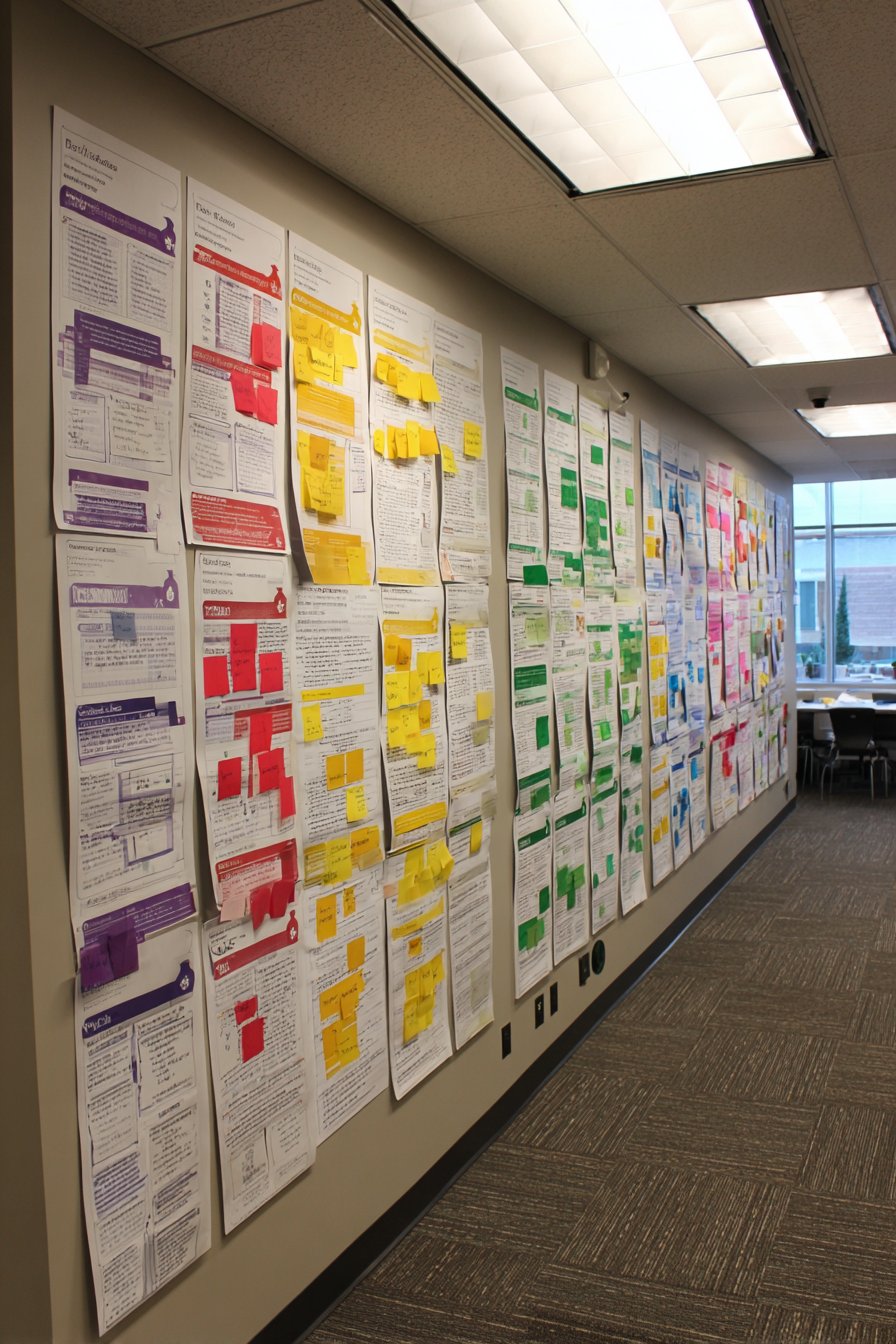
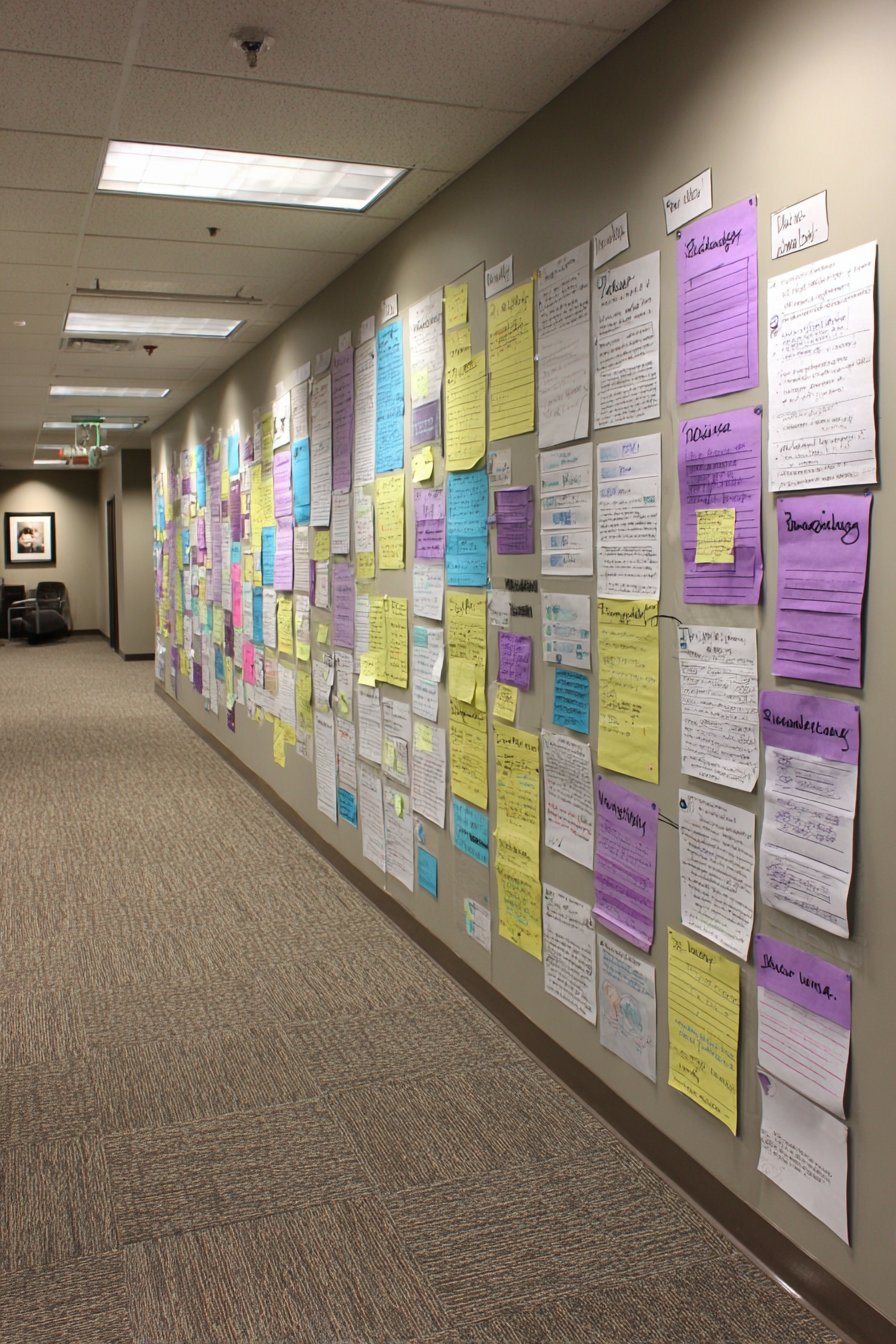
This writing workshop reference wall becomes increasingly valuable as students internalize the writing process and develop independence in applying strategies without teacher prompting. The visual accessibility—with clear graphics, color-coding, and examples—supports diverse learners including visual processors, English language learners, and students who benefit from repeated exposure to information in multiple formats. The permanent nature of these displays creates consistency and predictability that supports skill development over time.
Key Design Tips:
- Use consistent color-coding throughout the writing process display to help students quickly identify relevant information
- Include genuine student work examples rather than teacher-created samples to demonstrate achievable expectations
- Update exemplars periodically to reflect current students’ work and maintain relevance and engagement
- Position the display near writing areas where students can easily reference it during independent work time
- Create accompanying anchor charts for genre-specific writing elements that can be displayed during relevant units
- Encourage students to photograph the display or create personal reference guides for use during writing time
16. Birthday Celebration and Community Building Display
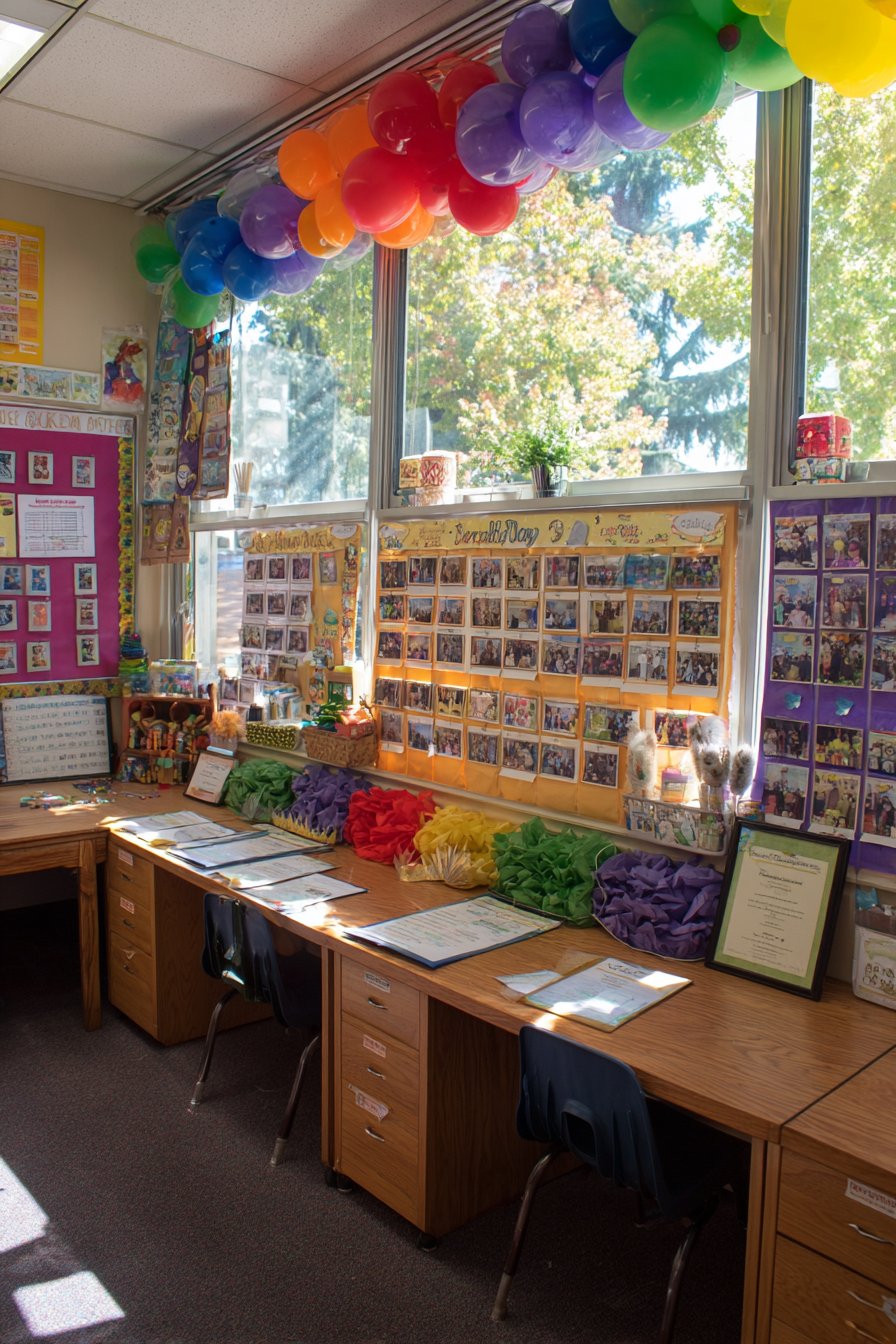
Creating inclusive celebration opportunities, a birthday recognition wall builds classroom community while honoring individual students throughout the year. This welcoming display features a monthly birthday calendar with individual student photos, colorful balloon cutouts adding festive energy, and a “Celebrate Our Class” banner rendered in cheerful colors that frame the entire display. The arrangement includes a special birthday crown display available for the honored student to wear on their special day and recognition certificates that create lasting keepsakes of classroom celebration.
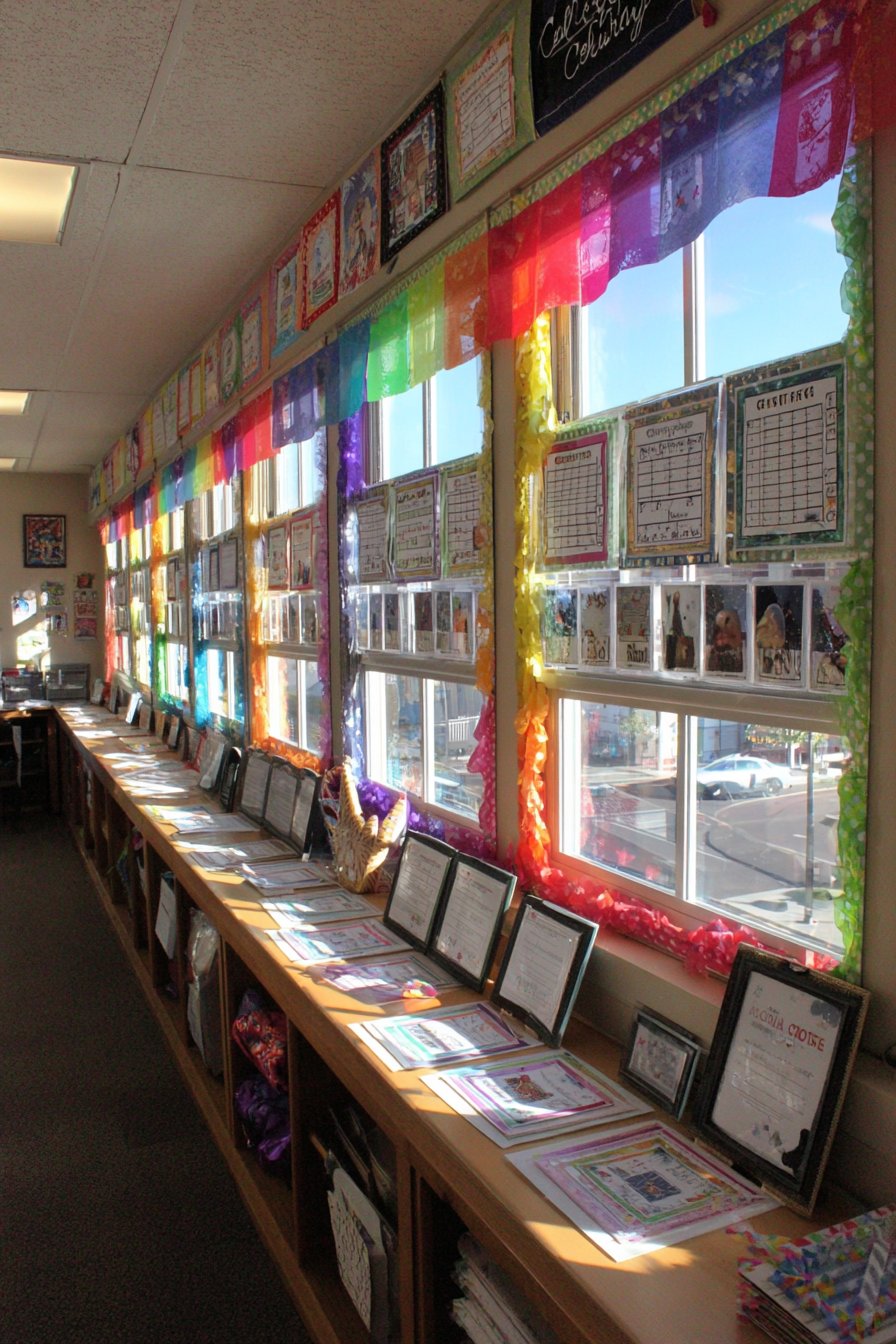
Colorful paper borders create visual excitement appropriate to celebratory purposes while natural window light generates a cheerful atmosphere that enhances the positive feelings associated with birthdays and recognition. The inclusive design ensures every student receives equal celebration regardless of when their birthday falls, with special provisions for summer birthdays celebrated during the school year. The personal touches—individual photos, hand-decorated balloon cutouts, personalized recognition—communicate that each student is a valued member of the classroom community.
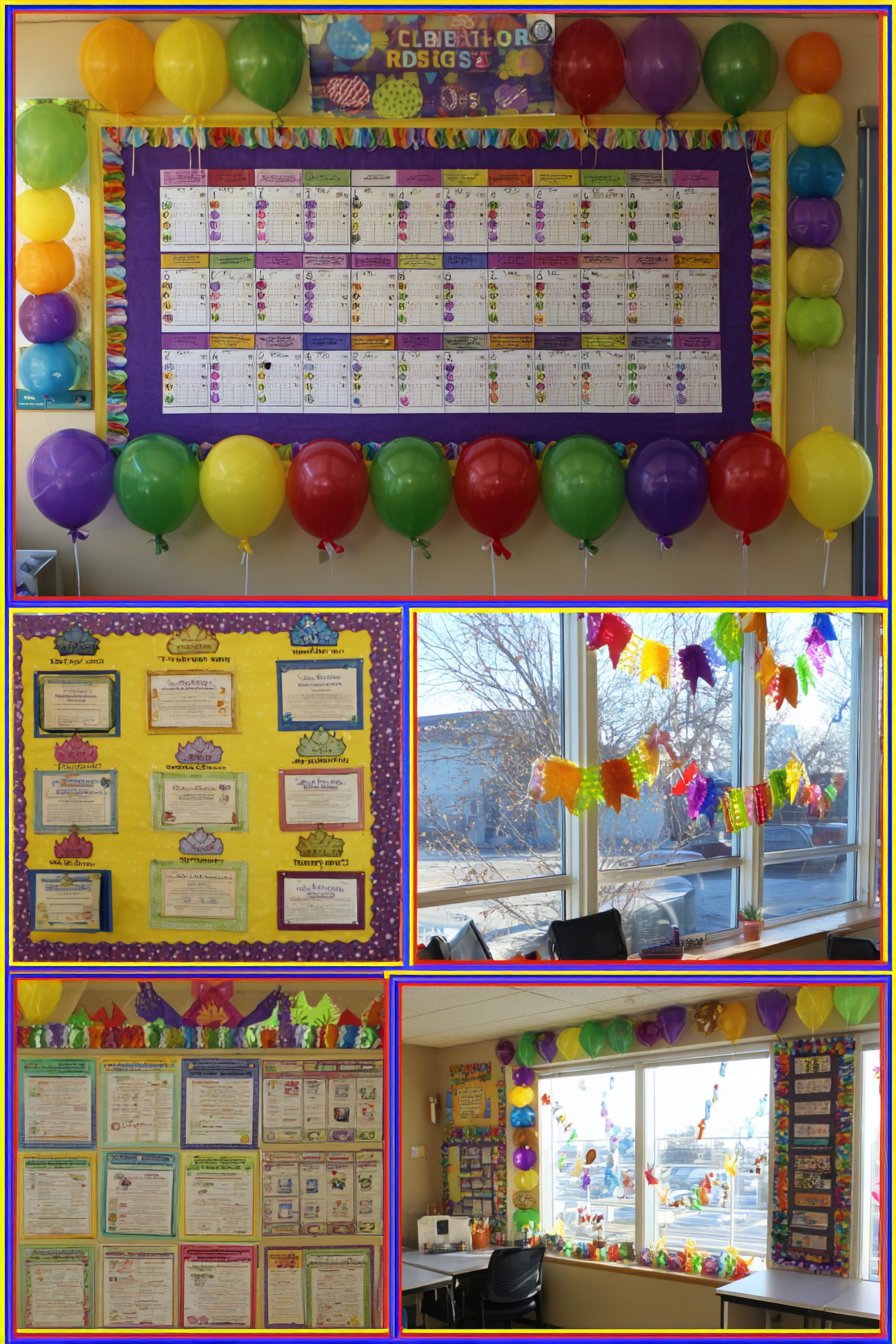
This community-building display serves social-emotional purposes that extend far beyond birthday celebration. It teaches students that their classroom is a place where individuals are recognized and celebrated, builds anticipation and positive expectations throughout the school year, creates rituals and traditions that define the classroom culture, and provides natural opportunities for expressing kindness through birthday wishes and recognition. The visual prominence of the birthday wall communicates that personal milestones matter within this learning community.
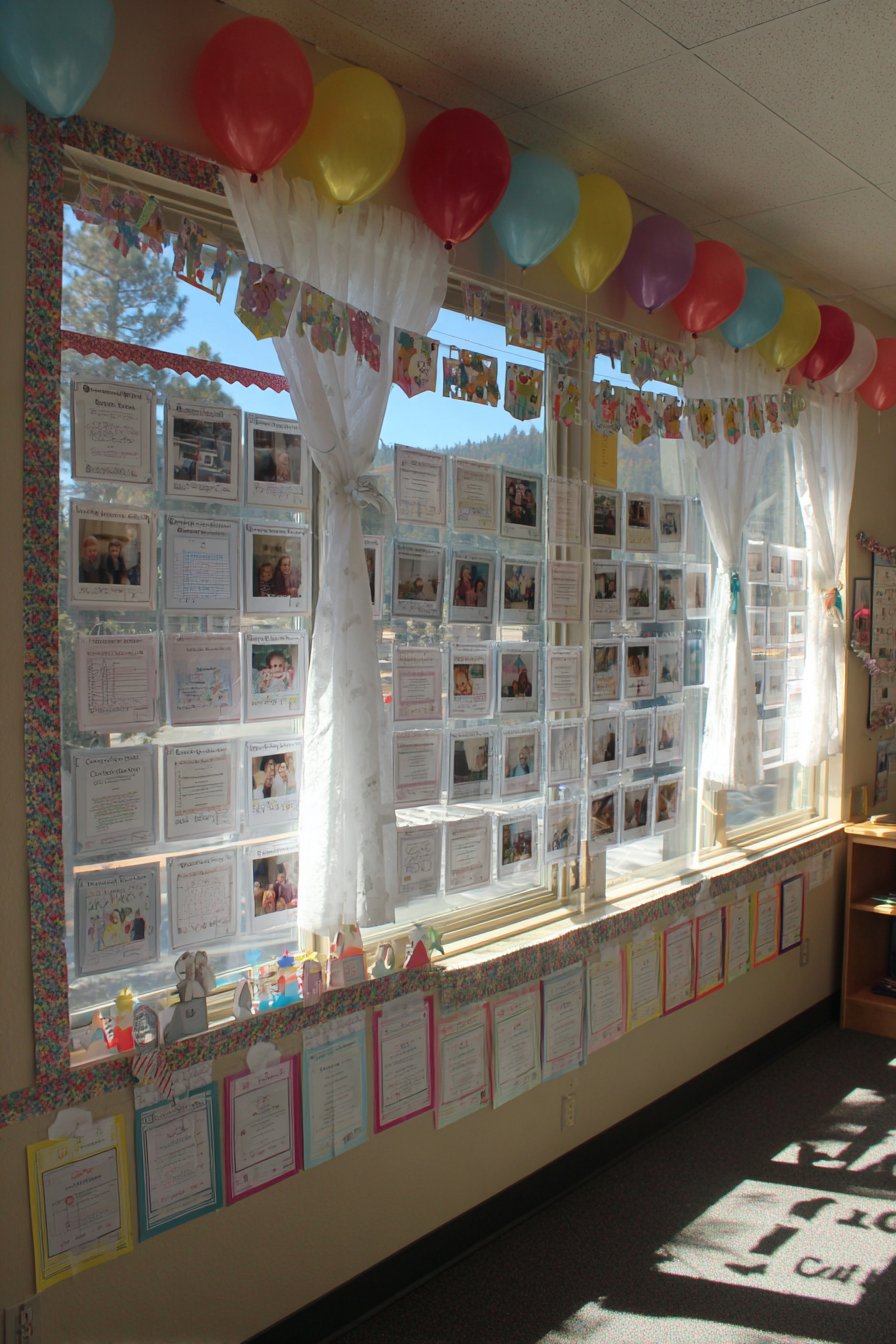
Key Design Tips:
- Photograph students specifically for the birthday display at the beginning of the year when everyone looks fresh and excited
- Create a consistent birthday celebration ritual that honors each student in similar ways to ensure equity
- Include culturally responsive options for students whose families don’t celebrate birthdays for religious or cultural reasons
- Plan for summer birthdays by selecting “half-birthday” dates or creating a special “summer birthday” celebration month
- Involve students in decorating new balloon cutouts each month as a creative activity that builds anticipation
- Consider adding a section celebrating other important personal milestones like lost teeth, new siblings, or personal achievements
17. Genre-Organized Classroom Library Display
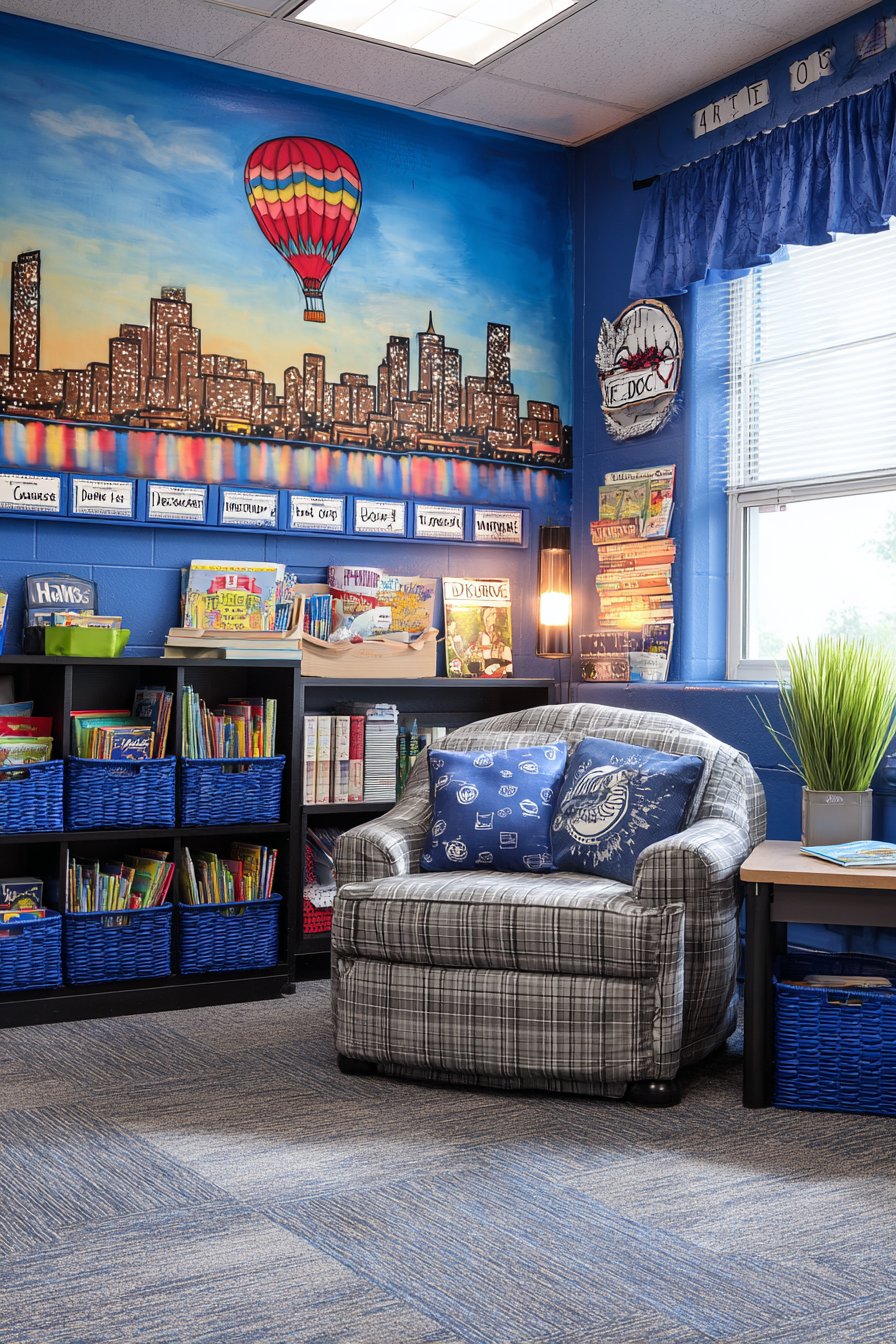
Transforming book access into an inviting and organized system, a comprehensive classroom library wall display creates a literacy-rich environment that encourages reading exploration and independence. This thoughtfully designed installation features clearly labeled genre sections with visual icons, reading level indicators that guide appropriate book selection, and a vibrant “Books Are Adventures” mural populated with illustrated literary characters that inspire excitement about reading. Wall-mounted book display shelves showcase popular titles with covers facing forward—utilizing the principle that book covers sell books—while coordinating basket organization below provides additional storage sorted by genre, series, or reading level.
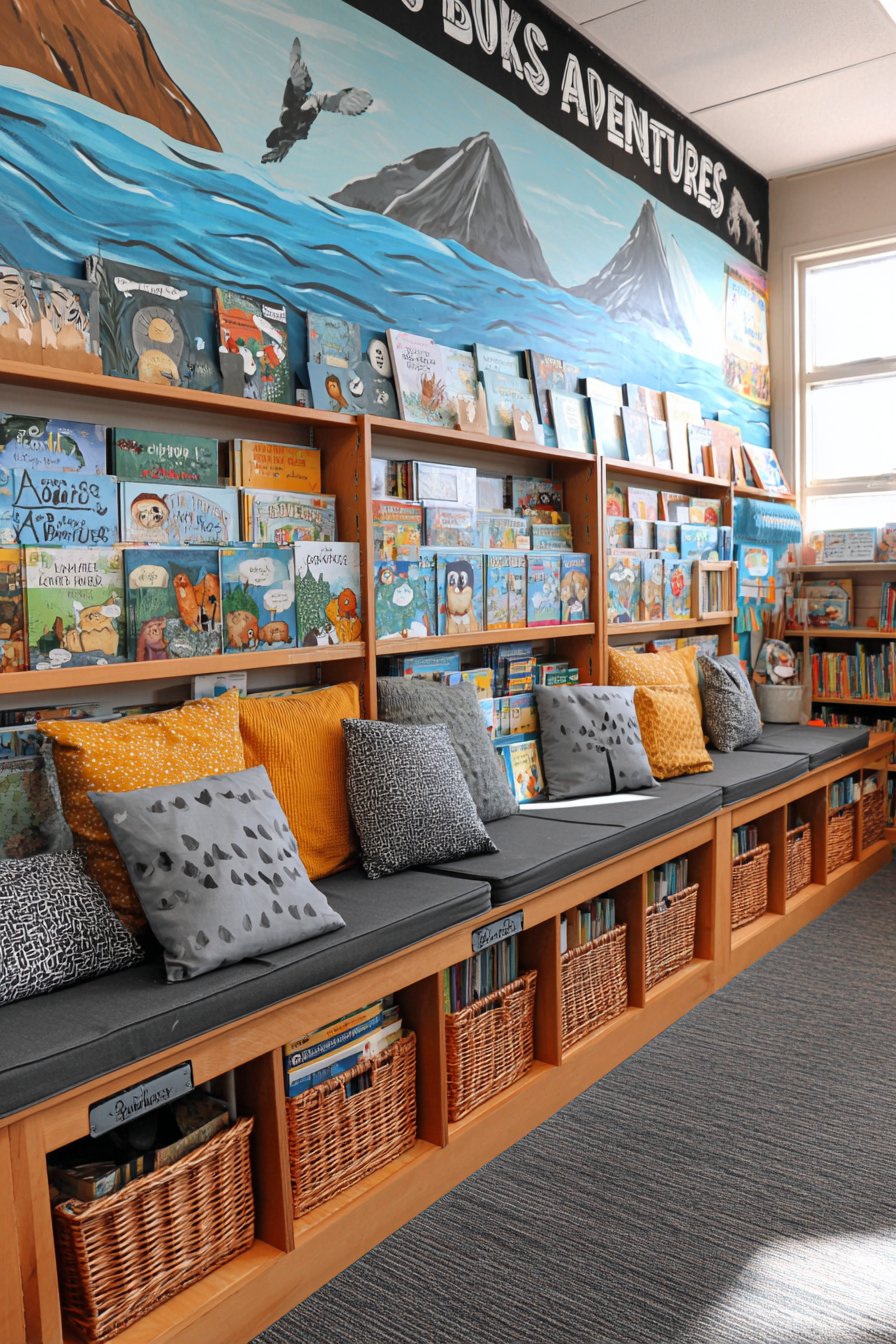
The reading area integration includes a comfortable seating nook with pillows, cushions, or bean bags positioned near the library display, creating an inviting destination that beckons students to select books and settle in for reading time. Warm ambient lighting creates a cozy reading atmosphere while ensuring sufficient illumination for comfortable reading without eye strain. The professional organization teaches students that books are valuable resources deserving careful categorization and respectful handling, while the accessible arrangement supports independent book selection and returns.
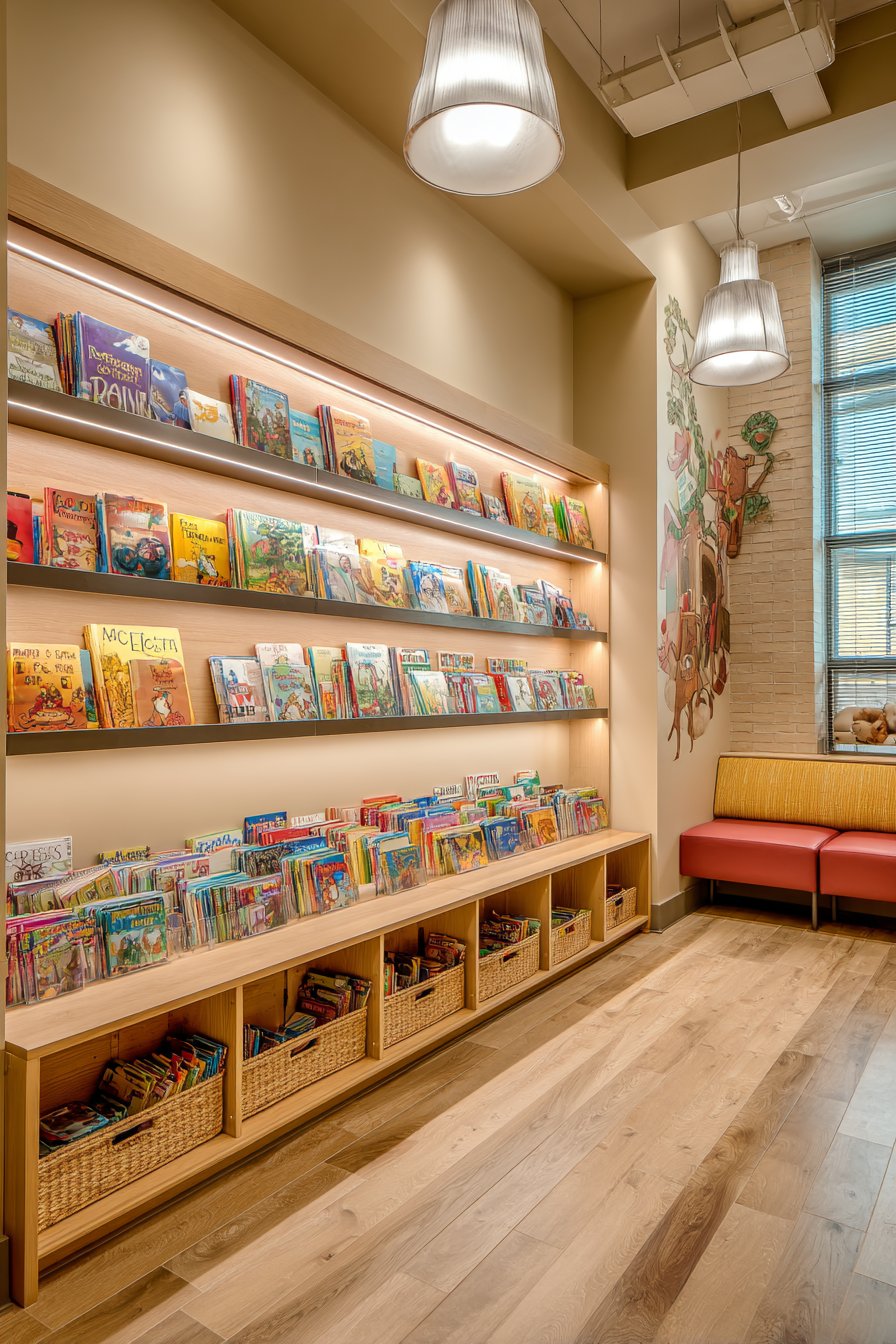
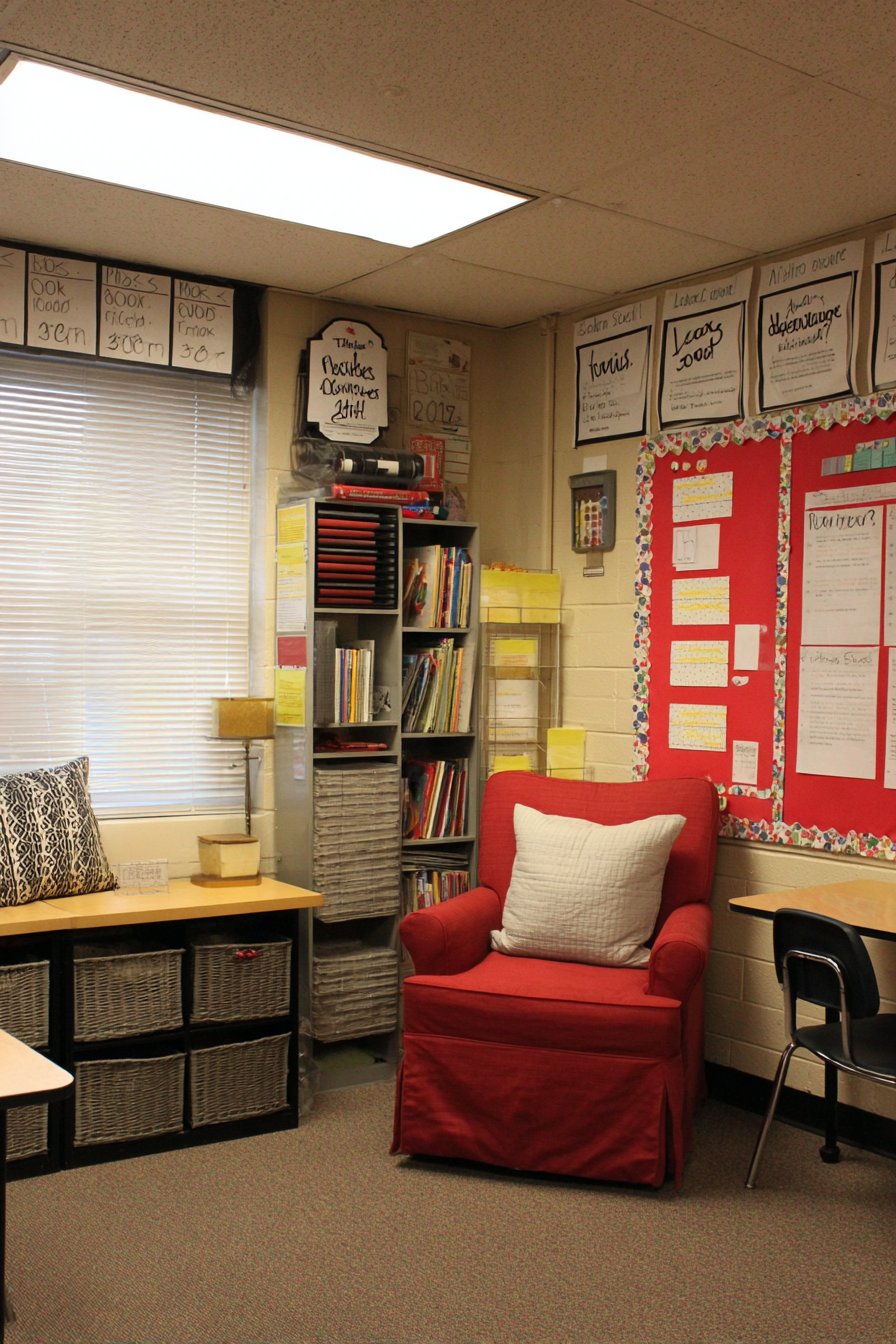
This literacy-rich environment demonstrates how class wall decoration ideas can serve functional purposes while creating aesthetic appeal. The genre labels teach categorization skills while helping students navigate increasingly complex reading choices. The visual merchandising approach—with featured books facing forward and regular rotation of highlighted titles—maintains novelty and draws attention to diverse books throughout the year. The integration of comfortable seating with organized storage creates a complete reading experience that honors both the intellectual and comfort-seeking aspects of engaged reading.
Key Design Tips:
- Create clear, consistent genre labels with both text and visual symbols to support pre-readers and English language learners
- Rotate featured books facing forward weekly or monthly to expose students to the full library collection
- Include student-created book recommendation cards near featured titles to encourage peer-to-peer literacy sharing
- Organize books within each genre by additional criteria like author, series, or reading level to teach advanced organizational skills
- Maintain the library organization through consistent routines where students return books to proper locations
- Consider adding special sections for seasonal books, current events connections, or thematic units being studied
18. Historical Timeline and Primary Source Display
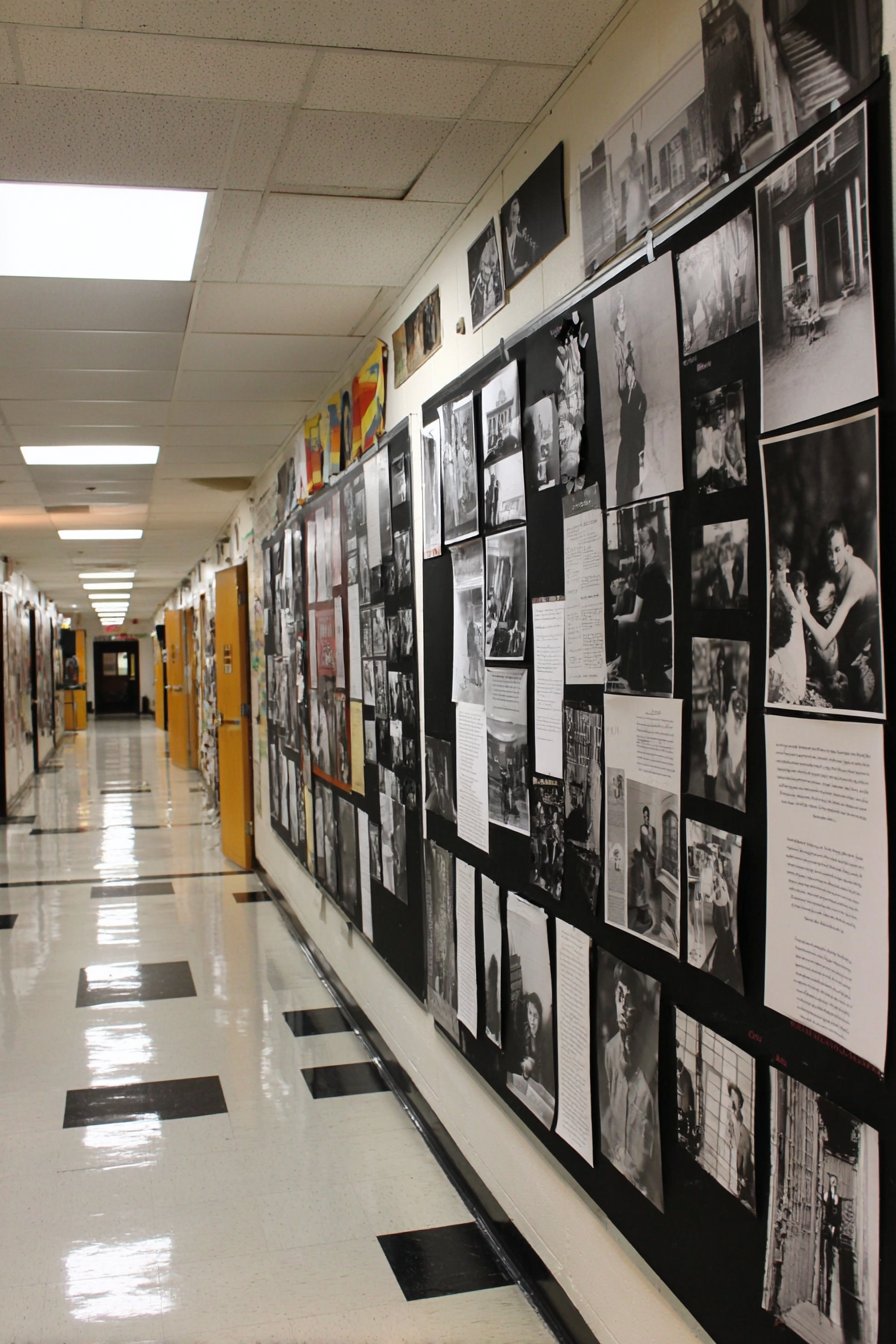
Creating deep historical understanding through visual storytelling, a comprehensive timeline display transforms classroom walls into historical narratives that span extensive periods and connect events across time and geography. This ambitious installation stretches across an entire wall, presenting chronological events with carefully selected primary source images, student research projects investigating specific periods or events, and detailed captions providing context for each era. The kraft paper backing creates an authentic historical document feel while black mounting for photographs and typed descriptions ensures professional presentation and maximum readability.
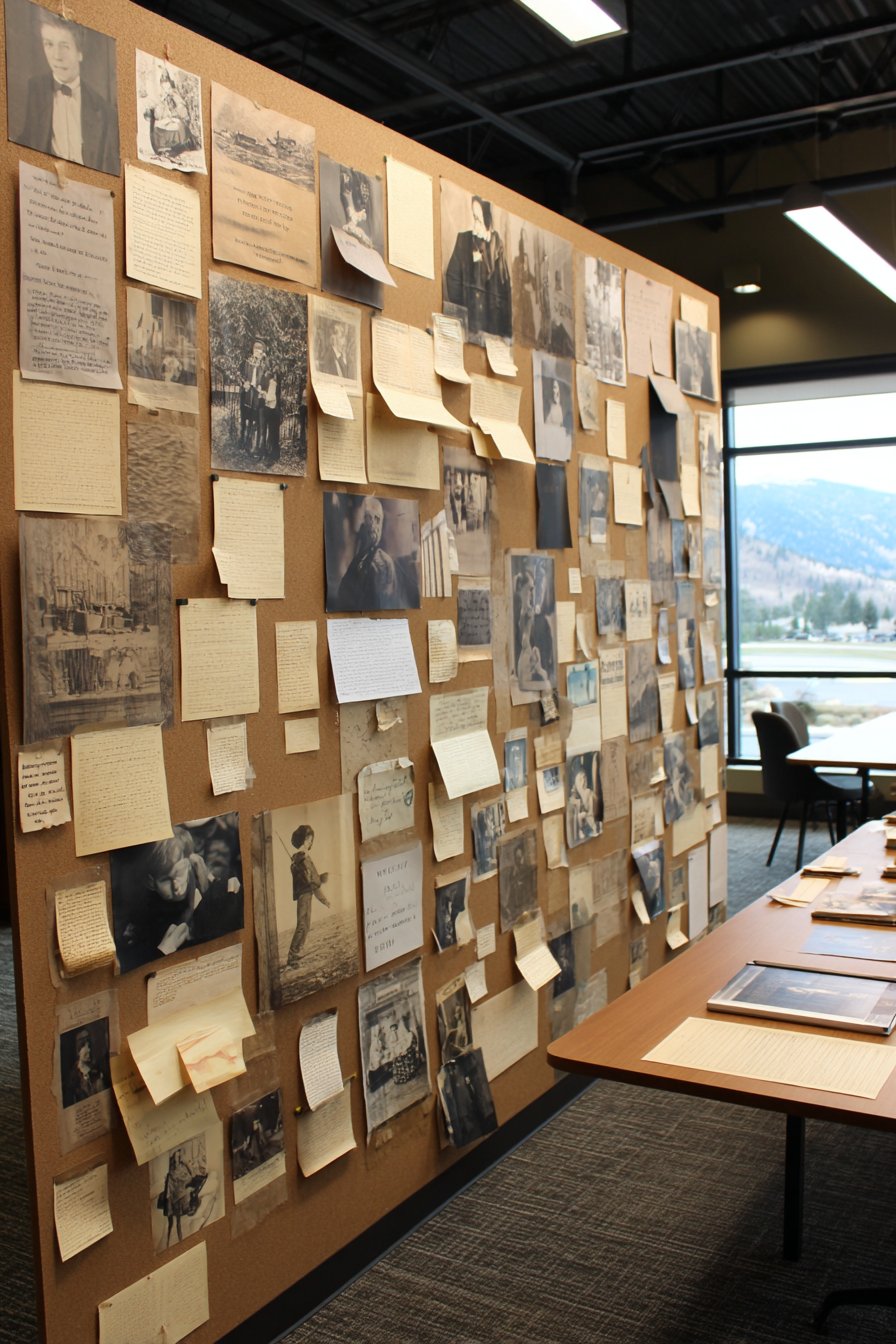
Even overhead lighting ensures visibility across the extensive timeline without creating glare that might obscure images or text, while the comprehensive nature of the display supports both whole-class instruction and individual investigation. The sequential arrangement teaches cause-and-effect relationships, demonstrates change over time, and helps students understand their place within longer historical narratives. The inclusion of primary source images—photographs, documents, artwork from each period—builds visual literacy and historical thinking skills as students learn to extract information from varied sources.
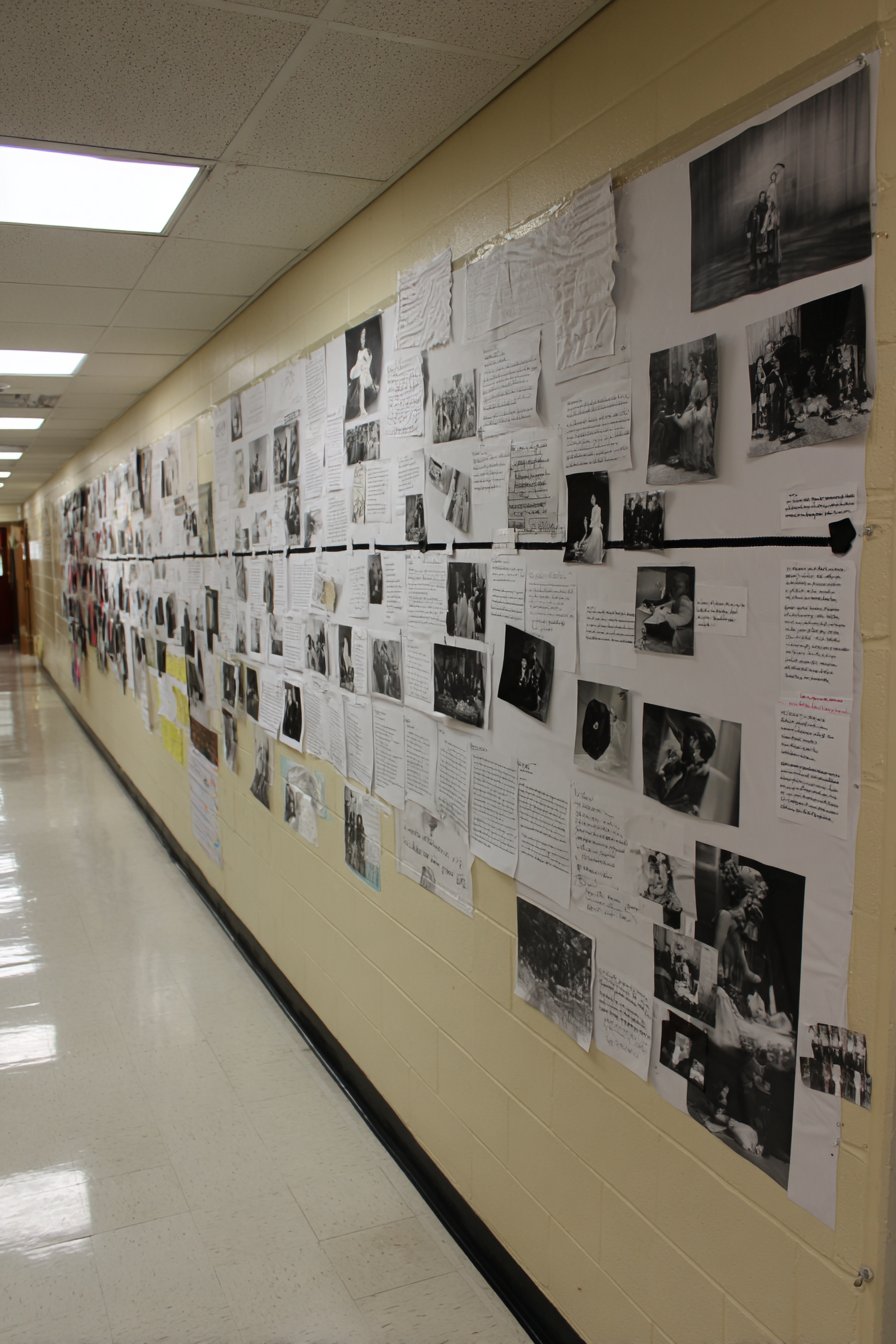
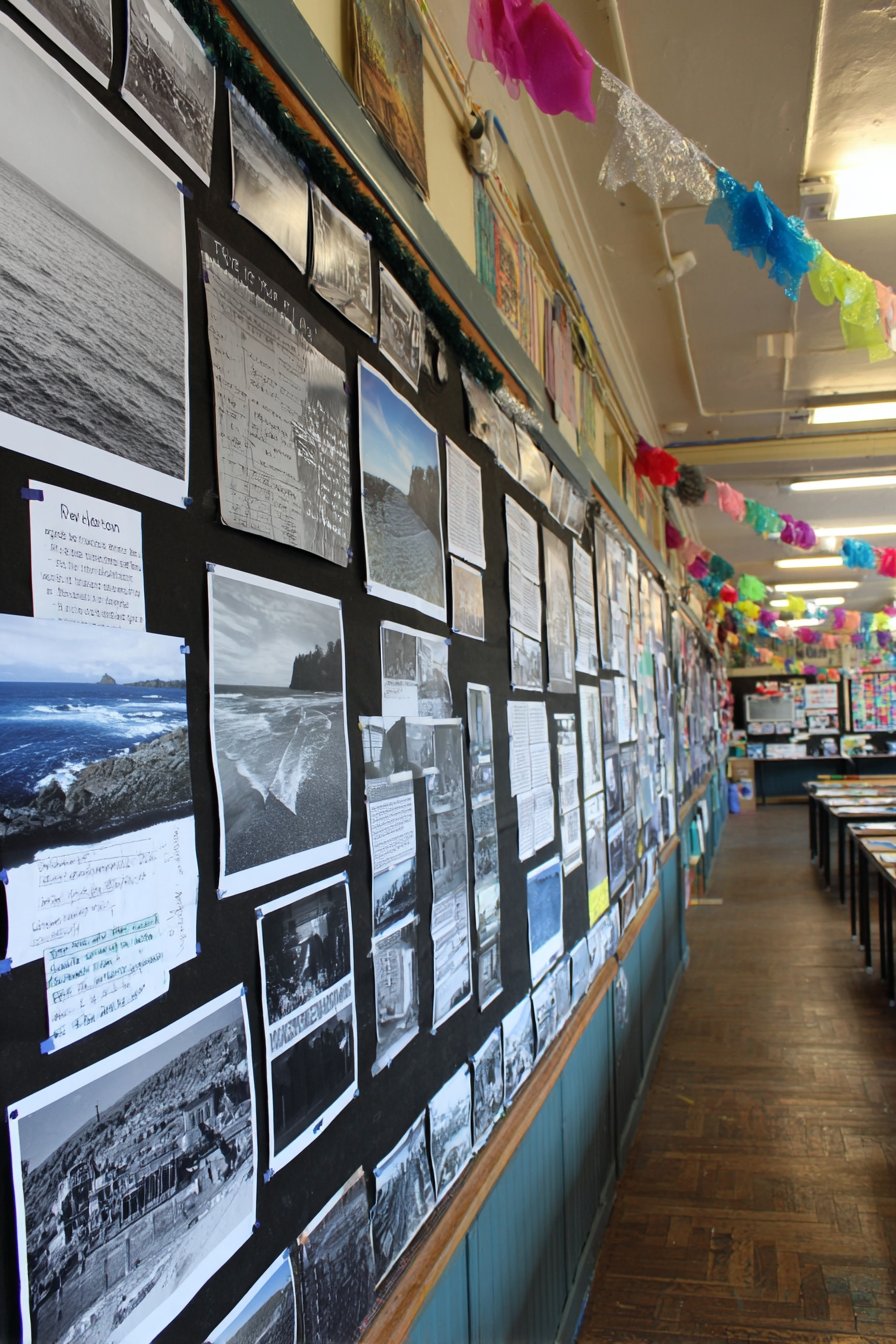
This educational storytelling approach creates a permanent reference that grows more valuable throughout the unit and year as students develop deeper familiarity with historical periods and events. The combination of teacher-provided information and student research contributions creates collaborative historical knowledge building, while the visual prominence communicates that understanding the past is central to educational mission and contemporary understanding.
Key Design Tips:
- Research historically accurate images and carefully vet primary sources for age-appropriateness before including them
- Create consistent formatting for event descriptions including date, event name, significance, and connections to other events
- Use color-coding by historical period, geographic region, or theme to help students identify patterns and relationships
- Include both well-known historical events and lesser-known stories that provide diverse perspectives and complete narratives
- Position the timeline at heights that allow both overview appreciation and close investigation of individual elements
- Extend learning by creating accompanying activities where students add events, identify cause-effect relationships, or compare time periods
19. Mindfulness and Emotional Regulation Corner
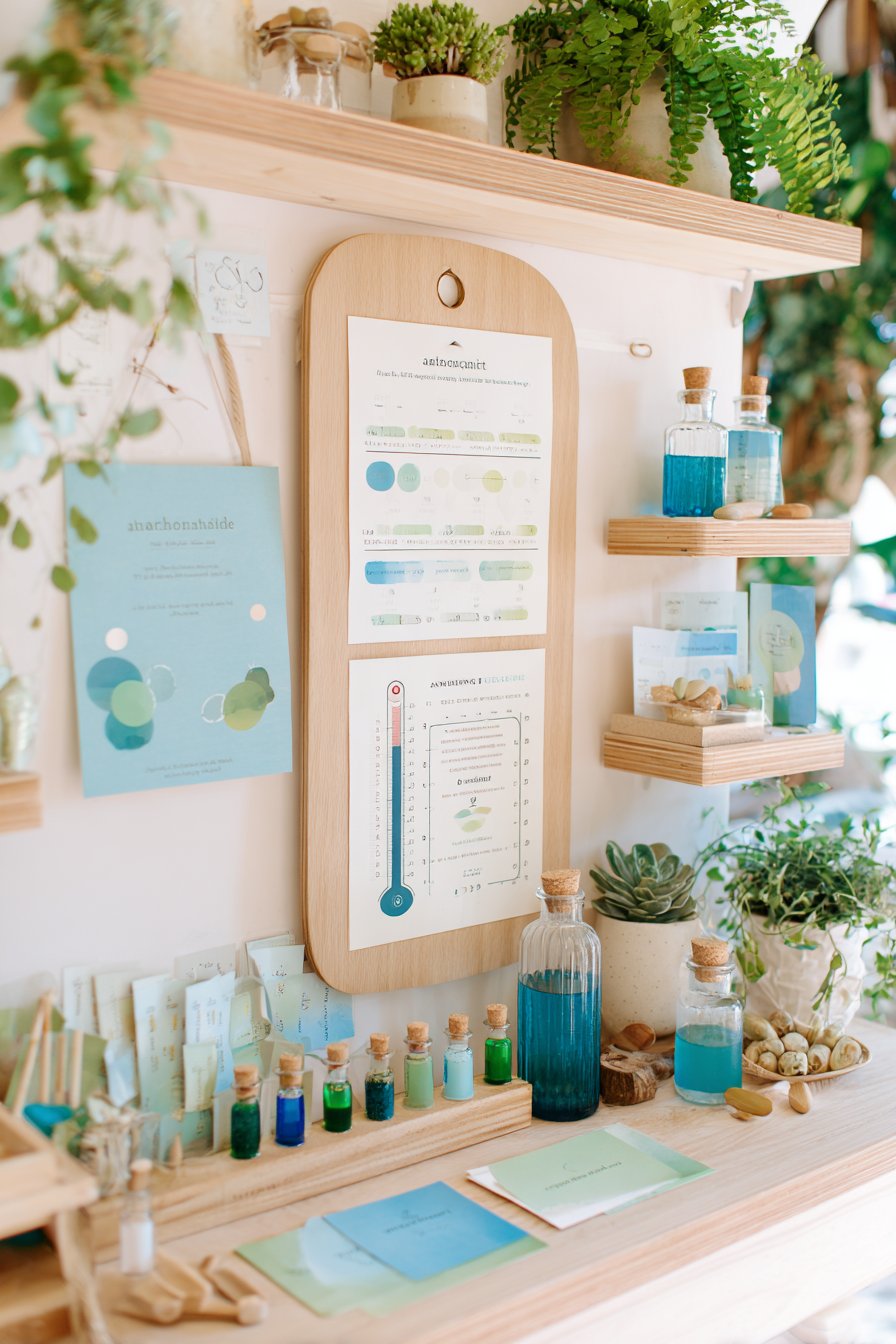
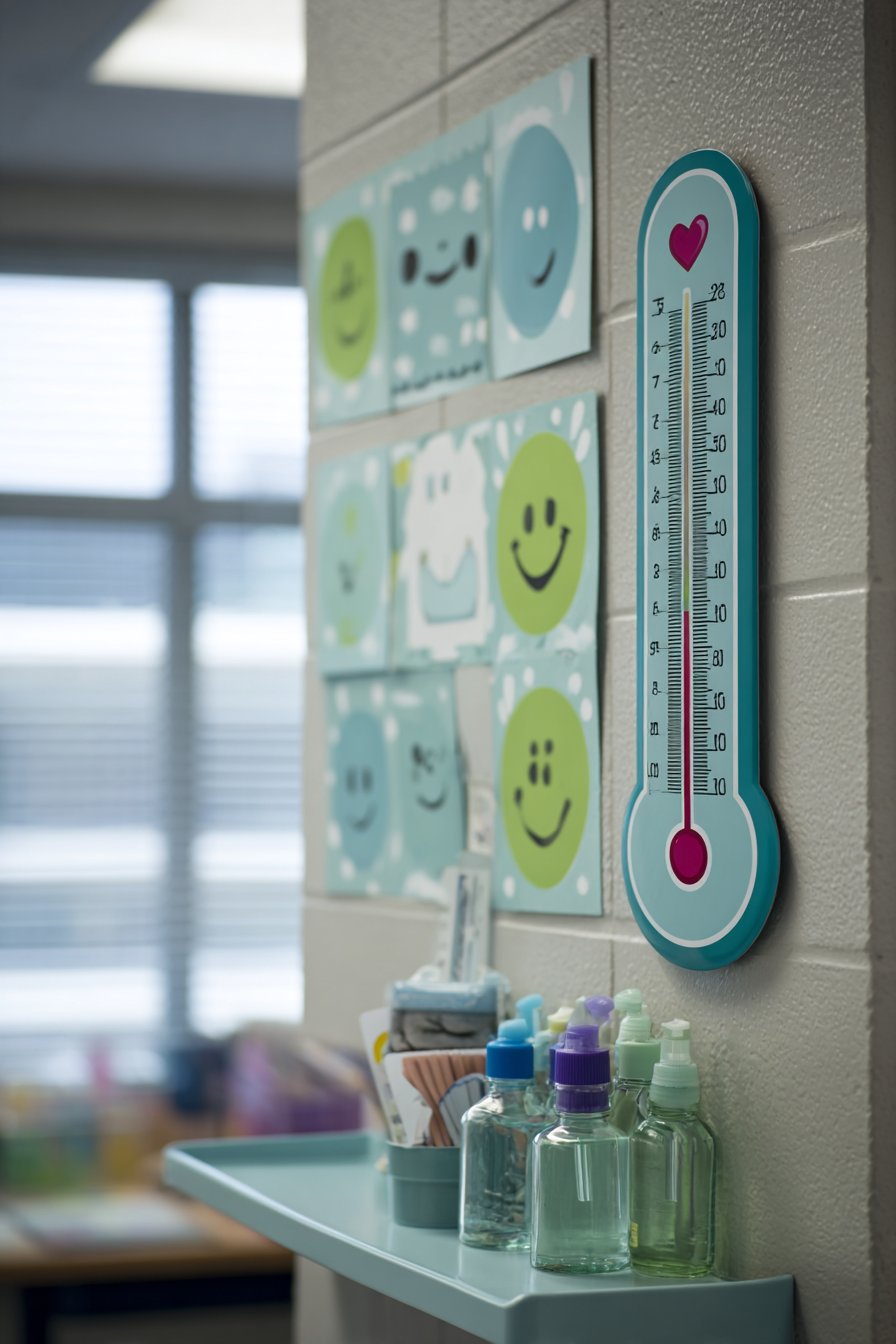
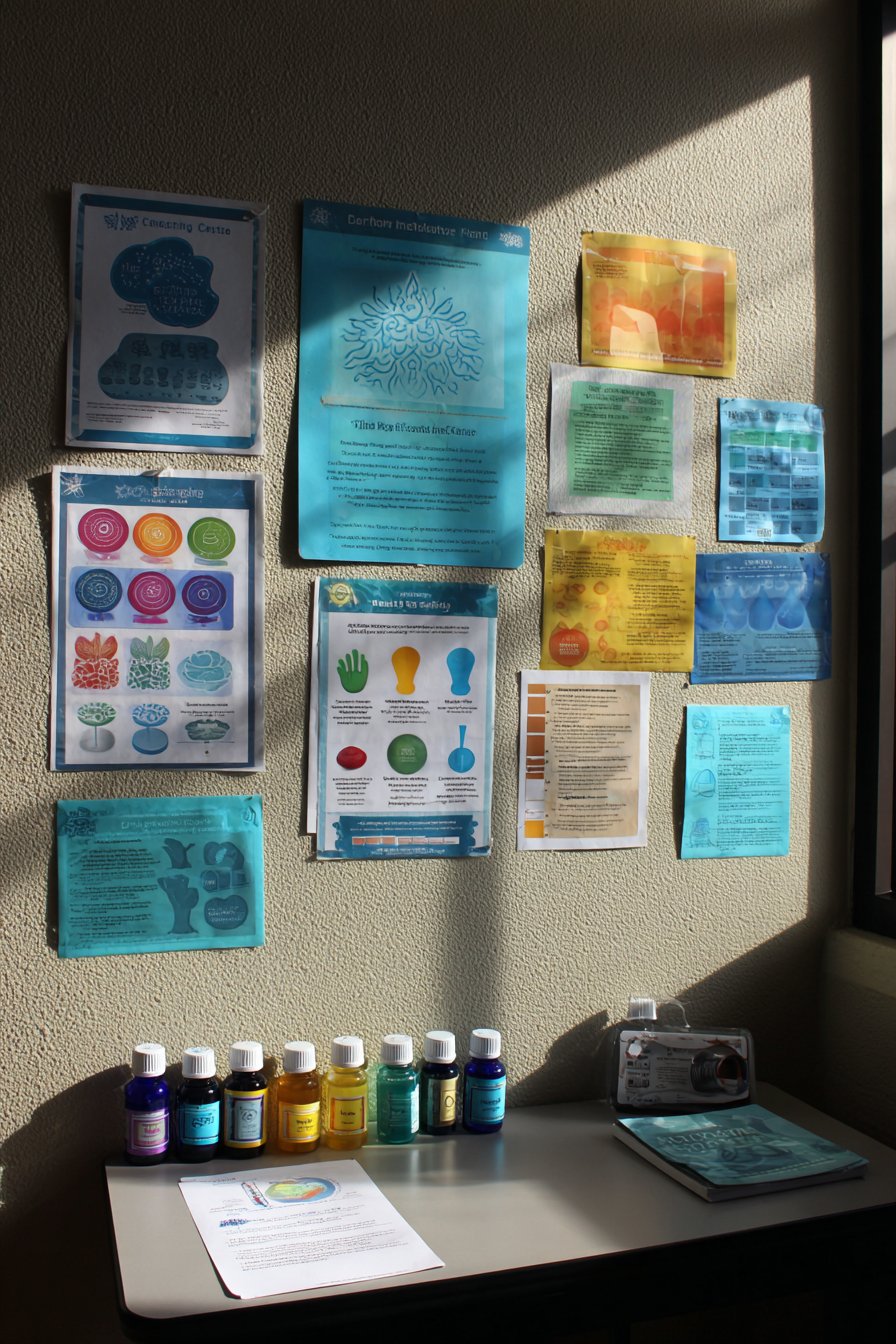
Supporting social-emotional learning and mental health awareness, a dedicated mindfulness corner provides students with accessible tools for emotional regulation and stress management. This supportive display features breathing exercise posters with clear visual guides for techniques like deep breathing, box breathing, or progressive relaxation. Emotion identification charts help students develop emotional vocabulary by naming and recognizing feelings in themselves and others, while a feelings thermometer with corresponding coping strategy cards teaches students to assess their emotional state and select appropriate responses.
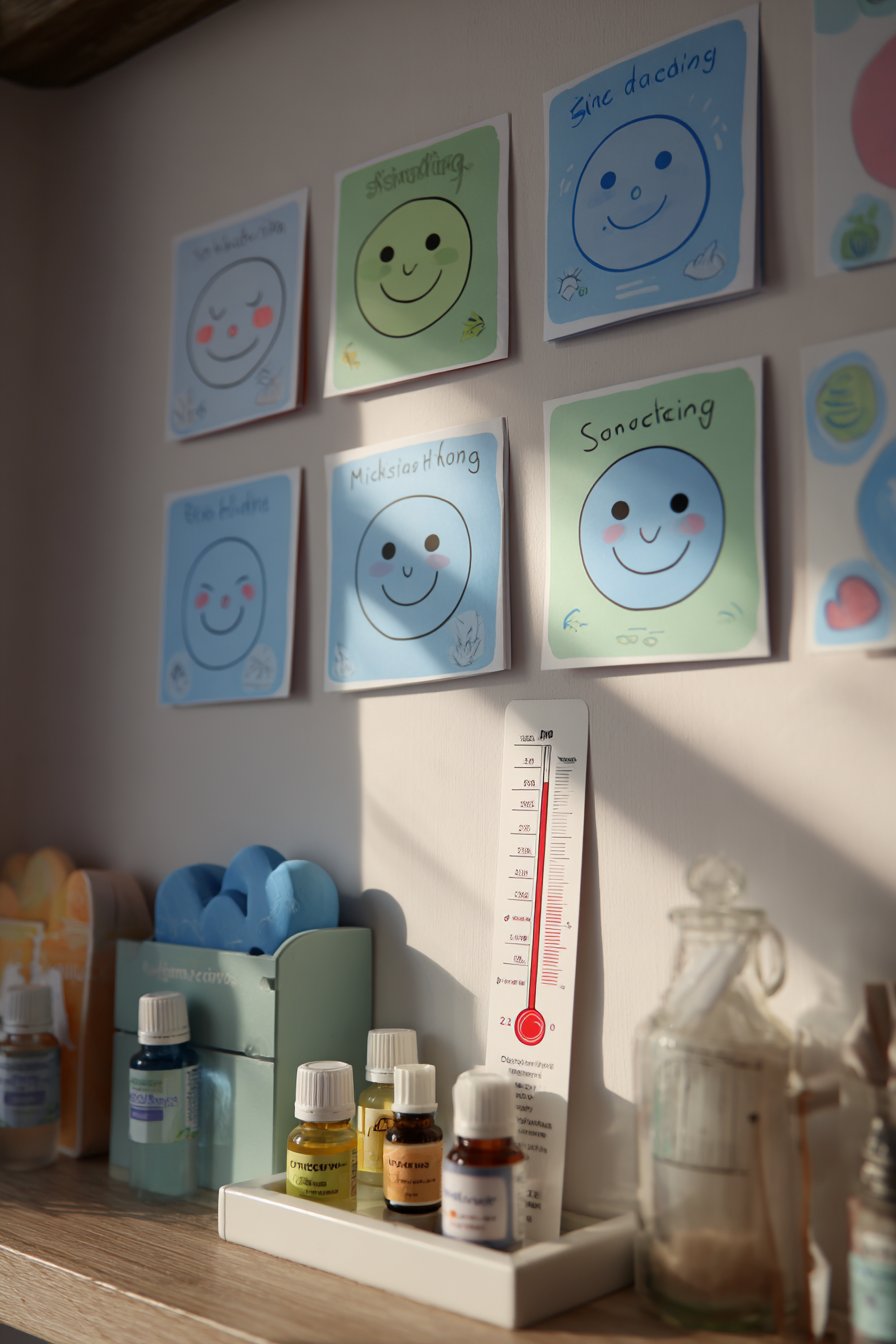
The soothing color palette of soft blues and greens with simple, clear graphics creates a calming visual environment that contrasts with busier, more stimulating classroom areas. A small shelf positioned near the display holds sensory tools including stress balls, calm-down bottles, fidget items, and timers that support self-regulation strategies. Gentle natural lighting enhances the peaceful atmosphere, creating a genuine refuge within the classroom where students can retreat when feeling overwhelmed, frustrated, or overstimulated.
This supportive mental health resource demonstrates how class wall decoration ideas can address the whole child rather than focusing exclusively on academic development. The explicit teaching of emotional regulation strategies—through visual references students can consult independently—builds essential life skills while reducing classroom disruptions. The welcoming design prevents the corner from feeling punitive or isolating, instead framing it as a positive resource available to all students for maintaining emotional wellness.
Key Design Tips:
- Position the mindfulness corner in a quieter area of the classroom, perhaps partially screened for privacy without isolation
- Include a comfortable seating option like a bean bag or floor cushion to create physical comfort during regulation time
- Teach explicit lessons about when and how to use the mindfulness corner to establish appropriate norms and reduce stigma
- Create a simple sign-out system so you’re aware when students use the space without requiring public announcement
- Update coping strategy cards periodically to introduce new techniques and maintain student engagement
- Model your own use of mindfulness strategies to normalize emotional regulation for all ages and situations
20. Interactive Weather and Nature Observation Station
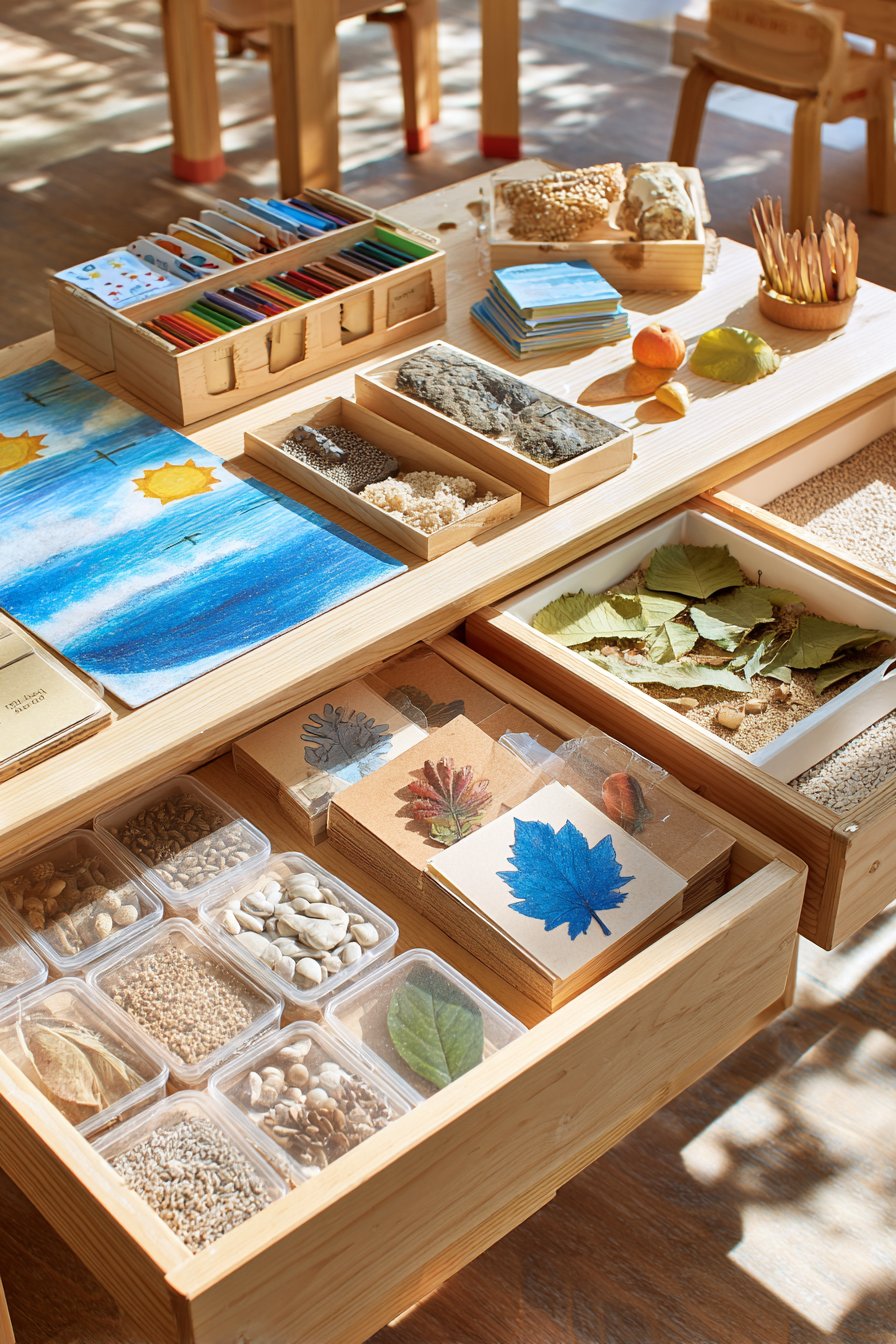
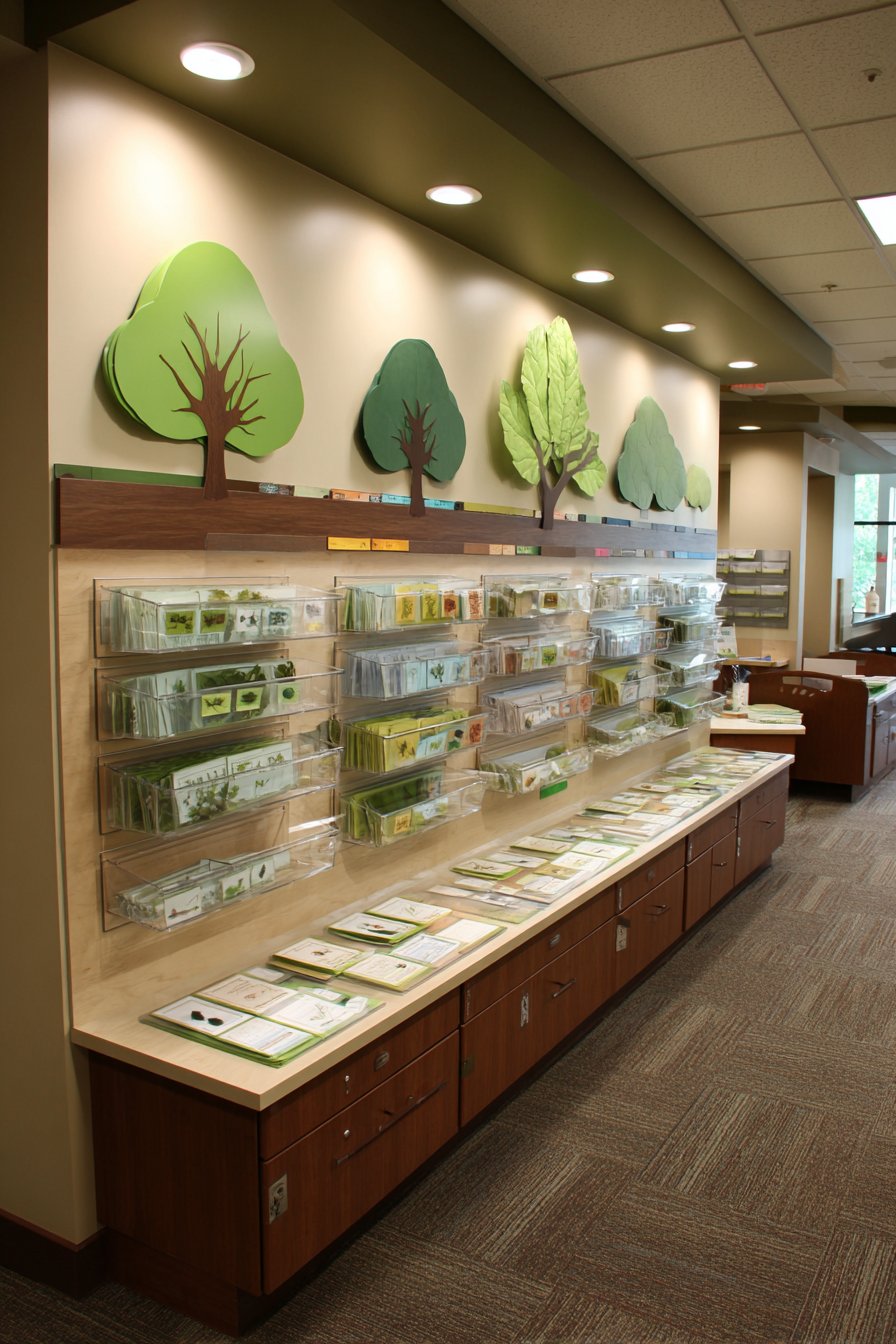
Connecting classroom learning to natural world phenomena, an interactive weather and nature display creates daily scientific observation opportunities that build both knowledge and curiosity. This engaging installation features a daily weather chart with moveable symbols representing various conditions, a seasonal tree display showing the same tree through spring, summer, fall, and winter changes, and a “Nature Explorer” section with pressed leaves, flowers, or other specimens students have discovered and brought to share. Clear pockets allow for rotating nature finds and observation journaling cards where students record detailed descriptions, questions, and wonderings.
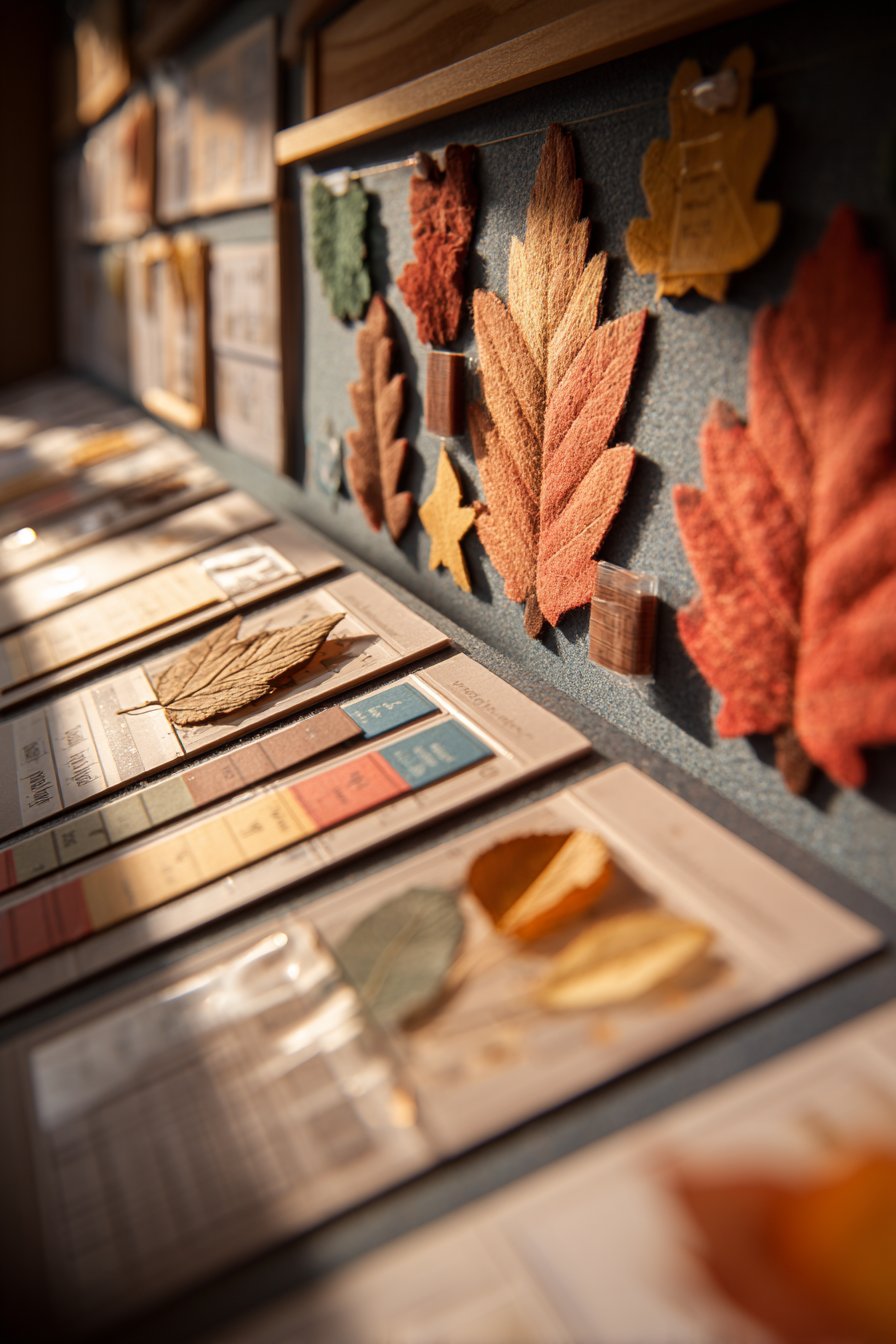
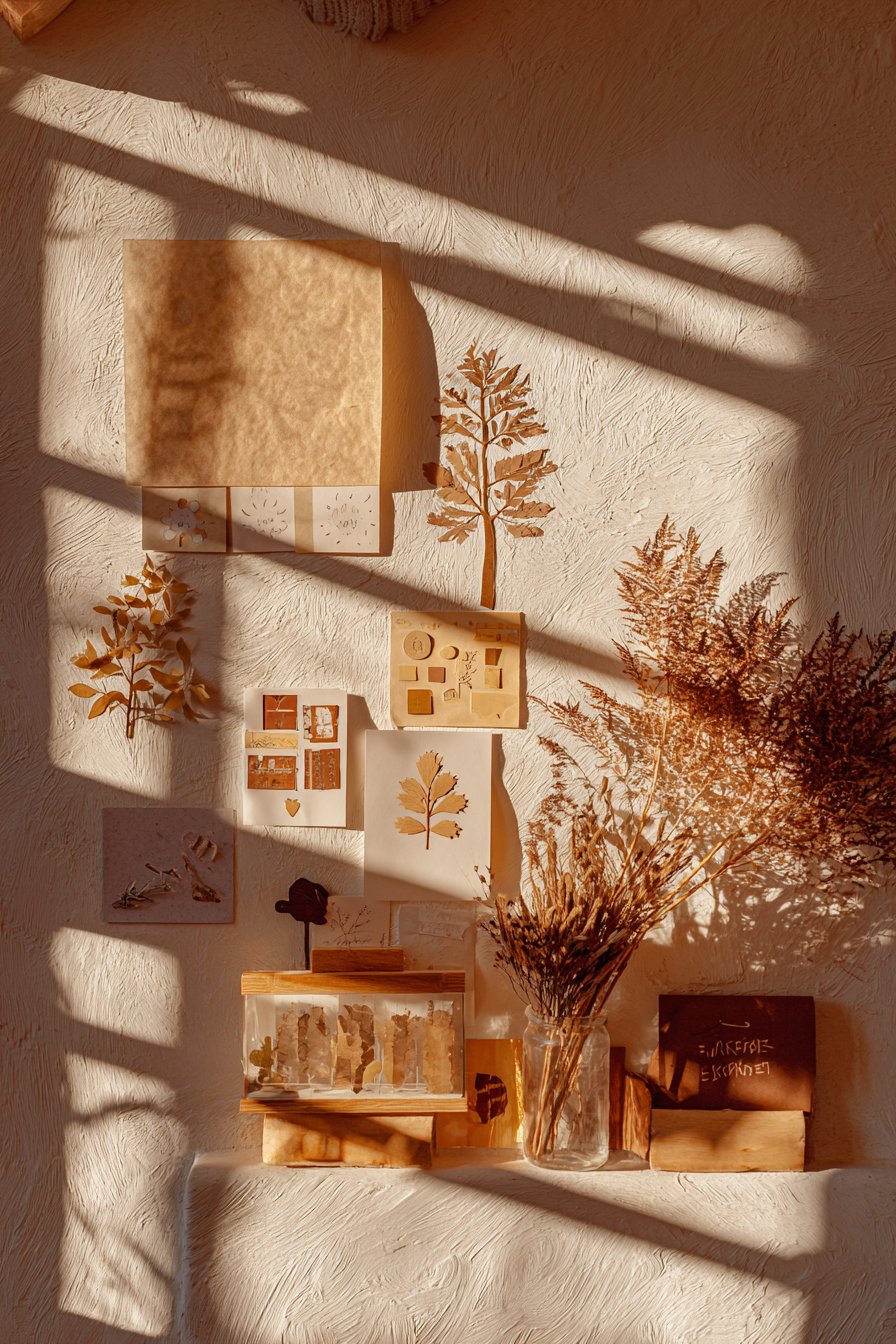
Natural classroom lighting illuminates the earth-toned materials throughout the day, creating connections between the outdoor environment students observe and the indoor classroom where they process and record their observations. The hands-on science display encourages tactile learning—students can touch specimen cards, manipulate weather symbols, and add their own nature discoveries to shared collection. This interactive approach transforms passive observation into active scientific investigation and documentation.
The daily engagement with weather tracking and seasonal changes builds pattern recognition, predictive thinking, and understanding of natural cycles that govern the world beyond classroom walls. The inclusion of student-collected specimens creates personal investment in the display while teaching careful observation, proper specimen handling, and scientific documentation practices. This nature-focused class wall decoration idea demonstrates that the most powerful learning often emerges from observing and questioning the world immediately around us.
Key Design Tips:
- Create a consistent daily routine where a student weather observer updates the chart using actual observation or reliable weather data
- Use clear photography or illustrations for weather symbols to ensure students can accurately match conditions to representations
- Include a simple field guide section that helps students identify leaves, flowers, or other natural items they discover
- Teach proper specimen collection including taking only abundant items and pressing or preserving them carefully
- Connect weather and nature observations to curriculum in science, mathematics (graphing data), and writing (observation journals)
- Consider adding a class nature journal where students record seasonal changes observed over the entire school year
21. Music and Movement Learning Display
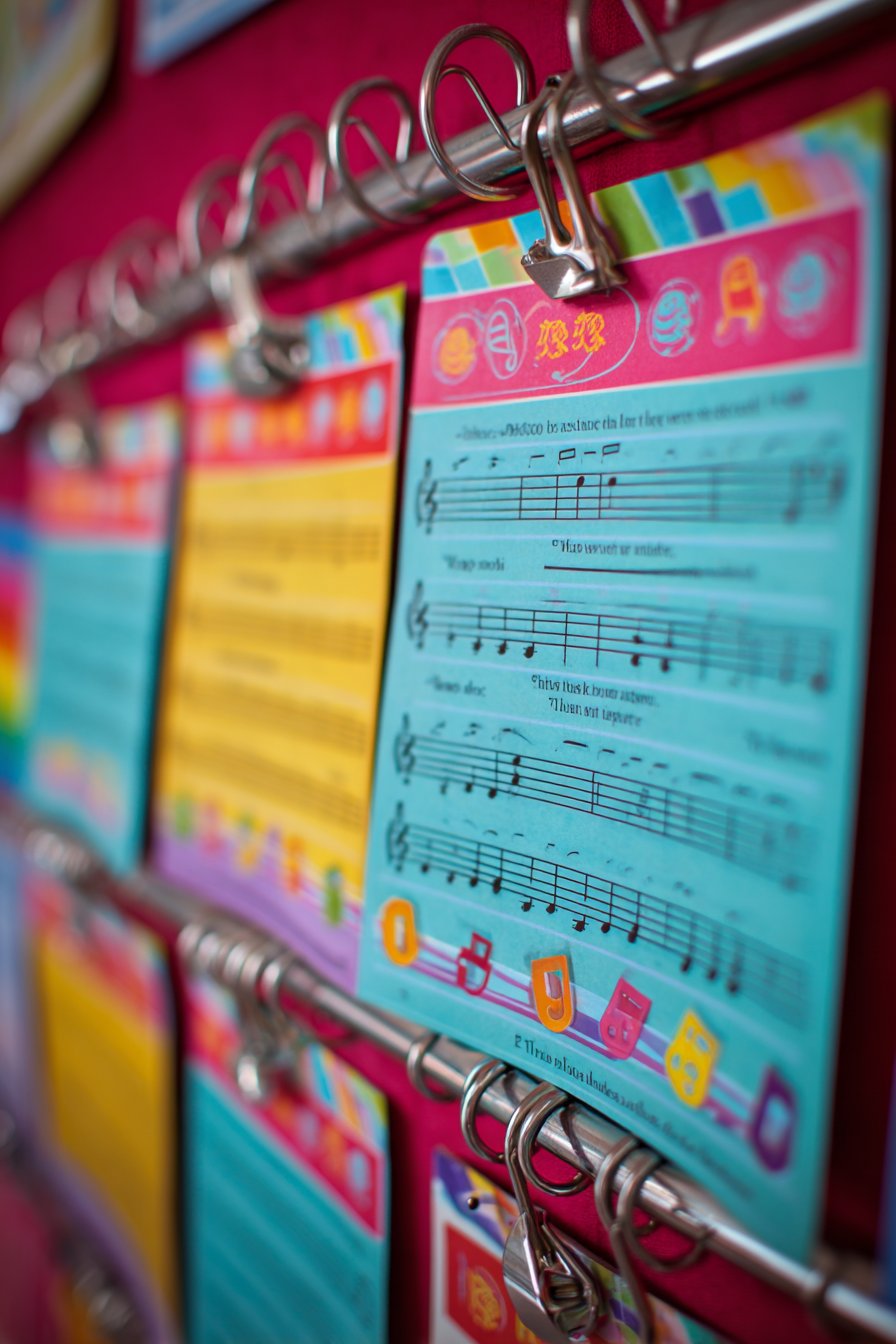
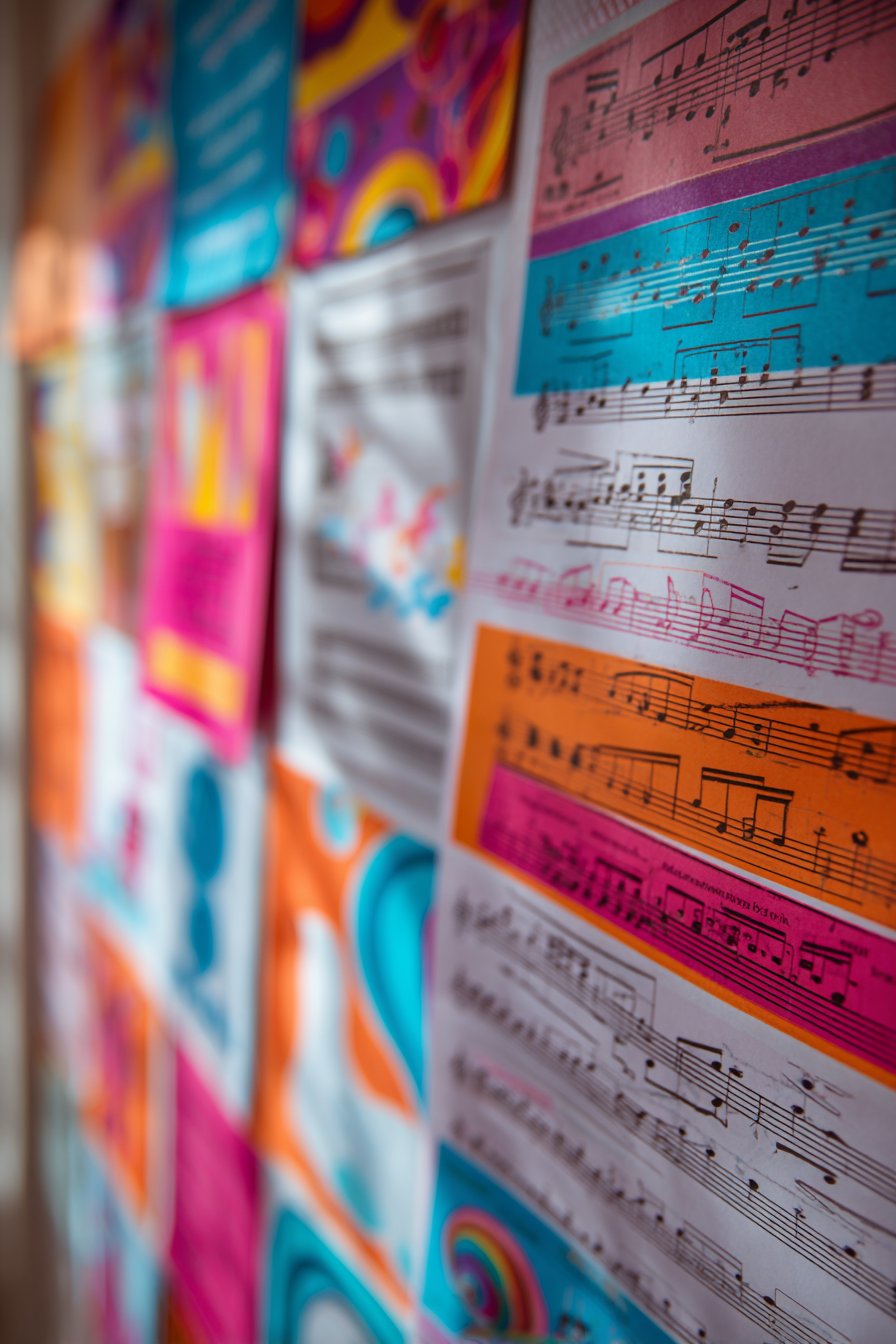
Integrating creative arts into the classroom environment, a music and movement display creates visual support for musical learning while celebrating this essential aspect of complete education. This vibrant installation features rhythm pattern posters demonstrating various beat combinations, musical note identification charts teaching staff notation and note values, and lyrics to classroom songs with illustrated hand motions that support kinesthetic learning and memorization. The colorful arrangement employs musical staff backgrounds and instrument silhouettes that create thematic coherence while laminated song sheets in binder rings allow easy flipping during group singing or music time.
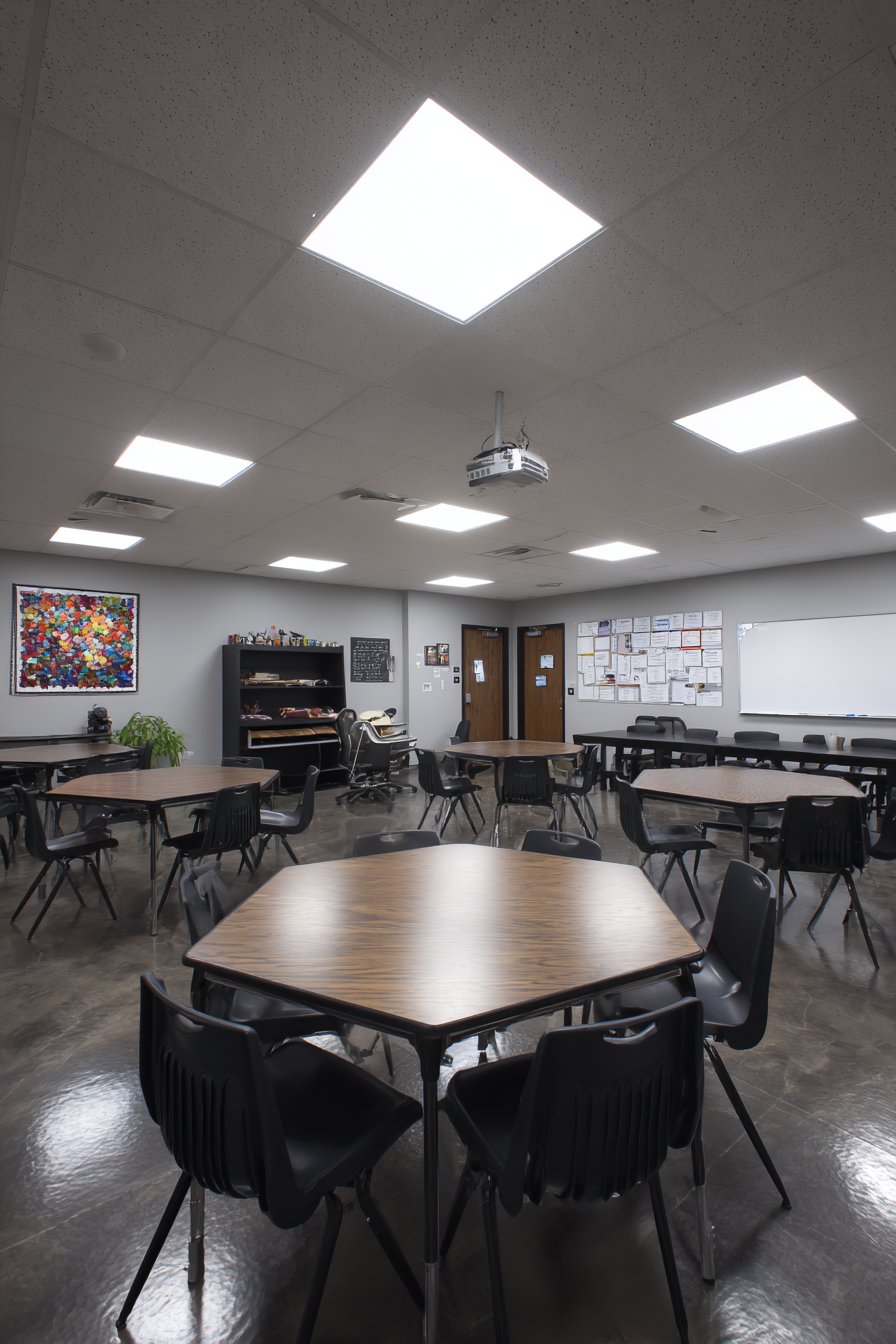
Balanced lighting ensures clear visibility of musical notation—important for students learning to read music—while the creative presentation celebrates the joy and importance of musical expression in educational settings. The combination of theoretical knowledge (note reading, rhythm patterns) with practical application (song lyrics, movement instructions) creates comprehensive musical learning support. The interactive elements—moveable rhythm cards, flip charts of songs—encourage active engagement rather than passive viewing.
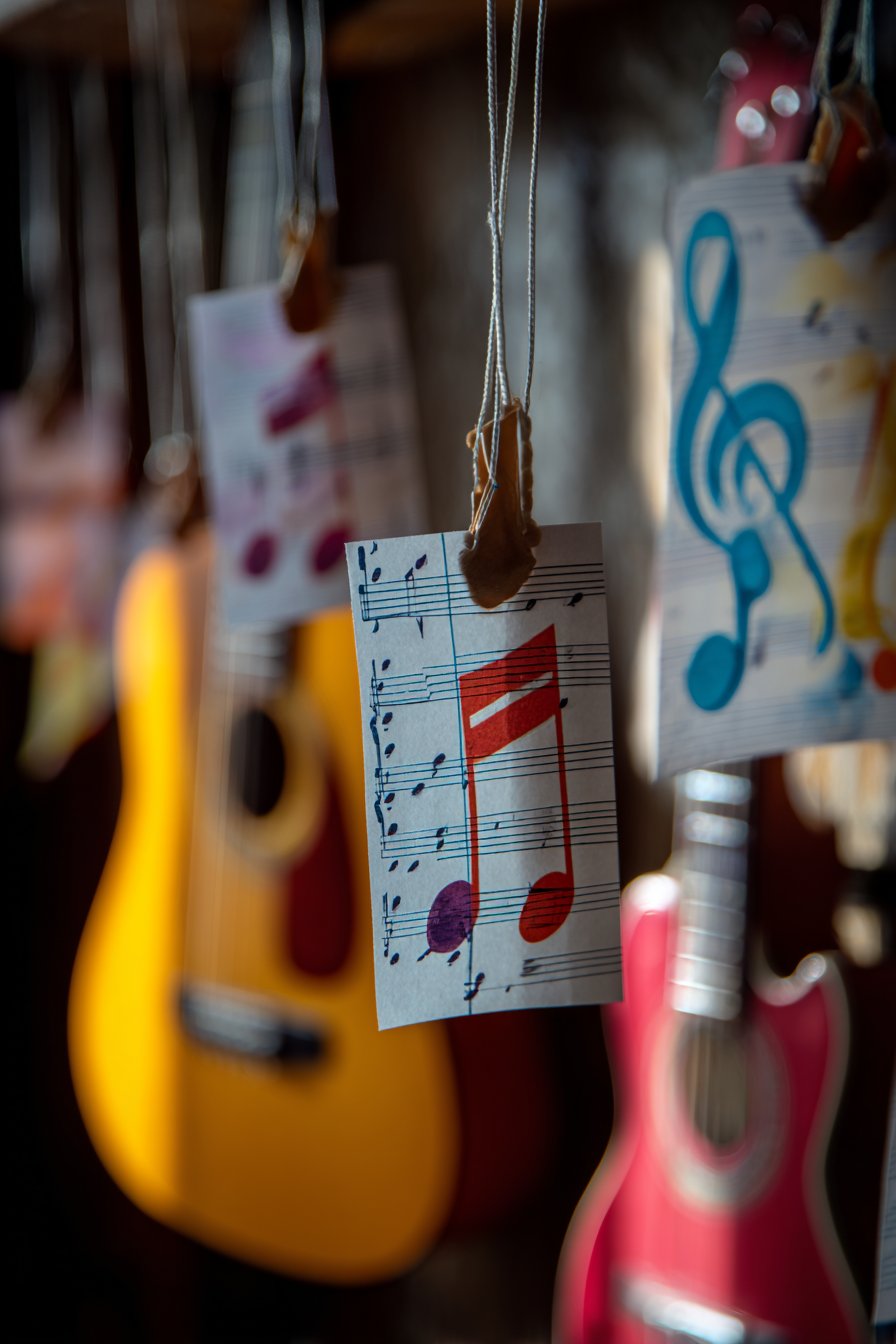
This creative arts integration through wall decoration demonstrates that core subjects like literacy and mathematics aren’t the only content deserving prominent classroom display. The musical references can support transitions between activities, create community through shared singing, provide brain breaks that enhance focus, and honor students whose strengths lie in musical or kinesthetic domains. The visual accessibility of lyrics and movements supports students across various language proficiency and reading levels.
Key Design Tips:
- Include songs from diverse cultural traditions to expose students to global musical heritage and diverse rhythmic patterns
- Create clear, simple illustrations for hand motions that students can follow independently
- Use color-coding to indicate different musical elements like melody, rhythm, and harmony
- Update featured songs periodically while maintaining some favorites that create tradition and community
- Consider adding a section featuring student-composed songs or rhythm patterns to celebrate creative musical expression
- Position the display where it’s accessible during music time but doesn’t compete with academic instruction during other periods
22. Character Education and Values Integration
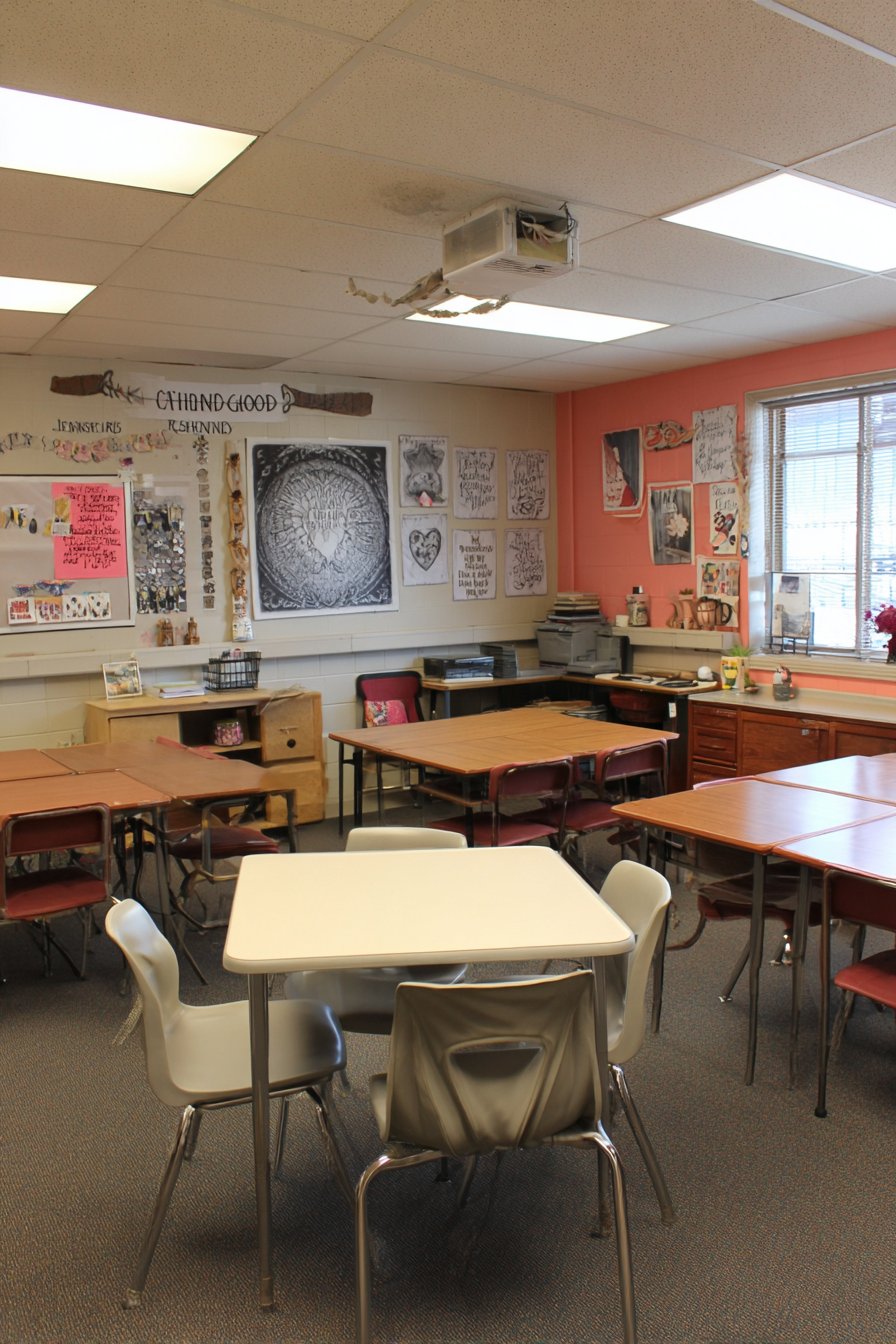
Building ethical awareness and positive character traits, a character education wall display creates explicit teaching and recognition of values that support both academic success and positive community development. This thoughtful installation features virtue posters for essential character traits including kindness, respect, responsibility, honesty, and perseverance, each accompanied by real-life scenario examples demonstrating what these values look like in practice and student reflections connecting abstract values to concrete behaviors. The consistent framing with illustration-based graphics creates visual coherence while quotations from diverse voices add depth and varied perspectives.
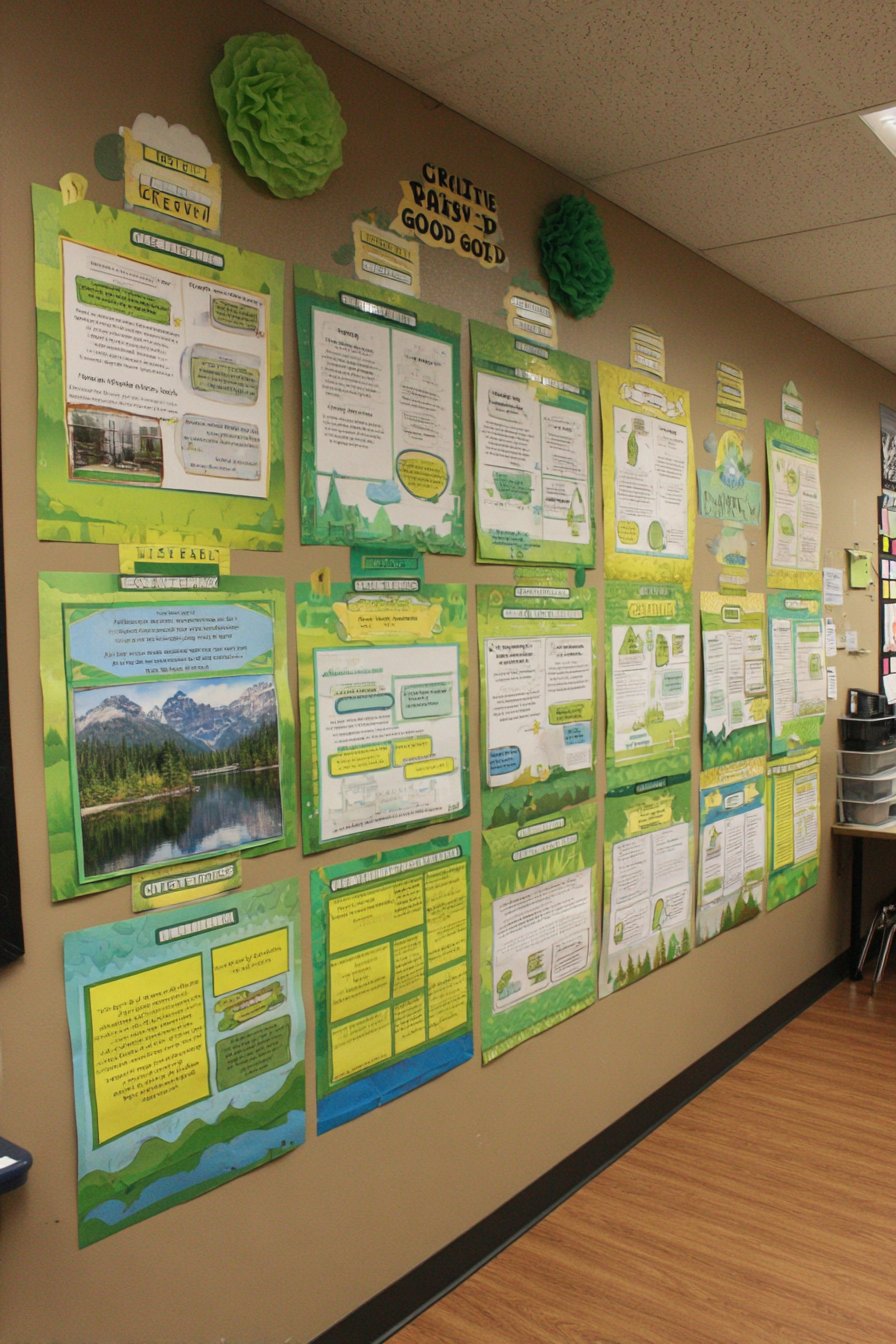
A “Caught Being Good” recognition board highlights positive behaviors observed in the classroom, creating public celebration of character in action rather than merely discussing values abstractly. Warm classroom lighting generates an affirming environment where character development receives the same attention and celebration as academic achievement. The values-based learning display communicates that who students are becoming as people matters as much as what they’re learning academically.
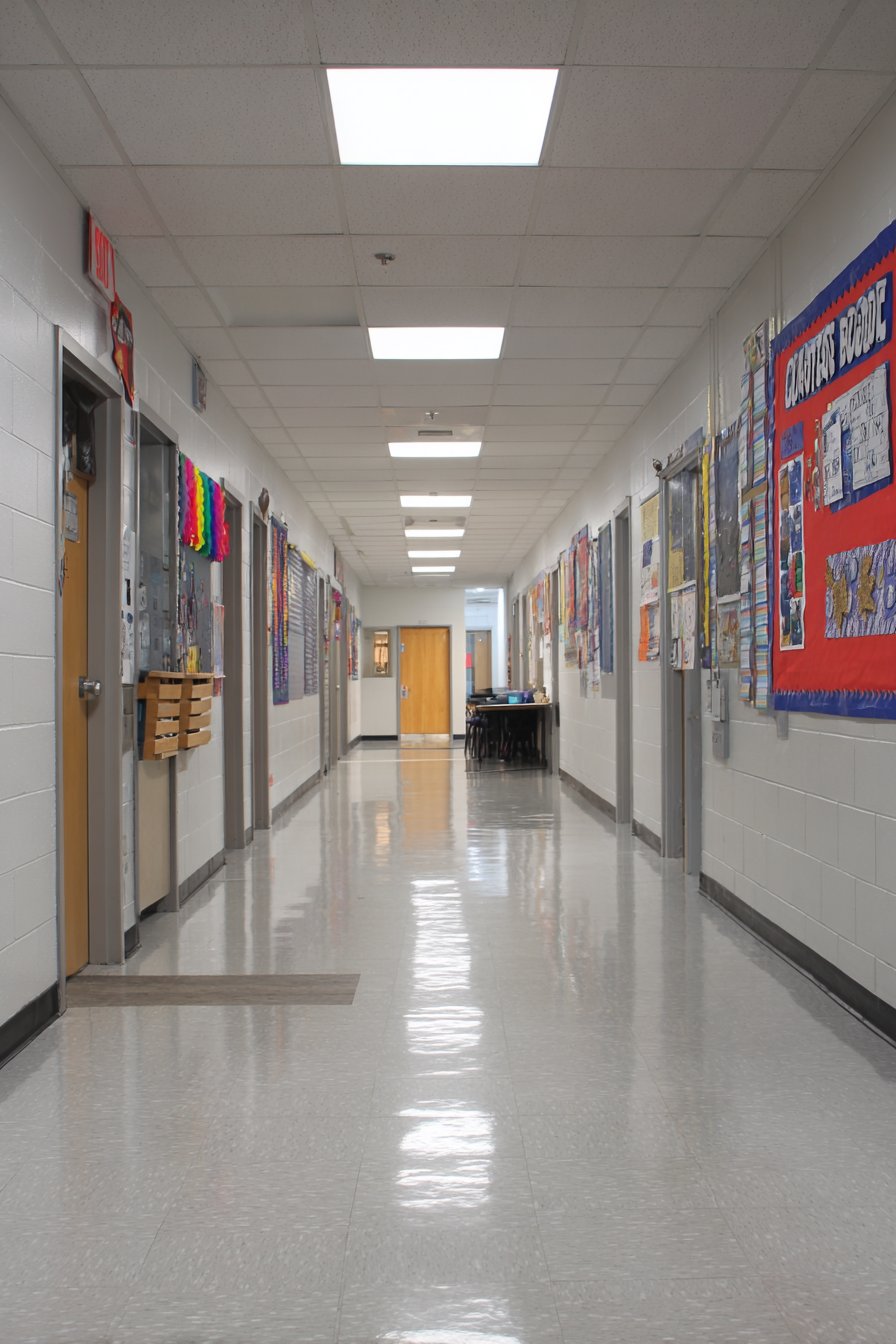
This explicit character education approach serves crucial purposes in contemporary education where social-emotional learning has become recognized as essential to student success. The visual reminders help students internalize values through repeated exposure, the real-life examples make abstract concepts concrete and actionable, and the recognition system creates positive peer pressure toward prosocial behaviors. The diverse quotations and scenarios ensure that all students see their own cultural values and experiences reflected in the character education content.
Key Design Tips:
- Select scenarios that reflect situations students actually encounter in your classroom and school environment
- Include student voice by having them contribute scenarios or reflections about character values they’re working to develop
- Rotate featured character traits to align with classroom challenges or upcoming events requiring specific virtues
- Create complementary lessons explicitly teaching each character trait rather than assuming students automatically understand
- Use the “Caught Being Good” board actively, adding multiple recognitions weekly to maintain momentum and motivation
- Connect character education to literature studied in class by analyzing how characters demonstrate or violate the featured values
23. Conflict Resolution and Problem-Solving Framework
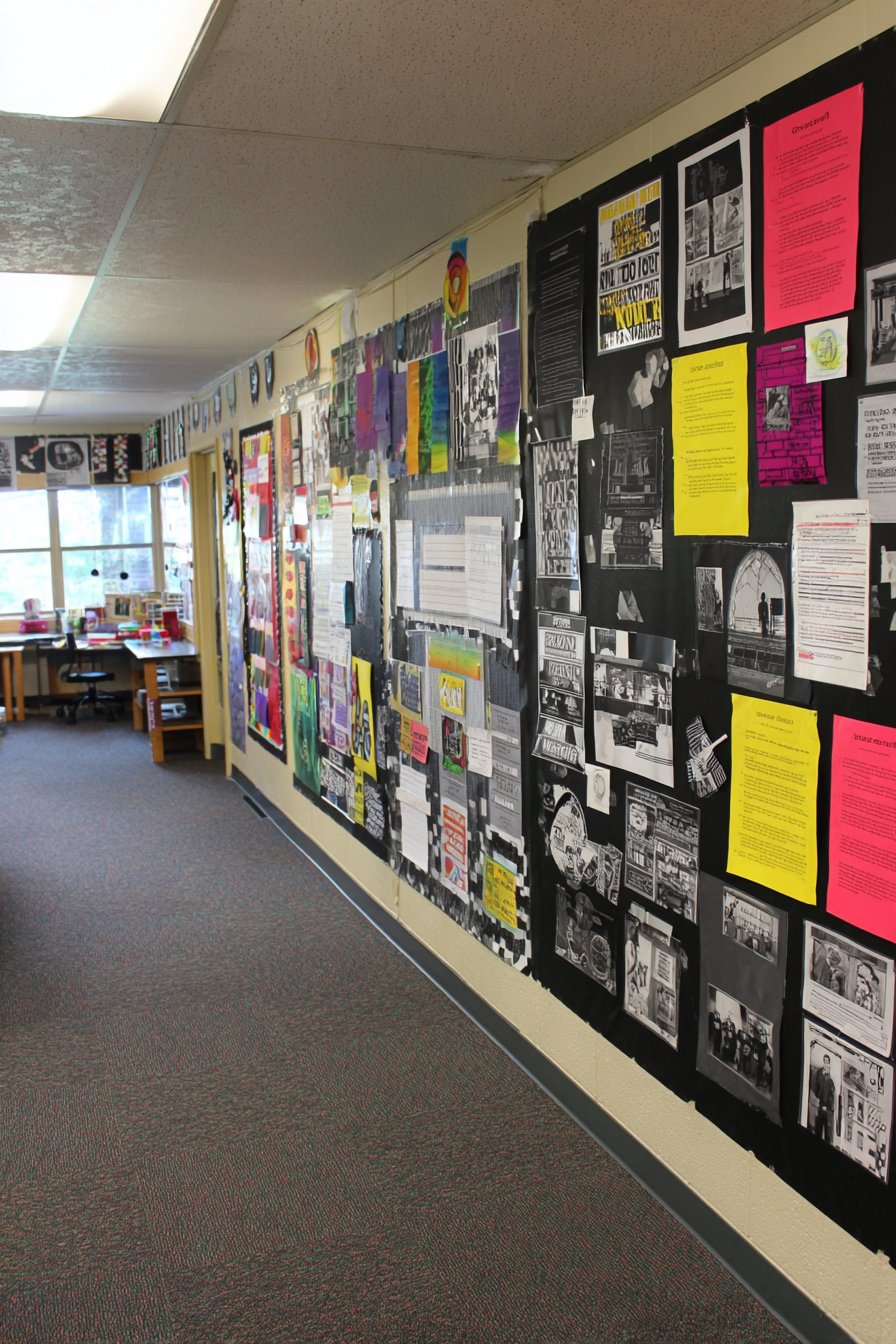
Providing students with accessible tools for navigating social challenges, a problem-solving strategies display creates visual support for developing essential interpersonal skills. This supportive installation features step-by-step conflict resolution posters breaking down complex processes into manageable stages, “Think Before You Act” flowcharts that support impulse control and consequential thinking, and peer mediation guidelines with visual icons ensuring accessibility for students at all reading levels. The traffic light color system—red for stop and think, yellow for evaluate options, green for make safe choices—provides intuitive visual organization.
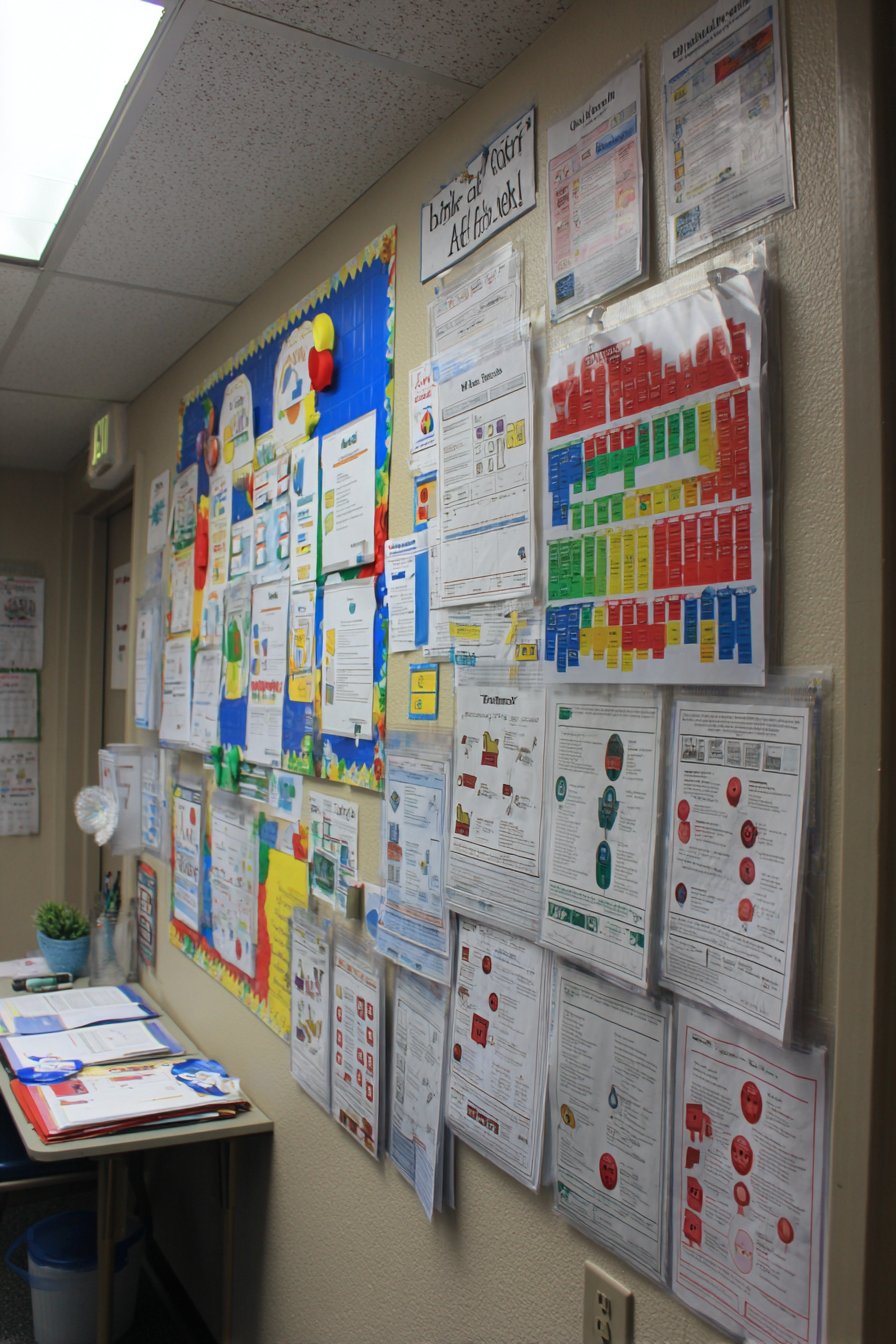
Clear plastic sleeves protect frequently referenced materials from damage while even overhead lighting ensures consistent visibility throughout the school day. The social-emotional learning resources serve both preventive and responsive functions—students can study them during calm moments to internalize strategies or consult them during actual conflicts to access support for resolution. The age-appropriate graphics and accessible placement communicate that social challenges are normal, expected parts of learning and that the classroom provides support for navigating them successfully.
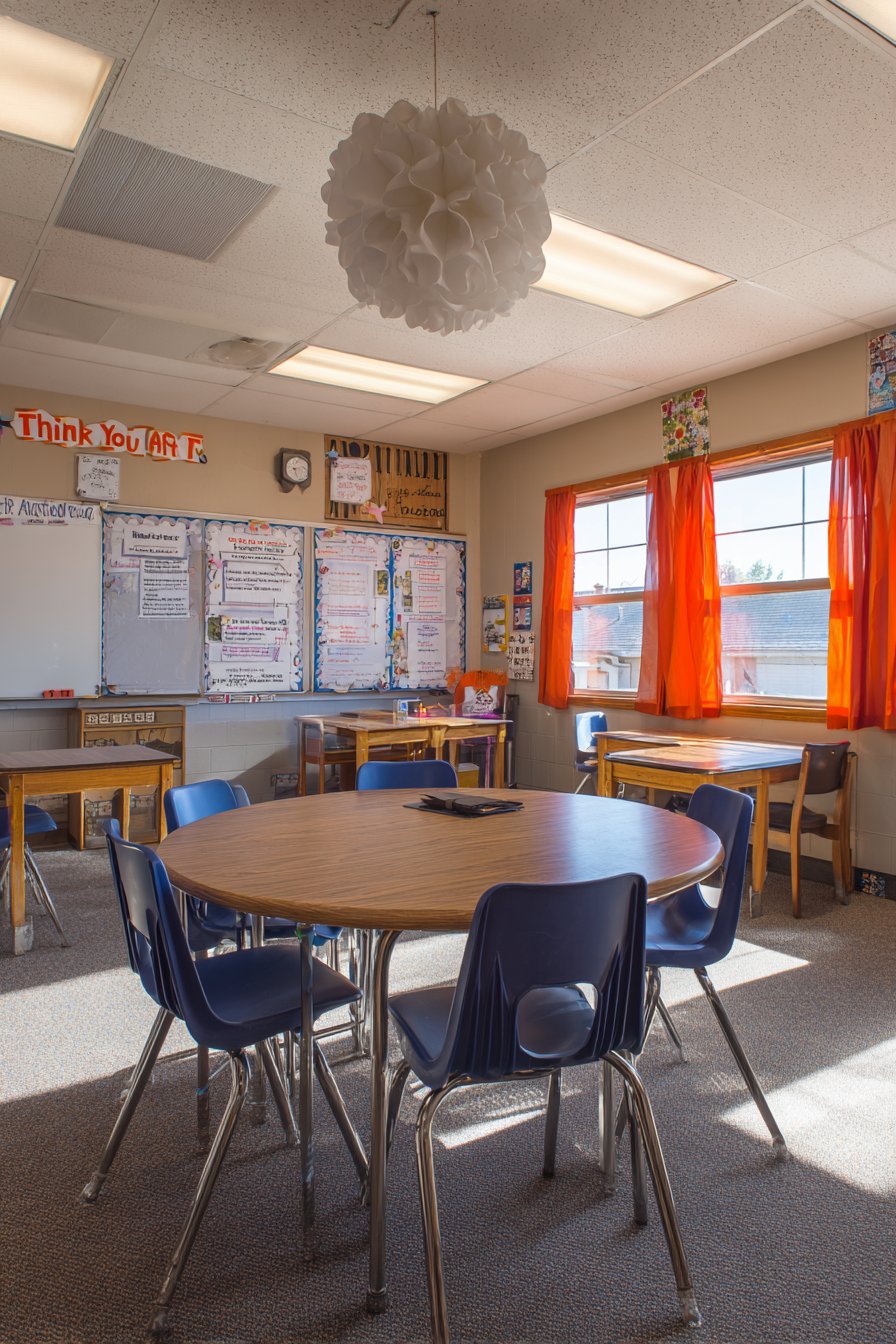
This class wall decoration idea addresses one of teachers’ most frequent concerns—managing student conflicts and behavior challenges—by providing explicit teaching and accessible reference for productive conflict resolution. The visual supports are particularly valuable for students who struggle with verbal processing during emotional moments, as they can point to steps or strategies even when words are difficult. The framework establishes shared language and procedures for handling conflicts that create predictability and fairness.
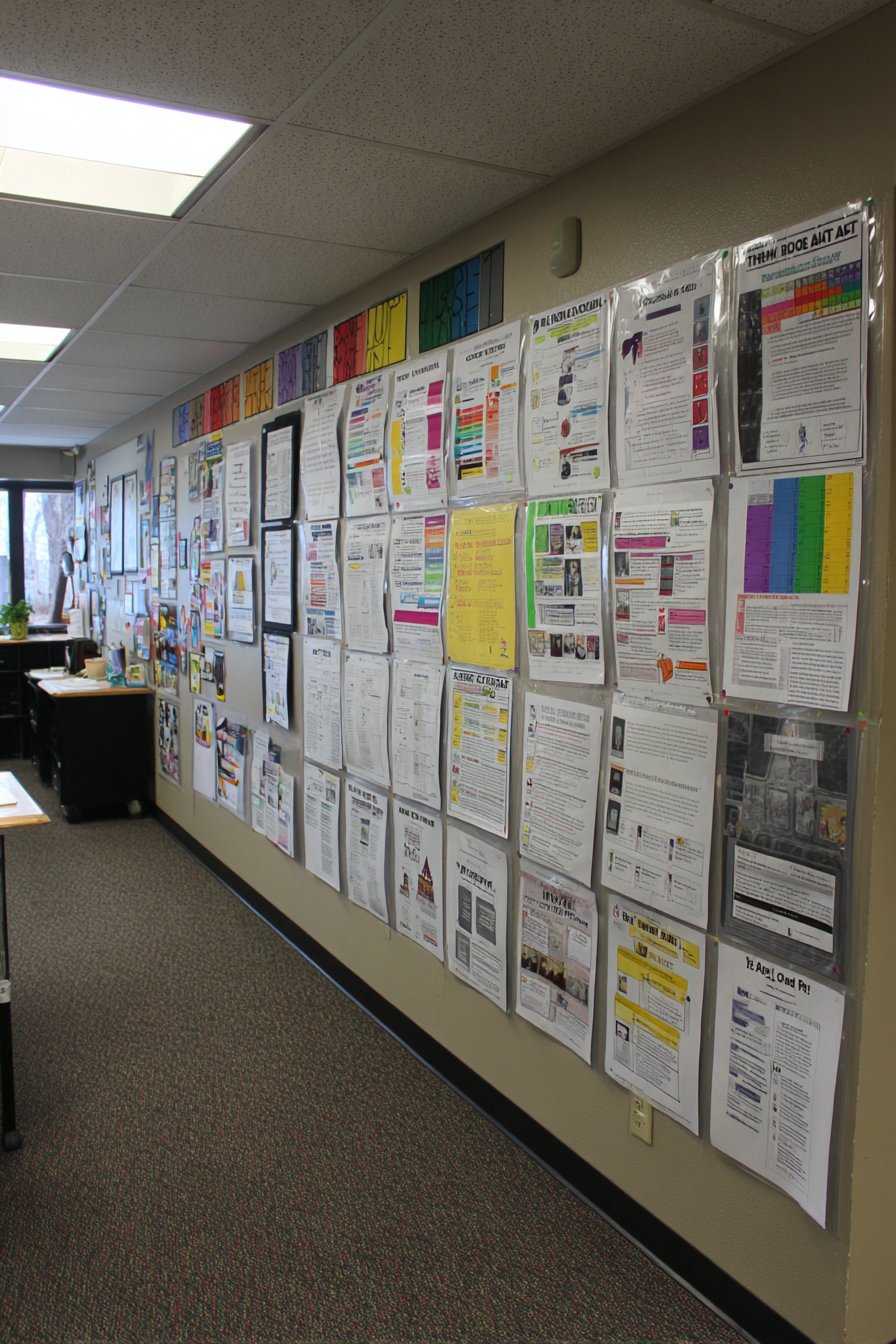
Key Design Tips:
- Create flowcharts that include decision points with yes/no branches to teach consequential thinking and choice
- Use simple, clear language focused on actions students should take rather than behaviors to avoid
- Include visual representations of emotions to help students identify what they’re feeling during conflicts
- Position the display at student eye level in an area where privacy is possible for consulting during actual conflicts
- Teach explicit lessons using the posted strategies, role-playing various scenarios so students understand application
- Consider adding a “peace corner” nearby with comfortable seating where students can implement conflict resolution strategies
24. Classroom Expectations and Community Agreements
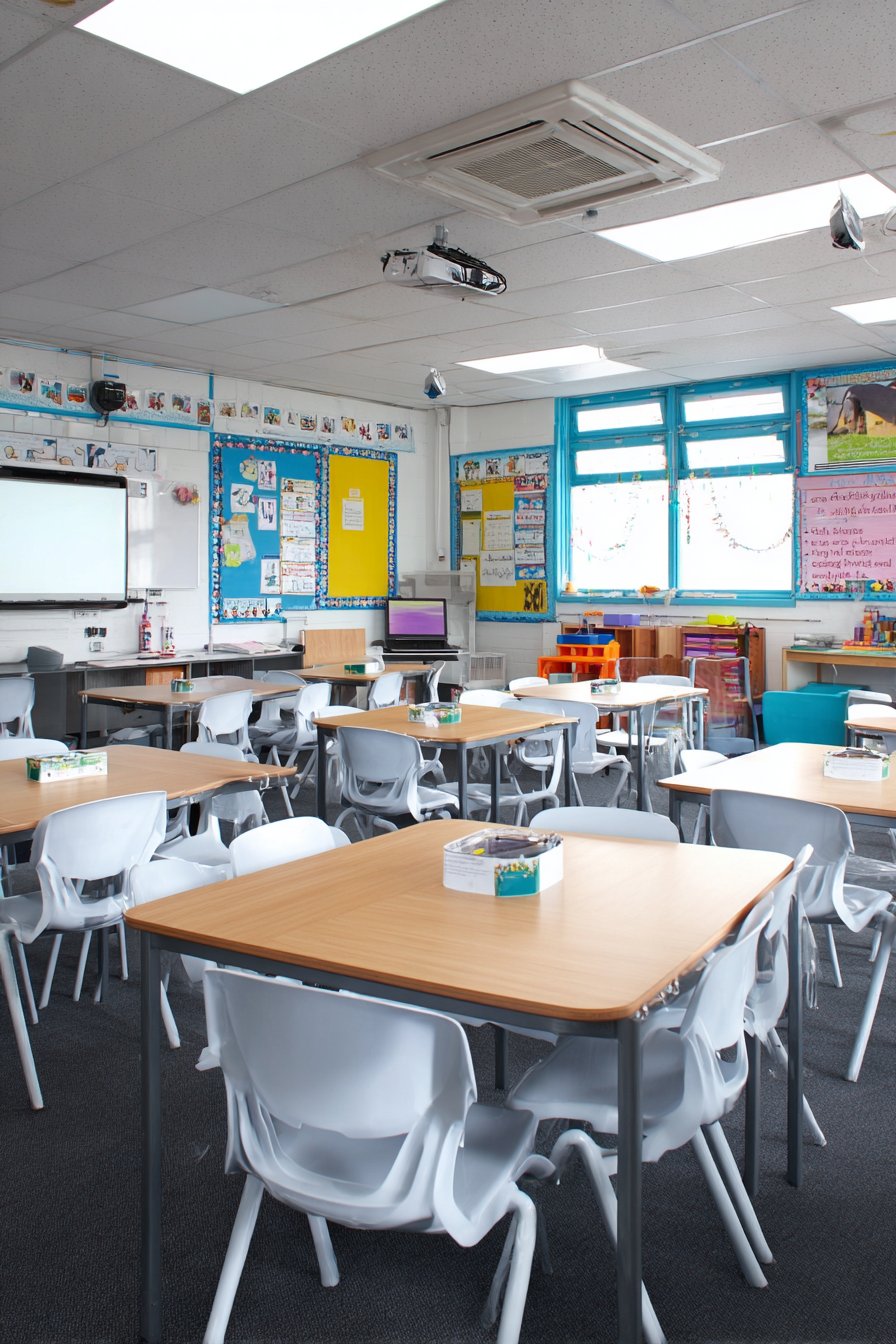
Establishing clear behavioral framework from day one, a classroom rules and expectations display creates visual reference for the norms and values governing the learning community. This foundational installation features positively-worded guidelines focusing on desired behaviors rather than prohibitions, illustrated examples demonstrating what desired behaviors look like in various contexts, and a collaborative class contract signed by all students creating shared ownership and accountability. The presentation employs large, bold lettering with complementary clipart and a cohesive color scheme of navy and yellow that creates professional appearance while maintaining visual accessibility.
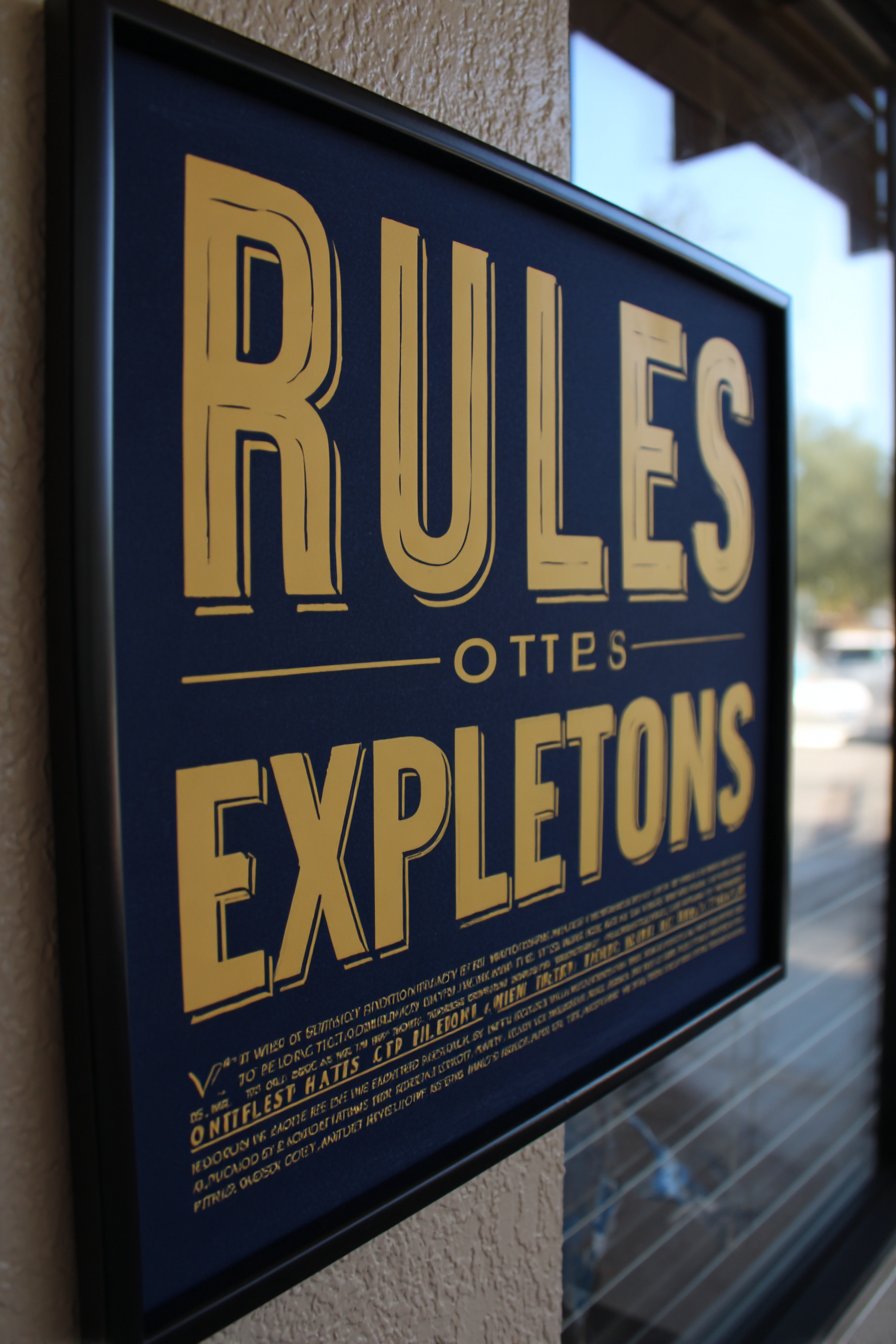
Framed presentation adds formality and permanence, communicating that these expectations are fundamental to the classroom community rather than arbitrary or changeable rules. Natural daylight emphasizes the prominent placement near the classroom entrance, ensuring that expectations are reinforced each time students enter the learning space. The inclusive language—emphasizing “we” rather than “you”—creates shared responsibility while the visual supports ensure comprehension across diverse language proficiencies and learning styles.
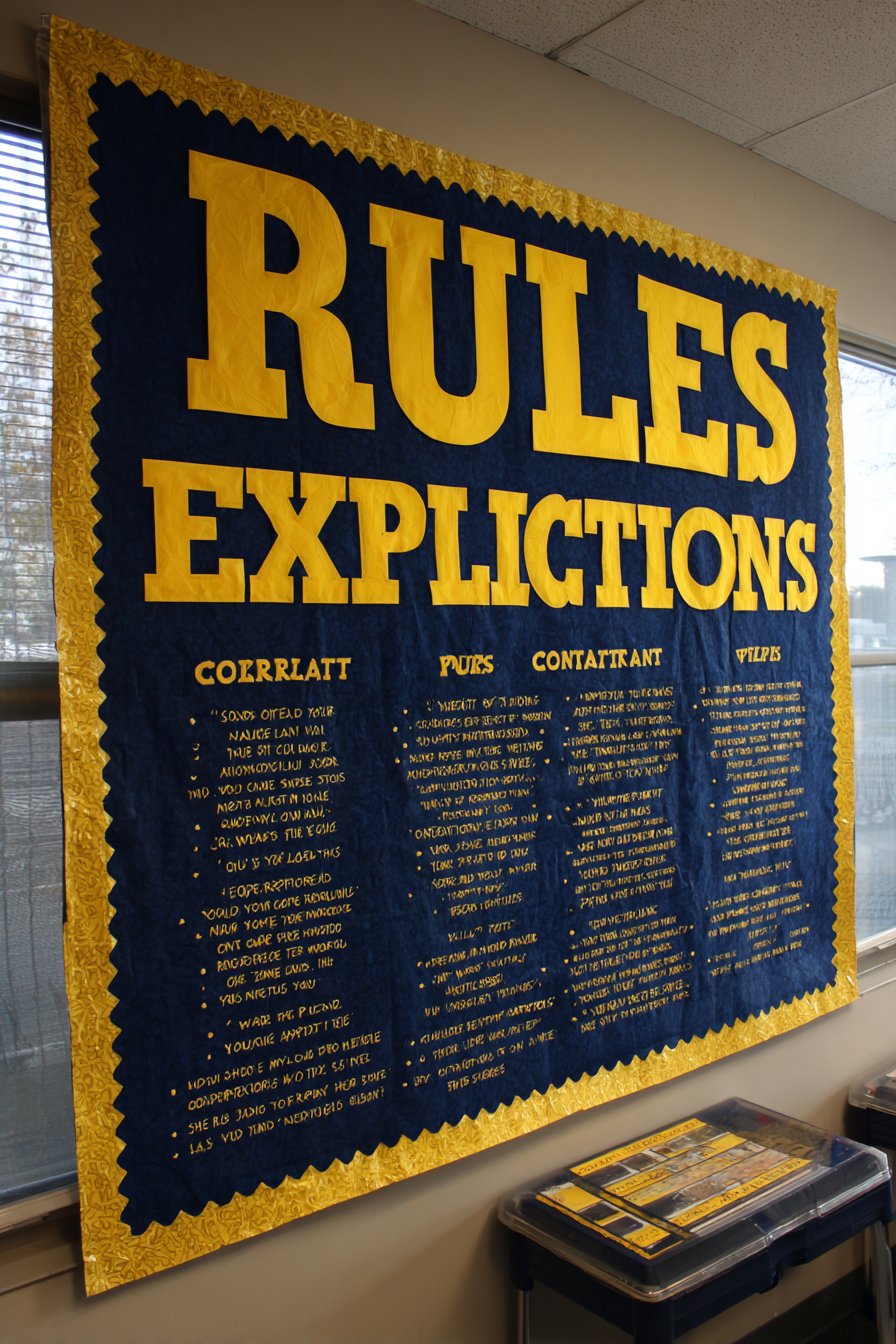
The collaborative creation of classroom expectations—where students contribute ideas and all sign the agreement—creates far stronger investment than teacher-imposed rules. The specific, illustrated examples prevent confusion about what general terms like “respect” or “responsibility” actually mean in practice. The visual prominence and positive framing create a reference point for redirection and reflection rather than a punitive tool, supporting restorative rather than punitive classroom management approaches.
Key Design Tips:
- Limit expectations to 3-5 core rules that can encompass various specific behaviors rather than lengthy lists
- Use positive language stating what students should do rather than what they shouldn’t do
- Create expectations collaboratively during the first days of school to build ownership and shared understanding
- Include specific, concrete examples that clarify general expectations and prevent misunderstanding
- Reference the expectations regularly during class meetings or when addressing behavioral situations to reinforce their importance
- Revisit and potentially revise expectations mid-year if classroom needs change or if rules aren’t serving their intended purpose
25. Data Tracking and Goal Visualization System
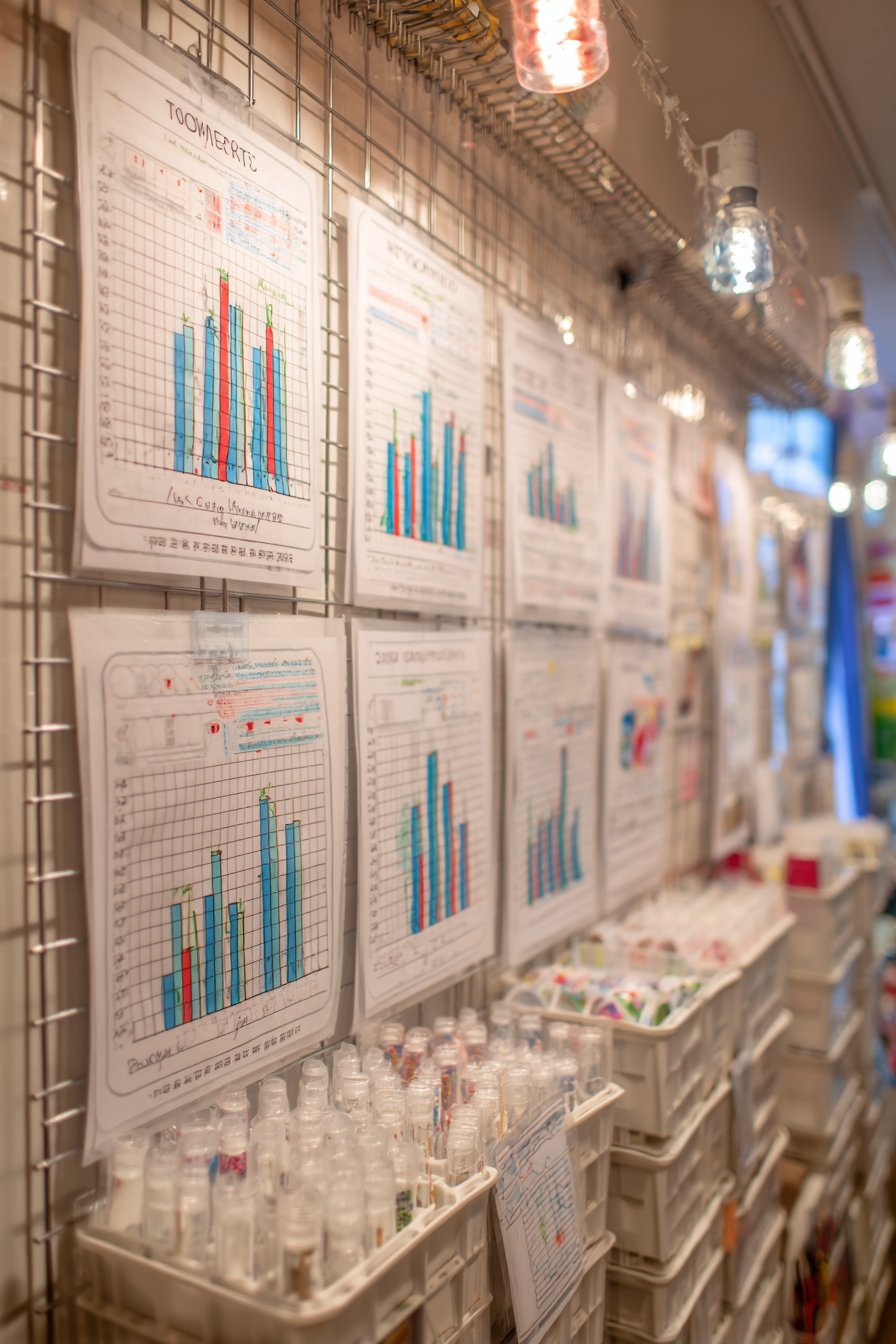
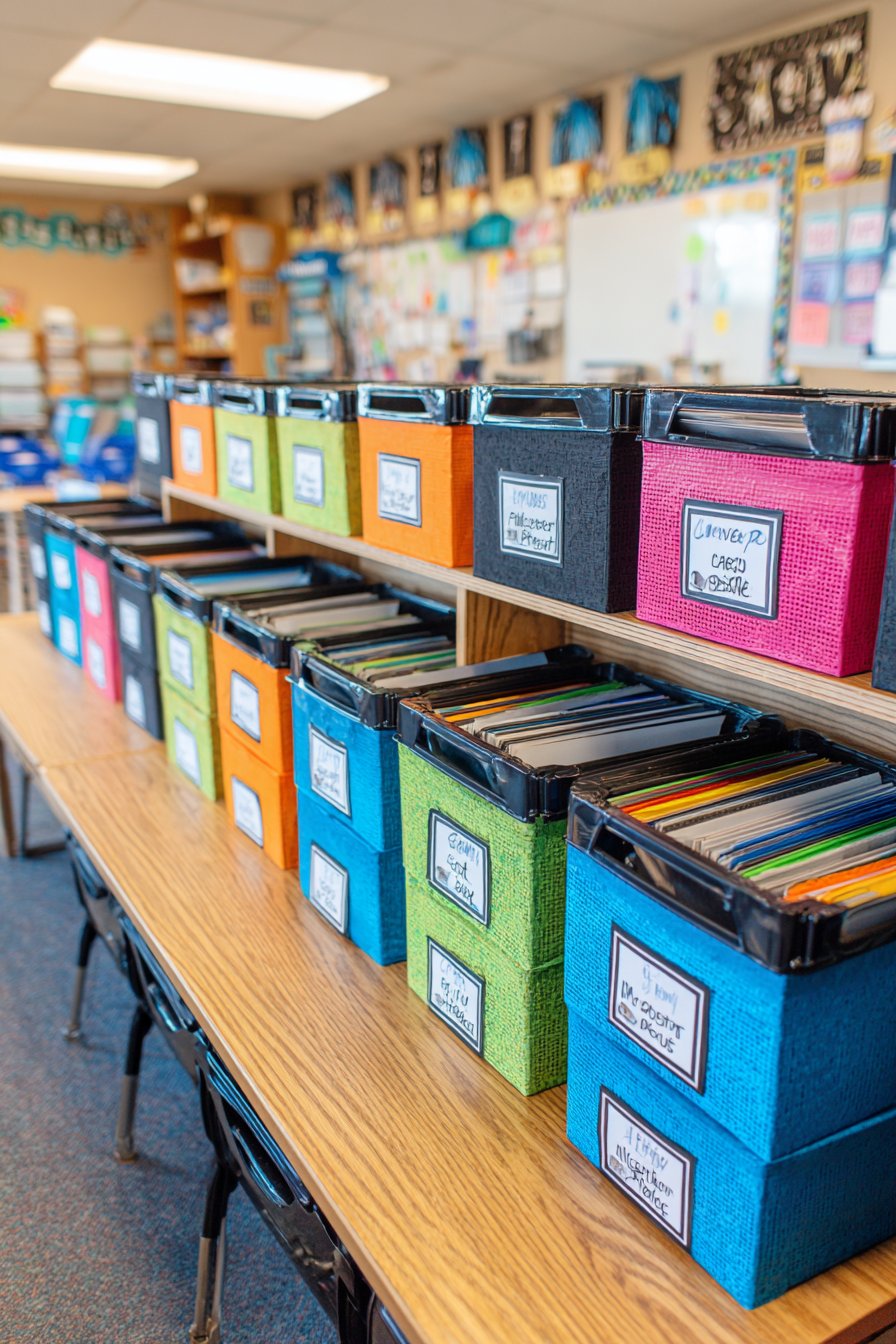
Empowering students through visible progress monitoring, a data tracking display creates transparency around learning goals and achievement while motivating continued effort through visual evidence of growth. This accountability system features student progress charts for key skills like reading levels, math facts mastery, and personal goal achievement with color-coded bar graphs that make growth immediately visible. Individual student folders organized in labeled bins with clear update dates ensure regular monitoring while privacy considerations show only initials or student numbers rather than full names.
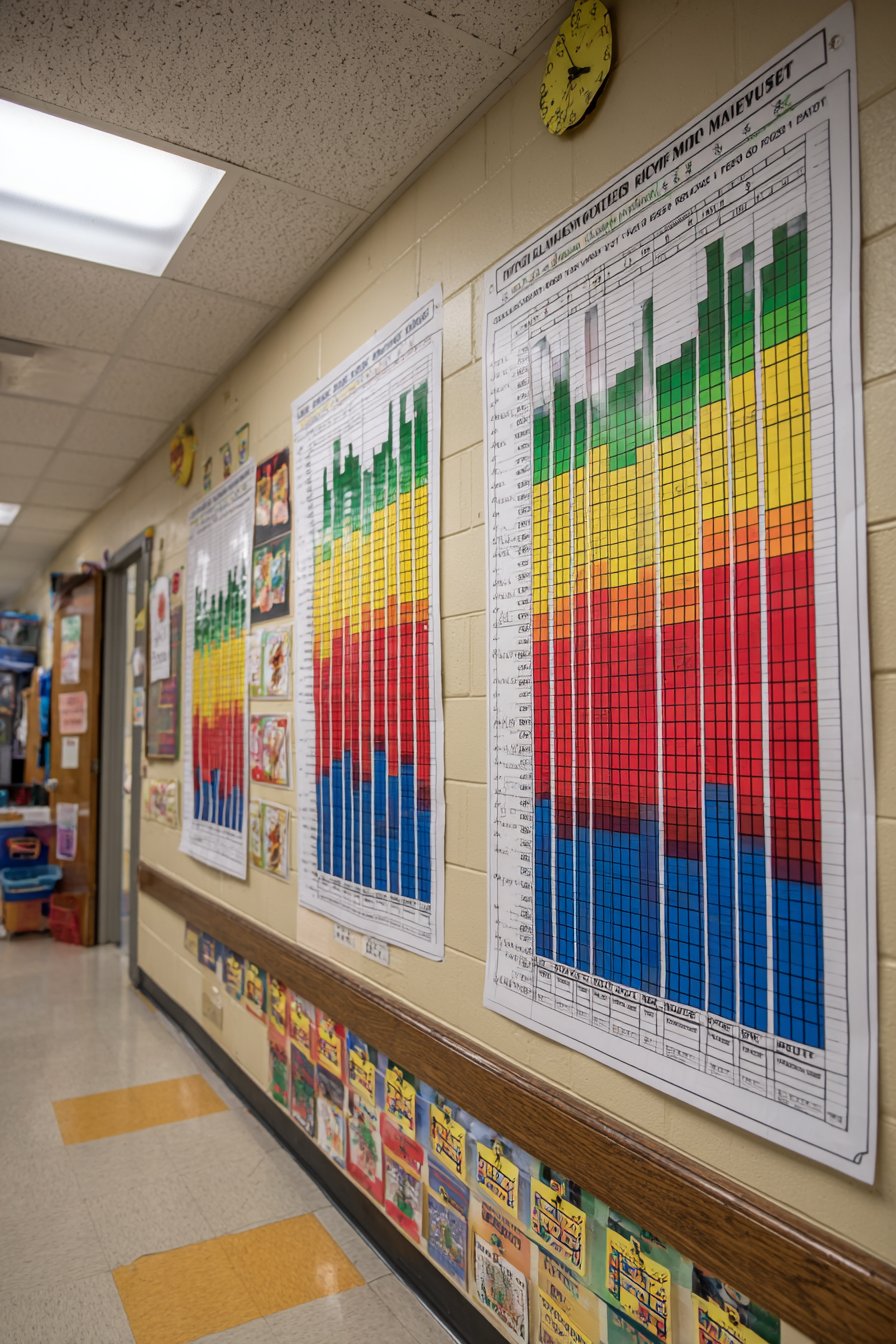
Soft lighting prevents glare on plastic chart protectors while maintaining clear visibility of data and progress indicators. The motivational tracking system serves multiple purposes—it helps students visualize their own growth over time, creates accountability for working toward specific goals, provides teachers with at-a-glance information about class progress, and communicates to families that learning outcomes are carefully monitored and celebrated. The organized data visualization teaches students that progress can be measured, tracked, and celebrated in concrete ways.

This growth mindset display demonstrates that achievement comes through sustained effort over time rather than fixed ability. The focus on individual progress rather than competitive ranking ensures that all students can experience success and recognition regardless of starting point or relative performance compared to peers. The regular updates and ongoing nature of the tracking create routine and expectation around monitoring one’s own learning journey.
Key Design Tips:
- Use anonymous identifiers like student numbers rather than names to protect privacy while allowing self-monitoring
- Create different colored graphs for different skill areas to help students quickly identify their various progress tracks
- Update data regularly on a consistent schedule so students can anticipate and prepare for progress monitoring
- Celebrate growth rather than absolute achievement to reinforce that improvement matters more than current level
- Involve students in updating their own data when appropriate to build ownership and self-monitoring skills
- Connect displayed data to specific actions students can take to continue growth in each tracked area
26. Cultural Heritage and Diversity Celebration
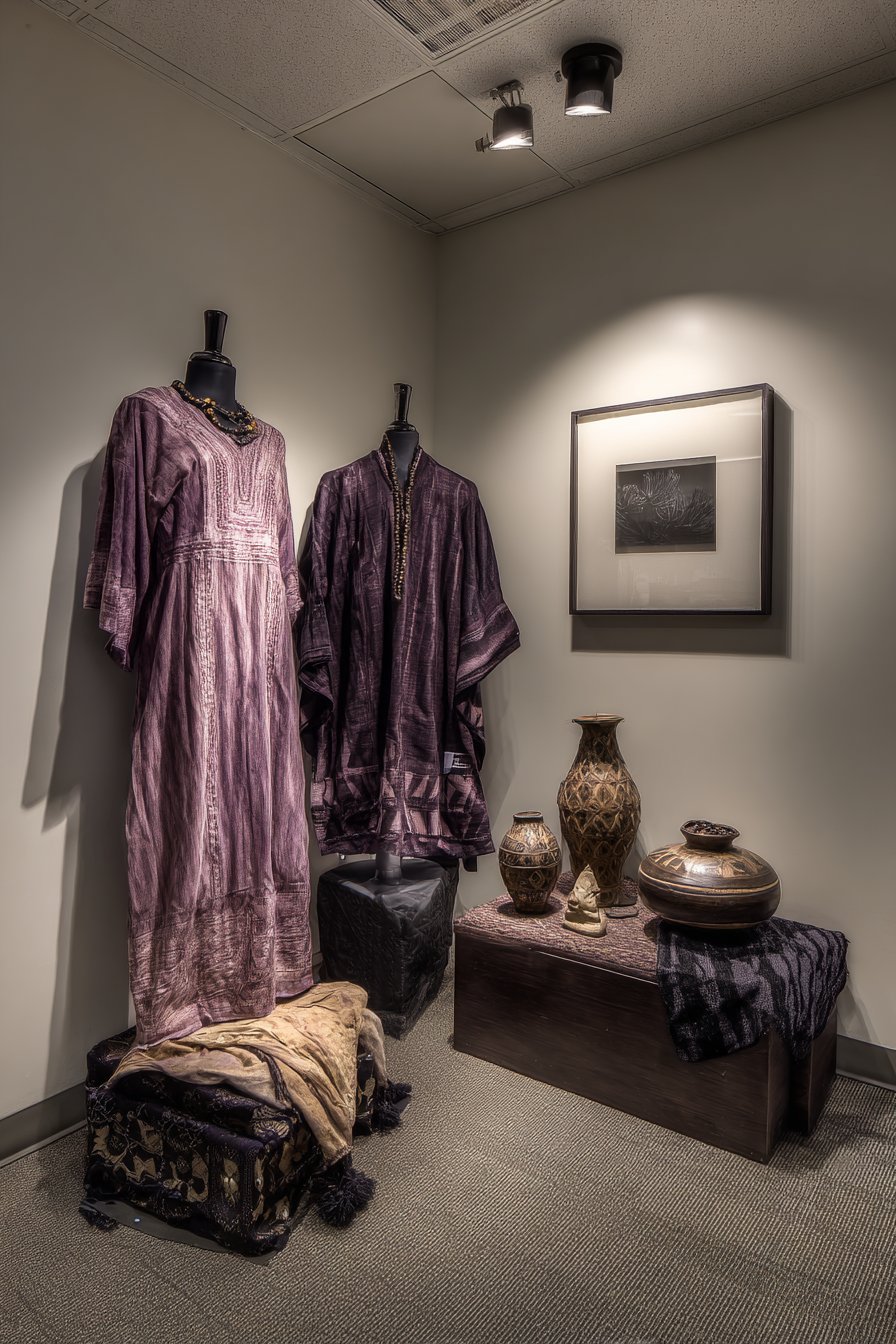
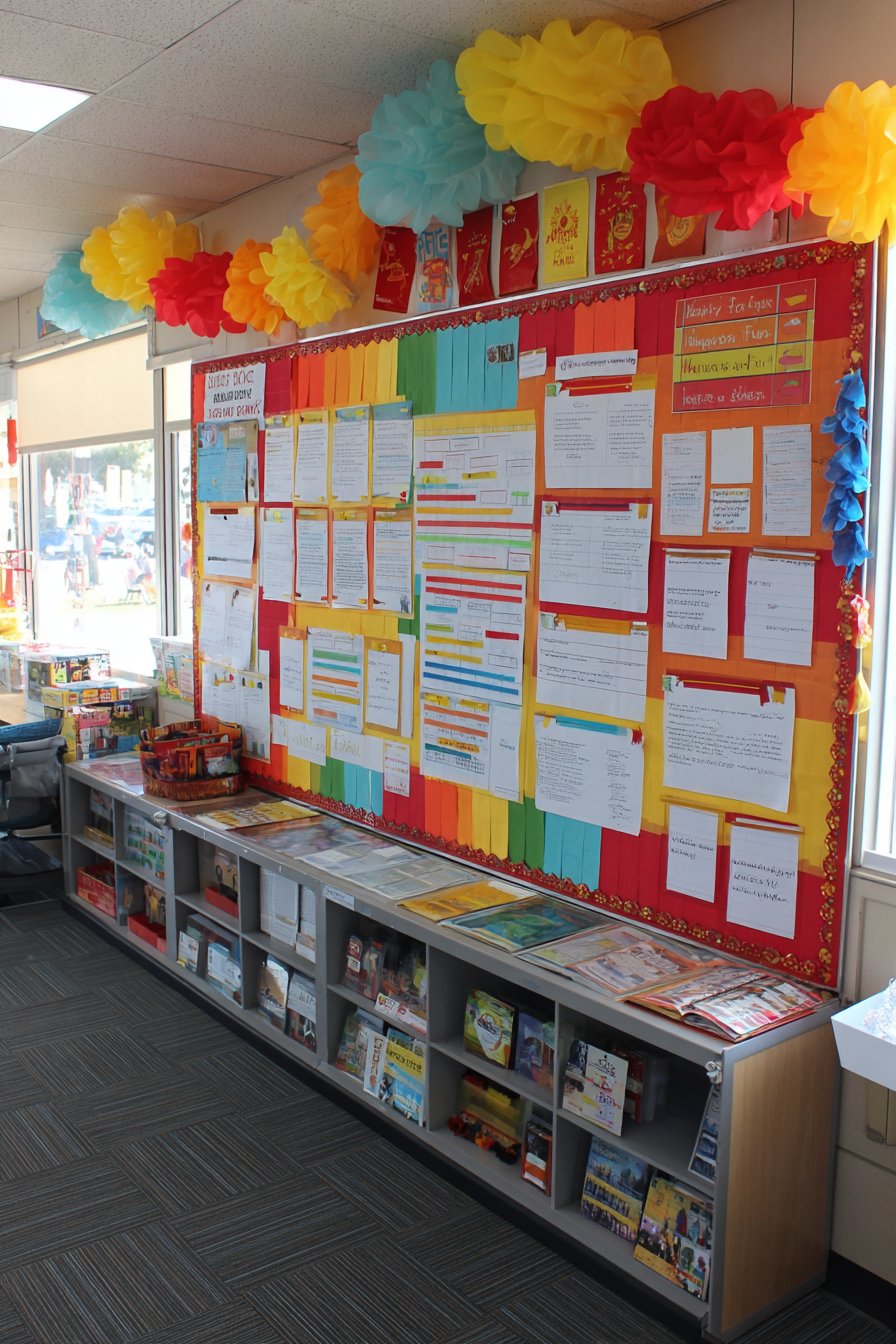
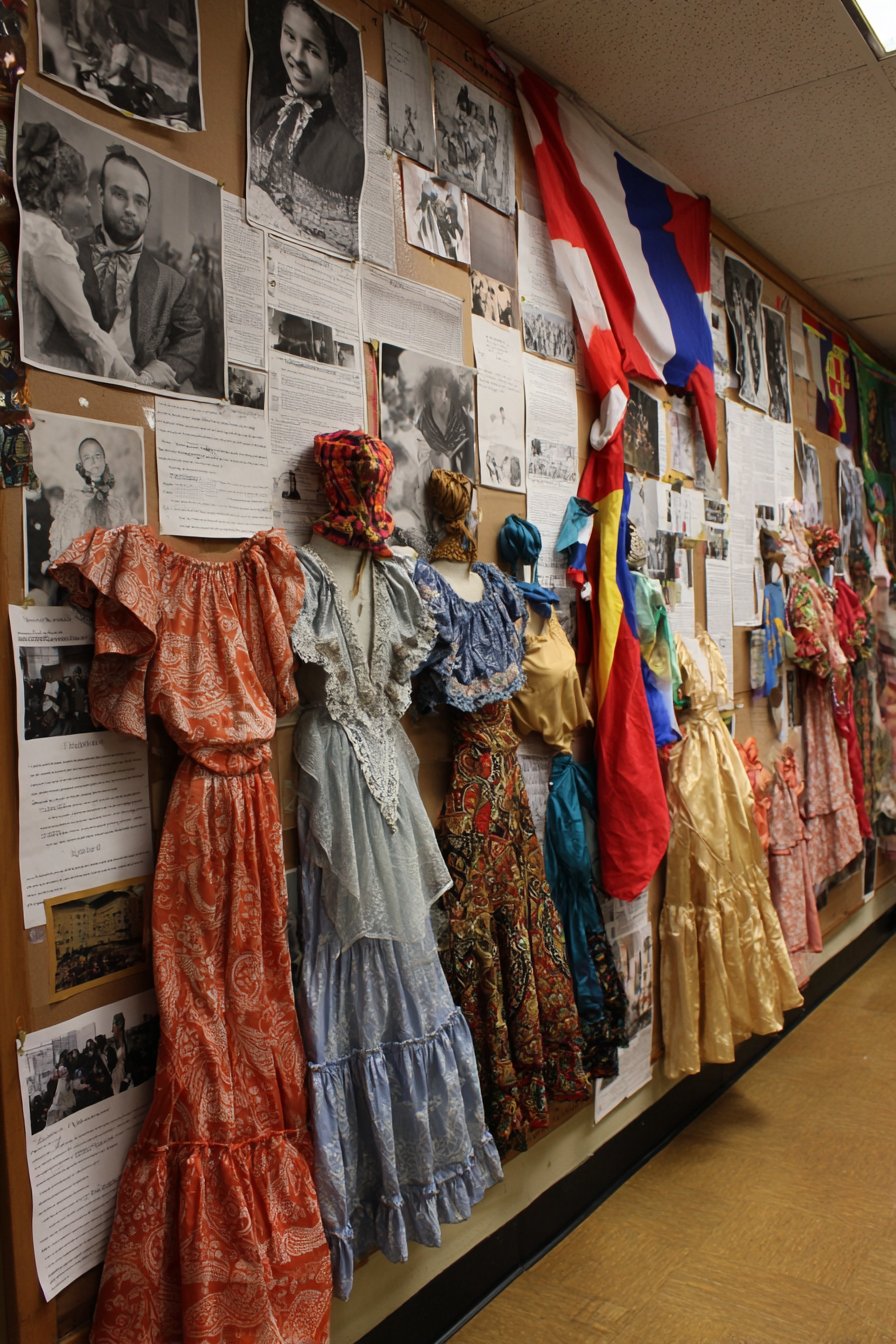
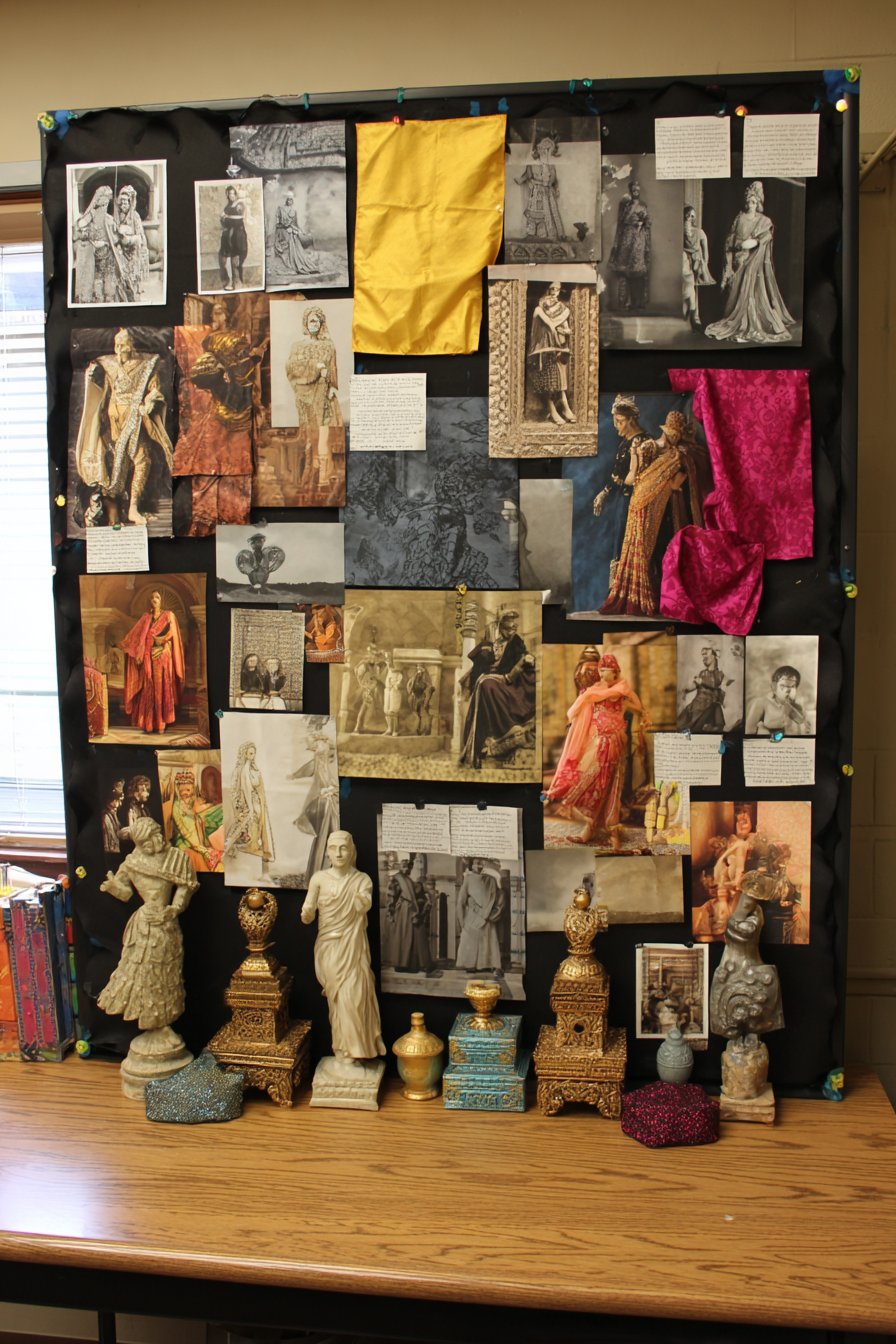
Creating inclusive learning environments that honor all students’ backgrounds, a cultural diversity display celebrates heritage months with rotating exhibitions that educate while validating. This comprehensive installation features traditional clothing from various cultures displayed on mannequins or in photographs, famous historical figures and contemporary leaders from diverse backgrounds, documentation of cultural contributions to science, arts, literature, and society, and student family heritage projects that personalize the celebration. The thoughtful arrangement includes fabric flags representing classroom diversity, artifact replicas providing tangible cultural connections, and bilingual labels ensuring accessibility.
Shadow boxes add dimensional interest while protecting delicate items, and adjustable spotlight lighting highlights featured elements creating museum-quality presentation. The multicultural learning environment communicates that all cultures and heritages are valuable and worthy of study, while the rotating nature ensures comprehensive representation throughout the school year rather than limiting specific cultures to particular months. The respectful presentation teaches students how to honor cultural artifacts and traditions while the educational information builds knowledge and appreciation.
This class wall decoration idea serves crucial equity purposes by ensuring all students see their heritage represented and celebrated within the classroom environment. The inclusion of student family heritage projects creates personal connections while teaching that learning about diverse cultures includes learning about the real people in our immediate community. The combination of historical and contemporary figures demonstrates that cultural contributions are ongoing rather than relegated to the past.
Key Design Tips:
- Research thoroughly to ensure accurate, respectful representation of each featured culture avoiding stereotypes or oversimplification
- Partner with families and community members from featured cultures to ensure authentic representation and avoid appropriation
- Include lesser-known contributions and figures alongside familiar ones to expand students’ cultural knowledge
- Create consistent rotation schedules that ensure equitable attention to various cultures throughout the school year
- Connect cultural celebrations to curriculum standards in social studies, literature, or science when possible
- Include reflection activities where students consider what they’re learning about featured cultures and make personal connections
27. Collaborative Job Assignment and Rotation System
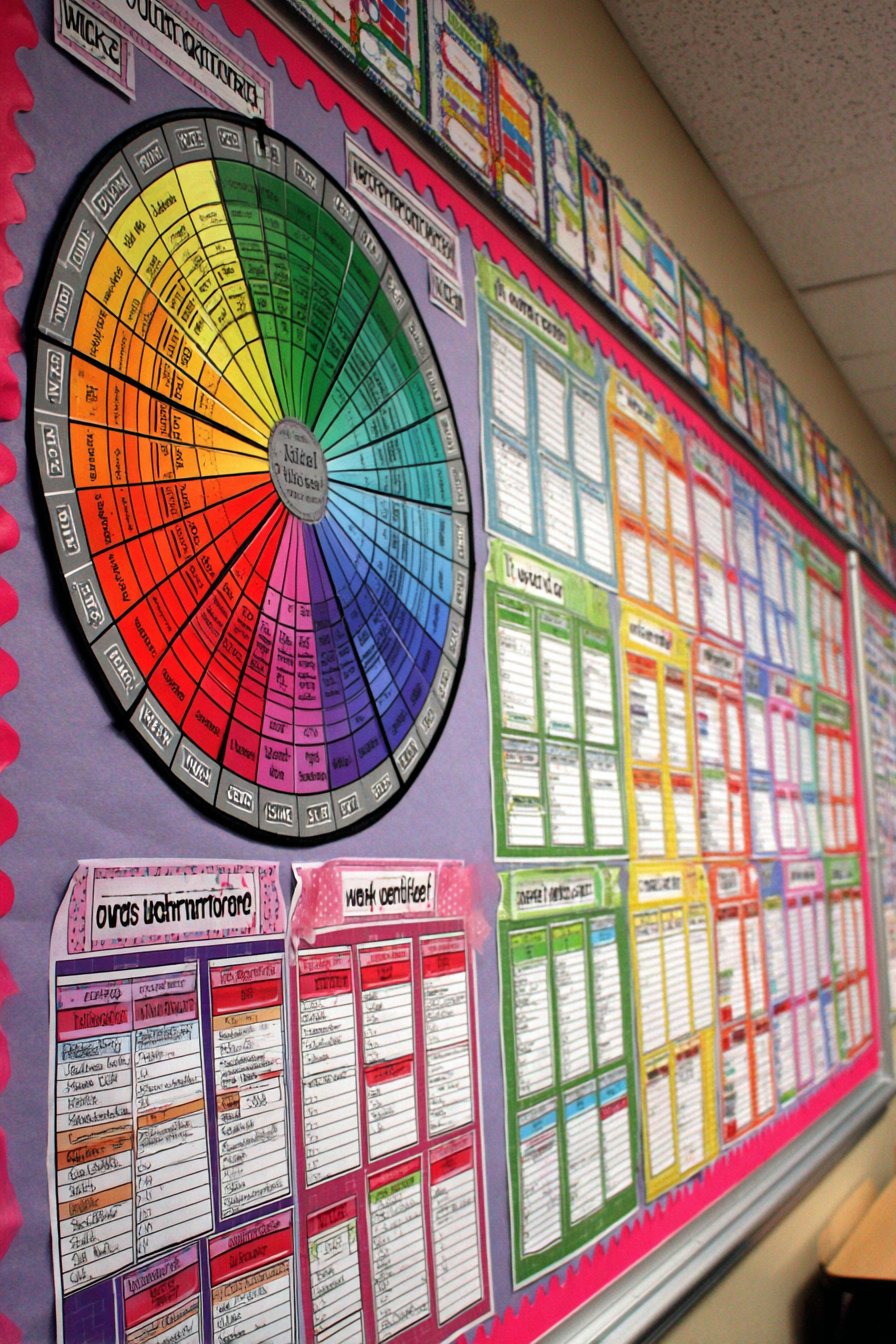
Building community responsibility through visual organization, a classroom helper schedule creates transparent systems for distributing daily tasks while teaching workplace skills. This functional display features a rotating job wheel chart where student names move through various positions, detailed job descriptions with visual task lists ensuring clarity about responsibilities, and a “We Work Together” theme with teamwork graphics reinforcing collaborative values. The interactive display uses moveable student name tags and clear responsibility cards while bright primary colors create visual appeal without overwhelming.
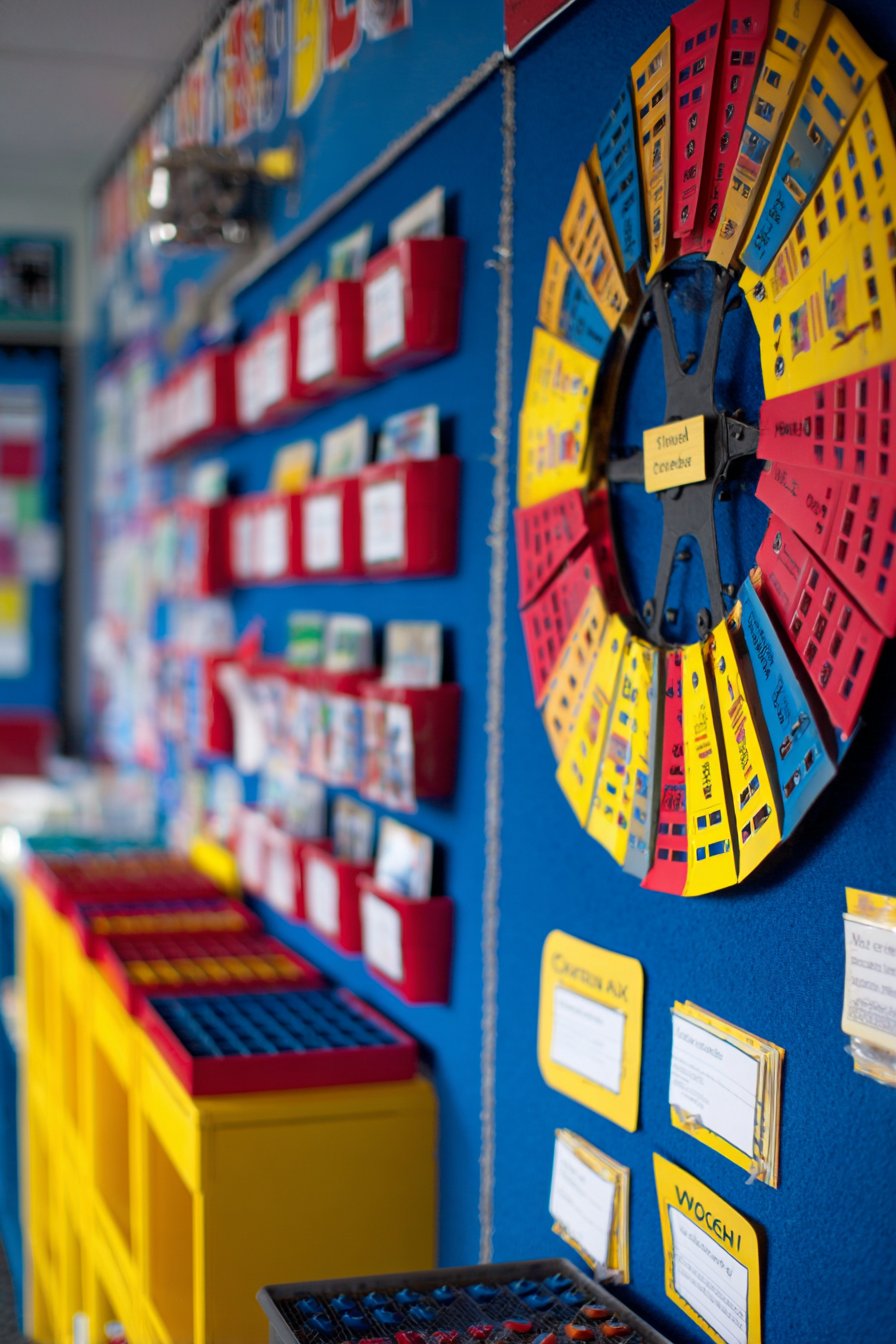
Even classroom lighting ensures all jobs are clearly visible regardless of their position on the rotation wheel, while the organized system creates predictability and fairness that students can understand and trust. The visual task lists support independence—students can check what their job requires without asking the teacher—while the systematic rotation ensures everyone experiences various responsibilities throughout the year. The teamwork theme frames classroom maintenance as collaborative community work rather than individual chores.
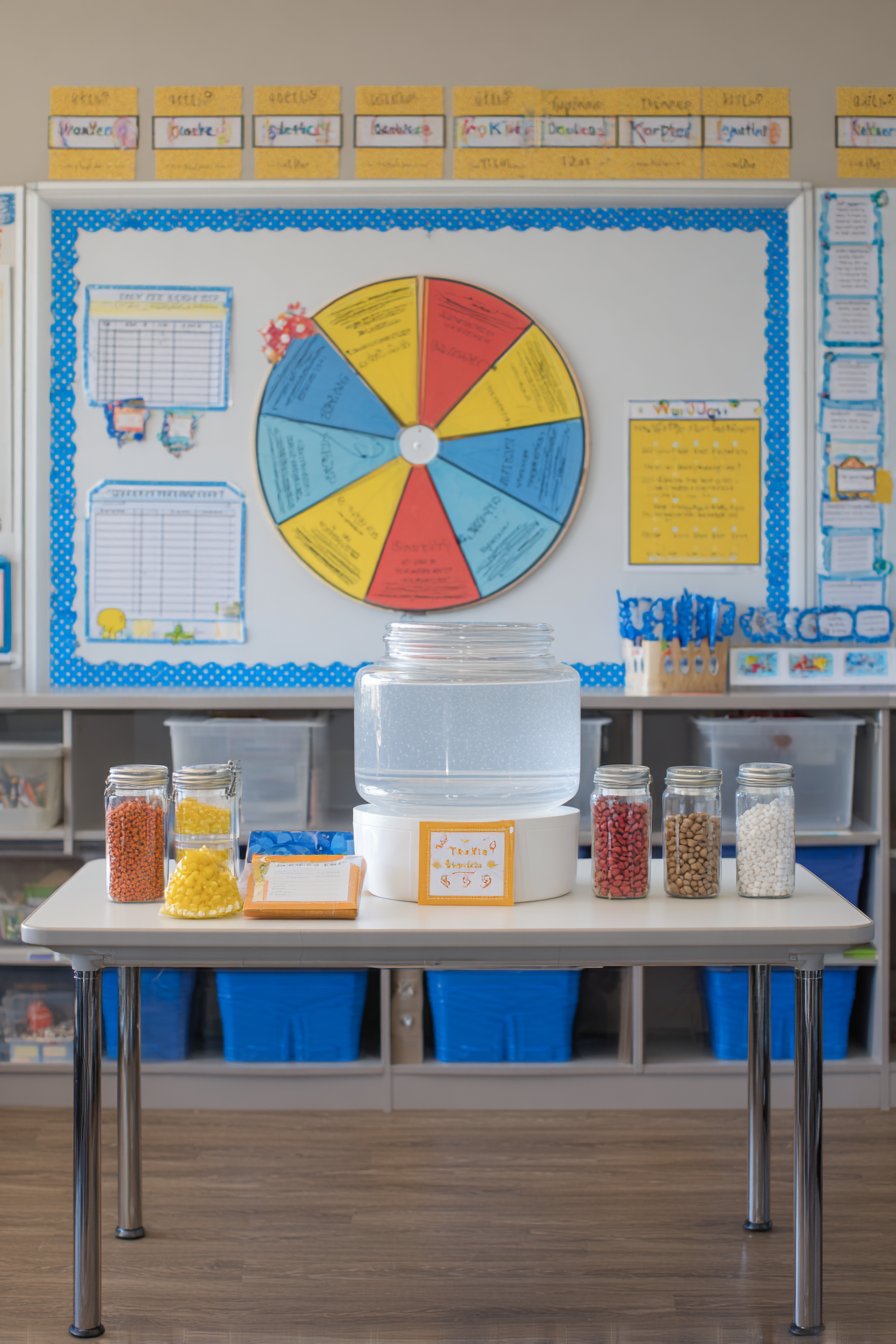
This organizational class wall decoration idea teaches essential life skills including following through on commitments, understanding that communities require shared effort, reading and following multi-step directions, and managing time to complete responsibilities alongside academic work. The public nature creates gentle accountability while the rotation system prevents resentment that can build when some students always receive desirable jobs while others get less appealing tasks.
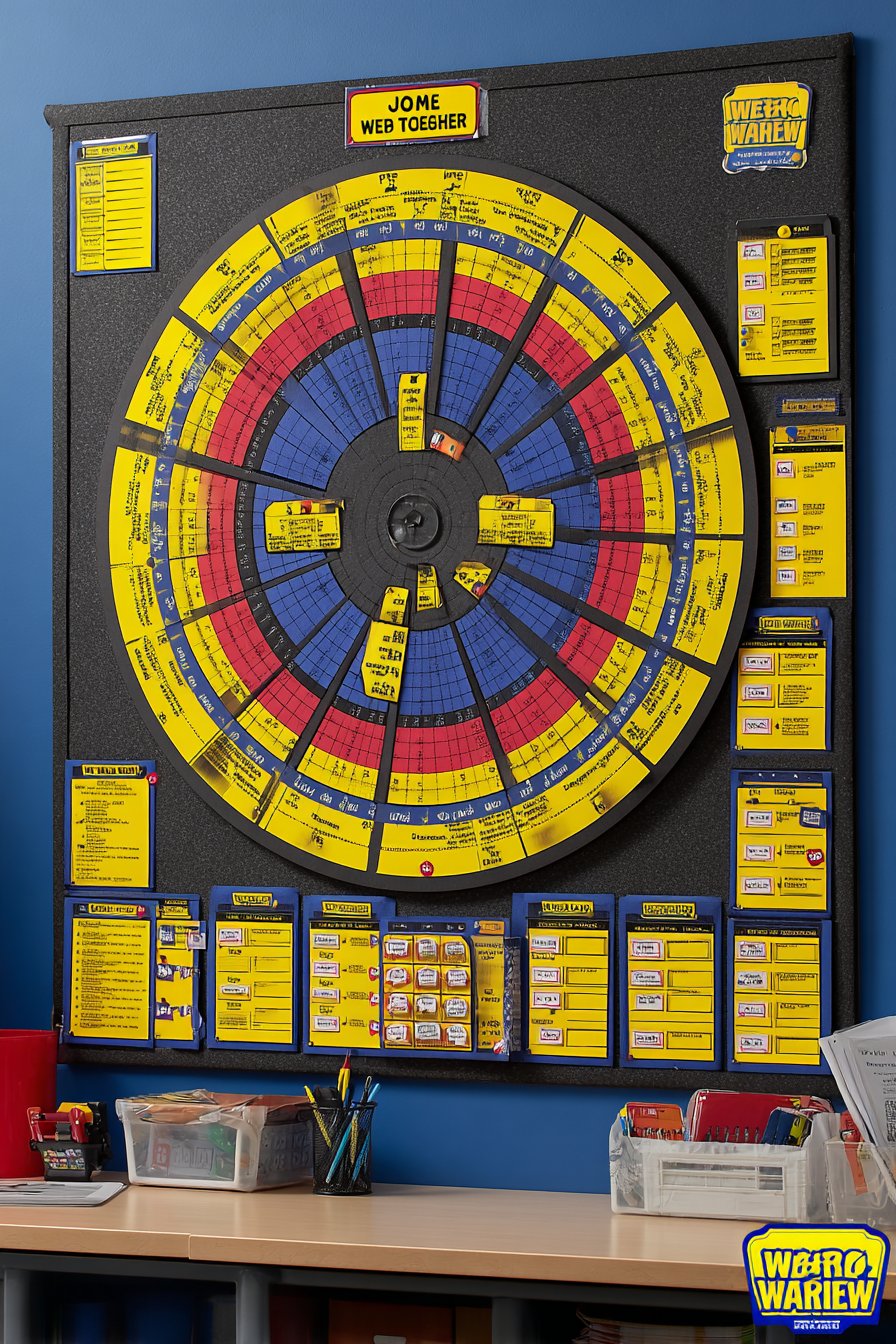
Key Design Tips:
- Design the rotation system to move weekly or biweekly, creating consistency without excessive change
- Create jobs at various difficulty levels to provide appropriate challenges for different developmental stages
- Include visual checklists for complex jobs to support successful completion and build independence
- Position job descriptions where students can reference them during transitions when jobs are typically completed
- Celebrate exceptional job performance with specific recognition rather than vague praise
- Periodically evaluate whether jobs are still necessary or if new classroom needs require different responsibilities
28. Standards-Based Learning Targets Display
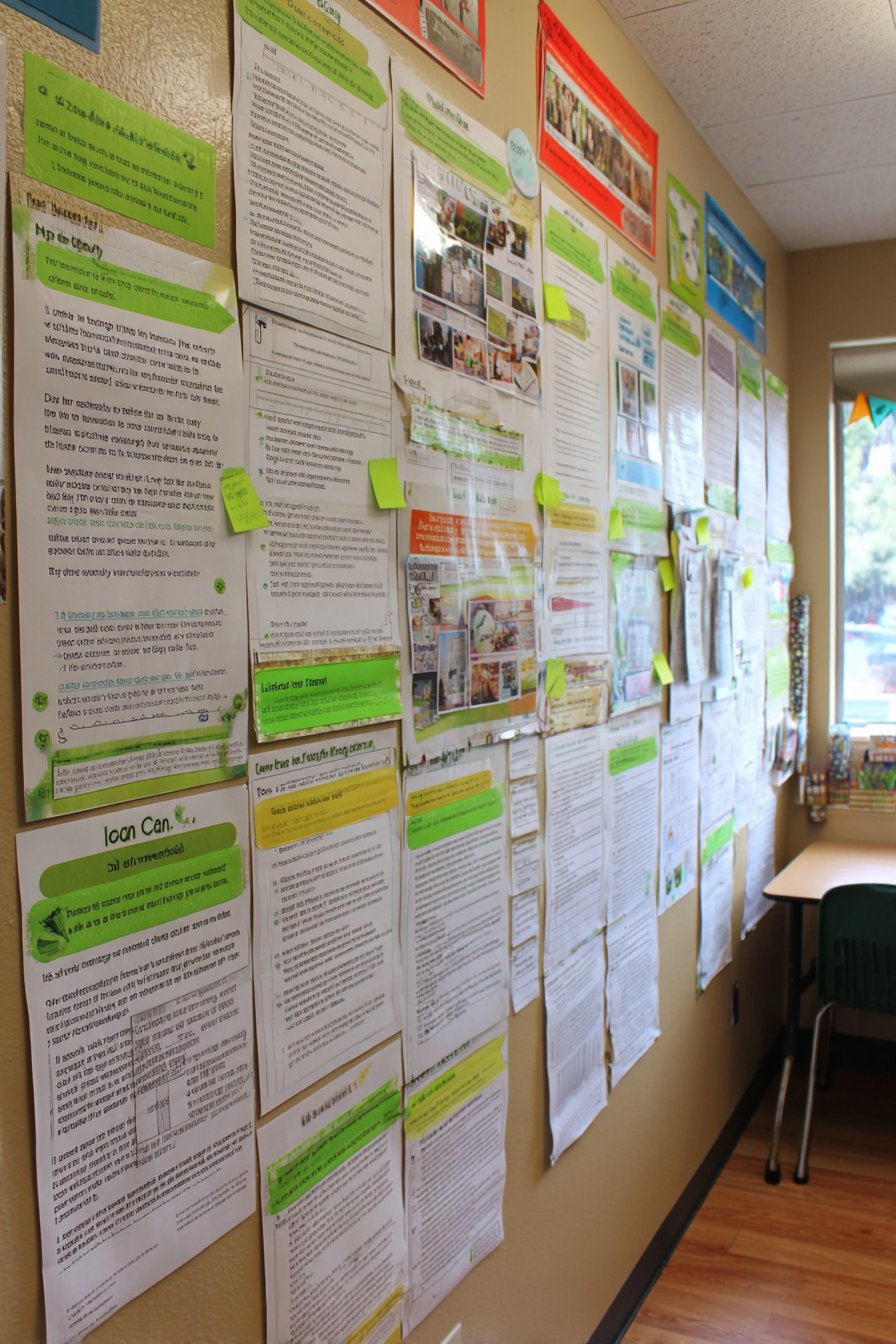
Creating transparency around educational objectives, a learning targets and success criteria display helps students understand exactly what they’re working to master and what success looks like. This standards-based installation features daily objective posters with “I Can” statements phrased in student-friendly language, rubric displays showing quality work examples at various performance levels, and student self-assessment checklists allowing learners to monitor their own progress toward mastery. The consistent formatting with green checkmark graphics for demonstrated mastery creates clear visual communication about achievement.
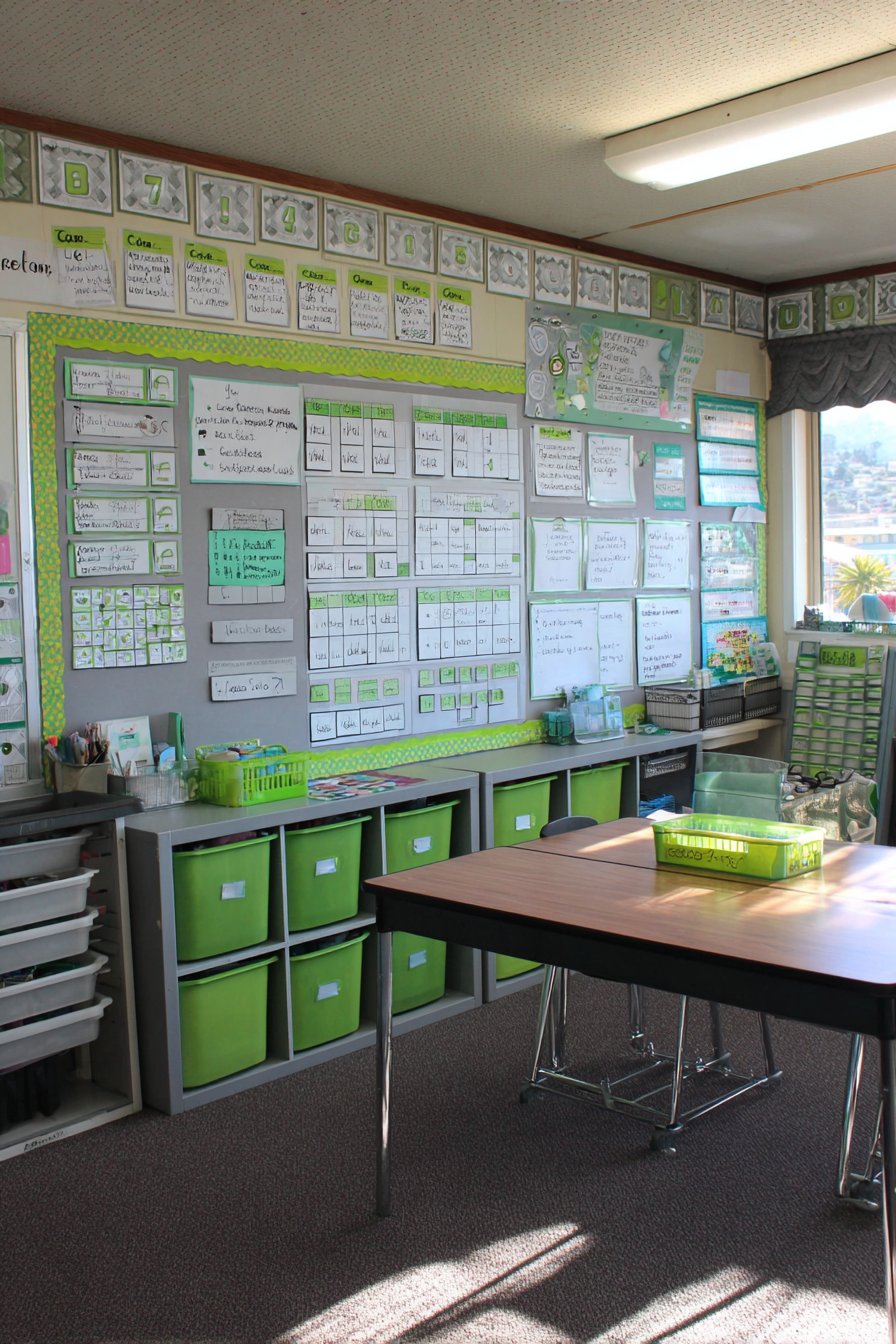
Laminated materials accommodate dry-erase marking, allowing students to check off mastered objectives or mark areas still needing work. Balanced fluorescent lighting provides clear readability of learning targets, success criteria, and assessment rubrics from all classroom areas. The transparent learning expectations eliminate mystery about what students should be learning and how their work will be evaluated, creating fairness and reducing anxiety. The student-centered language—”I can” rather than “students will”—creates ownership and frames learning as something students do rather than something done to them.
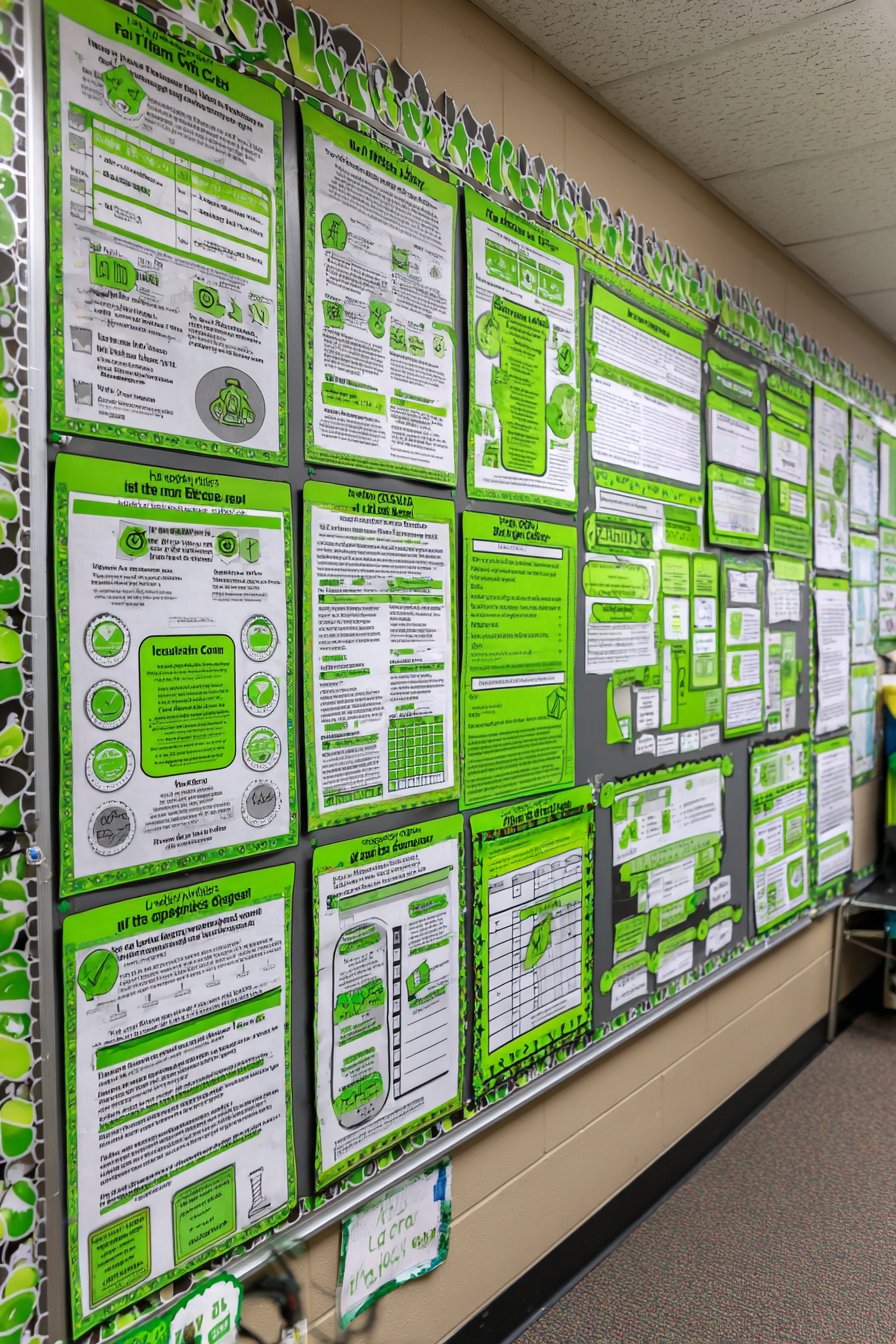
This educational class wall decoration idea reflects current best practices in assessment and instruction, including making learning targets visible, providing clear success criteria, involving students in assessing their own learning, and celebrating mastery when it’s achieved. The ongoing nature of the display—with regular updates as learning objectives change—creates rhythm and expectation around the learning cycle while the accessible reference supports students in understanding their own learning journey.
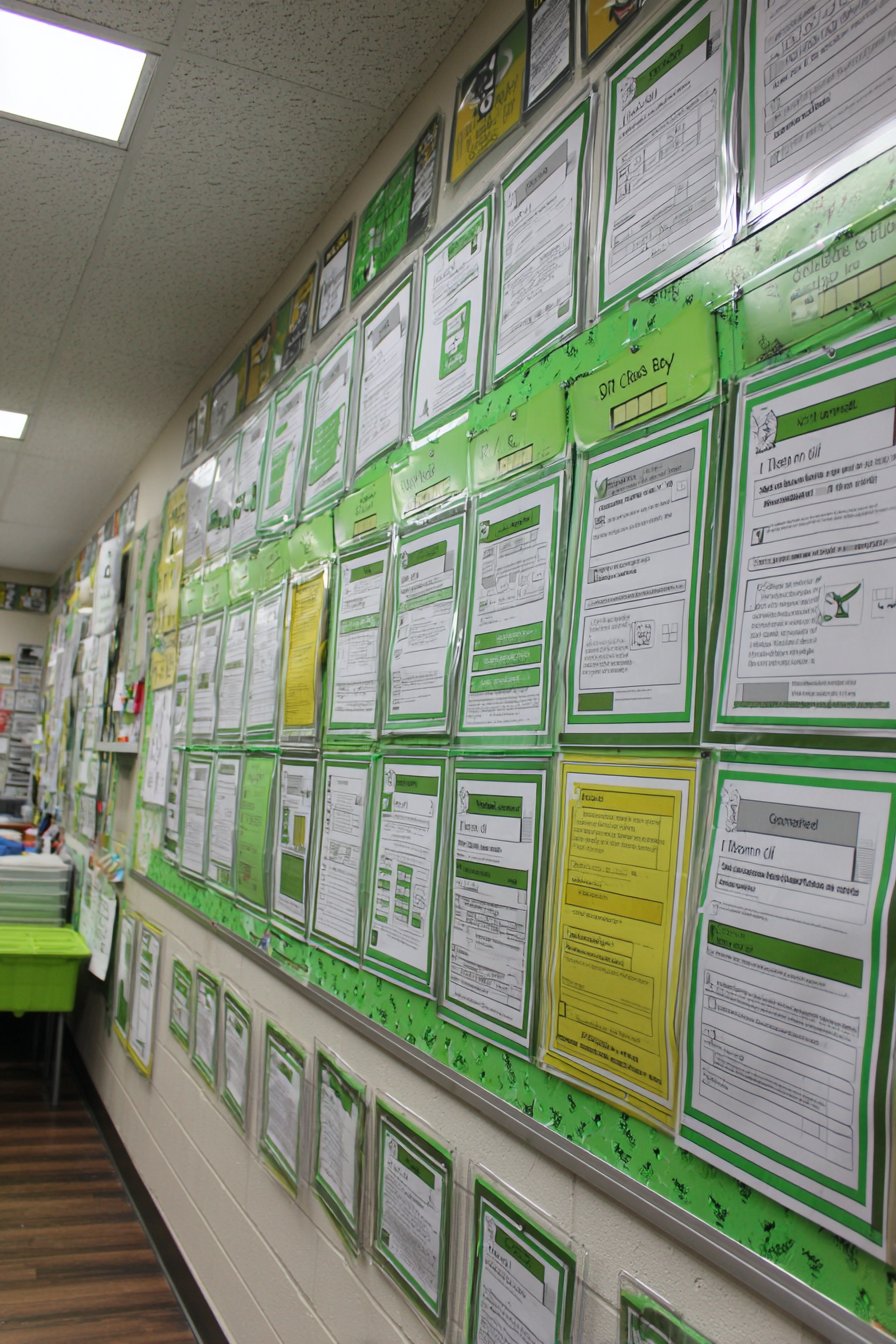
Key Design Tips:
- Write learning targets using student-friendly language at appropriate reading levels for your students
- Include both academic skill targets and behavioral/work habit targets to address the complete learning process
- Display examples of work at various proficiency levels to make abstract criteria concrete and understandable
- Position learning targets where they’re visible during both instruction and independent work time
- Reference learning targets explicitly during lessons to create connections between activities and objectives
- Create opportunities for students to self-assess against learning targets and set personal goals for growth
29. Empowering Growth Mindset Affirmation Wall
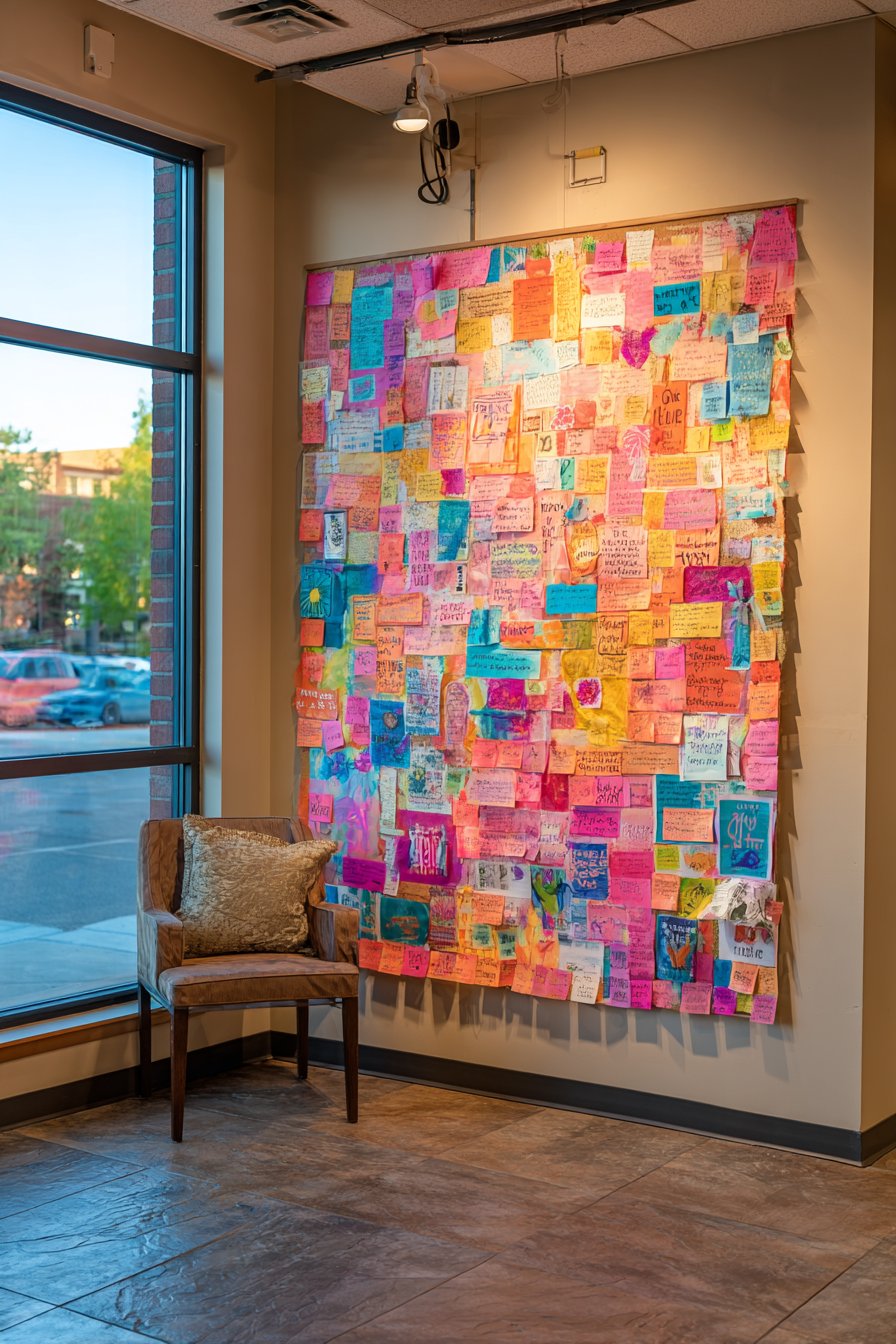
Fostering resilience and positive self-perception, a growth mindset affirmations display creates daily encouragement while explicitly teaching the science of learning and brain development. This empowering installation features inspirational quotes specifically about learning from mistakes, persistence through challenges, and the power of “yet” in transforming current struggles into future successes. Brain science posters explaining neuroplasticity make abstract concepts concrete, helping students understand that their brains physically change and grow stronger through effortful learning. A “Mistakes Help Us Grow” section showcases student revision examples demonstrating the improvement possible through persistence and multiple attempts.
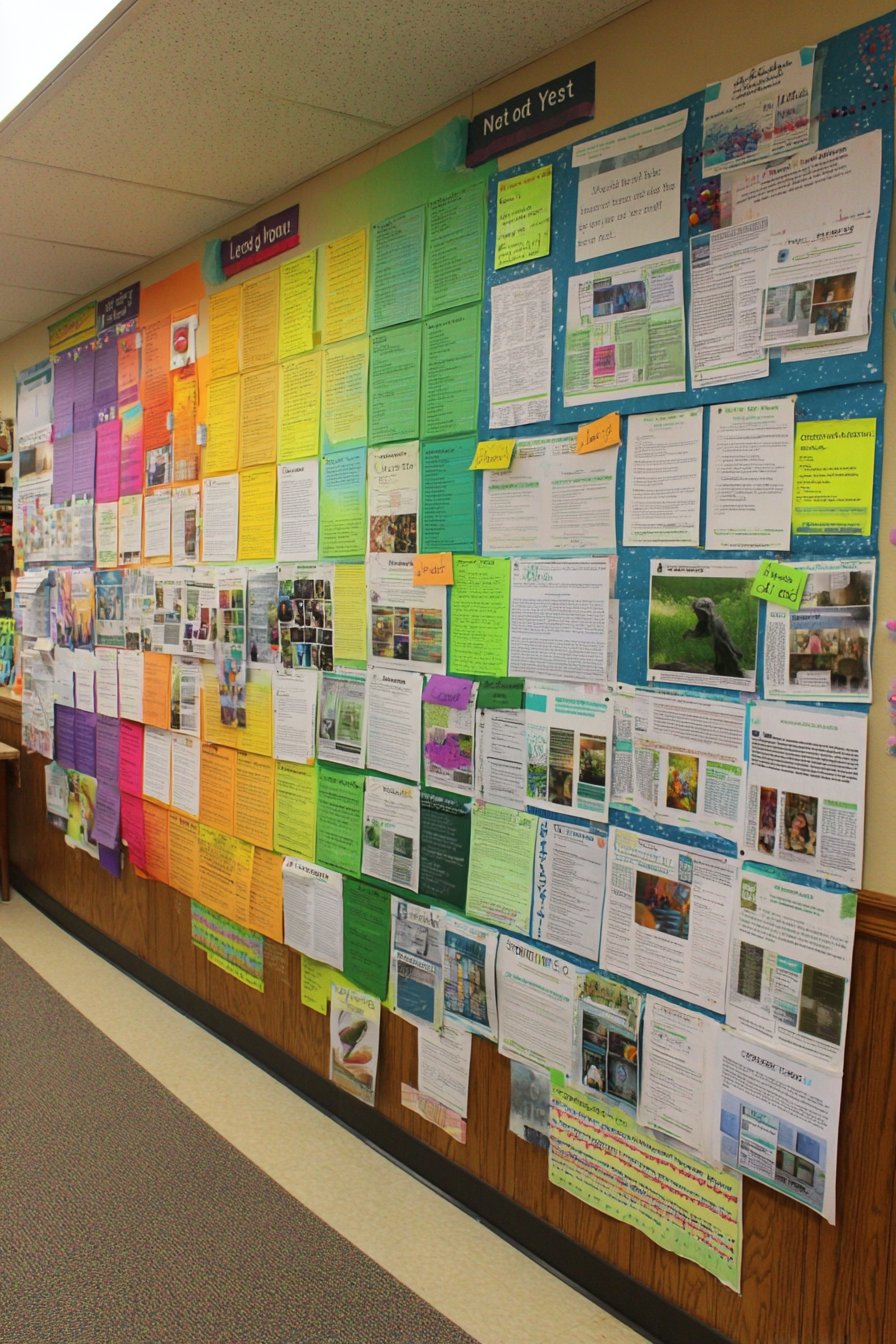
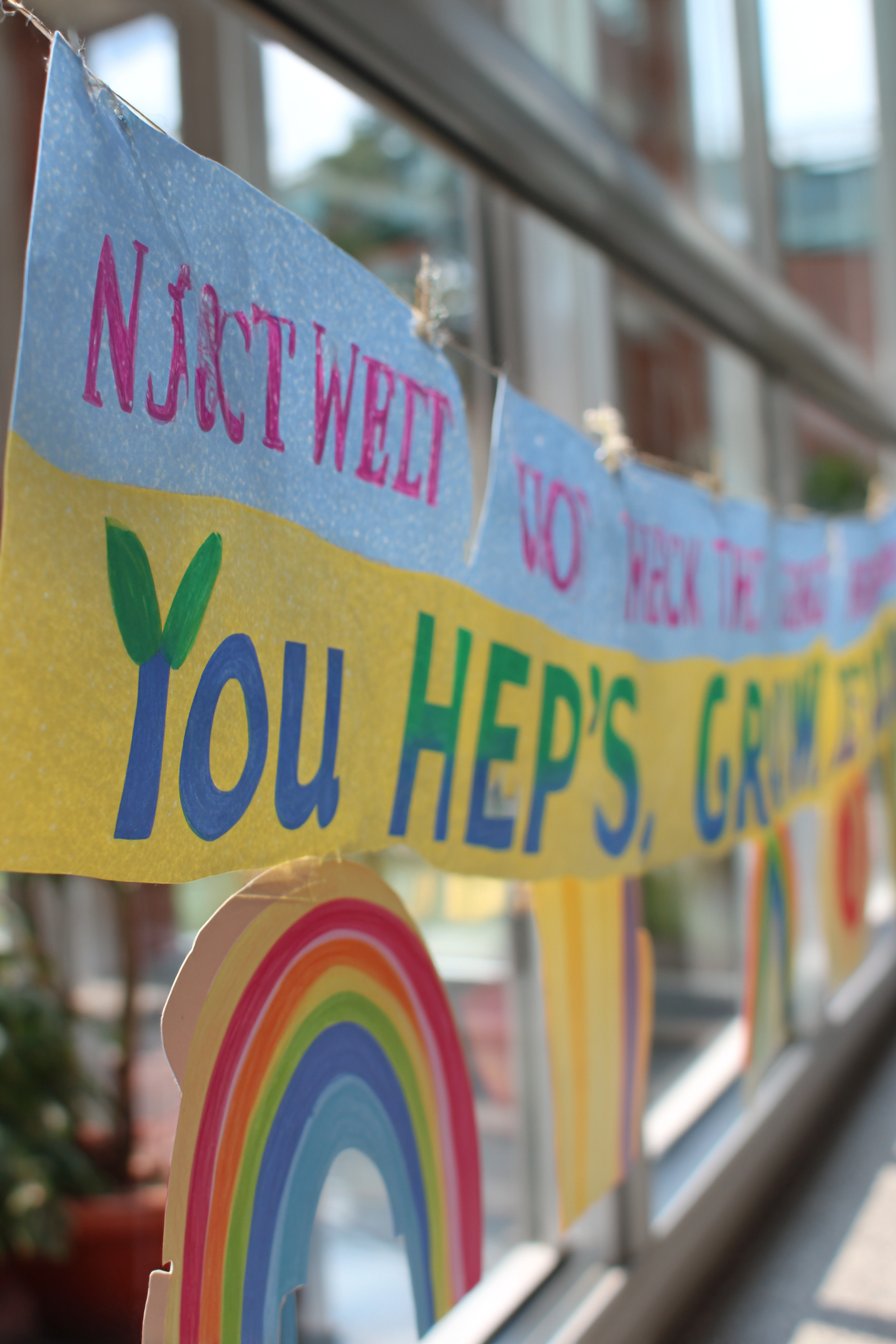
The uplifting imagery, rainbow colors, and encouraging typography create an optimistic learning atmosphere while a “Not Yet” bulletin board celebrates progress toward goals that haven’t been fully achieved, reframing current limitations as temporary states rather than permanent conditions. Natural window light generates an optimistic atmosphere that enhances the positive messaging throughout the school day. The empowering educational messages communicate fundamental beliefs about learning potential, the value of effort, and the growth possible through persistence.
This positive learning culture display addresses one of the most significant factors affecting student achievement—their beliefs about their own learning capacity and the nature of intelligence. Students who believe intelligence is fixed avoid challenges and give up easily, while those who understand intelligence as expandable through effort persist through difficulties. The explicit teaching of growth mindset concepts through wall displays creates constant reinforcement of these crucial beliefs.
Key Design Tips:
- Select quotes and affirmations that specifically address academic persistence rather than generic positivity
- Include diverse voices in your quote selections to ensure all students see themselves in the messaging
- Create the “Not Yet” board as a celebration of current work toward mastery rather than a failure list
- Teach explicit lessons about neuroplasticity so students understand the science behind the motivational messages
- Showcase revision examples from real student work (with permission) to demonstrate that improvement is possible
- Reference growth mindset concepts during challenging moments to help students apply these beliefs in real situations
Why These Class Wall Decoration Ideas Excel
These twenty-nine class wall decoration ideas represent the culmination of educational research, practical teaching experience, and understanding of how physical environments impact learning outcomes. Each approach serves multiple purposes simultaneously—creating visual interest, supporting specific learning objectives, building classroom community, and teaching organizational systems that extend beyond academic content. The diversity of these ideas ensures that educators working in different grade levels, with various student populations, and focused on different curricular priorities can find relevant approaches that transform their classroom walls into active teaching tools.
What distinguishes these class wall decoration ideas from mere aesthetic choices is their foundation in educational best practices and learning science. The interactive bulletin boards build accountability and pride in achievement. The reference walls support independence and reduce cognitive load during learning. The organizational systems teach executive functioning skills alongside content knowledge. The celebration displays build community and social-emotional development. The data tracking creates transparency and growth mindset. Each decoration serves clear educational purposes beyond simply making classrooms look attractive, though the visual appeal itself contributes to creating welcoming learning environments where students want to spend time.
The practical implementation guidance provided for each idea ensures that even teachers new to classroom decoration can successfully create these displays without excessive time investment or specialized artistic skills. The emphasis on student involvement in creating and maintaining displays builds ownership while reducing teacher workload. The focus on durable materials and systematic organization creates sustainability—these aren’t decorations that must be completely recreated each year but rather systems that can be updated and refreshed efficiently. The attention to diverse learners through visual supports, multilingual options, and varied engagement methods ensures that these class wall decoration ideas serve all students effectively.
Conclusion
Transforming classroom walls from blank spaces into dynamic learning environments requires intentional planning, educational purpose, and understanding of how visual information supports student learning. These twenty-nine class wall decoration ideas provide comprehensive approaches to creating classrooms where every wall serves educational purposes—supporting literacy development, building mathematical thinking, celebrating diversity, teaching organizational skills, reinforcing positive behaviors, and creating communities where all learners thrive. The detailed implementation guidance ensures that educators at all experience levels can successfully incorporate these ideas while adapting them to specific student needs, curricular requirements, and available resources.
As you consider which class wall decoration ideas to implement in your own educational space, remember that the most effective classroom environments evolve throughout the school year, responding to student growth, changing learning objectives, and the developing classroom community. Start with one or two high-priority areas—perhaps a reference wall supporting your core curriculum and a celebration display building community—then gradually expand your classroom decoration as time and resources allow. Involve students in creating, maintaining, and updating displays to build ownership while teaching valuable skills. Most importantly, remember that these decorations serve your students’ learning rather than existing for their own sake—regularly evaluate whether each display continues to serve educational purposes and make adjustments when needed.
The investment of time and thought into creating purposeful, engaging class wall decorations pays dividends throughout the entire school year in increased student engagement, reduced behavioral challenges, supported independence, and stronger learning outcomes. Your classroom walls can become silent teachers, constant motivators, and visible representations of the learning community you’re building together with your students. Begin transforming your educational space today with these proven class wall decoration ideas that combine aesthetic appeal with educational excellence.
