
Creating the perfect boys’ room goes far beyond simply selecting a favorite color and applying it to four walls. The right paint choices can dramatically transform a bedroom from a simple sleeping space into a dynamic environment that nurtures creativity, supports focused study time, and provides a comfortable retreat for relaxation. Paint serves as the foundational element of any room’s design, setting the mood, influencing spatial perception, and creating a backdrop against which all other design elements come together. For parents and designers alike, understanding how to leverage paint techniques, color psychology, and creative application methods can make the difference between a room that feels generic and one that truly reflects a child’s personality while remaining versatile enough to grow with them through different developmental stages.
The beauty of paint as a design tool lies in its remarkable versatility and accessibility. Unlike expensive furniture pieces or elaborate décor items, paint offers an affordable way to make dramatic changes to a space, and it can be updated relatively easily as tastes evolve. From bold accent walls that create focal points to sophisticated multi-tone techniques that add depth and visual interest, the possibilities are virtually limitless. Modern paint technology has also expanded our options significantly, with innovations like magnetic paint, chalkboard finishes, and low-VOC formulations that prioritize both functionality and health. Whether you’re designing a room for a toddler taking their first steps toward independence, a school-aged child developing their interests and hobbies, or a teenager seeking a more mature aesthetic, the right paint strategy can accommodate these changing needs while maintaining a cohesive and appealing design.
This comprehensive guide explores twenty-five distinct paint ideas specifically tailored for boys’ rooms, each offering unique approaches to color, technique, and style. From classic nautical themes rendered in timeless navy and white to adventurous mountain murals that inspire exploration, these concepts demonstrate how thoughtful paint application can create spaces that are both beautiful and functional. You’ll discover techniques ranging from simple single-color applications to complex gradient effects, geometric patterns, and creative uses of specialty paints. Each idea has been carefully selected to provide practical inspiration that can be adapted to various room sizes, architectural features, and budget constraints, ensuring that every parent can find approaches that resonate with their vision and capabilities.
1. Two-Tone Sophistication with Chair Rail Division
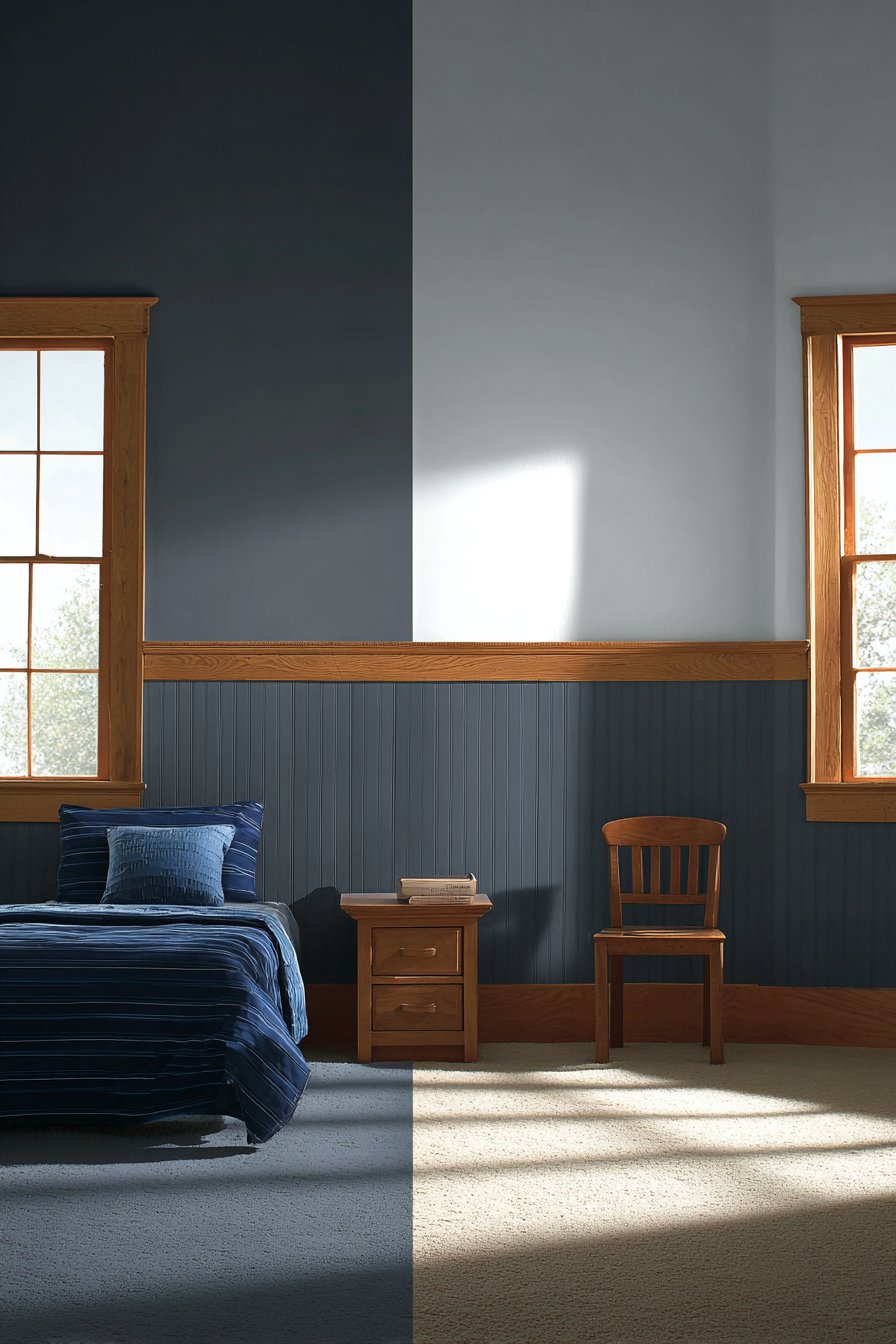
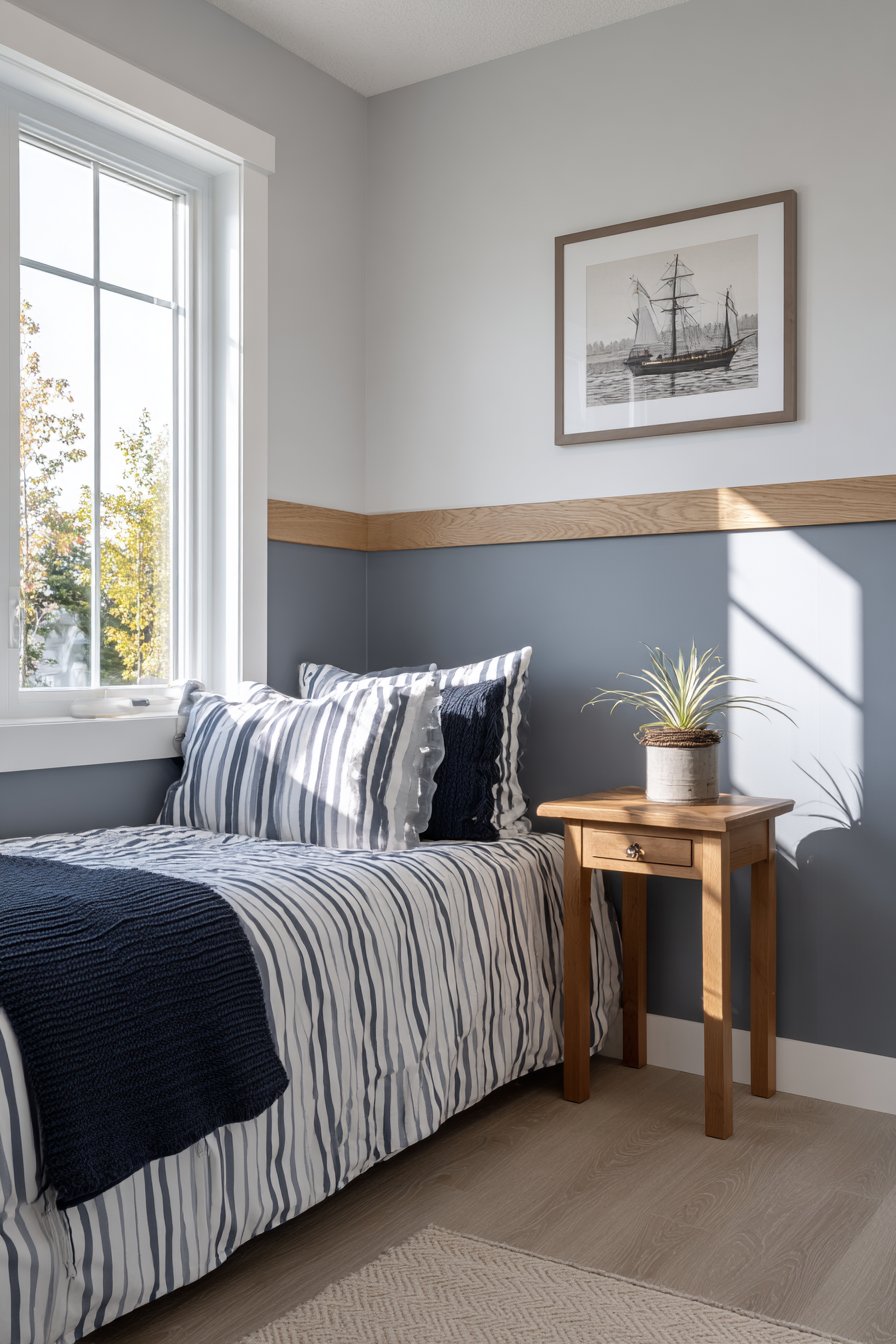
The two-tone wall treatment featuring deep charcoal gray on the lower third and crisp white above represents a timeless approach to boys’ room paint ideas that brings architectural interest to even the most basic rectangular bedroom. This classic technique, traditionally achieved with actual molding, can be brilliantly executed using careful paint application and a natural wood chair rail that serves both aesthetic and protective functions. The charcoal gray grounds the lower portion of the room, creating a visual anchor that makes the space feel more substantial while cleverly disguising the inevitable scuffs and marks that come with active childhood. Meanwhile, the crisp white upper walls maintain brightness and prevent the room from feeling too dark or enclosed, an essential consideration in rooms with limited natural light.
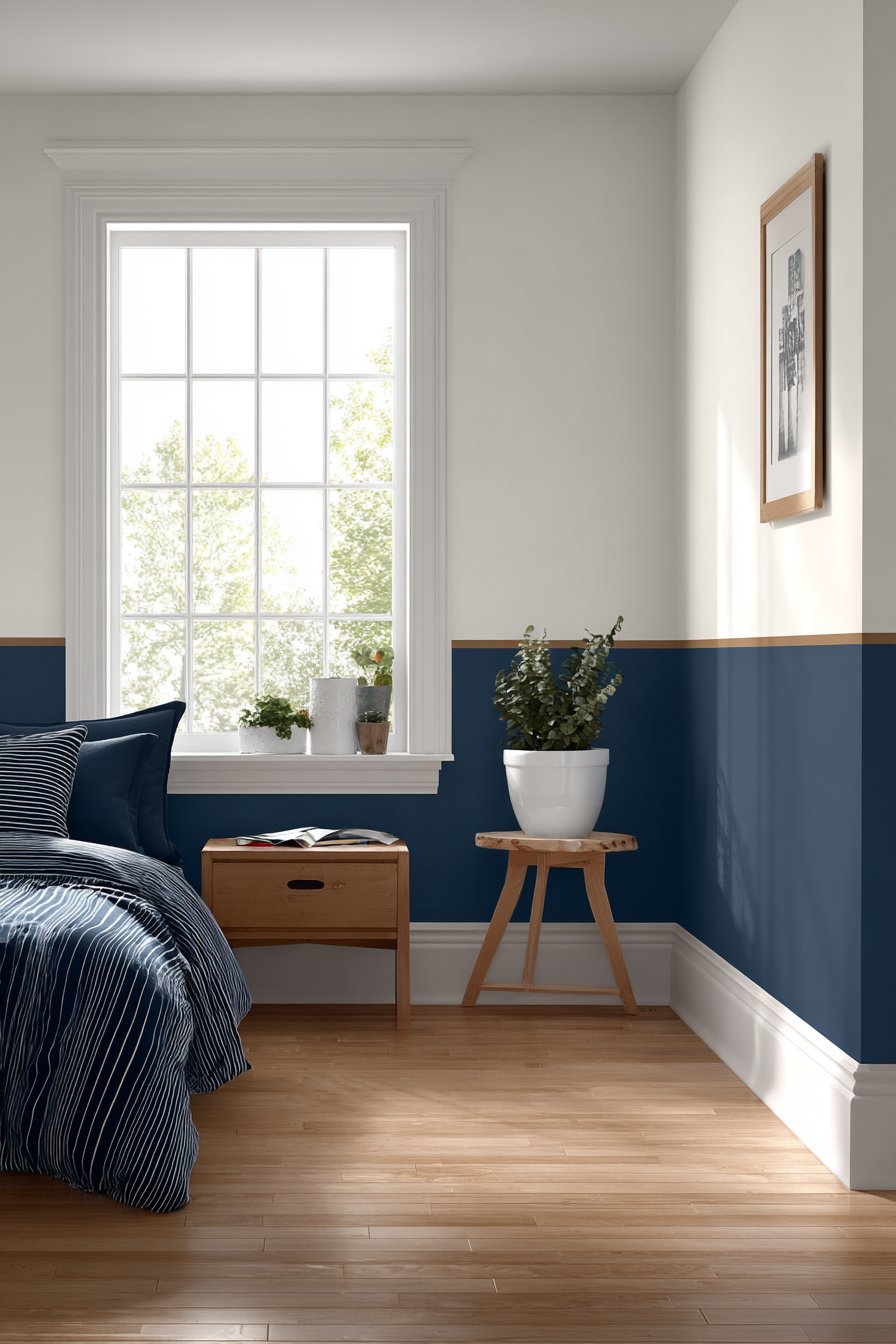
The beauty of this paint idea lies in its remarkable versatility and longevity. Unlike themed rooms that quickly become dated as children’s interests evolve, this sophisticated color blocking provides a mature foundation that works equally well for a six-year-old just starting school and a sixteen-year-old preparing for college. The neutral palette serves as an ideal backdrop for navy striped bedding, sports memorabilia, academic awards, or any number of decorative elements that might rotate through the room over the years. Natural lighting from a side window creates soft shadows along the horizontal division line, adding subtle depth and emphasizing the intentional design choice rather than making it appear as a simple paint compromise.
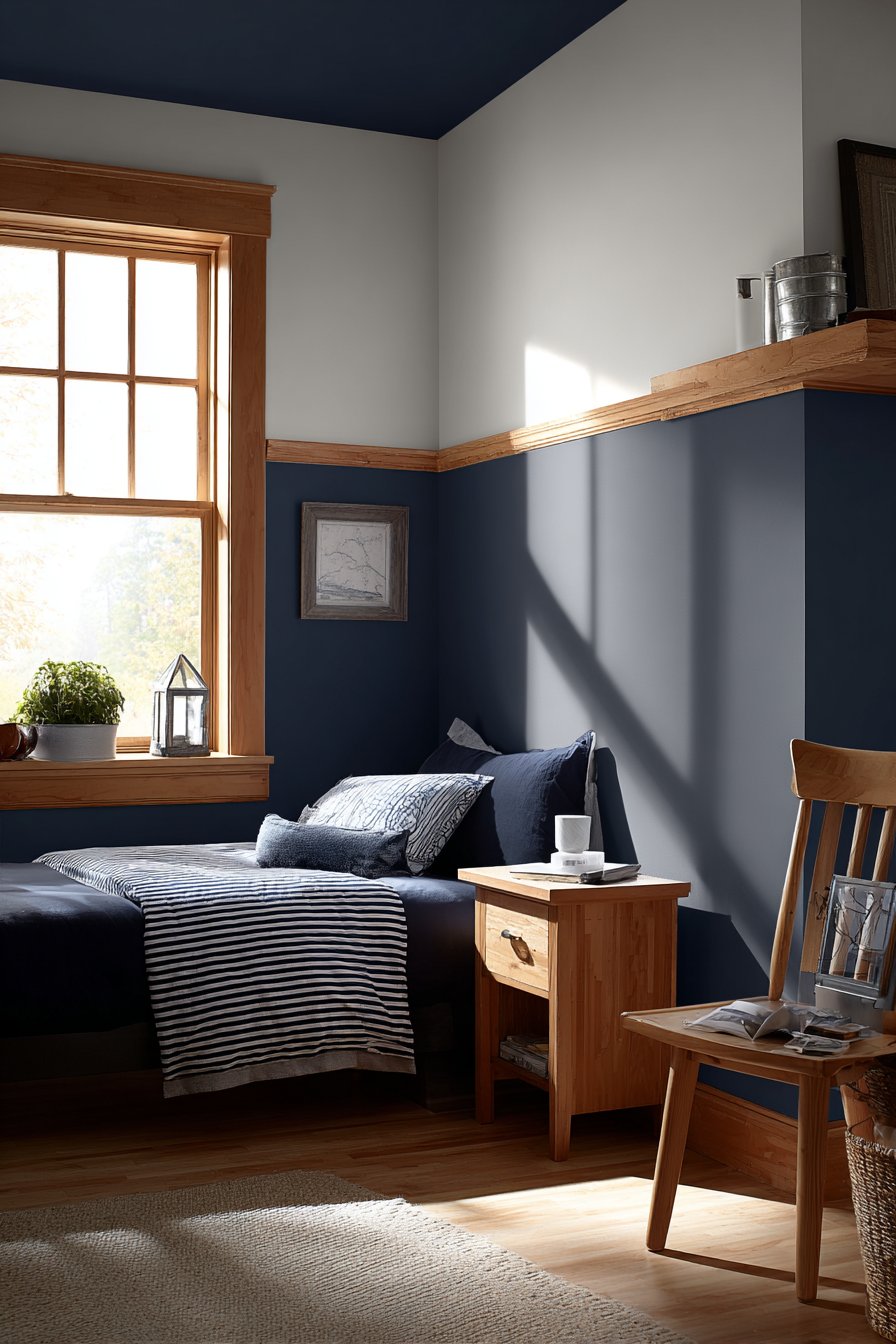
The practical advantages of this boys’ room paint idea extend beyond aesthetics. The darker lower section naturally hides wear and tear in the areas most likely to encounter contact from chairs, desks, storage bins, and active play. This functional consideration means less frequent touch-ups and repainting, saving both time and money over the years. The wood chair rail itself adds a three-dimensional element that elevates the overall design while protecting the wall from chair backs and other furniture that might otherwise damage the painted surface. For parents concerned about durability, this represents an intelligent design solution that acknowledges real-world use while maintaining visual appeal.
Key Design Tips:
- Install the chair rail at approximately one-third of the wall height, typically 30-36 inches from the floor, to create proper proportion and visual balance
- Use a semi-gloss or satin finish on the charcoal lower section for easier cleaning and increased durability in high-contact areas
- Ensure crisp, clean lines at the color transition by using high-quality painter’s tape and removing it while the paint is still slightly wet
- Consider the room’s existing trim color when selecting your white shade to ensure cohesive coordination throughout the space
- Add visual interest by painting the chair rail itself in a complementary tone, such as natural wood stain or the same charcoal as the lower walls
2. Ocean-Inspired Ombre Wall Treatment
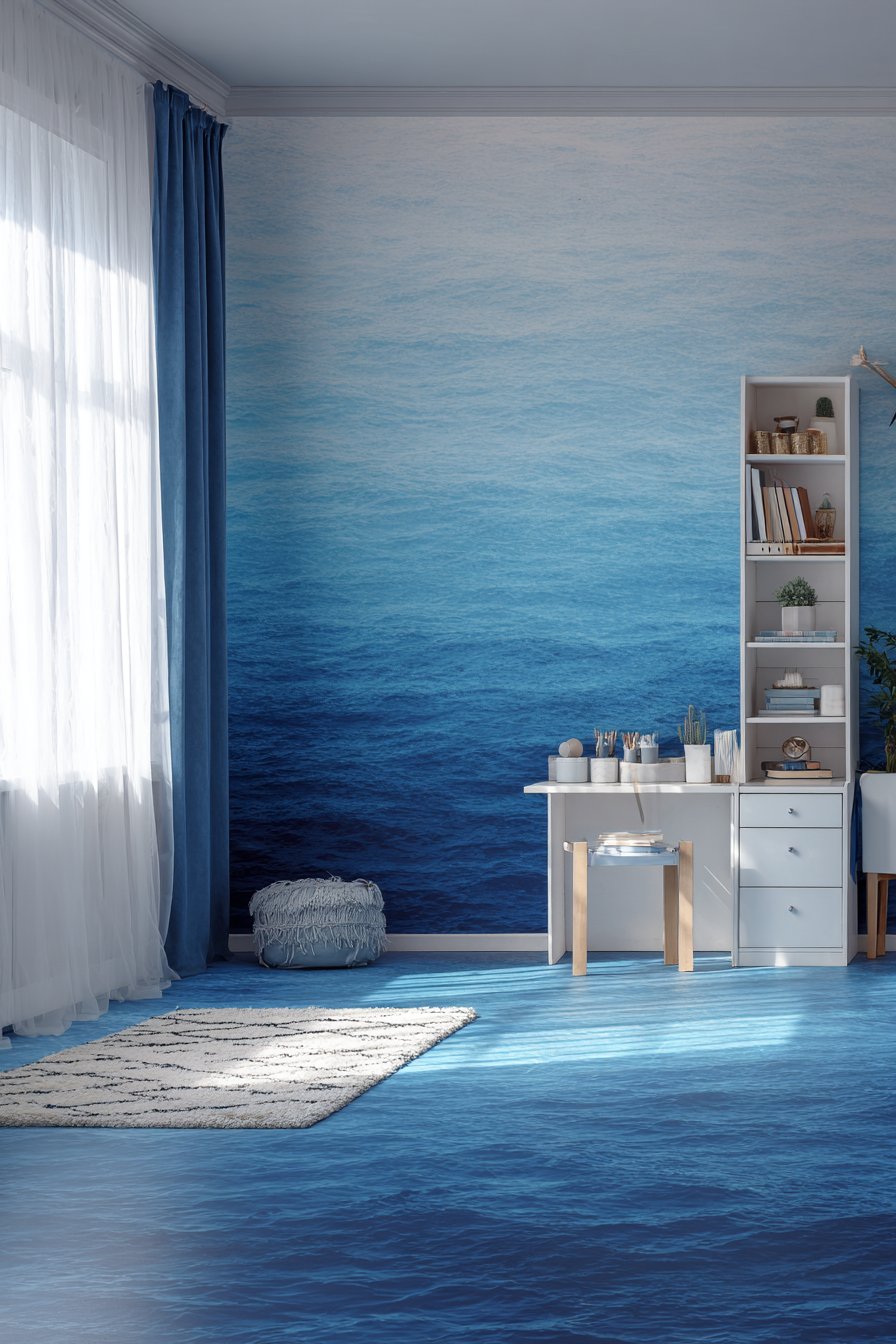
The ombre effect wall showcasing a gradual transition from deep navy at the floor to pale sky blue at the ceiling represents one of the most visually striking boys’ room paint ideas for creating atmospheric depth and interest. This gradient technique transforms a flat wall into a dimensional feature that evokes the tranquil depths of the ocean or the expansive quality of an open sky, bringing a sense of calm and wonder to the sleeping space. The smooth color transition requires careful planning and execution, with paint colors meticulously blended while still wet to achieve seamless gradation rather than obvious bands of color. When executed properly, the effect creates an almost meditative quality that can help establish a peaceful environment conducive to rest and relaxation.
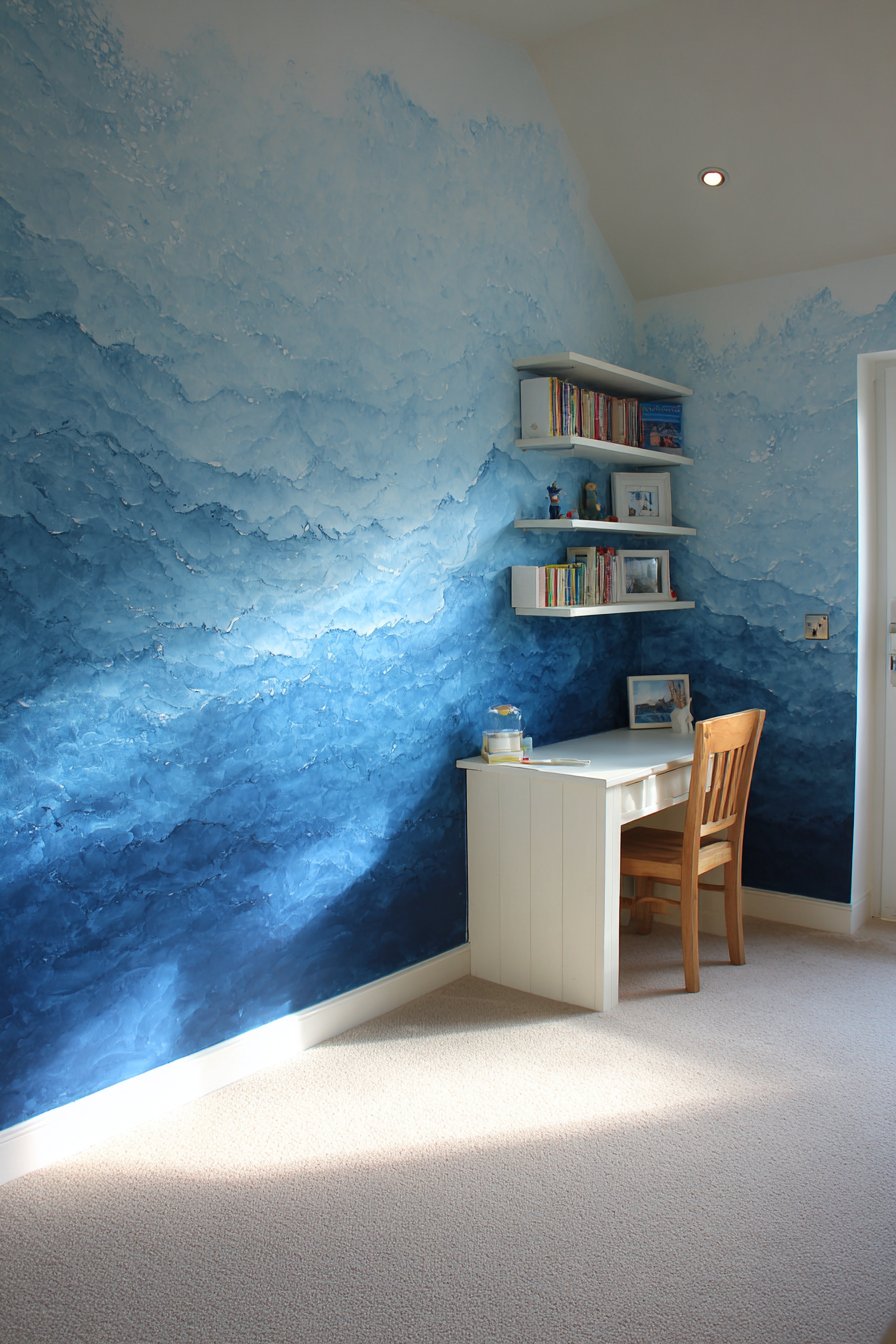
The psychological impact of this ascending color gradient should not be underestimated in boys’ room paint ideas. The darker navy anchoring the bottom of the wall creates a grounded feeling of stability and security, while the lighter tones ascending toward the ceiling generate an uplifting sense of openness and possibility. This vertical color movement naturally draws the eye upward, making standard eight-foot ceilings appear higher and creating the illusion of more spacious accommodations even in compact rooms. The ocean blue palette specifically appeals to many boys across a wide age range, tapping into universal fascination with marine life, water sports, sailing, or simply the calming presence of water in nature.
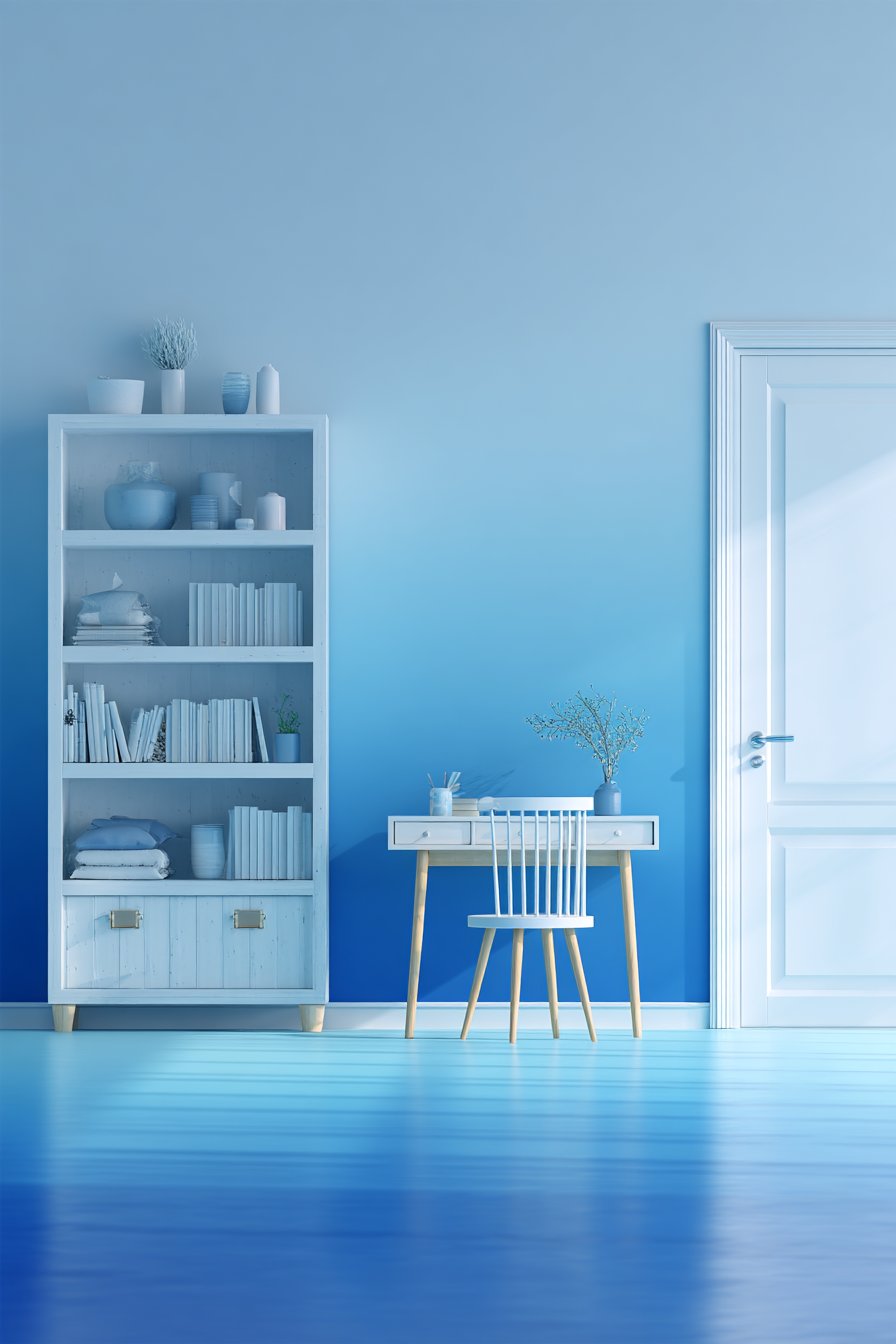
Practical implementation of this ombre technique works beautifully with minimal furniture and décor, allowing the painted wall to serve as the room’s primary artistic statement. A white bookshelf and simple desk complement the blue tones without competing for visual attention, maintaining a clean and uncluttered aesthetic that supports both focused studying and peaceful sleep. The soft morning light illuminating the wall throughout the day creates constantly shifting effects as the natural illumination changes, highlighting different aspects of the gradient at various times and ensuring the wall never appears static or boring. This dynamic quality means the room continues to feel fresh and interesting even after years of daily exposure.

Key Design Tips:
- Use at least four different paint colors in the same color family to achieve a smooth gradient effect, blending each adjacent color while wet
- Work with a partner and paint in horizontal sections, with one person applying color while another immediately blends the transition zones
- Start painting early in the day to ensure adequate time for blending before paint begins to set, as this technique cannot be rushed
- Consider practicing the ombre technique on poster board first to perfect your blending method and color ratios before committing to the wall
- Keep the opposite walls neutral to prevent visual overwhelm and allow the ombre feature wall to remain the focal point
3. Functional Chalkboard Paint Accent Wall
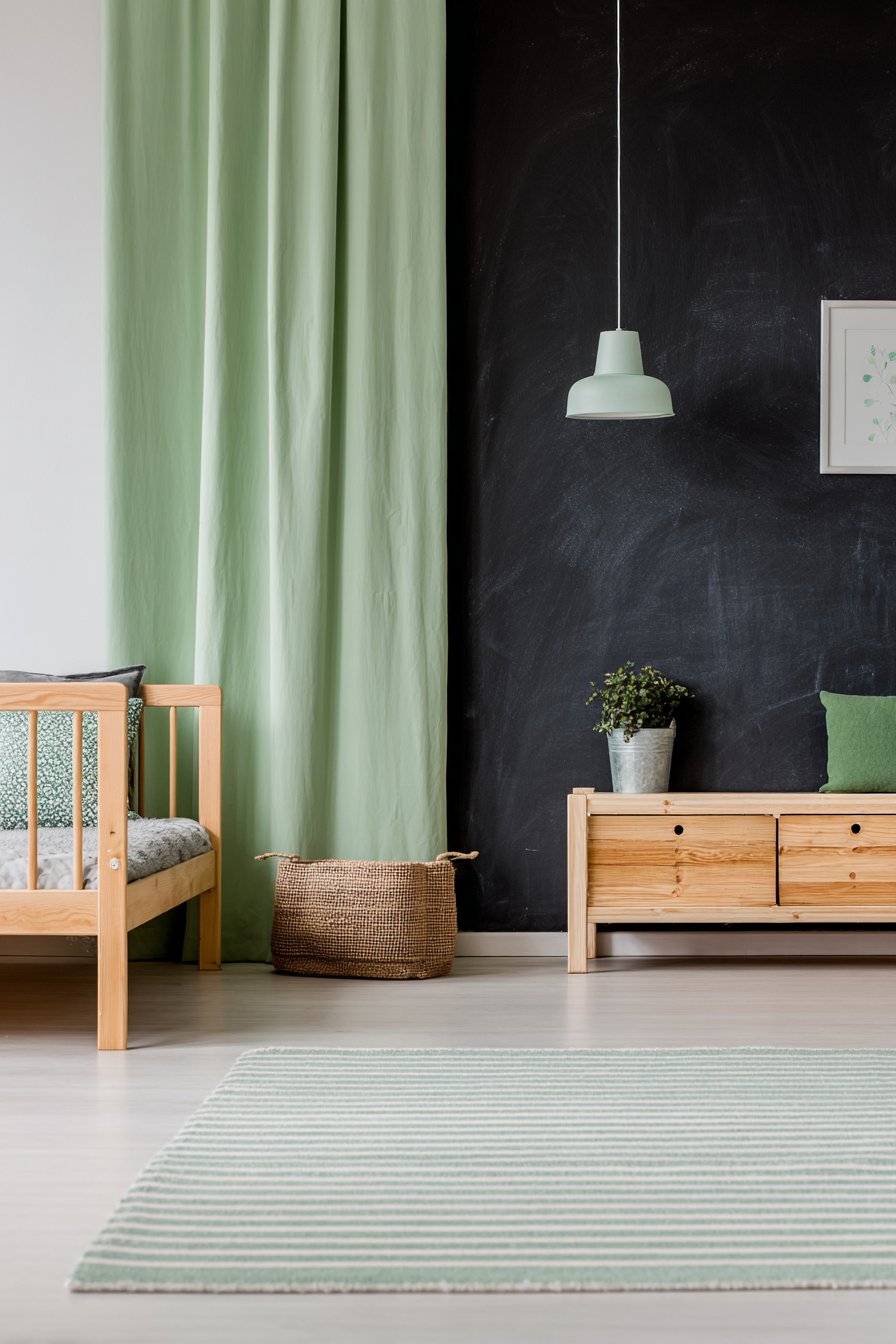
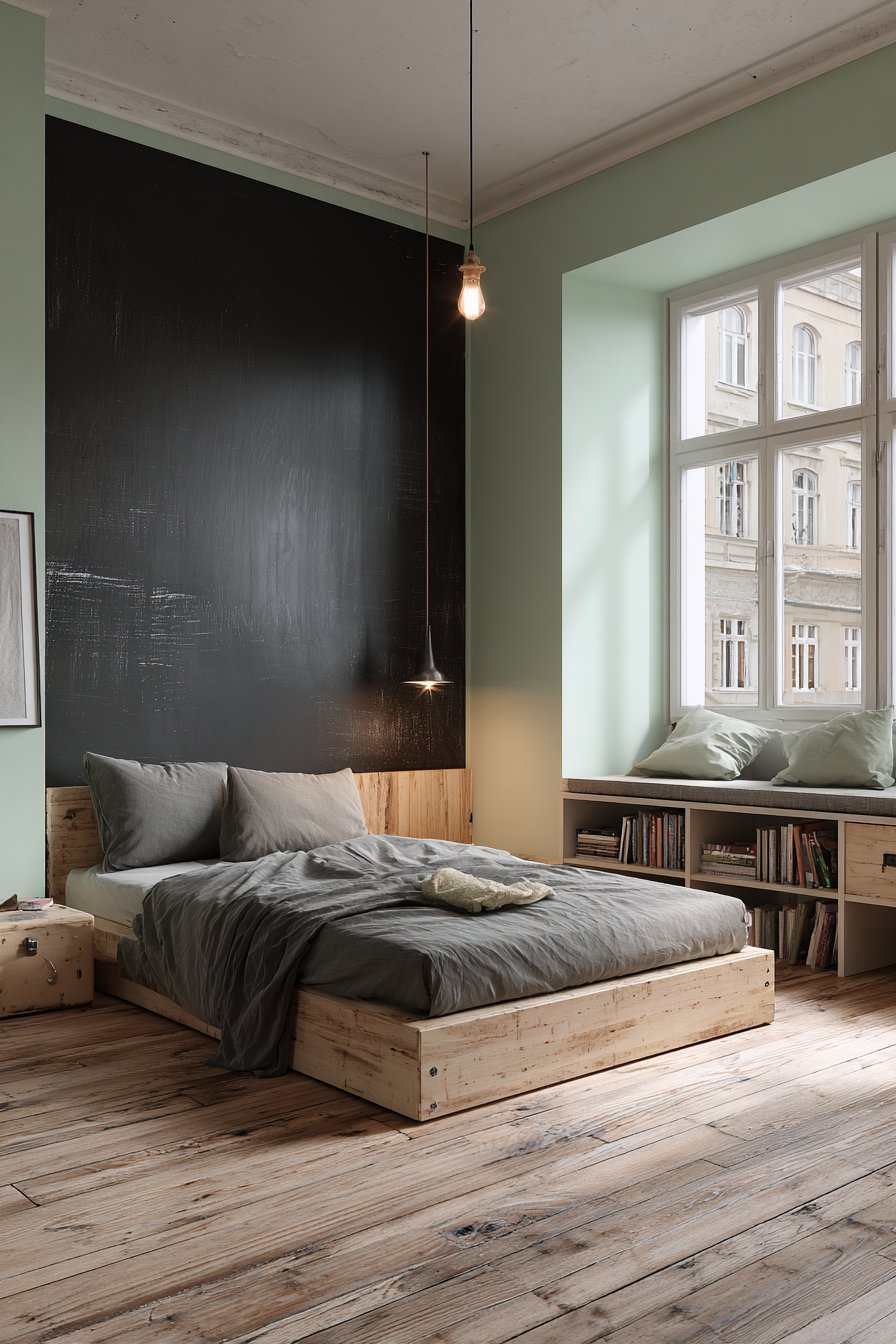
The integration of a matte black chalkboard paint accent wall represents one of the most practical and versatile boys’ room paint ideas, transforming an ordinary surface into an interactive canvas for creativity, learning, and self-expression. This functional paint application goes beyond mere decoration, providing a designated space where children can draw, practice spelling words, work out math problems, leave notes, or simply doodle without concern for making permanent marks. The remaining walls painted in light sage green create a fresh and balanced palette that prevents the dark chalkboard wall from making the room feel too heavy or cave-like, demonstrating how strategic color pairing enhances both aesthetics and functionality in children’s spaces.
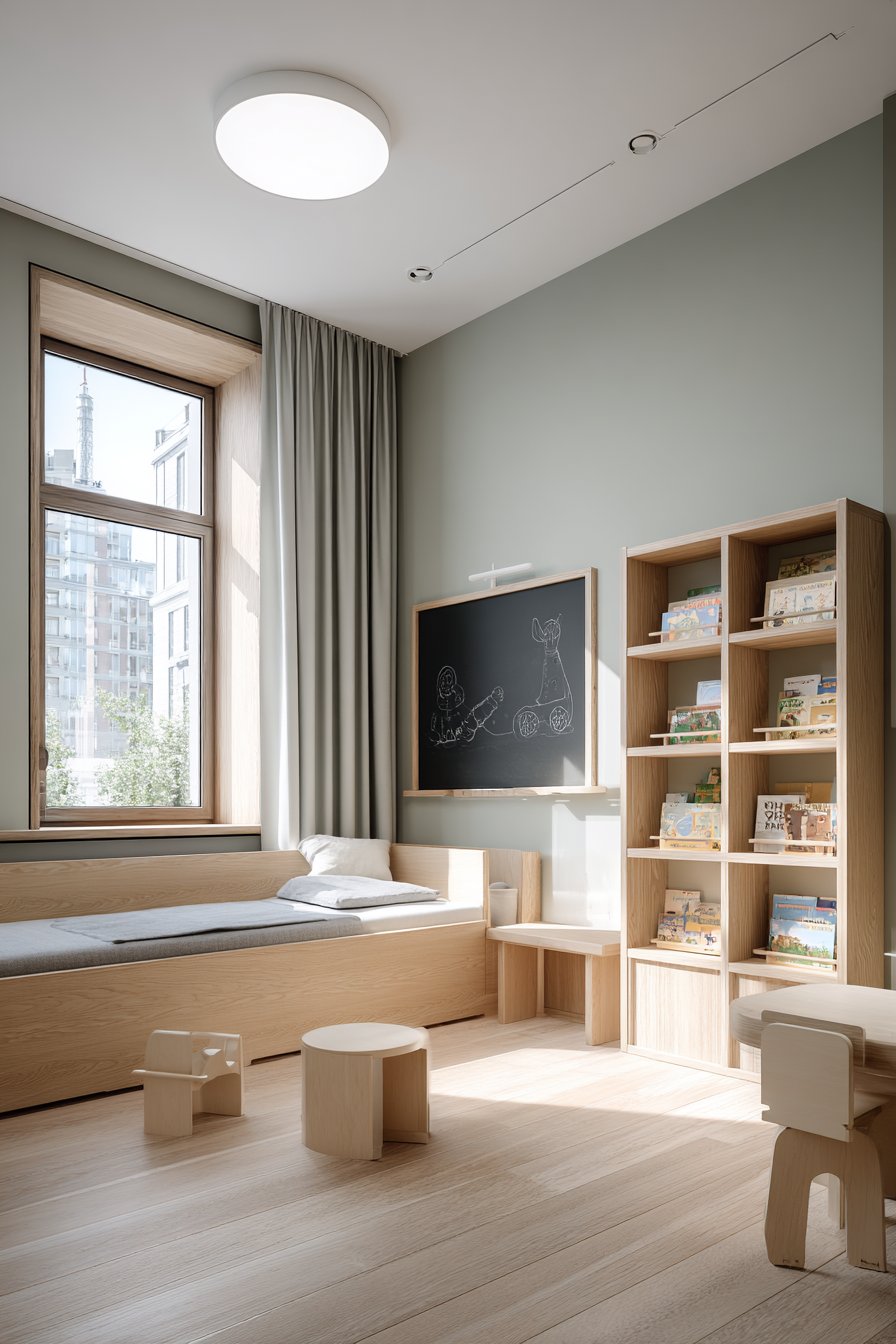
The educational and developmental benefits of incorporating chalkboard paint into boys’ room paint ideas cannot be overstated. For younger children, the chalkboard wall serves as an outlet for artistic exploration and fine motor skill development as they practice drawing shapes, letters, and pictures. School-aged boys can use the surface for homework, creating to-do lists, or displaying achievements and goals, fostering organizational skills and personal accountability. Teenagers might utilize the space for inspirational quotes, planning projects, or collaborative brainstorming with friends, maintaining the wall’s relevance throughout developmental stages. This longevity of purpose makes chalkboard paint an exceptionally smart investment compared to decorative elements that quickly become obsolete.
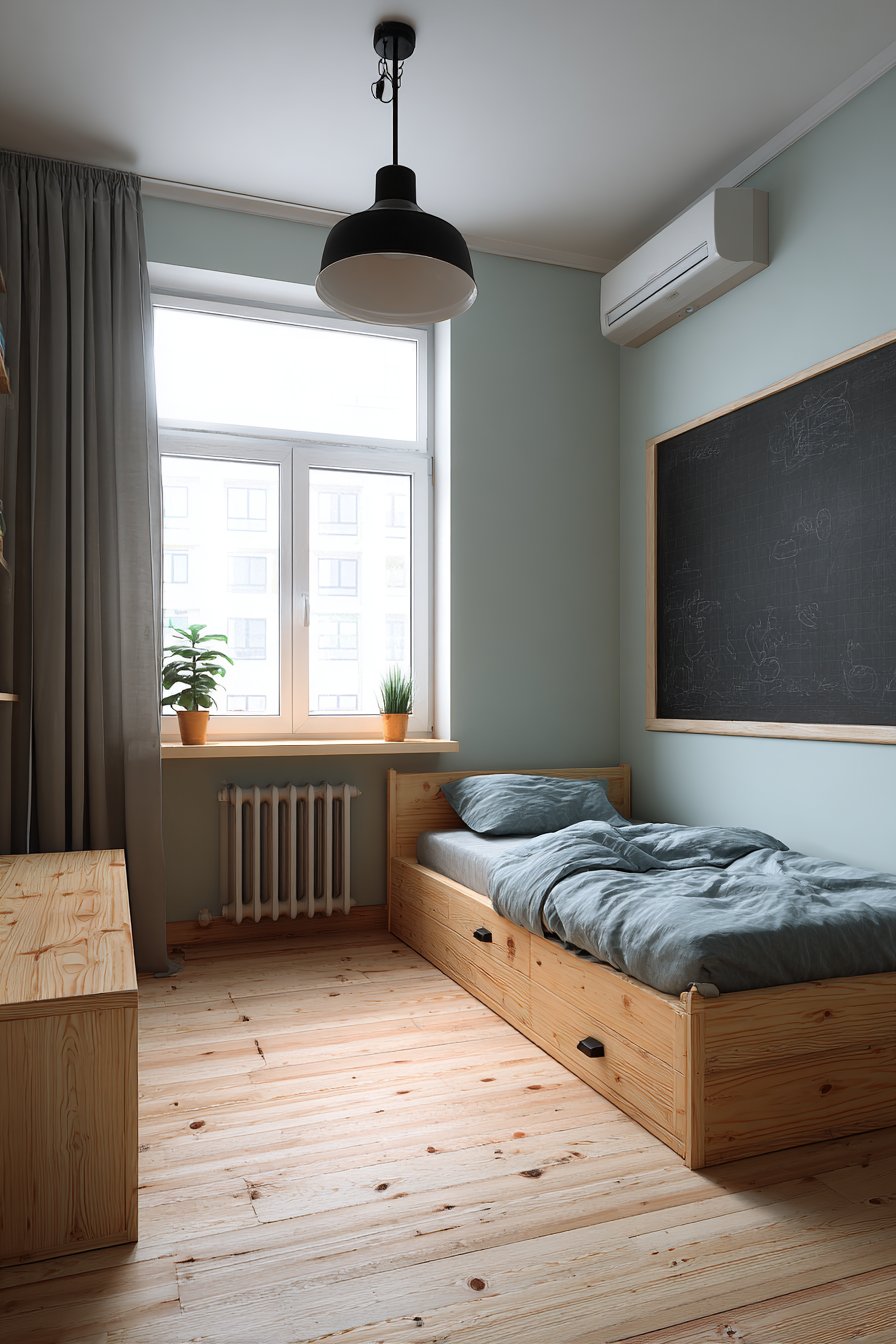
The practical considerations of chalkboard paint application deserve careful attention to ensure optimal results. Modern chalkboard paint formulas apply smoothly and cure to create an authentic chalk-receptive surface that performs comparably to traditional slate boards. The matte black finish provides excellent contrast for both white and colored chalk, ensuring visibility even in varying light conditions. Simple wooden furniture including a bed frame and storage bench maintain the room’s practical focus without cluttering the visual field, allowing the chalkboard wall to command appropriate attention as the room’s interactive feature. Natural daylight highlights the contrasting paint finishes between the matte chalkboard surface and standard painted walls, creating textural interest through finish variation rather than relying solely on color differences.
Key Design Tips:
- Apply at least two coats of chalkboard paint for optimal chalk adhesion and erasability, allowing proper drying time between applications
- Season the chalkboard surface by rubbing the side of chalk over the entire wall and then erasing it before regular use to prevent ghosting
- Install a narrow shelf below the chalkboard wall to hold chalk, erasers, and other accessories, keeping supplies accessible and organized
- Choose low-dust chalk options or chalk markers to minimize airborne particles and reduce cleaning requirements
- Position the chalkboard wall away from bedding areas to prevent chalk dust from settling on sleeping surfaces and linens
4. Classic Vertical Striped Feature Wall
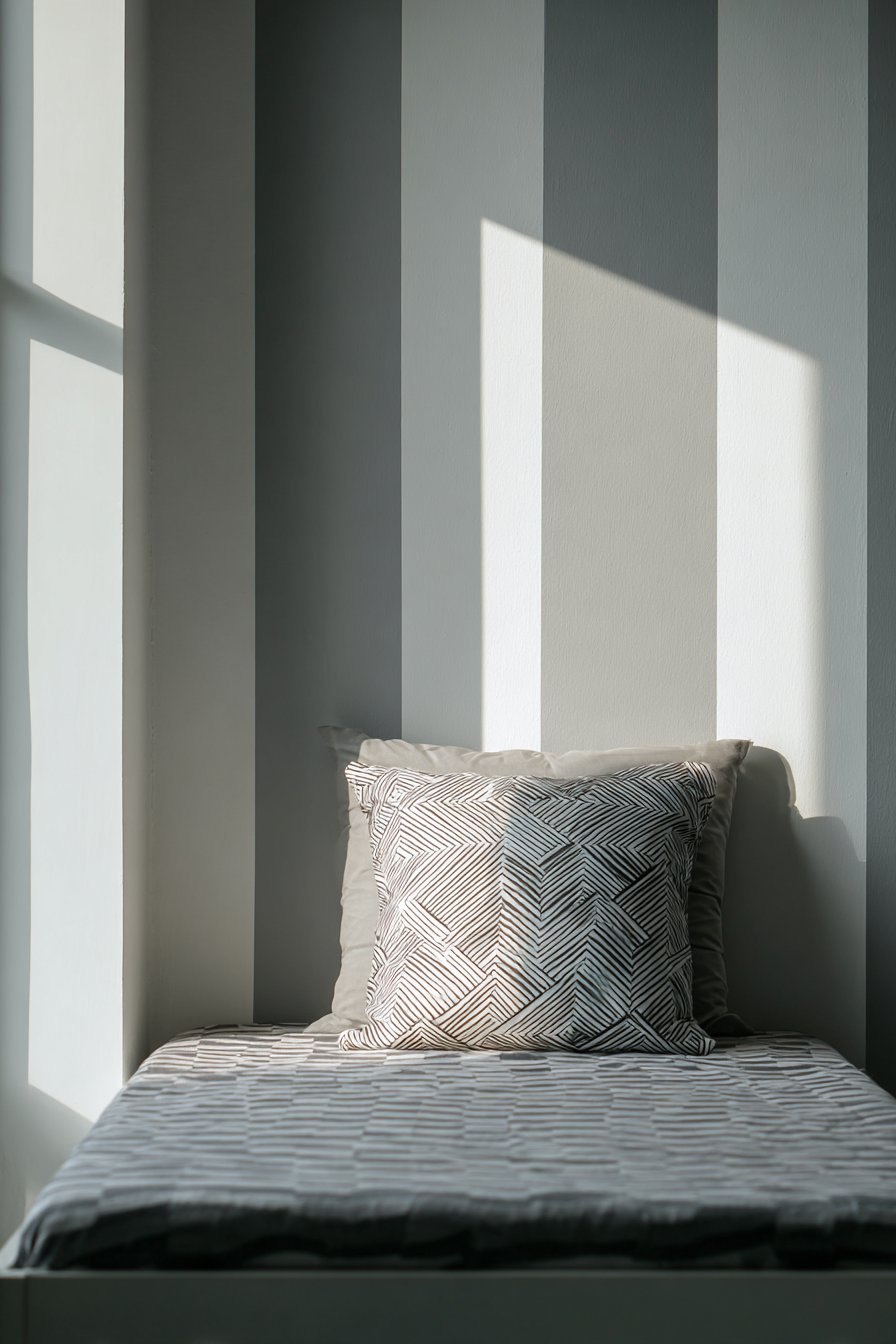
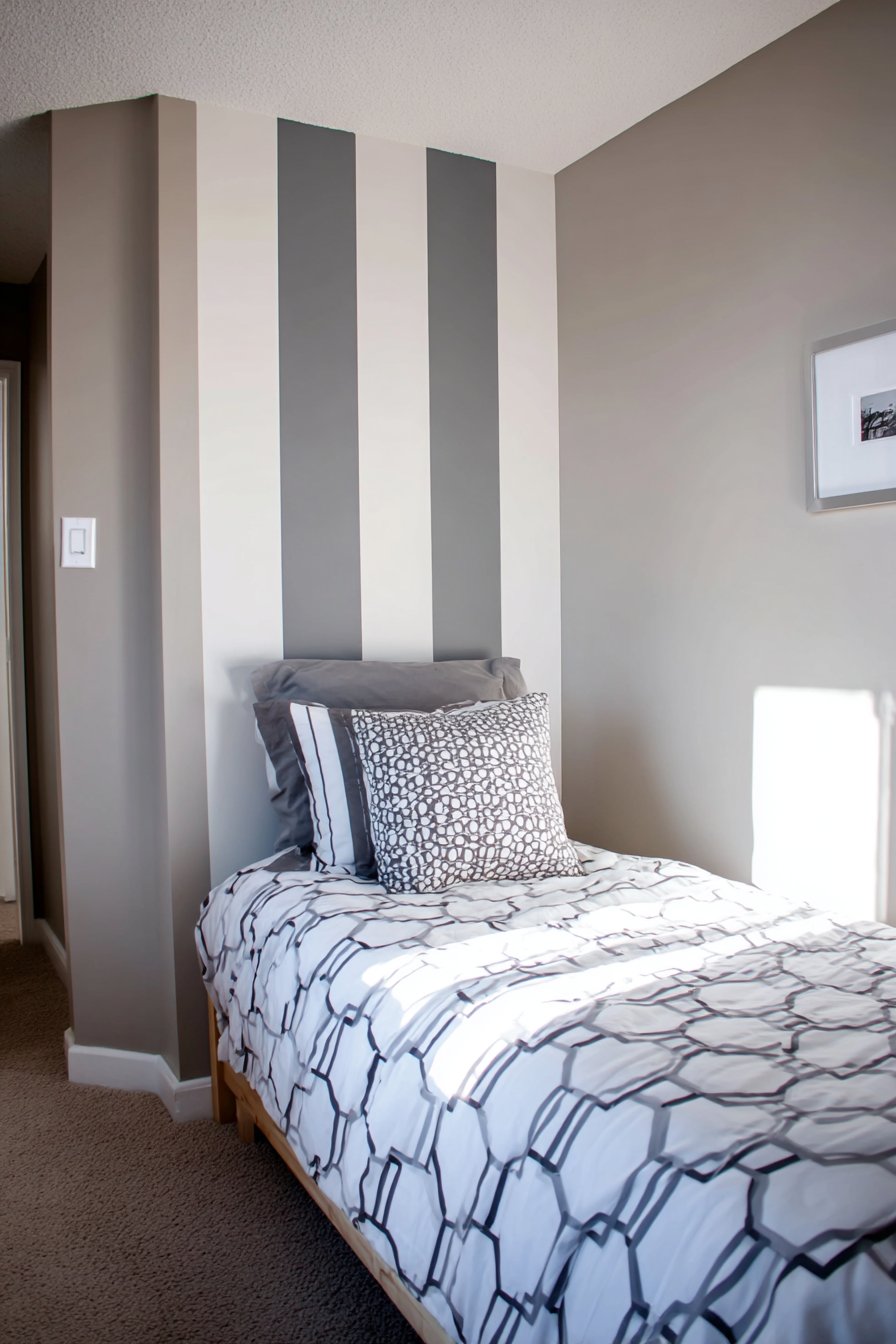
Vertical stripes in alternating shades of gray and white, each measuring approximately twelve inches wide, exemplify how geometric boys’ room paint ideas can create visual height and architectural interest in standard bedrooms. This classic pattern draws the eye upward through continuous vertical lines, making eight-foot ceilings appear taller while adding structured visual rhythm to otherwise plain walls. The striped feature wall serves as an effective headboard backdrop for a simple platform bed, eliminating the need for actual headboard furniture while creating a defined sleeping zone within the room’s layout. Complementary solid light gray paint on remaining walls prevents pattern overload while maintaining tonal harmony throughout the space.
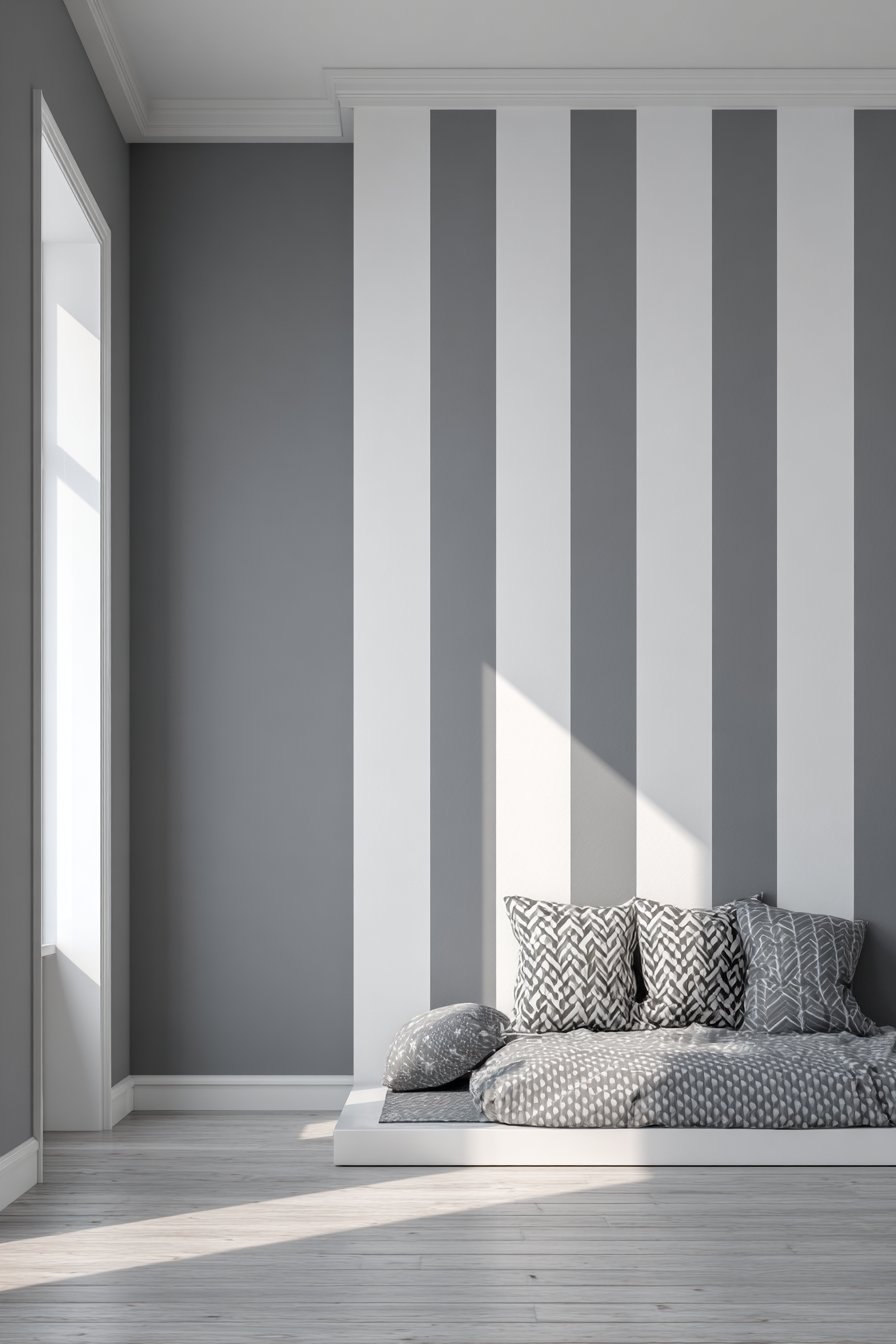
The technical execution of perfectly straight vertical stripes requires careful planning and precise application, but the results justify the extra effort involved. Beginning with accurate measurements that divide the wall into equal sections ensures balanced stripe distribution, while high-quality painter’s tape creates the crisp edges that distinguish professional-looking results from amateur attempts. Afternoon sunlight streaming into the room creates gentle shadows along the stripe edges, adding subtle dimensional quality that makes the painted pattern appear almost three-dimensional at certain times of day. This interplay between paint and natural light demonstrates how static design elements can create dynamic visual experiences that change throughout the day.
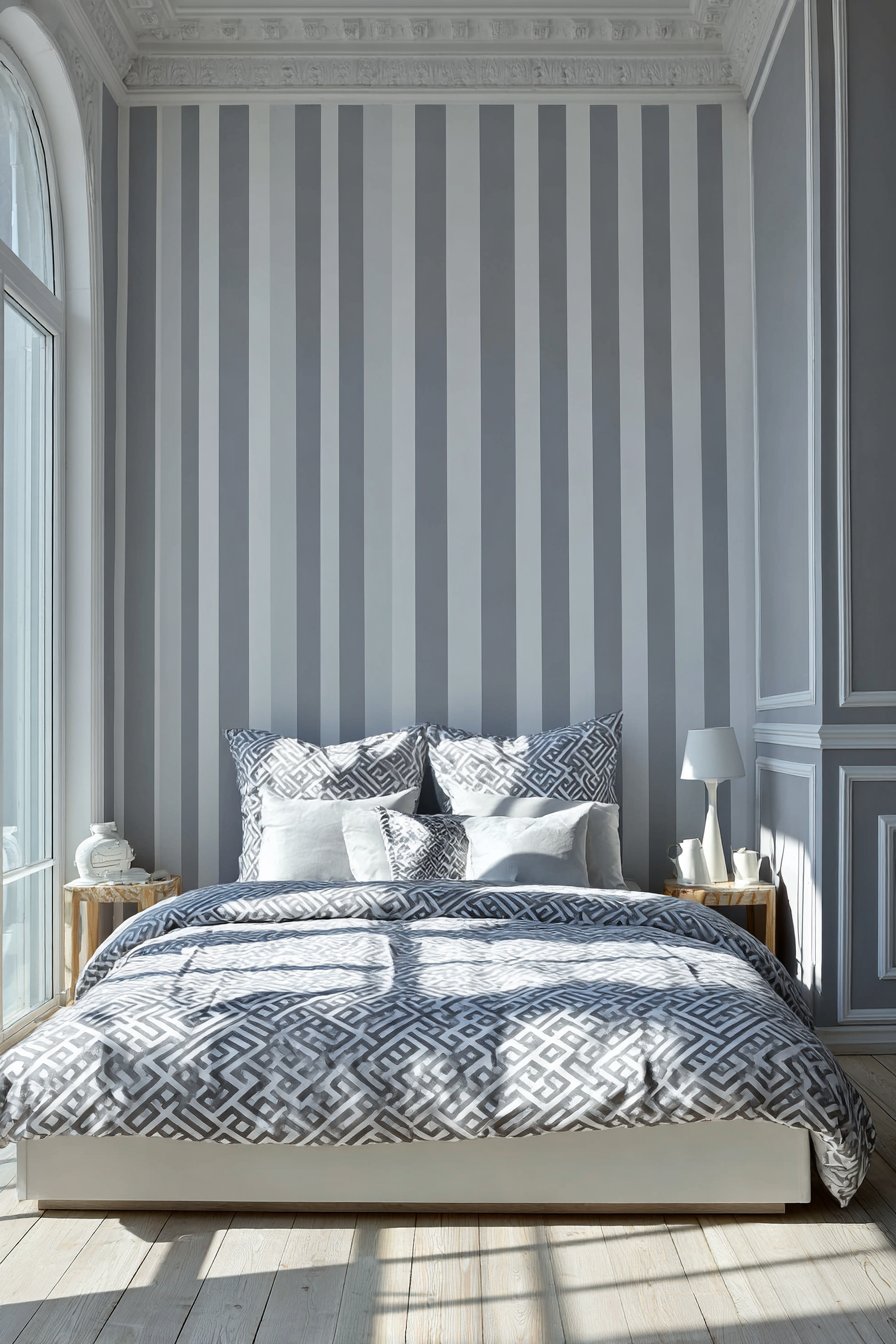
The psychological effect of vertical stripes in boys’ room paint ideas extends beyond mere visual trickery regarding ceiling height. The structured, orderly pattern appeals to children who thrive with clear organization and defined boundaries, potentially supporting better sleep routines and focused study habits. The neutral gray and white palette provides a sophisticated foundation that accommodates changing décor preferences without requiring repainting, an economical advantage for families mindful of long-term design flexibility. Geometric bedding in complementary patterns works beautifully against the striped backdrop, creating layered visual interest without producing chaotic or overwhelming results.
Key Design Tips:
- Use a laser level to mark perfectly vertical lines before taping, ensuring stripes remain true even if walls aren’t perfectly plumb
- Paint the base color first across the entire wall, then tape off and paint alternating stripes in the second color for easier correction if needed
- Apply two coats of the stripe color to ensure complete coverage and prevent the base color from showing through
- Remove painter’s tape at a 45-degree angle while paint is still slightly tacky to prevent peeling and ensure clean edges
- Consider using different shades within the same color family rather than stark contrast for a more sophisticated, subtle effect
5. Modern Geometric Color Blocking
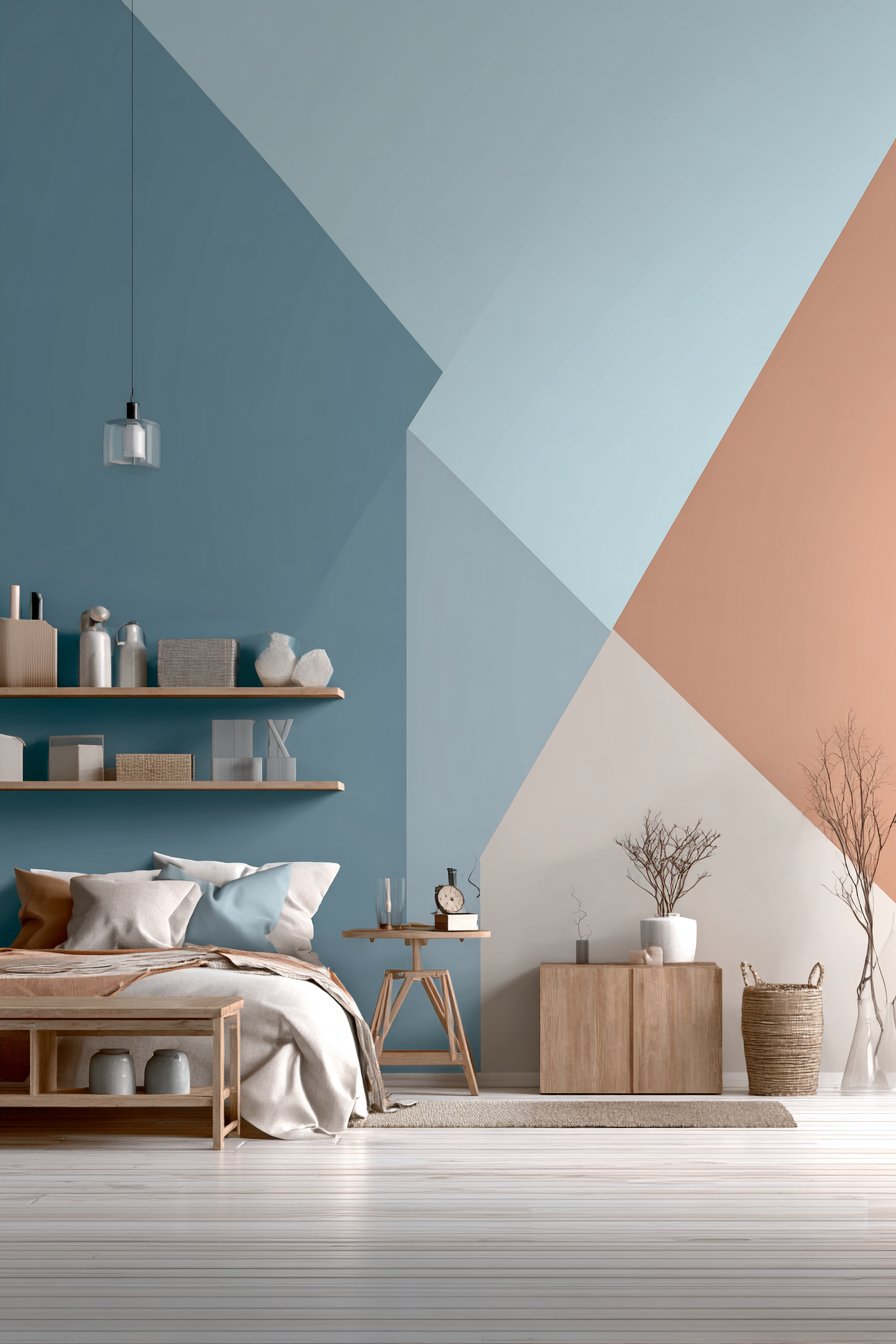
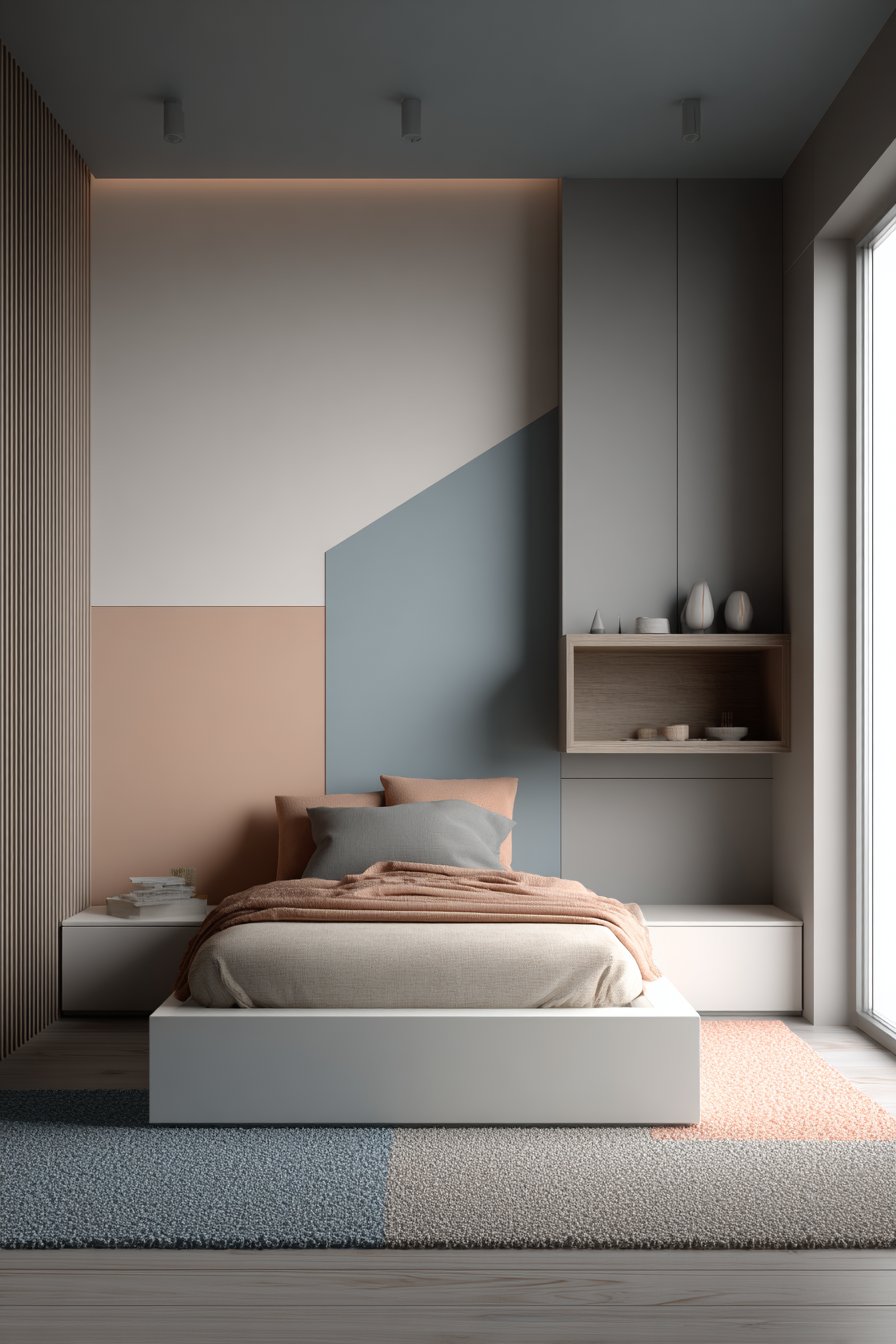
The modern color block design featuring sections of dusty blue, warm taupe, and cream creates distinct geometric zones on a single wall, representing contemporary boys’ room paint ideas that embrace abstract art principles. This bold approach transforms an ordinary wall into a focal point artwork that requires no additional decoration, with the paint itself providing all necessary visual interest. The abstract arrangement of color blocks follows intentional compositional principles, with larger sections balanced by smaller accent areas and thoughtful consideration of how different hues interact at their boundaries. This contemporary aesthetic appeals particularly to older children and teenagers seeking more sophisticated design that moves beyond traditional children’s room motifs.
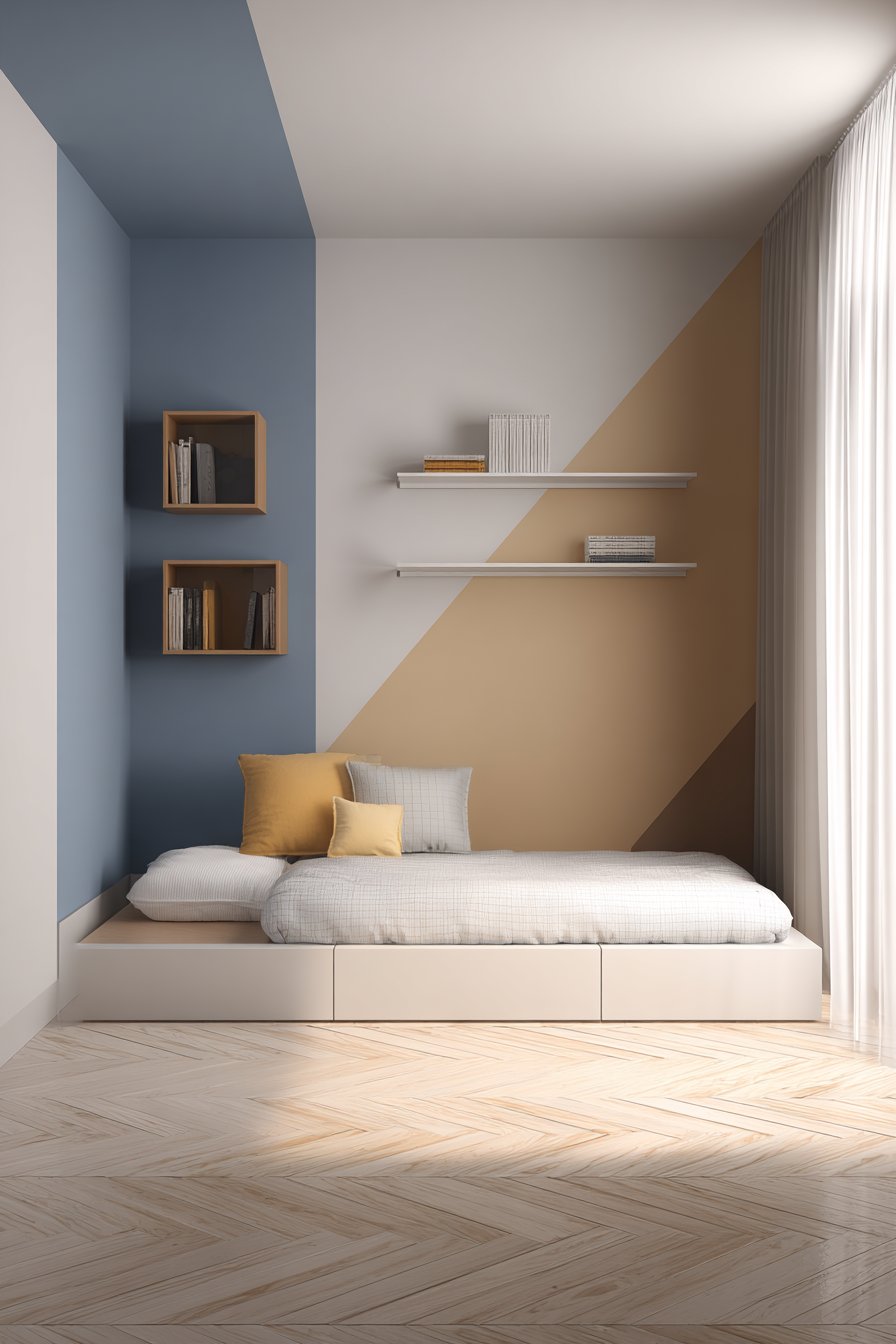
The selection of dusty blue, warm taupe, and cream demonstrates sophisticated color theory application, with each shade complementing the others while maintaining distinct visual identity. The dusty blue provides a calming, slightly masculine tone without resorting to stereotypical bright primary blue often seen in boys’ spaces. Warm taupe grounds the composition with earthy neutrality, adding substance and preventing the design from feeling too light or insubstantial. Cream sections offer brightness and visual relief, ensuring the wall doesn’t appear too dark or heavy despite incorporating multiple colors. Together, these hues create a harmonious palette that feels both current and timeless, avoiding trendy combinations that quickly date.
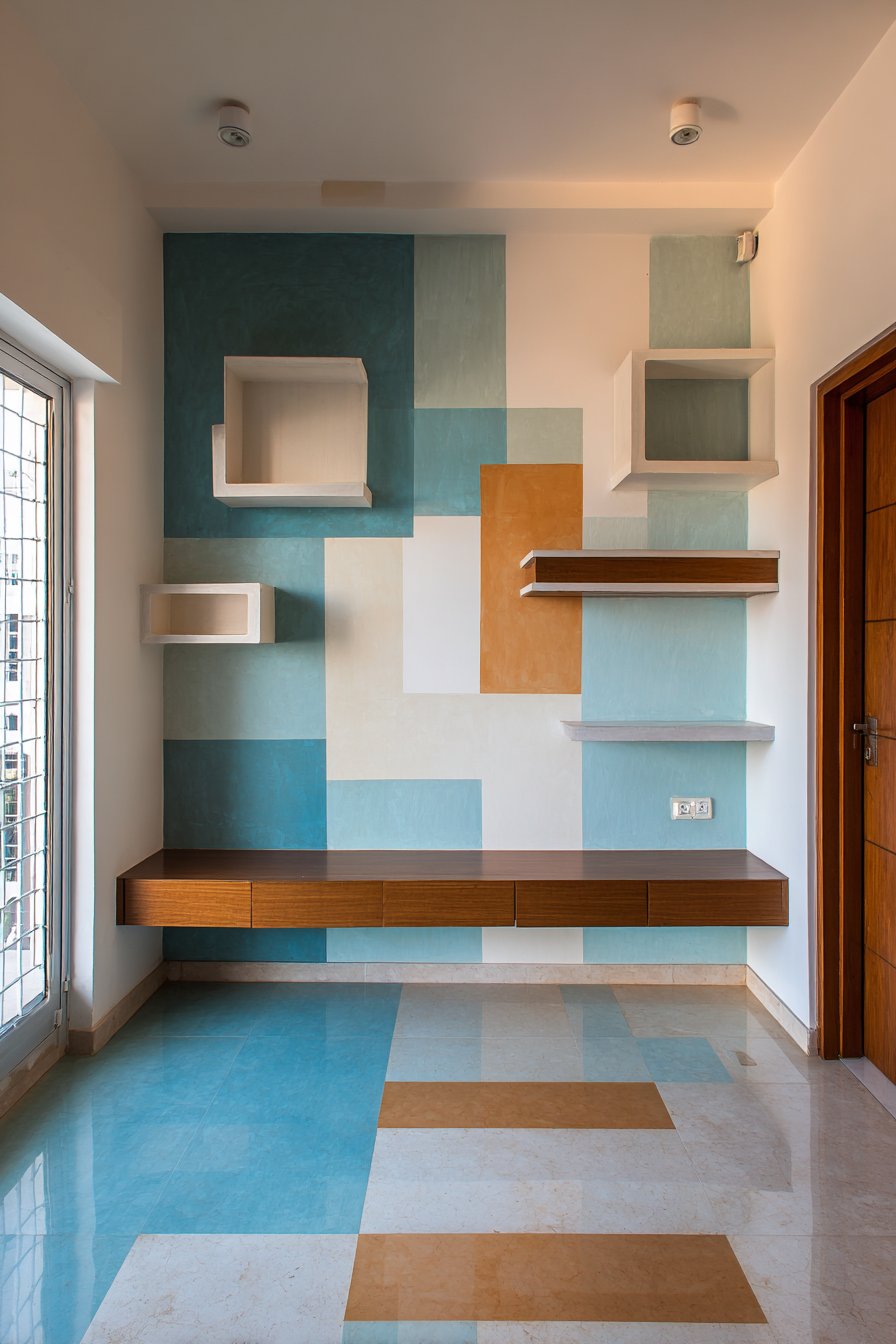
The minimalist approach to furnishing allows the color-blocked wall to command appropriate attention without competing design elements diluting its impact. A clean-lined bed and floating shelves maintain the room’s contemporary aesthetic while providing essential functionality. Natural light streaming through adjacent windows creates shifting shadow patterns throughout the day, adding further dimension to the geometric composition and ensuring the wall presents slightly different appearances at various times. The crisp paint lines defining each color section demonstrate precise execution that elevates the overall design from casual experimentation to intentional artistic statement.
Key Design Tips:
- Sketch the color block design to scale on graph paper before painting to ensure pleasing proportions and balanced composition
- Use a combination of large anchor blocks and smaller accent sections to create visual interest and prevent monotonous symmetry
- Paint the lightest color first across the entire wall, then mask and paint progressively darker colors to minimize visible overlap
- Allow each color section to dry completely before taping adjacent areas to prevent paint bleeding and maintain sharp boundaries
- Extend one or two color blocks slightly onto adjacent walls to create a wrapped effect that adds three-dimensional quality
6. Sports-Inspired Forest Green Accent
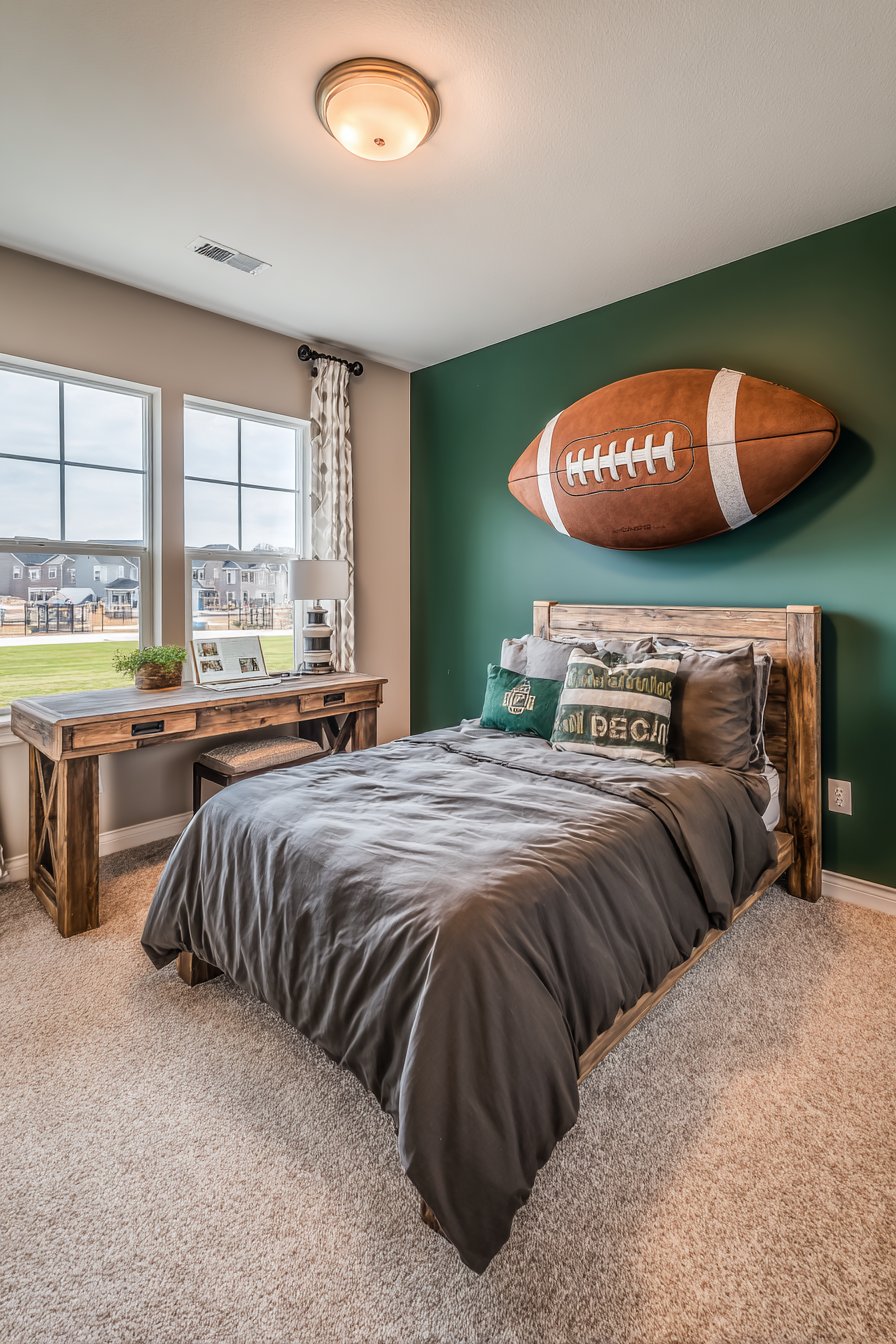
A deep forest green accent wall paired with neutral beige on remaining walls represents classic boys’ room paint ideas that celebrate athletic interests without resorting to literal sports motifs or temporary team allegiances. The rich, saturated green evokes football fields, golf courses, tennis courts, and other outdoor sporting environments, creating subtle thematic connection that remains relevant regardless of which specific sports capture a child’s current interest. White painted trim and baseboards provide clean contrast that defines architectural elements and prevents the green from overwhelming the space, demonstrating how thoughtful coordination between wall color and existing features elevates overall design quality.
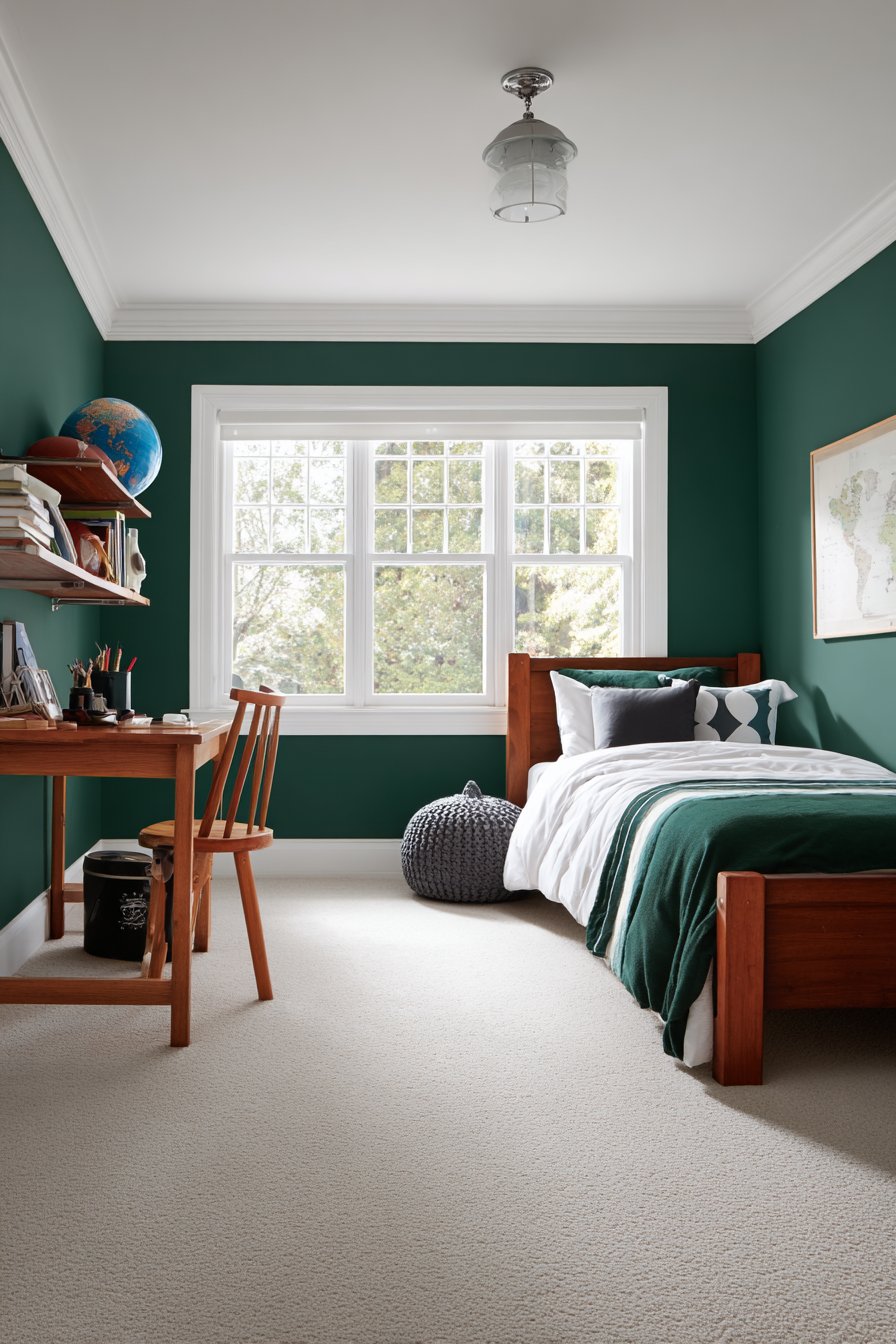
The psychological associations of forest green in boys’ room paint ideas extend beyond sports connections to encompass nature, growth, and stability. This sophisticated shade creates a grounded, confident atmosphere that works equally well for quiet reading and active play, supporting the multiple functions that bedrooms serve in children’s lives. The neutral beige on secondary walls maintains warmth and prevents the space from feeling too cool or impersonal, a common pitfall when working with green hues that can sometimes read as institutional without proper supporting colors. Simple sports equipment storage integrated into the design acknowledges practical needs while maintaining the room’s aesthetic coherence.
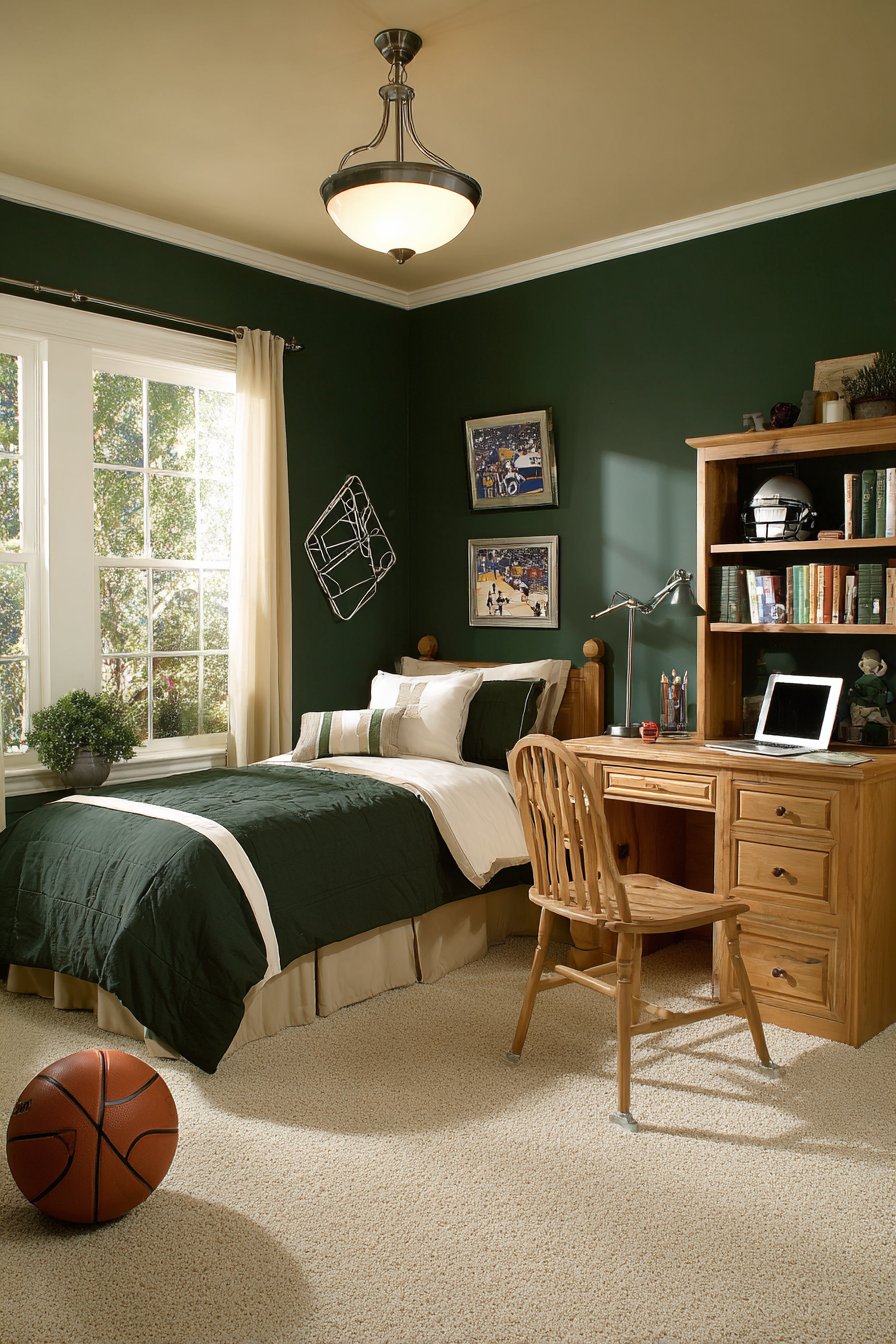
Furniture selection in natural wood tones complements the organic quality of forest green, creating harmony between painted surfaces and three-dimensional elements. A wooden desk provides dedicated homework space, its warm grain adding textural interest against the smooth painted walls. Soft overhead lighting and natural window light work together to reveal the green’s true color throughout the day, important because green can appear significantly different under various lighting conditions. The matte finish recommended for this deep color minimizes glare while providing a sophisticated, non-reflective surface that reads as intentional and upscale.
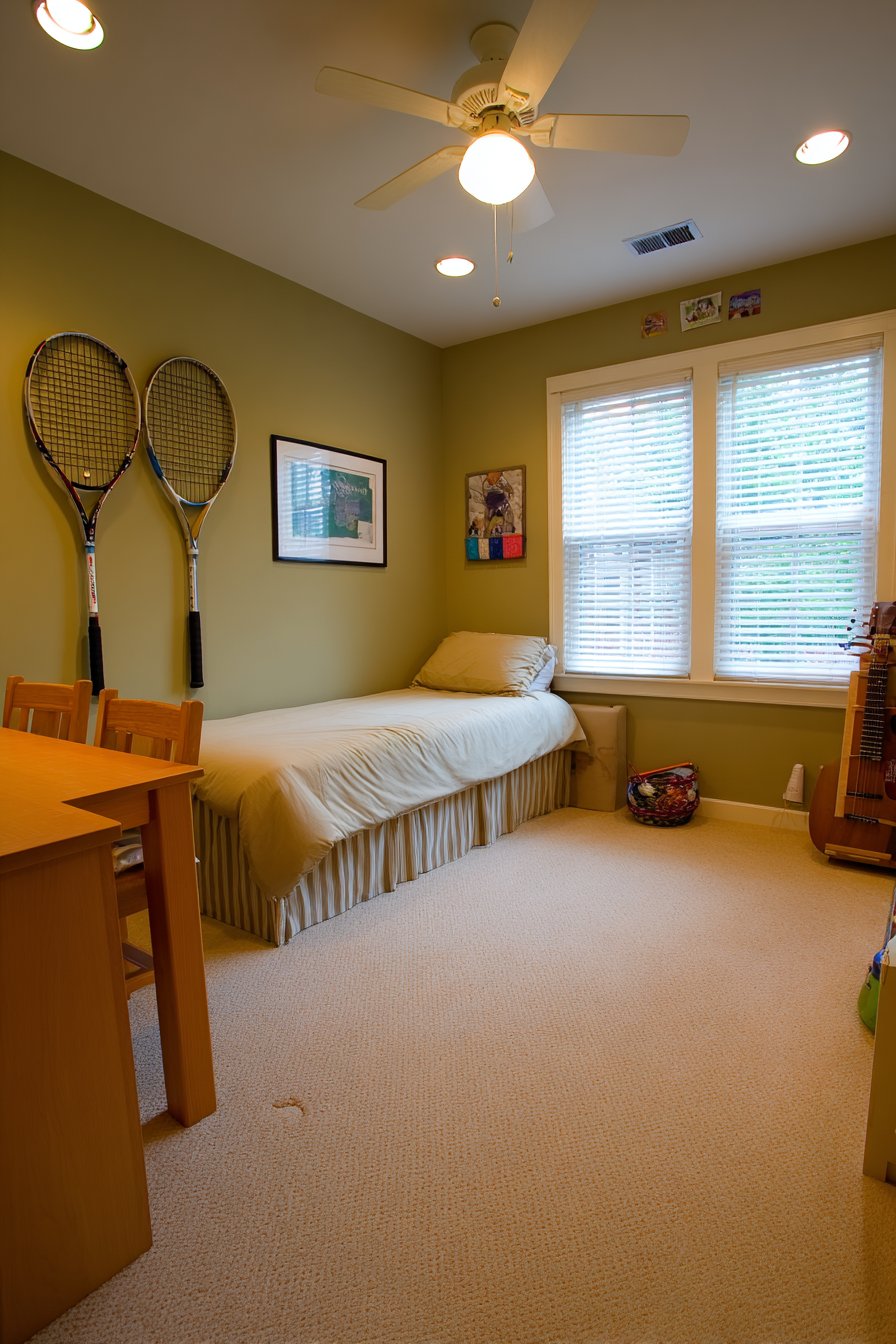
Key Design Tips:
- Test forest green samples in the actual room under both natural and artificial light, as green can shift dramatically between lighting conditions
- Consider a slightly gray-toned forest green rather than pure green to create a more sophisticated, less juvenile appearance
- Use the accent wall behind the bed or desk to create a defined zone without painting all walls the deep color
- Incorporate natural wood elements in furniture and accessories to complement the organic quality of forest green
- Add touches of the green color in textiles or accessories on the neutral walls to create cohesive connection throughout the room
7. Dreamy Cloud-Painted Ceiling
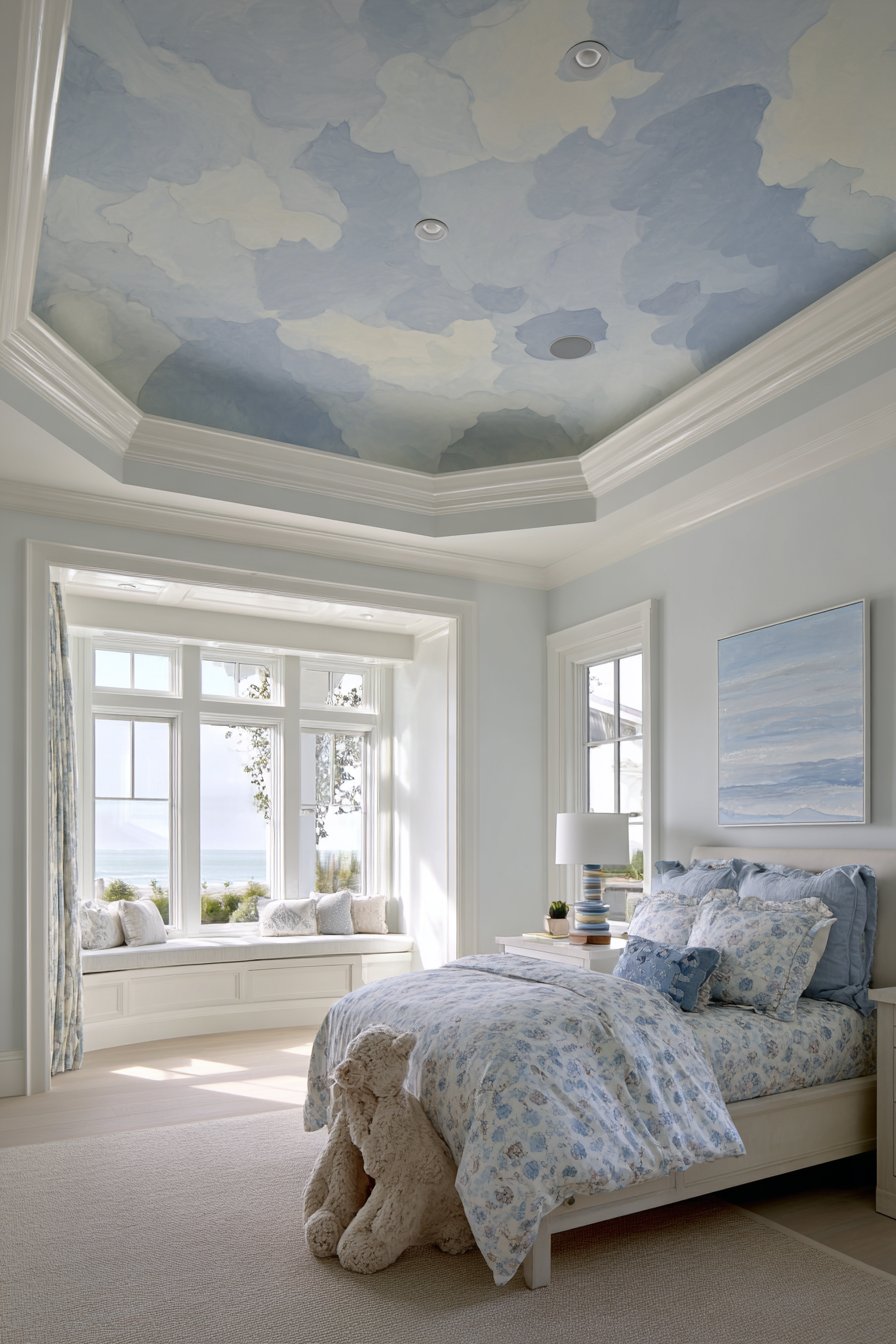
The cloudy sky ceiling treatment featuring softly blended white and pale blue paint creates an overhead focal point that represents imaginative boys’ room paint ideas often overlooked in traditional design approaches. This whimsical technique transforms the frequently neglected fifth wall into a source of wonder and visual interest, providing something pleasant to contemplate during quiet moments before sleep or upon waking. The blended paint creates a dreamy, ethereal effect that mimics actual cloud formations, with the white and pale blue merging organically rather than presenting as distinct shapes with hard edges. Clean white walls below ground the design and prevent visual overload, ensuring the ceiling treatment enhances rather than overwhelms the space.
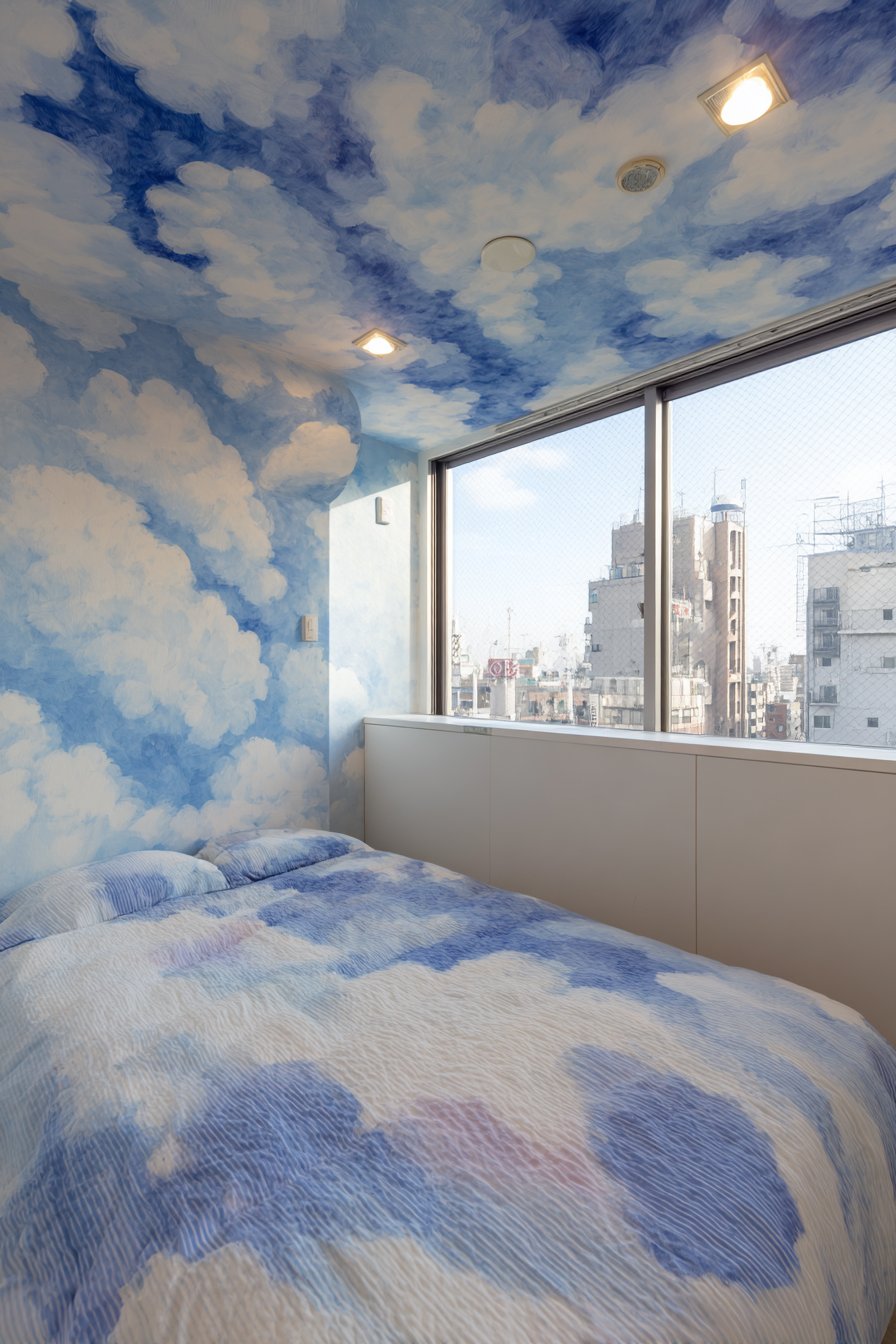
The technical execution of effective cloud painting requires a gentle touch and willingness to work with paint in a more fluid, improvisational manner than typical wall applications. Using multiple shades of blue alongside pure white and creating soft transitions through sponging, stippling, or dry-brush techniques produces realistic atmospheric effects. The result should evoke actual cloud formations observed in nature rather than appearing as cartoon-like shapes that seem juvenile or overly literal. Recessed ceiling lights positioned strategically throughout the painted surface create depth and dimension, with the fixtures themselves becoming integrated elements that suggest breaks in the cloud cover where light streams through.
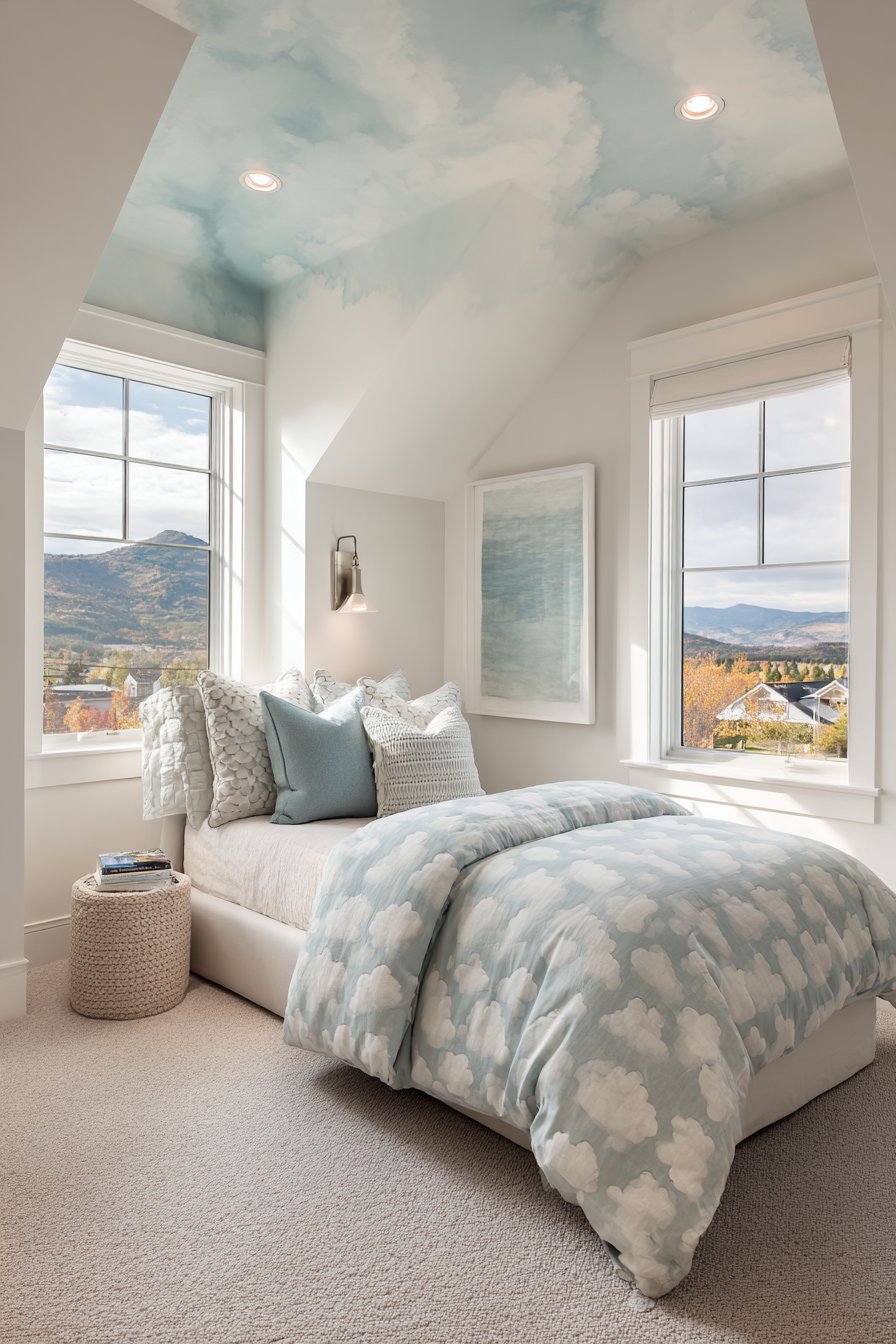
The psychological benefits of ceiling treatments in boys’ room paint ideas deserve recognition, particularly for children who experience bedtime anxiety or difficulty settling for sleep. The gentle, pastoral imagery of clouds floating overhead provides calming visual content that encourages relaxation and peaceful thoughts. Cloud-patterned bedding reinforces the theme while maintaining subtlety, creating cohesive design without heavy-handed repetition. Natural daylight filtering through windows creates shifting effects on the painted ceiling throughout the day, much like actual clouds changing appearance as the sun moves across the sky, ensuring the design remains dynamic rather than static.
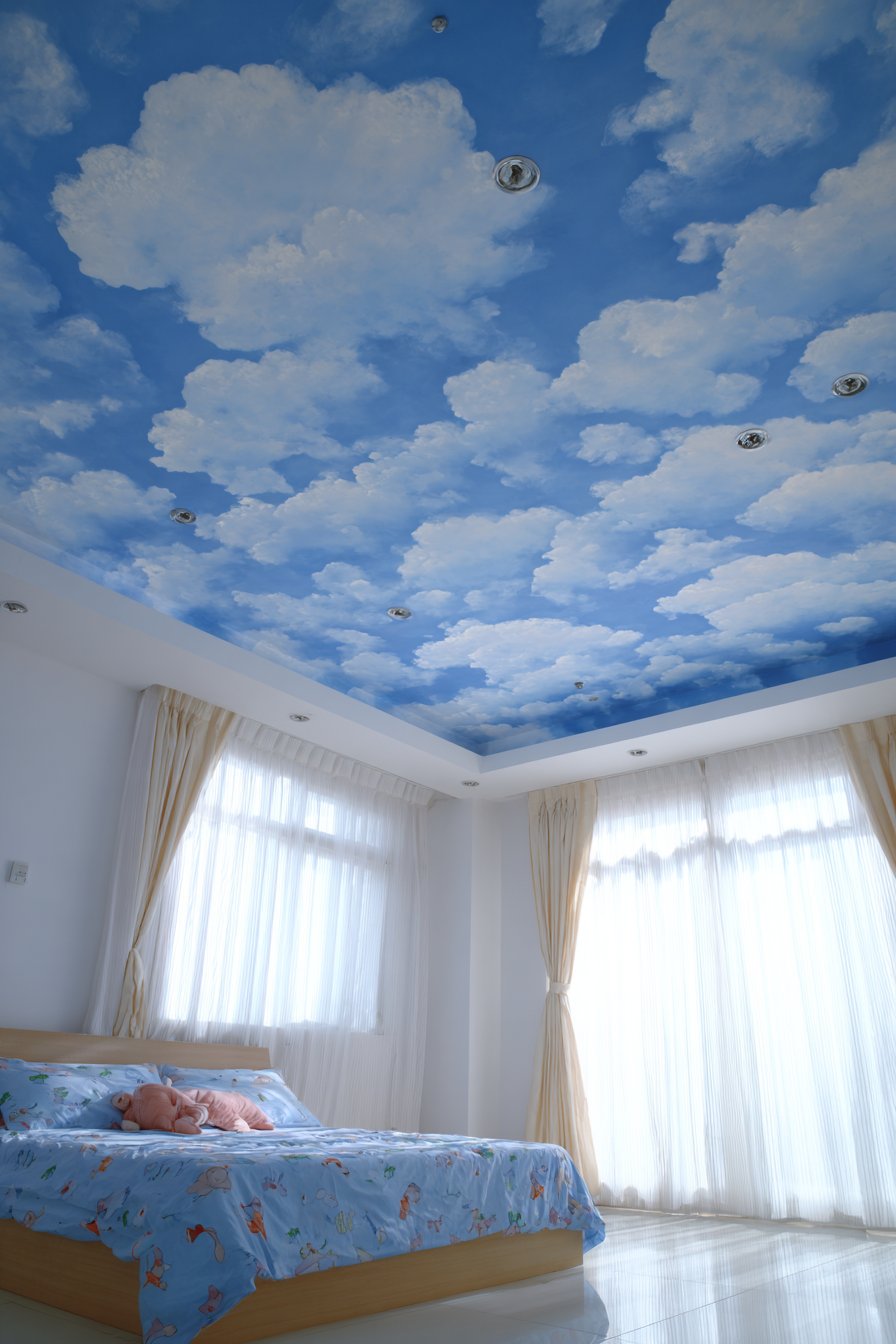
Key Design Tips:
- Practice cloud-painting techniques on poster board before applying to the ceiling to develop comfortable working methods
- Use at least three shades of blue plus white to create depth and dimension in the cloud formations
- Work in sections and step back frequently to assess the overall effect from the room’s primary viewing positions, particularly the bed
- Apply paint with a sea sponge or wadded plastic bag for organic, irregular textures that mimic actual cloud formations
- Keep the cloud density lighter toward room corners and denser near the center to create realistic atmospheric perspective
8. Warm Brick Red Accent with Texture
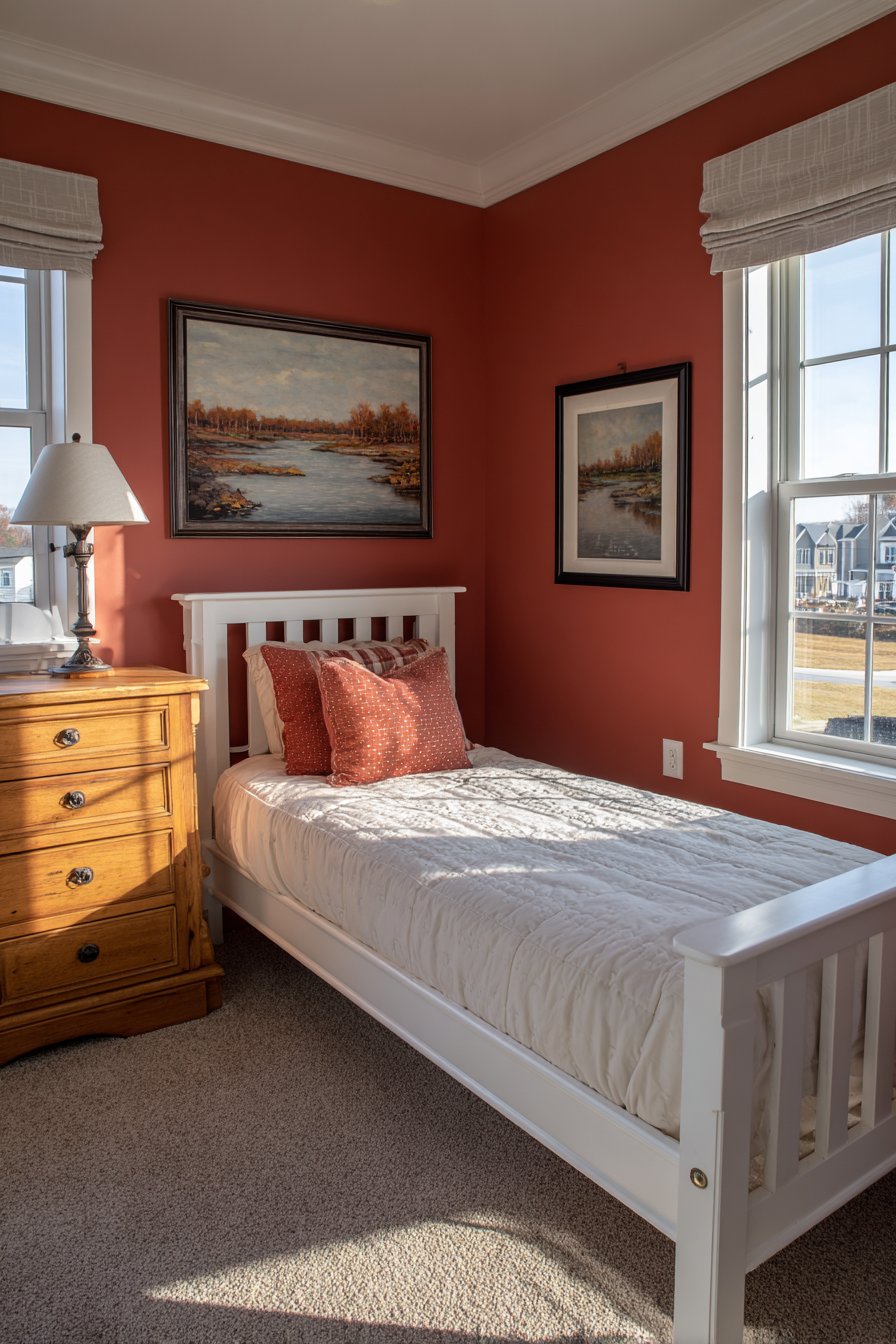
A textured brick red accent wall paired with soft gray-blue on remaining walls demonstrates how boys’ room paint ideas can incorporate warm, earthy tones while maintaining contemporary sophistication. The brick red, applied with slightly textured paint finish or specialized application techniques, creates subtle depth and visual interest that flat paint cannot achieve. This warm, assertive color provides psychological comfort and energy, creating an engaging backdrop that stimulates creativity and active thinking without the aggressive intensity of bright primary red. The soft gray-blue on secondary walls offers cool contrast that balances the warmth and prevents the space from feeling too hot or overwhelming.
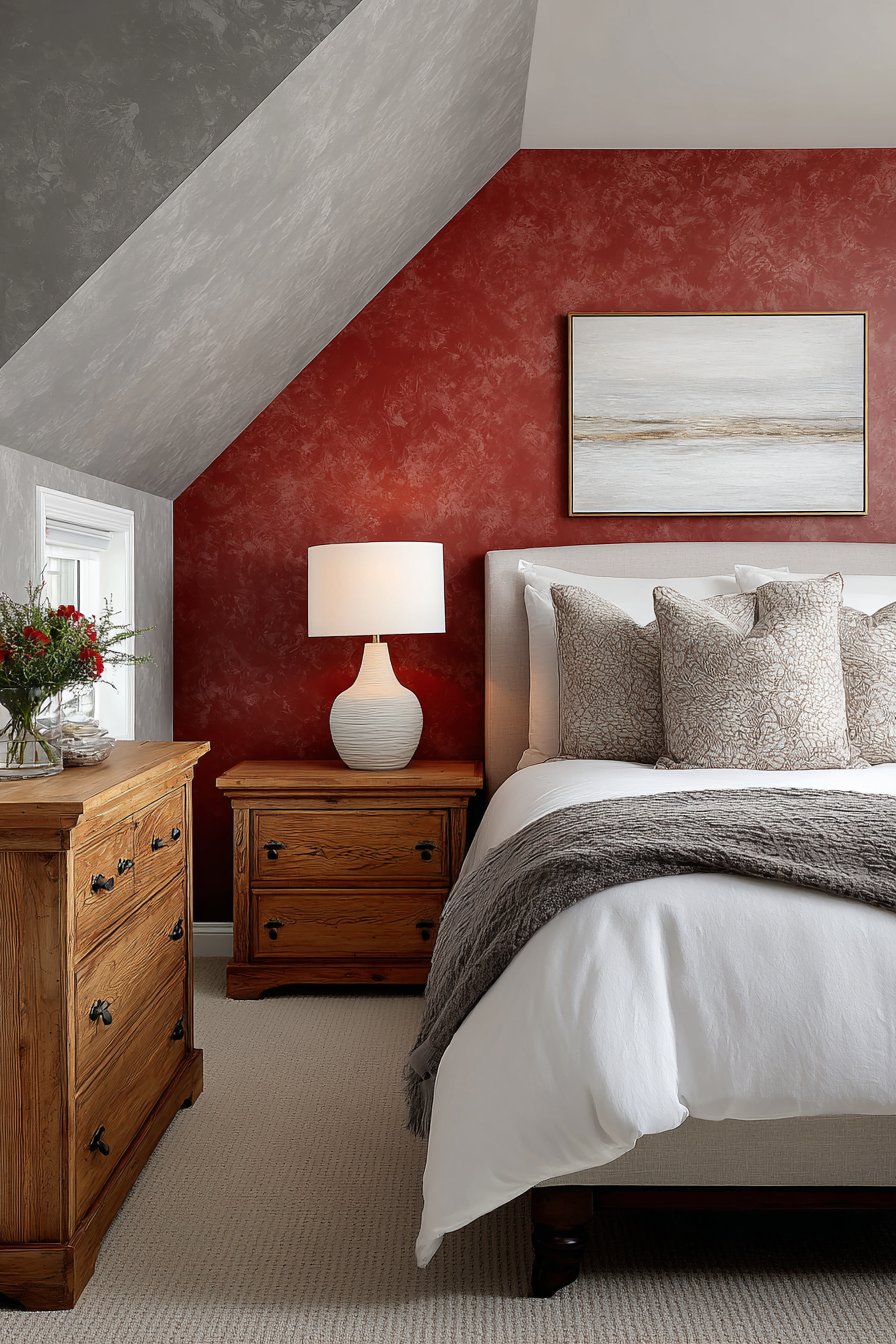
The textured paint finish on the brick red wall adds tactile and visual dimension that elevates the design beyond simple color application. Various techniques can achieve this effect, from specialty textured paints that contain fine particles creating inherent surface variation to application methods using specific tools that leave deliberate patterns. Natural afternoon light raking across the textured surface emphasizes every subtle ridge and valley, creating shifting shadow patterns throughout the day that ensure the wall never appears flat or boring. This dynamic quality means the room continues to reveal new details and maintain visual interest even after extended occupancy.
Furniture selection in white and natural wood provides balanced contrast against the rich wall colors, preventing the space from feeling too dark while maintaining warmth through wood grain. A white-painted bed frame offers crisp contrast against the brick red accent wall, creating a defined sleeping zone that draws the eye. The combination of warm and cool paint tones creates sophisticated color harmony that works across age ranges, from elementary school through teenage years. This longevity makes the investment in quality paint and careful application worthwhile, as the room won’t require frequent updates to remain age-appropriate and appealing.
Key Design Tips:
- Use texture additive mixed into standard paint or purchase pre-textured paint formulas to create dimensional surface quality
- Apply textured paint with a specialized roller, brush, or trowel depending on the desired effect, working in small sections for even texture distribution
- Test the texture technique on sample boards to determine preferred appearance and refine application skills before working on actual walls
- Consider how furniture and artwork will interact with the textured wall, ensuring mounting hardware can penetrate the textured surface securely
- Use matte or flat finish for textured walls to minimize glare and allow the physical texture to create the visual interest rather than sheen variations
9. Horizontal Navy Stripe as Modern Wainscoting
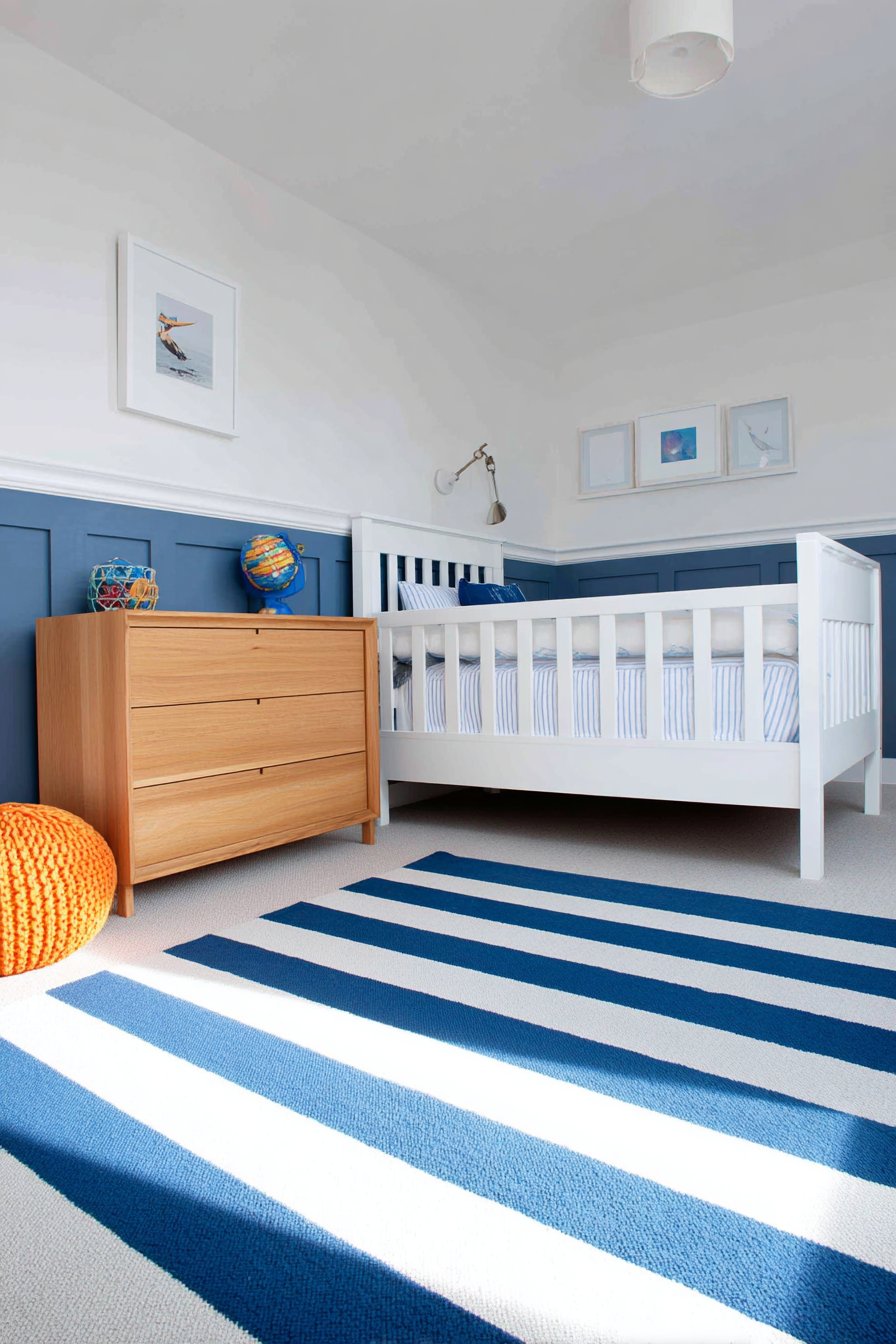
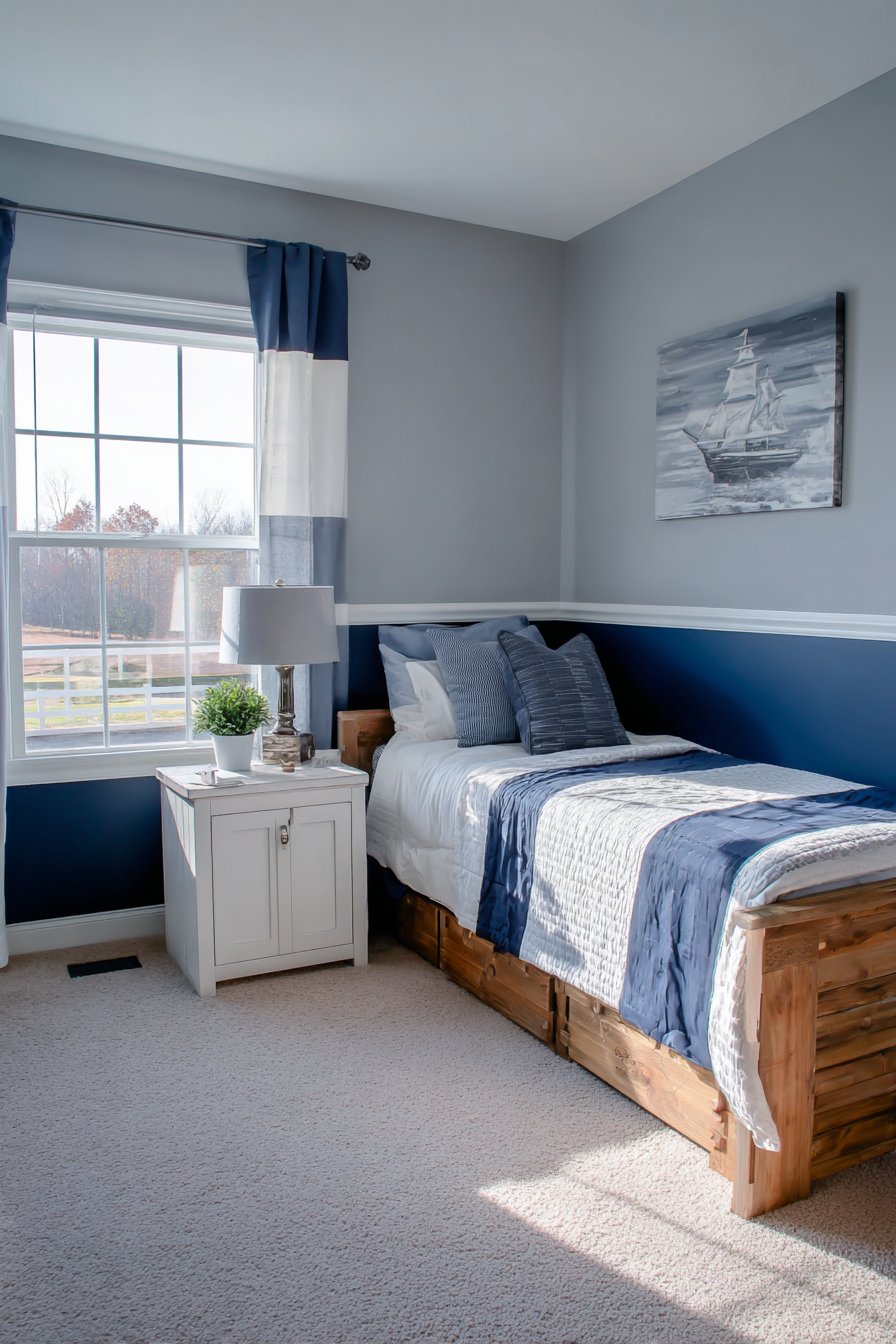
The horizontal navy blue stripe running at mid-wall height against light gray walls represents innovative boys’ room paint ideas that reinterpret traditional wainscoting through contemporary paint application. This modern approach achieves the visual division and architectural interest of actual molding without the expense, installation complexity, or permanence of three-dimensional trim work. The navy stripe, typically 8-12 inches in height and positioned approximately 30-36 inches from the floor, creates strong horizontal emphasis that visually expands the room’s width while adding unexpected design detail that elevates the space beyond basic single-color painting.
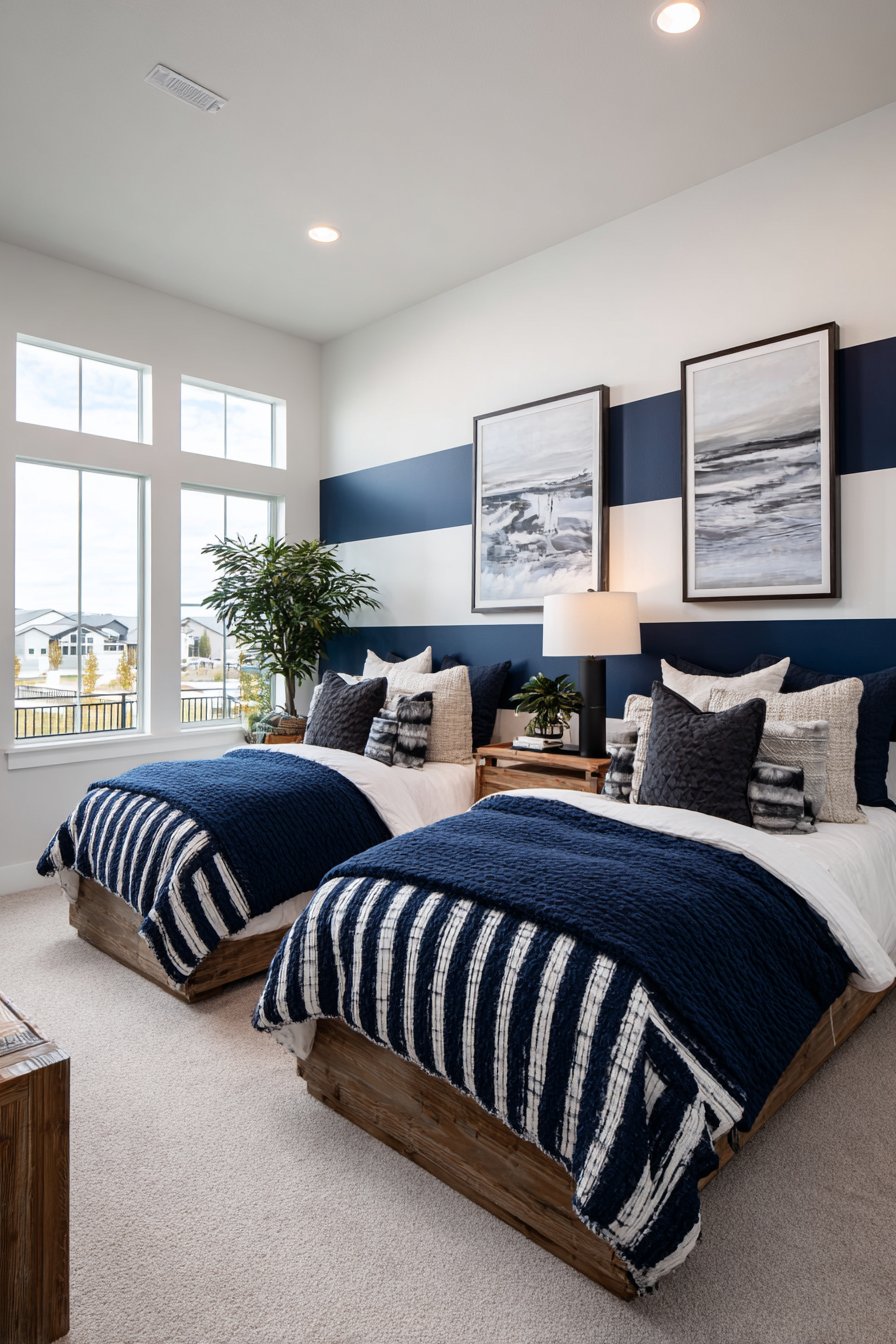
The color combination of navy blue and light gray demonstrates sophisticated palette development that appeals to older children and teenagers while remaining appropriate for younger boys as well. Navy provides the masculine tone many families seek for boys’ spaces without the obviousness of bright primary blue, offering instead a more mature, refined quality. Light gray above and below the stripe maintains brightness and prevents the room from feeling too dark, a crucial consideration particularly in rooms with limited natural light. The precision required to paint a perfectly straight horizontal line spanning the room’s perimeter demonstrates attention to detail that distinguishes professional-quality work from casual DIY efforts.
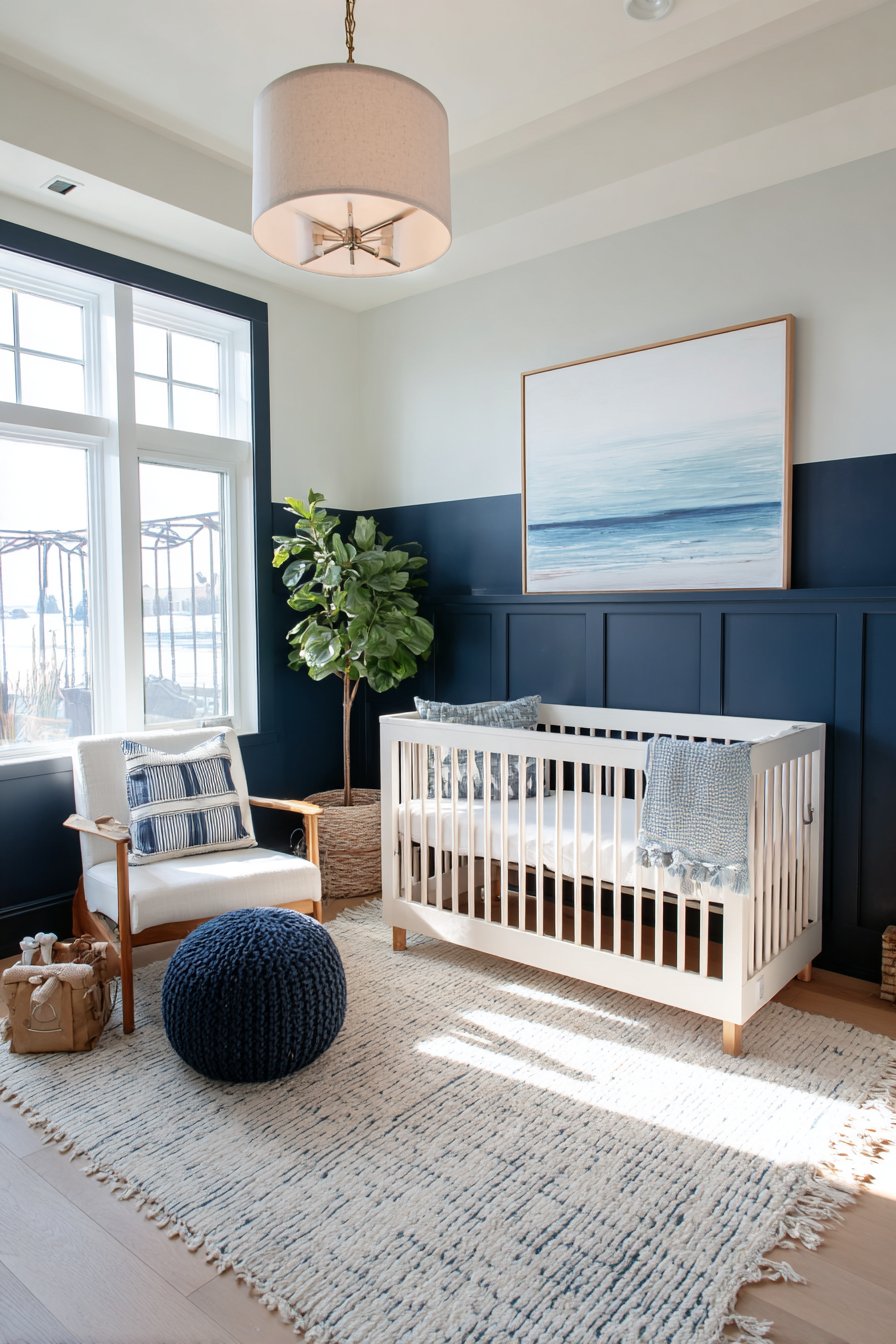
Simple contemporary furniture in white and natural wood maintains clean, uncluttered aesthetics that allow the painted stripe to receive appropriate attention as the room’s primary design feature. The horizontal paint stripe defines the space while adding visual interest at an approachable scale that doesn’t overwhelm or dominate. Soft natural lighting highlights the precise paint edge and color contrast, creating subtle shadow lines that add dimension to the two-dimensional paint application. This interplay between color, line, and light demonstrates how thoughtful paint techniques can create sophisticated design impact at relatively minimal cost.
Key Design Tips:
- Use a laser level to mark a perfectly straight guideline around the room’s entire perimeter before applying painter’s tape
- Measure and mark the stripe height at multiple points around the room to ensure consistency despite potential floor level variations
- Paint the lighter color first as the base, then carefully tape and paint the navy stripe over it for easier touch-ups if needed
- Apply two coats of the navy stripe color to ensure complete coverage and prevent the lighter base color from showing through
- Consider wrapping the stripe into closets or alcoves for a fully integrated look that demonstrates design commitment
10. Mountain Range Mural in Graduated Blue-Gray
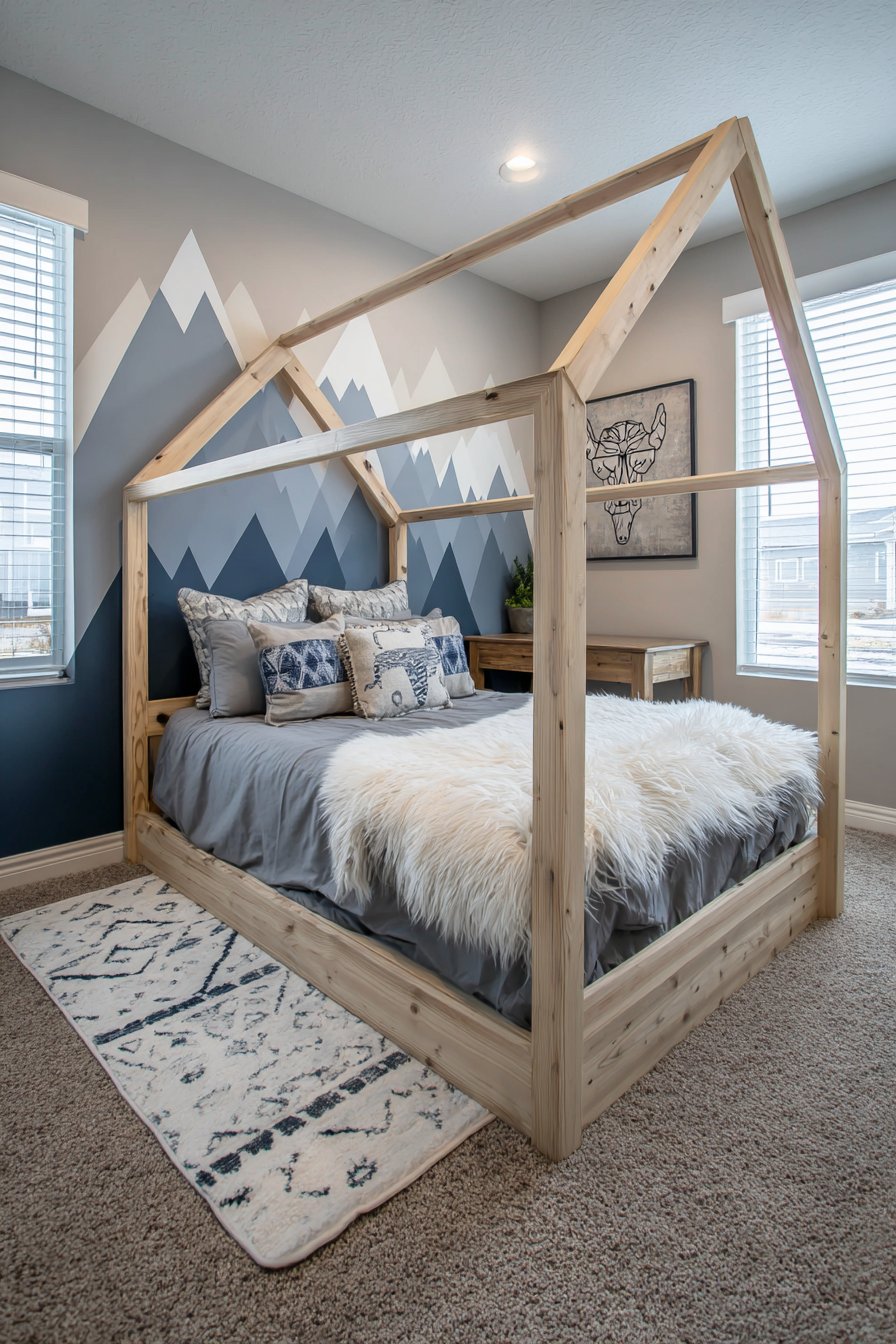
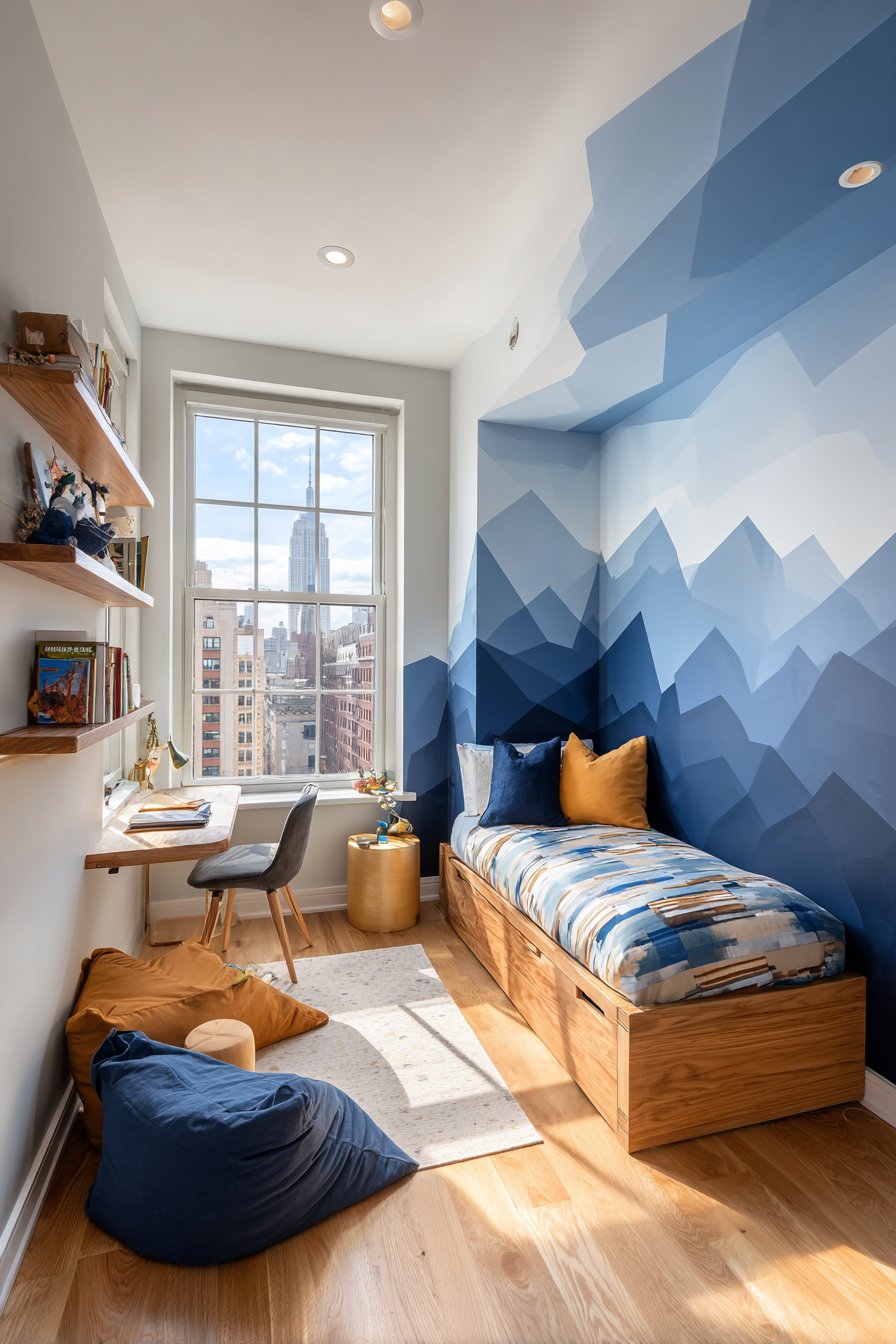
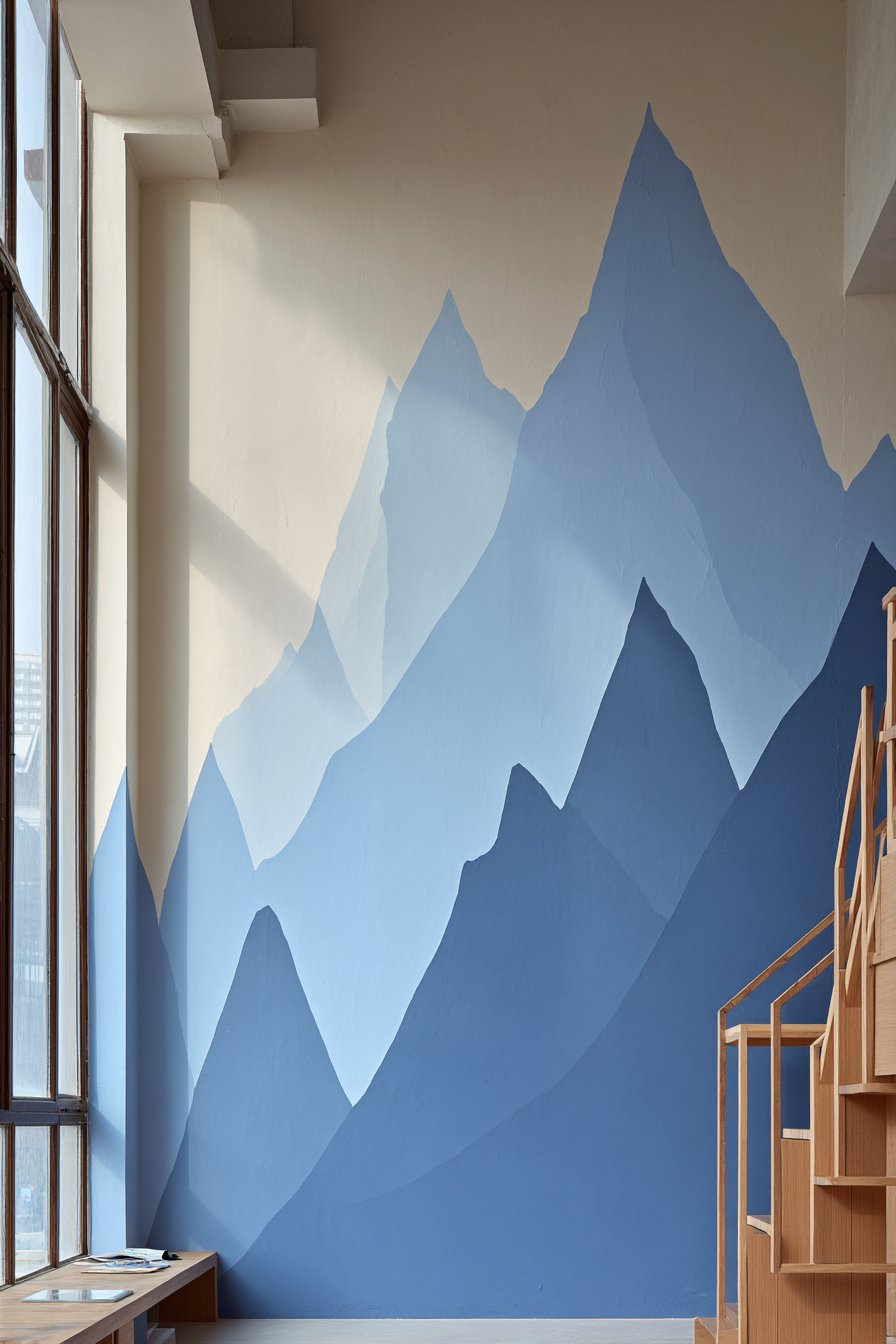
The mountain range silhouette painted in graduated shades of blue-gray against a cream background exemplifies artistic boys’ room paint ideas that combine geometric design with nature-inspired imagery. This mural approach creates an adventurous focal point that appeals to children’s fascination with outdoor exploration, hiking, camping, and mountain climbing while maintaining clean, modern aesthetics through simplified forms and limited color palette. The geometric interpretation of mountain shapes prevents the design from appearing too literal or childish, ensuring longevity as the child matures and develops more sophisticated tastes.
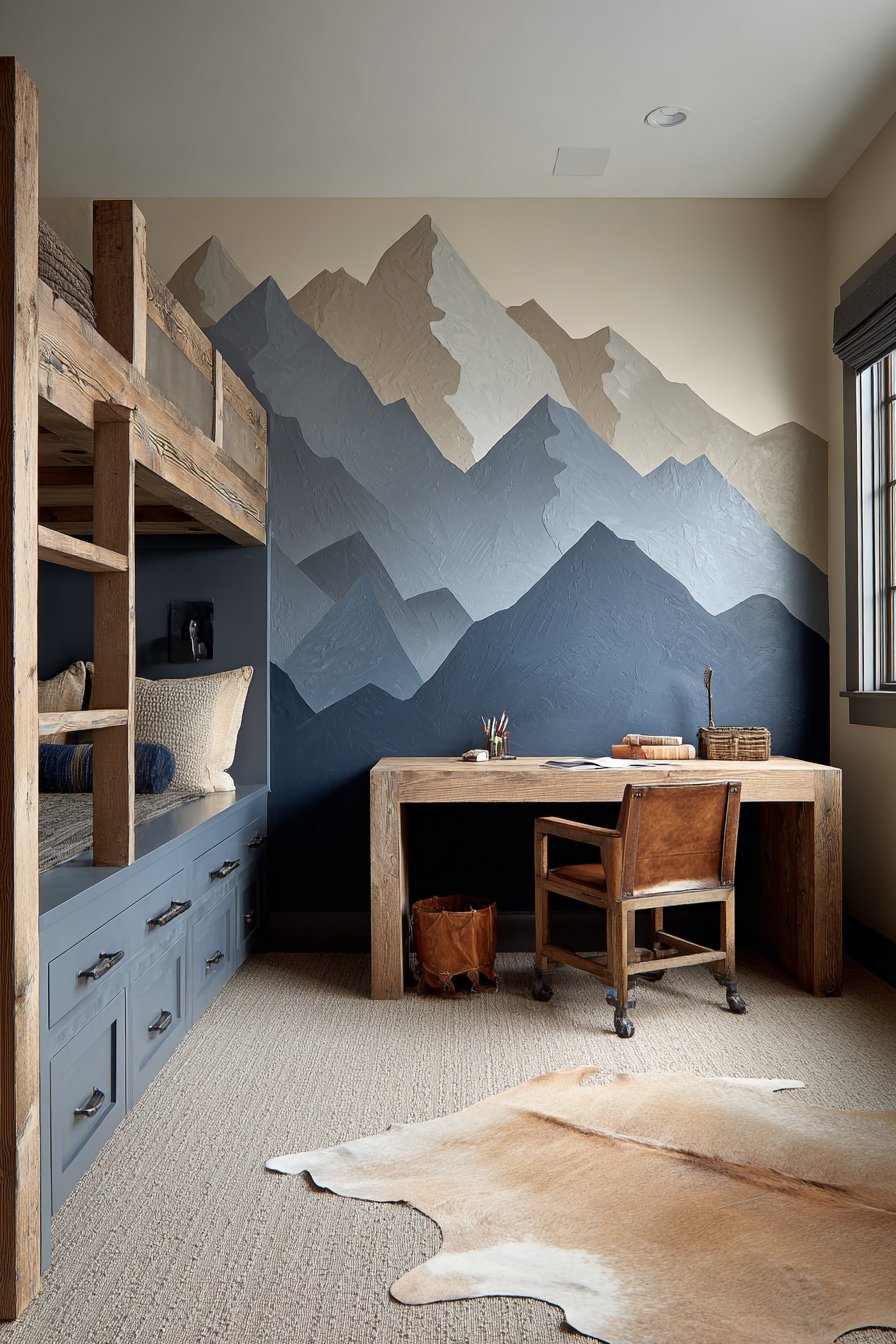
The graduated color application, with mountains appearing lighter as they recede into the background, demonstrates understanding of atmospheric perspective that adds realism and depth to the painted mural. The closest mountain peaks in the darkest blue-gray command visual attention, while successively lighter ranges create the illusion of distance and space, transforming a flat wall into a dimensional landscape. This layering technique requires careful planning and execution, with each mountain range carefully taped and painted in sequence from background to foreground. The cream background color provides neutral warmth that prevents the blue-gray mountains from feeling too cold or institutional.
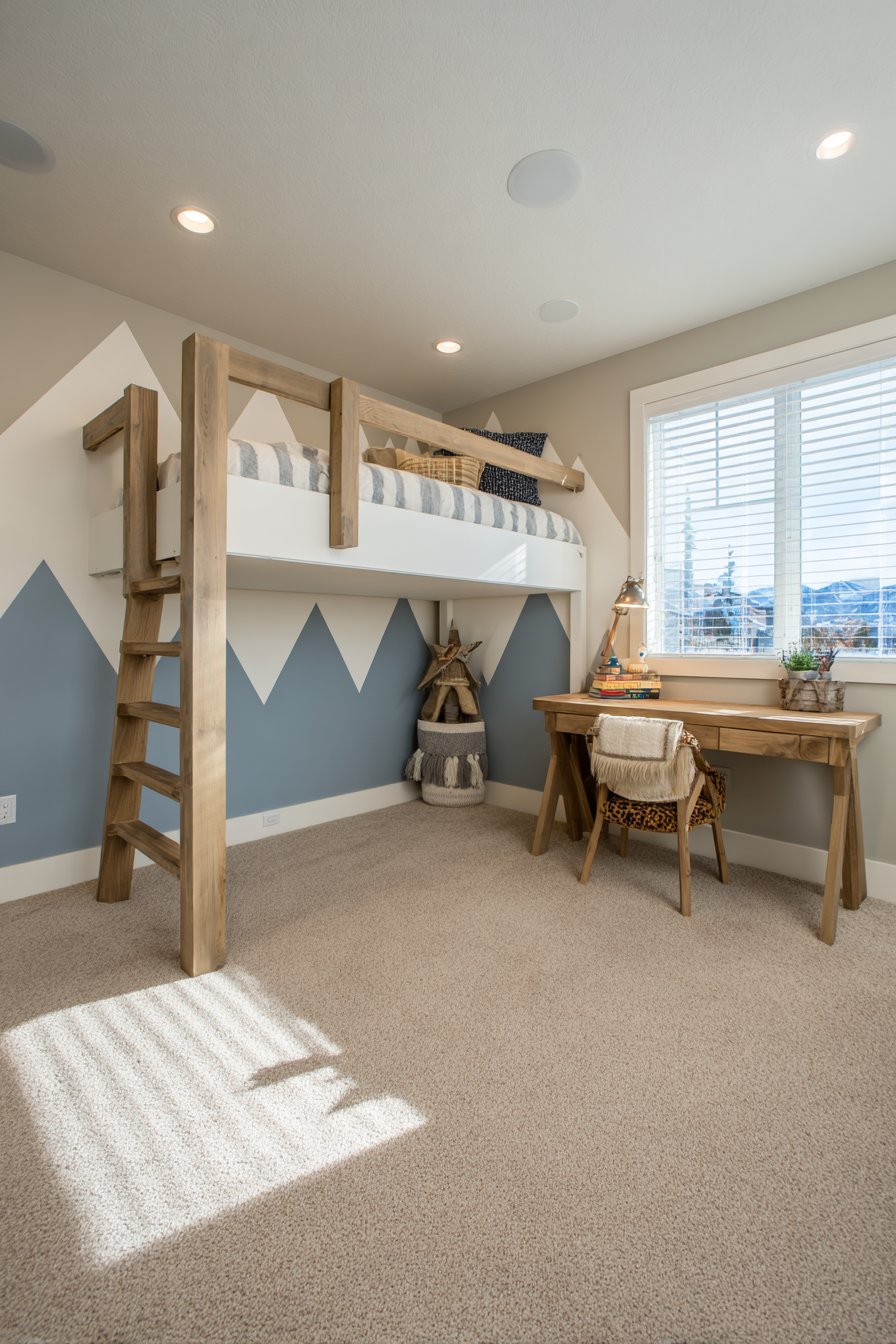
A wooden loft bed and simple desk area integrate seamlessly with the mountain theme without requiring matching or coordinated furniture pieces. Natural window light creates gentle shadows on the painted mountain forms throughout the day, adding subtle dimension that makes the geometric shapes appear almost three-dimensional at certain angles. The scale of the mountain design should be carefully considered, with peaks sized appropriately for the wall dimensions and ceiling height to maintain proper proportion and prevent the mural from appearing cramped or awkwardly positioned.
Key Design Tips:
- Sketch the mountain range design to scale, ensuring peak heights and spacing create pleasing composition within the wall dimensions
- Paint the cream background first, then layer mountains from back to front using progressively darker blue-gray shades
- Use painter’s tape to create clean geometric mountain silhouettes, removing tape while paint is still slightly wet for crisp edges
- Position the highest mountain peaks off-center rather than dead-center on the wall to create more dynamic, natural-looking composition
- Consider extending the mural slightly onto adjacent walls for a wrapped, immersive effect that expands perceived space
11. Functional Magnetic Paint Base Layer
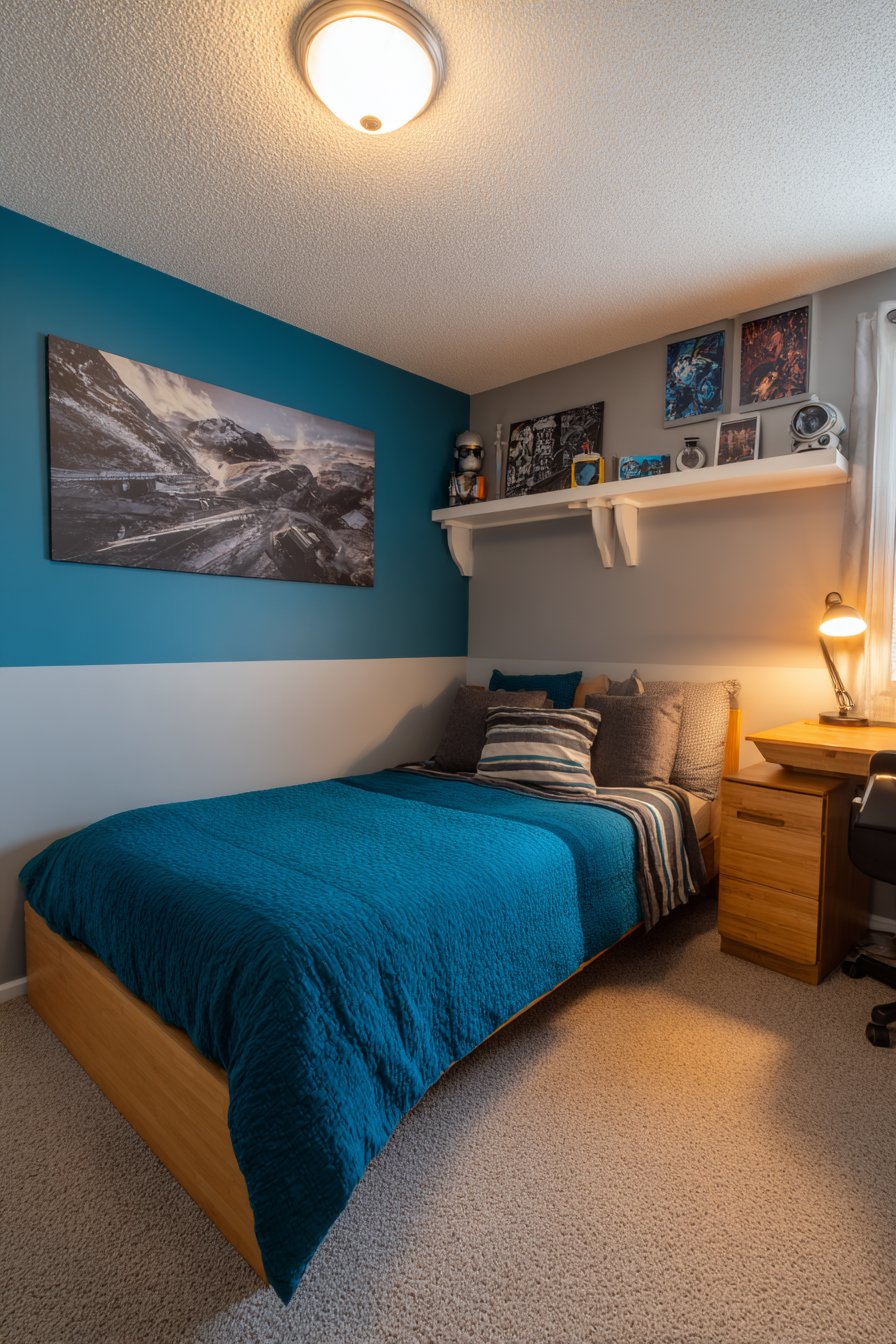
Magnetic paint base coat in dark gray, covered with standard paint in soft blue-green, represents innovative boys’ room paint ideas that prioritize function alongside aesthetics. This layered approach creates a wall surface that magnetically holds artwork, photos, awards, and other items without requiring nails, push pins, or tape that damage walls and limit flexibility. The dark gray magnetic base coat contains iron particles that provide the magnetic properties, while the top coat of soft blue-green delivers the desired final appearance. This ingenious solution acknowledges children’s natural desire to display their achievements and interests while providing parents with a damage-free alternative to constant holes and repairs.
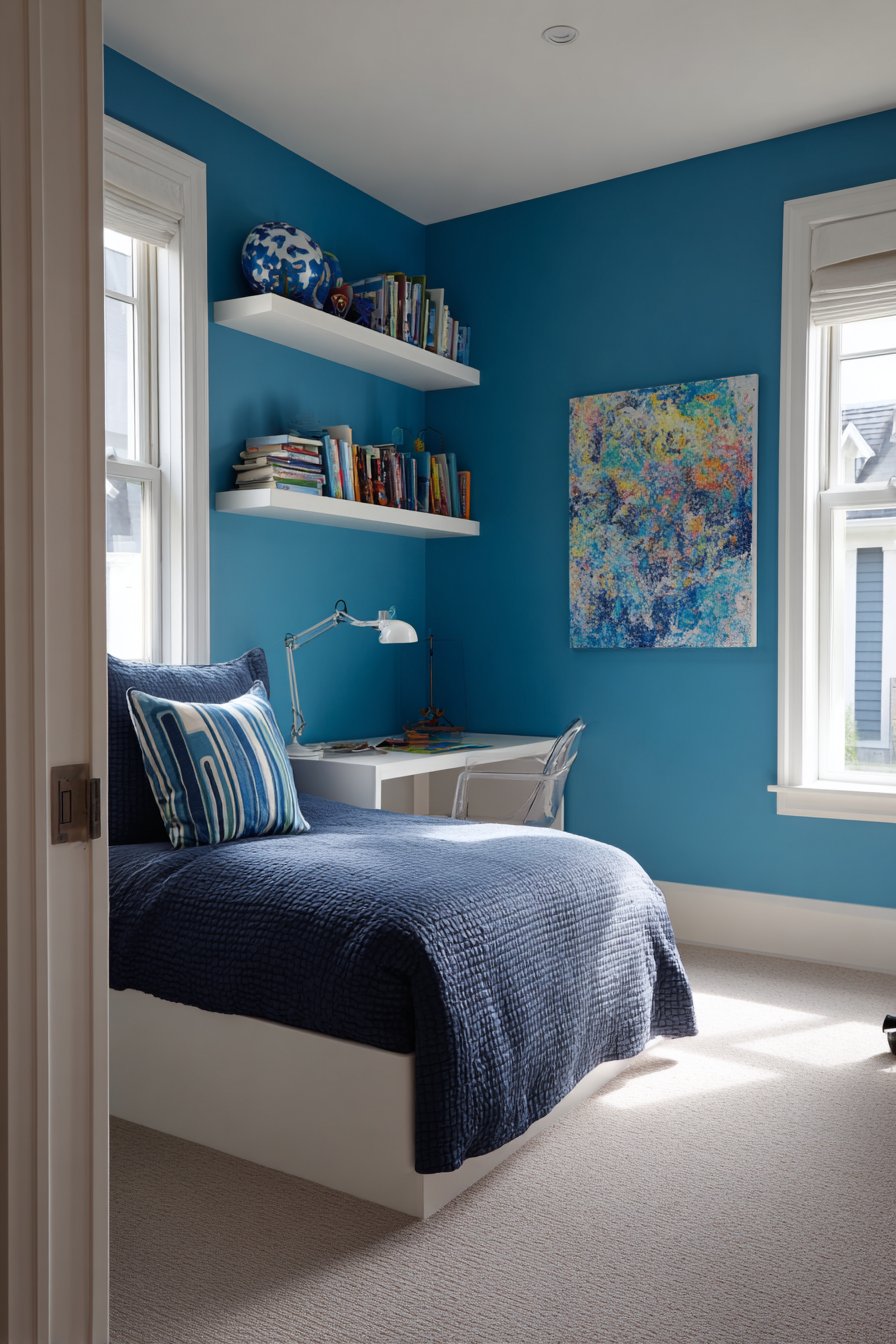
The application process for magnetic paint requires patience and multiple coats to achieve strong magnetic hold, typically three to four coats of the magnetic base before applying the finish color. The dark gray base color necessitates adequate coverage with the top coat to prevent show-through, particularly with lighter finish colors like the soft blue-green. White floating shelves and simple bed frame maintain the room’s practical focus while the magnetic wall provides dynamic display opportunities that change as interests evolve. This flexibility makes magnetic paint particularly valuable during school years when children regularly bring home artwork, certificates, and projects they want to showcase.
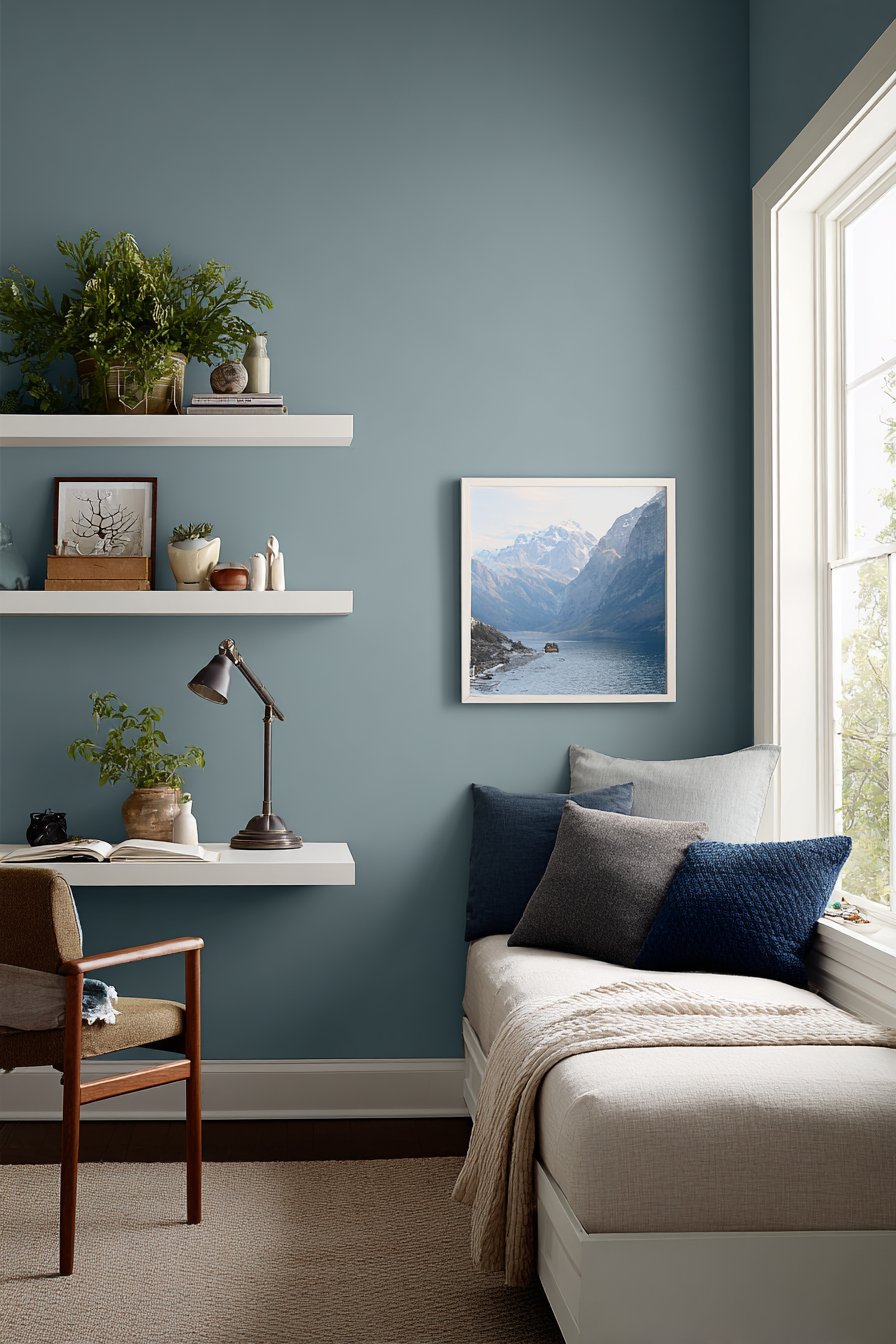
The soft blue-green finish color creates a calming, versatile backdrop that works across age ranges and accommodates diverse decorative elements. Desk lamp and natural light combine to illuminate both the wall surface and displayed items effectively, ensuring magnetic displays remain visible and appreciated rather than hidden in shadow. The smooth paint finish over the magnetic base requires careful application to prevent texture from the iron-laden base coat from telegraphing through the final surface. Professional interior photography captures the innovative paint application and everyday functionality that makes this technique particularly appealing to practical-minded families.
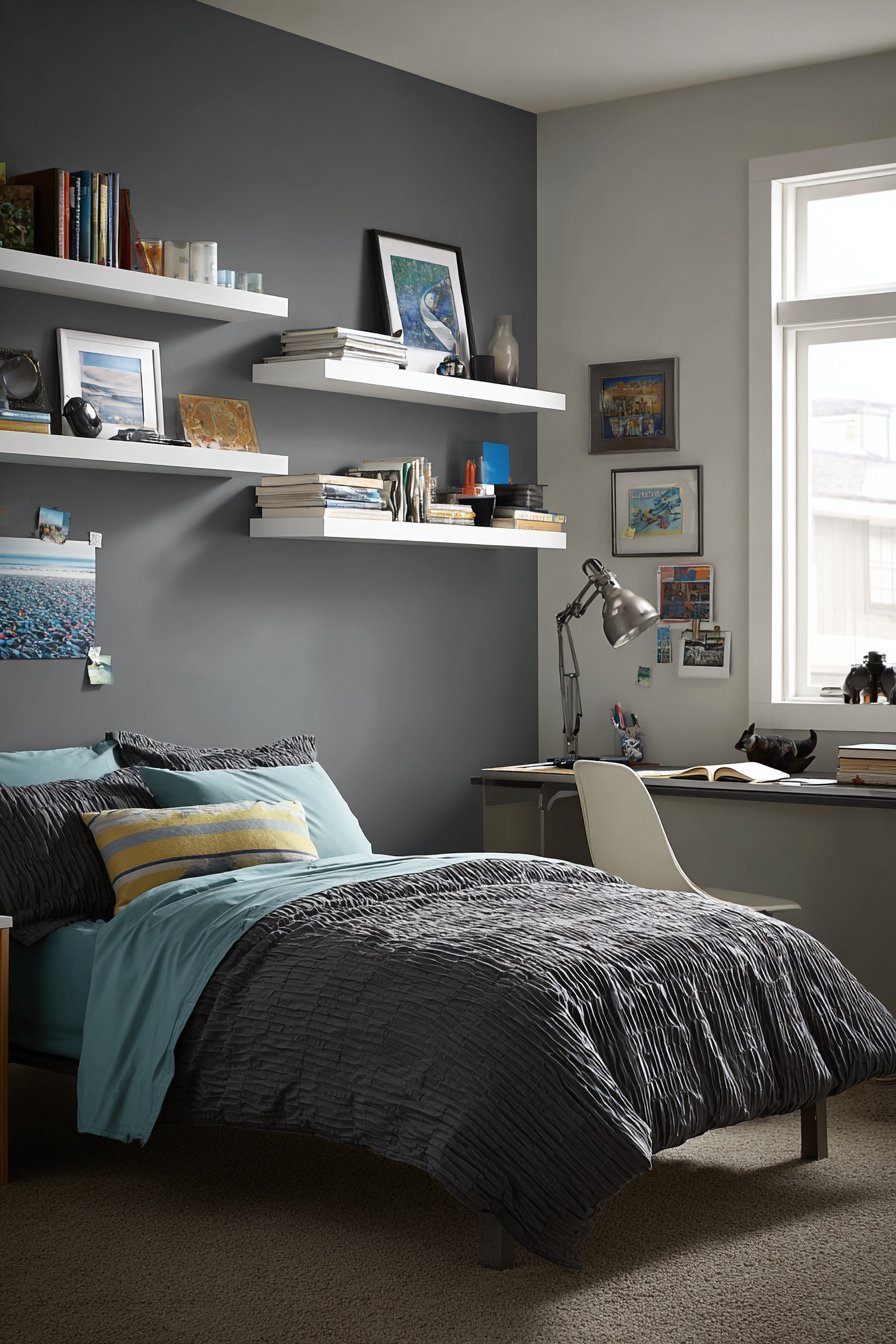
Key Design Tips:
- Apply at least three coats of magnetic primer for adequate magnetic strength, allowing complete drying between coats
- Use strong rare-earth magnets rather than standard refrigerator magnets for better holding power on painted magnetic surfaces
- Test magnetic strength after the magnetic primer has fully cured before applying the top coat to ensure adequate coverage
- Apply two coats of the finish color for complete coverage over the dark magnetic base, using high-quality paint for best results
- Clearly communicate the magnetic area to children so they understand where magnetic items will adhere and avoid frustration
12. Timeless Navy and White Classic
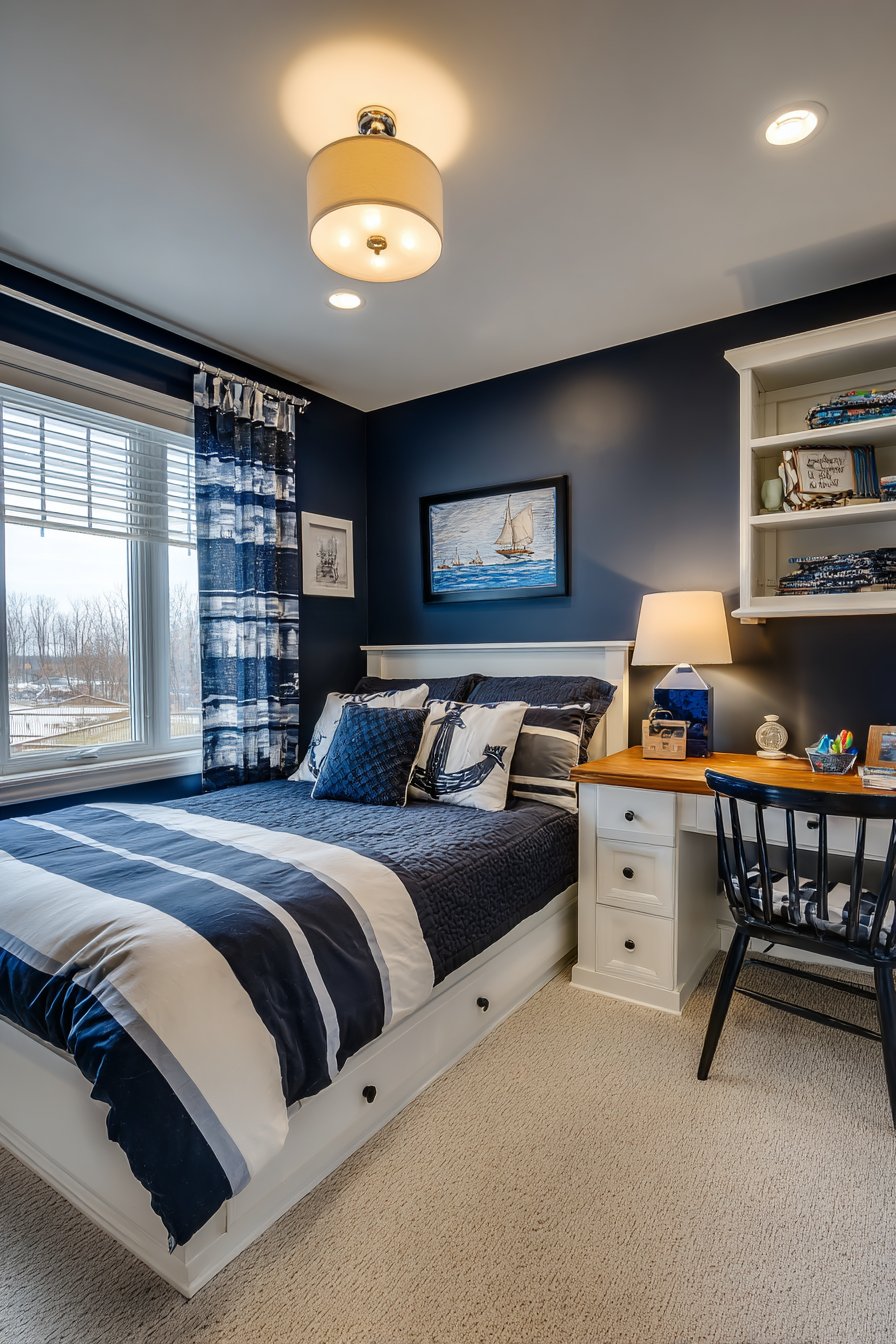
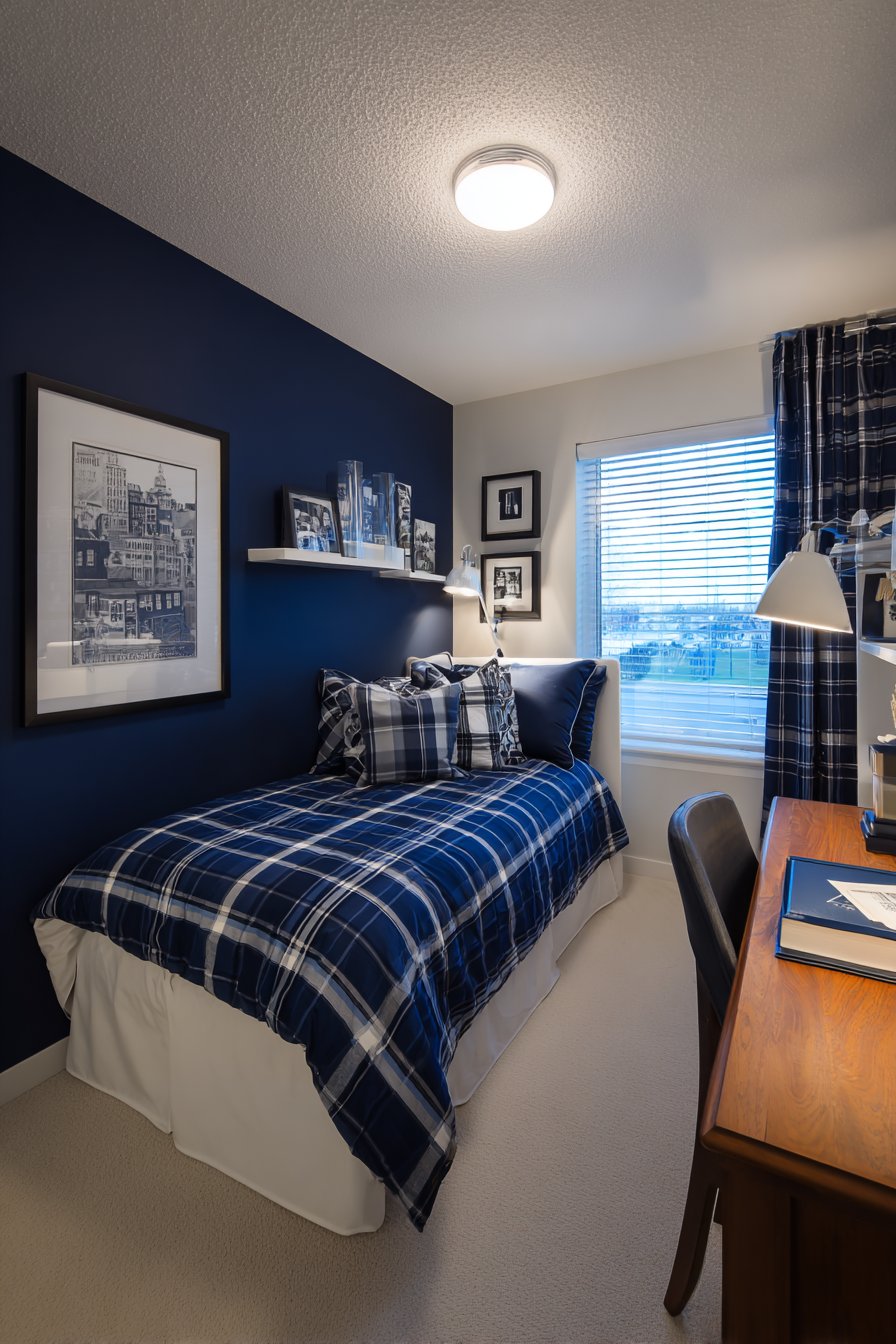
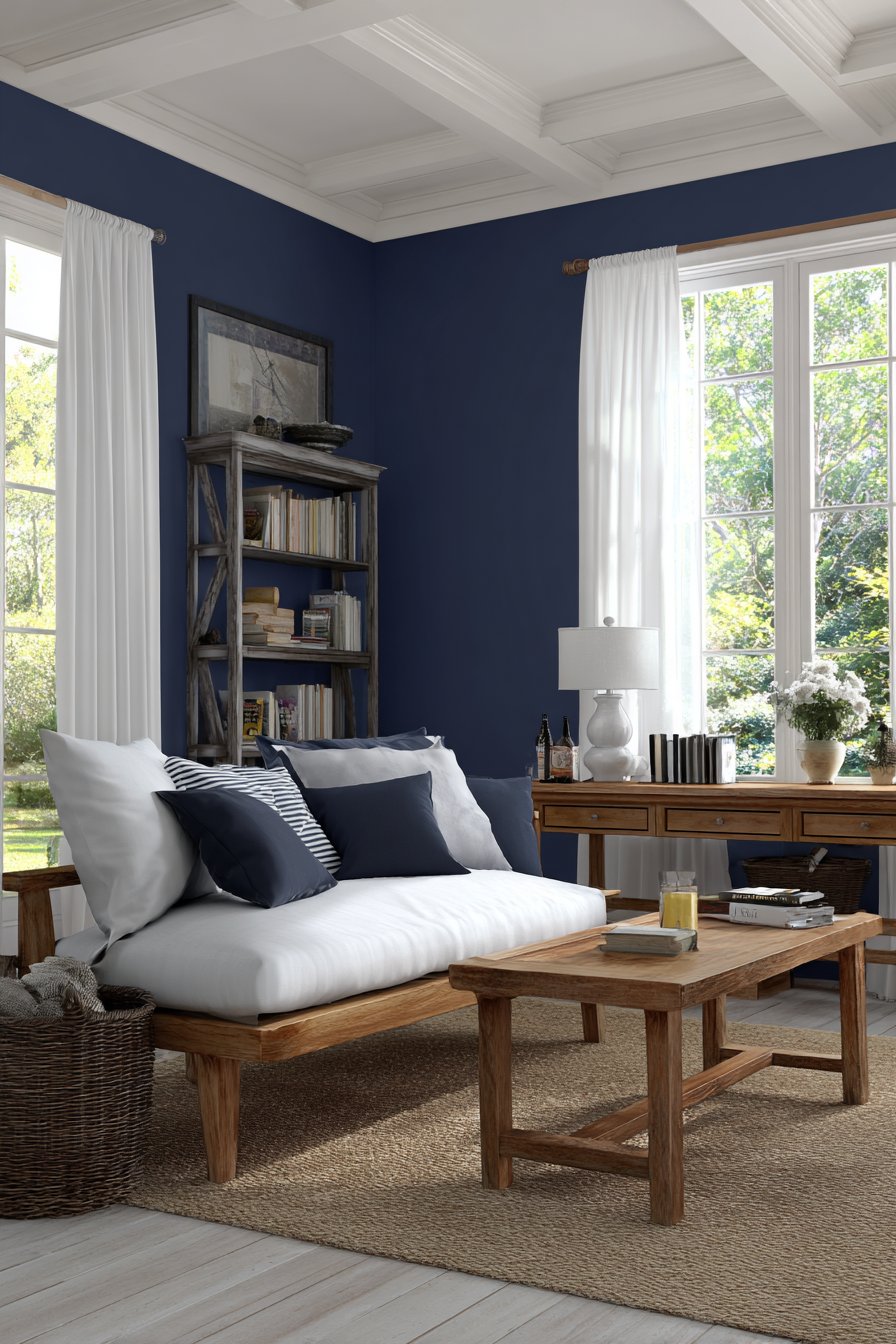
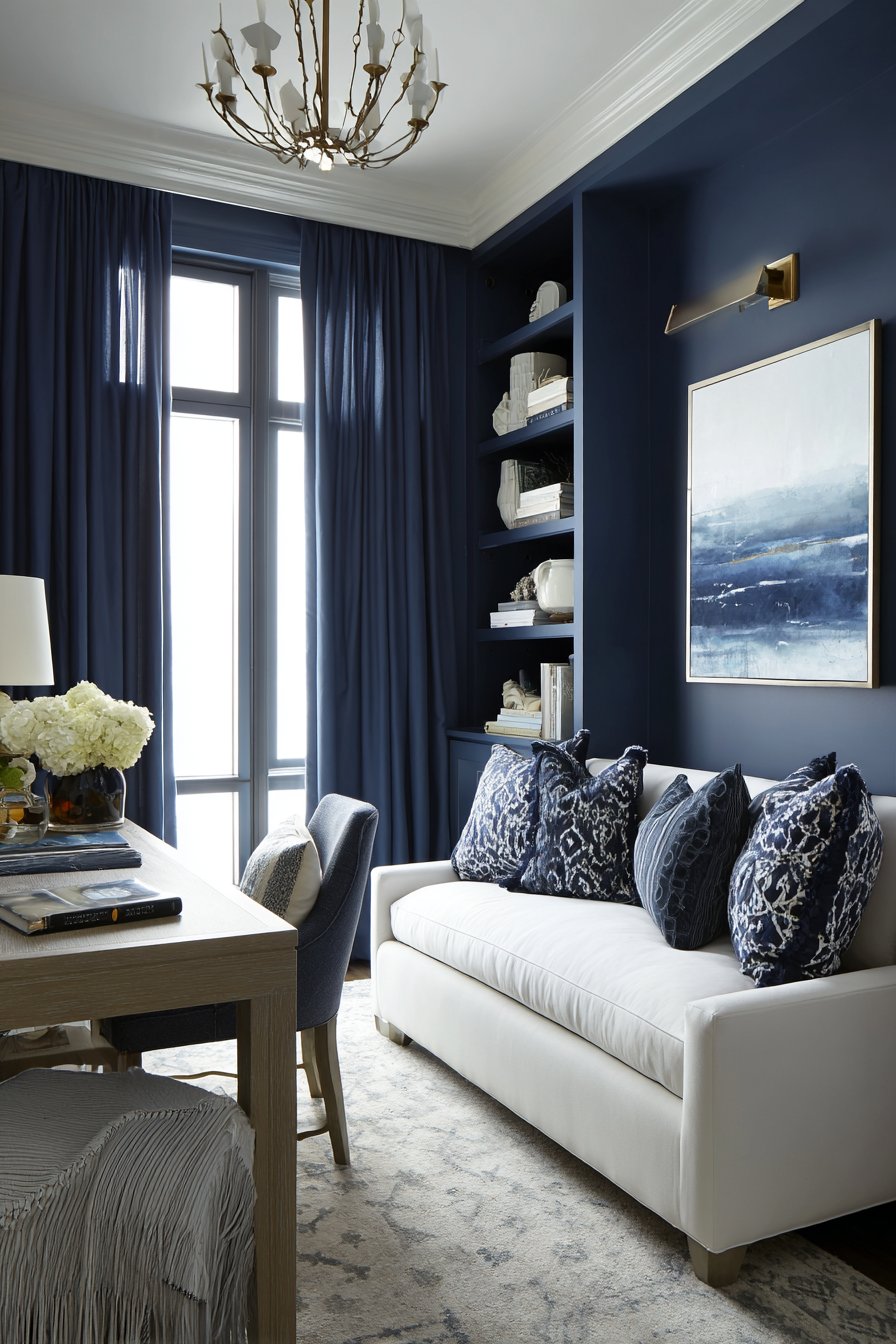
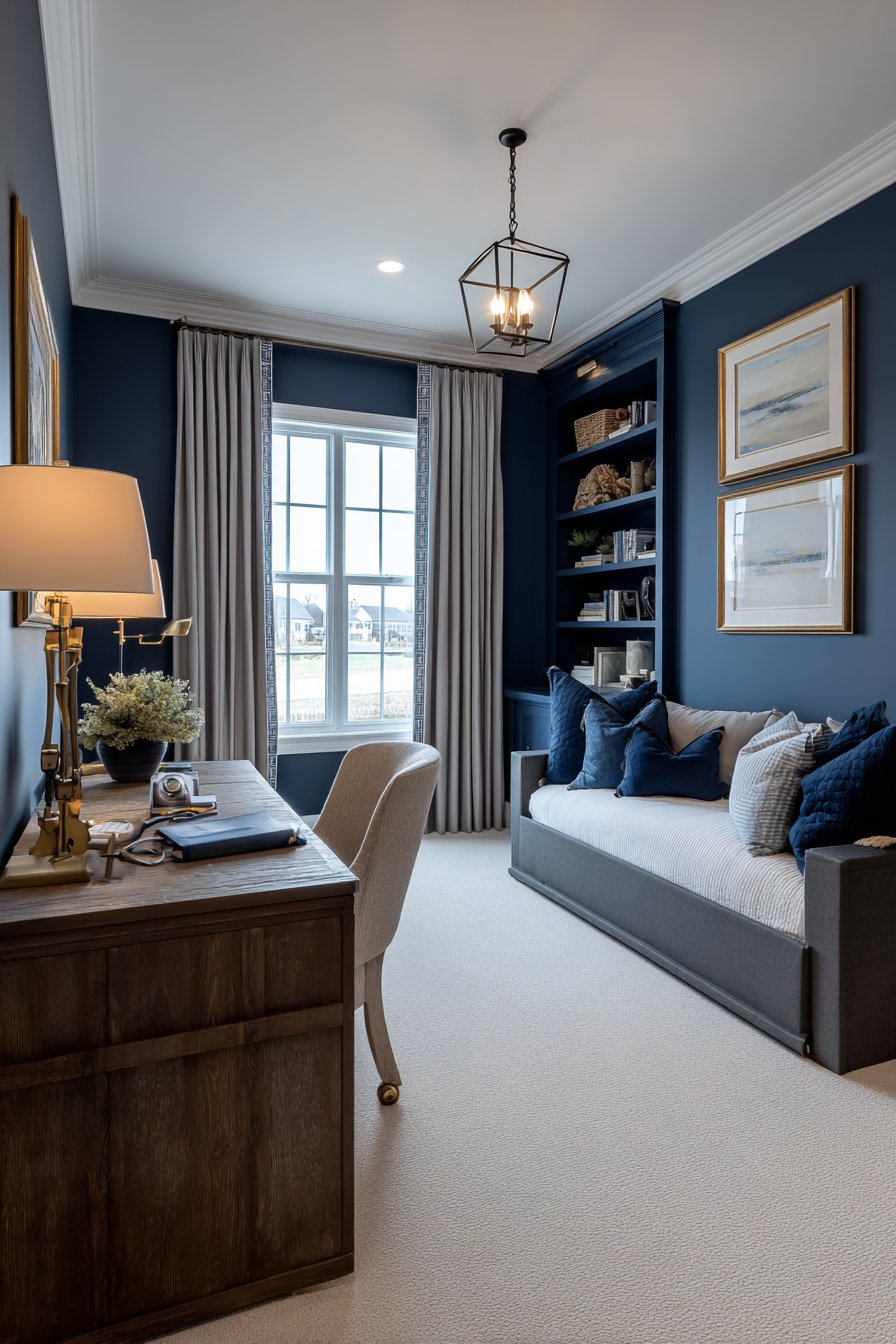
Navy walls on three sides with one white accent wall behind built-in storage exemplifies classic boys’ room paint ideas that provide mature, timeless foundation adaptable across developmental stages. This traditional color combination has endured for generations because it successfully balances masculine appeal with sophisticated restraint, avoiding trendy hues that quickly date while creating definite character and personality. The predominantly navy scheme creates an enveloping, cocoon-like quality that many children find comforting for sleep, while the white accent wall prevents the space from feeling too dark or cave-like and provides visual relief that balances the intensity.
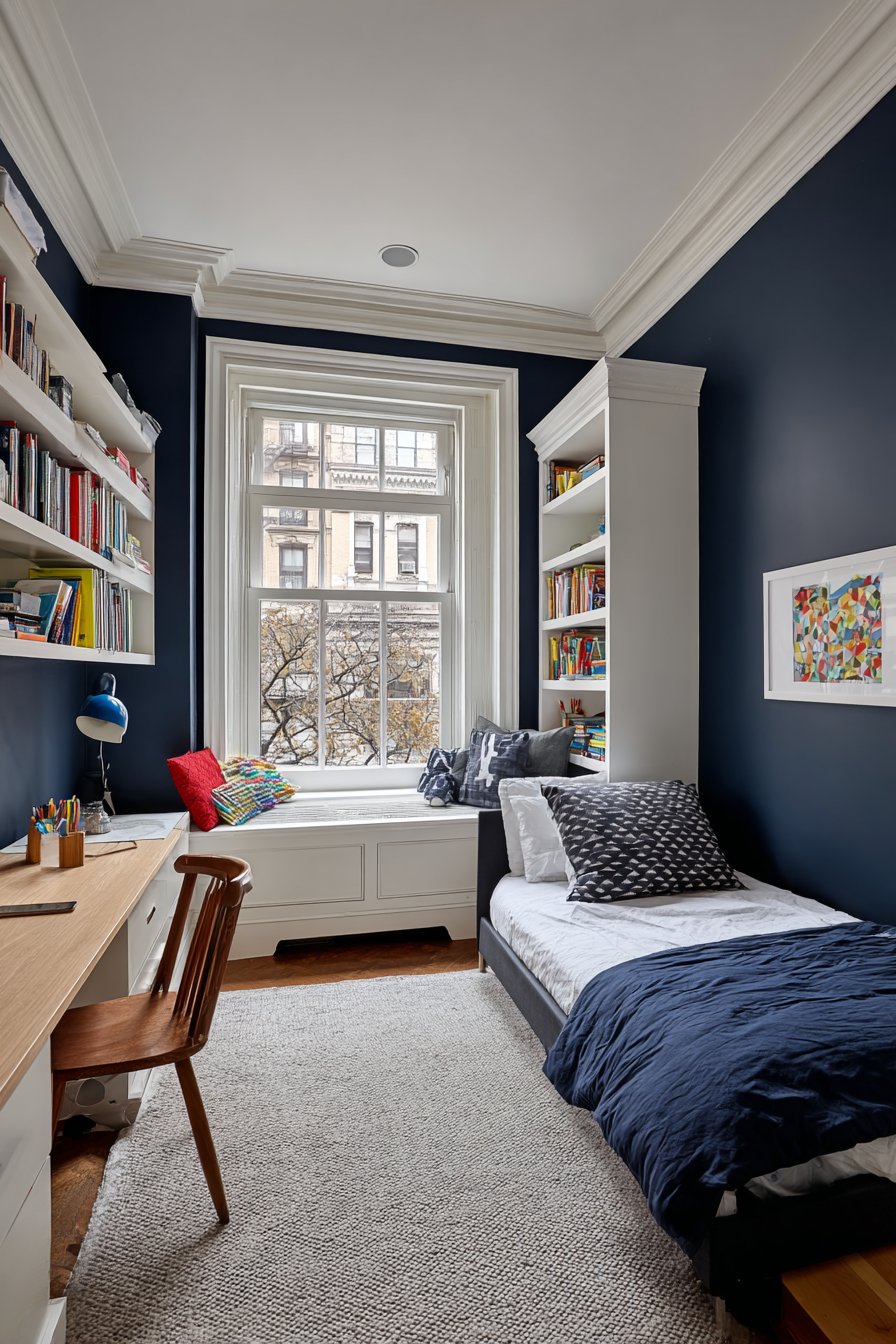
The strategic placement of white paint behind built-in storage shelving demonstrates thoughtful design consideration, as the white background makes items on shelves more visible and creates attractive contrast that highlights the storage organization. Natural wood desk and bed frame introduce warmth into the cool color palette, preventing the navy and white from feeling too stark or impersonal. The wood grain adds organic texture and visual softness that complements the smooth painted surfaces, creating layered visual interest through material variation rather than relying solely on color contrast.
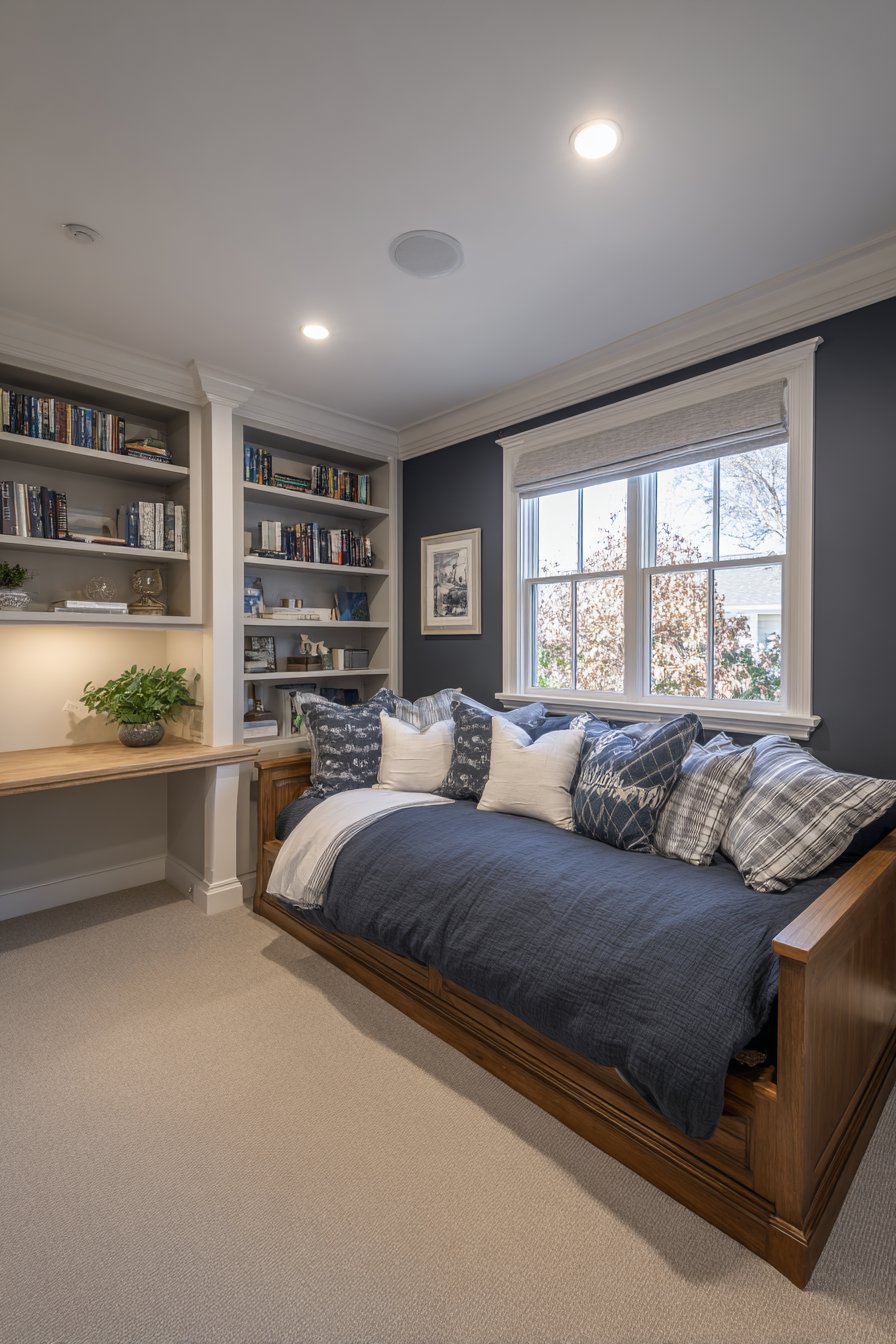
The timeless nature of navy and white makes this paint scheme particularly economical for families, as the foundation colors accommodate changing décor preferences throughout childhood and teenage years without requiring repainting. Sports memorabilia, academic awards, hobby collections, or artistic displays all work beautifully against the navy backdrop, which serves as neutral framework despite being a defined color. Balanced natural and artificial lighting reveals the deep navy’s true saturation and richness, important considerations because navy can appear nearly black in low light conditions or take on purple undertones under certain artificial lights.
Key Design Tips:
- Choose a true navy blue rather than navy with strong purple or green undertones for the most versatile and timeless appearance
- Use semi-gloss or satin finish on navy walls for subtle sheen that reflects light and prevents the dark color from absorbing too much light
- Paint the ceiling white to maximize light reflection and prevent the room from feeling too enclosed by dark walls
- Consider navy on the three walls perpendicular to windows to avoid placing dark color on the primary light-receiving wall
- Add brass or gold-toned hardware and fixtures to create warm metallic contrast against the cool navy blue
13. Earthy Terracotta and Cream Warmth
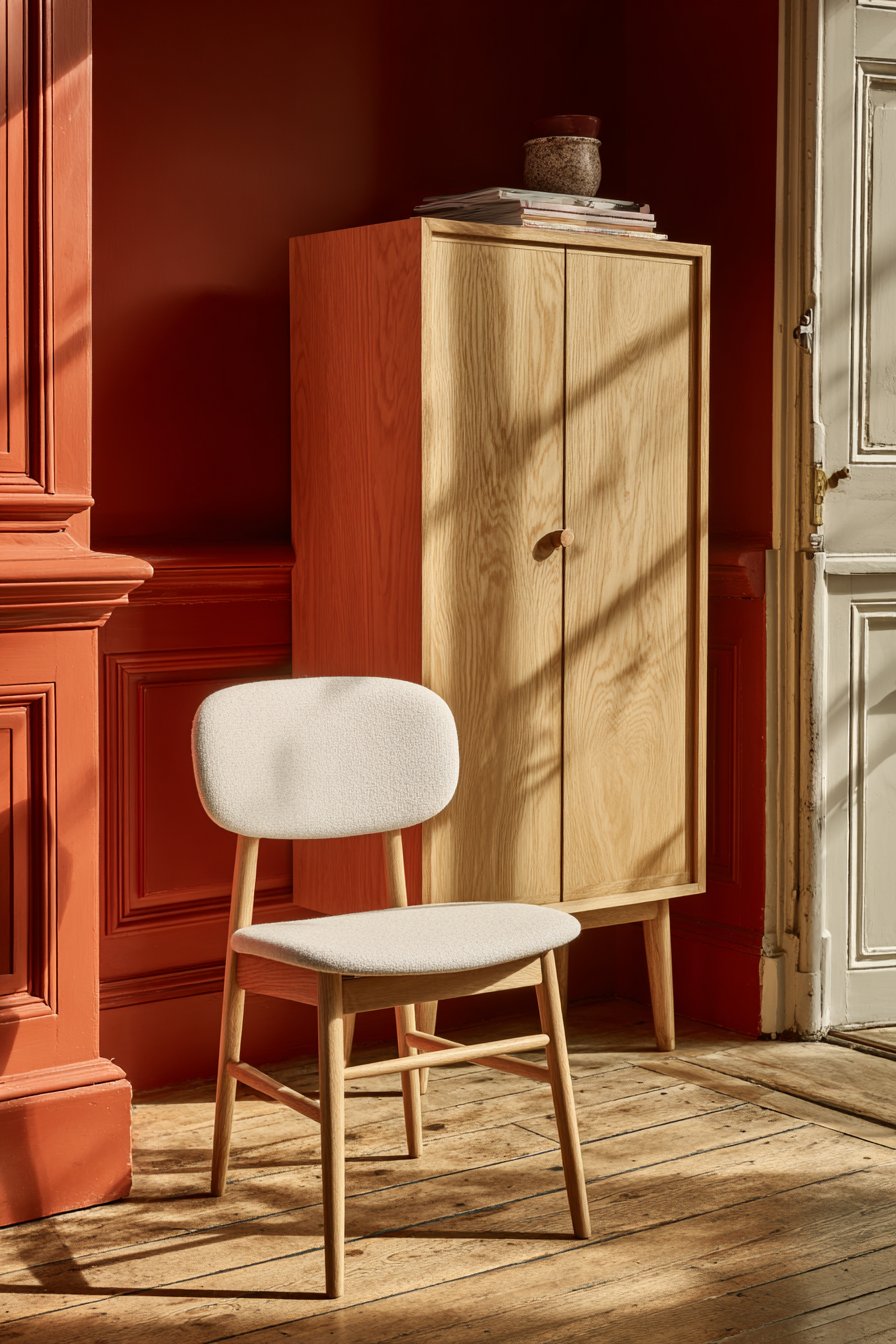
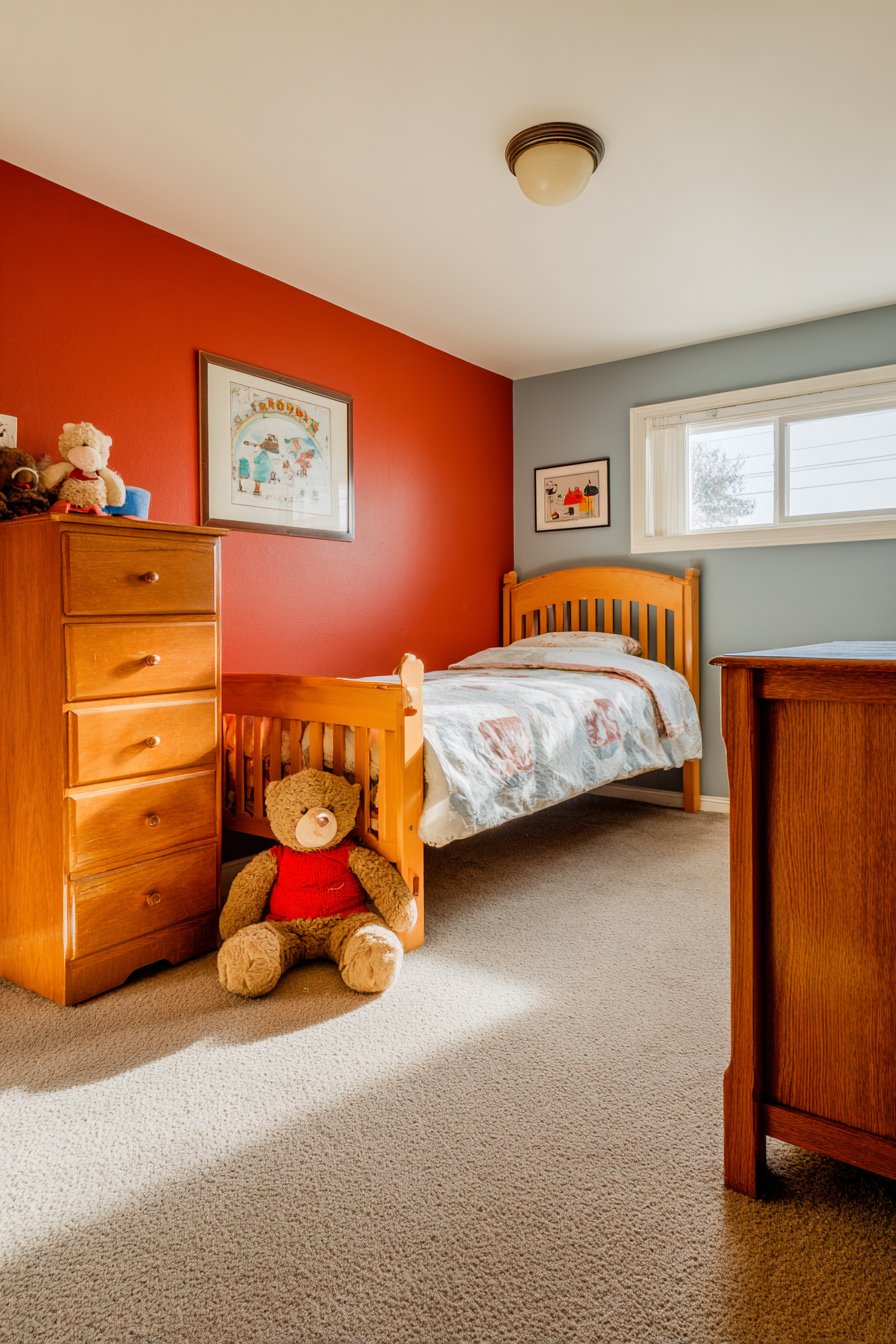
Warm terracotta accent wall paired with soft cream on remaining walls demonstrates how boys’ room paint ideas can embrace earth tones while maintaining fresh, contemporary appeal. The terracotta brings warmth, energy, and optimism to the space through its connection to clay, pottery, and natural earth pigments found throughout human history. This sophisticated rusty orange-red creates an inviting atmosphere without the aggressive intensity of bright primary colors, offering instead a more nuanced, complex hue that reads as mature and intentional. The soft cream on secondary walls provides bright, neutral support that balances the terracotta’s warmth and prevents visual overwhelm.
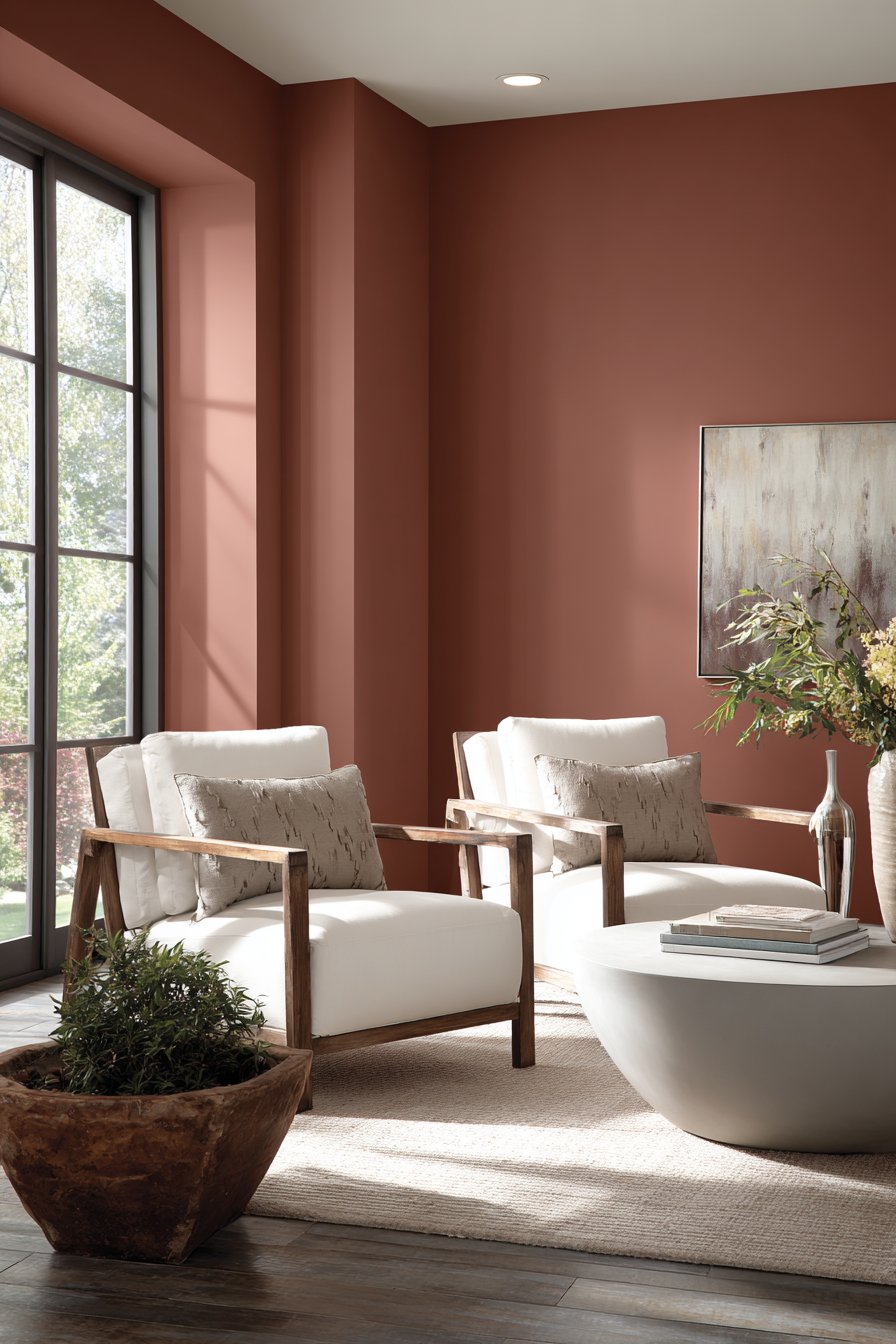
Simple modern furniture in white and light wood maintains fresh aesthetic balance against the warm paint tones, preventing the earthy colors from feeling too heavy or rustic. Natural afternoon sunlight enhances the terracotta’s inherent richness and creates soft shadows that add dimension to the flat painted surface. The warm color palette creates psychological comfort and security, qualities particularly valuable in children’s bedrooms where emotional safety supports healthy development and peaceful sleep. Interior design photography with balanced exposure captures the sophisticated paint color combination while showcasing how material textures in wood furniture complement rather than compete with the wall colors.
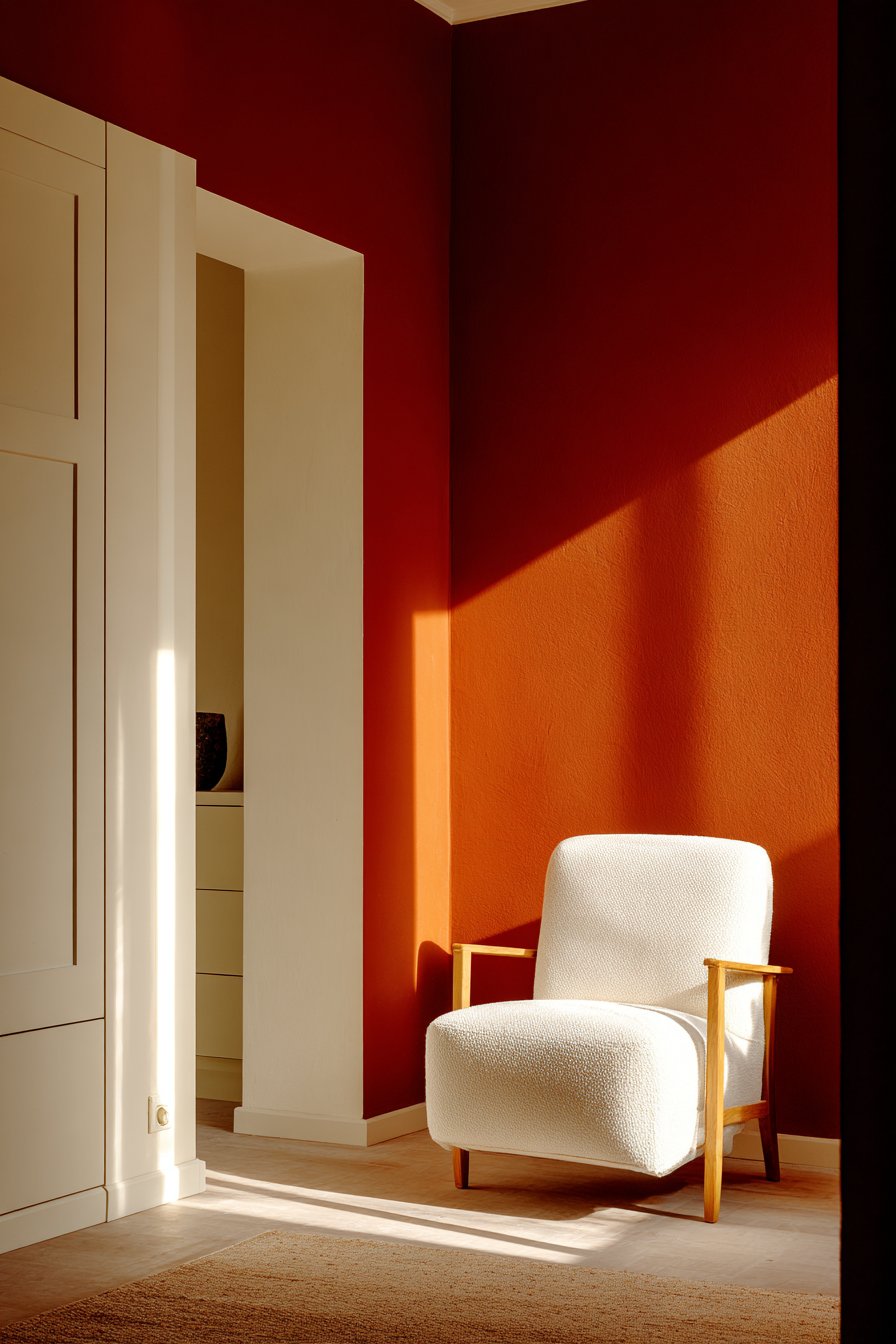
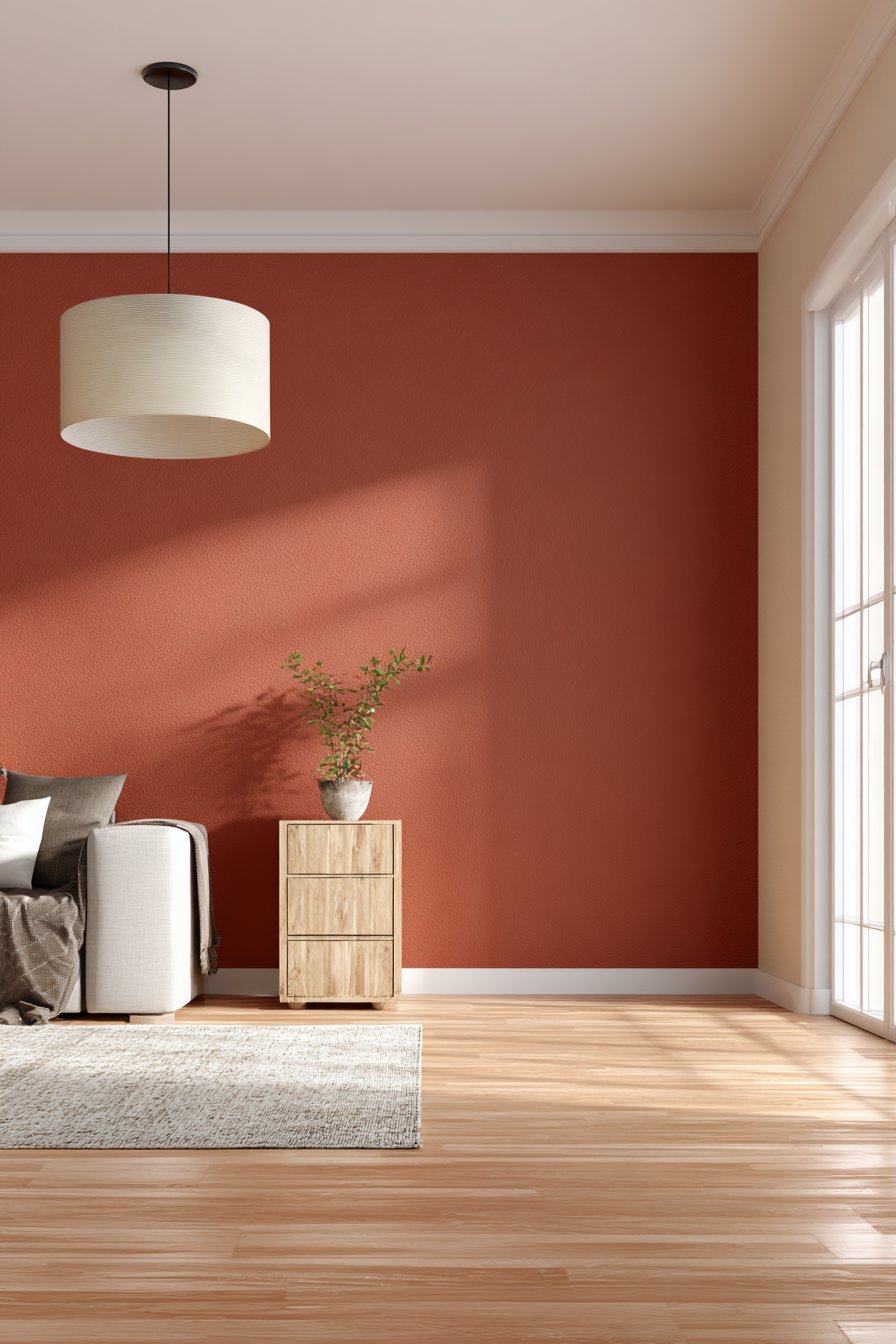
The terracotta and cream combination offers versatility in decorative direction, working equally well with modern, bohemian, southwestern, or eclectic design approaches. This flexibility ensures the paint scheme adapts as children’s interests and personal styles develop, maintaining relevance without requiring frequent updates. The warm tones particularly benefit rooms with northern exposure or limited natural light, as the terracotta and cream introduce warmth that counteracts cool, flat illumination. This strategic color selection demonstrates how understanding light quality and color temperature creates more successful painted spaces.
Key Design Tips:
- Test terracotta samples under various lighting conditions, as this color can vary significantly between natural and artificial light
- Consider slightly muted or dusty terracotta rather than bright orange-red for a more sophisticated and less juvenile appearance
- Use the terracotta on the wall opposite the primary window to prevent strong sunlight from washing out the rich color
- Incorporate terracotta tones in smaller accessories and textiles on cream walls to create cohesive color flow throughout the room
- Choose cream with warm undertones rather than stark white to complement the terracotta’s inherent warmth
14. Unexpected Slate Blue Ceiling
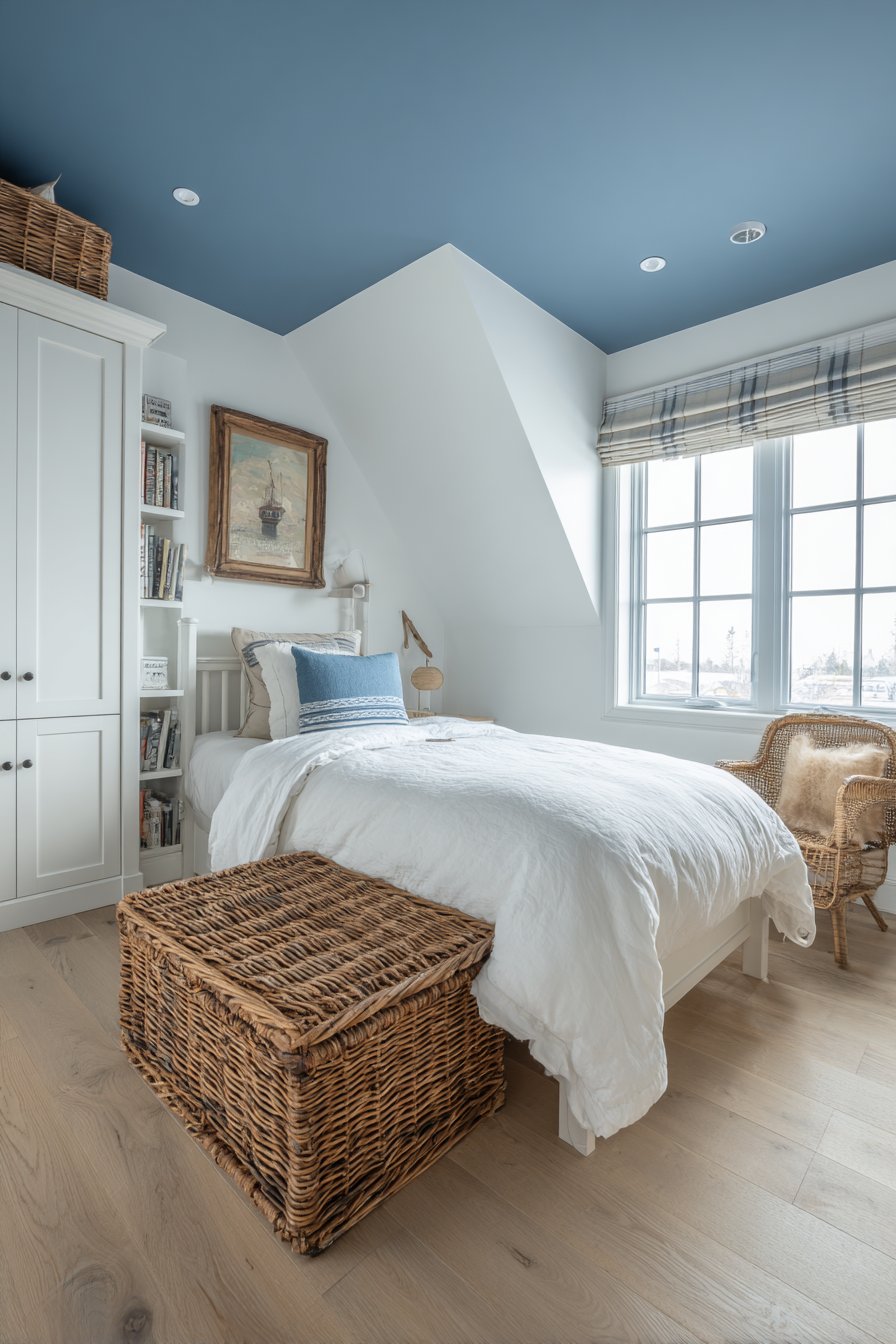
Slate blue ceiling with crisp white walls represents bold boys’ room paint ideas that challenge traditional color placement expectations and create memorable design impact. This unconventional approach, applying color overhead rather than on walls, adds unexpected visual interest that captures attention and creates conversation without overwhelming the space. The slate blue ceiling draws the eye upward, emphasizing ceiling height and creating psychological lift that makes the room feel more spacious and open. Crisp white walls maintain brightness and provide clean backdrop for furniture, artwork, and storage without competing with the colored ceiling for visual attention.
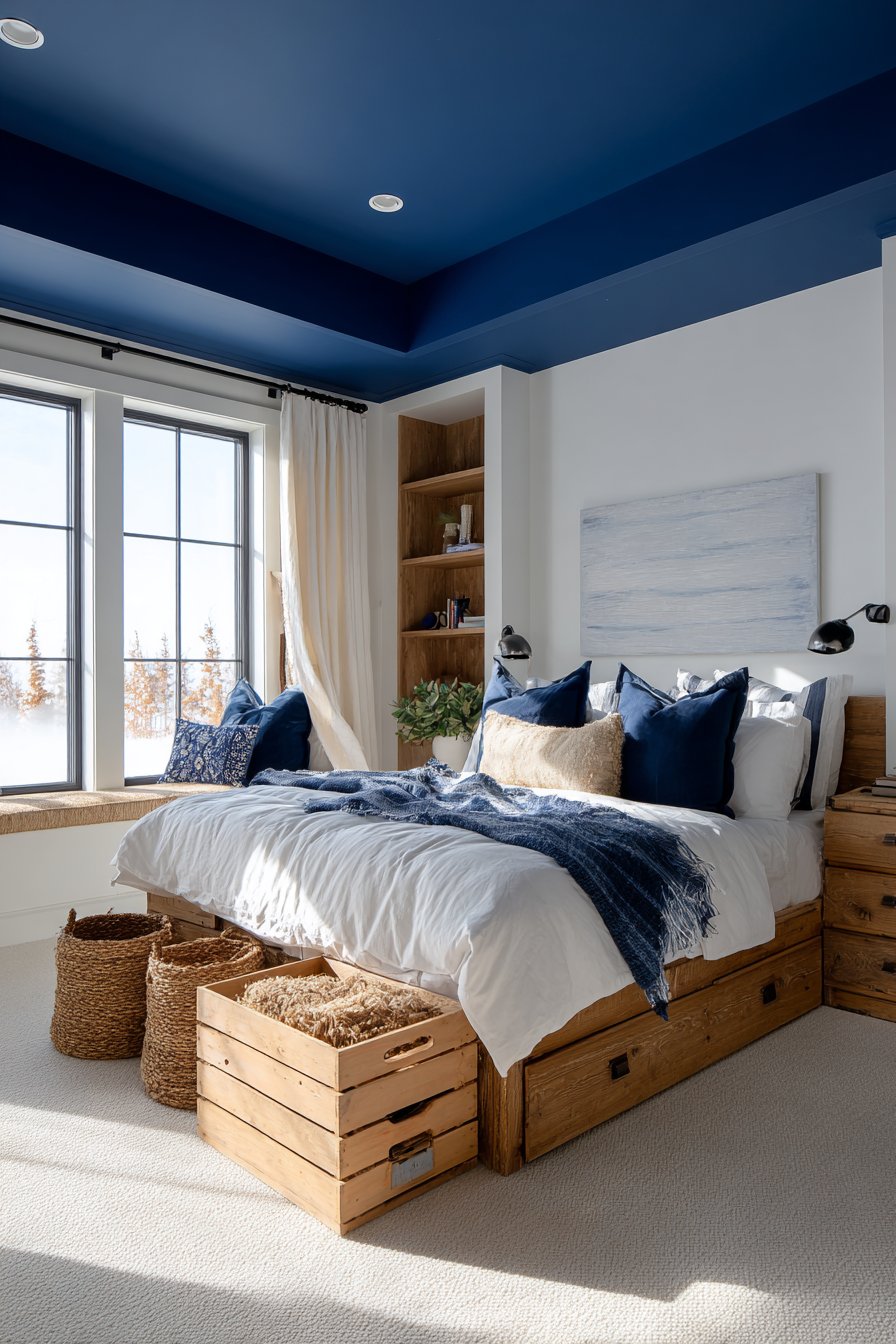
The ceiling color choice significantly influences room atmosphere and perceived dimensions in ways that wall colors cannot replicate. Slate blue overhead creates calming, sky-like quality that many children find soothing for sleep while remaining subtle enough to avoid distraction during homework or active play. Simple white bed and natural wood storage pieces maintain grounded connection to the floor plane while the colored ceiling floats overhead, creating vertical visual separation that adds architectural interest to standard rectangular rooms. Recessed ceiling fixtures and natural window light work together to highlight the ceiling paint choice and demonstrate how colored ceilings interact with light differently than colored walls.
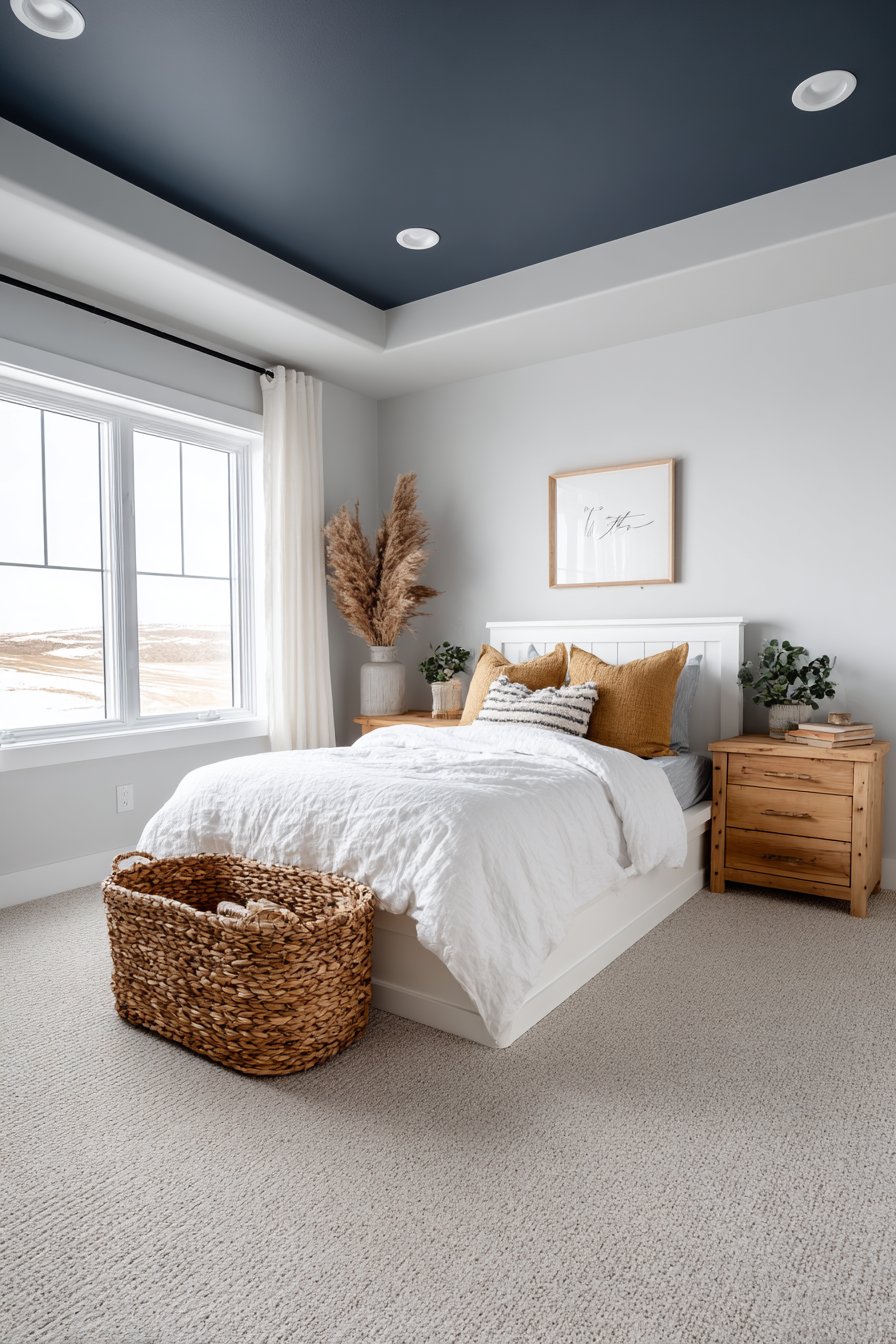
This unconventional paint placement particularly benefits rooms with interesting ceiling architecture like tray ceilings, coffered sections, or exposed beams that deserve emphasis rather than defaulting to standard white paint. Even in rooms with flat, unremarkable ceilings, the color application transforms the overhead plane into a design feature worthy of notice. The unexpected nature of colored ceilings ensures guests and visitors comment on the design choice, providing children with ownership pride in their unique space that differs from typical bedrooms.
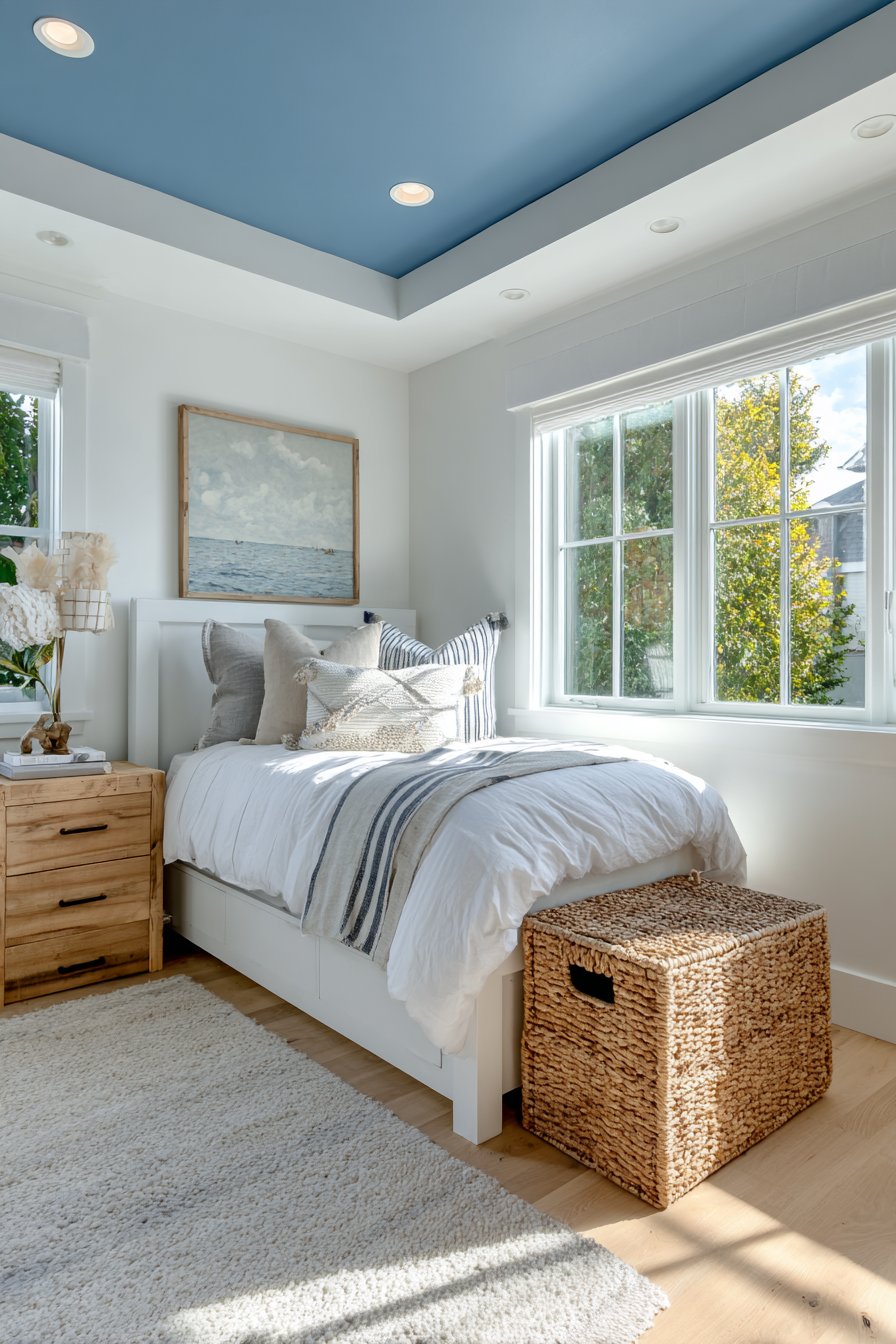
Key Design Tips:
- Use a shade several tones lighter than desired for walls, as ceiling paint appears darker due to different light angles and shadow
- Paint crown molding white to create clean transition between colored ceiling and white walls rather than allowing colors to meet directly
- Consider the room’s primary viewing angles when selecting ceiling color intensity, as the color will be visible from bed and desk
- Use flat or matte finish on ceiling paint to minimize glare and prevent visible brush strokes or roller marks
- Ensure adequate ventilation when painting overhead, as fumes concentrate near the ceiling and can be stronger than wall painting
15. Earthy Olive Green Horizontal Band
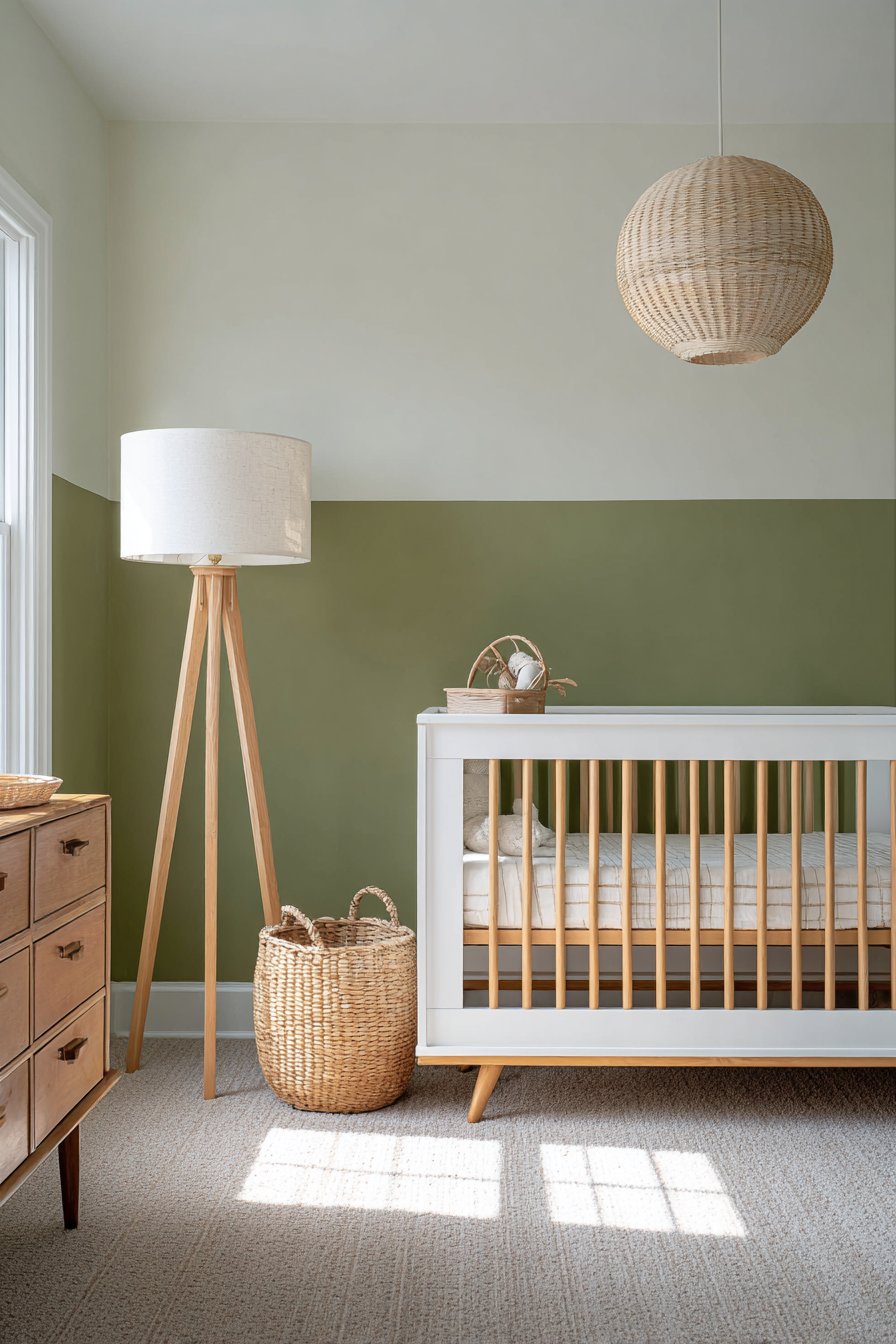
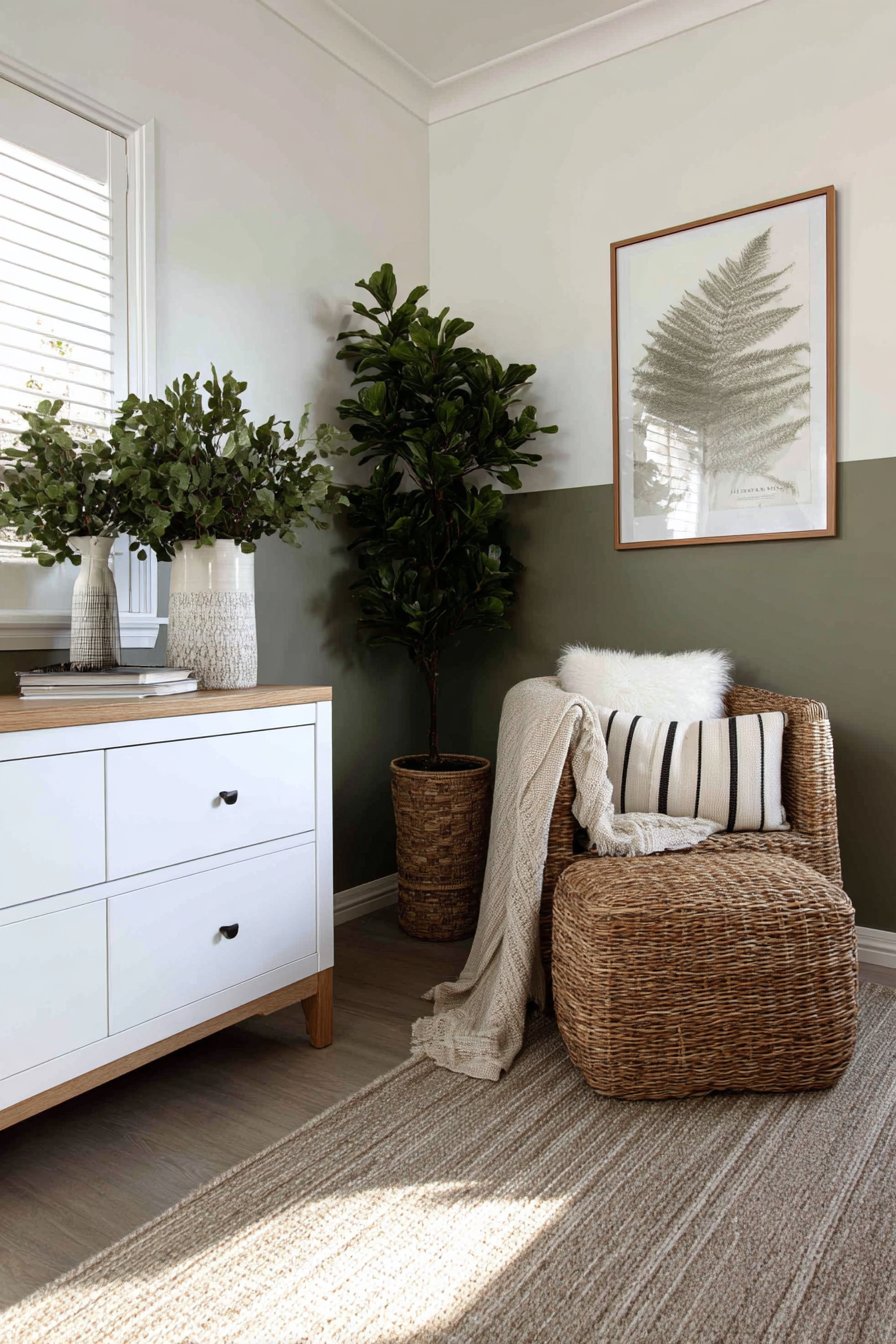
The wide horizontal band of olive green paint running around the room at mid-wall height against white walls exemplifies creative boys’ room paint ideas that use color sparingly for maximum impact. This continuous stripe, approximately 18 inches tall, creates definition and visual interest without overwhelming the space with color, demonstrating restraint and sophistication often missing in children’s room design. The olive green provides earthy, organic quality that connects to nature and outdoor environments while maintaining neutral enough character to work with diverse decorative elements and furniture styles.
The horizontal orientation of the painted band creates visual width that makes rooms appear more spacious and expansive, particularly valuable in narrow bedrooms or spaces with challenging proportions. Natural light emphasizes the clean paint edges and brings out the green’s underlying warmth, preventing it from appearing too cool or institutional. Simple contemporary furniture in white and natural materials complements the organic paint color without matching or coordinating too precisely, maintaining relaxed rather than overly designed aesthetics. The white walls above and below the green band maintain brightness and prevent the room from feeling enclosed or dark.
This paint technique offers practical advantages beyond aesthetics, as the colored band naturally hides wear and contact marks in the most vulnerable wall zone while keeping pristine white above and below. The 18-inch height positions the band at ideal visibility from both standing and seated positions, ensuring the design element receives appropriate attention without requiring constant upward or downward gaze. Interior photography demonstrates how the continuous paint band unifies the room by creating visual connection across all wall surfaces, suggesting cohesive design planning rather than random color placement.
Key Design Tips:
- Use a laser level to mark perfectly horizontal guidelines around the room’s entire perimeter before taping to ensure consistent band height
- Measure from the floor rather than ceiling to maintain consistent band position despite potential ceiling height variations
- Paint the white base color first, then carefully tape and paint the olive band for easier touch-ups and corrections
- Apply two coats of the olive green to ensure complete coverage and prevent the white base from showing through
- Consider wrapping the band through closets and alcoves for unified appearance or stopping at door frames for defined room boundaries
16. Serene Soft Mint Green Monochrome
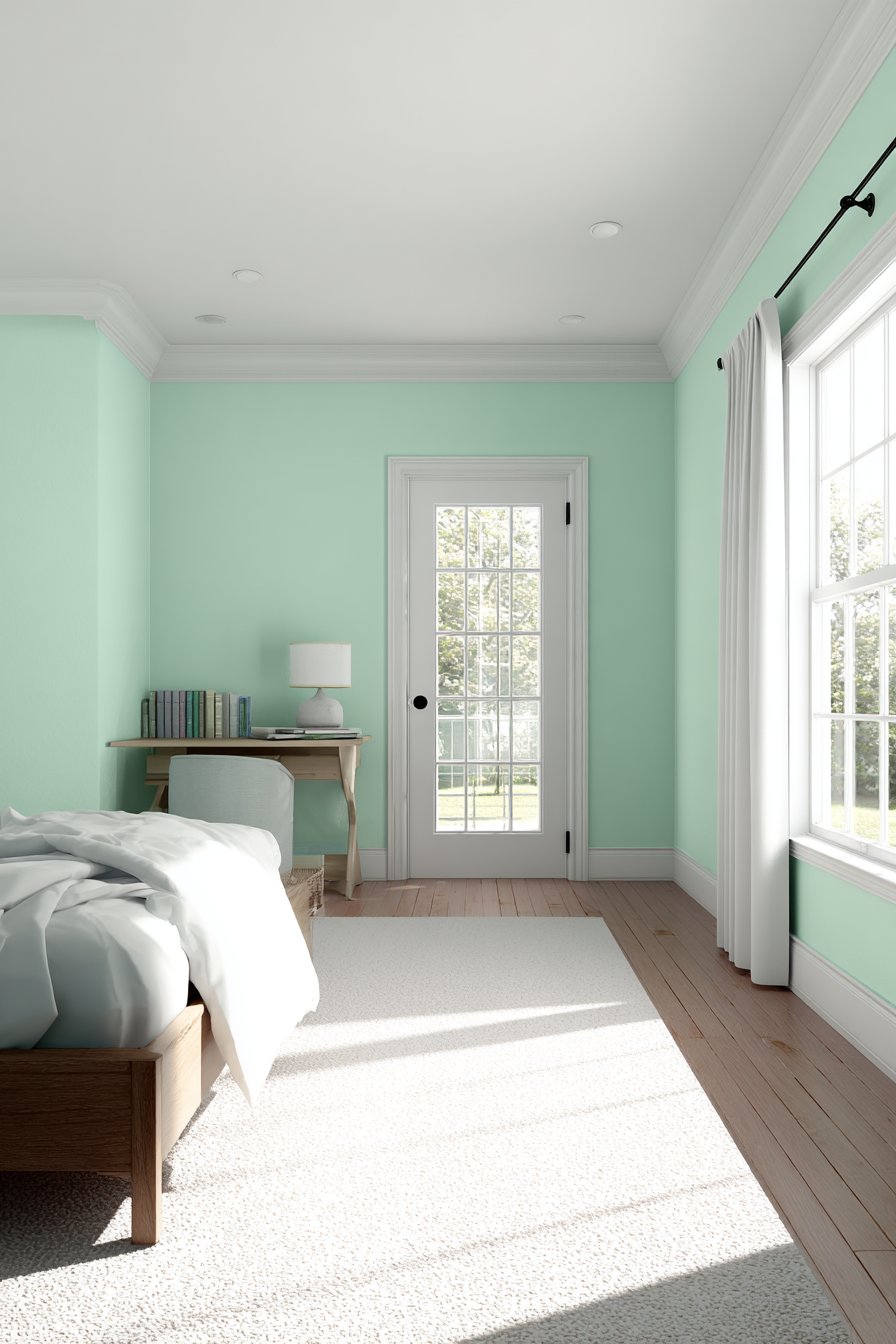
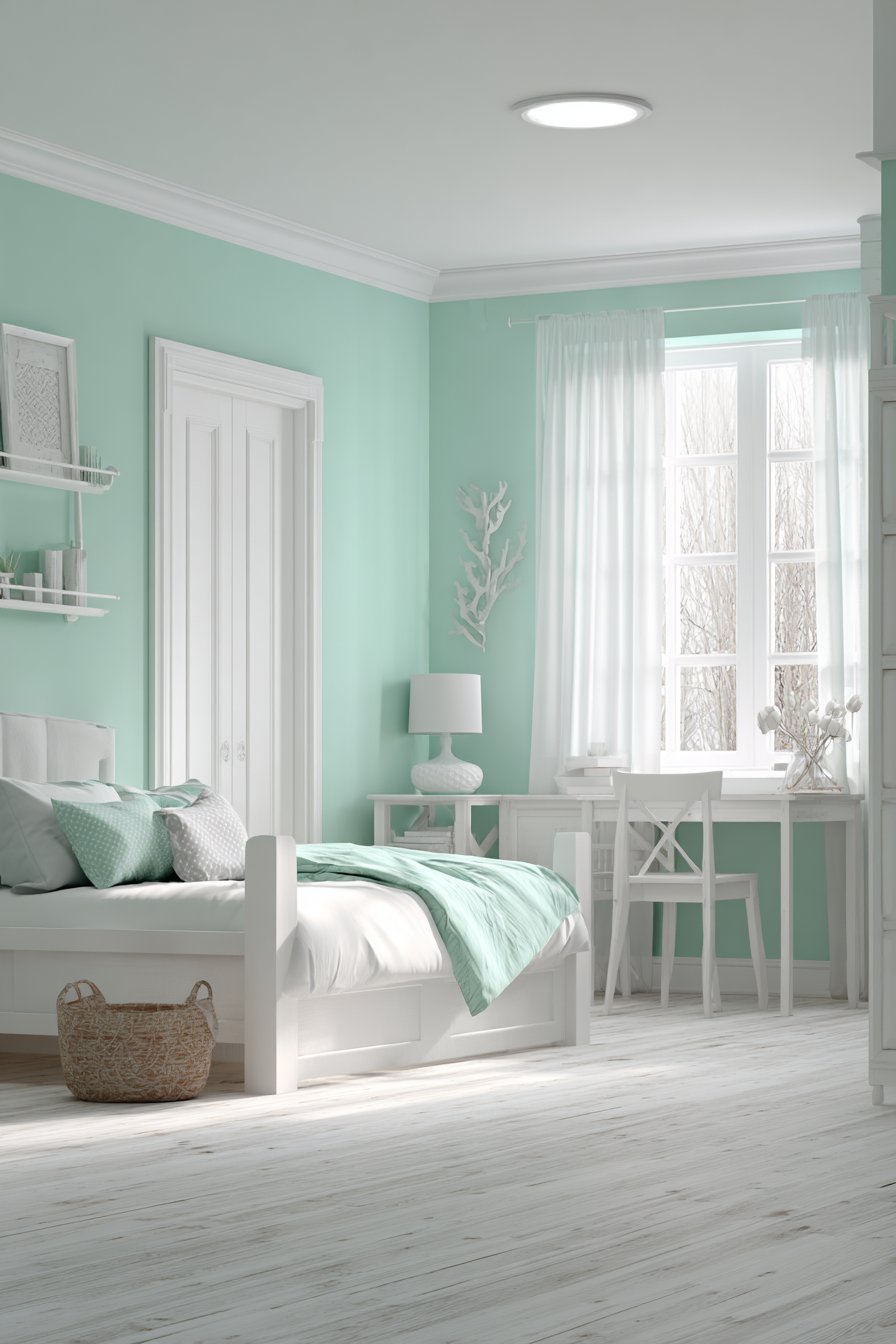
Soft mint green on all walls creates fresh, calming environment that represents gentle boys’ room paint ideas appropriate for children who prefer subtle color over bold statements. This single-color approach, while simple in concept, requires careful shade selection to achieve the perfect balance between too pale (appearing almost white) and too saturated (becoming visually overwhelming). The mint green provides subtle personality and definite color identity while maintaining neutral enough character to serve as backdrop for changing décor and interests throughout childhood and teenage years.
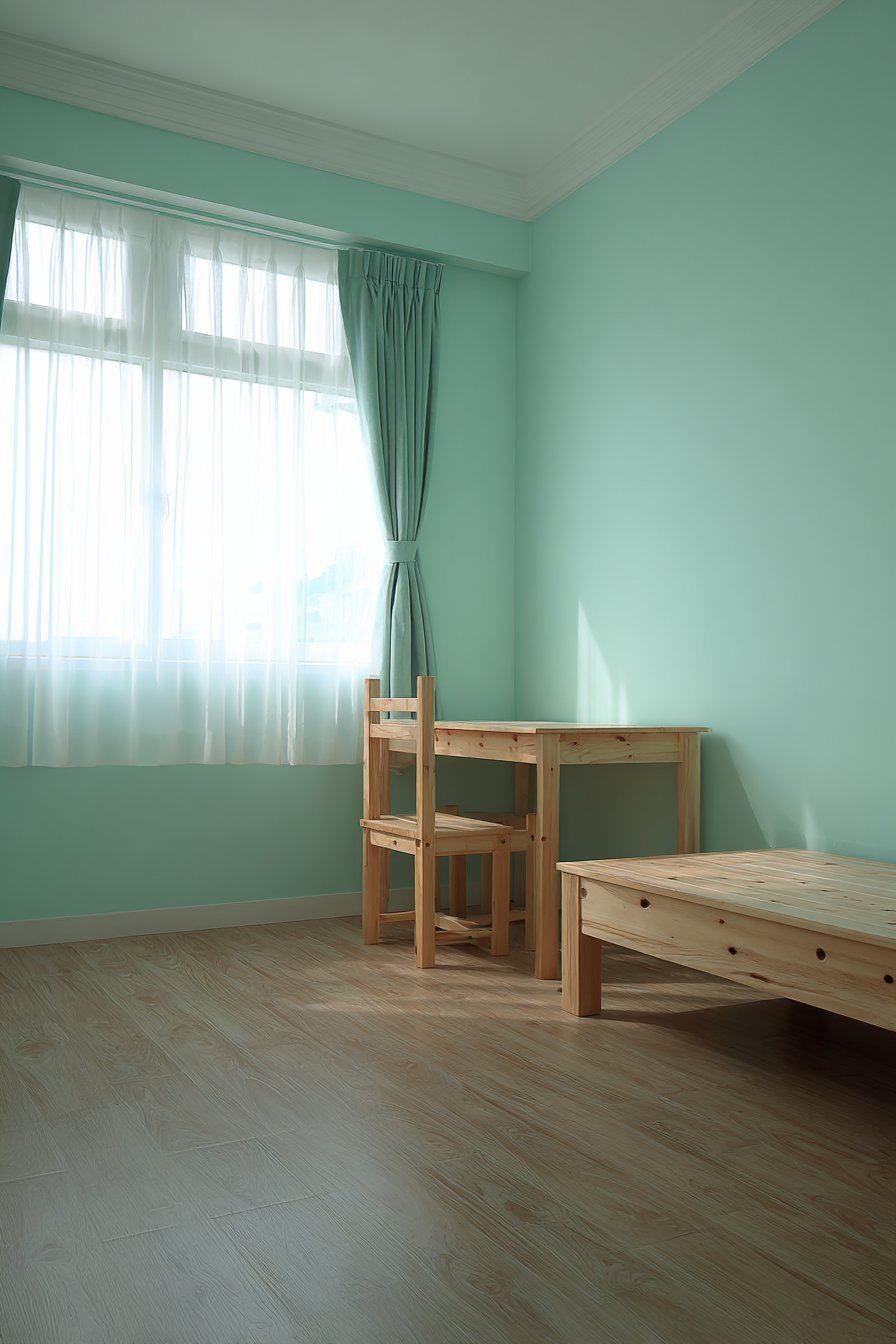
White trim, ceiling, and furniture maintain brightness and prevent the green walls from making the room feel too enclosed or cave-like, an important consideration when painting all walls a single color. The strategic use of white creates definition between surfaces and adds visual breaks that prevent color monotony. Simple wooden bed and desk setup demonstrates practical furniture choices that provide necessary functionality without competing for attention or adding visual complexity to the monochromatic scheme. Natural daylight filtering through sheer curtains highlights the paint’s soft hue and smooth matte finish, ensuring the green appears fresh and inviting rather than institutional.
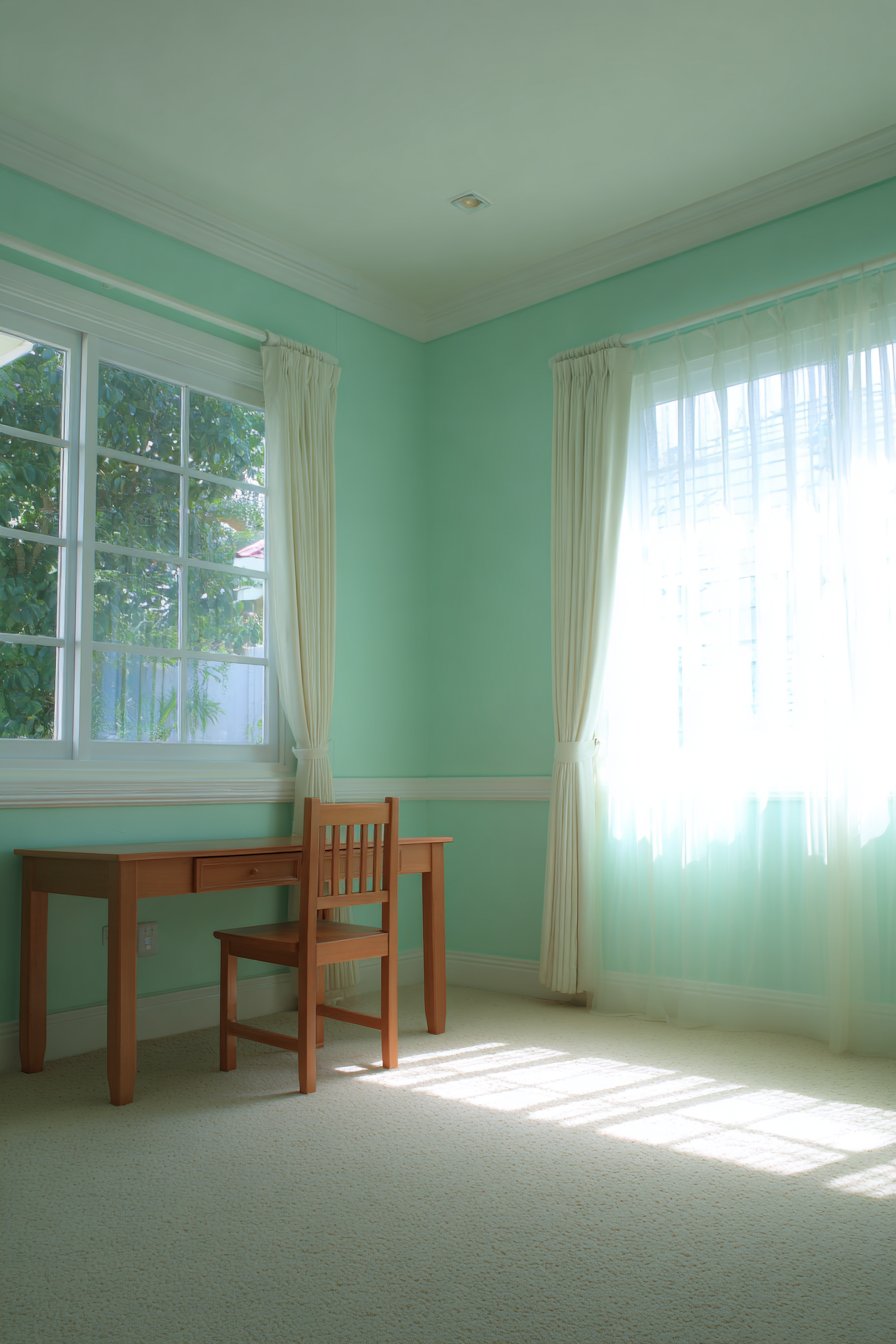
The psychological benefits of soft green in sleeping spaces include stress reduction, emotional balance, and connection to natural environments, making mint green particularly appropriate for children prone to anxiety or overstimulation. The calming quality supports both peaceful sleep and focused study, demonstrating how strategic color selection addresses functional needs alongside aesthetic preferences. Wide-angle interior design photography captures the serene monochromatic approach and demonstrates how a single well-chosen wall color creates cohesive, intentional design that feels complete despite minimal decoration.
Key Design Tips:
- Test mint green samples in multiple locations around the room, as color appears different on walls receiving direct versus indirect light
- Choose mint with slightly gray undertones rather than pure mint to prevent juvenile or candy-like appearance
- Use matte or flat finish to create soft, non-reflective surface that enhances the calming quality of the color
- Incorporate varied textures in bedding, rugs, and window treatments to prevent monochromatic scheme from appearing flat or boring
- Add small doses of complementary colors like coral or navy in accessories to create subtle visual interest without disrupting the calm palette
17. Sophisticated Tonal Geometric Stenciling
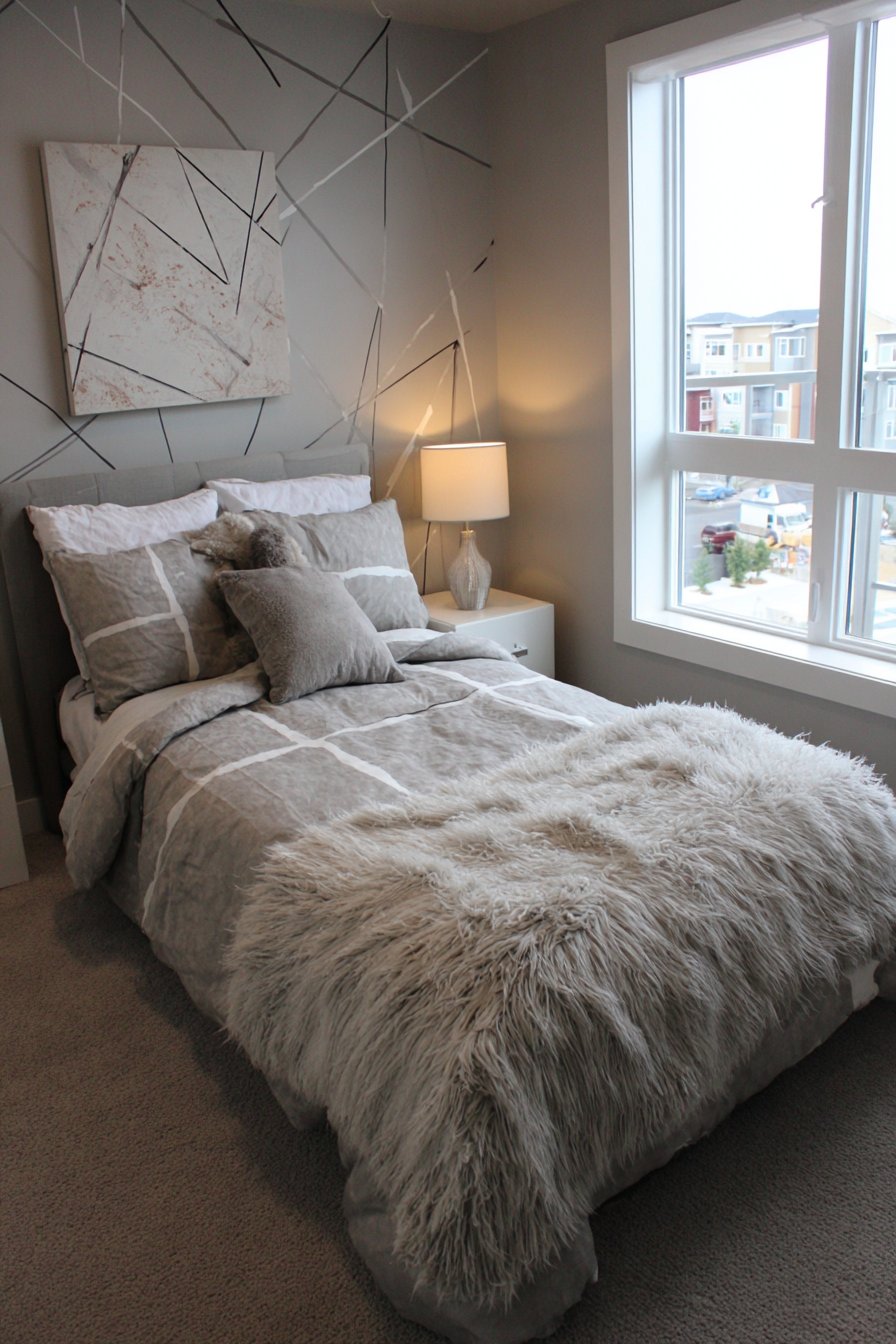
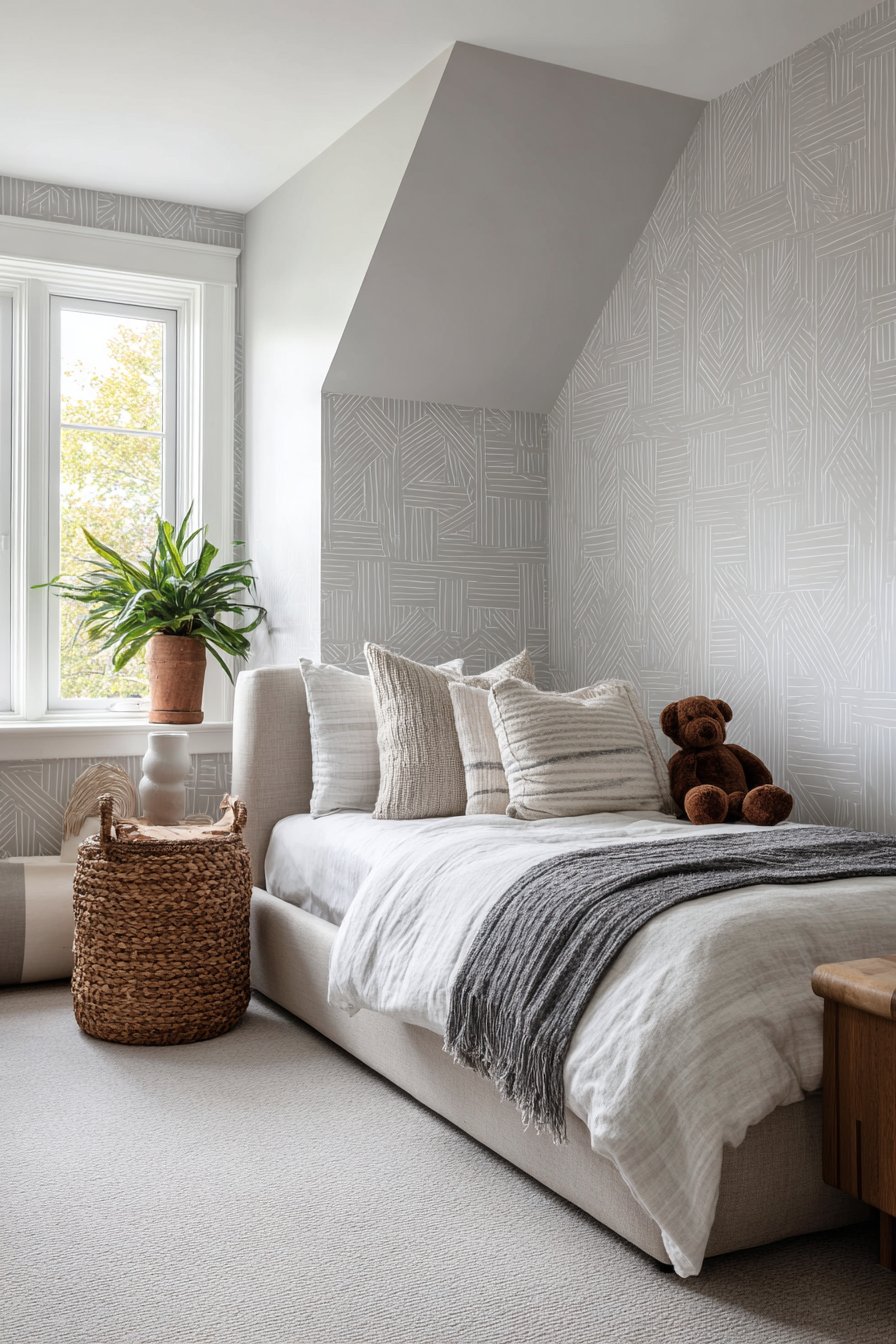
Subtle stenciled geometric patterns in slightly darker gray over light gray base coat on one accent wall demonstrates refined boys’ room paint ideas that create texture and interest through tonal variation rather than contrasting colors. This sophisticated technique appeals to older children and teenagers seeking grown-up aesthetics that move beyond childish patterns and primary colors. The geometric stencil pattern, whether triangles, hexagons, or more complex shapes, adds visual rhythm and mathematical precision that creates subtle but definite decorative impact without overwhelming the space with bold graphics.
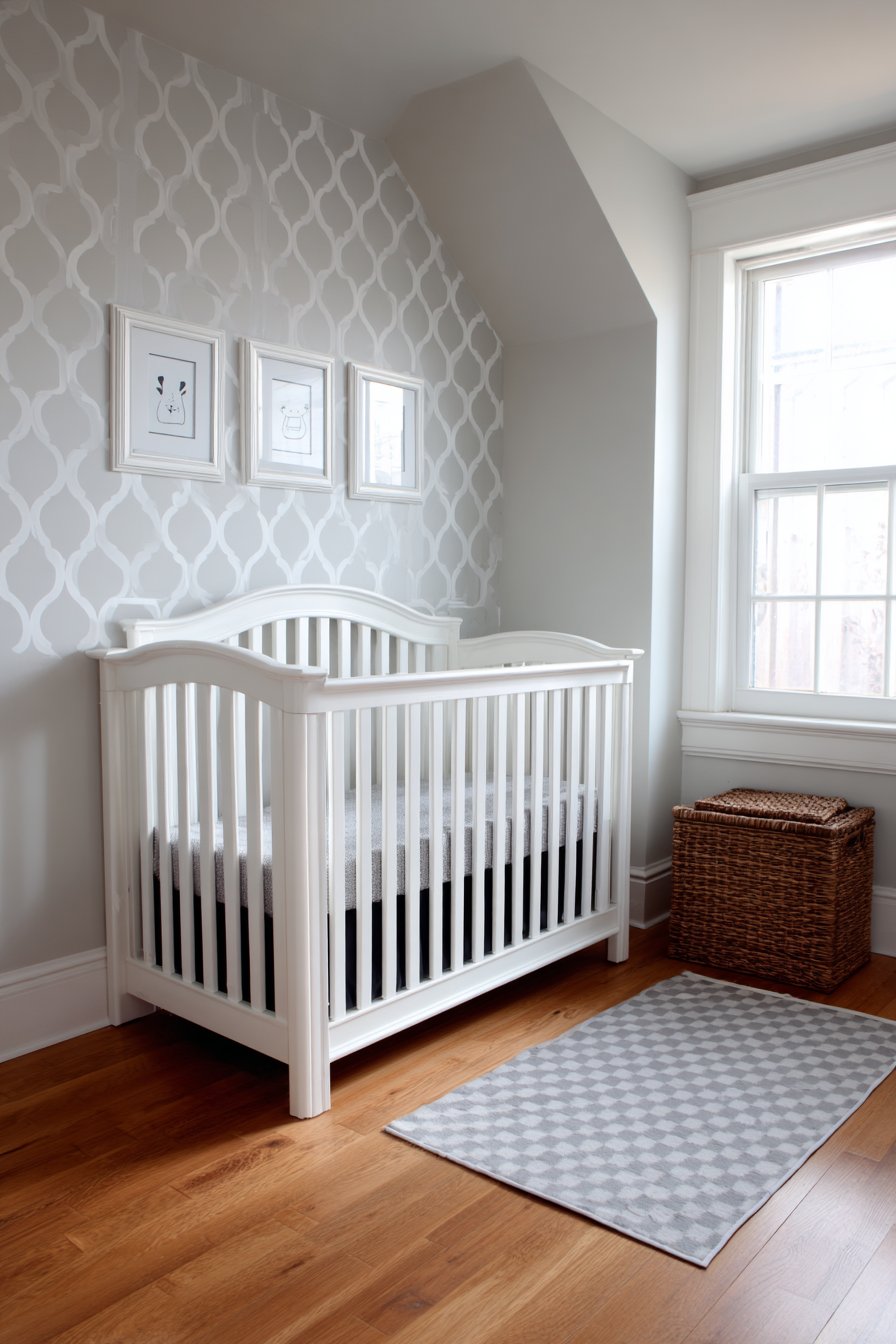
The tonal approach, using grays that differ by only a few shades, creates pattern visible enough to add interest while remaining subtle enough to serve as neutral backdrop for furniture, artwork, and changing décor. Soft overhead and natural lighting reveals the delicate pattern depth and professional paint application, demonstrating how light and shadow make subtle patterns more visible and dimensional. Simple modern furniture maintains focus on the painted wall treatment without competing for attention or adding visual clutter that would diminish the stencil pattern’s impact.
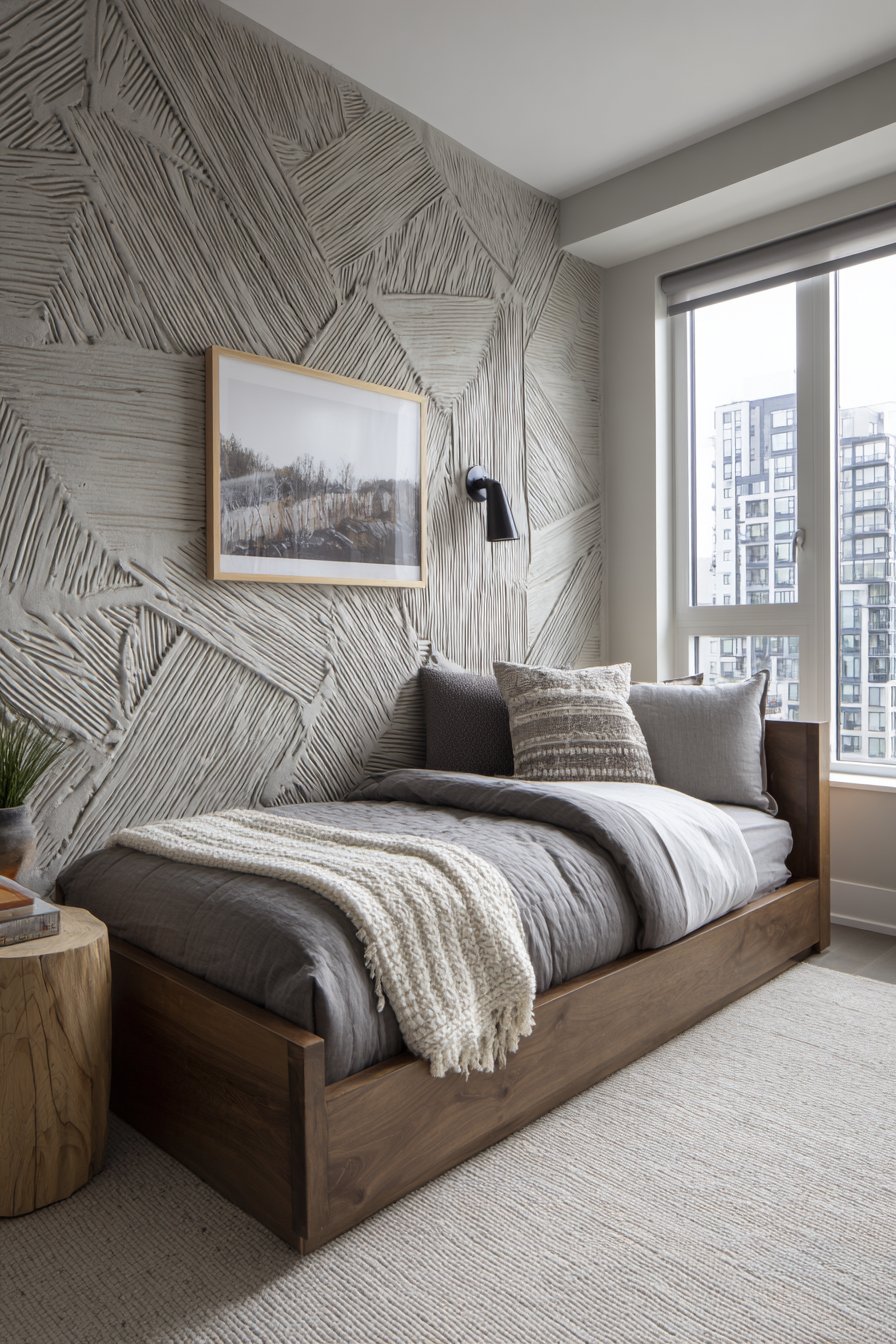
The technical execution of crisp stencil work requires patience and proper materials, including repositionable stencils, minimal paint on brushes or rollers, and careful attention to preventing paint bleed under stencil edges. Interior photography captures the sophisticated monochromatic paint technique and overall room balance, showing how pattern adds interest without sacrificing the calm maturity that tonal color schemes provide. This approach particularly appeals to families seeking design longevity, as subtle geometric patterns maintain relevance across age ranges and style preferences.
Key Design Tips:
- Use repositionable spray adhesive on stencil backs to prevent shifting during paint application while allowing easy removal without wall damage
- Load brushes or small rollers minimally with paint to prevent bleeding under stencil edges that ruins crisp pattern definition
- Work in small sections and clean the stencil periodically to prevent paint buildup that creates smudging or unclear patterns
- Consider random pattern placement rather than rigid grid alignment for more organic, less formal appearance
- Test the tonal difference on sample boards to ensure adequate visibility without excessive contrast that appears too bold
18. Bold Burnt Orange and Gray Dynamism
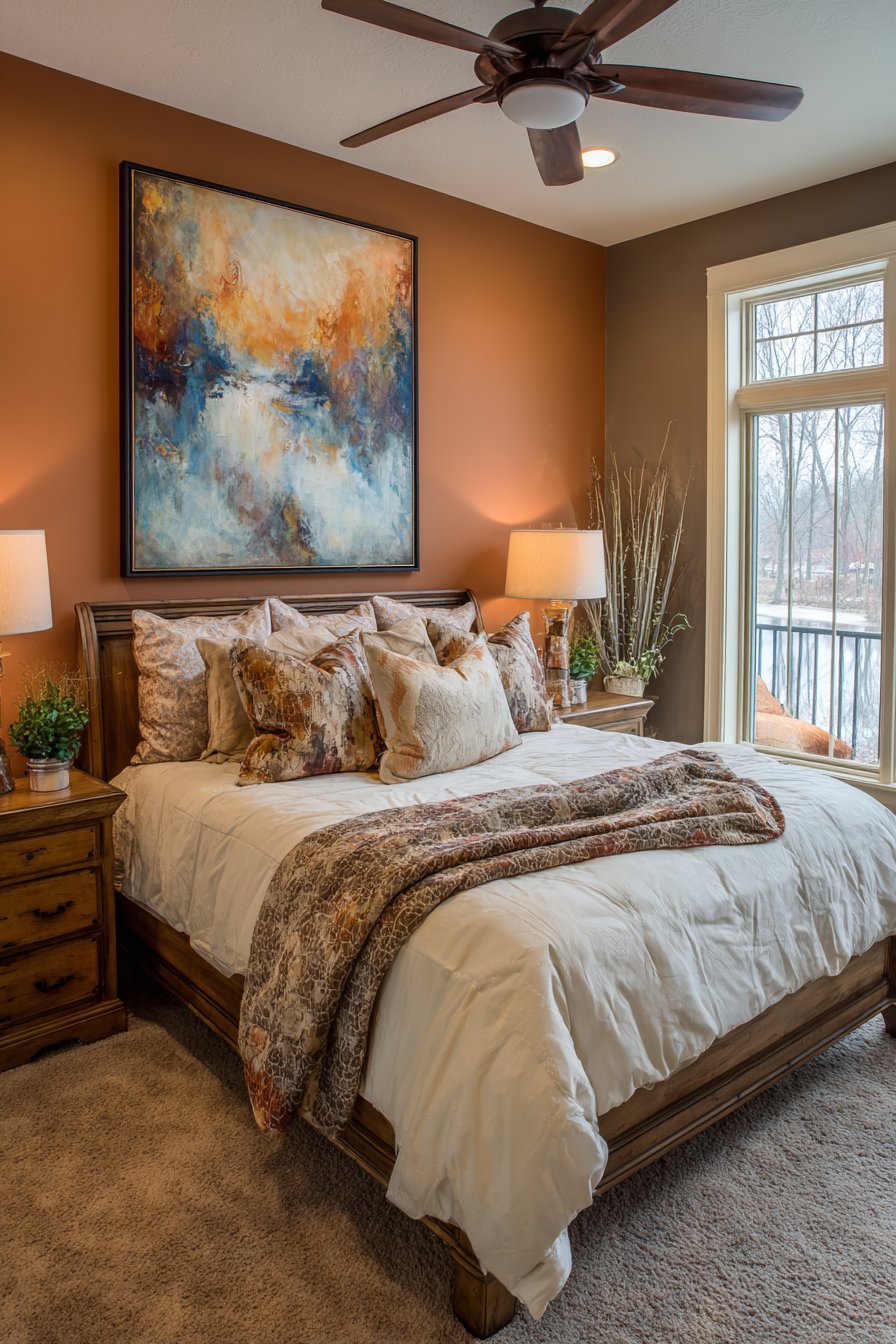
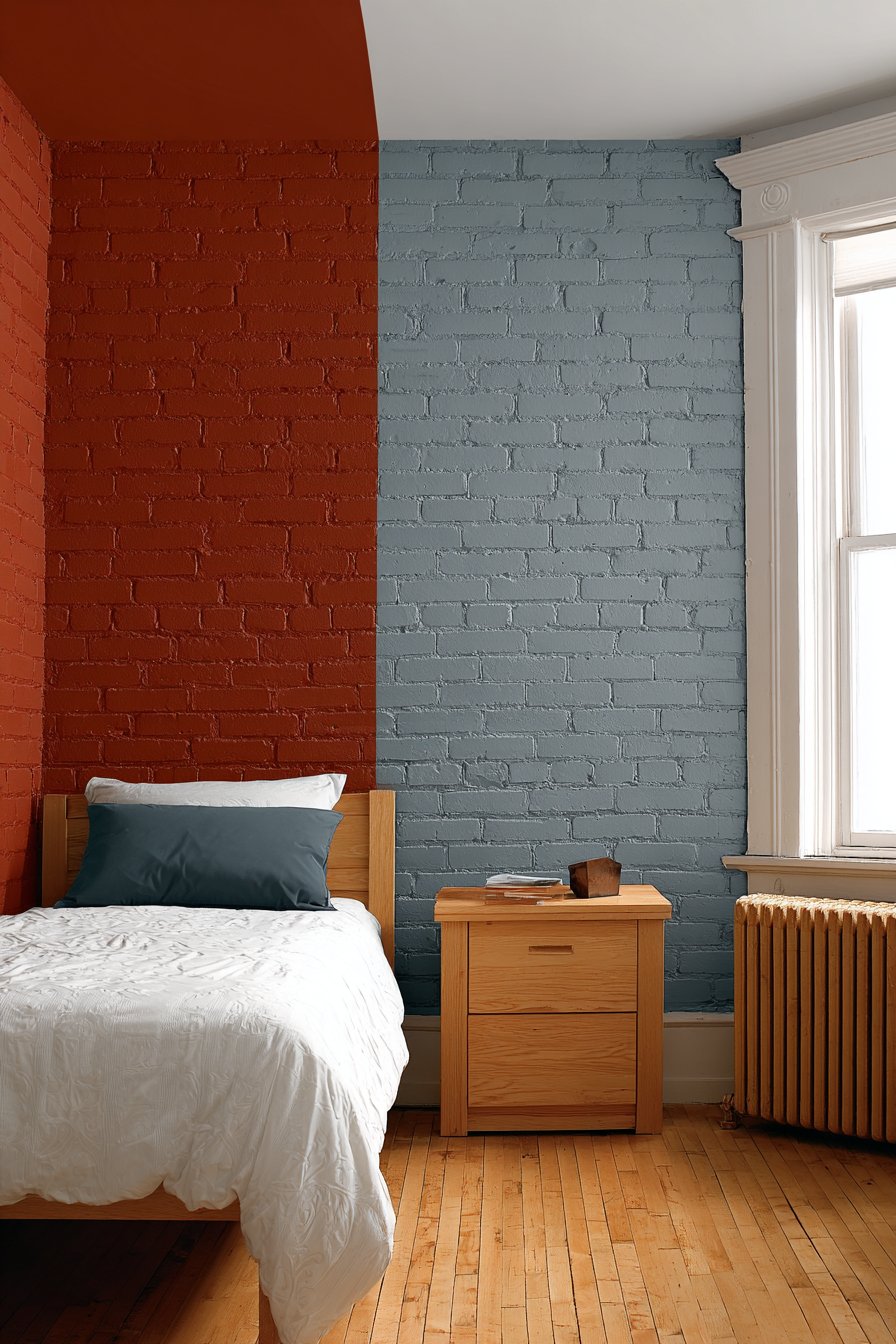
Bold burnt orange accent wall paired with neutral warm gray on remaining walls creates dynamic yet grounded color scheme that exemplifies energetic boys’ room paint ideas suitable for active, confident children. The burnt orange provides warmth, energy, and optimism without the aggressive intensity of pure orange or the immaturity of bright traffic-cone orange. This sophisticated rusty orange reads as earthy and organic, connecting to autumn leaves, desert landscapes, and sunset skies while maintaining definite personality and memorable impact. The warm gray on secondary walls provides neutral support that balances the orange intensity while maintaining warmth through gray undertones.
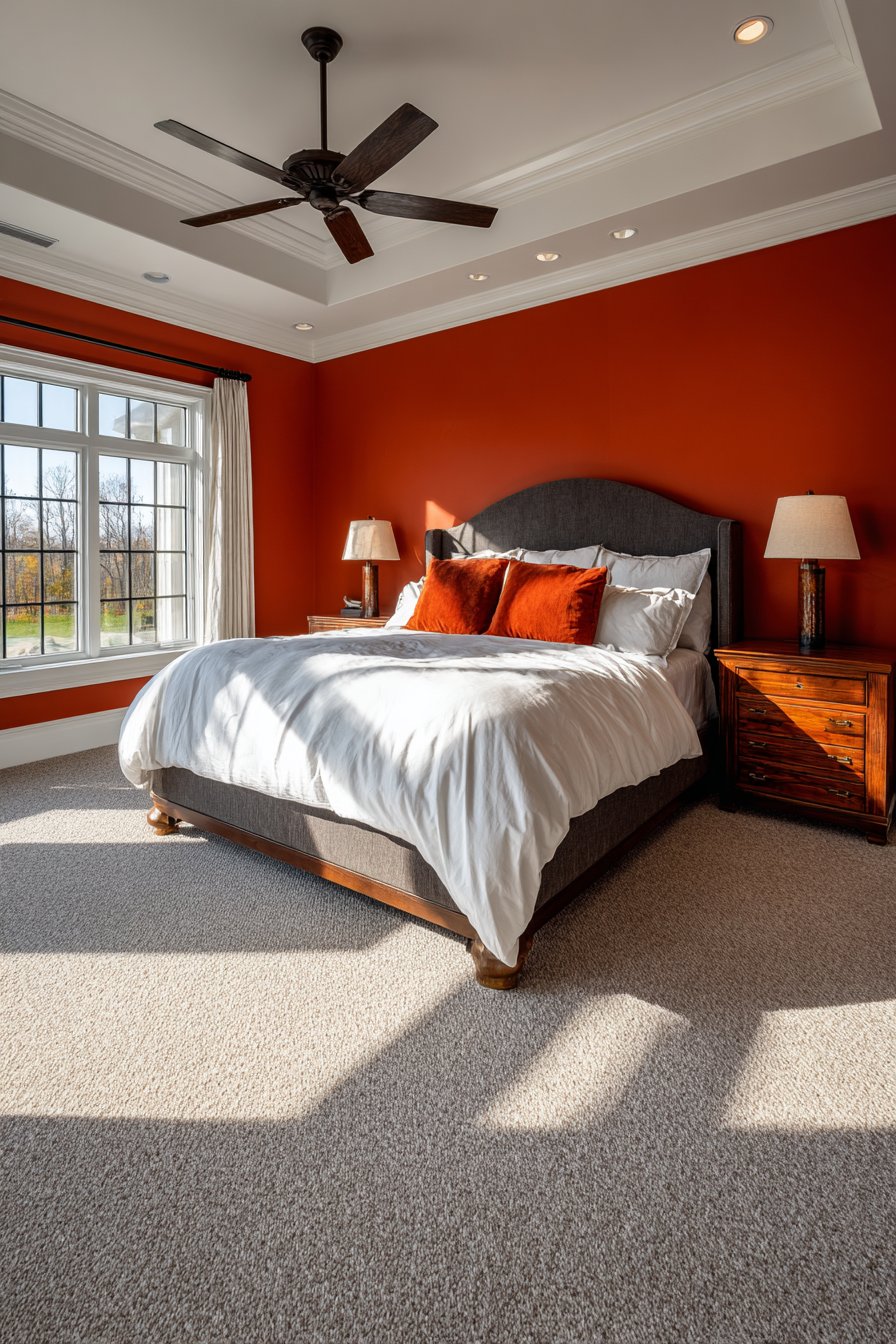
White bedding and natural wood furniture provide fresh contrast to the rich paint colors, preventing the space from feeling too dark or heavy while adding bright notes that balance the warm earth tones. Window light and bedside lamps highlight the saturated orange and its complementary gray tones, revealing how the colors interact and support each other throughout changing daily light conditions. The professional interior photography with balanced exposure demonstrates the confident paint color pairing and room layout, showing how bold accent walls create focal points that define sleeping zones and add architectural interest to basic rectangular spaces.
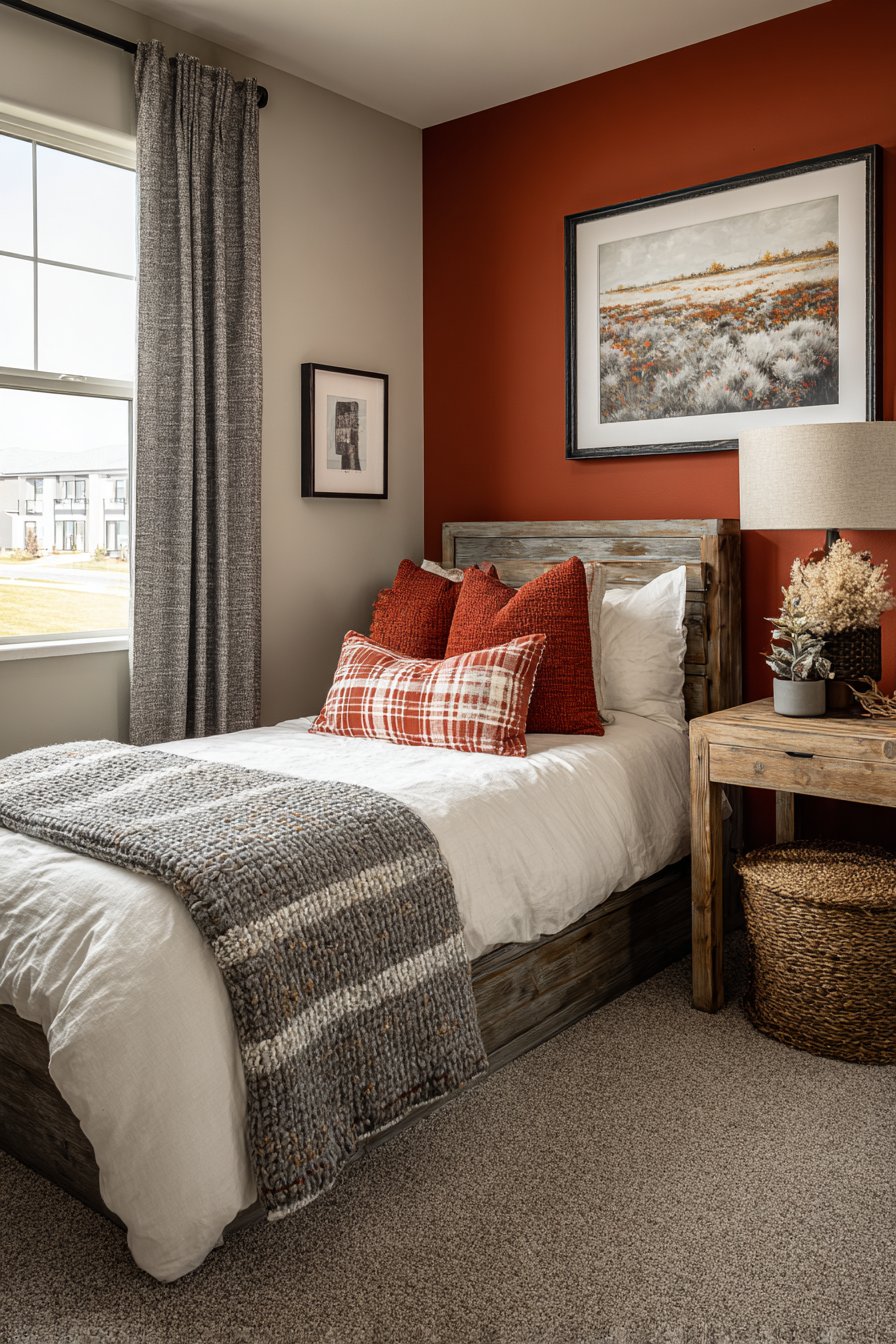
The combination of warm orange and gray demonstrates sophisticated understanding of color temperature and harmony, pairing warm and cool tones that create visual tension and interest while maintaining overall balance. This pairing works across decorative directions from modern to industrial to eclectic, providing flexibility as children’s tastes evolve. The burnt orange particularly benefits rooms with ample natural light that prevents the warm color from appearing too dark, while also working surprisingly well in rooms with cool northern light where the orange introduces welcome warmth.
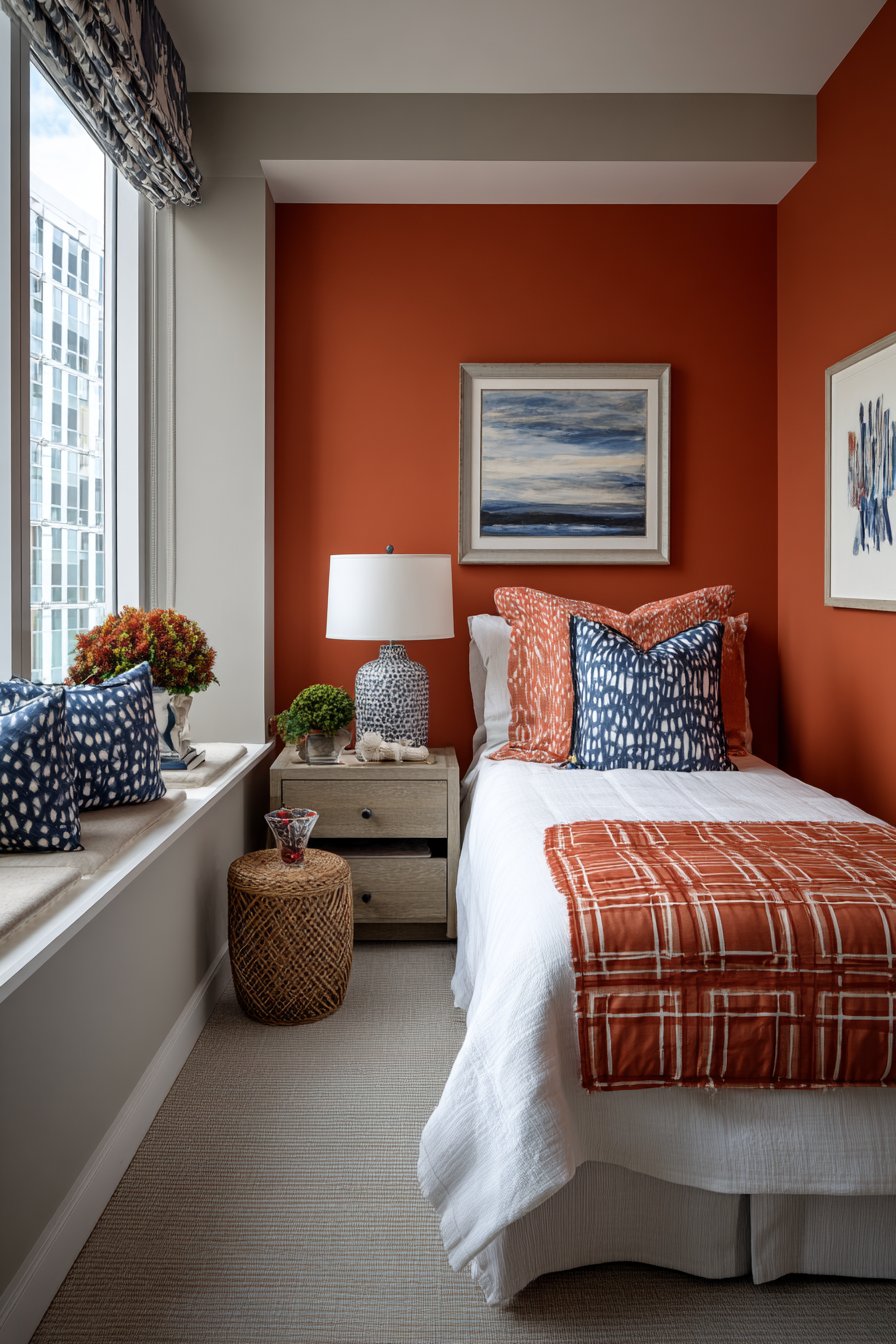
Key Design Tips:
- Choose burnt orange with brown or terra cotta undertones rather than bright orange with yellow undertones for more sophisticated appearance
- Test orange samples at different times of day, as this color shifts dramatically between morning and afternoon light
- Use the orange on the wall behind the bed to create strong focal point that doesn’t overwhelm when entering the room
- Select warm gray with brown or taupe undertones rather than cool gray with blue undertones to complement the orange
- Add orange accents in small doses on gray walls through artwork, pillows, or accessories to create visual connection between wall colors
19. Verdant Green Gradient Striping
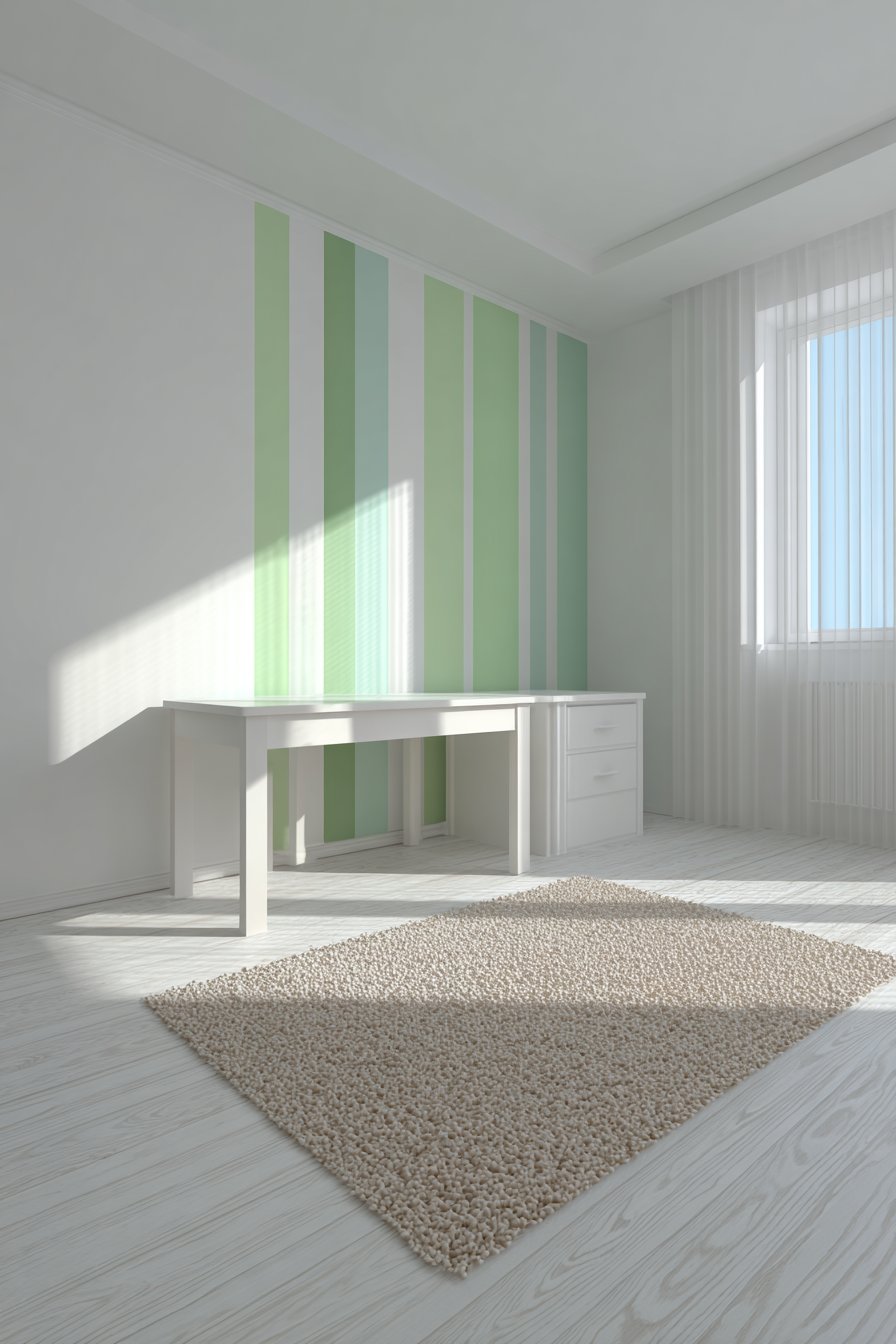
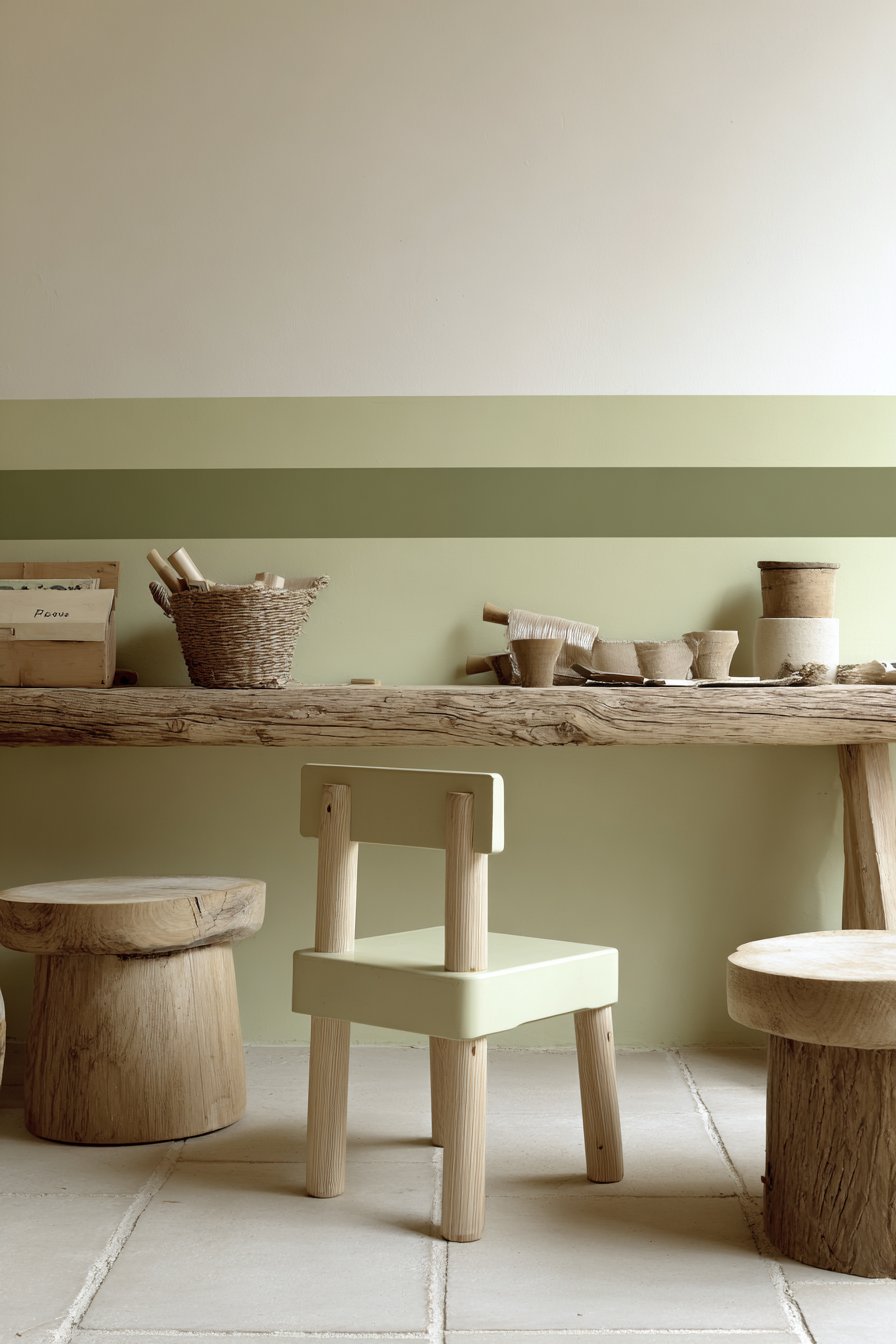
Painted wide stripes in varying shades of green from sage to forest creates tonal graduated effect that represents artistic boys’ room paint ideas emphasizing single-color variations over multi-hue palettes. This sophisticated monochromatic approach demonstrates how working within a single color family creates harmony and cohesion while still providing visual interest and complexity through tonal variation. The striped pattern, with each stripe in a different green shade, creates gentle rhythm and organic quality reminiscent of layered forest depths or ocean waves, connecting the design to natural environments.
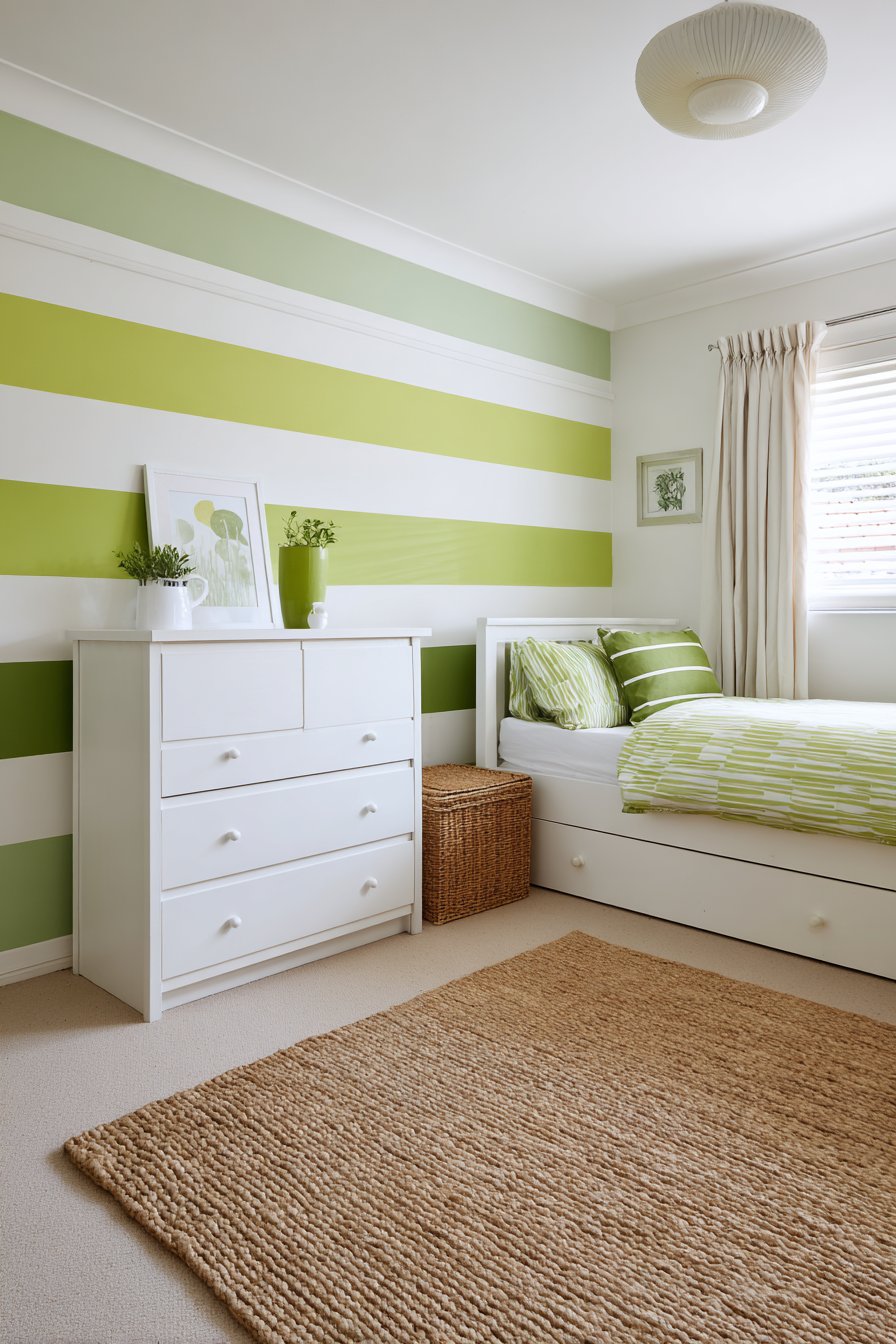
The feature wall execution while maintaining white on other walls prevents the graduated green from becoming overwhelming or visually exhausting, ensuring the artistic paint technique receives appropriate attention as the room’s primary design statement. Simple white furniture and natural fiber rug maintain the room’s fresh feeling and complement the organic green palette without adding competing colors or patterns. Natural light creates subtle shadows between the green stripes, emphasizing the paint technique and making the tonal variations more visible and dimensional throughout the day.
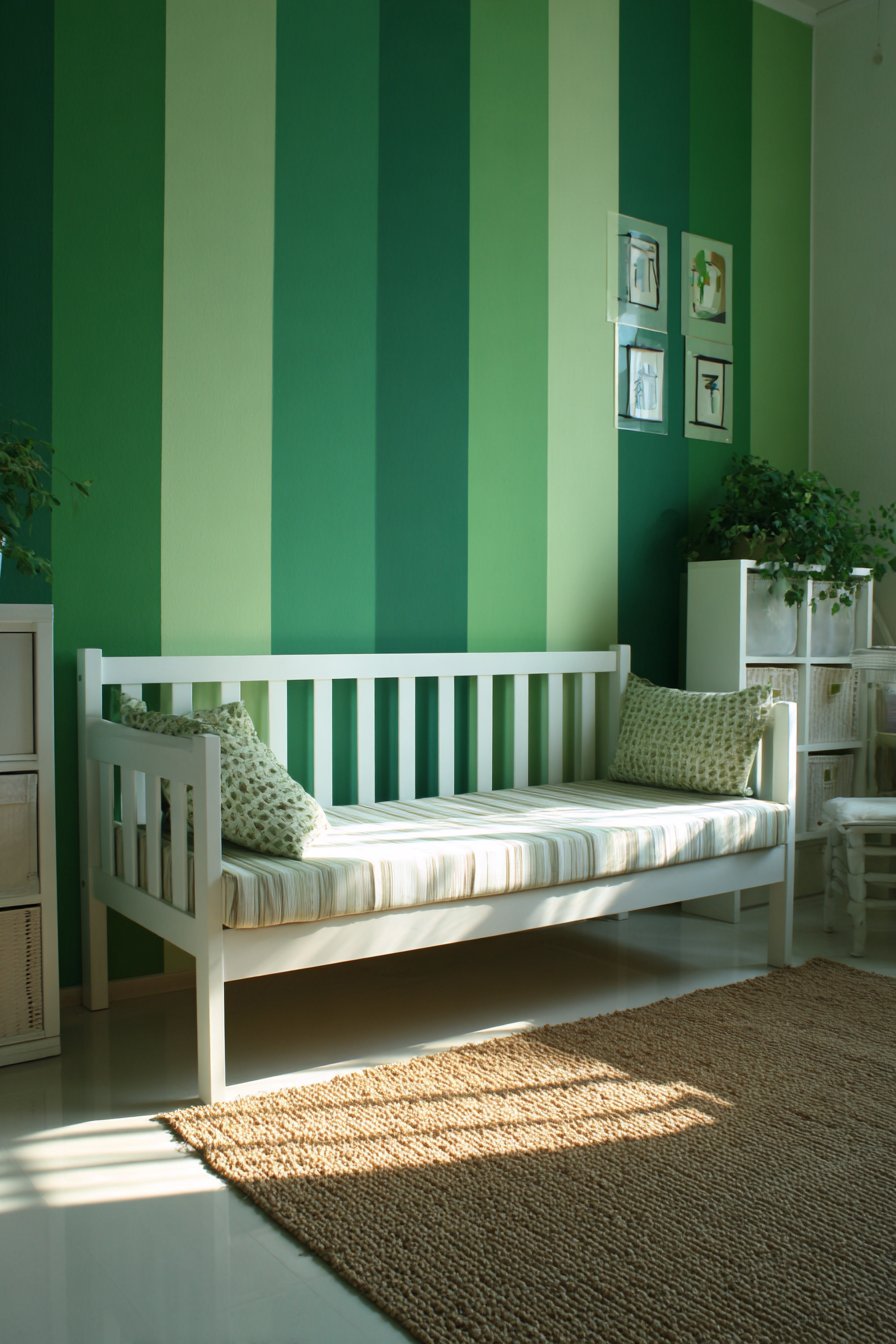
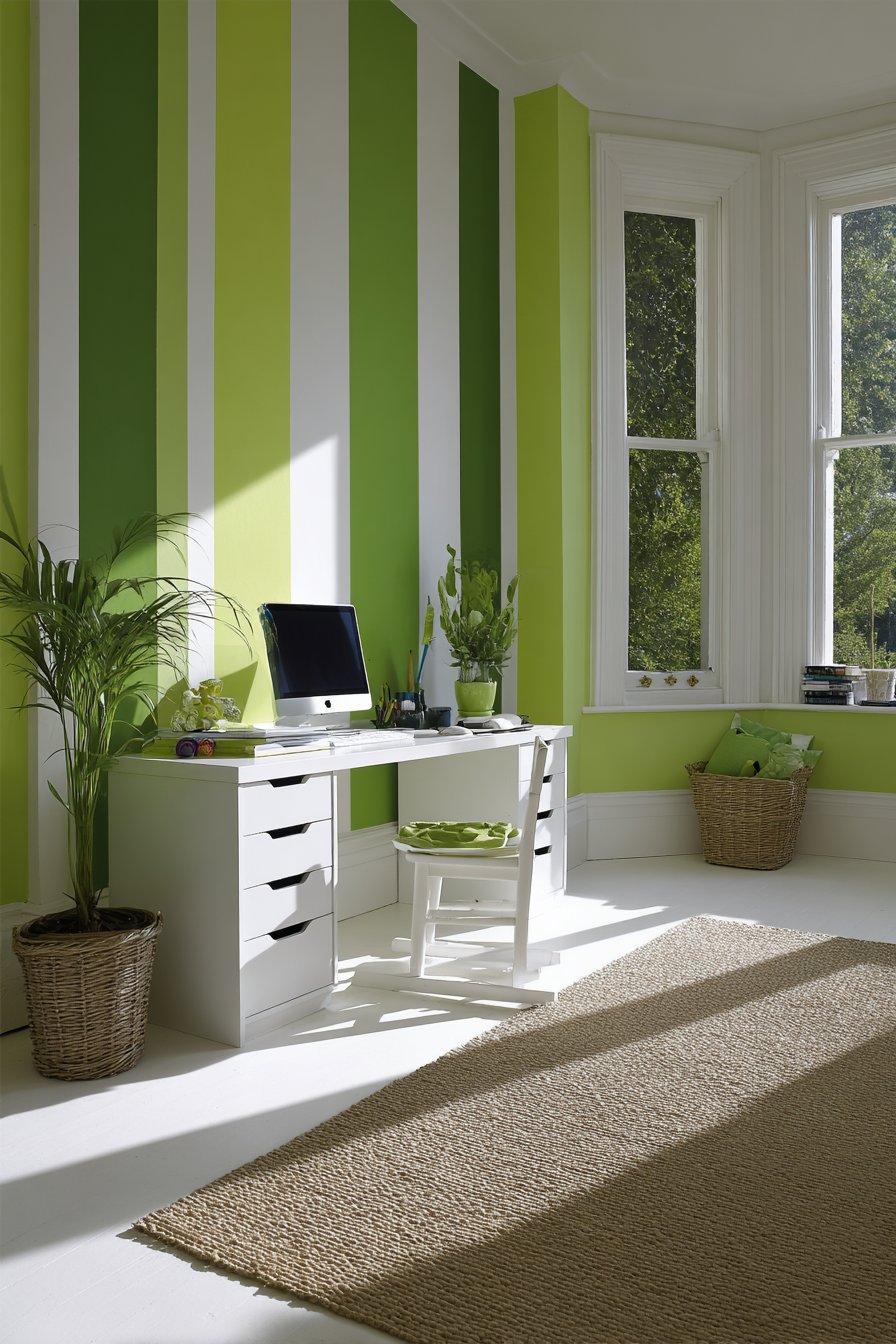
The psychological connection to nature through multiple green shades creates calming, restorative atmosphere particularly beneficial for children who respond positively to natural environments or struggle with anxiety and stress. The graduated effect demonstrates design sophistication that appeals to older children and teenagers while remaining appropriate and attractive for younger boys as well. Interior design photography captures the creative use of single-color variations and clean application, demonstrating how monochromatic schemes need not be boring when executed with thoughtful tonal planning.
Key Design Tips:
- Select at least four to six green shades ranging from light sage to deep forest to create meaningful variation and gradation
- Arrange green shades from lightest at top to darkest at bottom to create natural weighted feeling that appears grounded
- Make stripes approximately 8-12 inches wide to ensure each color receives adequate visibility and the pattern remains readable
- Use painter’s tape to create perfectly straight horizontal lines between color transitions for professional crisp results
- Consider the room’s existing green elements like plants or outdoor views when selecting green shades to create cohesive connection
20. Classic Deep Denim Blue Foundation
Deep denim blue walls with bright white painted ceiling and trim represents traditional boys’ room paint ideas that create classic contrast and visual clarity suitable across age ranges. This timeless color combination has endured for generations because denim blue successfully balances definite color personality with neutral versatility, providing foundation that accommodates changing interests and decorative preferences throughout childhood development. The saturated wall color creates enveloping quality that many children find comforting for sleep while the white ceiling maintains light reflection and prevents the space from feeling too dark or cave-like.
Natural wood bed frame, desk, and shelving add warmth against the cool blue backdrop, preventing the space from feeling too cold or impersonal while introducing organic texture that complements the smooth painted surfaces. The wood grain creates visual softness and natural variation that balances the solid uniformity of painted walls, demonstrating how material diversity creates more interesting and livable spaces than relying solely on color variation. The saturated blue provides mature foundation that grows with children from early elementary through high school years, maintaining relevance and appeal without requiring frequent repainting.
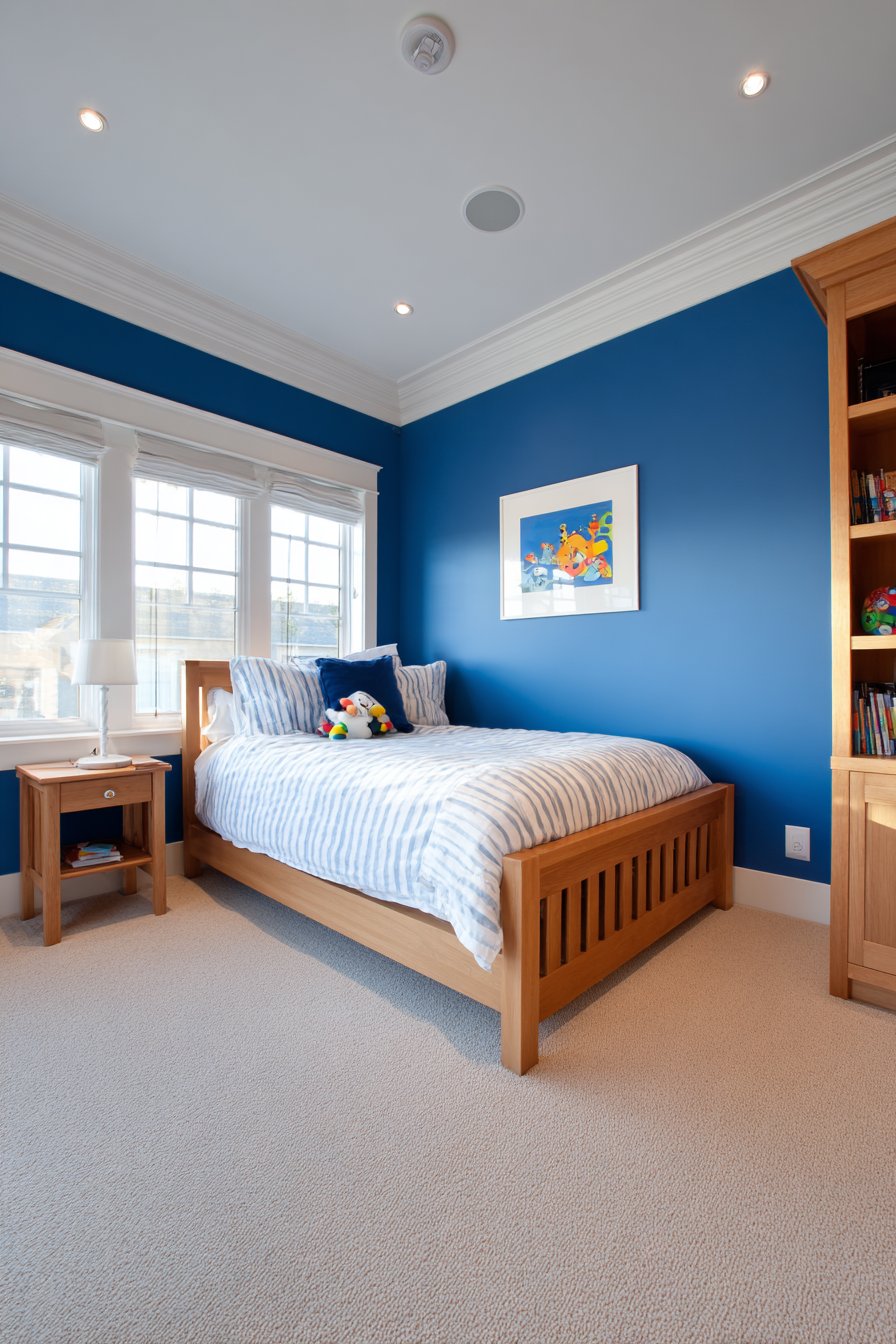
Balanced natural window light and overhead fixtures work together to reveal the denim blue’s true richness and depth, important considerations because saturated colors can appear dramatically different under various lighting conditions. The semi-gloss or satin finish recommended for denim walls provides subtle sheen that reflects light and prevents the dark color from absorbing too much illumination, ensuring the room maintains adequate brightness despite deep wall color. Wide-angle interior photography captures the timeless paint scheme and practical room design, demonstrating how classic color combinations create enduring appeal that transcends temporary trends.
Key Design Tips:
- Choose true denim blue with balanced undertones rather than blue leaning strongly purple, green, or gray for most versatile appearance
- Use semi-gloss or satin finish to add subtle light reflection that prevents dark walls from making the room feel too dim
- Paint all trim, doors, and ceiling bright white to create maximum contrast and architectural definition against the deep blue walls
- Consider white or light wood furniture to maintain brightness and prevent the room from feeling too dark with all dark elements
- Add warm metallic accents in brass or copper to create visual warmth against the cool blue color temperature
21. Sophisticated Two-Tone Teal Progression
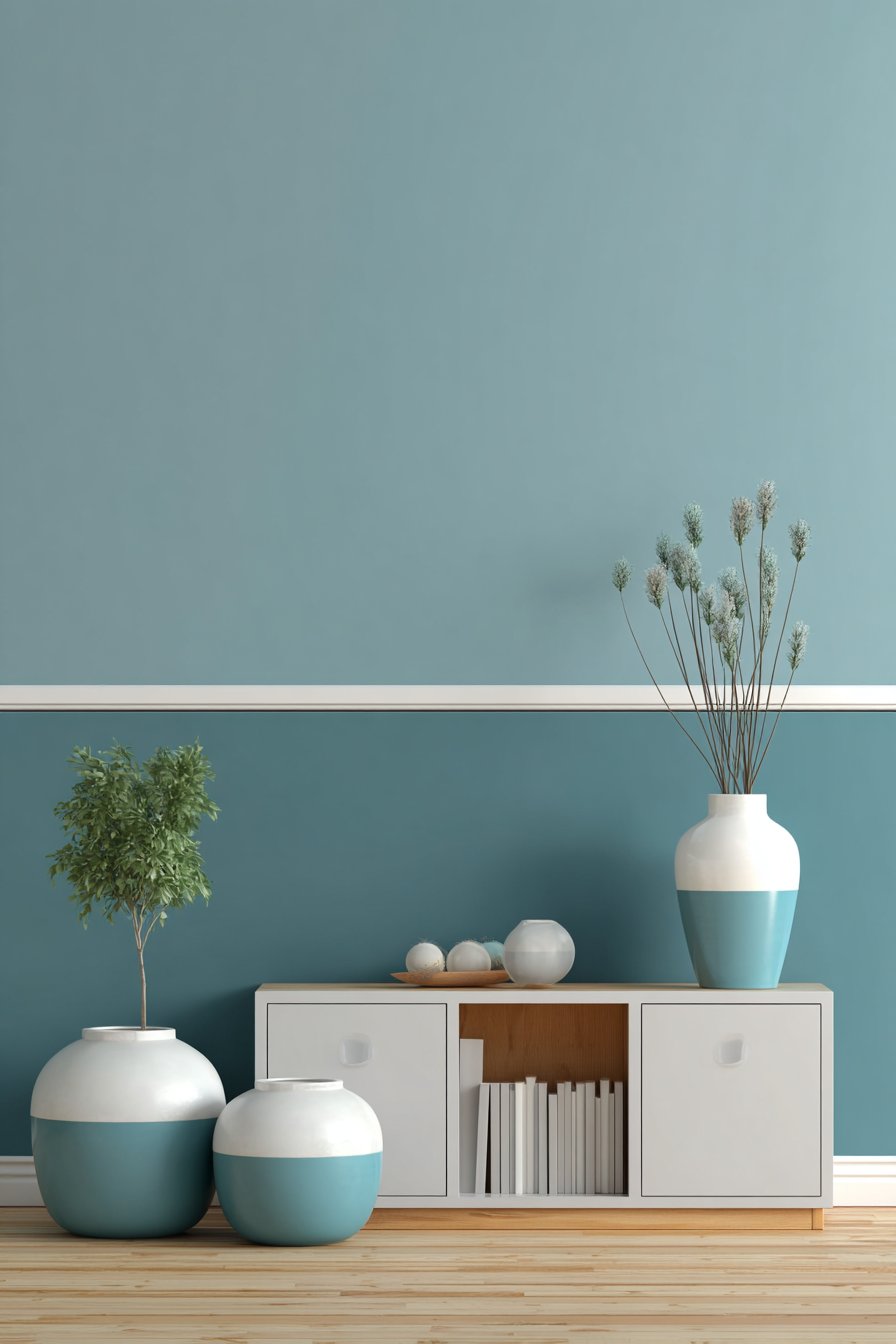
The subtle two-tone technique featuring slightly darker teal on the lower two-thirds of walls and lighter teal on the upper portion, separated by a thin white painted stripe at eye level, demonstrates how boys’ room paint ideas can create depth through tonal gradation within single color families. This nuanced approach provides visual interest and architectural definition without requiring dramatic color contrast or bold pattern, appealing to families seeking sophisticated design that reads as mature and intentional. The horizontal division at eye level creates natural sight line break that adds perceived dimension and makes walls appear more complex than simple single-color application.
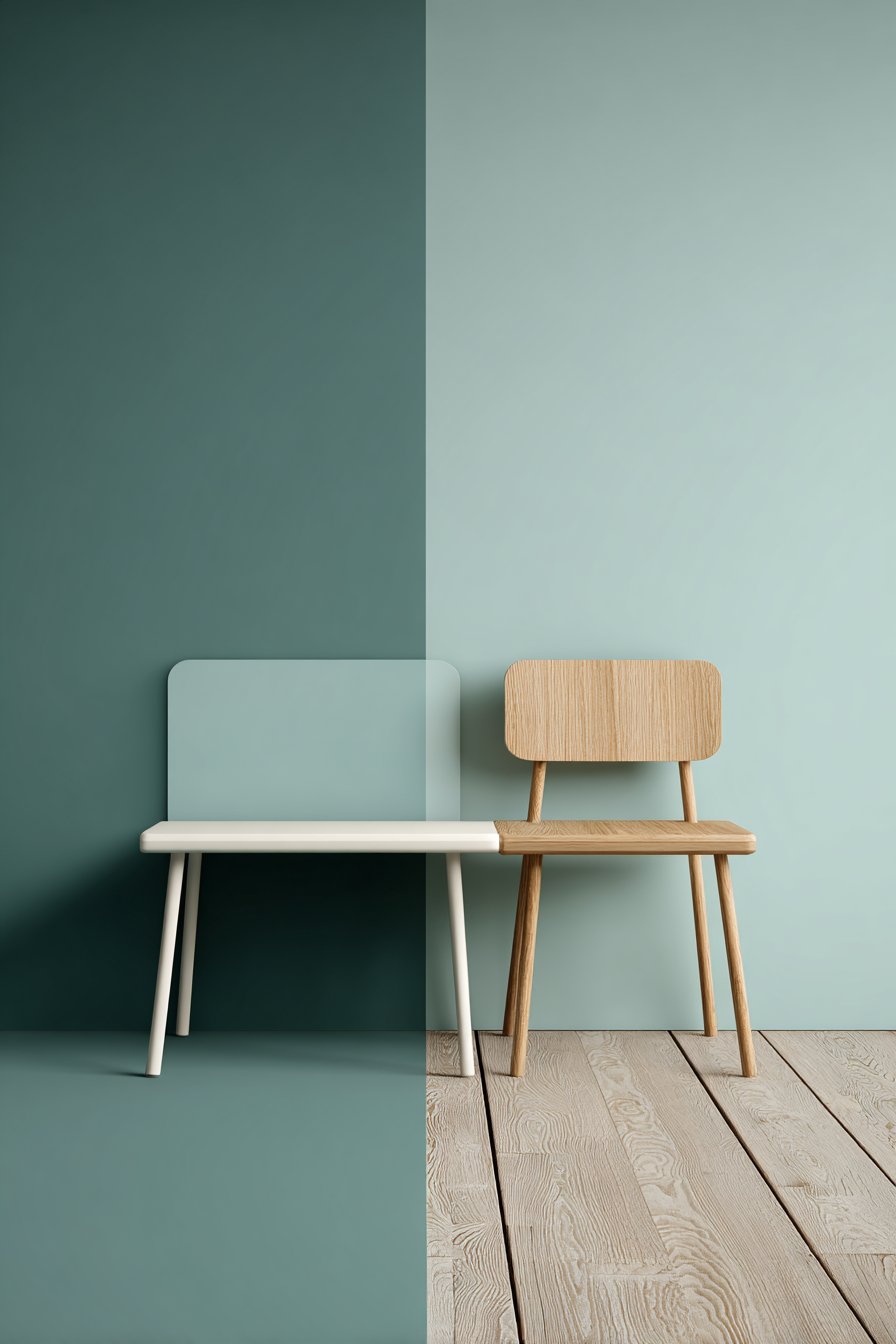
The teal color family offers unique position in the color spectrum, reading as blue-green that provides both the calming qualities of blue and the restorative properties of green. Natural light emphasizes the tonal paint variation and precise dividing line created by the thin white stripe, demonstrating how subtle details create significant visual impact when executed with precision and care. Simple contemporary furniture in white and wood maintains clean lines and allows the wall treatment to receive appropriate attention without visual competition or cluttered aesthetics.
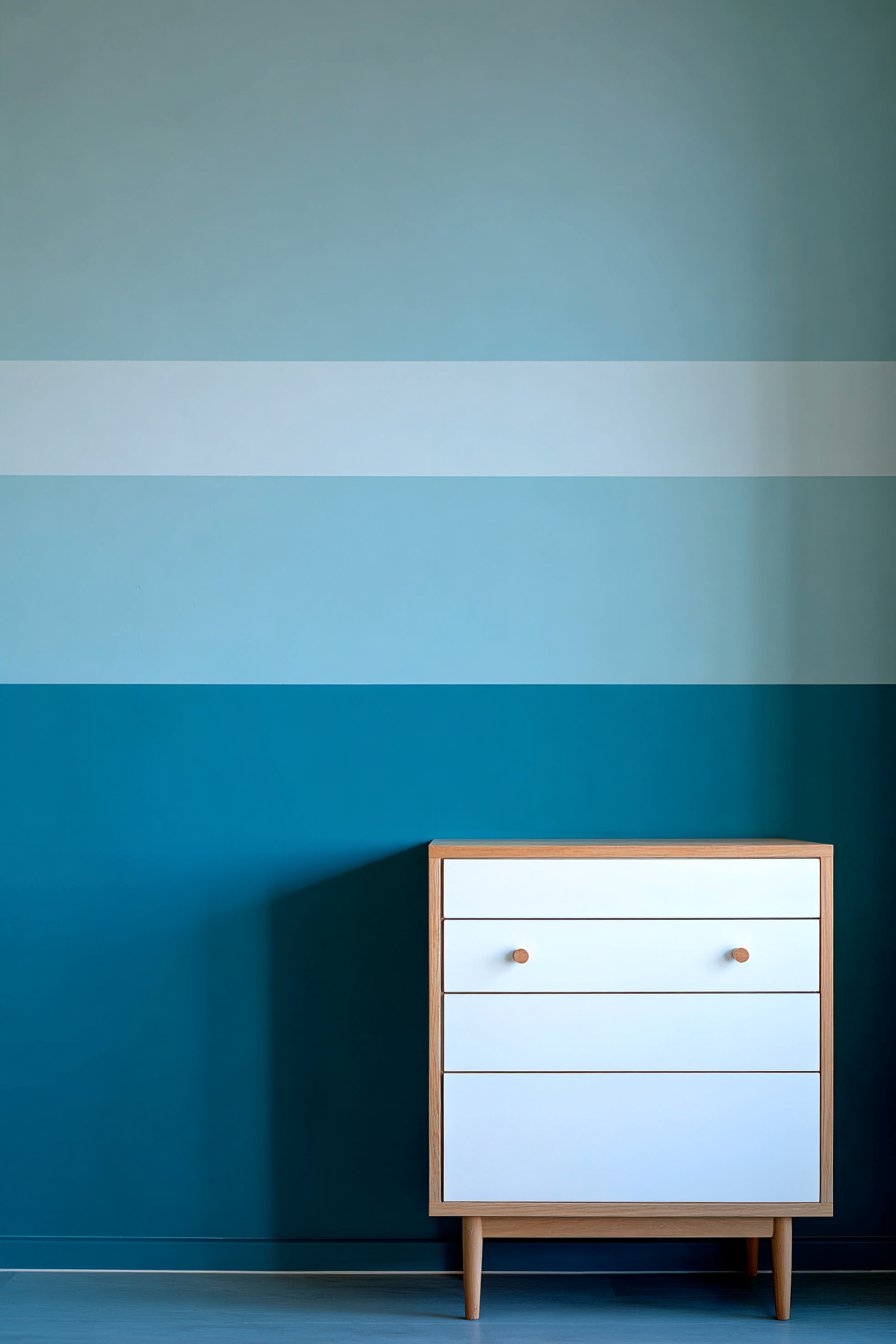
The graduated tonal approach creates subtle weighted quality, with darker color anchoring the lower walls and lighter tone rising upward, mimicking natural gradations observed in sky, water, and other environmental phenomena. Professional interior photography demonstrates the cohesive color gradation and balanced room proportions, showing how this sophisticated technique works in real residential settings rather than appearing as experimental or risky design choice. The thin white dividing stripe provides clean separation between teal tones while adding bright contrast that prevents the colors from muddying together.
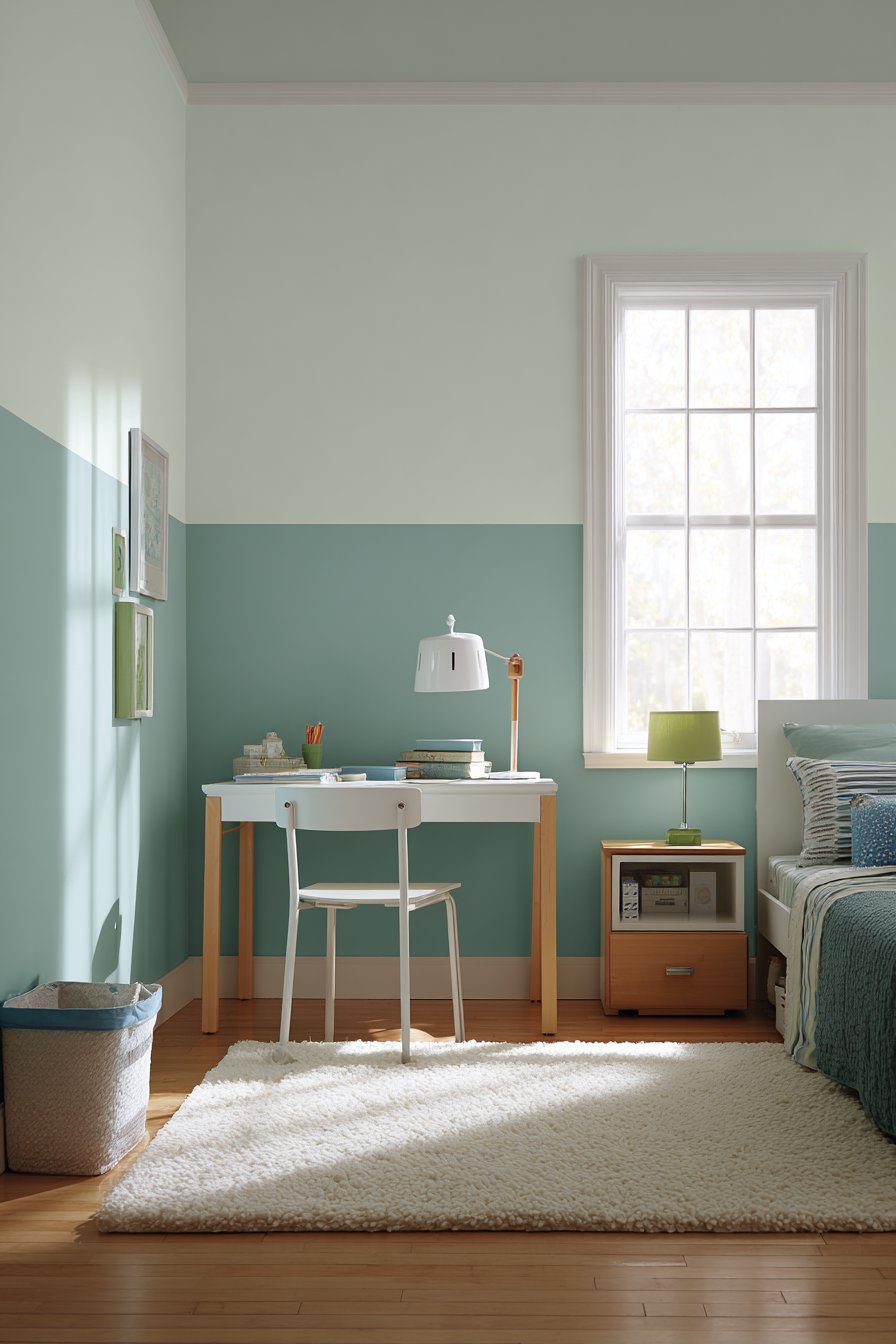
Key Design Tips:
- Select teal shades that differ by at least two to three color steps to ensure visible distinction without stark contrast
- Position the color transition at approximately 54-60 inches from the floor to align with typical eye level when standing
- Paint the thin white dividing stripe using quality painter’s tape and small artist’s brush for precise, controlled application
- Apply two coats of each teal shade to ensure complete coverage and accurate color representation without base color showing through
- Consider wrapping the two-tone treatment into closets for fully integrated appearance or stopping at doorways for defined boundaries
22. Cheerful Butterscotch Yellow Accent
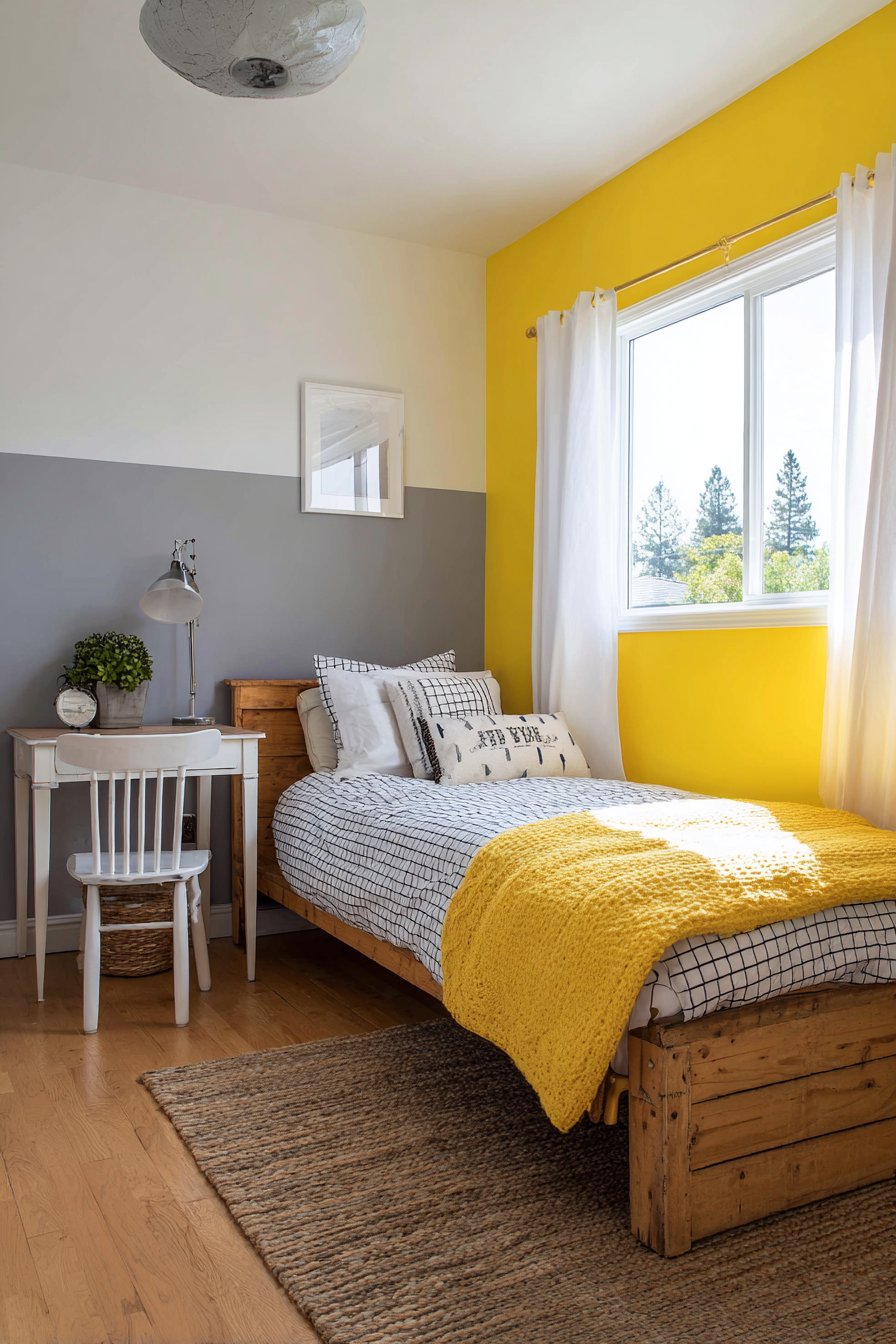
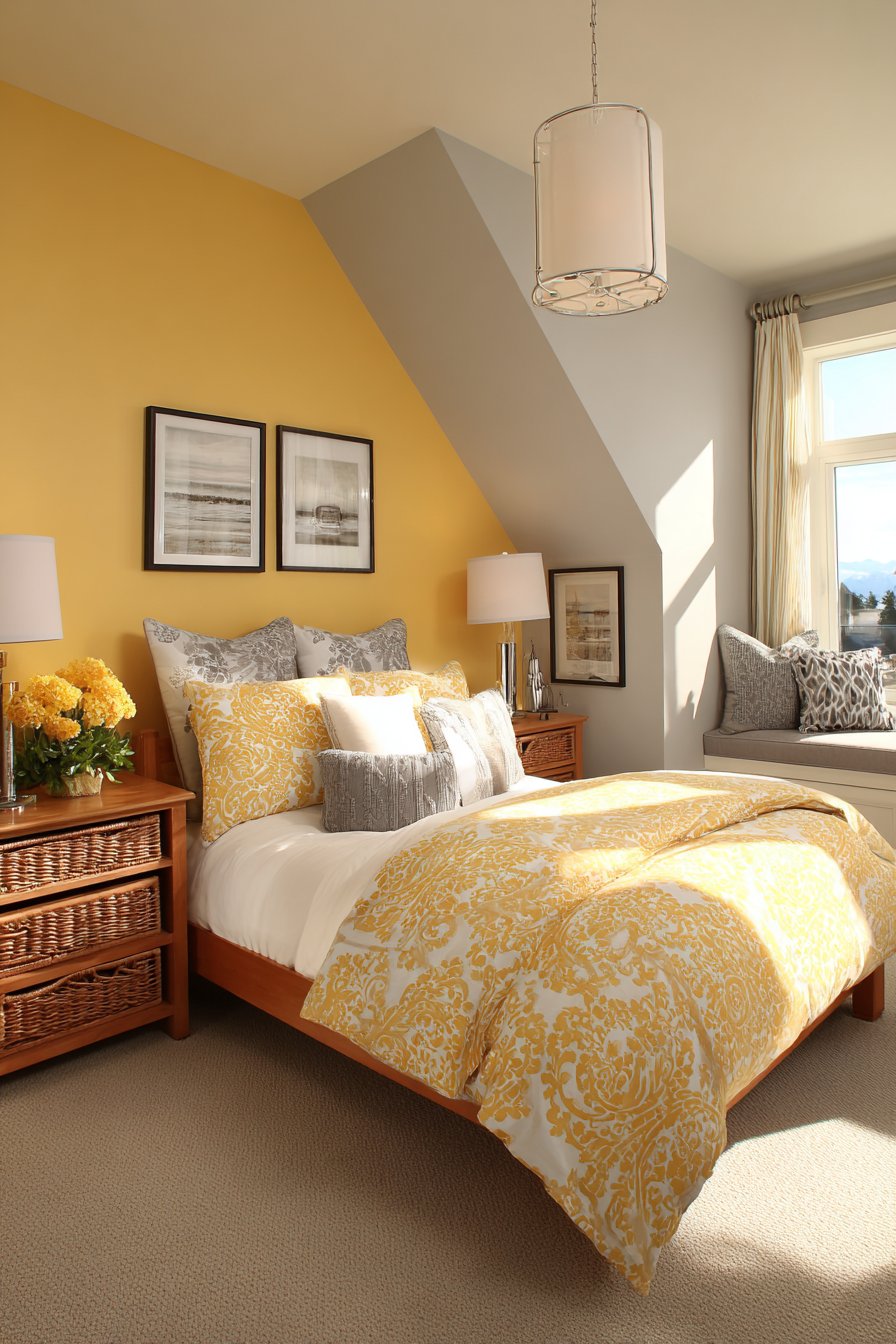
Warm butterscotch yellow accent wall paired with soft gray-white on remaining walls creates cheerful yet sophisticated space that represents optimistic boys’ room paint ideas appropriate for naturally sunny children. The butterscotch shade provides warmth and energy without the aggressive brightness of primary yellow or the potential institutional quality of certain yellow tones. This rich, buttery hue evokes caramel, honey, and golden sunshine, creating positive psychological associations with warmth, comfort, and optimism. The soft gray-white on secondary walls provides neutral grounding that balances the yellow’s intensity and prevents the space from becoming visually overwhelming.
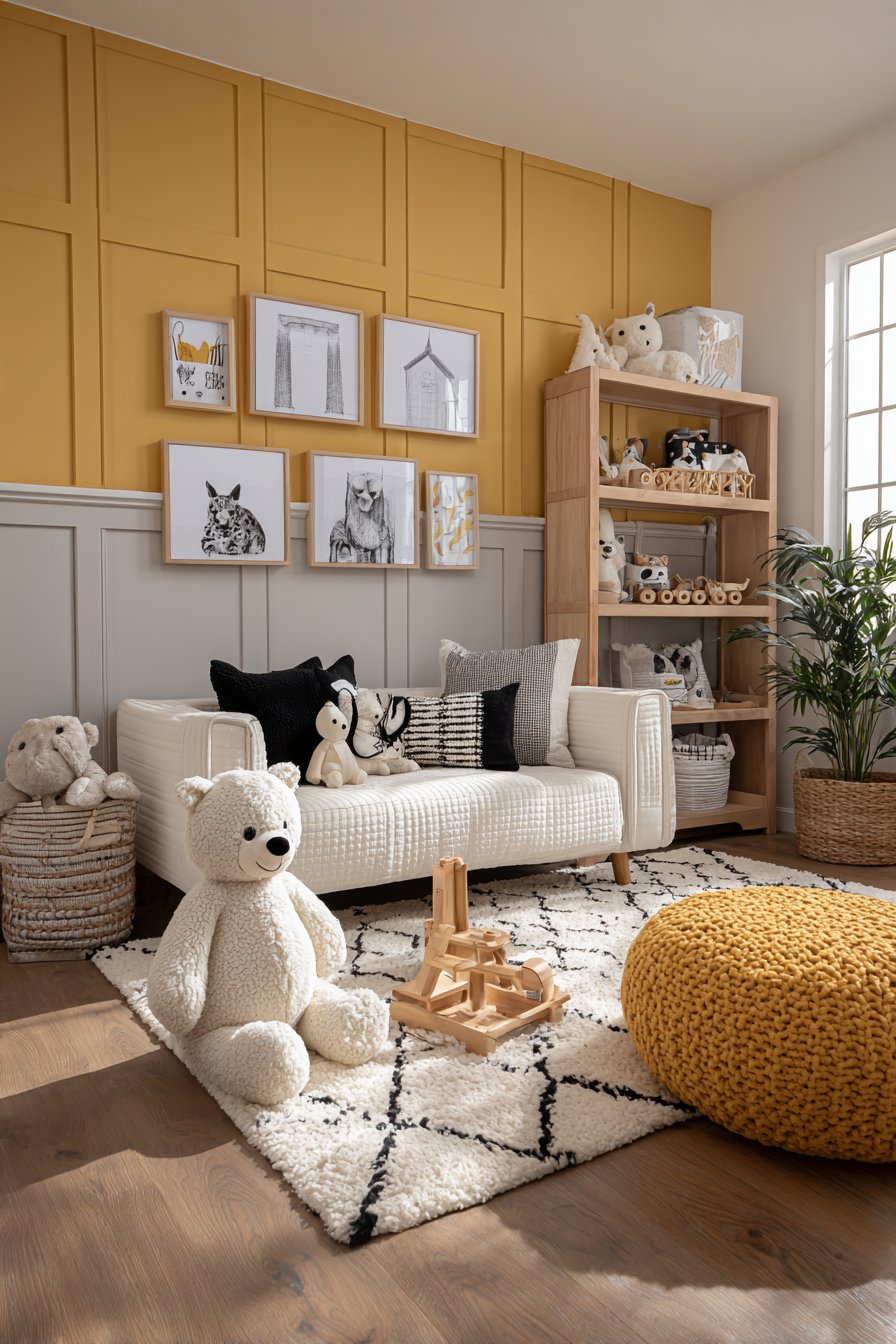
Natural wood furniture and white accents work together to balance the warm paint tones, with wood grain adding organic texture and white elements providing crisp contrast. Morning sunlight streaming through windows intensifies the yellow’s inherent warmth while revealing the smooth paint application and color transitions between walls, demonstrating how natural light dramatically affects color perception throughout the day. Interior design photography captures the inviting paint palette and thoughtful color distribution, showing how accent walls create focal points without requiring all walls to share the same color intensity.
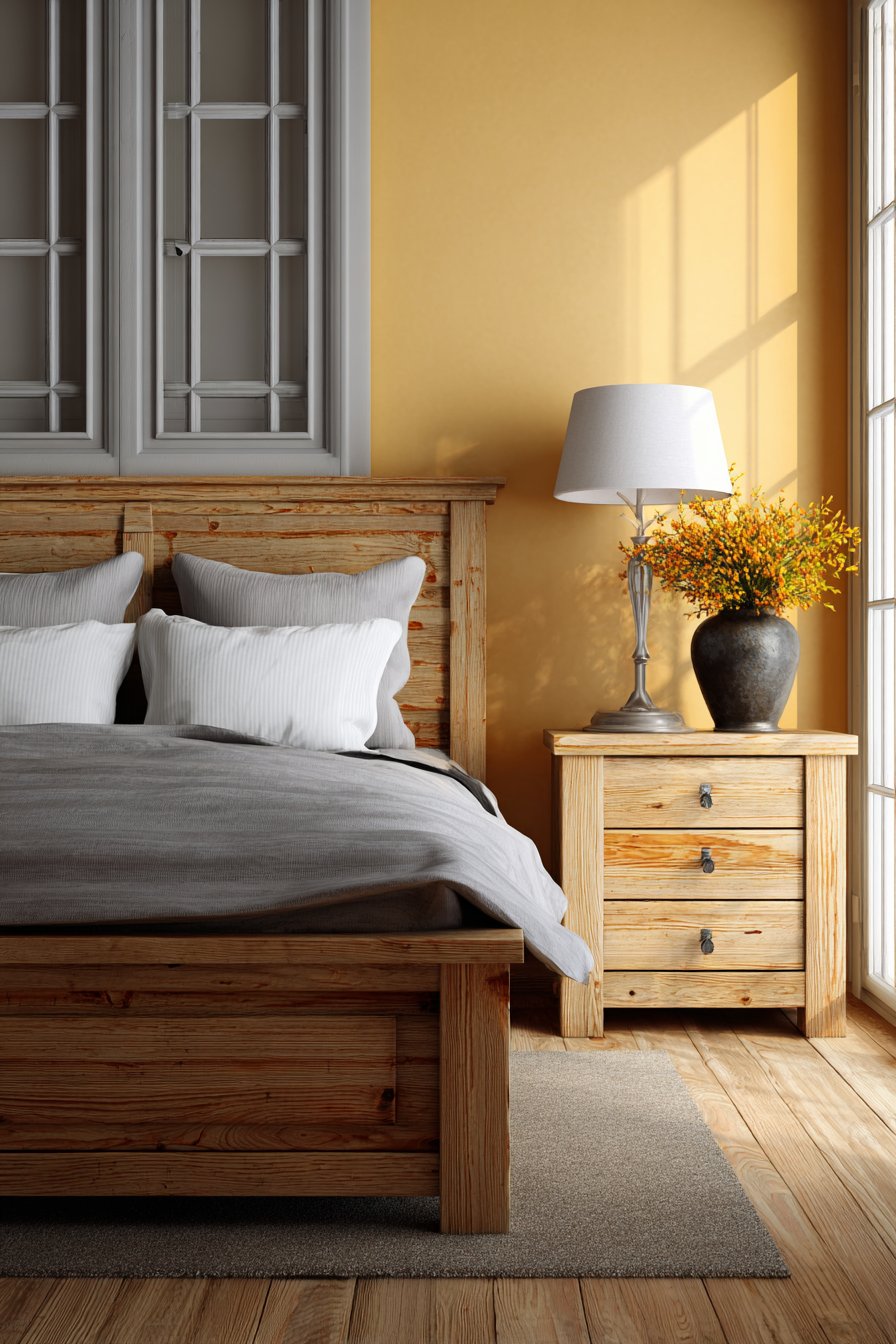
The butterscotch yellow particularly benefits rooms with limited natural light or northern exposure, as the warm color introduces sunshine and brightness that counteracts cool, flat illumination. This strategic color selection demonstrates understanding of how paint choices can compensate for architectural limitations and improve perceived light quality. The combination of yellow and gray-white creates contemporary color scheme that feels current and stylish while avoiding trendy combinations that quickly become dated, ensuring design longevity and sustained appeal.
Key Design Tips:
- Choose butterscotch yellow with orange undertones rather than green undertones to maintain warmth and prevent sickly appearance
- Test yellow samples under both natural and artificial light, as yellow shifts dramatically between lighting conditions
- Use the yellow on the wall opposite the primary window to prevent bright sunlight from washing out the rich color
- Select gray-white with warm undertones rather than stark cool white to complement the yellow’s inherent warmth
- Limit yellow to one accent wall to prevent visual overwhelm and maintain the color’s impact as special rather than standard
23. Furniture-Focused Graphite Gray Storage
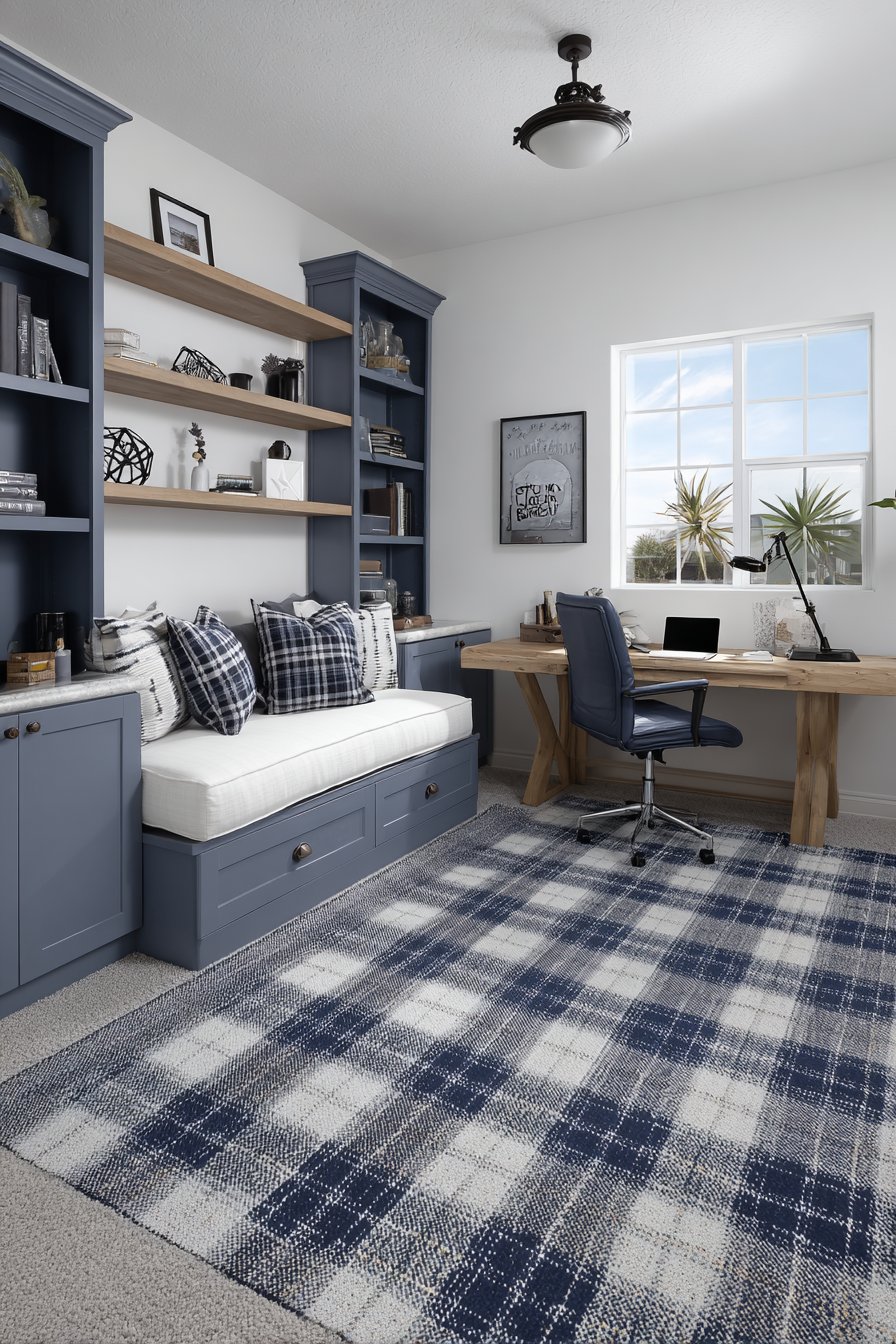
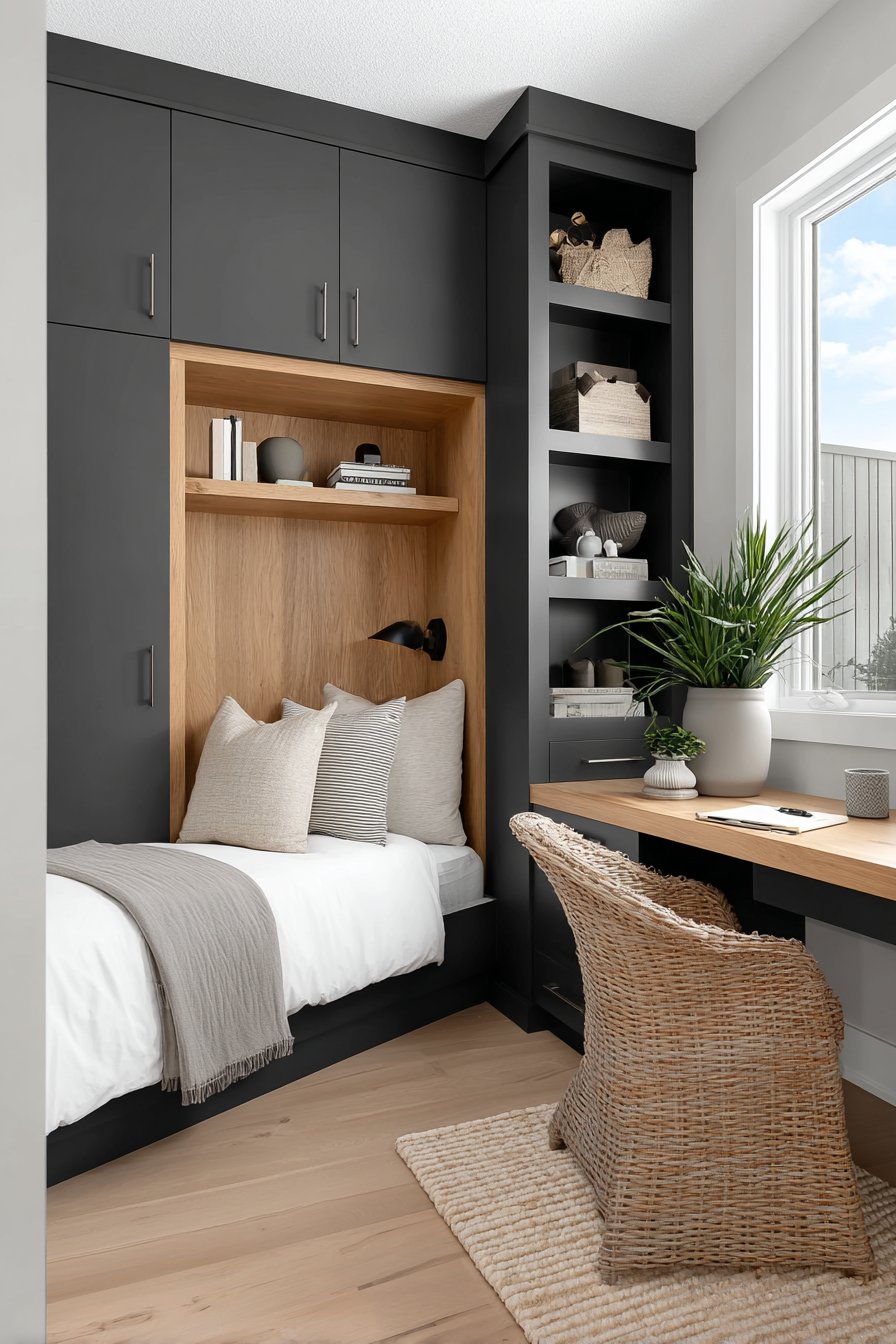
Graphite gray painted lower cabinets and shelving contrasting against white walls demonstrates innovative boys’ room paint ideas where furniture color provides the room’s primary design statement rather than wall color. This approach challenges conventional thinking that assumes walls must carry color responsibility, instead recognizing that painted furniture can create equally strong visual impact while offering easier modification as tastes change. The dark graphite on storage elements creates grounded, substantial quality that anchors the room while white walls maintain brightness and spatial openness.
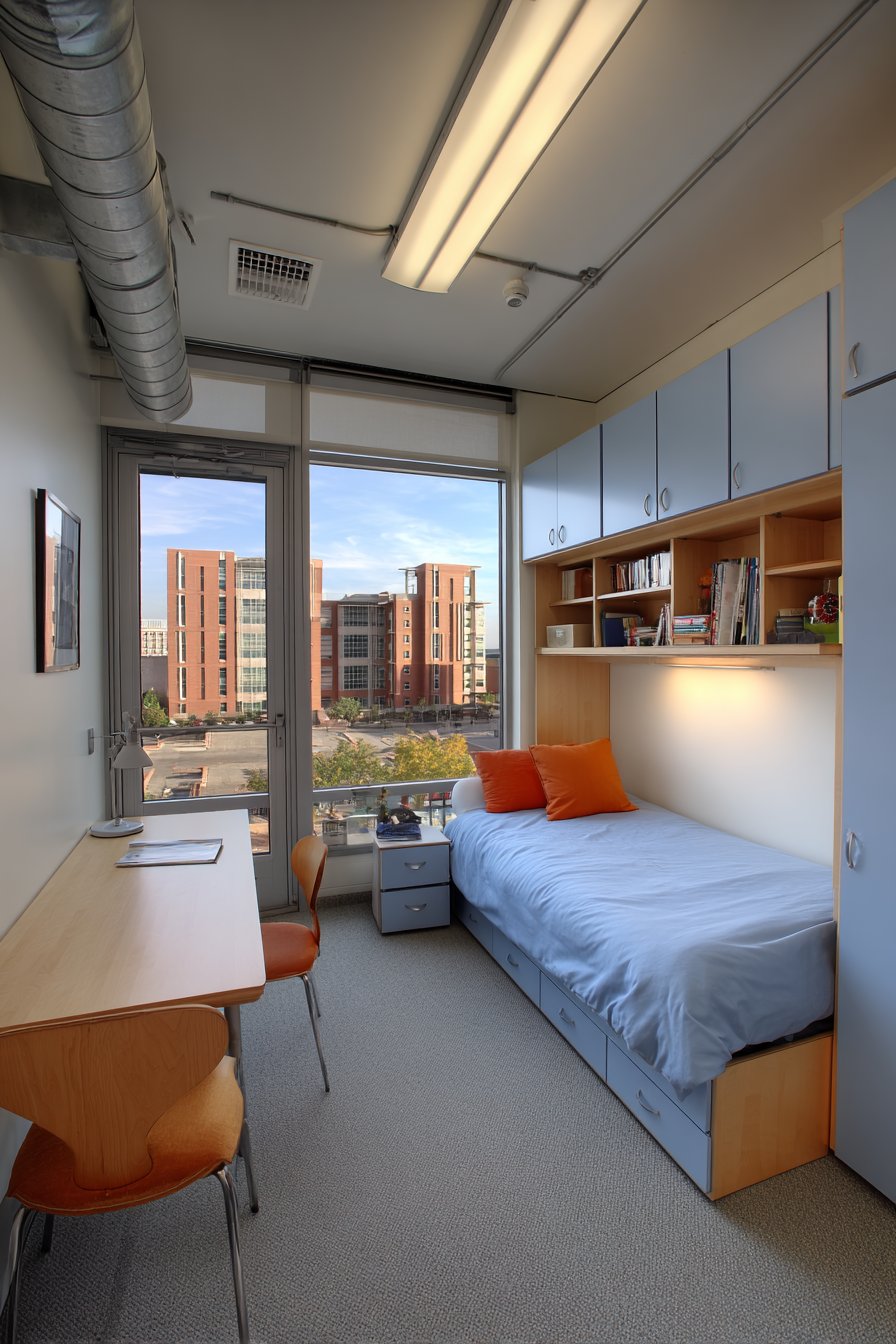
The practical advantages of painting furniture rather than walls include easier color changes through repainting smaller surface areas and portability if furniture moves to different rooms or homes in the future. Natural and task lighting highlights the painted storage elements and their integration with wall colors, demonstrating how furniture and walls work together to create cohesive design rather than operating as separate, unrelated elements. Simple white bed and natural wood desk maintain versatility while the gray painted storage provides definite style and personality.
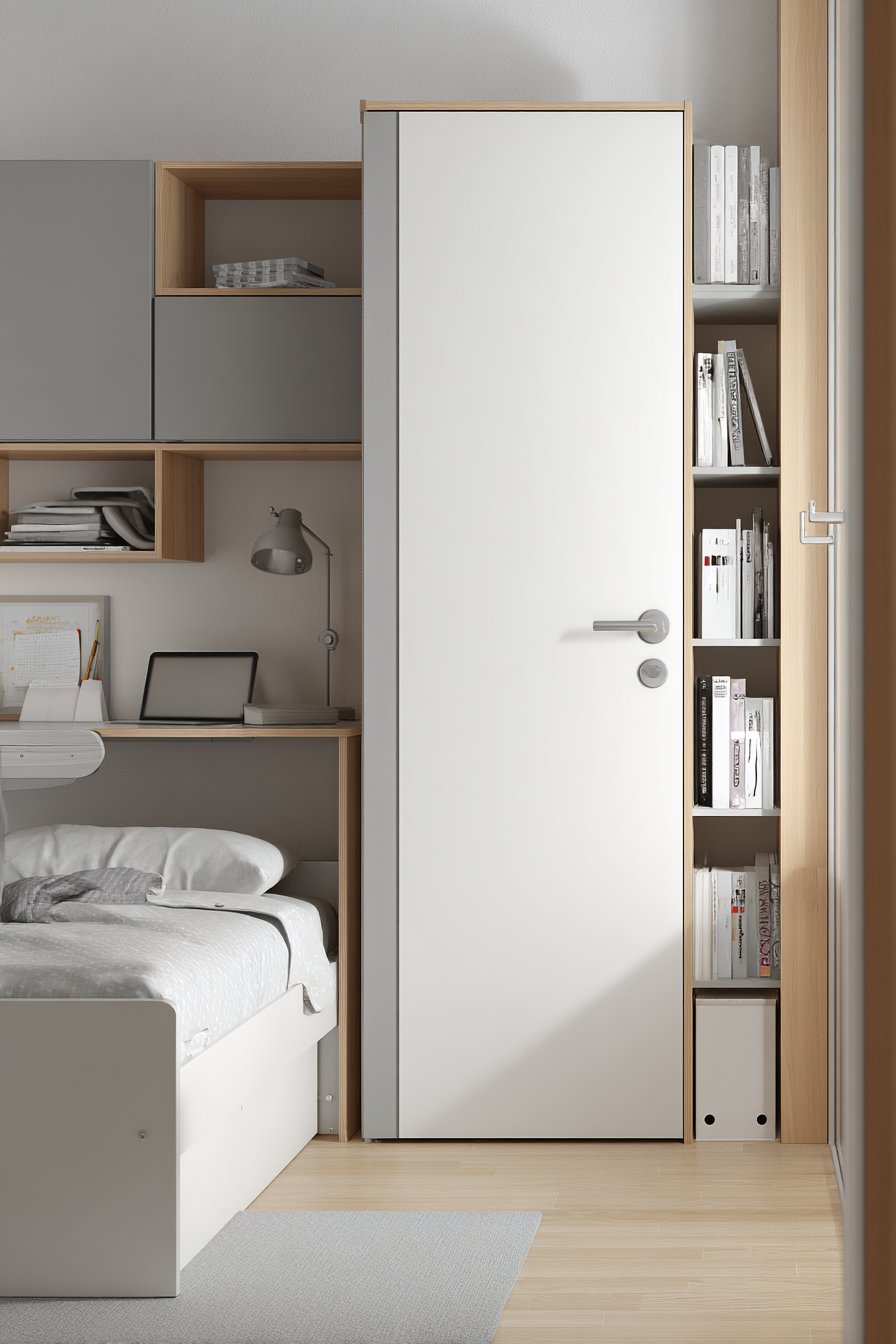
This furniture-focused paint approach particularly appeals to families in rental situations where wall painting may be prohibited or impractical, as furniture painting provides color and design impact without permanent architectural modification. Wide-angle interior photography demonstrates the furniture-focused paint approach and organized space design, showing how painted storage elements create visual interest comparable to painted accent walls while offering superior practical functionality through concealed storage and display opportunities.
Key Design Tips:
- Choose furniture-grade paint or primer-and-paint combinations formulated for durability on surfaces that experience frequent contact
- Sand furniture surfaces lightly and apply quality primer before painting to ensure proper paint adhesion and smooth finish
- Use semi-gloss or satin finish on painted furniture for easier cleaning and increased durability compared to flat or matte finishes
- Apply at least two coats of finish color for complete coverage and proper color depth, allowing adequate drying between coats
- Consider painting only certain furniture elements rather than all pieces to maintain variety and prevent monochromatic overload
24. Timeless Pale Blue-Gray Neutrality
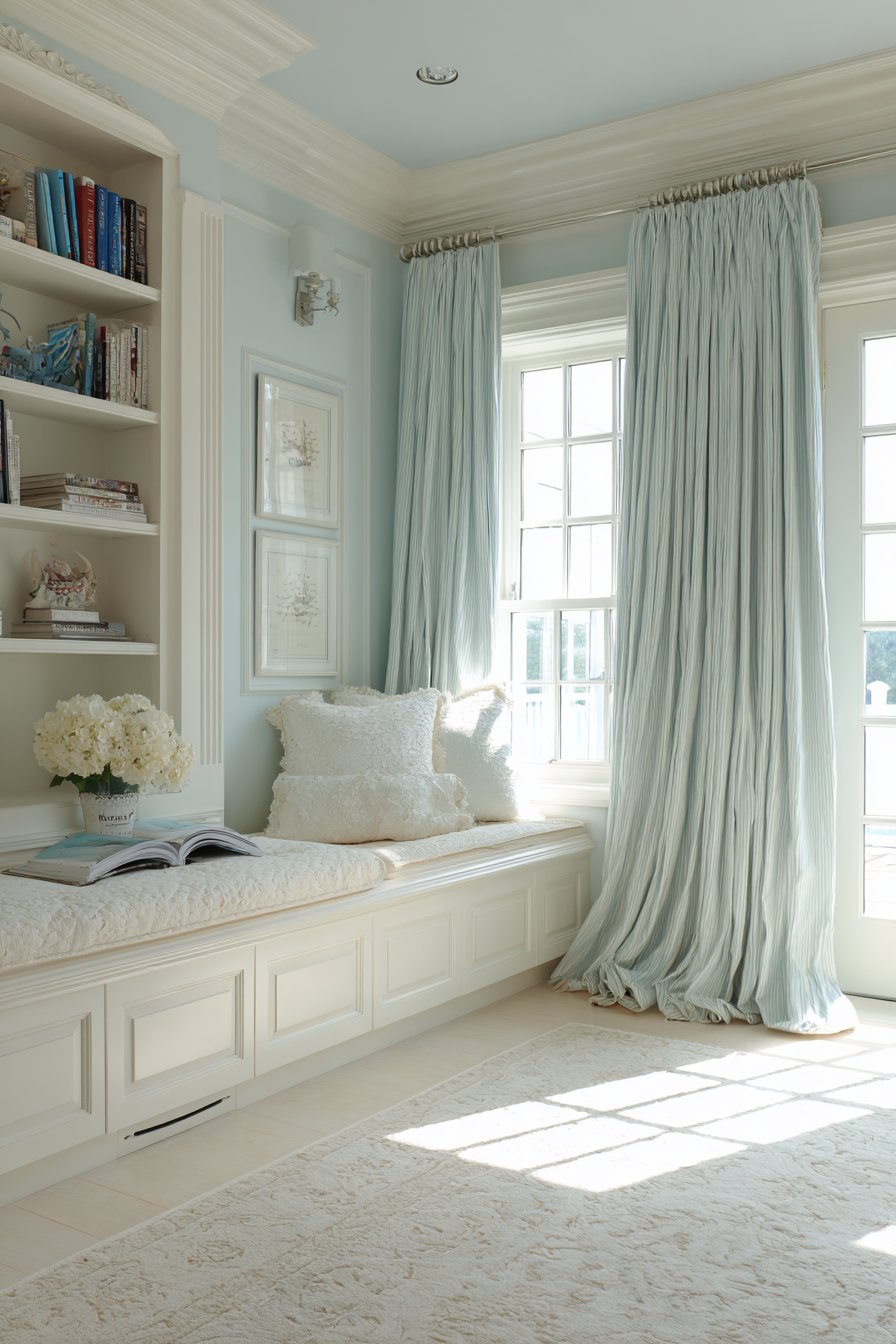
Classic pale blue-gray on walls creates serene neutral backdrop that exemplifies versatile boys’ room paint ideas appropriate across age ranges from early childhood through teenage years. This sophisticated shade occupies the perfect middle ground between definite color and pure neutral, providing subtle personality without committing to bold hues that might quickly feel dated or limiting. The pale blue-gray works across decorative directions from traditional to modern, sports-themed to academic-focused, demonstrating remarkable adaptability that makes it economically sensible for families mindful of long-term value.
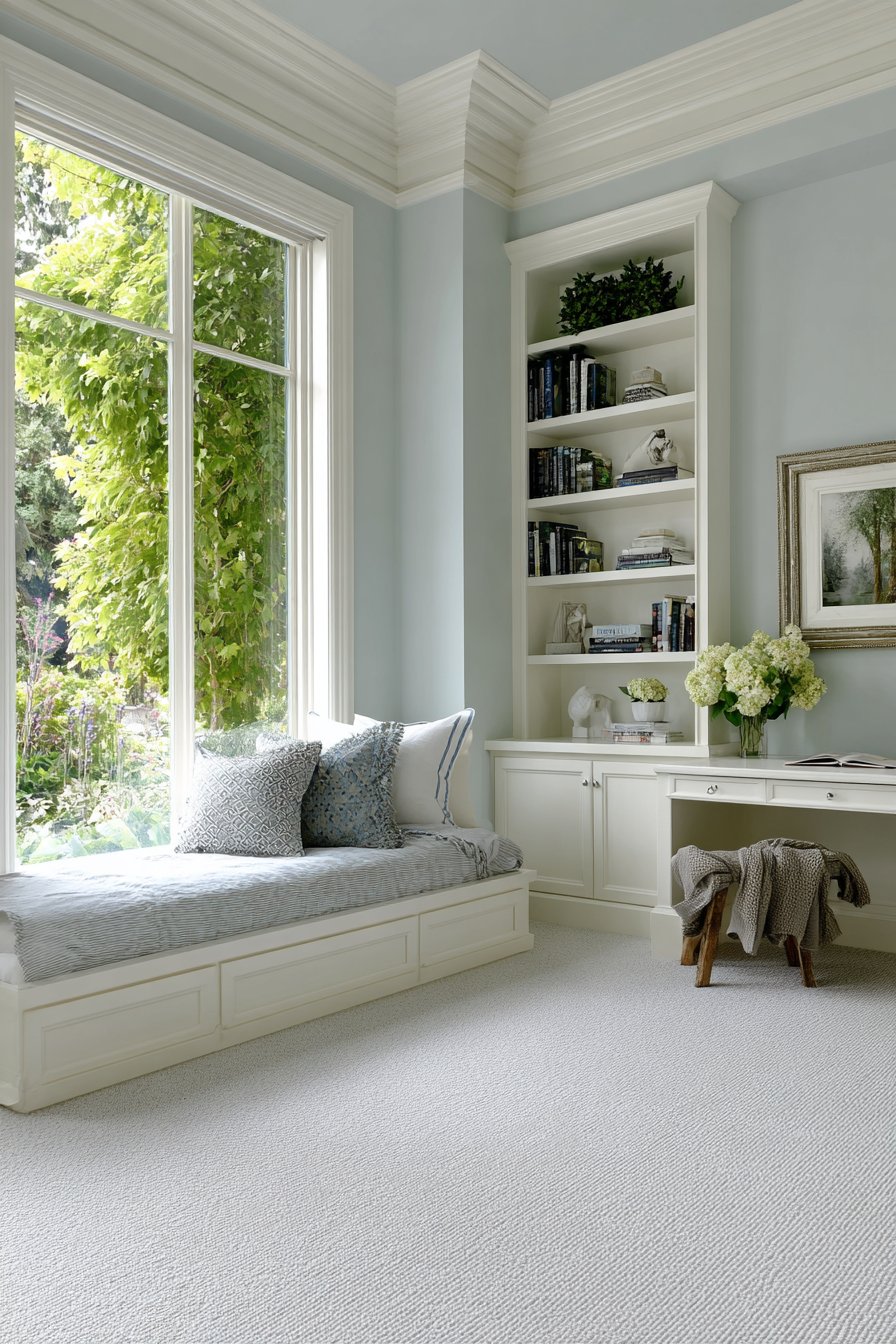
White ceiling, trim, and built-in desk area maintain brightness and architectural definition while the blue-gray walls provide gentle color that creates atmosphere without overwhelming or demanding attention. Natural wood bed frame adds organic warmth that prevents the cool-toned walls from feeling too cold or impersonal, a crucial consideration when working with blue-gray hues that can sometimes read as clinical without proper balancing elements. Soft natural light from windows reveals the paint’s subtle blue undertones while the matte finish creates soft, non-reflective surface that enhances the room’s calming quality.
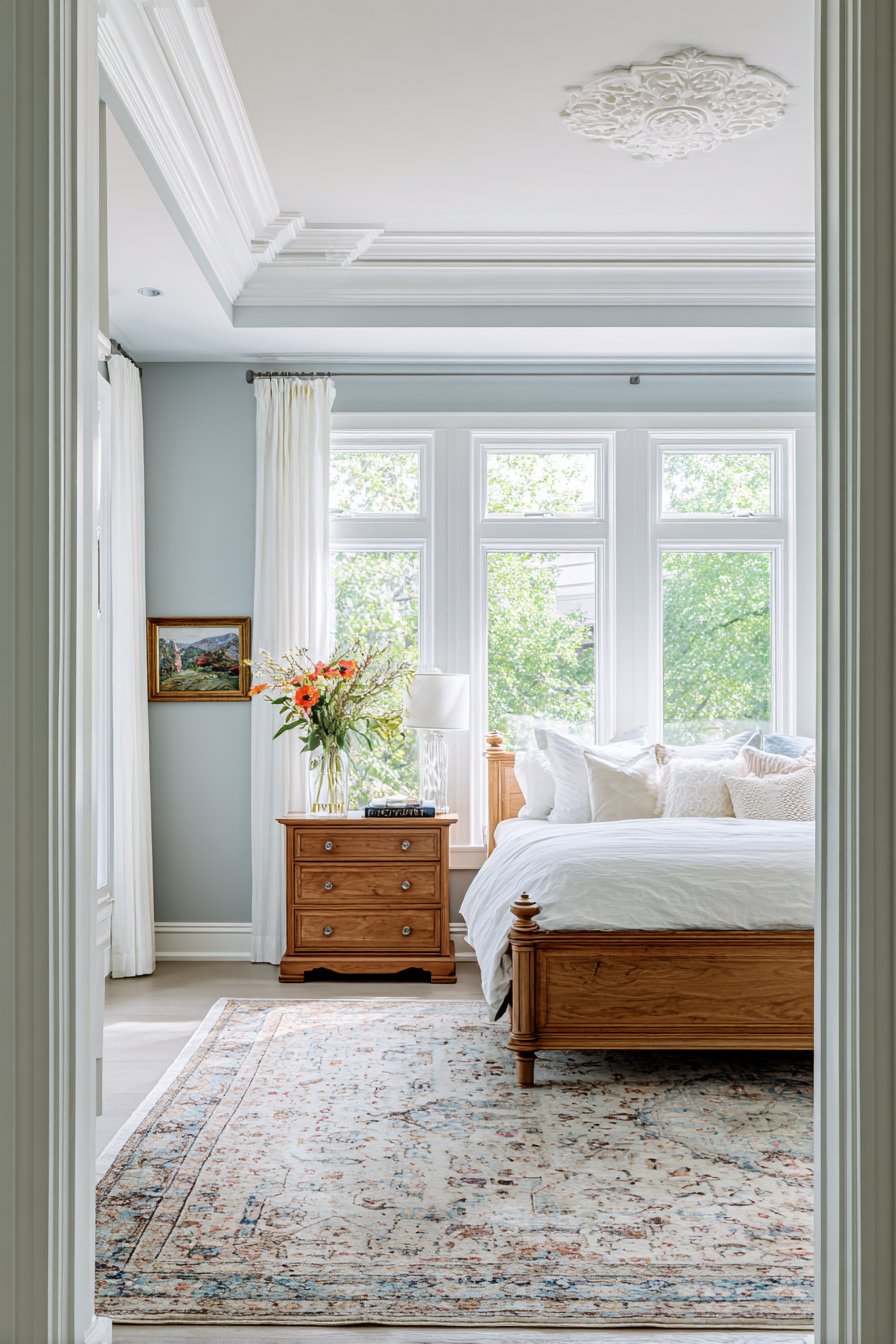
The psychological benefits of blue-gray include promoting calmness, focus, and emotional stability, making this color choice particularly appropriate for children who need supportive environments for sleep and study. Professional interior photography with balanced exposure captures the versatile and timeless paint color choice, demonstrating how neutral walls serve as backdrop that allows children’s personalities to shine through displayed artwork, collections, and personal items rather than competing with strong wall color.
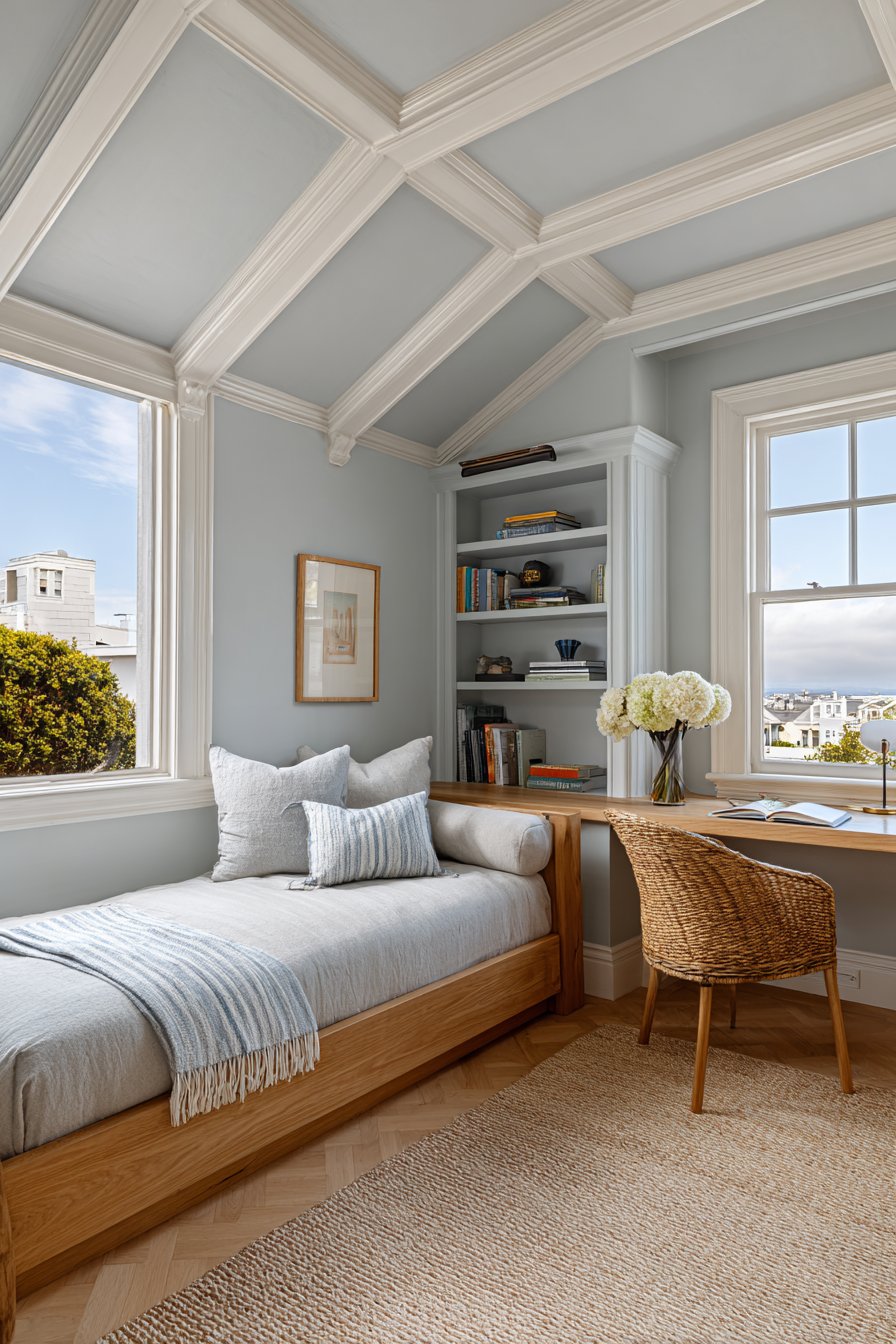
Key Design Tips:
- Test blue-gray samples in multiple locations, as this color can appear more blue or more gray depending on light exposure
- Choose blue-gray with balanced undertones rather than shades leaning too strongly toward purple, green, or pure gray
- Use matte or flat finish to create soft, calming surface that minimizes glare and supports the color’s serene quality
- Incorporate varied textures in textiles and materials to prevent the neutral scheme from appearing bland or underdeveloped
- Add small doses of accent color in easily changeable elements like pillows, artwork, or accessories rather than painting additional walls
25. Dramatic Charcoal Gradient Feature Wall
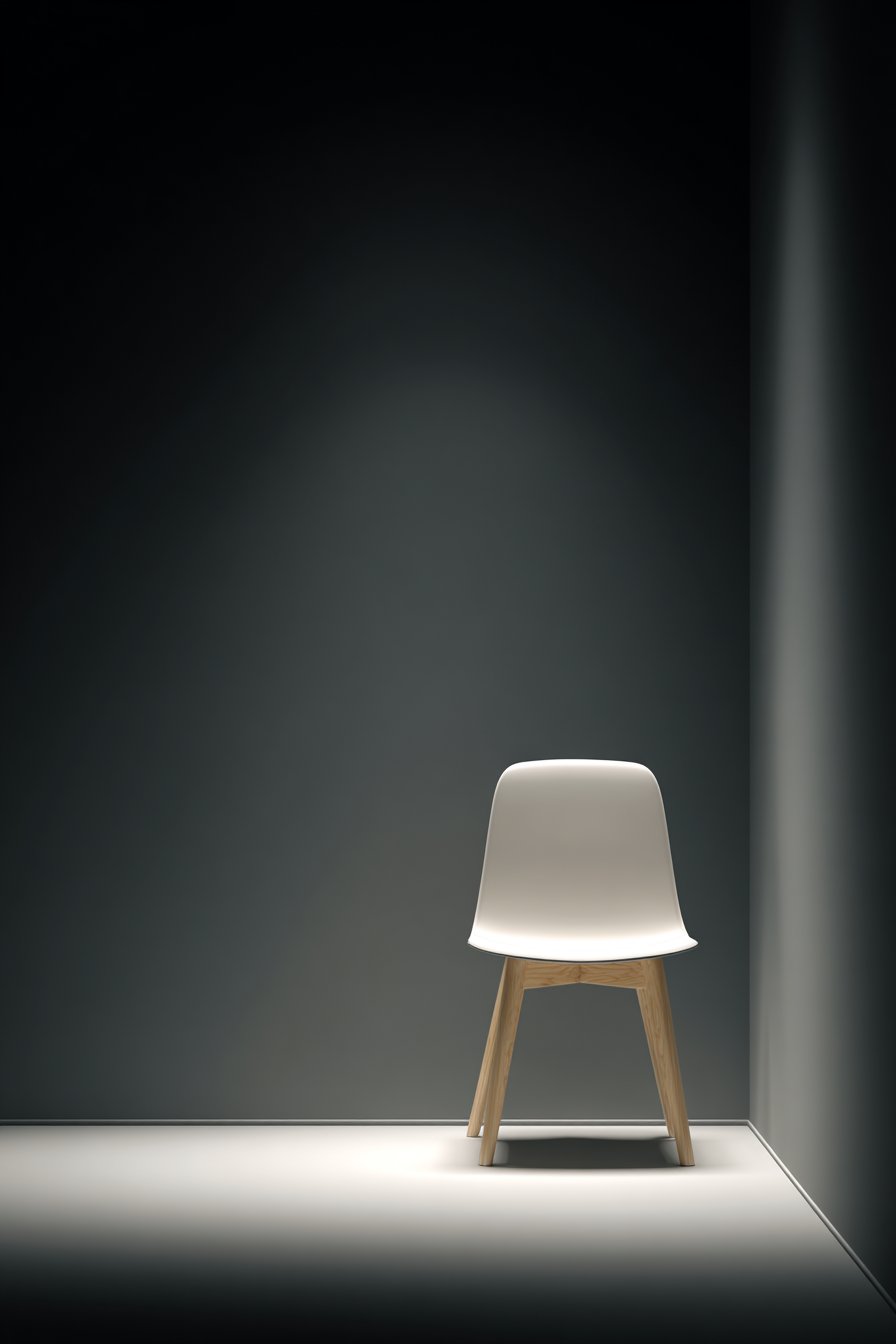
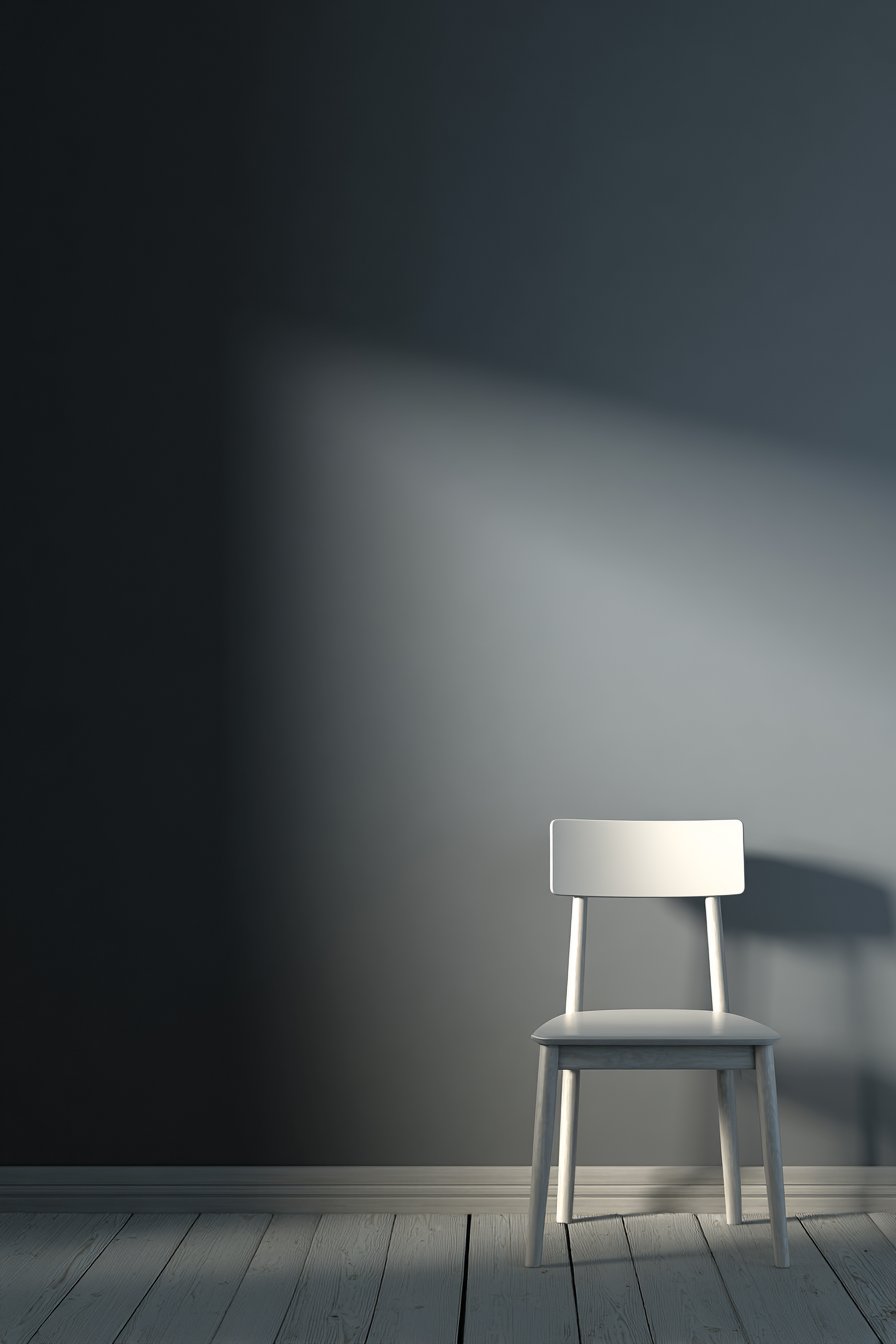
The gradient paint technique transitioning from deep charcoal at floor level to light ash gray at ceiling height on one feature wall represents sophisticated boys’ room paint ideas that create dramatic visual interest through monochromatic tonal shift. This artistic approach transforms a flat wall into a dimensional design element that commands attention and serves as the room’s primary focal point, eliminating need for additional wall decoration or artwork. The smooth color transition from dark to light creates natural visual flow that draws the eye upward, making standard ceiling heights appear taller while adding atmospheric depth rarely achieved through single-color painting.
The gradient execution requires significant skill and patience, with colors meticulously blended while wet to achieve seamless transitions rather than obvious horizontal bands that appear amateur. Natural side lighting emphasizes the smooth color transition throughout the day, creating shifting shadow patterns and highlights that ensure the wall never appears static despite being stationary paint application. Simple modern furniture in white and natural wood maintains focus on the painted gradient while providing necessary functionality without visual competition.
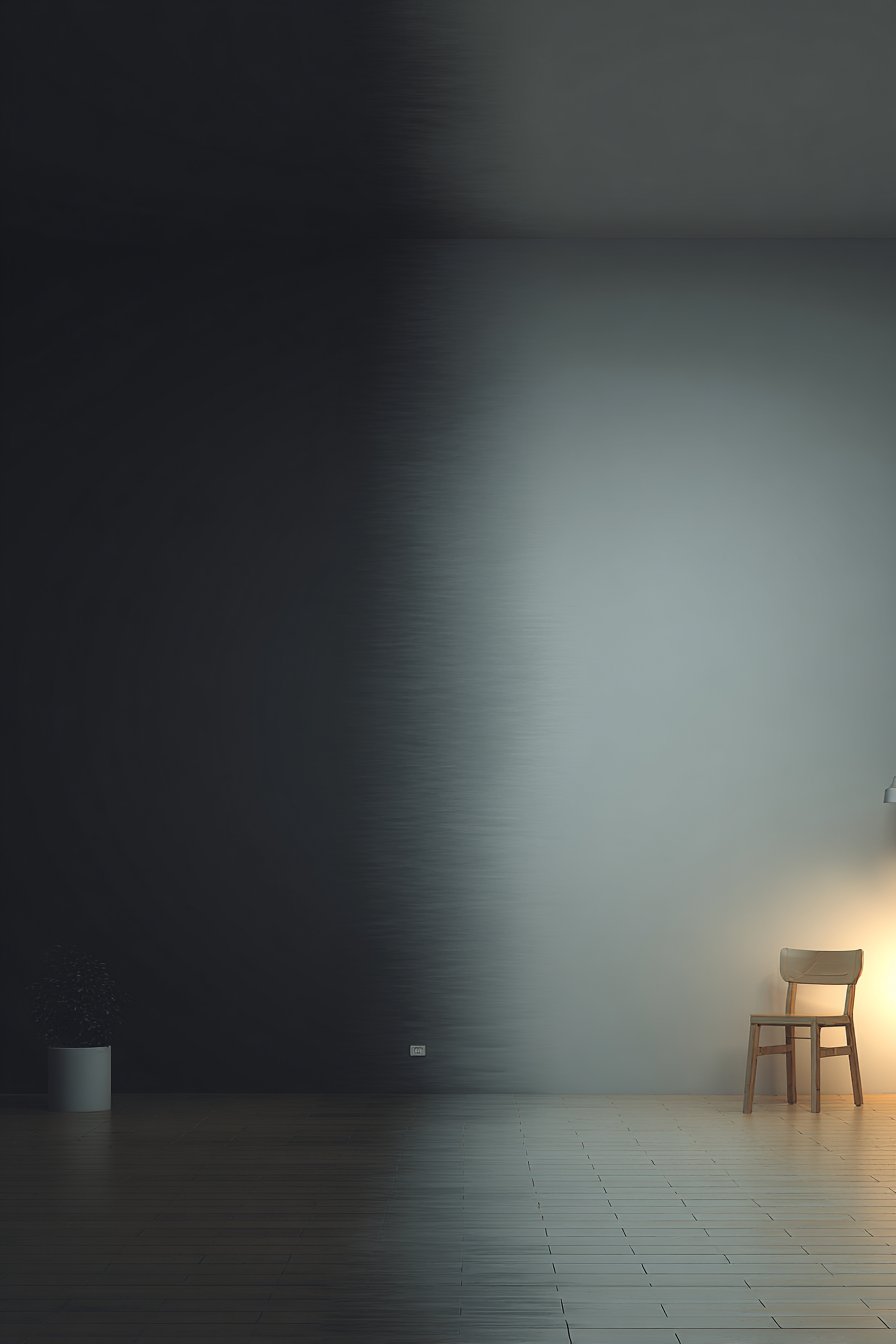
The monochromatic gray palette demonstrates design sophistication that appeals strongly to teenagers seeking mature aesthetics that distance themselves from childhood rooms while remaining appropriate for younger boys who appreciate the dramatic visual impact. Interior design photography captures the artistic paint application and sophisticated room design, showing how gradient techniques elevate ordinary walls into artistic statements comparable to gallery installations. The feature wall approach, limiting the gradient to a single surface, prevents visual overwhelm while ensuring maximum impact for the effort invested.
Key Design Tips:
- Use at least five different gray shades from charcoal to ash to create smooth gradient without obvious color steps
- Work with a partner, with one person applying color bands while another immediately blends the transitions before paint sets
- Practice the gradient technique on large poster boards to perfect blending methods before attempting the actual wall
- Start painting early in the day to ensure adequate time for blending work before paint begins to dry and become unworkable
- Keep opposite walls neutral white to provide visual relief and prevent the room from feeling too dark or enclosed by gradient effects
Why These Boys’ Room Paint Ideas Represent the Best Design Approaches
The twenty-five boys’ room paint ideas presented in this comprehensive guide represent the finest approaches to creating functional, beautiful, and age-appropriate sleeping spaces through strategic paint selection and application. These concepts have been carefully curated to address the diverse needs, preferences, and practical considerations that families face when designing boys’ bedrooms, from toddlerhood through teenage years. The variety encompasses traditional and contemporary styles, bold statements and subtle sophistication, single-color simplicity and complex multi-hue techniques, ensuring that every family can discover approaches aligned with their aesthetic preferences, budget constraints, and skill levels.
What distinguishes these boys’ room paint ideas as superior design solutions is their foundation in proven color theory, psychological understanding, and practical application wisdom gained through decades of professional interior design experience. Each concept balances aesthetic appeal with functional considerations like durability, ease of maintenance, and adaptability to changing preferences. The emphasis on creating spaces that support healthy development, encourage creativity, and provide comfortable environments for both energetic play and peaceful rest demonstrates comprehensive understanding of how paint choices influence daily lived experiences within bedrooms.
The range of techniques explored, from simple single-color applications to complex gradients, geometric patterns, and specialty paint formulations, provides families with options appropriate to various skill levels and ambition. Beginners can achieve beautiful results through straightforward accent walls or two-tone divisions, while more experienced DIY enthusiasts can challenge themselves with ombre effects, stenciled patterns, or artistic murals. This accessibility ensures that creating beautiful boys’ rooms through paint remains achievable for average homeowners rather than requiring professional intervention for every project.
The color palettes represented span the spectrum from energizing warm tones like terracotta and butterscotch yellow to calming cool hues like navy, teal, and various grays, acknowledging that different children respond positively to different color temperatures and intensities. This variety respects individual differences in personality, temperament, and sensory preferences rather than suggesting one-size-fits-all solutions. Understanding that some children thrive with bold, saturated colors while others prefer gentle, muted tones allows families to select approaches aligned with their child’s specific needs and comfort levels.
The practical advantages embedded in these boys’ room paint ideas, including strategic placement of darker colors in high-contact zones, use of durable finishes in areas requiring frequent cleaning, and selection of timeless palettes that accommodate changing interests, demonstrate real-world wisdom that extends beyond mere aesthetics. These considerations acknowledge that children’s rooms must function as actual living spaces subjected to daily use, occasional rough treatment, and evolving decorative preferences rather than existing as static showrooms maintained in perpetual pristine condition.
The emphasis on creating foundations that grow with children rather than requiring complete overhauls every few years represents economically sensible design that respects family budgets and time constraints. Paint schemes built around sophisticated neutrals with flexible accent opportunities, classic color combinations with enduring appeal, and techniques that accommodate evolving décor allow rooms to transition through developmental stages with minimal modification. This longevity makes the initial investment in quality paint and careful application worthwhile, as the results continue serving well for many years.
Finally, these boys’ room paint ideas excel because they acknowledge and celebrate the reality that boys’ rooms serve multiple essential functions beyond simple sleeping spaces. The best designs support focused studying through appropriate color choices that enhance concentration, encourage creativity through interactive elements like chalkboard walls or magnetic surfaces, promote physical health through calming palettes that support quality sleep, and nurture emotional wellbeing by creating personalized environments where children feel comfortable, secure, and genuinely at home.
Conclusion
The journey through these twenty-five carefully curated boys’ room paint ideas demonstrates the remarkable transformative power that thoughtful paint selection and application can bring to children’s spaces. From classic navy and white combinations that provide timeless sophistication to adventurous mountain murals that inspire exploration and creativity, each approach offers unique benefits while sharing common commitments to quality, functionality, and design excellence. The techniques explored range from accessible beginner projects requiring minimal skill to advanced applications challenging even experienced DIY enthusiasts, ensuring that families at every experience level can discover approaches aligned with their capabilities and ambitions.
What emerges most clearly from this comprehensive exploration is that successful boys’ room design through paint requires balancing multiple considerations simultaneously: aesthetic appeal that creates visually pleasing environments, psychological appropriateness that supports healthy development and emotional wellbeing, practical durability that withstands daily use without constant maintenance, and adaptable flexibility that accommodates changing interests and maturing tastes. The best paint ideas address all these dimensions rather than prioritizing one aspect at the expense of others, creating holistic solutions that serve children’s comprehensive needs.
As you consider which approaches might work best for your specific situation, remember that the most successful boys’ room paint ideas ultimately align with your child’s personality, your family’s lifestyle, and your home’s existing architecture and design context. Don’t feel pressured to follow trends or replicate magazine-perfect results if those approaches don’t resonate with your particular circumstances. Instead, use these ideas as inspiration and starting points for developing customized solutions that reflect your unique situation. Experiment with sample paints, involve your child in age-appropriate decision-making, and approach the project with flexibility and creativity rather than rigid adherence to predetermined outcomes.
The investment you make in creating thoughtfully painted spaces for your children extends far beyond simple decoration. These environments influence daily moods, support developmental milestones, and create lasting memories that children carry into adulthood. By approaching boys’ room paint ideas with intention, care, and understanding of the principles explored throughout this guide, you create foundations for spaces that truly serve your children’s needs while bringing beauty and personality to your home. Whether you choose bold statement walls, subtle tonal variations, functional specialty paints, or classic timeless combinations, the effort invested in selecting and applying paint thoughtfully will reward your family with spaces that enhance daily life and provide genuine comfort, inspiration, and joy for years to come.
