
The modern home has evolved dramatically over recent years, with the boundaries between work and rest becoming increasingly fluid. As remote work continues to shape our daily lives, the bedroom office has emerged as an essential design solution for those seeking to maximize limited square footage while maintaining distinct zones for productivity and relaxation. The challenge lies not in simply placing a desk in a bedroom, but in thoughtfully integrating a functional workspace that enhances rather than disrupts the room’s primary purpose as a sanctuary for rest and rejuvenation.
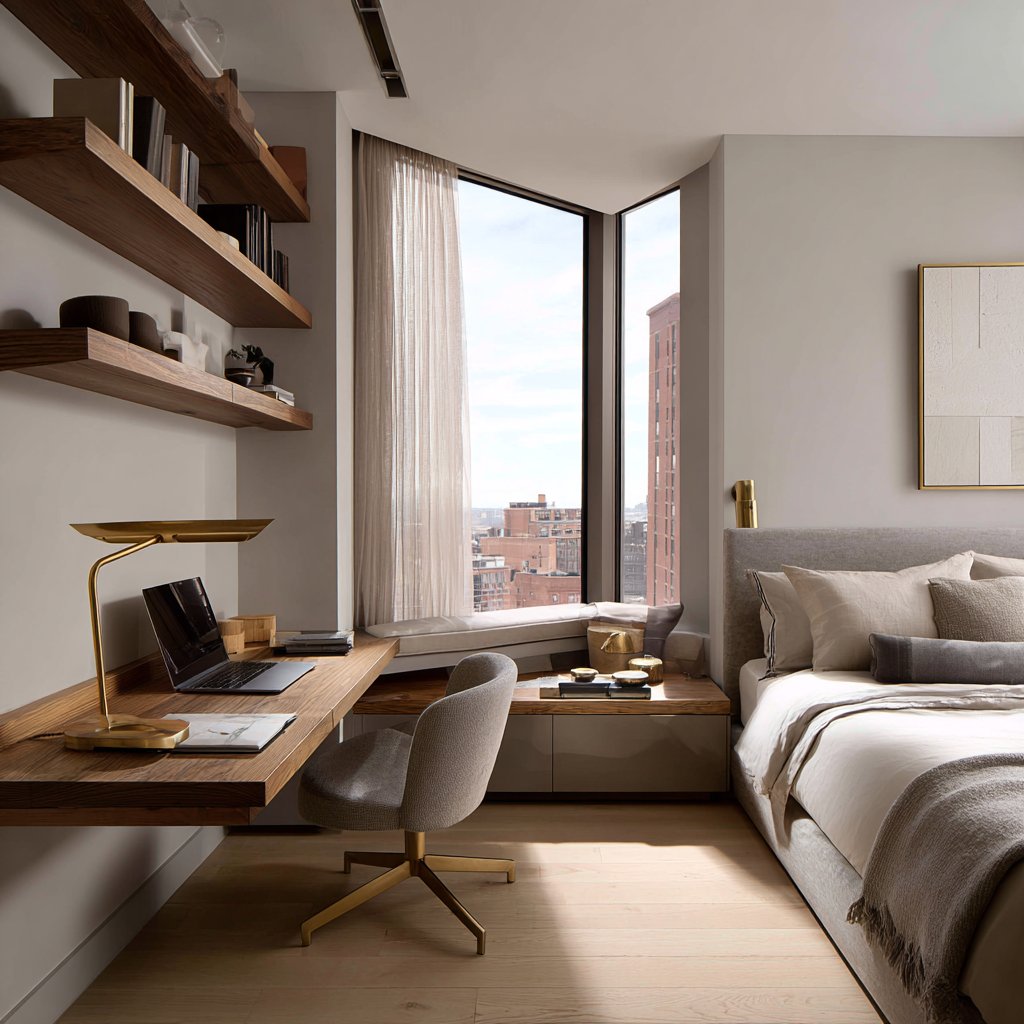
Creating a bedroom office requires a delicate balance between professional functionality and personal comfort. The most successful designs honor both aspects equally, ensuring that neither the work environment compromises sleep quality nor the bedroom aesthetic undermines professional focus. This integration demands careful consideration of furniture selection, spatial planning, visual separation techniques, and the psychological impact of sharing a single room for two distinctly different activities. From compact corner solutions to elaborate built-in systems, the possibilities are as varied as the individuals who will use these spaces.
Throughout this comprehensive guide, we’ll explore twenty-seven innovative bedroom office ideas that demonstrate how to seamlessly blend productivity with tranquility. These designs span a wide range of styles—from minimalist Scandinavian approaches to vintage-inspired setups, from industrial-modern statements to space-saving Murphy systems. Whether you’re working with a spacious master suite or a modest single room, these concepts offer practical inspiration backed by thoughtful design principles that address real-world challenges of dual-purpose living spaces.
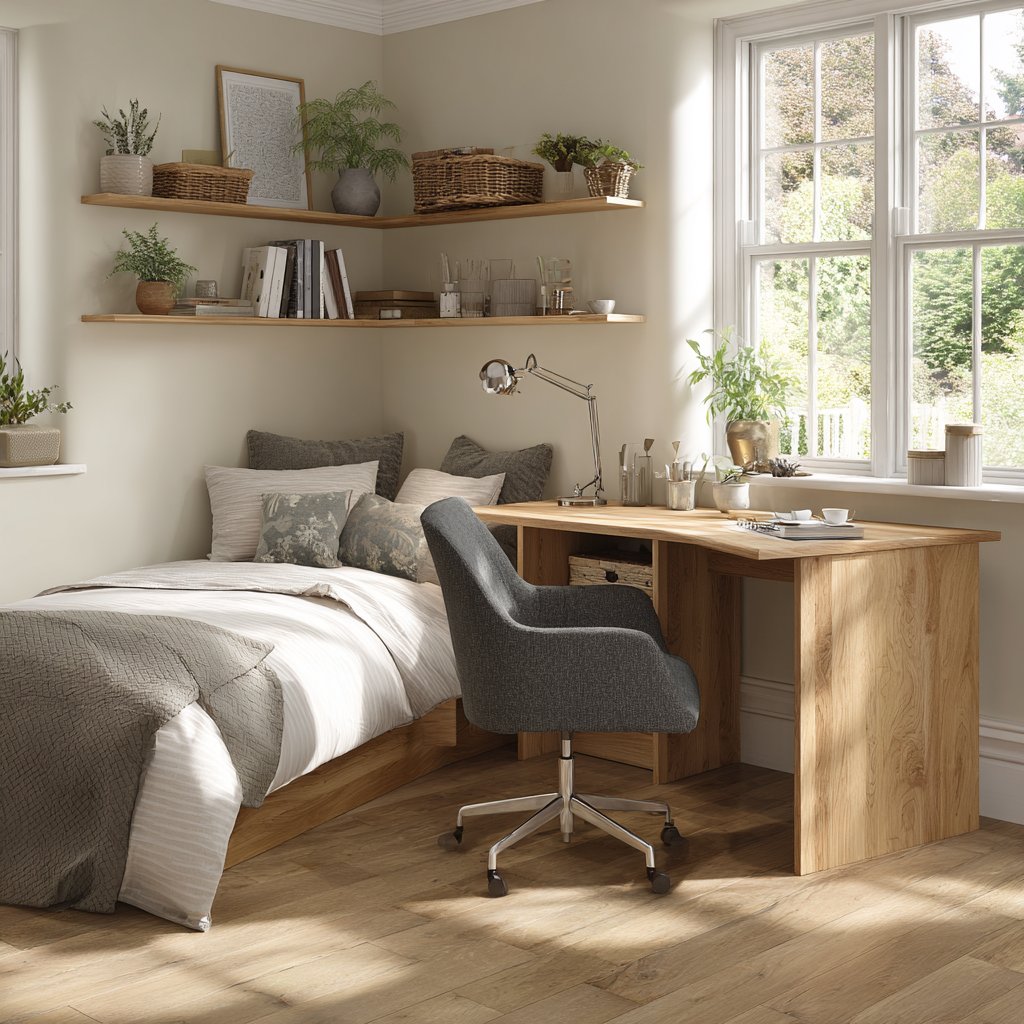
1. Maximizing Corner Space with Floating Oak Desks
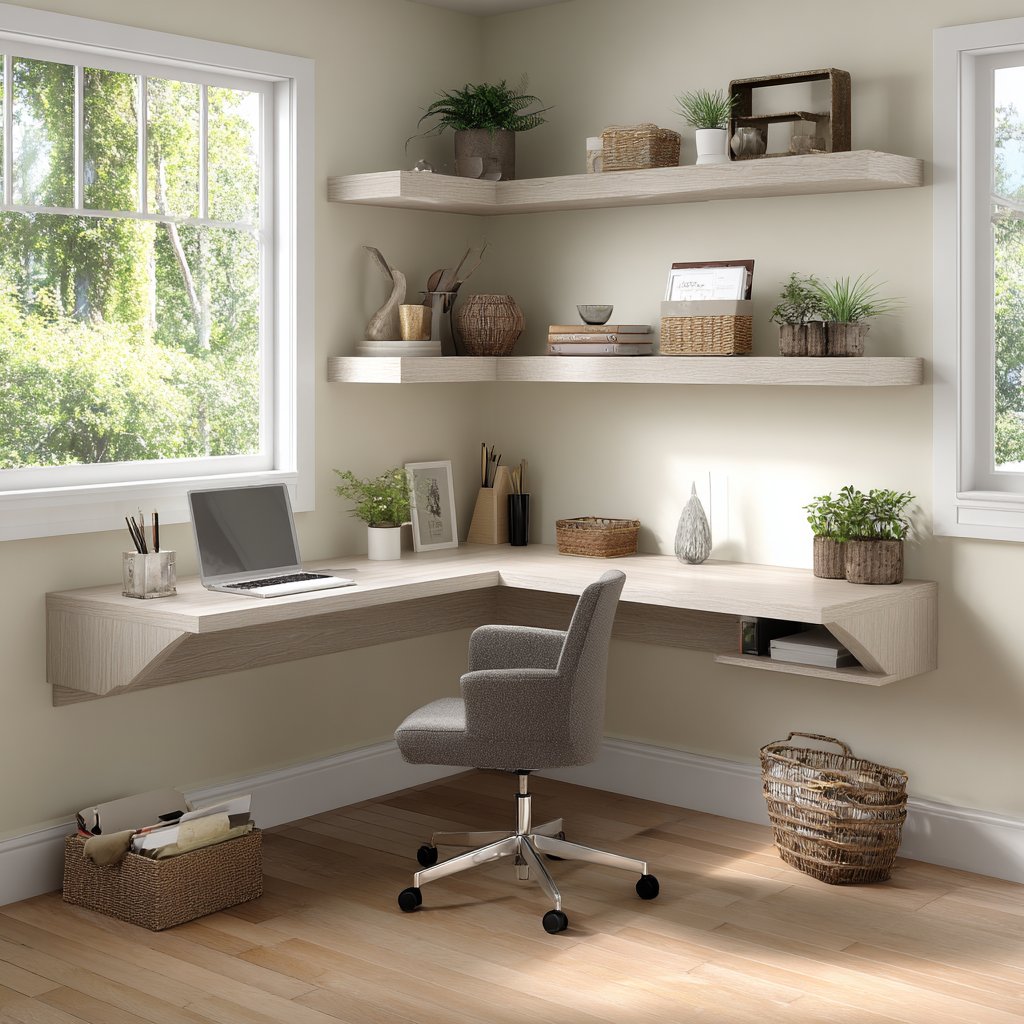
The floating corner desk represents one of the most elegant solutions for introducing workspace into a bedroom without overwhelming the room’s residential character. This design utilizes the often-underutilized corner area, transforming dead space into a highly functional work zone while maintaining an airy, uncluttered aesthetic that’s essential for bedroom tranquility. The light oak material brings warmth and natural beauty, its visible grain patterns adding organic texture that connects the workspace to the bedroom’s more relaxed elements. The floating installation creates visual lightness, allowing the eye to travel beneath the desk surface and making the room feel more spacious than it actually is.
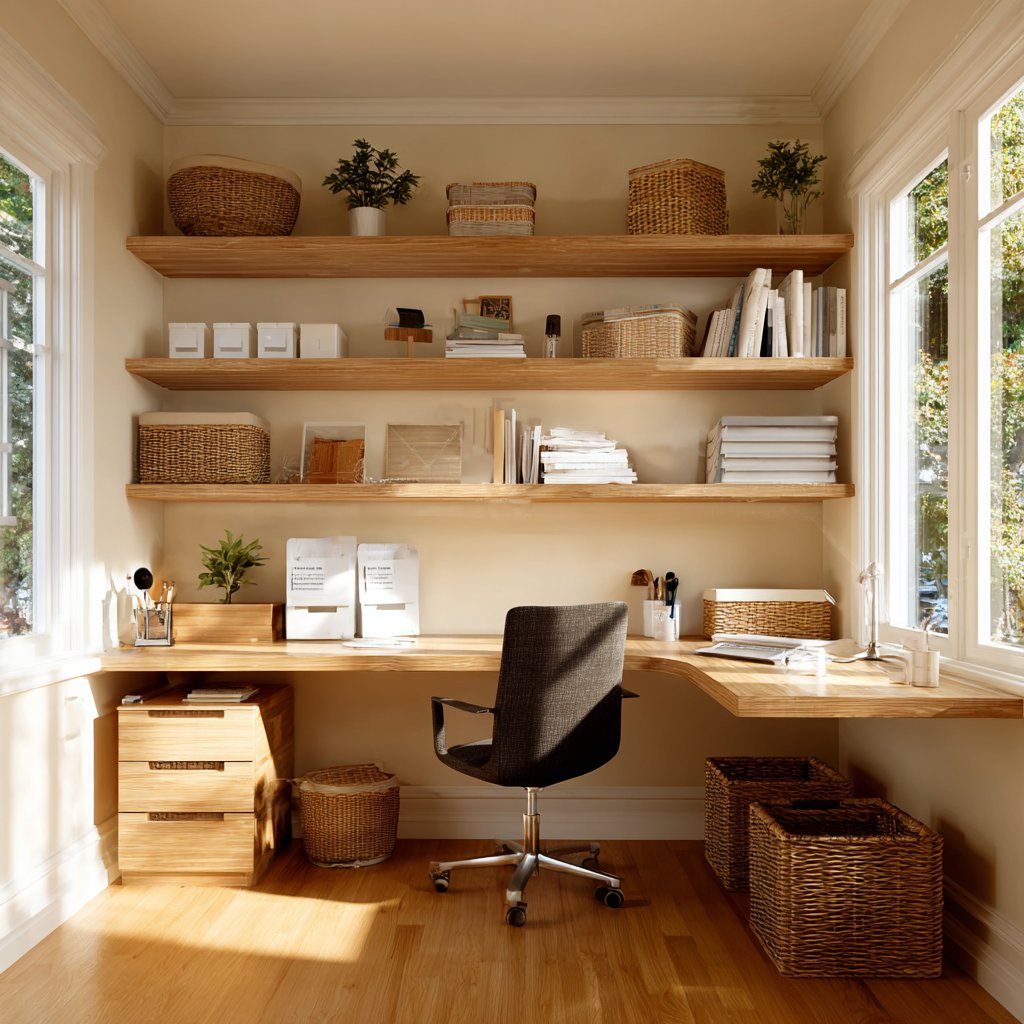
The L-shaped configuration of this corner desk provides surprisingly generous work surface area despite its compact footprint. This layout accommodates a laptop or monitor with ample room for notebooks, reference materials, and those essential coffee cups that fuel productive work sessions. The streamlined office chair in charcoal fabric offers a sophisticated contrast to the light wood while ensuring ergonomic support during extended work periods. When pushed beneath the desk, the chair disappears from view, maintaining the bedroom’s clean lines and uncluttered atmosphere during off-hours.
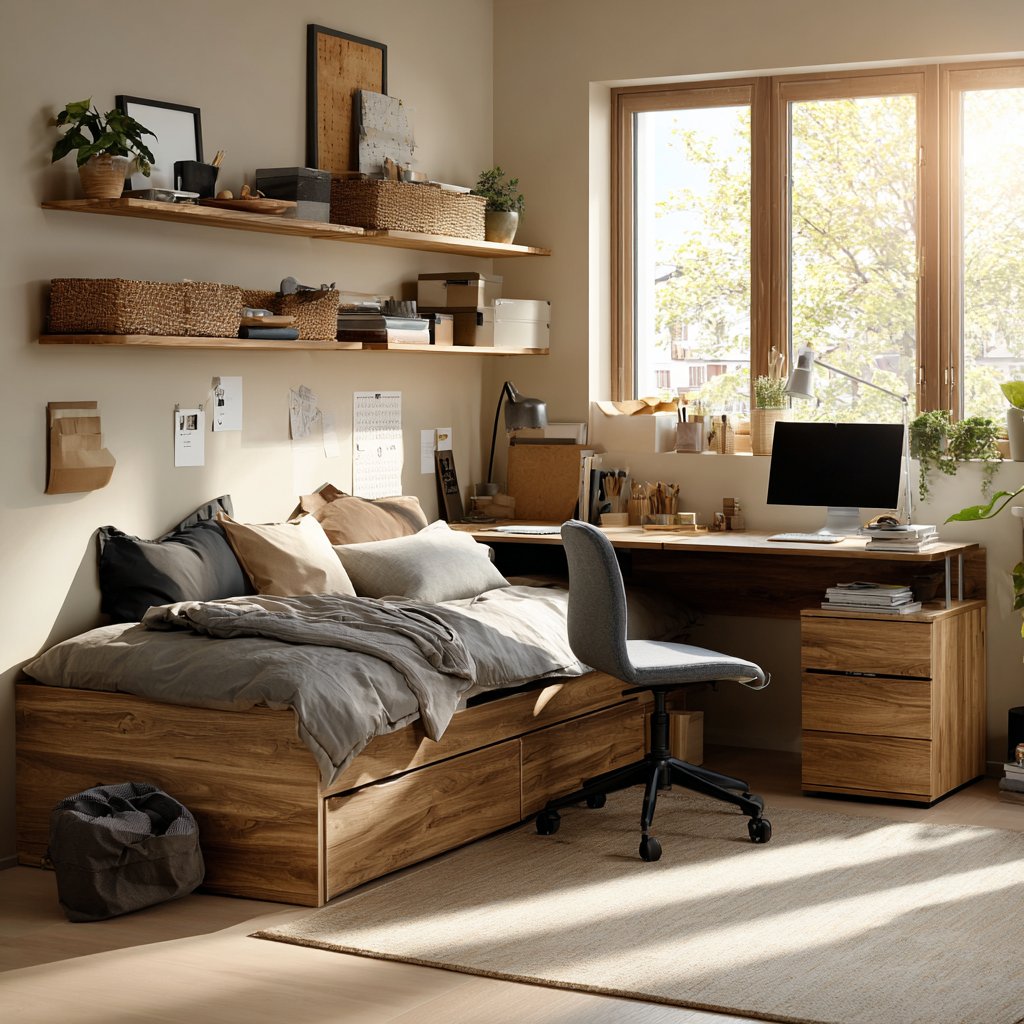
Above the desk, floating shelves in matching oak create vertical storage that draws the eye upward and emphasizes the room’s height. These shelves serve dual purposes—displaying decorative objects that personalize the space while housing practical office supplies in woven baskets that conceal clutter. The integration of small potted plants adds life and improves air quality, creating a more pleasant working environment. The soft cream walls and natural wood flooring provide a neutral, calming backdrop that allows the workspace to integrate seamlessly without competing for visual attention.
Key Design Tips:
- Install the floating desk at proper desk height (typically 28-30 inches) for ergonomic comfort during extended work sessions
- Choose an L-shaped corner configuration to maximize surface area while minimizing floor space consumption
- Select a chair with a compact footprint that tucks completely under the desk when not in use
- Use matching wood tones for desk and shelves to create visual cohesion and intentional design
- Incorporate woven storage baskets to conceal office clutter while adding natural texture
- Position the desk near windows when possible to capitalize on natural daylight for both productivity and mood enhancement
- Keep the color palette neutral and calming to maintain the bedroom’s restful atmosphere
2. Traditional Elegance with Secretary Desk Integration
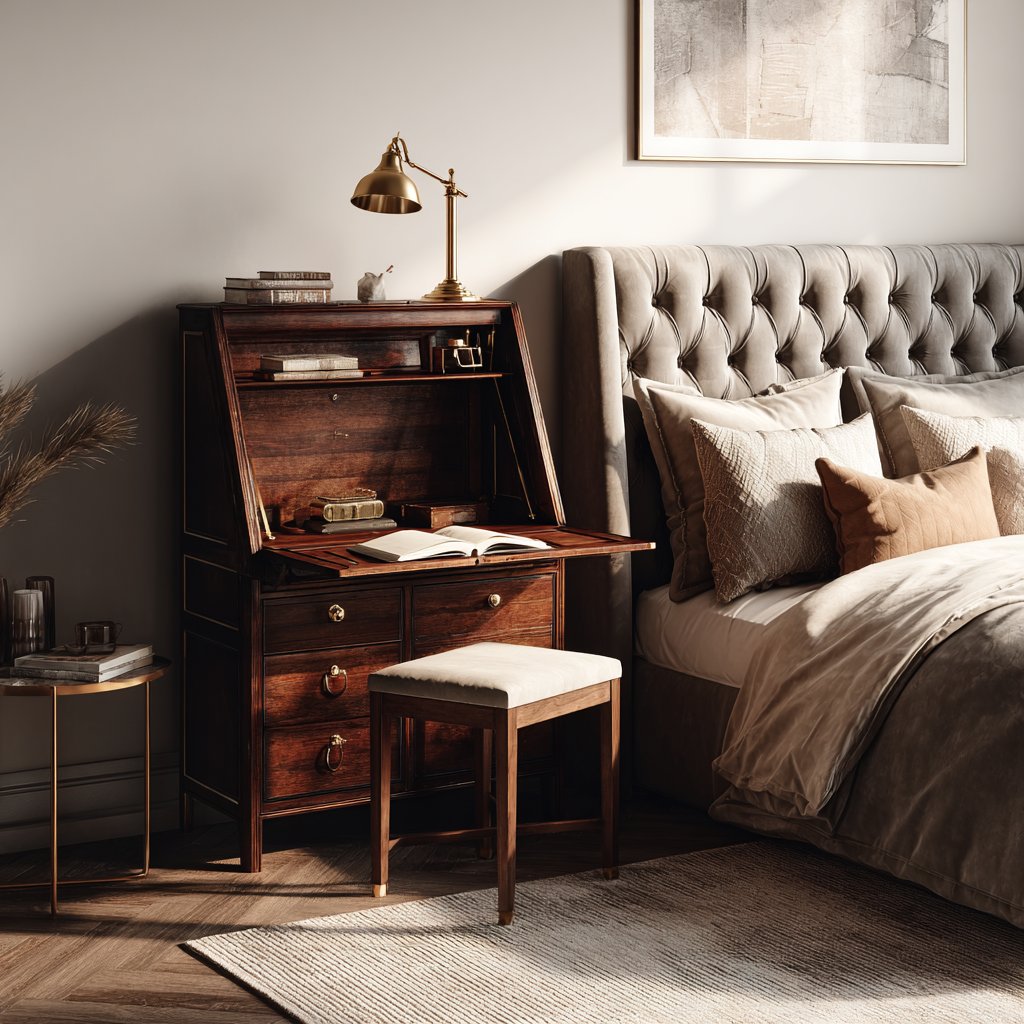
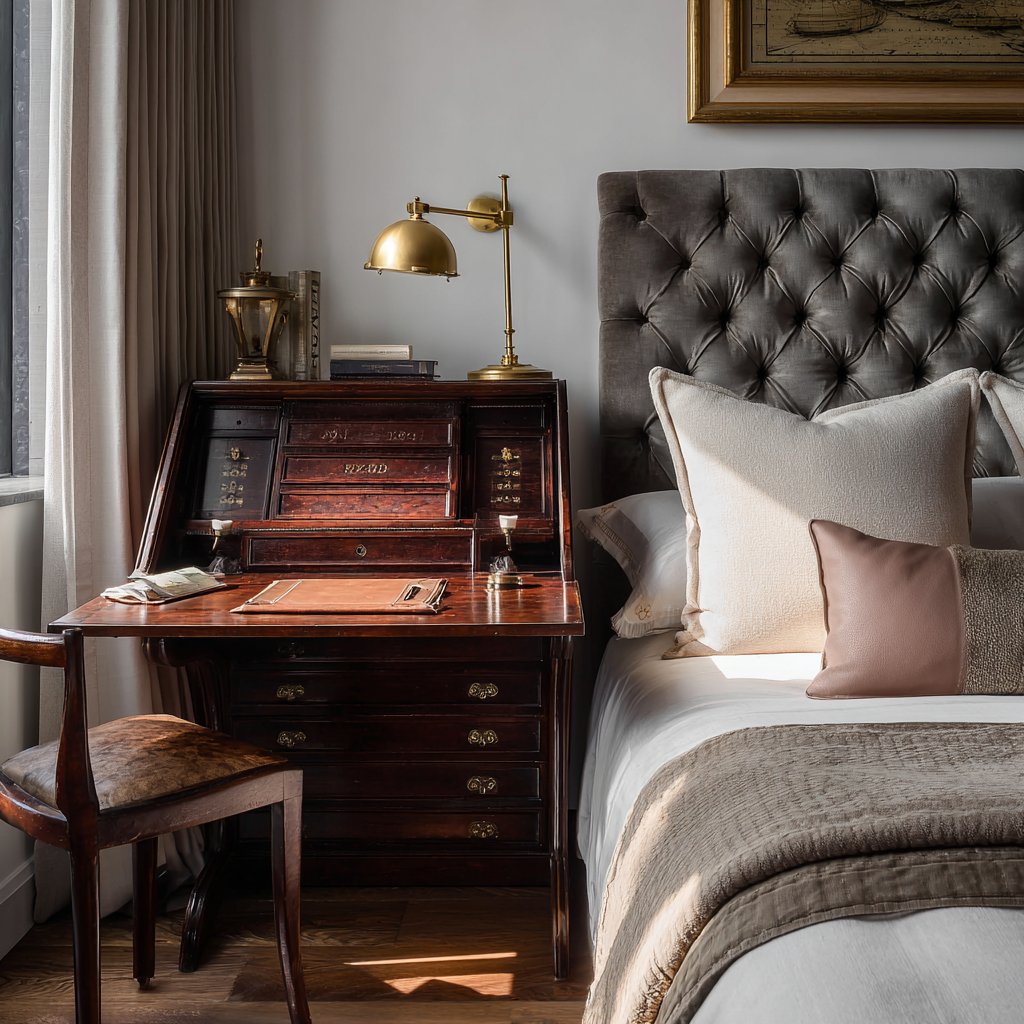
The secretary desk brings a sense of refined nostalgia to the bedroom office concept, offering a furniture piece that functions as both practical workspace and decorative statement. This approach particularly suits those who appreciate traditional aesthetics and the tangible connection to historical craftsmanship that antique or reproduction furniture provides. The dark mahogany construction exudes timeless elegance, its rich tones adding depth and sophistication to the bedroom environment. The fold-down writing surface represents ingenious space-saving design that predates modern minimalism, allowing the desk to transform from display piece to functional workspace in seconds.
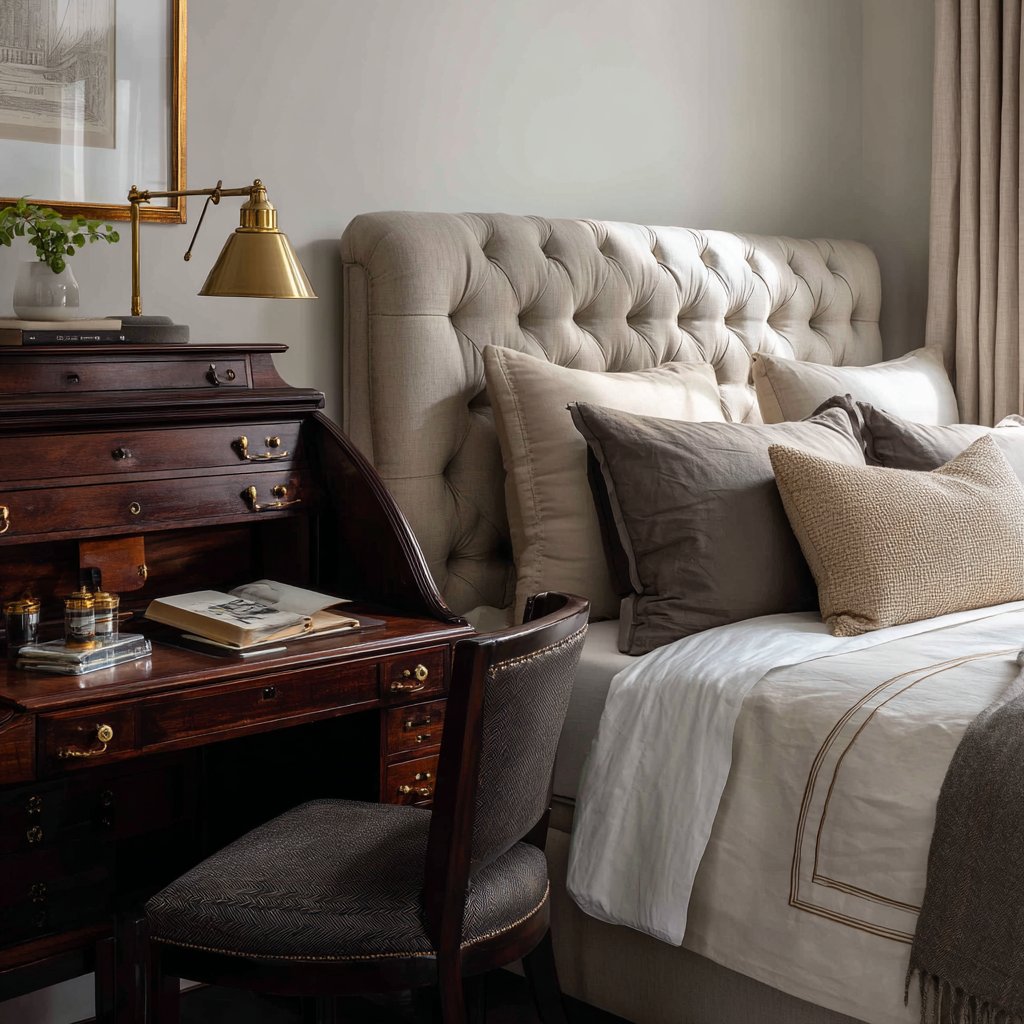
Positioned strategically between two bedside tables, this secretary desk creates a charming symmetry that grounds the bedroom’s layout while establishing a dedicated work nook. The placement feels intentional rather than forced, as though the desk has always belonged in this space. The numerous small drawers and compartments offer organized storage for correspondence, writing instruments, and office essentials, each cubby designed with the precision and attention to detail characteristic of fine furniture craftsmanship. The vintage brass desk lamp casts warm, focused light onto the work surface, while leather desk accessories—perhaps a blotter, letter holder, or pen cup—complement the classic aesthetic.
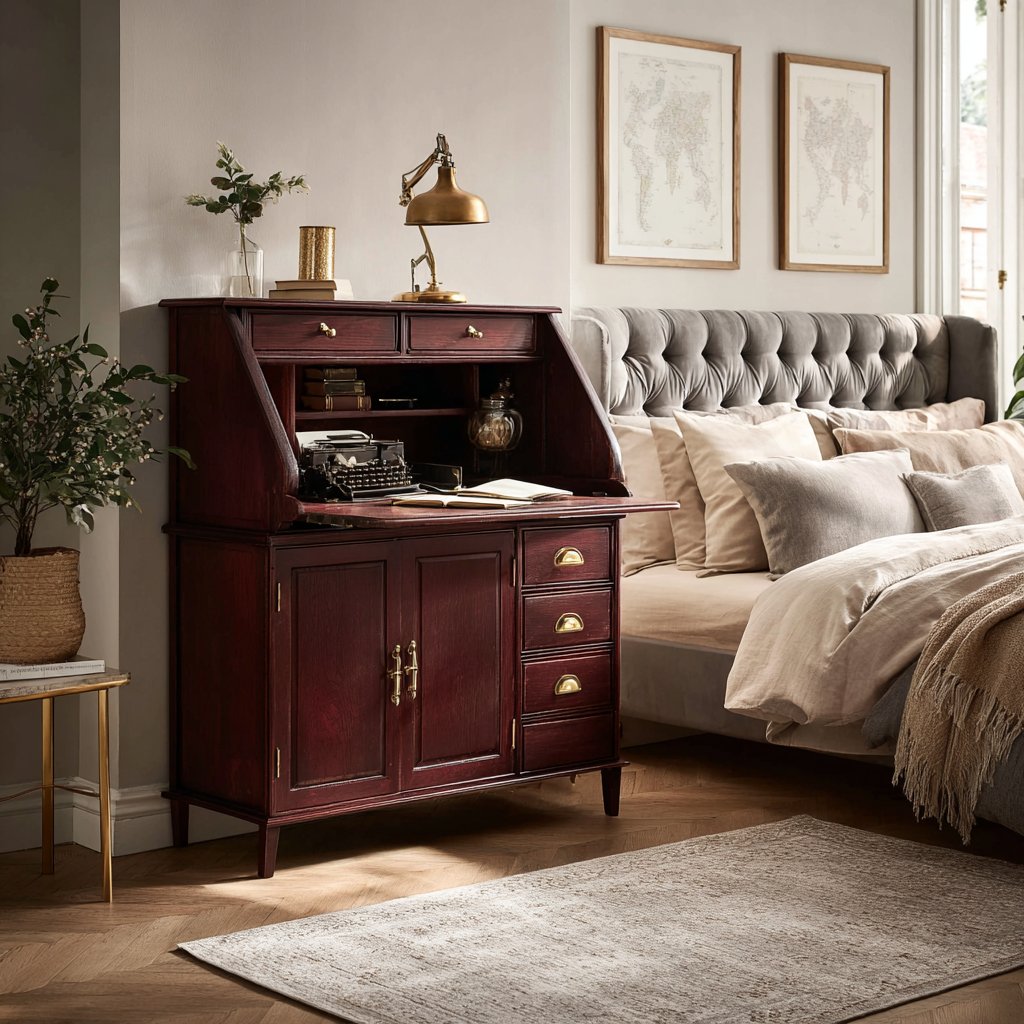
The surrounding bedroom maintains traditional design sensibilities with a tufted headboard that echoes the desk’s attention to detail and craftsmanship. Layered bedding in ivory and taupe tones creates a neutral, sophisticated palette that allows the darker wood furniture to make its statement without overwhelming the space. The cohesive design approach ensures that the secretary desk feels like a natural extension of the bedroom’s aesthetic rather than an office intrusion into personal space.
Key Design Tips:
- Select a secretary desk with a fold-down surface that closes to conceal work clutter and maintain bedroom aesthetics
- Position the desk to create visual balance within the room’s furniture arrangement
- Choose complementary hardware finishes across all furniture pieces for design cohesion
- Invest in quality desk accessories that enhance rather than detract from the traditional aesthetic
- Use warm-toned lighting that creates ambiance while providing adequate task illumination
- Consider the desk’s closed appearance—it should function as an attractive furniture piece even when not in use
- Maintain consistent style language throughout the room to ensure the workspace feels integrated
3. Built-In Minimalism for Seamless Integration
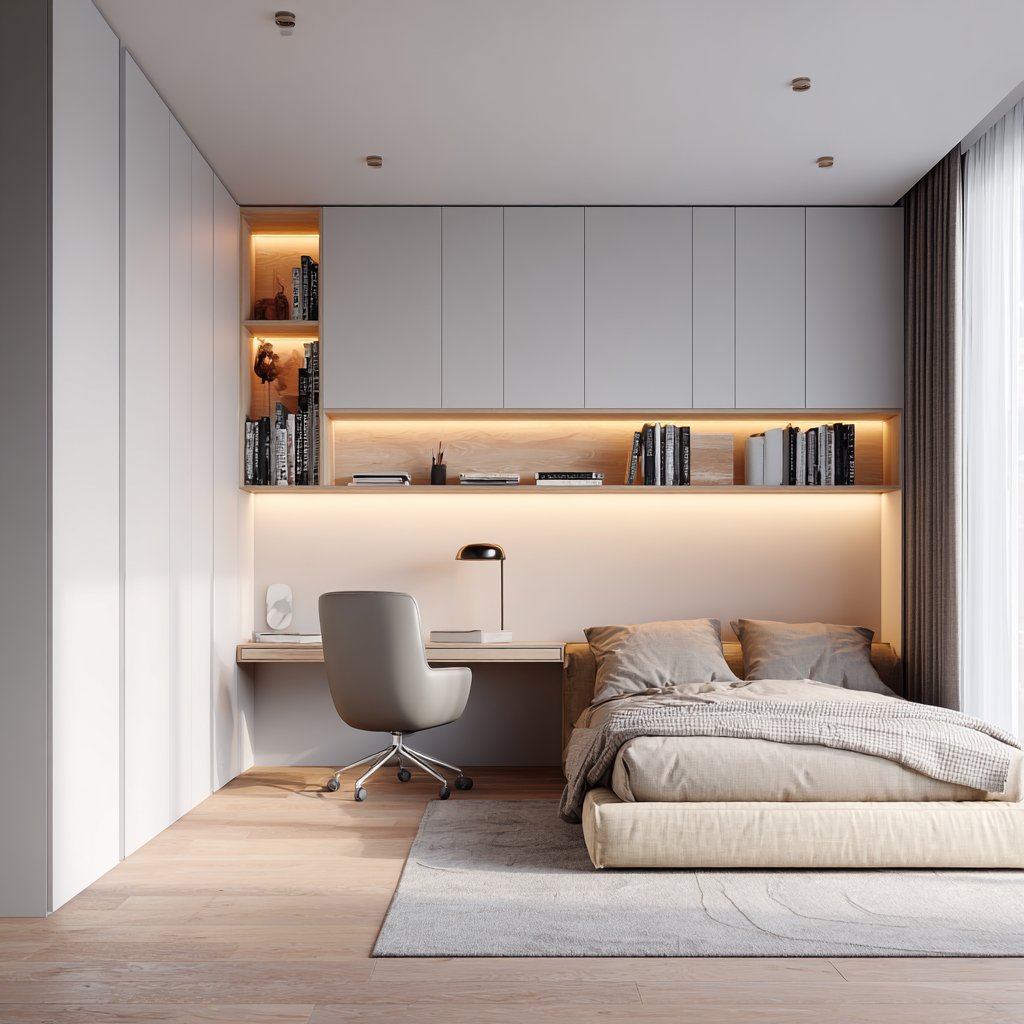
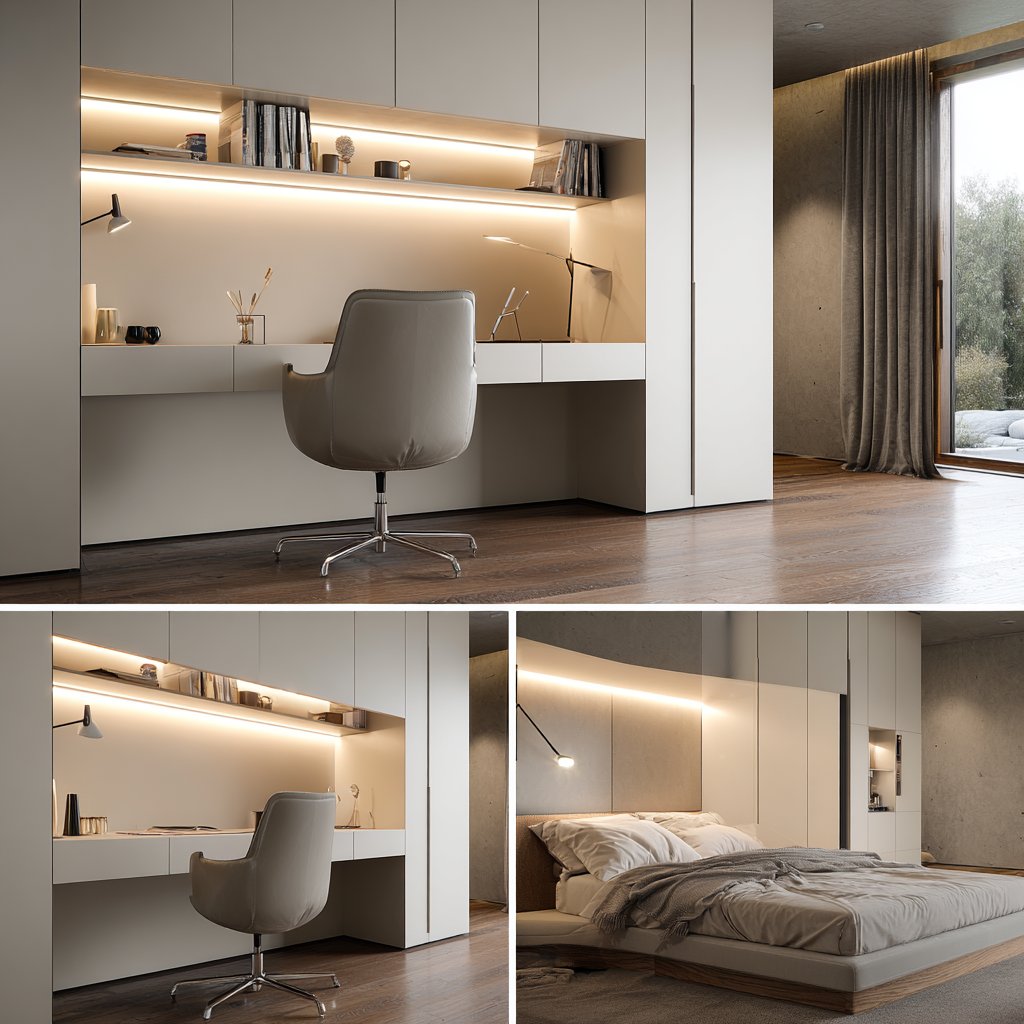
The built-in desk approach represents the ultimate expression of intentional design, where workspace becomes an architectural feature rather than added furniture. This concept particularly appeals to those who value clean lines, streamlined aesthetics, and the psychological benefit of clearly defined zones within a single room. The alcove installation creates a dedicated workspace that feels separate yet connected, neither dominating the bedroom nor appearing as an afterthought. The matte white lacquer finish embodies modern minimalism, its smooth surface reflecting light and contributing to a sense of spaciousness and clarity.
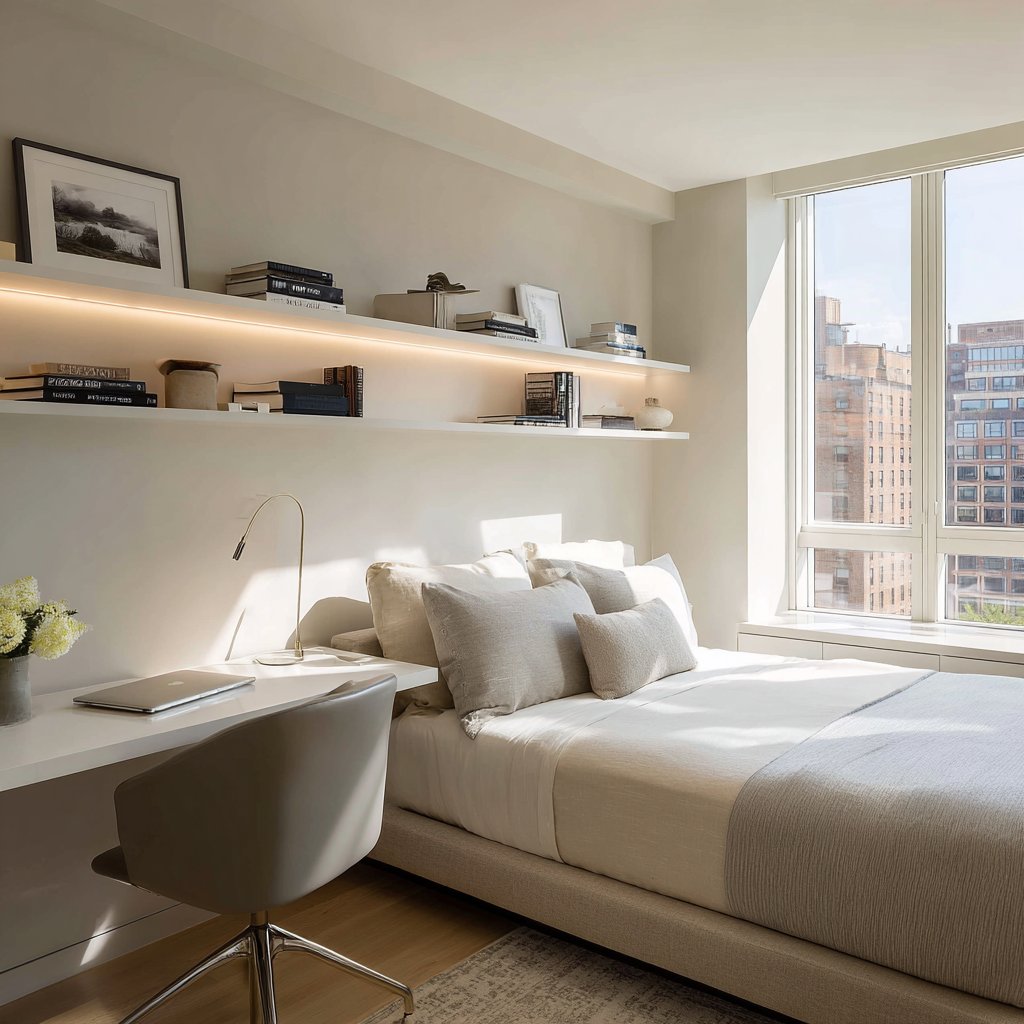
The genius of this design lies in its integrated features that address the practical challenges of bedroom offices. Cable management systems hide the visual chaos of charging cords and computer connections, maintaining the clean aesthetic that’s essential for mental clarity and restful sleep. Hidden storage compartments cleverly conceal office supplies, files, and work materials, ensuring they’re accessible during work hours but invisible during rest periods. The adjustable task chair in soft grey leather provides ergonomic support without visual heaviness, its neutral tone blending with the overall palette.
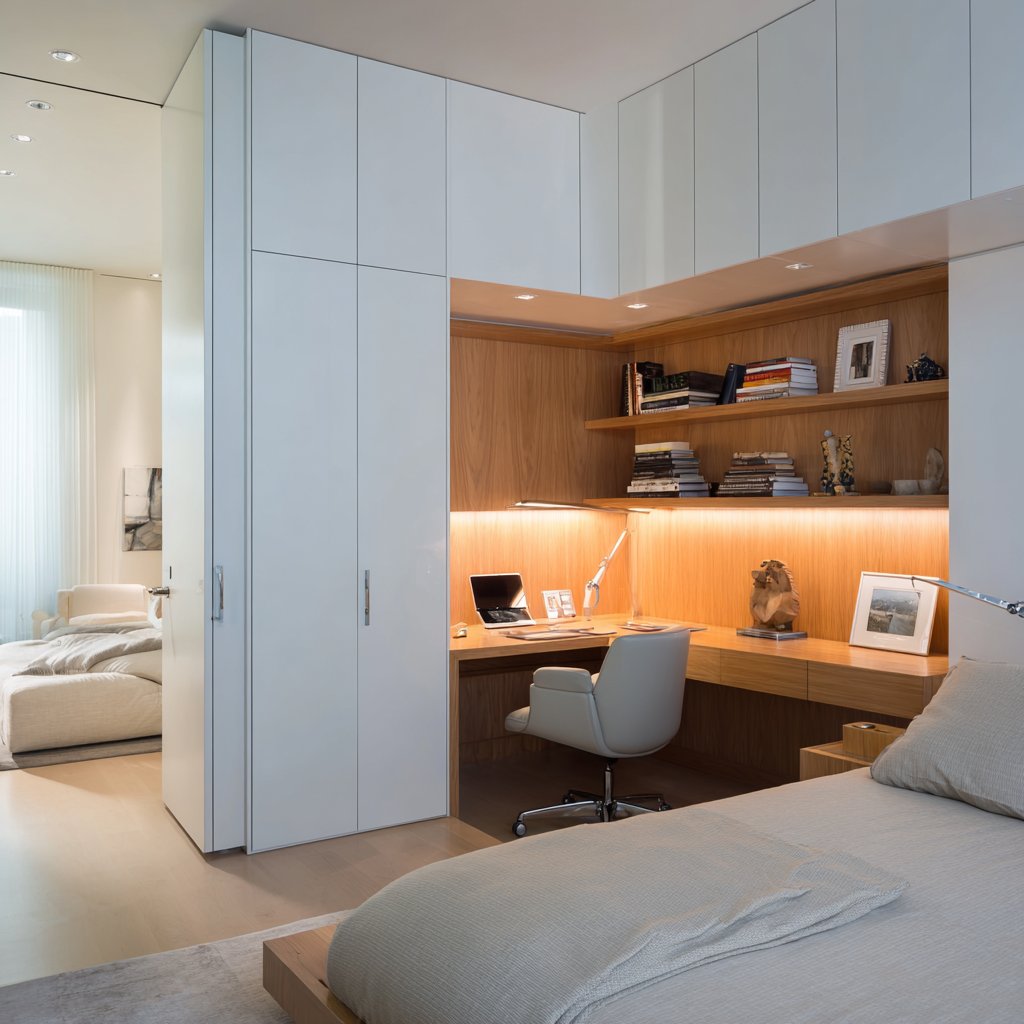
LED strip lighting under wall-mounted shelves creates layered illumination that serves multiple purposes. During work hours, it provides adequate task lighting without harsh overhead glare. During evening hours, dimmed to a soft glow, it can serve as ambient lighting that doesn’t disrupt circadian rhythms. The low-profile platform bed maintains the room’s horizontal emphasis and minimalist aesthetic, while neutral bedding ensures the sleep zone feels calm and uncluttered.
Key Design Tips:
- Plan built-in desks during construction or renovation for best integration with room architecture
- Include integrated cable management to maintain clean lines and reduce visual clutter
- Specify hidden storage compartments for office supplies that need to disappear outside work hours
- Choose matte finishes that won’t show fingerprints or create glare on screens
- Install adjustable LED lighting that can be dimmed for different times of day and activities
- Select an alcove or recess location that naturally creates separation from the sleep zone
- Maintain consistent materials and finishes throughout built-ins for cohesive design
- Consider the desk’s proportions carefully—too large overwhelms, too small proves impractical
4. Space-Saving Murphy Desk Innovation
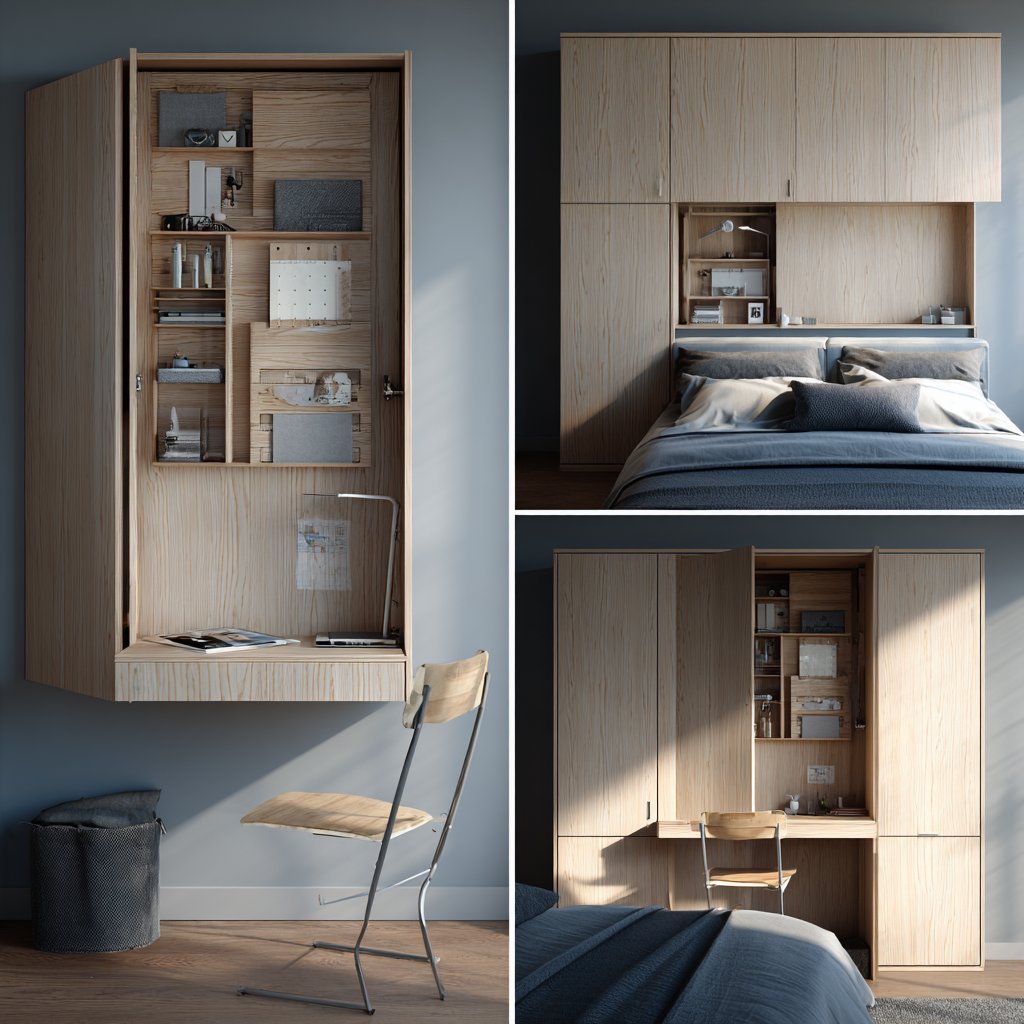
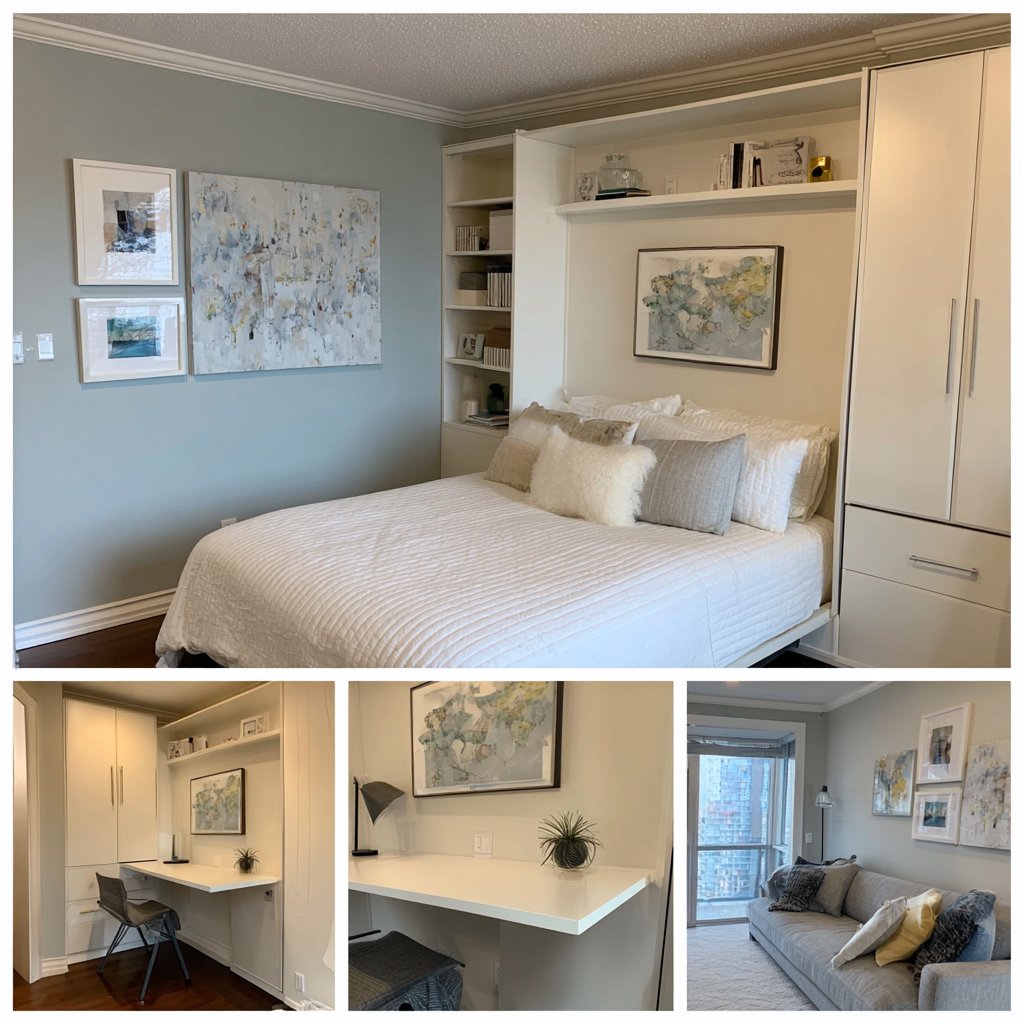
The Murphy desk represents perhaps the most dramatic transformation solution for bedroom offices, offering complete functionality during work hours and total concealment during rest periods. This innovative approach addresses one of the primary challenges of bedroom offices—the psychological difficulty of truly disconnecting from work when your desk remains visible from bed. When folded against the wall, this design in pale ash wood reveals bedroom space that appears completely dedicated to rest and relaxation. When deployed, it provides a functional workspace complete with fold-down desk surface, integrated bulletin board for visual reminders, and small storage cubbies for immediate-access office essentials.
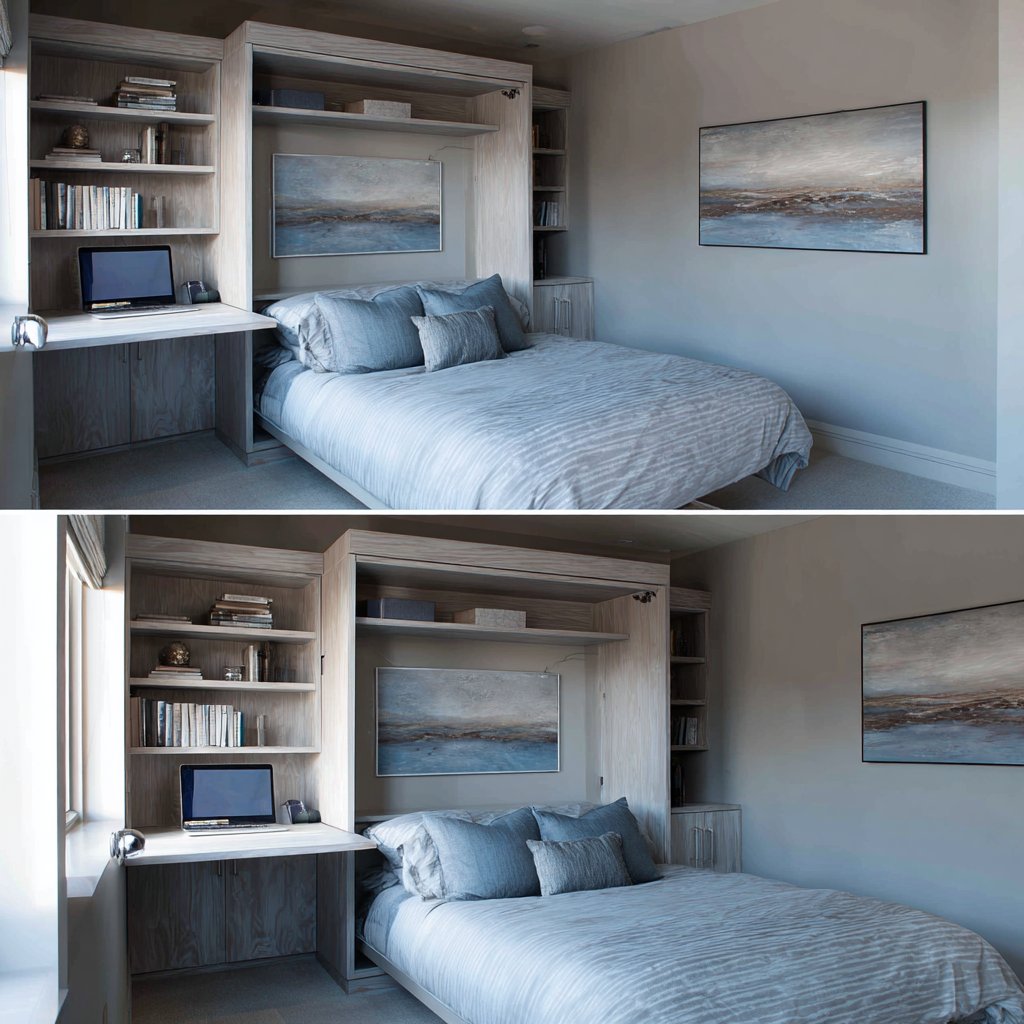
The mechanics of the Murphy desk deserve appreciation—the fold-down mechanism must be smooth, stable, and secure enough to support work equipment without wobbling or concern about collapse. Quality hardware makes the difference between a frustrating daily struggle and an elegant transformation that takes mere seconds. The integrated storage transforms the wall unit from simple desk to complete office system, with dedicated spaces for everything needed during work hours. The bulletin board surface keeps important reminders visible without cluttering horizontal surfaces.
The slim folding chair completes the temporary office setup, storing neatly in the closet when not needed. This complete concealment allows the bedroom to maintain its serene atmosphere with soft blue-grey walls and simple furnishings that promote rest rather than productivity. The dual-configuration design acknowledges that modern life requires flexibility—we need spaces that adapt to our changing needs throughout the day rather than forcing us to adapt to rigid room designations.
Key Design Tips:
- Invest in high-quality hardware mechanisms that operate smoothly and support adequate weight
- Include integrated storage for all essential office supplies to avoid needing additional furniture
- Choose a folding chair that’s comfortable enough for extended work but stores compactly
- Install the unit at proper ergonomic height when deployed for comfortable extended use
- Consider weight capacity carefully if using heavy equipment like desktop computers
- Paint or stain the closed unit to match bedroom walls for seamless visual integration
- Plan storage for the chair that’s easily accessible but doesn’t clutter the bedroom space
- Test the mechanism multiple times before finalizing to ensure smooth daily operation
5. Window Desk for Natural Light and Inspiration
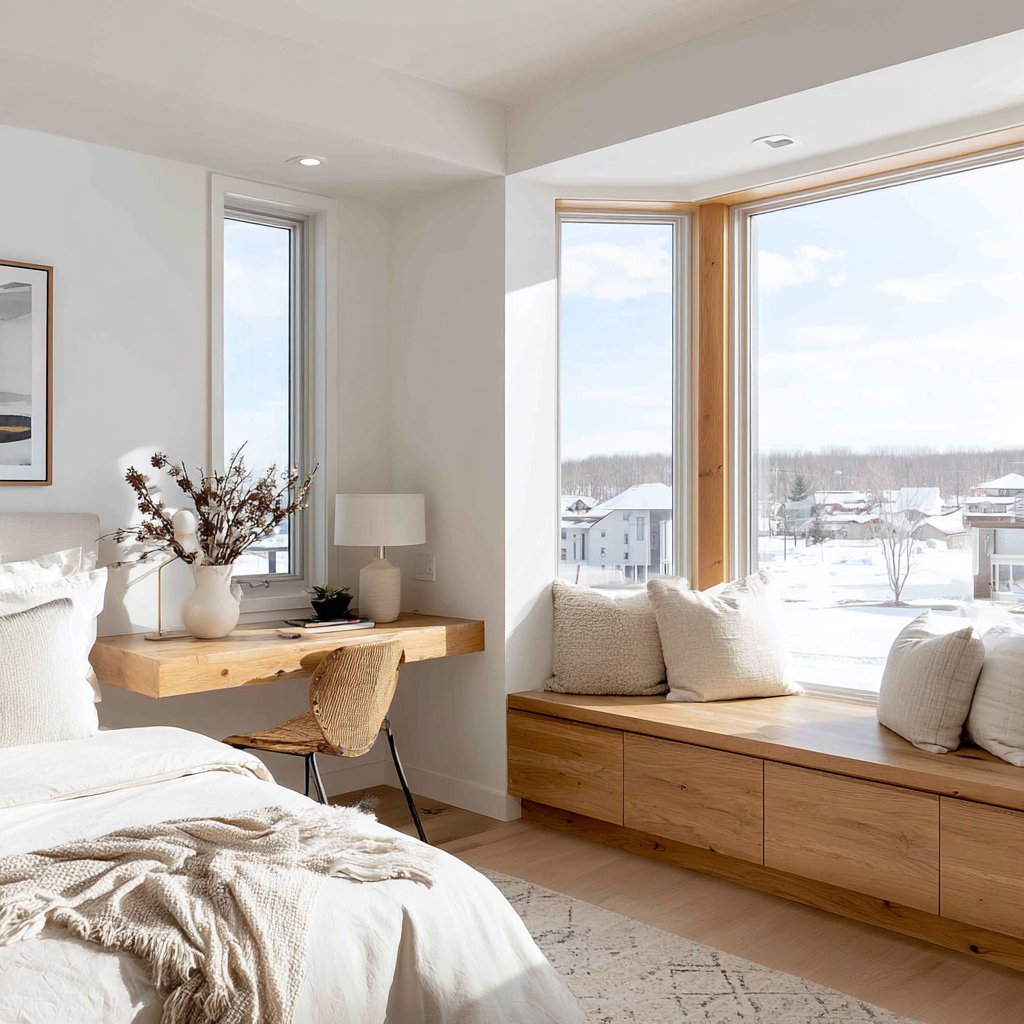
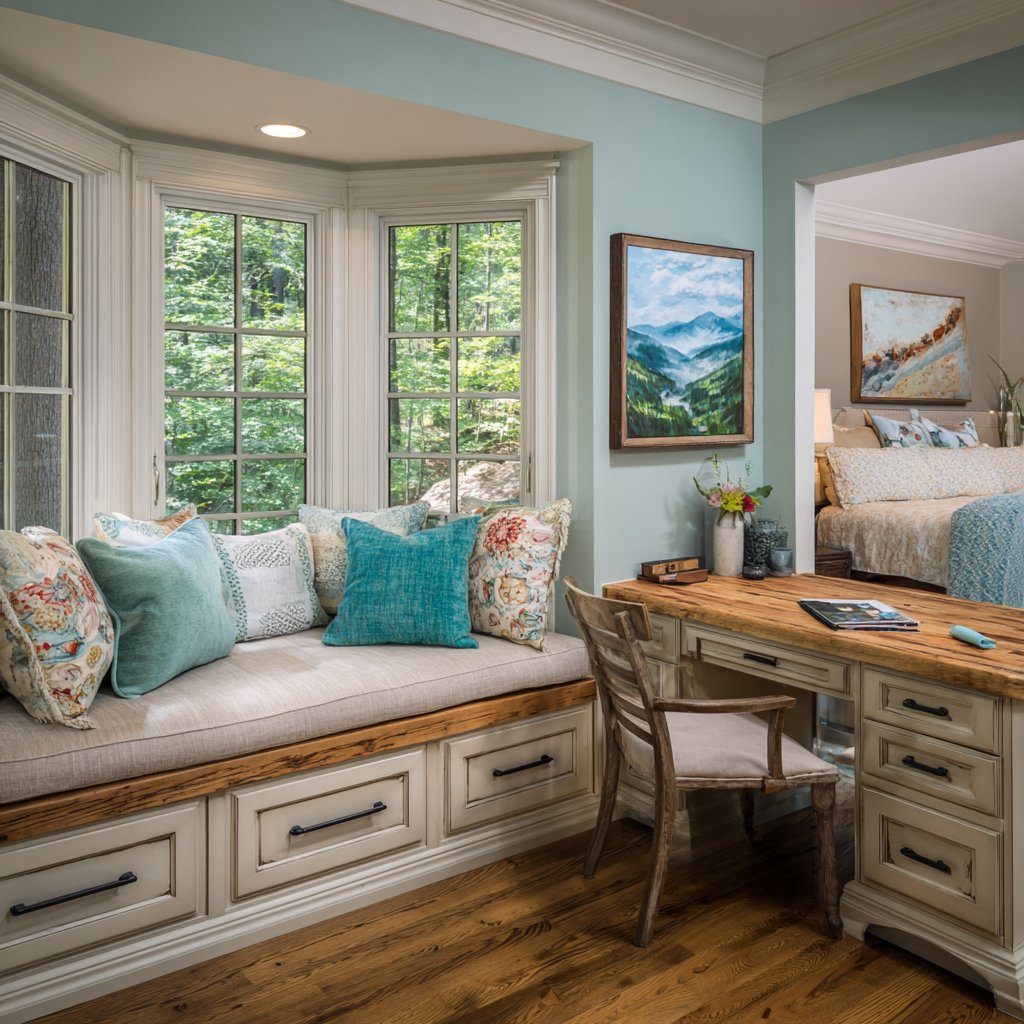
Few office locations offer more appeal than a workspace bathed in natural light with views that provide mental breaks and creative inspiration. The window desk concept capitalizes on what is often the bedroom’s most desirable feature—the connection to the outdoors. This custom-built solution in reclaimed pine follows the window’s contour, whether that’s a traditional rectangular opening or a more architectural bay window configuration. The result is a workspace that feels naturally integrated into the room’s structure rather than imposed upon it.
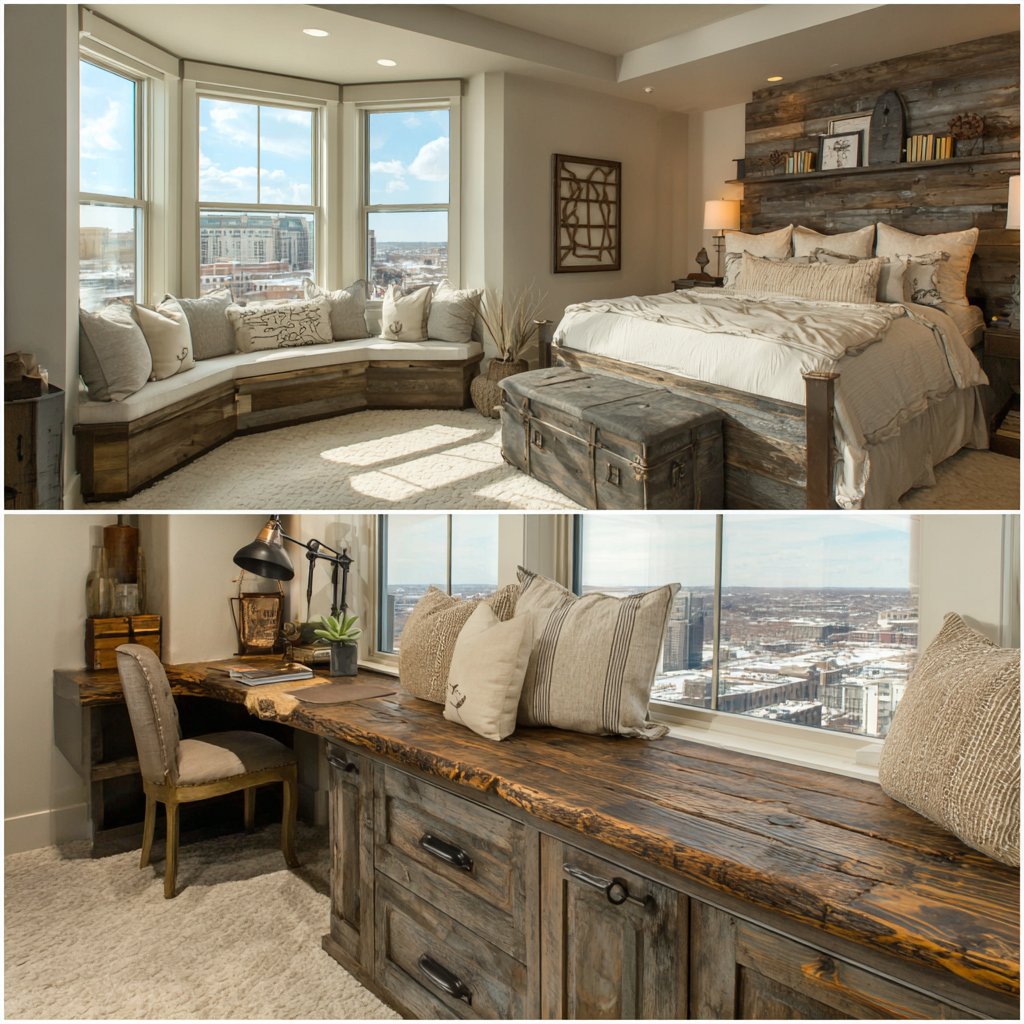
Reclaimed pine brings character through its history—each knot, grain variation, and subtle imperfection tells a story while providing visual interest that new materials lack. The warm honey tones complement virtually any bedroom color scheme while adding organic warmth that balances the hard surfaces necessary for functional workspace. Built-in drawers beneath provide ample storage that doesn’t interrupt the clean desk surface or require additional furniture pieces that would clutter the floor plan. The window seat cushions in soft linen offer dual functionality—comfortable seating during work breaks and a cozy reading nook during leisure time.
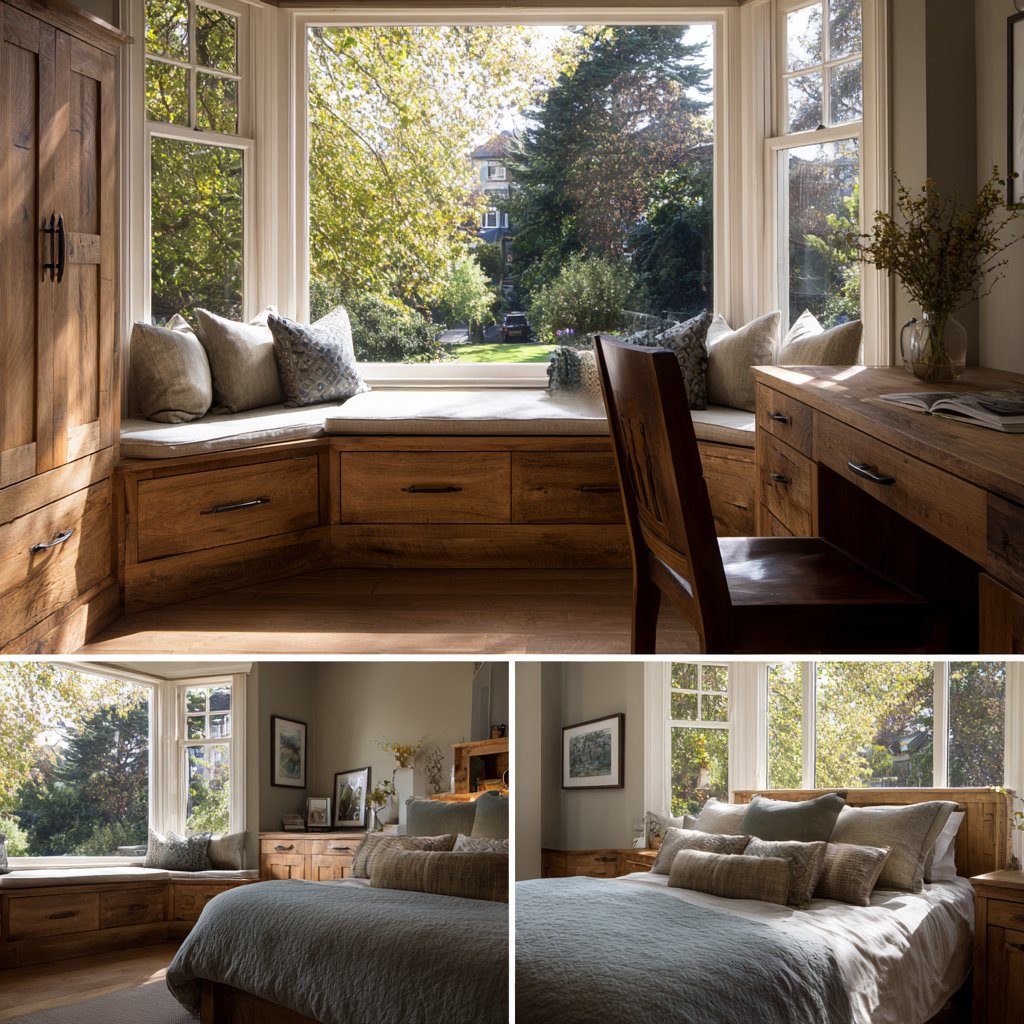
The bedroom beyond maintains coordinating wood tones and neutral textiles that create visual flow between work and rest zones. This continuity ensures the desk area feels like an intentional design element rather than an office intrusion. The panoramic views provide both practical benefits—natural daylight reduces eye strain and supports circadian rhythms—and psychological ones, as glimpses of nature improve mood and reduce stress.
Key Design Tips:
- Build the desk to follow window contours for architectural integration and maximum natural light
- Include storage drawers beneath to maximize the desk’s footprint efficiency
- Add cushioned seating areas that transform the desk surround into comfortable break zones
- Choose reclaimed or characterful wood that adds personality and visual interest
- Position the desk height appropriately—too high creates awkward working angles, too low wastes window views
- Consider window treatments that control glare without eliminating natural light benefits
- Coordinate desk wood tones with other bedroom furniture for visual cohesion
- Plan for adequate electrical outlets near the window location for modern work equipment
6. Mid-Century Modern Writing Desk Sophistication
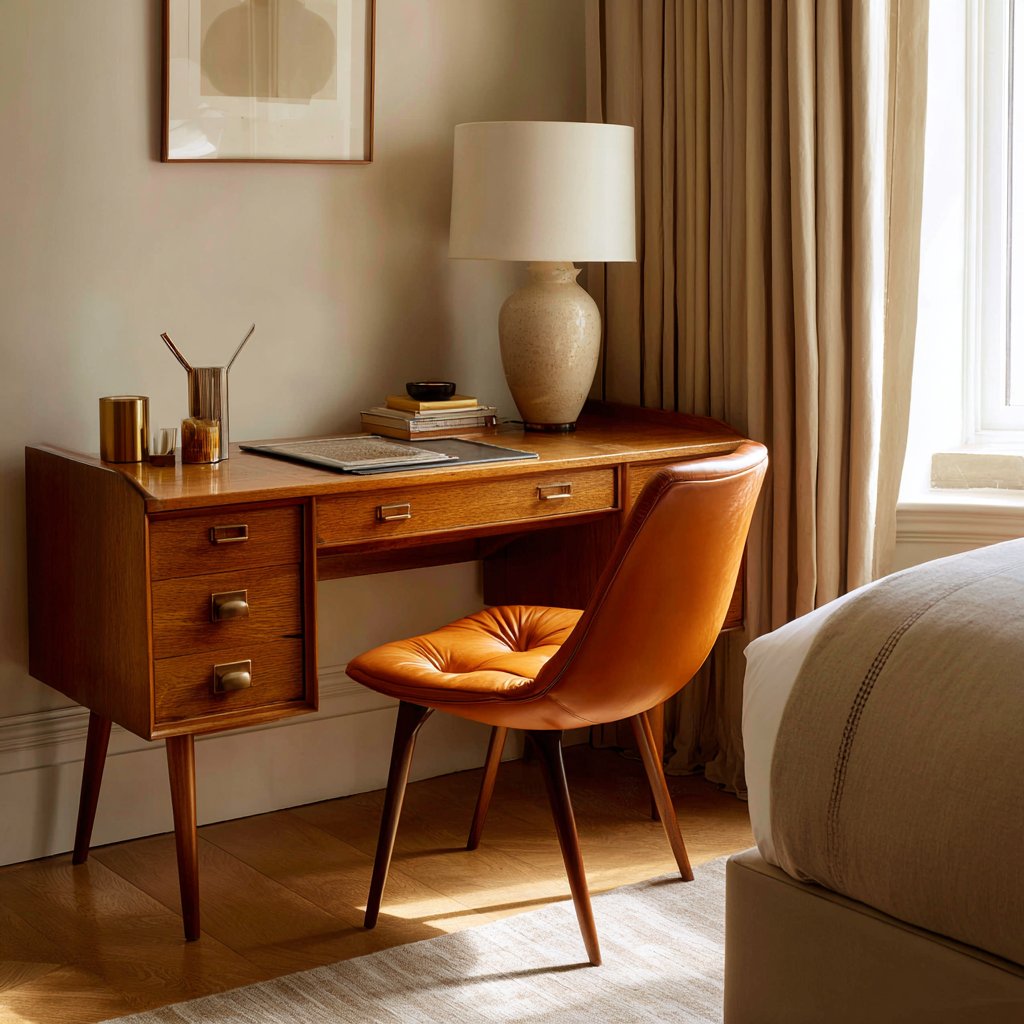
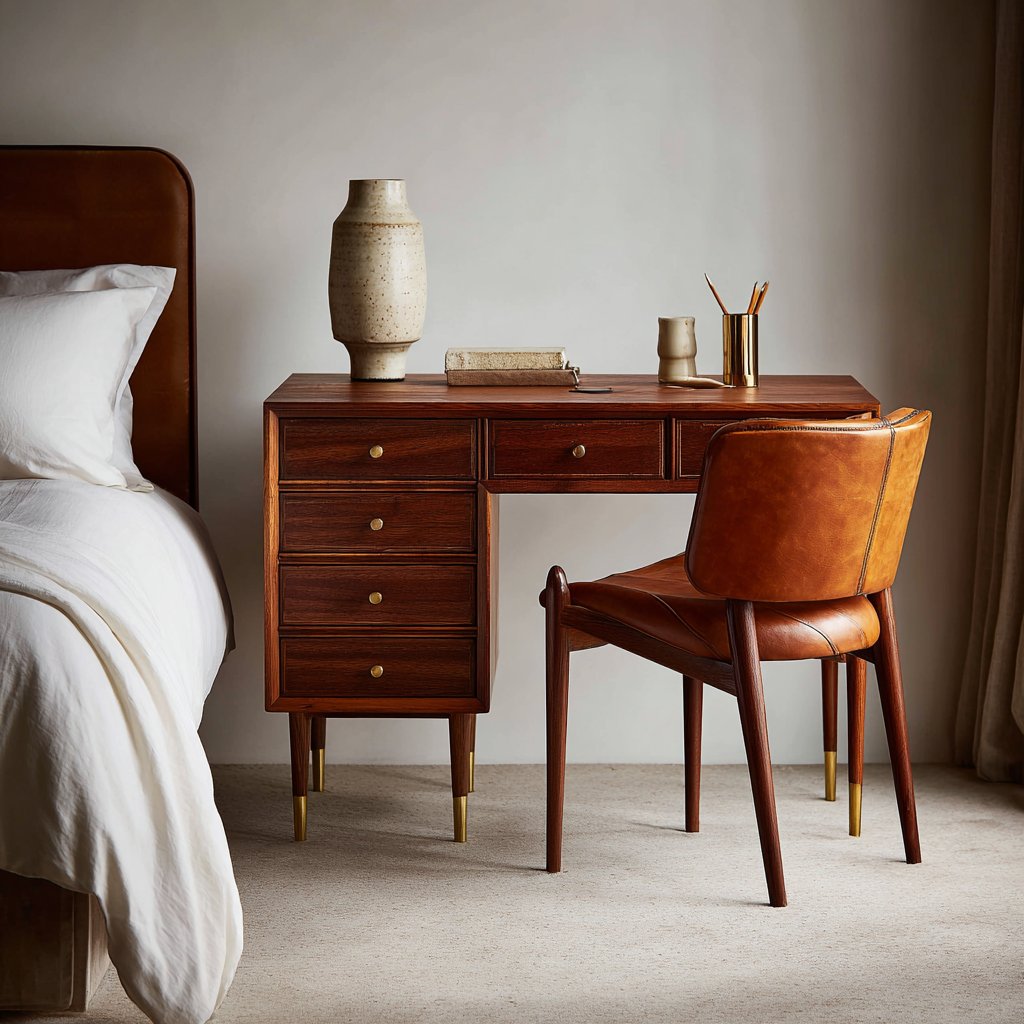
The vintage writing desk positioned at the bed’s foot creates an unexpected and sophisticated bedroom office solution that works particularly well in rooms with ample square footage. This placement transforms what’s often wasted space into productive workspace while establishing visual boundaries between sleeping and working zones. The mid-century modern desk in teak wood exemplifies the era’s commitment to both form and function—tapered legs provide visual lightness while the multiple drawers with brass hardware offer practical storage without bulk.
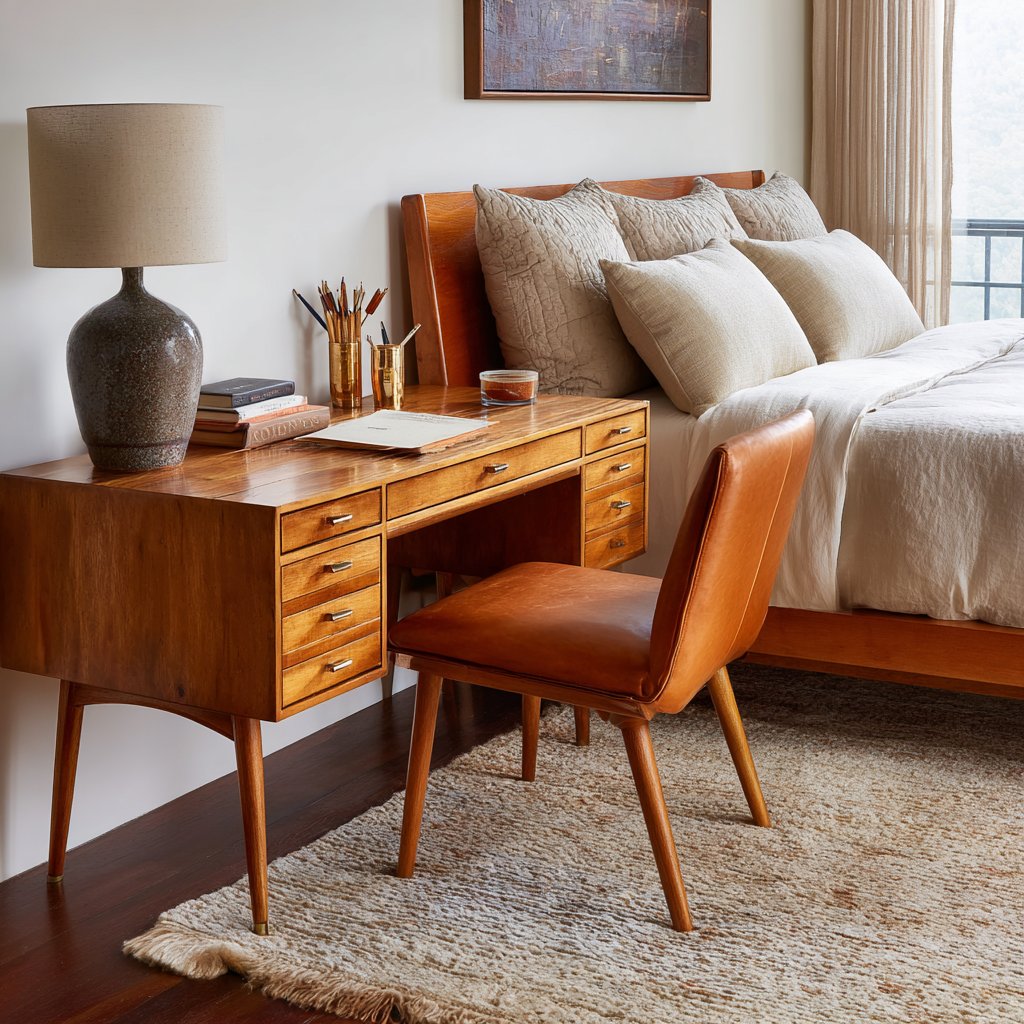
The sculptural desk chair in cognac leather represents investment in both comfort and aesthetics. Quality seating matters enormously for extended work sessions, and this piece delivers ergonomic support while serving as a statement furniture element. The warm leather tones complement the teak’s rich coloring, creating a cohesive palette that feels intentional and curated. The desk surface displays carefully selected accessories—a ceramic table lamp with sculptural base, minimal office supplies housed in brass holders—that demonstrate the importance of thoughtful styling in making workspace feel intentional rather than makeshift.
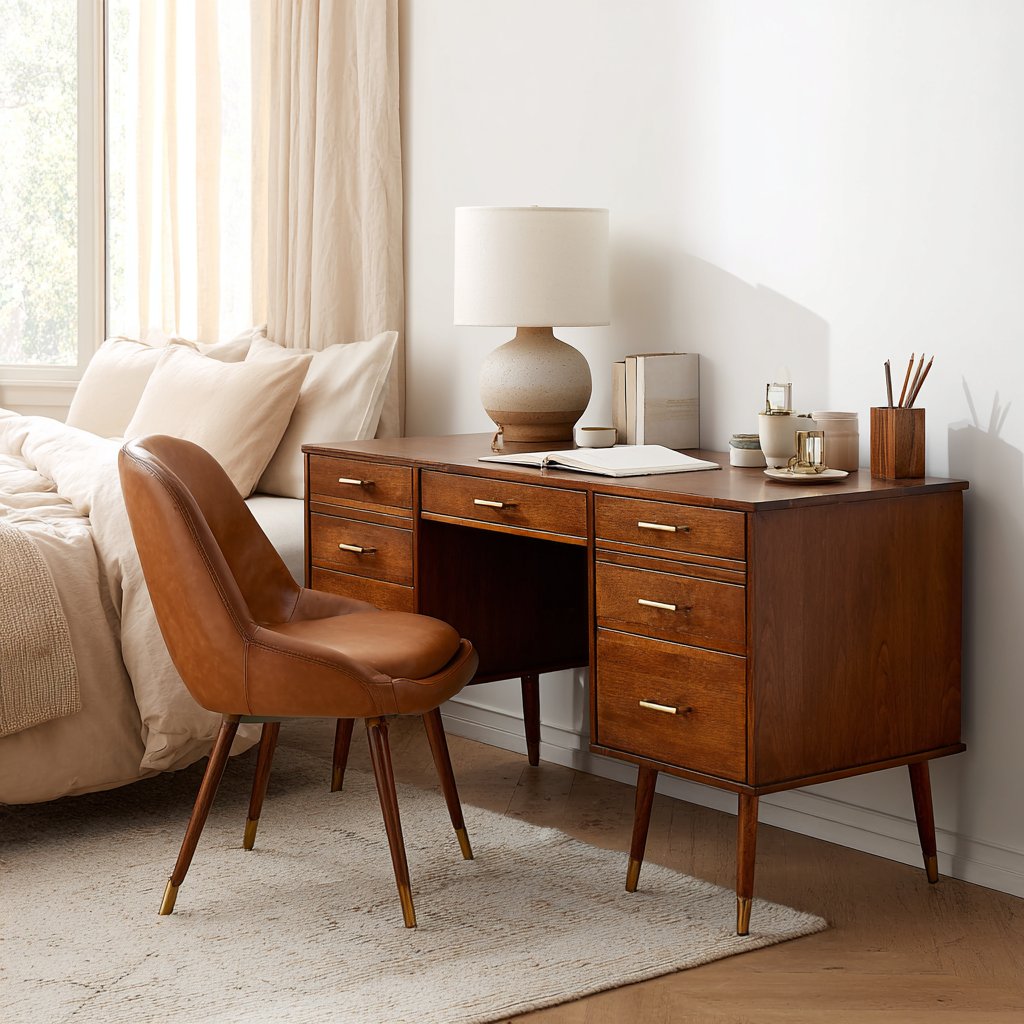
This approach requires discipline in maintaining the desk’s appearance, as it remains visible from the bed and functions as a decorative element even when not in use for work. The careful curation—displaying only beautiful, necessary items—transforms potential clutter into curated display. The surrounding bedroom maintains complementary design with consideration for how the desk appears from various angles throughout the room.
Key Design Tips:
- Choose a writing desk with genuine mid-century design elements rather than generic reproduction pieces
- Position at the bed’s foot only in rooms with adequate space to maintain comfortable circulation
- Invest in a quality office chair that balances ergonomic function with aesthetic appeal
- Curate desk surface carefully—display only items that are both functional and beautiful
- Include desk lighting that provides adequate task illumination while serving as decorative object
- Coordinate metal finishes across desk hardware, lamp base, and office accessories
- Maintain the desk’s appearance meticulously since it remains in constant view from the bed
- Consider the desk’s appearance from multiple angles throughout the room
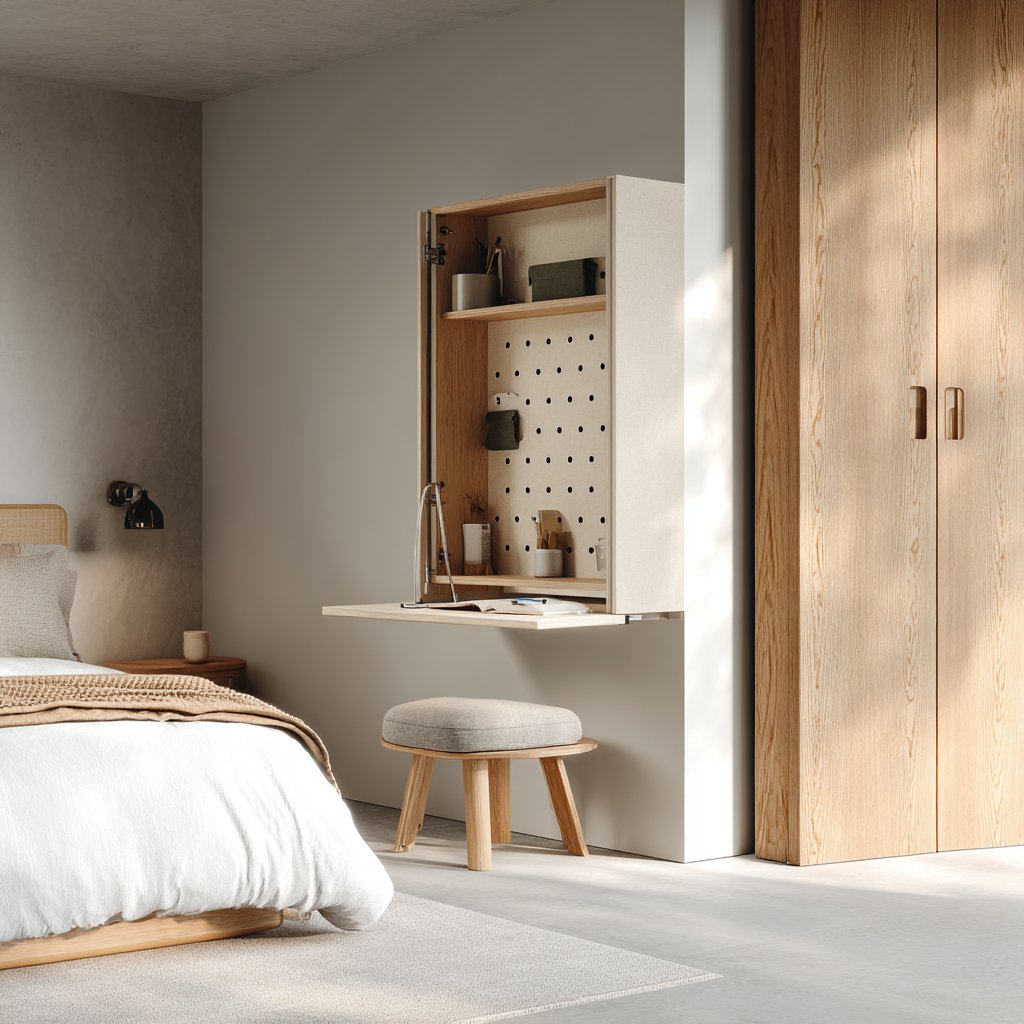
7. Scandinavian Fold-Down Desk Efficiency
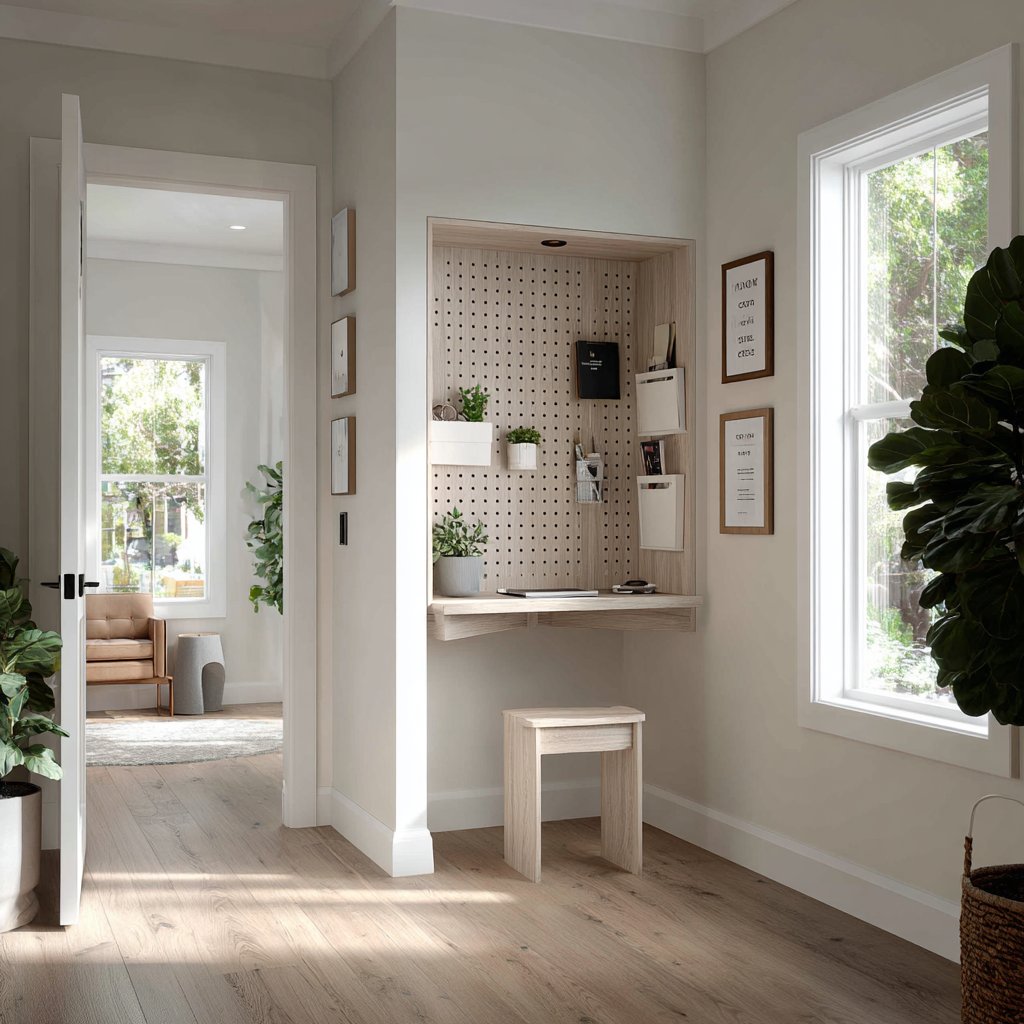
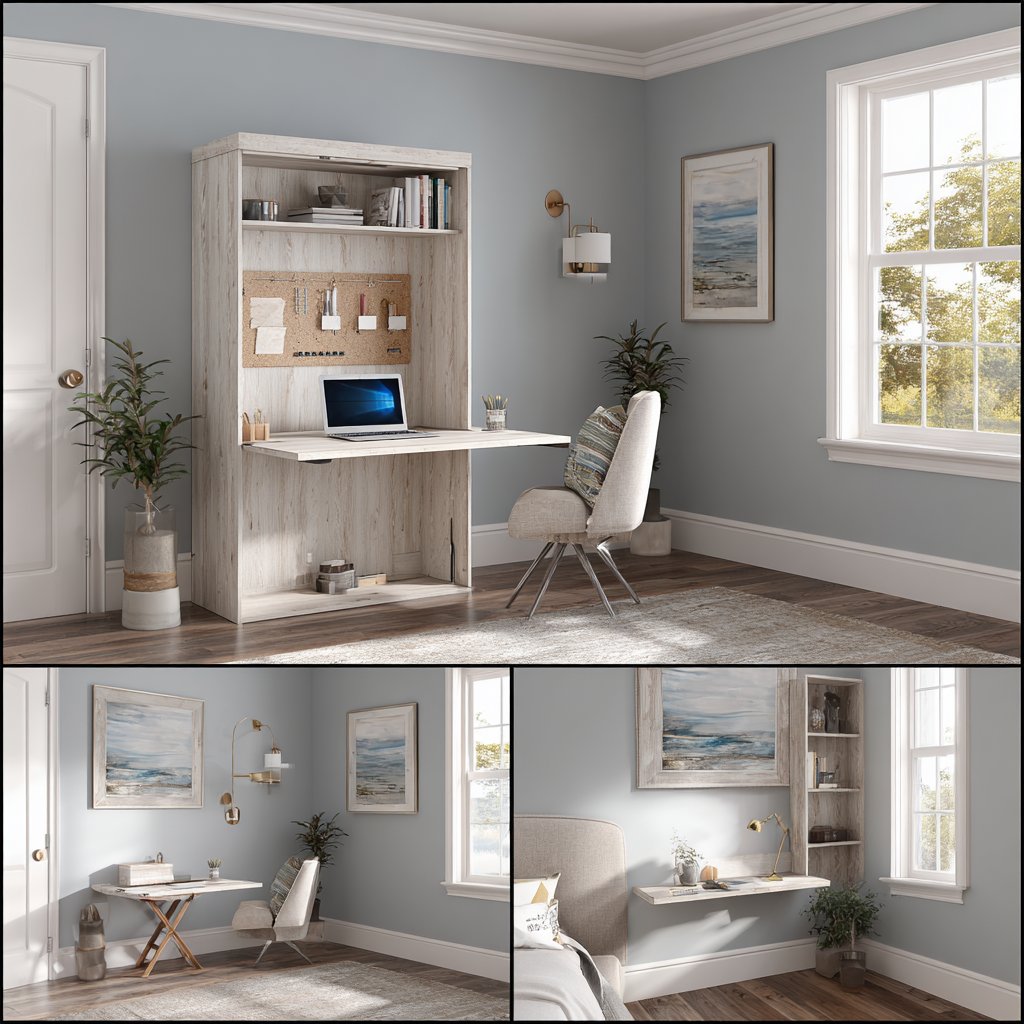
Scandinavian design principles—functionality, simplicity, and connection to natural materials—find perfect expression in the wall-mounted fold-down desk concept. This approach embraces the “lagom” philosophy of having just enough, neither excess nor deficiency, but the perfect balance. The desk in whitewashed oak embodies these values, its hinged surface creating temporary workspace when needed while folding away completely when work concludes. The built-in paper organizer and small shelf acknowledge that even minimal offices require some immediate storage for current projects and essential supplies.
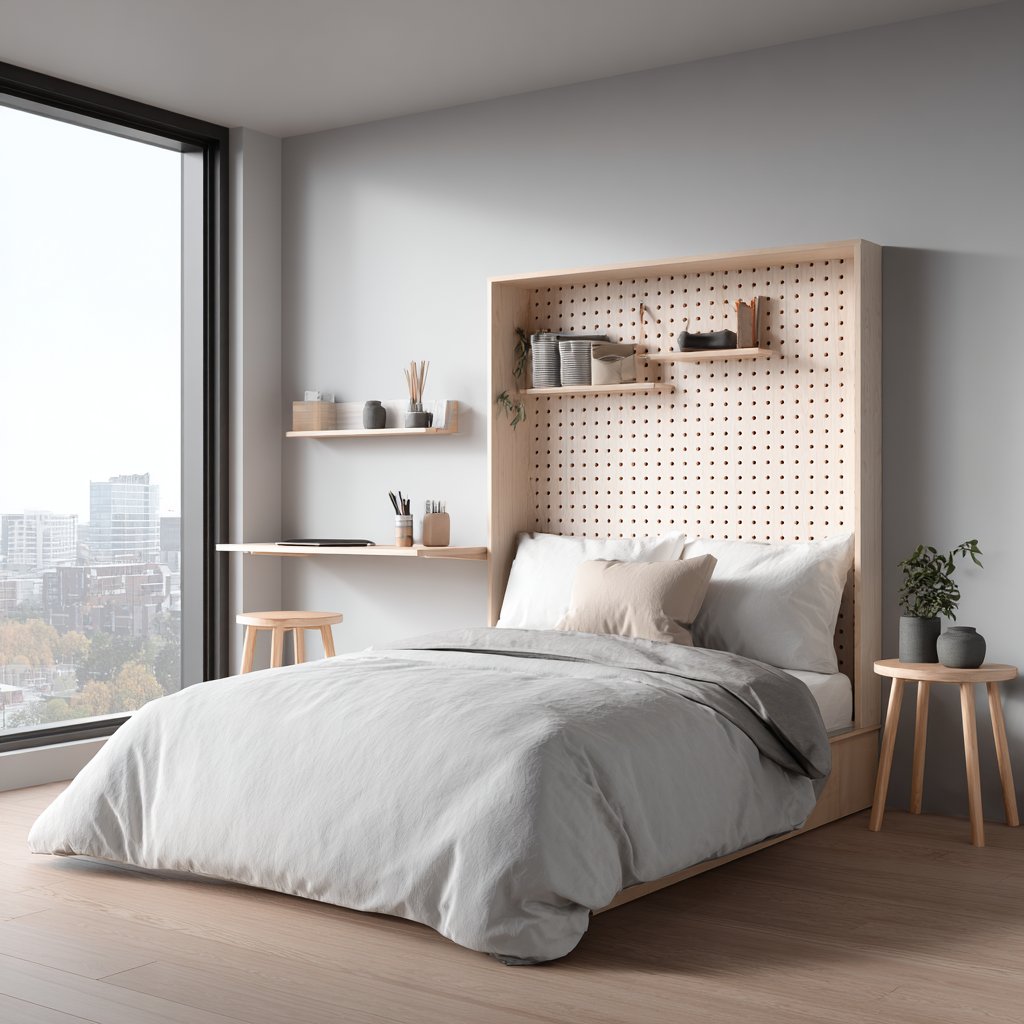
The wall-mounted pegboard represents efficient vertical storage that’s both practical and visually interesting. Unlike enclosed cabinets that hide contents, pegboard displays tools and supplies in an organized, accessible manner that actually enhances the room’s aesthetic when thoughtfully arranged. Office supplies become design elements—colorful tape dispensers, brass scissors, small planters—creating functional art that personalizes the workspace. The lightweight stool slides beneath for compact storage, its minimal design ensuring it doesn’t create visual clutter even when visible.
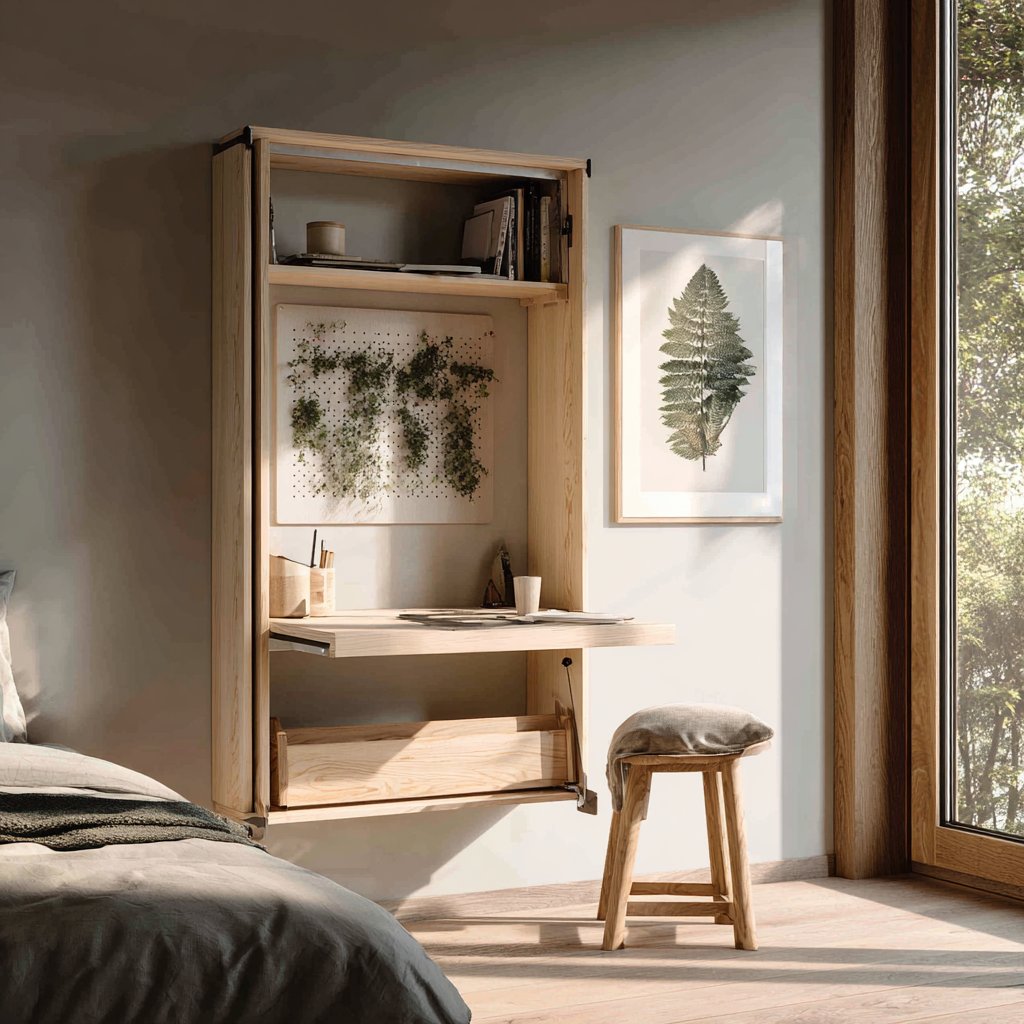
The bedroom embraces Scandinavian inspiration with light grey walls that reflect natural light without coldness, and natural wood accents that connect interior to exterior environments. The clean, minimalist aesthetic supports mental clarity and stress reduction—both essential for productive work and restful sleep. Every element serves clear purpose; nothing exists purely for decoration.
Key Design Tips:
- Install fold-down desk with robust hardware capable of supporting work equipment weight securely
- Include integrated storage in the desk itself to minimize need for additional furniture
- Use pegboard for flexible, customizable vertical storage that evolves with changing needs
- Choose a stool or chair that stores beneath the desk or in nearby closet without cluttering floor space
- Maintain minimal color palette focused on whites, greys, and natural wood tones
- Select only essential office supplies and store them in an organized, visually pleasing manner
- Position the desk where natural light provides adequate workspace illumination
- Keep desk surface completely clear when folded up to maintain clean wall appearance
8. Farmhouse Table Room Division Strategy
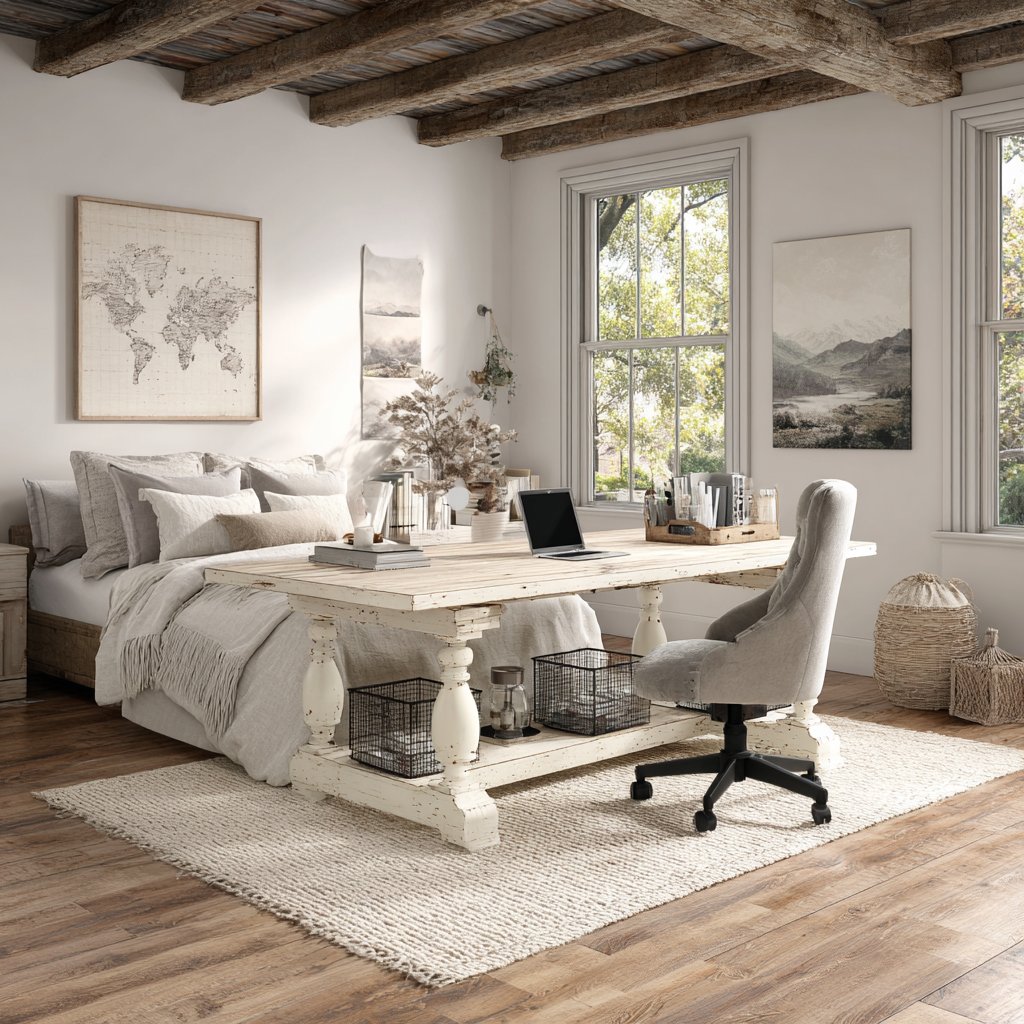
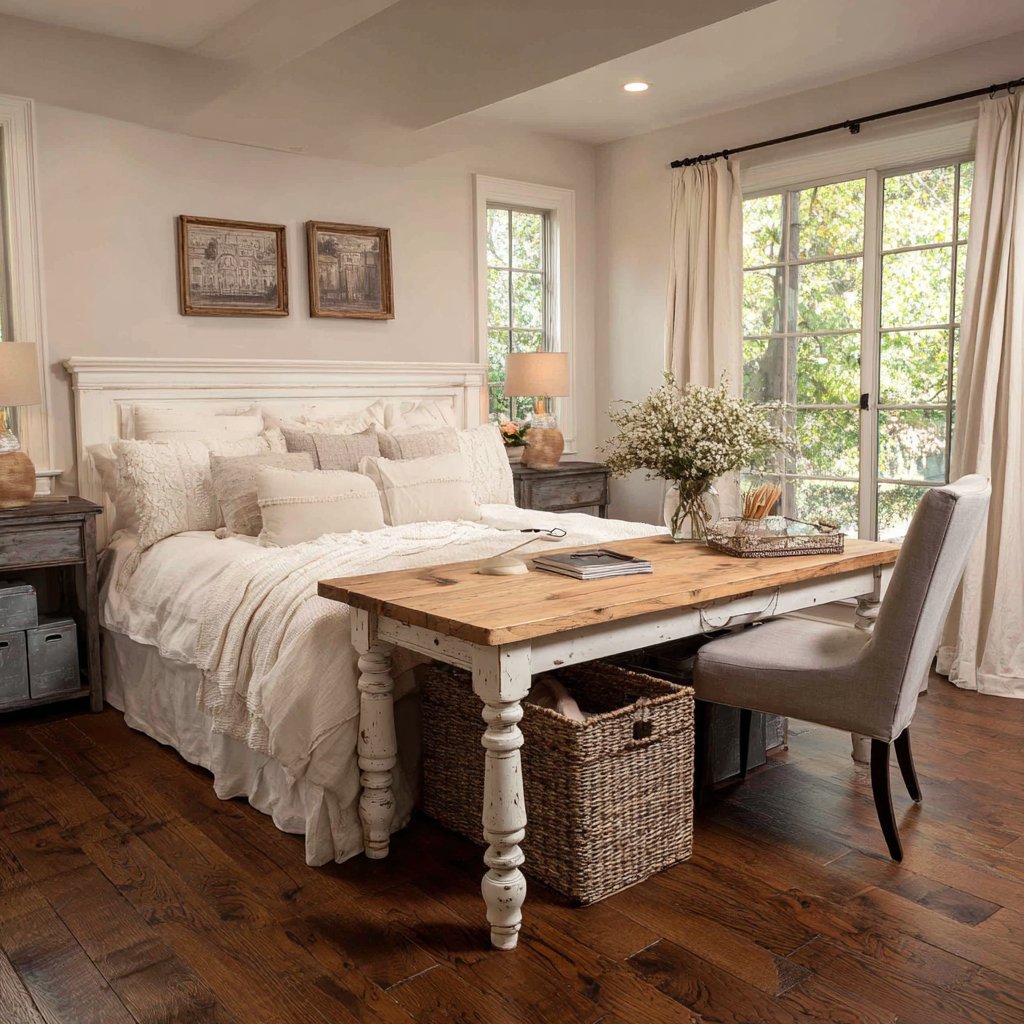
Repurposing a substantial vintage farmhouse table as bedroom desk creates visual impact while providing generous workspace that accommodates serious projects requiring spread-out materials. The distressed white painted table with turned legs brings cottage charm and architectural interest that generic office desks lack entirely. Positioned perpendicular to the bed, this placement creates natural room division without walls or permanent barriers—the table functions as a psychological boundary that helps separate work mindset from rest mindset despite sharing physical space.
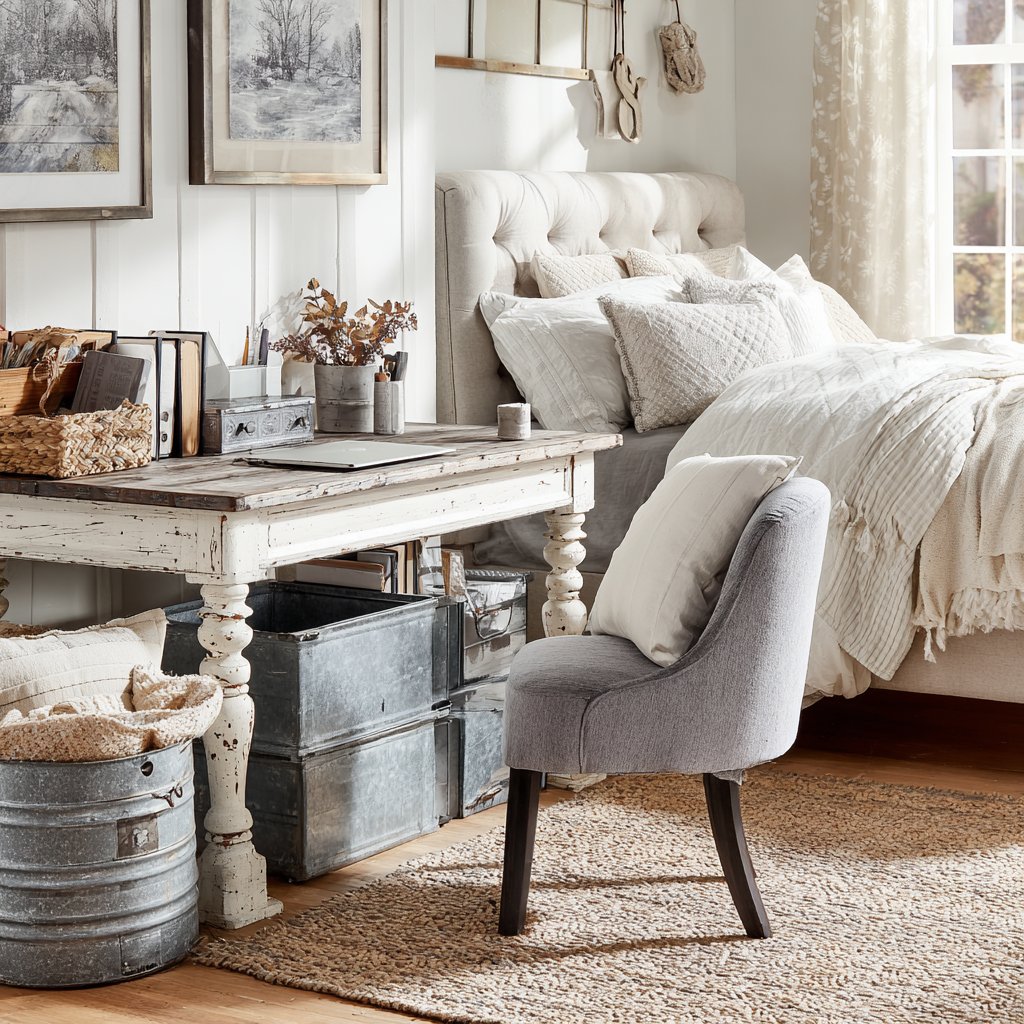
The upholstered office chair in soft grey linen prioritizes comfort for extended work sessions while maintaining the room’s residential aesthetic through fabric choice and neutral coloring. Galvanized metal storage bins beneath the table organize files and supplies while contributing to the farmhouse aesthetic with their utilitarian appearance and practical function. These bins slide out easily for access but remain largely hidden from view, maintaining the table’s clean lines and attractive proportions.
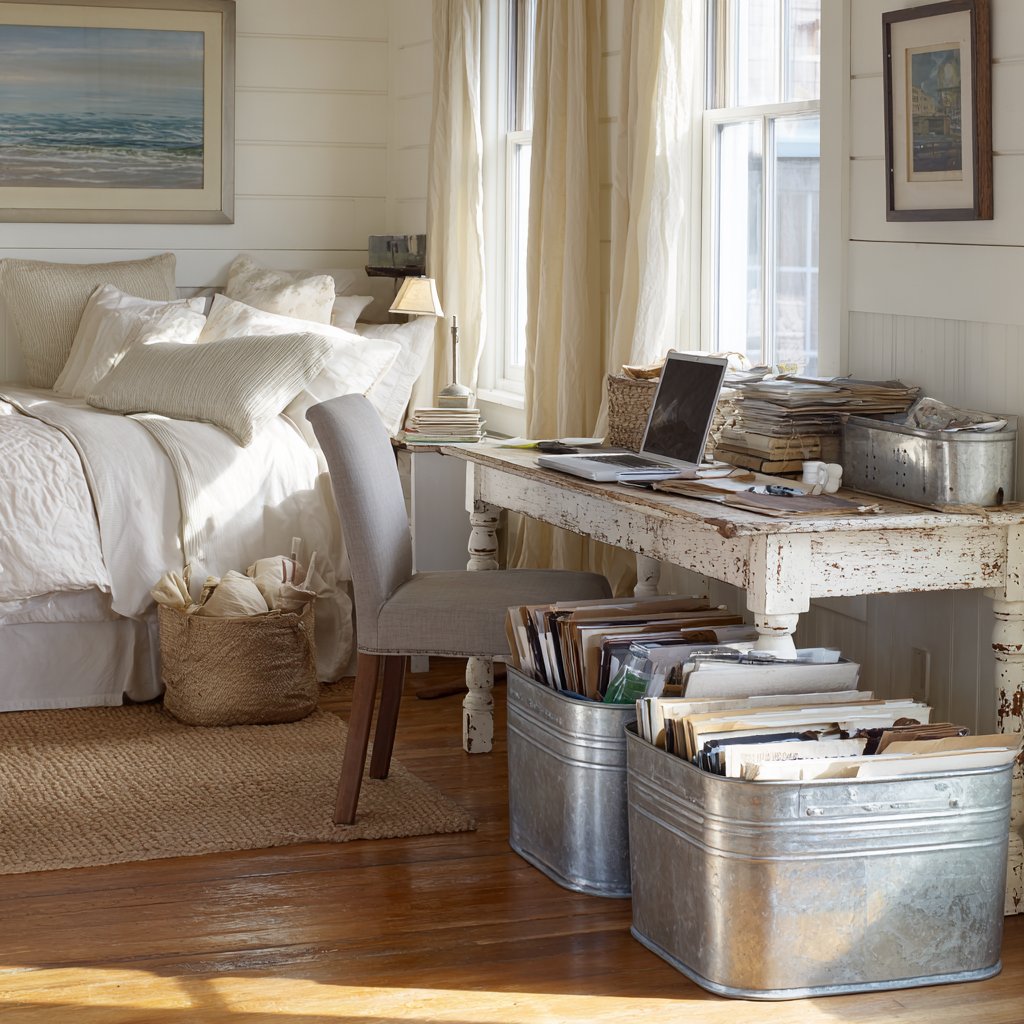
The bedroom retains cozy character through layered white bedding and vintage textiles that complement the table’s farmhouse styling. The cohesive design approach ensures the substantial table feels natural rather than intrusive, as though it has always belonged in this space. The generous surface area accommodates collaborative work, crafting projects, or simply spreading out materials in a way that compact desks cannot.
Key Design Tips:
- Choose a farmhouse table with dimensions appropriate to room size—too large overwhelms
- Position perpendicular to bed to create visual and psychological separation between zones
- Invest in comfortable seating since generous table size encourages longer work sessions
- Use attractive storage containers that complement farmhouse aesthetic while hiding clutter
- Maintain the table’s surface appearance since it remains highly visible throughout the room
- Consider the table’s height—dining tables may be higher than ideal desk height
- Coordinate farmhouse elements throughout room for intentional rather than random aesthetic
- Keep bedding and textiles cohesive with work zone styling for visual flow
9. Minimalist Console Desk Restraint
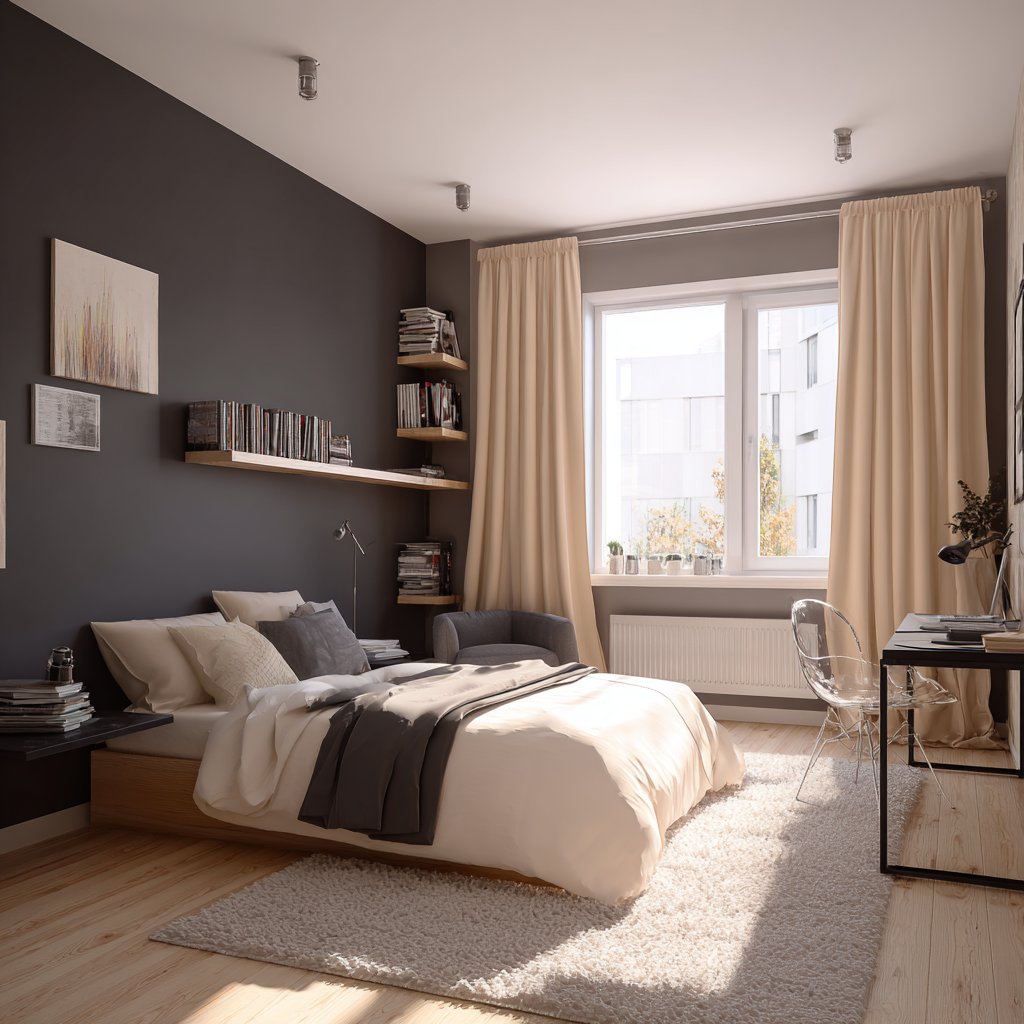
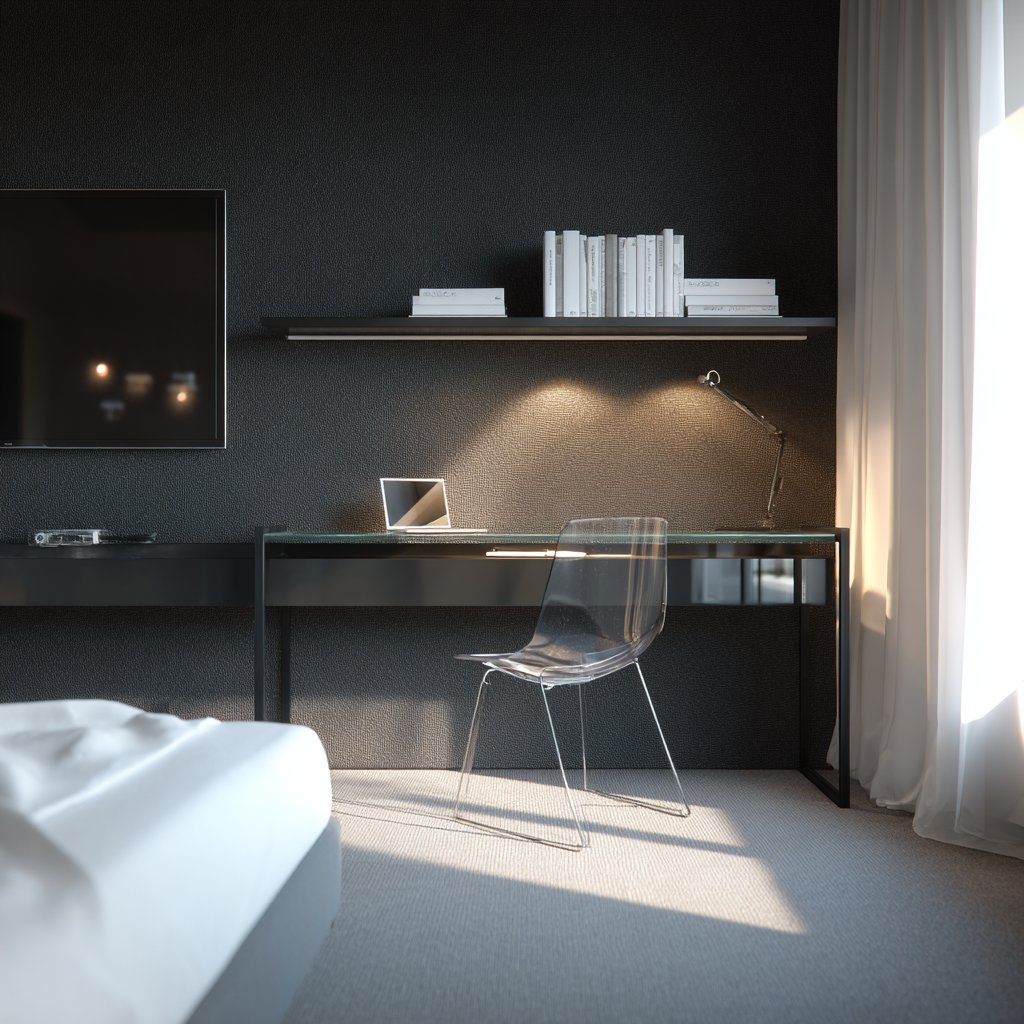
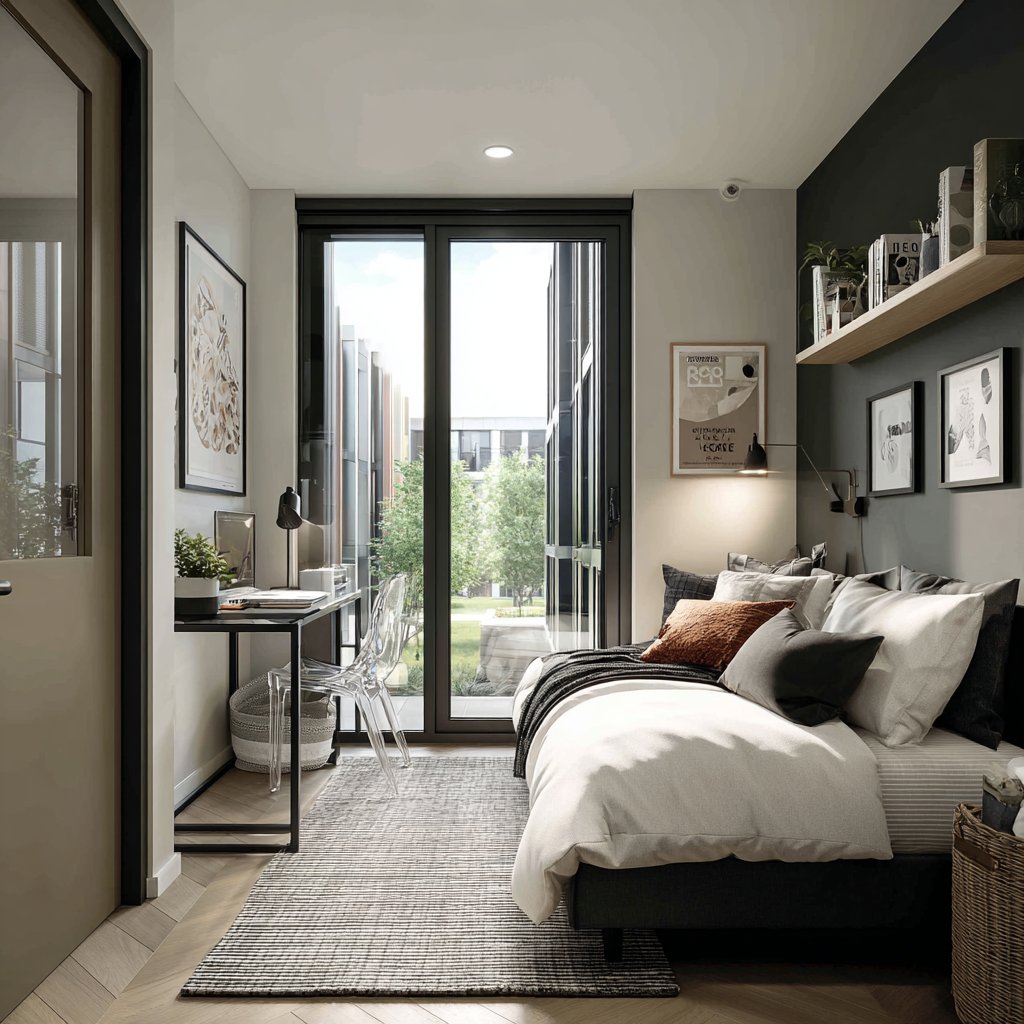
The narrow console table approach demonstrates that bedroom offices need not dominate floor space or visual attention to provide functional workspace. This solution particularly suits those whose work requirements focus on laptop-based tasks rather than projects requiring extensive surface area. The console in matte black metal with glass top maintains visual openness—crucial in smaller bedrooms where bulky furniture would create oppressive atmosphere. The transparent glass surface allows visual continuation of floor and wall surfaces, making the room feel larger than its dimensions suggest.
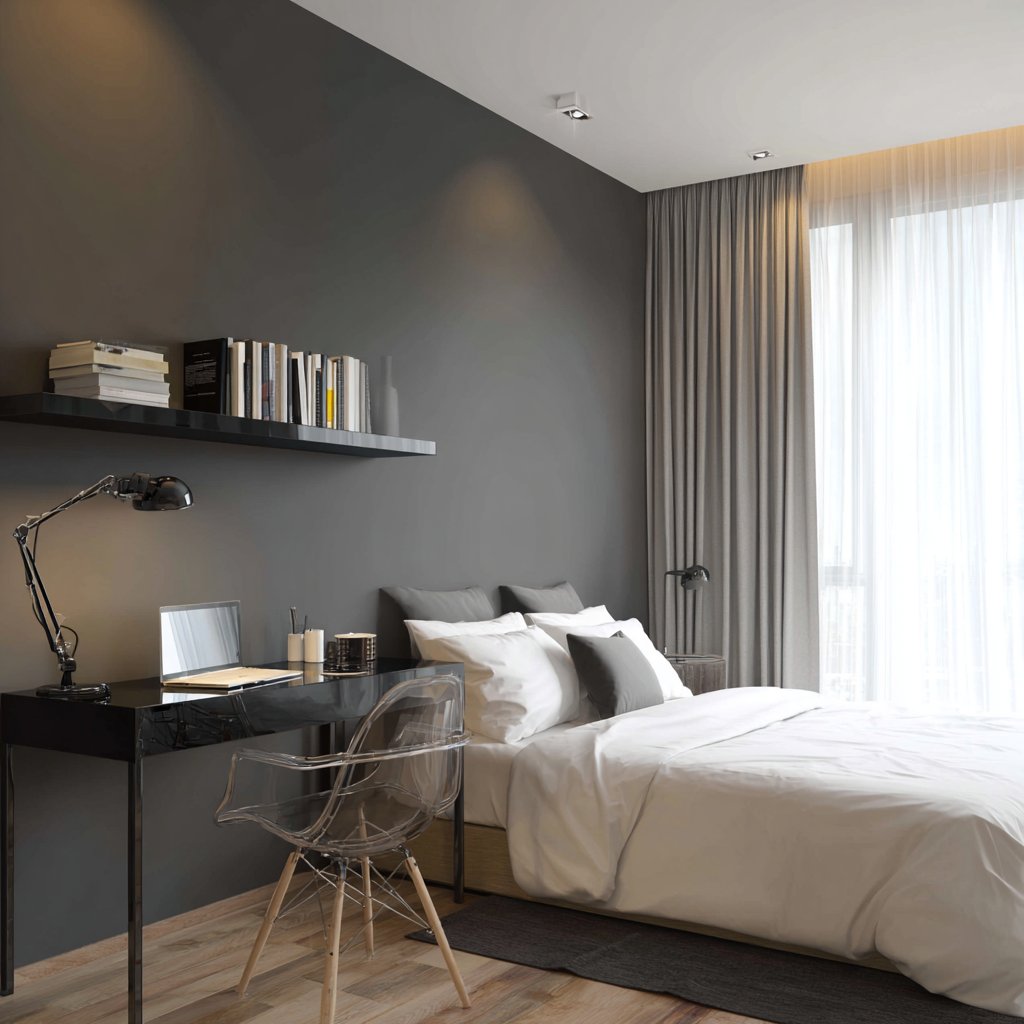
The modern acrylic chair continues the transparency theme, providing necessary seating without visual weight. This “invisible” furniture approach keeps focus on the bedroom’s primary elements rather than allowing office furniture to dominate. The single floating shelf above holds essential books and a small task lamp, providing storage and lighting without requiring floor space. This vertical approach to storage and lighting maximizes the minimal desk’s efficiency.
The bedroom features contemporary design with charcoal accent wall and crisp white bedding that creates sophisticated contrast. The console desk integrates seamlessly into this aesthetic, its industrial materials complementing rather than conflicting with the modern bedroom styling. This approach requires strict discipline in maintaining minimal desk surface—only current projects and essential items appear, with everything else stored elsewhere to maintain clean lines.
Key Design Tips:
- Select console depth carefully—too shallow proves impractical, too deep defeats space-saving purpose
- Choose transparent or minimal materials that reduce visual weight in small bedrooms
- Include one floating shelf above for storage rather than multiple shelves that create clutter
- Invest in sleek, minimal task lighting that provides adequate illumination without bulk
- Maintain strict discipline about desk surface—clear completely when not actively working
- Position against wall rather than floating in room to maximize perceived floor space
- Select acrylic or glass furniture that maintains visual openness throughout the room
- Consider console height relative to seating—standard console height may require adjusted chair
10. Hidden Closet Office Innovation
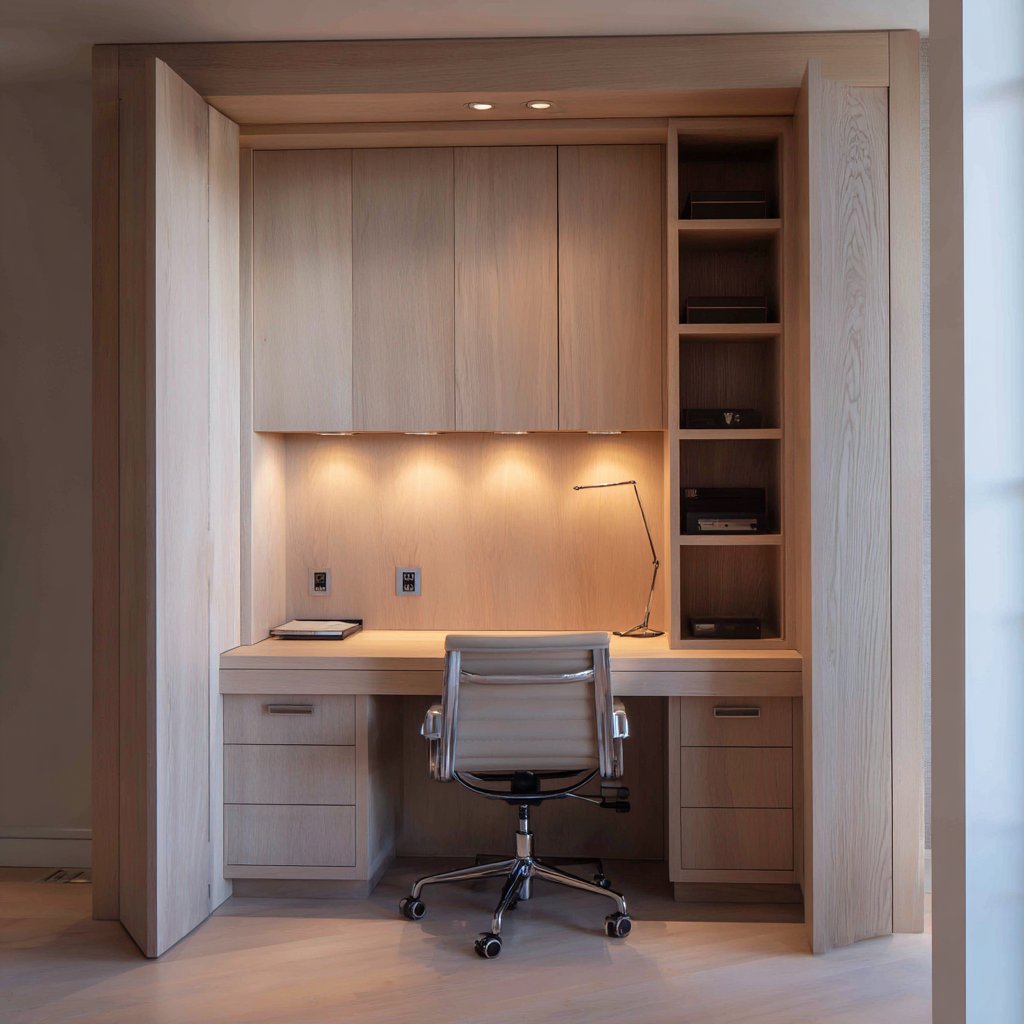
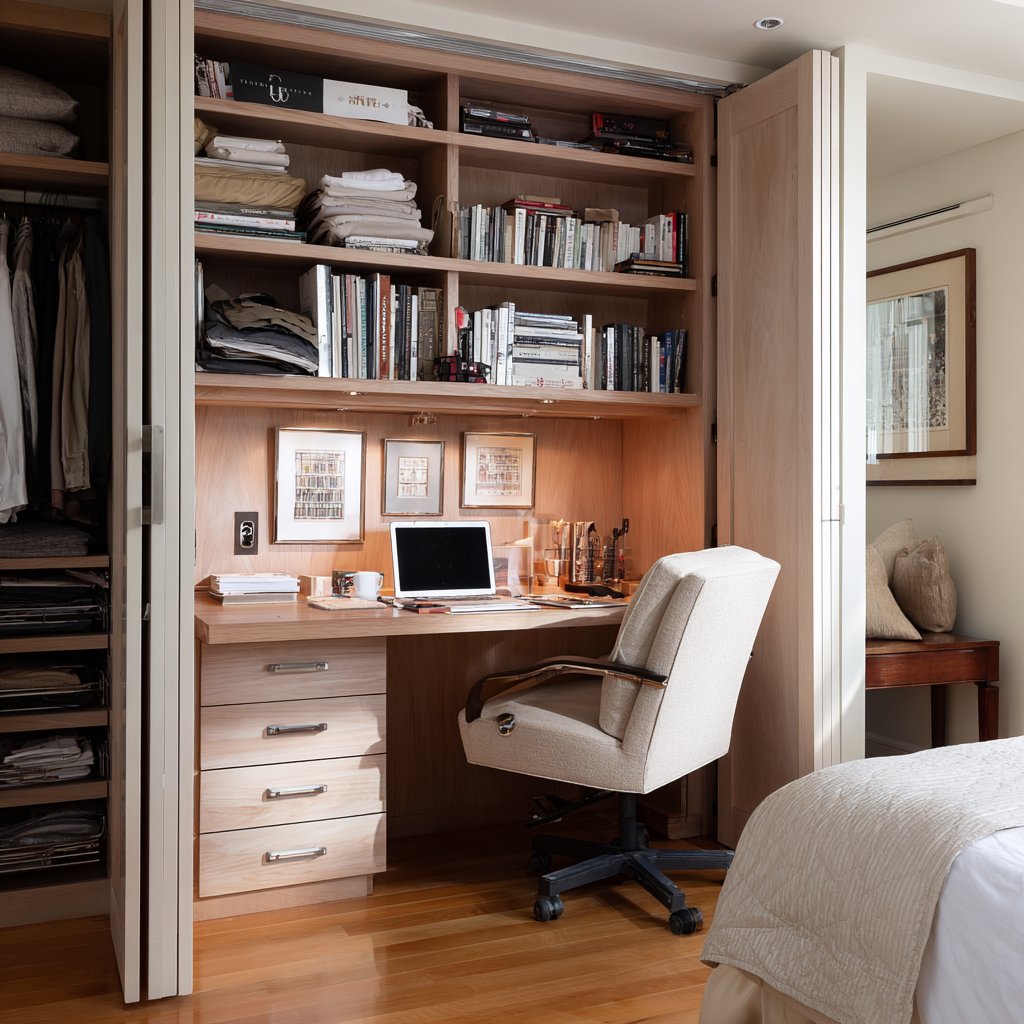
The closet-integrated desk represents perhaps the ultimate concealment strategy for bedroom offices, transforming storage space into functional workspace that disappears completely behind sliding doors when work concludes. This custom solution addresses both practical and psychological challenges of bedroom offices—providing dedicated workspace during work hours while eliminating all visual reminders during rest periods. The desk surface in light maple includes conveniences essential for modern work including integrated electrical outlets and organized drawer systems that keep supplies accessible yet concealed.
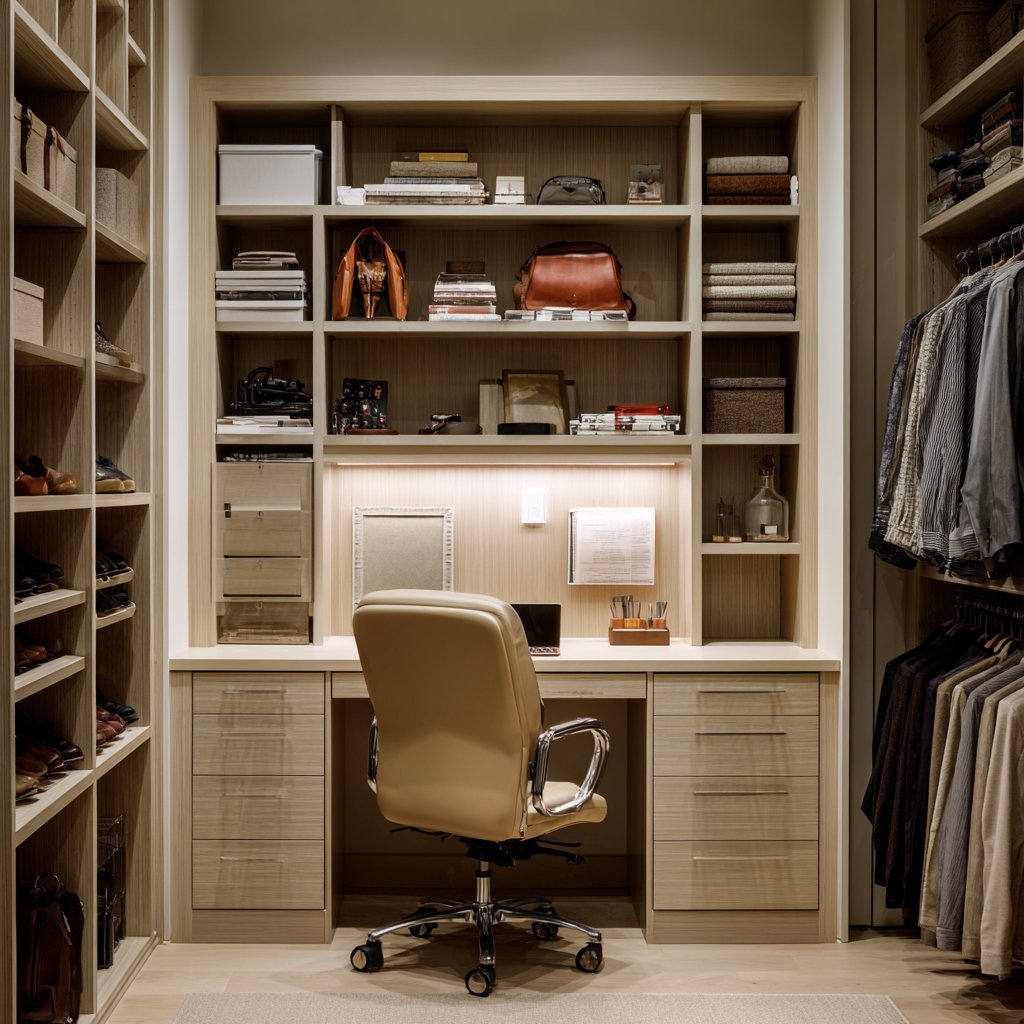
LED task lighting specifically illuminates the workspace, creating appropriate brightness for focused work without flooding the entire bedroom with harsh light. This localized lighting approach respects the bedroom’s need for adjustable ambiance that supports circadian rhythms. The comfortable ergonomic chair on casters rolls into the closet workspace, ensuring proper support during work hours without creating visual clutter in the bedroom when not needed. The surrounding closet shelving cleverly accommodates both office supplies and clothing, maximizing dual-purpose function from valuable closet real estate.
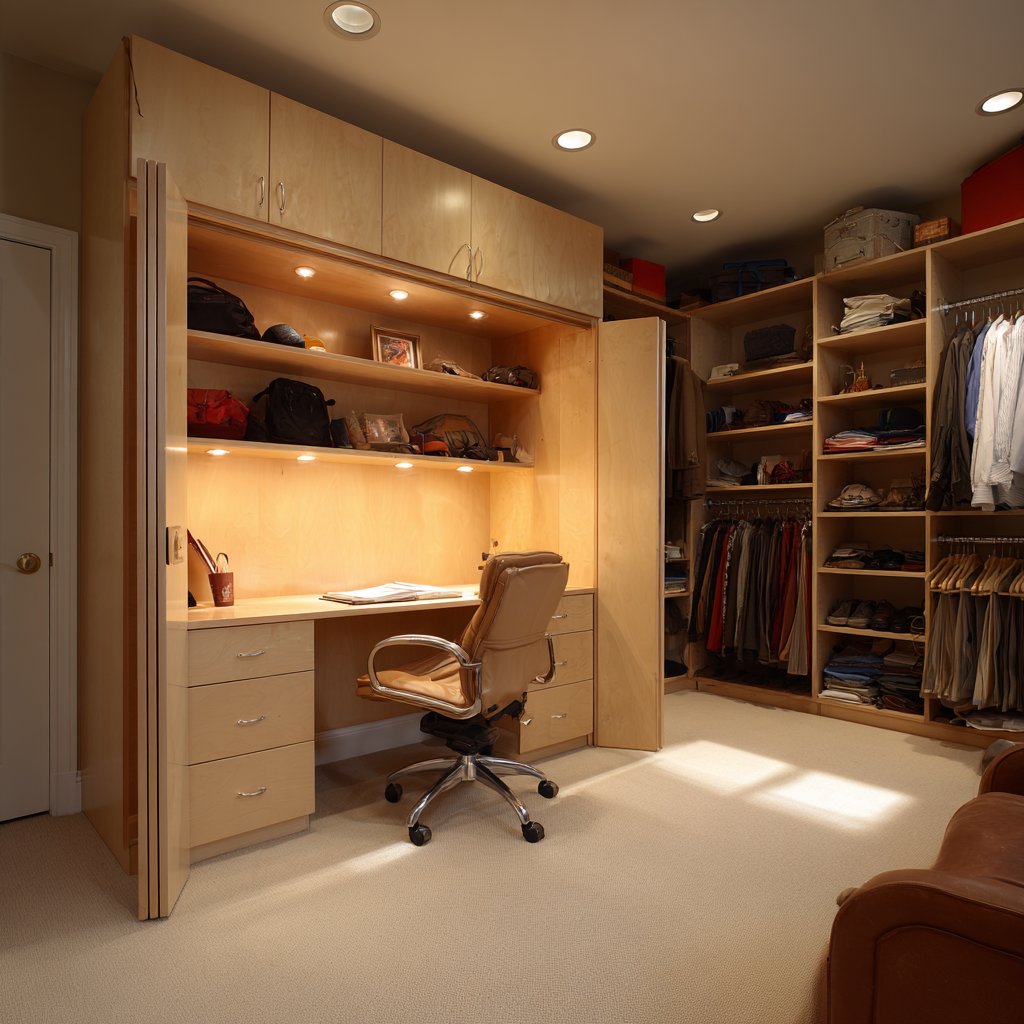
This approach requires thoughtful planning during closet system design or renovation but rewards with unparalleled bedroom tranquility. When doors close, absolutely no indication of office function remains visible—the bedroom returns to single-purpose sanctuary. When doors open, a complete office environment emerges with everything needed immediately accessible.
Key Design Tips:
- Plan electrical requirements carefully—include adequate outlets and cable management within closet space
- Install LED lighting on separate circuit or switch for independent control from bedroom lighting
- Choose ergonomic seating scaled appropriately for closet dimensions without overwhelming space
- Include organized storage systems that accommodate both office and personal items efficiently
- Select sliding doors that operate smoothly and close completely to conceal workspace
- Consider ventilation needs—closed closet with electronic equipment may require air circulation
- Measure all dimensions carefully to ensure chair maneuvers comfortably in confined space
- Install desk at proper ergonomic height despite closet configuration constraints
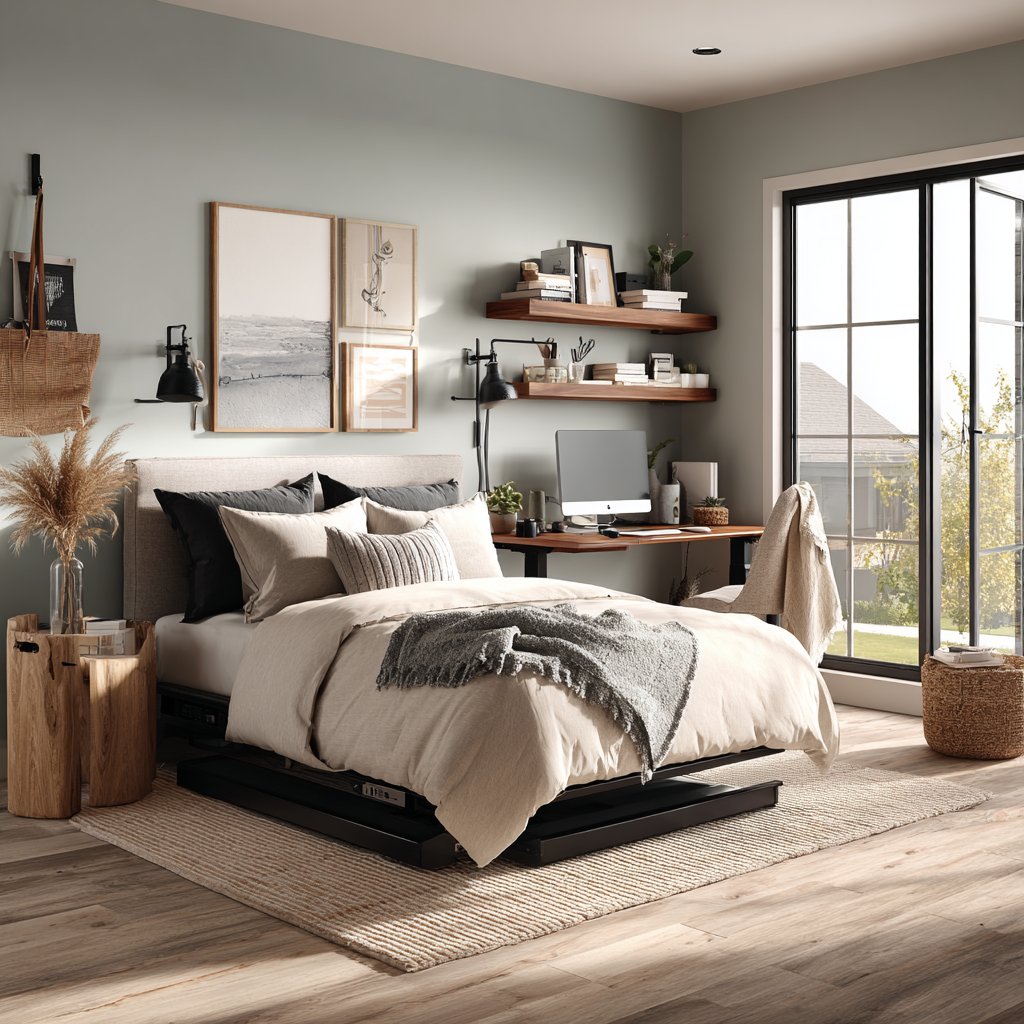
11. Standing Desk Health-Conscious Design
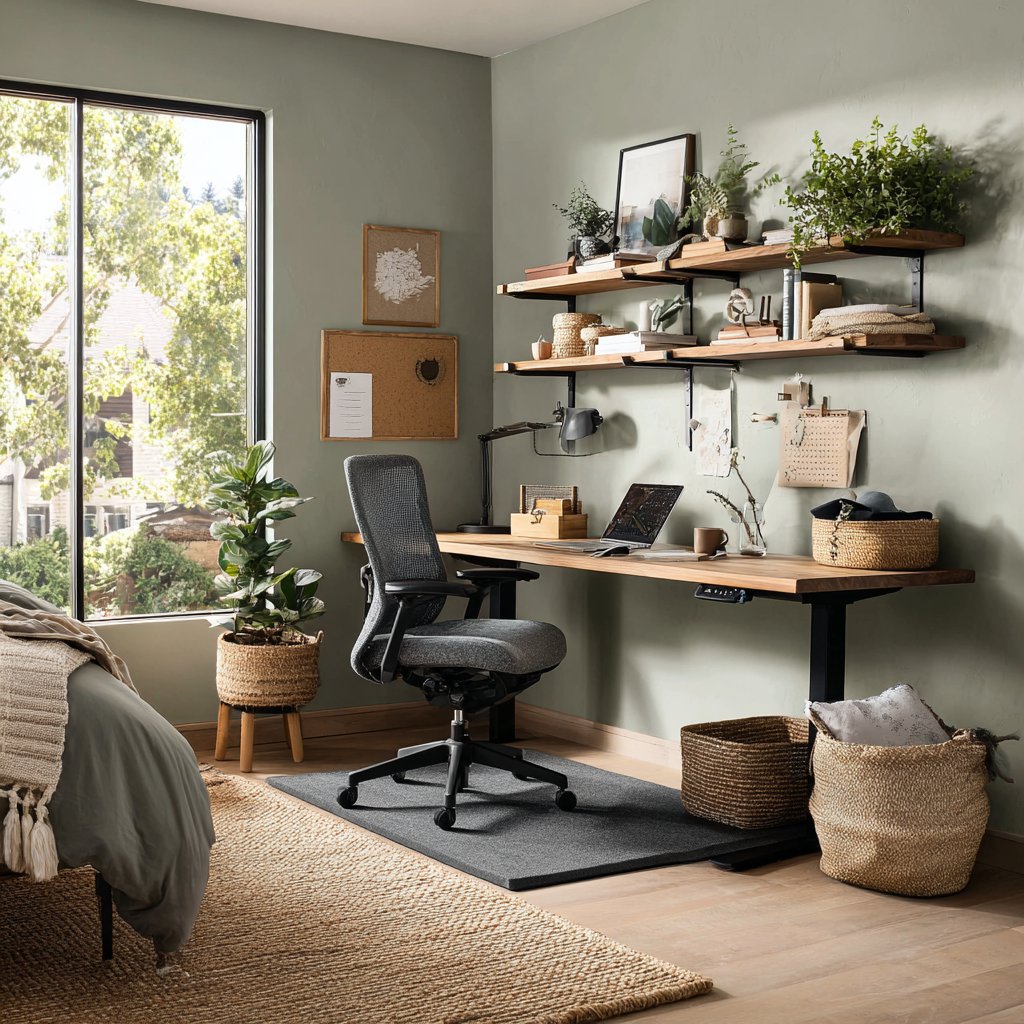
The standing desk positioned along the bedroom’s longest wall represents commitment to health-conscious work practices within the bedroom environment. This adjustable height desk in solid walnut accommodates both sitting and standing positions throughout the workday, encouraging movement and position changes that reduce physical strain from static postures. The quality wood construction ensures stability at any height adjustment—crucial for confidence in the desk’s security when holding expensive equipment. The anti-fatigue mat in neutral grey sits beneath, providing cushioning that reduces joint stress during standing periods.
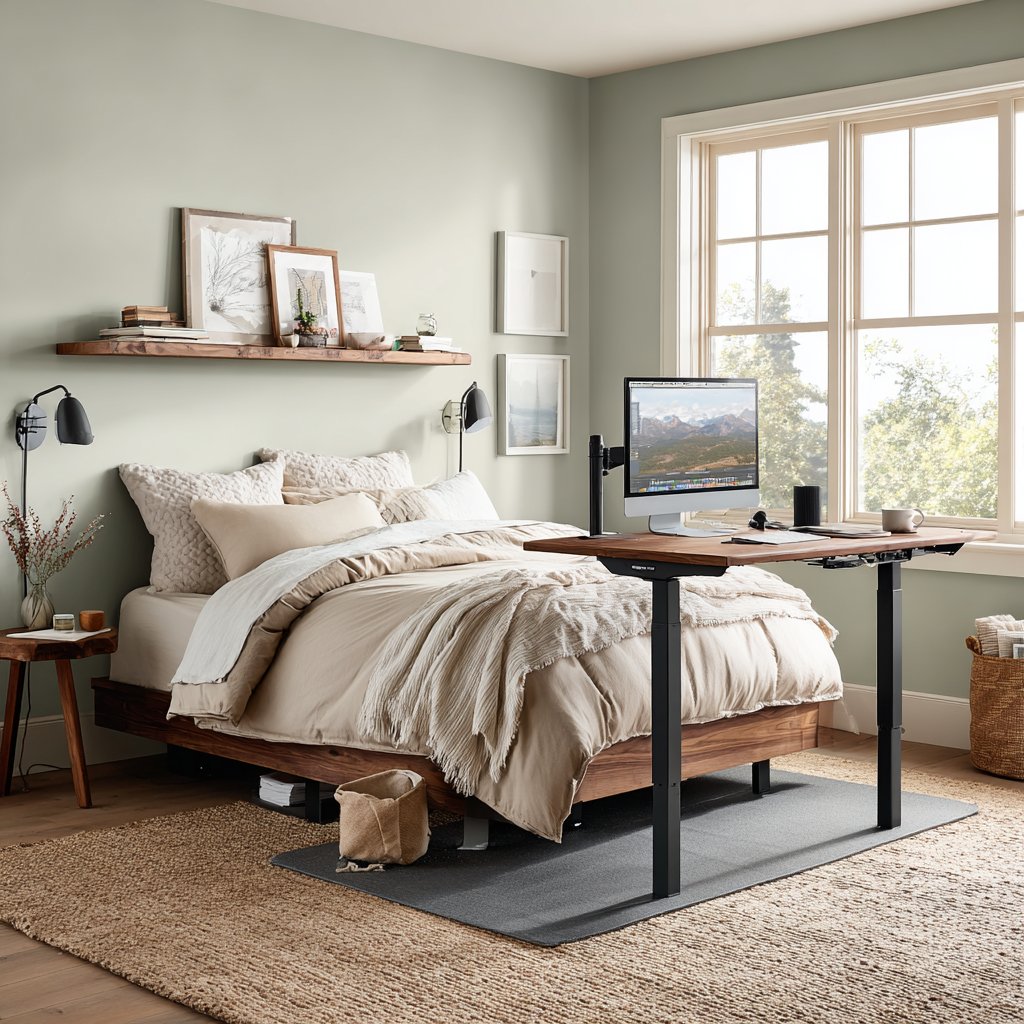
Cable management solutions maintain clean appearance despite the desk’s electronic requirements. Wall-mounted monitor arms free up valuable desk surface while providing ergonomic positioning flexibility throughout height adjustments. Floating shelves above hold reference materials and decorative objects at appropriate heights for both sitting and standing positions. This thoughtful planning ensures the desk remains functional and attractive regardless of current configuration.
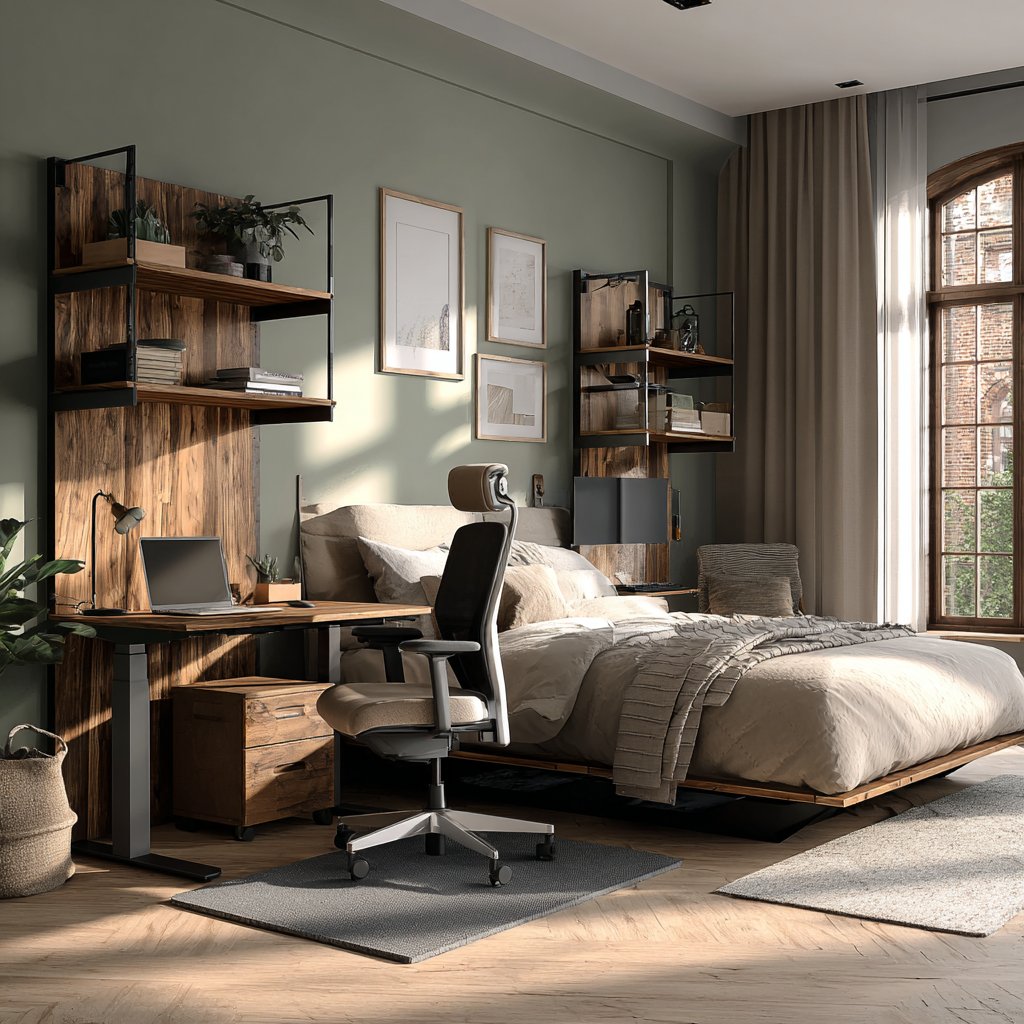
The bedroom maintains tranquility with soft sage walls and natural fiber textiles that create calming environment despite the substantial desk presence. The intentional separation between active work zone and restful bedroom area relies on visual boundaries—perhaps a area rug defining the desk zone, or strategic furniture placement that psychologically divides the space. The sage color choice supports both productivity and rest, its natural inspiration promoting calm focus during work and peaceful relaxation during sleep.
Key Design Tips:
- Invest in quality standing desk mechanism that adjusts smoothly and locks securely at any height
- Include anti-fatigue mat designed specifically for standing work to reduce physical strain
- Mount monitors on adjustable arms to maintain proper ergonomic positioning at all heights
- Plan cable management carefully to accommodate height adjustments without tangling or stretching cords
- Position desk along longest wall to minimize its visual impact on bedroom proportions
- Choose substantial, stable construction in real wood rather than lightweight manufactured materials
- Create visual separation between work and sleep zones through rugs, lighting, or furniture placement
- Consider desk depth carefully—standing work may require different reach distances than sitting
12. Dual-Purpose Daybed Office Combination
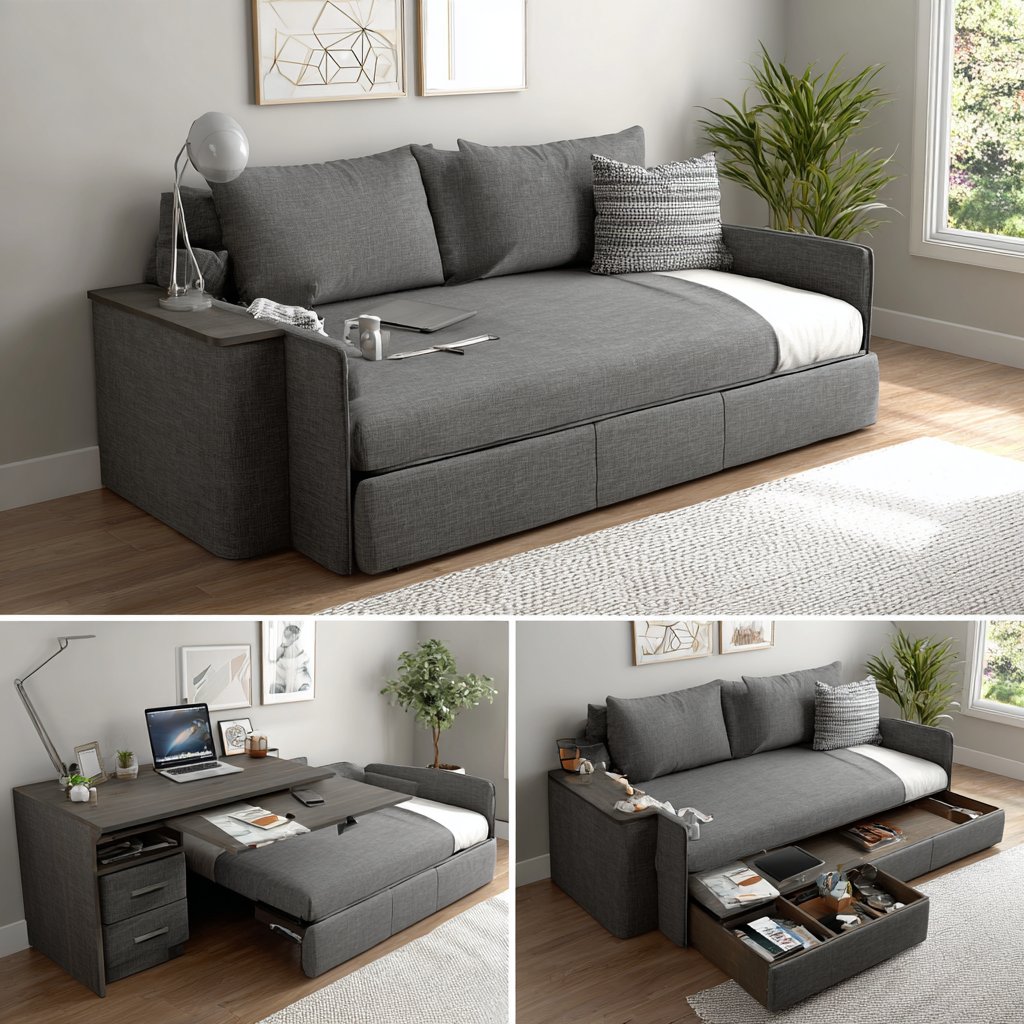
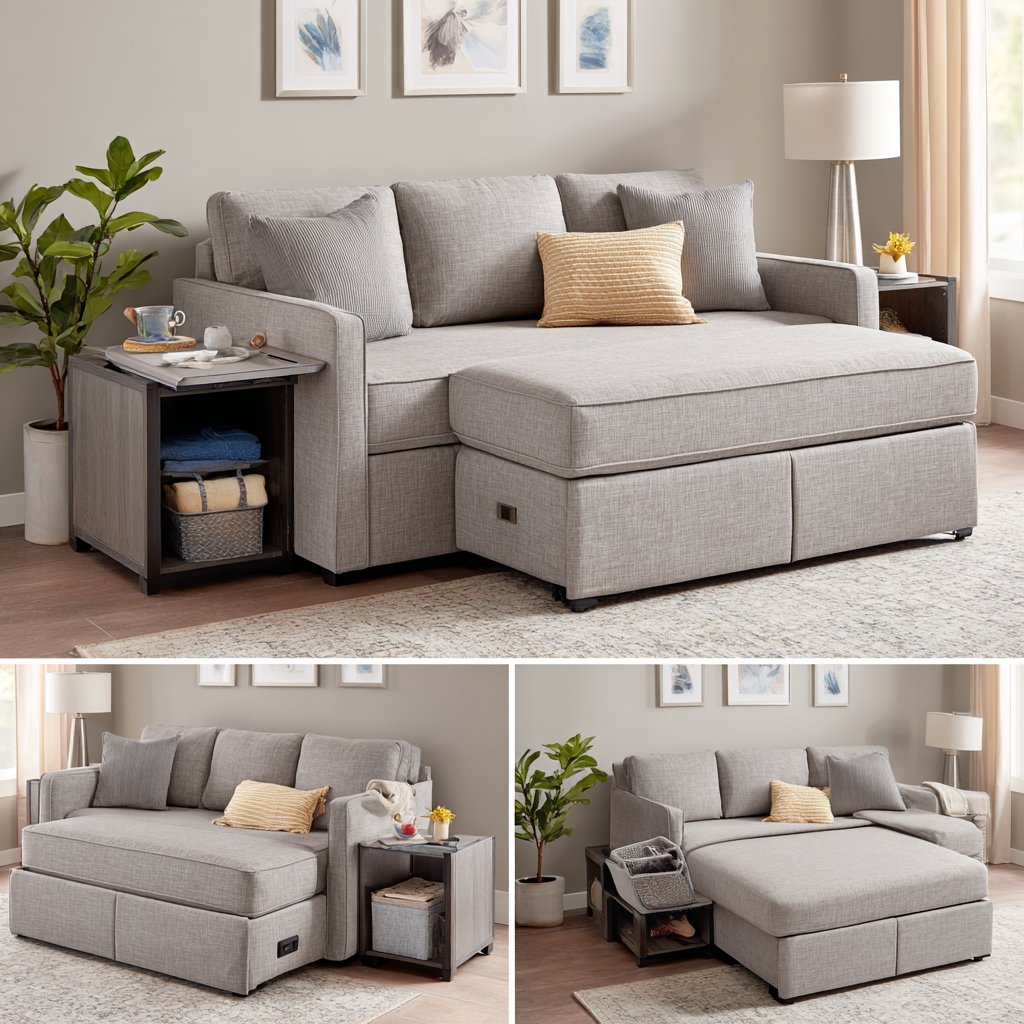
The daybed with integrated side desk represents innovative furniture design that serves both sleeping and working functions within a single piece. This contemporary solution in grey upholstered fabric particularly suits guest rooms that double as home offices, maximizing utility from rooms that might otherwise sit unused much of the time. The pull-out desk surface extends from the daybed’s side frame, creating workspace when needed while tucking away completely when the bed serves its primary sleeping function. Built-in USB ports and outlets discreetly integrate essential modern conveniences.
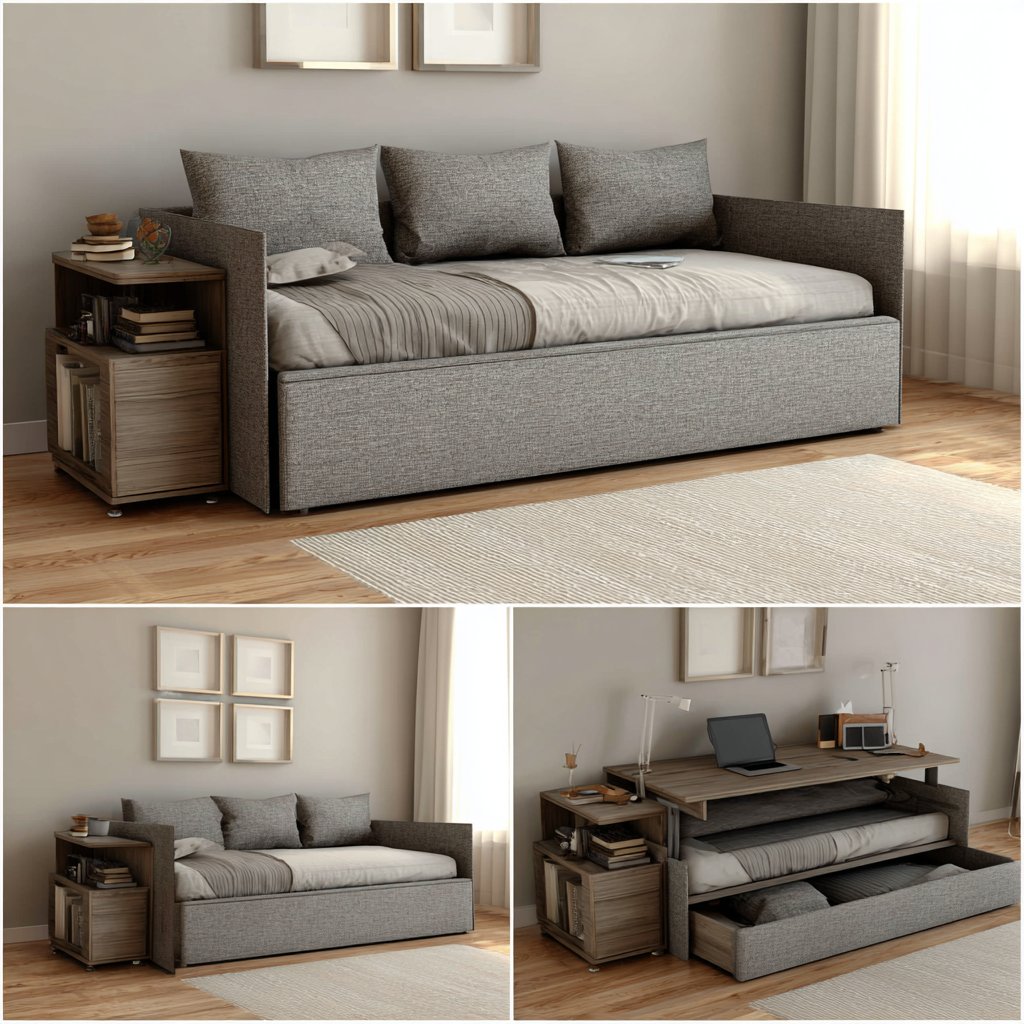
Storage drawers beneath accommodate both bedding and office supplies, maintaining organized accessibility for either function. This dual-purpose storage maximizes the furniture’s footprint efficiency—every cubic inch serves practical purpose. The contemporary design aesthetic works across various bedroom styles, its neutral upholstery and clean lines adapting to surrounding decor choices. The room maintains versatility with neutral walls and minimal accessories, ensuring the space feels welcoming whether functioning as guest room or home office.
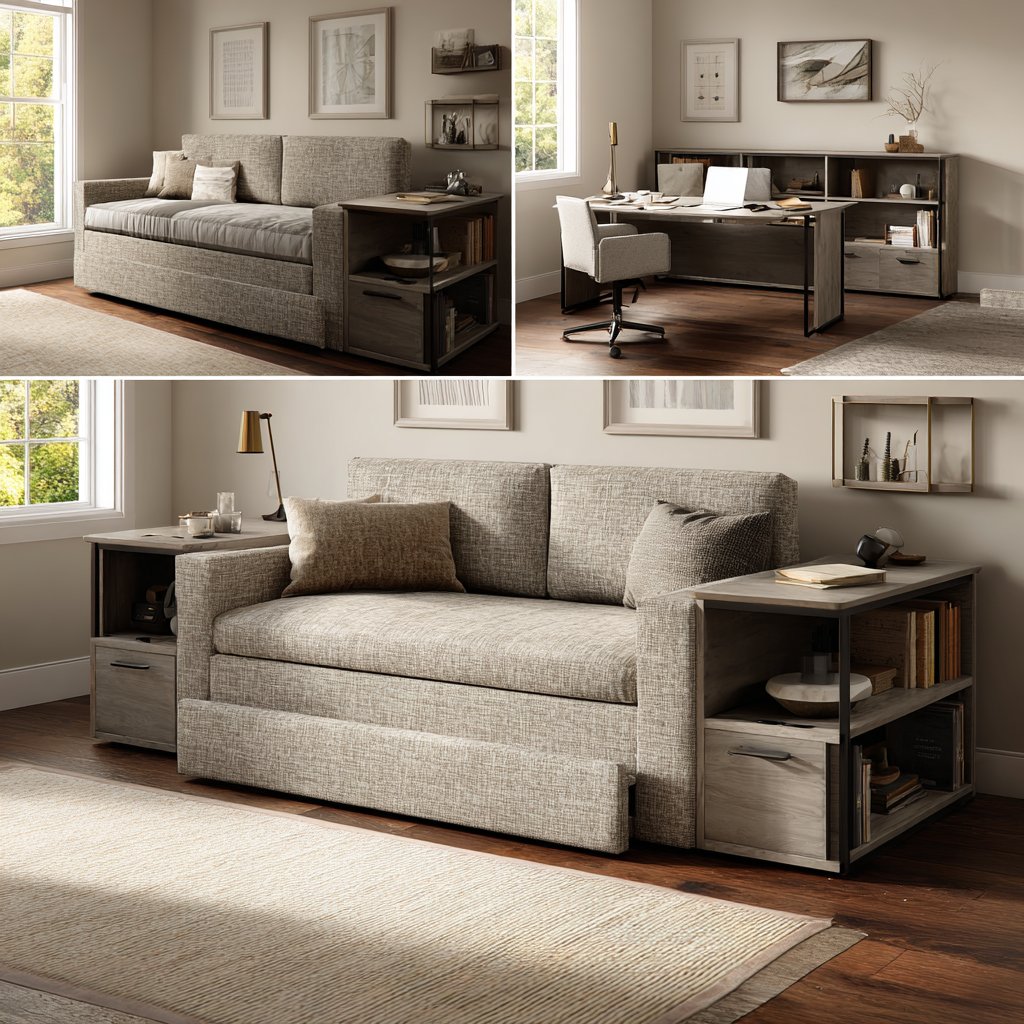
This furniture solution requires quality construction to withstand daily transformation between functions. The desk extension mechanism must operate smoothly and lock securely, supporting work equipment without wobble or concern. The upholstery must endure both sitting for work and sleeping contact, perhaps requiring more durable fabric than typical decorative upholstery.
Key Design Tips:
- Select daybed with robust construction capable of withstanding daily multi-use demands
- Ensure desk extension mechanism operates smoothly and locks securely with adequate weight capacity
- Choose durable upholstery fabric appropriate for both seating and occasional sleeping contact
- Include integrated electrical outlets and USB ports for modern work equipment charging
- Plan storage beneath for both bedding and office supplies in organized, accessible manner
- Maintain neutral room palette to support both guest room and office functions equally
- Test the mechanism extensively before purchase to ensure smooth daily operation
- Consider mattress comfort for guests despite the piece’s dual-purpose nature
13. Rolltop Desk Nostalgic Concealment
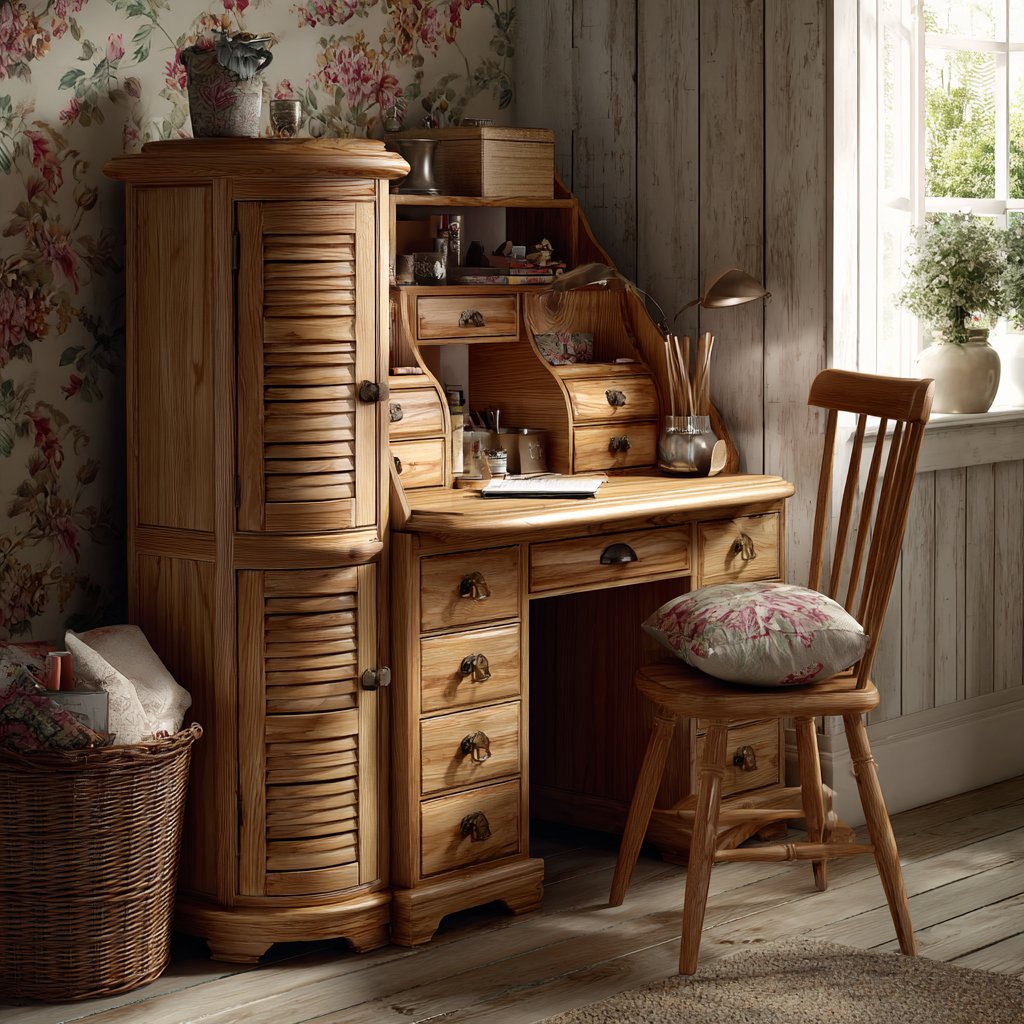
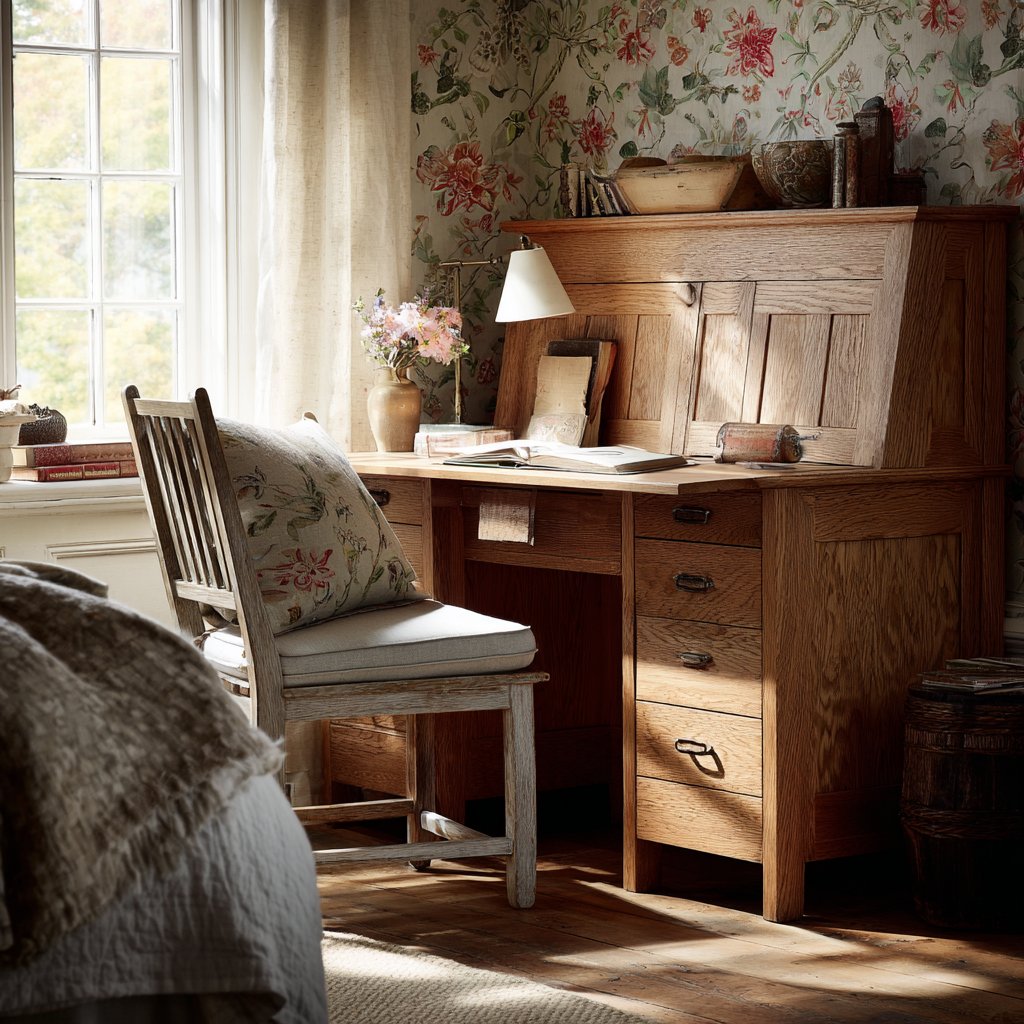
The traditional rolltop desk tucked into a bedroom corner offers workspace that closes off to hide work clutter during off-hours—a vintage solution to the modern challenge of bedroom offices. The oak desk with its tambour door represents craftsmanship from an era when furniture quality defined social status and personal taste. The numerous small drawers and compartments provide organized storage for supplies, papers, and equipment, each space specifically sized for particular items. This attention to storage detail reflects understanding that organized workspace supports focused productivity.
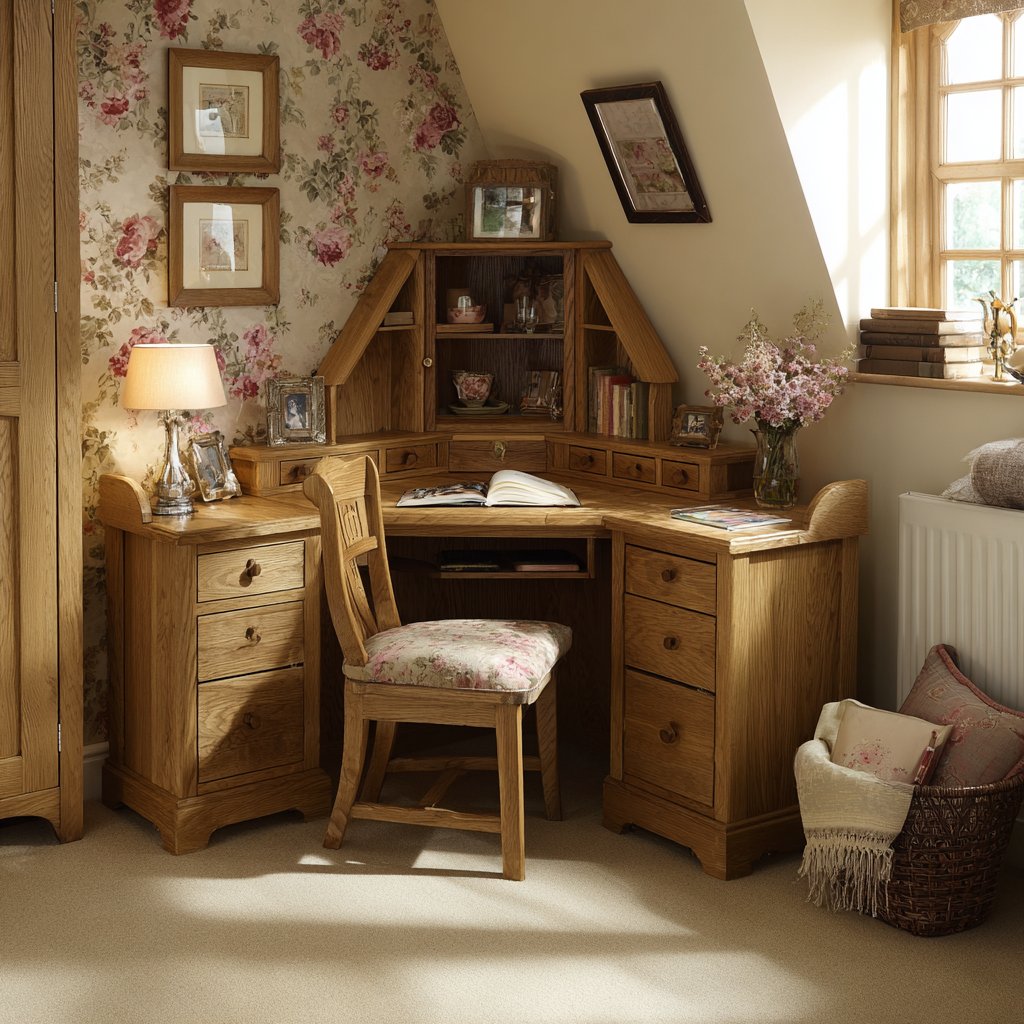
The classic wooden desk chair with cushioned seat provides comfortable seating with traditional styling that matches the desk’s aesthetic. The desk’s warm honey tones complement the bedroom’s cottage-style aesthetic with floral wallpaper and vintage textiles—the workspace feels like natural extension of the room’s personality rather than modern intrusion. Natural light from a nearby window illuminates the workspace, its soft quality particularly suited to the desk’s nostalgic character.
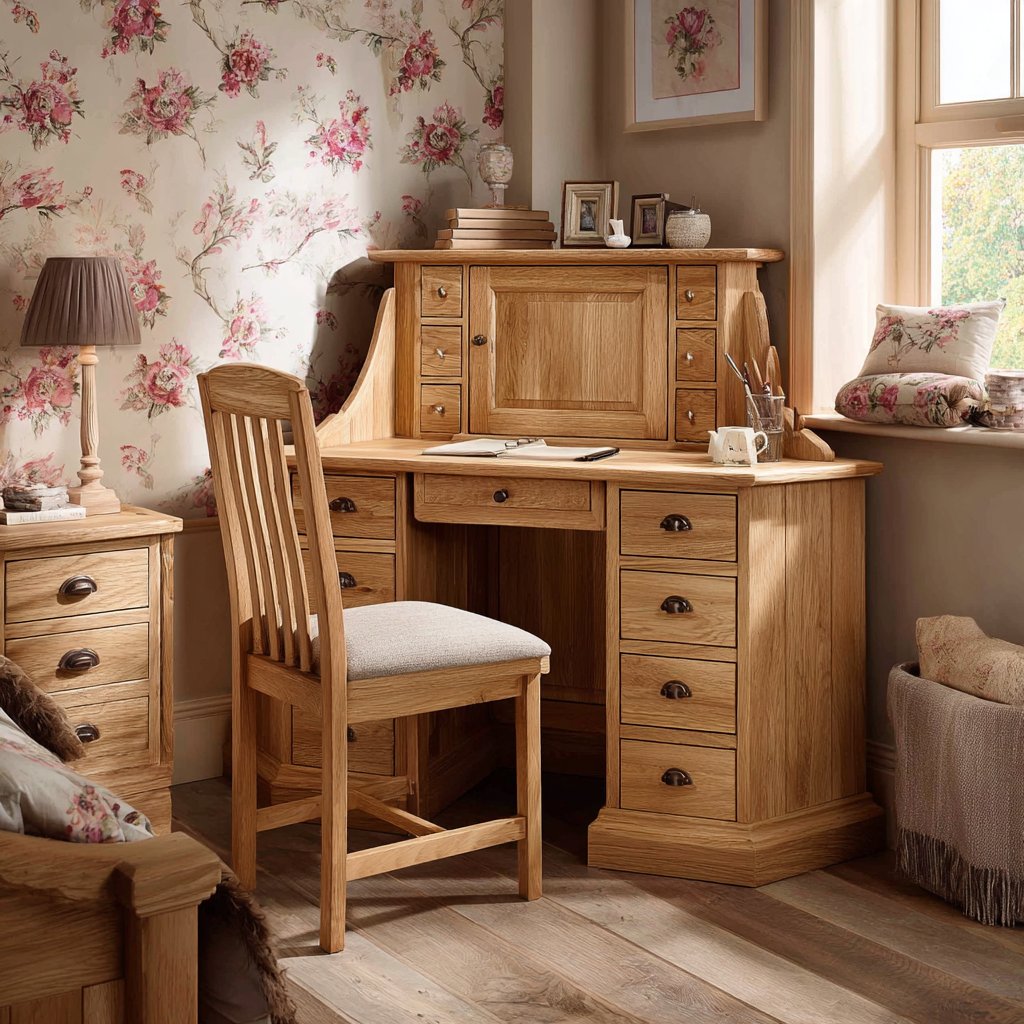
The rolltop desk demands discipline in maintaining its organized appearance—when opened, all contents remain visible, requiring tidy storage practices. When closed, the desk functions as attractive furniture piece, its curved tambour door and quality construction serving as design element. This dual nature makes it ideal for those who appreciate traditional aesthetics and the ritual of opening and closing workspace at day’s beginning and end.
Key Design Tips:
- Choose rolltop desk with smooth-operating tambour door that doesn’t stick or require force
- Position near natural light source to provide adequate workspace illumination
- Maintain organized interior with everything assigned specific drawer or compartment
- Select desk chair that matches traditional aesthetic rather than modern office styling
- Coordinate desk wood tone with other bedroom furniture for visual cohesion
- Keep desk closed when not in use to maintain clean bedroom appearance
- Consider desk dimensions carefully—rolltop desks can overwhelm small bedrooms
- Appreciate that rolltop mechanism requires maintenance to operate smoothly over time
14. Floating Wall-Mounted Modern Statement
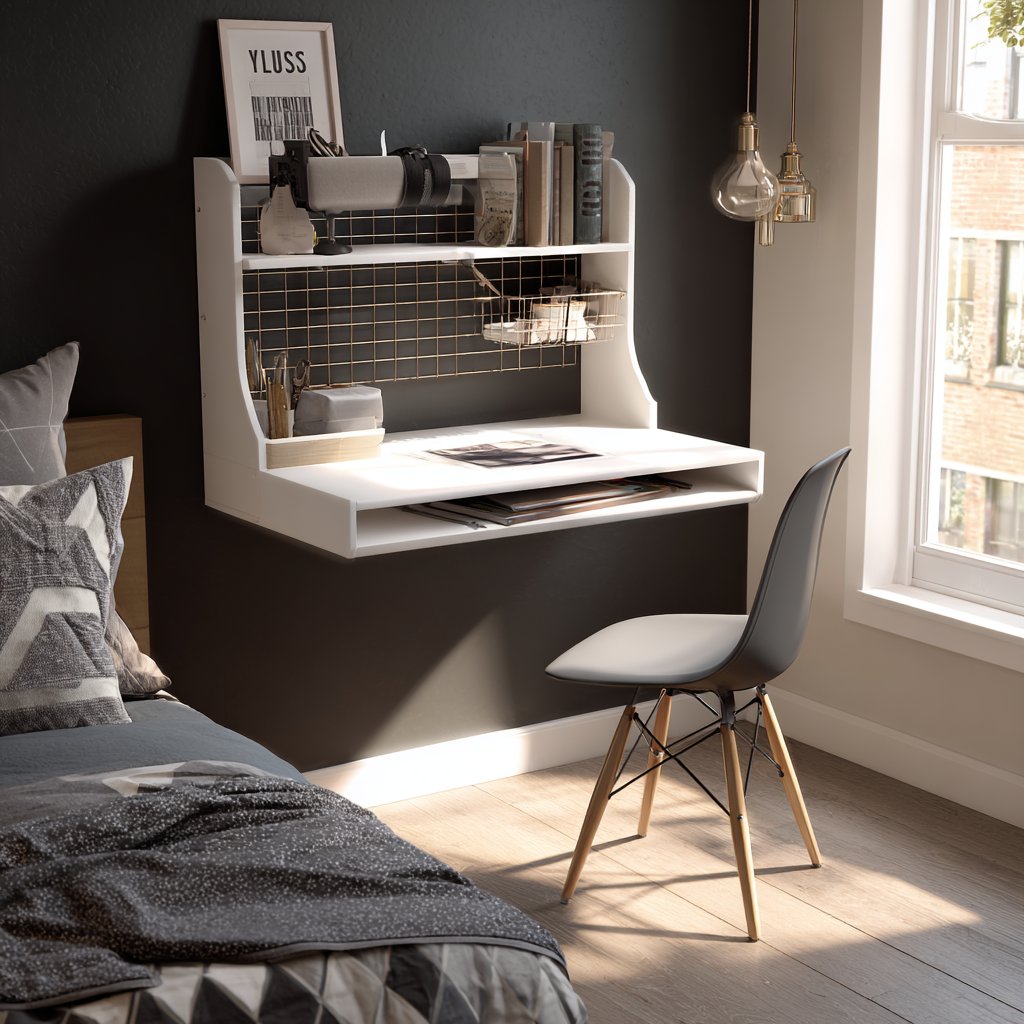
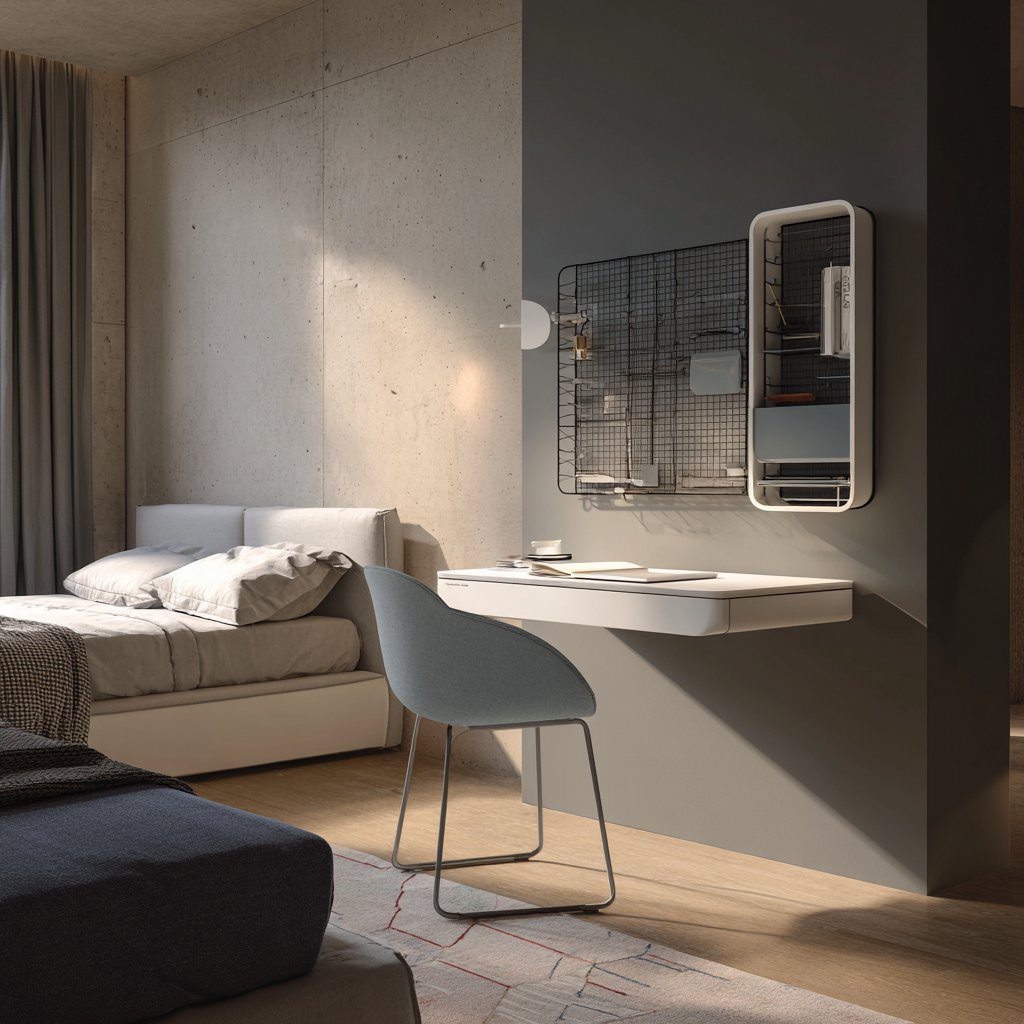
The minimalist wall-mounted desk appearing to float against a charcoal accent wall creates dramatic modern workspace with minimal visual impact. This approach strips away everything unnecessary, focusing solely on essential function—a desk surface and single storage drawer. The slim desk in white lacquered wood is supported by invisible brackets that create the floating illusion, allowing visual continuation of floor surface beneath. This open space beneath psychologically expands the room’s perceived dimensions while maintaining clear floor area.
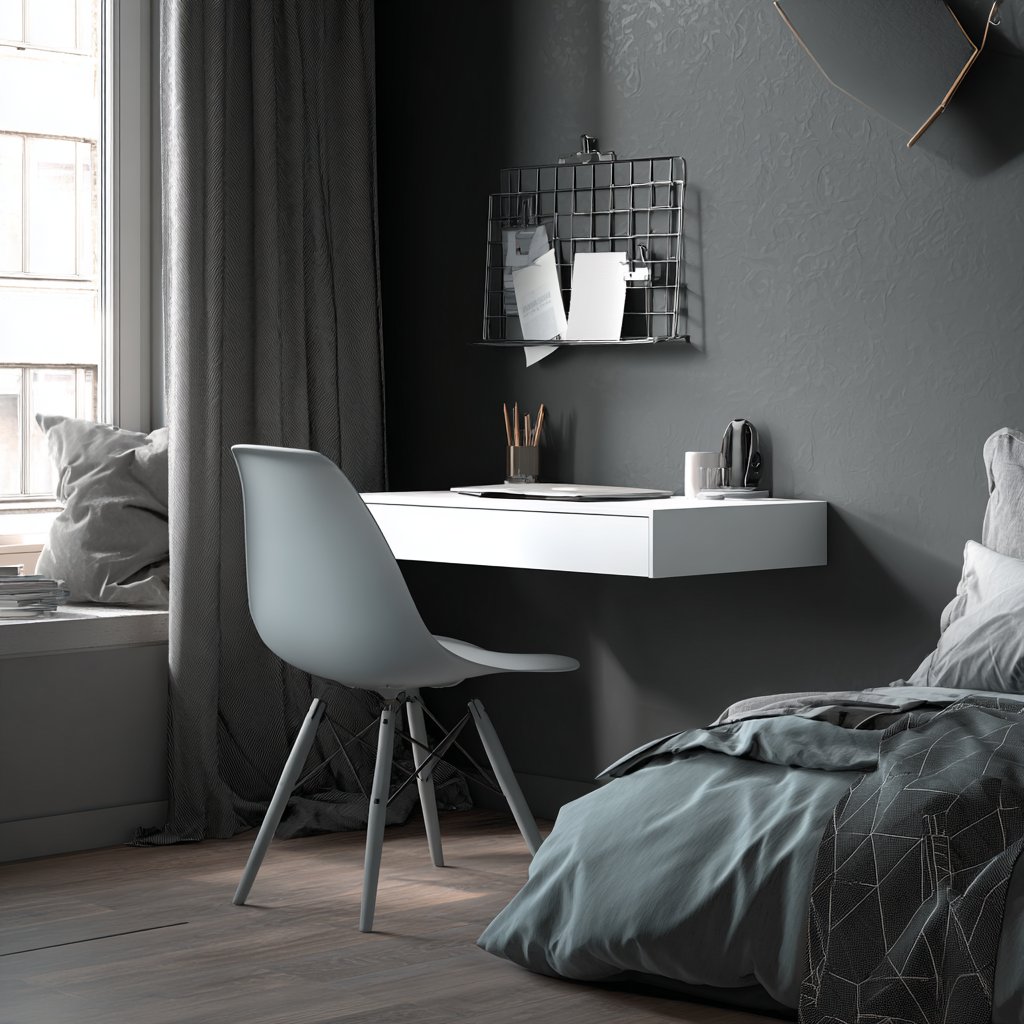
The matching floating drawer provides concealed storage for immediate-access supplies while maintaining clean horizontal lines. Wire mesh organizer mounted above holds papers and supplies in organized, visible manner—the industrial material complementing the modern aesthetic. The contemporary molded plastic chair in soft grey provides comfortable seating with minimal visual weight, its monochrome coloring blending into the overall palette rather than demanding attention.
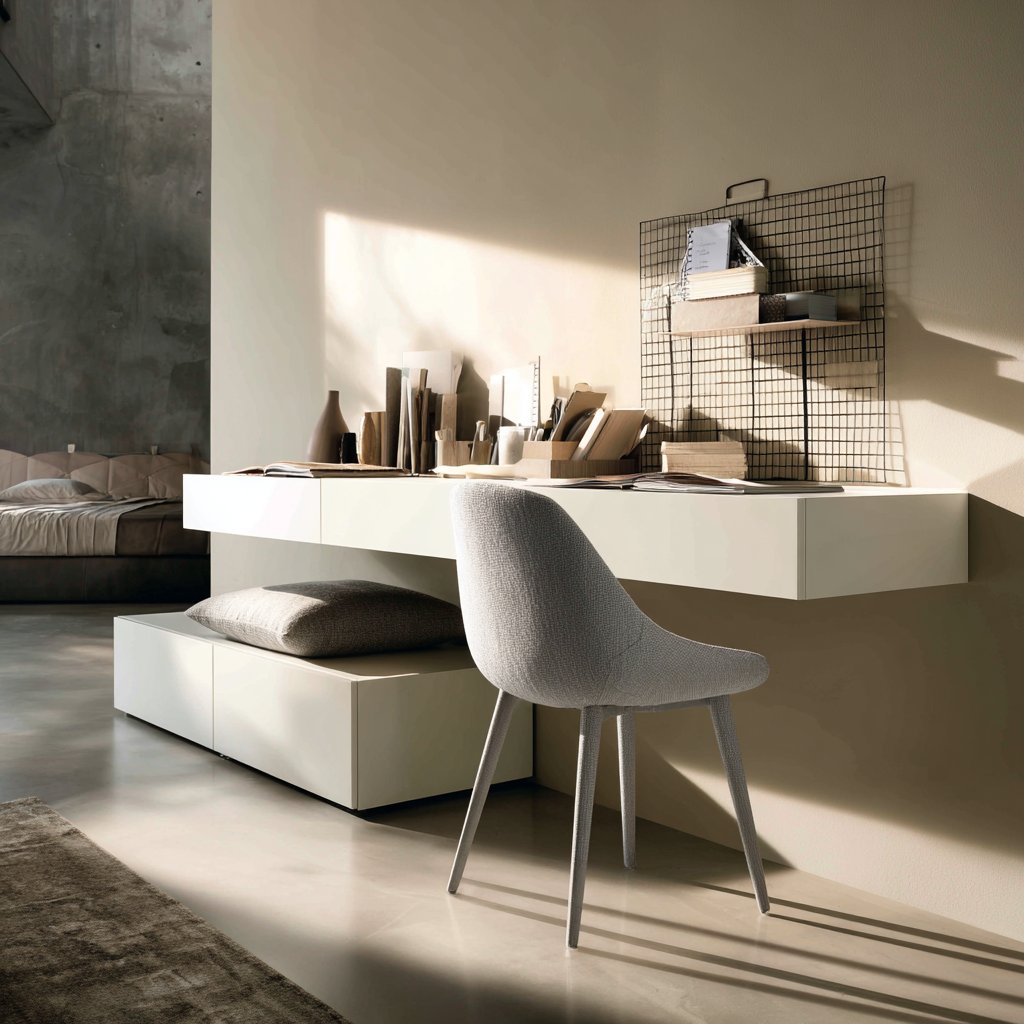
The bedroom features modern design with platform bed and geometric textiles that create cohesive contemporary aesthetic. The charcoal accent wall behind the desk adds dramatic contrast while defining the work zone through color rather than physical barriers. The floating desk maintains the modern aesthetic’s emphasis on clean lines, open space, and lack of visual clutter—every element serves clear purpose without decoration for decoration’s sake.
Key Design Tips:
- Install floating desk with industrial-strength brackets capable of supporting work equipment weight safely
- Include integrated storage drawer to minimize need for additional furniture pieces
- Use wire organizer or minimal shelving that doesn’t detract from floating desk’s visual impact
- Choose chair with minimal profile that doesn’t undermine the desk’s sleek appearance
- Create accent wall behind desk to define work zone through color contrast
- Maintain completely clear desk surface when folded to preserve clean modern aesthetic
- Position lighting to create subtle shadows that emphasize the floating effect
- Consider wall stud location during installation to ensure secure mounting
15. Industrial Metal Desk Character Statement
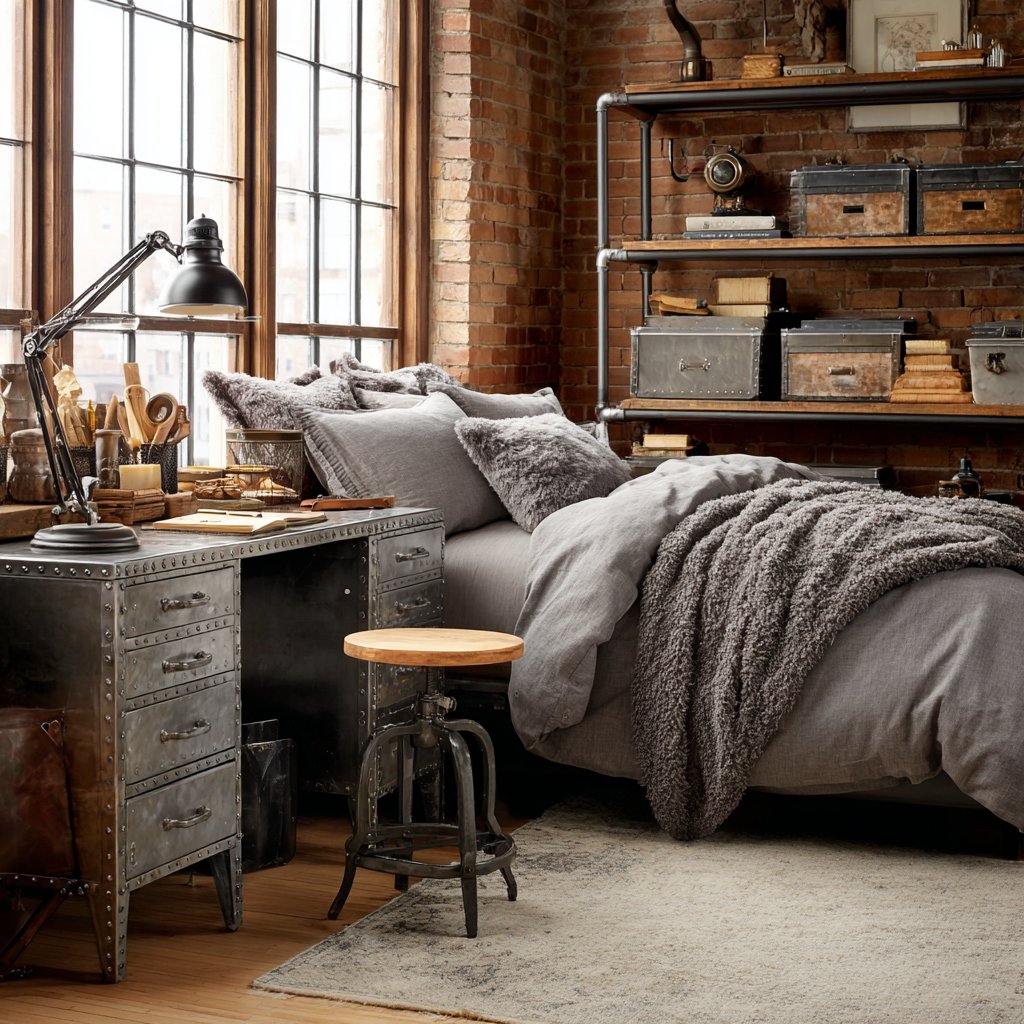
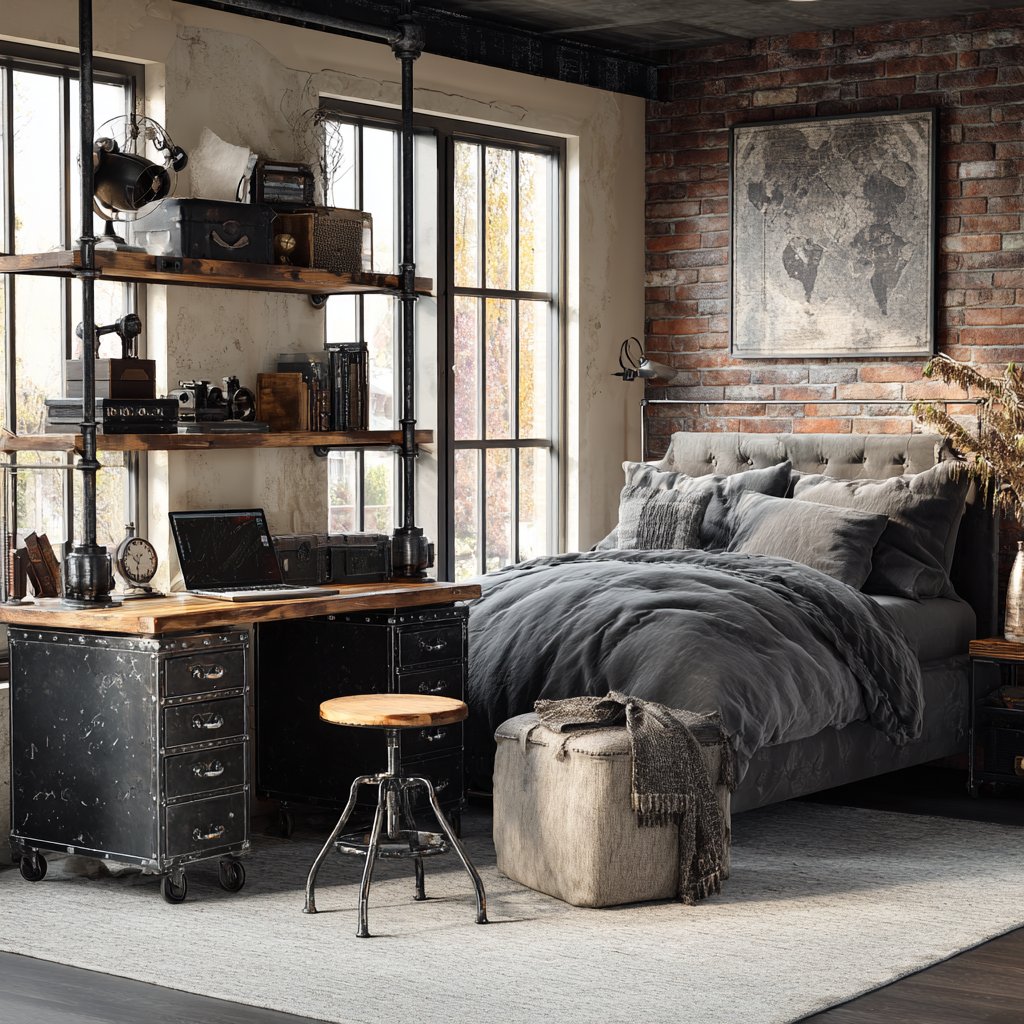
The vintage industrial metal desk with distressed finish positioned near bedroom windows brings authentic character and substantial presence that generic office furniture cannot match. The heavy-duty construction with riveted details speaks to manufacturing heritage, each mark and imperfection telling stories of actual use and age. Multiple drawers provide generous storage while maintaining industrial aesthetic through simple pulls and utilitarian construction. This desk commands attention as furniture statement while delivering serious workspace functionality.
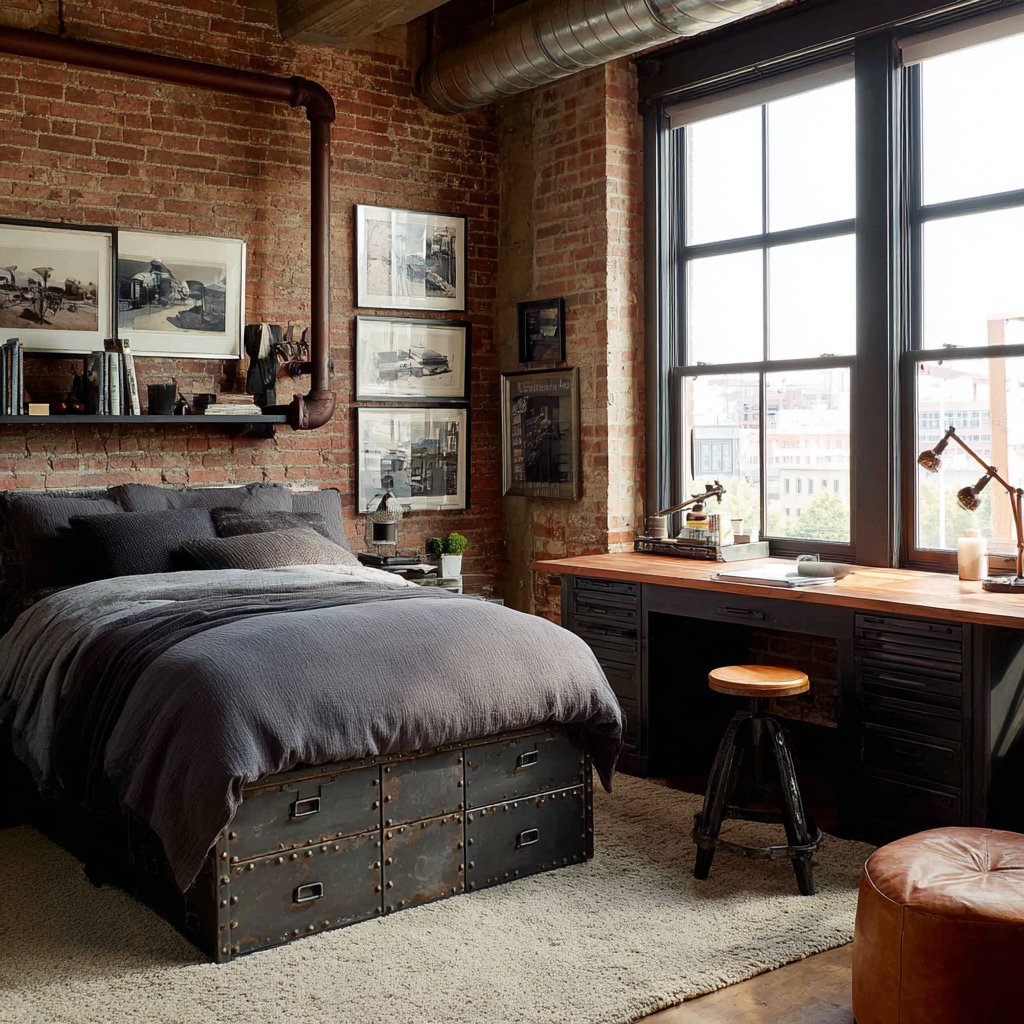
The vintage factory stool with wooden seat offers flexible seating appropriate to the industrial aesthetic. Unlike rolling office chairs, the stool provides authentic period styling while remaining comfortable for reasonable work sessions. Exposed brick walls and metal pipe shelving above the desk reinforce the industrial aesthetic, creating immersive environment that makes the workspace feel intentional rather than compromised. The bedroom area softens the industrial work zone with plush grey bedding and layered rugs that create textural comfort and visual warmth.
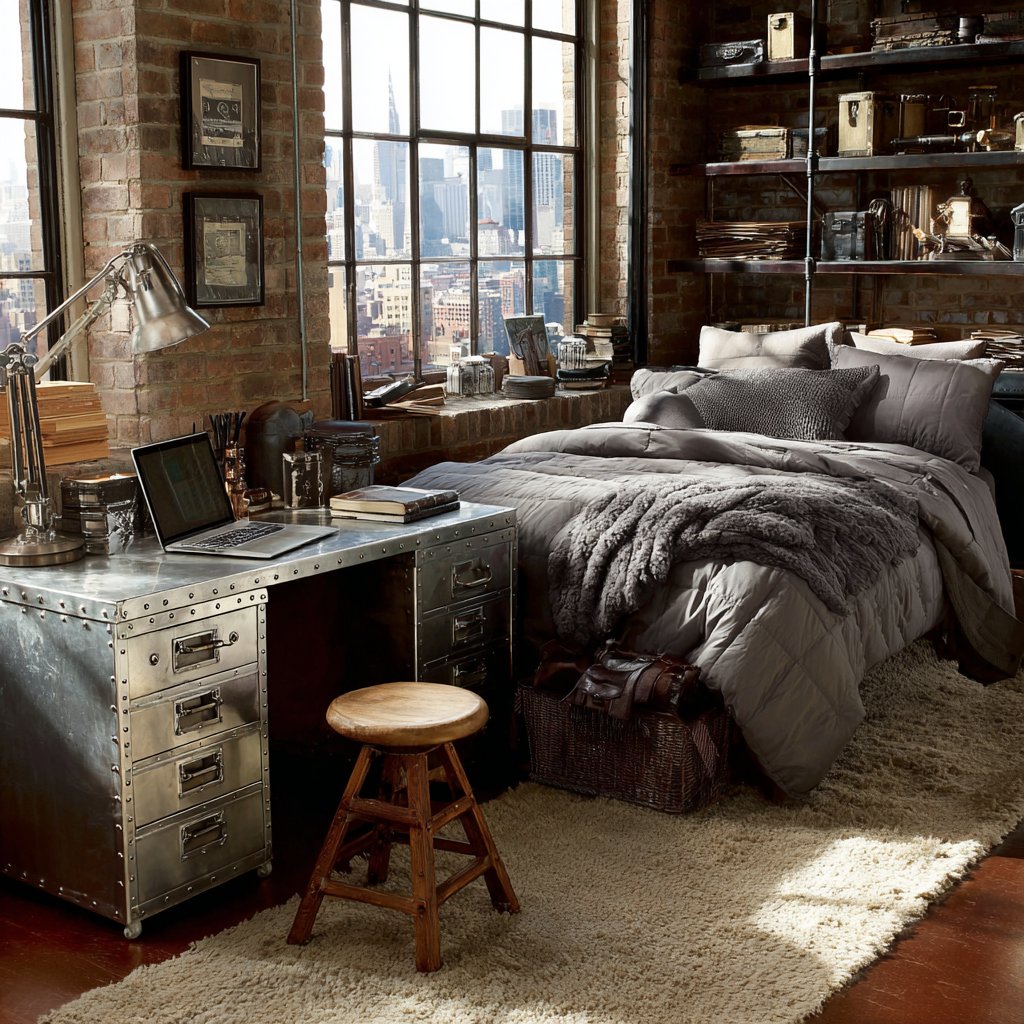
This approach celebrates contrast—hard metal surfaces against soft textiles, utilitarian work elements against residential comfort, industrial materials against cozy bedding. The successful integration requires balance, ensuring neither work zone nor sleep zone dominates but both coexist harmoniously within shared space.
Key Design Tips:
- Choose authentic vintage industrial furniture rather than reproduction pieces when possible
- Position desk near windows to maximize natural light on substantial work surface
- Balance industrial work elements with soft textiles in sleep zone to prevent cold atmosphere
- Include authentic period accessories like factory stools or metal task lighting
- Embrace the furniture’s wear and patina as character rather than viewing as damage
- Consider desk weight—industrial metal furniture is genuinely heavy and difficult to move
- Install industrial-style shelving or storage that complements desk aesthetic
- Layer rugs and textiles strategically to warm the industrial materials without undermining their impact
16. Bookshelf-Integrated Secretary Desk
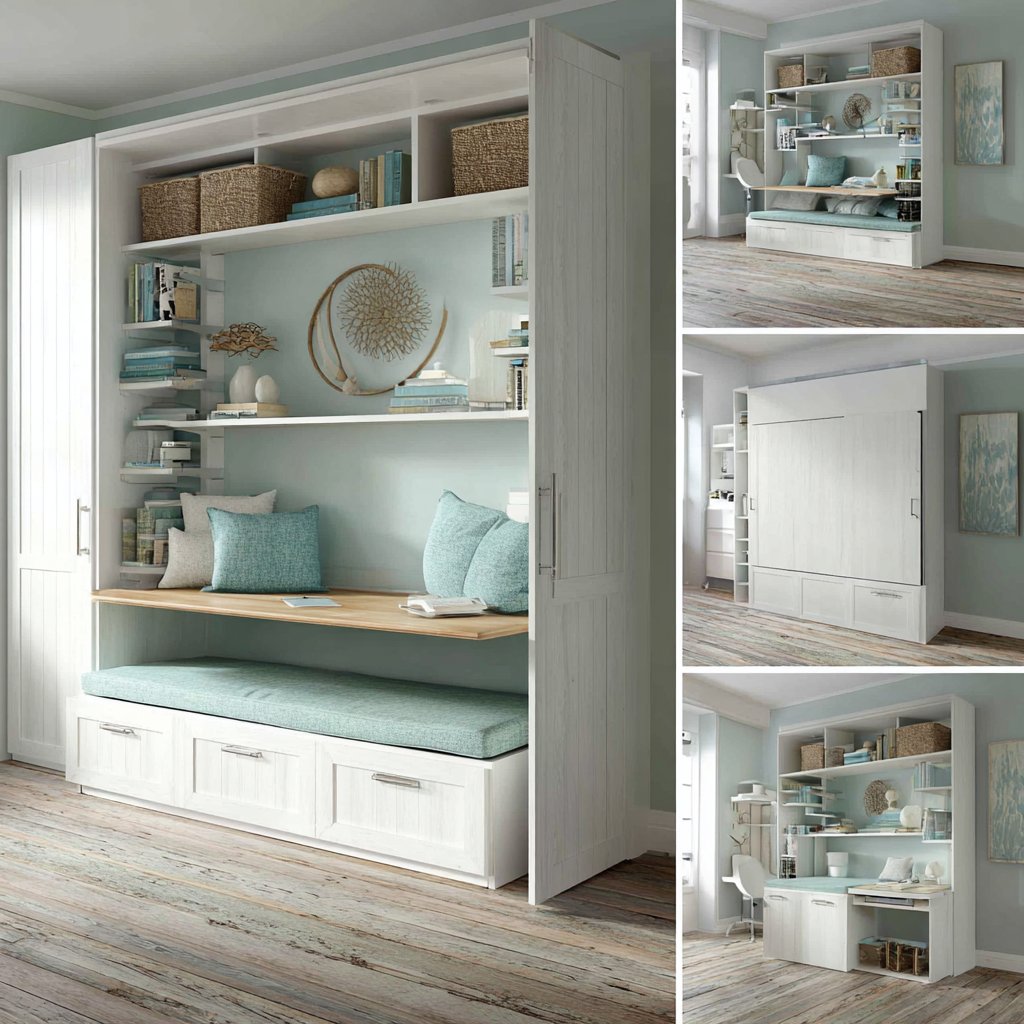
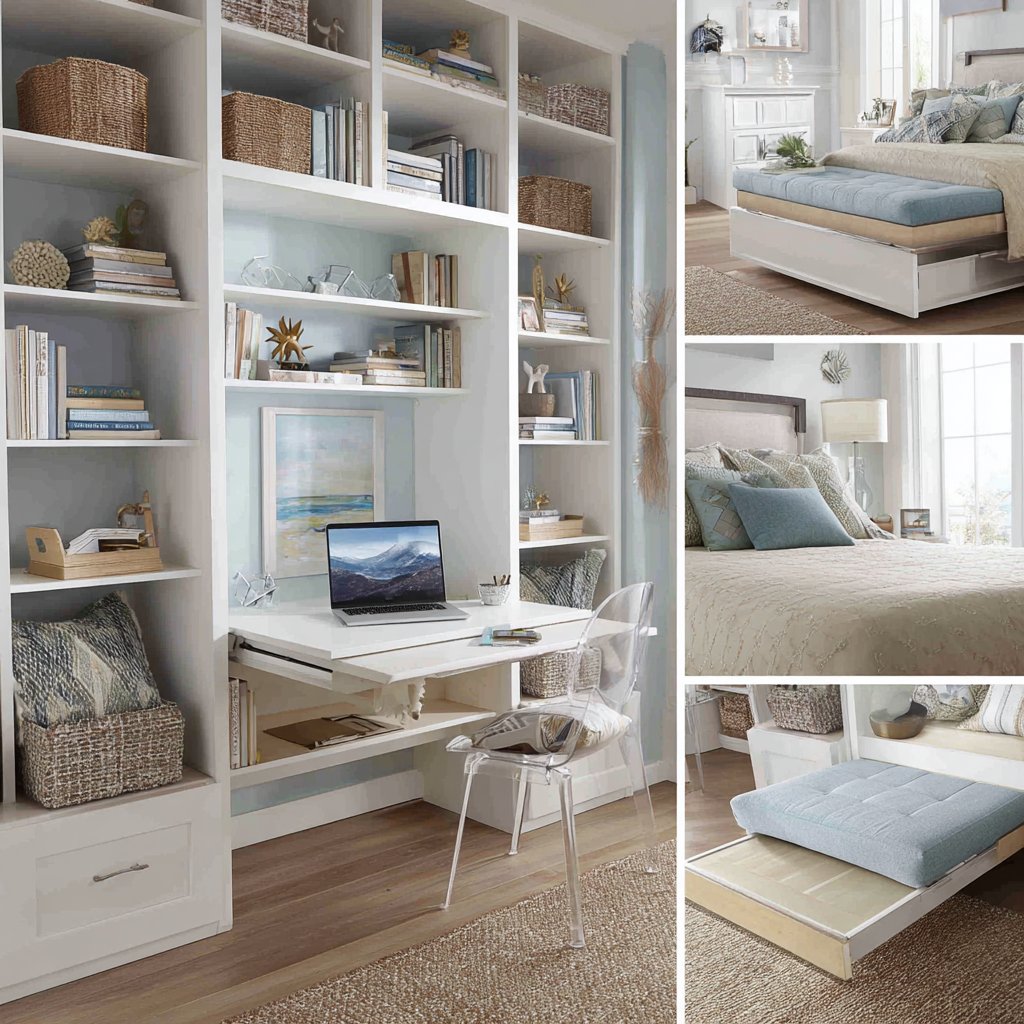
The secretary desk built into a custom bedroom bookshelf unit creates integrated workspace within floor-to-ceiling storage, maximizing vertical space utilization. This approach transforms an entire wall into functional system that serves both bedroom and office needs without requiring multiple furniture pieces. The fold-down desk surface in matching white painted wood reveals organized cubbies and small drawers when open, providing dedicated workspace with immediate storage access. When closed, the secretary desk disappears into the bookshelf system, maintaining clean visual lines.
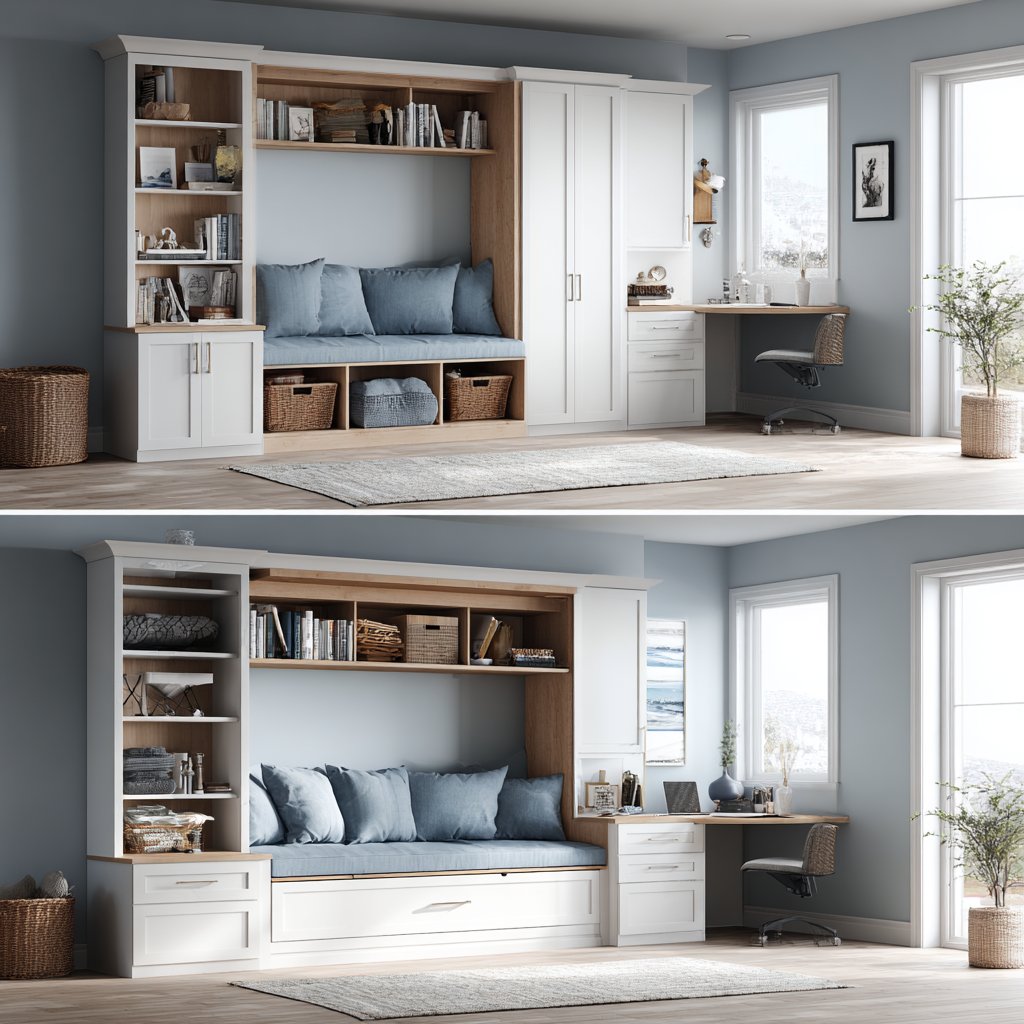
The surrounding shelving displays books, decorative objects, and storage baskets that serve both functions—bedroom requires storage for personal items, office requires storage for supplies and files. The integrated approach ensures everything has designated place within the unified system. A cushioned bench slides underneath for seating, its dual purpose providing both desk chair and window seat or general bedroom seating. The bedroom features coastal-inspired design with soft blue accents that create serene, vacation-like atmosphere appropriate for both rest and focused work.
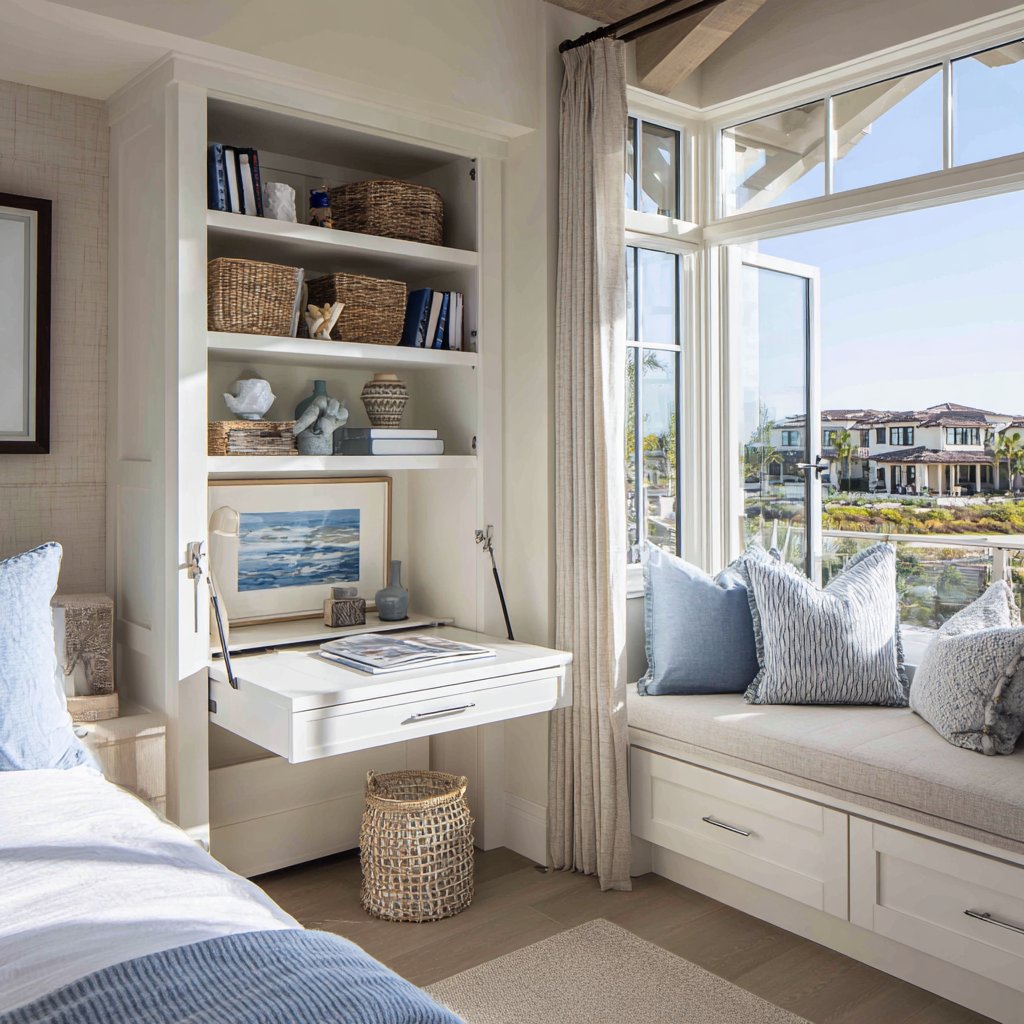
This built-in solution requires professional installation and thoughtful planning but rewards with exceptional space efficiency. Every vertical inch serves purpose, from floor-level storage to ceiling-height display, creating comprehensive system that eliminates need for separate office furniture cluttering the bedroom.
Key Design Tips:
- Plan bookshelf system with secretary desk during construction or renovation for best integration
- Include variety of storage types—open shelving, closed cabinets, drawers, cubbies—for diverse needs
- Ensure fold-down desk operates smoothly and locks securely in open position
- Select bench or seating that stores beneath desk when not needed
- Coordinate finish color across entire built-in system for unified appearance
- Balance open display with concealed storage to prevent visual clutter
- Position desk fold-down at appropriate height for comfortable extended work sessions
- Include subtle interior lighting that illuminates work surface and shelving
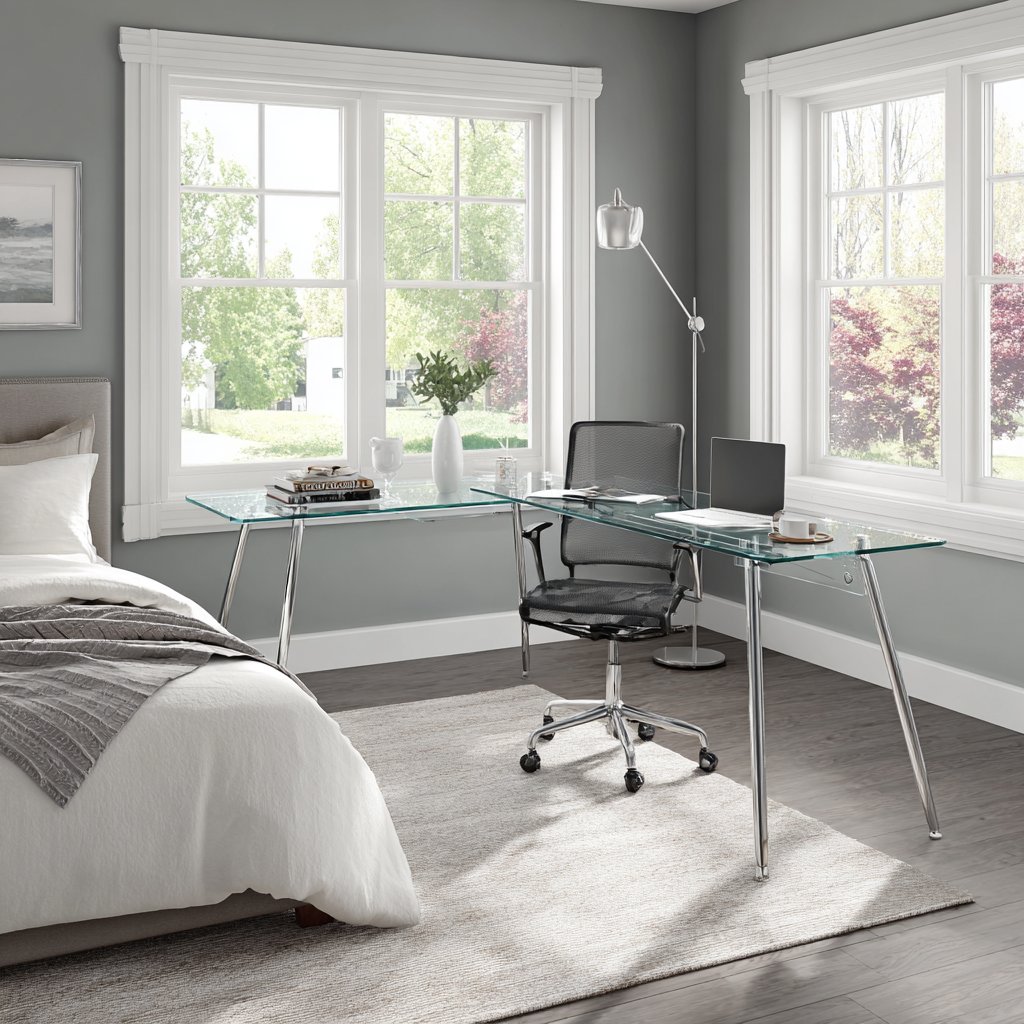
17. Glass Desk Transparency and Light
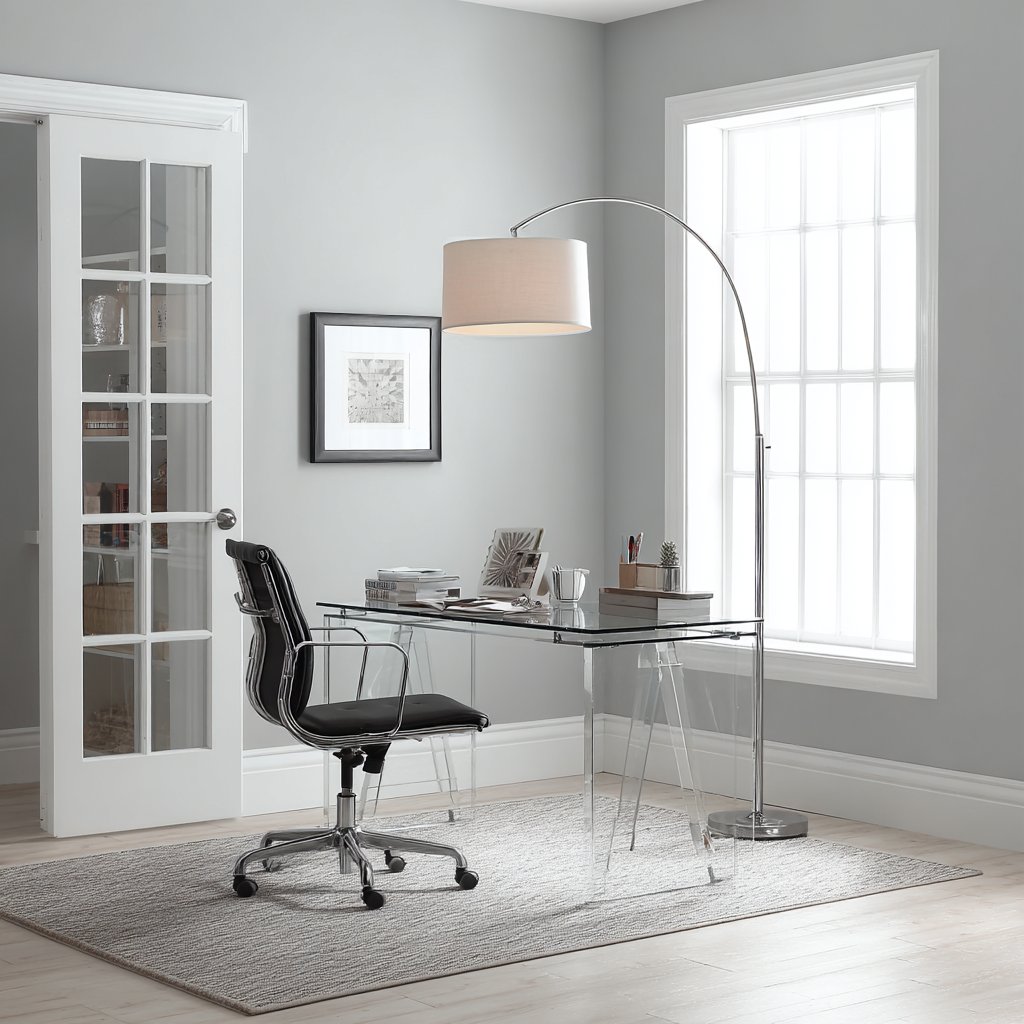
The sleek glass desk positioned at an angle in the bedroom corner creates modern workspace that maintains visual lightness essential in bedroom environments. The tempered glass desktop sits atop chrome legs with minimalist footprint, providing necessary function without visual bulk. The transparent surface allows continuation of floor material visually, creating impression of more space than actually exists—particularly valuable in smaller bedrooms where every perceived square foot matters psychologically if not physically.
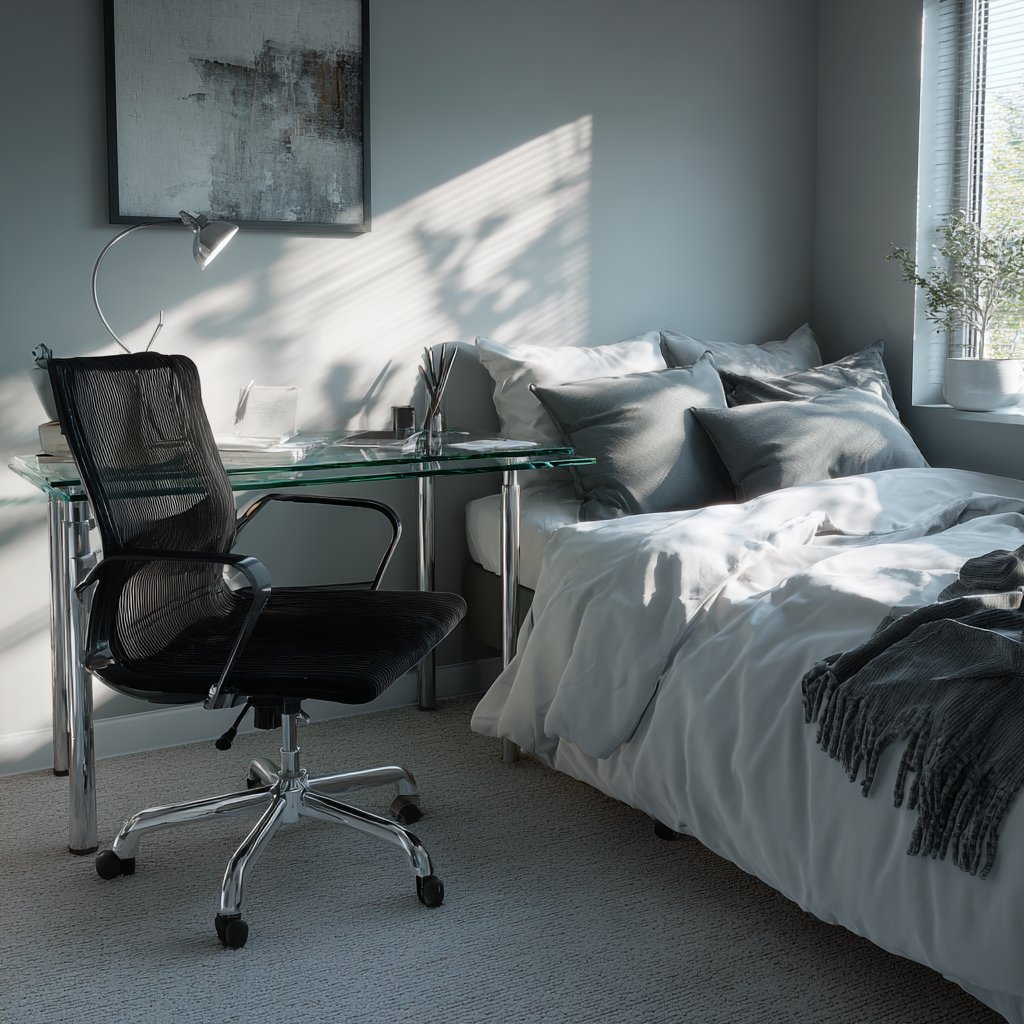
The contemporary mesh office chair in black provides ergonomic support without visual weight, its open weave allowing light and sight lines to pass through rather than creating solid visual barrier. A slim floor lamp arcs over the desk for task lighting, its minimal base requiring little floor space while the extending arm positions light exactly where needed. The bedroom features monochromatic design with crisp white bedding and grey walls—the glass desk integrates seamlessly into this neutral palette.
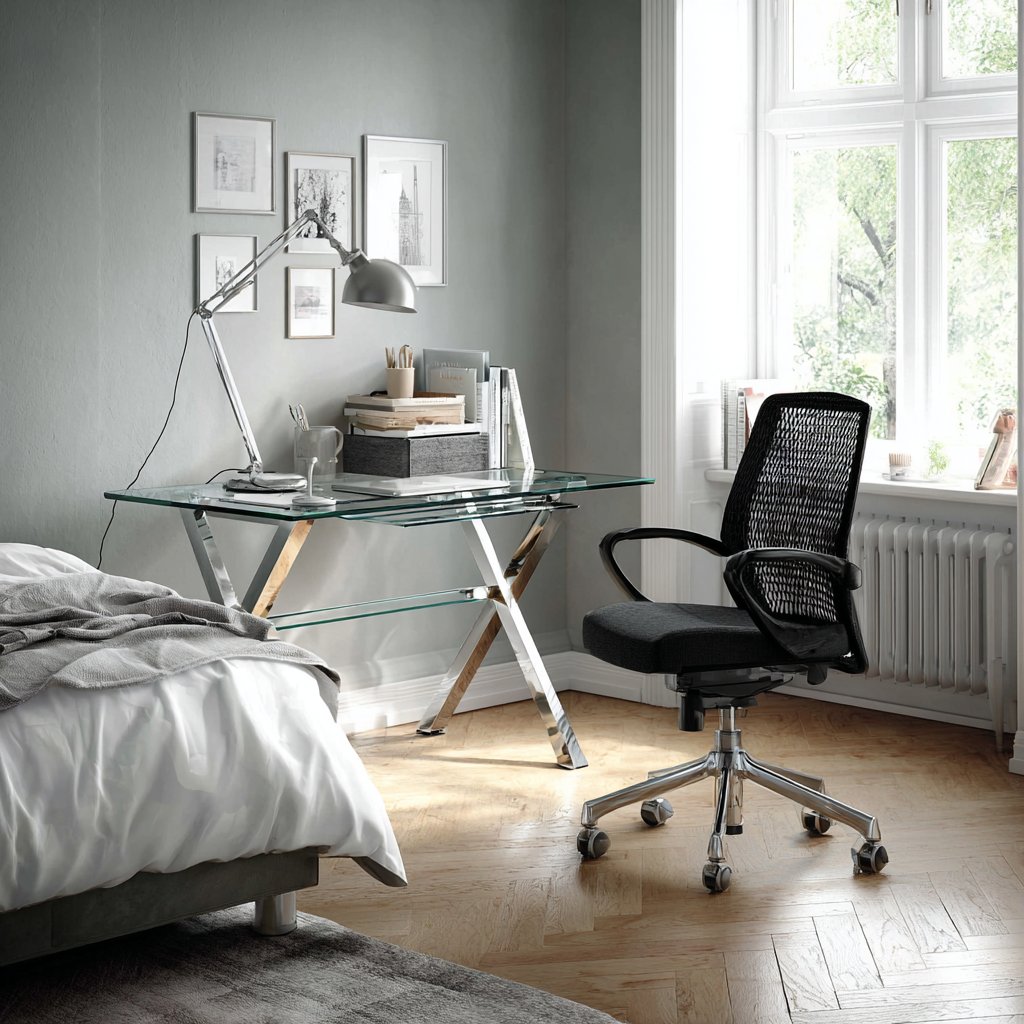
This minimalist approach requires strict maintenance discipline—glass surfaces show every fingerprint, water ring, and dust particle. The desk must remain immaculately clean to maintain its elegant appearance. Similarly, the transparent nature means everything on the desk surface remains visible at all times, requiring careful curation and organization.
Key Design Tips:
- Choose tempered glass for safety—it shatters into small, less dangerous pieces if broken
- Select chrome or metal legs with minimal profile to maintain visual lightness
- Include task lighting that doesn’t require desk surface space for lamp base
- Choose mesh or transparent seating to continue the visual lightness theme
- Maintain pristine glass surface—fingerprints and smudges destroy the elegant aesthetic
- Keep desk surface minimal with only essential, attractive items visible
- Position at angle to create visual interest rather than predictable parallel wall alignment
- Consider anti-glare treatments if screen position creates reflection issues
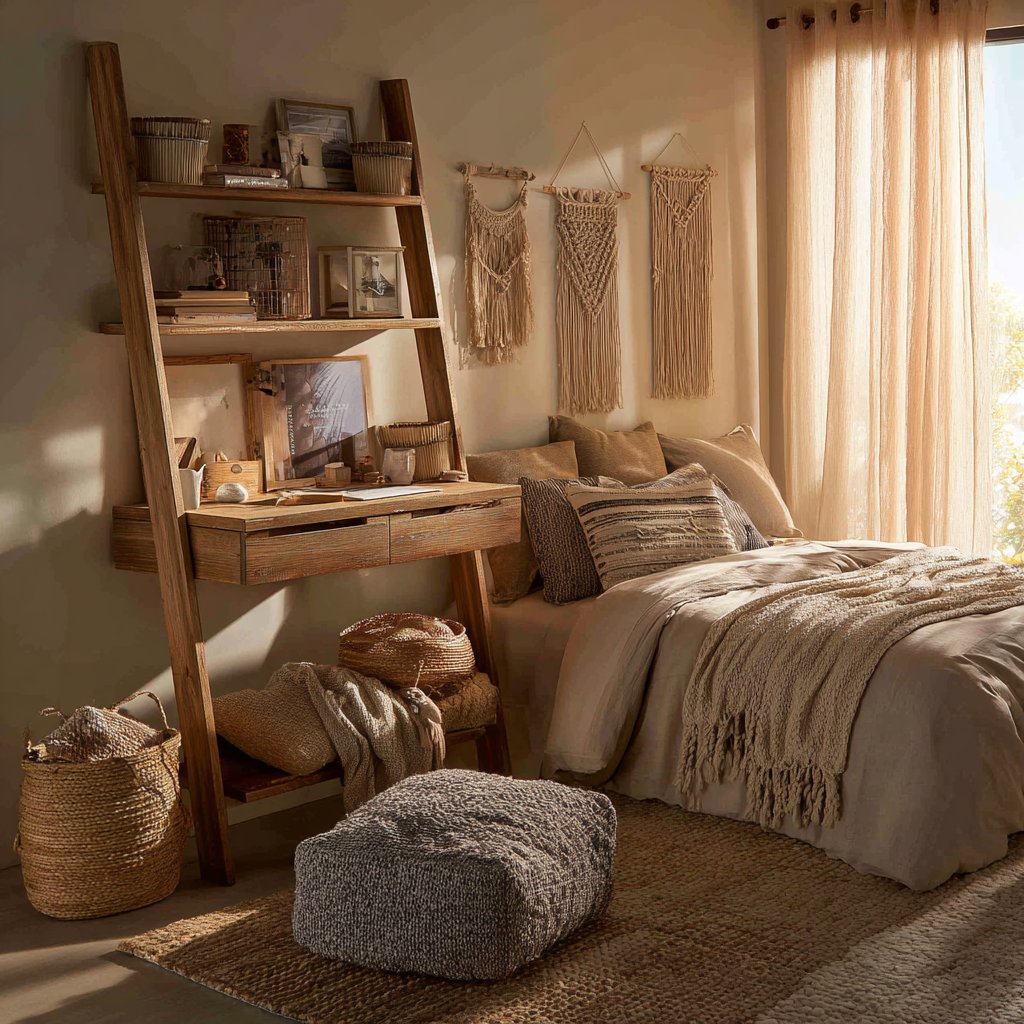
18. Bohemian Ladder Desk Casual Creativity
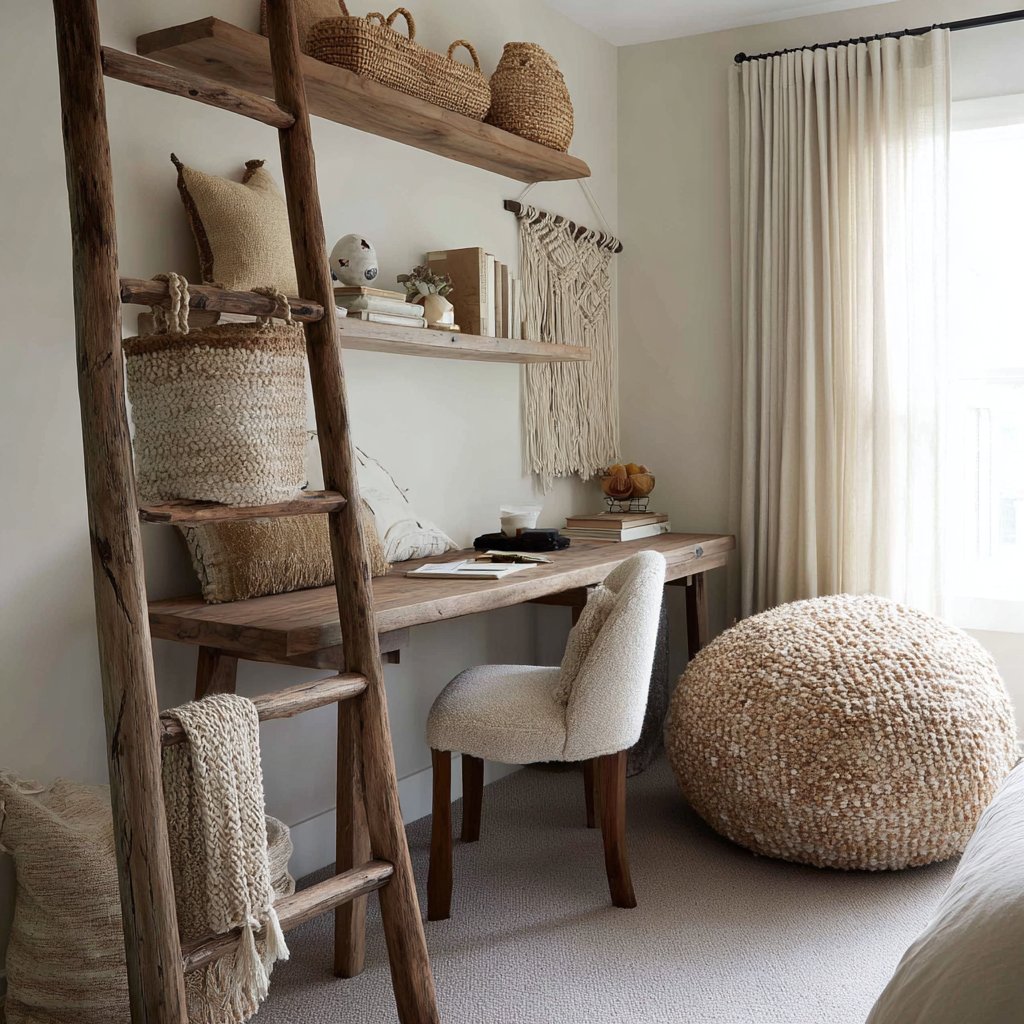
The rustic wooden ladder desk leaning against the bedroom wall offers casual workspace with bohemian charm that celebrates relaxed, creative living. This unconventional approach rejects traditional office furniture in favor of repurposed architectural elements, creating workspace that feels artistic rather than corporate. The ladder-style structure in natural wood finish includes graduated shelf-like surfaces at various heights, providing versatile workspace and storage that adapts to different needs and work styles. Small storage pockets attached to ladder rungs hold supplies within easy reach.
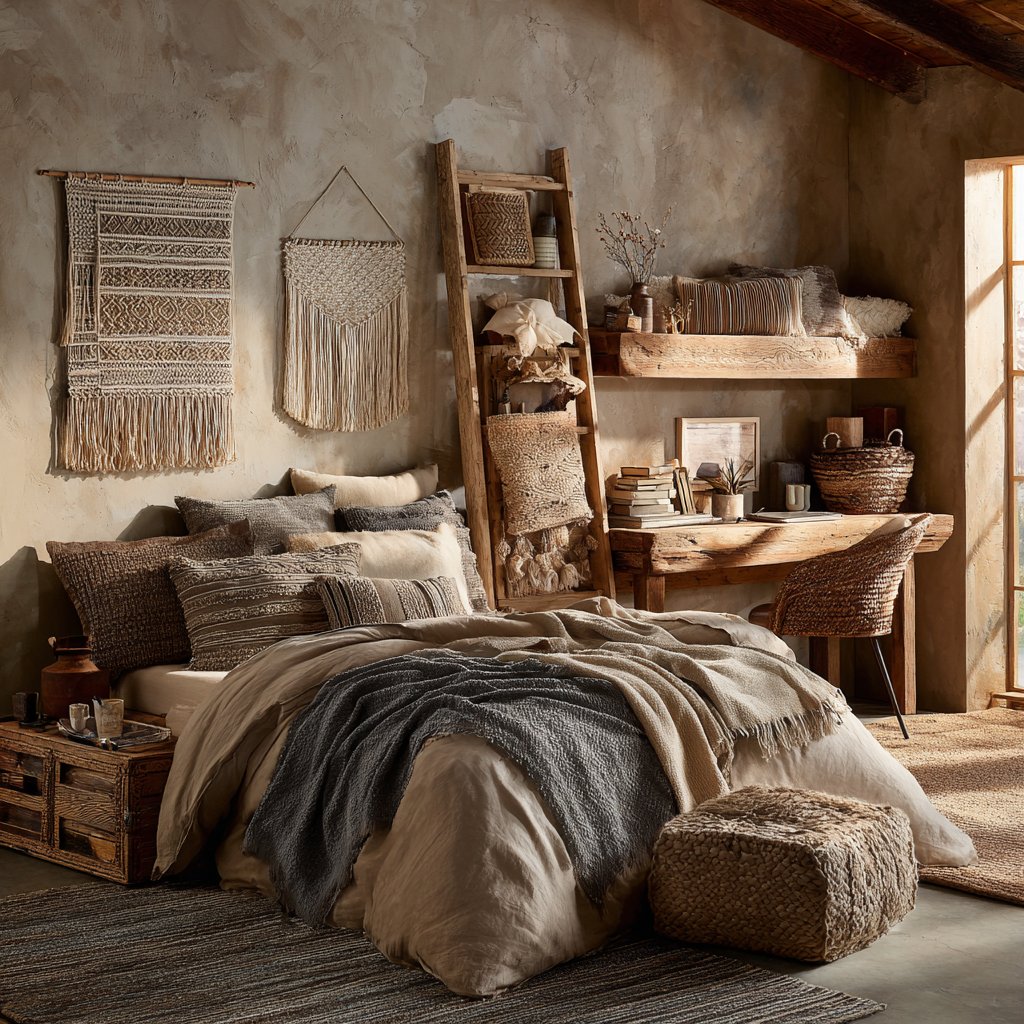
Woven baskets hanging from ladder rungs provide organized storage while contributing natural texture and handcrafted aesthetic characteristic of bohemian design. A low pouf in textured fabric offers flexible seating—its casual, floor-level position encourages relaxed working posture appropriate to creative tasks rather than formal business work. The bedroom embraces eclectic style with macramé wall hangings and layered textiles in earth tones, creating immersive environment where work zone and bedroom aesthetic blend seamlessly.
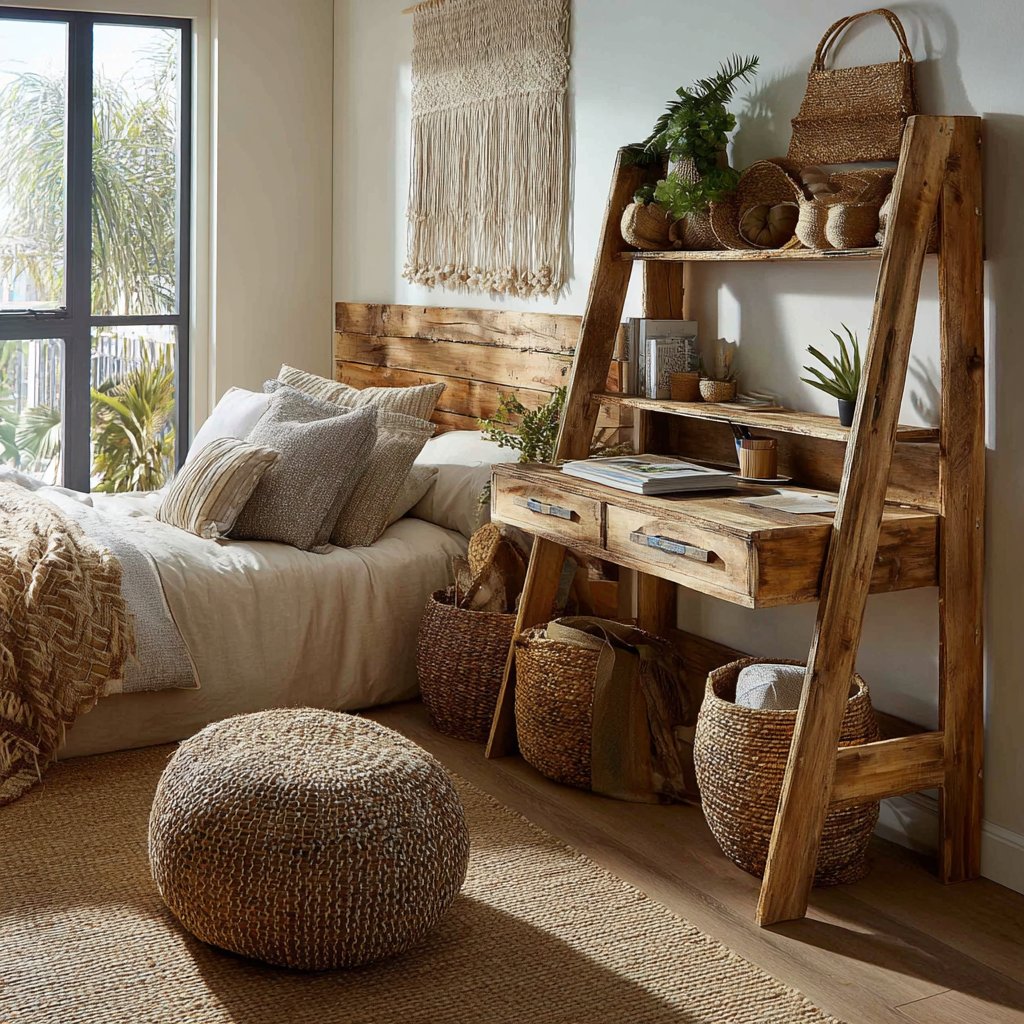
This approach suits creative professionals whose work requires inspiration rather than corporate formality. The ladder desk celebrates imperfection, handcrafted quality, and the beauty of natural materials—values central to bohemian design philosophy. The casual aesthetic helps separate this workspace psychologically from traditional office associations, potentially reducing work stress through its relaxed visual language.
Key Design Tips:
- Select or build ladder desk with secure leaning angle that won’t tip during use
- Include variety of surface heights to accommodate different work activities and postures
- Use woven baskets and natural fiber storage to maintain bohemian aesthetic
- Choose low, casual seating appropriate to the desk’s unconventional height
- Layer natural textures—wood, woven fibers, textiles—for characteristic bohemian richness
- Position where the angled ladder won’t interfere with room circulation
- Embrace imperfection and handcrafted quality rather than pursuing polished perfection
- Coordinate earth-toned palette throughout bedroom for cohesive eclectic aesthetic
19. L-Shaped Corner Desk Maximum Workspace
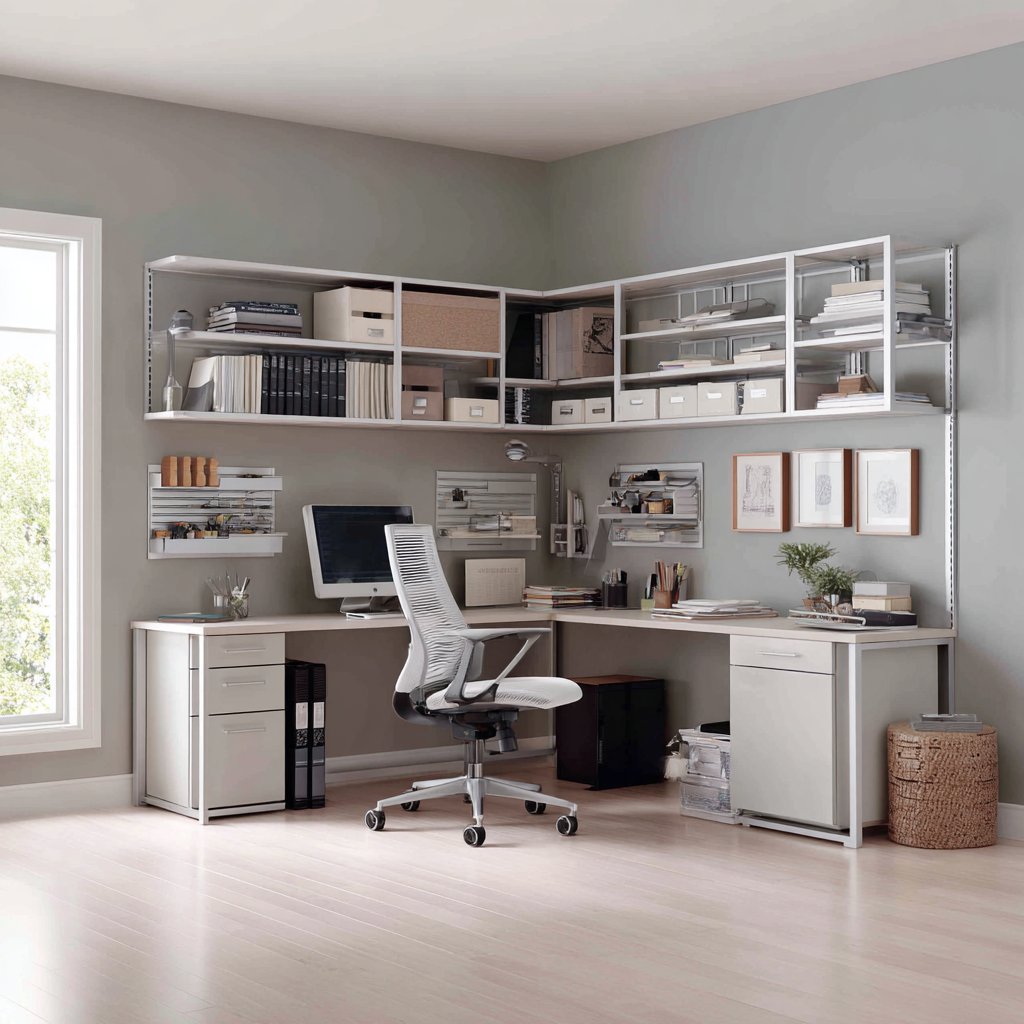
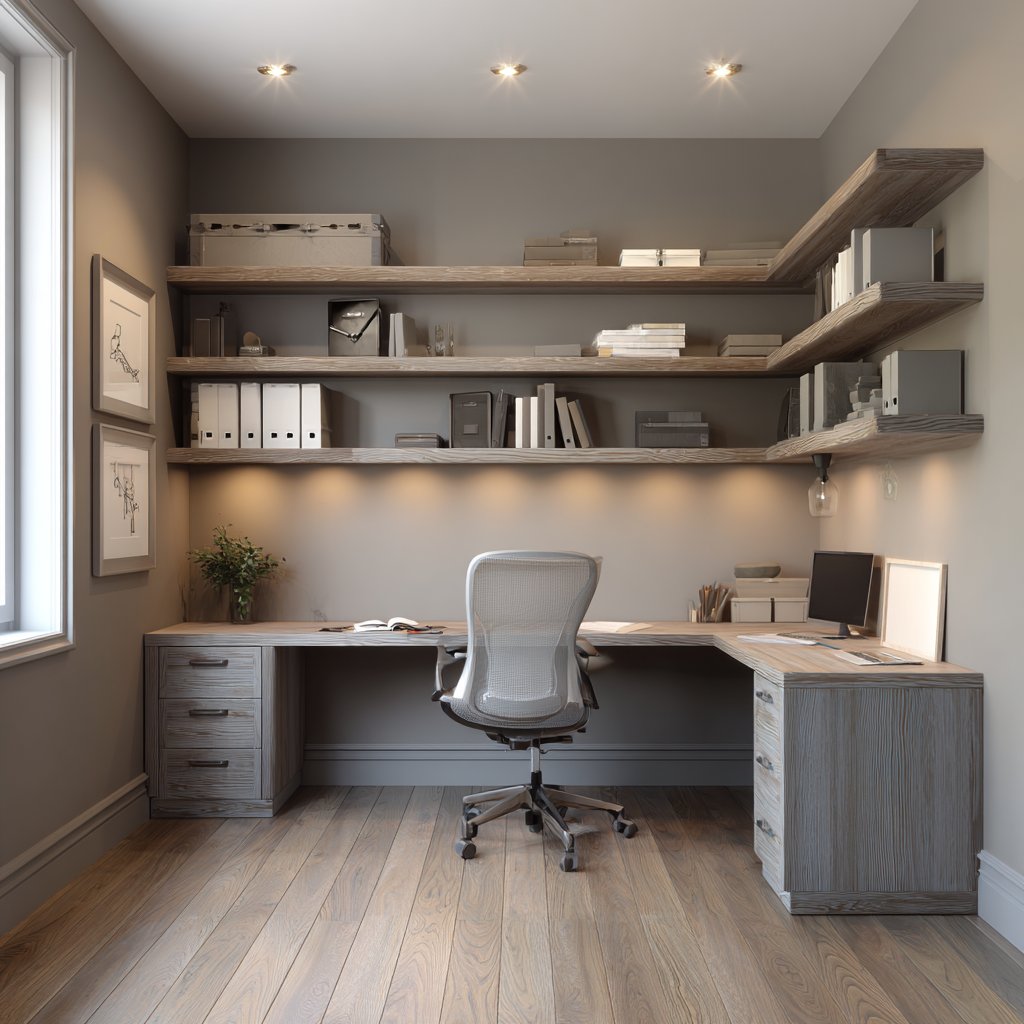
The custom corner desk wrapping around two bedroom walls maximizes workspace while defining clear office zone within sleeping area. This substantial approach suits those whose work demands genuine office-level functionality—multiple monitors, reference materials, ongoing projects requiring dedicated surface area. The desk in pale grey laminate provides extensive work surface with professional appearance, its L-shaped configuration offering distinct zones for different tasks. Built-in filing drawers and wire management grommets address practical office needs often overlooked in bedroom office designs.
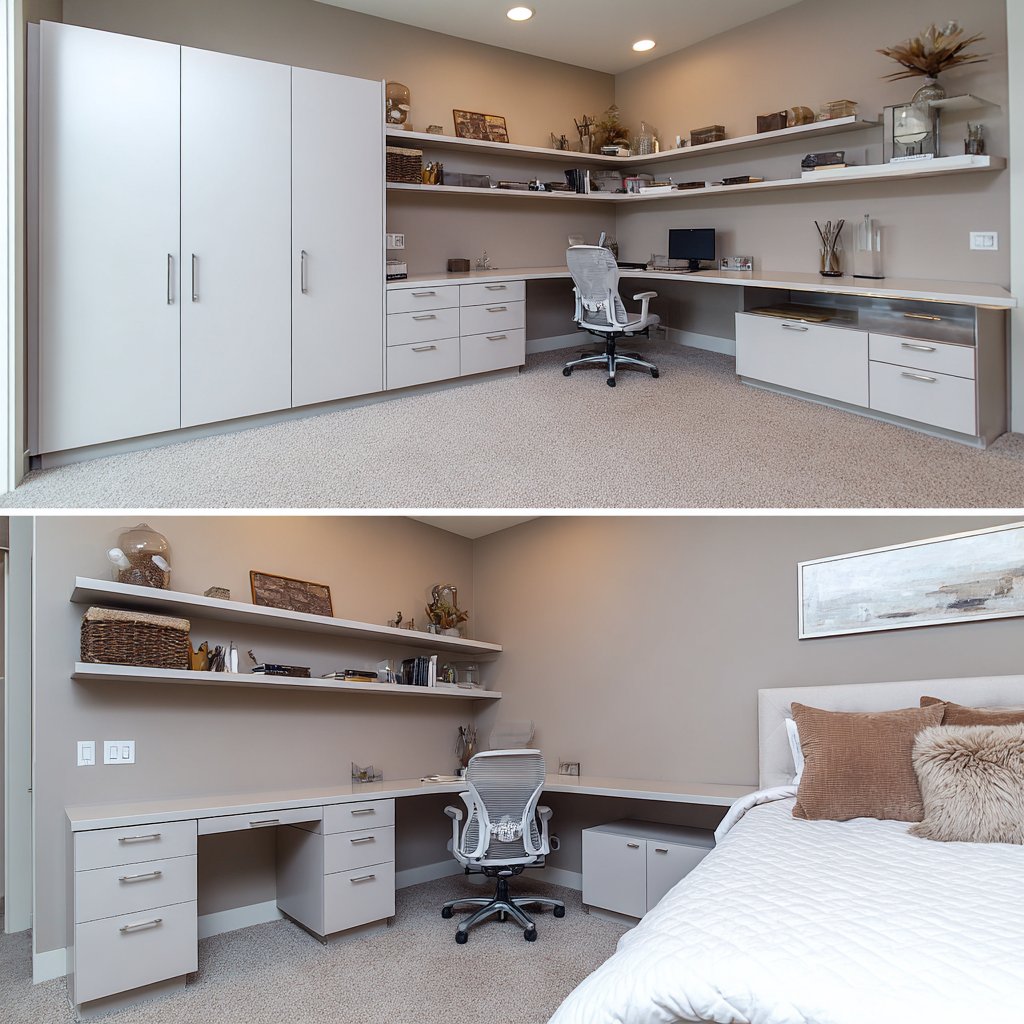
Floating shelves above create cohesive work wall with organized storage ascending vertically. This wall-spanning system transforms an entire corner into comprehensive office environment without requiring freestanding furniture pieces that would consume floor space. The ergonomic office chair in mesh fabric provides proper support for extended work sessions—when work demands are serious, seating must be equally serious despite bedroom location. The bedroom maintains serenity with soft taupe walls and minimal furnishings, allowing the office zone to function without overwhelming the room’s primary purpose.
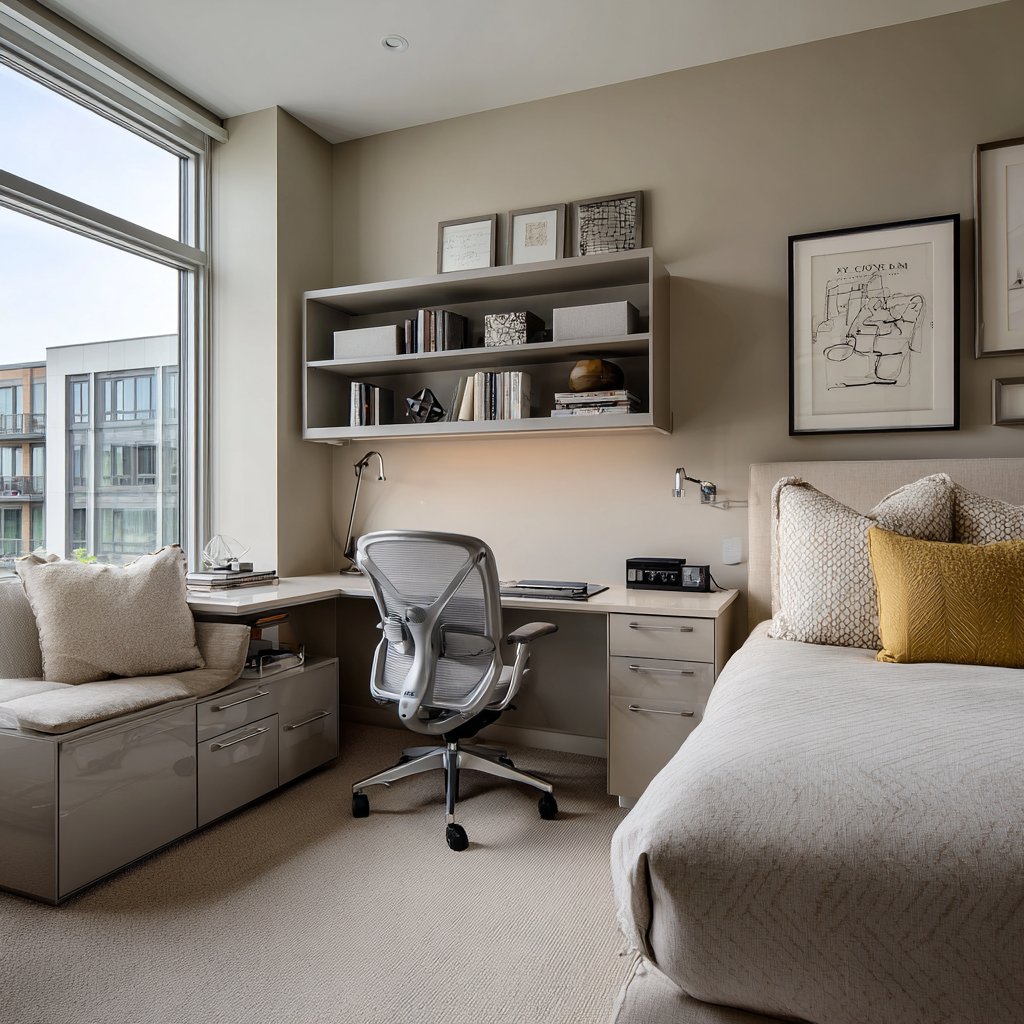
This approach requires significant commitment to bedroom office concept and adequate room dimensions to absorb the substantial desk presence. The result, however, provides genuinely functional office environment that doesn’t compromise on workspace quality despite residential location.
Key Design Tips:
- Measure corner carefully to ensure desk proportions work with room dimensions
- Include proper ergonomic seating—serious work requires serious chair support
- Plan wire management during desk design to avoid visible cable chaos
- Add filing storage directly in desk to eliminate need for separate filing cabinets
- Create floating shelf system above for vertical storage without consuming floor space
- Choose neutral desk color that integrates with bedroom palette rather than contrasting
- Position adequate electrical outlets and data connections before installation
- Consider the desk’s visual weight—large desks can overwhelm small bedrooms
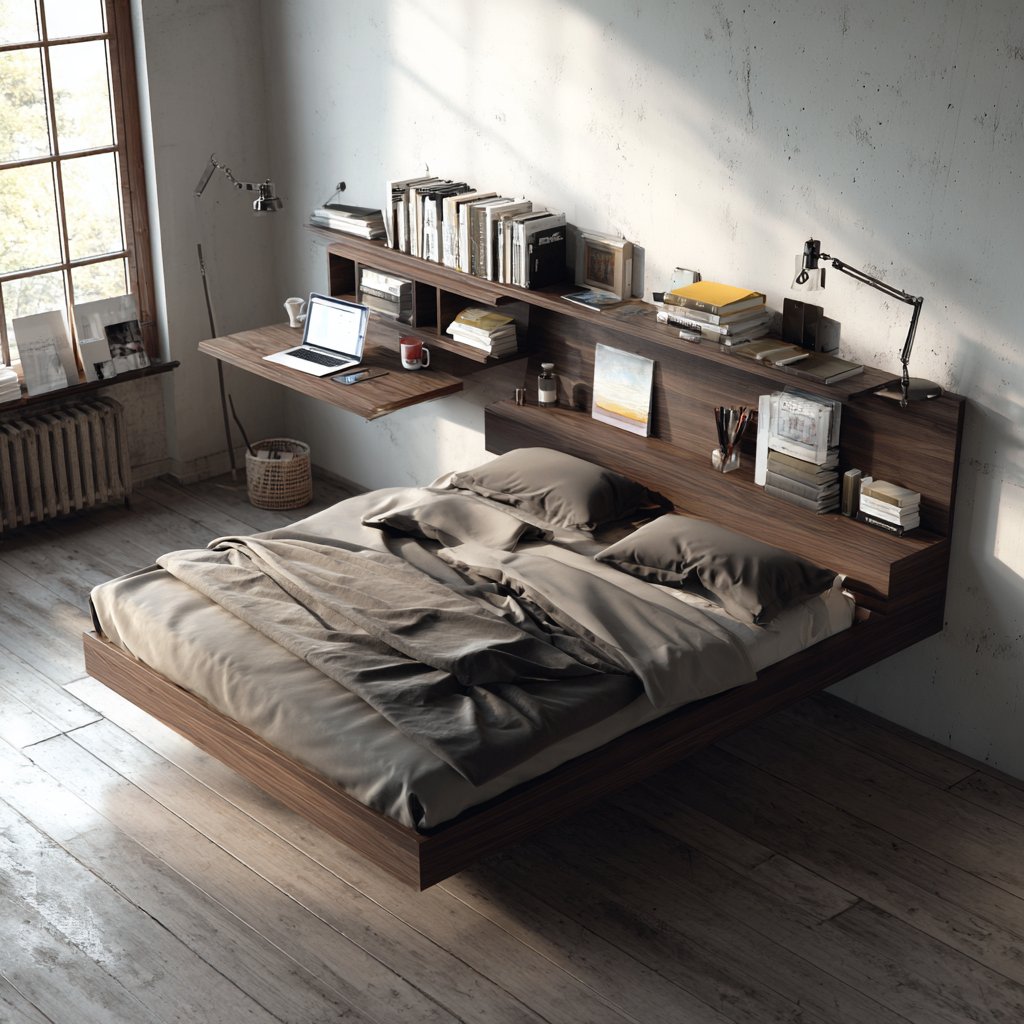
20. Behind-Headboard Console Desk Innovation
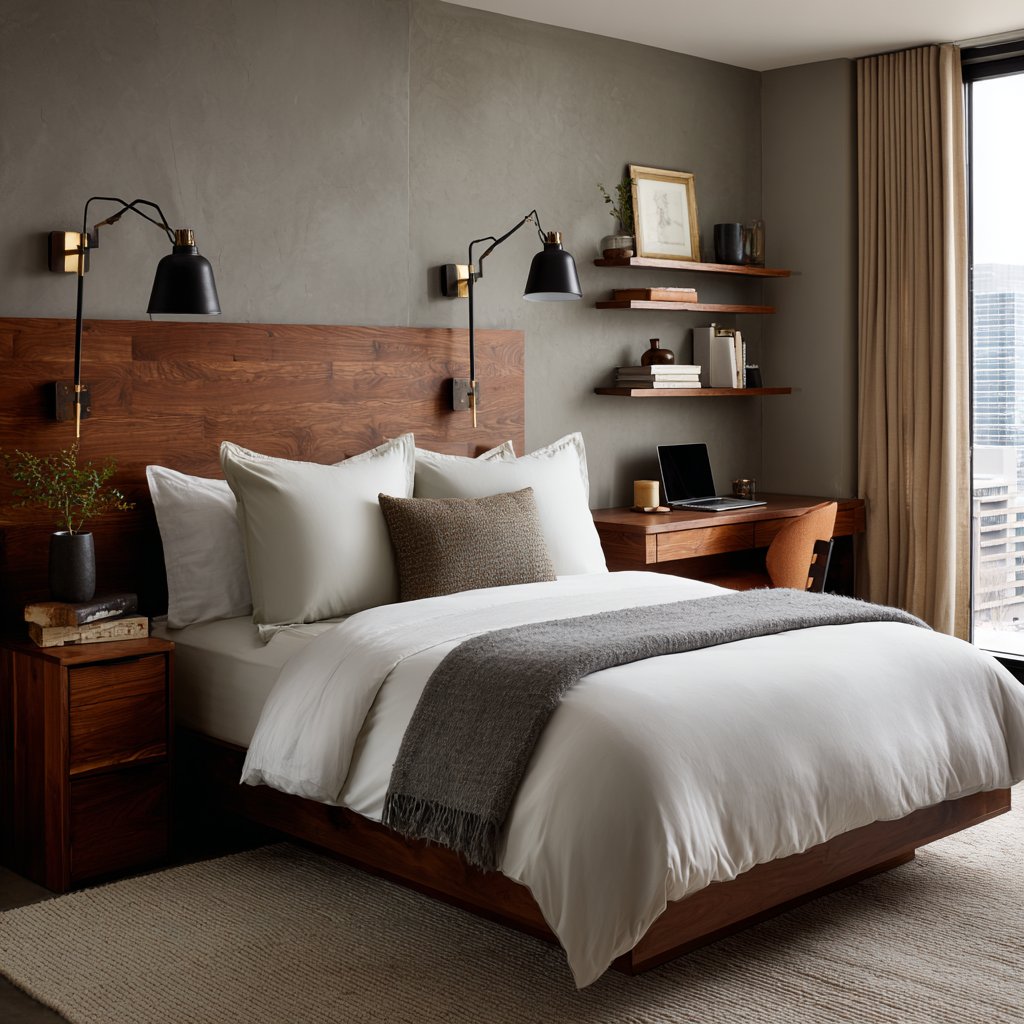
The narrow console desk positioned behind the bed headboard creates unexpected workspace utilizing otherwise dead space in the room’s layout. This clever placement requires adequate room dimensions—the bed must sit away from the wall with sufficient space for narrow desk and chair access. The slim console in dark walnut is precisely sized, deep enough for laptop and essentials but not so deep it protrudes awkwardly into the room. Wall-mounted swing-arm lamps provide task lighting without consuming precious desk surface space.
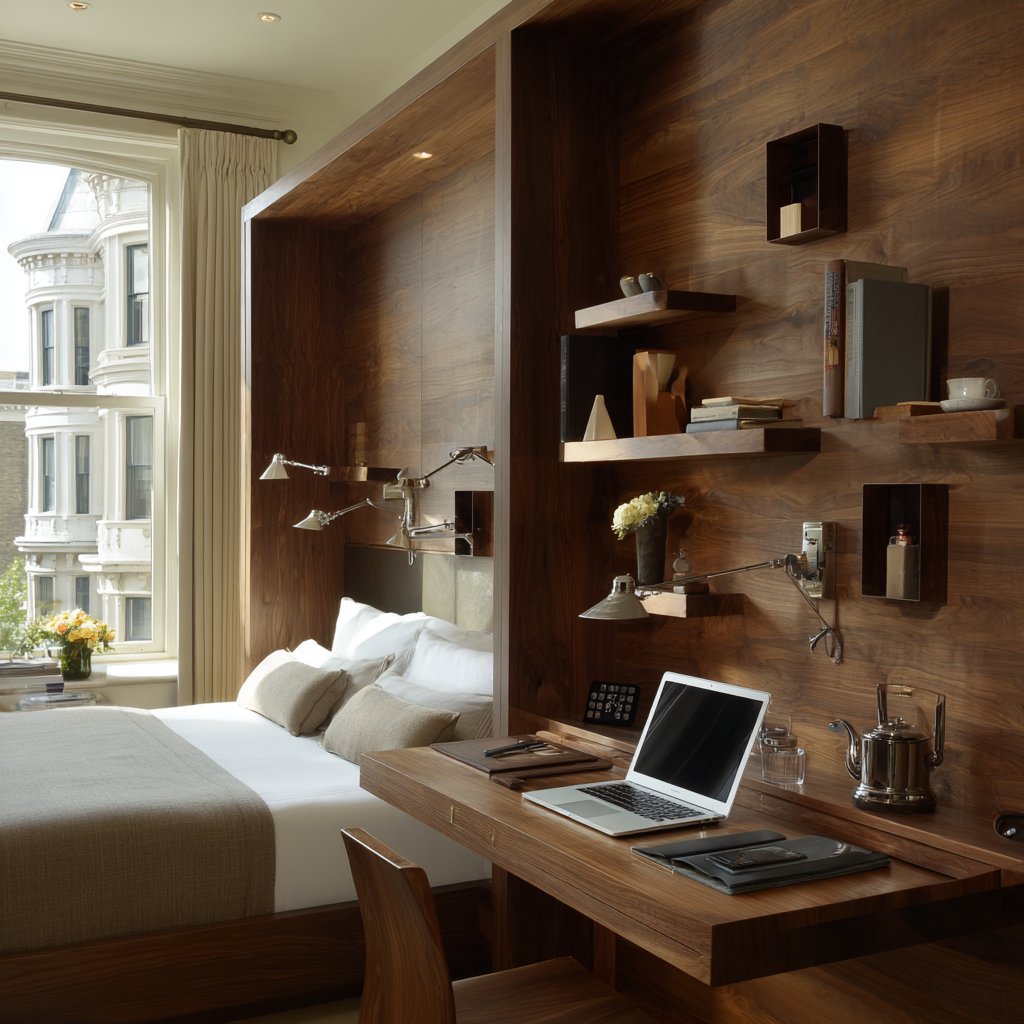
Small floating shelves at varying heights hold minimal office supplies in attractive containers, turning necessary storage into decorative display. This vertical approach maximizes the narrow desk’s limited surface area. The setup maintains the bedroom’s primary function while adding subtle work capability—the desk remains largely invisible from the bed, psychologically separating work from rest despite close physical proximity.
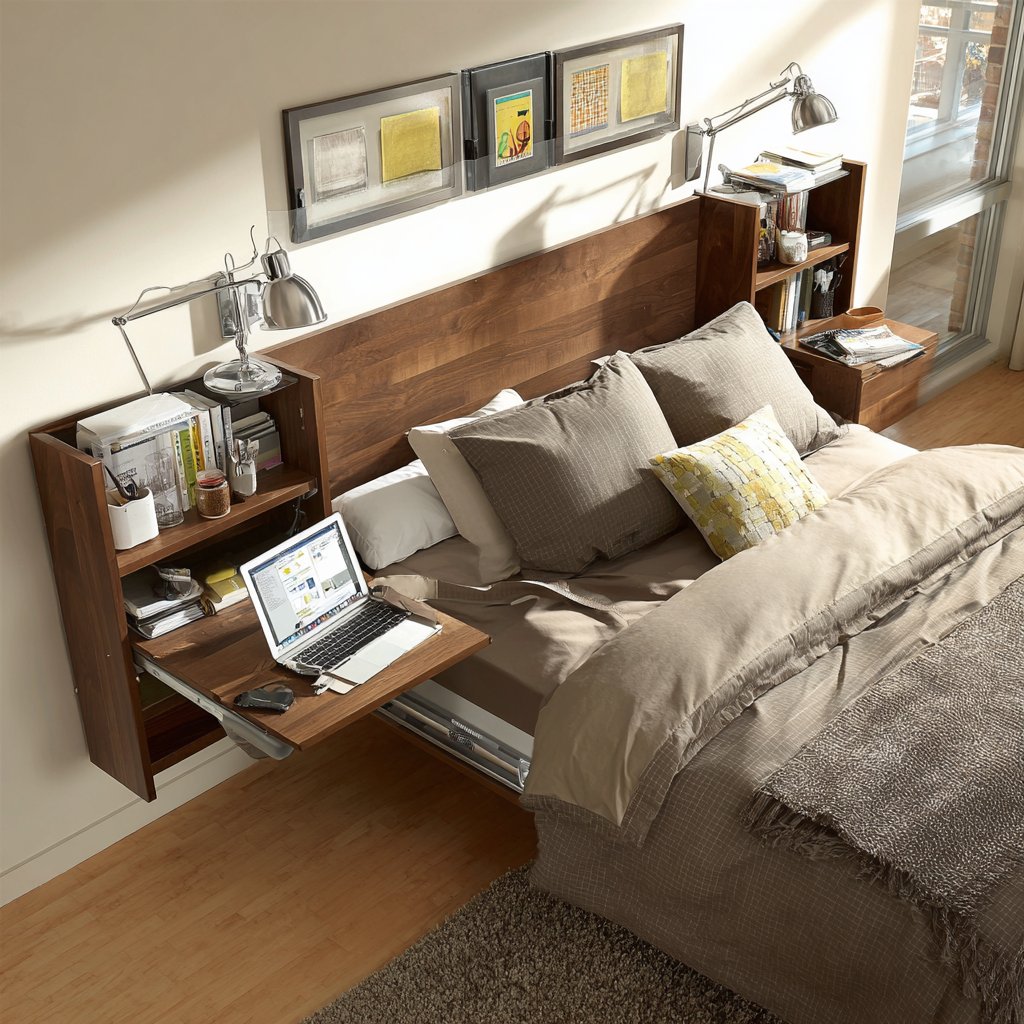
This unconventional placement demonstrates creative problem-solving for challenging bedroom office situations. The behind-headboard location might not work for all room configurations but offers innovative solution when traditional desk placement proves problematic.
Key Design Tips:
- Ensure adequate space between bed and wall—minimum 30-36 inches for desk and chair
- Choose narrow console specifically designed for tight spaces
- Install swing-arm or wall-mounted lighting to avoid consuming desk surface
- Keep desk surface minimal with only current project items visible
- Use vertical storage rather than horizontal spread to maximize limited space
- Select desk height compatible with available seating options
- Consider the practicality of accessing desk—must be comfortable despite bed proximity
- Maintain visual calm since workspace sits within peripheral vision from bed
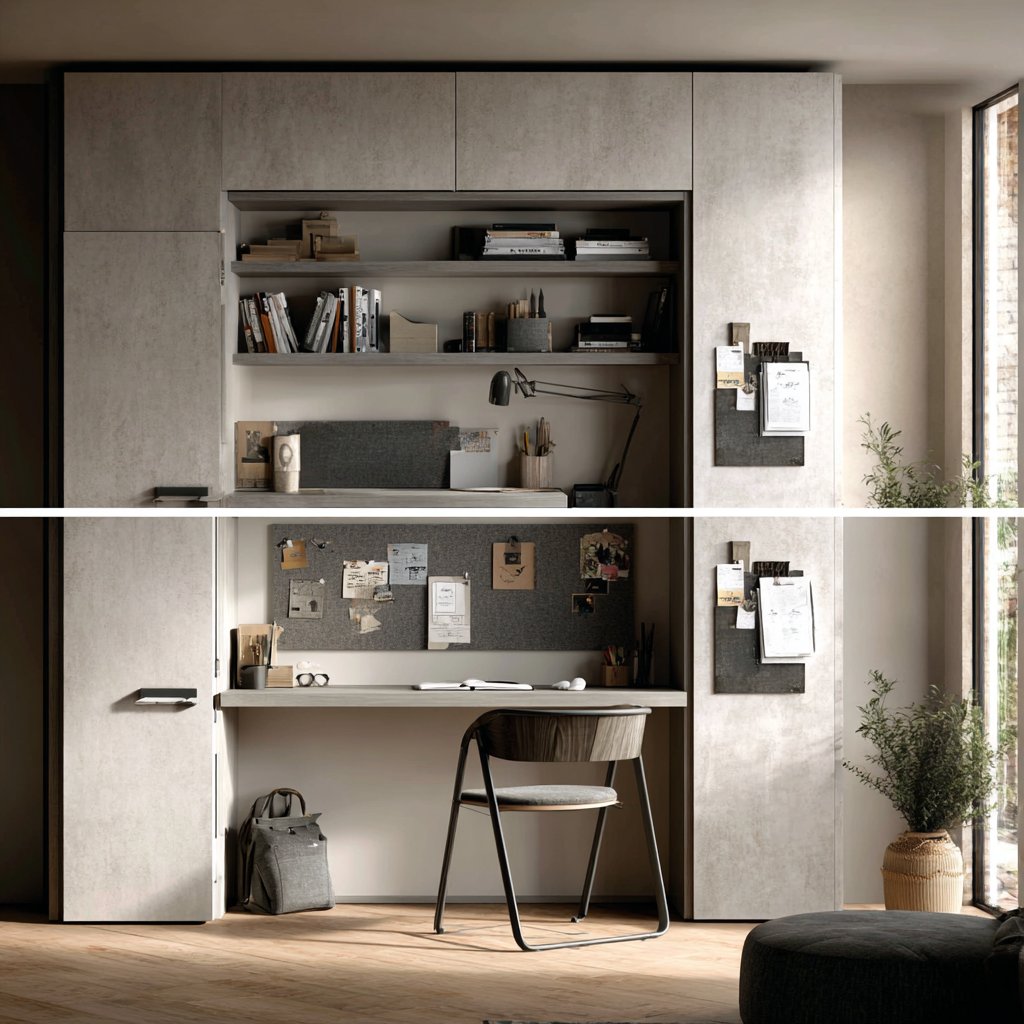
21. Wardrobe-Concealed Office Complete Transformation
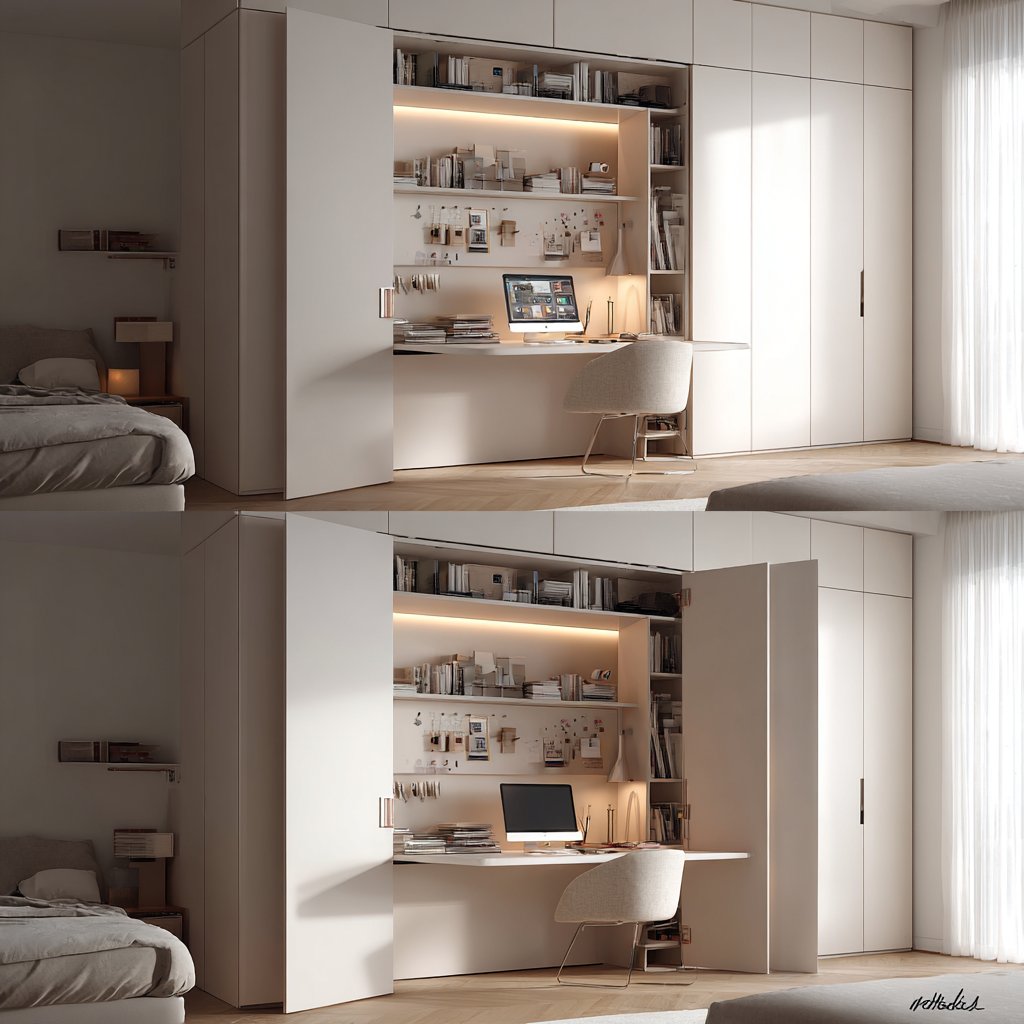
The fold-out desk integrated into custom bedroom wardrobe system represents ultimate concealment strategy, revealing complete workspace when needed and concealing it entirely when wardrobe doors close. This sophisticated solution addresses both practical office needs and psychological bedroom boundaries with equal sophistication. The interior desk surface in light grey includes integrated lighting specifically illuminating workspace, small shelves for current projects and supplies, and bulletin board for visual reminders and planning. All office supplies store within wardrobe’s dedicated office section.
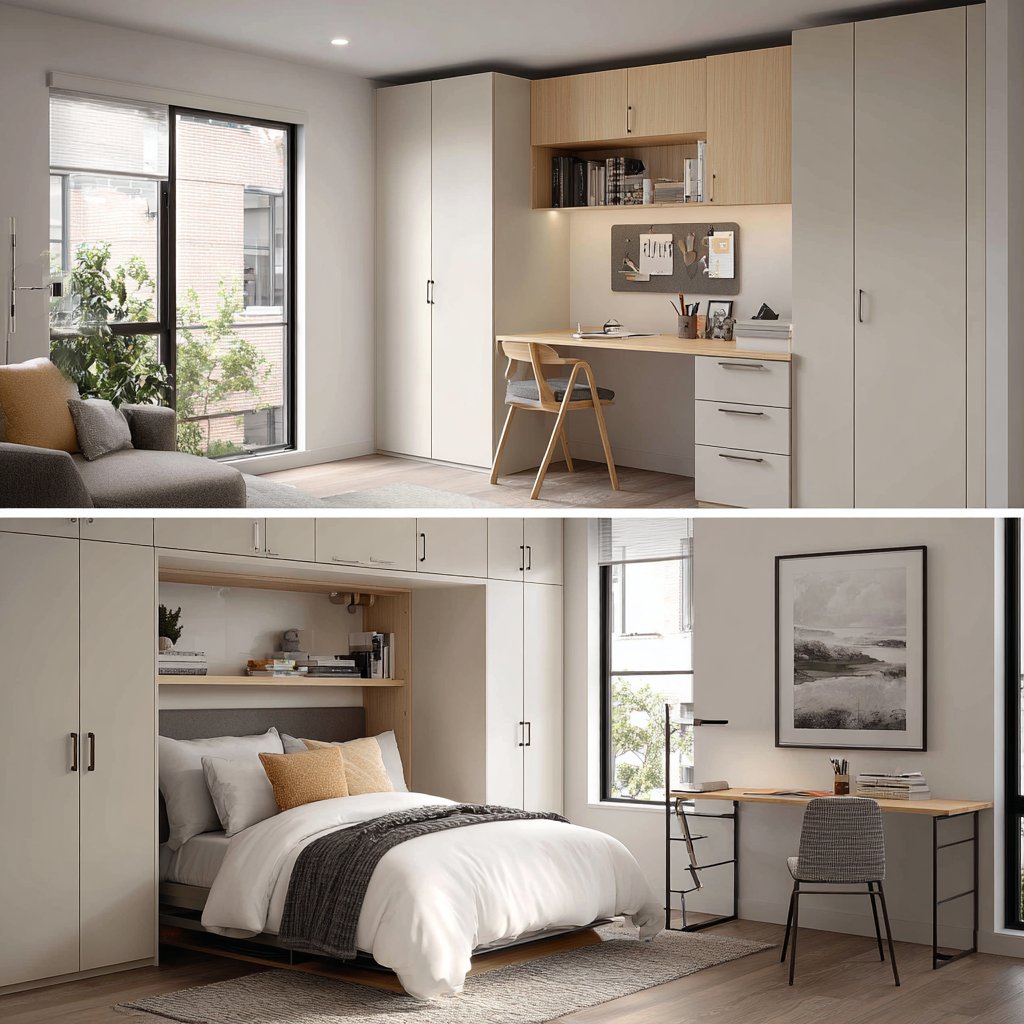
A folding chair hangs on interior hook, accessible when needed but completely concealed when not in use. The wardrobe exterior matches bedroom’s built-in cabinetry in soft white, creating seamless wall appearance when closed. This complete concealment provides psychological separation impossible with visible desks—when doors close, work literally disappears from sight and mind. When doors open, comprehensive office environment emerges with everything immediately accessible.
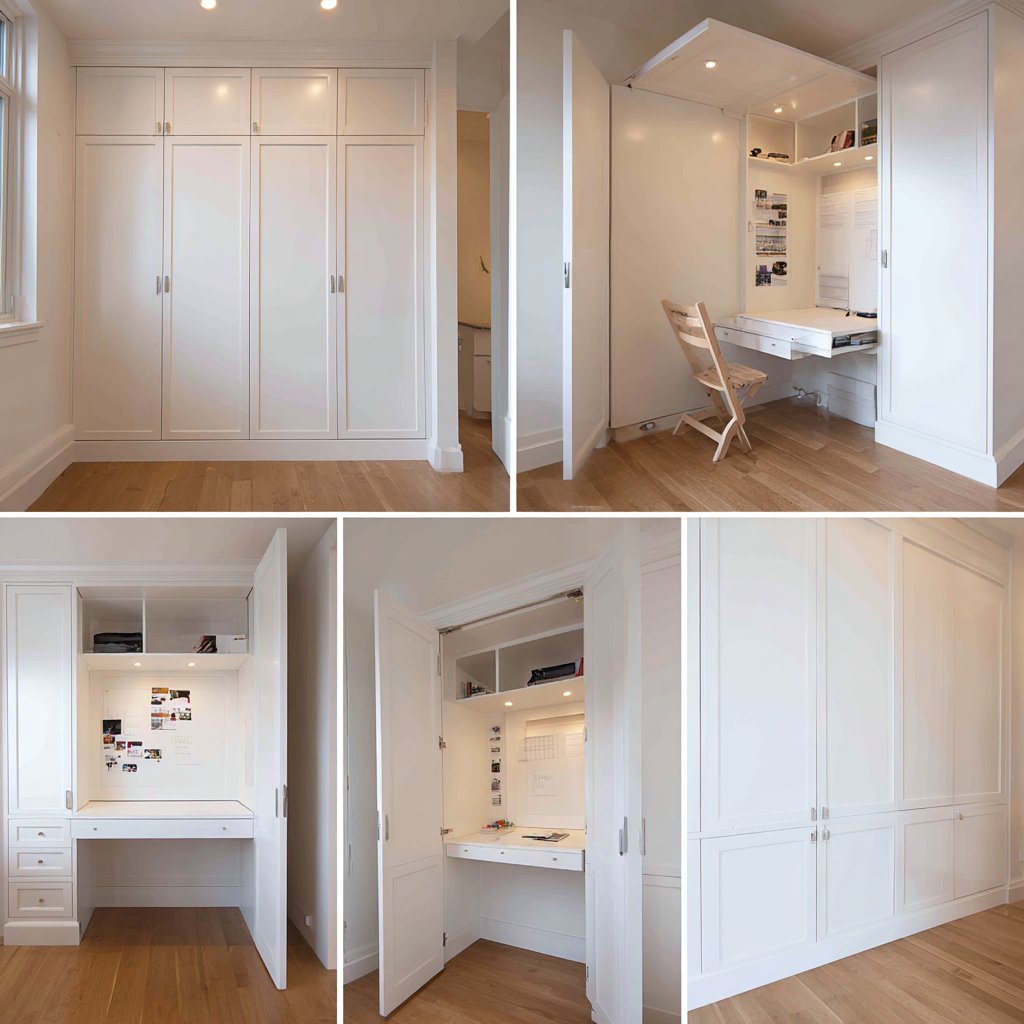
This approach requires significant investment in custom cabinetry and thoughtful planning but delivers unparalleled bedroom tranquility. The transformation between bedroom and office functions completely, neither compromising the other through forced coexistence.
Key Design Tips:
- Plan wardrobe office during bedroom cabinetry design for proper integration
- Include dedicated electrical circuit with outlets inside wardrobe for equipment
- Install interior lighting on separate switch for independent control
- Specify adequate depth for desk surface plus comfortable seating within wardrobe
- Include organized storage systems that keep supplies accessible yet concealed
- Choose folding chair that’s genuinely comfortable despite compact folded size
- Ensure door operation doesn’t interfere with desk use when open
- Consider ventilation for electronic equipment in enclosed wardrobe space
22. Vintage School Desk Nostalgic Character
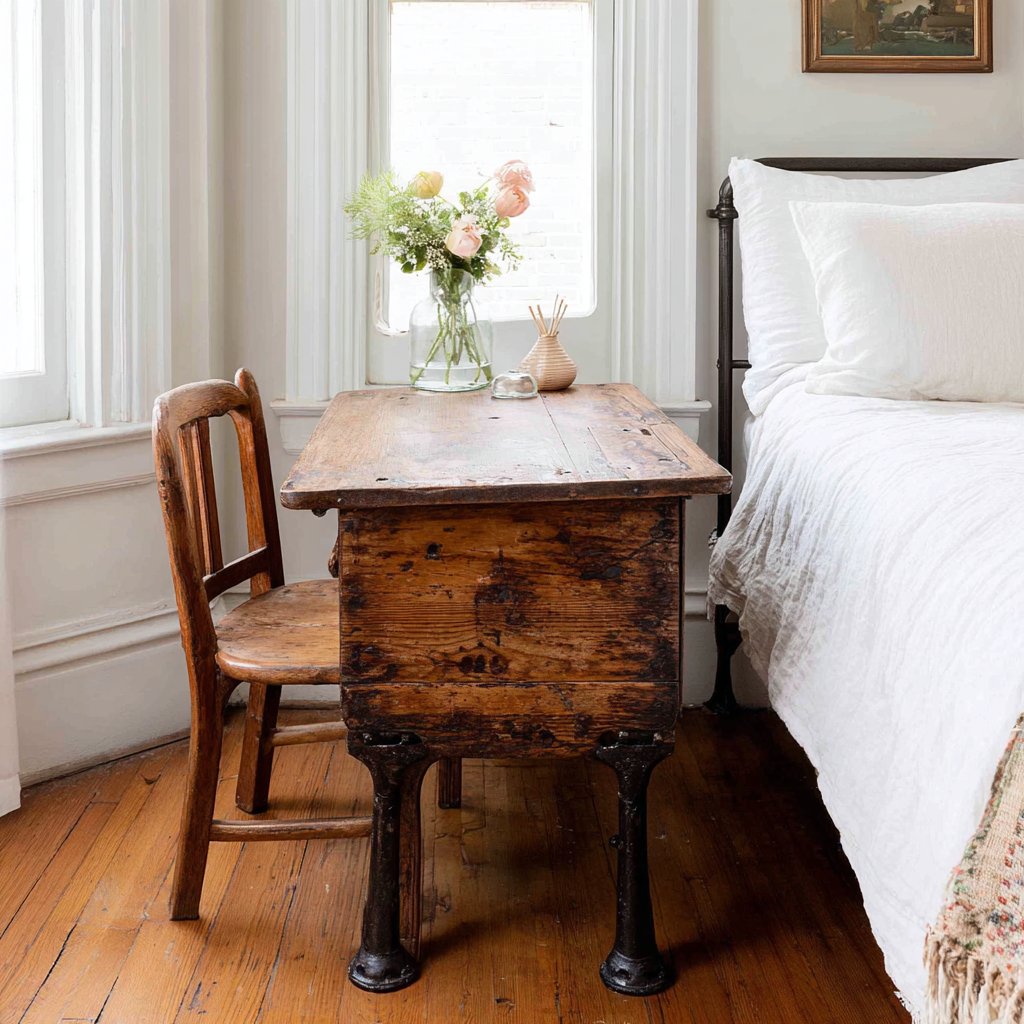
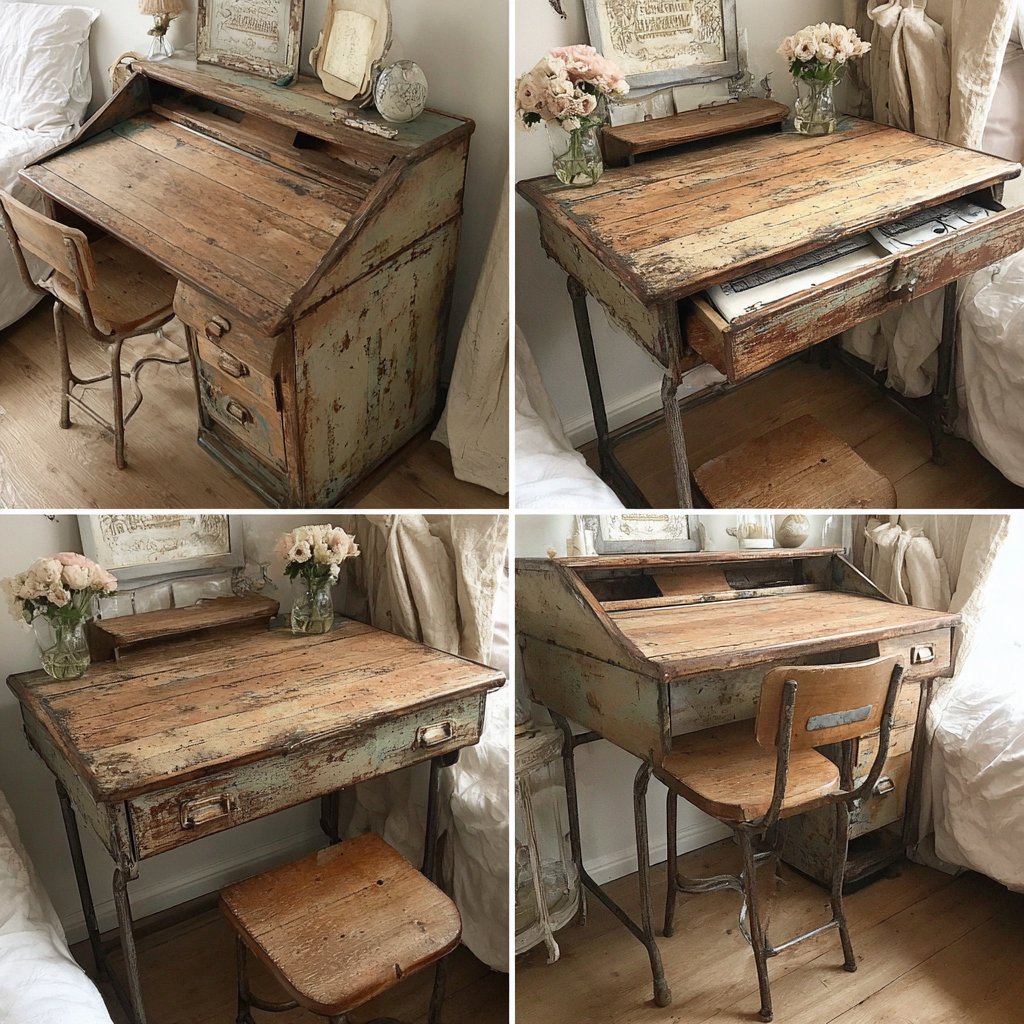
The vintage school desk repurposed as bedroom workspace brings nostalgic character while remaining highly functional. Positioned near window to maximize natural light, the cast iron desk with attached wooden chair and lift-up desktop storage represents industrial-era design when school furniture was built to last generations. The desktop’s worn patina and original ink stains add authentic character—imperfections become design features that tell stories and provide visual interest impossible to replicate in new furniture.
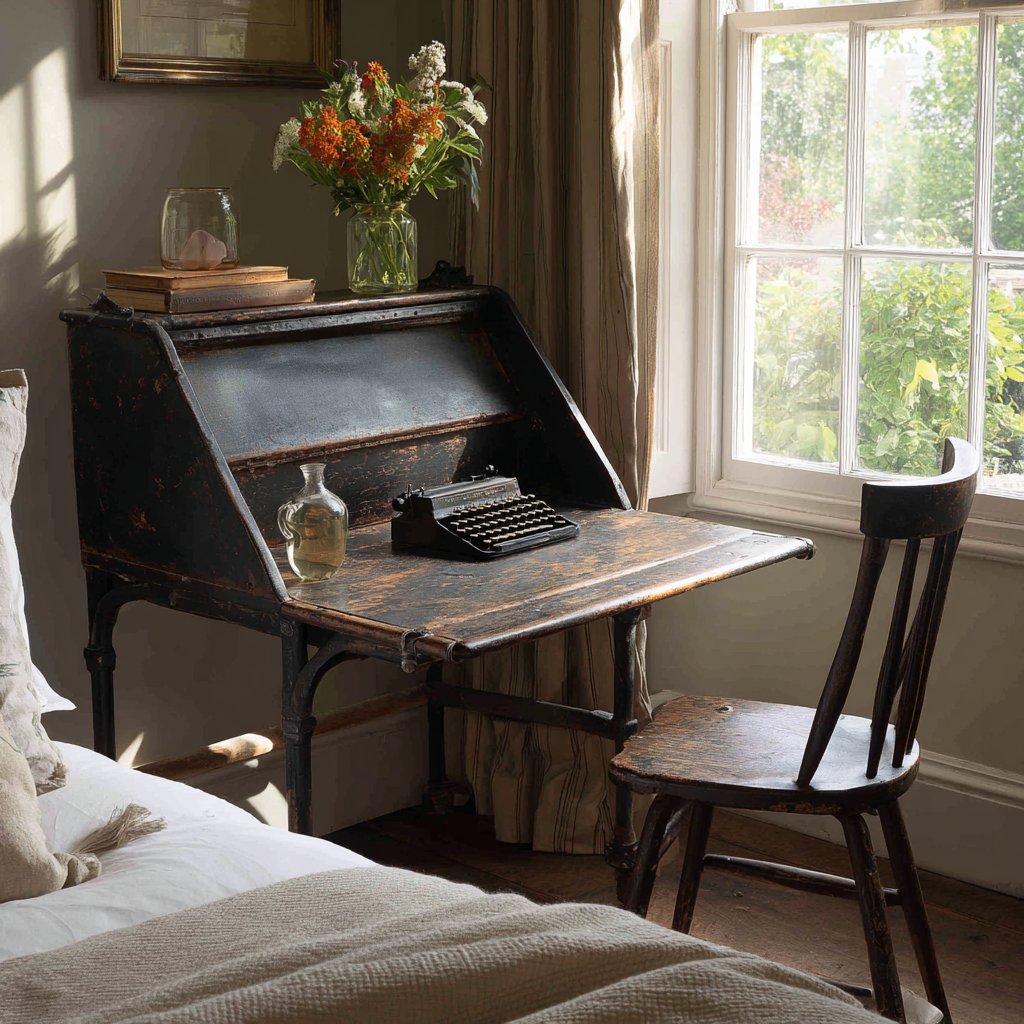
A small glass vase with fresh flowers and minimal desk accessories complete the styling without cluttering the compact surface. The vintage-inspired bedroom features antique textiles and collectibles that create cohesive aesthetic where the school desk feels natural rather than novelty. The attached chair eliminates seating as separate consideration—everything needed exists in single, space-efficient piece.
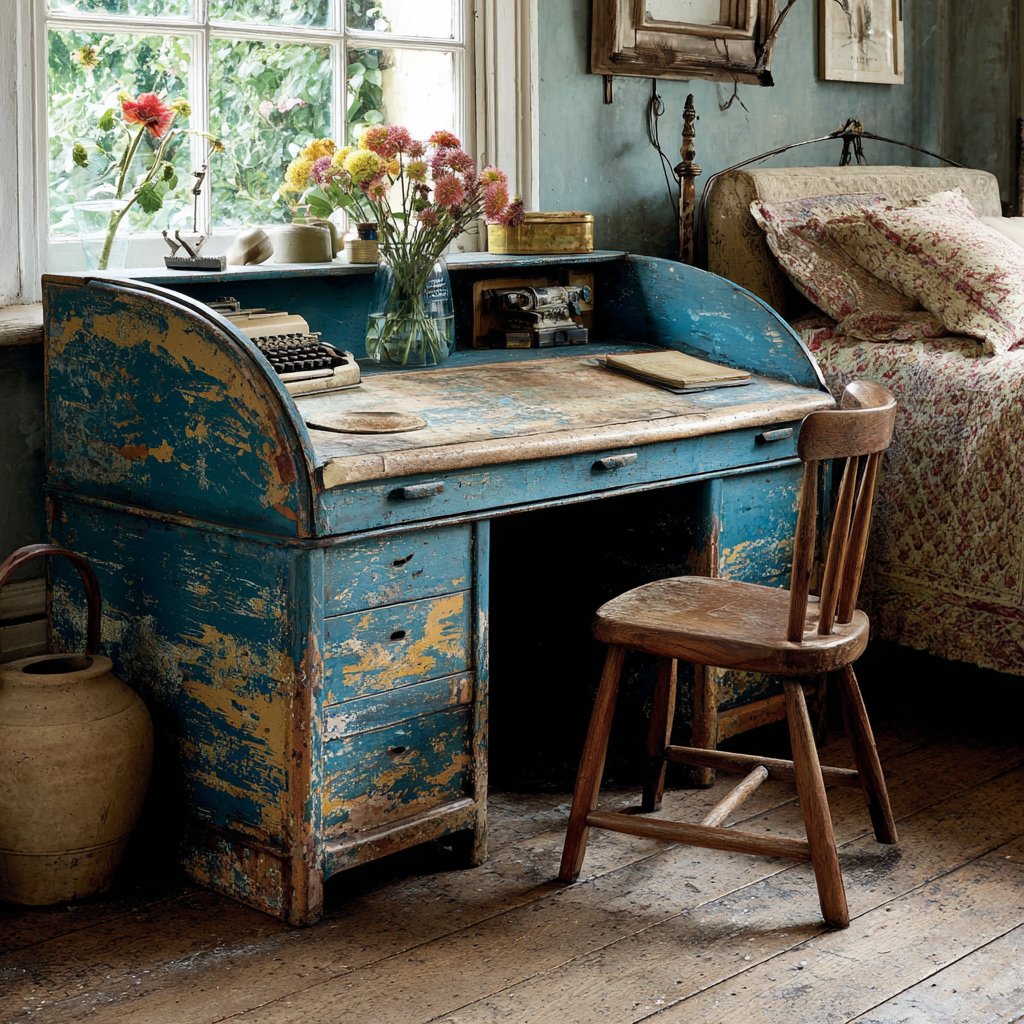
This approach appeals to those who appreciate historical objects and the sustainable practice of giving old furniture new purpose. The school desk’s compact dimensions suit small bedrooms while its nostalgic character provides emotional connection often lacking in generic office furniture.
Key Design Tips:
- Verify desk and attached chair provide adequate ergonomic comfort despite vintage design
- Position near natural light source to compensate for desk’s typically small footprint
- Embrace and celebrate authentic wear patterns rather than attempting restoration
- Keep desk styling minimal—let the desk itself be the statement
- Coordinate bedroom aesthetic with desk’s nostalgic character for cohesive design
- Consider desk dimensions carefully—school desks are typically smaller than modern expectations
- Add fresh flowers or natural elements to soften industrial materials
- Appreciate that attached chairs limit flexibility but eliminate furniture piece decisions
23. Window Seat Platform Desk Inspiration
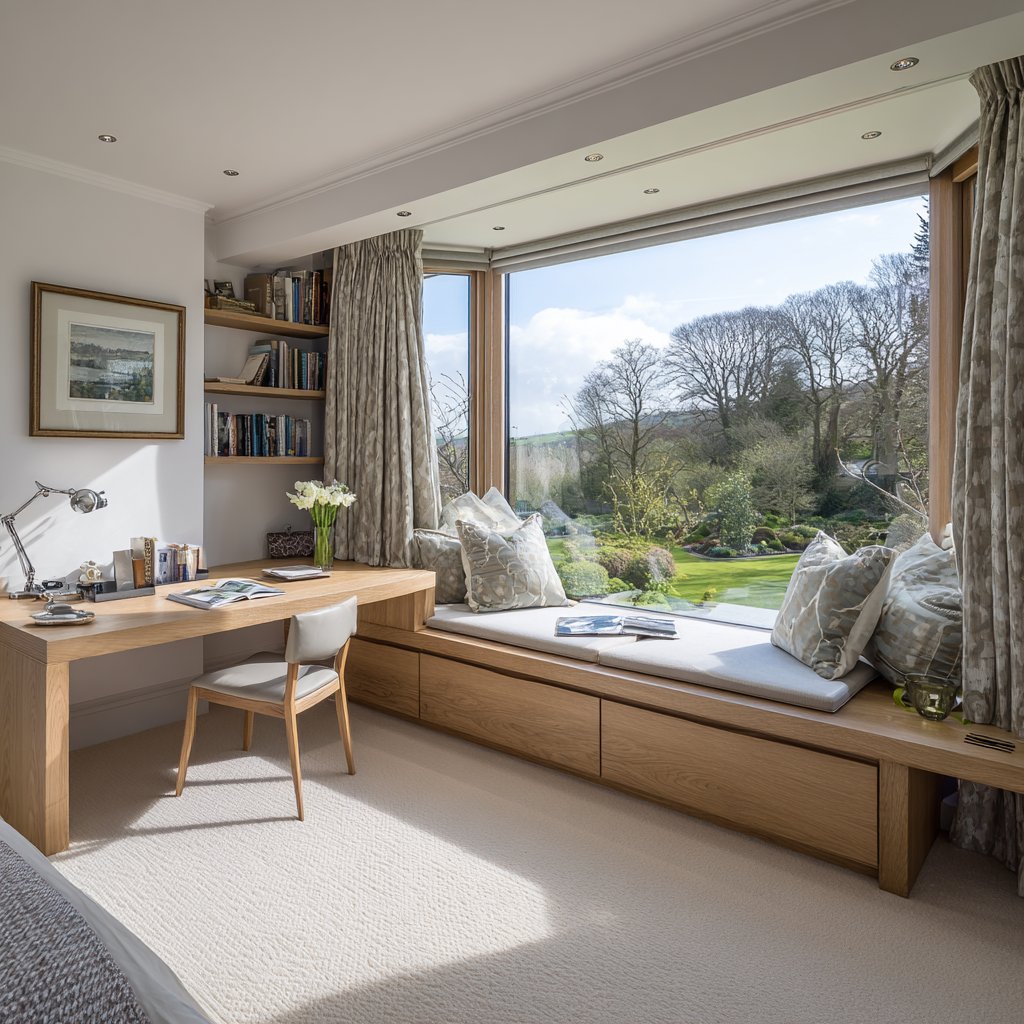
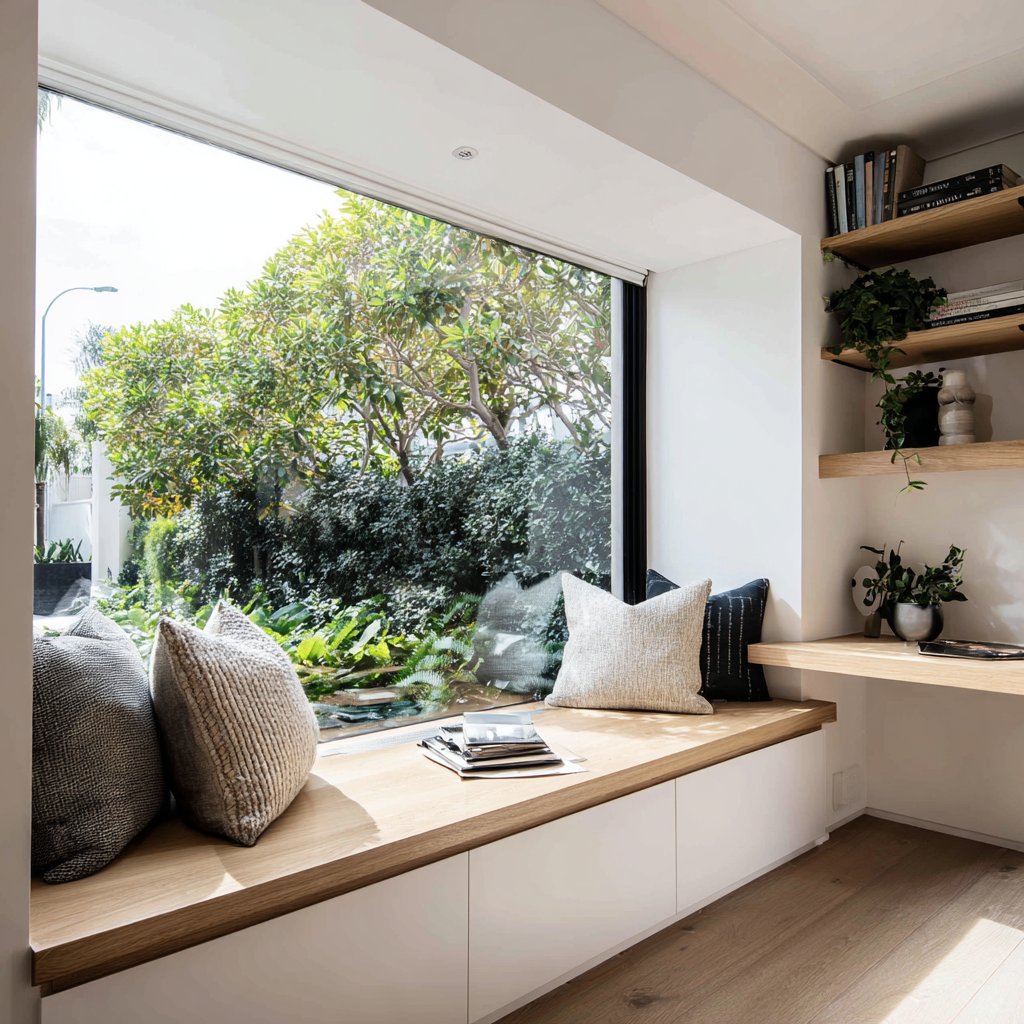
The sleek platform desk built at window-seat height beneath large bedroom window creates workspace with inspiring views and abundant natural light. This custom approach extends the full window width, maximizing both workspace surface area and connection to outdoors. The desk in blonde oak features concealed storage beneath accessed by lift-up panels—an elegant solution that eliminates visible hardware while providing practical storage capacity. Built-in cushions on either side transform window area into comfortable seating during breaks, creating dedicated relaxation space separate from work surface.
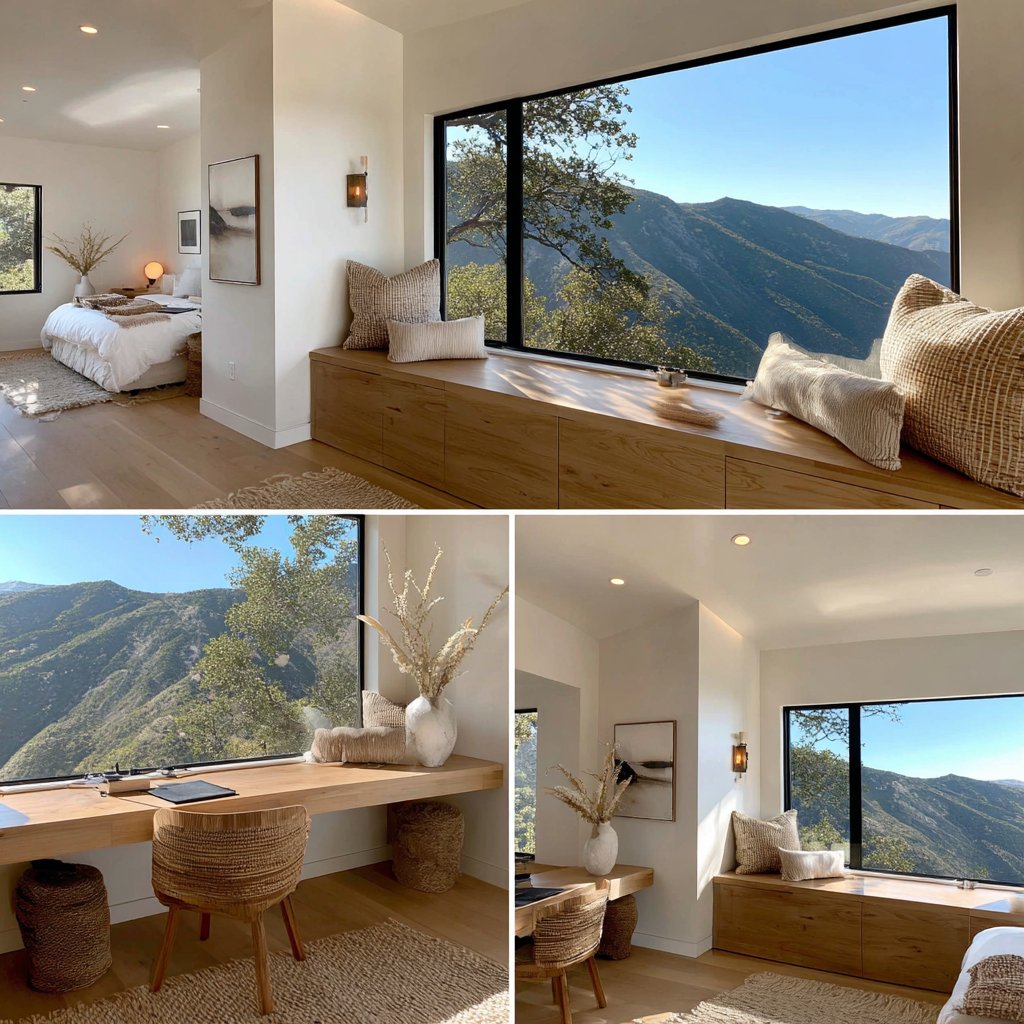
The desk surface maintains minimalist organization with only essential work items—excess clutter would detract from the window views that make this placement special. The bedroom features Scandinavian design with white walls and natural textiles, creating serene environment where the window desk becomes focal point. The connection to outdoors provides both practical lighting benefits and psychological advantages—natural views reduce stress and improve focus.
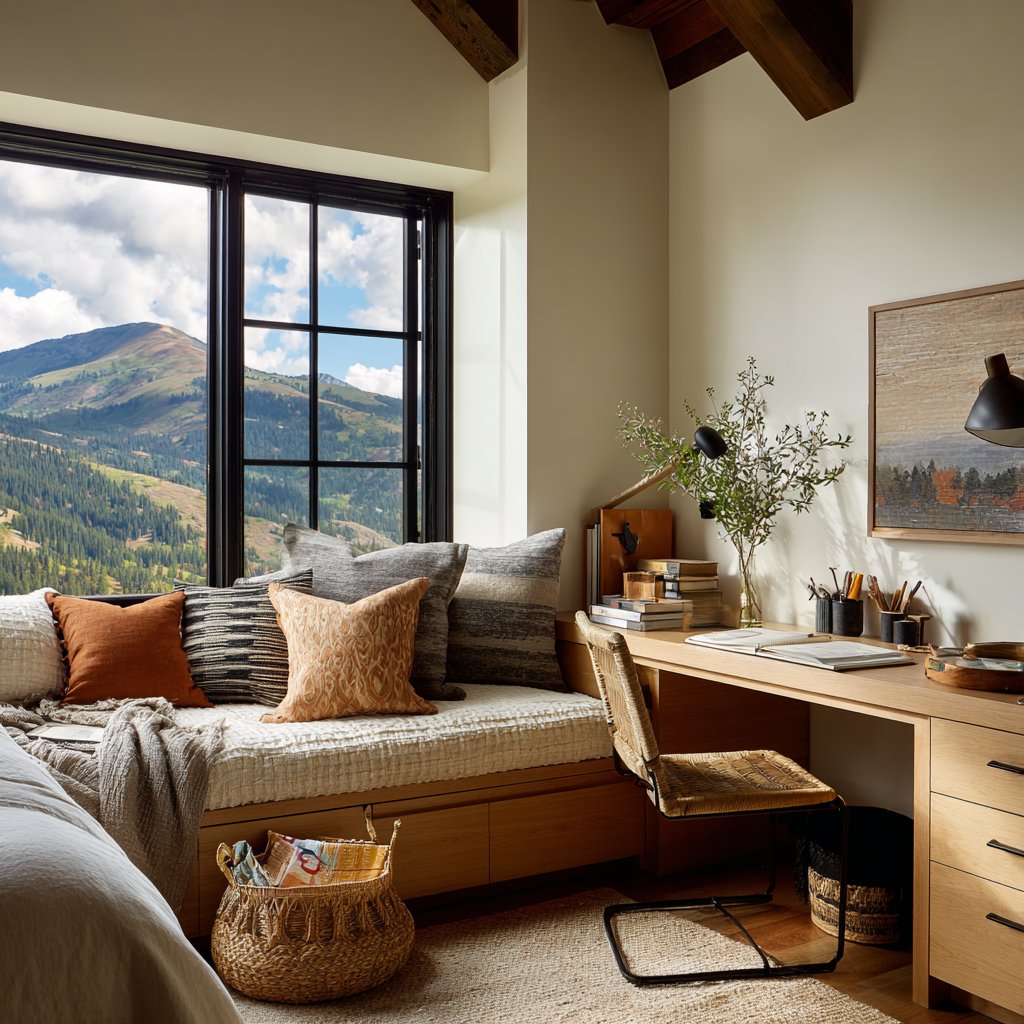
This integrated approach transforms architectural feature into functional furniture, creating custom solution impossible to achieve with standard furniture pieces. The result is workspace that feels specially designed rather than accommodated within bedroom constraints.
Key Design Tips:
- Build desk exactly at window sill height for visual integration with architecture
- Include concealed storage to maintain clean desk surface without visible clutter
- Add cushioned seating areas that provide comfortable break zones separate from work surface
- Choose wood tone that complements natural light and window frame finishes
- Maintain minimal desk organization to preserve window view clarity
- Consider window treatment needs—balance natural light benefits with glare control
- Plan adequate electrical outlets near window location despite non-standard placement
- Ensure desk width spans full window for maximum impact and functionality
24. Mobile Cart Desk Ultimate Flexibility
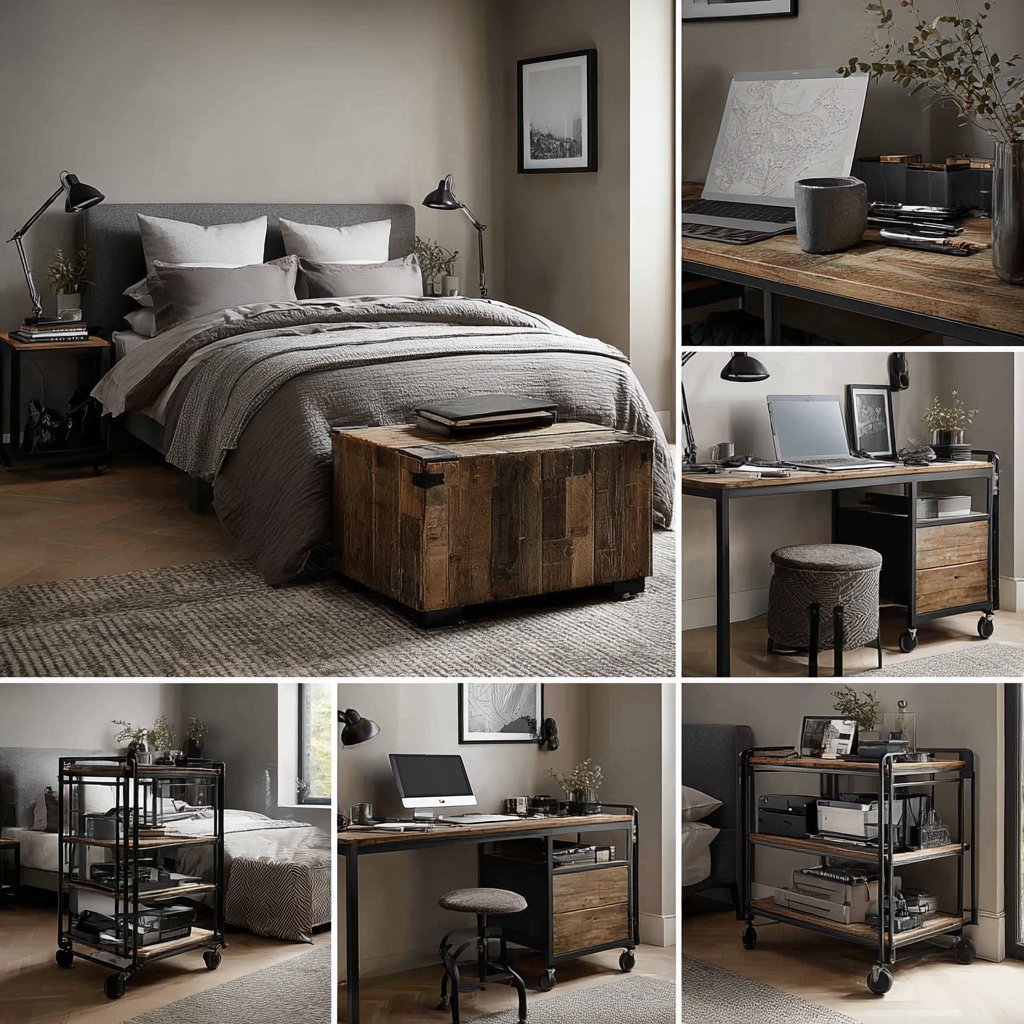
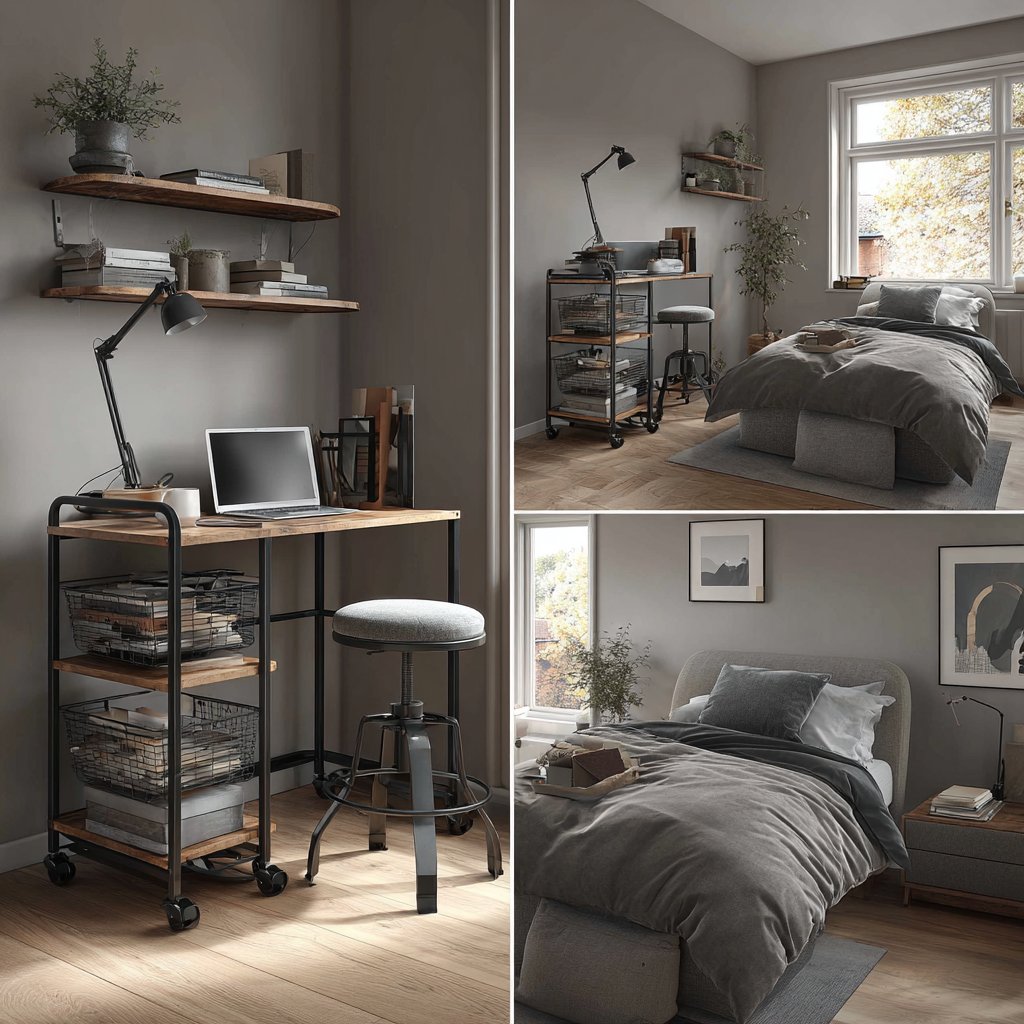
The mobile desk cart on casters offers flexible workspace without permanent commitment, rolling throughout bedroom as needed or storing completely when not in use. This industrial-style cart in black metal and reclaimed wood includes multiple tiers providing equipment and supply storage across several levels. An adjustable stool provides seating that also stores under cart, creating complete office system that moves as single unit. When work concludes, the entire setup rolls into closet or corner, completely removing office presence from bedroom.
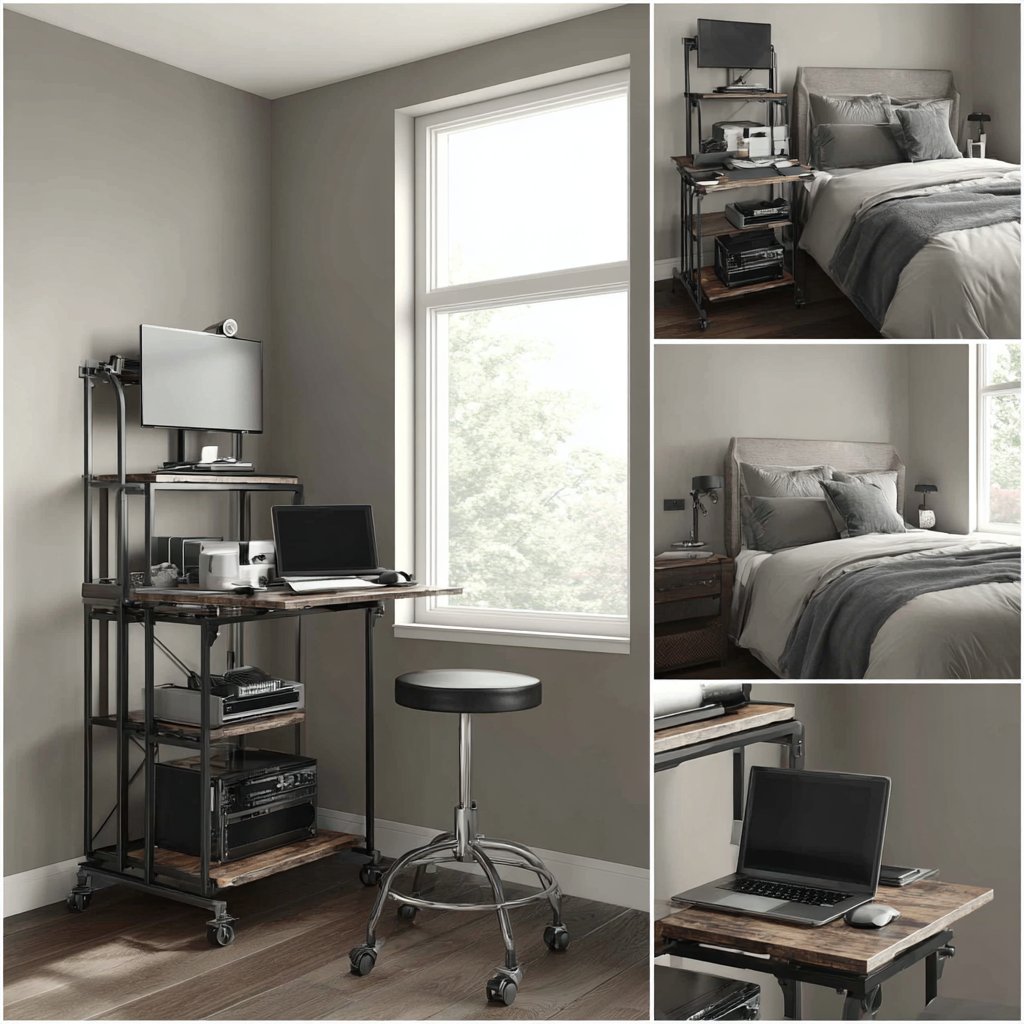
The bedroom maintains flexibility with neutral grey walls and simple furnishings that adapt to changing cart positions and uses. This approach particularly suits those uncertain about bedroom office commitment, renters unable to make permanent installations, or anyone valuing flexibility over fixed solutions. The cart’s industrial aesthetic works across various bedroom styles while maintaining honest acknowledgment of its utilitarian function.
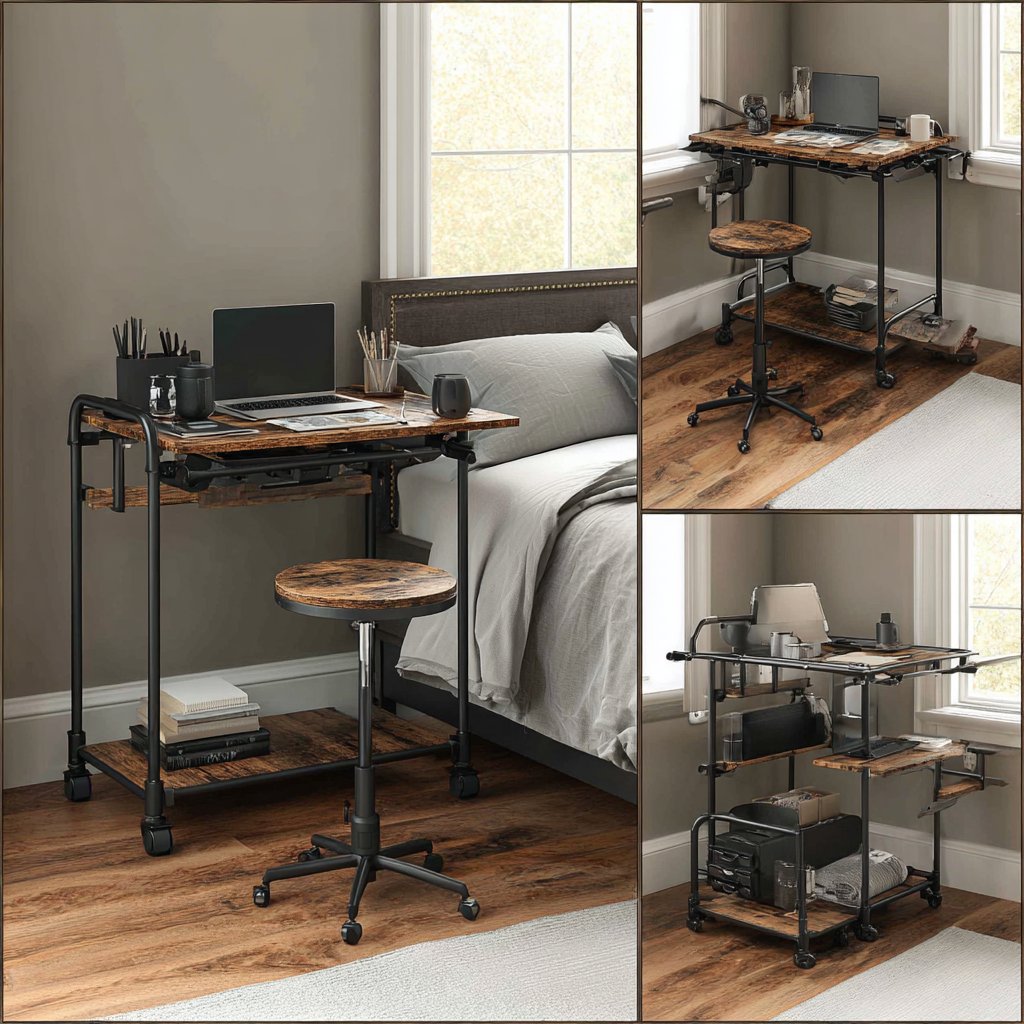
The mobile concept addresses common bedroom office challenge—the desire to separate work from rest without having space for separate rooms. Rolling the office away creates stronger psychological boundary than simply turning away from visible desk.
Key Design Tips:
- Choose cart with locking casters to prevent movement during use
- Include multiple tier storage to maximize vertical space efficiency
- Select cart width that navigates through doorways for storage in adjacent closets
- Add adjustable seating that accommodates various working positions
- Maintain neutral aesthetic that works across various bedroom styling approaches
- Test cart stability with intended equipment weight before committing
- Plan storage location accessible without moving furniture blocking the path
- Consider cart height relative to comfortable working position and seating
25. Japanese-Inspired Minimalist Writing Desk
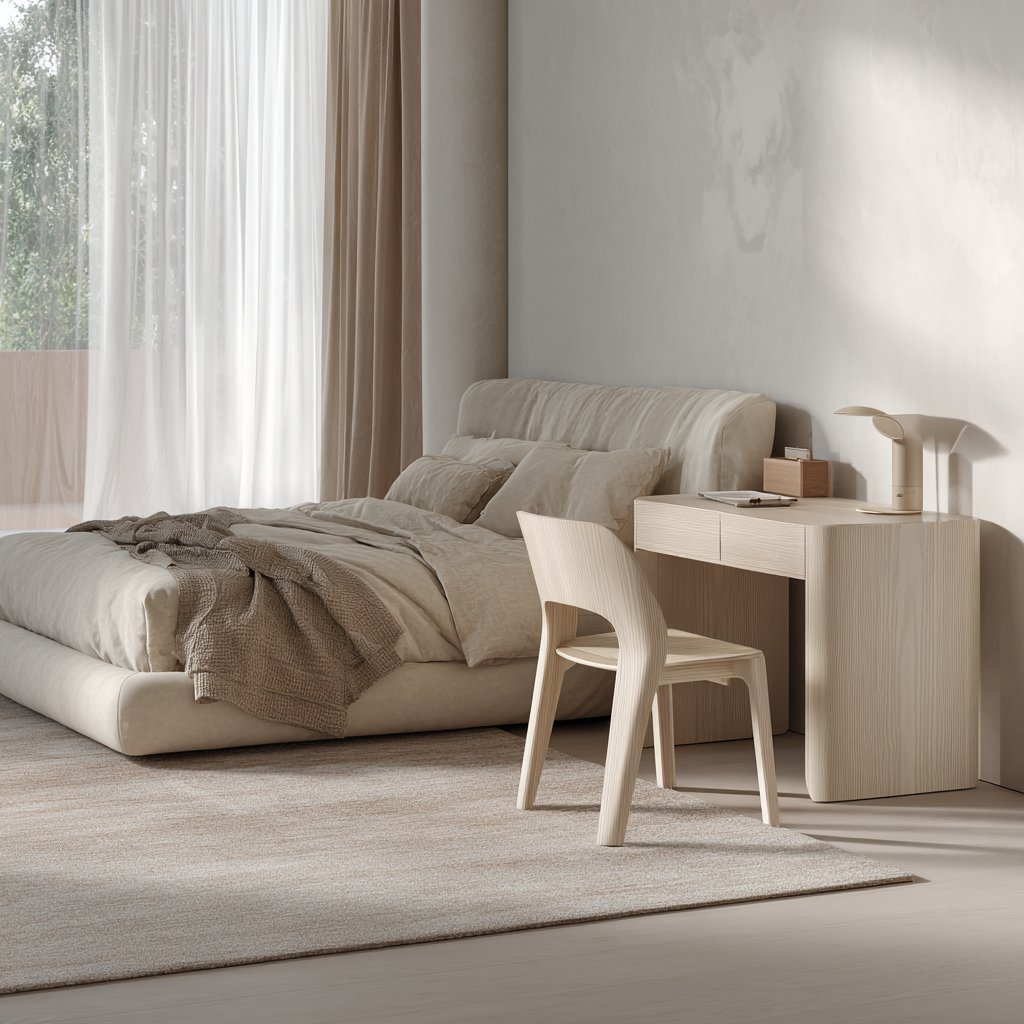
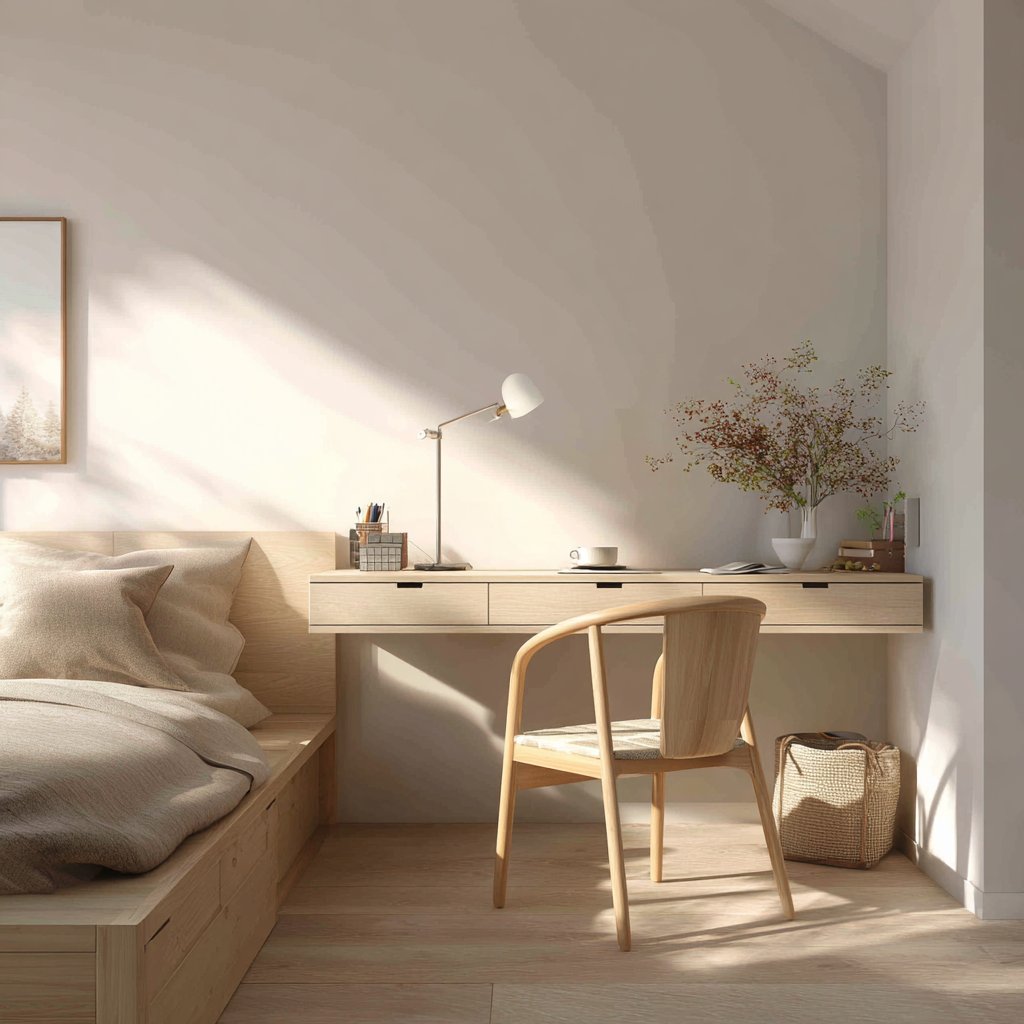
The minimalist writing desk in pale ash wood positioned perpendicular to bed creates subtle room divider while maintaining open feeling characteristic of Japanese design philosophy. The simple desk with clean lines and two small drawers provides essential workspace without unnecessary ornamentation or bulk. A bentwood chair in matching light wood offers comfortable seating with visual lightness—its curved form represents functional sculpture more than furniture. A single task lamp and small desk organizer keep surface uncluttered, respecting “ma” (negative space) as important design element.
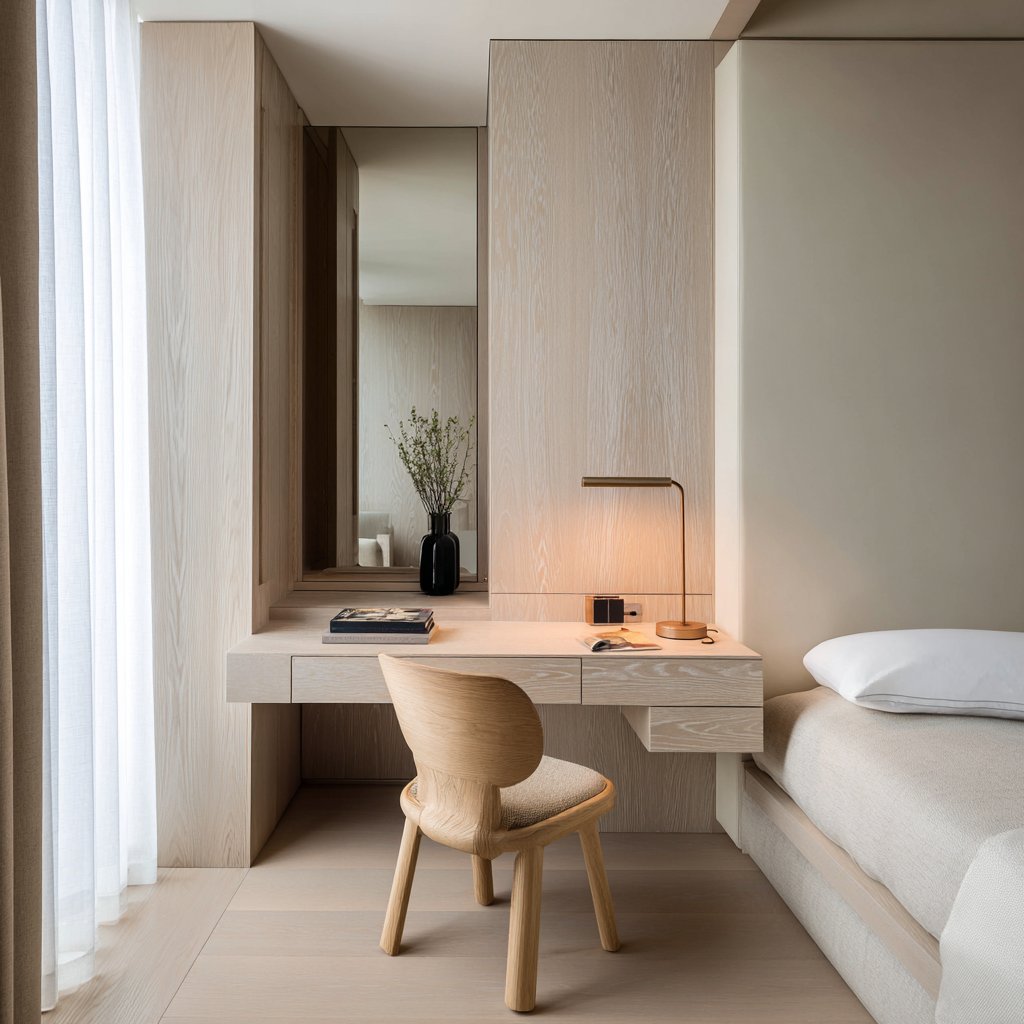
The bedroom features Japanese-inspired minimalism with low platform bed and neutral palette emphasizing natural materials and essential forms. The zen-like integration creates environment supporting both focused work and peaceful rest through shared aesthetic of simplicity and intentionality. Every object present earns its place through function or beauty—preferably both—while excessive decoration is eliminated as visual noise.
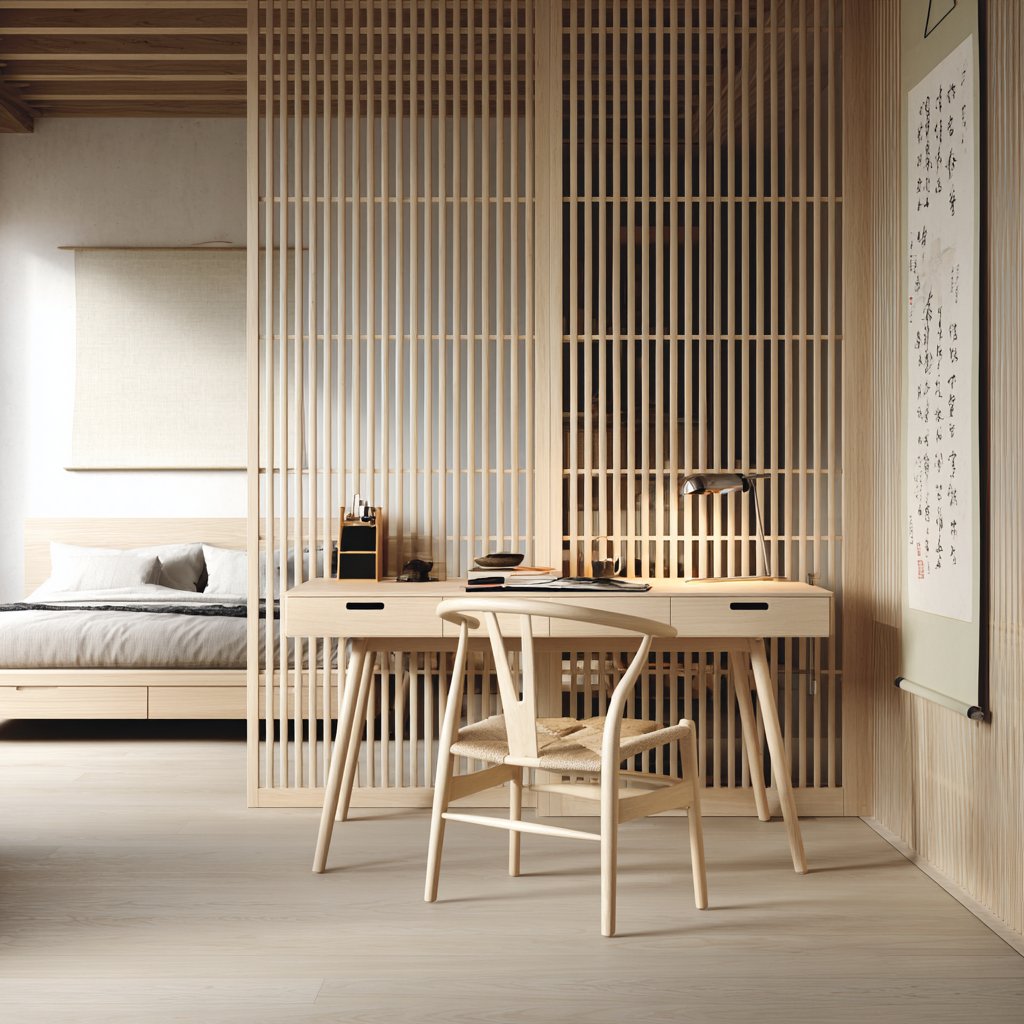
This approach demands discipline in maintaining minimal aesthetic and resisting accumulation of office clutter. The reward is workspace that feels calm rather than stimulating, appropriate for thoughtful work rather than frenetic productivity.
Key Design Tips:
- Choose desk with simple lines and minimal ornamentation reflecting Japanese aesthetic
- Position perpendicular to bed for subtle space division without blocking light or views
- Select bentwood or simple wooden chair that honors material’s natural beauty
- Maintain extremely minimal desk surface with only essential, beautiful objects
- Embrace negative space as important design element rather than emptiness to fill
- Use natural wood tones throughout for visual calm and material connection
- Include single quality task lamp rather than multiple competing light sources
- Appreciate that true minimalism requires ongoing discipline against accumulation
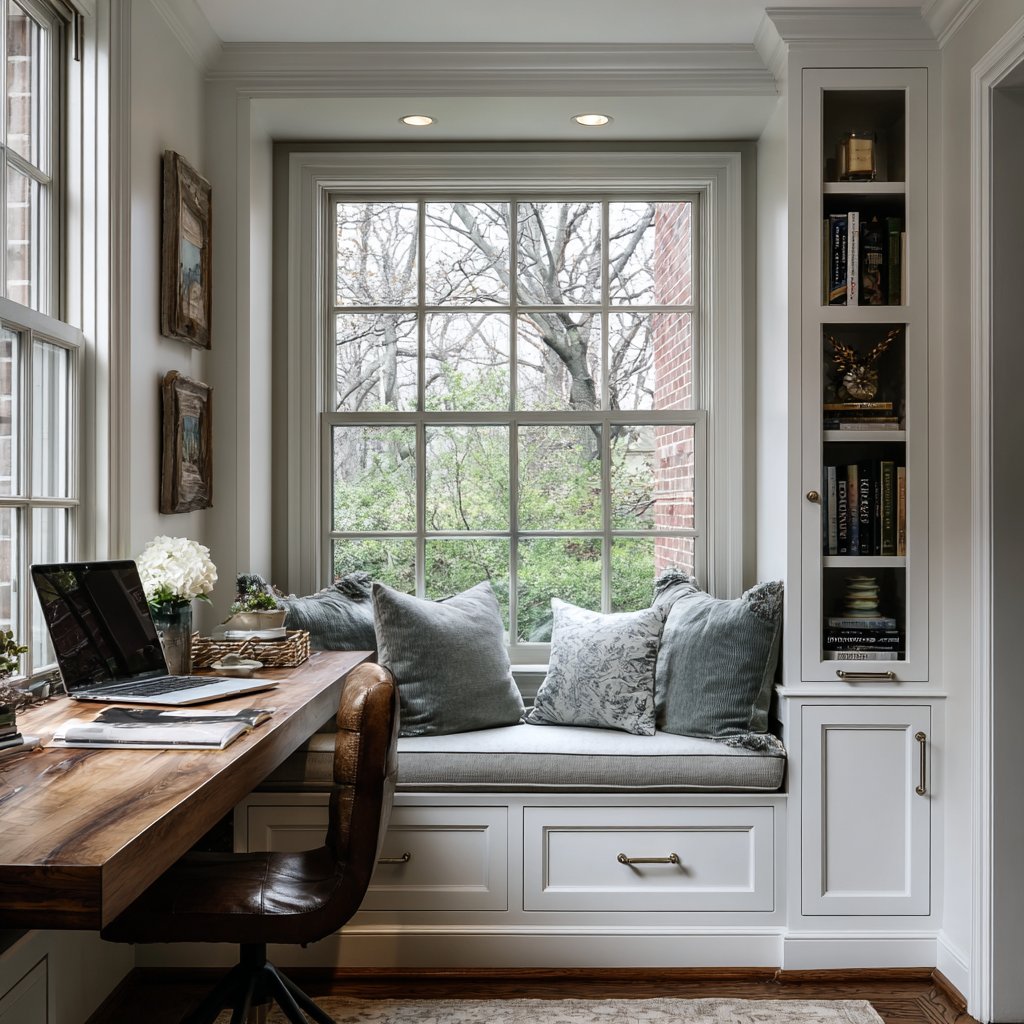
26. Window Seat Alcove Built-In Integration
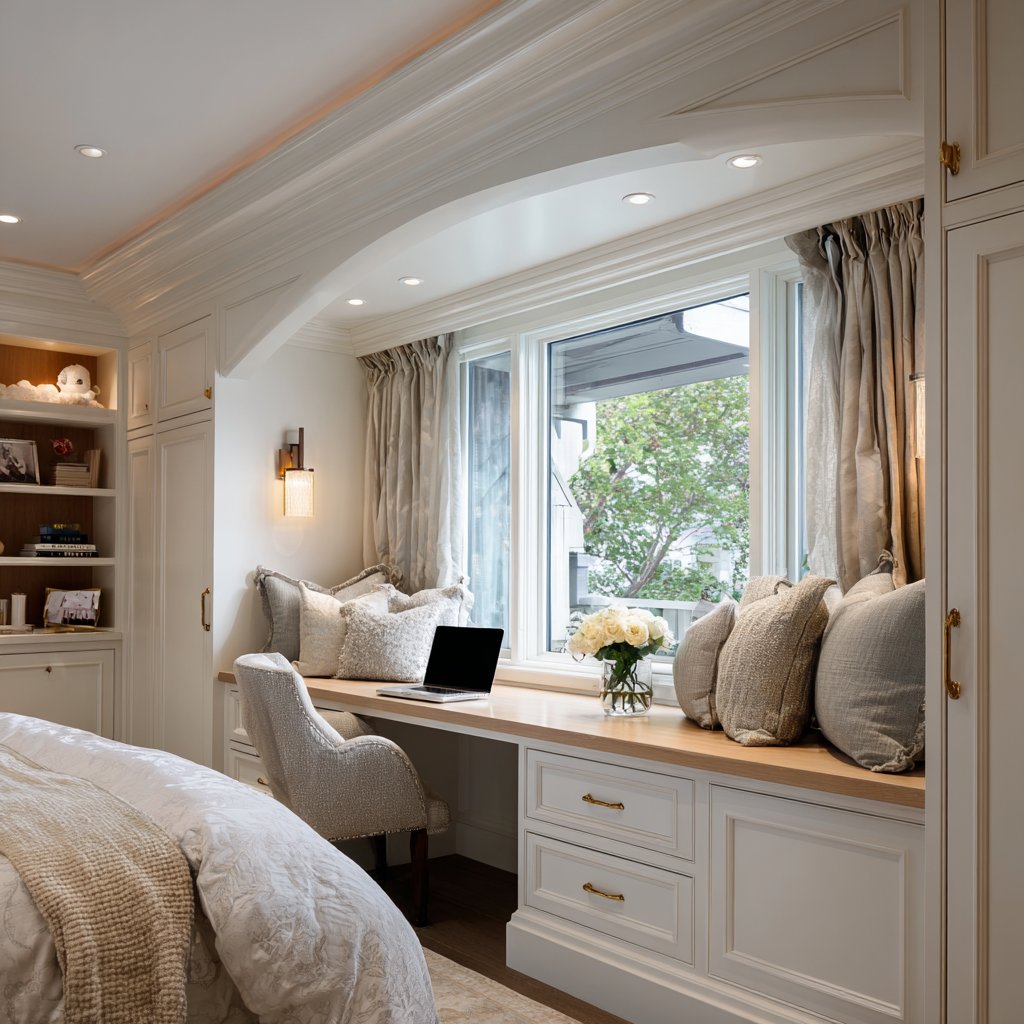
The custom built-in desk integrated into bedroom window seat alcove transforms architectural feature into functional workspace that appears originally designed for this purpose. The desk surface in white painted wood extends from window seat, creating continuous surface that serves both seating and work functions. Built-in drawers and cabinets below provide concealed storage for office supplies and files, eliminating need for additional storage furniture. Cushions in soft grey linen make window seat comfortable for reading or breaks between work sessions.
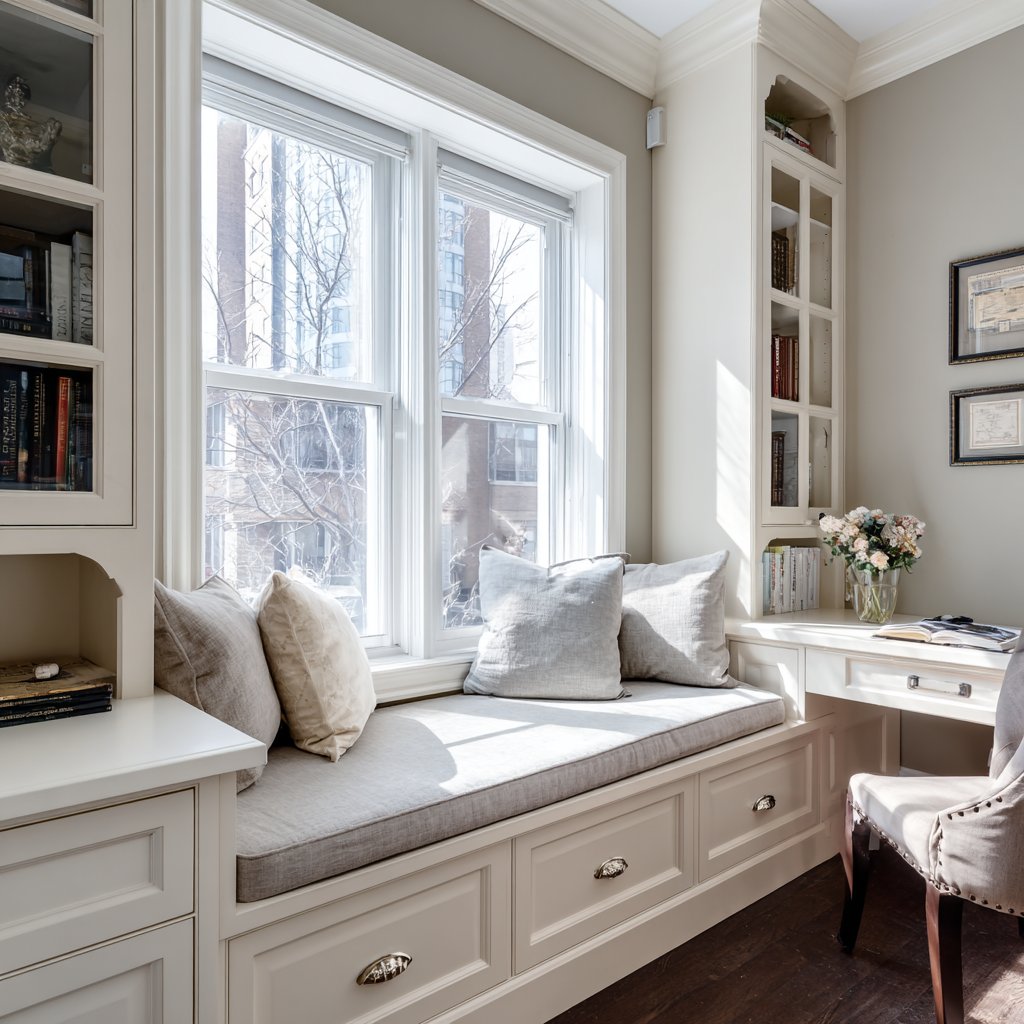
The bedroom features traditional design with crown molding and classic furnishings that complement the built-in’s architectural detail. This permanent installation adds value to the home while solving workspace challenges elegantly. Natural window light streams across workspace, providing ideal illumination for extended work periods. The architectural integration creates workspace that feels intentional rather than compromised—as though the room was always meant to function this way.
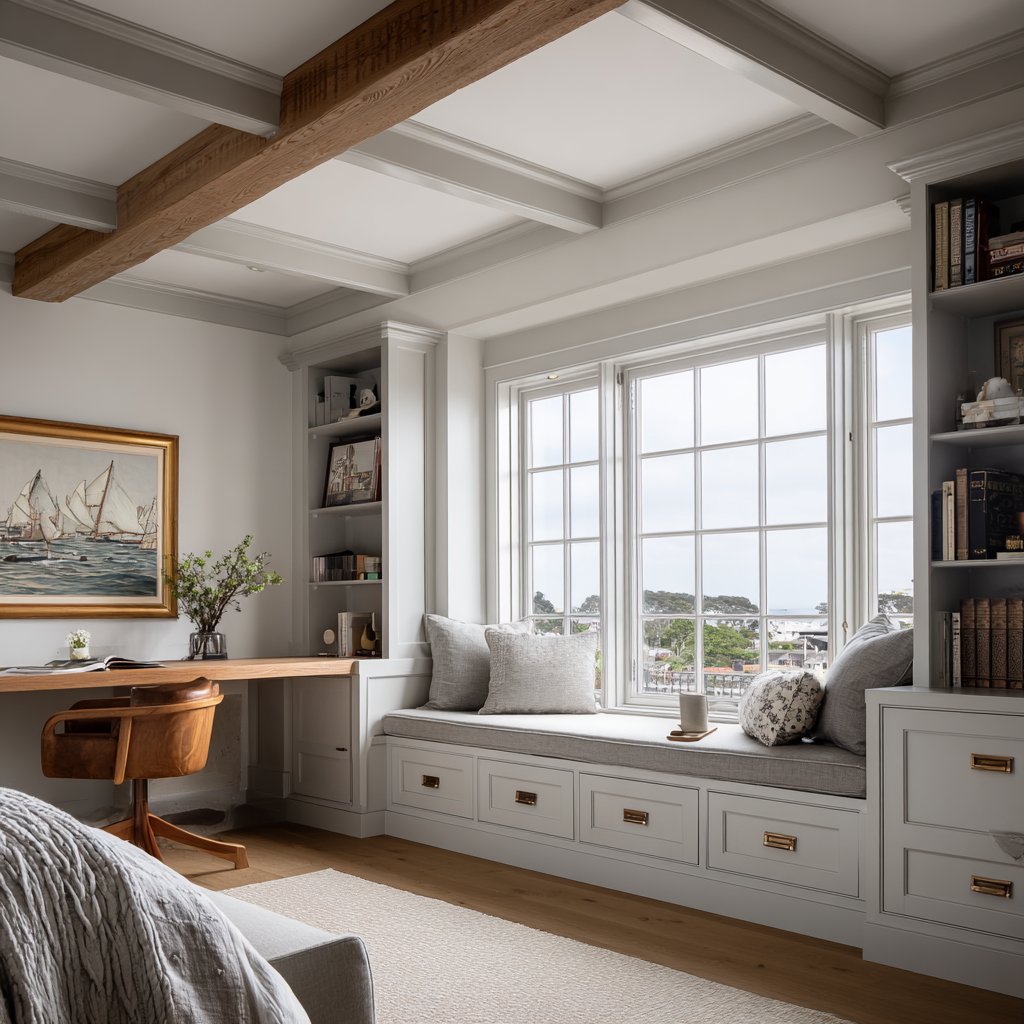
This approach requires professional installation and permanent commitment but delivers workspace seamlessly integrated into room architecture. The result transcends furniture arrangement to become architectural feature that defines the room’s character.
Key Design Tips:
- Plan built-in during renovation or new construction for best architectural integration
- Match built-in finish to existing architectural elements like baseboards and trim
- Include adequate drawer and cabinet storage to eliminate freestanding furniture needs
- Add comfortable cushioning that transforms window seat into genuine seating option
- Coordinate cushion fabric with bedroom textiles for cohesive design
- Ensure desk surface height works ergonomically despite architectural constraints
- Plan electrical outlets within built-in to avoid visible cords running to walls
- Consider long-term commitment—built-ins are effectively permanent installations
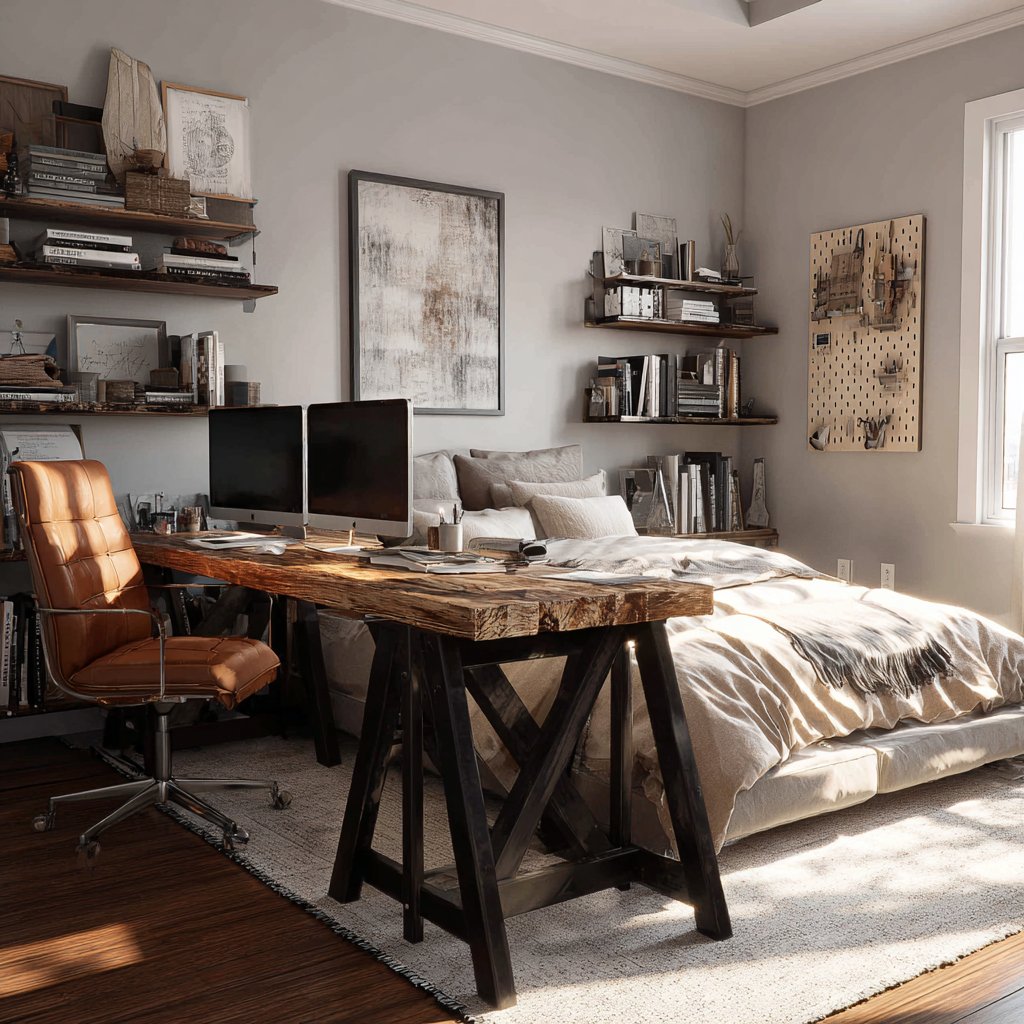
27. Industrial-Modern Trestle Desk Bold Statement
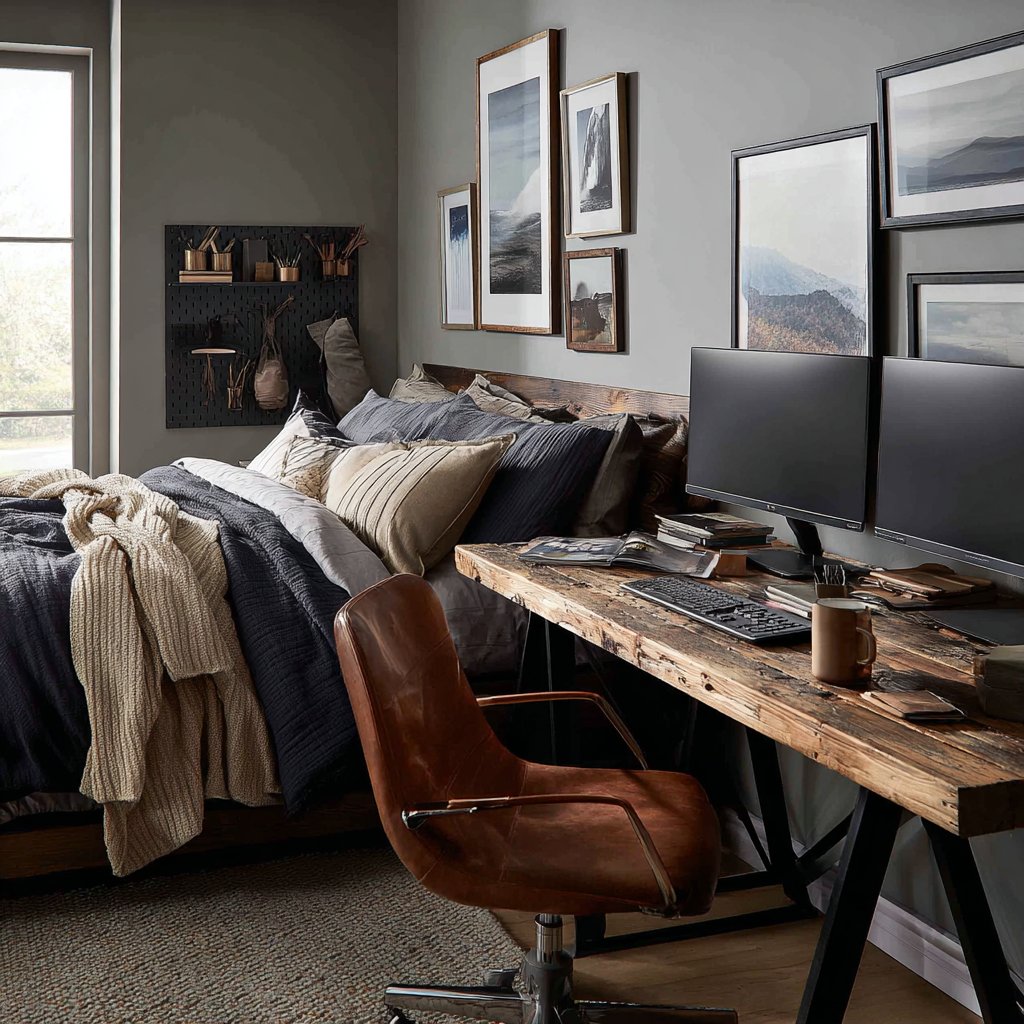
The contemporary trestle desk in matte black metal and thick wood top positioned along bedroom wall provides substantial workspace with industrial-modern aesthetic. The generous desk surface accommodates dual monitors and organized work materials, meeting demands of serious professional work without compromise. The bold presence makes clear statement—this bedroom functions as office and doesn’t apologize for work equipment visibility. A leather office chair in cognac adds warmth and comfort, its rich tones balancing the desk’s stark materials.
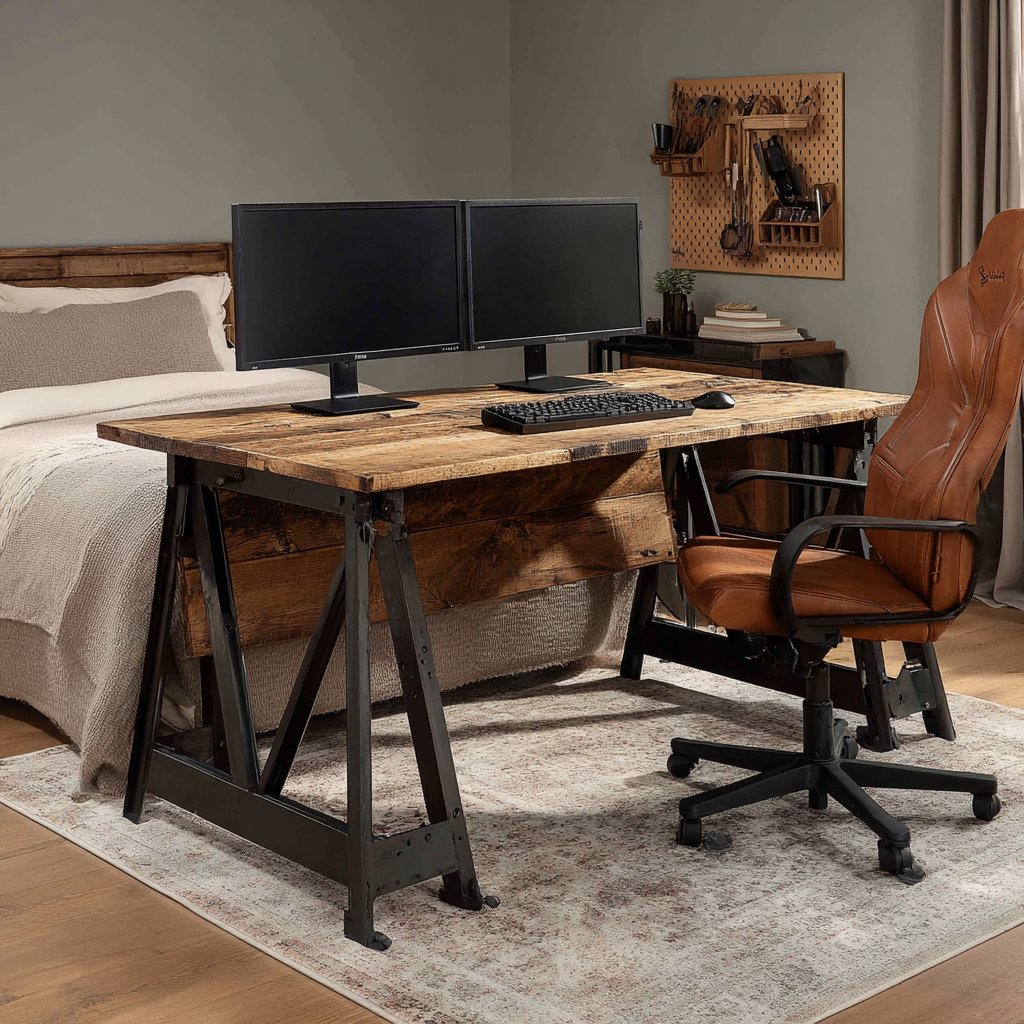
Pegboard wall organizer above holds supplies within easy reach while maintaining visual interest through organized display. The bedroom balances strong work zone with soft grey walls and layered neutral bedding, creating equilibrium between professional function and residential comfort. This approach suits those whose work demands genuine office environment and who have made peace with bedroom dual-purpose reality rather than attempting to disguise it.
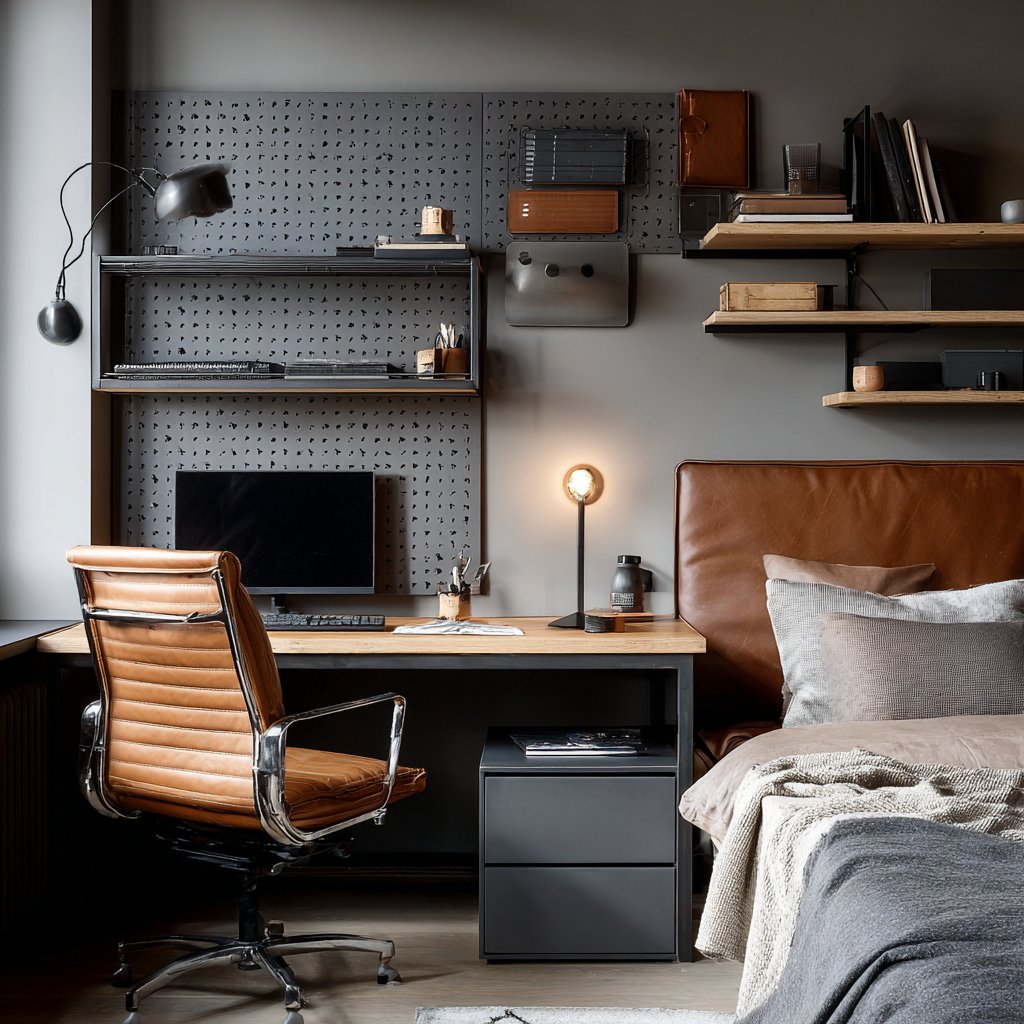
The trestle design provides architectural interest through exposed structural elements while offering exceptional stability for heavy equipment. The material contrast between rough wood grain and smooth metal creates tactile and visual interest that elevates utilitarian desk to design statement.
Key Design Tips:
- Choose trestle desk with substantial construction supporting heavy equipment weight
- Include professional ergonomic seating—serious work demands serious comfort
- Add wall organization systems that keep supplies accessible without cluttering desk surface
- Select desk with generous proportions if work genuinely requires extensive surface area
- Balance bold desk presence with softer bedroom elements to prevent cold atmosphere
- Position along longest wall to minimize visual impact on room proportions
- Coordinate metal finish across desk, accessories, and lighting for cohesive aesthetic
- Embrace the desk’s presence rather than attempting to disguise its function
Why These Bedroom Office Ideas Represent the Best Solutions
The twenty-seven bedroom office concepts presented throughout this comprehensive guide represent thoughtfully considered solutions addressing real challenges faced by those integrating workspace into sleeping areas. Each design acknowledges that successful bedroom offices must balance multiple competing priorities—professional functionality, residential aesthetics, psychological boundaries, ergonomic requirements, and spatial efficiency. The variety of approaches ensures solutions exist for virtually any room size, budget level, design preference, and work requirement, from minimal laptop-based tasks to comprehensive professional office needs.
Space optimization emerges as central theme across multiple designs, particularly relevant given that bedroom offices typically exist from necessity rather than preference. The floating corner desk, Murphy desk, console table approach, and mobile cart solutions all demonstrate how thoughtful design can provide genuine functionality while minimizing spatial impact. These space-conscious designs prove that square footage limitations need not prevent productive workspace—clever planning and appropriate furniture selection achieve professional capability within residential constraints. The built-in solutions including closet offices, wardrobe concealment, and alcove integration represent ultimate space efficiency, transforming underutilized areas into hardworking zones without consuming valuable floor space.
Aesthetic integration represents another critical success factor distinguishing excellent bedroom offices from merely adequate ones. The secretary desk, vintage school desk, mid-century writing desk, and farmhouse table approaches demonstrate how carefully selected furniture can serve dual purposes as both functional workspace and decorative element. These pieces maintain bedroom’s residential character while providing necessary work surfaces—they appear to belong rather than intrude. The material choices, finish selections, and styling decisions ensure these workspaces enhance rather than detract from bedroom aesthetics. The traditional rolltop desk and bohemian ladder desk particularly excel at making workspace feel intentional rather than compromised, celebrating rather than hiding their office function through authentic materials and honest design.
Psychological separation proves essential for maintaining healthy boundaries between work and rest despite physical proximity. The Murphy desk, wardrobe concealment, and secretary desk approaches literally hide workspace when not in use, providing complete visual separation that supports mental disconnection from work obligations. The behind-headboard console, room-dividing farmhouse table, and perpendicular writing desk concepts create spatial boundaries that psychologically separate zones despite shared room. This psychological architecture acknowledges that humans need clear environmental cues supporting different behavioral states—workspace visible from bed constantly reminds occupants of work obligations, potentially interfering with sleep quality and mental rest.
Natural light optimization appears repeatedly throughout these designs, reflecting understanding that daylight profoundly affects both productivity and wellbeing. The window desk, window seat platform, and strategically positioned vintage pieces capitalize on natural illumination’s benefits for focus, mood, and circadian rhythm support. These placements recognize that artificial lighting, regardless of quality, cannot fully replicate natural daylight’s spectrum and benefits. Morning sunlight helps regulate sleep-wake cycles while reducing afternoon eye strain and fatigue. Positioning workspace near windows provides practical lighting benefits while offering visual connection to exterior environment—brief glances outside reduce stress and provide mental micro-breaks throughout workdays.
Ergonomic consideration separates amateur from professional bedroom office designs. The standing desk, substantial trestle desk, and properly specified built-in solutions acknowledge that workspace comfort directly affects productivity and physical health. Extended work sessions in poorly designed spaces create neck strain, back pain, repetitive stress injuries, and long-term postural problems. Quality seating, appropriate desk heights, proper monitor positioning, and adequate leg clearance represent non-negotiable requirements regardless of bedroom location. The investment in ergonomic equipment pays dividends through improved focus, reduced physical discomfort, and prevention of chronic pain conditions developing over months and years of daily use.
Material authenticity enriches bedroom office designs by providing tactile quality and visual interest that generic furniture lacks. The reclaimed wood window desk, vintage industrial metal desk, and farmhouse table celebrate materials with genuine history and character. These pieces bring warmth, texture, and story into spaces that might otherwise feel generic or sterile. The visible grain patterns, authentic wear, and material variations create visual richness impossible to achieve with manufactured surfaces. Natural wood, genuine metal, and quality upholstery fabrics provide sensory experience that enhances both workspace satisfaction and bedroom atmosphere.
Flexibility and adaptability distinguish forward-thinking bedroom office solutions from static arrangements. The mobile cart, adjustable standing desk, and dual-purpose daybed acknowledge that needs change over time—work requirements fluctuate, living situations evolve, and spatial uses transform. Furniture and systems capable of adapting to changing circumstances provide better long-term value than fixed solutions optimized for current but temporary situations. The ability to reconfigure, conceal, or completely remove workspace as circumstances change prevents bedroom offices from becoming permanent compromises when temporary solutions would better serve.
Storage integration addresses practical reality that offices generate paperwork, supplies, and equipment requiring organized accommodation. The built-in systems, secretary desk compartments, and under-desk drawer solutions provide dedicated storage preventing office clutter from invading bedroom spaces. Visible paper piles, scattered supplies, and disorganized materials create visual chaos undermining bedroom’s restful purpose. Thoughtful storage systems keep necessary items accessible during work hours while concealing them during rest periods. The difference between successful and frustrating bedroom offices often lies in storage adequacy rather than workspace surface area.
Technology integration reflects modern work realities requiring electrical outlets, cable management, USB ports, and internet connectivity. The built-in desk with integrated outlets, trestle desk cable management, and wardrobe office electrical planning demonstrate that contemporary workspace design must address technology requirements from initial planning rather than accommodating them afterward. Visible cable tangles, inadequate outlet access, and poor connectivity create daily frustrations that accumulate into significant dissatisfaction. Planning electrical requirements during design phase prevents compromised solutions and maintains clean aesthetics.
Style diversity across these twenty-seven concepts ensures appropriate solutions exist for virtually any design preference and existing bedroom aesthetic. Industrial, traditional, modern, Scandinavian, bohemian, mid-century, farmhouse, and minimalist approaches each bring distinctive character while solving fundamental bedroom office challenges. This stylistic variety acknowledges that successful design must align with personal preferences and existing room character—forcing industrial desk into traditional bedroom or bohemian ladder into modern minimalist space creates visual discord undermining both work and rest functions. Matching workspace style to bedroom aesthetic ensures integrated appearance where all elements support unified design vision.
The investment ranges across these solutions accommodate various budget realities from repurposed vintage pieces and simple console tables to extensive custom built-ins and premium furniture selections. This financial accessibility ensures bedroom office solutions exist for renters unable to make permanent installations, homeowners willing to invest in custom millwork, and everyone between these extremes. The recognition that budget constraints represent legitimate design parameters rather than failures demonstrates inclusive approach to problem-solving where excellent solutions exist across price points.
Ultimately, these bedroom office ideas succeed because they acknowledge complexity rather than offering simplistic solutions. They recognize that bedroom offices represent compromise between competing needs requiring thoughtful balance rather than one-size-fits-all answers. They demonstrate respect for both professional work demands and human needs for restful sanctuary. They prove that constraints—spatial, financial, architectural—can inspire creative solutions exceeding results from unlimited resources and abundant space. Most importantly, they validate that bedroom offices, when thoughtfully designed, can enhance rather than diminish both work productivity and sleep quality through intelligent planning that honors both functions equally.
Conclusion
Creating successful bedroom offices requires more than simply placing a desk in a bedroom—it demands thoughtful consideration of spatial dynamics, aesthetic integration, psychological boundaries, and functional requirements. The twenty-seven concepts explored throughout this comprehensive guide demonstrate that innovative solutions exist for virtually any room configuration, budget level, and design preference. From space-saving Murphy desks and floating corner installations to substantial trestle desks and vintage repurposed pieces, these ideas prove that workspace and bedroom functions can coexist harmoniously when properly planned.
The most successful bedroom offices achieve several critical objectives simultaneously: they provide genuinely functional workspace supporting focused productivity without compromising the room’s primary purpose as restful sanctuary; they integrate aesthetically with existing bedroom design rather than appearing as office intrusion; they establish psychological boundaries supporting mental separation between work and rest despite physical proximity; and they optimize available space through clever planning and appropriate furniture selection. Meeting these multiple objectives requires moving beyond generic solutions toward personalized approaches reflecting individual work requirements, spatial constraints, and aesthetic preferences.
As you consider implementing bedroom office solutions in your own home, remember that the best design emerges from honest assessment of your specific needs rather than following trends or forcing solutions inappropriate to your situation. Consider how many hours you’ll spend working, what equipment your work requires, how important aesthetic integration feels to you, whether you need complete workspace concealment outside work hours, and what budget realistically supports your goals. The investment in thoughtful planning and quality execution pays dividends through improved productivity, enhanced sleep quality, and spaces that genuinely support both professional success and personal wellbeing.
Experiment with these concepts, adapt them to your unique circumstances, and don’t hesitate to combine elements from multiple approaches to create personalized solutions. Your bedroom office should feel like natural extension of your home rather than awkward compromise—when properly designed, it enhances both work life and home life through spaces that truly serve your needs.
