
The bathroom is often an overlooked sanctuary in our homes, yet it holds immense potential for creative expression and thoughtful design. While we invest considerable time and resources in decorating living rooms, bedrooms, and kitchens, the walls of our bathrooms frequently remain bare or uninspired. However, the right wall decor can transform a purely functional space into a personal retreat that reflects your style, enhances your daily routines, and adds significant value to your home. Whether you’re working with a spacious master bathroom or a compact powder room, the walls offer a canvas for creativity that can dramatically elevate the entire atmosphere of the space.
In today’s design landscape, bathroom wall decor has evolved far beyond the standard framed print or medicine cabinet. Contemporary approaches embrace everything from living walls and architectural elements to curated gallery displays and textural installations. The beauty of bathroom wall decor lies in its versatility—it can be as minimalist or as elaborate as your personal aesthetic dictates. From coastal-inspired arrangements that evoke seaside tranquility to industrial elements that celebrate raw materials, from bohemian layers that create visual richness to sleek contemporary designs that emphasize clean lines, the possibilities are truly limitless.
This comprehensive guide explores twenty-nine distinct bathroom wall decor ideas, each offering a unique approach to enhancing your space. We’ll journey through various design styles including modern minimalism, farmhouse charm, Mediterranean warmth, Japanese-inspired serenity, and glamorous Hollywood regency. You’ll discover how to work with different materials—from reclaimed wood and marble to concrete and ceramic tiles—and learn how lighting, color, and texture work together to create cohesive, inspiring environments. Whether you’re planning a complete bathroom renovation or seeking simple updates to refresh your existing space, these ideas will provide the inspiration and practical guidance you need to create a bathroom that’s both beautiful and functionally sound.
1. Modern Gallery Wall with Botanical Elements
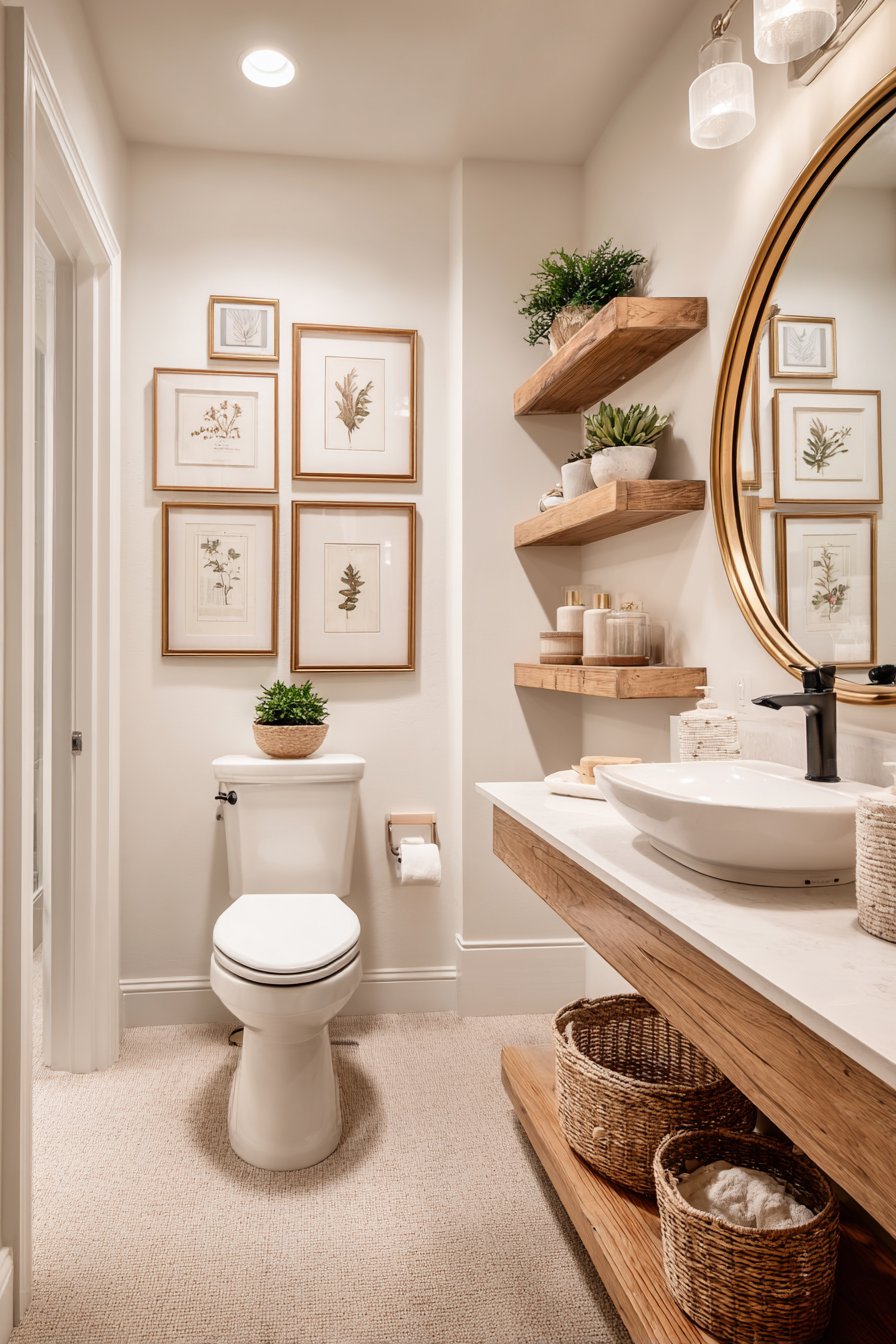
A carefully curated gallery wall arrangement creates an instant focal point while adding personality and sophistication to your bathroom. This design concept centers around a thoughtful composition of framed botanical prints in natural wood frames, complemented by a large round mirror with brushed brass trim that serves as the centerpiece. The arrangement extends above a modern floating vanity, creating a cohesive visual story that draws the eye upward and makes the space feel more expansive. Floating wooden shelves integrate seamlessly into the display, offering both decorative and functional benefits as they hold small potted succulents and decorative candles that introduce living elements and ambient lighting options.
The walls painted in a soft warm white with subtle texture provide the perfect neutral backdrop, allowing the various decorative elements to shine without competing for attention. This approach demonstrates how layering different types of wall decor—artwork, mirrors, shelving, and accessories—creates depth and visual interest that a single element alone cannot achieve. The natural wood tones throughout the composition bring warmth to the space, while the botanical prints introduce organic patterns that create a calming, nature-inspired atmosphere perfect for a room dedicated to relaxation and self-care.
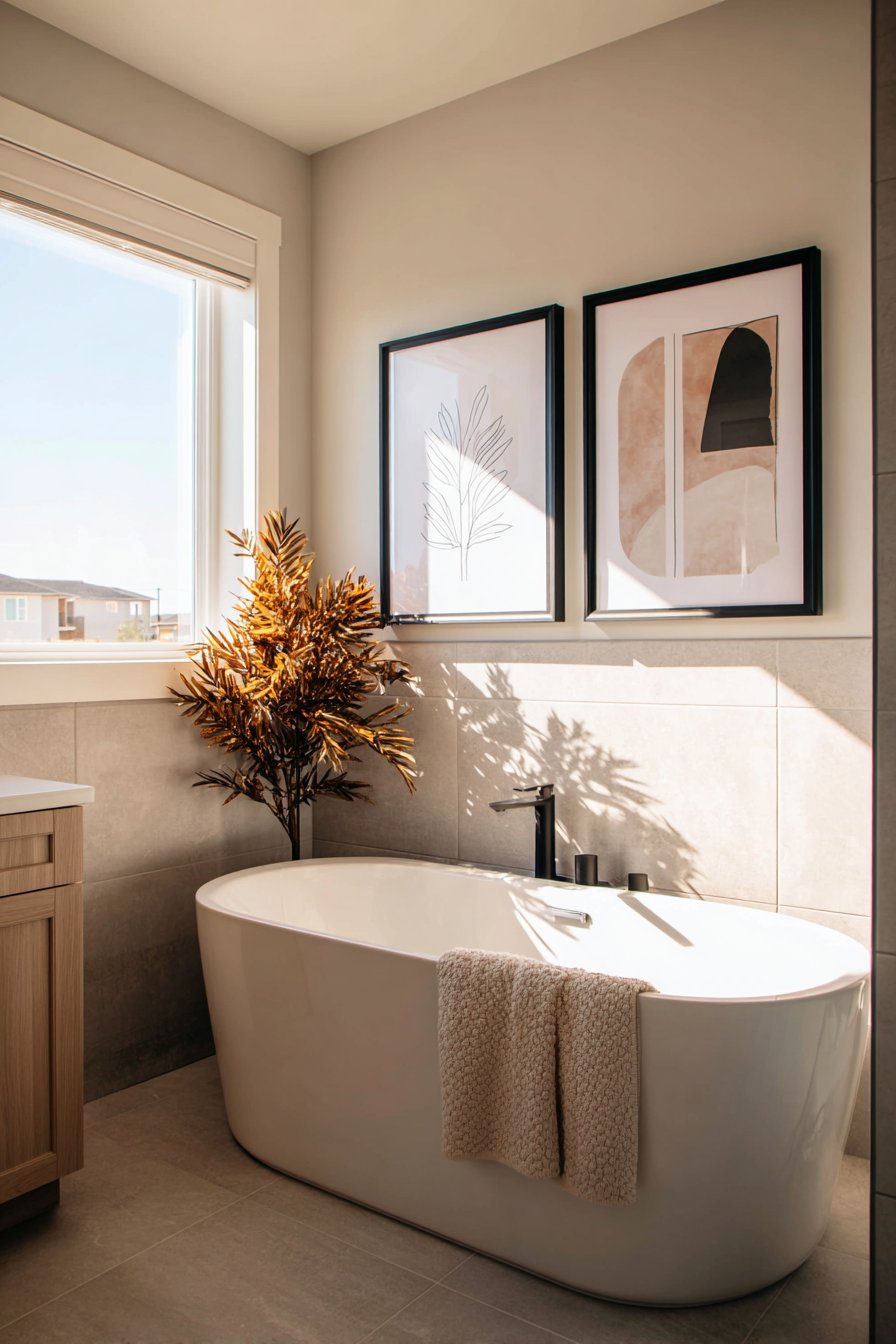
Natural lighting plays a crucial role in this design, streaming from an adjacent window to create gentle shadows that emphasize depth and dimension. The interplay of light across the various surfaces—the reflective quality of the mirror, the matte finish of the frames, the organic texture of the wooden shelves—adds dynamic visual interest that changes throughout the day. Professional interior design photography captures this complete bathroom wall decor display while maintaining balanced exposure, highlighting the careful curation and layering of decorative elements that create visual interest without overwhelming the space. The result is a sophisticated yet approachable design that demonstrates how thoughtful wall decor can elevate a bathroom from purely functional to genuinely inspiring.
Key Design Tips:
- Mix frame sizes and orientations to create visual rhythm and avoid a static, uniform appearance
- Use a large mirror as an anchor point for surrounding decorative elements
- Incorporate floating shelves to bridge the gap between purely decorative and functional design
- Choose botanical prints that complement your color scheme while introducing natural patterns
- Layer different textures—wood, glass, metal, and paper—to add dimensional interest
- Position lighting to create shadows that emphasize the three-dimensional quality of your display
2. Contemporary Abstract Art Trio
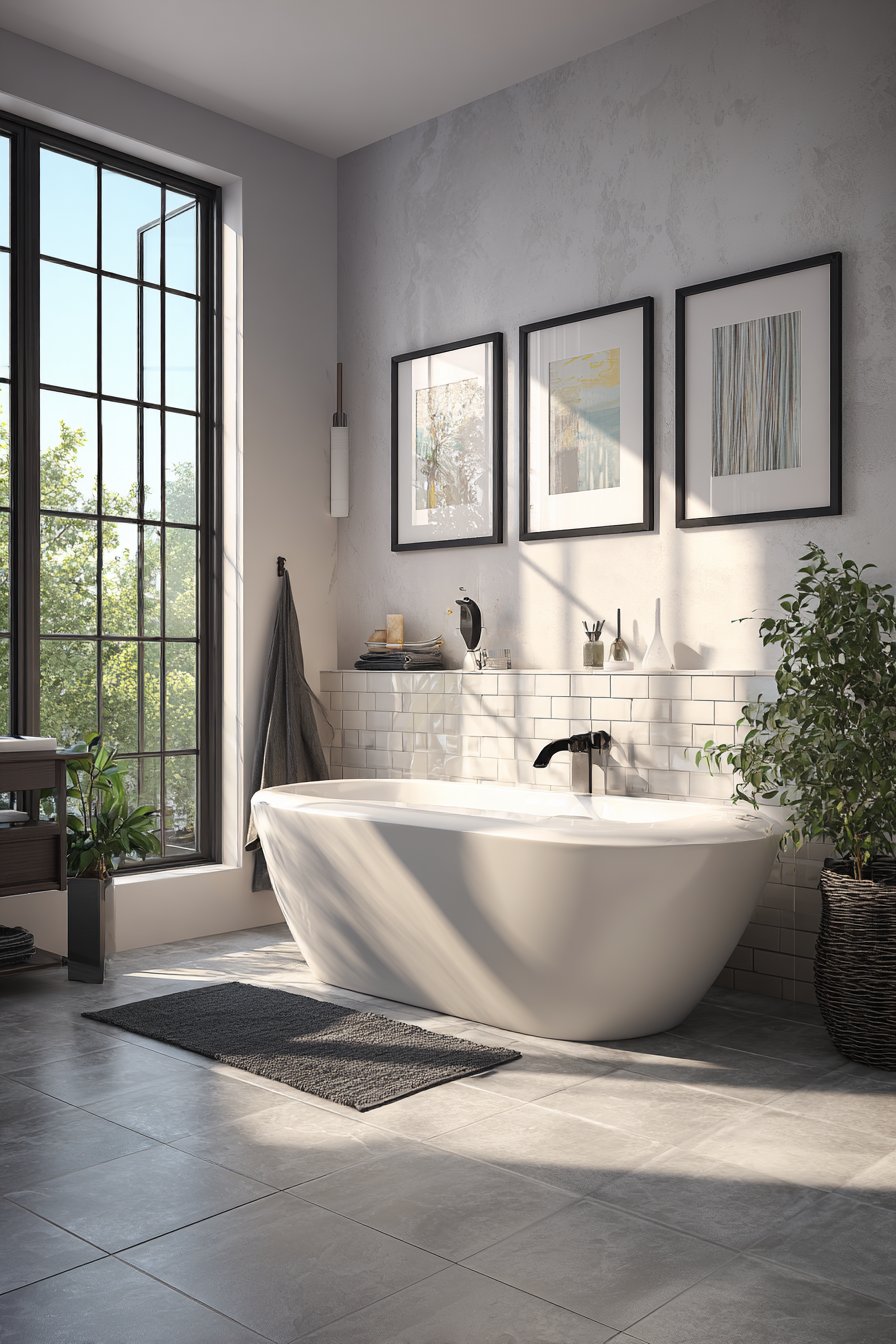
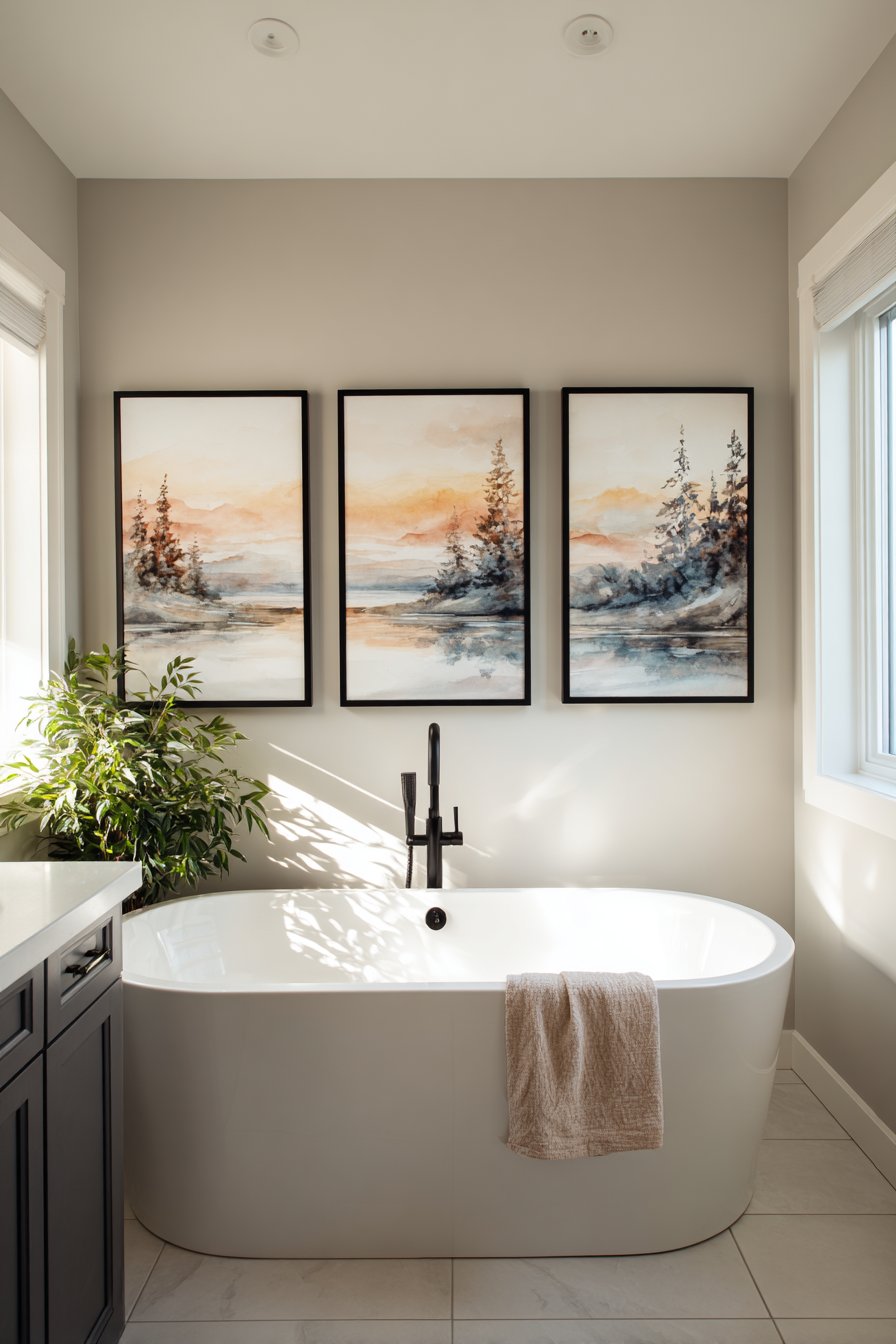
The power of abstract art in bathroom design lies in its ability to introduce color, movement, and personal expression while maintaining a clean, sophisticated aesthetic. This modern approach features a trio of framed abstract art prints in matte black frames mounted above a freestanding bathtub, creating a gallery-quality presentation that transforms the bathing area into an art-viewing experience. The artwork incorporates soft neutral tones that complement the bathroom’s overall color palette, demonstrating the importance of selecting pieces that enhance rather than clash with existing design elements. The consistent framing creates unity while allowing each individual piece to maintain its unique visual character.
The walls finished in light grey plaster with subtle texture variations provide an elegant, museum-like backdrop that allows the artwork to command attention without distraction. This neutral wall treatment is essential in contemporary design, as it creates a sophisticated foundation that lets decorative elements shine. The texture in the plaster catches light throughout the day, adding subtle visual interest that prevents the walls from appearing flat or one-dimensional. Natural daylight from a nearby window highlights the artwork while creating authentic shadows that add depth and drama to the display, changing the visual experience throughout different times of day.
Professional interior photography techniques capture the complete wall composition with balanced exposure and attention to framing details, showcasing how proper placement and lighting can maximize the impact of artistic elements. The positioning above the freestanding tub is particularly strategic—it creates a focal point for someone enjoying a relaxing bath while also serving as a striking visual element when entering the bathroom. This placement demonstrates how bathroom wall decor should consider multiple viewing angles and use scenarios to ensure the design works in practical, everyday situations.
Key Design Tips:
- Select abstract art with colors that echo or complement existing bathroom elements
- Use consistent framing to create cohesion when displaying multiple pieces
- Position artwork at eye level when standing, but also consider sightlines from the tub
- Choose matte frames to reduce glare from bathroom lighting and mirrors
- Ensure artwork is properly sealed or protected from bathroom humidity
- Space frames evenly with adequate breathing room—typically 2-4 inches between pieces
3. Coastal Whitewashed Wood Accent Wall
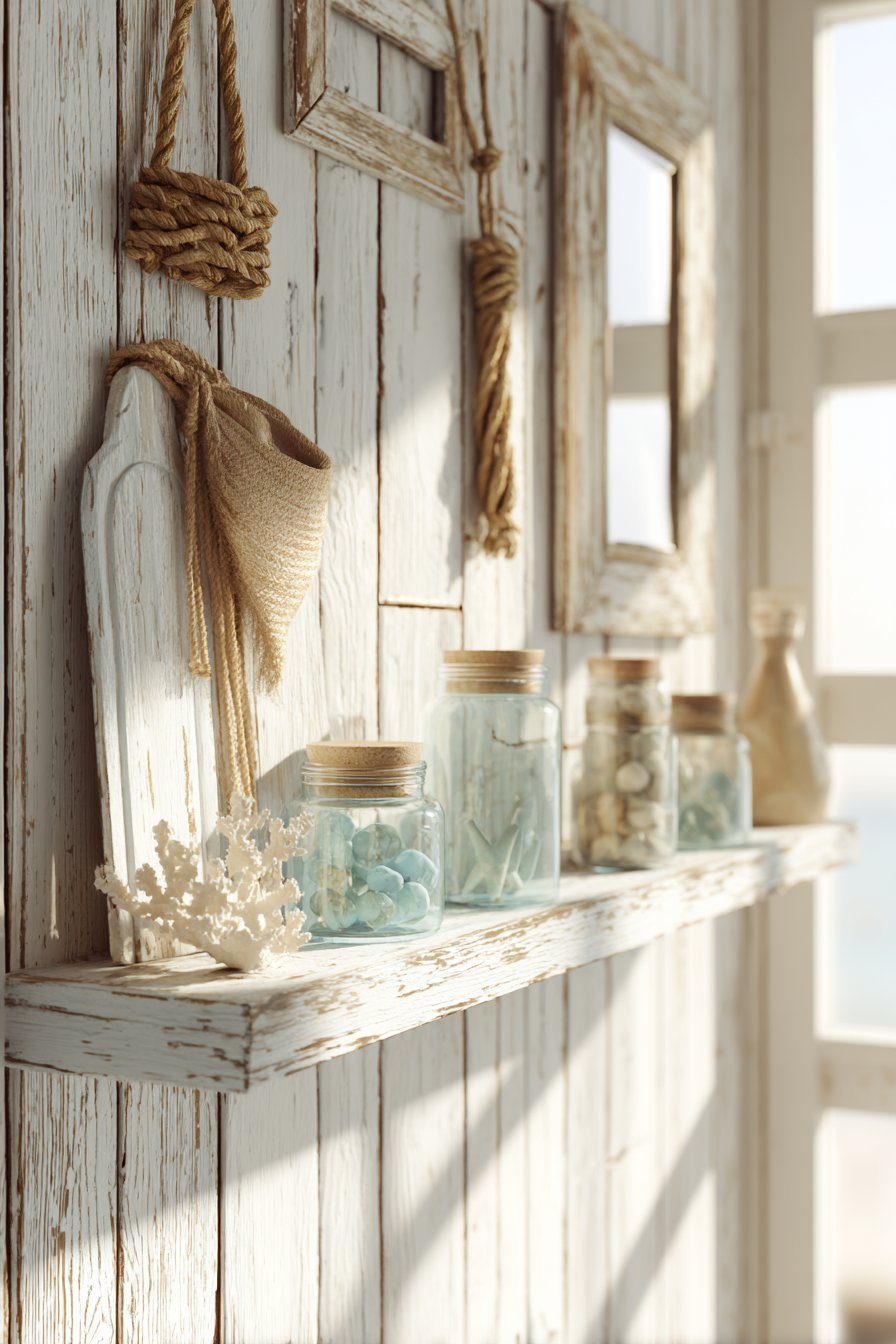
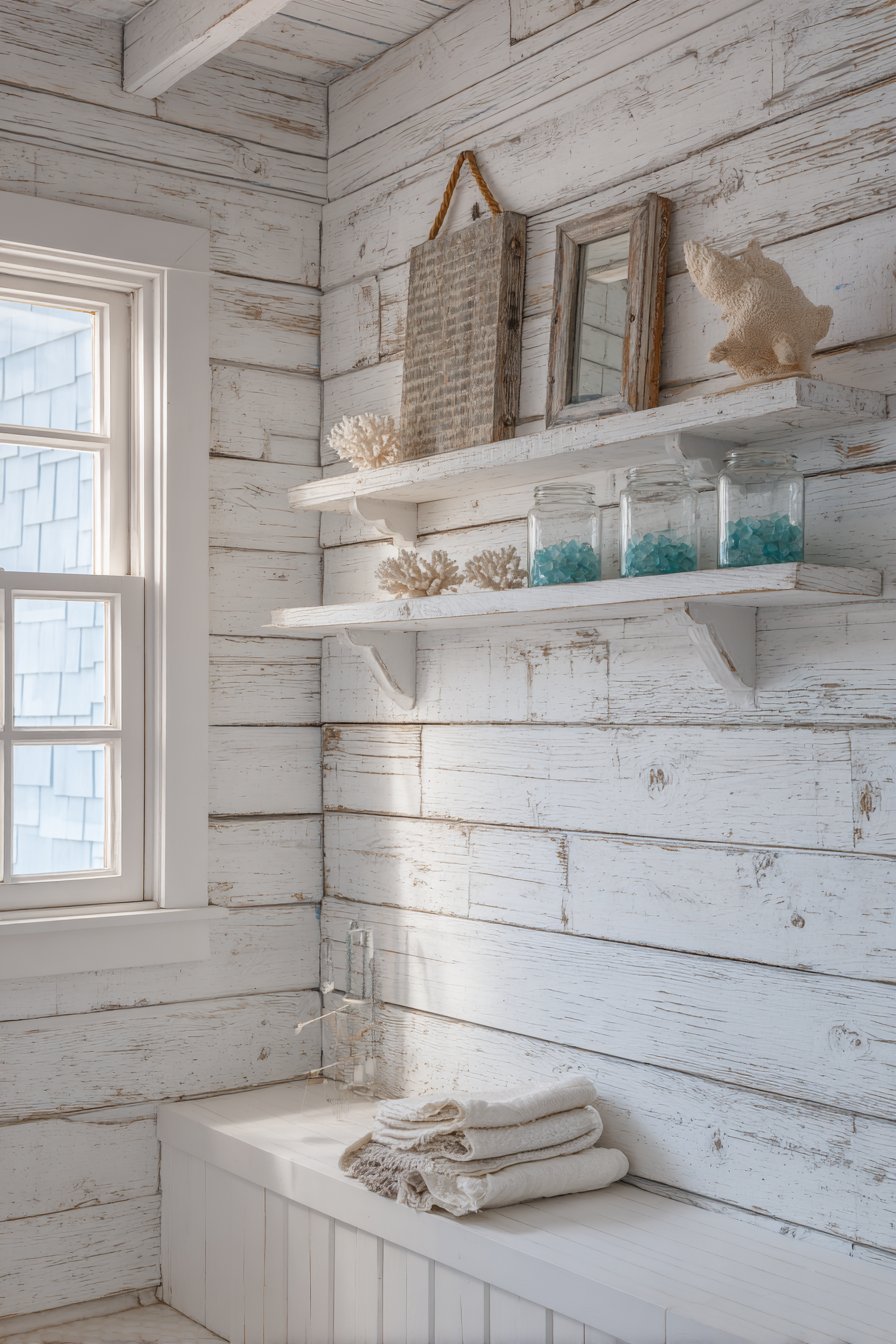
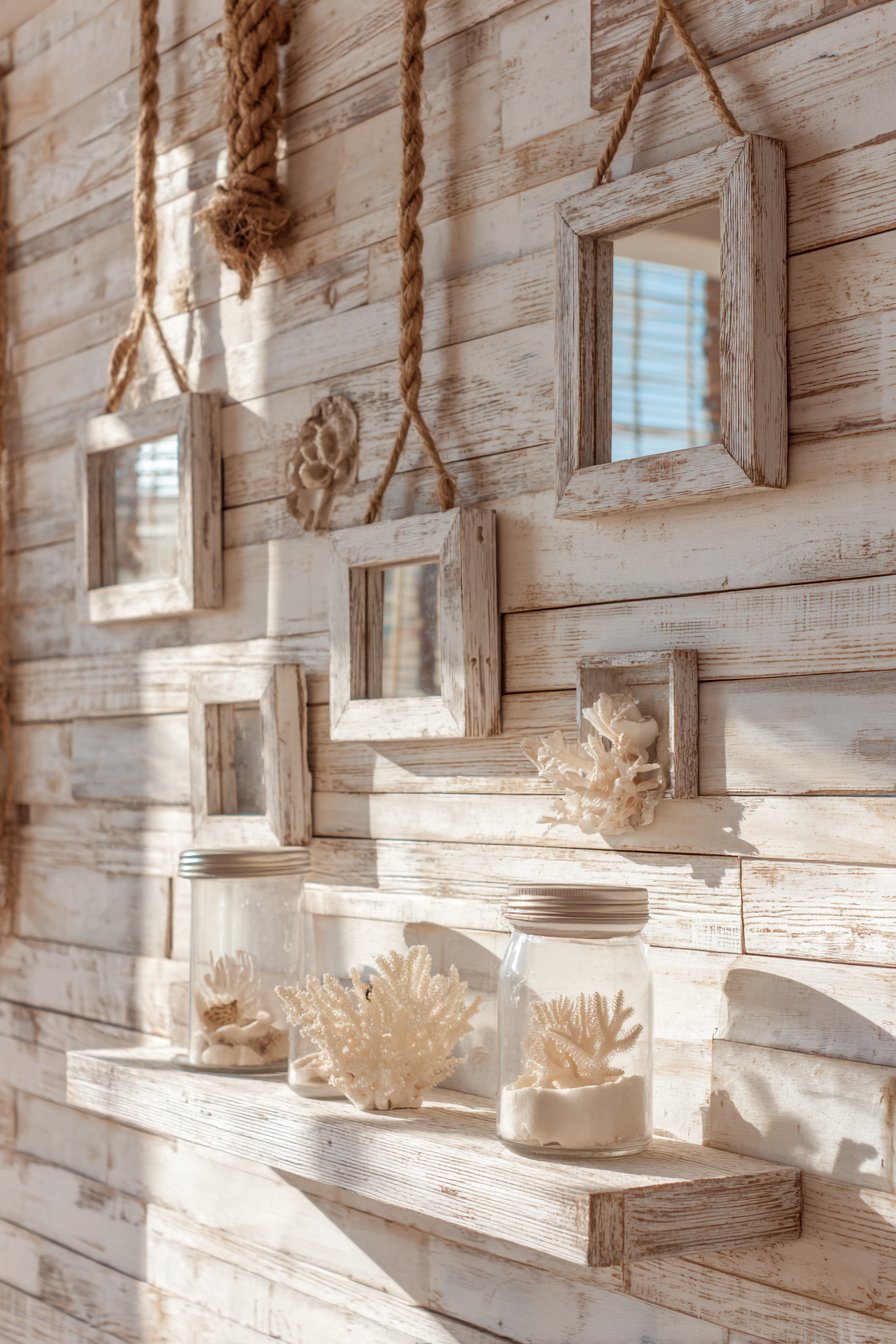
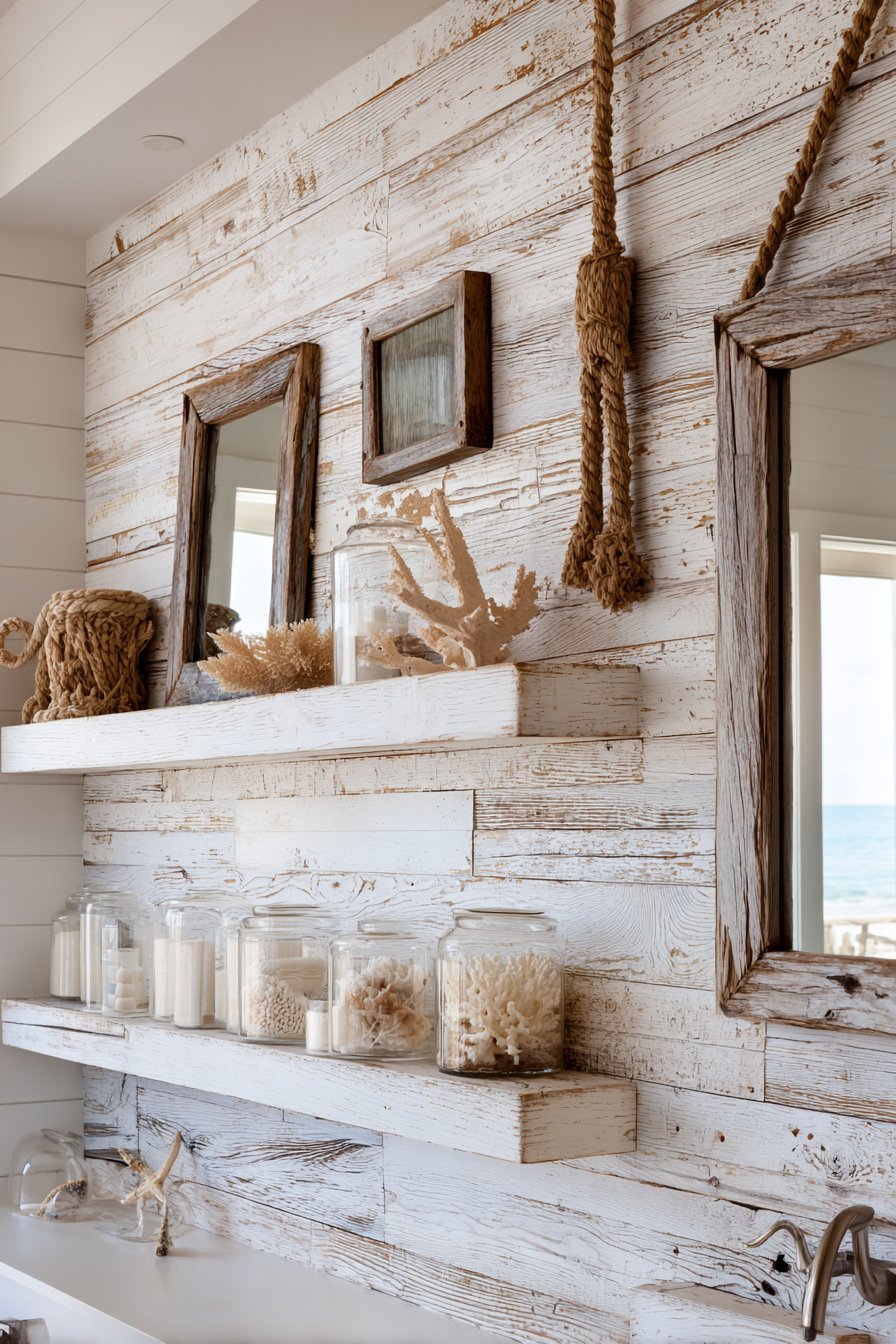
Bringing the serene atmosphere of coastal living into your bathroom creates an immediate sense of relaxation and escape. This design features whitewashed wooden planks arranged horizontally across one accent wall, establishing a striking architectural element that adds texture, pattern, and visual warmth. The weathered finish of the reclaimed wood introduces authentic character marks—subtle variations in color, natural grain patterns, and the gentle patina of aged wood—that new materials simply cannot replicate. This textural foundation serves as the perfect backdrop for a collection of vintage nautical mirrors in weathered frames and natural rope wall hangings that reinforce the coastal theme.
A simple floating shelf integrated into the wooden wall holds beach-inspired accessories including coral specimens and sea glass displayed in glass containers, creating small vignettes that tell a story of seaside exploration. These carefully curated decorative elements work together to evoke memories of beach walks and ocean breezes, transforming an everyday bathroom into a personal coastal retreat. The horizontal orientation of the planks creates visual lines that make the wall appear wider, an effective technique for smaller bathrooms where expanding the sense of space is crucial.
Soft natural lighting emphasizes the texture of the reclaimed wood and creates a serene atmosphere that changes throughout the day, casting different shadow patterns as the sun moves. The whitewashed finish reflects light beautifully while maintaining the authentic character of weathered wood, striking the perfect balance between rustic charm and contemporary cleanliness. Wide-angle interior design photography captures the relaxed coastal aesthetic, demonstrating how a single accent wall can completely transform the character of a space. This approach proves that you don’t need to live near the ocean to enjoy coastal-inspired design—thoughtful material choices and accessories can transport you to the seaside every time you enter the room.
Key Design Tips:
- Install horizontal planks to create the illusion of a wider space
- Choose whitewashed or light-finished wood to keep the space bright and airy
- Mix different widths of planks for a more authentic, reclaimed appearance
- Incorporate rope elements—mirrors, towel holders, or decorative knots—for coastal authenticity
- Display natural found objects like shells, driftwood, or sea glass in simple glass vessels
- Ensure wood is properly sealed to withstand bathroom humidity and moisture
4. Minimalist Black and White Photography
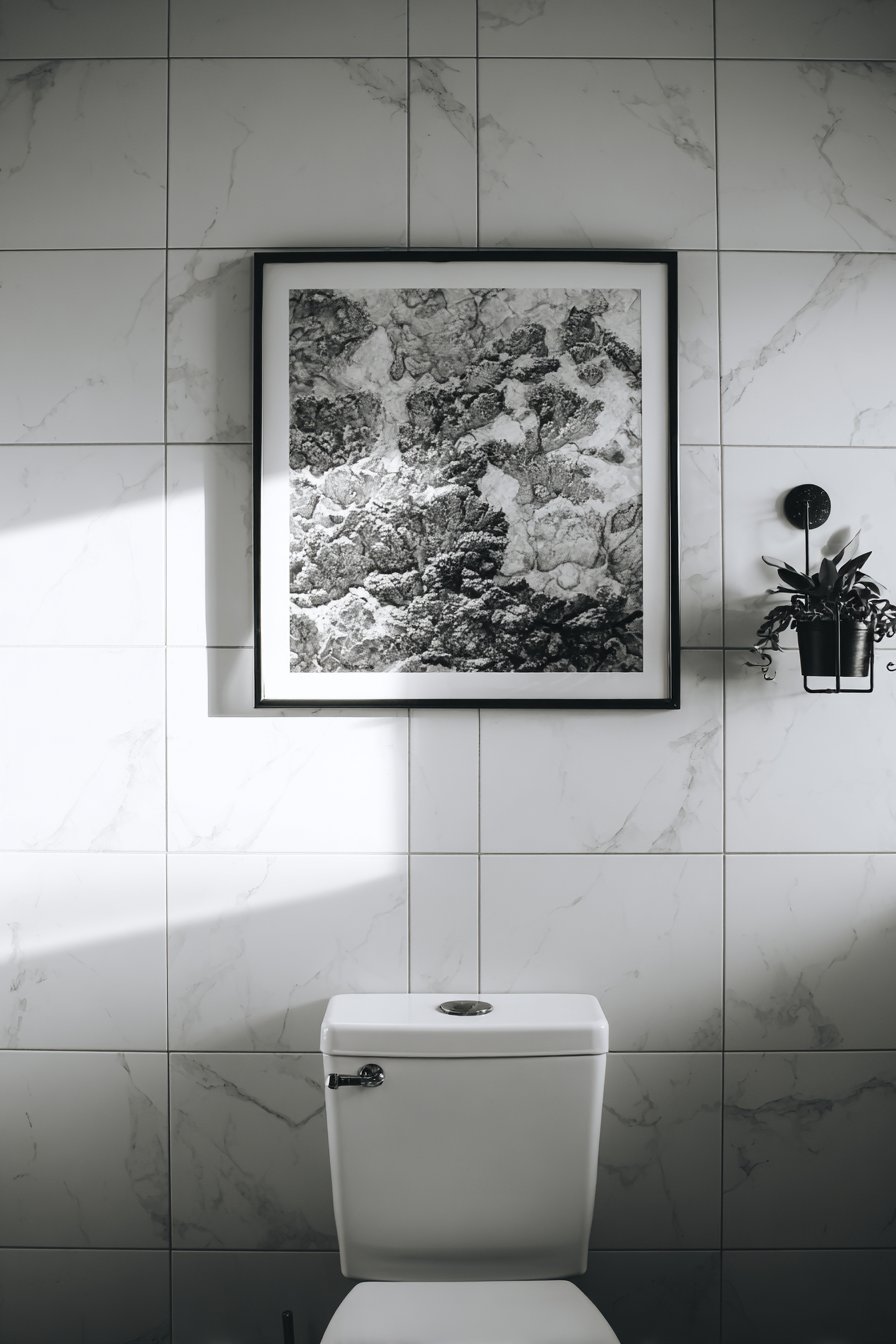
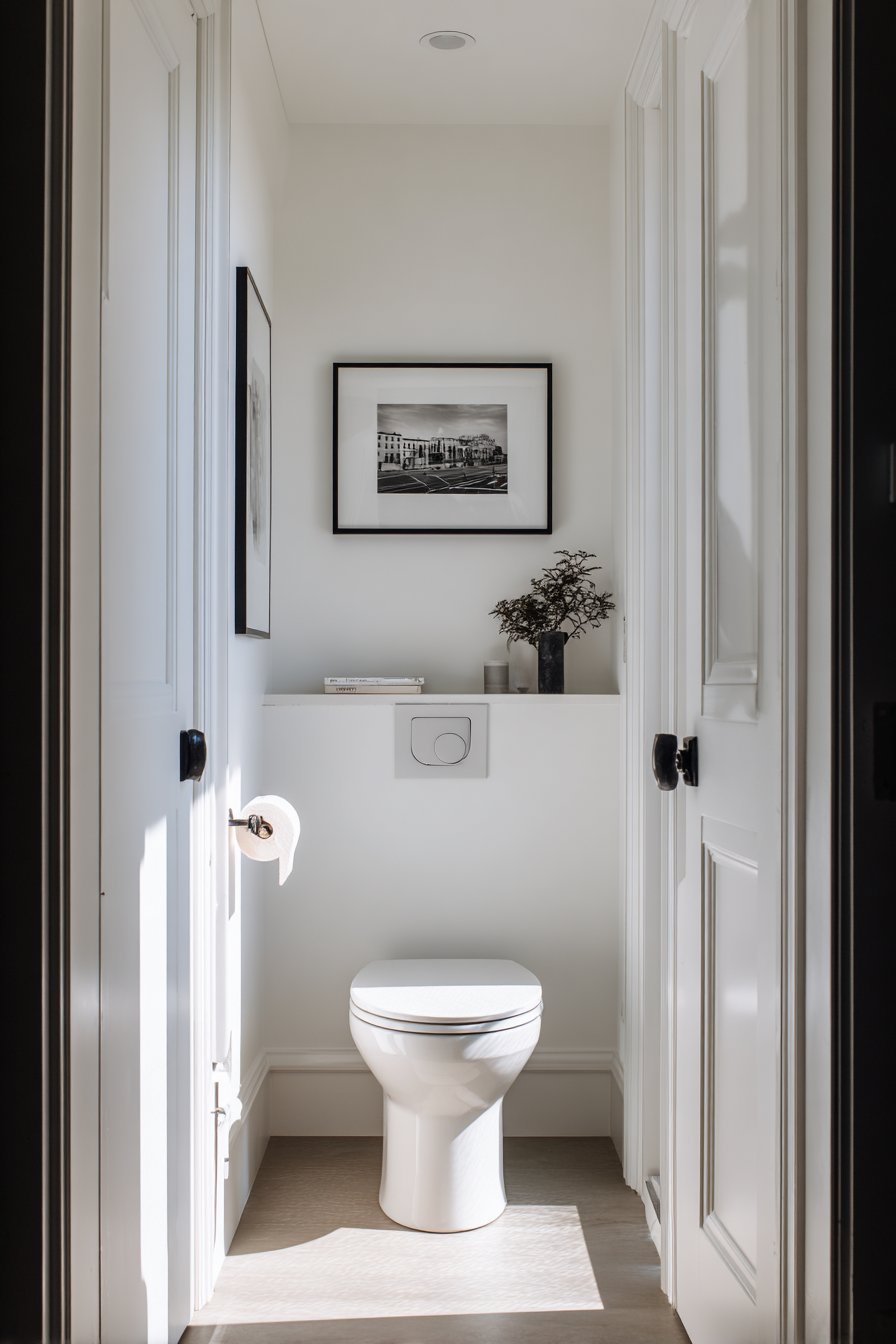
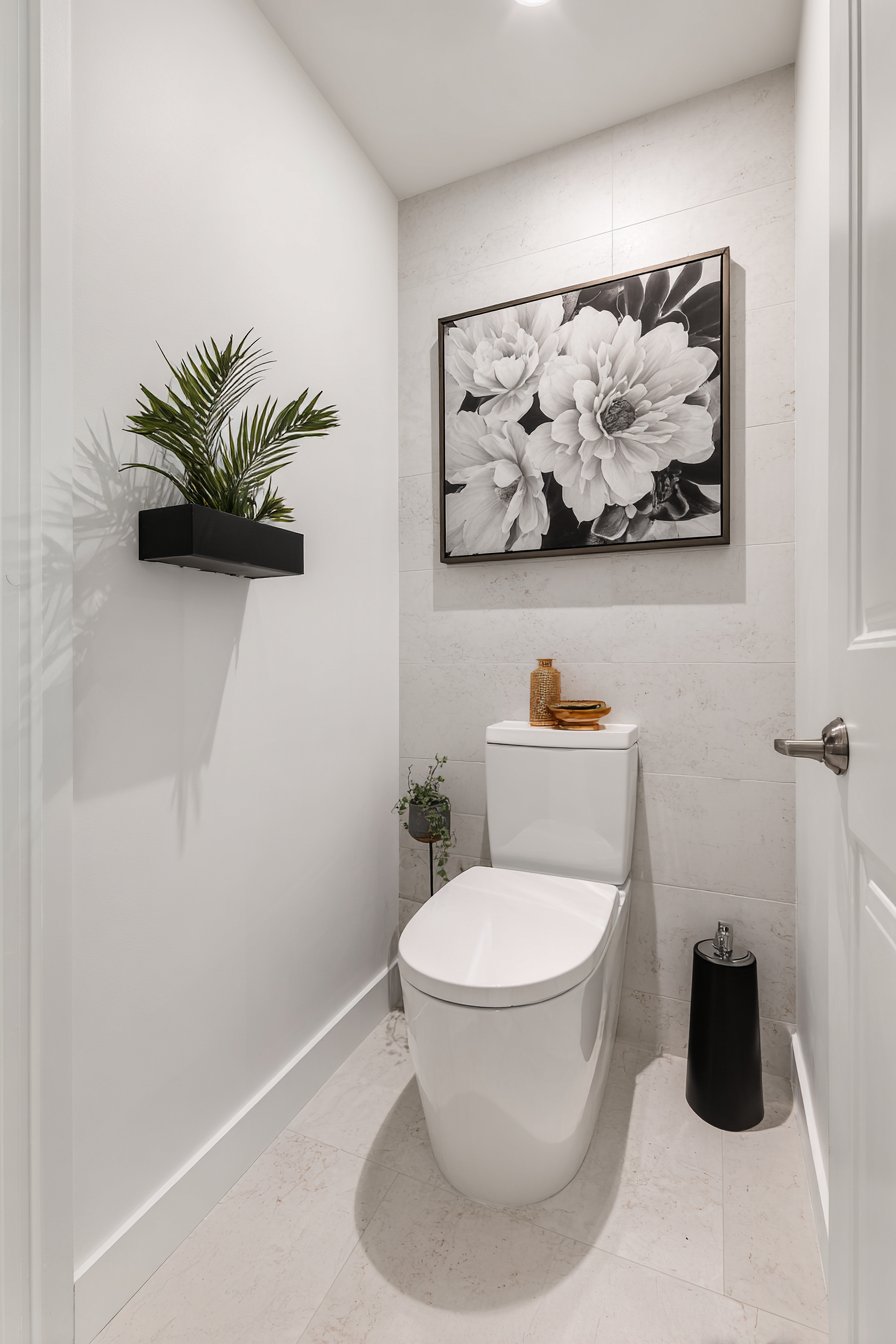
Minimalism in bathroom design celebrates the philosophy that less is indeed more, focusing on intention, quality, and the strategic use of negative space. This concept showcases a single large-scale black and white photography print in a thin aluminum frame mounted above a wall-hung toilet, demonstrating how one carefully chosen piece can create more impact than multiple competing elements. The surrounding walls feature smooth white painted surfaces with crisp lines that embody minimalist principles, creating a gallery-like environment where the photograph becomes a true focal point. The simplicity of the composition allows the viewer to fully appreciate the artistry and emotional content of the chosen image.
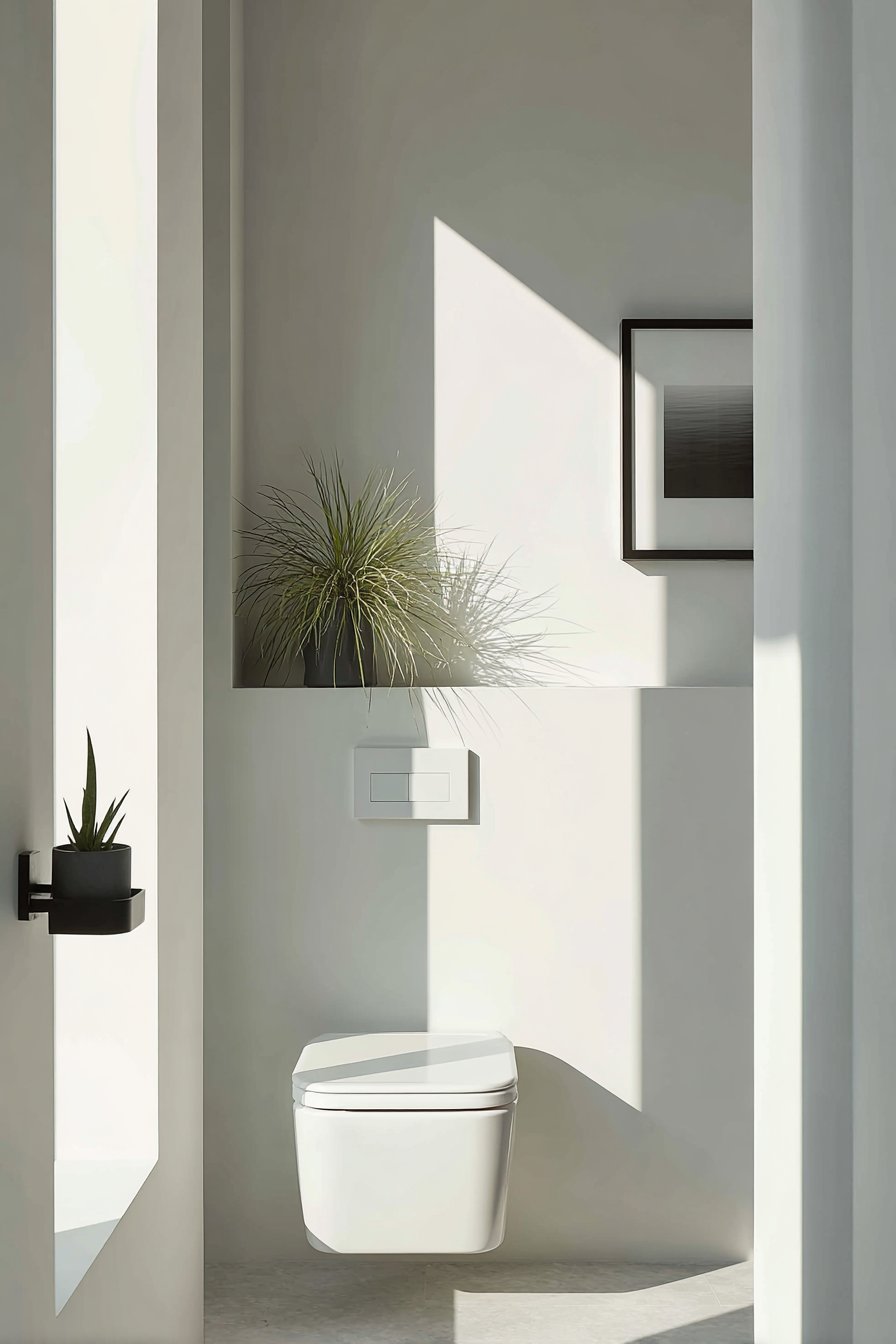
A small wall-mounted air plant holder in matte black provides a living element that introduces organic form without cluttering the clean aesthetic. This single natural touch softens the stark geometry of the minimalist design while requiring minimal maintenance—perfect for the busy homeowner who appreciates nature but has limited time for plant care. The air plant’s sculptural quality and organic shape create a beautiful contrast against the geometric precision of the surrounding design elements, proving that minimalism doesn’t mean cold or sterile—it means intentional and refined.
Natural light creates subtle shadows that add depth to the simple composition, transforming throughout the day to create different moods and visual experiences. Professional interior photography with clean exposure highlights the intentional negative space and sophisticated restraint that defines successful minimalist design. The absence of visual clutter allows the mind to rest and focus, creating a calming environment ideal for a bathroom—a space dedicated to personal care and moments of quiet contemplation. This design demonstrates that bathroom wall decor doesn’t need to be elaborate to be effective; sometimes the most powerful statement is made through careful editing and thoughtful restraint.
Key Design Tips:
- Choose one high-quality, impactful piece rather than multiple smaller items
- Use thin, simple frames that don’t compete with the artwork for attention
- Embrace negative space—resist the urge to fill every inch of wall
- Select black and white photography for timeless appeal and versatility
- Incorporate one or two living plants with architectural forms and low maintenance needs
- Maintain crisp, clean lines in all elements from frames to fixtures to accessories
5. Bohemian Macrame and Trailing Plants
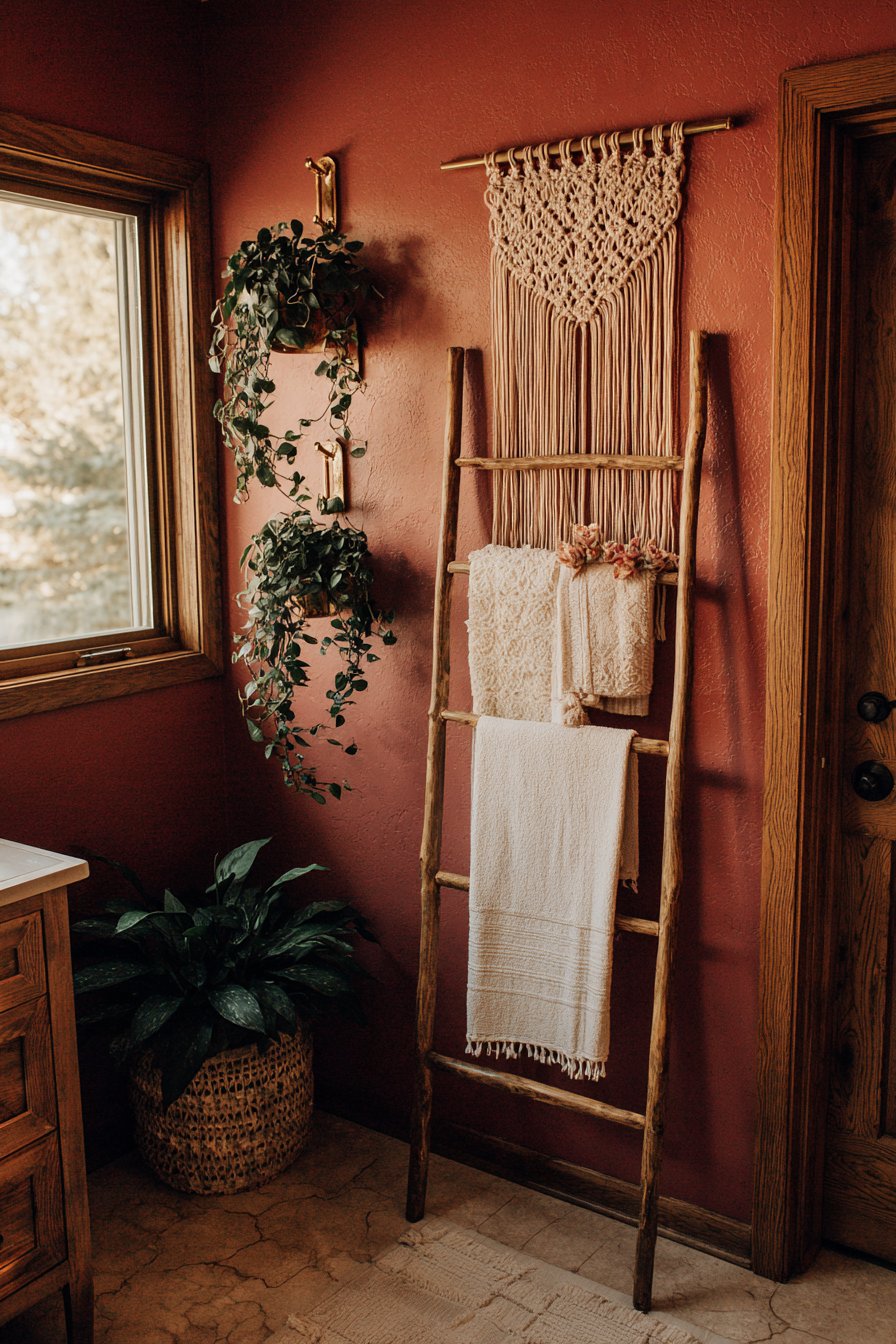
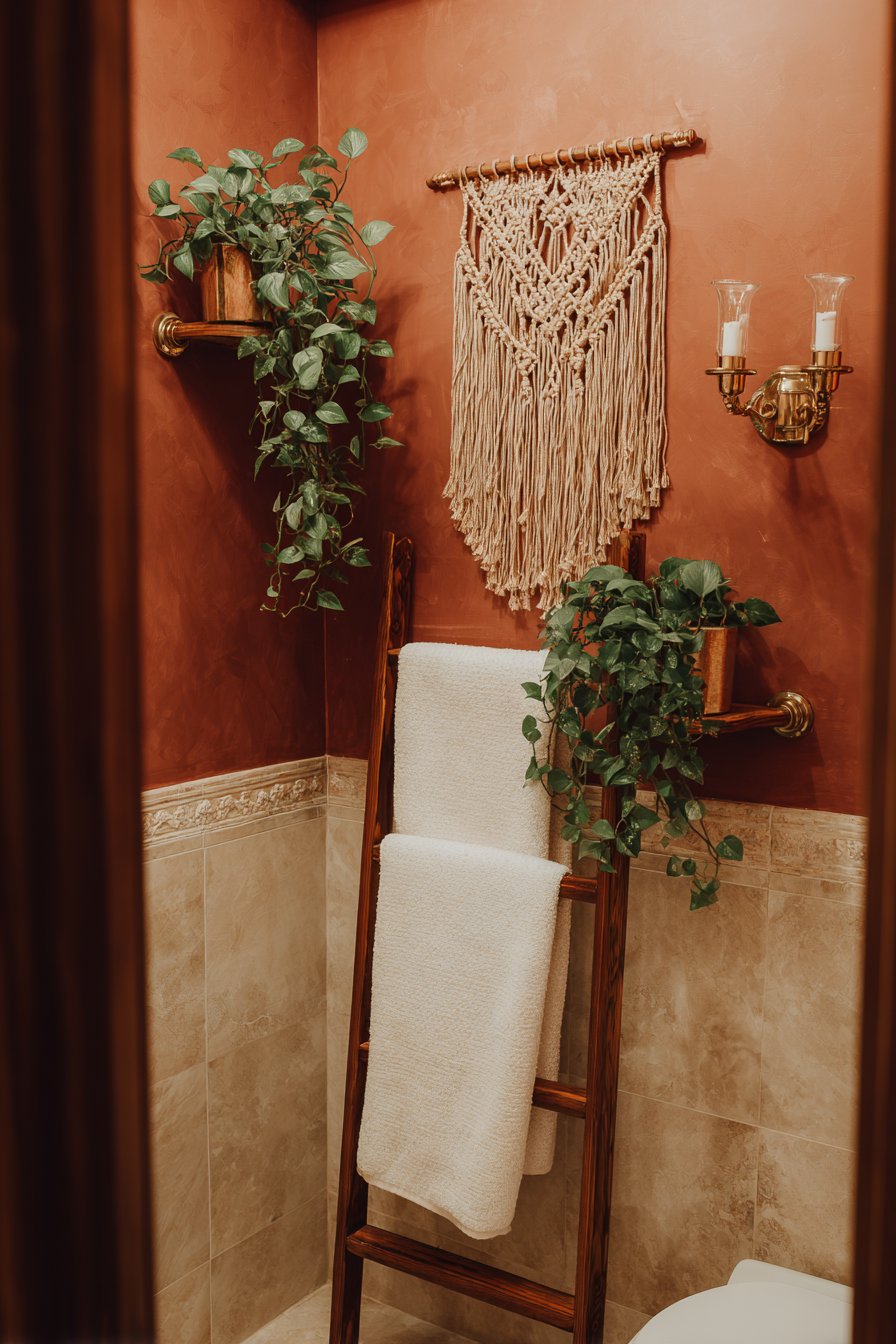
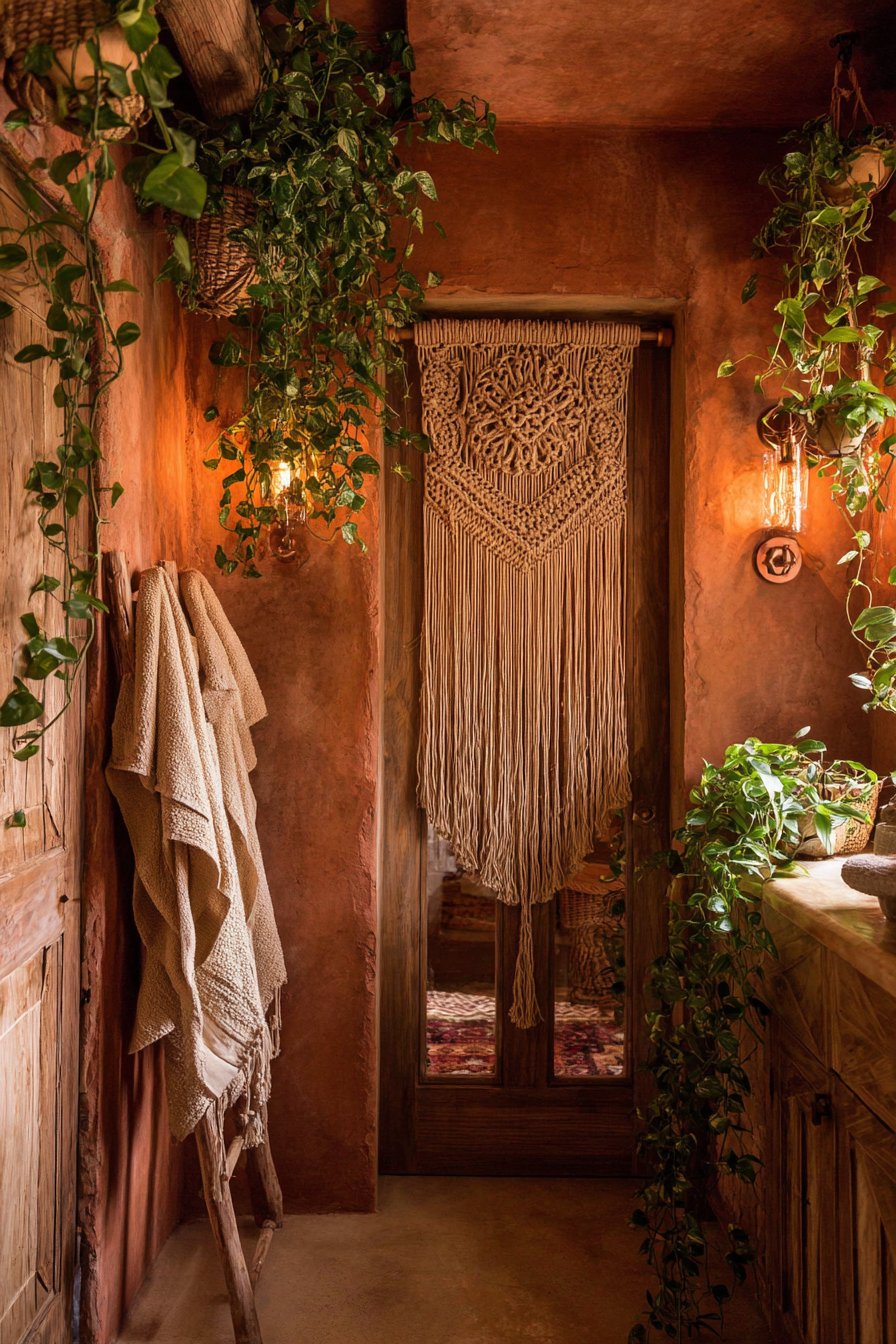
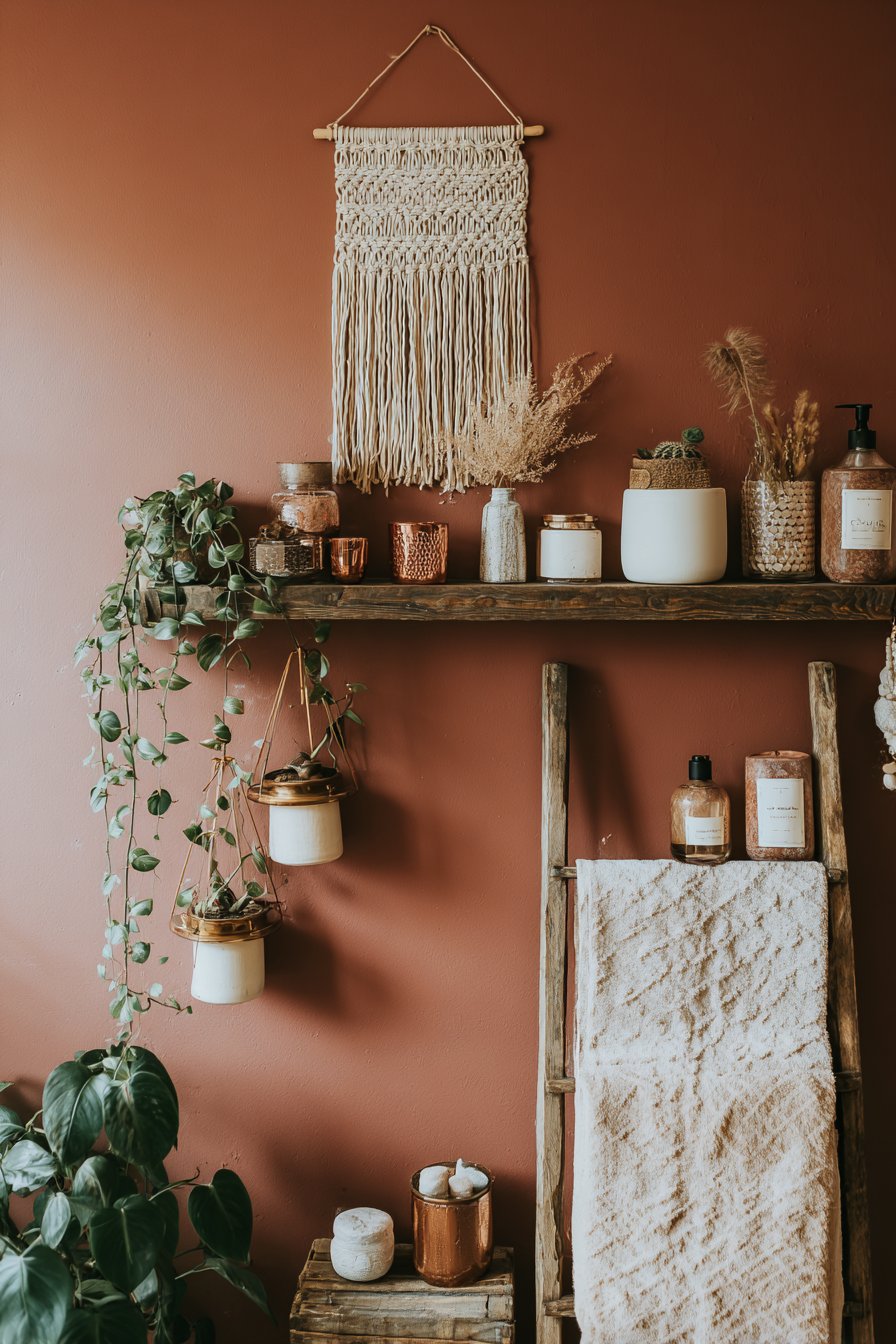
Bohemian design celebrates layered textures, natural materials, and the organic beauty of living elements, creating spaces that feel collected, personal, and connected to nature. This approach features a macramé wall hanging as the focal point above a vintage wooden ladder repurposed as a towel rack, demonstrating the bohemian love of handcrafted items and creative repurposing. The walls painted in a warm terracotta tone provide a rich, earthy backdrop that complements the natural fiber textures of the macramé while creating an enveloping, cozy atmosphere. This bold color choice sets bohemian bathrooms apart from their more neutral counterparts, embracing warmth and personality.
Trailing pothos plants cascade from mounted planters, creating organic movement and introducing living greenery that purifies the air while adding visual softness. The plants’ natural growth patterns create ever-changing sculptural forms that ensure the space never feels static or staged. Mixed metal wall-mounted candle sconces in brass and copper add ambient lighting while introducing metallic warmth that complements the terracotta walls. This mixing of metal finishes—a hallmark of bohemian style—creates visual richness and reflects the eclectic, collected-over-time aesthetic that defines the look.
Interior design photography captures the layered textures and eclectic spirit with soft natural lighting that enhances the warm, inviting quality of the space. The bohemian bathroom embraces imperfection and personality, celebrating the beauty of handmade items, natural materials, and living elements that create a space feeling both grounded and free-spirited. This design proves that bathrooms can be highly personal and expressive spaces rather than sterile, purely functional rooms. The combination of natural fibers, living plants, warm earth tones, and mixed metals creates a sensory-rich environment that engages multiple senses and provides a truly immersive experience.
Key Design Tips:
- Incorporate large-scale macramé pieces as statement art that adds texture and handcrafted charm
- Choose trailing plants like pothos, philodendron, or string of pearls for cascading visual interest
- Paint walls in warm earth tones—terracotta, ochre, or burnt sienna—for authentic bohemian warmth
- Mix metal finishes freely, combining brass, copper, and bronze for layered richness
- Repurpose vintage items like ladders, crates, or baskets for functional storage and bohemian character
- Layer multiple textures—woven fibers, wood, metal, plants, and textiles—for dimensional depth
6. Farmhouse Shiplap with Vintage Accents
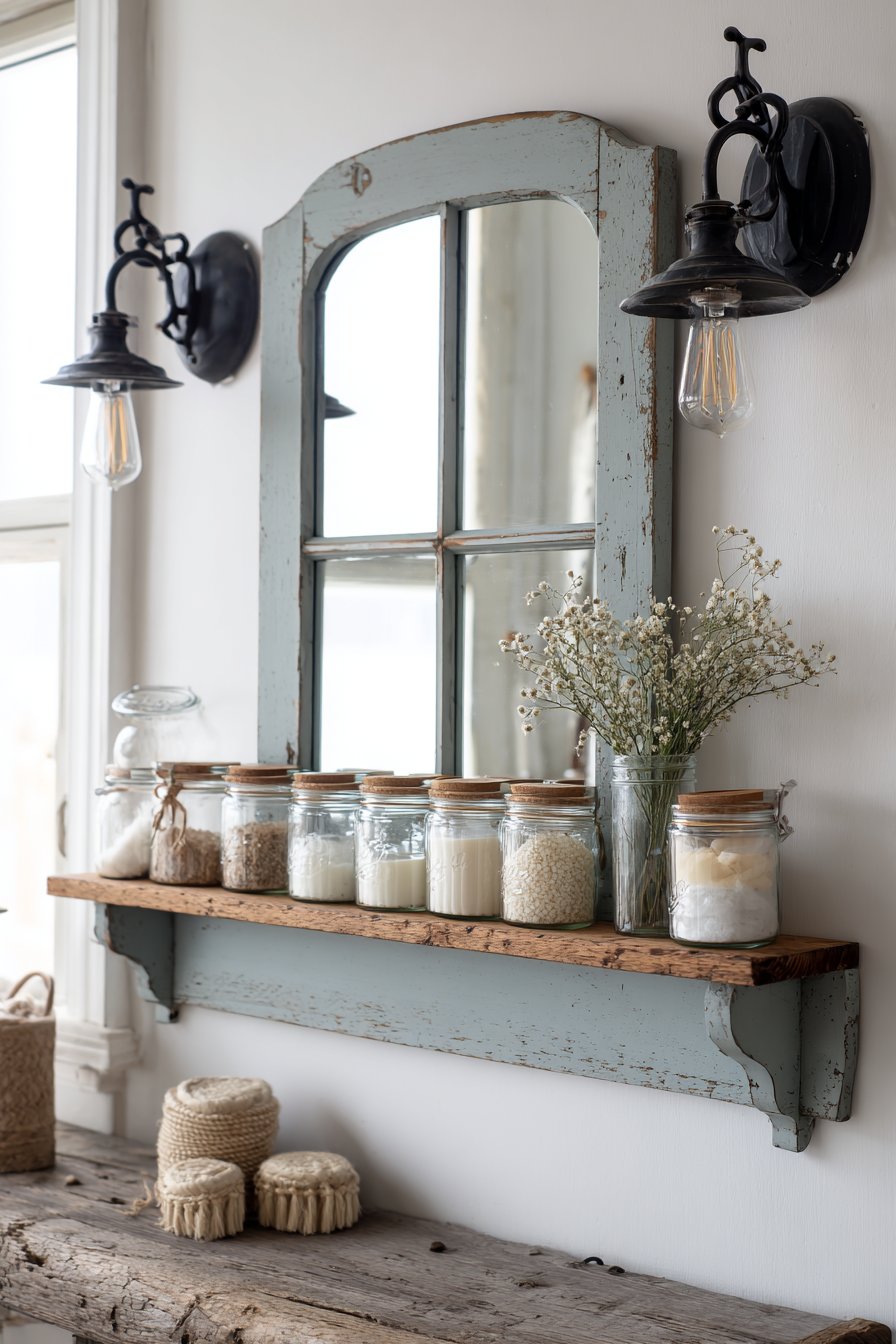
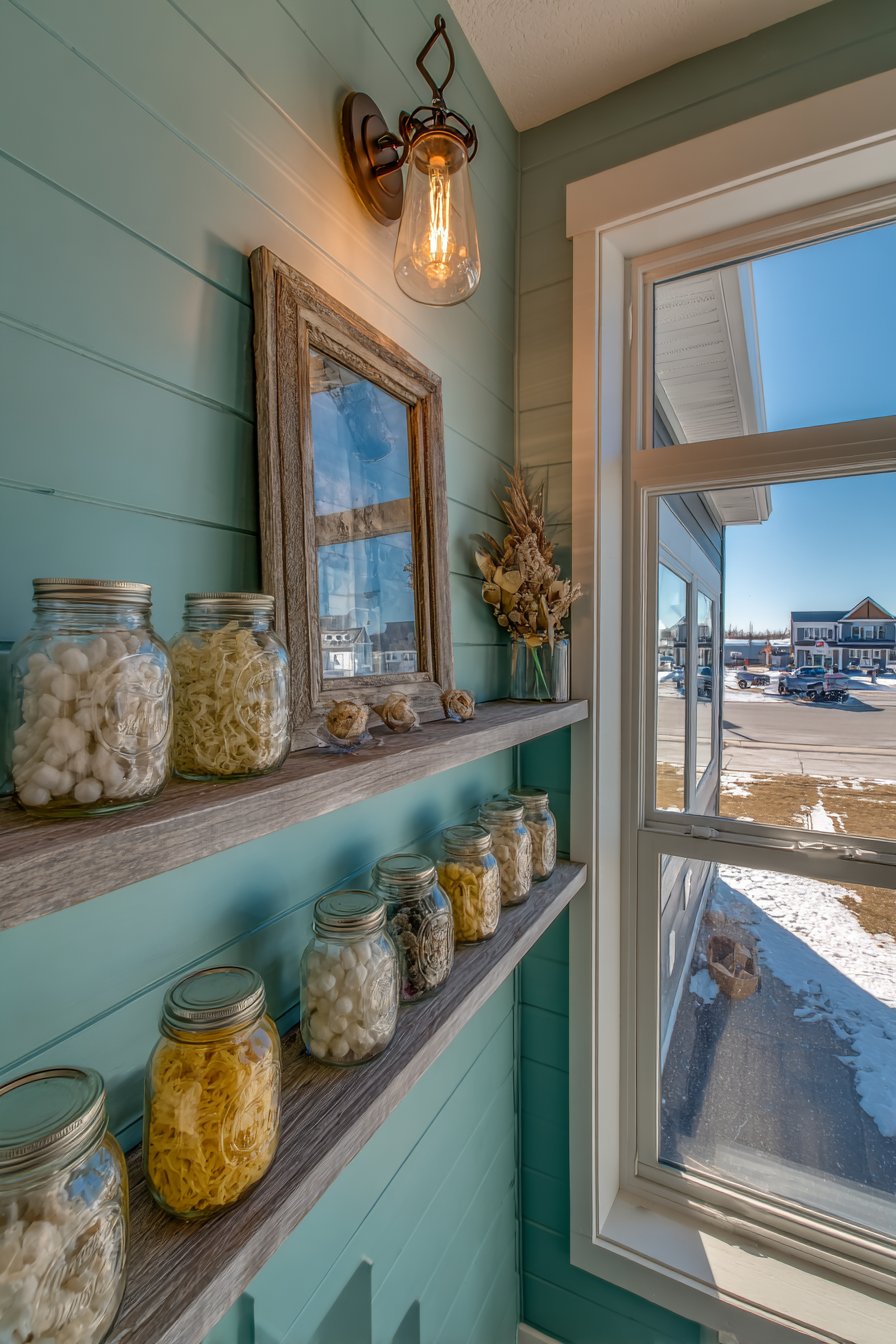
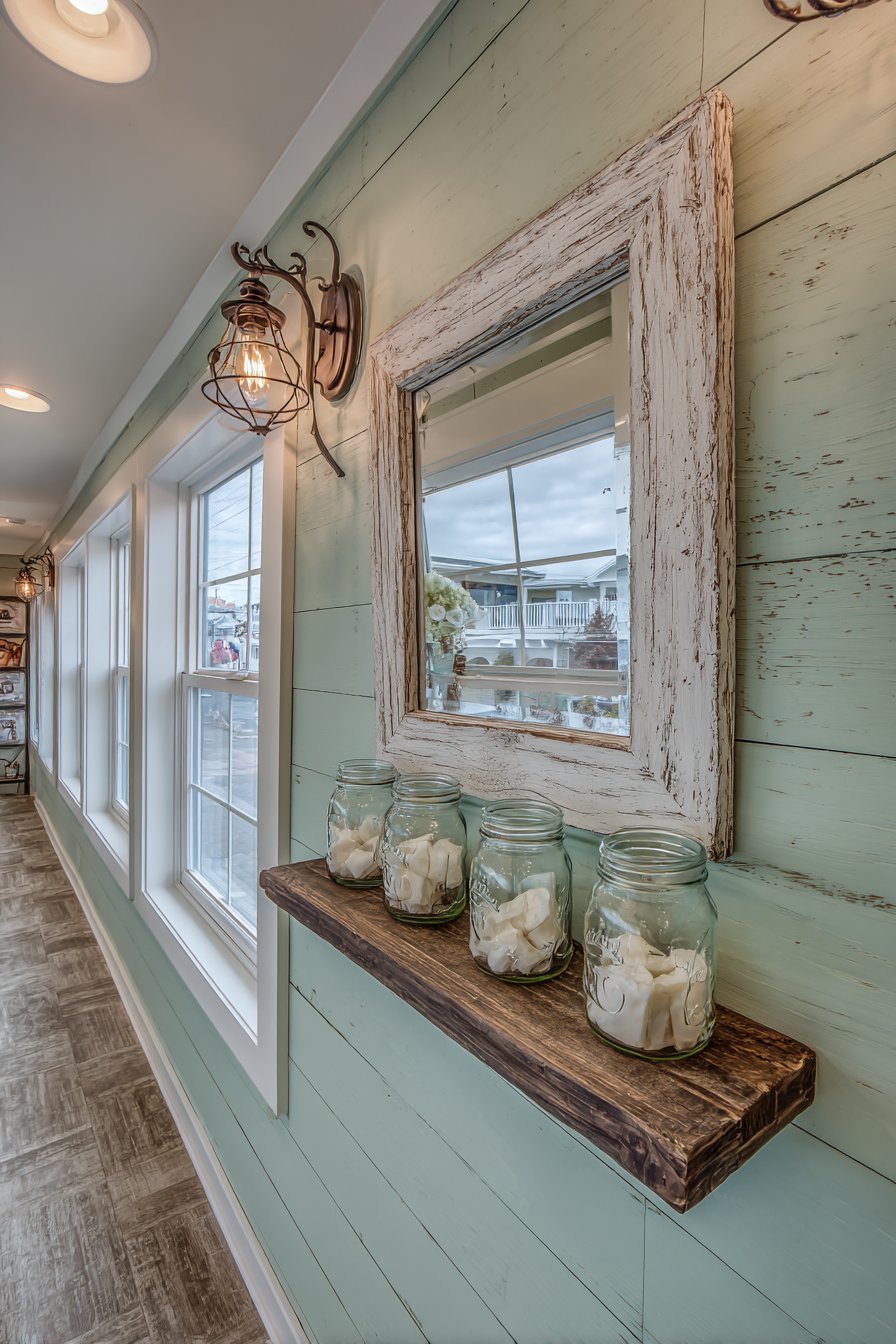
Farmhouse style brings the warmth, simplicity, and authentic charm of rural living into contemporary homes, creating spaces that feel welcoming, unpretentious, and deeply comfortable. This design features a shiplap accent wall painted in soft sage green, offering a fresh, modern interpretation of classic farmhouse style that moves beyond the expected white-on-white palette. The horizontal lines of the shiplap create visual rhythm while adding architectural interest and texture to what might otherwise be a plain wall. This treatment demonstrates how traditional materials can be updated with unexpected colors to feel current and personal rather than derivative.
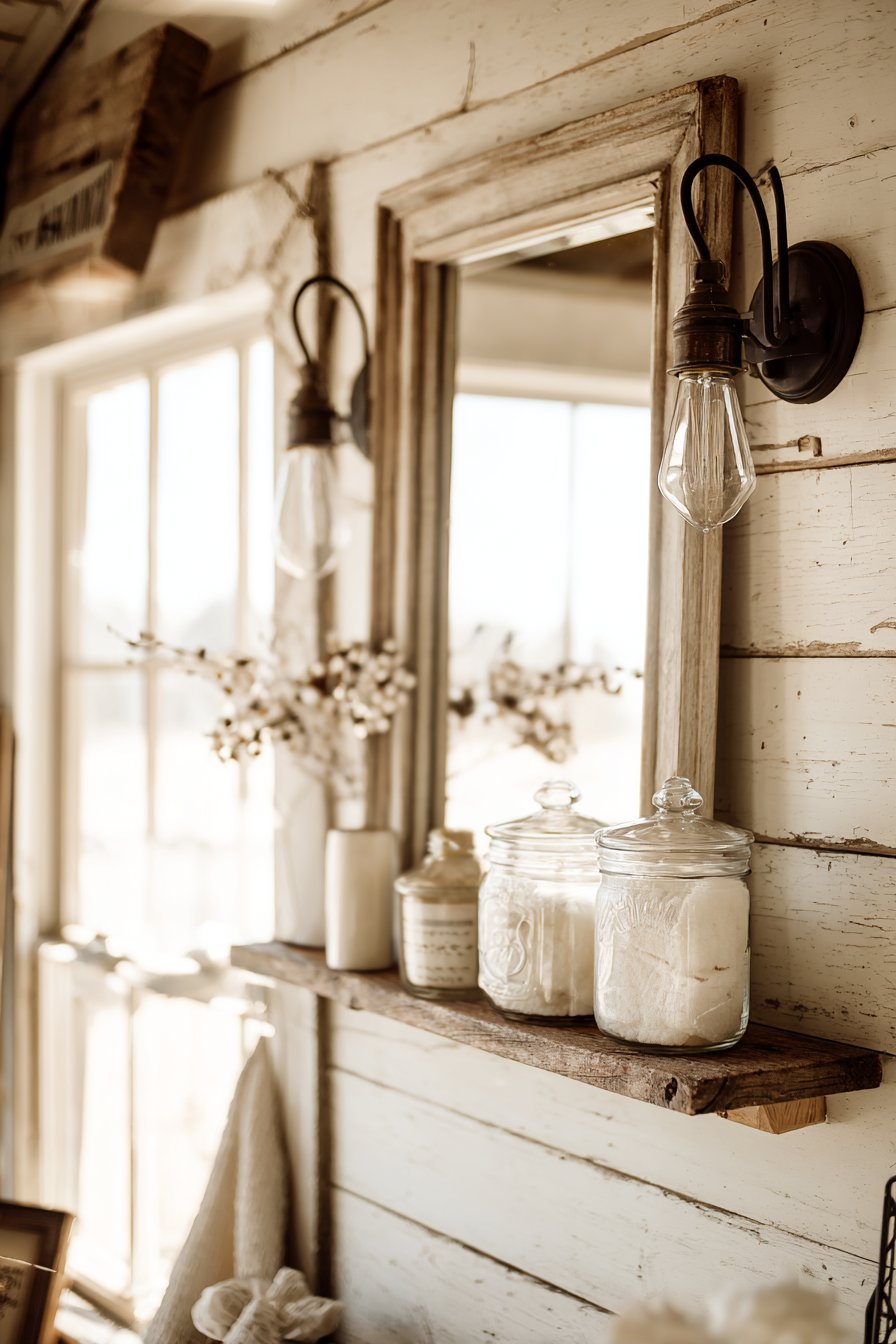
The wall holds a vintage wooden window frame repurposed as a mirror, a signature farmhouse move that celebrates reclaimed materials and creative reuse. Flanking this central element are wrought iron wall sconces with Edison bulbs that provide both functional lighting and decorative impact, their industrial-inspired forms creating beautiful contrast against the softer shiplap background. A floating reclaimed wood shelf displays mason jars filled with cotton balls and bath essentials, transforming everyday necessities into decorative elements through thoughtful presentation and container selection.
Natural lighting through a nearby window highlights the texture of the shiplap and creates authentic farmhouse ambiance, with light catching the subtle shadows between each board throughout the day. Wide-angle photography captures the rustic charm with balanced exposure, showcasing how multiple vintage and reclaimed elements work together to create a cohesive story. The farmhouse bathroom wall celebrates authenticity, craftsmanship, and the beauty of well-worn materials, creating a space that feels collected over time rather than purchased all at once. This approach resonates with homeowners seeking to create environments with character, history, and soul.
Key Design Tips:
- Install genuine shiplap rather than printed wallpaper for authentic texture and shadow lines
- Consider unexpected paint colors like sage, navy, or charcoal instead of always defaulting to white
- Repurpose architectural salvage like old windows, doors, or shutters as decorative elements
- Choose Edison bulbs for warm, vintage-appropriate lighting that adds decorative interest
- Display functional items in vintage containers—mason jars, enamelware, or ceramic crocks
- Mix painted and natural wood finishes for visual interest and textural contrast
7. Contemporary Geometric Mirror Cluster
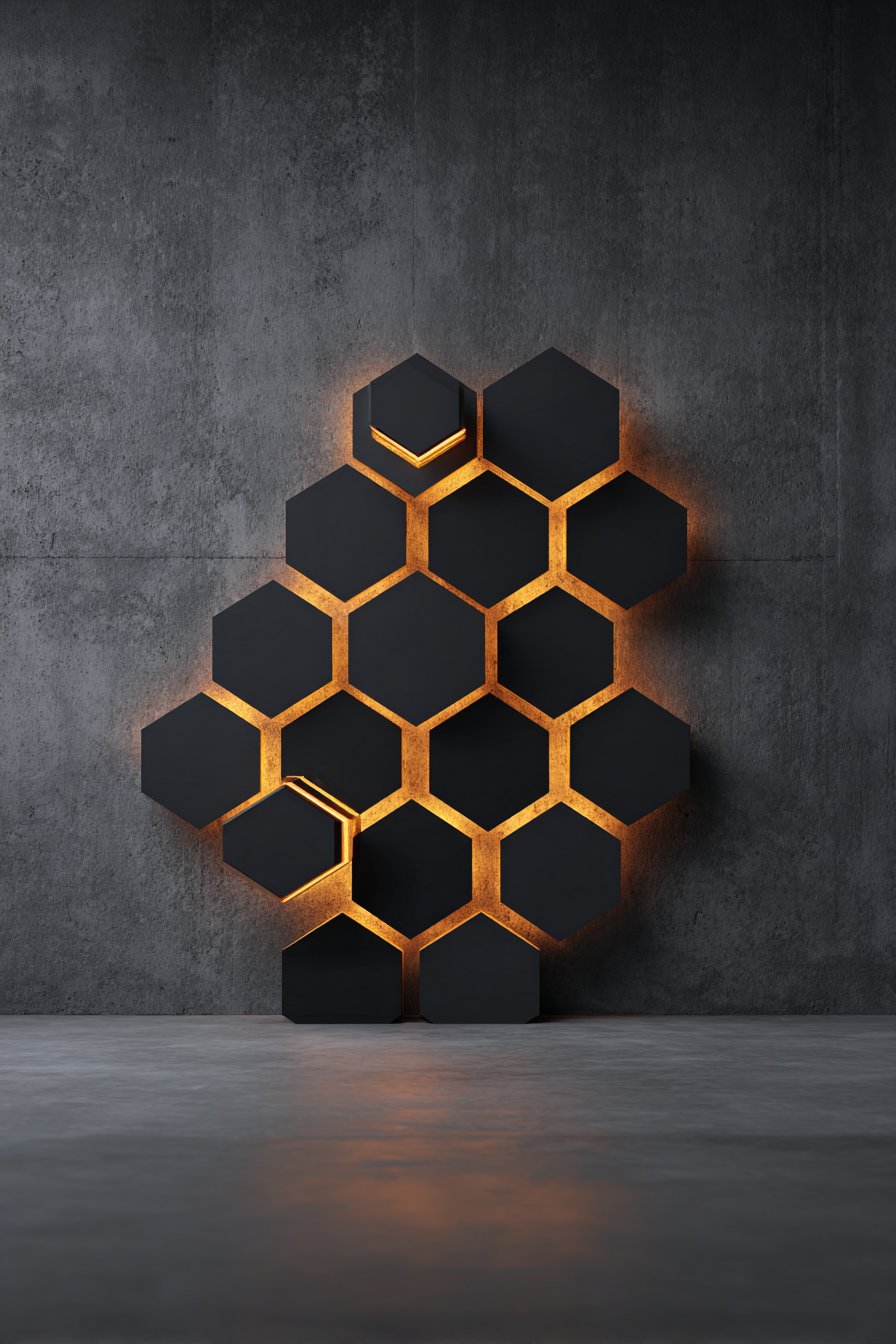
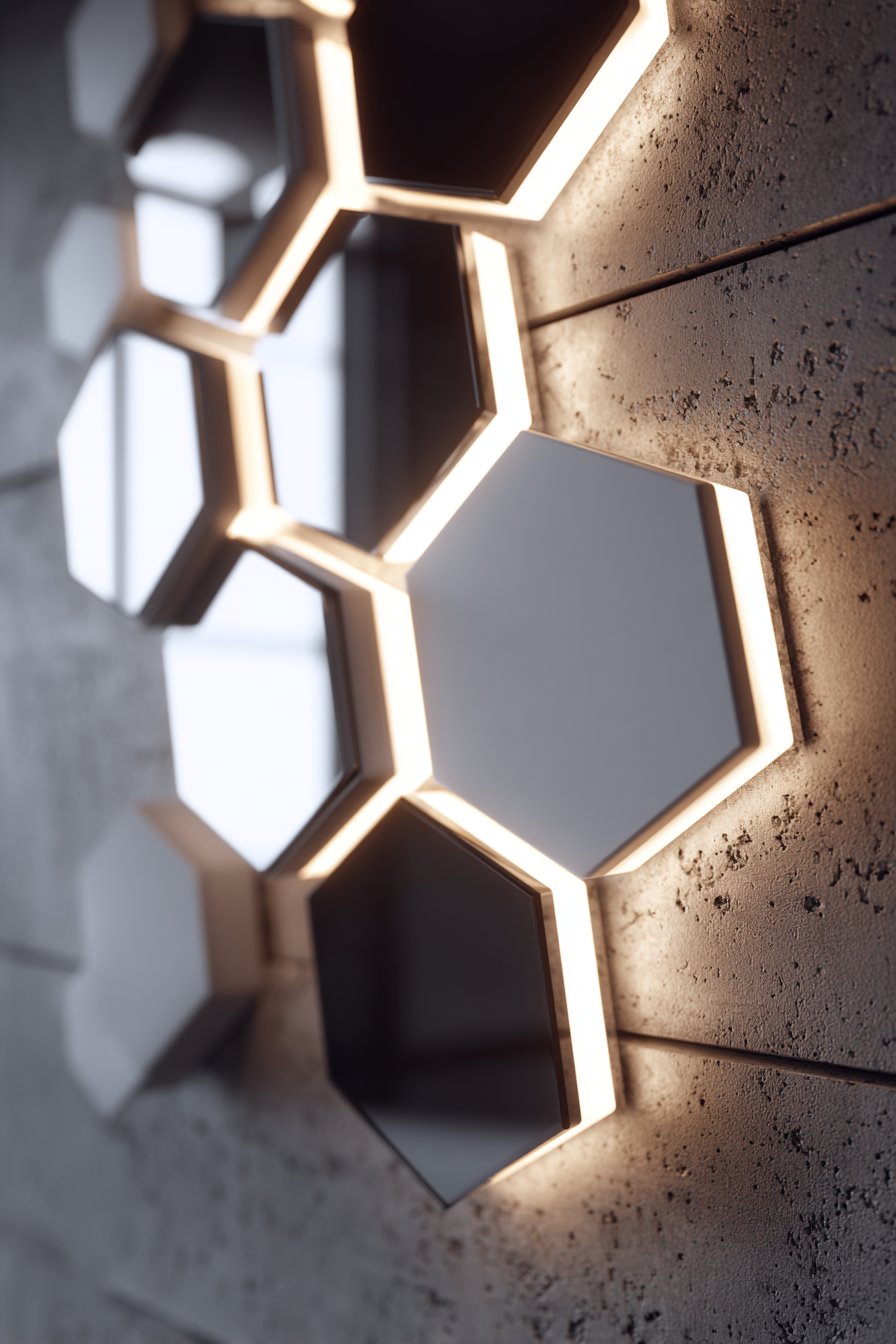
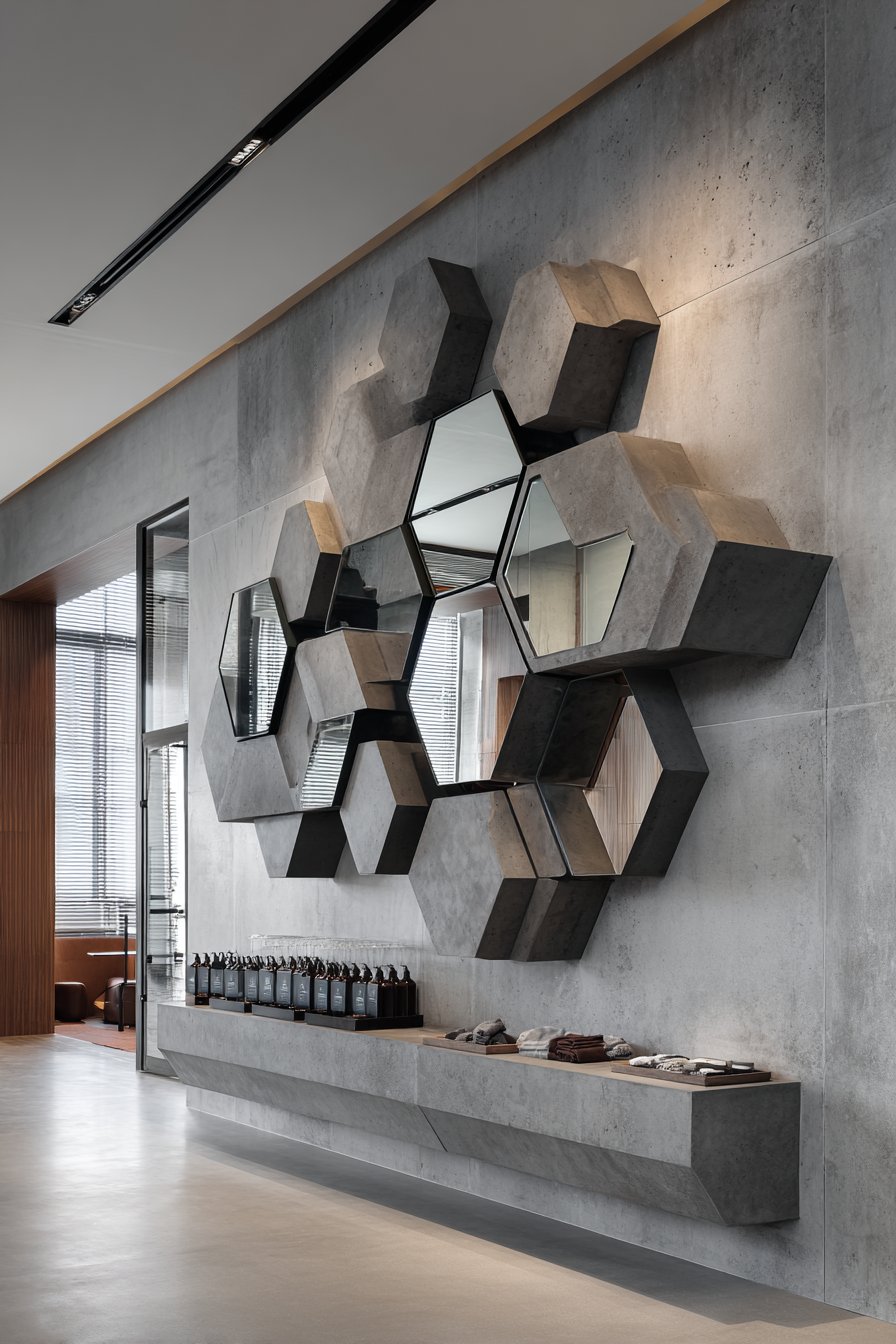
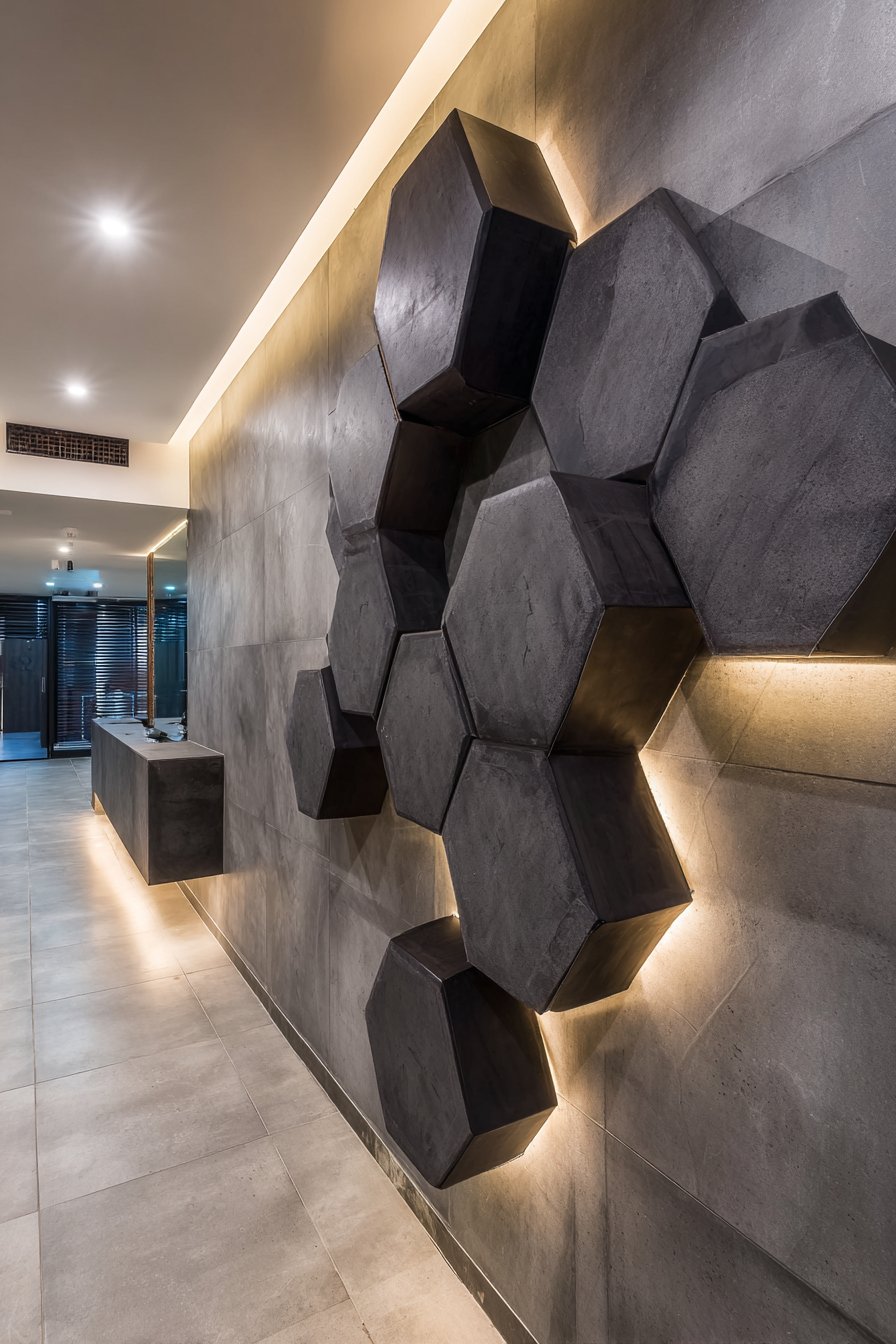
Contemporary design embraces clean lines, geometric forms, and innovative approaches to familiar elements, creating spaces that feel current, sophisticated, and visually dynamic. This concept features geometric hexagonal mirrors in various sizes arranged in an asymmetric cluster pattern, transforming a functional necessity—mirrors—into a striking sculptural installation. The varied sizes create visual interest and organic flow despite the rigid geometry of each individual hexagon, demonstrating how repetition with variation creates more dynamic compositions than uniform elements. The background wall finished in smooth concrete-look porcelain tiles in charcoal grey provides the perfect modern, industrial-inspired backdrop that allows the mirrors to shine.
Integrated LED strip lighting behind select mirrors creates subtle backlighting that adds dimension and drama while providing functional illumination for grooming tasks. This layered lighting approach—combining task lighting with atmospheric accent lighting—exemplifies contemporary design’s focus on creating multiple lighting scenarios for different moods and uses. The backlighting creates a floating effect that makes the mirror cluster appear to hover slightly off the wall, adding to the sculptural, art-installation quality of the design.
The composition is captured with professional interior photography showing the modern sculptural quality of the mirror arrangement with attention to reflection details and material texture. The reflective surfaces multiply light throughout the space, making the bathroom feel brighter and more spacious—a crucial benefit in bathrooms with limited natural light or smaller footprints. The geometric forms create visual interest from every angle, with the hexagonal shapes catching light and creating constantly changing patterns of reflection and shadow. This design demonstrates how contemporary bathroom wall decor can be both highly functional and dramatically artistic, proving that these two qualities are not mutually exclusive but rather complementary.
Key Design Tips:
- Mix mirror sizes within the same geometric shape for organized variety
- Create asymmetric arrangements for more dynamic visual interest than symmetric layouts
- Consider hexagons, circles, or irregular geometric forms for contemporary appeal
- Add LED backlighting for dimension and dramatic effect
- Choose dark or neutral walls to make mirrors and metallic elements stand out
- Leave adequate space between mirrors to appreciate each individual form
8. Spa-Inspired Living Wall Installation
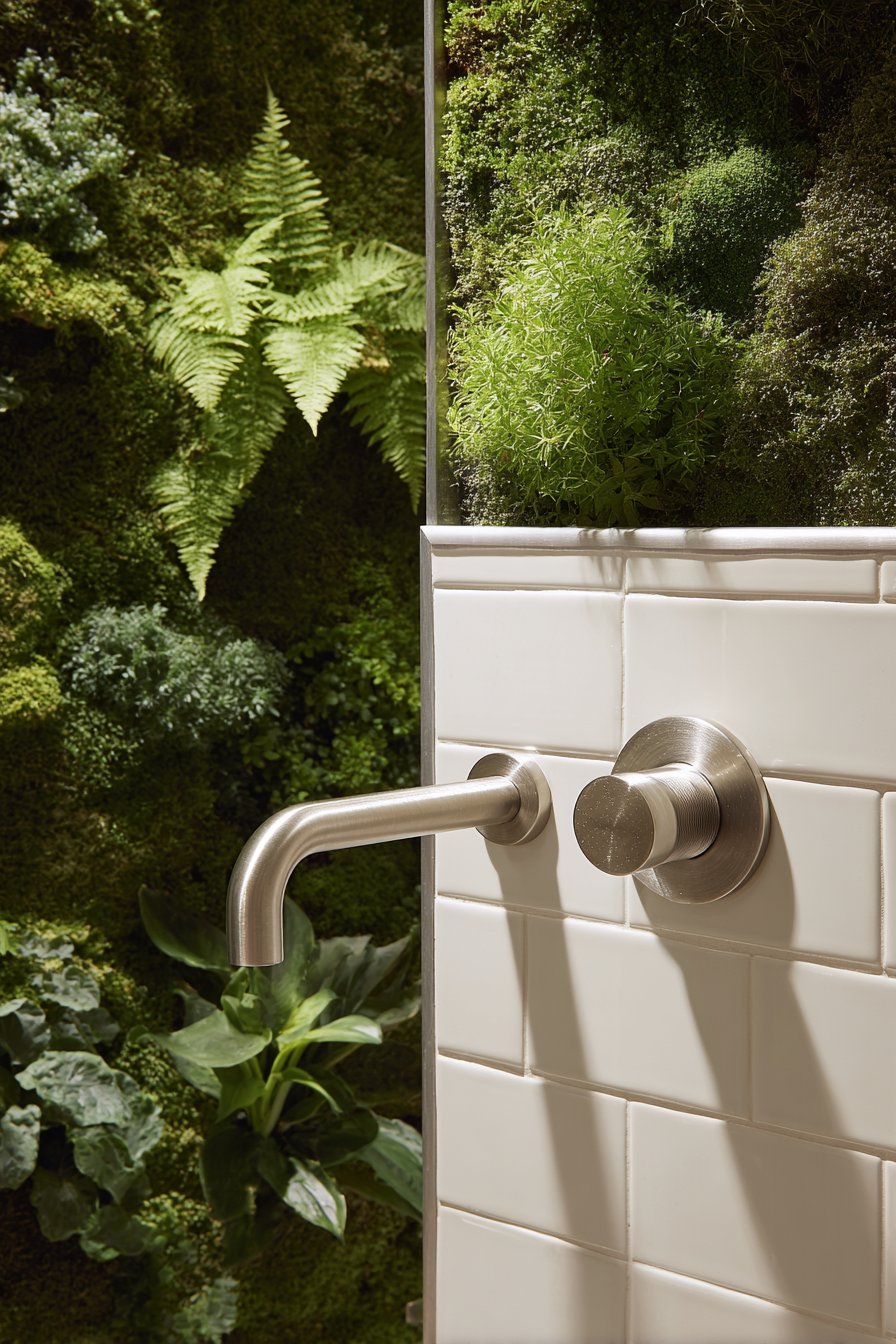
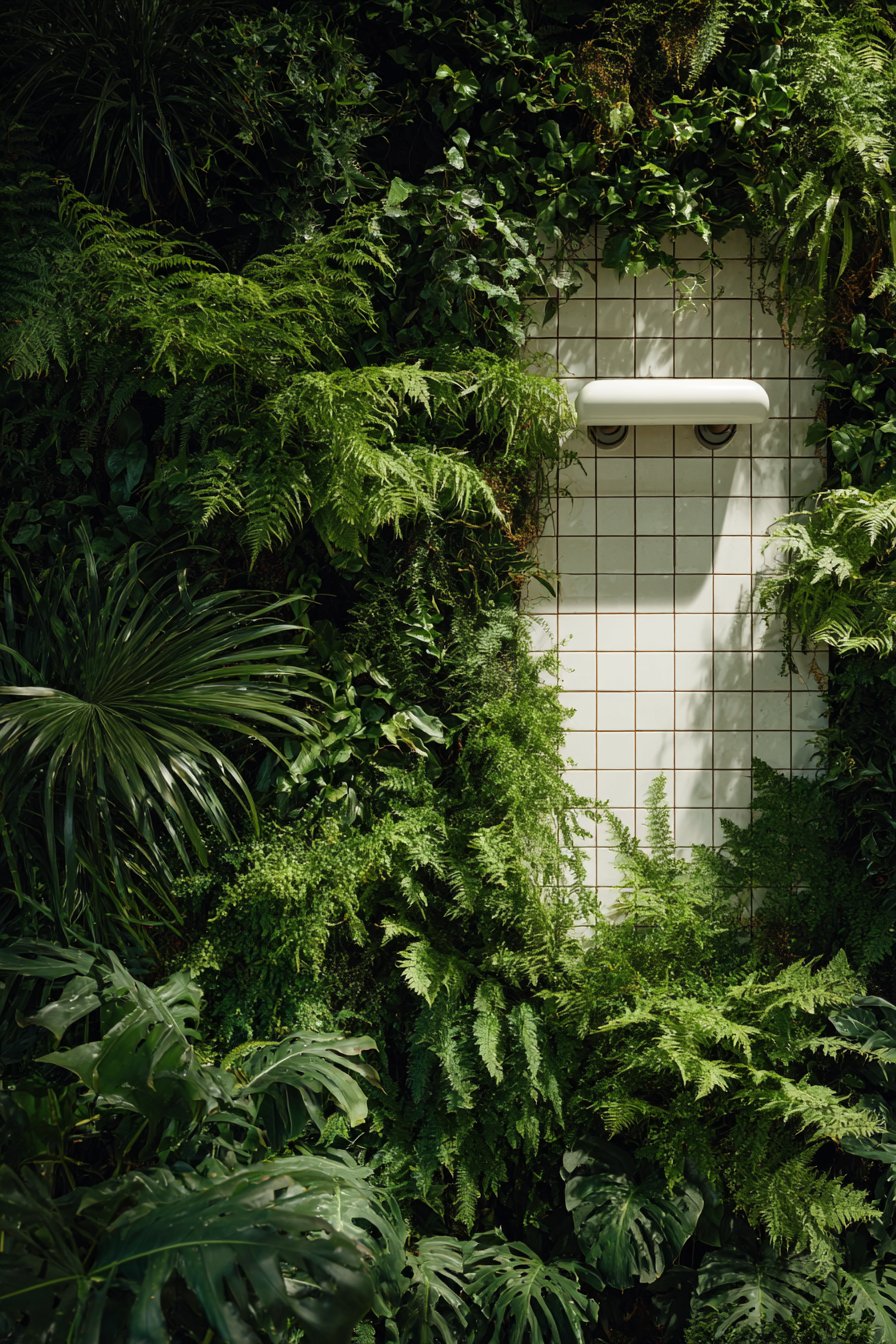
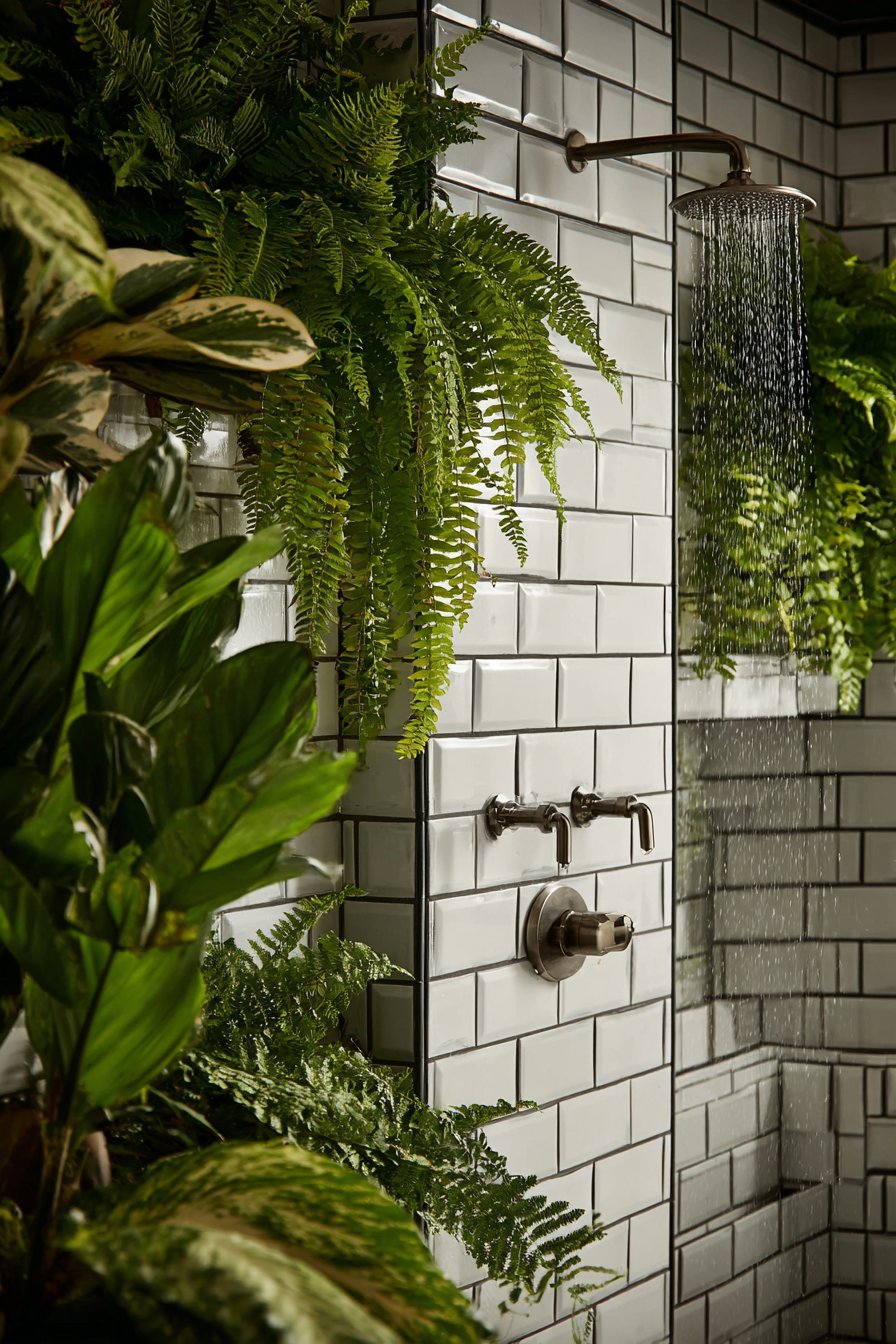
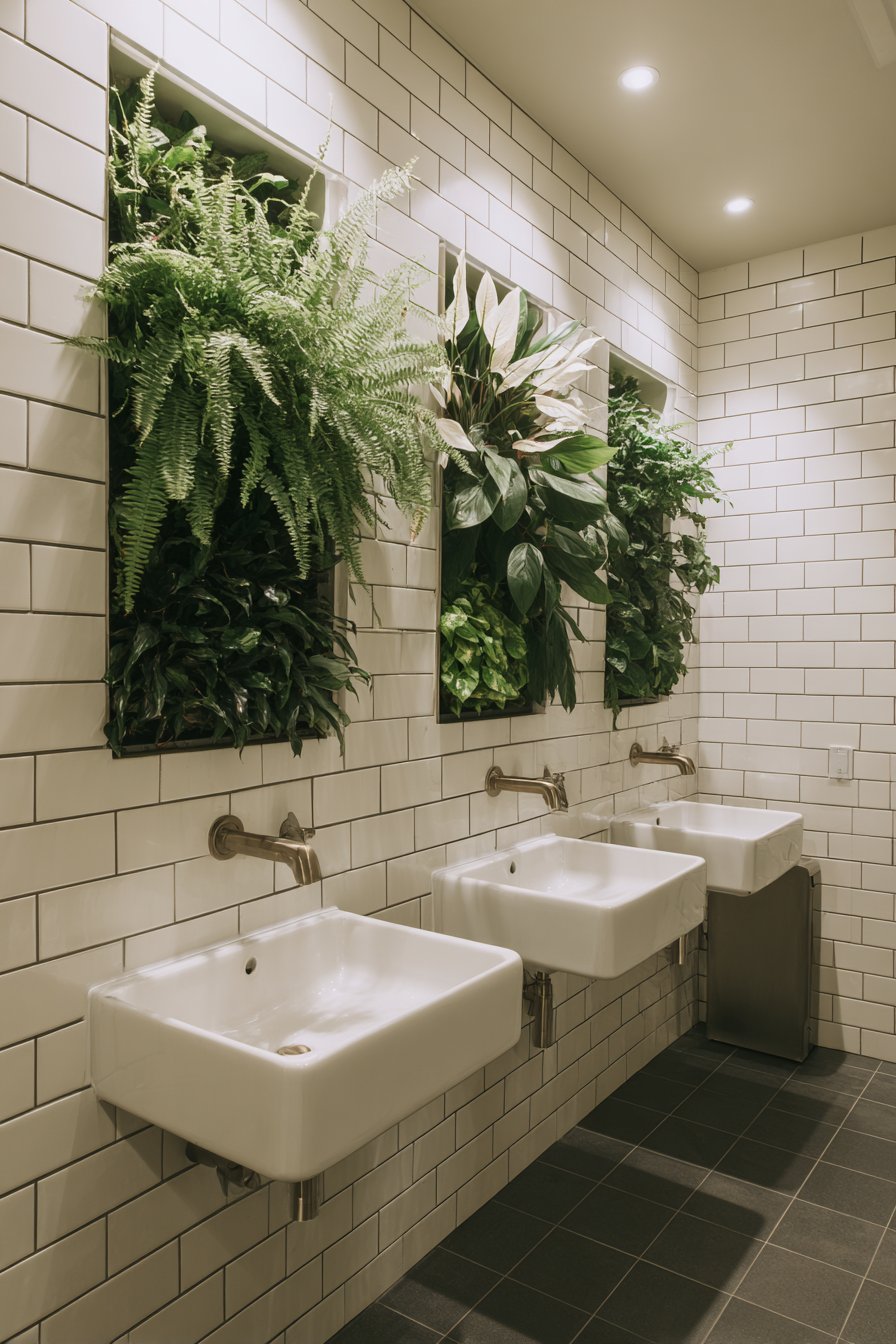
Bringing living plants into the bathroom creates an immediate connection to nature while improving air quality and creating a sense of tranquility and wellness. This spa-inspired design showcases a vertical living wall installation with moisture-loving plants including ferns and peace lilies, creating a dramatic focal point that transforms a standard bathroom into a personal oasis. The green wall is integrated into a section of white subway tile, creating a striking natural focal point where organic living elements meet clean architectural materials. This juxtaposition highlights the beauty of both—the crisp geometry of the tile makes the organic forms of the plants appear even more lush and free-flowing.
Brushed nickel wall-mounted plumbing fixtures coordinate with the modern aesthetic while maintaining the clean, spa-like quality of the design. The living wall requires thoughtful planning regarding irrigation, lighting, and plant selection, but the result is a truly unique bathroom feature that changes and grows over time. The moisture-rich environment of a bathroom actually benefits many tropical plants, making this a practical as well as beautiful design choice. The living wall provides natural humidity regulation, air purification, and biophilic benefits that contribute to overall wellbeing.
Soft diffused natural lighting emphasizes the lush greenery and tile texture, while interior design photography captures the tranquil spa atmosphere with balanced exposure. The living wall creates a multi-sensory experience—the visual beauty of varied green tones and organic forms, the subtle scent of growing plants, and the improved air quality all contribute to creating a bathroom that truly functions as a wellness space. This design represents the cutting edge of bathroom wall decor, where decoration and environmental benefits merge to create spaces that are beautiful, functional, and health-promoting.
Key Design Tips:
- Select moisture-loving plants suitable for bathroom conditions—ferns, pothos, peace lilies, or orchids
- Install proper irrigation systems with drainage to prevent water damage
- Provide adequate lighting through windows or supplemental grow lights
- Start with a professional living wall system designed for indoor use
- Choose plants with varied textures and shades of green for visual interest
- Position the living wall away from direct shower spray while ensuring adequate humidity
9. Traditional Botanical Grid Display
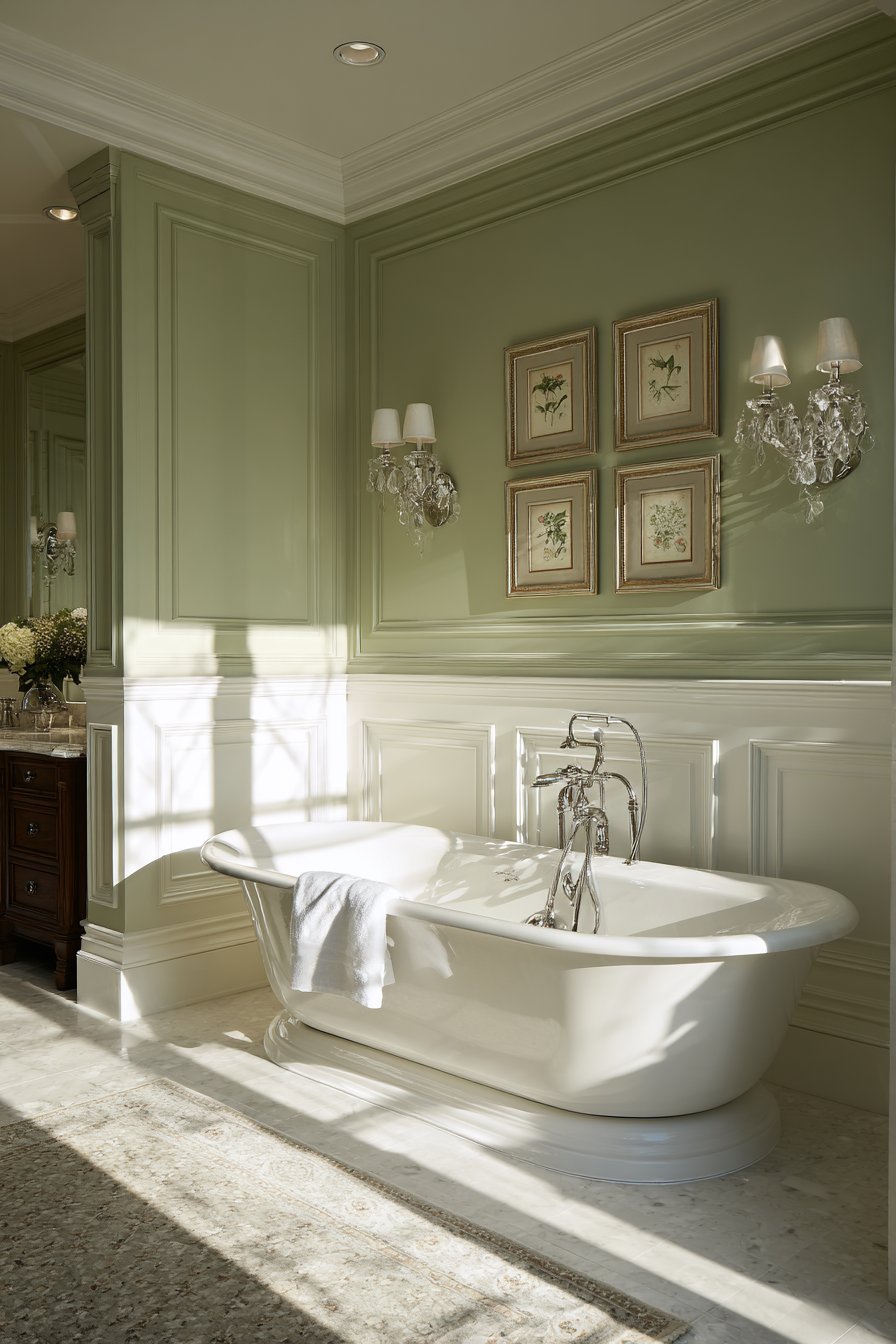
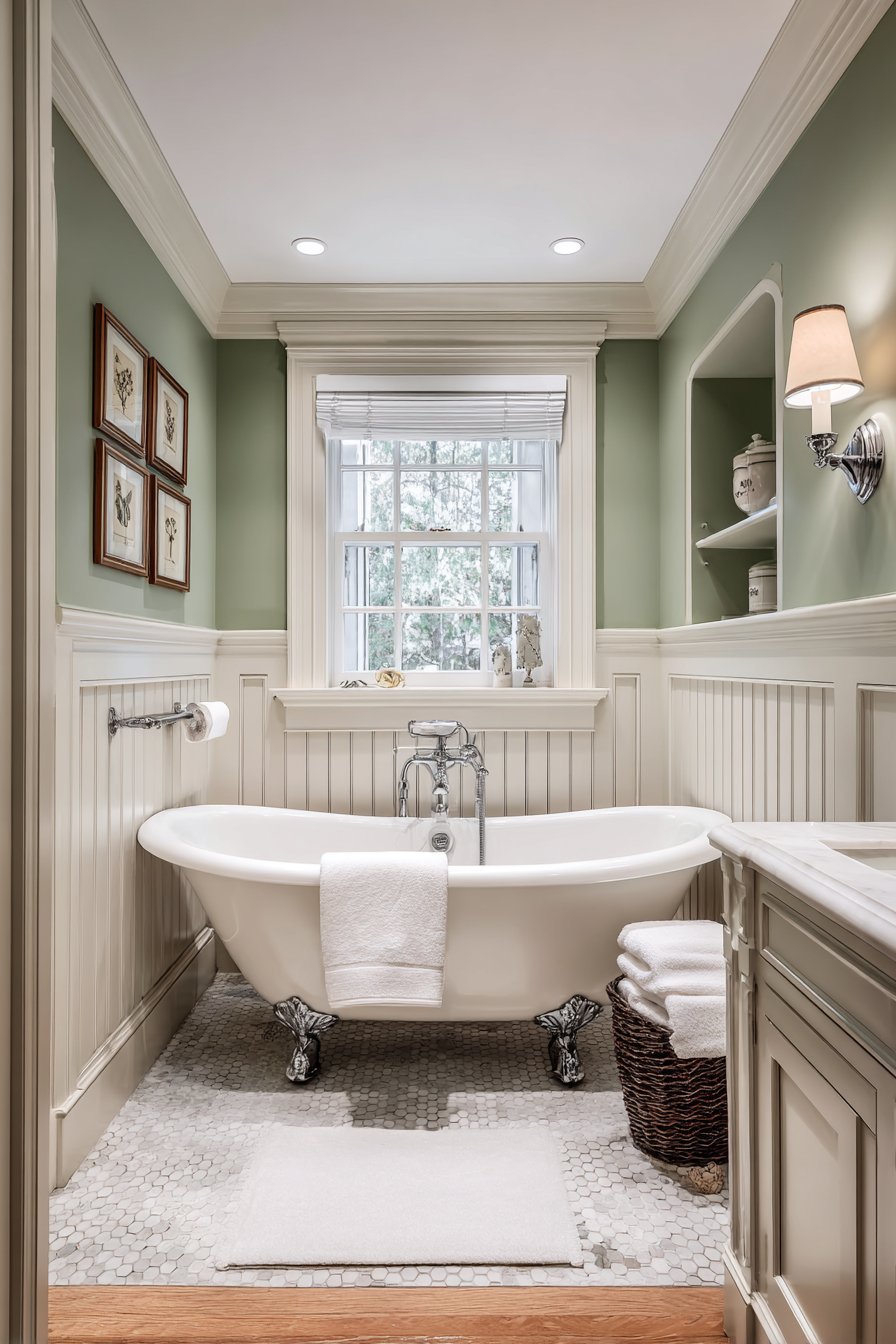
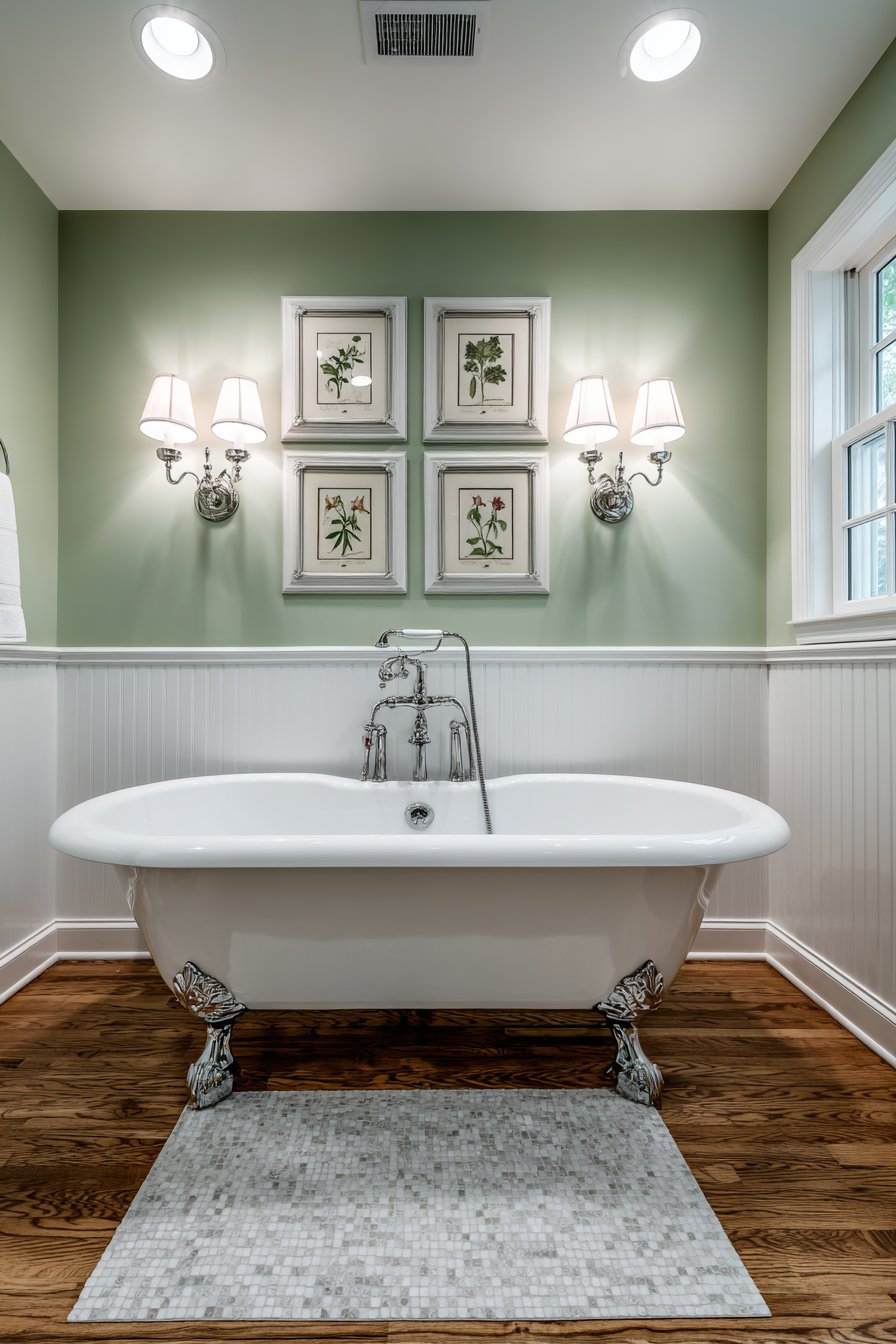
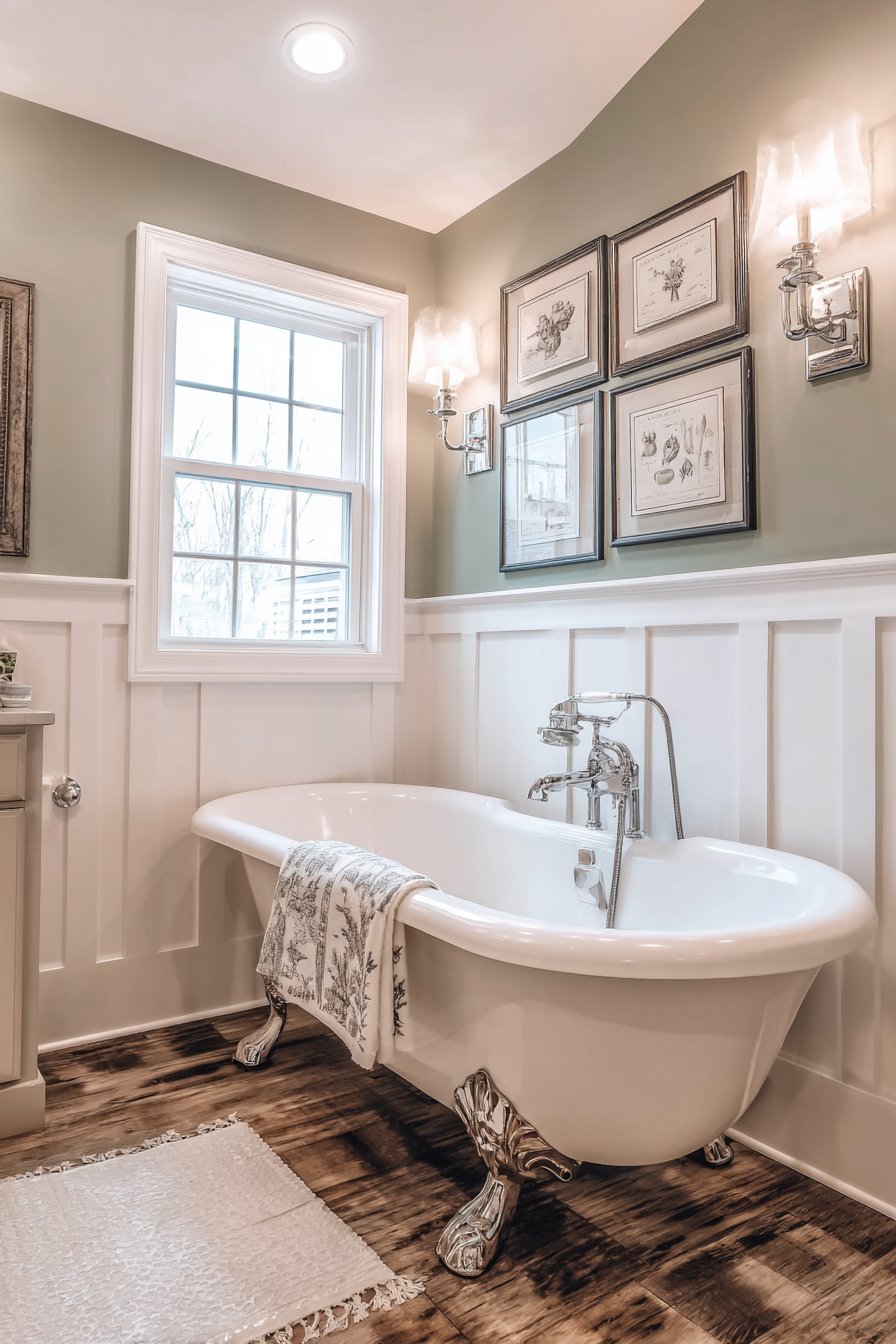
Traditional design celebrates symmetry, classic forms, and timeless elegance, creating spaces that feel refined, established, and enduringly beautiful. This approach features ornate framed vintage botanical prints arranged in a symmetrical grid pattern above a clawfoot bathtub, creating a formal, gallery-like presentation that elevates the bathroom to a space of culture and refinement. The walls covered in classic white beadboard wainscoting with sage green paint above follow traditional design principles of dividing walls horizontally to create visual interest and architectural character. Polished chrome towel bars and traditional wall sconces maintain the timeless aesthetic, their classic forms feeling both familiar and elegant.
The botanical prints—featuring detailed illustrations of flowers, leaves, or herbs—introduce natural elements and historical charm while maintaining the formality of traditional design. The ornate frames add decorative interest and emphasize the value and importance of the artwork, treating these prints as treasured pieces worthy of careful presentation. The symmetrical grid arrangement creates a sense of order and calm that is psychologically pleasing, demonstrating traditional design’s understanding of how visual balance creates comfort and satisfaction.
Natural window light creates gentle shadows that emphasize the dimensional quality of the wainscoting, with light catching the grooves between beadboards and creating subtle texture throughout the day. Professional photography captures the elegant traditional styling, showcasing how multiple classic elements—wainscoting, vintage prints, period-appropriate lighting, and traditional fixtures—work together to create a cohesive historical atmosphere. This design appeals to homeowners who appreciate the gravitas and established feel of traditional design, creating bathrooms that feel like they’ve been thoughtfully designed and maintained over generations rather than quickly assembled from current trends.
Key Design Tips:
- Arrange prints in perfect symmetry with equal spacing for traditional order
- Choose ornate, gilded, or carved wood frames appropriate to traditional aesthetics
- Install beadboard or other traditional wall treatments for authentic architectural character
- Divide walls horizontally with wainscoting, chair rails, or picture molding
- Select vintage botanical, architectural, or map prints for historical authenticity
- Use polished metal finishes like chrome or brass rather than matte or brushed metals
10. Industrial Exposed Brick Feature
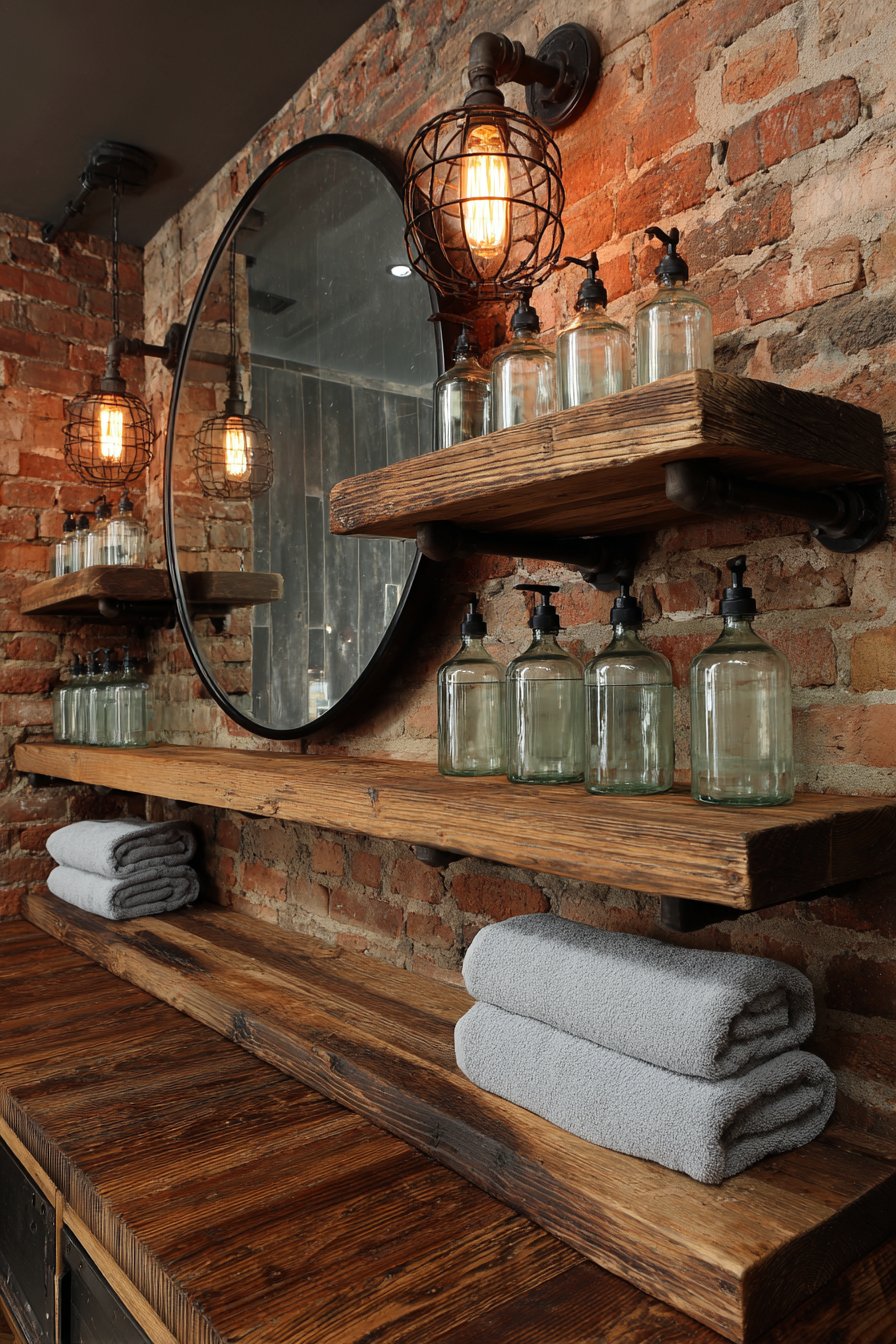
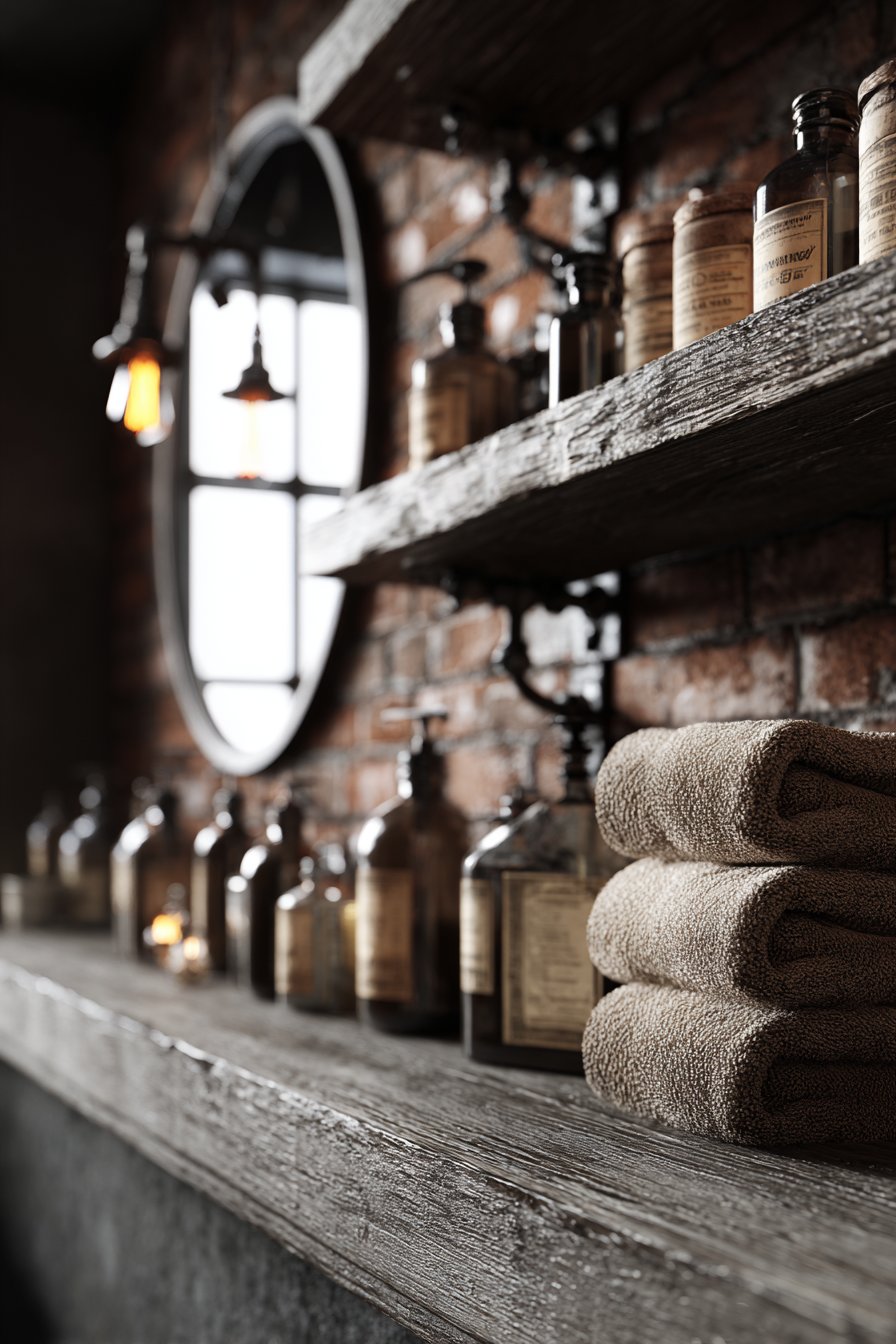
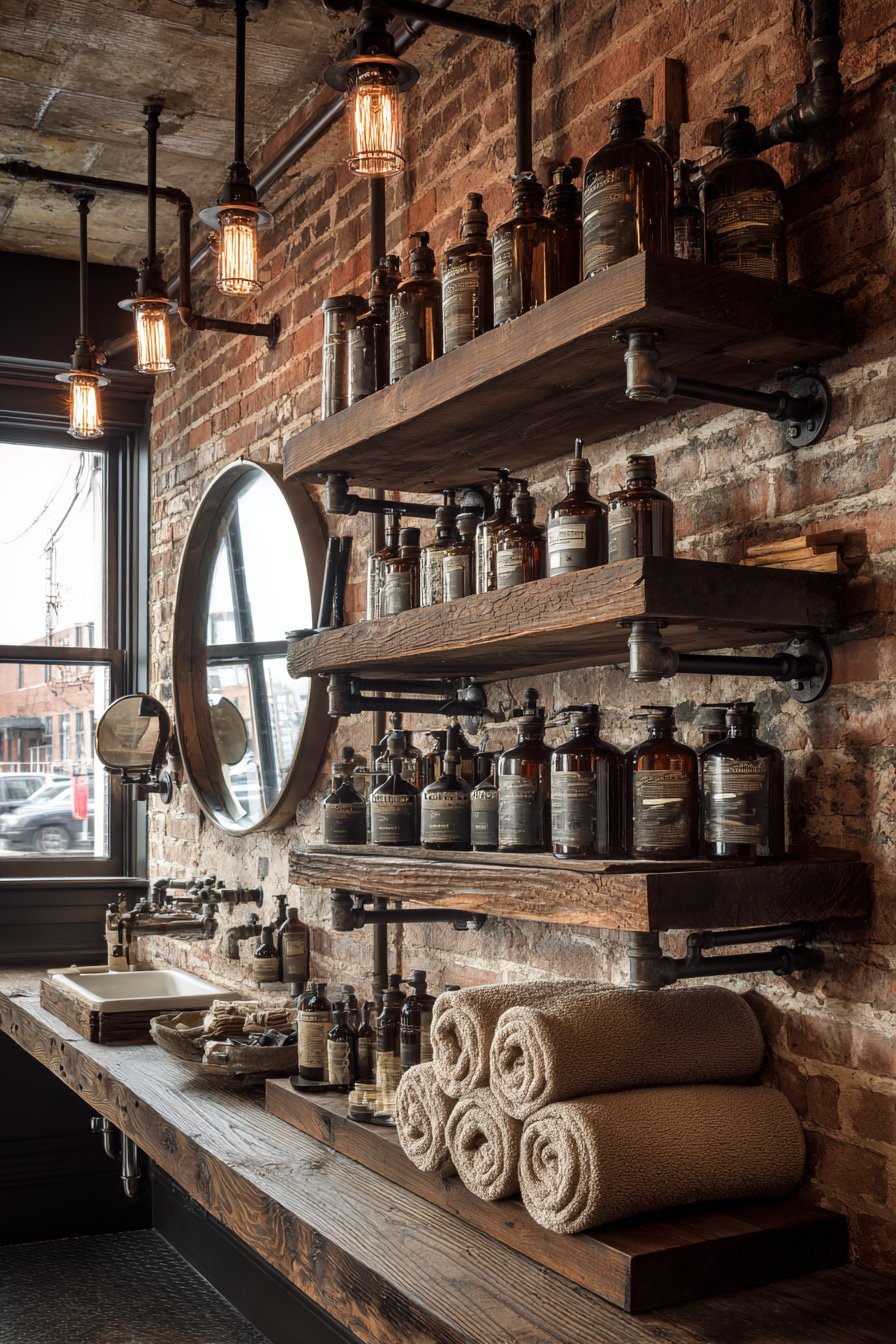
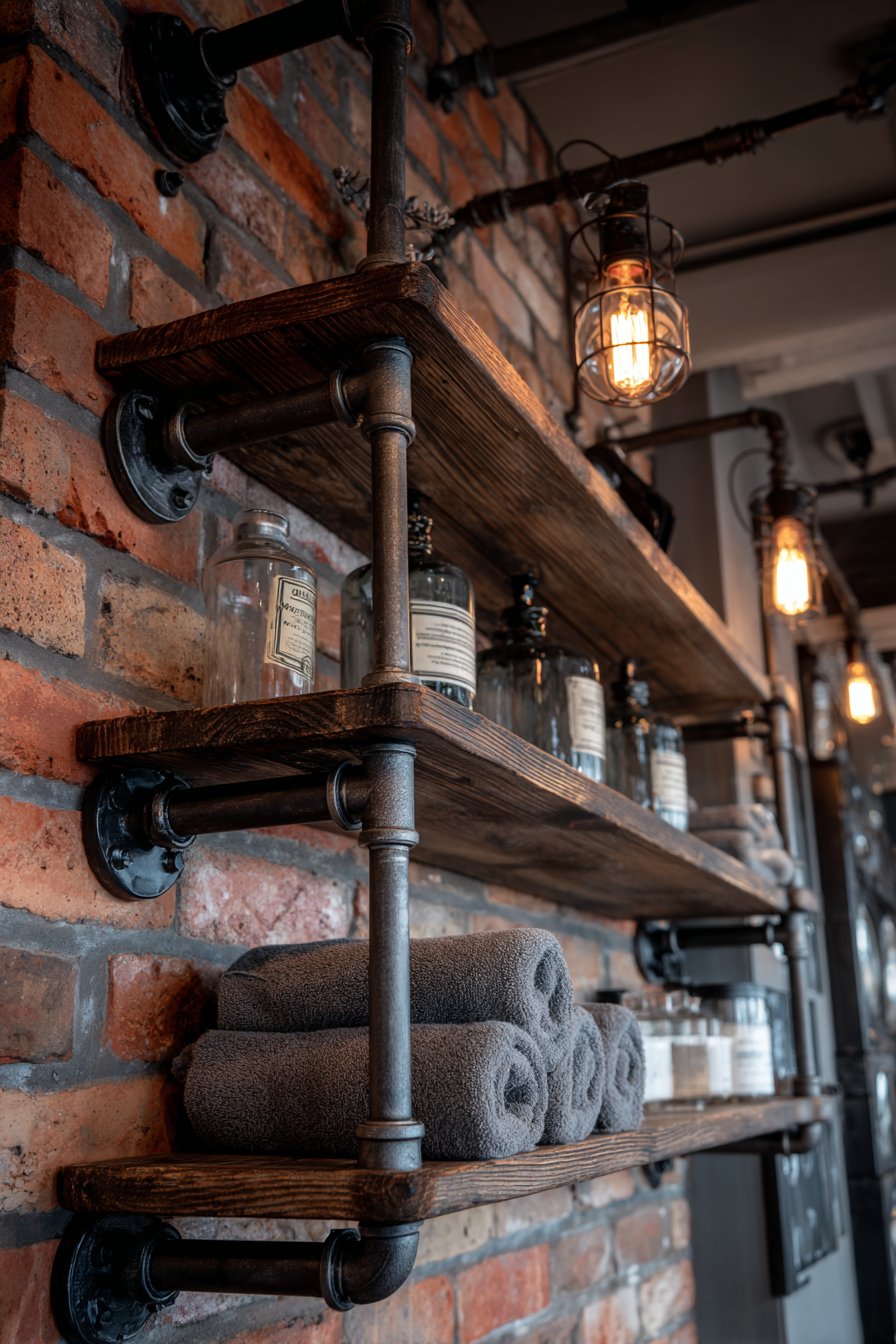
Industrial design celebrates raw materials, utilitarian forms, and the honest beauty of functional elements, creating spaces that feel authentic, urban, and refreshingly unpretentious. This concept features an exposed brick accent wall with original mortar texture, showcasing the inherent beauty of structural materials that are typically hidden behind finished surfaces. The brick—with its varied color tones, mortar lines, and slightly irregular surface—provides incomparable texture and visual warmth that connects the space to its architectural bones. Metal pipe shelving brackets support thick wooden shelves, a signature industrial detail that transforms functional support into decorative element.
The shelves display rolled towels and vintage apothecary bottles, demonstrating how industrial design embraces the display of functional items as decoration. A large metal-framed round mirror hangs as the centerpiece, its simple industrial frame complementing rather than competing with the textural brick. Edison bulb wall sconces with black metal fixtures provide ambient lighting while reinforcing the utilitarian aesthetic—these fixtures celebrate the beauty of visible bulbs and minimal design, eschewing elaborate shades or decorative elements. The result is lighting that is both functional and sculptural.
Wide-angle interior photography captures the raw materials and utilitarian aesthetic with natural lighting that highlights the brick texture and weathered wood grain. The industrial bathroom celebrates authenticity and honesty in materials—nothing is fake, everything serves a purpose, and beauty emerges from function rather than applied decoration. This resonates with homeowners tired of excessive ornamentation and seeking spaces that feel genuine, unpretentious, and connected to real materials and craftsmanship. The exposed brick creates warmth despite the harder-edged aesthetic, proving that industrial design doesn’t have to feel cold or unwelcoming.
Key Design Tips:
- Expose existing brick walls when possible rather than installing faux brick
- Use metal pipe or iron brackets for authentic industrial shelving
- Choose thick, rough-sawn wood for shelves to complement brick texture
- Install Edison bulbs in minimal metal fixtures for period-appropriate lighting
- Display vintage industrial items—apothecary bottles, metal containers, or tools
- Embrace imperfection—chips, cracks, and weathering add authentic character
11. Scandinavian Minimalist Serenity
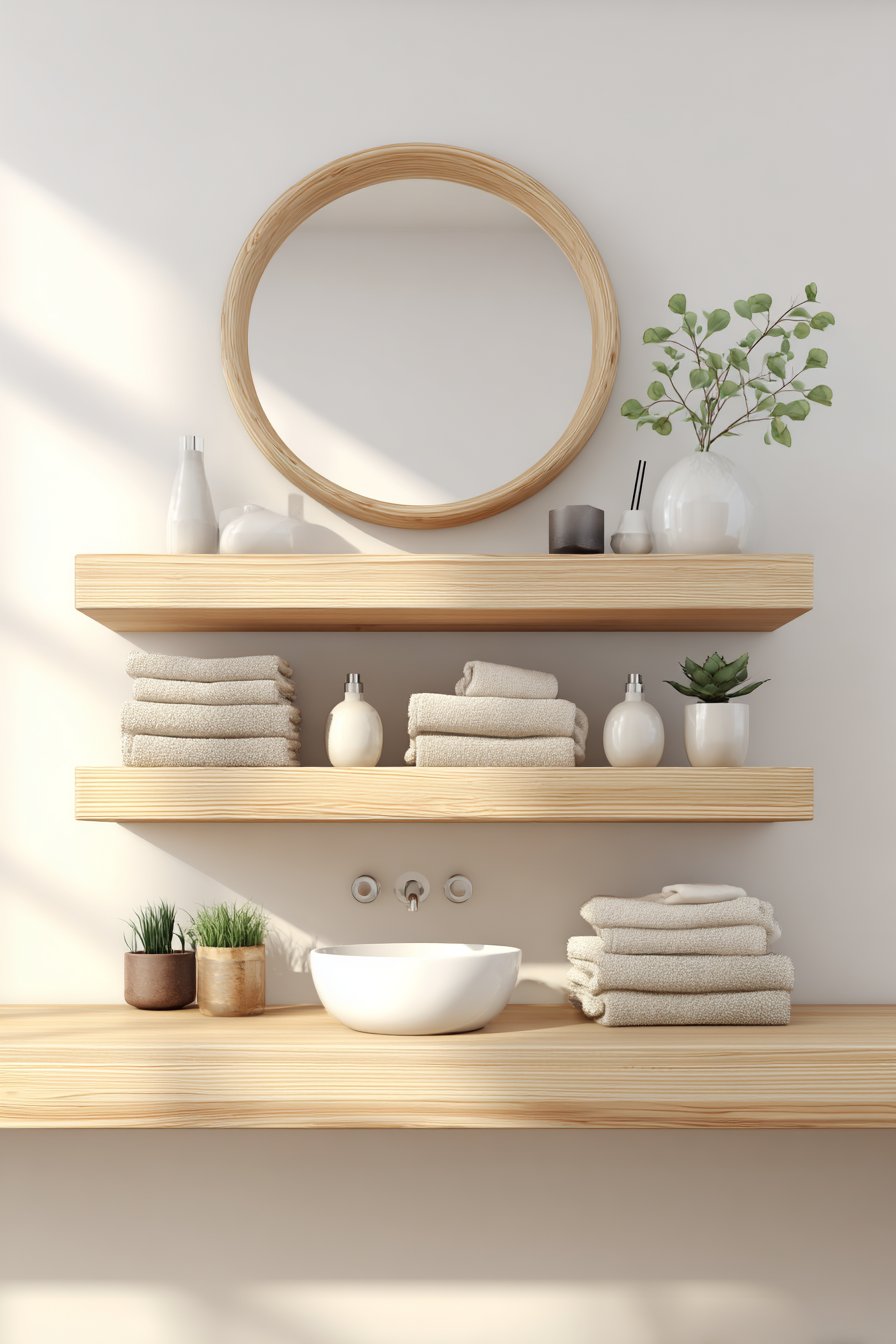
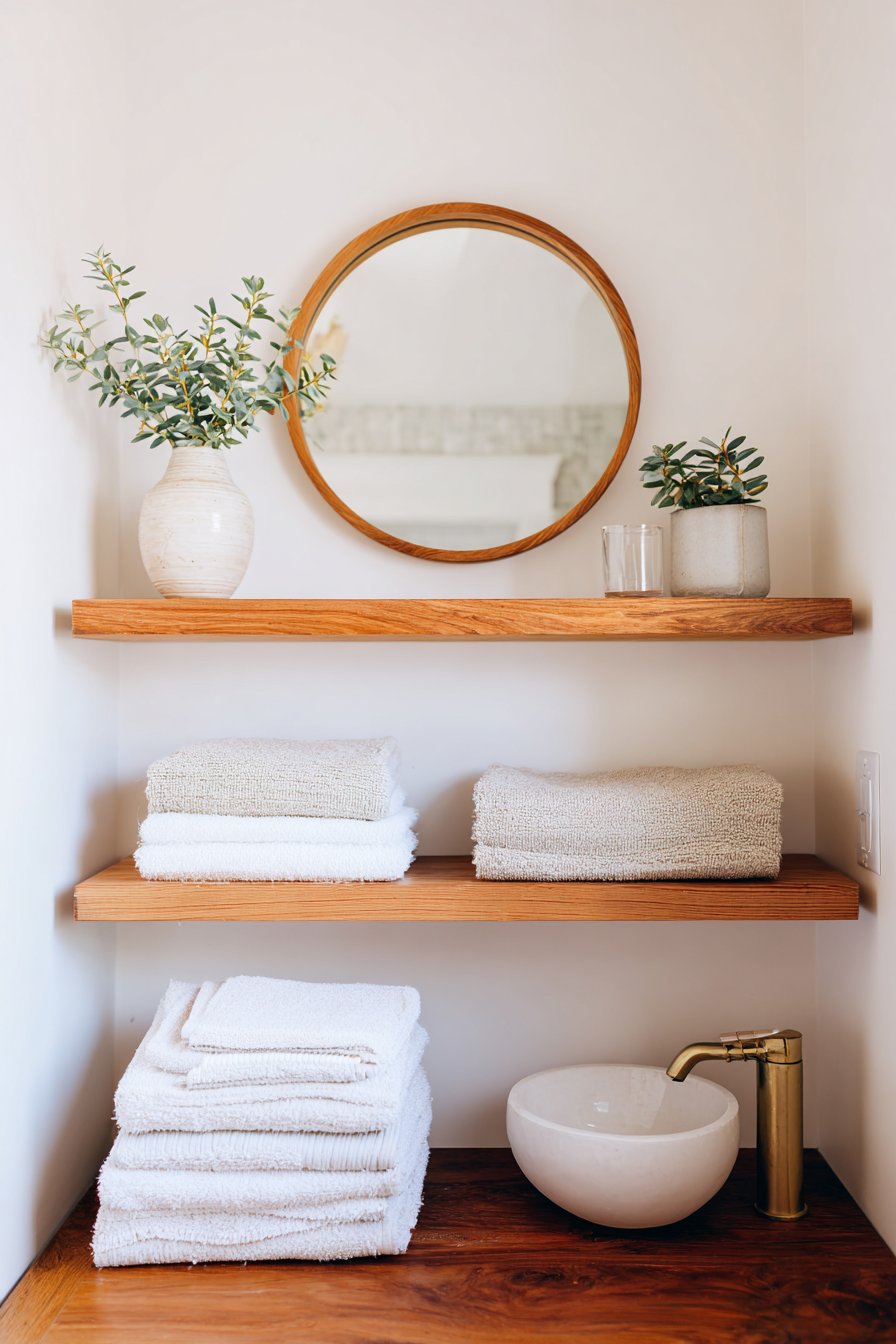
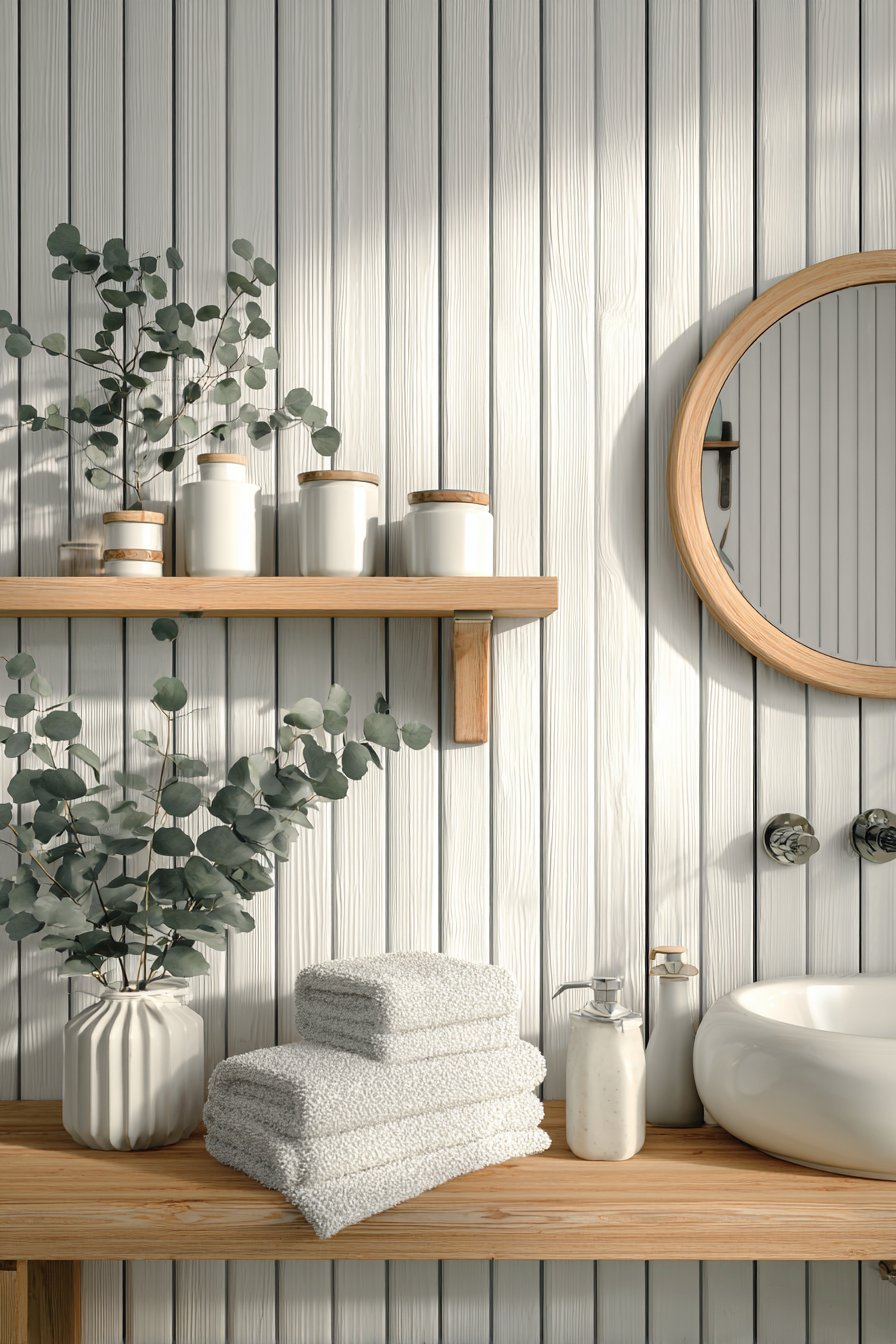
Scandinavian design principles emphasize simplicity, functionality, and connection to nature, creating spaces that feel serene, uncluttered, and deeply calming. This design features light birch floating shelves mounted against a clean white wall, exemplifying the Scandinavian love of light wood tones and minimal forms. The shelves display minimalist ceramic vessels, neatly folded linen towels in neutral tones, and small potted plants, demonstrating the principle of functional beauty—every item serves a purpose while also contributing to the overall aesthetic. A simple round mirror with light wood frame hangs above a wall-mounted sink, its organic circular form softening the geometric precision of the surrounding elements.
Abundant natural daylight creates soft shadows and highlights the clean lines and natural materials, revealing the subtle grain patterns in the birch wood and the textural qualities of the linen towels. The Scandinavian bathroom embraces light—both natural and in color palette—as a crucial design element, particularly important in Nordic countries with limited daylight during winter months. This emphasis on brightness and lightness creates spaces that feel larger, more open, and psychologically uplifting.
Professional interior photography emphasizes the functional simplicity and serene atmosphere that define Scandinavian design. The carefully edited selection of objects demonstrates the “lagom” philosophy—having just the right amount, neither too much nor too little. Each item on display has been thoughtfully chosen and placed, creating compositions that appear effortless but are actually the result of careful consideration. This design appeals to homeowners seeking calm, order, and a break from visual chaos in their daily lives, creating bathrooms that function as personal retreats from an often overwhelming world.
Key Design Tips:
- Choose light wood tones—birch, ash, or light oak—for warmth without visual weight
- Paint walls in pure white or very soft neutrals to maximize light reflection
- Display only essential items, carefully curated for both function and beauty
- Select ceramics and vessels in natural colors and simple forms
- Incorporate natural materials—wood, linen, cotton, and ceramics—over synthetic materials
- Allow abundant natural light and use sheer window treatments when privacy permits
12. Vintage Floral Wallpaper Romance
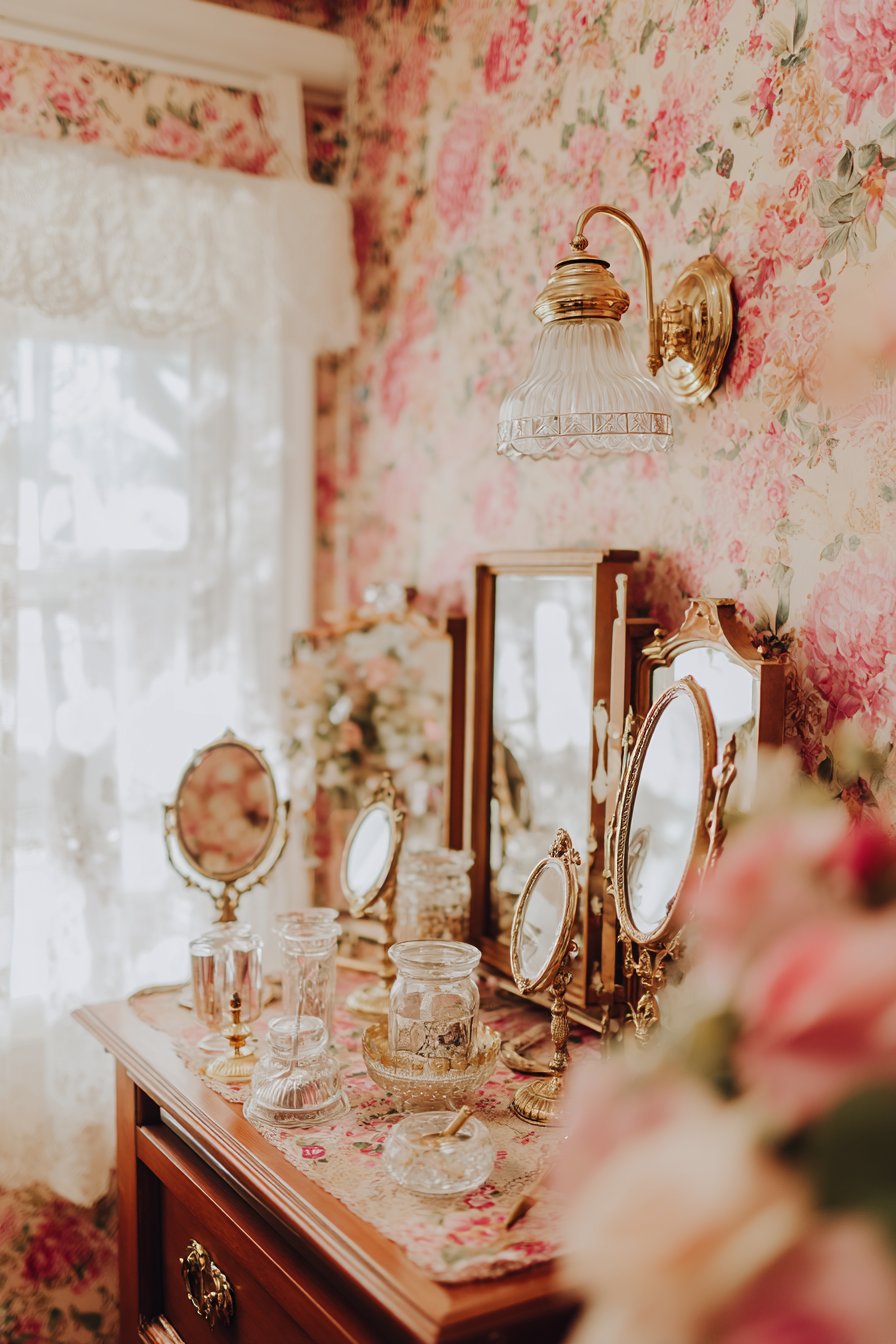
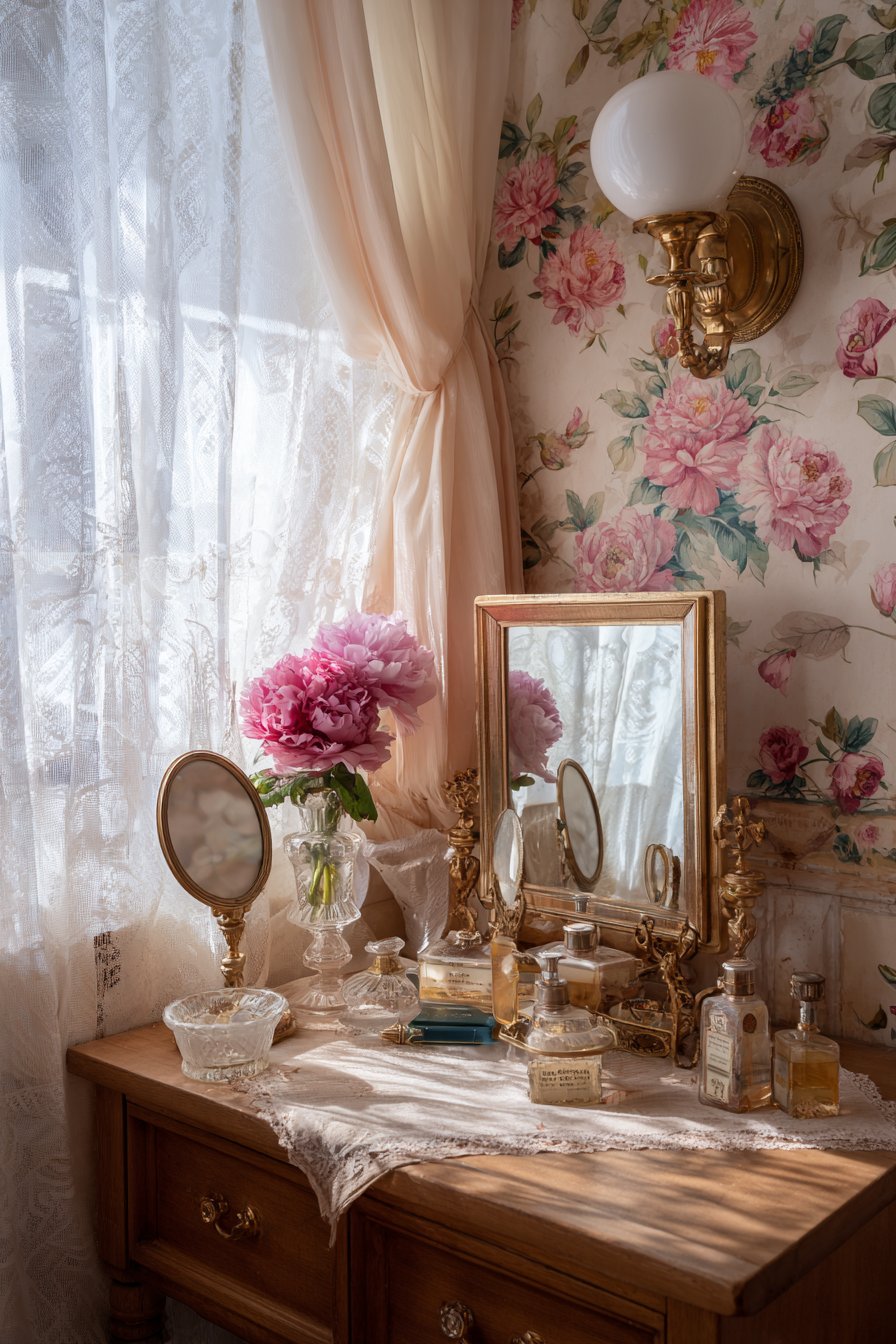
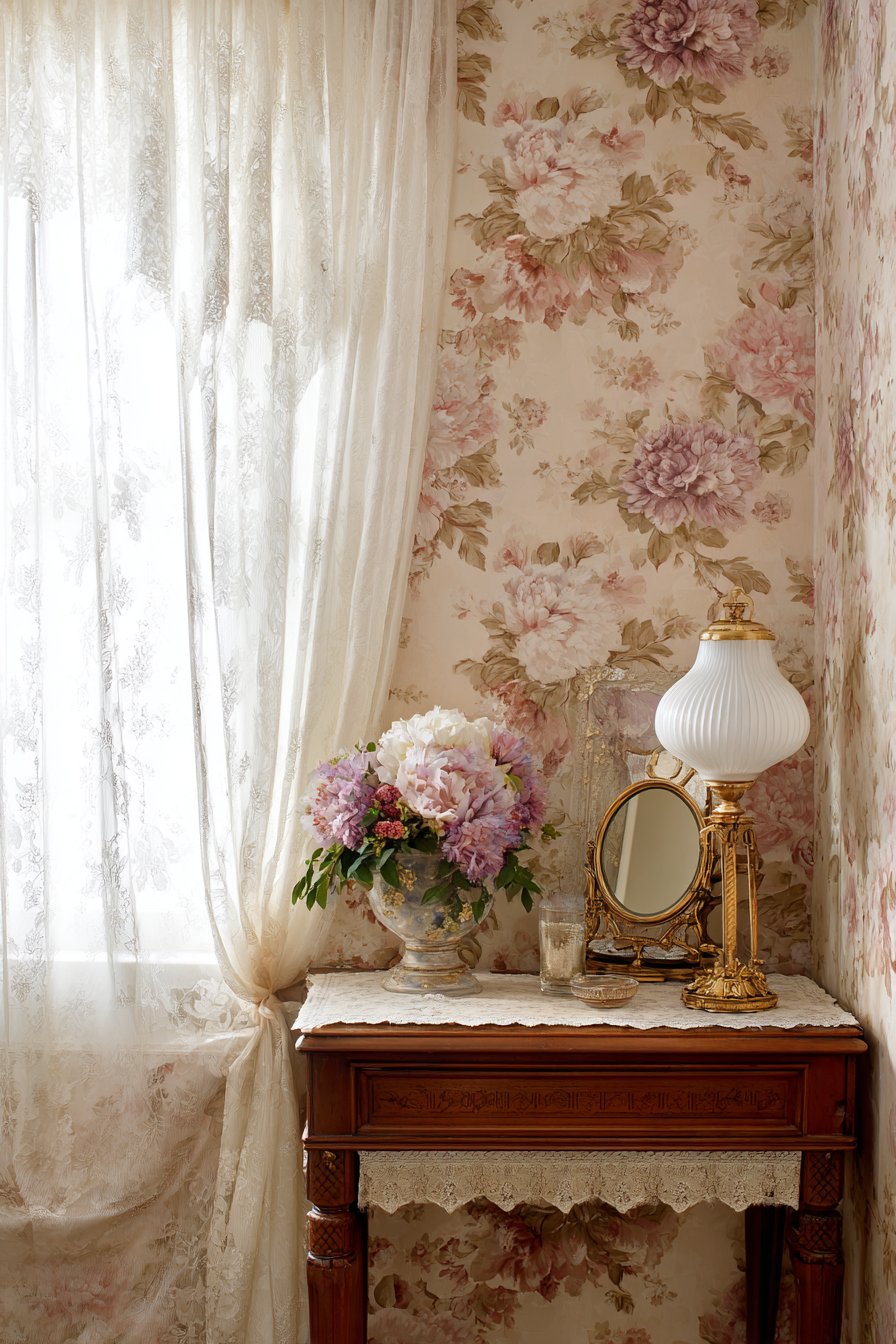
Embracing vintage aesthetics in bathroom design creates spaces with personality, charm, and nostalgic appeal that contrast beautifully with contemporary minimalism. This design showcases a collection of antique hand mirrors and vanity items arranged on a painted wooden display shelf against floral wallpaper in soft pink and cream tones. The wallpaper features delicate peony blooms with subtle sheen, introducing pattern, color, and vintage elegance to the wall surface. A vintage brass wall lamp with milk glass shade provides period-appropriate lighting, its warm glow creating intimate ambiance perfect for the vanity area.
Natural light filters through sheer curtains creating a romantic atmosphere that changes throughout the day, with soft diffused light enhancing the gentle colors and patterns of the wallpaper. The collection of vintage items tells a story of beauty rituals from another era, transforming functional grooming tools into decorative objects worthy of display. This approach celebrates the artistry and craftsmanship of vintage items, recognizing that objects from earlier eras often possessed design qualities and material integrity that make them more beautiful than many contemporary equivalents.
Interior design photography captures the nostalgic charm with attention to vintage details, showcasing how careful selection and arrangement of period elements creates cohesive historical atmosphere. The vintage bathroom doesn’t attempt to perfectly recreate a specific historical period but rather cherry-picks the most beautiful elements from various eras to create a space that feels romantically old-fashioned while remaining functional for modern life. This design resonates with homeowners who appreciate the character of older objects and seek to create spaces with soul, history, and connection to the past.
Key Design Tips:
- Choose wallpaper with vintage-appropriate patterns—florals, damasks, or toiles
- Select papers with soft, faded color palettes rather than bright, saturated hues
- Display collections of vintage items—hand mirrors, perfume bottles, or grooming tools
- Use period-appropriate lighting with brass or bronze finishes and glass shades
- Install painted wooden shelves rather than modern glass or metal options
- Layer soft, romantic textiles—lace curtains, embroidered towels, or vintage linens
13. Modern Luxe Marble Drama
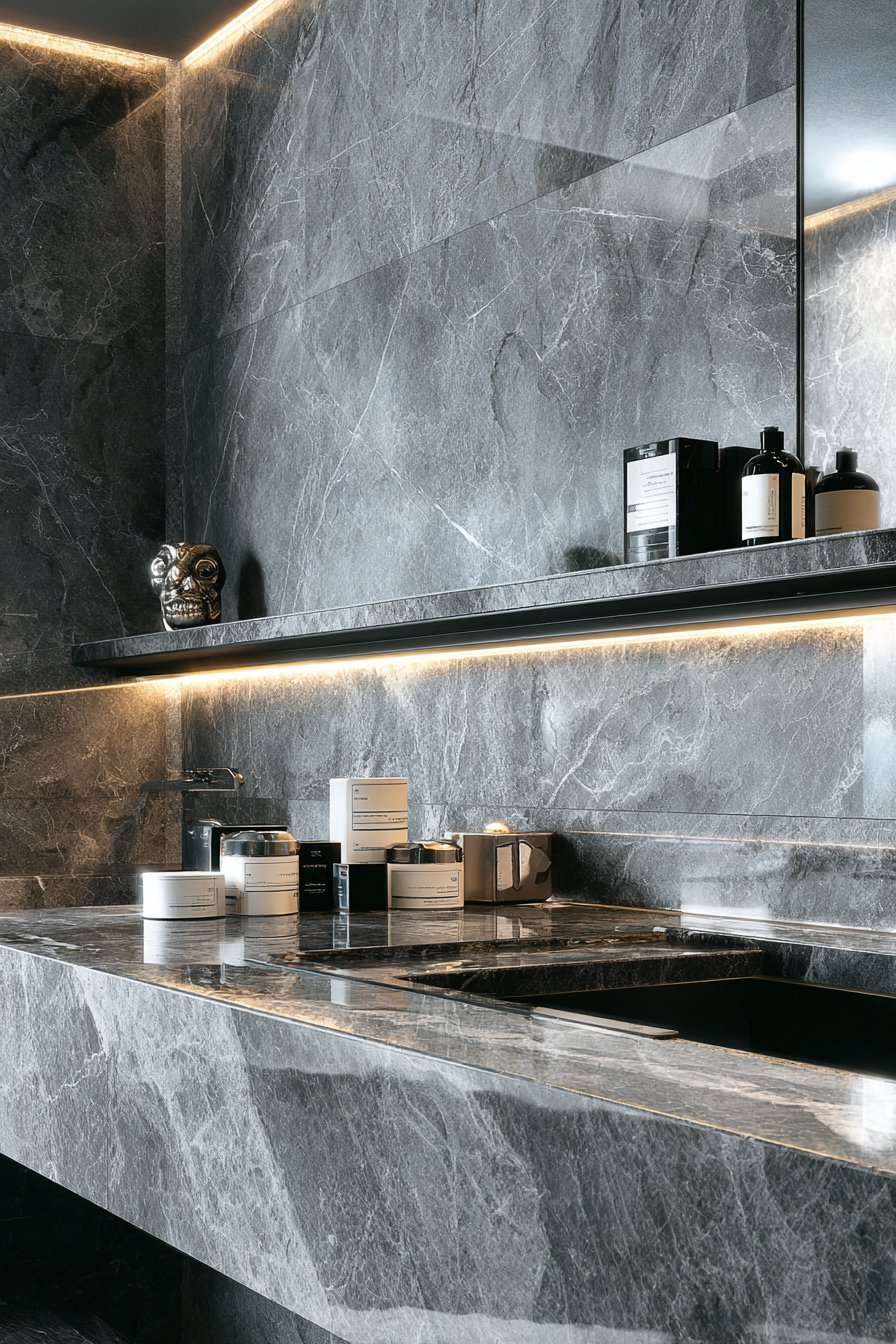
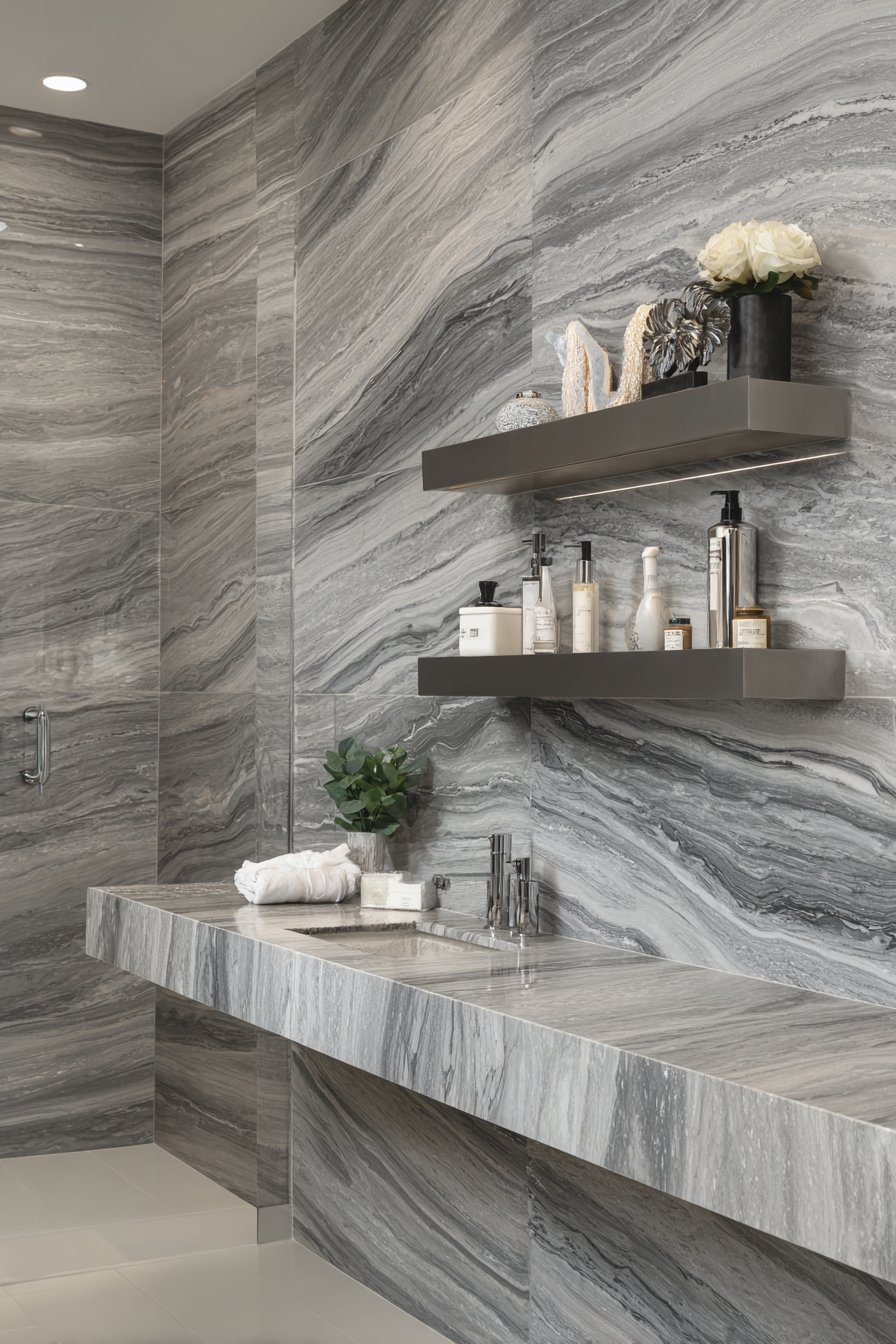
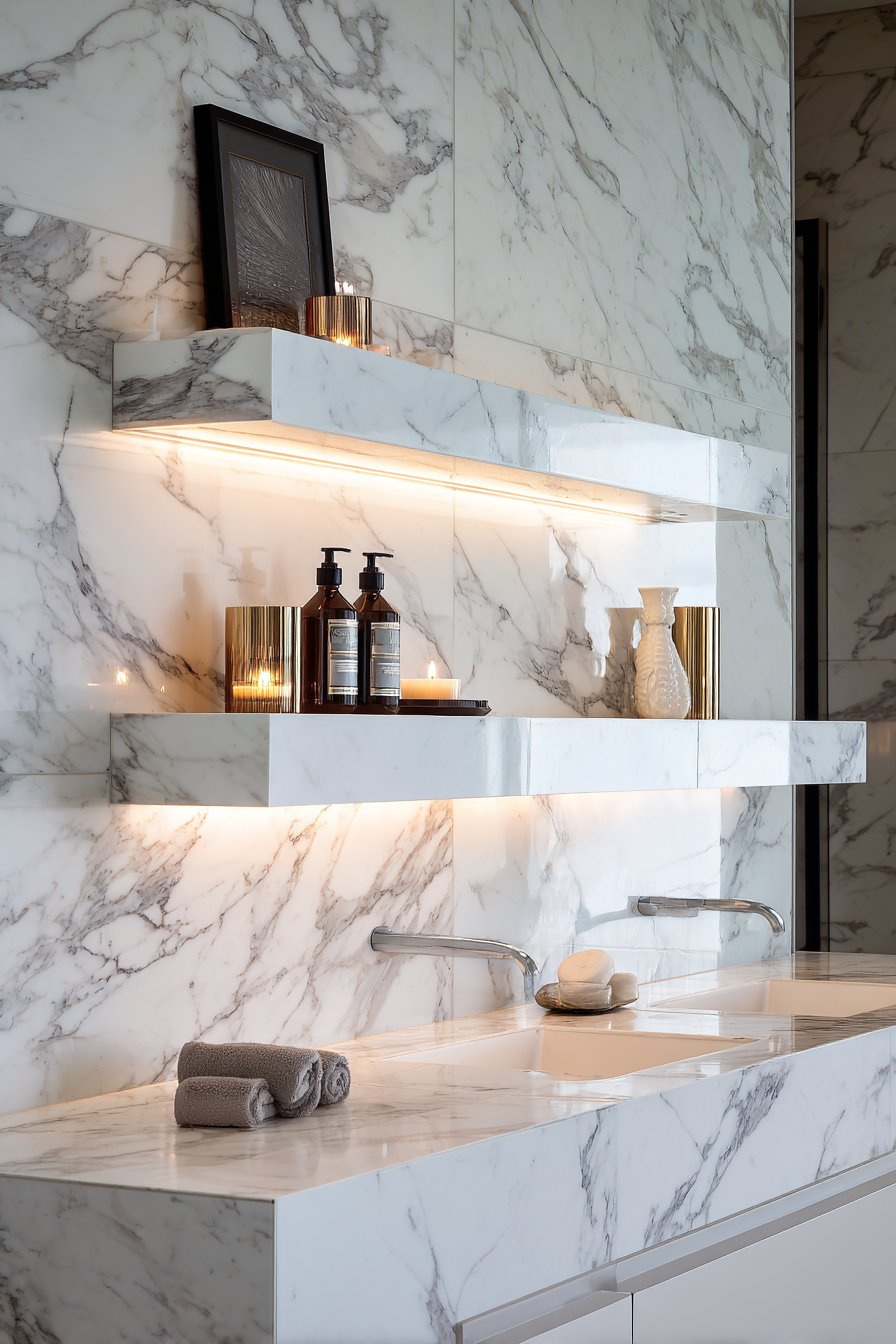
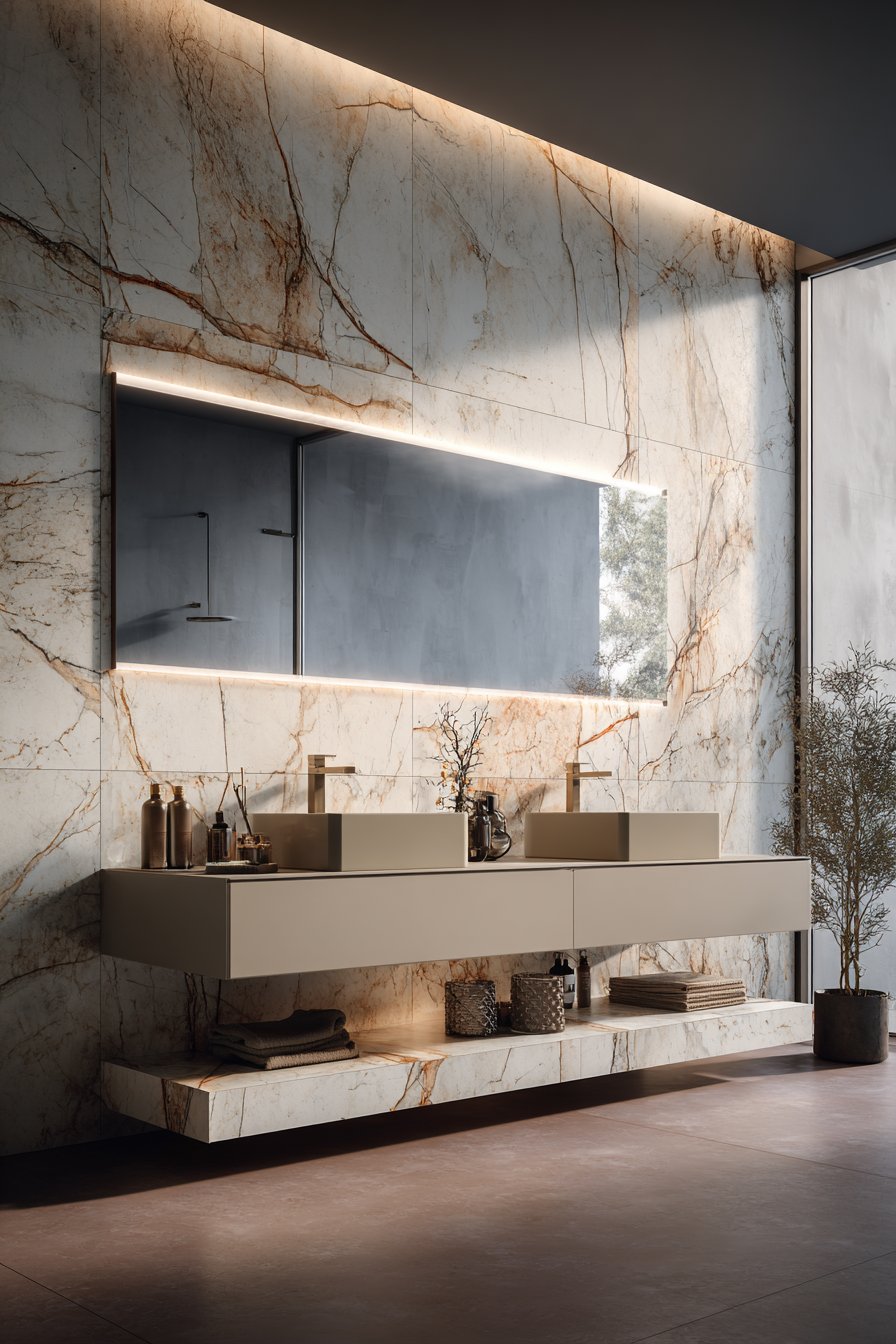
Luxury in bathroom design manifests through material quality, sophisticated color palettes, and attention to every detail, creating spaces that feel like high-end hotel suites or exclusive spas. This concept features large-format marble-look porcelain tiles with dramatic grey veining covering the entire wall behind a floating double vanity. The continuous stone-look surface creates a dramatic backdrop that emphasizes the natural beauty and geological drama of marble formations. A horizontal LED-backlit mirror spans the wall creating ambient illumination that adds sophistication and functionality while creating the illusion that the mirror floats weightlessly.
Coordinating marble floating shelves display high-end toiletries and small sculptural objects, extending the luxury material throughout the space while providing functional storage. The toiletries themselves become part of the decorative scheme—elegant bottles, sophisticated packaging, and carefully selected accessories contribute to the overall luxurious atmosphere. Professional interior photography with balanced exposure highlights the luxurious material quality and sophisticated monochromatic palette with attention to veining patterns and reflective surfaces.
The modern luxe bathroom embraces drama, quality, and an uncompromising approach to materials and finishes. Every element has been selected for its ability to contribute to an atmosphere of refined luxury and contemporary elegance. The grey marble palette creates sophistication without being cold, proving that monochromatic design can be warm and inviting when executed with quality materials and thoughtful lighting. This design appeals to homeowners who view their bathroom as a personal luxury space worthy of significant investment and who appreciate the calming effect of cohesive, high-quality design.
Key Design Tips:
- Choose large-format tiles to minimize grout lines and create continuous stone appearance
- Select marble or marble-look materials with dramatic, distinctive veining for maximum impact
- Install LED backlighting behind mirrors for luxury hotel atmosphere
- Display high-quality toiletries in beautiful packaging as decorative elements
- Maintain a strict monochromatic or limited color palette for sophisticated cohesion
- Invest in quality fixtures and hardware in coordinating finishes
14. Tropical Paradise Gallery Wall
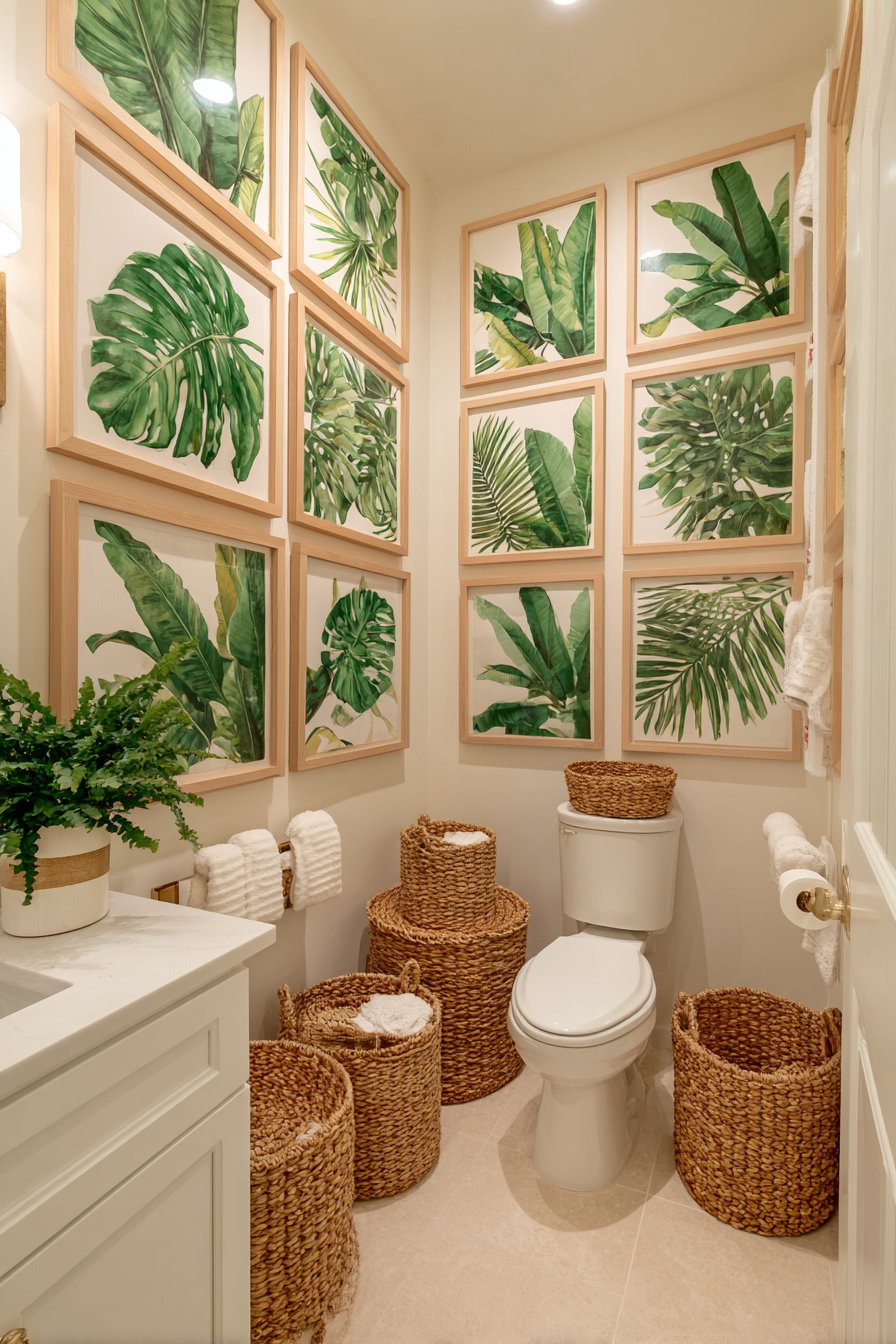
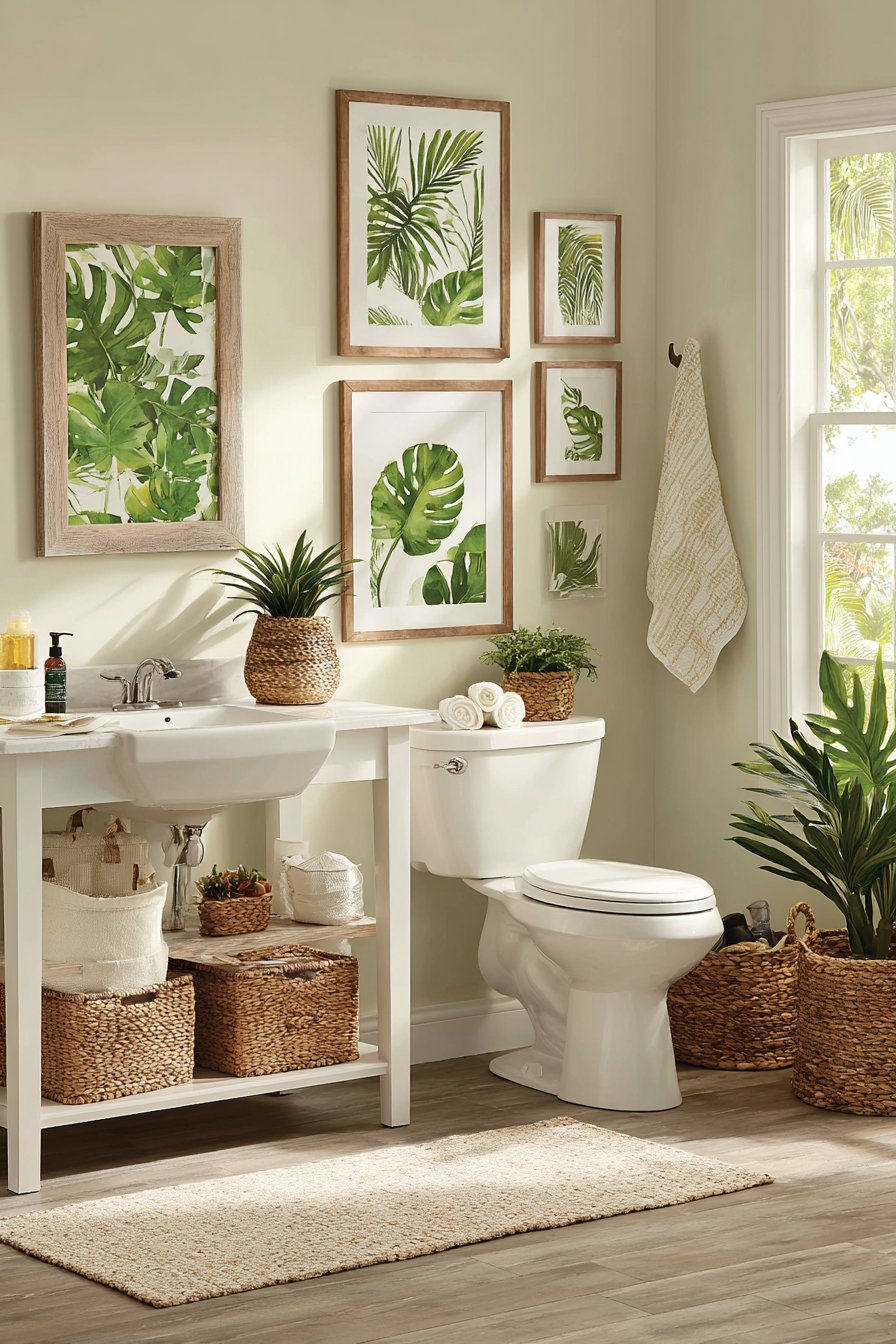
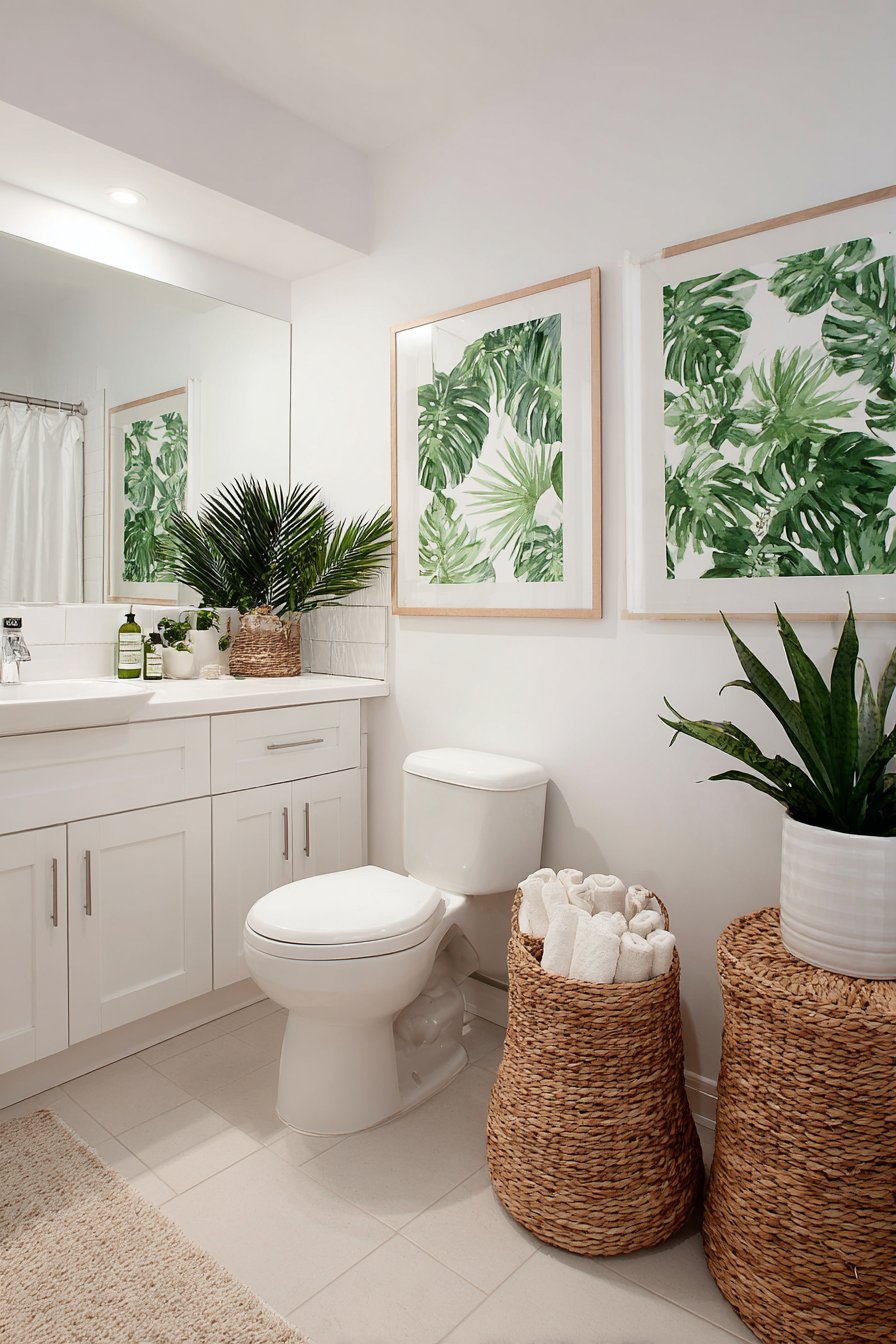
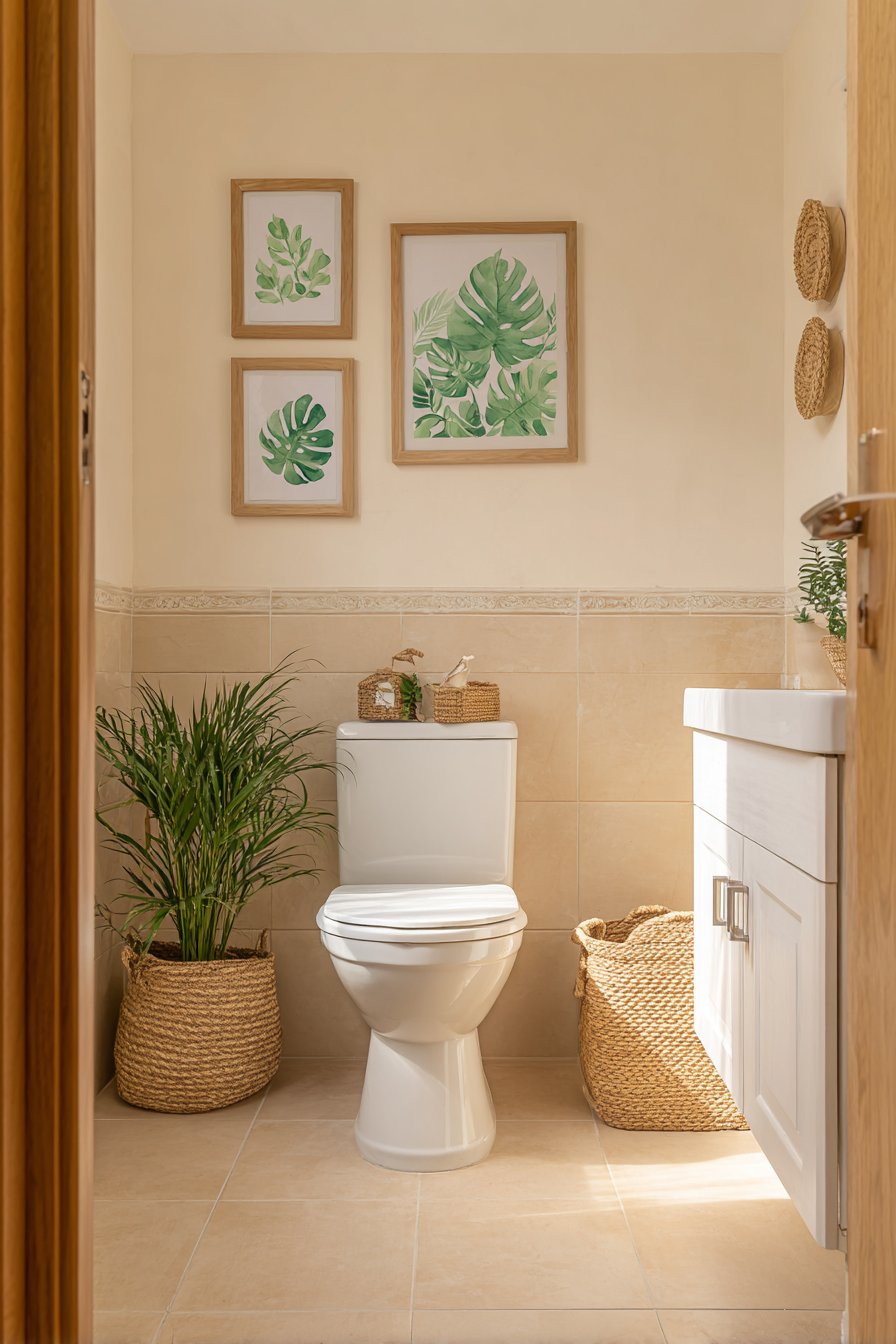
Bringing tropical aesthetics into bathroom design creates an immediate vacation-like atmosphere that promotes relaxation and escape from daily stresses. This approach features large-scale framed botanical prints of monstera and palm leaves in natural wood frames creating a gallery wall above the toilet area. The verdant artwork introduces bold organic patterns and lush green tones that transform the bathroom into a tropical retreat. The walls painted in soft cream tone allow the vibrant artwork to stand out while maintaining brightness and visual openness.
Woven rattan wall baskets provide functional storage while reinforcing the tropical theme, their natural texture and handcrafted quality adding warmth and authenticity. These baskets can hold rolled towels, toilet paper, or bath products, demonstrating how storage solutions can enhance rather than detract from decorative schemes. Natural lighting emphasizes the green tones and organic patterns, while wide-angle photography captures the cohesive tropical aesthetic throughout the space.
The tropical bathroom celebrates the lush abundance of nature, the relaxed atmosphere of island living, and the psychological benefits of surrounding ourselves with images and materials from natural environments. This biophilic design approach—incorporating natural patterns, materials, and imagery—has been shown to reduce stress and promote wellbeing, making it particularly appropriate for a bathroom space dedicated to self-care and rejuvenation. The tropical aesthetic works particularly well in bathrooms because it embraces the moisture and humidity that can challenge other design styles.
Key Design Tips:
- Select large-scale botanical prints showing single leaves or plant specimens for impact
- Choose natural wood frames in light to medium tones that suggest bamboo or teak
- Paint walls in soft warm neutrals—cream, sand, or soft white—to maintain brightness
- Incorporate woven rattan, seagrass, or bamboo accessories for authentic texture
- Add live tropical plants if lighting permits—pothos, monstera, or snake plants
- Layer multiple shades of green throughout the space for lush, abundant feeling
15. Japanese-Inspired Zen Sanctuary
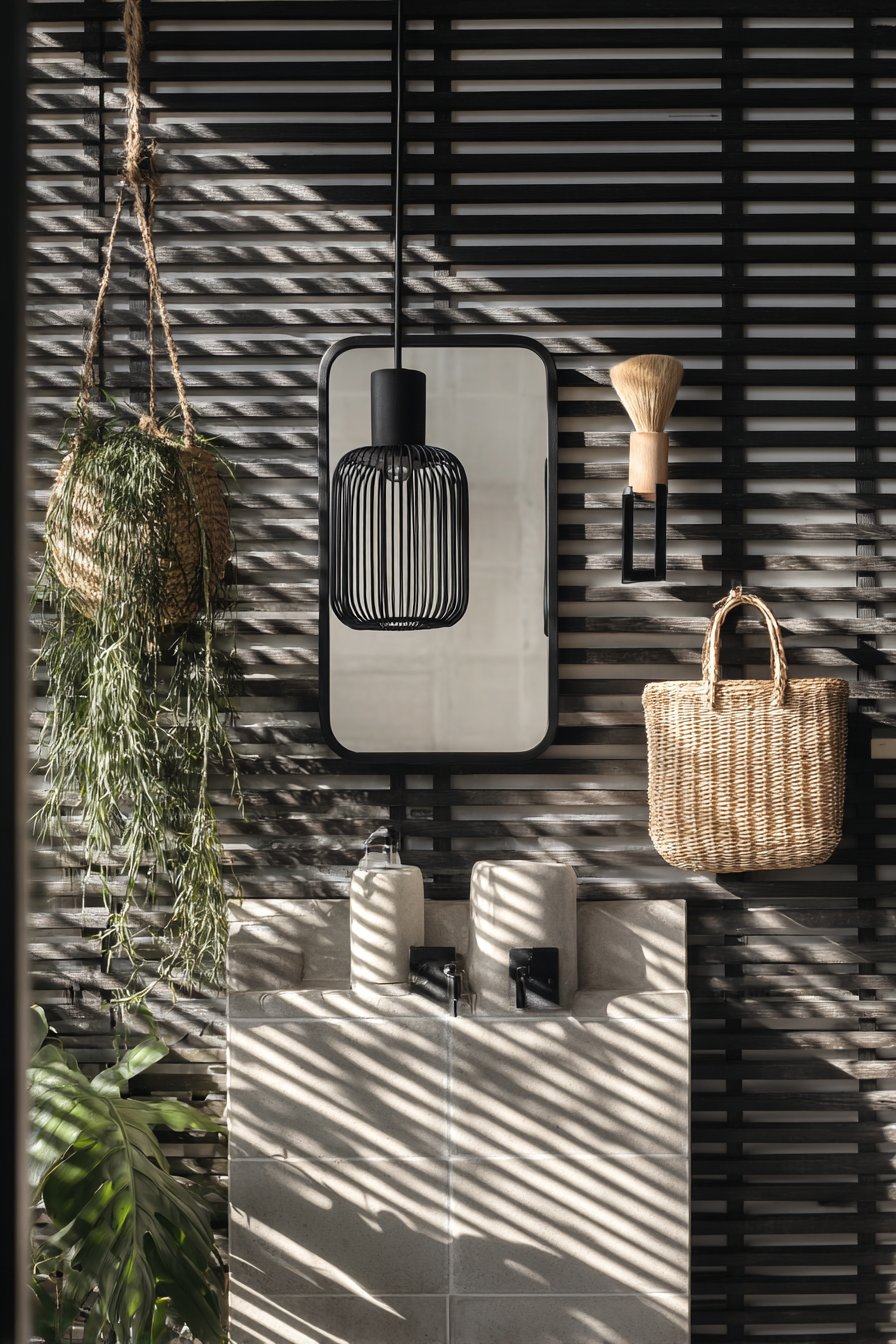
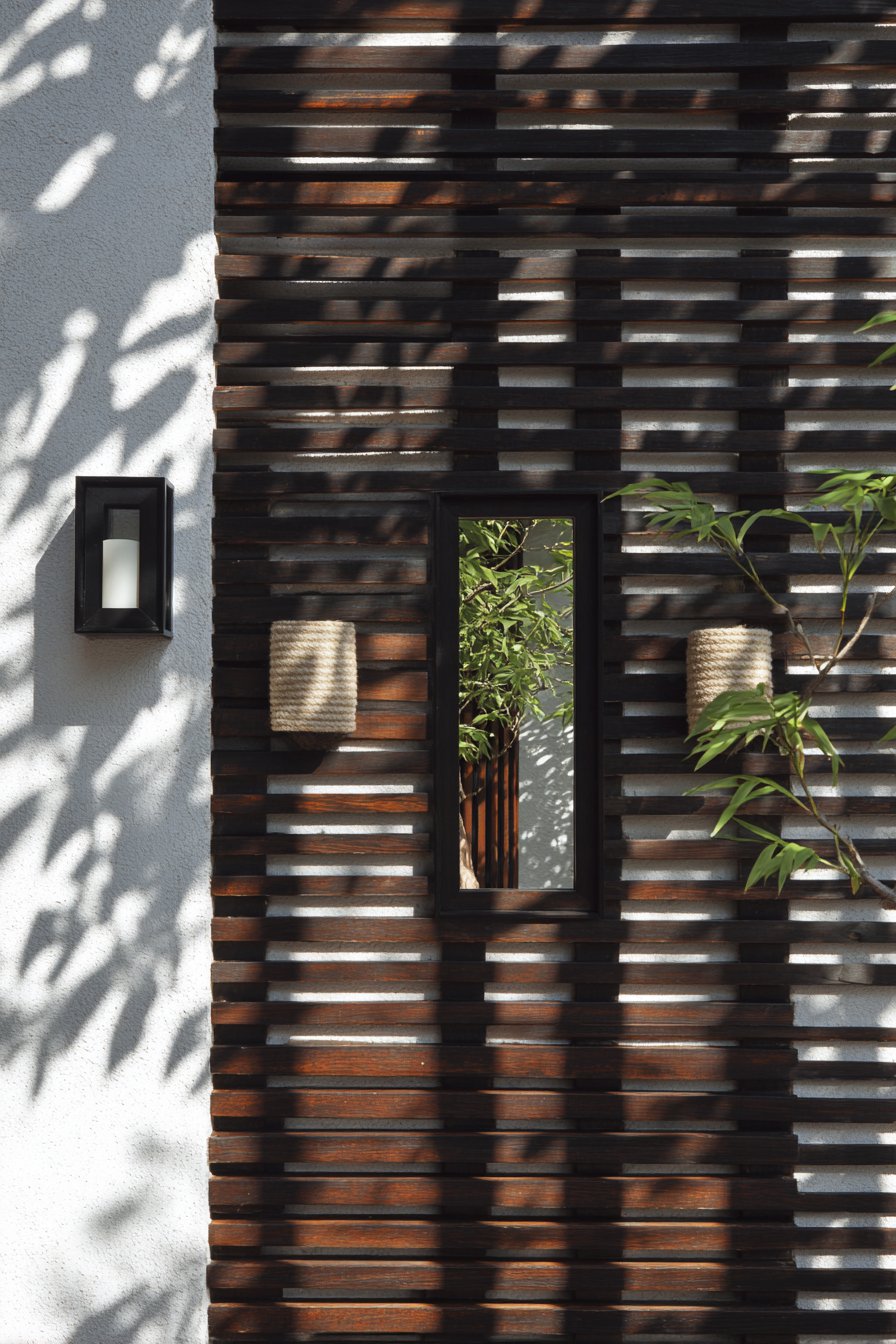
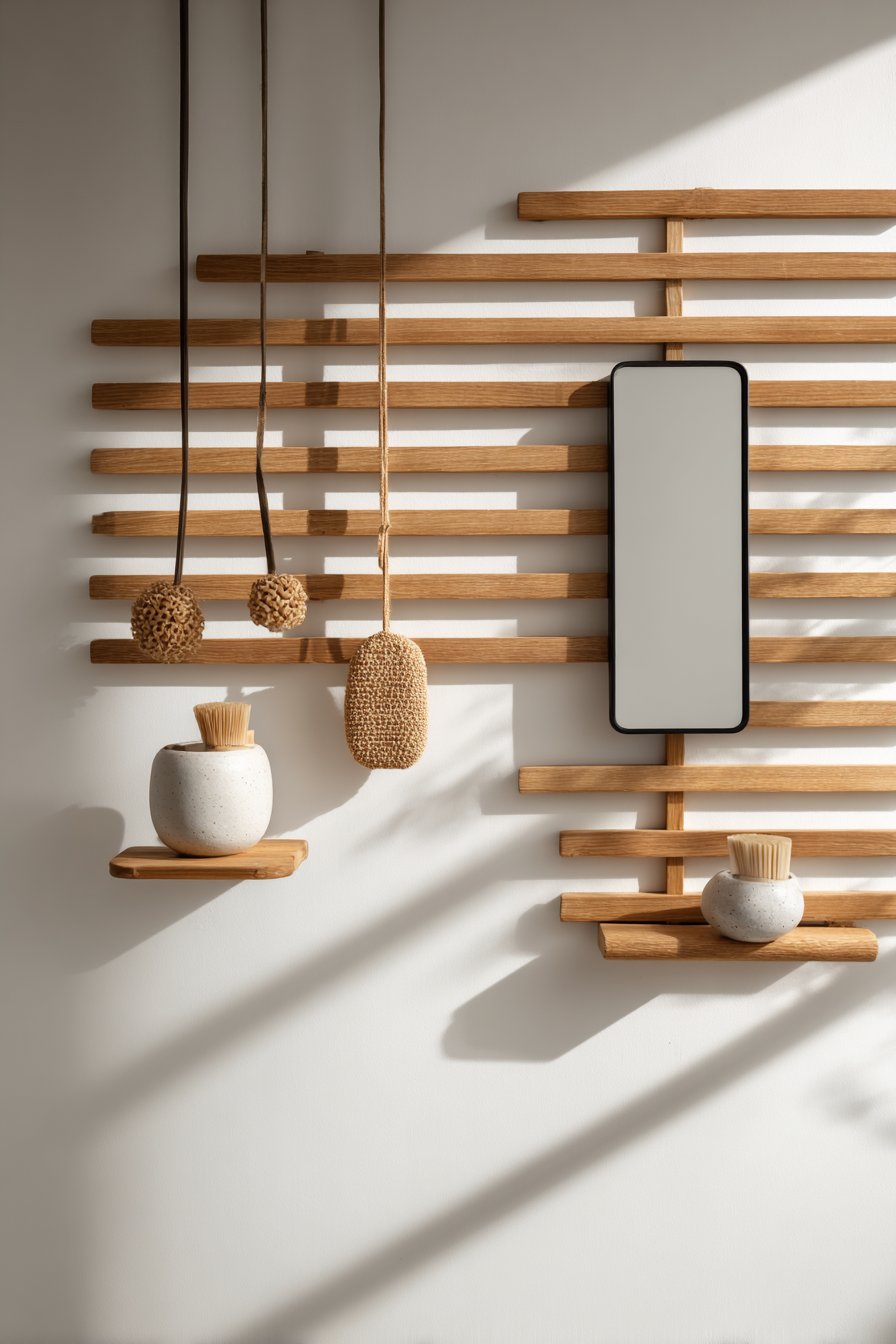
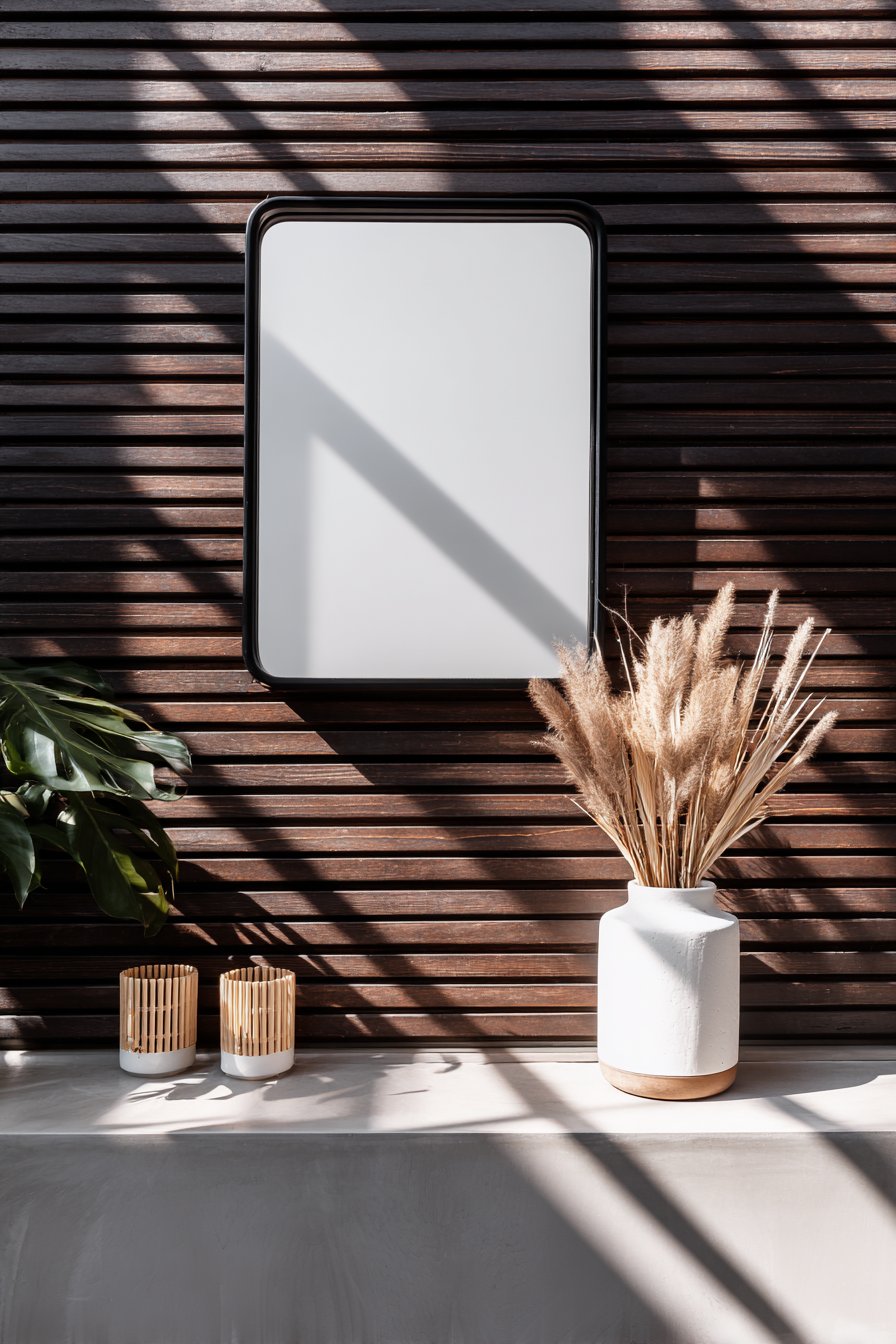
Japanese design principles bring profound simplicity, natural materials, and a sense of tranquil contemplation to bathroom spaces, creating environments that feel like personal meditation retreats. This design showcases horizontal wooden slats in dark-stained cedar creating a feature wall with subtle gaps allowing glimpses of the white wall behind. The slat wall adds dimensional texture while maintaining the clean lines and geometric precision valued in Japanese design. A minimalist black-framed rectangular mirror is centered on the slat wall, its simple form and dark finish creating beautiful contrast against the cedar.
Simple ceramic wall-mounted holders display bamboo and natural fiber accessories, introducing organic elements while maintaining the restrained aesthetic. The carefully edited selection and precise placement of these few objects demonstrates the Japanese principle of “ma”—the meaningful use of negative space. Soft indirect natural lighting creates striped shadow patterns through the slats, adding another layer of visual interest that changes throughout the day and connects the space to the natural rhythms of light.
Professional interior photography captures the zen-like tranquility and attention to natural materials and clean geometry that define Japanese-inspired design. This aesthetic creates bathrooms that feel like sanctuaries for contemplation and ritual, elevating daily routines into mindful practices. The emphasis on natural materials, clean lines, and intentional emptiness provides psychological relief from cluttered, overstimulated environments, creating a true escape within your own home. This design resonates with homeowners seeking calm, order, and connection to traditional design wisdom in their modern lives.
Key Design Tips:
- Install horizontal wooden slats with consistent spacing for rhythmic visual pattern
- Choose dark-stained wood—walnut, ebony, or cedar—for authentic Japanese aesthetic
- Select minimal, geometric fixtures and accessories in black or dark finishes
- Embrace negative space—resist the urge to fill every surface or wall
- Use natural materials exclusively—wood, stone, bamboo, and ceramics
- Ensure precise alignment and spacing in all elements for satisfying geometric order
16. Art Deco Geometric Glamour
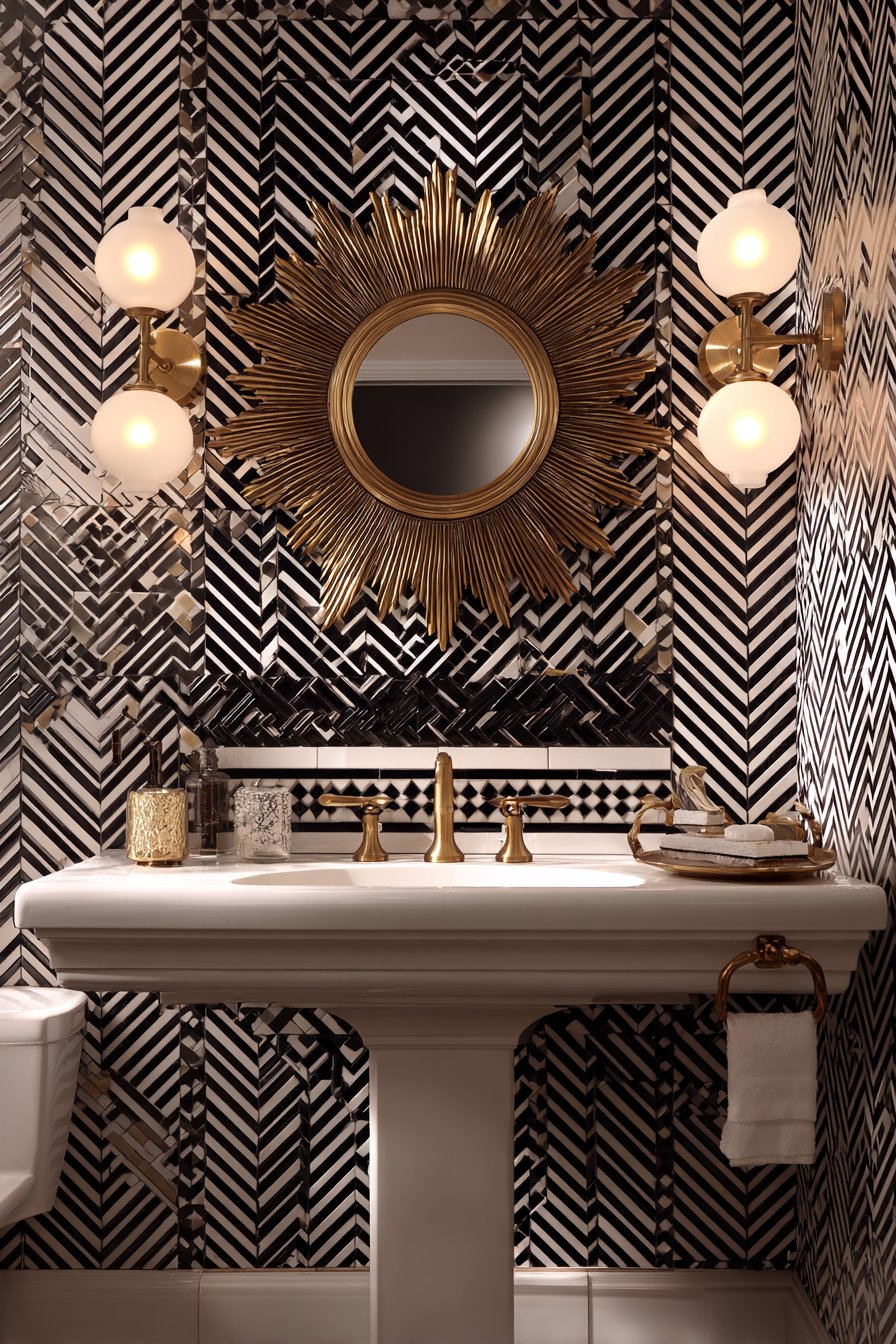
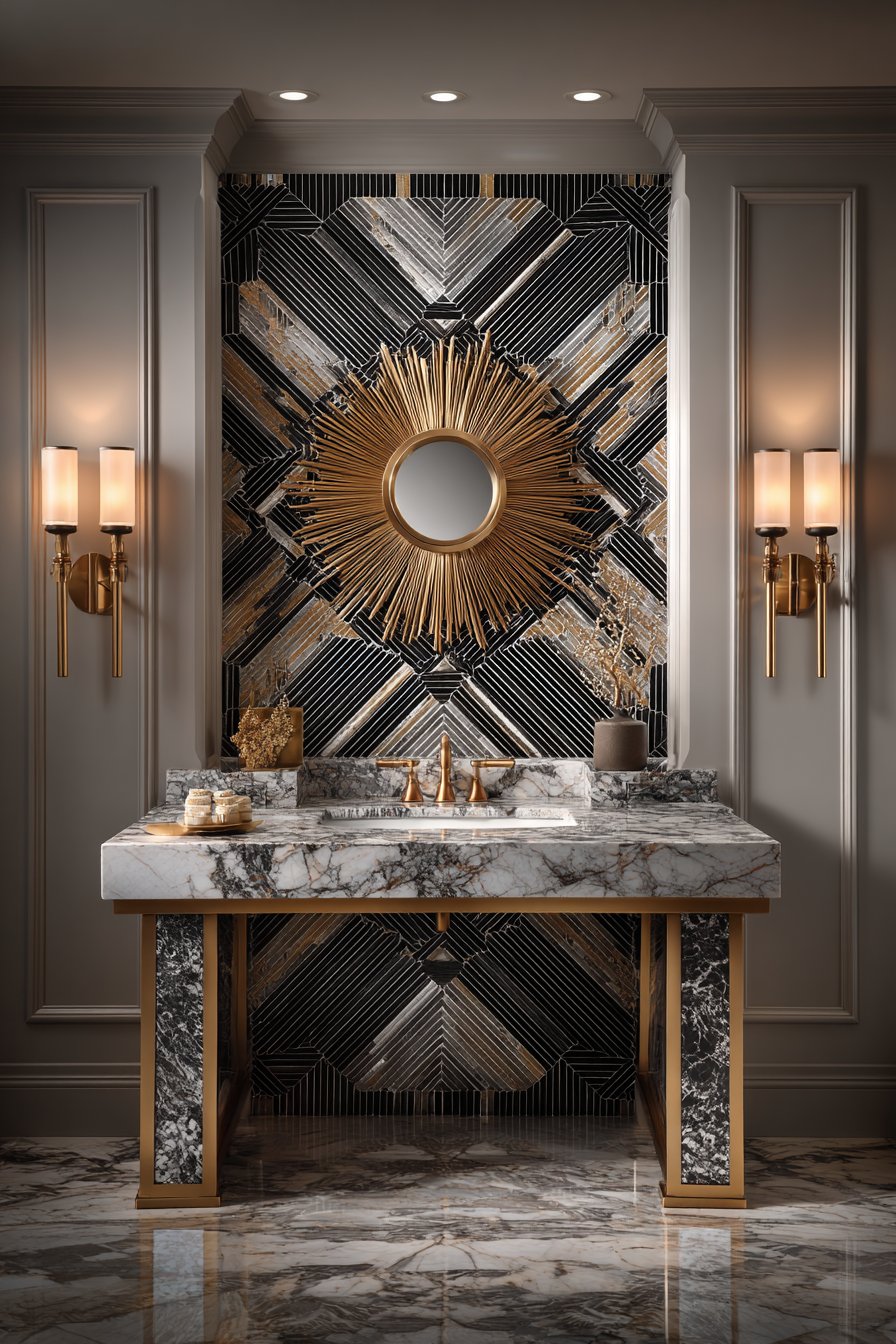
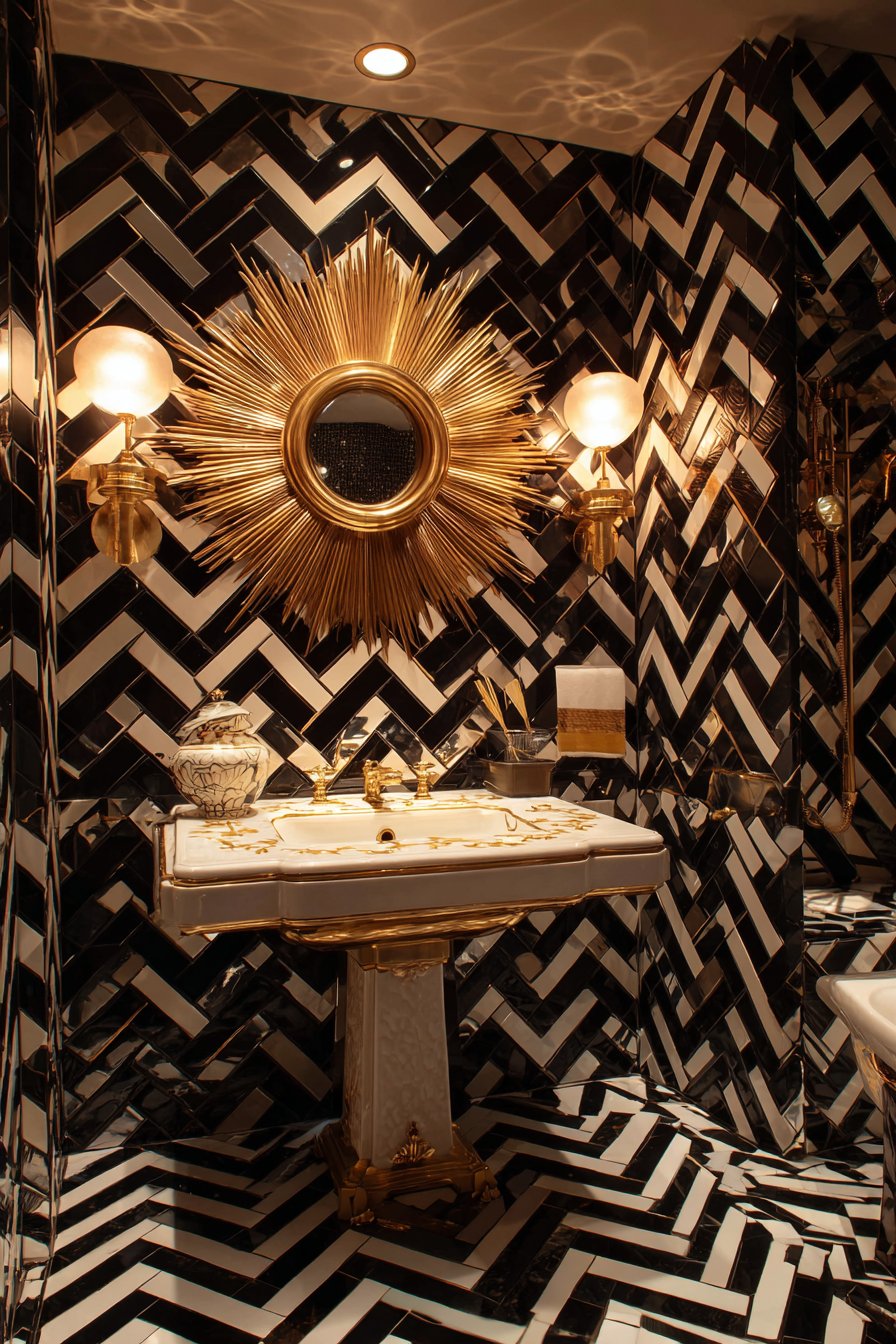
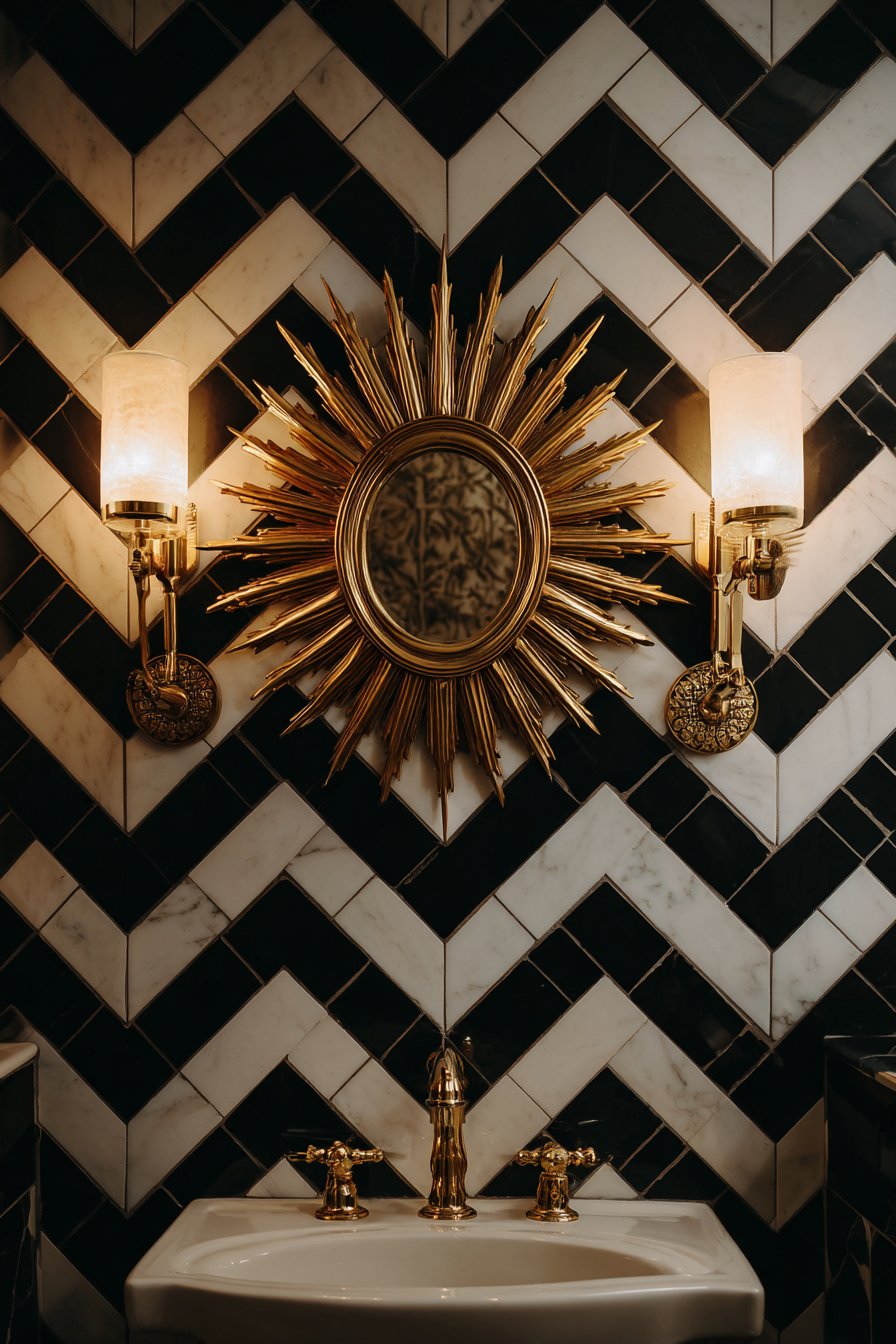
Art Deco design brings the glamour, geometric precision, and luxurious materials of the 1920s and 1930s into contemporary bathrooms, creating spaces that feel sophisticated, theatrical, and unapologetically glamorous. This concept features black and white geometric tile work arranged in a chevron pattern as an accent wall behind a pedestal sink. The bold geometric pattern creates immediate visual drama while demonstrating the Art Deco love of repeated geometric forms and high-contrast palettes. A sunburst mirror in antiqued brass serves as the dramatic focal point, its radiating rays embodying the optimistic, forward-looking spirit of the Art Deco era.
Coordinating brass wall sconces with frosted glass shades flank the mirror, their geometric forms and luxurious materials creating symmetrical glamour. The lighting fixtures serve both functional and decorative purposes, casting soft, flattering light while contributing to the overall theatrical effect. The composition is captured with interior design photography showing the bold geometric patterns and glamorous metallic accents with balanced lighting that emphasizes the tile pattern and reflective surfaces.
The Art Deco bathroom celebrates luxury, craftsmanship, and bold design choices, creating spaces that feel special and celebratory rather than mundane. This style particularly suits powder rooms or guest bathrooms where making a strong style statement is more important than creating a serene retreat. The high-contrast palette and geometric patterns create visual excitement and energy, while the brass elements add warmth and richness. This design appeals to homeowners who appreciate historical design movements and want to create bathrooms with personality, drama, and a sense of occasion.
Key Design Tips:
- Use high-contrast color combinations—black and white, navy and gold, or emerald and cream
- Incorporate geometric patterns—chevrons, hexagons, sunbursts, or stepped forms
- Choose brass, bronze, or copper fixtures for authentic period glamour
- Install statement mirrors with geometric or sunburst designs
- Select geometric tiles for floors or accent walls
- Maintain symmetry in fixture and accessory placement for formal elegance
17. Rustic Weathered Barn Wood
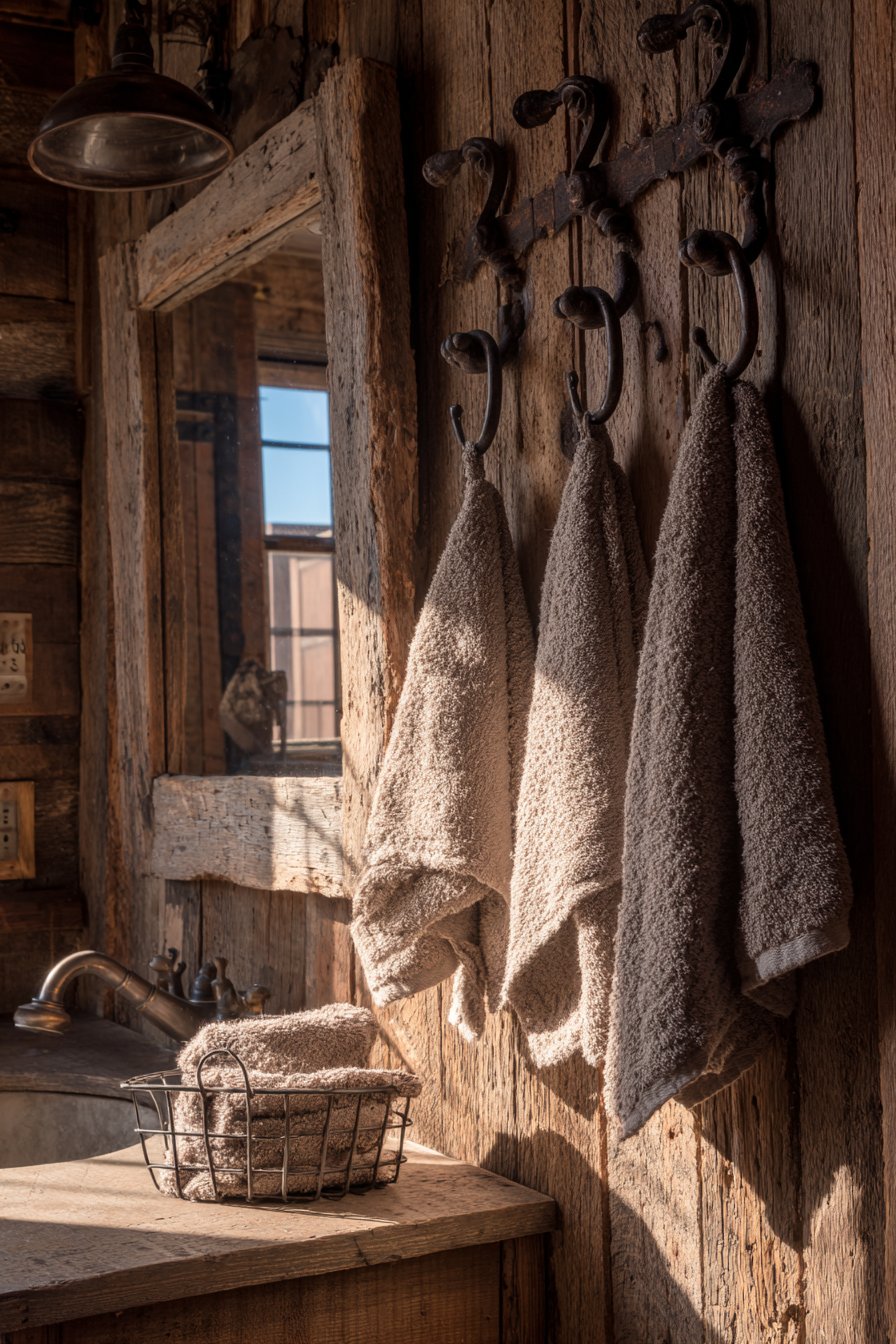
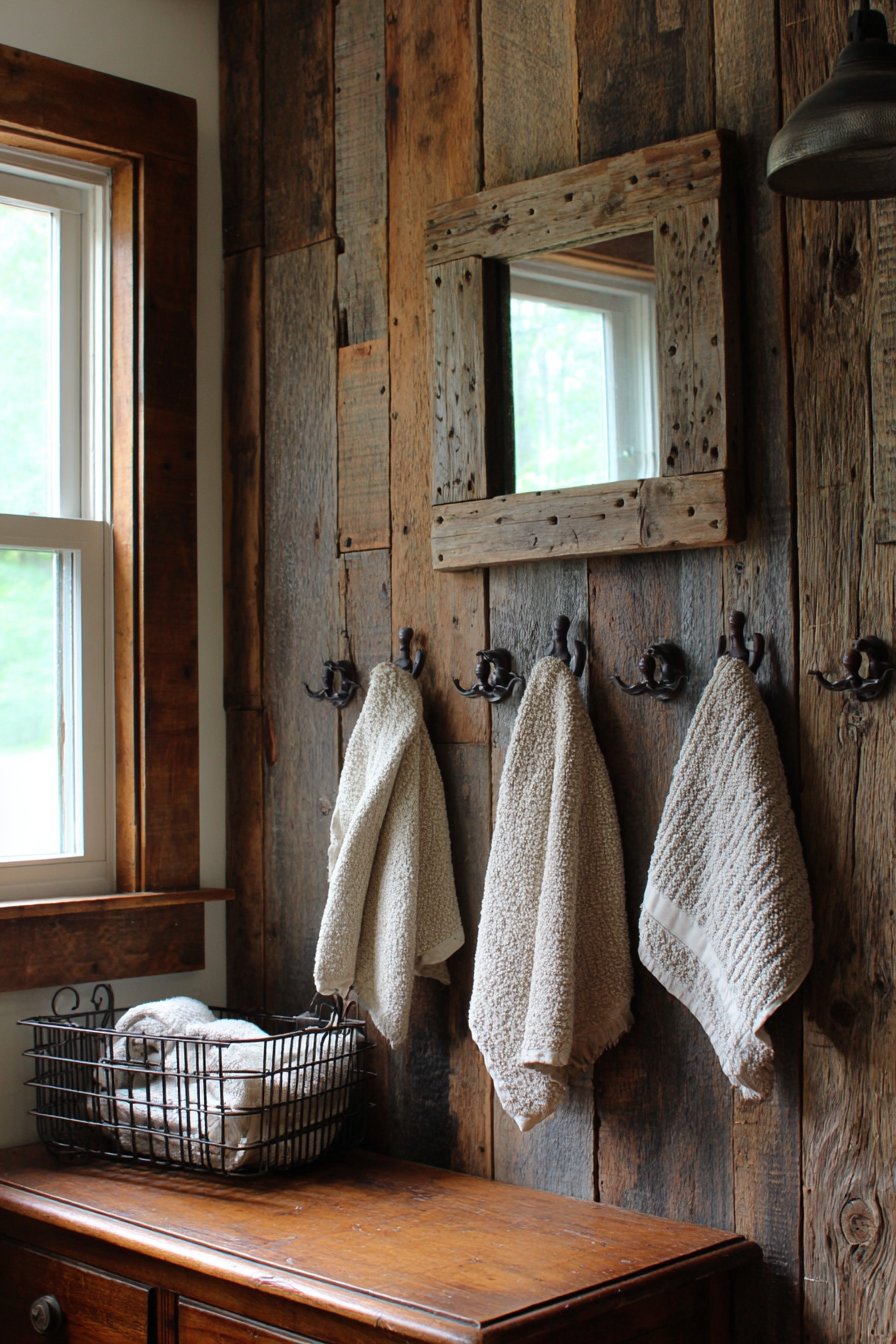
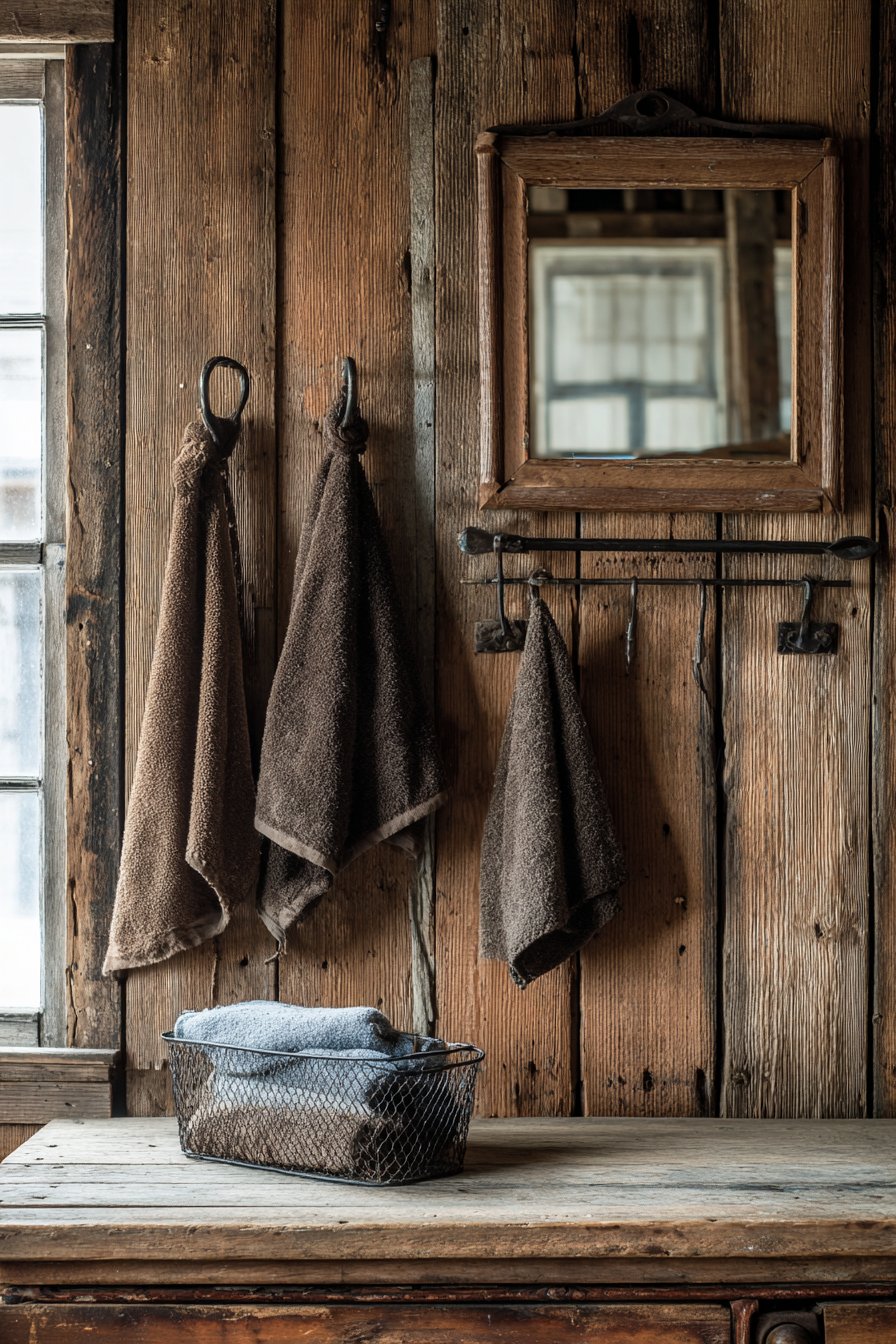
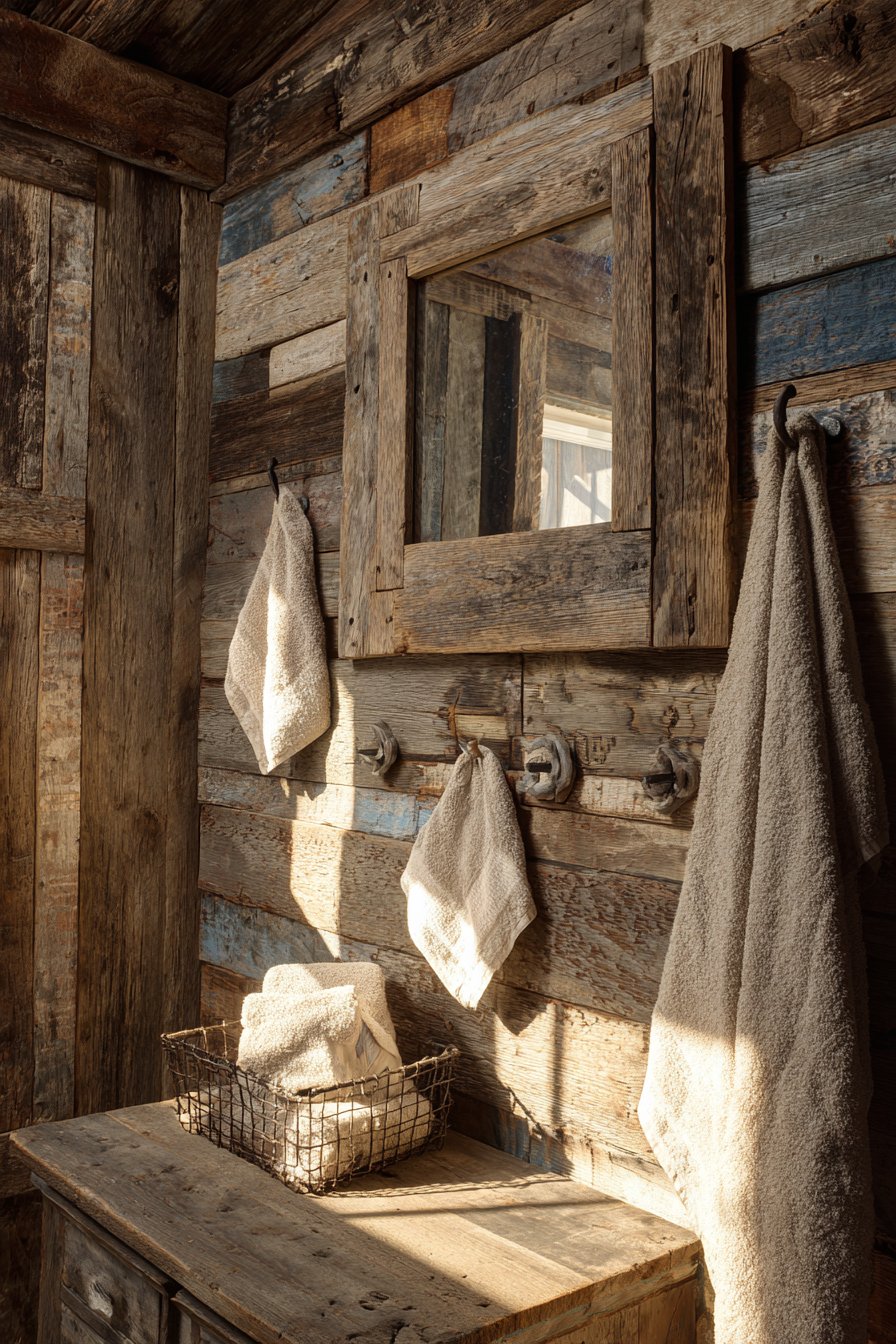
Rustic design celebrates authentic materials, visible age, and the honest beauty of weathered elements, creating bathrooms with soul, character, and connection to rural traditions. This approach features weathered barn wood planks arranged vertically as an accent wall, showcasing the natural patina, color variations, and authentic weathering that only genuine reclaimed materials can provide. The wall displays antique iron hooks holding vintage towels and a small wire basket, transforming functional storage into decorative display through careful selection of period-appropriate accessories. A simple wooden-framed mirror with distressed finish hangs above a repurposed dresser converted to a vanity, demonstrating rustic design’s celebration of creative reuse and adaptive repurposing.
Natural window light emphasizes the authentic weathering and grain variations in the reclaimed wood, highlighting the subtle color shifts from silvered grey to warm brown that occur in wood exposed to decades of weather. Wide-angle photography captures the warm rustic character and practical functionality, showcasing how multiple vintage and reclaimed elements work together to tell a cohesive story. The vertical orientation of the planks draws the eye upward, creating the illusion of greater ceiling height—a useful technique in smaller bathrooms.
The rustic bathroom embraces imperfection as beauty, celebrating the marks and variations that come from age and use rather than hiding or correcting them. This philosophy creates spaces with genuine character that cannot be replicated with new materials or manufactured distressing. The weathered wood adds warmth and textural richness while connecting the bathroom to agricultural heritage and simpler ways of life. This design resonates with homeowners who value authenticity, sustainability through reuse, and the visual and tactile appeal of genuine vintage materials.
Key Design Tips:
- Source authentic reclaimed barn wood rather than purchasing new “distressed” materials
- Arrange planks vertically to create height or horizontally to expand width visually
- Leave wood unsealed or use minimal finish to preserve authentic weathered appearance
- Display vintage items—old towels, wire baskets, or enamelware—for period consistency
- Choose simple, distressed wood frames for mirrors and any artwork
- Install antique iron or brass hooks for functional storage with vintage character
18. Mediterranean Hand-Painted Tiles
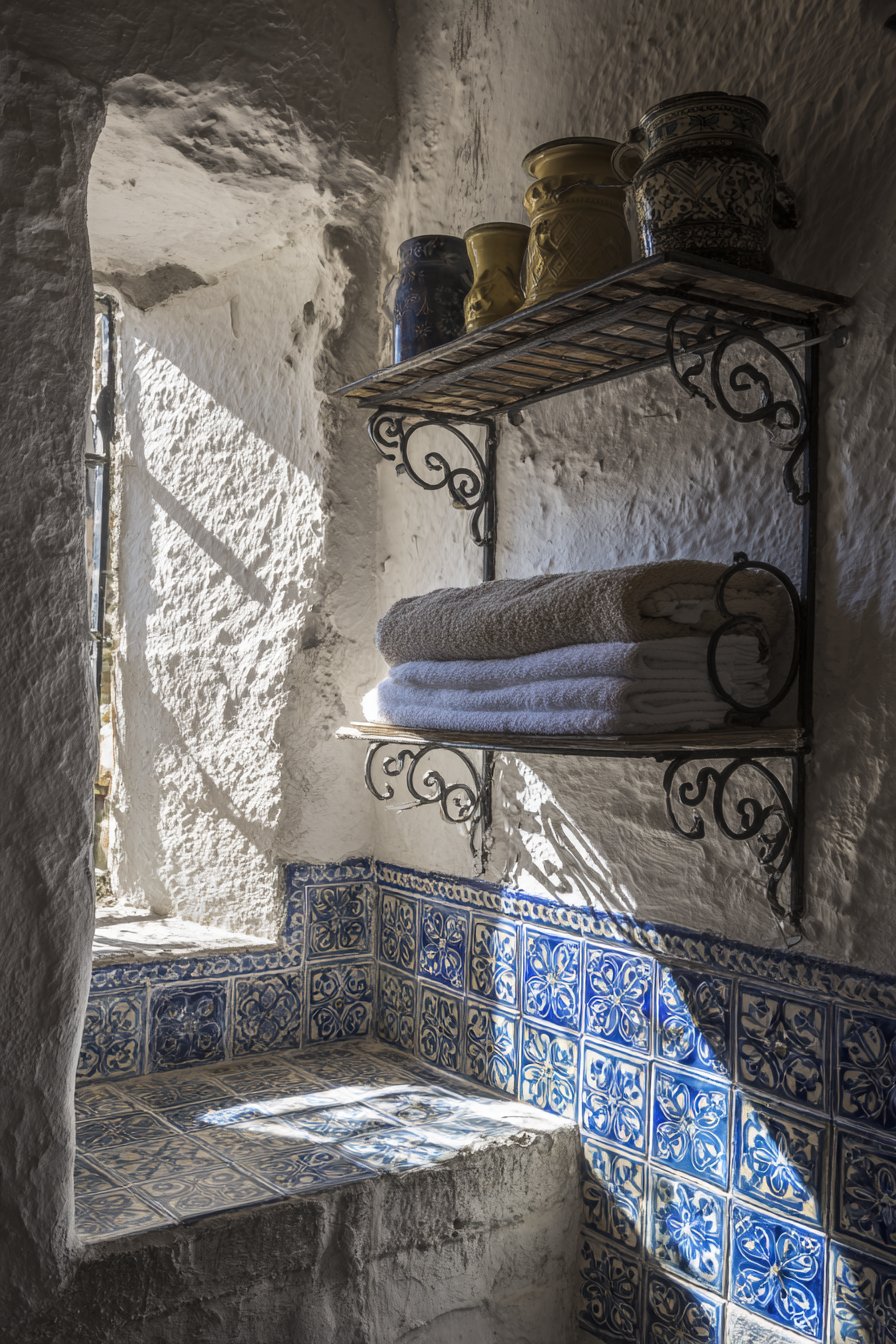
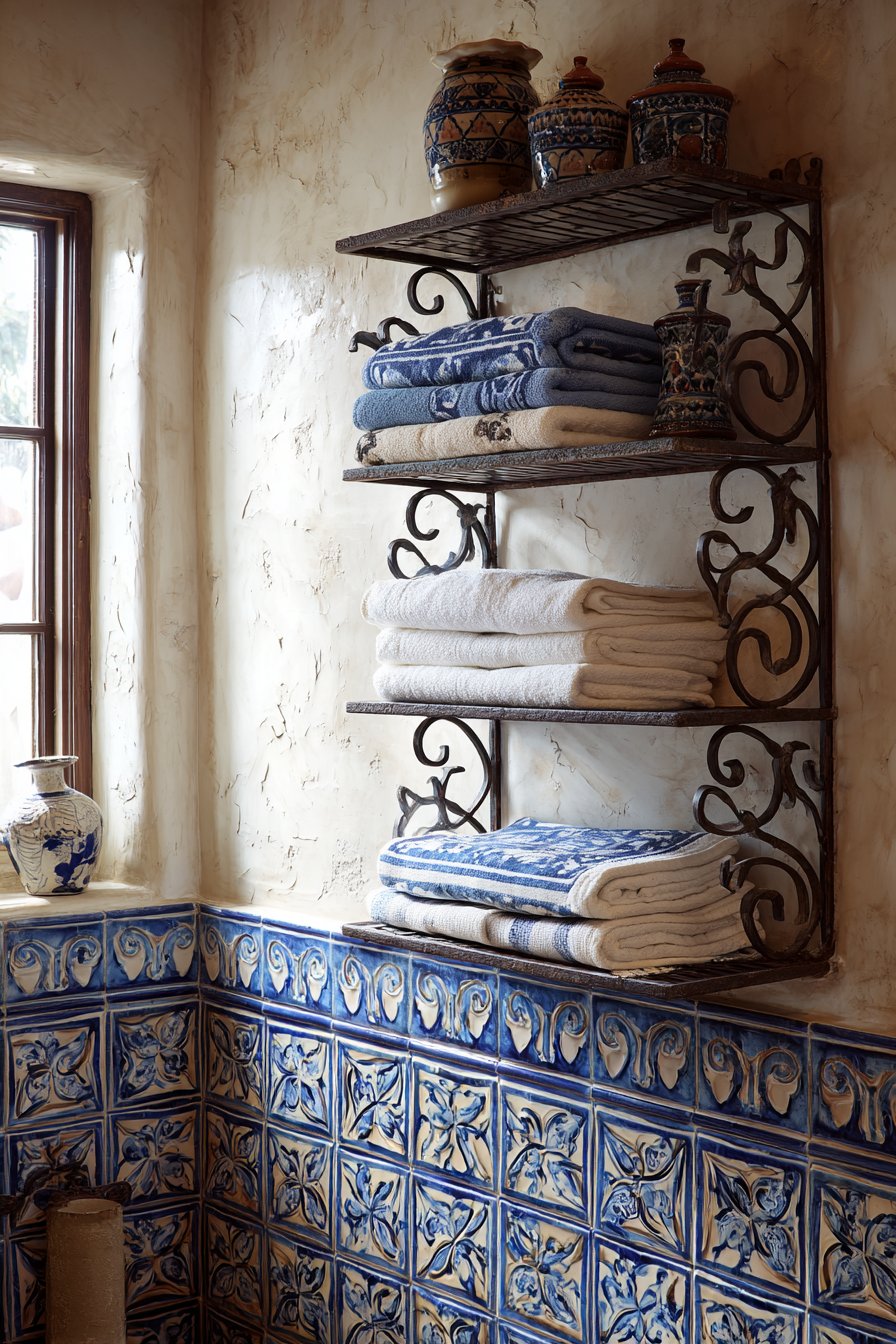
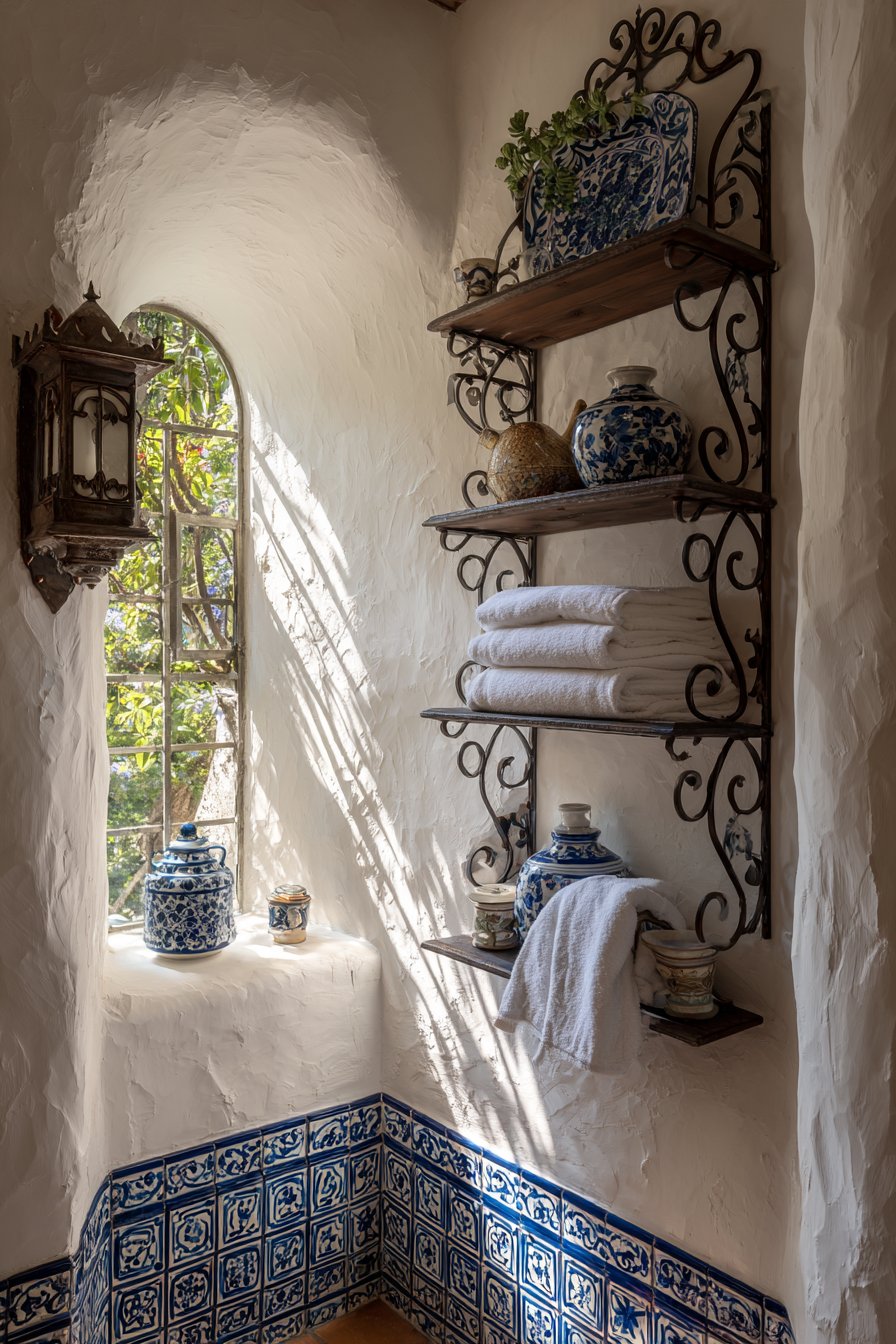
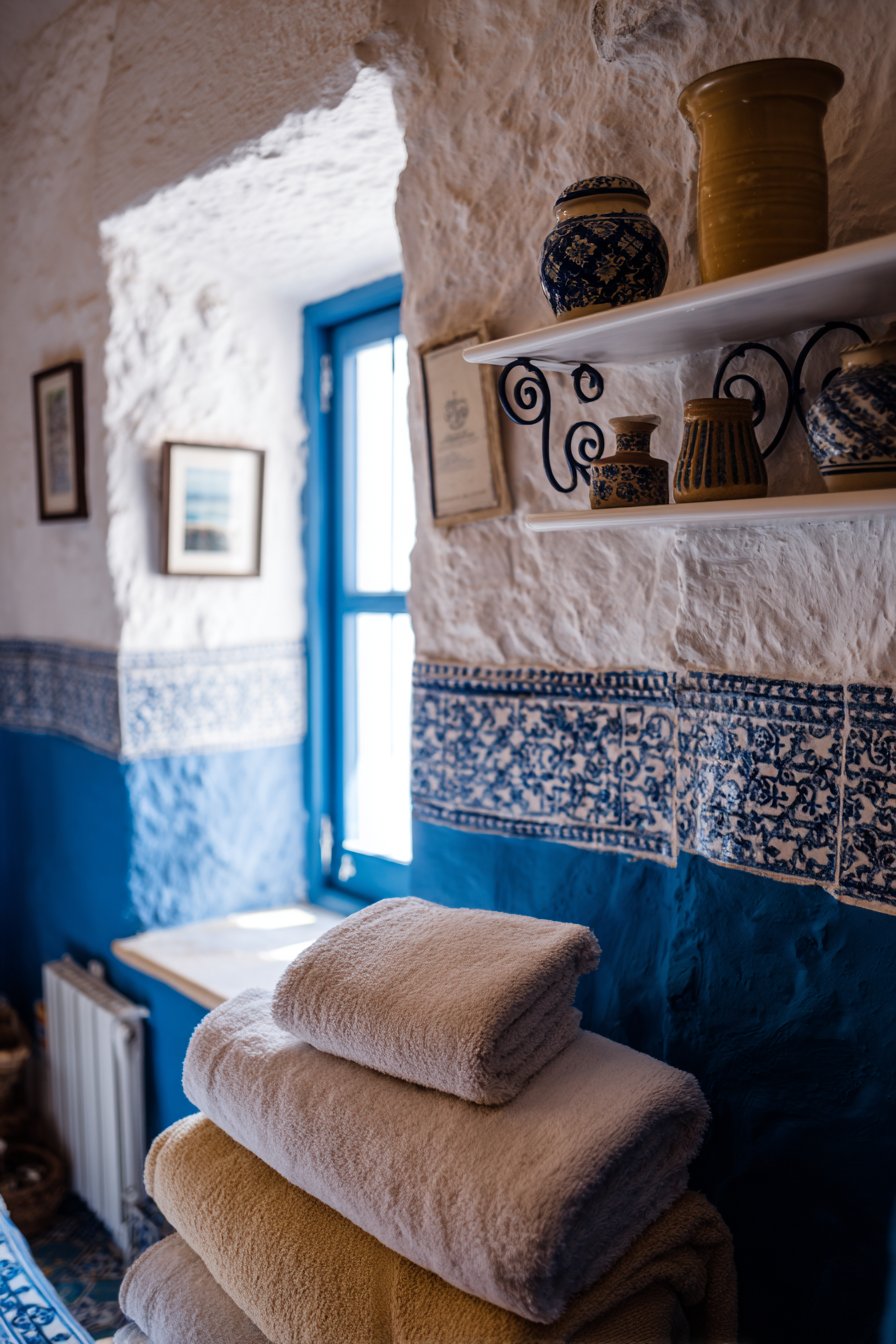
Mediterranean design brings the warmth, color, and artisanal quality of Southern European coastal regions into bathroom spaces, creating environments that feel exotic, handcrafted, and richly cultural. This design showcases hand-painted ceramic tiles in cobalt blue and white traditional patterns creating a decorative border at mid-wall height. The vibrant tile work introduces intense color and intricate pattern while maintaining the organized structure of a defined border treatment. The surrounding walls finished in textured white plaster evoke the sun-drenched stucco walls of Mediterranean villas, their irregular surface catching light and creating subtle shadows throughout the day.
Wrought iron wall-mounted shelving with decorative scrollwork holds folded towels and Mediterranean pottery, the dark iron creating beautiful contrast against the white walls while the scrollwork adds ornamental interest. The pottery—perhaps displaying traditional motifs, rich glazes, or rustic terracotta—extends the Mediterranean color palette and artisanal quality throughout the space. Natural daylight streaming through a small window highlights the vibrant tile work, making the cobalt blue appear even more saturated and jewel-like.
Professional interior photography captures the old-world charm and rich color with attention to tile craftsmanship, showcasing the hand-painted quality and slight variations that distinguish artisanal work from machine-made products. The Mediterranean bathroom celebrates color, pattern, and handcrafted quality, creating spaces that feel collected during travels rather than purchased all at once. This design transports users to sun-drenched coastal villages, bringing vacation atmosphere into everyday life. It appeals to homeowners who appreciate bold color, traditional crafts, and design that celebrates cultural heritage.
Key Design Tips:
- Select hand-painted tiles with traditional Mediterranean patterns—geometric, floral, or arabesque
- Use tiles as decorative borders, backsplashes, or accent areas rather than covering all walls
- Choose cobalt blue and white as the primary palette with terracotta or ochre as accents
- Apply textured white plaster or limewash to walls for authentic Mediterranean surface quality
- Install wrought iron fixtures, shelving, and accessories with traditional scrollwork details
- Display Mediterranean pottery, ceramics, or woven baskets as decorative elements
19. Contemporary Three-Dimensional Texture
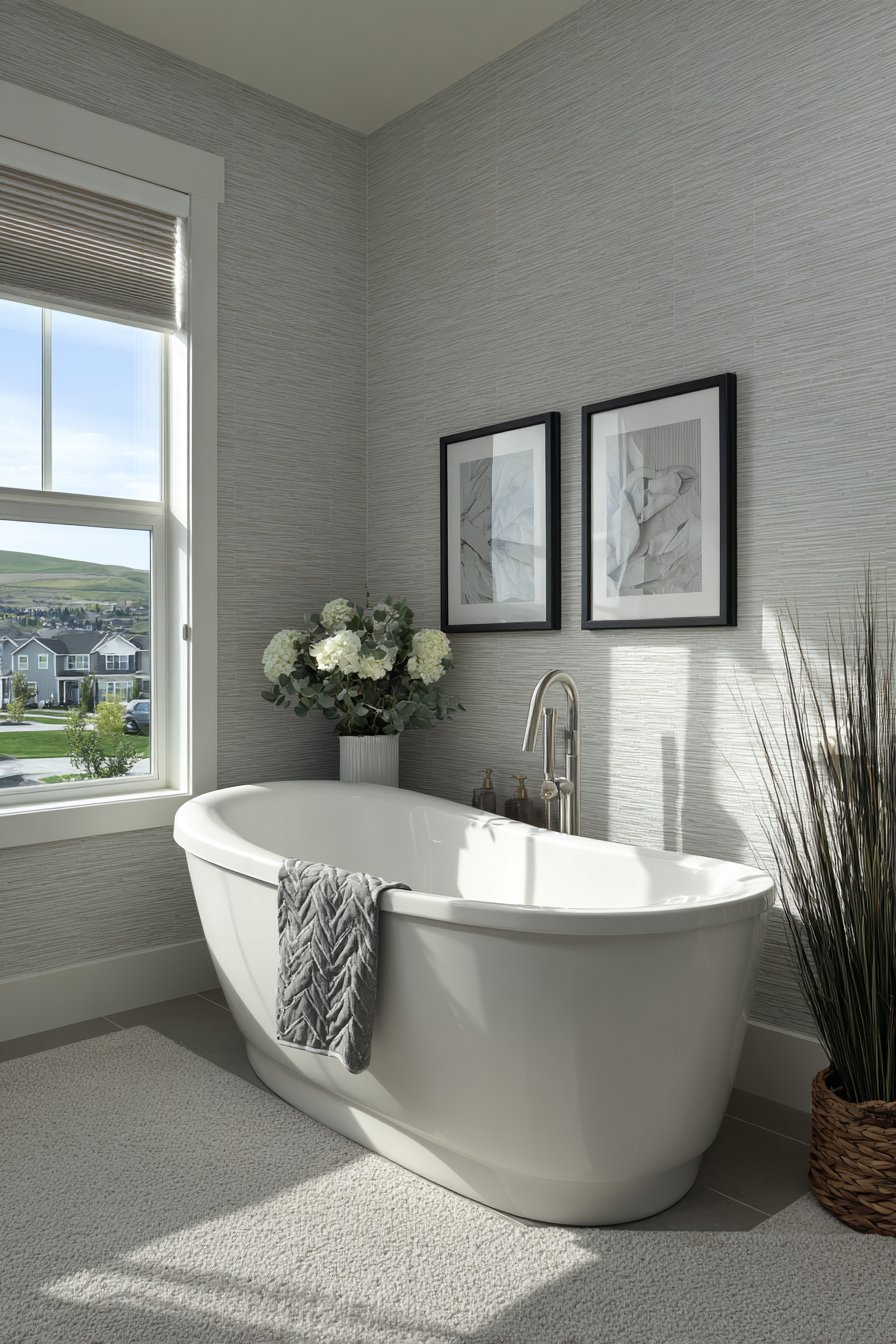
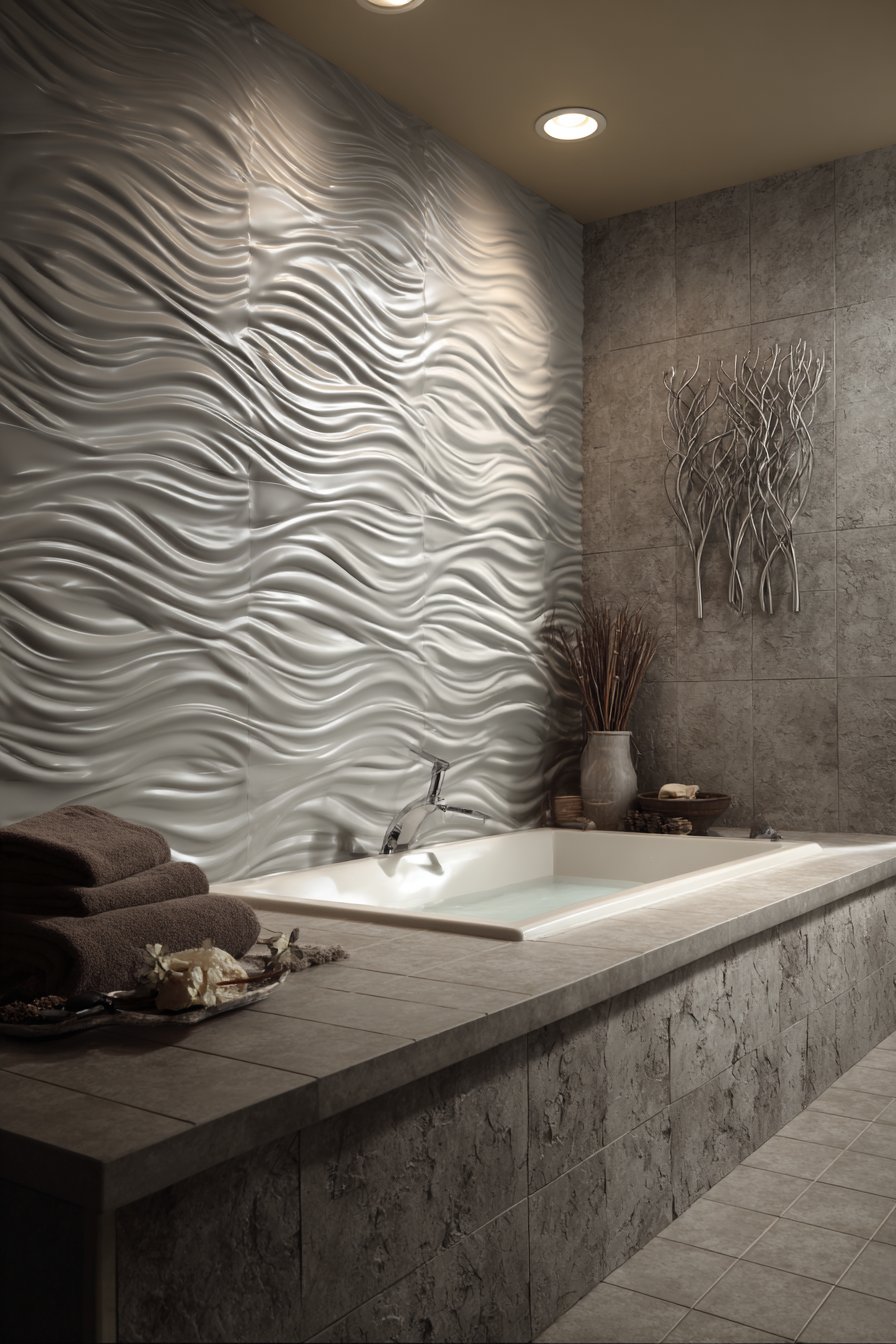
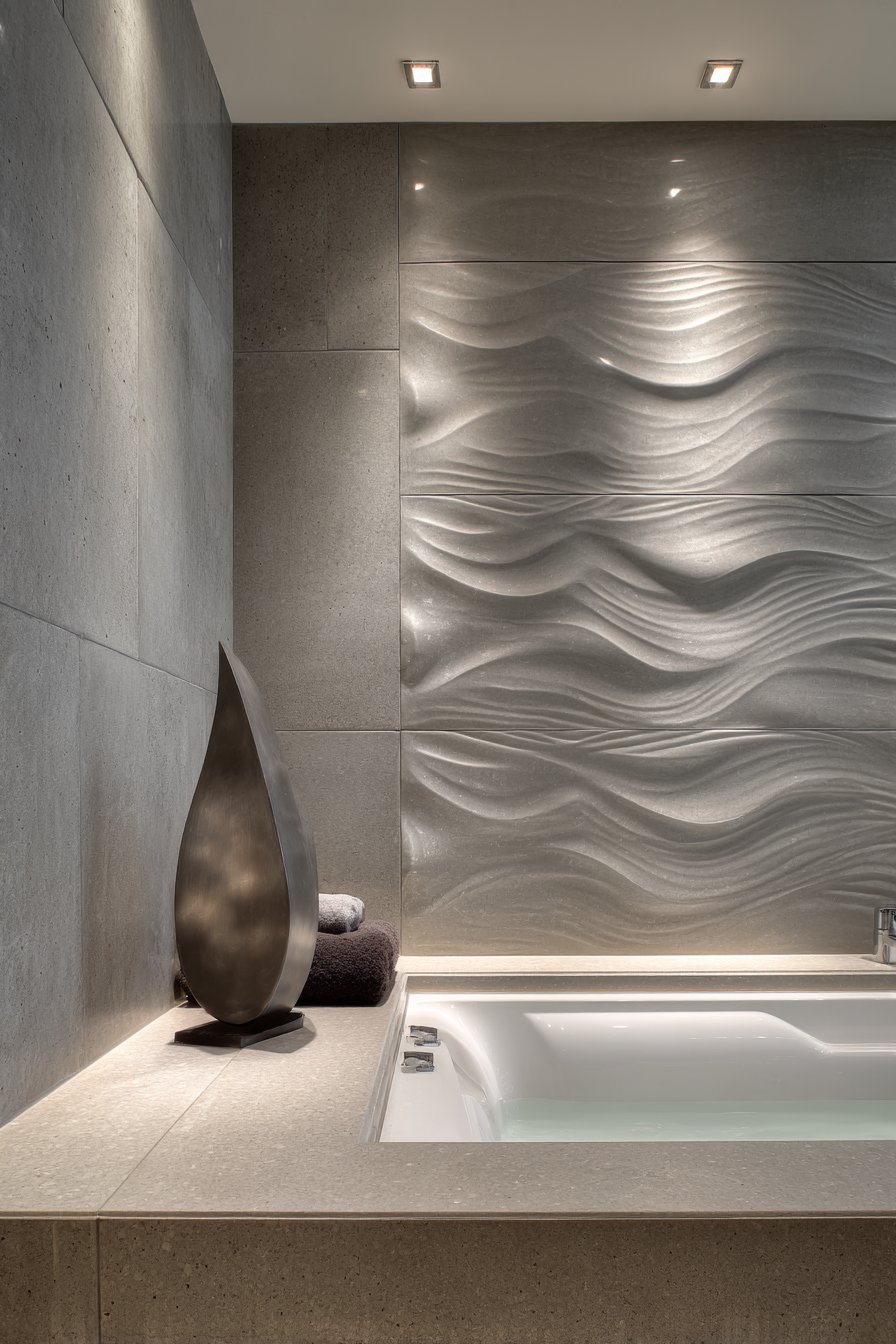
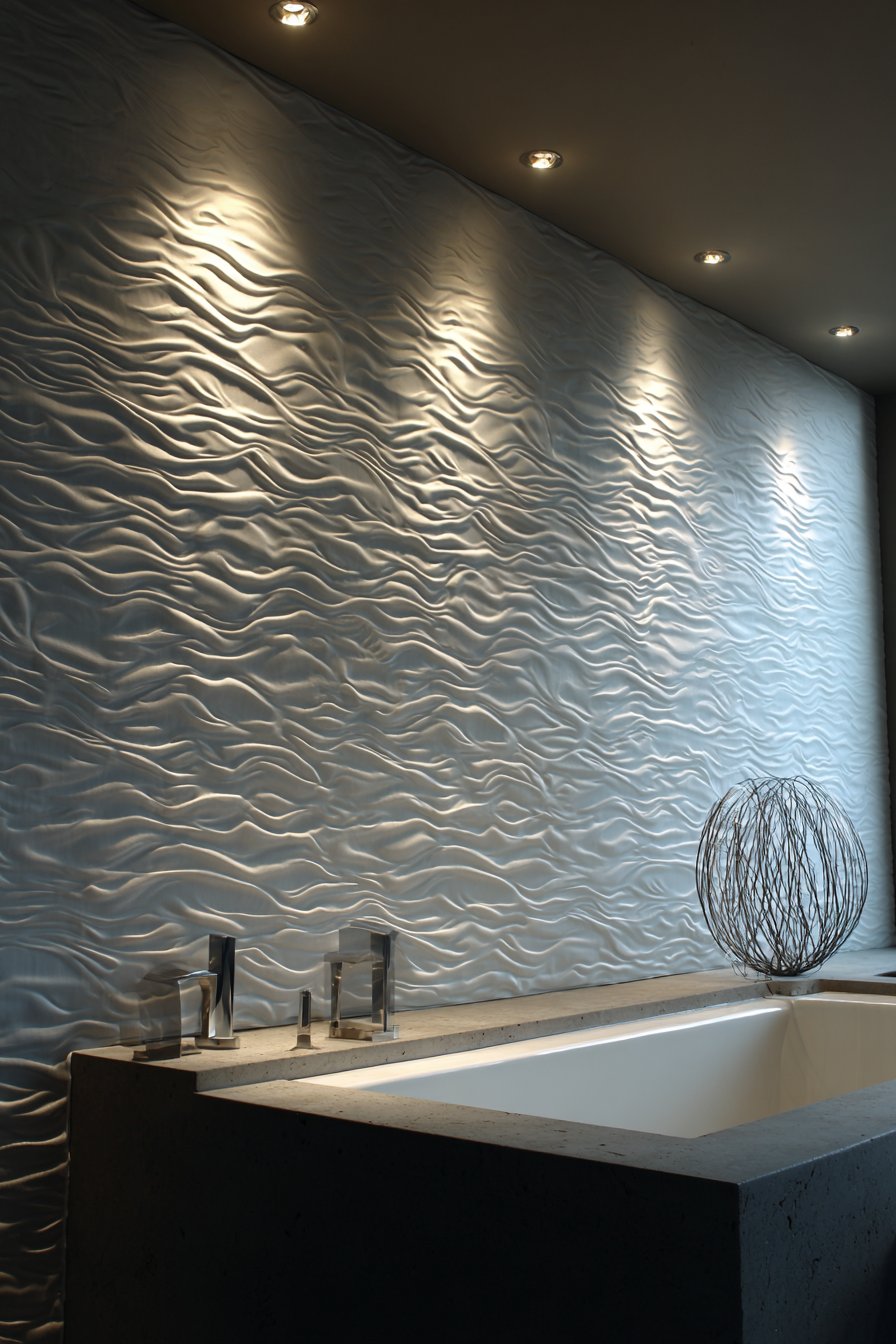
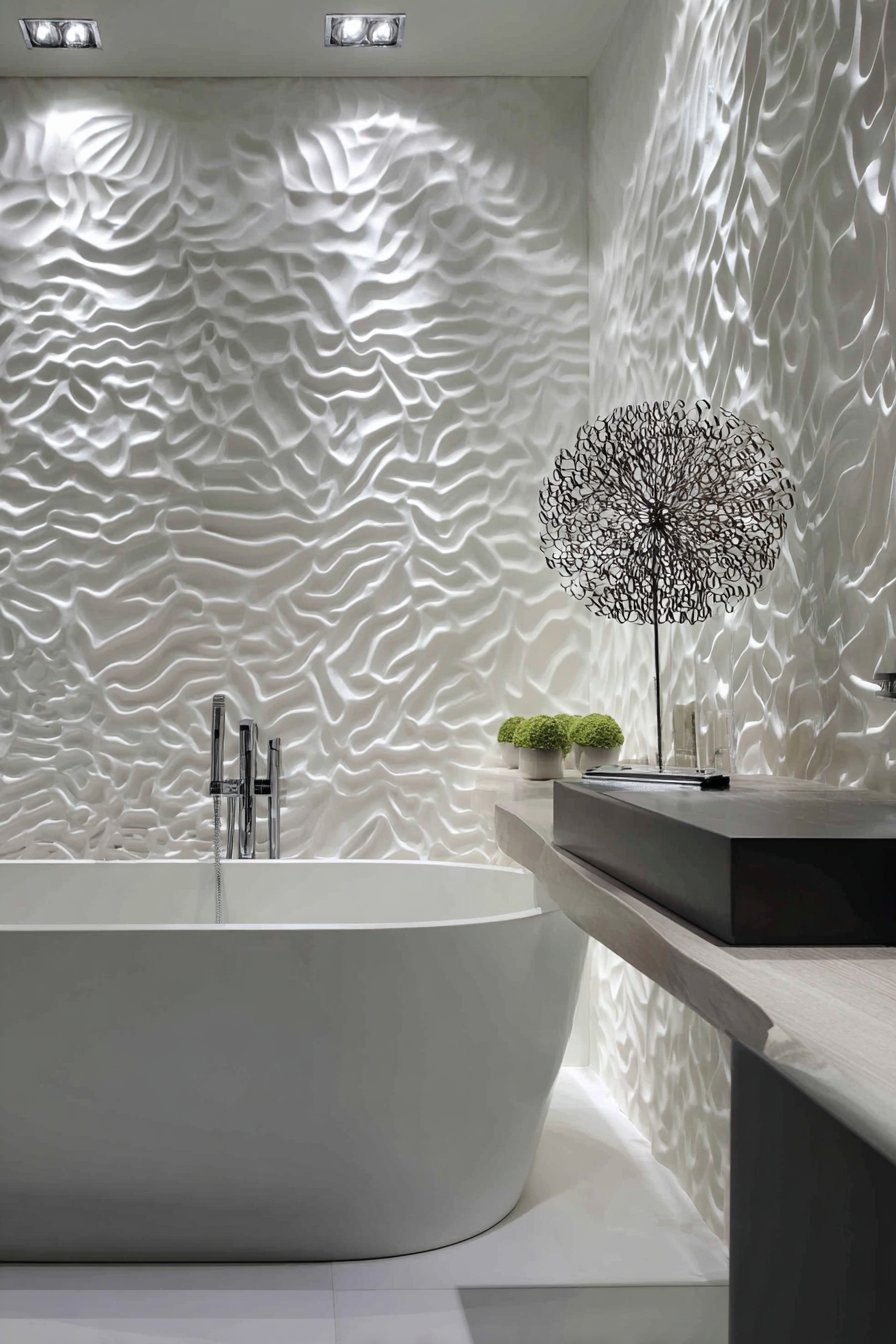
Contemporary design continues to push boundaries in materials and surface treatments, creating walls that go beyond flat paint or tile to become sculptural elements in their own right. This concept features a three-dimensional textured wall panel in soft grey with organic wave patterns covering the wall behind the bathtub. The dimensional surface creates subtle shadows and visual interest that changes throughout the day as light angles shift, ensuring the wall never appears static or flat. A single piece of modern abstract metal wall sculpture in brushed steel adds an artistic element that complements rather than competes with the textured wall.
Recessed lighting is strategically placed to highlight the wall texture, creating dramatic shadows that emphasize the three-dimensional quality of the panels. This thoughtful lighting approach transforms the textured wall into a constantly changing artwork, with the play of light and shadow creating new patterns and emphasizing different aspects of the texture throughout the day. Interior design photography with balanced exposure captures the sophisticated texture play and modern sculptural quality, demonstrating how walls can become the artwork themselves rather than merely serving as backdrop for hung objects.
The contemporary textured wall demonstrates how advancing materials technology enables new possibilities in wall treatment, moving beyond historical limitations of paint, wallpaper, or flat tile. These three-dimensional panels—available in various materials from composite boards to ceramic to eco-friendly options—offer designers and homeowners unprecedented opportunities to create architectural interest and sculptural beauty. This approach particularly suits modern bathrooms where clean lines and minimal ornamentation are valued but textural interest and visual complexity are still desired.
Key Design Tips:
- Select dimensional wall panels with organic, flowing patterns rather than rigid geometric forms
- Choose neutral colors—grey, white, or beige—to emphasize texture over color
- Install strategic lighting to highlight three-dimensional surface and create shadow play
- Pair textured walls with minimal decoration to let the wall treatment be the focal point
- Consider moisture-resistant materials suitable for humid bathroom environments
- Balance the visual weight of textured walls with simpler treatments on other surfaces
20. French Country Elegance
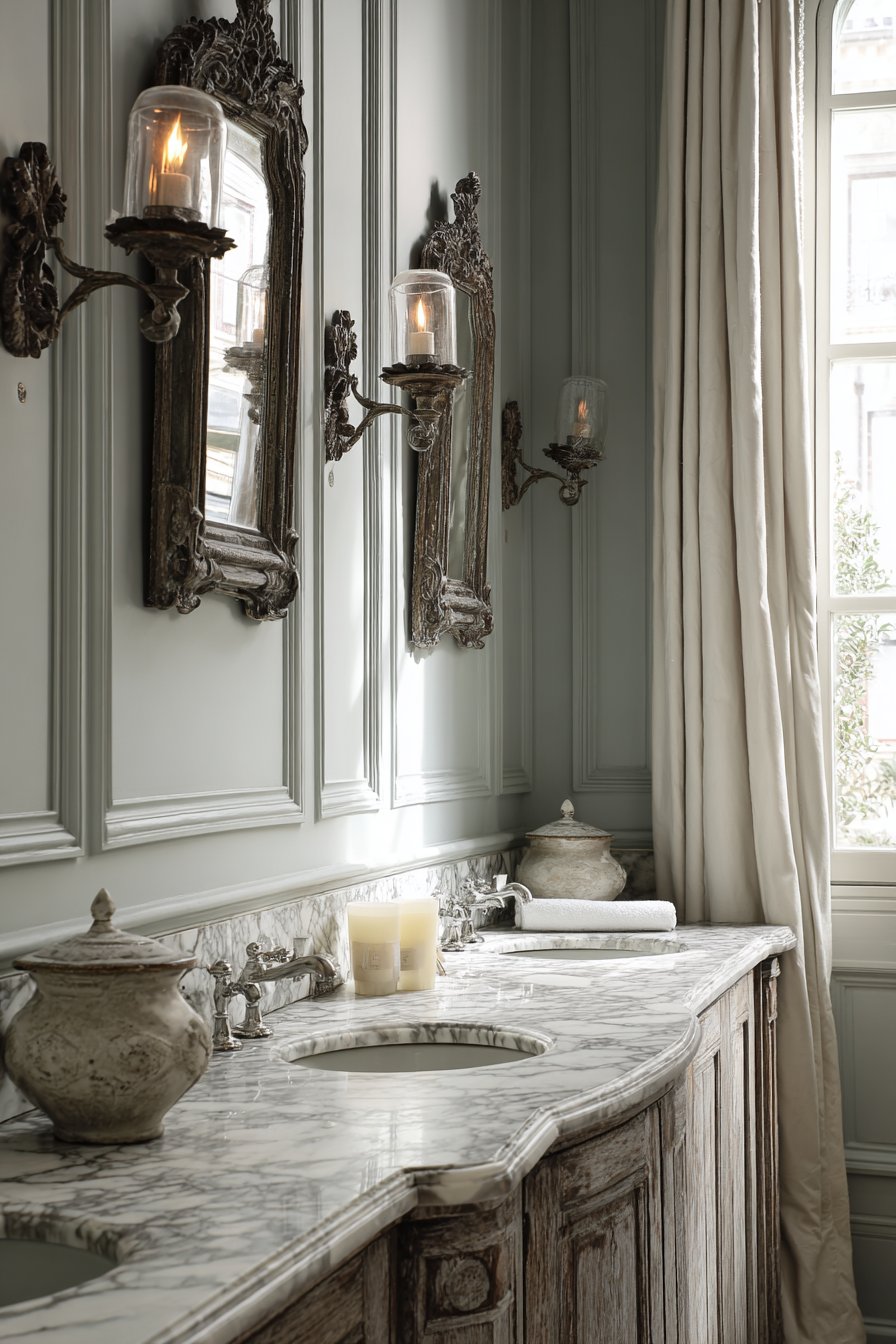
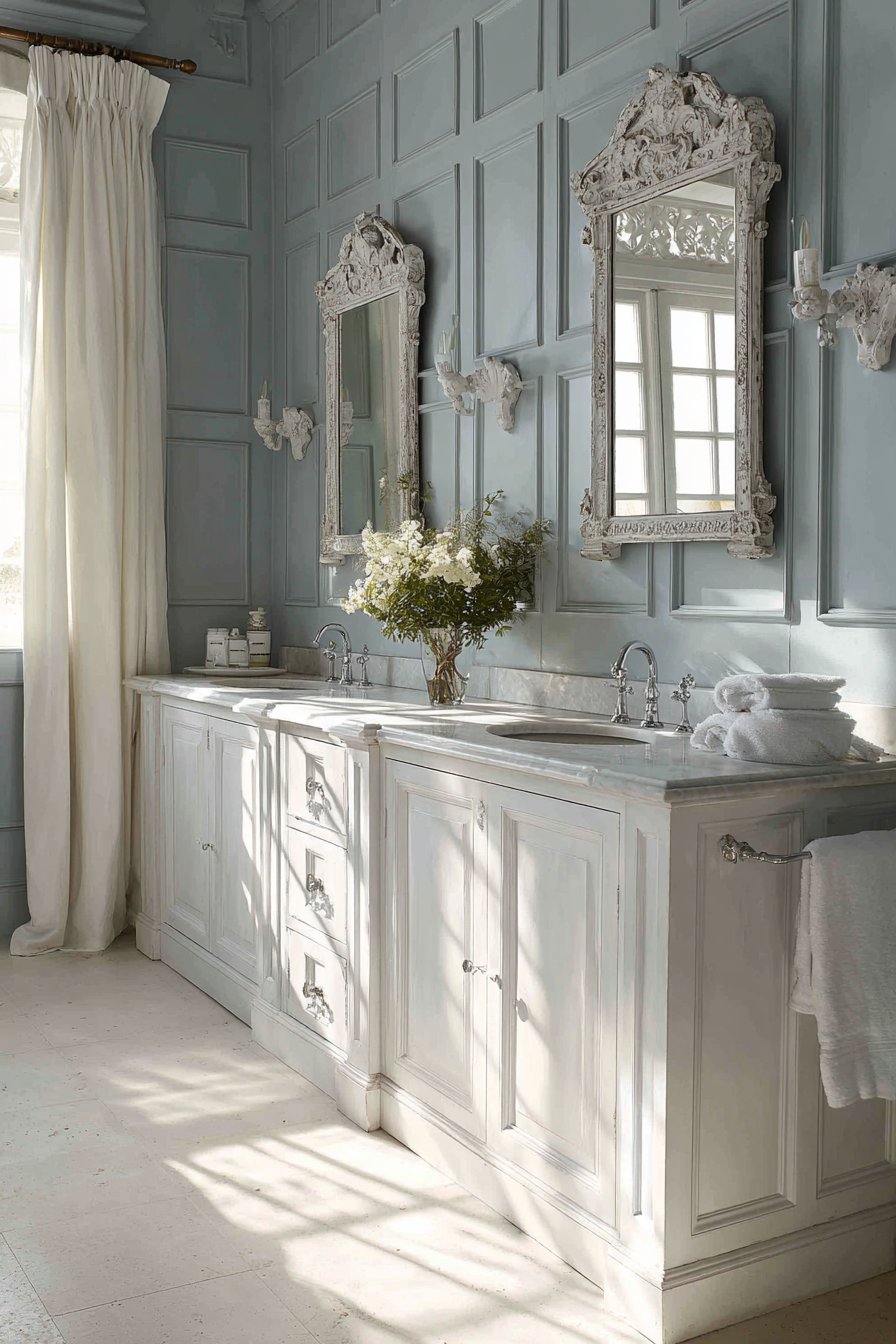
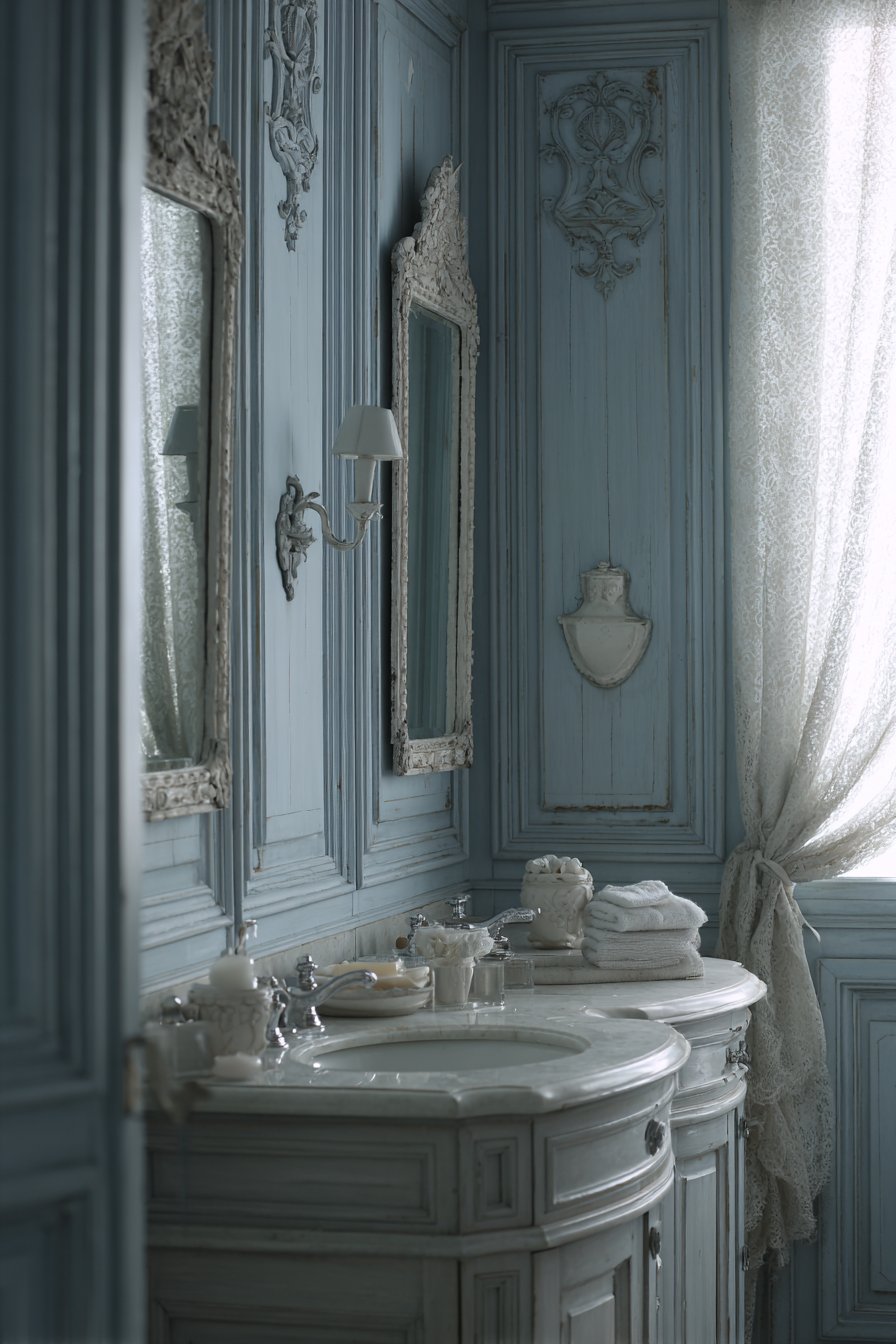
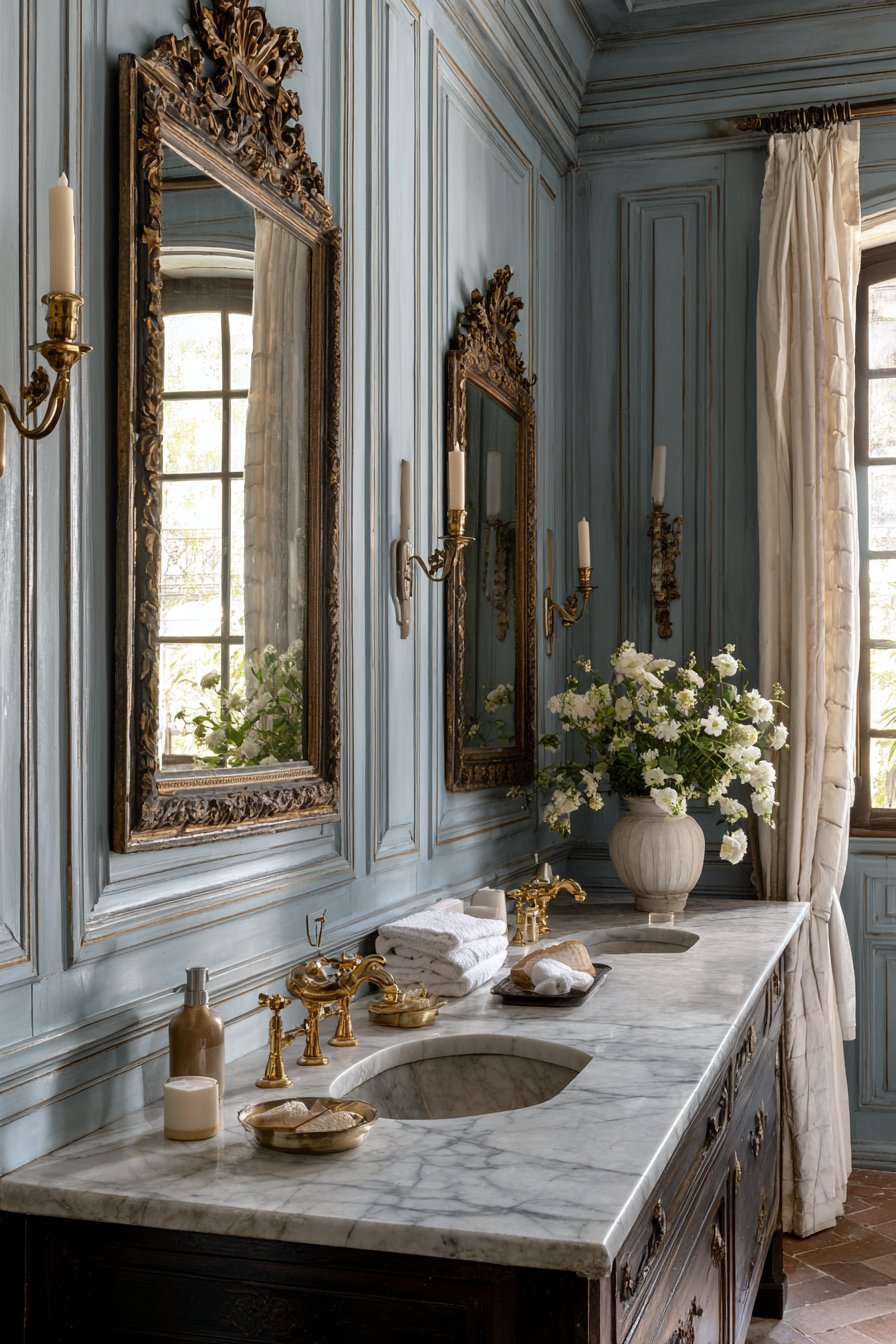
French country design brings the refined yet relaxed elegance of rural French interiors into bathroom spaces, creating environments that feel both sophisticated and comfortable, formal yet lived-in. This approach features soft blue-grey painted walls with white painted wooden wall paneling in classic moulding patterns. The paneling—perhaps raised panels, wainscoting, or picture frame moulding—adds architectural character and traditional elegance while the blue-grey paint introduces soft, sophisticated color. Antique-style framed mirrors with ornate carved details hang above a marble countertop vanity, their decorative frames adding French country’s signature romance and refinement.
White ceramic wall-mounted soap dishes and towel holders maintain the traditional aesthetic while providing necessary functionality. These period-appropriate accessories demonstrate French country’s attention to detail and belief that even utilitarian objects should be beautiful. Natural lighting from a window with white linen curtains creates soft illumination that enhances the gentle color palette and emphasizes the carved details of the mirror frames. The linen curtains—with their natural texture and relaxed drape—add softness and organic quality that prevents the space from feeling too formal or rigid.
Professional photography captures the refined elegance and timeless country French styling, showcasing how traditional European design principles create bathrooms that feel established, gracious, and effortlessly elegant. French country design occupies the perfect middle ground between rustic farmhouse and formal traditional—it’s refined enough to feel sophisticated but relaxed enough to feel welcoming and comfortable. This style appeals to homeowners who appreciate European aesthetics, value traditional craftsmanship, and want bathrooms that feel like they belong in a countryside manor house.
Key Design Tips:
- Install classic wall moulding—raised panels, wainscoting, or picture frame details
- Paint walls in soft, sophisticated colors—blue-grey, dusty lavender, or pale sage
- Choose mirrors with ornate, carved wood frames in white or distressed finishes
- Select marble or marble-look countertops for elegant, natural beauty
- Use white or cream ceramic accessories and fixtures for clean, traditional appeal
- Install white linen or lightweight cotton window treatments for soft, natural texture
21. Eclectic Plate Collection Display
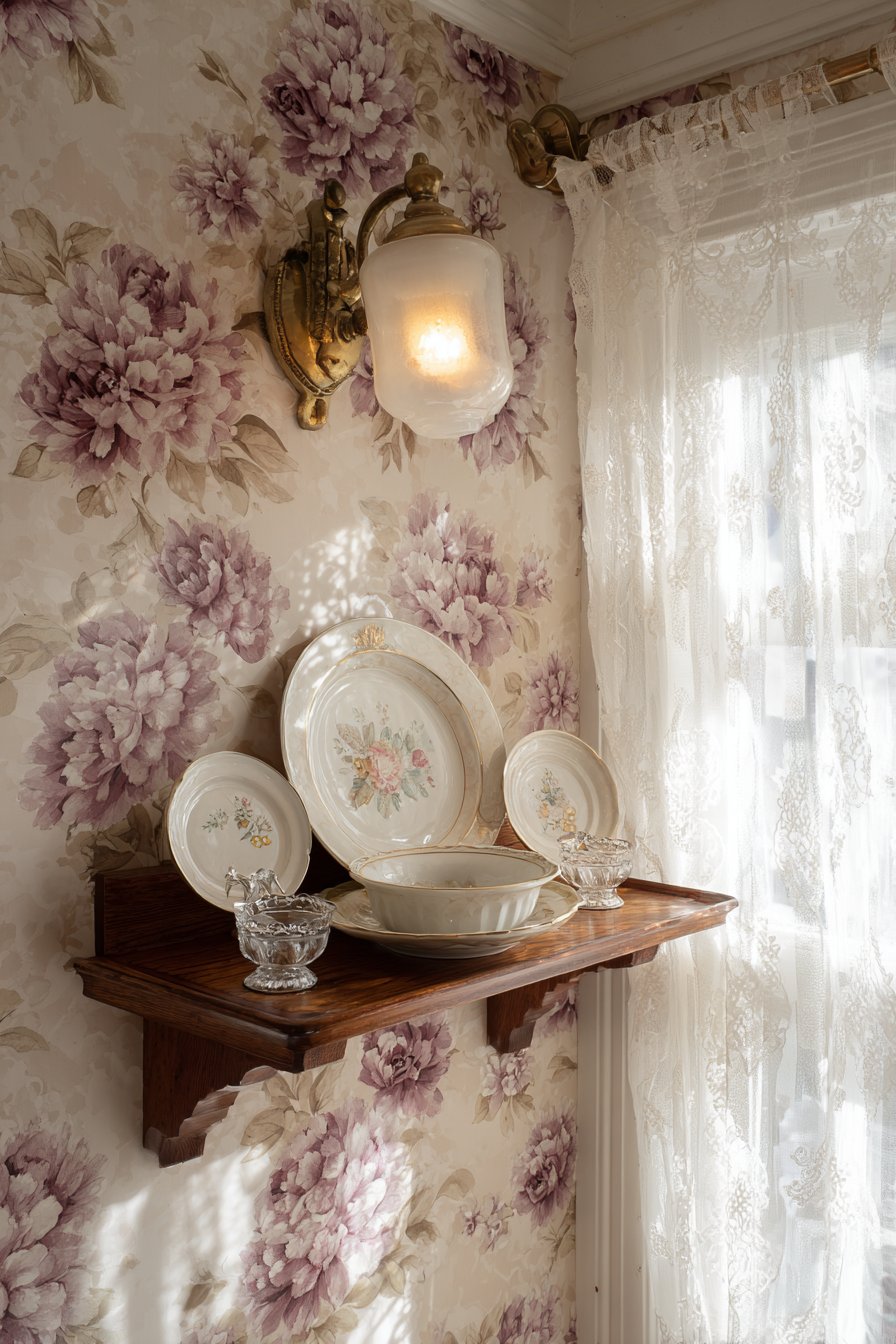
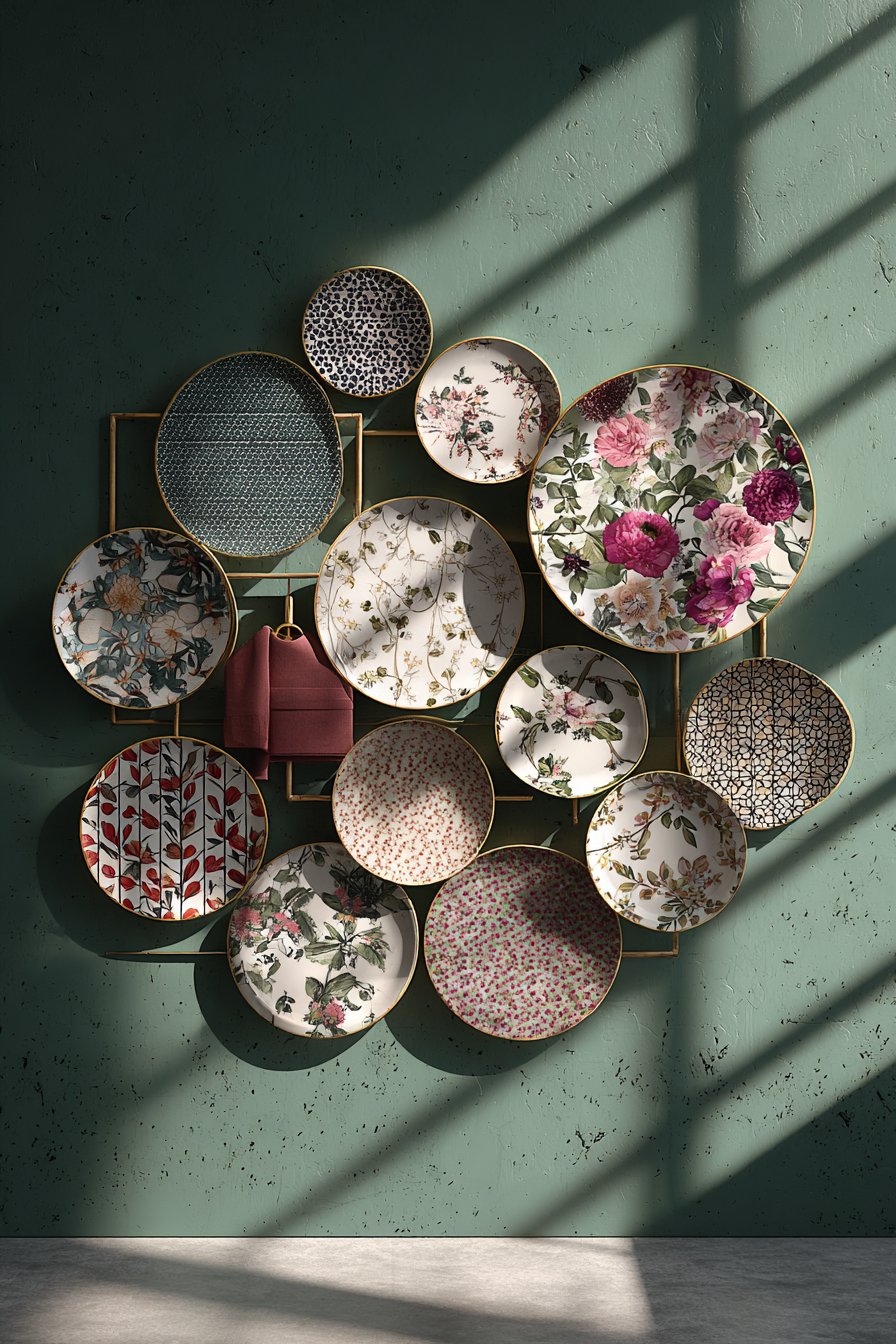
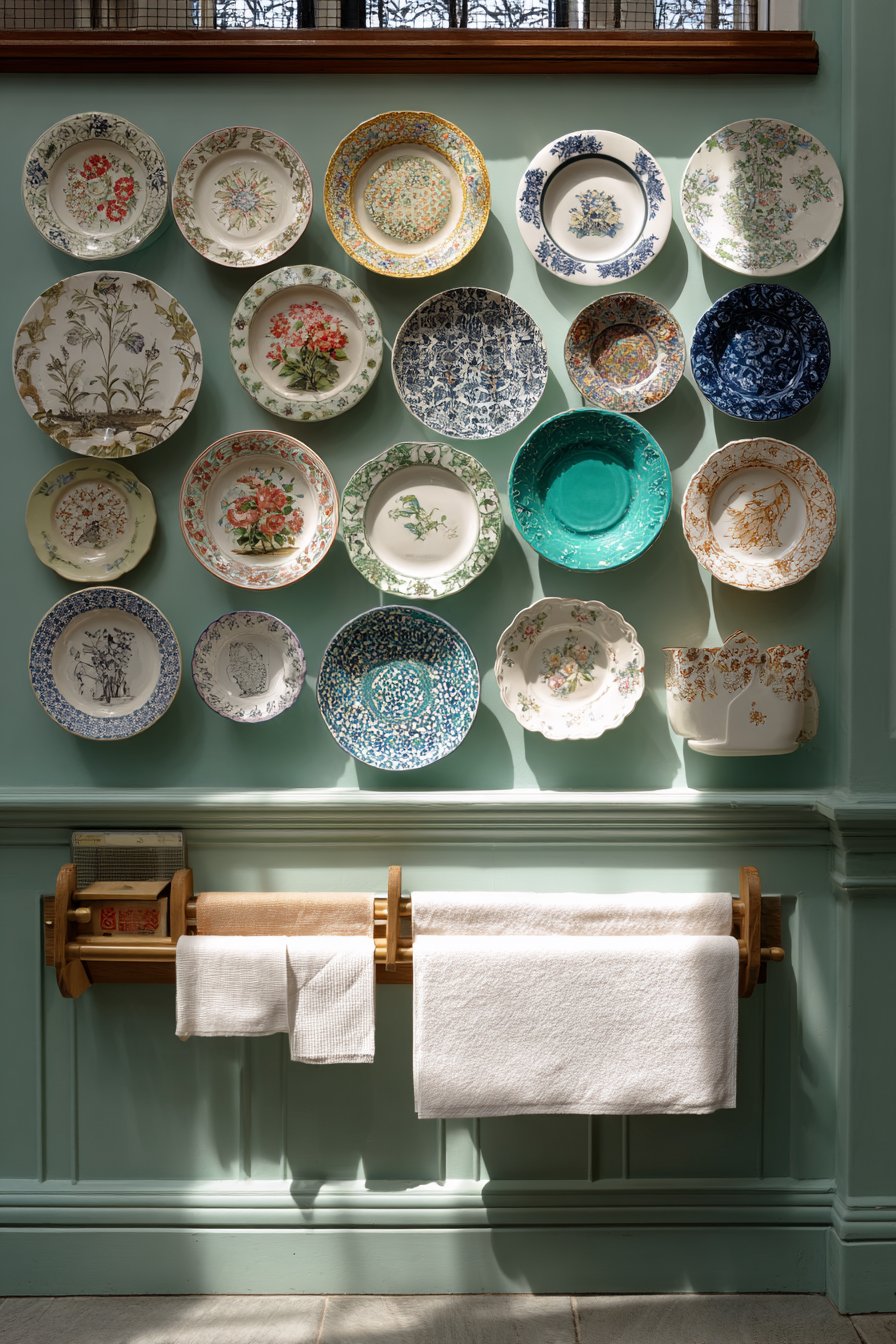
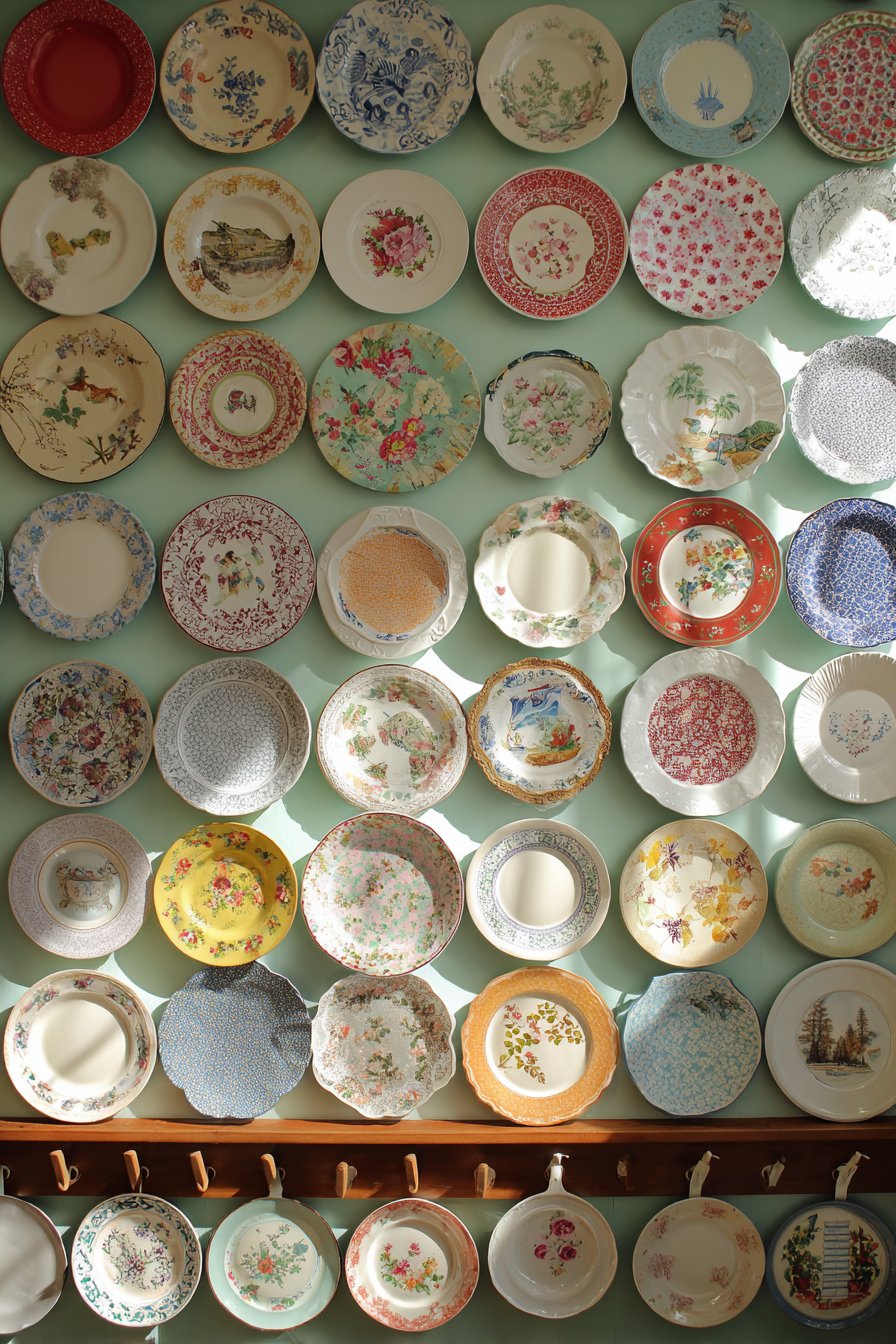
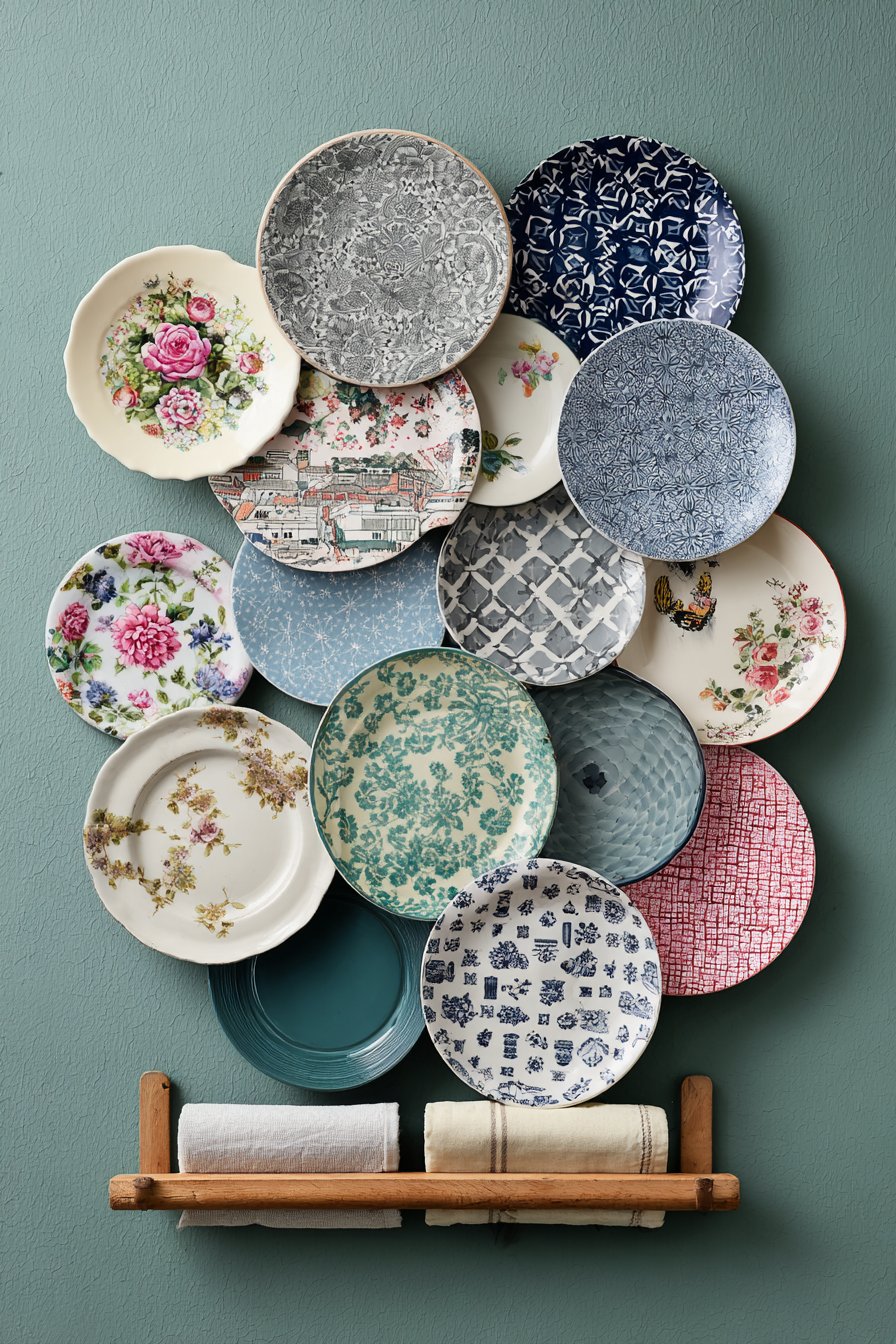
Eclectic design celebrates personality, collected treasures, and the artful mixing of patterns, periods, and styles, creating bathrooms that feel highly personal and impossible to replicate. This design showcases a mix of vintage plates in various sizes and patterns arranged in an artful cluster on a sage green painted wall. The collection includes floral, geometric, and solid colored plates creating visual interest through variety while the consistent round forms create underlying unity. This plate wall demonstrates eclectic design’s core principle—mixing diverse elements within a coherent framework creates visual richness without chaos.
A small wooden peg rail below holds hand towels, adding functional storage while maintaining the collected, vintage aesthetic. The peg rail—perhaps painted in a complementary color or left in natural wood—provides both practical utility and additional visual interest at a lower level, balancing the composition. Natural daylight creates gentle shadows that emphasize the dimensional quality of the plate arrangement, with the raised rims of the plates catching light and creating subtle depth throughout the day.
Wide-angle interior photography captures the curated collector aesthetic and playful personality that define eclectic design. The plate wall transforms everyday objects into artwork through thoughtful selection, arrangement, and unexpected context—plates intended for dining rooms or kitchens become bathroom decoration through creative reimagining. This approach resonates with homeowners who love collecting, thrift shopping, and creating spaces that tell personal stories rather than following prescribed design formulas. The eclectic bathroom celebrates individuality and the joy of discovery, creating spaces that reveal the owner’s interests, travels, and aesthetic preferences.
Key Design Tips:
- Collect plates in varied patterns but within a cohesive color palette
- Mix different sizes—dinner plates, salad plates, and saucers—for dimensional variety
- Arrange asymmetrically for organic, collected feel rather than rigid grid
- Use plate hangers designed specifically for wall display to ensure secure mounting
- Choose background wall colors that complement rather than compete with plate patterns
- Start with a central piece and build the collection outward, adding plates over time
22. Minimalist Zen Concrete
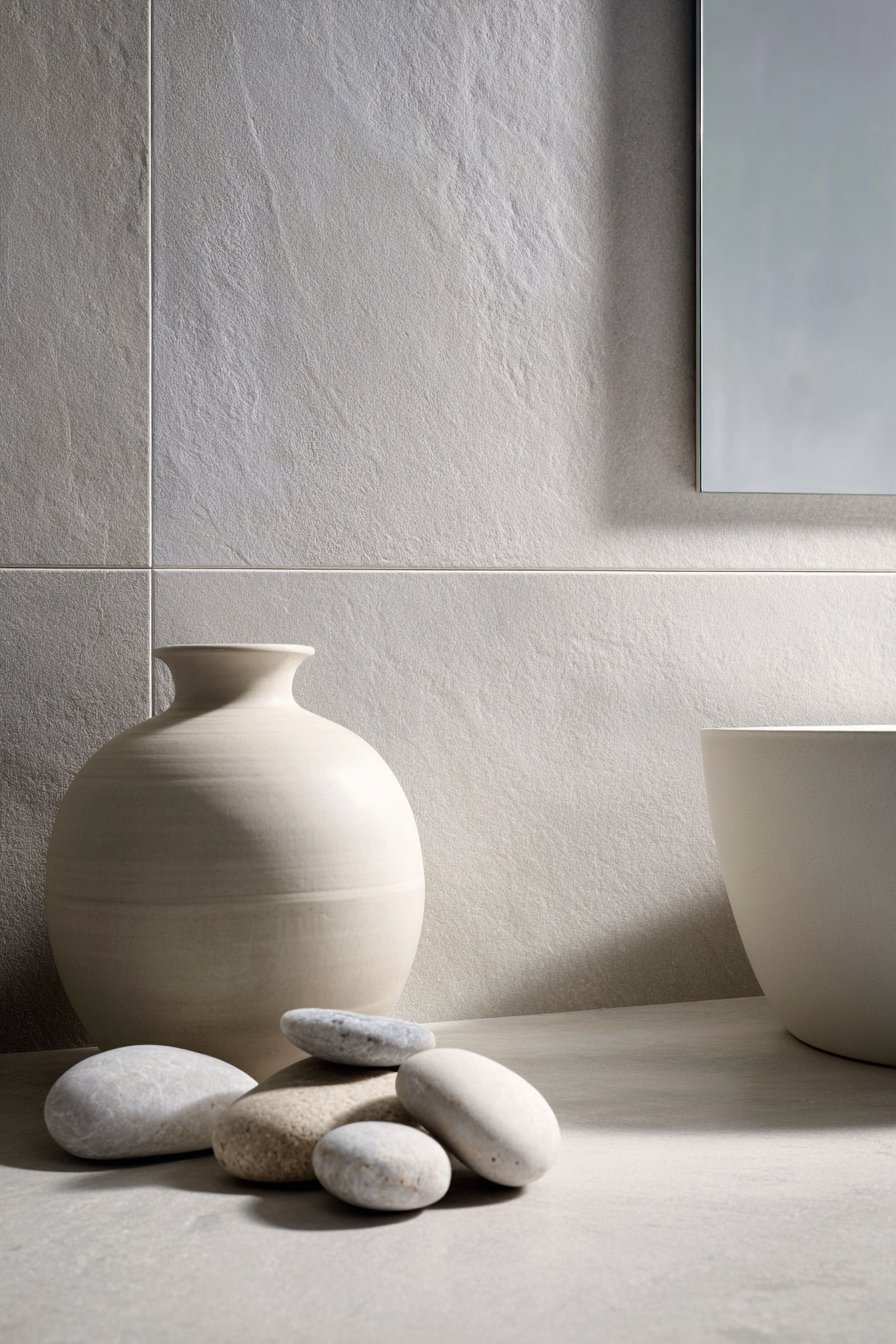
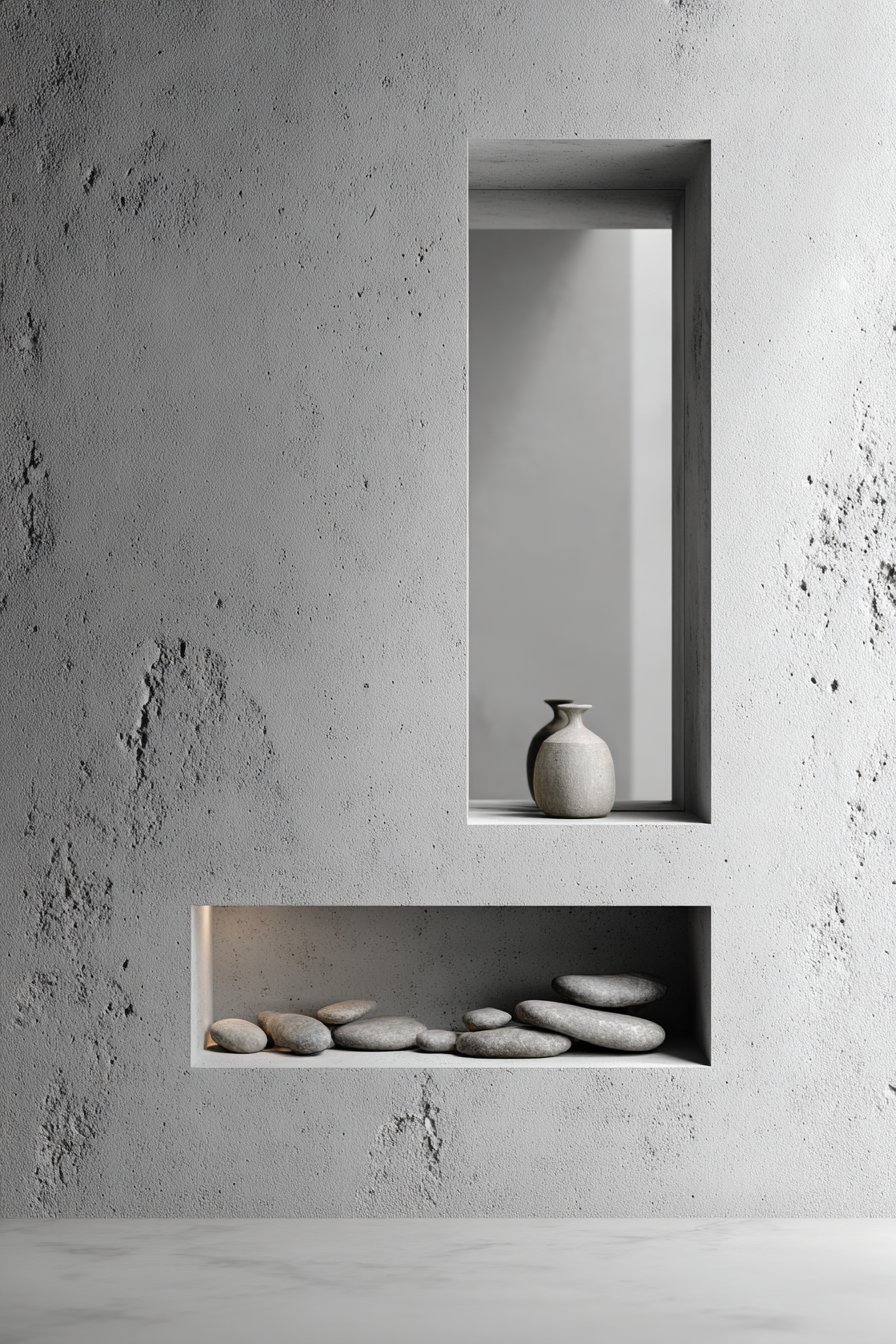
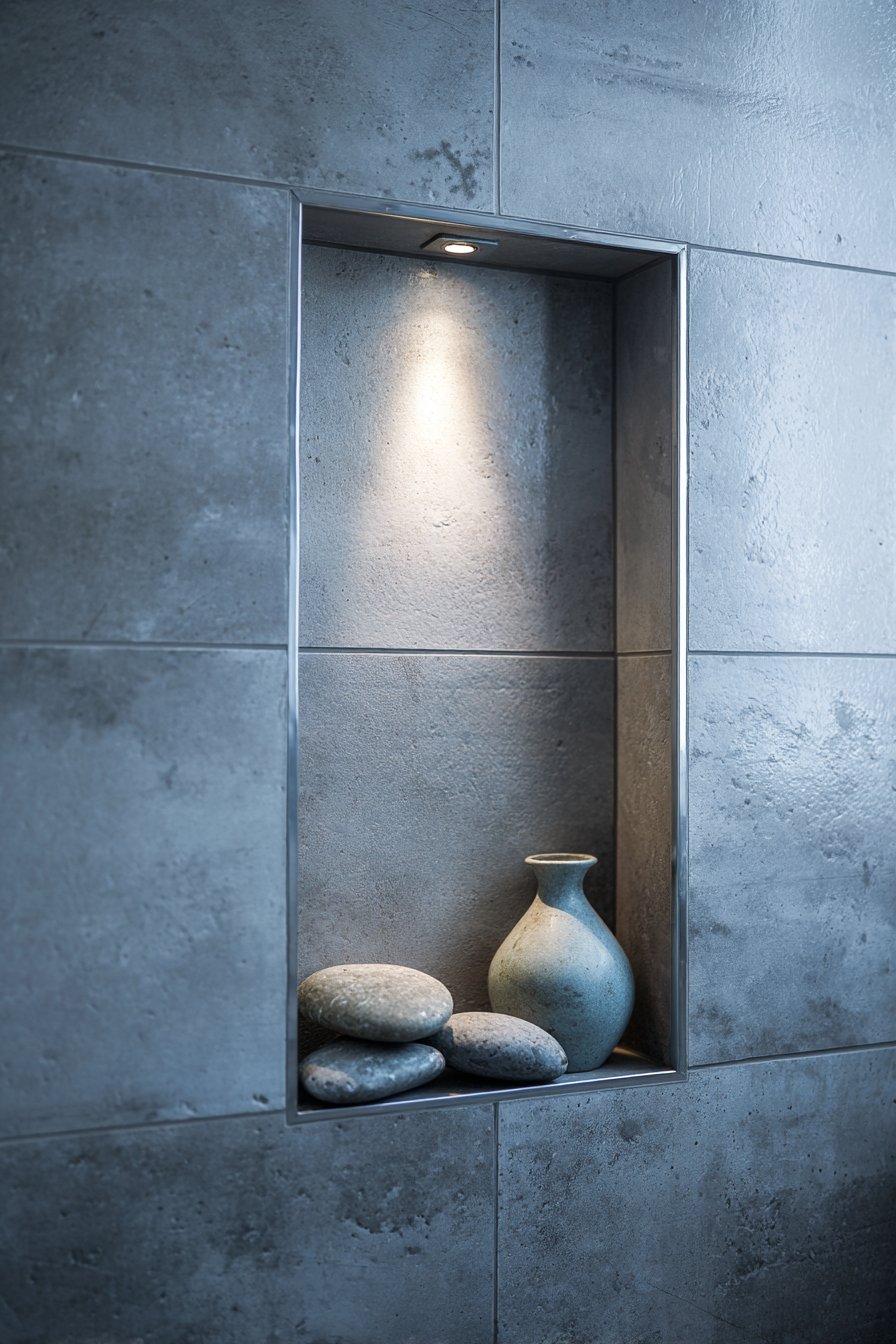
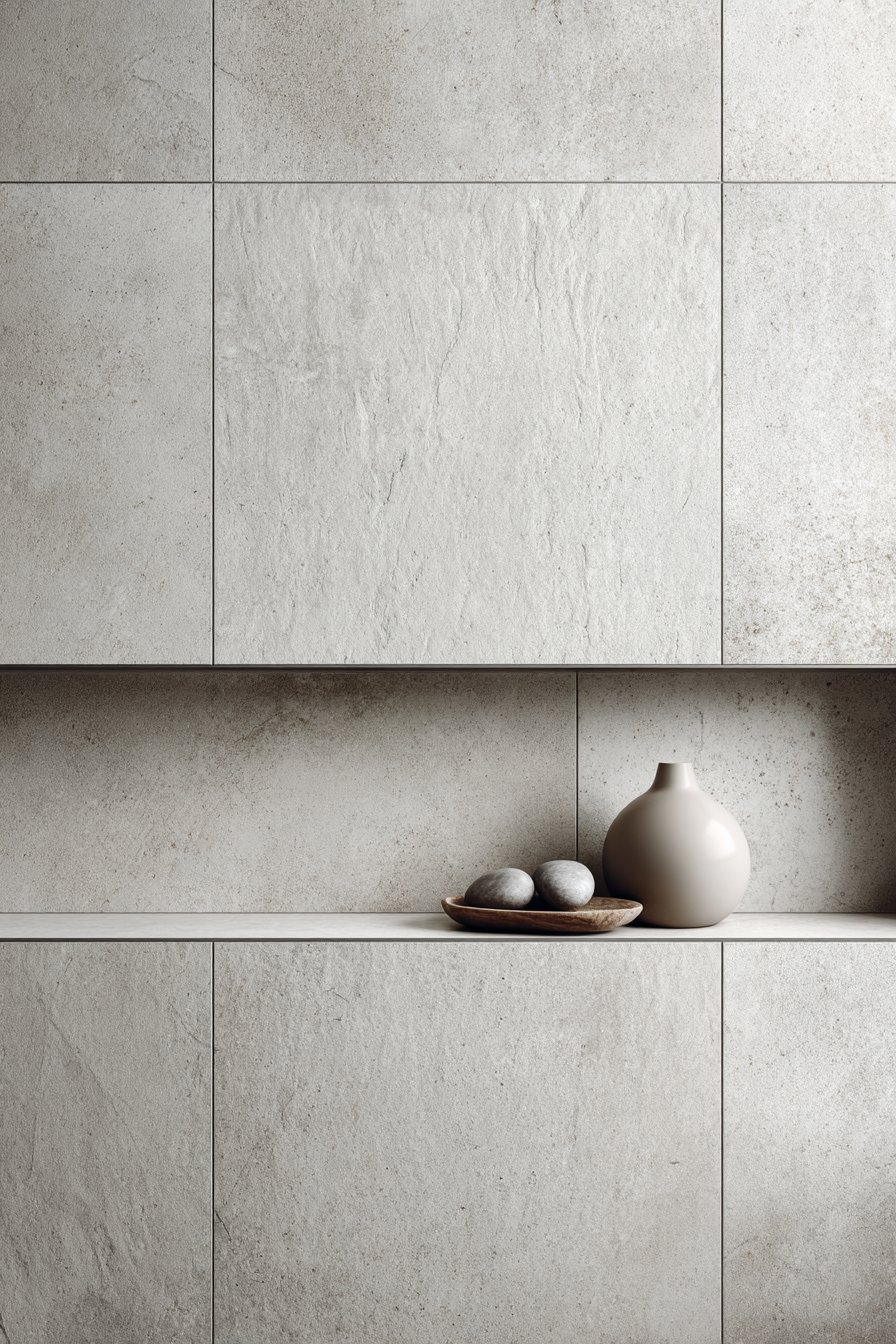
Minimalist zen design strips away all nonessential elements to create bathrooms of profound simplicity and tranquil beauty, focusing attention on quality materials, precise proportions, and the meaningful use of empty space. This concept features large-format concrete-look porcelain tiles in light grey creating a serene backdrop that evokes the contemplative quality of stone temples. A single horizontal niche with integrated LED lighting displays a small collection of smooth river stones and a minimalist ceramic vessel, demonstrating how a few carefully chosen objects can create more impact than abundant decoration. The niche itself becomes a focal point through its precise recessed geometry and subtle illumination.
A frameless rectangular mirror appears to float on the surface, its lack of visible hardware contributing to the clean, uncluttered aesthetic. The composition emphasizes negative space and calm, with large expanses of unadorned wall creating visual rest and psychological quiet. Professional interior photography with soft natural lighting captures the meditative quality and refined simplicity that define this approach. The even, diffused lighting prevents harsh shadows or dramatic contrasts, maintaining the peaceful, contemplative atmosphere.
The minimalist zen bathroom serves as an antidote to visual and mental clutter, creating a space for restoration and contemplation. The neutral palette, smooth surfaces, and absence of pattern or busy detail allow the mind to rest and focus inward. This design philosophy recognizes that bathrooms can function as meditation spaces and personal sanctuaries, not just rooms for hygiene. It appeals to homeowners seeking refuge from busy, overstimulated lives and creating environments that support mindfulness and presence.
Key Design Tips:
- Use large-format tiles to minimize grout lines and create continuous surfaces
- Choose neutral tones—grey, beige, or soft white—for psychological calm
- Install recessed niches for display rather than protruding shelves or cabinets
- Limit displayed objects to a few meaningful, beautiful pieces
- Ensure perfect alignment and precise proportions in all elements
- Incorporate soft, even lighting that doesn’t create dramatic shadows or highlights
23. Cottage White and Yellow Cheer
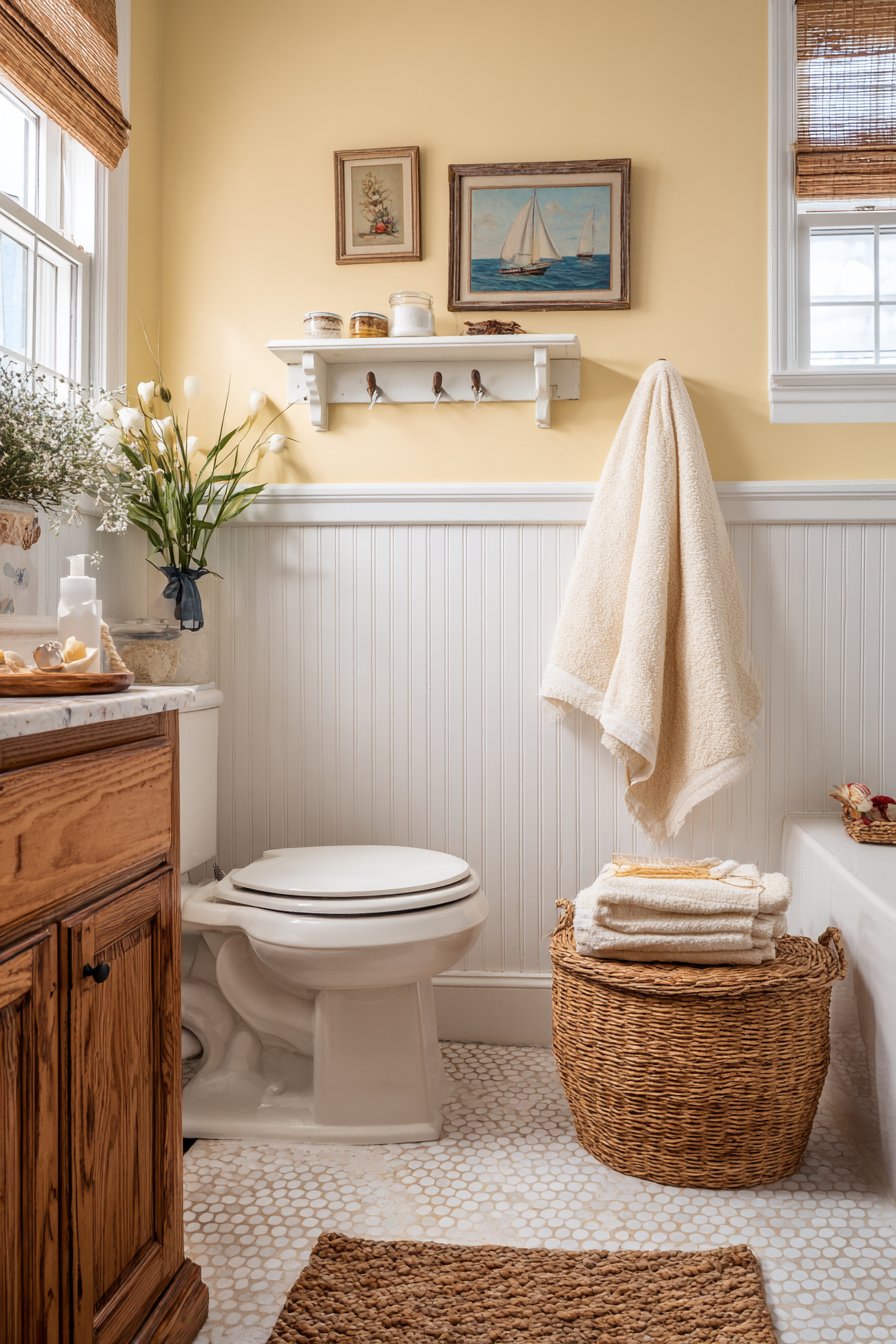
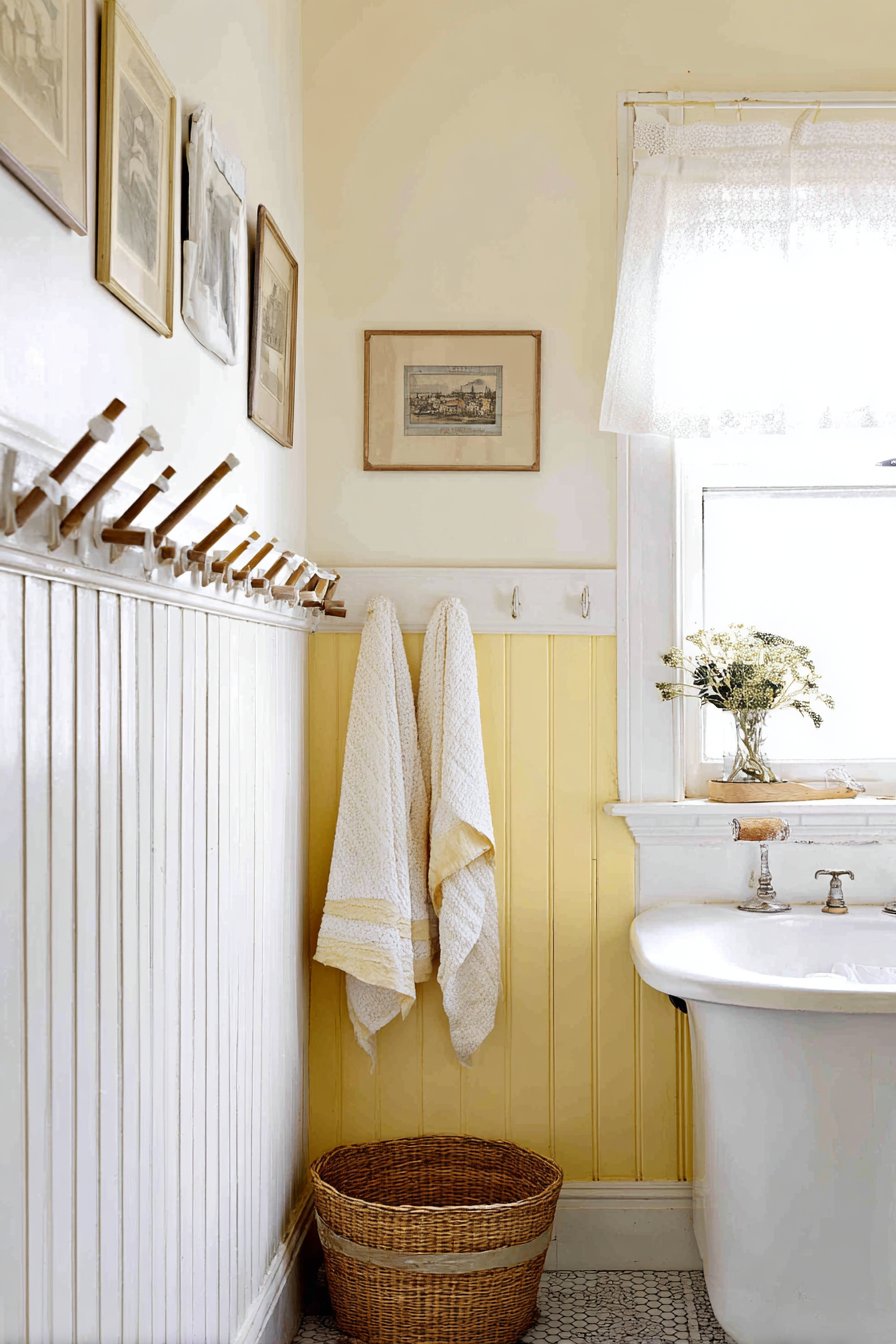
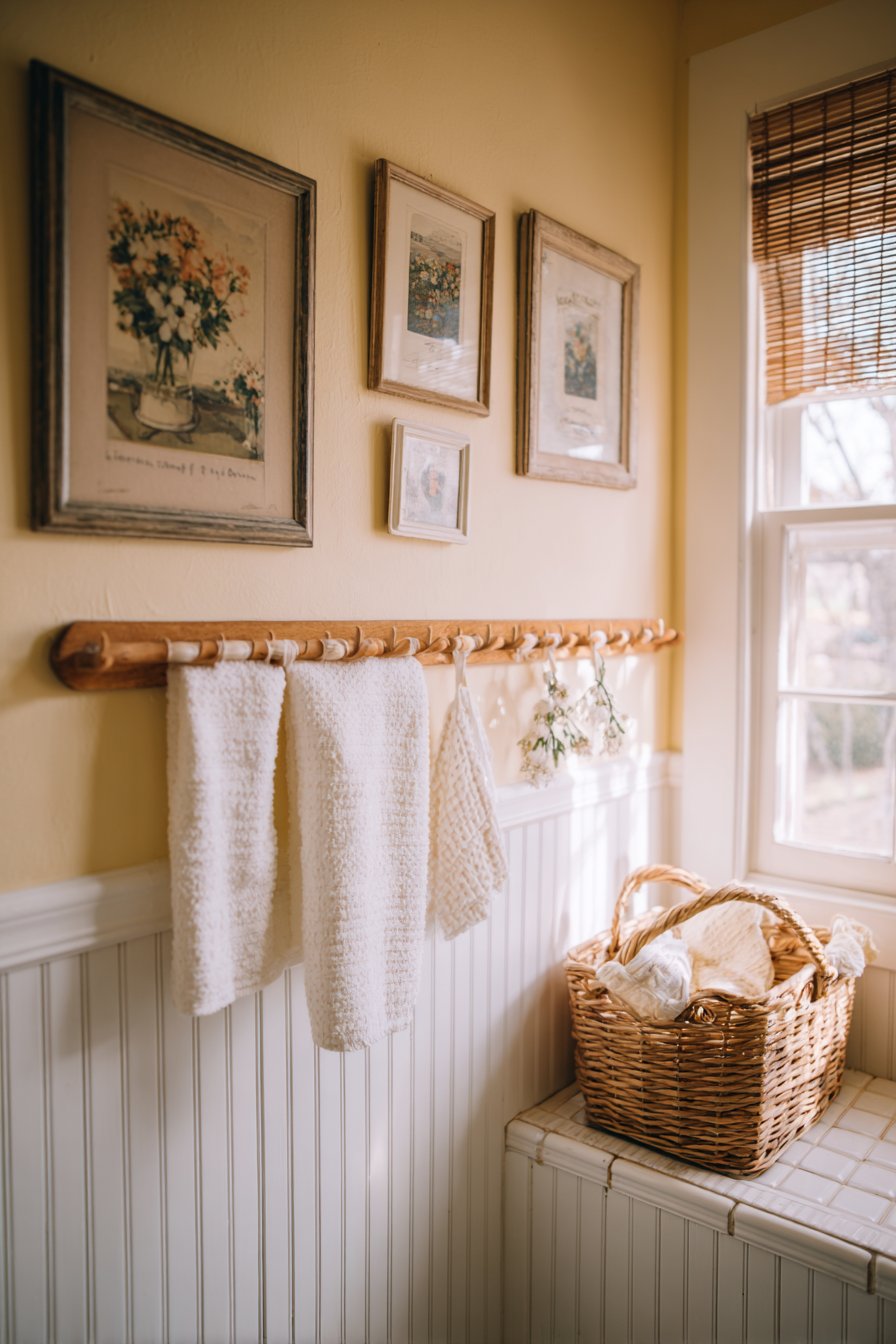
Cottage design brings unpretentious comfort, cheerful color, and relaxed informality to bathroom spaces, creating environments that feel welcoming, personal, and distinctly homey. This approach features white-painted beadboard covering the lower two-thirds of walls with soft yellow paint above. The beadboard adds traditional cottage character and dimensional texture while the yellow paint introduces sunny optimism and warmth. A collection of small vintage prints in mismatched white frames creates a casual gallery wall that celebrates the cottage aesthetic of collected-over-time rather than perfectly matched.
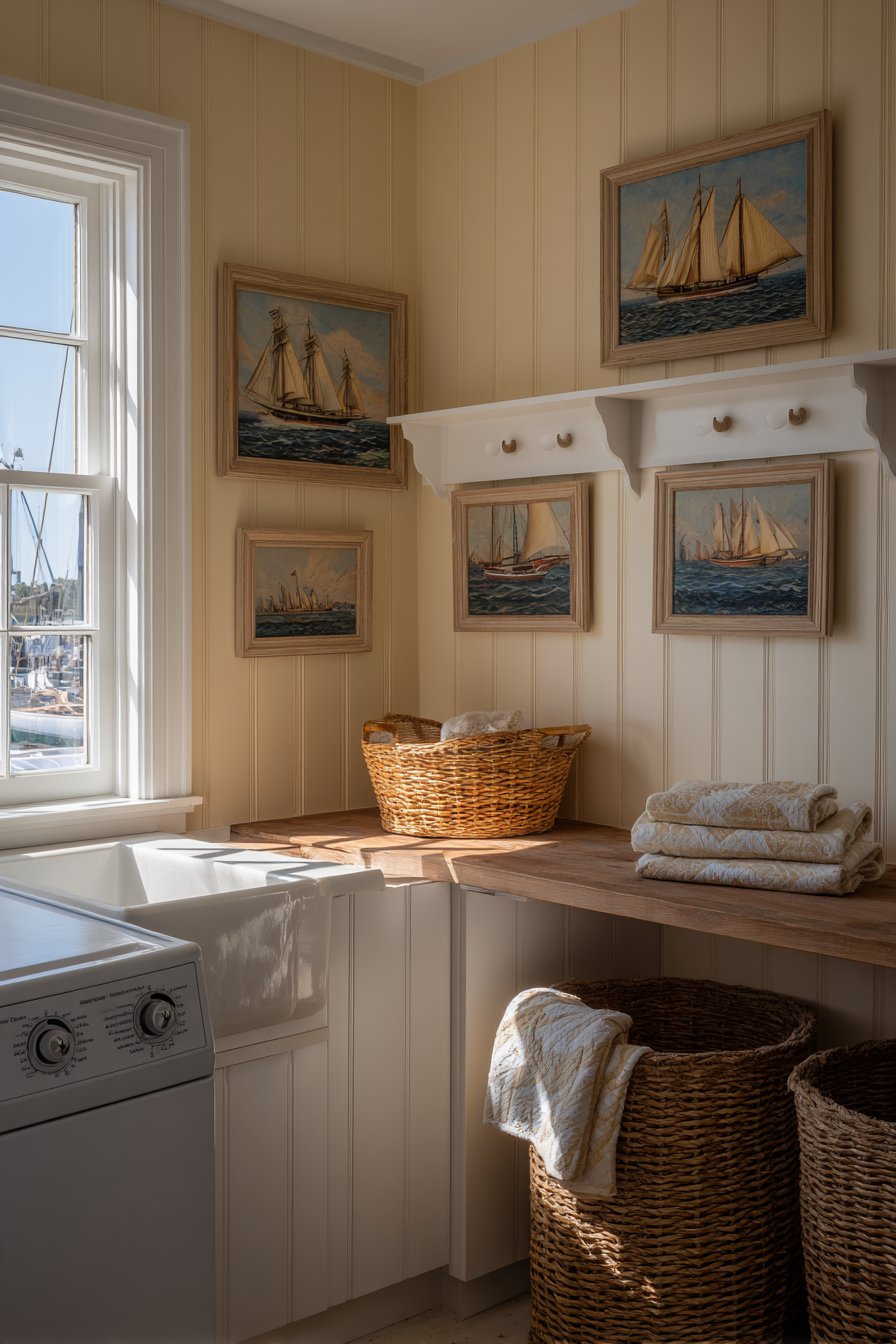
A wooden peg rail with painted white hooks holds baskets and towels, providing functional storage with cottage charm. The baskets—perhaps woven seagrass or painted wood—add natural texture while concealing less decorative necessities. Natural window light creates a bright, cheerful atmosphere that enhances the yellow walls and makes the white elements appear fresh and crisp. Interior design photography captures the cozy, unpretentious cottage charm with attention to painted wood texture and layered decorative elements.
The cottage bathroom rejects pretension and formality in favor of comfort, personality, and practical functionality. It celebrates the beauty of simple materials—painted wood, modest frames, functional baskets—arranged in ways that prioritize livability over design perfection. This aesthetic particularly appeals to homeowners creating vacation homes, beach cottages, or spaces for children, where durability, cheerfulness, and easy maintenance outweigh sophisticated elegance. The cottage style creates bathrooms that feel like they belong in a seaside retreat or countryside cottage, bringing vacation atmosphere to everyday life.
Key Design Tips:
- Paint beadboard white and walls in soft, cheerful colors—yellow, blue, or seafoam green
- Mix frame styles and sizes for collected, casual gallery wall arrangements
- Install peg rails or hooks rather than concealed cabinets for cottage informality
- Choose woven baskets or painted wood storage for natural, traditional materials
- Display modest vintage prints—botanical illustrations, simple landscapes, or folk art
- Prioritize functionality and durability over precious perfection
24. Modern Farmhouse Black and White
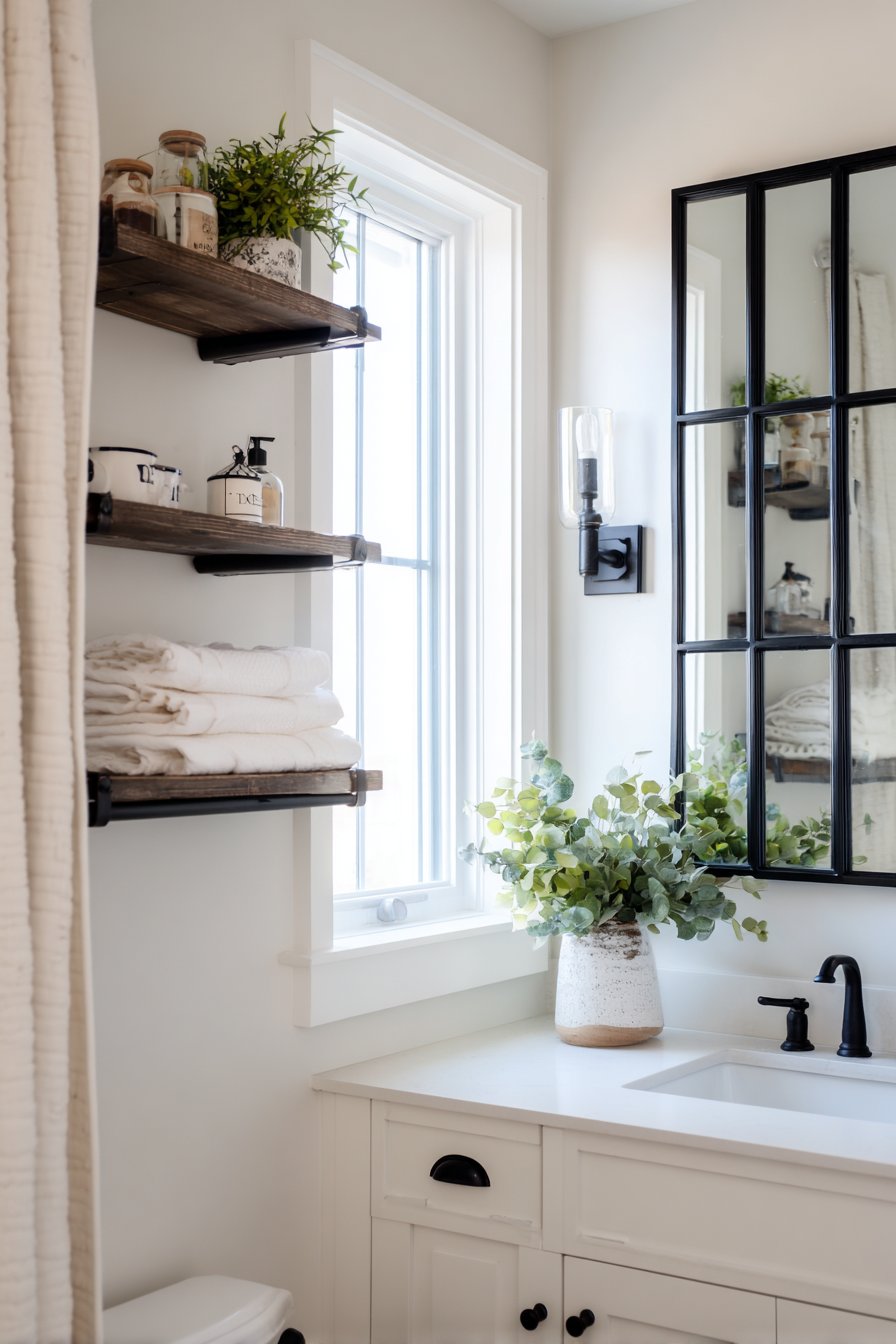
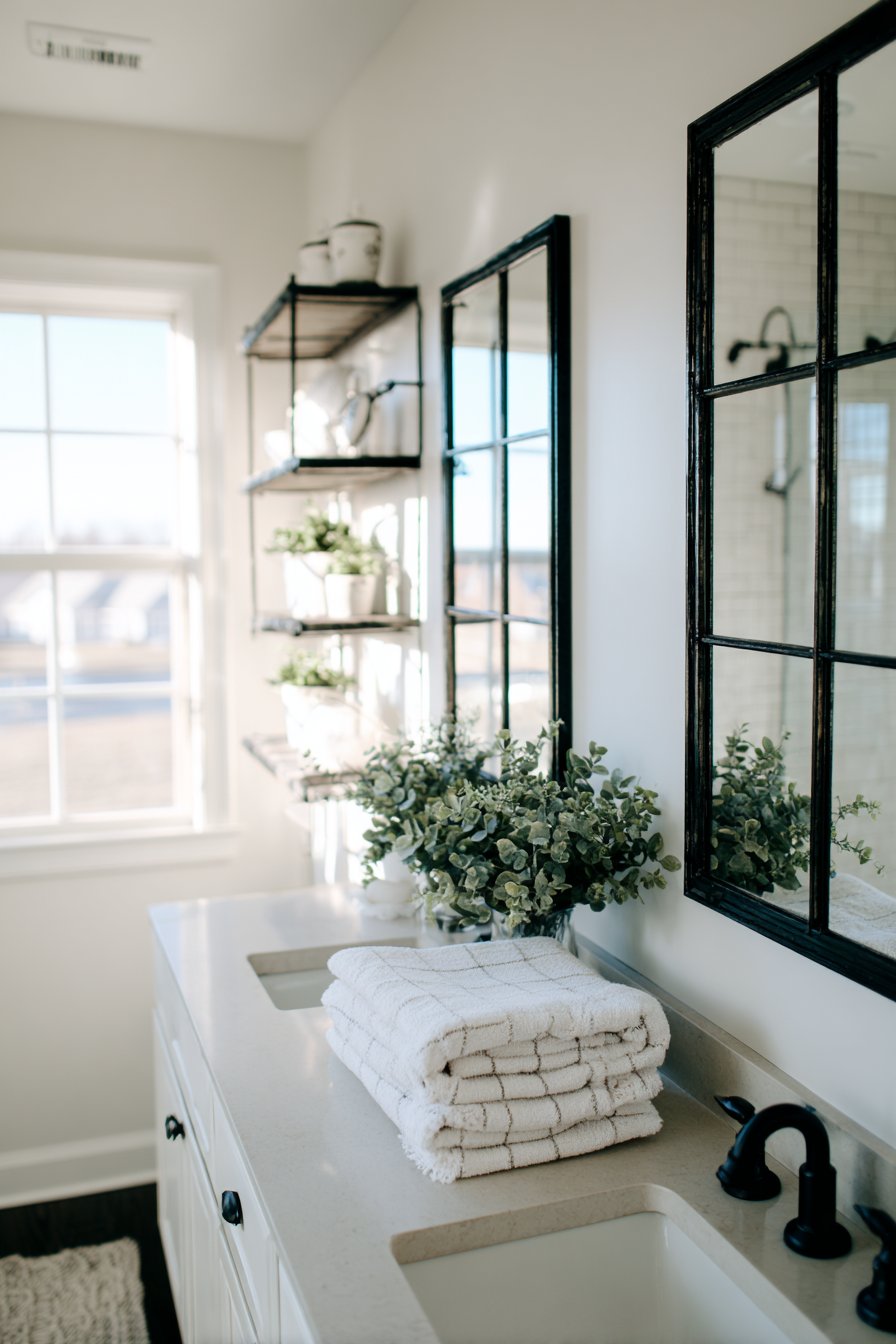
Modern farmhouse design successfully merges rustic farmhouse elements with contemporary clean lines and neutral palettes, creating bathrooms that feel both current and rooted in tradition. This concept showcases black metal window-frame-style mirrors in a four-panel grid configuration mounted above a white shaker-style vanity. The gridded mirror—reminiscent of factory or greenhouse windows—introduces industrial influence while maintaining farmhouse simplicity. The walls painted in classic white with subtle texture provide the perfect neutral backdrop, allowing the black metal elements to create striking contrast.
Black metal floating shelves hold neatly arranged white towels and farmhouse accessories including small enamelware and greenery, demonstrating the modern farmhouse love of edited, organized display rather than abundant clutter. The strict color palette—primarily black and white with touches of natural greenery—creates graphic impact and contemporary sophistication while the farmhouse elements maintain warmth and approachability. Natural light emphasizes the clean contrast between black and white elements, creating crisp, architectural shadows and highlighting the material qualities of each surface.
Professional photography captures the fresh modern farmhouse aesthetic with balanced exposure, showcasing how carefully edited color palettes and the mixing of traditional and contemporary elements creates a style that feels both timeless and current. Modern farmhouse succeeds because it takes the best qualities of farmhouse design—natural materials, traditional craftsmanship, functional beauty—while removing the more cluttered, overly rustic elements that can make pure farmhouse feel dated. This style appeals to homeowners seeking spaces that honor tradition while functioning seamlessly in contemporary life.
Key Design Tips:
- Limit the palette primarily to black, white, and natural wood tones
- Choose metal-framed mirrors with grid patterns for industrial-farmhouse fusion
- Select shaker-style cabinetry for traditional simplicity with contemporary clean lines
- Install black metal floating shelves, hooks, and fixtures for contrast and modernity
- Display items in organized, edited arrangements rather than abundant collections
- Incorporate small touches of greenery for natural softness within the graphic palette
25. Mid-Century Modern Walnut Feature
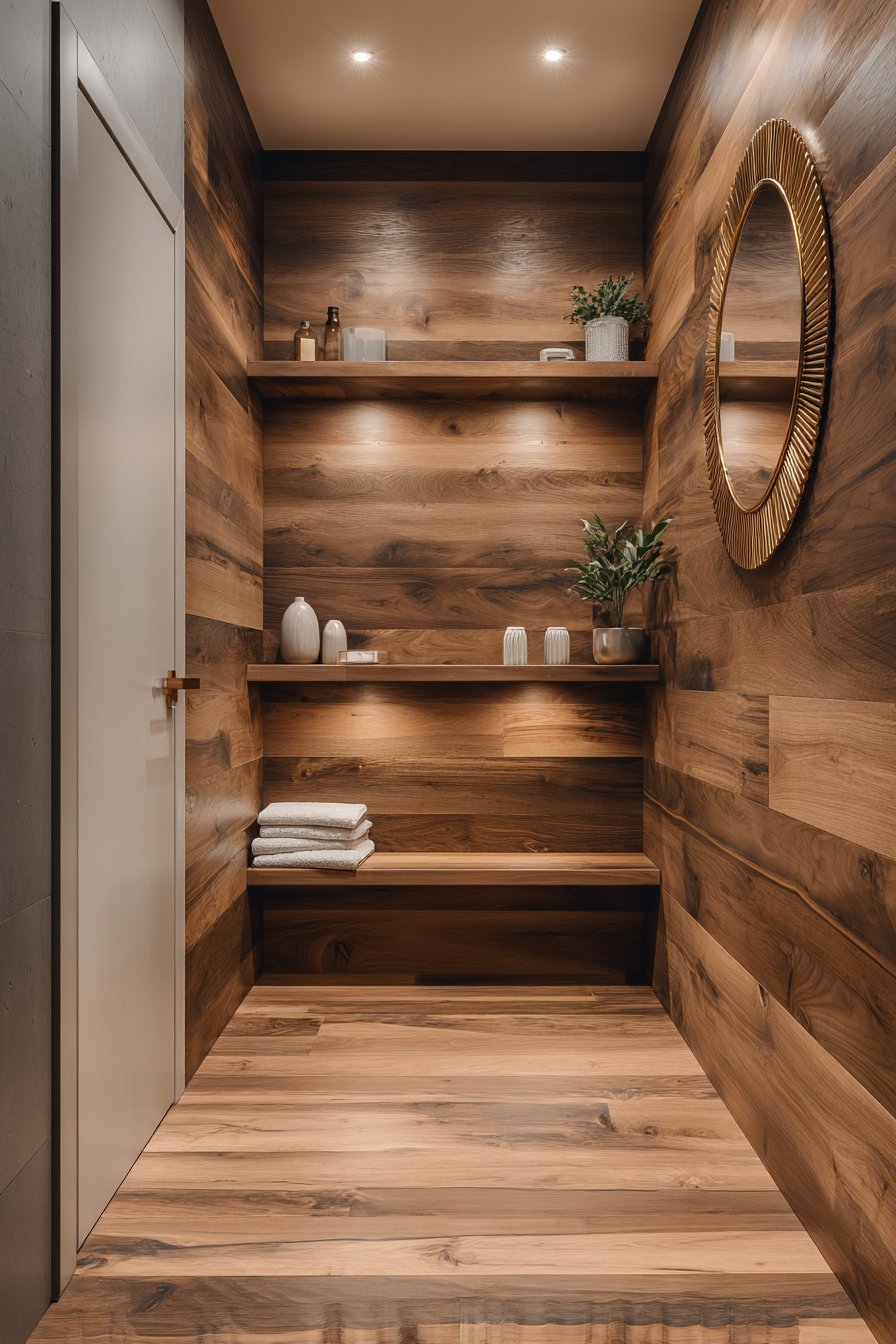
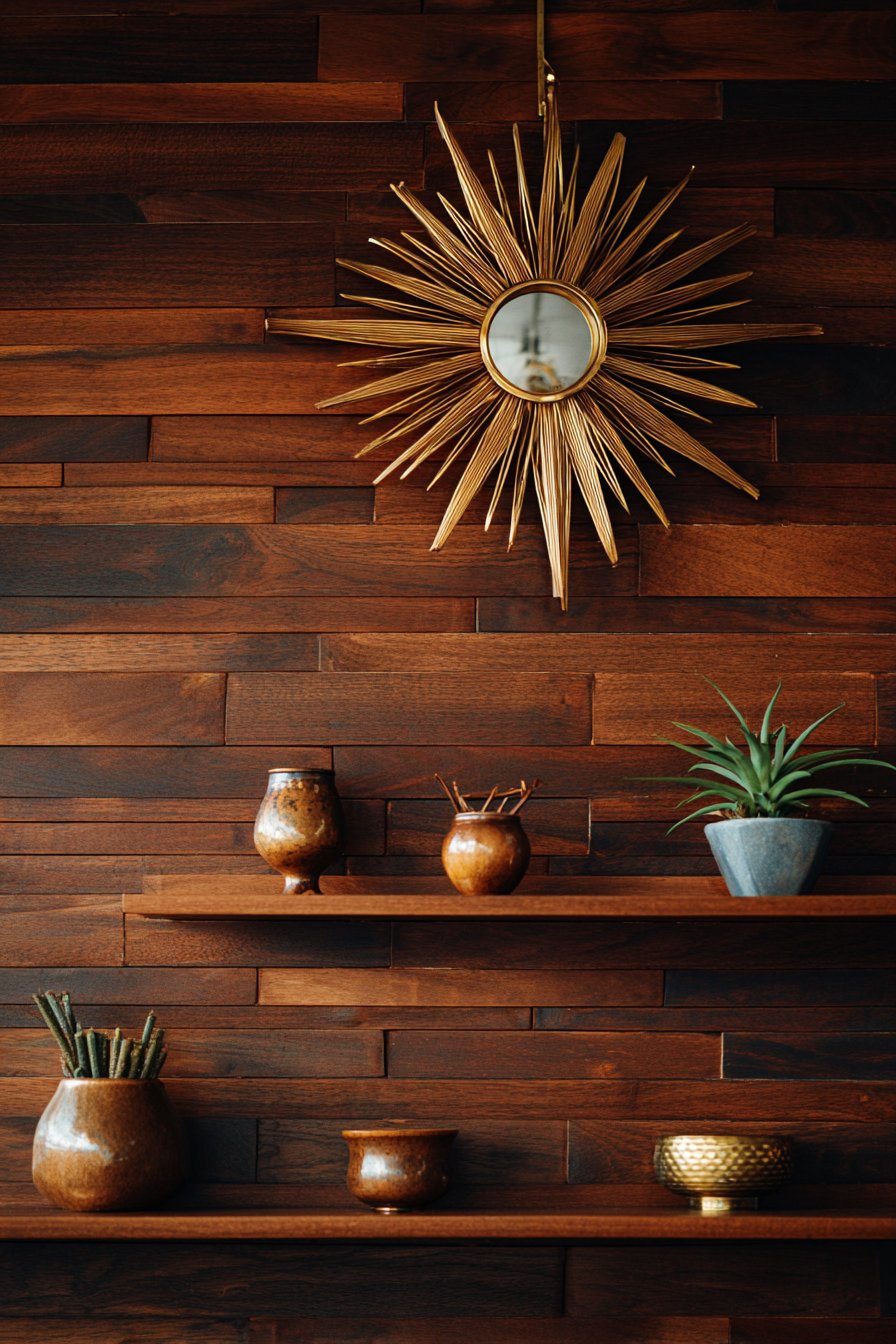
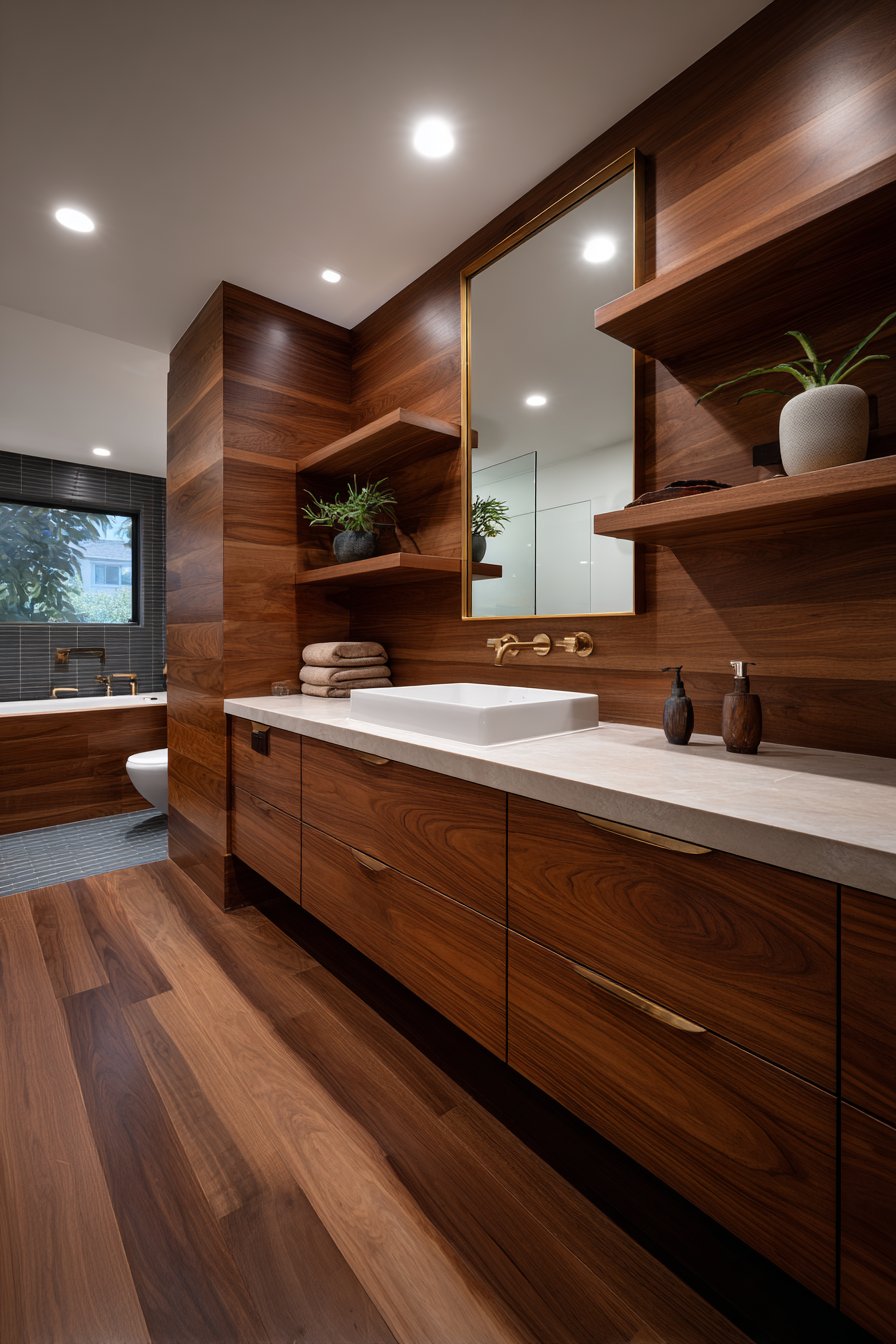
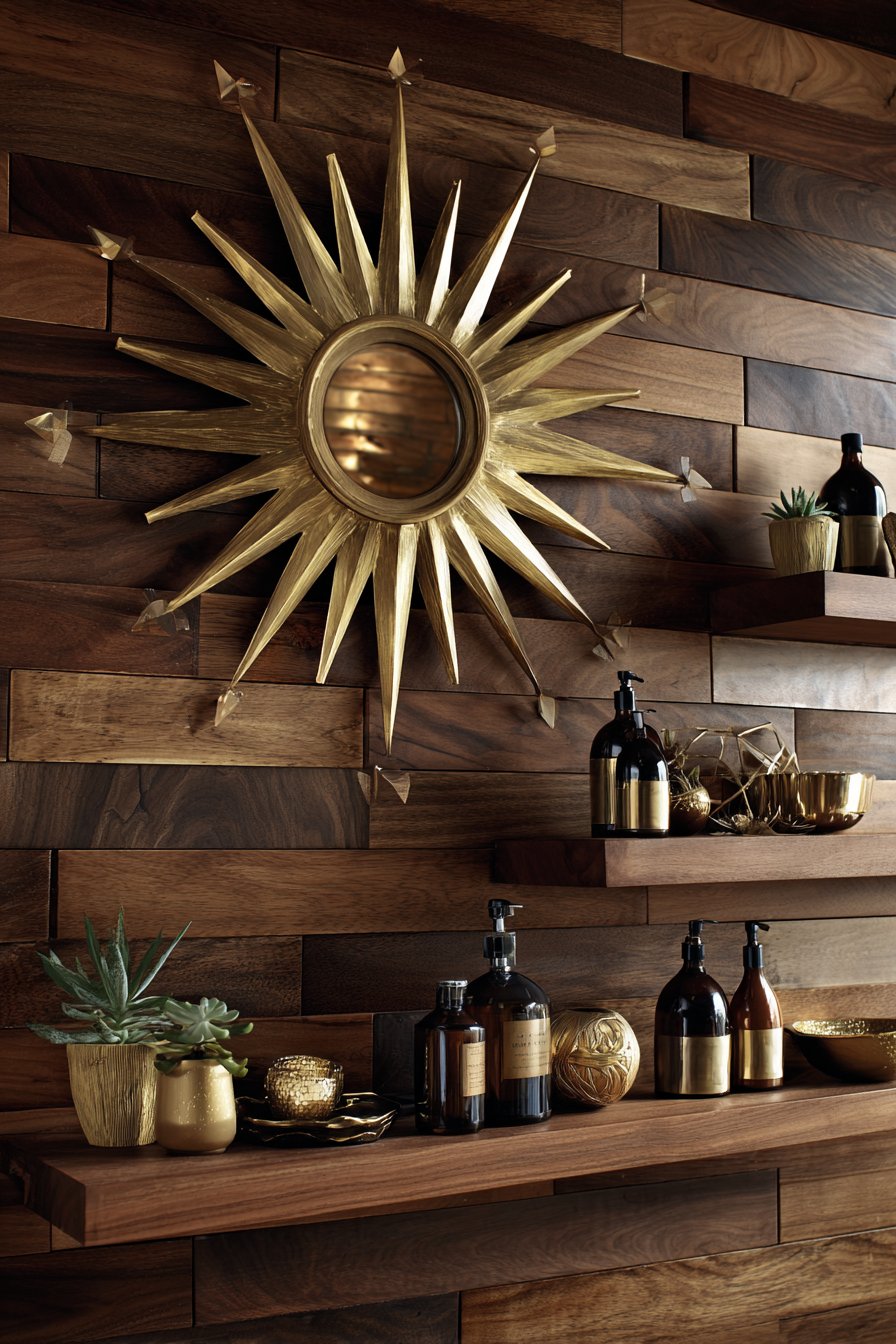
Mid-century modern design brings the optimism, organic forms, and sophisticated simplicity of 1950s and 1960s design into contemporary bathrooms, creating spaces that feel retro yet timeless. This design features a walnut wood accent wall with horizontal planks in varying widths creating visual rhythm and organic movement. The rich, warm tones of walnut introduce natural beauty and mid-century’s signature connection to organic materials. A starburst mirror in brass and walnut serves as the retro-inspired focal point, its radiating design embodying the optimistic, space-age enthusiasm of the mid-century period.
Integrated floating shelves in matching walnut hold period-appropriate ceramic accessories and small plants, maintaining the clean lines and functional beauty that define mid-century design. The accessories—perhaps including vintage ceramic pieces, small sculptural objects, or simple planters—add personality while respecting the restrained aesthetic. Warm ambient lighting highlights the rich wood tones and mid-century design elements, with light emphasizing the natural grain variations and warm honey tones of the walnut.
Wide-angle interior photography captures the authentic vintage modern aesthetic with attention to wood grain and brass details, showcasing how the warm wood tones create inviting atmosphere despite the style’s minimal approach. Mid-century modern remains perennially popular because it balances sophisticated design principles with warmth, natural materials, and human scale. The style avoids both cold minimalism and fussy traditionalism, occupying a perfect middle ground that appeals across generations. This design attracts homeowners who appreciate vintage aesthetics, quality craftsmanship, and design that has proven its timeless appeal over decades.
Key Design Tips:
- Choose rich hardwoods—walnut, teak, or rosewood—for authentic mid-century warmth
- Vary plank widths randomly to create organic rhythm rather than uniform repetition
- Select starburst or atomic-era mirrors and light fixtures for period authenticity
- Incorporate organic shapes—ovals, kidney shapes, or irregular curves—alongside clean lines
- Display ceramic accessories with mid-century glazes—avocado, orange, or earth tones
- Maintain warm, even lighting that emphasizes wood grain and natural material qualities
26. Glamorous Mirrored Mosaic
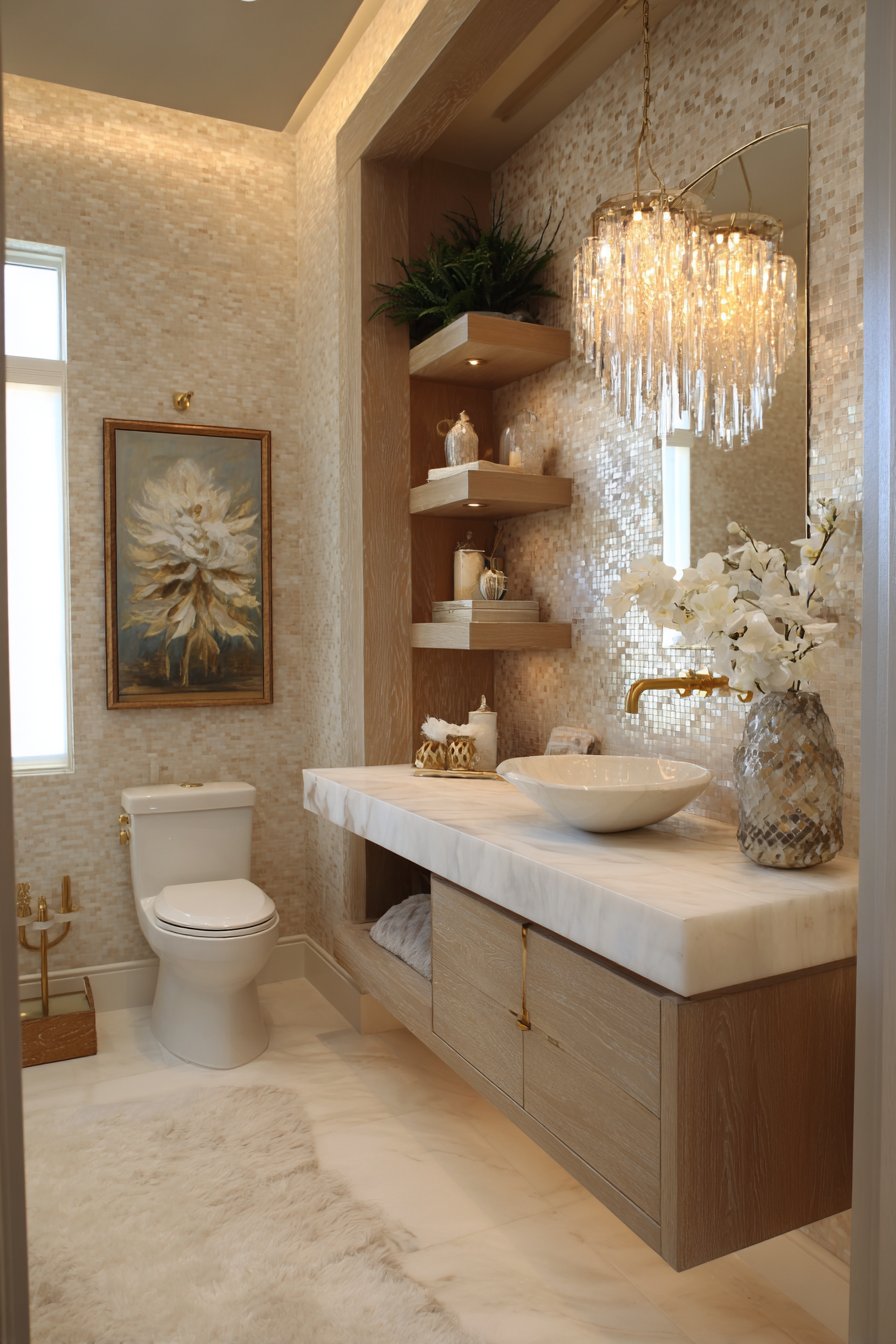
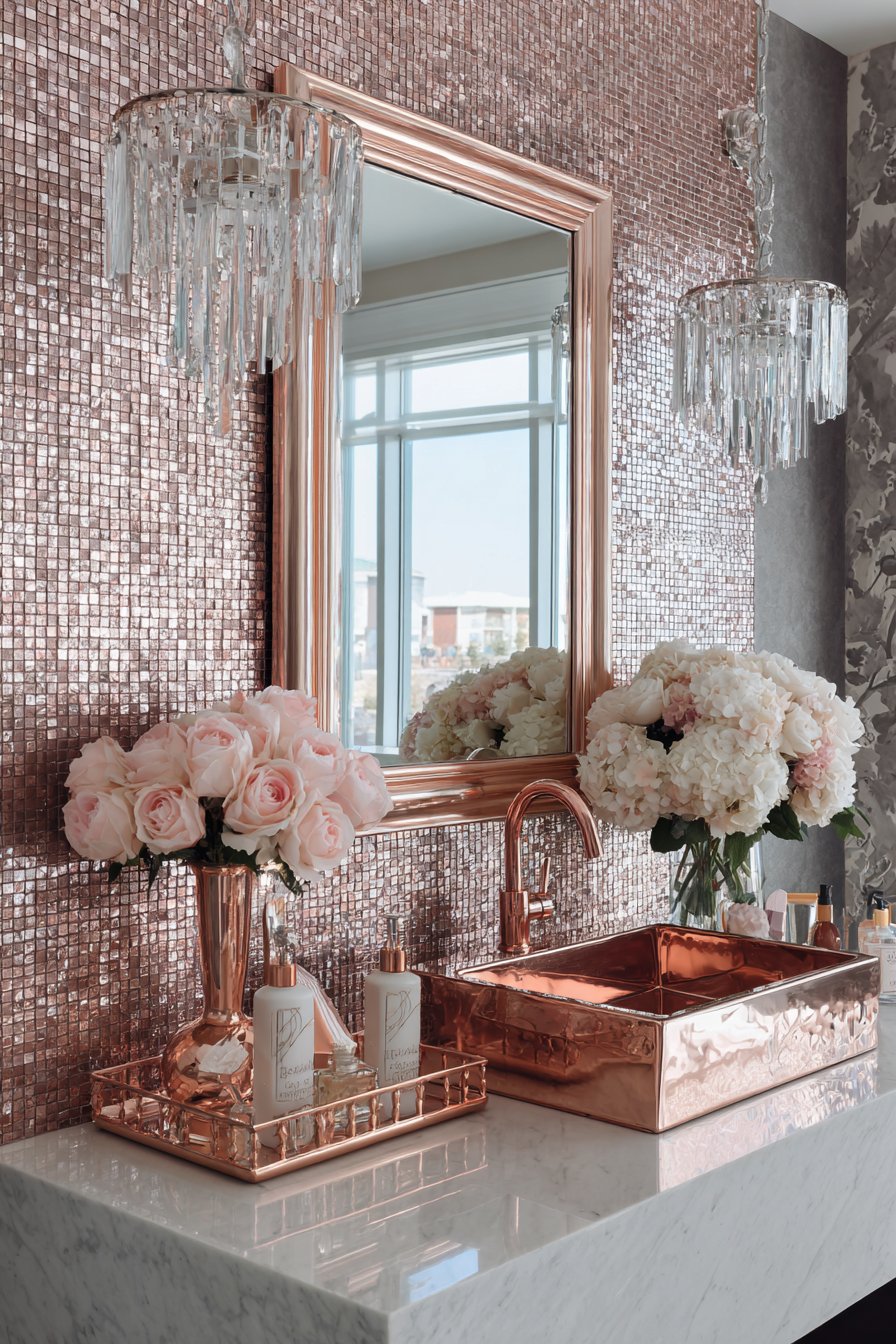
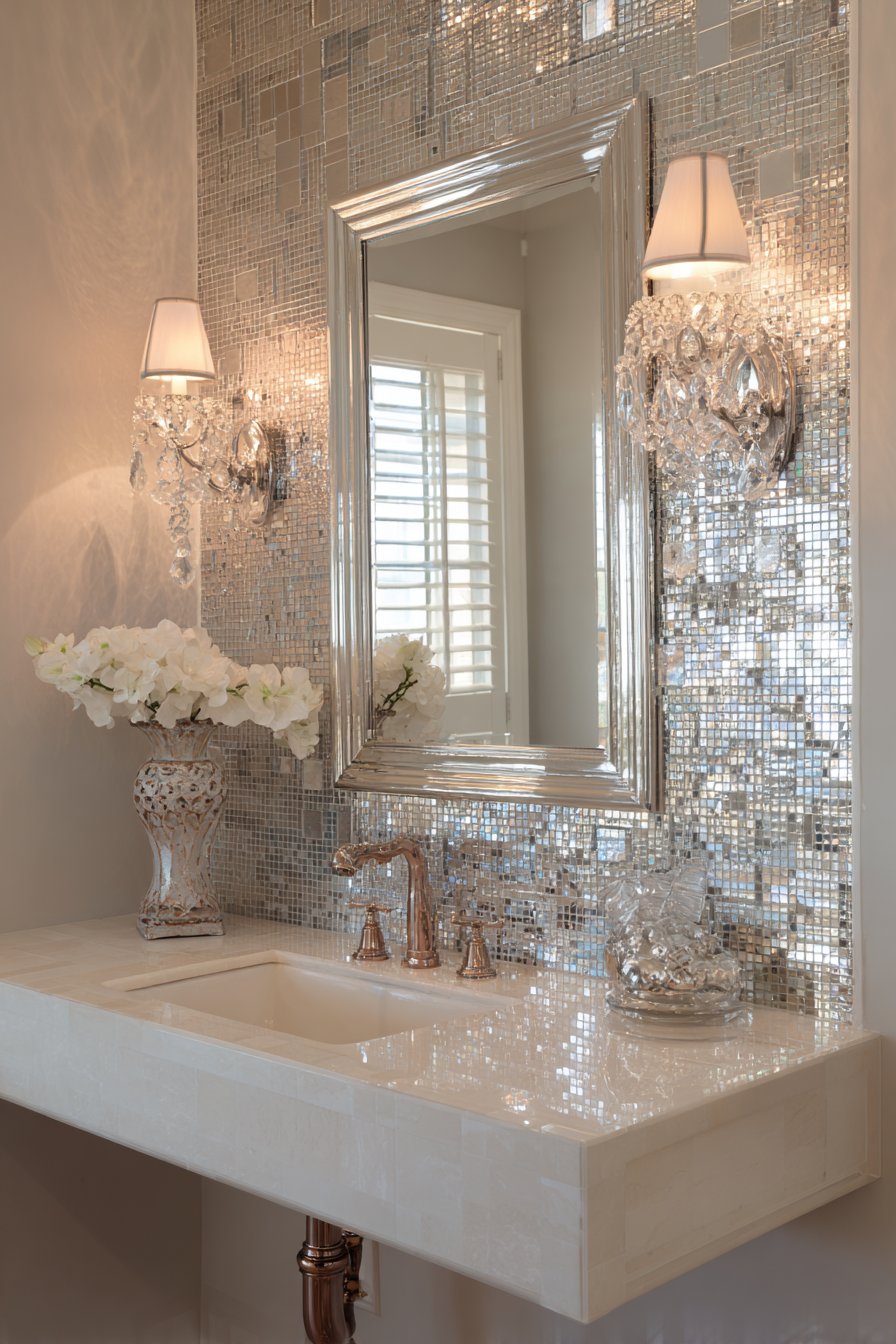
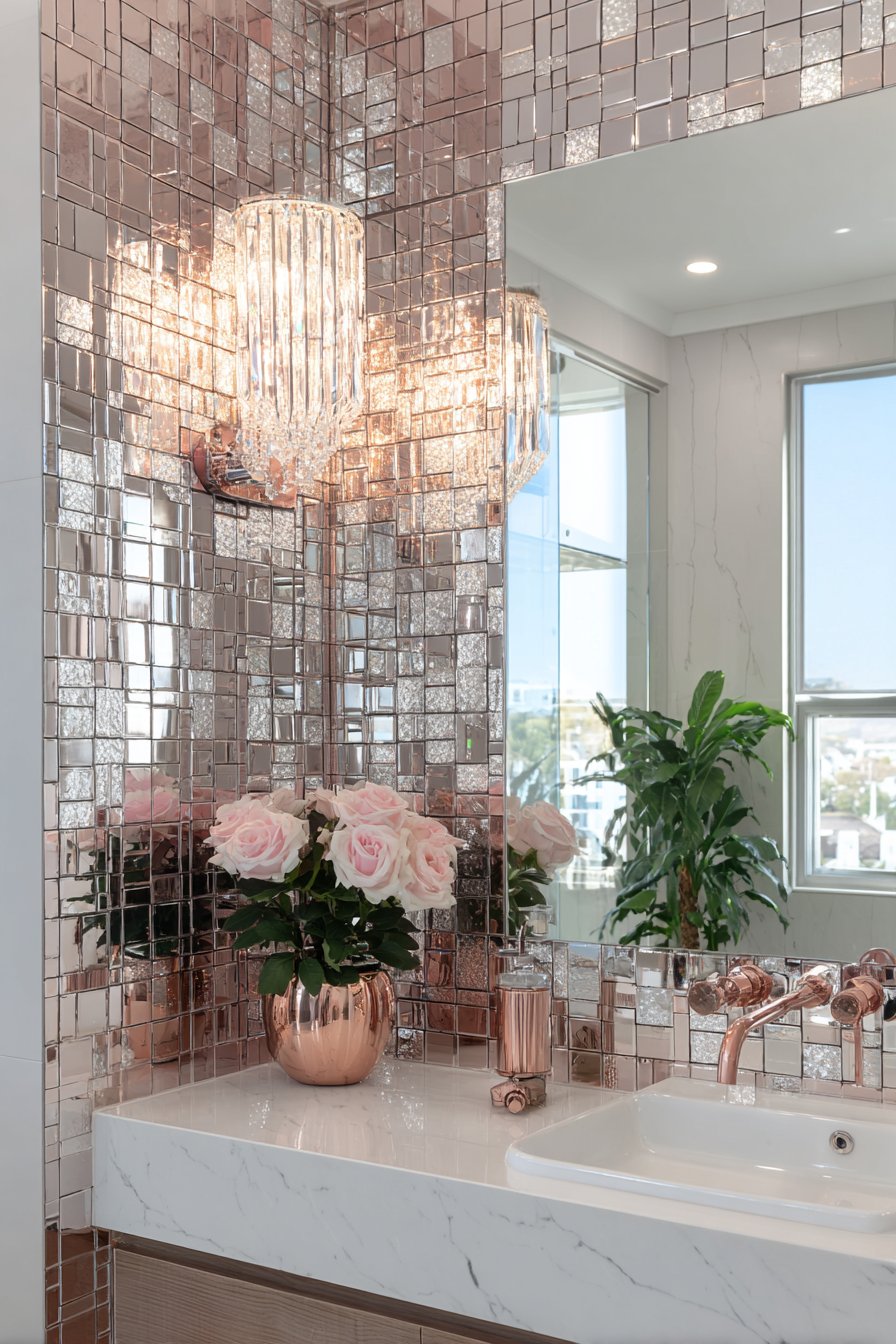
Glam design embraces luxury, sparkle, and unapologetic opulence, creating bathrooms that feel like personal jewelry boxes or luxury hotel powder rooms. This approach features a mirrored mosaic tile accent wall behind a floating vanity creating maximum light reflection and sparkle. The small mirror tiles—perhaps in various finishes including clear, antiqued, smoked, or beveled—catch and reflect natural daylight creating dynamic shimmer that changes throughout the day. A crystal chandelier-style wall sconce adds to the glamorous aesthetic, its faceted crystals multiplying light and creating prismatic effects.
Rose gold plumbing fixtures coordinate with the luxe theme, their warm metallic finish adding contemporary glamour while maintaining sophistication. The rose gold—less expected than traditional gold or chrome—demonstrates glam design’s embrace of current trends and willingness to push beyond conservative choices. Professional interior design photography captures the opulent reflective quality with balanced exposure that shows the interplay of light and mirrored surfaces without overexposing the brightest highlights or losing detail in darker areas.
The glam bathroom celebrates beauty, luxury, and the transformative power of sparkle and reflection. The mirrored wall multiplies light, making spaces feel larger and brighter while creating visual drama impossible with flat paint or standard tile. This maximalist approach—the opposite of minimalism—creates spaces designed to delight the eye and lift the spirit through beauty and glamour. Glam design particularly suits powder rooms or vanity areas where making a strong decorative statement is more important than serene simplicity. It appeals to homeowners who view their bathroom as a space for celebrating beauty and enjoying a touch of luxury in daily life.
Key Design Tips:
- Install mirrored tiles behind vanities or in powder rooms for maximum sparkle
- Mix different mirror finishes—clear, antiqued, smoked—for dimensional interest
- Choose crystal or glass light fixtures that multiply and refract light
- Select metallic fixtures in gold, brass, or rose gold for luxurious warmth
- Limit mirrored tiles to accent areas to prevent overwhelming visual complexity
- Balance reflective surfaces with some matte elements to provide visual rest
27. Transitional Silver and Taupe Balance
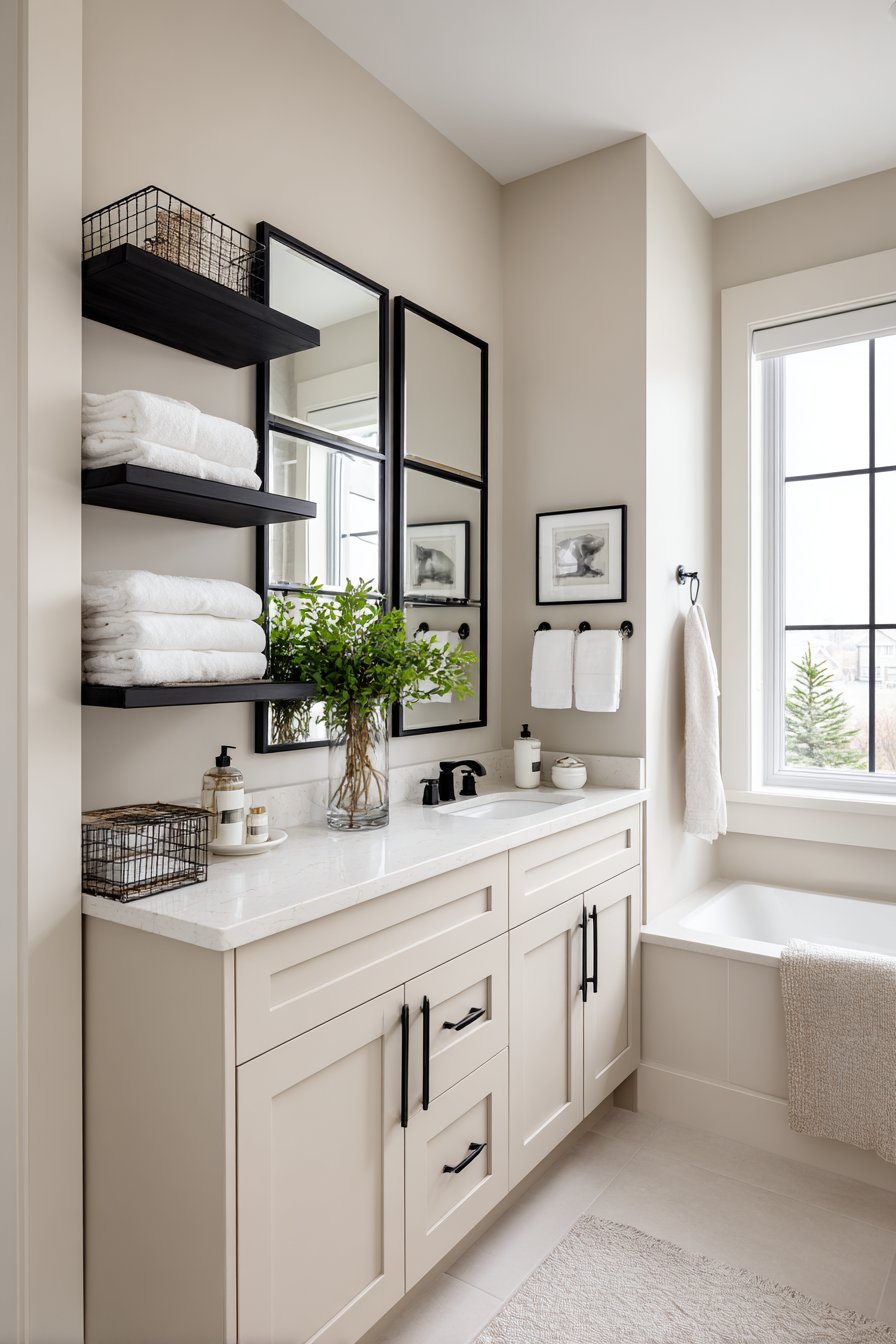
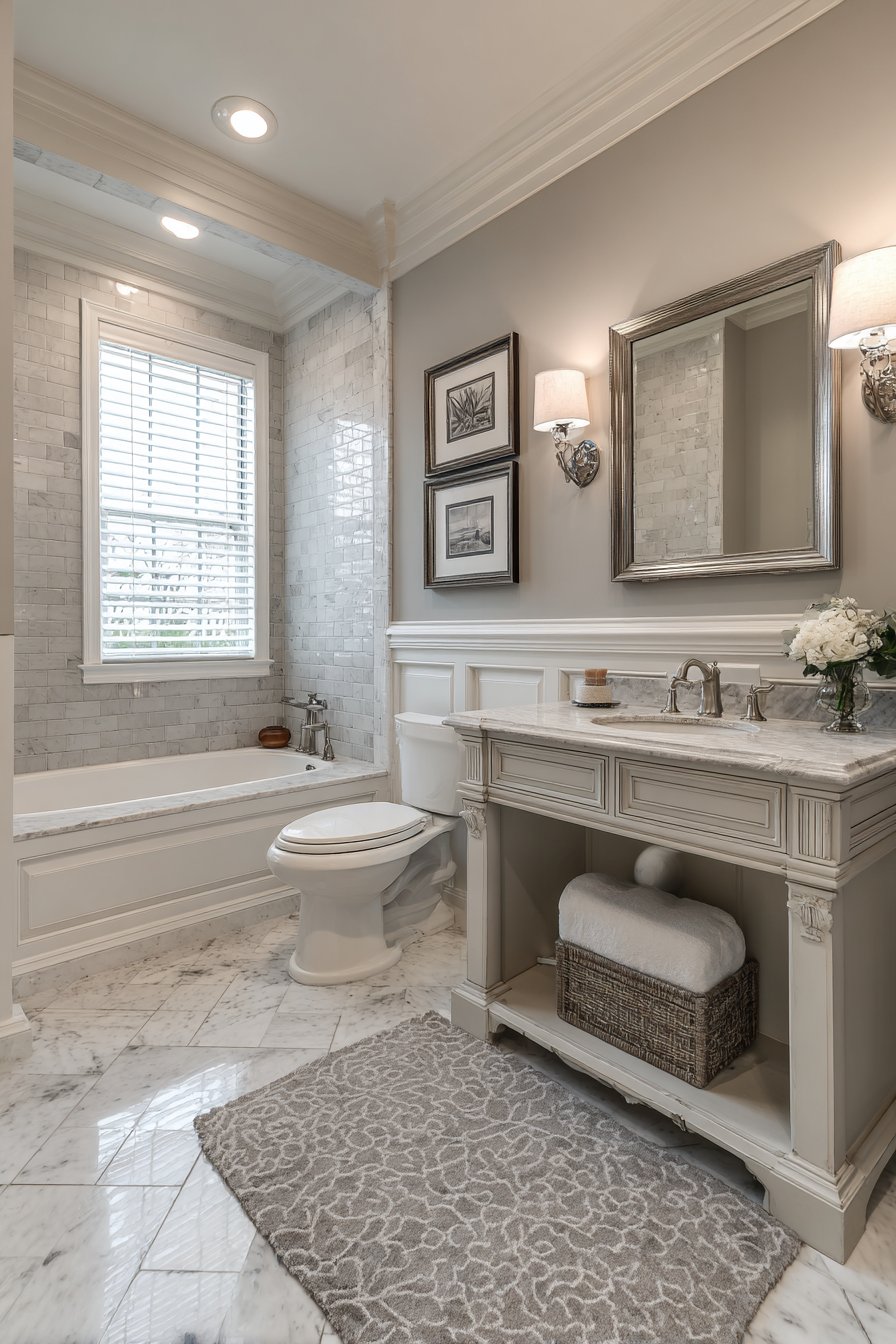
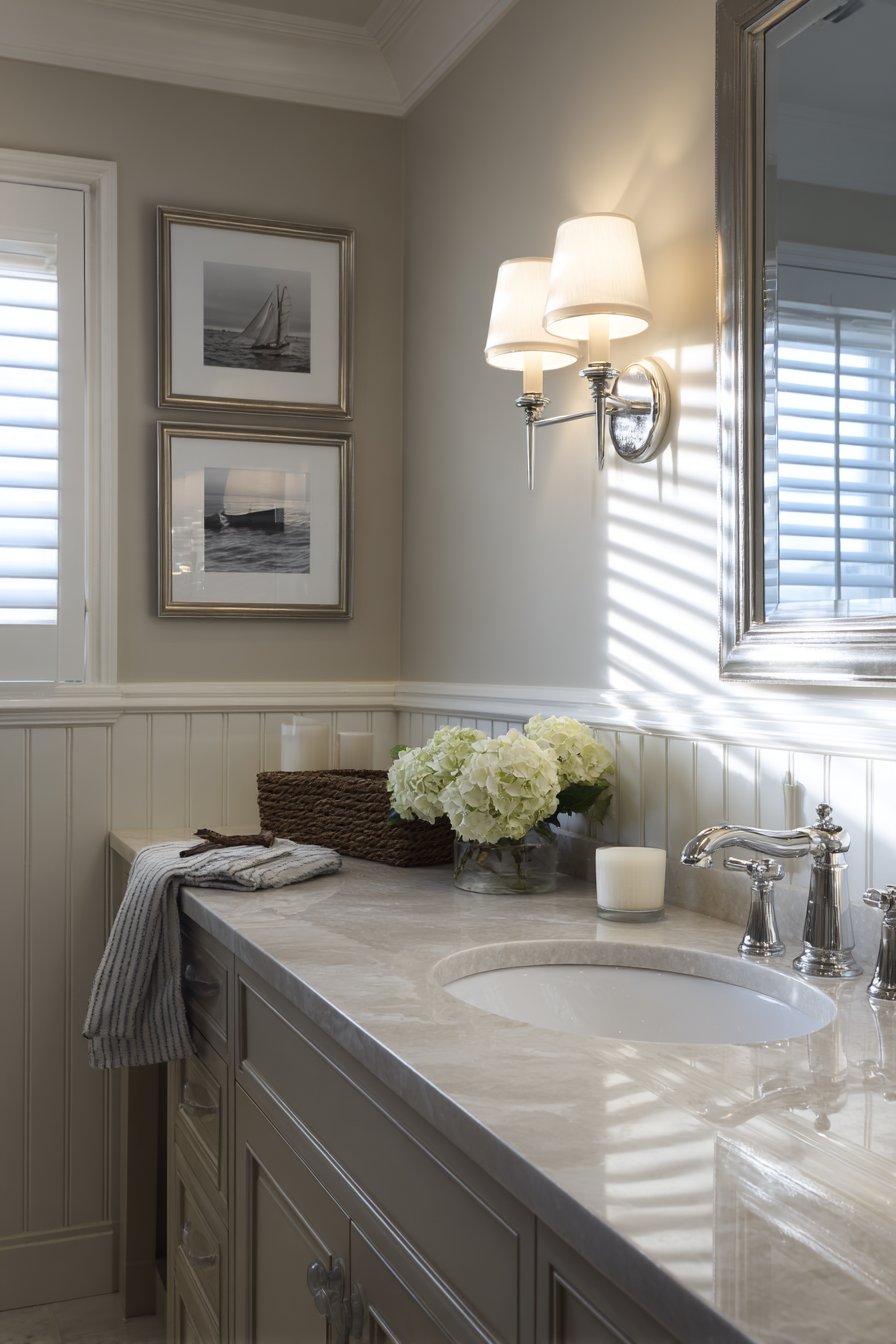
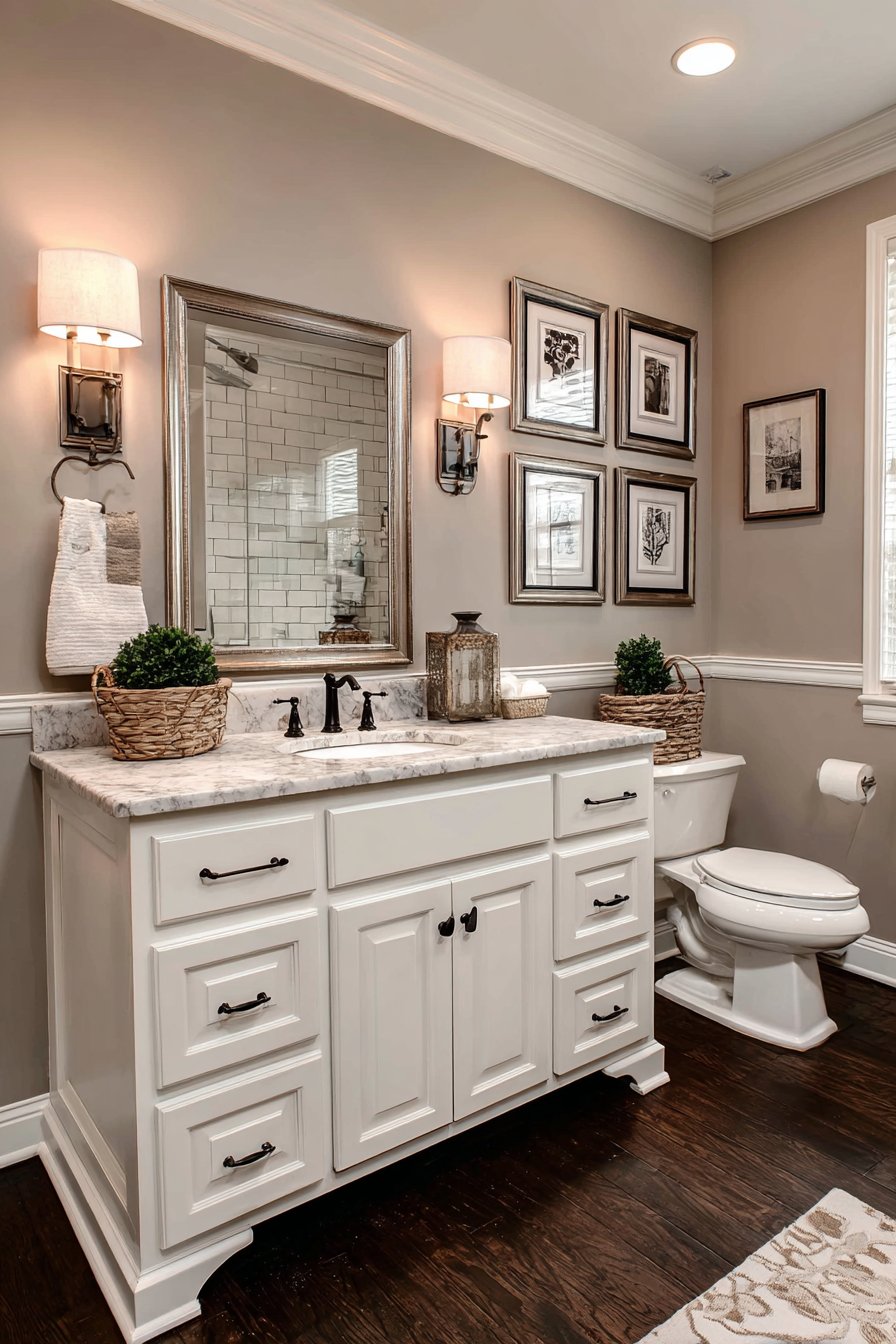
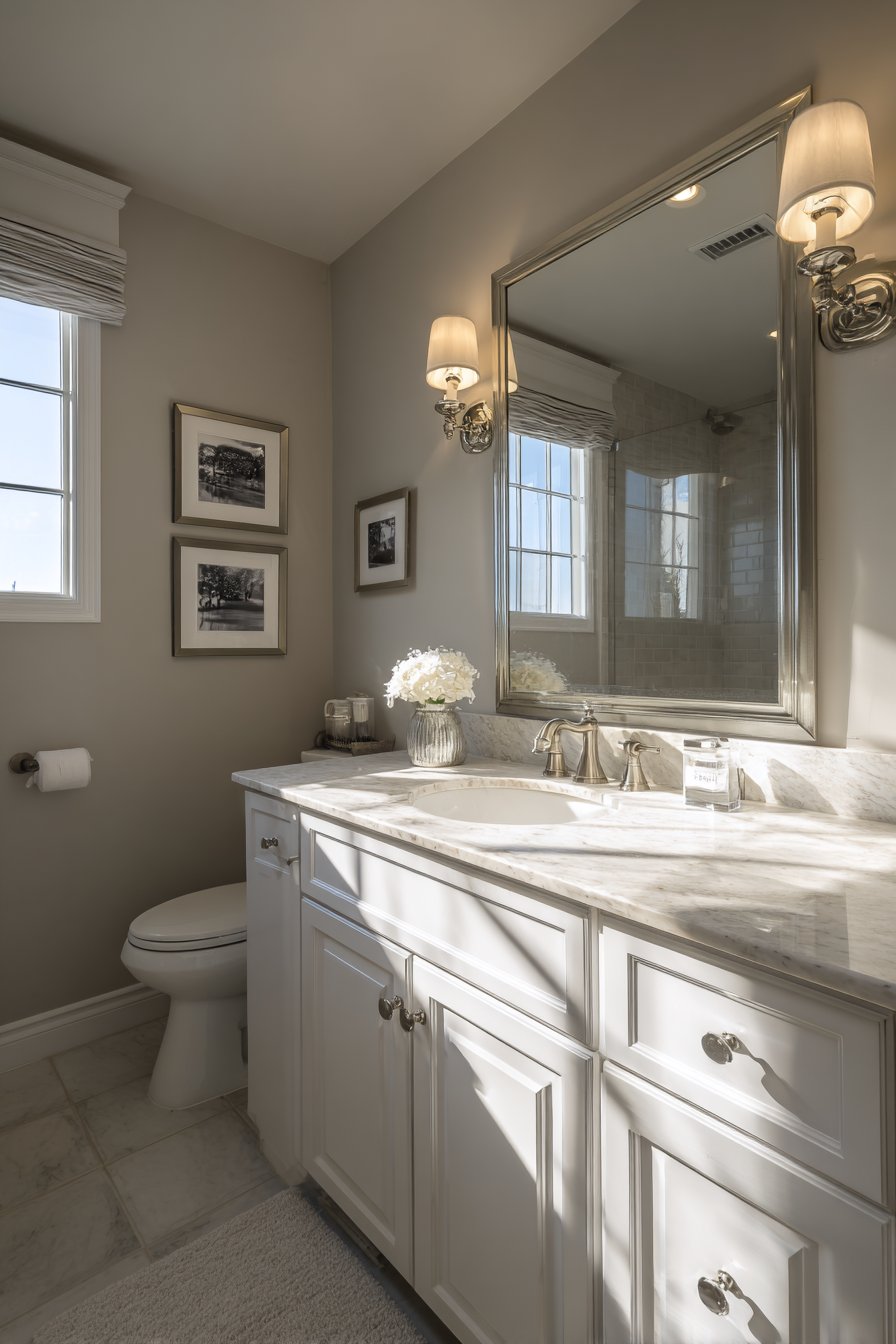
Transitional design successfully bridges traditional and contemporary aesthetics, creating bathrooms that feel current yet timeless, sophisticated yet comfortable. This concept showcases neutral taupe painted walls with classic white crown molding and chair rail details. The architectural trim adds traditional character and visual interest while maintaining the clean lines valued in contemporary design. Framed black and white photography prints in matching silver frames are arranged in a balanced composition above a classic vanity, demonstrating transitional design’s preference for organized, intentional arrangements.
Brushed nickel wall sconces with white fabric shades provide soft ambient lighting, their contemporary material finish paired with traditional lamp forms embodying the transitional blend of styles. Natural daylight creates gentle shadows that emphasize the architectural trim work, highlighting the dimensional quality of the moulding and creating subtle linear shadows throughout the day. Interior photography captures the timeless transitional styling bridging traditional and contemporary elements, showcasing how quality craftsmanship and refined proportions create spaces that transcend trends.
The transitional bathroom appeals to homeowners who appreciate elements of both traditional and contemporary design but don’t want to commit fully to either extreme. It offers the architectural character and established feel of traditional design with the cleaner lines and updated sensibility of contemporary style. This balanced approach creates bathrooms that work with diverse home styles and age gracefully without feeling dated or trendy. Transitional design represents sophisticated restraint and respect for both historical and contemporary design principles.
Key Design Tips:
- Install traditional architectural details—crown moulding, chair rails—in simple profiles
- Choose neutral paint colors—taupe, greige, or soft grey—that work across styles
- Select contemporary materials and finishes—brushed nickel, chrome—in traditional forms
- Arrange artwork and accessories in balanced, intentional compositions
- Mix traditional cabinetry styles with contemporary hardware
- Maintain clean lines and edited accessories list while including quality traditional elements
28. Urban Loft Concrete Industrial
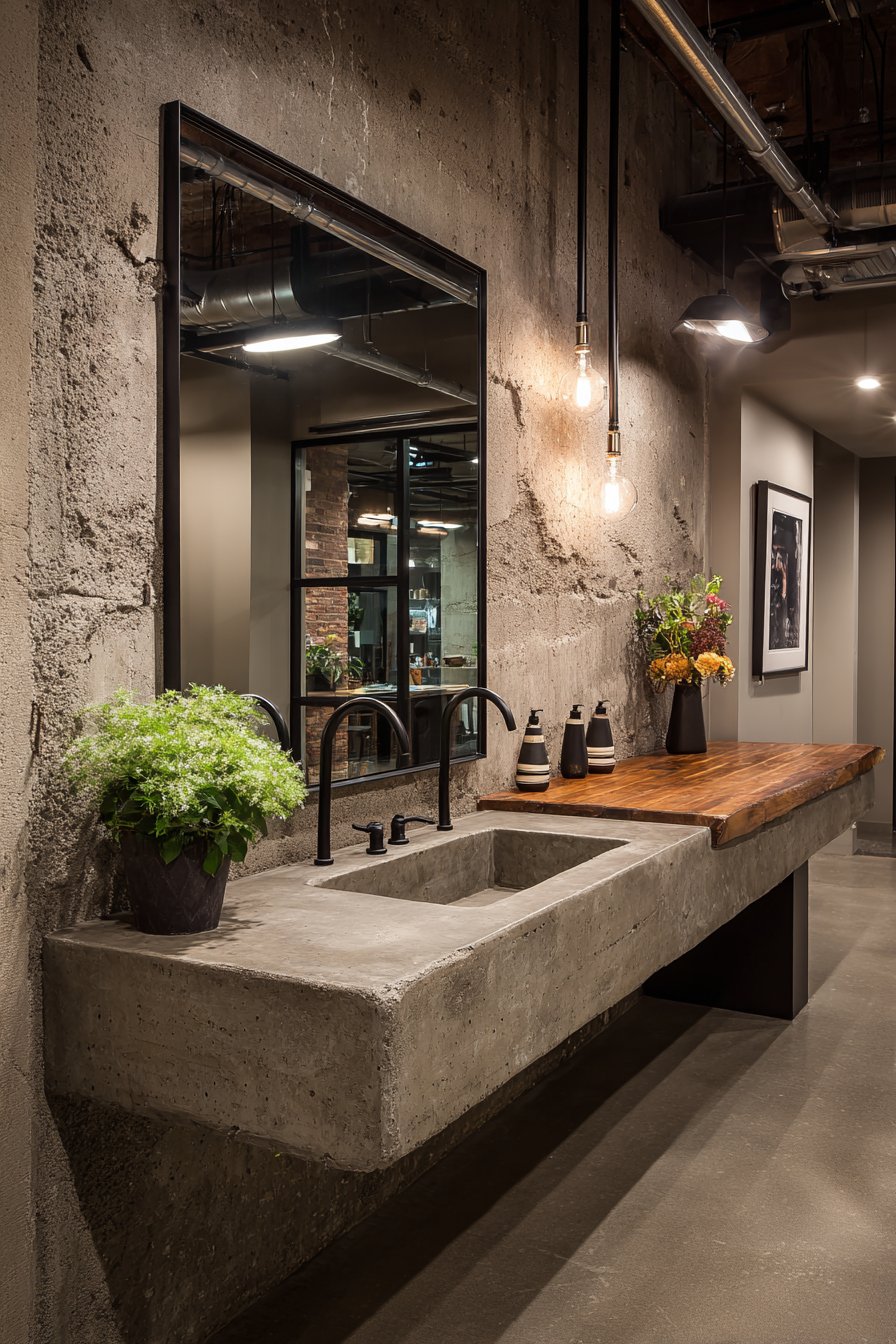
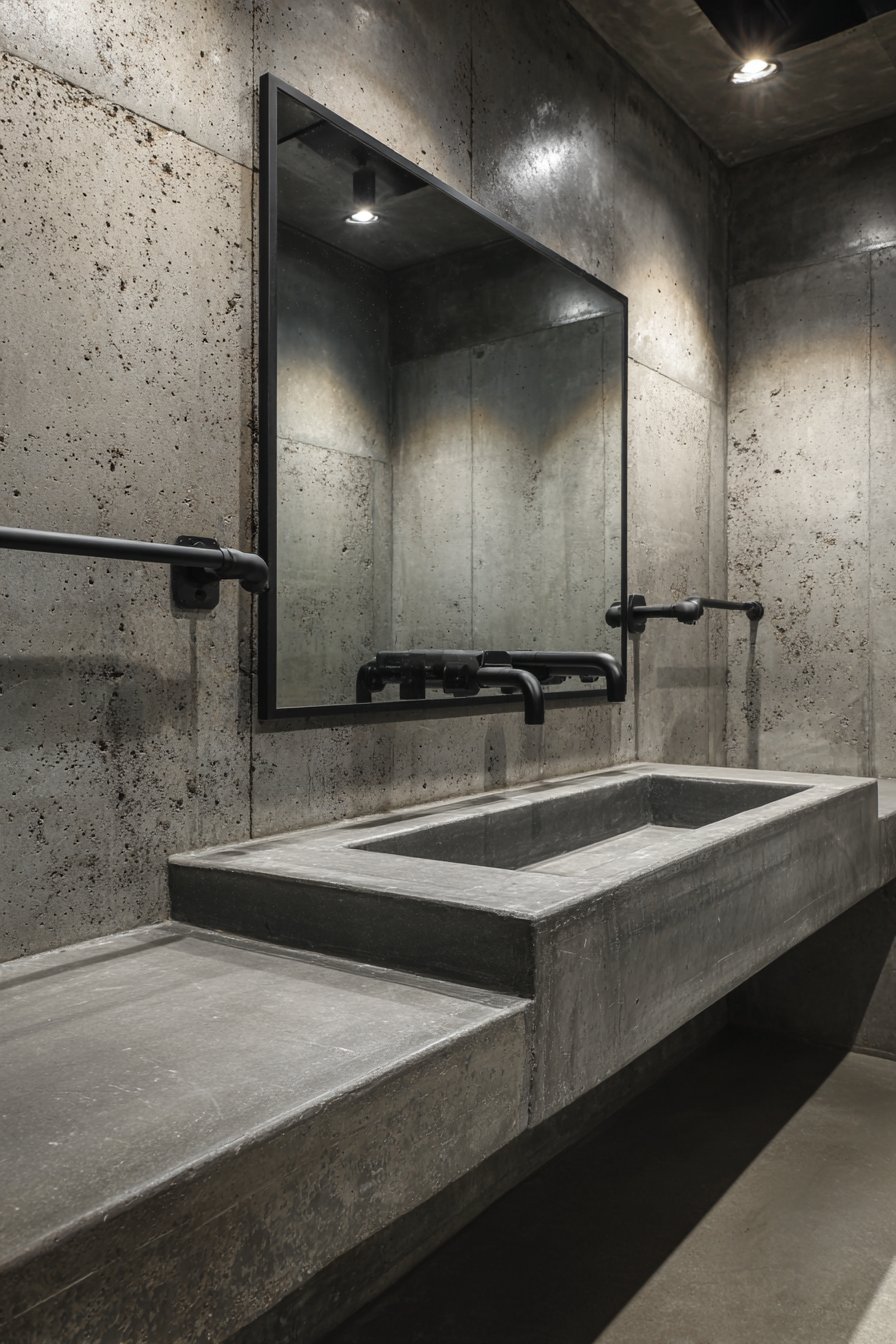
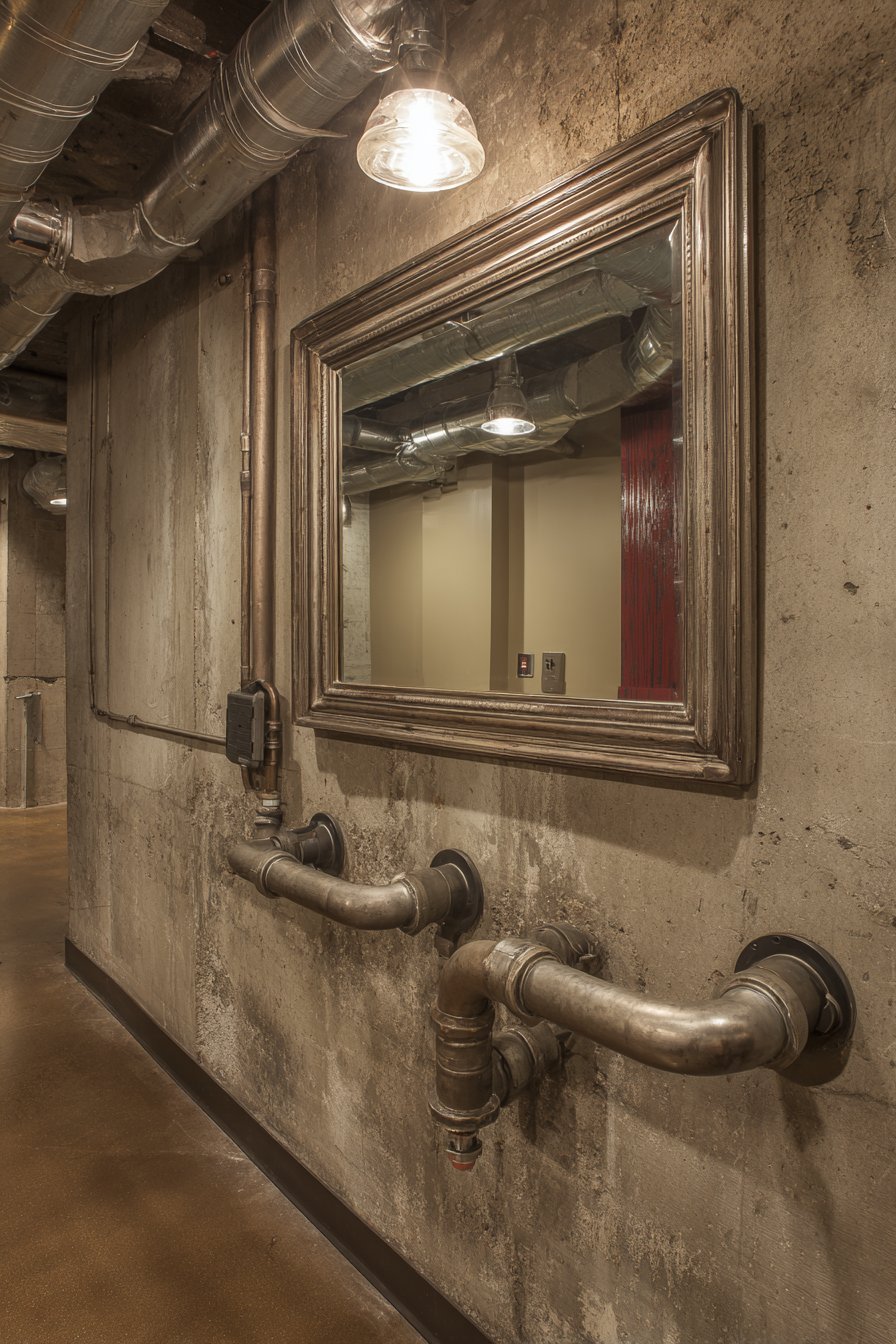
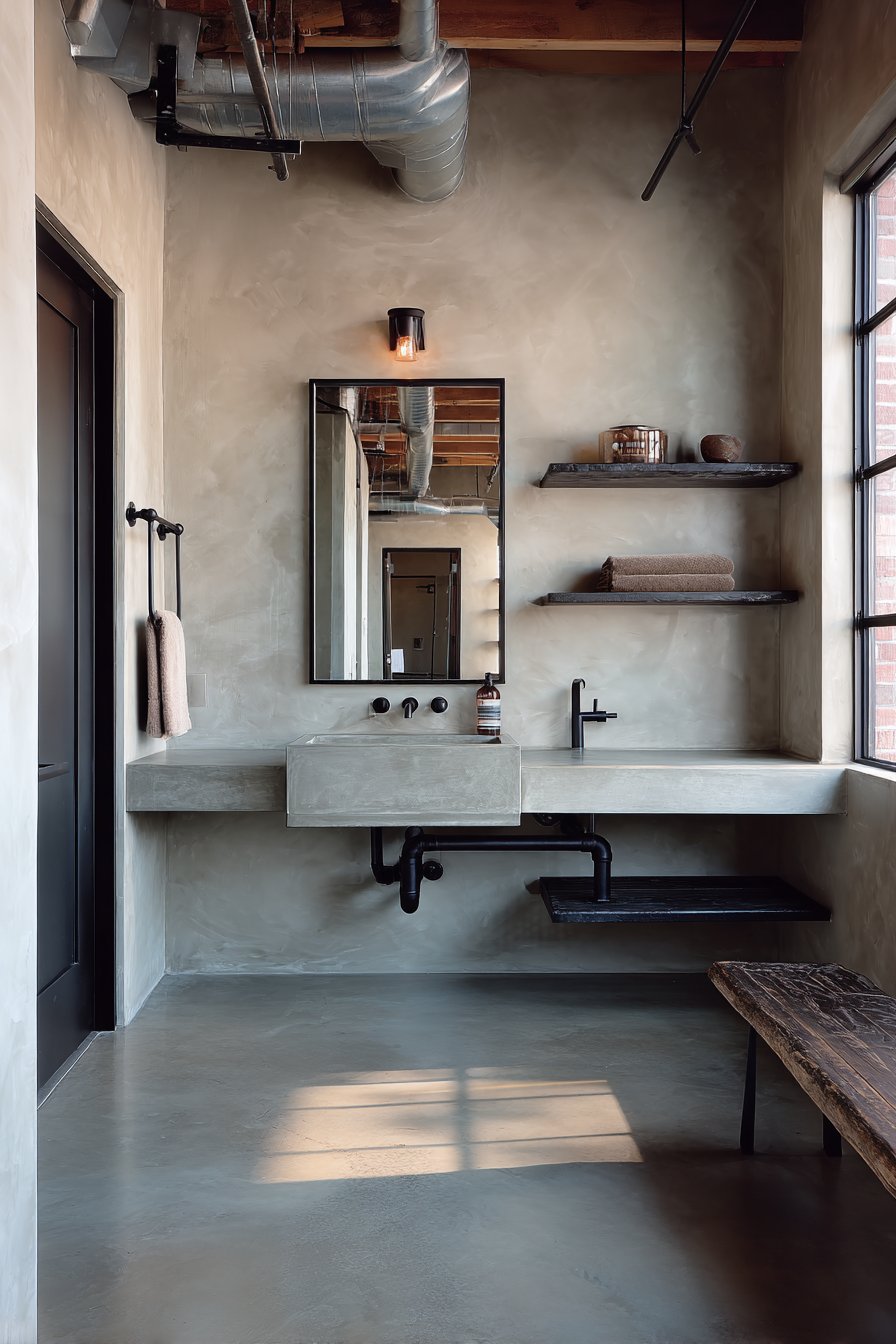
Urban loft design celebrates industrial materials, open spaces, and the adaptive reuse of commercial buildings into residential spaces, creating bathrooms that feel authentically urban and architecturally honest. This concept features polished concrete walls with intentional trowel texture left visible, showcasing the beauty of structural materials and honest construction processes. Industrial metal pipe towel racks mounted directly to the concrete serve as functional sculpture, their utilitarian forms and exposed installation celebrating honest engineering. A large frameless mirror leans against the wall creating casual sophistication and the relaxed, uncontrived aesthetic characteristic of loft living.
Black matte fixtures maintain the urban edge while providing contemporary sophistication, their dark finish creating strong contrast against the lighter concrete. Natural light from skylights above creates dramatic shadows on the textured concrete, emphasizing surface irregularities and trowel marks that reveal the hand of the craftsperson. Professional photography emphasizes the raw industrial materials and contemporary urban aesthetic, capturing how minimal intervention and honest materials create powerful, authentic spaces.
The urban loft bathroom rejects conventional residential finishes in favor of materials typically reserved for commercial or industrial spaces—concrete, metal, exposed infrastructure—celebrating their inherent beauty rather than concealing them. This aesthetic particularly suits converted loft spaces, urban apartments, and homes seeking to capture the energy and edge of city living. It appeals to homeowners who value authenticity, architectural honesty, and spaces that celebrate rather than hide structural and mechanical elements. The loft aesthetic creates bathrooms that feel connected to their urban context and architectural reality.
Key Design Tips:
- Leave concrete surfaces with visible texture rather than over-finishing to smoothness
- Install industrial metal pipes as towel racks, shelving supports, or decorative elements
- Choose black matte fixtures for urban sophistication and contemporary edge
- Lean large mirrors rather than mounting them for casual, uncontrived loft aesthetic
- Incorporate skylights or large industrial-style windows when possible
- Embrace imperfection and raw materials rather than concealing structural elements
29. Hollywood Regency Bold Drama
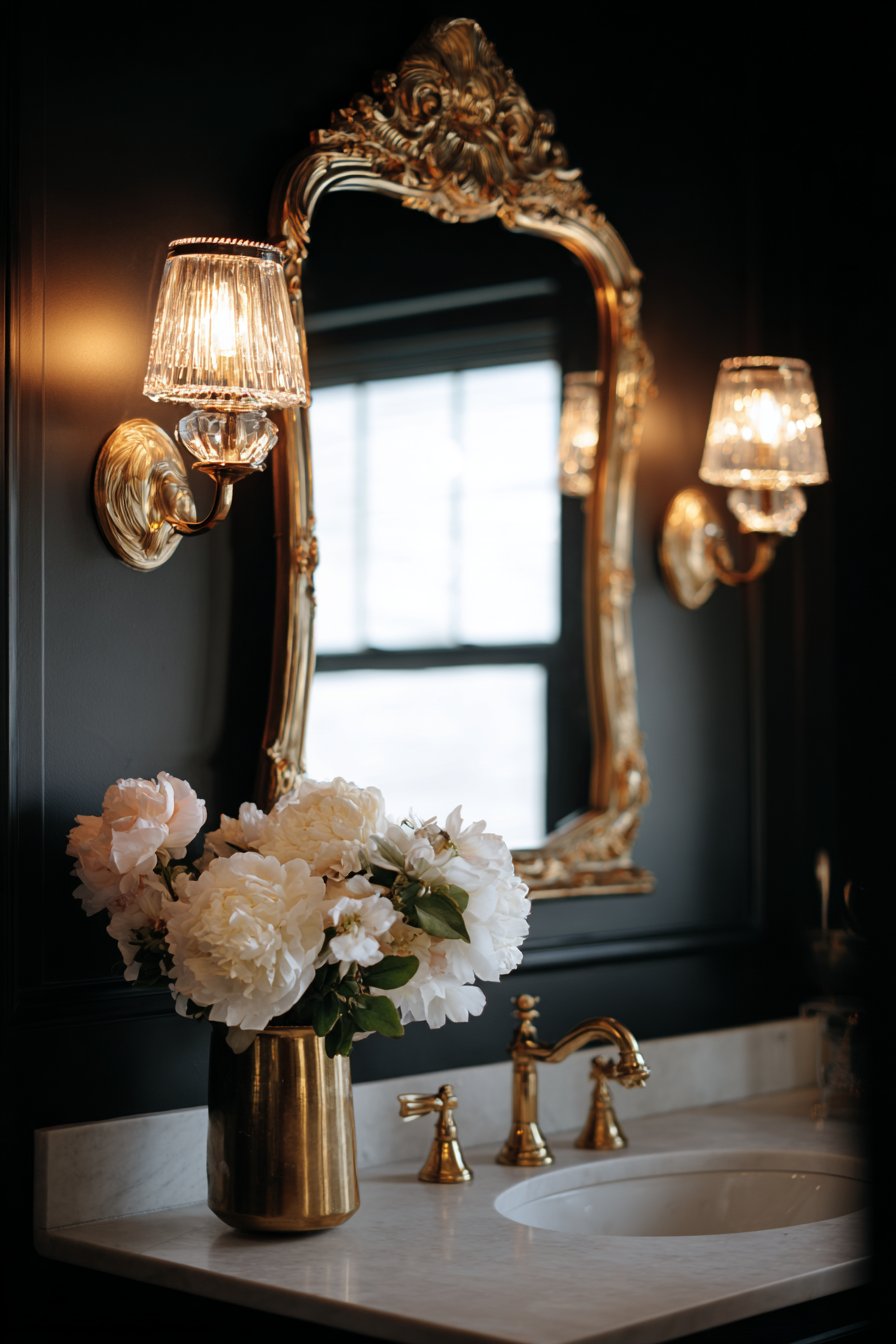
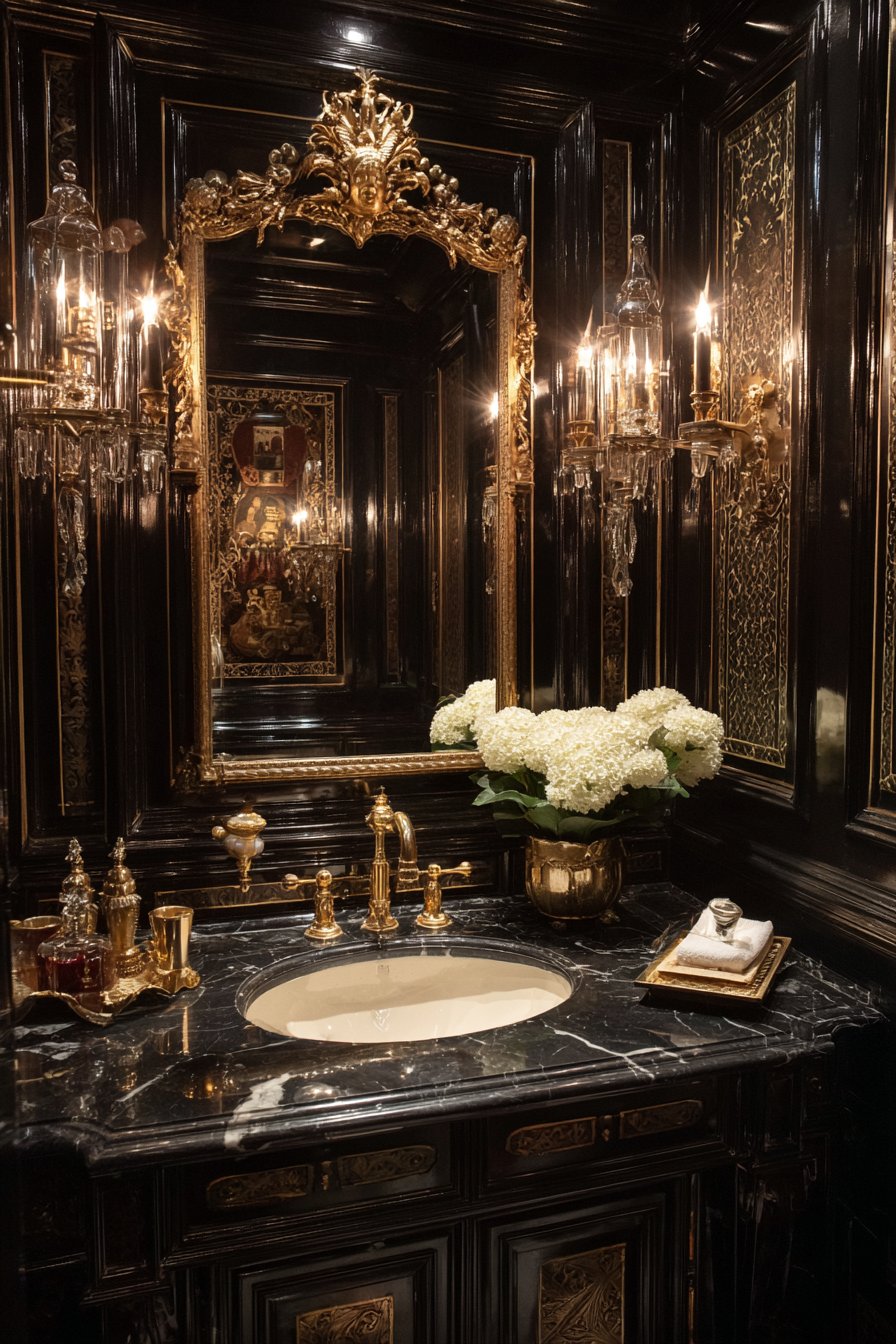
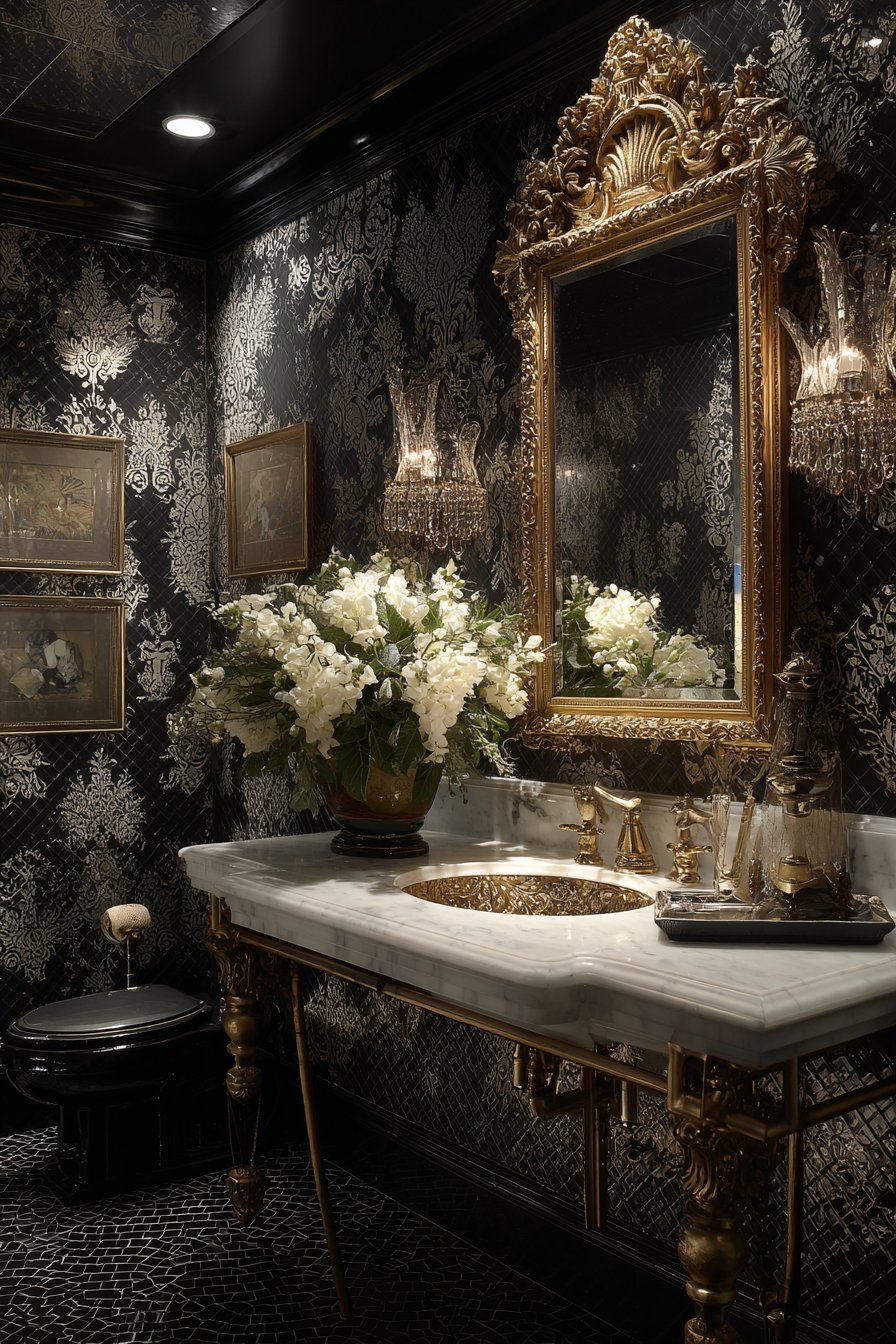
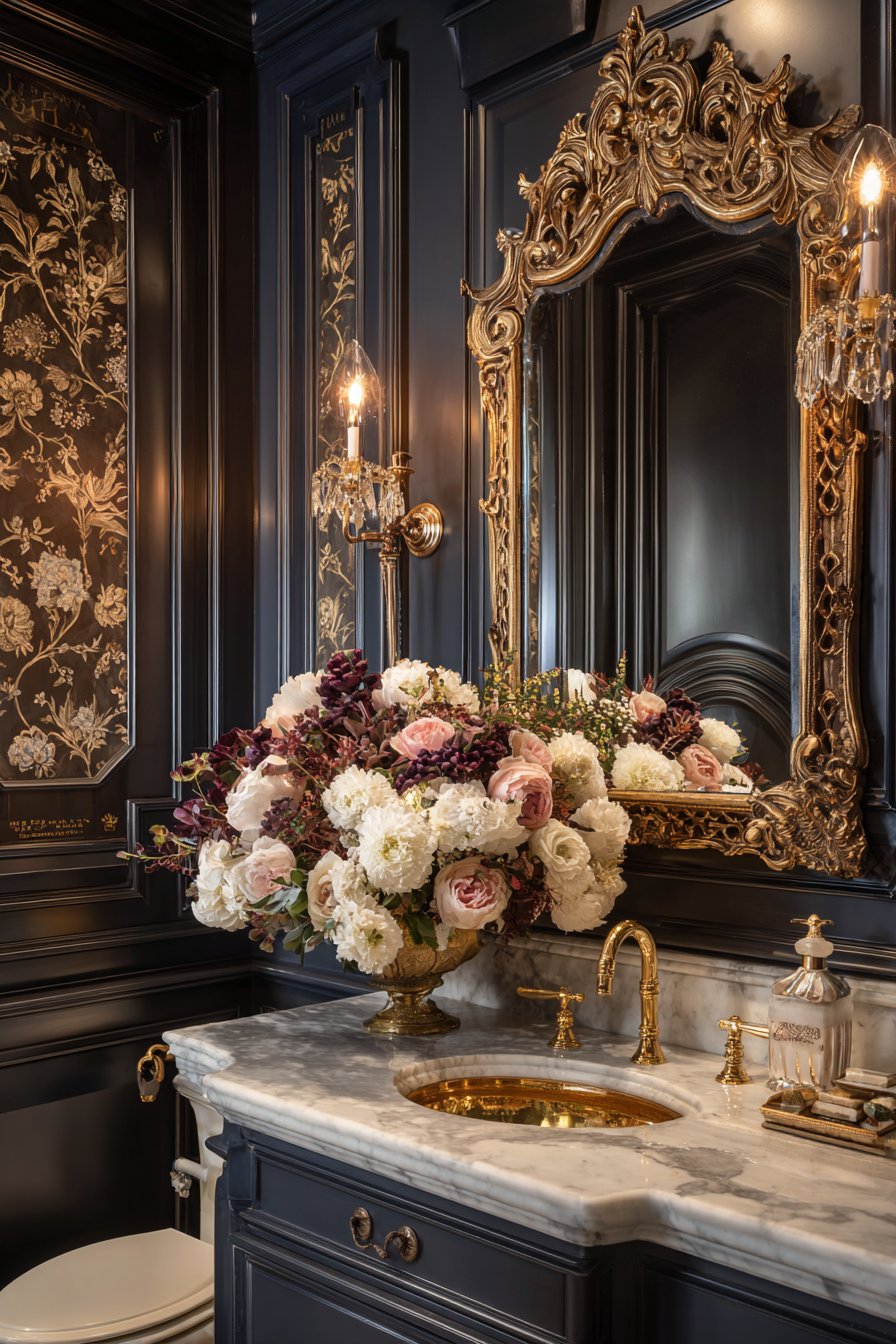
Hollywood regency design brings theatrical glamour, bold contrast, and luxurious finishes to bathroom spaces, creating environments that feel like old Hollywood dressing rooms or luxury hotel suites. This dramatic approach features glossy black painted walls providing dramatic backdrop for an ornate gold-framed oversized mirror with decorative crest detail. The black walls—bold, sophisticated, and theatrical—create instant drama while making metallic and white elements appear even more striking through contrast. Crystal and brass wall sconces flank the mirror creating symmetrical glamour, their sparkle and shine embodying the opulent spirit of Hollywood’s golden age.
White marble countertop and gold plumbing fixtures maintain the luxurious theme, the white marble creating striking contrast against dark walls while the gold fixtures add warmth and glamour. Balanced artificial and natural lighting creates dramatic contrast that emphasizes the reflective surfaces and metallic elements, with light bouncing between mirror, crystal sconces, marble, and gold fixtures to create a jewel-box effect. Interior design photography captures the bold sophisticated drama and old Hollywood glamour with attention to reflective surfaces and metallic finishes.
The Hollywood regency bathroom embraces maximalism, drama, and unabashed glamour, creating spaces designed to make users feel like movie stars preparing for their close-up. This bold style requires confidence and commitment—there’s nothing subtle or safe about glossy black walls and abundant gold—but for homeowners seeking drama and luxury, the effect is spectacular. Hollywood regency particularly suits powder rooms or master bathroom vanity areas where creating a dramatic design moment is more important than subtle serenity. It appeals to homeowners who love vintage Hollywood, appreciate theatrical design, and want bathrooms that make a bold statement.
Key Design Tips:
- Paint walls in glossy black for dramatic backdrop and light-reflective surface
- Choose ornate gold or gilt frames for mirrors with decorative crest or baroque details
- Install crystal and brass sconces for sparkle, symmetry, and old Hollywood glamour
- Select white or light marble countertops for striking contrast against dark walls
- Use gold or brass plumbing fixtures throughout for cohesive metallic warmth
- Maintain perfect symmetry in fixture and accessory placement for formal elegance
Why These Bathroom Wall Decor Ideas Represent the Best in Contemporary Design
These twenty-nine bathroom wall decor ideas represent the pinnacle of contemporary interior design thinking, spanning the full spectrum from minimalist restraint to maximalist abundance, from rustic authenticity to urban sophistication, from traditional elegance to cutting-edge contemporary innovation. Each design demonstrates deep understanding of how bathroom wall decor functions not merely as decoration but as a crucial element in establishing atmosphere, expressing personal style, enhancing functionality, and creating spaces that support wellbeing and daily routines.
The collection showcases the incredible versatility of bathroom spaces and the transformative power of thoughtful wall treatments. Whether through the living wall installation that brings biophilic benefits and natural beauty, the exposed brick that celebrates architectural honesty and industrial charm, the mirrored mosaic that multiplies light and creates glamorous sparkle, or the Japanese-inspired wooden slats that foster zen-like contemplation, each approach offers unique benefits and appeals to different aesthetic sensibilities. These designs prove that bathroom walls need not be afterthoughts or purely functional surfaces but can serve as canvases for creative expression, architectural interest, and personal storytelling.
These ideas excel because they address real-world considerations while maintaining design integrity. They work with various bathroom sizes from compact powder rooms to spacious master bathrooms, accommodate different lighting conditions from naturally bright to artificially illuminated, and suit various budgets from DIY-friendly installations to high-end custom solutions. Each design considers practical bathroom requirements—moisture resistance, ease of cleaning, durability—while refusing to compromise on aesthetic impact. The best bathroom wall decor creates beautiful spaces that remain functional, maintainable, and enjoyable over time.
The designs also demonstrate sophisticated understanding of how elements work together to create cohesive environments. The coastal whitewashed wood pairs perfectly with nautical mirrors and natural rope, the farmhouse shiplap coordinates with vintage window frames and reclaimed shelving, the Mediterranean hand-painted tiles complement wrought iron and textured plaster. This attention to harmony, where materials, colors, textures, and accessories all support a unified vision, separates excellent design from random decoration. Understanding how to layer compatible elements while avoiding visual chaos or conflicting messages represents advanced design thinking.
Furthermore, these bathroom wall decor ideas recognize that design trends continuously evolve while certain principles remain timeless. Some approaches embrace current aesthetics—the modern luxe marble, the contemporary geometric mirrors, the glam mirrored mosaic—offering cutting-edge style for homeowners who enjoy being at the forefront of design trends. Others draw from enduring design traditions—the traditional botanical prints, the French country paneling, the Japanese zen elements—providing classic beauty that transcends fleeting fashion. The collection offers something for every design preference, from trend-forward to traditionally rooted.
The incorporation of varied materials—natural wood, stone, metal, glass, ceramic, fiber, living plants—demonstrates sophisticated understanding of how different materials contribute unique qualities to spaces. Wood brings warmth and organic beauty, stone adds luxury and permanence, metal introduces industrial edge or elegant shine depending on finish, glass creates lightness and reflection, ceramics offer color and pattern, natural fibers add texture and handcrafted charm, and living plants provide ever-changing organic beauty and air-purifying benefits. The best bathroom designs thoughtfully combine multiple materials to create rich, layered environments with depth and complexity.
These ideas also excel in their understanding of lighting’s crucial role in bathroom design. From the natural daylight streaming through coastal bathroom windows to highlight whitewashed wood texture, to the strategic LED backlighting behind contemporary mirror clusters creating floating effects, to the soft ambient glow from vintage brass sconces in bohemian spaces, each design demonstrates how lighting transforms materials and creates atmosphere. Understanding that lighting changes throughout the day and using this to create dynamic rather than static spaces represents sophisticated design thinking.
The collection addresses diverse lifestyle needs and personal preferences. The minimalist designs serve homeowners seeking calm, uncluttered spaces for meditation and stress reduction. The maximalist glamorous approaches appeal to those who find joy in abundance, sparkle, and theatrical beauty. The vintage and rustic options attract homeowners valuing authenticity, history, and connection to traditional crafts. The contemporary designs suit those who appreciate innovation, clean lines, and forward-thinking aesthetics. This diversity ensures that every reader can find approaches resonating with their personal style, practical needs, and aesthetic preferences.
Importantly, these bathroom wall decor ideas recognize that bathrooms serve multiple functions beyond basic hygiene—they’re personal retreats, morning preparation spaces, evening relaxation zones, and opportunities for self-care. The spa-inspired living wall creates an environment supporting wellness and restoration. The Hollywood regency glamour transforms daily grooming into a luxurious ritual. The Japanese zen design facilitates mindfulness and contemplation. Understanding these deeper psychological and emotional functions of bathroom spaces and designing to support them represents genuinely human-centered design thinking.
The collection also demonstrates remarkable creativity in using unexpected materials and approaches. Plates become wall art in the eclectic design, vintage windows transform into mirrors in the farmhouse bathroom, dresser furniture converts to vanities in the rustic space, three-dimensional panels create sculptural walls in contemporary settings. This creative problem-solving and willingness to see familiar objects in new contexts inspires homeowners to think beyond conventional bathroom decor and explore innovative, personal solutions.
Finally, these ideas succeed because they’re achievable. While some approaches require professional installation—living walls, three-dimensional panels, or large-format stone installation—many can be accomplished by motivated DIYers or adapted to suit various skill levels and budgets. The gallery wall can start with a few prints and grow over time, the coastal wood wall can begin as a small accent area, the botanical prints can be sourced affordably through online resources or thrift stores. Good design should inspire and guide rather than intimidate, offering pathways for homeowners at every skill and budget level to improve their spaces.
Conclusion
Transforming your bathroom through thoughtful wall decor represents one of the most impactful and accessible ways to elevate your home’s design. As we’ve explored through these twenty-nine distinct approaches, bathroom walls offer incredible potential for creative expression, personal storytelling, and atmosphere creation. Whether you’re drawn to the serene simplicity of minimalist zen design, the warm authenticity of rustic reclaimed wood, the bold drama of Hollywood regency, or the fresh appeal of coastal whitewashed planks, there’s an approach perfectly suited to your aesthetic preferences and practical needs.
The key to successful bathroom wall decor lies in understanding that walls are not merely backgrounds but active participants in creating the overall experience of the space. They establish color palettes, introduce texture and pattern, display meaningful objects and artwork, reflect light to expand spaces, and communicate your personal style to everyone who enters. By investing thought, creativity, and care into your bathroom walls, you transform purely functional spaces into personal sanctuaries that support your daily routines, enhance your wellbeing, and bring genuine beauty into everyday life.
As you consider which ideas resonate most strongly with you, remember that great design is never about slavishly following trends but about creating spaces that authentically reflect who you are and how you want to live. Don’t be afraid to adapt these approaches to suit your specific circumstances—combining elements from different styles, adjusting color palettes to work with existing fixtures, or scaling projects to fit your space and budget. The most successful bathroom designs are those that feel personal, intentional, and genuinely yours.
Start your bathroom transformation journey by carefully assessing your space, identifying what aspects you love and what could be improved, and envisioning how you want the room to feel. Gather inspiration from these ideas and others you encounter, create mood boards or collection of images representing your ideal aesthetic, and then begin implementing changes one step at a time. Even small updates—adding a gallery wall of botanical prints, installing floating shelves with curated accessories, or painting an accent wall in a bold new color—can dramatically impact how you experience your bathroom every single day. Your bathroom walls are waiting to tell your story; all they need is your creative vision to bring them to life.
