
A balcony, no matter how small, holds incredible potential to become a vibrant sanctuary filled with blooming beauty. In our increasingly urbanized world, these precious outdoor spaces offer a vital connection to nature, a personal retreat from daily stress, and an opportunity to express creativity through living design. Balcony flower ideas encompass far more than simply placing a few pots along a railing—they represent a thoughtful approach to transforming limited square footage into a flourishing garden oasis that enhances both your living space and quality of life.
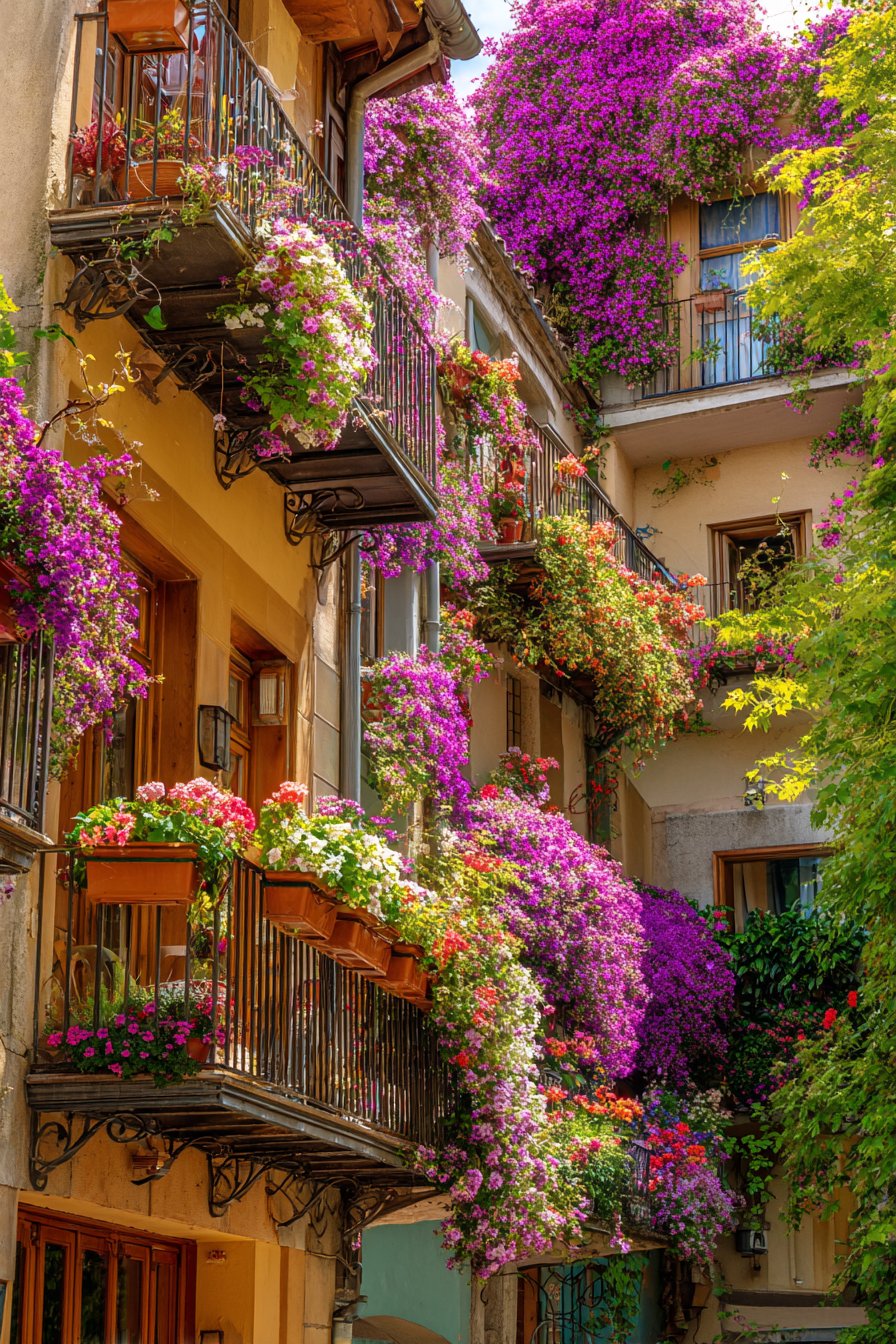
The art of balcony gardening requires understanding the unique challenges and opportunities these compact spaces present. From managing limited sunlight and exposure to maximizing vertical growing areas, successful balcony flower arrangements demand strategic planning and creative problem-solving. Whether you’re working with a sun-drenched south-facing balcony or a shaded north-facing retreat, there are countless flower varieties and design approaches that can transform your outdoor area into a stunning display of color, texture, and fragrance.
This comprehensive guide explores 23 distinctive balcony flower ideas, each showcasing different styles, plant selections, and design philosophies. From romantic cottage gardens to sleek modern arrangements, from drought-tolerant Mediterranean displays to lush tropical paradises, you’ll discover approaches suited to every climate, aesthetic preference, and gardening skill level. These carefully curated concepts demonstrate how strategic plant selection, thoughtful container choices, and purposeful arrangement can maximize beauty while addressing practical considerations like maintenance requirements, seasonal interest, and spatial constraints.
1. Fragrant Lavender Corner Garden
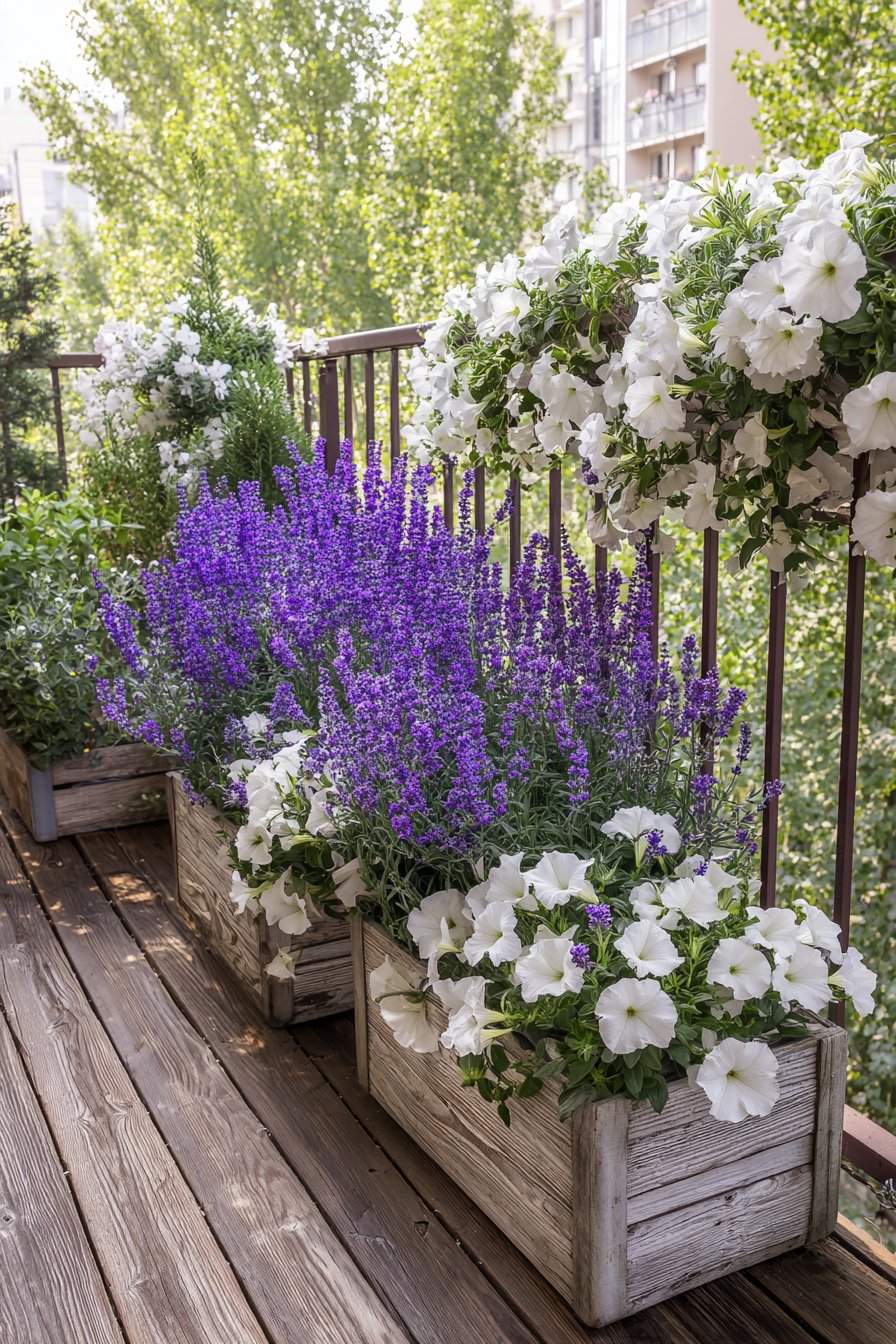
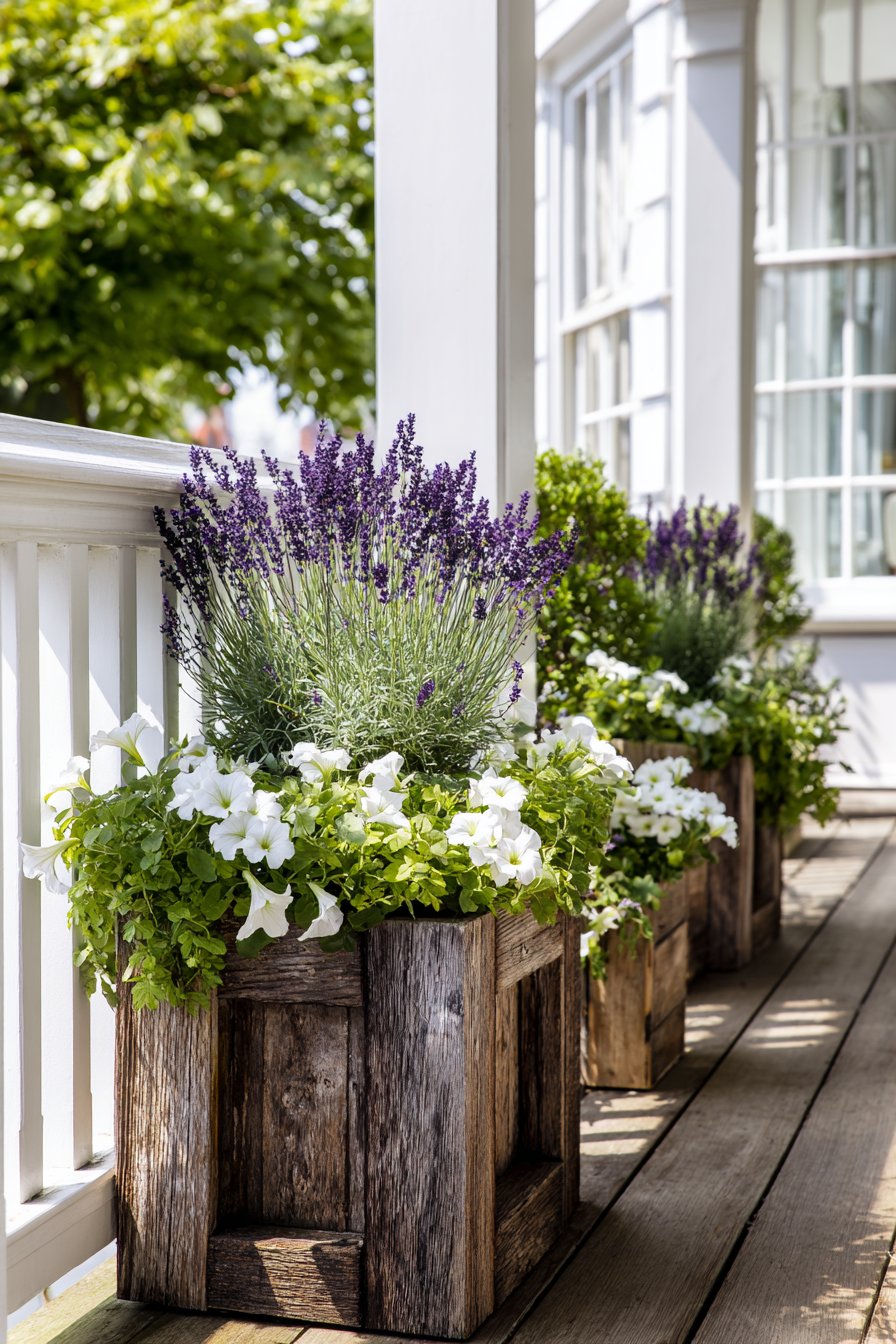
The timeless elegance of lavender transforms an ordinary balcony corner into an aromatic Mediterranean retreat. This design features rustic wooden boxes filled with fragrant lavender plants positioned strategically along the railing, creating both visual interest and sensory delight. The weathered wood containers provide authentic character while offering the excellent drainage that lavender demands. Companion plantings of white petunias cascade gracefully alongside trailing ivy, establishing beautiful vertical layers that draw the eye downward and create depth in the compact space.
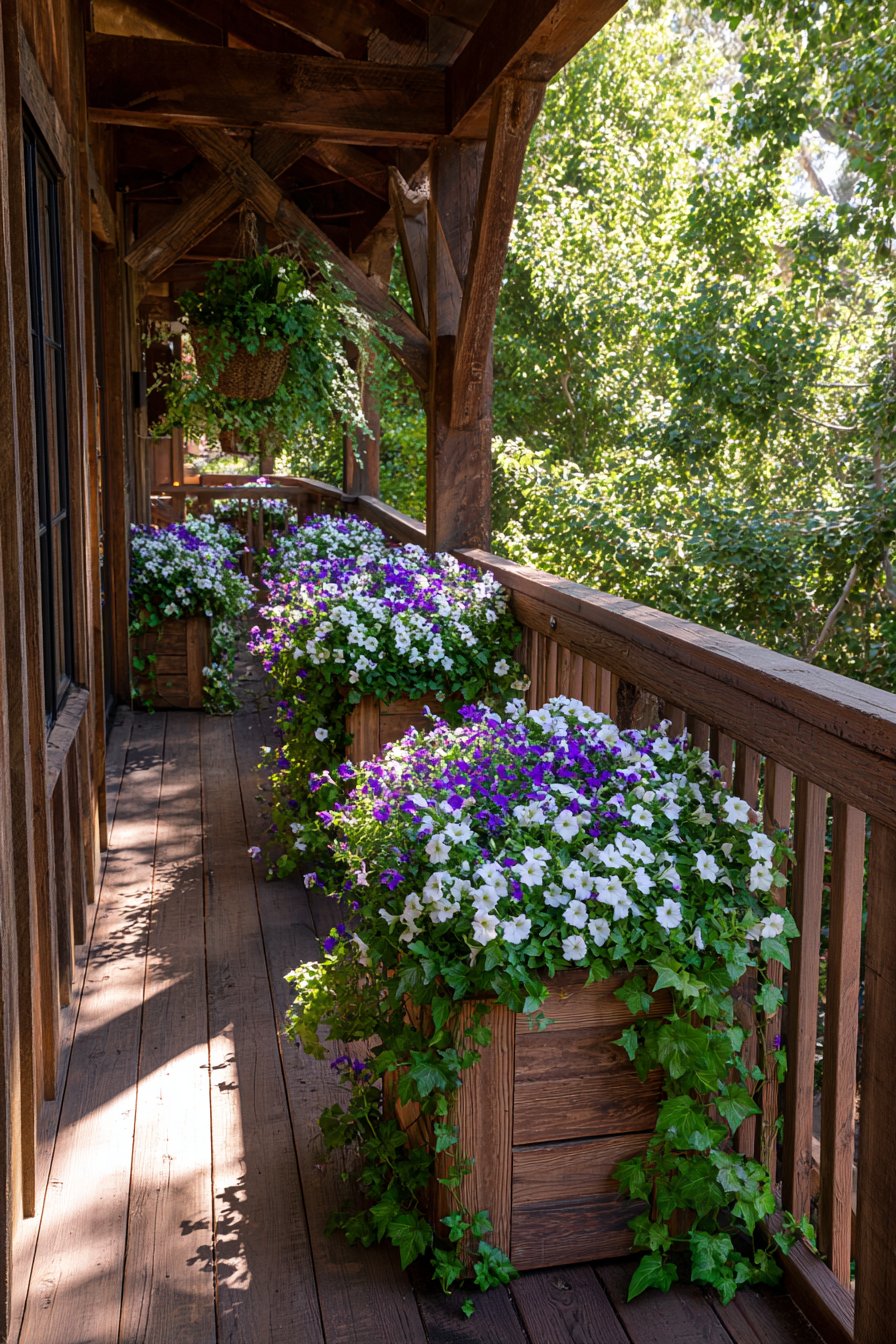
The purple and white color palette delivers sophisticated simplicity, allowing the lavender’s silvery-green foliage to shine as a textural element even when not in bloom. The weathered wood planters complement this natural aesthetic, their aged patina suggesting years of garden enjoyment while actually being entirely achievable for new installations. This arrangement excels in full sun exposure, where lavender thrives and releases its signature fragrance most intensely during warm afternoons.
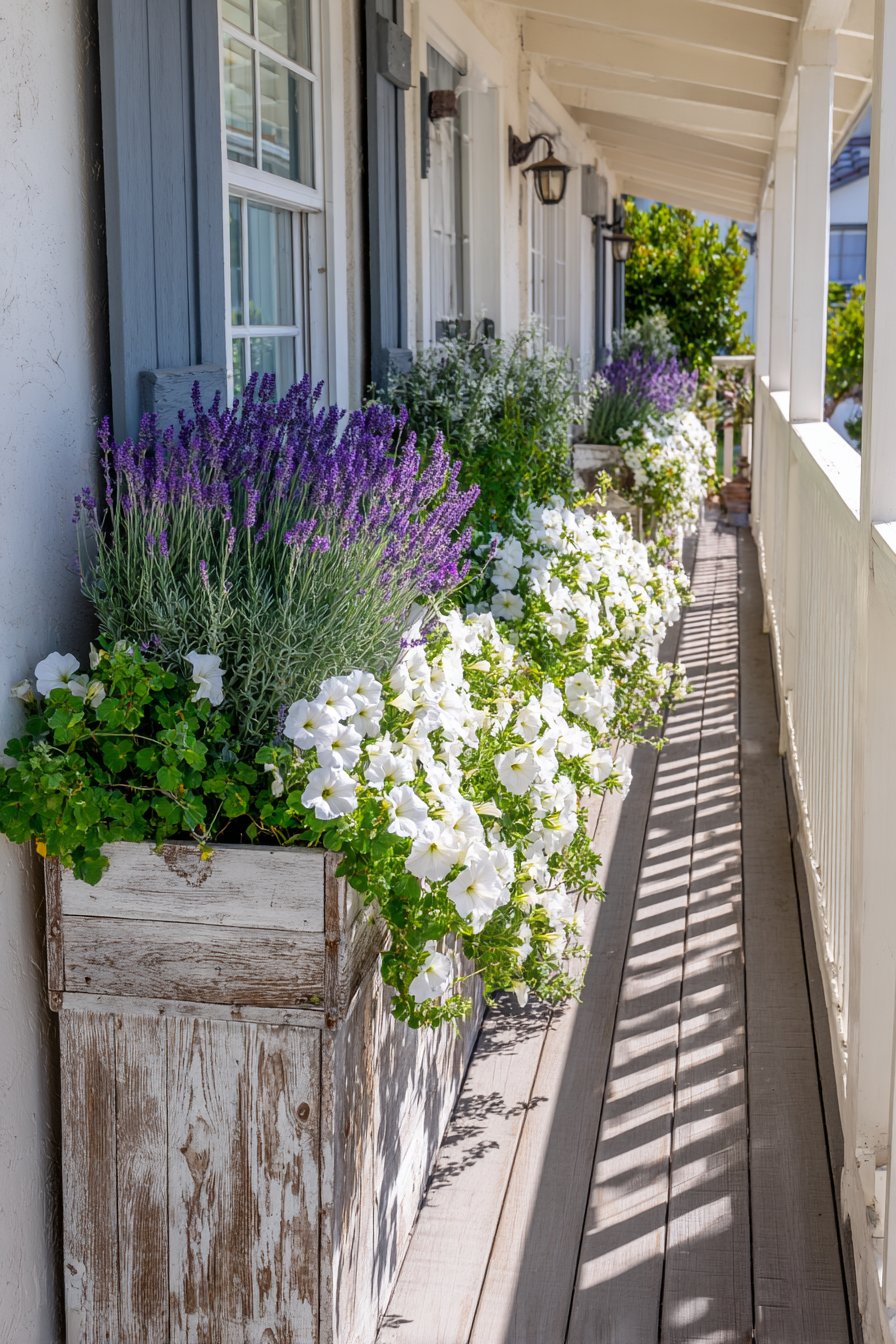
Soft afternoon light filtering through nearby trees creates an enchanting dappled effect, casting gentle shadows across the blooms and adding dynamic visual interest throughout the day. This interplay of light and shadow emphasizes the organic textures present in the arrangement—from the rough-hewn wood to the delicate flower spikes and the waxy leaves of trailing ivy. The result is a living composition that changes subtly throughout the day, rewarding observation and creating a contemplative outdoor space.
Key Design Tips:
- Select English or French lavender varieties suited to your climate zone for best performance
- Ensure wooden planters have drainage holes and consider lining with landscape fabric to extend wood life
- Position containers where they receive at least 6-8 hours of direct sunlight daily
- Trim lavender after flowering to maintain compact shape and encourage bushier growth
- Allow soil to dry between waterings as lavender prefers slightly dry conditions
2. Vertical Wall Garden Maximizing Space
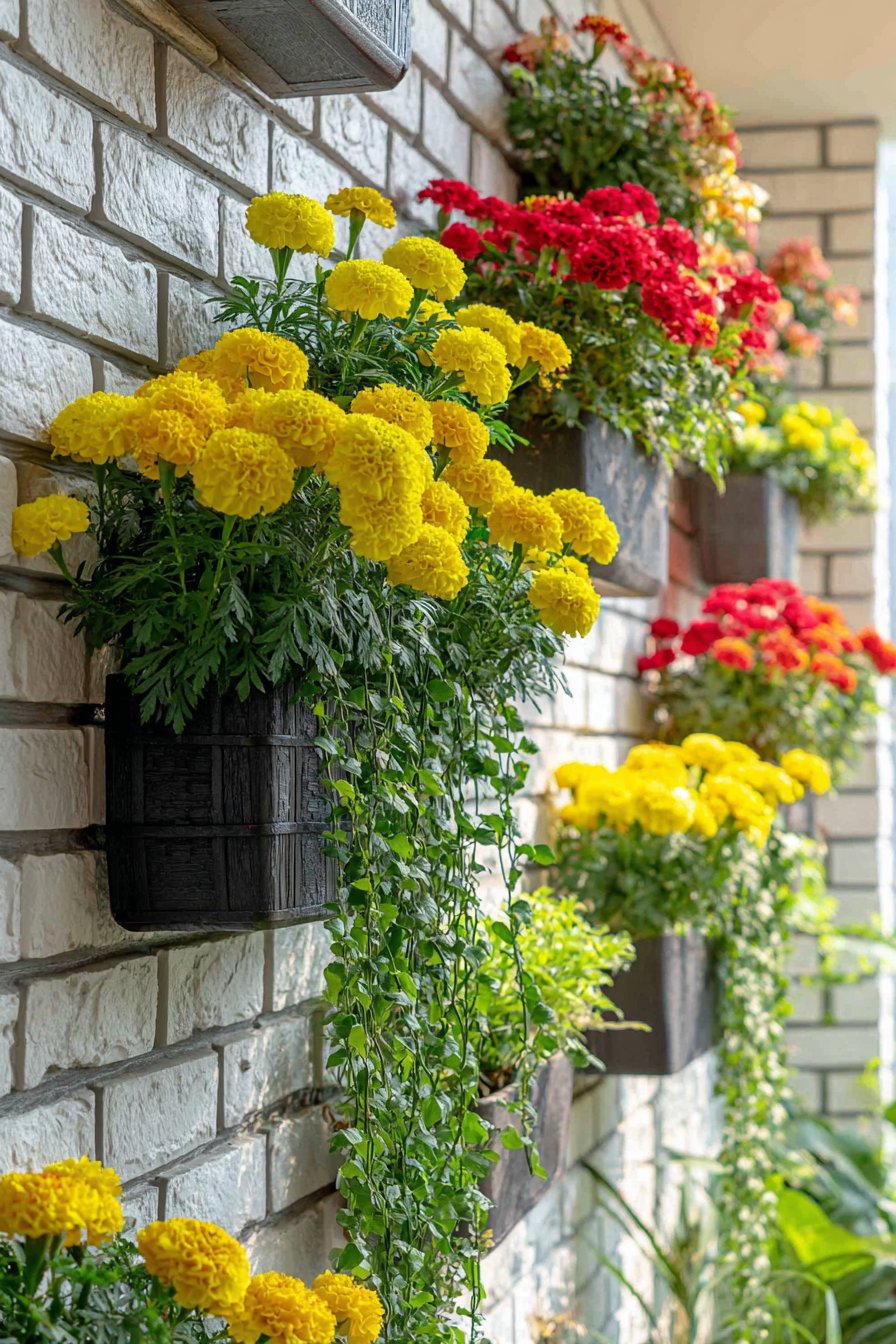
When floor space is at a premium, vertical wall planters offer an ingenious solution for creating abundant floral displays without sacrificing valuable balcony real estate. This space-efficient balcony flower idea showcases a series of wall-mounted planters arranged in tiers against a white brick wall, transforming a previously unused vertical surface into a thriving garden tapestry. Cheerful yellow and orange marigolds share space with vibrant red geraniums and trailing green ivy, creating a color-saturated living wall that commands attention and brings joy.
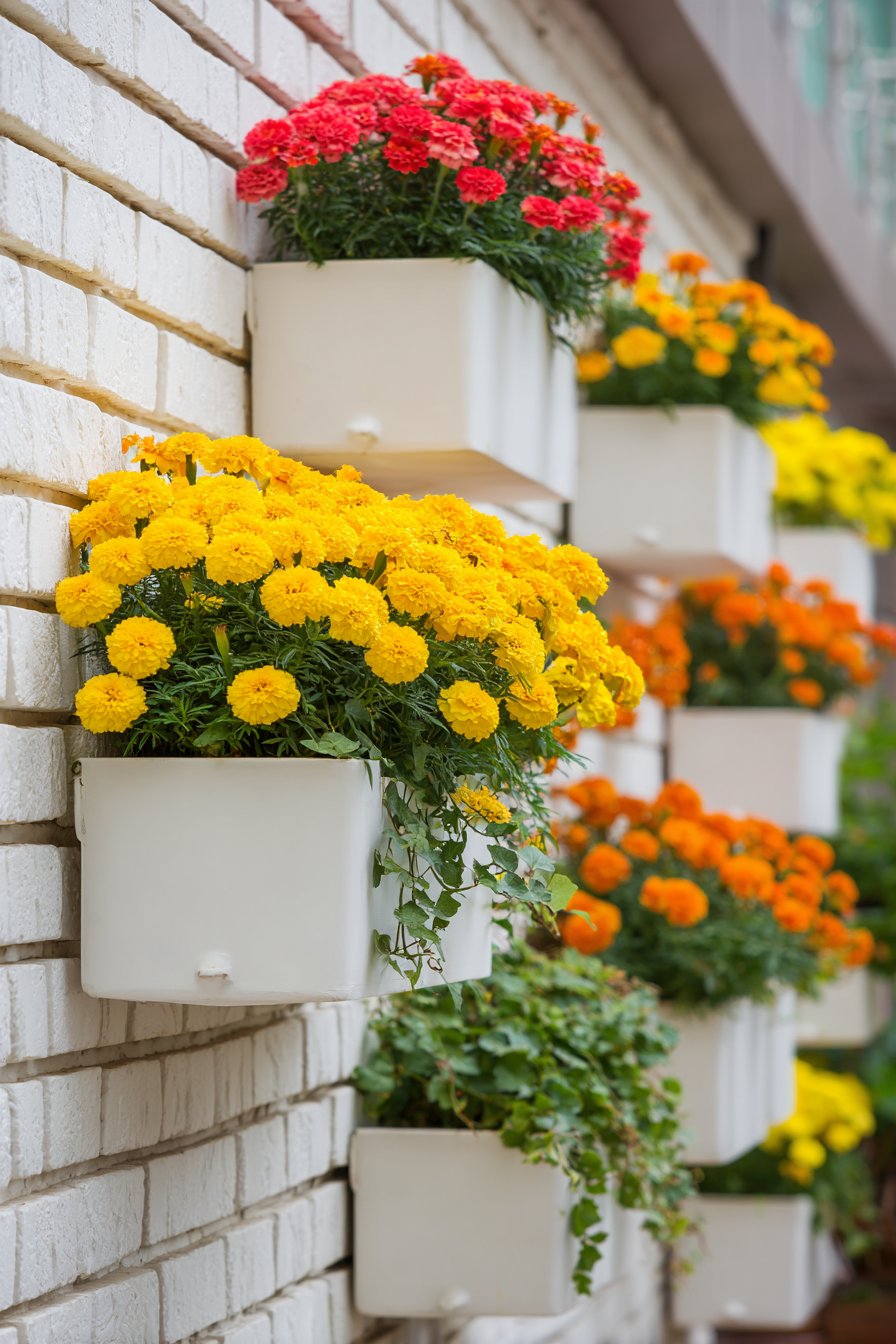
The tiered arrangement serves multiple purposes beyond aesthetics. By placing plants at varying heights, the design creates visual interest while ensuring each plant receives adequate light exposure. Lower planters might feature shade-tolerant trailing ivy, while upper tiers host sun-loving marigolds and geraniums. This thoughtful stratification maximizes the growing potential of every square inch while creating a lush, abundant appearance that belies the actual limited space being utilized.
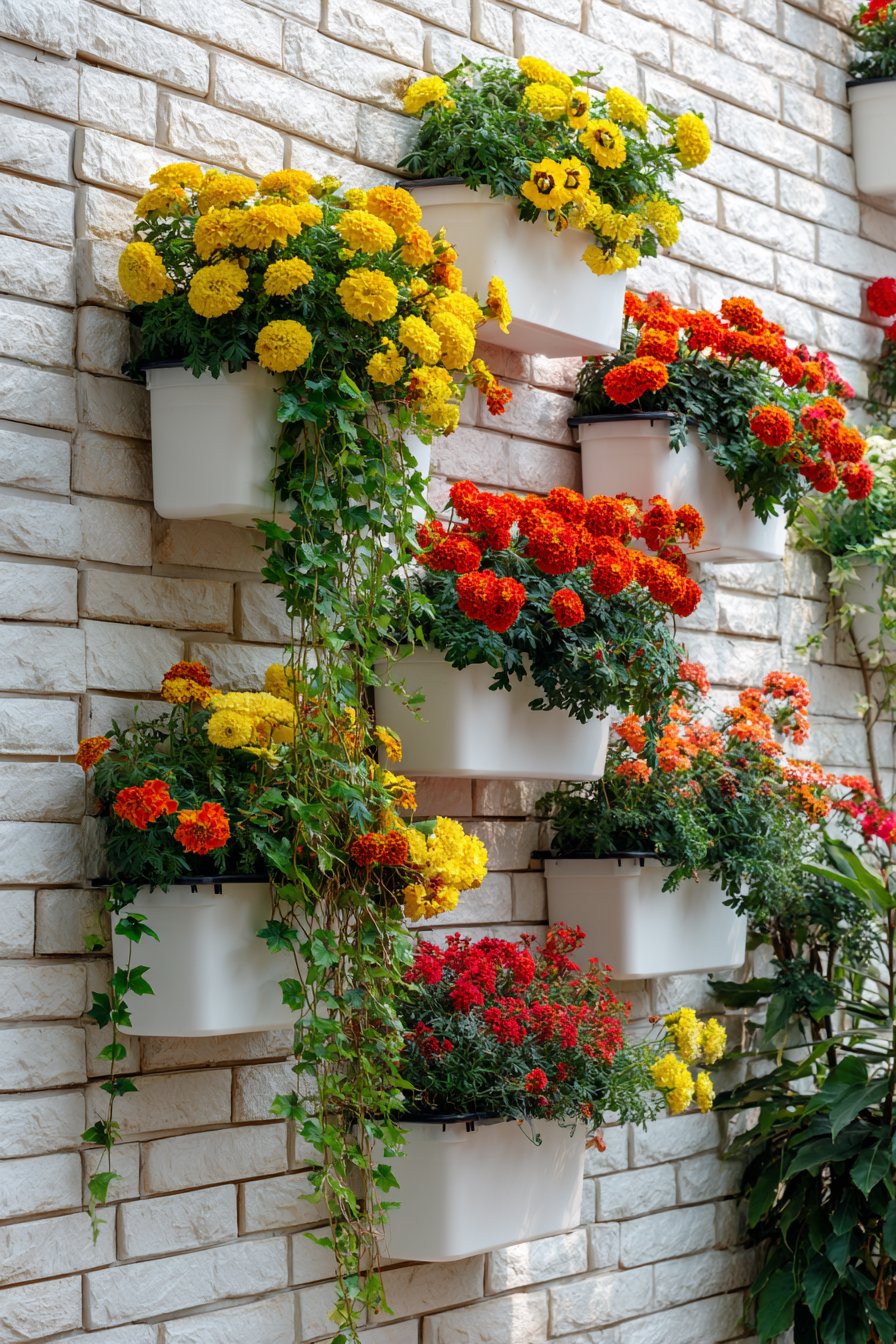
Modern vertical planters often incorporate built-in water reservoirs, addressing one of the primary challenges of container gardening—maintaining consistent moisture levels. These self-watering features prove particularly valuable for busy gardeners or those who travel frequently, as they reduce watering frequency while preventing the feast-or-famine moisture cycles that stress plants. The combination of practical functionality and visual impact makes vertical gardens an increasingly popular balcony flower idea for urban dwellers.
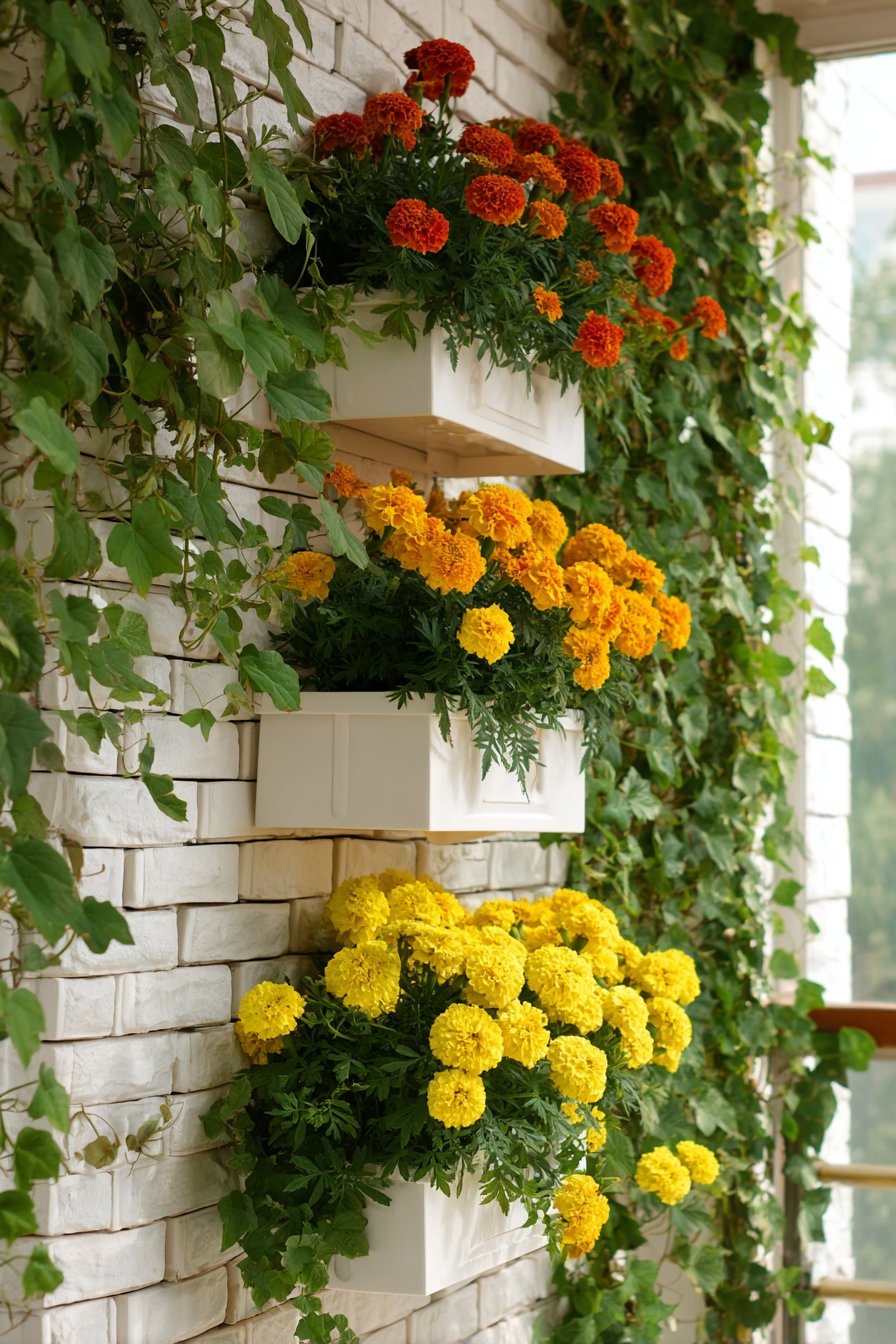
The white brick wall provides an ideal neutral backdrop that allows the vibrant flower colors to pop dramatically. Natural daylight illuminating the arrangement from the side creates dimension and depth, casting subtle shadows that emphasize the three-dimensional nature of the living wall. This lighting condition also brings out the color saturation in the blooms, making yellows appear more golden, oranges more luminous, and reds more jewel-toned.
Key Design Tips:
- Install wall planters with proper anchoring systems rated for the combined weight of containers, soil, and water
- Choose lightweight potting mixes specifically formulated for vertical gardens to reduce weight load
- Create a gradient effect by placing darker, larger blooms at the bottom and lighter, smaller ones at the top
- Incorporate trailing plants at intervals to soften hard edges and create cascading visual flow
- Check water reservoir levels weekly and top off as needed, especially during hot weather
3. Romantic Climbing Rose Trellis
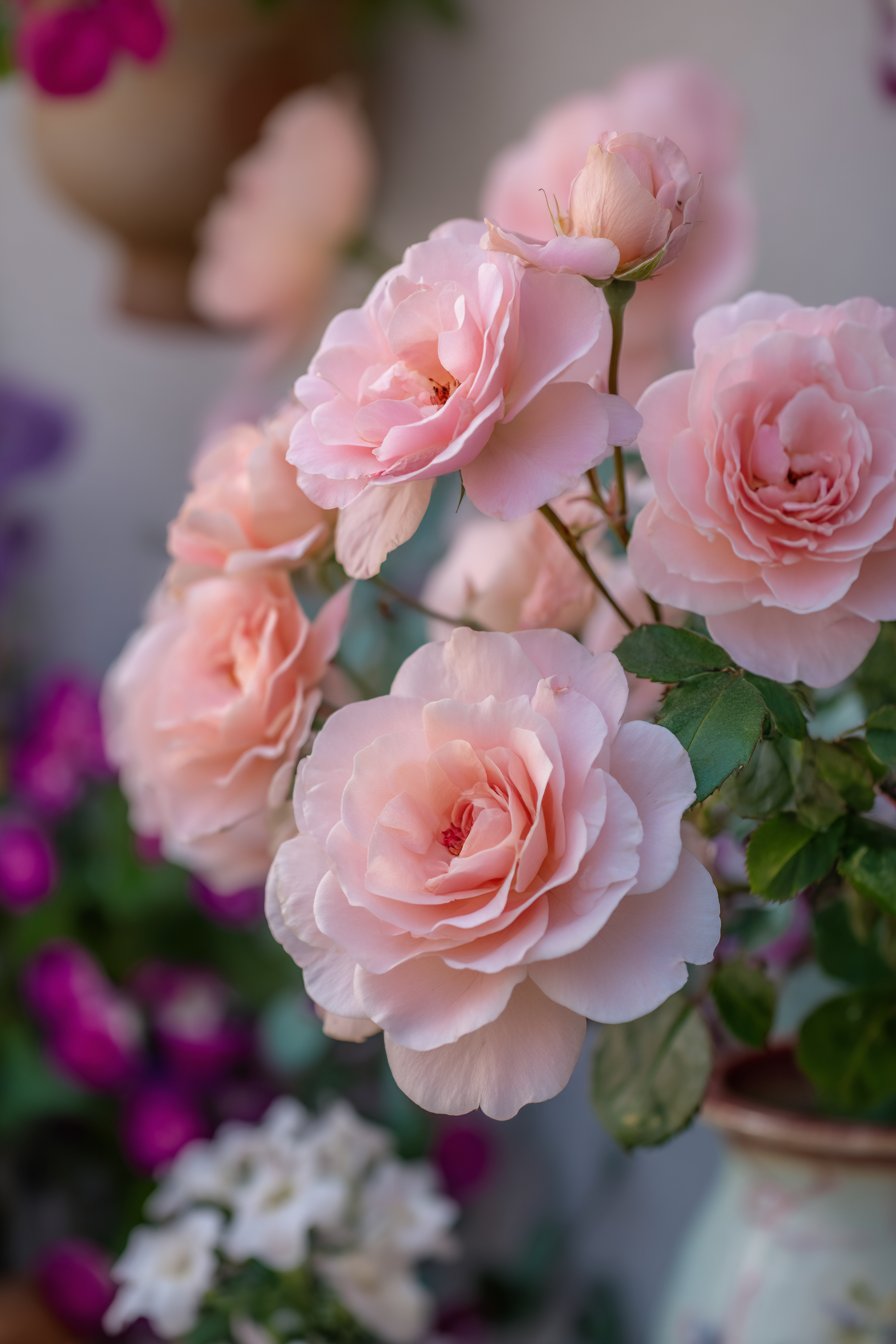
Few balcony flower ideas capture timeless romance quite like climbing roses trained along a trellis system. This elegant approach features soft pink roses carefully guided up a vertical support structure attached to the balcony wall, creating a living screen of fragrant blooms that offers both beauty and privacy. Below the climbing roses, complementary plantings of white impatiens and purple verbena fill decorative ceramic pots, establishing a layered composition that maximizes visual interest while maintaining an efficient footprint.
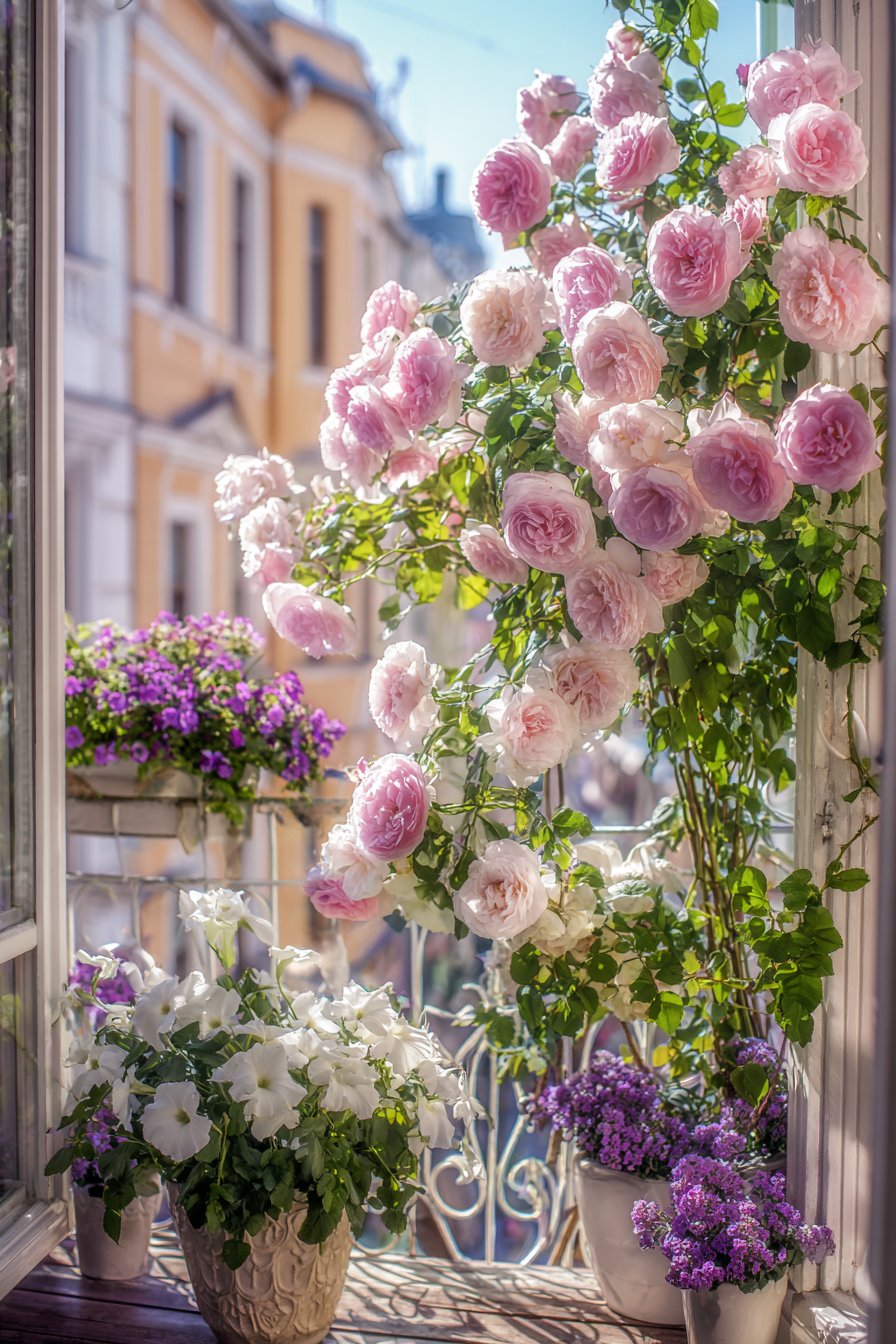
The vertical nature of this design proves particularly valuable for small balconies where horizontal space is limited. By training roses upward rather than allowing them to sprawl, you create dramatic height and presence without consuming precious floor area. The trellis itself becomes an architectural element, its structure adding visual interest even during winter months when the roses are dormant. Choose a trellis design that complements your balcony’s overall aesthetic—from traditional wooden lattice to contemporary metal grids.
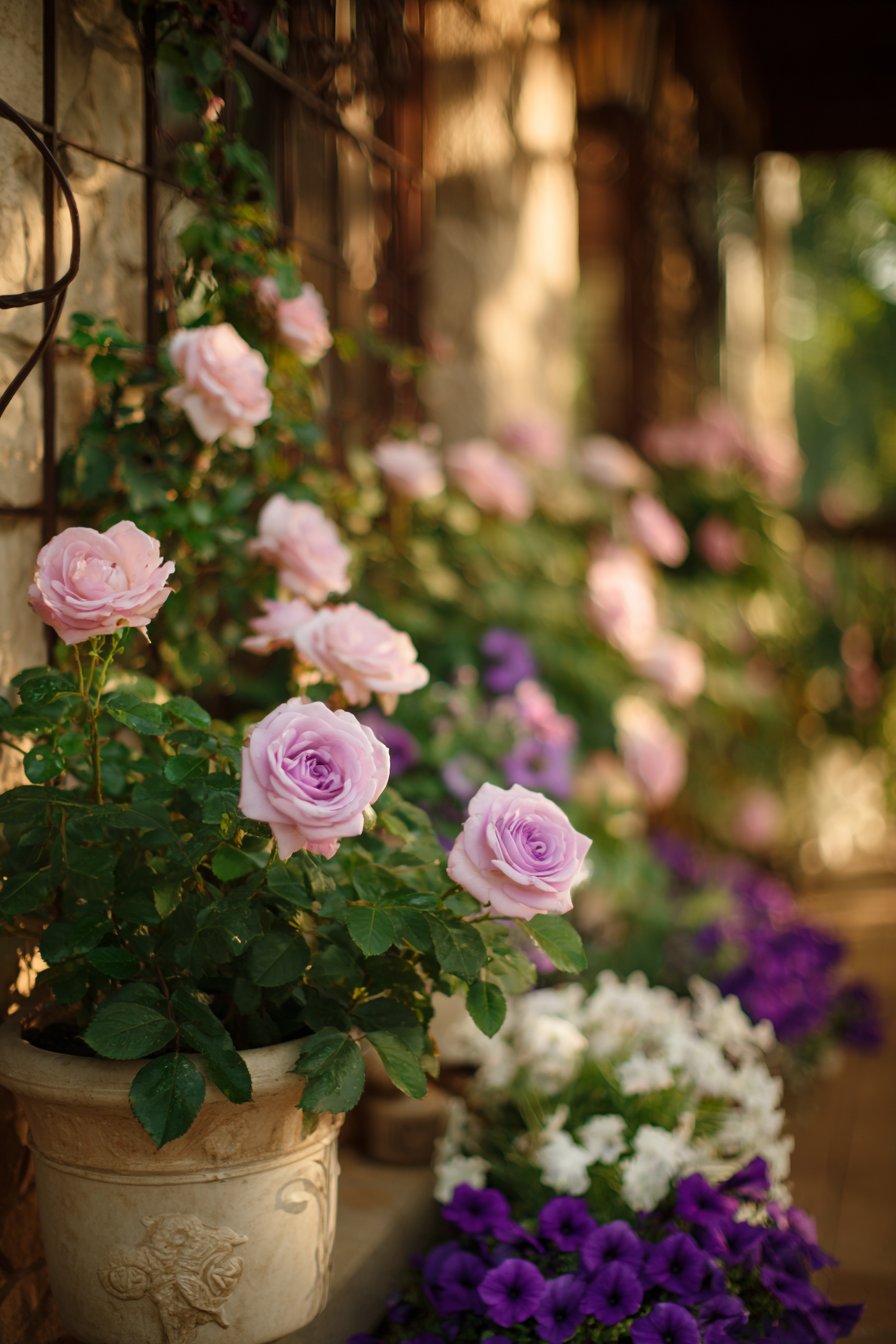
Color coordination plays a crucial role in this arrangement’s success. The soft pink roses establish the primary color theme, while white impatiens provide bright contrast and purple verbena introduces a complementary accent that enhances the pink tones without competing for attention. This triadic color scheme creates harmony and sophistication, demonstrating how thoughtful plant selection can elevate a balcony from merely decorated to genuinely designed.
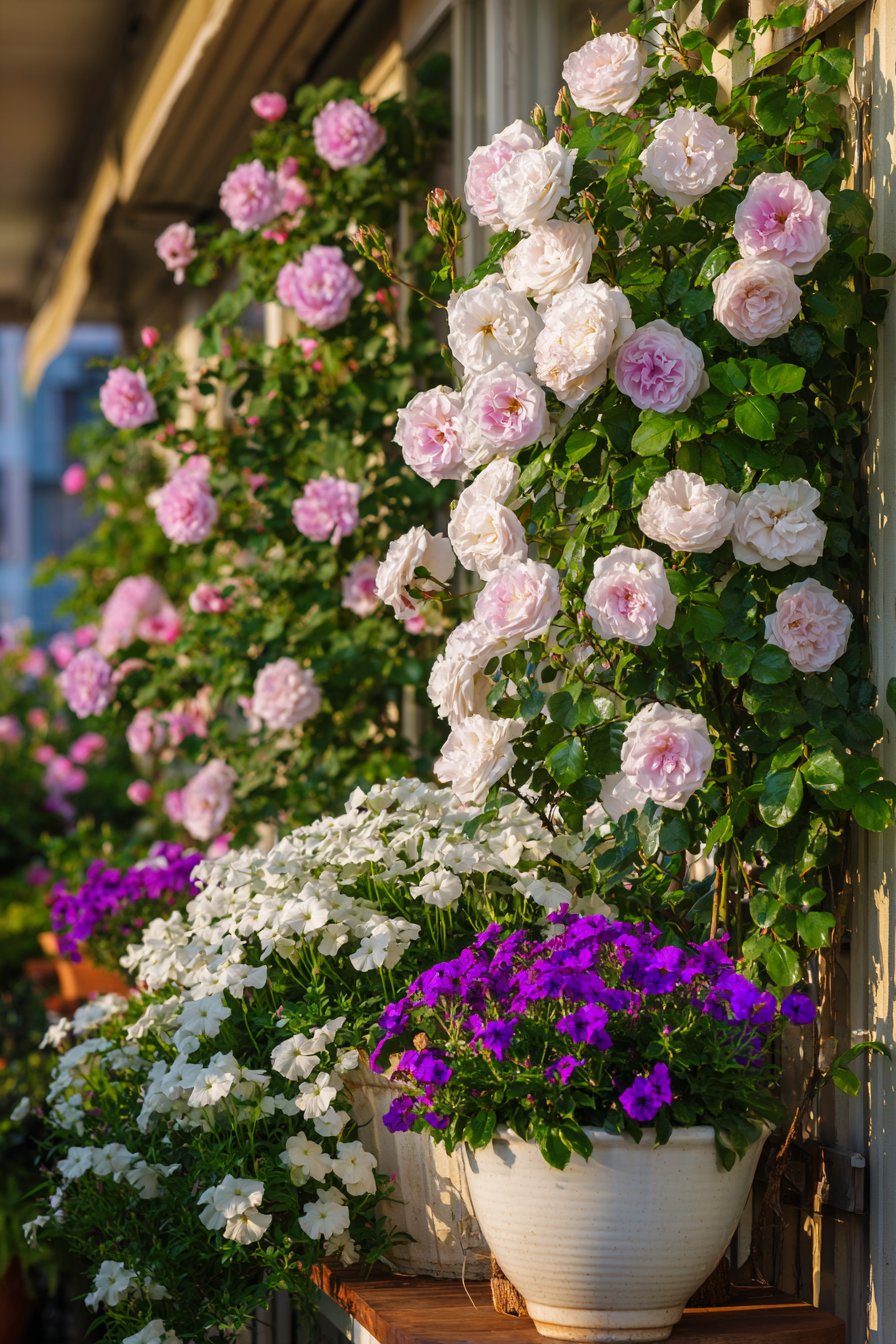
Golden hour lighting transforms this arrangement into something truly magical. As warm evening light filters through the rose petals, it illuminates their delicate translucence while casting gentle shadows that emphasize the flowers’ dimensional form. The underplantings catch this same warm light, creating a cohesive glow that makes the entire corner feel enchanted and inviting.
Key Design Tips:
- Select climbing rose varieties suited to container growing, such as ‘New Dawn’ or ‘Cecile Brunner’
- Install trellises securely using heavy-duty brackets that can support mature plant weight
- Train new growth horizontally before allowing vertical growth to encourage more blooming along the canes
- Plant roses in containers at least 18 inches deep to accommodate their substantial root systems
- Deadhead spent blooms regularly to encourage continuous flowering throughout the growing season
4. Modern Minimalist Monochrome Garden
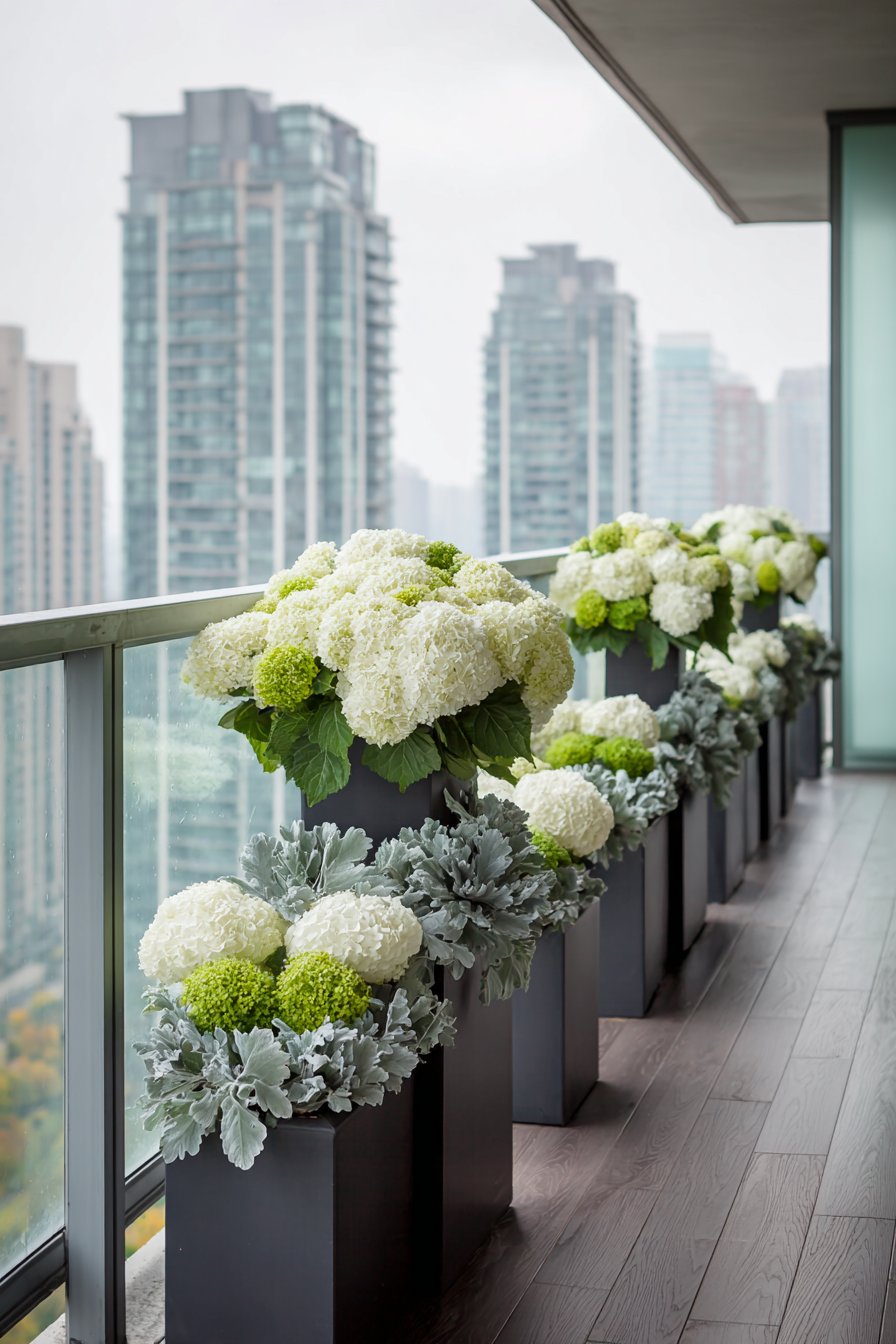
Contemporary design sensibilities shine in this sleek modern balcony flower idea featuring structured plantings in architectural containers. Matte black rectangular planters align precisely along the glass balcony railing, their clean lines creating geometric rhythm while displaying carefully selected plants. Structured boxwood topiaries provide evergreen architectural form, while white hydrangeas offer seasonal blooming interest. Underplantings of silvery dusty miller introduce textural contrast and subtle color variation within the restrained palette.
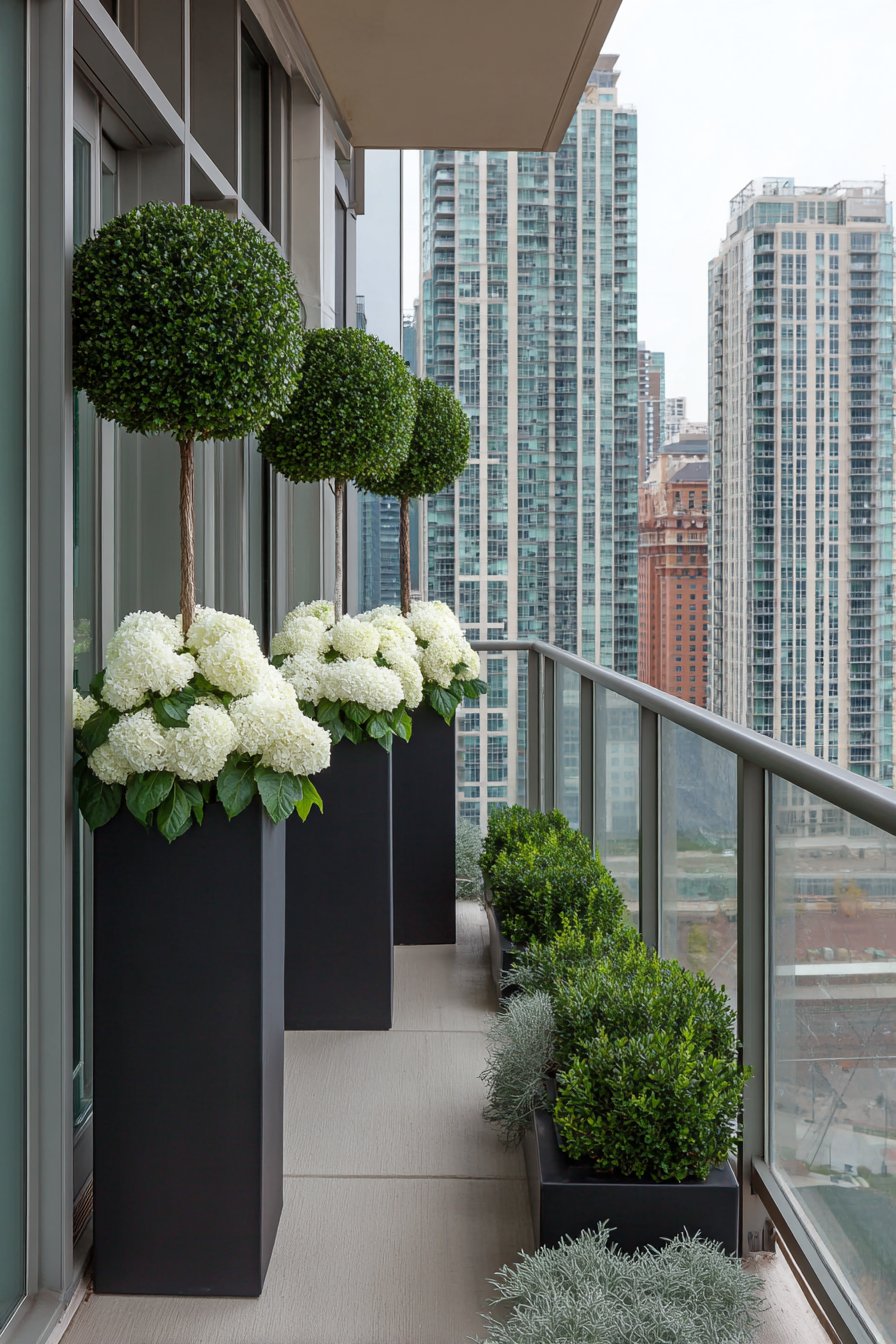
This minimalist approach demonstrates that less can indeed be more when design choices are deliberate and execution is precise. The monochromatic green and white color scheme creates visual calm and sophistication, allowing the forms and textures of the plants themselves to become the focal points rather than relying on bright color for impact. The repetition of identical planters establishes rhythm and order, qualities highly valued in contemporary design aesthetics.
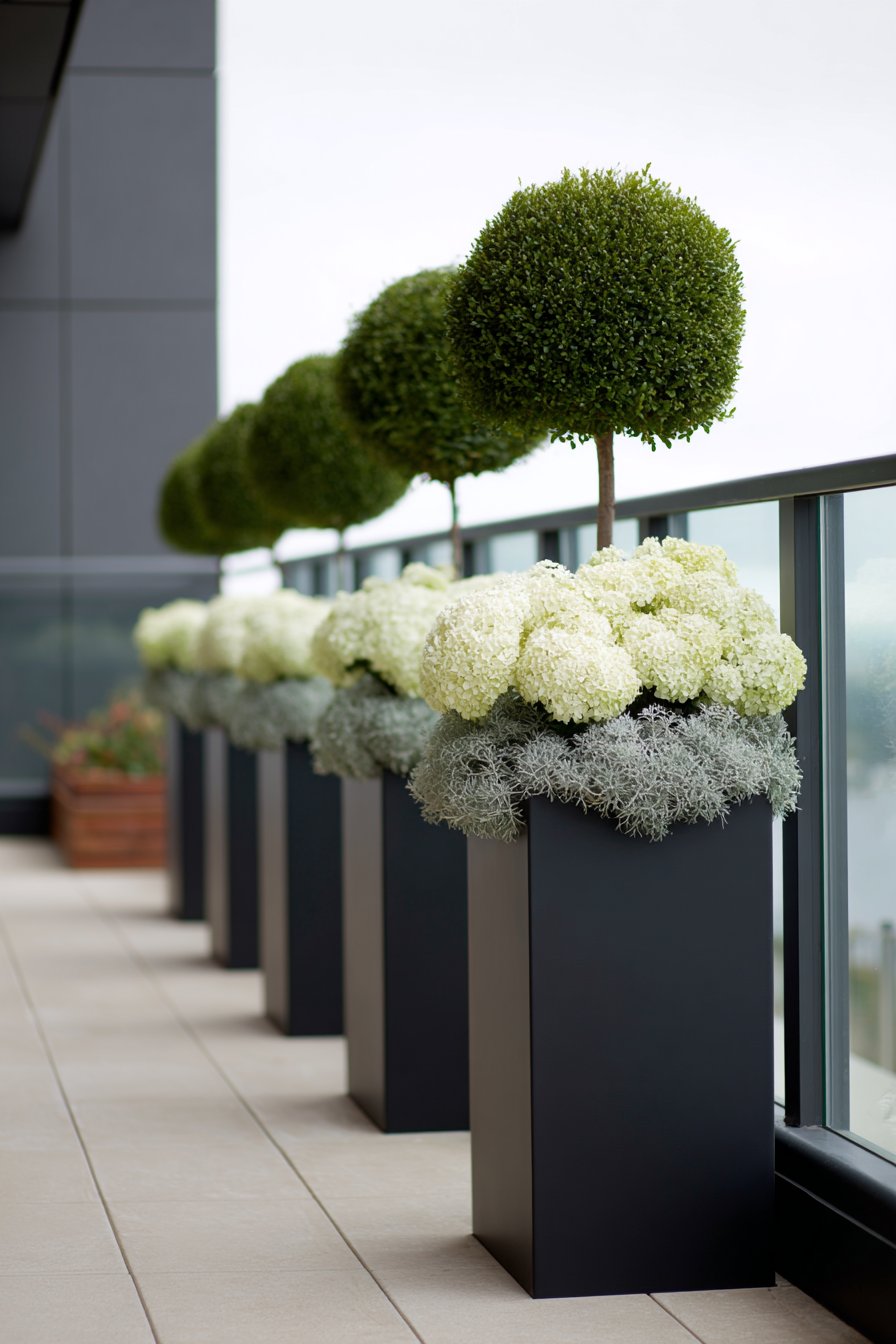
The choice of plants reflects a modern sensibility favoring structure and permanence over cottage-garden exuberance. Boxwood topiaries maintain their shape year-round, providing consistent visual presence regardless of season. Hydrangeas offer spectacular summer blooms in pristine white that aligns with the minimalist color palette, while their large mophead or lacecap flowers provide textural interest without disrupting the overall calm aesthetic. The silvery dusty miller acts as a neutral grounding element, its fine-textured foliage offering visual rest between the structured boxwood and showy hydrangeas.
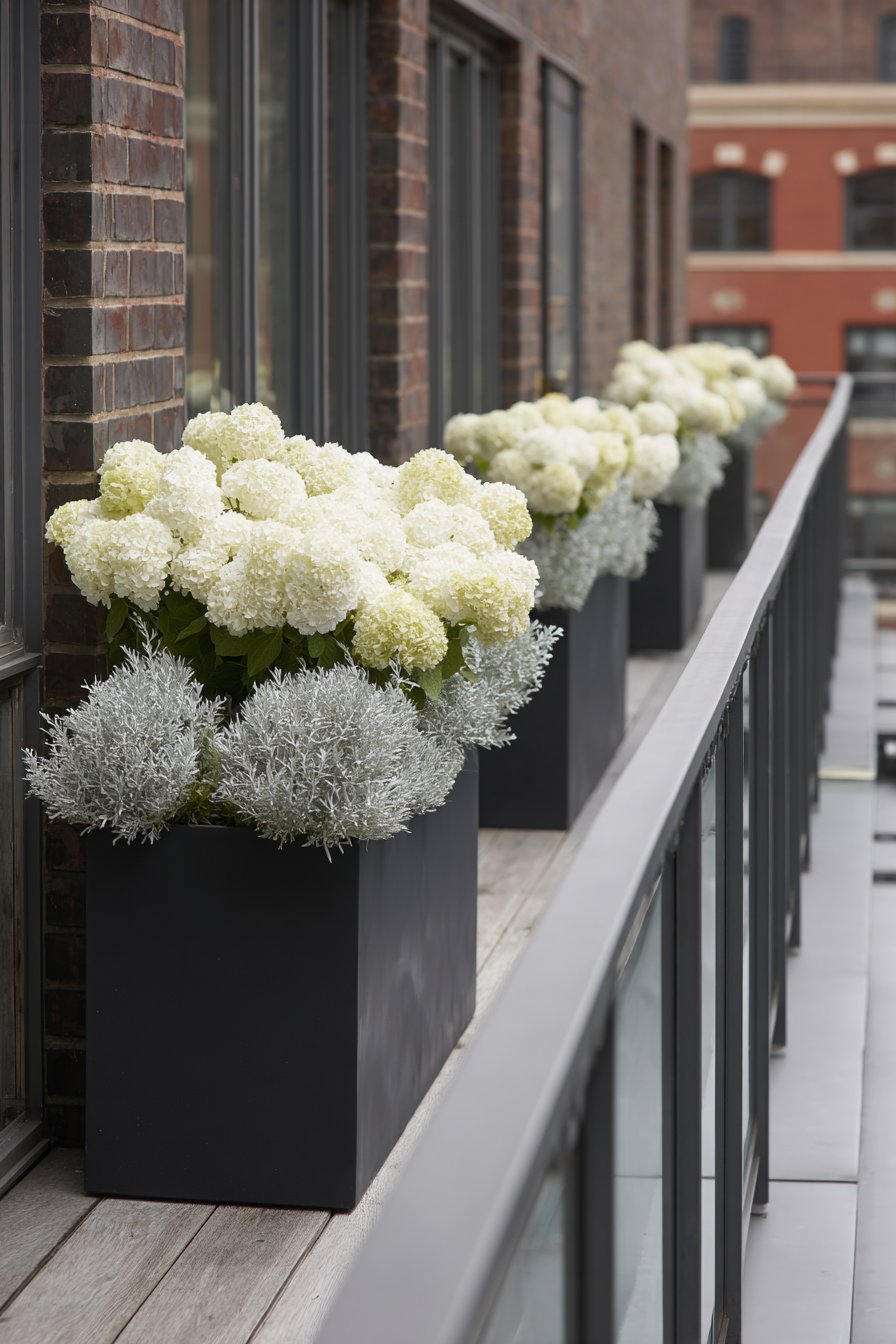
Soft diffused morning light proves ideal for this arrangement, as it prevents harsh shadows that might disrupt the serene composition while gently illuminating the varied textures and subtle color variations. The clean lines of the contemporary planters cast minimal shadows, maintaining the uncluttered appearance that defines successful minimalist design.
Key Design Tips:
- Invest in high-quality planters with clean lines and durable finishes that will age gracefully
- Maintain boxwood topiaries with regular light trimming to preserve their architectural form
- Choose white hydrangea varieties like ‘Annabelle’ or ‘Incrediball’ for reliable blooming
- Use a consistent potting mix across all containers to ensure uniform growth and care requirements
- Embrace negative space as a design element rather than feeling compelled to fill every inch
5. Whimsical Cottage Garden Collection
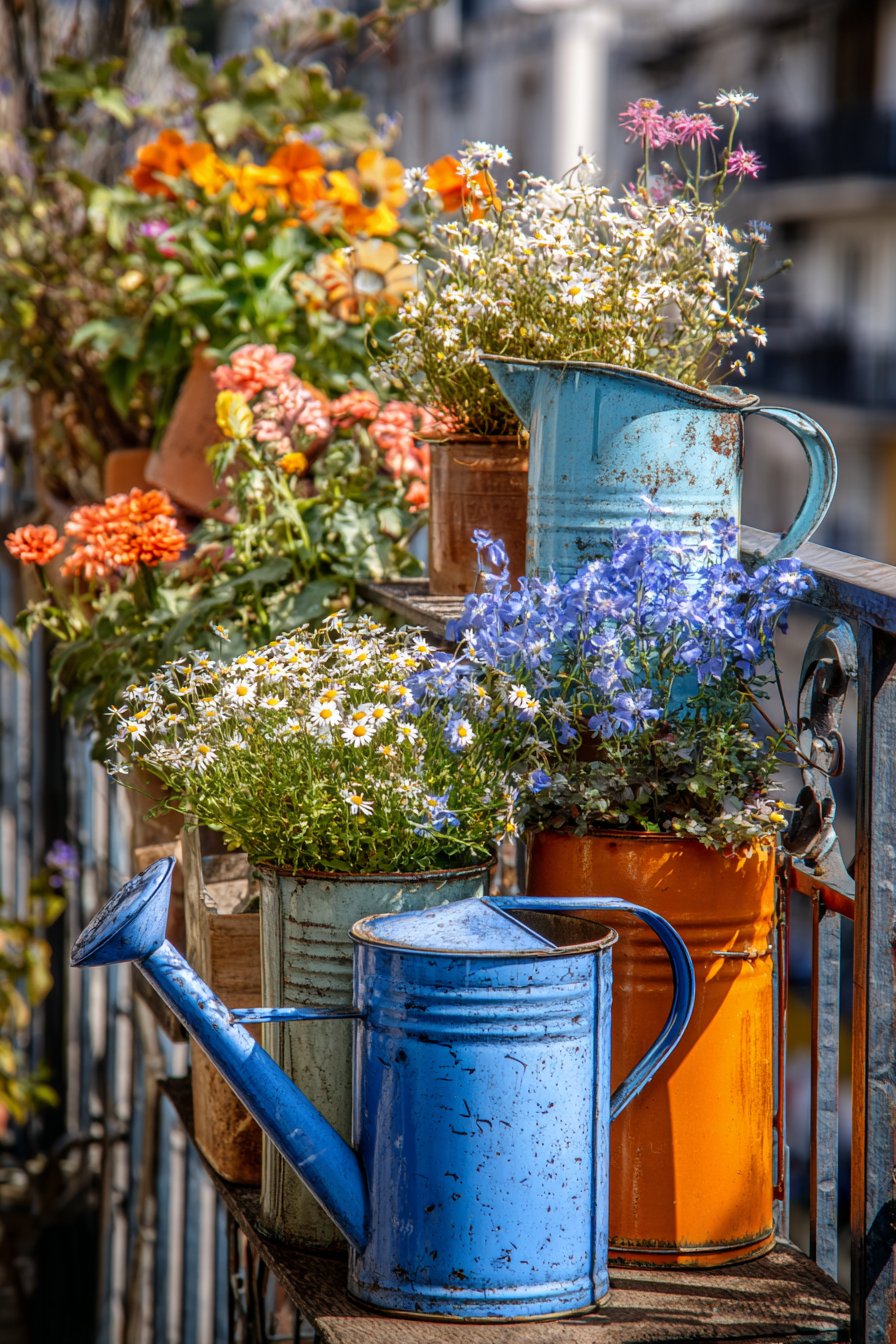
Nostalgia and charm define this eclectic balcony flower idea featuring repurposed vintage containers transformed into delightful planters. Antique watering cans, enamelware basins, and weathered metal buckets overflow with cheerful daisies, blue lobelia, and coral-colored zinnias, creating a whimsical cottage garden vignette that celebrates personality and resourcefulness. The varied container heights, finishes, and styles add visual complexity and character impossible to achieve with matching store-bought planters.
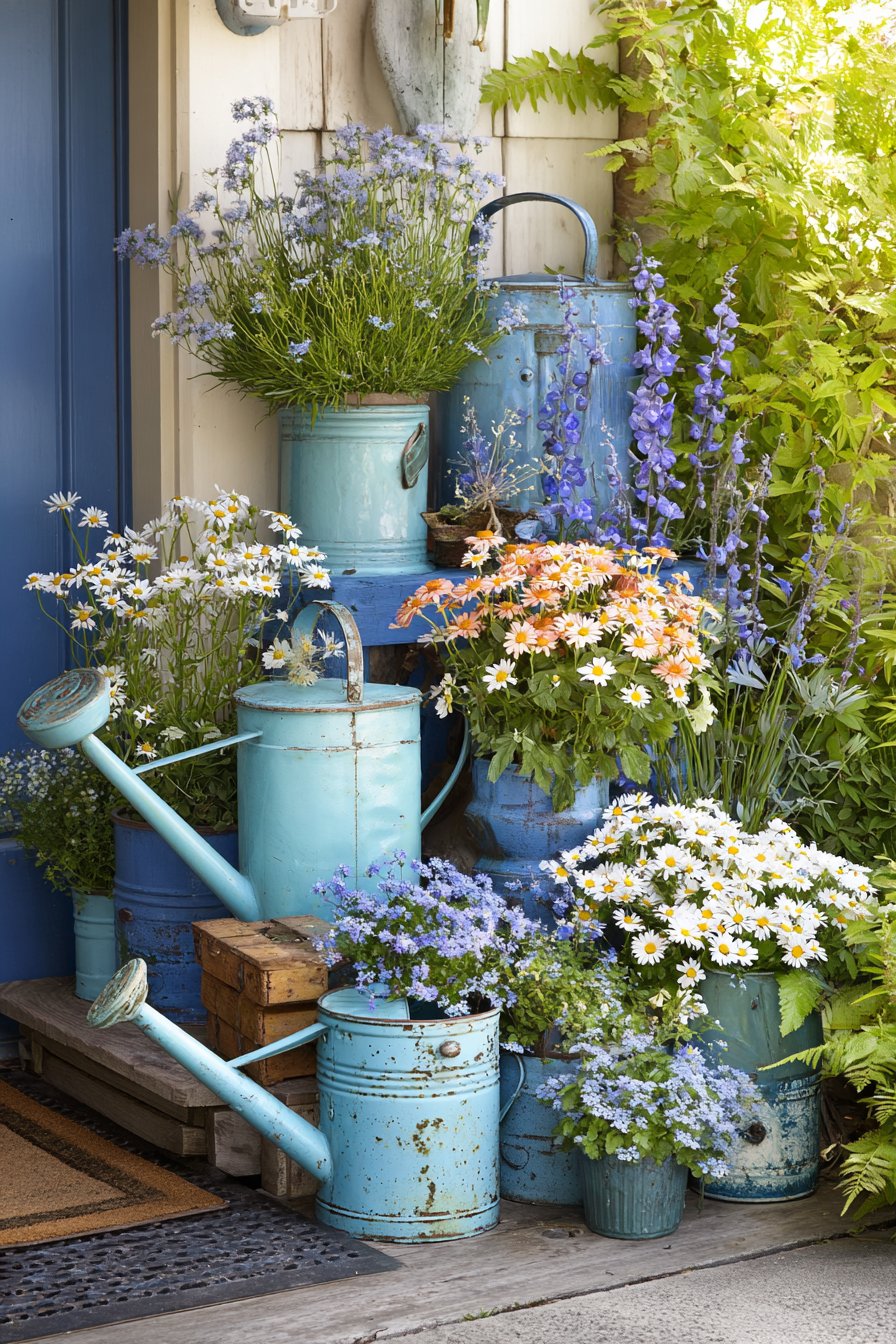
This approach excels at creating instant character and storytelling potential. Each vintage container carries its own history and patina, contributing to an overall sense of accumulated charm rather than instant decoration. The slightly mismatched, collected-over-time appearance feels authentic and personal, as though the garden has evolved organically rather than being installed all at once. This casual, relaxed aesthetic particularly suits cottage-style homes, traditional architecture, or anyone who appreciates a less formal, more personal design approach.
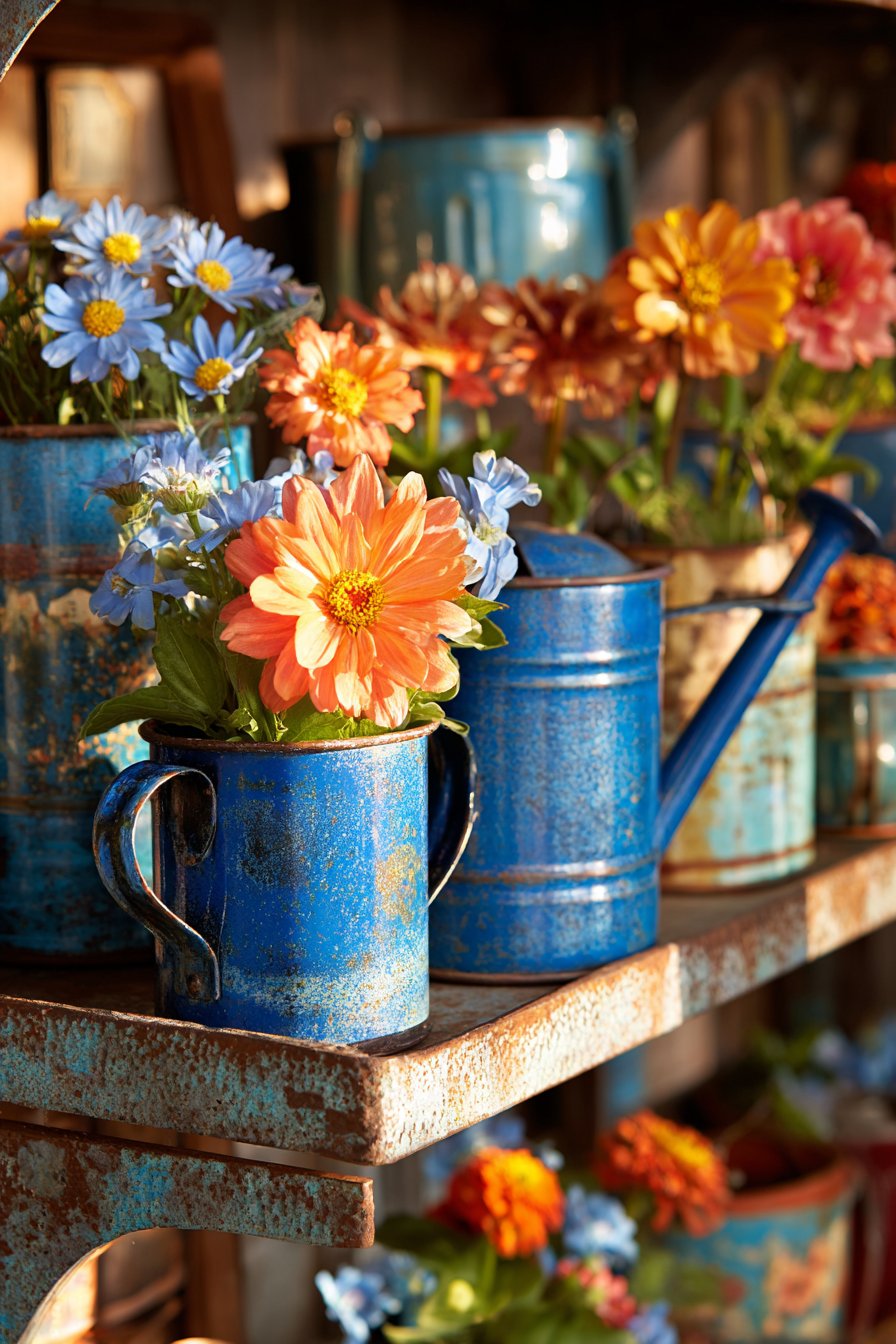
The plant selection reinforces the cottage garden theme through the choice of cheerful, informal blooms. Daisies bring sunny simplicity and childhood nostalgia, while blue lobelia adds delicate trailing beauty and cool color contrast. Coral zinnias introduce warmth and tropical exuberance, their bold color preventing the arrangement from becoming too sweet or predictable. Together, these flowers create a playful, joyful composition that feels spontaneous and alive.
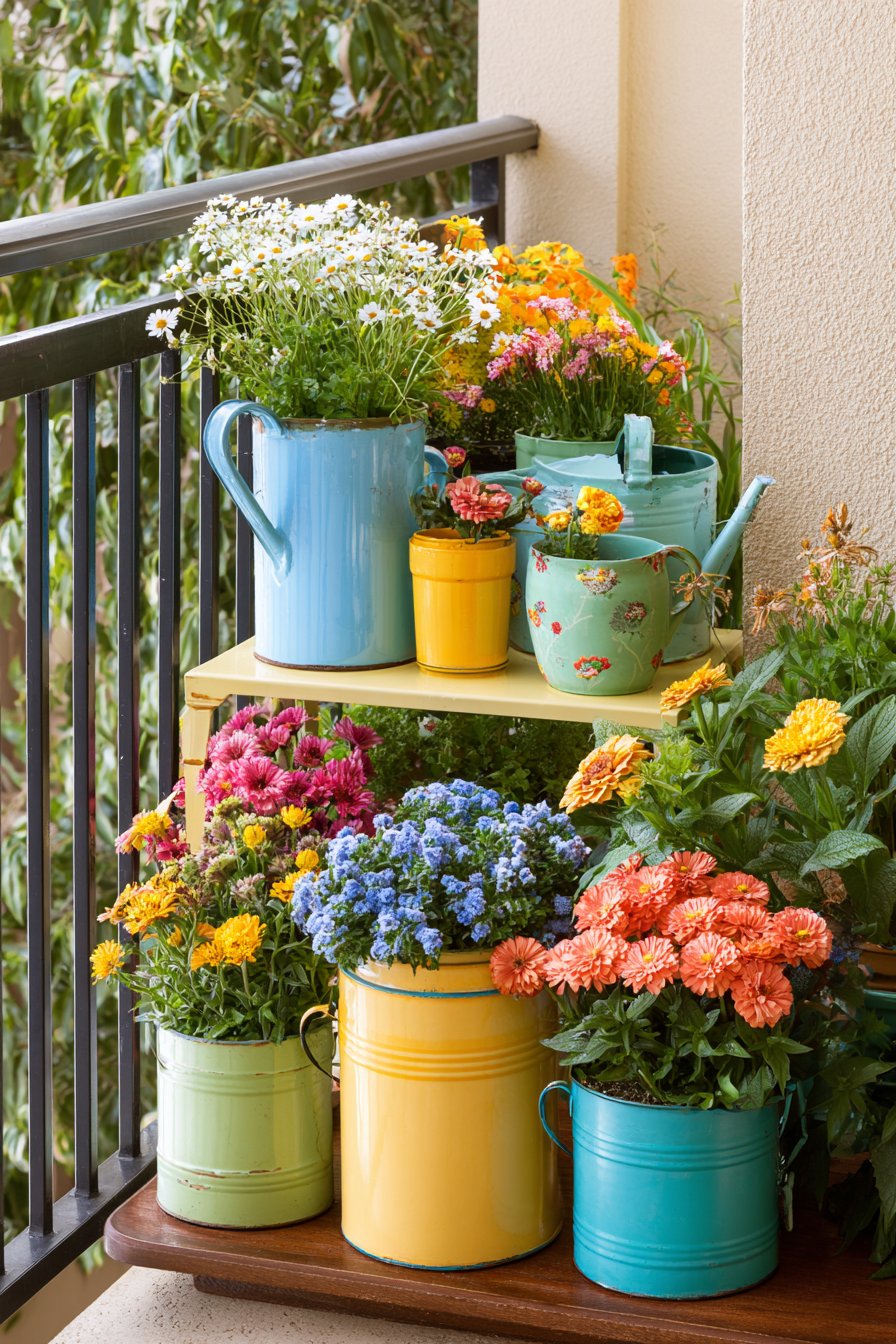
Natural sunlight creates highlights on the varied metal surfaces of the vintage containers, emphasizing their textures and worn finishes while illuminating the diverse blooms in their true colors. This interplay between container character and floral beauty creates visual richness and depth that rewards close observation and encourages lingering in the space.
Key Design Tips:
- Drill drainage holes in vintage containers that lack them, using appropriate bits for metal or enamelware
- Line metal containers with plastic pots to protect against rust and soil contact
- Group containers in odd numbers (3, 5, 7) for more visually pleasing arrangements
- Vary container heights by using plant stands, inverted pots, or wooden crates as risers
- Embrace the imperfect patina and wear of vintage items rather than trying to restore them to pristine condition
6. Mediterranean Terracotta Paradise
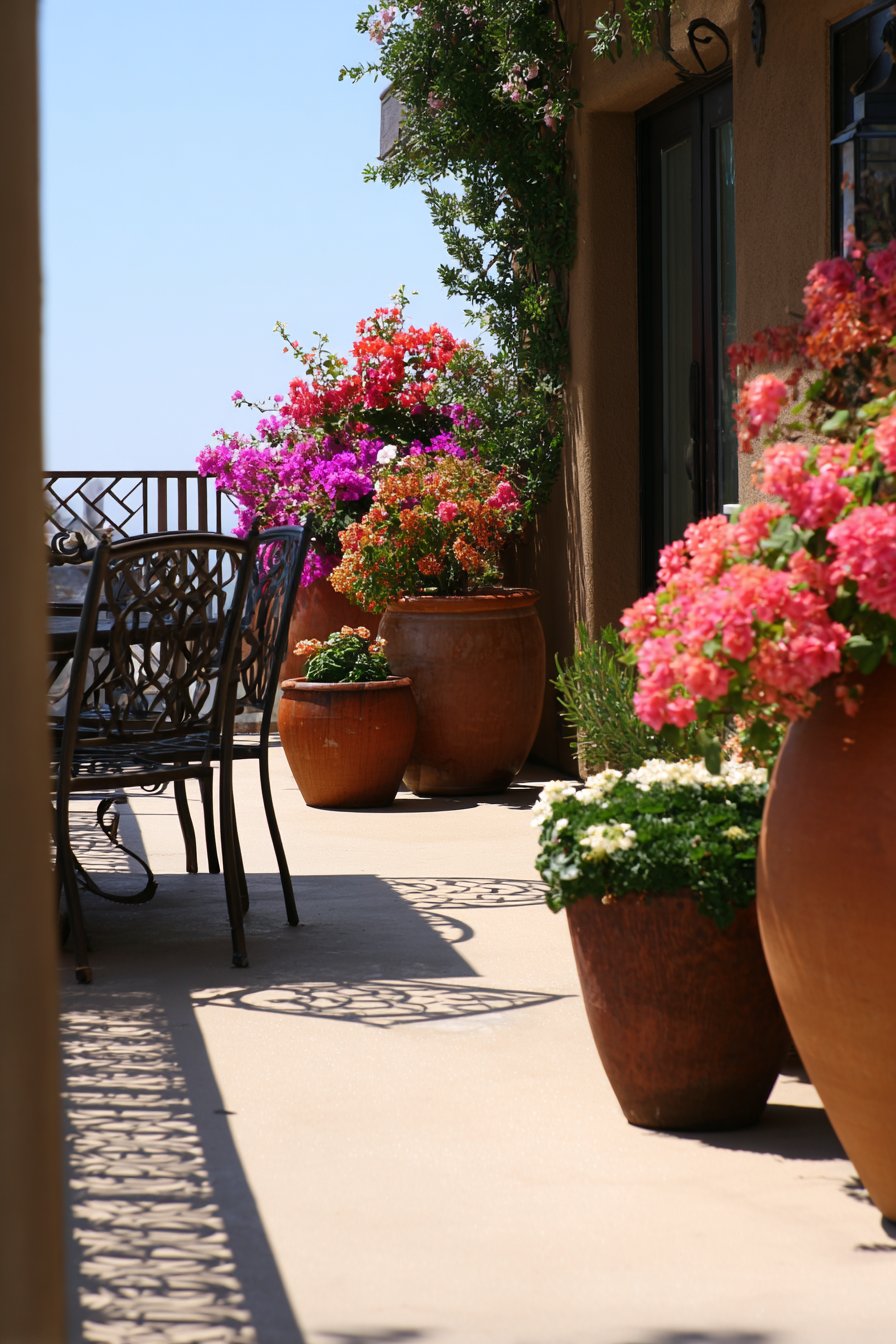
The warm, sun-drenched aesthetic of the Mediterranean comes alive in this balcony flower idea showcasing traditional terracotta pots filled with vibrant bougainvillea, fragrant rosemary, and cascading geraniums. The natural clay containers in various sizes create visual rhythm while providing the excellent drainage and air circulation that Mediterranean plants demand. This arrangement transports you to a Tuscan villa or Greek island retreat, proving that thoughtful plant and container selection can evoke powerful sense of place.
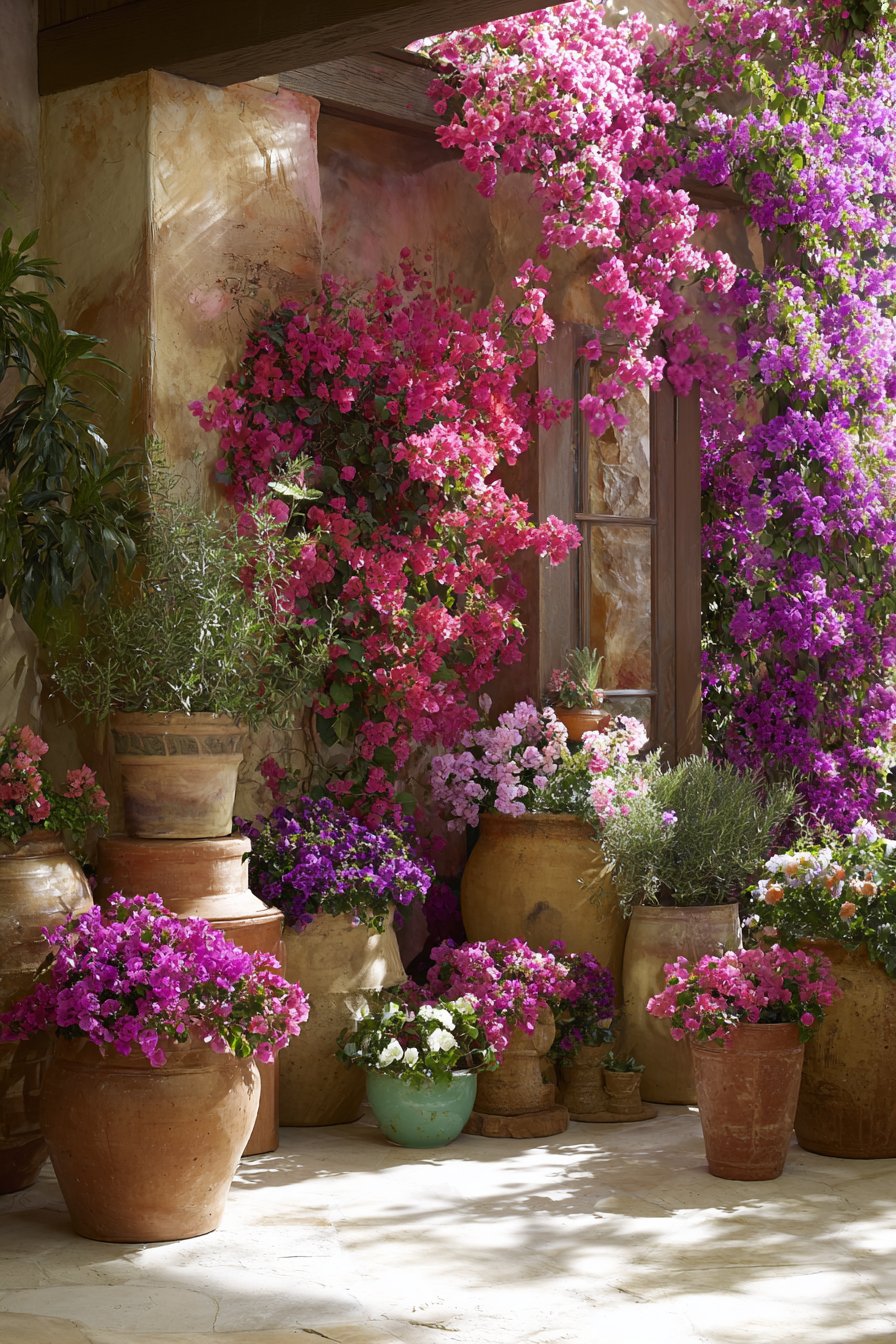
Terracotta’s warm earth tones complement wrought iron furniture and architectural elements beautifully, creating cohesive design that feels intentional and complete. The slightly rough, porous texture of clay pots contrasts pleasingly with the smooth, glossy leaves of bougainvillea and the soft, needle-like foliage of rosemary. This textural variety keeps the arrangement interesting even when flowering is less abundant, demonstrating the importance of considering year-round appeal when planning balcony gardens.
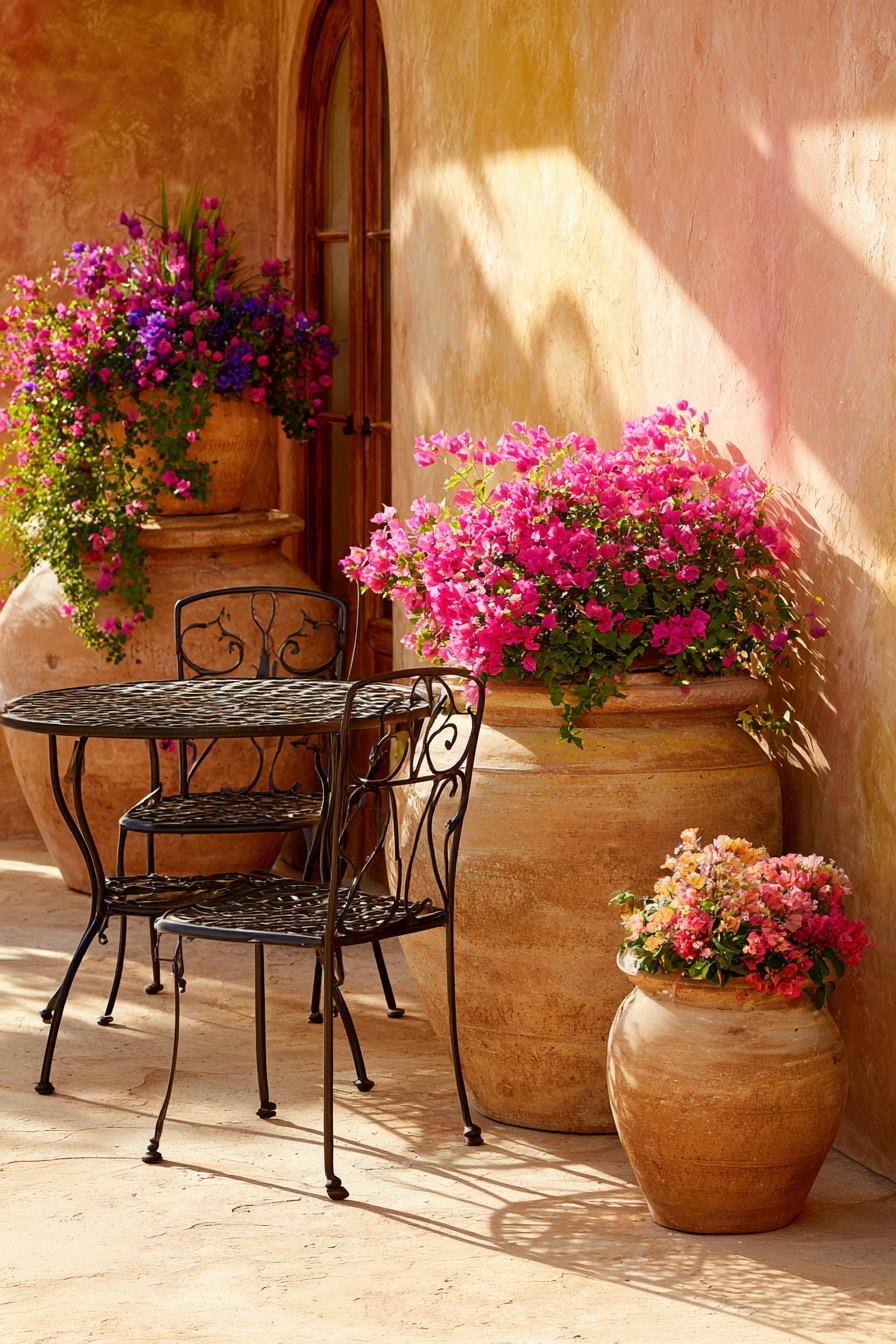
Plant selection reflects authentic Mediterranean flora adapted to hot, dry conditions and intense sunlight. Bougainvillea provides spectacular color through its vibrant bracts (actually modified leaves rather than true petals), creating brilliant displays in magenta, coral, or purple. Rosemary offers aromatic evergreen foliage, delicate blue flowers, and culinary versatility, while geraniums contribute classic Mediterranean charm with their rounded leaves and cheerful blooms. These plants share similar cultural requirements, simplifying care and ensuring compatible growth habits.
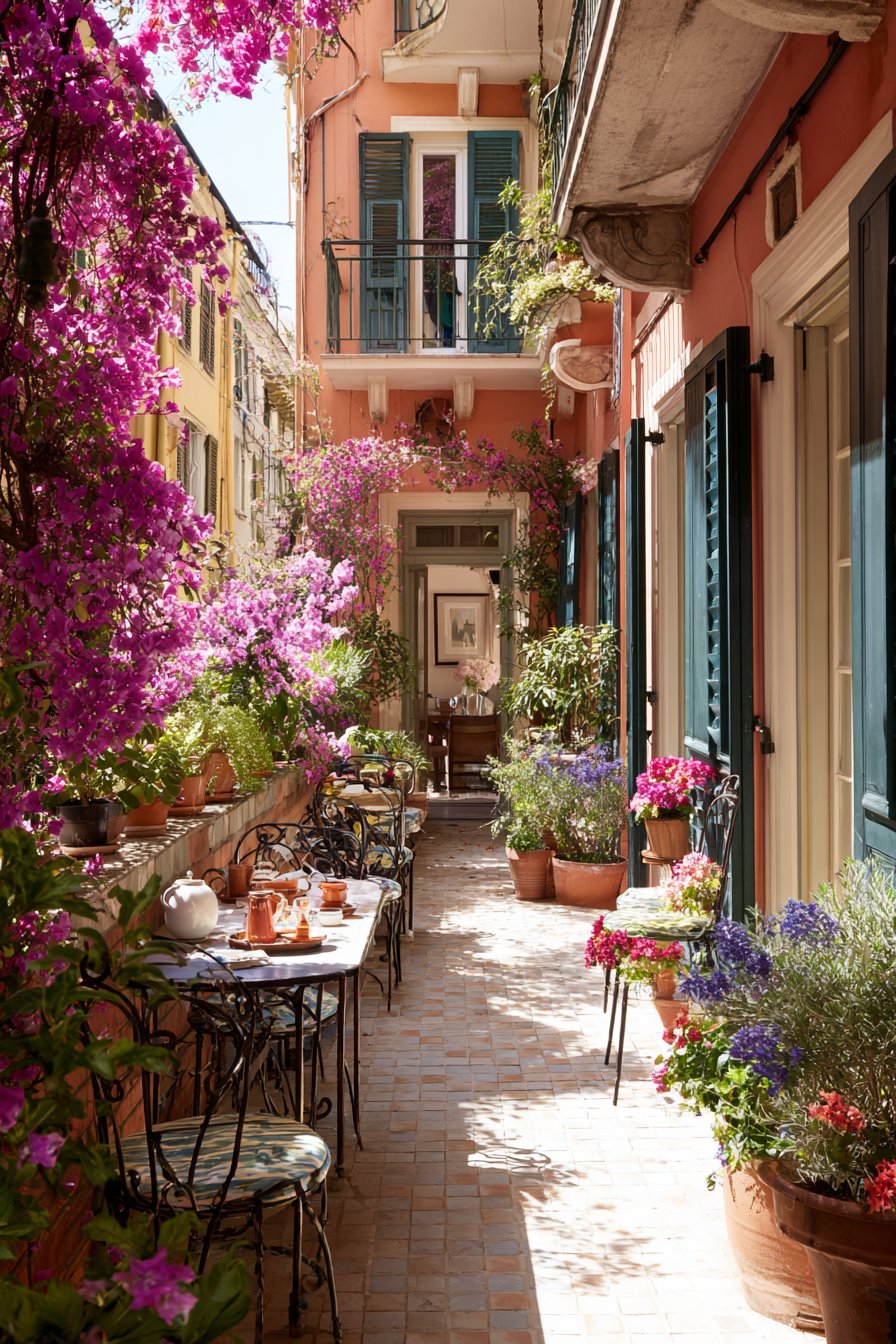
Bright midday sun casts distinct shadows and intensifies the already saturated pink, purple, and green hues, creating the characteristic light quality associated with Mediterranean landscapes. The strong light also emphasizes the three-dimensional forms of the plants and containers, adding depth and drama to the composition.
Key Design Tips:
- Select terracotta pots with adequate drainage holes and consider adding pot feet to improve air circulation
- Allow terracotta to develop natural patina and mineral deposits for authentic Mediterranean character
- Group plants with similar water and light requirements to simplify maintenance
- Incorporate fragrant herbs like rosemary, lavender, and thyme for multisensory experience
- Water deeply but infrequently to encourage deep root development in Mediterranean plants
7. Shade Garden Sanctuary
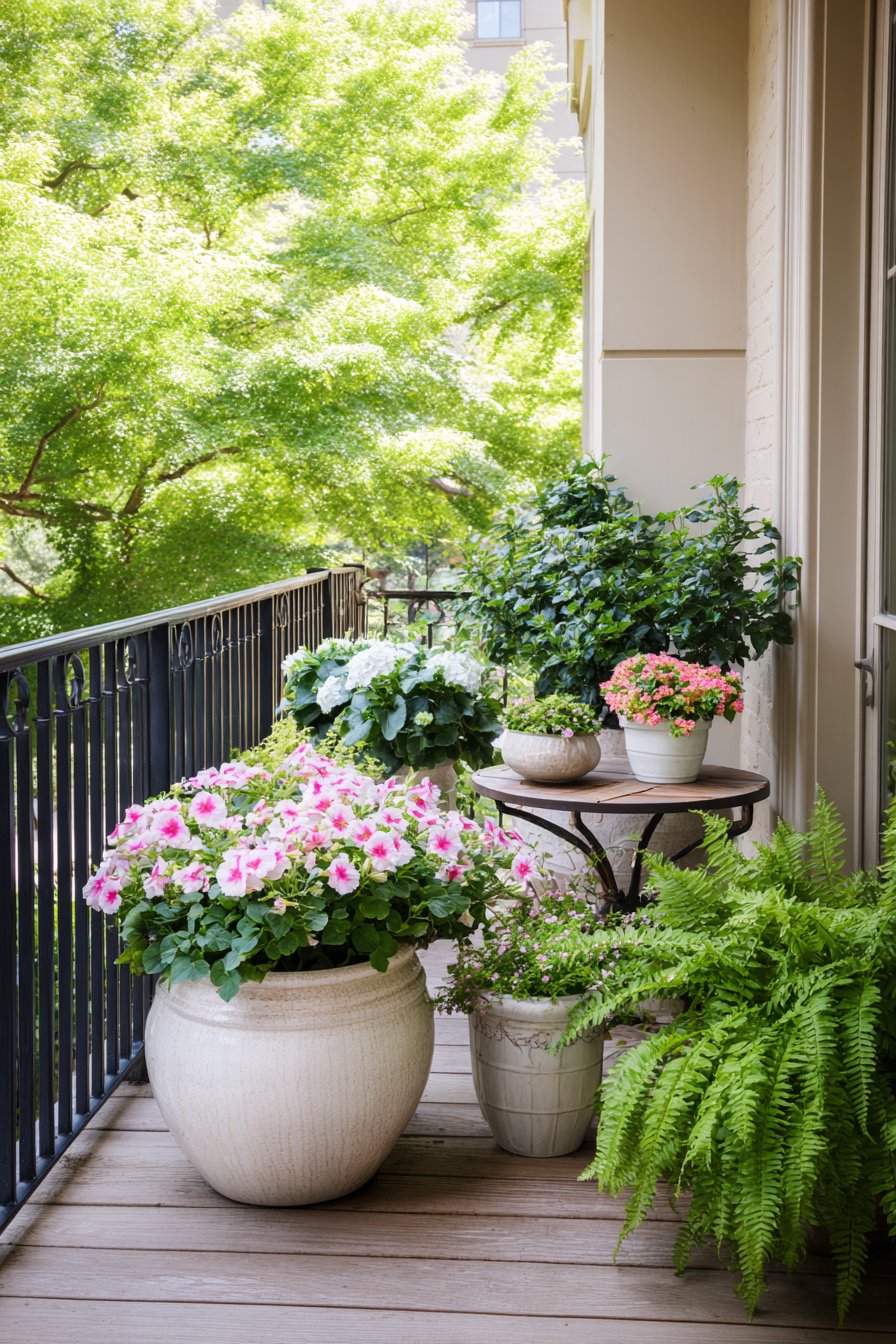
Not all balconies bask in abundant sunshine, making this shade-focused balcony flower idea invaluable for north-facing or heavily covered outdoor spaces. The carefully curated collection features shade-loving plants including pink and white impatiens, colorful begonias, and lush green ferns arranged in coordinating ceramic planters. This demonstrates that limited sunlight need not mean limited beauty—numerous flowering plants thrive in shade when given appropriate care and conditions.
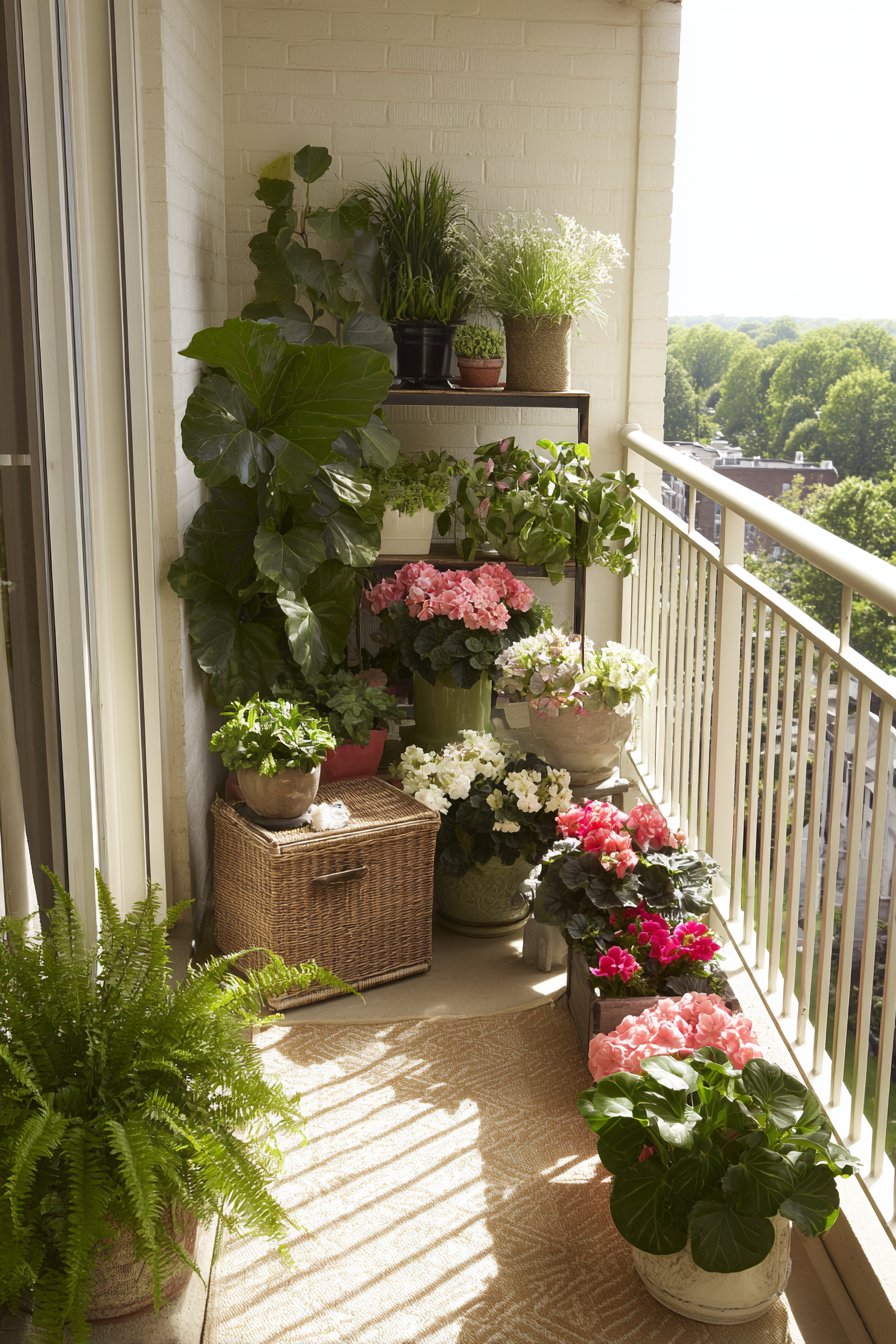
The plant selection showcases the diversity available within shade-tolerant species. Impatiens provide reliable, abundant blooms in vibrant colors throughout the growing season, requiring only consistent moisture and protection from direct sun. Begonias offer spectacular foliage alongside beautiful flowers, with options ranging from fibrous types with small blooms to tuberous varieties with rose-like flowers. Ferns introduce elegant, arching fronds that add movement and sophisticated texture, their prehistoric forms creating wonderful contrast against the rounded shapes of flowering plants.
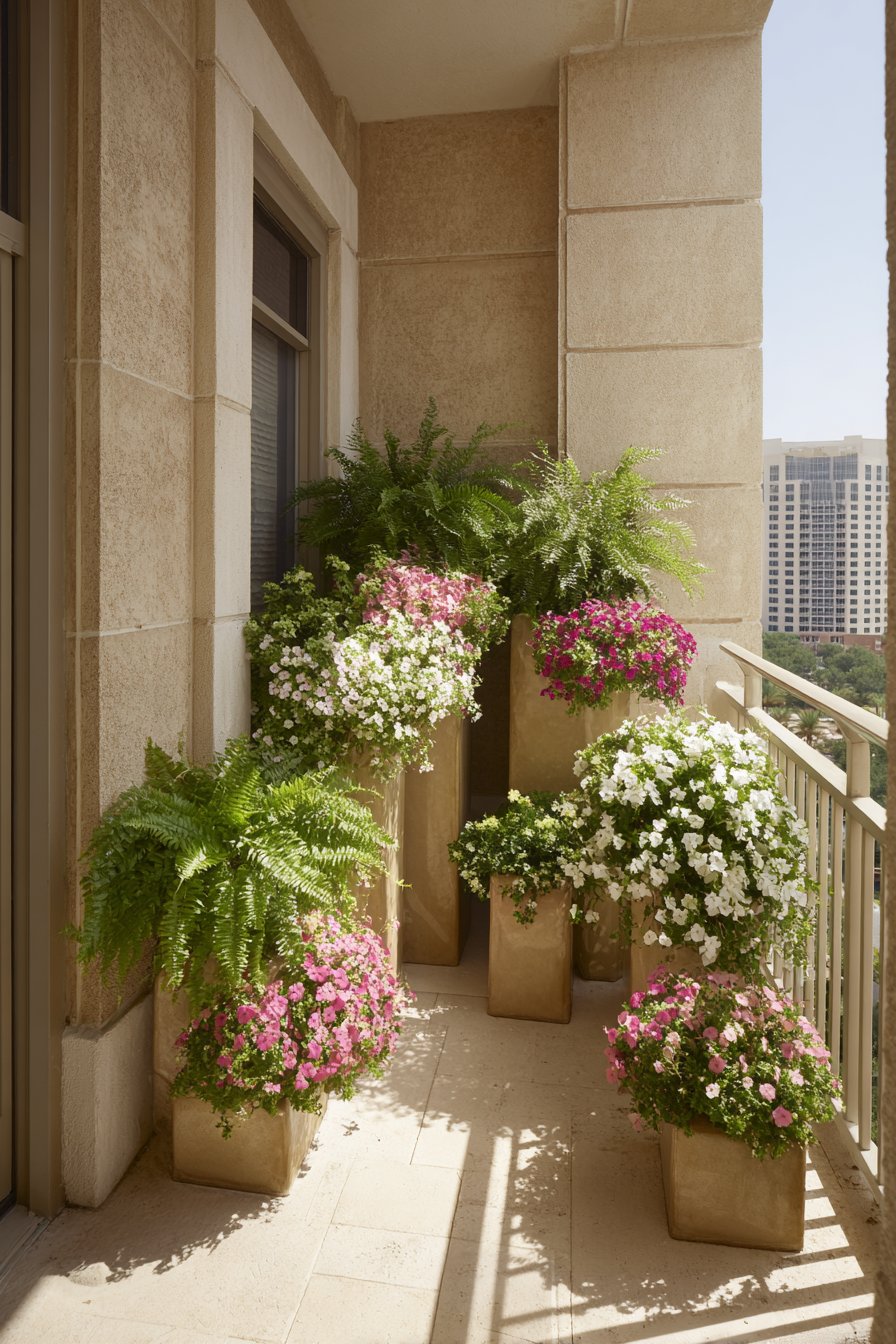
Strategic grouping creates fuller, more impactful displays despite the compact balcony dimensions. Rather than spacing plants evenly across the available area, clustering compatible plants together creates intentional focal points and allows for negative space that prevents the arrangement from feeling cluttered. This approach also facilitates care, as grouped plants can be watered and maintained more efficiently than scattered individual specimens.
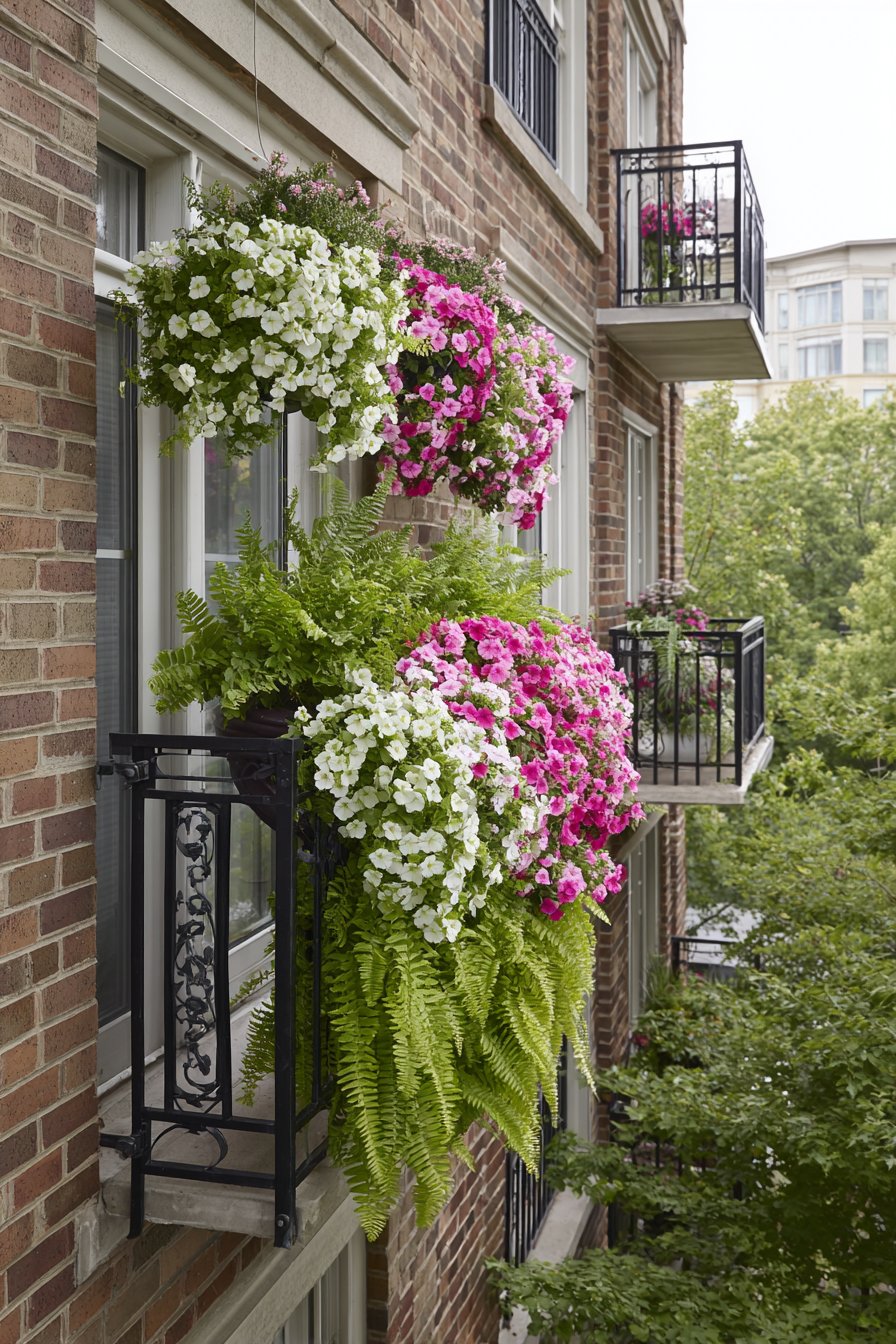
Soft, indirect natural light reveals subtle color variations and emphasizes the glossy foliage textures characteristic of many shade plants. Without harsh direct sun to bleach or burn delicate leaves and petals, shade gardens often display richer, more saturated colors and maintain pristine foliage throughout the season. The gentle lighting creates a serene, peaceful atmosphere particularly suited to shaded balconies.
Key Design Tips:
- Test your balcony’s actual light levels throughout the day before selecting plants
- Choose “full shade” plants for areas receiving less than 2 hours of direct sun daily
- Maintain consistent soil moisture as shade plants often have shallow root systems
- Incorporate variegated foliage plants to add brightness without requiring blooms
- Rotate containers periodically if light comes primarily from one direction to ensure even growth
8. Pollinator-Friendly Butterfly Garden
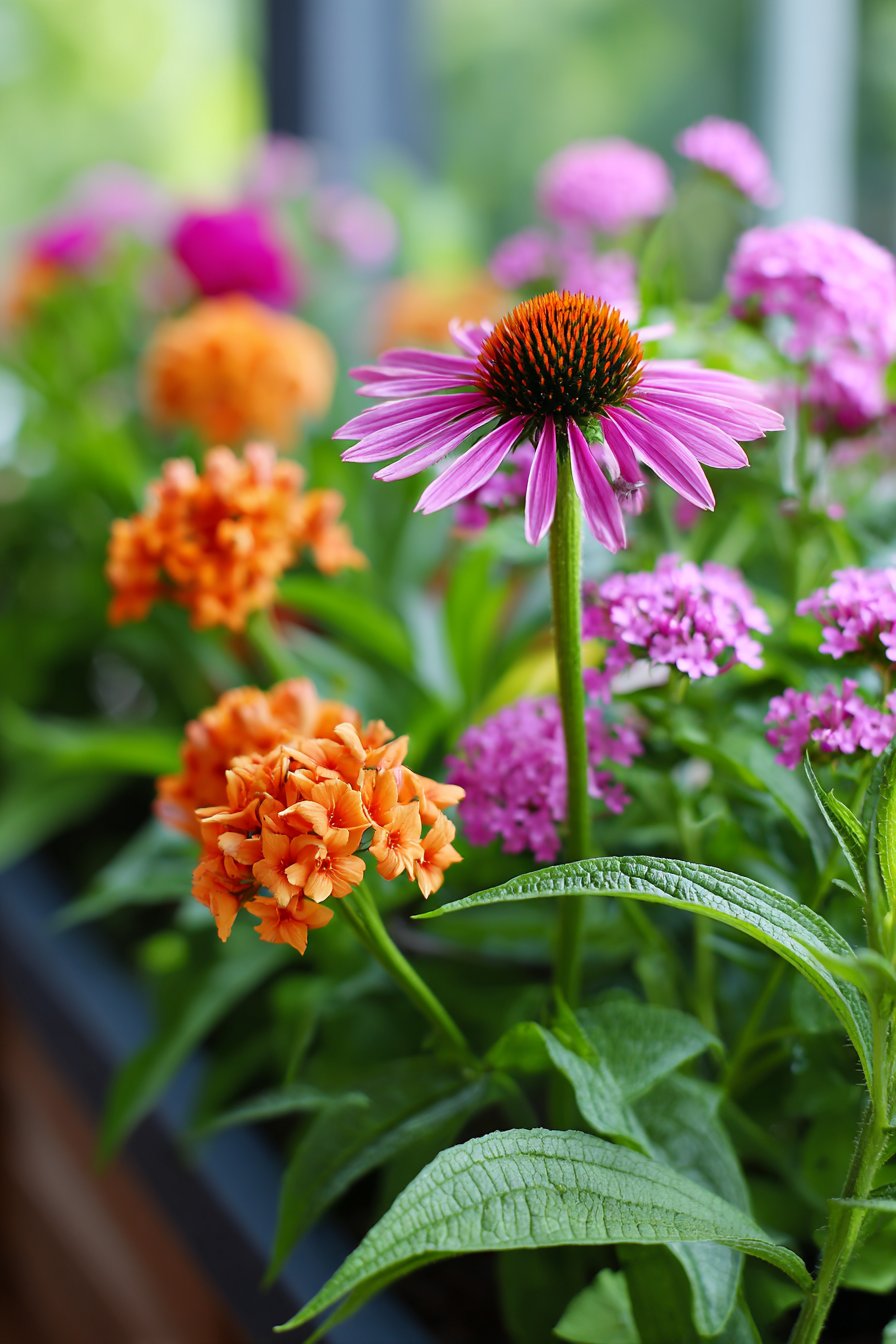
Environmental consciousness meets aesthetic beauty in this balcony flower idea designed specifically to attract and support pollinators. Purple coneflowers, orange butterfly weed, and pink verbena fill deep rectangular planters with proper drainage, creating a buzzing, living ecosystem that contributes to urban biodiversity. This approach demonstrates how even small balcony gardens can make meaningful environmental contributions while providing the gardener with the joy of observing visiting butterflies, bees, and hummingbirds.
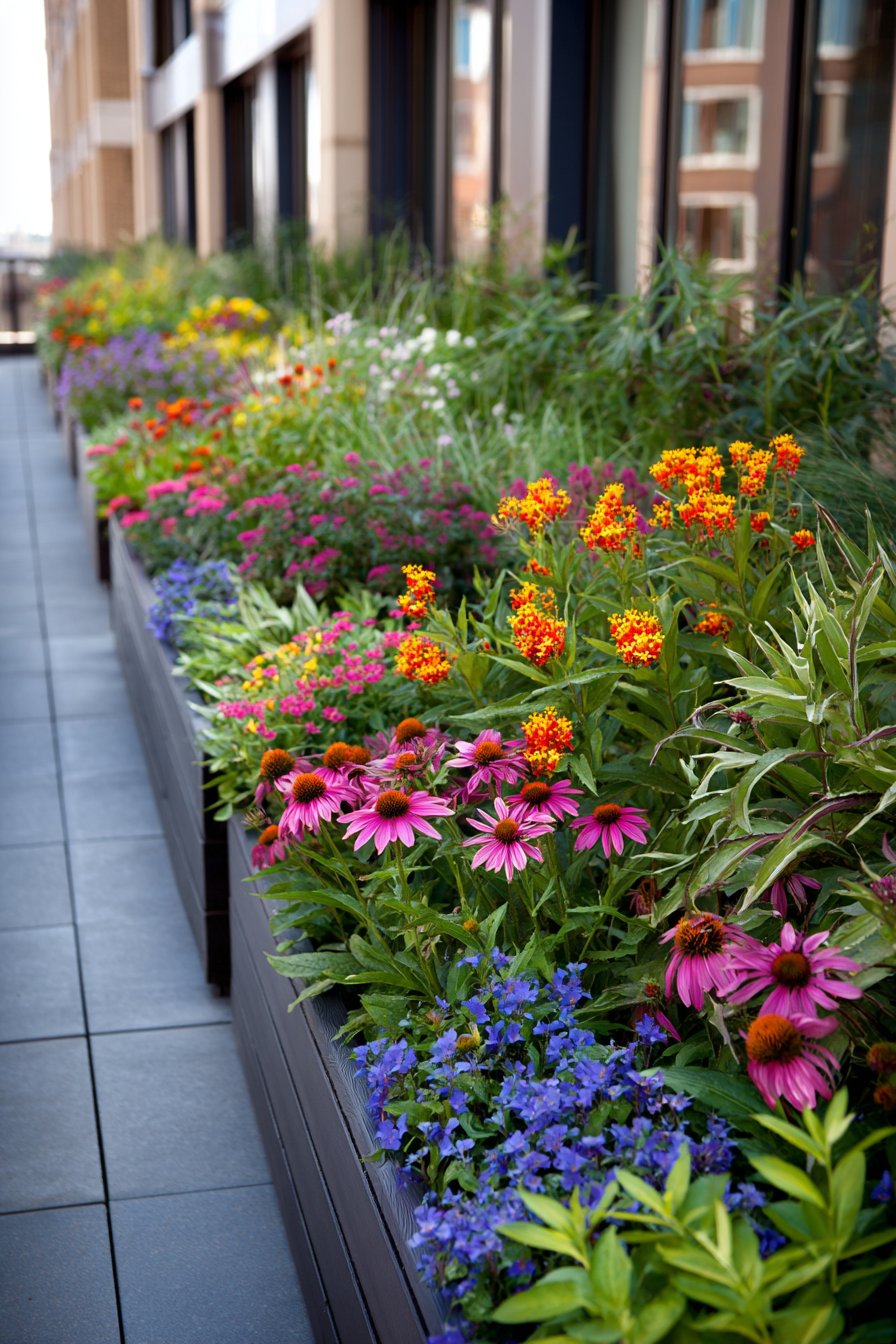
Native wildflower selections ensure ecological appropriateness while simplifying maintenance requirements. Plants evolved to thrive in your specific region naturally resist local pests and diseases, tolerate regional weather patterns, and support indigenous wildlife that has co-evolved with them. This reduces the need for fertilizers, pesticides, and intensive care while creating a genuinely sustainable garden that works with nature rather than against it.
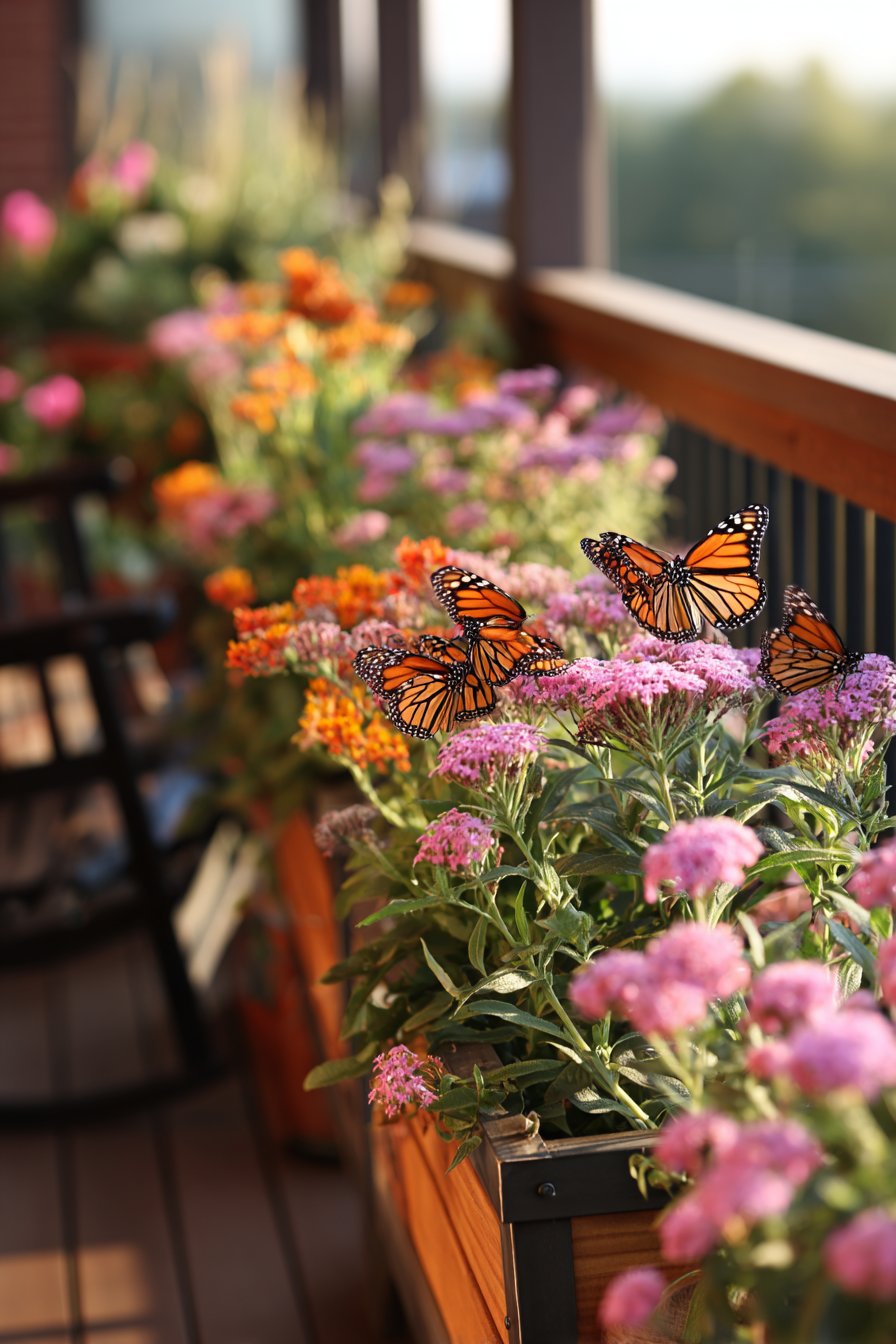
The varied bloom times and flower structures of the selected plants ensure continuous nectar availability throughout the growing season. Coneflowers bloom mid to late summer, their prominent seed heads providing food for birds well into autumn and winter. Butterfly weed flowers in early to mid-summer with flat-topped clusters perfect for butterfly landing platforms. Verbena offers continuous blooms from spring through frost, its tubular flowers particularly attractive to butterflies and hummingbirds. Together, these create a season-long buffet for beneficial insects.
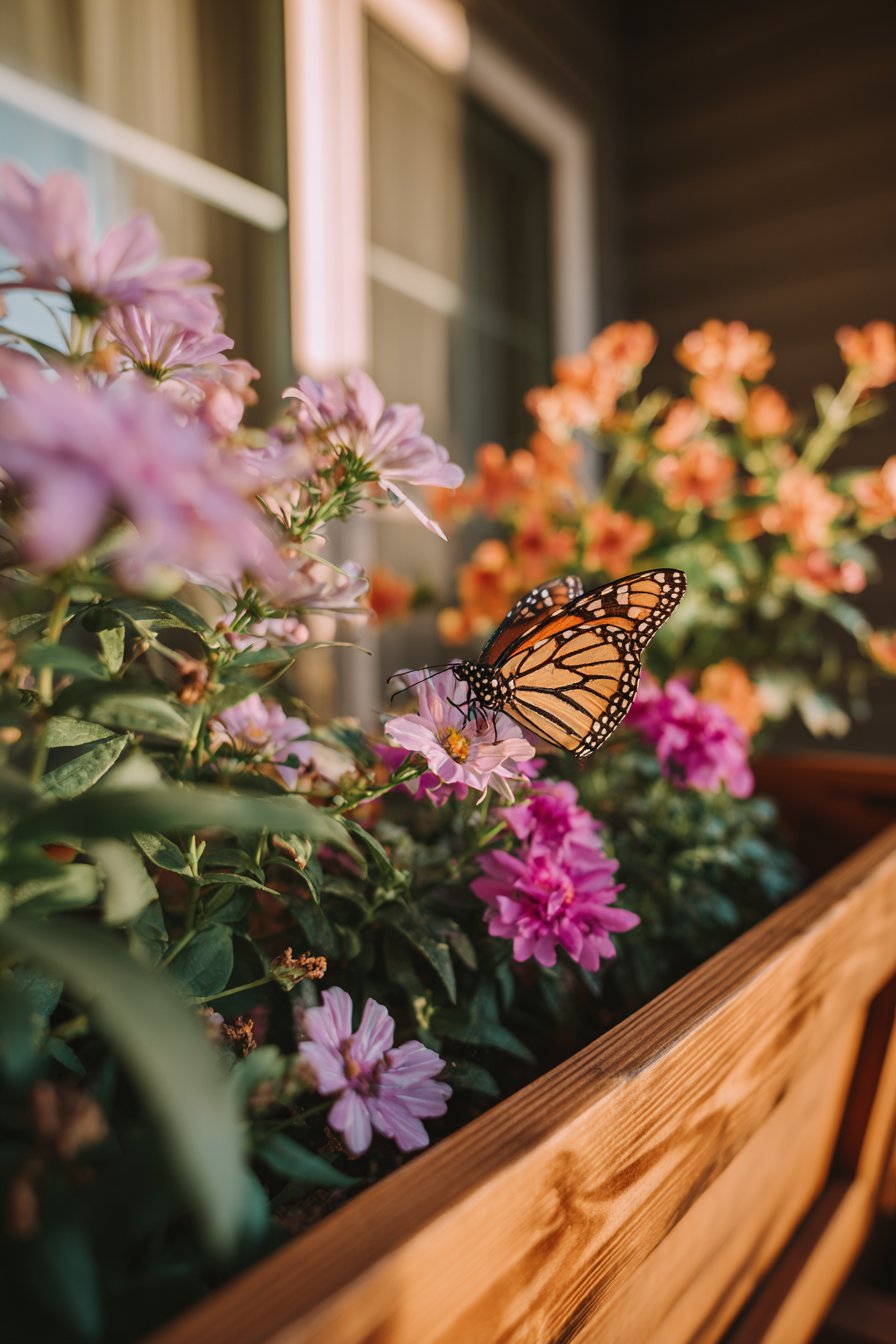
Natural afternoon lighting highlights the remarkable sight of butterflies and other pollinators actively visiting the flowers, their movement adding living animation to the garden. Observing these interactions creates connection to natural cycles and wildlife that urban living often obscures, providing educational and emotional benefits alongside the aesthetic rewards.
Key Design Tips:
- Research native wildflowers appropriate for your specific region and plant hardiness zone
- Avoid hybrid cultivars labeled “sterile” as they produce no nectar or pollen for pollinators
- Provide water sources like shallow dishes with pebbles for butterfly drinking stations
- Eliminate pesticide use entirely as these chemicals harm beneficial insects alongside pests
- Allow some “messiness” by leaving seed heads standing for wildlife food and winter interest
9. Four-Season Succession Garden
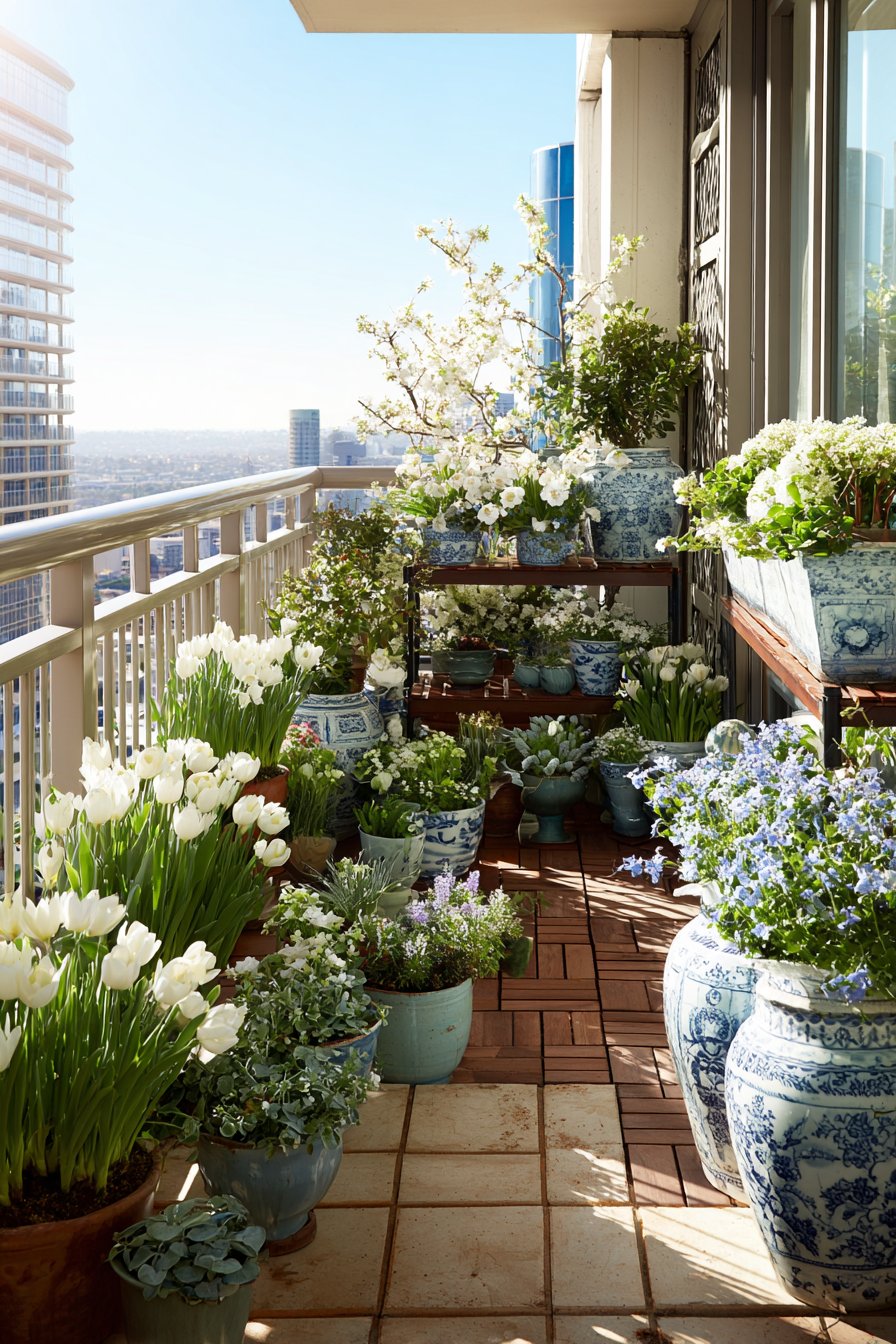
Strategic planning enables year-round balcony beauty through this succession planting approach. The display showcases seasonal rotation with spring tulips and daffodils in glazed ceramic pots designed to transition seamlessly to summer petunias as seasons change. This demonstrates that balcony gardens need not remain static, but can evolve throughout the year to provide continuous color and interest while celebrating the natural progression of seasons.
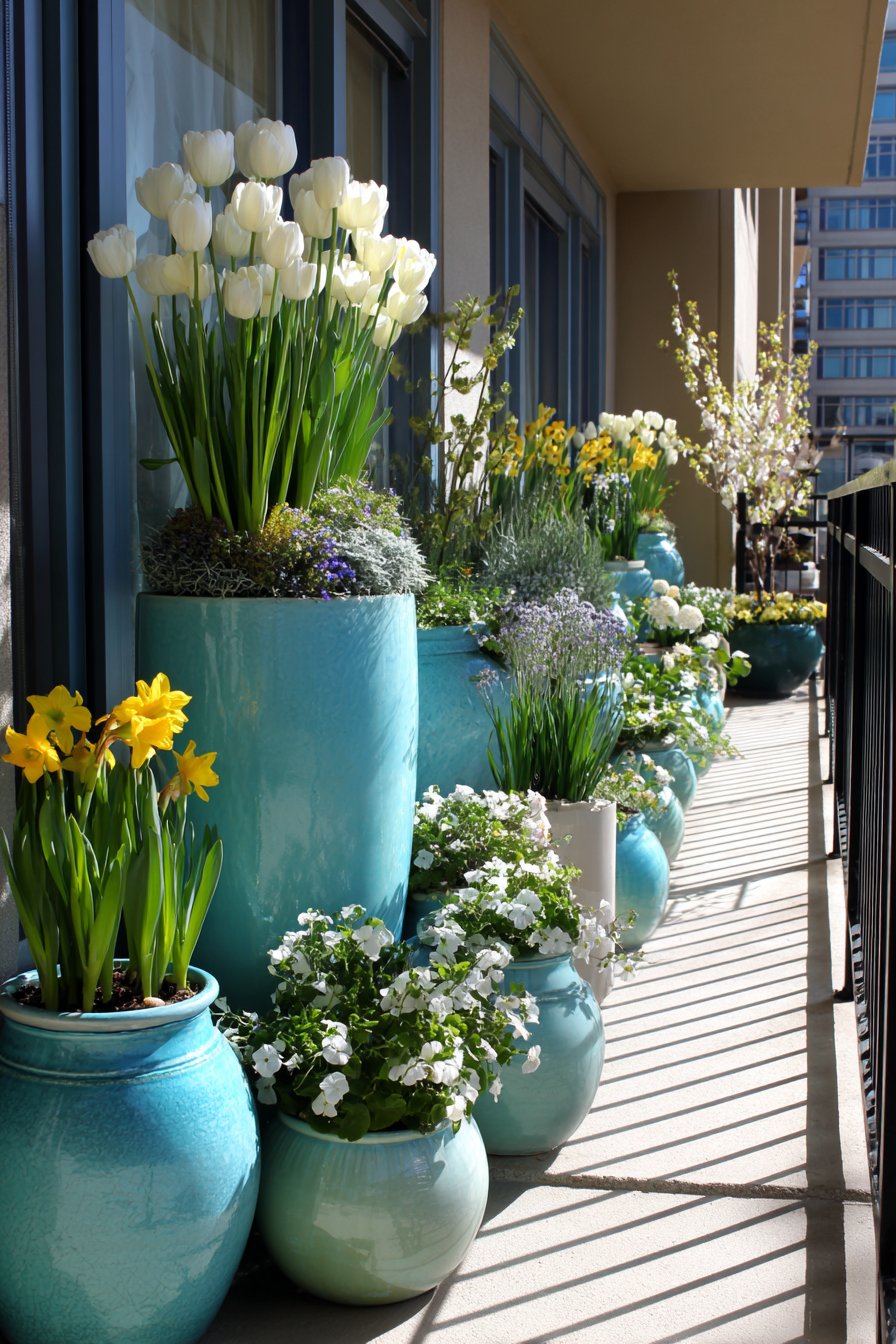
The planning process requires forethought and coordination. Spring bulbs are typically planted in fall, spending winter developing strong root systems before emerging with the first warmth of spring. As these bulbs finish flowering and their foliage dies back, they can be lifted and stored while summer annuals are planted in their place. Alternatively, bulbs can remain in deep containers with summer annuals planted above them, though this requires careful watering to avoid rotting dormant bulbs.
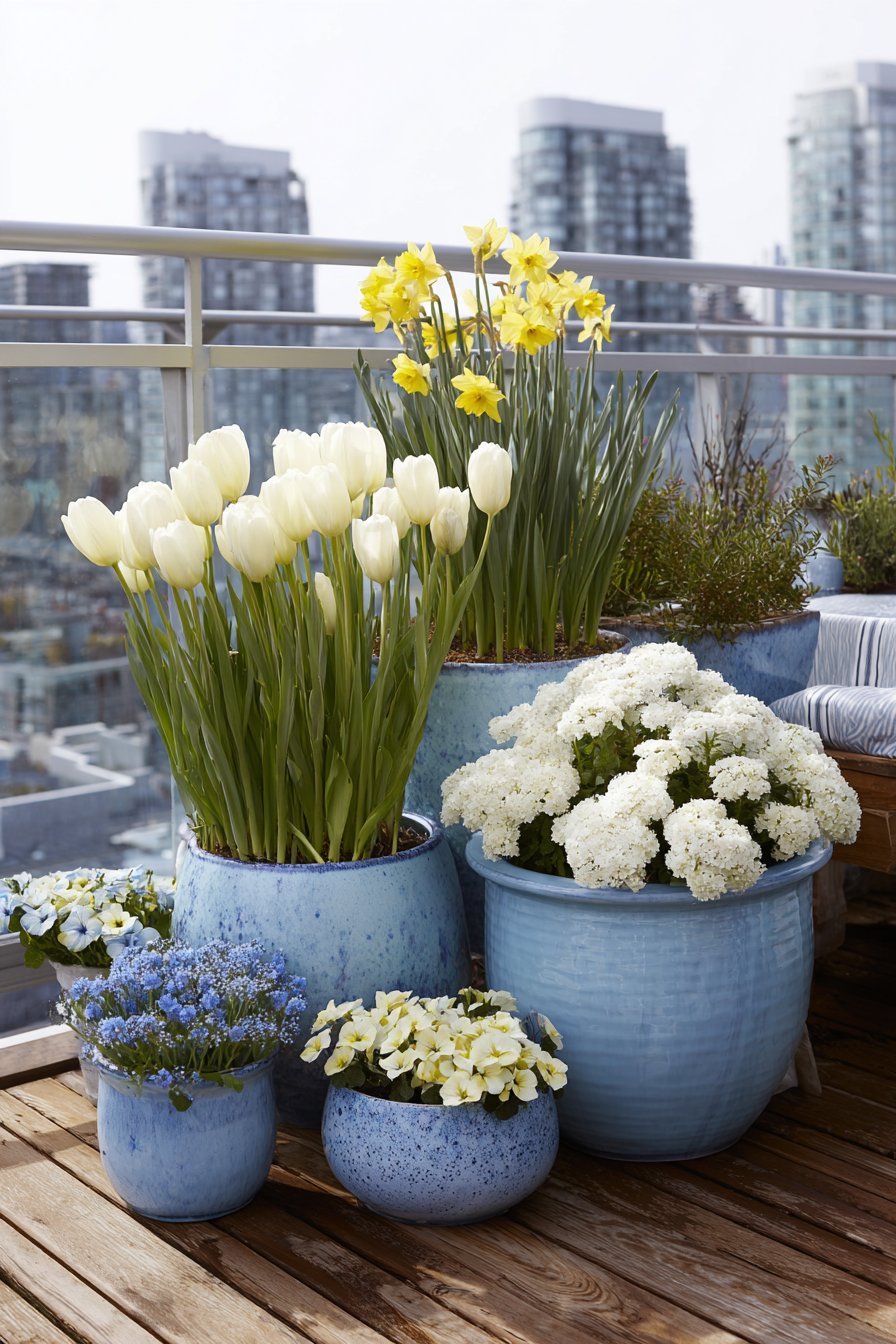
Coordinated container colors in soft blues and whites create visual continuity despite changing plant material. This consistency allows the containers themselves to become part of the permanent design framework while the flowers within them rotate seasonally. High-quality ceramic or resin planters justify their investment by serving year after year, their timeless colors and forms complementing multiple planting schemes.
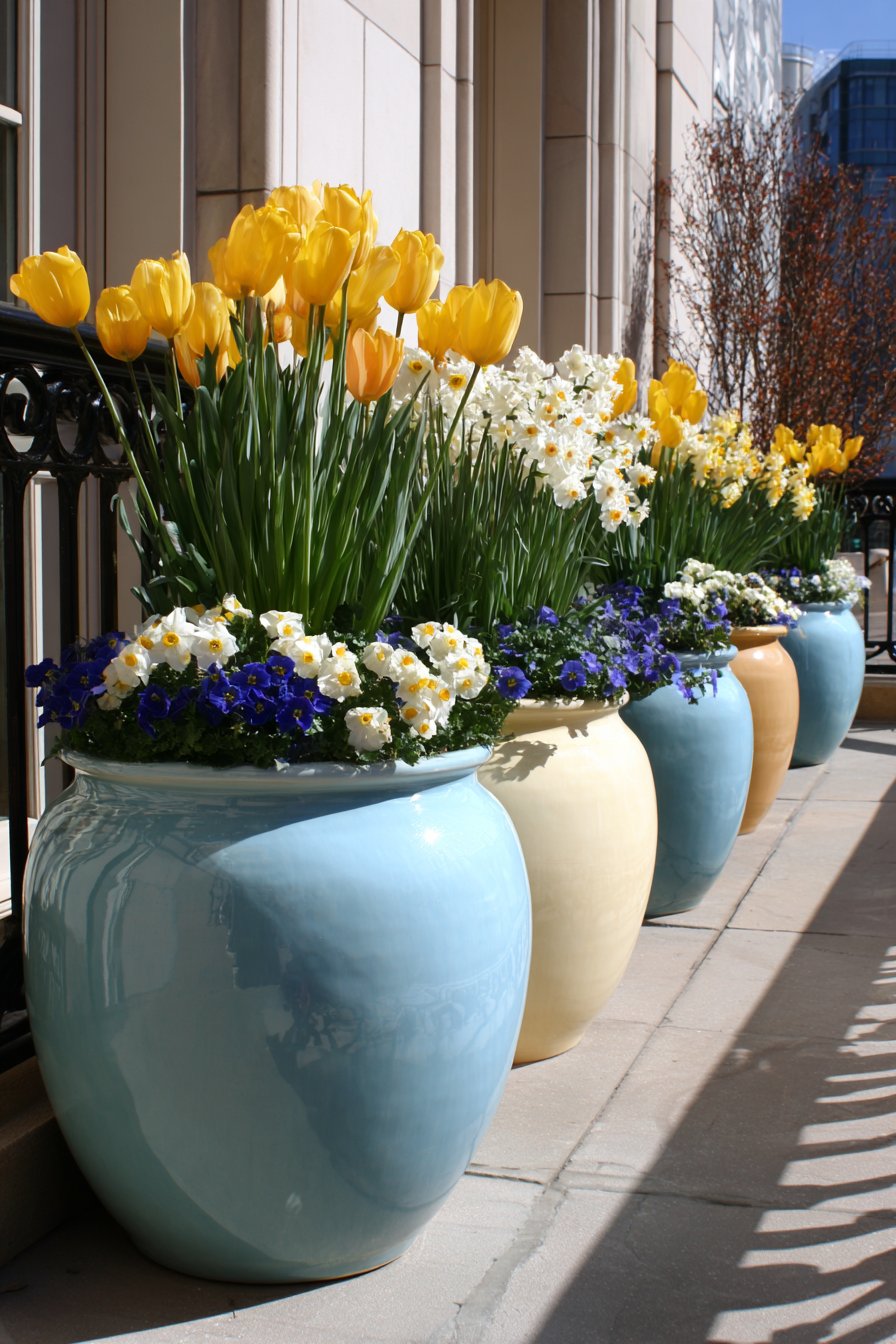
Bright spring sunlight illuminates fresh bulb flowers with crystalline clarity, emphasizing their clean colors and crisp forms after months of winter dormancy. This quality of light differs markedly from summer’s warmer tones or autumn’s golden glow, making seasonal transitions visually exciting and emotionally resonant for those attuned to nature’s rhythms.
Key Design Tips:
- Plan seasonal transitions several months in advance to ensure proper timing for planting
- Photograph successful arrangements to reference when repeating or modifying schemes in future years
- Invest in quality containers that will remain attractive across multiple planting seasons
- Consider transitional plants like pansies that bridge seasons with cold tolerance and extended bloom
- Store lifted bulbs properly in cool, dry conditions if not leaving them in containers year-round
10. Evening Fragrance Garden
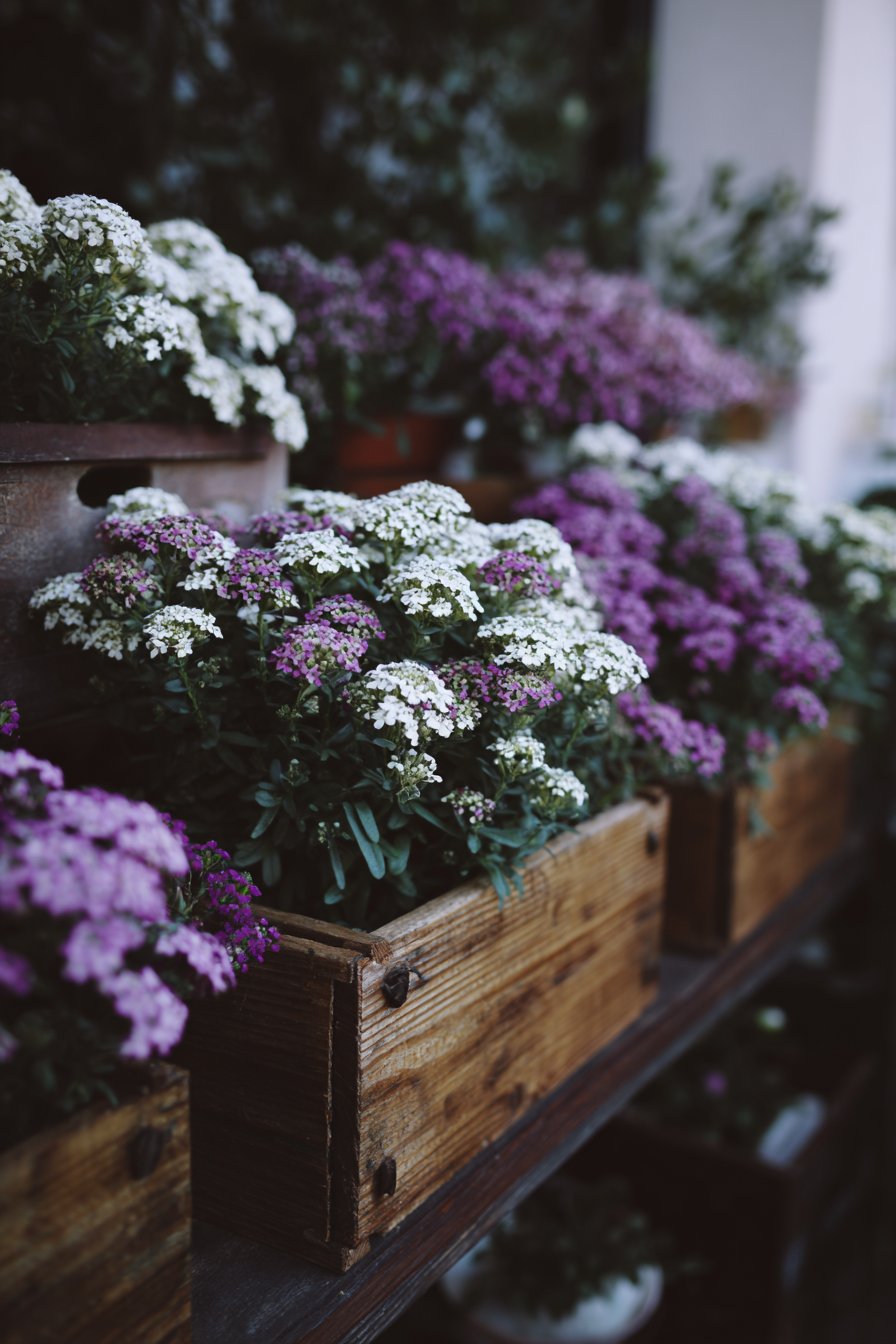
This balcony flower idea prioritizes olfactory pleasure through carefully selected fragrant flowers arranged in vintage wooden crates. Sweet alyssum, stock flowers, and fragrant nicotiana create an aromatic retreat that intensifies during evening hours when many fragrant flowers release their scent most powerfully. The white and purple blooms establish a calming color palette while their perfumes transform the small balcony into a sensory sanctuary perfect for evening relaxation.
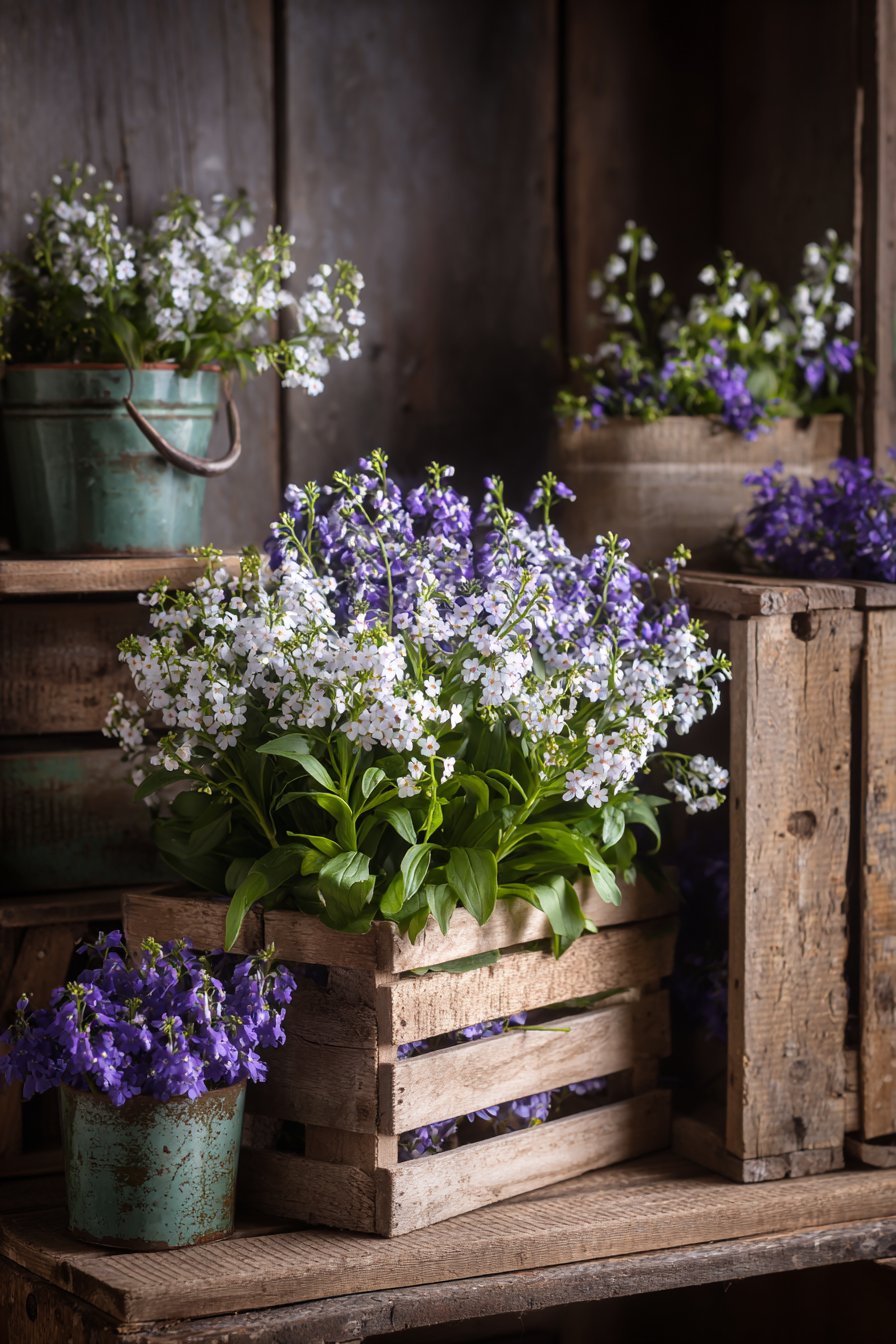
The selection of evening-fragrant flowers proves particularly appropriate for balconies used primarily during after-work hours. Sweet alyssum produces honey-scented clouds of tiny flowers that cascade over container edges, its fragrance sweetest during cool evening hours. Stock offers spicy-sweet perfume and beautiful rosette blooms in single or double forms. Night-blooming nicotiana opens its tubular flowers at dusk, releasing intense jasmine-like fragrance designed to attract night-flying moth pollinators.
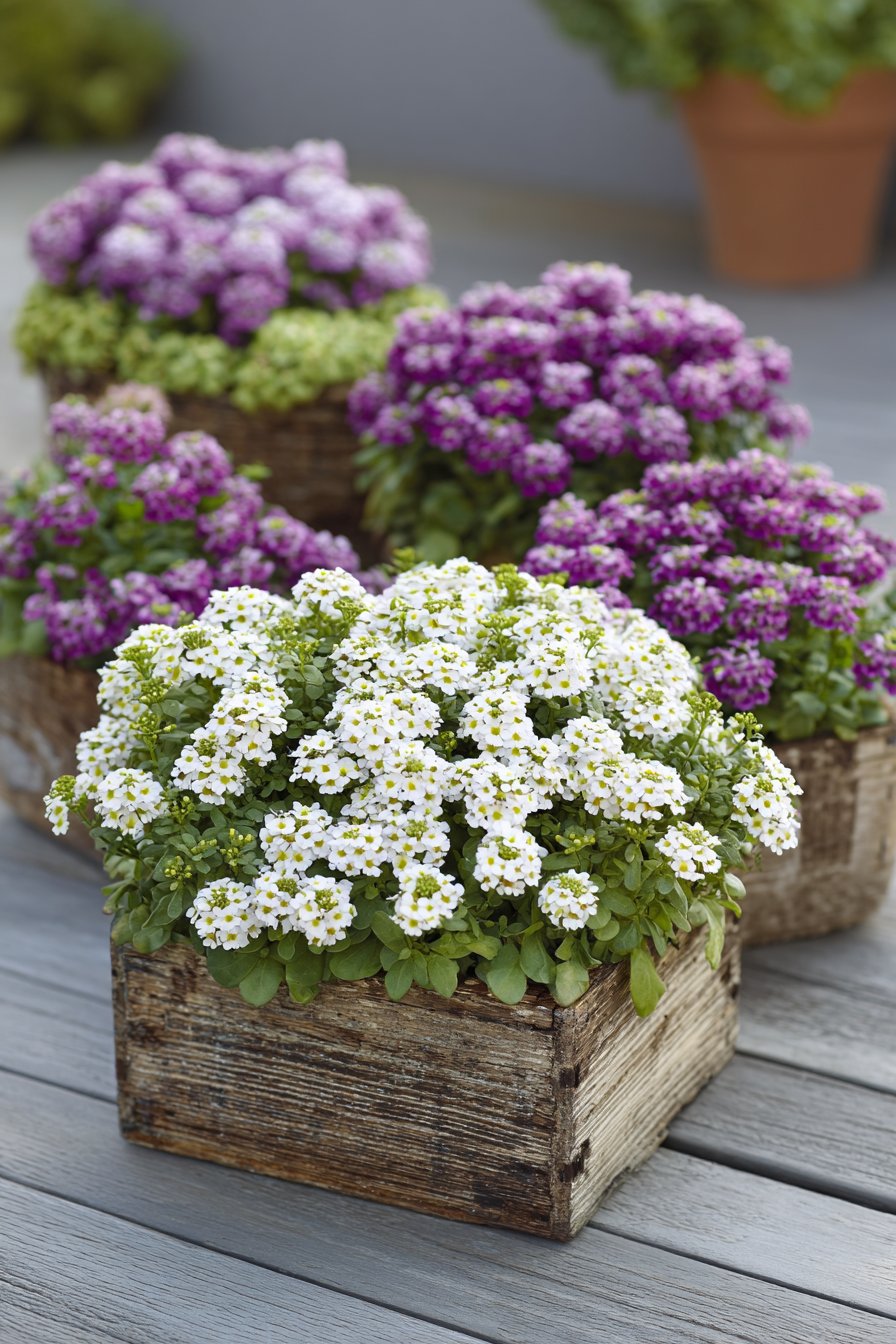
Vintage wooden crates provide charming containers whose rough, aged texture contrasts beautifully with delicate flowers. The visible wood grain and weathered finish add character and warmth, while their generous depth accommodates substantial root systems. These rustic containers suit cottage gardens, farmhouse aesthetics, or any design scheme valuing authenticity and character over polished perfection.
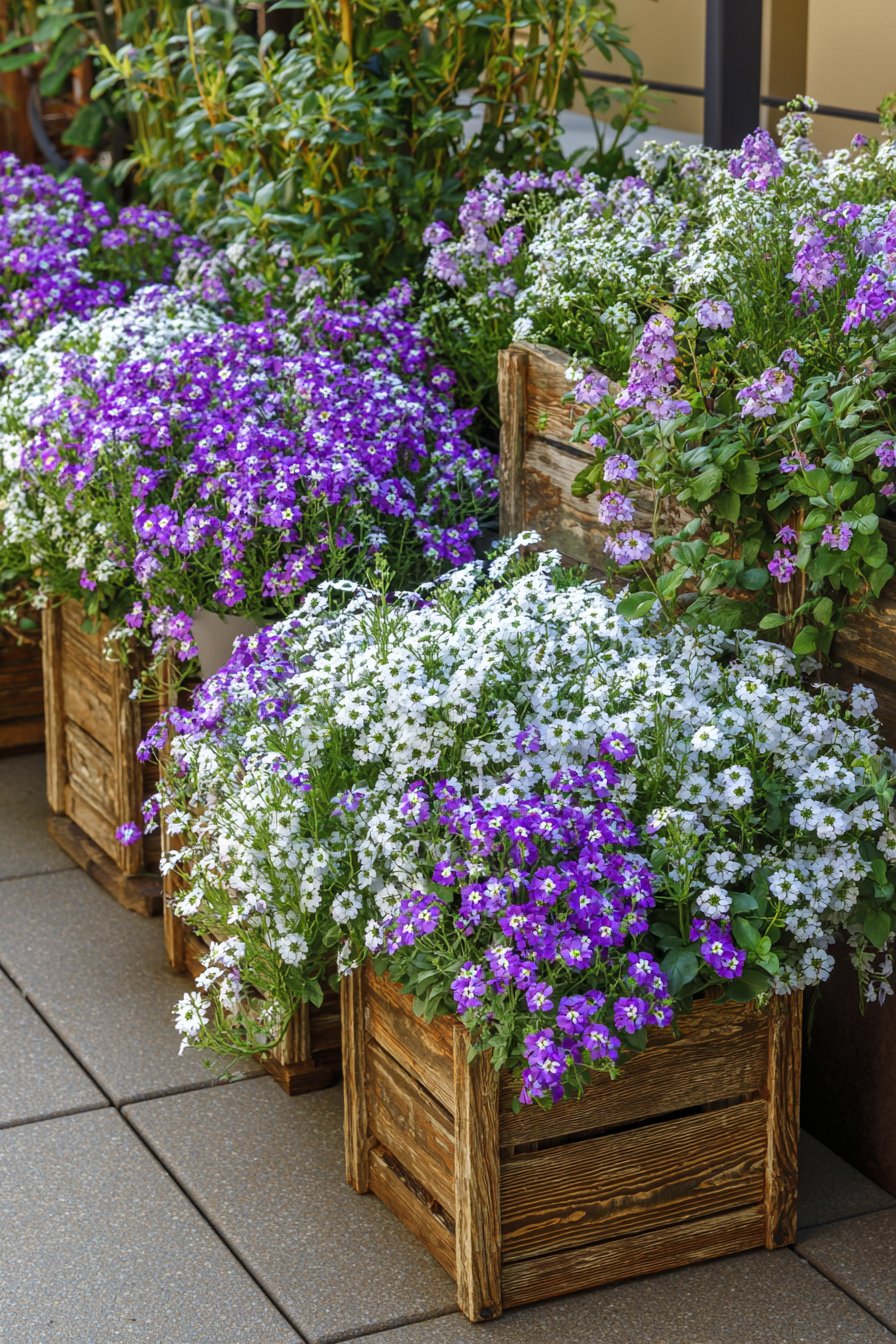
Soft dusk lighting enhances the romantic atmosphere while highlighting delicate flower structures against the deepening sky. White blooms seem to glow in fading light, creating ethereal focal points that draw attention and encourage evening garden enjoyment. This magical quality makes evening gardens particularly rewarding for those who primarily use their balconies during after-work hours.
Key Design Tips:
- Position fragrant plants near seating areas where their scents can be fully appreciated
- Include a mix of day and night-fragrant flowers for around-the-clock enjoyment
- Avoid overly mixing different fragrances which can create confusion rather than pleasure
- Water fragrant plants consistently as stress can diminish scent production
- Consider adding outdoor lighting to extend evening enjoyment while highlighting fragrant plantings
11. Tropical Vacation Paradise
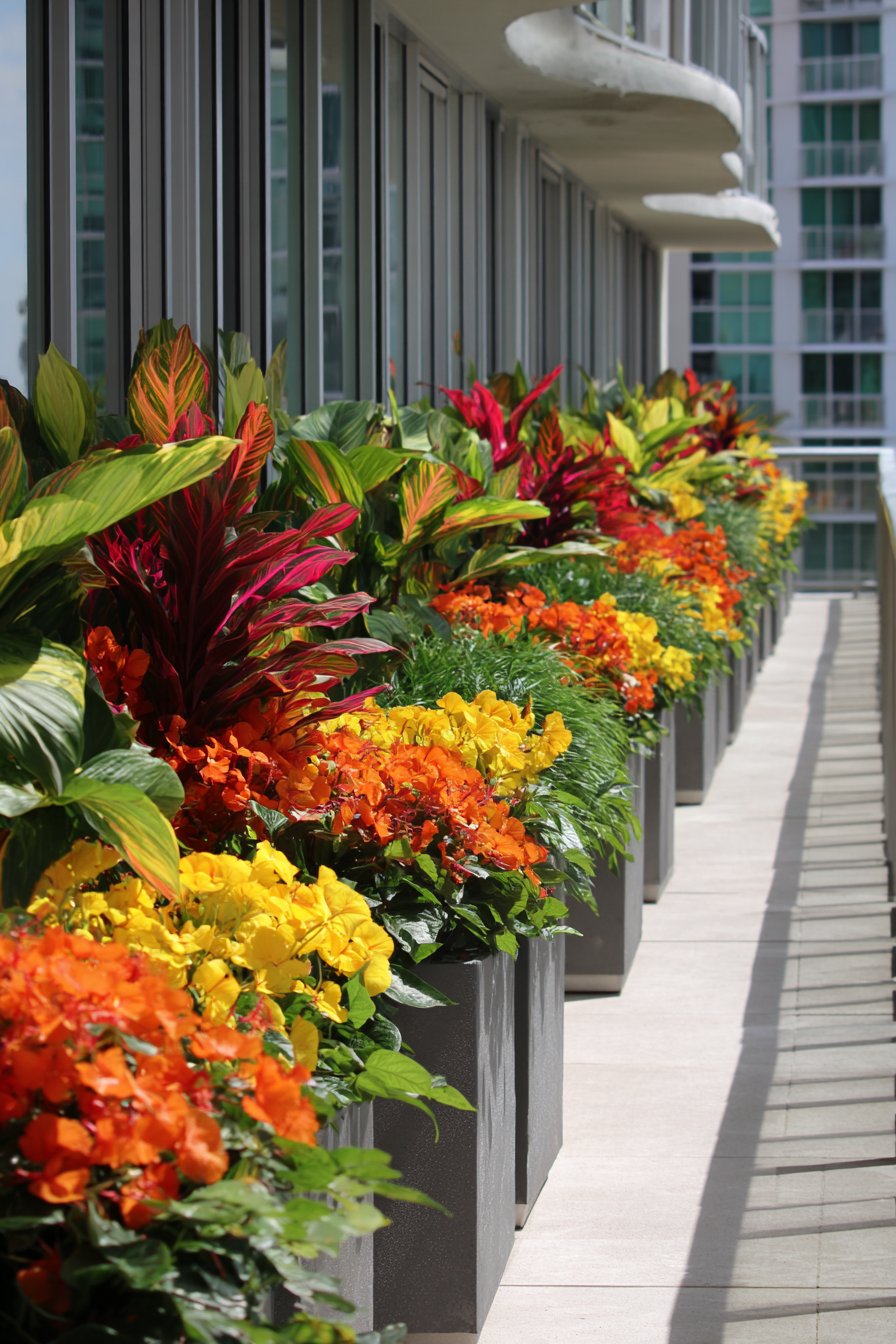
Bold, exotic blooms transform an ordinary balcony into a tropical getaway through this vibrant balcony flower idea. Coral and yellow hibiscus flowers provide spectacular focal points, while exotic bromeliads and colorful crotons contribute stunning foliage in deep burgundy, bright gold, and vivid green. Large glazed planters in complementary colors contain the lush arrangement, creating a vacation-like atmosphere that offers daily escape from urban routines.
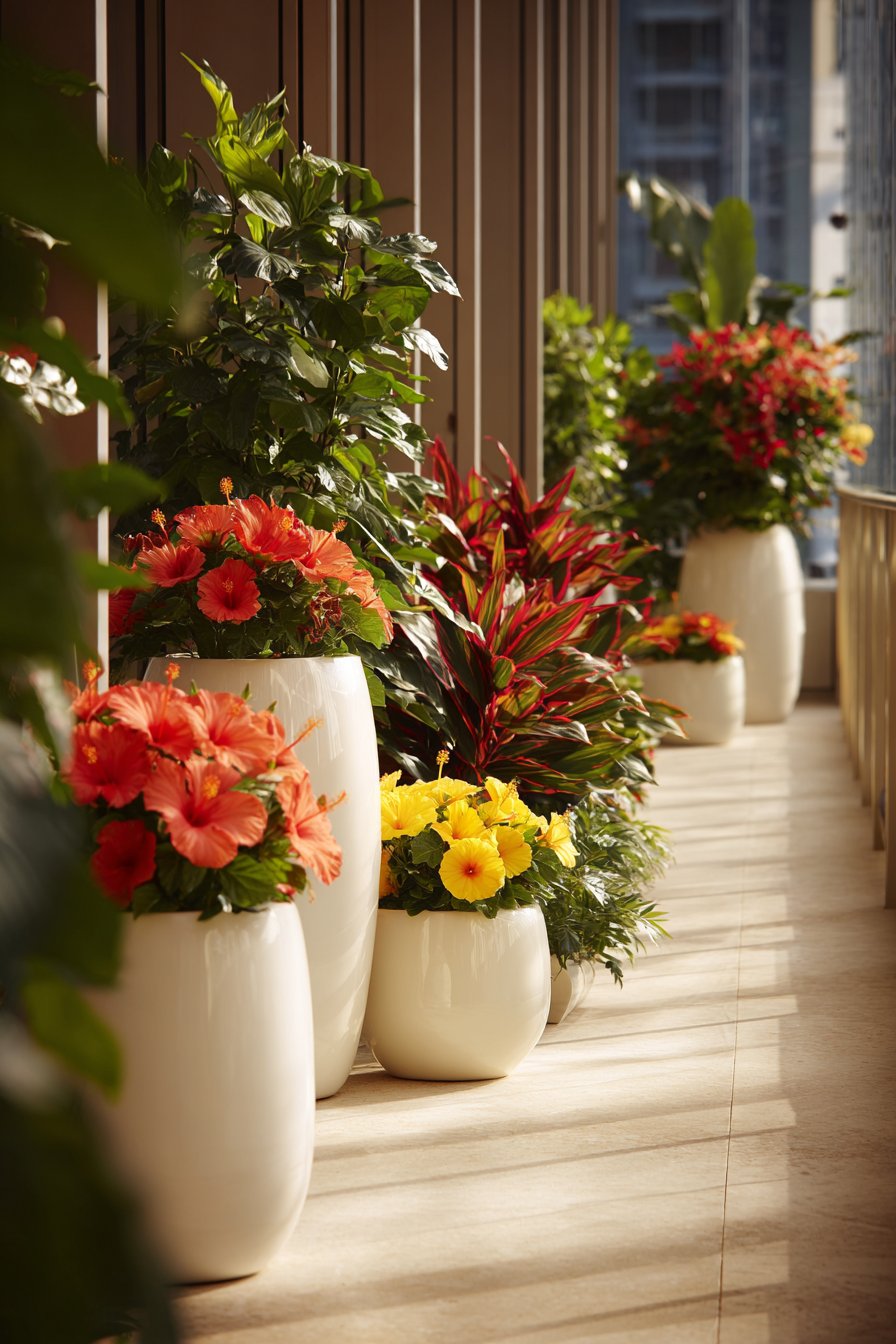
The tropical aesthetic relies heavily on dramatic foliage alongside spectacular flowers. While hibiscus blooms are showstoppers, they’re also ephemeral—each flower lasts only a day or two. This makes the inclusion of plants with outstanding foliage essential for maintaining visual impact between blooming cycles. Bromeliads offer architectural rosettes in striated patterns, often developing colorful bracts that last for months. Crotons provide arguably the most colorful foliage of any common plant, their leaves splashed with yellow, red, orange, and burgundy in wild patterns.
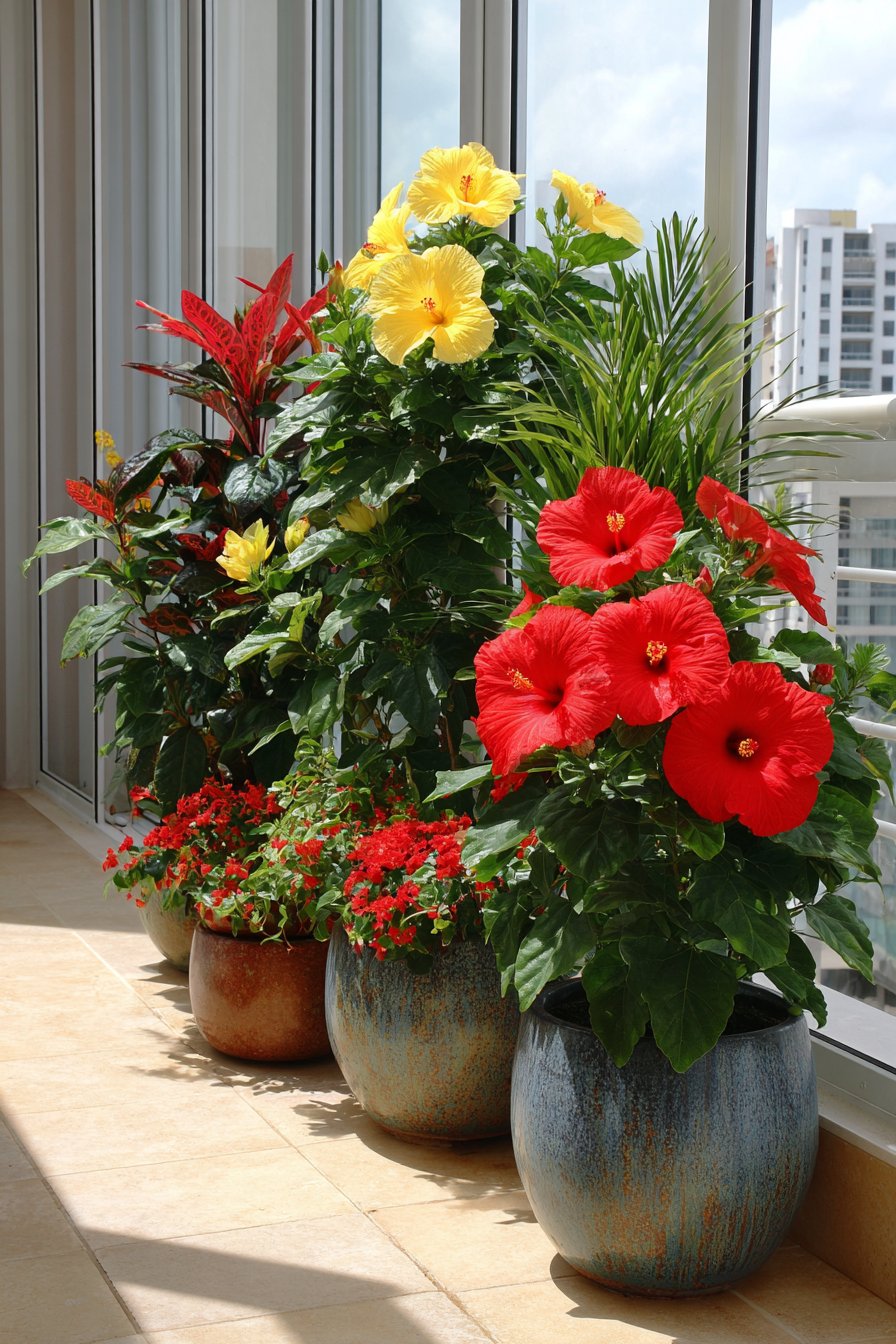
Glossy foliage characteristic of many tropical plants creates wonderful contrast against neutral balcony surfaces like concrete or stone. This shiny leaf surface reflects light beautifully, adding sparkle and movement as leaves flutter in breezes. The bold colors and large-scale forms typical of tropical plants make dramatic statements even in small quantities, allowing impressive impact without overcrowding limited balcony space.
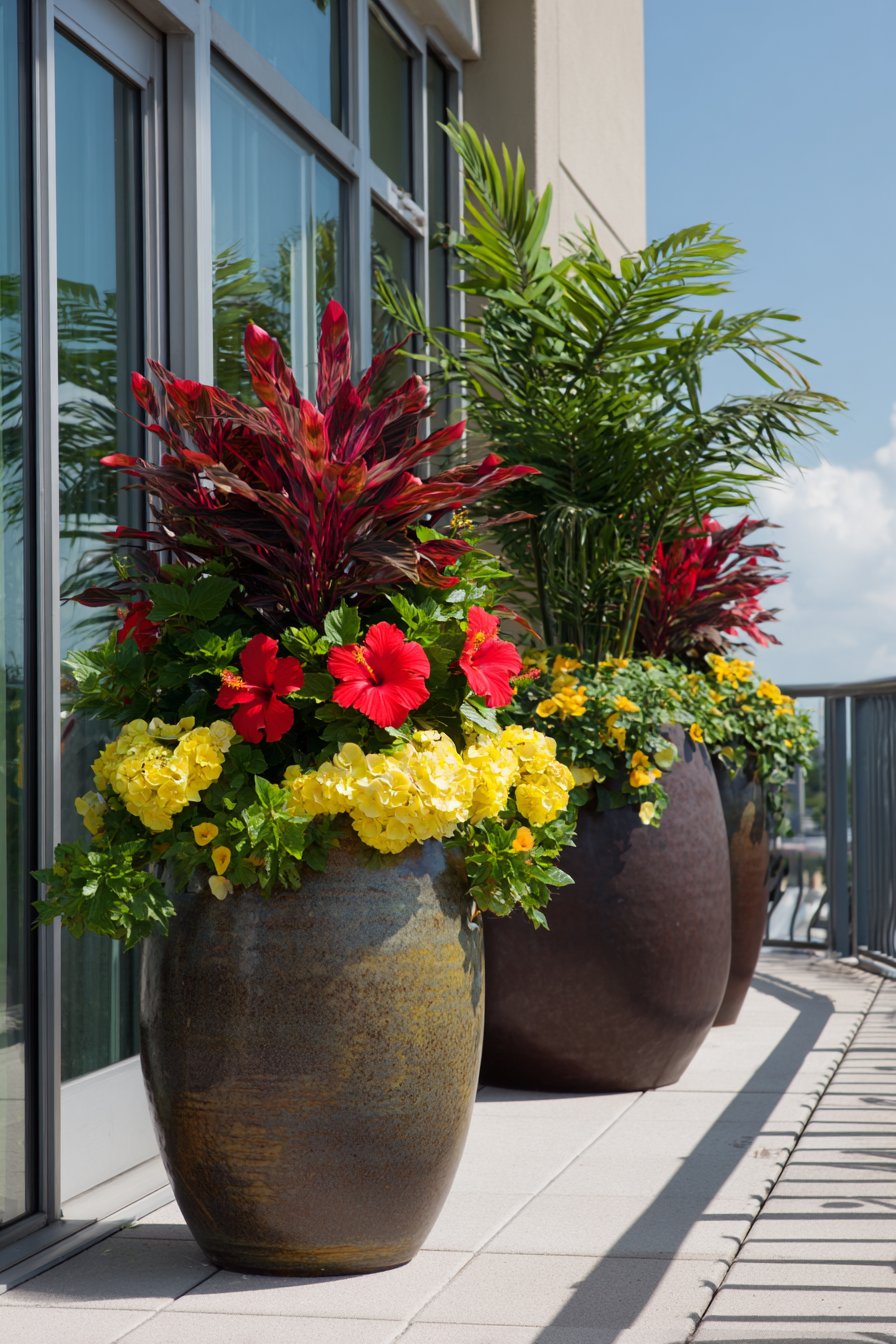
Strong natural sunlight intensifies the already saturated tropical hues while creating dramatic shadows that emphasize the bold, sculptural forms of these plants. The high-contrast lighting typical of tropical regions suits these plants perfectly, as they’ve evolved under intense sun and display their best colors under bright conditions.
Key Design Tips:
- Verify minimum temperature tolerance as most tropical plants cannot survive freezing temperatures
- Provide consistent warmth and humidity for best growth, misting foliage during dry periods
- Use well-draining potting mix as many tropical plants are susceptible to root rot
- Fertilize regularly during growing season as lush growth requires adequate nutrition
- Bring sensitive plants indoors or protect them before first frost in temperate climates
12. Water-Wise Mediterranean Herb Garden
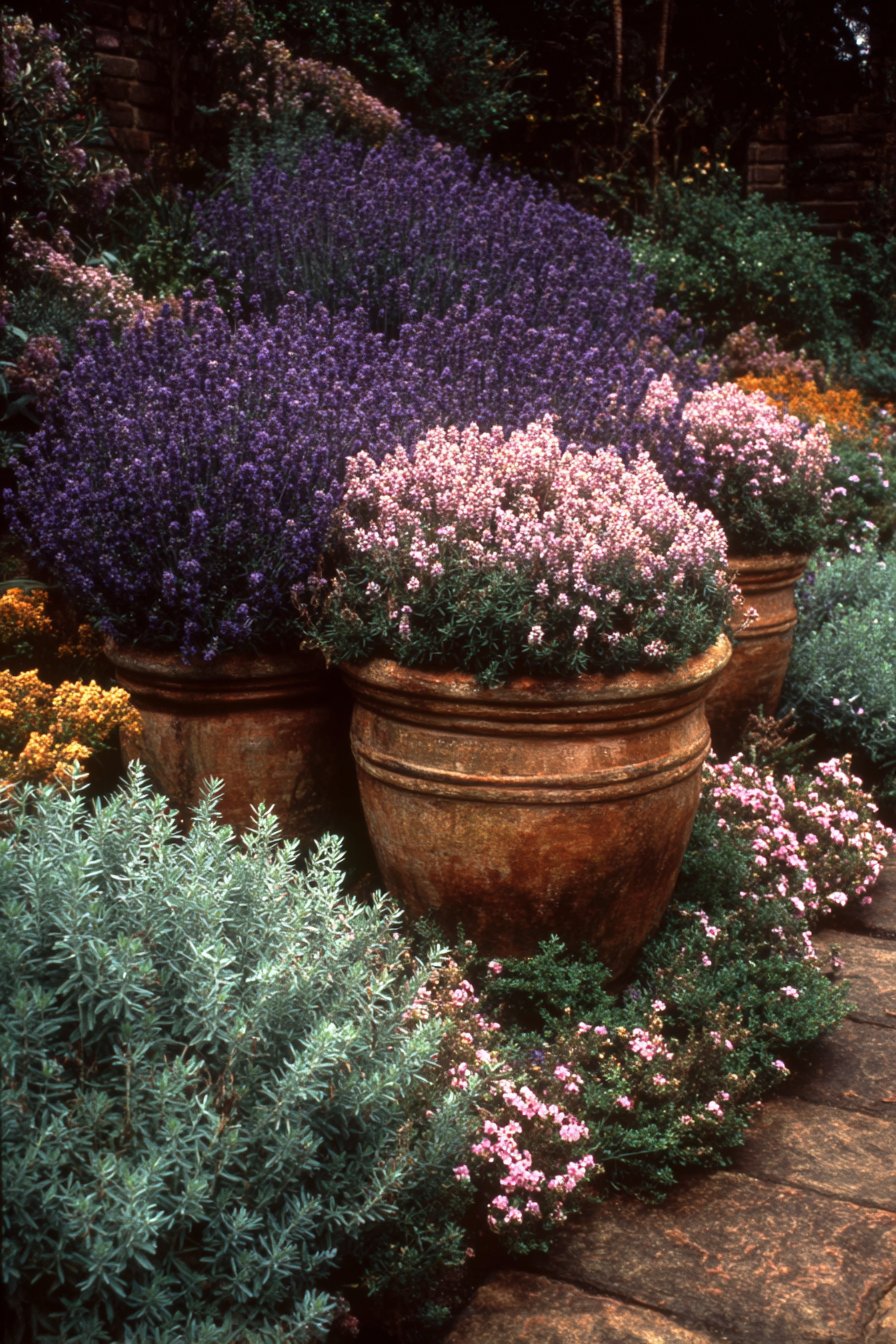
Sustainability and beauty unite in this drought-tolerant balcony flower idea featuring Mediterranean herbs that thrive with minimal water while providing fragrance, flowers, and culinary usefulness. Purple-flowering lavender, pink-blooming thyme, and blue-flowered rosemary planted in terracotta containers create a water-wise garden perfect for sunny balconies or regions experiencing water restrictions. The silver-green foliage provides year-round textural interest while the successive blooms ensure seasonal color.
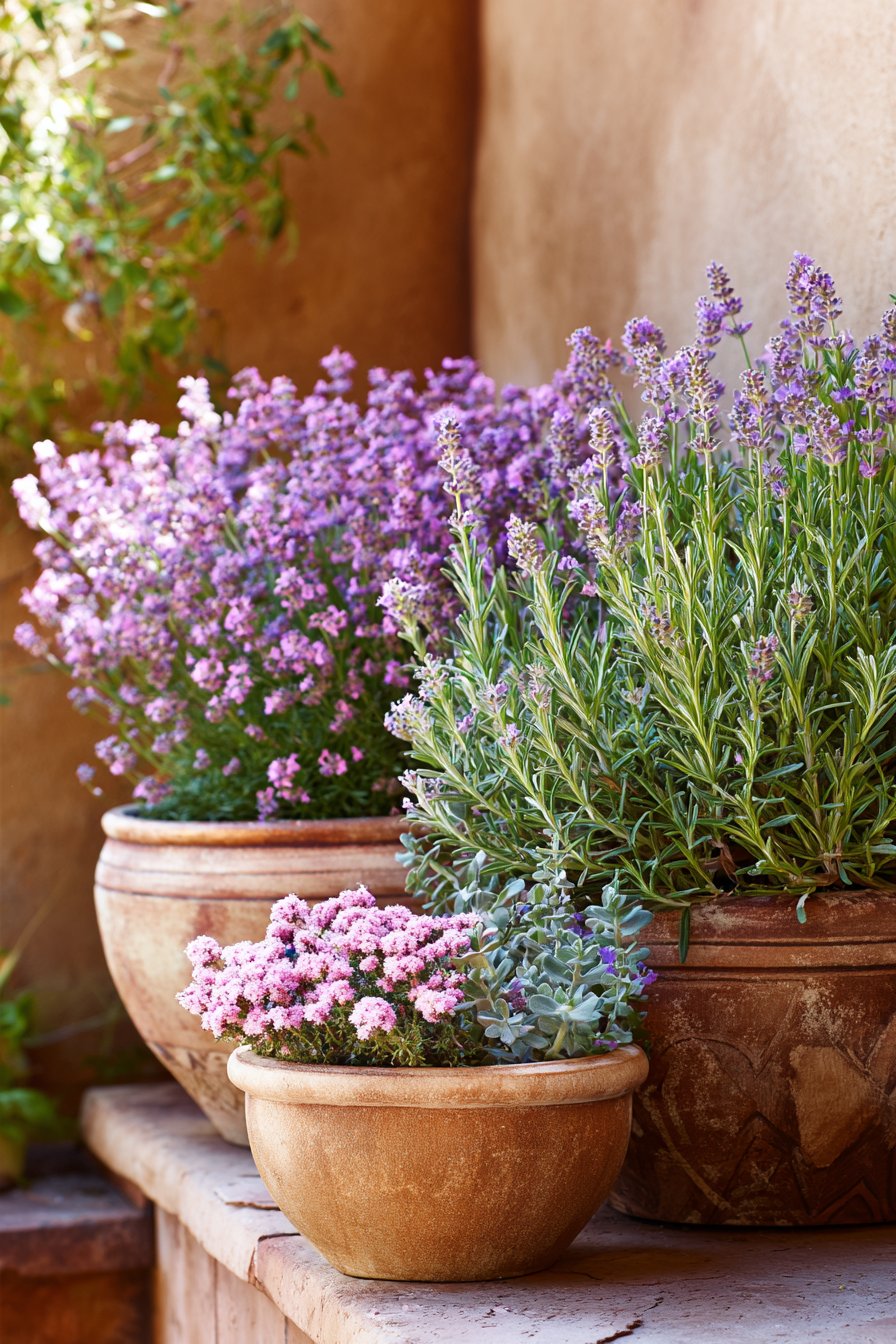
This xeriscaping approach demonstrates that environmental responsibility need not sacrifice aesthetic appeal. Mediterranean herbs evolved in regions with hot, dry summers and limited rainfall, developing adaptations like aromatic oils, fuzzy or waxy leaves, and deep root systems that allow them to thrive with minimal supplemental water once established. This makes them ideal for busy gardeners, those committed to water conservation, or balconies where watering access is challenging.
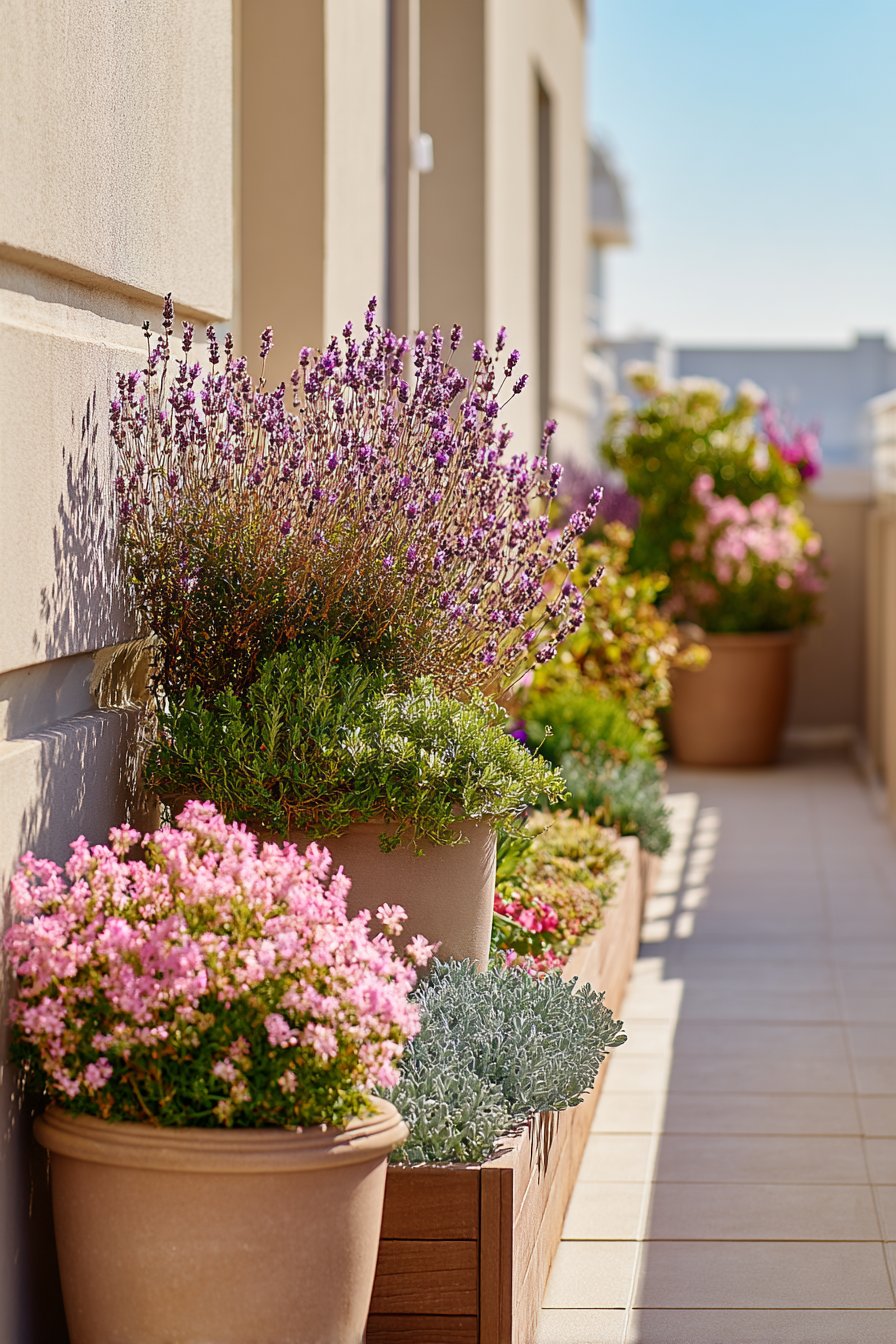
The multifunctional nature of culinary herbs adds practical value to their ornamental appeal. Fresh rosemary, thyme, and lavender enhance countless recipes, providing flavor and aroma impossible to replicate with dried store-bought versions. This dual-purpose planting maximizes the utility of limited balcony space while encouraging regular interaction with and appreciation of the garden.
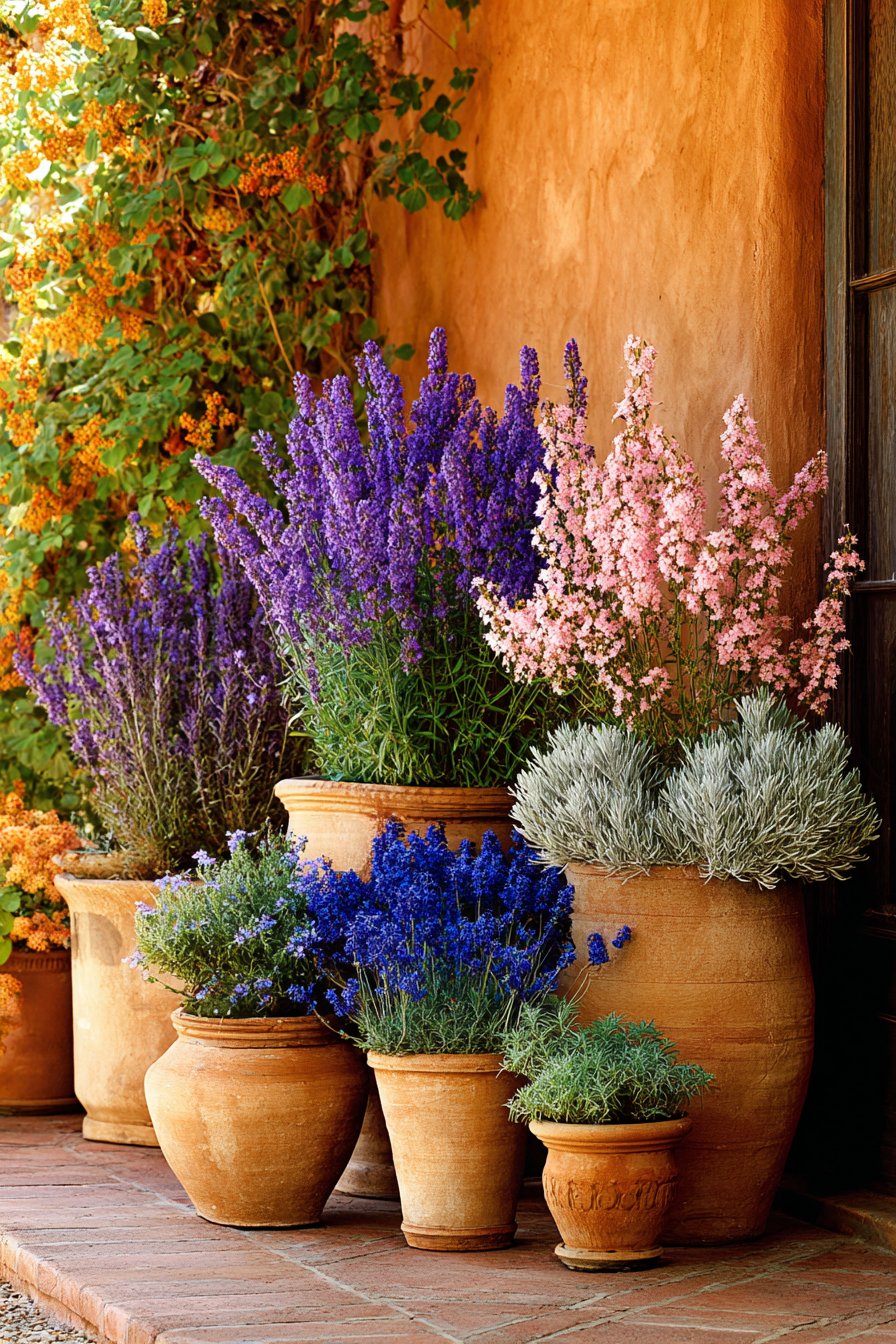
Bright afternoon sun highlights these heat-loving plants at their best, emphasizing their adaptive features and bringing out the silvery tones in their foliage. The strong light also intensifies the aromatic oils these plants produce, filling the air with their characteristic Mediterranean fragrances when touched or brushed against.
Key Design Tips:
- Ensure excellent drainage as Mediterranean herbs cannot tolerate waterlogged soil
- Use gritty, fast-draining potting mix amended with sand or perlite
- Allow soil to dry completely between waterings to prevent root rot
- Harvest herbs regularly to encourage bushier growth and continuous production
- Position containers where they receive at least 6 hours of direct sun daily
13. Elegant All-White Garden
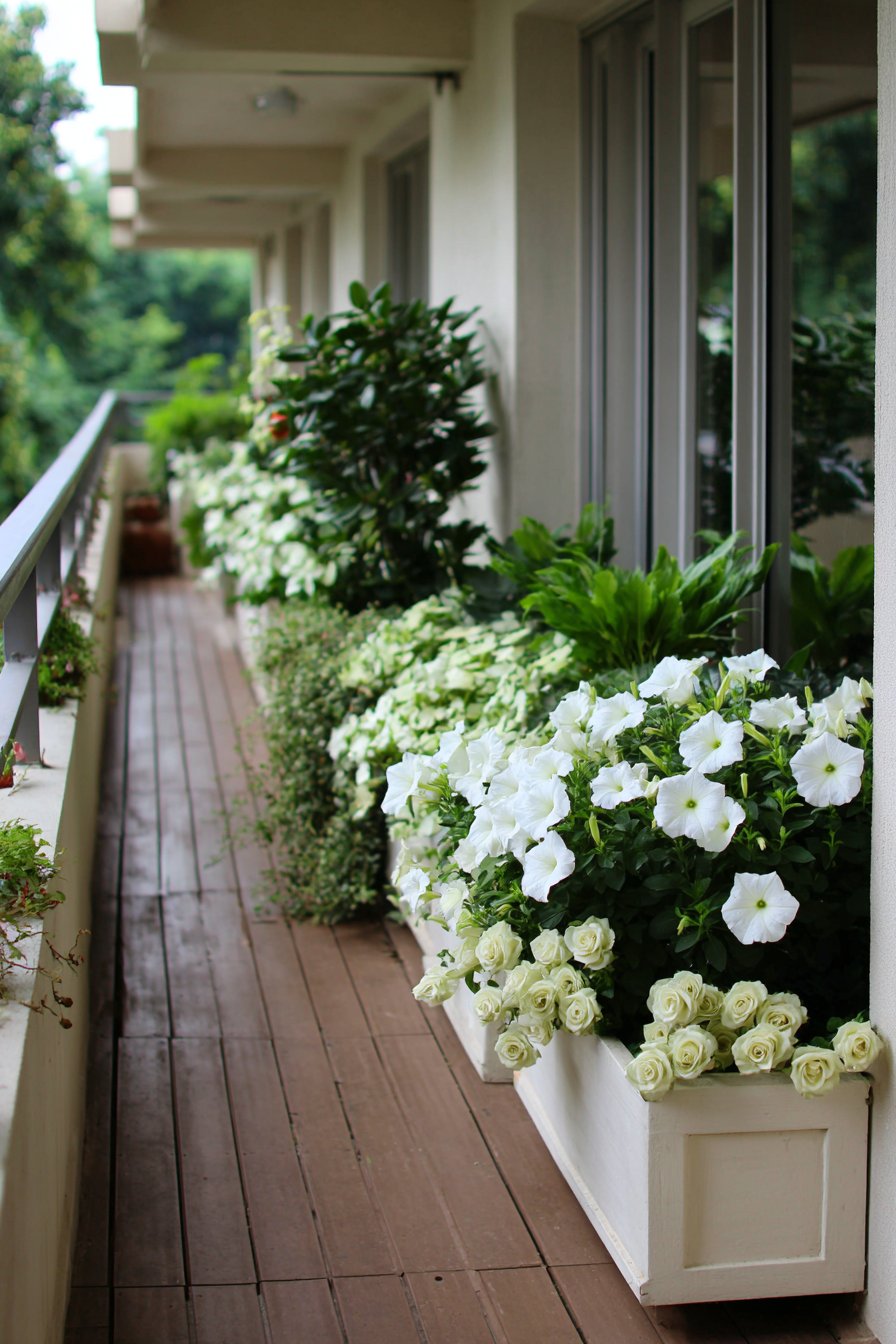
Sophisticated simplicity defines this monochromatic balcony flower idea featuring an all-white garden that creates visual calm and amplifies the sense of space. White petunias, ivory begonias, and creamy white roses planted in coordinating white ceramic containers establish a cohesive design that feels intentional and refined. The restrained palette allows subtle variations in white—from bright white to cream to ivory—to create interest without introducing color contrast.
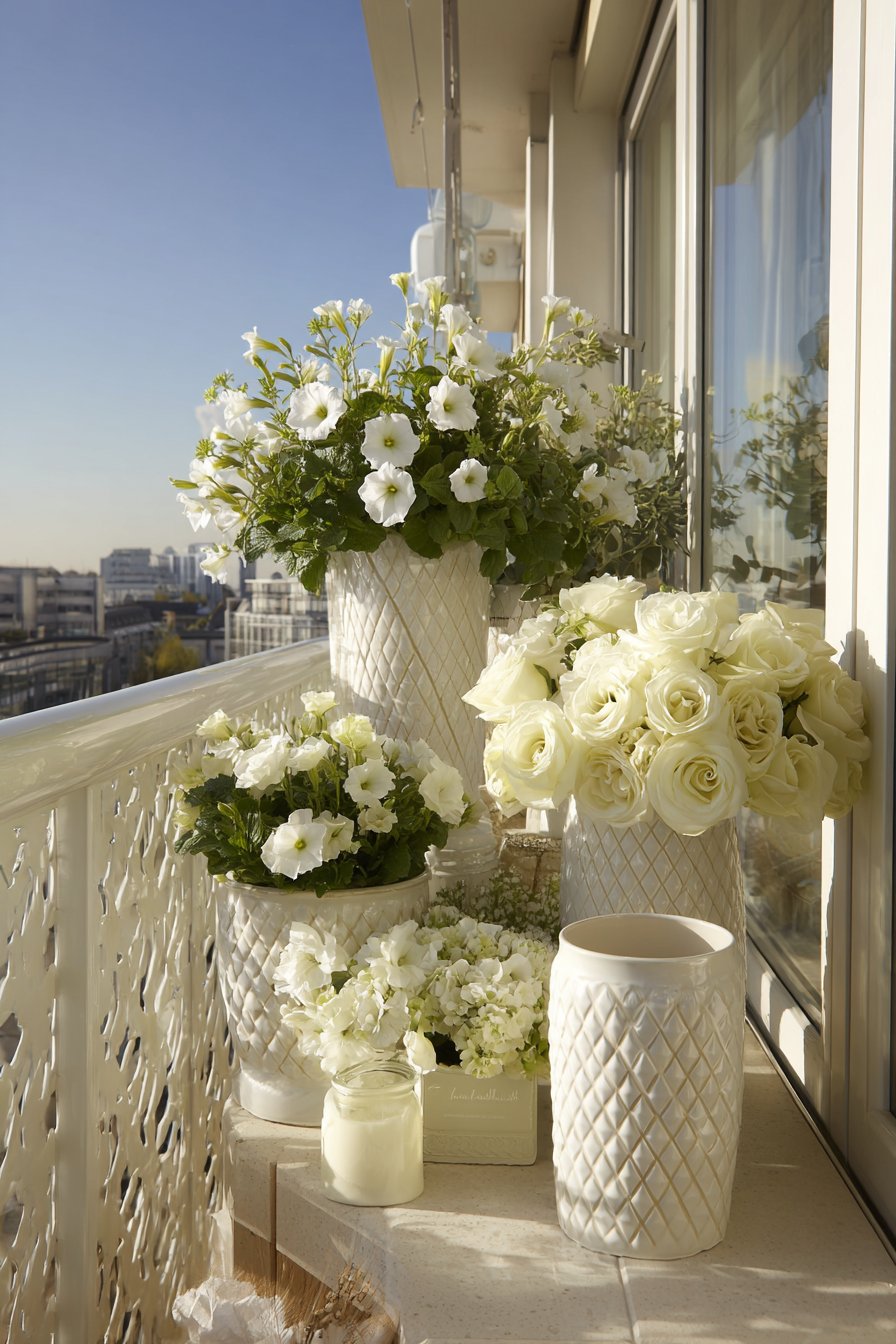
This approach proves particularly effective in small spaces where bold color might feel overwhelming. The white palette reflects light, making the balcony feel larger and brighter than it actually is. This optical effect proves especially valuable for shaded or narrow balconies where darker colors might create a claustrophobic feeling. The monochromatic scheme also creates visual unity, making the space feel carefully curated and thoughtfully designed.
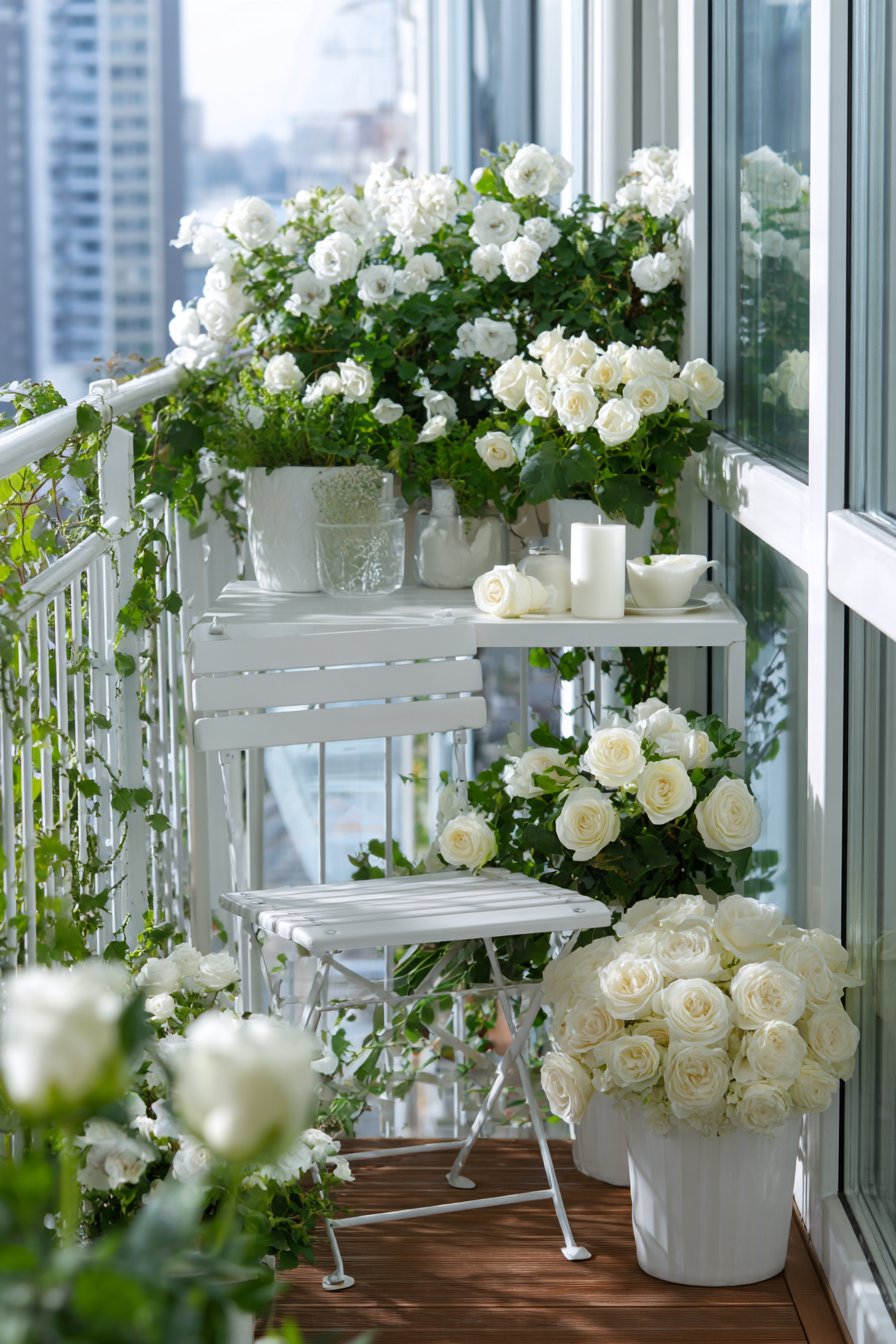
Varied flower shapes and foliage textures prevent the all-white scheme from becoming monotonous. Petunias offer frilled, trumpet-shaped blooms, while begonias present either single, simple flowers or elaborate double forms resembling miniature roses. True roses contribute their classic beauty alongside glossy green foliage. The different bloom forms, petal structures, and plant habits create sufficient variety to maintain interest within the unified color story.
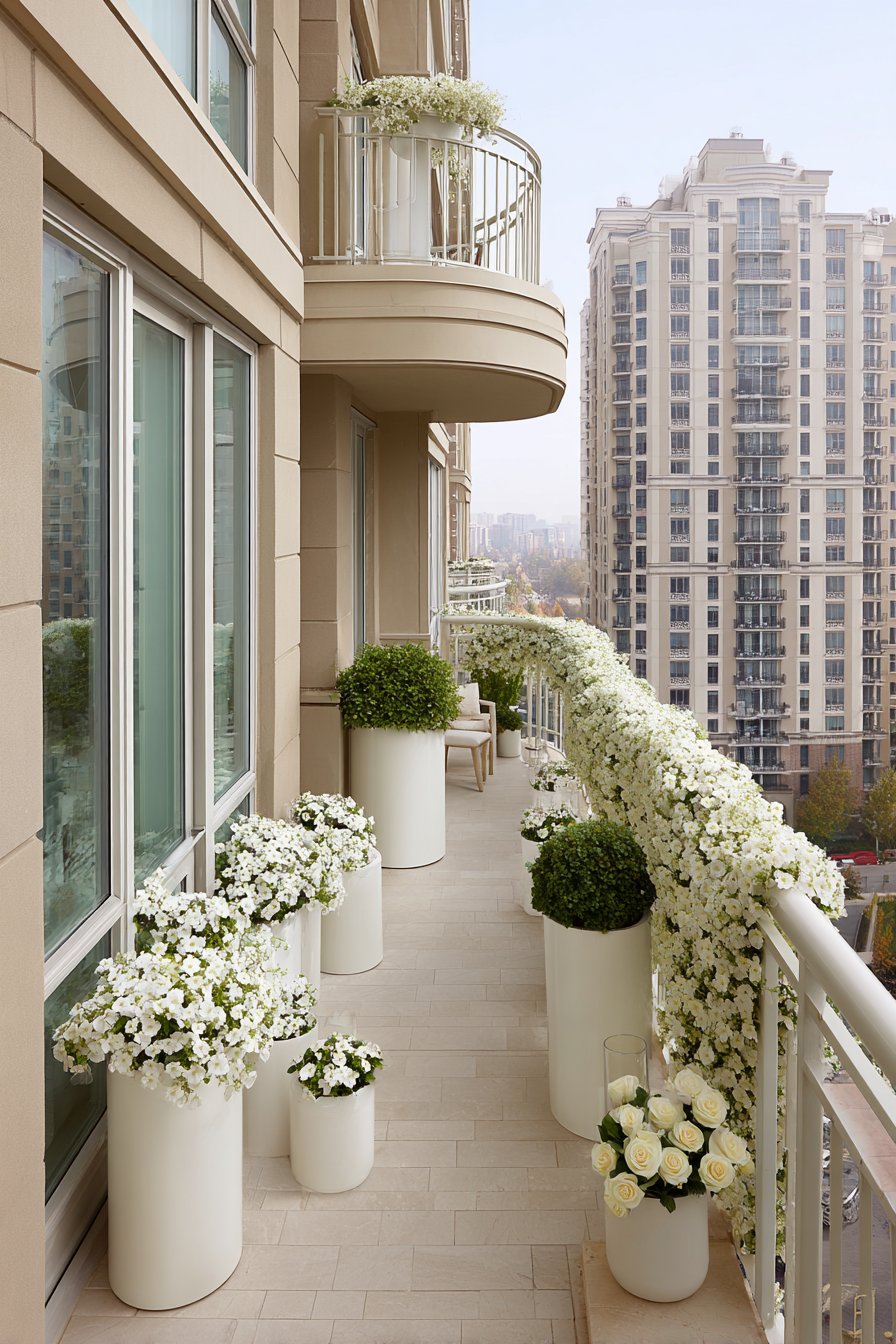
Soft natural lighting reveals subtle cream and ivory variations within the nominally “white” flowers, creating depth and dimension. Evening light proves particularly magical, as white blooms seem to glow against darkening surroundings, creating an ethereal quality that transforms the balcony into an enchanted retreat.
Key Design Tips:
- Include cream and ivory tones alongside pure white to add warmth and depth
- Select white-flowering plants with different bloom times for extended display
- Incorporate varied foliage textures in green shades to prevent flatness
- Use white containers in different finishes (matte, glossy, textured) for subtle variation
- Add lighting to enhance the evening glow effect of white flowers
14. Space-Saving Railing Window Boxes
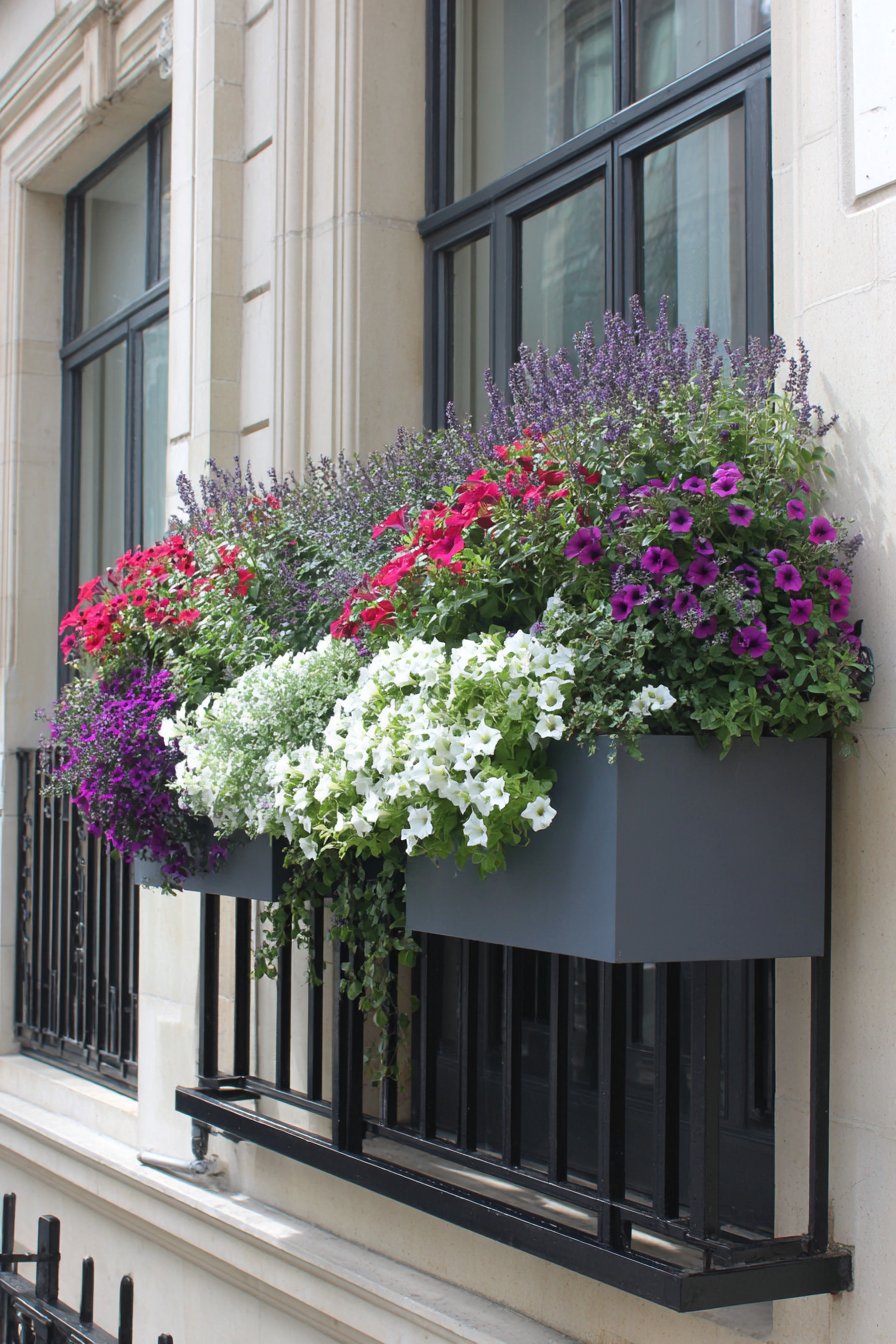
Maximizing limited balcony space becomes achievable through this clever balcony flower idea featuring custom-fit window boxes secured directly to the balcony railing. This mounting approach consumes zero floor space while creating abundant planting area for mixed petunias, trailing ivy, and upright salvia. The space-saving design proves ideal for narrow balconies where every square foot of floor area is precious for furniture or foot traffic.
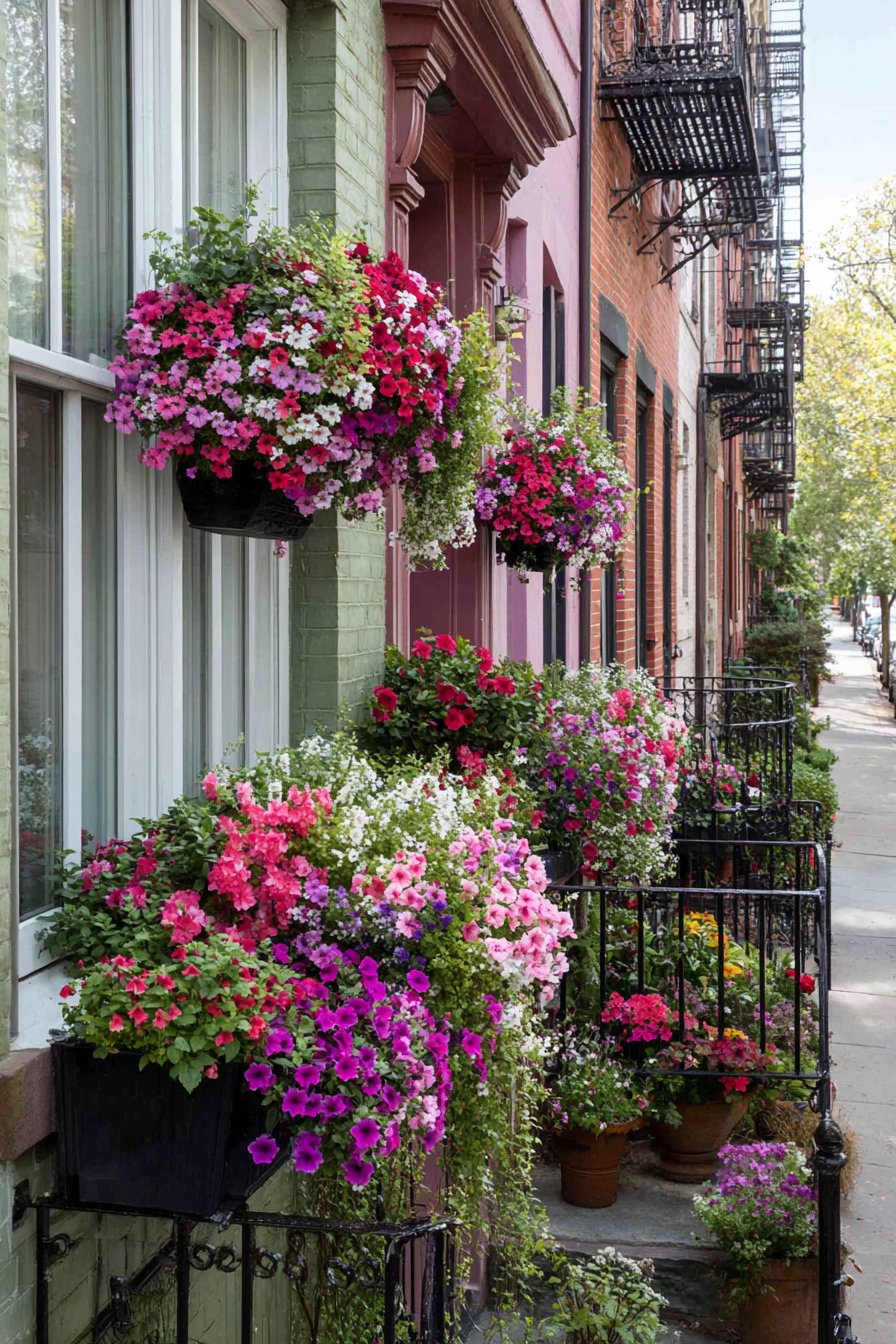
The custom-fit aspect ensures boxes match the railing dimensions precisely, creating a built-in appearance rather than looking like an afterthought. When boxes are painted or stained to coordinate with the building’s exterior trim or railing color, they integrate seamlessly into the architecture, appearing as intentional design elements rather than additions. This attention to color coordination elevates the overall aesthetic from casual to considered.
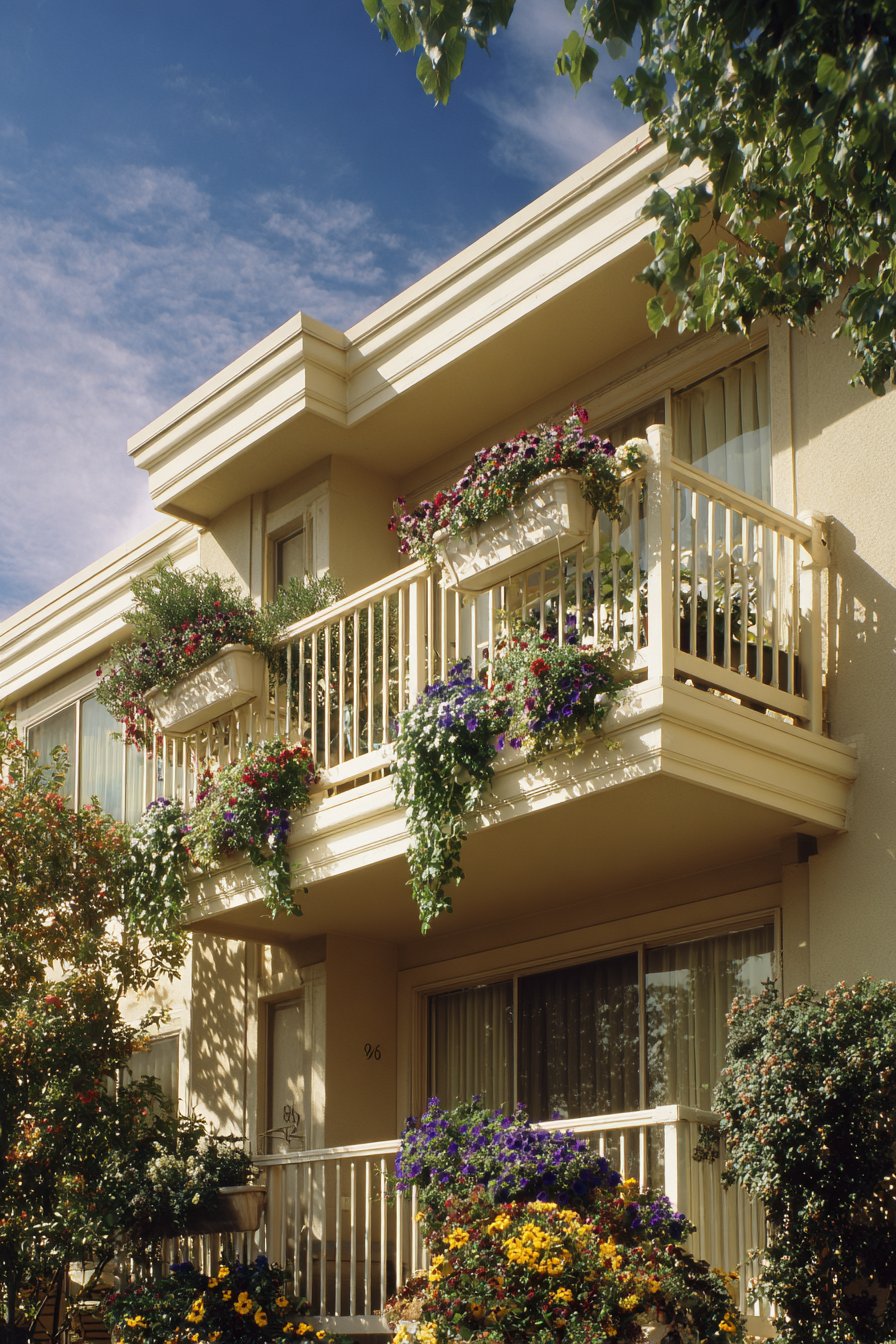
Plant selection demonstrates the importance of combining different growth habits for visual interest and practical success. Upright salvia provides vertical accents and structured form, mixed petunias fill the middle zone with abundant blooms in varied colors, and trailing ivy cascades downward to soften hard edges and create graceful movement. This three-tier approach—upright, mounding, and trailing—creates professional-looking arrangements that remain attractive throughout the growing season.
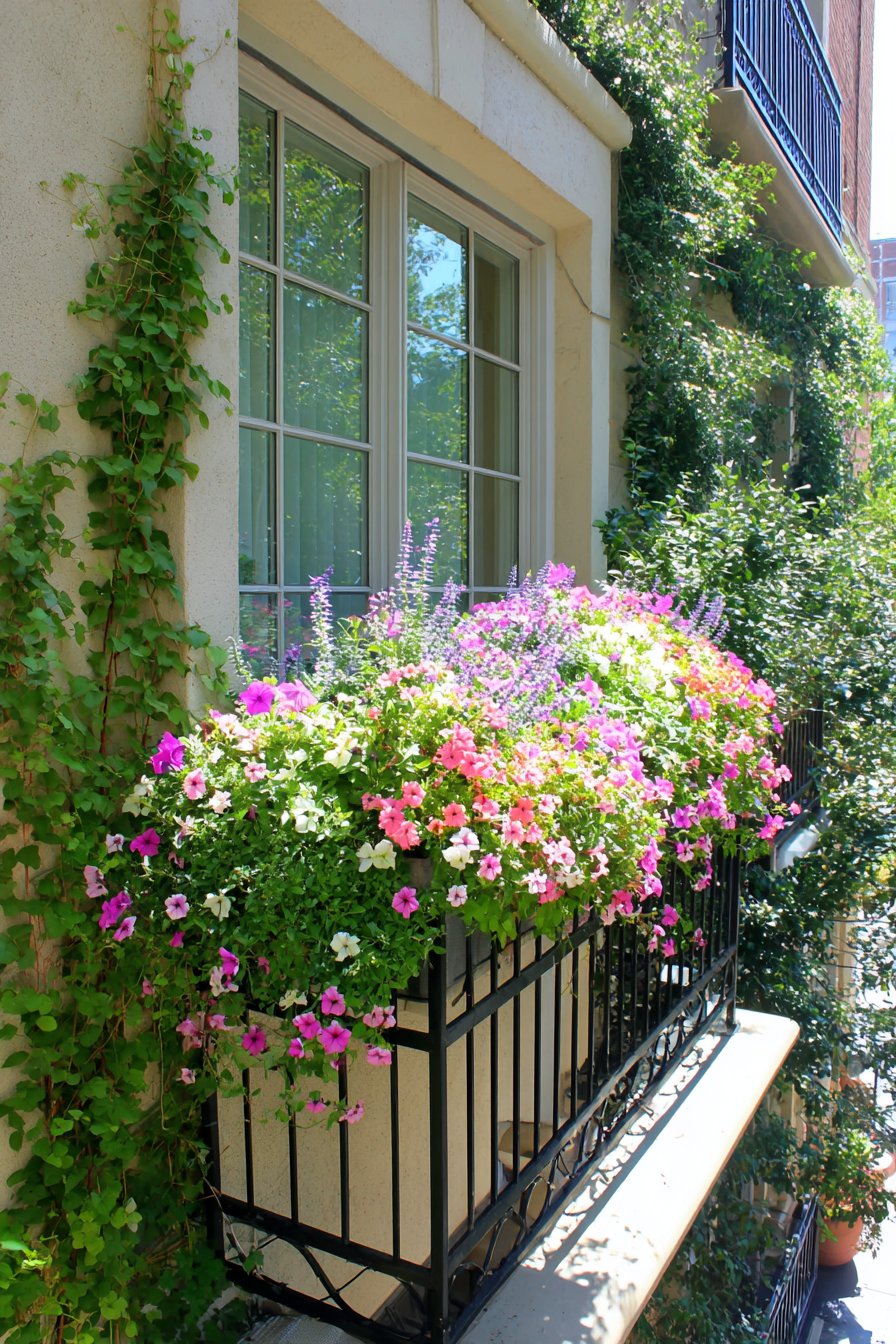
Natural sunlight from open railing exposure creates robust growth and vibrant blooms, as unobstructed light reaches plants from multiple angles throughout the day. This full exposure proves ideal for sun-loving petunias and salvia while the railing position often provides enough air circulation to minimize fungal diseases that can plague crowded container plantings.
Key Design Tips:
- Ensure railing-mounted boxes are securely fastened with brackets rated for combined weight when wet
- Choose boxes with adequate depth (at least 8 inches) to accommodate root systems
- Install liner boxes inside decorative outer boxes to simplify seasonal plant changes
- Verify that boxes don’t violate building regulations or homeowner association rules
- Include drainage holes and saucers to prevent water damage to lower balconies
15. Bold Color-Blocked Modern Display
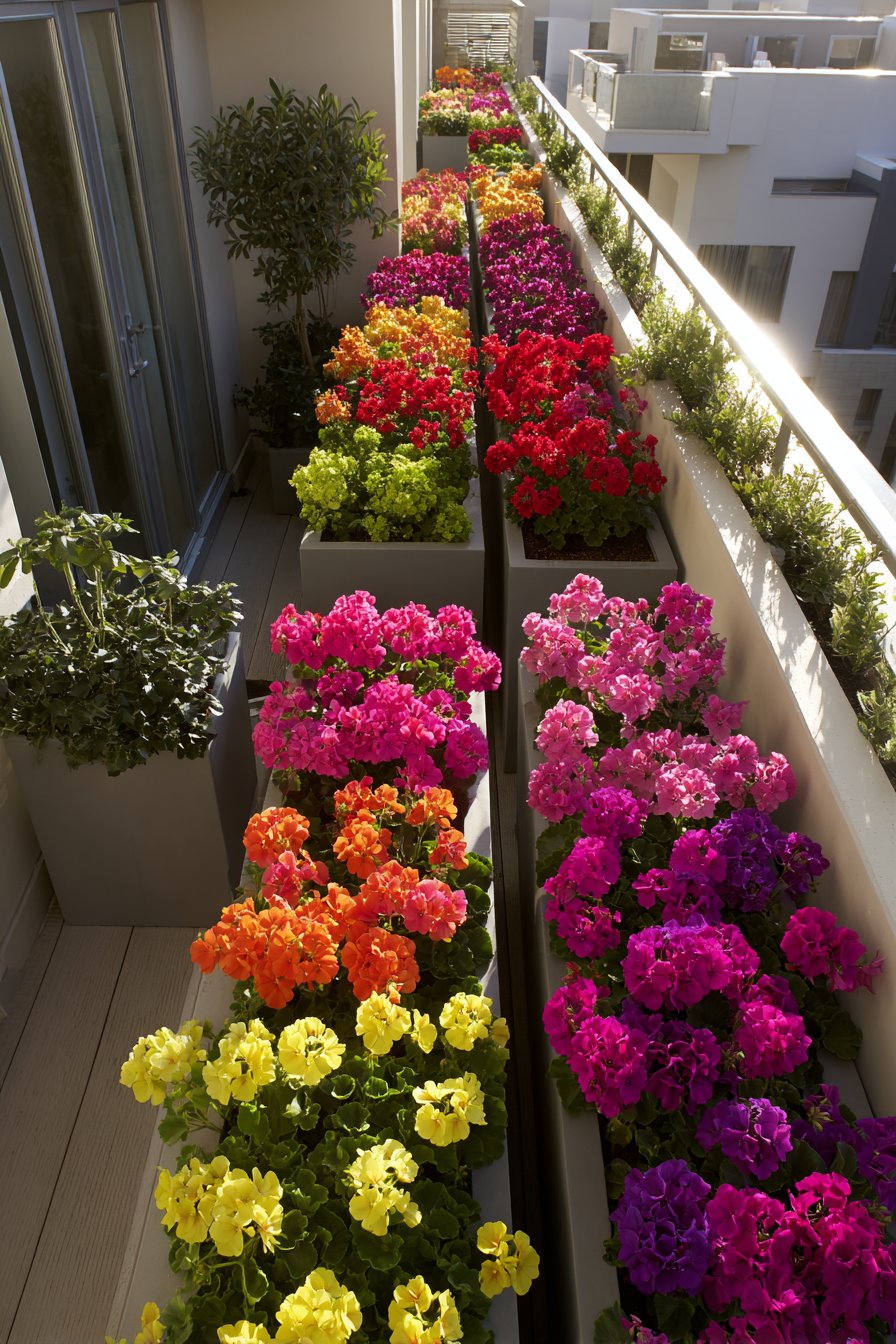
Contemporary garden design principles inspire this graphic balcony flower idea featuring intentional color blocking. Distinct groupings of single-color plantings—pure red geraniums in one section, deep purple petunias in another, and sunny yellow marigolds in a third—create bold visual impact through deliberate color strategy. Modern rectangular planters in neutral gray reinforce the contemporary aesthetic while allowing the brilliant flower colors to dominate.
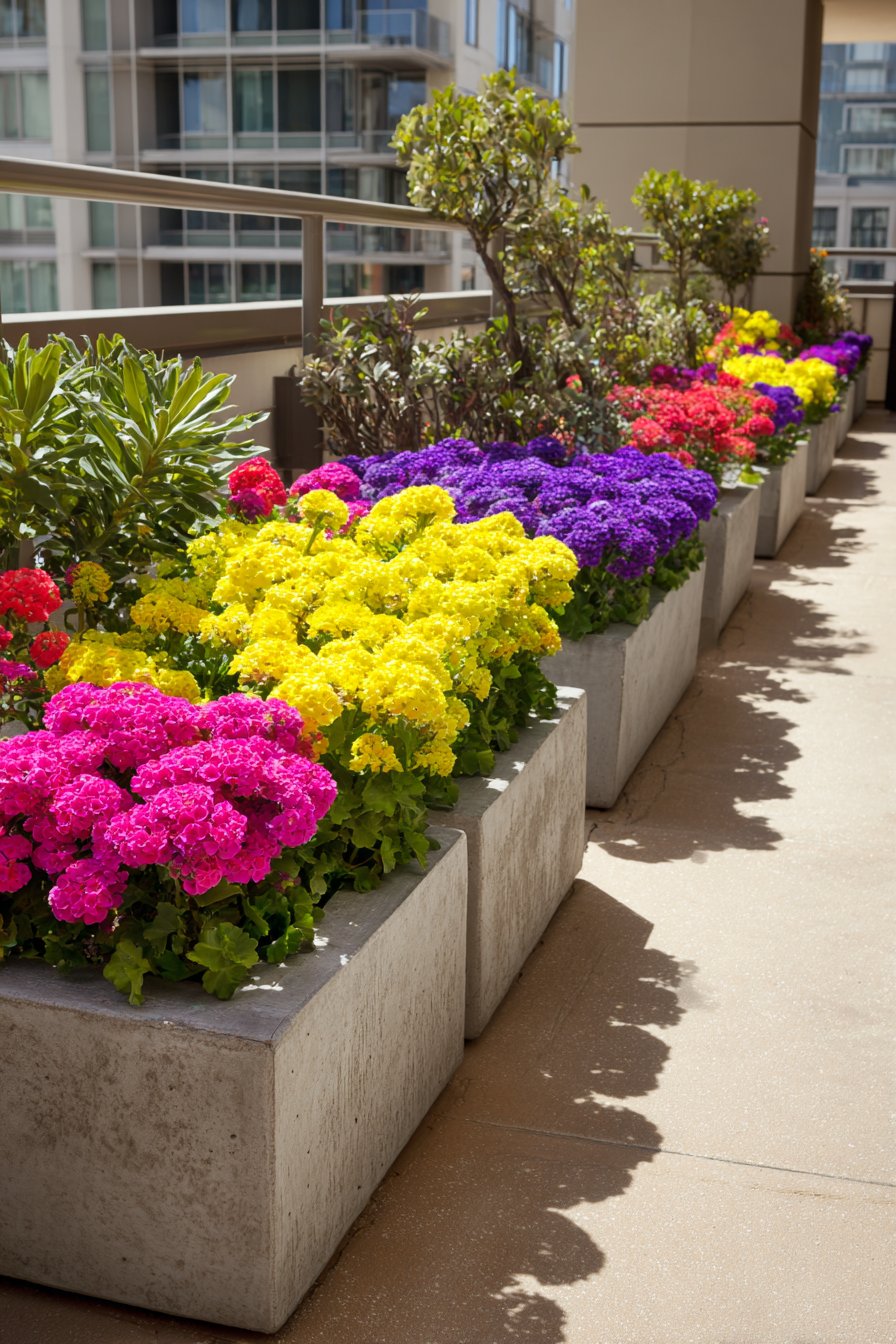
This color-blocking approach represents a sophisticated design technique that creates order and impact from what might otherwise be chaotic profusion. Rather than mixing colors randomly throughout the space, the deliberate separation of hues creates graphic strength and architectural presence. Each color block functions almost like a three-dimensional painting, allowing the pure, saturated colors to make their strongest possible statement without dilution or competition.
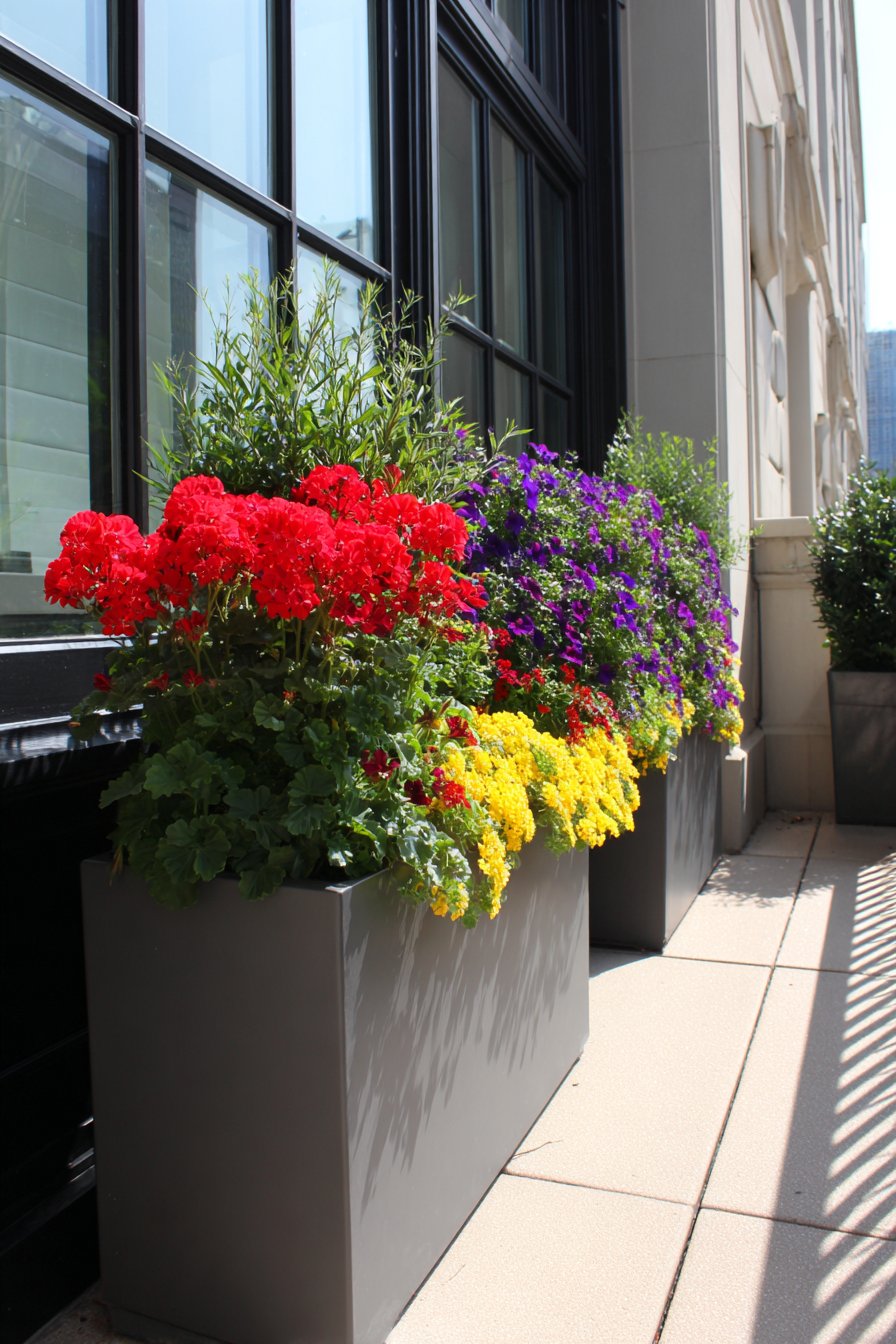
The selection of primary and secondary colors—red, purple, and yellow—ensures high contrast and visual energy. These bold choices suit modern aesthetics that favor strong statements over subtle pastels. The repetition of a single flower variety within each color block creates additional impact through massing, demonstrating how grouping identical plants produces greater effect than scattering them throughout a space.
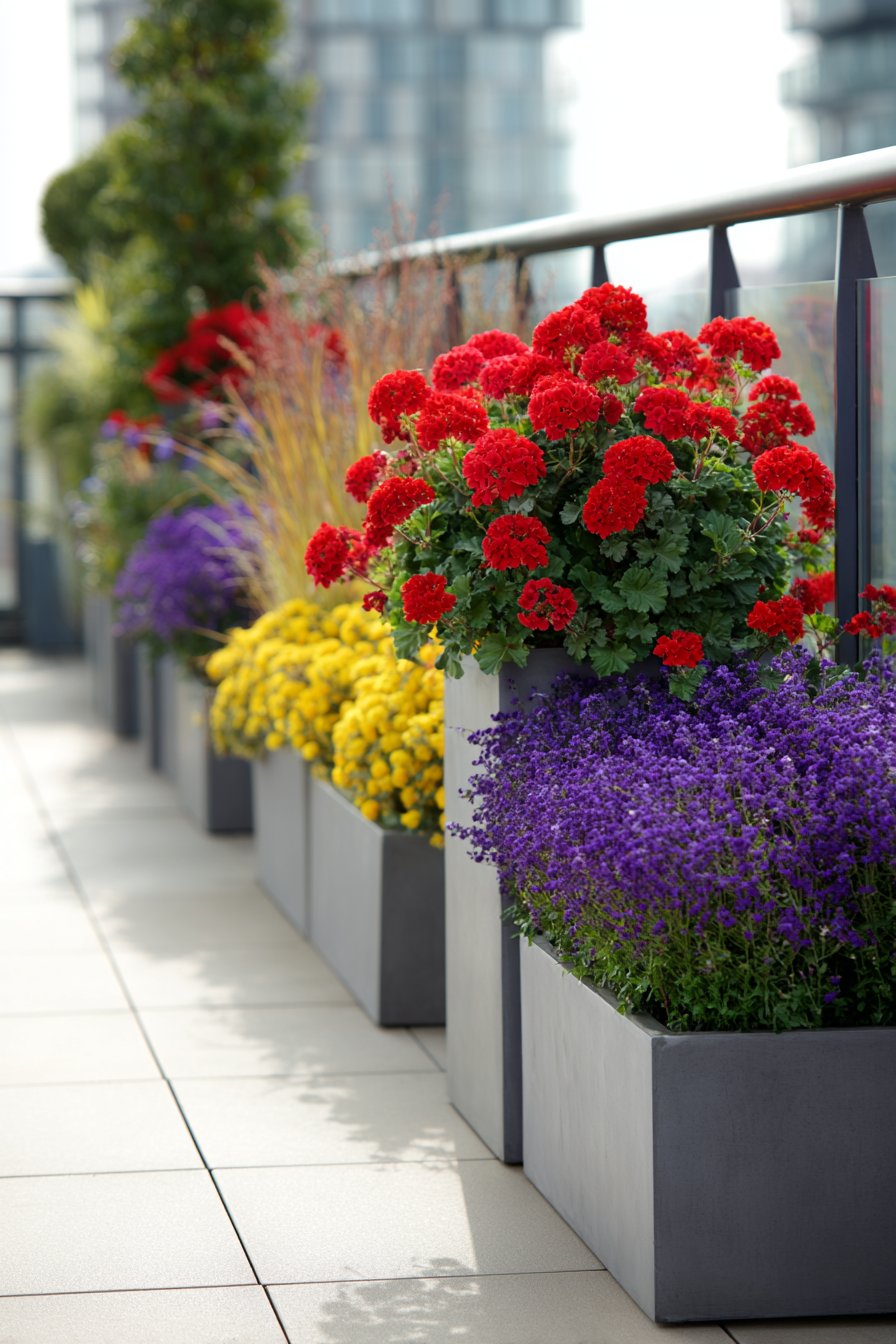
Balanced natural lighting ensures even color saturation across all sections, preventing any single color block from being washed out or shadowed. This consistency allows the color strategy to read clearly and maintain its intended graphic impact throughout the day.
Key Design Tips:
- Select flower colors that maintain their intensity in your local light conditions
- Use odd numbers of color blocks (three or five) for more dynamic compositions
- Choose neutral container colors that won’t compete with bold flower hues
- Maintain consistent container sizes within each color block for cohesive appearance
- Deadhead regularly to maintain solid color blocks without faded or brown flowers
16. English Cottage Romance
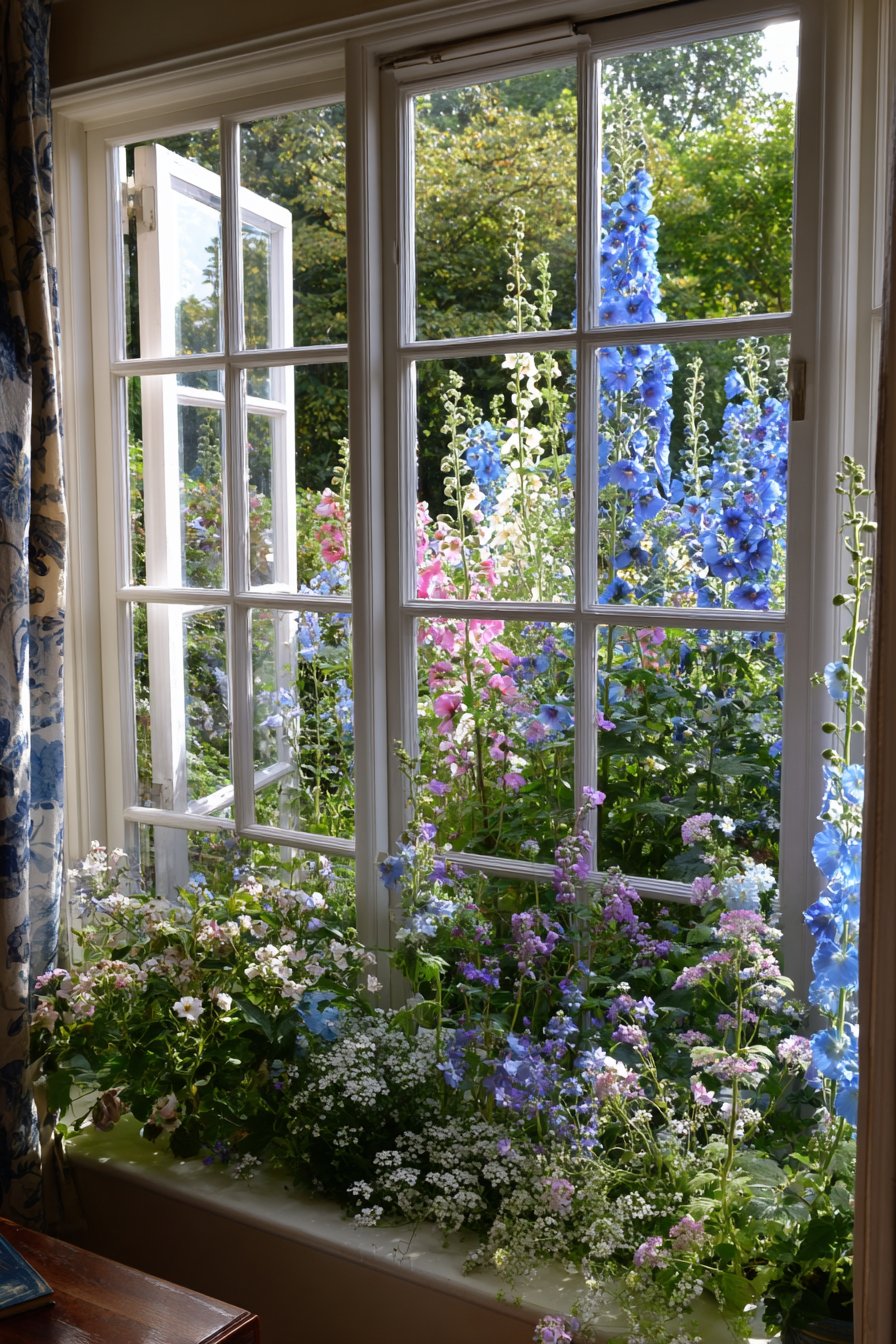
Old-world charm characterizes this romantic balcony flower idea inspired by traditional English cottage gardens. Tall hollyhocks, foxgloves, and delphinium create vertical drama while lower plantings of sweet William and alyssum fill foreground areas with abundant blooms and sweet fragrance. The informal planting style mimics the relaxed abundance of classic cottage gardens, proving these romantic aesthetics translate beautifully to container cultivation.
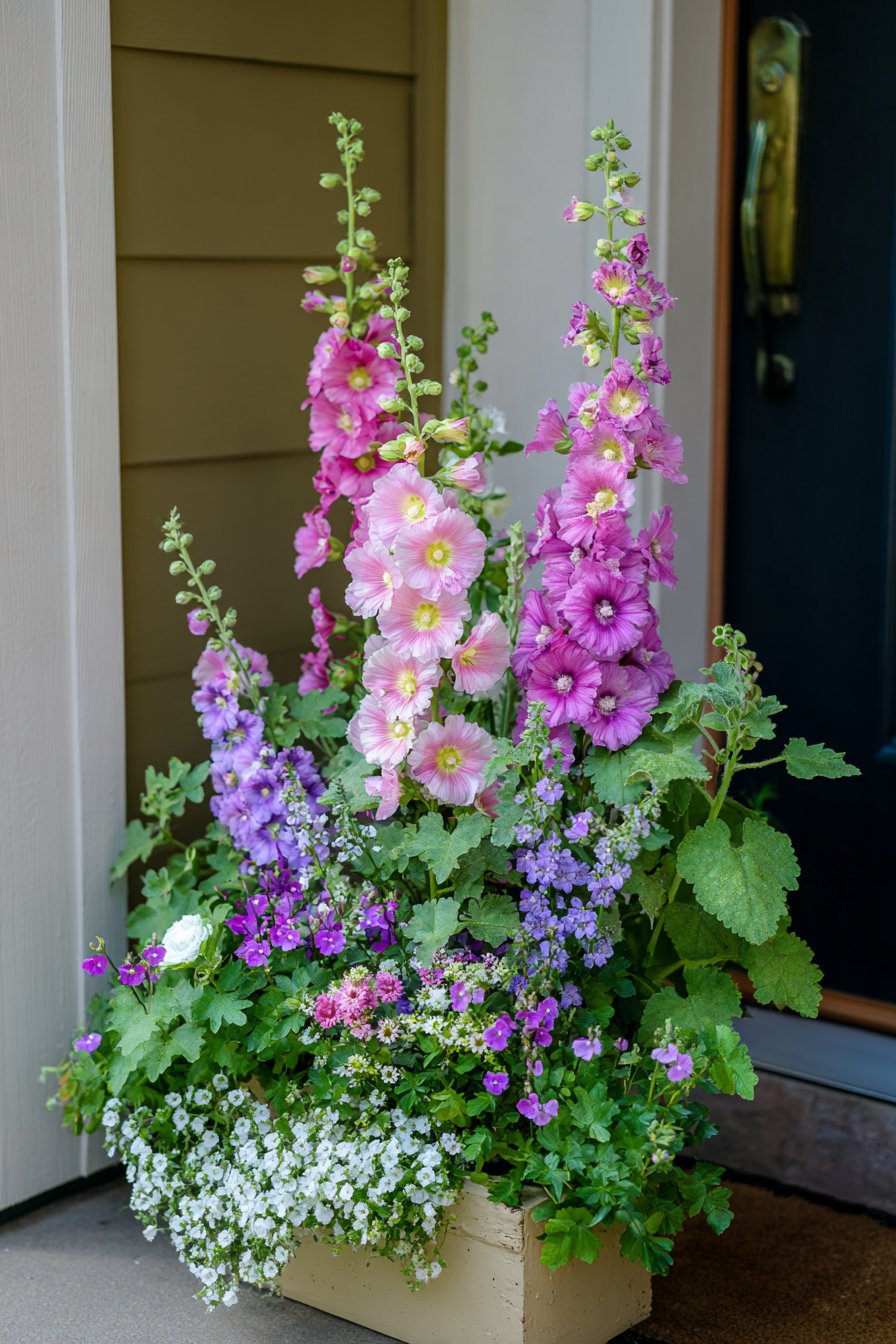
The cottage garden aesthetic celebrates profusion over precision, creating the impression of plants growing together naturally rather than being rigidly controlled. This approach favors generous planting—containers filled to abundance rather than sparingly populated—and combinations that might occur in nature where seeds scatter and plants intermingle. The resulting displays feel organic, romantic, and spontaneous despite being carefully planned and maintained.
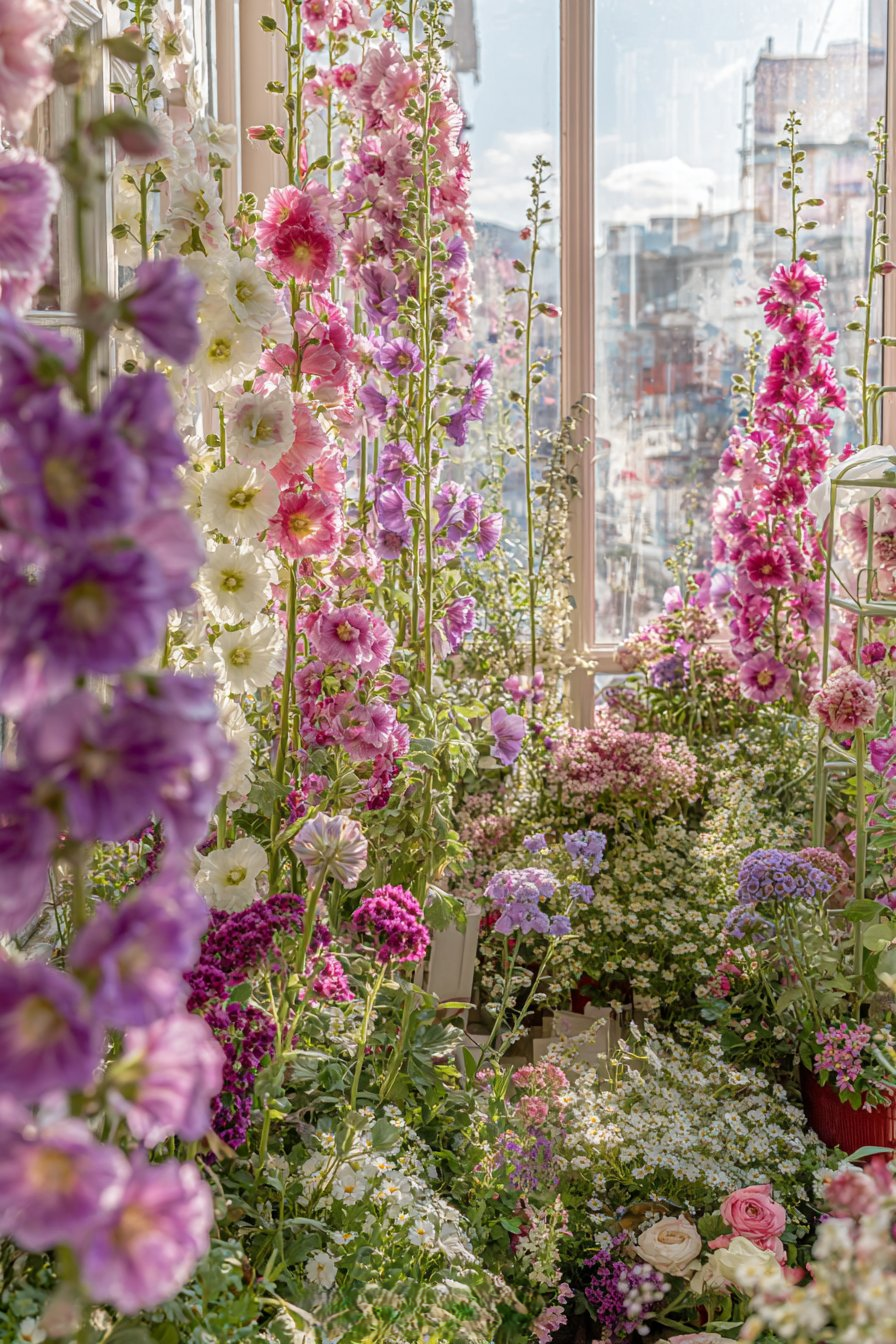
Plant selection emphasizes nostalgic favorites with romantic associations. Hollyhocks evoke farmhouse gardens and childhood memories, their tall spires reaching skyward with crepe-paper blooms in soft pinks and whites. Foxgloves add vertical grace with tubular flowers beloved by pollinators, while delphinium contributes ethereal blue spires. Lower-growing sweet William and alyssum ensure interest at every level, their sweet fragrances enhancing the sensory experience.
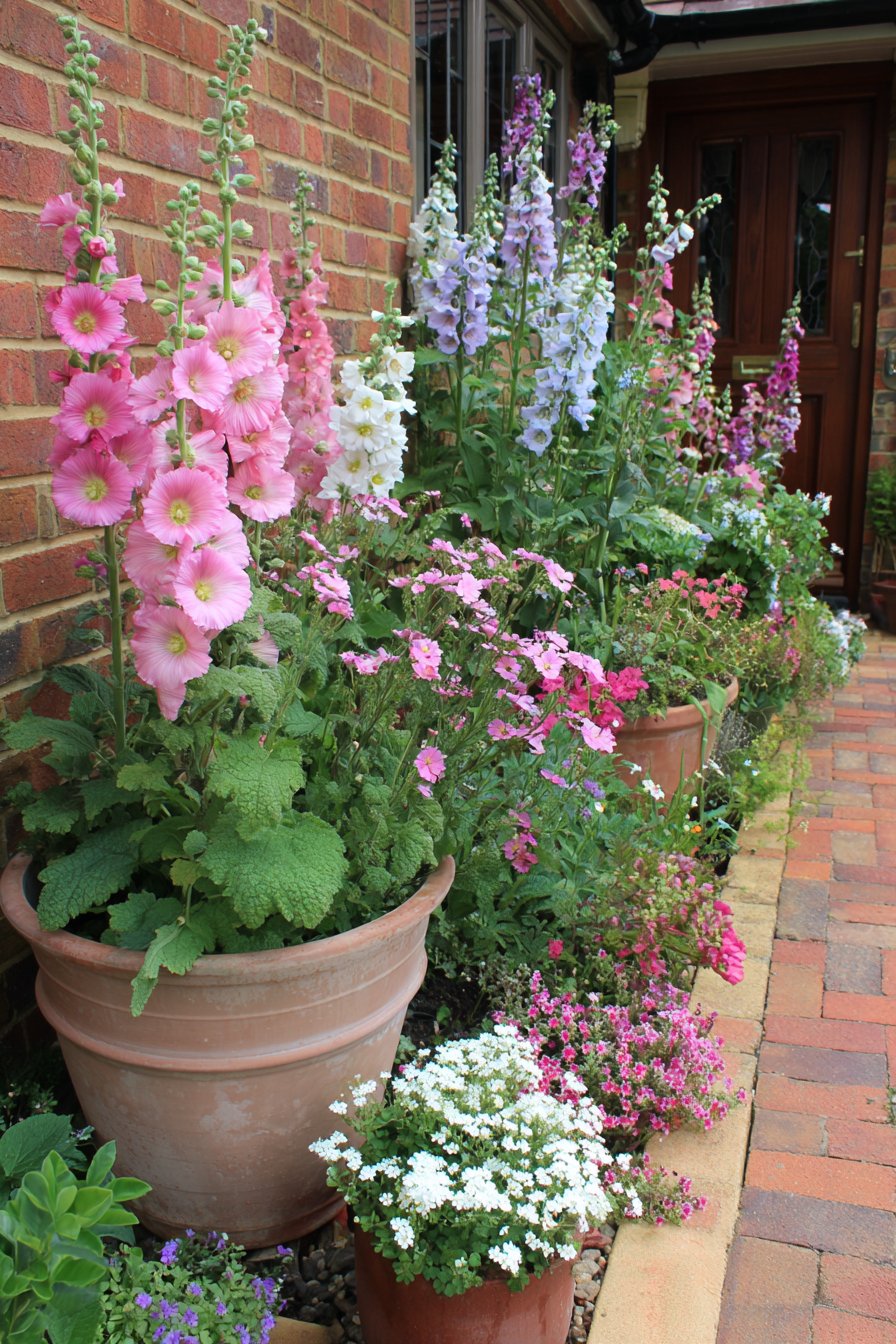
Soft morning light filters through the flower petals creating an ethereal quality perfectly suited to the romantic cottage aesthetic. The gentle illumination emphasizes delicate colors and translucent petals without the harsh contrast of midday sun, creating a dreamlike atmosphere that encourages lingering.
Key Design Tips:
- Include a variety of heights to create the layered look characteristic of cottage gardens
- Allow some self-seeding for natural, informal appearance (if desired)
- Select flowers in soft pastels—pinks, lavenders, blues, and whites—for authentic cottage palette
- Use generous container sizes to accommodate the abundant plantings cottage style requires
- Accept some imperfection as part of the cottage garden aesthetic rather than pursuing manicured perfection
17. Autumn Chrysanthemum Display
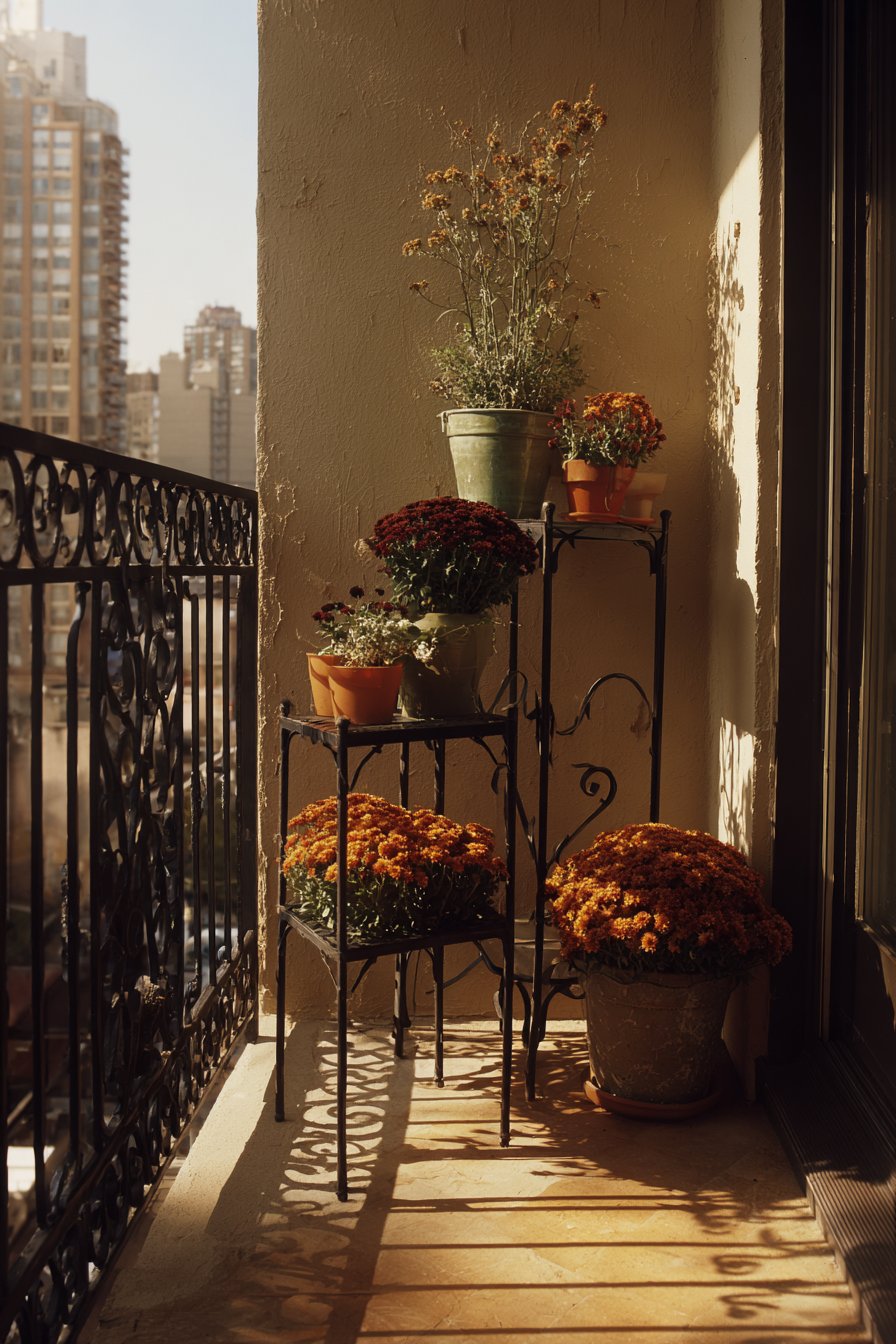
Seasonal celebration takes center stage in this fall-focused balcony flower idea featuring tiered plant stands displaying chrysanthemums in rich autumn colors. Graduating sizes of potted mums in burgundy, gold, and bronze create a seasonal focal point that maximizes vertical space while showcasing the spectacular color range these quintessential fall flowers provide. The structured arrangement demonstrates how intentional composition can transform simple, readily available plants into impressive displays.
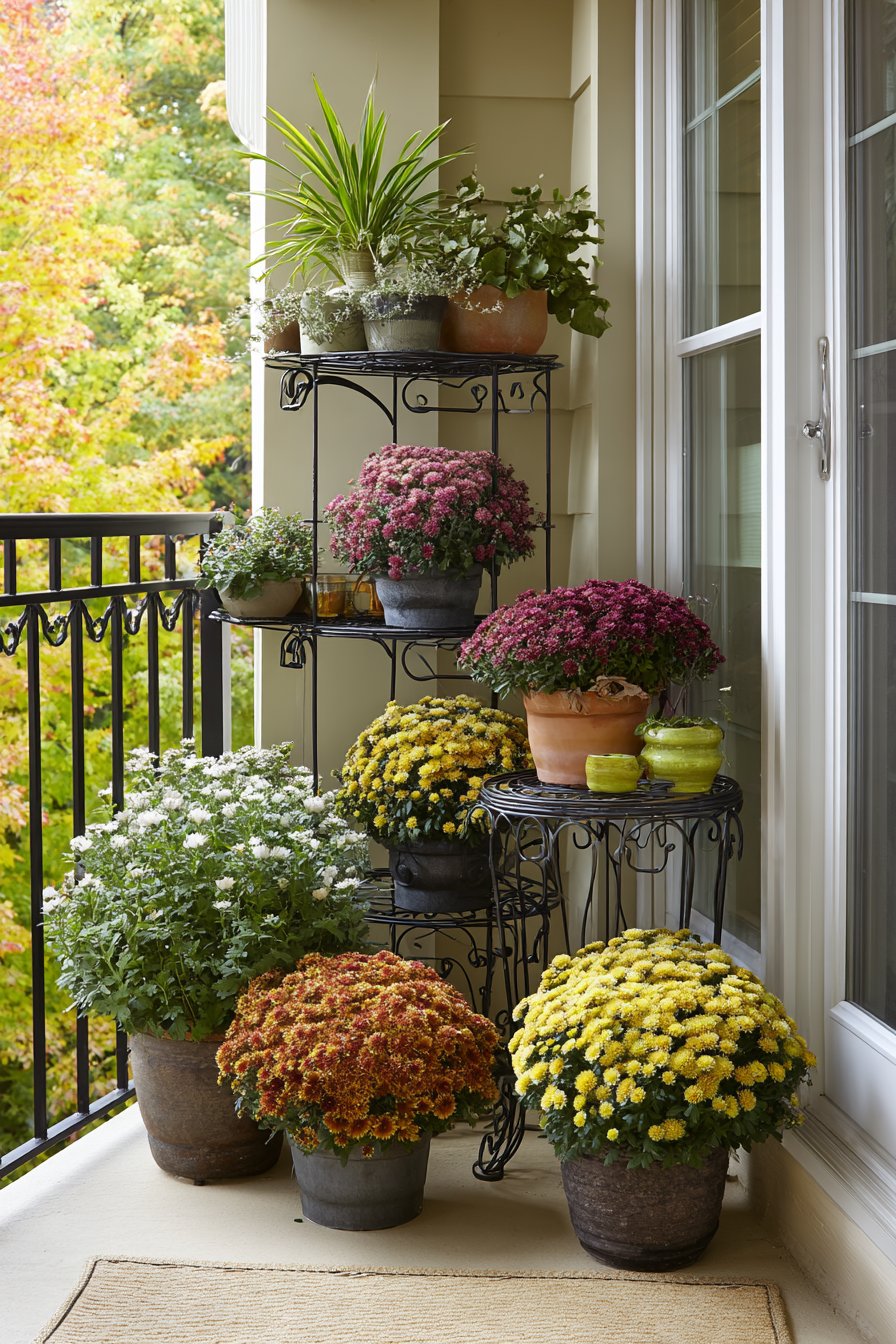
The corner placement proves strategic, utilizing often-underused balcony space while creating a focal point visible from indoor living areas. Tiered stands establish visual hierarchy and prevent plants from blocking each other, ensuring each specimen receives adequate light while contributing to the overall pyramidal composition. This vertical emphasis draws the eye upward, making the balcony feel larger while creating dramatic presence from a relatively small footprint.
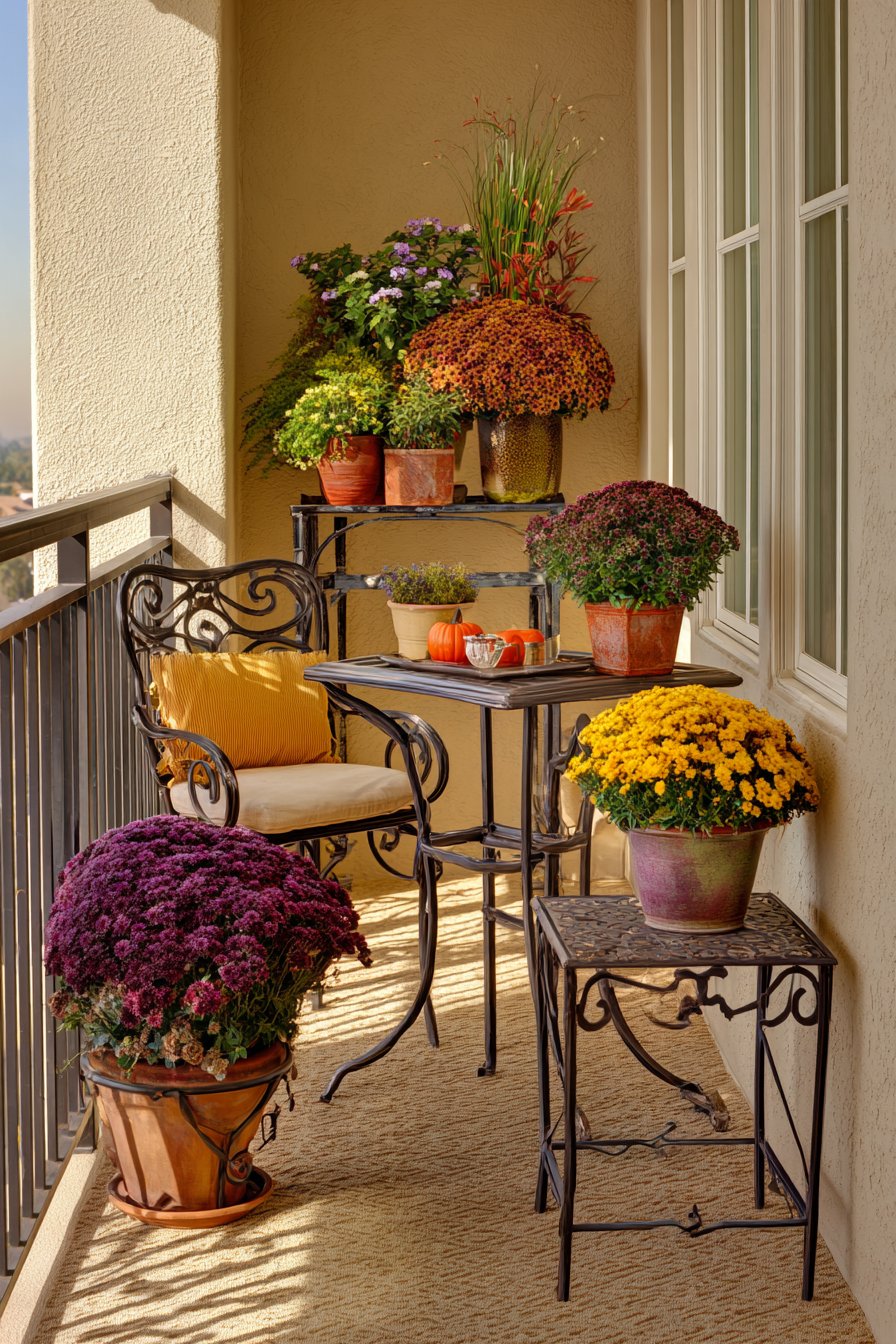
Chrysanthemums offer exceptional value for autumn container gardens, providing weeks or even months of continuous color as temperatures cool. Their naturally compact, mounding form suits containers beautifully, while the incredible color range—from white through yellow, orange, rust, burgundy, and deep purple—allows for countless color combinations. The choice of warm autumn tones in this arrangement celebrates the season authentically while complementing fall’s naturally changing light.
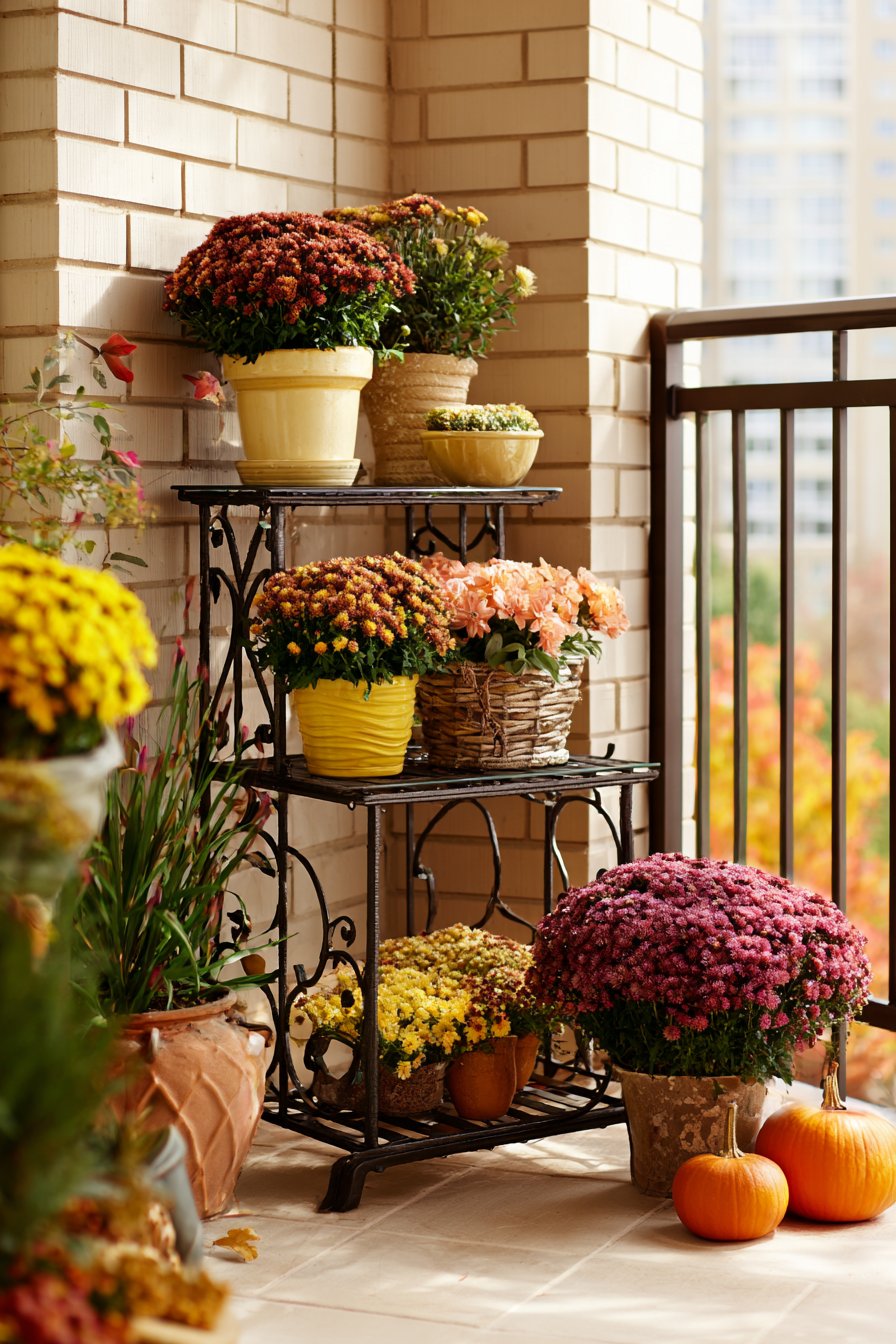
Warm afternoon autumn light enhances the rich fall color palette, bringing out golden undertones and creating depth through shadows. The lower angle of autumn sun produces longer, more dramatic shadows than summer light, adding sculptural quality to the arrangement and emphasizing the three-dimensional nature of the tiered display.
Key Design Tips:
- Purchase mums in bud rather than full bloom for longest display period
- Group complementary autumn colors rather than mixing every available shade
- Deadhead spent blooms to encourage continued flowering and maintain neat appearance
- Protect mums from early frost by covering or moving them if possible to extend the display
- Transition to evergreens or winter containers when mums finish blooming to maintain seasonal interest
18. Zen Minimalist Orchid Garden
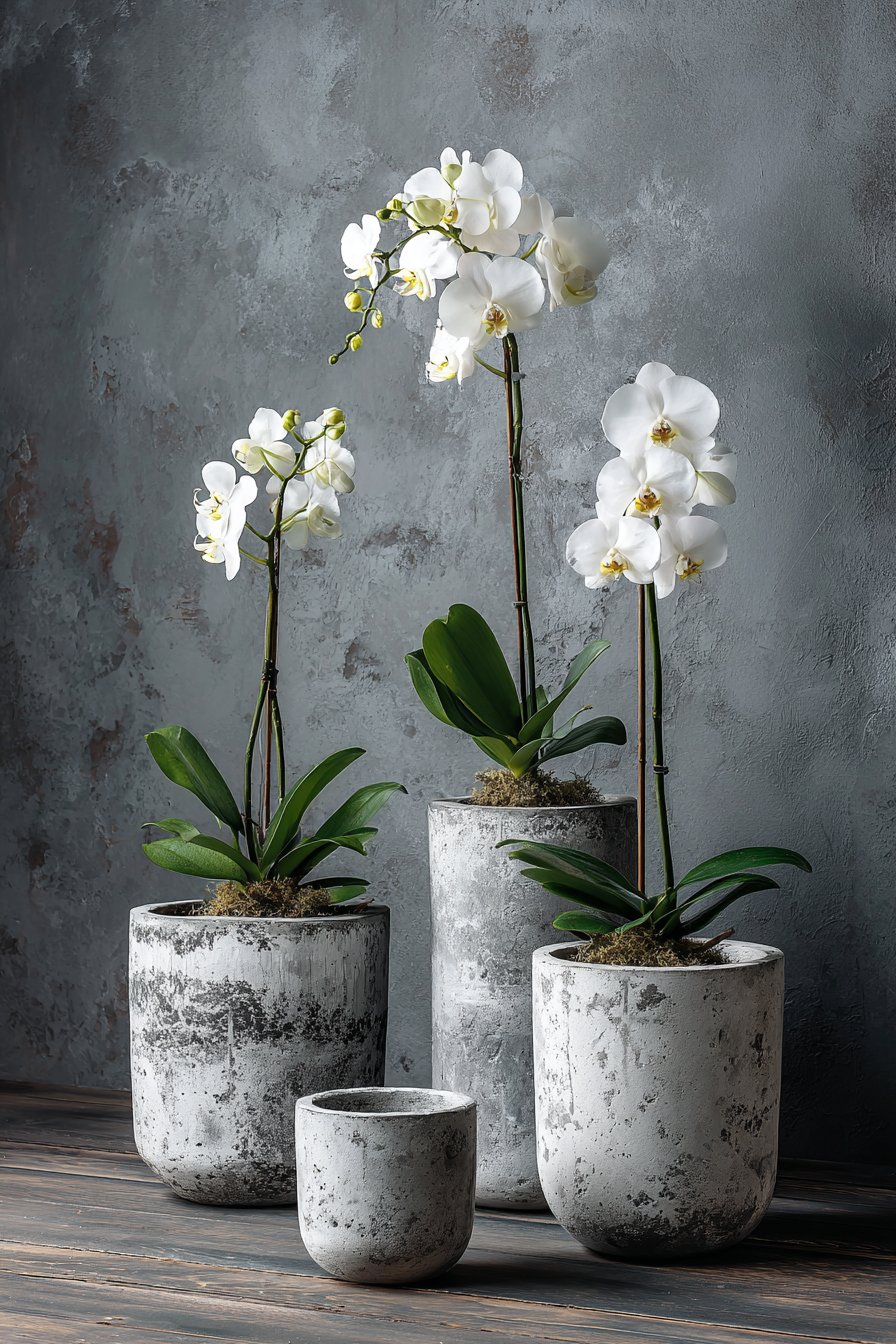
Eastern-influenced design principles create this serene balcony flower idea featuring three identical concrete planters in varying heights, each containing a single spectacular orchid plant. The minimalist approach emphasizes quality over quantity, focusing attention on the architectural beauty and delicate blooms of these elegant flowers. The restrained design allows each orchid to be appreciated fully as the sculptural living art form it represents.
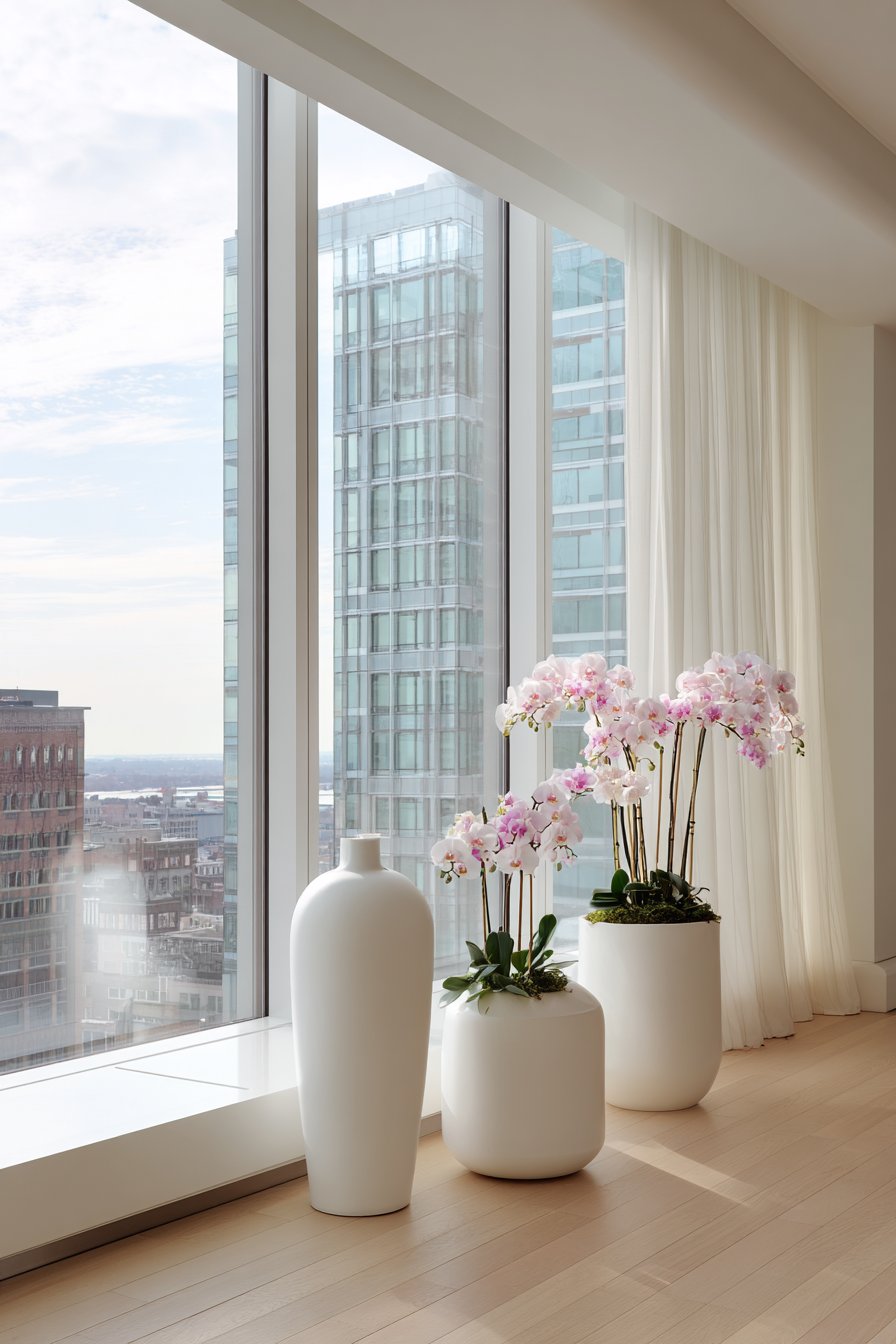
The industrial concrete containers create powerful contrast with the delicate orchids they contain, establishing visual tension that makes both elements more interesting. The rough, matte texture and substantial weight of concrete planters ground the composition physically and visually, while their neutral gray color provides a perfect foil for the pristine white or pale pink orchid blooms. This juxtaposition of rough and refined, heavy and delicate, industrial and organic creates sophisticated visual interest.
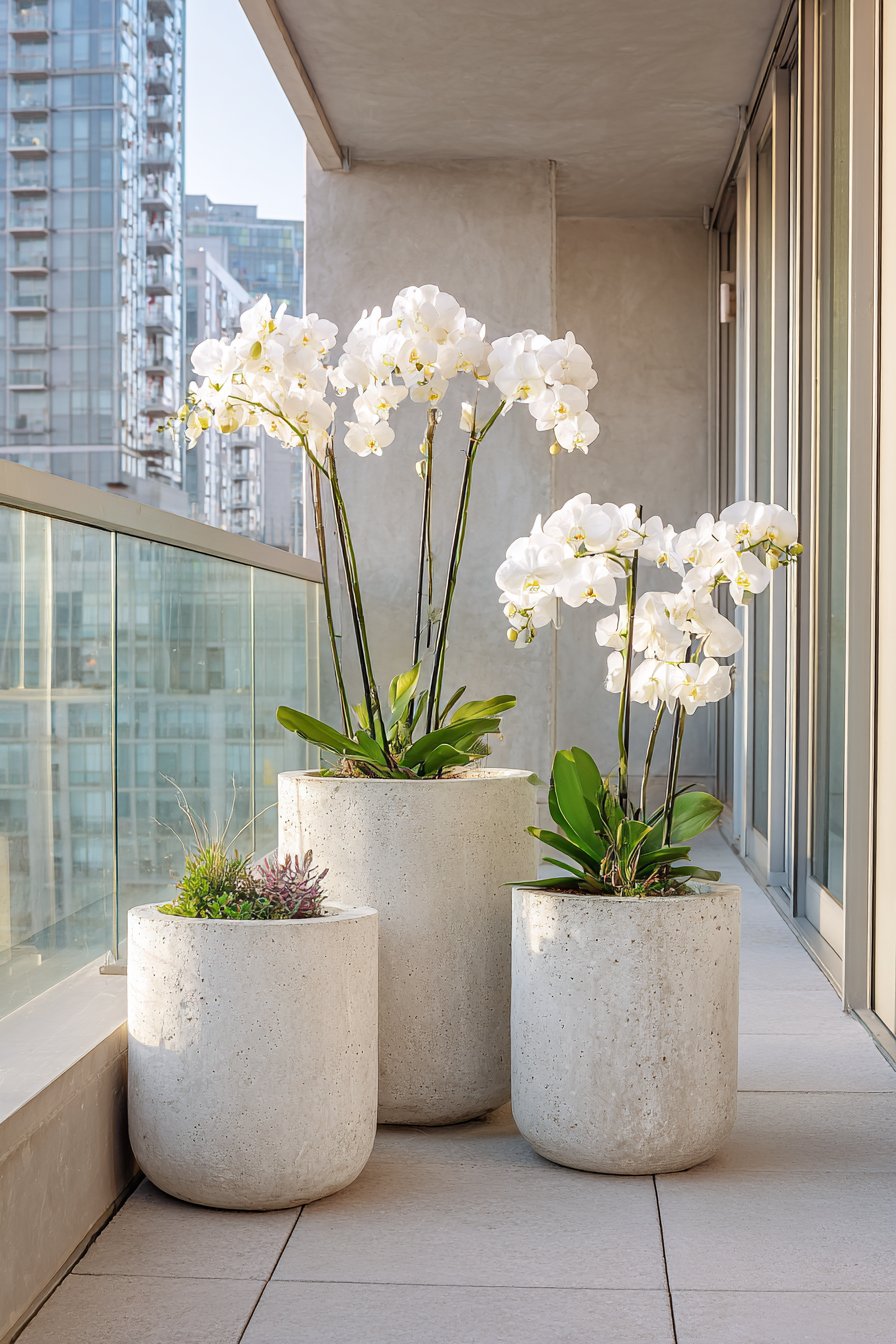
The selection of white or pale pink orchids maintains the minimalist aesthetic while providing enough variation to prevent monotony. Phalaenopsis orchids, the most common type for home growing, offer long-lasting blooms—individual flowers can persist for months—making them practical choices despite their exotic appearance. Their arching sprays of flowers create graceful lines and movement within the otherwise structured composition.
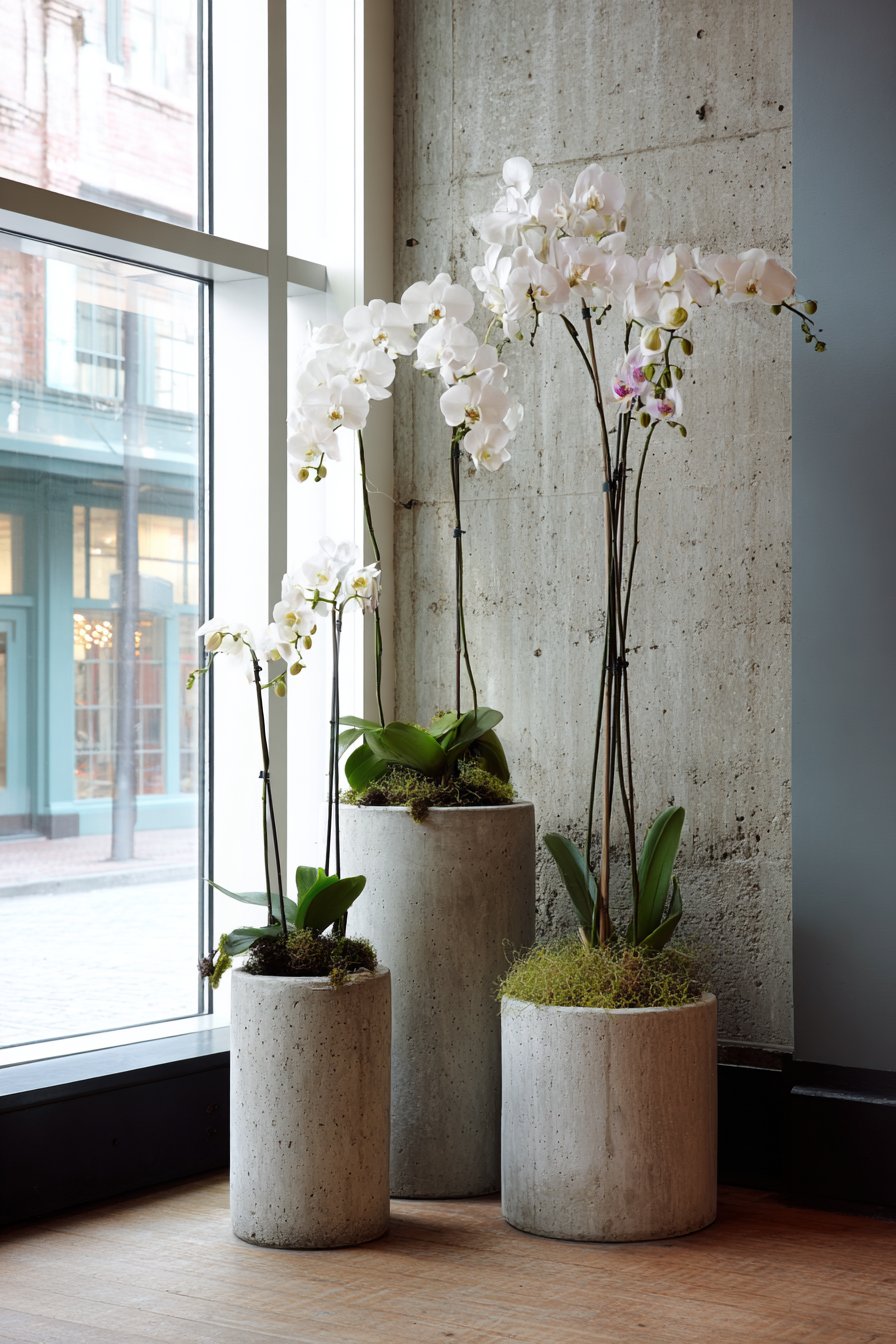
Controlled natural lighting highlights the elegant simplicity, emphasizing the negative space that proves equally important as the plants themselves in minimalist design. Careful illumination reveals subtle color variations in the orchid petals—from pure white to cream to the faintest blush pink—while creating delicate shadows that add depth without disturbing the composition’s essential calm.
Key Design Tips:
- Select container sizes proportional to orchid scale to maintain visual balance
- Provide bright, indirect light as most orchids cannot tolerate direct sun
- Use orchid-specific potting medium that provides excellent drainage and air circulation
- Water sparingly, allowing potting medium to dry between waterings
- Embrace empty space as a design element rather than feeling compelled to fill every area
19. French Bistro Garden
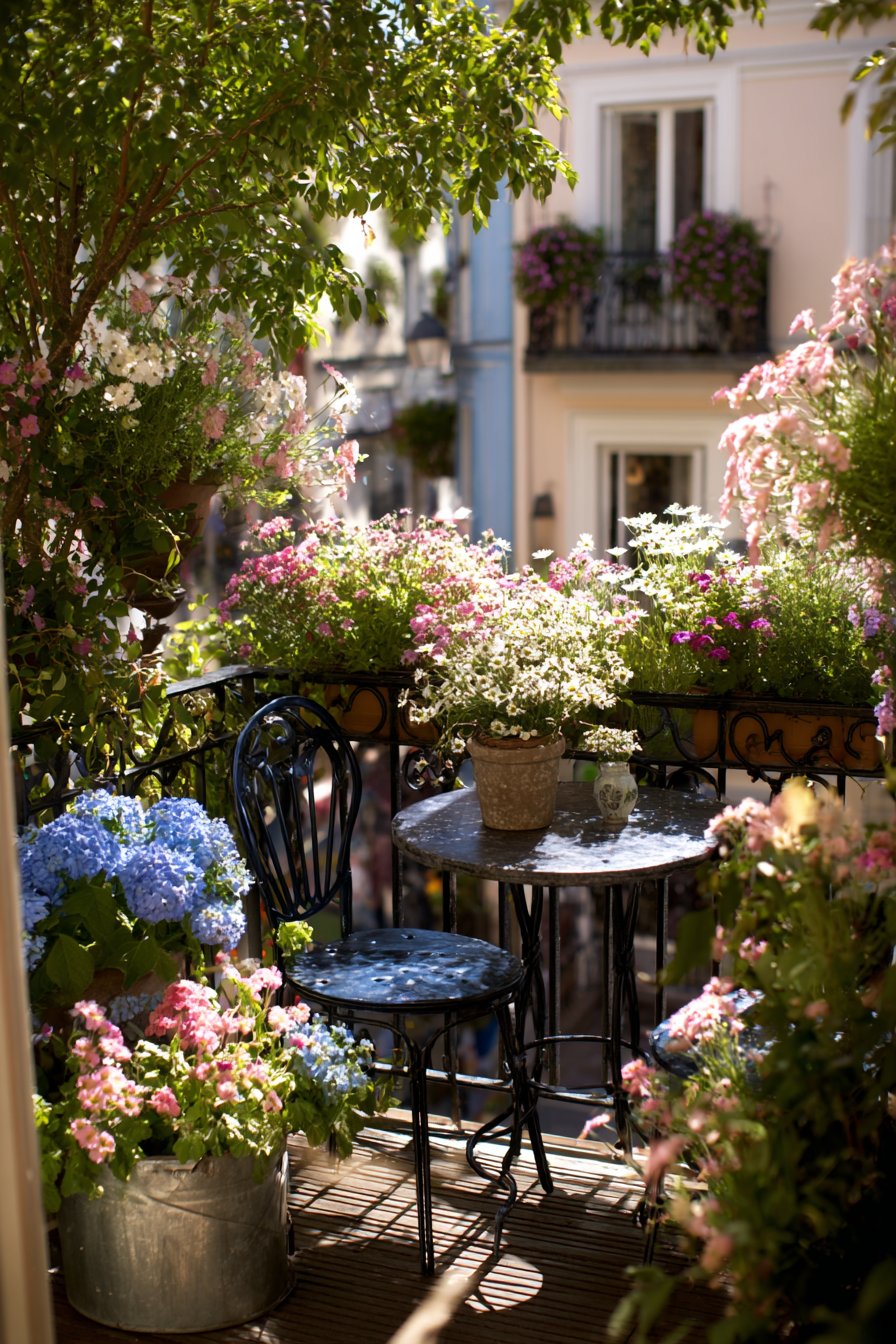
Parisian charm arrives on this balcony through a café-inspired flower arrangement featuring a small round metal table surrounded by potted marguerite daisies and geraniums in classic French country colors. The red, white, and blue color scheme evokes the French flag while creating a patriotic palette that feels fresh and cheerful rather than overtly nationalistic. Vintage-style metal containers complement the European café aesthetic, creating a cohesive design that transforms the balcony into an intimate outdoor dining space.
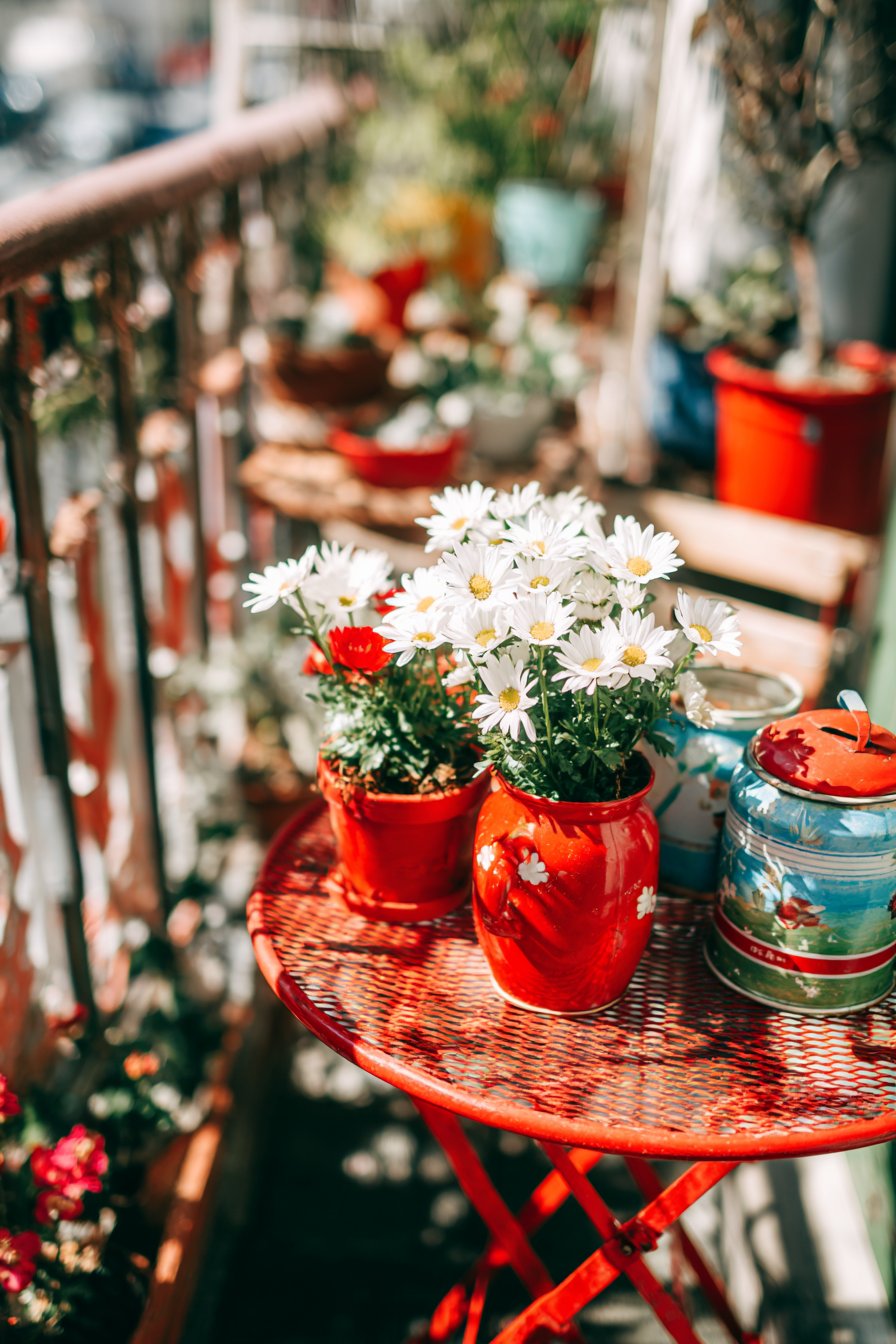
This arrangement demonstrates how balcony gardens can create outdoor rooms for specific purposes rather than simply displaying plants. The integration of furniture with planting creates a functional space that invites use—morning coffee, afternoon reading, evening wine—while the surrounding flowers enhance the experience with beauty and fragrance. This approach maximizes the value of limited balcony space by making it genuinely livable rather than merely decorative.
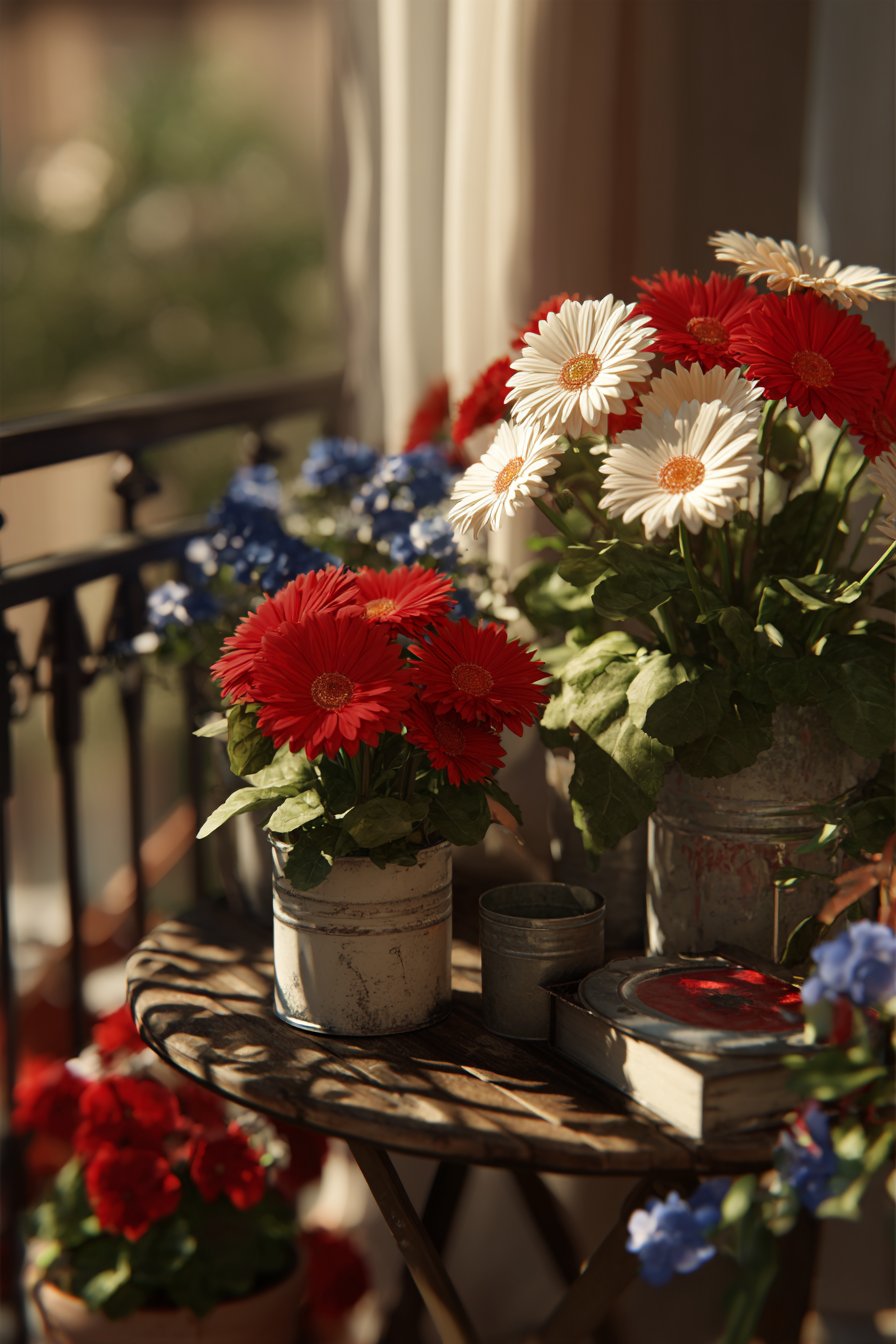
Plant selection emphasizes classic French garden favorites. Marguerite daisies offer cheerful white or pink daisy flowers with ferny foliage, blooming profusely with minimal care. Geraniums provide bold color in true red or various pink shades, their rounded leaves and clustered blooms creating traditional cottage garden appeal. Both plants thrive in containers and tolerate the somewhat challenging conditions of container culture with remarkable resilience.
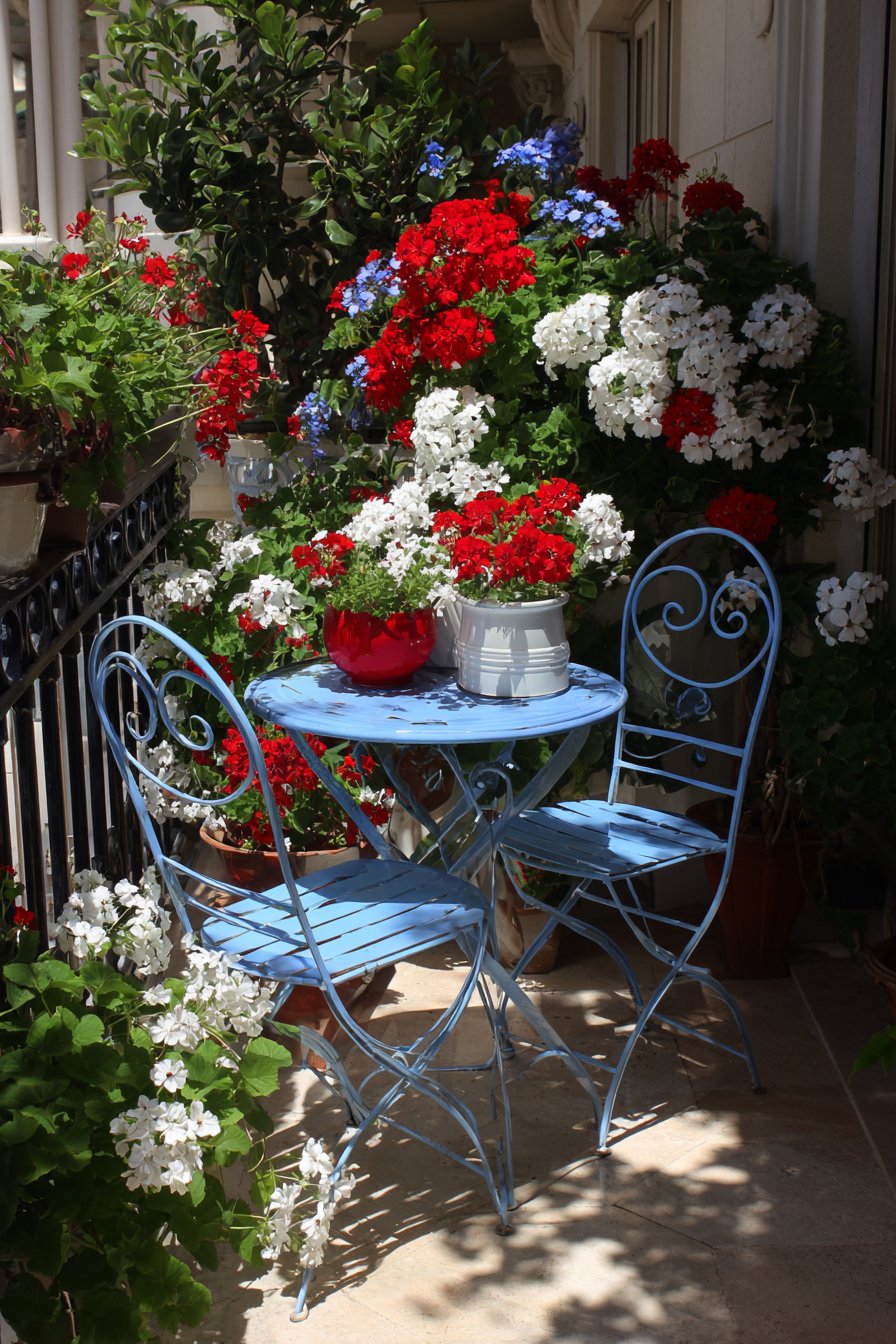
Dappled afternoon sunlight creates a leisurely, romantic atmosphere reminiscent of actual Parisian café gardens where plane trees filter harsh light into gentle patterns. This quality of light encourages lingering, making the space feel like a genuine outdoor room worthy of extended occupation rather than just a pass-through area.
Key Design Tips:
- Select appropriately scaled furniture that doesn’t overwhelm the available space
- Use bistro-style metal furniture in classic colors like black, white, or verdigris green
- Arrange flowering containers to frame seating areas without blocking movement
- Include a small table for functionality—holding drinks, books, or meals
- Add French country accessories like zinc watering cans or wire plant stands to reinforce the theme
20. Native Wildflower Meadow
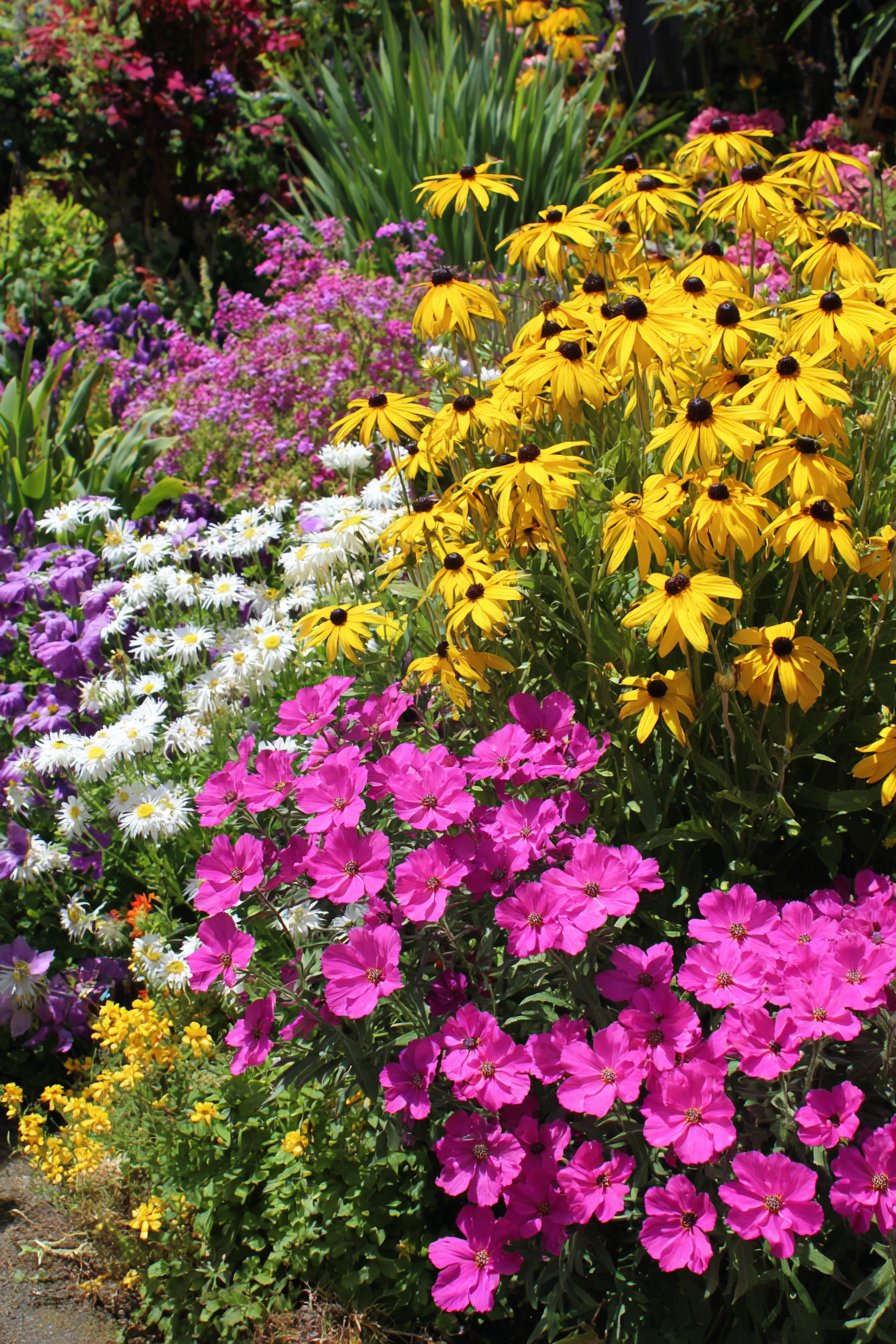
Environmental stewardship and natural beauty combine in this ecological balcony flower idea showcasing native wildflowers in natural cedar planters. Black-eyed Susans, purple coneflowers, and coreopsis create a prairie-style planting that supports local pollinators while providing low-maintenance color. The choice of native species ensures plants are well-adapted to local conditions, resistant to regional pests and diseases, and supportive of indigenous wildlife that has co-evolved with these plants.
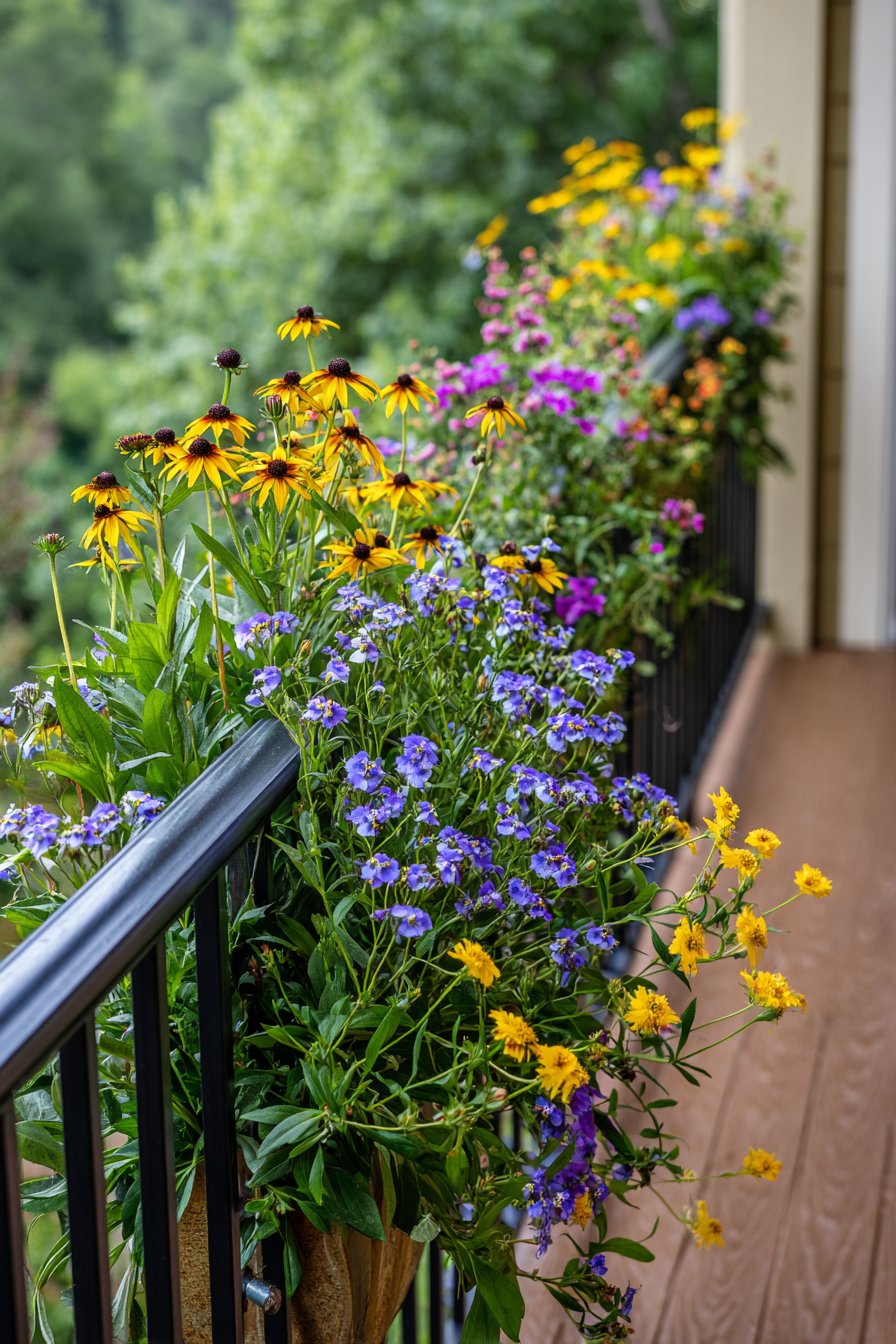
The ecological approach recognizes that even small balcony gardens can contribute meaningfully to urban biodiversity and environmental health. Native wildflowers provide essential nectar and pollen for native bees, butterflies, and other beneficial insects that struggle in urban environments dominated by exotic ornamentals and monoculture lawns. By creating small wildlife habitats, urban gardeners participate in conservation efforts while enjoying the resulting wildlife interactions.
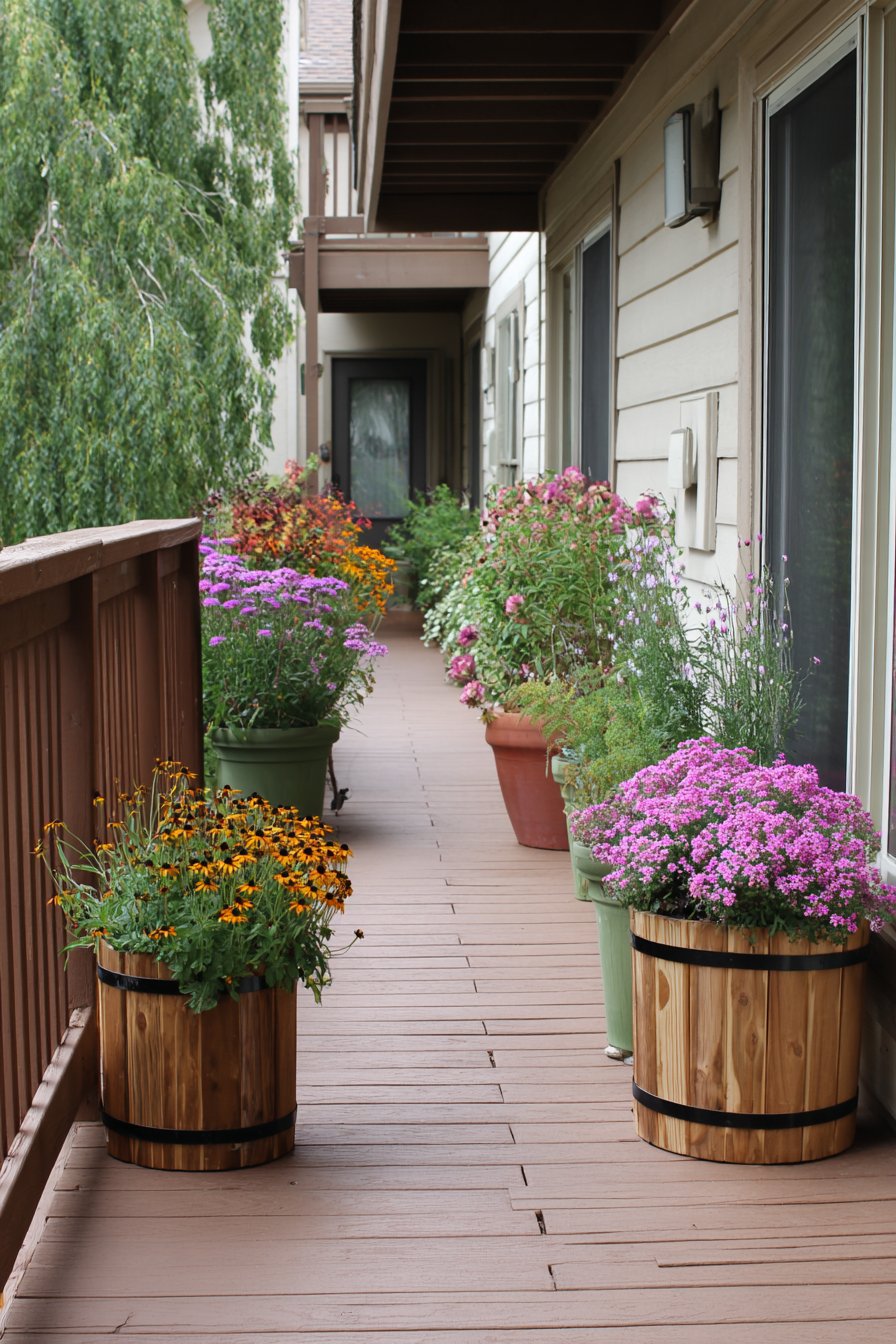
Cedar planters suit the natural aesthetic while offering practical benefits. Cedar’s natural rot resistance makes it ideal for outdoor container use, while its aromatic oils help repel some insects. The warm wood tones complement wildflower colors beautifully, creating cohesive naturalistic compositions. As cedar weathers to silvery gray, it develops authentic patina that enhances the natural, informal aesthetic.
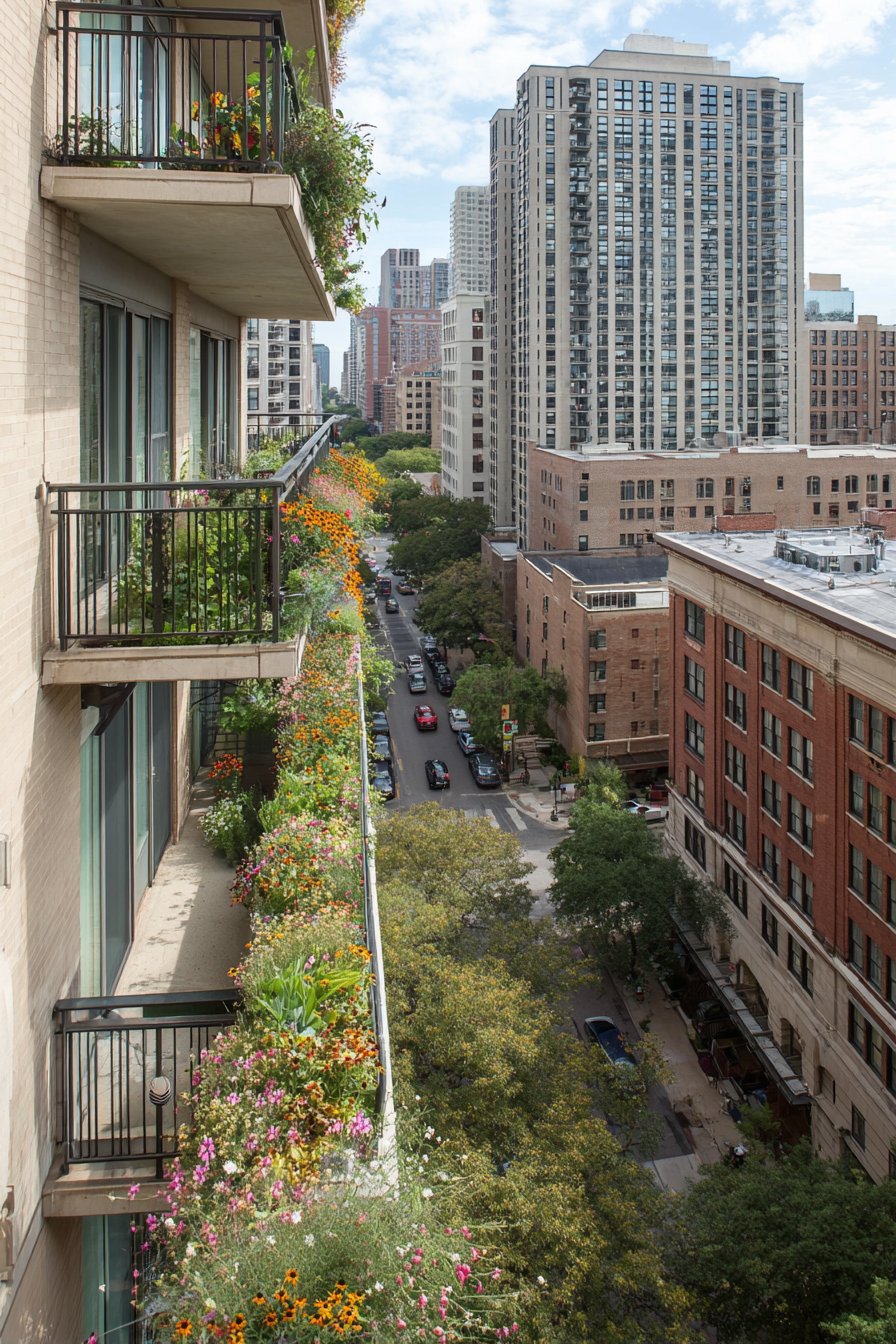
Natural sunlight highlights visiting bees and butterflies among the prairie-style plantings, creating living displays that change throughout the day as different pollinators visit. This movement and interaction adds dynamic interest impossible to achieve with inanimate decoration, while providing educational and emotional connections to natural processes.
Key Design Tips:
- Research truly native plants for your specific ecoregion, not just North American natives
- Purchase plants from reputable native plant nurseries rather than collecting from wild populations
- Include a variety of native species to extend bloom times and support diverse pollinators
- Allow seed heads to remain standing into winter for wildlife food and visual interest
- Avoid deadheading and excessive tidying to allow natural cycles of seed production
21. Living Privacy Screen
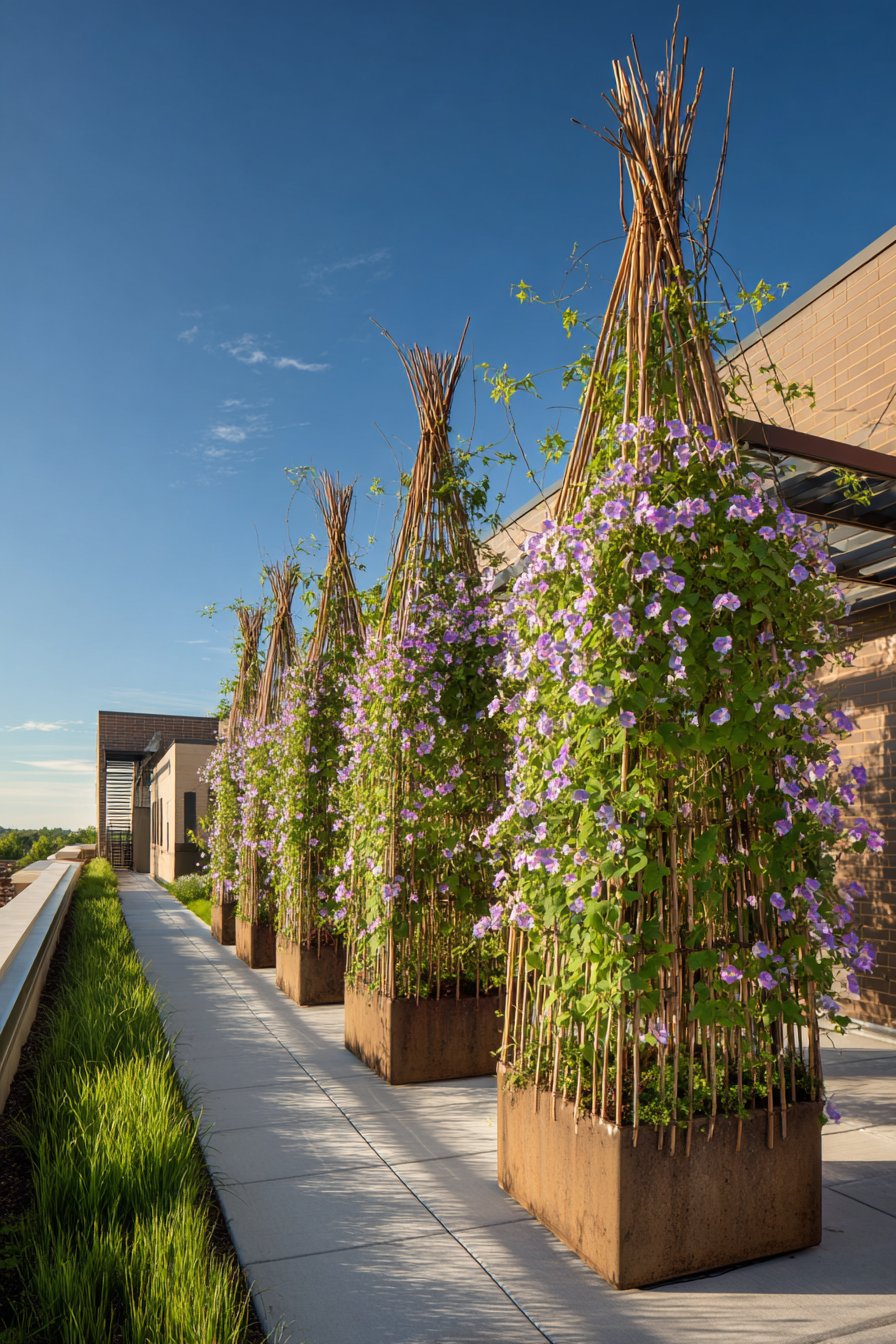
Functional beauty defines this balcony flower idea featuring tall planters with climbing morning glories and sweet peas trained on bamboo teepee supports. The vertical garden creates a living wall of flowers that provides seclusion while maximizing limited floor space—an ideal solution for balconies overlooking neighboring properties or public areas. Pink, purple, and blue blooms create a romantic color story while the lush growth offers genuine privacy without the harshness of solid barriers.
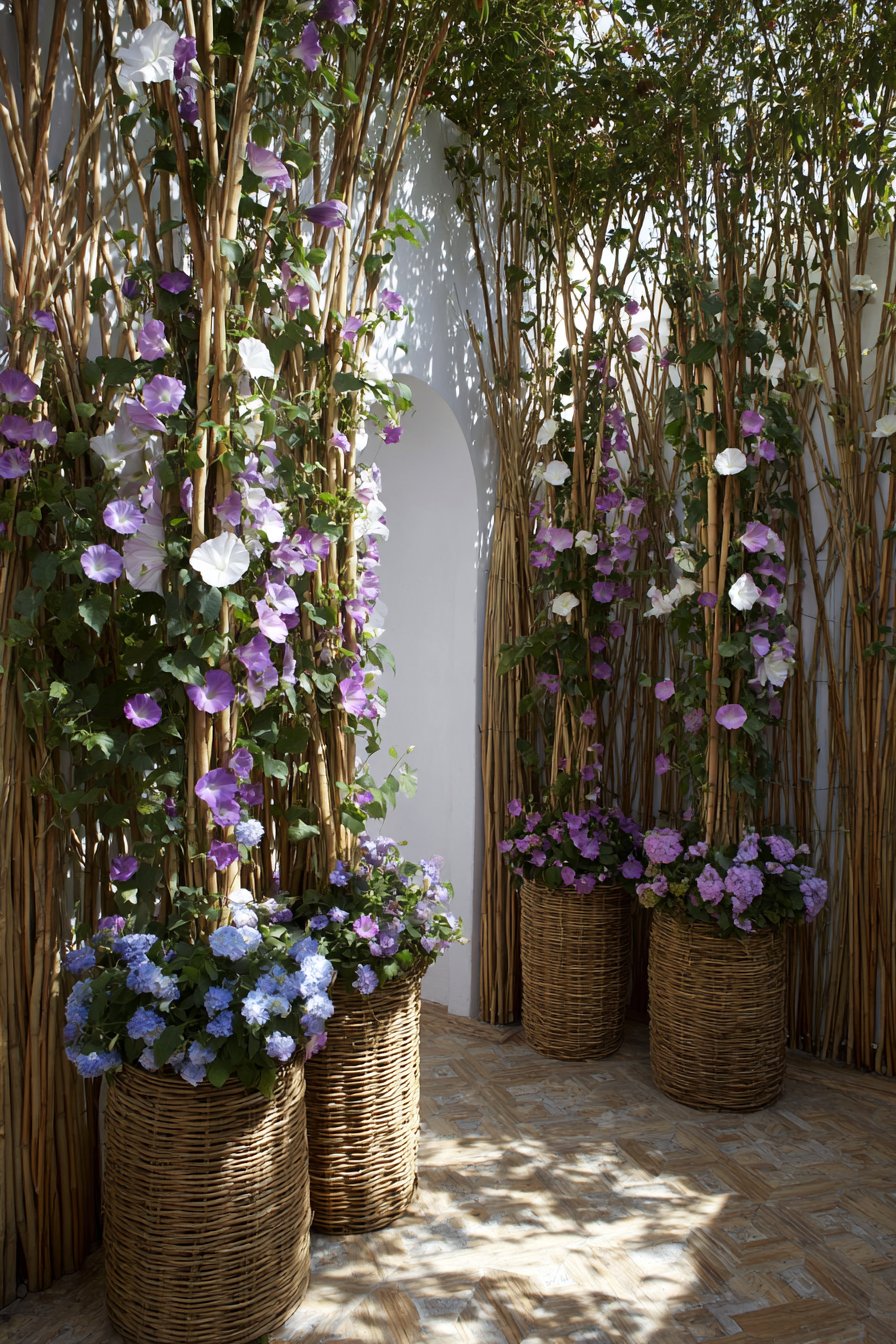
The vertical nature of this design addresses a common balcony challenge: how to create privacy without blocking light or creating a closed-in feeling. Solid privacy screens can make small balconies feel even more confined while blocking beneficial breezes and natural light. Living screens offer filtered privacy—enough to feel secluded without complete enclosure—while maintaining the open, airy feeling that makes balconies desirable.
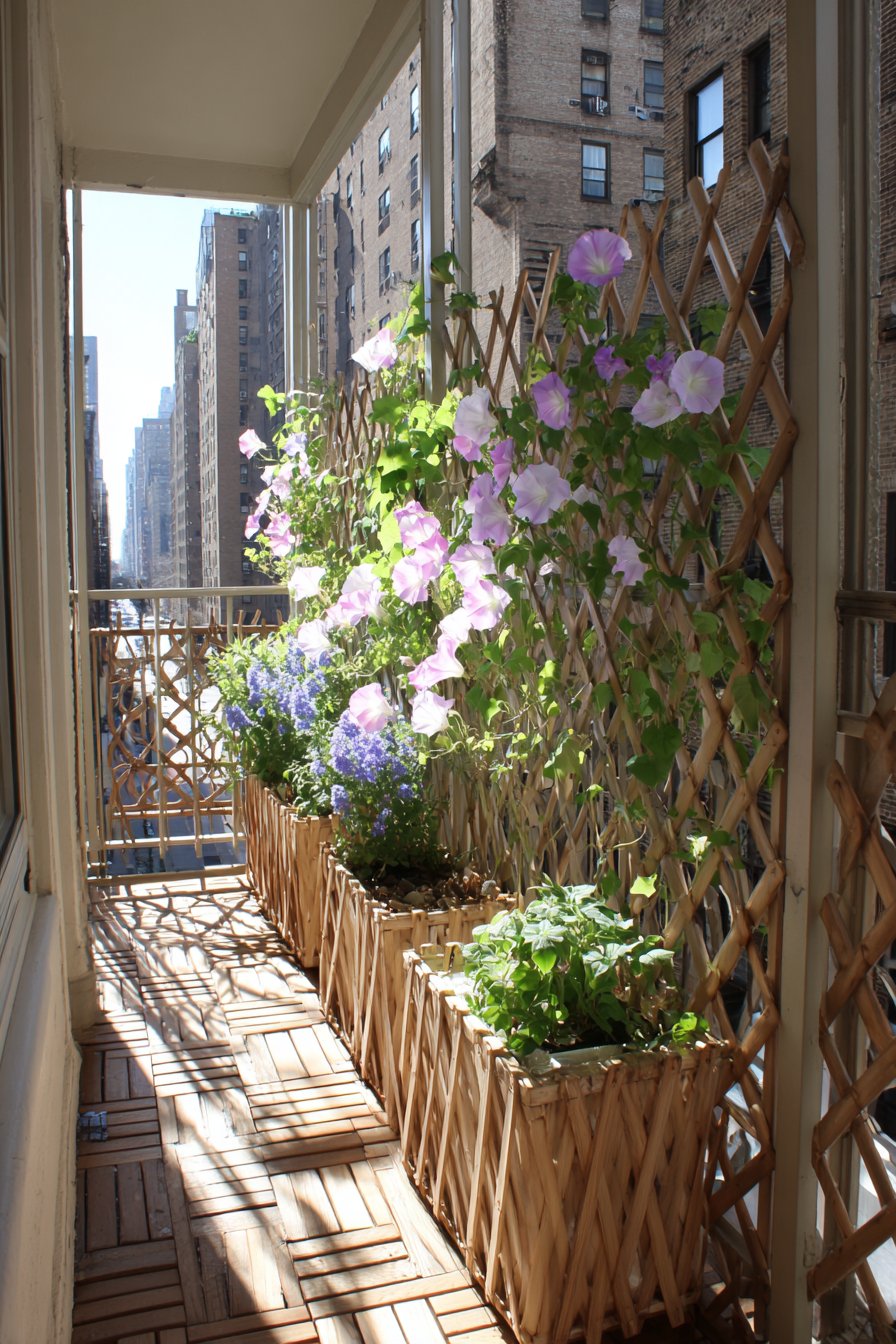
Plant selection emphasizes vigorous climbing annuals that provide rapid coverage during the growing season. Morning glories produce heart-shaped leaves and funnel-shaped flowers in brilliant blues and purples, opening each morning and closing by afternoon. Sweet peas contribute intensely fragrant blooms in pink, purple, and white shades, their delicate tendrils creating romantic, cottage-garden appeal. Both plants climb enthusiastically without becoming woody or permanent, making them perfect for renters or those desiring seasonal flexibility.
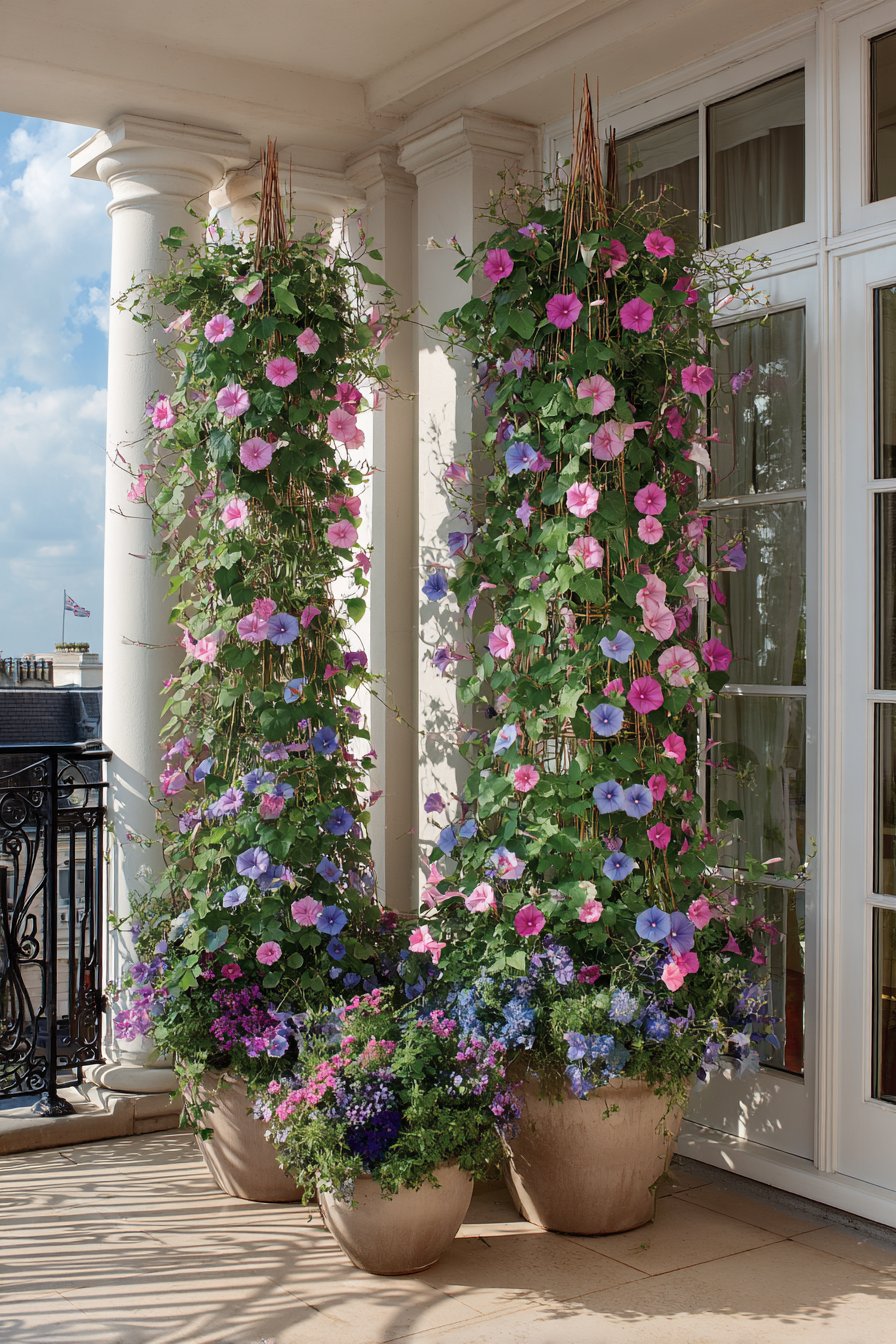
Soft morning light illuminates the delicate vine flowers and creates interesting shadows through the living screen, demonstrating how the arrangement functions aesthetically while serving its practical purpose. The interplay of light and shadow through the foliage creates dynamic visual interest throughout the day.
Key Design Tips:
- Install sturdy supports before plants begin climbing to avoid disturbing roots later
- Choose fast-growing annual vines for quick coverage or perennial vines for permanent screens
- Train growth horizontally before allowing vertical spread to encourage fuller coverage
- Water consistently as vertical plantings dry out quickly and can stress in hot weather
- Consider including evergreen climbers for year-round privacy in mild climates
22. Sensory Touch Garden
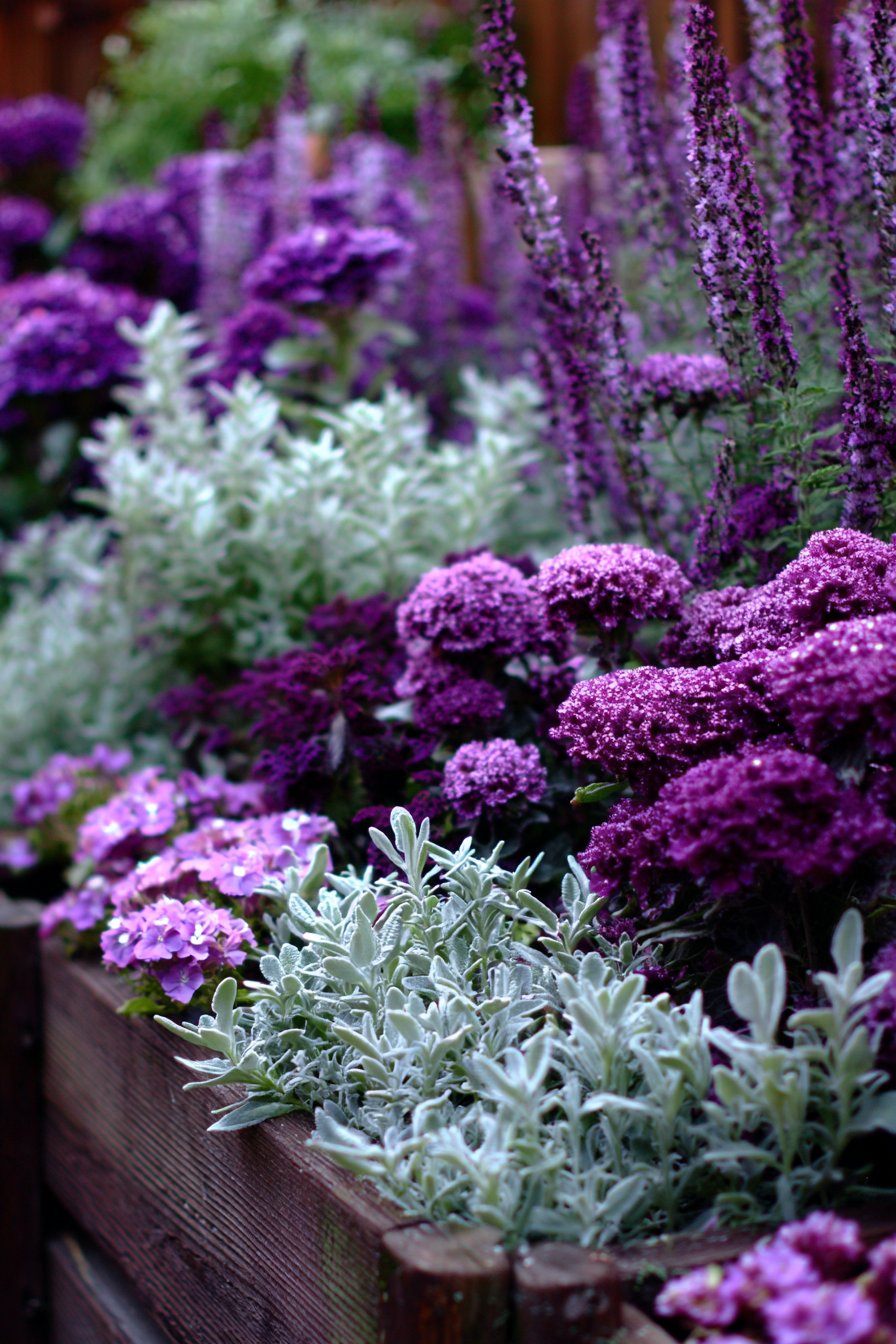
Universal design principles inspire this accessible balcony flower idea featuring raised planters positioned at comfortable height for easy interaction. Touchable lamb’s ear with its soft, fuzzy foliage, fragrant heliotrope with vanilla-scented purple blooms, and velvety pansies create a sensory garden encouraging engagement through multiple senses. The accessible design proves particularly valuable for elderly gardeners, children, or anyone with mobility limitations that make traditional ground-level gardening challenging.
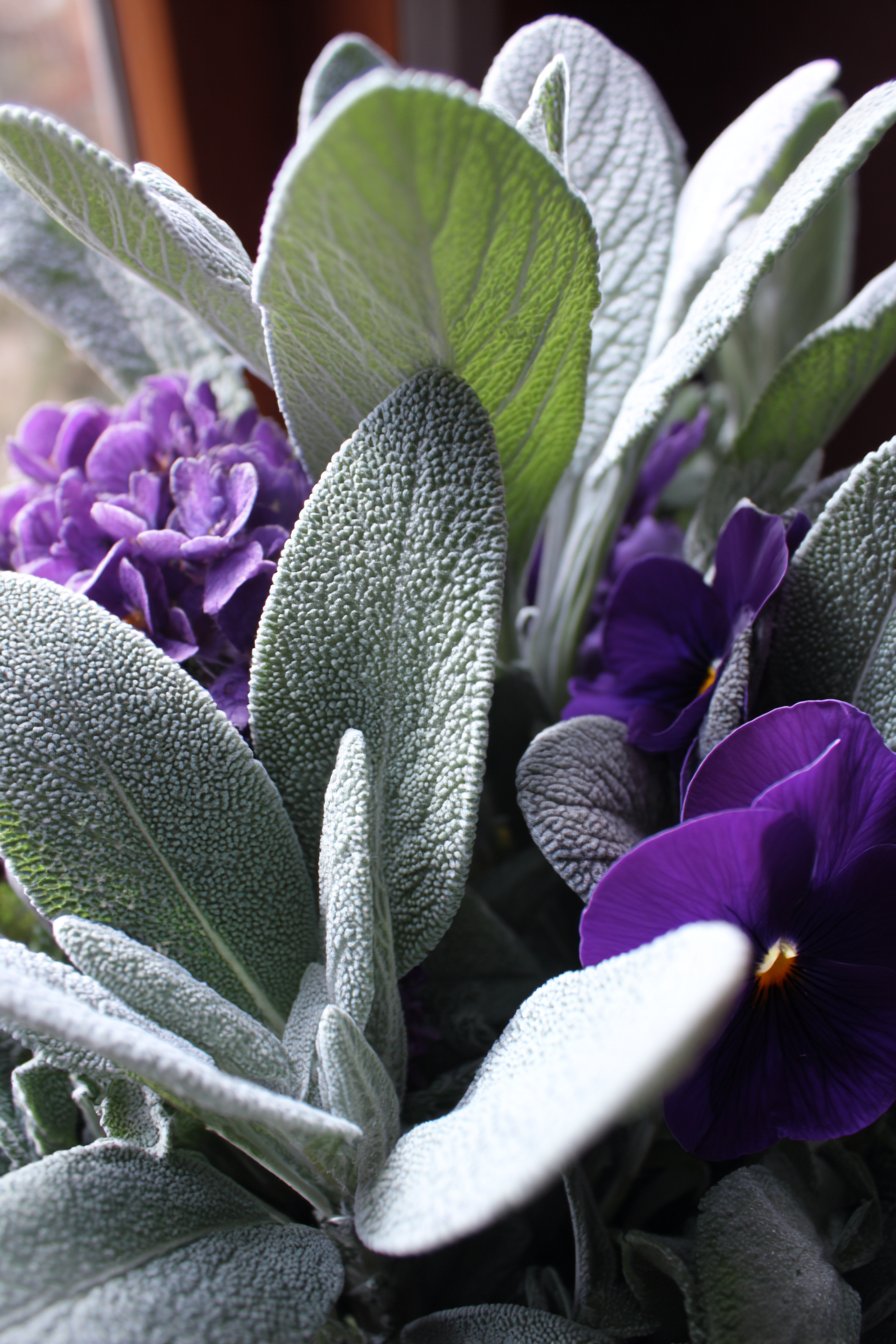
The emphasis on tactile qualities introduces an often-overlooked design dimension. While most gardens prioritize visual appeal, sensory gardens recognize that texture, fragrance, and even sound contribute to meaningful garden experiences. Lamb’s ear’s impossibly soft leaves invite touching, while heliotrope’s powerful vanilla fragrance can be enjoyed without visual focus. Velvety pansy petals offer subtle texture, and their cheerful faces create emotional warmth.
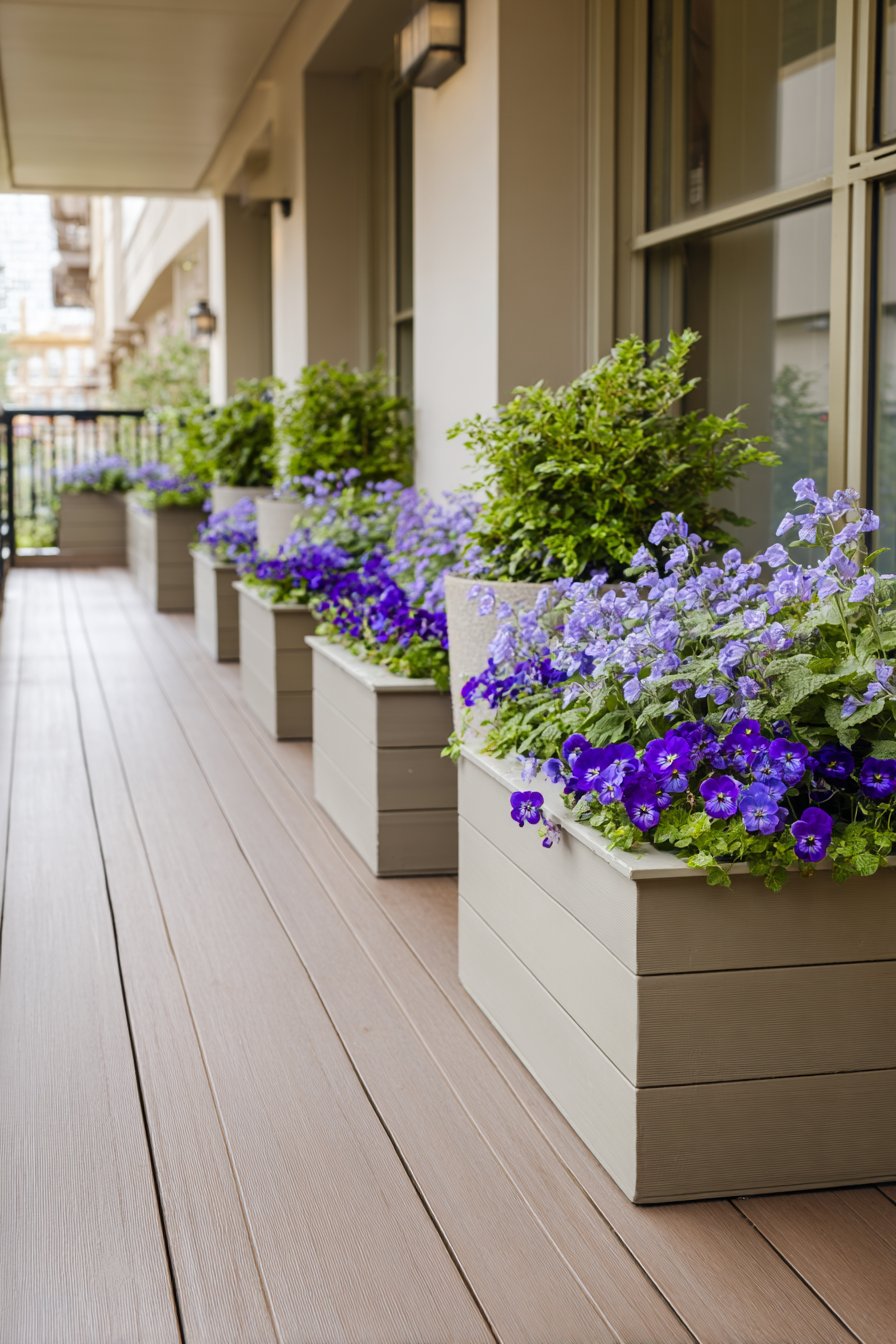
The raised planter design eliminates bending and kneeling, making gardening accessible to those with back problems, knee issues, or balance concerns. Positioning planters at optimal height—typically 30-36 inches for comfortable standing interaction—allows extended enjoyment without physical strain. This accessibility extends gardening’s therapeutic and recreational benefits to populations who might otherwise be excluded from these activities.
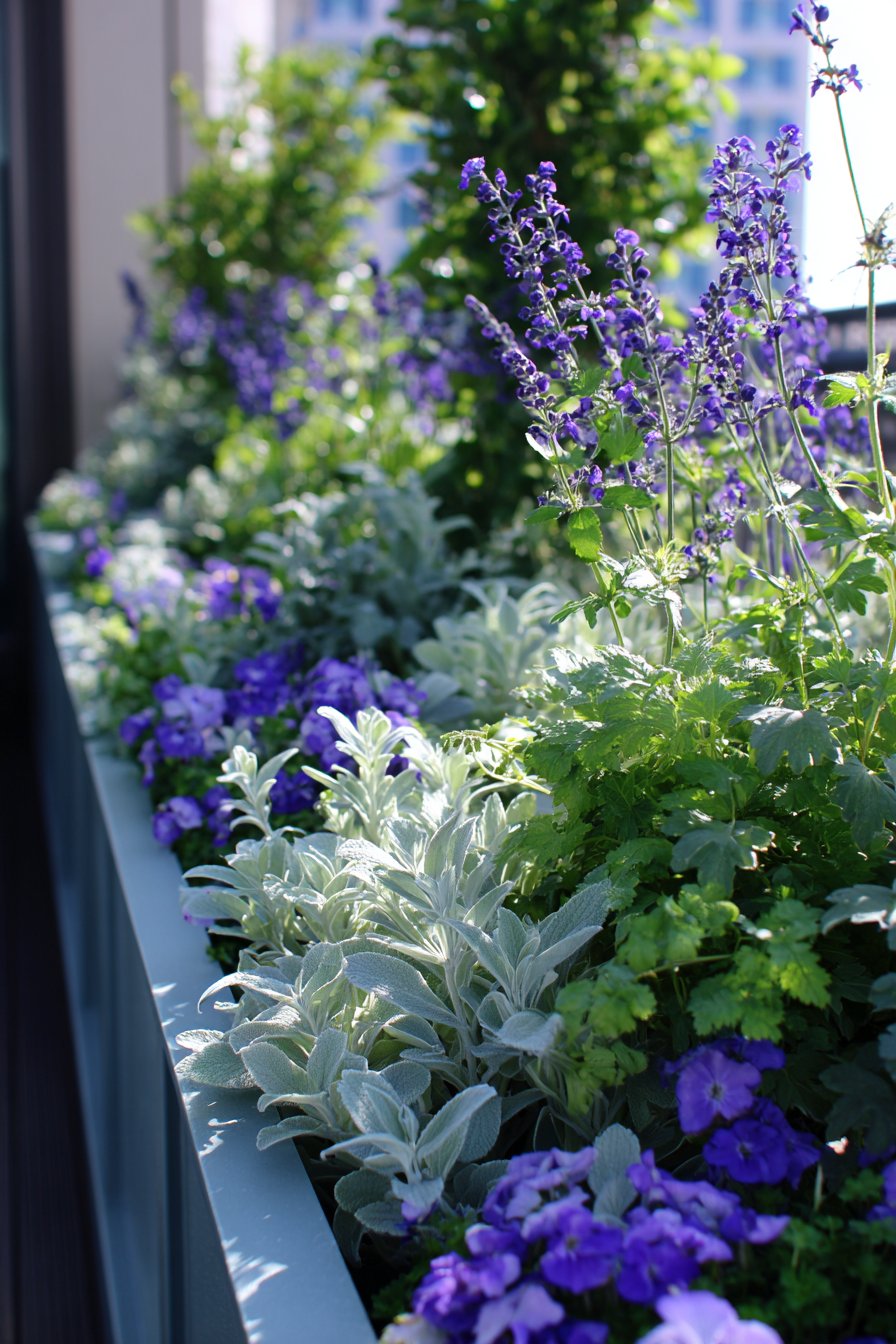
Gentle afternoon light highlights the tactile qualities of foliage and petals, emphasizing the fuzzy texture of lamb’s ear and the subtle sheen of pansy petals. The lighting creates subtle shadows that accentuate three-dimensional texture, inviting close observation and interaction.
Key Design Tips:
- Position planters at appropriate height for primary users’ comfort and access
- Include plants with varied textures to create diverse tactile experiences
- Add fragrant plants positioned where scent can be easily appreciated
- Ensure planters are stable and won’t tip if leaned against
- Include plants with interesting textures year-round, not just during flowering season
23. Sunset-Themed Warm Color Garden
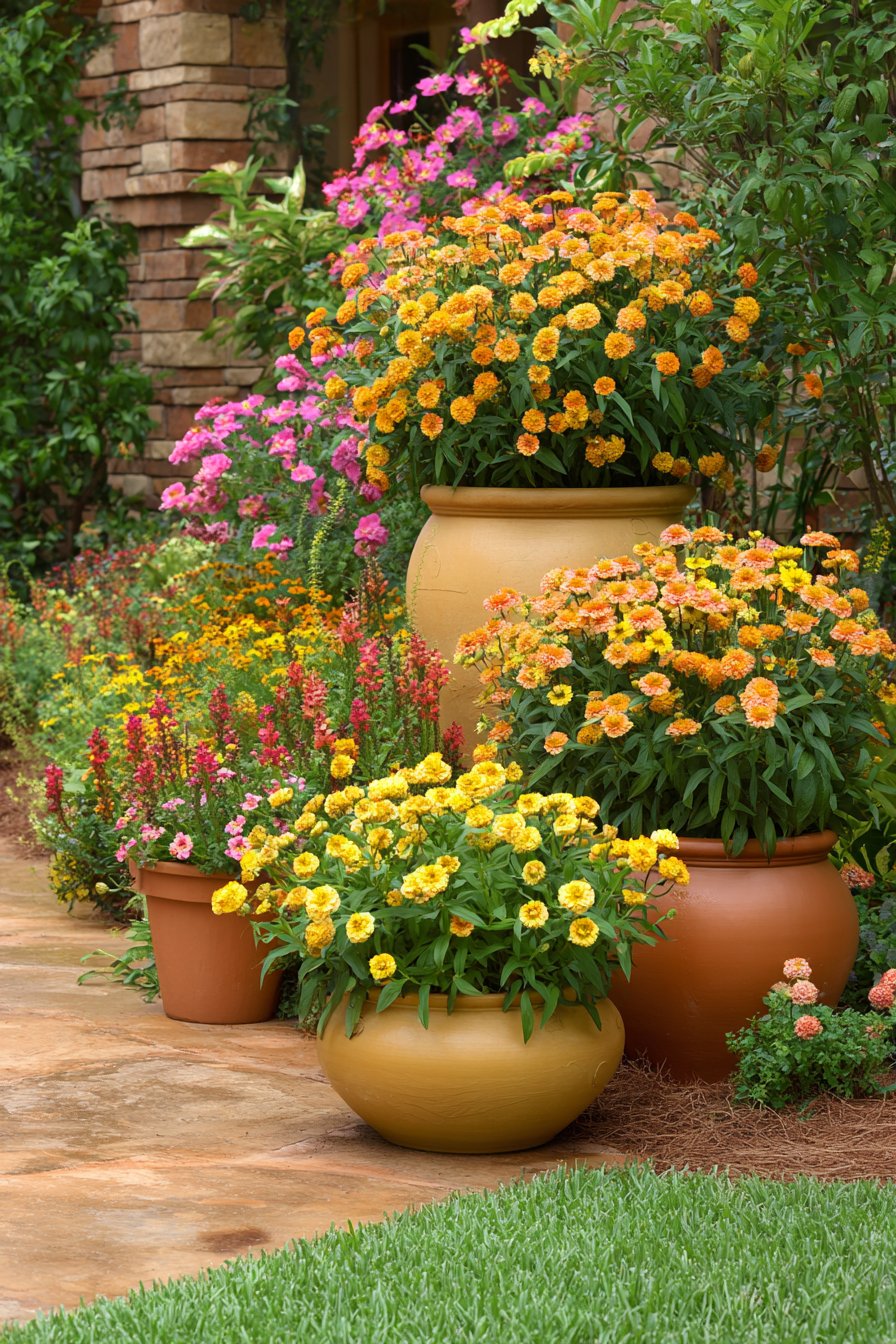
Color theory comes alive in this dramatic balcony flower idea celebrating warm tones through carefully selected flowers in orange, golden yellow, coral, and red. Marigolds, rudbeckia, zinnias, and salvia planted in coordinating burnt orange ceramic containers create energizing visual impact that complements and intensifies during evening golden hour lighting. The vibrant warm palette creates psychological warmth and cheerfulness, literally brightening the outdoor space while emotionally uplifting its occupants.
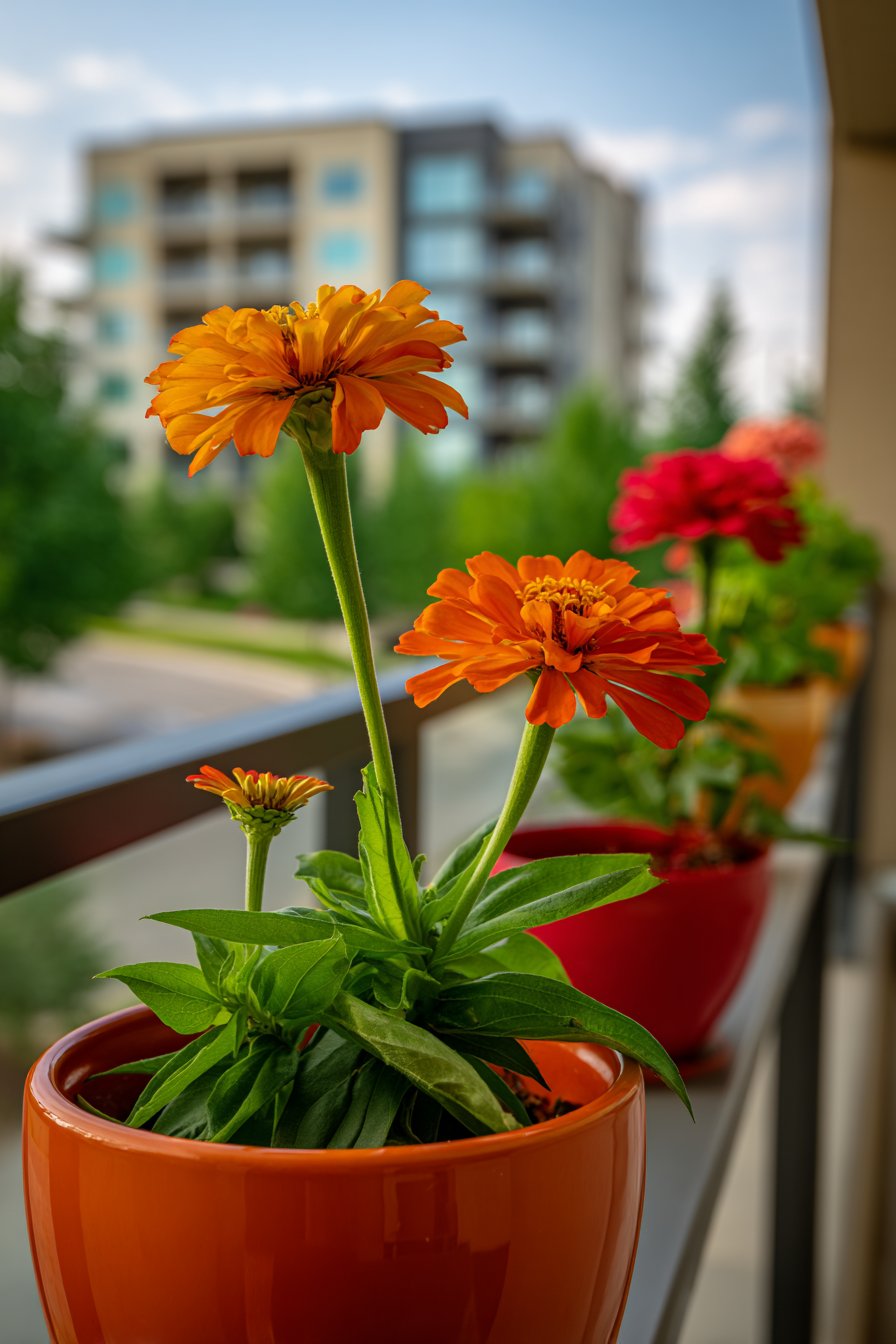
The deliberate color coordination demonstrates sophisticated design thinking. Rather than randomly combining available plants, this arrangement selects flowers specifically for their contribution to a cohesive warm color story. Orange marigolds and golden rudbeckia anchor the scheme in classic warm tones, while coral zinnias add contemporary freshness and red salvia provides depth and richness. The color progression from yellow through orange to coral and red creates chromatic harmony that feels intentional and refined.
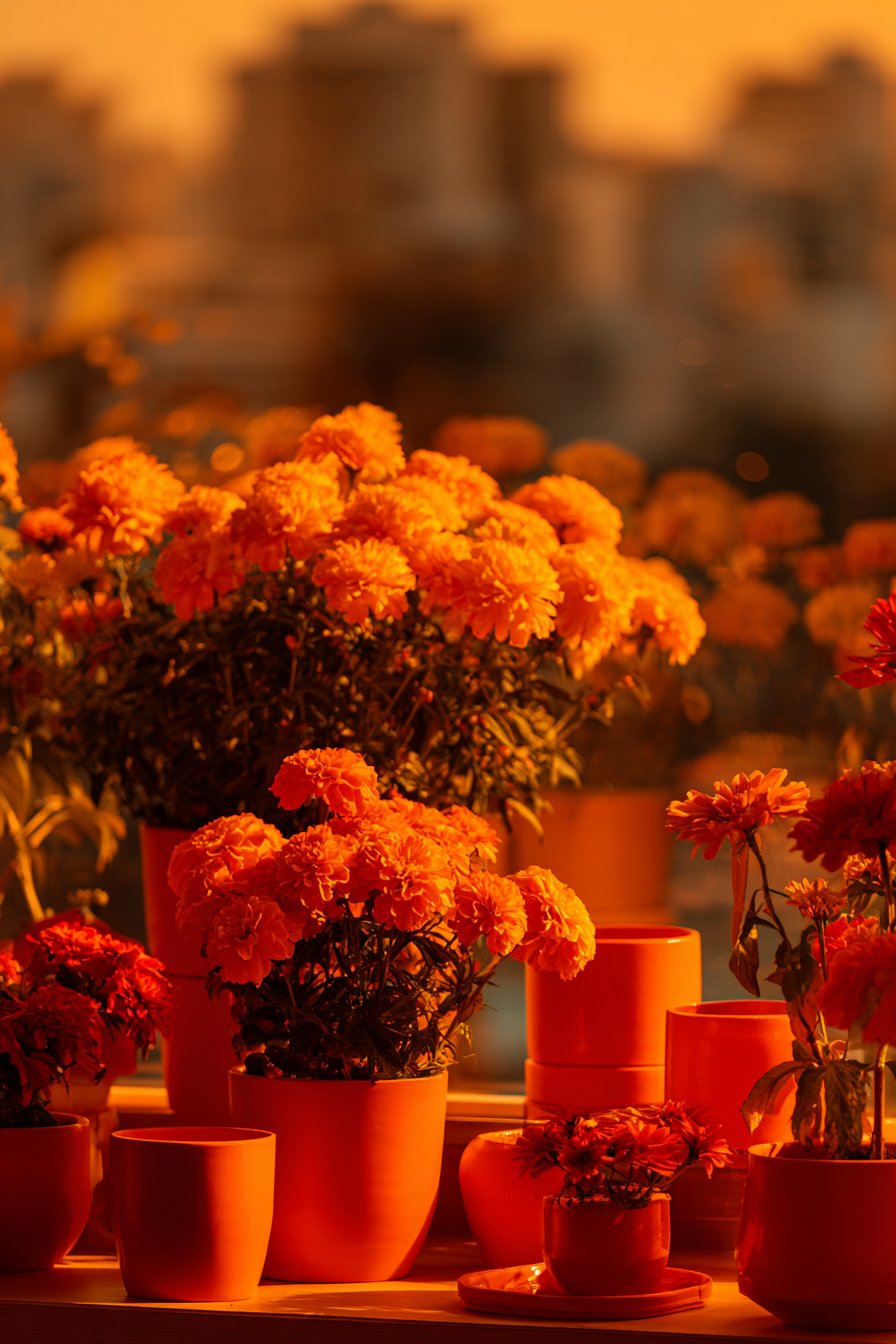
Container selection reinforces the warm color theme through burnt orange ceramic planters that echo the flower colors while providing grounding neutral presence. This coordination between containers and contents creates unity and demonstrates attention to detail that elevates casual gardening to genuine design.
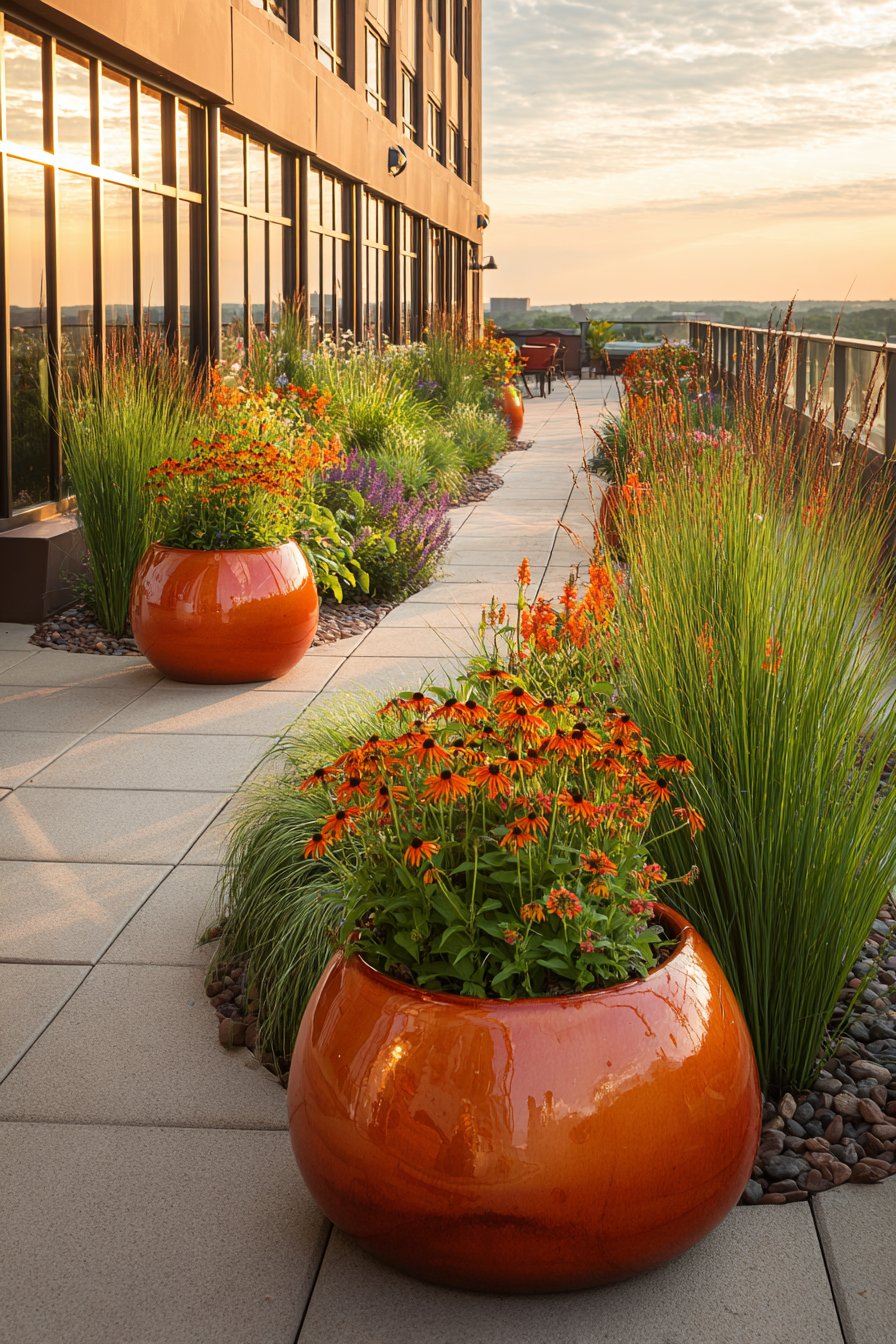
Natural sunset lighting intensifies the already warm color scheme, creating a literally glowing effect as horizontal light illuminates petals from behind and side. This magical quality during optimal lighting conditions—roughly an hour before sunset—transforms the arrangement into something truly spectacular, rewarding those who make evening balcony enjoyment part of their daily routine.
Key Design Tips:
- Group warm colors together to maximize their collective impact
- Include varied flower forms to maintain interest within the limited color range
- Choose container colors that complement rather than compete with flower hues
- Position warm-colored gardens where they receive evening western light for maximum effect
- Consider adding outdoor lighting to extend enjoyment after sunset and enhance the warm glow
Why These Balcony Flower Ideas Represent the Best Design Approaches
The 23 balcony flower ideas presented showcase diverse design philosophies united by common principles of excellence. Each approach addresses specific challenges inherent to balcony gardening—limited space, variable light conditions, maintenance constraints, and the need for year-round interest—while demonstrating how thoughtful design transforms functional plant displays into genuinely beautiful outdoor spaces.
These curated balcony flower ideas represent best practices across multiple design dimensions. Spatially, they demonstrate innovative approaches to maximizing limited square footage through vertical growing systems, space-efficient railing planters, tiered arrangements, and strategic corner placements. This spatial intelligence proves essential for balcony gardening success, where every inch counts and poor space utilization quickly creates cramped, unusable conditions.
Aesthetically, the featured designs span the full spectrum from minimalist modern to romantic cottage, from ecological native plantings to exotic tropical displays. This diversity acknowledges that aesthetic preferences vary widely and that successful design must align with personal taste. The inclusion of multiple color strategies—monochromatic schemes, bold color blocking, warm sunset palettes, French tricolor combinations—provides frameworks applicable to countless specific implementations.
Functionally, these balcony flower ideas address real-world considerations that determine long-term gardening success. Water-wise Mediterranean herb gardens suit drought-prone regions or busy schedules. Shade-tolerant selections solve the common problem of north-facing or covered balconies. Pollinator-friendly designs satisfy environmental consciousness. Sensory touch gardens ensure accessibility. Four-season succession planting extends interest beyond a single brief bloom period. These practical considerations separate theoretical design inspiration from workable real-world gardens.
The emphasis on authentic materials and realistic styling throughout these balcony flower ideas creates achievable inspiration rather than unattainable fantasy. Weathered wood planters, vintage containers, terracotta pots, concrete planters, and cedar boxes represent accessible options available at various price points. Plant selections favor reliable performers over temperamental rarities, ensuring that average gardeners can recreate these effects without advanced horticultural expertise.
Sustainability emerges as a recurring theme across multiple designs, reflecting contemporary values and environmental realities. Native wildflower meadows support indigenous ecosystems. Drought-tolerant xeriscaping conserves precious water resources. Pollinator gardens contribute to threatened beneficial insect populations. These ecological considerations demonstrate that responsible environmental stewardship and aesthetic beauty are not conflicting goals but complementary values that enhance both garden and gardener.
The photographic and lighting considerations detailed throughout these balcony flower ideas acknowledge that garden appreciation occurs across varying times and conditions. Morning light suits certain color palettes and creates specific moods. Afternoon sun intensifies different qualities. Evening golden hour transforms warm-colored plantings. Dappled shade creates romantic atmosphere. Understanding how light interacts with plants, containers, and spatial arrangement allows gardeners to optimize their designs for the specific times they’ll most use and enjoy their balconies.
These balcony flower ideas succeed because they balance multiple sometimes-competing considerations: beauty and practicality, personal preference and environmental responsibility, initial impact and long-term sustainability, simplicity and sophistication. They recognize that great garden design isn’t about following rigid rules but about thoughtfully addressing site conditions, user needs, and aesthetic goals in ways that create genuinely rewarding outdoor spaces.
The variety presented ensures that regardless of your balcony’s specific characteristics—size, exposure, climate, architectural style—you’ll find applicable inspiration. Whether you’re working with a sunny south-facing expanse or a shaded north corner, whether you prefer minimalist restraint or cottage-garden abundance, whether you prioritize low-maintenance natives or exotic showstoppers, these carefully curated approaches provide starting points for creating your own personalized balcony paradise.
Conclusion
Transforming your balcony with thoughtful flower arrangements represents an investment in daily beauty, personal wellbeing, and environmental stewardship. The 23 balcony flower ideas explored demonstrate that limited space need not mean limited possibilities—strategic plant selection, creative container choices, and intentional design approaches can transform even the smallest balcony into a flourishing garden retreat.
Success in balcony gardening requires understanding your specific conditions and selecting approaches suited to your climate, exposure, and lifestyle. Consider your balcony’s sunlight patterns throughout the day and across seasons. Evaluate your available time for maintenance and select plantings matched to that commitment. Clarify your aesthetic preferences and functional priorities, whether those emphasize fragrance, color, wildlife support, food production, or pure visual beauty.
Start with one or two approaches that resonate most strongly with your vision and circumstances. Master these initial plantings, learning the specific care requirements and observing how they perform in your unique conditions. Expand gradually, building knowledge and confidence as you develop your personal balcony gardening style. Remember that gardens evolve—what you plant this season need not be permanent, allowing experimentation and seasonal variation that keeps your outdoor space dynamic and engaging.
The most successful balcony gardens reflect their creators’ personalities and priorities while respecting the realities of their specific sites. Allow these curated ideas to inspire rather than dictate, adapting elements that appeal while modifying aspects to suit your unique situation. Your balcony garden should ultimately feel authentic to you—a personal outdoor sanctuary that provides joy, beauty, and connection to nature’s cycles regardless of how urban your surroundings.
Begin today by evaluating your balcony with fresh eyes, measuring available space, observing light patterns, and envisioning which of these approaches might thrive in your specific conditions. Select containers, order plants, and start the rewarding journey of creating your own balcony flower garden. The transformation from empty outdoor space to blooming sanctuary awaits, limited only by imagination and willingness to experiment with these proven balcony flower ideas.
