
Your balcony holds untapped potential as an extension of your living space—a personal sanctuary where indoor comfort meets outdoor beauty. Whether you’re working with a compact urban terrace or a generous outdoor area, thoughtful design can transform even the smallest balcony into a functional retreat that reflects your personality and enhances your daily life. The magic lies not in square footage, but in how creatively you utilize every inch, combining aesthetic appeal with practical functionality to create a space that truly serves your lifestyle.
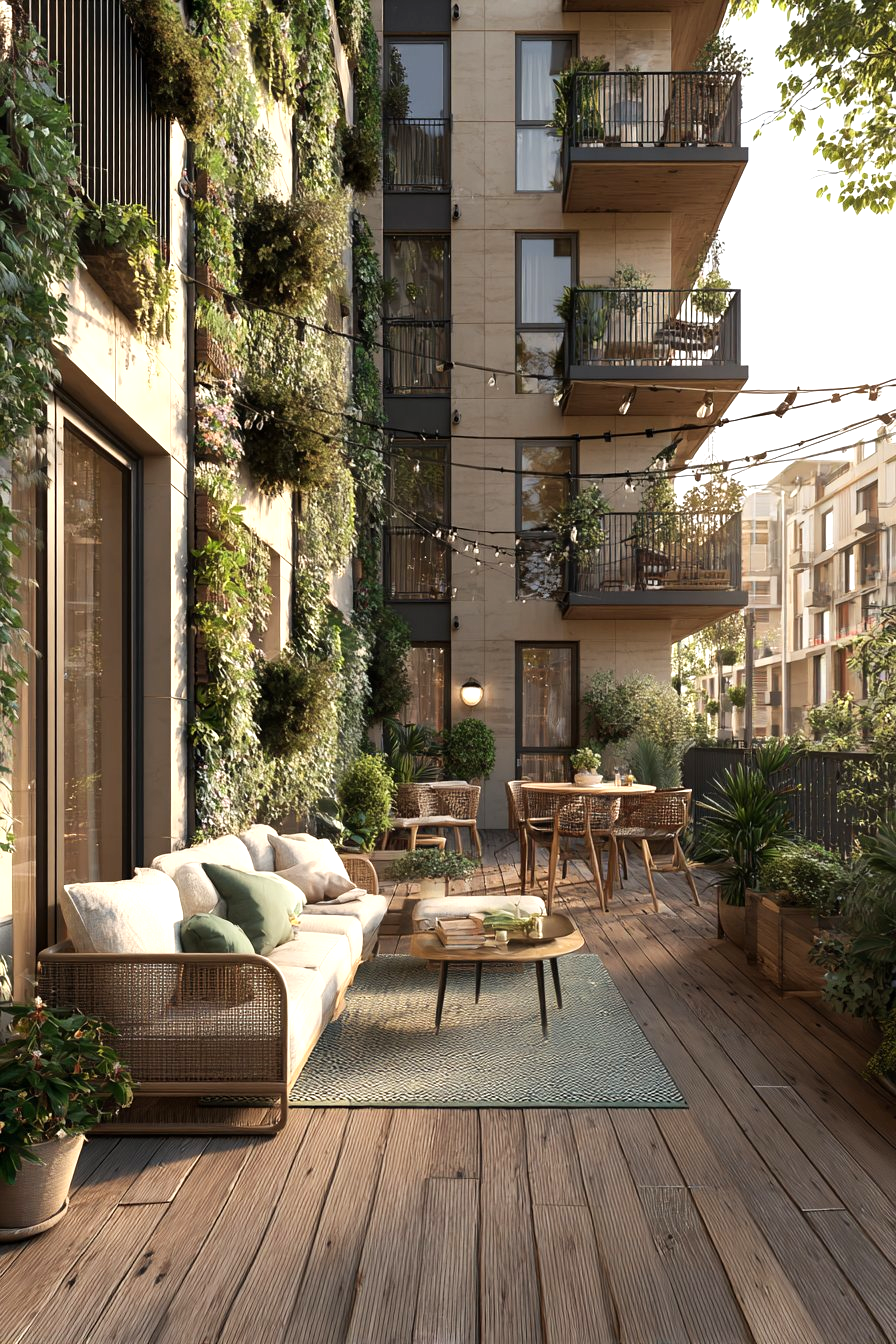
In today’s world, where outdoor spaces have become increasingly precious, balcony design has evolved beyond simple plant arrangements and basic seating. Modern balcony decor encompasses diverse styles—from minimalist Scandinavian sanctuaries to vibrant bohemian hideaways, from zen meditation spaces to functional outdoor offices. Each approach offers unique opportunities to express your design sensibility while addressing specific needs, whether that’s creating a morning coffee spot, an evening entertaining area, or a lush garden retreat in the sky.
This comprehensive guide explores 23 distinct balcony decor ideas, each offering a complete vision for transforming your outdoor space. You’ll discover practical solutions for small spaces, privacy-enhancing techniques, seasonal styling approaches, and specialized designs for everything from pet-friendly setups to romantic evening retreats. These aren’t just theoretical concepts—each design represents achievable, real-world solutions that balance beauty with functionality, helping you create an outdoor space that genuinely enhances your home and lifestyle.
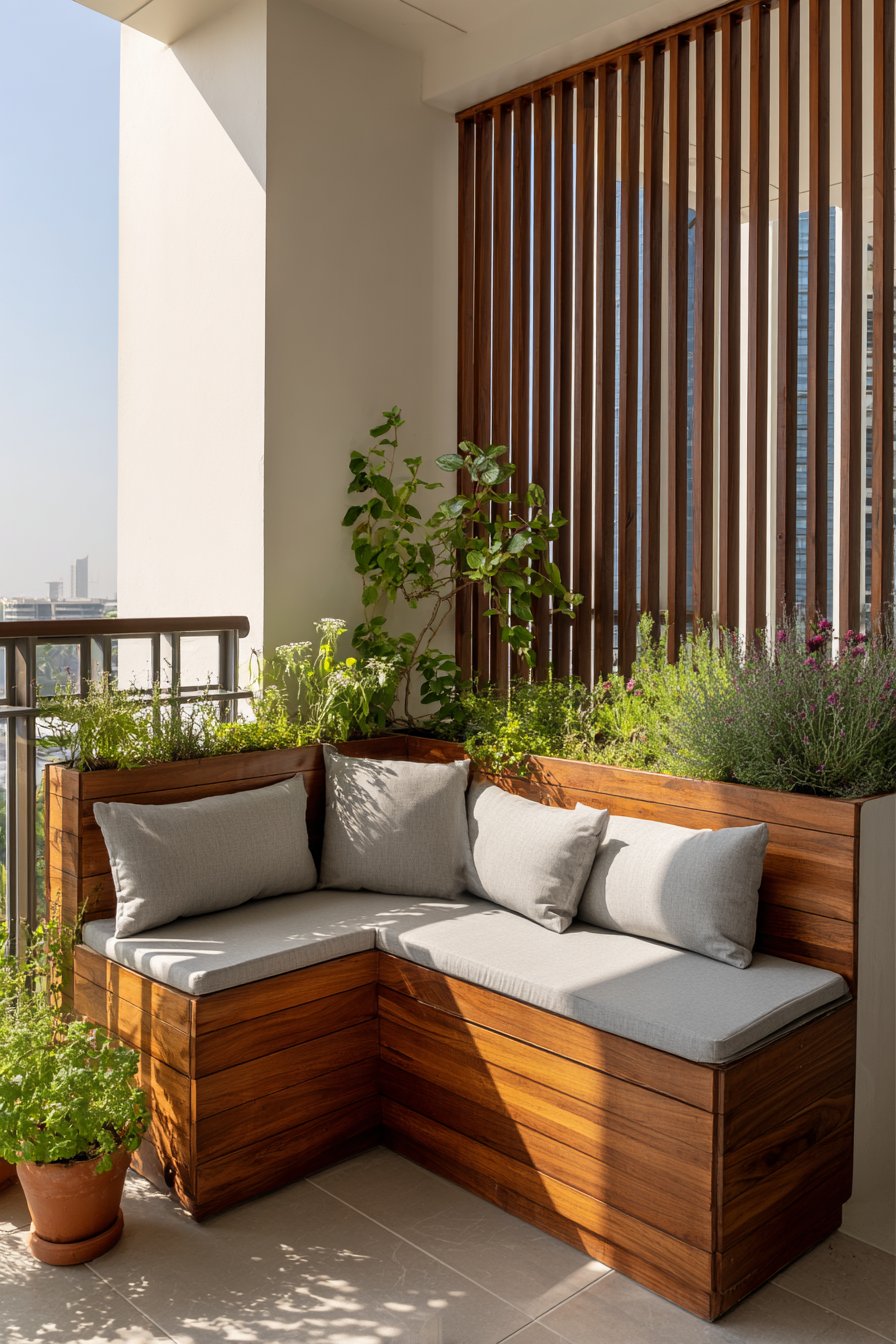
1. Compact Corner Storage Bench Design
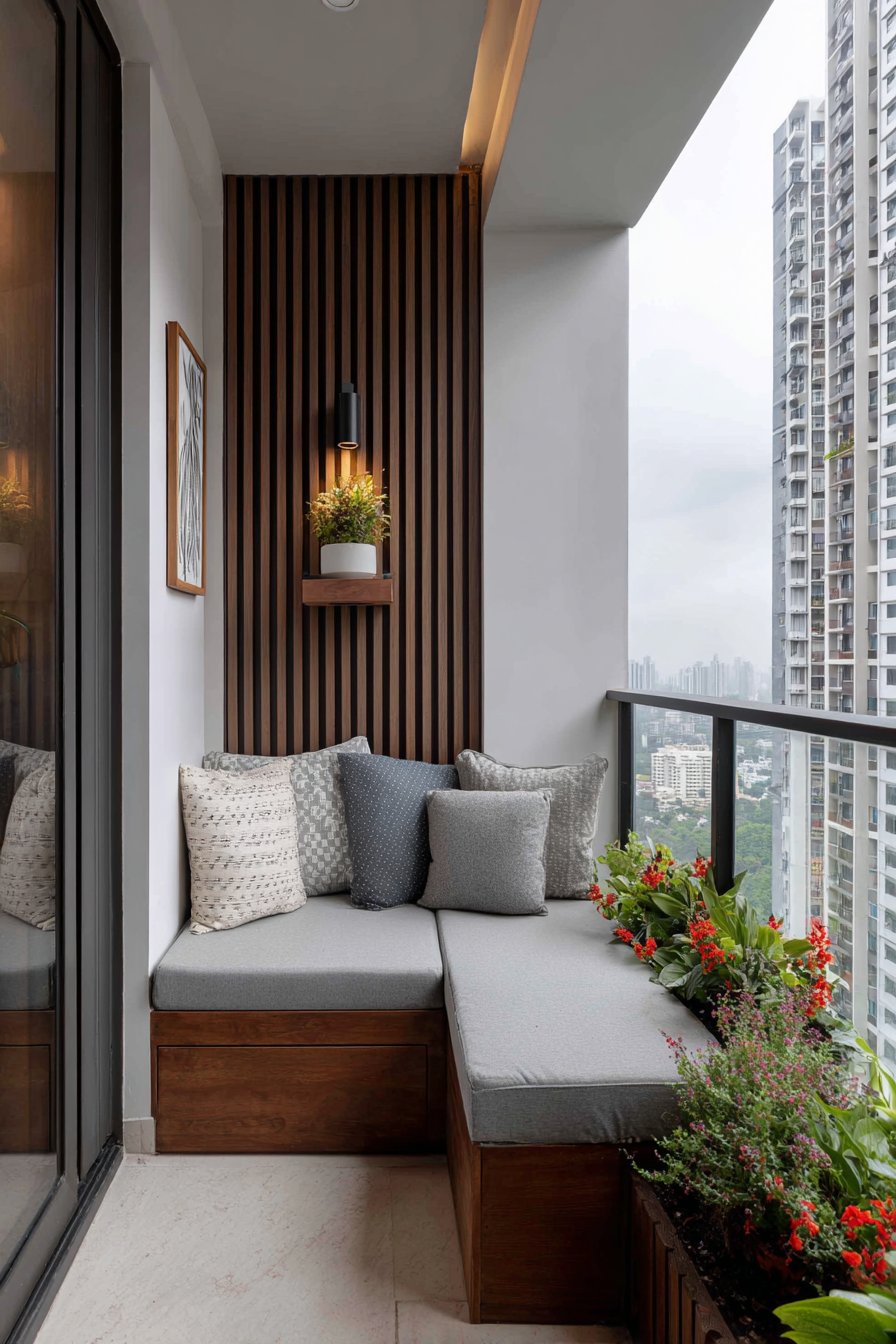
The foundation of exceptional small-space balcony design lies in furniture that works twice as hard. This corner L-shaped bench configuration exemplifies intelligent space planning, offering comfortable seating while concealing valuable storage beneath weather-resistant cushions in sophisticated soft grey tones. The built-in storage compartment provides a practical home for outdoor accessories, gardening tools, and seasonal items that would otherwise clutter your limited square footage.
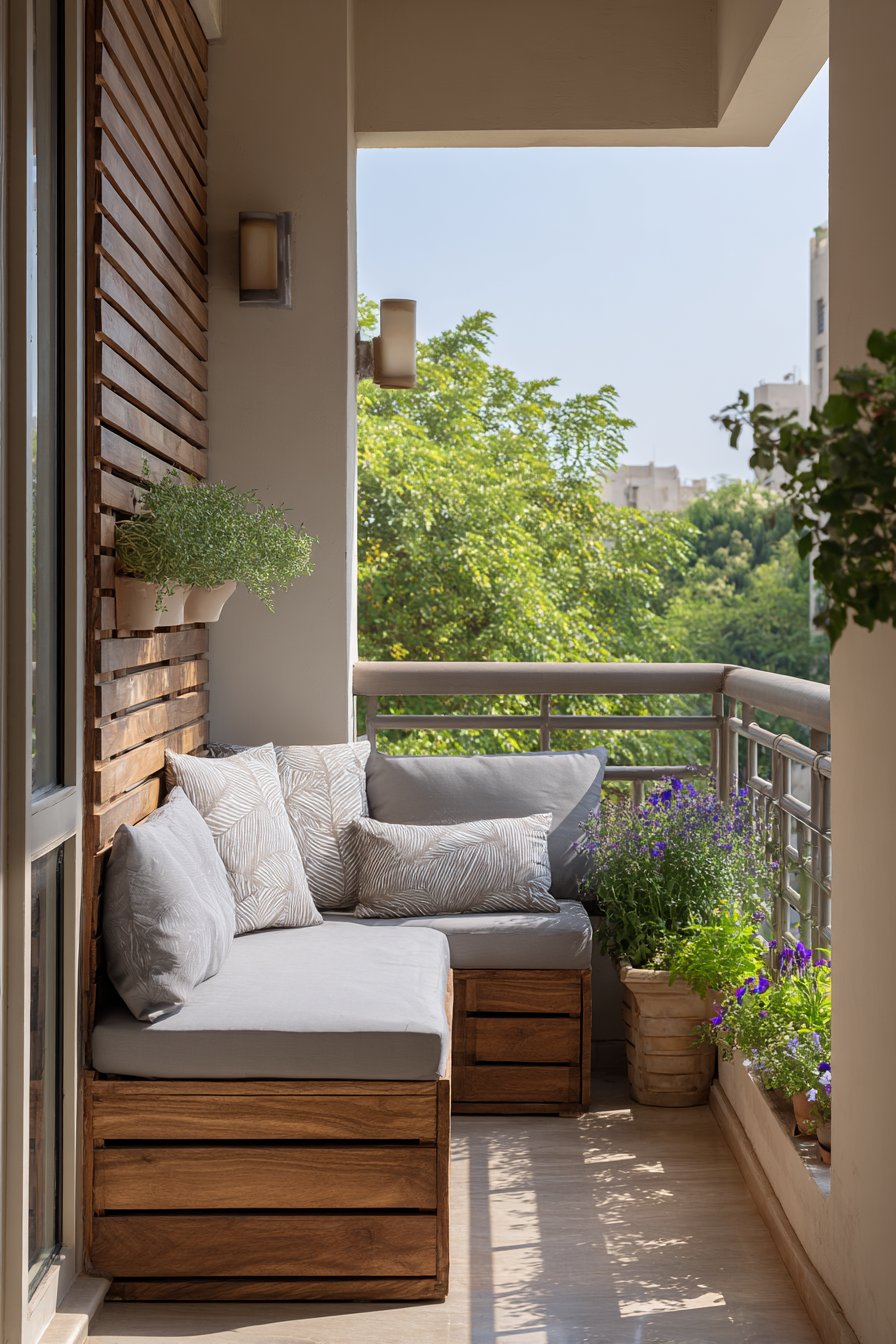
The vertical wooden slat privacy screen serves multiple purposes beyond mere aesthetics. It creates an intimate atmosphere while maintaining airflow and allowing filtered natural light to dance across the space throughout the day. This semi-transparent barrier transforms a public-facing balcony into a private retreat without the claustrophobic feeling of solid walls. The natural wood grain adds warmth and texture, complementing the grey cushions with organic visual interest.
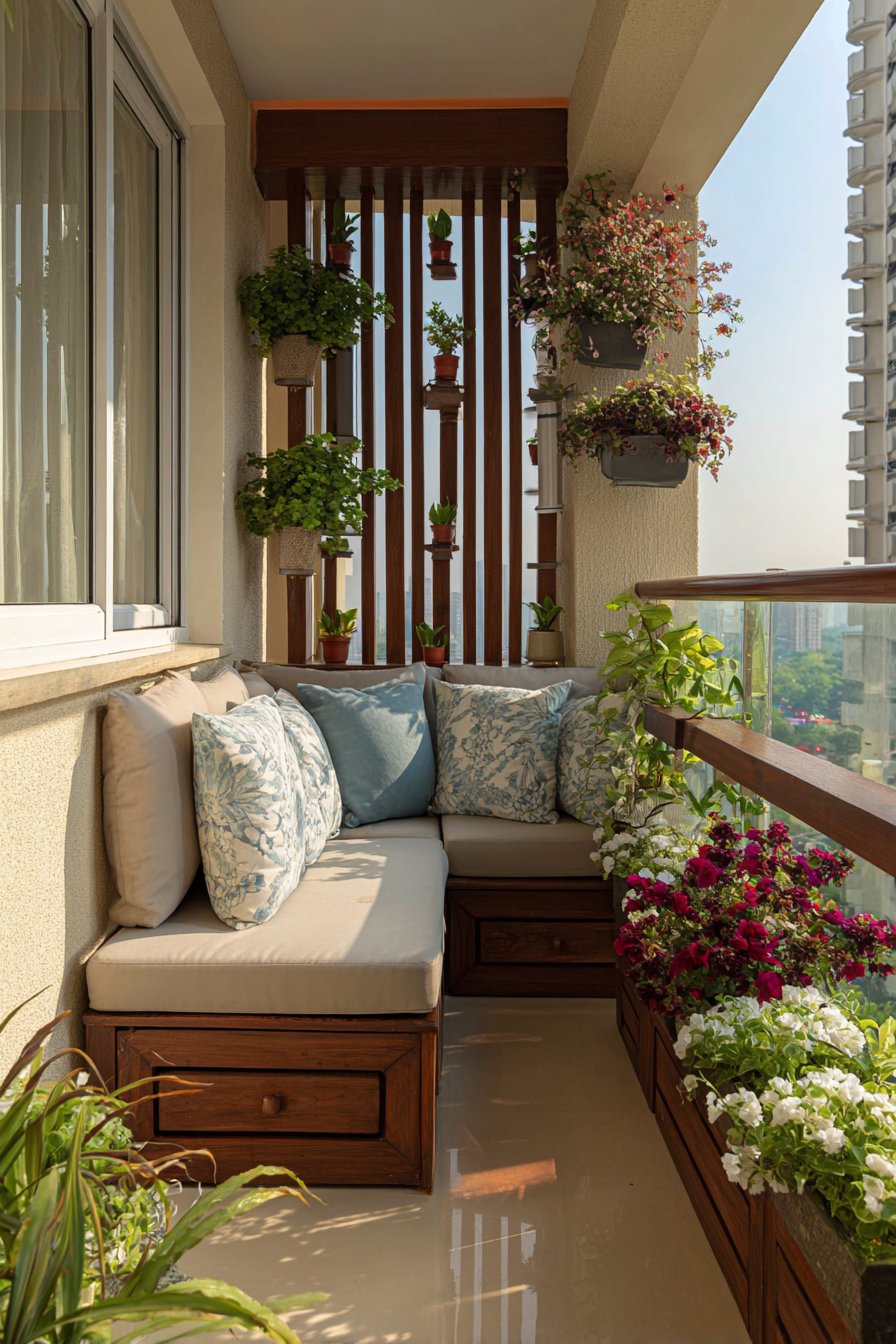
Potted herbs and small flowering plants lining the railing introduce living elements that engage multiple senses. Fresh basil, rosemary, and thyme offer culinary convenience while releasing fragrant oils on warm days, while compact flowering varieties add seasonal color bursts. This arrangement maximizes vertical space along the railing, keeping the floor area open for movement while bringing nature within arm’s reach. Morning light illuminates this practical setup, highlighting the thoughtful integration of comfort, storage, and greenery.
Key Design Tips:
- Select benches with hydraulic lift mechanisms for easy access to hidden storage compartments
- Choose outdoor-rated cushions with removable, washable covers in UV-resistant fabrics
- Install privacy screens with adjustable slats to control light and visibility levels
- Plant herbs in individual containers for flexibility in arrangement and easier maintenance
- Position seating to capture morning or evening light based on your usage patterns
- Use waterproof storage bins inside benches to protect items from moisture infiltration
2. Bohemian Layered Plant Sanctuary
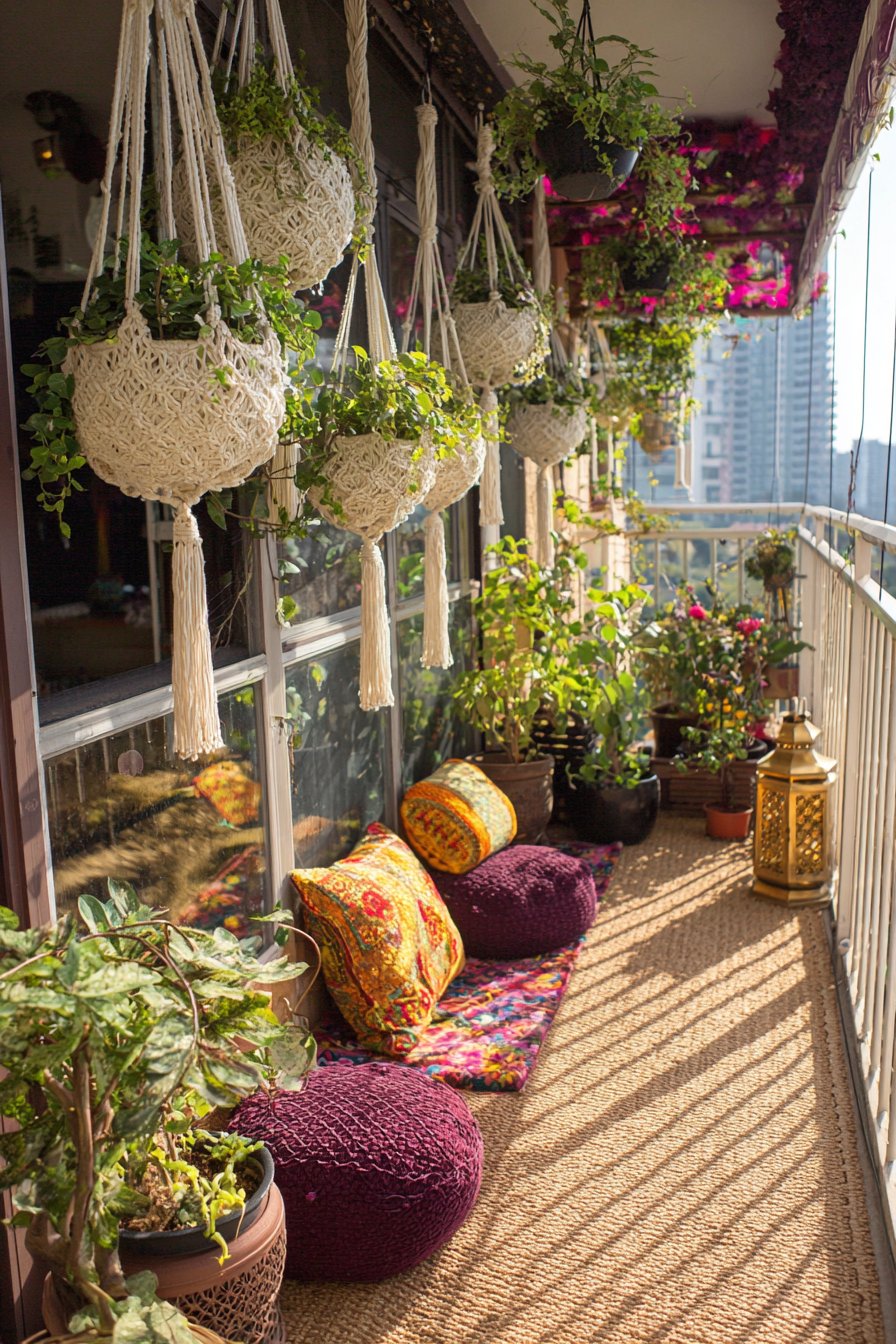
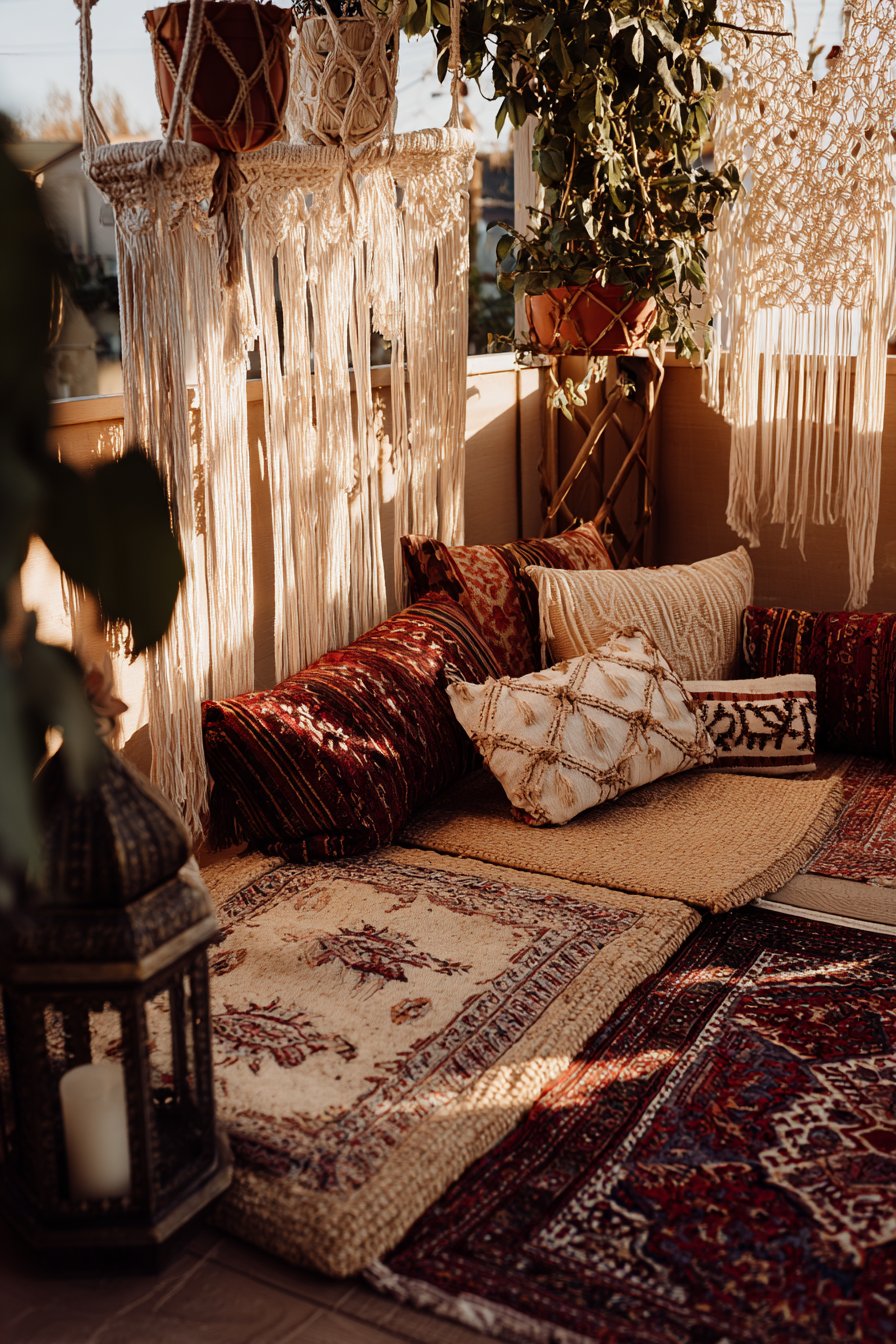
Bohemian design celebrates abundance, texture, and personal expression through carefully curated layers of natural materials and living plants. This balcony interpretation features macramé hanging planters suspended at staggered heights, creating visual rhythm and three-dimensional interest. The handcrafted rope work adds intricate texture while the varying heights draw the eye upward, making the space feel larger and more dynamic than its actual dimensions.
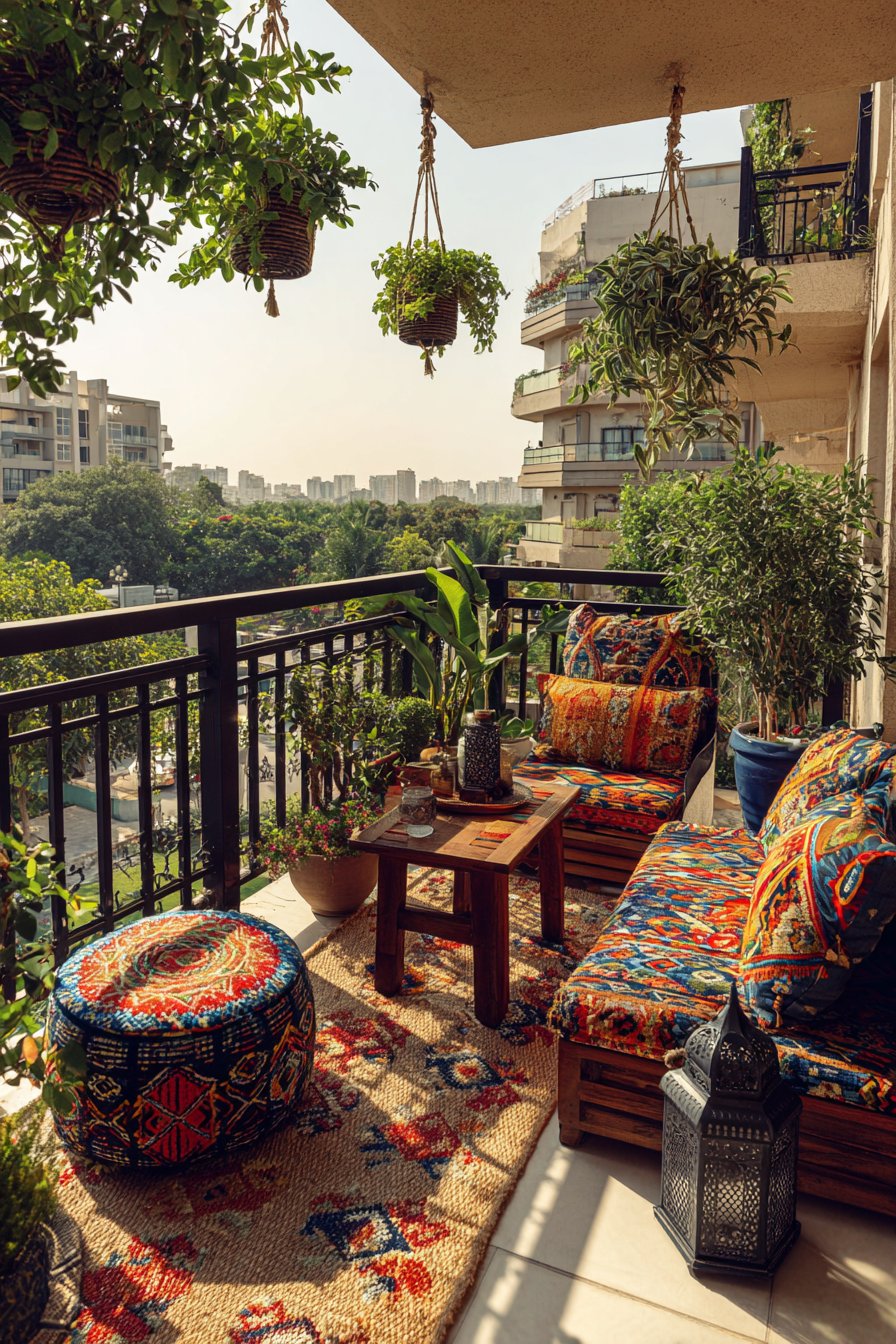
Low-profile floor seating establishes an intimate, relaxed atmosphere perfect for casual gatherings or solitary contemplation. Colorful patterned cushions in rich jewel tones and global-inspired prints create a collected-over-time aesthetic rather than a matched furniture set appearance. This approach allows for personal expression and easy updates—simply swapping cushion covers can completely refresh the space seasonally or as your taste evolves.
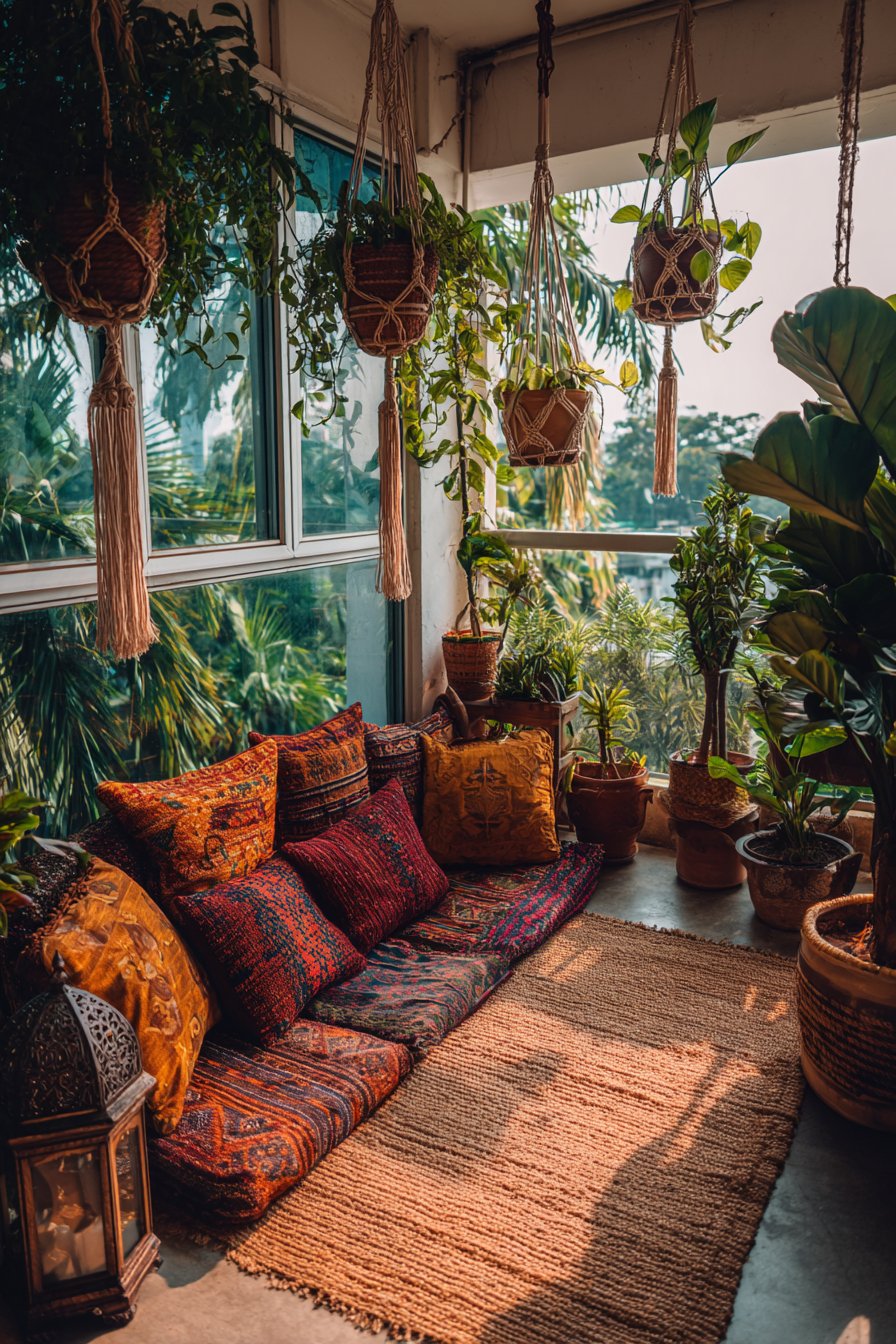
The vintage Moroccan-style lantern serves as both functional lighting and sculptural focal point. When illuminated in the evening, intricate cutwork casts mesmerizing shadow patterns across surrounding surfaces, transforming the balcony into a magical evening retreat. The natural jute rug grounds the seating arrangement, defining the relaxation zone while adding another layer of organic texture. Warm afternoon sunlight filtering through the abundant plant collection creates dappled light patterns that shift throughout the day, emphasizing the layered, eclectic nature of this bohemian-inspired design.
Key Design Tips:
- Mix macramé plant hangers of varying lengths and knotting styles for visual diversity
- Layer rugs if desired, placing smaller patterned pieces over larger neutral bases
- Select lanterns with LED candles for safe, maintenance-free ambient lighting
- Combine plant varieties with different leaf shapes and textures for maximum visual interest
- Use floor cushions with dense foam inserts designed for outdoor use to prevent moisture absorption
- Anchor lightweight floor seating to prevent wind displacement on higher-floor balconies
3. Minimalist Metal Bistro Retreat
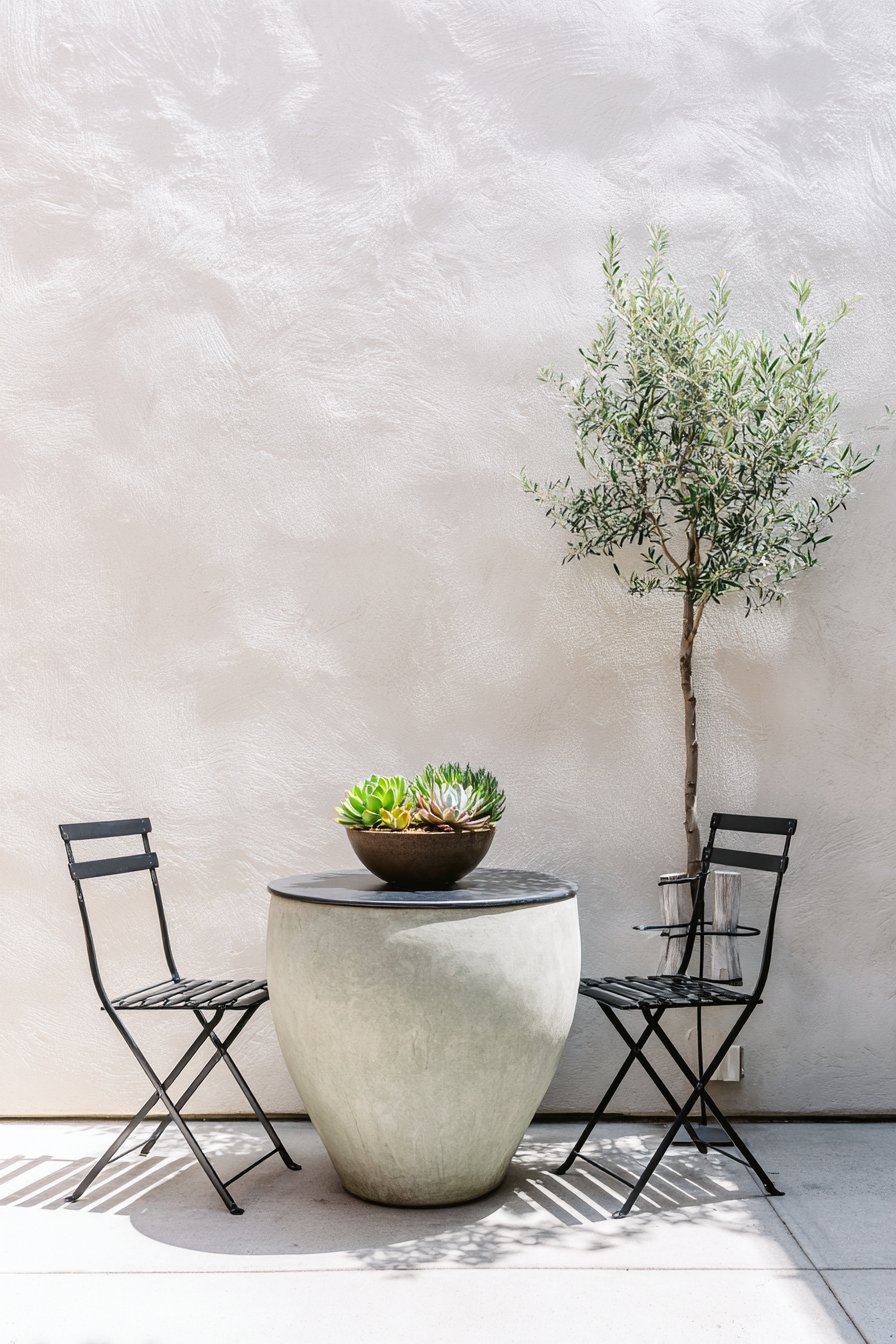
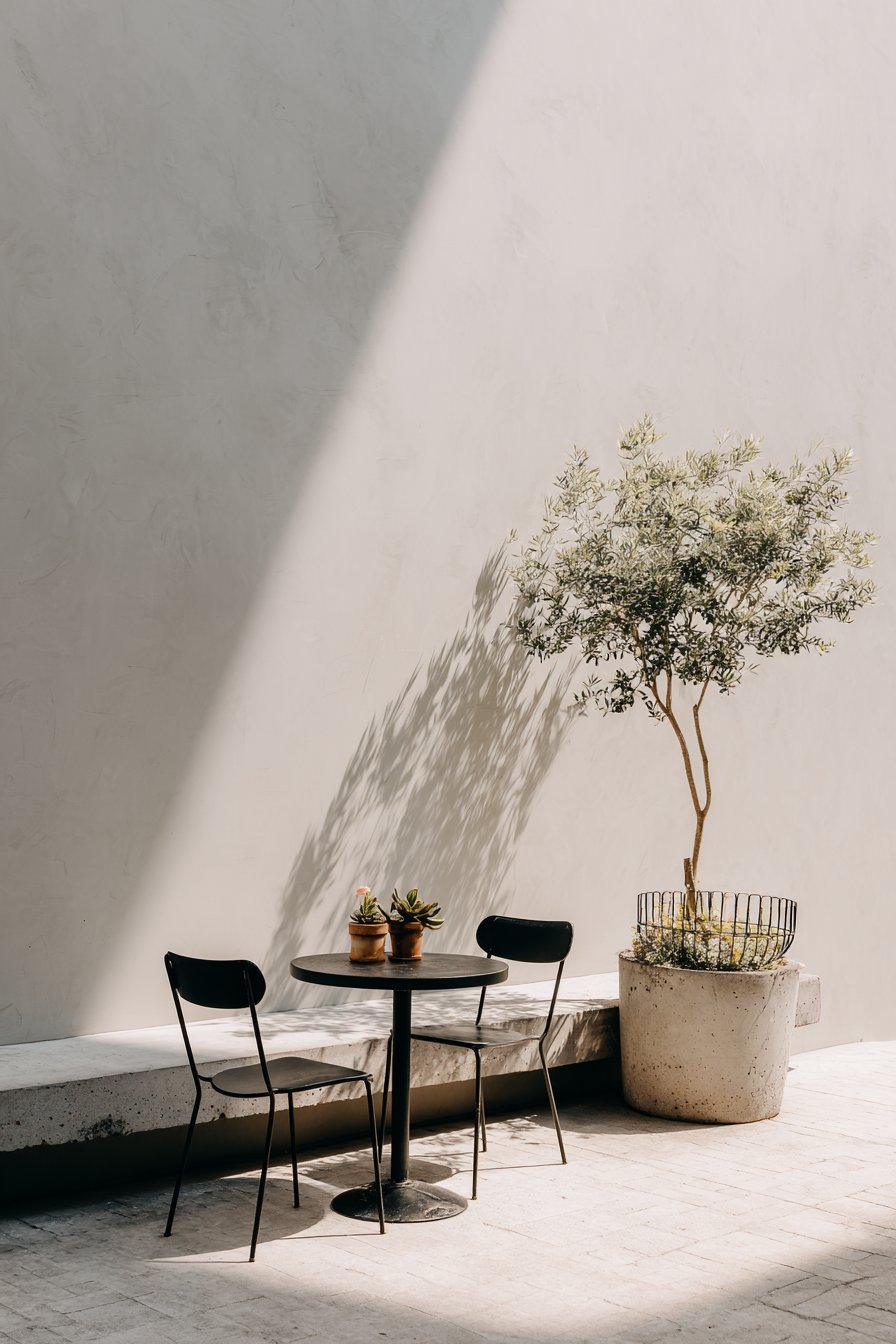
Minimalism in balcony design doesn’t mean sacrificing comfort or personality—it means editing down to essentials and celebrating the beauty of simplicity. This sleek metal bistro set arrangement demonstrates how restraint creates visual calm and spatial clarity. The two-chair, round-table configuration provides functional dining or work surface without overwhelming the available space, while the clean lines and simple silhouettes maintain an uncluttered aesthetic.
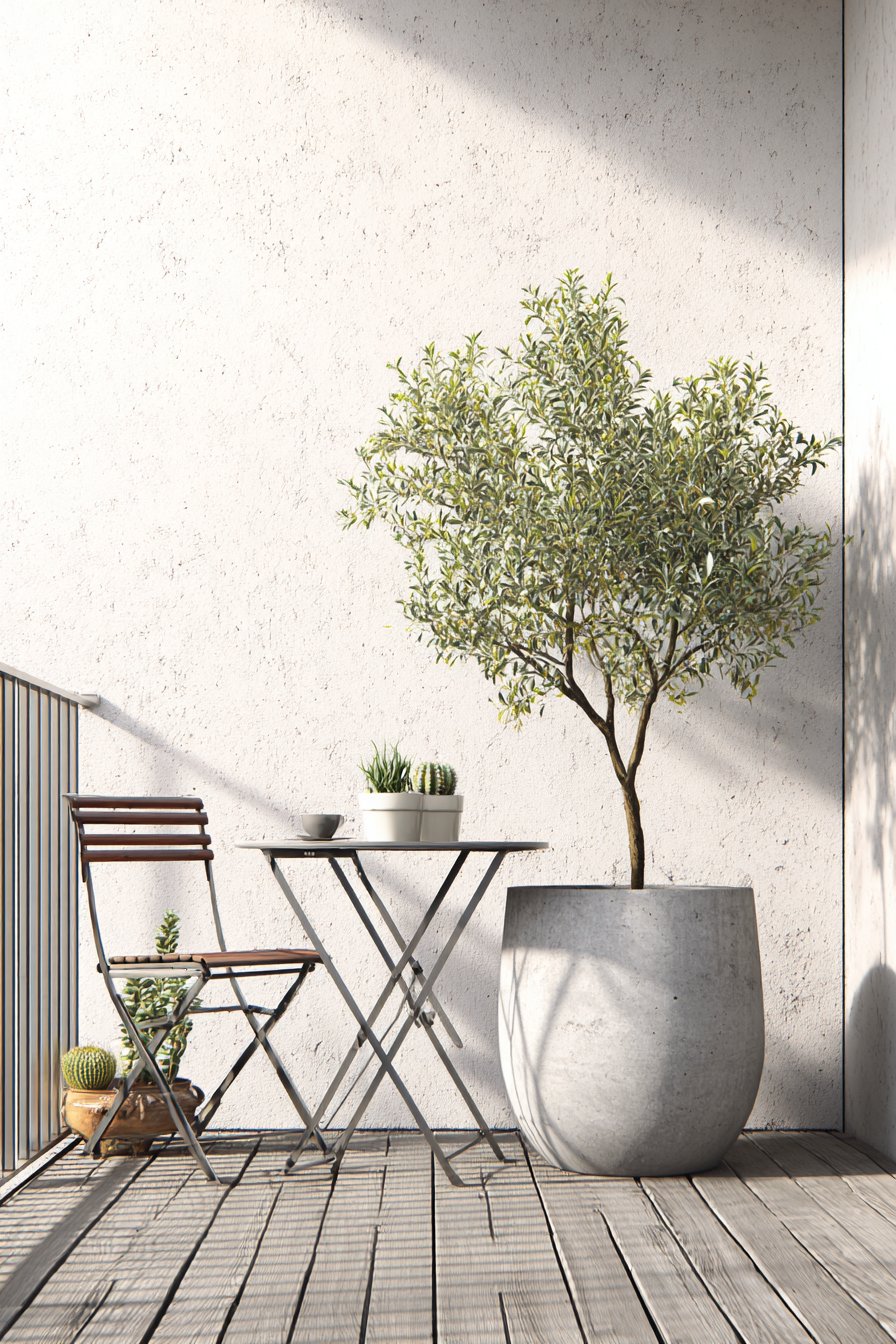
The statement olive tree in a large concrete planter introduces organic form and living greenery without the visual busyness of multiple smaller plants. This single focal point creates dramatic impact while reinforcing the minimalist principle of “less is more.” The concrete planter’s smooth, monolithic form complements the metal furniture, creating material harmony through industrial-modern elements. Its substantial weight also provides stability in windy conditions without requiring unsightly anchoring systems.
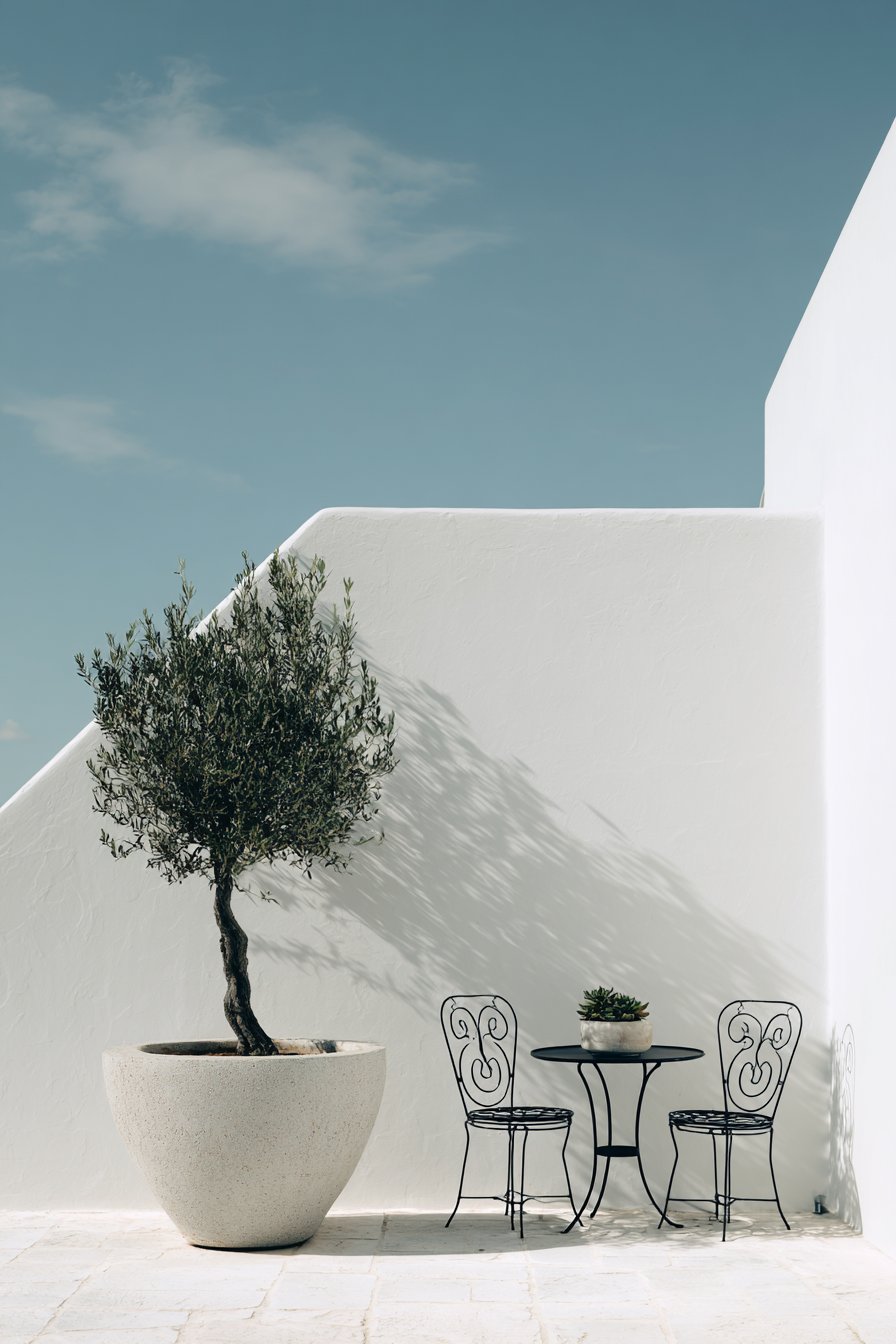
A simple wire plant stand elevates a curated succulent collection, adding subtle variation in height and introducing additional greenery at a smaller scale. Soft diffused natural lighting creates gentle shadows that emphasize clean lines and simple forms without harsh contrasts. The refined simplicity of this modern approach proves that minimalist design can feel warm and inviting rather than cold or sterile, especially when natural materials and living plants soften hard edges and introduce organic irregularity.
Key Design Tips:
- Choose furniture with powder-coated finishes in neutral colors for weather resistance and timeless appeal
- Select a single statement plant rather than multiple small specimens for greater visual impact
- Ensure the planter is proportionally sized to the tree—too small appears unstable, too large overwhelms
- Position furniture to create negative space, which is as important as the objects themselves in minimalist design
- Limit color palette to three tones maximum for cohesive, calming visual effect
- Use furniture with slim profiles and legs that don’t visually block the floor, maintaining spatial openness
4. Suspended Reading Nook Escape
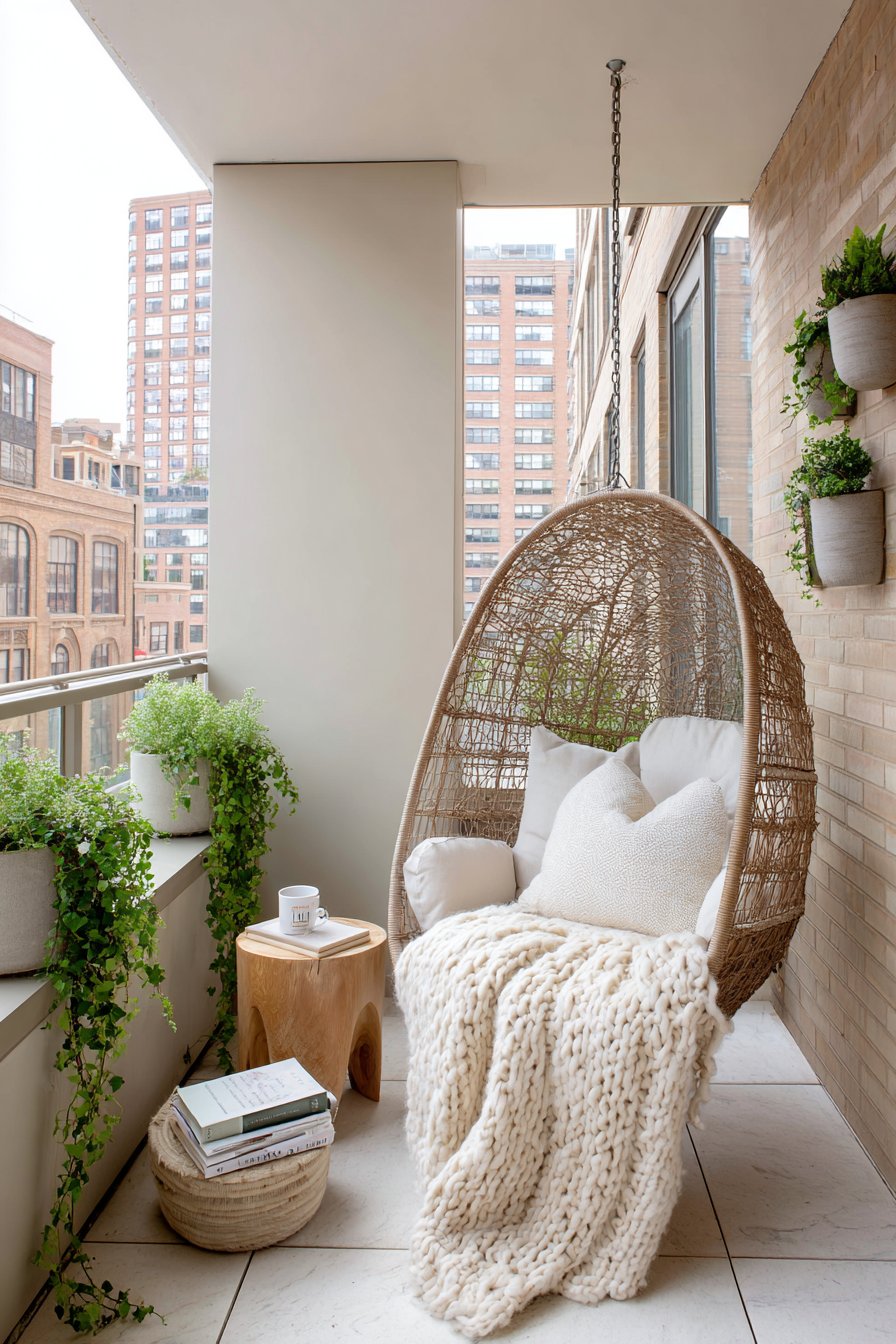
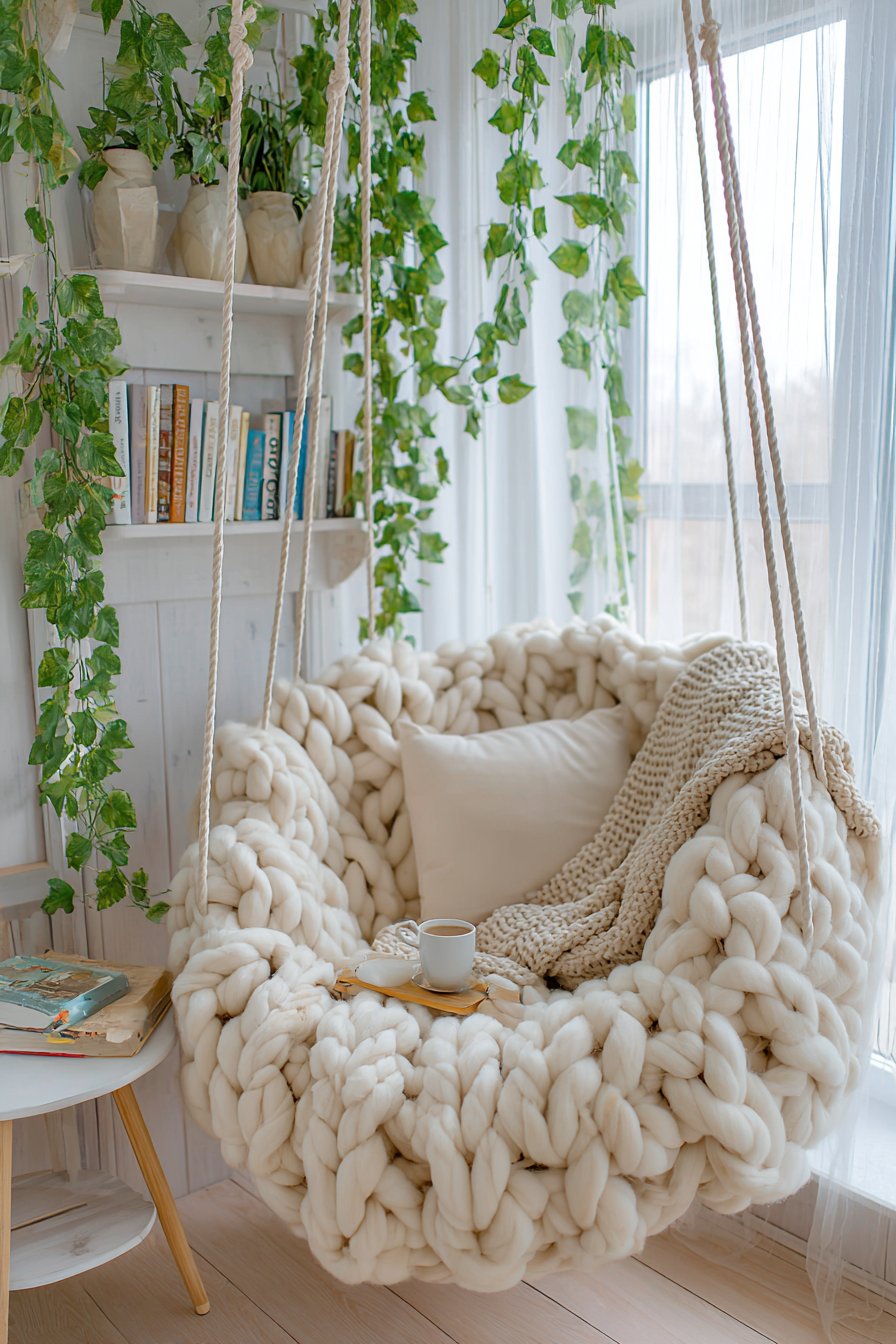
The hanging egg chair represents the ultimate in relaxed luxury, suspended from a reinforced ceiling mount to create a gently swaying retreat perfect for reading, napping, or quiet contemplation. This cozy configuration transforms a corner of your balcony into a dedicated relaxation zone, physically and psychologically separated from everyday concerns. The suspended nature provides subtle motion that many find soothing, while the enveloping form creates a sense of protection and privacy.
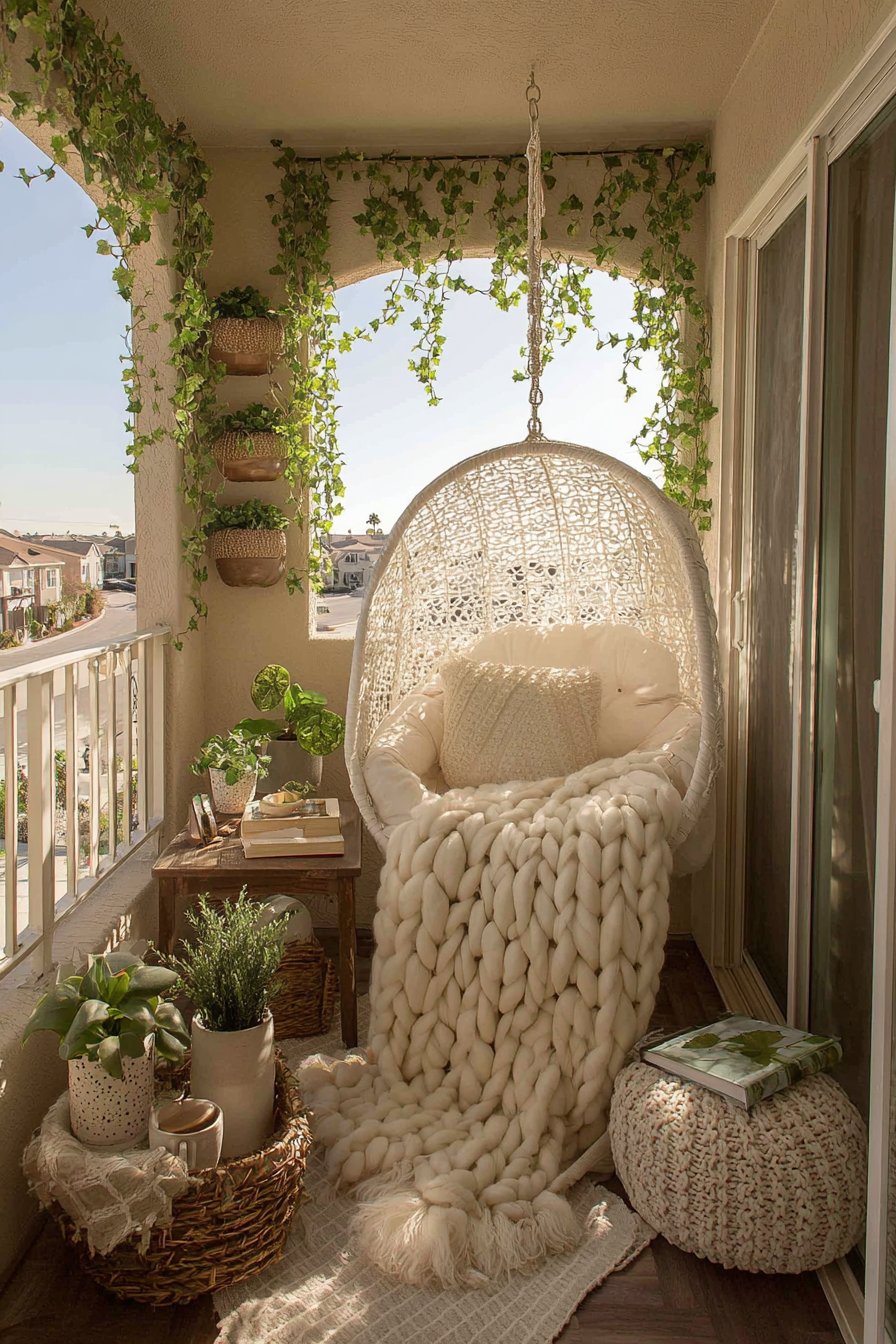
A chunky knit throw blanket in cream adds textural richness and practical warmth for cool mornings or evenings. The oversized weave creates dramatic visual interest at close range while maintaining a neutral color palette that won’t compete with surrounding elements. This textile layer transforms the chair from simple seating into an invitation to settle in with a book and lose track of time.
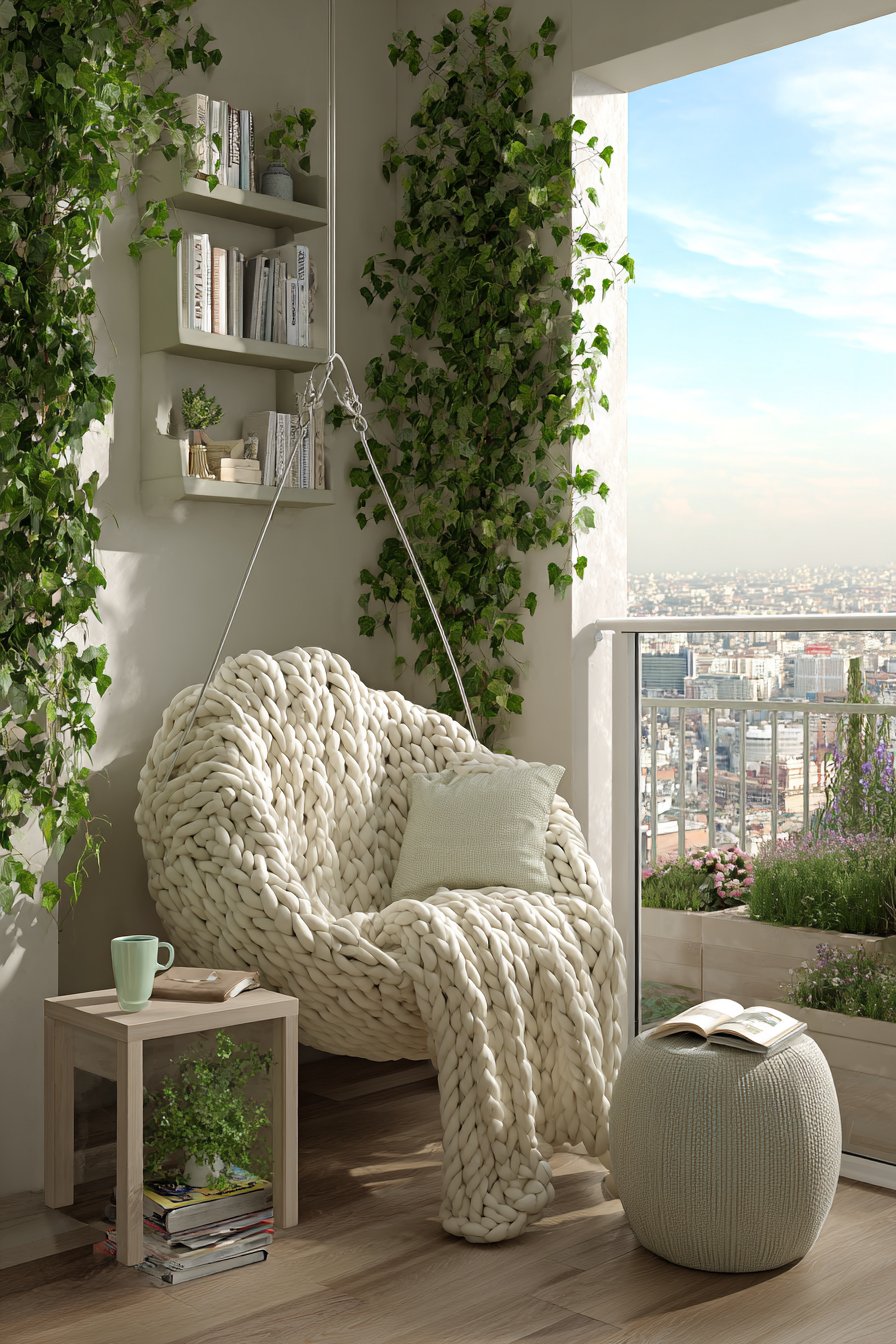
The small side table positioned within easy reach holds reading materials and morning coffee, providing necessary functionality without requiring you to leave your comfortable nest. Trailing potted ivy cascading from wall-mounted planters introduces living greenery at eye level when seated, creating a sense of being nestled within nature. Natural daylight streaming from the side provides ideal reading illumination while highlighting the interplay of textures—woven chair material, chunky knit fabric, and delicate trailing foliage.
Key Design Tips:
- Verify ceiling structure can support chair weight plus occupant before installation—consult professionals if uncertain
- Choose chairs with weather-resistant all-weather wicker or resin wicker rather than natural materials
- Position away from strong wind corridors to prevent excessive swaying and potential damage
- Add outdoor-rated cushions for additional comfort during extended reading sessions
- Install wall-mounted reading light for evening use to avoid dependency on portable lighting
- Select trailing plants with minimal maintenance requirements like pothos or ivy for effortless greenery
5. Living Wall Vertical Garden System
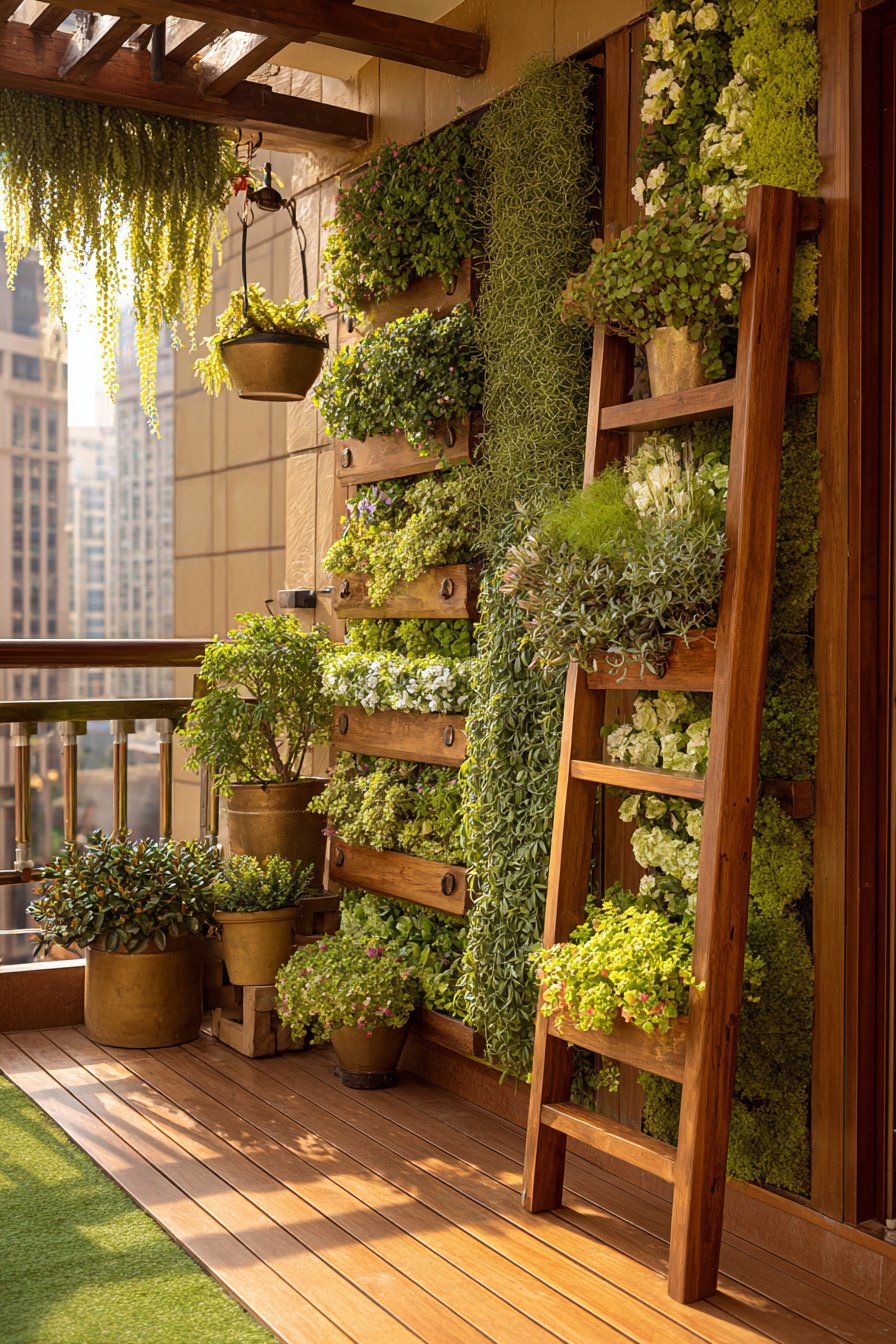
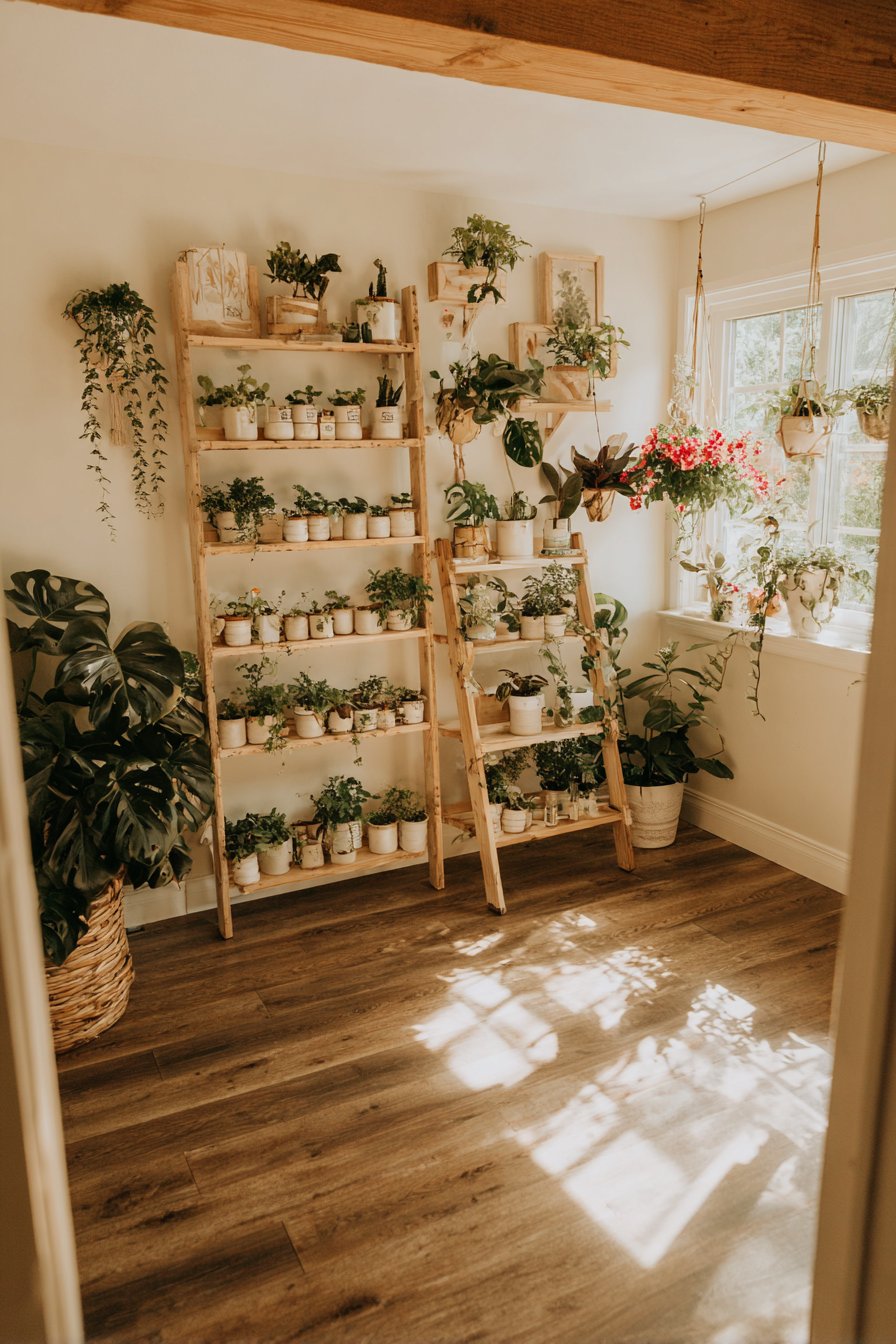
When horizontal space is limited, the solution is to grow upward. This vertical garden approach transforms blank wall space into a lush living installation using modular planting pockets that accommodate herbs, flowers, and trailing plants in a space-efficient configuration. The living wall system creates dramatic visual impact while providing practical benefits—improved air quality, natural cooling through plant transpiration, and fresh herbs steps from your kitchen.
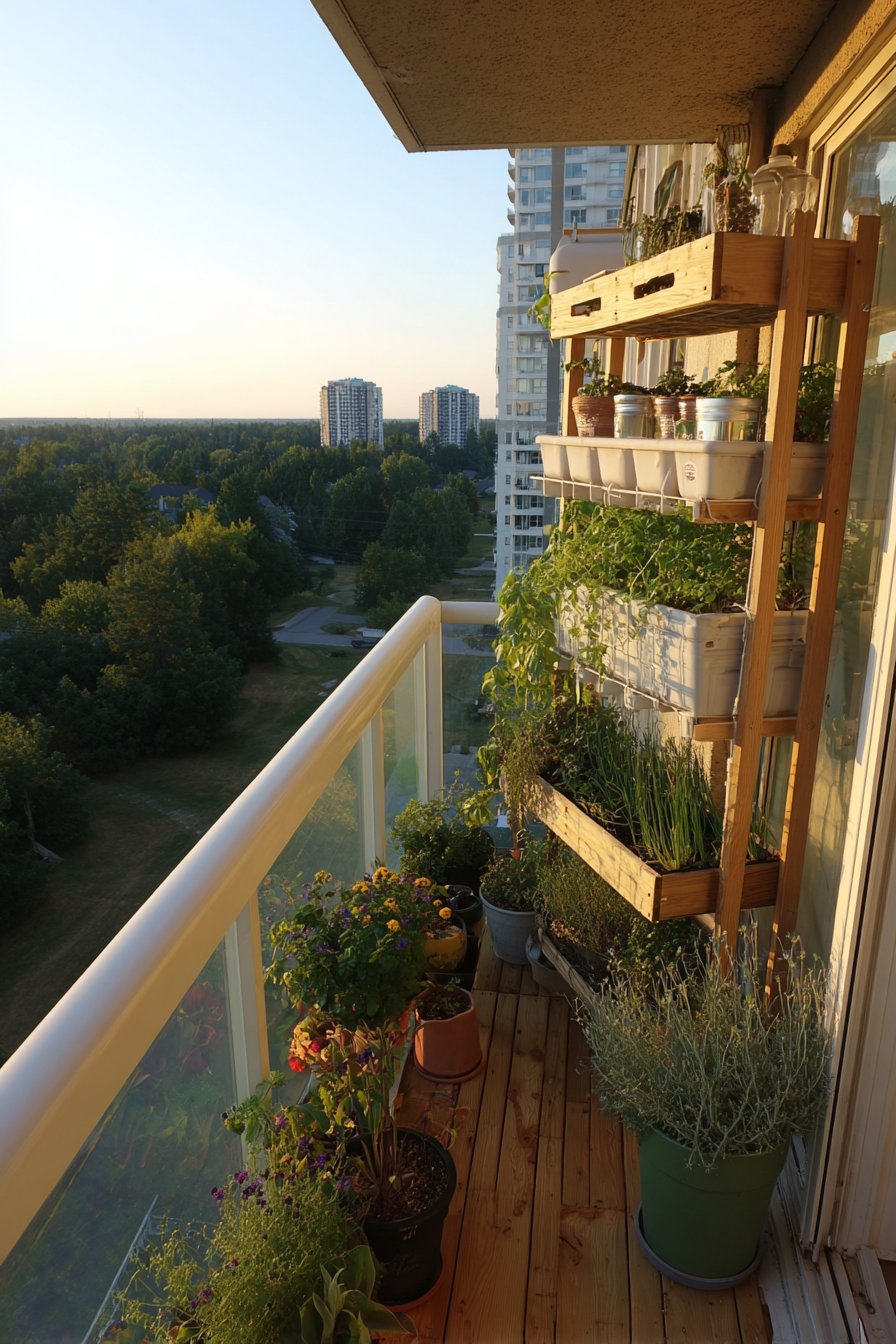
The wooden ladder shelf adds another dimension of vertical growing space, displaying additional potted plants at varying heights. This layered approach creates depth and visual complexity, with plants at multiple elevations drawing the eye upward and making the balcony feel more spacious. The combination of mounted wall system and freestanding ladder offers flexibility—you can easily rearrange ladder-displayed plants seasonally while the wall installation provides permanent structure.
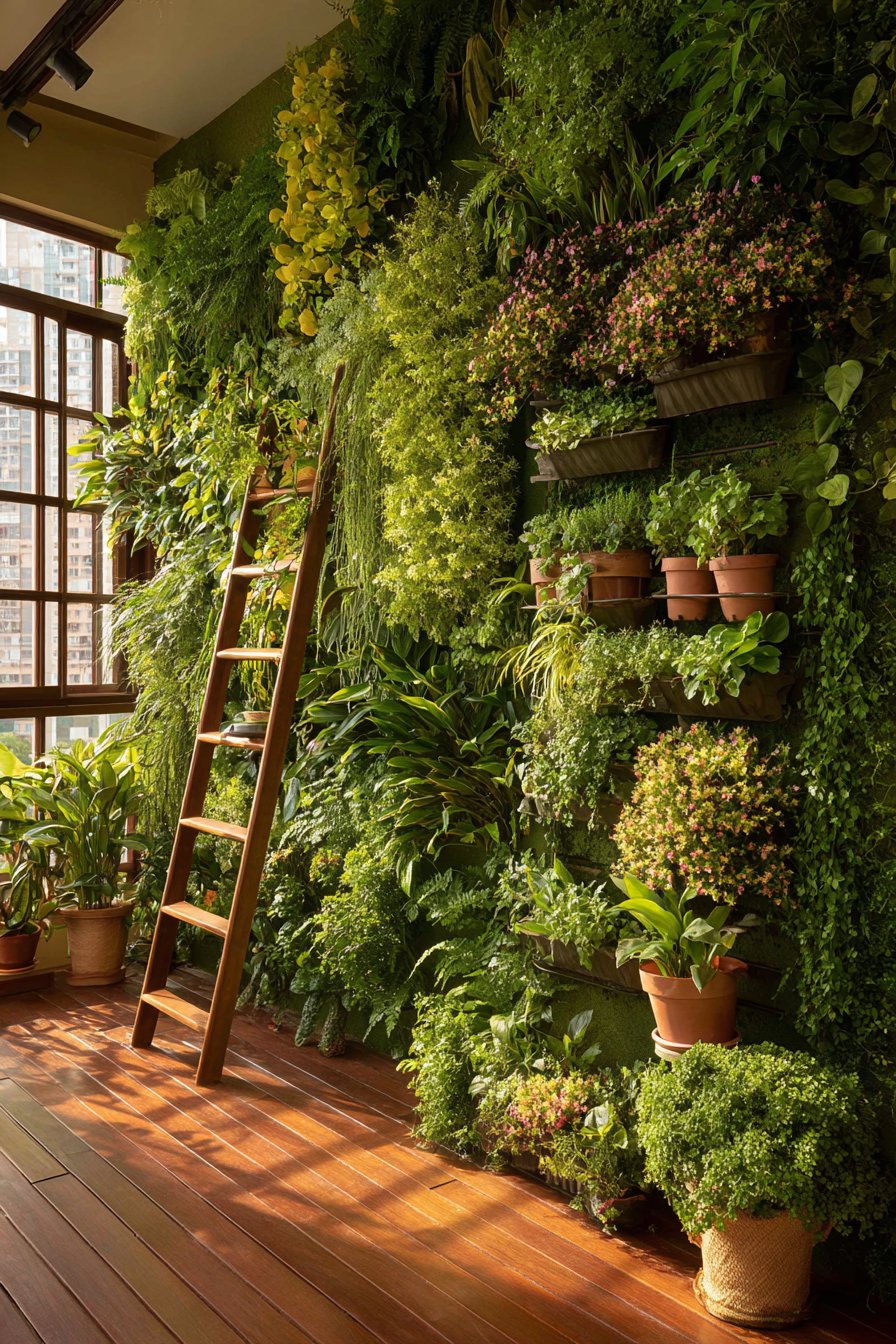
A subtly integrated drip irrigation system ensures consistent watering without daily manual effort, making this abundant garden achievable for busy lifestyles. Natural wood balcony flooring provides warmth and textural contrast to the verdant wall, grounding the composition with organic material that complements rather than competes with the greenery. Morning golden hour lighting highlights the lush wall, creating dramatic shadows and emphasizing the three-dimensional nature of the installation as low-angle sunlight skims across the varied leaf surfaces.
Key Design Tips:
- Select wall systems with built-in water reservoirs and drainage to prevent structural water damage
- Mix plant varieties with different growth habits—upright, trailing, and bushy—for visual diversity
- Start with hardy, forgiving plants like herbs and succulents before advancing to more demanding varieties
- Ensure adequate sunlight reaches all vertical levels by choosing appropriately sized plants
- Install wall systems on battens to create air circulation space behind planters, preventing mold
- Group plants with similar water and light requirements in the same vertical zones for easier maintenance
6. Intimate Dining Under String Lights
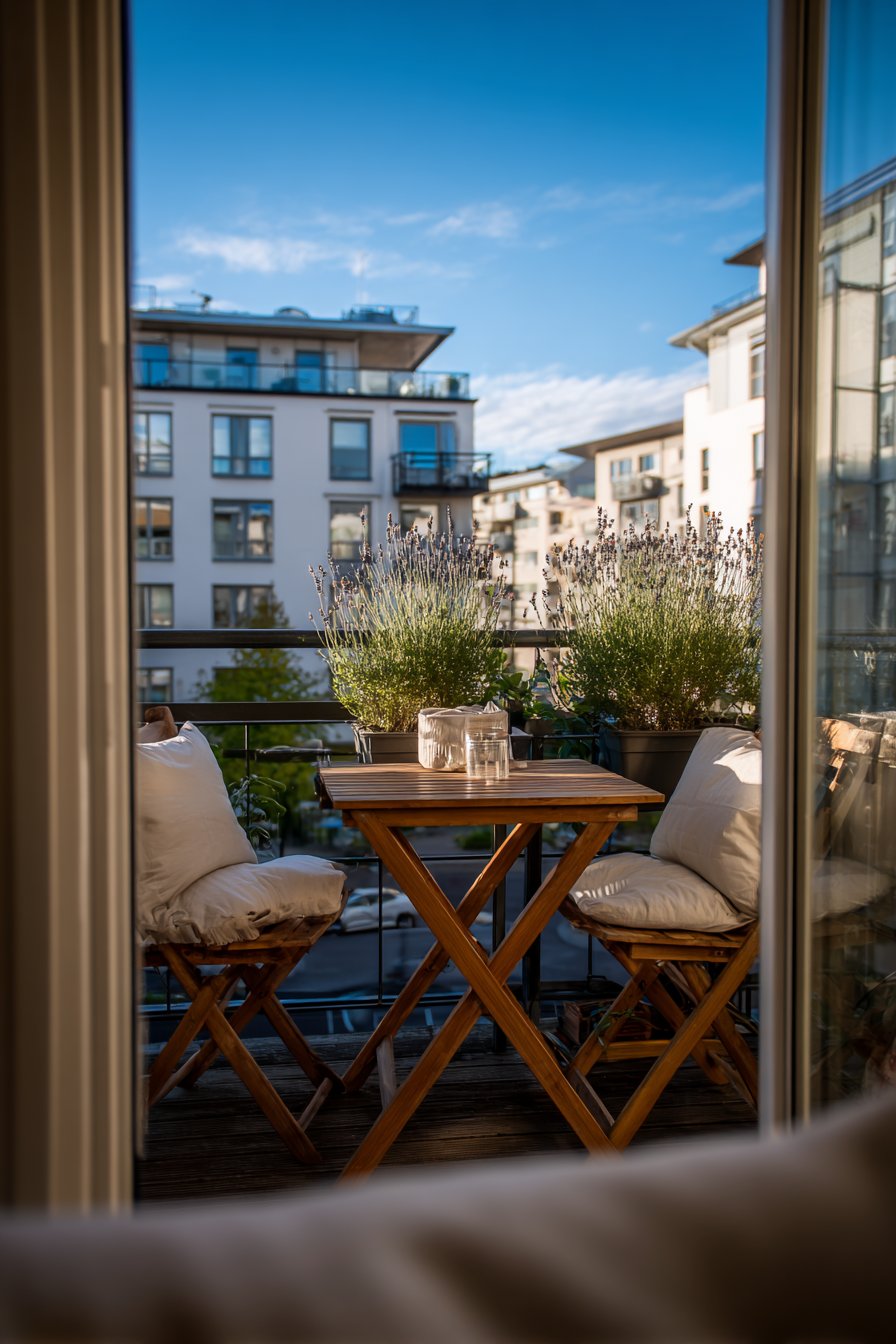
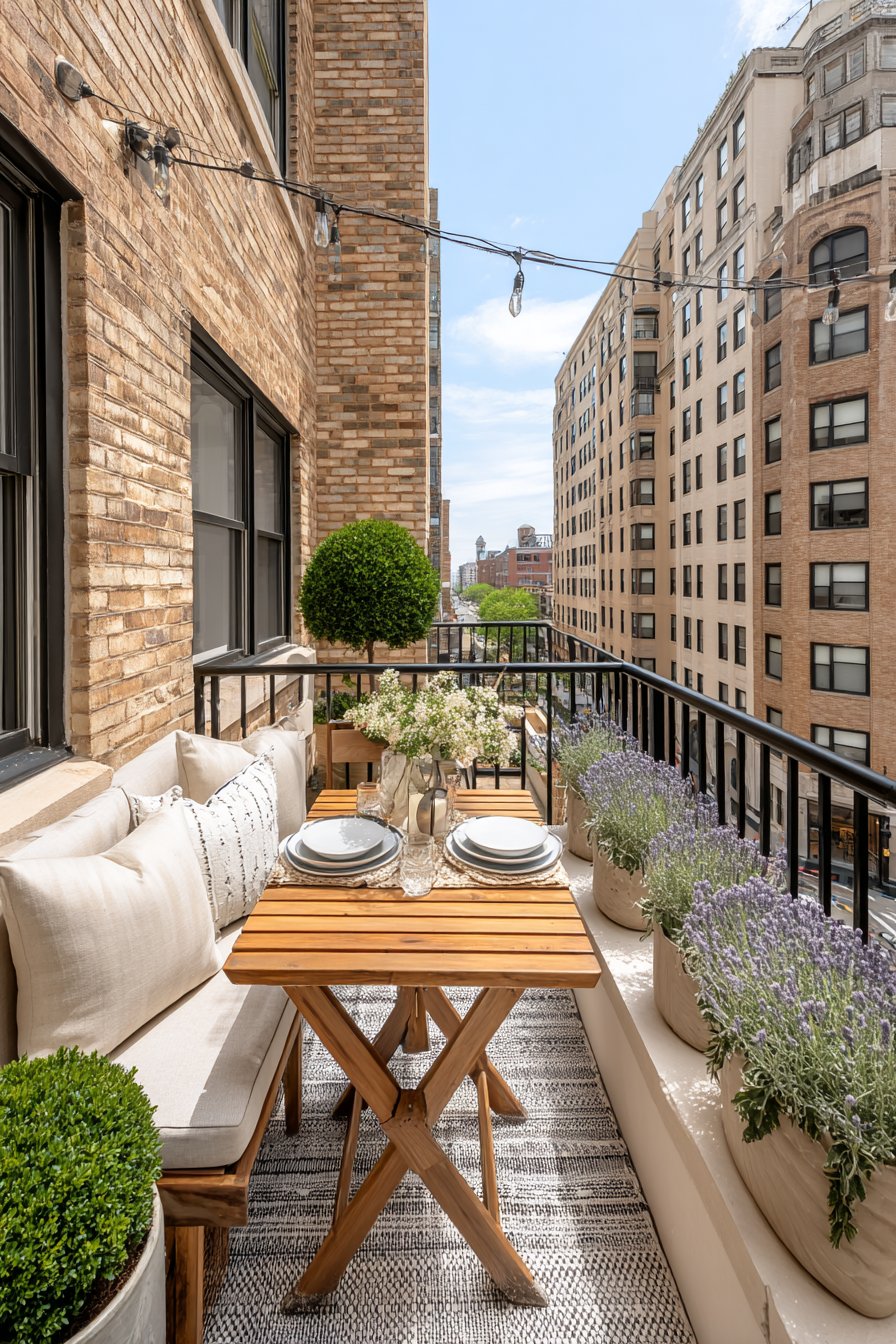
Creating an outdoor dining experience doesn’t require restaurant-sized space—just thoughtful furniture selection and atmospheric lighting. This dining-focused setup features a space-saving folding wooden table that can be collapsed and stored when not in use, maximizing flexibility in how you use your limited square footage. Paired with two bistro chairs, this configuration comfortably accommodates intimate meals while maintaining an open, uncluttered feel when dining furniture isn’t needed.
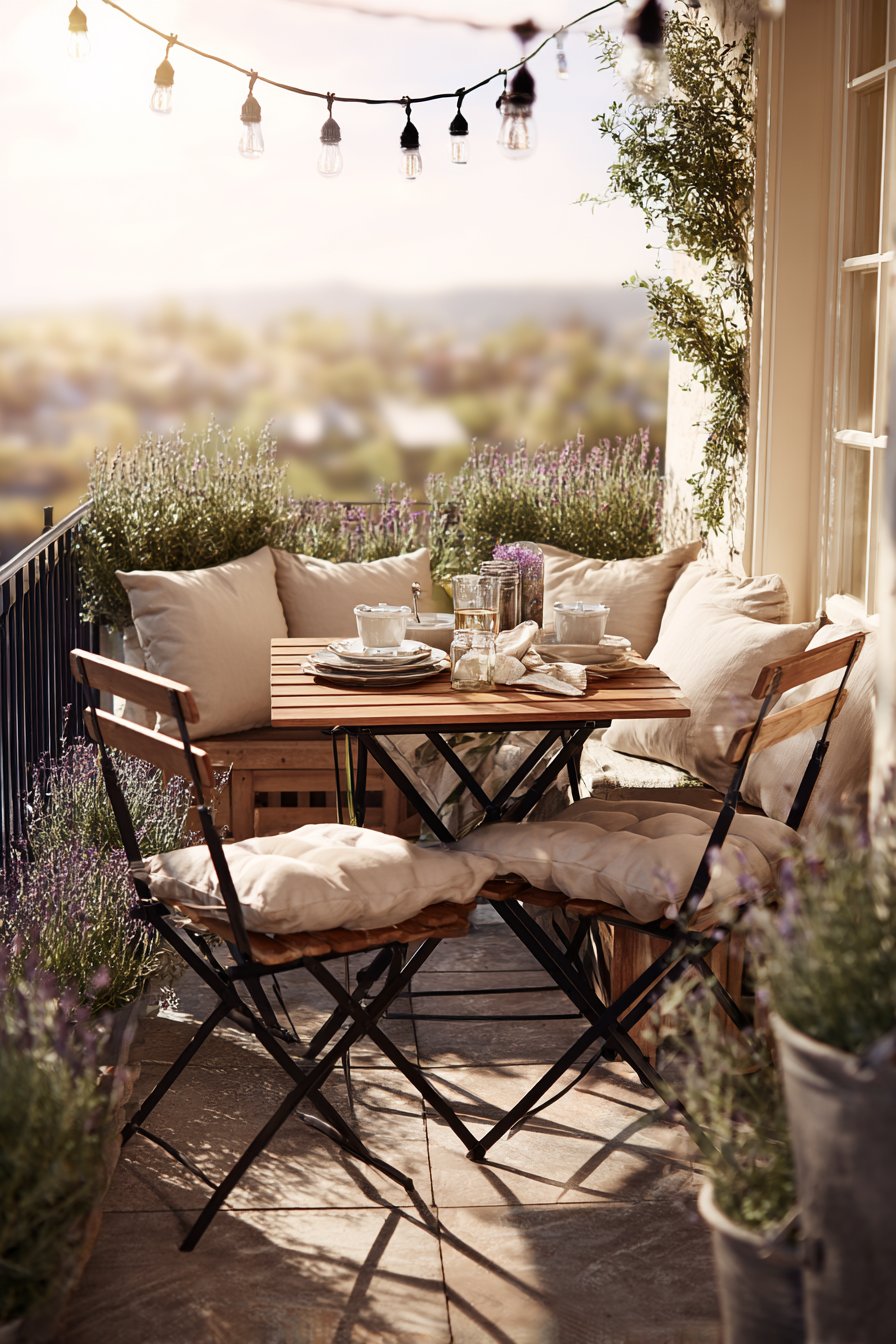
Hanging string lights create overhead ambiance that transforms the space as daylight fades. The warm glow establishes a romantic, festive atmosphere perfect for evening entertaining or quiet dinners for two. Unlike harsh overhead lighting, string lights provide gentle, diffused illumination that flatters faces and creates inviting warmth. The lights themselves become decorative elements even when unlit, adding visual interest through their draped arrangement.
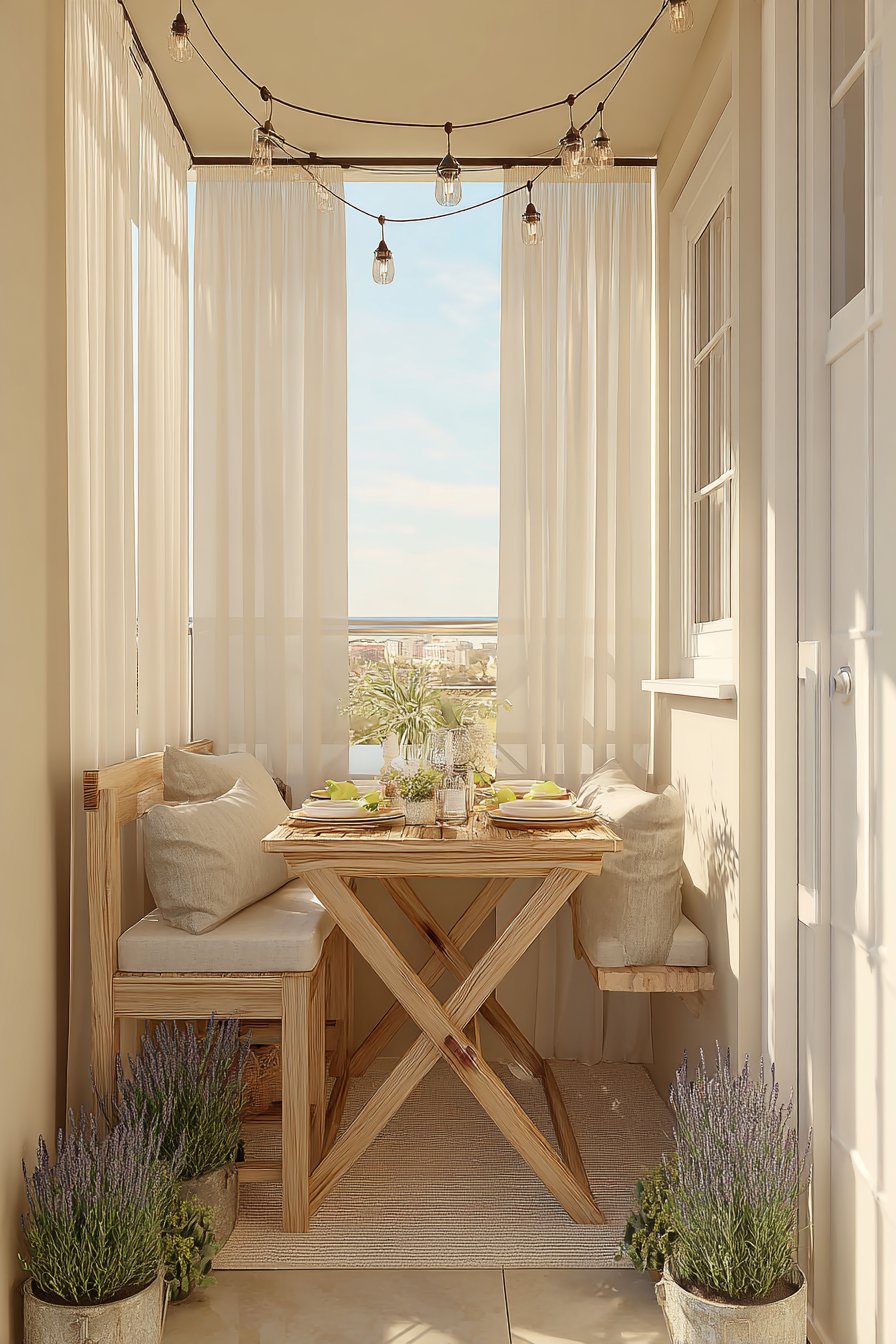
Potted lavender and rosemary plants frame the dining area, engaging the olfactory sense with their aromatic oils released on warm evenings. These Mediterranean herbs thrive in sunny balcony conditions while serving double duty as both decorative elements and culinary ingredients. Neutral-toned outdoor cushions on the bistro chairs add comfort for extended meals, encouraging lingering conversations over coffee. Late afternoon natural light creates a warm, inviting atmosphere, while the strategic plant placement defines the dining zone within the larger balcony space.
Key Design Tips:
- Choose folding tables with locking mechanisms to ensure stability during use
- Select LED string lights with warm white bulbs (2700K) for flattering, restaurant-quality ambiance
- Install dimmer switches or choose lights with multiple brightness settings for atmosphere control
- Use weatherproof outdoor-rated string lights with proper electrical safety certifications
- Plant herbs in containers with drainage holes to prevent root rot in rainy conditions
- Position dining area to capture evening breezes for natural cooling during summer meals
7. Bamboo-Screened Private Sanctuary
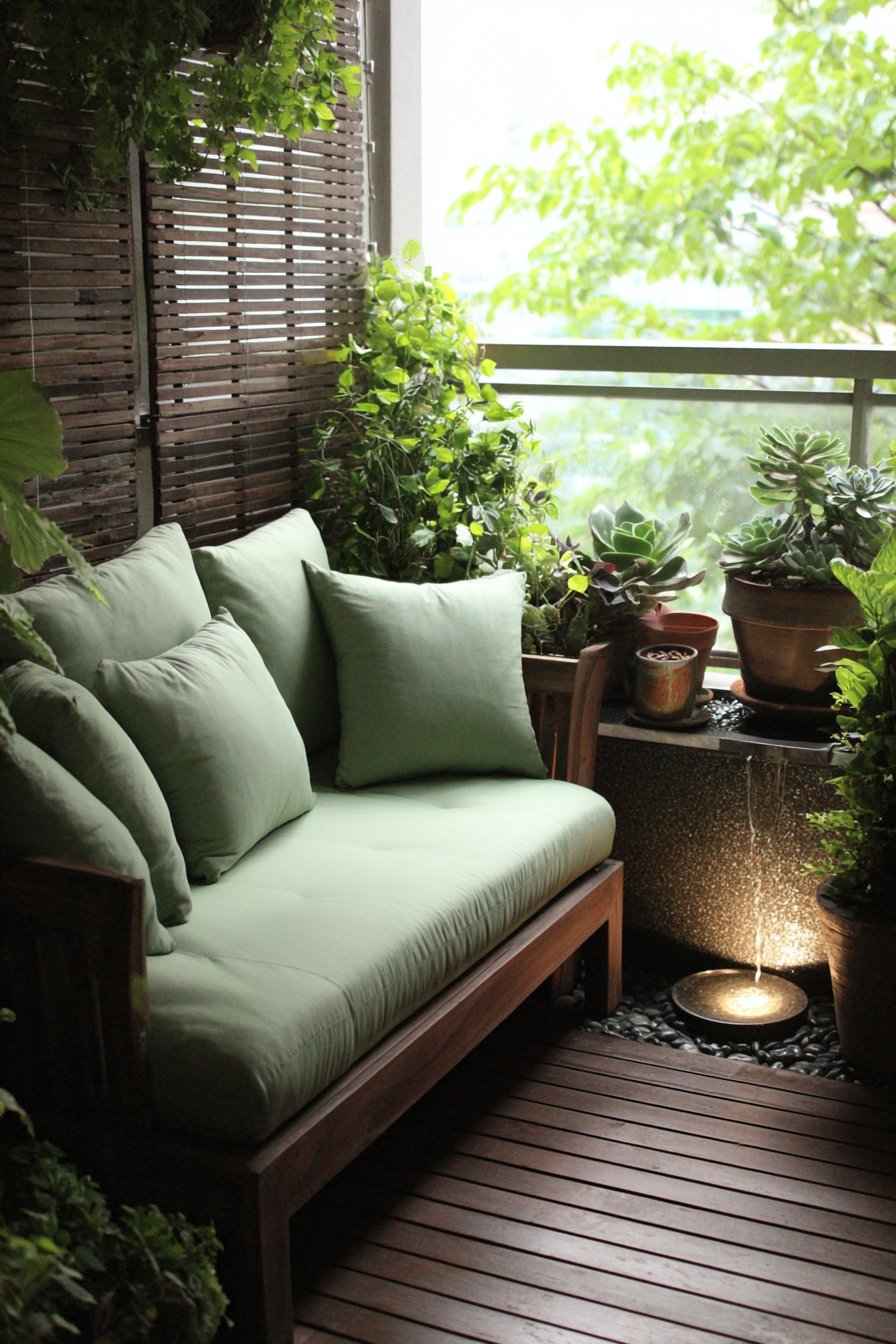
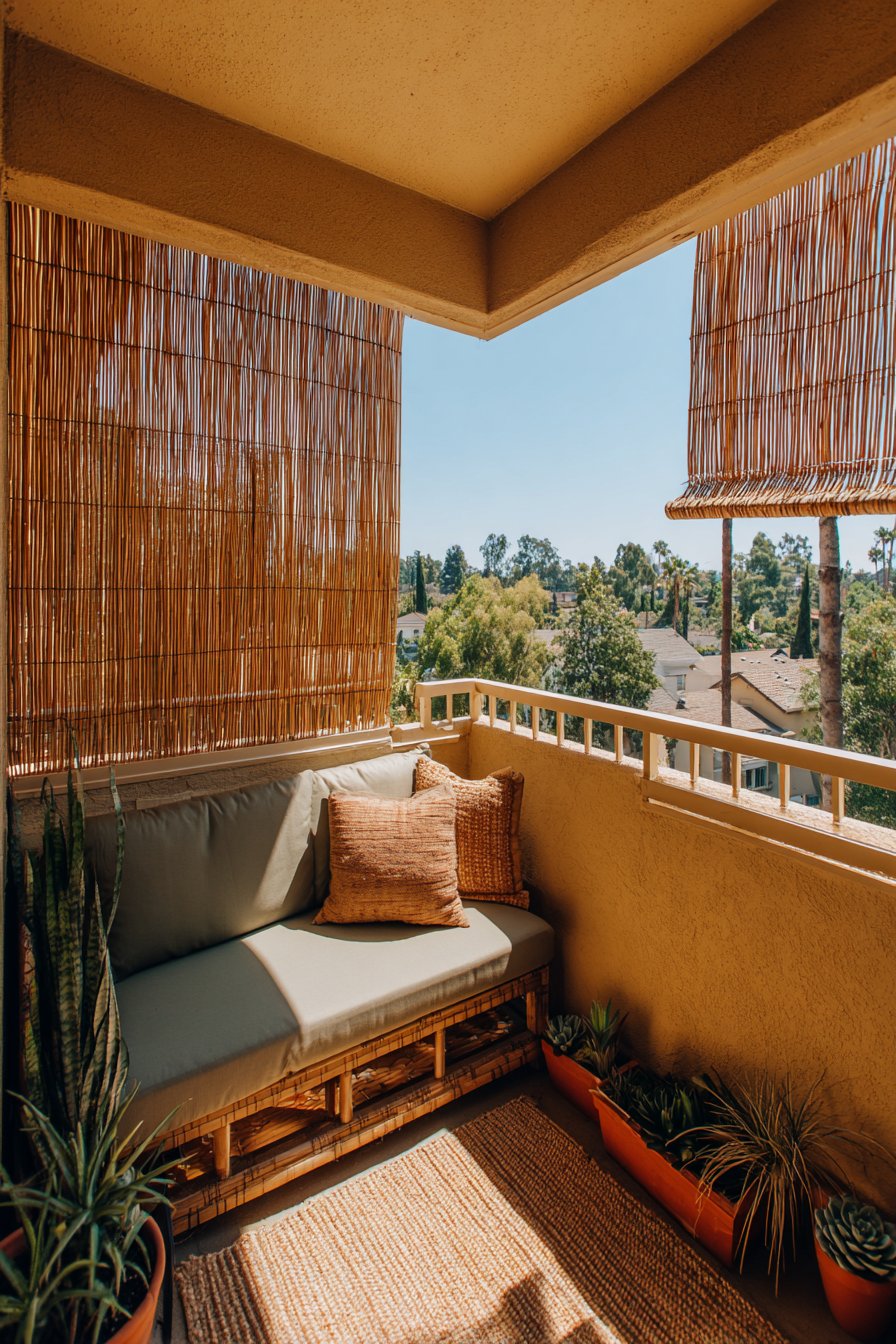
Privacy concerns often limit balcony enjoyment, especially in urban settings with neighboring balconies in close proximity. This privacy-focused design employs bamboo screens on two sides, creating an enclosed sanctuary that feels protected from outside observation without sacrificing airflow or natural light. The natural bamboo material introduces organic texture and warm tones while the vertical lines create visual height, making the space feel more expansive.
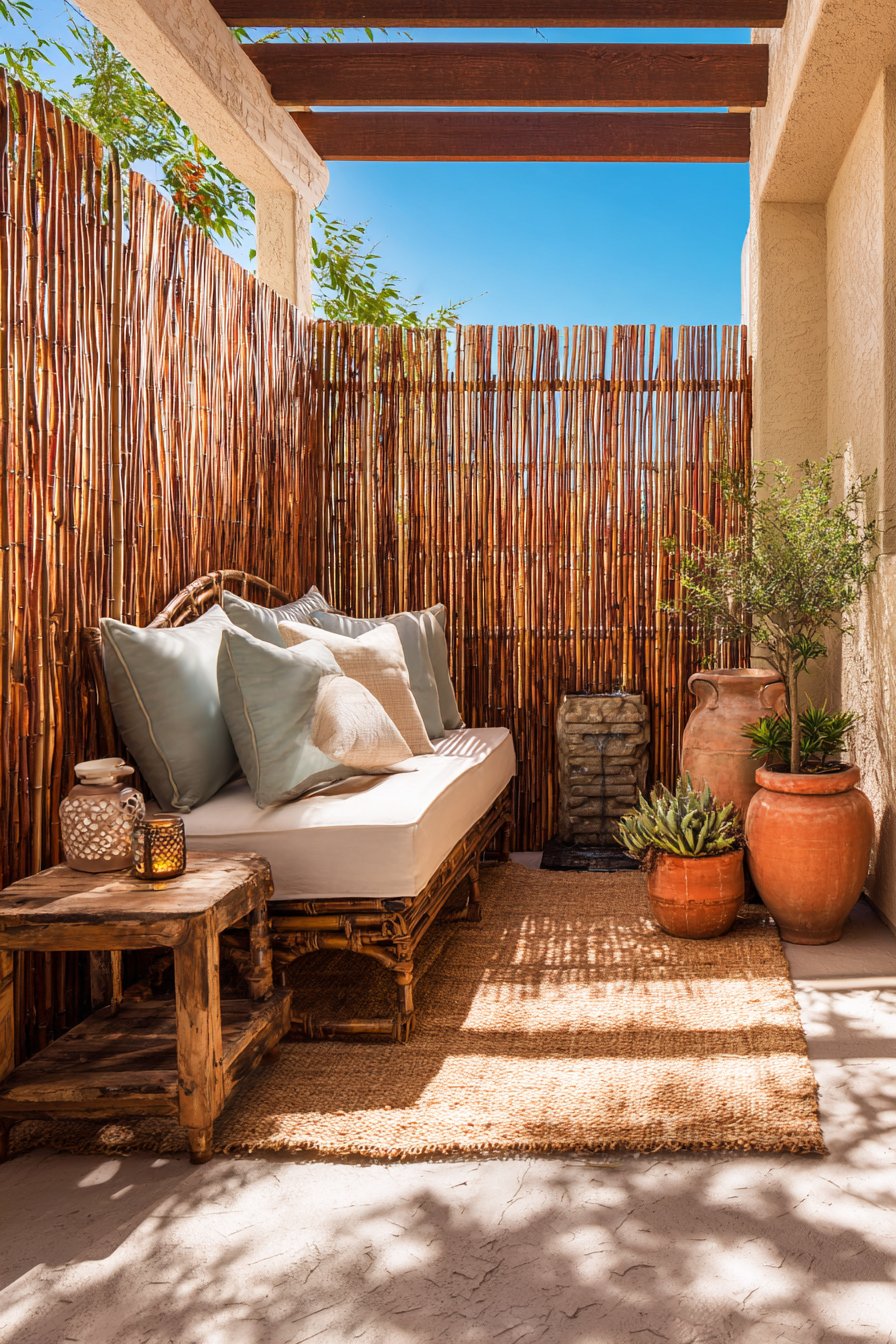
The comfortable outdoor sofa with water-resistant cushions in sage green provides generous seating for relaxation or entertaining. The upholstered comfort rivals indoor furniture while materials withstand outdoor exposure. Sage green represents an ideal balcony color choice—it complements natural greenery, creates calming atmosphere, and doesn’t show dirt as readily as pure white or very dark tones.
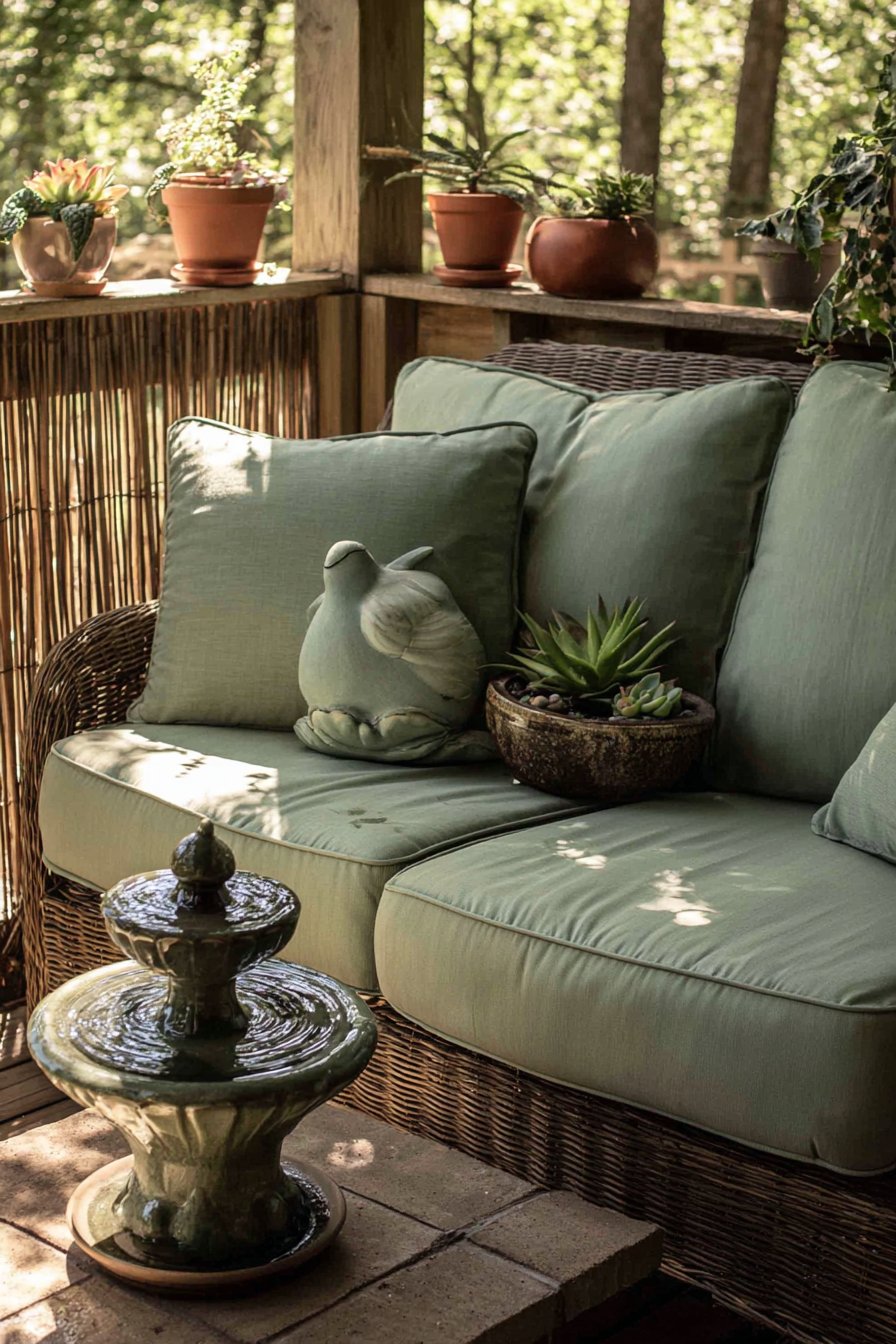
A small water fountain feature introduces tranquil sound that masks urban noise pollution while creating a spa-like sensory experience. The gentle trickling provides acoustic privacy, making conversations feel more intimate while the visual movement of water adds dynamic interest. Mixed succulent arrangements in terracotta pots contribute additional greenery without demanding intensive maintenance. Soft filtered natural lighting through bamboo creates dappled shadow patterns that shift throughout the day, enhancing the secluded retreat atmosphere through constantly changing light quality.
Key Design Tips:
- Secure bamboo screens with robust mounting hardware rated for wind loads in your area
- Choose solar-powered fountain to eliminate electrical cord clutter and installation complexity
- Select quick-draining outdoor sofa cushions to prevent mold growth after rain exposure
- Position water feature where sound reaches seating area without overwhelming conversation
- Plant succulents in well-draining cactus soil mix to prevent overwatering issues
- Clean bamboo screens seasonally with mild soap solution to prevent weather deterioration
8. Vibrant Multi-Color Energy Boost
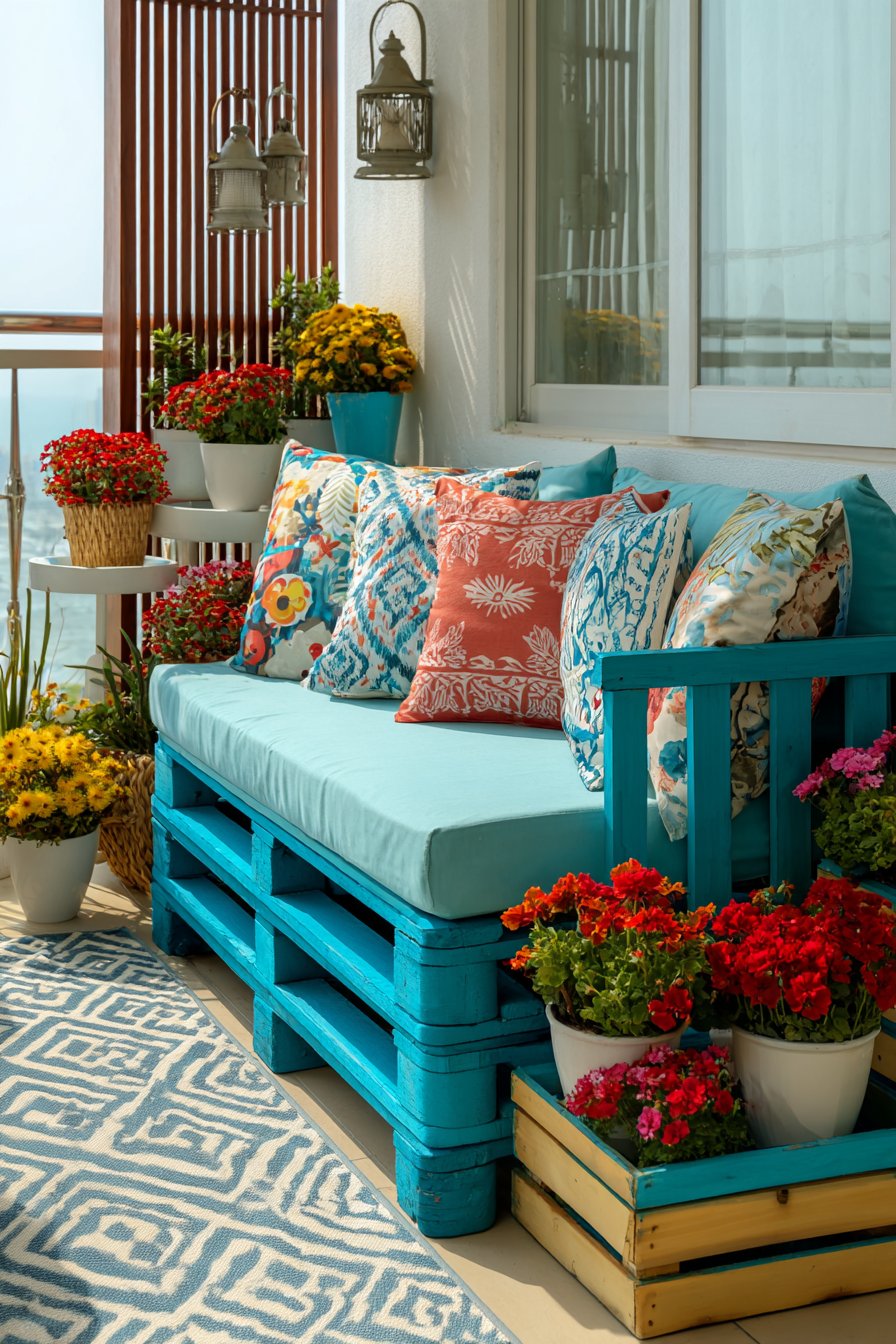
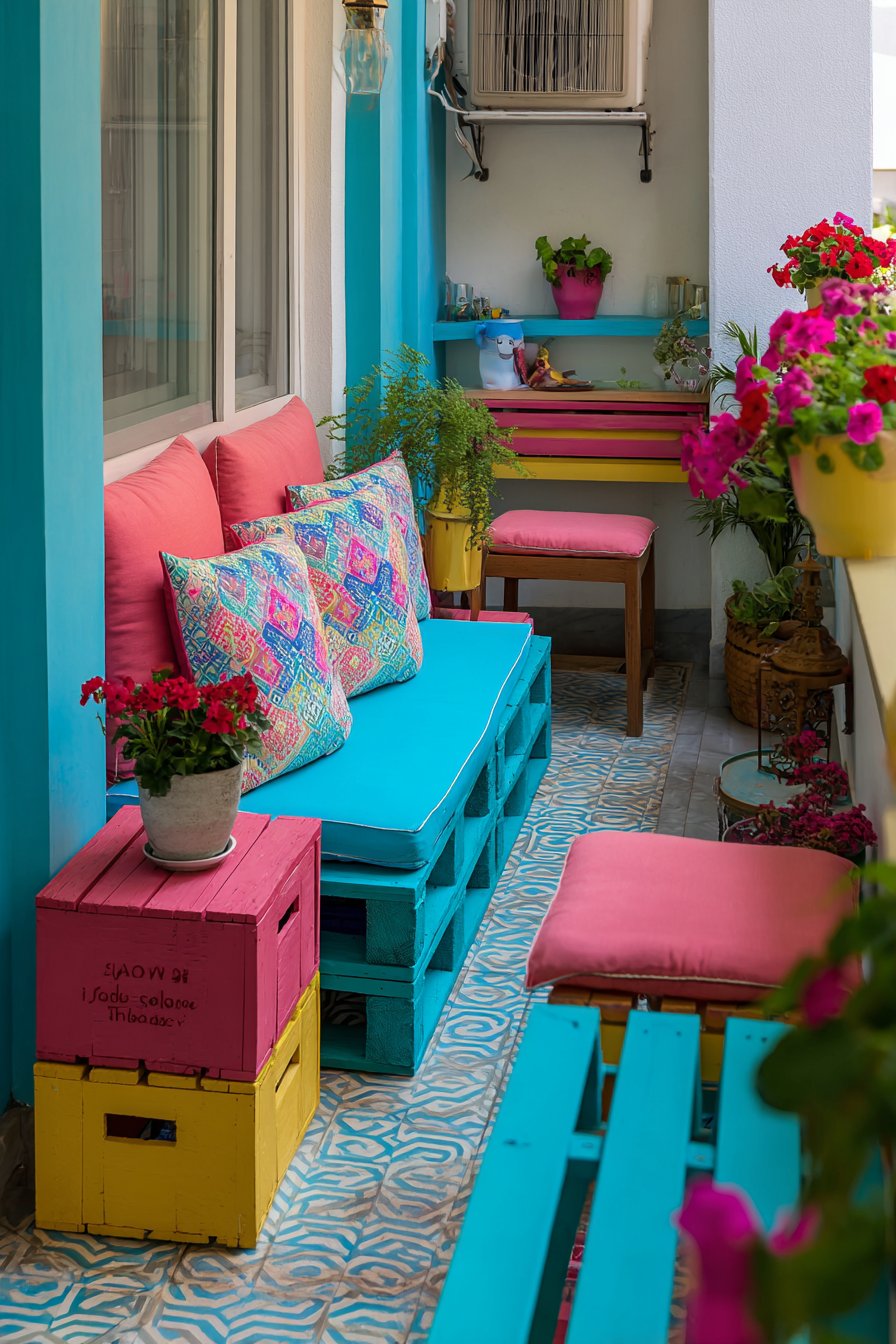
For personalities that thrive on color and energy, this vibrant approach embraces bold hues and pattern mixing. Turquoise and coral outdoor furniture creates a striking complementary color combination that energizes the space and reflects tropical, coastal influences. The saturated colors make a confident statement that’s impossible to ignore, transforming the balcony into a celebration of personality and joy.
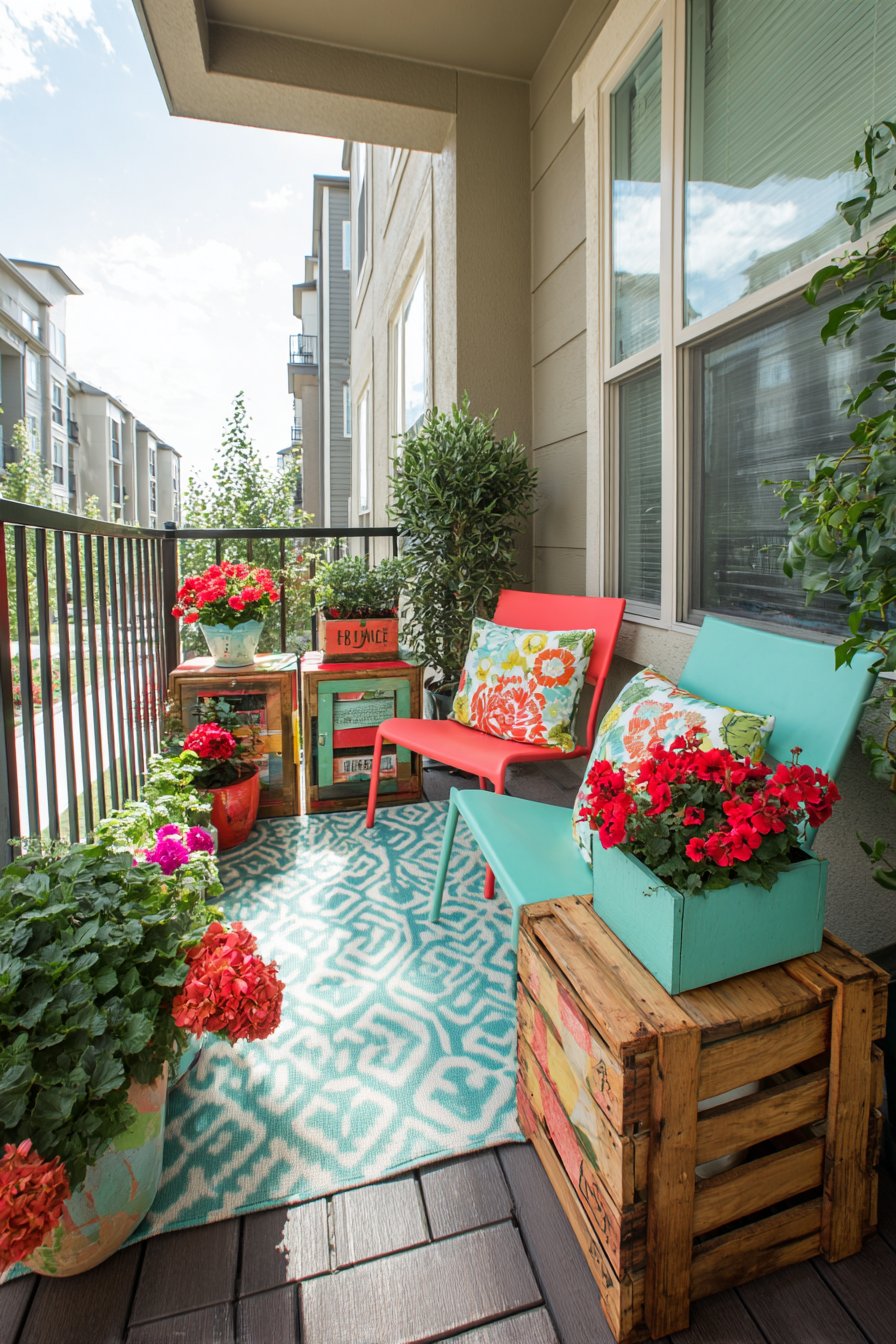
Patterned outdoor pillows in coordinating colors add visual complexity and textural interest. Mixing patterns—stripes with geometrics, florals with abstracts—requires careful color coordination to avoid chaos. By maintaining a consistent color story of turquoise, coral, and neutral accents, multiple patterns can coexist harmoniously. These textile layers allow for easy seasonal updates or mood changes by simply swapping pillow covers.
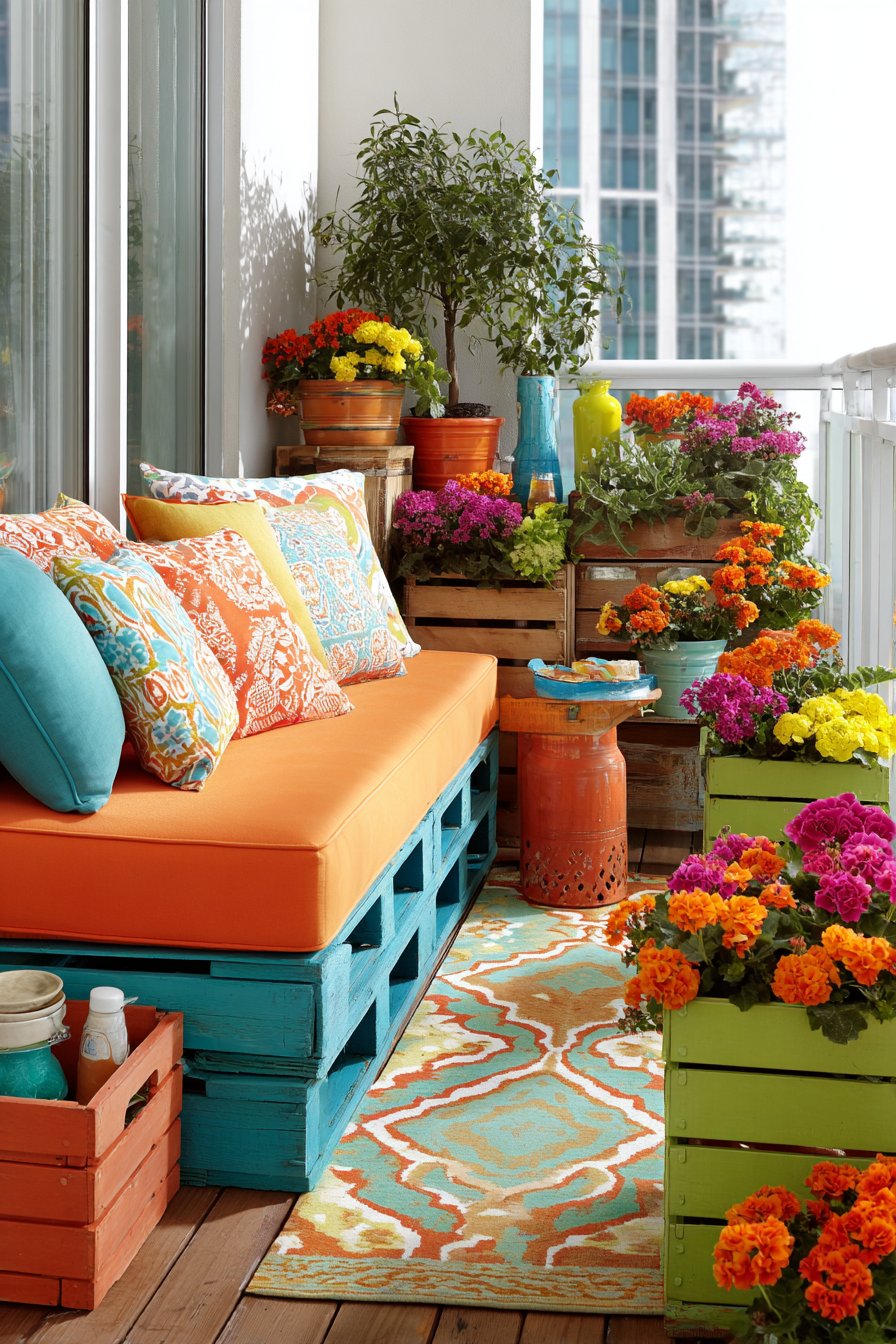
Painted wooden crates serving as plant stands demonstrate creative repurposing while adding handcrafted charm. Bright geraniums and petunias in containers provide living color that echoes and amplifies the furniture palette. The decorative outdoor rug in geometric pattern anchors the seating area, defining the space while introducing additional pattern at a larger scale. Bright midday natural light showcases the cheerful color palette at its most vibrant, though the energetic scheme remains engaging even under overcast skies or evening lighting.
Key Design Tips:
- Select outdoor fabrics with UV-resistant properties to prevent rapid color fading in direct sunlight
- Test color combinations with sample swatches in your actual balcony lighting before committing
- Balance bright furniture colors with some neutral elements to prevent visual overwhelm
- Choose flowering plants that bloom continuously rather than single-season varieties for sustained color
- Seal painted wooden crates with exterior-grade polyurethane to protect against weather damage
- Position brightest colors where they’ll catch morning or evening light for maximum visual impact
9. Modern Industrial Urban Edge
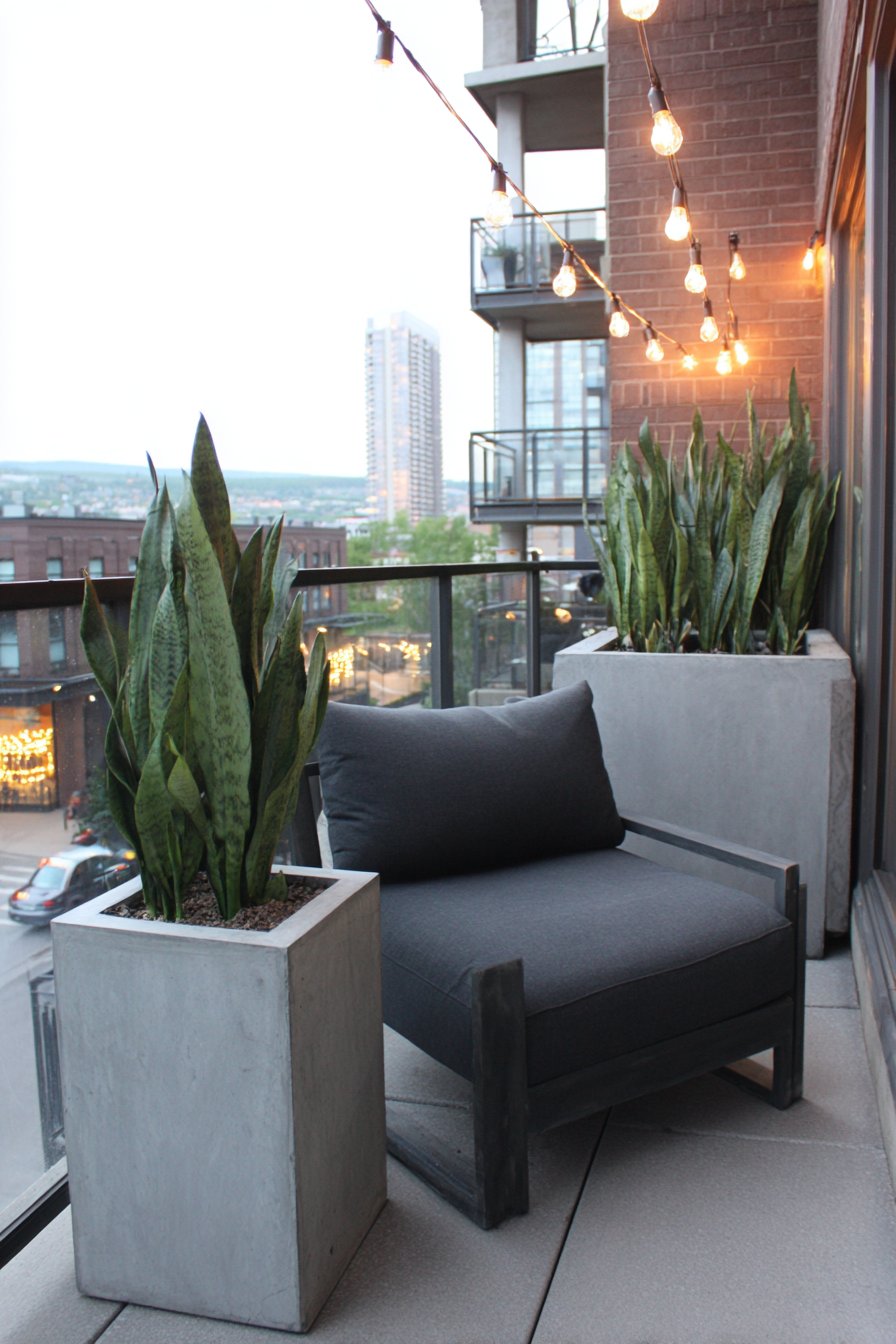
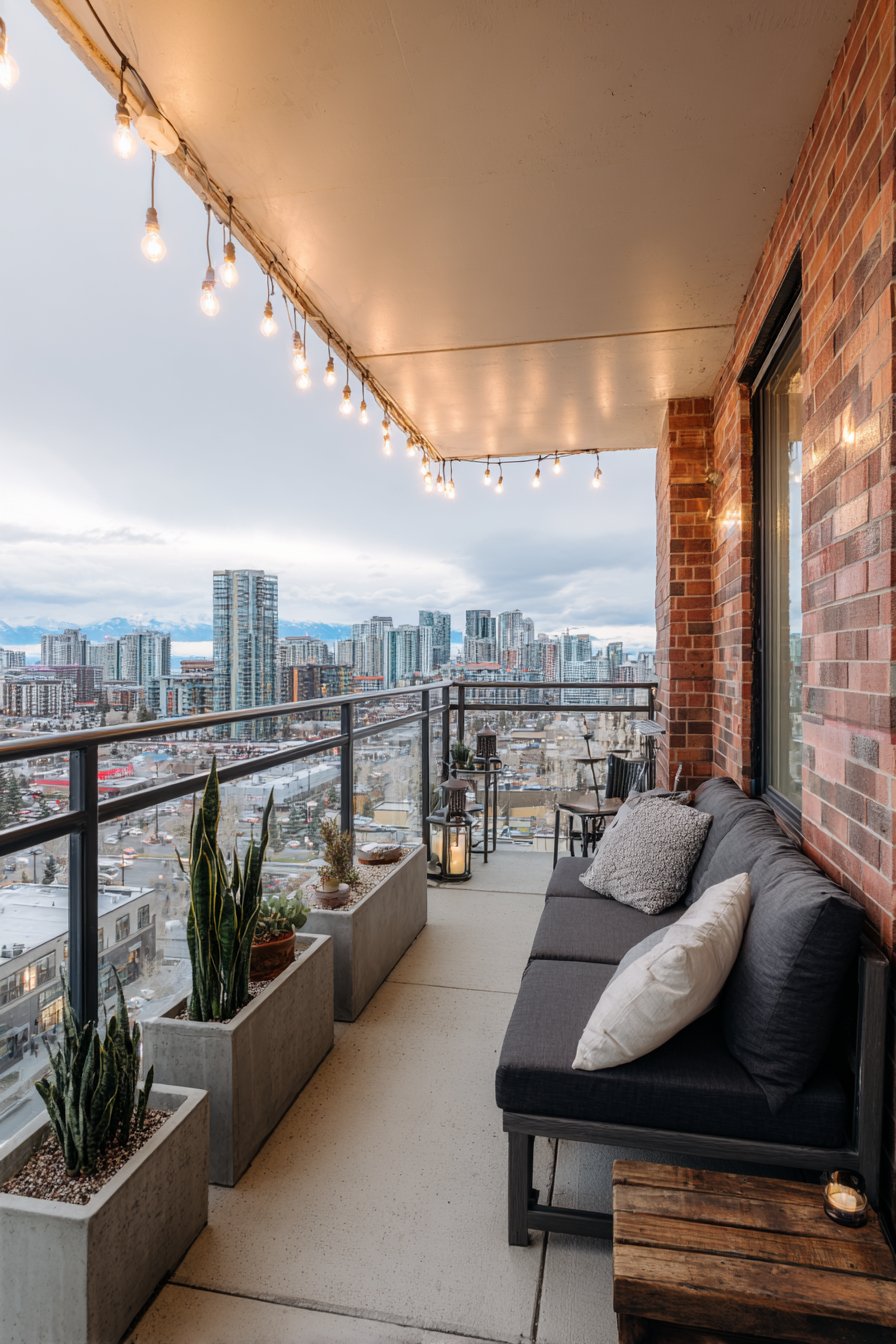
Industrial design translates beautifully to balcony spaces, especially in urban loft buildings where the aesthetic complements architectural context. Metal furniture with clean lines embodies the industrial vocabulary of functional simplicity and honest materials. The utilitarian forms celebrate engineering and manufacturing aesthetics rather than hiding structural elements, creating visual coherence with urban surroundings.
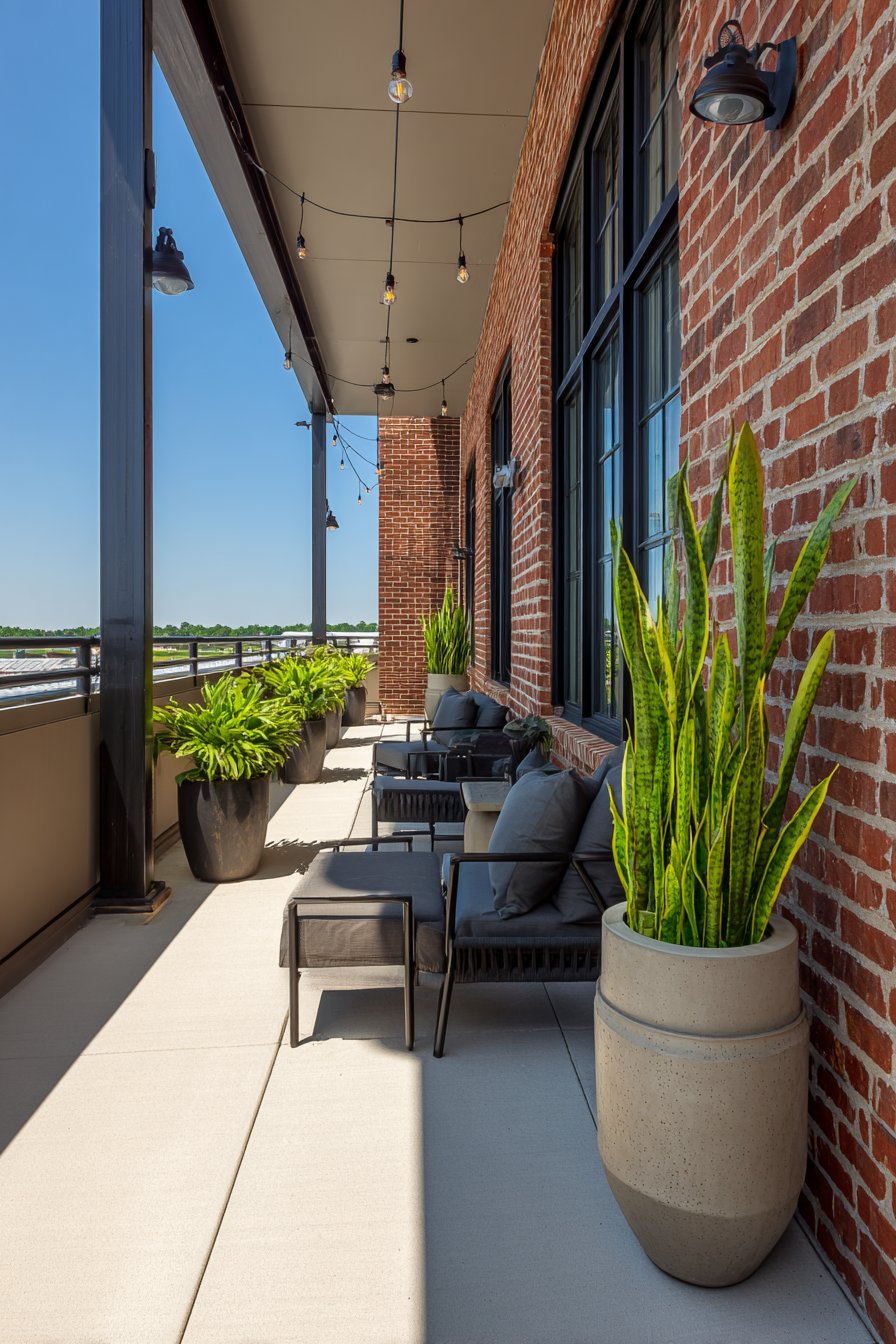
Concrete planters represent the quintessential industrial material—raw, substantial, and unapologetically contemporary. Housing architectural plants like snake plants and ZZ plants, these containers create strong geometric silhouettes. The plants’ structural forms and low-maintenance requirements align perfectly with industrial design principles of form-follows-function. Their tolerance for varying light conditions and infrequent watering makes them ideal for busy urbanites.
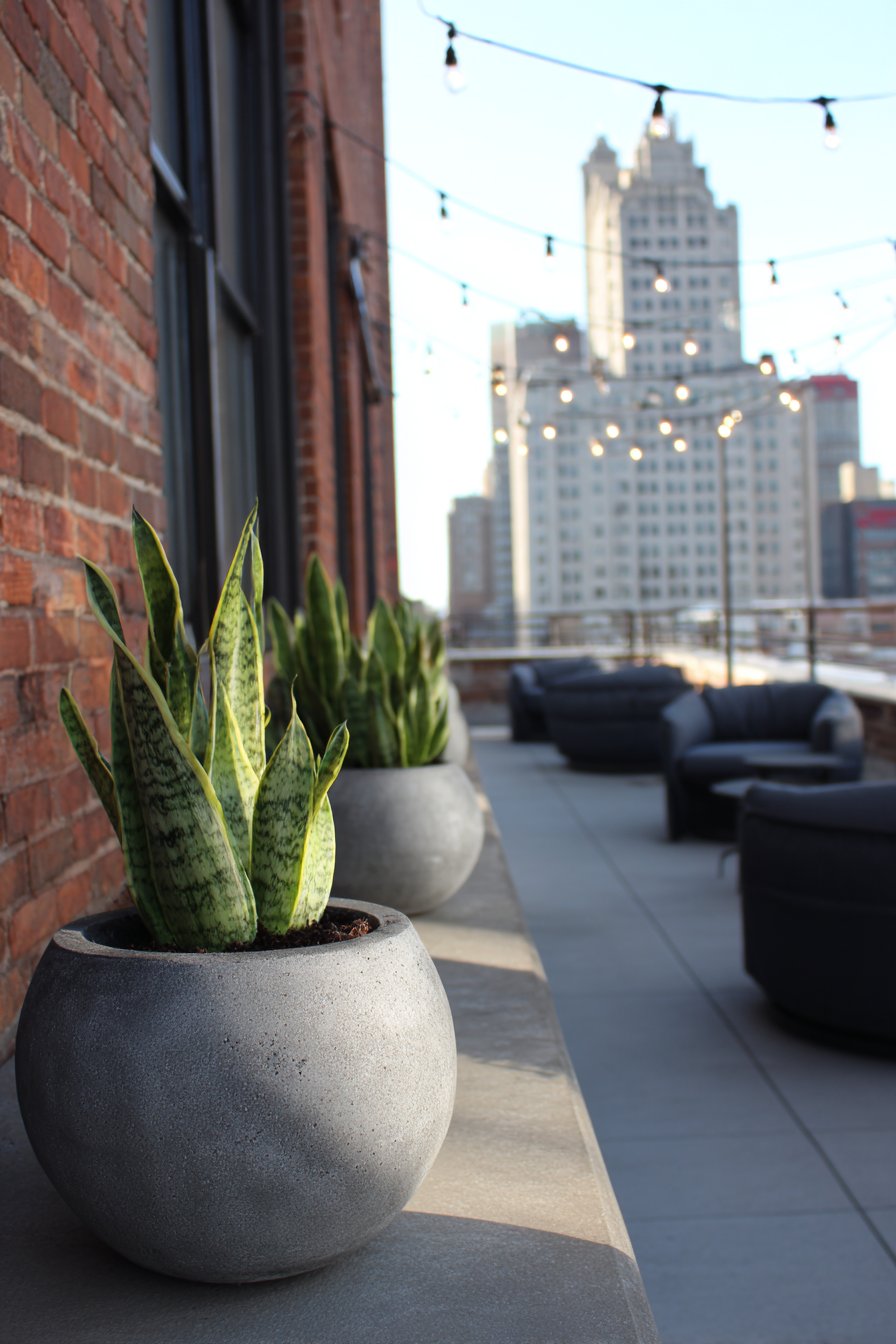
Edison bulb string lights provide evening illumination with vintage-industrial character. The visible filaments create warm focal points while the exposed bulb design celebrates rather than conceals the light source. Charcoal grey outdoor cushions complement the urban aesthetic while softening metal furniture for comfortable lounging. An exposed brick wall backdrop provides textural richness and authentic industrial context, its weathered surface telling stories of building history while providing visual warmth against cooler metal and concrete elements.
Key Design Tips:
- Choose powder-coated metal furniture to prevent rust while maintaining authentic material appearance
- Seal concrete planters with concrete sealer to prevent moisture absorption and freeze-thaw damage
- Select LED Edison bulbs for energy efficiency while maintaining vintage aesthetic
- Limit industrial spaces to 2-3 core materials (metal, concrete, wood) to avoid visual confusion
- Add one warm element like wood or textiles to prevent overly cold atmosphere
- Position concrete planters on protective pads to prevent scratching balcony flooring surfaces
10. Wall-Mounted Multi-Function Flexibility
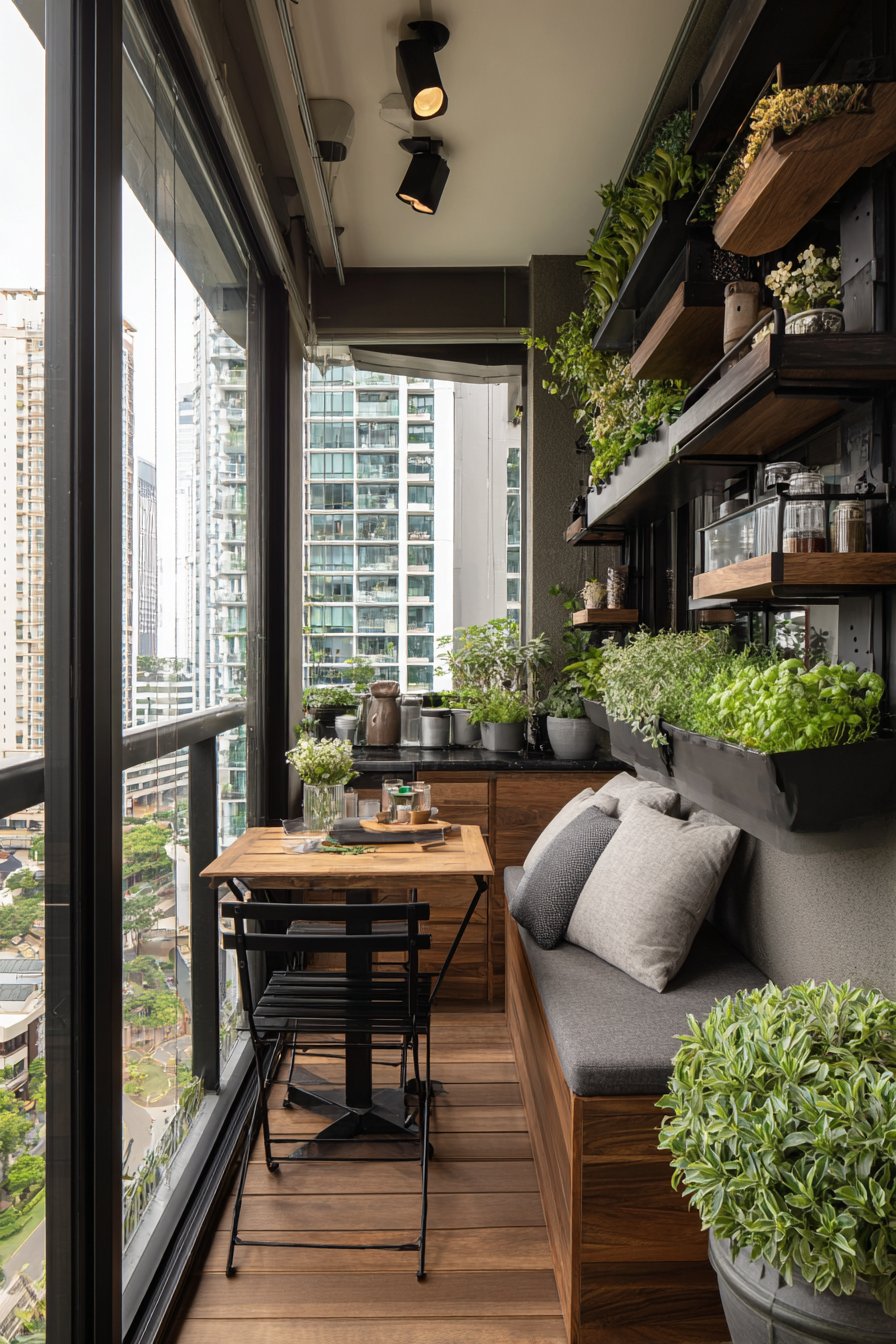
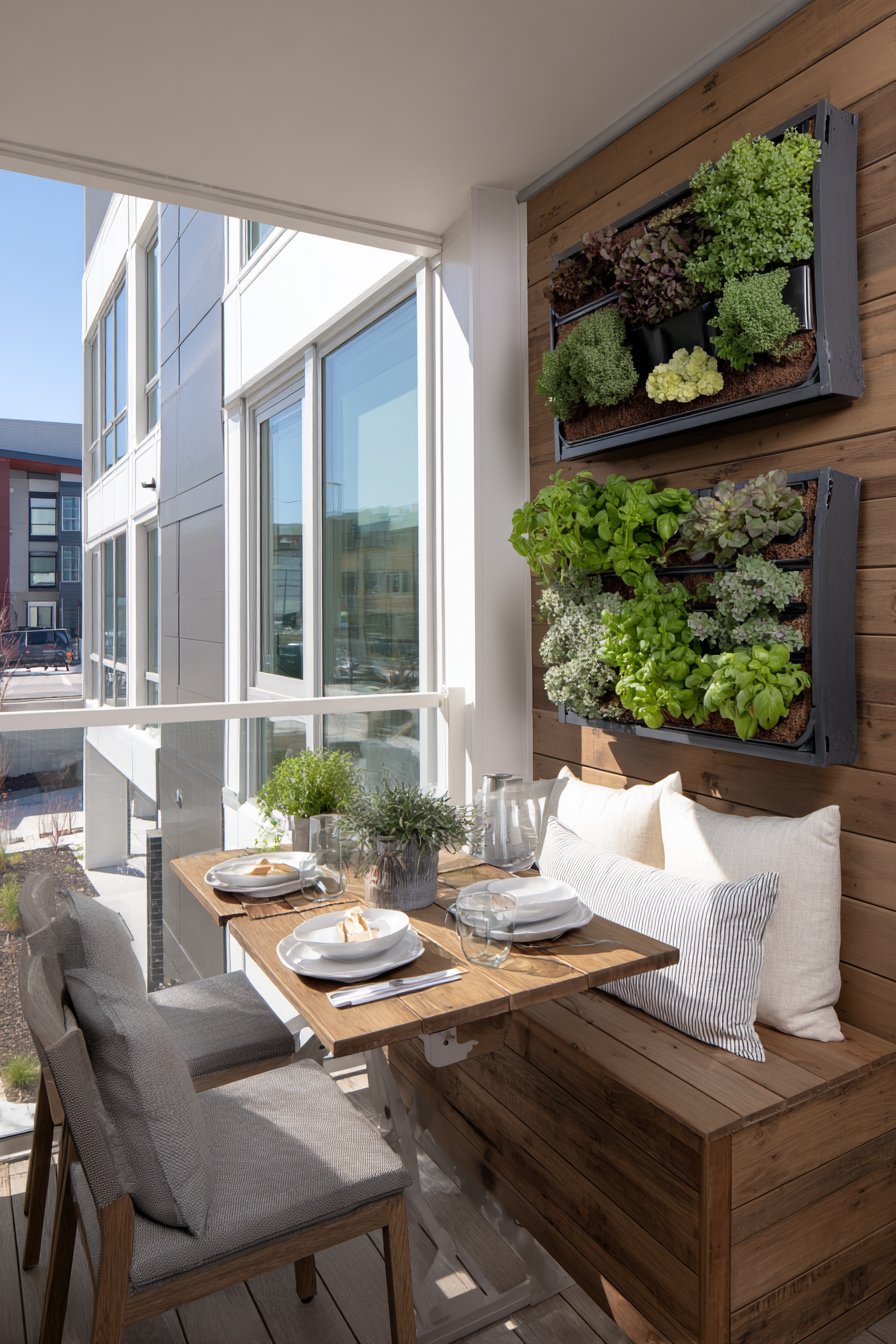
Small-space design demands furniture that adapts to changing needs rather than occupying permanent square footage. This innovative approach features a wall-mounted folding table that drops down for dining or work sessions, then folds flat against the wall when not needed. Paired with folding chairs that store compactly, this system transforms available space from empty to functional and back again throughout the day.
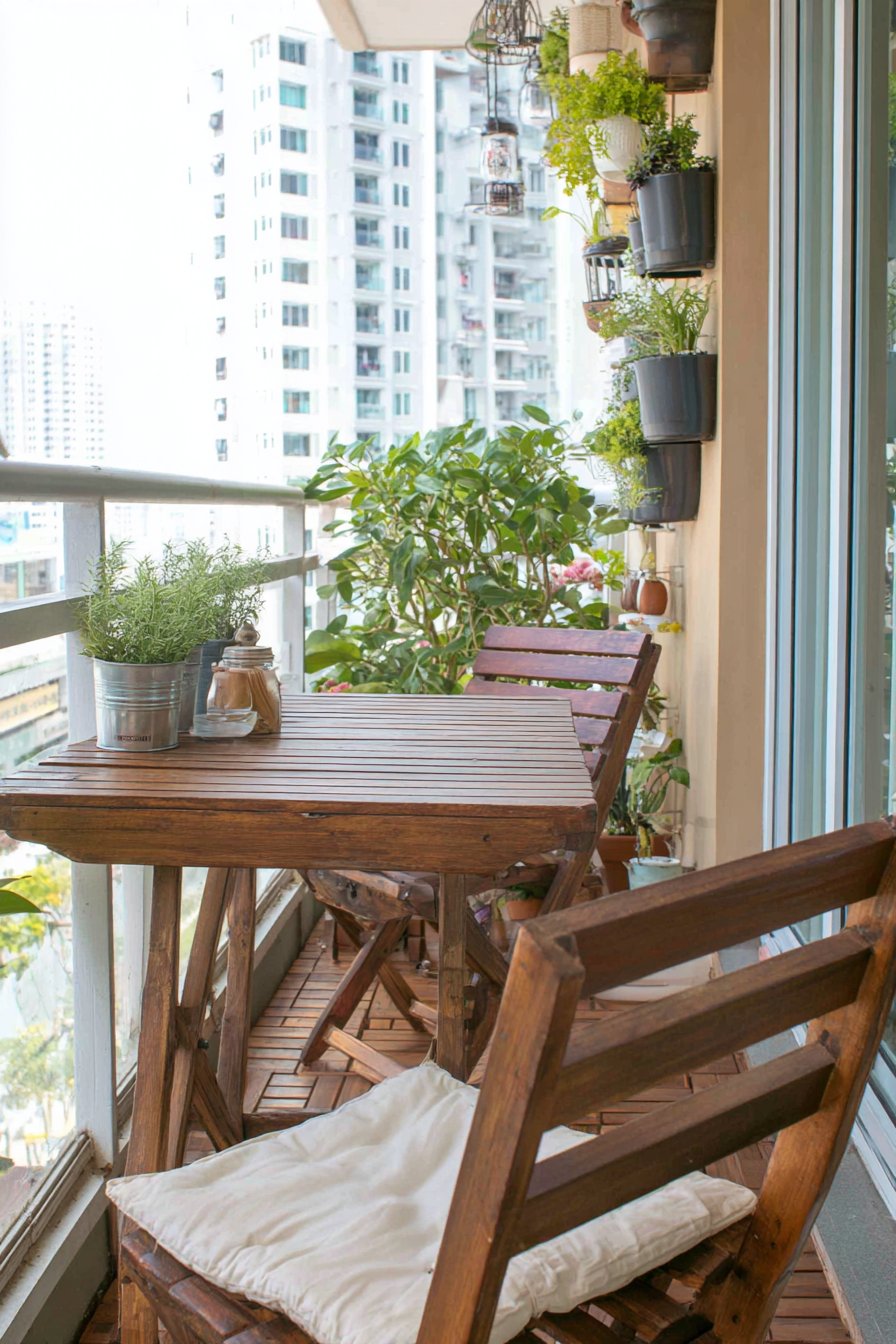
The vertical herb garden in mounted containers maximizes growing space without consuming precious floor area. Wall-mounted gardening moves plants to previously unused vertical surfaces, allowing you to cultivate substantial herb collections even on the smallest balconies. This approach also positions plants at convenient height for harvesting without bending, while bringing greenery to eye level where it’s most visible and appreciated.
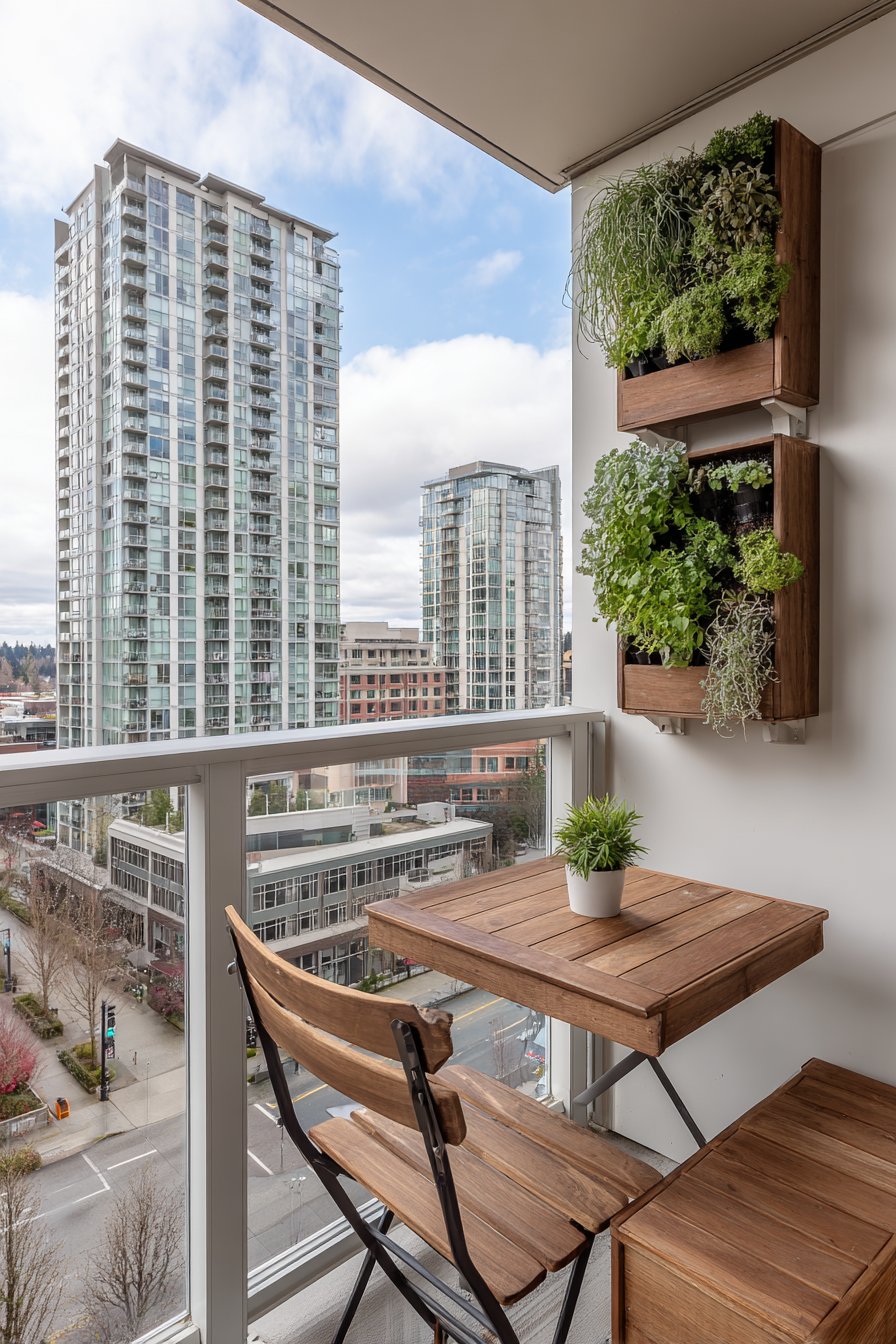
A compact storage bench doubles as seating, exemplifying the multi-function principle essential to small-space success. Natural wood tones throughout create visual warmth and material consistency, unifying diverse furniture pieces through shared color palette. The cohesive wood finish prevents visual fragmentation that would make the small space feel even more cramped. Professional design photography showcasing these clever space-maximizing solutions demonstrates that limited square footage doesn’t mean limited functionality—it simply requires more creative thinking.
Key Design Tips:
- Install wall-mounted tables with heavy-duty folding brackets rated well above expected weight capacity
- Ensure wall structure can support mounted furniture—use appropriate anchors for your wall type
- Choose folding chairs that nest or hang on wall hooks for truly minimal storage footprint
- Mount herb containers with individual drainage catch systems to prevent water damage to walls
- Add cushions to storage bench for seating comfort during extended use
- Create designated storage zones for folded furniture to maintain organized appearance
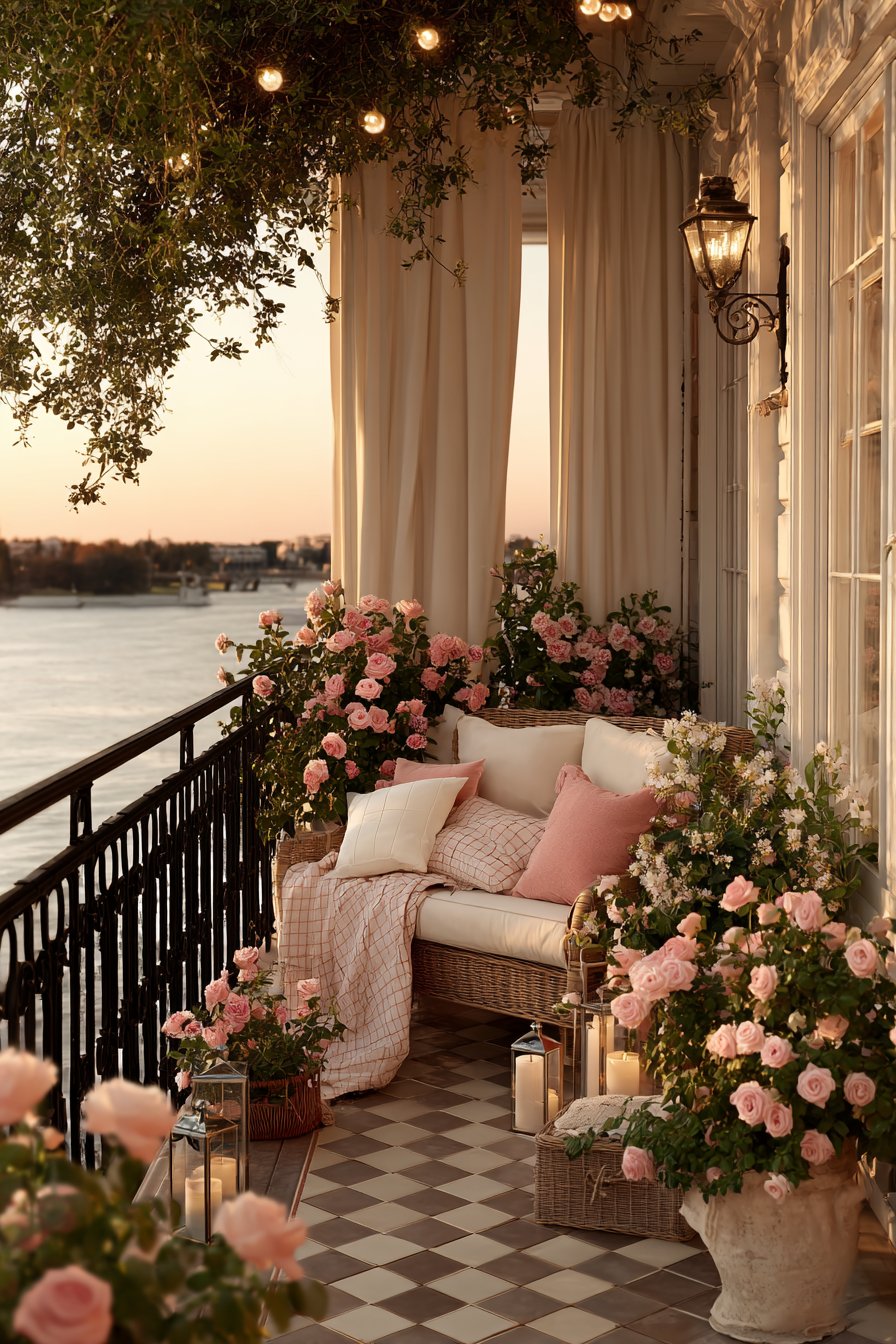
11. Romantic Fairy-Light Evening Haven
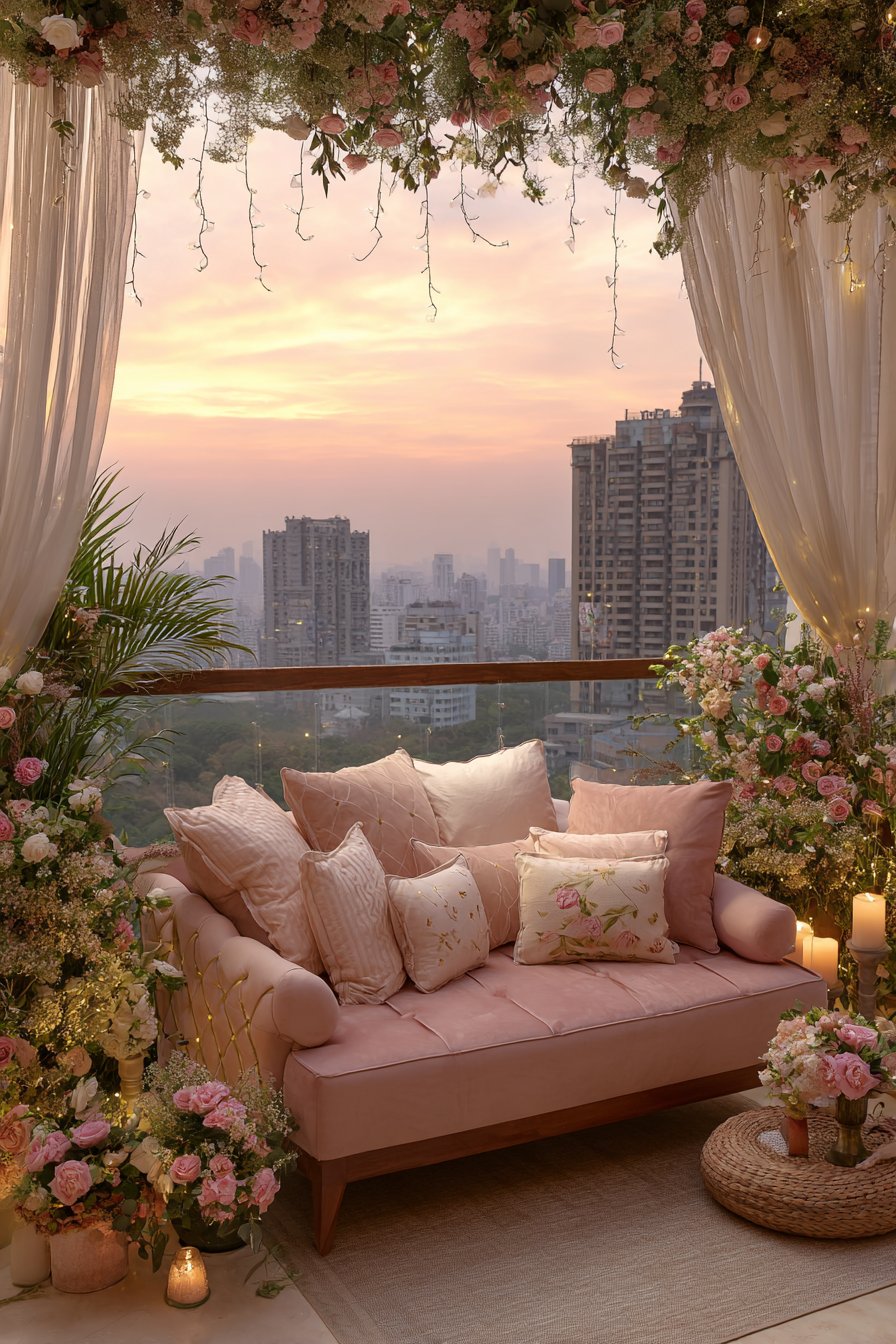
Romance in design emerges from thoughtful details, soft textures, and atmospheric lighting. This balcony configuration centers on a cozy loveseat abundant with throw pillows in soft pink and cream tones. The generous pillow collection creates visual luxury and physical comfort, inviting occupants to settle in and linger. The gentle color palette evokes softness and warmth without overwhelming sweetness, maintaining sophistication alongside romance.
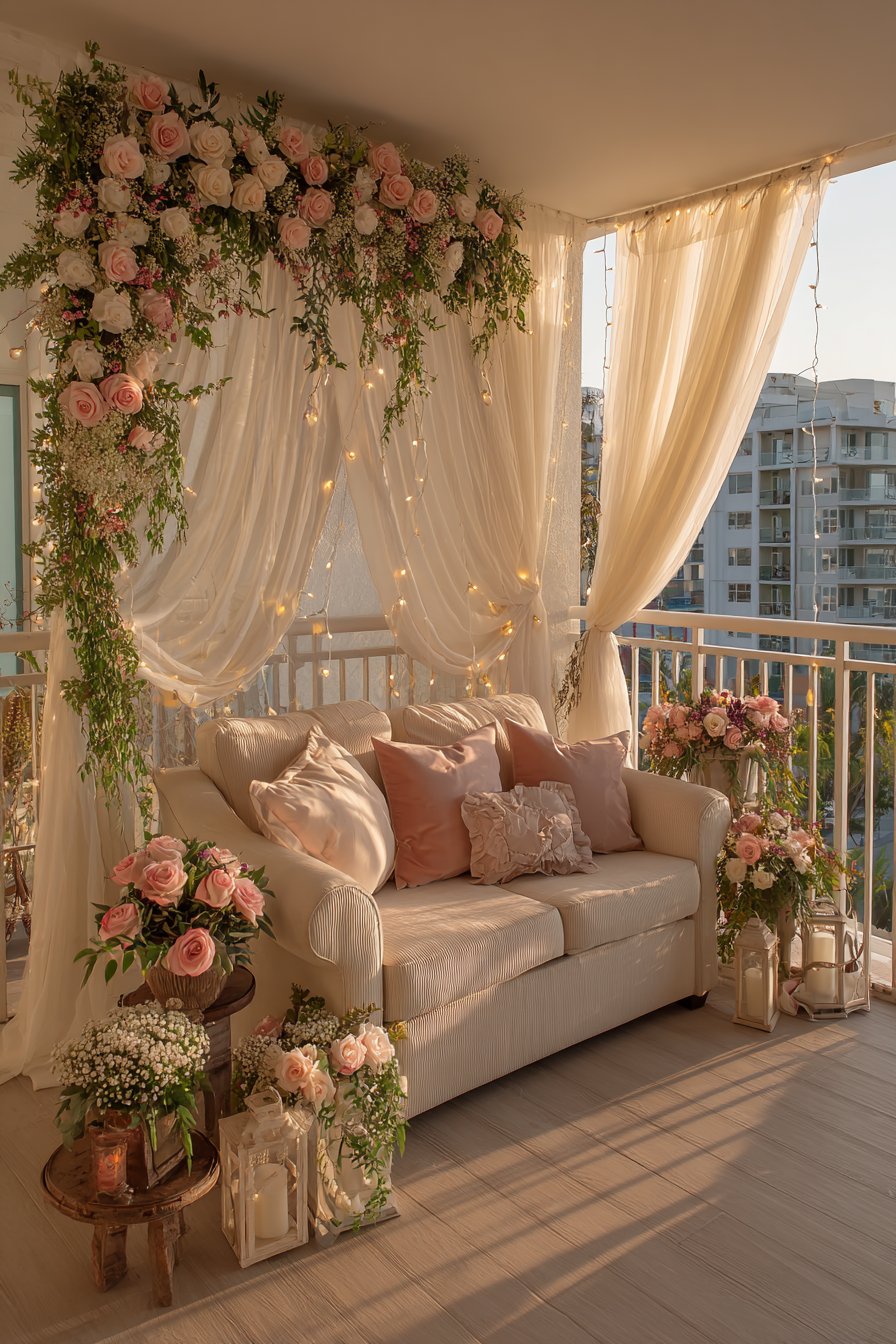
Fairy lights draped along the railing create magical ambiance as daylight fades. Unlike utilitarian task lighting, these delicate points of light transform the balcony into an enchanted evening retreat. The soft glow flatters skin tones and creates intimate atmosphere perfect for quiet conversations or solitary relaxation. During daylight hours, the unlit strands add delicate visual interest without dominating the scene.
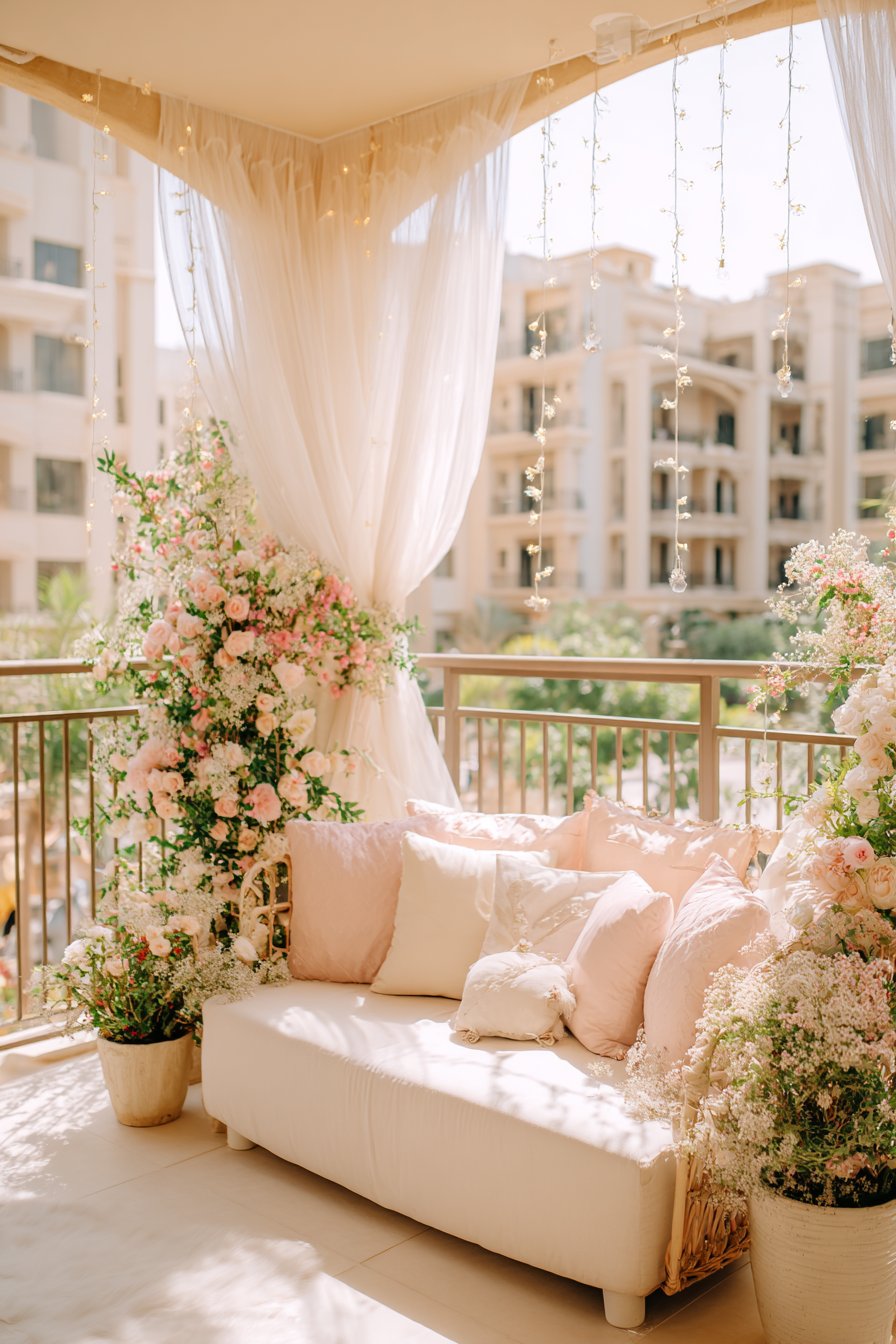
Flowering plants in vintage-style containers including roses and jasmine engage the sense of smell with their evening-released fragrances. Many flowering plants intensify their scent production as temperatures cool and evening arrives, making them perfect companions for sunset balcony enjoyment. Soft outdoor curtains frame the space, adding movement in gentle breezes while providing adjustable privacy and sun control. Golden hour lighting creates a dreamy atmosphere, bathing the pink and cream textiles in warm, flattering tones that amplify the romantic quality.
Key Design Tips:
- Layer pillows of varying sizes—large back support cushions, medium accent pillows, small decorative elements
- Choose outdoor-rated fabrics that maintain softness without water absorption or mildew development
- Install battery-operated or solar fairy lights to avoid extension cord clutter
- Select fragrant flowers that bloom in evening hours for maximum sensory impact during primary usage time
- Use curtain clips on outdoor-rated fabric to create easily adjustable privacy screens
- Position loveseat to face sunset direction for optimal golden hour lighting effects
12. Mediterranean Coastal Escape
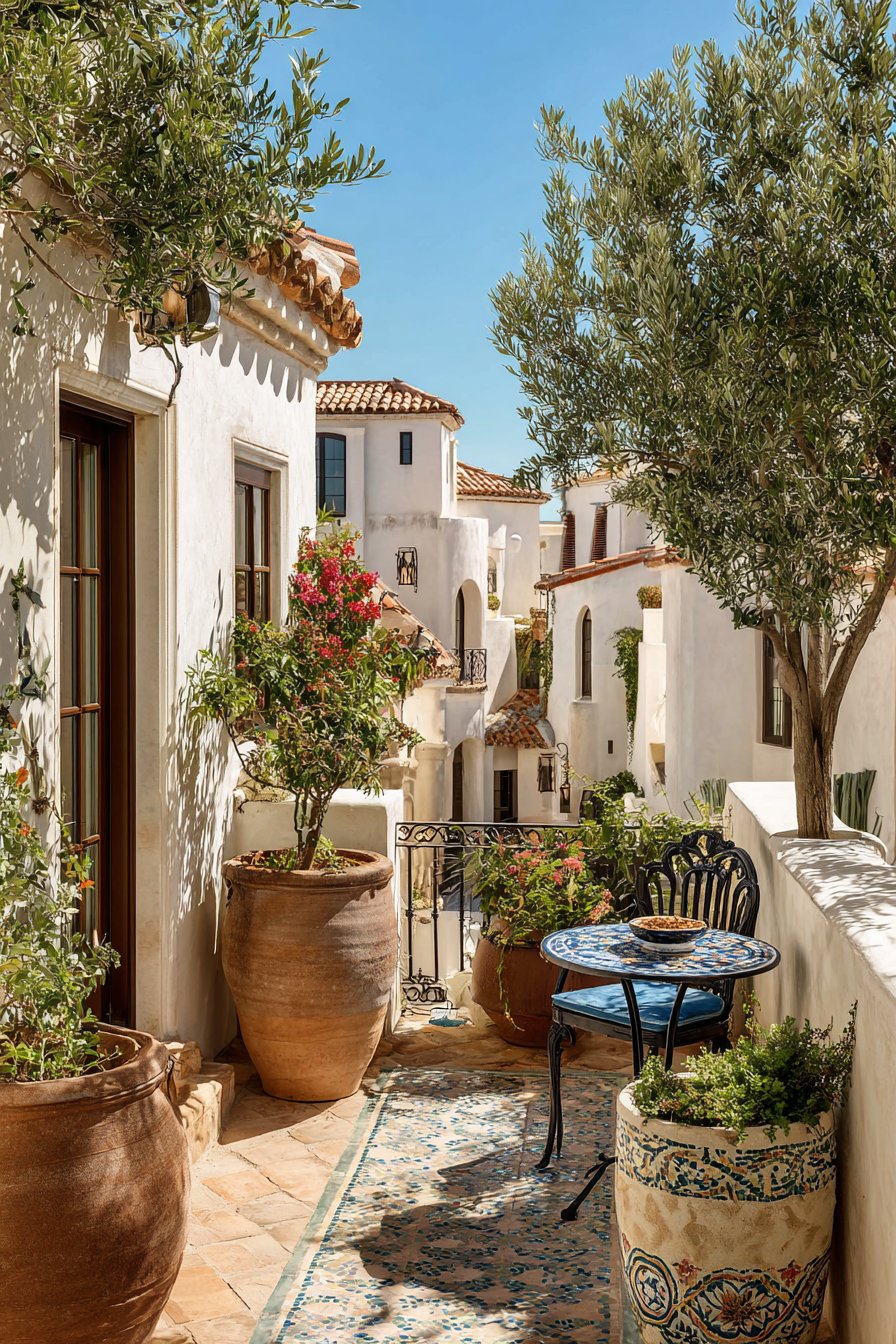
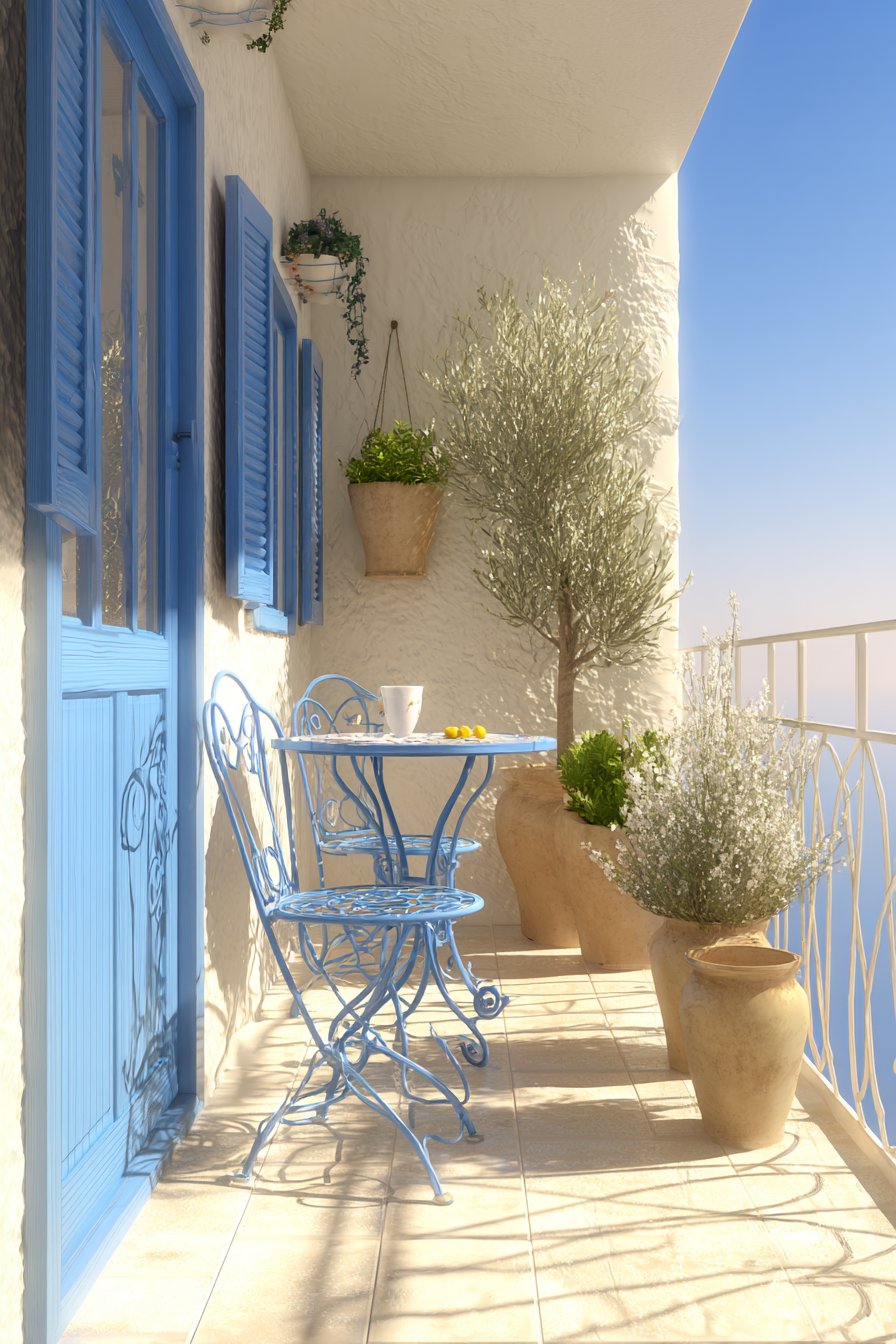
Mediterranean design transports you to sun-drenched coastal villages through distinctive materials, colors, and architectural elements. Terracotta tile flooring establishes immediate regional character while providing durable, weather-resistant surface that ages beautifully. The warm earth tones complement rather than compete with plantings and furniture, creating cohesive ground plane that anchors the design.
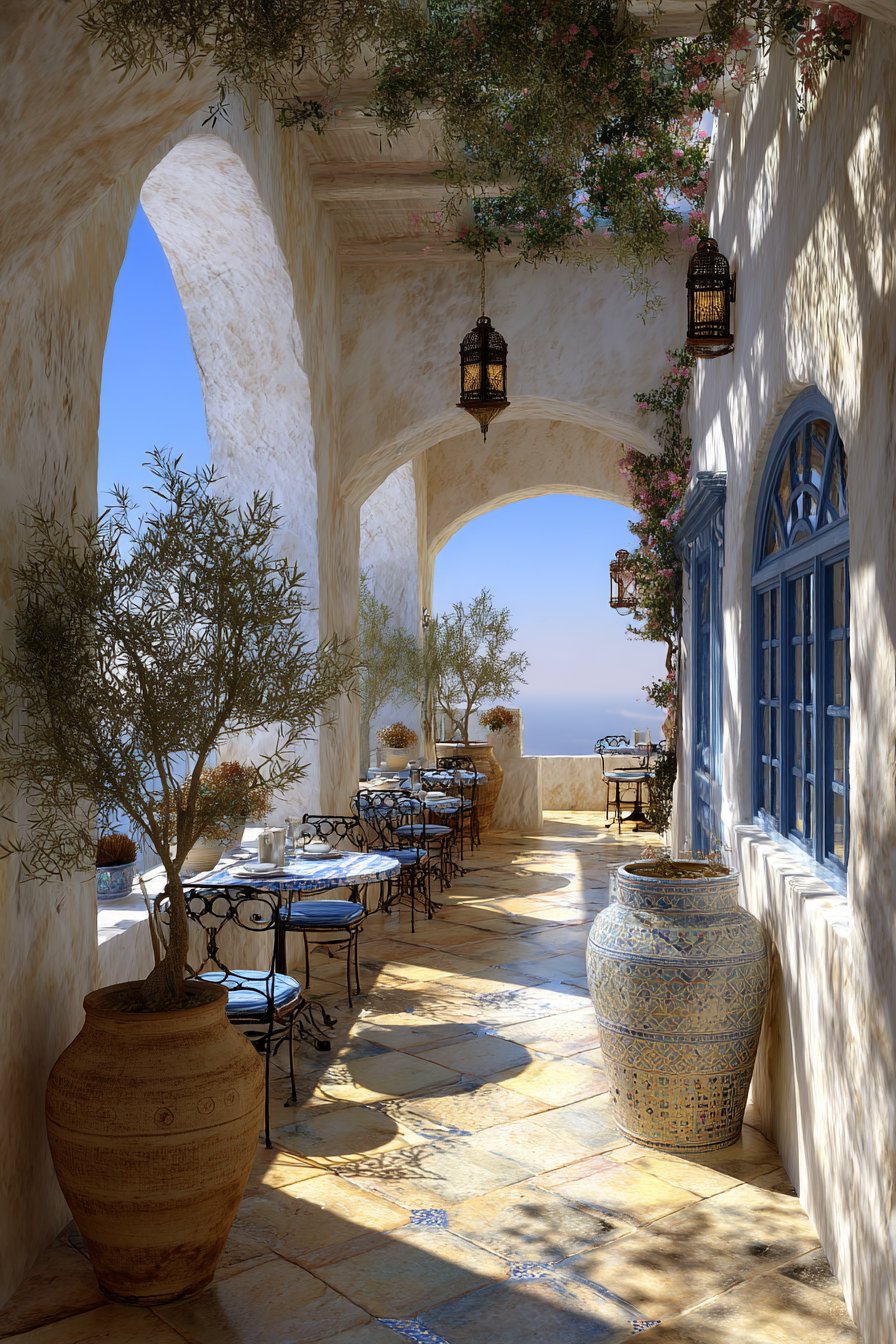
White-washed walls reflect intense sunlight while maintaining cool surface temperatures, demonstrating how traditional design evolved practical climate-response solutions. Wrought iron furniture painted in deep blue recalls coastal waters and traditional Greek island aesthetics. The ornate metalwork provides visual interest through shadow patterns cast by elaborate scrollwork, especially dramatic under strong Mediterranean-style sunlight.
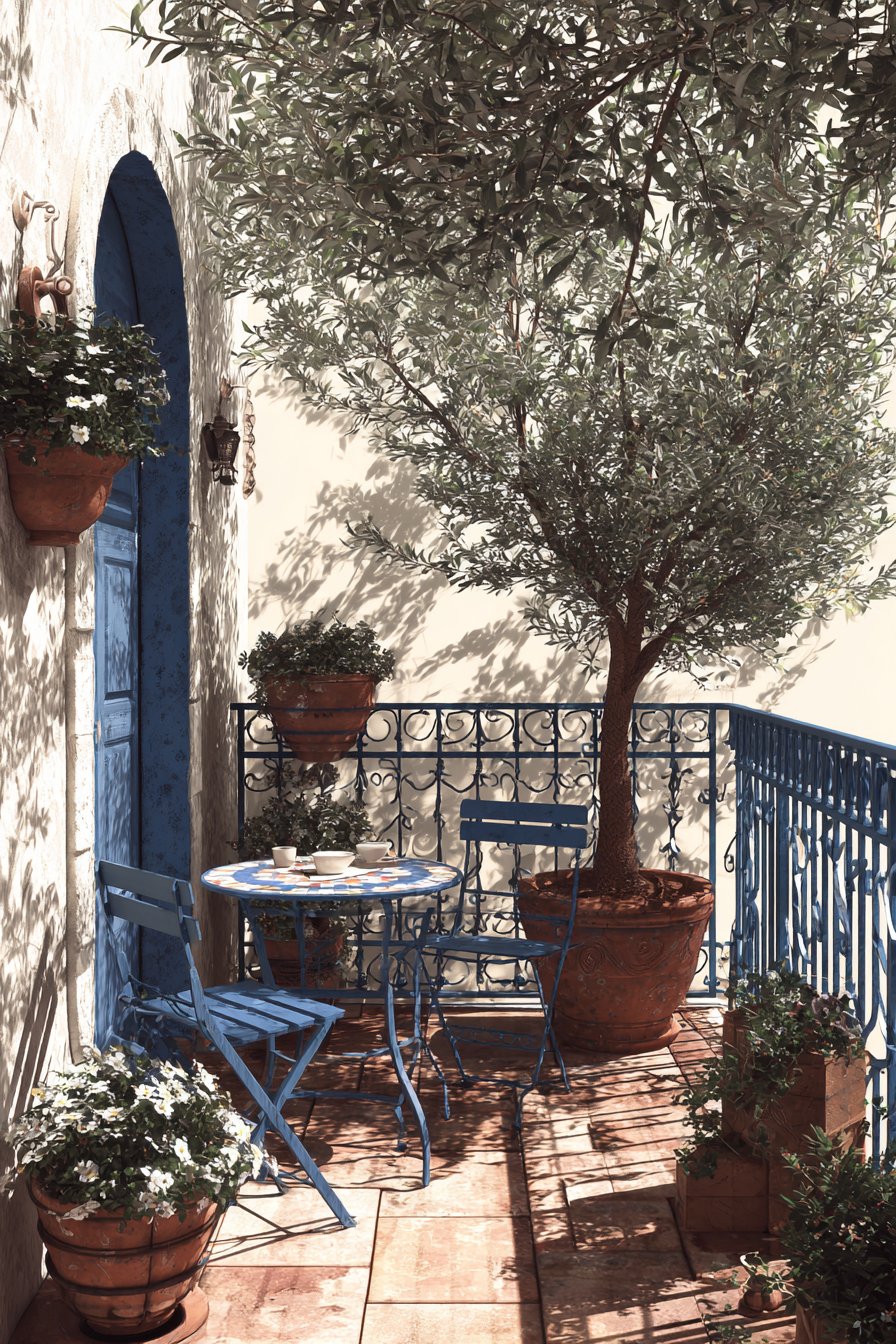
Large terracotta pots contain signature plants like olive trees and bougainvillea, introducing authentic regional vegetation. The olive’s silvery-grey foliage contrasts beautifully with terracotta containers while tolerating heat and drought. Bougainvillea’s vibrant magenta blooms create explosive color against white walls. A ceramic mosaic accent table adds artisanal detail and introduces pattern at smaller scale. Bright natural sunlight creates strong shadows typical of coastal regions, emphasizing the depth and texture of architectural elements while creating dramatic light-and-shadow interplay throughout the day.
Key Design Tips:
- Seal terracotta tiles with appropriate sealer to prevent moisture absorption in wet climates
- Choose frost-resistant terracotta if you experience freezing temperatures
- Paint wrought iron furniture with rust-inhibiting primer before applying colored topcoat
- Select bougainvillea varieties suited to your climate zone—some tolerate brief cold better than others
- Position olive trees where they receive maximum sunlight for healthy growth and fruiting
- Use hand-painted ceramic tiles as accent elements to introduce traditional craftsmanship
13. Scandinavian Simplicity and Light
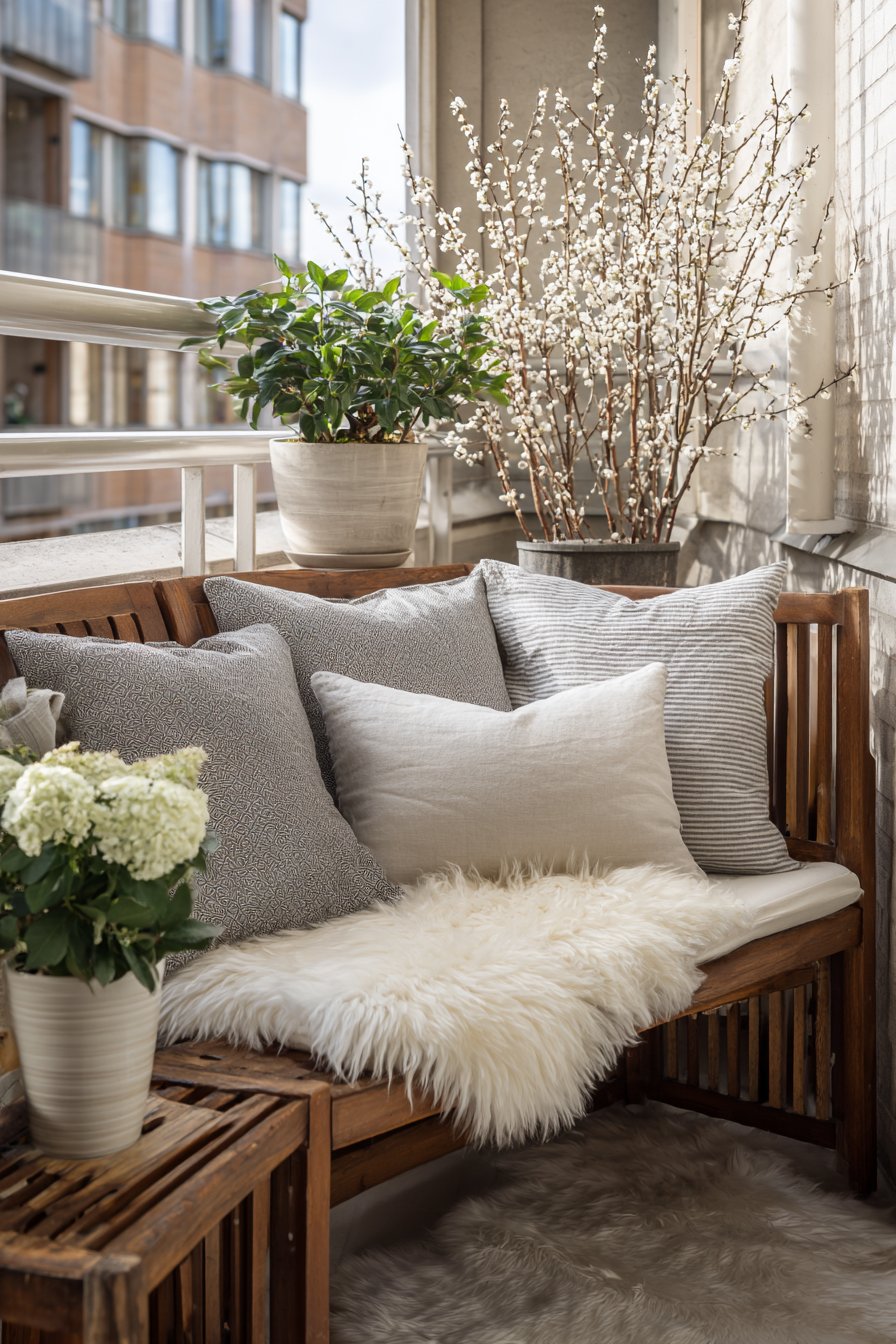
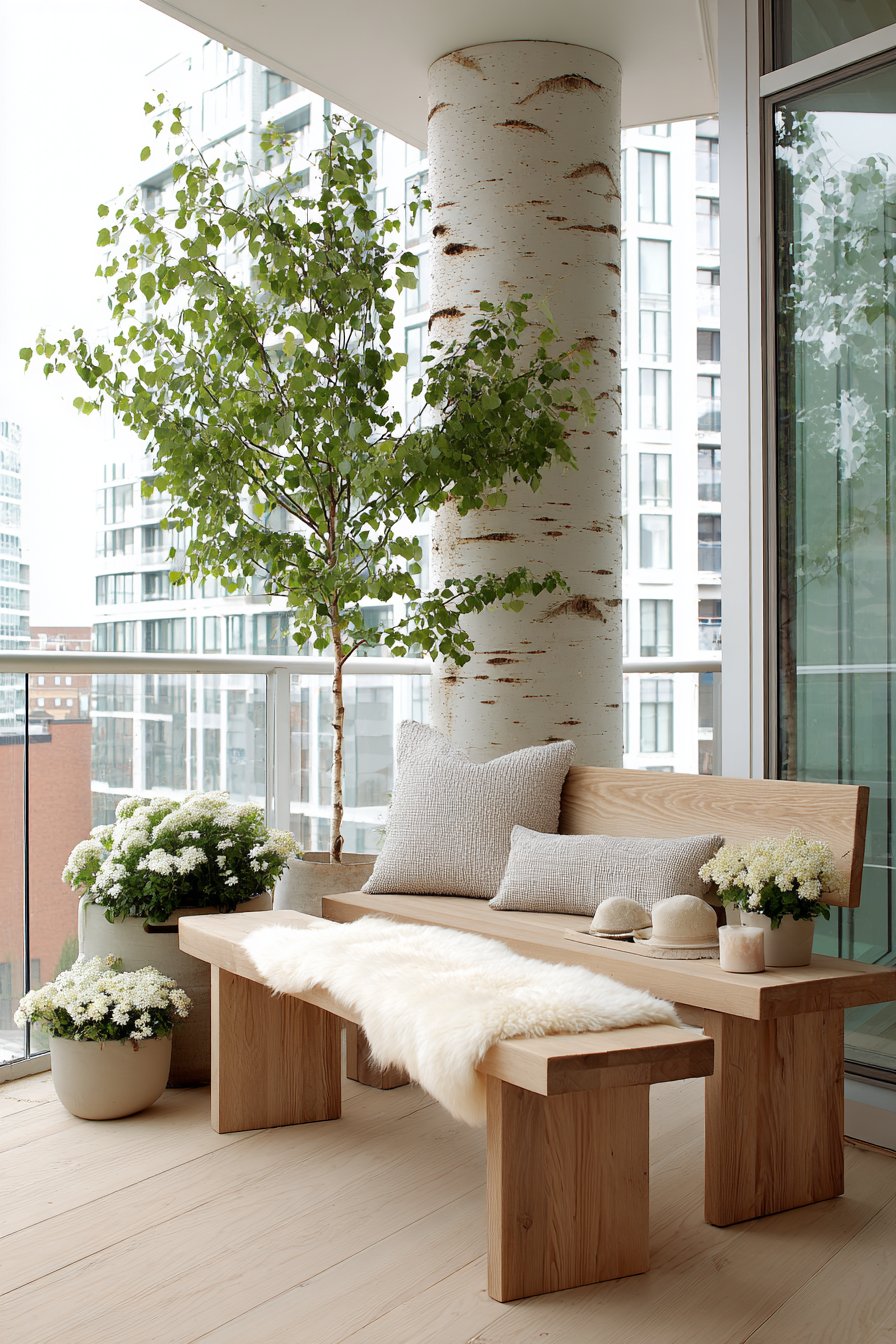
Scandinavian design philosophy emphasizes natural light, minimal clutter, and connection to nature through organic materials and neutral colors. Natural light wood furniture with clean lines embodies this aesthetic through unpretentious forms that celebrate material beauty rather than ornate decoration. The simple wooden bench provides functional seating while showcasing wood grain patterns and honest joinery.
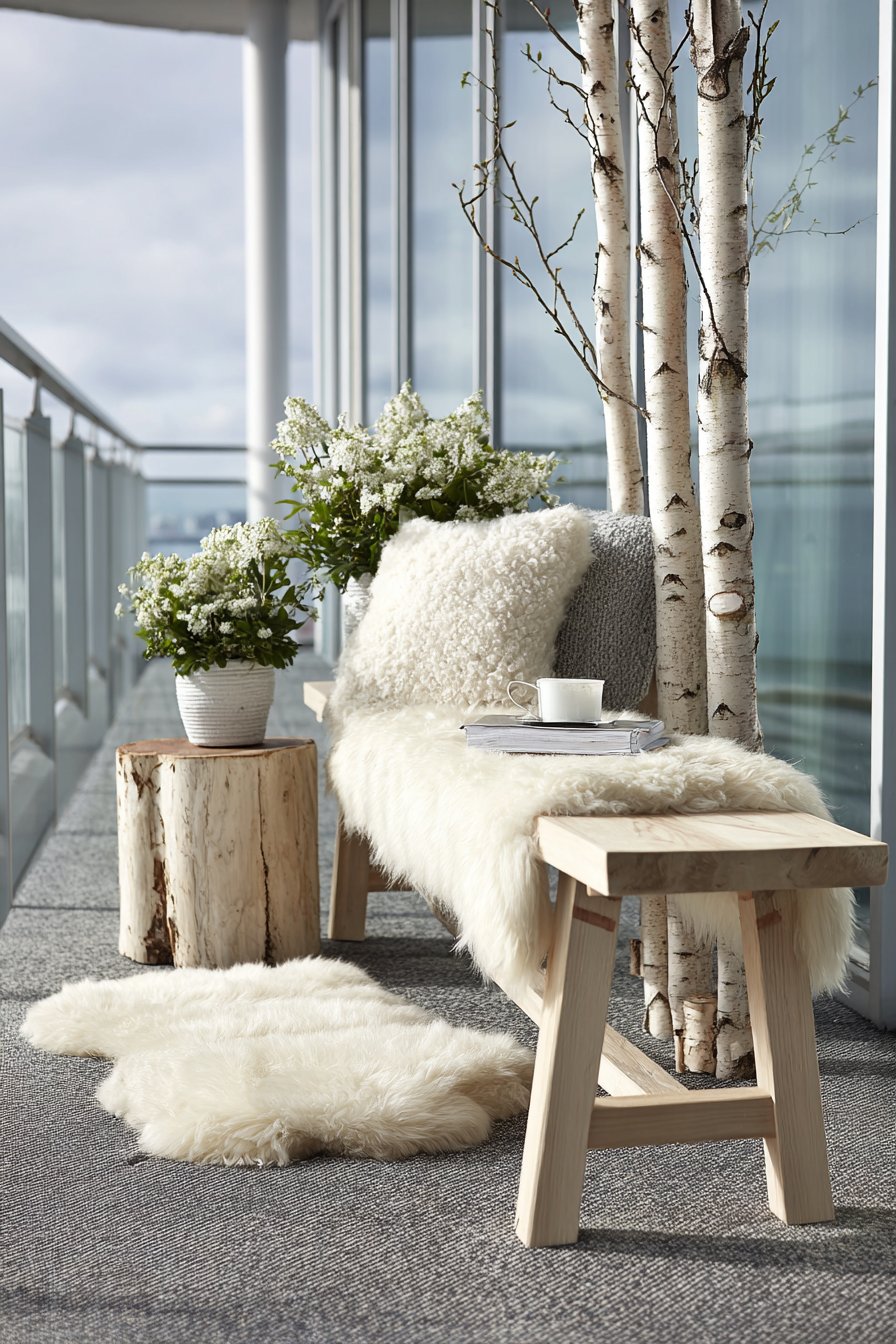
Neutral grey and white textiles reinforce the minimalist color palette while introducing soft comfort to hard wooden surfaces. The sheepskin throw adds luxurious natural texture and warmth without visual complexity or pattern distraction. This single tactile element provides visual interest through material variation rather than color or pattern, maintaining the serene atmosphere central to Nordic design.
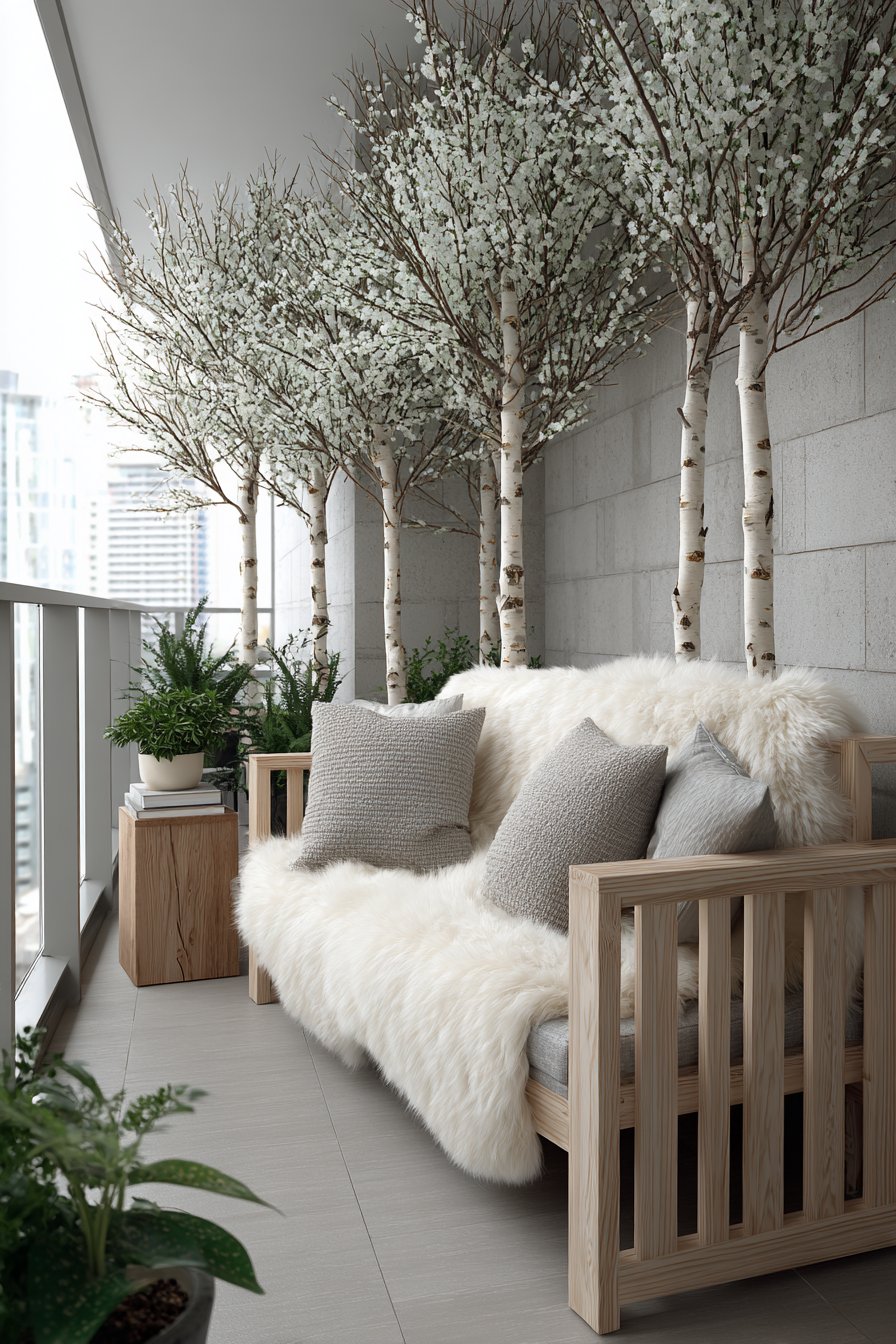
Potted birch branches and white flowering plants bring nature indoors (or in this case, onto the balcony) through simple, unadorned presentations. The white blooms complement rather than contrast with the neutral palette, while birch’s distinctive bark adds subtle pattern and authentic Nordic plant material. Soft diffused northern light—or lighting that mimics it—creates gentle, even illumination without harsh shadows. The serene simplicity of this Nordic-inspired approach demonstrates that restraint and thoughtful curation create more impactful spaces than abundance or visual complexity.
Key Design Tips:
- Choose untreated or lightly oiled woods that showcase natural grain rather than heavy stains
- Limit color palette to whites, greys, and natural wood tones with perhaps one muted accent color
- Select simple forms without ornate details or excessive embellishment
- Maximize natural light access by avoiding heavy drapery or visual obstructions
- Use natural materials—wood, linen, wool, leather—rather than synthetic alternatives
- Embrace negative space as a design element rather than feeling compelled to fill every surface
14. Outdoor Home Office Innovation
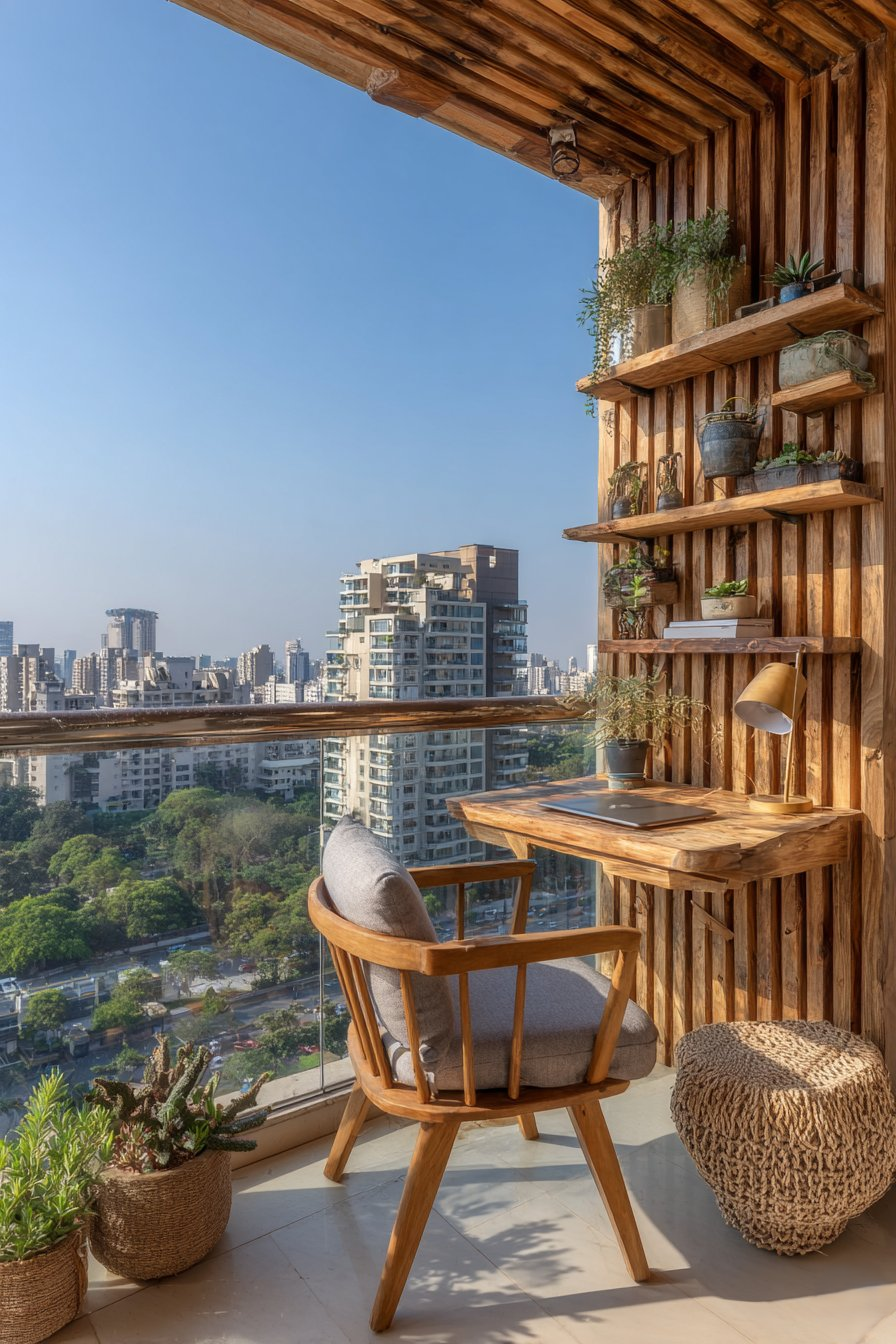
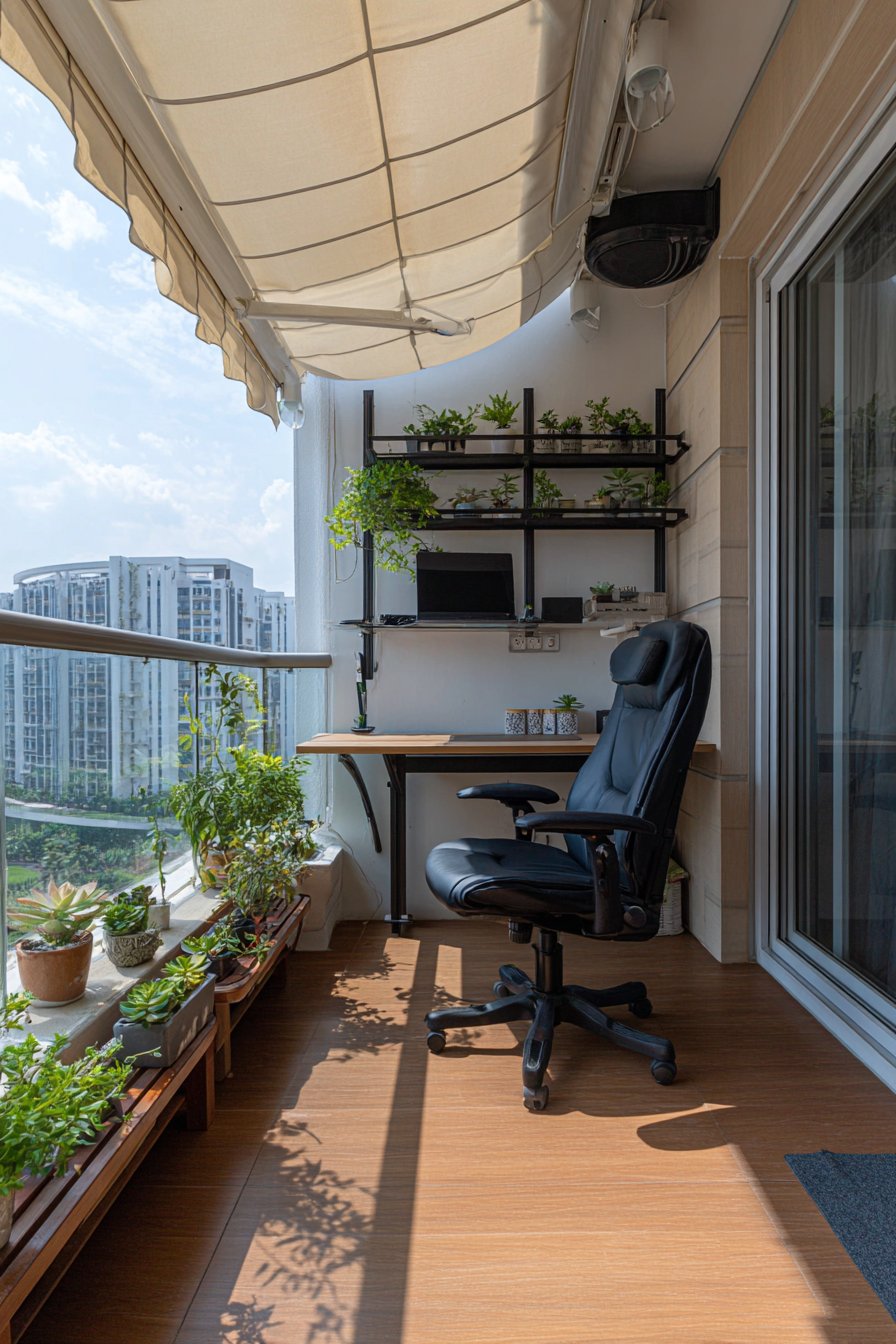
As remote work becomes increasingly common, dedicated work zones extend beyond traditional interior spaces. This multifunctional balcony workspace features a wall-mounted desk that folds up when the workday ends, transforming professional space back to relaxation territory. This spatial flexibility allows the balcony to serve multiple purposes without permanent commitment to a single function.
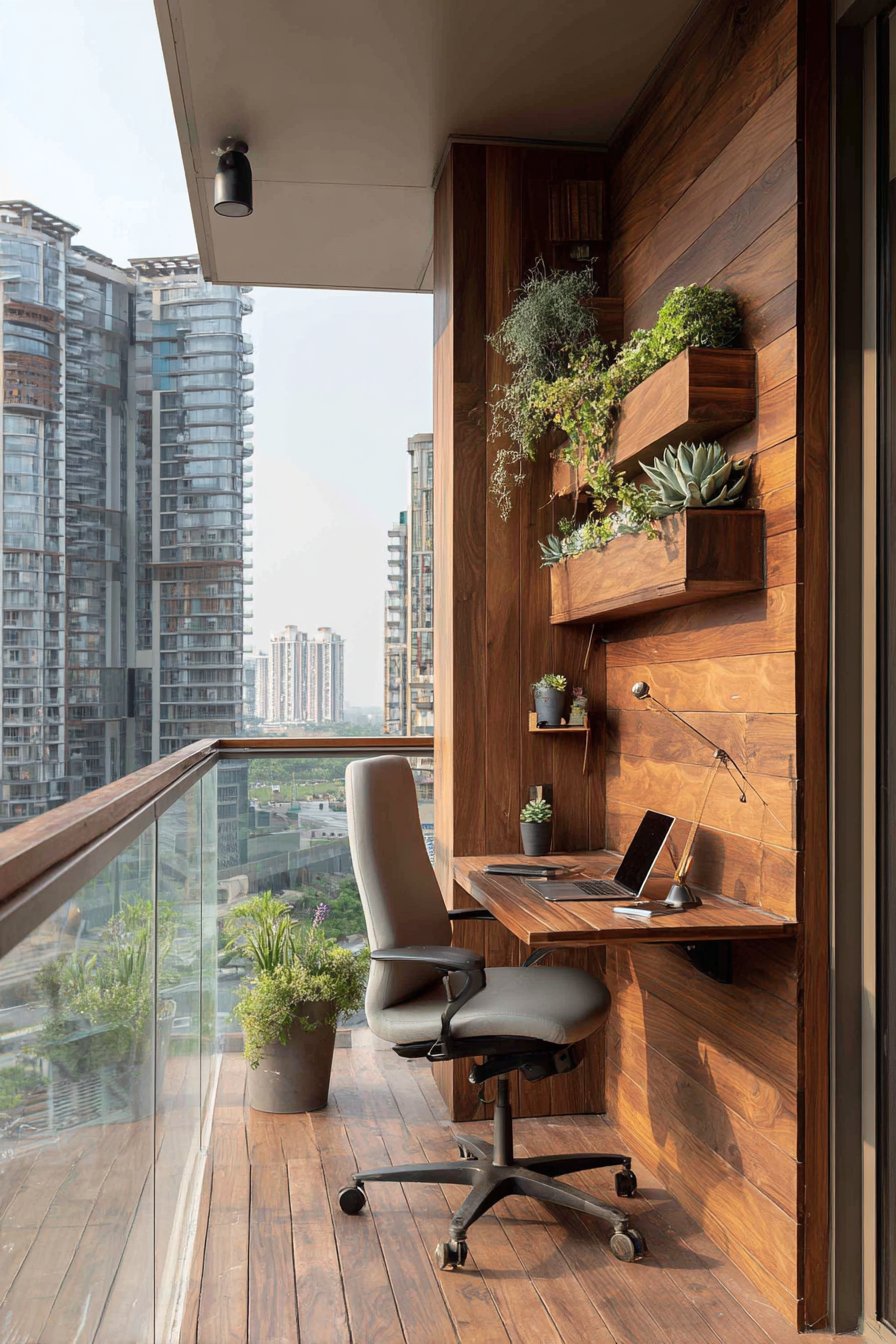
An overhead shade structure provides essential weather protection for both worker and equipment, enabling outdoor work regardless of sun intensity or light rain. The defined shade zone creates comfortable working conditions while protecting laptop screens from glare. An organized plant shelf system visually separates the work zone from relaxation areas, creating psychological boundaries that help maintain work-life balance even when both occur in the same physical space.
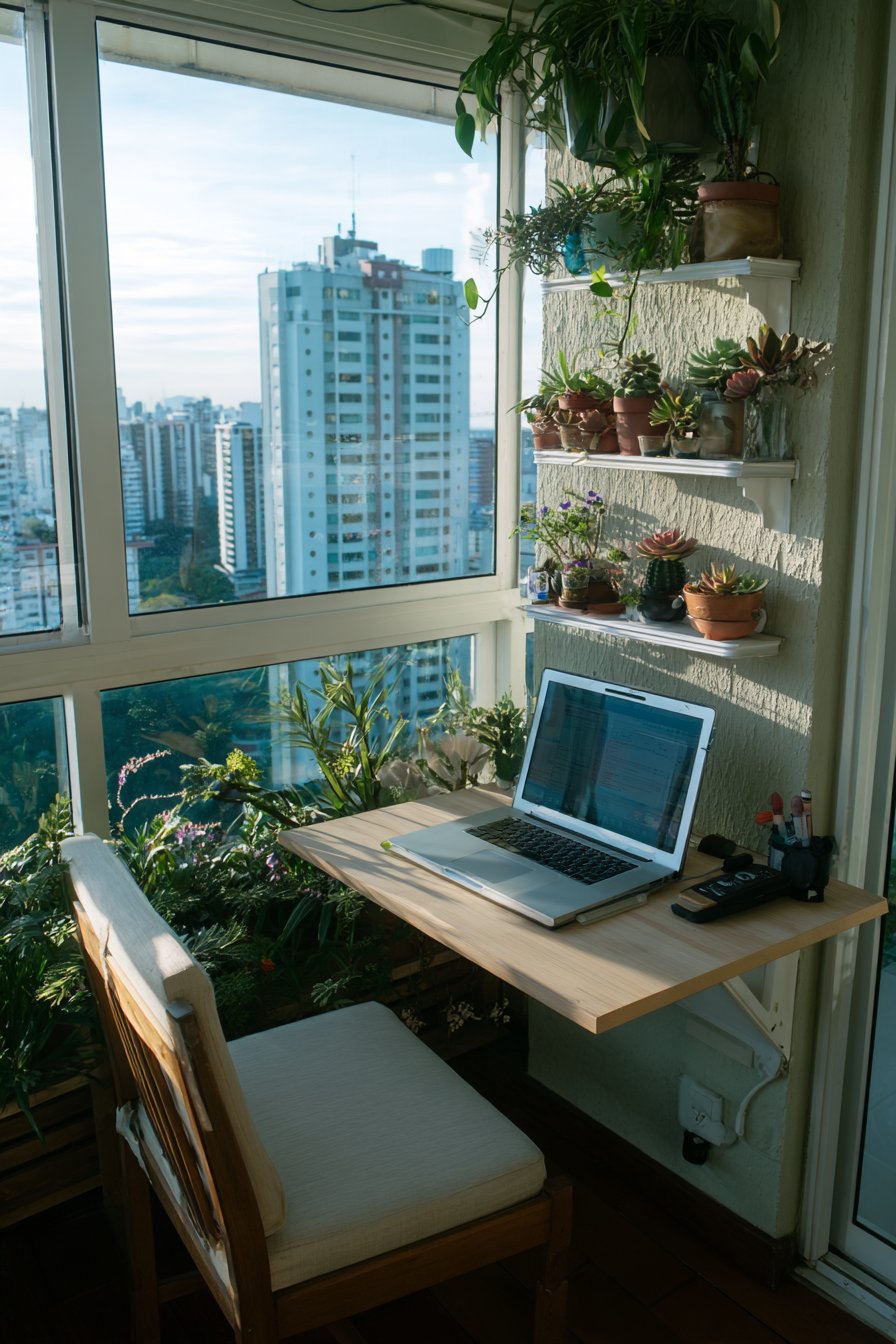
USB-powered desk lamp and small succulent collection bring practical lighting and living elements to the workspace without requiring complex electrical installation. The compact succulent provides visual interest and air-purifying benefits without maintenance demands that might interrupt workflow. Natural daylight workspace provides significant benefits over artificial lighting—improved mood, reduced eye strain, and connection to outdoor environment. Professional photography highlights the practical integration of home office functionality into balcony space, demonstrating that outdoor work environments offer viable alternatives to traditional indoor offices.
Key Design Tips:
- Install weatherproof electrical outlets or use fully battery/solar-powered equipment
- Choose desks with cable management systems to organize charging cords and electronics
- Position desk to avoid screen glare from direct sunlight during working hours
- Use weatherproof storage solutions for work materials left outdoors
- Select ergonomic outdoor seating with proper back support for extended sitting
- Create clear visual or physical boundaries between work and relaxation zones
15. Tropical Paradise Immersion
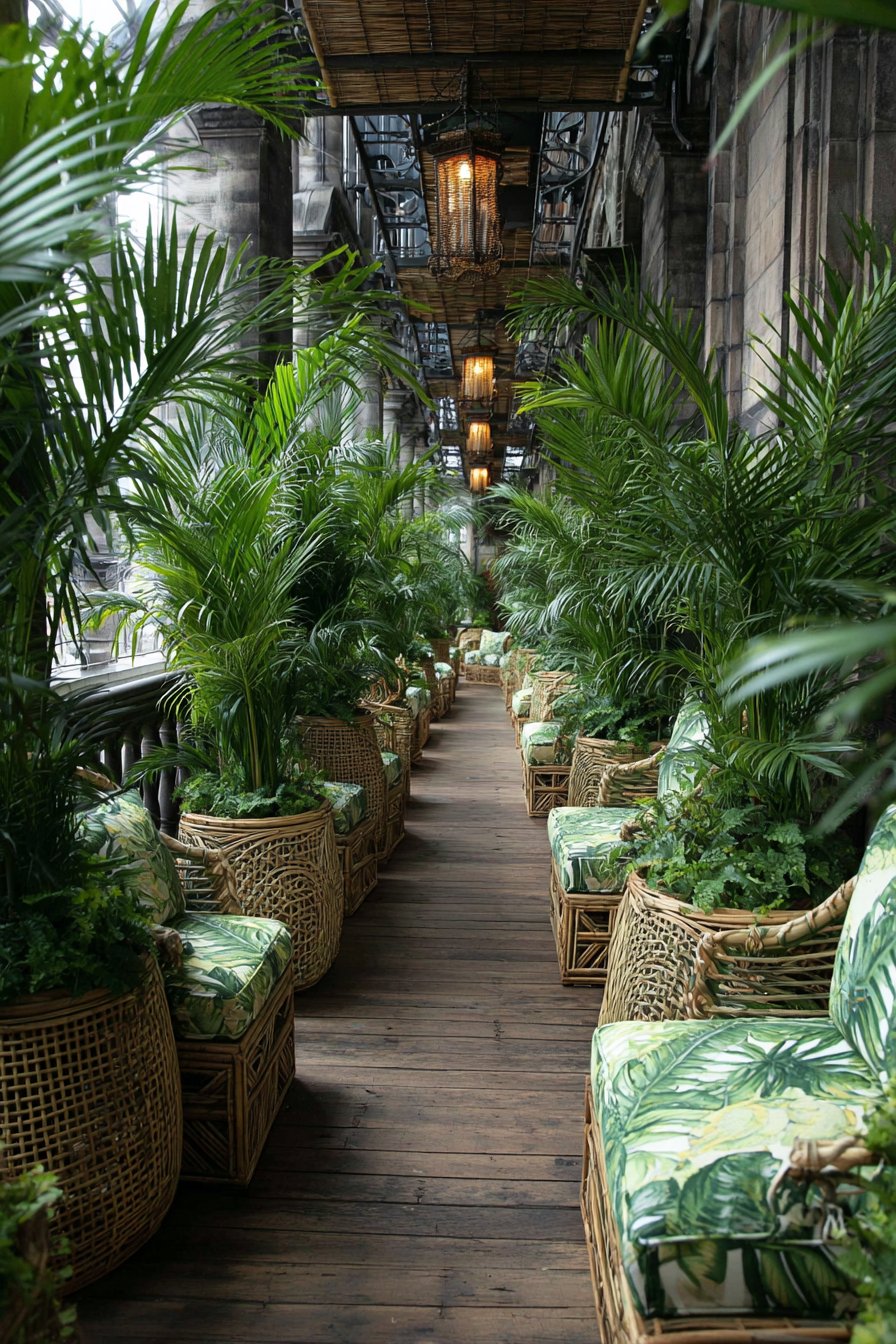
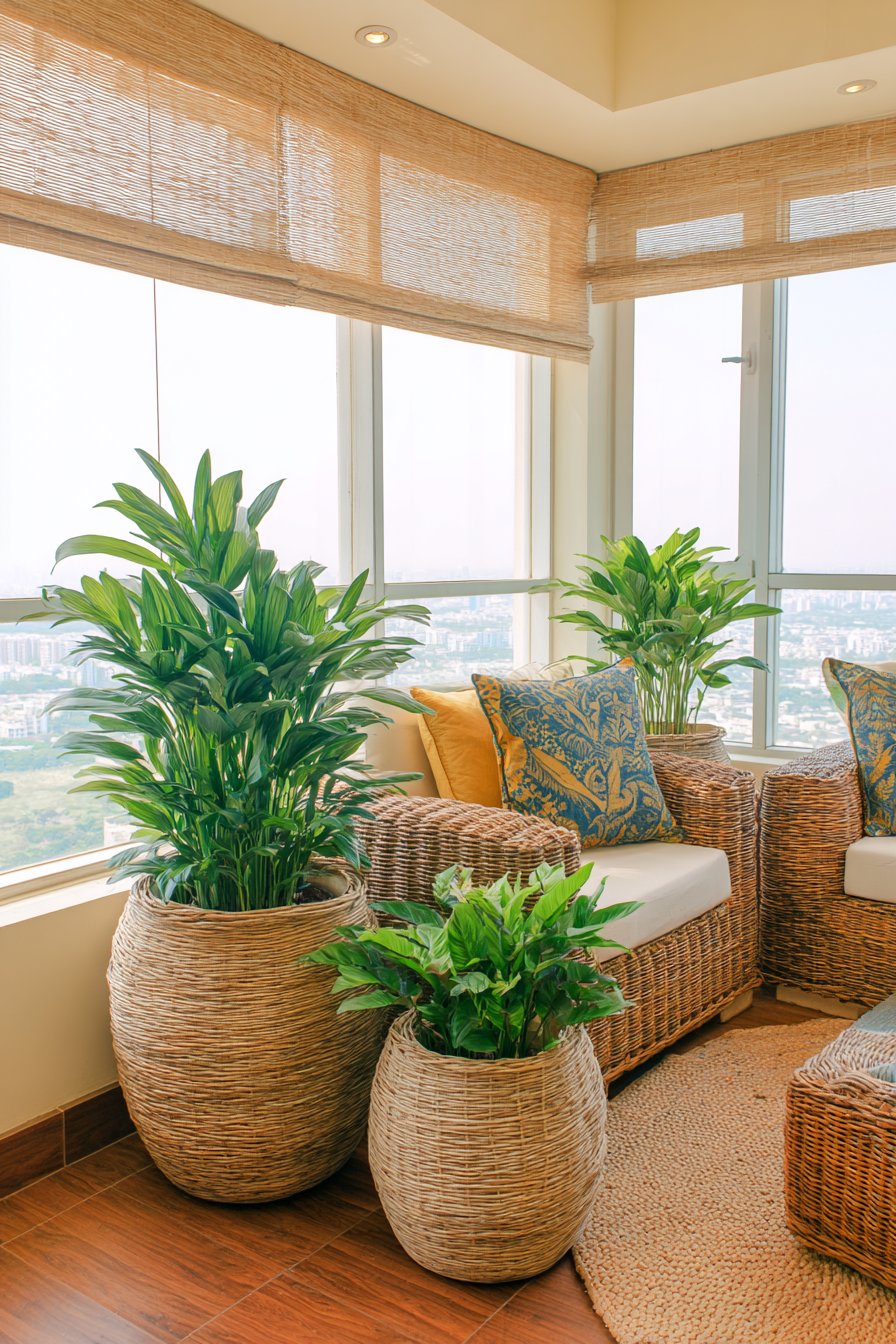
Tropical design transports you to lush jungle environments through abundant plantings and natural materials. This approach features palm plants in large woven planters creating immediate tropical atmosphere through iconic foliage. The substantial scale of palm fronds creates dramatic vertical elements and casts exotic shadow patterns. Large planters provide adequate root space for these sizeable plants while the woven construction adds textural interest and natural material authenticity.
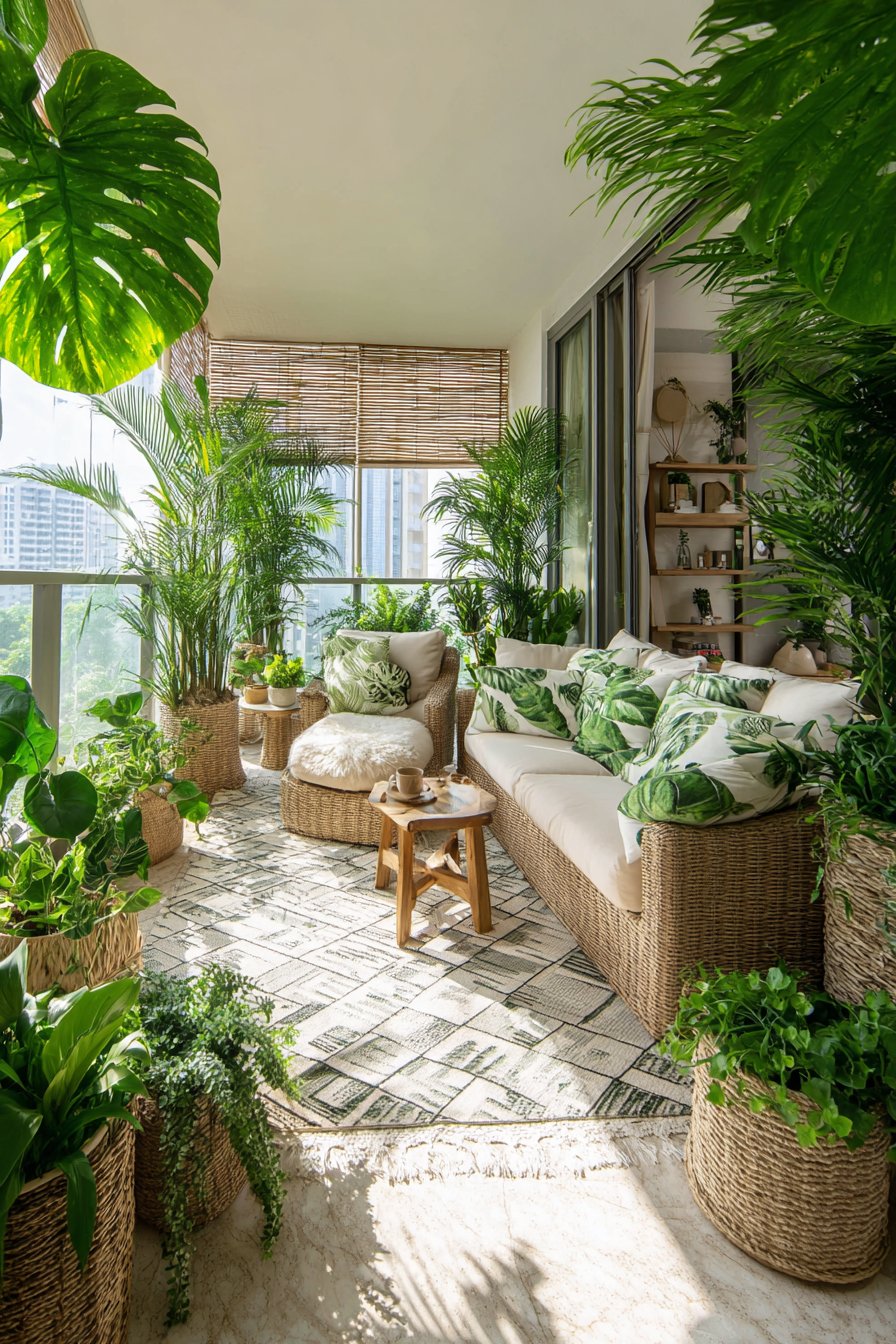
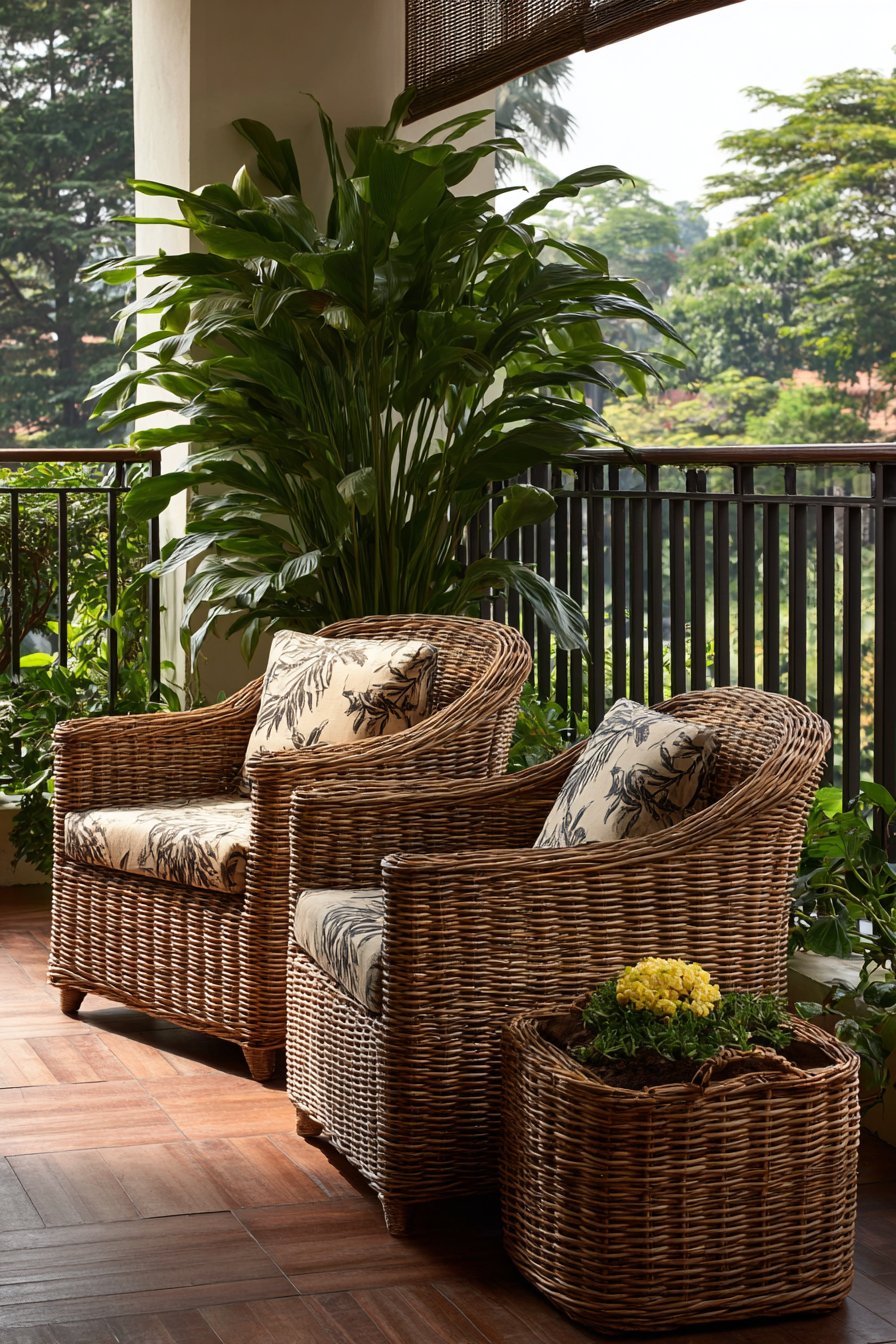
Natural rattan furniture with thick cushions in botanical print fabrics reinforces the tropical theme through both material and pattern choices. Rattan’s organic construction and honey tones complement palm plantings while providing comfortable seating suitable for extended lounging. Botanical print cushions featuring oversized tropical leaves create cohesive design narrative and introduce additional colors found in living plants.
Teak wood flooring adds warmth and luxury while withstanding high moisture conditions common in tropical climates. Teak’s natural oils provide weather resistance without chemical treatments, aging to beautiful silver-grey patina or maintaining golden tones with regular oiling. Bamboo shade structure filters intense sunlight, creating dappled light patterns reminiscent of forest canopy. Monstera and bird of paradise plants create jungle atmosphere through their large, architectural leaves. Bright filtered natural light simulates tropical environment where intense sun passes through leafy canopy, creating the immersive tropical paradise atmosphere that transforms your balcony into exotic escape.
Key Design Tips:
- Group tropical plants in odd numbers (3, 5, 7) for more natural, less formal appearance
- Mist tropical foliage regularly if humidity levels are low in your climate
- Choose botanical prints in colors that coordinate with your actual plant selections
- Protect teak furniture with seasonal oiling to maintain color or allow natural greying
- Install misting systems for authentic tropical humidity if budget allows
- Select plants appropriate for your actual light levels rather than assuming all tropicals need full sun
16. Multi-Layered Evening Lighting
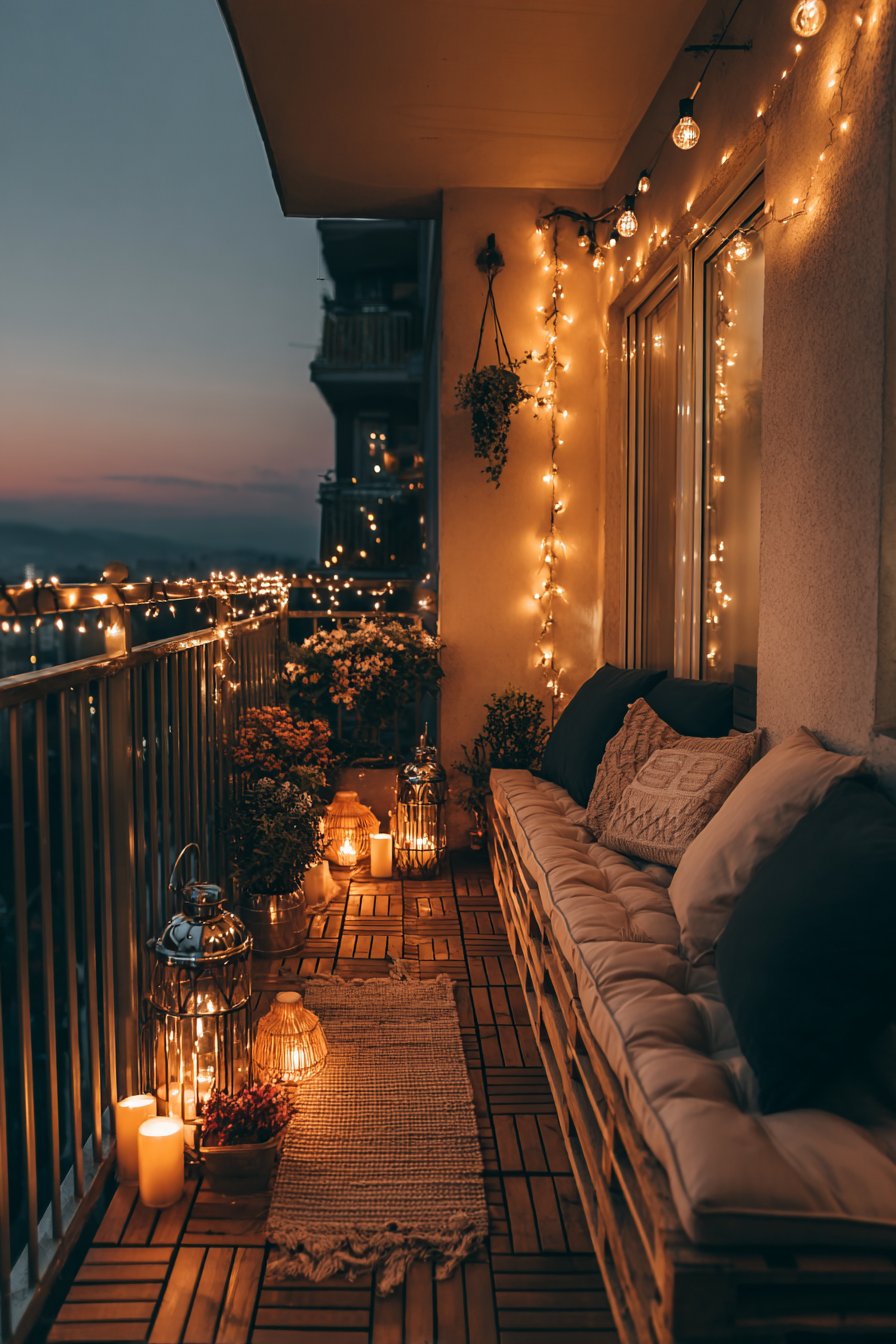
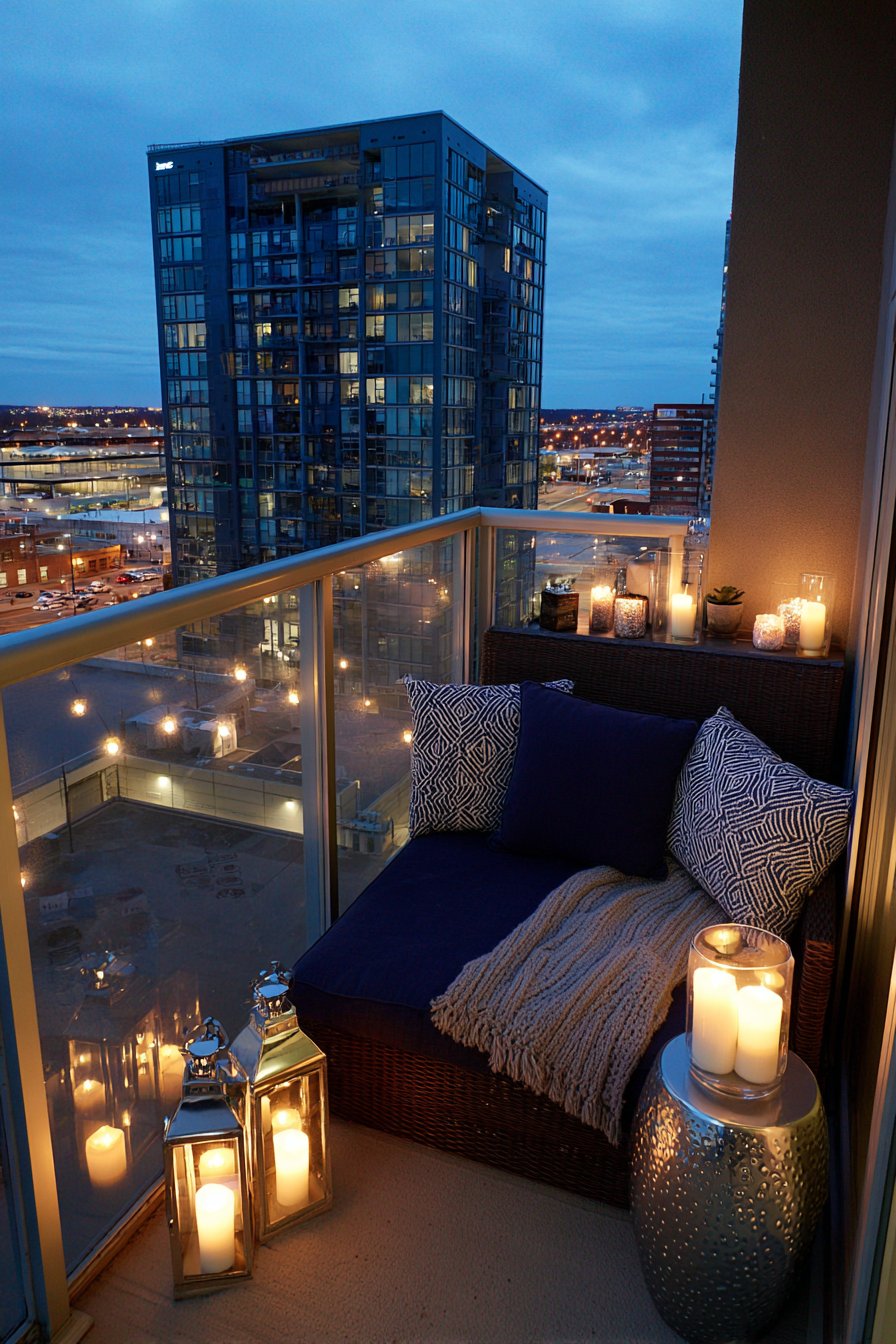
Evening balcony enjoyment requires thoughtful lighting design beyond simple overhead illumination. This night-focused arrangement features layered lighting including solar-powered pathway lights, lanterns with LED candles, and warm-toned string lights creating ambient glow at multiple heights and intensities. Layered lighting provides flexibility—bright task lighting for dining, medium ambient lighting for conversation, dim accent lighting for relaxation.
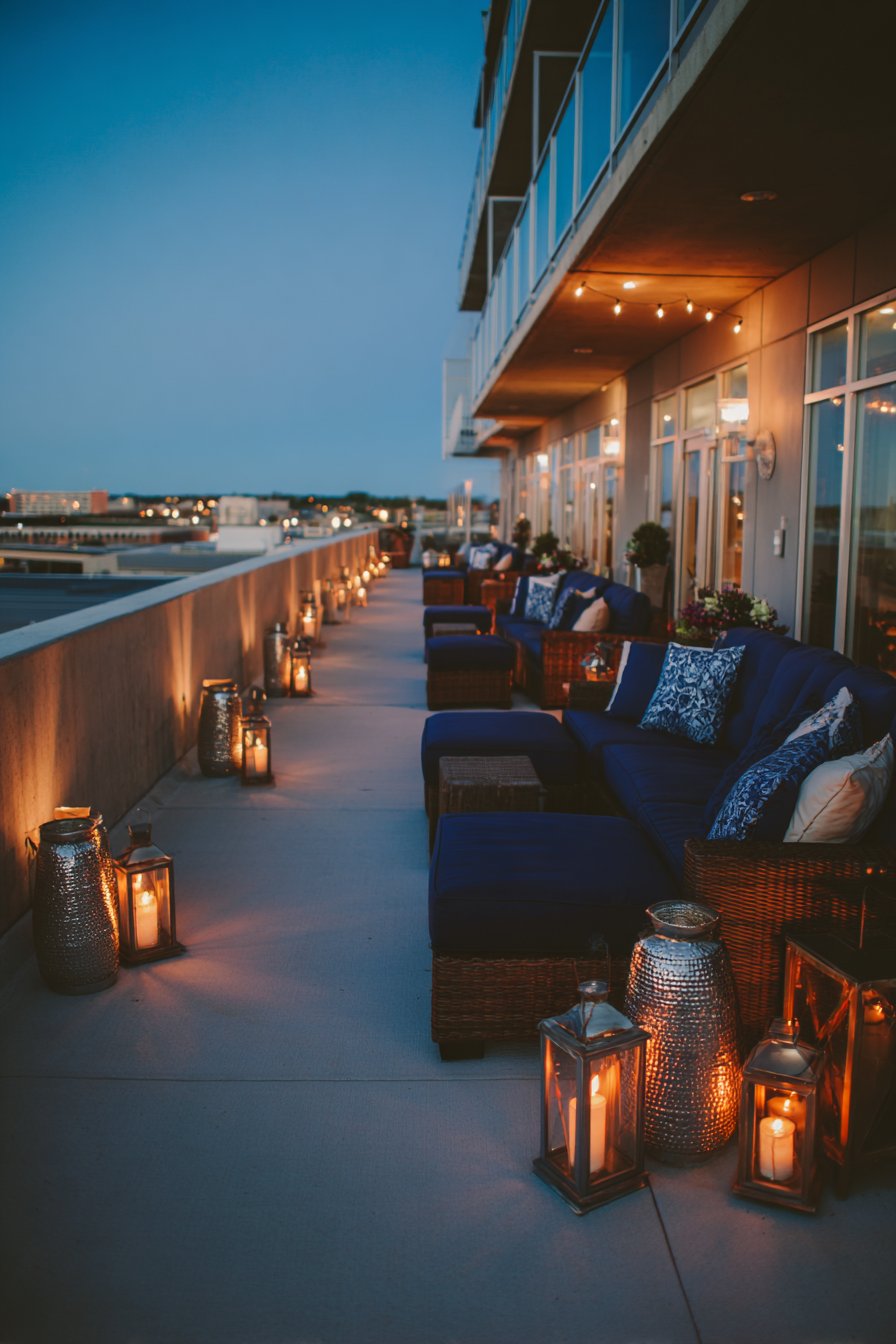
Comfortable seating with weather-resistant cushions in deep navy creates sophisticated evening atmosphere. Deep colors appear rich and jewel-like under warm artificial lighting while maintaining elegance during daylight hours. The substantial cushioning encourages extended evening enjoyment without discomfort from temperature changes or prolonged sitting.
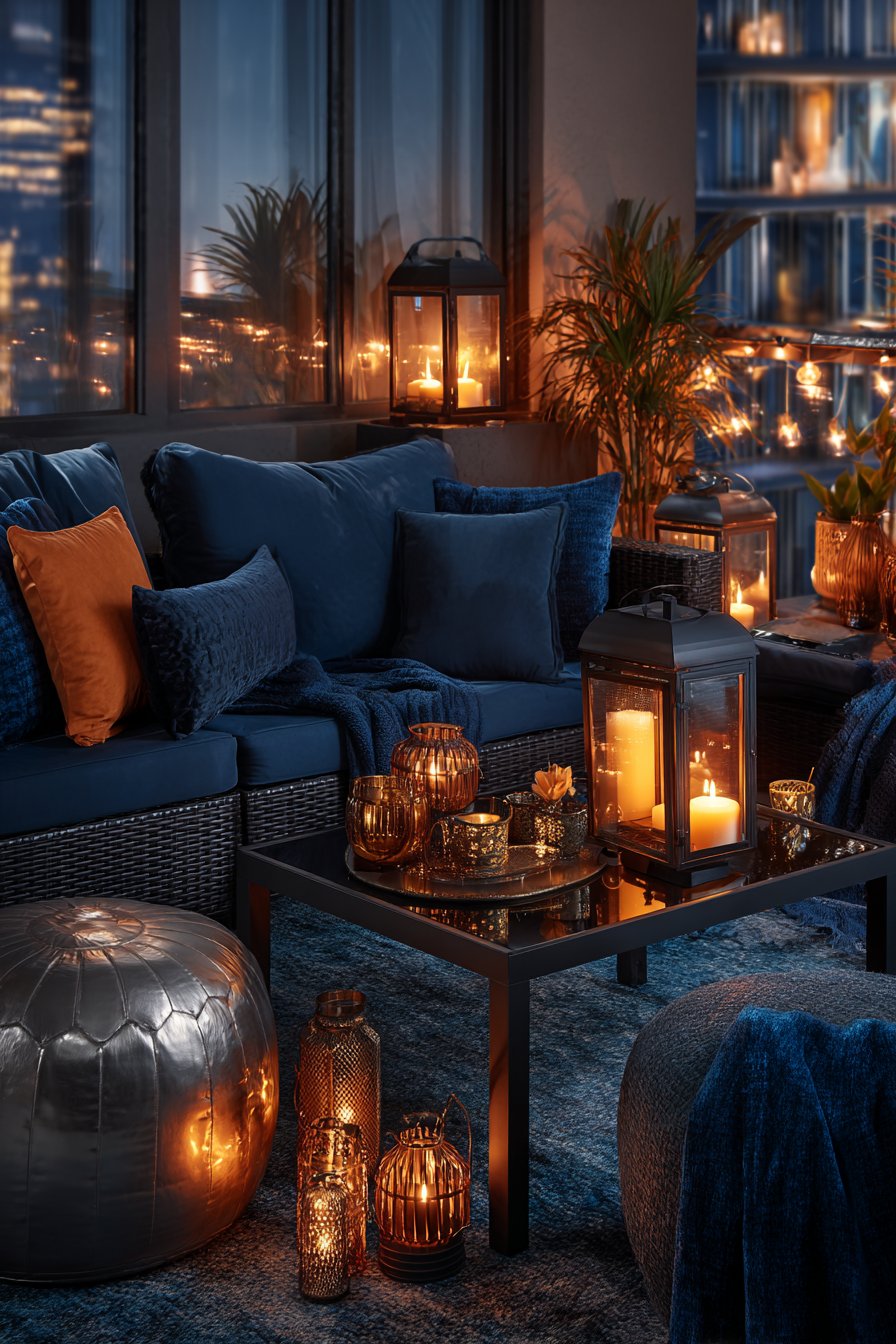
Reflective metallic planters catch and amplify available light, creating luminous focal points that enhance the effectiveness of limited lighting sources. The reflective surfaces double the impact of each light source through strategic reflection, brightening the space beyond the actual lumen output. Evening twilight photography showcases the atmospheric illuminated environment perfect for after-dark relaxation, demonstrating how lighting transforms the same physical space into completely different emotional environment once natural light fades.
Key Design Tips:
- Install lights at three heights—ground level, table height, overhead—for dimensional lighting
- Choose warm white LED bulbs (2700K-3000K) for flattering, restaurant-quality ambiance
- Use solar pathway lights along perimeters to define space boundaries after dark
- Select LED candles with realistic flicker for authentic candlelight effect without fire hazard
- Install dimmer switches or multiple lighting circuits for atmosphere adjustment
- Position reflective planters to amplify light toward seating areas rather than wasting it outward
17. Pet-Friendly Safety and Comfort
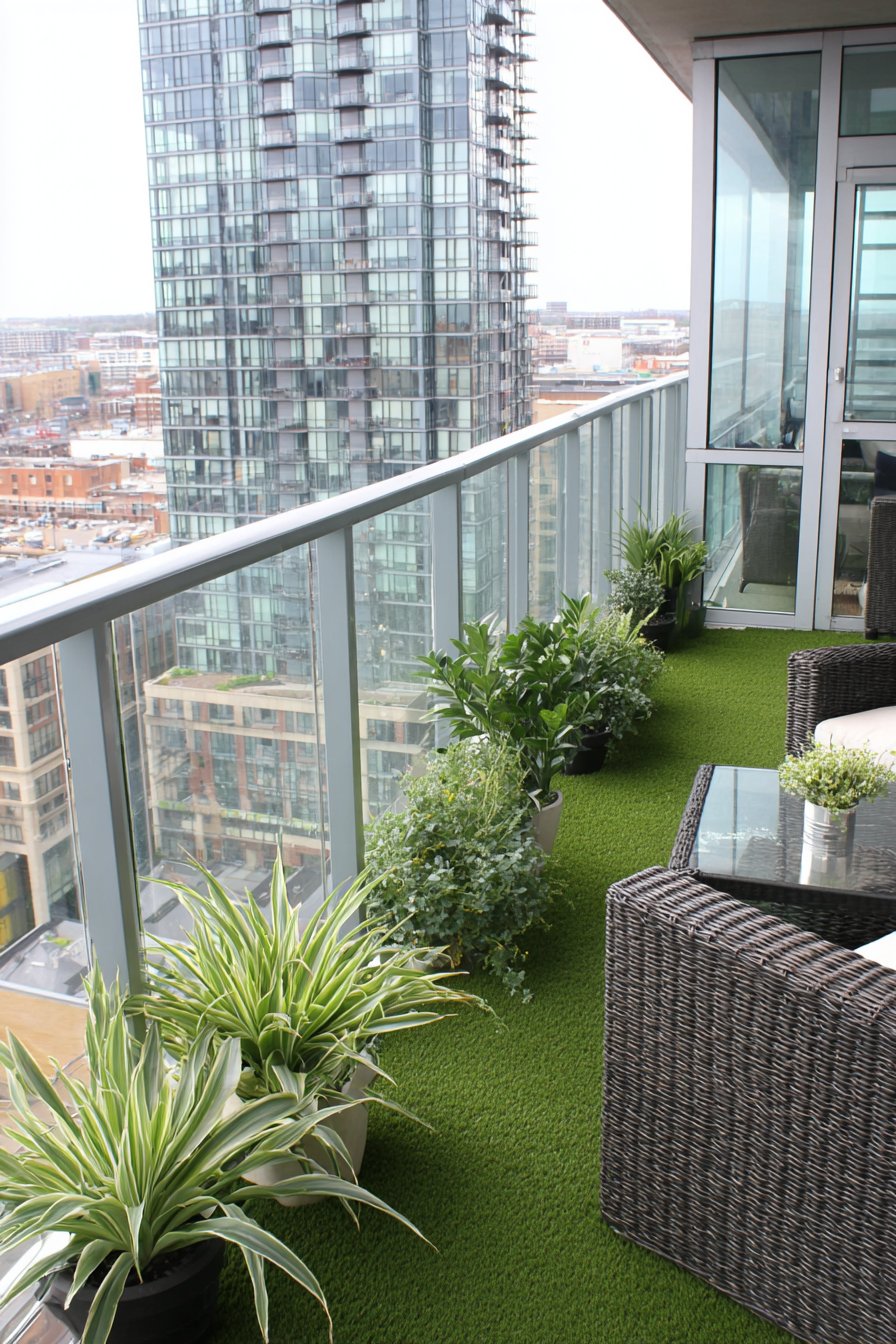
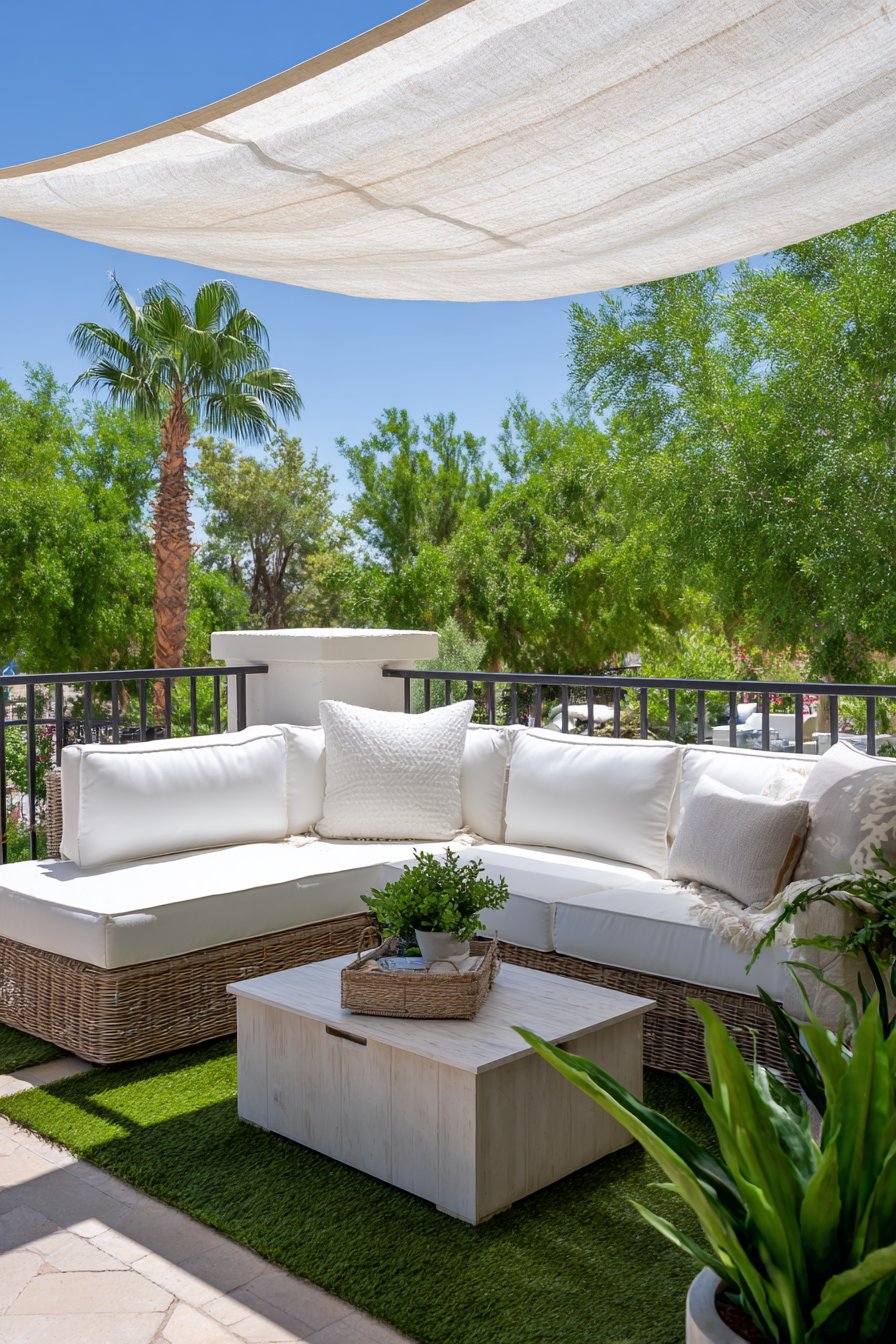
Balcony enjoyment should extend to all family members, including pets. This pet-friendly design features artificial turf section providing comfortable surface for small dogs to rest or relieve themselves. The turf section creates designated pet zone while remaining visually cohesive with overall design. Modern artificial turf products drain efficiently and resist odor absorption with proper maintenance.
Secure railing covers preventing gaps eliminate the dangerous spaces where small pets might slip through, fall, or become trapped. This essential safety modification allows worry-free pet access to the balcony space. A designated pet water station ensures hydration availability without indoor trips, encouraging pets to comfortably spend time outdoors.
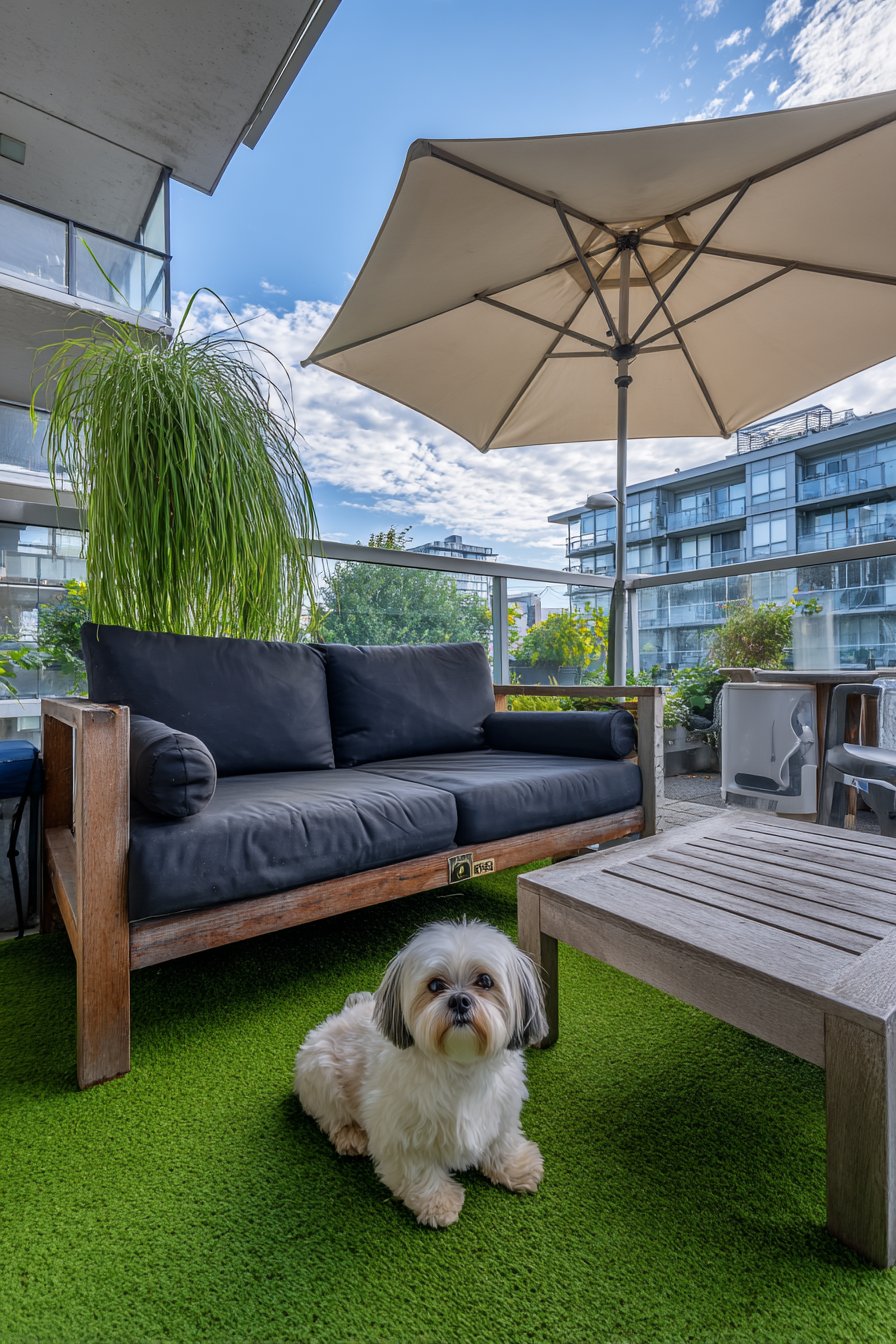
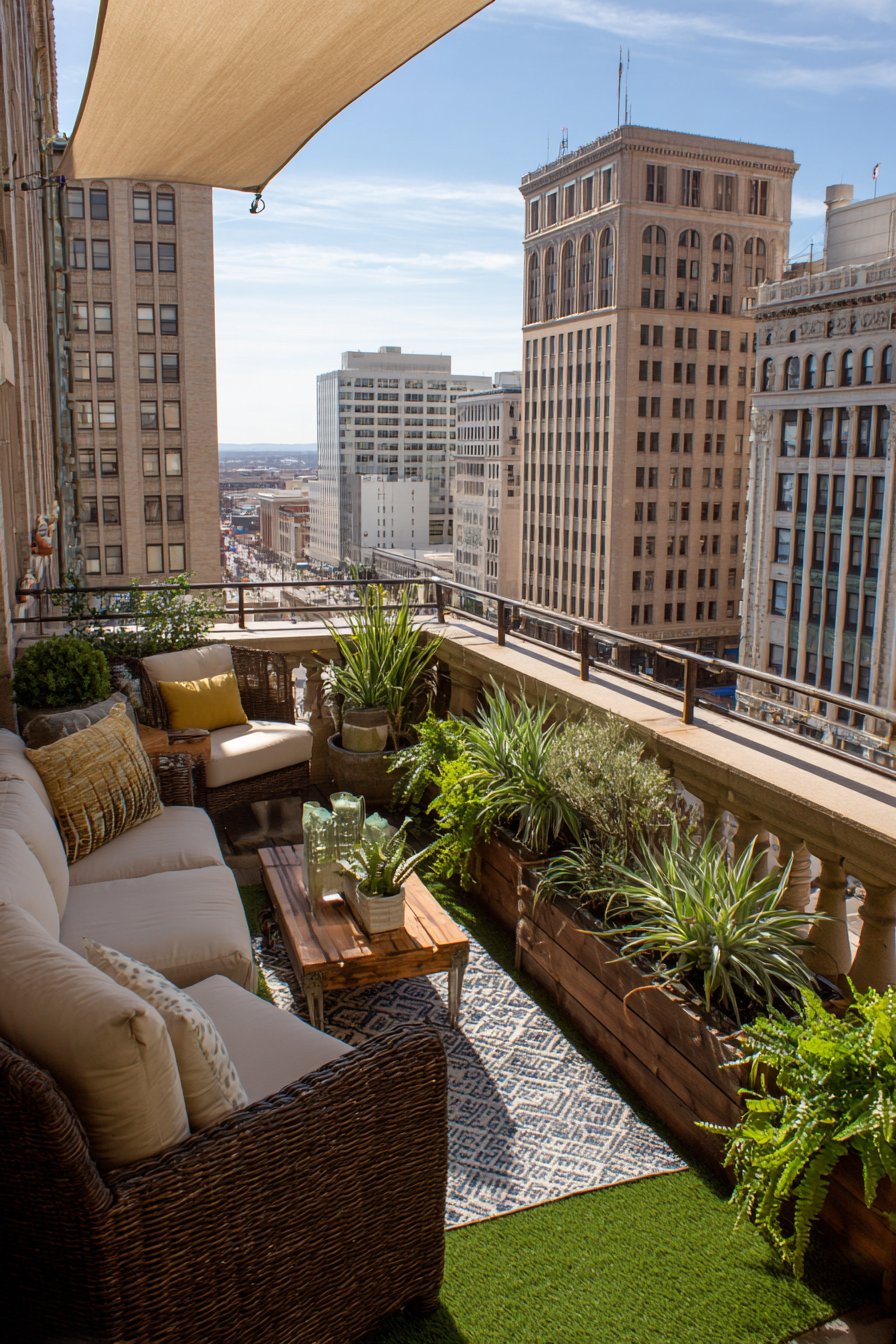
Durable outdoor furniture in pet-proof fabrics withstands scratching, shedding, and occasional accidents without permanent damage. Shade sail protects from harsh sun, providing essential temperature regulation for pets who may overheat. Pet-safe plants including spider plants and Boston ferns introduce greenery without toxicity concerns—many common ornamental plants pose poisoning risks to curious pets. Natural afternoon light creates inviting space while thoughtful pet-accommodating features demonstrate that beautiful design and pet safety coexist successfully.
Key Design Tips:
- Research plant toxicity thoroughly—many beautiful plants are dangerous to pets
- Install artificial turf with antimicrobial backing to prevent odor development
- Secure all railing modifications with fasteners rather than ties that pets might chew through
- Choose elevated water bowls to reduce spills and improve pet ergonomics
- Select furniture with removable, washable covers for easy cleaning after pet use
- Ensure shade coverage during peak sun hours to prevent overheating
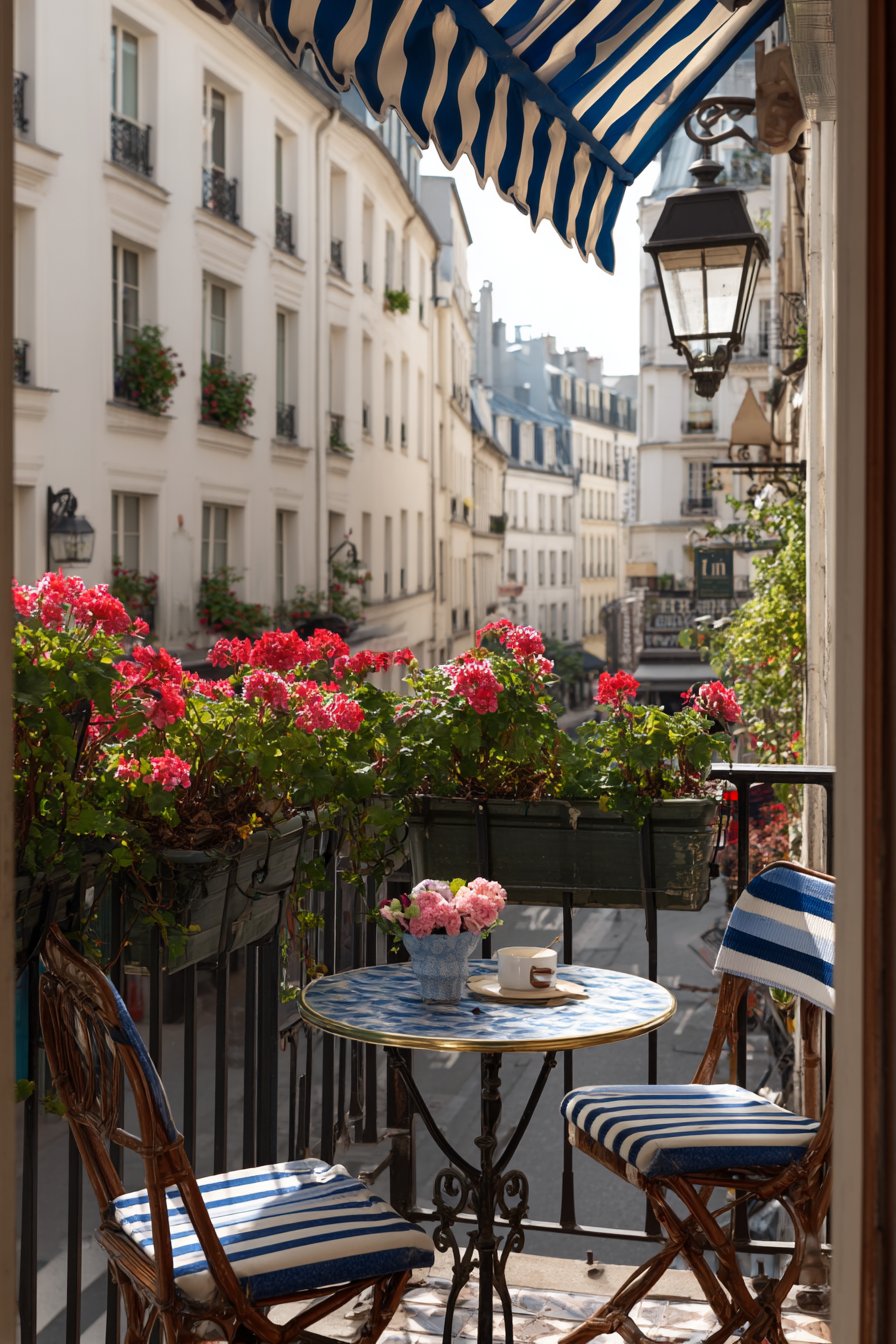
18. Parisian Bistro Charm
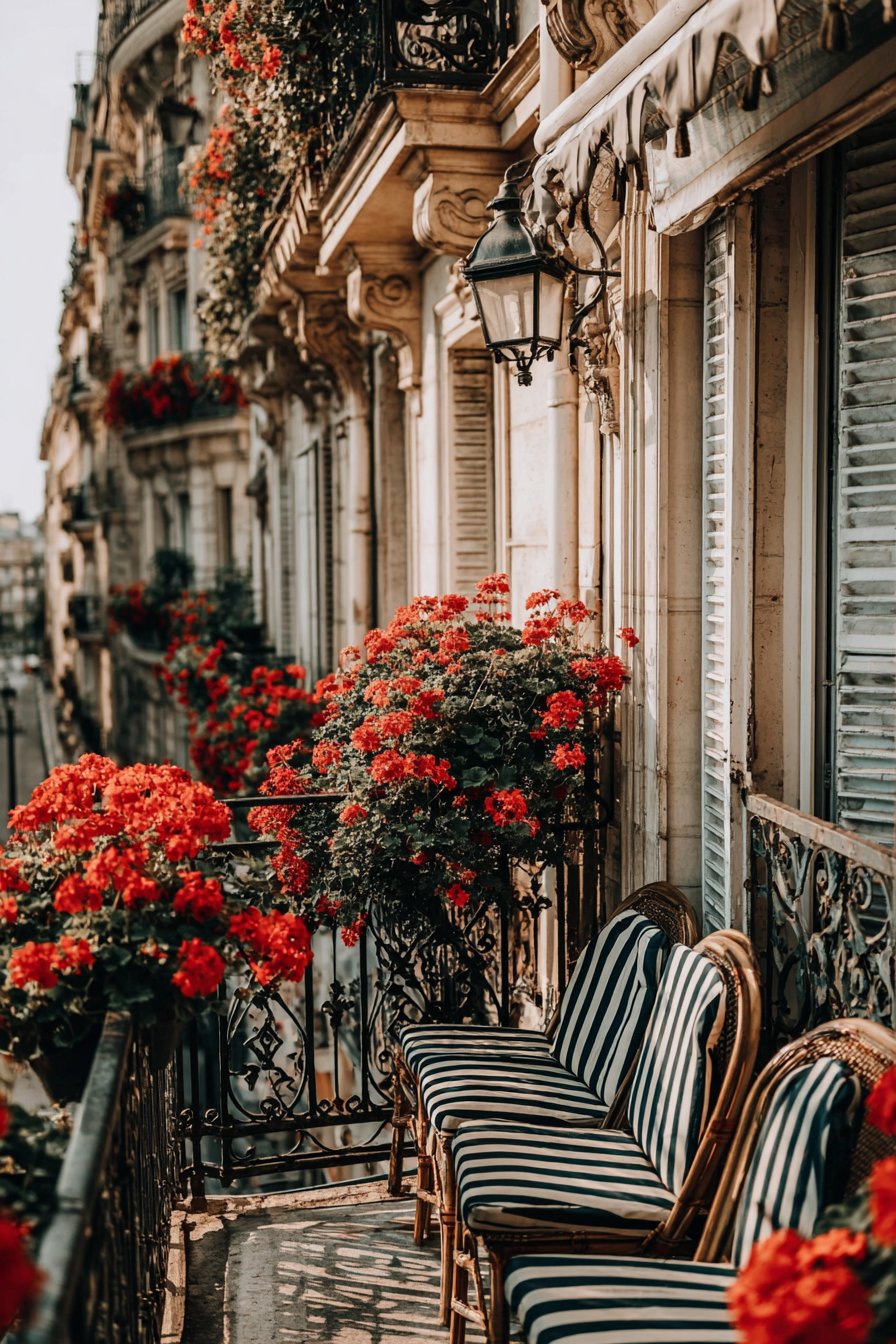
French-inspired design captures the romance of Parisian café culture through distinctive furniture and classic color combinations. Ornate metal bistro furniture in classic black provides authentic café aesthetic through scrollwork details and traditional proportions. The elaborate metalwork creates intricate shadow patterns in sunlight while the black finish provides timeless elegance that never feels dated.
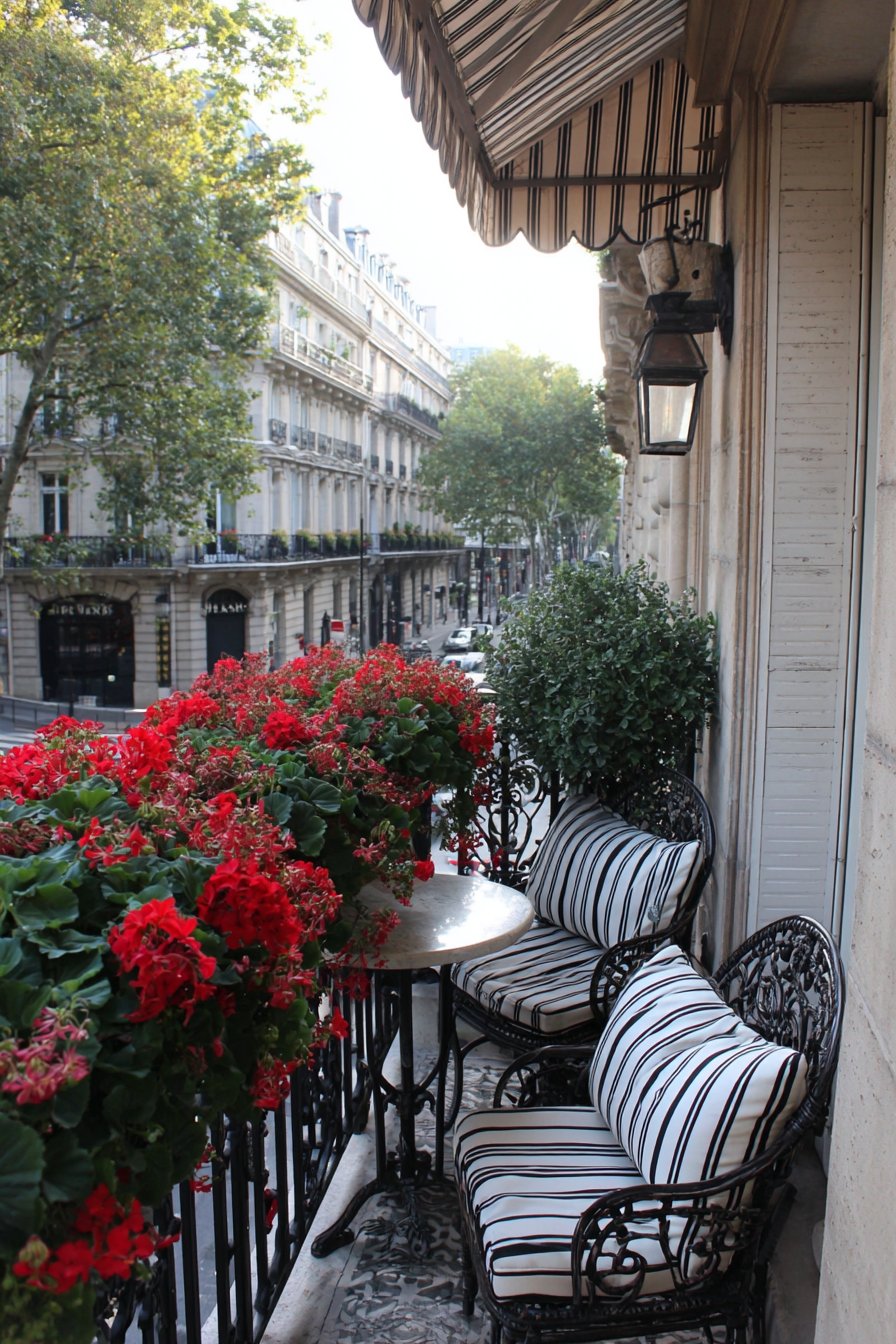
Striped cushions in navy and cream introduce the quintessential French color combination found everywhere from Breton shirts to bistro awnings. The stripes add visual interest and pattern without overwhelming small spaces—vertical stripes can even create illusion of height. Window boxes overflowing with red geraniums line the railing, providing the signature flower of French balconies and window displays. The abundant blooms create vibrant color contrast against black furniture and navy stripes.
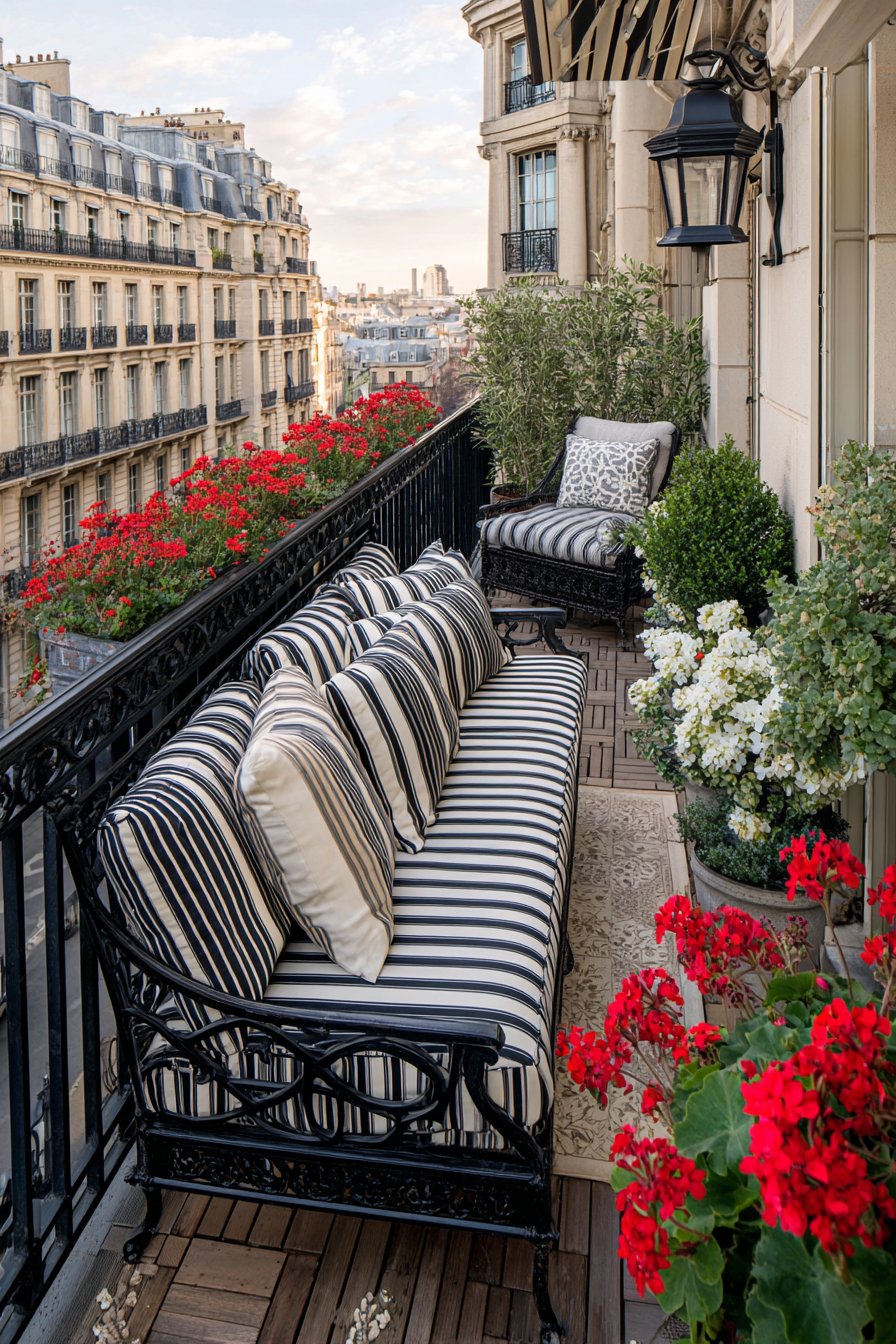
Small café-style awning provides shade while reinforcing the bistro aesthetic through its traditional striped fabric. Vintage-look street lamp style lighting completes the Parisian atmosphere, creating focal point that functions as sculpture during daytime and practical illumination after dark. Soft morning light creates authentic Parisian atmosphere, evoking leisurely café mornings spent with coffee and croissant. The romantic European aesthetic demonstrates how design can transport you to beloved destinations without leaving home.
Key Design Tips:
- Seal cast iron furniture annually to prevent rust development
- Choose geranium varieties known for continuous blooming rather than single-flush types
- Install window boxes with proper drainage holes to prevent root rot
- Use awning fabrics treated for UV resistance and mildew prevention
- Position awning to provide shade during peak sun hours for your balcony orientation
- Add café-style accessories like small chalkboard menus or vintage advertising posters
19. Sustainable Upcycled Materials
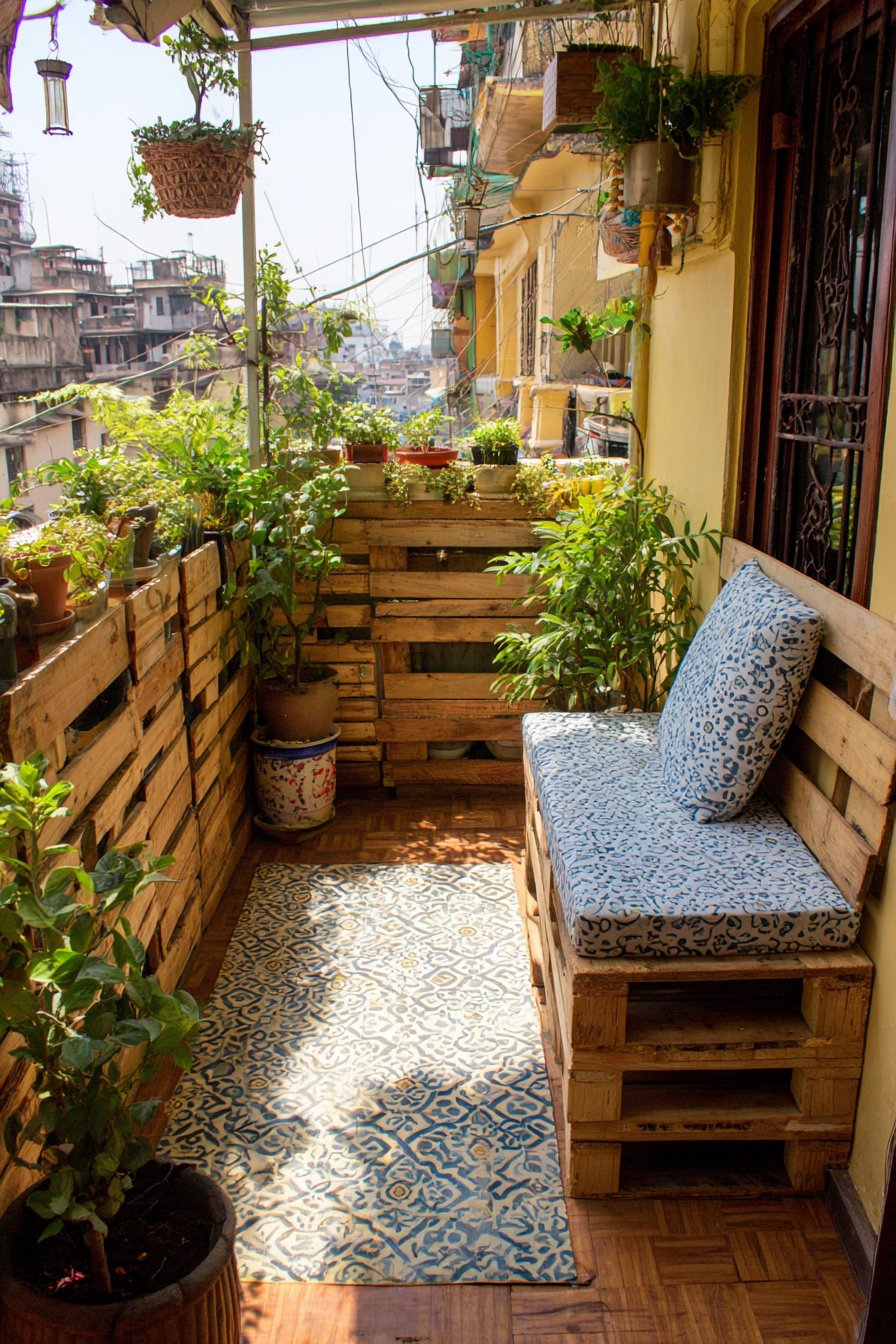
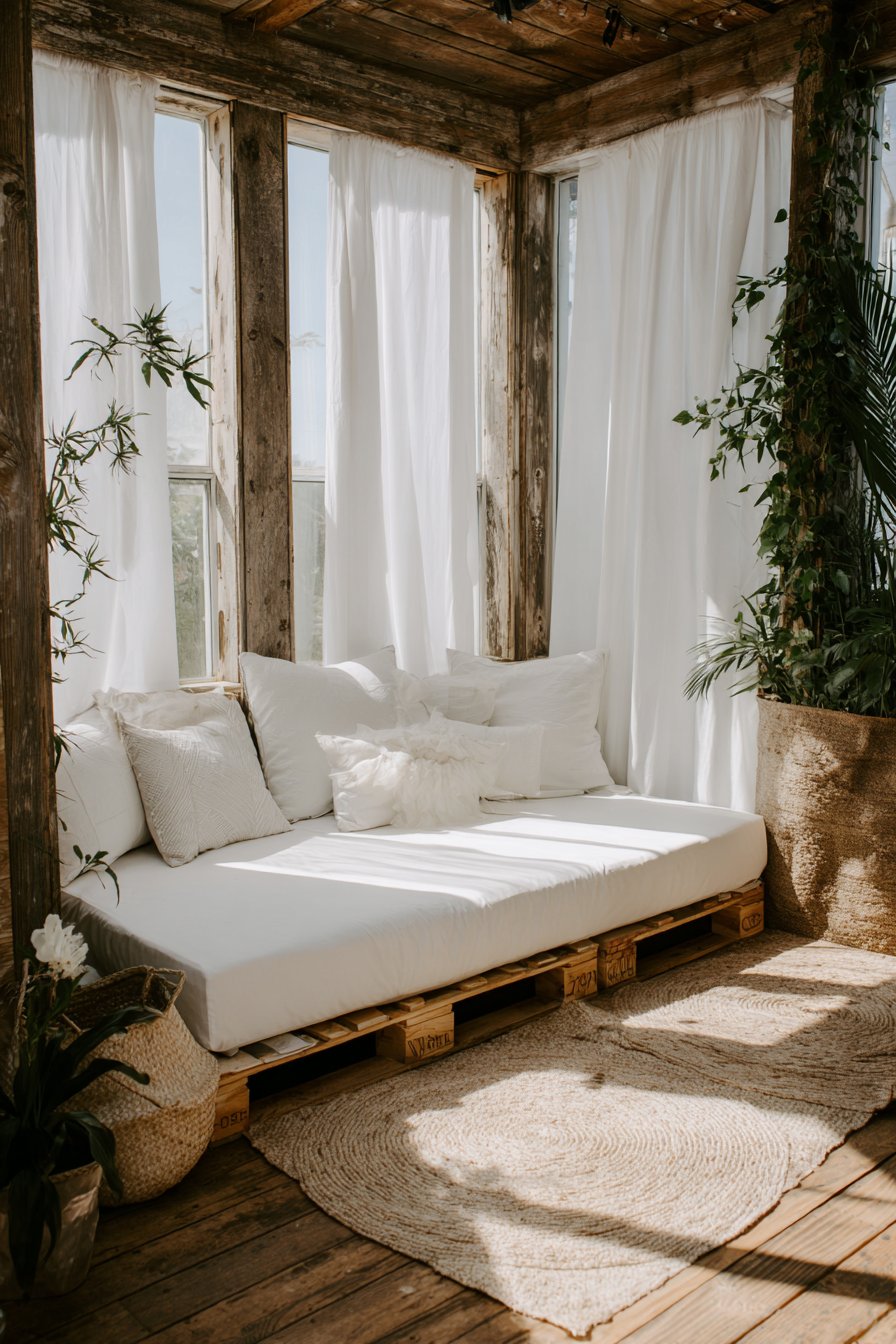
Eco-conscious design demonstrates that sustainability and beauty coexist through creative material reuse and environmental responsibility. This sustainable approach features upcycled pallet furniture transformed into seating and vertical planter walls. Wooden pallets provide free or low-cost material that can be disassembled and reconstructed into custom furniture matching exact space dimensions and functional requirements.
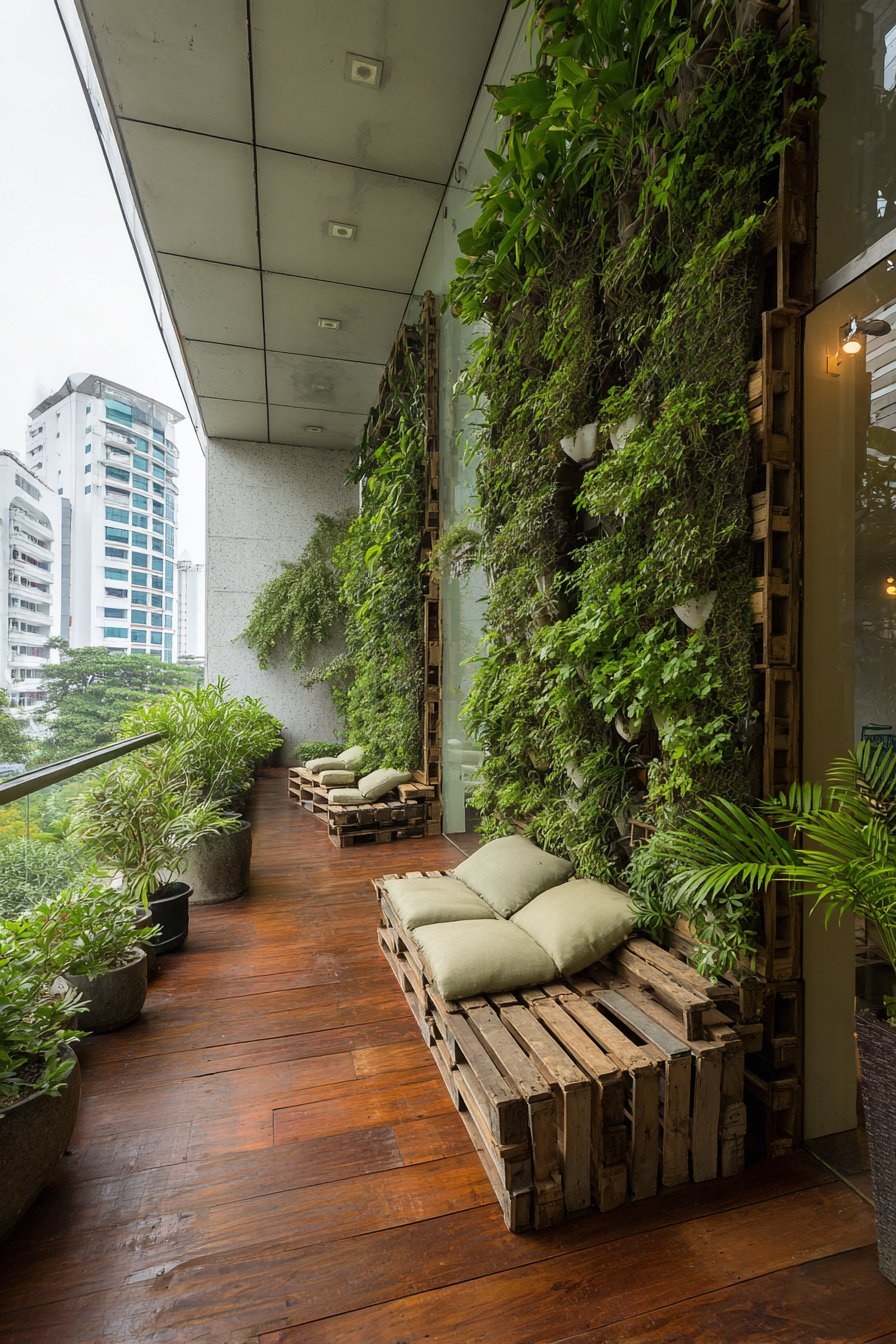
Recycled plastic outdoor rugs offer durability and weather resistance while diverting plastic waste from landfills. Modern recycled plastic products rival traditional materials in appearance while offering superior performance in outdoor conditions. Solar-powered lights eliminate ongoing energy consumption and electrical installation requirements, while rainwater collection systems capture rainfall for irrigation use rather than relying on treated municipal water.
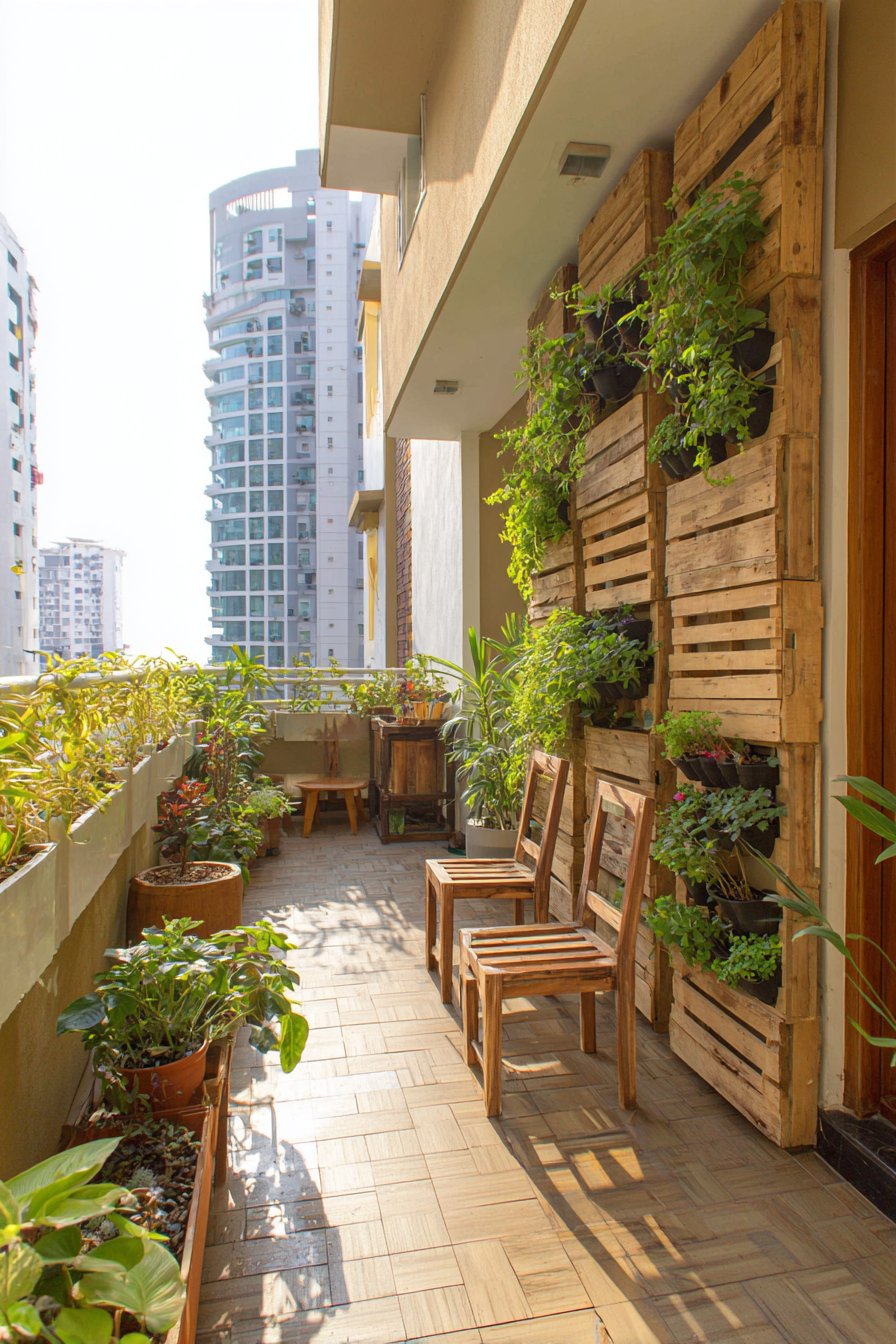
Composting containers discreetly integrated into the design allow organic waste recycling, creating nutrient-rich soil amendments for balcony plantings. Native drought-resistant plants reduce water requirements while supporting local ecosystems and pollinators. Natural materials throughout—wood, stone, fiber—biodegrade at end of life rather than persisting in landfills for centuries. Balanced natural lighting and architectural photography showcase the eco-conscious design choices, demonstrating that sustainable practices enhance rather than limit aesthetic possibilities.
Key Design Tips:
- Sand and seal pallet wood thoroughly to remove splinters and prevent weather deterioration
- Verify pallets are heat-treated (HT stamp) rather than chemically treated for safety
- Choose native plants adapted to your specific region’s rainfall and temperature patterns
- Install drip irrigation on timers to optimize water usage and prevent waste
- Use rainwater for ornamental plants but municipal water for edibles to avoid contamination
- Research local regulations regarding rainwater collection before installing systems
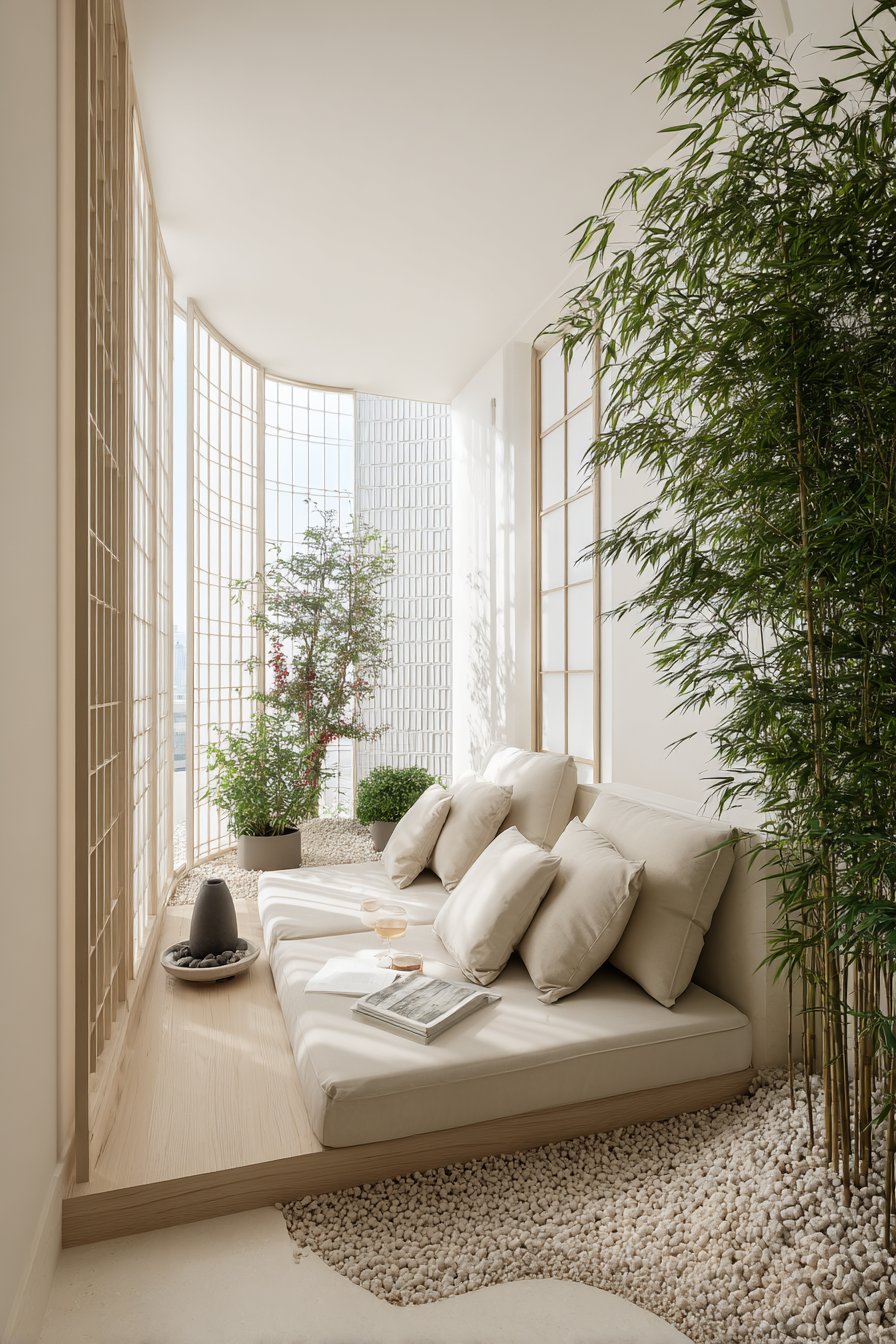
20. Zen Meditation Sanctuary
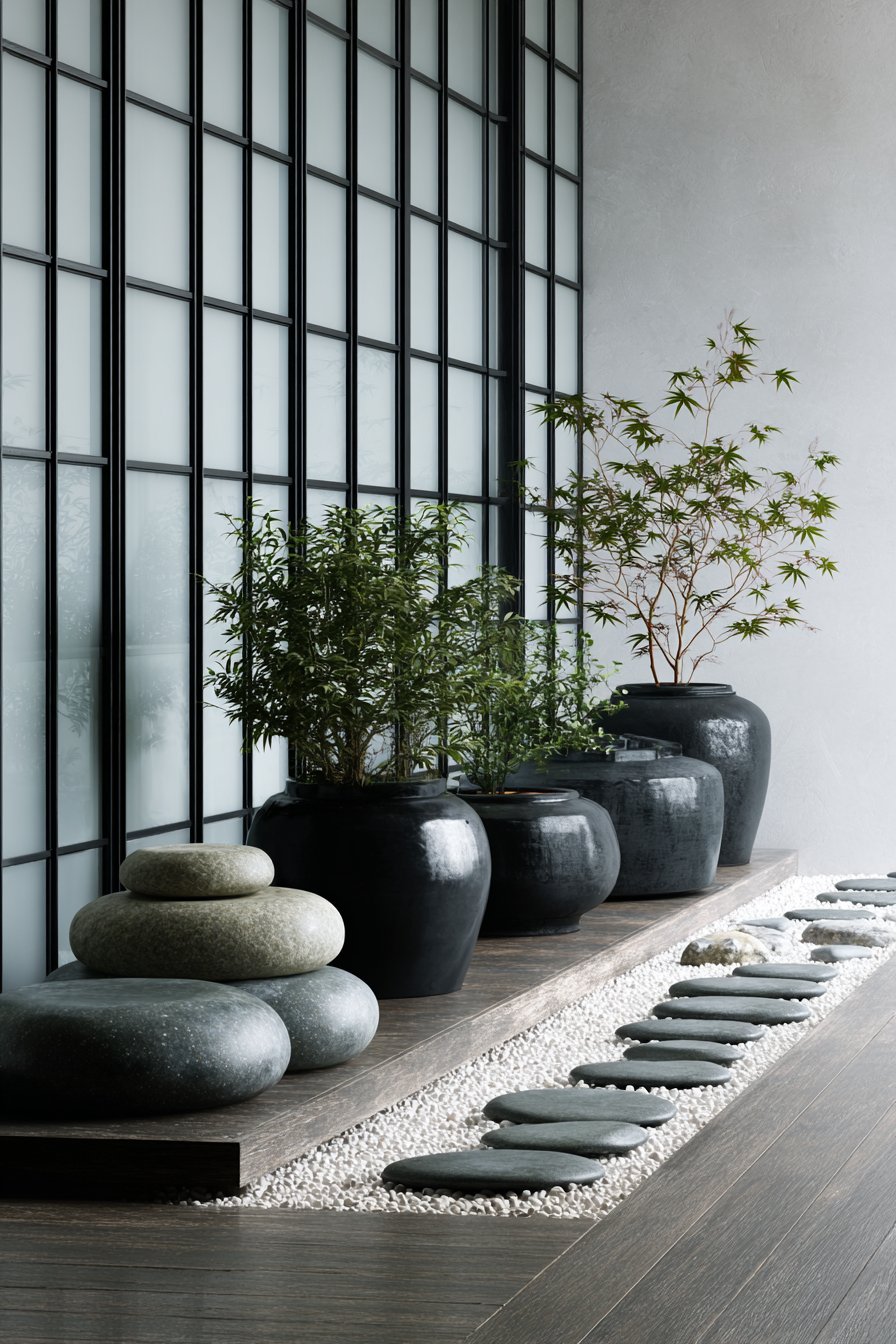
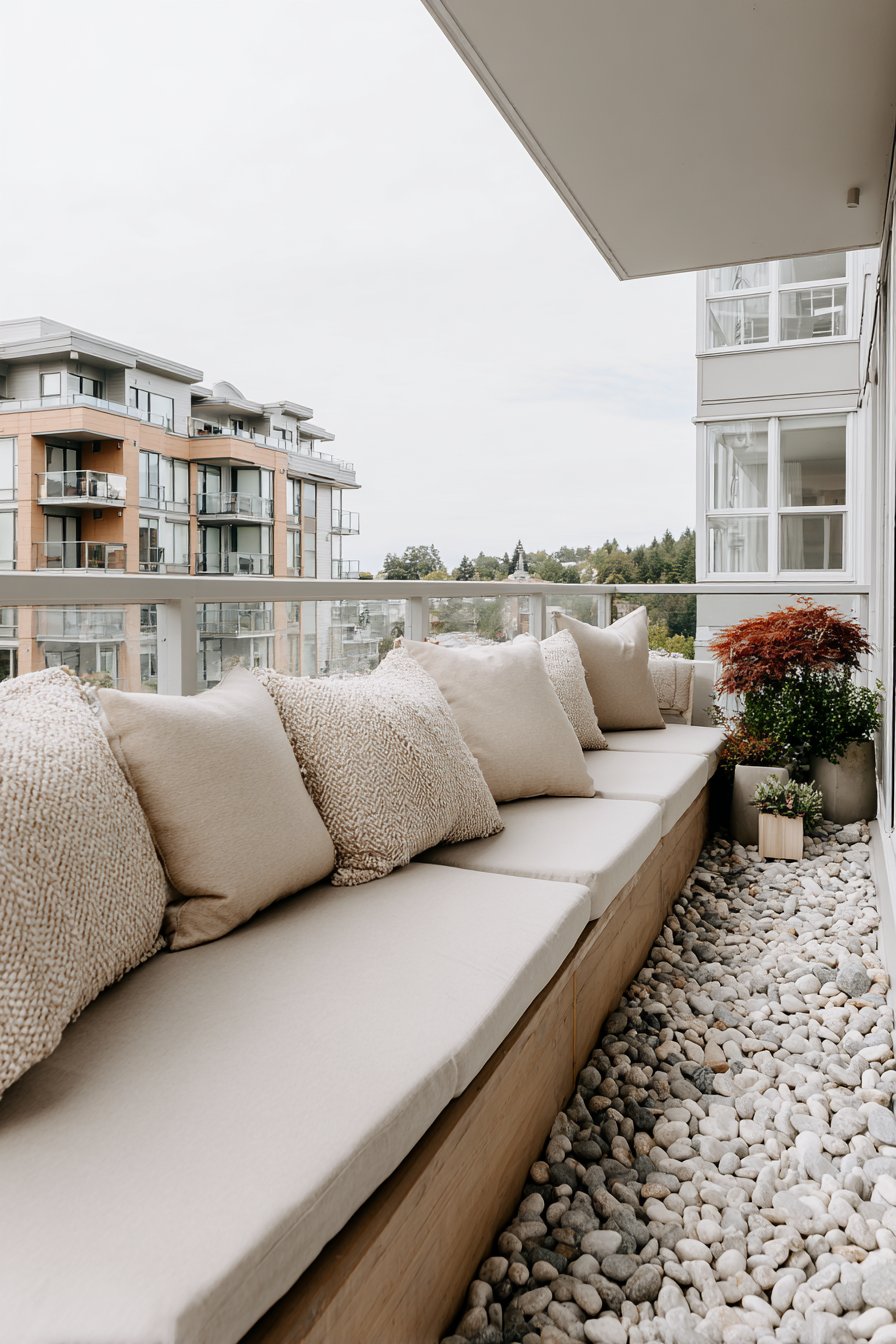
Creating dedicated meditation space provides essential retreat from daily stress and mental clutter. This zen-inspired design features low platform seating topped with neutral meditation cushions, positioning practitioners close to ground in traditional meditation posture. The minimalist seating focuses attention inward rather than outward toward material comfort or aesthetic display.
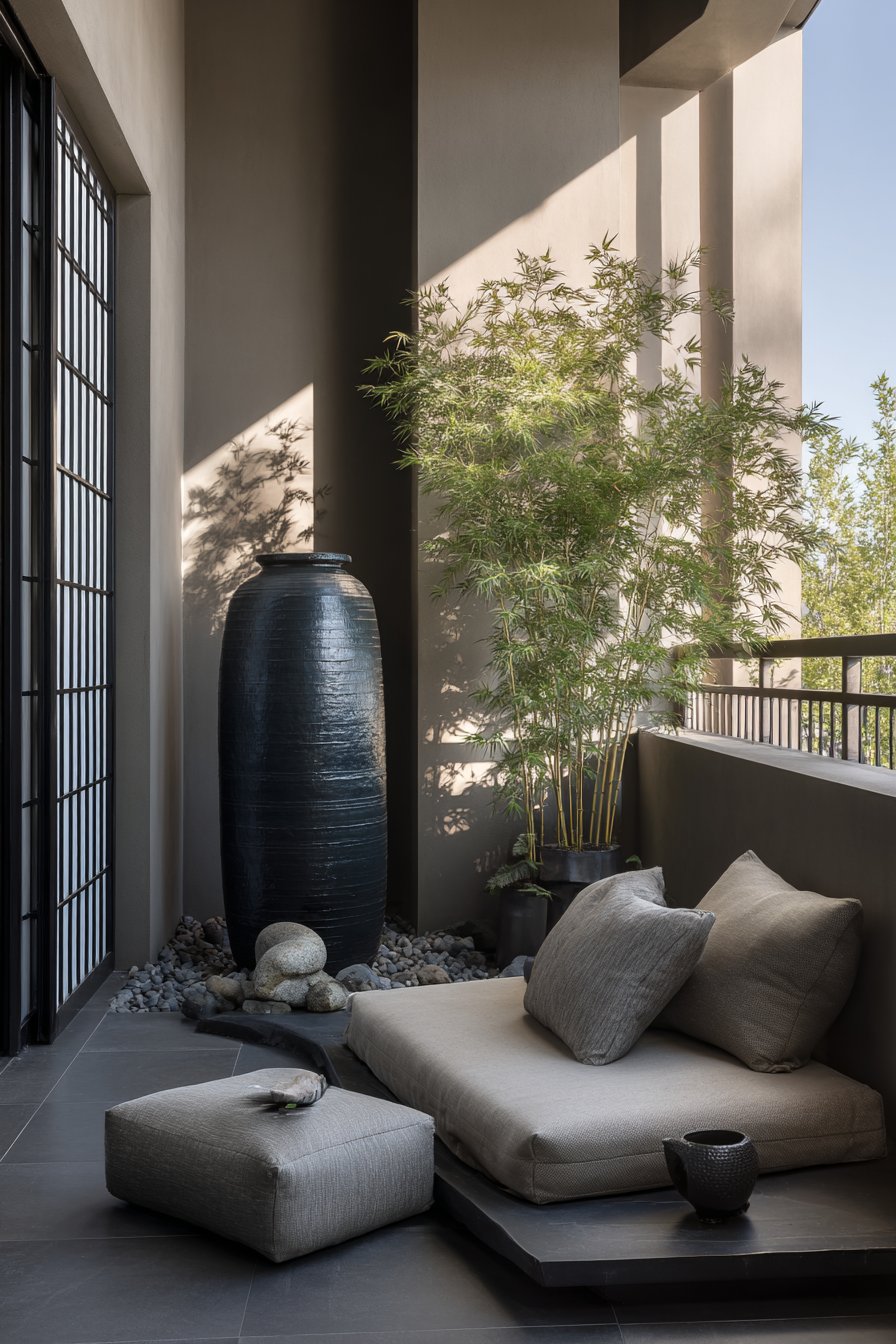
Bamboo water feature creates gentle sound that aids meditation practice by masking distracting ambient noise while providing focal point for concentration. The trickling water represents impermanence and flow—central concepts in meditation philosophy. Carefully curated rock garden with raked gravel introduces traditional Japanese garden elements that encourage contemplative mindfulness through careful attention to simple natural materials.
Minimalist plant selection including bamboo and Japanese maple in ceramic pots reinforces the zen aesthetic through restrained choices. Bamboo’s vertical lines and rustling leaves add movement and sound without visual chaos. Japanese maple provides seasonal interest through color changes while maintaining elegant form. Shoji-screen inspired privacy panels create enclosed sanctuary feeling while filtering light in traditionally Japanese manner. Soft filtered morning light creates ideal conditions for meditation practice—gentle enough to avoid distraction but sufficient to prevent drowsiness. The tranquil minimalist atmosphere demonstrates how thoughtful design supports spiritual and mental wellness practices.
Key Design Tips:
- Position meditation space away from neighbors’ direct sight lines for privacy during practice
- Choose water features with adjustable flow to control sound volume
- Rake gravel gardens in mindful patterns as meditation practice itself
- Select ceramic pots with drainage holes and raise on pot feet for air circulation
- Install bamboo screening to create visual separation from surrounding urban environment
- Maintain absolute simplicity—resist urge to add decorative elements that distract from practice
21. Autumn Seasonal Transformation
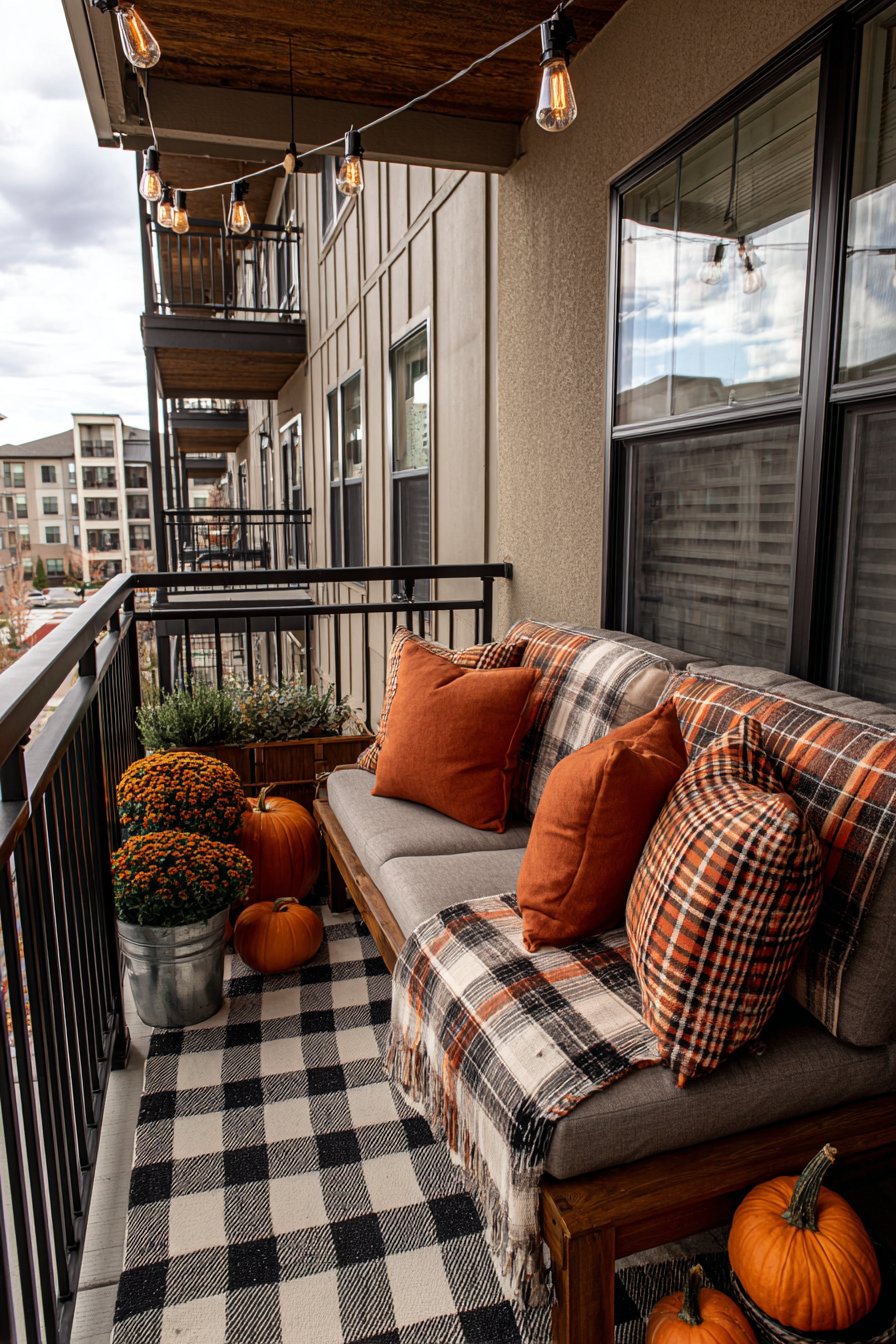
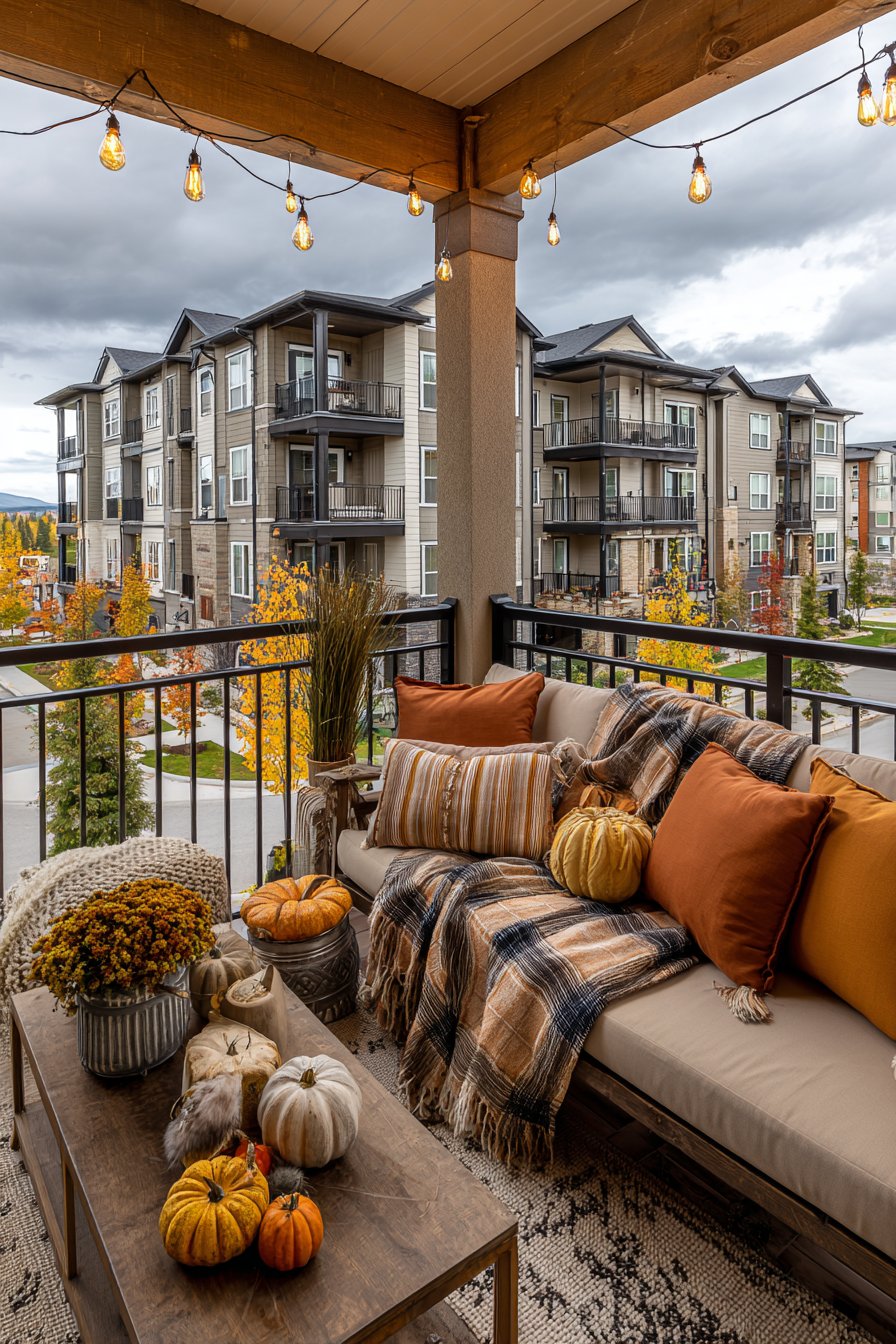
Seasonal styling allows your balcony to evolve throughout the year, reflecting changing weather and celebrations. This autumn configuration features weather-resistant outdoor sofa dressed in burnt orange and rust-colored pillows capturing fall’s signature warm palette. Plaid throw blanket adds cozy texture perfect for crisp autumn evenings while introducing traditional fall pattern.
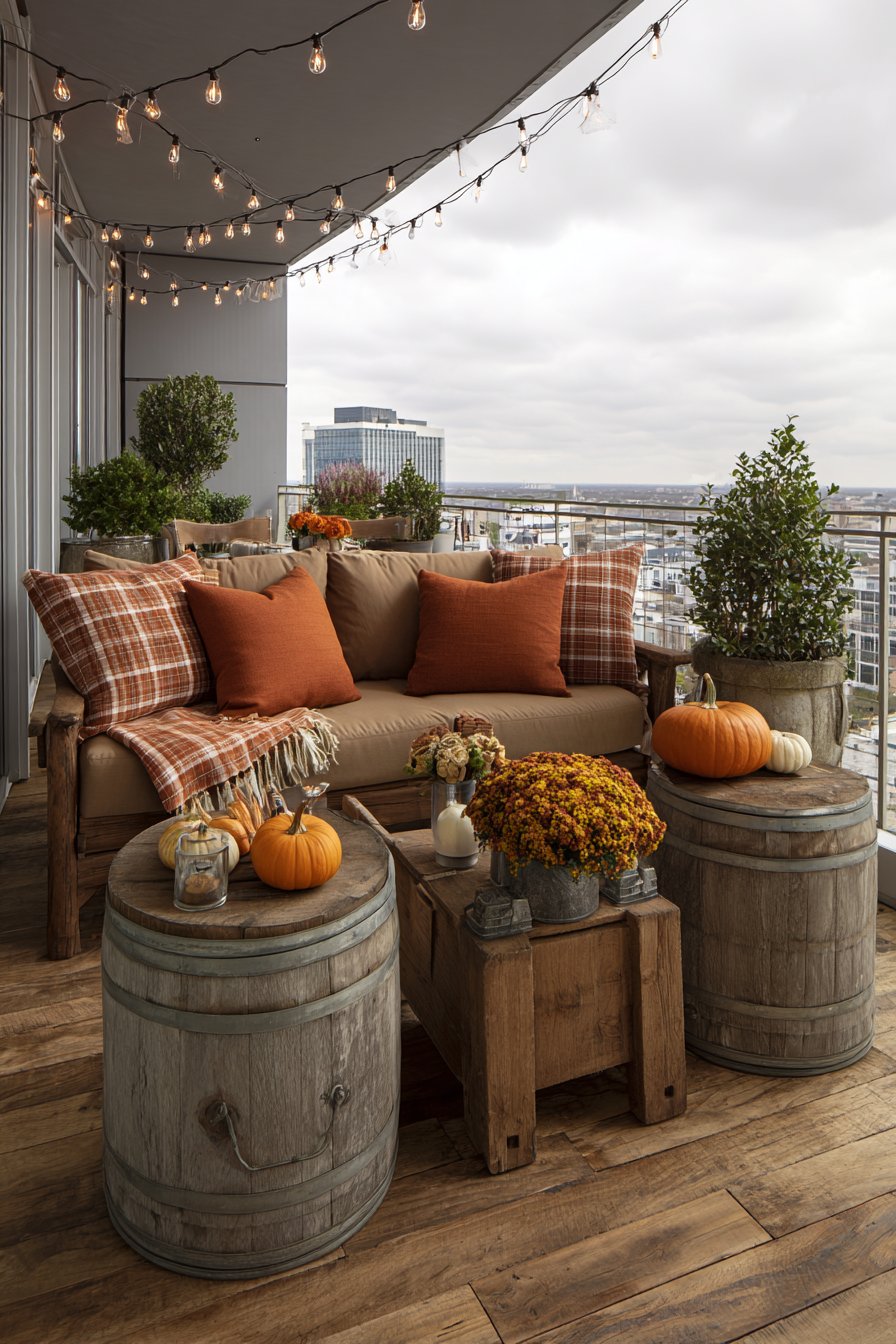
Decorative pumpkins and mums in galvanized metal containers create quintessential autumn display. Real or artificial pumpkins can be arranged in varying sizes for visual interest, while hardy chrysanthemums provide long-lasting fall color requiring minimal care. Galvanized metal containers offer rustic charm while their metallic surfaces catch available light on shorter autumn days.
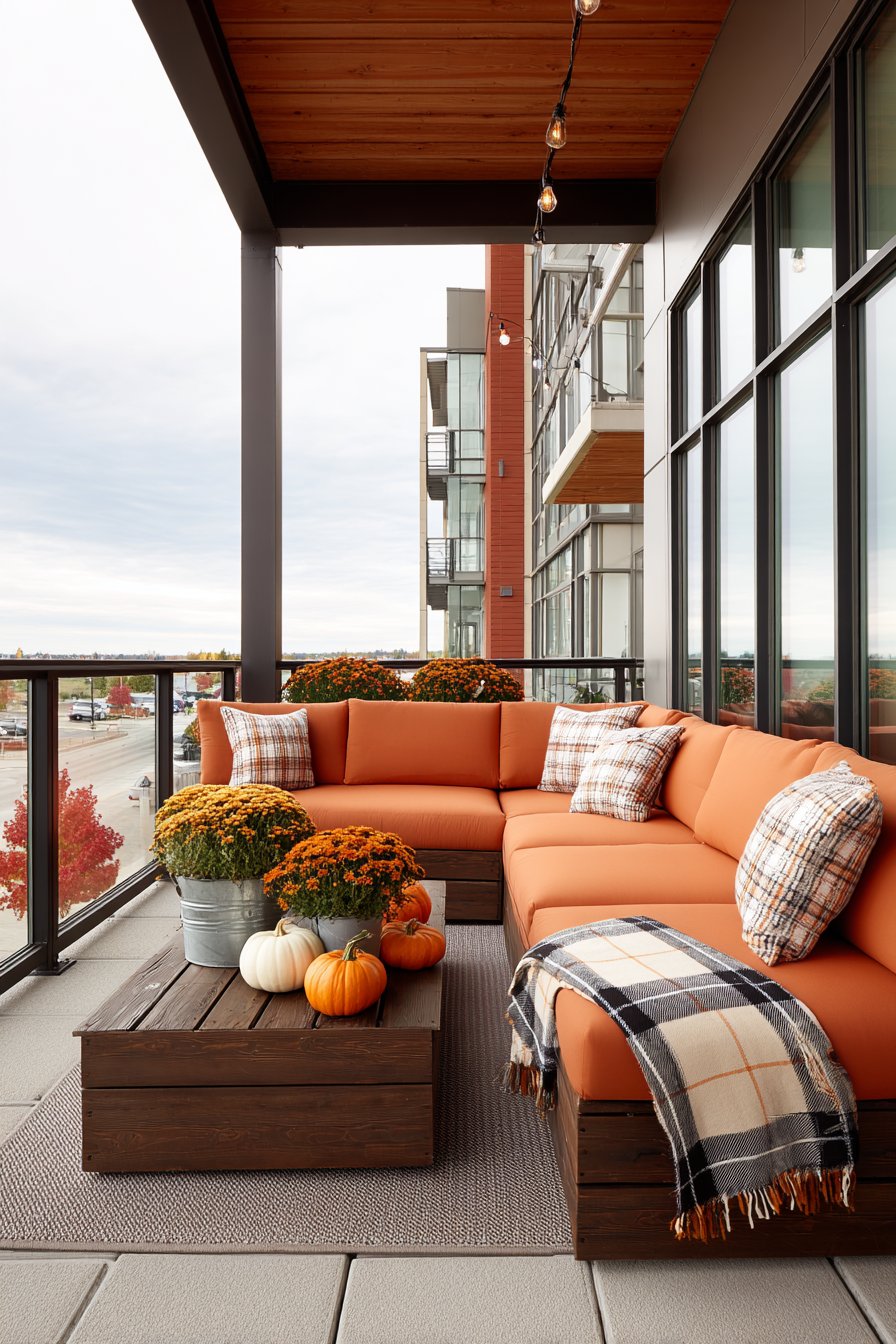
String lights with warm amber bulbs overhead create cozy evening atmosphere as days shorten and outdoor time increasingly occurs after sunset. The amber tone mimics candlelight and harvest celebrations, creating warmer atmosphere than cool white LED alternatives. Natural wood accents throughout complement autumn’s organic aesthetic. Overcast natural lighting creates cozy atmosphere typical of fall weather, while the seasonal transformation demonstrates how easily balcony style can shift to reflect changing seasons through simple textile and accessory updates.
Key Design Tips:
- Choose outdoor pillows with removable covers that can be swapped seasonally
- Select mums in colors that coordinate with your fall palette—burgundy, gold, bronze, orange
- Protect real pumpkins with polyurethane spray to extend display life
- Store seasonal accessories in labeled bins for easy rotation next year
- Transition seasonal displays gradually rather than abrupt complete changeovers
- Consider autumn-blooming plants like asters and ornamental kale for living seasonal color
22. Maximalist Pattern and Color Explosion
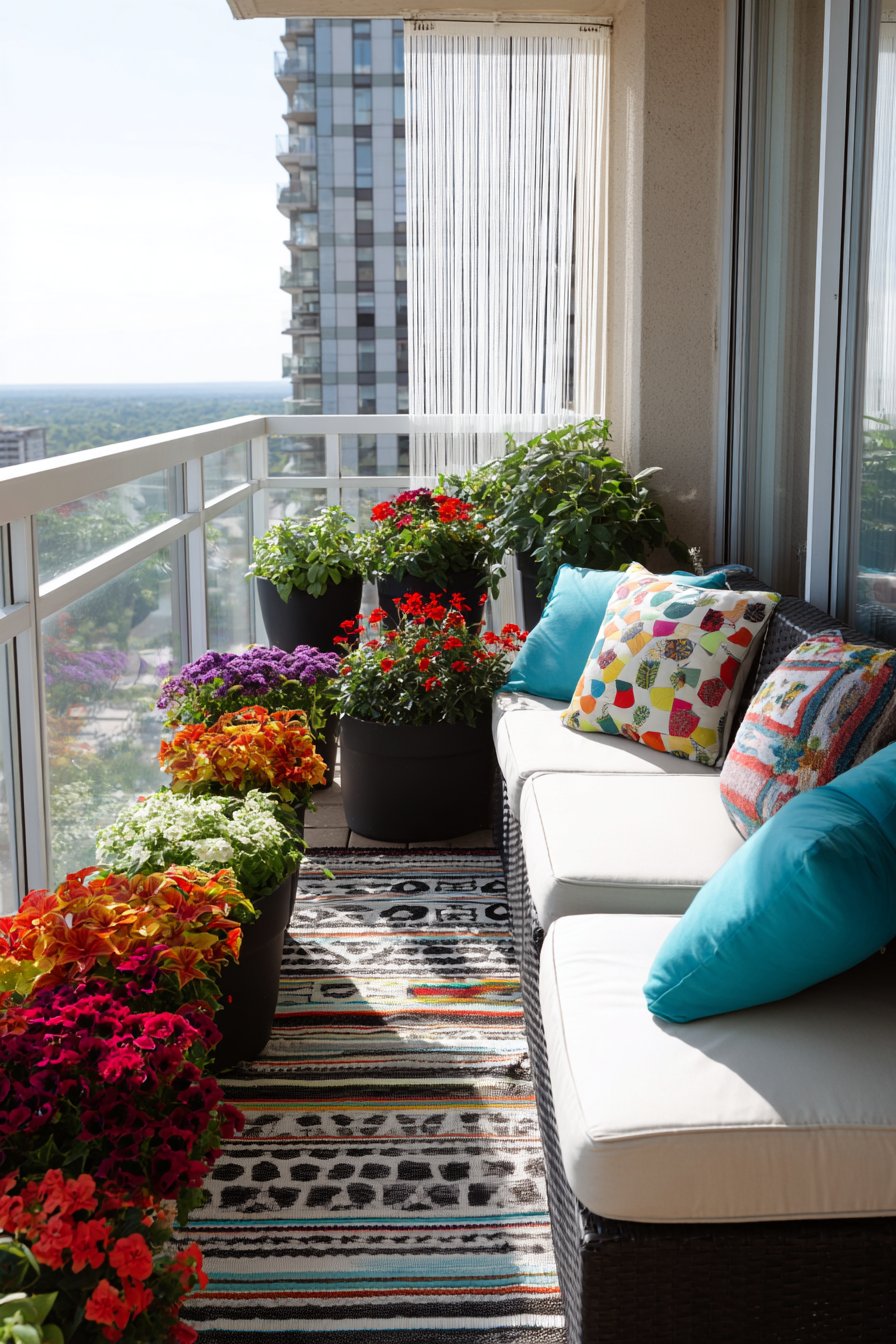
Maximalism celebrates abundance, personality, and fearless self-expression through layered patterns, saturated colors, and curated collections. This bold approach features mixed pattern outdoor cushions in complementary colors and varying scales—large florals with small geometrics, tribal patterns with modern abstracts. The key to successful pattern mixing lies in color coordination and scale variation—patterns share common colors while differing in visual density.
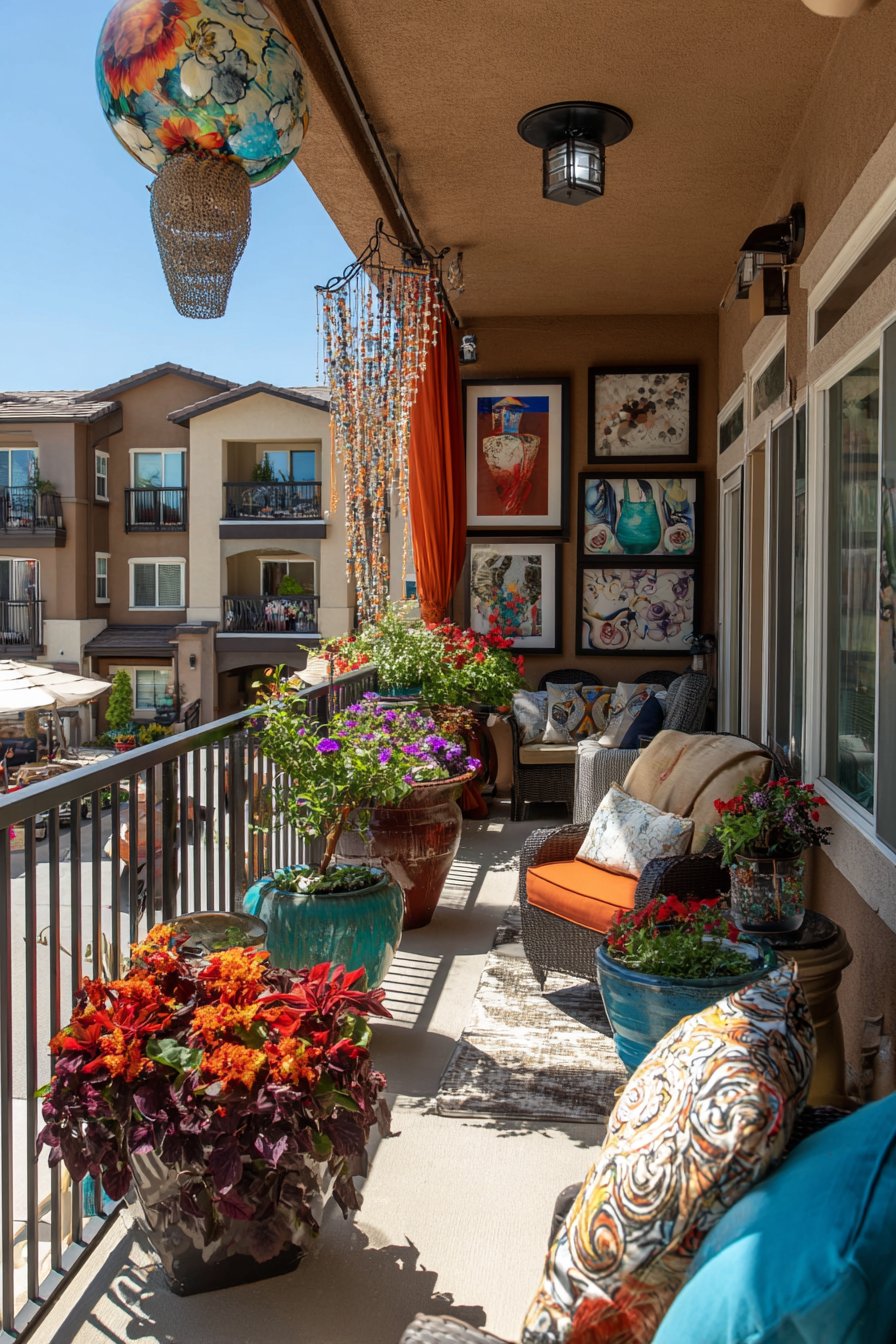
Eclectic collection of colorful planters in various sizes and materials showcases personal style through diverse container choices. Ceramic, metal, woven basket, painted terra cotta—each material and color adds another layer to the visual feast. Hanging beaded curtains introduce movement, sound, and light refraction while adding bohemian charm. Layered outdoor rugs create depth and define different functional zones within the balcony.
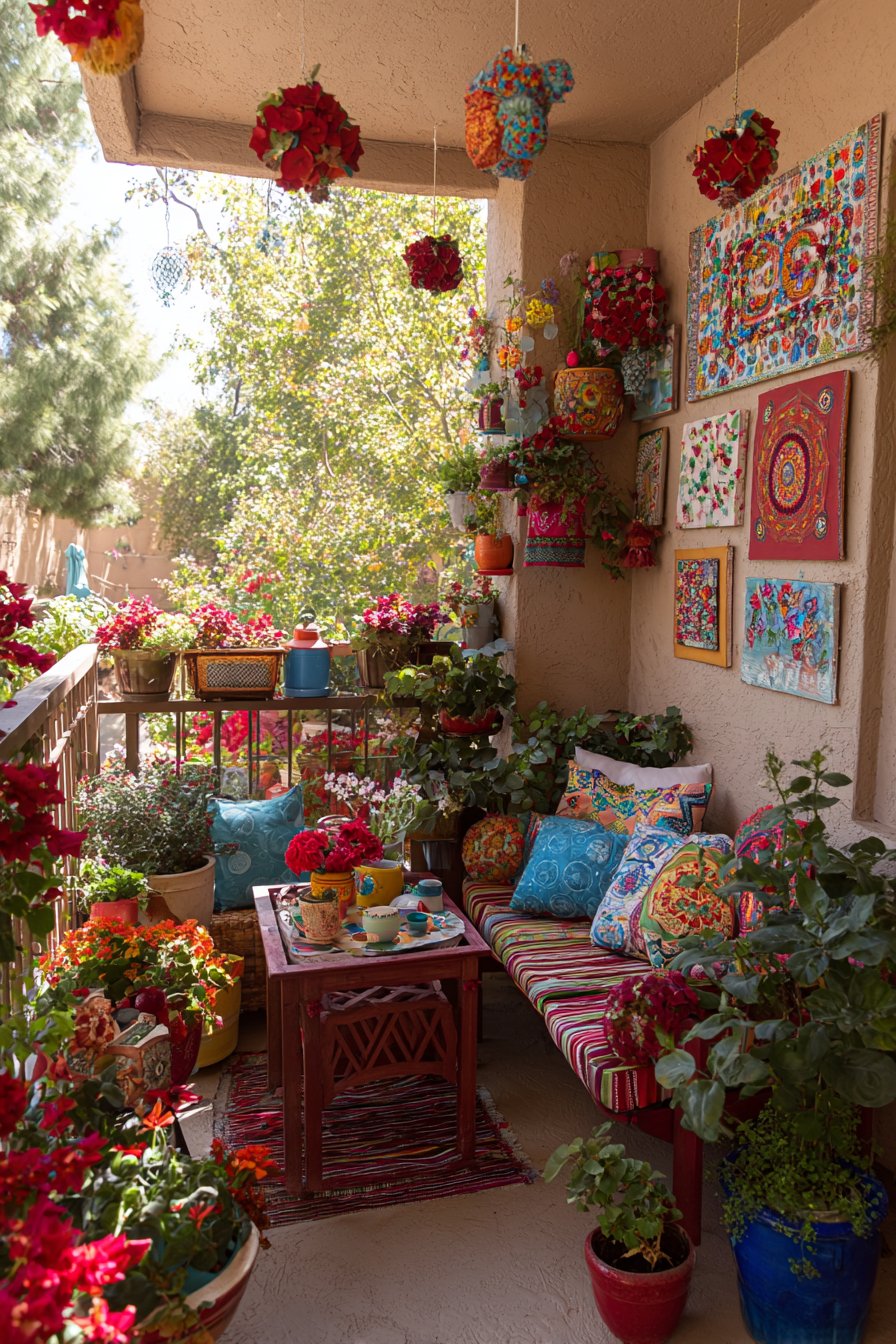
Gallery wall of weather-resistant art transforms vertical surfaces into expression of personal taste and interests. Vibrant plant collection including coleus, begonias, and petunias provides living color that changes with seasons and growth patterns. Bright natural daylight energizes the bold palette, while professional photography with balanced exposure prevents visual chaos by maintaining proper composition despite abundant elements. The layered aesthetic proves that more can indeed be more when executed with confident vision and cohesive color strategy.

Key Design Tips:
- Establish base color palette of 3-5 colors that appear throughout different elements
- Vary pattern scales to prevent visual competition—pair large prints with small, medium with solid
- Balance busy patterns with some solid-color elements to provide visual rest areas
- Curate collections around themes (material type, color family, origin) to prevent random appearance
- Layer rugs with largest on bottom, progressively smaller on top for intentional look
- Edit regularly to prevent descent from maximalism to clutter—every item should earn its place
23. Narrow Space Linear Solutions
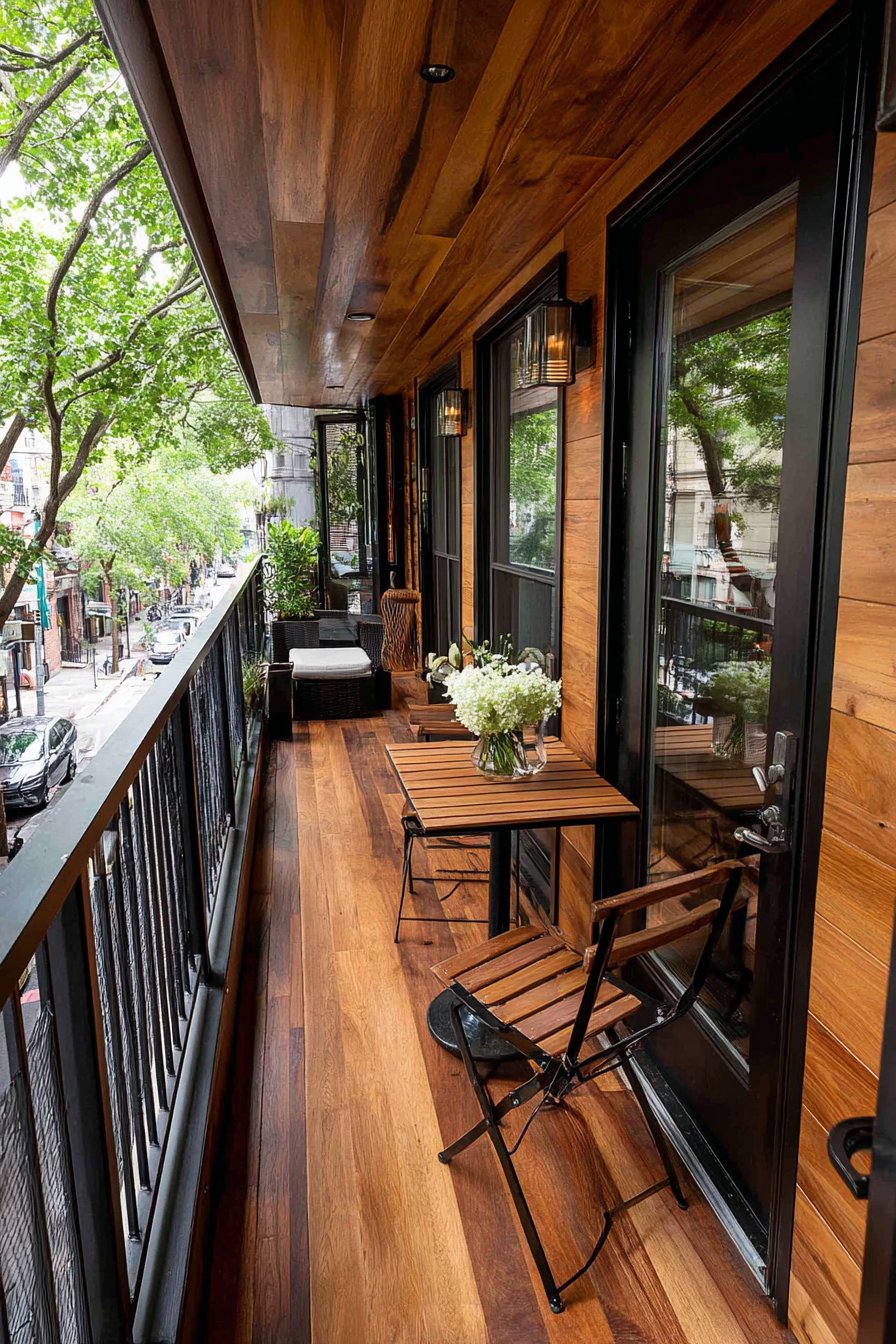
Narrow balconies present unique design challenges requiring specialized furniture and creative space planning. This solution for limited-width spaces features wall-mounted fold-down furniture that provides functionality when needed without permanent space occupation. The slimline bistro set can be easily moved aside when floor space is needed for other purposes, providing dining or work surface without spatial commitment.
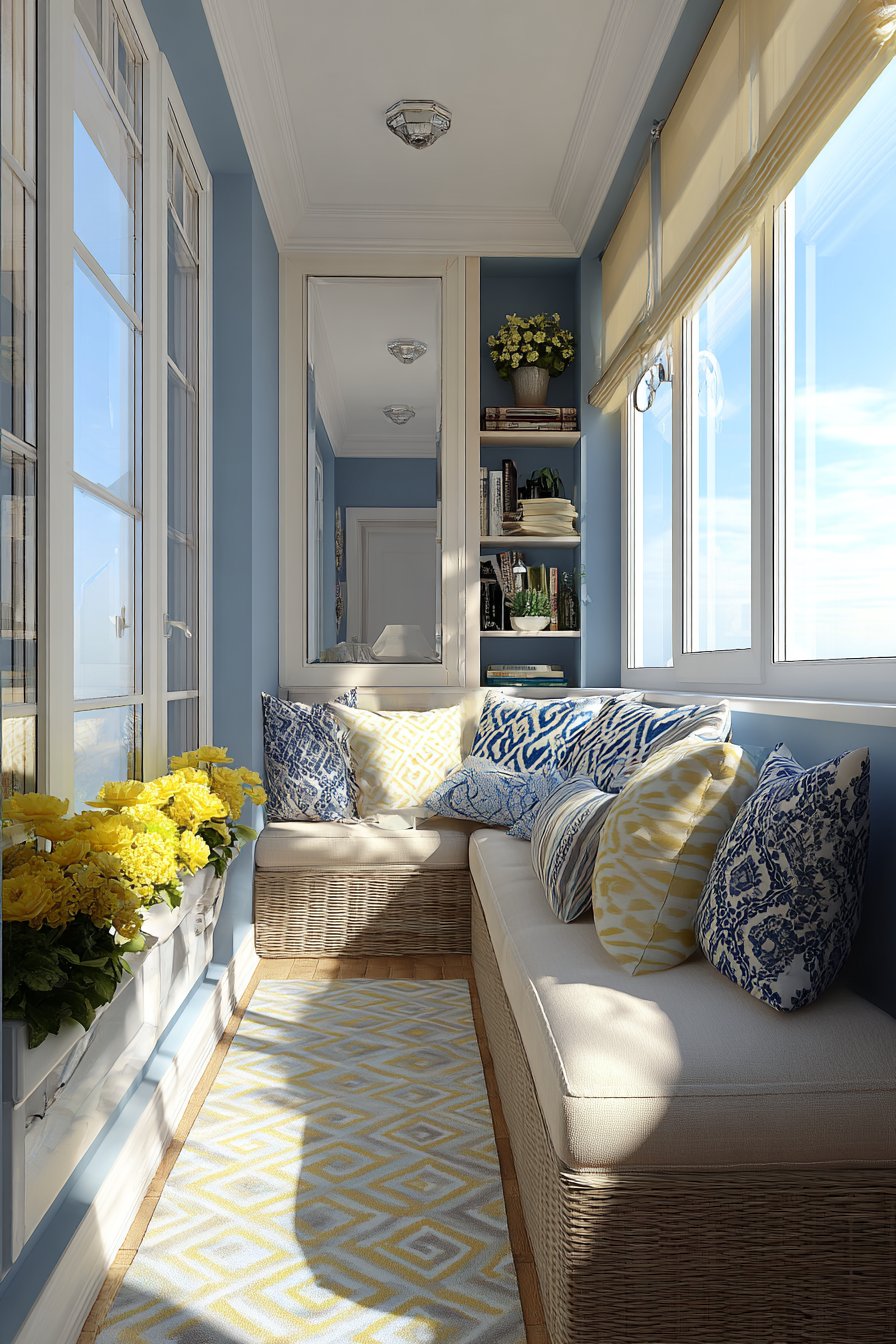
Vertical growing systems maximize wall space for substantial plant collections despite minimal floor area. Wall-mounted planters and trellises move greenery to previously unused surfaces, creating lush garden effect without consuming walking space. Mirrored panels create illusion of depth, visually doubling the apparent width through reflection. This classic design trick makes narrow spaces feel significantly more spacious without physical expansion.
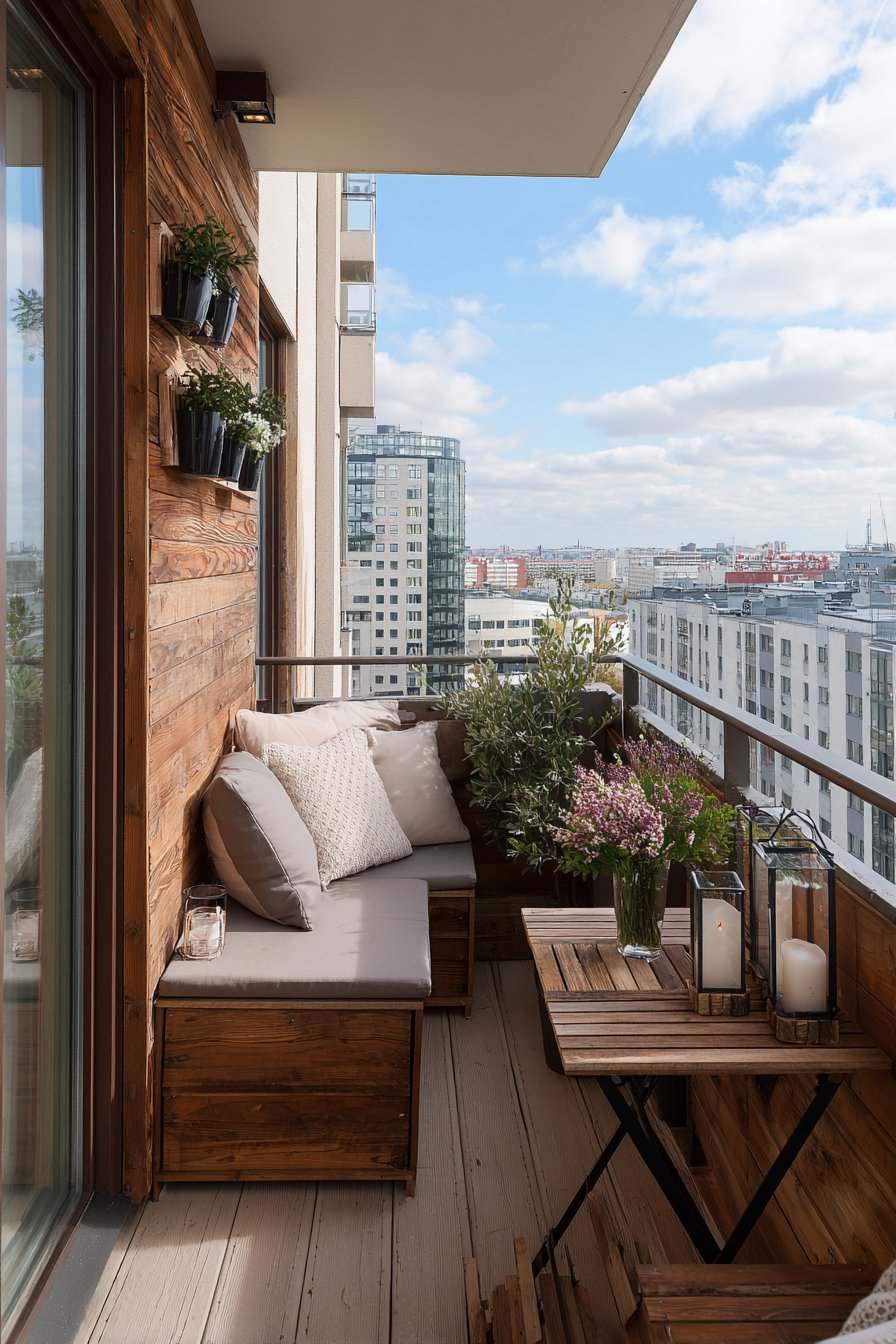
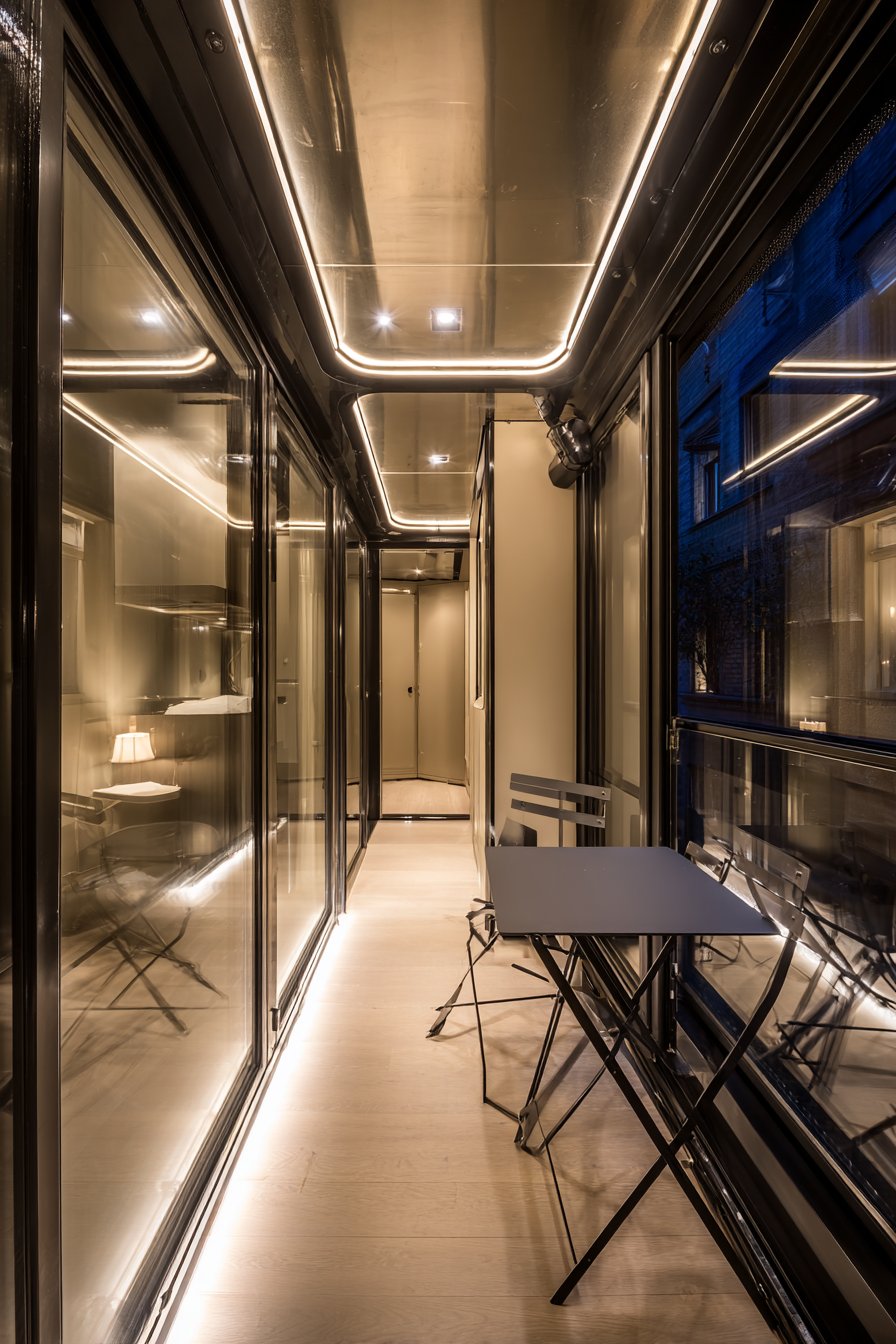
Compact lighting solutions avoid head-bumping hazards while providing adequate illumination. Wall-mounted or railing-attached lights keep floor and overhead space clear. Light-colored flooring enhances sense of space by reflecting available light and creating airy, open feeling rather than dark, tunnel-like atmosphere. Professional interior photography demonstrates space-optimizing techniques through wide-angle perspective showing full length, proving that narrow doesn’t mean unusable—it simply requires more strategic planning.
Key Design Tips:
- Choose furniture with narrow depth profiles specifically designed for tight spaces
- Install mirrors opposite windows or light sources to maximize reflection and brightness
- Use light, neutral colors throughout to enhance spacious feeling
- Mount planters at varying heights to create vertical garden effect
- Select compact plant varieties that won’t overgrow and consume limited space
- Keep walkways completely clear to prevent cramped, cluttered feeling
Why These Balcony Decor Ideas Represent the Best in Outdoor Design
These 23 balcony decor ideas represent comprehensive exploration of outdoor living possibilities, each addressing specific needs, aesthetic preferences, and spatial challenges. The diversity showcased proves that successful balcony design isn’t one-size-fits-all but rather highly personalized response to individual circumstances—your available space dimensions, architectural context, personal style preferences, functional requirements, and lifestyle patterns all influence which approach will serve you best.
The compact storage solutions and vertical gardening techniques address the primary challenge most balcony owners face: limited square footage. By implementing multi-functional furniture, wall-mounted systems, and creative space planning, even the smallest balconies transform into functional outdoor rooms. The bohemian, maximalist, and colorful approaches demonstrate that small spaces can handle bold design choices when color coordination and thoughtful curation prevent visual chaos. Meanwhile, the minimalist, Scandinavian, and zen designs prove that restraint and simplicity create equally impactful spaces through different means.
Privacy solutions ranging from bamboo screens to strategic plant placement recognize that outdoor enjoyment requires comfortable sense of enclosure, especially in dense urban environments. The lighting-focused designs acknowledge that balconies serve different purposes throughout the day—morning coffee spots need natural light optimization, while evening entertaining requires layered artificial lighting. Seasonal approaches recognize that balconies exist year-round in many climates, benefiting from design evolution that reflects changing weather and celebrations.
Specialized solutions like pet-friendly designs, outdoor workspaces, and meditation sanctuaries demonstrate balcony versatility beyond traditional relaxation or dining functions. These spaces can support wellness practices, accommodate remote work requirements, and safely include all family members when thoughtfully designed. The sustainable and upcycled approaches prove that environmental responsibility enhances rather than limits aesthetic possibilities, introducing creative material use and eco-conscious practices that benefit both homeowners and environment.
Style-specific designs spanning Mediterranean coastal, French bistro, tropical paradise, and industrial urban aesthetics showcase how balconies can transport occupants to beloved destinations or reflect personal design sensibilities. These aren’t superficial styling exercises but comprehensive interpretations of design movements, incorporating authentic materials, traditional color palettes, and regionally appropriate plantings that create genuine atmosphere rather than costume-like caricatures.
The technical photography approaches mentioned throughout—wide-angle perspectives, balanced natural lighting, attention to material textures, professional interior design aesthetics—emphasize that successful balcony design combines practical functionality with visual beauty worthy of professional documentation. Your balcony should perform well while also looking exceptional, creating space you’re proud to share and excited to use daily.
Material considerations woven throughout these designs—weather-resistant fabrics, durable furniture construction, appropriate plant selections, protective treatments—acknowledge that outdoor spaces face environmental challenges indoor rooms never encounter. Successful balcony design requires understanding how materials perform under UV exposure, temperature fluctuations, moisture, and wind. The recommendations prioritize longevity and low maintenance alongside aesthetic appeal, recognizing that beautiful design becomes frustrating rather than enjoyable if constant repair and replacement are required.
Color theory applications range from monochromatic grey schemes to vibrant multi-color explosions, demonstrating how color influences perceived space size, emotional atmosphere, and design cohesion. Neutral palettes create calm, spacious feelings while bold colors energize and express personality. Understanding when to employ each approach allows you to shape your balcony’s emotional impact through deliberate color choices rather than accidental results.
Plant selection strategies vary from low-maintenance succulents to lush tropical collections, vertical gardens to statement trees, edible herbs to purely ornamental flowers. These varied approaches recognize that different gardening interests, time commitments, and skill levels require different plant strategies. The designs prove you can create beautiful balcony spaces whether you’re devoted gardener or plant-care minimalist—you simply choose appropriate plant types and quantities for your situation.
Furniture scale and proportion considerations throughout these designs demonstrate understanding that outdoor furniture must balance comfort with spatial efficiency. Oversized pieces overwhelm small balconies while tiny furniture feels insubstantial on larger spaces. The varied seating solutions—from hanging egg chairs to built-in benches, bistro sets to full sofas—show multiple approaches to creating comfortable outdoor seating appropriate to different space sizes and usage patterns.
Lighting layering principles appear repeatedly because proper illumination dramatically impacts balcony usability and atmosphere. Natural light optimization through strategic furniture placement and light-colored surfaces extends daytime enjoyment, while thoughtful artificial lighting through string lights, lanterns, pathway lights, and task lighting creates inviting evening environments. Understanding that different activities require different lighting intensities and qualities allows you to create truly functional outdoor spaces that serve you morning through night.
These balcony decor ideas succeed because they balance aspiration with achievability—they inspire while remaining accessible to real people with typical budgets, skills, and time constraints. They avoid requiring major structural modifications, exotic materials, or professional installation for most elements. Instead, they demonstrate how thoughtful furniture selection, creative plant arrangements, strategic lighting choices, and cohesive color palettes transform ordinary balconies into extraordinary outdoor living spaces.
Conclusion
Your balcony represents valuable square footage with potential to significantly enhance your living experience and home value. Whether you’re drawn to minimalist serenity, maximalist abundance, specific cultural aesthetics, or practical multi-function solutions, these 23 balcony decor ideas provide comprehensive starting points for your transformation journey. The key to success lies not in perfectly replicating any single design but in understanding the principles behind each approach—space planning strategies, material selections, color theory applications, lighting techniques, and plant choices—then adapting them to your specific circumstances.
Begin by honestly assessing your balcony’s assets and limitations: dimensions, sun exposure, privacy level, structural capabilities, and climate conditions. Then consider your personal priorities: Do you need dining space, work area, meditation retreat, garden, entertaining zone, or combination of functions? Understanding both your space and your needs allows you to select and adapt the most appropriate design direction from the options explored here.
Remember that balcony design is evolutionary process rather than one-time project. Start with foundational elements—quality furniture, basic lighting, privacy solutions—then layer in plantings, textiles, accessories, and seasonal updates over time. This gradual approach allows you to refine your vision through actual use while spreading costs across multiple seasons. Your balcony will become increasingly personalized and functional as you discover what works for your lifestyle and adjust accordingly.
Most importantly, embrace the experimentation process. Outdoor spaces forgive mistakes more readily than interior rooms—plants can be moved, furniture rearranged, colors changed through simple pillow swaps or fresh paint. Use your balcony as creative laboratory where you test ideas, discover preferences, and develop confidence in your design abilities. The perfect balcony isn’t the one that matches magazine photos—it’s the one you actually use and genuinely love, the outdoor retreat that enhances your daily life and brings you joy every time you step through the door. Now it’s time to transform your balcony from underutilized afterthought into treasured outdoor sanctuary.
