
Your backyard walls are more than just boundaries—they’re blank canvases waiting to be transformed into stunning focal points that enhance your outdoor living experience. Whether you’re working with a wooden fence, stucco wall, or exposed brick, the right decor can turn a mundane vertical surface into an eye-catching statement that reflects your personal style and extends your home’s aesthetic into the great outdoors. In an era where outdoor spaces have become extensions of our living areas, thoughtful wall decoration has evolved from an afterthought to an essential element of comprehensive landscape design.
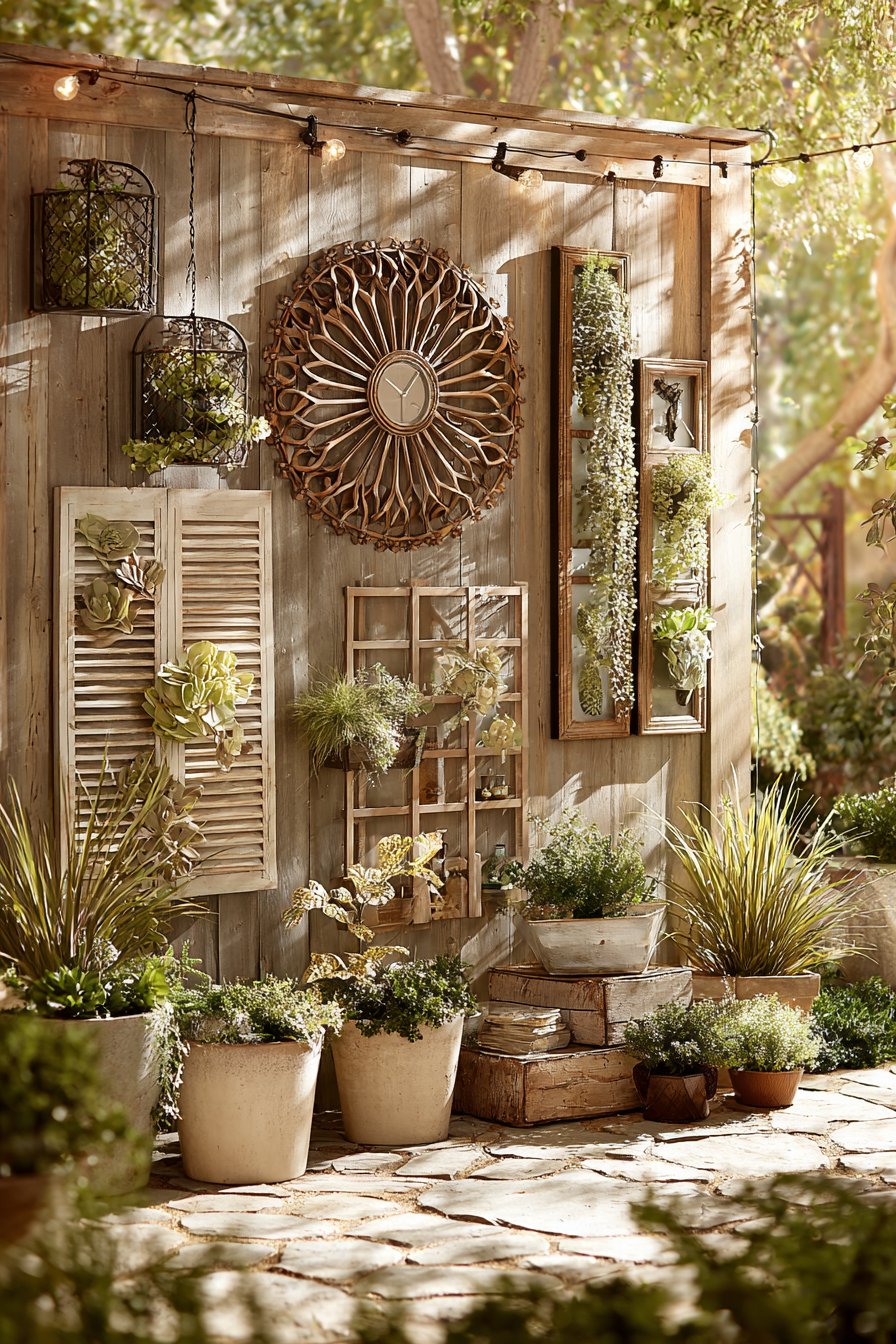
The beauty of backyard wall decor lies in its versatility and accessibility. From rustic reclaimed materials and bohemian textiles to sleek contemporary sculptures and Mediterranean-inspired metalwork, there’s a decorative approach for every taste, budget, and skill level. These design solutions not only beautify your space but also maximize functionality by incorporating vertical gardens, clever storage, and ambient lighting. Whether you’re creating an intimate dining area, a peaceful meditation spot, or an entertainment zone for gatherings, the right wall treatments can define zones, add privacy, and infuse personality into every corner of your outdoor sanctuary.
This comprehensive guide explores twenty-one distinct backyard wall decor concepts, each offering unique aesthetic qualities and practical benefits. From the natural elegance of vertical gardens to the dramatic impact of large-scale metal sculptures, from the nostalgic charm of vintage collections to the clean sophistication of modern geometric designs, you’ll discover ideas that inspire immediate action and long-term vision. These concepts demonstrate how thoughtful attention to materials, textures, colors, and lighting can elevate your outdoor walls from simple structures to captivating design statements that make your backyard a destination rather than just a space.
1. Rustic Vertical Garden Wall
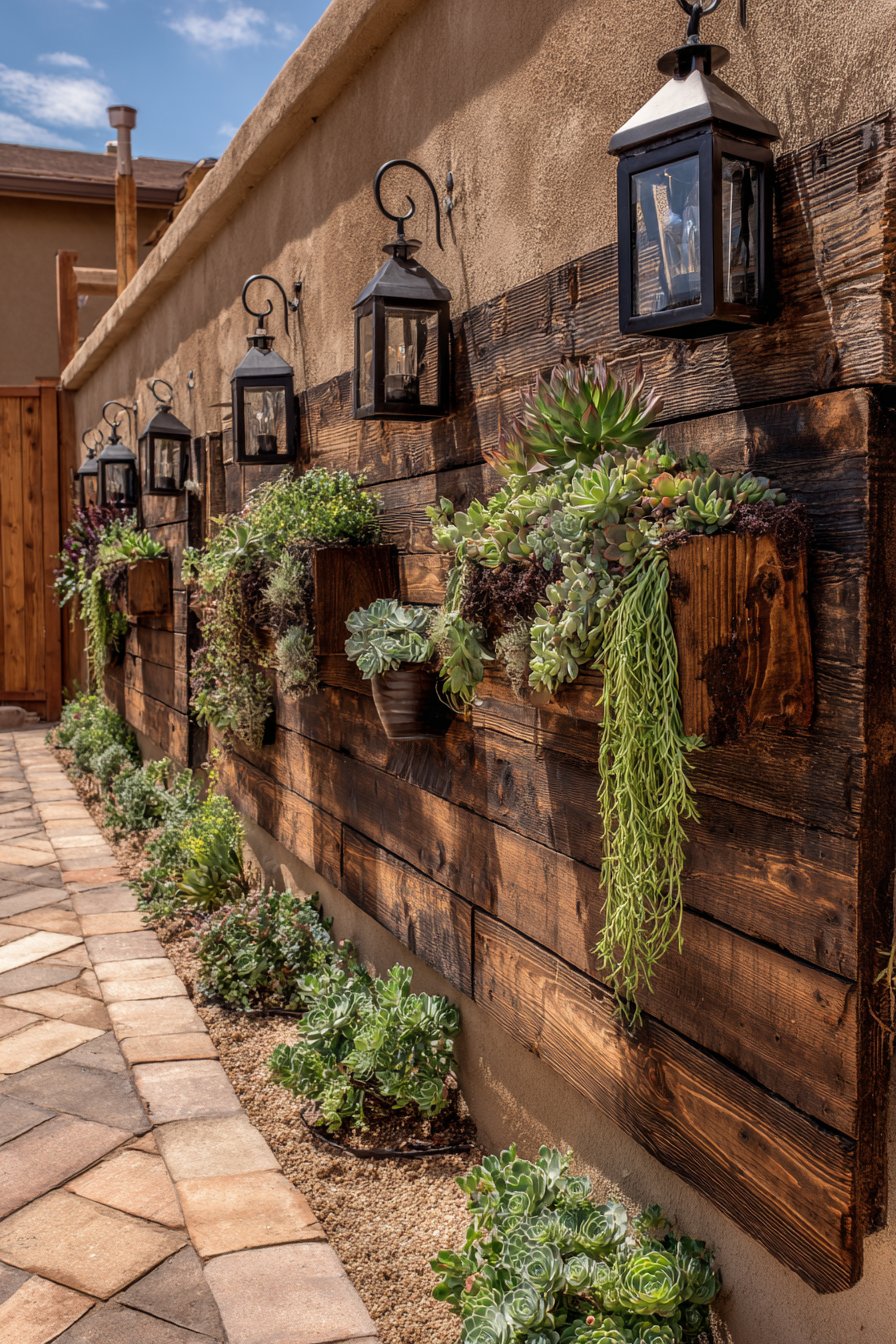
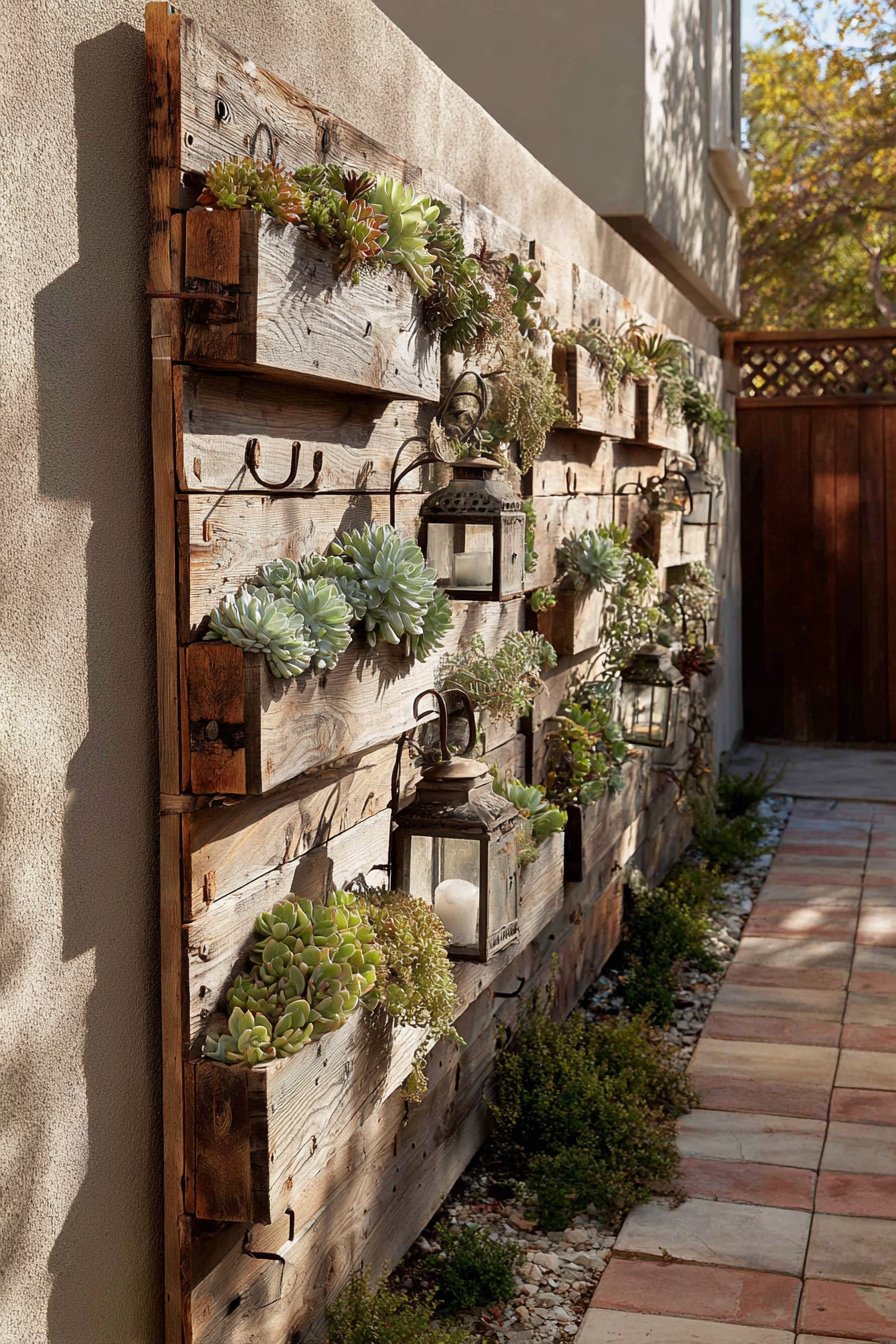
The marriage of weathered wood and living greenery creates an irresistible focal point that brings life to any backyard fence. Picture a large wooden pallet, carefully selected for its authentic aging and grain variation, transformed into a thriving vertical garden. Succulents nestle into built-in pocket planters while cascading plants trail gracefully downward, their tendrils catching afternoon light. Small metal hooks strategically placed throughout hold decorative lanterns that cast enchanting shadows once twilight arrives. The natural patina of the wood—with its slight color variations and visible wear patterns—tells a story of time and character that no new material could replicate.
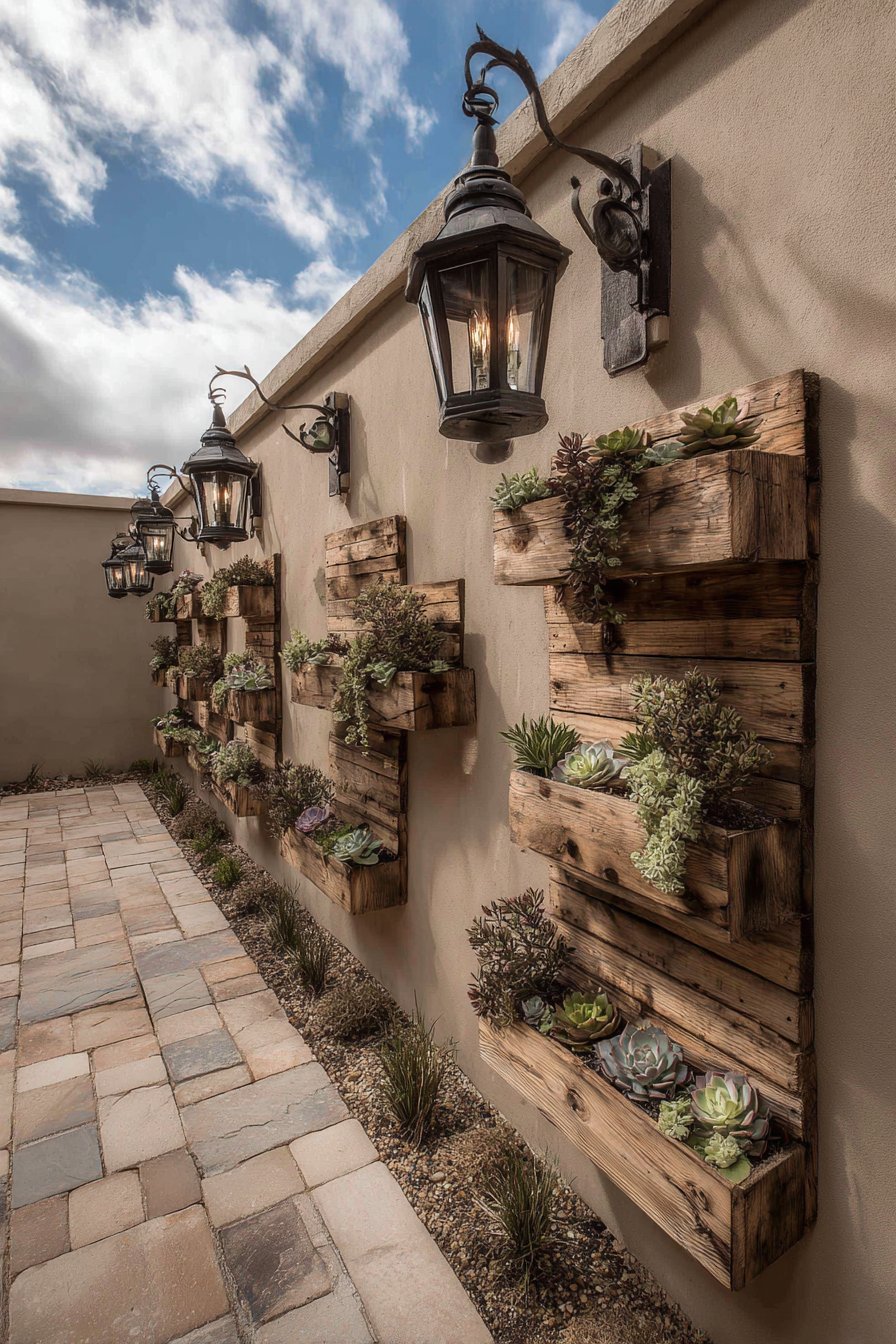
Positioned against a neutral stucco fence, this vertical garden creates dimensional interest through the interplay of organic and constructed elements. Terra cotta pavers form the base, their earthy tones complementing the wood while providing stable footing for maintenance. The three-dimensional quality of the arrangement becomes particularly striking during golden hour, when shadows emphasize each plant’s unique form and the wood’s textured surface gains depth and warmth. This design solution proves especially valuable for small backyards where horizontal growing space is limited but vertical potential remains untapped.
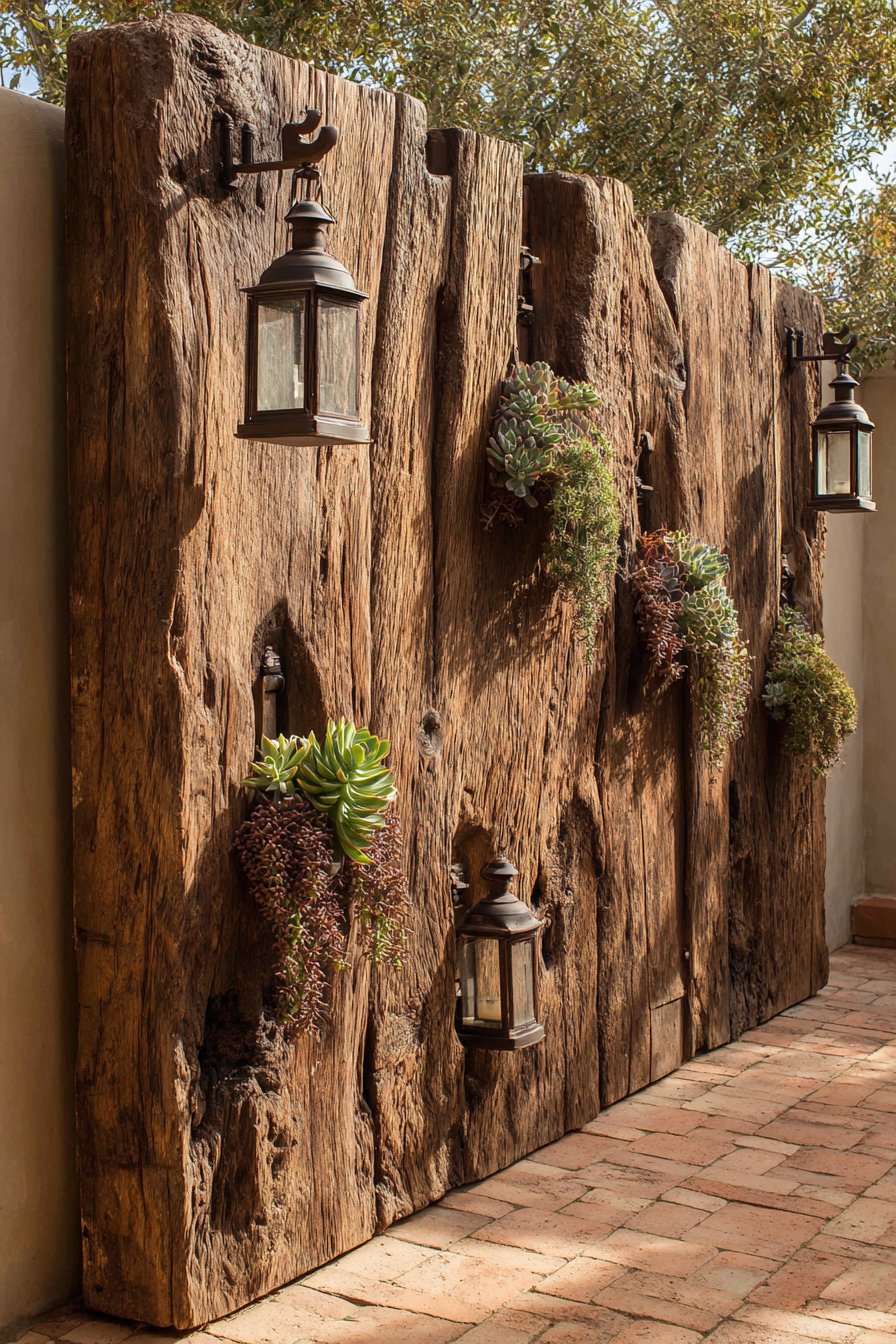
The practical benefits extend beyond aesthetics—vertical gardens improve air quality, provide natural insulation, and create habitats for beneficial insects. The succulent selection ensures low maintenance requirements while offering varied colors, textures, and growth patterns throughout the seasons. Trailing plants like string of pearls or burro’s tail add movement and softness, preventing the geometric structure from feeling too rigid. The lanterns serve dual purposes, functioning as decorative elements during the day and providing ambient lighting for evening entertaining.
Key Design Tips:
- Select pallets with authentic weathering rather than artificially distressed wood for genuine character
- Choose drought-tolerant succulents in varying sizes and colors for visual interest and easy maintenance
- Install a simple drip irrigation system behind the pallet to ensure consistent moisture without daily watering
- Position the vertical garden where it receives morning sun and afternoon shade to protect sensitive plants
- Seal the wood with a clear, water-resistant finish to extend its lifespan without altering its rustic appearance
- Add copper or bronze hooks for lanterns as these metals develop attractive patinas that complement the organic aesthetic
2. Modern Geometric Metal Sculpture Display
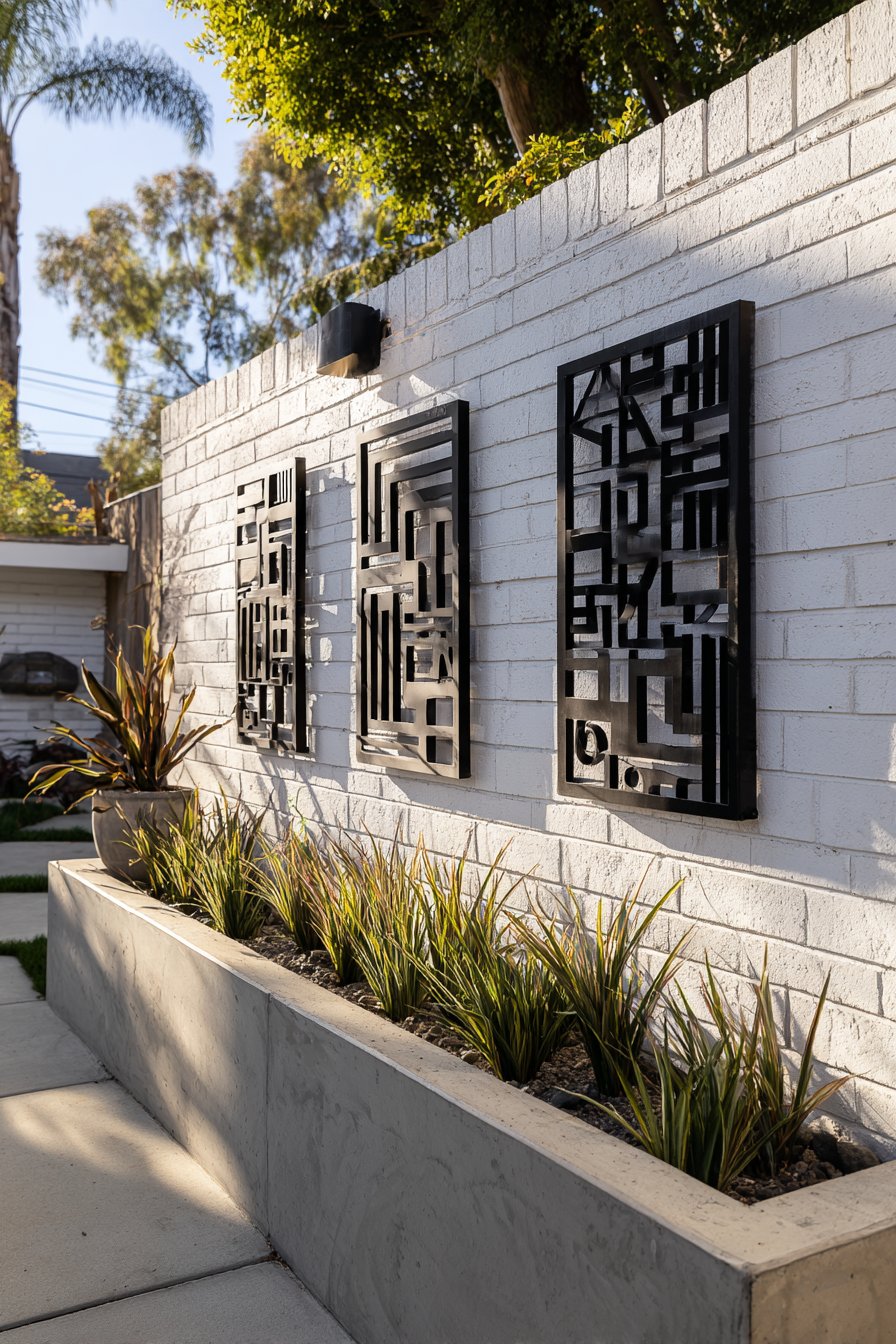
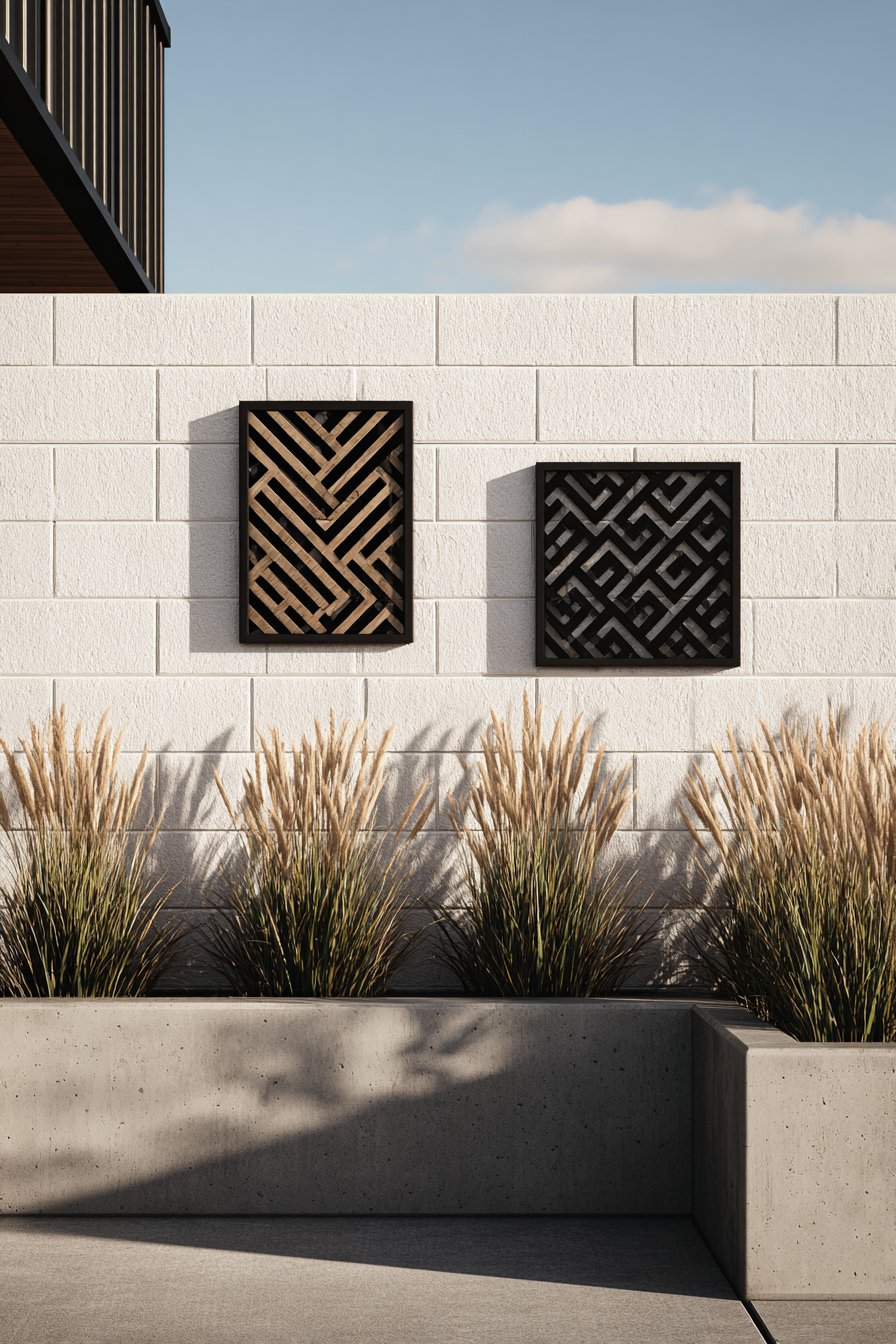
Clean lines and bold forms define this contemporary approach to backyard wall decoration, where art takes center stage with minimal distraction. Three abstract metal sculptures in matte black finish command attention against a pristine white privacy fence, their geometric shapes creating visual rhythm through carefully calculated placement and scale variation. The largest piece anchors the composition at eye level, while smaller sculptures flank it at different heights, generating dynamic movement that guides the viewer’s gaze across the expanse. This deliberate asymmetry feels intentional rather than accidental, demonstrating sophisticated design thinking.
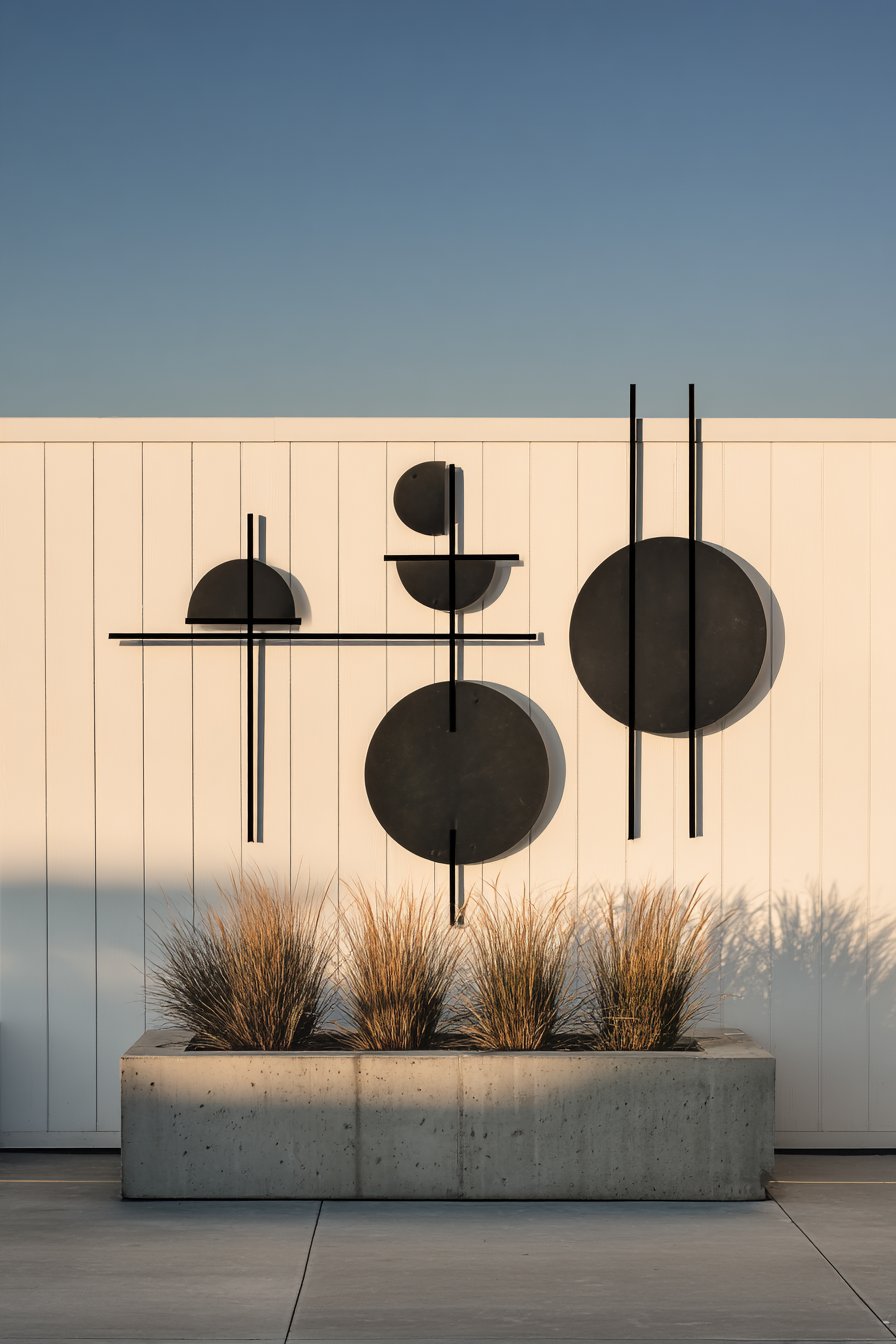
The supporting elements enhance rather than compete with the sculptural focal points. A sleek concrete planter box runs along the base, its smooth gray surface providing textural contrast to both the matte black metal and smooth white fence. Ornamental grasses planted within wave gently in the breeze, their soft organic movement counterbalancing the sculptures’ static geometry. The grasses’ vertical growth pattern echoes the wall’s height without overwhelming the space, while their golden-green color introduces warmth to an otherwise cool-toned palette.
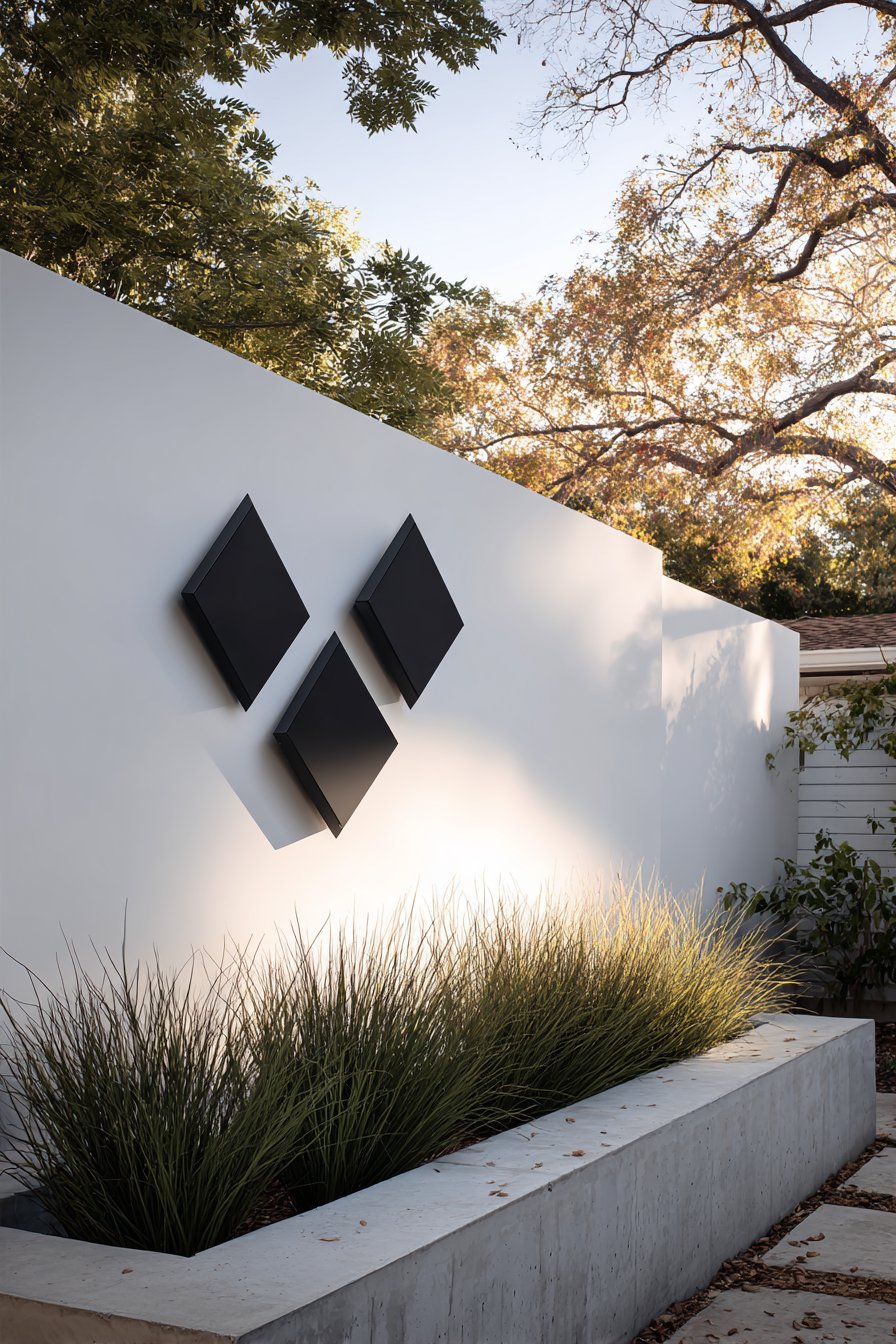
Professional photography techniques capture this installation’s sophistication—balanced exposure ensures neither the black sculptures nor white fence lose definition, while late afternoon lighting creates subtle shadows that emphasize the three-dimensional quality of the metalwork. The interplay between positive and negative space becomes a design element itself, with the white fence serving as both backdrop and active participant in the composition. This approach works exceptionally well for modern architecture and minimalist landscapes where restraint and precision matter more than abundance and ornamentation.
Key Design Tips:
- Choose sculptures with varying sizes but similar design language to maintain cohesion while avoiding monotony
- Ensure the white fence is well-maintained and freshly painted to serve as an effective gallery-style backdrop
- Select matte finishes over glossy ones to prevent unwanted glare and maintain sophisticated simplicity
- Plant ornamental grasses like Mexican feather grass or fountain grass that provide movement without overwhelming
- Install the sculptures with proper mounting hardware rated for outdoor exposure and wind resistance
- Consider lighting the sculptures from below with discrete ground-level fixtures for dramatic evening impact
3. Bohemian Textile and Plant Layering
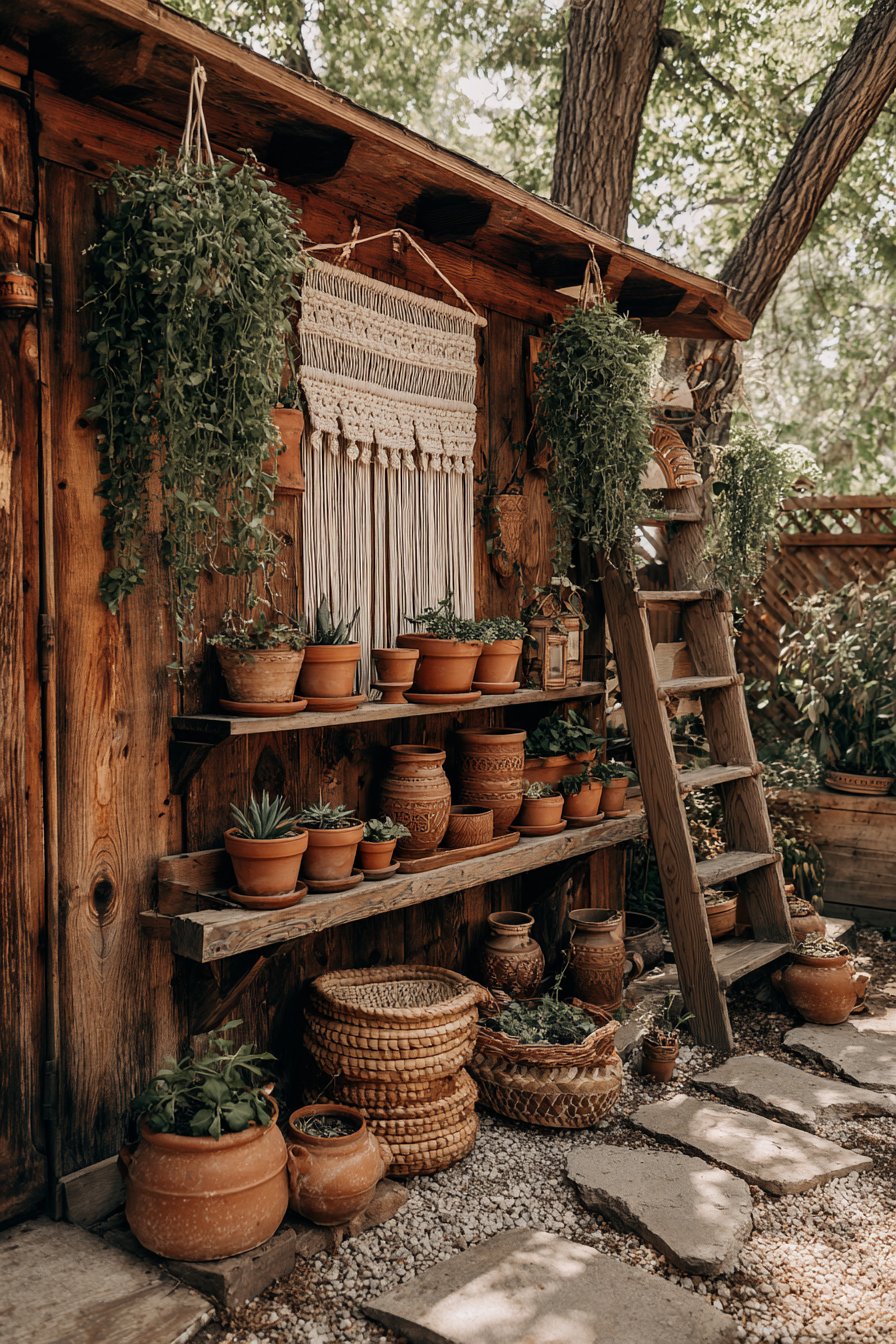
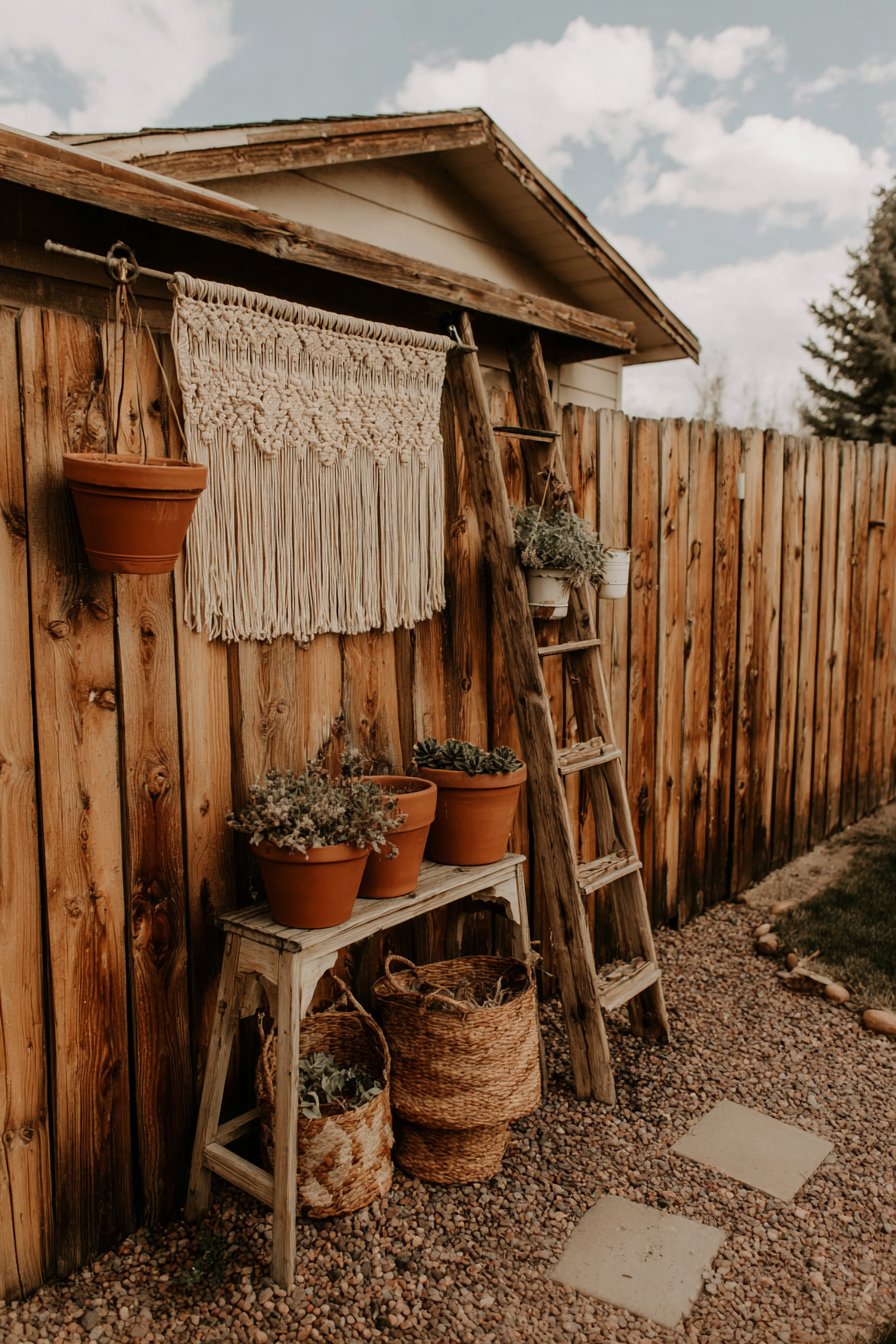
Flowing fabrics meet abundant greenery in this bohemian-inspired wall treatment that celebrates handcrafted artistry and natural beauty. A large macramé wall hanging serves as the undeniable focal point, its intricate knots and fringe details demonstrating the beauty of patient handwork. The neutral cream color allows the complex pattern to shine while maintaining versatility that works with evolving plant collections and seasonal accessories. Surrounding this centerpiece, hanging terracotta pots suspend trailing pothos at various heights, their heart-shaped leaves creating cascades of green that soften the composition and introduce organic movement.
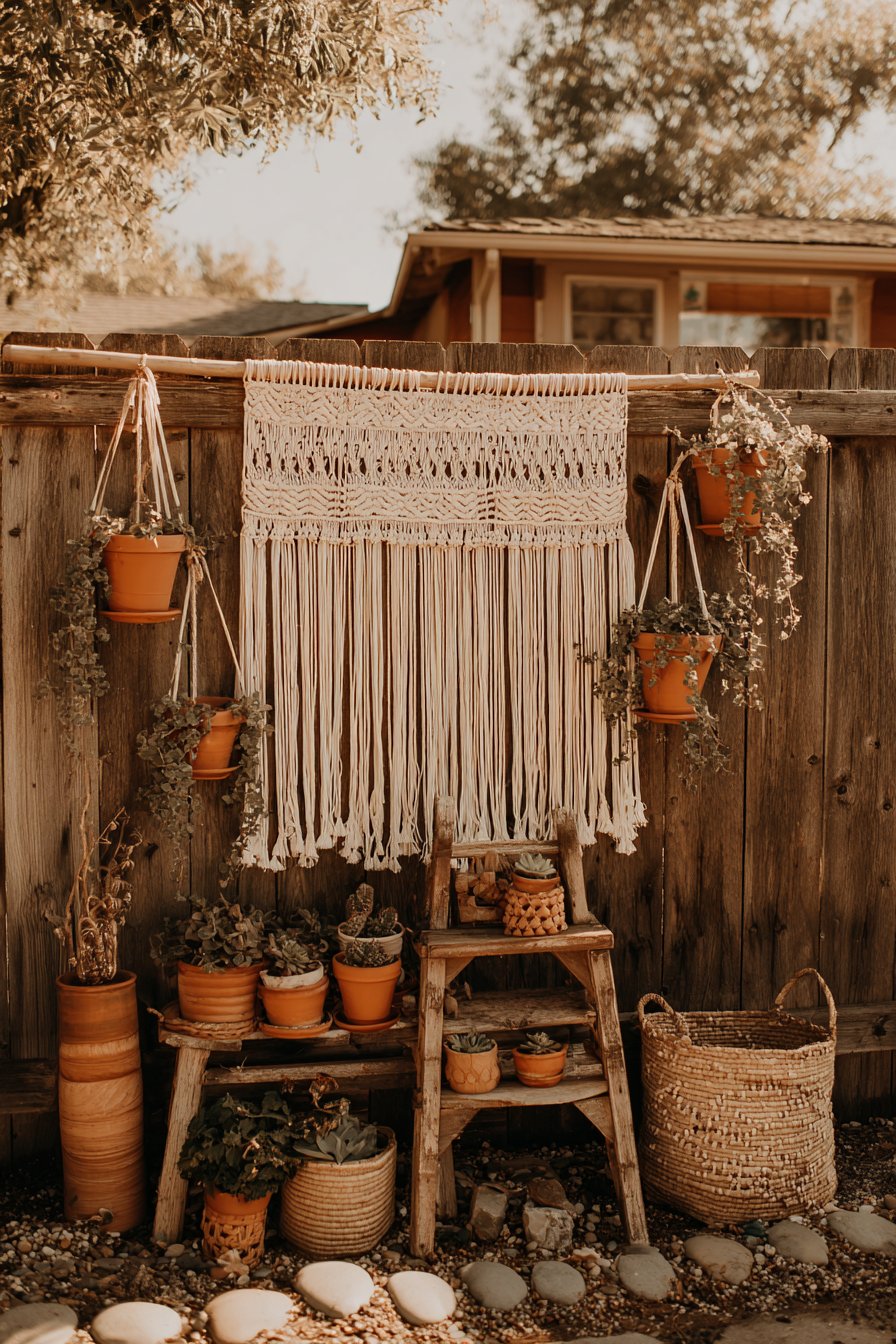
The layering technique employed here exemplifies bohemian design philosophy—nothing feels too precious or rigidly placed, yet the overall effect demonstrates thoughtful curation. A vintage wooden ladder leans casually against the fence, its rungs providing display surfaces for small potted plants at different heights. Woven baskets in varying sizes punctuate the arrangement, adding textural variety and warm brown tones that bridge the cream macramé and green foliage. The ground treatment continues this relaxed aesthetic with a mix of pea gravel and irregular stepping stones that invite exploration rather than dictating rigid pathways.
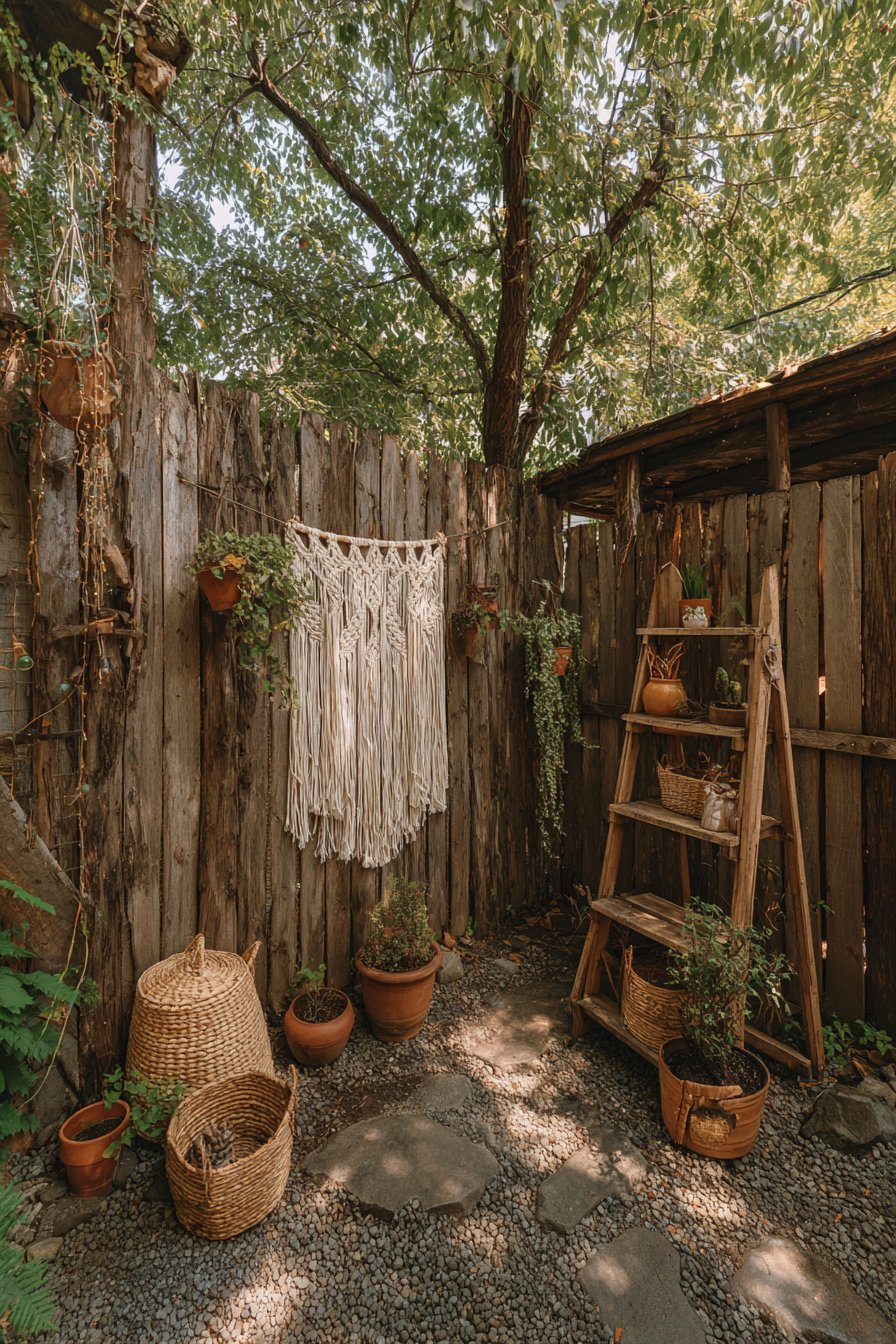
Natural light plays a crucial role in this design’s success. Soft, diffused daylight—the kind that comes from partially cloudy skies or dappled shade from nearby trees—prevents harsh shadows while allowing textures to reveal themselves gradually. The macramé’s dimensional quality becomes apparent as light filters through its loose weave, while the pothos leaves develop depth through subtle highlight and shadow patterns. This lighting creates an inviting atmosphere that feels both energizing and restful, perfect for meditation spaces or intimate seating areas.
Key Design Tips:
- Invest in high-quality macramé made from cotton rope rather than synthetic materials for authentic texture and better weather resistance
- Choose trailing plants with varying leaf sizes and shades of green to create visual interest through the collection
- Treat wooden elements with outdoor-safe preservative to prevent rot while maintaining their natural appearance
- Secure hanging pots with sturdy hooks and chains rated for outdoor use to withstand wind and weight
- Create visual triangles when arranging elements to guide the eye naturally through the composition
- Incorporate a few metallic accents like copper plant stakes or brass hooks to add subtle glamour without contradicting the organic aesthetic
4. Coastal Driftwood Art Installation
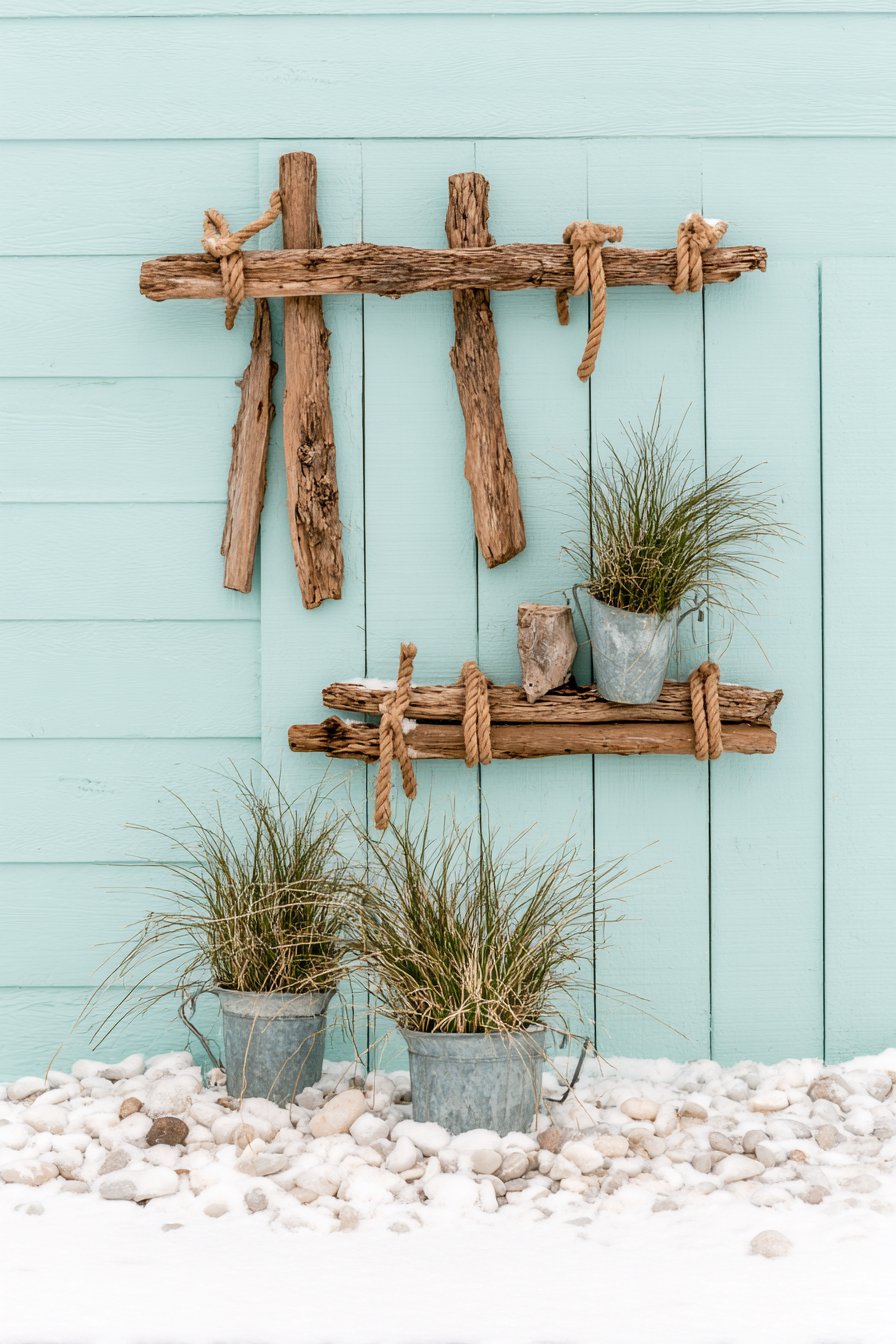
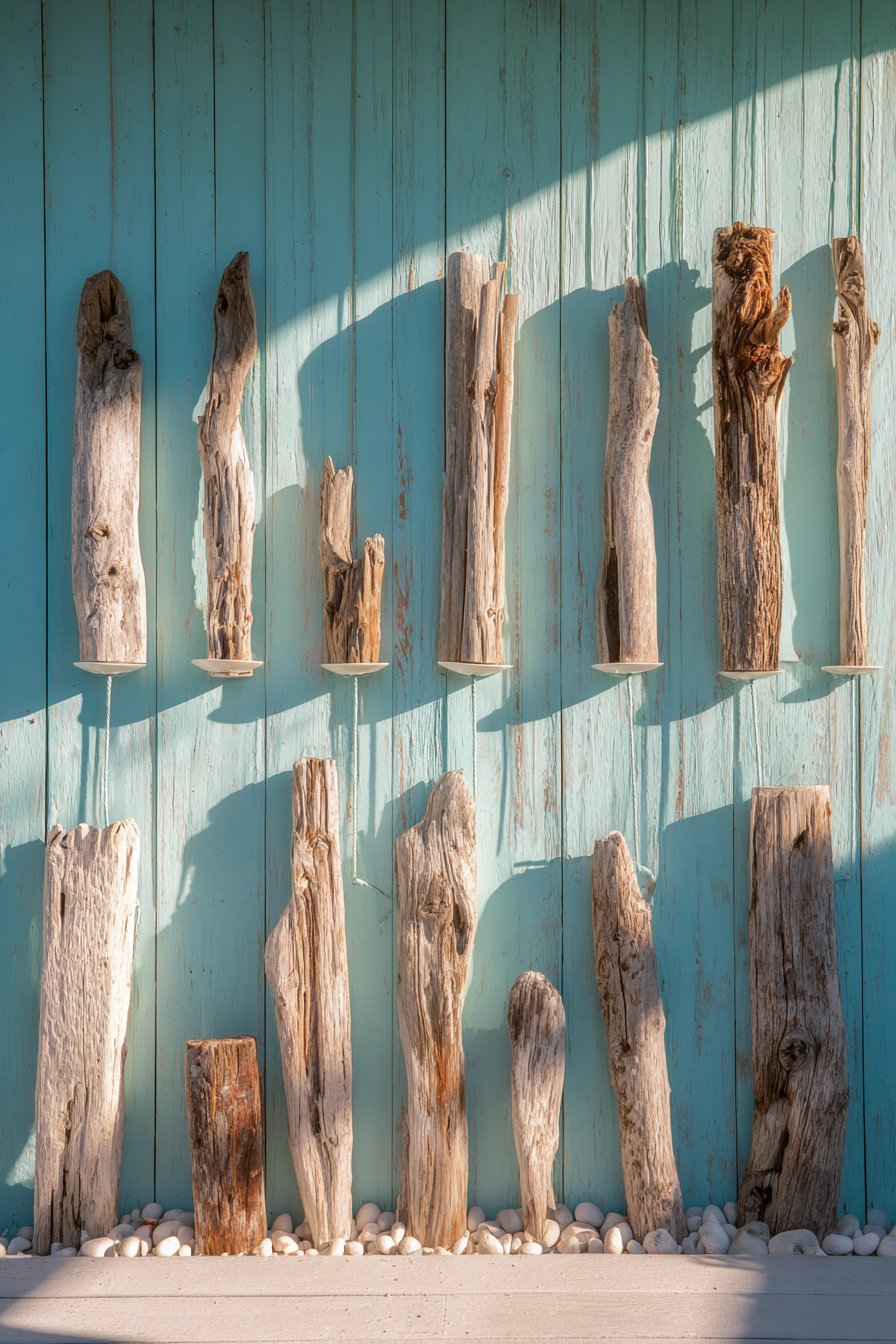
The ocean’s influence transforms a simple fence into a seaside sanctuary through carefully curated weathered wood pieces that evoke beachside memories. Driftwood collected over time—or sourced from specialized suppliers—creates an artistic arrangement on a light blue painted fence that immediately transports viewers to coastal environments. Each piece tells its own story through unique grain patterns, natural holes created by marine life, and silvery-gray coloring achieved through saltwater exposure and sun bleaching. The asymmetrical arrangement feels intentional yet organic, as if the tide itself deposited these treasures against the wall.
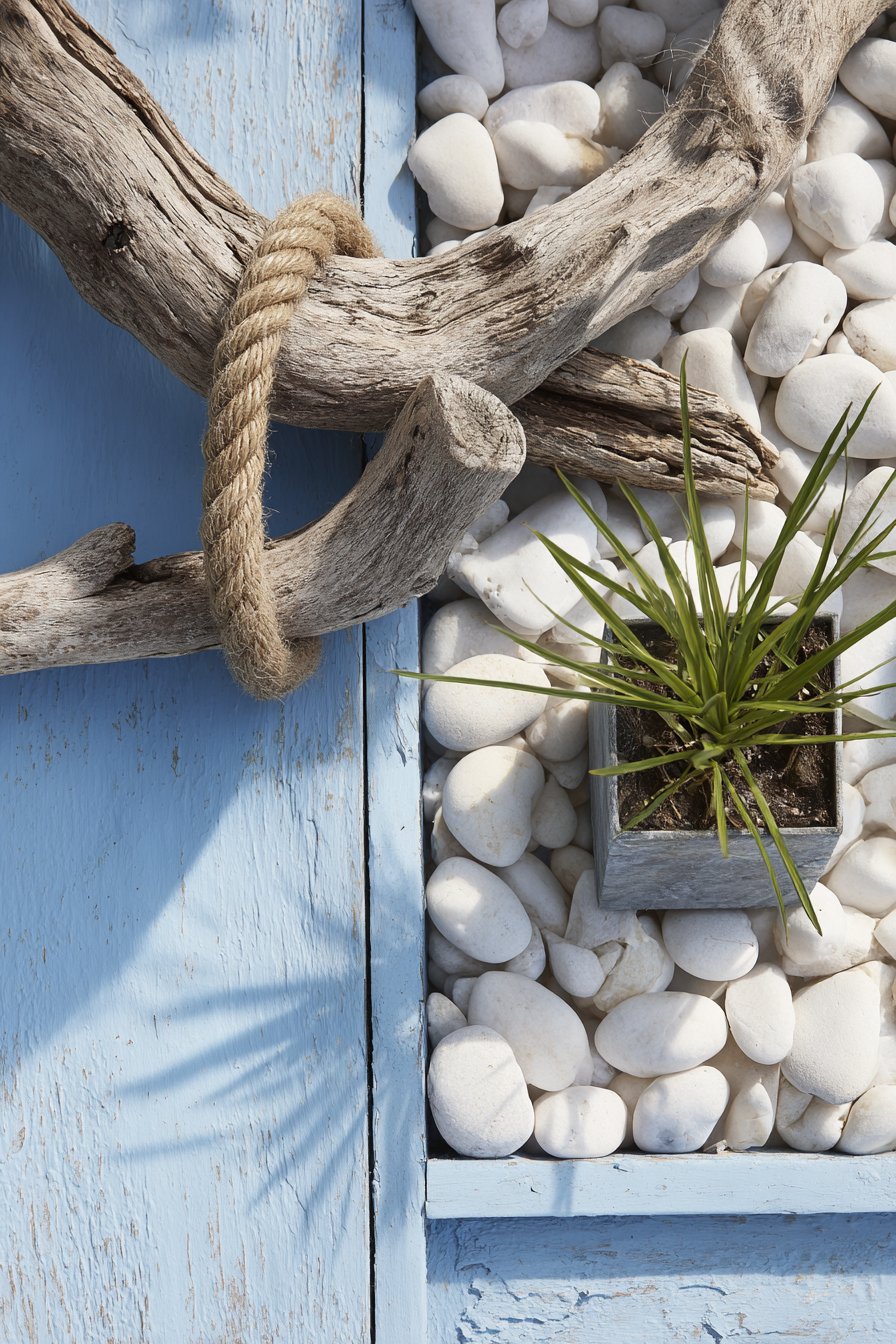
Nautical rope details frame strategic sections of the display, their thick twisted fibers adding texture while reinforcing the maritime theme. The rope’s natural tan color provides warmth against the cool blue backdrop, preventing the space from feeling too cold or monotonous. Galvanized metal planters mounted at various heights introduce practical functionality—beach grasses planted within sway gracefully, their fine texture and movement mimicking coastal dunes. These living elements prevent the display from becoming static, ensuring the wall maintains interest throughout the seasons.
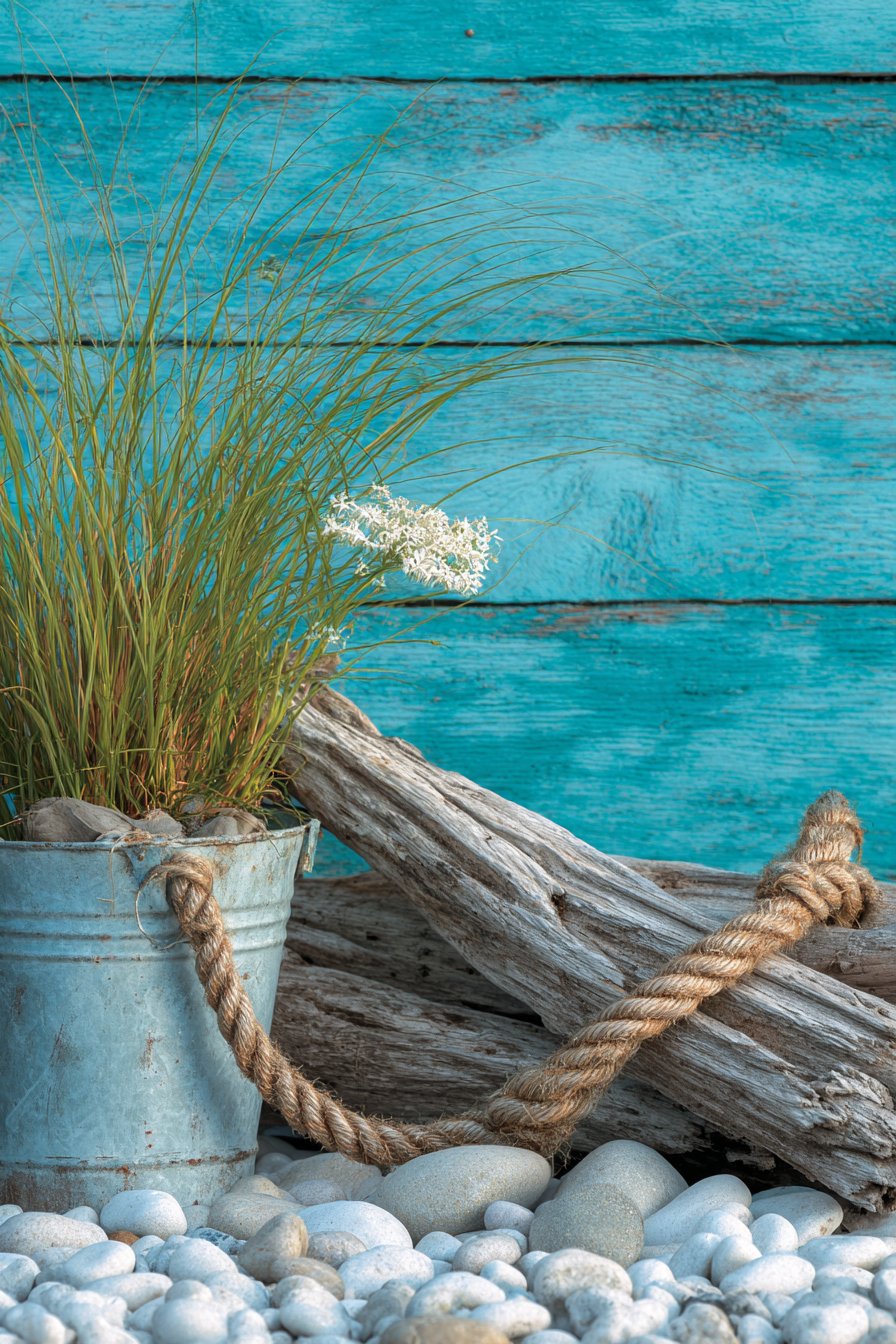
The base treatment deserves equal attention—white pebbles create a clean, bright border that references shorelines while providing definition between vertical and horizontal planes. Morning light proves ideal for this installation, as the low angle emphasizes the driftwood’s sculptural qualities through dramatic shadows while the blue fence captures the sky’s early freshness. The overall effect balances nostalgia with sophistication, creating a space that feels vacation-inspired without resorting to clichéd beach kitsch.
Key Design Tips:
- Select driftwood pieces in varying sizes and shapes to create visual interest while maintaining coastal authenticity
- Seal driftwood with marine-grade varnish to preserve its weathered appearance while protecting against further deterioration
- Choose marine-grade stainless steel hardware for mounting to prevent rust staining on the blue fence
- Plant authentic beach grasses like blue fescue or sea oats that naturally thrive in sandy, well-drained conditions
- Maintain the blue fence with UV-resistant paint to prevent fading from sun exposure
- Add subtle lighting beneath key driftwood pieces to create enchanting evening ambiance that highlights sculptural forms
5. Farmhouse Window Frame Gallery
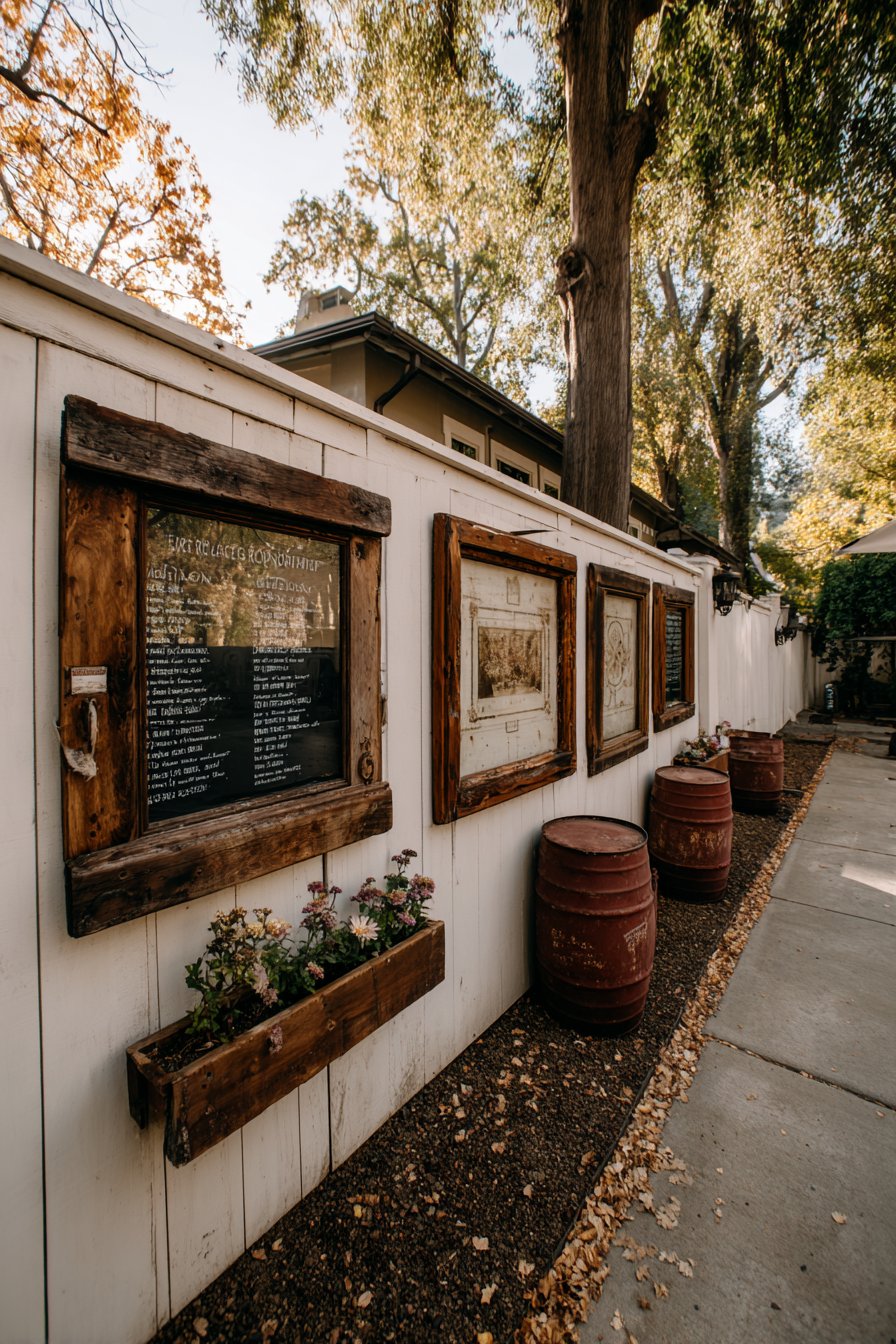
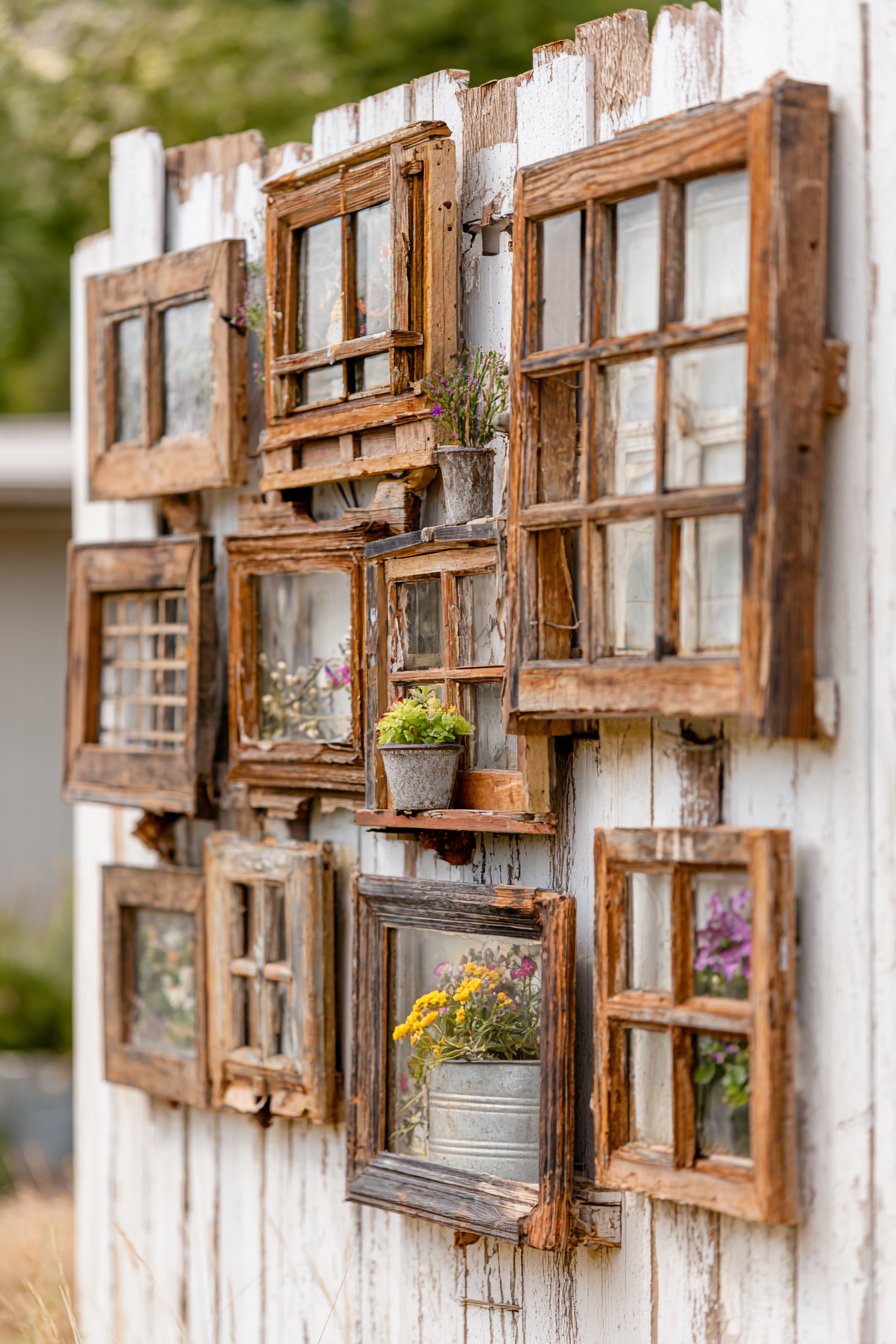
Architectural salvage breathes new life into outdoor walls through this farmhouse-inspired gallery of repurposed window frames. Each antique frame carries its own history—chipped paint revealing layers underneath, wavy glass showing age, hardware that speaks of different eras and manufacturing techniques. Arranged on a white-washed wood fence, these windows create an outdoor gallery where each “artwork” serves different functions: vintage mirrors reflect light and garden views, chalkboard menus allow for changeable messages and seasonal greetings, pressed botanical displays showcase dried flowers protected behind glass. The collection feels personal and evolved, as if accumulated over years rather than purchased in a single shopping trip.
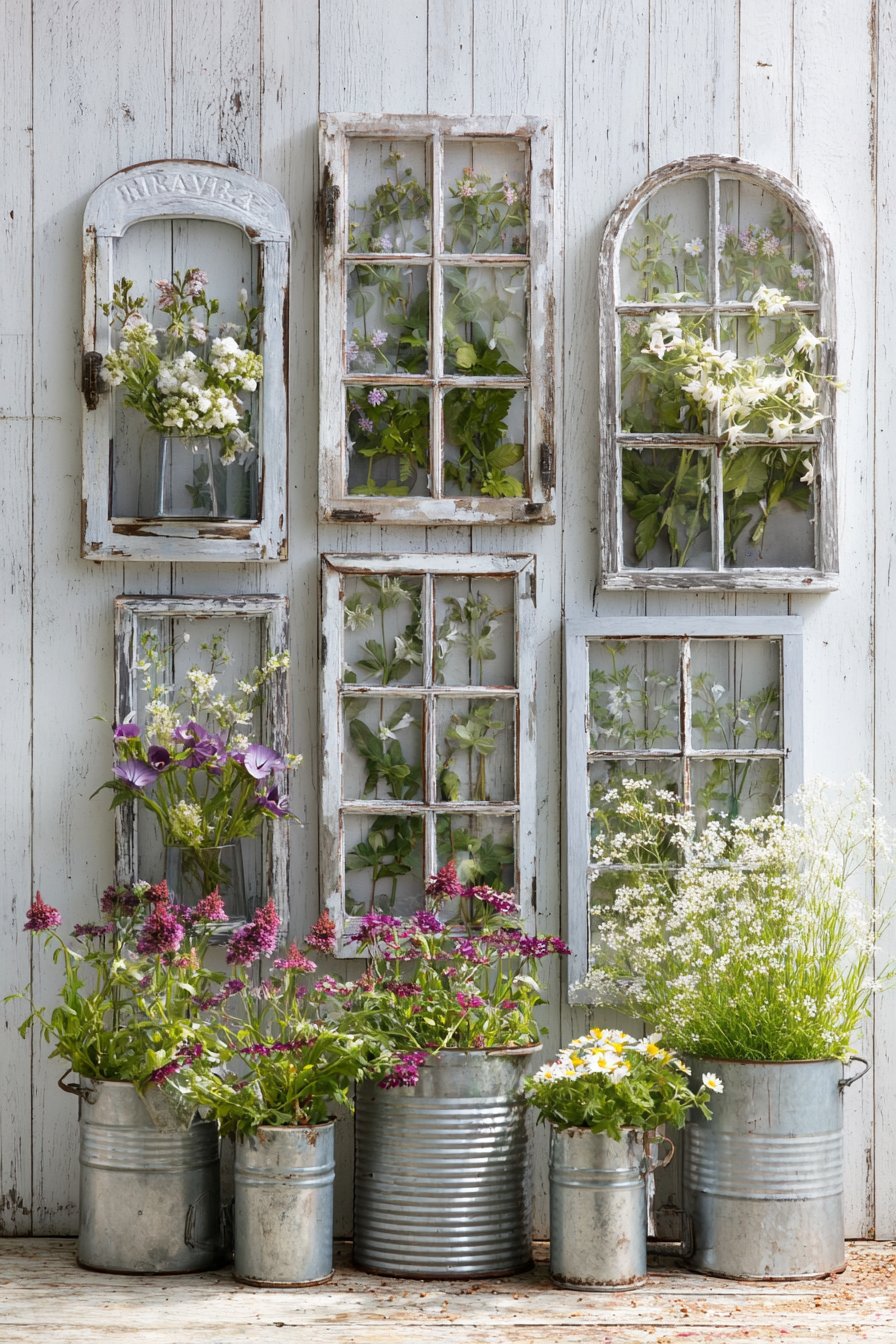
The supporting cast enhances the farmhouse aesthetic without overshadowing the windows’ starring role. Metal milk cans positioned below serve as planters for seasonal flowers—tulips in spring, zinnias in summer, mums in fall, evergreen boughs in winter. These vintage vessels demonstrate the farmhouse principle of repurposing utilitarian objects for decorative purposes while maintaining their essential character. The natural patina and occasional dents on the metal containers add authenticity that new reproductions cannot match.
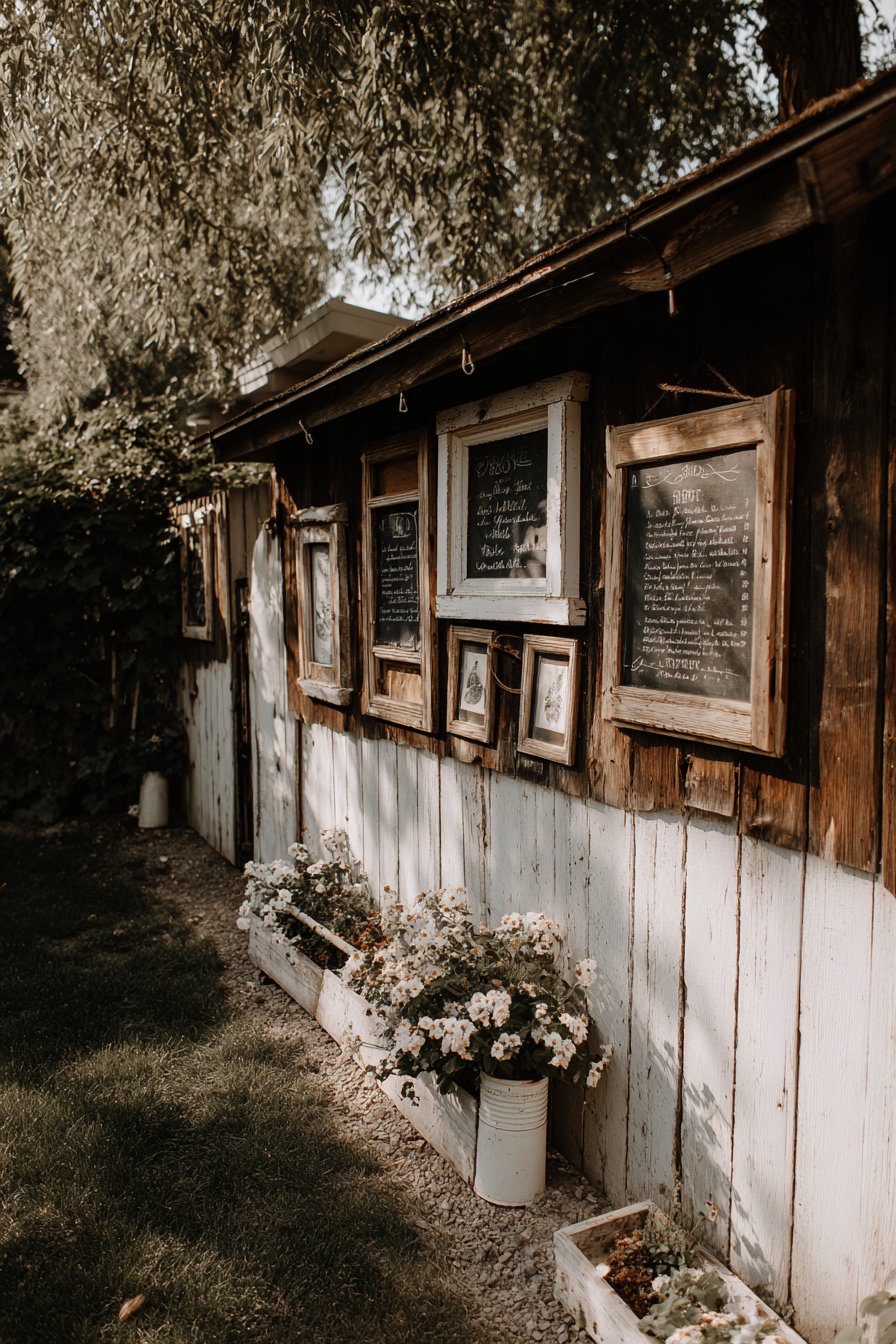
Lighting considerations prove crucial for this design’s success. Natural daylight reveals the authentic aging and slight imperfections that give reclaimed materials their appeal—the subtle variations in paint color where sun has faded certain areas, the way old glass creates slight distortions, the shadows cast by raised mullions and divided lights. These details transform simple salvage into artful installation, demonstrating how thoughtful placement and presentation elevate humble materials into design statements.
Key Design Tips:
- Source window frames from architectural salvage yards, estate sales, or demolition projects for authentic vintage character
- Clean and stabilize frames without over-restoring them—embrace patina and age marks as design features
- Use outdoor-safe glazing or protective coatings for any paper or fabric items displayed behind glass
- Group frames in odd numbers (three, five, or seven) for more visually appealing composition
- Vary frame sizes and orientations (vertical and horizontal) to create dynamic arrangement
- Secure frames with heavy-duty outdoor picture hanging hardware designed for fence or wall mounting
6. Mediterranean Wrought Iron Elegance
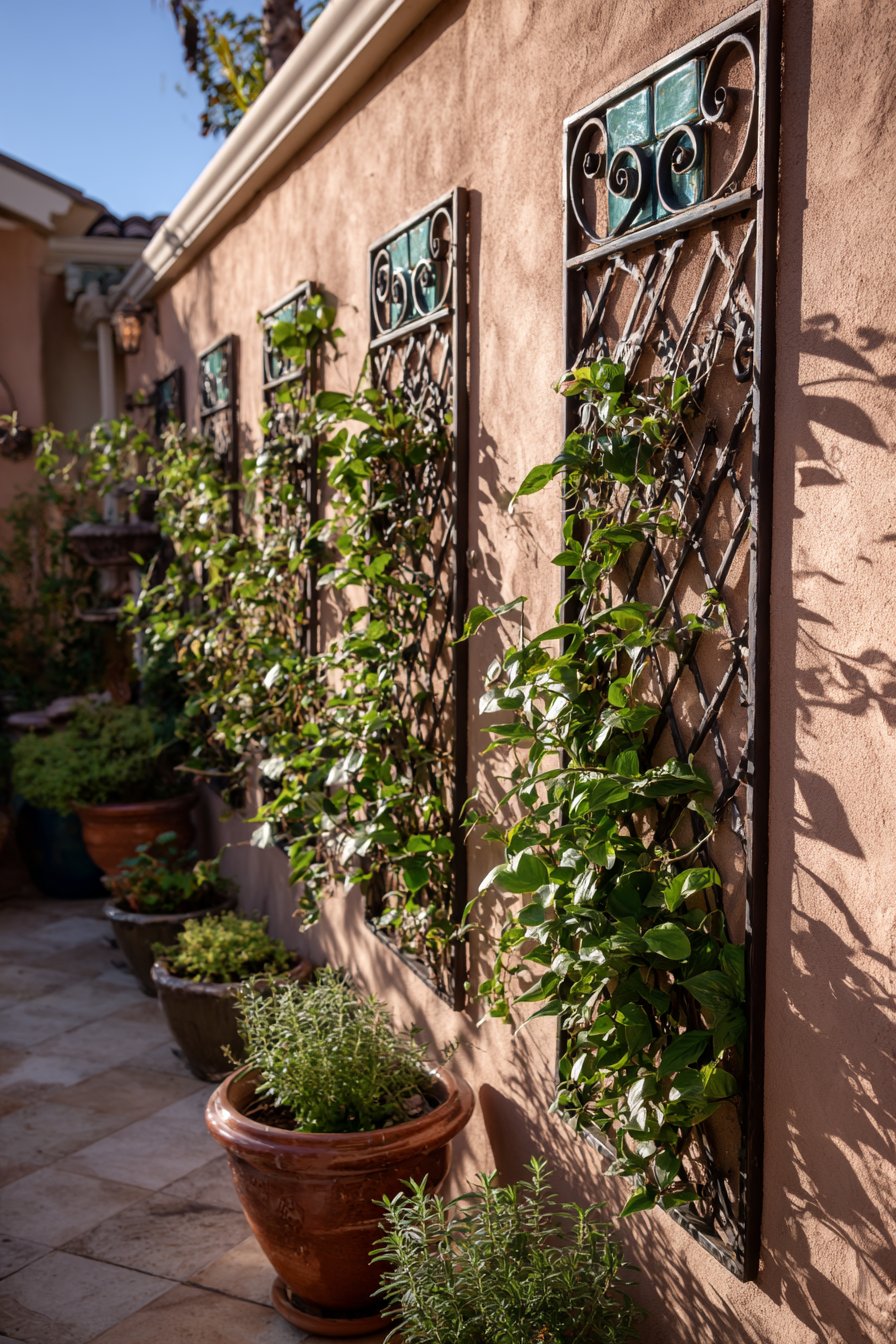
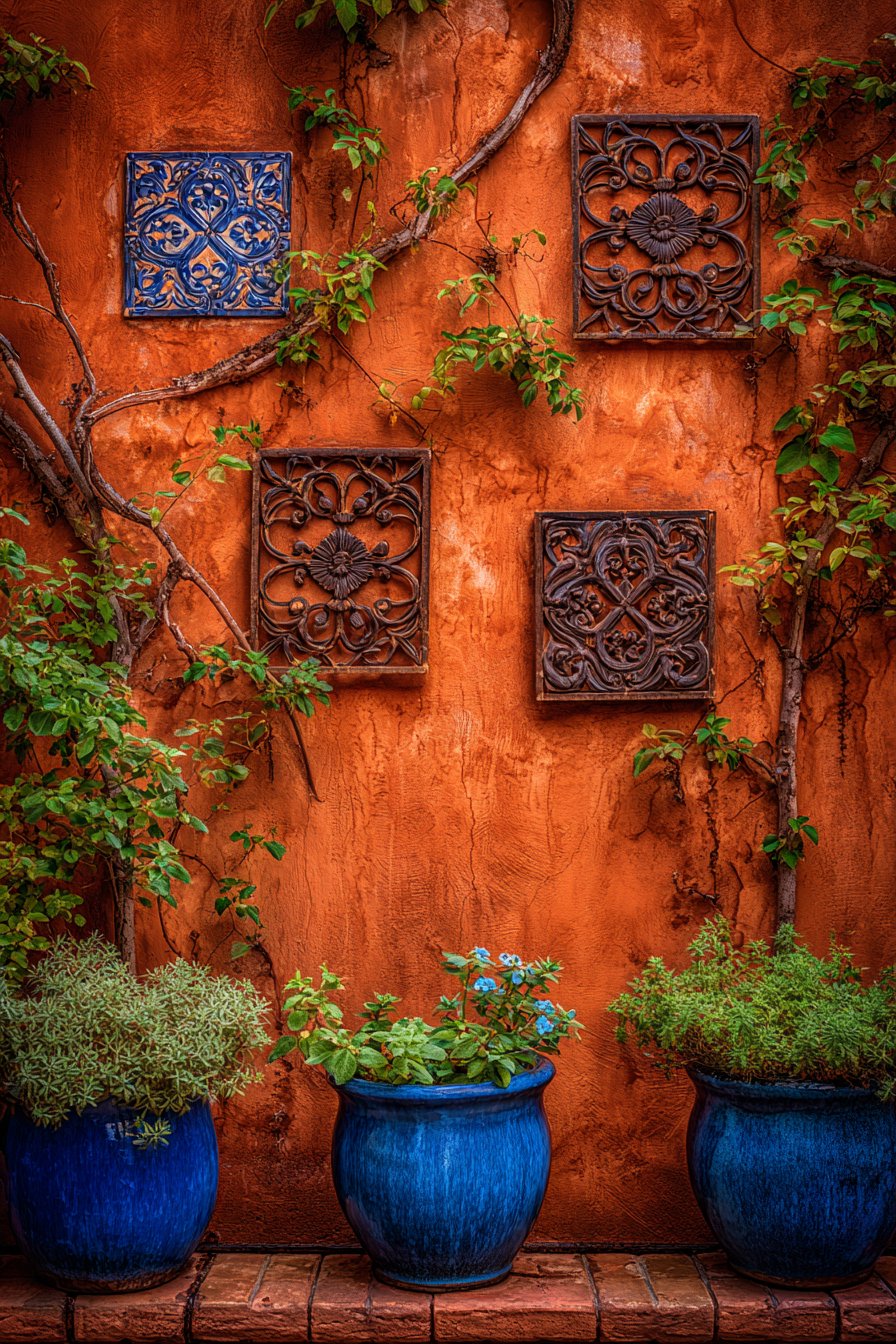
Ornate metalwork and warm earth tones define this Mediterranean-inspired approach that transforms plain walls into European-inspired vistas. Wrought iron wall medallions mounted on terracotta-colored stucco immediately establish old-world elegance through their intricate scrollwork and dimensional quality. These pieces, whether authentic vintage finds or well-crafted reproductions, demonstrate the metalworking artistry associated with Spanish, Italian, and Moroccan design traditions. Climbing jasmine vines weave through sections of decorative metal trellis, their white blooms releasing intoxicating fragrance while softening the metal’s formality with organic growth patterns.
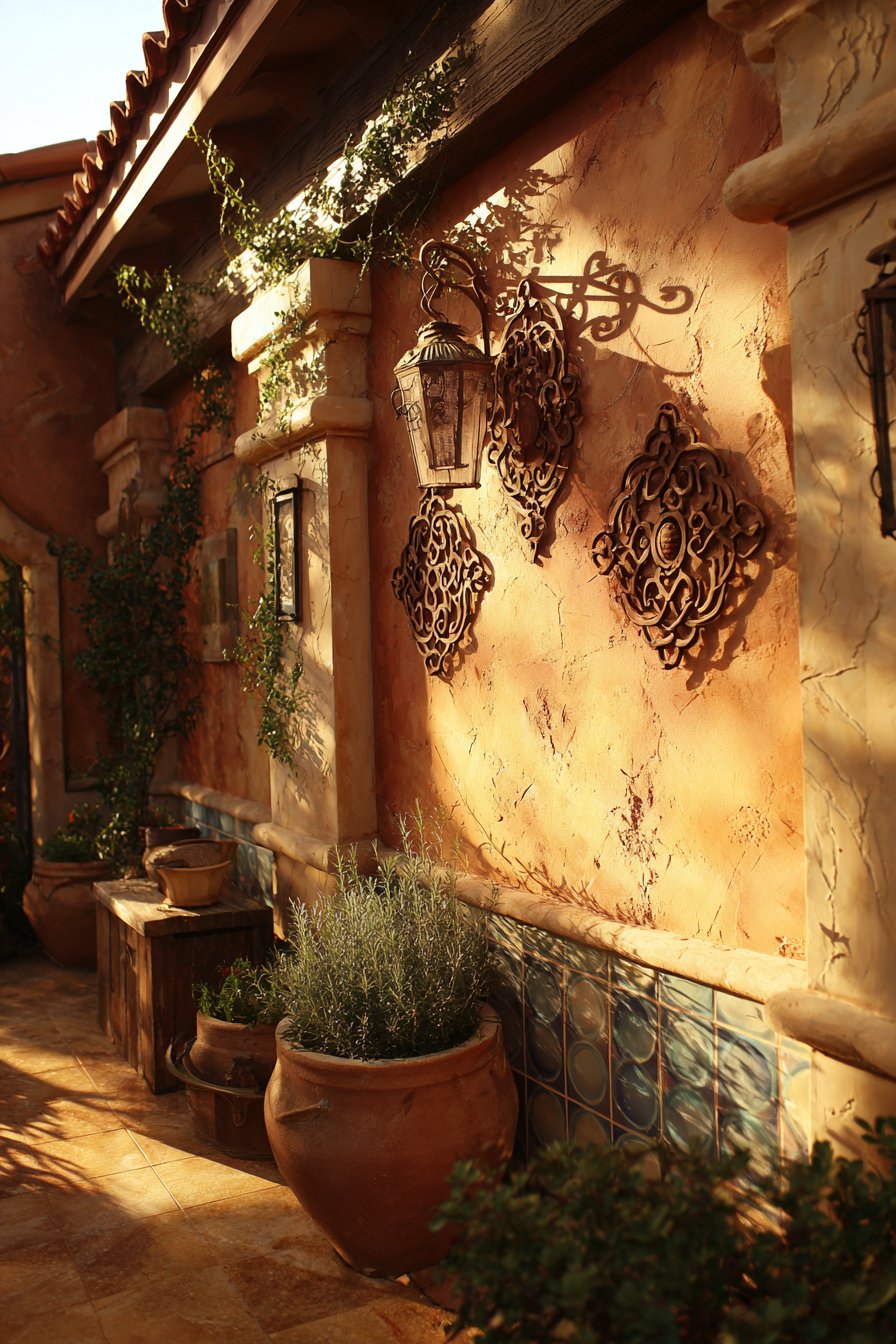
Ceramic tile accents in cobalt blue provide brilliant color contrast that references Mediterranean coastlines and traditional decorative arts. These tiles might be arranged in geometric patterns, inserted individually as jewel-like accents, or grouped to create focal points within the broader composition. The deep blue against terracotta creates the classic color combination associated with Spanish and Greek architecture, immediately signaling regional influence. Clay pot planters at ground level continue the earthenware theme while containing fragrant herbs like rosemary, lavender, and oregano that thrive in Mediterranean climates and contribute sensory appeal beyond visual interest.
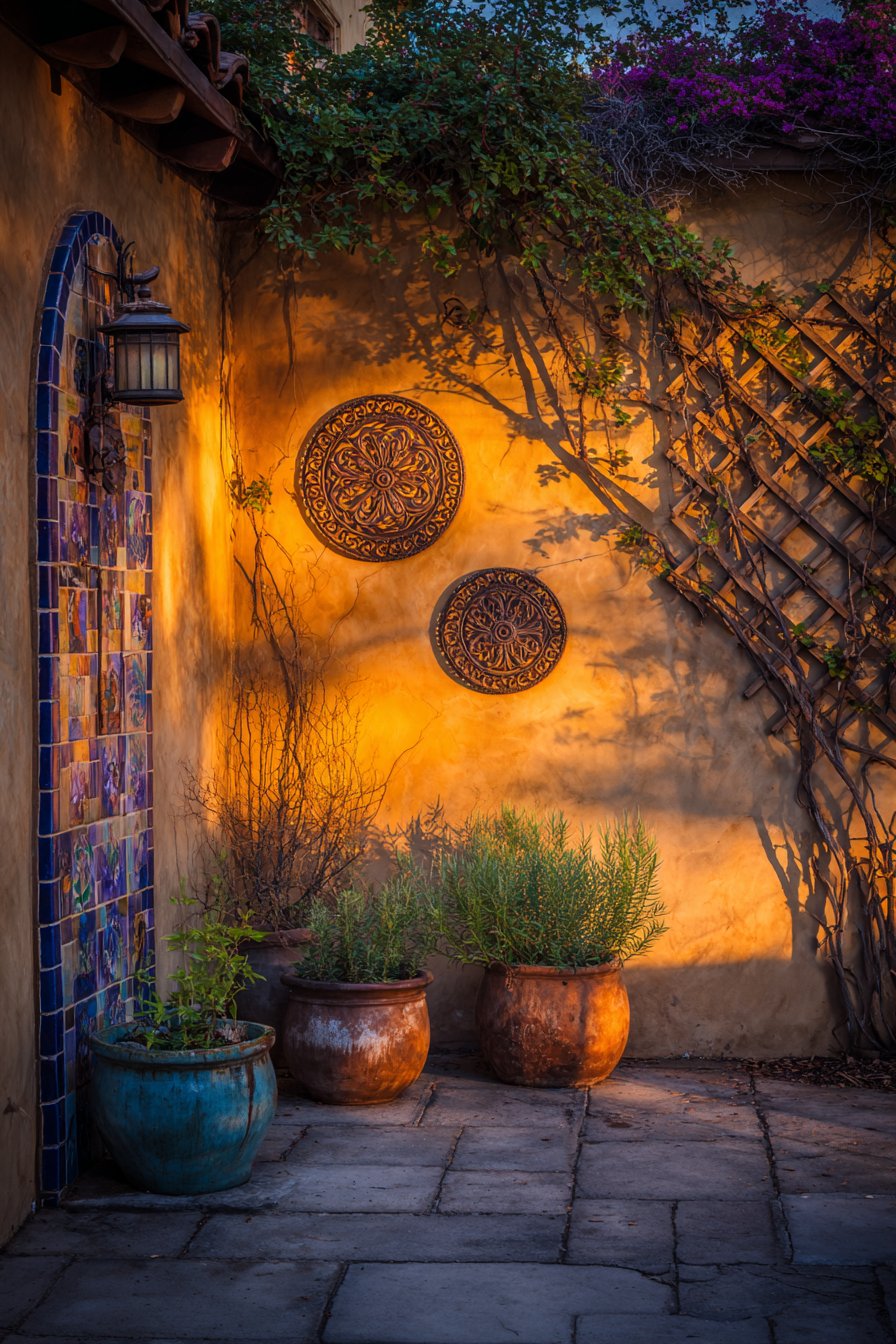
Golden hour lighting transforms this installation into something truly magical. The warm, low-angle light creates dramatic shadows that emphasize the wrought iron’s three-dimensional scrollwork while making the terracotta wall glow with inner warmth. The cobalt tiles catch this light differently, their glazed surfaces creating brilliant highlights that punctuate the composition like sapphires. This interplay of light, shadow, texture, and color creates dimensional depth that changes throughout the day, ensuring the wall remains visually engaging from morning through evening.
Key Design Tips:
- Choose wrought iron pieces with authentic patina or rust for Mediterranean authenticity rather than pristine black paint
- Apply textured stucco finish to create authentic Mediterranean wall surface if working with smooth materials
- Select jasmine varieties suited to your climate zone—star jasmine works in more temperate areas while common jasmine needs warmth
- Incorporate hand-painted ceramic tiles from artisan sources for authentic detail and craftsmanship
- Plant Mediterranean herbs in clay pots without drainage holes to achieve authentic terracotta appearance
- Install the metalwork securely into wall studs or use masonry anchors appropriate for stucco surfaces
7. Minimalist Concrete and Metal Statement

Restraint defines this contemporary approach where a single large-scale metal sculpture dominates a smooth gray concrete fence with architectural precision. The sculpture features clean geometric lines—perhaps abstract rectangles, circular forms, or angular shapes—finished in brushed bronze that develops subtle variations as light moves across its surface throughout the day. This singular focus demonstrates the minimalist principle that one exceptional piece carries more impact than multiple mediocre elements. The sculpture’s scale commands attention without aggression, its proportions carefully calculated to balance the wall’s dimensions.
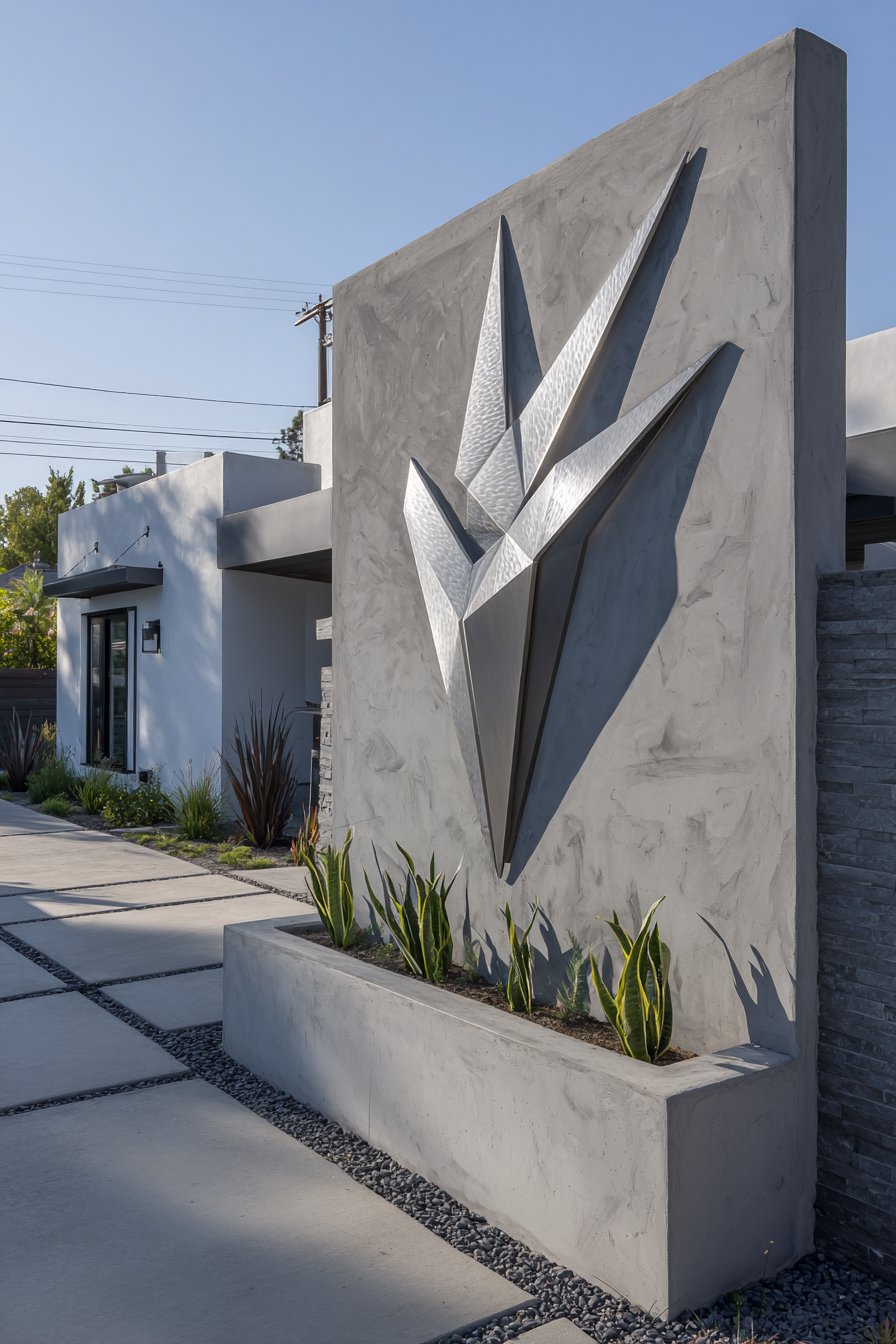
The supporting linear planter box echoes the fence material in matching concrete, creating cohesive unity while providing necessary contrast through horizontal placement against the vertical wall. Architectural plants like snake plants (Sansevieria) fill this planter, their vertical sword-like leaves adding organic geometry that complements rather than competes with the metal sculpture. The plants’ gray-green coloring and striking form maintain the minimalist aesthetic—no busy flowers or excessive foliage to distract from the clean composition.
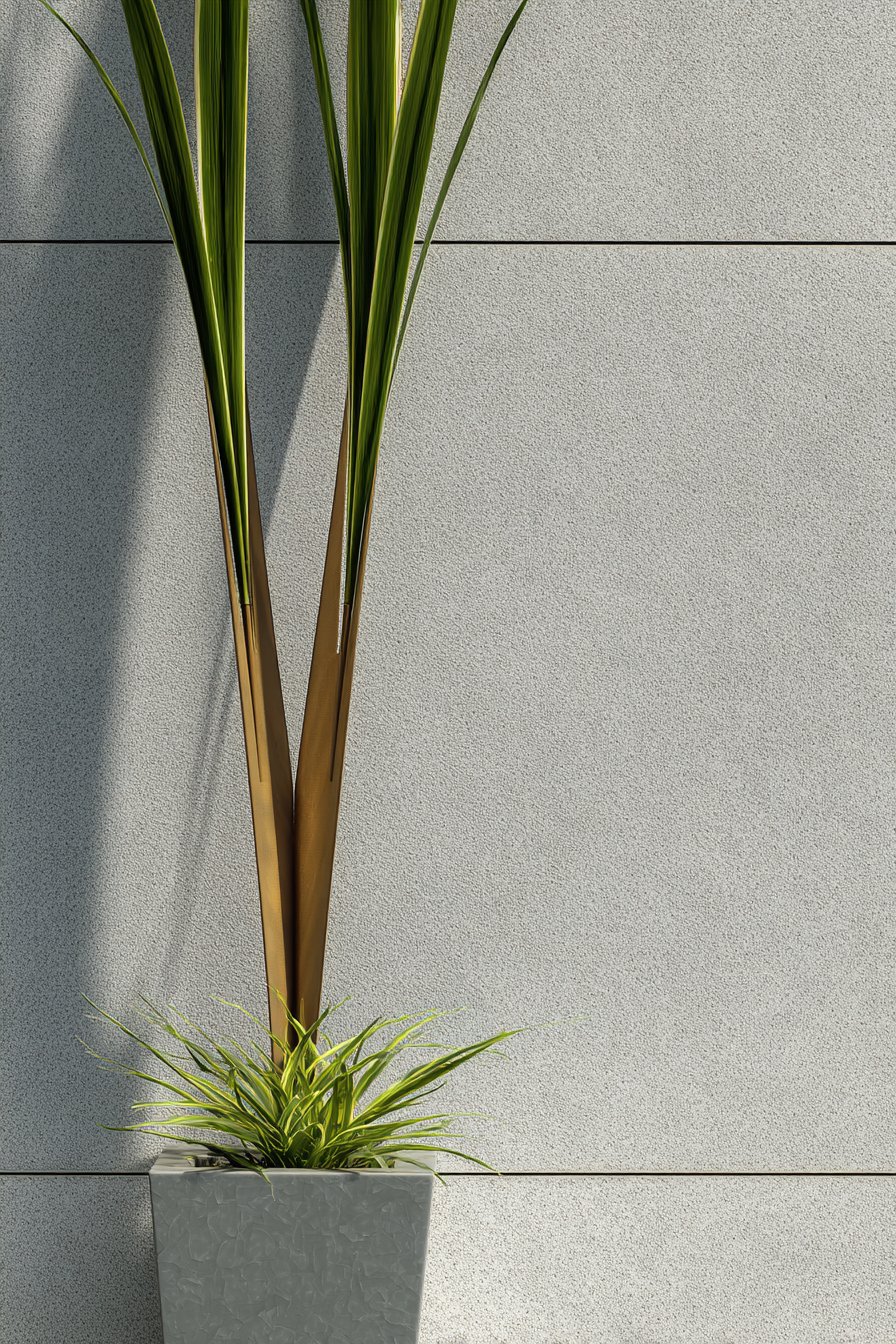
Photographic documentation of this installation requires architectural precision—even natural lighting that prevents harsh shadows while accurately representing both the concrete’s smooth texture and the bronze’s subtle variations. The image should feel calm and considered, emphasizing correct proportions and the careful relationship between positive (sculpture, plants) and negative (wall, sky) space. This design approach works particularly well for modern homes with strong architectural presence, where outdoor spaces should reflect interior sensibilities of simplicity and quality over quantity.

Key Design Tips:
- Commission or select sculptures from established artists or quality metalwork studios for investment-worthy pieces
- Ensure concrete fence has smooth troweled finish or consider resurfacing for gallery-quality backdrop
- Choose brushed or patinated metal finishes over high-gloss options to maintain sophisticated restraint
- Limit plant selection to architectural varieties with strong form and minimal maintenance requirements
- Install concealed uplighting to dramatically highlight the sculpture after dark
- Maintain clean lines by hiding irrigation components and using discrete mounting hardware
8. Eclectic Vintage Collections
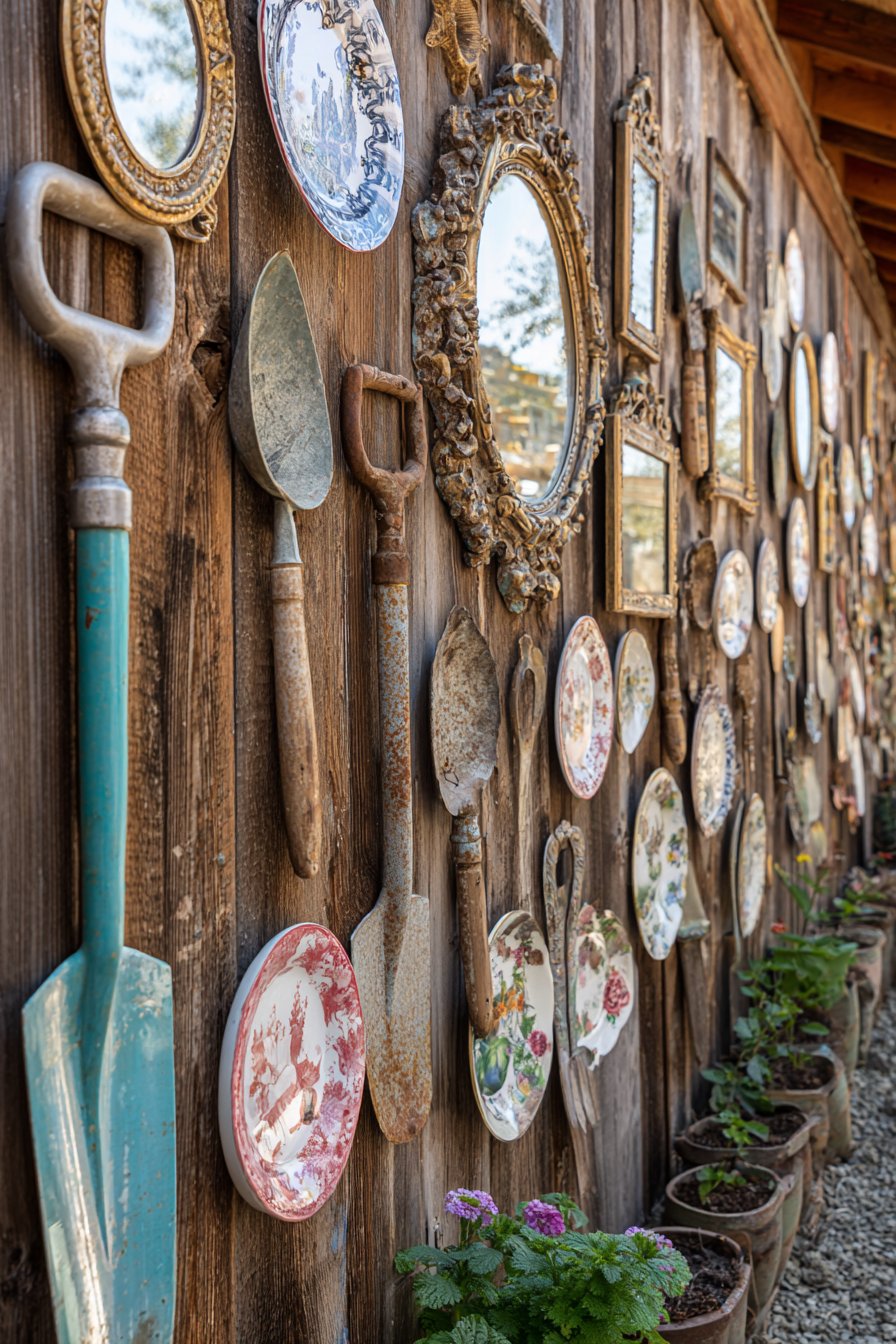
Personality and patina combine in this collected-over-time approach that celebrates individual taste through curated vintage finds. A natural cedar fence serves as the backdrop for an asymmetrical arrangement of vintage garden tools, antique mirrors with ornate frames, and colorful ceramic plates that might have graced European dining tables decades ago. Each piece earns its place through authentic age, interesting form, or personal significance—this isn’t random clutter but thoughtful curation that tells the homeowner’s story. The asymmetry feels intentional, with larger elements anchoring the composition while smaller pieces create movement and connection between focal points.
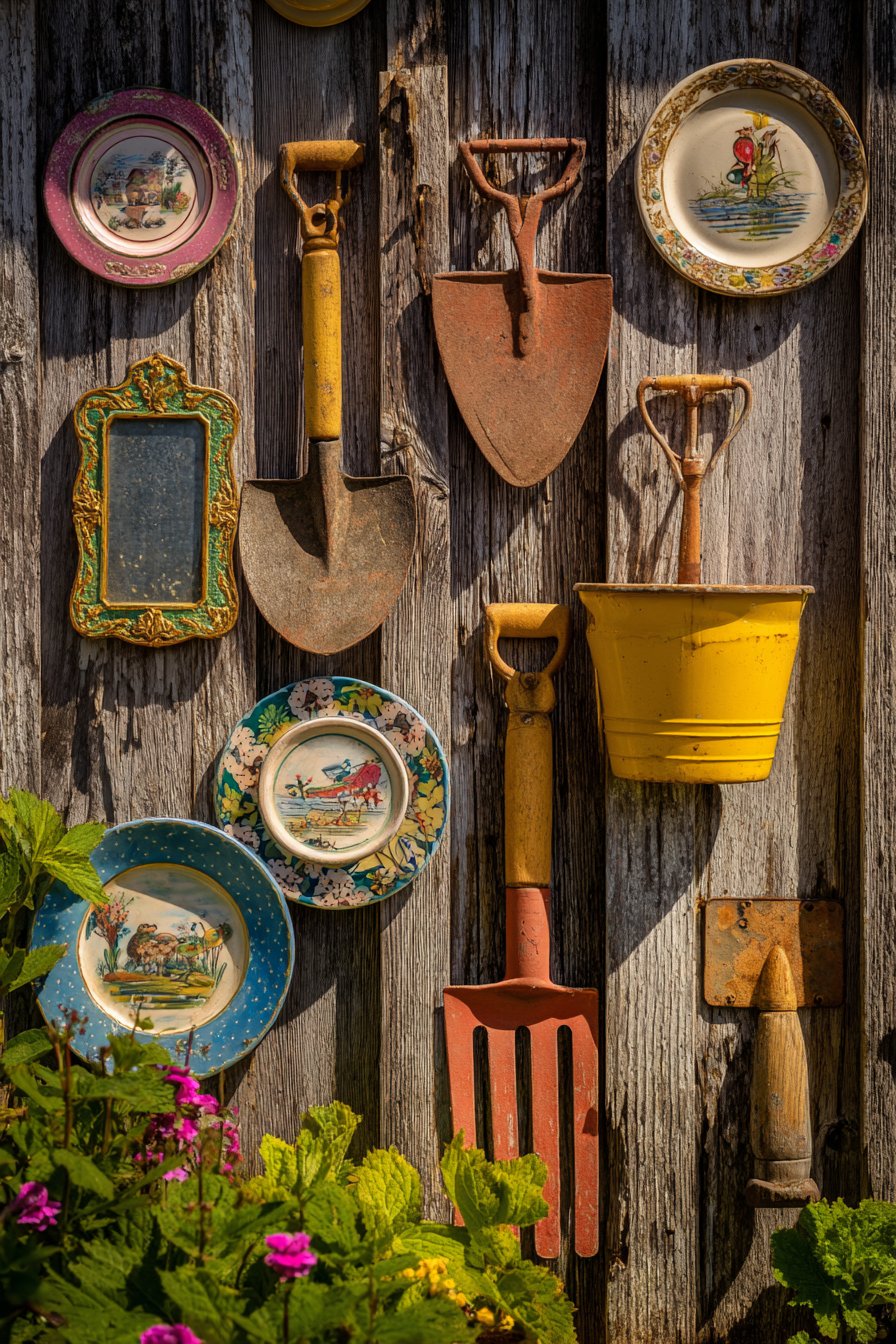
The ground-level planting continues the cottage garden aesthetic with perennials that self-seed and spread informally—foxgloves, hollyhocks, roses, and lavender create romantic abundance that softens the vintage collection’s hard edges. These plants demonstrate similar “collected over time” qualities, as established perennials develop character through years of growth, just as the vintage pieces developed patina through decades of use. The interplay between inanimate collectibles and living plants prevents the wall from feeling like mere storage or display—instead, it becomes an integrated garden feature.
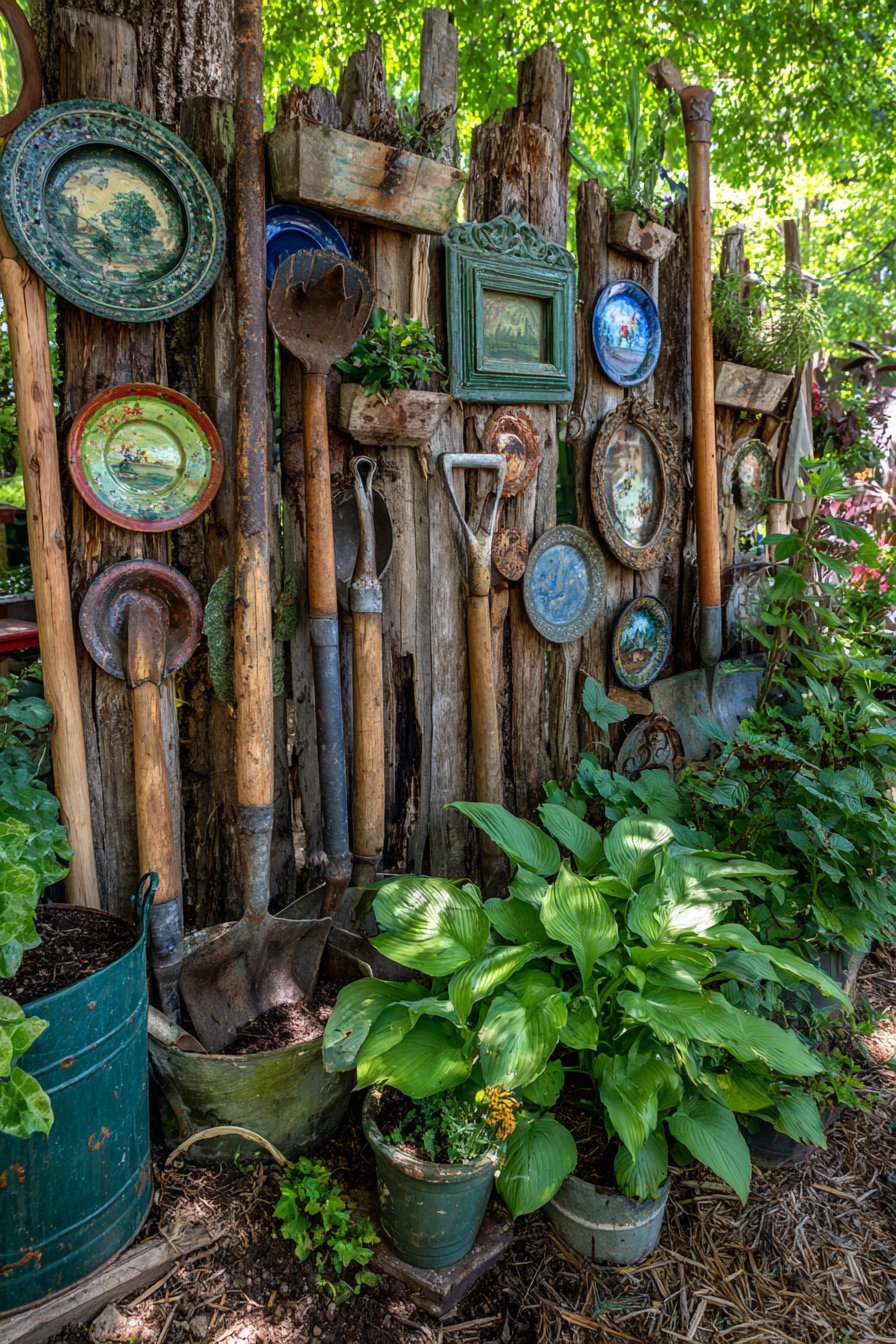
Natural daylight reveals the varied materials, colors, and authentic patina that make vintage pieces appealing. Sunlight catches the curve of an old mirror, highlights the rust patterns on antique garden tools, and emphasizes the crazing on ceramic glaze—imperfections that add rather than subtract value. Wide-angle outdoor photography captures the full personality-filled arrangement while maintaining enough detail to appreciate individual pieces, demonstrating how eclectic collections can feel cohesive when united by authentic age and thoughtful placement.

Key Design Tips:
- Collect pieces gradually to allow the arrangement to evolve naturally rather than forcing instant completion
- Group items by color family, material type, or theme within the overall eclectic arrangement to create subtle order
- Ensure all pieces can withstand outdoor exposure or apply protective coatings to preserve them
- Balance colors and visual weight across the composition to prevent one area from feeling too heavy or busy
- Secure all items properly—use wire, outdoor adhesive, or appropriate hardware for each piece’s weight and material
- Rotate seasonal elements like wreaths or small potted plants to keep the display fresh and relevant throughout the year
9. Tropical Metal Leaf Sculpture Garden
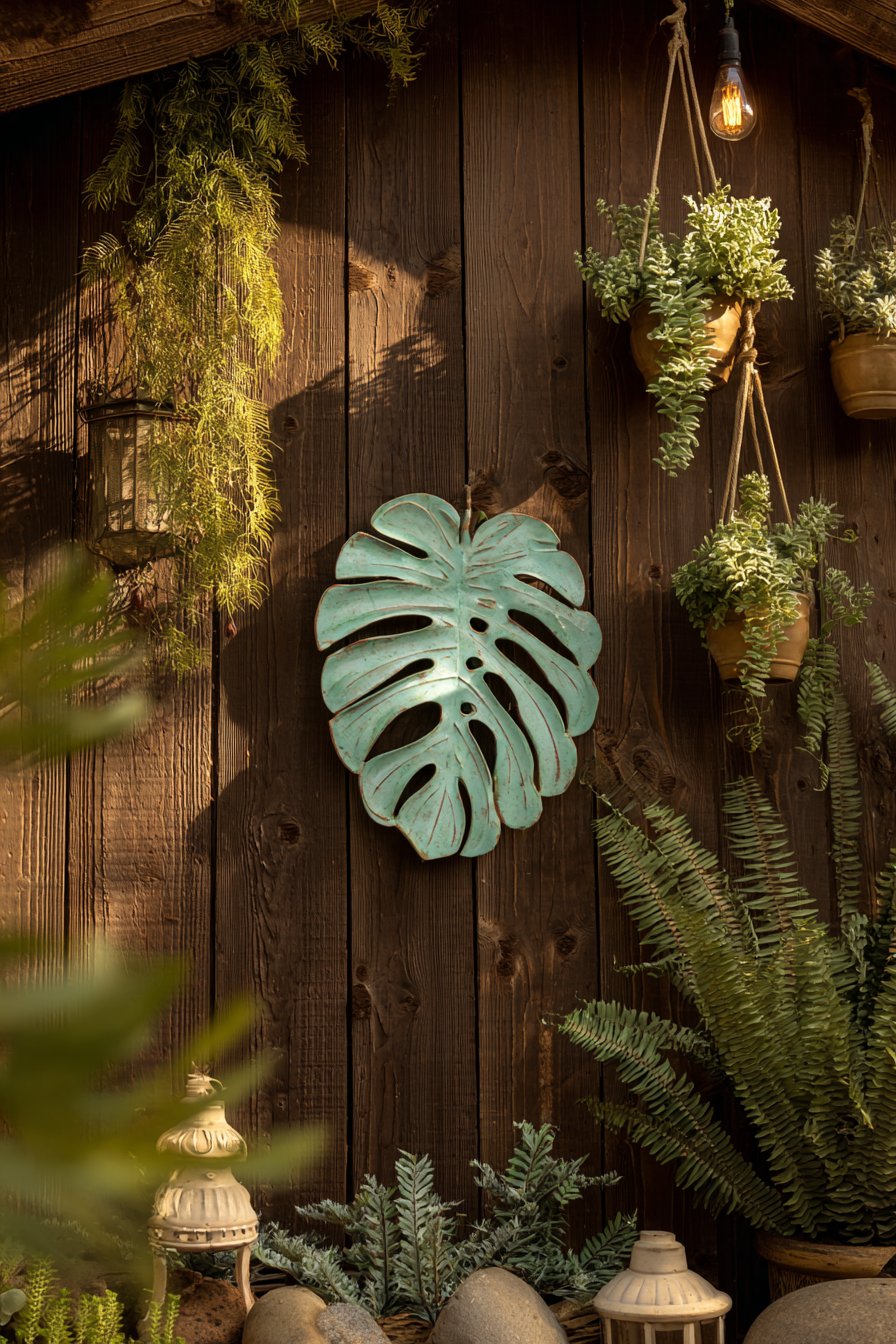
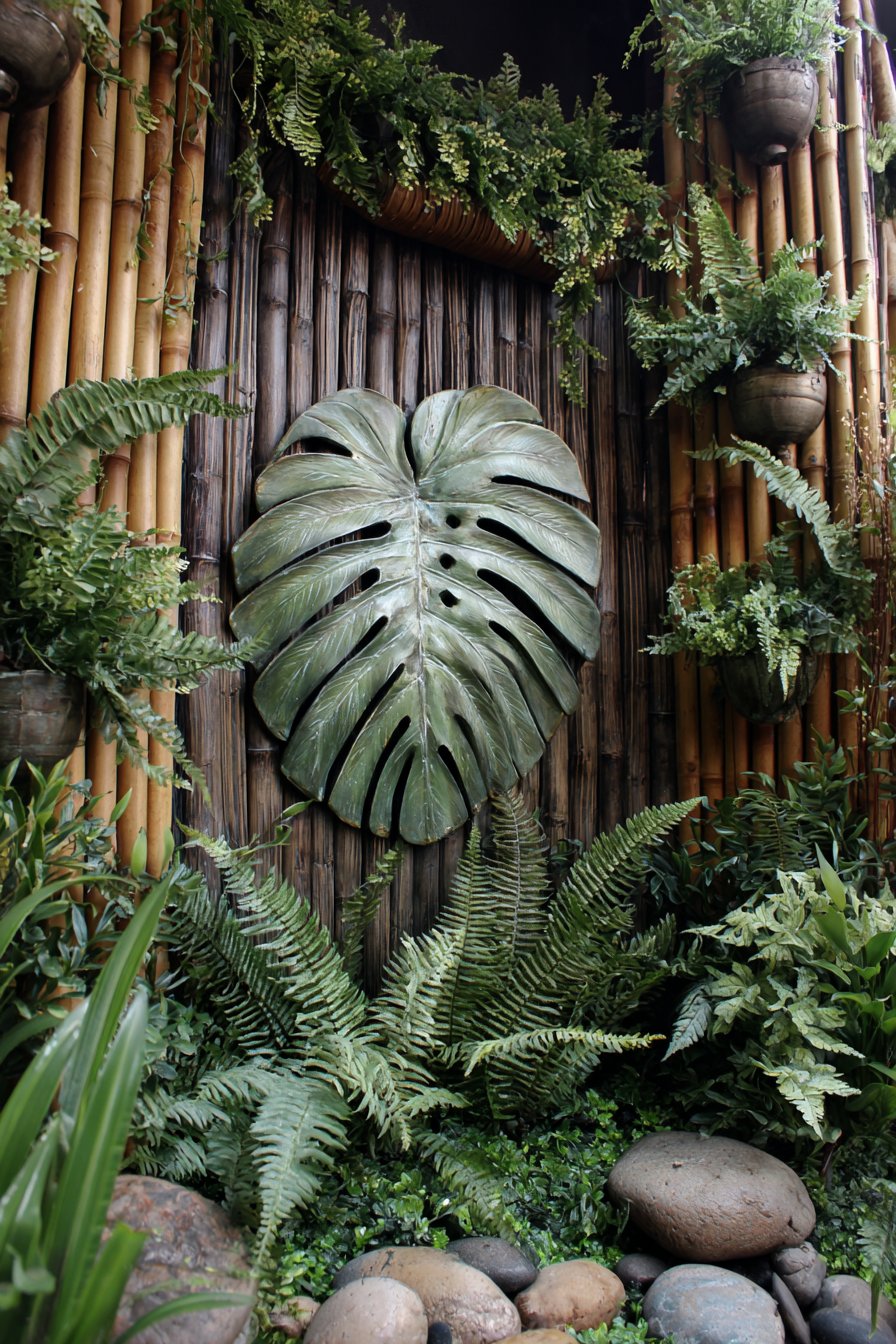
Bold botanical forms rendered in metal bring tropical drama to backyard walls through oversized leaf sculptures that make immediate impact. A large monstera leaf—that iconic Swiss cheese plant form—commands attention in verdigris finish, its blue-green patina suggesting age and tropical humidity. This single sculptural element establishes the theme clearly and confidently against a dark stained wood fence that provides contrast while suggesting the deep shadows found in tropical forests. Surrounding the centerpiece, bamboo privacy panels introduce authentic tropical material while providing additional screening and textural variation through their natural sectioned structure.

Hanging air plant holders suspend throughout the arrangement, their minimal root systems and sculptural forms maintaining the tropical theme while demonstrating the diversity of plant life in humid climates. Wall-mounted planters arranged vertically contain exotic ferns whose delicate fronds contrast beautifully with the bold metal leaf sculpture—the interplay between strong graphic forms and intricate natural detail creates visual interest at multiple scales. The base treatment uses natural river rocks in varying sizes and colors, their smooth water-worn surfaces suggesting tropical streams while providing drainage and definition.
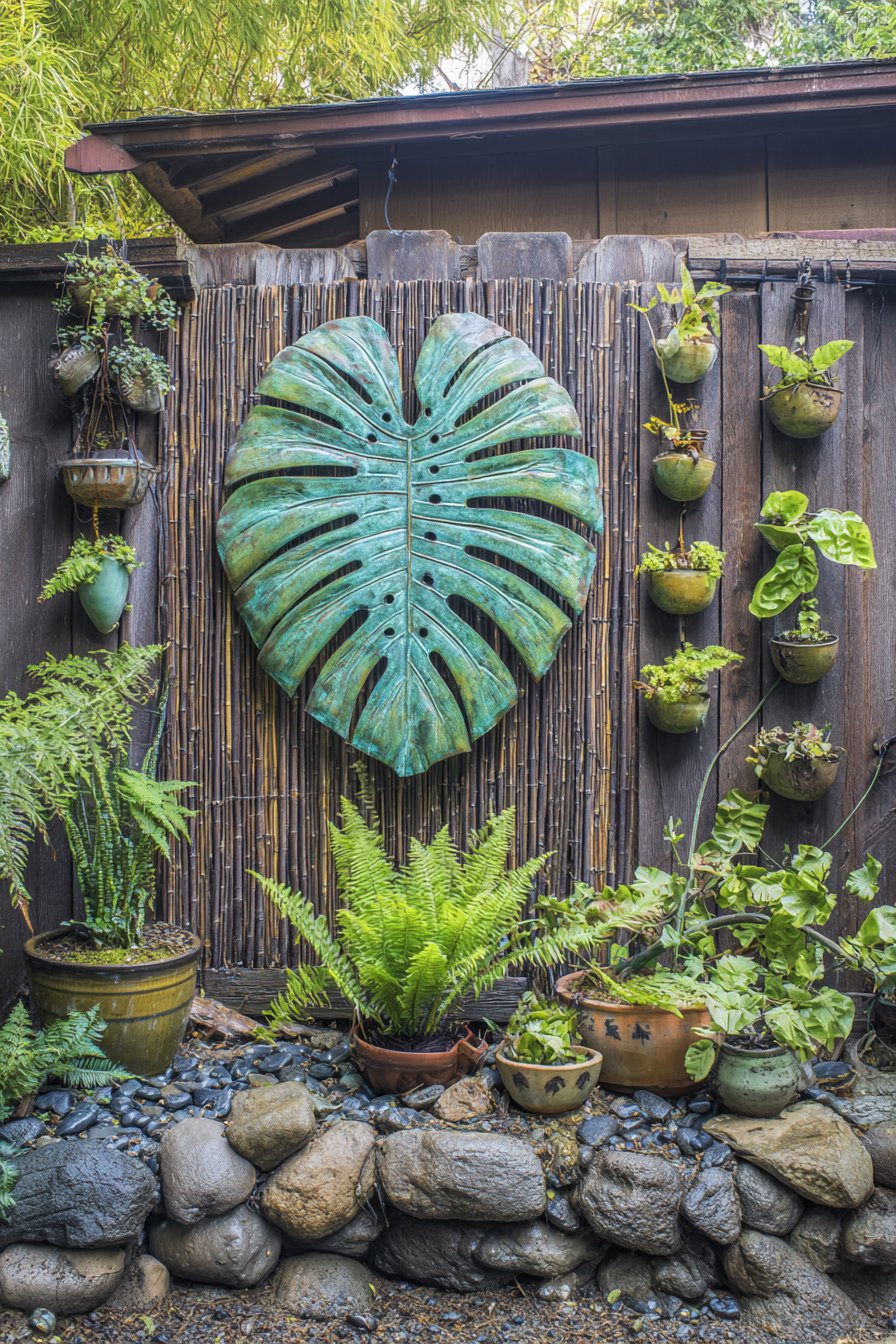
Diffused natural lighting proves essential for this tropical-inspired design. The filtered light you’d find under a forest canopy—bright enough to illuminate but soft enough to prevent harsh shadows—reveals both the verdigris patina’s subtle color variations and the ferns’ delicate structure. Professional photography showcases realistic material details: the metal’s weathered surface, the bamboo’s natural sectioning, the ferns’ intricate vein patterns. These authentic textures prevent the tropical theme from feeling like theme park artifice, instead creating a sophisticated interpretation of lush environments.
Key Design Tips:
- Choose metal sculptures with hand-applied patina finishes for authentic verdigris appearance rather than painted imitations
- Install bamboo panels with proper spacing to allow air circulation and prevent moisture accumulation
- Select fern varieties suited to your climate—many tropical species have temperate-zone counterparts with similar aesthetics
- Arrange river rocks to create slight variation in elevation for natural appearance
- Install misting system if your climate allows to increase humidity for tropical plants and create ambiance
- Add tropical-inspired lighting like tiki torches or bamboo-shaded fixtures for evening atmosphere
10. Cottage Garden Romance
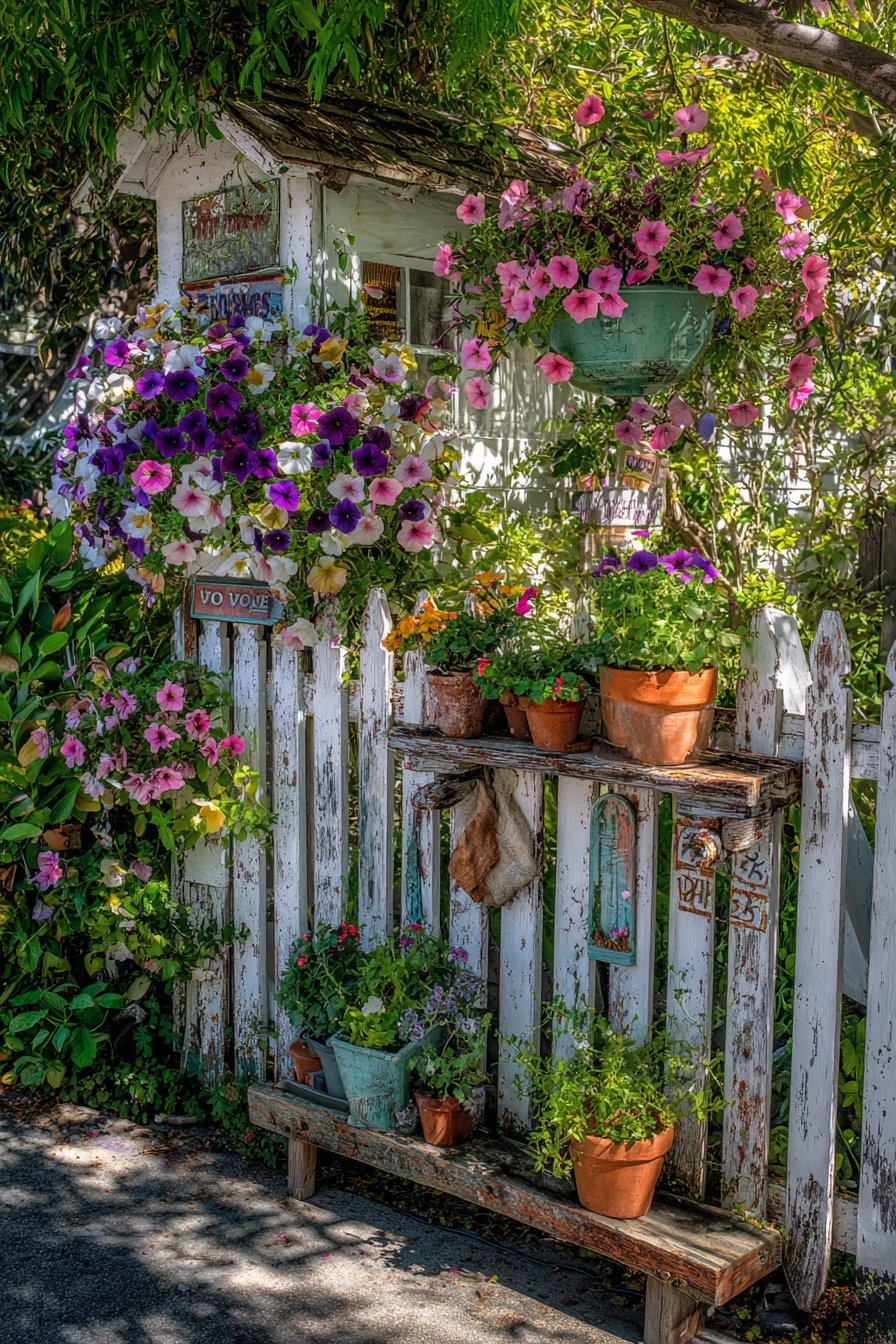
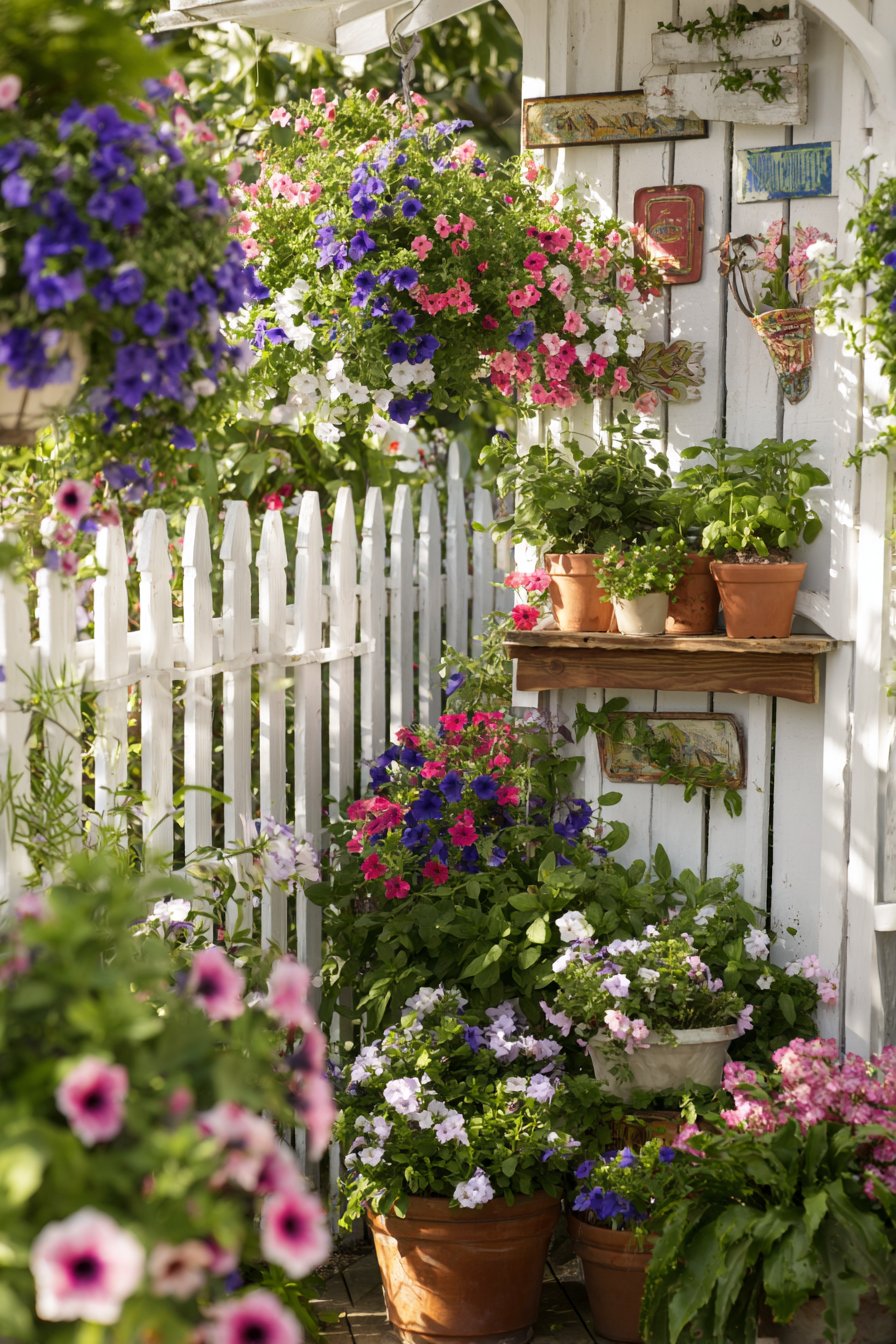
White picket fence sections repurposed as wall art immediately establish cottage garden charm through their nostalgic form and decorative potential. These architectural elements—whether authentic vintage pieces or well-crafted reproductions—bring vertical interest and provide perfect structures for hanging baskets overflowing with colorful petunias and trailing lobelia. The combination of structured fence and abundant flowers demonstrates the cottage garden principle of controlled abundance, where profusion feels intentional rather than neglected. Vintage garden signs in weathered metal and aged wood punctuate the arrangement with charming messages or botanical illustrations that reference seed packets and garden catalogs from earlier eras.
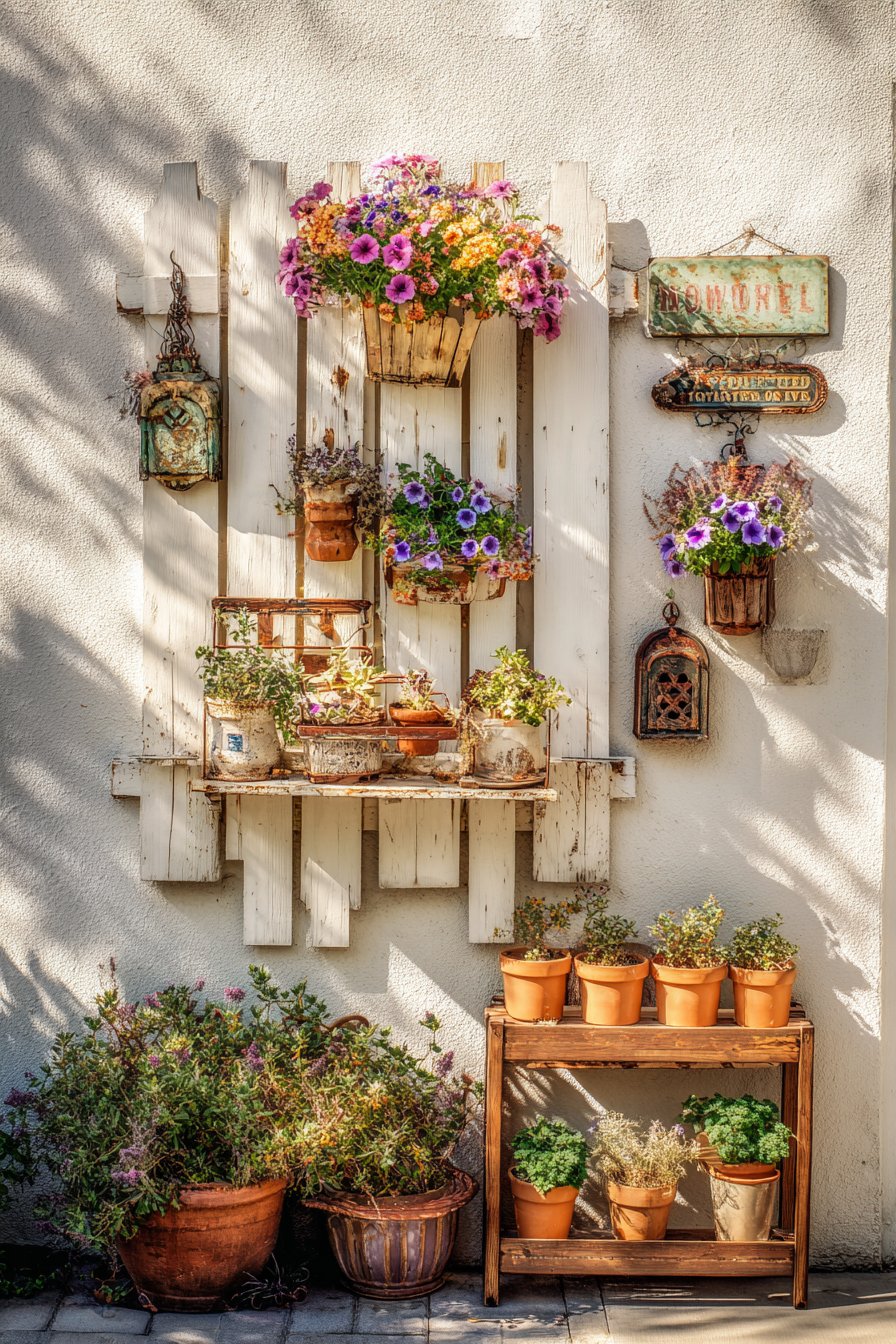
A small wooden shelf integrated into the display holds terracotta pots with culinary herbs—basil, thyme, chives—demonstrating the cottage garden’s essential connection between beauty and utility. These herbs serve triple duty: visual appeal through varied leaf textures and colors, practical harvest for kitchen use, and aromatic contribution to the garden’s sensory experience. The soft morning light filtering through nearby foliage creates dappled shadows that dance across the white picket fence, highlighting its dimensional details while the shadows themselves become decorative elements.
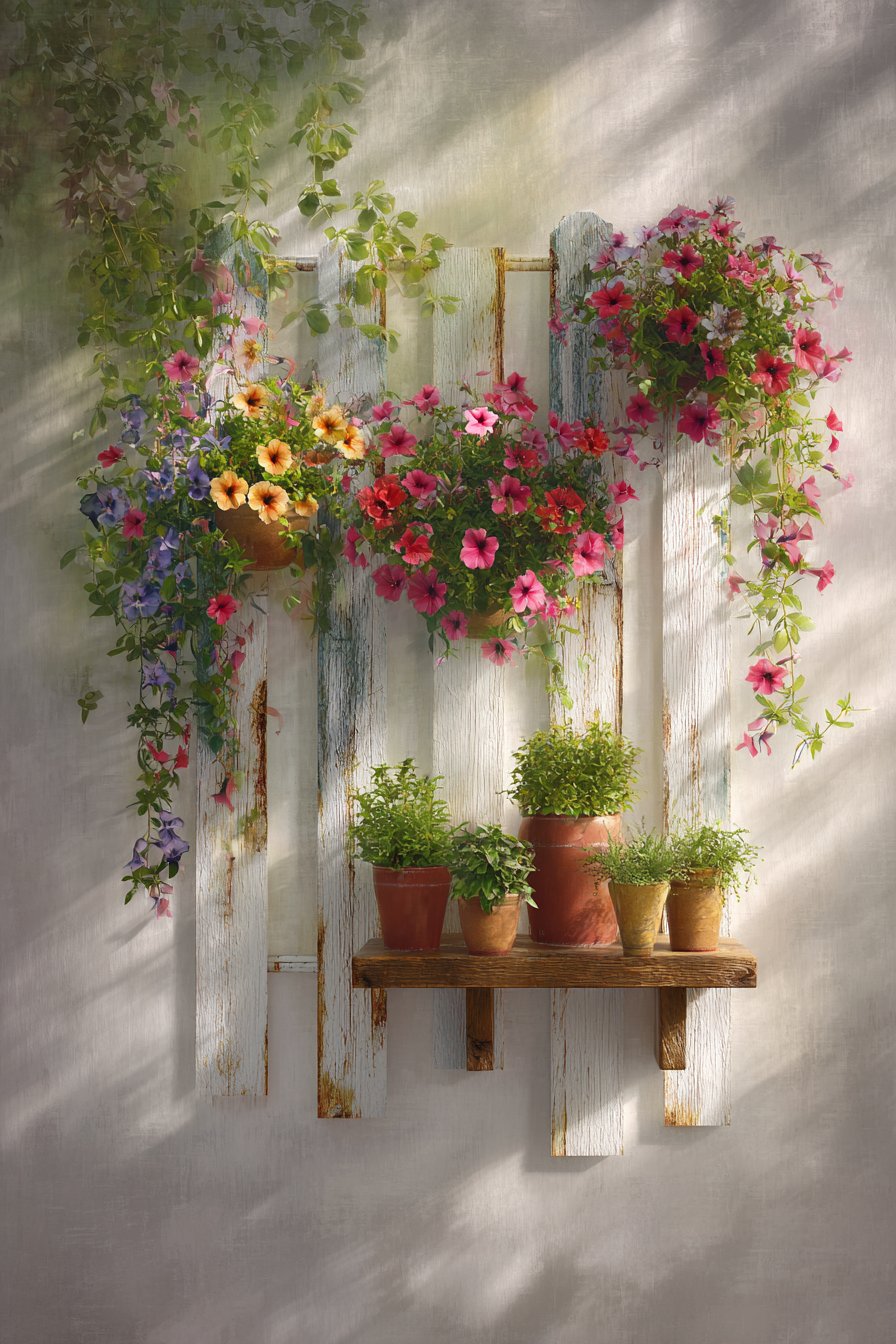
The photography style mimics professional garden design magazines, capturing the romantic well-lived aesthetic that defines cottage gardens. Images should reveal the slight imperfections—paint that’s weathered naturally, herbs showing signs of regular harvest, flowers at various stages of bloom—that distinguish authentic gardens from sterile showrooms. This approach celebrates gardening as an ongoing practice rather than a completed project, honoring the passage of time and the gardener’s hand.
Key Design Tips:
- Distress new picket fence sections with sandpaper and diluted paint to achieve authentic vintage appearance
- Choose flowering plants with long bloom periods to maintain color from spring through fall
- Group herbs by water and sunlight needs even within the decorative arrangement for successful growth
- Replace annual flowers seasonally to keep the display vibrant—pansies in cool weather, petunias in warm
- Use coir or moss-lined hanging baskets for traditional cottage garden appearance and better moisture retention
- Apply water-based outdoor paint in soft colors if refreshing worn fence sections to maintain aged character
11. Industrial Urban Garden Wall
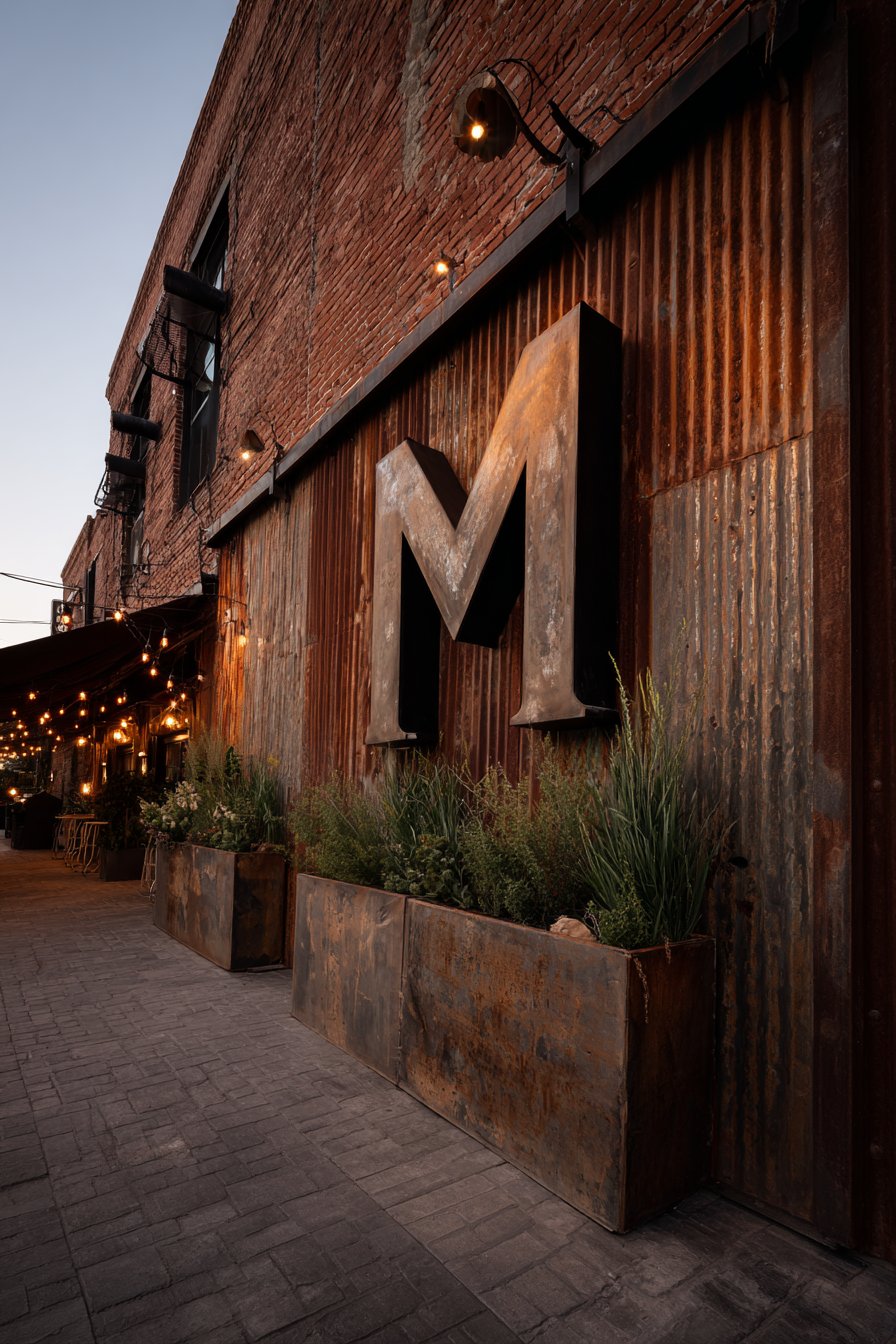
Raw materials and utilitarian aesthetics define this industrial approach that celebrates exposed brick, metal, and Edison bulb lighting. The exposed brick wall provides authentic texture impossible to replicate—each brick’s color variation, the mortar’s subtle differences, occasional chips and wear that demonstrate age and history. Large metal letter signage mounted to the brick creates bold graphic impact, while Edison bulbs with visible filaments provide warm illumination that contradicts the industrial aesthetic’s typically cool character. Galvanized metal planters mounted with black iron brackets introduce growing space while maintaining the industrial material palette.
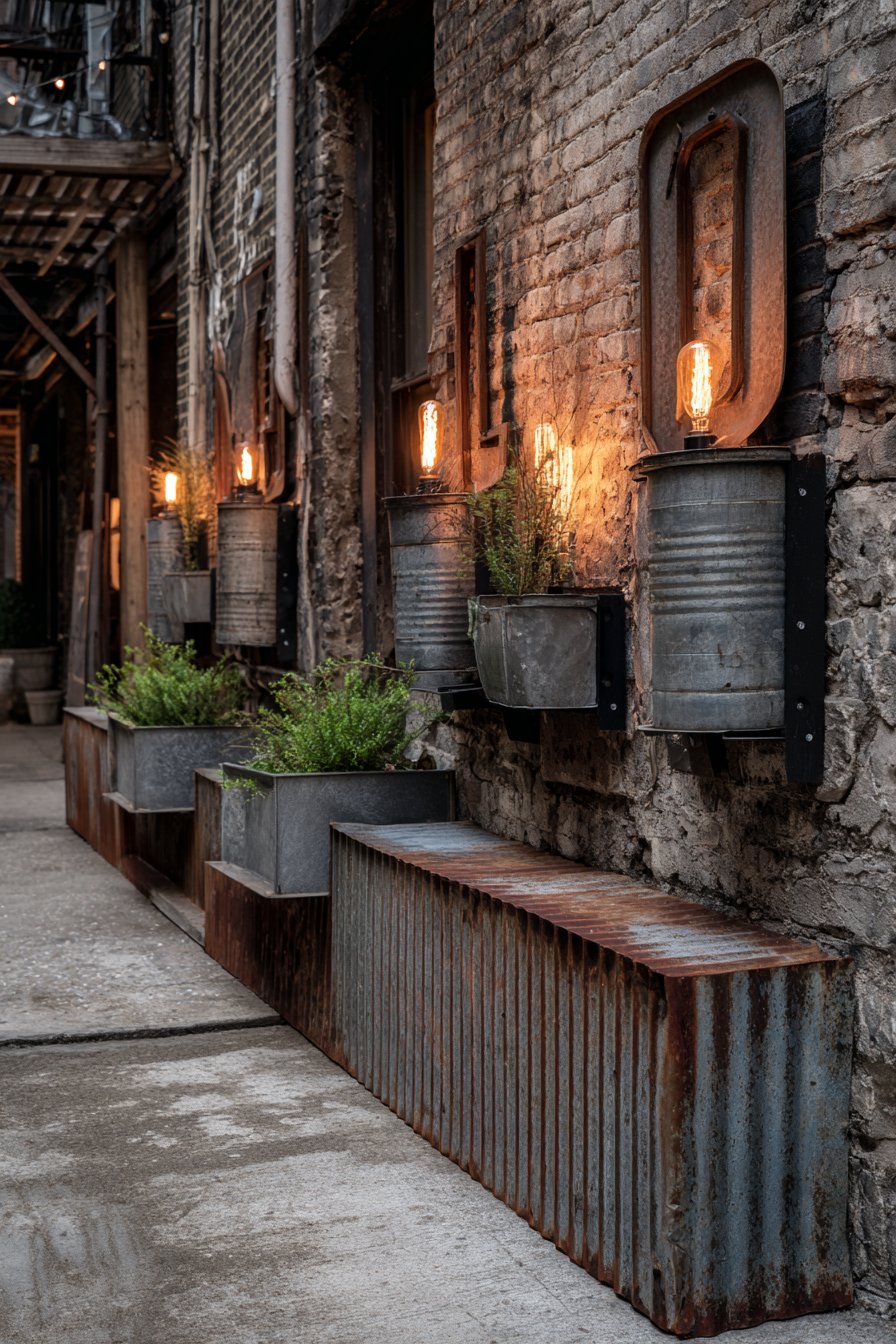
Sections of corrugated metal panels serve as textured backdrop, their repeating ridges catching light and creating shadow patterns that add dimensional interest to flat surfaces. These panels reference industrial architecture—warehouses, factories, utilitarian structures—while providing practical benefits like additional privacy or wind protection. Concrete pavers below show natural weathering patterns, their gray tones complementing the brick and metal while suggesting urban environments where perfection matters less than character and function.
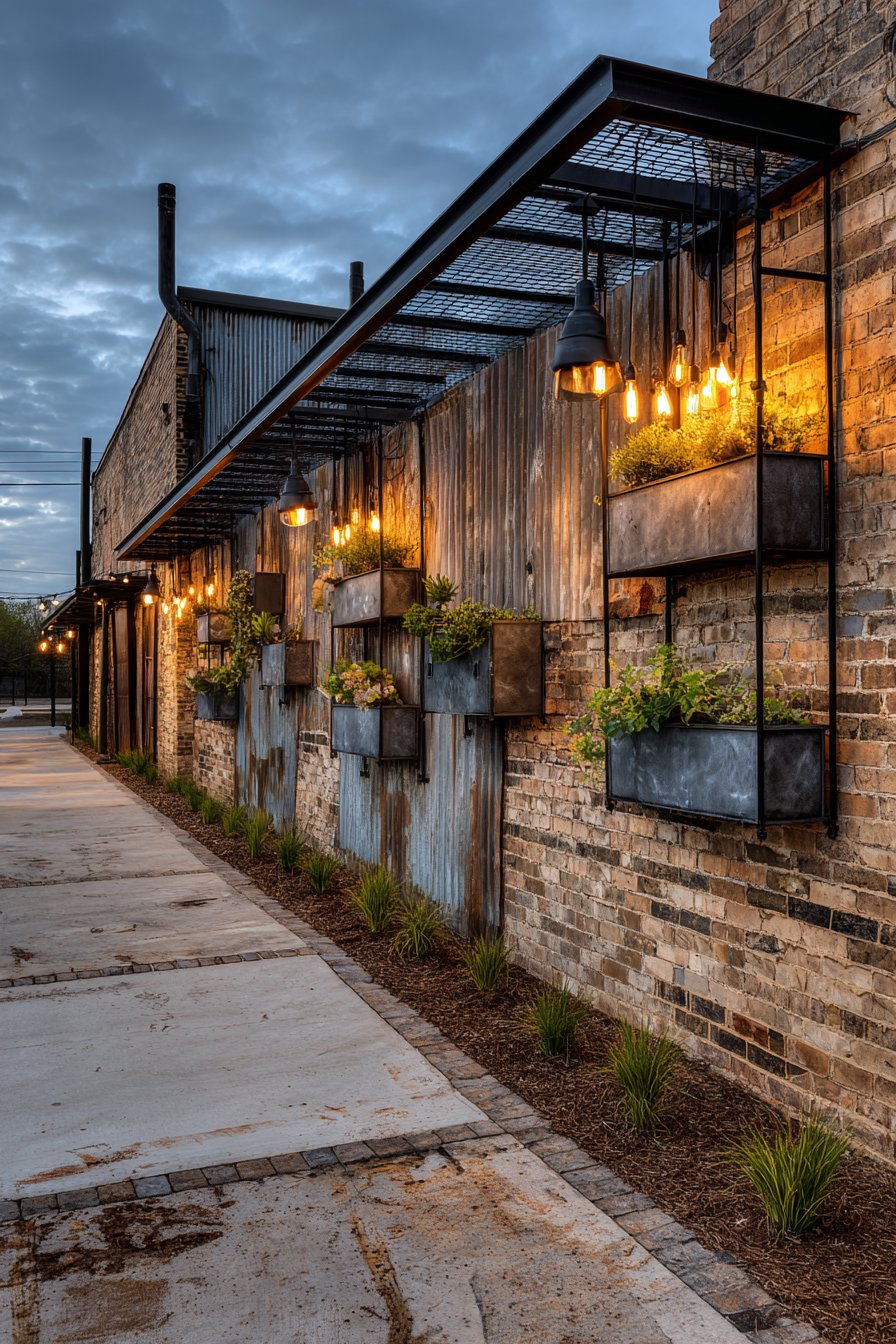
Twilight photography captures this installation’s transformation when Edison bulbs illuminate, creating warm ambient glow that contrasts beautifully with the cool industrial materials. The bulbs’ warm light makes the exposed brick glow while metal surfaces develop interesting highlights and shadows. Architectural photography techniques emphasize the raw materials and authentic urban garden aesthetic—visible brick texture, metal’s aged patina, concrete’s weathered surface. This approach works exceptionally well for urban and loft settings where the outdoor space should reflect industrial interior aesthetics.

Key Design Tips:
- Clean exposed brick without sandblasting to maintain authentic texture and avoid damage to historic materials
- Install Edison bulb fixtures with weatherproof sockets and properly rated outdoor wiring
- Choose galvanized planters without drainage holes and add gravel layer to prevent rust staining below
- Secure corrugated panels firmly as their large surface area catches wind easily
- Plant urban-tolerant species like ornamental grasses, sedum, or herbs that thrive despite potential pollution
- Apply clear masonry sealer to brick if needed for weatherproofing without altering appearance
12. Scandinavian Natural Wood Minimalism
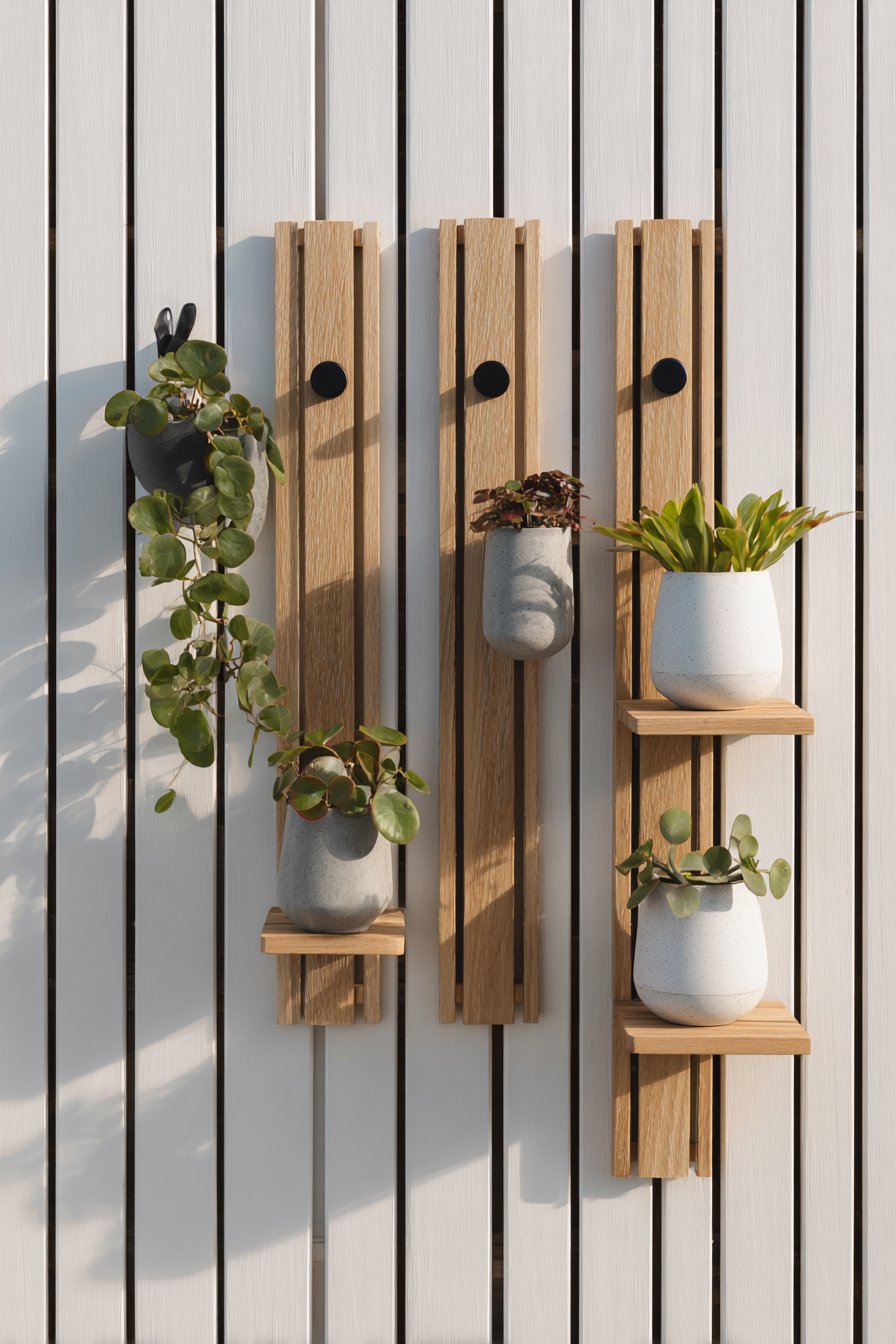
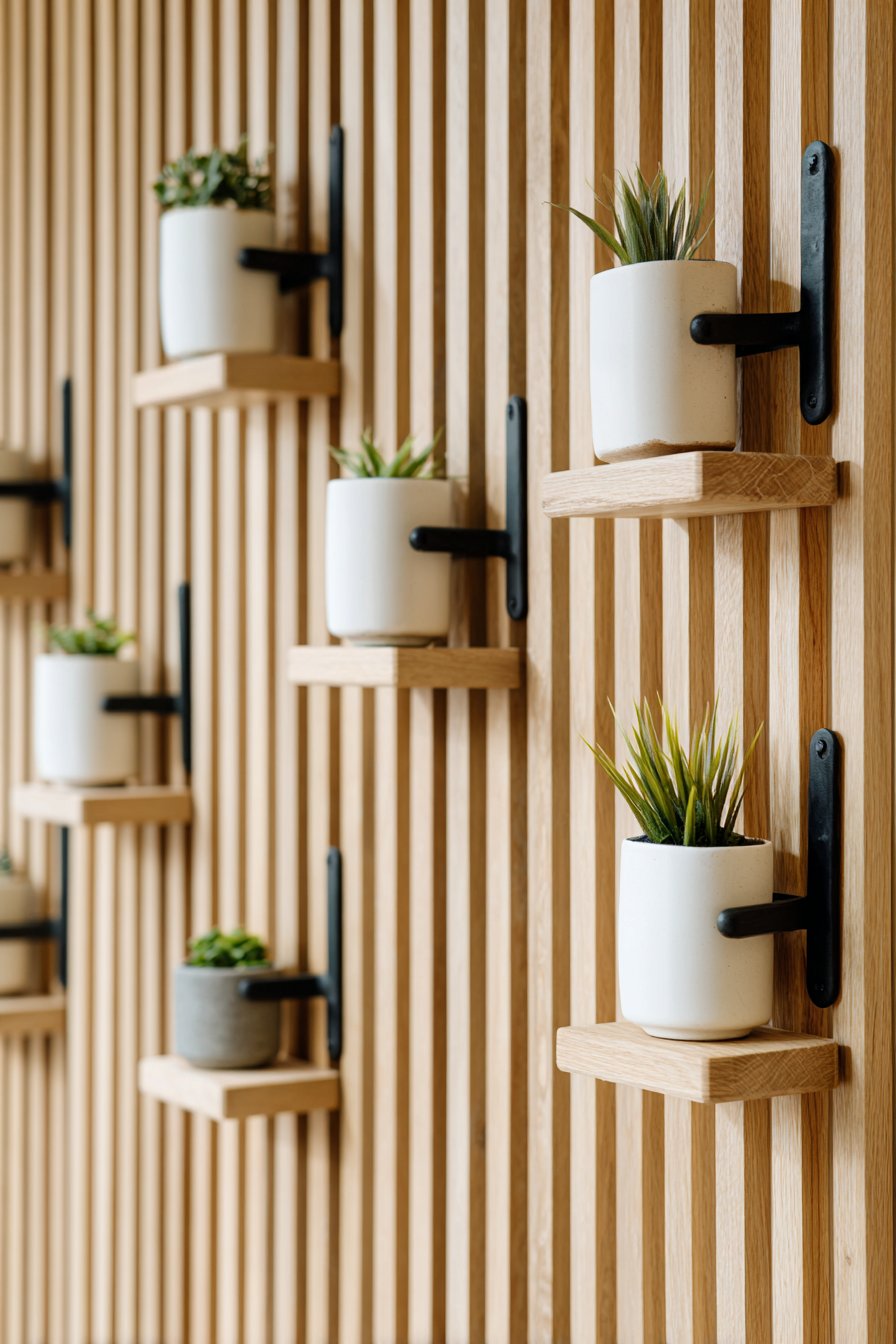
Nordic design principles bring calm sophistication to outdoor walls through simple wooden slat panels in natural light oak finish. These vertical or horizontal slats create subtle pattern through their regular spacing while the pale wood tone reflects light and keeps the space feeling open and airy. Integrated shelving built into the slat system provides functional display surfaces for white ceramic planters—their pristine color maintaining the Scandinavian palette while offering contrast against the warm wood. Minimalist black metal hooks add punctuation points throughout, their simple geometric forms holding small hanging plants in concrete pots that bridge the organic and modern.
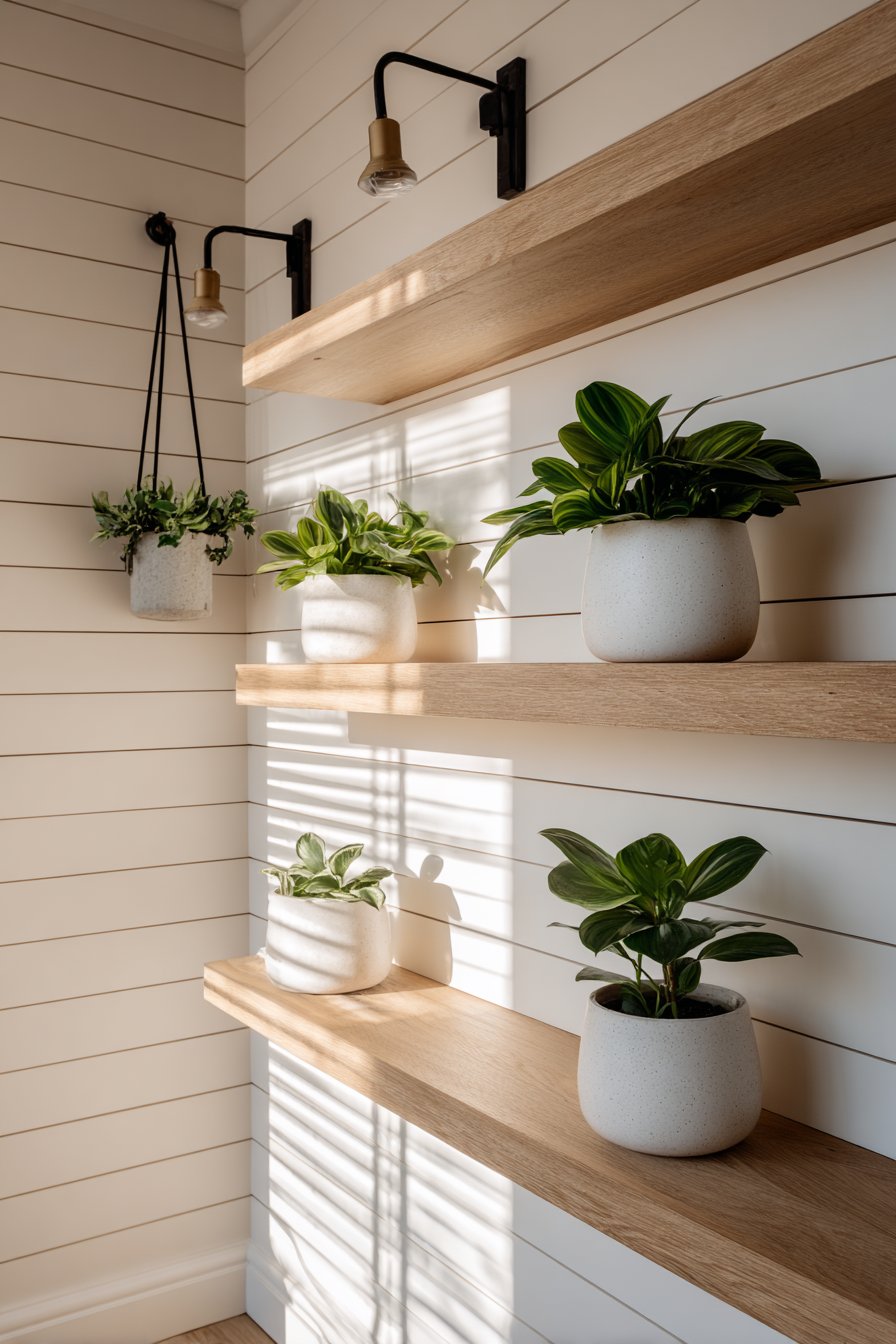
The design emphasizes clean lines and functional beauty against a white painted fence that serves as secondary backdrop. Every element earns its place through purpose rather than mere decoration—the shelves hold plants, the hooks provide hanging points, the slats create privacy while allowing air circulation. This restraint demonstrates the Scandinavian principle that good design removes the unnecessary, leaving only what serves both function and beauty. The pale wood grain remains visible through the natural finish, celebrating rather than hiding the material’s organic origin.
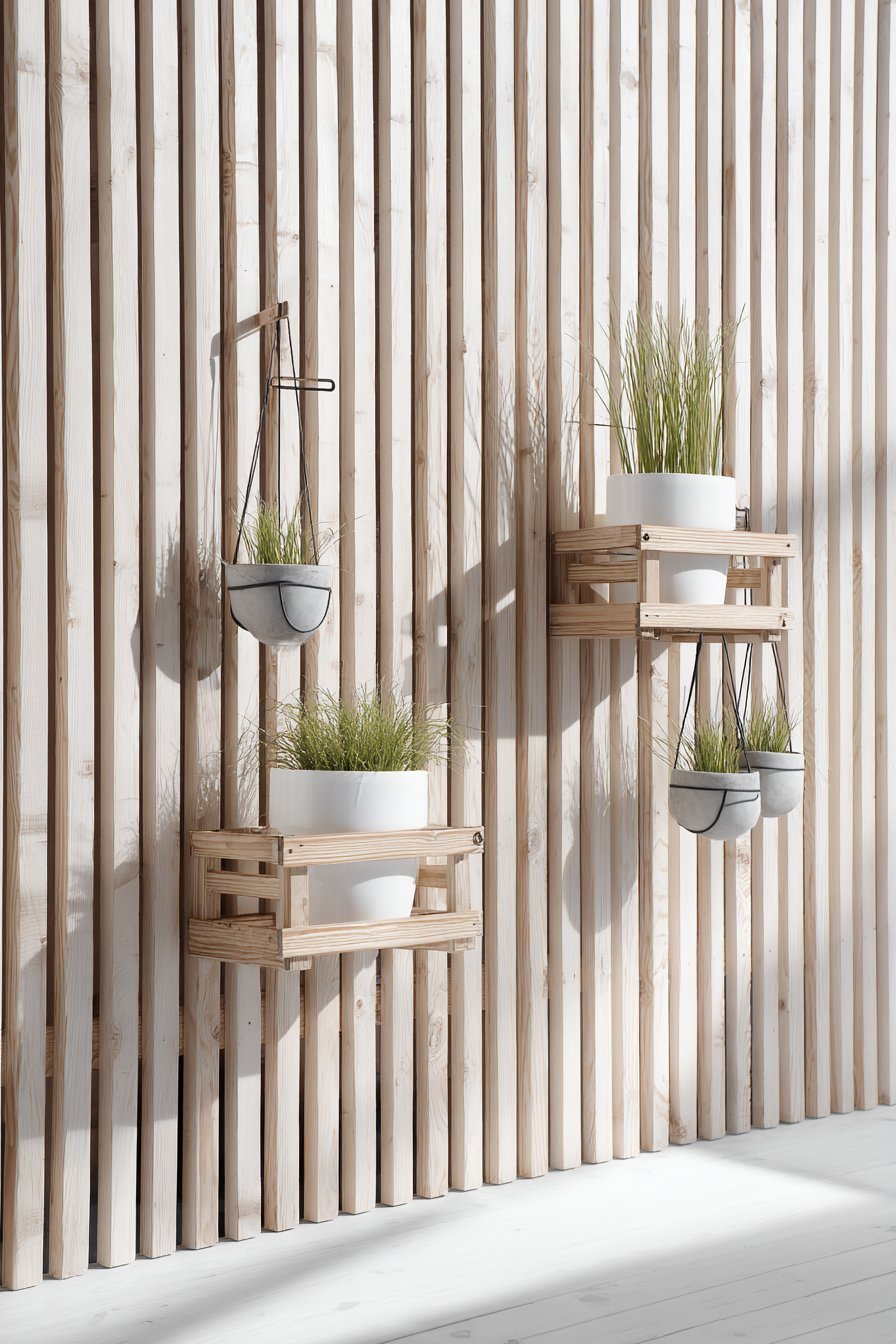
Bright natural lighting proves essential for this Nordic-inspired aesthetic. The abundant light typical of Scandinavian summers—long days with clear quality—highlights the pale wood grain, creates gentle shadows that emphasize the slats’ dimensional quality, and ensures the white elements remain crisp rather than dingy. Professional interior design photography approaches capture the restrained Nordic aesthetic with subtle shadows adding depth while maintaining the overall sense of brightness and openness that defines Scandinavian style.
Key Design Tips:
- Select tight-grained hardwoods like white oak or ash that offer durability with minimal maintenance
- Apply only clear penetrating oil finish to preserve natural color and protect wood without adding artificial tone
- Space slats to balance privacy with air circulation—typically 1-2 inches between boards
- Choose genuine ceramic planters rather than plastic to maintain authentic material quality
- Install integrated LED strip lighting beneath shelves for evening illumination that enhances functionality
- Limit plant selection to green foliage varieties to maintain calm, cohesive color palette
13. Vintage Bicycle Wall Art
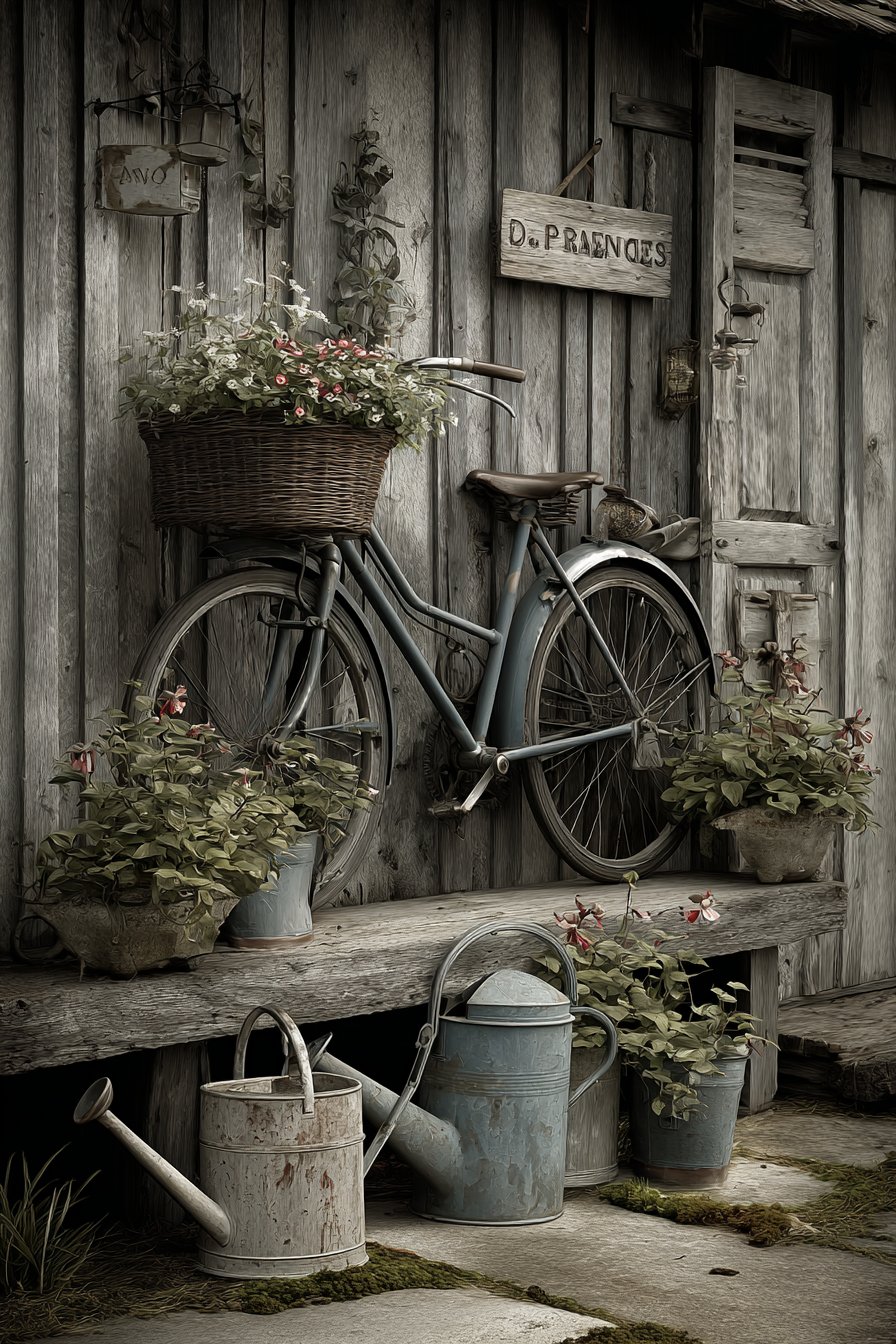
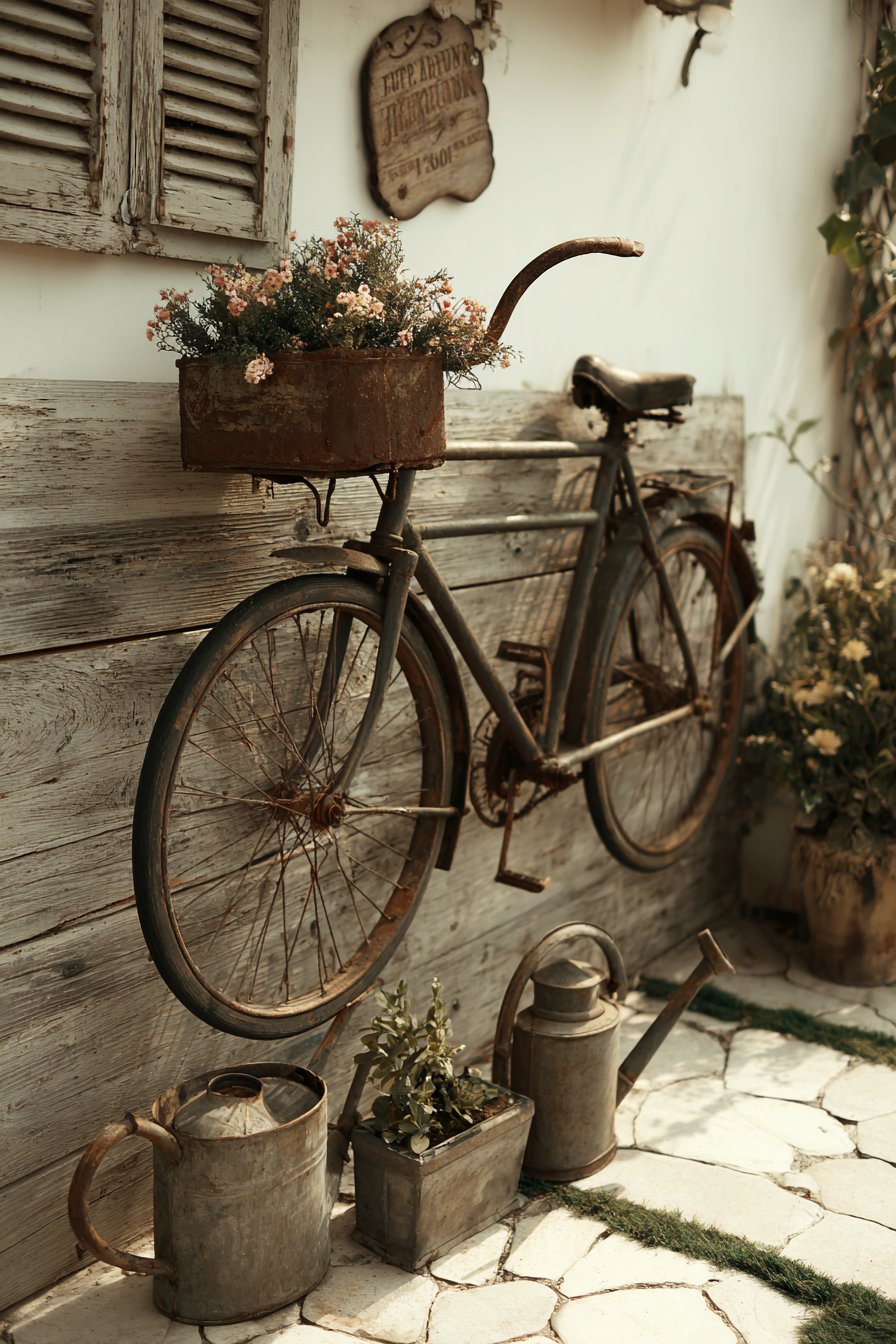
A single antique bicycle mounted on a weathered barn wood fence creates instant focal point through nostalgic charm and sculptural presence. The bicycle—perhaps a vintage cruiser, a ladies’ town bike, or even an old racing model—becomes three-dimensional wall art through its intricate mechanical details, curved lines, and inherent association with simpler times. Its basket overflows with trailing flowers like ivy geraniums, nasturtiums, or sweet potato vine, transforming a utilitarian carrier into a living planter that changes with seasons. Old window shutters flanking the bicycle add architectural interest while their weathered paint complements the barn wood’s aged surface.
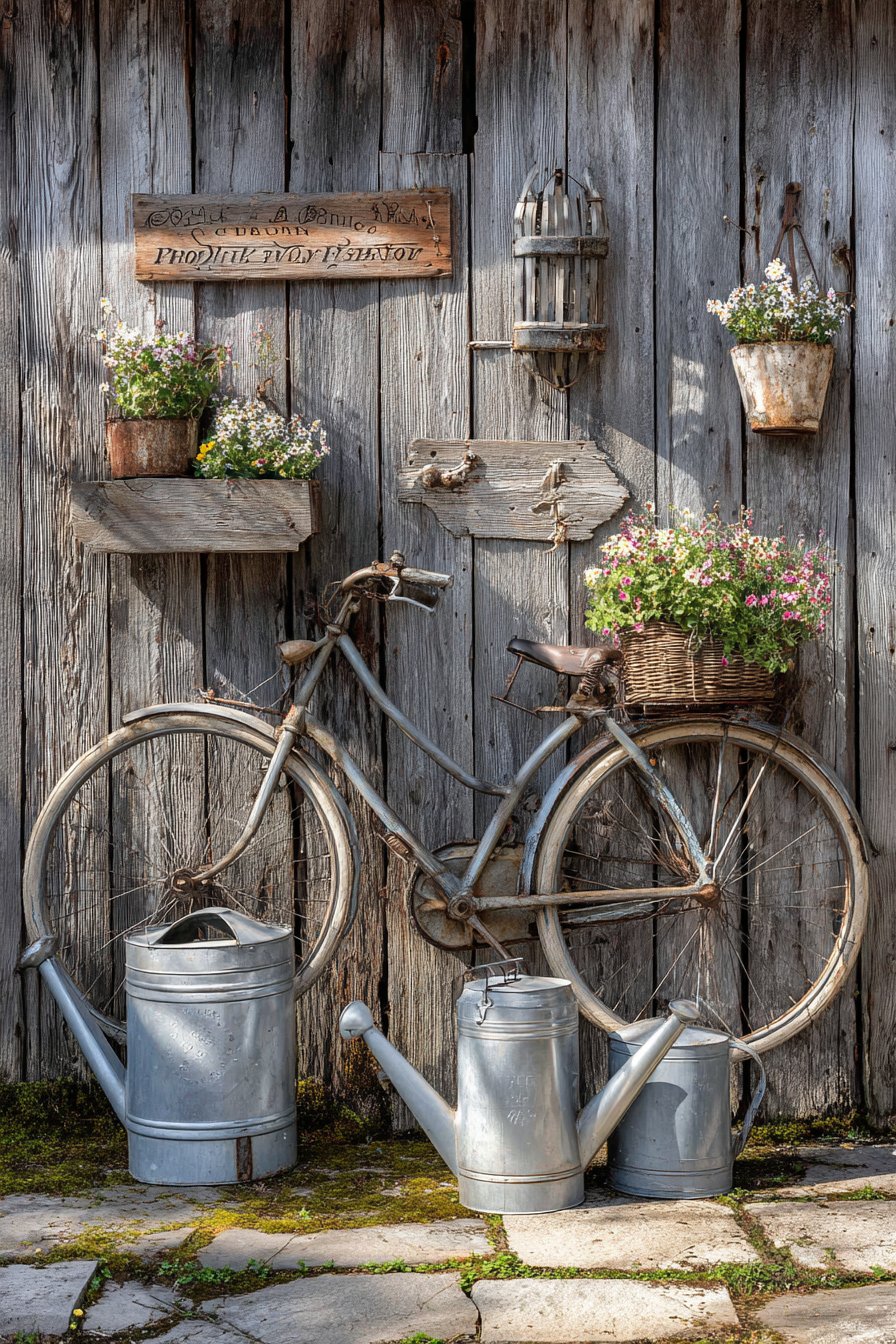
Vintage metal watering cans repurposed as wall planters continue the garden antique theme, their dented surfaces and faded paint telling stories of years spent nurturing plants. A distressed wooden sign—perhaps advertising an old seed company or garden supply business—adds text elements that enhance the nostalgic narrative. Natural stone pavers at ground level show moss growing between cracks, suggesting age and established garden character that cannot be rushed or manufactured.
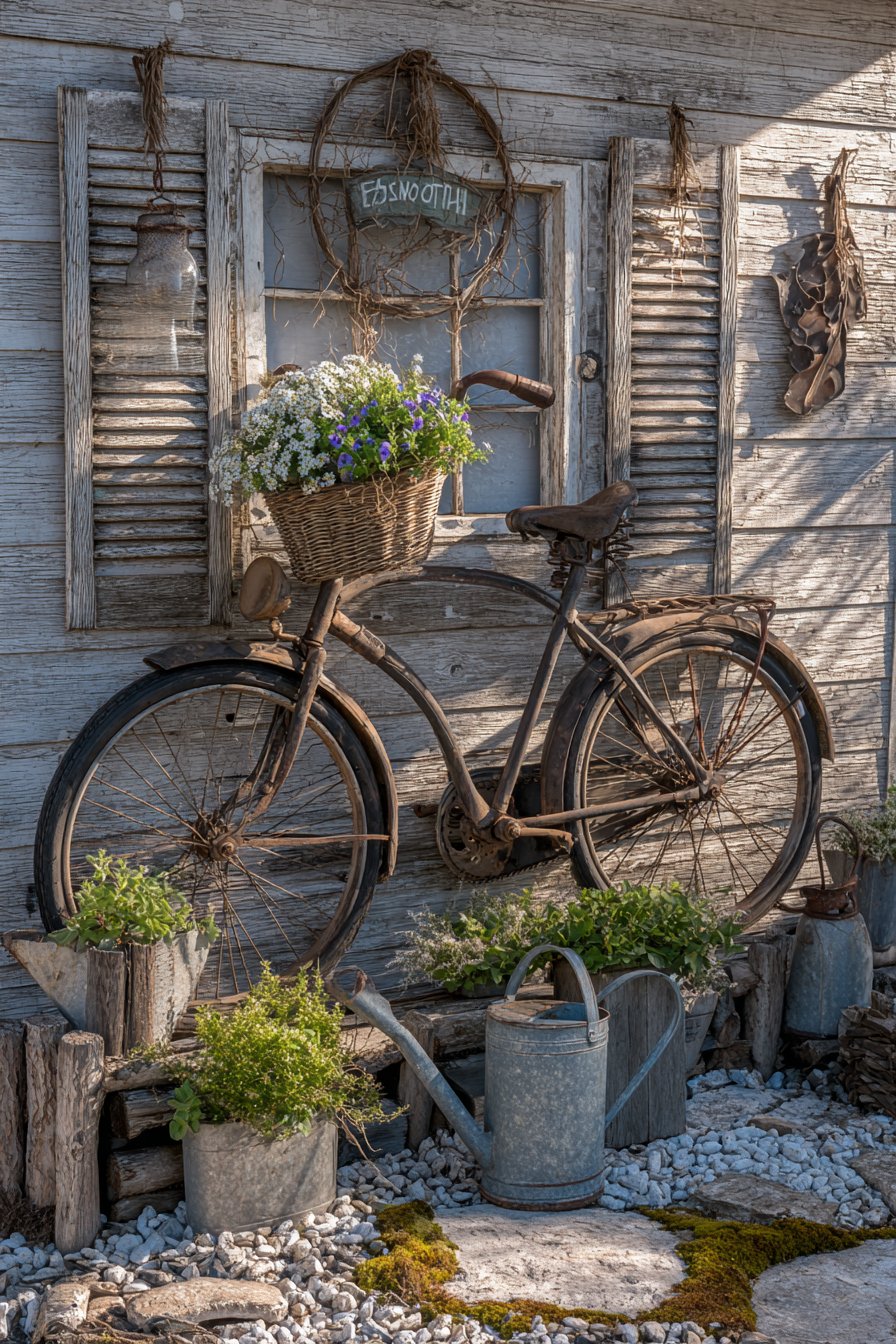
Afternoon light emphasizes authentic aging and the charming imperfections that make vintage pieces appealing. Shadows reveal the bicycle’s dimensional quality—spokes creating intricate patterns, the basket’s texture becoming apparent through highlights and shadows. Photography captures texture variations in reclaimed materials: rough barn wood grain, peeling paint on shutters, rust patterns on metal. These authentic details transform what could feel like junkyard castoffs into curated vintage collections that celebrate craftsmanship and endurance.
Key Design Tips:
- Secure the bicycle firmly using multiple mounting points to support weight and withstand wind
- Treat wooden fence boards with preservative while maintaining weathered appearance
- Line the bicycle basket with coir or landscape fabric before adding soil to prevent rust damage from moisture
- Choose trailing annual flowers that require similar light and water conditions for easy maintenance
- Repaint or touch up vintage signs minimally to preserve authentic weathering and age appeal
- Seal metal watering cans’ drainage holes if mounting flat against fence to prevent water damage
14. Contemporary Modular Grid System
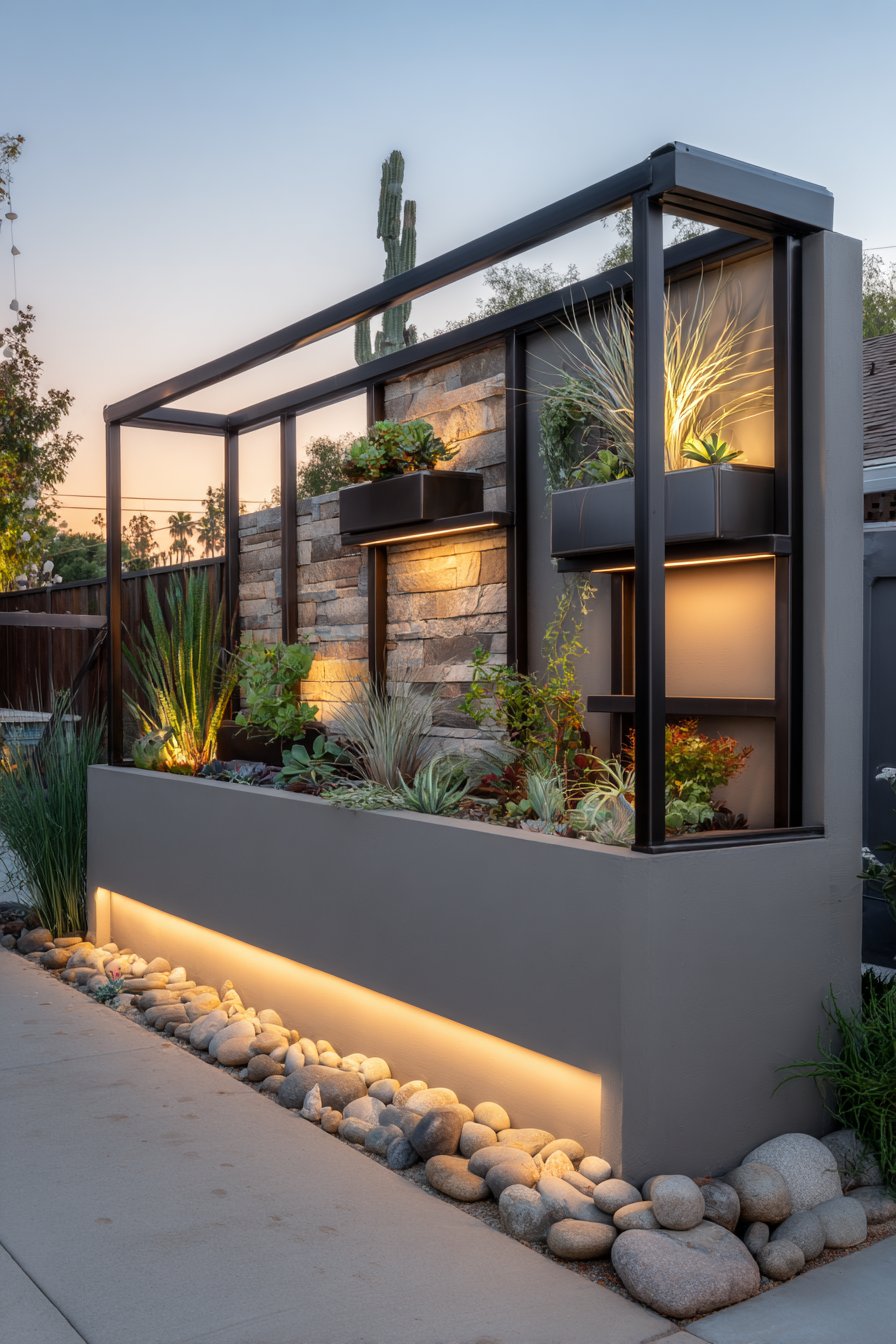
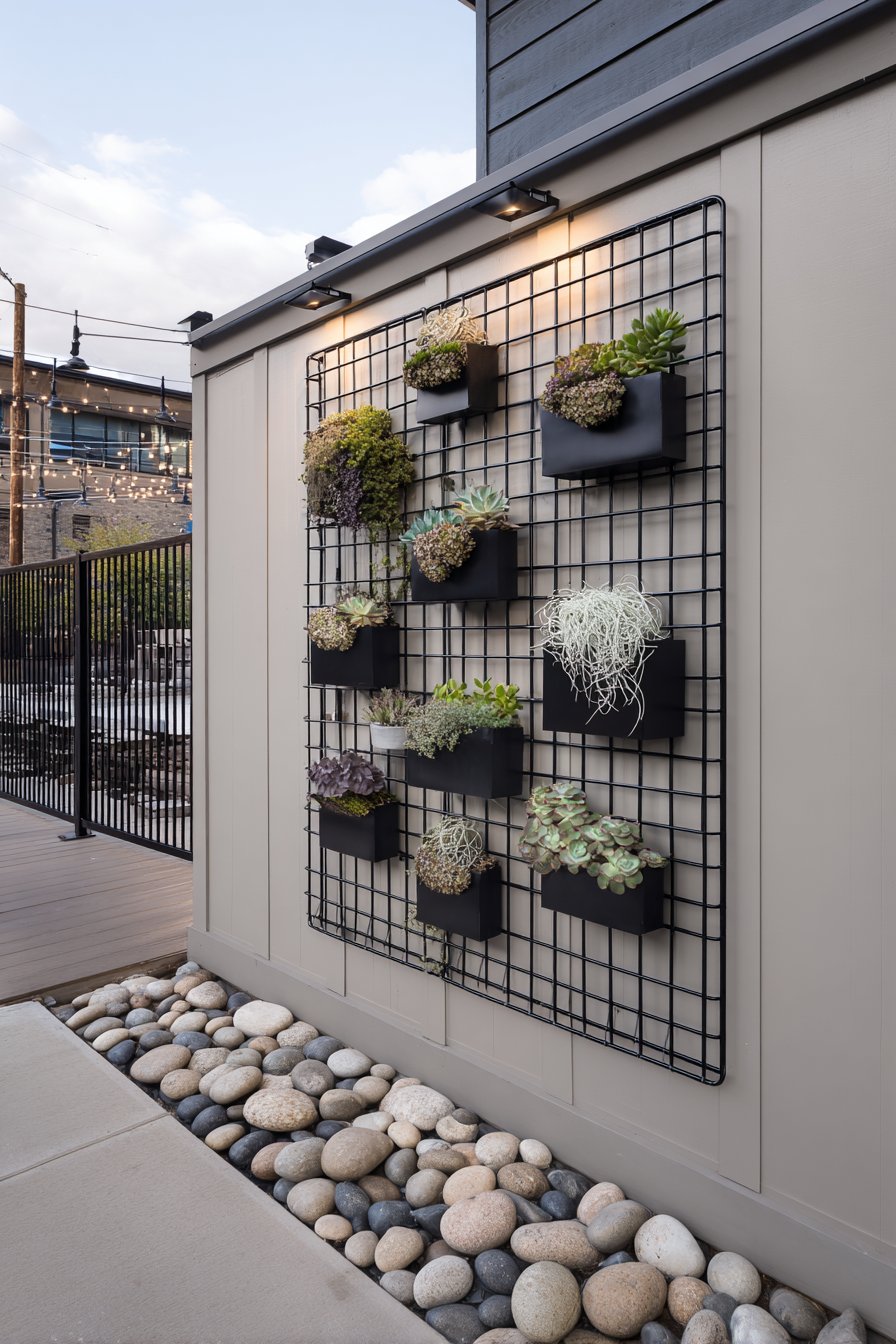
Systematic organization meets modern aesthetics in this grid-based approach where metal framework provides structure for flexible plant displays. Matte black modular panels mount on a light gray painted fence, their grid pattern creating regular geometry that appeals to orderly minds while providing infinite customization options. Various sized planters hook into the grid, holding modern succulents and architectural air plants that require minimal care while offering maximum visual interest through their geometric forms and blue-green coloring. The systematic arrangement demonstrates how contemporary design can accommodate living elements while maintaining clean aesthetic.
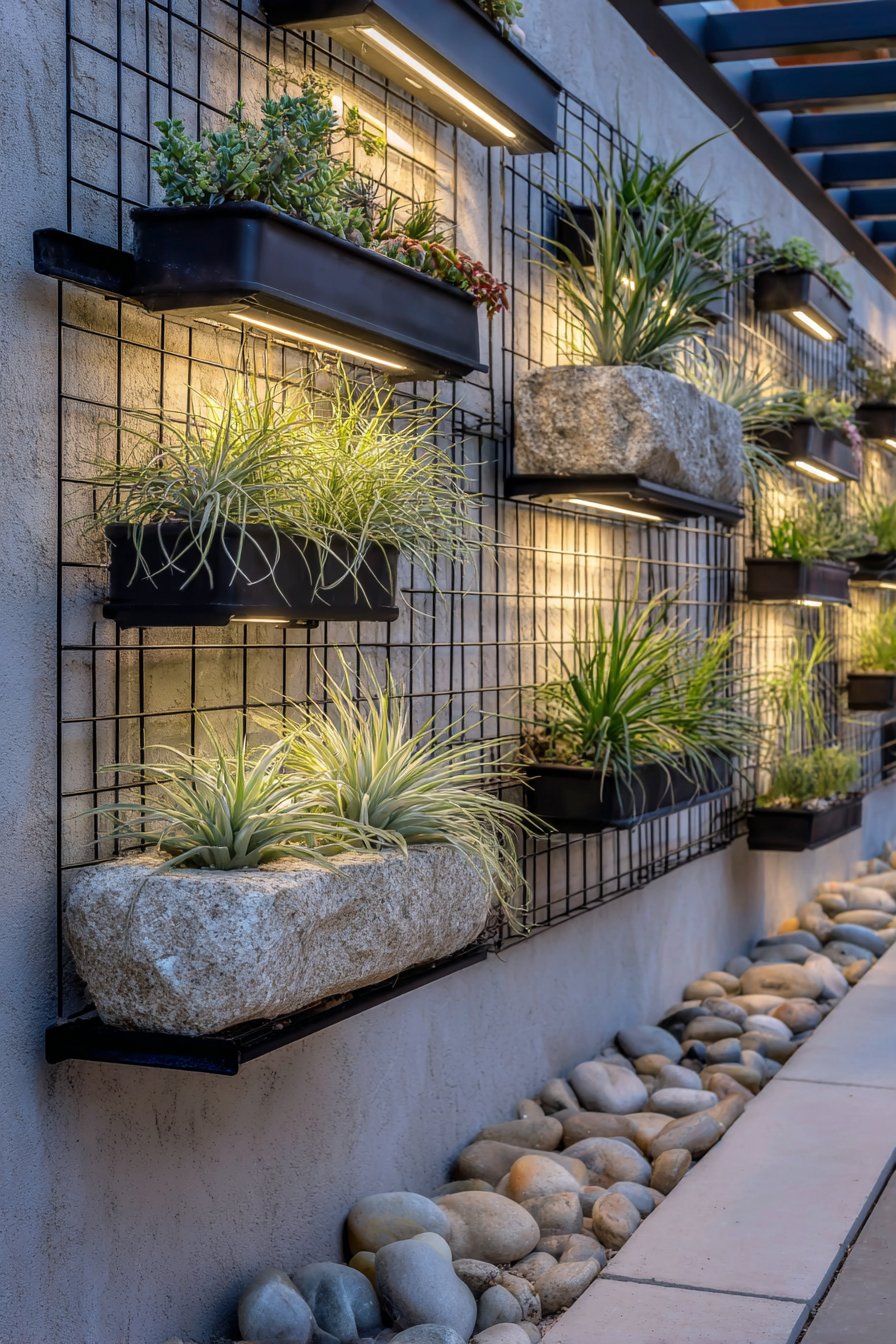
Integrated LED strip lighting along the top edge provides evening illumination that transforms the wall into a glowing feature after dark. This lighting highlights both the metal framework’s clean lines and the plants’ sculptural forms, creating dramatic shadows and emphasizing three-dimensional quality. The base treatment uses smooth river stones in neutral tones—grays and tans—that complement the color palette while providing definition between the vertical wall treatment and horizontal ground plane.
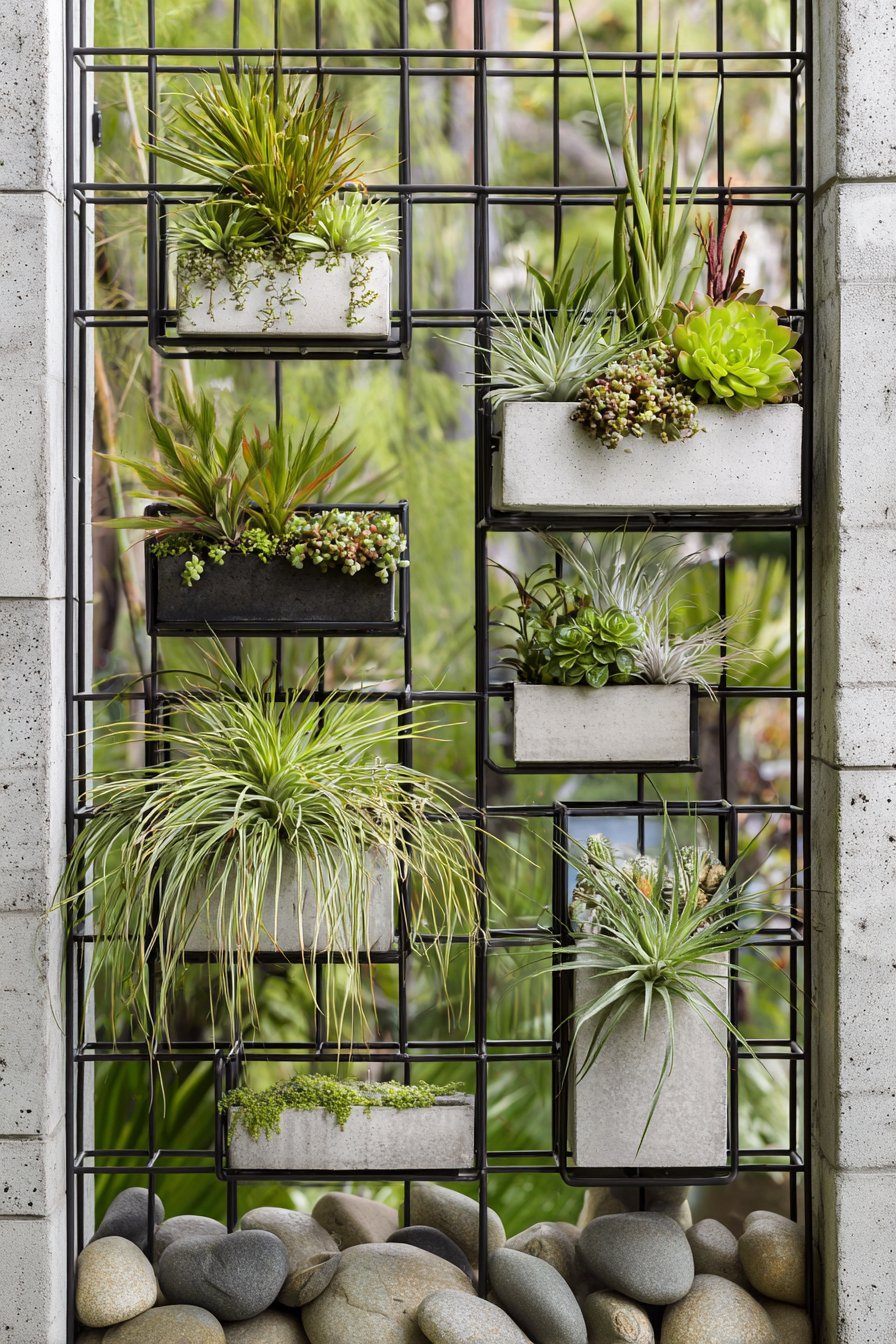
Professional outdoor photography with balanced exposure captures both the systematic arrangement and clean aesthetic that define contemporary design. The lighting showcases metal framework details while preventing plants from becoming silhouettes, demonstrating how proper exposure technique reveals all elements clearly. This modular approach works particularly well for renters or those who enjoy frequently changing arrangements, as planters can be repositioned easily to refresh the composition or accommodate new plant acquisitions.
Key Design Tips:
- Measure fence dimensions carefully before purchasing grid panels to ensure proper fit and proportion
- Choose powder-coated metal grids rated for outdoor use to prevent rust and maintain matte finish
- Select planters with proper drainage to prevent waterlogging and root rot in container gardens
- Install dimmer controls for LED strips to adjust brightness levels for different occasions
- Group plants by water and light needs even within the decorative grid to simplify maintenance
- Clean grid panels seasonally with mild soap and water to maintain pristine appearance
15. Asian Zen Garden Wall Feature
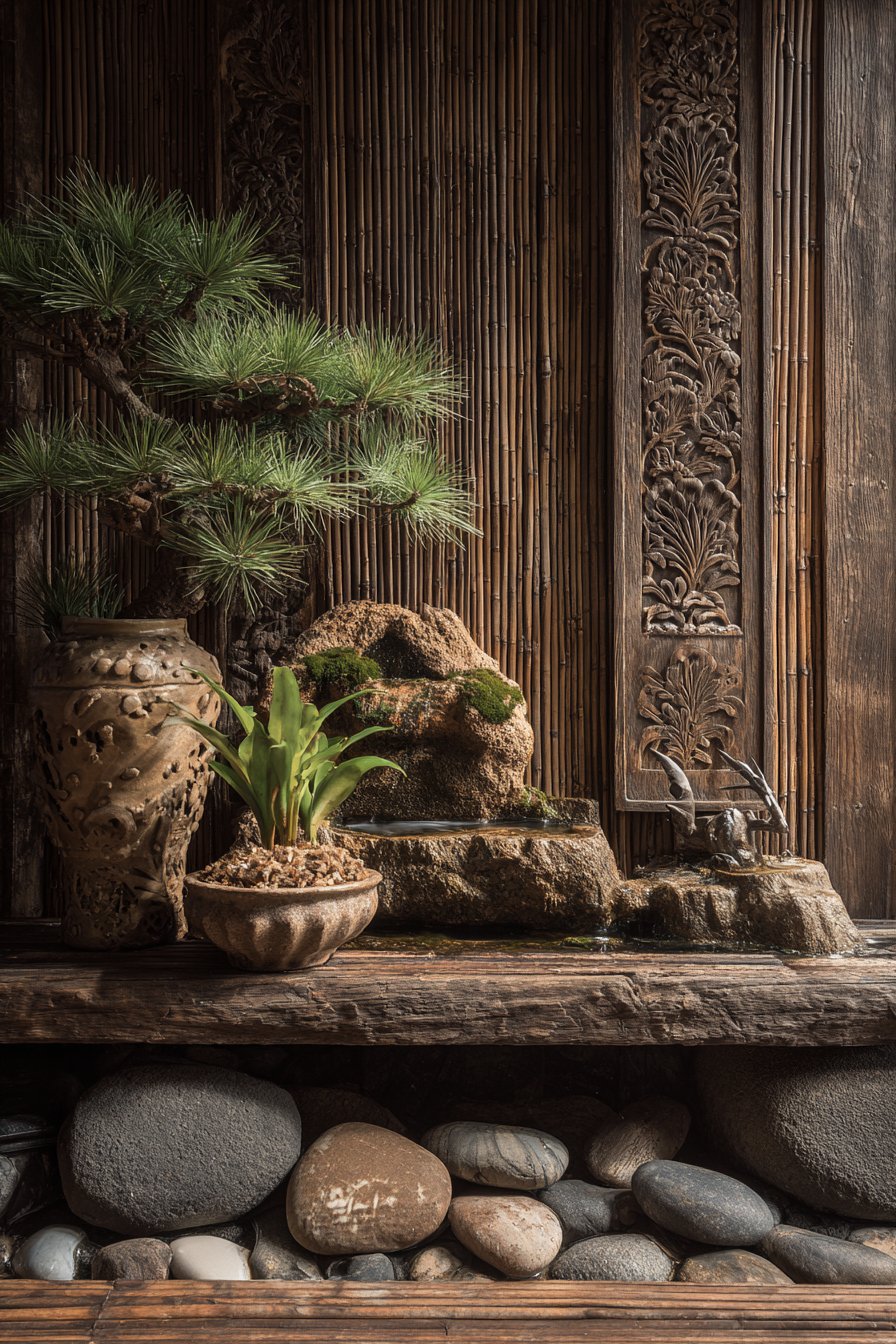
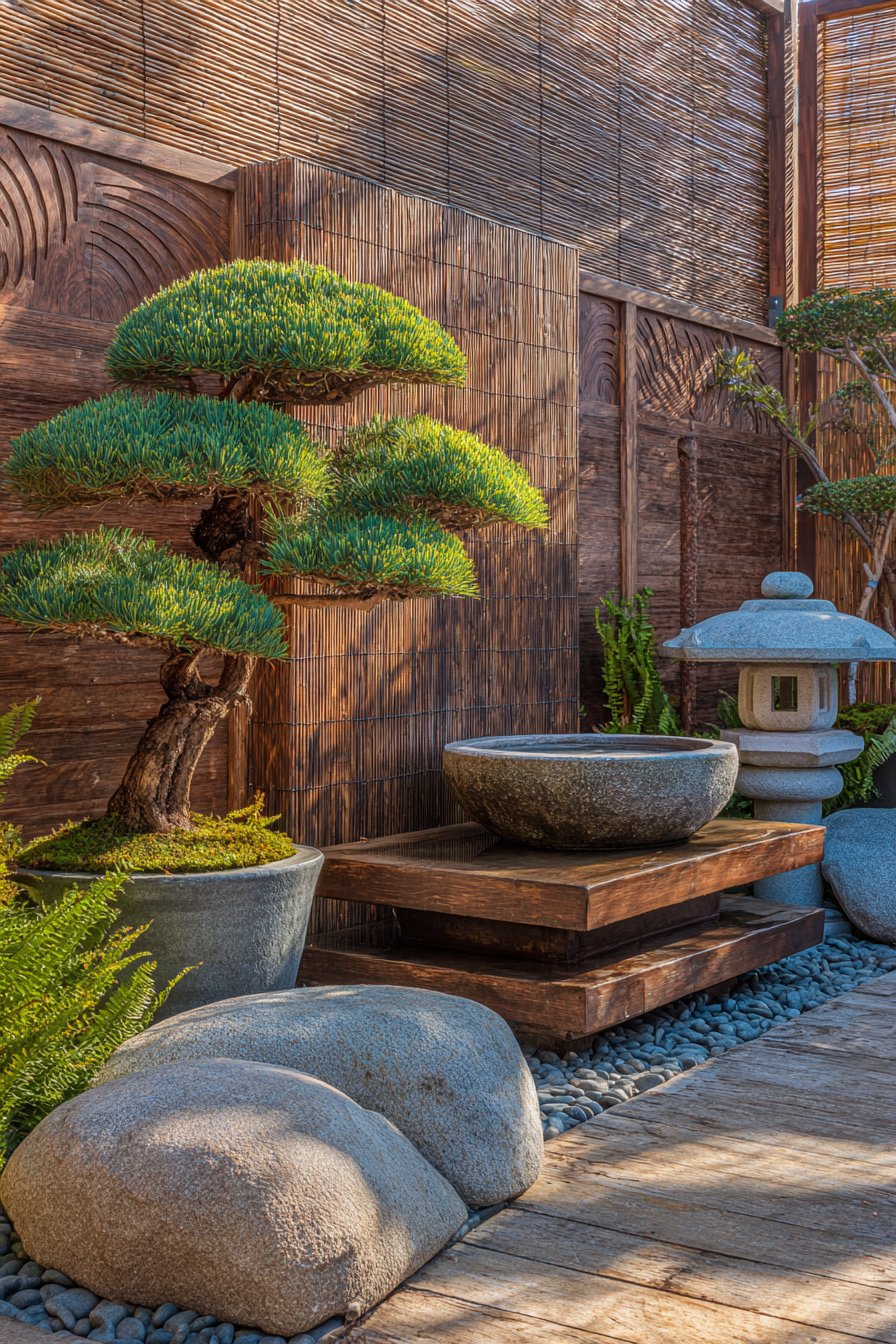
Contemplative design principles create peaceful backyard retreats through carefully balanced Asian-inspired wall treatments. Bamboo privacy screening provides backdrop while introducing authentic Asian garden material—its natural sectioning and vertical growth pattern creating subtle pattern without busy-ness. Decorative wooden wall panels carved with nature motifs—cranes, cherry blossoms, bamboo stalks—demonstrate traditional craftsmanship while maintaining the natural material palette. A small water feature wall fountain in natural stone becomes the meditation focal point, its gentle trickling sound adding crucial auditory dimension to the visual composition.
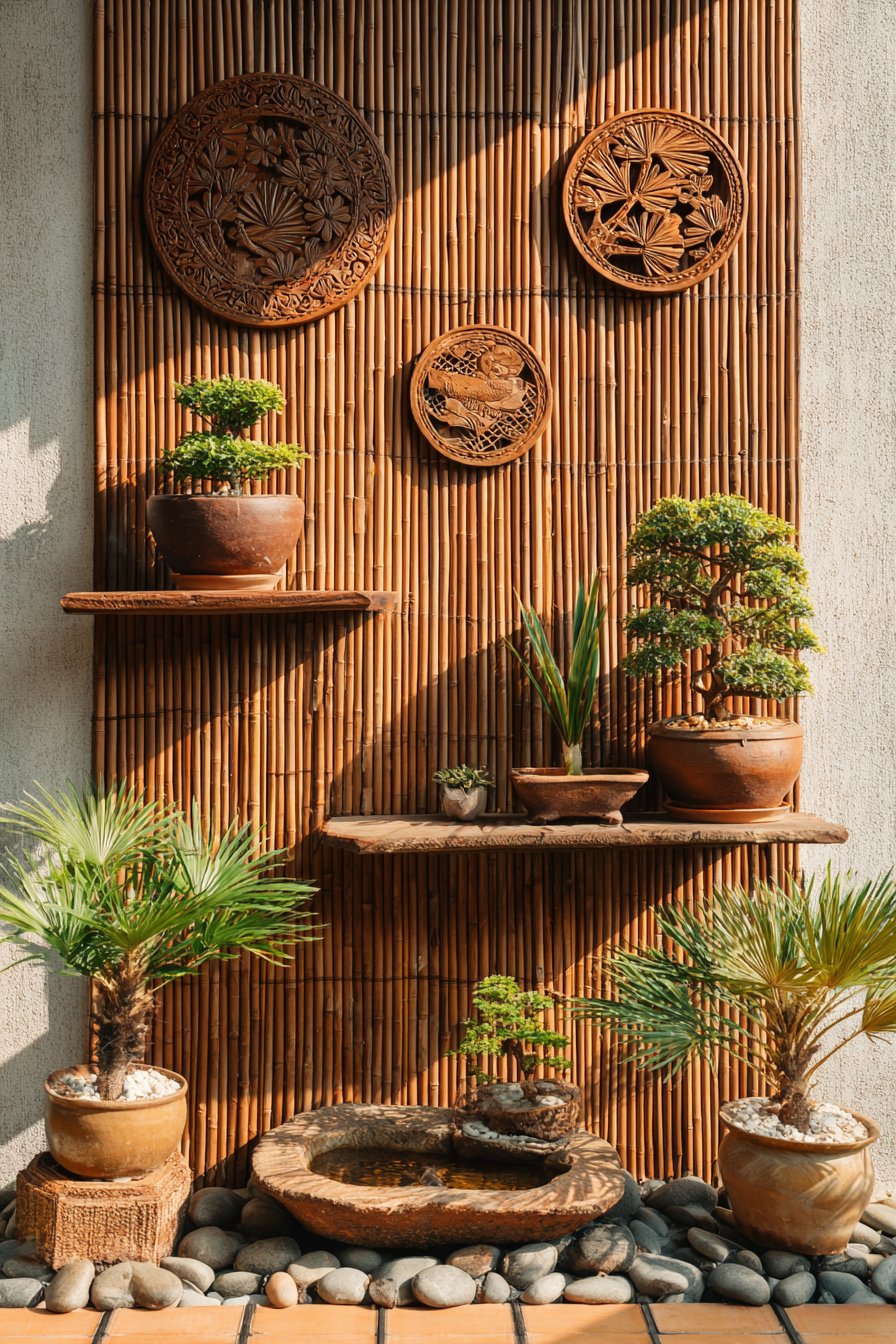
Carefully placed bonsai arrangements on floating shelves demonstrate the Japanese aesthetic principle of using living elements as sculpture—each tree carefully shaped over years to express natural forms in miniature. River rocks and zen garden elements at ground level complete the contemplative atmosphere, their smooth surfaces and careful placement inviting quiet reflection. The overall composition demonstrates balance rather than symmetry, with elements weighted carefully to create harmonious relationships without rigid matching.
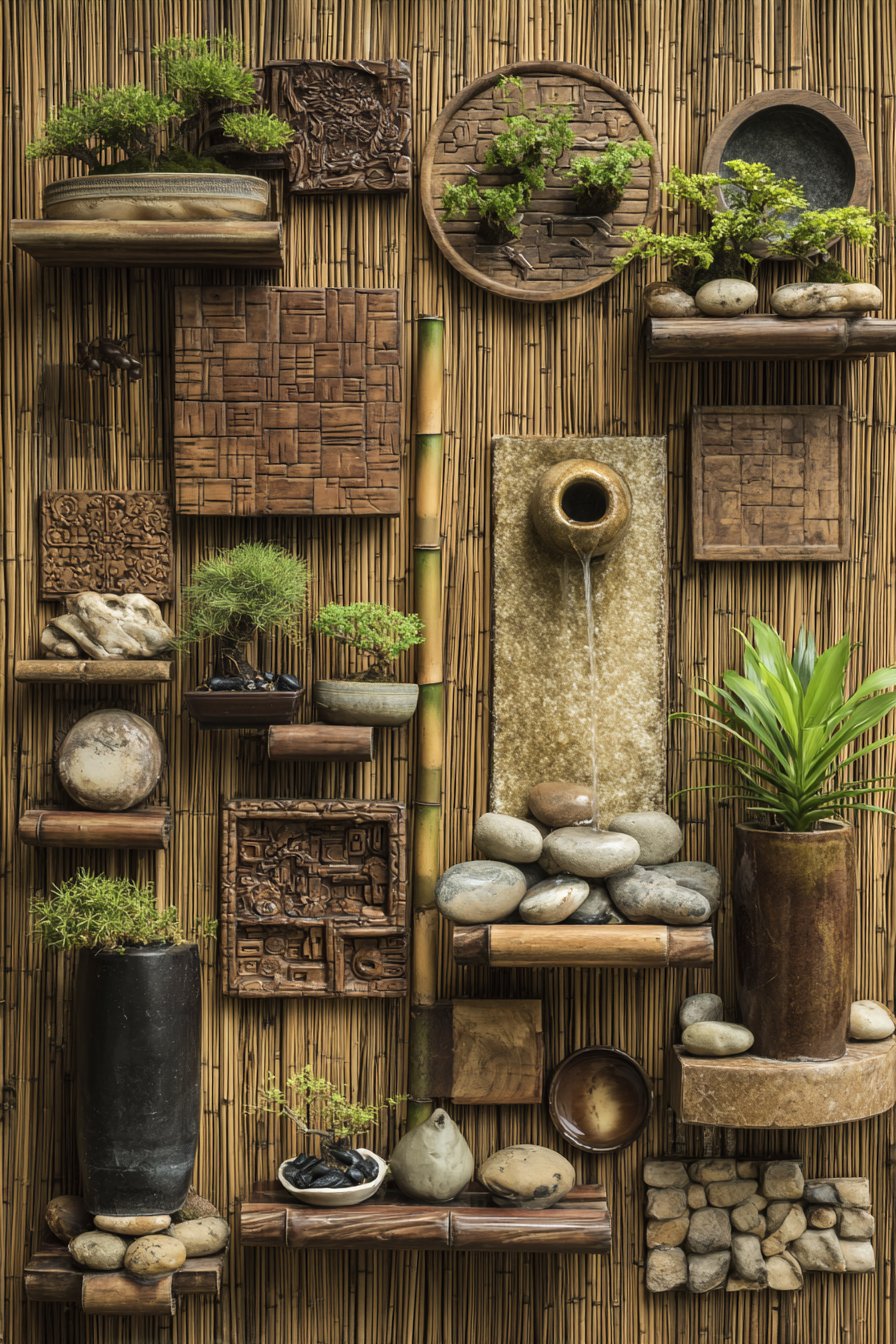
Photography employs contemplative style using soft natural light that emphasizes serene composition and material authenticity. The lighting should feel meditative—gentle and even rather than dramatic—while revealing the balanced principles of Asian garden design. Images capture the relationship between solid and void, the interplay of natural materials, and the sense of timeless calm that defines successful zen garden spaces. This approach creates sanctuary spaces for meditation, tea ceremony, or simply quiet contemplation away from modern life’s demands.
Key Design Tips:
- Source authentic bamboo screening rather than vinyl imitations for proper material quality and appearance
- Install water features with recirculating pumps and adequate reservoirs to maintain consistent operation
- Choose bonsai specimens appropriate for outdoor conditions in your climate zone
- Arrange rocks according to traditional Japanese principles—odd numbers, natural groupings, varied sizes
- Maintain simplicity in plant selection, favoring evergreens and controlled growth habits
- Create seating areas nearby to encourage contemplative use of the space
16. Colorful Ceramic Tile Mural
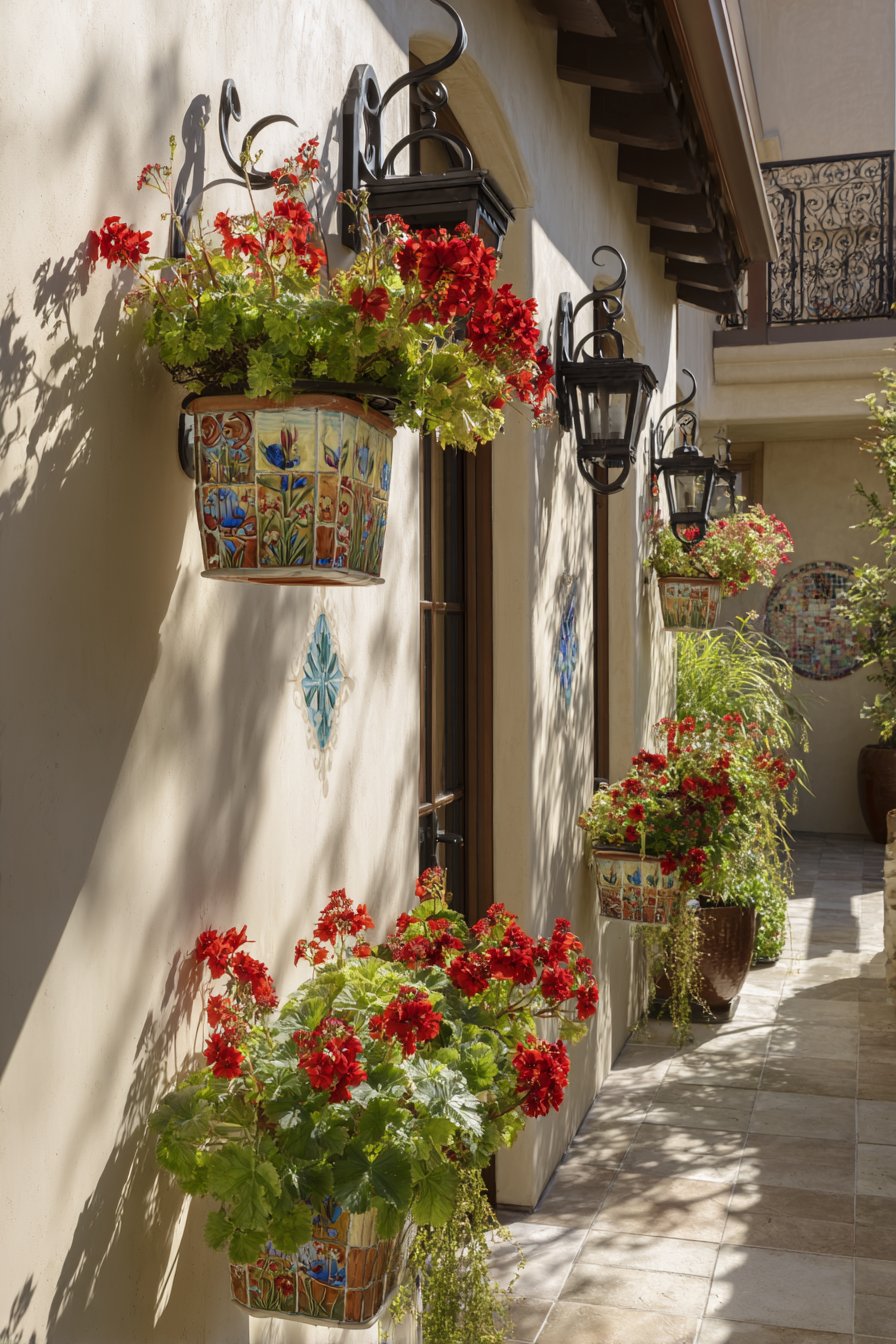
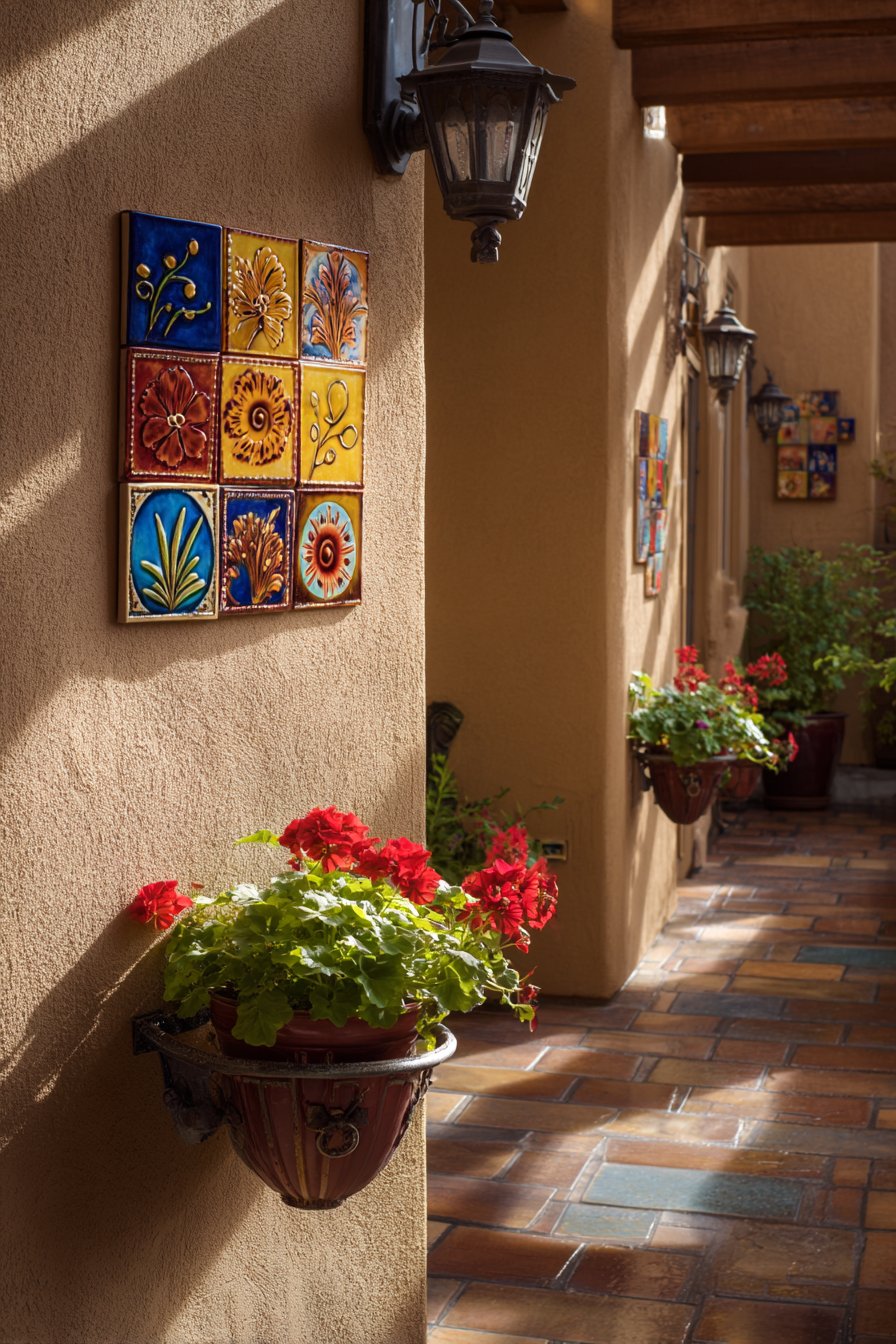
Vibrant hand-painted ceramic tiles transform plain stucco walls into artistic statements that celebrate color, pattern, and craftsmanship. Terra cotta, cobalt blue, and sunny yellow tiles create mosaic effects that reference Spanish, Portuguese, or Mexican decorative traditions. Individual tiles might feature botanical patterns, geometric designs, or pictorial scenes, their hand-painted quality evident through slight variations that distinguish artisan work from mass production. The arrangement—whether formal grid pattern, random placement, or organized border design—establishes rhythm and visual flow across the wall surface.
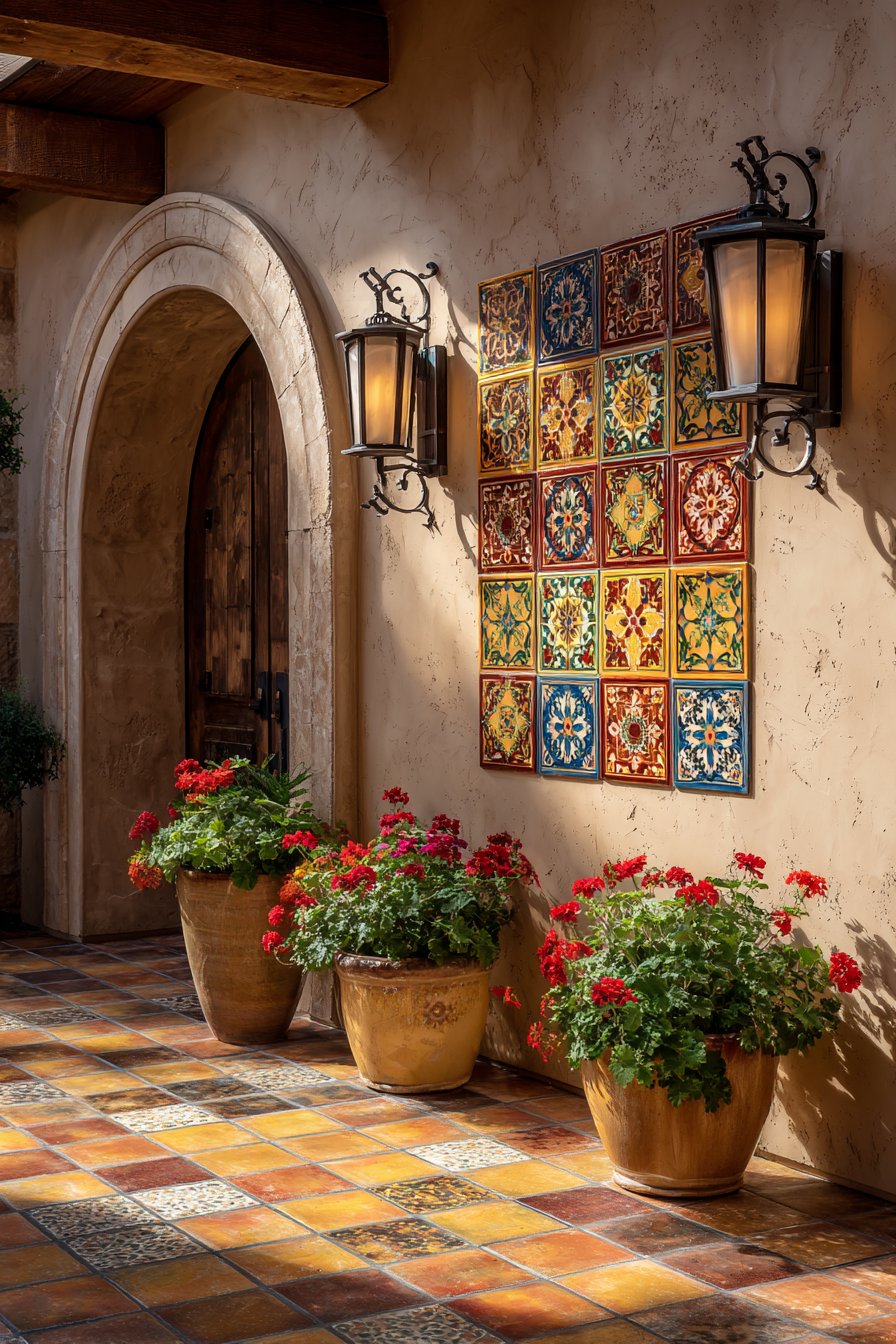
Wrought iron wall sconces provide practical lighting while their black metalwork creates striking contrast against colorful tiles. Matching iron plant holders display cascading geraniums whose red blooms complement the tile colors while introducing organic forms that soften the geometric patterns. Saltillo tile flooring below shows natural color variation from rust to golden tones, its terracotta composition connecting ground plane to wall treatment while establishing Mediterranean character.
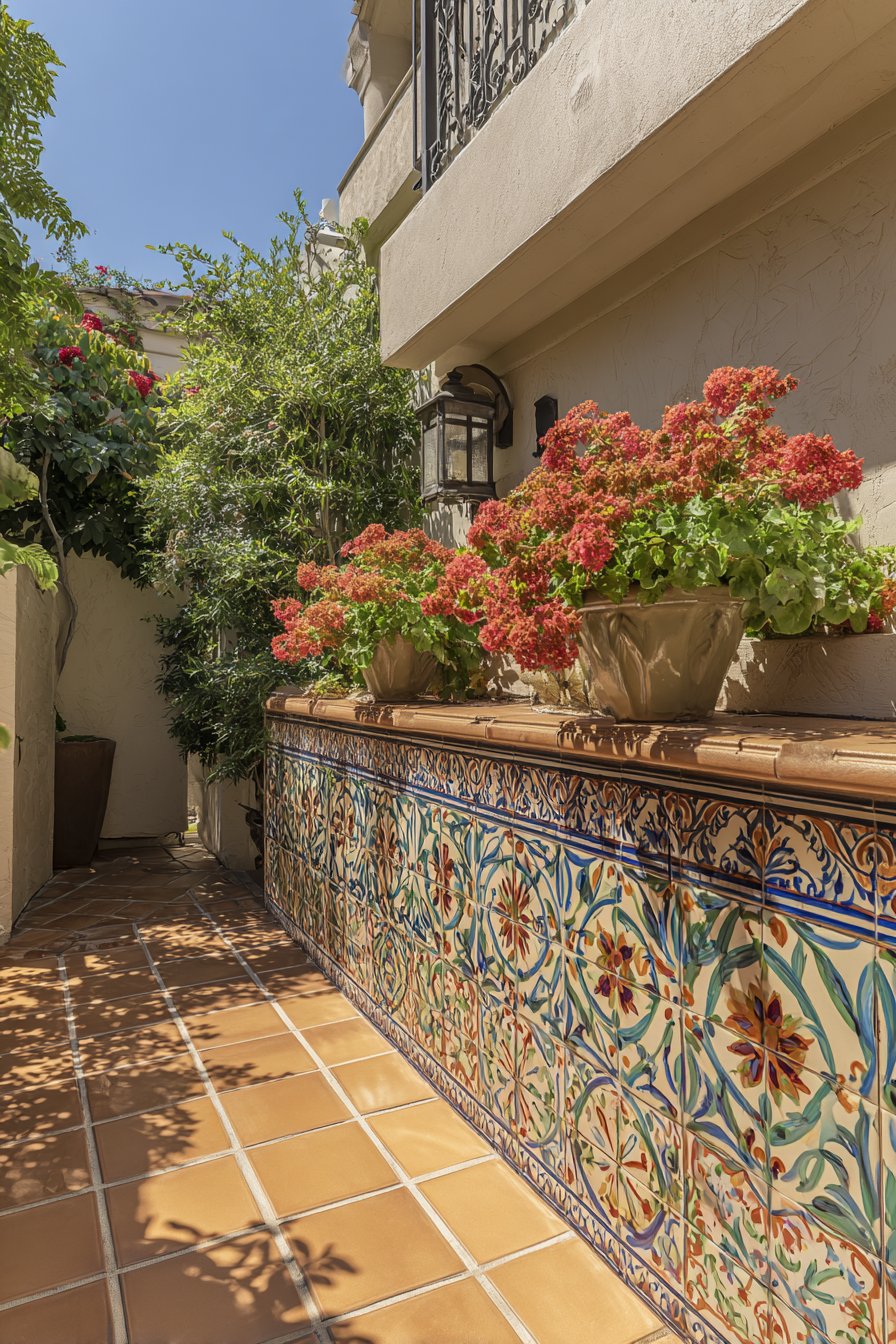
Natural lighting brings out rich tile glazes and creates subtle shadows that reveal the tiles’ slight dimensional quality where hand application created texture. Professional photography captures artistic arrangement and authentic craftsmanship—close enough to appreciate individual tile details but wide enough to understand the overall composition. The rich colors and patterns create focal points in outdoor living areas, providing visual interest that remains engaging through repeated viewing.
Key Design Tips:
- Source tiles from artisan potters or fair-trade importers for authentic quality and unique patterns
- Apply tiles to clean, level stucco surfaces using outdoor-rated adhesive and grout
- Plan the tile arrangement on paper before installation to ensure balanced color and pattern distribution
- Seal grout lines with penetrating sealer to prevent moisture infiltration and staining
- Choose plants with flower or foliage colors that complement rather than compete with tile colors
- Install tiles in protected areas or apply additional weatherproof coatings in harsh climate zones
17. Natural Branch Art Installation
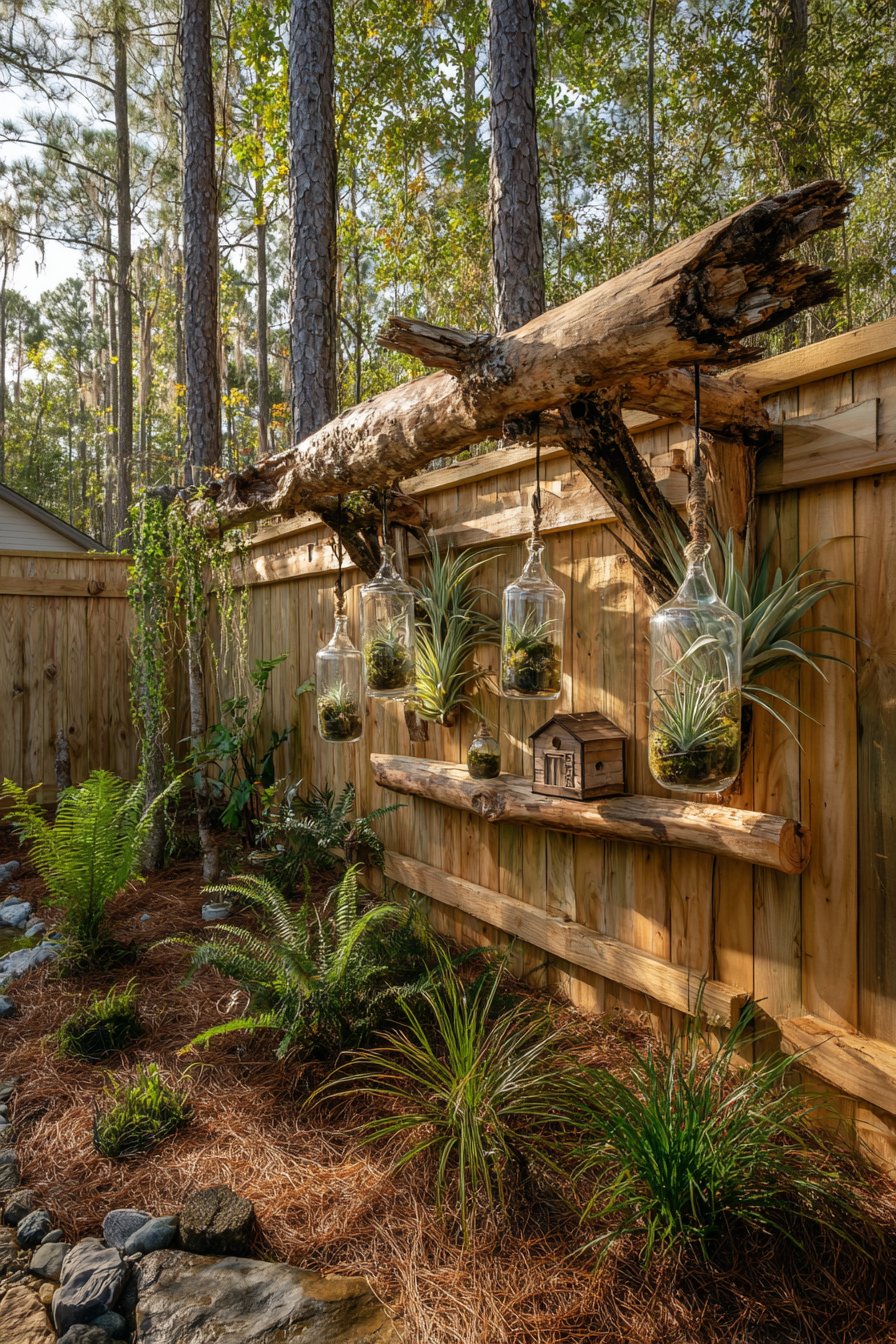
Organic sculptural elements create dramatic focal points through nature’s own artistry when large tree branches become wall-mounted installations. A substantial branch—selected for its interesting form, multiple smaller branches, or dramatic curve—mounts horizontally on a natural wood fence, its bark texture and growth pattern providing intricate detail that no manufactured item could replicate. Hanging glass terrariums contain air plants and moss, their transparent vessels allowing appreciation of plants’ root systems and growth habits while protecting delicate specimens from weather extremes.
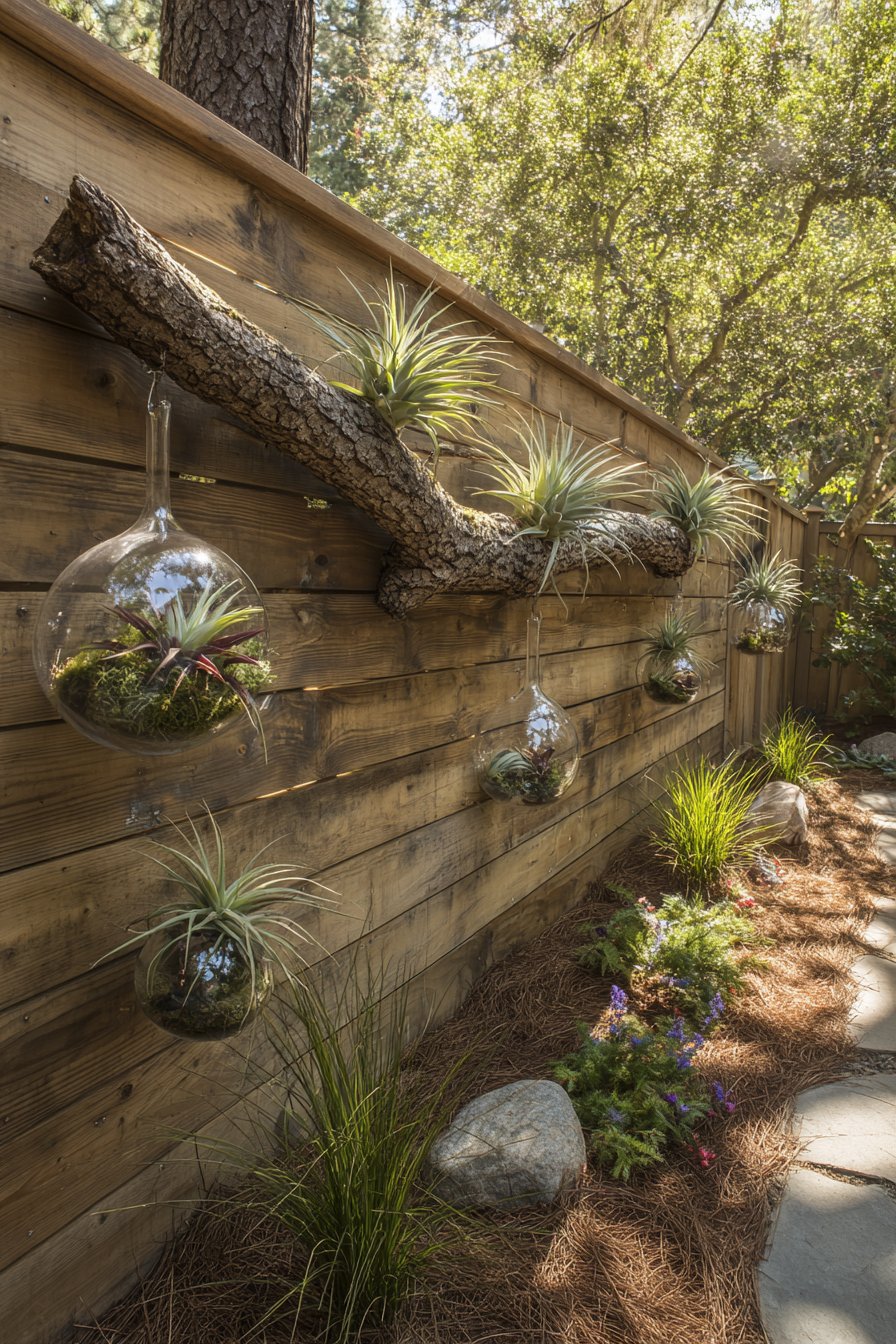
Smaller branches create asymmetrical visual interest while providing practical perches for decorative bird houses that introduce wildlife-friendly elements to the garden. The ground level treatment uses natural mulch and woodland plants like hostas, ferns, or native forest floor species that reinforce the nature-inspired aesthetic. This composition feels discovered rather than designed—as if you’ve stumbled upon a particularly beautiful section of forest rather than viewing a deliberately constructed display.
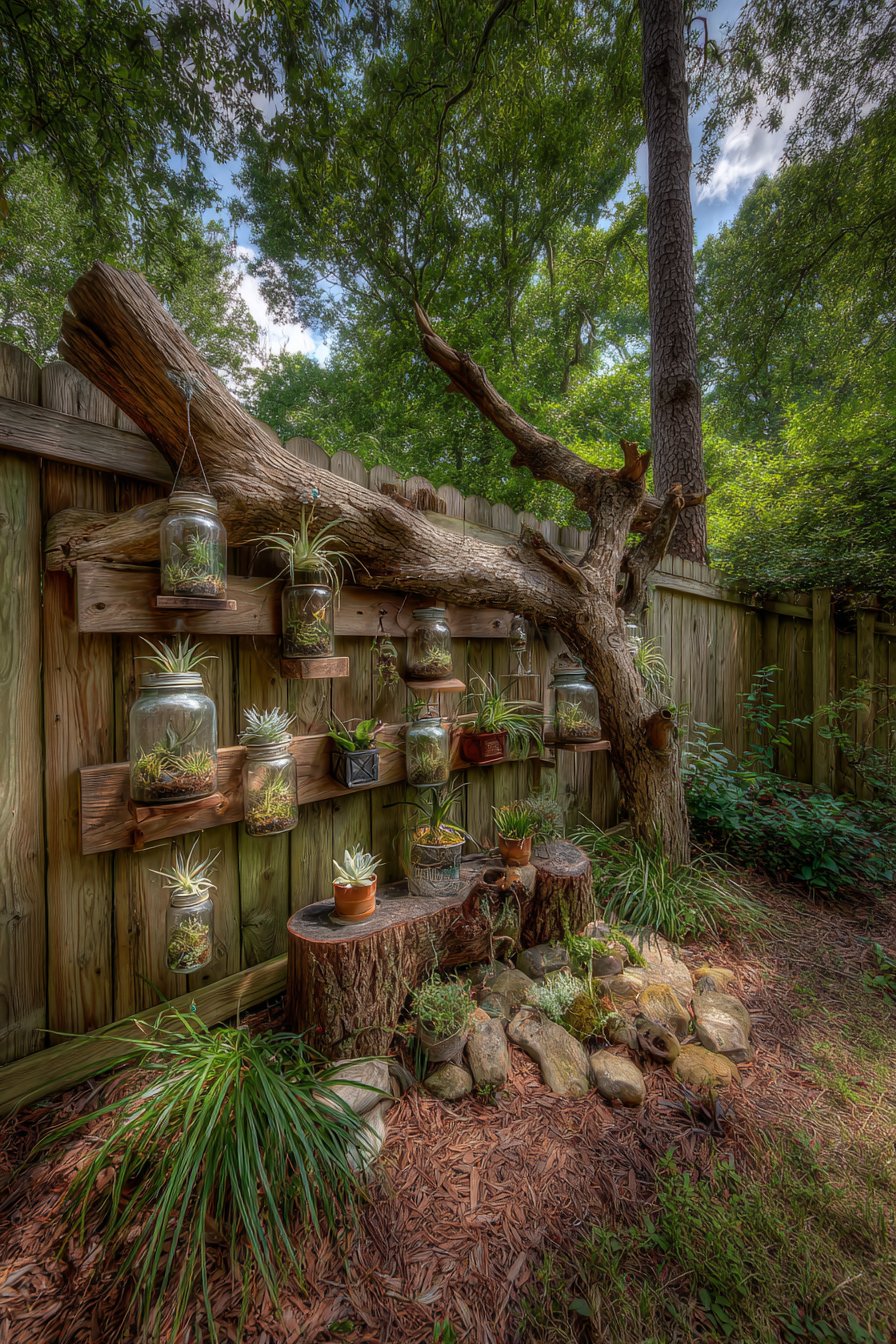
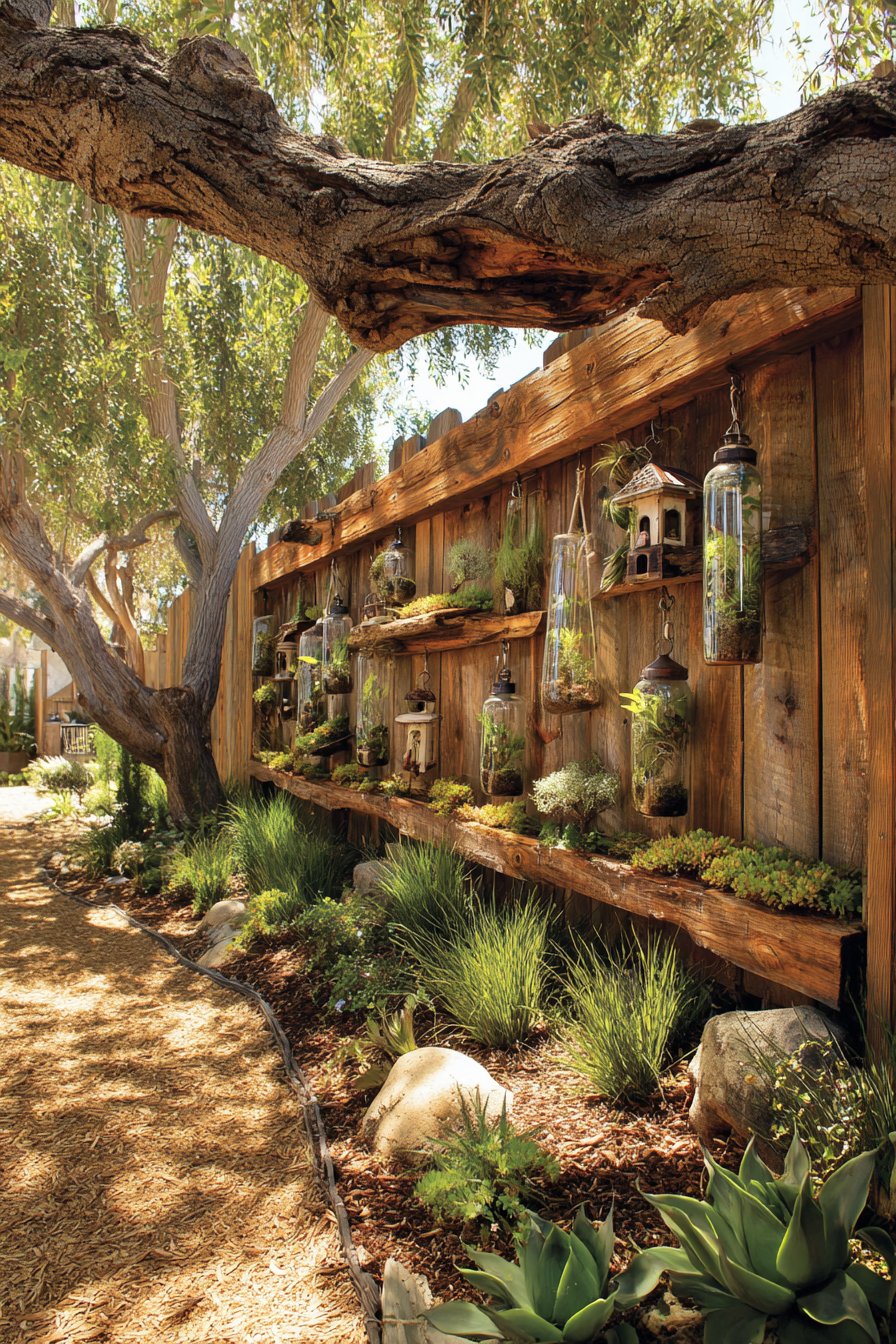
Wide-angle outdoor photography with dappled natural lighting creates organic, forest-inspired atmosphere that captures the installation’s connection to wild spaces. The filtered light you’d find beneath a forest canopy—bright enough to see detail but soft enough to maintain mystery—reveals bark’s intricate texture, glass terrariums’ transparency, and woodland plants’ delicate structure. These authentic natural textures create sophisticated nature-inspired spaces that celebrate rather than tame the organic world.
Key Design Tips:
- Select branches from fallen or pruned trees rather than cutting living trees, ensuring sustainable sourcing
- Remove loose bark and treat wood with environmentally safe preservative to prevent insect infestation
- Mount branches securely into wall studs using multiple lag bolts to support substantial weight
- Choose air plants (Tillandsia) for terrariums as they require no soil and minimal moisture
- Position installation where it receives indirect light to protect air plants and glass from excessive heat
- Add solar-powered string lights woven through branches for magical evening illumination
18. French Provincial Garden Wall
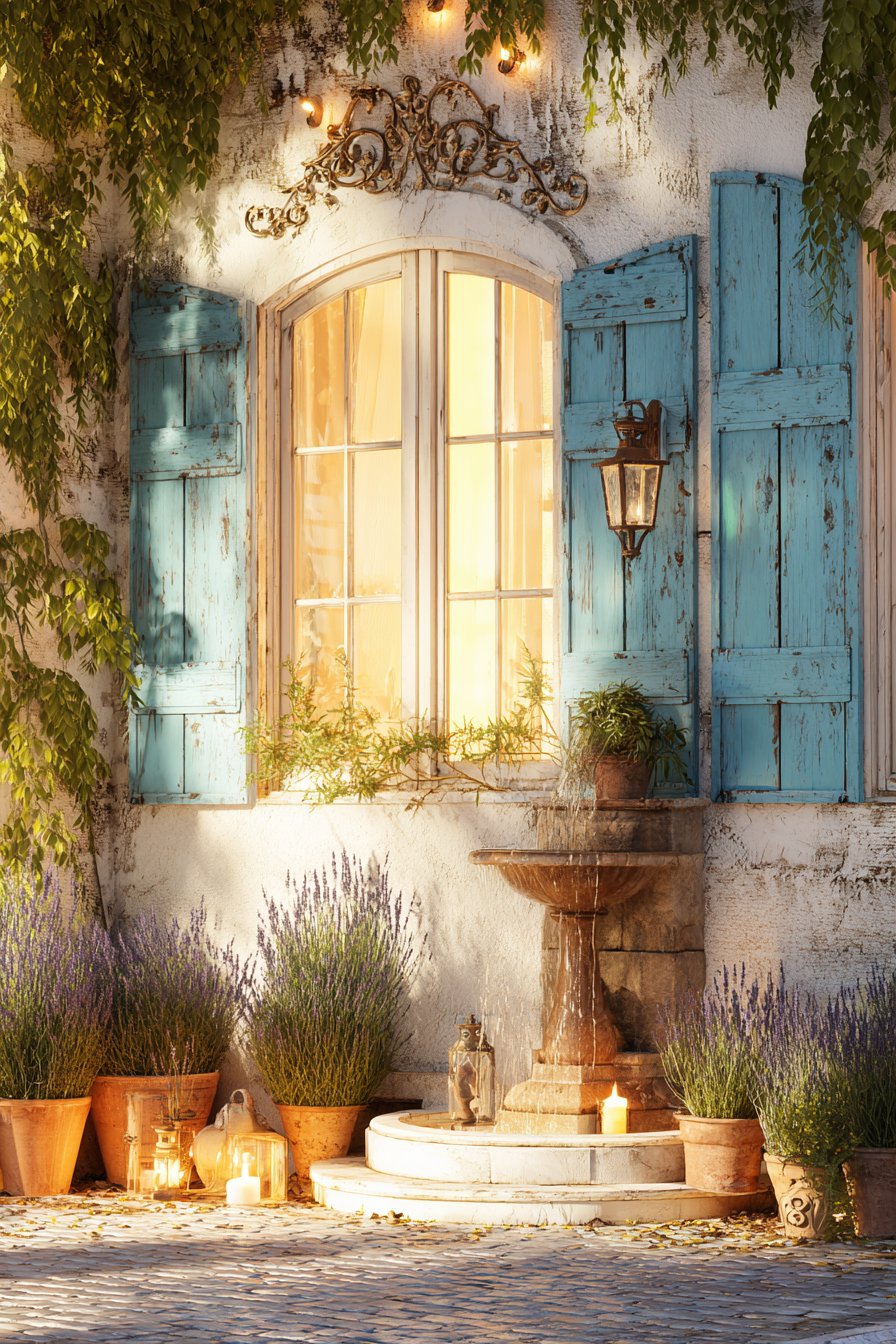
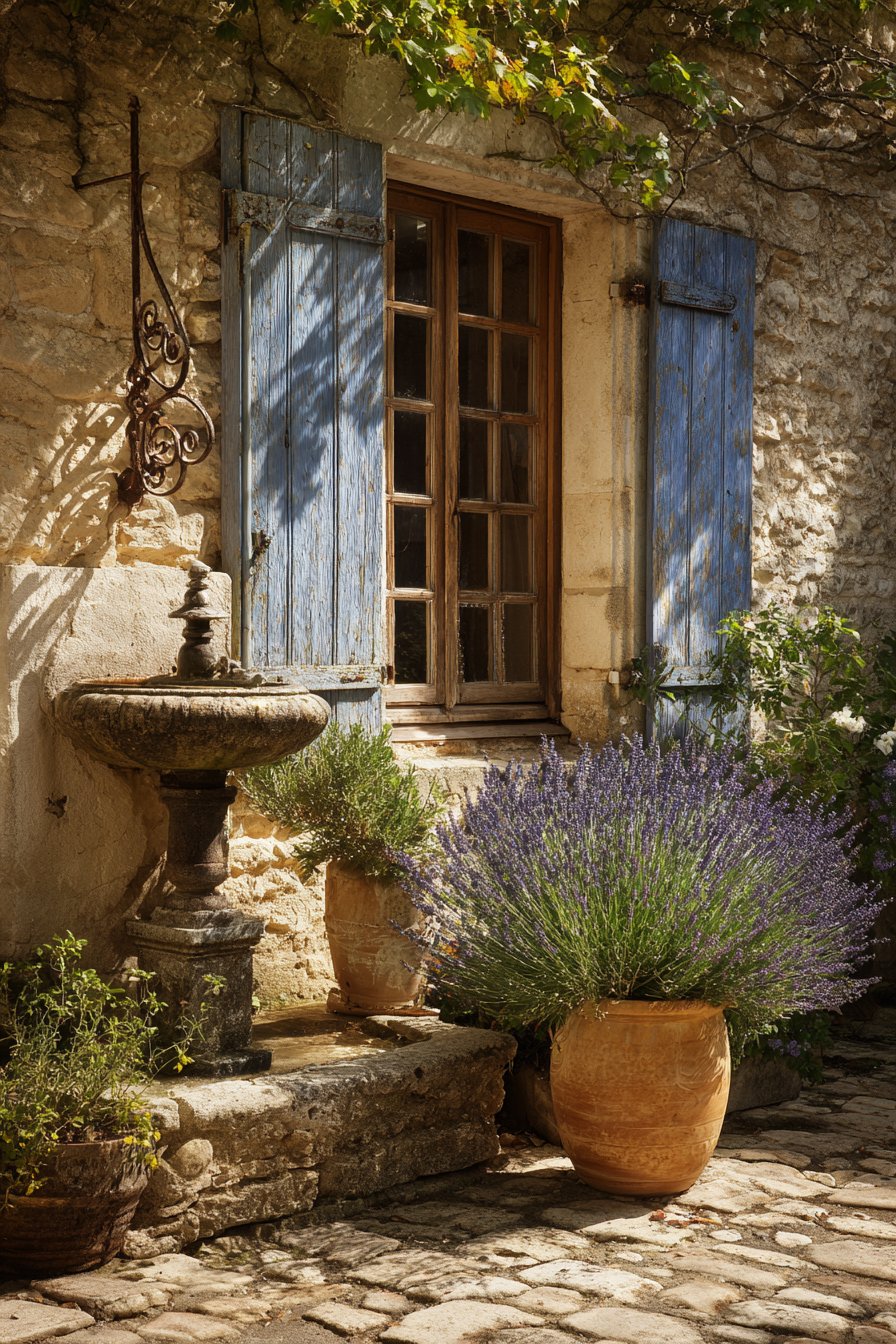
Old-world elegance defines this French country approach where ornate wrought iron planters overflow with lavender and climbing roses against white-washed stone walls. The metalwork demonstrates classical design vocabulary—scrolls, finials, decorative flourishes—that speaks to centuries of European garden tradition. Lavender spills from wall-mounted planters, its gray-green foliage and purple blooms providing color and releasing fragrance with every breeze. Climbing roses trained on supports create vertical interest while their abundant blooms reference English and French cottage gardens where roses reign supreme.
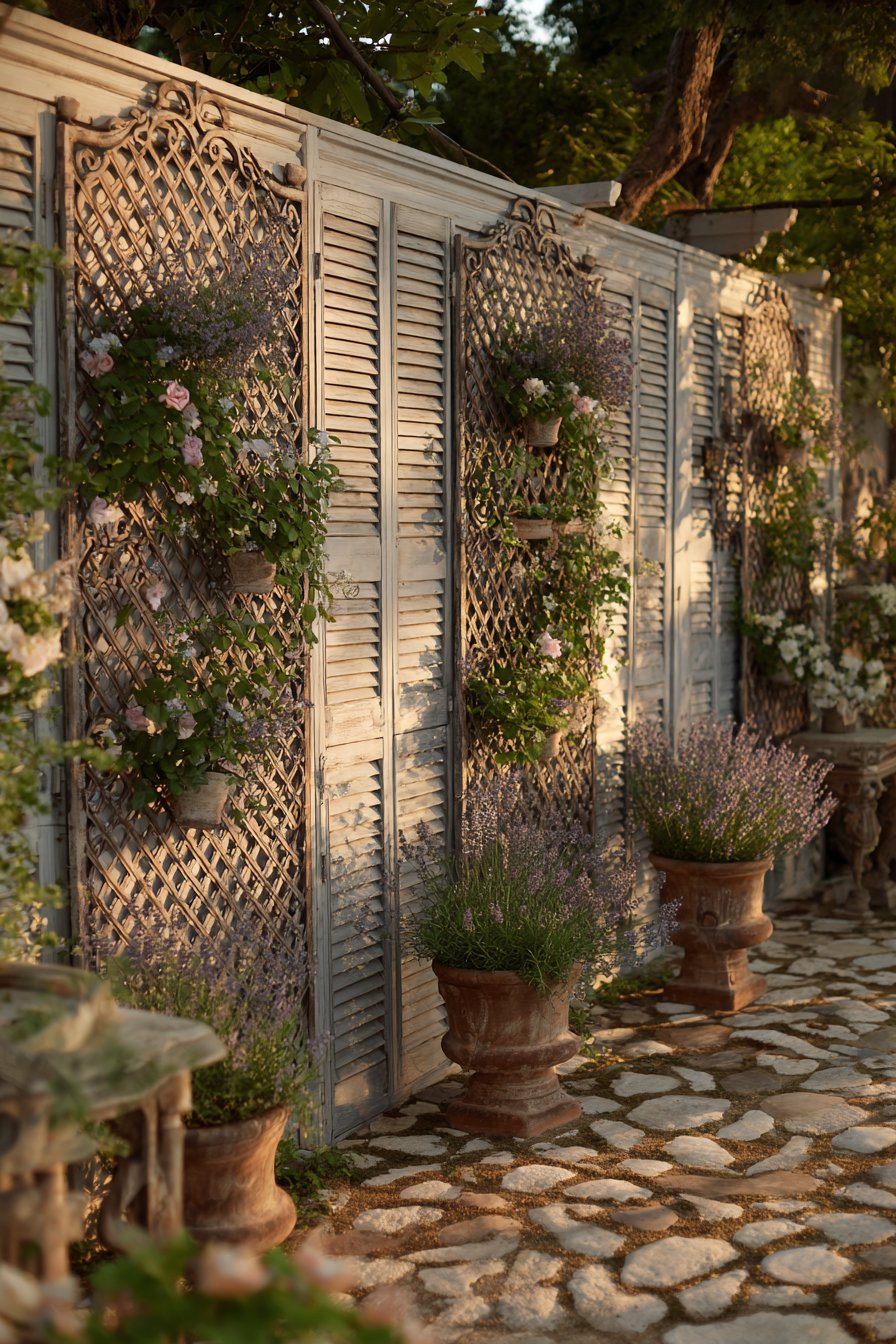
Vintage shutters in weathered blue paint flank a decorative metal wall fountain, their faded color and slightly peeling paint suggesting decades of Provençal sun exposure. The fountain adds crucial water element—both visual and auditory—creating focal point while attracting birds and beneficial insects. Terra cotta pots line the cobblestone base, their warm earthen tones complementing the white-washed stone while containing additional herbs and flowers. The cobblestones themselves—irregular, hand-laid, with moss growing between stones—complete the authentic European garden aesthetic.
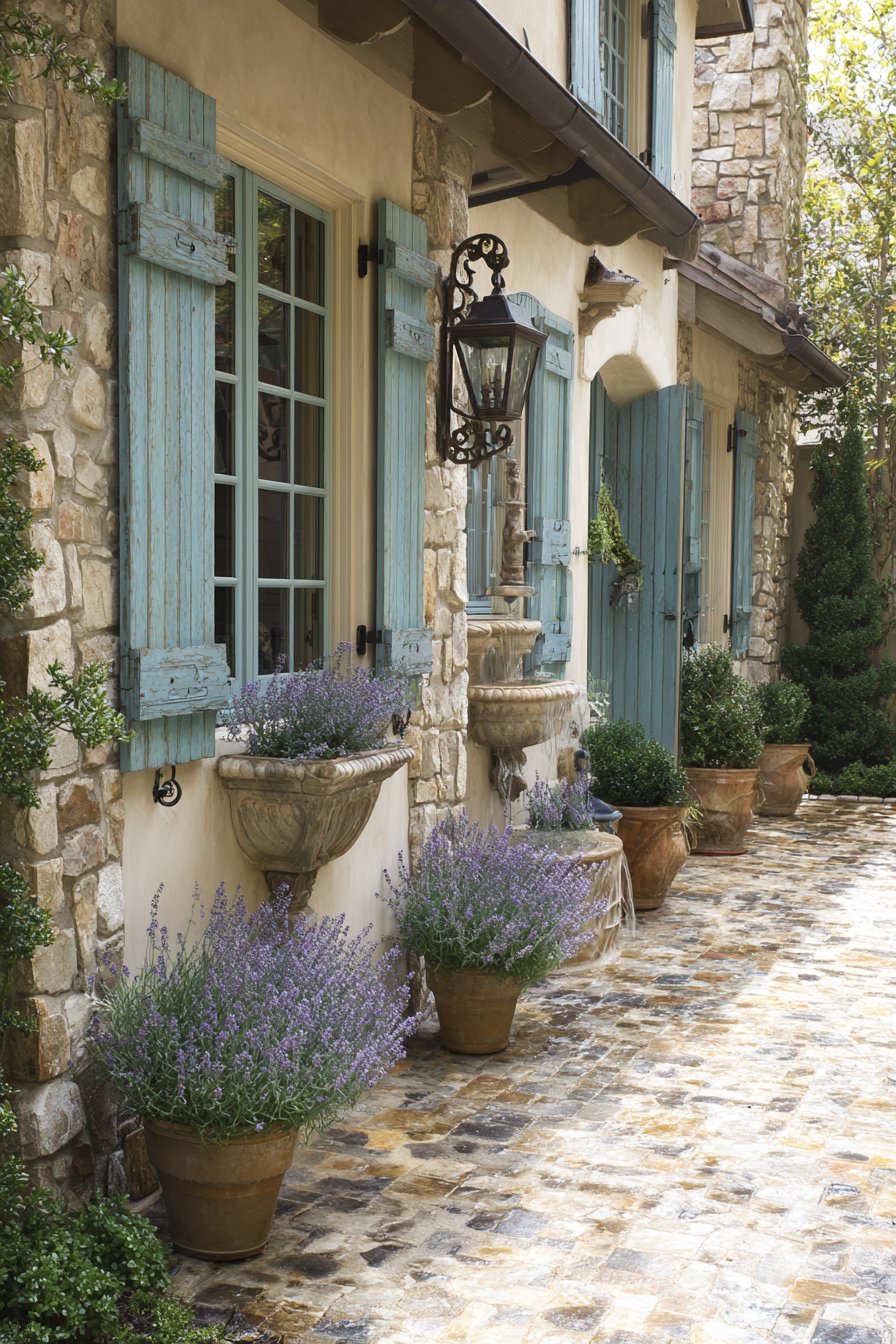
Classic European garden photography style employs warm golden hour lighting that enhances the romantic provincial aesthetic. The low-angle sunlight makes the white-washed stone glow while casting long shadows that emphasize dimensional details. Photography captures natural patina on metal elements and authentic texture of aged stone and weathered wood, demonstrating how time enriches rather than diminishes beauty in traditional garden design. This approach creates elegant outdoor rooms perfect for entertaining, dining, or simply savoring life’s slower rhythms.
Key Design Tips:
- Source authentic vintage shutters from architectural salvage or age new ones through distressing techniques
- Plant lavender varieties suited to your climate—English lavender for cooler zones, French for warmer
- Train climbing roses on sturdy trellises or wire frameworks attached securely to wall structures
- Whitewash stone walls using traditional lime-based techniques for authentic finish and proper breathability
- Install fountain with recirculating pump system and adequate water reservoir for consistent operation
- Edge planting areas with cobblestones or aged brick to reinforce European garden character
19. Modern Farmhouse Shiplap Display
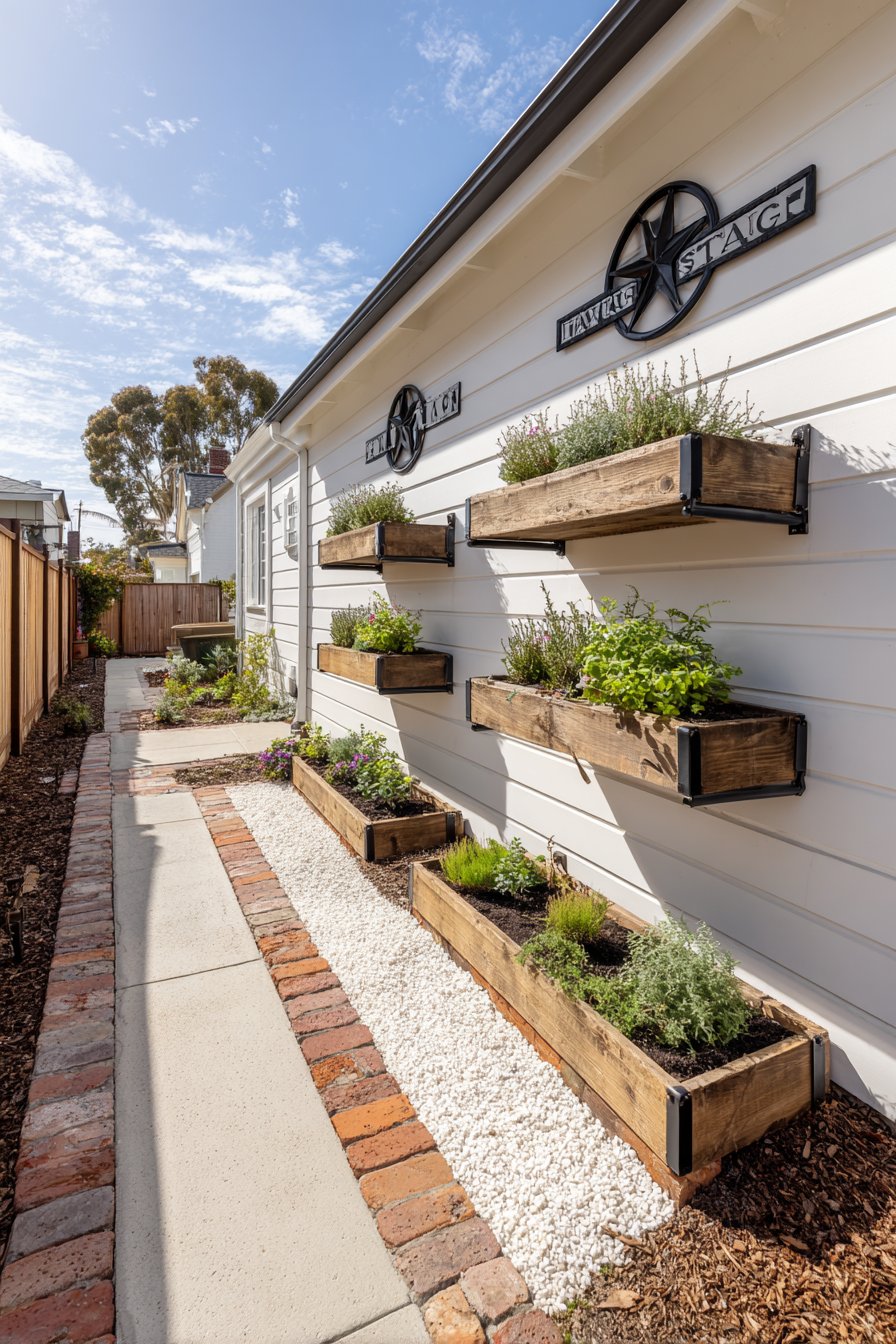
Clean-lined farmhouse aesthetics merge traditional and contemporary elements through horizontal shiplap-style planking painted in crisp white. The evenly spaced boards create subtle shadow lines that add dimensional interest to flat surfaces while the white color reflects light and maintains fresh, clean appearance. Black metal barn star decorations provide bold contrast, their five-pointed forms referencing Pennsylvania Dutch traditions and American agricultural heritage. Vintage-style enamel signs advertising seed companies, farm equipment, or country stores add authentic period details that ground the modern interpretation in historical reality.
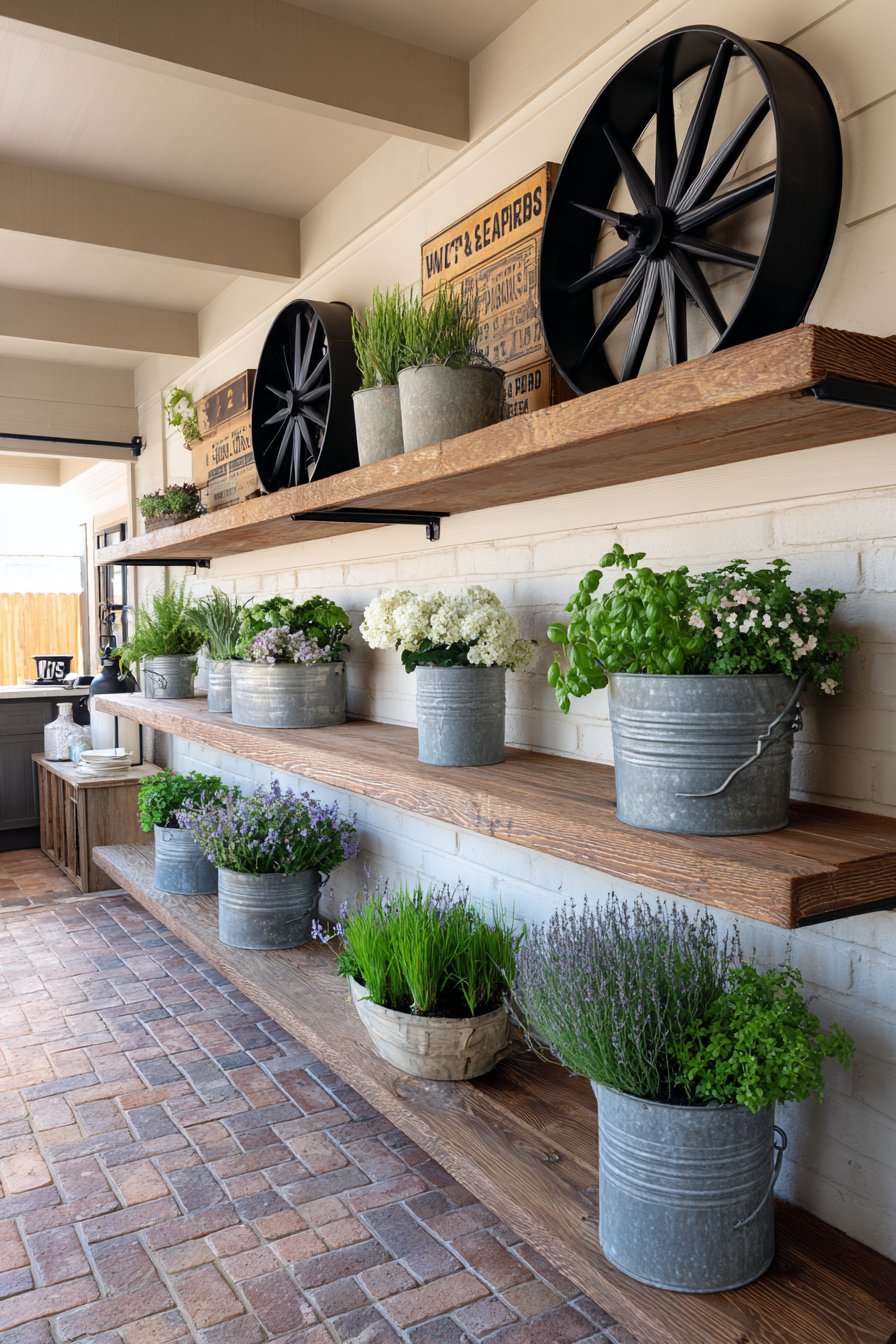
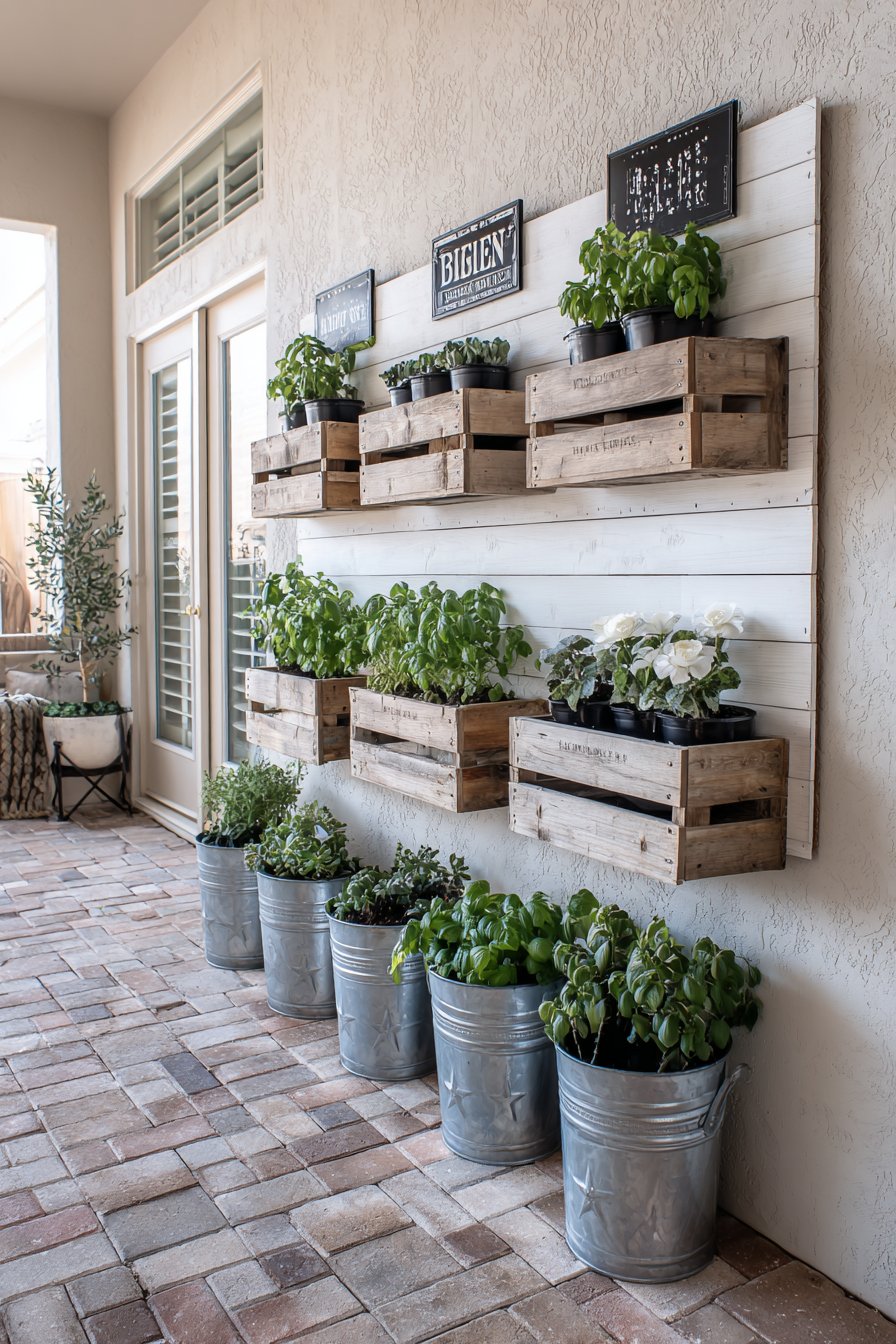
Open wooden shelving in natural or weathered finish displays galvanized metal buckets repurposed as planters for herbs and flowers. These utilitarian vessels demonstrate the farmhouse principle of functionality first, with beauty emerging from honest materials and practical forms rather than applied decoration. The base treatment uses reclaimed brick pavers, their irregular coloring and slight wear patterns suggesting age and established garden character. Natural wood grain shows through the painted shiplap where intended—the modern farmhouse style embraces this layering of finishes.
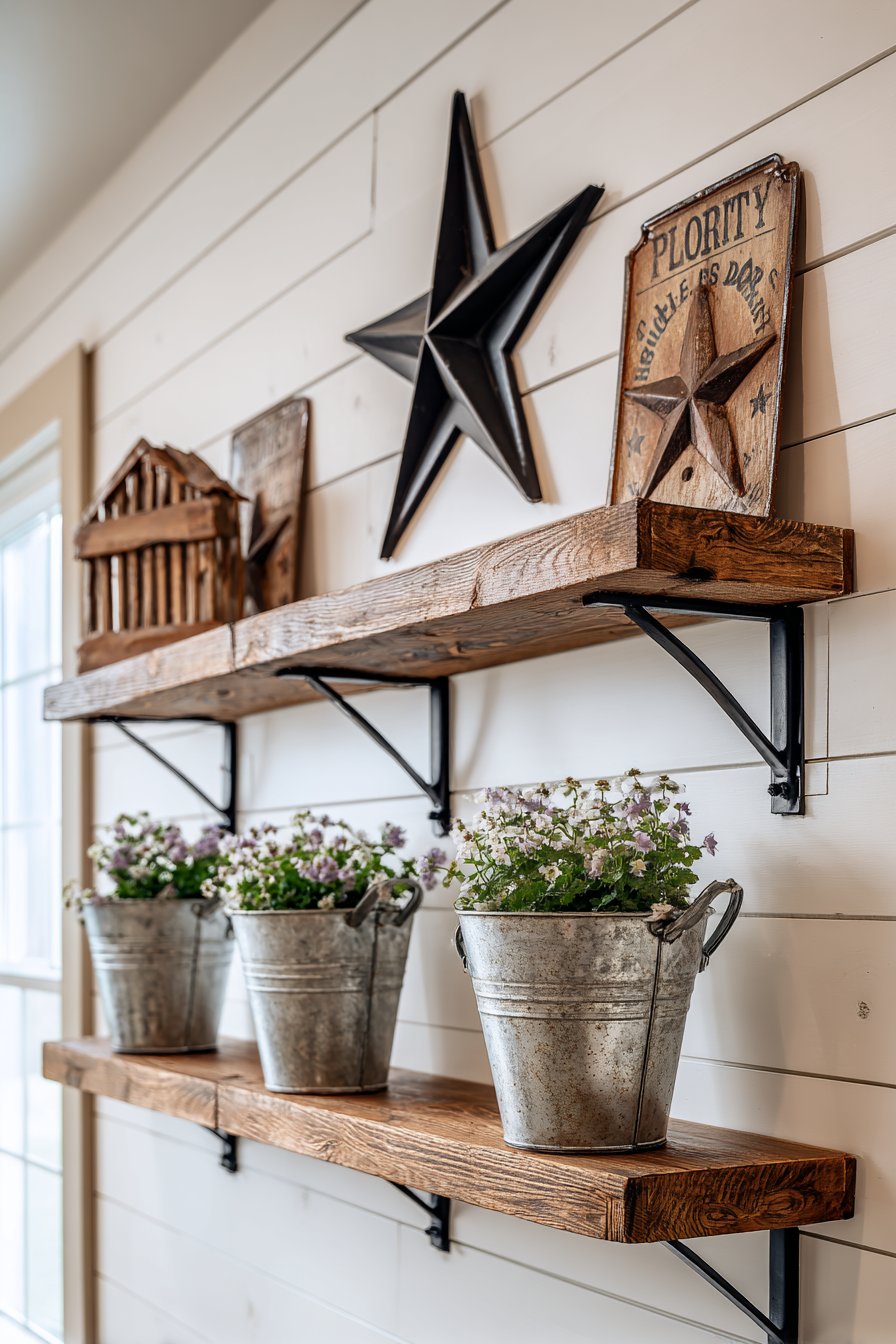
Professional interior design photography employs bright natural daylight that emphasizes clean lines and authentic material textures. The lighting reveals wood grain through painted finish, highlights galvanized metal’s subtle surface variations, and captures the crisp contrast between white boards and black metal accents. This popular modern farmhouse aesthetic works particularly well for transitional homes that bridge traditional and contemporary design, creating outdoor spaces that feel both fresh and familiar.
Key Design Tips:
- Install shiplap boards with proper spacing to create authentic shadow lines between planks
- Use exterior-grade paint with primer for durability and easy maintenance
- Weather new galvanized buckets by leaving them outdoors or applying vinegar solution to accelerate natural aging
- Mount shelving into wall studs for adequate support of heavy planters when filled with soil
- Choose herbs with similar water and light needs when grouping them in shared planters
- Seal reclaimed brick with penetrating masonry sealer to prevent moisture damage and efflorescence
20. Desert Southwest Adobe Garden
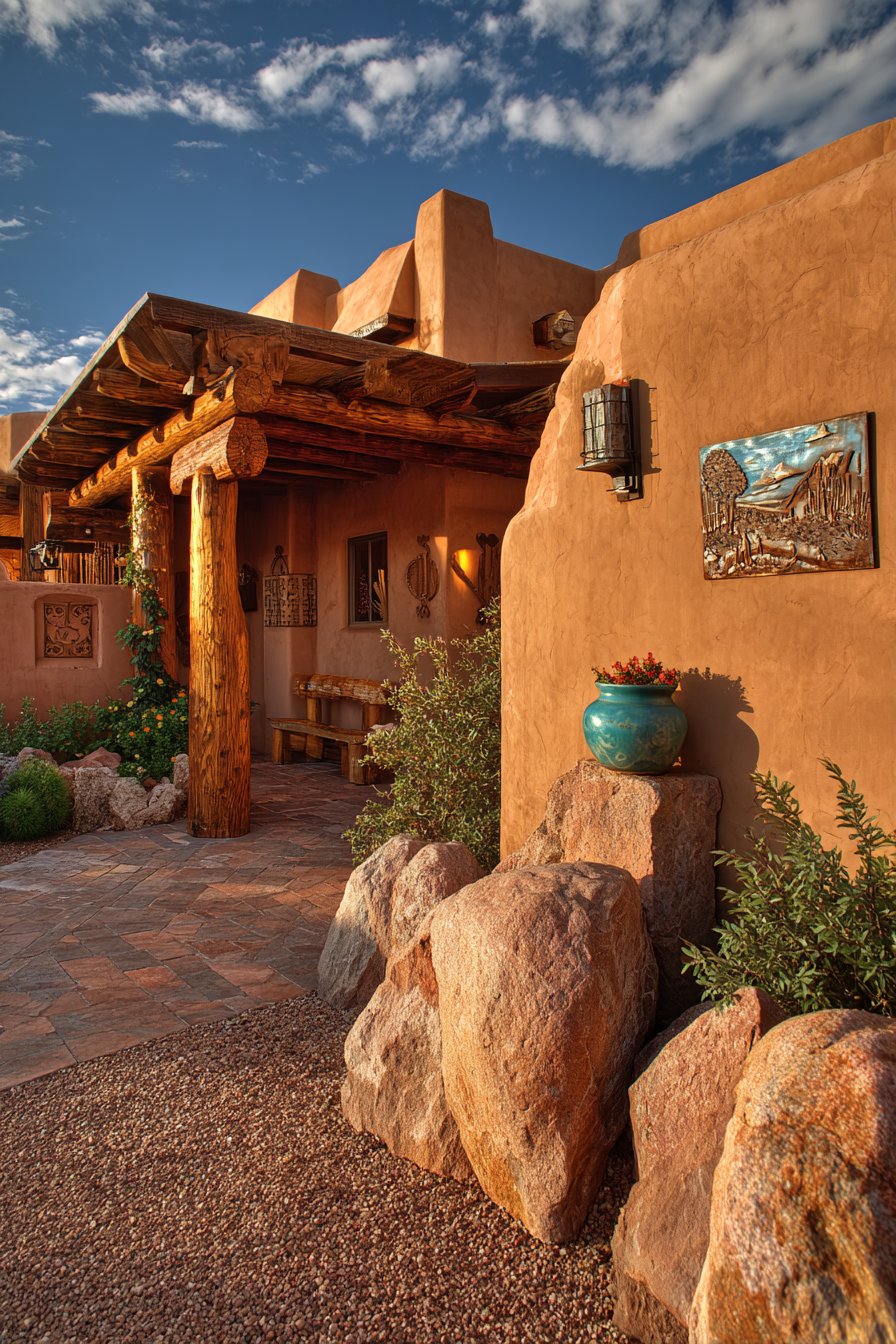
Warm earth tones and heat-loving plants create authentic southwestern ambiance on adobe-style stucco walls in sand and terracotta tones. Southwestern metal wall art depicting cacti, desert scenes, or Native American-inspired patterns immediately establishes regional character while working beautifully in both genuine desert climates and areas simply influenced by southwestern style. Ceramic wall planters in terracotta and turquoise—the classic southwestern color combination—hold drought-tolerant succulents whose architectural forms and blue-green coloring suit the desert aesthetic perfectly.
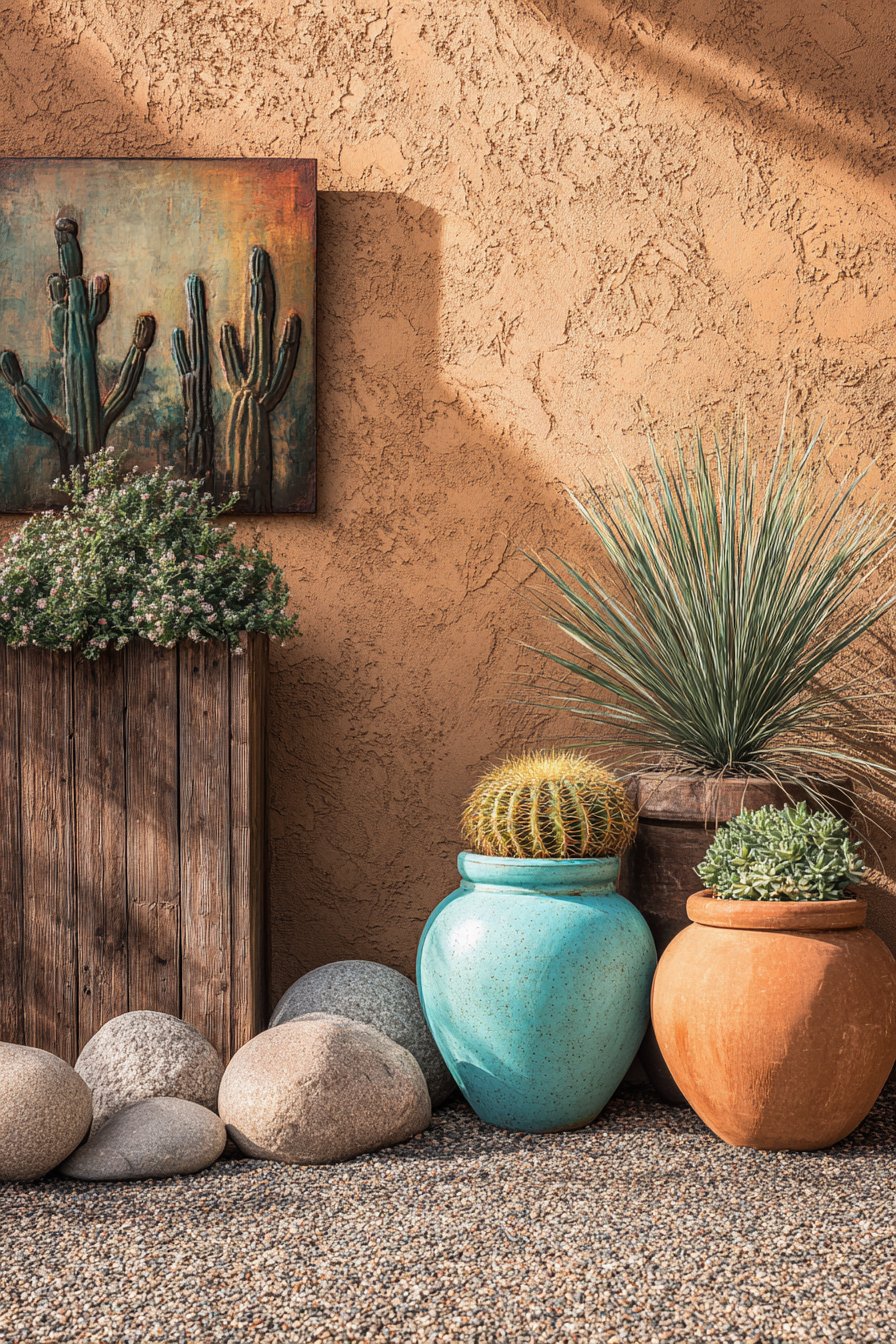
Weathered wood beams provide architectural detail that references traditional adobe construction methods, their rough-hewn surfaces and natural aging suggesting centuries-old building techniques. Decomposed granite covers the ground plane, its natural coloring and excellent drainage making it both aesthetically appropriate and practically ideal for dry climates. Natural boulders placed strategically serve as sculptural accents while reinforcing the connection to desert landscapes where rock formations create dramatic natural art.
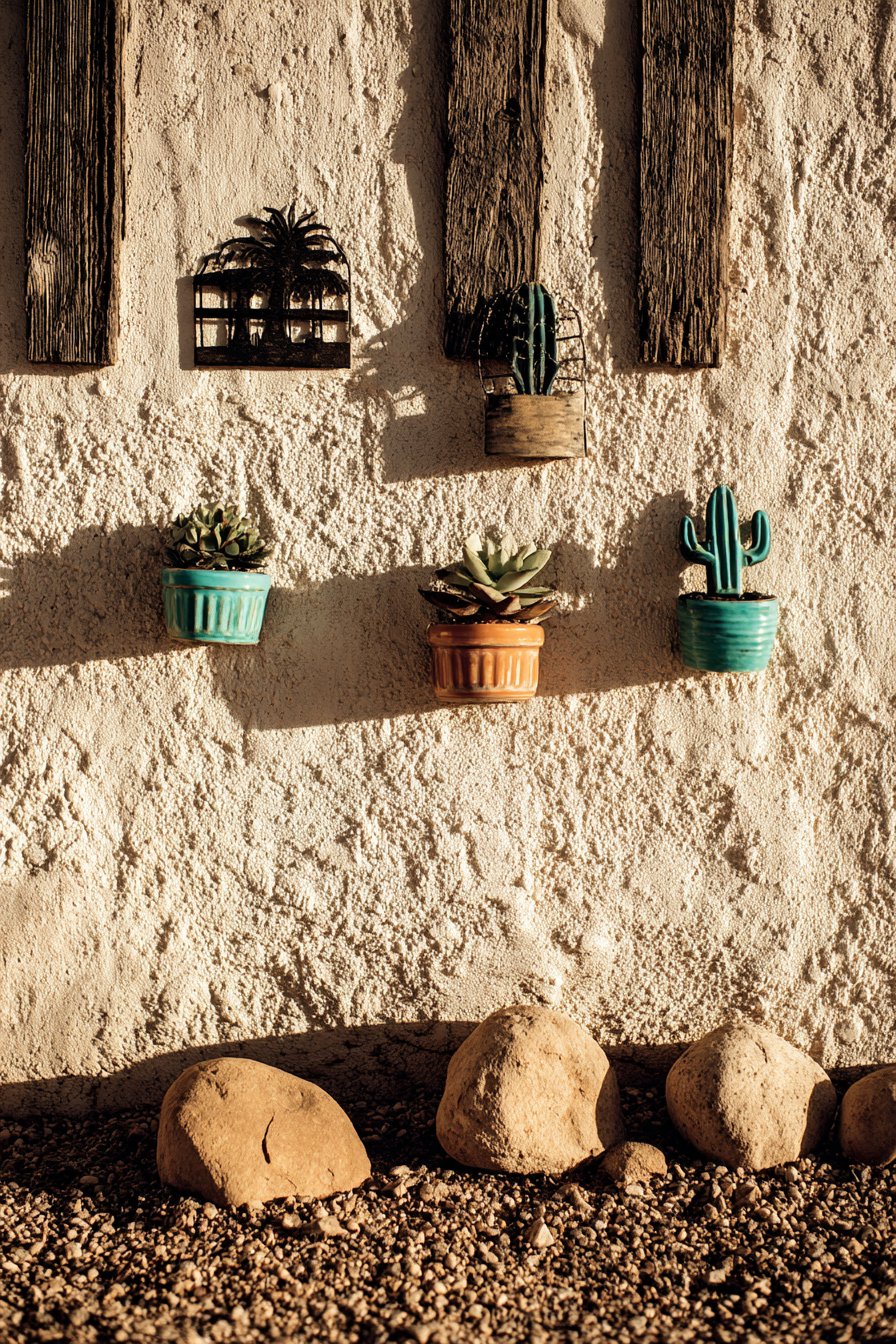
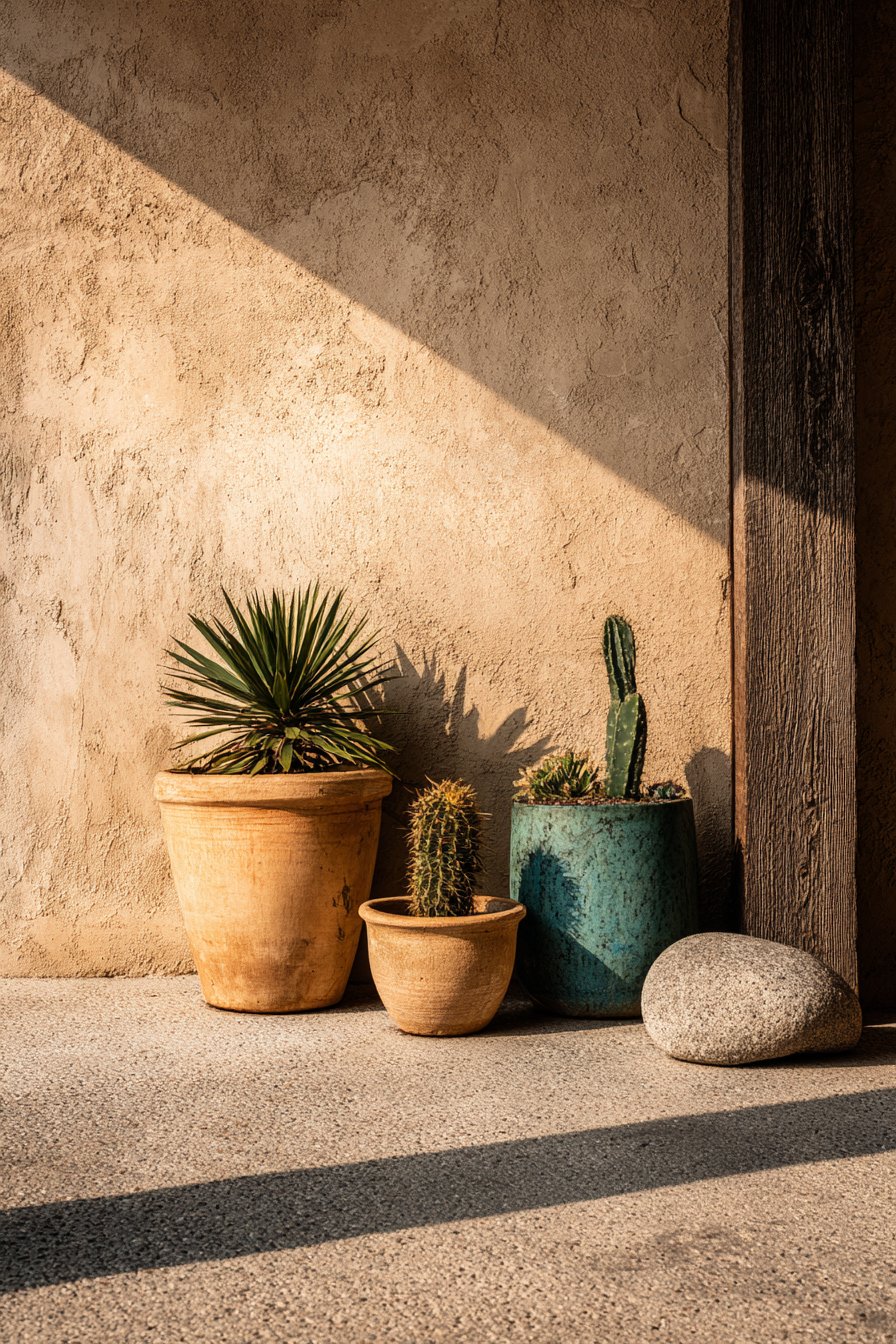
Architectural photography captures the installation during late afternoon when the low-angle light creates dramatic shadows and highlights the textured stucco surface. The warm light intensifies the terracotta and sand tones while making the turquoise accents glow brilliantly. Images emphasize authentic desert garden aesthetic through proper representation of materials, appropriate plant selections, and the distinctive quality of southwestern light that has drawn artists to these regions for centuries.
Key Design Tips:
- Apply textured stucco finish in earth tones using traditional methods for authentic adobe appearance
- Choose metal art pieces with powder-coated finishes designed for intense sun exposure without fading
- Plant succulents appropriate for your climate zone—many desert species require specific temperature ranges
- Install weathered beams as decorative vigas that reference traditional adobe architectural elements
- Use decomposed granite in 3-4 inch depth for proper weed suppression and drainage
- Incorporate native desert plants to create authentic regional character while supporting local ecosystems
21. Whimsical DIY Painted Pallet Garden
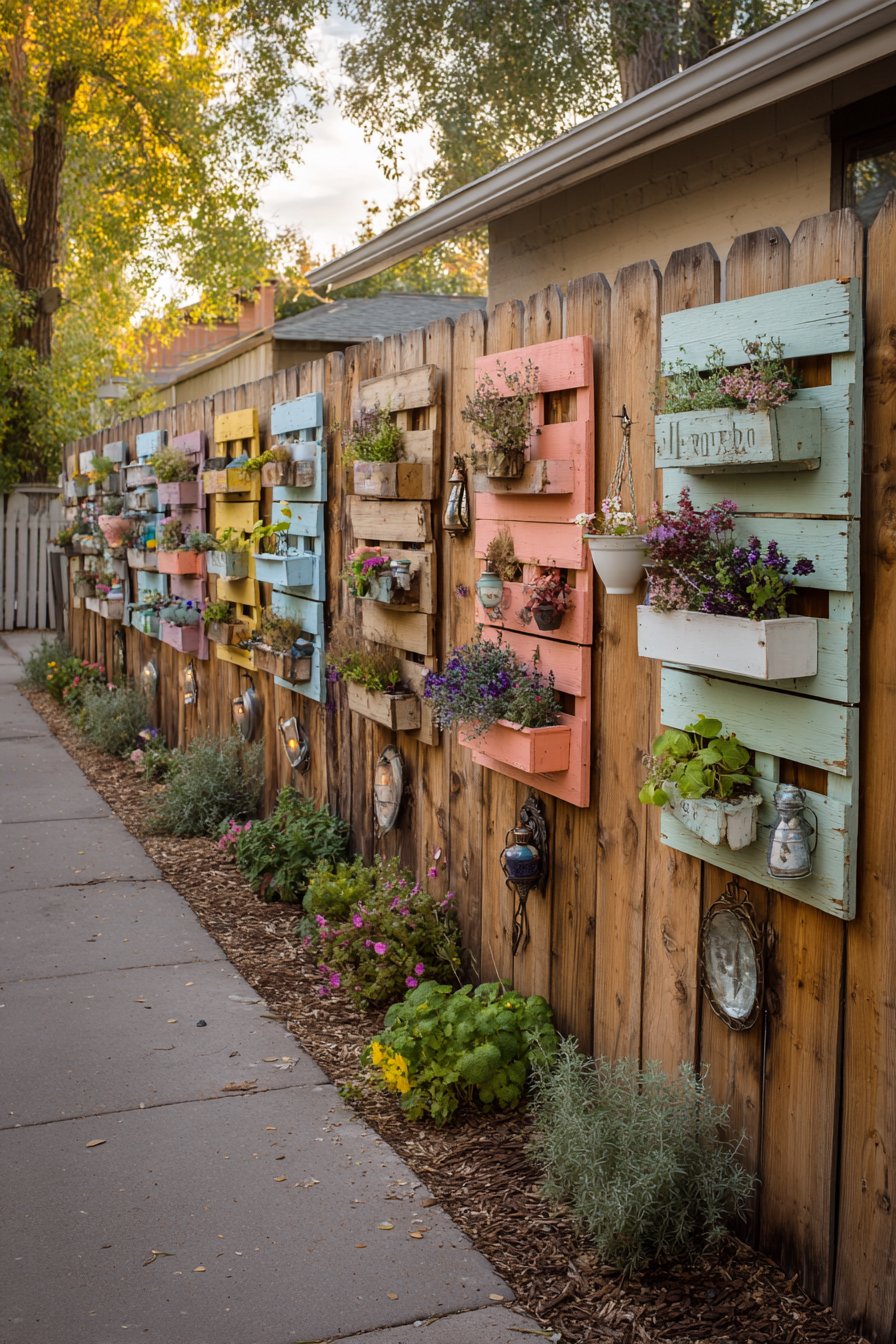
Personal creativity and playful color define this approachable DIY project where painted pallet sections create cheerful vertical gardens. Each pallet section receives different cheerful colors—mint green, coral, soft yellow—transforming humble reclaimed wood into artistic statement pieces. Individual planters within hold different herbs, flowers, or small vegetables, demonstrating how decorative installations can serve practical purposes. Decorative garden stakes, wind chimes, and small mirrors add playful elements that reflect the gardener’s personality and sense of fun.
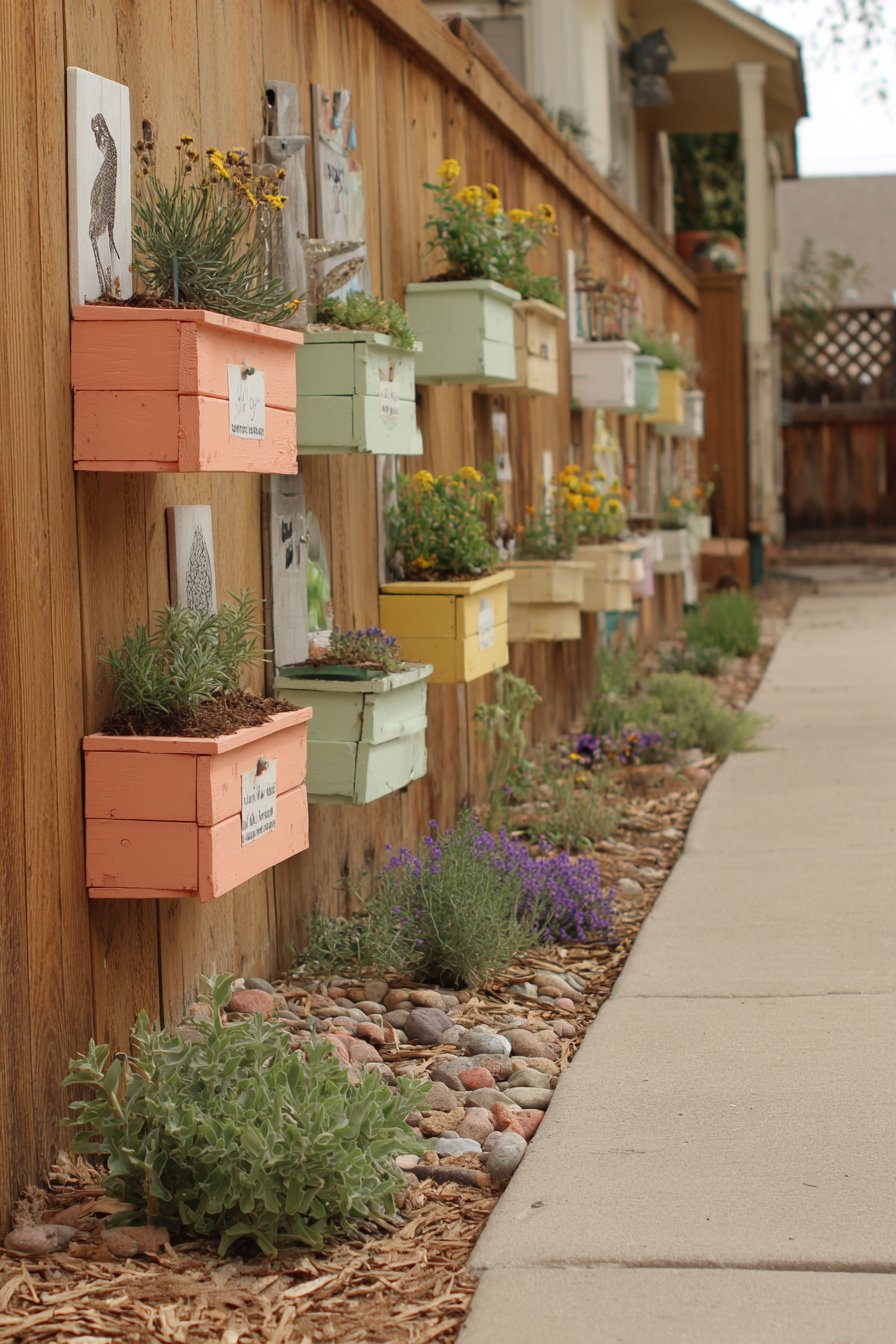
Mulch pathways below provide practical functionality while maintaining the garden’s accessibility for maintenance and harvest. This approach demonstrates that effective backyard wall decor doesn’t require expensive materials or professional installation—creativity, willingness to experiment, and personal touch create spaces with as much character as any designer showcase. The painted sections can be updated seasonally or whenever inspiration strikes, making this approach perfect for those who enjoy changing their outdoor décor regularly.
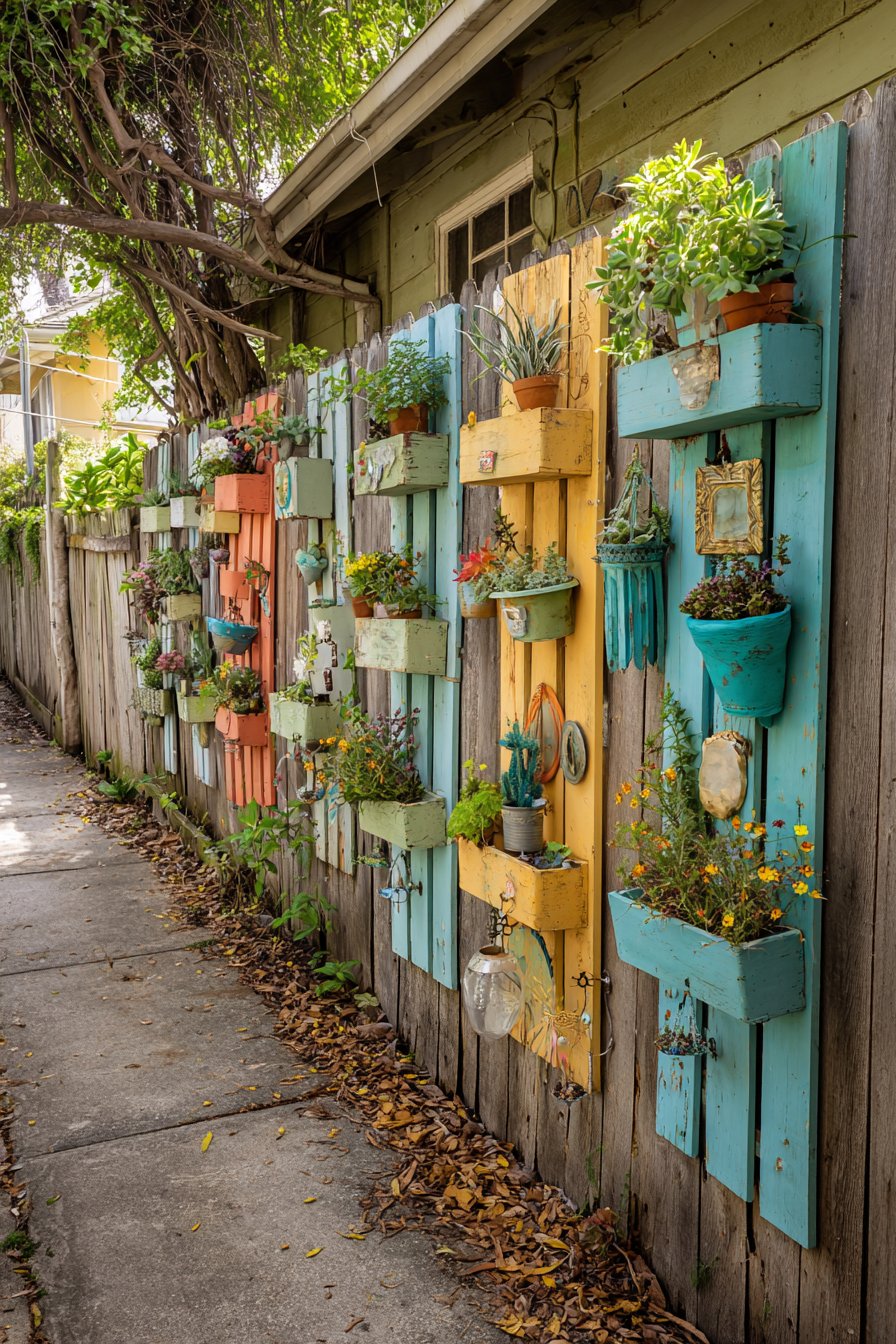
Wide-angle outdoor photography captures the cheerful, personalized aesthetic while maintaining realistic proportions and achievable DIY design. Natural diffused lighting reveals the painted wood’s texture and authentic material wear, celebrating the handmade quality rather than hiding it. Images should convey the accessibility and fun of this approach, inspiring viewers to attempt their own creative interpretations rather than simply replicating exactly what they see. This whimsical style works particularly well for family gardens, children’s outdoor spaces, or anywhere personality and creativity matter more than formal design rules.
Key Design Tips:
- Sand pallet wood to remove splinters and rough areas before painting for safer handling
- Use outdoor-rated paint or seal painted surfaces with clear exterior varnish for weather resistance
- Drill additional drainage holes in pallet pockets to prevent waterlogging and root rot
- Group plants by water and sunlight needs even within the whimsical arrangement for successful growth
- Secure pallets firmly to fence or wall structure to withstand weight of soil and plants plus wind
- Replace annual plantings seasonally to keep the display fresh and maintain year-round color
Conclusion
Transforming your backyard walls from overlooked boundaries into captivating design features represents one of the most impactful improvements you can make to your outdoor living space. The twenty-one concepts explored in this guide demonstrate the remarkable range of possibilities available—from the natural elegance of vertical gardens and the sophisticated restraint of contemporary sculptures to the romantic charm of vintage collections and the bold statement of hand-painted ceramic murals. Each approach offers unique aesthetic qualities while addressing practical concerns like privacy, vertical gardening opportunities, and lighting.
The key to successful backyard wall decor lies in selecting approaches that genuinely reflect your personal style while complementing your home’s architecture and your garden’s character. Whether you’re drawn to the minimalist calm of Scandinavian design, the lush abundance of cottage gardens, the dramatic impact of industrial metalwork, or the warm hospitality of farmhouse aesthetics, implementing these ideas transforms your outdoor walls from simple structures into integral components of comprehensive landscape design. Remember that the most successful installations balance aspirational beauty with practical achievability, creating spaces that inspire without intimidating.
Begin your transformation journey by assessing your existing walls, identifying your style preferences, and selecting one or two approaches that resonate most strongly with your vision. Start with manageable projects—a vertical garden pallet, a collection of vintage windows, or a simple sculpture and planter combination—and expand from there as confidence and experience grow. Your backyard walls await transformation, ready to showcase your creativity while extending your home’s living space into the natural world beyond your doors.
