
Designing a small bedroom for a teenager presents a unique challenge that requires balancing functionality, personal expression, and spatial efficiency. Teen years are transformative, and a bedroom serves as more than just a place to sleep—it’s a sanctuary for studying, socializing, creative pursuits, and self-discovery. In compact spaces, every square foot matters, making thoughtful design decisions essential to creating an environment that supports a teen’s evolving needs while reflecting their individual personality.
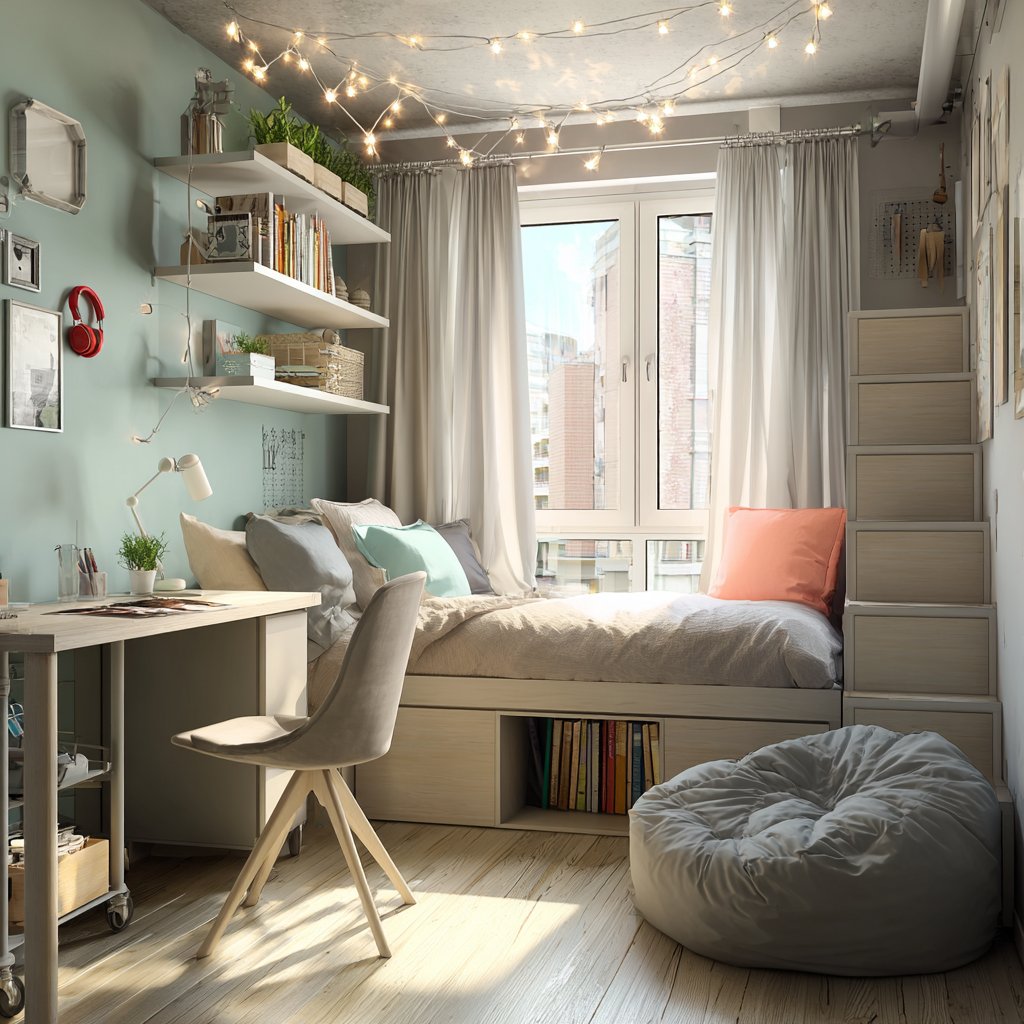
The beauty of small bedroom design lies in its ability to inspire creative problem-solving. Limited space encourages innovative furniture arrangements, multi-functional pieces, and vertical storage solutions that might never be considered in larger rooms. When executed thoughtfully, a small teen bedroom can feel remarkably spacious, organized, and stylish—proving that square footage doesn’t determine a room’s potential. From loft beds with integrated workspaces to transformable furniture and clever organizational systems, the possibilities for small bedroom optimization are both practical and exciting.
This comprehensive guide explores twenty-seven distinct small bedroom ideas specifically tailored for teenagers, each offering unique approaches to space management, aesthetic appeal, and functional design. Whether your teen gravitates toward minimalist aesthetics, vibrant colors, or cozy bohemian vibes, these concepts demonstrate how intentional design choices can transform even the most compact bedroom into a personalized haven that supports productivity, relaxation, and self-expression throughout the teenage years.
1. Elevated Living with Loft Bed Integration
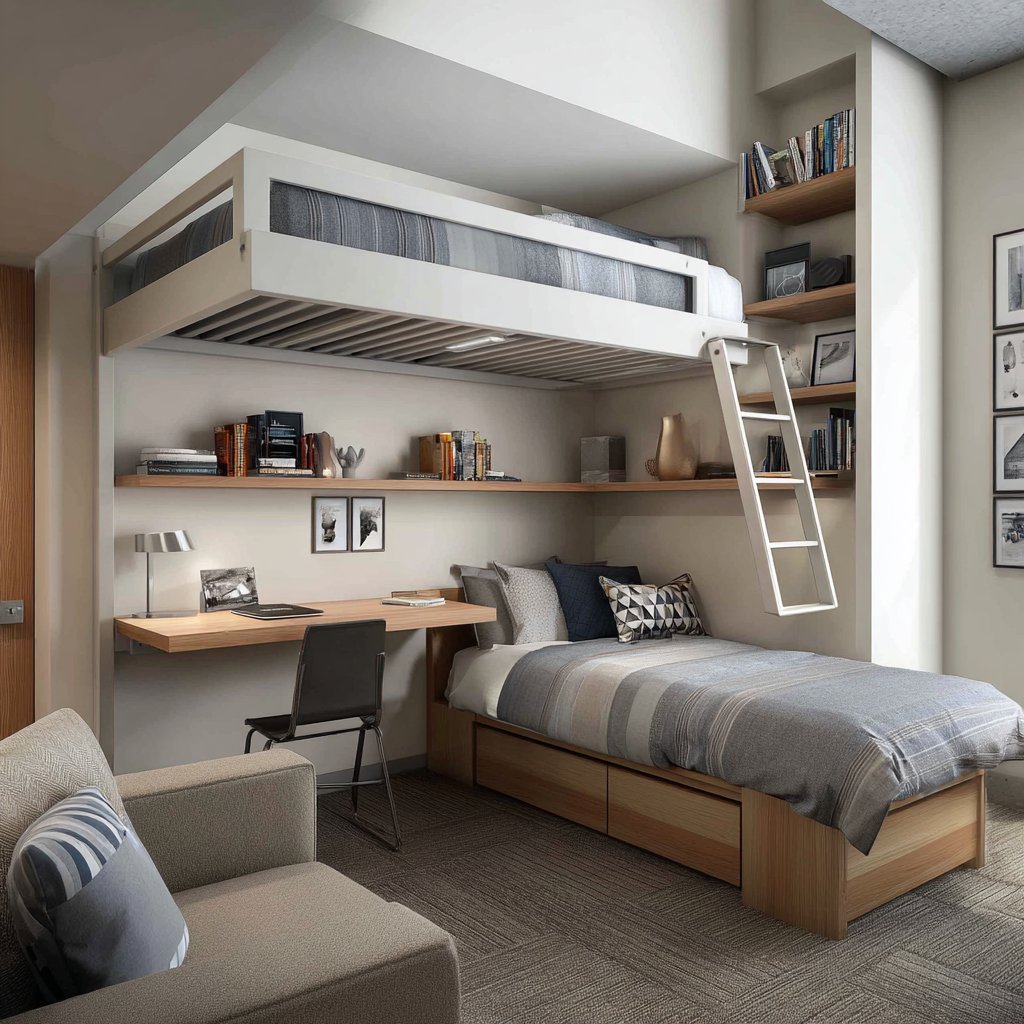
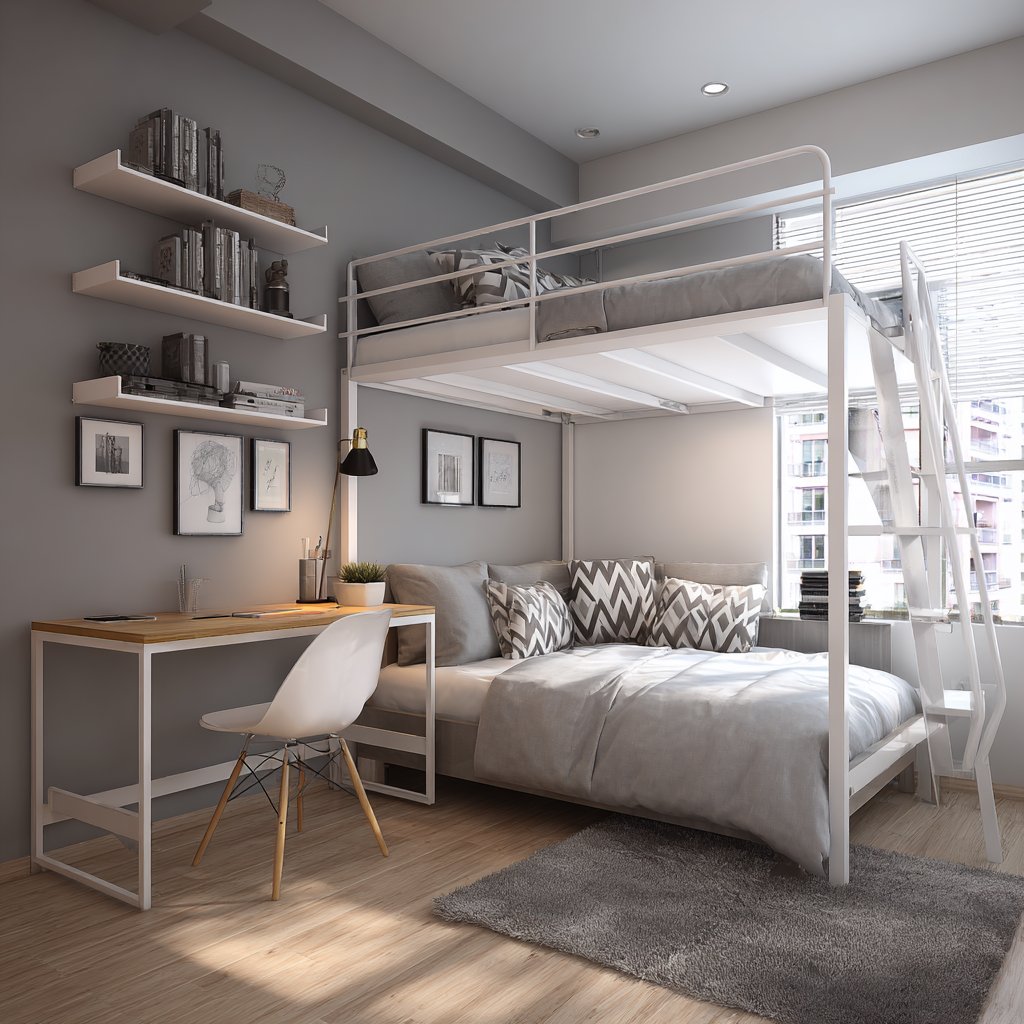
The loft bed concept revolutionizes small bedroom design by capitalizing on vertical space that typically goes unused. This configuration features a raised sleeping platform supported by a sturdy white metal frame, with a fully functional desk workspace positioned directly underneath. The elevated design effectively doubles the usable floor space, creating distinct zones for sleeping and studying without requiring additional square footage. The wooden desk surface provides ample room for a laptop, textbooks, and study materials, while floating shelves mounted above offer convenient storage for books and decorative items that personalize the workspace.
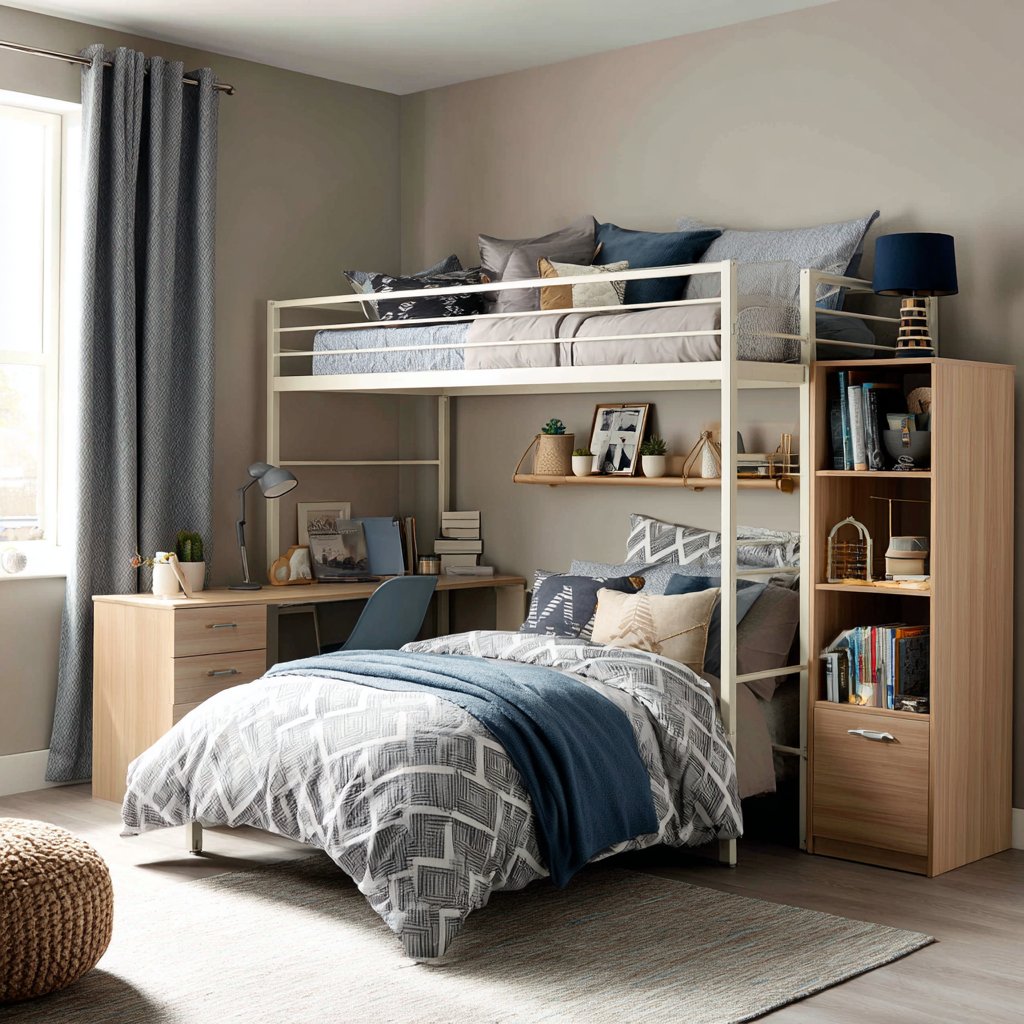
The sleeping area maintains comfort and style with soft grey bedding adorned with geometric patterns that add visual interest without overwhelming the compact space. The neutral color palette creates a calming atmosphere conducive to both rest and concentration, while the patterns introduce youthful energy appropriate for teen spaces. Natural lighting from a nearby window illuminates the desk area during daytime hours, reducing eye strain during study sessions and creating a pleasant work environment that encourages productivity.
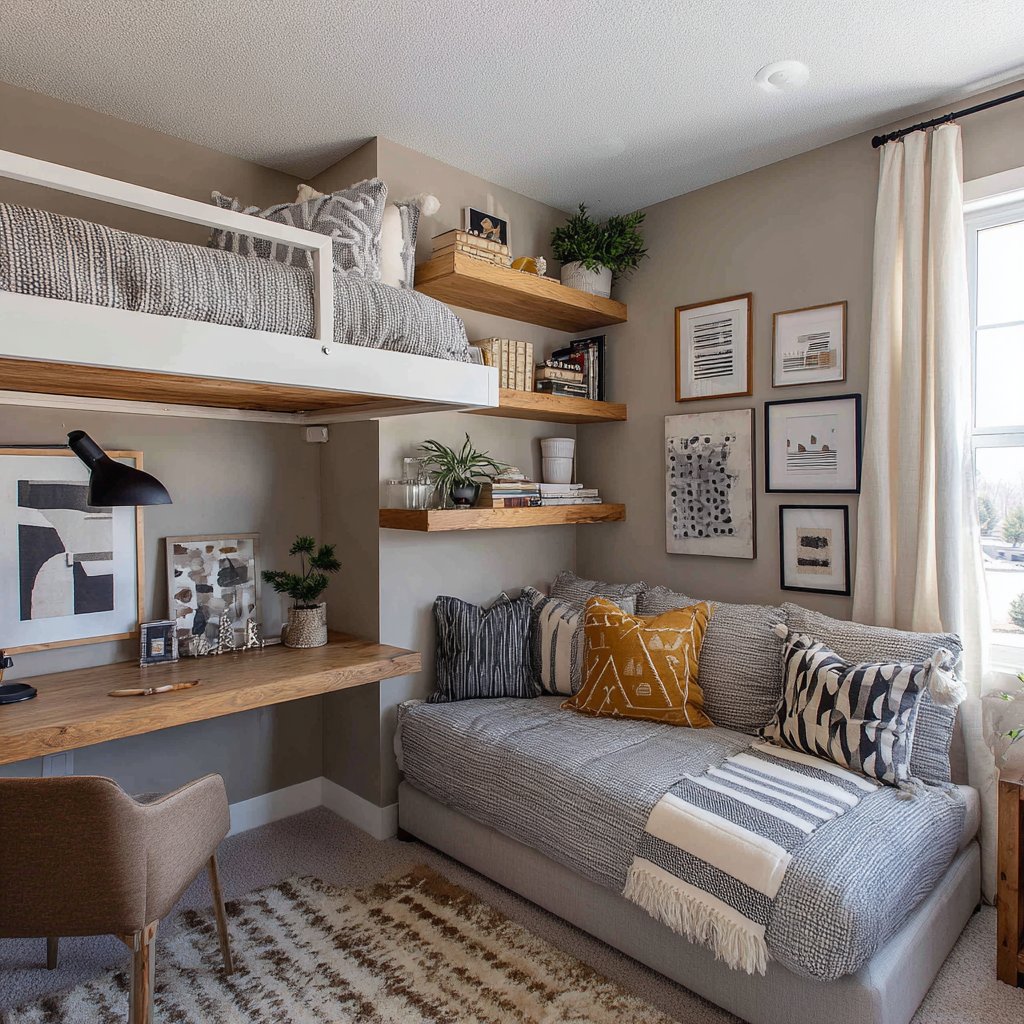
This design excels in its straightforward approach to space maximization. The vertical arrangement allows floor space beneath the loft to remain completely accessible, facilitating easy movement and cleaning. The metal frame construction ensures stability while maintaining an open, airy feel that prevents the room from appearing cluttered or confined. Wide-angle interior photography captures how effectively this layout utilizes every dimension of the room, demonstrating that thoughtful furniture selection can dramatically impact a small bedroom’s functionality.
Key Design Tips:
- Ensure loft bed height allows comfortable sitting clearance underneath for the desk area
- Install adequate task lighting at the desk level since natural window light may be partially blocked
- Choose a mattress appropriate for loft use—typically thinner profiles work better in elevated spaces
- Secure the loft structure properly to wall studs for maximum safety and stability
- Consider adding a small ladder with flat treads for safe, comfortable access to the sleeping level
2. The Transformative Murphy Bed Solution
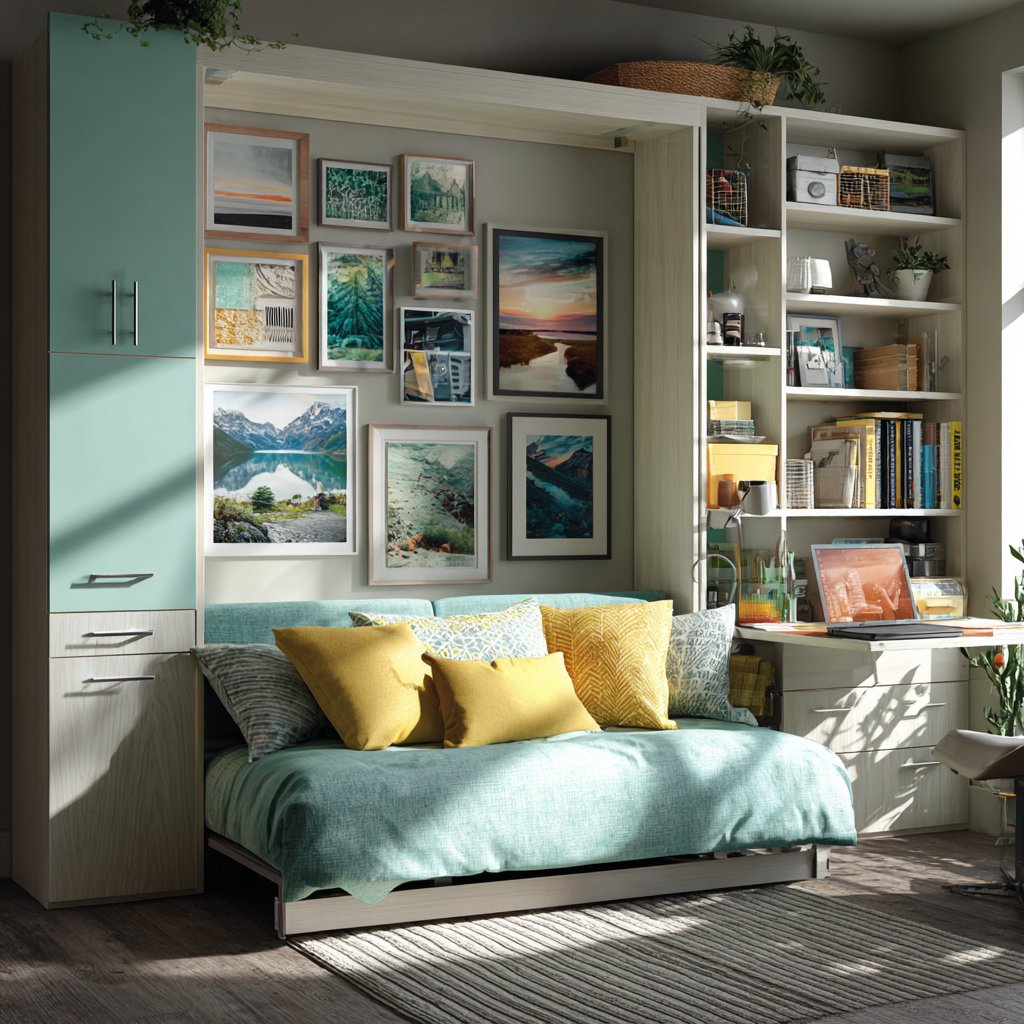
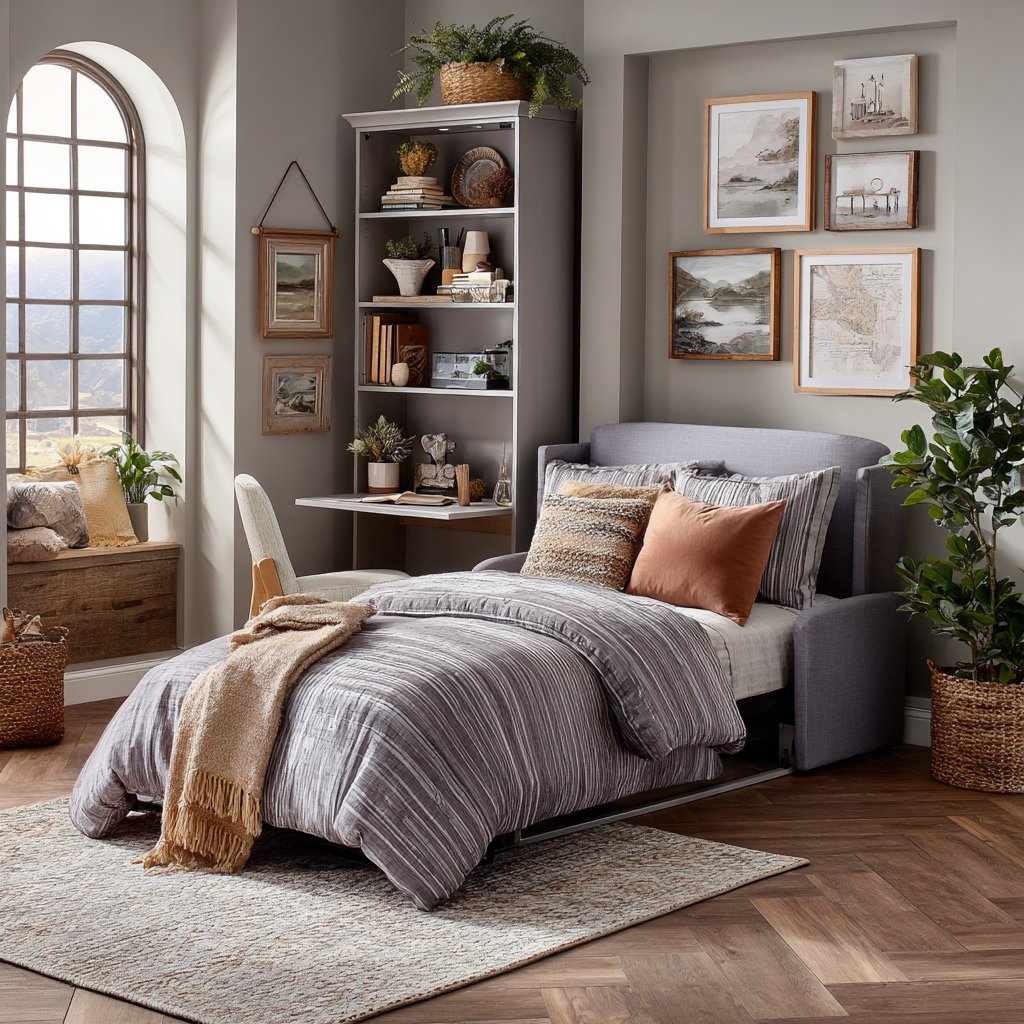
Murphy beds represent perhaps the ultimate space-saving innovation for small teen bedrooms, offering the remarkable ability to reclaim floor space when sleeping quarters aren’t needed. This particular design showcases a murphy bed system upholstered in soft pastel blue fabric, creating an attractive wall feature even when folded upright. The integrated storage compartments flanking the bed provide valuable space for books, decorative objects, and personal items, ensuring that functionality doesn’t disappear when the bed is stowed. The fold-down desk surface adds another layer of versatility, transforming the sleeping area into a productive workspace during waking hours.
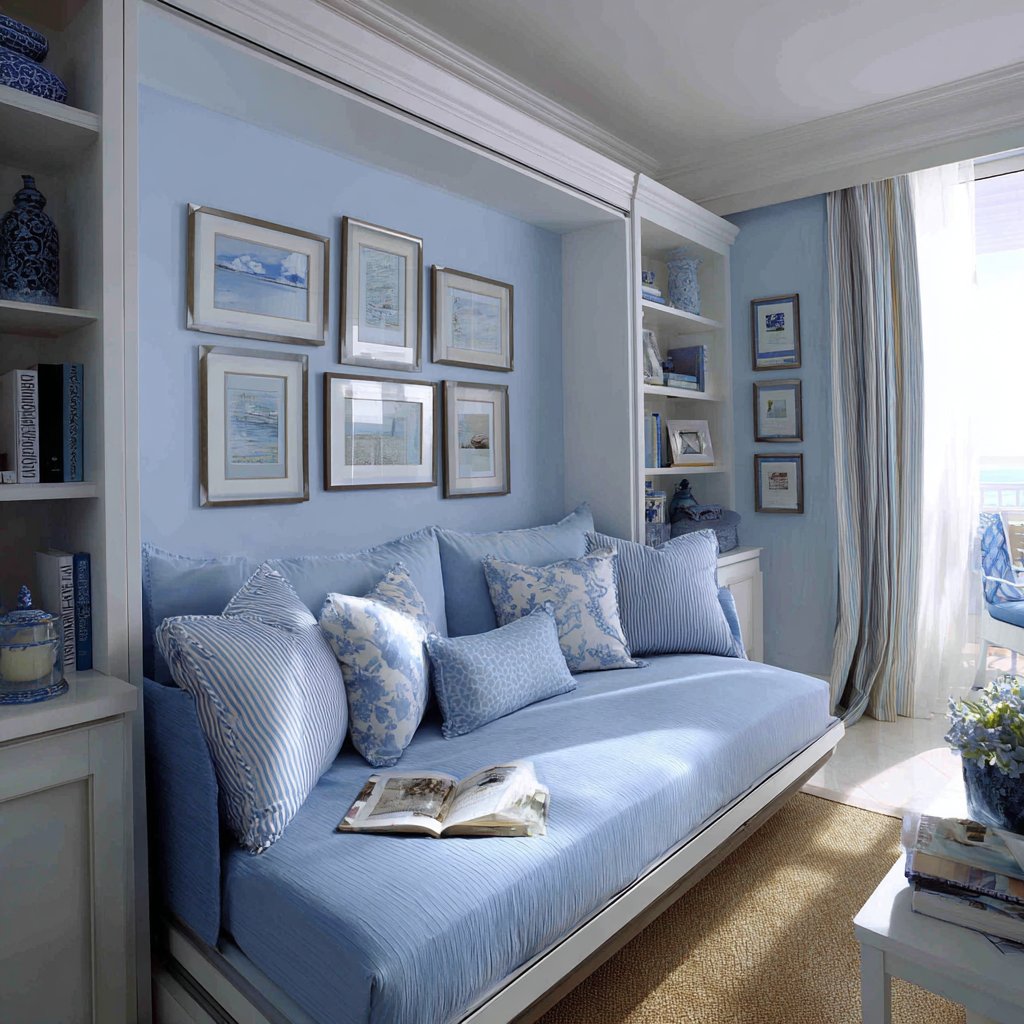
When raised, the unit reveals hidden shelving that maintains accessibility throughout the day, allowing teens to display favorite books, photographs, and collections without sacrificing precious floor space. The surrounding walls feature a carefully curated gallery of framed prints and photographs, adding personality and visual interest while the bed remains upright. This approach to wall decoration ensures the room never appears bare or unfinished, regardless of the bed’s position. The pastel blue upholstery coordinates beautifully with the wall art, creating a cohesive color story that ties the entire room together.
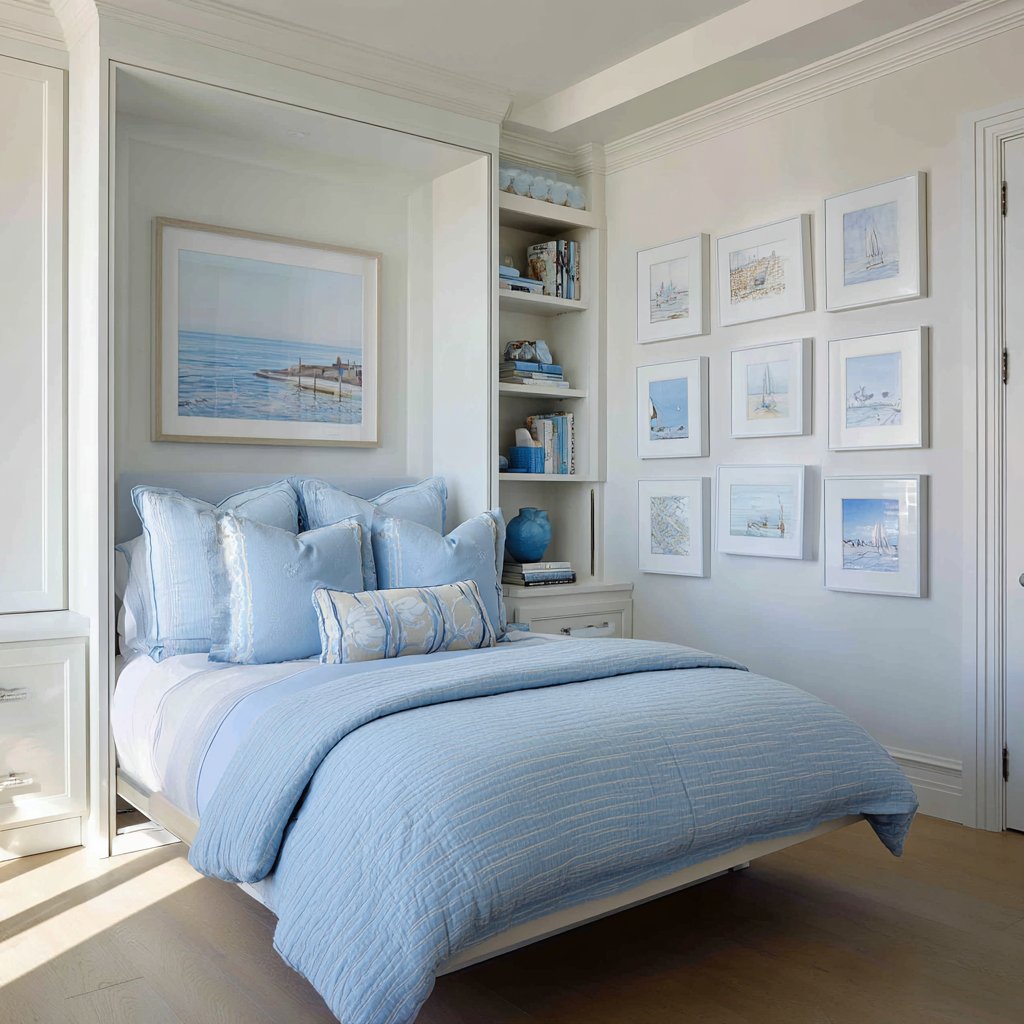
Professional interior photography emphasizes how this transformative furniture solution completely reimagines small bedroom possibilities. Natural lighting showcases the quality construction and thoughtful design details that make murphy beds both practical and aesthetically pleasing. The space savings prove particularly valuable in extremely compact bedrooms where traditional bed placement would consume the majority of usable floor area, leaving little room for other essential furniture or movement.
Key Design Tips:
- Measure ceiling height carefully before installation—murphy beds require adequate overhead clearance
- Invest in quality hardware with proper weight ratings and safety mechanisms
- Keep bedding simple and tucked in completely to ensure smooth folding operation
- Choose upholstery that complements existing room colors while hiding minor wear
- Install the unit into wall studs, not just drywall, for structural integrity
- Practice the folding mechanism regularly to maintain smooth operation
- Consider models with integrated lighting for the workspace area
3. Platform Bed with Integrated Drawer Storage
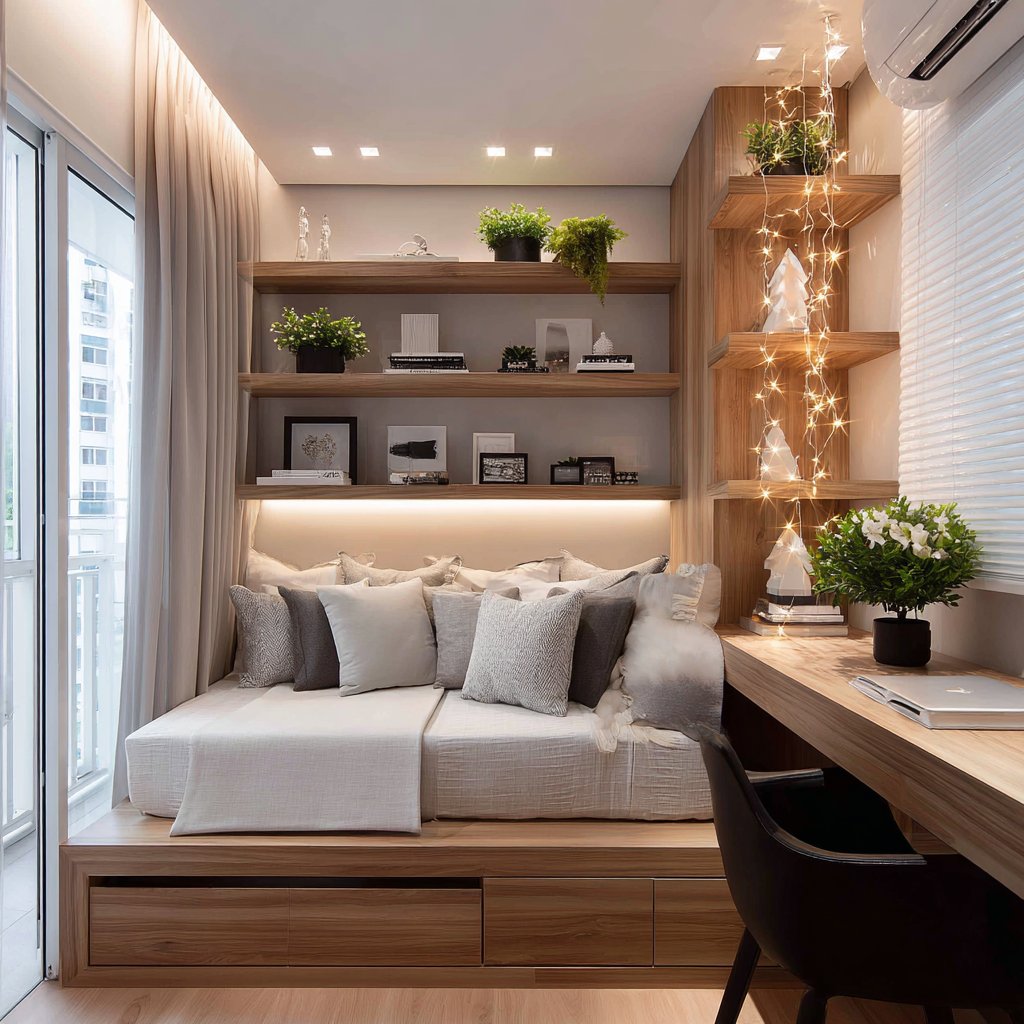
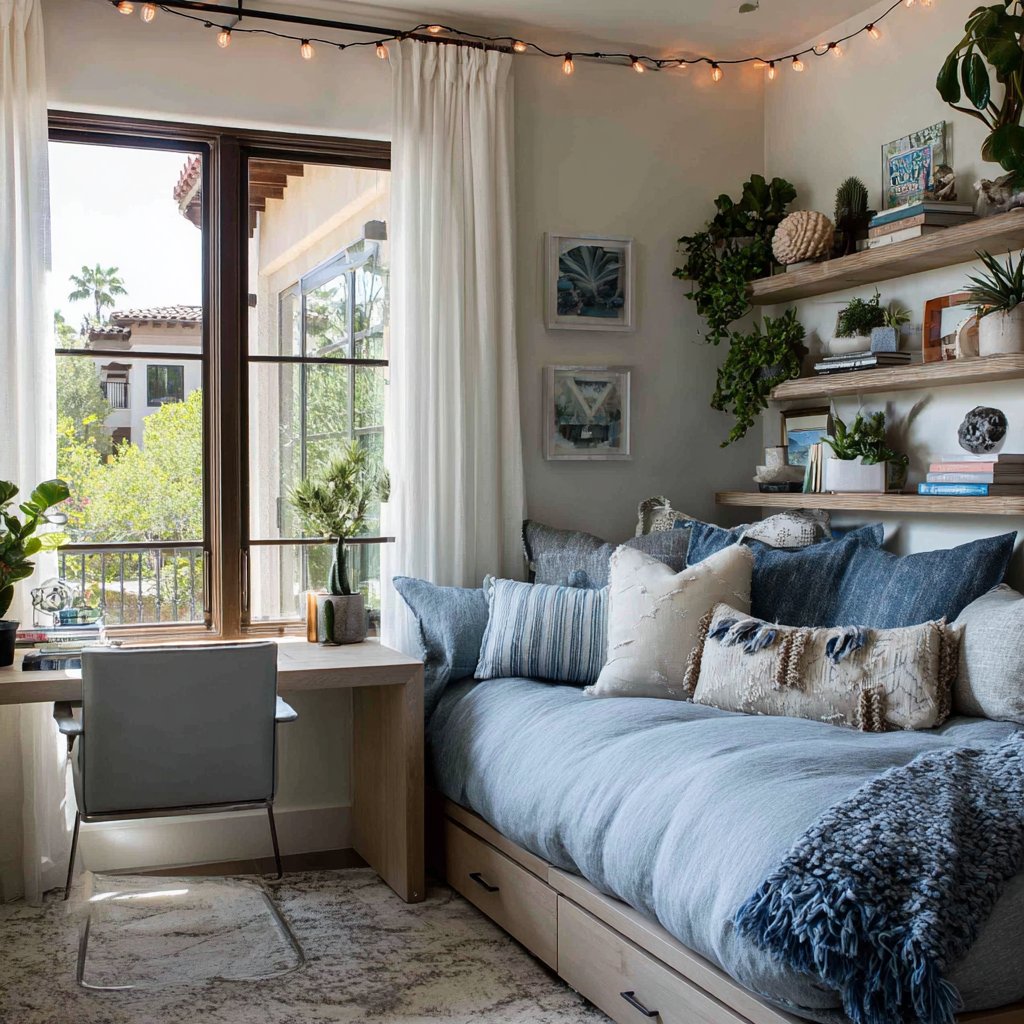
The platform bed design represents a classic approach to small bedroom organization, offering substantial under-bed storage without requiring additional furniture pieces. This configuration features a low-profile platform bed with built-in drawers seamlessly integrated into the frame, providing concealed storage for clothing, linens, or seasonal items. The sleek design maintains clean lines that contribute to an uncluttered aesthetic, while the functional storage addresses one of the primary challenges in small teen bedrooms: adequate space for belongings.
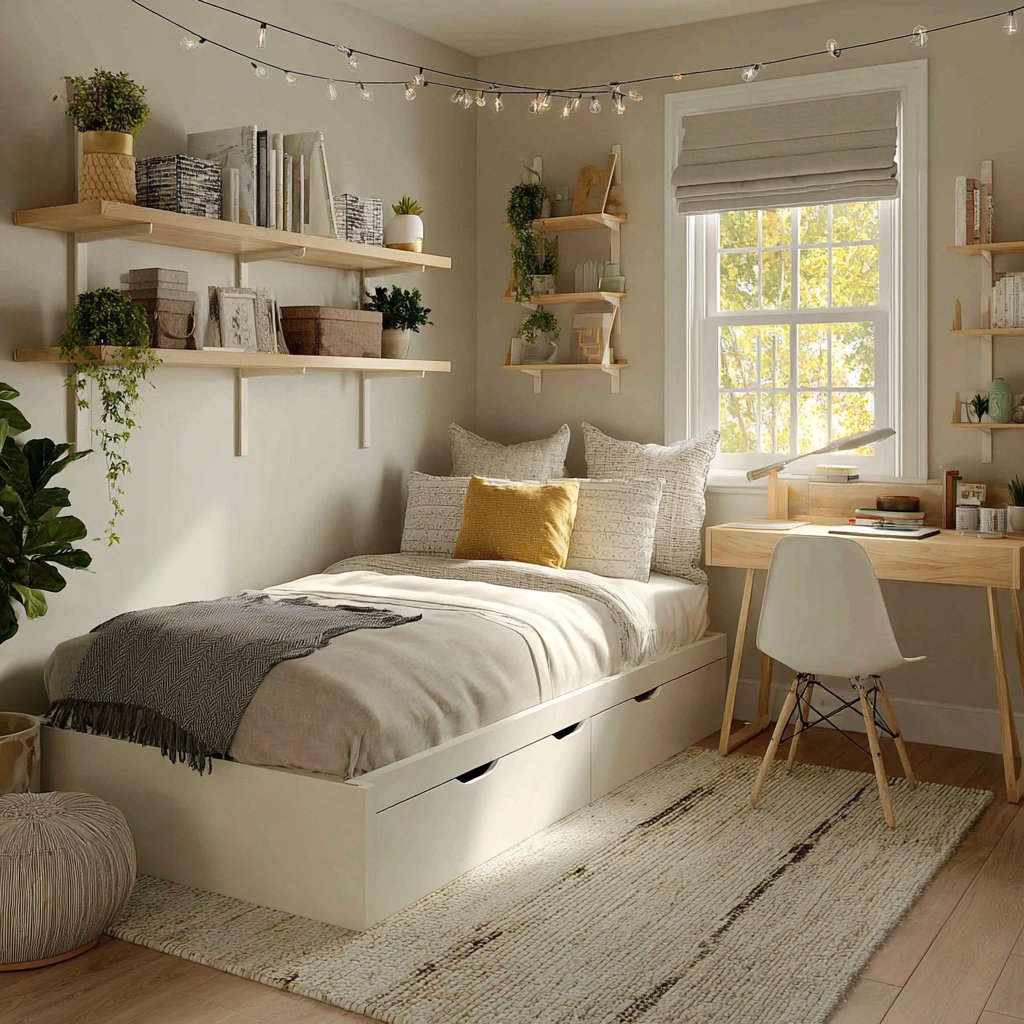
Positioned opposite the bed, a compact floating desk mounted directly to the wall eliminates the need for bulky desk legs, preserving precious floor space and creating an open, airy feeling. The wall-mounted approach also facilitates easier cleaning and allows for flexible furniture arrangement in the future. A sleek modern chair complements the minimalist aesthetic while providing ergonomic support for study sessions. The open shelving unit in natural wood finish introduces warmth to the neutral palette while displaying plants, books, and decorative accessories that reflect the teen’s personality and interests.
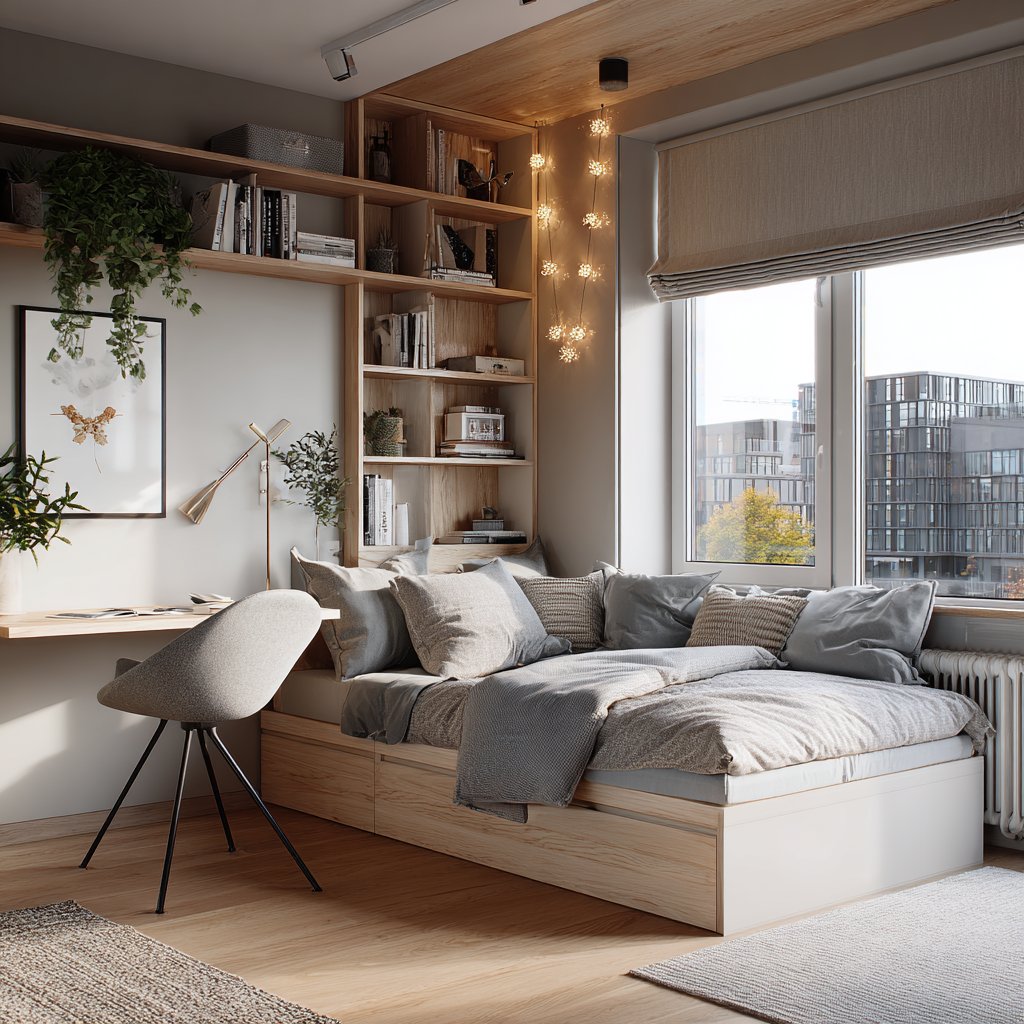
String lights create ambient lighting along the ceiling edge, adding a popular decorative element that teens favor while providing soft illumination for evening relaxation. This layered lighting approach complements natural afternoon light filtering through roller blinds, which offer both privacy and light control. The roller blinds’ streamlined appearance maintains the room’s contemporary aesthetic while serving practical purposes. Interior design photography captures the cozy yet functional nature of this teen space, demonstrating how carefully selected furniture pieces work together to maximize both storage and style in compact dimensions.
Key Design Tips:
- Select platform beds with full-extension drawer glides for easy access to items stored in back corners
- Choose drawer configurations that match storage needs—deeper drawers for bulky items, shallow ones for accessories
- Ensure the floating desk is anchored into wall studs with appropriate weight-bearing hardware
- Position the desk near windows to maximize natural light during daytime study sessions
- Use drawer dividers or organizers to maintain order and prevent clutter accumulation
- Consider adding felt pads under drawer bases to reduce noise when opening and closing
4. Corner Study Nook Optimization
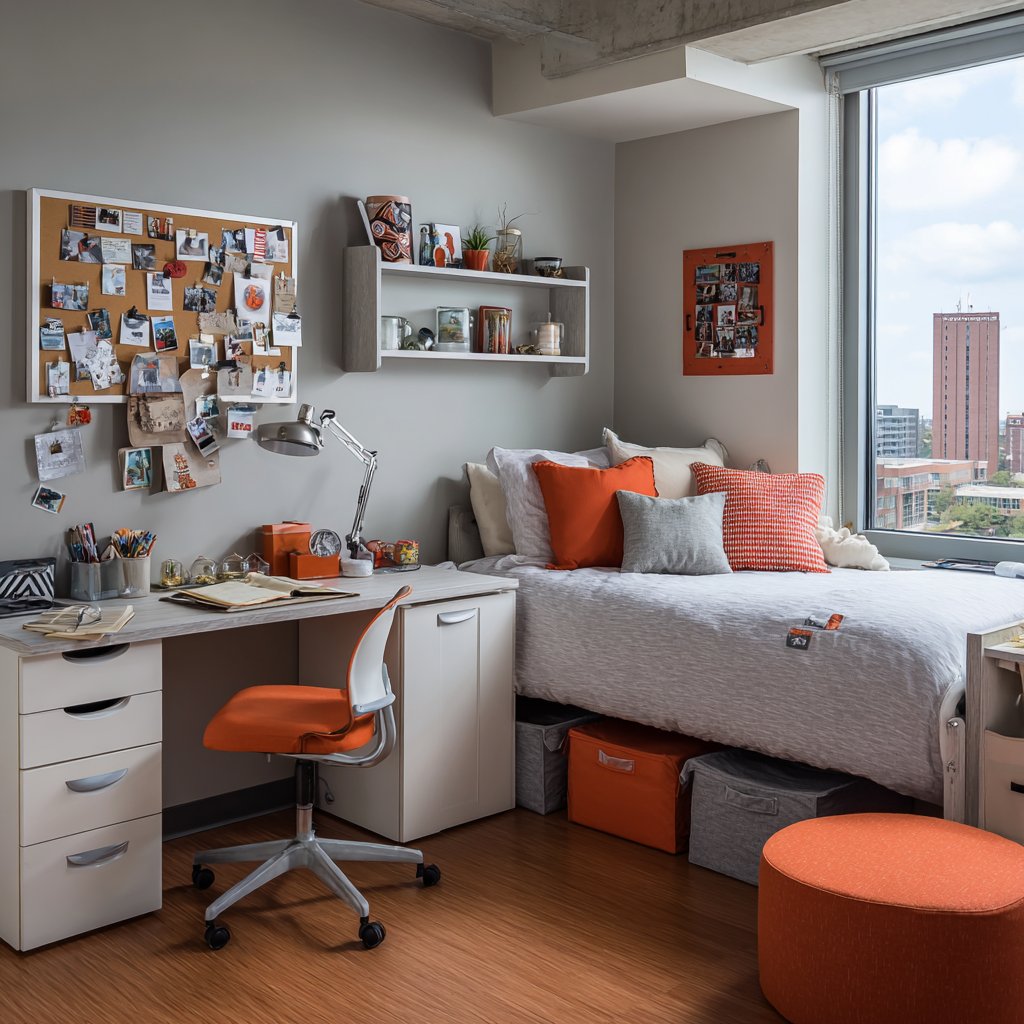
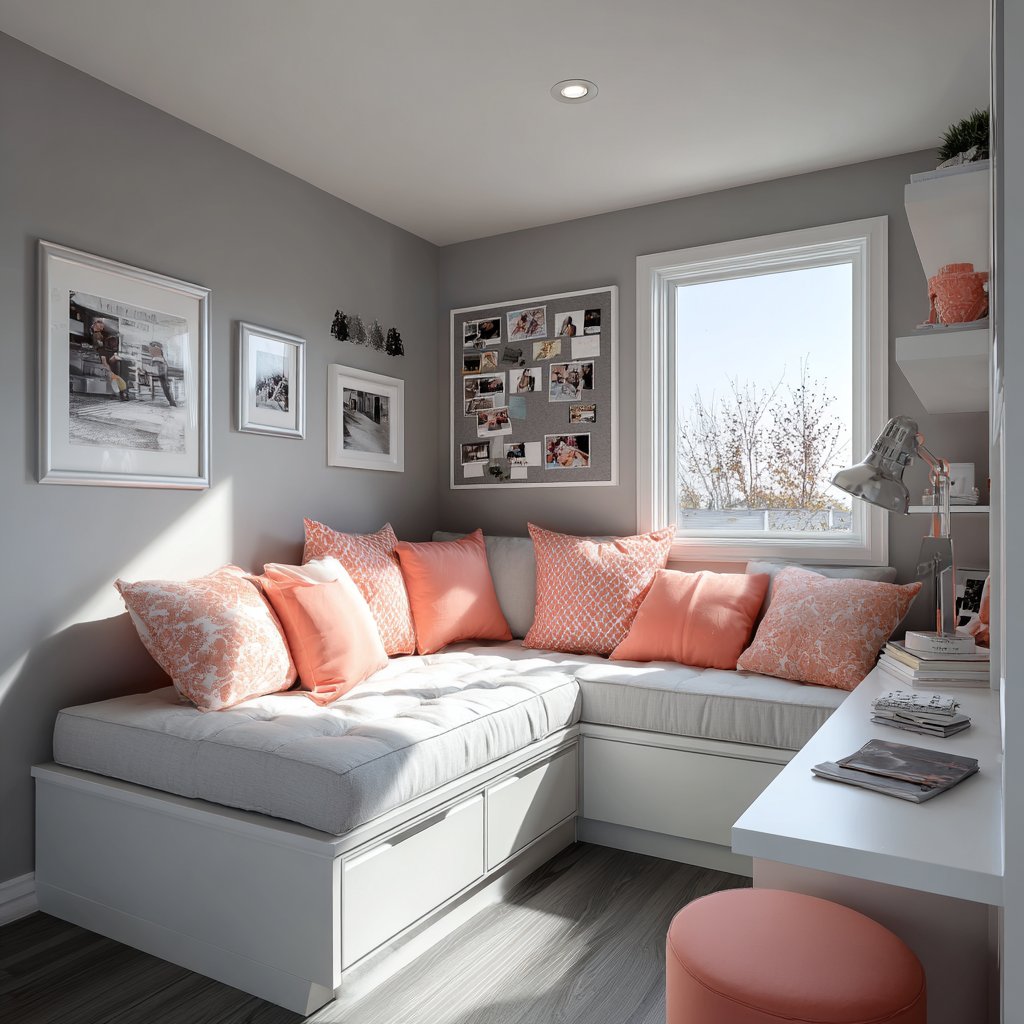
Maximizing corner spaces represents smart design thinking in small bedrooms, and this L-shaped desk configuration demonstrates the concept’s effectiveness. By utilizing two perpendicular walls, the desk creates substantial workspace without protruding far into the room’s center, maintaining open floor space for movement. The corner positioning also provides natural division between the study zone and sleeping area, creating psychological boundaries that help teens transition between different activities. A bulletin board mounted above the desk displays photos, notes, and reminders, serving both organizational and decorative purposes while keeping important items visible and accessible.
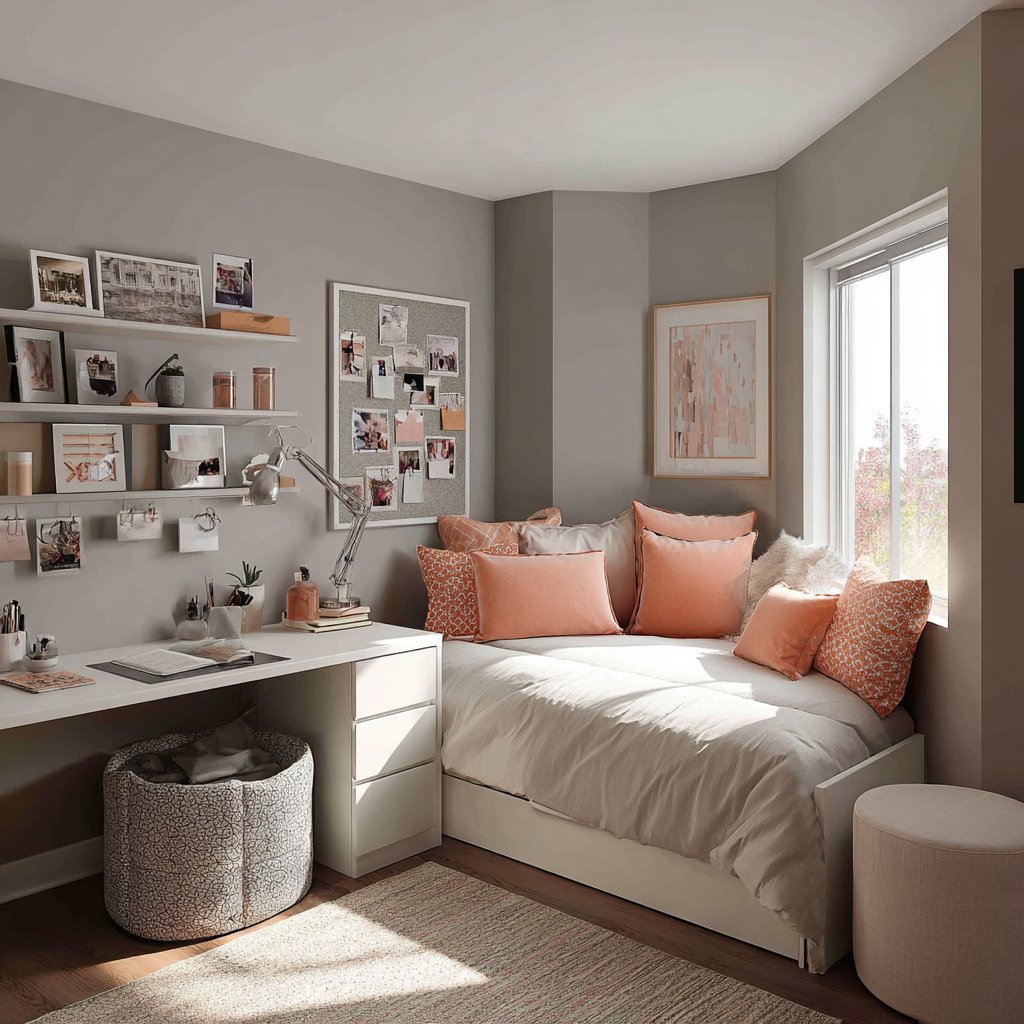
The desk area includes essential study elements: an adjustable-arm desk lamp that can be positioned for optimal task lighting, and organized storage containers that keep supplies sorted and within reach. These practical additions transform the corner into a fully functional study environment that supports academic success. Across the room, a twin bed with under-bed rolling storage bins provides additional organization options for items that don’t require daily access. The mobility of rolling bins makes seasonal clothing swaps or deep cleaning sessions significantly easier compared to static storage solutions.
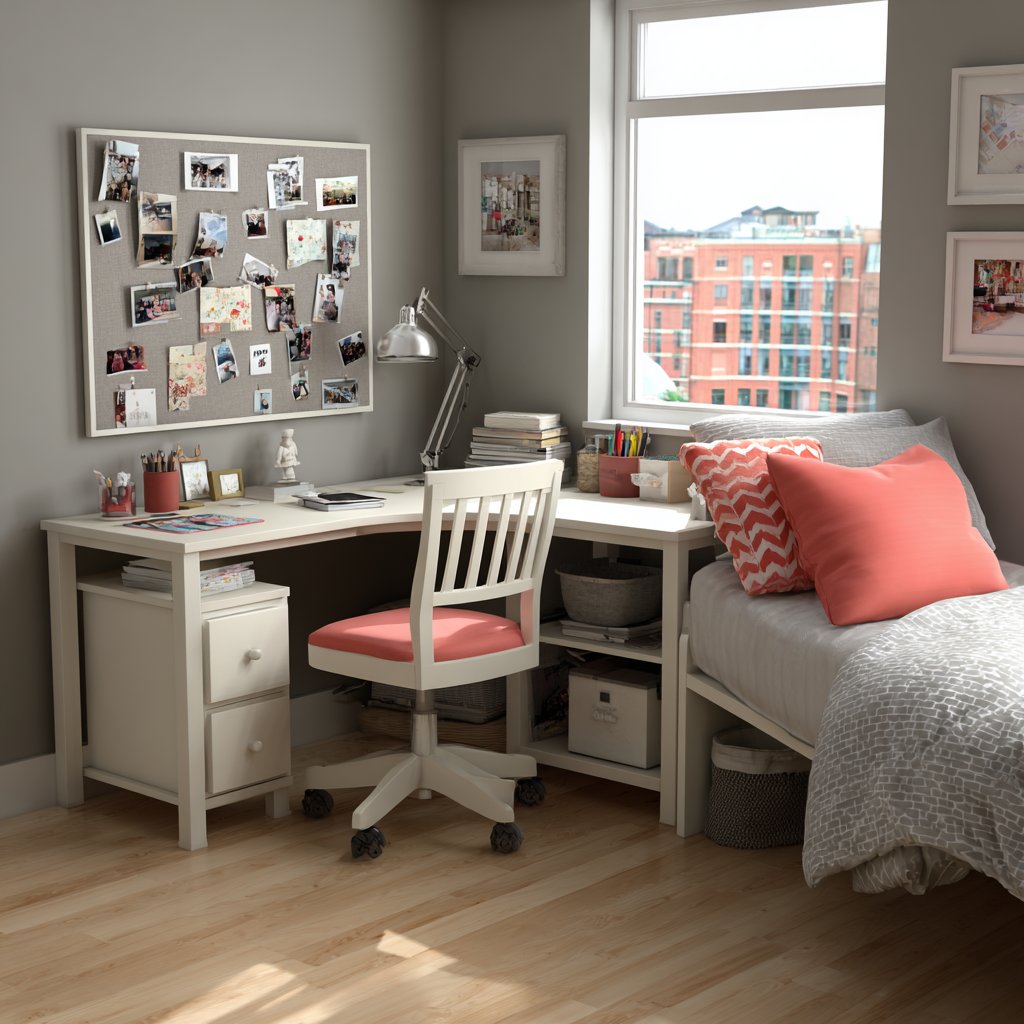
The color scheme incorporates warm grey walls that create a sophisticated backdrop, punctuated by coral accent pillows that inject youthful energy and personality without overwhelming the space. This balanced approach to color demonstrates how neutral foundations allow for easy updates as teen preferences evolve—simply changing accent pieces can refresh the entire room’s appearance. Wide-angle perspective photography showcases the efficient room layout, illustrating how strategic furniture placement and thoughtful color choices work together to create a cohesive, functional small bedroom that meets multiple needs within limited square footage.
Key Design Tips:
- Measure corner angles carefully before purchasing desks—not all corners are perfect 90-degree angles
- Install adequate electrical outlets near the desk for laptop, phone charging, and lamp usage
- Position the desk chair so it can easily tuck completely under the desk when not in use
- Use vertical bulletin board space efficiently by organizing items in zones (homework, social, calendar)
- Choose rolling storage bins with lids to keep contents dust-free and visually tidy
- Consider adding a small rug under the desk area to define the study zone and reduce chair noise on hard floors
5. Floor-to-Ceiling Vertical Storage System
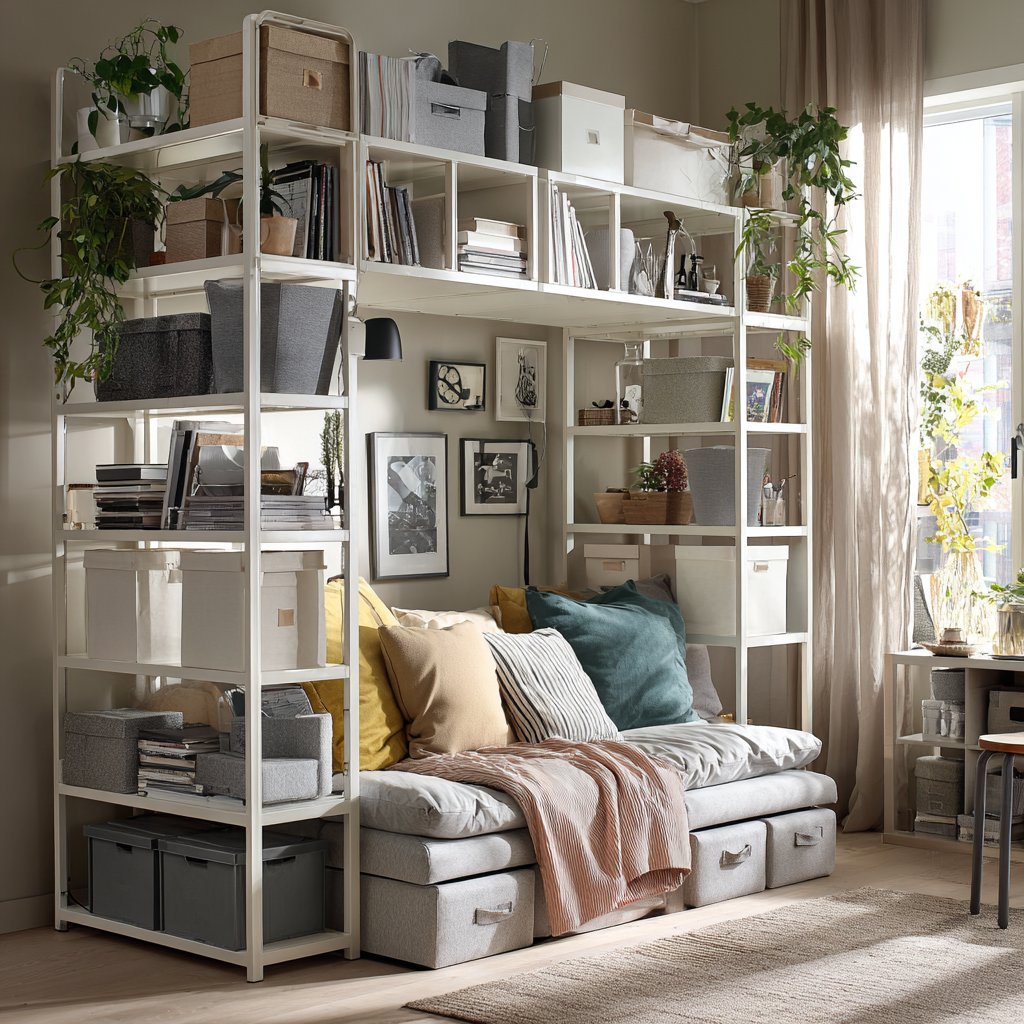
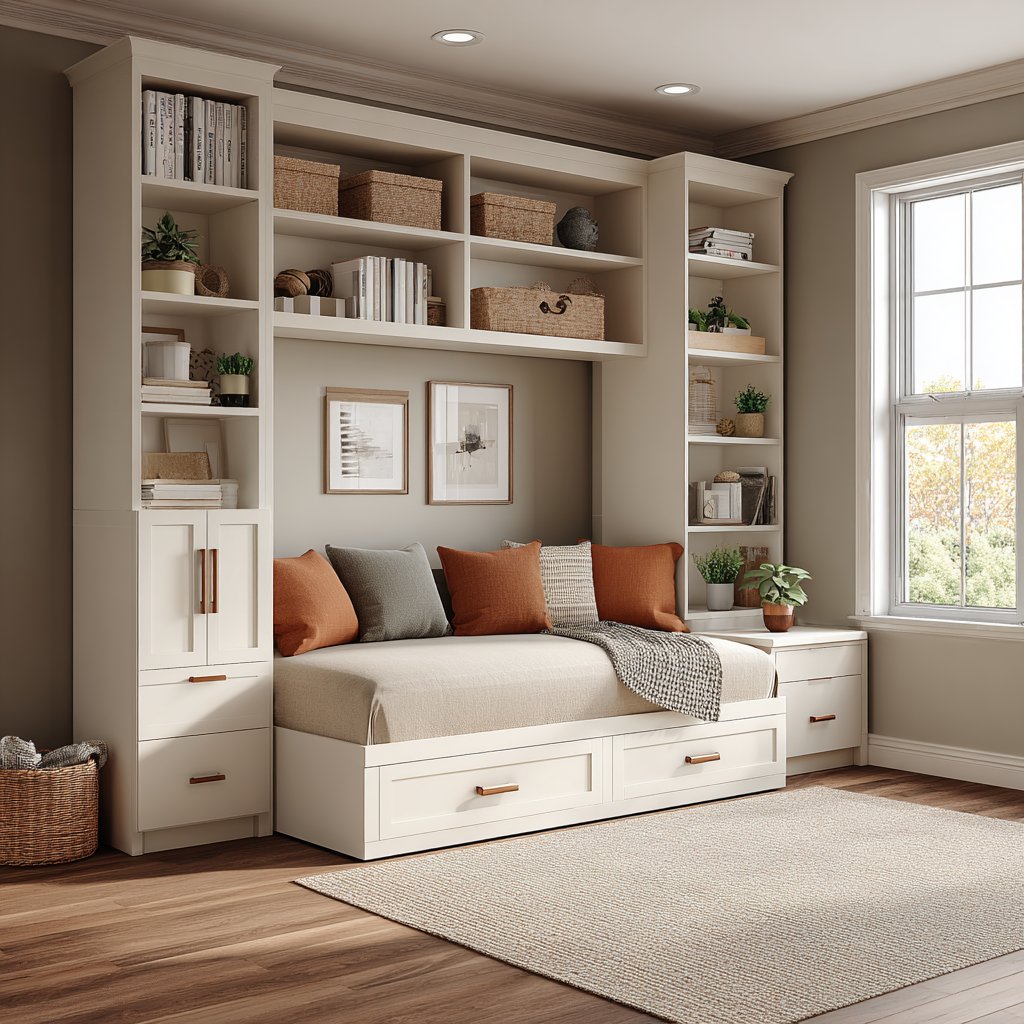
When floor space is limited, thinking vertically becomes essential, and this floor-to-ceiling shelving unit exemplifies that principle. The white finish creates a bright, open feeling that prevents the tall unit from visually overwhelming the small bedroom. The shelving system holds a carefully curated mix of storage boxes, books, plants, and personal collections, demonstrating how vertical storage can accommodate diverse items while maintaining an organized, intentional appearance. The varied contents create visual interest at multiple height levels, drawing the eye upward and making the room feel larger despite its compact footprint.
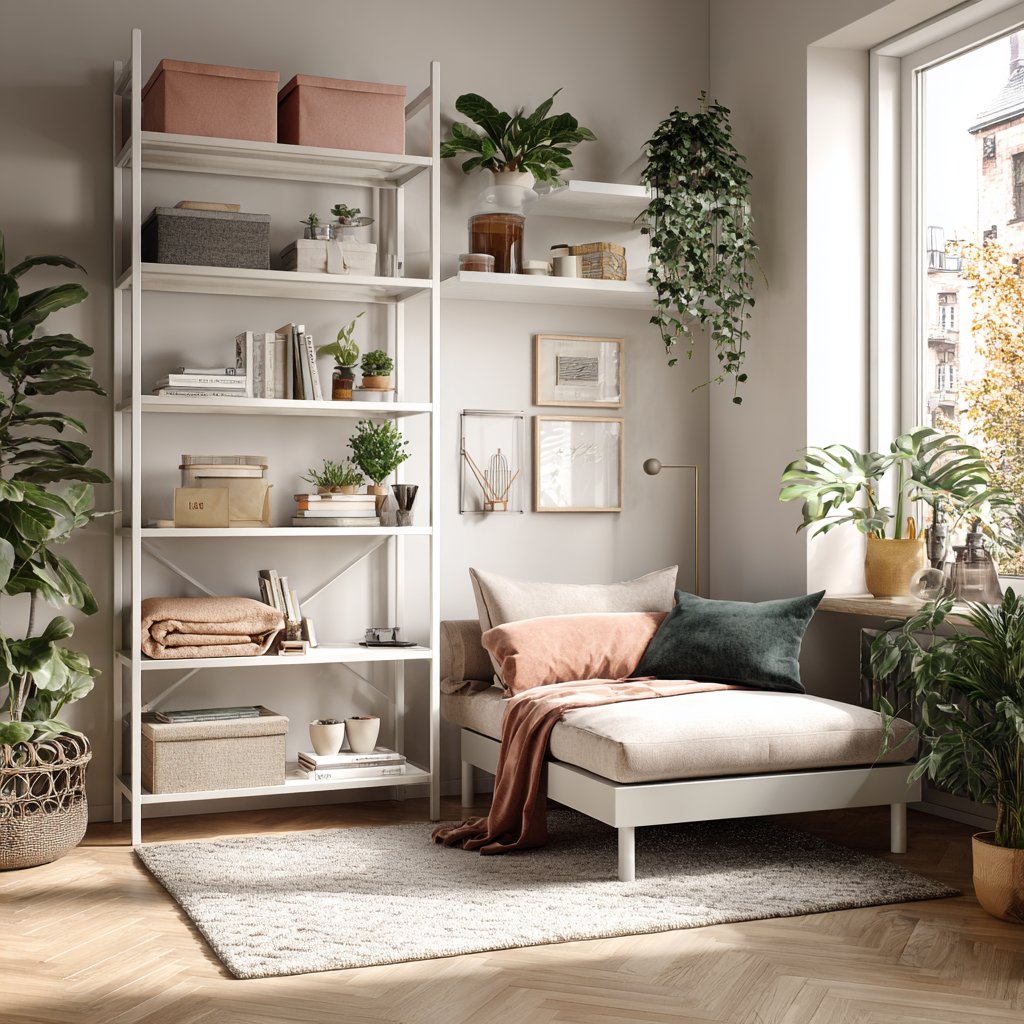
A daybed with trundle underneath provides both sleeping and seating flexibility—a valuable consideration in teen bedrooms that often serve as social spaces for friends. The trundle can accommodate overnight guests without requiring a dedicated guest bed that would consume floor space daily. The daybed’s sofa-like appearance during daytime hours reinforces its dual-purpose nature, making it feel appropriate for lounging, reading, or conversation. The minimalist design aesthetic runs throughout the space, with a neutral color palette providing a calm foundation that allows pops of color from textiles and accessories to make impactful statements.
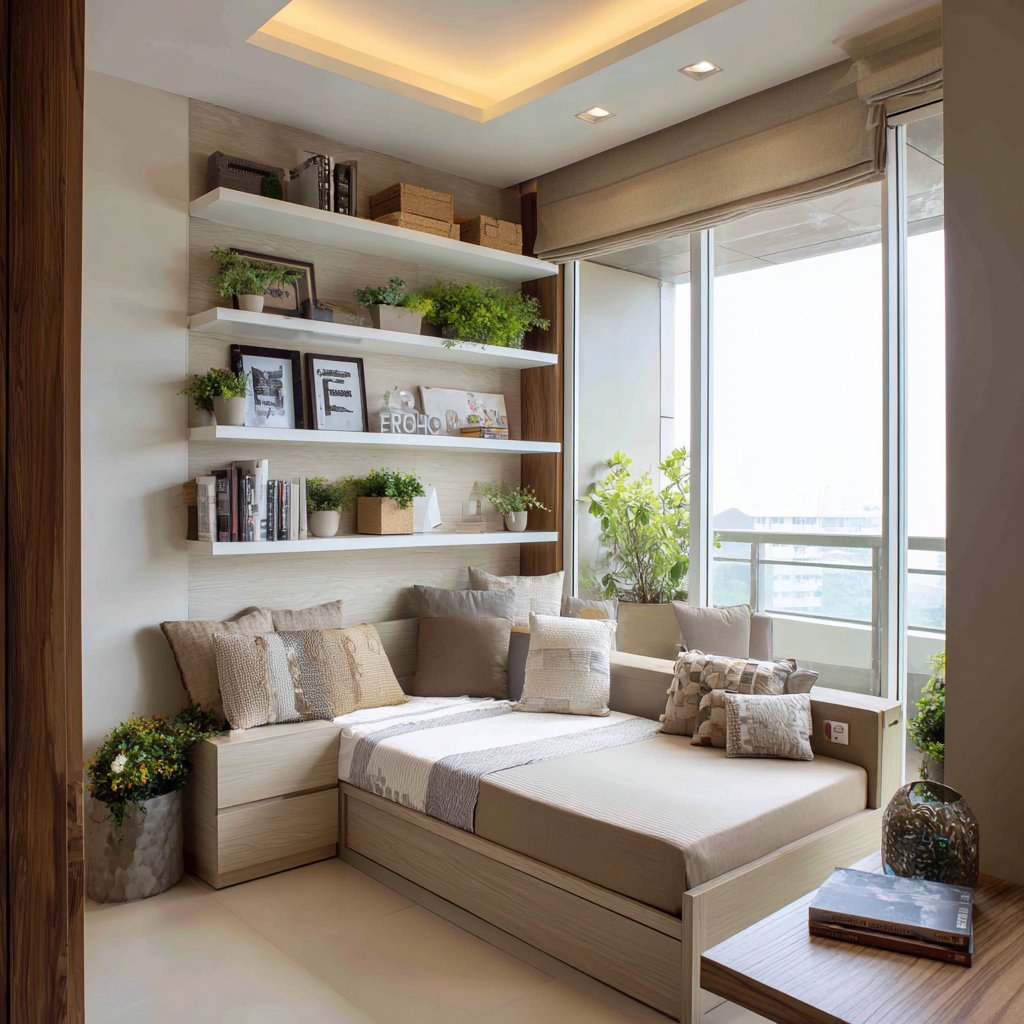
Professional interior photography with balanced lighting highlights the organizational systems and practical design choices that make this small bedroom highly functional. The strategic use of storage boxes in complementary colors creates visual cohesion while concealing items that might otherwise create clutter. Living plants introduce natural elements that improve air quality and add life to the space, while books and personal collections reflect individual interests and make the room feel personalized rather than generic.
Key Design Tips:
- Secure tall shelving units to walls using furniture anchors to prevent tipping hazards
- Vary the heights of items displayed on shelves to create visual rhythm and prevent monotony
- Use uniform storage boxes or baskets for a cohesive look, labeling them for easy identification
- Place frequently used items at eye level and less-used items on top or bottom shelves
- Incorporate both open and closed storage to balance display and concealment
- Leave some shelf space intentionally empty to prevent the unit from appearing overcrowded
- Choose a trundle bed with a comfortable mattress—thinner options may feel inadequate for regular use
6. Wall-Mounted Fold-Down Desk Innovation
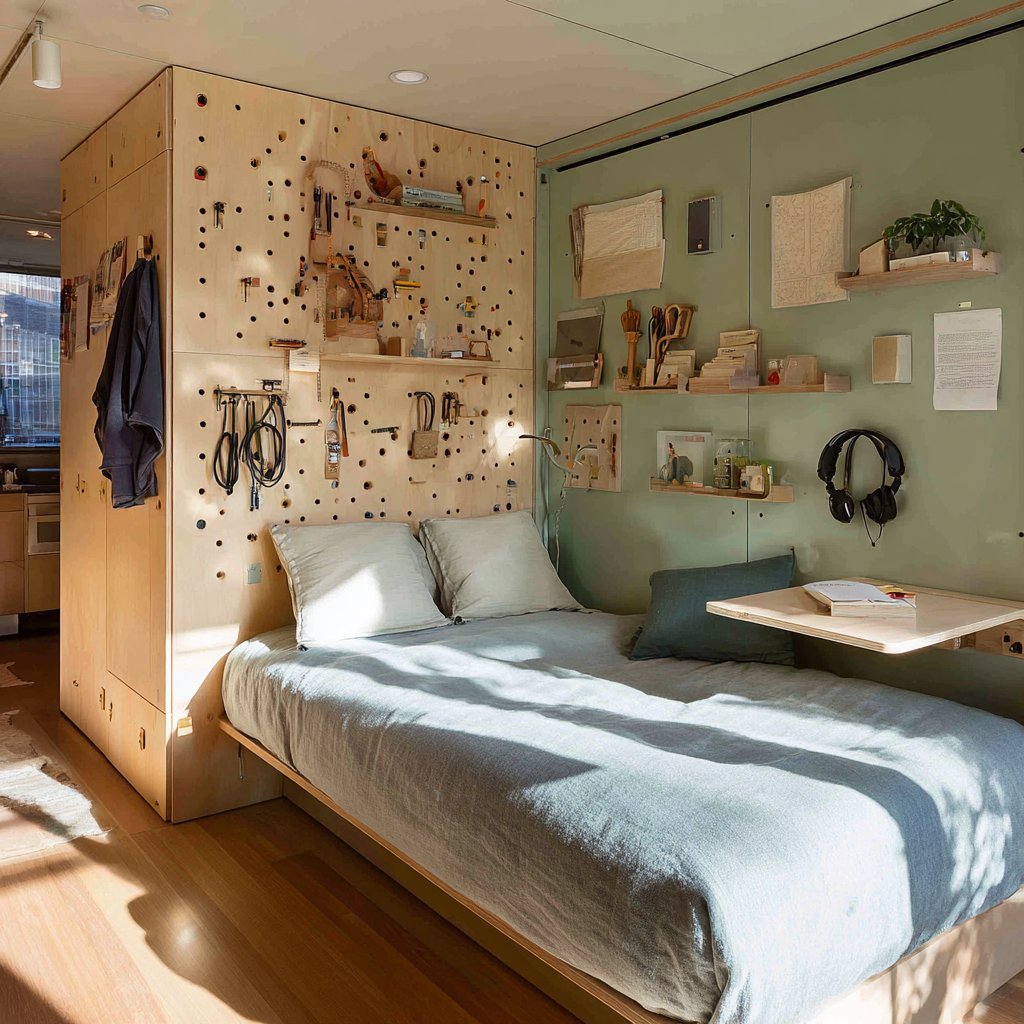
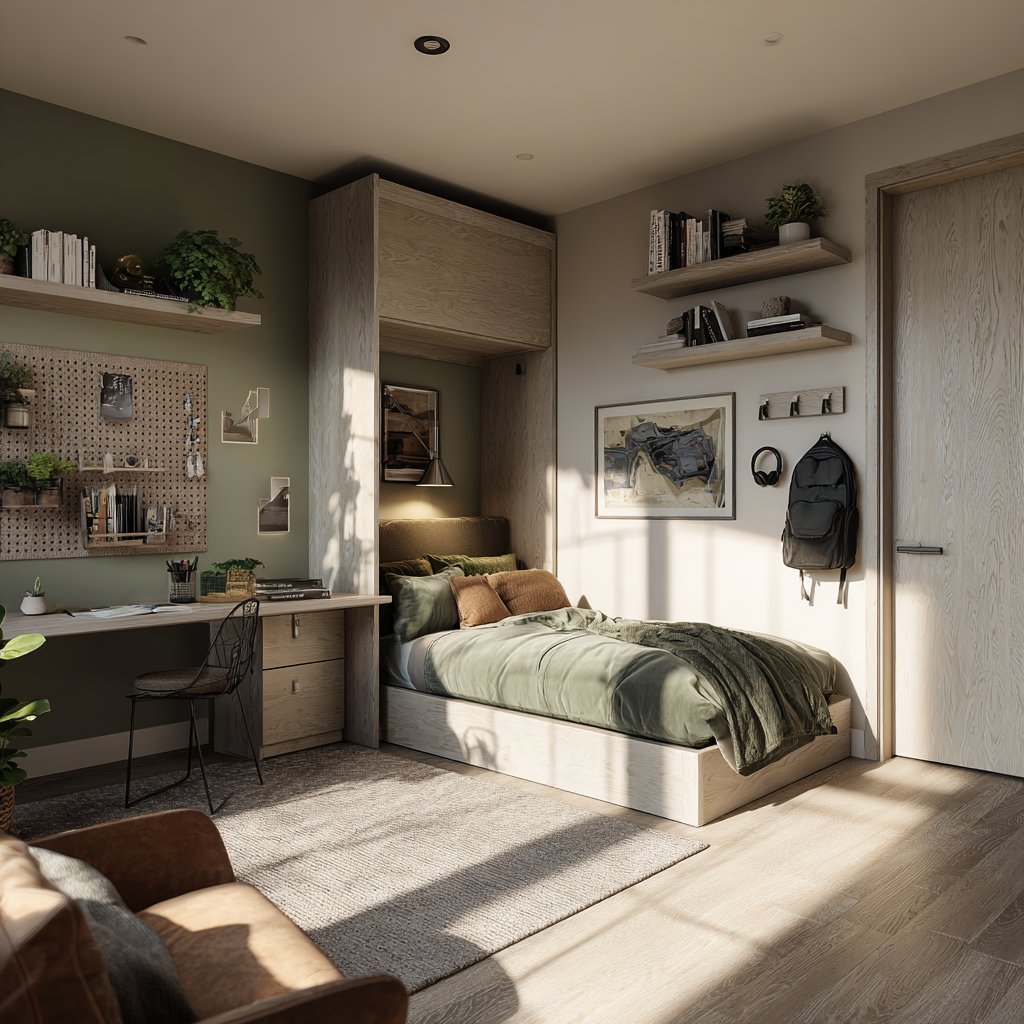
The fold-down desk concept takes space-saving design to impressive heights, literally transforming from functional workspace to decorative wall art when not in use. When folded upright, the desk panel can display artwork, photos, or inspirational quotes, ensuring the wall never appears unfinished or purposeless. This dual-function approach maximizes spatial efficiency while maintaining aesthetic appeal throughout the day. The surrounding pegboard organization system adds another layer of functionality, providing customizable storage for backpacks, headphones, hats, and accessories that can be rearranged as needs change.
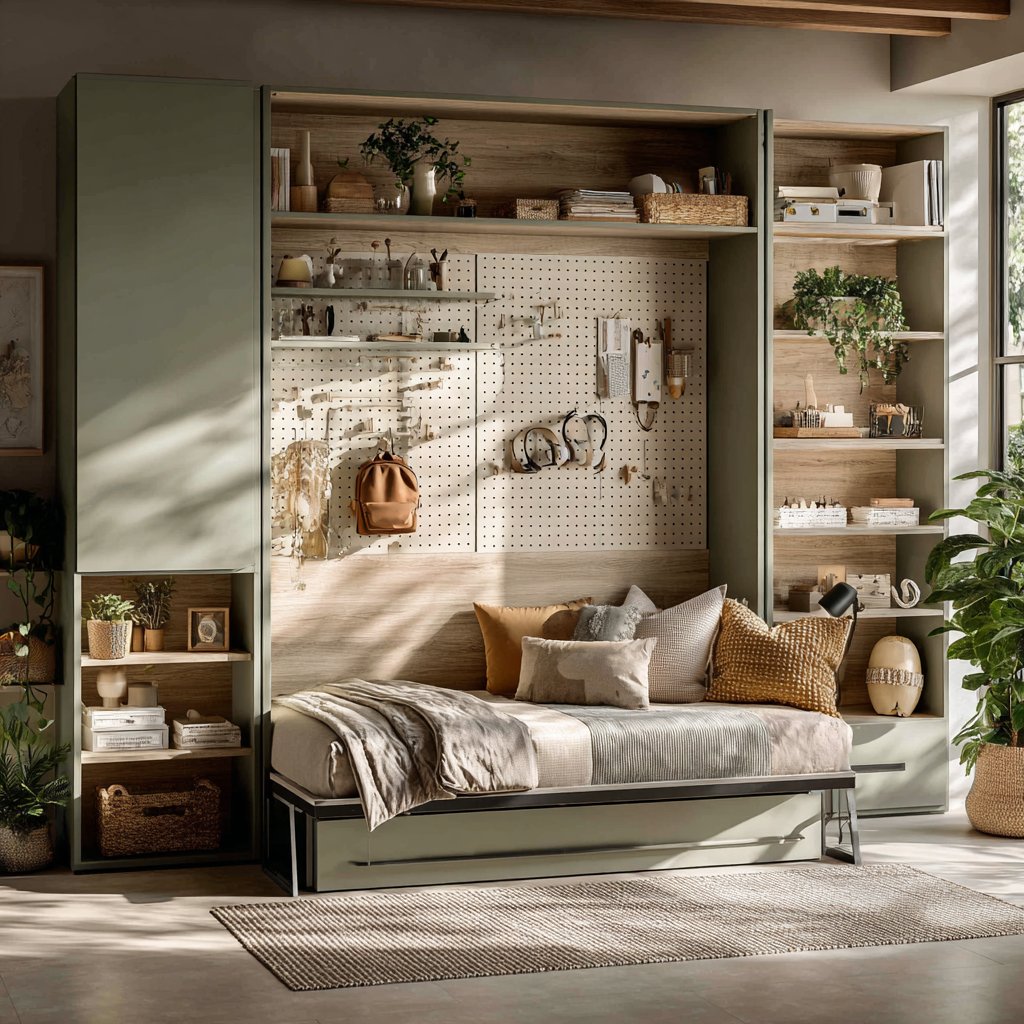
The narrow twin bed features a storage headboard that capitalizes on often-wasted vertical space above the mattress. These integrated shelves provide convenient access to books, alarm clocks, charging devices, and personal items without requiring a separate nightstand. This consolidation of functions proves particularly valuable in small bedrooms where every furniture piece must justify its footprint. An accent wall in sage green provides visual interest and creates a calming atmosphere conducive to both rest and concentration, with the muted hue offering sophistication appropriate for maturing teens.
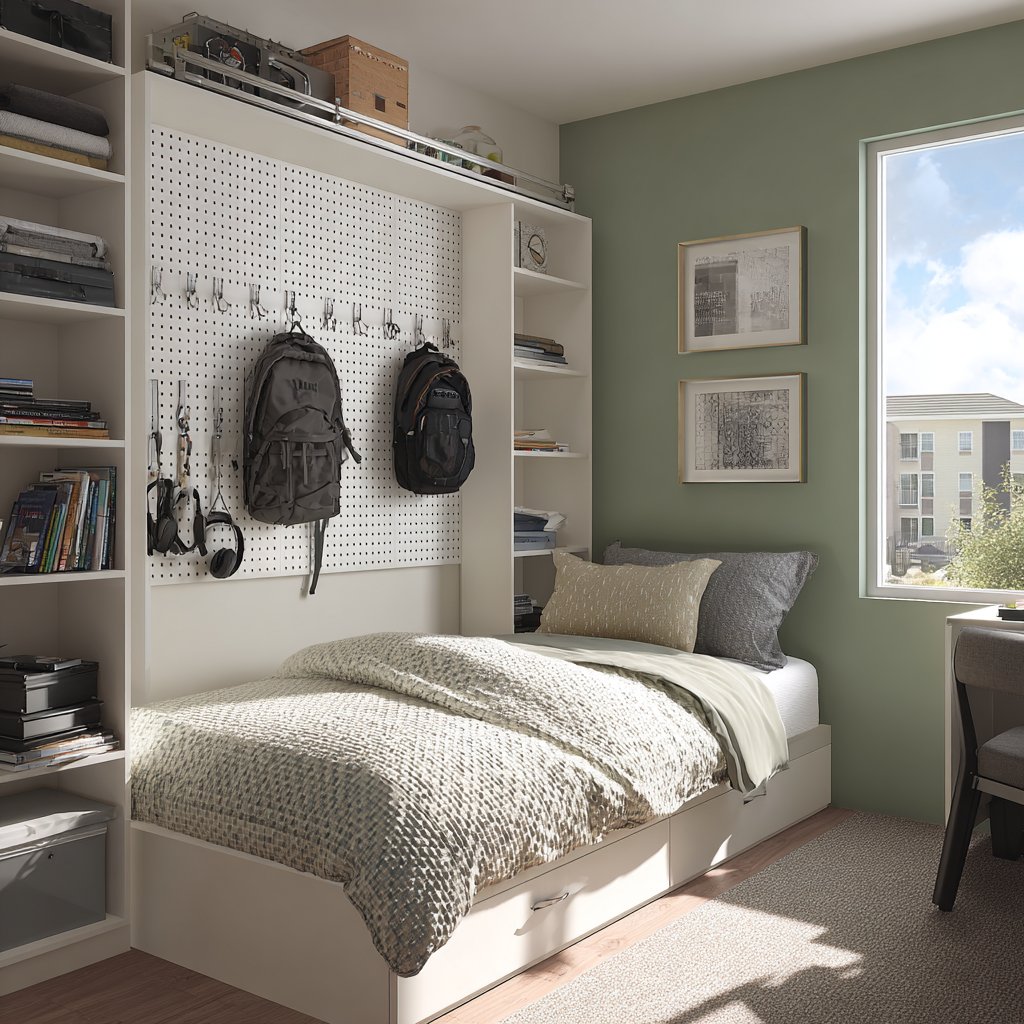
Interior design photography showcasing innovative space-saving solutions emphasizes how the fold-down desk and pegboard system work together to create a highly adaptable environment. Natural lighting creates soft shadows that highlight the texture and dimensionality of the pegboard’s various hooks and accessories, demonstrating that functional storage can simultaneously serve as dynamic wall art. This approach particularly appeals to teens who appreciate flexibility and the ability to frequently refresh their space’s appearance without major renovations.
Key Design Tips:
- Ensure fold-down desk mechanisms are heavy-duty and can support the weight of a laptop and books
- Install sturdy desk supports that lock securely in both up and down positions
- Choose pegboard in colors that complement the room’s palette or paint it to match
- Use pegboard accessories specifically designed for the hole pattern—standard vs. metric spacing varies
- Keep the desk surface clear before folding up to prevent items from falling
- Add a small cushion or mat under the desk legs when extended to prevent floor scratching
- Consider adding integrated lighting under the desk surface for task illumination when extended
7. Window Seat Reading Retreat
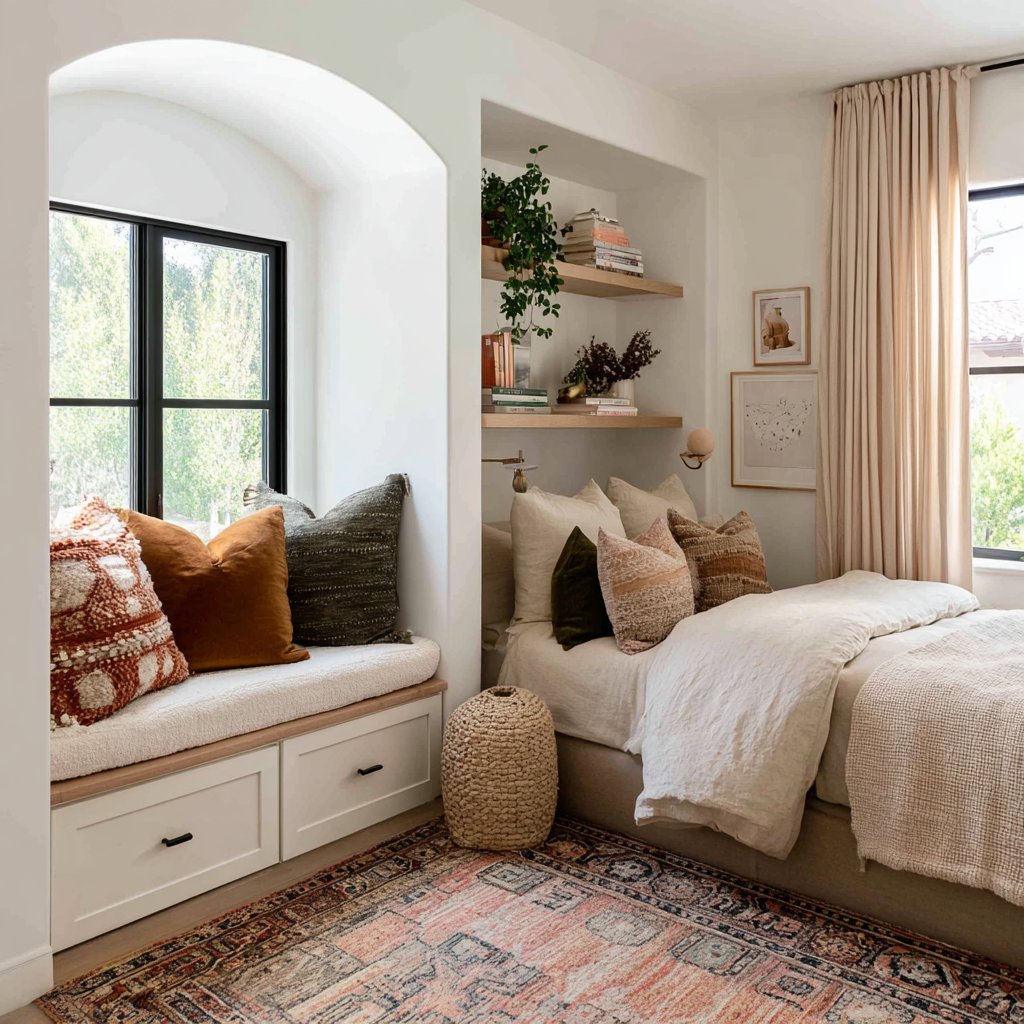
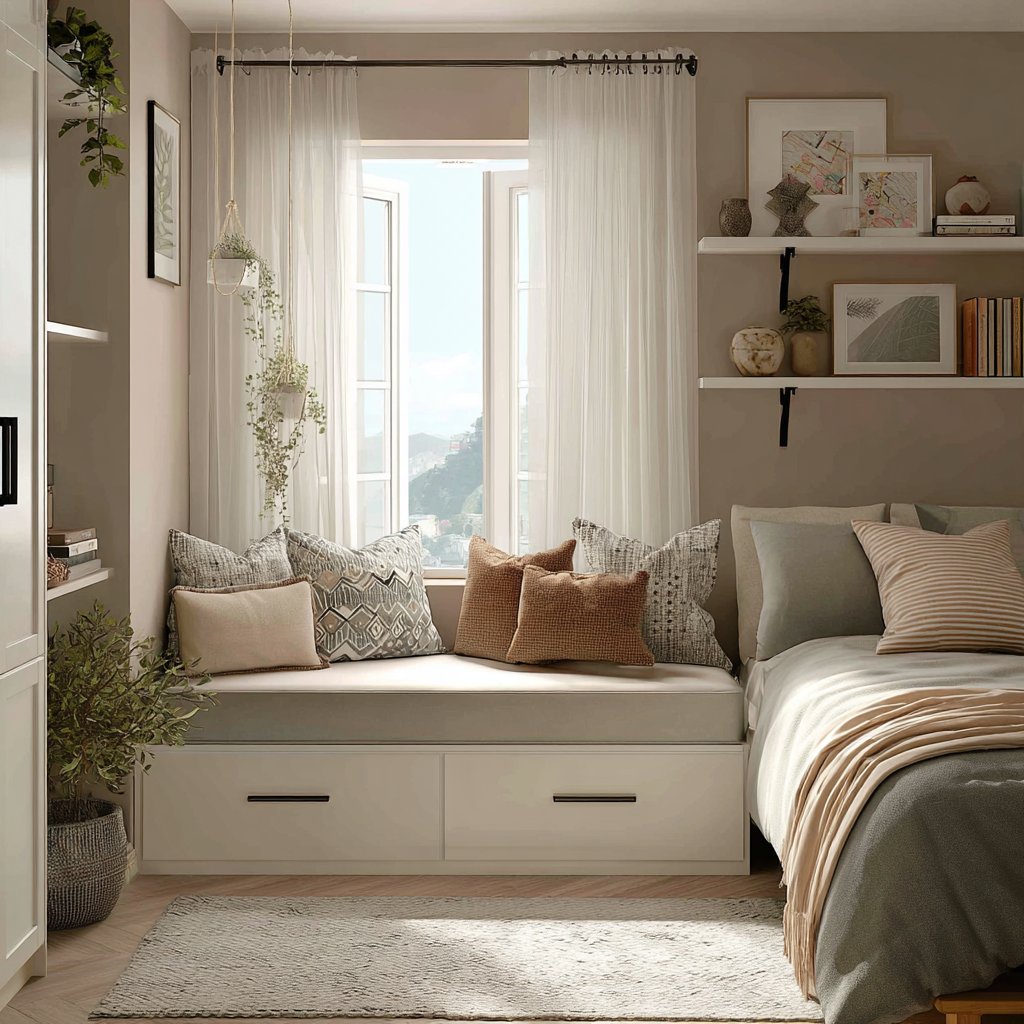
Creating a reading nook in a corner window area transforms an architectural feature into a functional, cozy retreat that becomes a favorite spot within the small bedroom. Built-in bench seating with storage drawers underneath maximizes this often-underutilized space, providing both comfortable seating and concealed storage for books, blankets, or off-season clothing. Cushions in mixed patterns and textures make the window seat inviting and comfortable for extended reading sessions or casual relaxation, while the variety of textiles adds visual richness without requiring additional floor space.
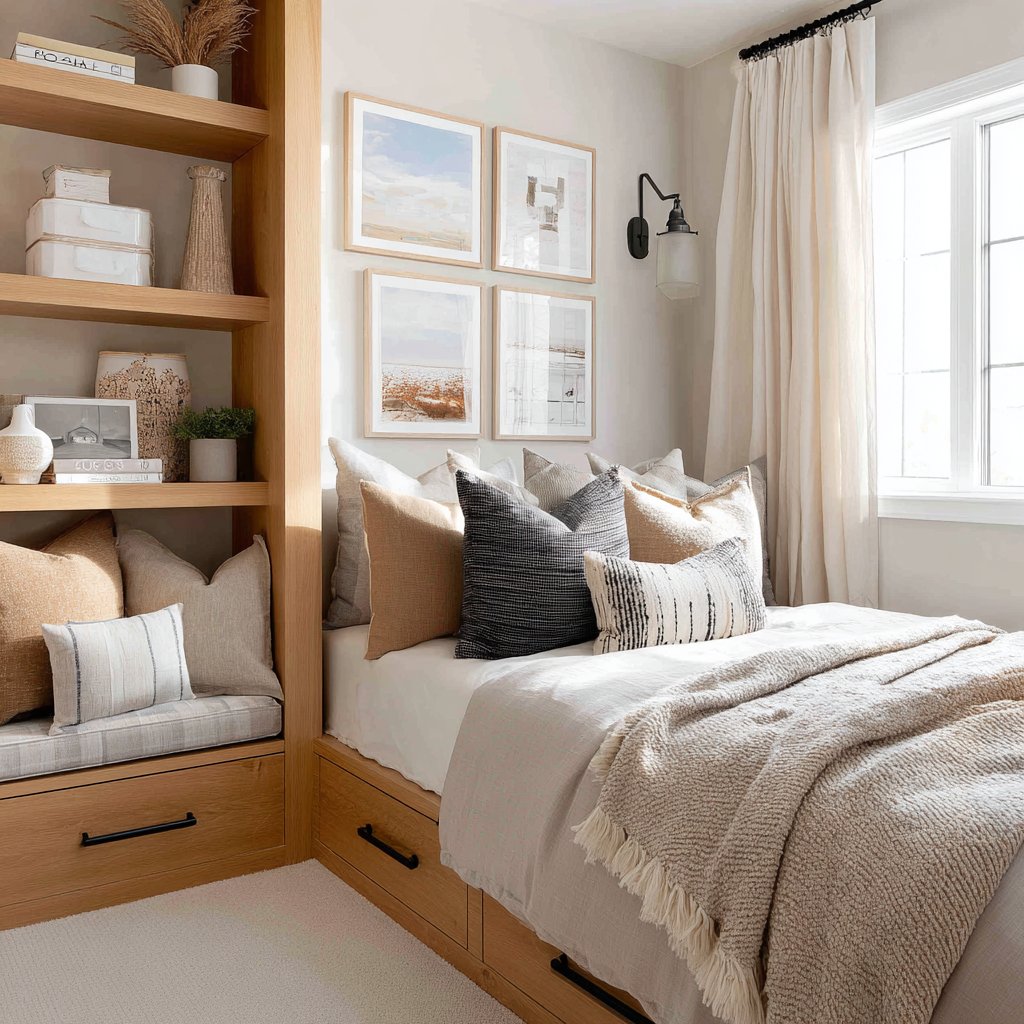
Adjacent wall-mounted floating shelves keep favorite books and small plants within arm’s reach, creating a self-contained reading environment that doesn’t require moving around the room to access materials. This thoughtful placement encourages reading habits by making books visible and accessible—a simple environmental design principle that supports positive behaviors. The main sleeping area features a simple bed frame with neutral bedding and minimal decor, allowing the window seat area to serve as the room’s focal point and personality showcase.
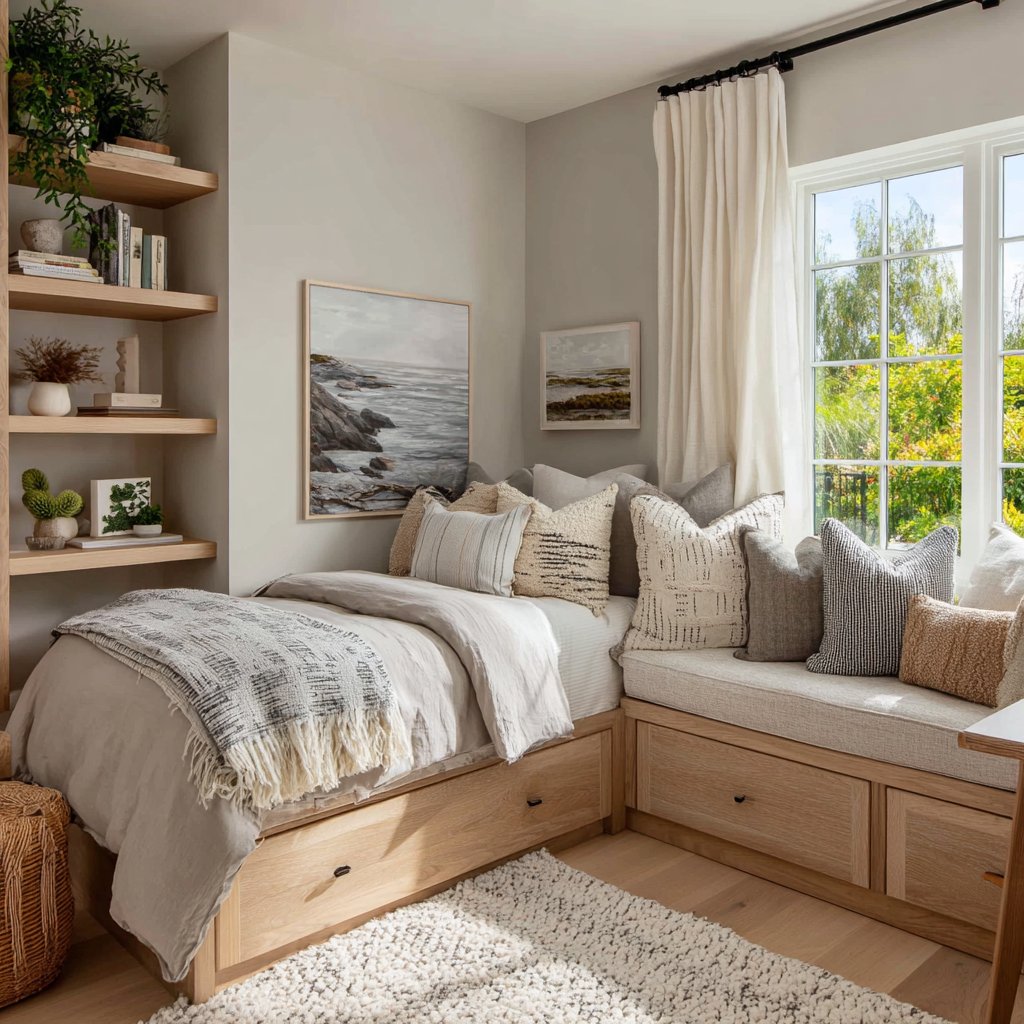
Soft natural lighting through sheer curtains creates an ideal reading environment, with diffused sunlight that’s bright enough for easy reading but gentle enough to prevent glare or eyestrain. The wide-angle photography captures how the cozy functional spaces coexist within the compact room, demonstrating that even small bedrooms can accommodate multiple activity zones when each area is purposefully designed. The window seat arrangement proves particularly valuable in narrow or awkwardly shaped rooms where traditional furniture placement proves challenging.
Key Design Tips:
- Measure window depth carefully to ensure adequate seating space—minimum 18 inches depth recommended
- Choose cushion fabrics that can withstand daily use and are easy to clean
- Install drawer glides that can handle the weight of stored items without sticking
- Position the reading nook near adequate lighting—add a reading lamp if natural light is insufficient
- Use weather-resistant cushion materials for windows that experience condensation
- Add throw pillows with removable, washable covers for easy maintenance
- Consider adding electrical outlets in the window seat area for device charging while reading
8. Closet Organization Mastery
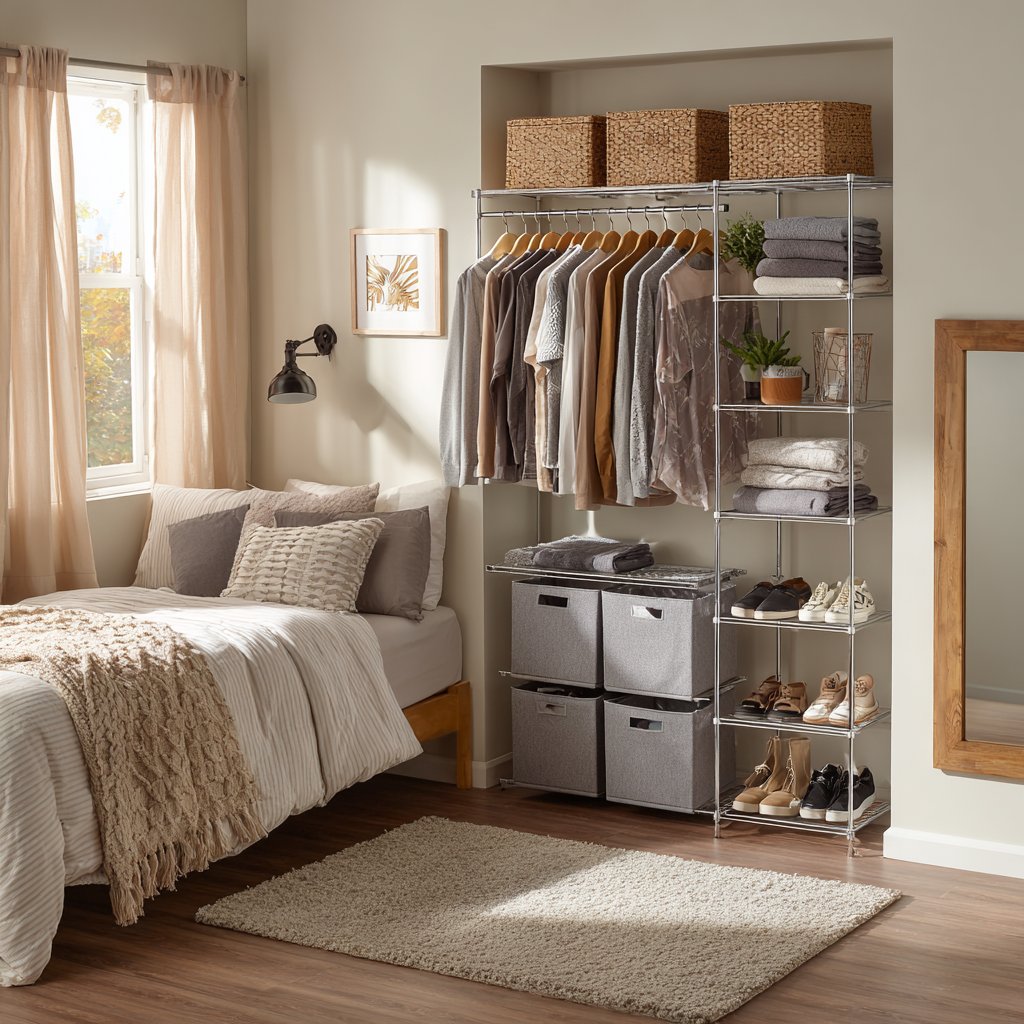
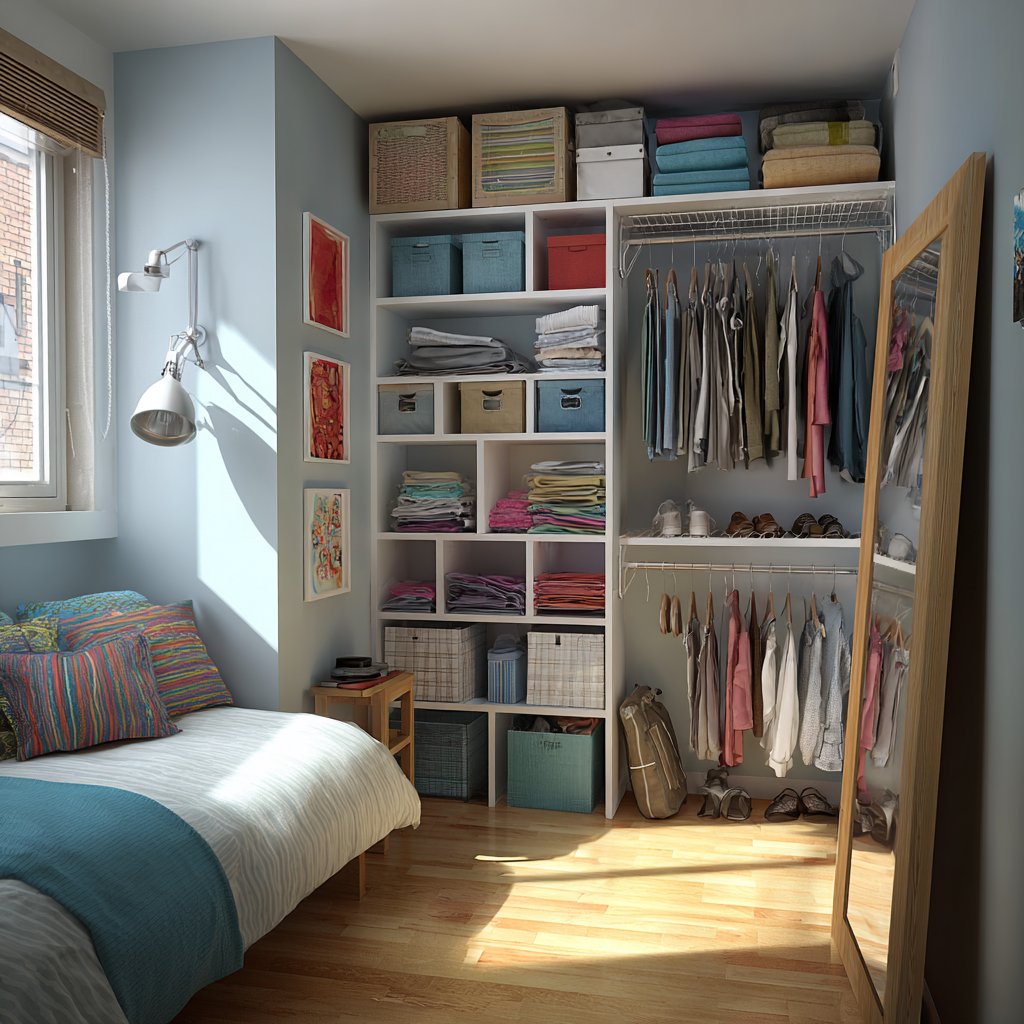
A well-organized closet system can dramatically improve a small bedroom’s functionality by efficiently housing clothing and accessories that might otherwise require additional furniture. This design features open hanging rods, stacked storage cubes, and built-in shoe racks that maximize vertical closet space from floor to ceiling. The efficient system includes fabric bins in coordinating colors that provide flexible storage for various items while maintaining visual cohesion. Adjustable shelving allows the configuration to evolve as storage needs change, accommodating everything from bulky sweaters to small accessories.
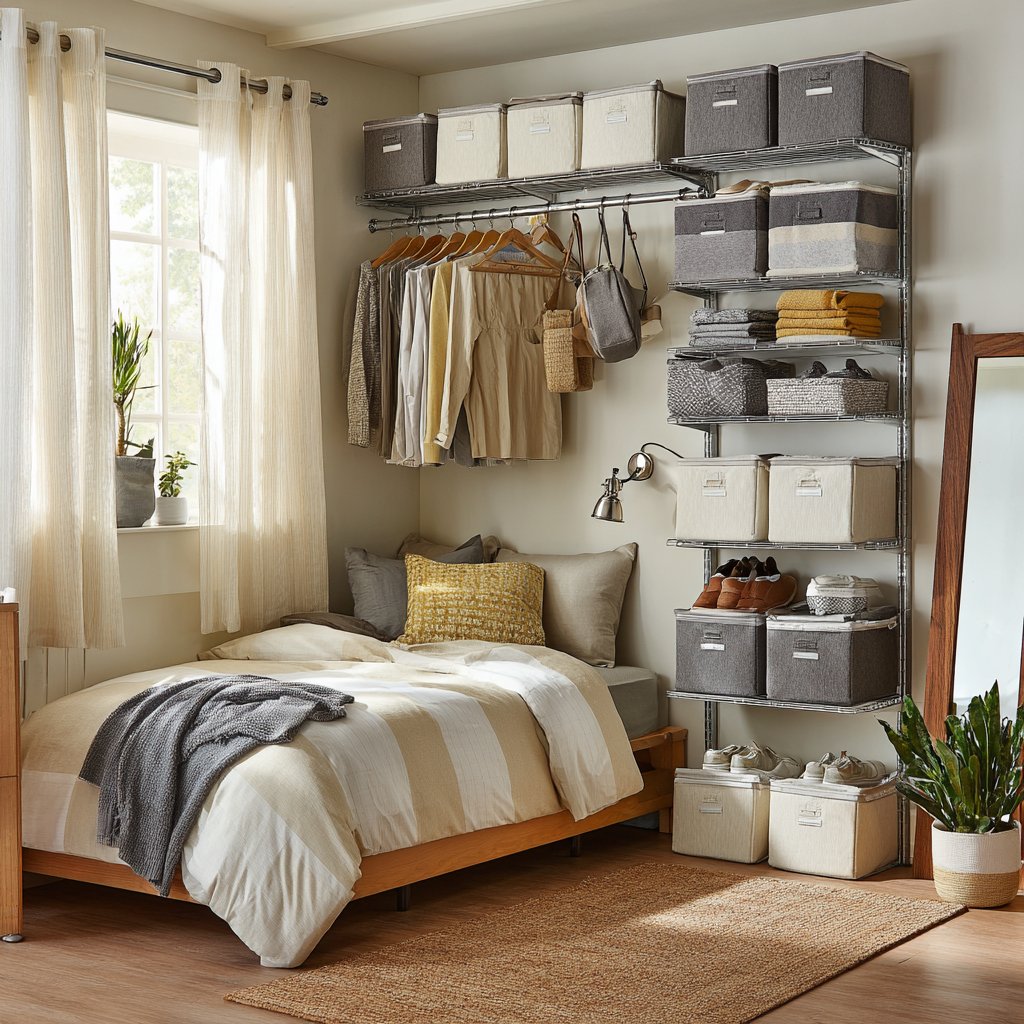
Adjacent to the closet, a slim full-length mirror leans casually against the wall, providing essential function for outfit coordination without requiring wall mounting or taking up significant floor space. The leaning approach also adds a relaxed, contemporary aesthetic element that feels less formal than traditional mounted mirrors. The room’s simple bed with under-bed storage and wall-mounted reading lamp maintains the space’s uncluttered appearance, allowing the organizational systems to remain the focus of the design strategy.
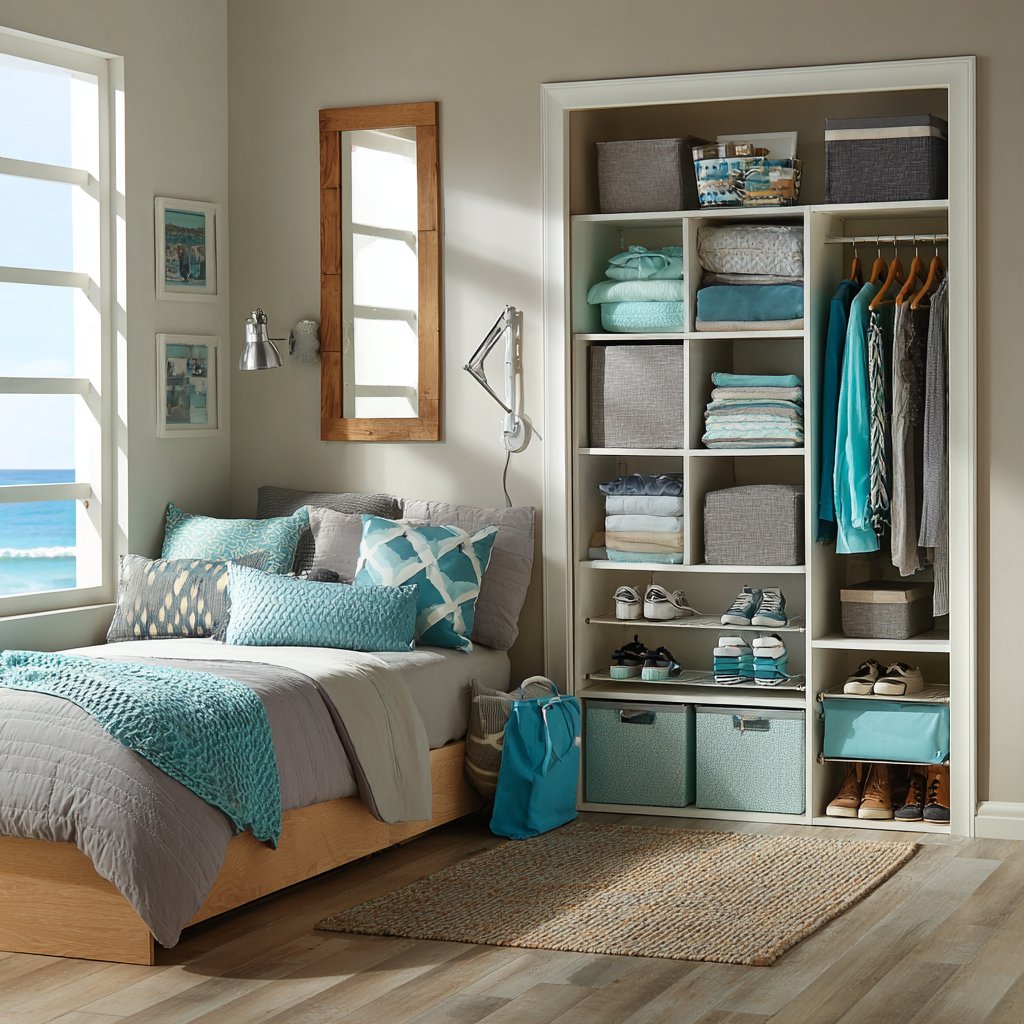
Interior photography with natural lighting highlights the practical organization solutions that make daily routines more efficient. The visibility of clothing items on open rods encourages outfit planning and ensures nothing gets forgotten in the back of a dark closet. The combination of open and closed storage accommodates different types of items—hanging rods for dresses and button-downs, cubes for folded items, bins for accessories—creating a comprehensive organizational system that addresses all storage needs within the closet’s footprint rather than spilling into the bedroom proper.
Key Design Tips:
- Measure closet dimensions precisely before purchasing organizational systems
- Use vertical space completely—install double hanging rods where full-length hanging isn’t necessary
- Choose clear or labeled storage bins to identify contents without opening each container
- Install closet lighting to improve visibility and make getting ready easier
- Group similar items together and maintain organization through consistent systems
- Consider specialty organizers for specific items like jewelry, belts, or scarves
- Rotate seasonal clothing to keep current items most accessible
9. Compact Vanity Dressing Area
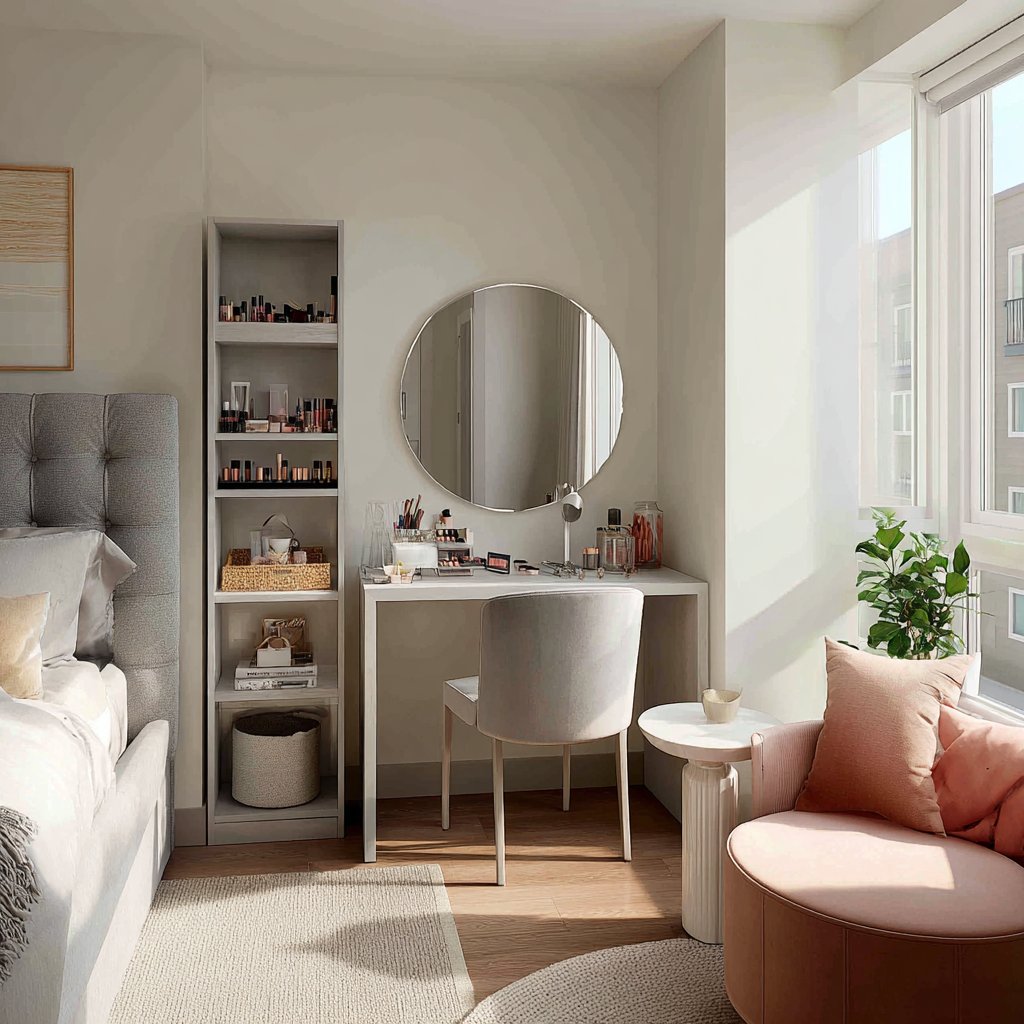
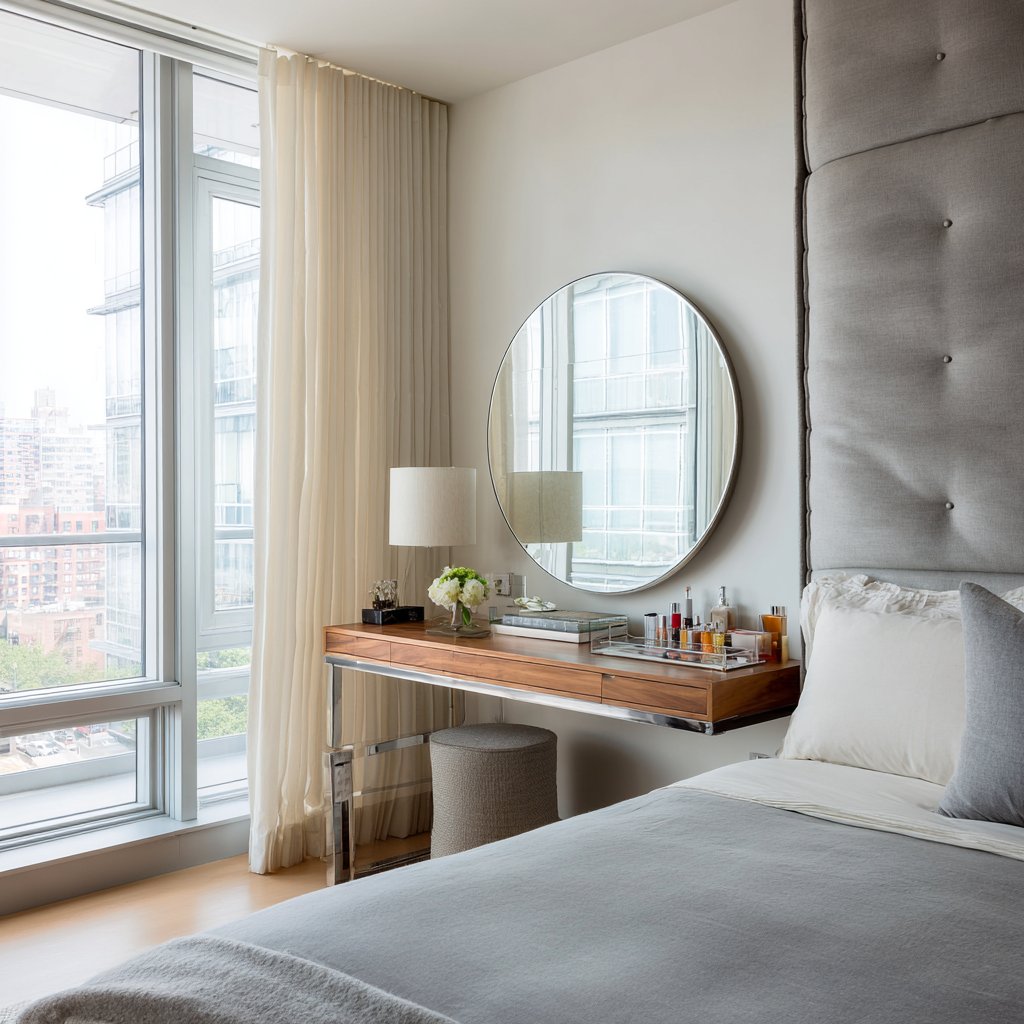
Creating a dedicated dressing area within a small teen bedroom requires strategic space allocation, and this design achieves it through careful furniture selection and placement. A narrow console table serves double duty as a functional vanity, providing surface space for makeup and accessories without the bulk of traditional vanity furniture. The round mirror mounted above reflects light throughout the room while serving its primary grooming function. String lights framing the mirror provide flattering task lighting that’s more attractive and less harsh than typical overhead fixtures, creating an Instagram-worthy setup that appeals to teen aesthetics.
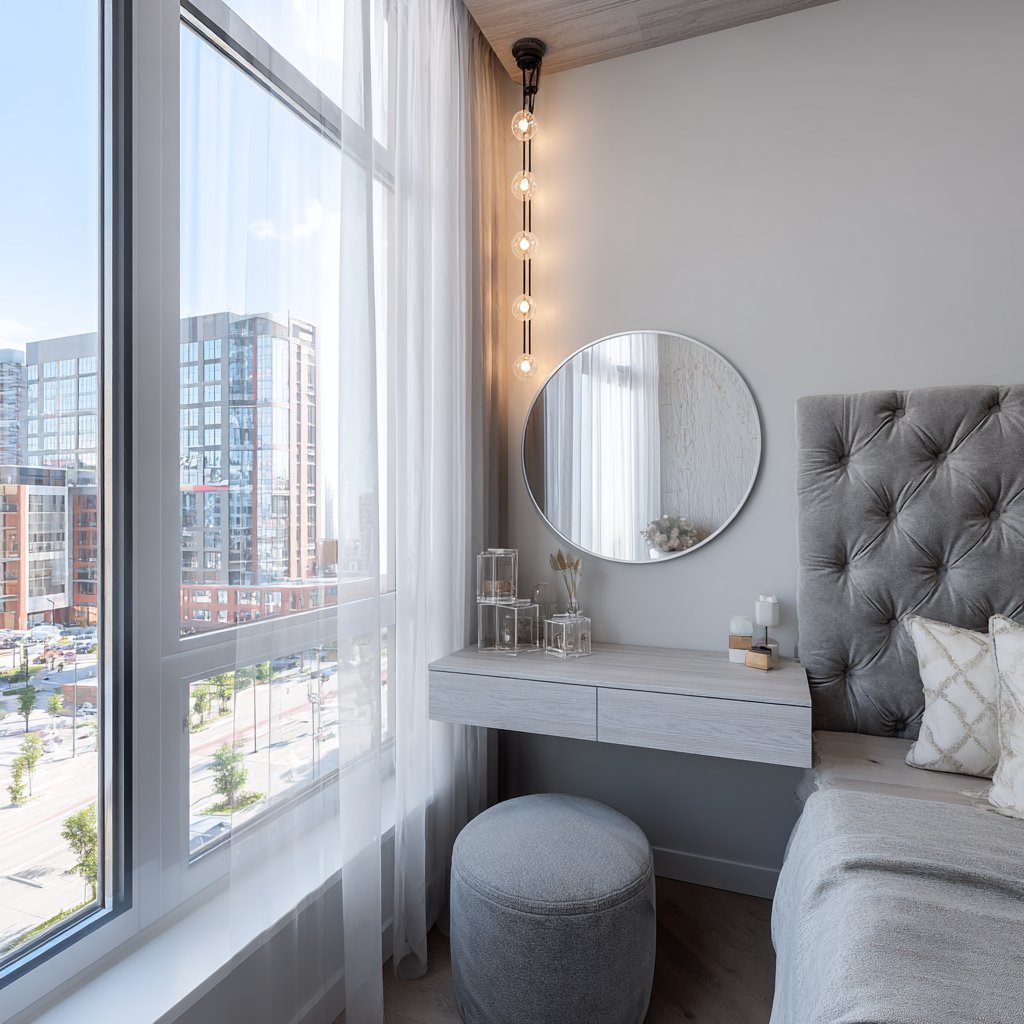
Makeup and accessories organized in clear acrylic containers create functional storage that’s both practical and visually pleasing. The transparency prevents items from being forgotten while maintaining a tidy appearance that conceals everyday disorganization. This organizational approach also makes products easy to locate during morning routines, reducing frustration and time spent searching for specific items. The sleeping area features a bed with tufted headboard in soft grey fabric that adds sophisticated texture, paired with a minimal side table that provides essential surface space without consuming excessive floor area.
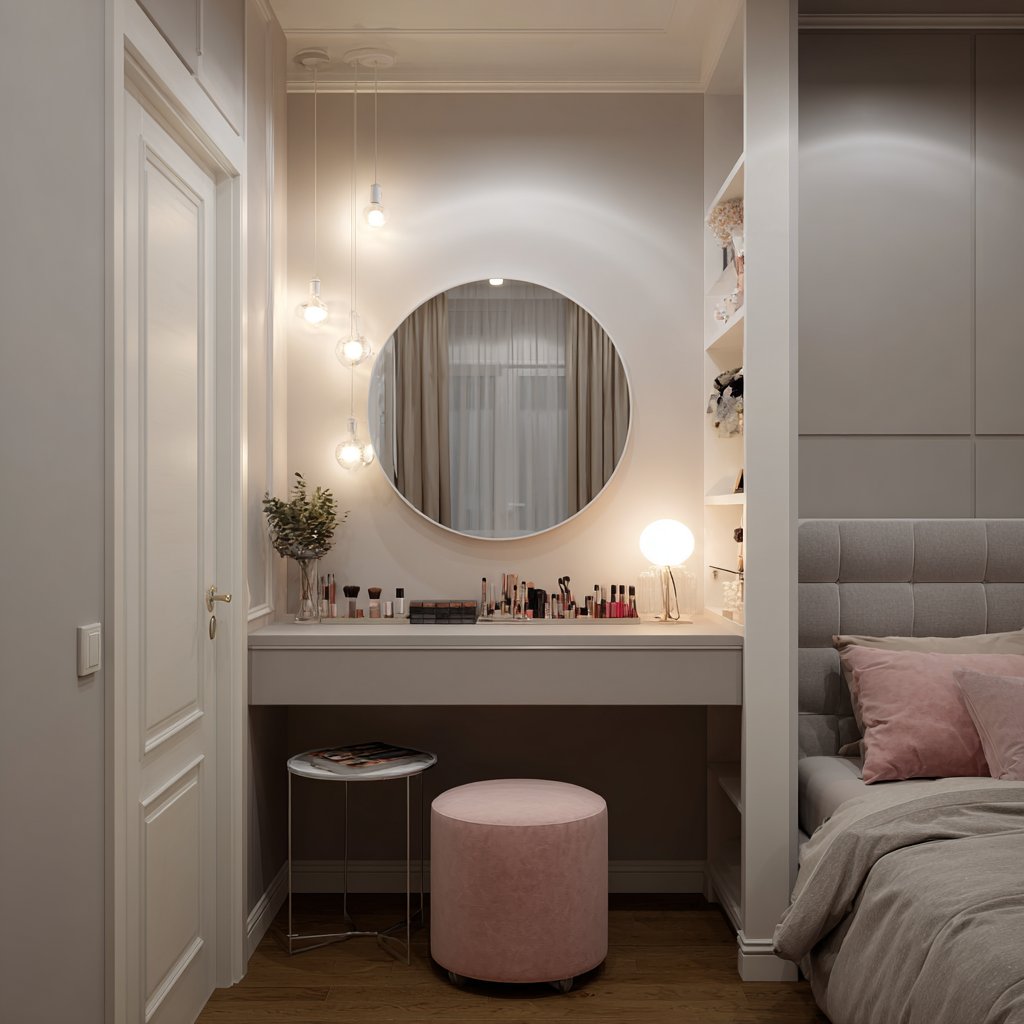
Professional interior photography showcases the multifunctional spaces and balanced exposure that captures organizing details clearly. The thoughtful separation of grooming and sleeping areas creates psychological boundaries within the small bedroom, helping maintain distinct zones for different activities. This separation proves particularly valuable during hectic morning routines, allowing the bed area to remain calm and undisturbed while the vanity area serves its active purpose. The coordinated color palette ties both zones together visually, ensuring the room feels cohesive despite its multiple functions.
Key Design Tips:
- Choose a vanity table narrow enough to maintain walking space—12-18 inches depth is often sufficient
- Install the mirror at appropriate height for both sitting and standing use
- Use drawer organizers or trays to separate different types of products and prevent rolling
- Add adequate lighting with warm color temperature to avoid harsh shadows
- Select a comfortable vanity stool or chair that can tuck completely under the table
- Consider a vanity with built-in drawers if counter space is limited
- Keep frequently used items on the surface and less-used products in storage
10. Gallery Wall Personal Expression
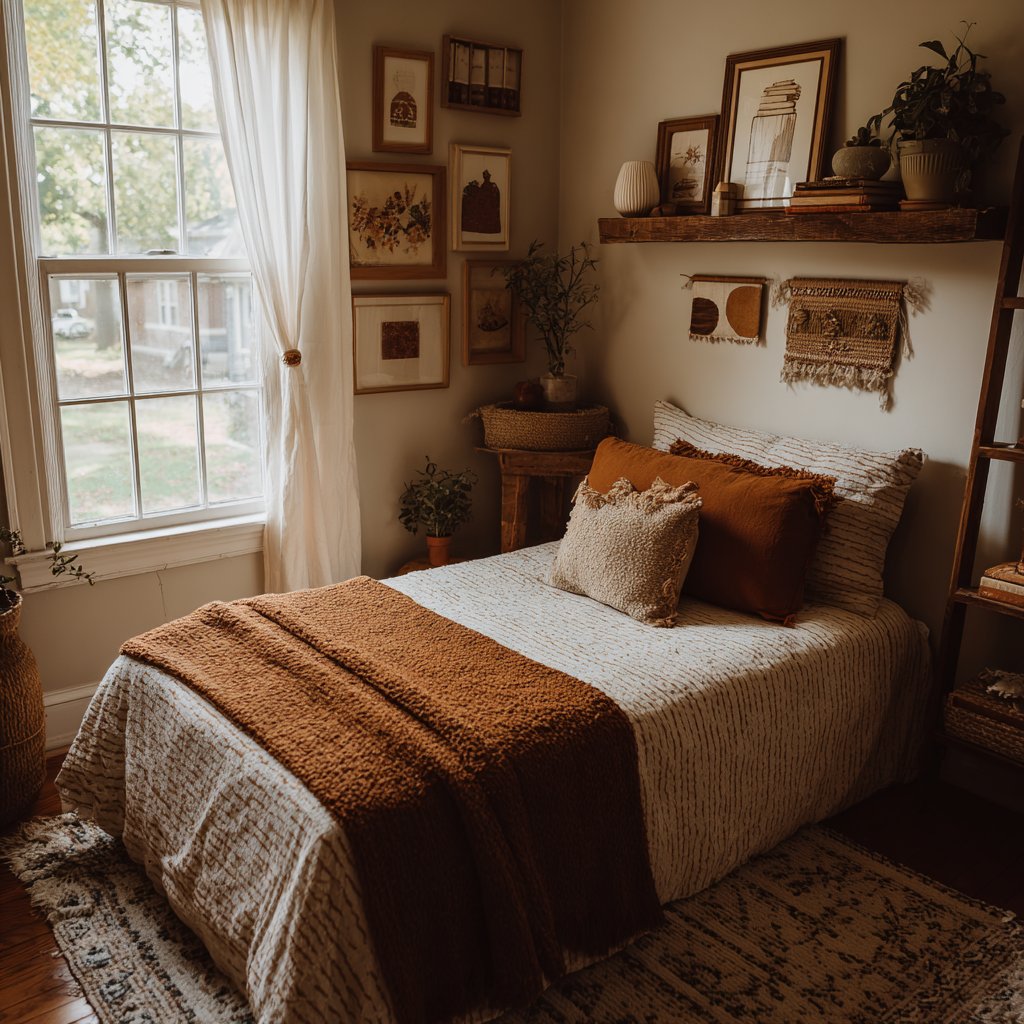
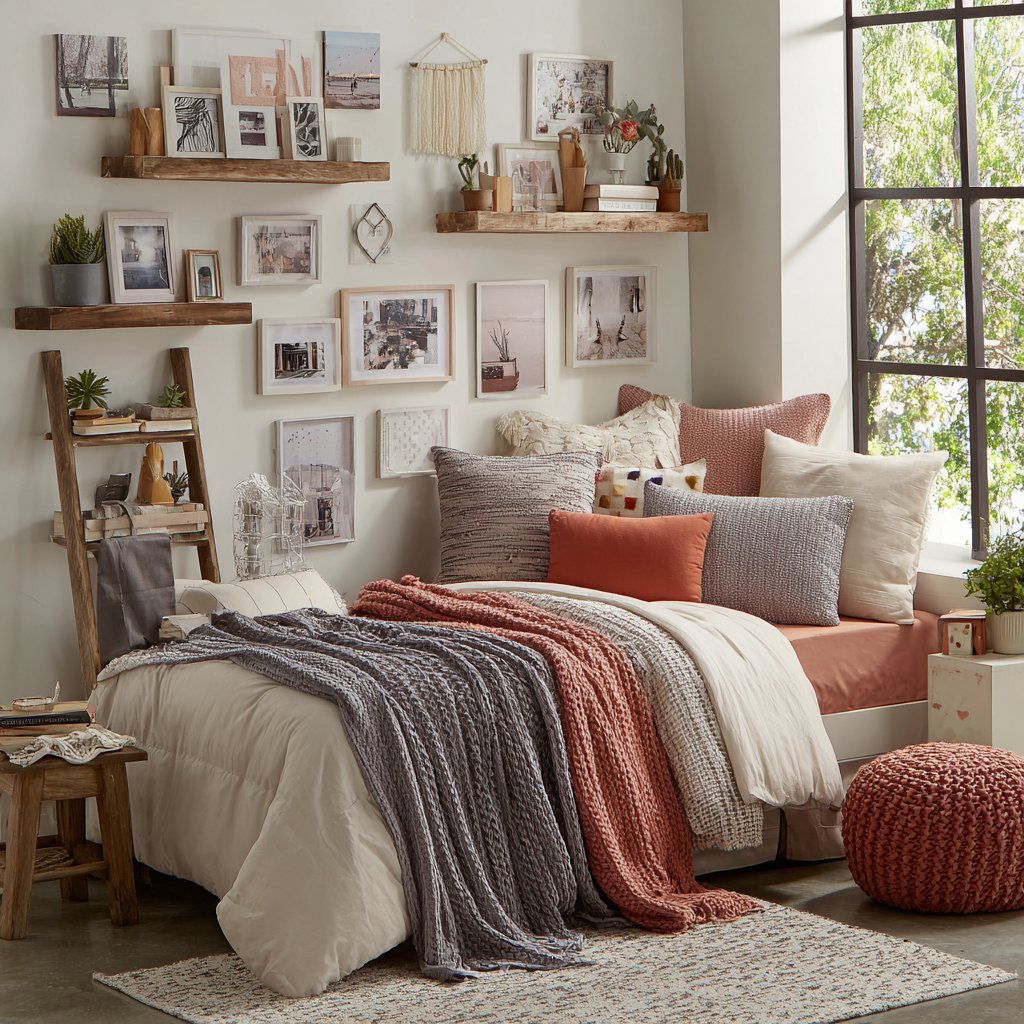
A creative gallery wall transforms a blank vertical surface into a dynamic display of personal style and interests, adding character to a small bedroom without consuming any floor space. This design features a thoughtfully arranged mix of framed prints, photographs, and decorative wall hangings positioned above the bed, creating an impressive focal point that draws the eye upward. The arrangement includes floating shelves at varying heights that display small plants and personal items, adding three-dimensional interest to the otherwise flat wall display. The layered approach creates depth and visual complexity that makes the room feel more curated and intentional.
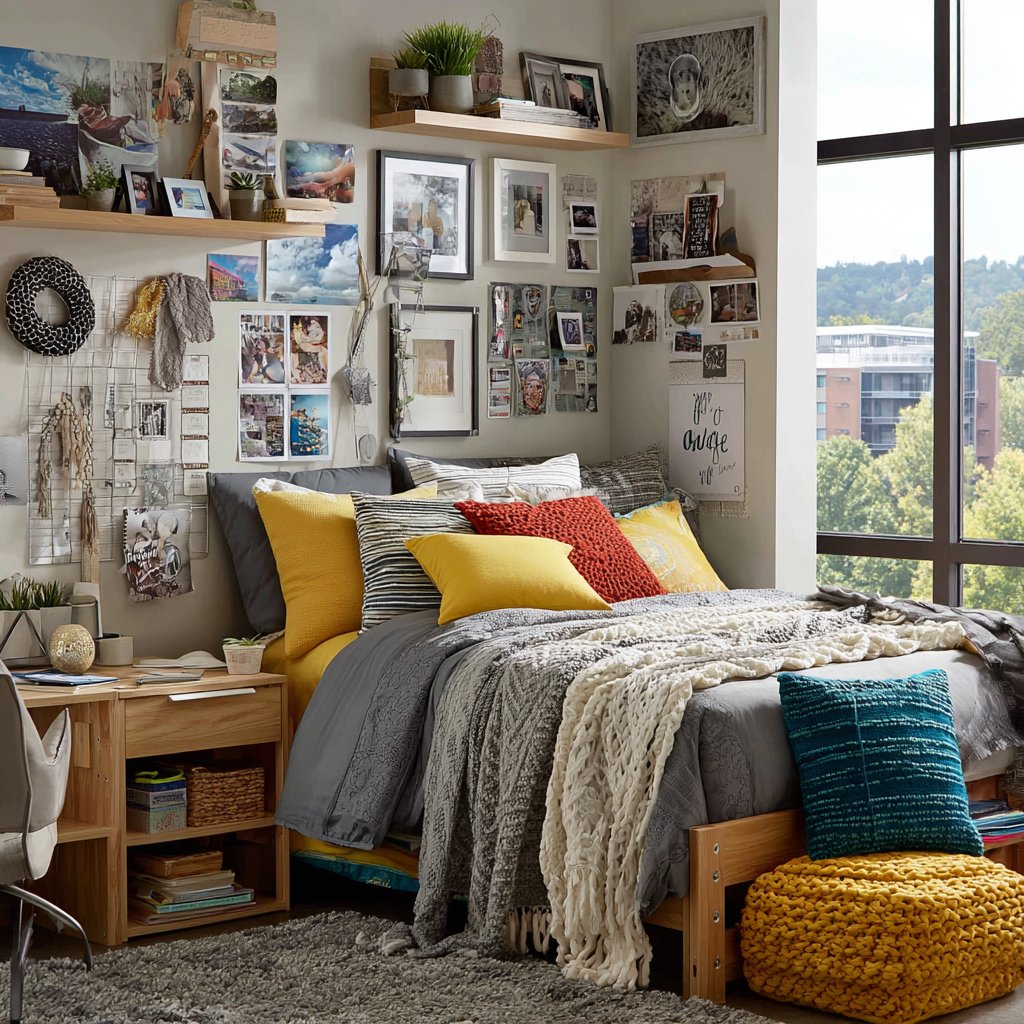
The bed is dressed in layered textiles with throw blankets and multiple pillows in coordinating colors, creating an inviting, cozy atmosphere that encourages relaxation. The textile layering adds softness and comfort while introducing additional opportunities for color and pattern that complement the gallery wall above. A small ladder shelf beside the bed serves dual purposes as nightstand and display space, providing surface area for essential bedside items while additional rungs hold books, decorative objects, or additional plants. This vertical furniture choice maintains functionality without the footprint of traditional nightstands.
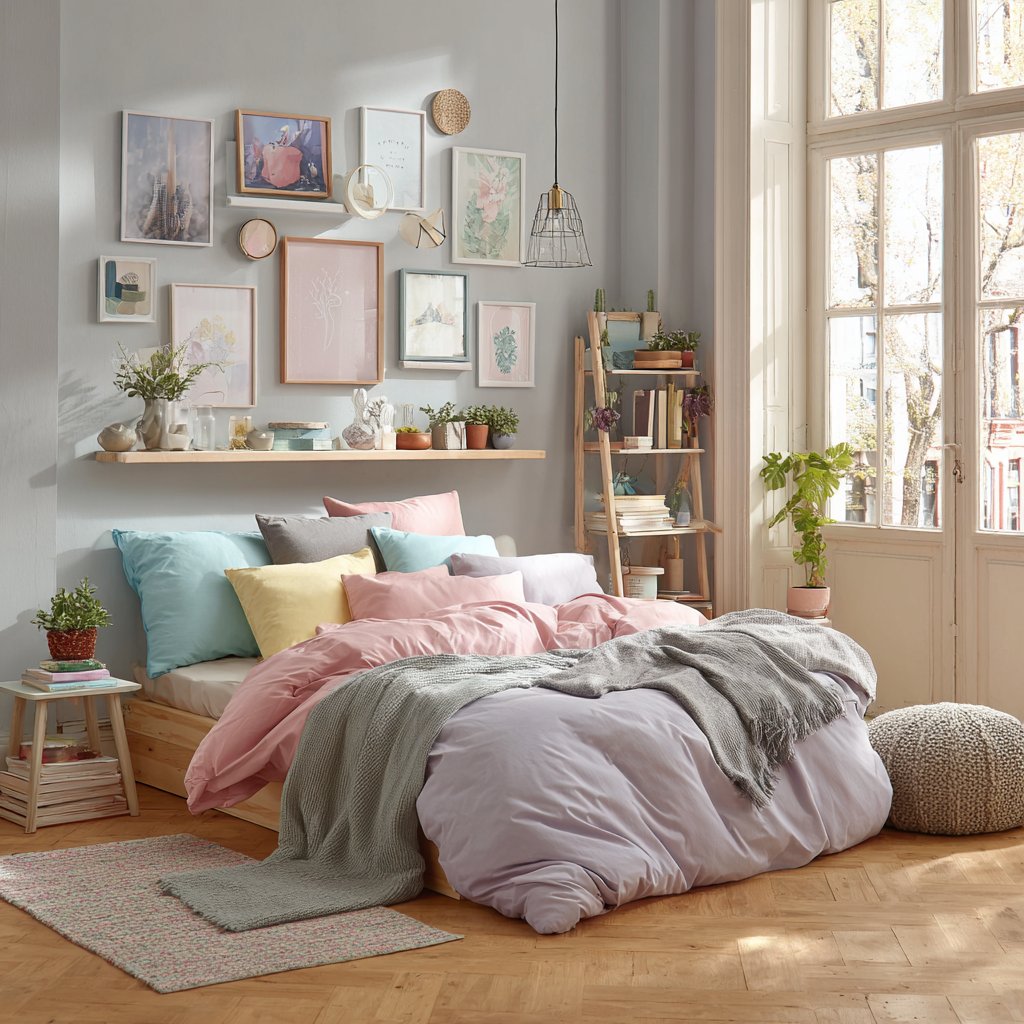
Natural daylight from the window highlights the personalized decor and various textures throughout the space, from the fabric wall hangings to the plant leaves and picture frames. Interior design photography captures the youthful yet sophisticated aesthetic that results from this carefully curated approach. The gallery wall concept offers particular value in small bedrooms because it allows for significant personalization and visual impact without requiring furniture or floor space—simply utilizing wall area that would otherwise remain empty or underutilized.
Key Design Tips:
- Plan the gallery layout on paper or digitally before putting holes in walls
- Use picture hanging strips for damage-free installation in rental situations
- Vary frame sizes, shapes, and orientations to create dynamic visual interest
- Maintain consistent spacing between frames—typically 2-3 inches works well
- Include a mix of artwork, photographs, and objects for dimensional variety
- Update pieces periodically to reflect evolving interests and experiences
- Consider a cohesive color palette or theme to unify diverse elements
- Use floating shelves to break up flat frames and add sculptural interest
11. Under-Bed Storage Maximization
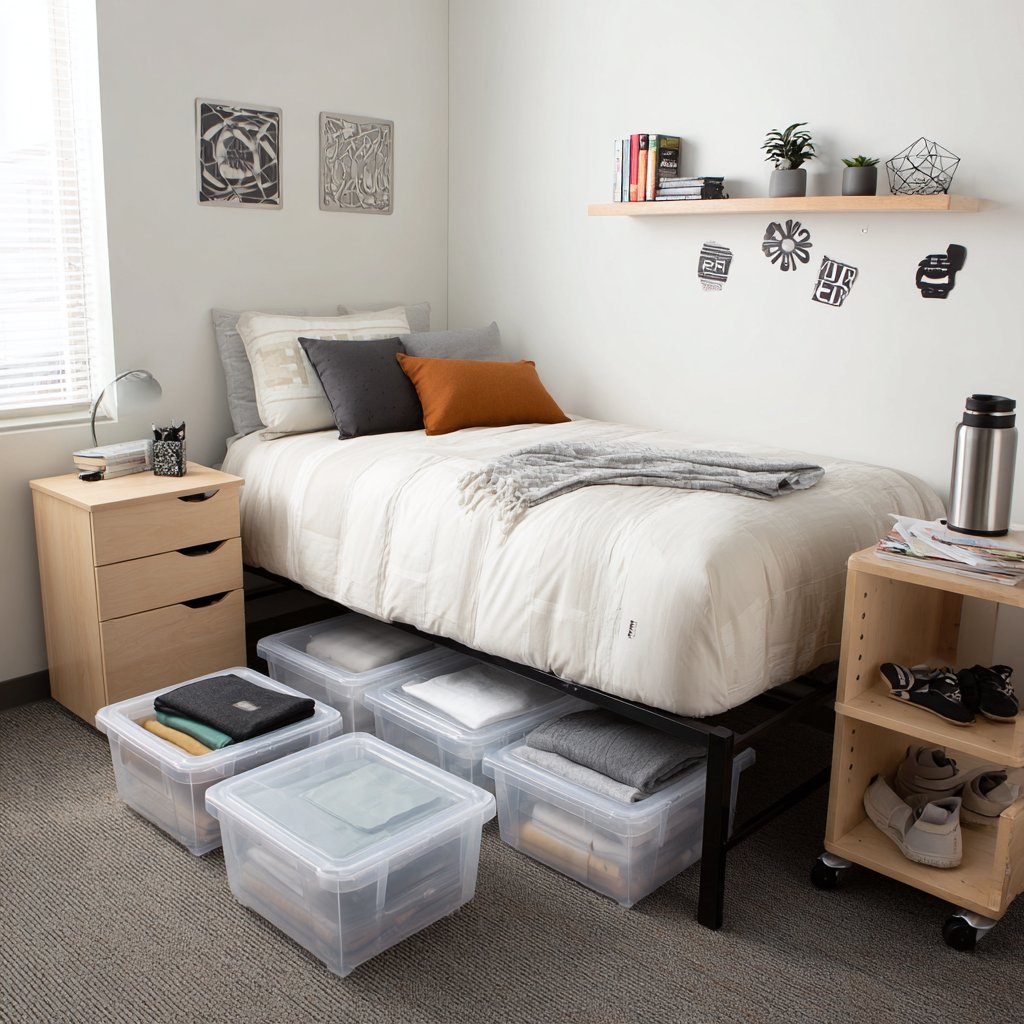
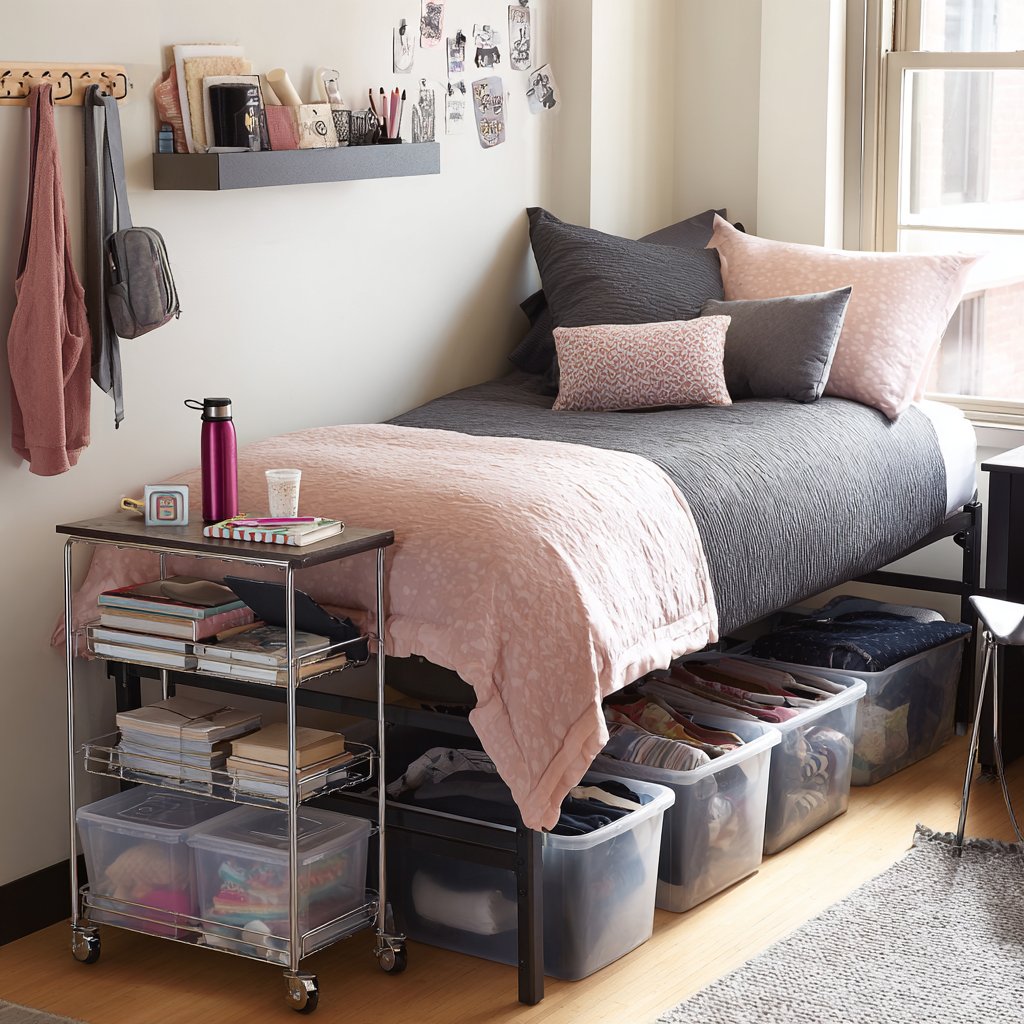
Capitalizing on the often-wasted space beneath the bed provides substantial storage capacity in small teen bedrooms, and this design features wheeled plastic containers in clear designs that make contents immediately visible. The transparency prevents the out-of-sight, out-of-mind problem that plagues some storage solutions, ensuring items remain accessible and remembered. The containers’ wheeled construction allows easy rolling access even when fully loaded, making seasonal clothing swaps or organization projects far less burdensome than static under-bed storage options.
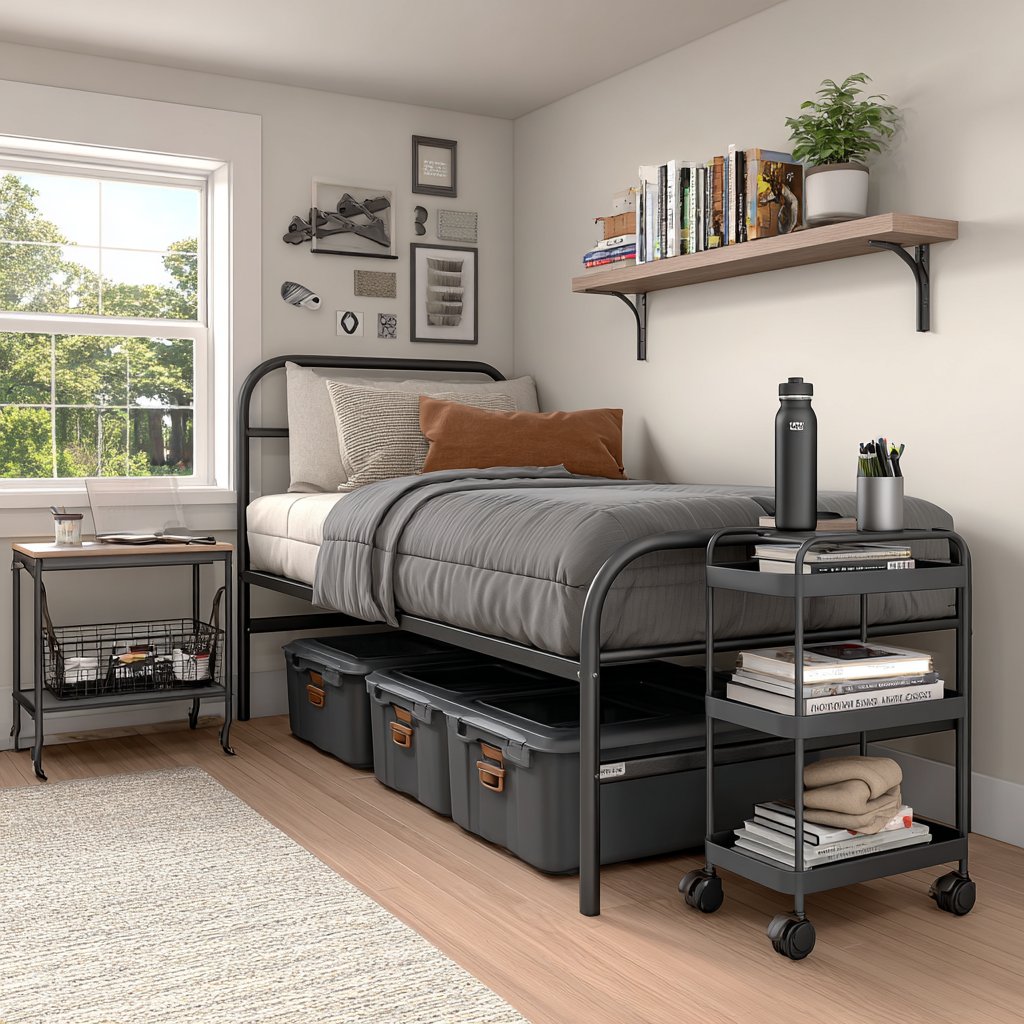
The bed frame features simple metal construction in black finish, elevated specifically to maximize storage height underneath while maintaining a contemporary aesthetic. The elevation proves crucial—the additional few inches compared to standard bed frames can significantly increase storage capacity, accommodating larger items or multiple layers of storage containers. The bedside area includes a narrow rolling cart with three tiers that holds books, water bottles, and a charging station, creating an organized nightstand alternative that can easily be repositioned as needed.
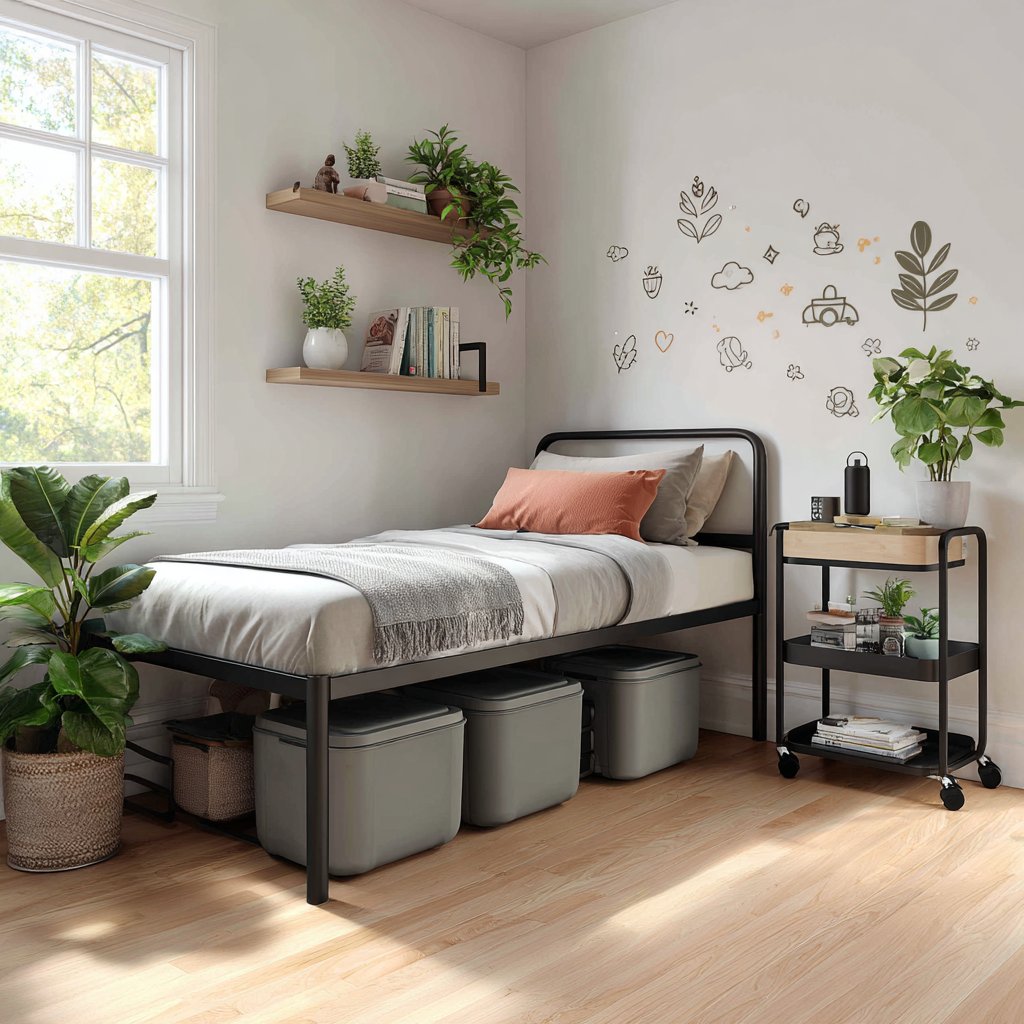
Walls painted in soft white with removable wall decals add personality without permanent commitment—an important consideration for spaces inhabited by teens whose tastes may evolve rapidly. The decals provide an opportunity for self-expression that can be changed seasonally or whenever inspiration strikes, offering flexibility that painted murals or permanent wallpaper cannot match. Wide-angle photography demonstrates the practical storage solutions while natural lighting showcases how even extensive under-bed storage doesn’t create a cluttered appearance when containers are uniform and neatly arranged.
Key Design Tips:
- Measure bed clearance height before purchasing storage containers to ensure proper fit
- Choose containers with secure lids to protect contents from dust accumulation
- Use uniform container sizes and colors for a more organized, intentional appearance
- Label containers on multiple sides for easy identification from any angle
- Install bed risers if additional height is needed—ensure they’re rated for appropriate weight
- Select containers with smooth-rolling wheels that can handle carpet or hard floors
- Group similar items together in containers to streamline retrieval and organization
12. Foot-of-Bed Desk Integration
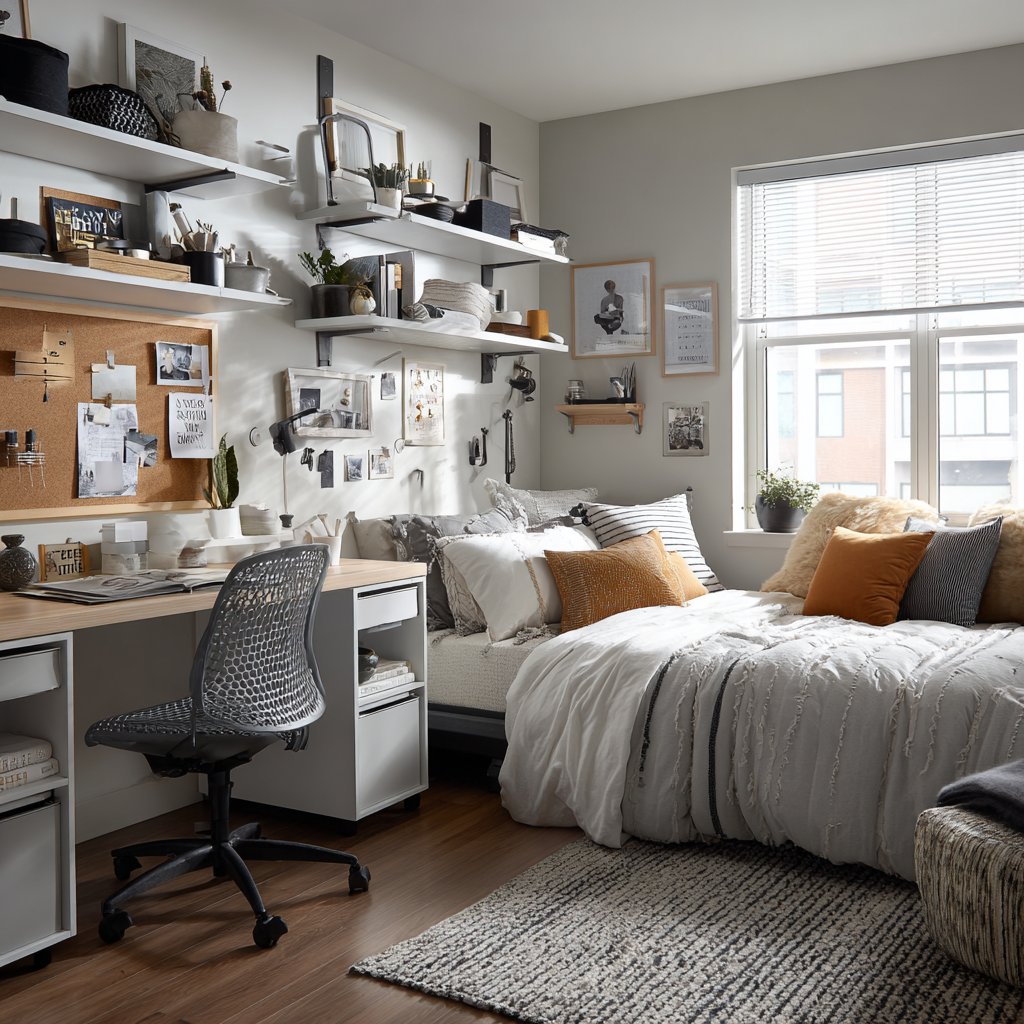
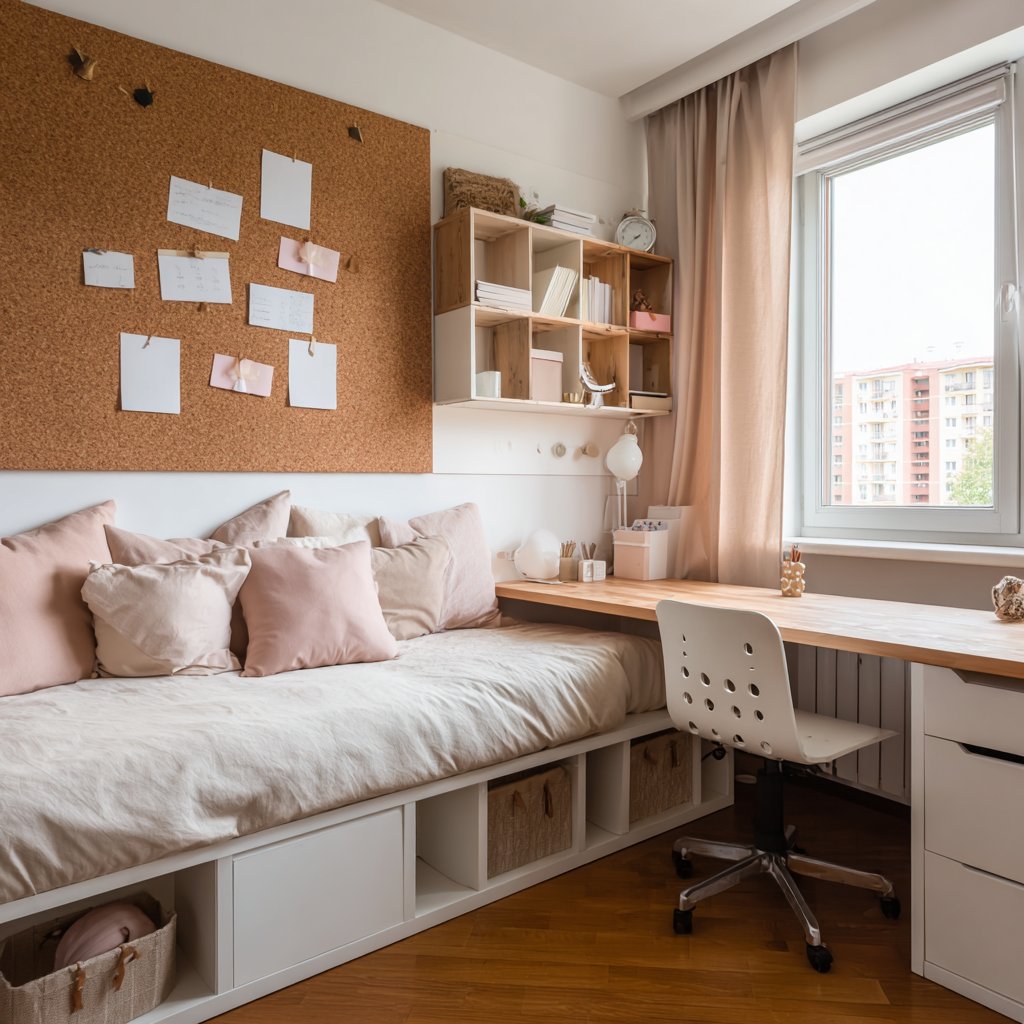
Positioning a desk at the foot of the bed creates a continuous workspace that doesn’t require additional floor space beyond what the bed itself occupies. This innovative layout maximizes the bed’s footprint while providing essential study area, demonstrating creative thinking about furniture arrangement in constrained spaces. The desk features open shelving on one side and drawer storage on the other in white finish, providing varied storage options for different types of materials—open shelves for reference books and frequently accessed items, drawers for papers and supplies that benefit from concealment.
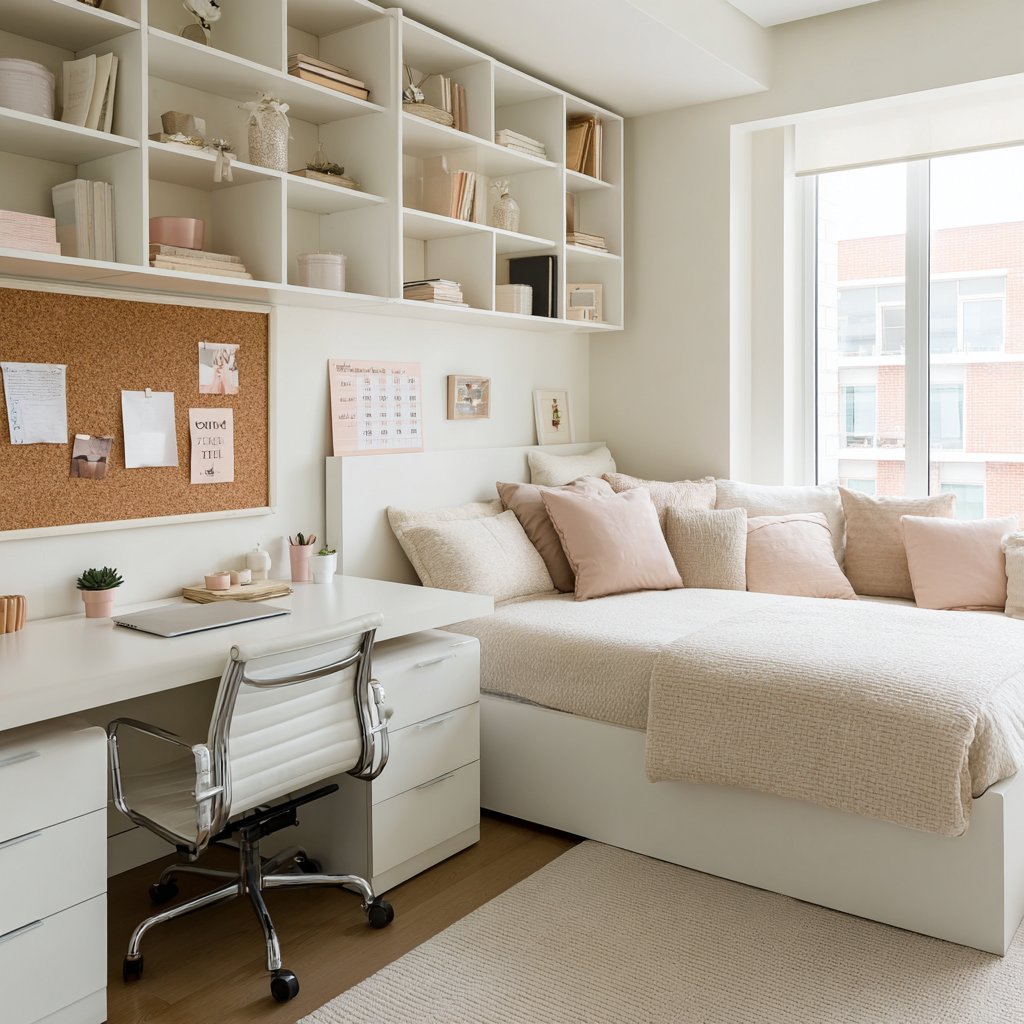
An ergonomic desk chair in mesh design provides comfortable seating during extended study sessions while maintaining a lightweight, modern aesthetic that doesn’t visually overwhelm the small space. The mesh construction also promotes airflow, preventing discomfort during long sitting periods. A wall-mounted cork board above the desk displays schedules, reminders, and inspiration, keeping important information visible and organized without consuming desk surface area. This vertical approach to organization proves particularly valuable in maintaining clean workspace surfaces.
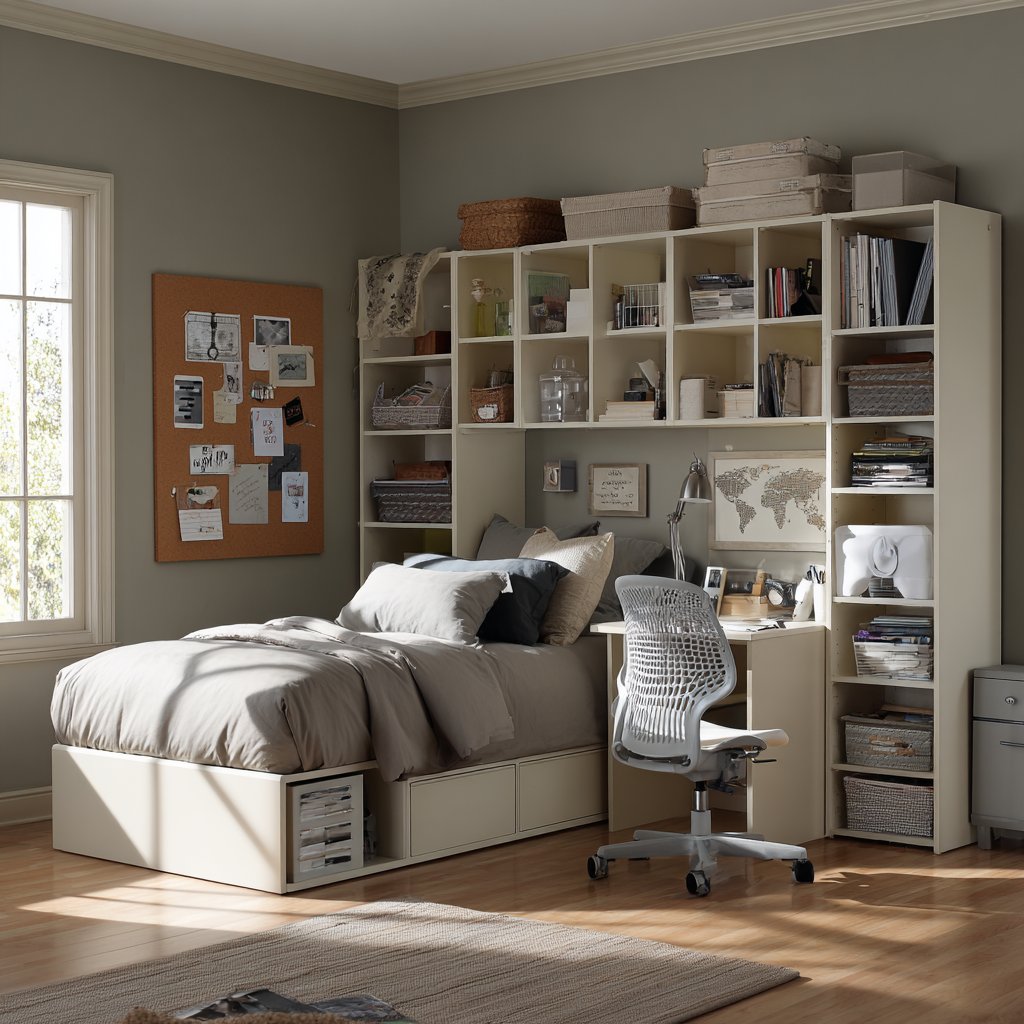
The room features minimalist bedding in neutral tones that creates a calm, distraction-free environment conducive to both sleep and study. The neutral palette also provides flexibility for adding colorful accessories or changing accent colors without requiring complete room redesigns. Interior photography showcases the clever space planning with soft diffused daylight that illuminates both sleeping and working areas effectively. This layout works particularly well in rectangular rooms where the bed can be positioned against one wall with the desk extending from its foot toward the center of the room.
Key Design Tips:
- Ensure adequate clearance between bed and desk to avoid bumping legs while sitting
- Position the desk to maximize natural light from windows when possible
- Use the desk as a footboard alternative, ensuring it’s appropriate height and stability
- Install task lighting above or beside the desk area for evening study sessions
- Choose a desk depth that provides adequate workspace without extending too far into the room
- Consider adding a small rug under the desk area to define the workspace zone
- Secure the desk to the bed frame if possible to prevent shifting during use
13. Modular Cube Storage System
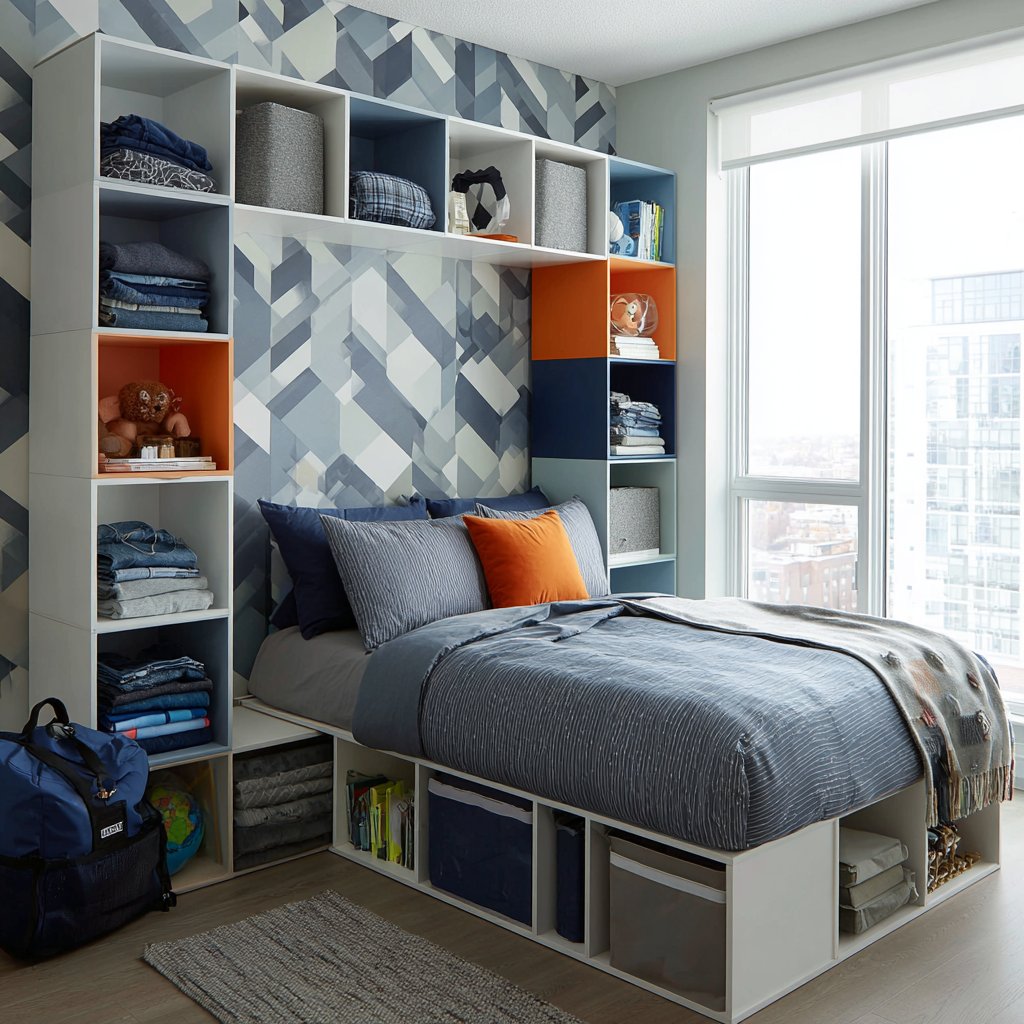
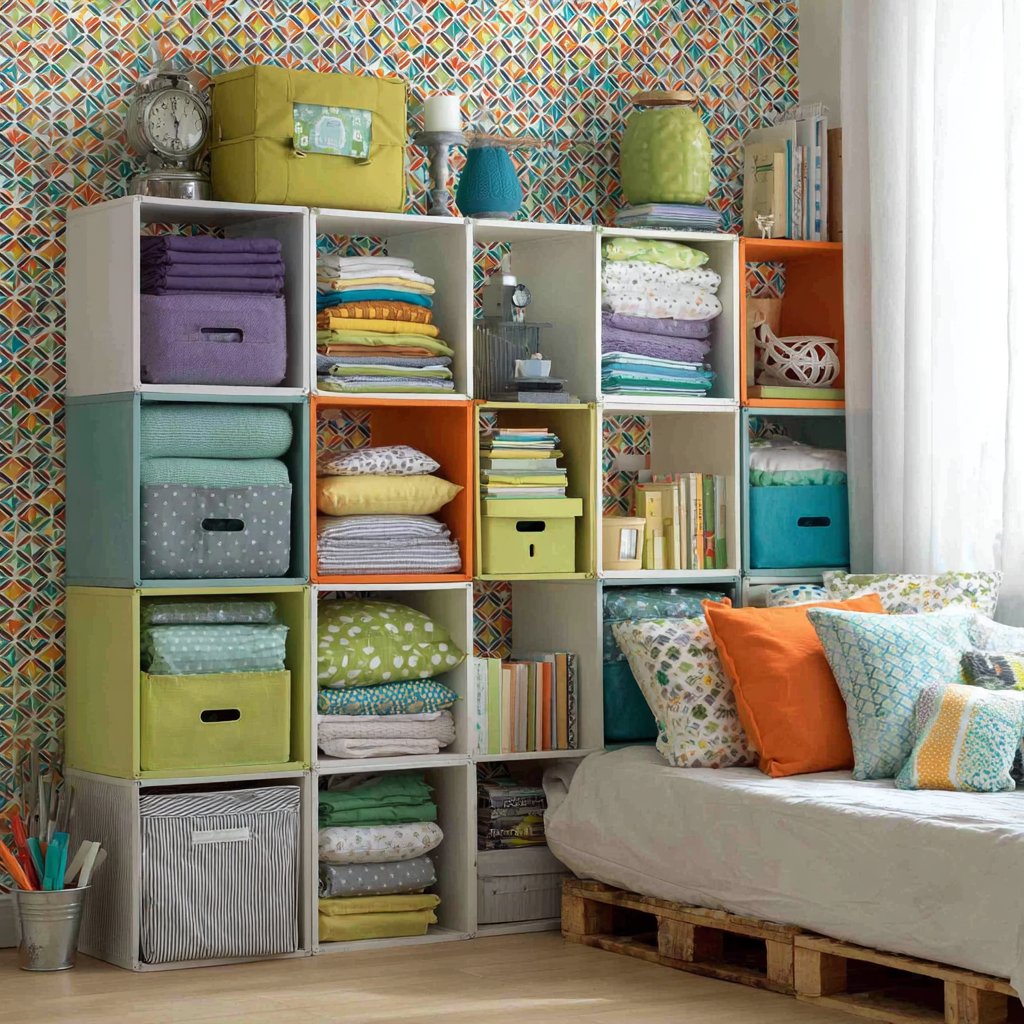
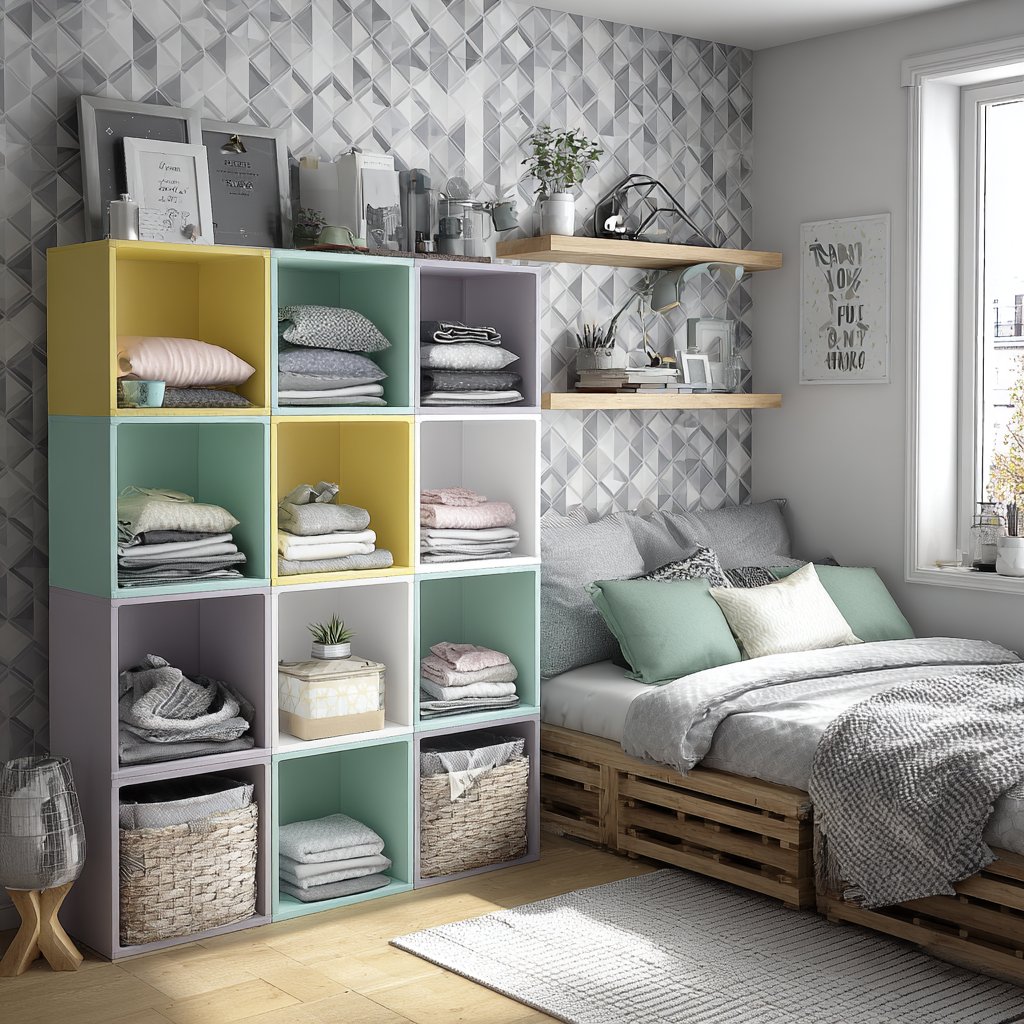
Modular storage cubes offer flexibility and functionality that’s particularly well-suited to teen bedrooms where needs and preferences frequently change. This design features stackable cubes in various colors that create both organizational function and visual interest, with the colorful arrangement adding personality while serving practical purposes. The cubes accommodate diverse items including folded clothes, books, accessories, and decorative objects, demonstrating the system’s versatility. The modular nature allows reconfiguration as needs evolve—cubes can be restacked, rearranged, or reassigned to different purposes without requiring new furniture purchases.
A low bed frame without footboard facilitates easy movement in the compact space, with the simplified design preventing the room from feeling cramped or cluttered. The absence of a footboard also provides unobstructed sightlines across the room, creating a sense of openness despite limited square footage. An accent wall with removable wallpaper in geometric pattern adds personality and visual interest without permanent commitment, reflecting the same flexible philosophy that guides the modular storage selection. The pattern introduces energy and contemporary style while remaining appropriate for a teen space.
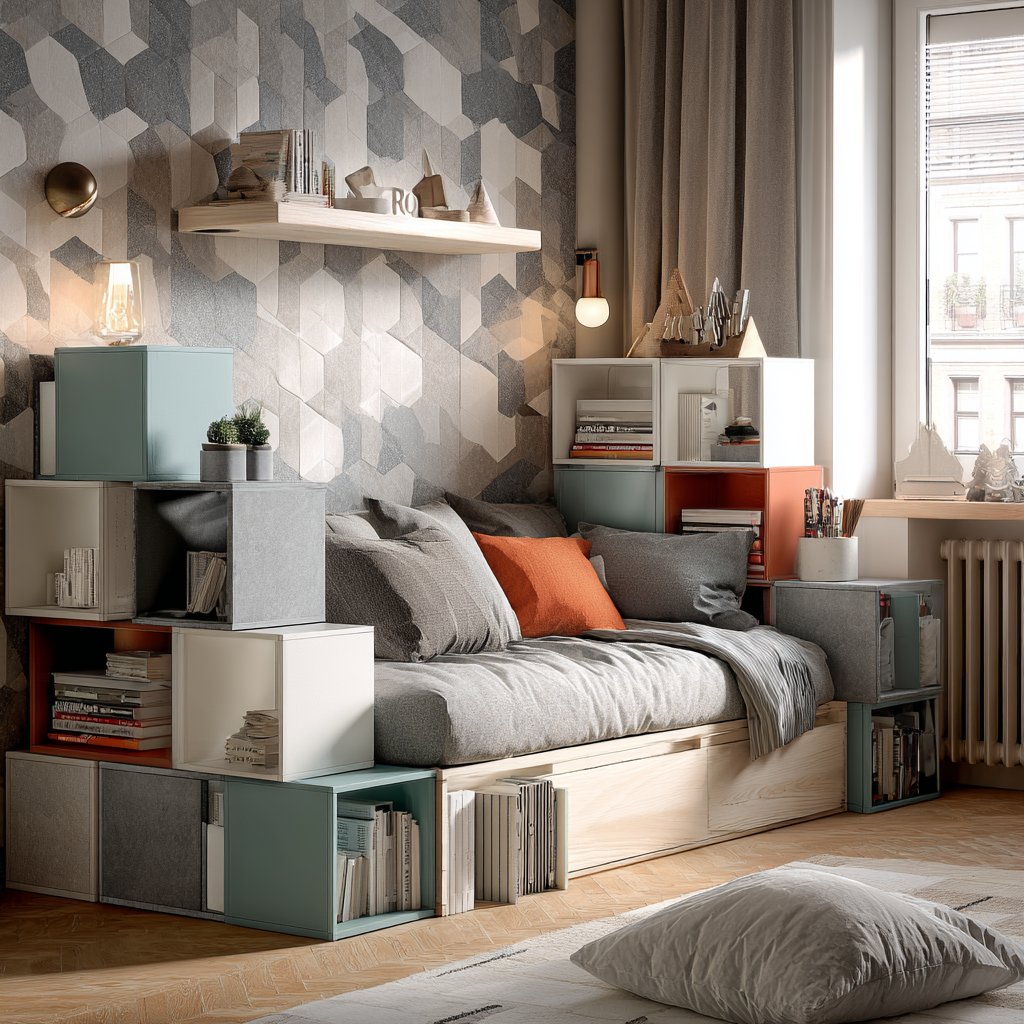
Professional interior photography captures the flexible storage solution with balanced natural lighting that highlights both the colorful cubes and the patterned accent wall. The strategic use of color creates a cohesive design story—the cube colors pull from the wallpaper pattern, creating intentional connections between design elements. This coordination demonstrates how thoughtful color selection can tie together various furniture pieces and decorative elements, creating a polished, intentional appearance even with budget-friendly modular furniture systems.
Key Design Tips:
- Anchor stacked cubes together using provided hardware to prevent toppling
- Mix open and closed cube arrangements to balance display and concealment
- Use fabric bins in some cubes to hide less attractive items while maintaining accessibility
- Arrange cubes in asymmetrical patterns for more visual interest than grid layouts
- Choose sturdy cubes that can support weight on top if they’ll be used as seating
- Color-code cubes by content type for easy identification
- Leave some cubes empty to prevent the system from appearing overcrowded
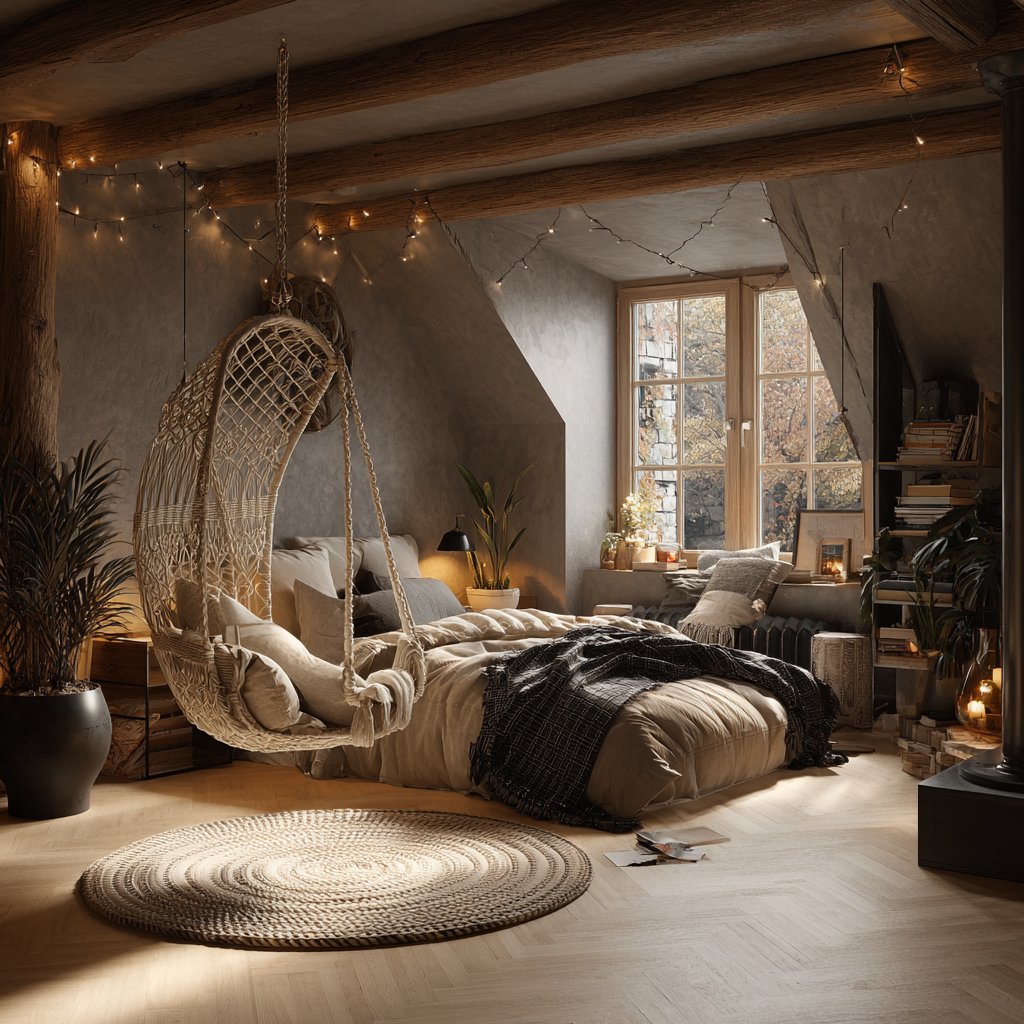
14. Suspended Hanging Chair Feature
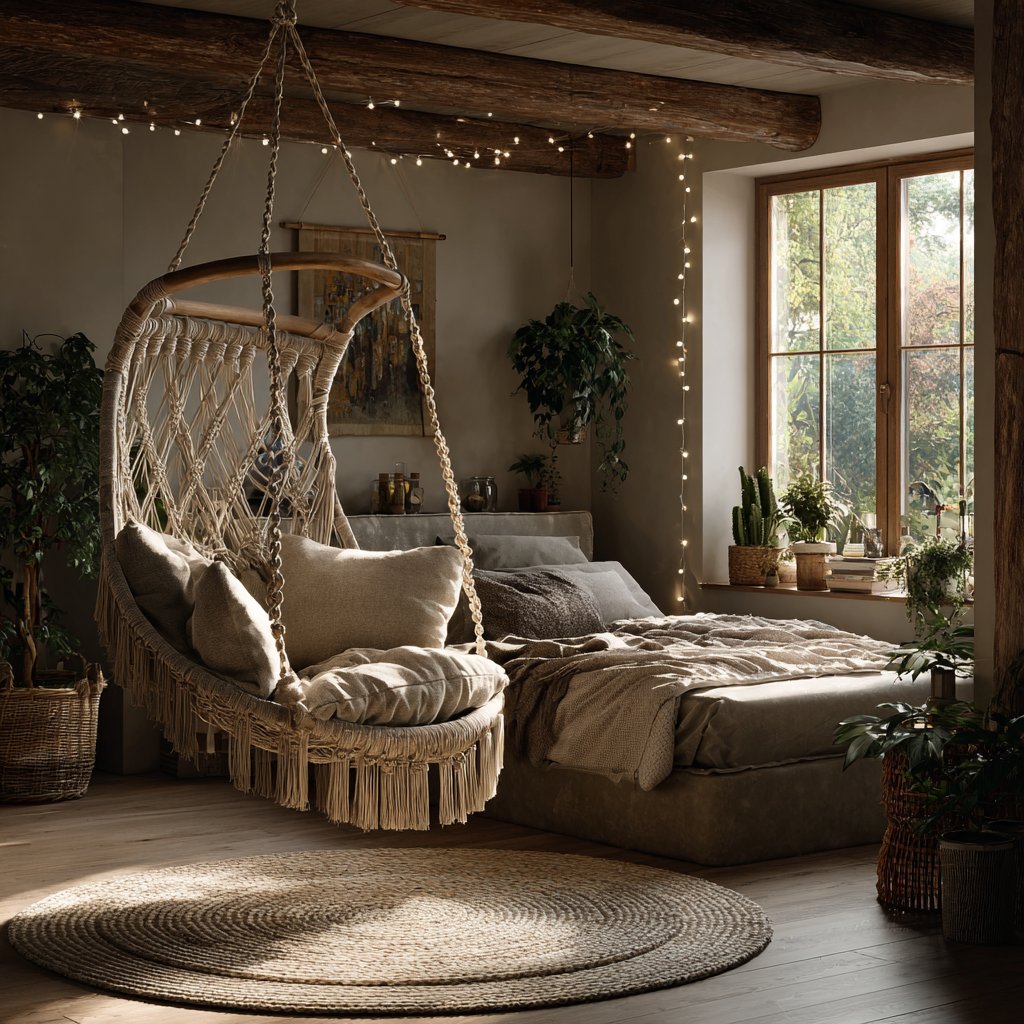
A hanging chair suspended from a ceiling beam creates an unexpected, cozy seating area that becomes a favorite retreat within the teen bedroom. The macramé design adds bohemian texture and visual interest while providing comfortable, gentle motion that many find relaxing. Soft cushions in neutral tones enhance comfort and coordinate with the room’s overall color scheme, ensuring the statement piece integrates seamlessly rather than appearing randomly added. The chair’s position near the window capitalizes on natural light and views, making it an ideal spot for reading, listening to music, or simply daydreaming.
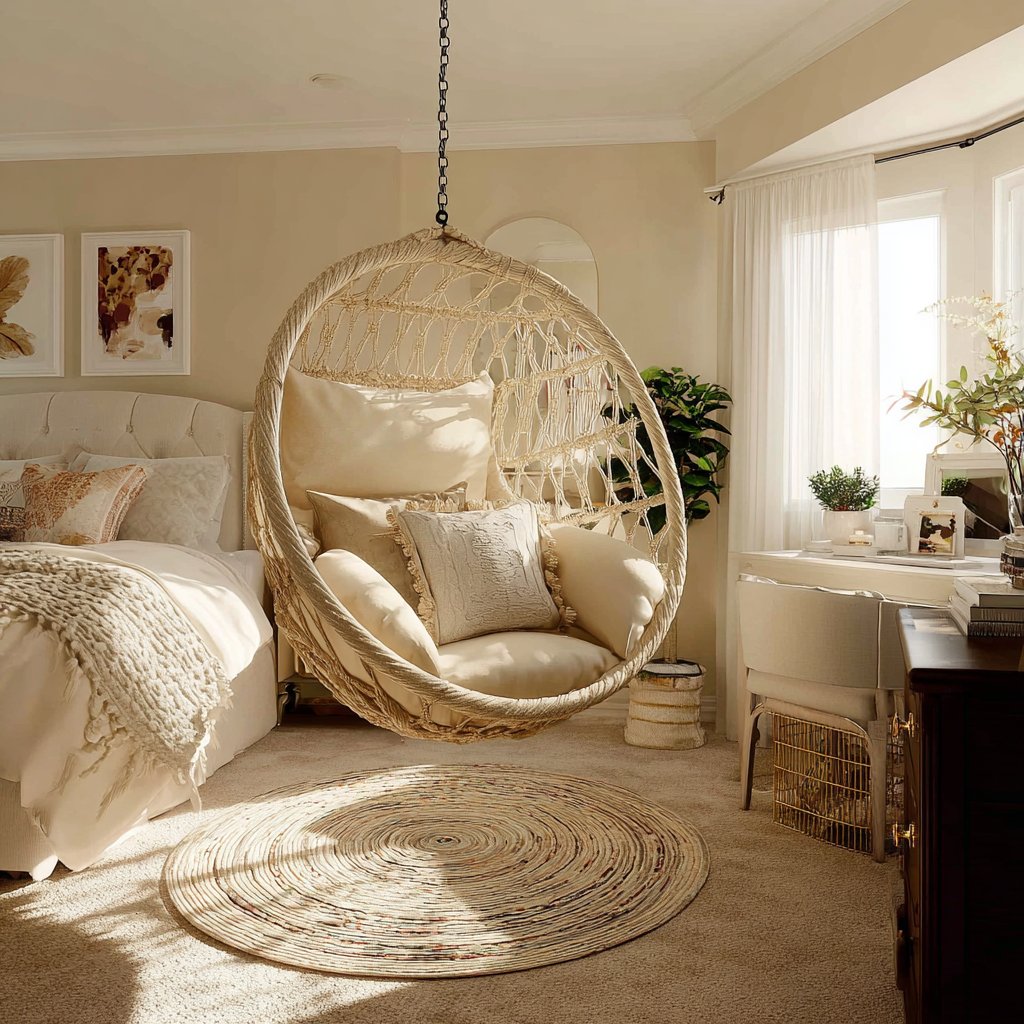
Below the hanging chair, a small circular rug defines the cozy nook and protects flooring from potential wear, while also adding another layer of texture to the space. The rug’s placement creates a visual anchor for the suspended chair, helping it feel intentionally positioned rather than arbitrarily floating. The sleeping area features a bed with upholstered headboard and floating nightstand that maintains clean lines and uncluttered aesthetics. String lights and potted plants add warmth and life to the room, with the plants contributing natural air purification and the lights providing ambient evening illumination.
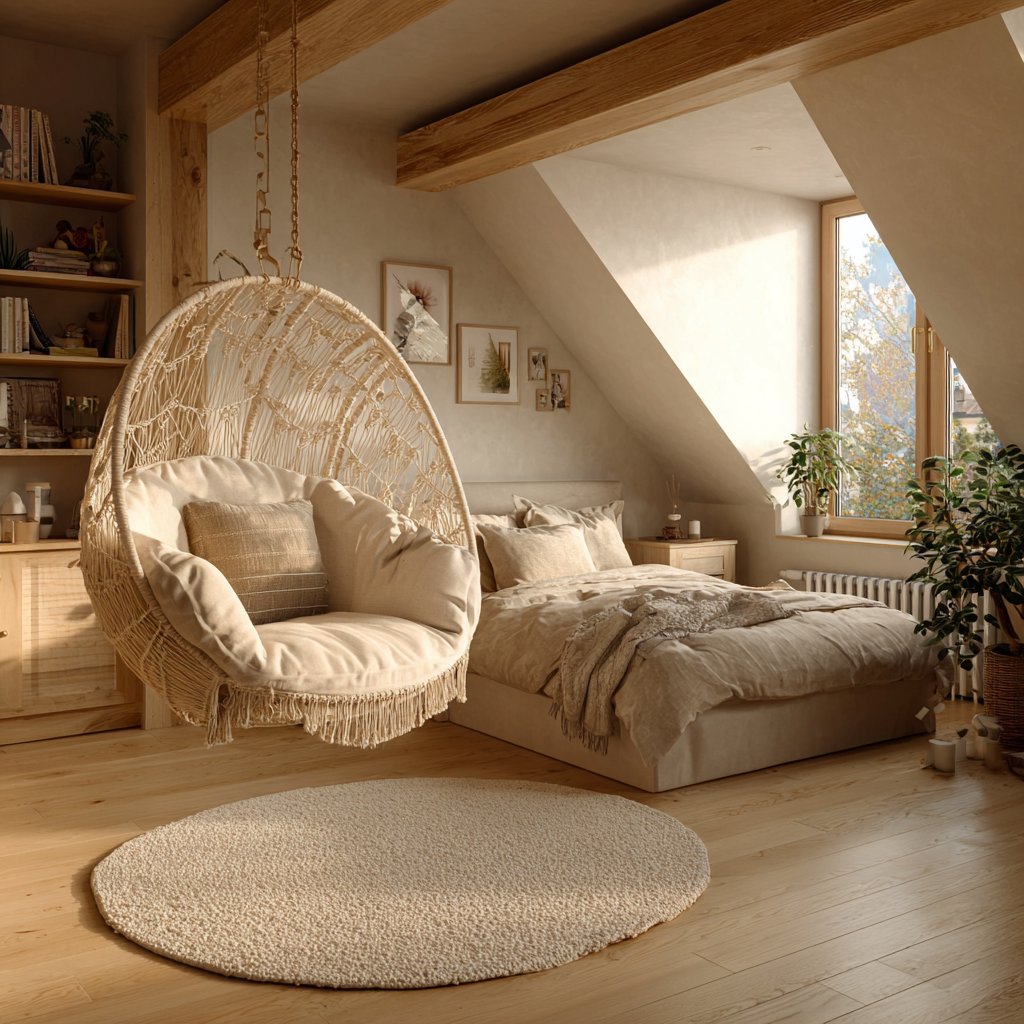
Wide-angle interior design photography captures the unique furniture piece with natural window light creating an inviting atmosphere and highlighting the macramé’s intricate texture. The hanging chair represents a perfect example of how vertical space can be utilized creatively in small bedrooms—rather than consuming floor space with traditional seating furniture, the suspended chair hangs in otherwise unused airspace. This approach particularly appeals to teens seeking distinctive, Instagram-worthy features that set their spaces apart from standard bedroom designs.
Key Design Tips:
- Verify ceiling structure can support chair weight plus user—consult a professional if uncertain
- Install ceiling hardware into solid joists, never drywall alone
- Choose a hanging position that allows adequate swinging clearance from walls and furniture
- Consider chair height carefully—feet should touch floor when sitting for safety
- Add a ceiling medallion or decorative hardware cover for polished appearance
- Test weight capacity thoroughly before regular use
- Position away from delicate items or surfaces that could be damaged by contact
15. Mobile Clothing Rack Solution
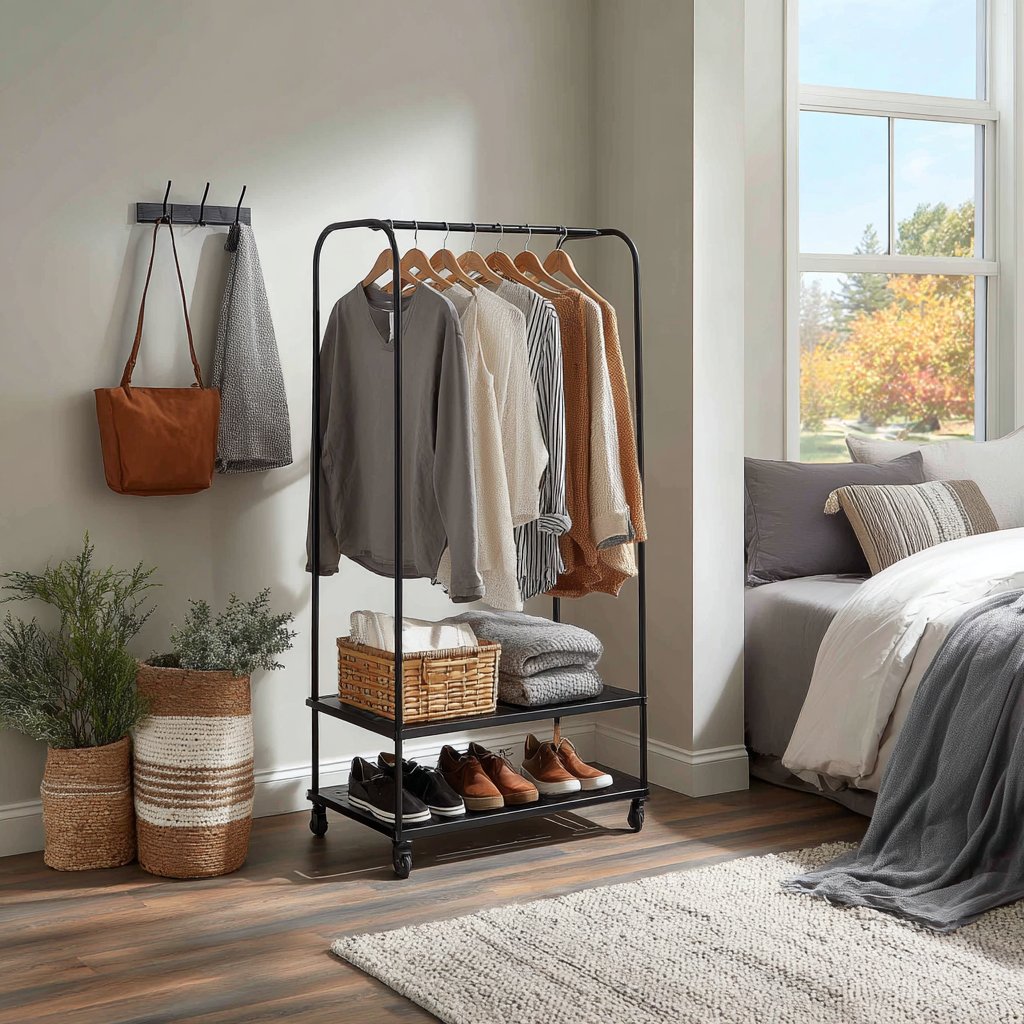
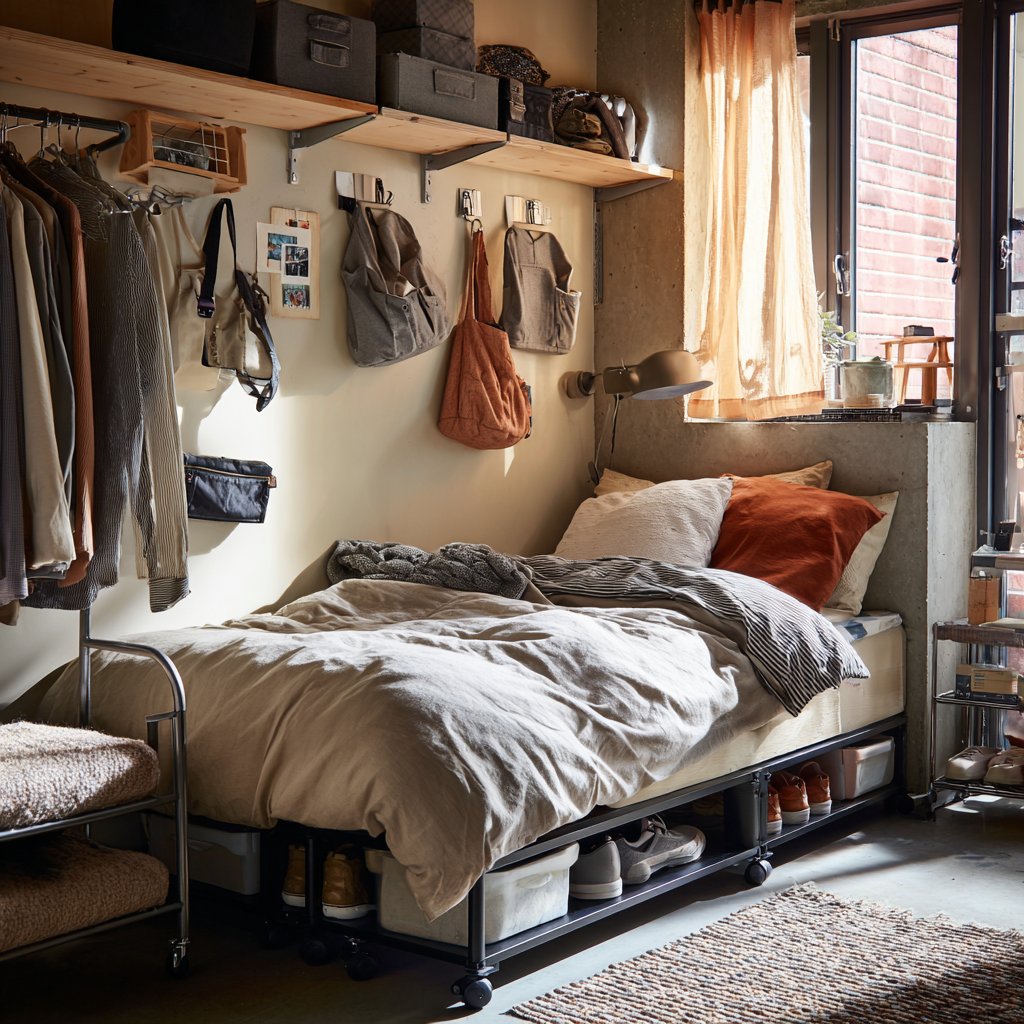
An open clothing rack on wheels serves as a practical alternative to traditional closed closets, particularly valuable for outfit planning and displaying frequently worn items. The metal rack in black finish includes a top shelf for storage boxes and a bottom bar for shoes, creating a comprehensive garment storage system that remains accessible and visible. The mobility aspect provides flexibility for room cleaning, rearrangement, or seasonal rotation—the entire rack can be easily repositioned without requiring furniture moving assistance or heavy lifting.
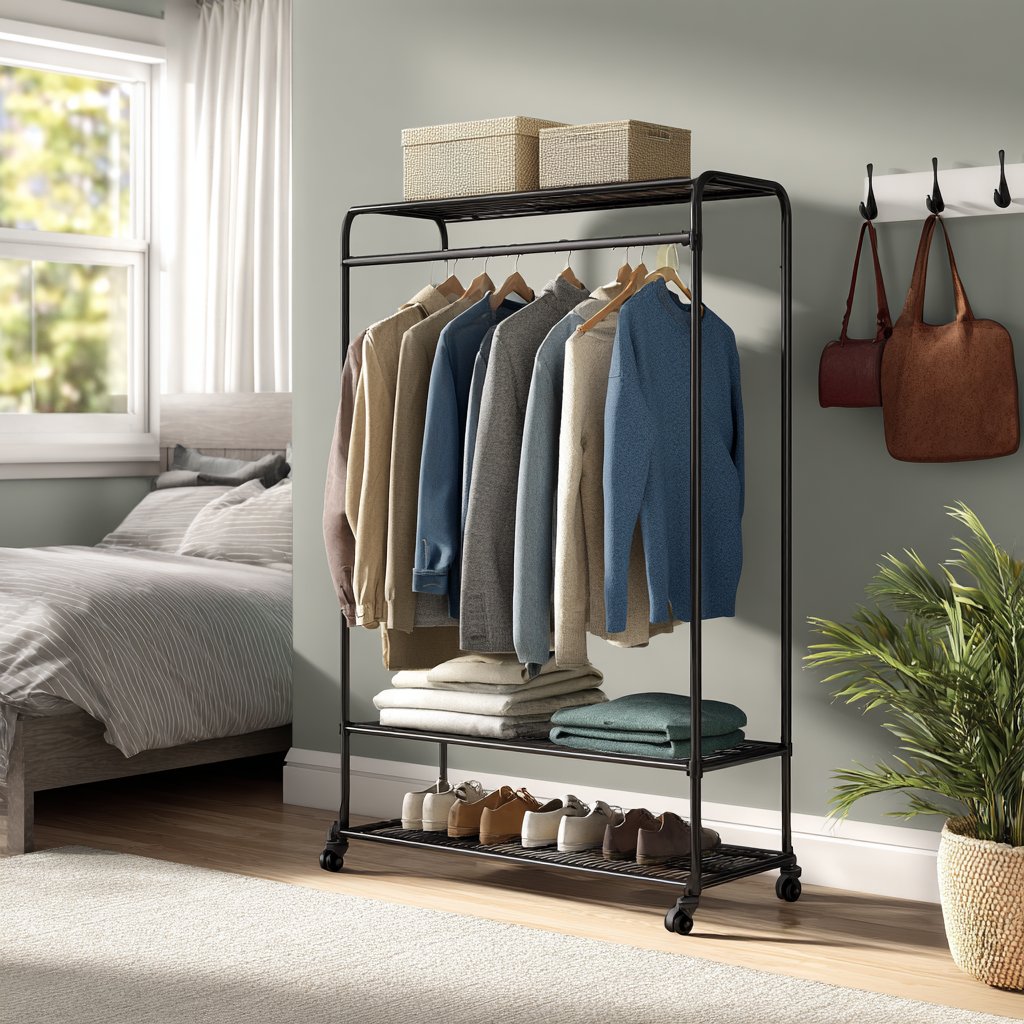
Behind the clothing rack, a bed with simple frame and grey bedding anchors the room with calm neutrality that balances the visual activity of exposed clothing. Wall-mounted hooks provide additional storage for bags and accessories, keeping these frequently used items accessible without requiring drawer or closet space. The minimalist design approach with touches of personality through textiles and small decor items creates a balanced aesthetic that feels both practical and personalized, avoiding the sterility that sometimes afflicts overly simplified spaces.
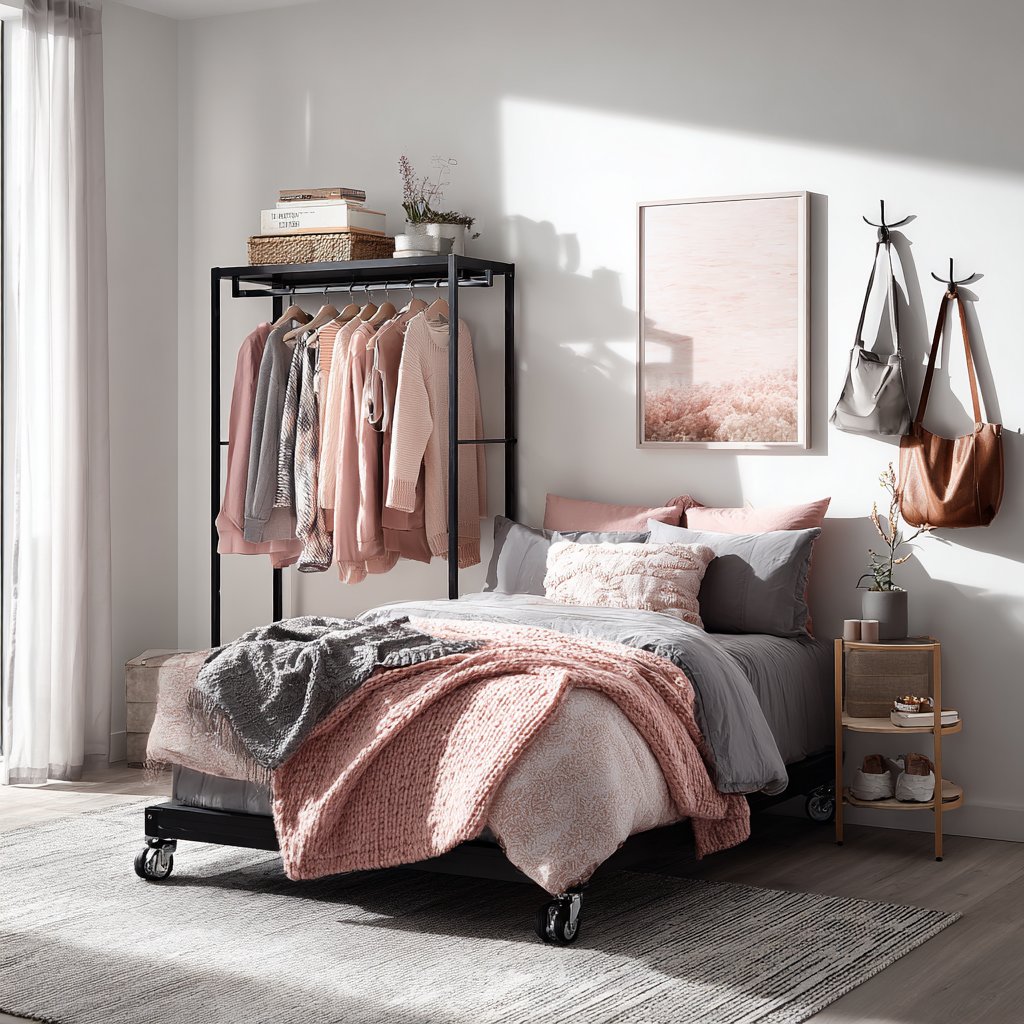
Interior photography showcases the practical open storage concept with natural lighting that prevents the exposed clothing from appearing cluttered or disorganized. The key to success with open storage lies in maintaining organization and limiting contents to items actually worn regularly—this isn’t meant to replace all storage but rather to supplement it for convenience and accessibility. The approach particularly appeals to visual learners who benefit from seeing options rather than hunting through drawer contents, and to fashion-conscious teens who view clothing as an extension of personal expression worth displaying.
Key Design Tips:
- Limit rack contents to current season and frequently worn items to prevent overcrowding
- Use matching hangers throughout for a cohesive, organized appearance
- Organize clothing by type or color for easier selection and more attractive display
- Position the rack away from direct sunlight to prevent fabric fading
- Use the top shelf for attractive storage boxes rather than random items
- Keep the bottom bar organized with shoes positioned neatly
- Regularly edit contents to maintain organization and prevent accumulation
16. Built-In Window Seat Sanctuary
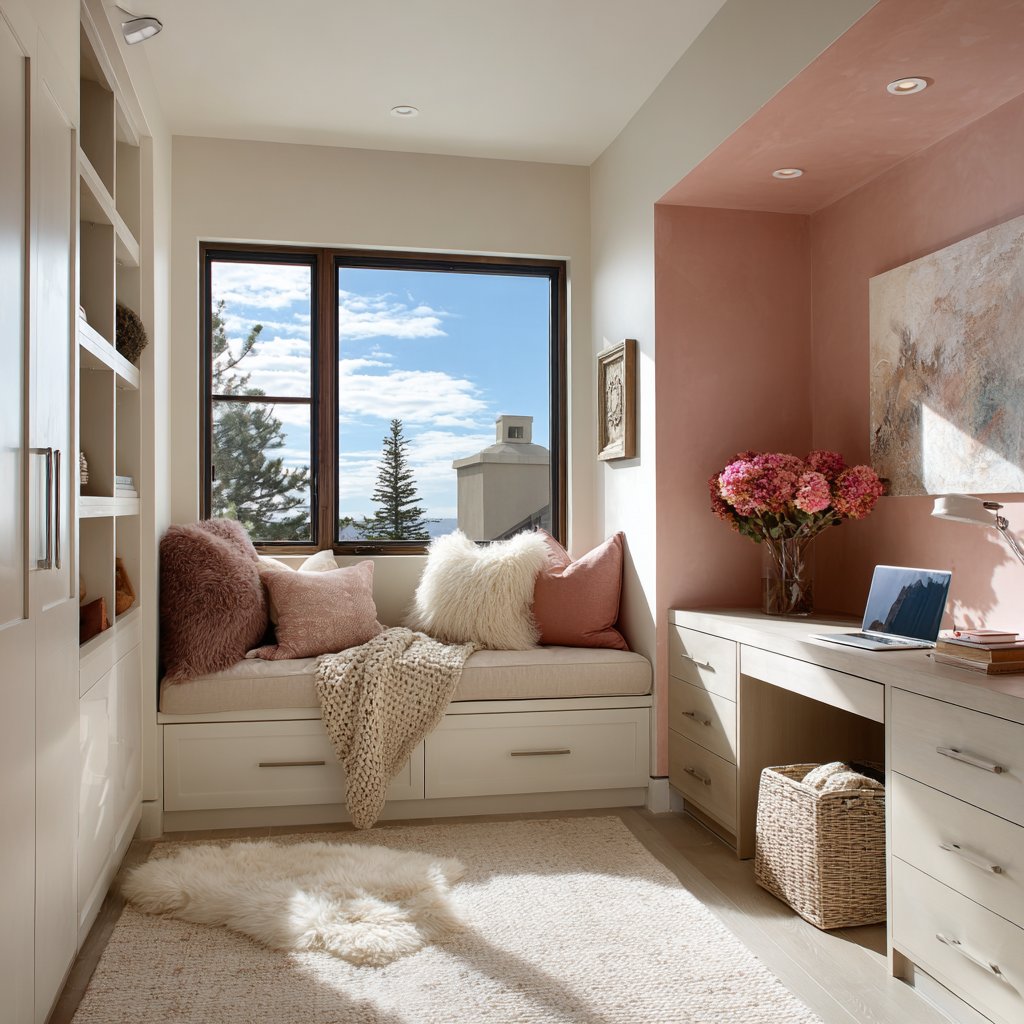
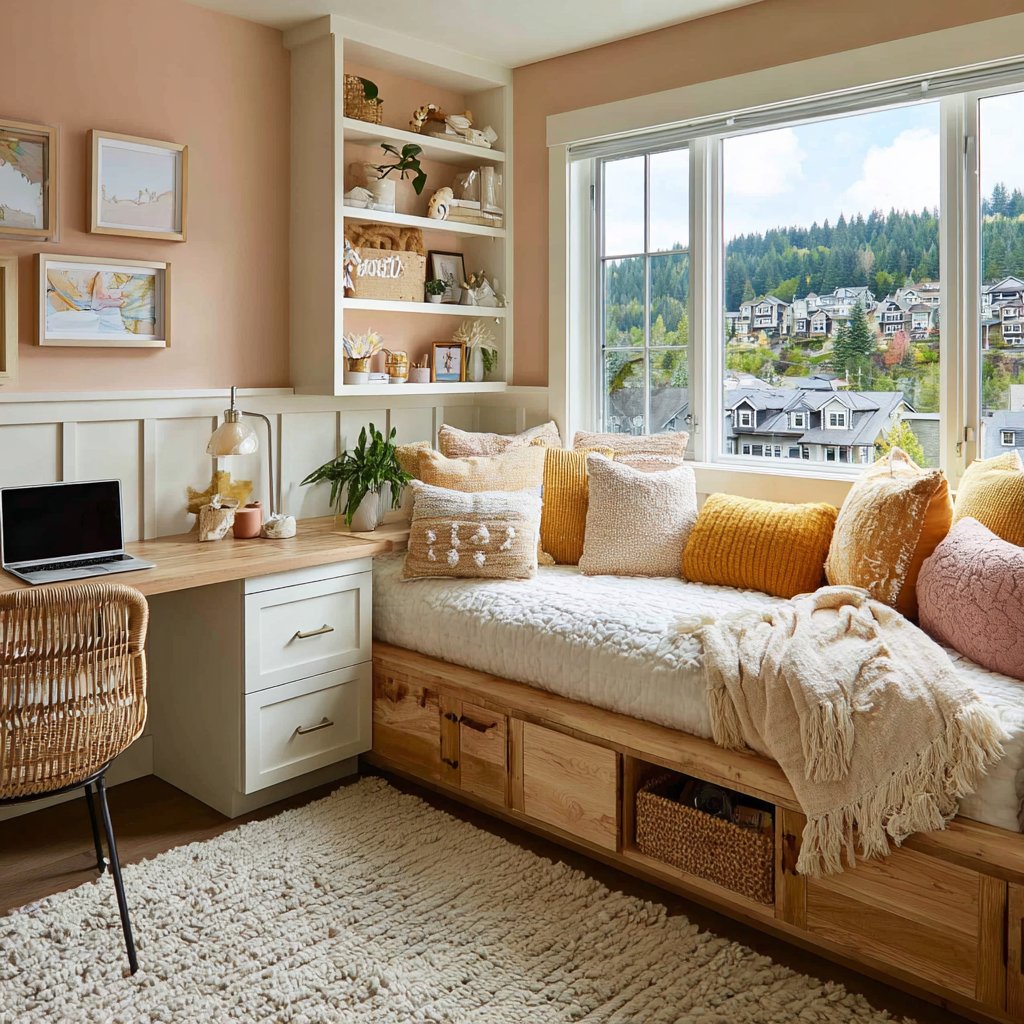
A built-in window seat represents a permanent architectural solution that adds both value and functionality to small teen bedrooms. The bench features storage compartments underneath the cushioned top, providing concealed storage that doesn’t compromise the seating surface’s comfort. The storage proves invaluable for items like extra bedding, off-season clothing, or memory boxes—things that need housing but aren’t accessed daily. Throw pillows in mixed textures and a cozy blanket enhance the seat’s comfort and invitation, creating a retreat that beckons for reading, relaxing, or gazing out the window.
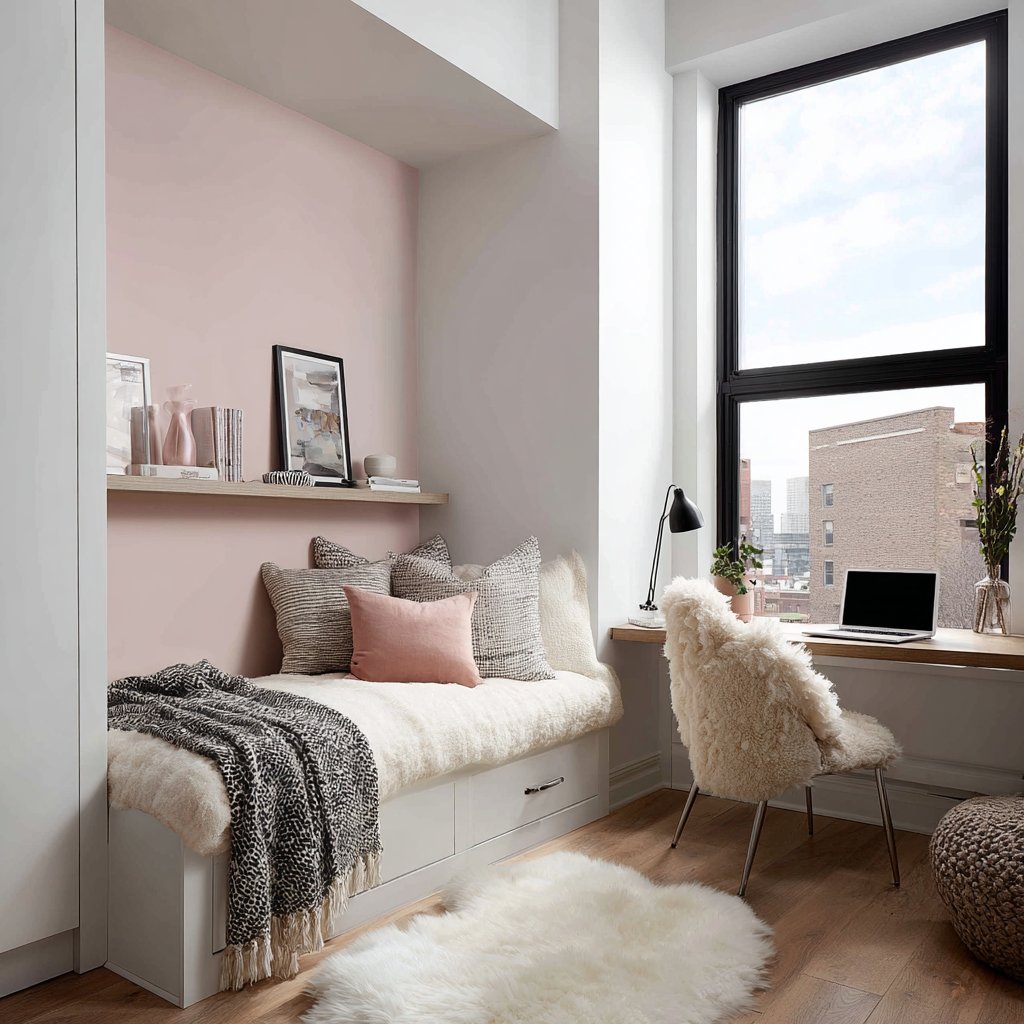
Adjacent to the window seat, a narrow floating desk provides laptop workspace without consuming floor space, maintaining the room’s open feeling while addressing functional needs. The wall mounting allows chairs to tuck completely underneath, preserving walkways and floor area. The room’s color palette includes a soft pink accent wall that adds warmth and personality while maintaining sophistication appropriate for maturing teens. The pink hue coordinates with white and natural wood furniture, creating a cohesive color story that feels intentional and polished.
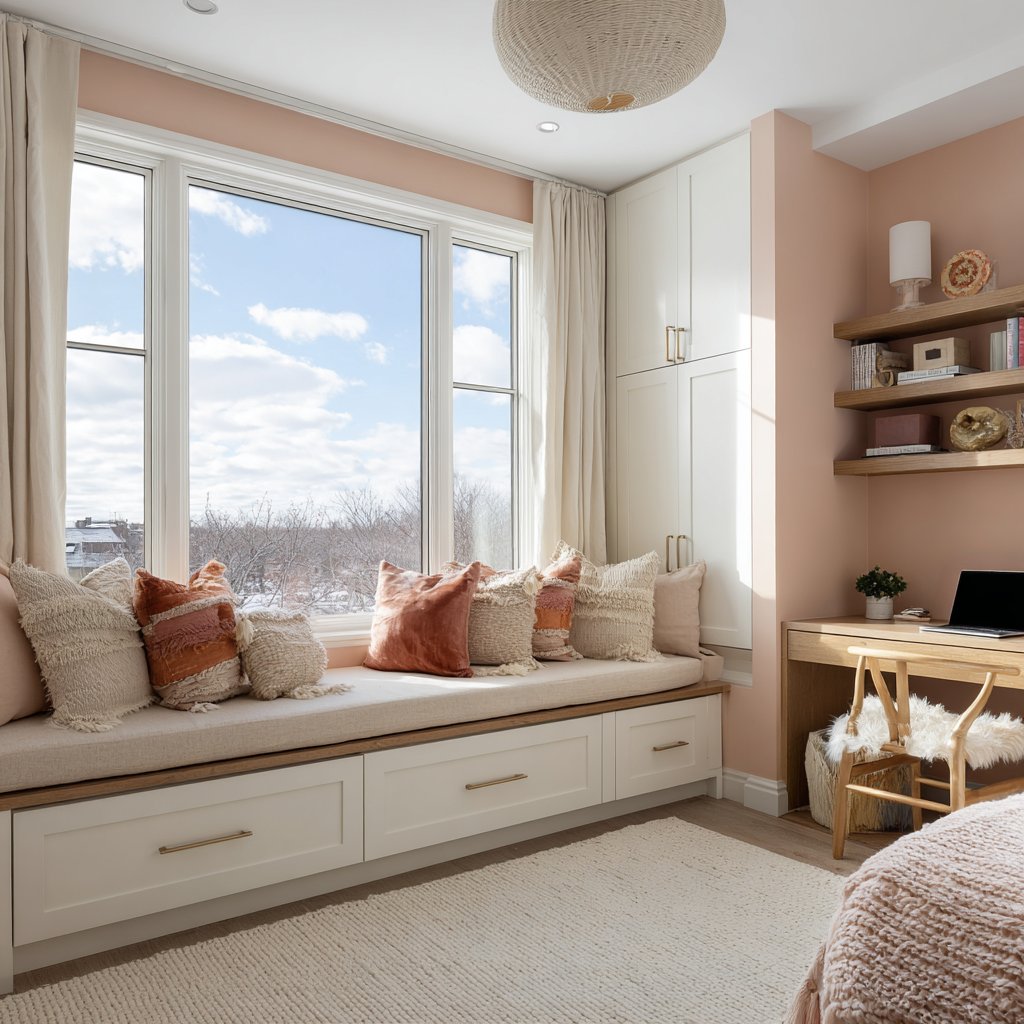
Large windows provide abundant natural light that makes the small bedroom feel more spacious and inviting, while the window seat capitalizes on this architectural feature rather than blocking it with standard furniture. Professional interior photography captures the charming built-in seating and efficient use of architectural features, demonstrating how permanent installations can be worthwhile investments in small spaces. The window seat configuration works particularly well in bedrooms with bay windows, alcoves, or other architectural details that lend themselves to custom built-ins.
Key Design Tips:
- Ensure window seat depth provides comfortable seating—minimum 18 inches recommended
- Install hinges on lift-up seats for easy access to storage below
- Choose weather-resistant cushion materials if windows experience condensation
- Add safety mechanisms to prevent lids from slamming during access
- Incorporate electrical outlets in or near the window seat for device charging
- Consider adding lighting underneath the seat overhang for ambient evening illumination
- Use cushion ties or non-slip materials to keep seating surfaces properly positioned
17. Multi-Functional Headboard Storage
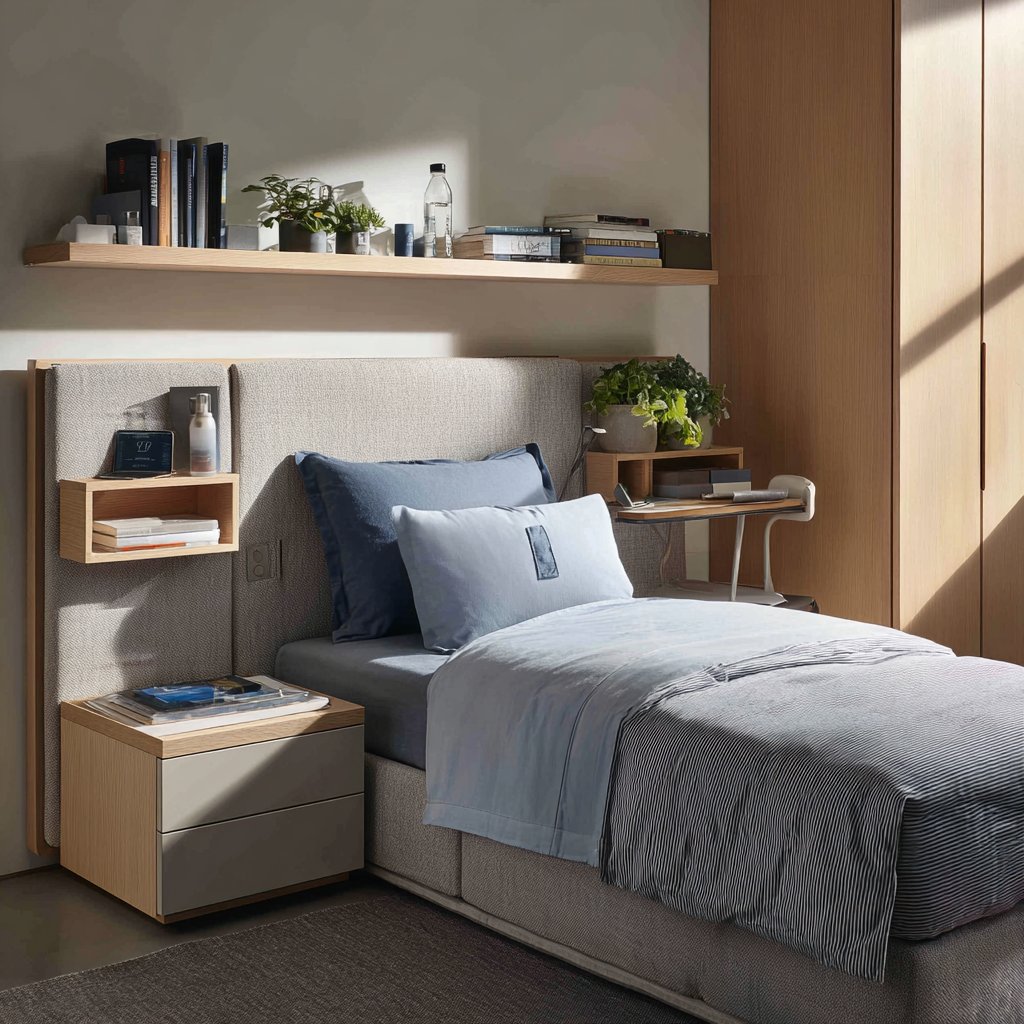
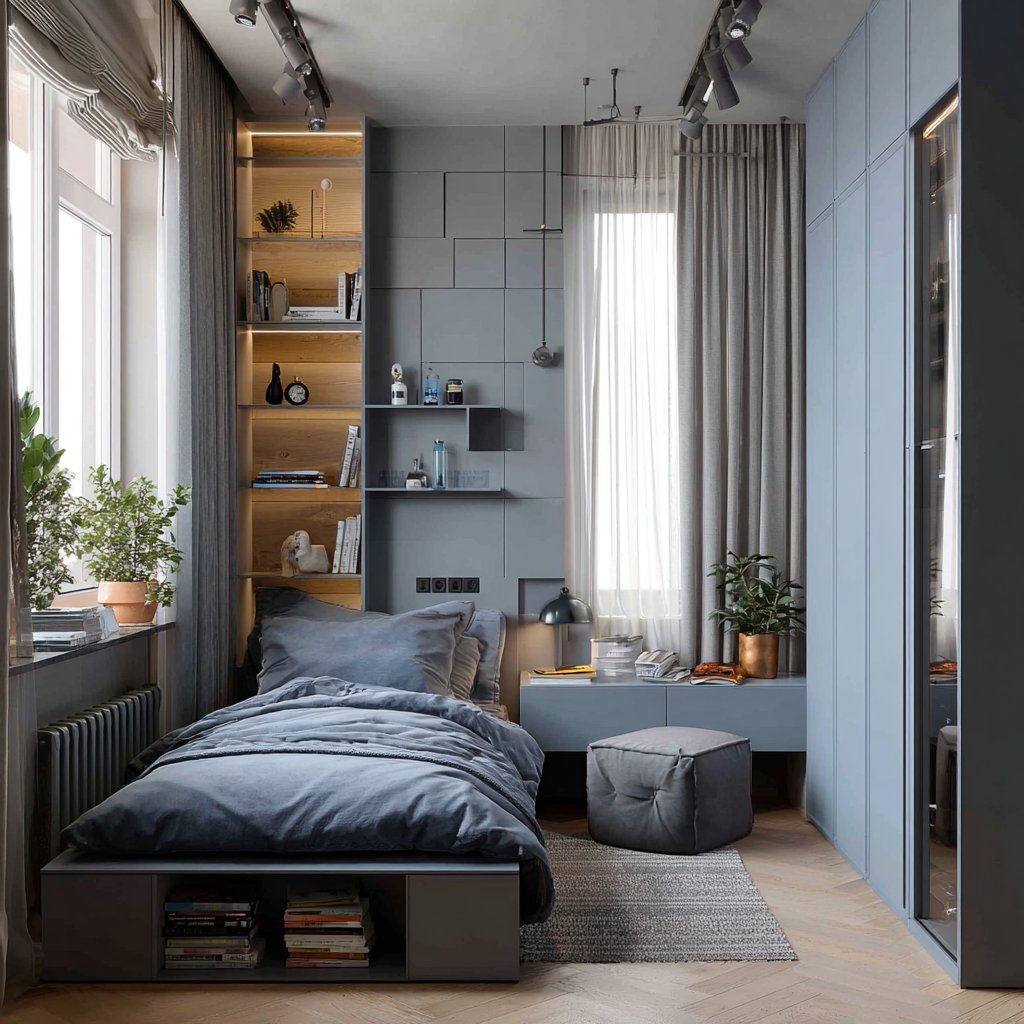
A headboard with integrated shelving and USB charging ports represents modern furniture design that addresses contemporary teen needs while maximizing space efficiency. The built-in shelves provide convenient bedside storage for alarm clocks, water bottles, books, and small plants—all within arm’s reach from the sleeping position. This consolidation eliminates the need for separate nightstands, freeing valuable floor space in the small bedroom. The integrated USB charging ports reflect an understanding of teen lifestyles where device charging is a nightly necessity, preventing the tangle of extension cords and adapters that often clutters bedside areas.
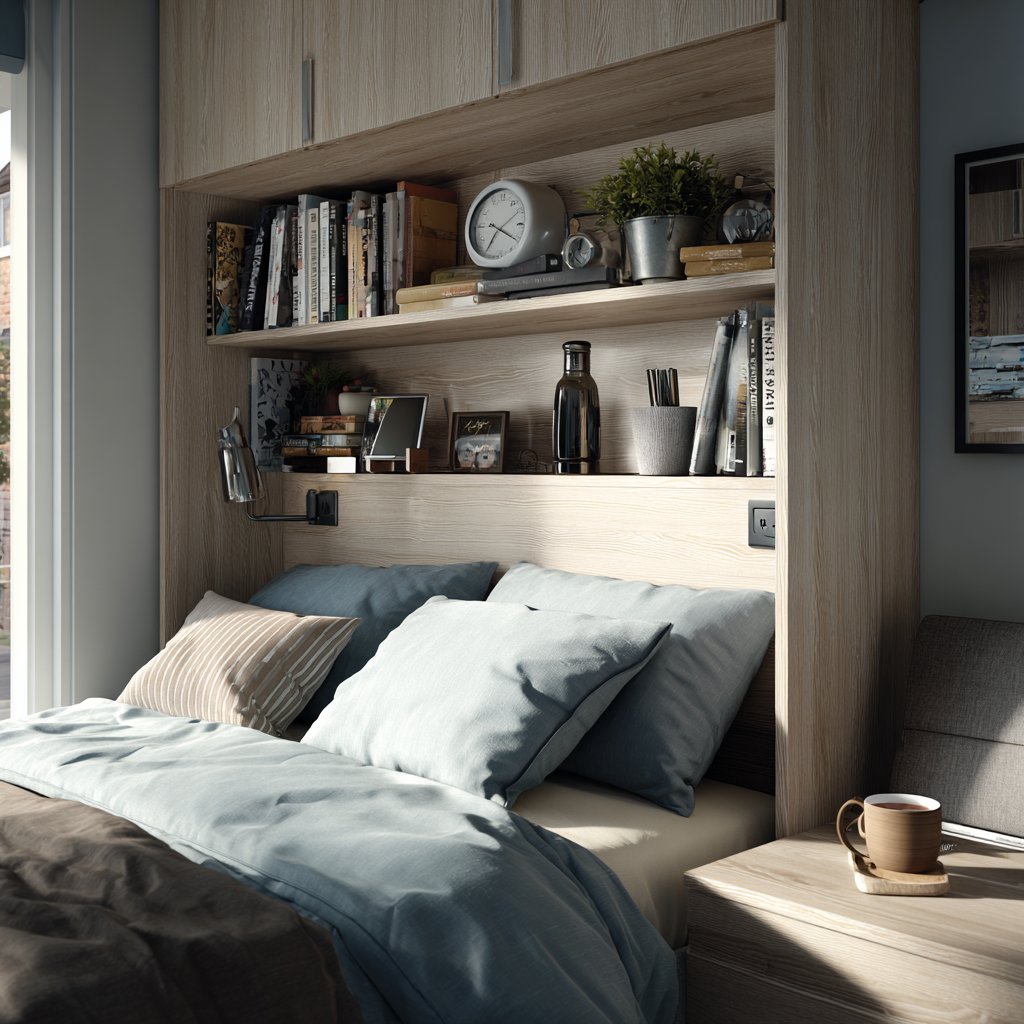
The bed is dressed in contemporary bedding with a duvet in muted blue tones that creates a calming sleep environment while maintaining style and visual interest. The sophisticated color choice demonstrates that teen spaces can be both youthful and mature, avoiding overly juvenile themes that quickly feel outdated. Opposite the bed, a slim wardrobe with mirrored doors serves double duty—providing essential hanging storage while reflecting light throughout the room and creating the illusion of expanded space. The mirrored surface makes the small bedroom appear larger and brighter, a valuable optical trick in compact quarters.
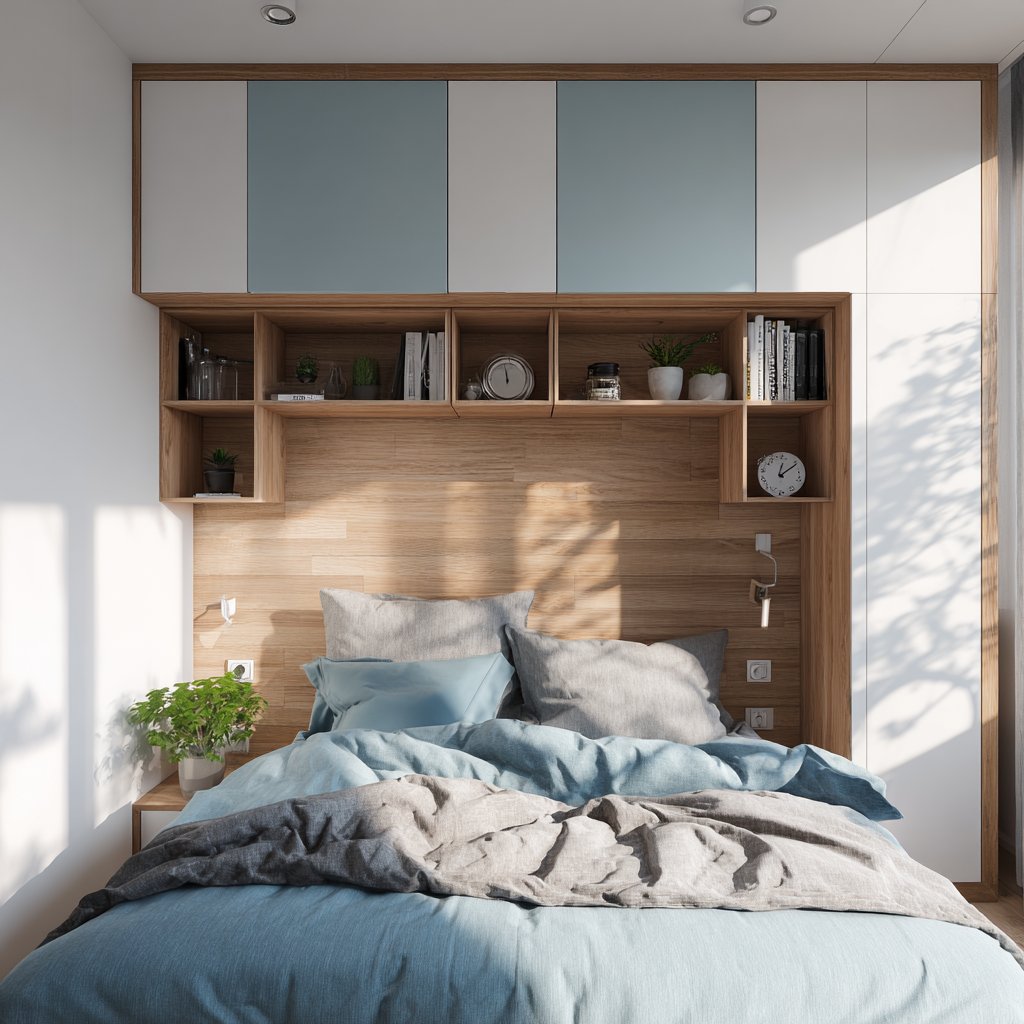
Interior design photography with natural lighting highlights the functional headboard design and compact furniture choices that work together cohesively. The thoughtful furniture selection demonstrates how modern design often incorporates multiple functions into single pieces, reducing the total furniture count necessary in small spaces. This integrated approach proves particularly valuable in teen bedrooms where multiple activities—sleeping, studying, socializing, grooming—must coexist within limited square footage.
Key Design Tips:
- Verify USB port locations provide easy access from sleeping positions
- Choose headboard depth carefully to avoid excessive bed protrusion from wall
- Ensure shelves are secured properly to handle stored items’ weight
- Use LED bulbs in any integrated headboard lighting to reduce heat
- Keep heavier items on lower shelves and lighter objects up top
- Install cable management solutions to keep charging cords organized
- Clean shelves regularly to prevent dust accumulation near sleeping area
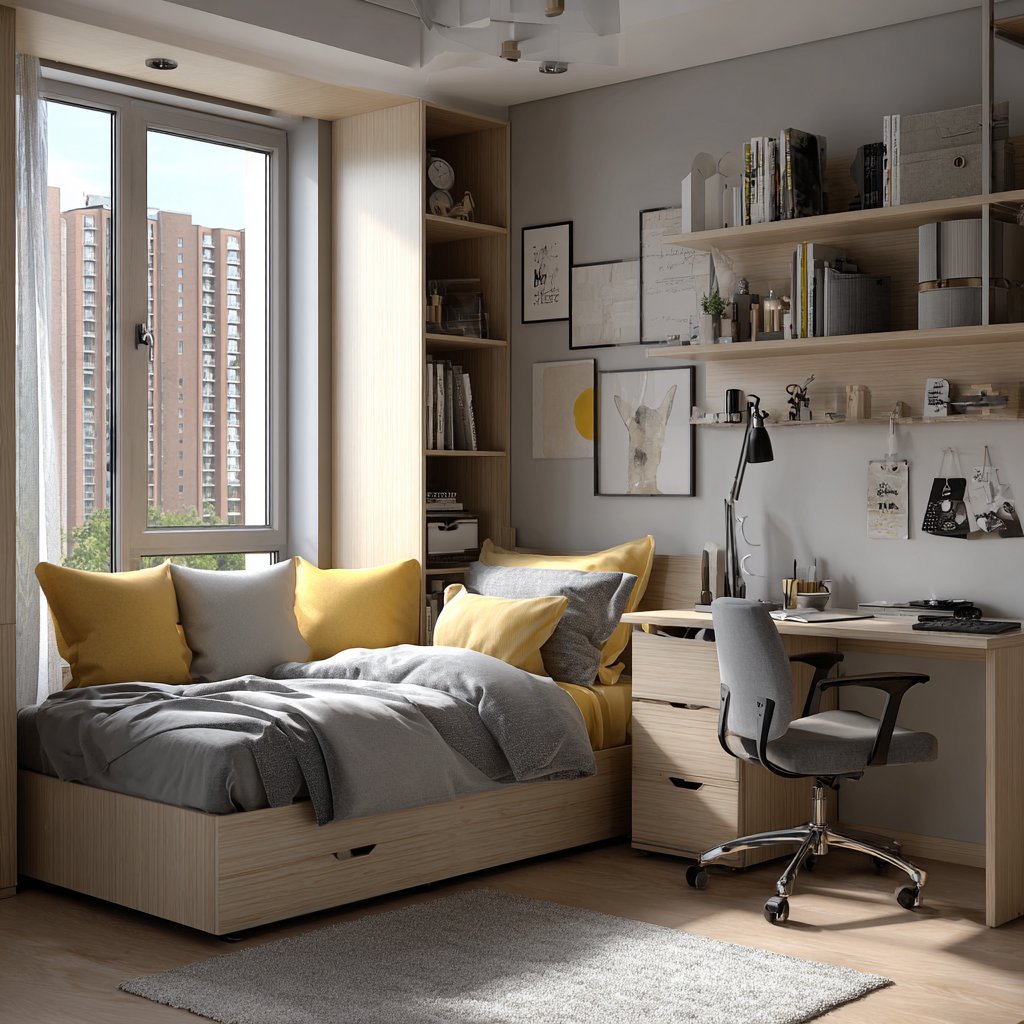
18. L-Shaped Corner Desk Workspace
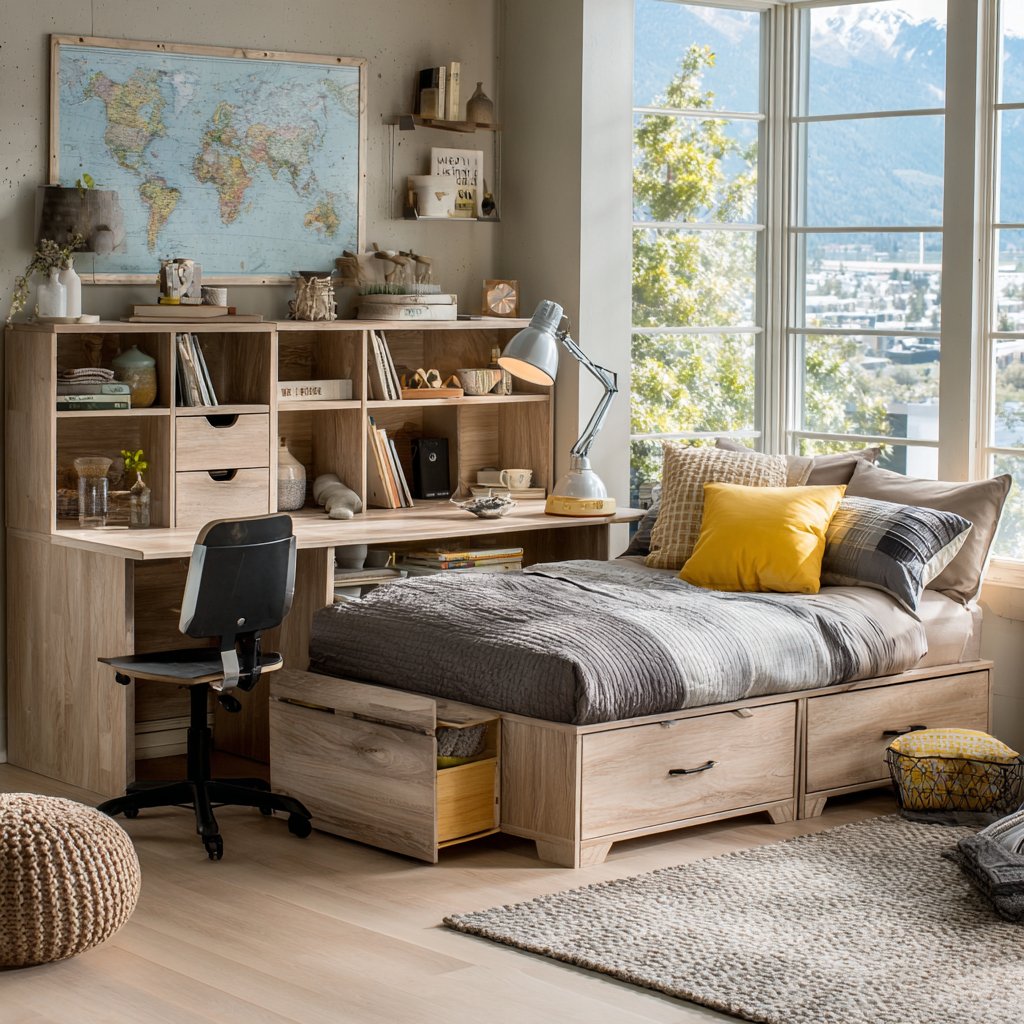
Utilizing two walls to create an L-shaped workspace delivers substantial desk surface area without the bulk of traditional large desks. This configuration proves particularly effective in small bedrooms where a single-wall desk might not provide adequate workspace for homework, computers, and creative projects. The desk surface in light wood finish introduces warmth while maintaining a contemporary aesthetic, with the natural material adding organic texture to the room. Cable management systems keep technology cords organized and out of sight, preventing the tangled mess that often accompanies teen workspaces.
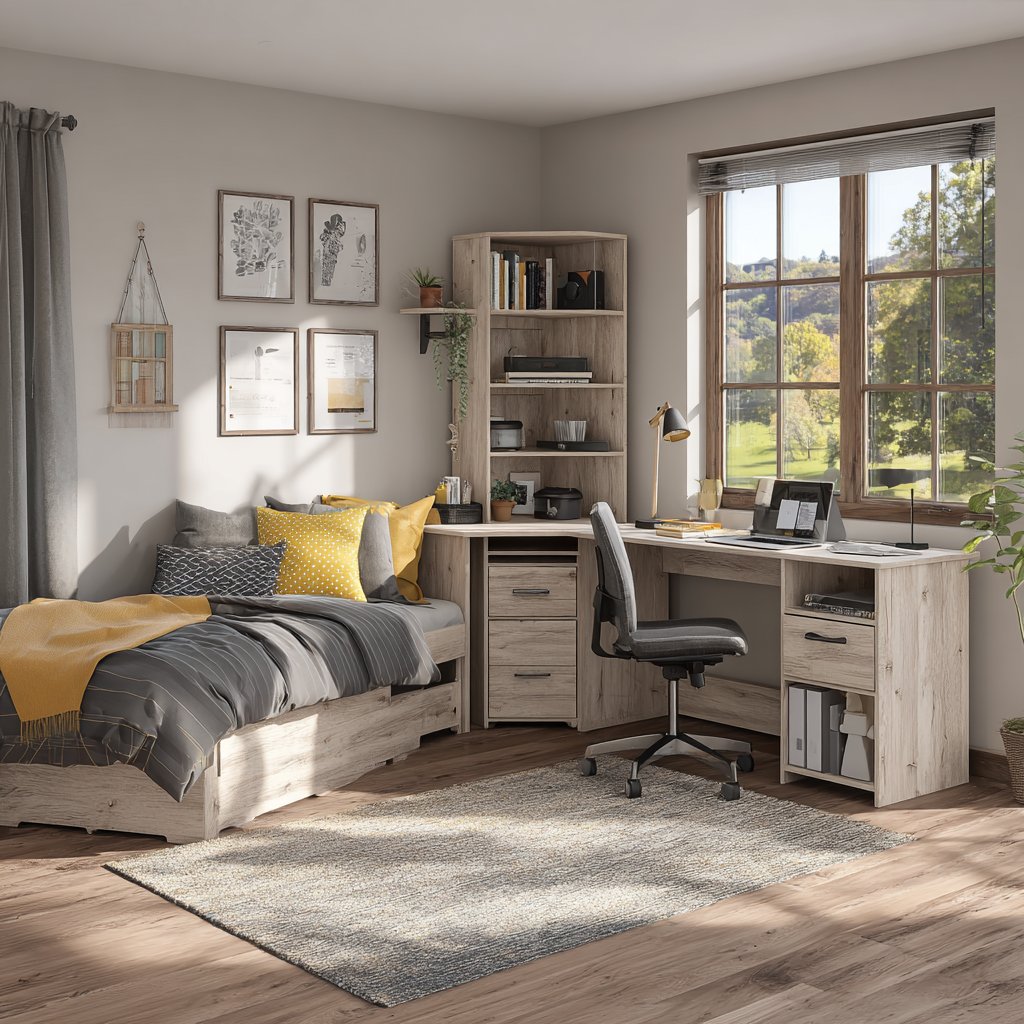
Small drawer units on wheels positioned underneath the desk provide flexible storage that can be easily moved for cleaning or rearranged as needs change. The mobility prevents the permanent, built-in feeling that can make small spaces feel constrained, while maintaining organizational capacity for school supplies, art materials, or personal items. A comfortable task chair and adjustable desk lamp complete the study area with ergonomic and functional elements essential for productive work sessions. The lamp’s adjustability ensures proper lighting for various tasks without creating glare on computer screens.
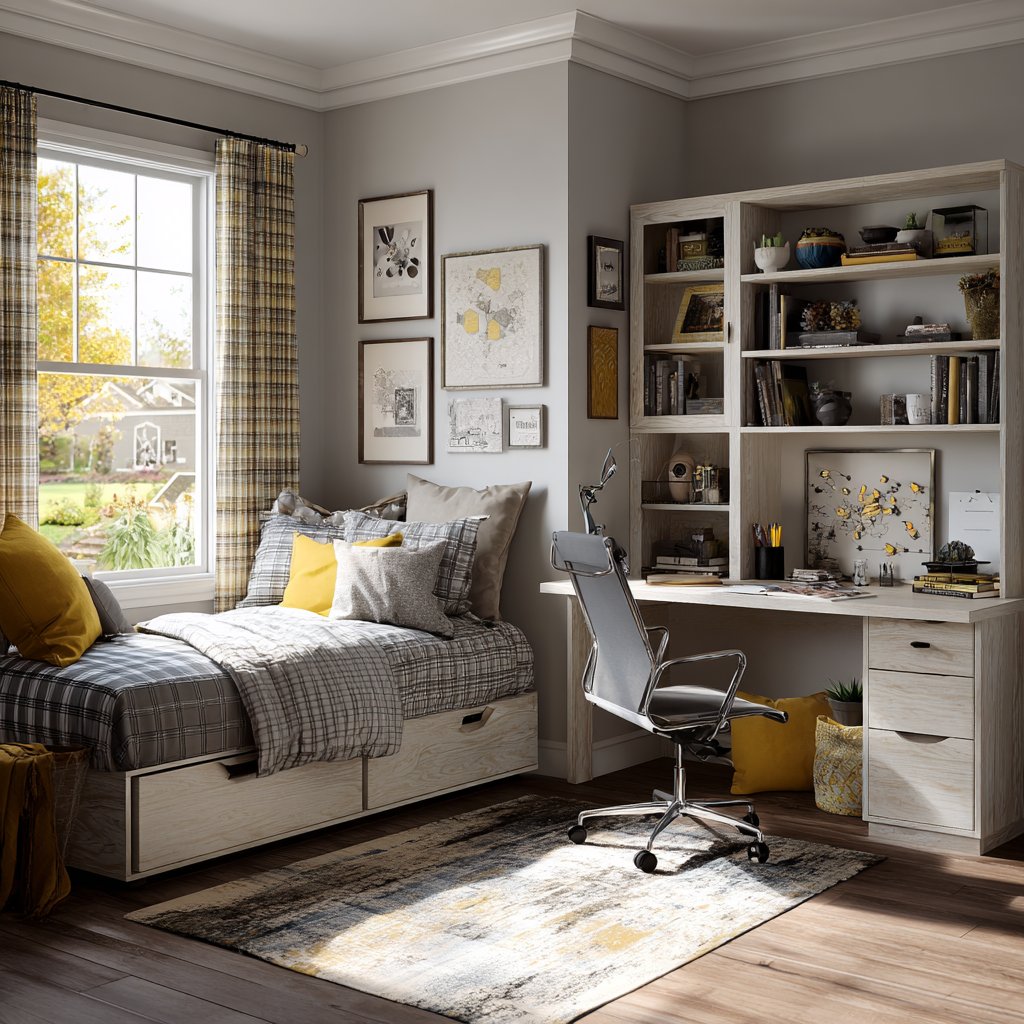
The bed features simple platform design with coordinating bedding in grey and yellow accents, with the color combination adding energy without overwhelming the neutral foundation. Wide-angle photography demonstrates the efficient corner utilization with soft natural daylight illuminating both workspace and sleeping area. This layout works particularly well in square or nearly square bedrooms where corner positioning maintains central floor space for movement and additional furniture if needed.
Key Design Tips:
- Measure corner space carefully and account for chair clearance when selecting desk size
- Install adequate electrical outlets in both wall sections for computers, lamps, and charging
- Use a keyboard tray if desk height isn’t optimal for typing comfort
- Position computer monitors to avoid window glare from behind or in front
- Add a desk pad or mat to protect surface and reduce writing noise
- Keep frequently used items within arm’s reach to minimize reaching and stretching
- Consider adding a small shelf or hutch on one section for vertical storage
19. Interactive Pegboard Display Wall
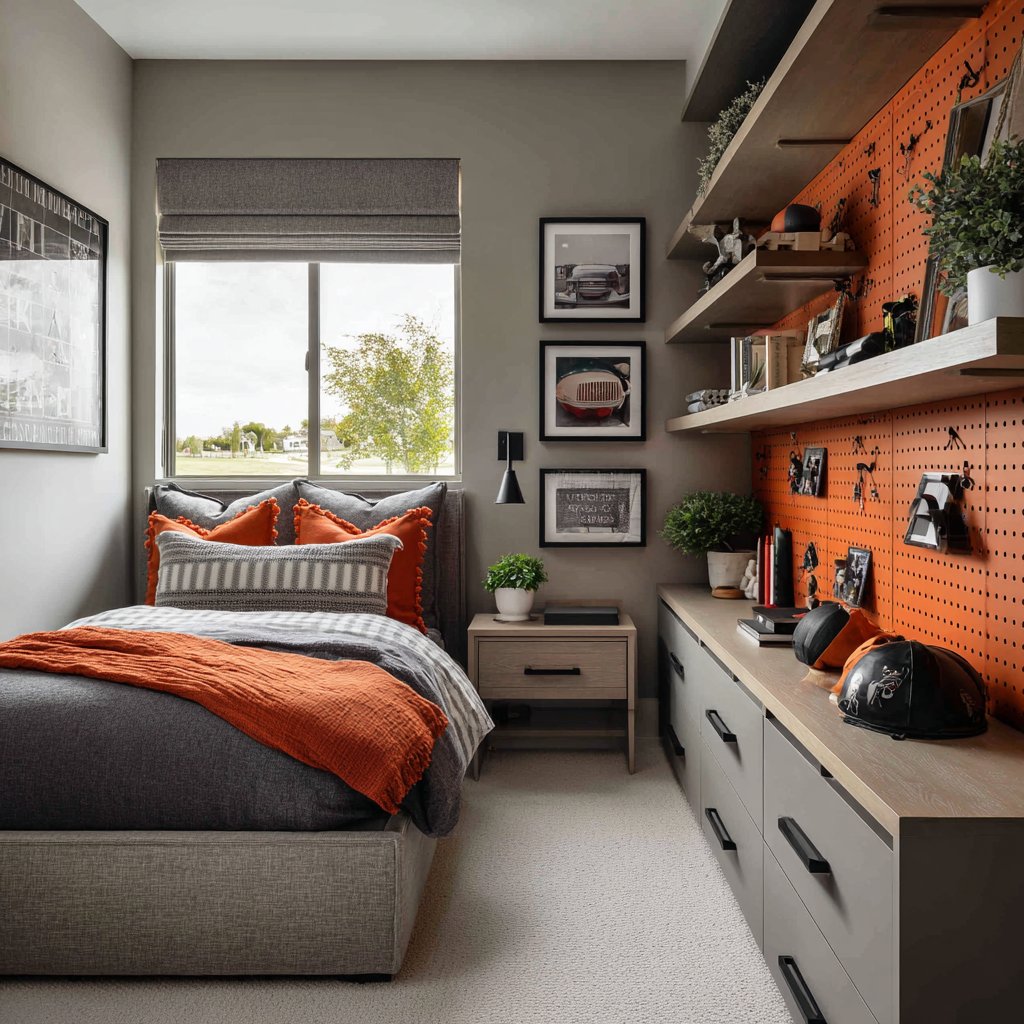
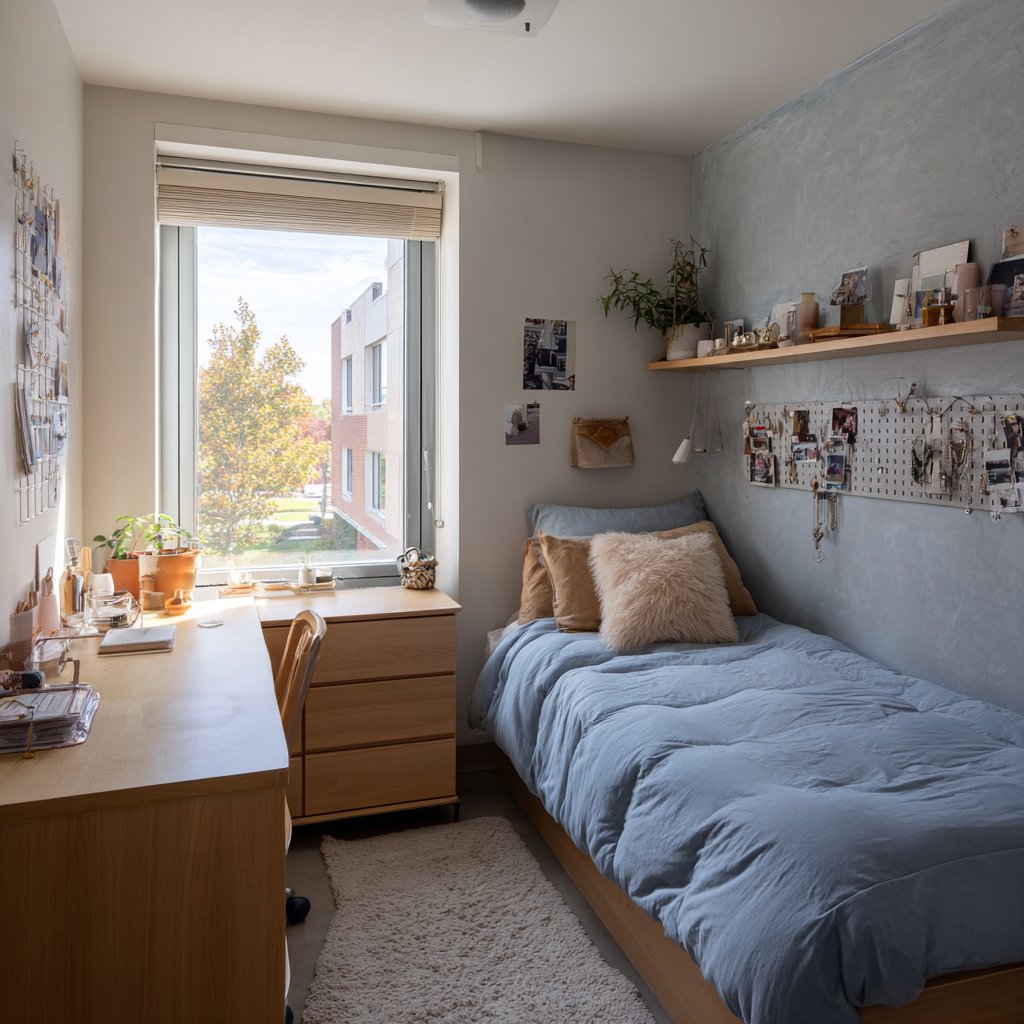
A pegboard wall system combines storage functionality with dynamic decorative potential, creating an ever-evolving display that can be modified as interests and needs change. This design features a pegboard painted in an accent color with various hooks and small shelves holding jewelry, accessories, photos, and small plants. The organizational wall serves dual purposes—keeping items accessible and organized while creating an attractive, personalized display that functions as wall art. The ability to rearrange elements frequently prevents boredom and allows the wall to reflect current interests, seasons, or moods.
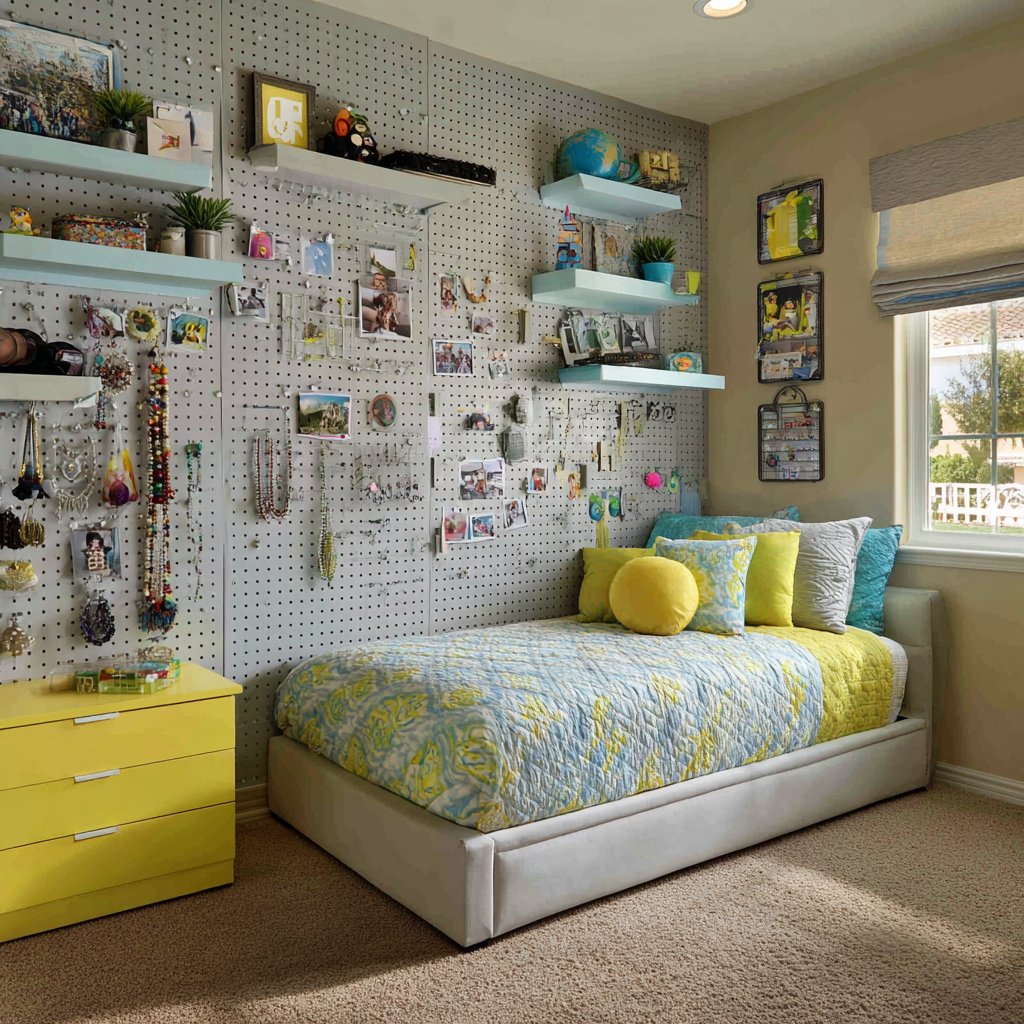
Below the pegboard, a narrow dresser provides traditional drawer storage for items better concealed than displayed, creating a balanced storage approach that combines open and closed systems. The sleeping area includes a bed with upholstered headboard and minimal styling, allowing the pegboard wall to serve as the room’s primary visual focus. This approach concentrates decorative energy in one impactful area rather than dispersing it throughout the room, creating a stronger design statement appropriate for small spaces where too many focal points can appear cluttered.
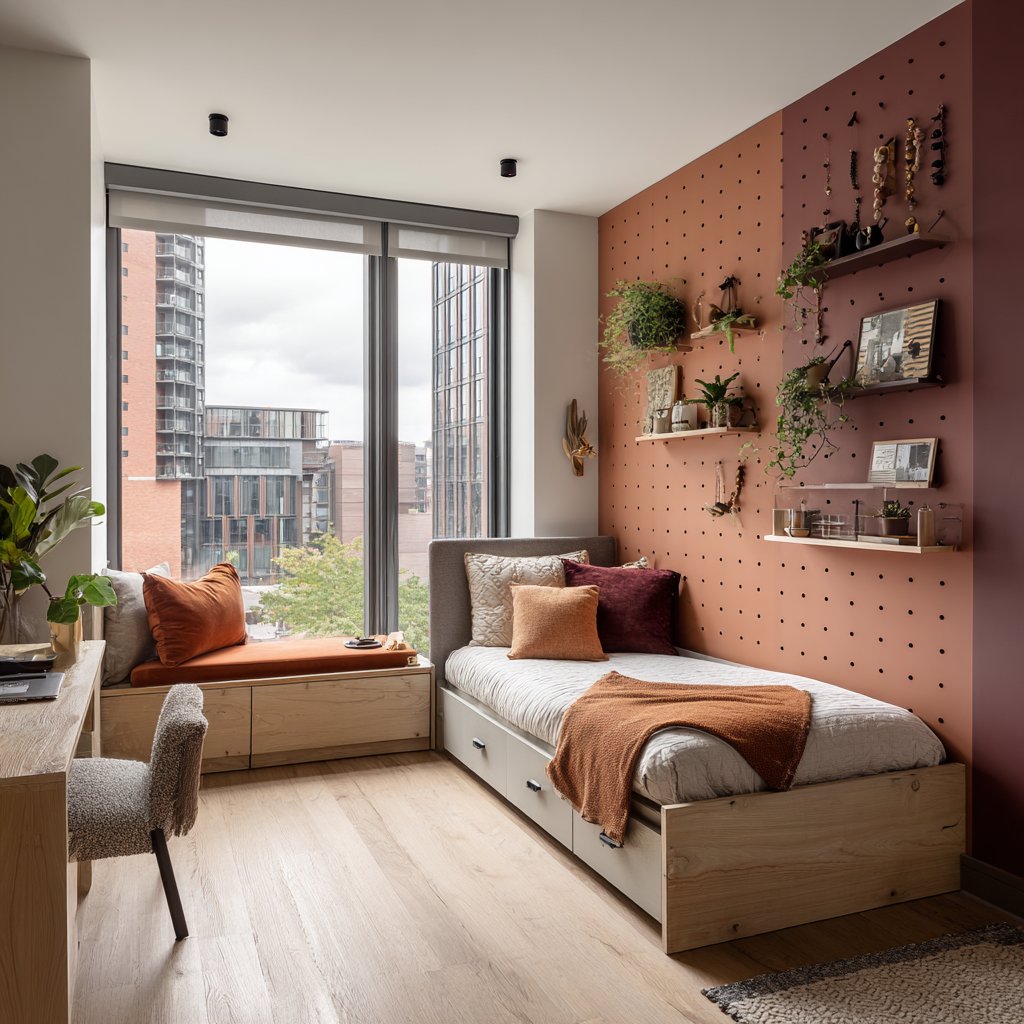
Natural lighting through a window with simple roller shade illuminates the creative storage solution without creating harsh shadows or glare. Interior photography captures the personalized display with balanced exposure that shows individual accessories clearly while maintaining overall composition. The pegboard concept offers particular value for teens who frequently change interests or collect small items—the display accommodates evolving hobbies without requiring new furniture or organizational systems, simply rearrangement of existing hooks and accessories.
Key Design Tips:
- Paint pegboard to match or complement room colors before installation
- Use a variety of hook types and sizes to accommodate different items
- Create visual groupings rather than spacing items uniformly for more interest
- Leave some pegboard space empty to prevent overwhelming appearance
- Ensure heavy items are supported by multiple hooks or stronger mounting
- Consider adding small battery-operated LED lights to highlight special items
- Update displays seasonally or as interests change to keep the wall fresh
20. Room-Dividing Bookshelf Strategy
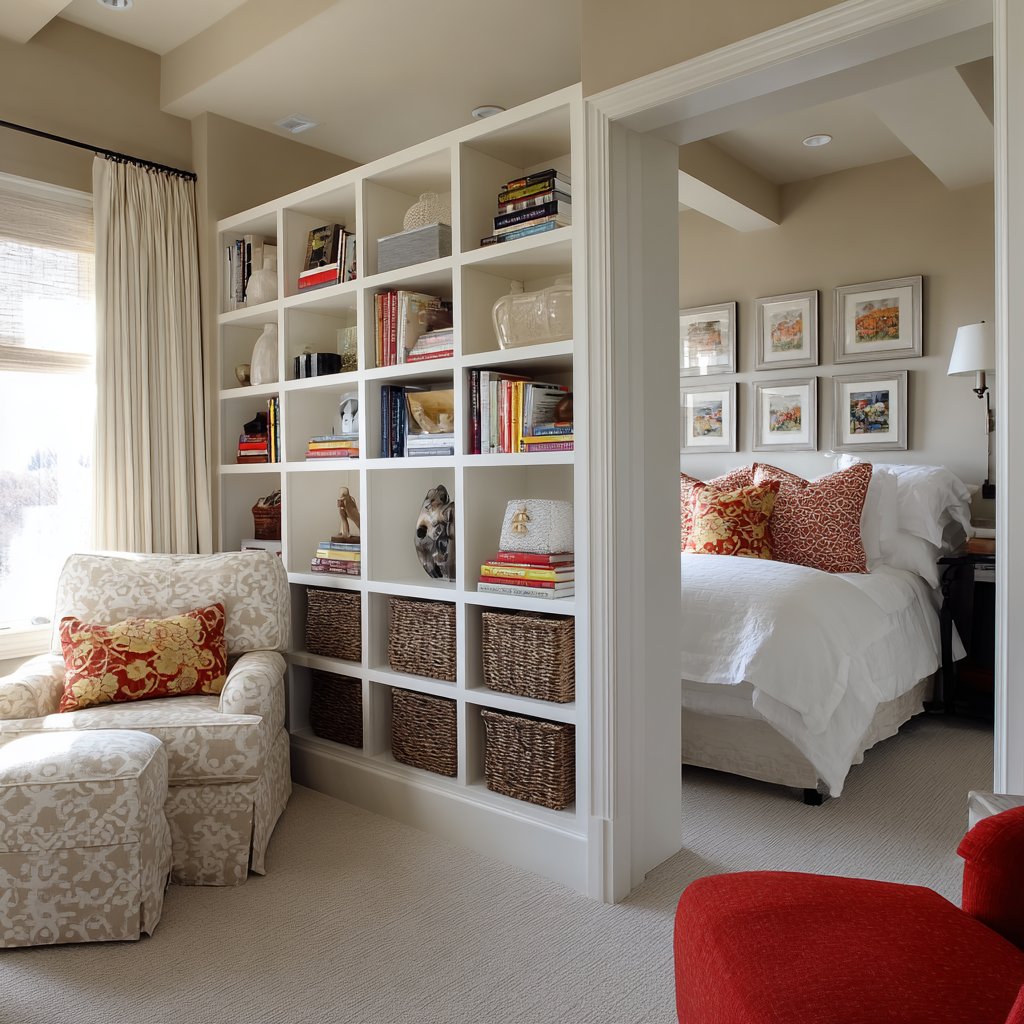
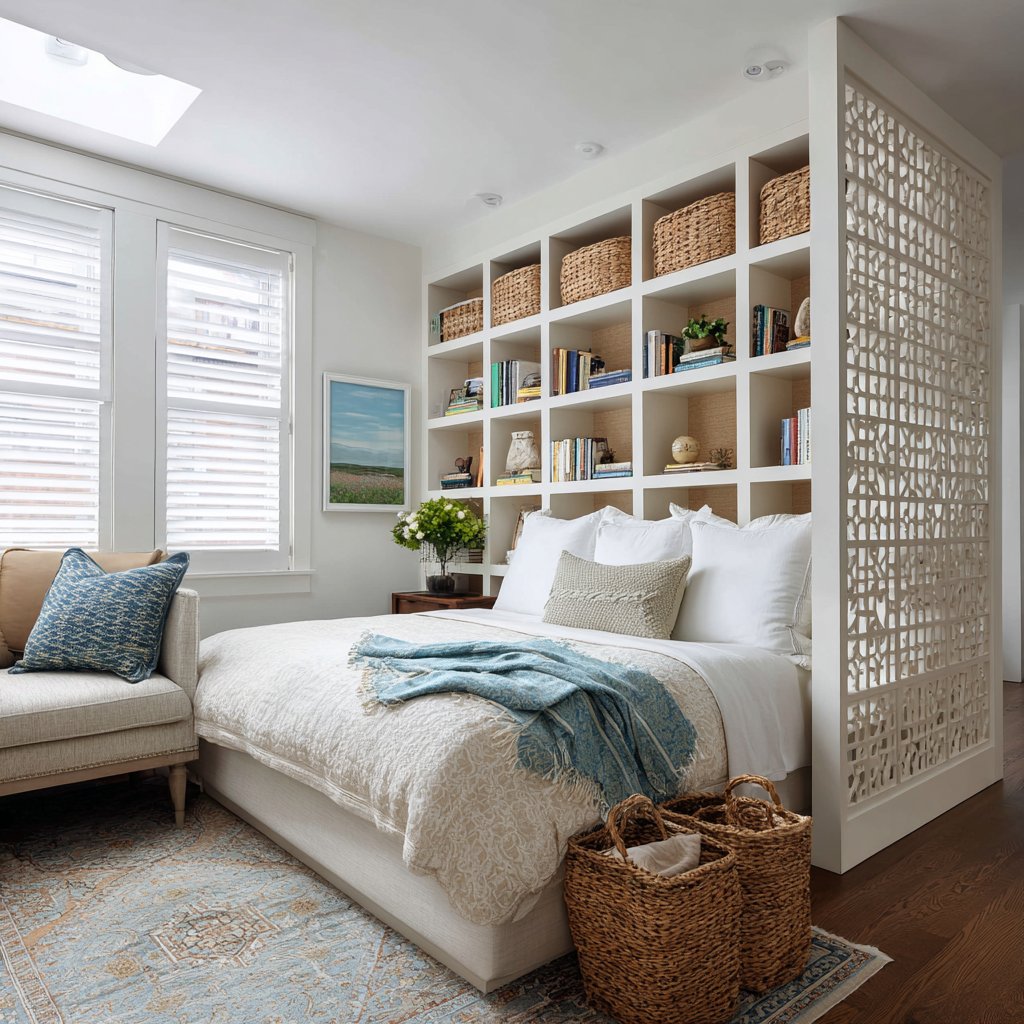
A bookshelf positioned as a room divider creates separation between sleeping and study areas without the visual weight or space consumption of solid walls. The open shelving unit in white finish maintains sightlines and light flow while providing clear spatial definition between zones. The shelves hold books, storage baskets, and decorative items that remain visible from both sides, maintaining the open feeling while adding functional storage. This approach proves particularly effective in rectangular bedrooms where creating distinct activity zones enhances organization and focus.
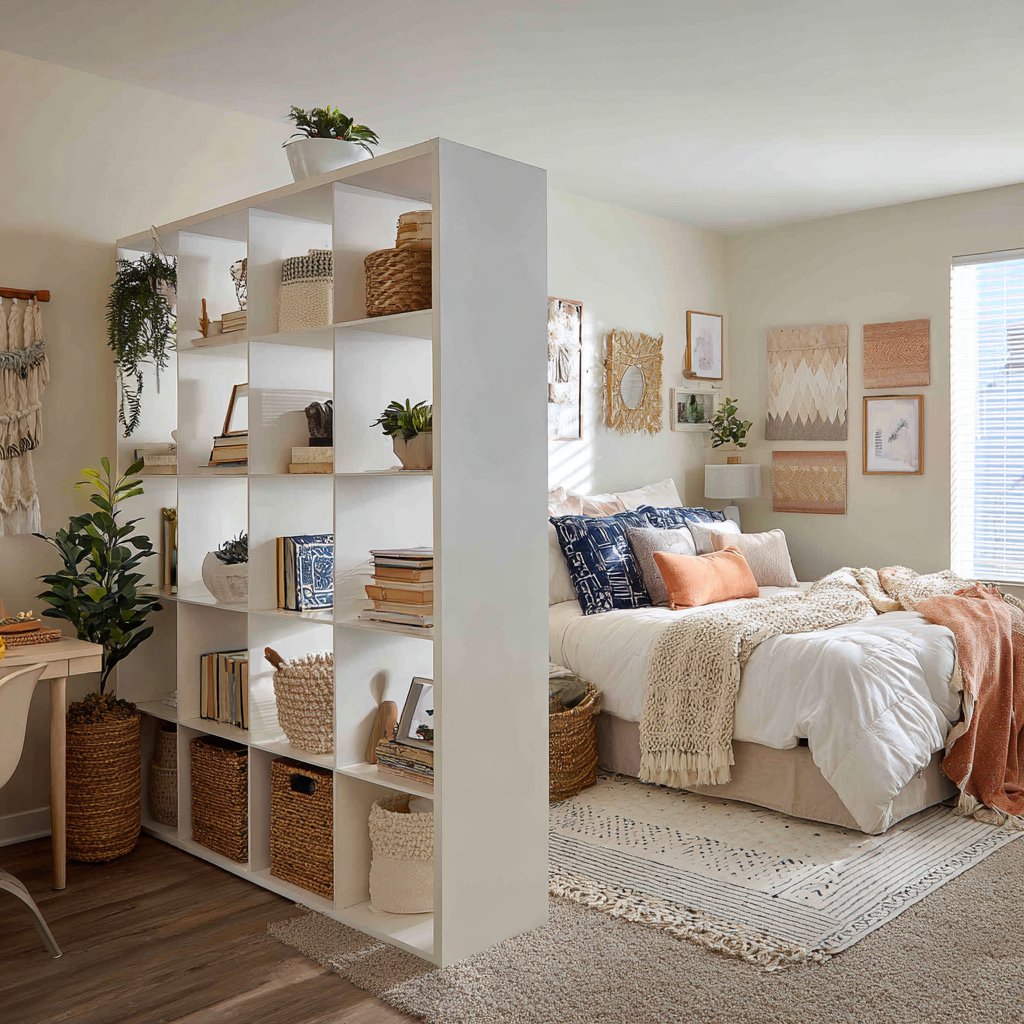
Each zone maintains distinct purpose while sharing a cohesive design aesthetic. The sleeping area remains calm and minimal, while the study zone can accommodate more active visual elements without disturbing the restful atmosphere near the bed. Neutral color scheme with pops of color from textiles and accessories creates unity across both areas, ensuring the divided room still feels like a single cohesive space rather than disconnected sections. The strategic color distribution ties the zones together visually while maintaining their functional separation.
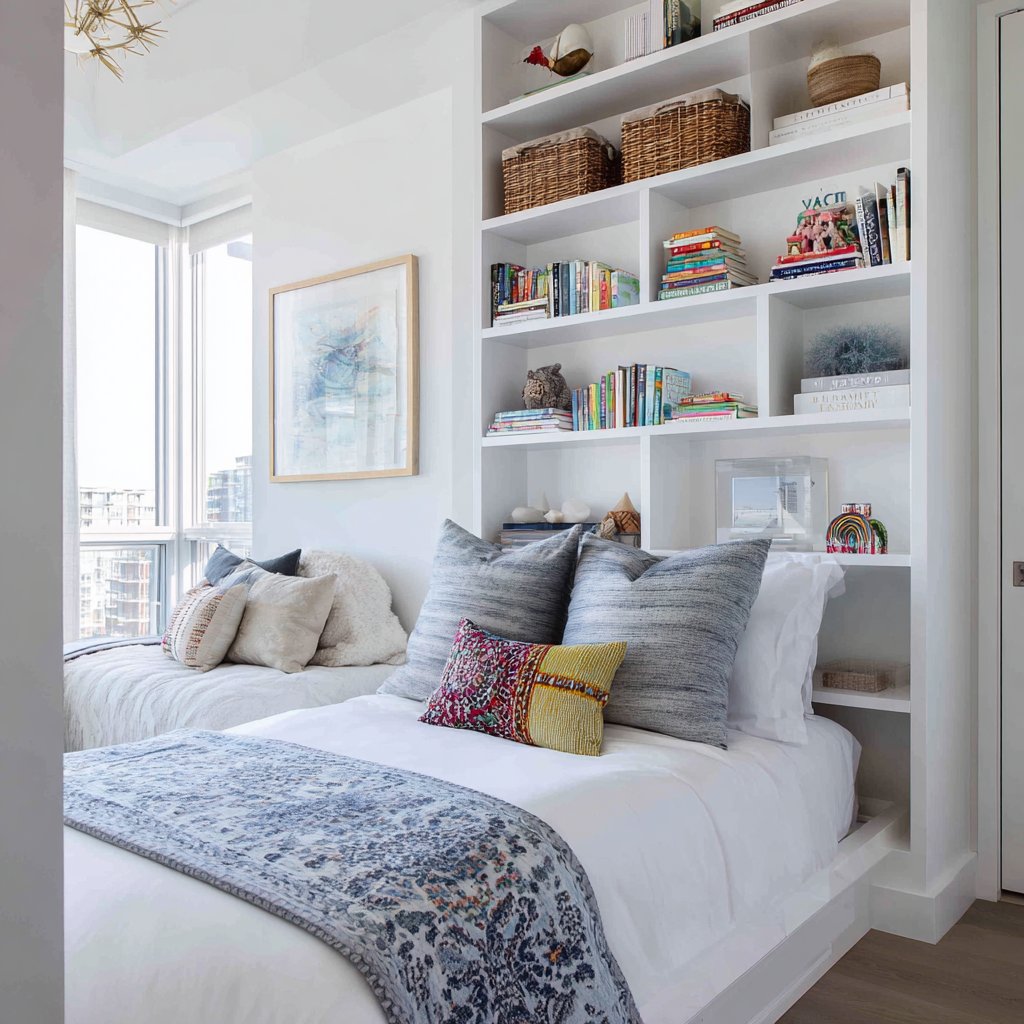
Professional interior photography showcases the space-defining furniture solution with natural lighting filtering through both areas, demonstrating that the bookshelf divider doesn’t block light or make either zone feel darker. This approach offers significant advantages over curtain dividers or solid partitions—the bookshelf provides storage capacity that dividers don’t offer, maintains better airflow than curtains, and creates a more finished, intentional appearance than temporary solutions. The concept works particularly well for teens who struggle with focus when sleeping and working areas overlap without clear boundaries.
Key Design Tips:
- Choose a bookshelf height that creates separation without blocking room visibility completely
- Secure the freestanding unit to walls or ceiling for stability—consult professionals if needed
- Arrange items on shelves thoughtfully considering visibility from both sides
- Use the back of the unit facing the bed area for calmer displays
- Position the divider to maintain natural light flow from windows
- Ensure adequate walking space on both sides of the bookshelf
- Consider adding lighting on both sides if the divider blocks light sources
21. Diagonal Bed Placement Dynamic
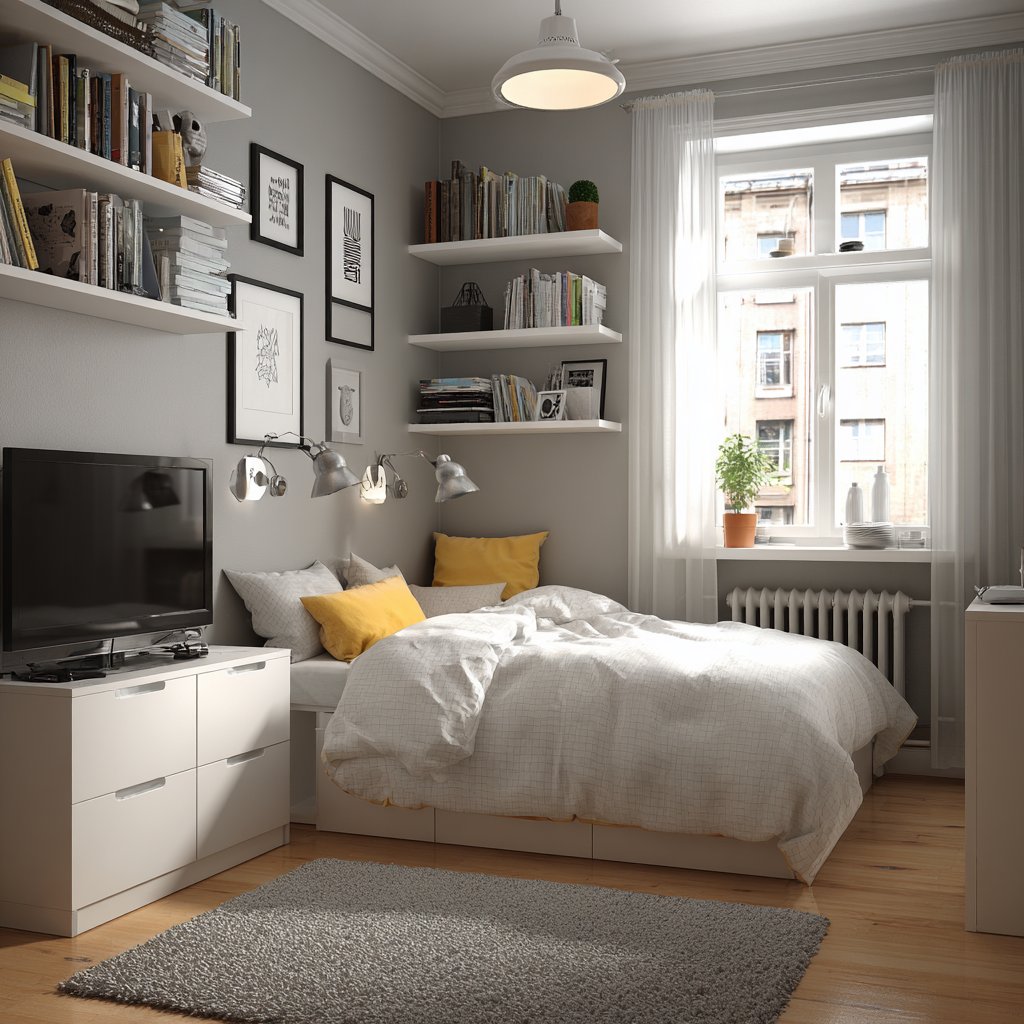
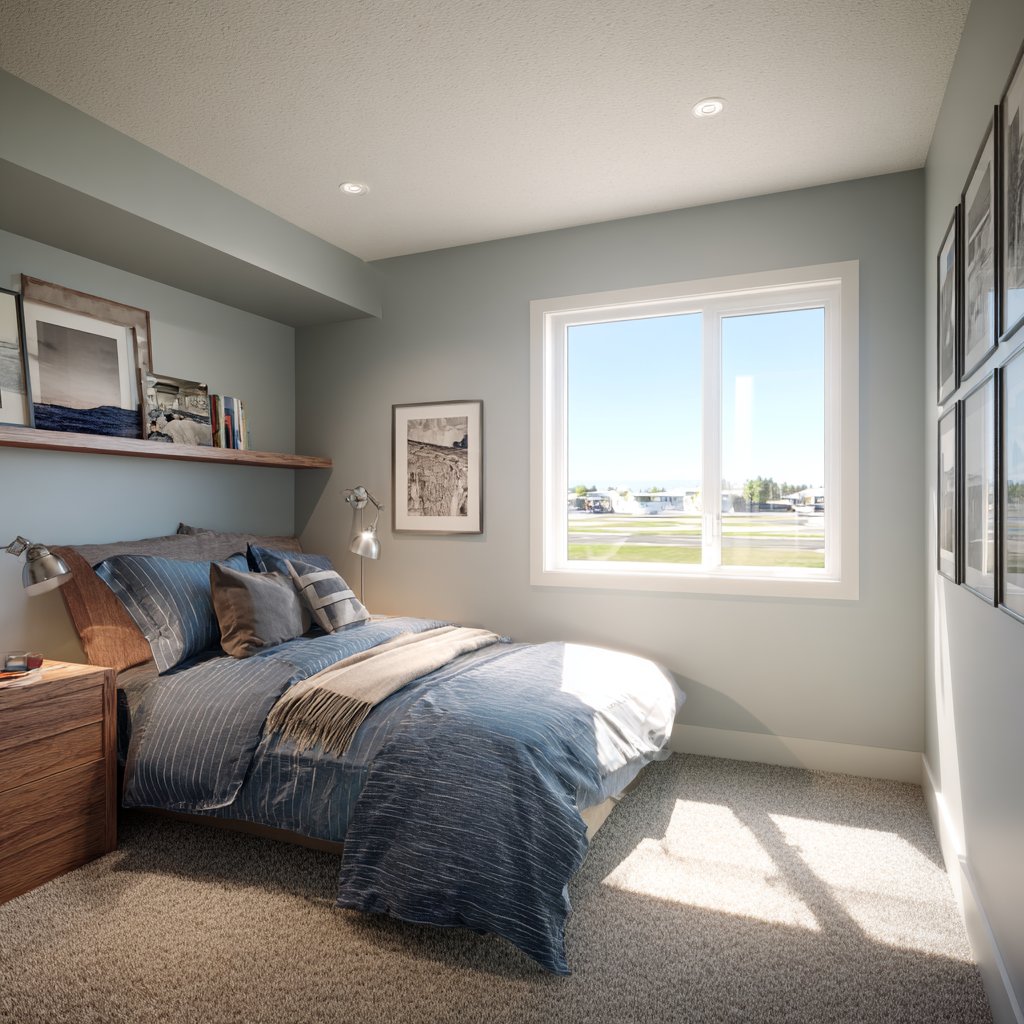
Positioning a bed diagonally in a corner creates unexpected visual interest while potentially freeing floor space along walls for other furniture. This unconventional arrangement breaks from standard parallel wall placement, adding dynamic energy appropriate for creative teen personalities. The diagonal positioning includes two nightstands flanking the bed and wall-mounted reading lights, maintaining bedroom functionality while creating a distinctive look. The setup works particularly well in square bedrooms where traditional placement might feel too predictable or in rooms with challenging architectural features like off-center windows or doors.
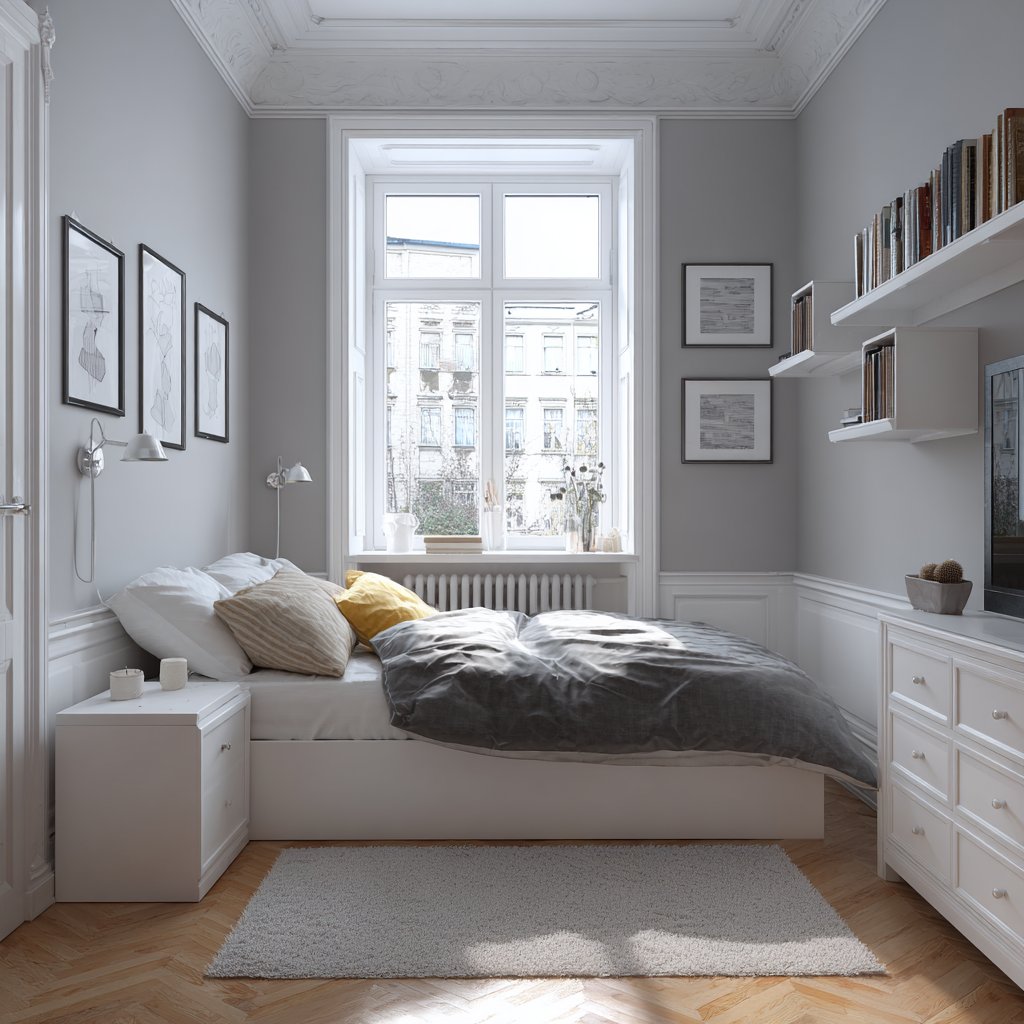
A compact chest of drawers serves dual purposes as clothing storage and media stand, demonstrating how furniture selection can address multiple needs within a single footprint. Wall decor features simple framed prints and a small floating shelf, maintaining visual interest without competing with the bed’s prominent diagonal placement. Soft grey walls with white trim create a clean backdrop that allows furniture arrangement and personal items to command attention, with the neutral palette providing sophistication appropriate for teen spaces.
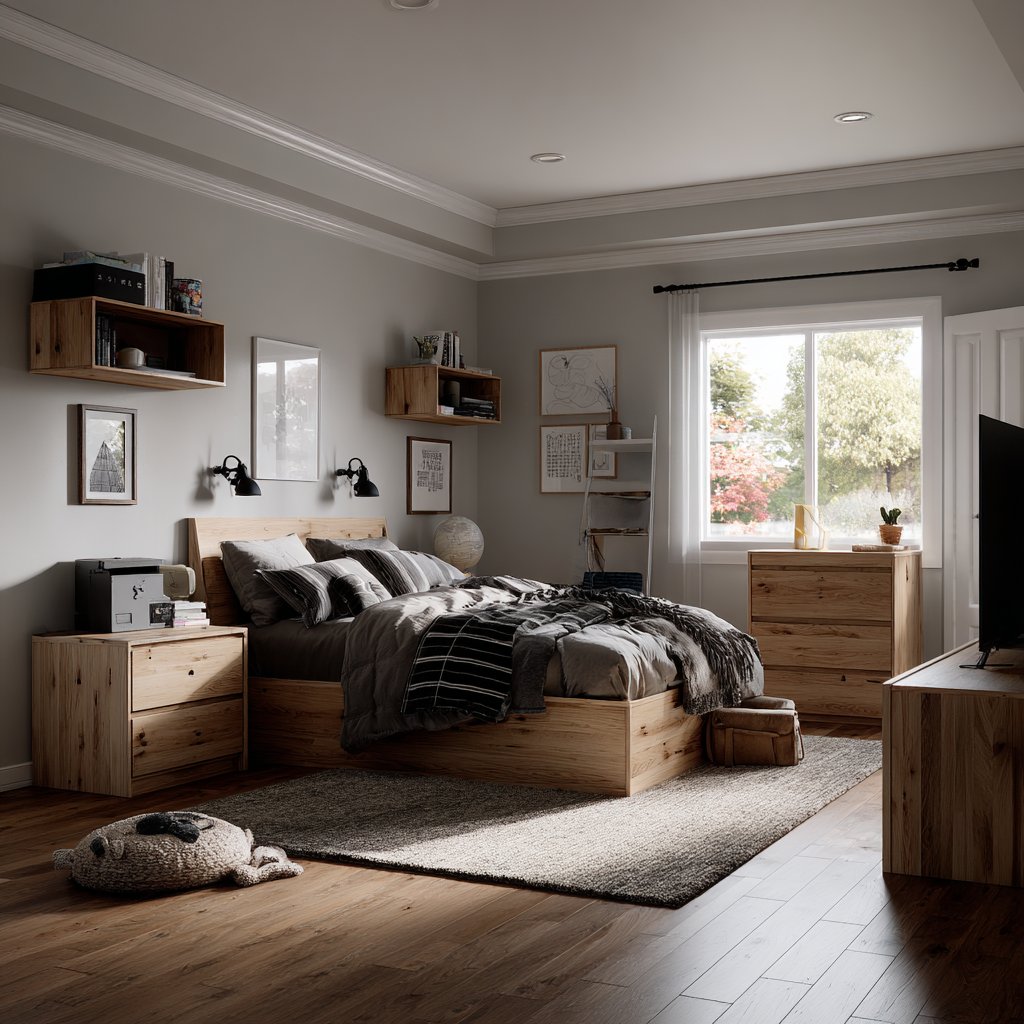
Interior design photography captures the unconventional furniture placement with natural window light that highlights how the arrangement actually increases usable floor space in certain areas of the room. The diagonal positioning creates triangular spaces in corners that can accommodate additional furniture, storage, or simply remain open to enhance the room’s spacious feeling. This layout demonstrates that breaking traditional furniture placement rules can yield positive results in small spaces when executed thoughtfully.
Key Design Tips:
- Measure carefully to ensure adequate walking space around all bed sides
- Position diagonal bed to maintain access to windows and closets
- Use area rug to anchor the bed and define its angular placement
- Ensure nightstands are easily accessible from the bed despite diagonal positioning
- Consider room traffic patterns to avoid placing the bed in natural pathways
- Use the created corner spaces intentionally for storage or additional furniture
- Test the arrangement with temporary positioning before committing to final placement
22. Minimalist Capsule Wardrobe Display
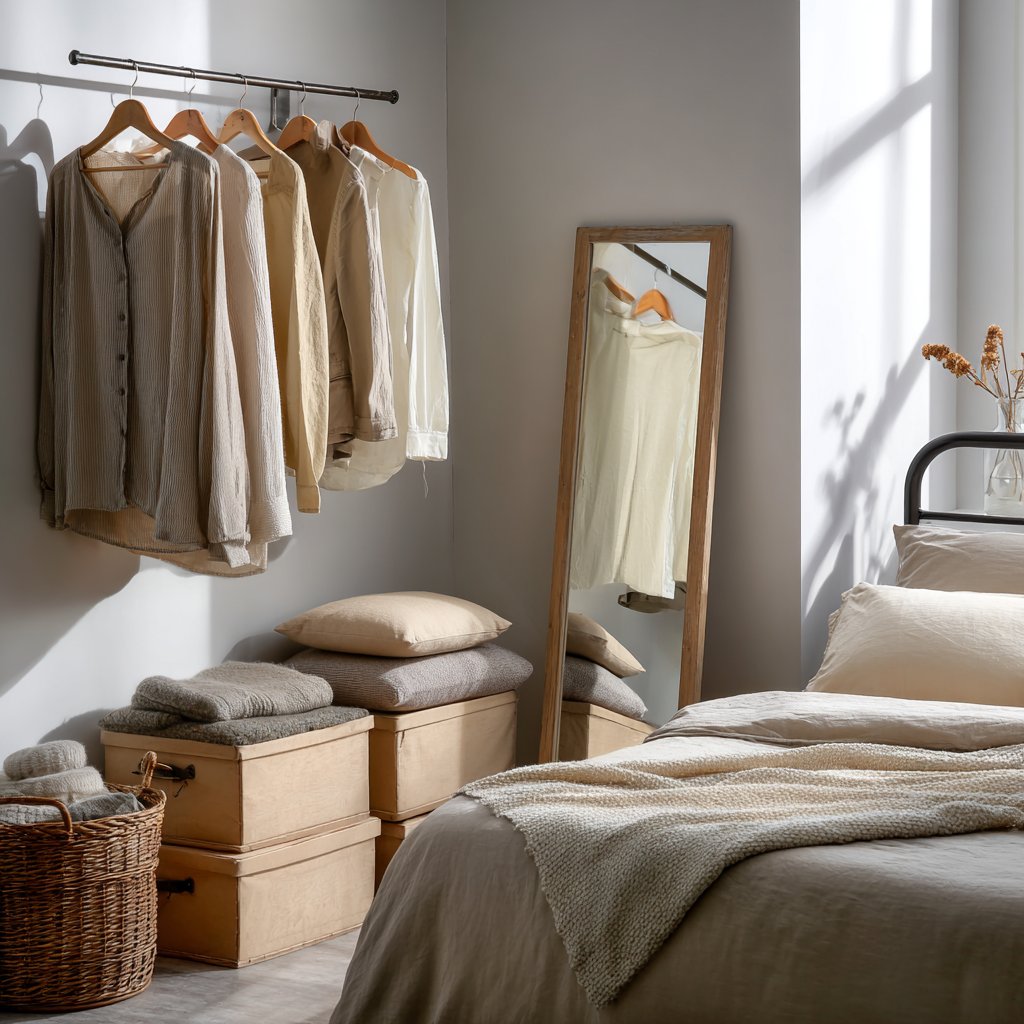
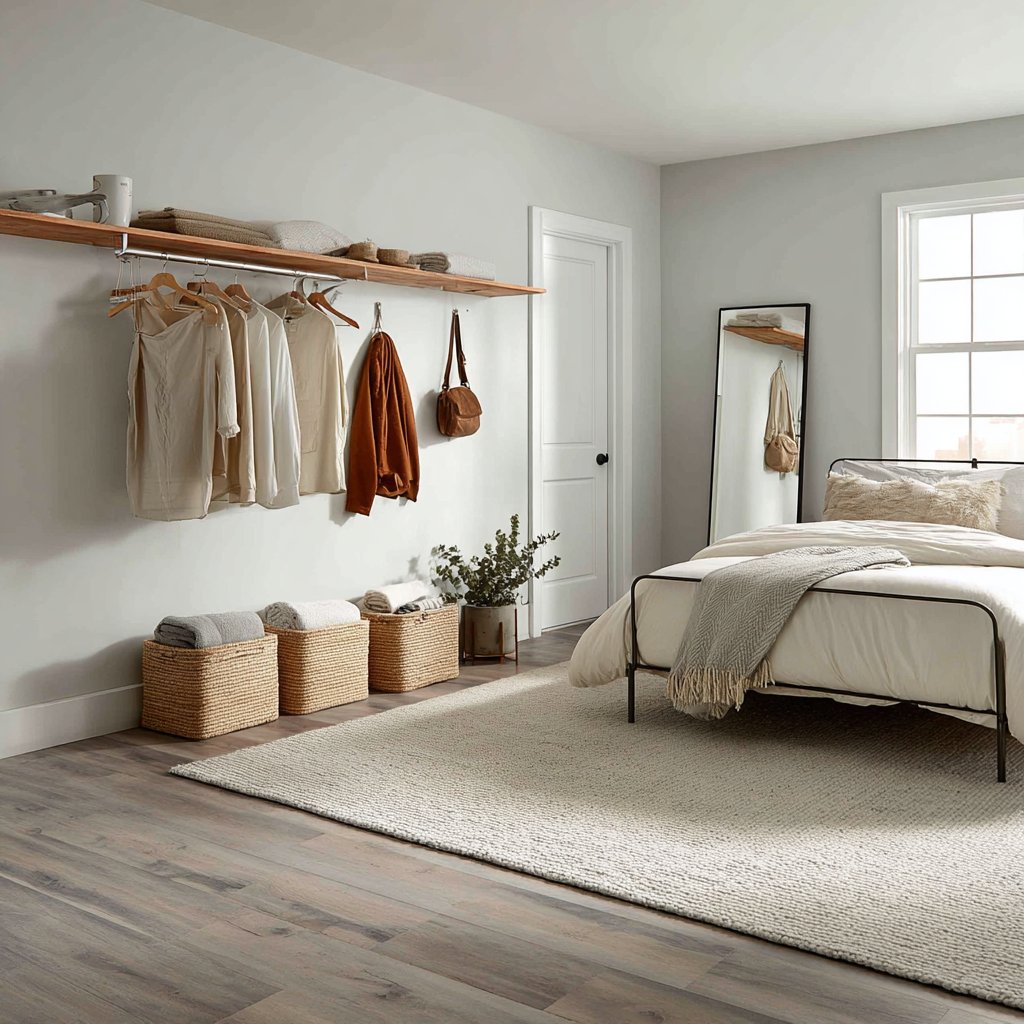
A minimalist approach to clothing storage showcases a carefully curated capsule wardrobe displayed on wooden hangers mounted to wall-fixed rods. This intentional display encourages thoughtful consumption and makes outfit selection straightforward since options are limited to favorite, most-worn pieces. Below the hanging items, a row of matching storage boxes holds folded items and accessories, maintaining the minimalist aesthetic while providing concealed storage for pieces better suited to folding. A full-length mirror leans casually against an adjacent wall, contributing to the room’s relaxed, contemporary feel.
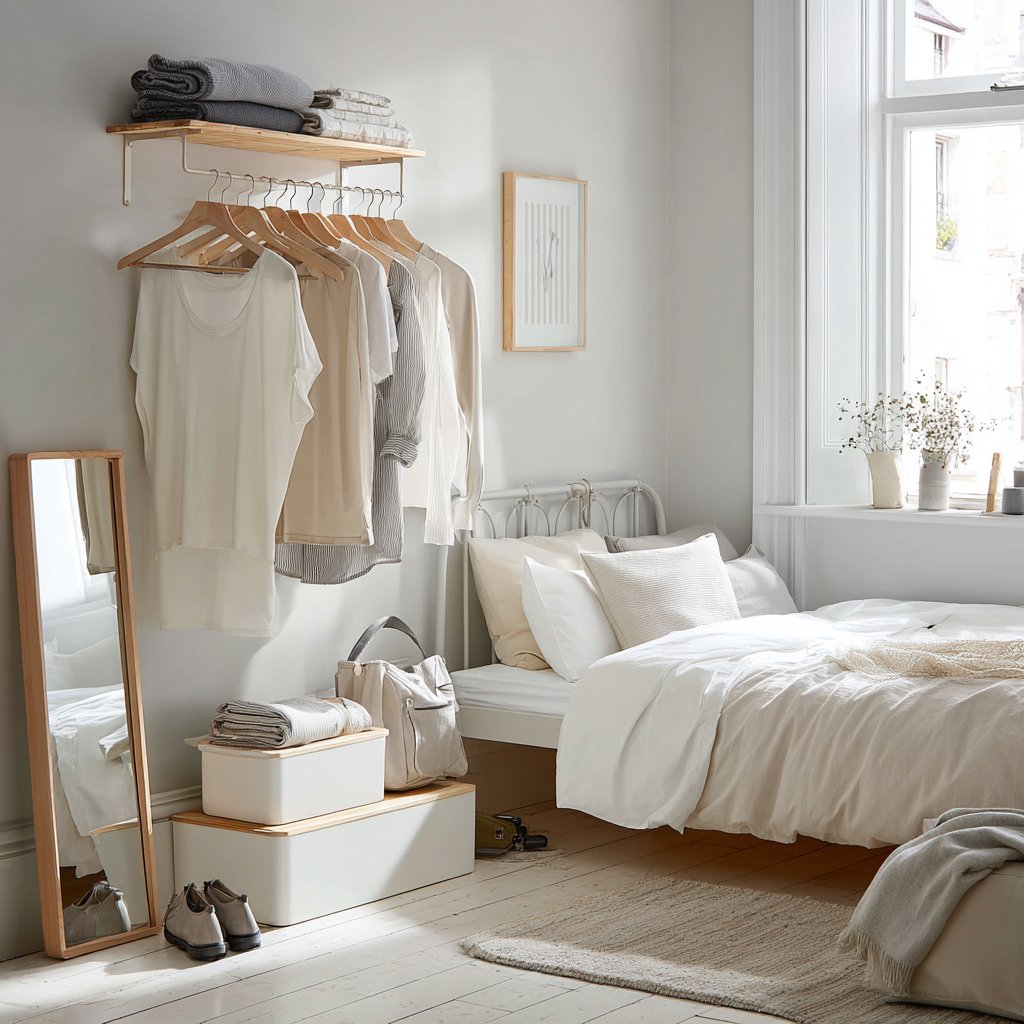
The room includes a bed with simple metal frame and neutral bedding that reinforces the minimalist philosophy throughout the space. The restrained aesthetic creates calm, uncluttered environments that many find mentally restful—particularly valuable for teens facing academic and social pressures. Natural lighting creates a clean, bright atmosphere that showcases the quality of curated clothing items and emphasizes the intentionality behind each selection. The minimalist approach also simplifies cleaning and maintenance, with fewer items to organize and less visual clutter to manage.
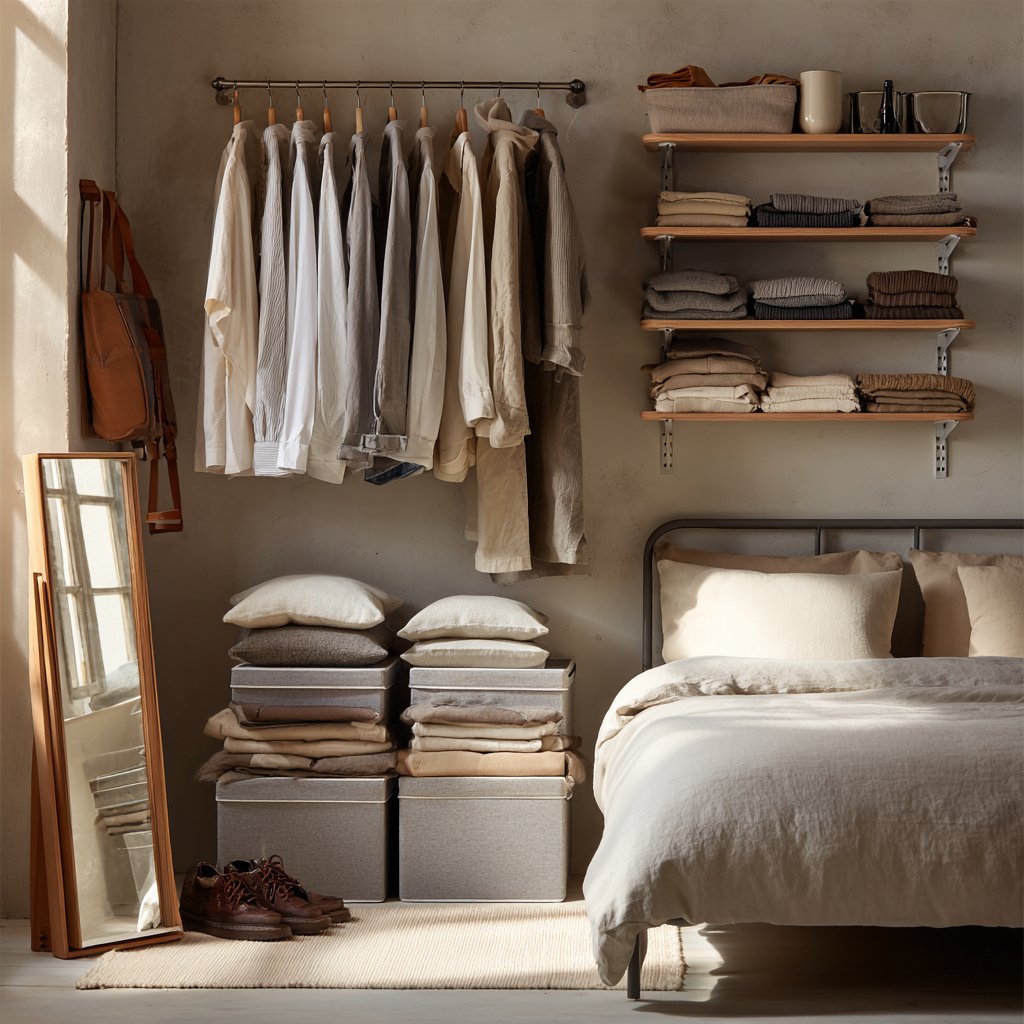
Wide-angle photography demonstrates the curated, organized approach to teen bedroom storage, showing that minimalism doesn’t mean lacking personality—rather, it means selecting fewer, more meaningful items that truly reflect individual style. This design philosophy particularly appeals to teens interested in sustainable fashion, conscious consumption, or simply those who prefer simplified decision-making in daily routines. The visible wardrobe also encourages regular editing and donation of unworn items, maintaining the streamlined aesthetic over time.
Key Design Tips:
- Limit hanging items to 30-40 pieces maximum for true capsule wardrobe approach
- Choose quality over quantity when selecting items to display
- Use uniform wooden hangers for cohesive, boutique-like appearance
- Organize by garment type or color for easier outfit coordination
- Rotate seasonal items in and out of display to maintain appropriate selections
- Store off-season items elsewhere to avoid visual clutter
- Edit regularly, removing items unworn for 3+ months
- Position rod at appropriate height for longest garments without floor contact
23. Multi-Purpose Ottoman Versatility
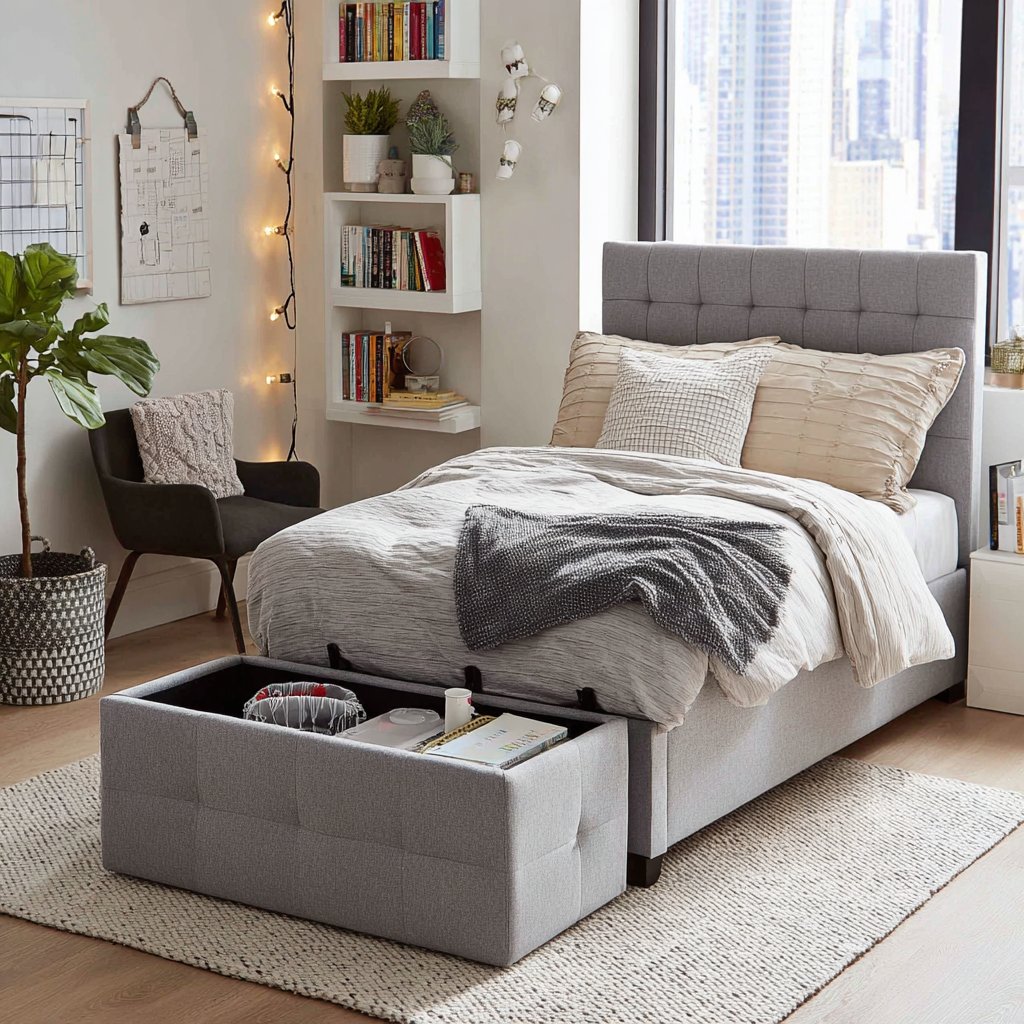
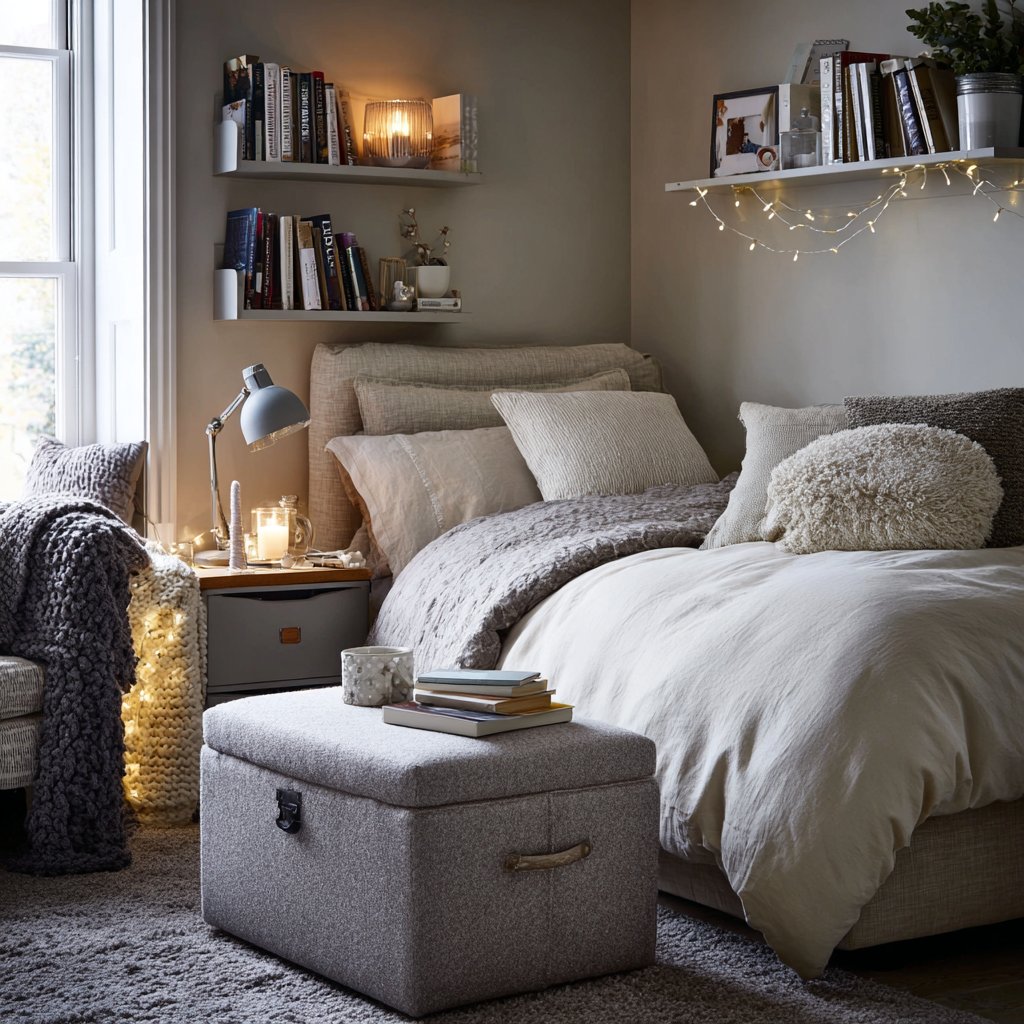
A multifunctional ottoman positioned at the foot of the bed serves numerous purposes within the small bedroom—seating for putting on shoes, storage for extra blankets or off-season items, and a surface for folding laundry or displaying decorative items. The upholstered piece in textured grey fabric features a hinged lid revealing storage compartment, demonstrating how furniture can serve multiple functions without requiring multiple pieces. The ottoman’s modest size prevents it from overwhelming the compact space while providing substantial utility that justifies its footprint.
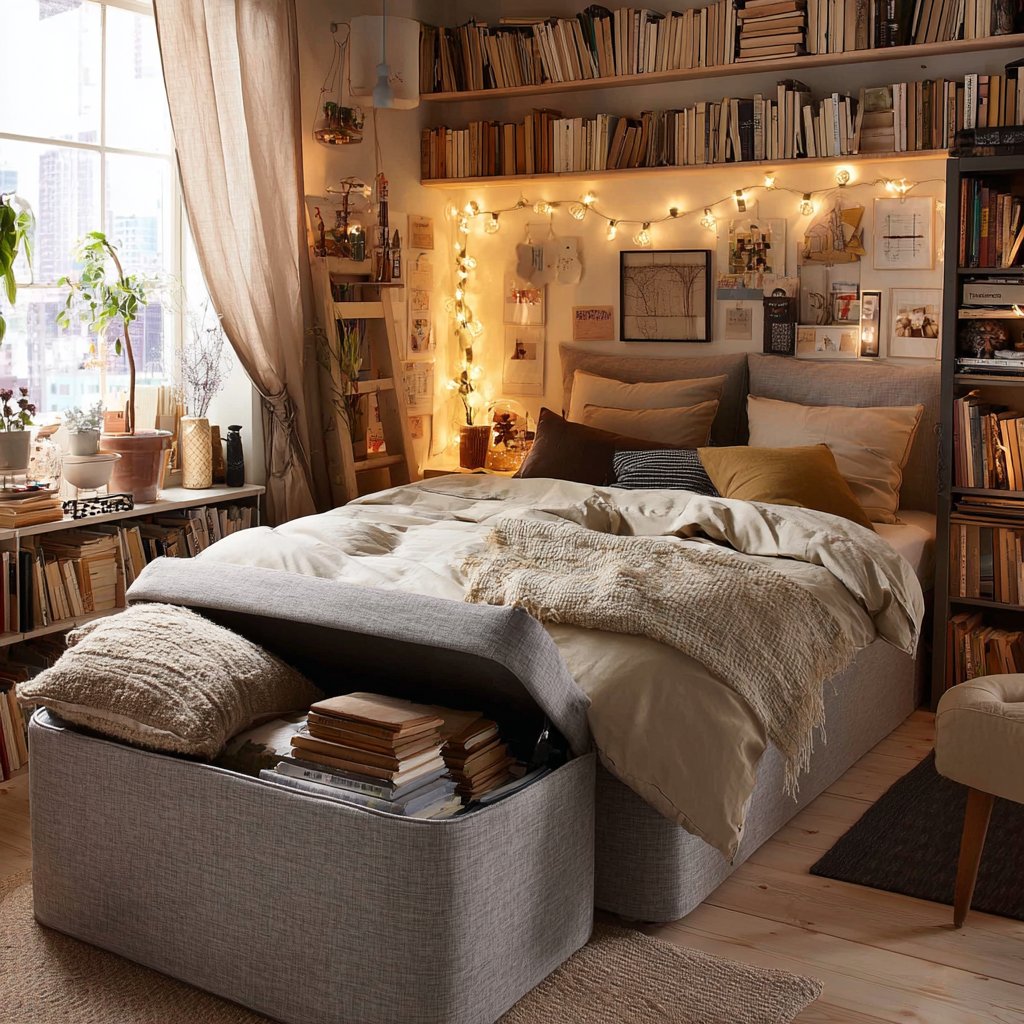
Nearby, a narrow bookshelf holds textbooks, novels, and reference materials, keeping academic resources organized and accessible. The vertical storage approach maximizes space efficiency while maintaining easy access to frequently needed books. The bed features padded headboard and layered bedding in coordinating neutral tones, creating a cohesive color story throughout the space. String lights provide ambient lighting that’s popular among teens while serving practical purposes for evening illumination without harsh overhead lights.
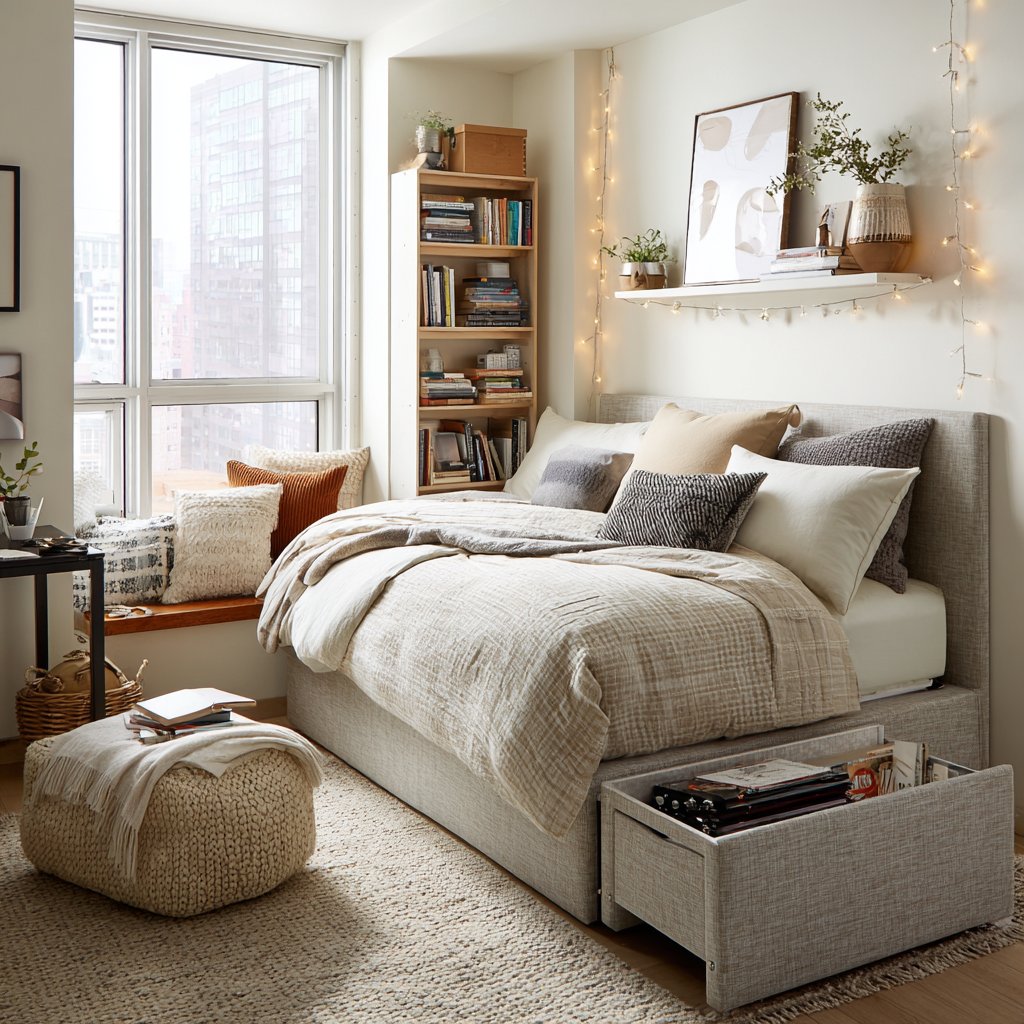
Interior photography with natural daylight highlights the versatile furniture piece and practical room layout, demonstrating how selecting multifunctional items reduces overall furniture needs in small bedrooms. The ottoman concept particularly appeals because it addresses multiple needs without appearing bulky or purpose-built—it simply looks like attractive seating that happens to offer hidden storage capacity. This subtlety proves valuable in maintaining the room’s uncluttered aesthetic while maximizing functionality behind the scenes.
Key Design Tips:
- Choose ottoman size proportional to room and bed dimensions
- Ensure hinged lid operates smoothly and remains upright when opened
- Select upholstery that coordinates with bedding and other textiles
- Position ottoman allowing adequate walking space around bed
- Use storage interior for items accessed occasionally rather than daily
- Add felt pads or feet protectors to prevent floor scratching when moving
- Consider ottomans with flat, stable tops if they’ll serve as occasional work surfaces
24. Convertible Sofa Bed Functionality
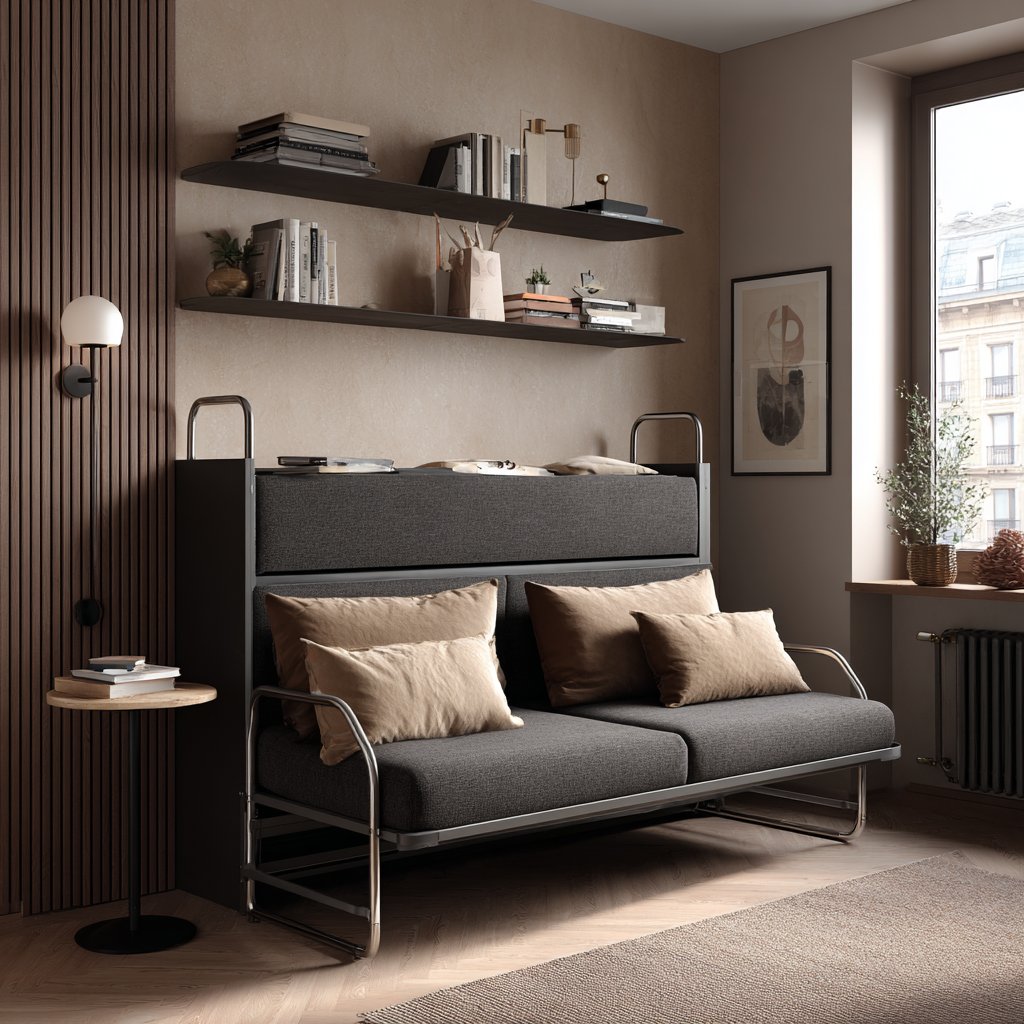
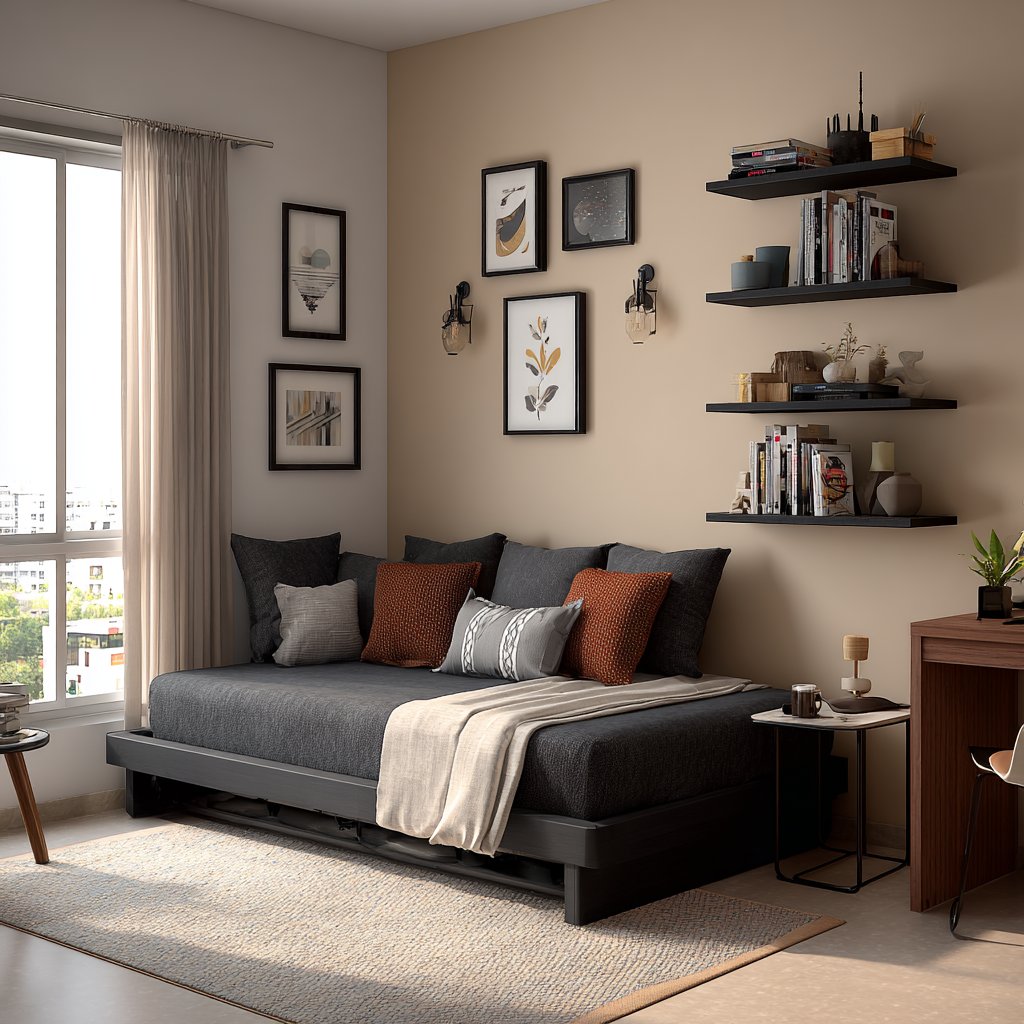
A fold-out futon or sofa bed serves dual purposes as daytime seating and nighttime sleeping surface—a particularly valuable arrangement in extremely small bedrooms or multipurpose spaces. The piece features modern design in charcoal grey upholstery with coordinating throw pillows, maintaining style appropriate for teen spaces while serving practical functions. Wall-mounted floating shelves hold books and decorative items above the seating area, capitalizing on vertical space without interfering with the sofa’s conversion process. A compact side table provides surface space for drinks, devices, or lighting.
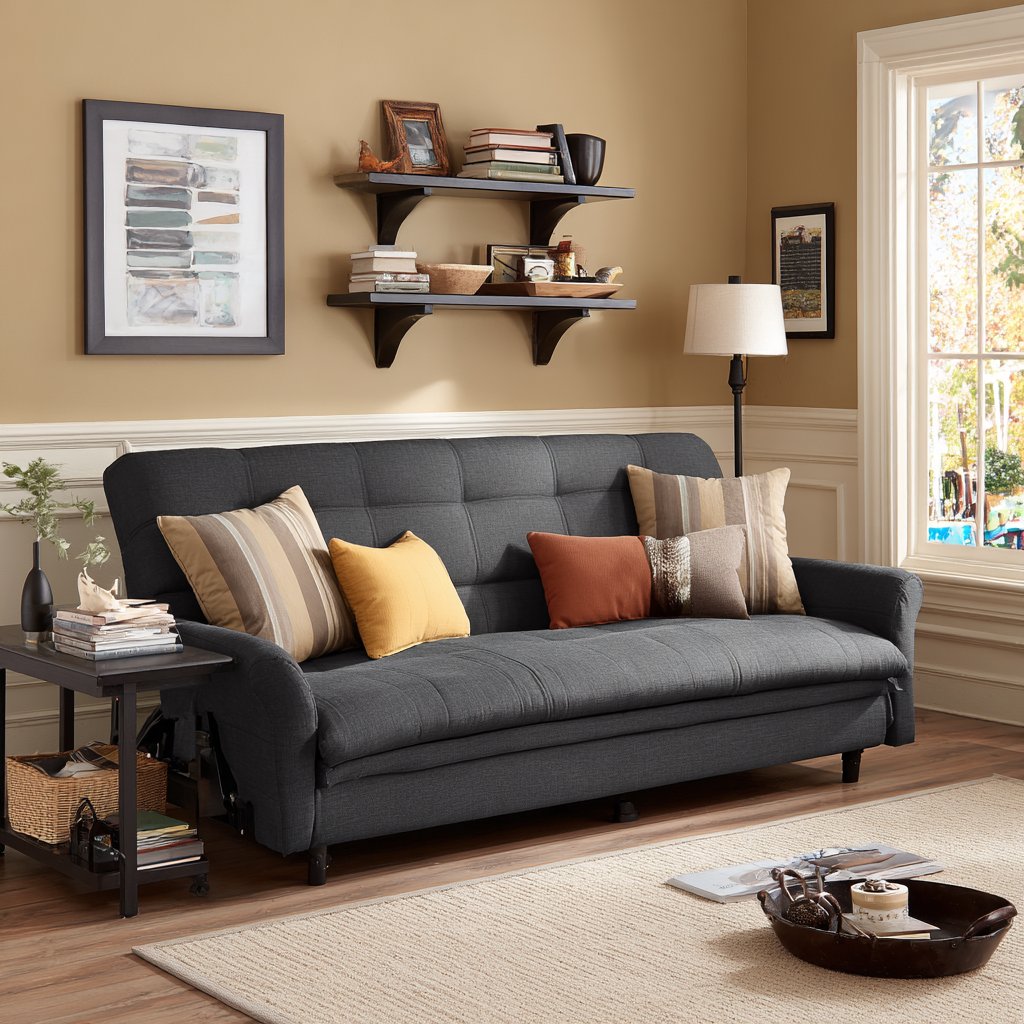
The accent wall in warm beige creates a grounded backdrop that complements the grey upholstery while adding warmth that prevents the grey from feeling cold or institutional. Professional interior photography showcases the convertible furniture solution with balanced natural lighting that doesn’t reveal the piece’s dual nature—when properly styled, convertible furniture can appear indistinguishable from traditional pieces. This camouflage proves valuable for teens who may feel self-conscious about unconventional furniture choices or who prefer spaces that don’t advertise their compact dimensions.
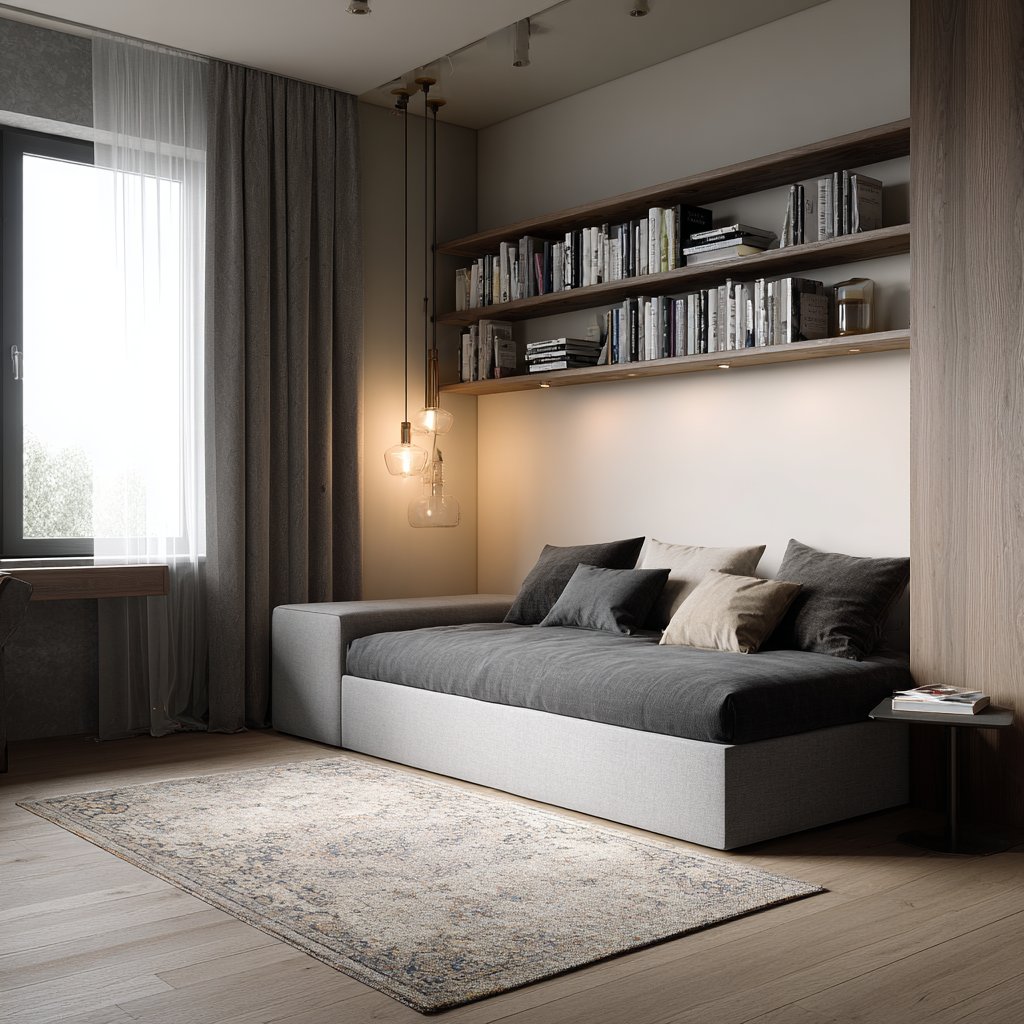
The sofa bed concept works particularly well for teens who frequently host friends overnight or who split time between two households and need flexible sleeping arrangements. The conversion process should be smooth and manageable for teen users without adult assistance, encouraging independence and making the dual-purpose nature an asset rather than inconvenience. Quality convertible furniture with proper mattress padding ensures sleeping comfort isn’t sacrificed for space-saving benefits.
Key Design Tips:
- Test conversion mechanism thoroughly before purchase to ensure ease of use
- Choose models with quality mattresses appropriate for regular sleeping use
- Allow adequate floor space in front of sofa for fully extended bed position
- Select upholstery that hides minor wear and is easy to clean
- Include storage for bedding that’s accessible but doesn’t clutter the space
- Position near electrical outlets for both seating and sleeping configurations
- Consider adding mattress topper for enhanced sleeping comfort if needed
25. Vertical Garden Biophilic Design
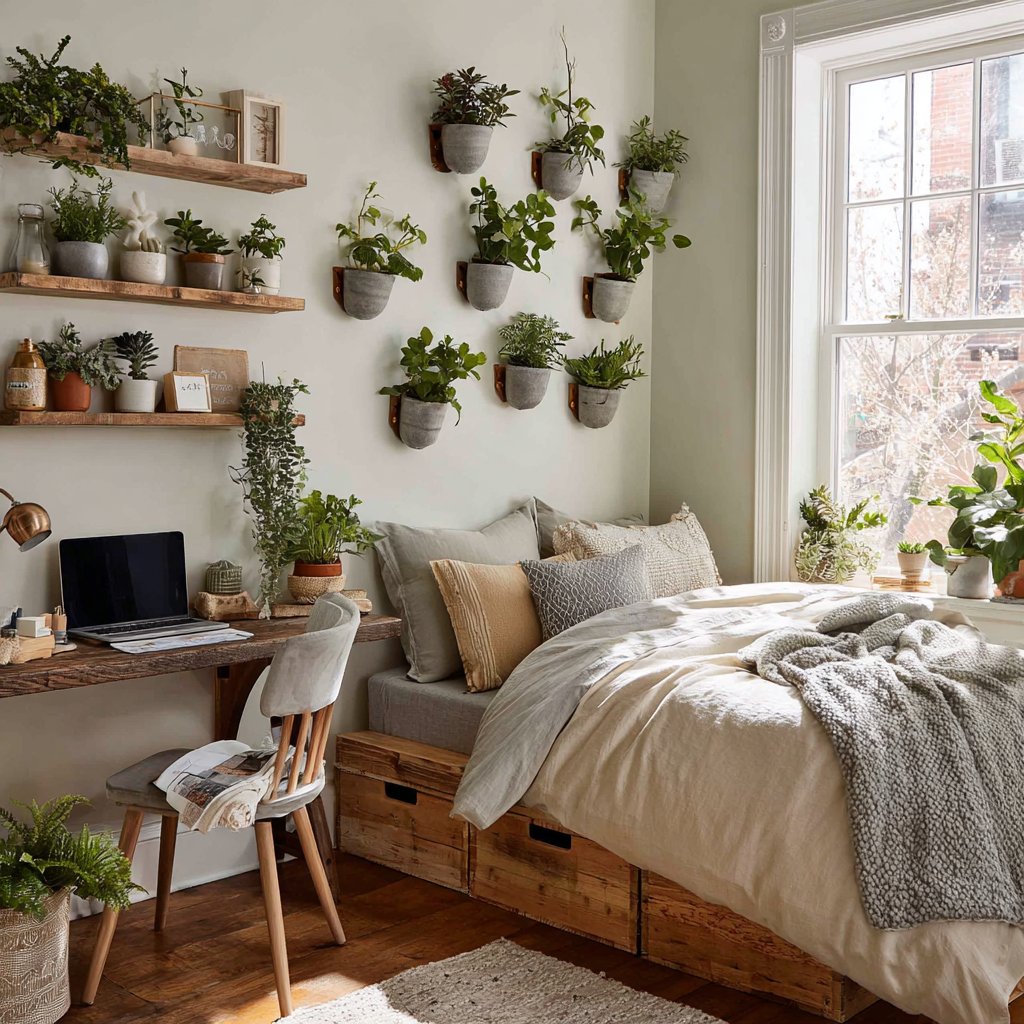
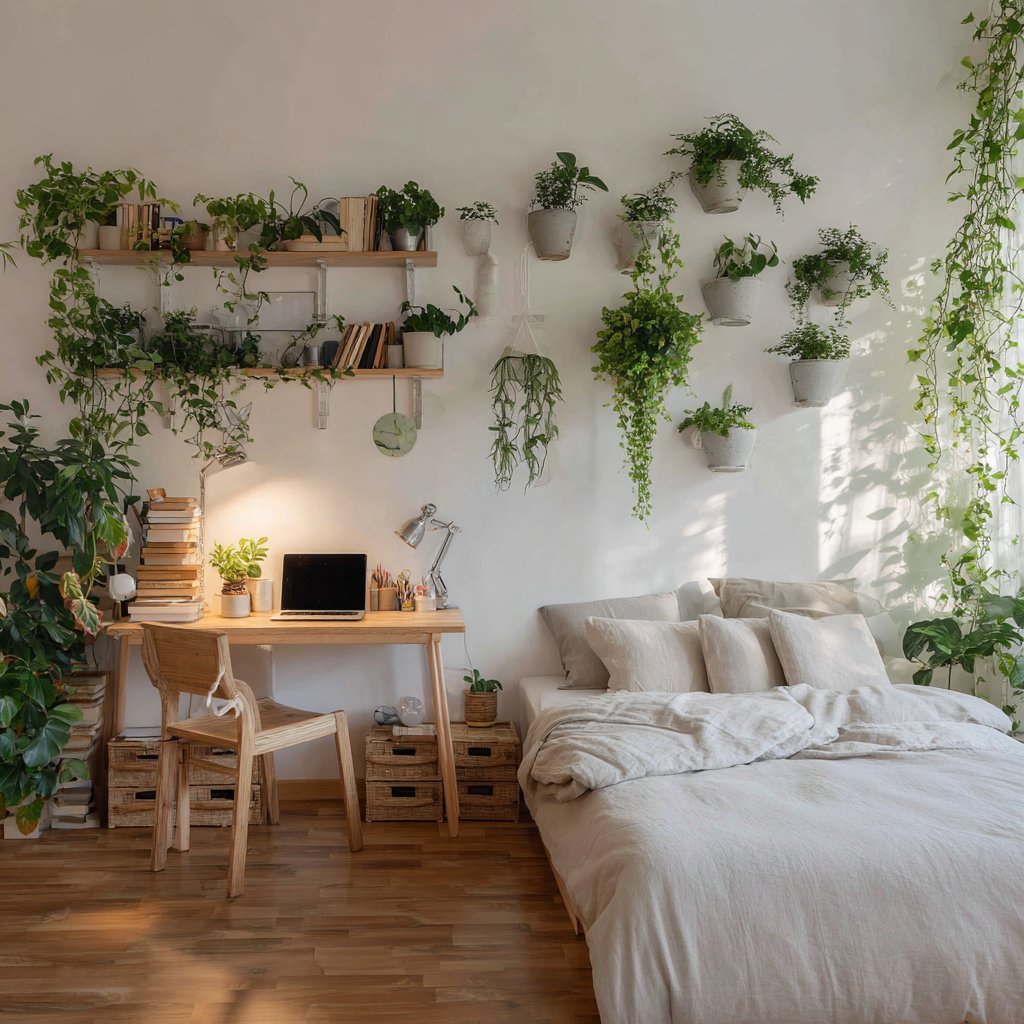
A vertical garden wall with hanging planters and wall-mounted pots brings nature into the compact bedroom space, introducing numerous benefits including improved air quality, stress reduction, and visual interest. The plant display includes low-maintenance varieties suitable for bedroom environments—plants that tolerate lower light levels and don’t require constant attention. The green living wall creates a striking focal point that distinguishes the room from typical teen spaces while supporting wellbeing through biophilic design principles that connect humans with nature.
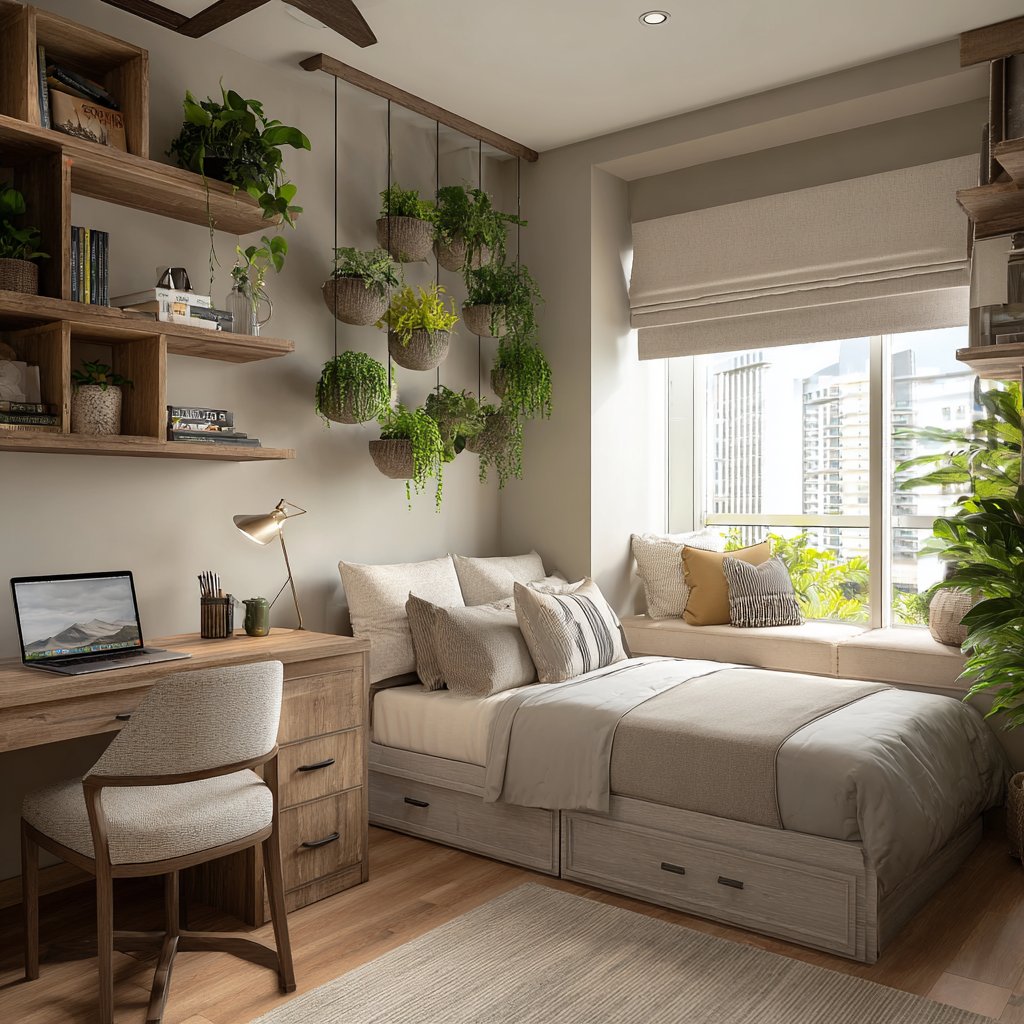
Below the plant wall, a simple desk area accommodates laptop and study supplies without competing visually with the botanical display above. The bed includes storage drawers and neutral bedding that allows the plant wall to command attention as the room’s primary feature. Natural wood accents throughout the room complement the organic nature of the plants, creating a cohesive design narrative that celebrates natural materials and living elements. The wood grain textures echo the organic quality of the plants, reinforcing the nature-inspired theme.
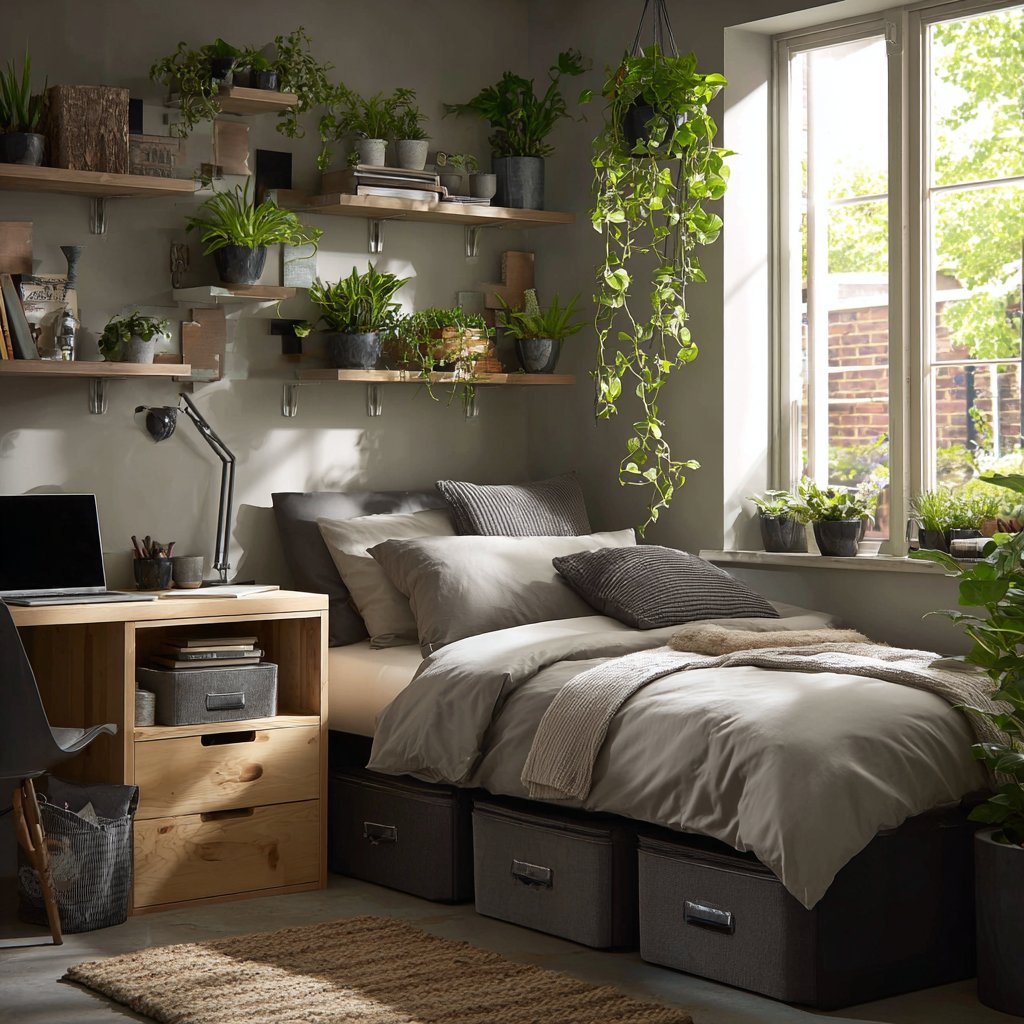
Interior design photography captures the biophilic design element with soft natural lighting that emphasizes the greenery and showcases how plants transform sterile spaces into vibrant, living environments. The vertical garden approach proves particularly valuable in small bedrooms where floor space for traditional potted plants might not exist—the wall mounting utilizes vertical surfaces that would otherwise remain empty. This design particularly appeals to environmentally conscious teens or those interested in sustainable living practices.
Key Design Tips:
- Choose low-maintenance plants appropriate for bedroom light levels
- Install proper drainage systems or use planters with catch trays to protect walls
- Group plants with similar water and light requirements together
- Ensure mounting hardware can support plant weight when watered
- Position plants to receive adequate natural light from windows
- Establish consistent watering schedule to maintain plant health
- Start with fewer plants and expand gradually to avoid overwhelming maintenance needs
- Consider artificial plants if natural light is insufficient for living varieties
26. Magnetic Interactive Display Wall
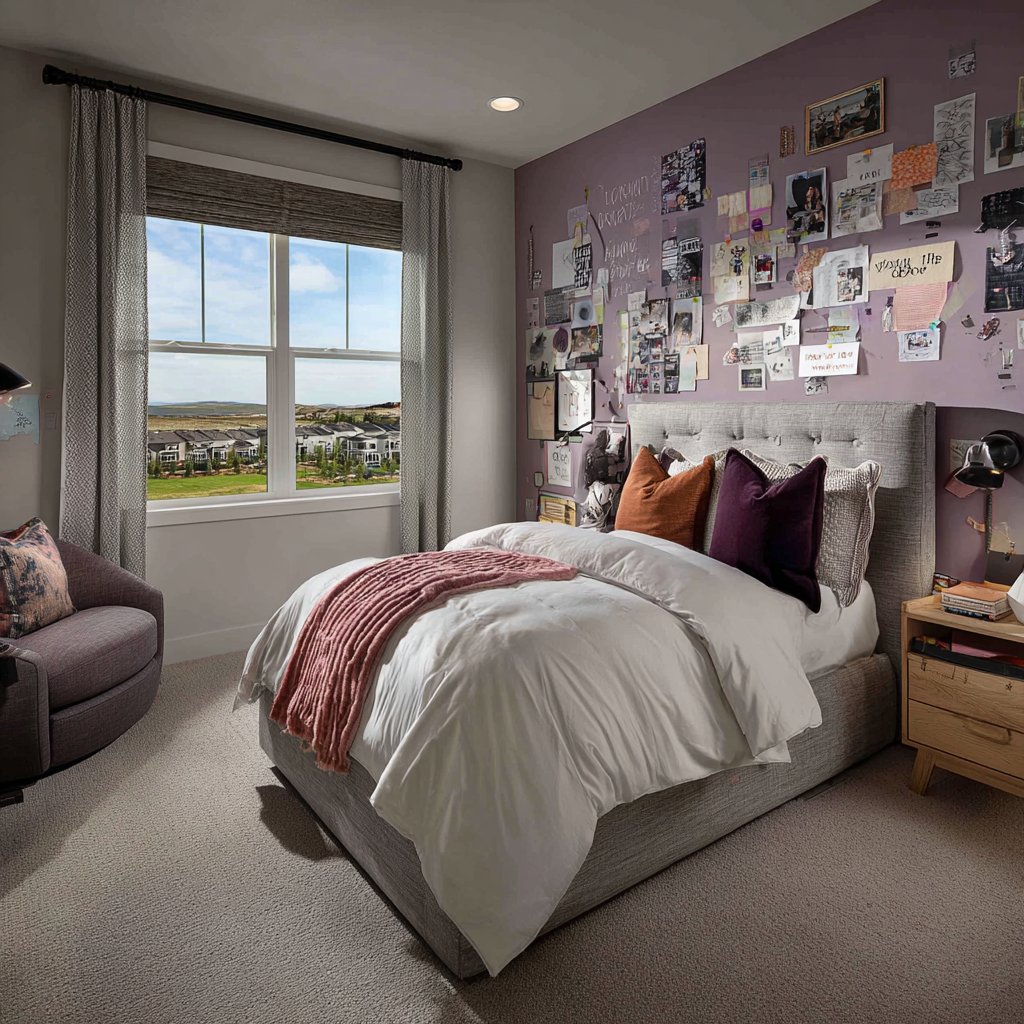
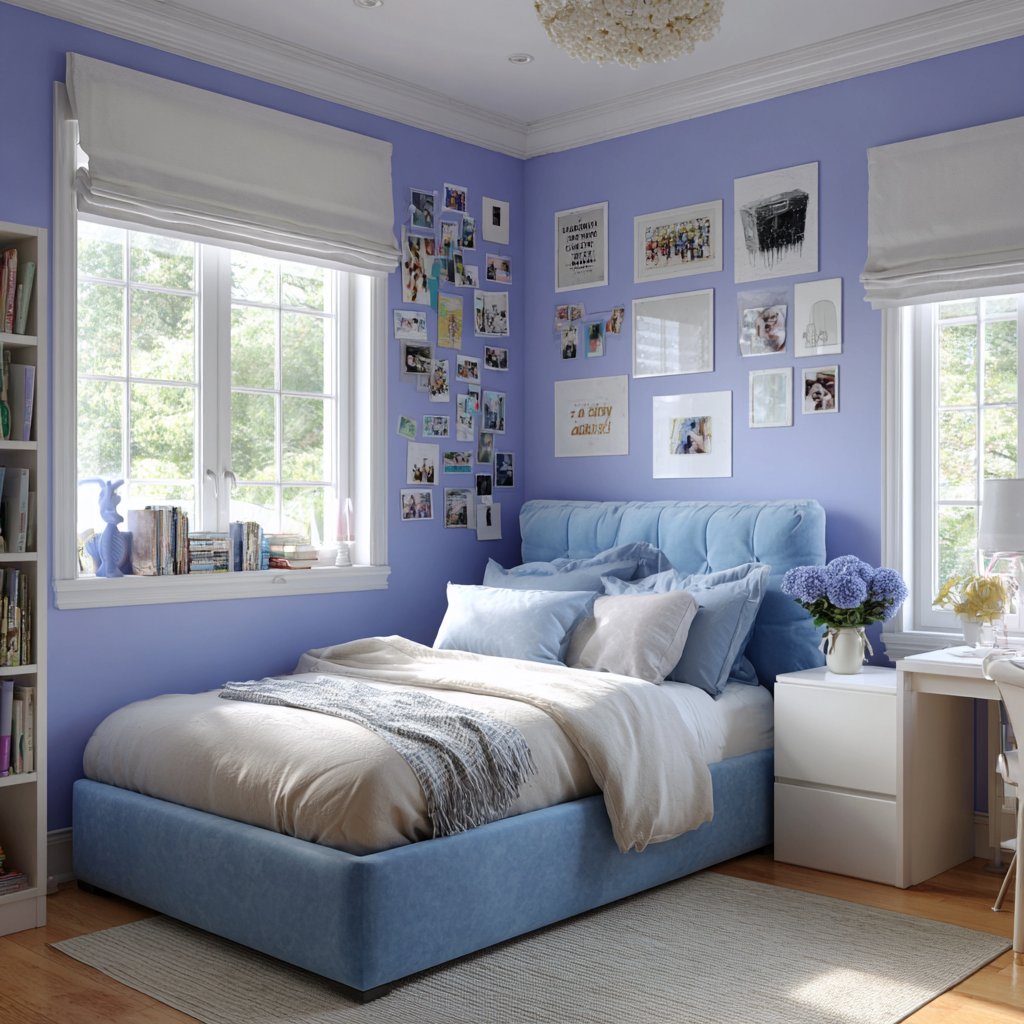
A magnetic wall surface creates an ever-changing display opportunity without causing wall damage—a significant advantage in rental situations or for teens whose interests evolve rapidly. The wall is painted with magnetic primer topped with stylish paint color, creating an invisible magnetic base that allows photos, art prints, notes, and inspirational quotes to be attached using magnets. This changeable display prevents the commitment and permanence of framed arrangements while encouraging frequent updates that keep the room feeling fresh and current with evolving interests and experiences.
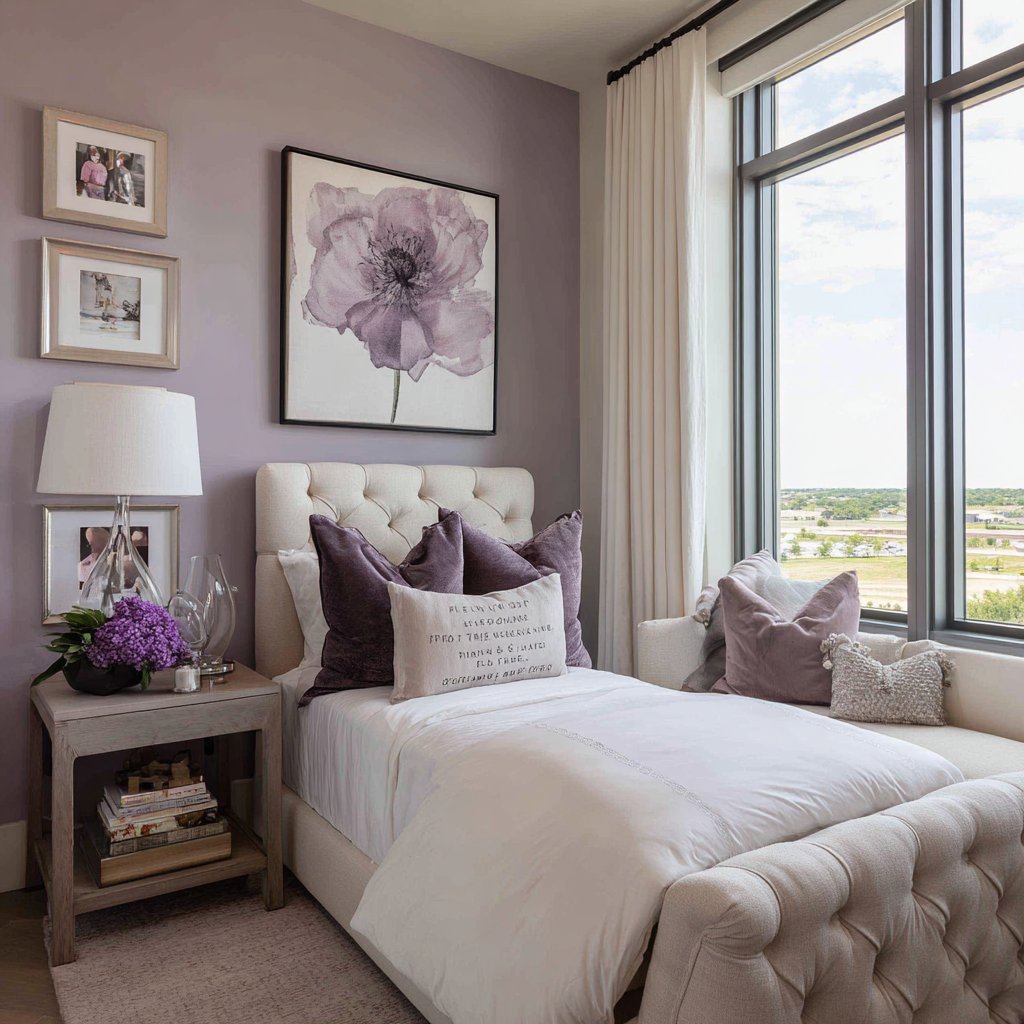
The interactive wall includes a curated mix of personal photos and inspirational content, creating a personalized collage that functions as both decoration and motivation. A twin bed with upholstered headboard and simple nightstand complete the sleeping area with understated elegance that allows the magnetic wall to serve as the primary visual focus. Soft lavender accent wall adds personality and creates a calming atmosphere appropriate for teen spaces, with the cool purple tone promoting relaxation without feeling overly juvenile.
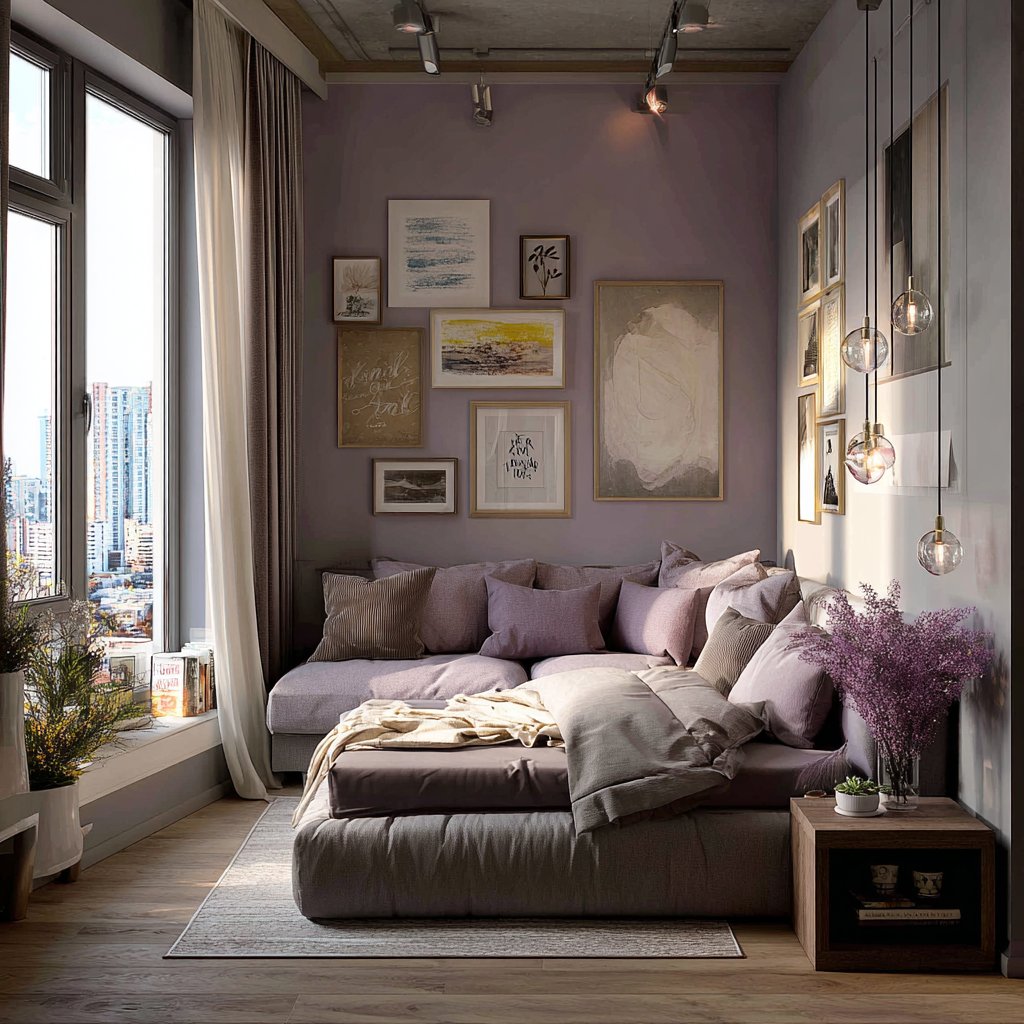
Wide-angle interior photography with natural lighting highlights the customizable display feature, demonstrating how magnetic surfaces enable personalization without tools, damage, or commitment. The concept particularly appeals to artistic teens, those who collect photos and prints, or anyone who enjoys frequently refreshing their space’s appearance. The magnetic wall can accommodate everything from school schedules and assignment reminders to concert tickets and inspiring quotes, making it both functional and decorative.
Key Design Tips:
- Apply multiple coats of magnetic primer for stronger magnetic hold
- Test magnet strength after painting to ensure adequate holding power
- Use strong rare earth magnets for heavier items like framed prints
- Create visual organization even within casual-appearing arrangements
- Leave some wall space empty to prevent overwhelming appearance
- Update displays regularly to maintain fresh, current feeling
- Consider adding a grid or subtle guidelines for more organized arrangements
- Position magnetic wall where it’s easily accessible for frequent changes
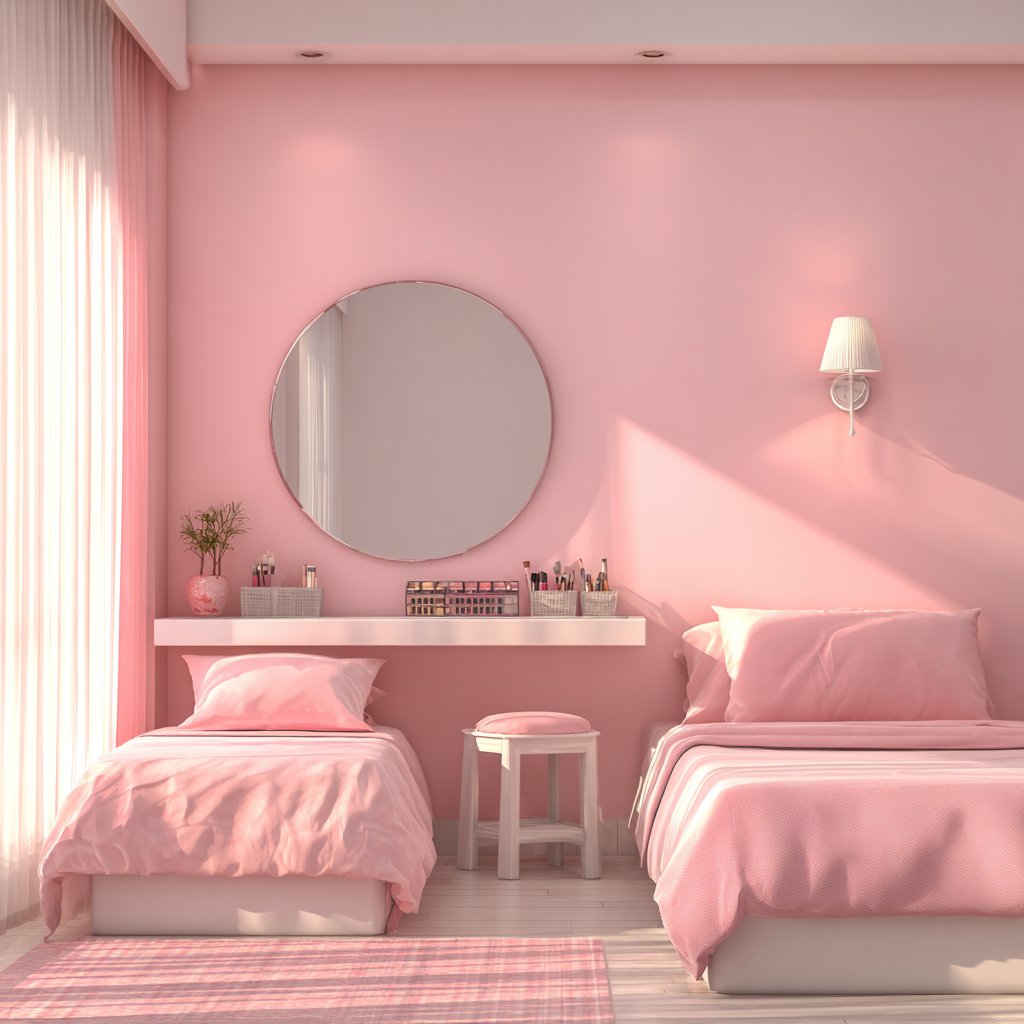
27. Space-Efficient Beauty Station
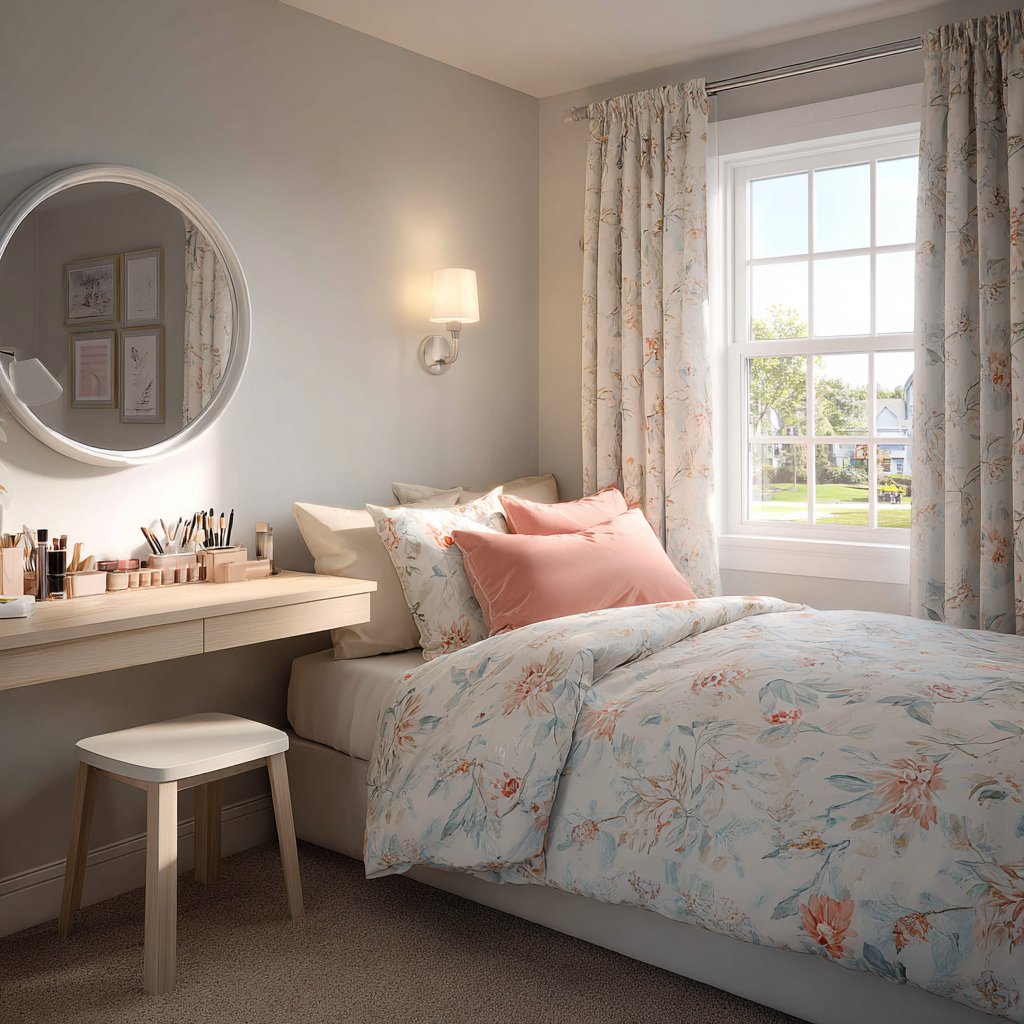
A compact vanity area created using a floating shelf as desk surface demonstrates how minimal furniture can serve specific purposes effectively. The shelf-as-desk approach eliminates bulky vanity legs while providing adequate surface for makeup and beauty accessories, with a round mirror mounted above serving its essential function without requiring substantial wall space. Small drawer organizers keep products sorted and accessible, preventing the chaos that often accumulates in teen beauty areas. A simple stool tucks completely underneath when not in use, preserving floor space and maintaining the room’s open feeling.
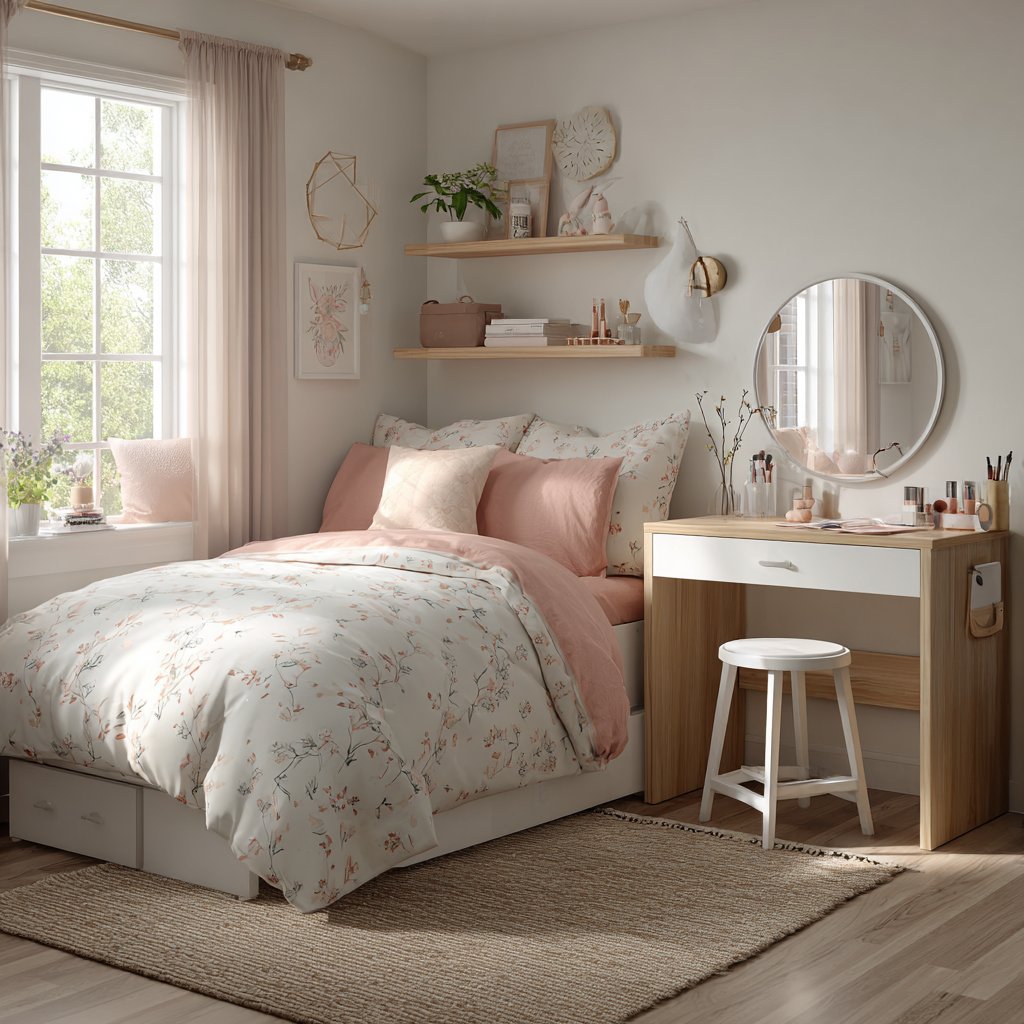
Adjacent to the vanity, a bed with simple frame and coordinating bedding in soft pastels maintains the room’s cohesive design while providing comfortable sleeping quarters. The intentional color coordination between vanity area and sleeping zone creates visual harmony throughout the small bedroom. Wall-mounted sconce provides targeted task lighting at the vanity without requiring counter space for a lamp, demonstrating how wall mounting can preserve precious surface area while serving functional purposes.
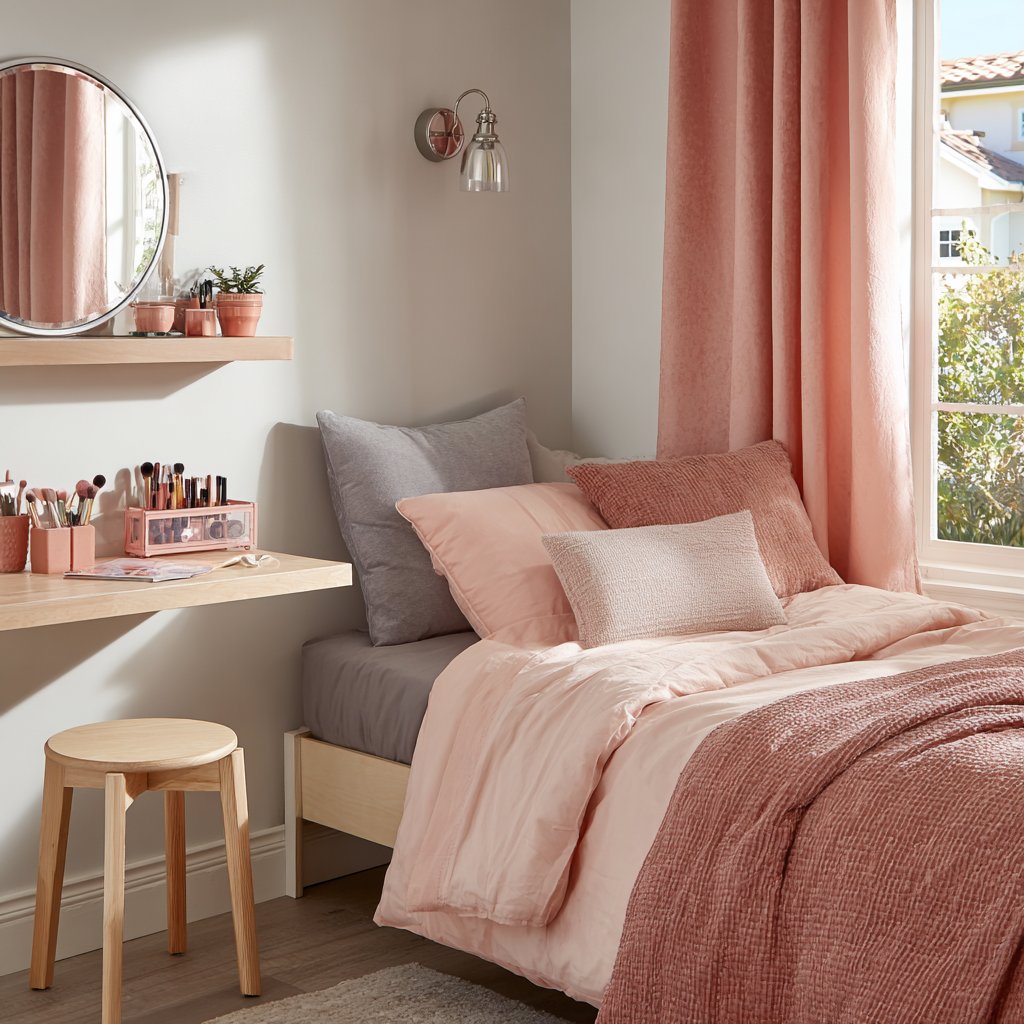
Professional interior photography showcases the space-efficient beauty station with natural daylight creating a bright, welcoming atmosphere ideal for makeup application and grooming routines. The floating shelf concept proves particularly valuable in extremely small bedrooms where traditional vanity furniture simply won’t fit—the streamlined approach delivers essential functionality without the footprint typical of conventional vanities. This design appeals to teens interested in beauty and fashion who need dedicated space for their routines without sacrificing other bedroom functions.
Key Design Tips:
- Ensure floating shelf is properly anchored to support users leaning on it
- Choose shelf depth that accommodates products without appearing cluttered—12 inches often sufficient
- Position mirror at appropriate height for both sitting and standing use
- Install sconce wiring before finishing walls if possible, or use plug-in versions
- Use drawer organizers sized specifically for makeup and beauty tools
- Choose a stool height that works comfortably with shelf height
- Keep only frequently used products on the shelf surface to prevent overcrowding
- Add a small tray or mat to protect shelf surface from spills and product residue
Why These Small Bedroom Ideas Excel for Teen Spaces
These twenty-seven small bedroom concepts represent comprehensive approaches to the unique challenges of designing teen spaces within limited square footage. Each design addresses the fundamental tension between aesthetic appeal and practical functionality that defines successful small bedroom design. Teen bedrooms must accommodate multiple activities—sleeping, studying, socializing, grooming, relaxation—within spaces often measuring less than 120 square feet, requiring innovative thinking about furniture selection, spatial organization, and vertical utilization.
The designs emphasize space-maximizing strategies that have proven effective in countless real-world applications. Loft beds, murphy beds, and platform beds with integrated storage recognize that vertical space represents untapped opportunity in most bedrooms. These elevated sleeping solutions essentially double usable floor area by stacking sleeping and working or storage functions. Similarly, floating desks, wall-mounted shelving, and pegboard organization systems free floor space while maintaining necessary functionality. This vertical thinking proves essential in small teen bedrooms where every square foot of floor space matters tremendously for movement, furniture placement, and the room’s overall spacious feeling.
Multi-functional furniture features prominently throughout these concepts because single-purpose pieces simply don’t justify their footprints in compact spaces. Ottomans with storage, headboards with shelving, desks at bed feet, and convertible sofa beds demonstrate how contemporary furniture design addresses small-space living challenges. These pieces serve multiple needs without requiring multiple furniture items, reducing overall room clutter while maintaining comprehensive functionality. For budget-conscious families, multi-functional furniture also represents better value—one piece serving three purposes costs less than three separate furniture items while consuming significantly less space.
The organizational strategies presented recognize that clutter represents the primary enemy of small spaces. Visible storage like open clothing racks and pegboard systems work for visual learners who need to see options, while under-bed containers, drawer systems, and closed cabinets accommodate items better concealed. The most successful small bedrooms incorporate both open and closed storage, balancing display with concealment based on item type and usage frequency. This mixed approach prevents the sterility of completely hidden storage while avoiding the chaos of entirely open systems.
Color and light considerations thread through every design, acknowledging their profound impact on spatial perception. Neutral foundations with colorful accents provide flexibility for changing teen tastes without requiring complete room overhauls. Natural light maximization through sheer curtains, strategic mirror placement, and furniture positioning away from windows prevents small rooms from feeling cave-like or confining. Layered lighting with ambient, task, and accent sources ensures adequate illumination for various activities while creating atmosphere appropriate to different times and uses.
Personalization opportunities appear throughout these concepts because teen bedrooms must reflect individual identity to feel truly successful. Gallery walls, changeable displays, customizable pegboards, and removable wallpaper allow self-expression without permanent commitment—crucial for ages where interests and styles evolve rapidly. These personalization options empower teens to take ownership of their spaces, encouraging room maintenance and organization while supporting identity development during formative years.
The designs acknowledge contemporary teen needs that differ from previous generations. Integrated charging ports, cable management systems, and dedicated device storage reflect technology’s central role in teen lives. Study areas receive significant attention, recognizing academic pressures and homework demands. Social spaces for friend gatherings appear in concepts like window seats, hanging chairs, and extra seating options, supporting teens’ developmental need for peer connection while maintaining family home boundaries.
Flexibility and adaptability represent recurring themes because teen needs change dramatically over six-to-eight-year periods from early adolescence through high school graduation. Modular storage systems that reconfigure, furniture that serves multiple purposes, and design elements that update easily allow bedrooms to evolve alongside their occupants without requiring complete renovations. This adaptability proves particularly valuable for families managing tight budgets or rental situations where permanent modifications aren’t possible.
The aesthetic sophistication throughout these designs respects that teens occupy a transitional space between childhood and adulthood. The concepts avoid juvenile themes that quickly embarrass maturing teens while remaining age-appropriate and avoiding overly mature aesthetics. This balance proves challenging but essential—teen bedrooms should feel youthful and energetic without appearing childish, sophisticated without seeming overly adult. The designs achieve this through contemporary furniture selections, sophisticated color palettes with personality-infused accents, and clean lines that feel modern and mature.
Practical implementation considerations make these concepts actionable rather than purely inspirational. The designs emphasize achievable solutions using readily available furniture and materials rather than custom built-ins requiring professional installation. Budget-conscious options like removable wallpaper, modular cube storage, and DIY pegboard systems make small bedroom optimization accessible to families at various income levels. This democratic approach to design ensures that space constraints don’t determine quality of living—thoughtful, intentional design can create beautiful, functional spaces regardless of budget.
The emphasis on realistic, lived-in spaces rather than showroom perfection acknowledges that teen bedrooms serve active daily life. These aren’t museum displays but working rooms that accommodate homework messes, clothing piles, and typical teenage chaos. The organizational systems and furniture choices anticipate real-world use patterns rather than idealized scenarios, incorporating solutions that genuinely help maintain order rather than requiring unrealistic maintenance standards.
Environmental consciousness appears in several concepts through plant integration, natural material emphasis, and sustainable furniture suggestions. This reflects growing teen awareness of environmental issues and desire to make conscious consumption choices. Biophilic design elements, reclaimed materials, and durable furniture selections support both environmental values and practical longevity, avoiding disposable trends in favor of lasting quality.
The safety considerations woven throughout—furniture anchoring, proper hardware installation, weight capacity attention—recognize parental responsibilities while respecting teen independence. The designs balance age-appropriate freedom with necessary safety precautions, acknowledging that teen spaces should support growing independence while maintaining household safety standards.
Cultural and lifestyle diversity receives implicit acknowledgment through varied design styles and approaches. From minimalist aesthetics to maximalist displays, bohemian textures to industrial elements, the concepts span design spectrum breadth that reflects diverse personal preferences, cultural backgrounds, and individual expressions. This variety ensures readers can find approaches resonating with their particular situations rather than prescribing single correct solutions.
The strategic photography descriptions emphasize professional interior design presentation because visual communication powerfully influences design understanding and inspiration. Natural lighting specifications, wide-angle perspectives, and attention to material textures help readers envision how concepts would appear in real spaces rather than simply reading abstract descriptions. This visual thinking support proves essential for translating ideas into actual implementation.
Ultimately, these small bedroom ideas succeed because they address the complete reality of teen life within spatial constraints. They’re not simply about making rooms look attractive but about creating environments supporting academic success, social development, personal expression, and daily functionality within limited square footage. The concepts demonstrate that small bedrooms can be every bit as successful as larger spaces when design thinking prioritizes smart planning, vertical utilization, multi-functional solutions, and personalization opportunities. For families facing small bedroom challenges, these ideas provide practical roadmaps toward creating teen spaces that truly work on every level.
Conclusion
Designing small bedrooms for teens requires balancing numerous competing priorities—space efficiency, personal expression, functionality, aesthetic appeal, and adaptability to changing needs. The twenty-seven concepts explored throughout this article demonstrate that spatial constraints need not limit design possibilities. Rather, they inspire creative problem-solving that often yields more innovative, intentional results than expansive spaces might generate.
The recurring themes throughout these designs—vertical space utilization, multi-functional furniture, organizational systems, natural light maximization, and personalization opportunities—provide foundational principles applicable across various room dimensions, architectural features, and personal styles. Whether implementing a complete room redesign or incrementally improving existing spaces, these concepts offer actionable strategies for creating teen bedrooms that support all aspects of adolescent life.
Small bedroom design success ultimately depends on thoughtful furniture selection, strategic spatial planning, and understanding the specific teen who will inhabit the space. The most beautiful, efficiently organized room fails if it doesn’t reflect its occupant’s personality or support their particular needs. Involve teens in design decisions, respect their preferences while offering guidance, and prioritize solutions addressing their actual daily routines rather than idealized scenarios.
Remember that perfection isn’t the goal—functional, personalized spaces that evolve alongside their occupants represent true success. Small bedrooms designed with intention, creativity, and care can become beloved sanctuaries that support teen development through these transformative years. These concepts provide inspiration and practical guidance, but the best implementation will always reflect individual circumstances, preferences, and needs. Embrace the creative challenge of small space design, and discover how limitations often inspire the most innovative, satisfying solutions.
