
Living in a compact space doesn’t mean sacrificing style, comfort, or functionality. In today’s world, where urban living often means downsizing and maximizing every square foot, very tiny bedrooms have become increasingly common. Whether you’re residing in a studio apartment, a micro-loft, or simply dealing with the smallest room in your home, the challenge of creating a beautiful, functional sleeping space requires creativity, smart planning, and an eye for innovative design solutions. The art of small-space living has evolved dramatically, with designers and homeowners alike discovering ingenious ways to transform cramped quarters into cozy, efficient sanctuaries that feel both spacious and inviting.
The key to successfully designing a very tiny bedroom lies in understanding the fundamental principles of space optimization: vertical thinking, multi-functional furniture, strategic color choices, and clever storage solutions. Every element must earn its place, serving either a practical purpose or contributing significantly to the room’s aesthetic appeal. This approach requires careful consideration of scale, proportion, and the psychological impact of design choices. Light colors can make walls recede, mirrors can double perceived space, and the right furniture arrangement can dramatically improve traffic flow and functionality.
In this comprehensive guide, we’ll explore 29 innovative very tiny bedroom ideas that demonstrate how limitations can inspire creativity. From Murphy beds that disappear into walls to lofted sleeping platforms that free up valuable floor space, from minimalist Japanese-inspired designs to clever corner configurations, each concept offers unique solutions to the challenges of compact living. These designs prove that small spaces can be just as stylish, comfortable, and personalized as their larger counterparts—sometimes even more so, as every decision becomes intentional and every inch purposeful.
1. The Ultimate Space-Saving Murphy Bed System
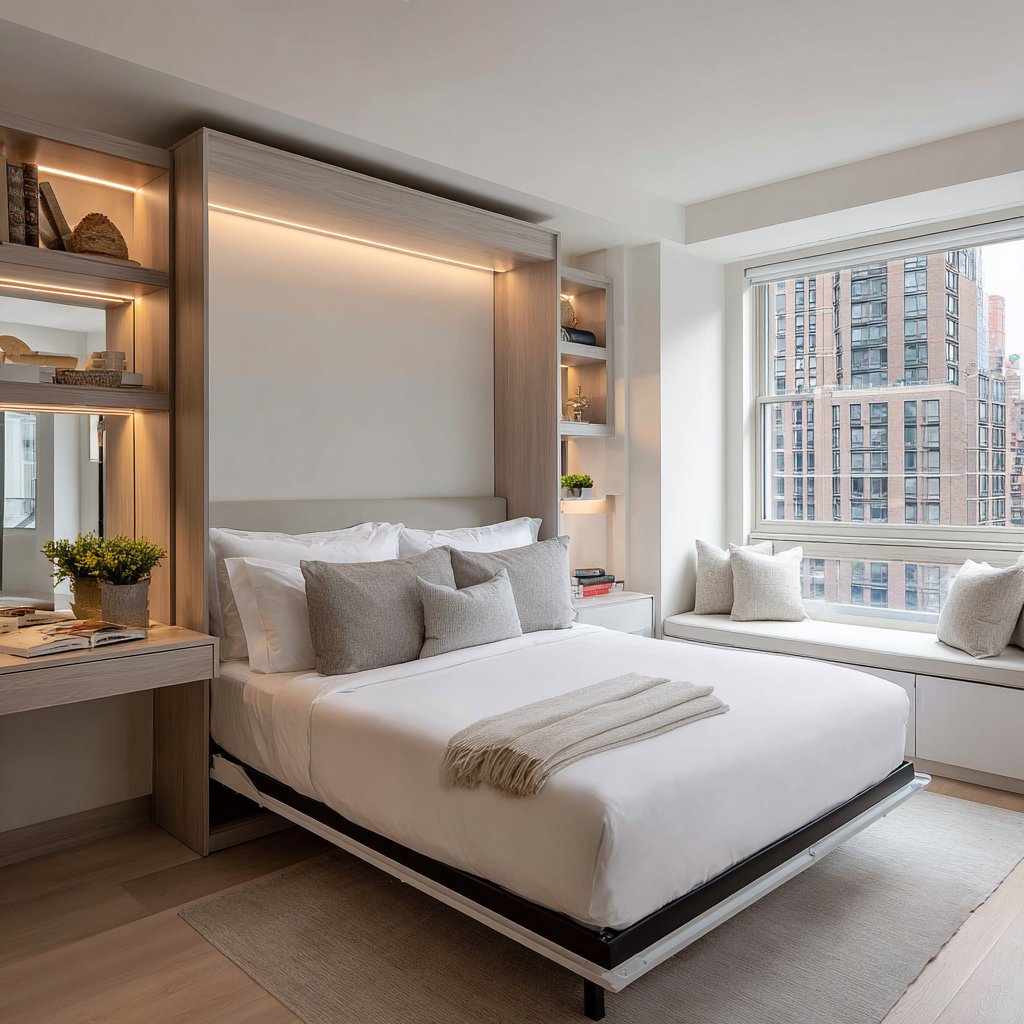
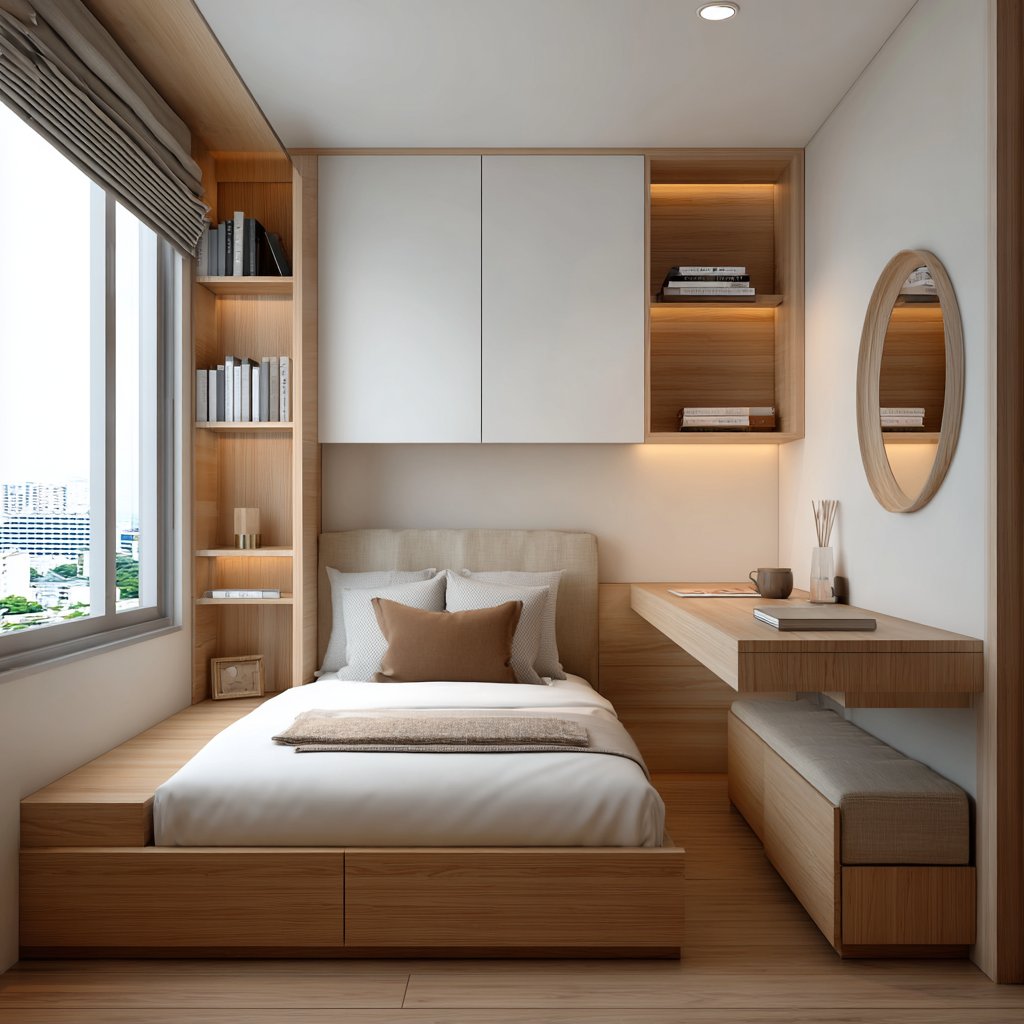
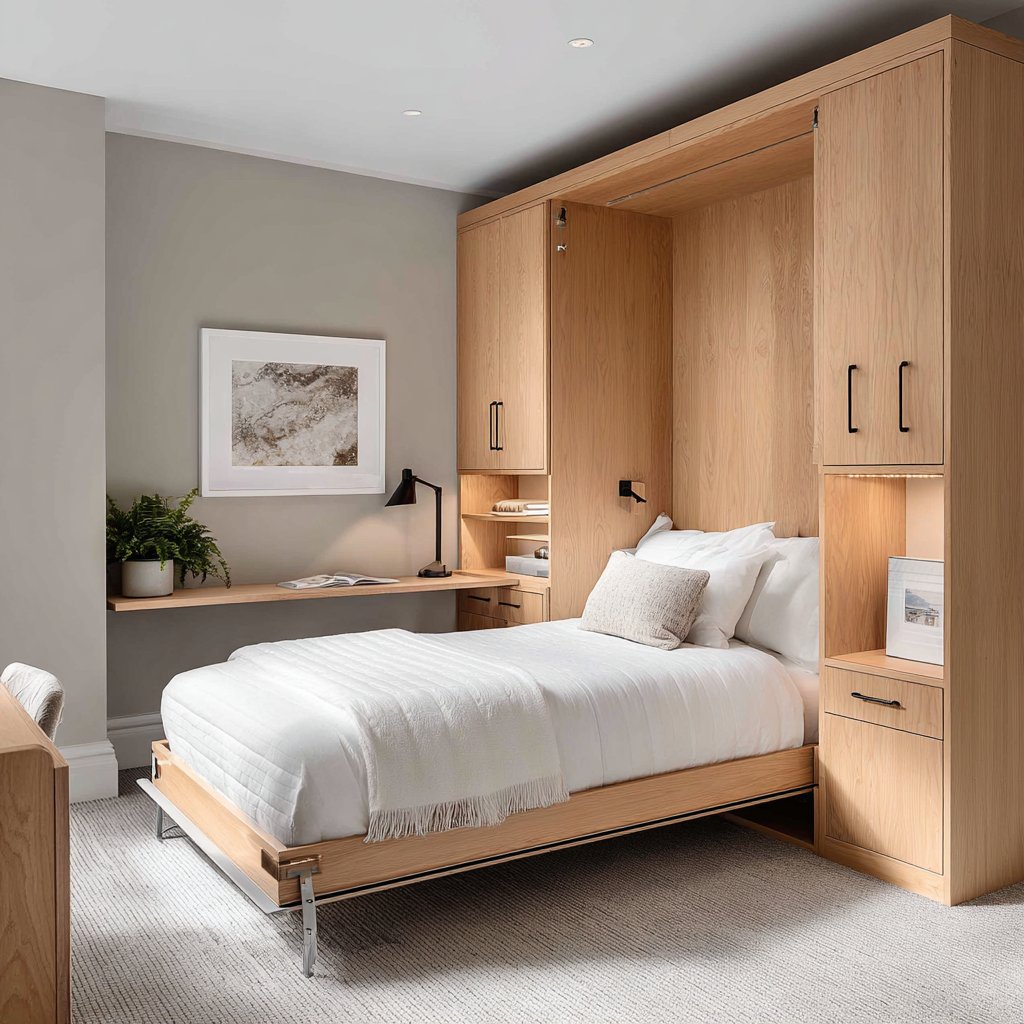
The Murphy bed represents the pinnacle of space-saving innovation, and this particular design elevates the concept to new heights. Picture a sophisticated wall unit that seamlessly integrates sleeping, storage, and workspace functionality into a single cohesive system. When folded up against a soft grey accent wall, the bed reveals a hidden world of organizational possibilities—integrated shelving that frames the unit on both sides, providing display space for books, decorative items, and personal treasures. Below the bed mechanism, a narrow floating desk emerges, perfectly positioned for working, studying, or serving as a nightstand when the bed is deployed.
The genius of this design lies in its vertical storage towers that flank the sleeping area, featuring open cubbies that maintain visual accessibility while keeping essential items organized and within reach. The soft warm LED strip lighting that illuminates the perimeter serves multiple purposes: it creates ambient mood lighting, adds depth to the space, and draws the eye upward, emphasizing the room’s vertical dimensions. This lighting strategy is particularly effective in tiny bedrooms, where traditional floor and table lamps would consume precious surface area.
The strategic placement of a large mirror opposite a small window amplifies both natural light and the perception of space, essentially doubling the room’s visual footprint. The light neutral color palette—dominated by whites and pale wood tones—creates an airy, uncluttered atmosphere that prevents the space from feeling cramped or claustrophobic. The entire composition feels professionally designed, with clean lines and a balanced aesthetic that demonstrates how functionality and beauty can coexist harmoniously.
Key Design Tips:
- Invest in a quality Murphy bed mechanism with a smooth, easy-to-operate hydraulic system to ensure daily use remains practical
- Position LED strip lighting on dimmers to adjust ambiance from bright task lighting to soft evening glow
- Choose furniture with rounded edges to prevent injuries in tight spaces and improve traffic flow
- Maintain a consistent color temperature in your lighting (warm white around 2700-3000K) for a cohesive, inviting atmosphere
- Use the vertical storage towers to display items that bring joy while keeping everyday essentials in closed storage
2. Lofted Living: Elevated Sleeping Platform with Workspace Below
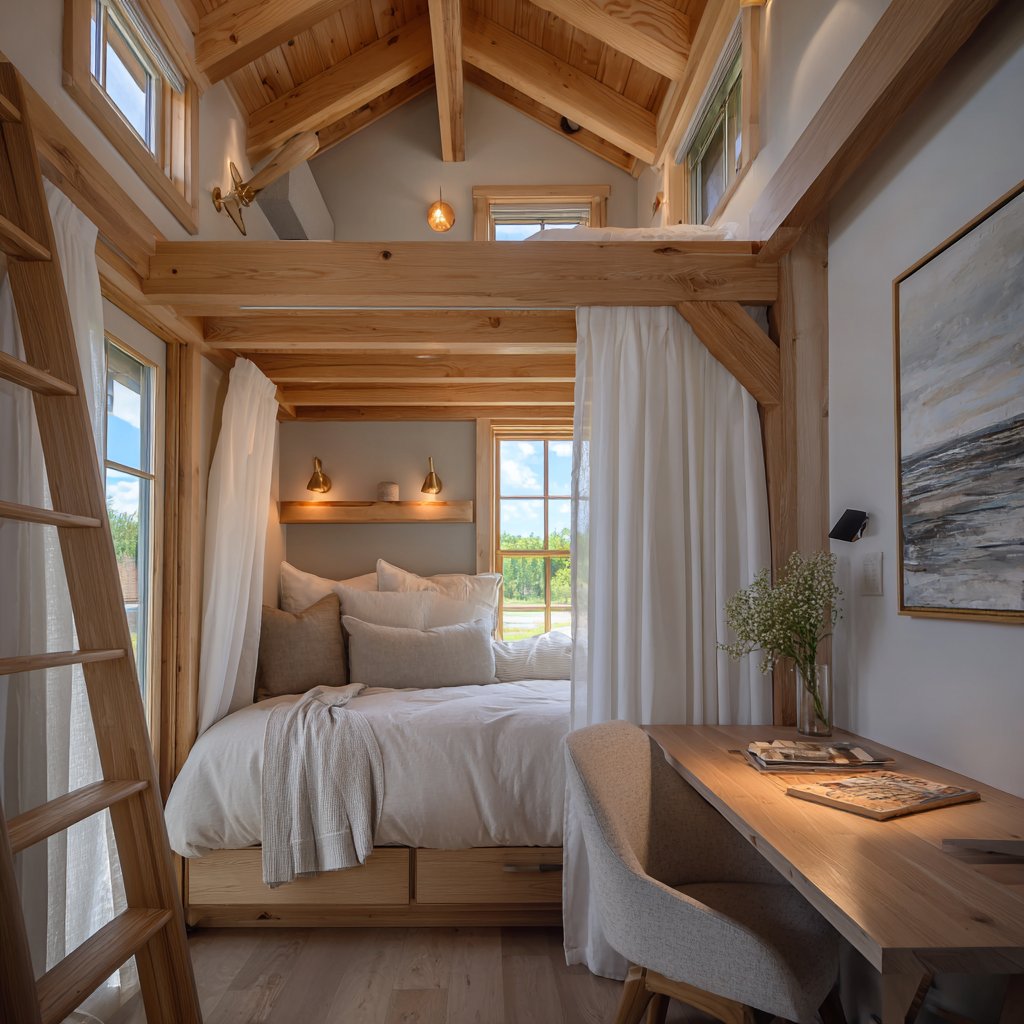
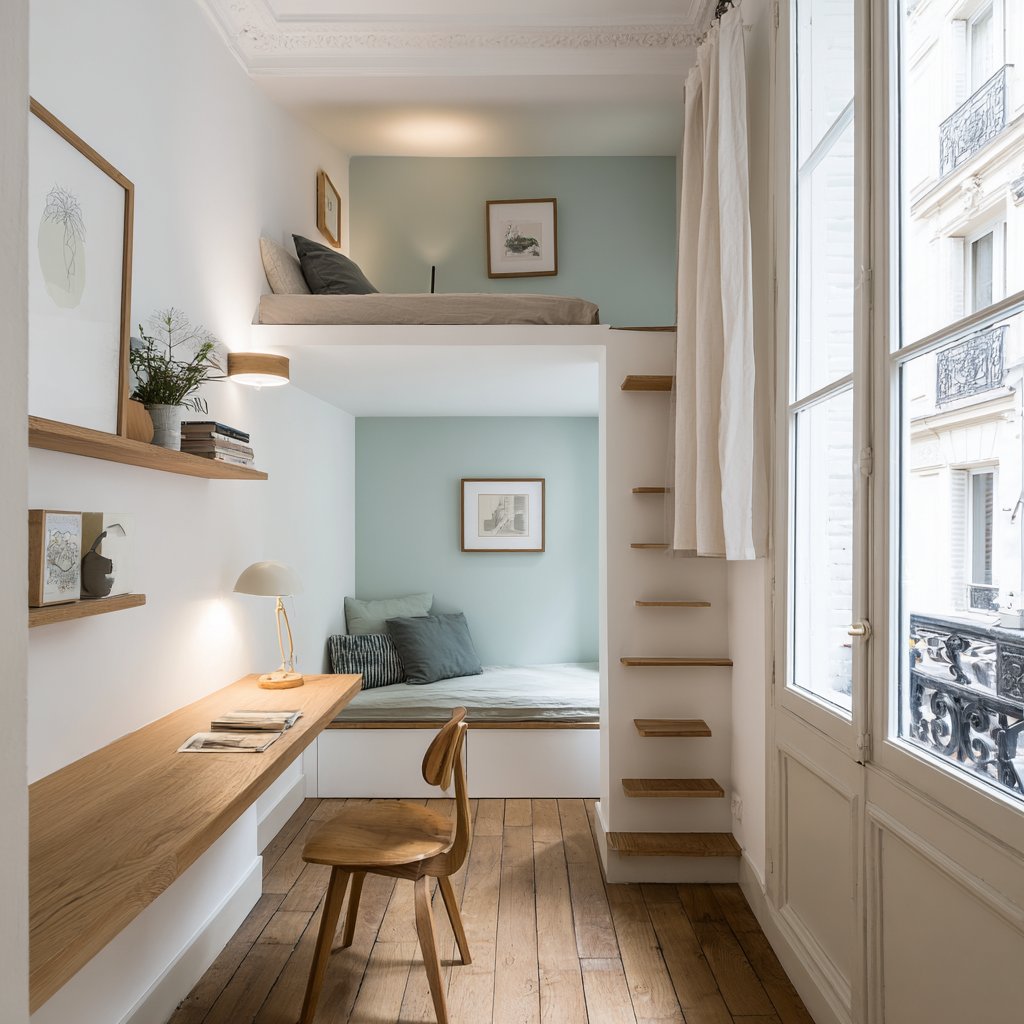
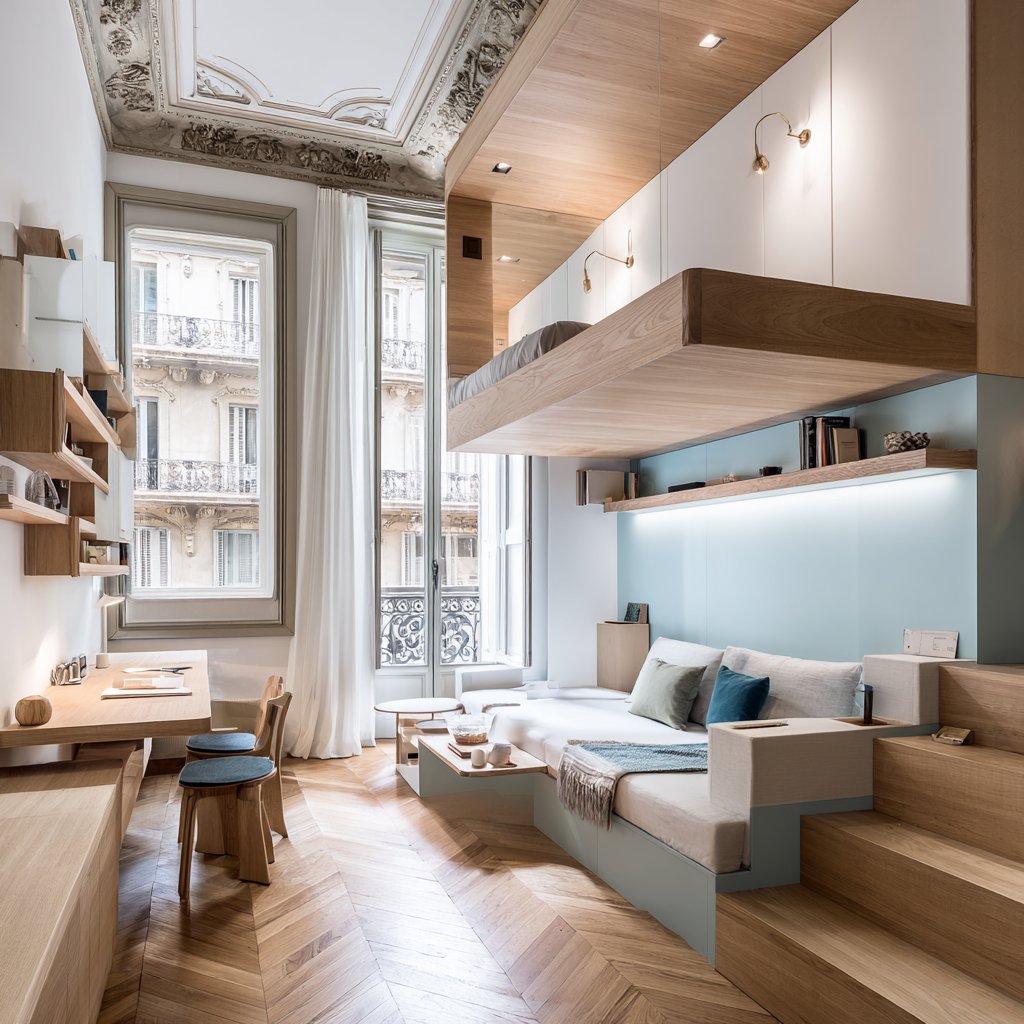
The lofted sleeping platform represents a brilliant solution for maximizing vertical space in very tiny bedrooms with adequate ceiling height. This design features a sleeping area elevated above a compact yet fully functional workspace, creating two distinct zones within a single footprint. The natural oak ladder that provides access to the loft is both practical and aesthetically pleasing, with its wide, flat treads offering safe, comfortable climbing while the warm wood grain adds organic texture to the space. Built-in reading lights and a small floating shelf at the sleeping level ensure that the upper area functions as a complete bedroom environment, not just a mattress storage solution.
Beneath the loft, a streamlined desk with minimal drawer storage fits perfectly, creating an efficient workspace that feels private and focused rather than exposed. This arrangement is particularly beneficial for students, remote workers, or anyone who needs to separate their sleeping and working environments—a crucial consideration for mental health and productivity. The desk area benefits from the sense of enclosure created by the loft above, fostering concentration while still feeling connected to the larger room through the open sides.
The color palette here demonstrates sophisticated restraint: soft white walls create a bright, airy foundation, while a single accent wall in pale blue introduces personality and visual interest without overwhelming the compact space. The small window dressed in sheer curtains allows natural light to permeate both levels, with the translucent fabric maintaining privacy while maximizing illumination. This design proves that vertical thinking can literally elevate small-space living, creating distinct functional zones without the need for room dividers or additional square footage.
Key Design Tips:
- Ensure at least 3-4 feet of clearance between the mattress and ceiling to prevent claustrophobia and allow comfortable sitting
- Install the desk with adequate overhead clearance (typically 4-5 feet minimum) to work comfortably without feeling cramped
- Consider adding a small fan or improved ventilation near the loft area, as heat naturally rises
- Choose a mattress appropriate for loft living—typically 6-8 inches thick rather than standard 10-12 inches to maximize headroom
- Add safety railings on open sides of the loft, especially if the sleeping area is more than 4 feet above the floor
3. Platform Bed with Integrated Drawer Storage
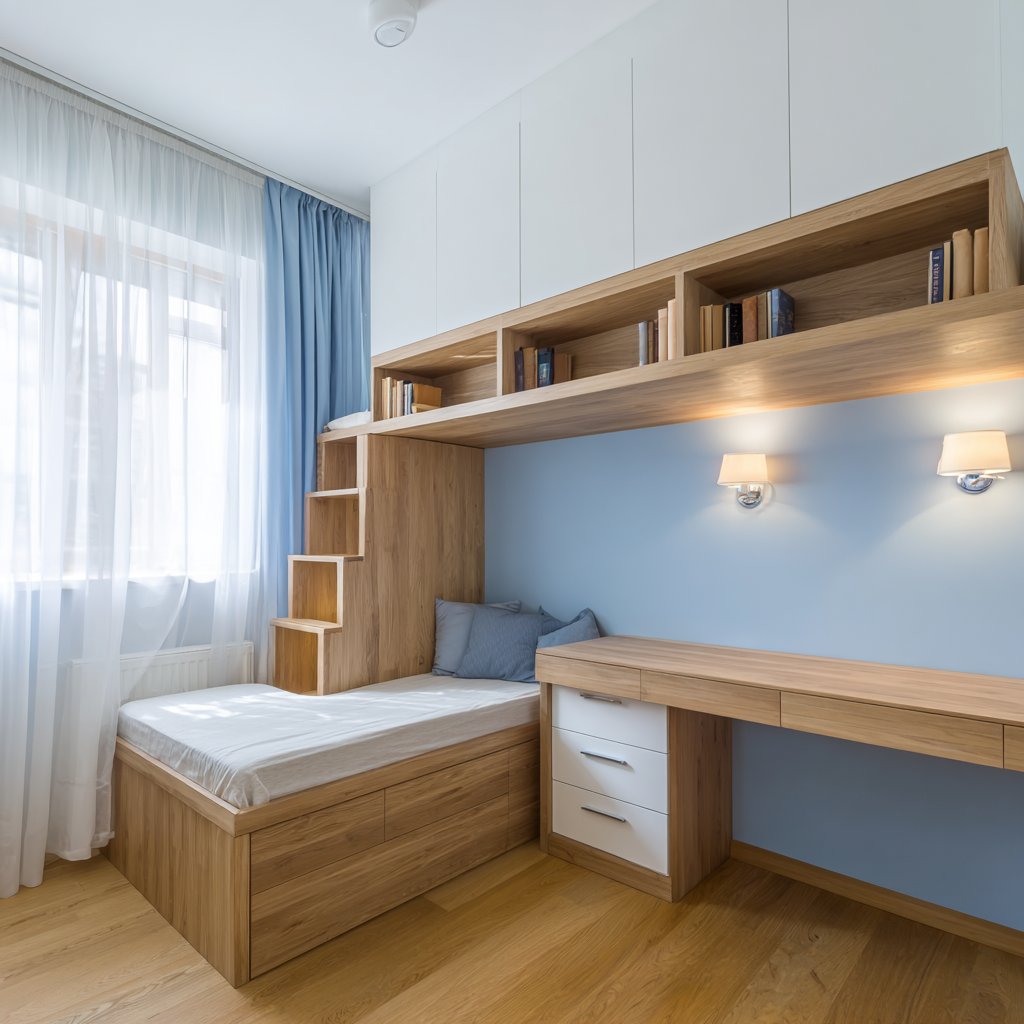
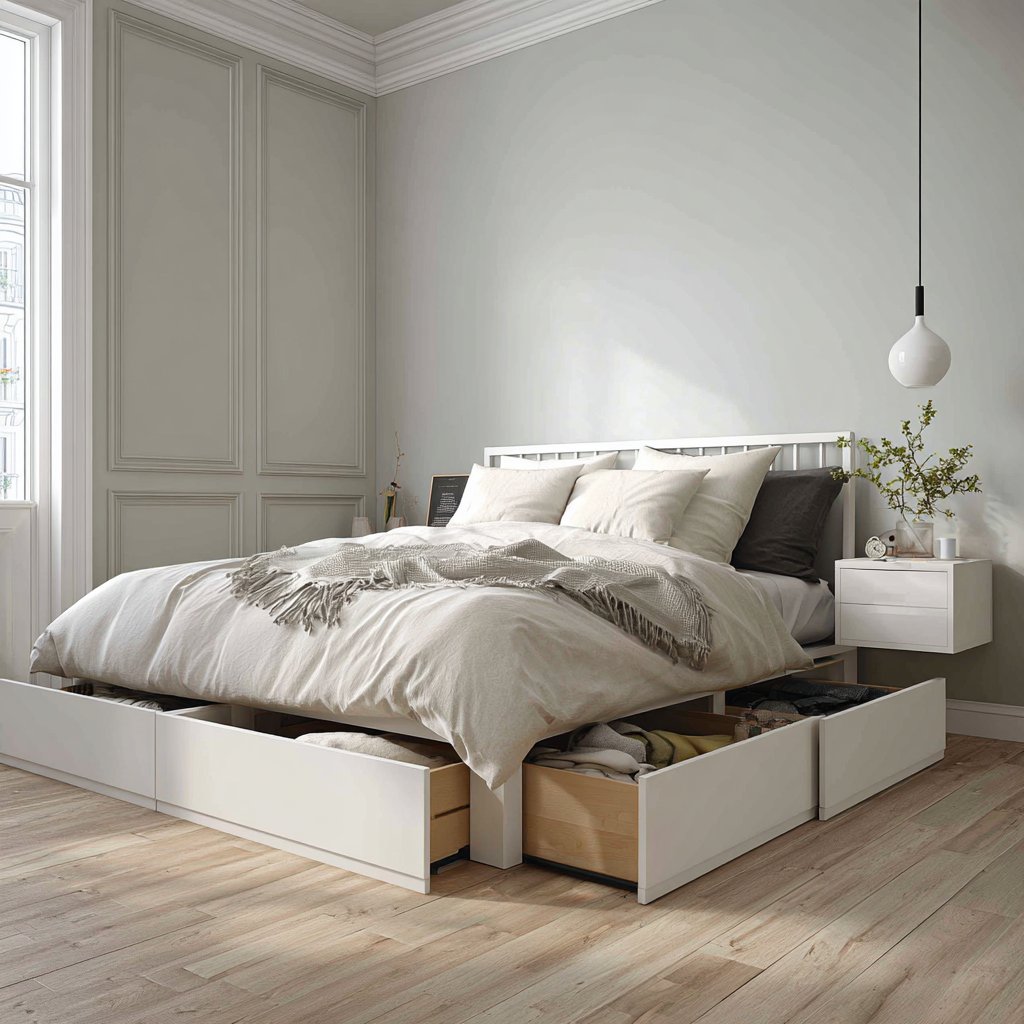
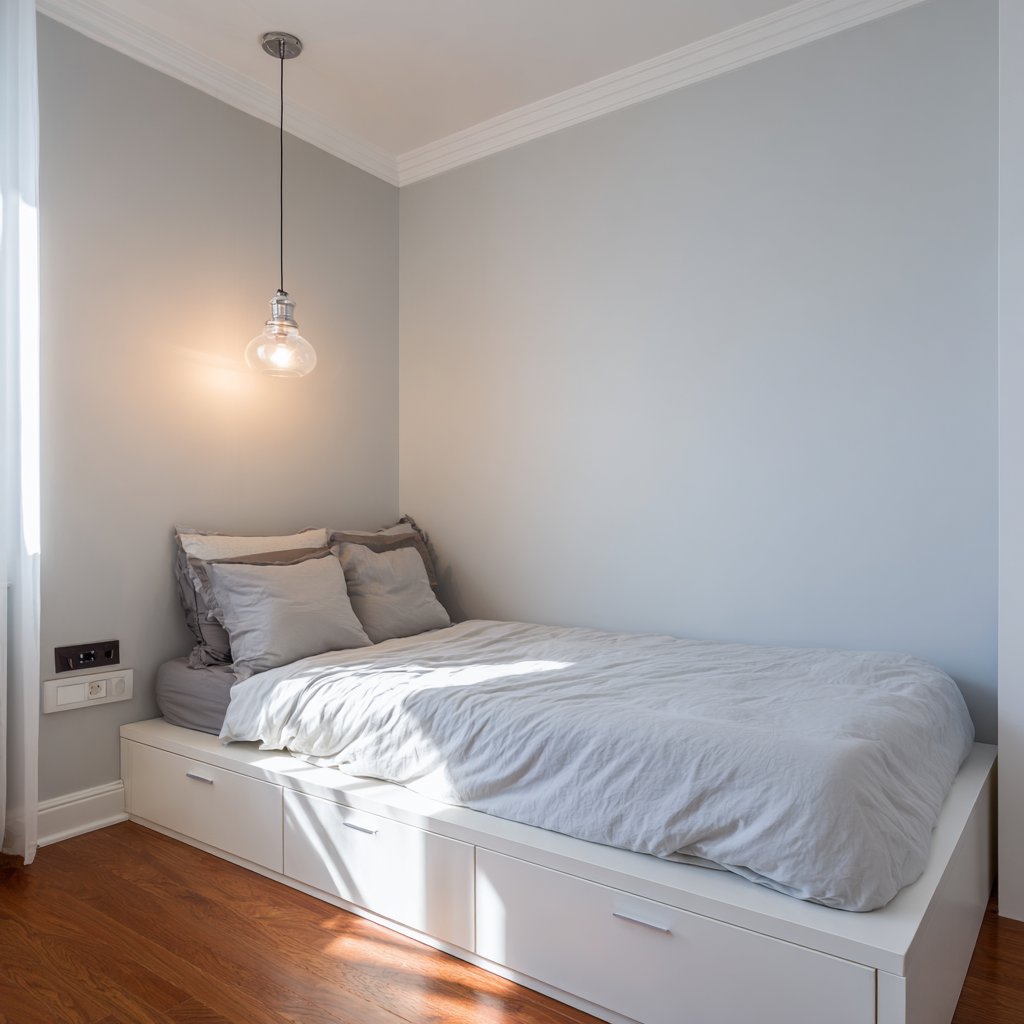
The platform bed with integrated drawer storage represents one of the most practical solutions for very tiny bedroom organization, eliminating the need for a separate dresser while providing substantial storage capacity. This design features four deep drawers built into the bed frame, positioned on smooth-gliding hardware that allows effortless access to clothing, linens, and personal items. The drawers are substantial enough to accommodate folded garments, eliminating the bulky presence of a traditional chest of drawers that would consume valuable floor space and interrupt sight lines.
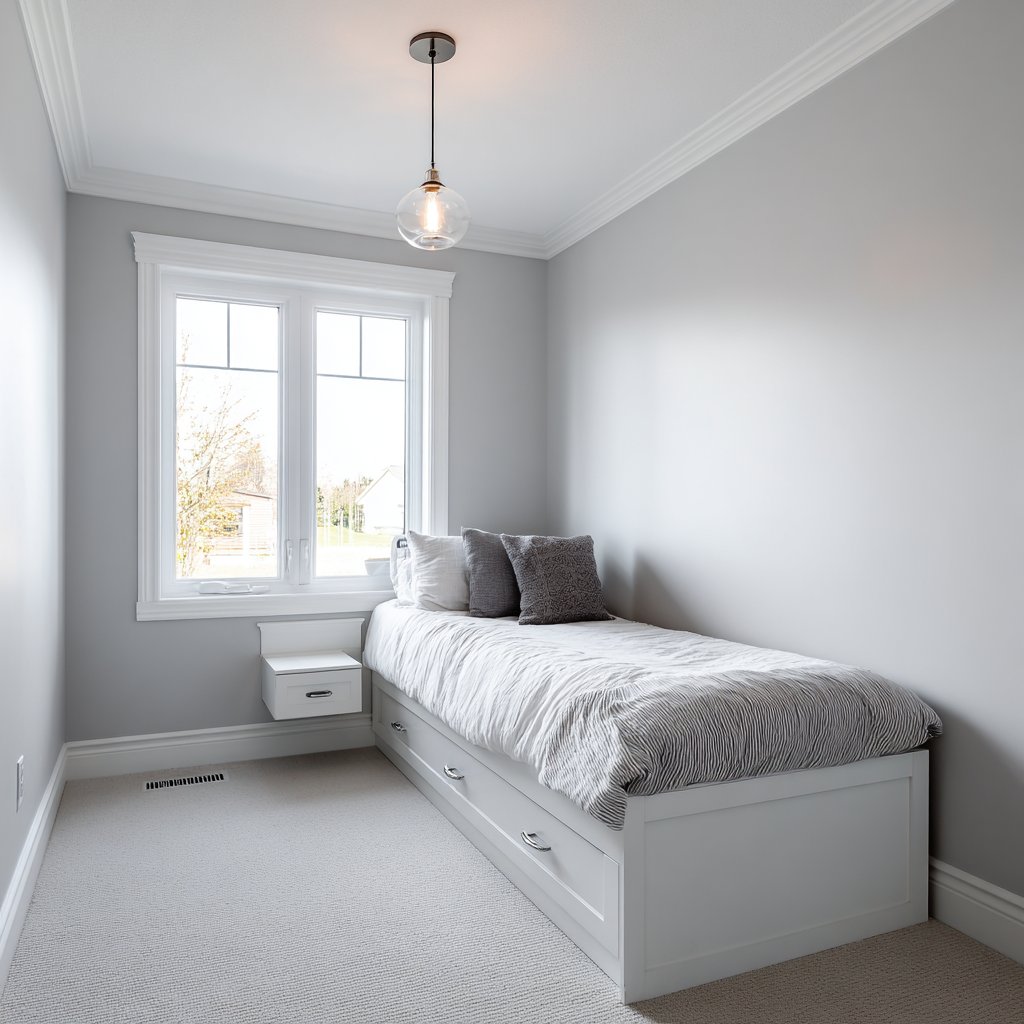
The bed itself is positioned against the wall to maximize floor area, with a narrow floating nightstand that epitomizes efficiency—just large enough for a bedside lamp, phone, and perhaps a book, yet featuring a single drawer for storing small essentials and integrated USB charging ports that eliminate the need for bulky adapters. This attention to modern convenience demonstrates how contemporary design addresses real-world needs. The walls, painted in light grey with crisp white trim, create a serene backdrop that maintains a spacious feel while offering more visual interest than stark white alone.
The minimalist pendant light suspended from the ceiling serves as a space-saving alternative to traditional table lamps, freeing up the limited nightstand surface while providing adjustable task lighting directly where needed. This overhead approach to lighting is particularly effective in tiny bedrooms, where every horizontal surface counts. The overall aesthetic is clean and contemporary, proving that practical storage solutions need not compromise style or sophistication.
Key Design Tips:
- Opt for drawers with soft-close mechanisms to prevent slamming and ensure longevity in frequently-used furniture
- Organize drawer contents with fabric dividers or small boxes to maximize storage efficiency and maintain organization
- Choose a platform bed height that allows comfortable access to under-bed storage—typically 12-18 inches from floor to mattress base
- Consider installing a bed rail or handle on the floating nightstand side to assist with getting in and out of bed
- Use drawer fronts in a finish that hides fingerprints and wear, such as matte paint or wood veneer rather than high-gloss surfaces
4. Corner Configuration for Maximum Floor Space
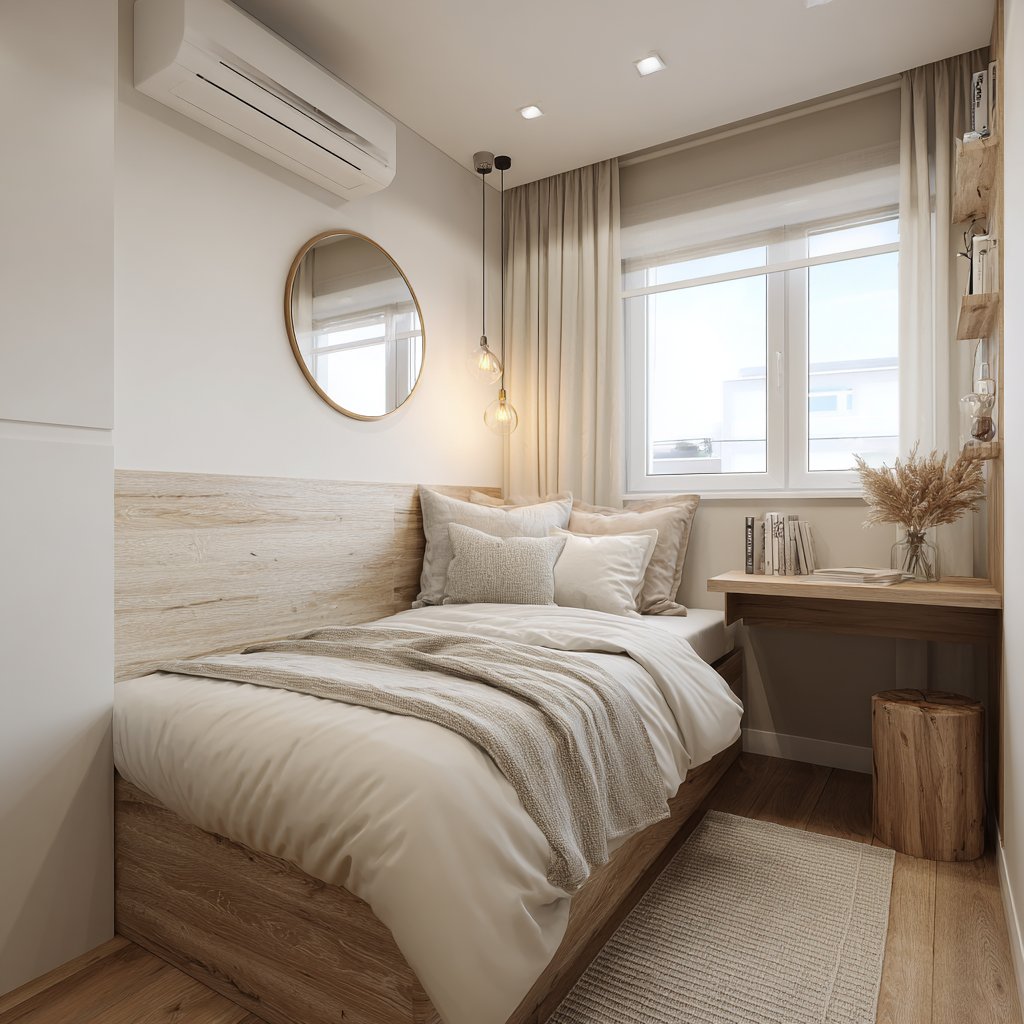
Positioning a bed in a corner might seem counterintuitive, yet this layout can dramatically improve flow and functionality in very tiny bedrooms. This innovative design features a twin bed placed snugly into a corner with a tall headboard that incorporates hidden storage compartments—small cubbies perfect for books, charging devices, eyeglasses, and other bedside essentials. Adjacent to the bed, a wall-mounted folding desk provides a flexible workspace that can be tucked away completely when not in use, creating precious floor space for movement, exercise, or simply the psychological benefit of openness.
The narrow vertical bookshelf that reaches from floor to ceiling represents intelligent vertical space utilization, providing substantial storage and display capacity within a minimal footprint. This tall, slender profile draws the eye upward, emphasizing ceiling height and creating the illusion of greater space—a crucial consideration in compact rooms where horizontal expansion is impossible. The neutral color scheme, dominated by cream walls and natural wood accents, maintains brightness while introducing warmth through organic materials.
The small round mirror serves multiple purposes beyond simple vanity: its circular shape introduces a soft counterpoint to the room’s rectangular geometry, while its reflective surface bounces light from the window throughout the space, enhancing overall brightness and creating depth. The strategic positioning of this mirror ensures maximum light reflection while adding a decorative element that personalizes the space.
Key Design Tips:
- When positioning a bed in a corner, ensure comfortable access from at least one side with minimum 2 feet of clearance for making the bed
- Install the folding desk at a height that allows comfortable seated work—typically 28-30 inches from the floor
- Use the vertical bookshelf to display a mix of books, practical storage, and decorative items to create visual rhythm moving up the wall
- Choose a headboard with accessible storage compartments rather than deep cavities that become cluttered and difficult to clean
- Consider adding a small reading light above the bed that swings or adjusts to prevent shadows on book pages
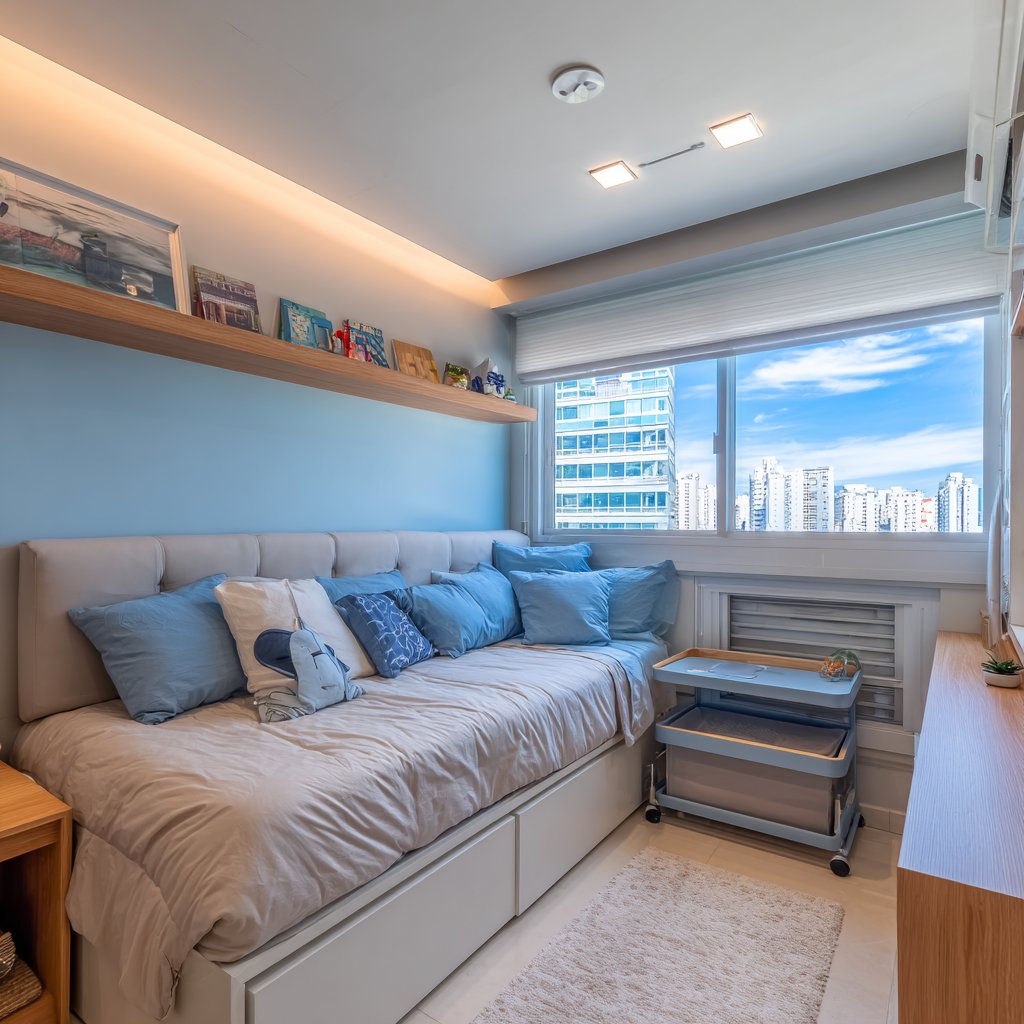
5. Daybed Configuration with Hidden Storage
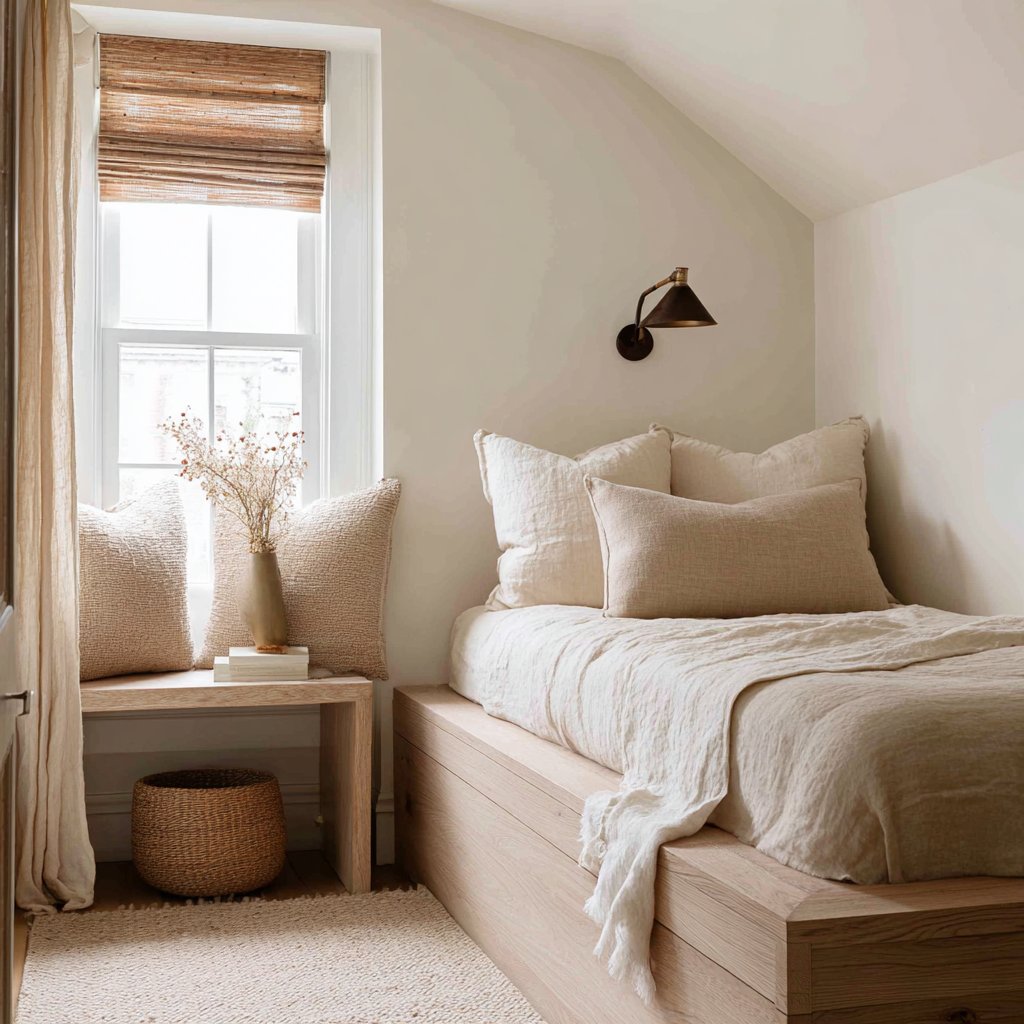
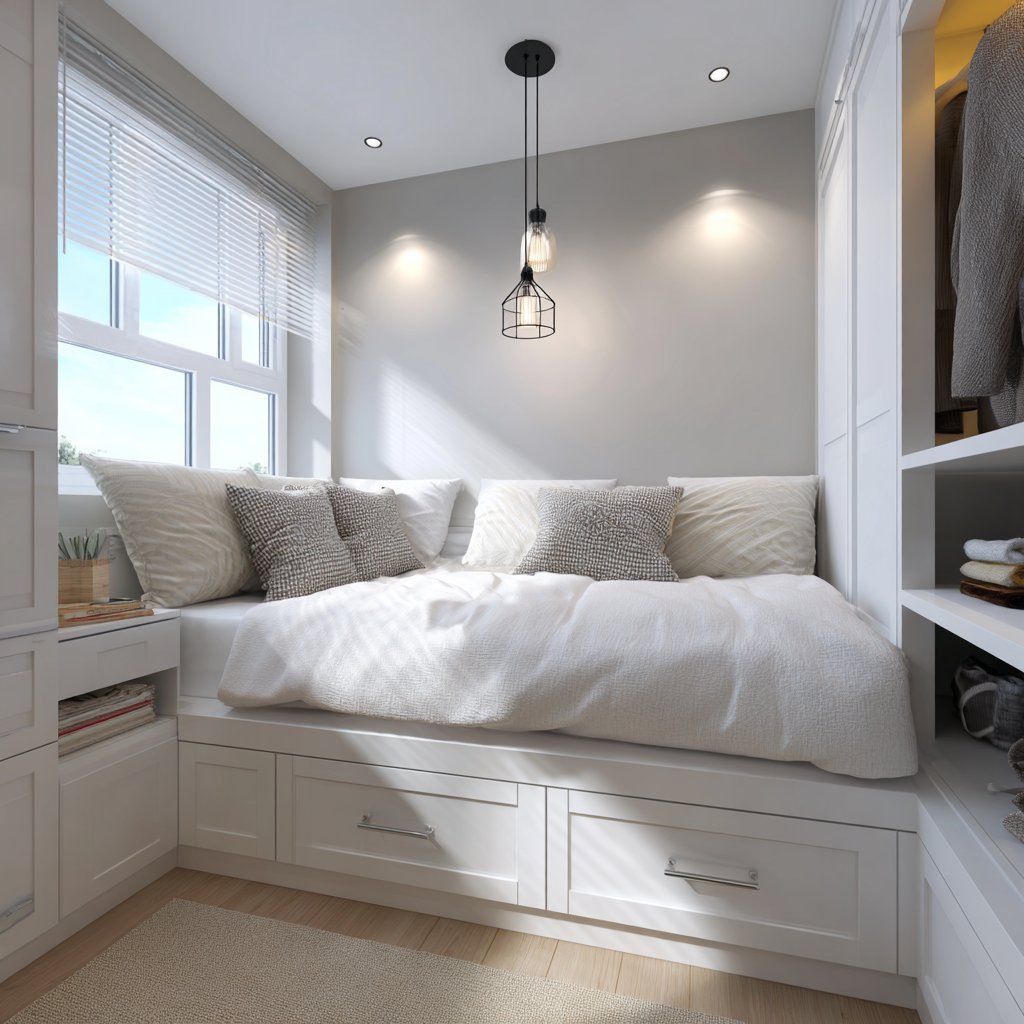
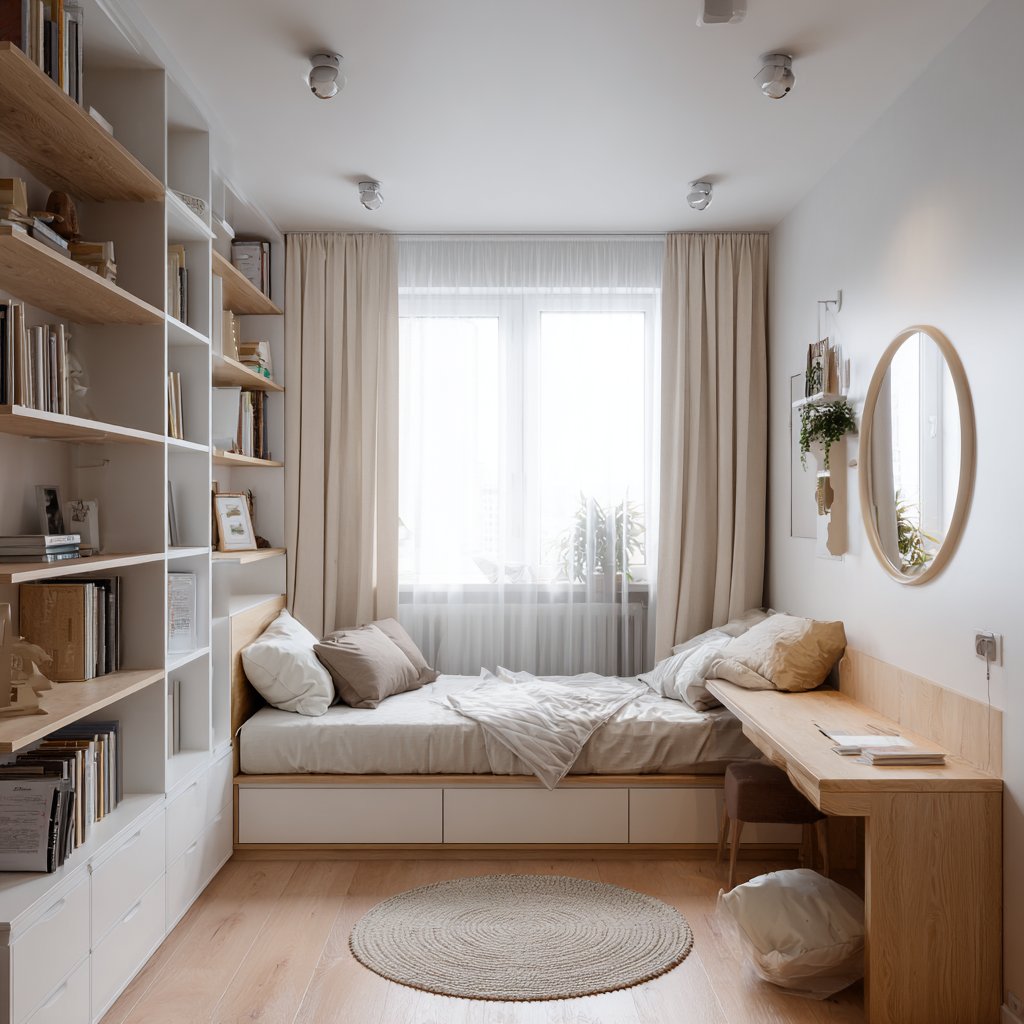
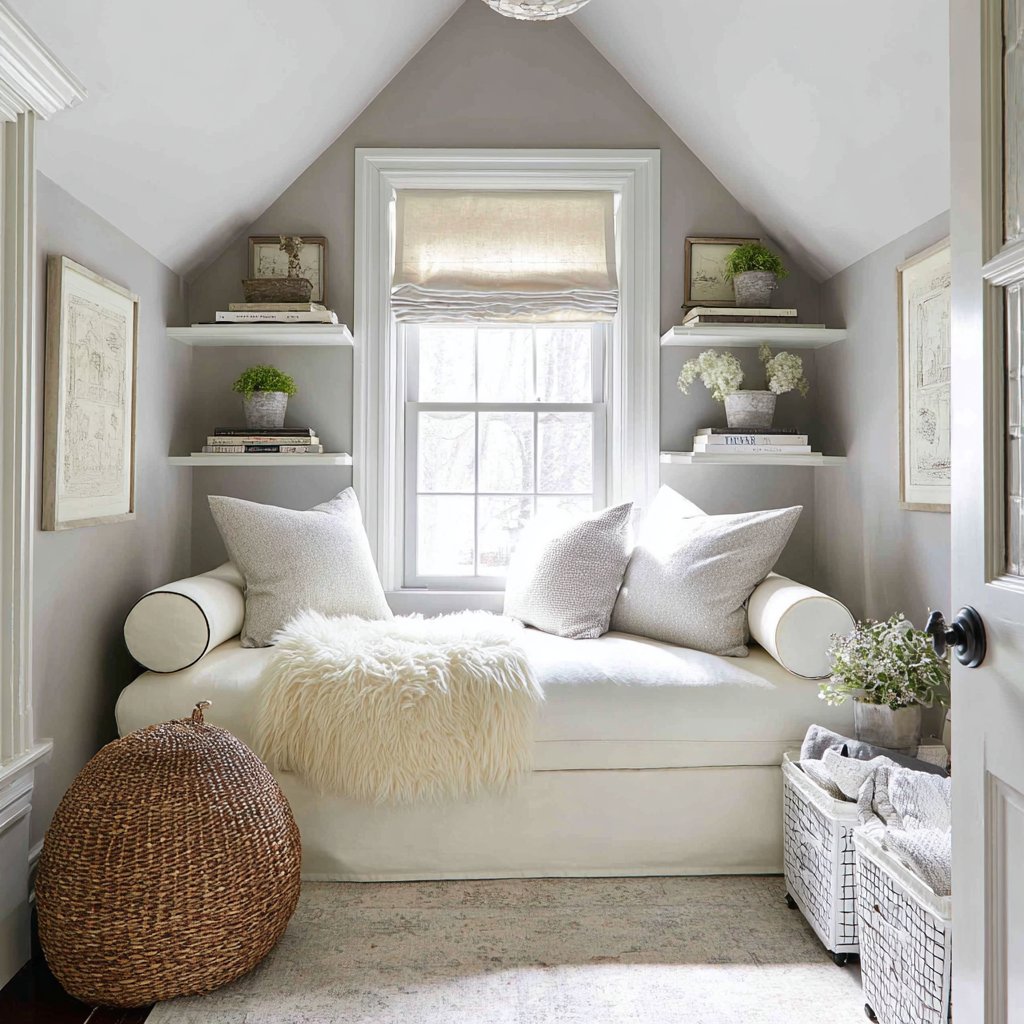
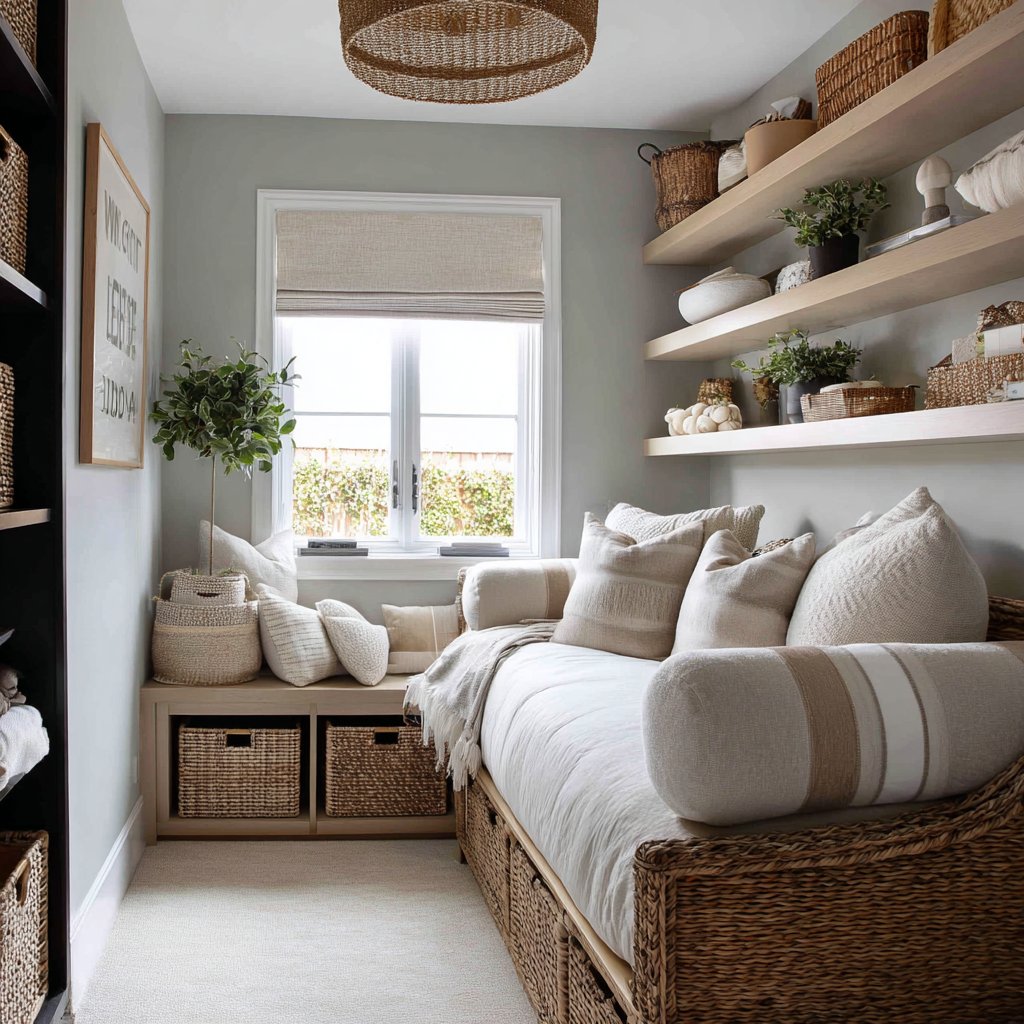
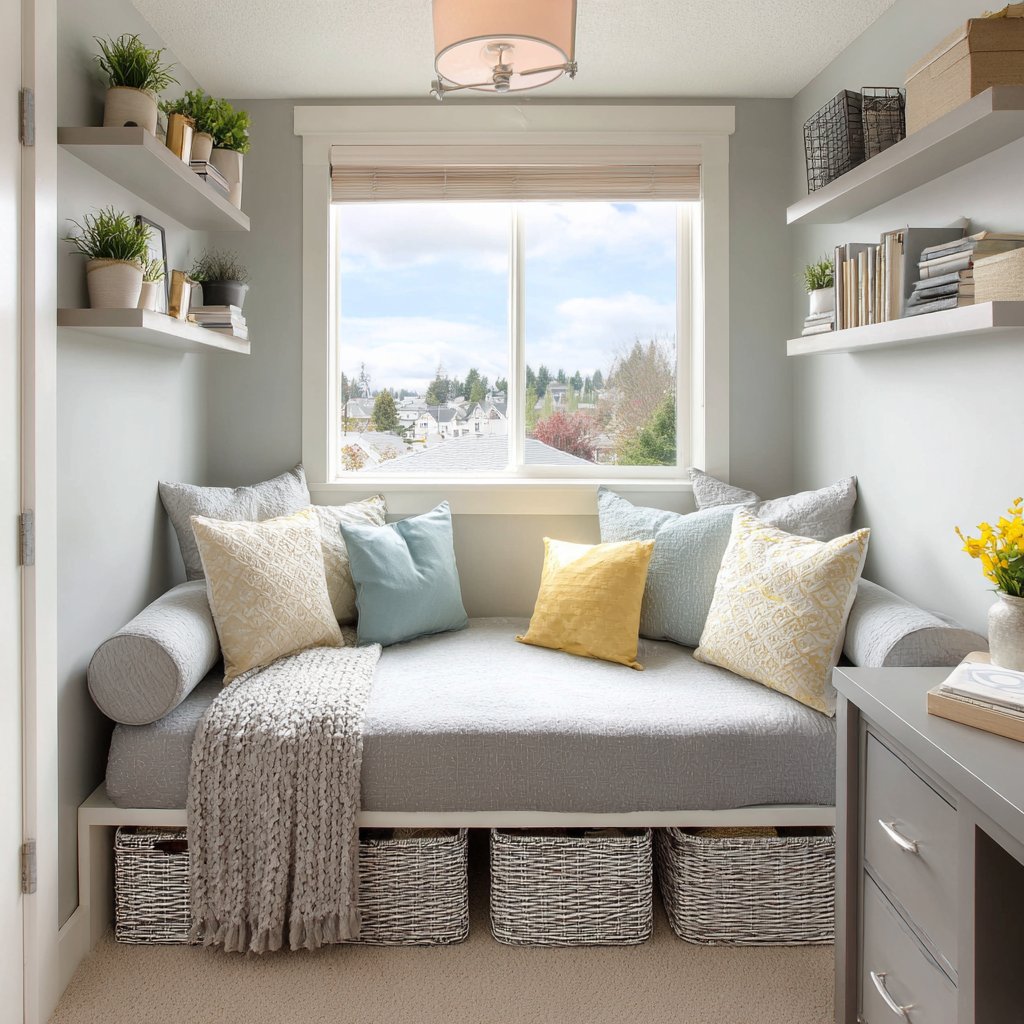
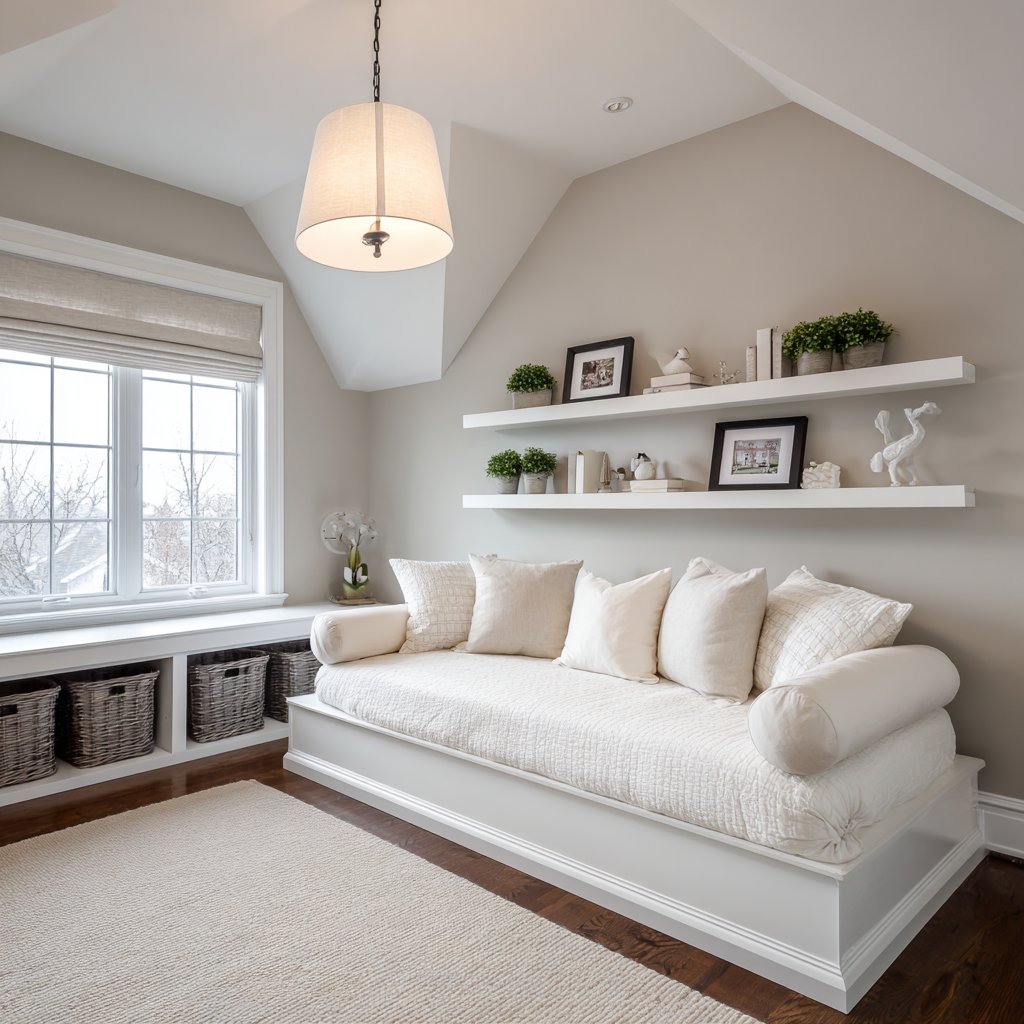
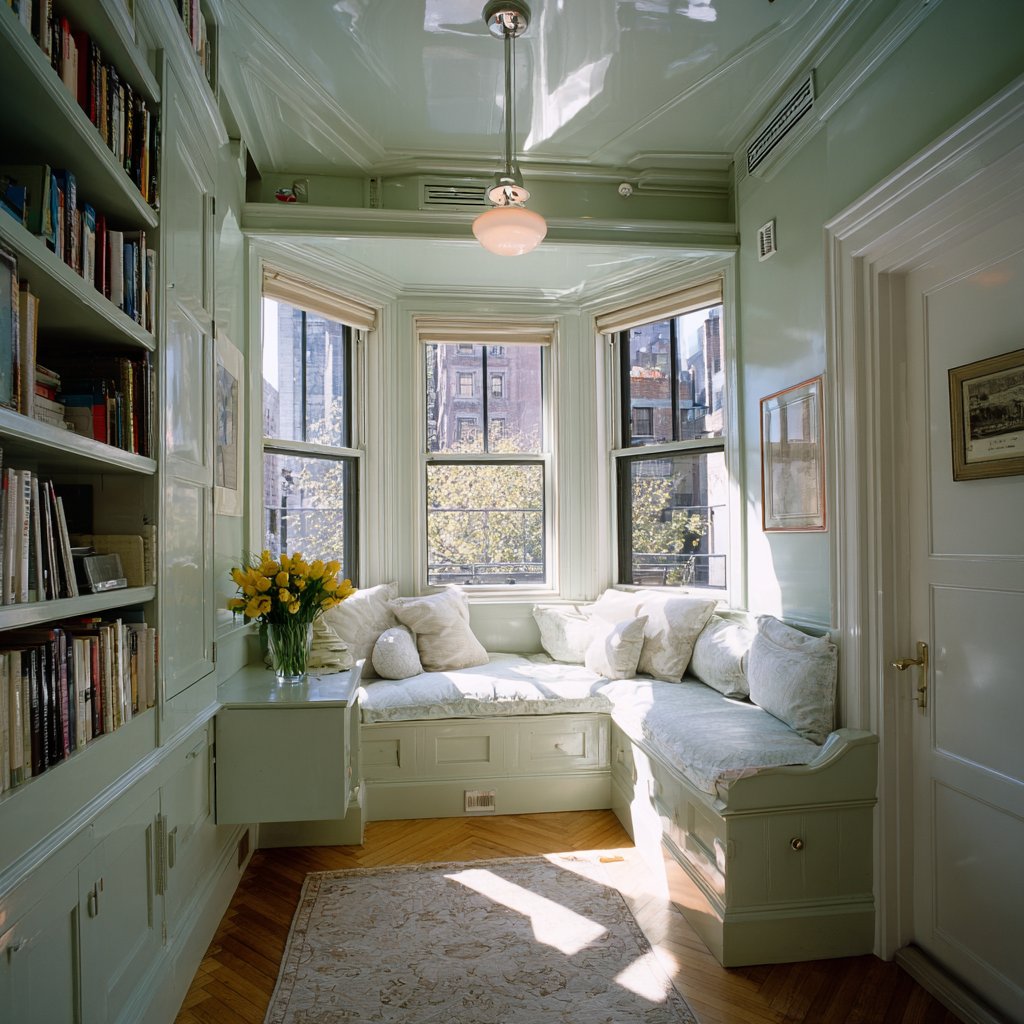
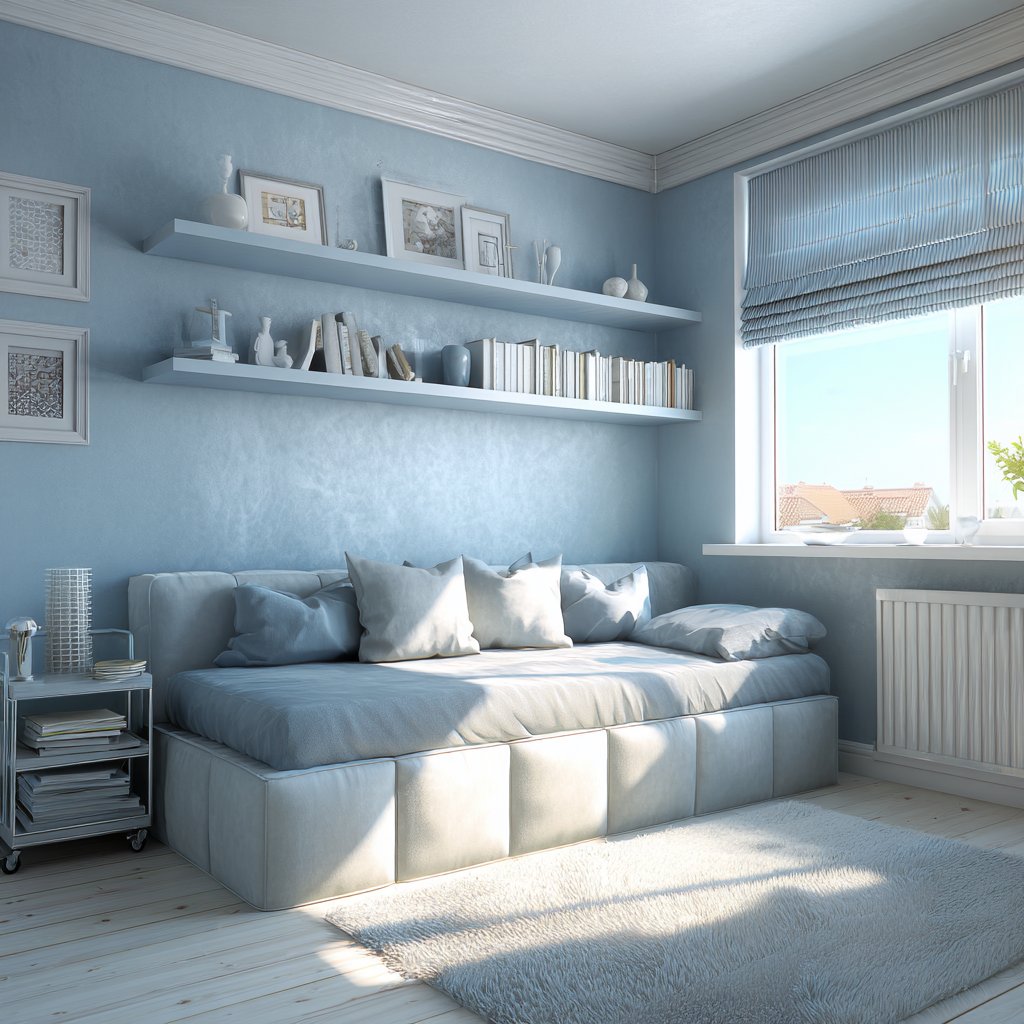
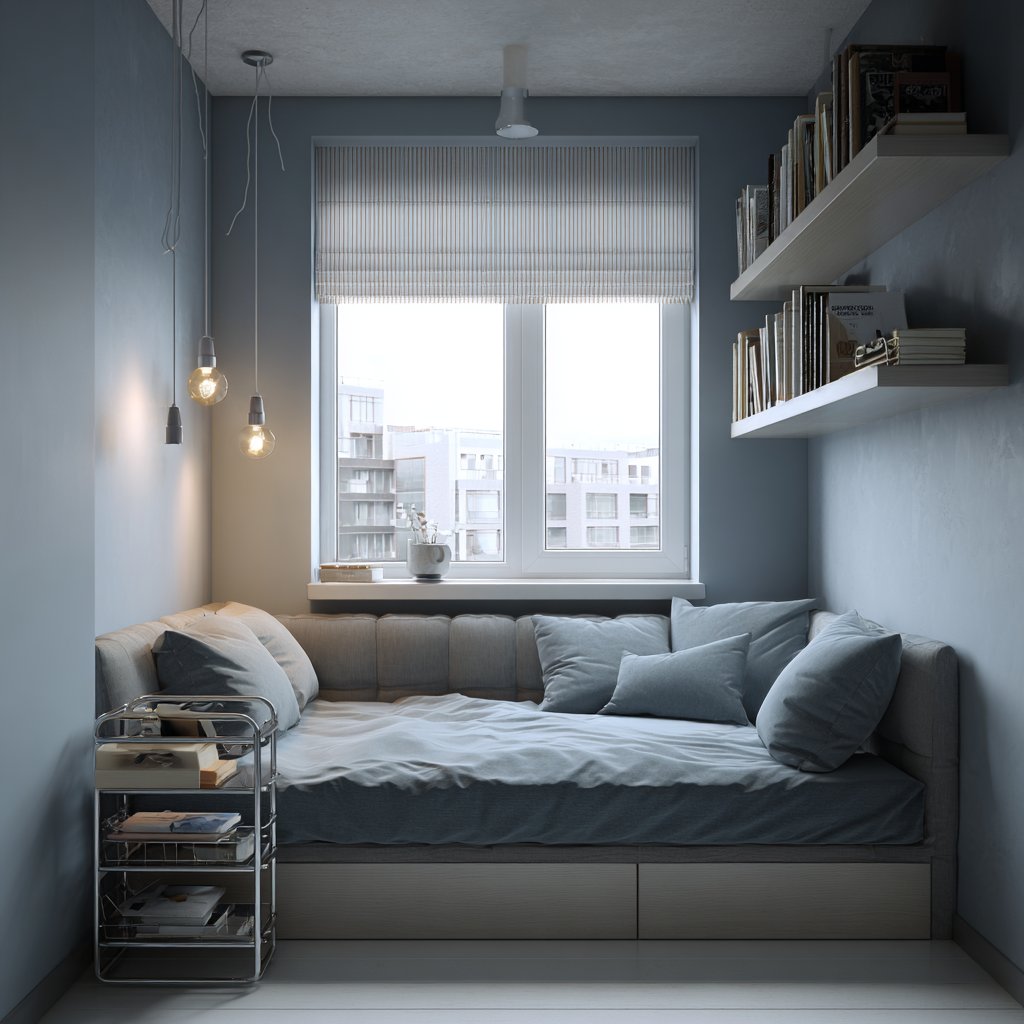
The daybed configuration offers exceptional versatility for very tiny bedrooms, functioning as both comfortable seating during waking hours and a proper sleeping surface at night. This design features a bed positioned lengthwise against the wall with bolster pillows creating a sofa-like appearance that invites lounging, reading, and entertaining. The transformation from day to night requires only the simple addition of sleeping pillows and perhaps a throw blanket—a minimal transition that respects the dual nature of the space.
Underneath this multifunctional furniture piece, rolling storage bins on smooth-gliding casters provide easily accessible organization for seasonal items, extra bedding, out-of-season clothing, or hobby supplies. The mobility of these storage units means that accessing specific items doesn’t require wrestling with permanent drawers or lifting heavy mattress platforms. Above the daybed, three floating shelves provide display and storage space for books, plants, photographs, and decorative objects that personalize the room without consuming floor area.
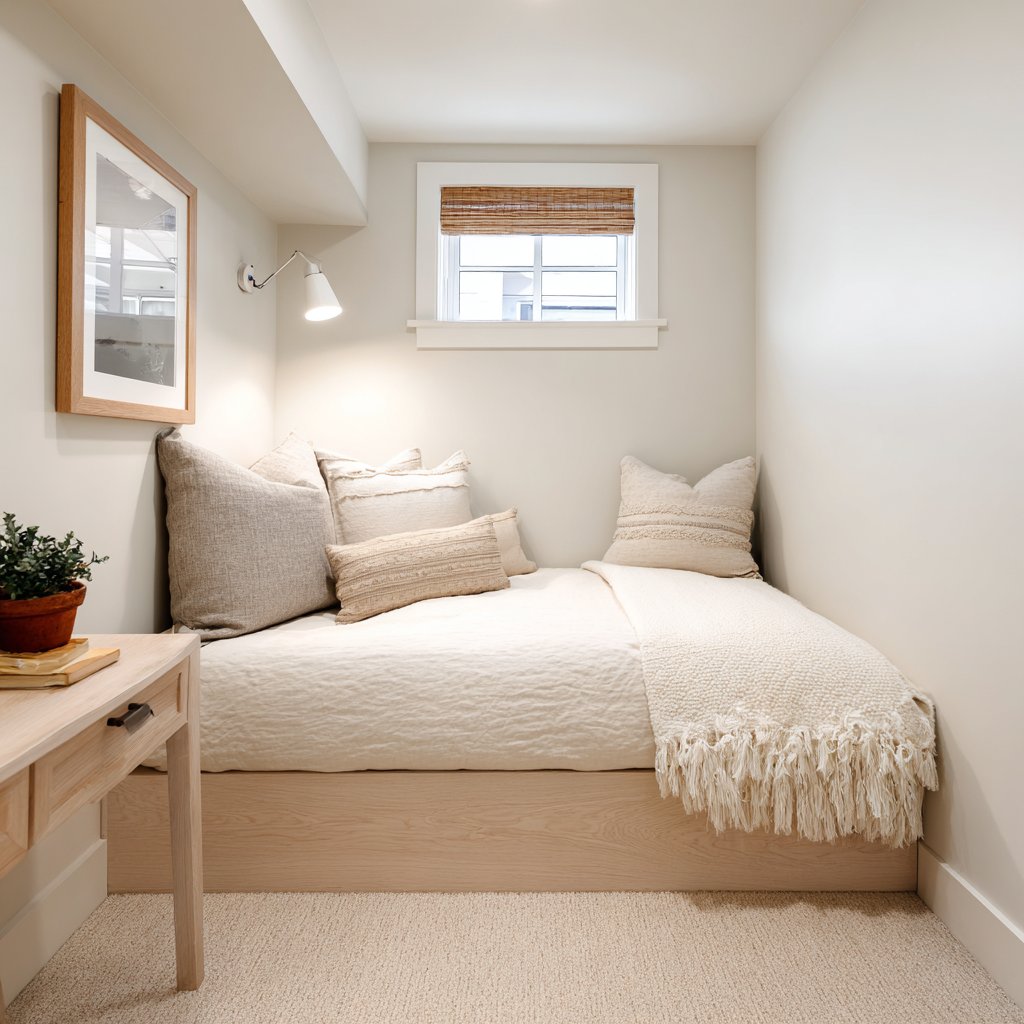
The pale grey walls create a sophisticated, contemporary backdrop that feels neither cold nor clinical, while the white ceiling reflects light downward, maintaining brightness throughout the day. The small window dressed with a simple roman shade offers light control without the visual weight of heavy draperies or the fussiness of elaborate window treatments. This entire composition demonstrates how thoughtful furniture selection and arrangement can create a room that serves multiple functions without feeling cluttered or compromised.
Key Design Tips:
- Select a daybed mattress that’s comfortable for both sitting and sleeping—typically firmer than a standard bed mattress
- Use bolster pillows that can easily be removed at bedtime and stored in one of the under-bed rolling bins
- Choose rolling storage containers in uniform sizes and colors for a cohesive, organized appearance
- Space floating shelves with varying heights—closer together for smaller items, further apart for taller objects or trailing plants
- Consider adding a small side table on casters that can move to wherever it’s needed—beside the daybed for drinks or pulled away for floor space
6. Japanese-Inspired Minimalist Retreat
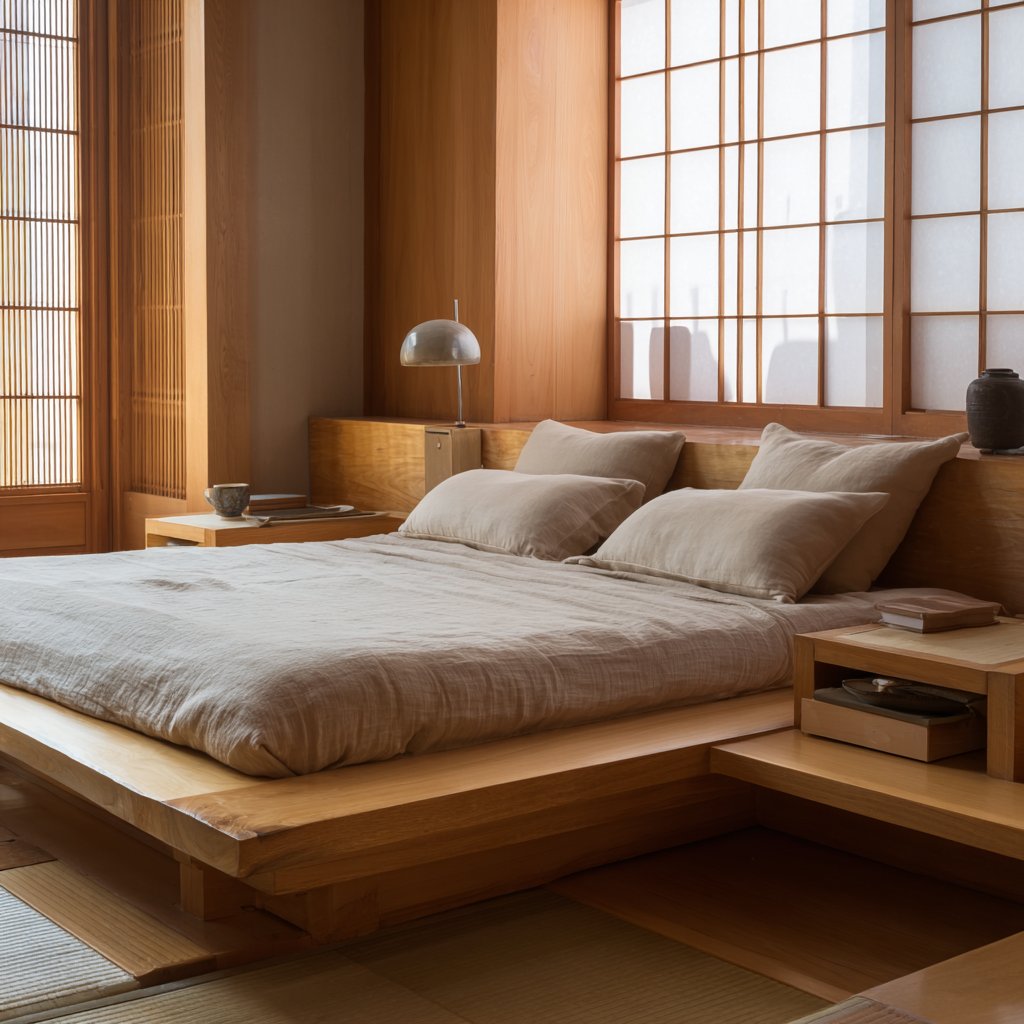
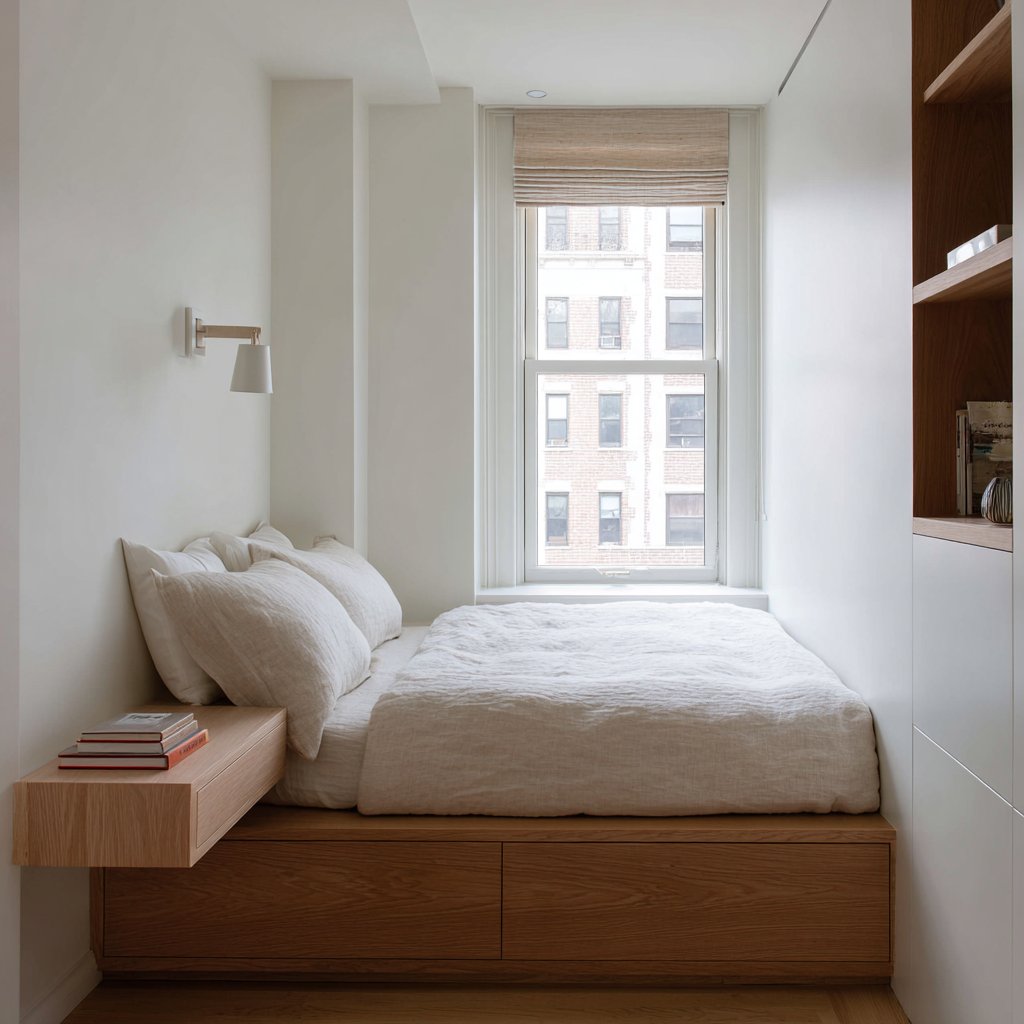
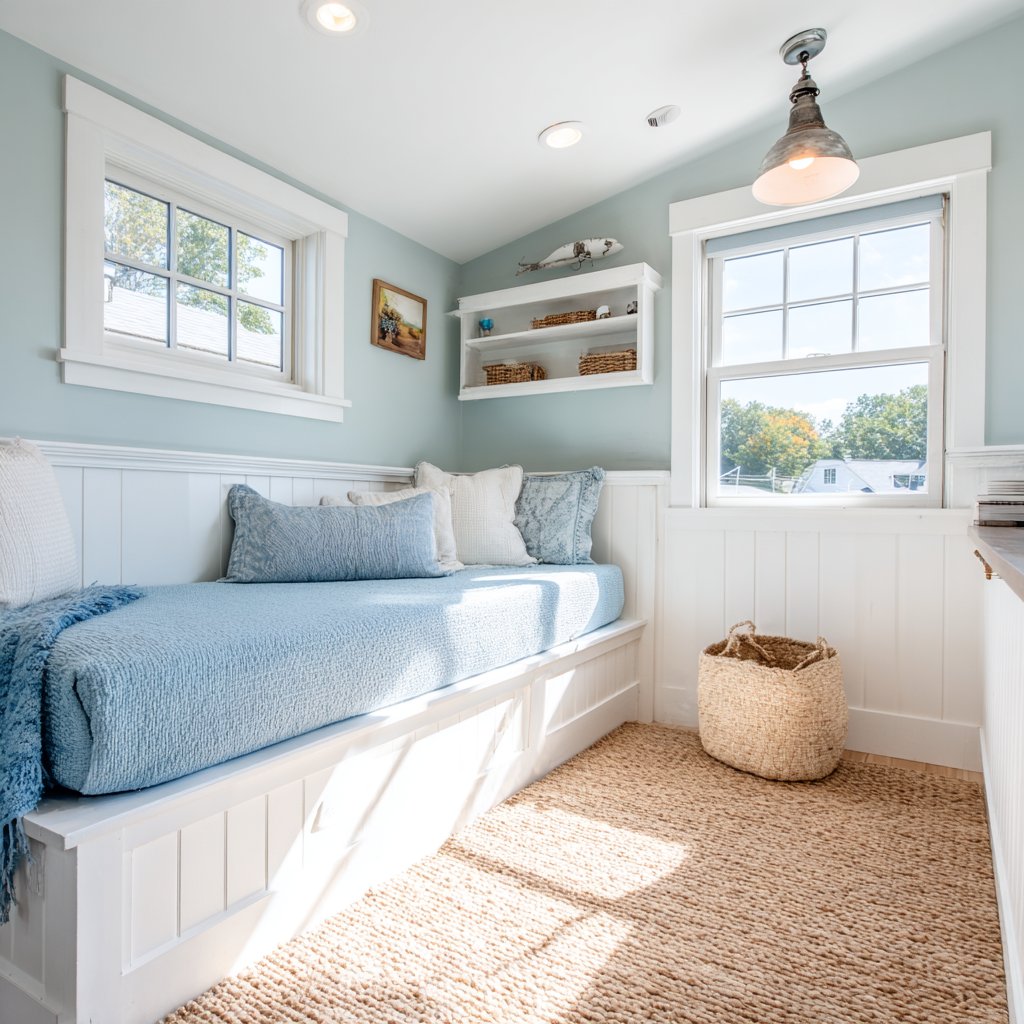
This Japanese-inspired sleeping area demonstrates how cultural design philosophy can inform very tiny bedroom solutions through principles of simplicity, natural materials, and intentional emptiness. The low platform bed frame in light ash wood sits close to the ground, a nod to traditional Japanese futon platforms that create a sense of stability and groundedness. This low profile also makes the ceiling appear higher, enhancing the perception of spaciousness—a critical consideration in compact rooms.
A single narrow console table serves as a minimalist nightstand, featuring one small drawer for absolute essentials and a lower shelf for a carefully chosen book or small plant. The wall-mounted reading lamp eliminates surface clutter while providing adjustable task lighting, its swing-arm design allowing precise positioning. The neutral palette of soft whites and pale wood tones creates a zen-like atmosphere that promotes rest and mental clarity, while textured linen bedding in natural beige introduces tactile interest without visual noise.
The small window dressed with a bamboo shade reinforces the Japanese aesthetic while providing privacy and light control through sustainable, natural materials. The overall effect is one of serene simplicity—a deliberate rejection of excess that paradoxically feels luxurious in its restraint. This design demonstrates that in very tiny bedrooms, less truly can be more, as each carefully selected element receives the visual attention it deserves without competing for focus.
Key Design Tips:
- Embrace negative space as a design element rather than trying to fill every area with furniture or decoration
- Choose furniture with clean, straight lines and minimal ornamentation to maintain the minimalist aesthetic
- Invest in high-quality natural materials like solid wood and linen rather than synthetic alternatives
- Use a cohesive color palette with subtle variations in tone rather than high contrast combinations
- Keep decorative items to a minimum—perhaps one plant, one piece of art, or one meaningful object rather than multiple accessories
7. Dynamic Diagonal Placement
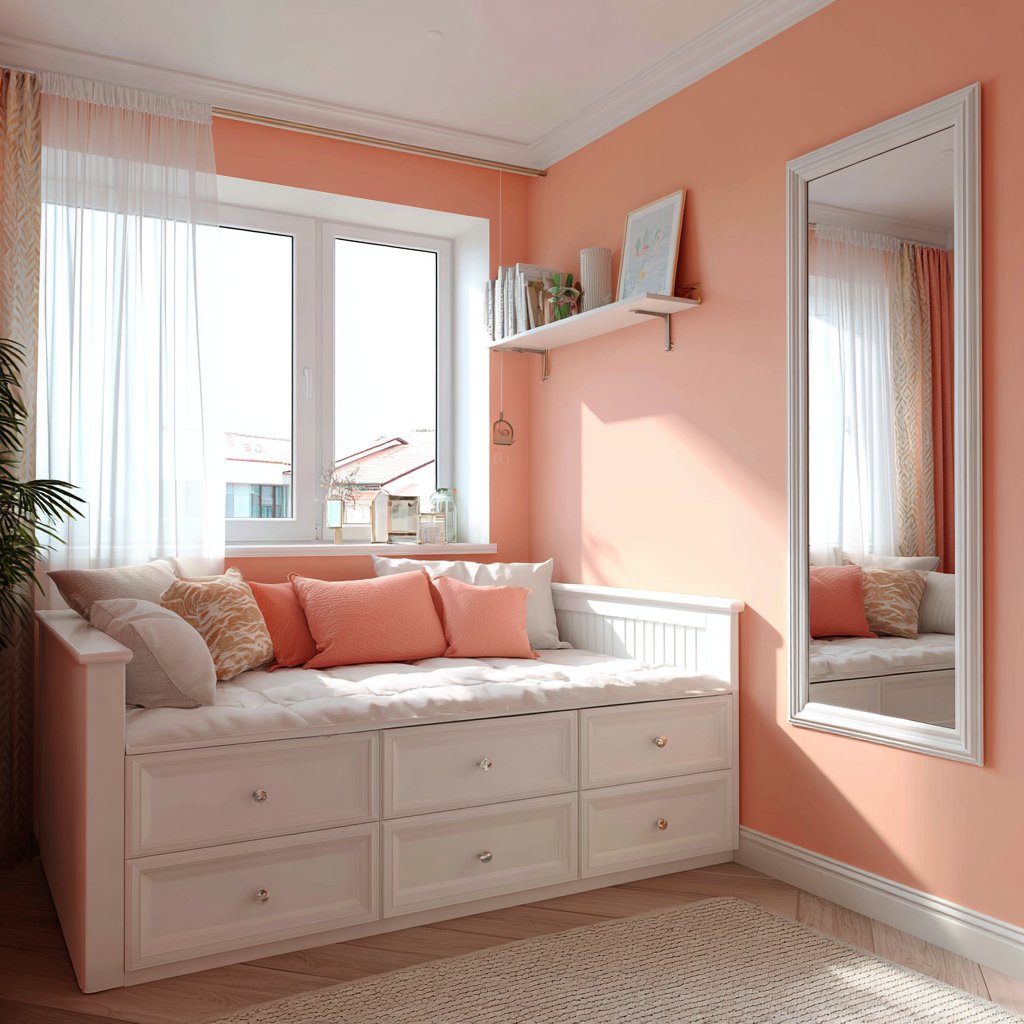
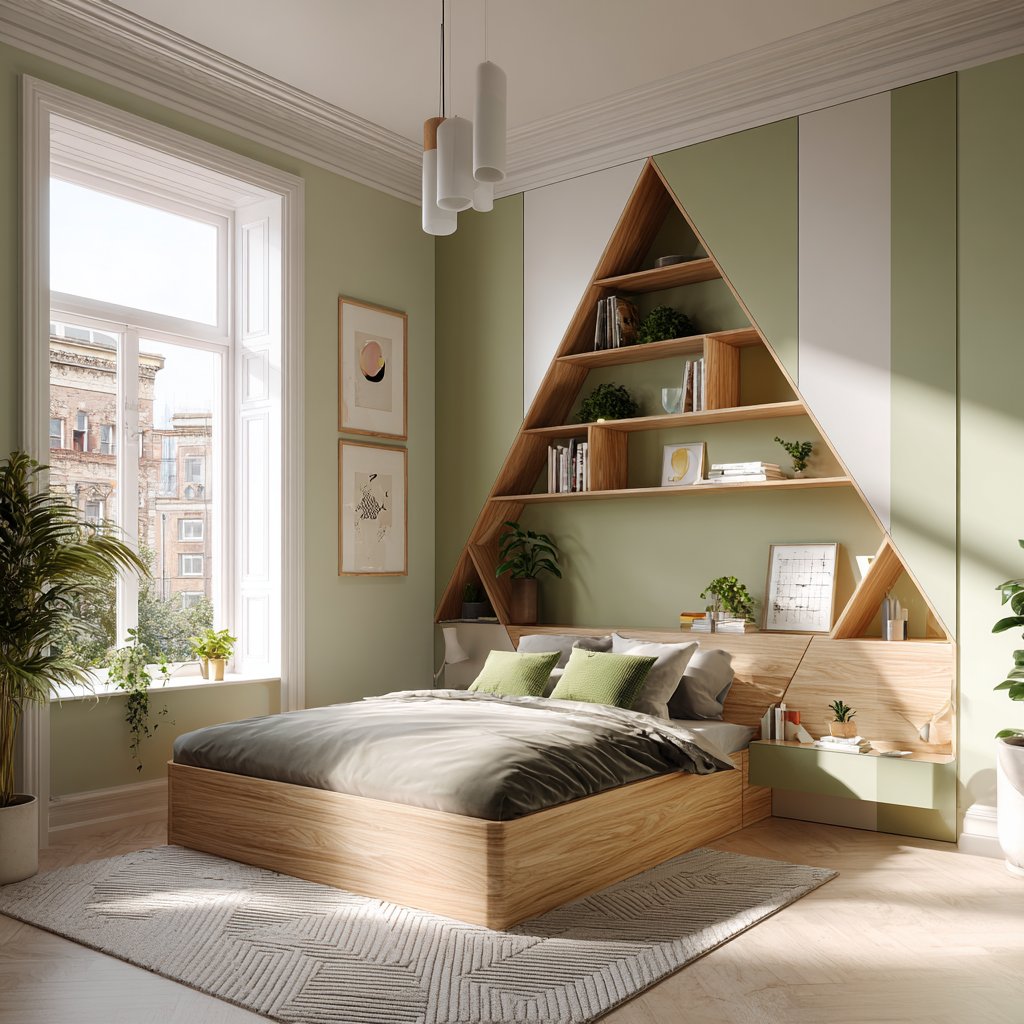
Breaking away from conventional parallel placement, positioning a bed diagonally in a corner creates unexpected flow and visual interest in very tiny bedrooms. This unconventional arrangement opens up traffic patterns, creates usable corner space, and makes the room feel less predictable and box-like. Behind the bed, a triangular corner shelf unit custom-fitted to the angle provides storage and display space that would otherwise be wasted dead zone, turning an awkward corner into a design asset.
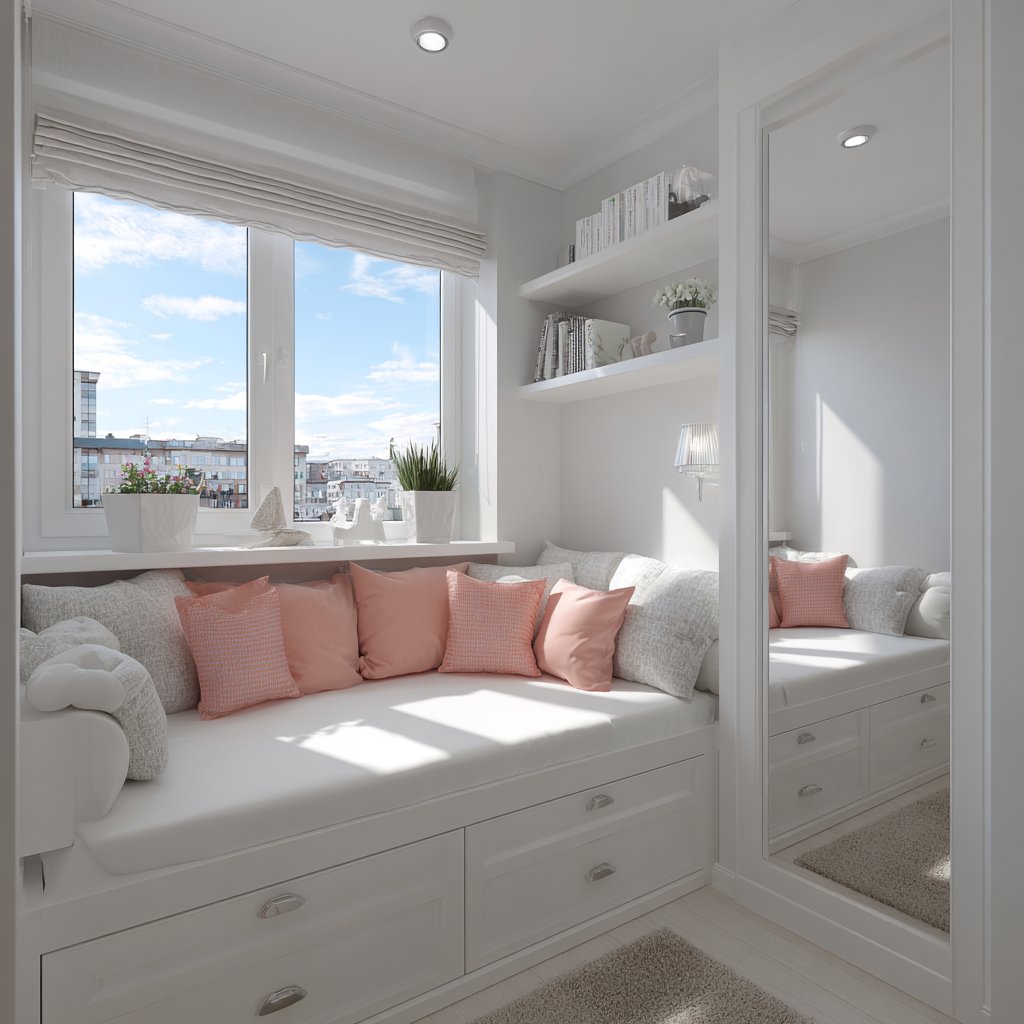
A small floating nightstand with a single drawer is mounted at precisely the right height for comfortable reach from the bed, demonstrating how even non-traditional furniture arrangements can accommodate practical needs. The walls painted in light sage green introduce color without overwhelming the compact space, while white trim creates definition and brightness. The compact pendant light hanging from the ceiling provides ambient and task lighting without consuming floor or surface area, its centered position ensuring even illumination throughout the small room.
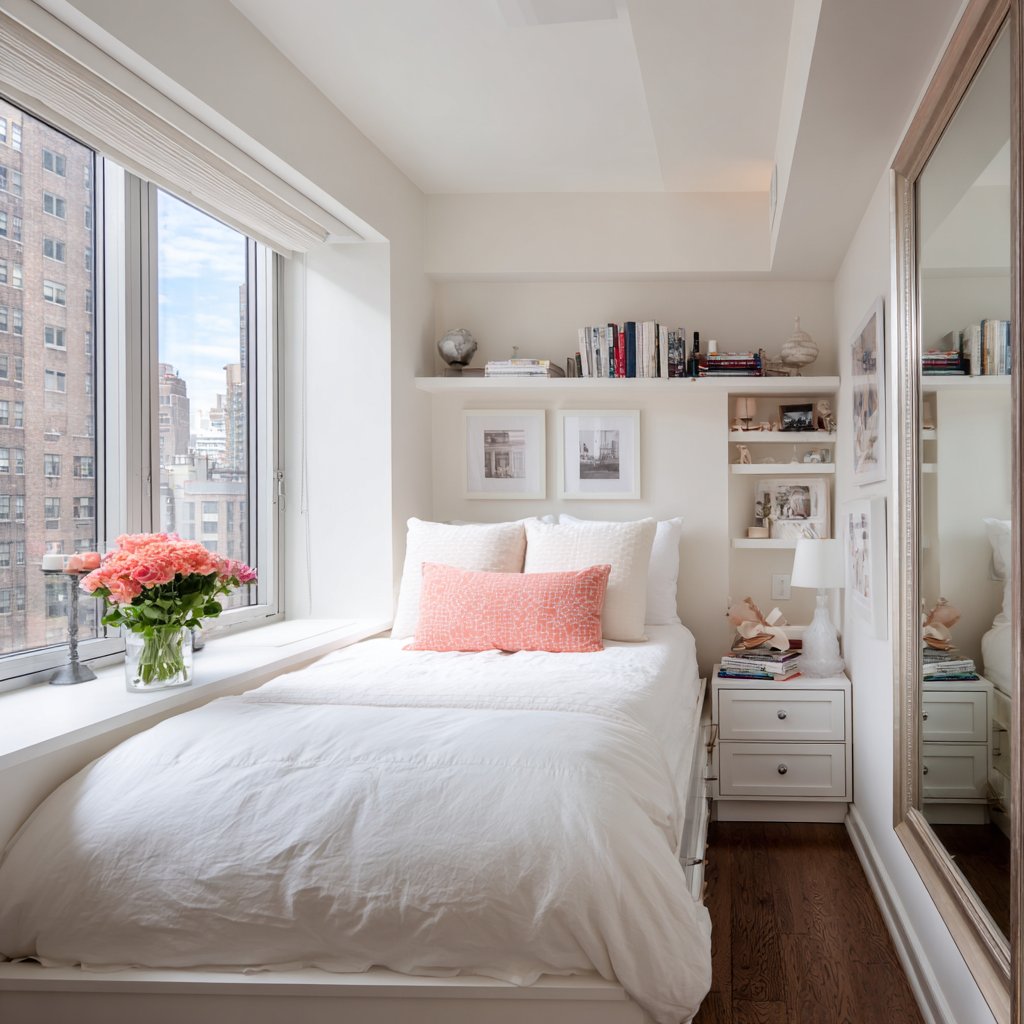
The small area rug positioned beneath the bed defines the sleeping zone without fully covering the floor, allowing the flooring material to continue throughout the space and maintain visual continuity. This partial rug coverage is an effective strategy in tiny rooms, providing the warmth and comfort of soft textiles underfoot while preventing the space from feeling carved up into smaller sections.
Key Design Tips:
- Measure carefully before committing to diagonal placement to ensure adequate clearance on all sides for movement and bed-making
- Use the diagonal orientation to your advantage by creating an asymmetrical furniture arrangement that feels intentional
- Custom-build or commission corner shelving to maximize the unique angular space created by diagonal positioning
- Choose a pendant light with an adjustable cord length to fine-tune the height for both function and aesthetics
- Consider adding corner guards or rounded furniture edges since diagonal placement creates sharper angles in traffic paths
8. The Captain’s Bed: Self-Contained Storage Solution
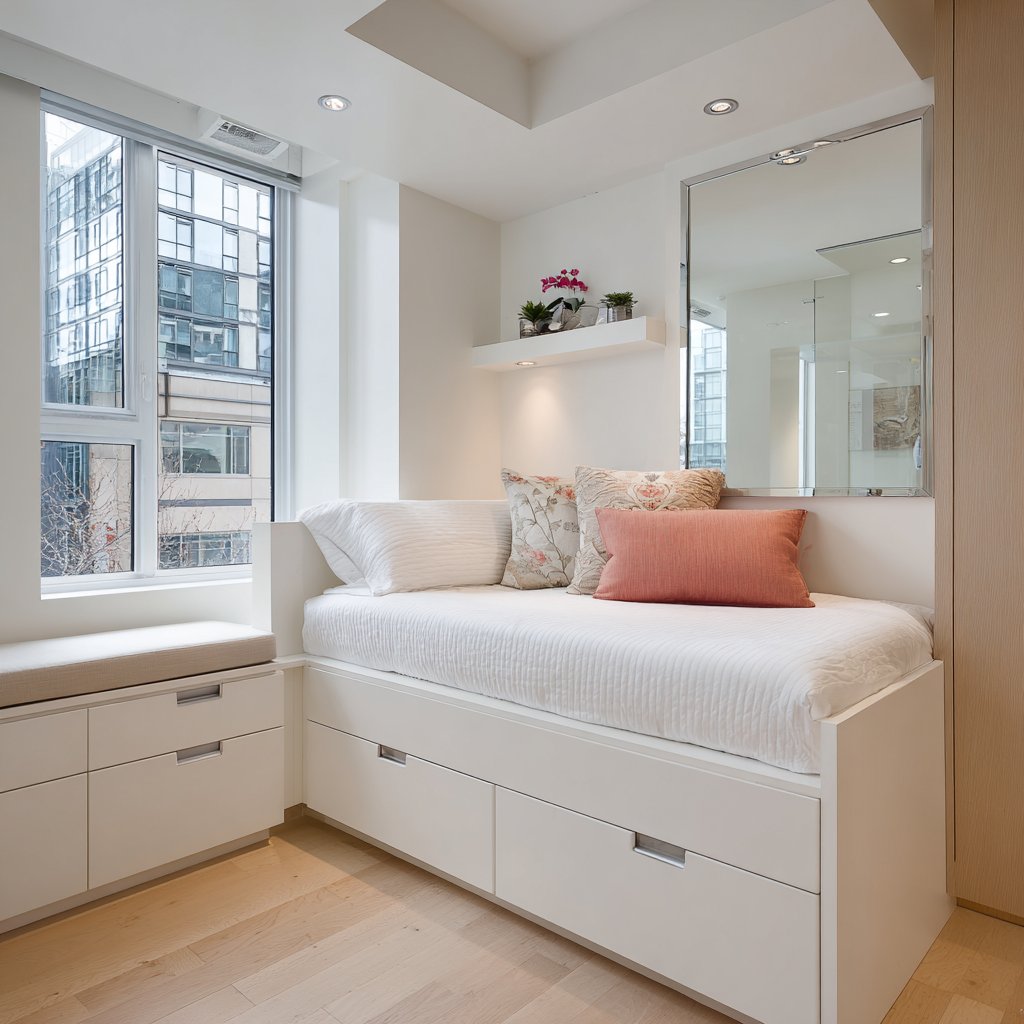
The captain’s bed represents the ultimate in self-contained storage for very tiny bedrooms, featuring multiple built-in drawers integrated along the sides and foot of the bed frame. This comprehensive approach eliminates the need for any additional storage furniture, freeing up floor space and creating a remarkably uncluttered room. The drawers typically feature different sizes to accommodate various items—larger ones for clothing and linens, smaller ones for accessories and personal items.
With all storage needs met by the bed itself, the only additional furniture required is a small wall-mounted shelf above the headboard area, just large enough for a few books, a phone, and perhaps a small plant. The crisp white walls reflect maximum available light, creating brightness even in rooms with limited natural illumination. A single accent pillow in muted coral introduces a subtle pop of color that personalizes the space without committing to a bold color scheme that might feel overwhelming in close quarters.
The large mirror leaning against the wall opposite the window serves the crucial function of doubling the perceived space, reflecting both light and the view, creating depth and dimension. This positioning is intentional and strategic—mirrors work most effectively when they reflect windows, interesting architectural features, or attractive elements rather than simply doubling mundane walls or clutter.
Key Design Tips:
- Organize captain’s bed drawers by category—one for shirts, one for pants, one for accessories—to maintain order and ease morning routines
- Choose drawer pulls or handles that sit flush with the drawer face to prevent catching on clothing or causing bruised shins
- Use drawer liners or dividers to prevent contents from shifting when drawers are opened and closed
- Select a captain’s bed height that feels comfortable for sitting on the edge while dressing—typically 18-20 inches from floor to mattress top
- Consider LED strip lighting under the bed frame to add ambient glow and make nighttime navigation safer
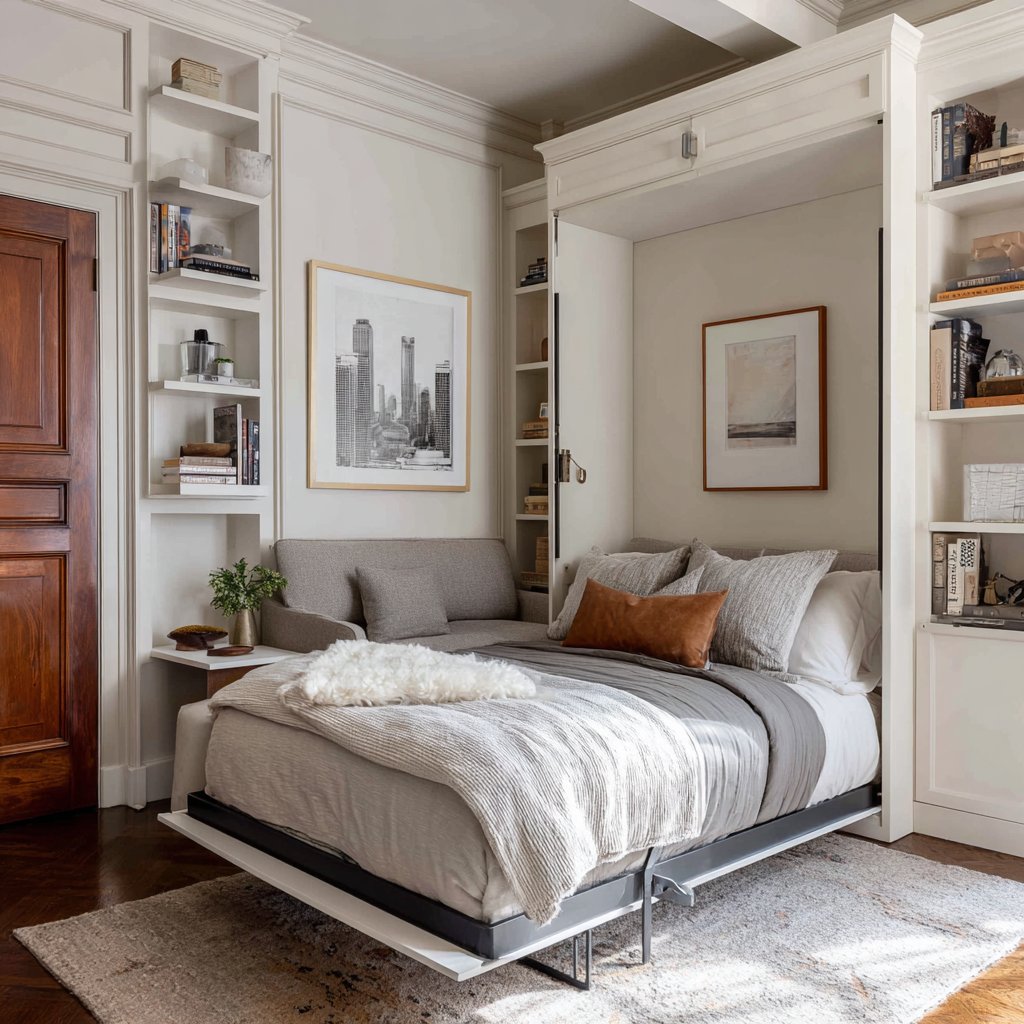
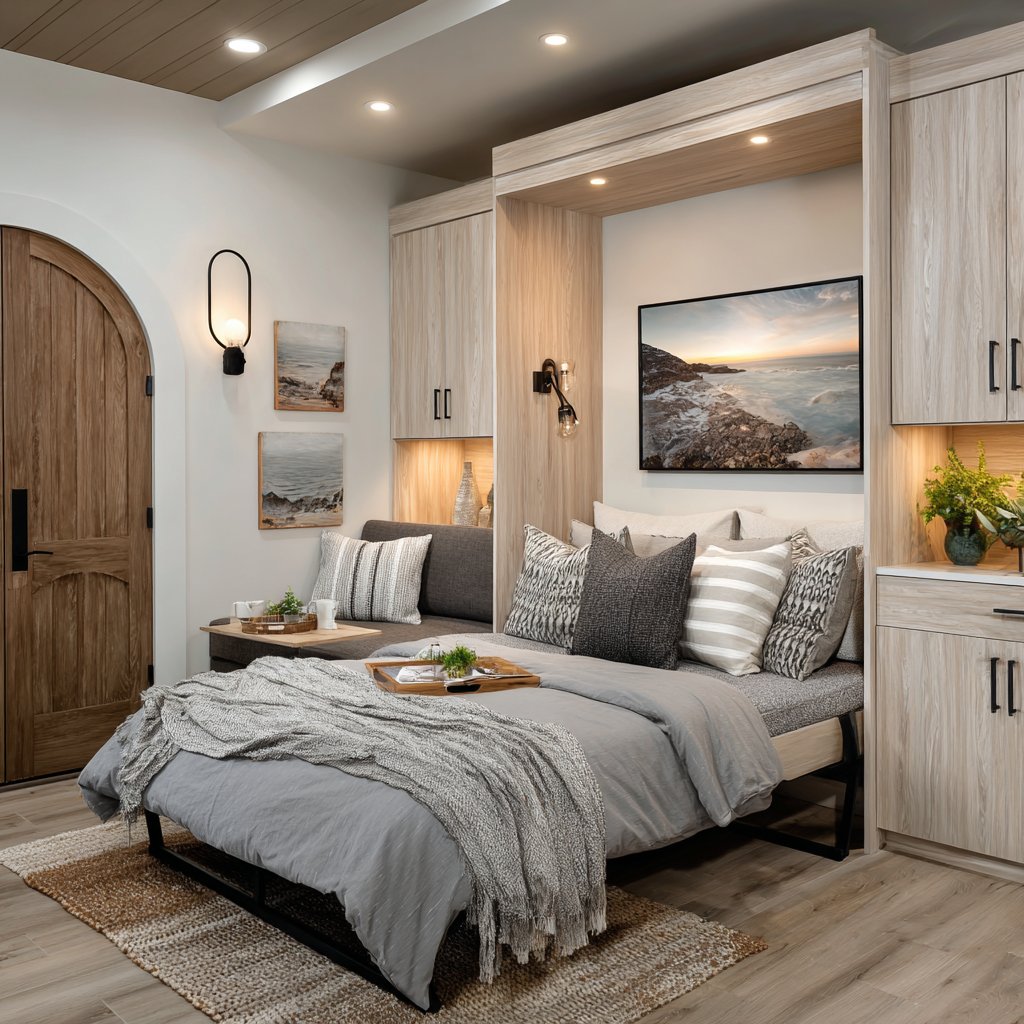
9. Fold-Down Wall Bed with Integrated Cabinetry
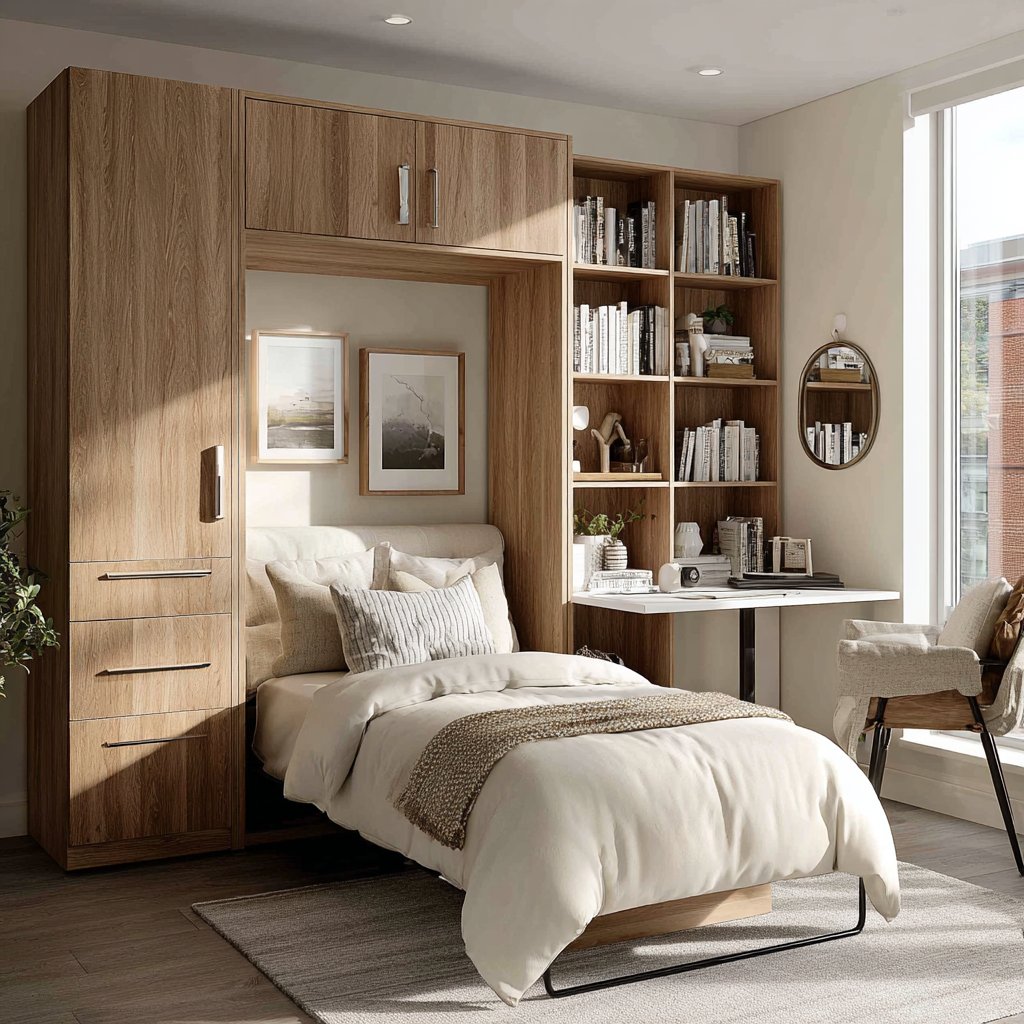
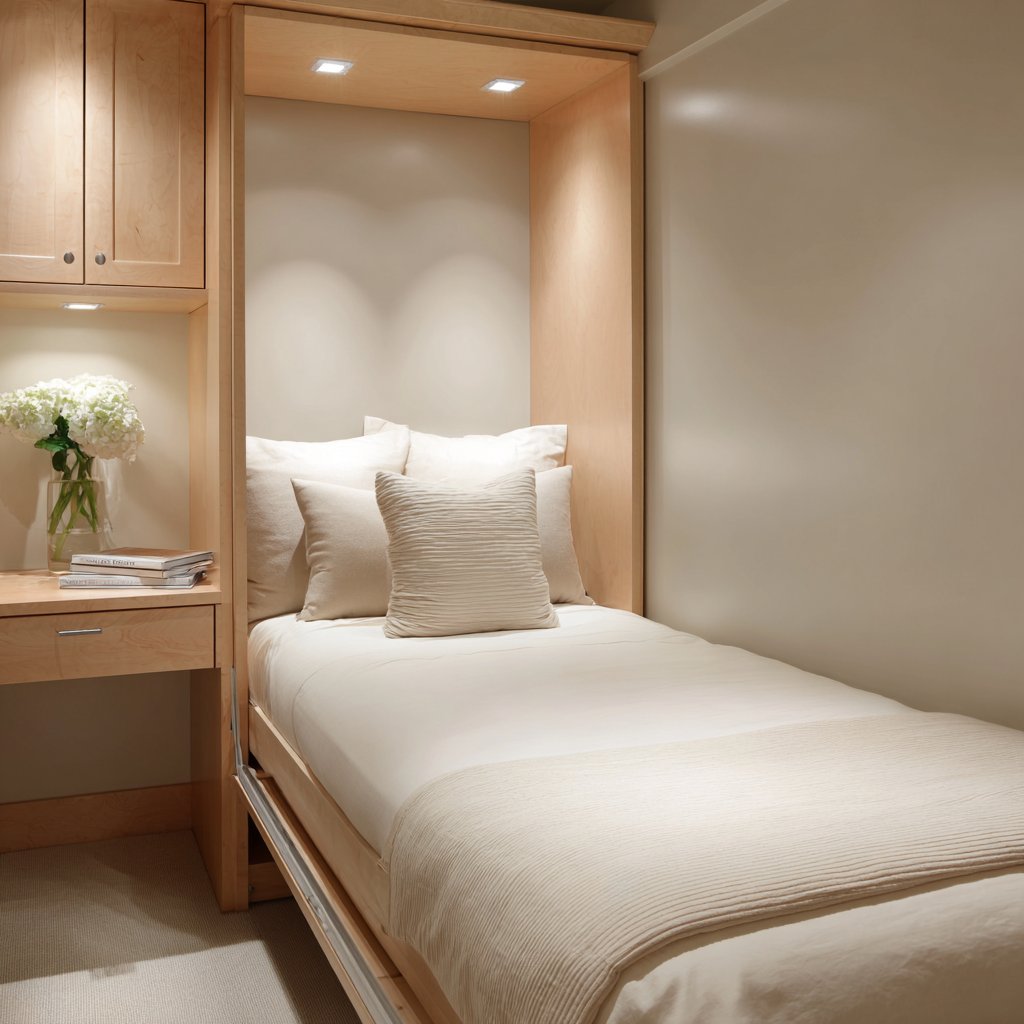
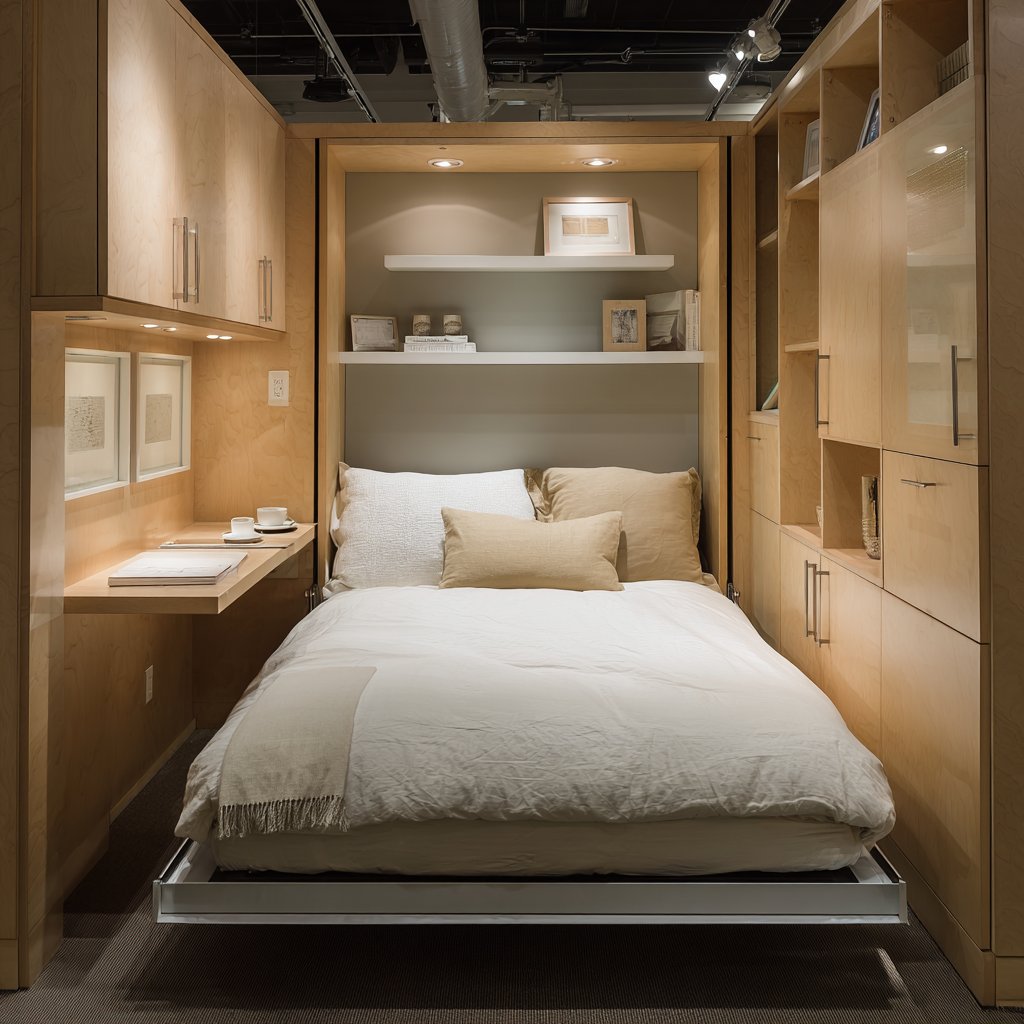
The fold-down wall bed system with integrated side cabinets represents sophisticated engineering meeting practical design, creating a multifunctional bedroom solution that adapts to daily rhythms. Unlike basic Murphy beds, this system features side cabinets that remain accessible whether the bed is deployed or stored, providing consistent access to clothing, linens, or personal items. The narrow profile ensures that even when the bed is down, adequate walking space remains—a crucial consideration for very tiny bedrooms where every inch of circulation space matters.
The light maple wood finish paired with white panel inserts creates visual interest through material contrast while maintaining an overall bright, contemporary aesthetic. When the bed folds up, it reveals a small built-in desk surface—a clever transformation that converts sleeping space into productive workspace within seconds. This dual functionality makes the system particularly valuable for studio apartments or one-room living situations where space must serve multiple purposes throughout the day.
Recessed ceiling lighting provides illumination without consuming valuable overhead space or creating visual clutter with hanging fixtures. This flush-mounted approach is particularly effective in rooms with lower ceilings, where pendant lights might hang into the functional zone. The neutral grey walls serve as a sophisticated backdrop that neither dominates nor disappears, creating a middle ground that makes the room feel finished and intentional.
Key Design Tips:
- Ensure the wall bed mechanism is professional-grade with counterbalance systems that make raising and lowering the bed effortless
- Design the integrated desk height to align with standard desk height (28-30 inches) when the bed is folded up
- Use the side cabinets for items needed regardless of whether the bed is up or down—clothing, books, electronics
- Install blocking and reinforcement behind walls before mounting the system to support the substantial weight (typically 300+ pounds when loaded)
- Consider adding soft-close mechanisms to prevent the bed from slamming down when deployed
10. Tall Headboard with Hidden Pocket Storage
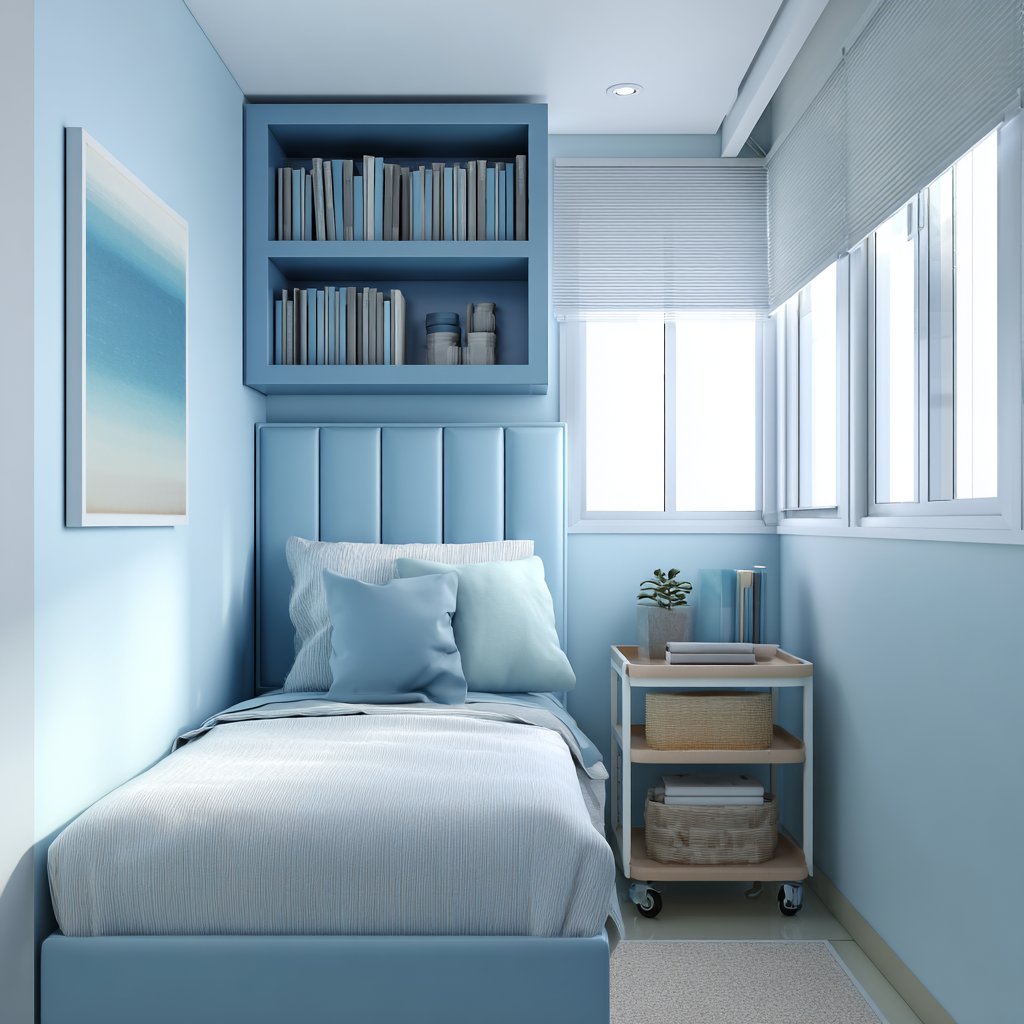
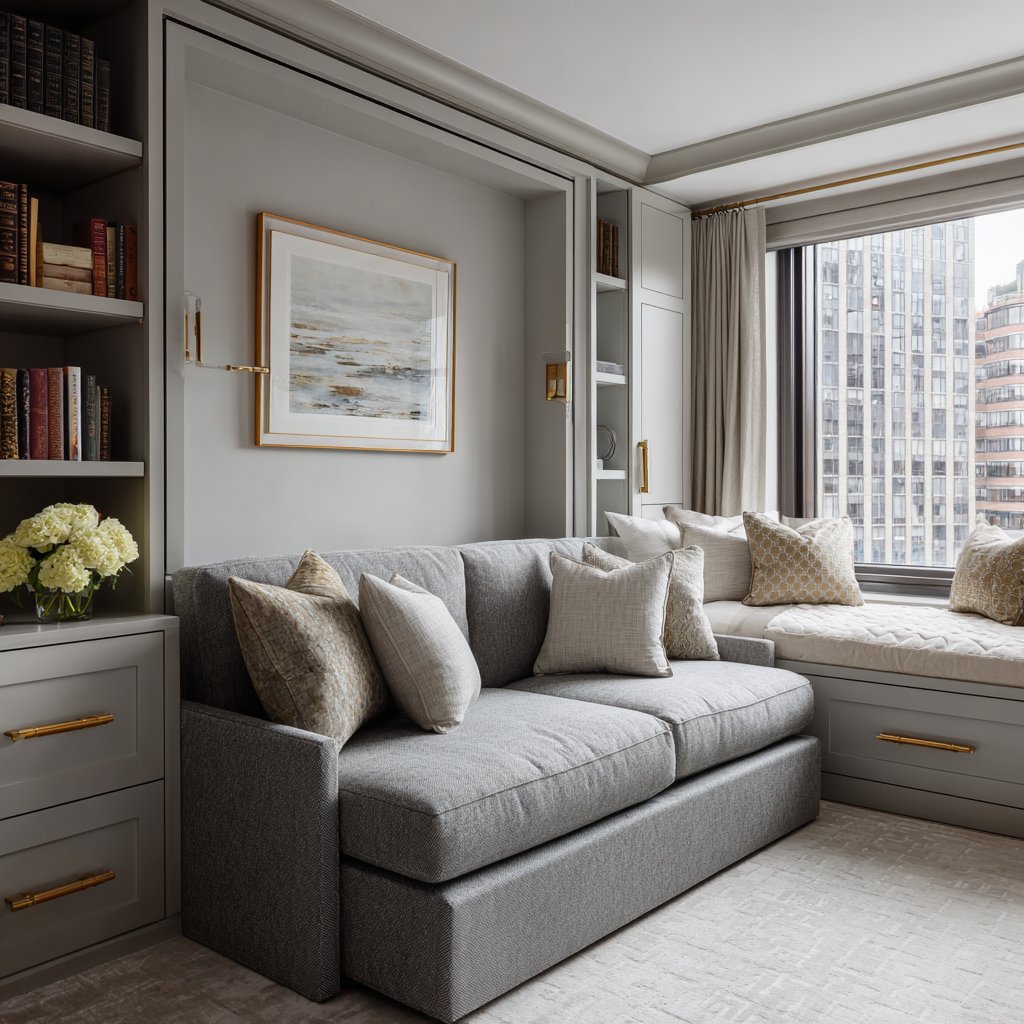
This design features a twin bed positioned against the wall with an exceptionally tall padded headboard that extends well above mattress height, incorporating cleverly concealed pocket storage for books, tablets, phones, and other frequently accessed items. These hidden compartments eliminate the need for a traditional nightstand while keeping essentials within arm’s reach, demonstrating how vertical space can serve practical storage needs without obvious drawers or shelves that might visually clutter a small room.
Above the bed, a narrow floating shelf spans the full width, providing additional display space for a few carefully chosen items—perhaps a small plant, a favorite photograph, or a minimalist clock. The restraint shown in limiting decorative objects prevents the space from feeling overcrowded, allowing each selected piece to make a meaningful contribution to the room’s personality. Beside the bed, a slim rolling cart with three tiers serves as a mobile nightstand and flexible storage solution, easily moved to accommodate different activities or cleaning.
The soft blue-grey walls create a calming environment conducive to rest and relaxation, while the crisp white ceiling maintains brightness and height perception. The small window fitted with a light-filtering cellular shade balances privacy with natural illumination, its honeycomb construction providing insulation benefits alongside light control—a practical consideration for tiny bedrooms where comfort matters greatly.
Key Design Tips:
- Design or select a headboard with pocket openings that keep stored items secure but easily accessible without deep reaching
- Position the floating shelf high enough to avoid head contact when sitting up in bed—typically 24-30 inches above the mattress
- Choose a rolling cart with locking casters so it stays stable when accessed but can move easily when unlocked
- Use the blue-grey wall color to create a sense of receding space, making walls appear further away than they actually are
- Add a small reading light that clips onto the headboard or attaches magnetically for flexible, clutter-free task lighting
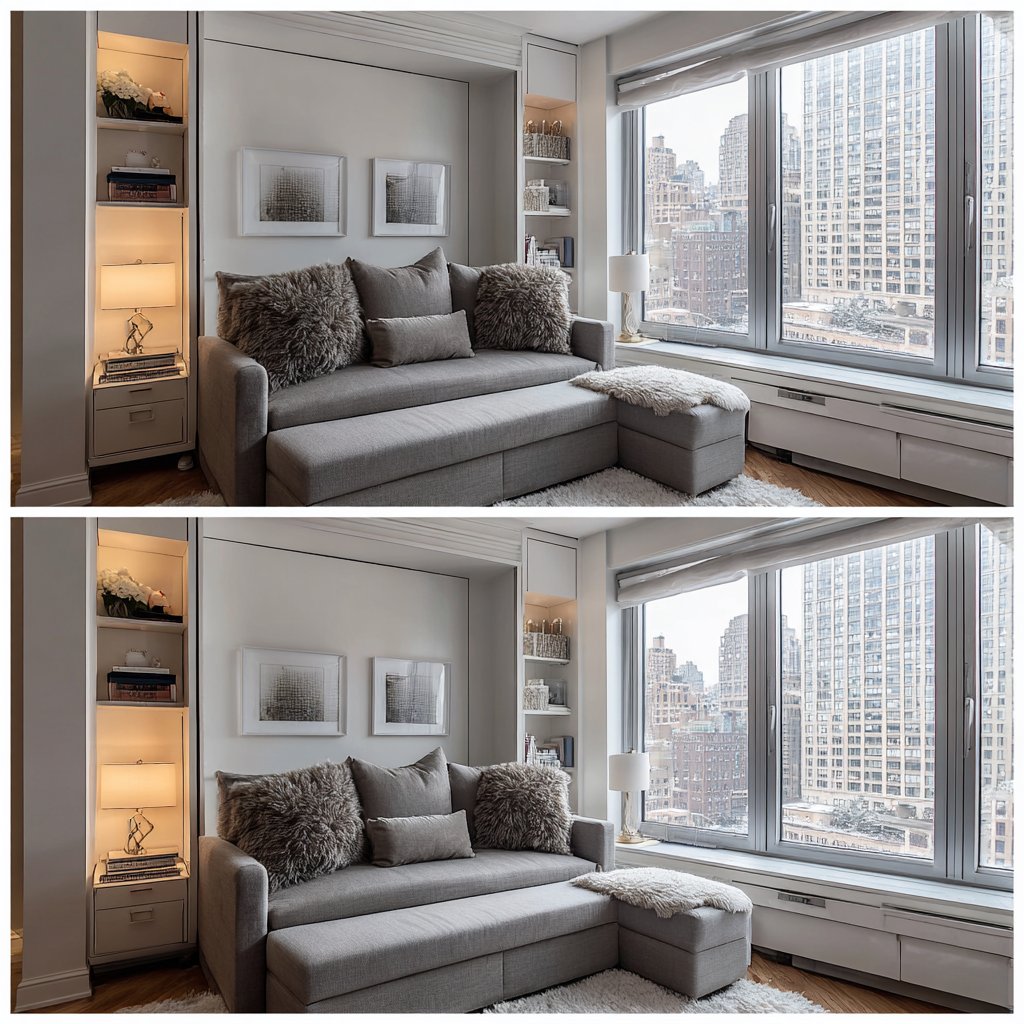
11. Murphy Bed with Attached Sofa Transformation
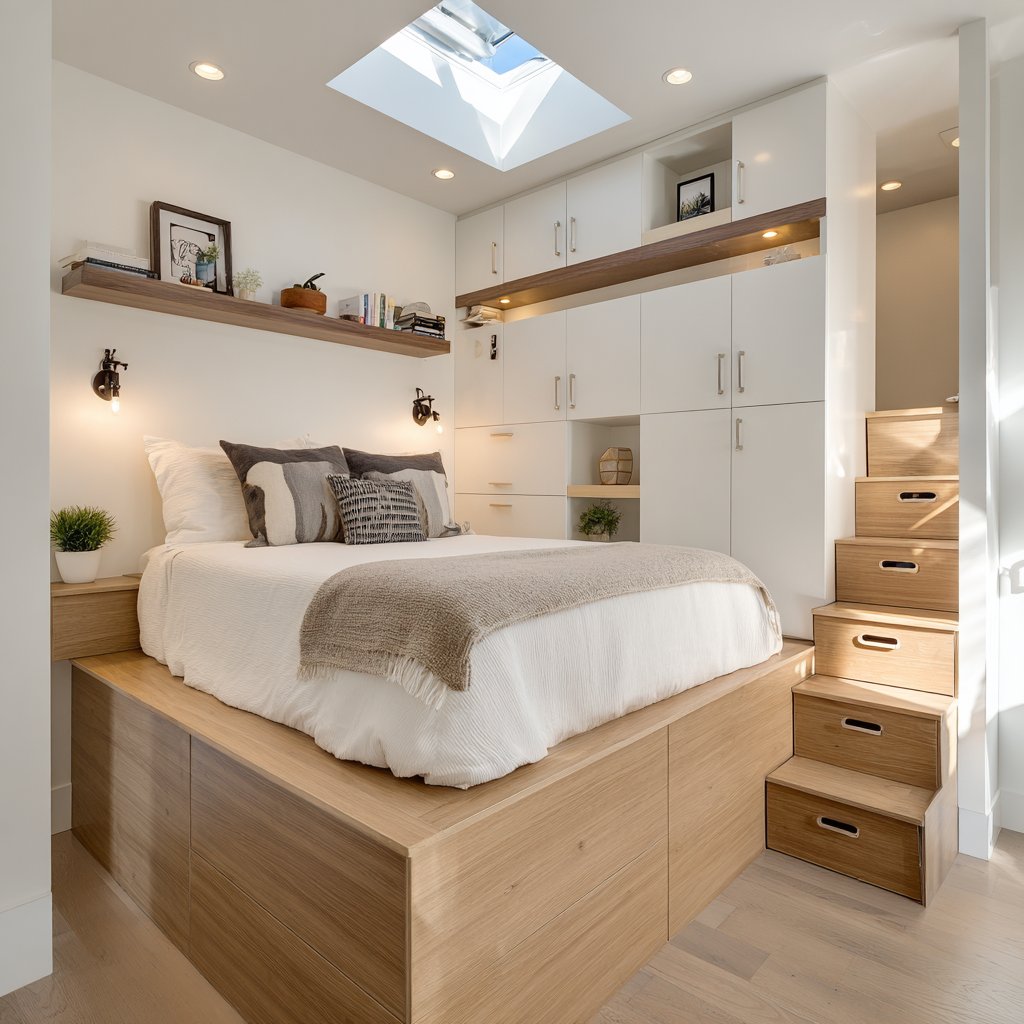
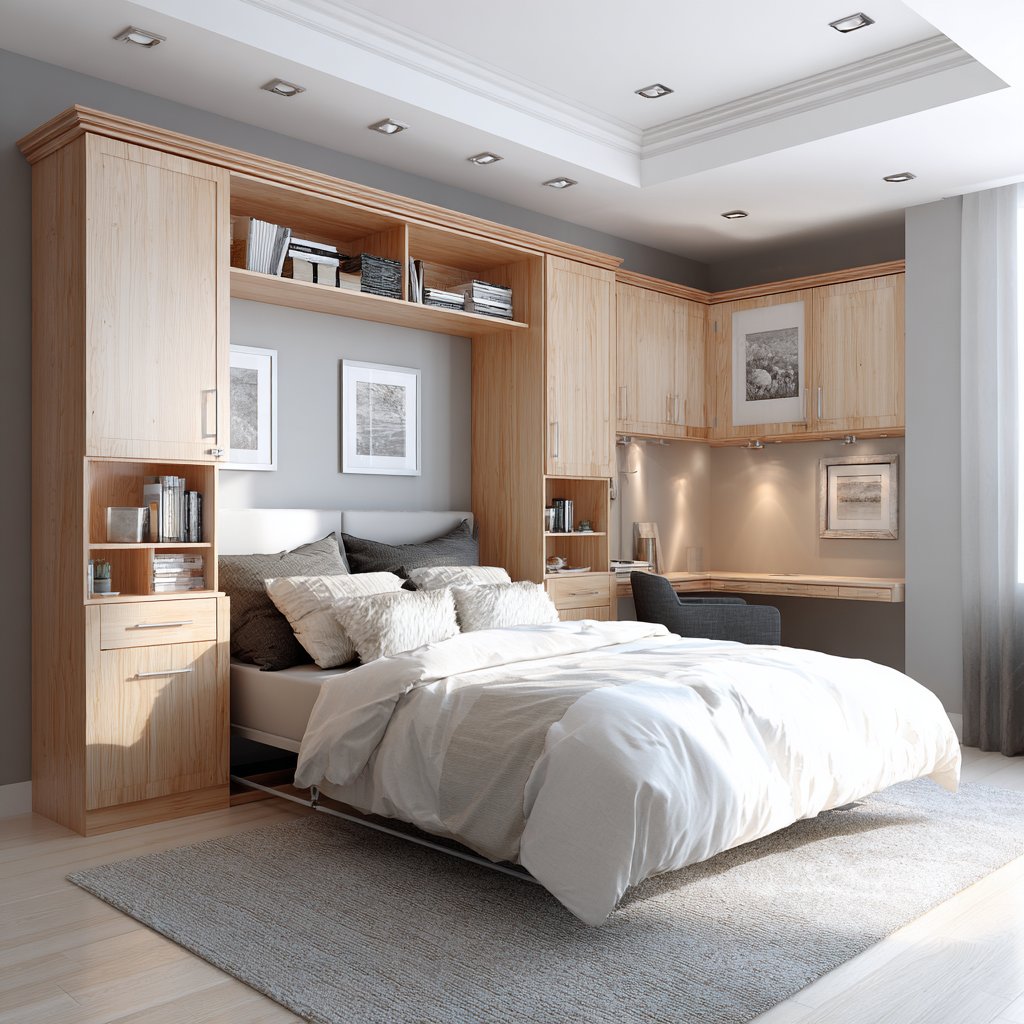
This sophisticated Murphy bed system features an attached sofa that transitions seamlessly from daytime sitting configuration to nighttime sleeping arrangement, maximizing the dual functionality of very tiny bedroom spaces. When the bed is stored, the sofa provides comfortable seating for relaxing, working, or entertaining guests. When deployed, the sofa transforms into part of the bed system, with attached side tables that fold out to provide nightstand surfaces. This integration eliminates the need to completely rearrange furniture between day and night modes.
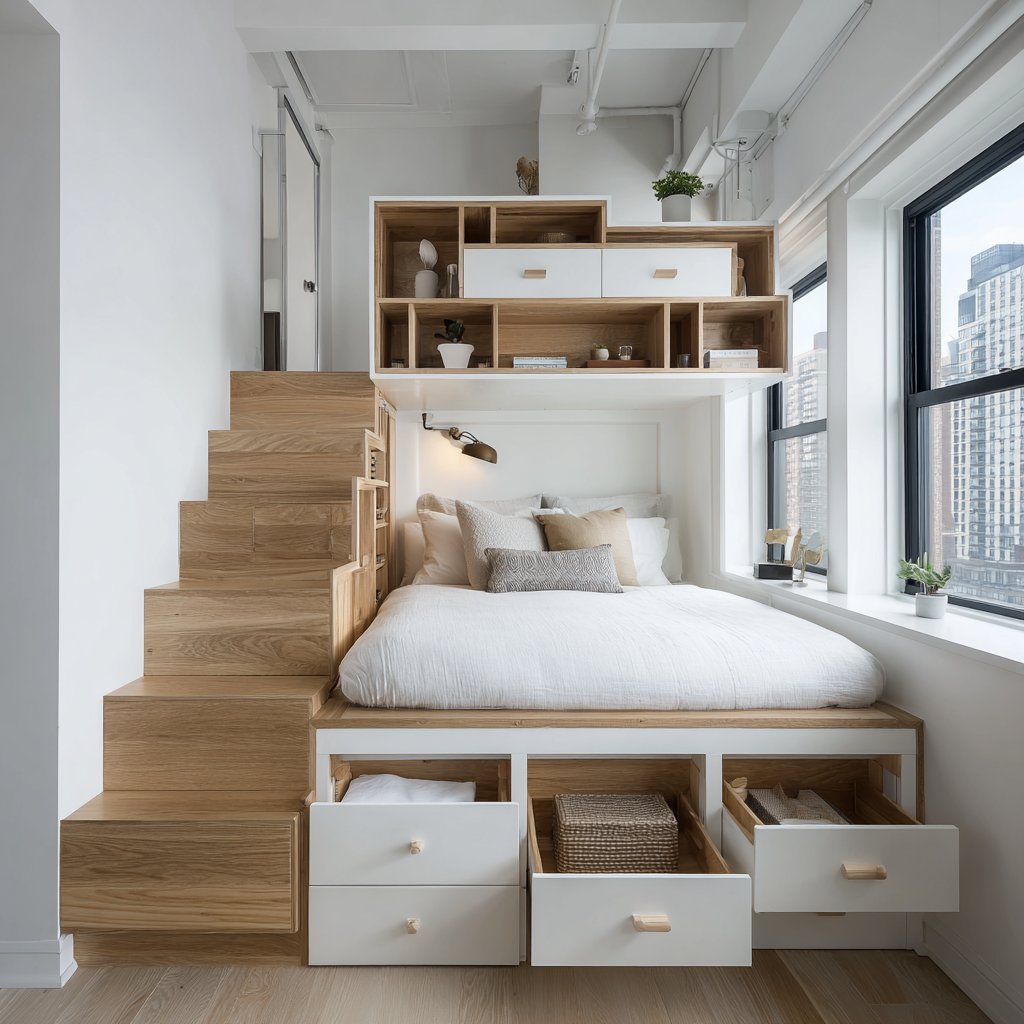
The surrounding cabinetry provides generous closed storage that maintains a clean, organized appearance even when the bed is deployed. Unlike open shelving that can appear cluttered, these closed cabinets allow personal items to remain hidden from view while staying accessible. The walls in warm white create an inviting atmosphere, while grey upholstery on the sofa section introduces sophistication without darkness. Brushed nickel hardware accents throughout provide subtle metallic notes that catch light and add refinement.
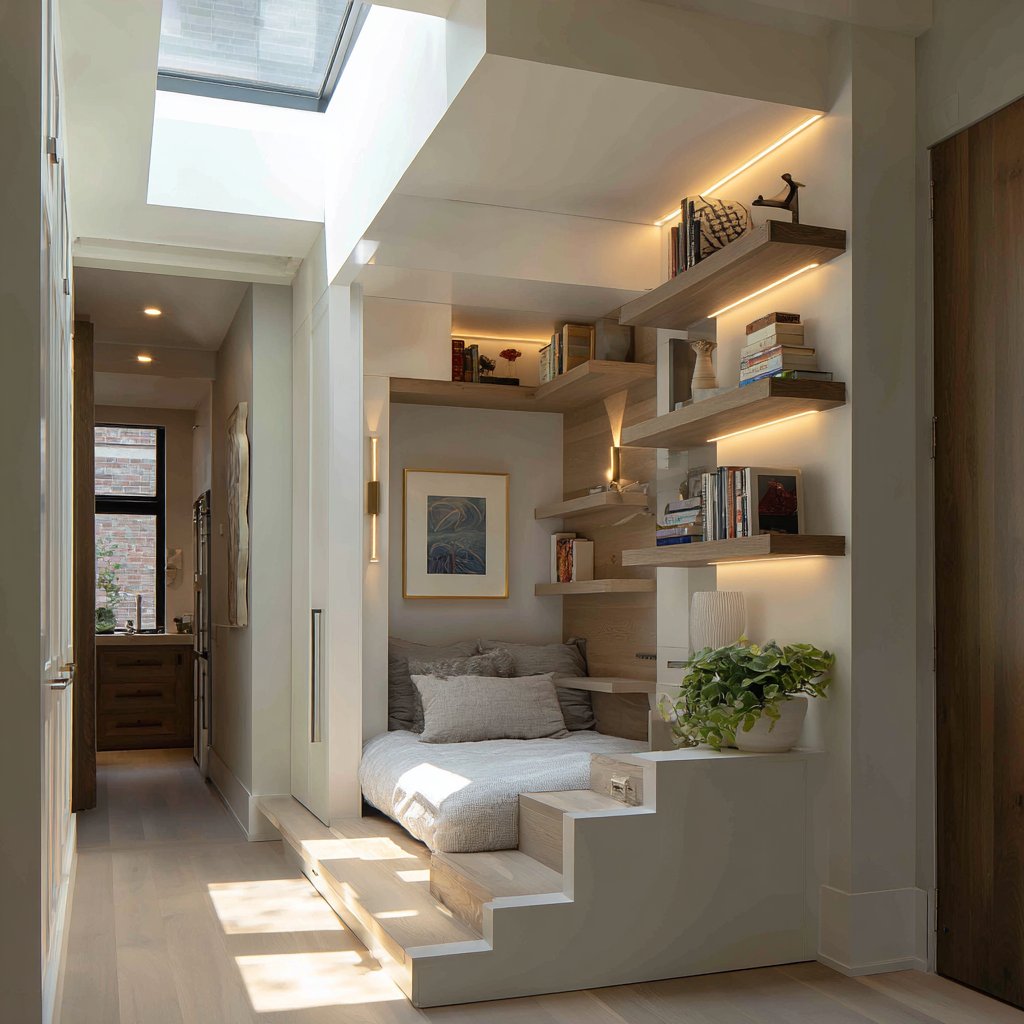
The architectural digest-style presentation of this space emphasizes quality materials, professional craftsmanship, and attention to detail. The balanced proportions and thoughtful integration of all components create a finished, cohesive appearance that looks custom-designed rather than cobbled together from separate furniture pieces. This level of integration is particularly valuable in very tiny bedrooms where unified design creates visual calm.
Key Design Tips:
- Test the transformation mechanism multiple times before purchase to ensure smooth, reliable operation for daily use
- Choose upholstery in performance fabrics that resist stains and wear since the sofa will receive constant use
- Ensure the folded-out side tables are sturdy enough to hold lamps, drinks, books, and other typical nightstand items without wobbling
- Design or select cabinetry with varying interior configurations—some shelves, some drawers, some hanging space—to accommodate different storage needs
- Consider adding interior cabinet lighting on motion sensors for easy nighttime access to stored items
12. Raised Platform Bed Over Closet Storage
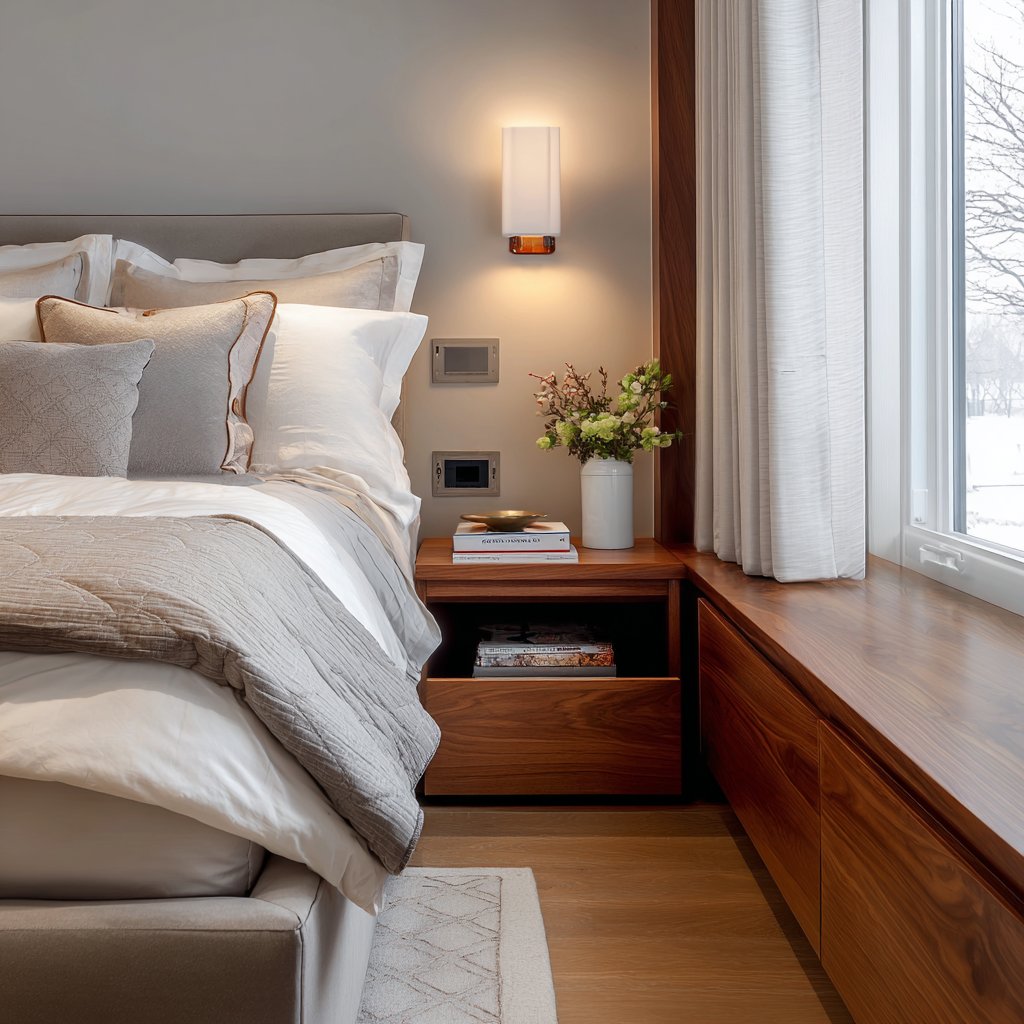
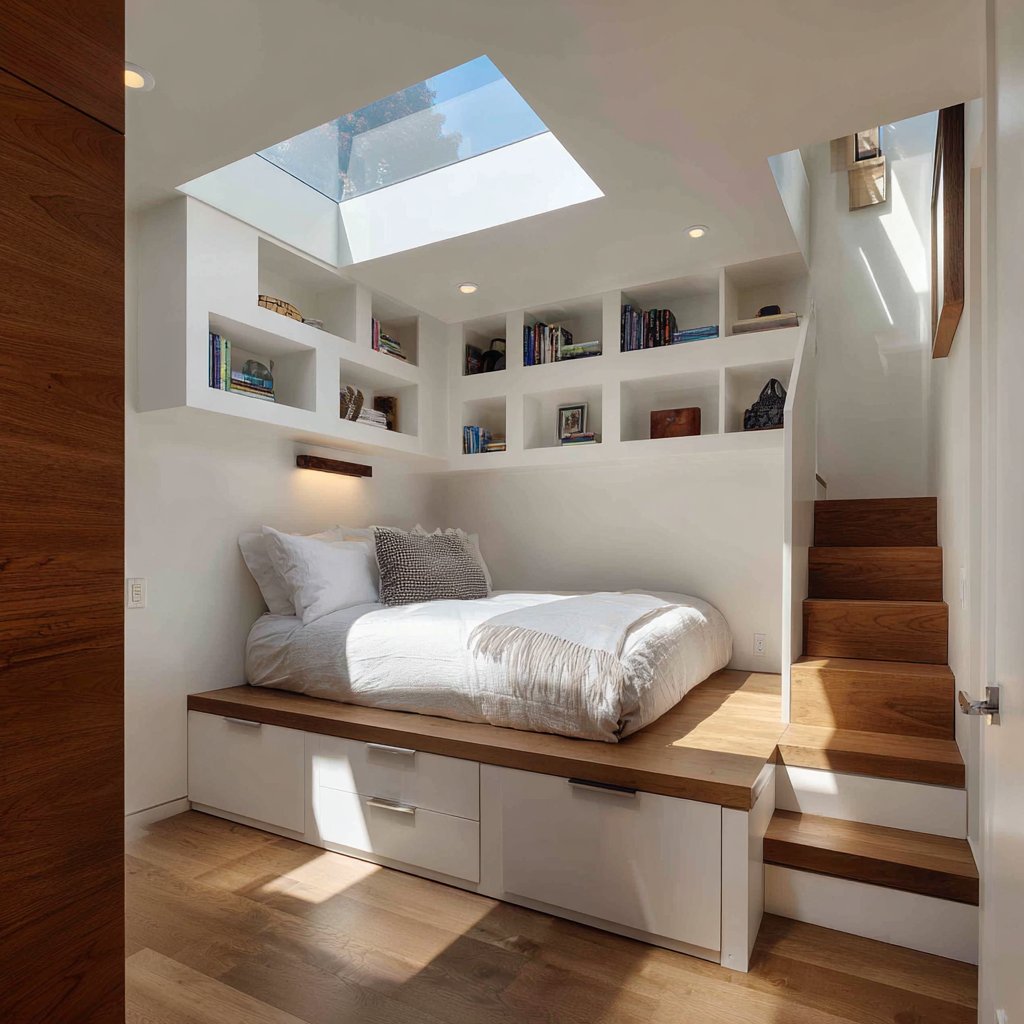
This innovative design elevates the sleeping surface over a full closet storage area, accessed through pull-out drawers from the room side rather than traditional doors. This approach maximizes vertical space while creating substantial hidden storage that doesn’t visually clutter the room. The sleeping platform includes a safety rail and built-in reading light, ensuring the elevated bed feels secure and functional rather than merely a storage solution with a mattress on top.
The ladder integrated into the design features flat treads that double as small display shelves, adding functionality to the access element while creating visual interest with books, small plants, or decorative objects arranged on each step. This dual purpose demonstrates the level of creative thinking required for successfully designing very tiny bedrooms where every element should serve multiple functions. White walls paired with a natural wood platform in light oak create a Scandinavian-inspired aesthetic that feels fresh, bright, and contemporary.
The small skylight positioned above the sleeping platform brings natural illumination directly into the elevated sleeping area, preventing the sense of sleeping in a dark cave while also providing ventilation opportunities. This overhead natural light source is particularly valuable since the elevated position might otherwise feel enclosed or separated from the room’s natural light sources.
Key Design Tips:
- Ensure the platform height allows comfortable sitting without hitting your head on the ceiling—minimum 42-48 inches of clearance
- Design pull-out drawers with quality full-extension glides so contents remain easily accessible even in rear sections
- Install the safety rail at minimum 12 inches above mattress height to prevent accidental rolling but allow easy access
- Use the ladder display shelves for lightweight, unbreakable items that won’t create hazards if knocked during climbing
- Consider adding a small fan near the skylight to circulate air and prevent heat buildup in the elevated sleeping area
13. Upholstered Base with Hydraulic Lift Storage
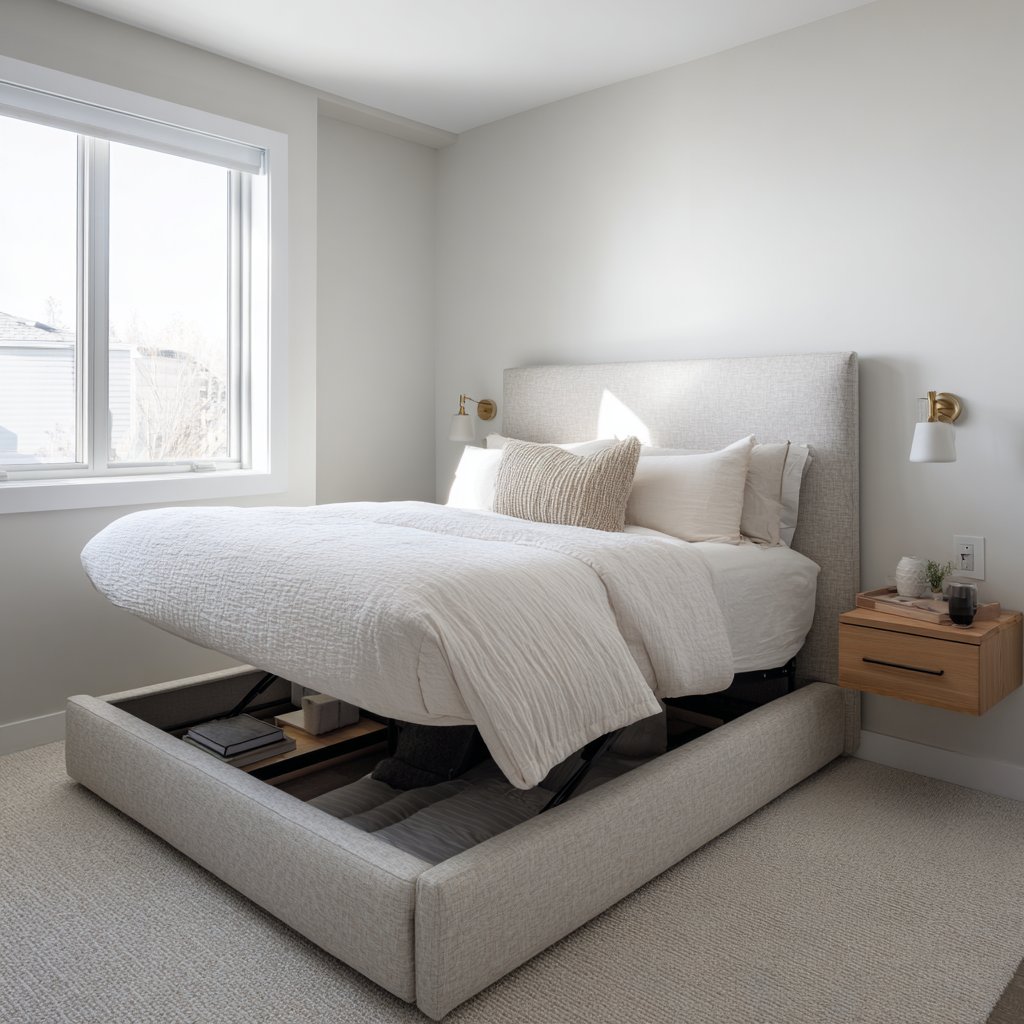
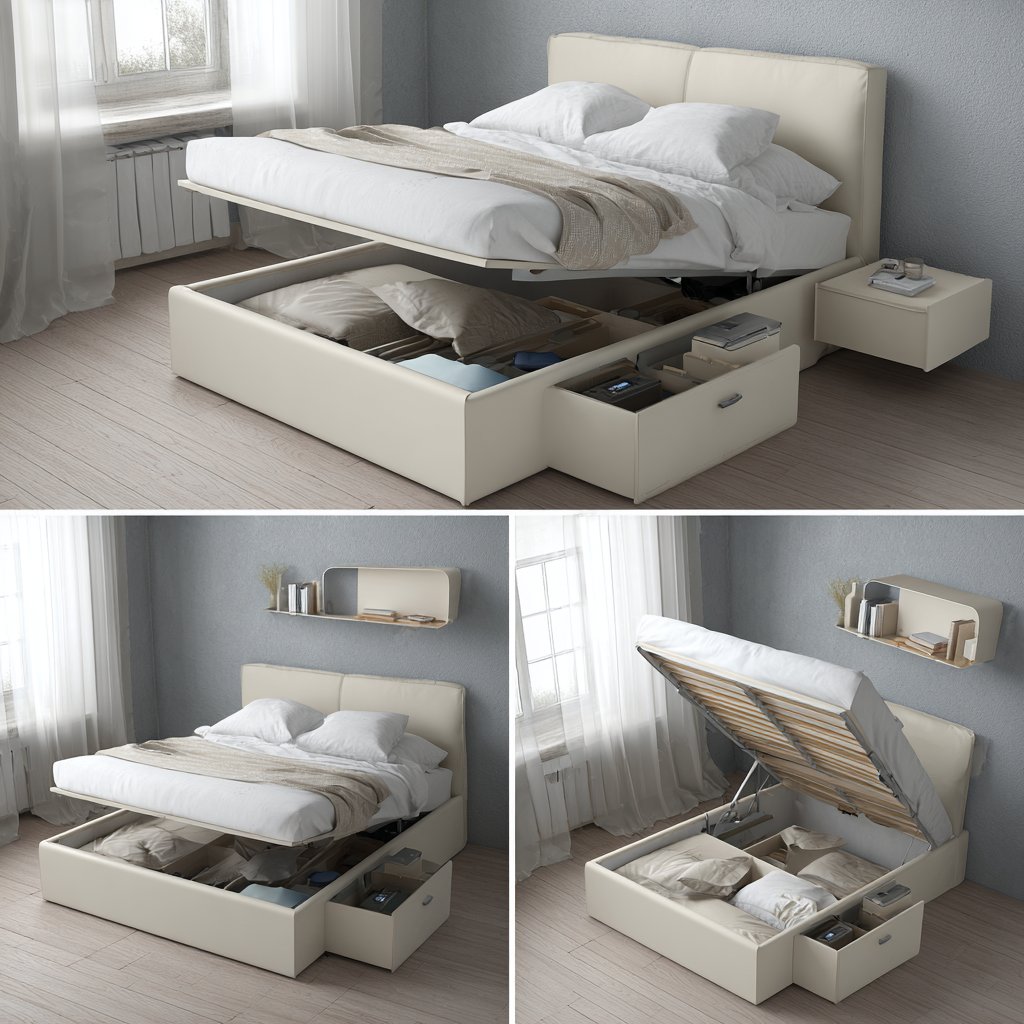
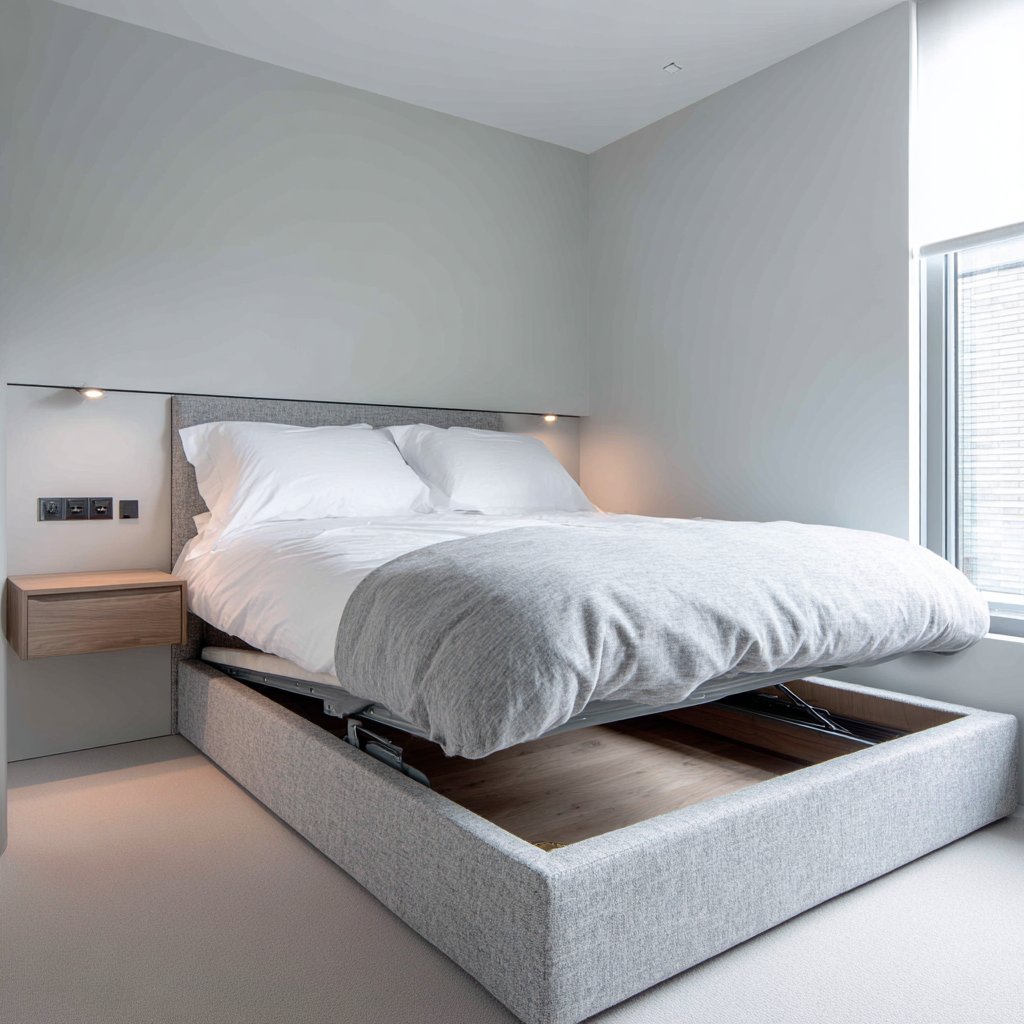
This streamlined bed design conceals extensive storage within its upholstered base, accessed via a hydraulic lift mechanism that raises the entire mattress platform to reveal a deep storage compartment beneath. This approach provides more storage capacity than drawer-based systems since there are no internal dividers or mechanisms consuming space—the entire under-bed area becomes usable storage. The hydraulic lift system ensures that accessing stored items requires minimal effort, with gas springs doing the heavy lifting.
The minimal headboard with integrated USB ports demonstrates attention to contemporary needs, eliminating the tangle of charging cables and adapters that often clutter bedside areas. A floating nightstand with a single drawer mounted on the adjacent wall provides essential surface and storage space without the visual weight of a traditional bedside table. The soft grey walls paired with crisp white bedding create a hotel-like aesthetic—clean, serene, and sophisticated.
The small window dressed with a sheer white panel allows natural light to filter gently into the space while maintaining privacy. The translucent quality of sheer fabric creates a soft, diffused glow rather than harsh direct sunlight, contributing to the room’s peaceful atmosphere. The overall design demonstrates how hidden storage can provide practical benefits without compromising the room’s aesthetic appeal.
Key Design Tips:
- Store seasonal items or less frequently accessed belongings in the under-bed compartment rather than daily-use items for practical access
- Ensure the hydraulic lift mechanism is rated for the combined weight of your mattress plus stored items—typically 200-300 pounds minimum
- Leave sufficient clearance between the raised mattress and any overhead elements like ceiling fans or light fixtures
- Use fabric storage bags or boxes within the compartment to organize contents and protect items from dust
- Consider adding a safety mechanism that holds the lift in the raised position if you need both hands free while accessing stored items
14. Built-In Sleeping Nook with Surrounding Storage
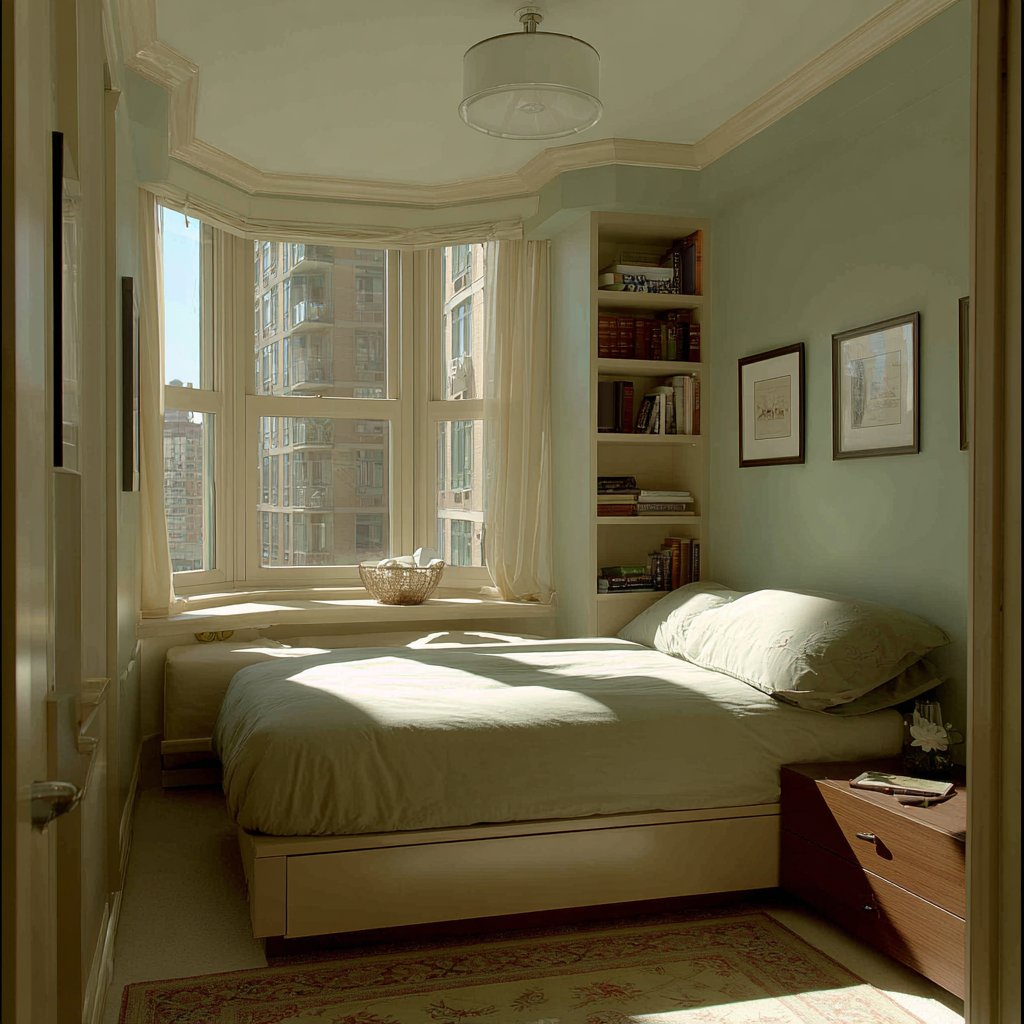
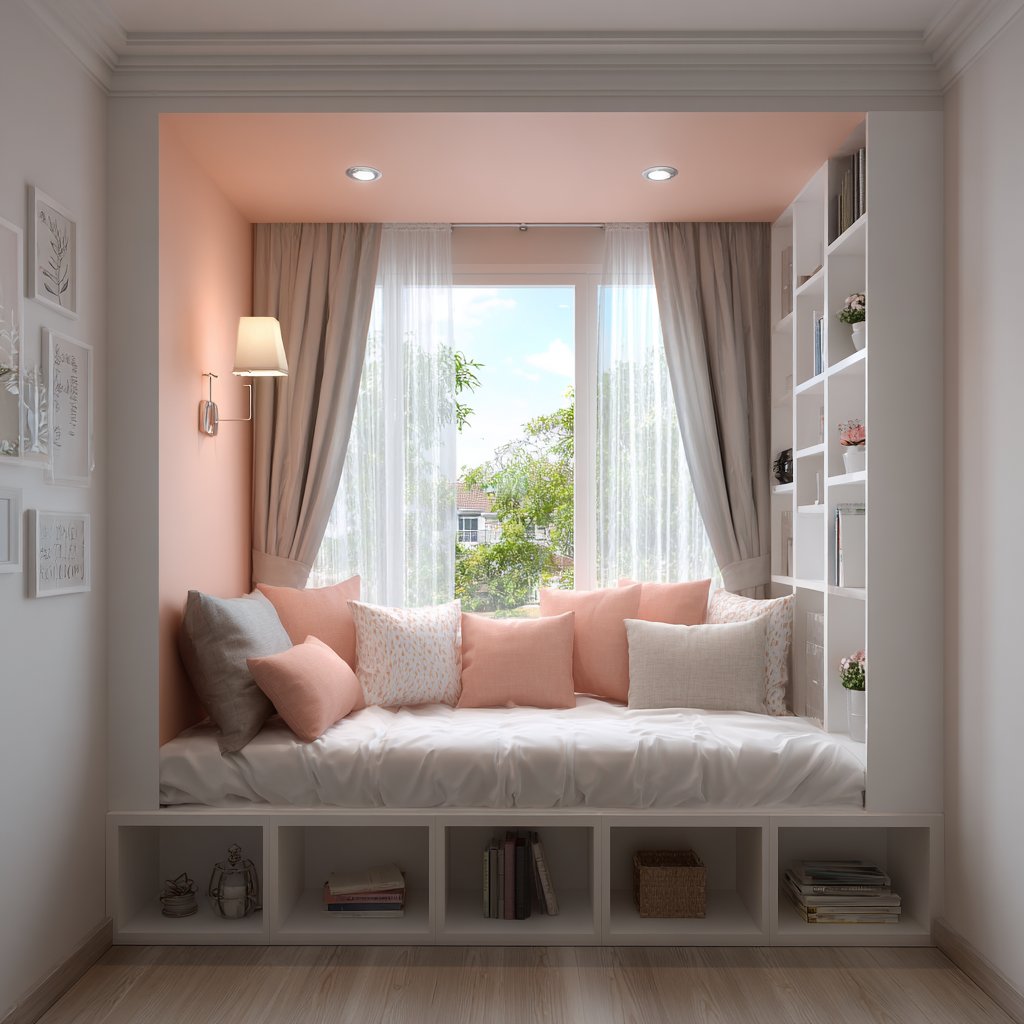
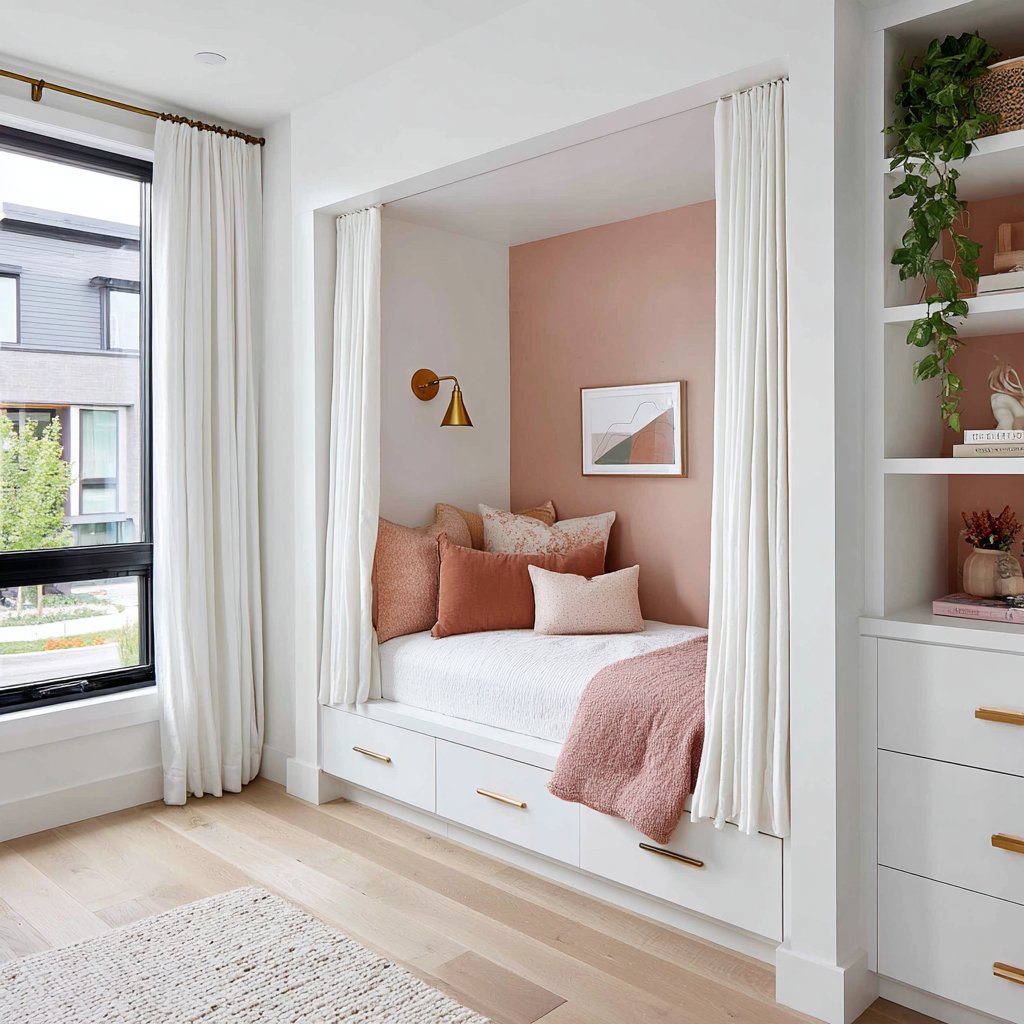
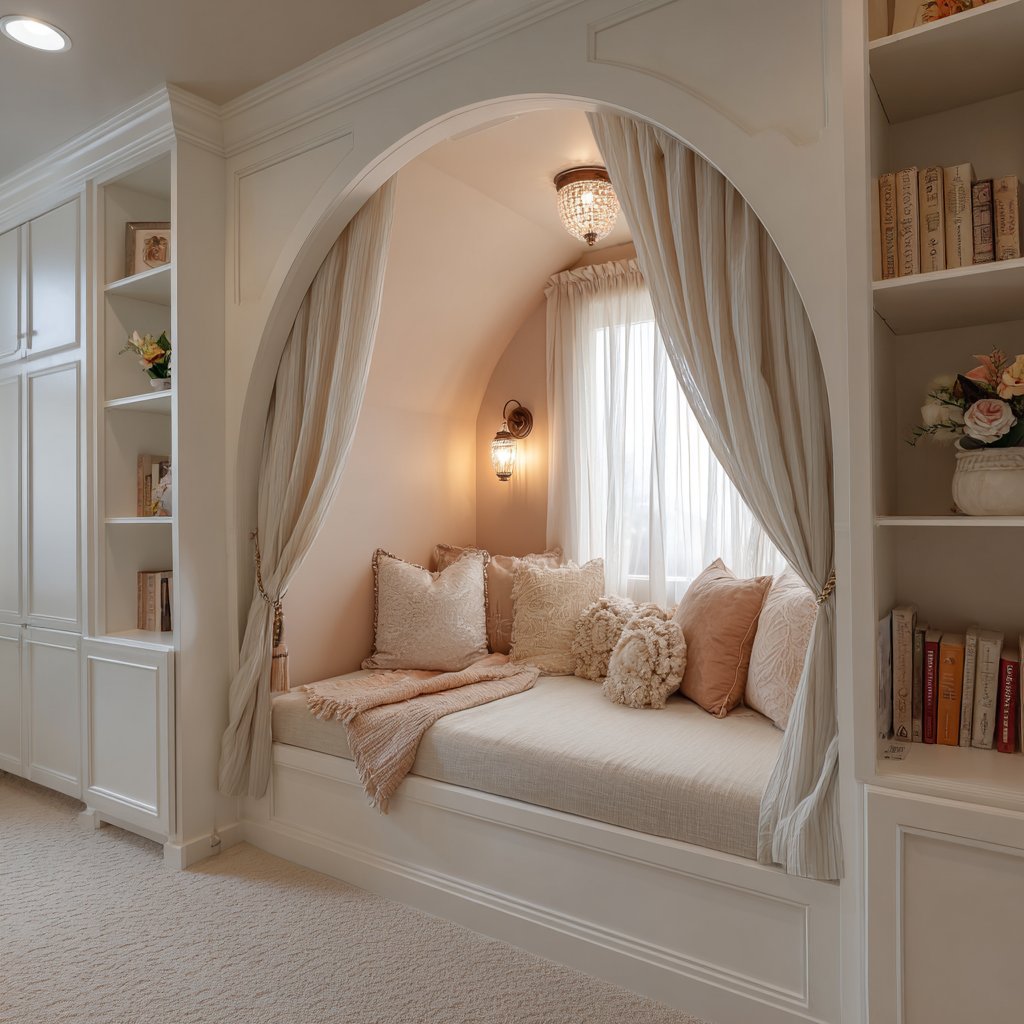
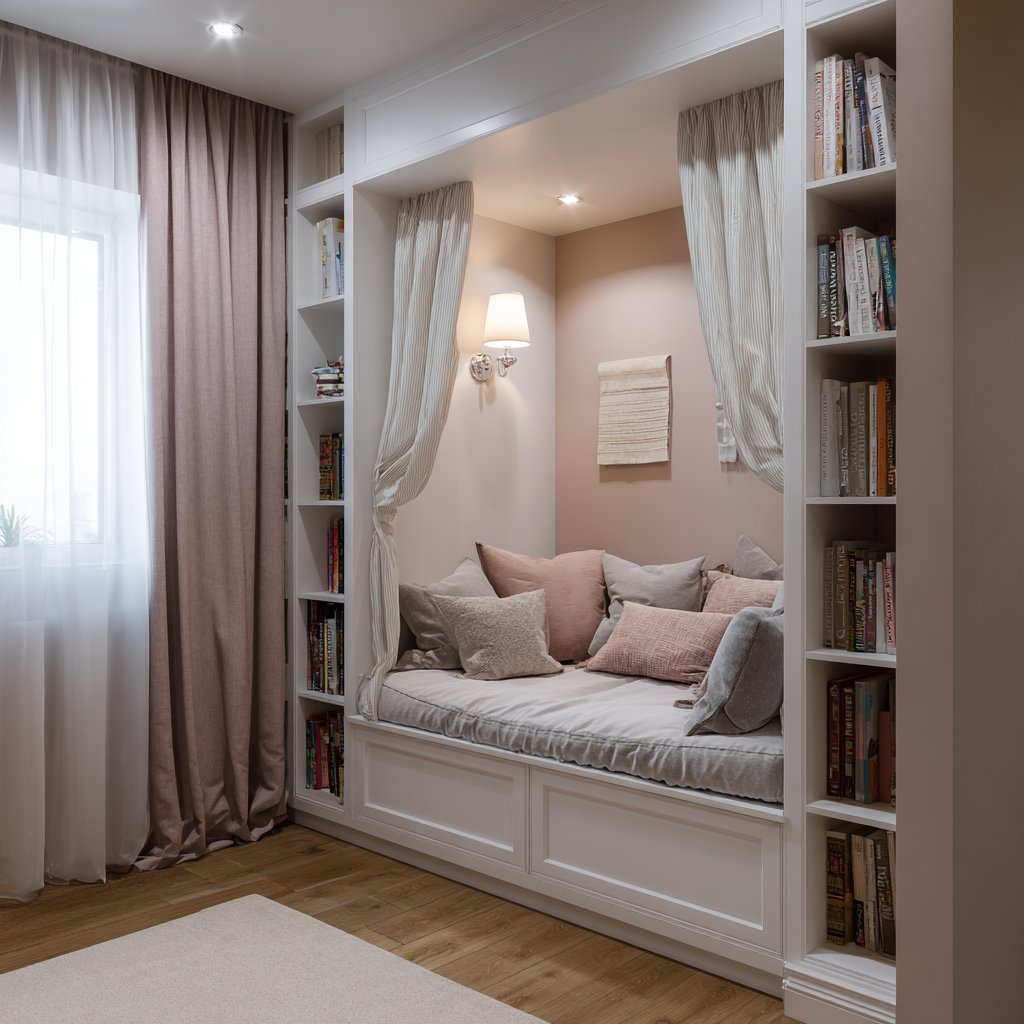
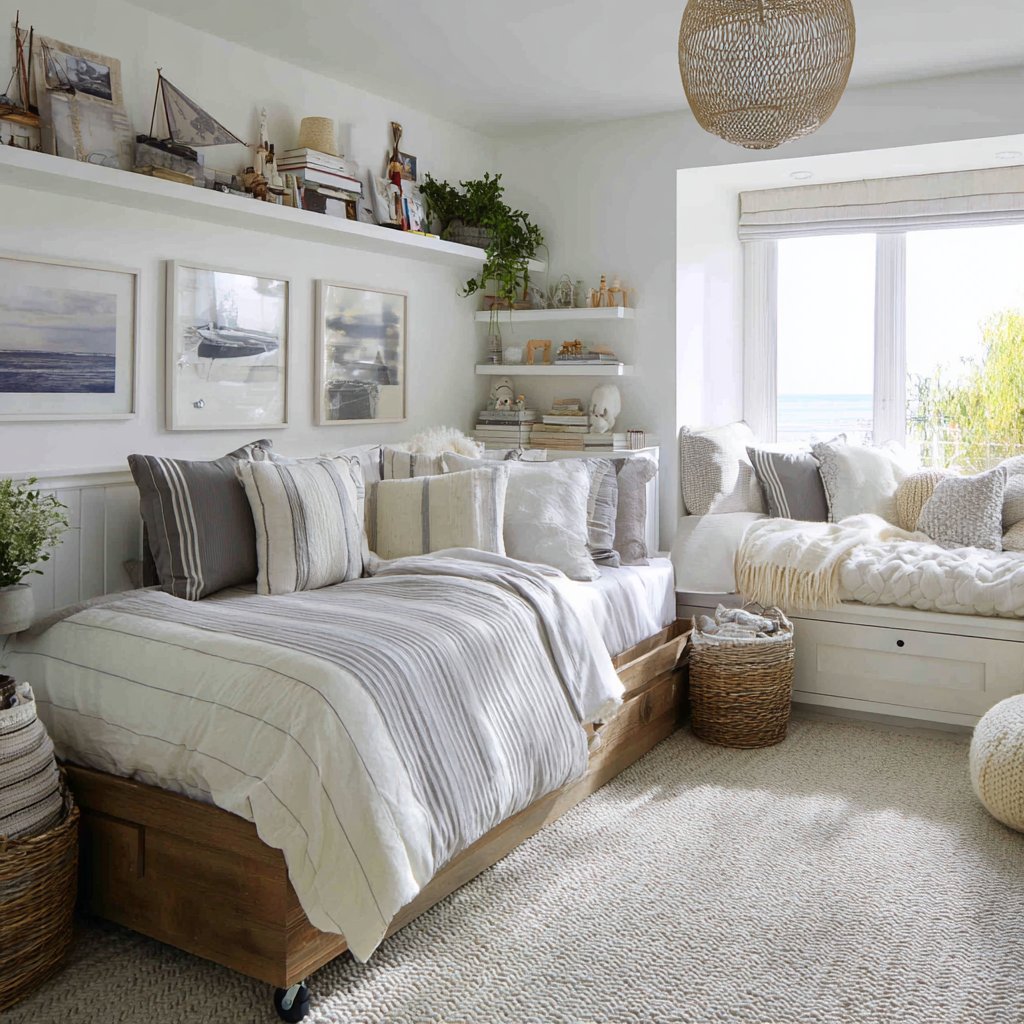
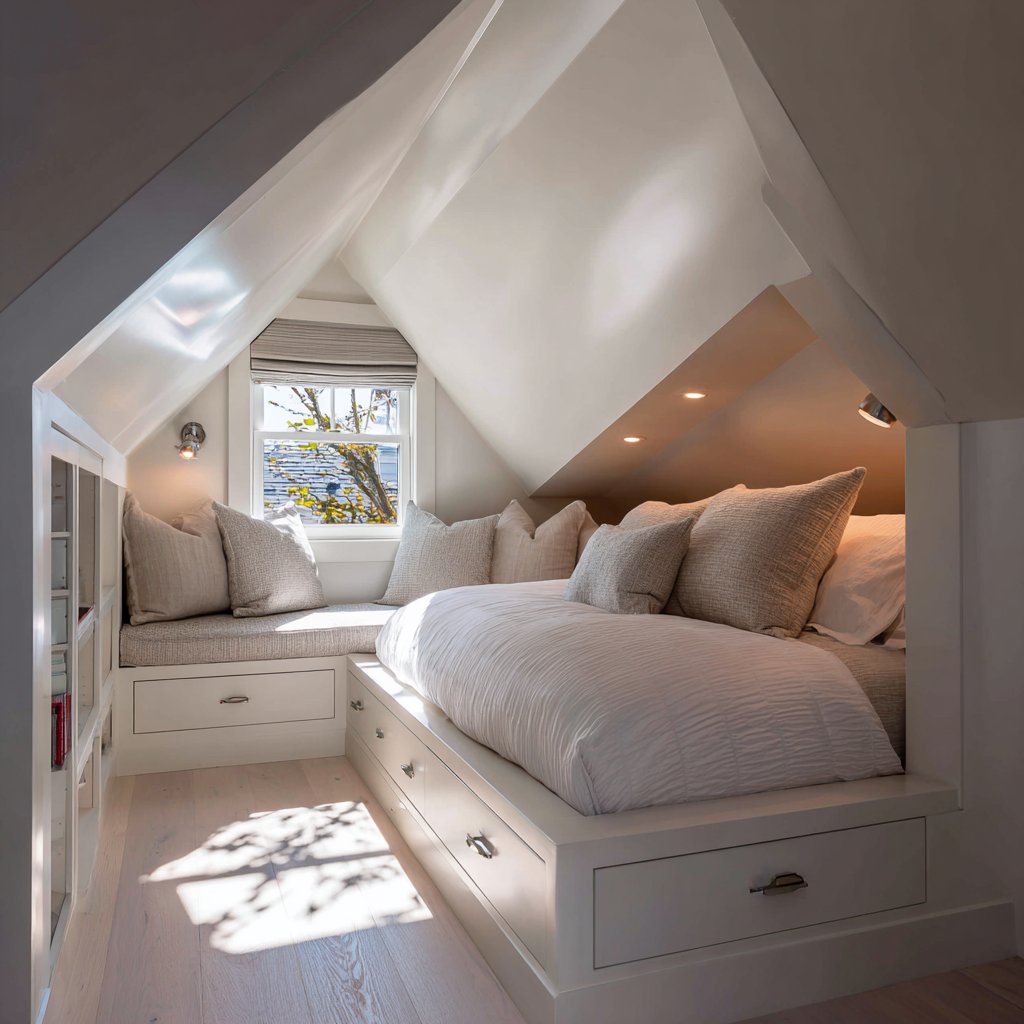
This charming design features a compact sleeping nook built into an alcove with a fitted mattress surrounded on three sides by open storage cubbies. The built-in nature of this configuration maximizes every inch of available space, turning what might be an awkward architectural feature into the room’s defining element. The open shelving provides ample organization without the need for separate furniture pieces, keeping books, folded clothing, decorative items, and personal belongings neatly displayed and easily accessible.
A simple curtain rod with light fabric panel offers privacy when needed without the permanence or visual weight of doors, maintaining the open, airy feeling when drawn back. The main room painted white with the nook interior in soft blush pink creates a delightful sense of discovery—a special, personalized retreat within the larger space. This color differentiation helps define the sleeping zone while adding personality and warmth.
The small wall-mounted reading light positioned for optimal illumination demonstrates attention to functional details, ensuring the nook serves as a comfortable space for bedtime reading. Natural light from a nearby window illuminates the entire area during the day, preventing the alcove from feeling dark or cave-like. This design proves that architectural features sometimes dismissed as problematic can become the foundation for creative, memorable solutions in very tiny bedrooms.
Key Design Tips:
- Measure the mattress carefully to ensure a snug fit within the nook that maximizes sleeping surface while leaving minimum gaps
- Use the surrounding cubbies to create a personal gallery with meaningful objects that make the nook feel special and customized
- Choose curtain fabric that complements but doesn’t match the blush pink interior to add subtle visual interest
- Install the reading light with a flexible arm or adjustable head to direct light precisely where needed
- Consider adding a small cushion or padding on the surrounding storage edges to prevent bumping heads on hard surfaces
15. Trundle Bed for Guest Flexibility
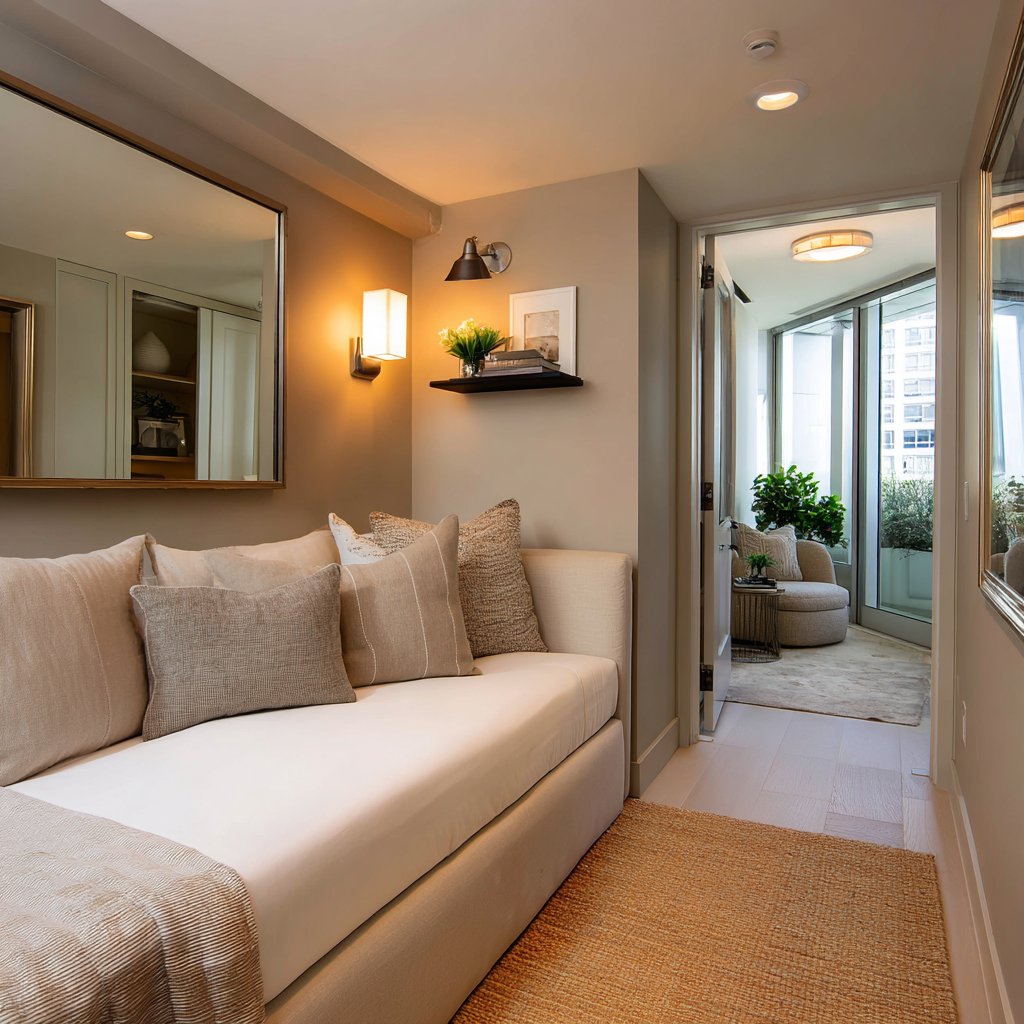
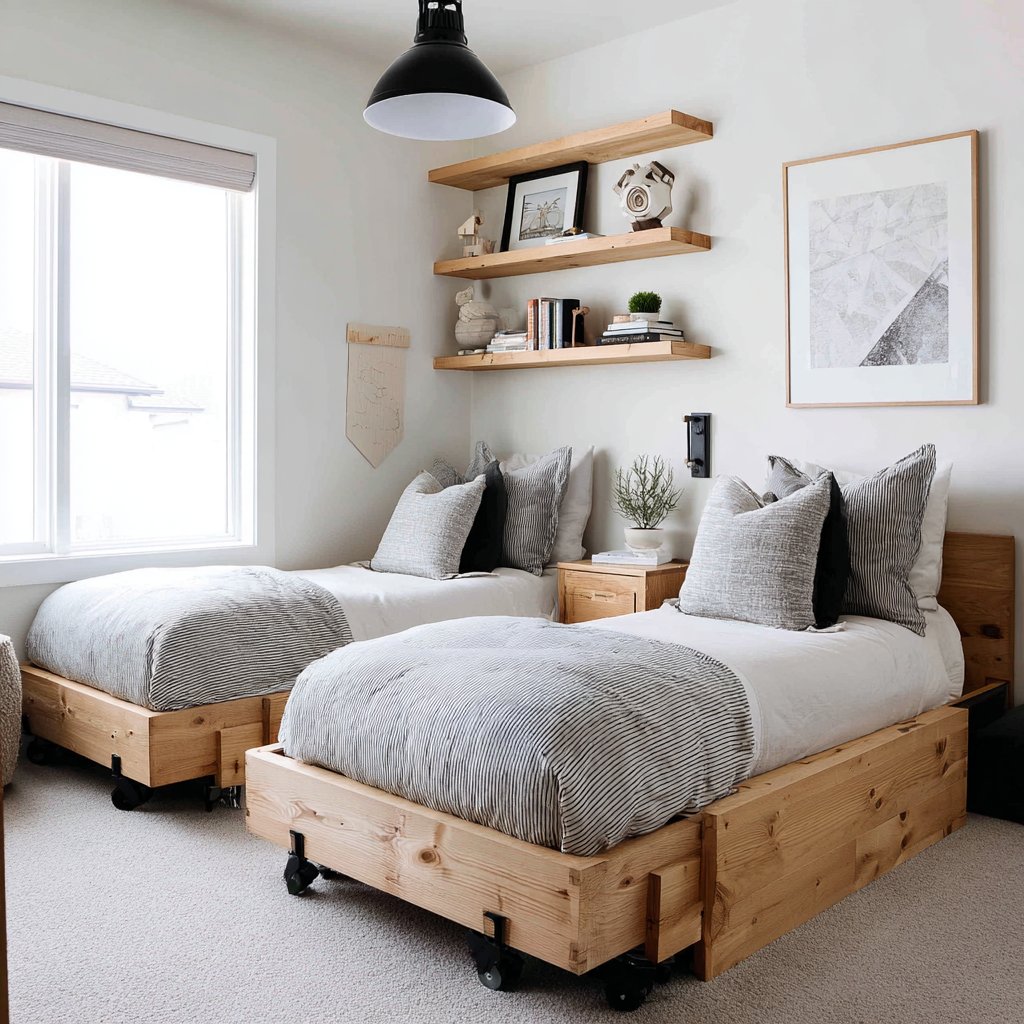
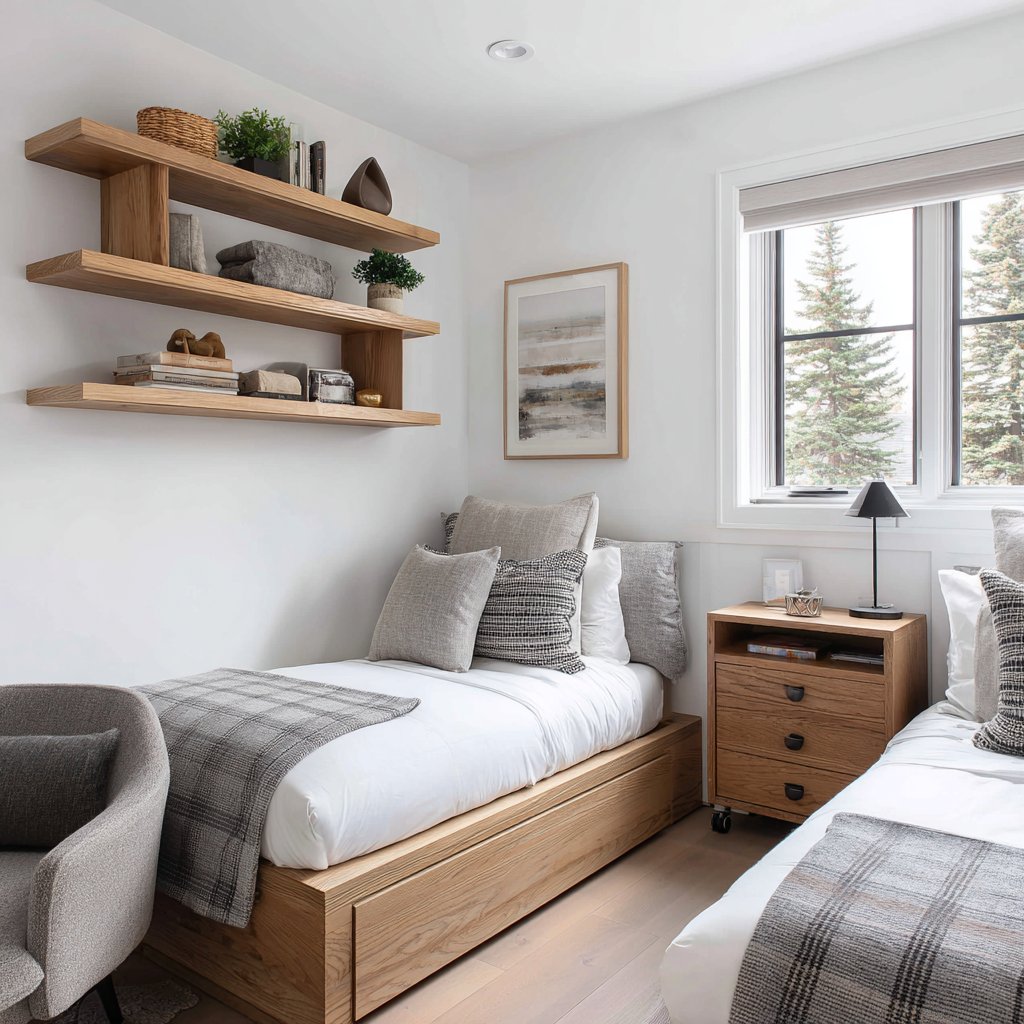
The trundle bed configuration offers exceptional flexibility for very tiny bedrooms that occasionally need to accommodate guests, with a second mattress that slides underneath the primary bed for everyday concealment. Both beds feature simple platform frames in natural wood, creating a cohesive appearance that doesn’t look like “guest furniture” cobbled together. When the trundle is stored, the room functions as a normal single bedroom; when extended, it provides sleeping space for two without permanent furniture arrangements that would make daily living more cramped.
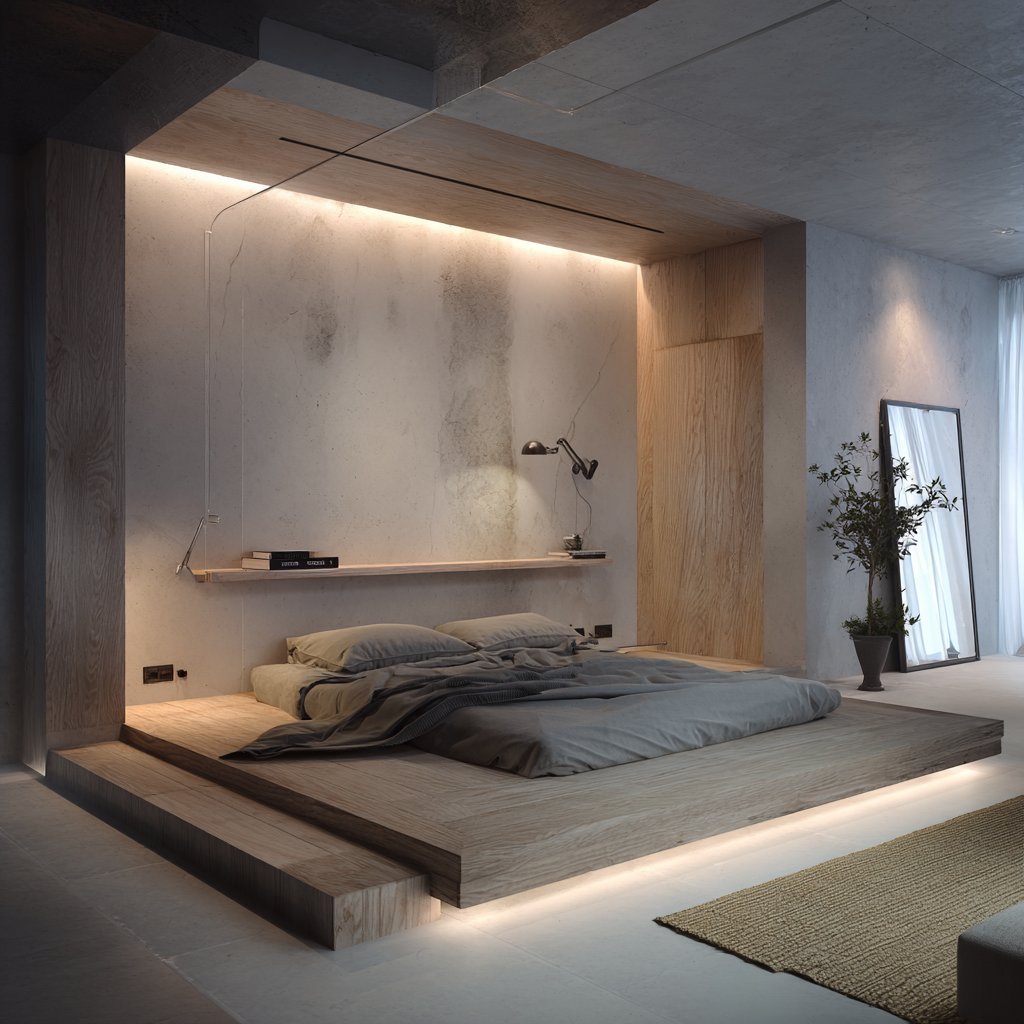
A wall-mounted shelf system above the primary bed provides vertical storage that serves both regular use and guest needs—towels, extra blankets, and pillows can be stored here alongside everyday items. The neutral palette with white walls and grey bedding creates a welcoming environment that feels neither overly personal nor impersonal, striking the balance appropriate for a room that serves dual purposes. A small nightstand on casters can move between configurations depending on which bed is in use, demonstrating the flexible thinking required for multipurpose spaces.
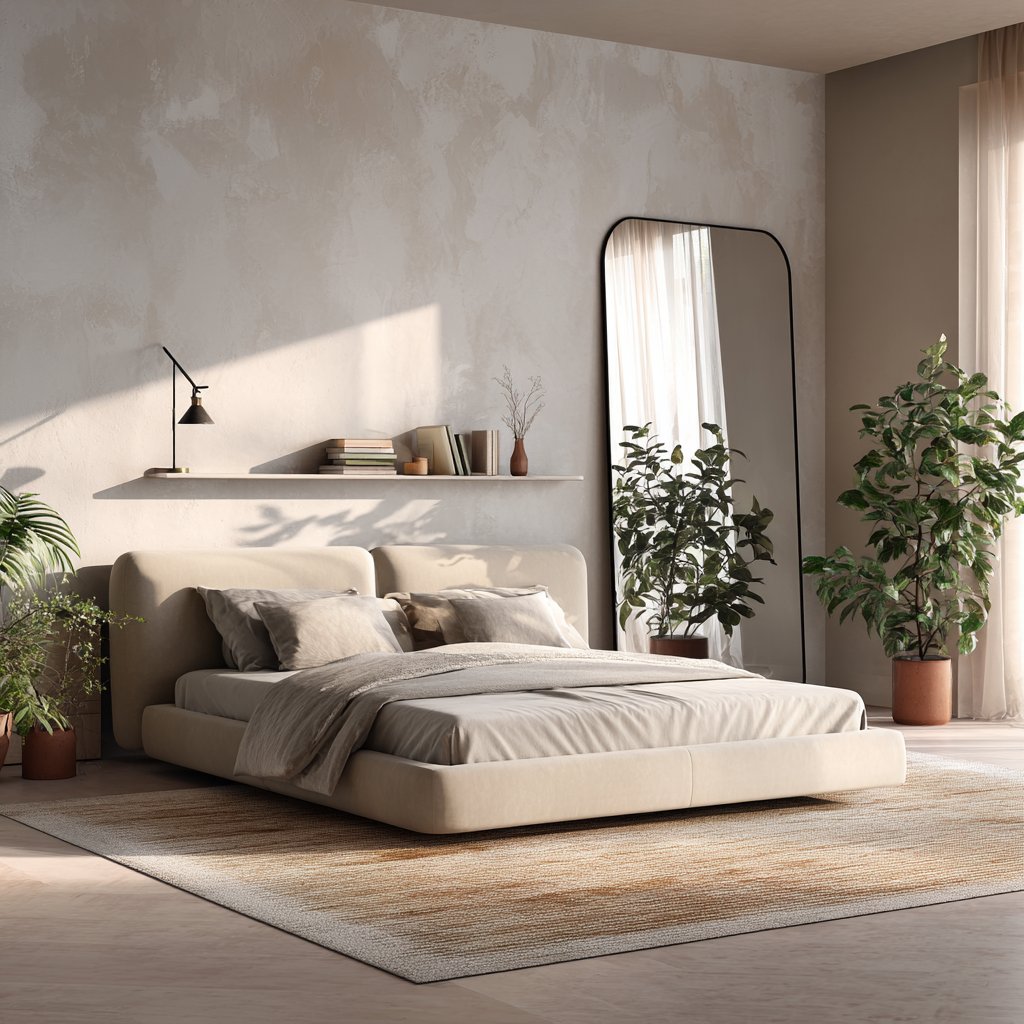
The soft natural lighting throughout the space creates warmth without harsh shadows, while the wide-angle perspective reveals how efficient furniture planning can create surprisingly generous feeling rooms even in compact dimensions. The clean aesthetic proves that practical solutions need not appear compromised or temporary—this room looks intentionally designed for its dual purpose rather than making do with limitations.
Key Design Tips:
- Choose trundle mattresses of similar quality to the main bed so guests receive comfortable sleep rather than a clearly inferior surface
- Ensure the trundle mechanism glides smoothly and locks securely in both stored and extended positions
- Store guest bedding in vacuum-sealed bags within the wall-mounted system to keep linens fresh and minimize storage bulk
- Use the movable nightstand positioned between beds when both are in use to serve both sleepers
- Consider bed risers for the main bed if the trundle doesn’t fit underneath standard frame height—4-6 inches typically suffices
16. Ultra-Minimalist Floor Sleeping Space
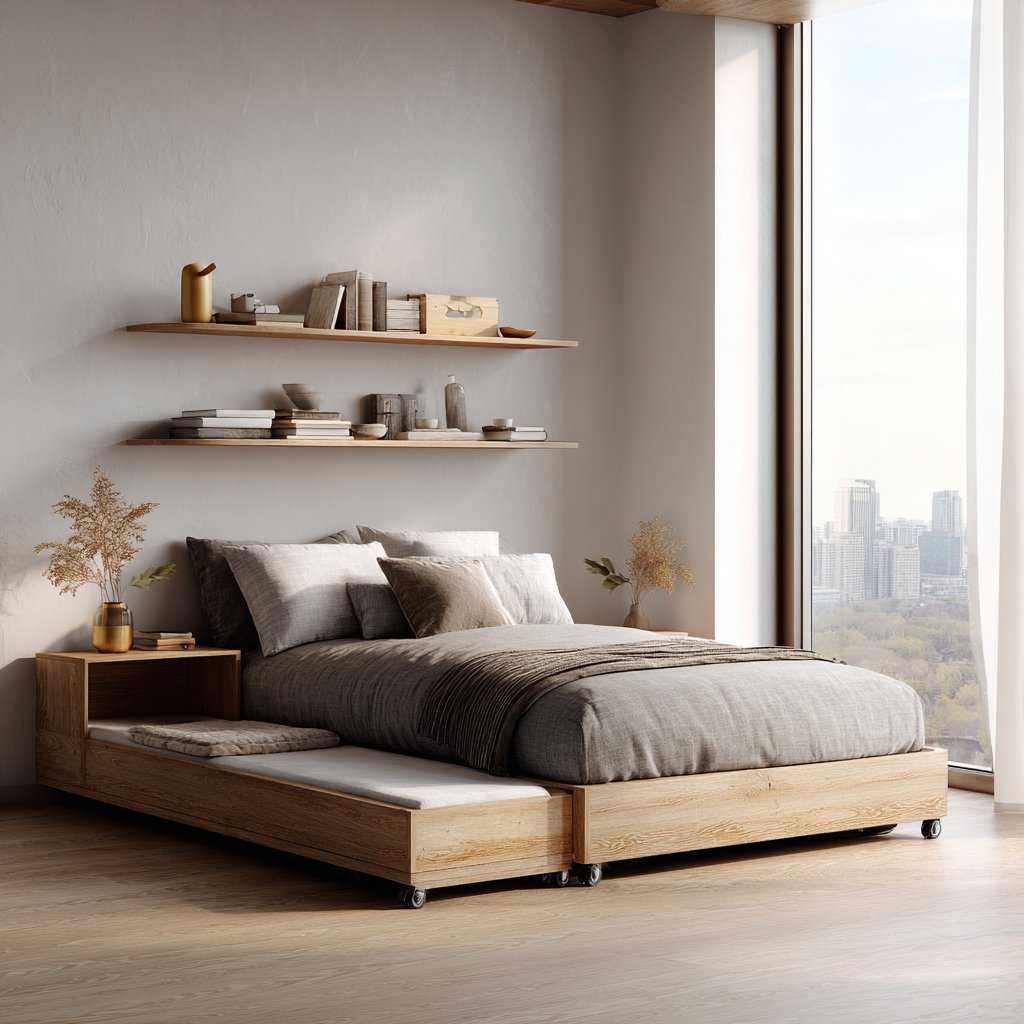
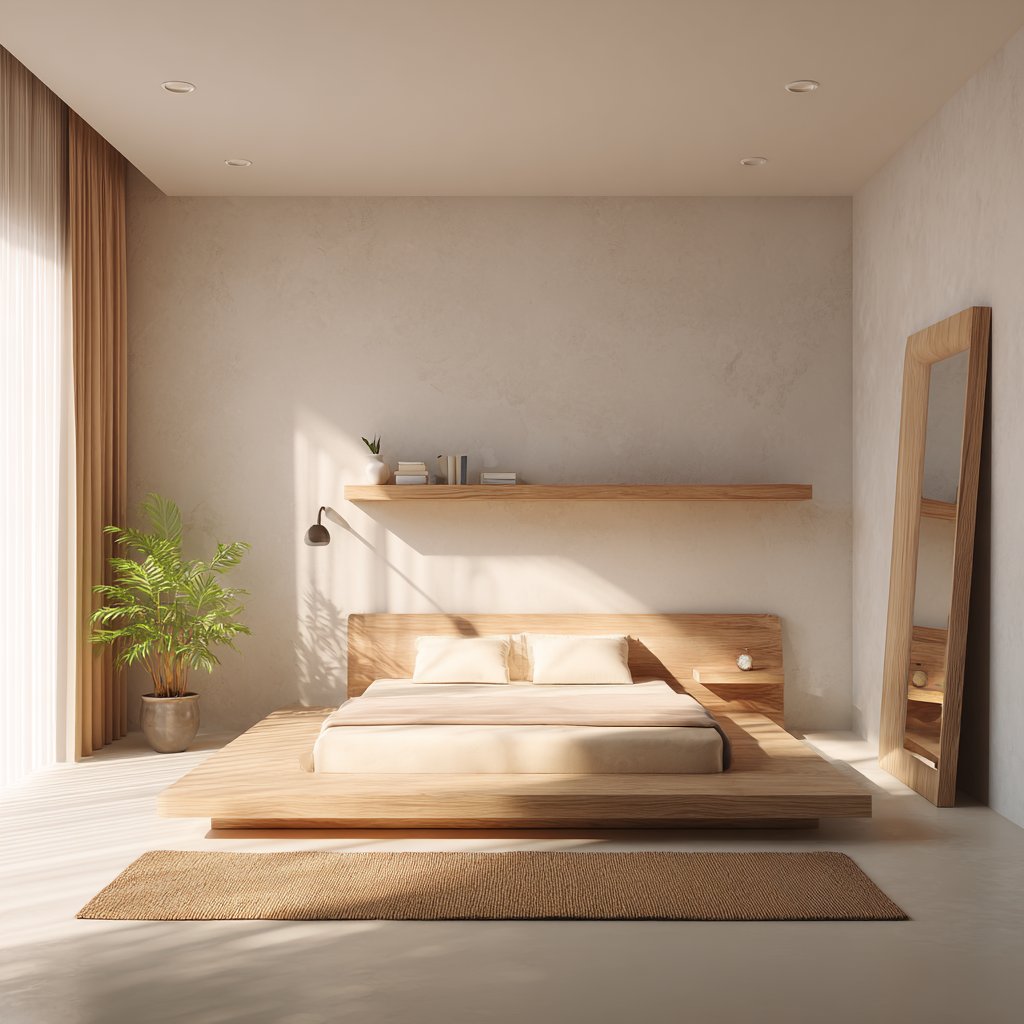
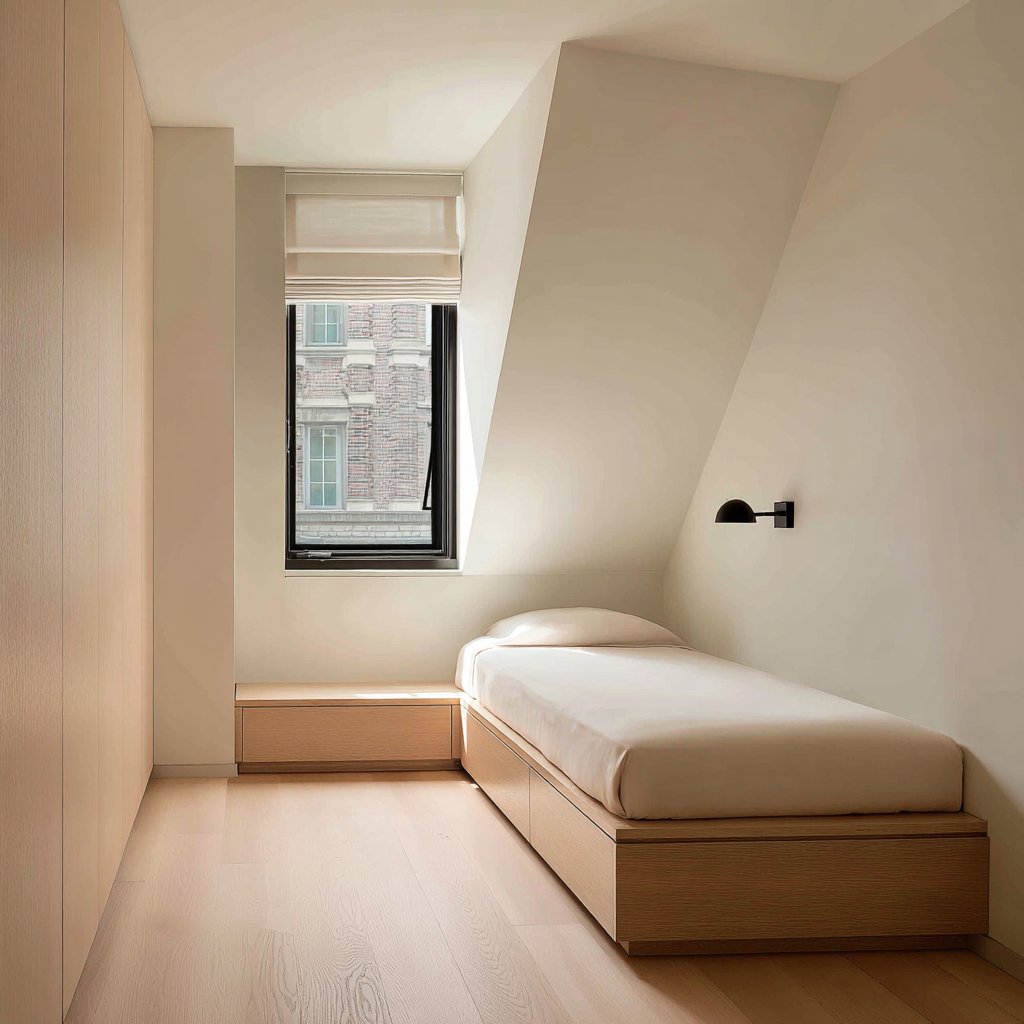
This design embraces extreme simplicity with a slim-profile platform bed barely elevated from the floor, creating a zen-like sleeping environment that maximizes perceived space through radical reduction. The minimal elevation—perhaps only 6-8 inches—makes the ceiling appear dramatically higher while reducing the visual mass of furniture in the room. A single floating shelf above the bed holds only essential items, demonstrating disciplined curation that prevents clutter accumulation.
The small wall-mounted swing-arm reading lamp provides adjustable task lighting without consuming shelf space or requiring a separate table. Walls painted in pale warm grey with white ceiling create subtle sophistication rather than stark brightness, while a natural fiber area rug defines the sleeping zone with texture and warmth. The large leaning mirror against the wall reflects light while adding height emphasis with its vertical orientation. A single small potted plant adds life and connection to nature without introducing visual complexity.
This ultra-minimalist approach won’t suit everyone, but for those who find peace in simplicity, it demonstrates how very tiny bedrooms can feel spacious and serene when stripped of excess. The focus shifts from possessions to quality—the feel of natural materials, the play of light and shadow, the sense of breathing room. This is minimalism as lifestyle choice rather than just aesthetic preference.
Key Design Tips:
- Embrace the low sleeping position by selecting a mattress designed for platform beds—typically 6-8 inches thick
- Use the single floating shelf to display only items that bring genuine joy or serve essential functions
- Choose a leaning mirror with a substantial frame that prevents tipping and adds architectural interest
- Develop strict rules about what enters the space to maintain the minimalist aesthetic over time
- Invest in high-quality basics—exceptional bedding, a beautiful lamp, a thriving plant—since these few items receive all the visual attention
17. Sloped Ceiling Attic Space Adaptation
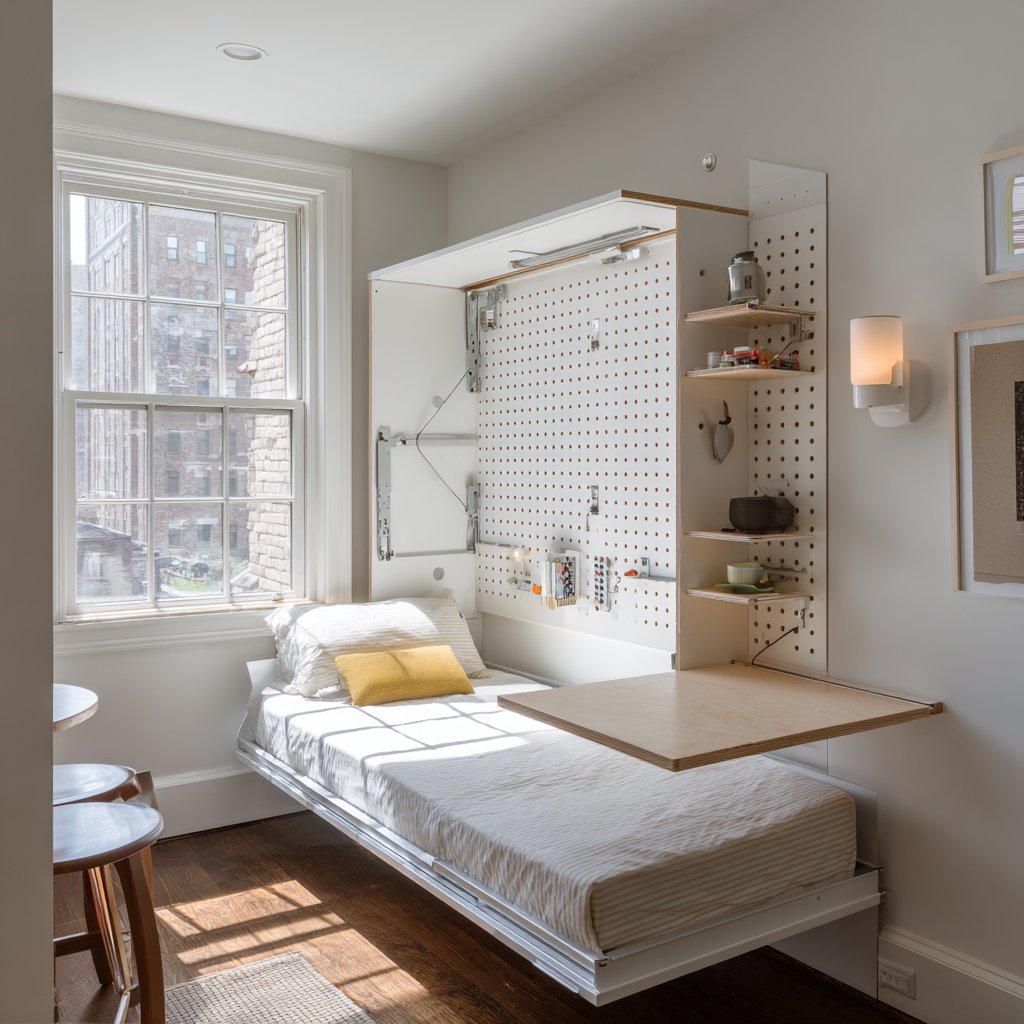
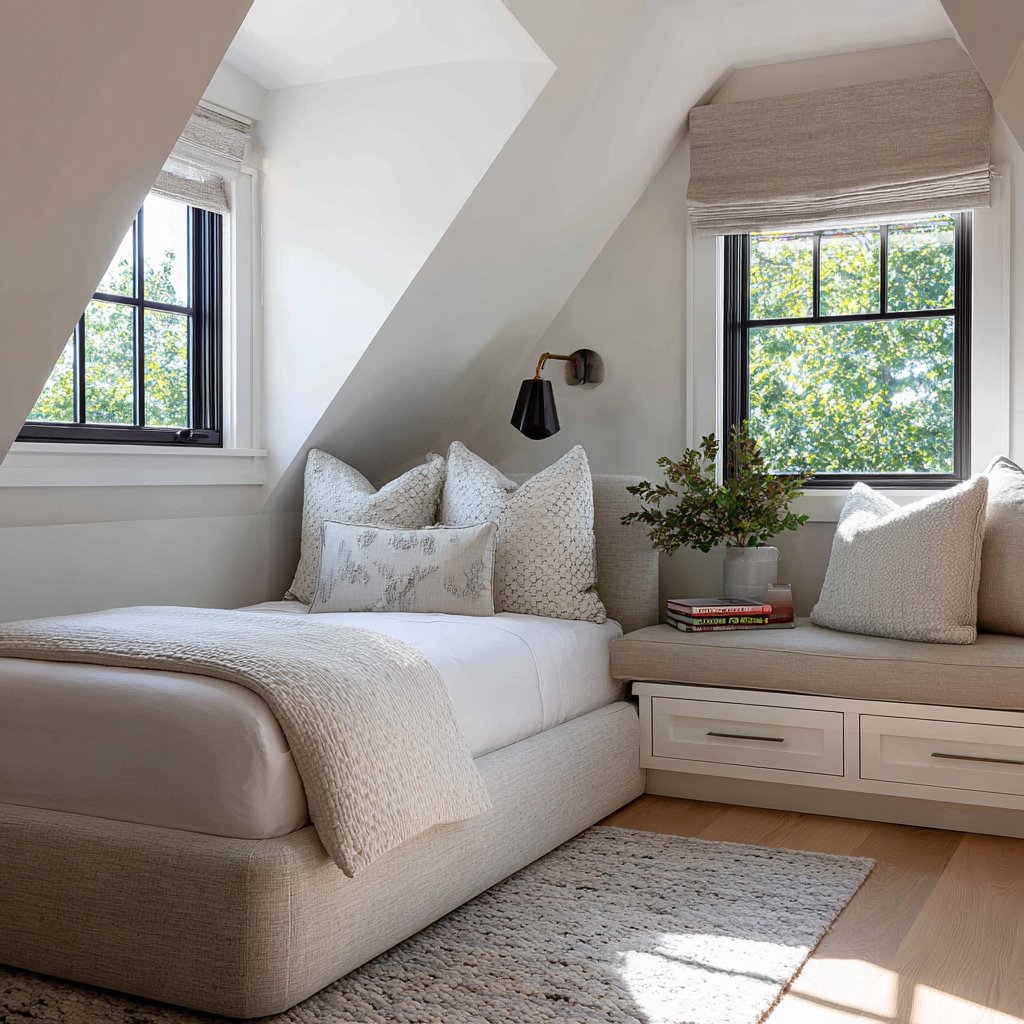
This design tackles the unique challenges of attic bedrooms with sloped ceilings, demonstrating how architectural constraints can inform creative solutions rather than simply presenting obstacles. The bed positioned under the sloped ceiling features a custom low-profile frame that maximizes sleeping surface while respecting the reduced ceiling height. Built-in storage drawers integrated into the knee wall area beside the bed capitalize on space that would otherwise be too low for standing or sitting, turning unusable square footage into functional storage.
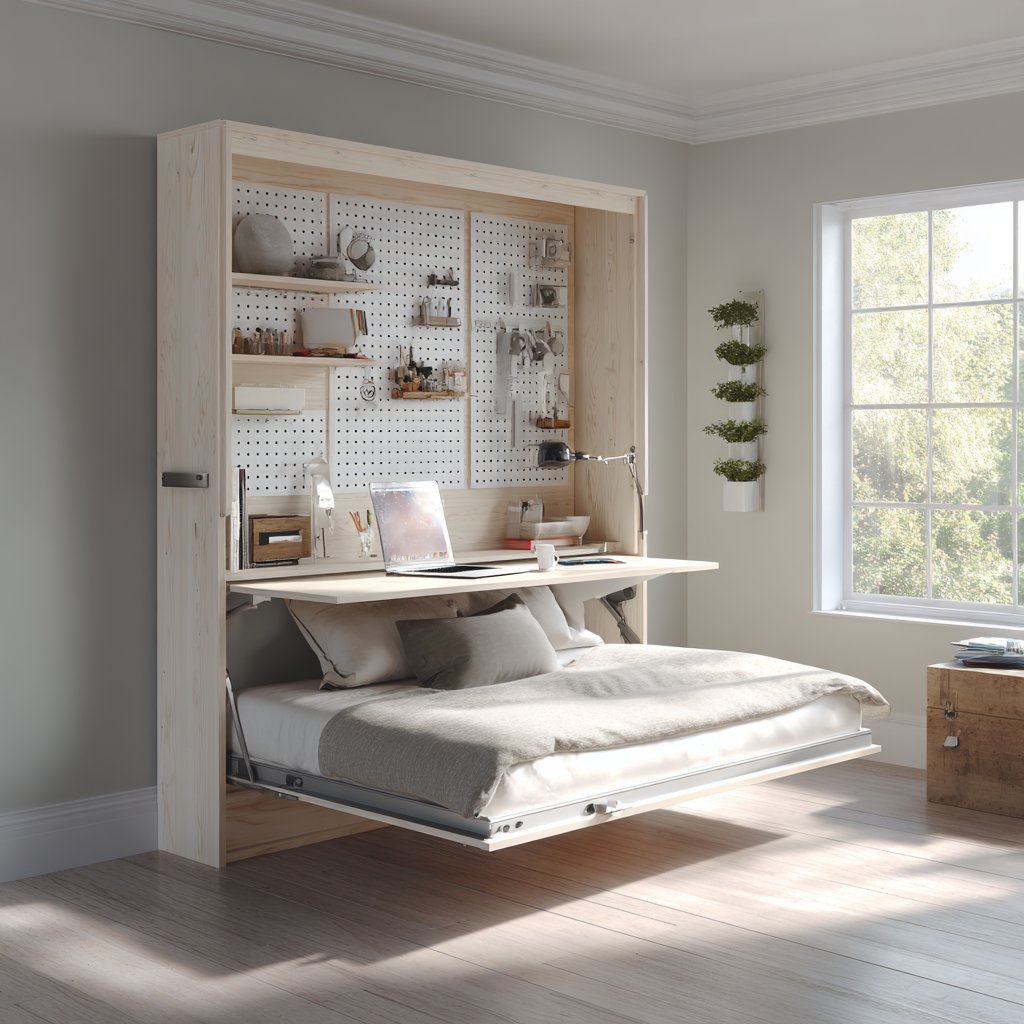
The small dormer window with a simple roller shade provides natural light and ventilation critical in attic spaces that can otherwise feel stuffy or dark. White walls and ceiling maintain maximum brightness despite the architectural angles, reflecting available light throughout the space. Light wood flooring adds warmth without the darkness that might make the sloped ceiling feel oppressive. Minimal decor with a single wall-mounted reading light demonstrates how restraint serves small spaces with challenging geometry.
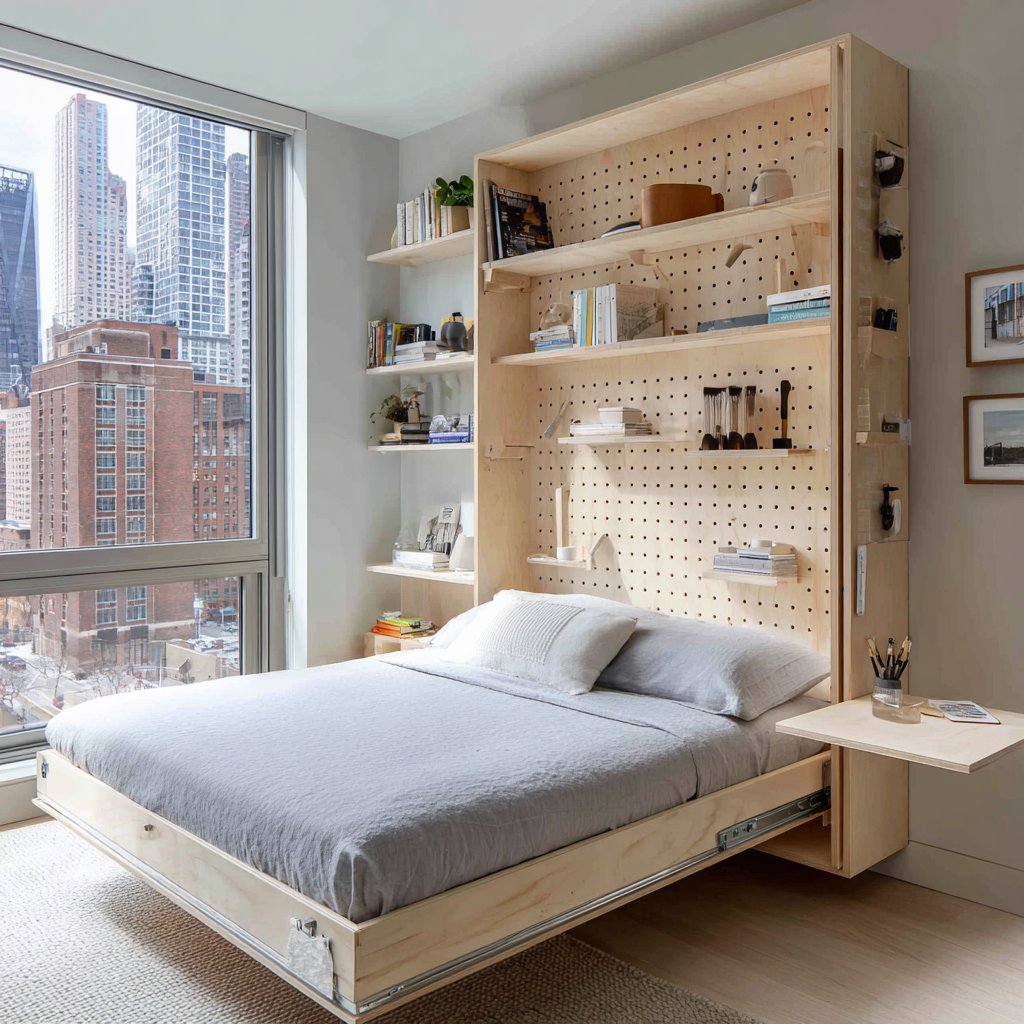
The cozy under-eave atmosphere created by the sloped ceiling can actually become an asset rather than a liability, creating a nest-like feeling that many people find comforting for sleep. The key is embracing the architecture rather than fighting it, selecting furniture scaled appropriately and positioned to work with rather than against the angles.
Key Design Tips:
- Measure ceiling height at various points to determine the lowest comfortable placement for the bed that still allows sitting up
- Use the knee wall storage for seasonal items, extra bedding, or belongings that don’t require frequent access
- Install the reading light on a flexible mount that accommodates the wall angle and directs light precisely onto reading material
- Consider painting the sloped ceiling slightly lighter than the walls to make it recede visually
- Add extra insulation in attic spaces to prevent heat buildup in summer and heat loss in winter for year-round comfort
18. Transformable Desk-Nightstand Combination
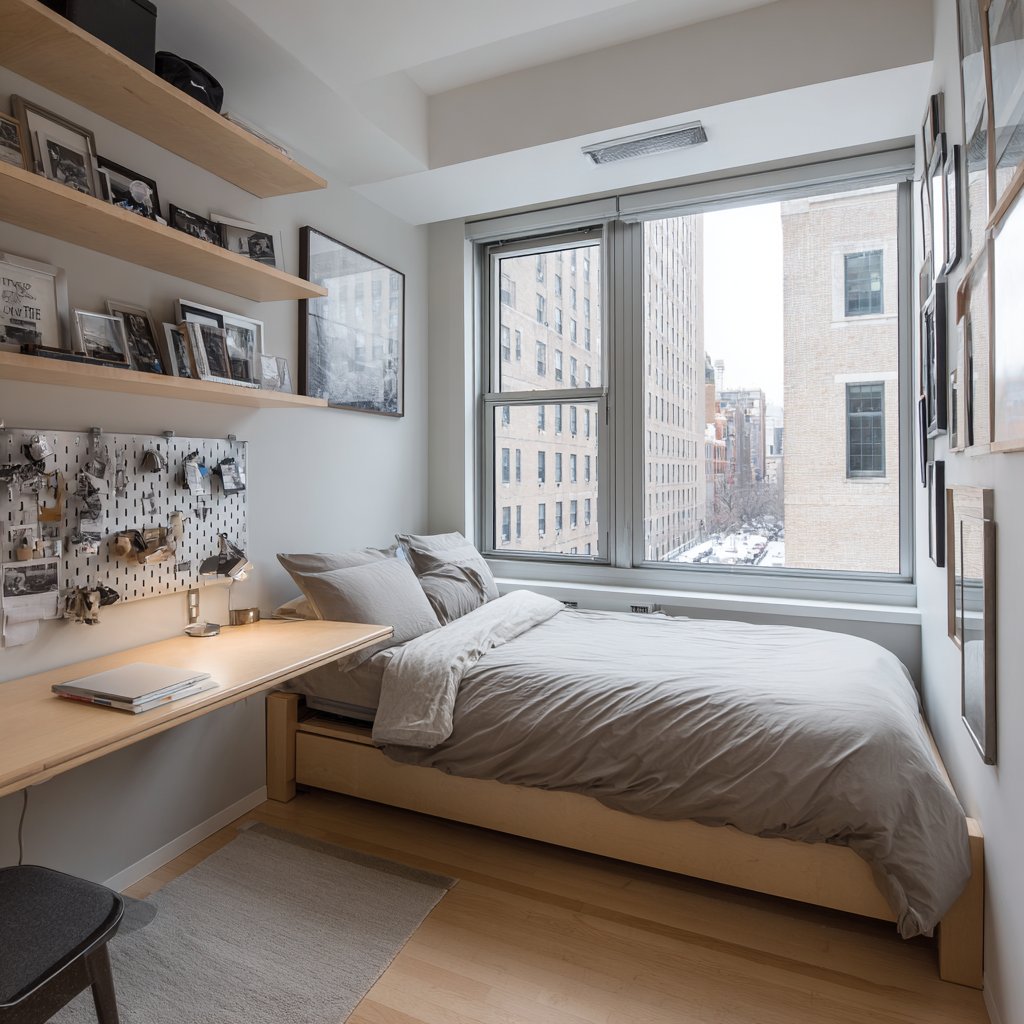
This innovative design features a wall-mounted fold-out desk that serves multiple roles throughout the day—operating as a nightstand when the bed is in use and expanding to a full workspace during working hours. The bed positioned perpendicular to the wall creates efficient traffic flow while the narrow-profile headboard provides comfort without consuming excessive space. Above the desk area, a pegboard system offers flexible organization for accessories, office supplies, or decorative items that can be rearranged as needs change.
The light grey walls provide a neutral backdrop while the desk surface in natural birch introduces warmth through wood grain and honey tones. The chrome folding hardware remains visible as a design element, celebrating the transformation mechanism rather than attempting to hide it. This honest expression of function reflects industrial design principles while adding metallic accents that catch light. The small window nearby ensures the desk receives natural illumination for focused work.
This multifunctional approach exemplifies smart small-space design where furniture adapts to daily rhythms rather than forcing occupants to adapt to static arrangements. The pegboard’s inherent flexibility means the organization system evolves with changing needs—moving hooks and accessories takes seconds, allowing seasonal adjustments or lifestyle changes without replacing entire storage systems.
Key Design Tips:
- Select folding hardware rated for the desk’s intended use—heavier-duty mechanisms for computers and equipment, lighter for occasional use
- Position the desk at ergonomic height for seated work—typically 28-30 inches from the floor when deployed
- Use the pegboard to hang frequently accessed items like headphones, charging cables, keys, or small bags
- Consider adding a small folding chair or stool that hangs on the wall when not in use to complete the workspace
- Ensure the desk surface depth when deployed allows comfortable laptop or writing use—minimum 18-20 inches
19. Bookshelf Headboard with Hidden Compartments
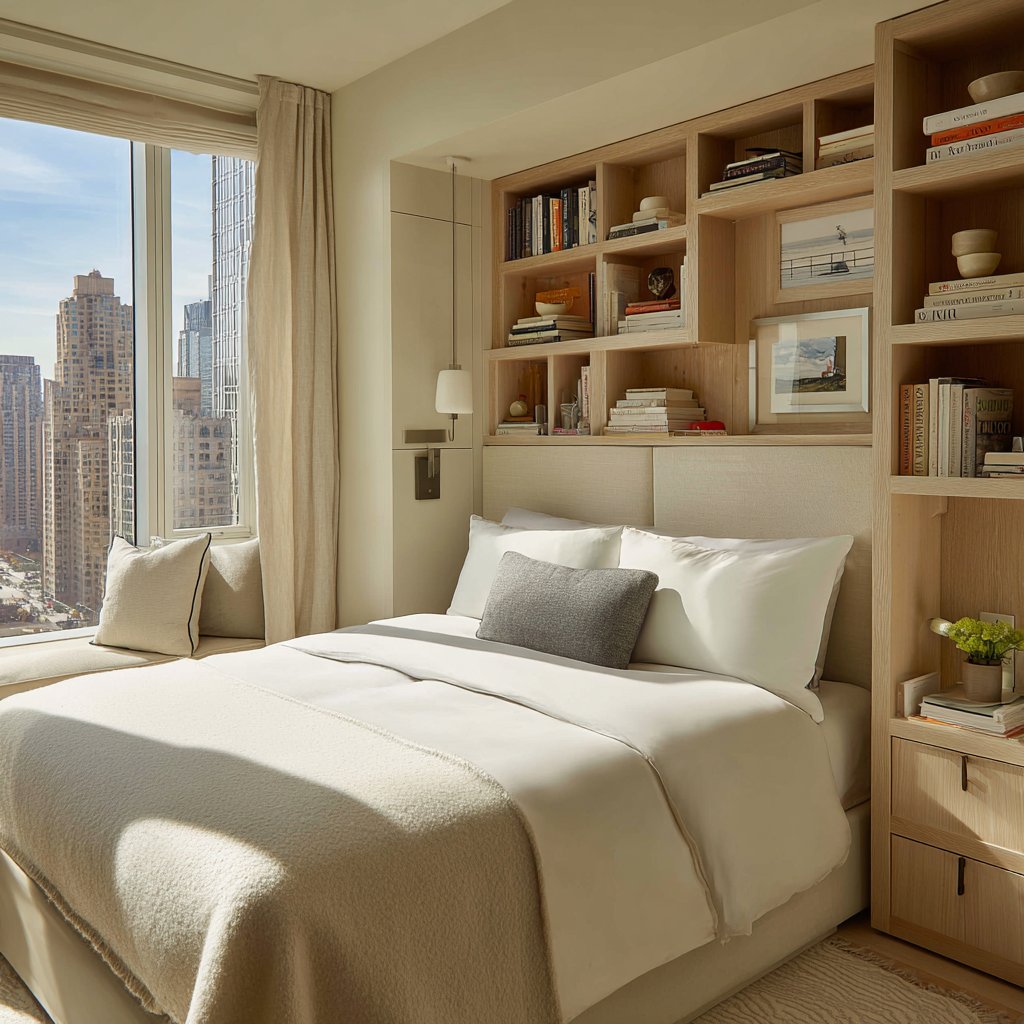
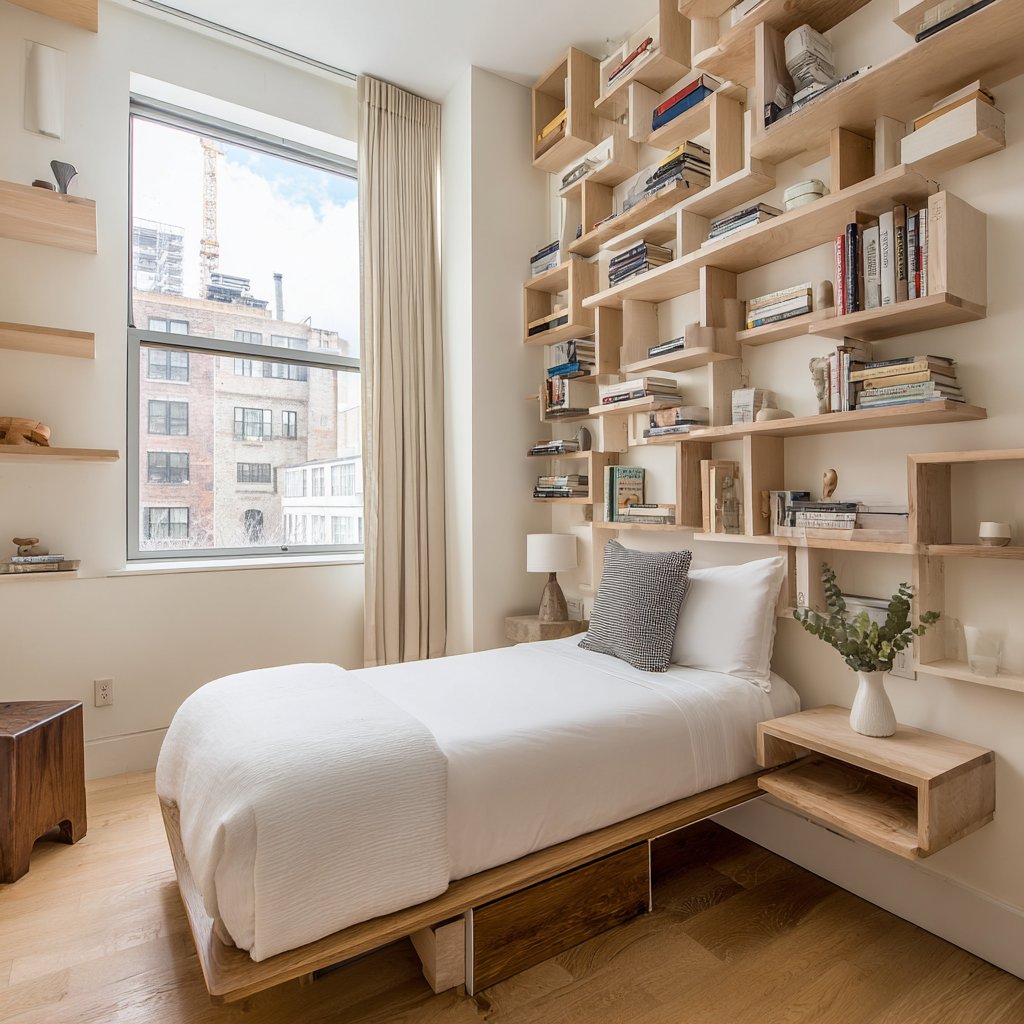
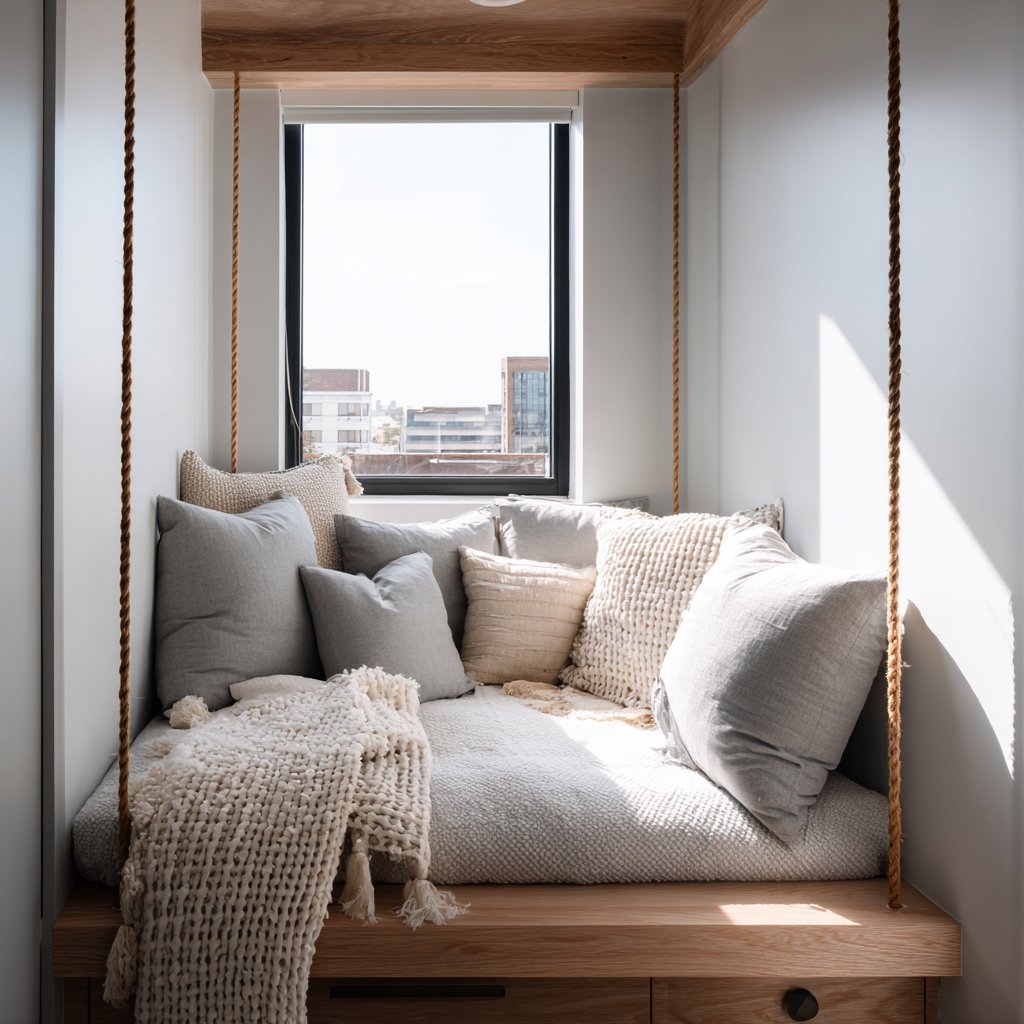
This design features a bed frame with a built-in bookshelf headboard extending the full wall width with adjustable shelves that accommodate books of varying heights, decorative objects, and personal treasures. Storage compartments with small doors at the headboard base hide items that need protection from dust or simply don’t merit display—charging cables, medications, personal items, journals. The bed dressed in white linens with a single grey accent pillow demonstrates how color restraint creates visual calm in small spaces.
The walls in soft cream color provide warmth without the starkness of pure white, creating a cozy envelope that feels finished and intentional. A floating nightstand with minimal drawer on one side only maintains asymmetry that keeps the room from feeling rigidly balanced or overly formal. The small window with natural light filtering through a simple linen curtain ensures gentle, diffused illumination that complements the warm color palette.
The integrated storage approach eliminates the need for separate bookcases or storage furniture, consolidating functions into a single piece that anchors the room. This consolidation is key to successful very tiny bedroom design—when one substantial piece meets multiple needs, the remaining floor space feels generous and uncluttered rather than cramped and overfilled.
Key Design Tips:
- Arrange bookshelf contents with varying heights and object types to create visual rhythm rather than uniform rows
- Use the closed compartments at the headboard base for items accessed daily but not worthy of display
- Position the floating nightstand on the side of the bed used for getting in and out most frequently
- Install LED strip lighting along the underside of the top headboard shelf to provide ambient glow for nighttime reading
- Maintain an 18-24 inch clearance between the top of the mattress and the lowest headboard shelf to allow comfortable pillow positioning
20. Suspended Hanging Bed for Floor Space Liberation
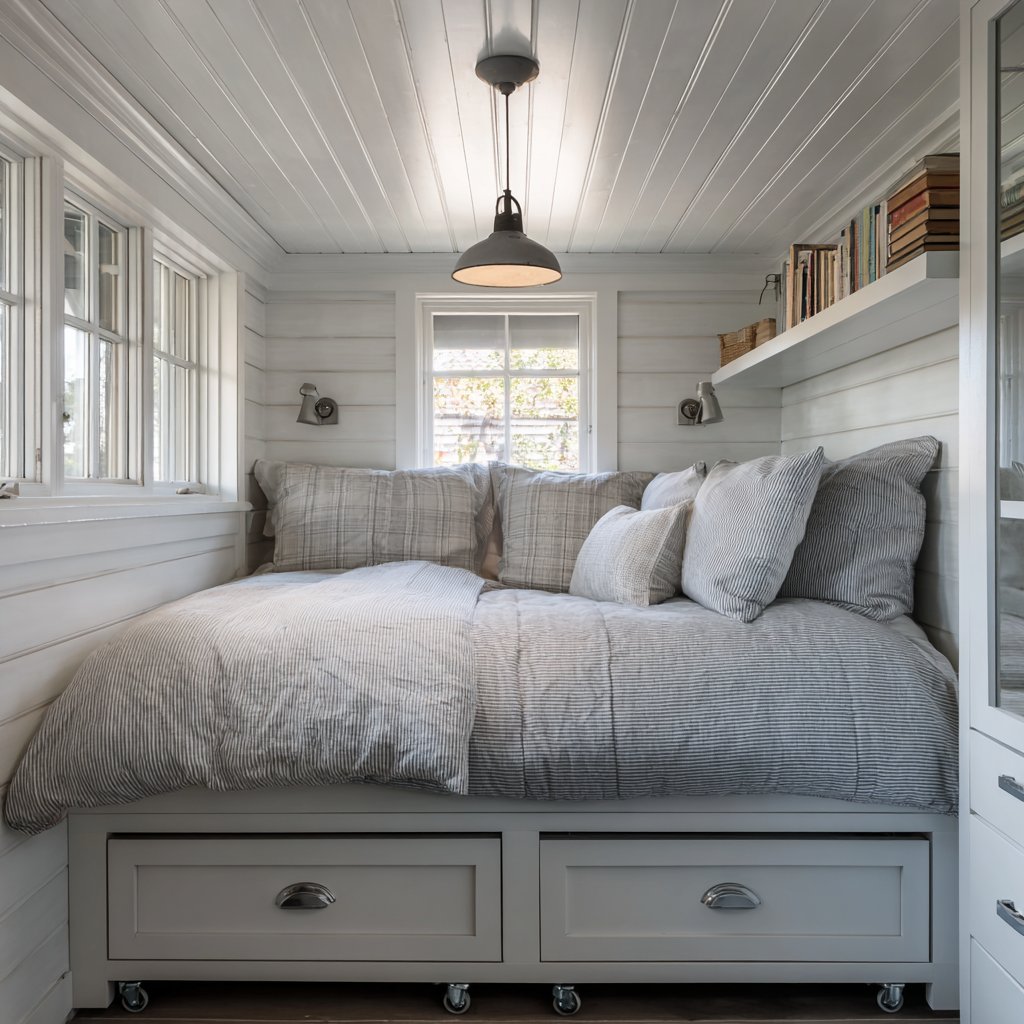
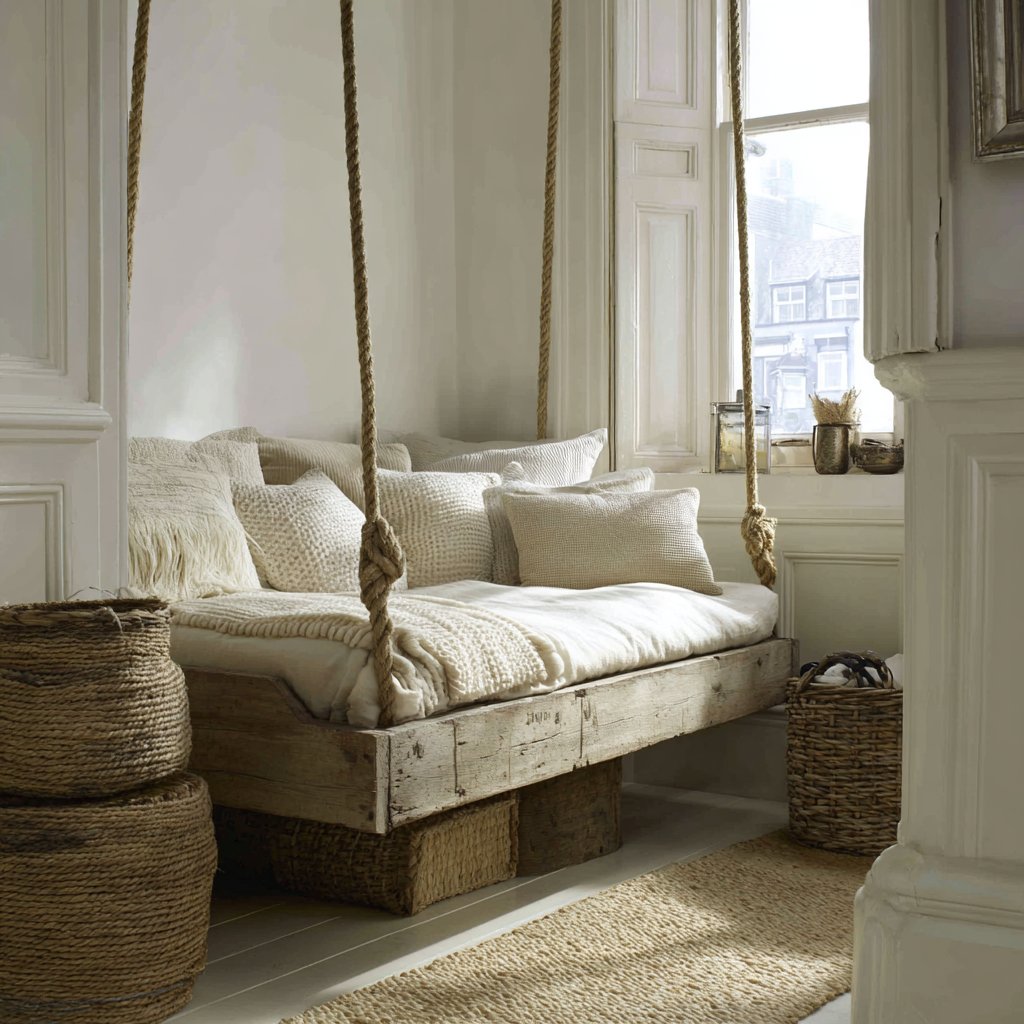
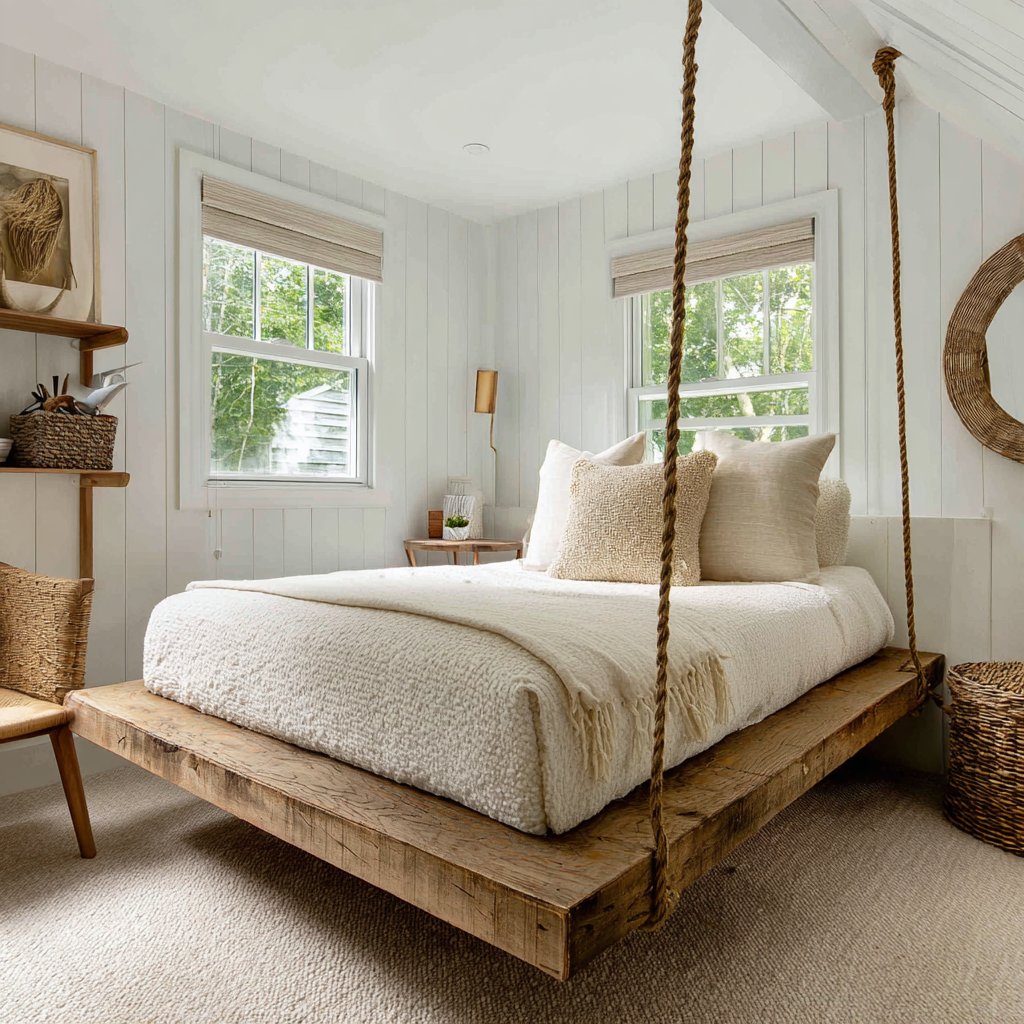
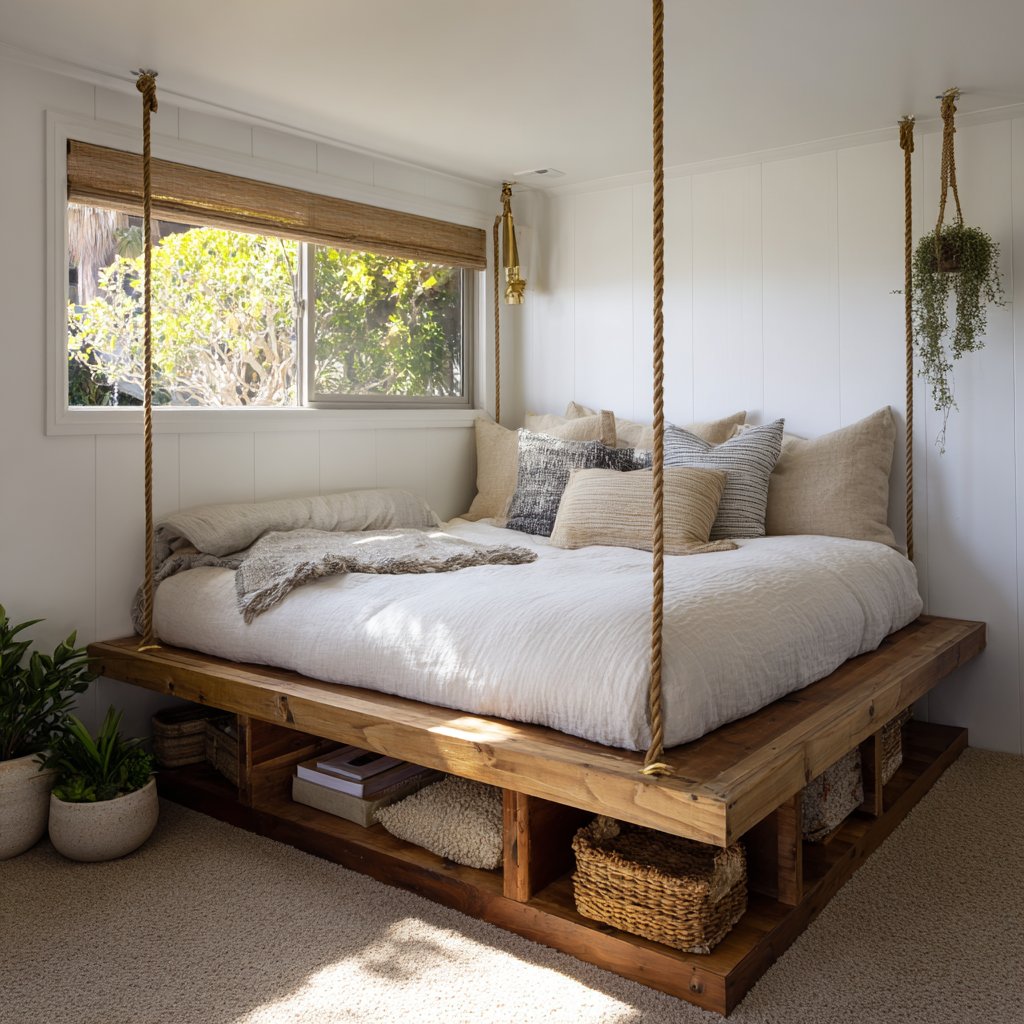
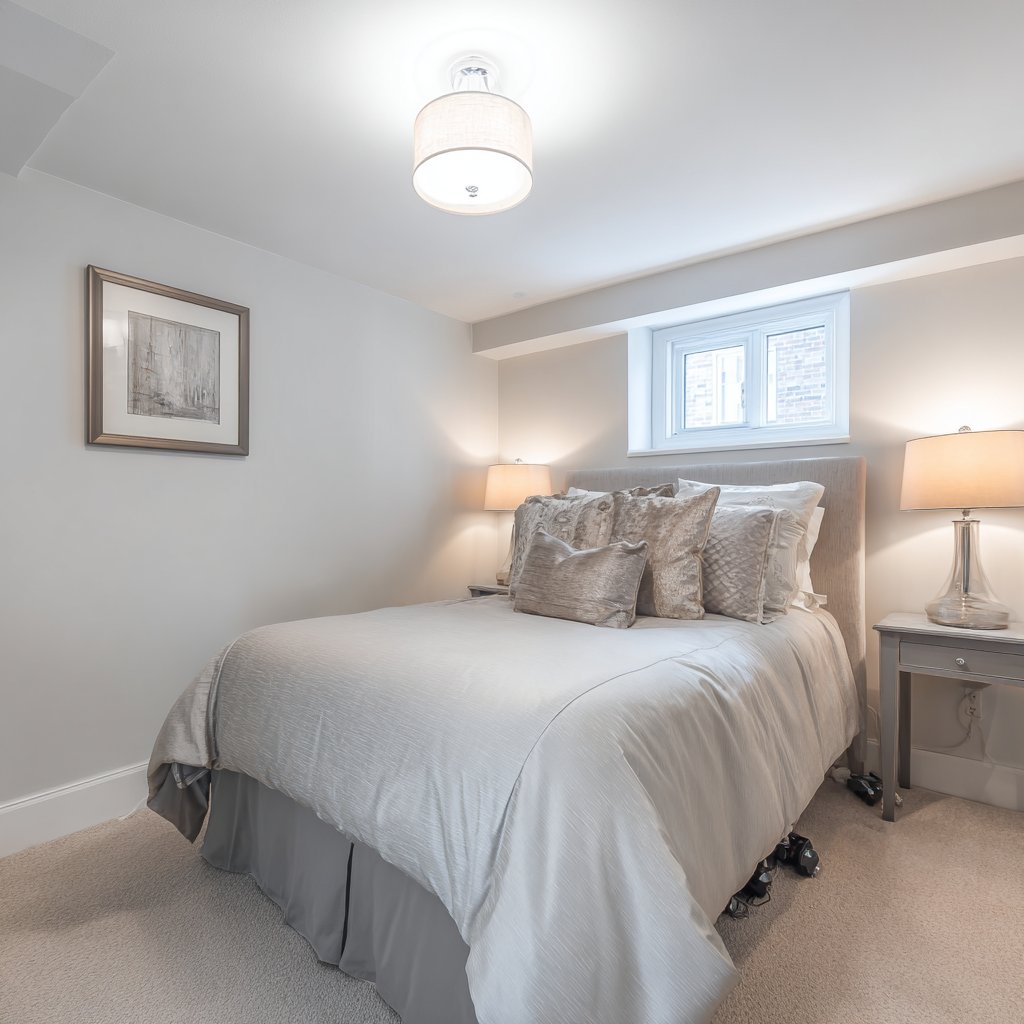
This dramatic design features a bed suspended from the ceiling with strong brackets and visible support chains or ropes, creating usable floor space underneath for storage baskets, small seating, or simply the psychological benefit of openness. The platform-style bed includes safety edges that prevent rolling without creating a cage-like appearance, while the suspension hardware becomes a design feature rather than a hidden structural necessity. White walls with a natural wood bed frame create a Scandinavian-inspired aesthetic, with soft textured bedding in neutral tones providing comfort.
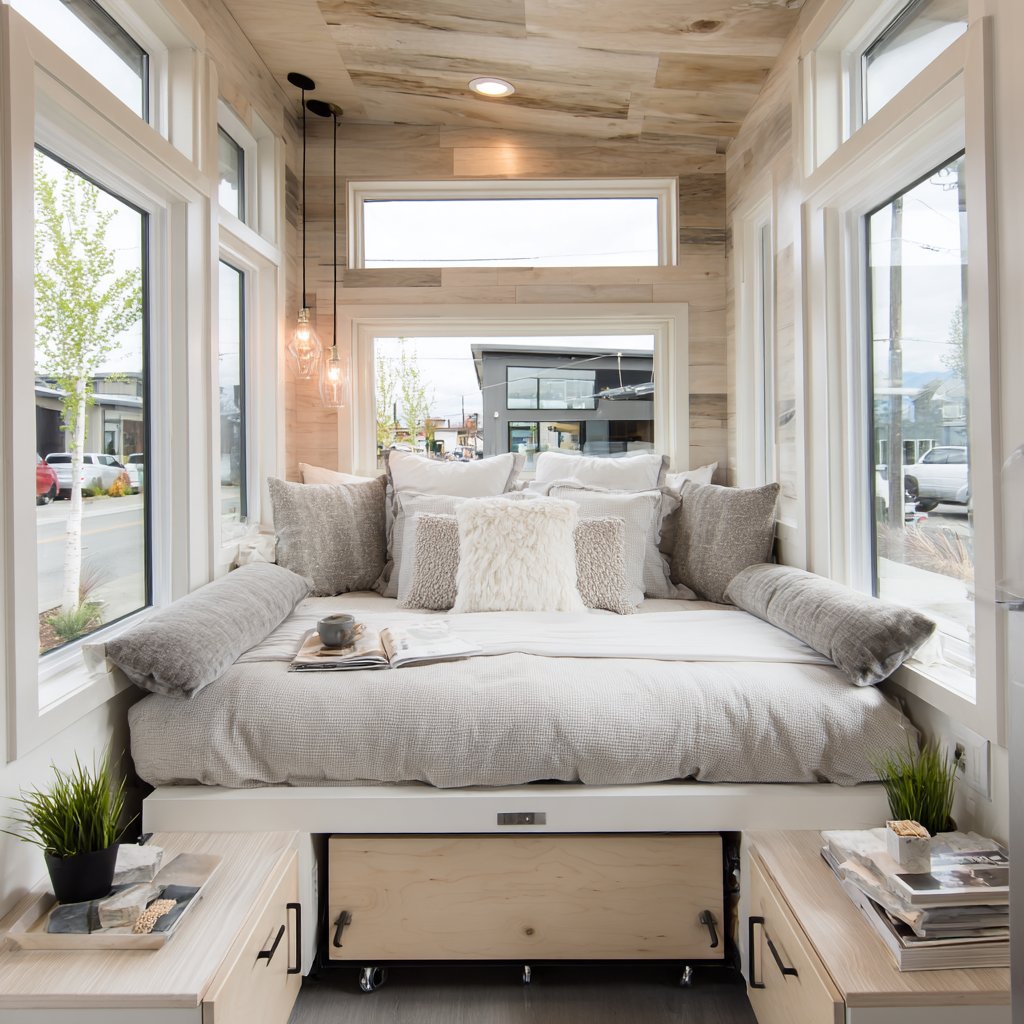
The small window provides natural light while the area underneath the suspended bed remains functional and accessible. Storage baskets can slide in and out easily, or the space might accommodate a meditation cushion, yoga mat, or small chair—uses that adapt to changing needs without permanent furniture commitment. The suspension creates gentle motion when climbing in and out, which some find soothing while others might need time to adjust.
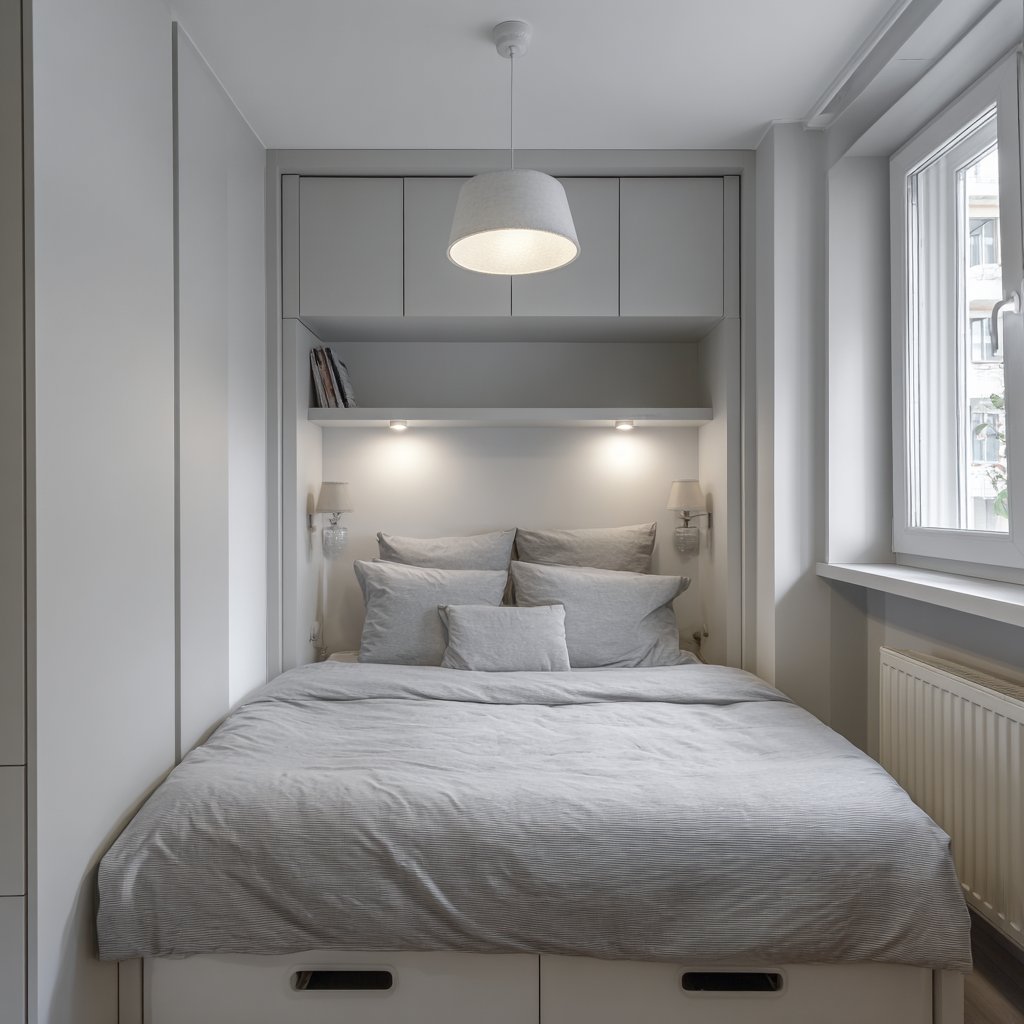
This unconventional approach won’t suit every occupant or every building structure, but for those with adequate ceiling joists and an appetite for unique solutions, it demonstrates how vertical thinking can literally elevate bedroom design. The freed floor space can make a tiny room feel surprisingly generous, as sight lines extend uninterrupted across the floor plane.
Key Design Tips:
- Hire a structural engineer or qualified contractor to evaluate ceiling joist capacity before attempting installation—safety is paramount
- Use marine-grade hardware rated for dynamic loads significantly exceeding the combined weight of bed, mattress, and occupants
- Install the bed height to allow comfortable sitting on the edge with feet touching the floor—typically 18-24 inches
- Consider adding a subtle stabilizing cable to prevent excessive swinging that might cause motion sickness
- Use the under-bed area for low-profile storage only to maintain the visual benefit of freed floor space
21. Center-Positioned Bed with Dual Access
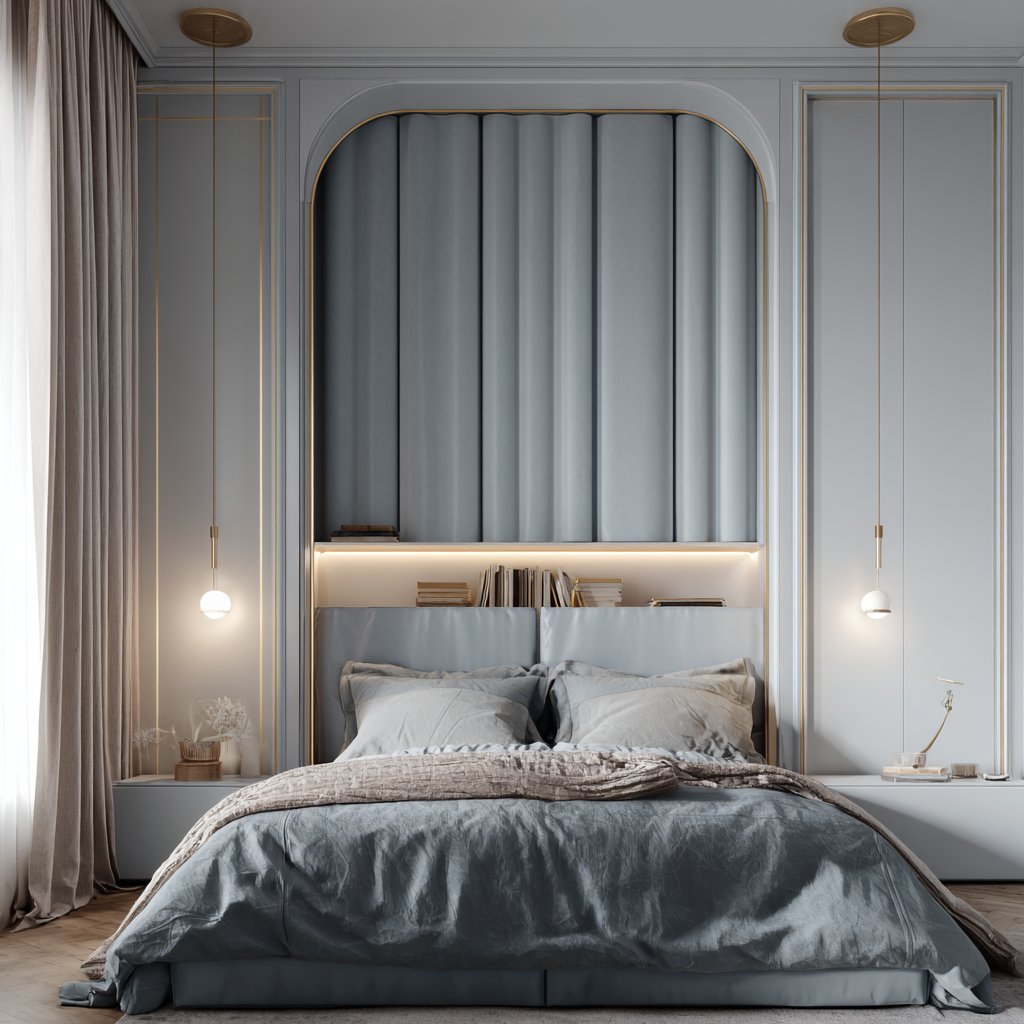
This symmetrical design positions the bed in the center of a narrow room allowing access from both sides—an arrangement that requires confidence but pays dividends in functionality and psychological comfort. Under-bed storage on wheels slides out from either direction, providing practical organization without the permanent commitment of built-in drawers. Two small identical nightstands mounted to the walls flank the bed at equal distances, creating balanced functionality without the bulk of floor-standing furniture.
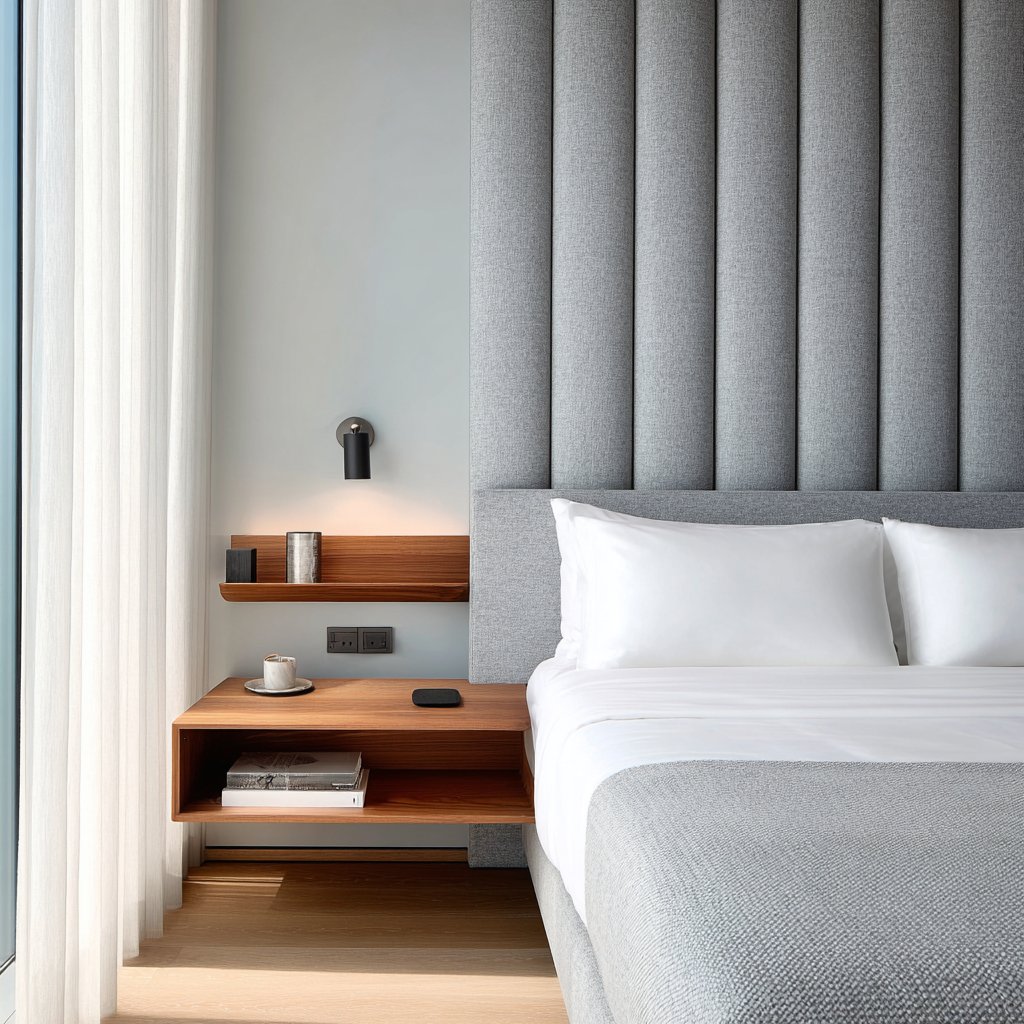
The symmetrical layout maximizes efficiency in long, narrow rooms where conventional wall-hugging arrangements would create awkward circulation patterns. Soft white walls with light grey bedding maintain visual simplicity that prevents the centered furniture from feeling oddly positioned. A single overhead pendant light centered above the bed provides ambient illumination without shadows cast by lamps on just one side.
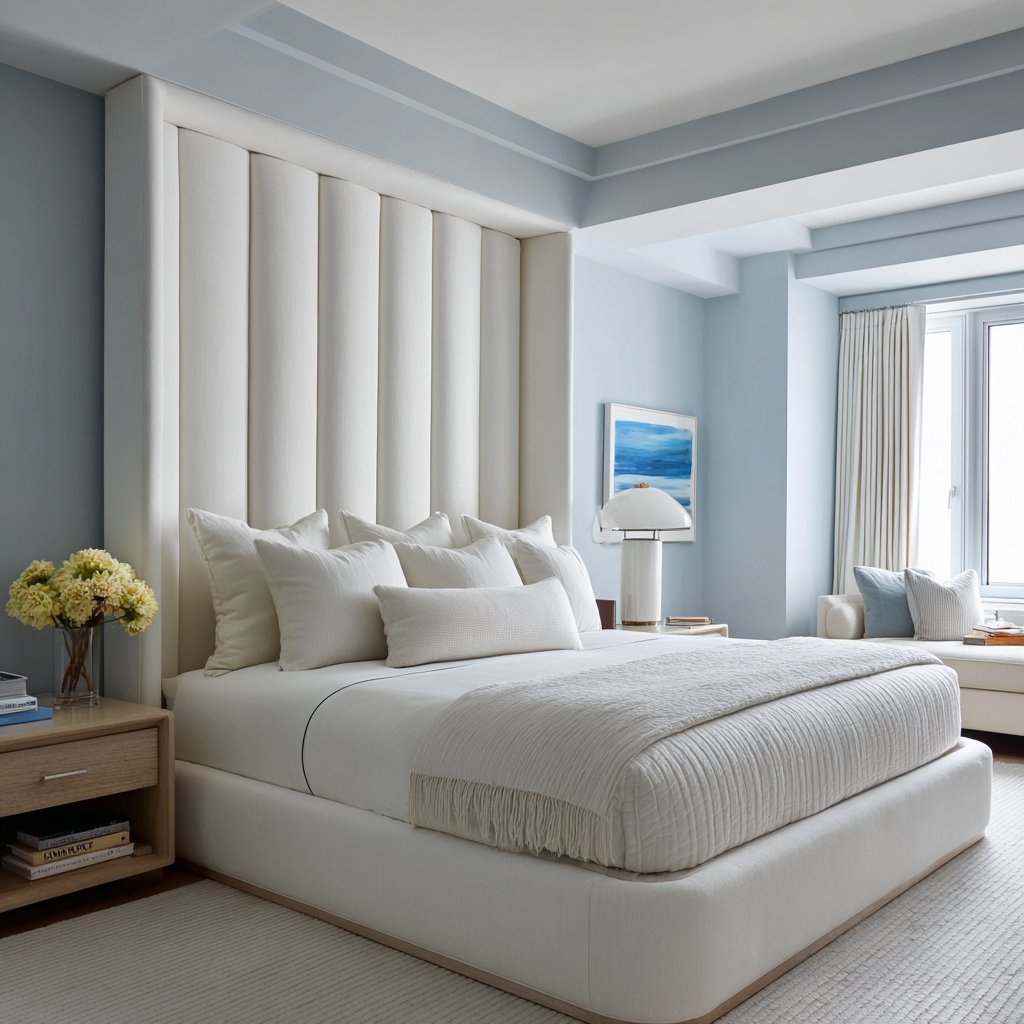
The small window positioned at the foot of the bed creates a focal point for the symmetrical arrangement while providing natural light that illuminates the space evenly. This centered approach requires adequate room width—typically 10-12 feet minimum—but transforms circulation challenges into design assets when dimensions allow.
Key Design Tips:
- Ensure minimum 24-30 inches of clearance on both sides of the bed for comfortable passage and bed-making
- Choose wheeled storage containers of identical size and appearance to maintain the symmetrical aesthetic
- Mount both nightstands at identical heights using a level to maintain the balanced appearance
- Select a pendant light with a dimmer to adjust from bright task lighting to soft ambient glow
- Use the foot-of-bed position to create a focal point with a small bench, trunk, or simply an unobstructed view to the window
22. Tall Headboard with Sound Absorption
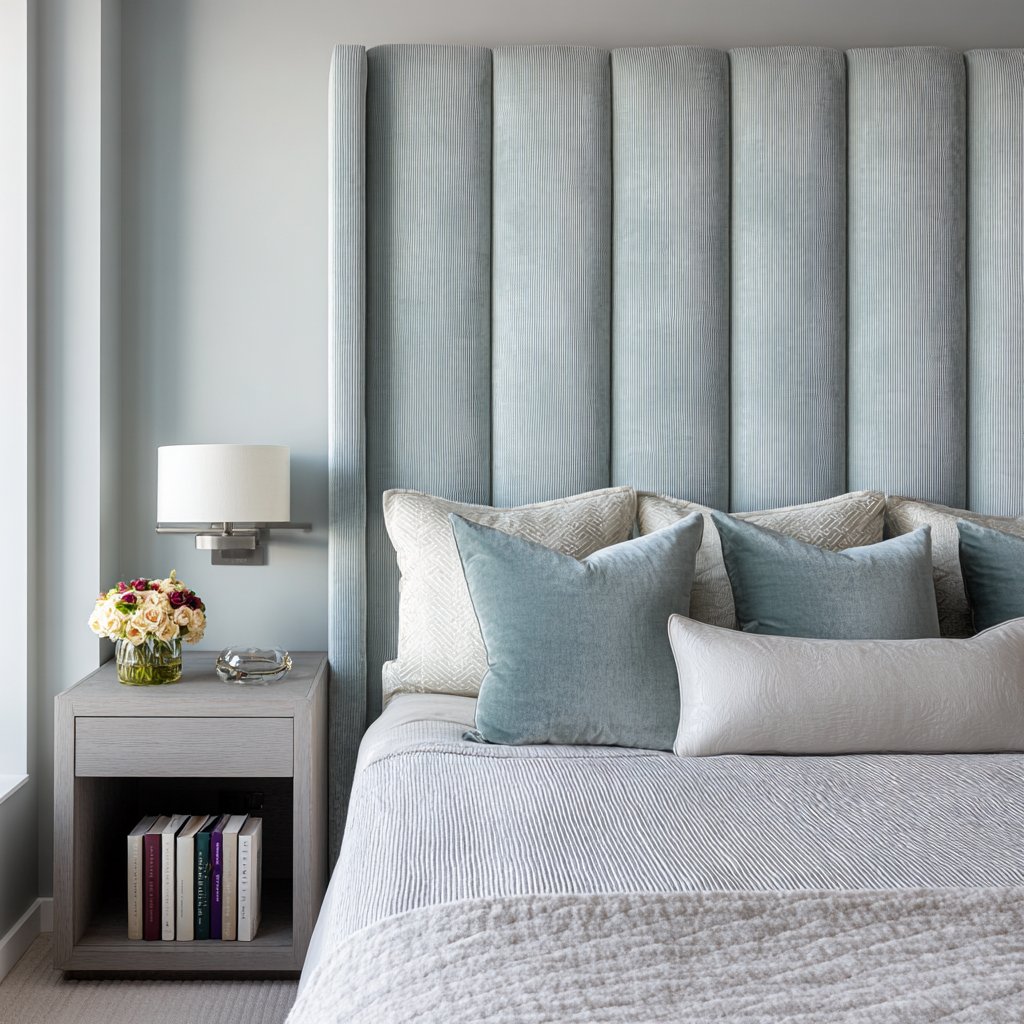
This design features a bed with an exceptionally tall upholstered headboard extending from mattress to ceiling, incorporating fabric panels that provide sound absorption alongside visual drama. Behind the headboard, narrow shelves accessible from the sides hold nighttime essentials—books, glasses, phone, water—keeping items within reach without visible surface clutter. The bed frame features a subtle platform base that adds modern sophistication without excessive height.
The walls in pale grey-blue create a serene environment conducive to rest, while the minimal side table with a single drawer provides essential storage without visual weight. The small reading lamp positioned carefully ensures adequate illumination for bedtime reading without glare. The tall headboard becomes the room’s dominant feature, drawing the eye upward and emphasizing ceiling height while providing practical acoustic benefits that improve sound quality and reduce noise transmission.
The textile texture of the upholstered headboard introduces softness that contrasts with hard wall surfaces, creating tactile interest and visual warmth. This substantial design element works particularly well in very tiny bedrooms because it creates impact through verticality rather than consuming floor space—it makes a bold statement without reducing functional area.
Key Design Tips:
- Choose upholstery fabric with acoustic properties—dense weaves or specialty sound-absorbing textiles work best
- Design the hidden shelving with adequate depth to hold books standing upright—typically 8-10 inches minimum
- Install the tall headboard securely to wall studs to prevent tipping—the height creates leverage that requires solid anchoring
- Use the grey-blue wall color to create a cocoon-like atmosphere that promotes relaxation and sleep
- Consider adding LED strip lighting behind the headboard edges to create a floating effect and provide soft ambient illumination
23. Built-In Wardrobe Alcove System
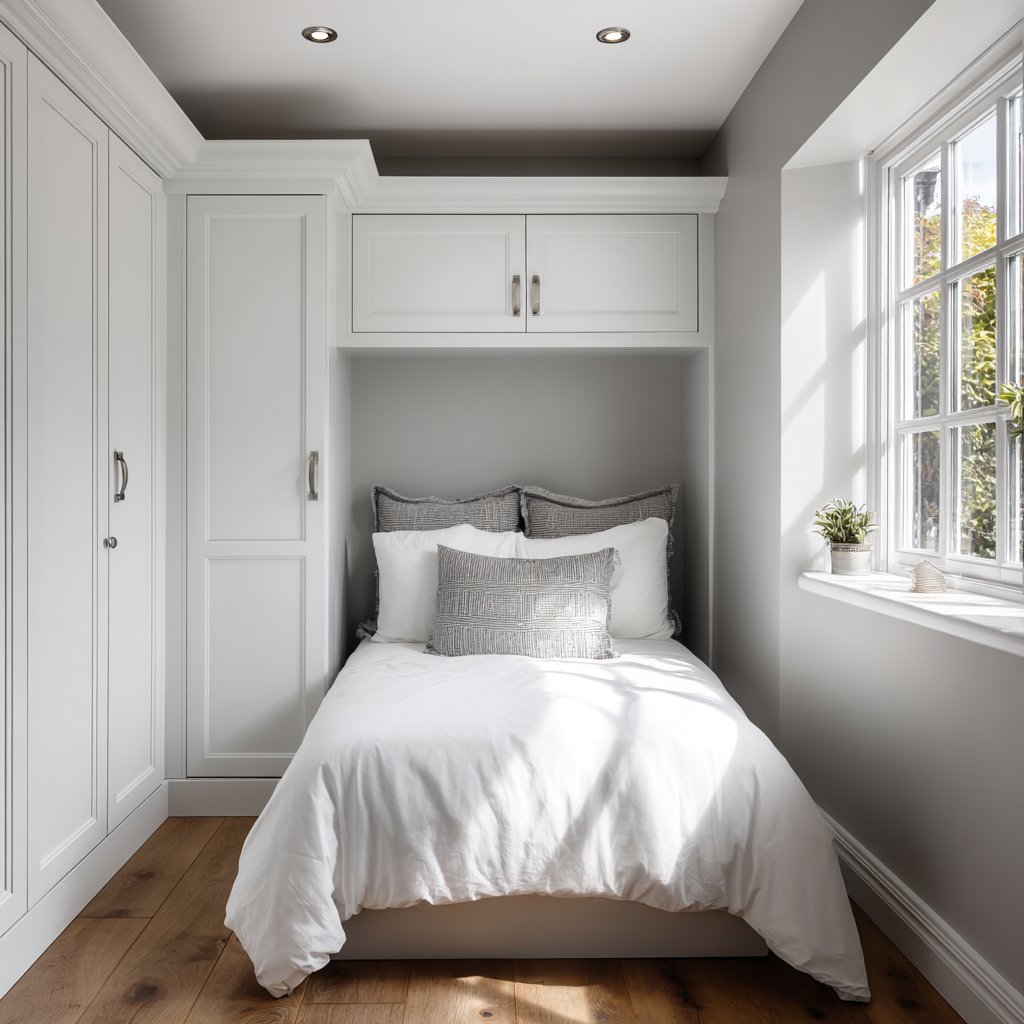
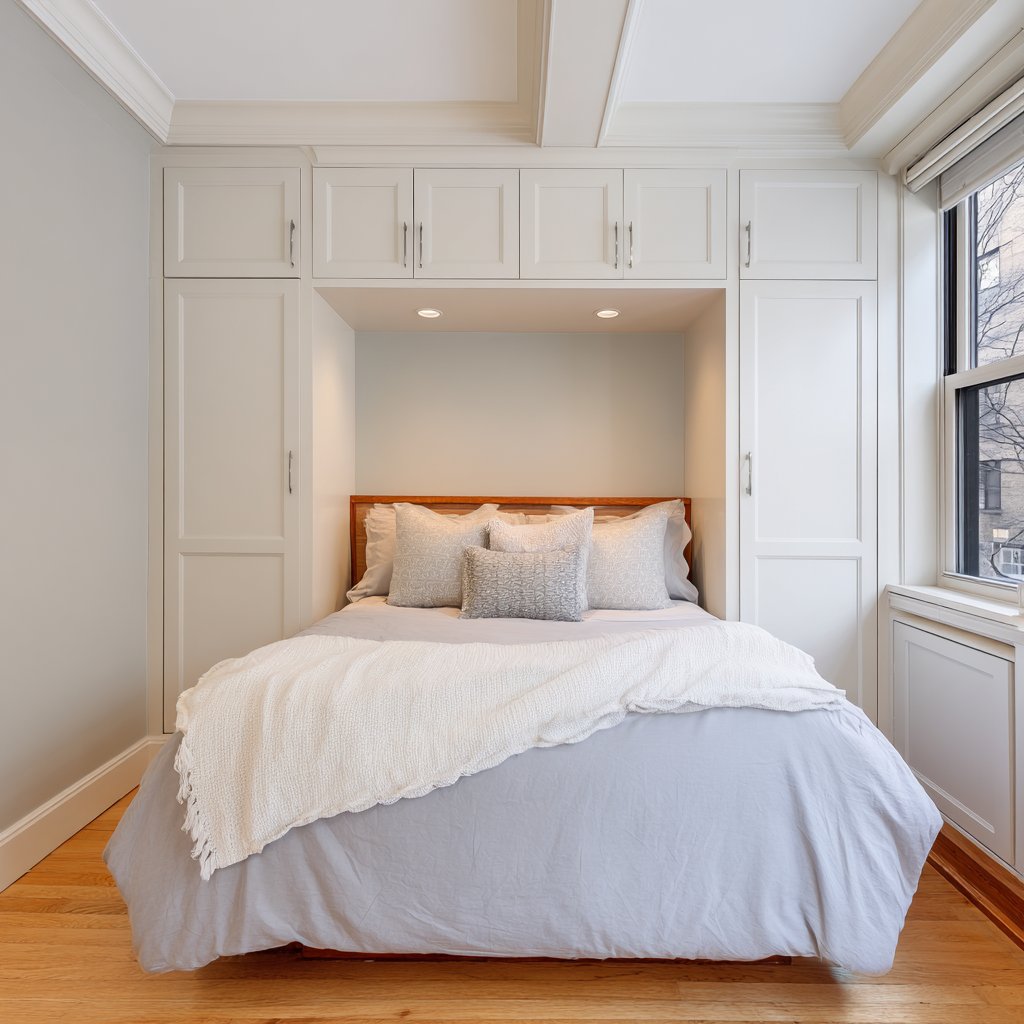
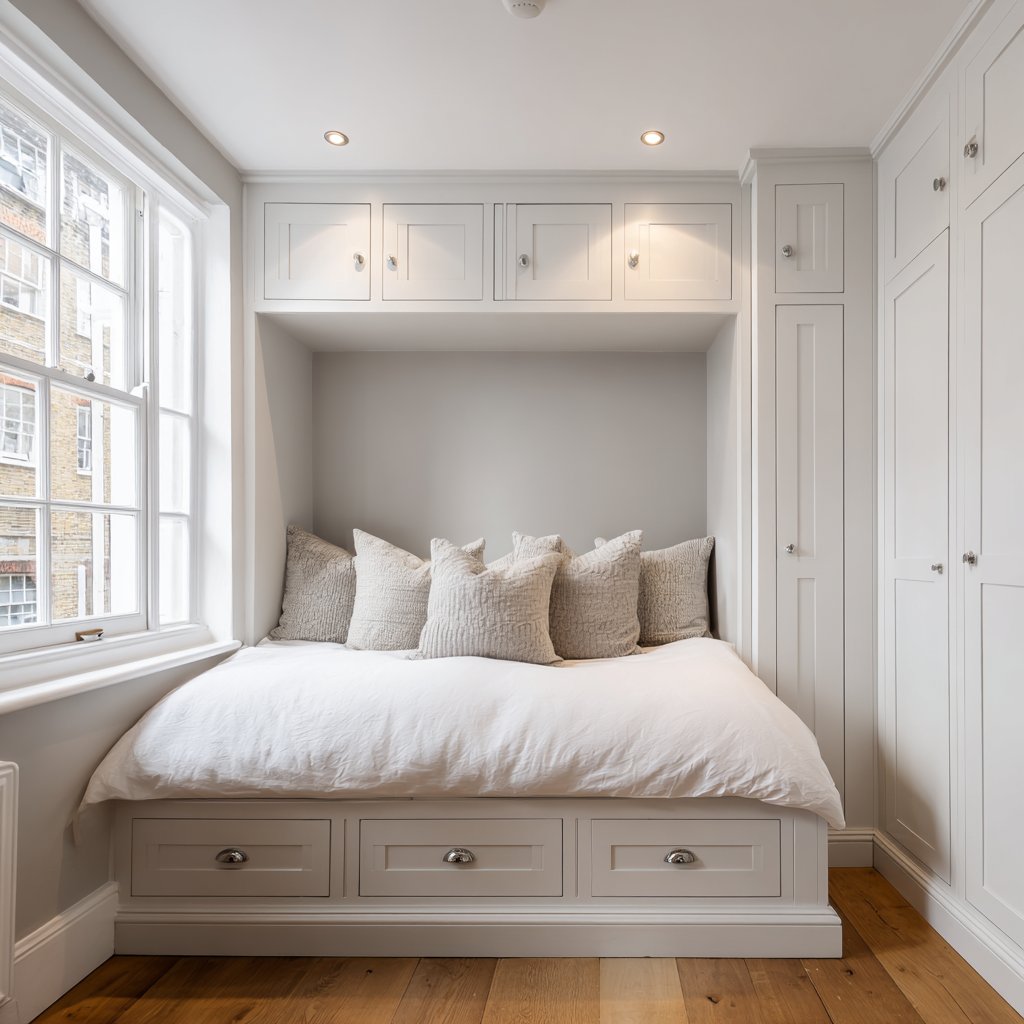
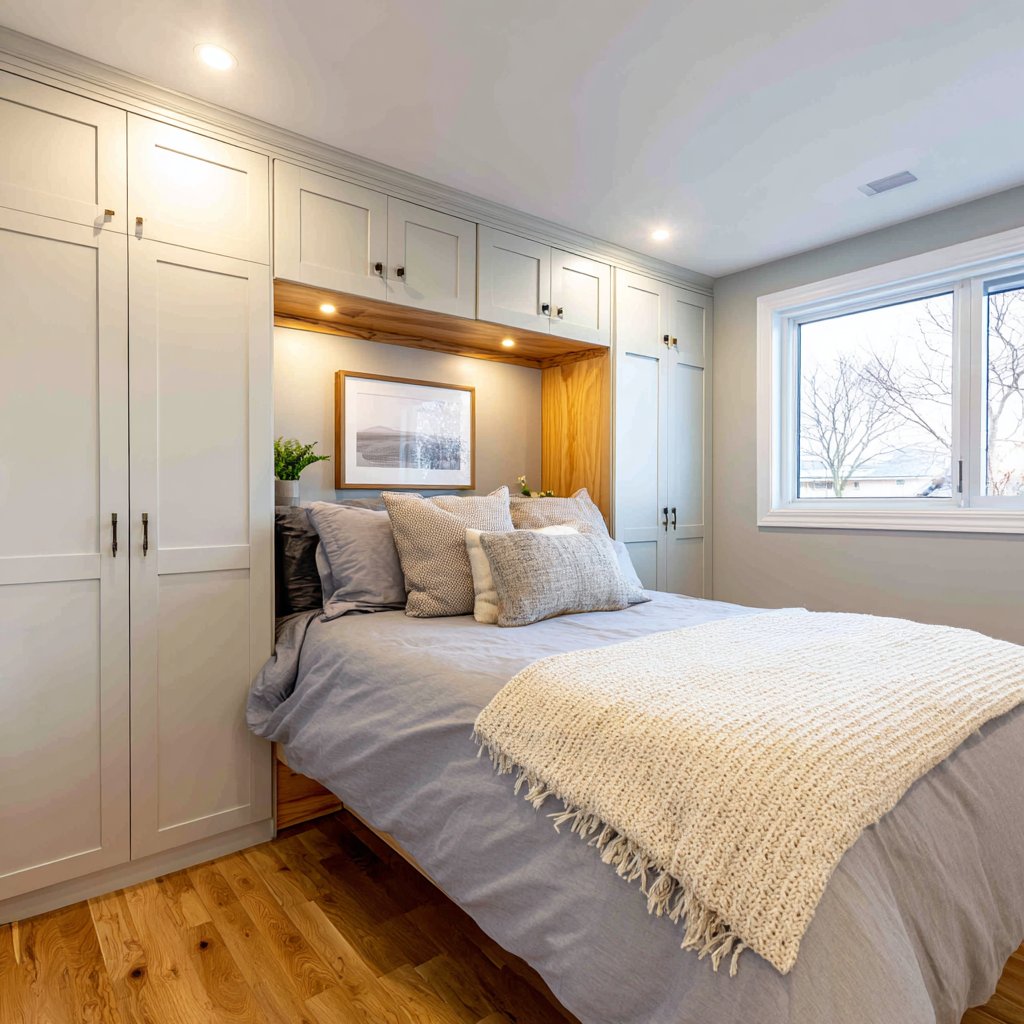
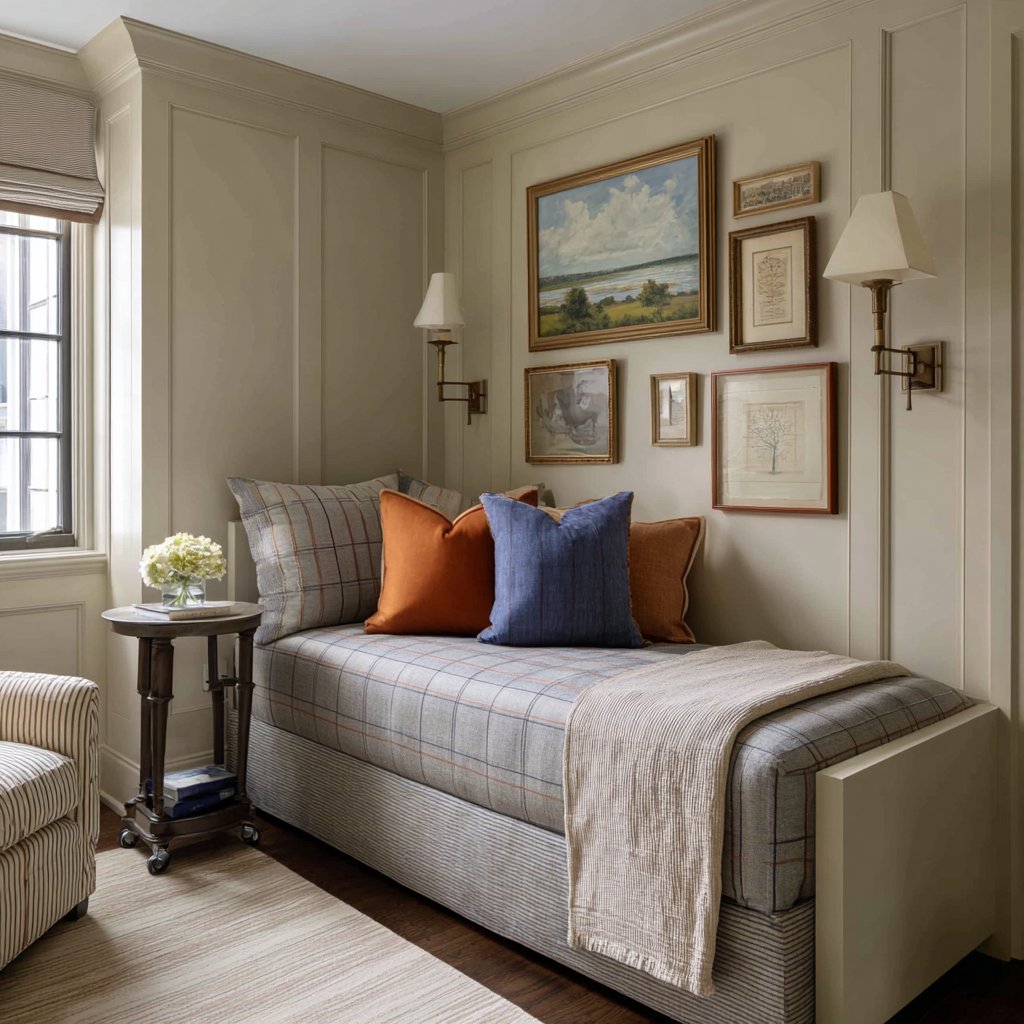
This comprehensive design features a bed alcove surrounded by built-in wardrobes creating storage walls on either side, with overhead cabinetry above the headboard area. The bed fits precisely within the alcove space, creating a custom appearance that maximizes every inch of available room. White cabinetry with simple handles maintains a clean, contemporary look while providing substantial closed storage that keeps clothing, linens, and personal items organized and hidden from view.
The interior of the alcove painted in soft grey creates visual interest through color differentiation while maintaining brightness. Recessed lighting above the bed provides illumination without protruding fixtures that would reduce headroom or create visual clutter. Natural wood flooring visible throughout adds warmth to the white and grey palette, preventing the built-in system from feeling cold or institutional.
This architectural approach to very tiny bedroom design transforms the room itself into a storage solution rather than relying on separate furniture pieces. The result feels custom and cohesive, more like a sophisticated boutique hotel or yacht cabin than a compromised small space. This level of integration requires either excellent carpentry skills or professional installation but provides unmatched storage efficiency.
Key Design Tips:
- Plan the wardrobe interior with varied hanging heights, shelf configurations, and drawer options to accommodate different clothing types
- Include interior lighting on motion sensors within wardrobes so contents are easily visible
- Design the alcove width to allow easy bed-making from at least one side—minimum 24 inches clearance
- Use the overhead cabinet for seasonal items or rarely accessed belongings to keep frequently-used items in more accessible locations
- Consider soft-close hardware throughout to prevent slamming doors and drawers in the compact space
24. Daybed with Pull-Out Storage Trundle
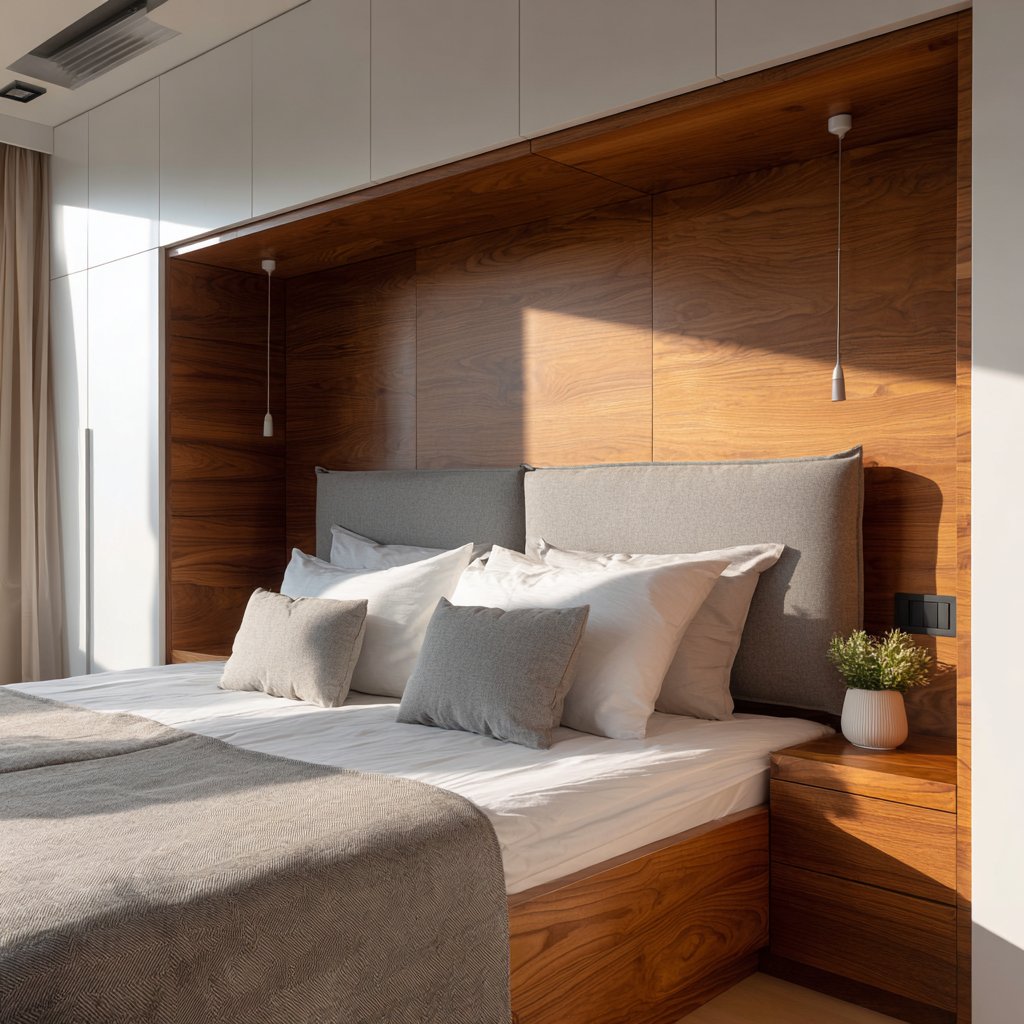
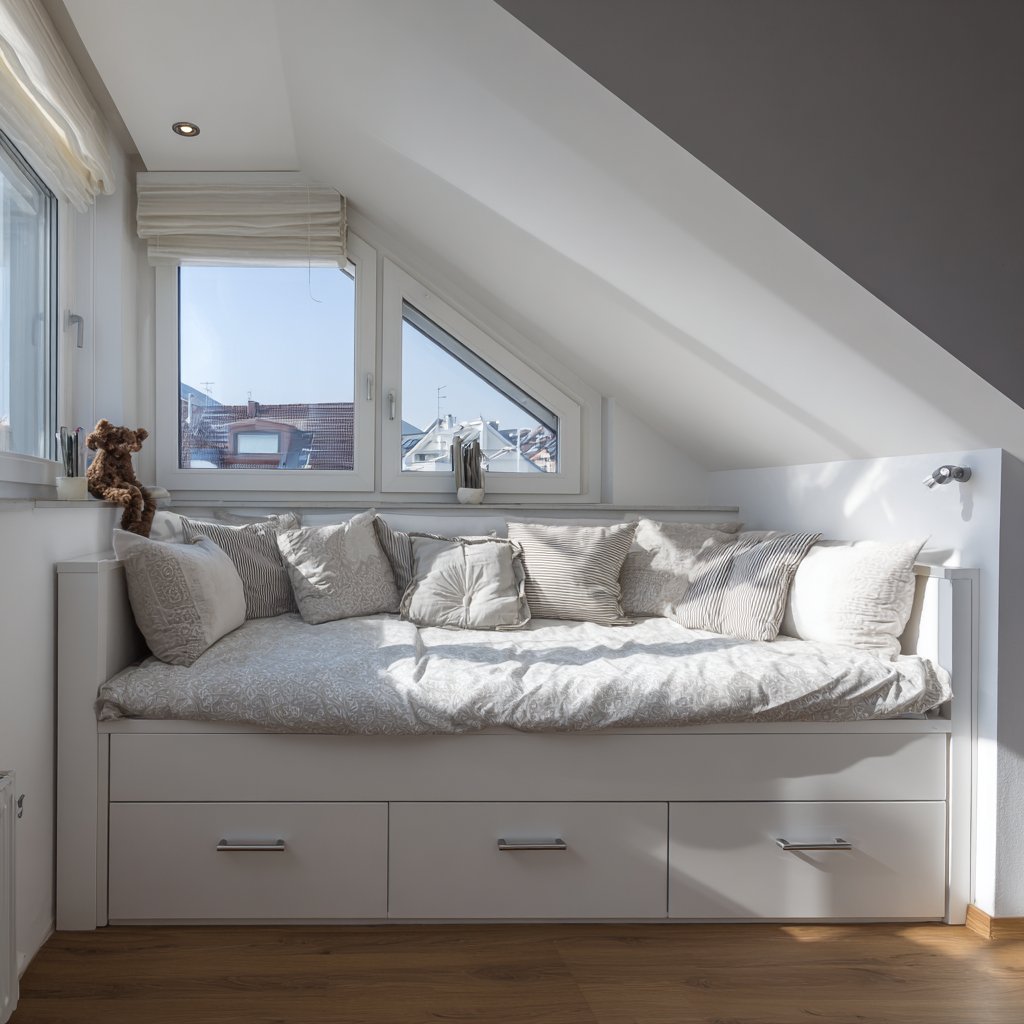
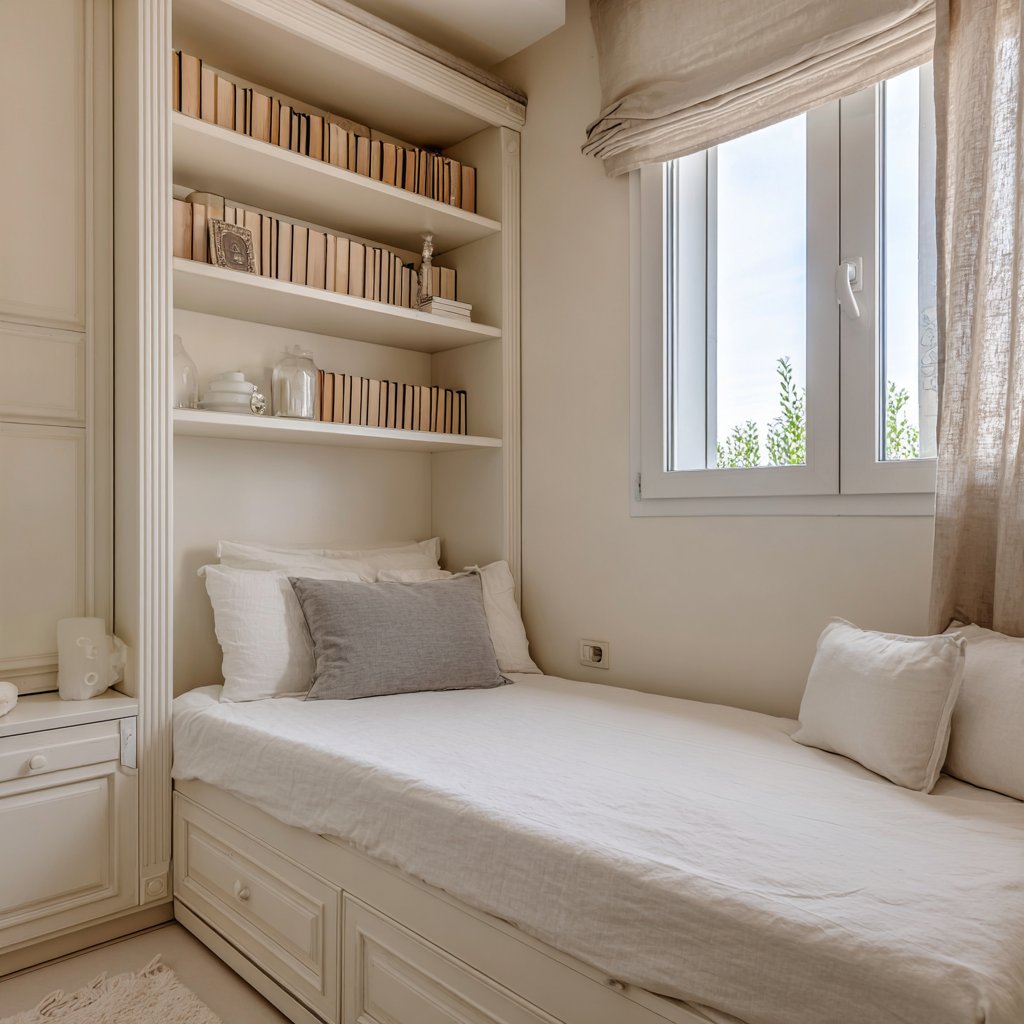
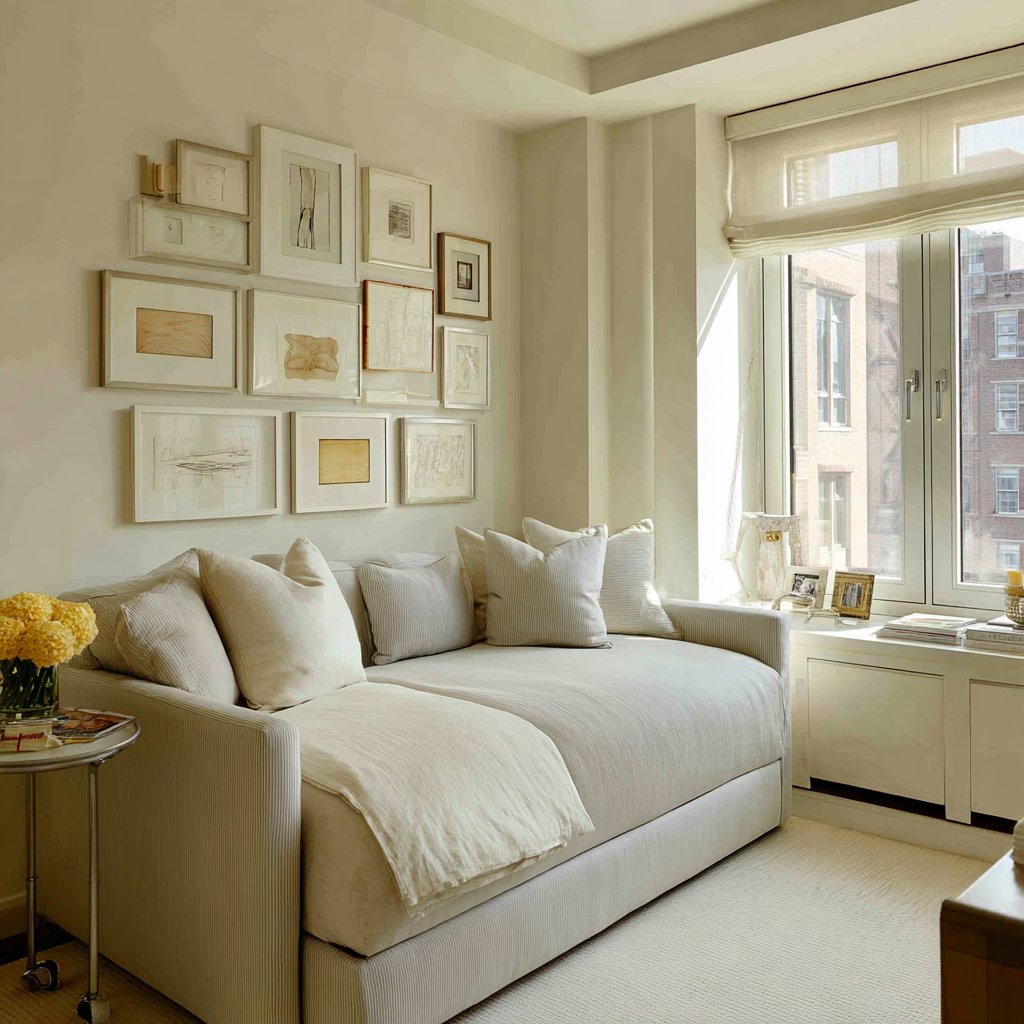
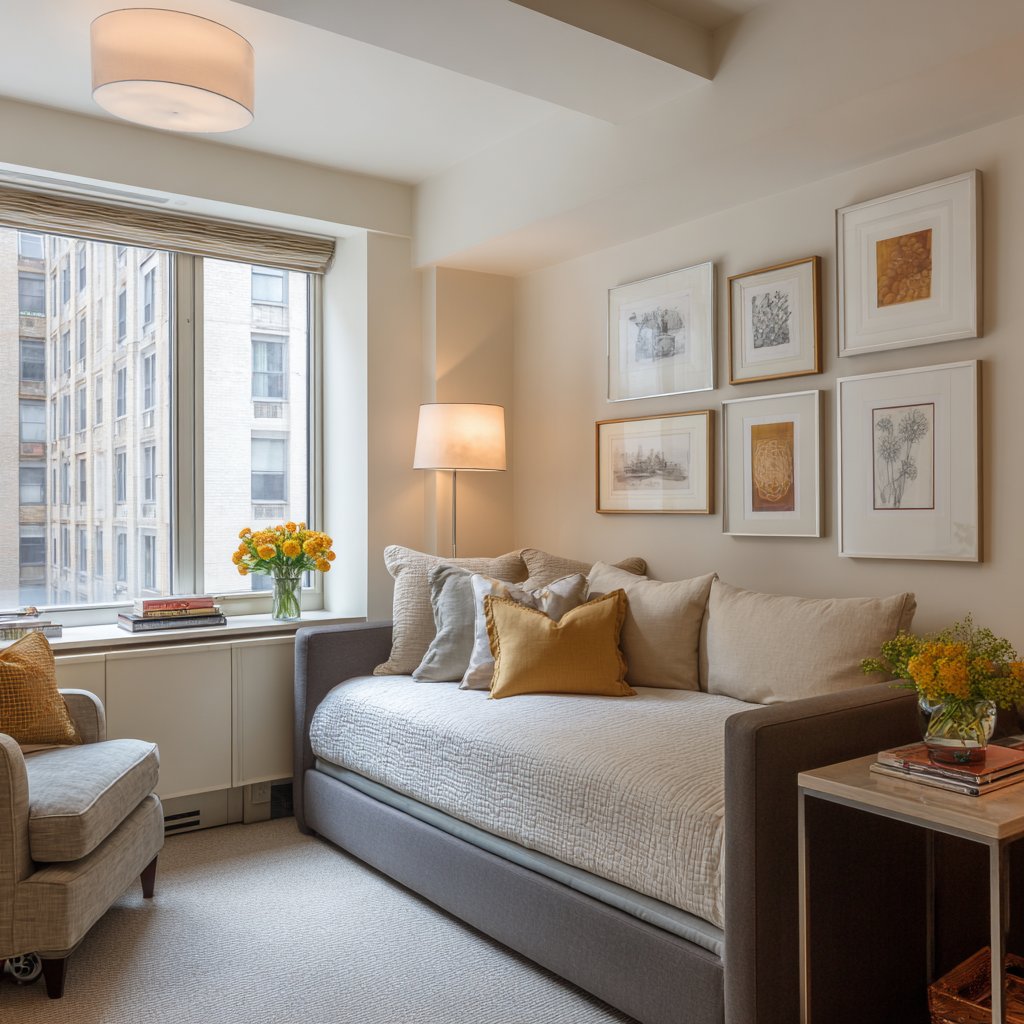
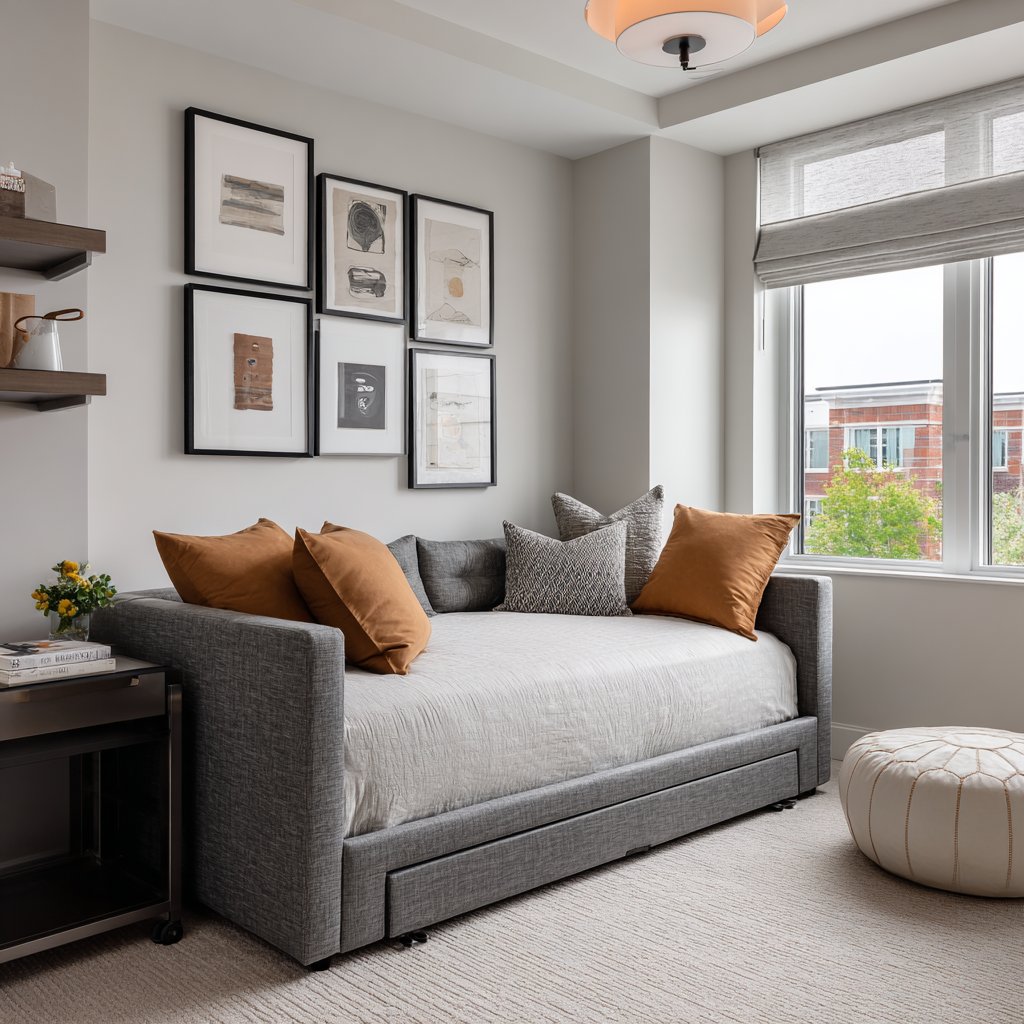
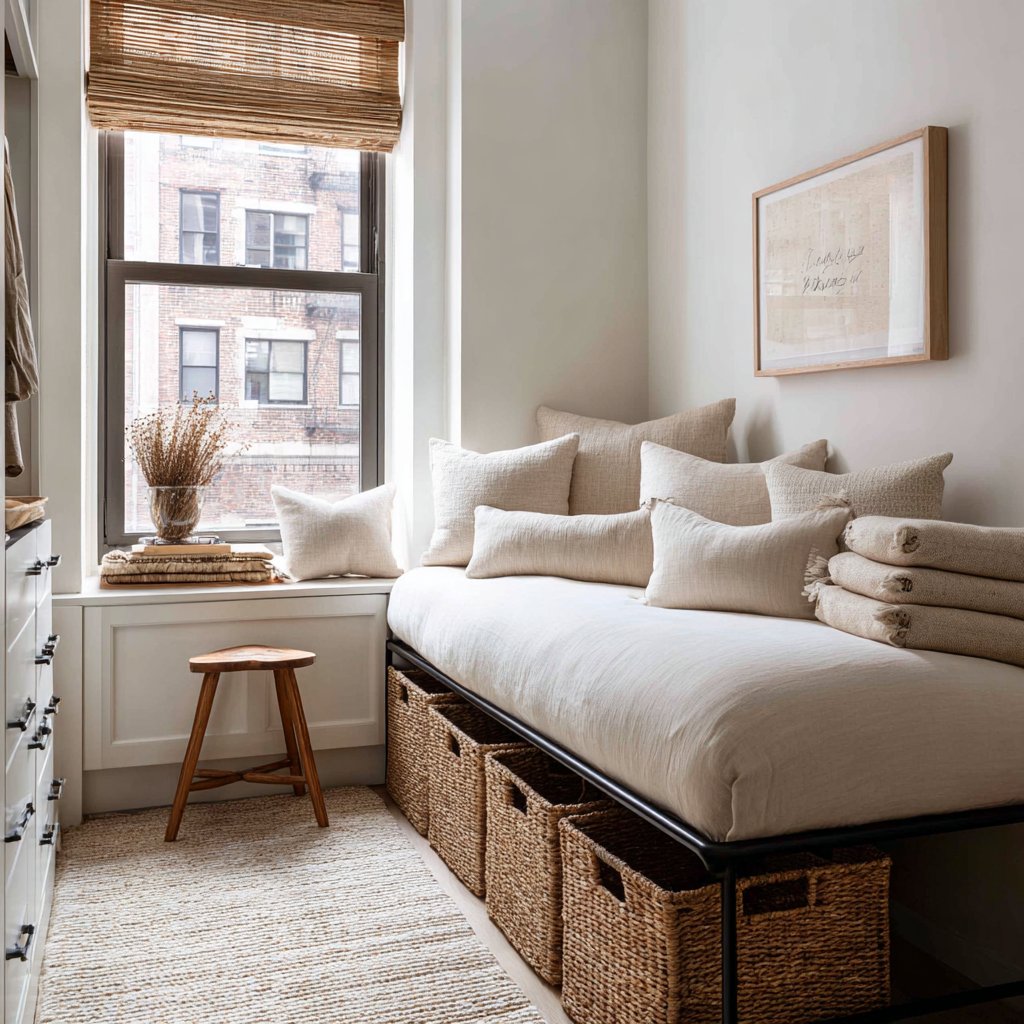
This practical design features a daybed with low back and sides creating a sofa appearance during waking hours, styled with throw pillows that transform the sleeping surface into comfortable seating. Beneath the daybed, a large pull-out trundle provides substantial storage for bedding, pillows, or off-season items rather than an additional mattress. The wall above features a gallery rail system with small artworks creating personalized visual interest without drilling multiple holes or committing to permanent arrangements.
The neutral palette dominated by warm white walls and grey upholstery creates versatility that adapts to changing decor preferences without requiring furniture replacement. A small side table on casters provides mobile surface space that moves wherever needed—beside the daybed for drinks during TV watching, pulled away for floor exercises, or positioned near the window for plant care. The simple window treatment nearby maintains privacy while allowing natural light to fill the space.
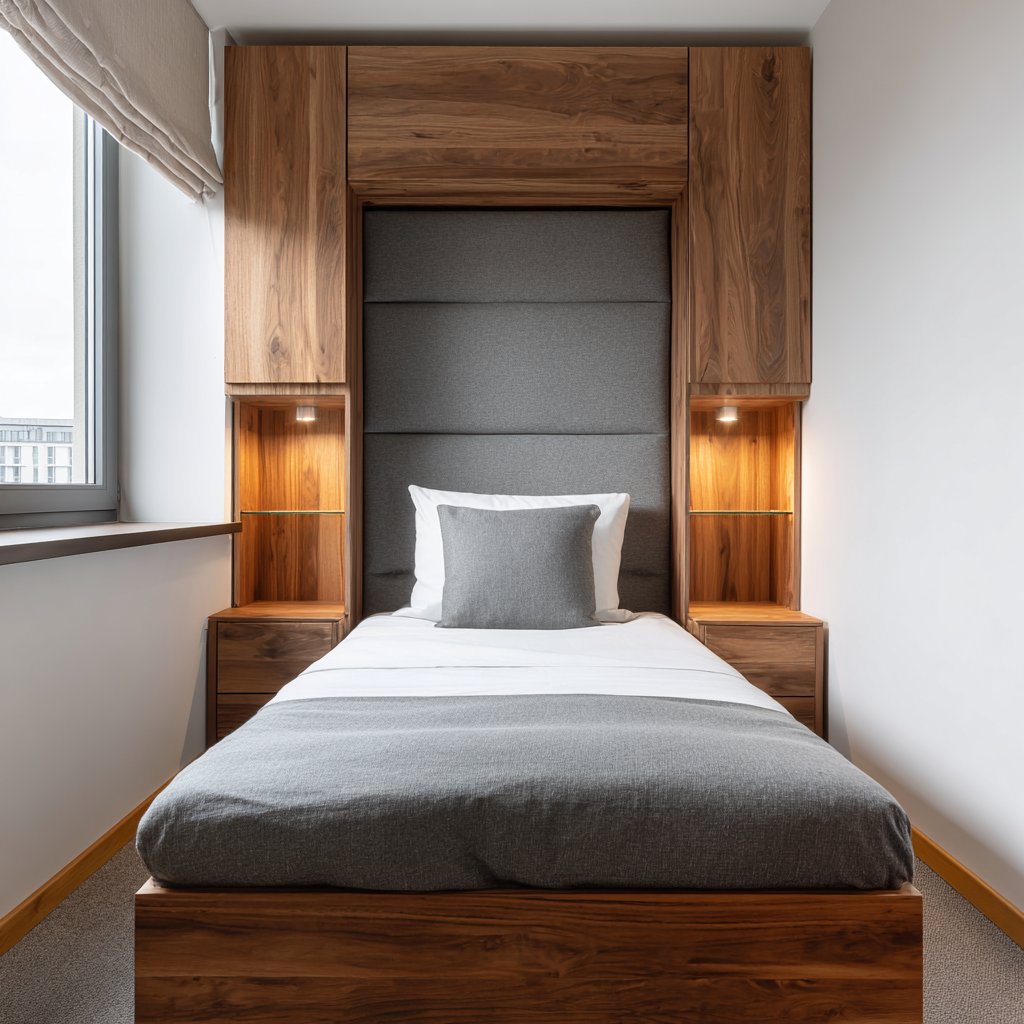
The convertible nature of this furniture arrangement makes it particularly suitable for very tiny bedrooms that must serve multiple functions—guest room, home office, hobby space, personal retreat. The quick transformation from sitting to sleeping requires only removing throw pillows and adding sleeping pillows, a minimal transition that respects both uses equally.
Key Design Tips:
- Select throw pillows in varying sizes and textures to create depth and comfort for sitting without excessive quantity
- Choose a trundle depth adequate for storing full bed sets including duvet, pillows, and extra blankets
- Use the gallery rail to create a rotating display that can change seasonally or as interests evolve
- Position the mobile side table where it’s most frequently needed, developing a parking spot for when it’s not in active use
- Consider adding a small reading lamp that clips onto the daybed back for task lighting without requiring table space
25. Continuous Headboard-Nightstand Unit
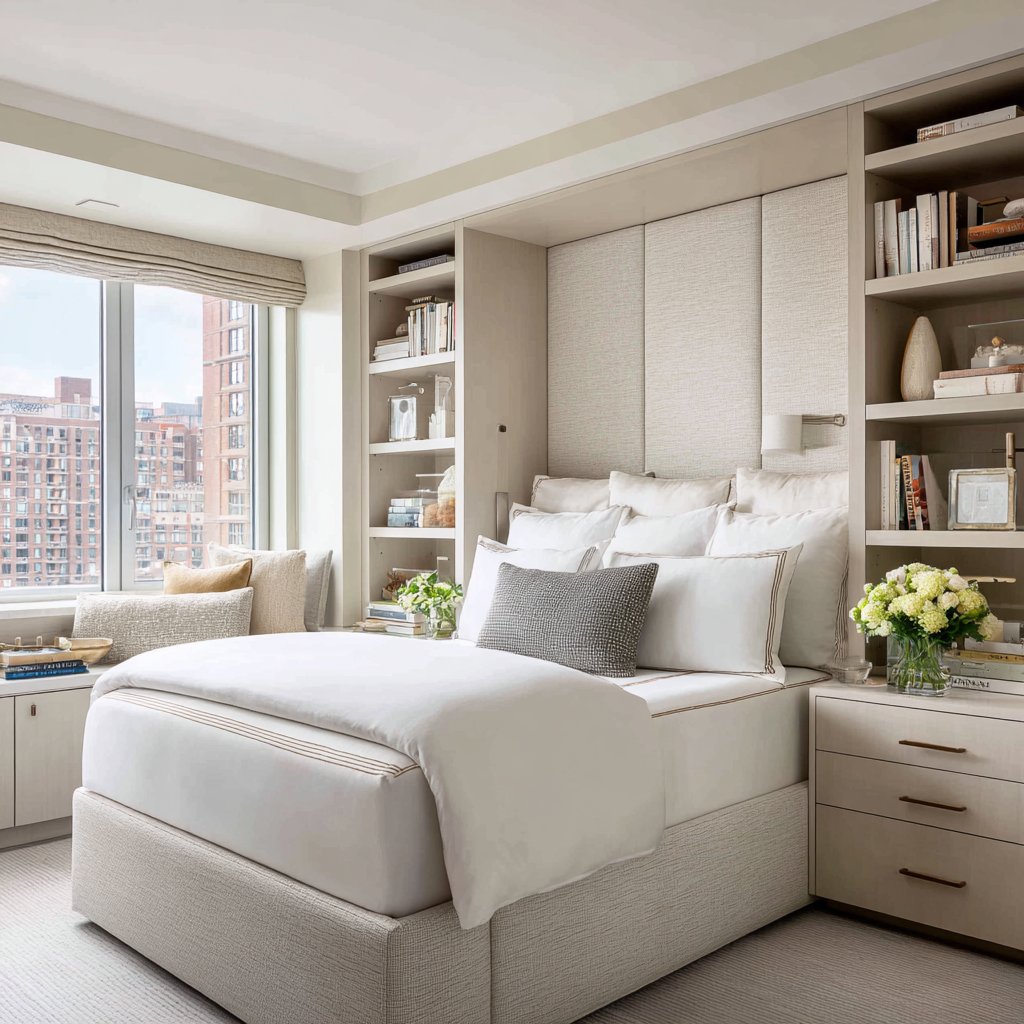
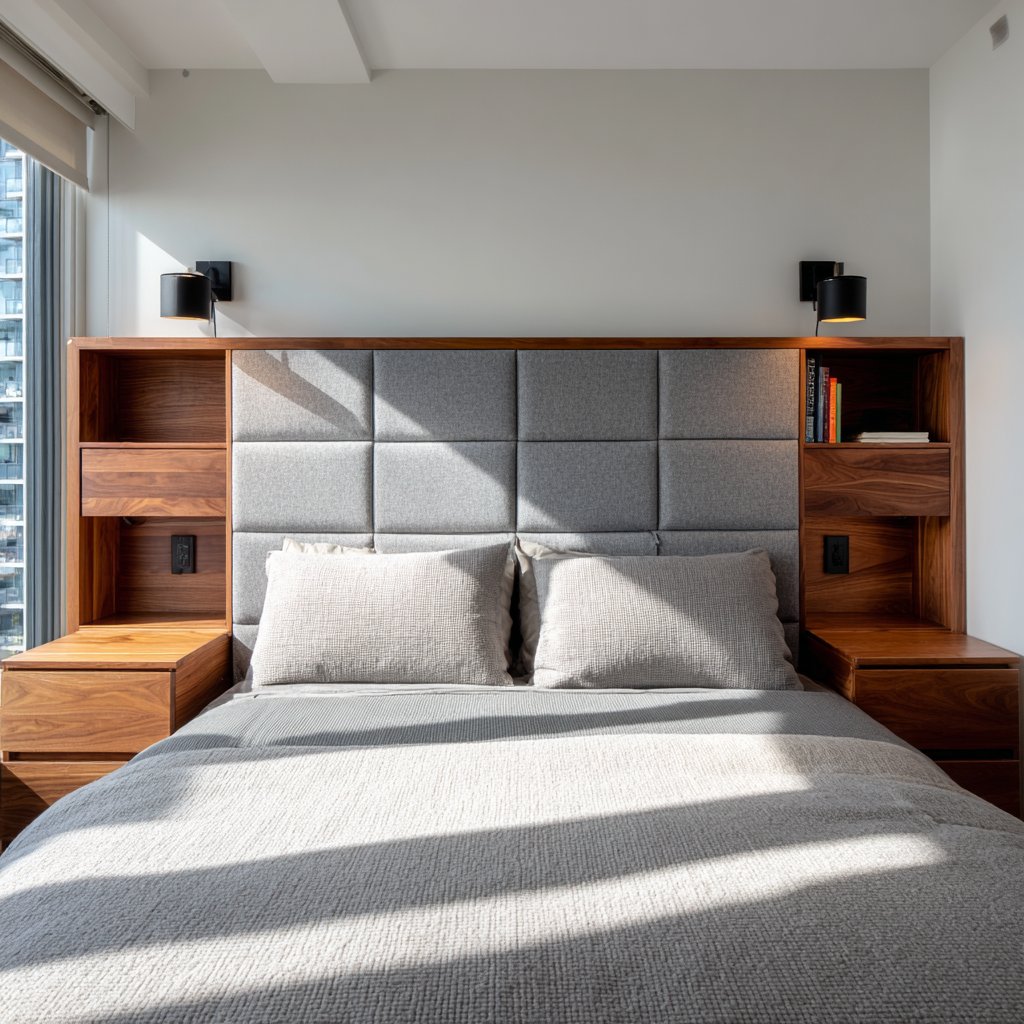
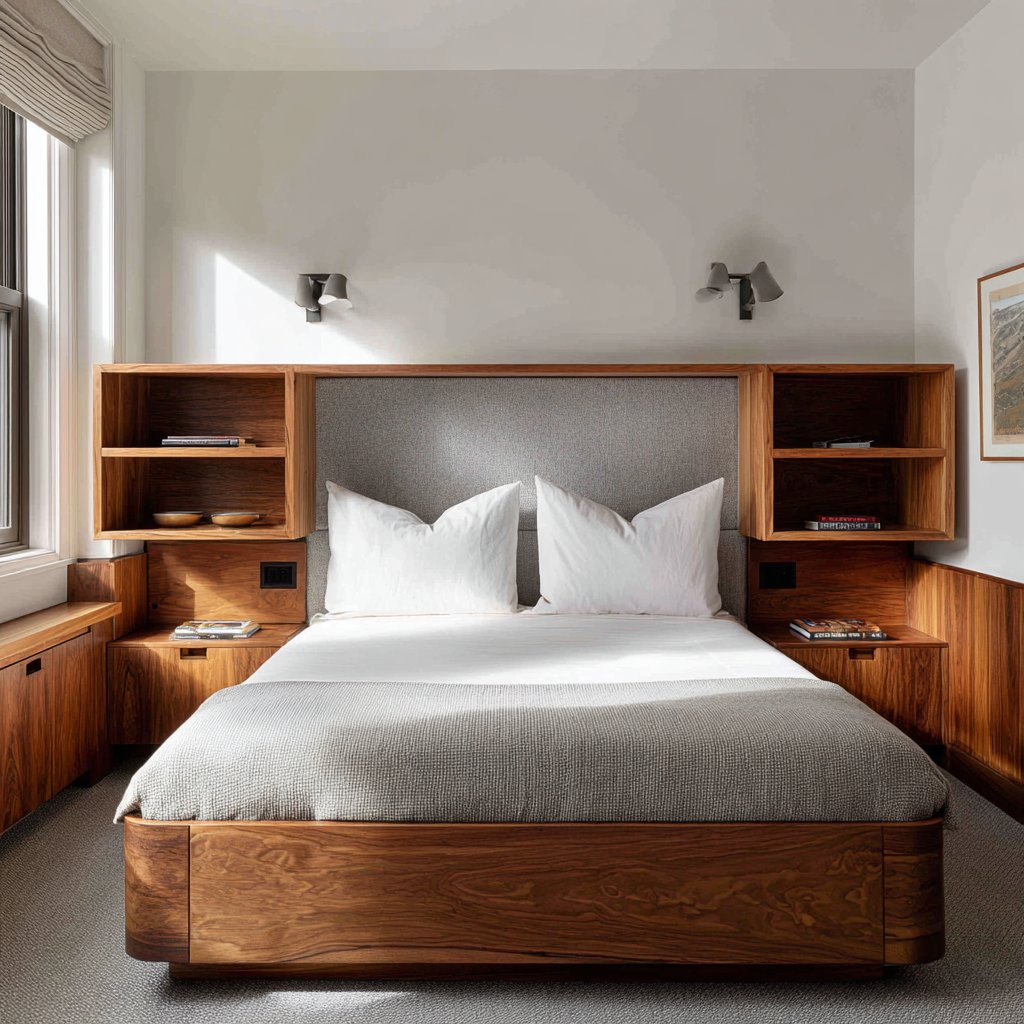
This integrated design features a bed with nightstands built as part of a continuous headboard unit spanning the full wall width, creating a cohesive furniture piece rather than separate components. Each nightstand section includes an open shelf for items in current use and a closed drawer for items requiring privacy or protection from dust. The central headboard area features padding for comfortable sitting while reading or watching content on devices.
The natural walnut finish creates warmth and visual weight appropriate for the substantial furniture piece, while the grey upholstered central panel introduces softness and color variation. White walls surrounding the unit allow the wood tones to stand out without competing colors. Matching wall-mounted reading lights above each nightstand section provide individual control and eliminate the need for table lamps that would consume valuable surface space.
The small window with light curtain allows natural illumination while the integrated design ensures all bedroom functions—sleeping, storage, lighting, display—consolidate into a single wall-mounted element. This consolidation exemplifies efficient very tiny bedroom design where thoughtful integration creates both practical function and visual harmony.
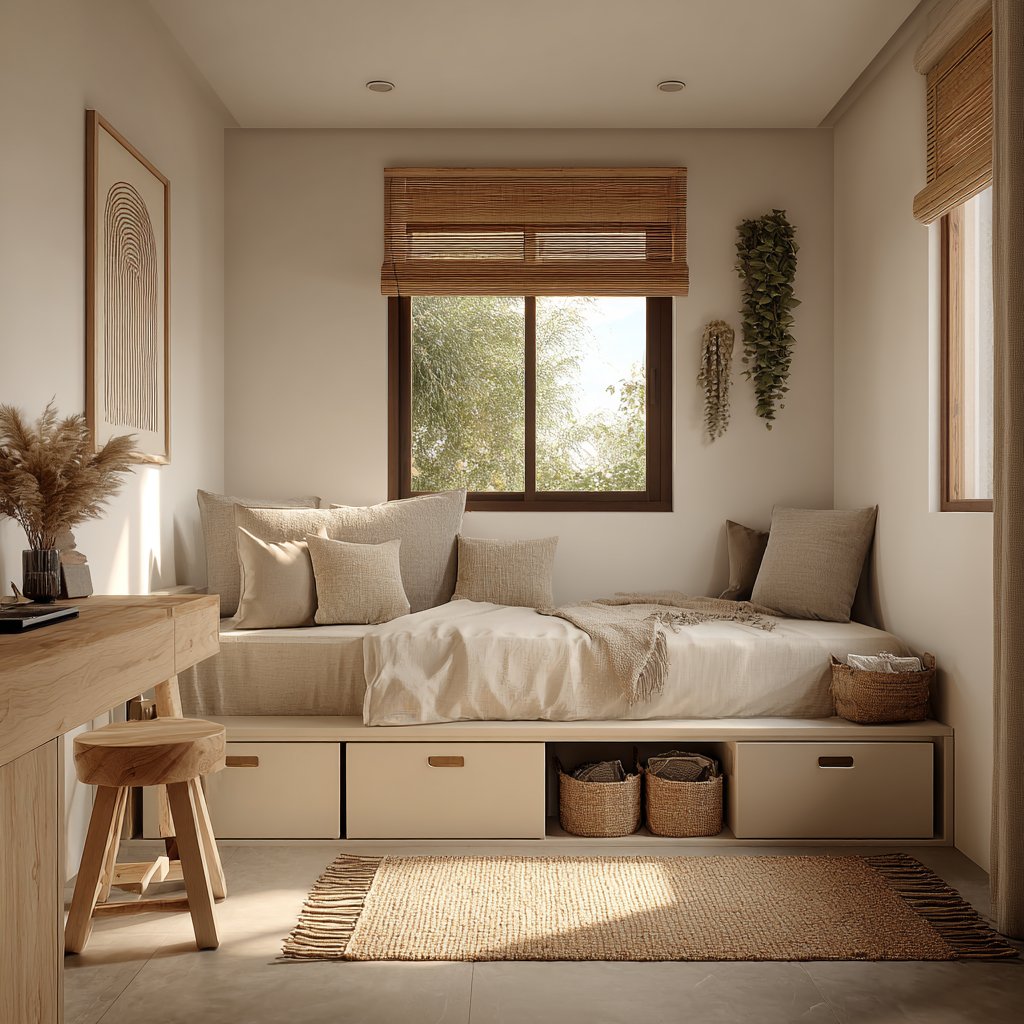
Key Design Tips:
- Design nightstand surfaces at a height comfortable for reaching from a sitting position in bed—typically 22-26 inches from the floor
- Include cable management within the headboard unit for clean charging without visible cords dangling down walls
- Use the open shelves for items accessed daily—current book, phone, glasses—and drawers for everything else
- Choose wood finishes that complement flooring and other wood elements in the space for visual continuity
- Position the wall-mounted lights on articulating arms that adjust to different reading positions and angles
26. Honest Storage with Visible Organization
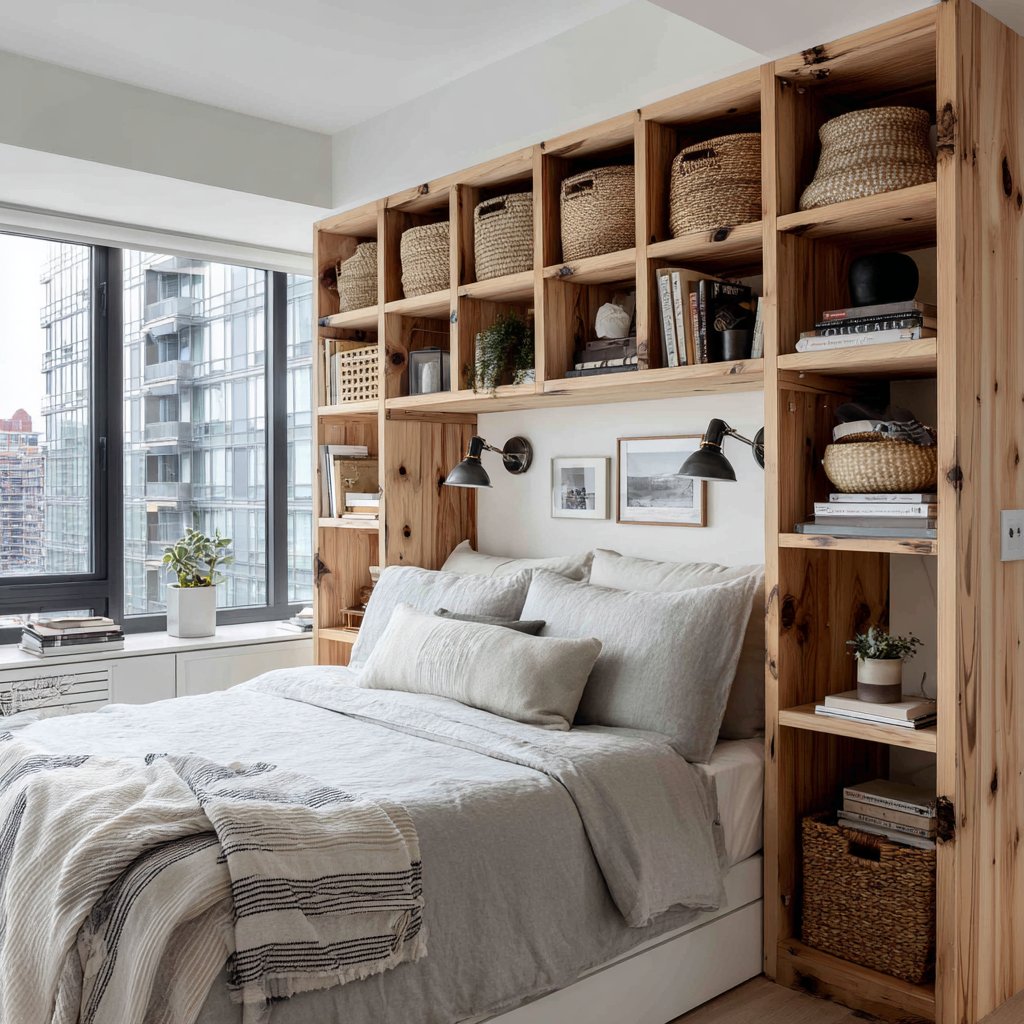
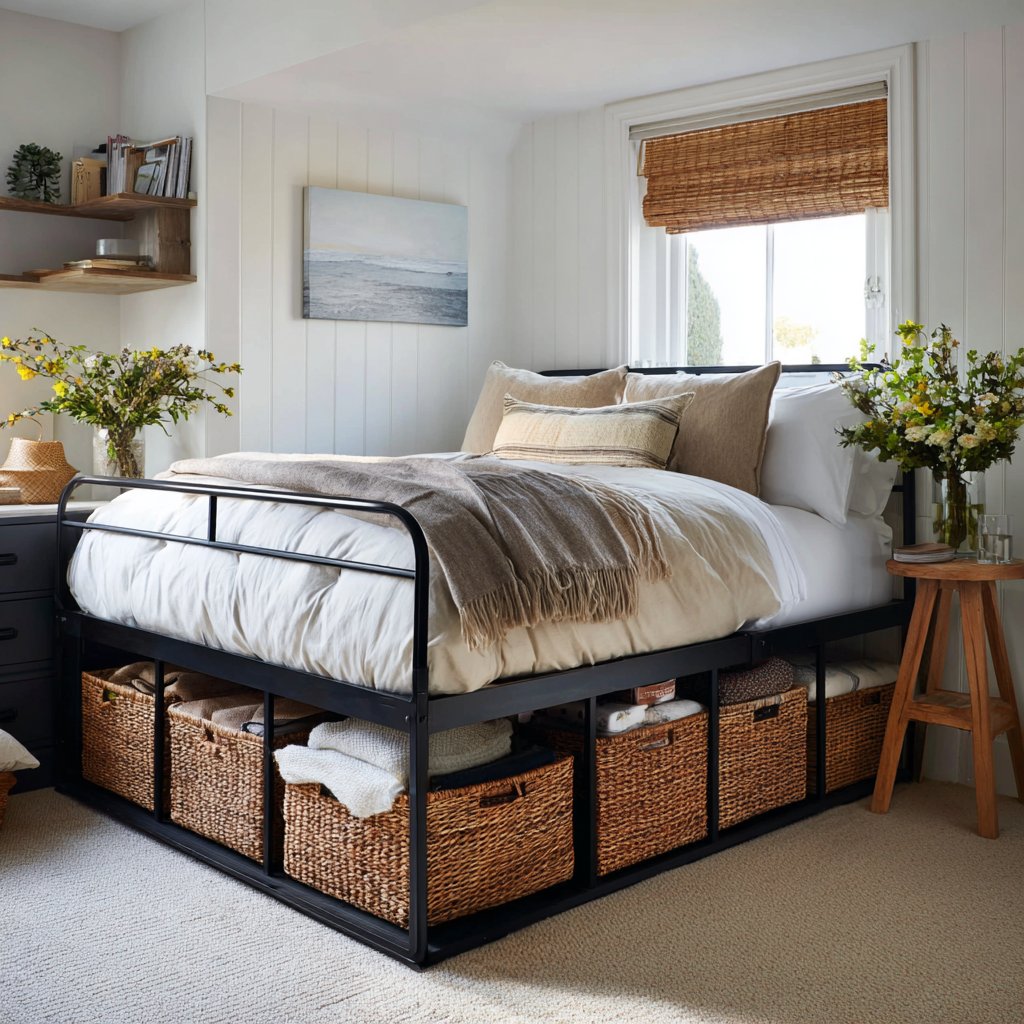
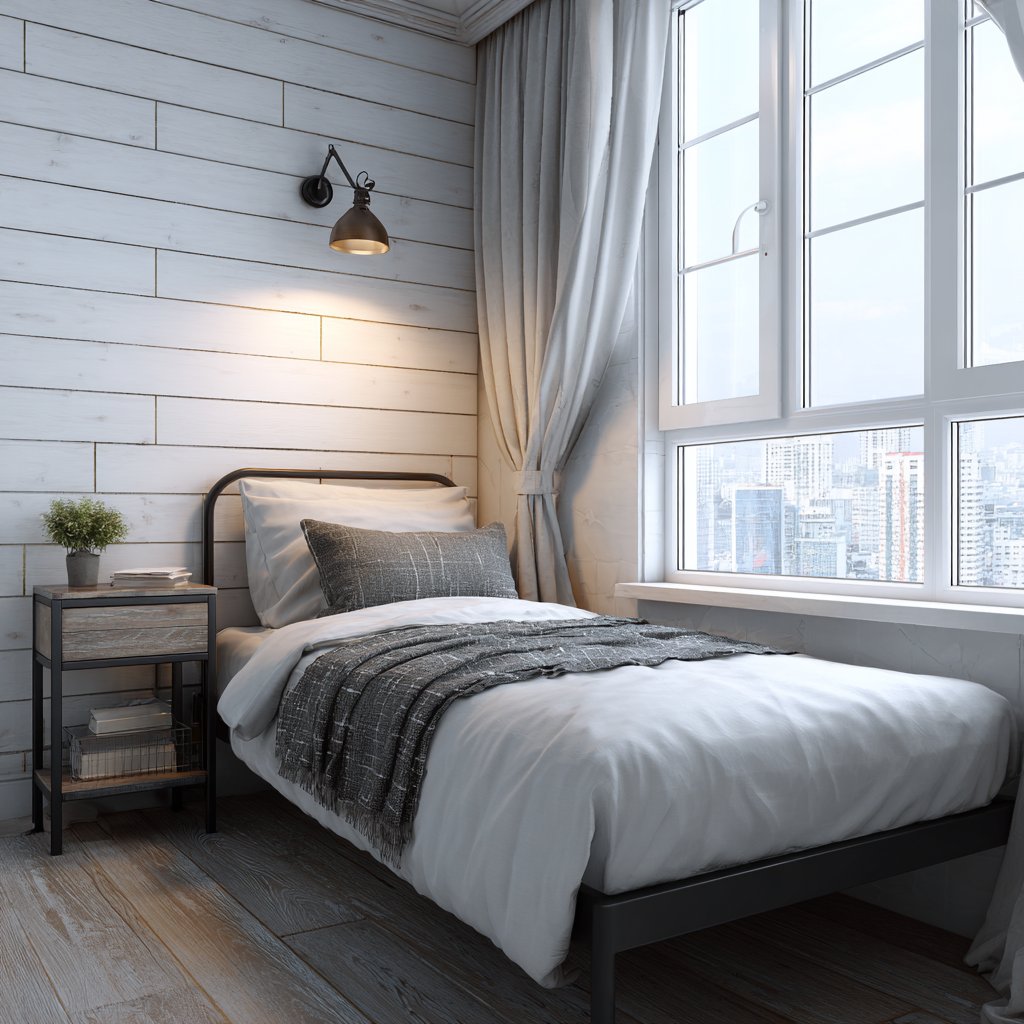
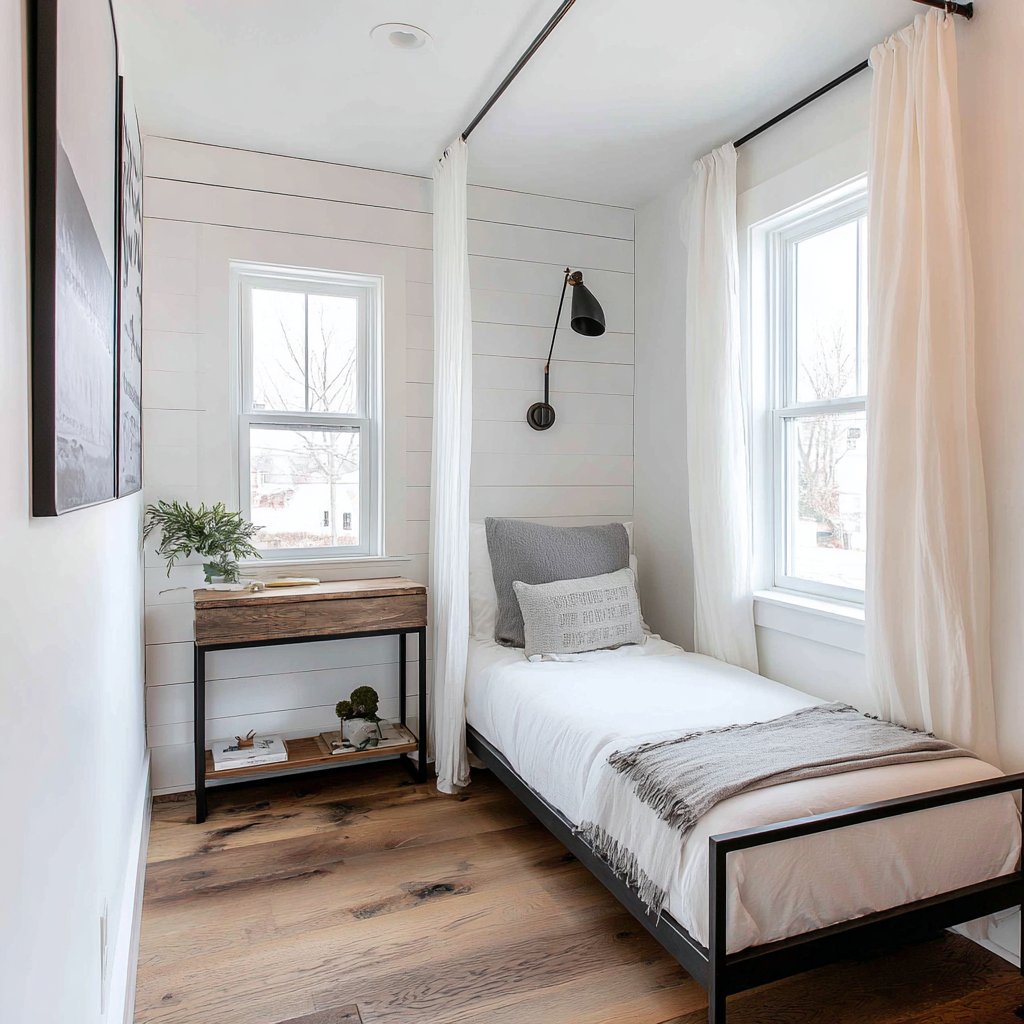
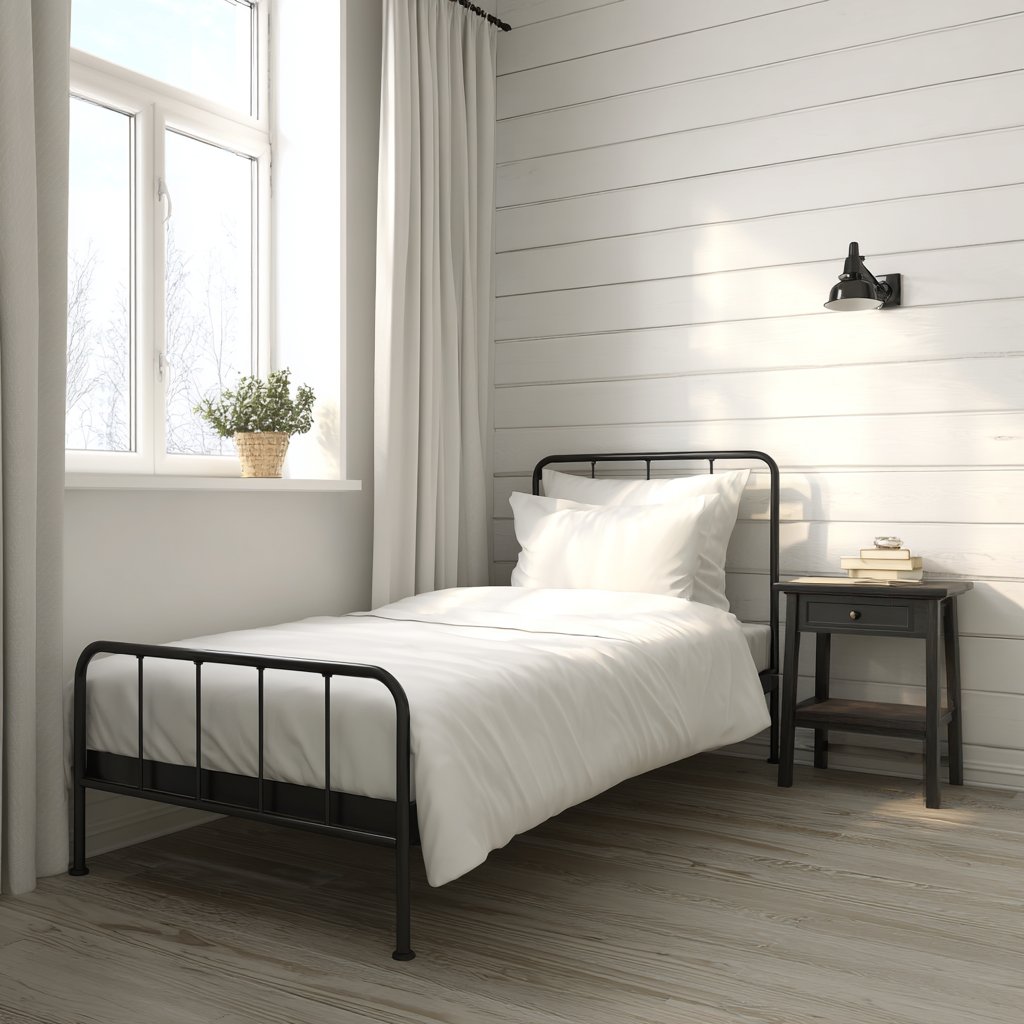
This refreshingly straightforward design features a minimalist low-profile bed with storage boxes underneath that remain visible and accessible, styled as intentional design elements rather than concealed clutter. The matching canvas storage boxes in neutral tones create an organized appearance that celebrates practical storage rather than hiding it behind bed skirts or closed drawers. The simple metal bed frame in matte black provides industrial contrast to the soft storage containers.
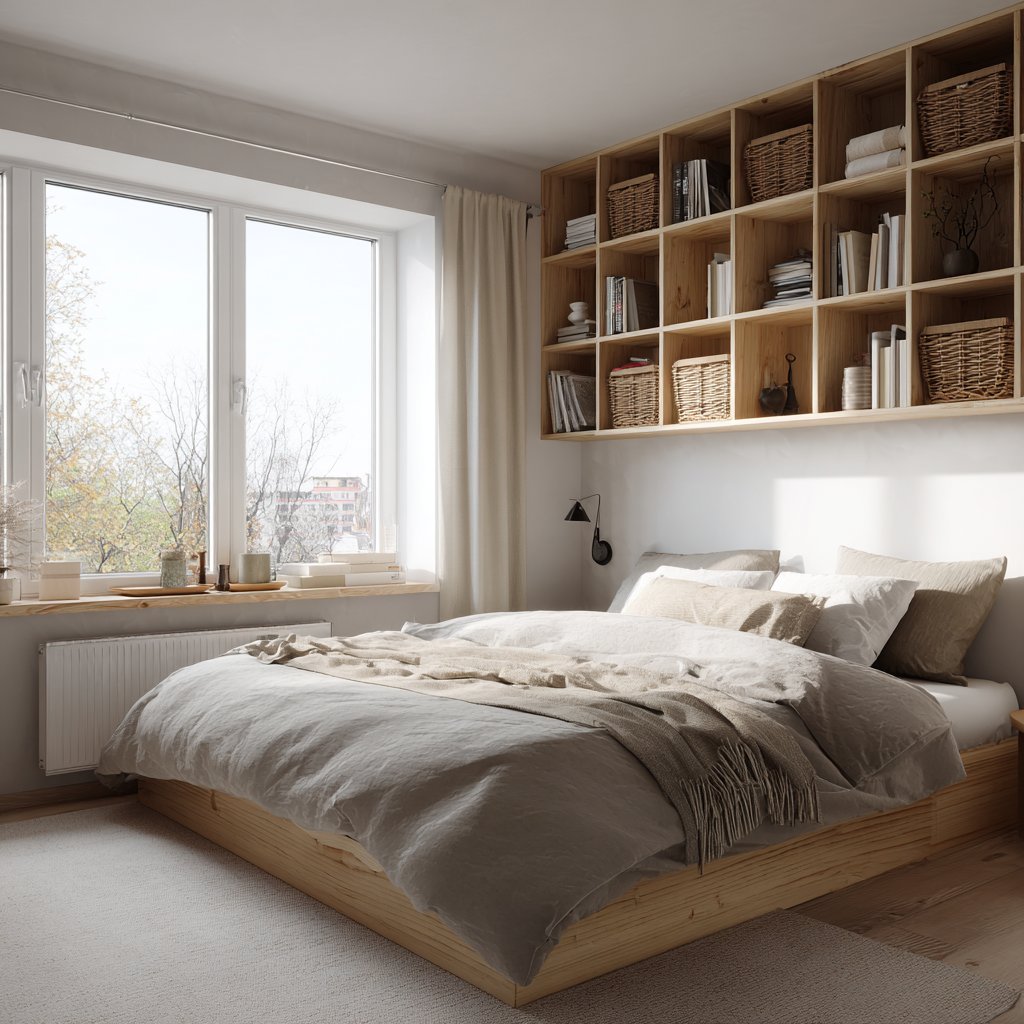
White walls with a single piece of minimal wall art demonstrate that very tiny bedrooms don’t require extensive decoration—sometimes restraint creates more impact than abundance. A small wooden stool serves as a nightstand, its simple form and natural material adding warmth without visual complexity. The window with bamboo shade filters natural light while introducing organic texture through the natural fiber material.
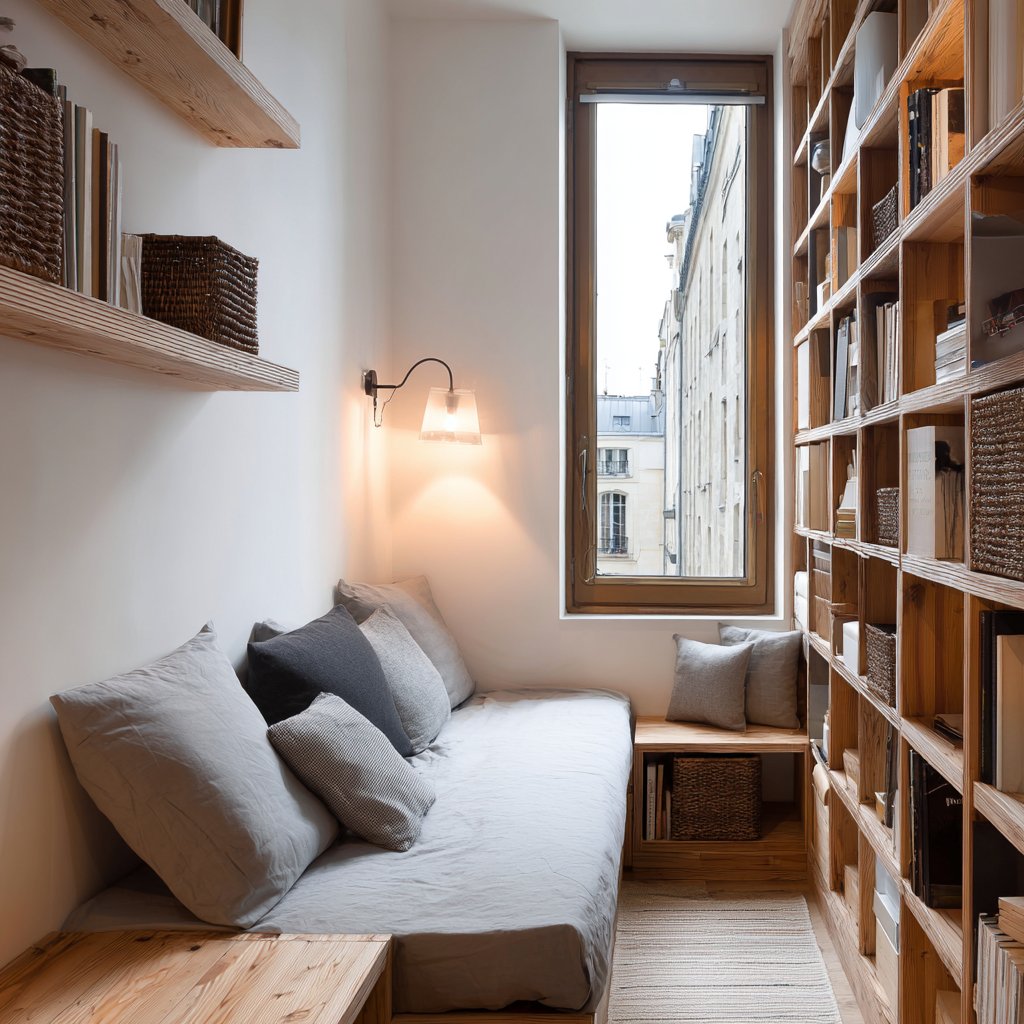
This honest approach to storage reflects contemporary values around transparency and authenticity—there’s no pretense about needing storage in a tiny bedroom, so why conceal it? The visible organization can actually inspire better habits, as the exposed nature of the storage encourages maintaining order rather than hiding mess behind closed doors.
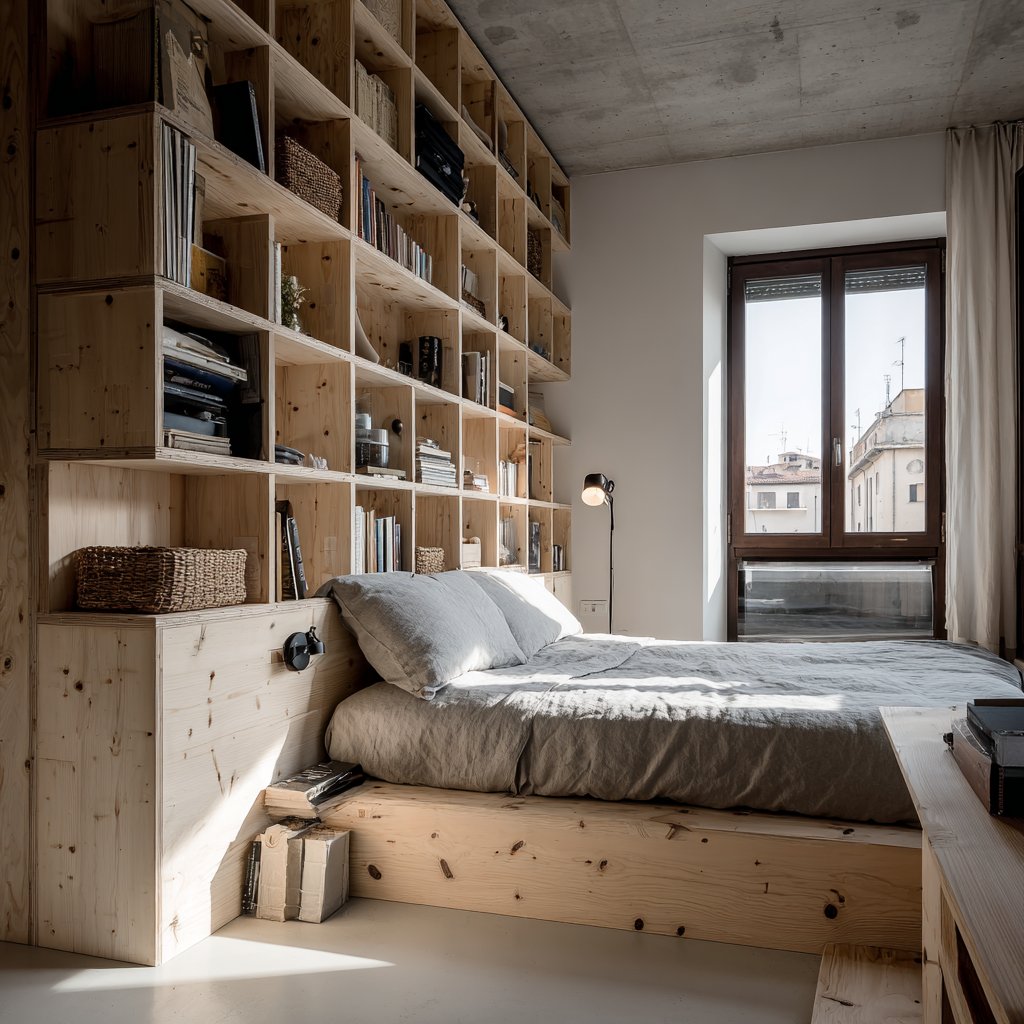
Key Design Tips:
- Choose storage boxes in uniform sizes and colors to create visual cohesion rather than a collection of mismatched containers
- Label boxes clearly if contents aren’t obvious to prevent unnecessary rummaging through multiple boxes
- Select a bed height that allows storage boxes to slide in and out easily without dragging—typically 12-16 inches of clearance
- Use the minimalist aesthetic to prevent accumulation—if storage boxes are full, perhaps it’s time to declutter rather than add more
- Consider wheels or handles on storage boxes to make access easier, especially for boxes stored toward the bed center
27. Vertical Storage at Bed’s Foot
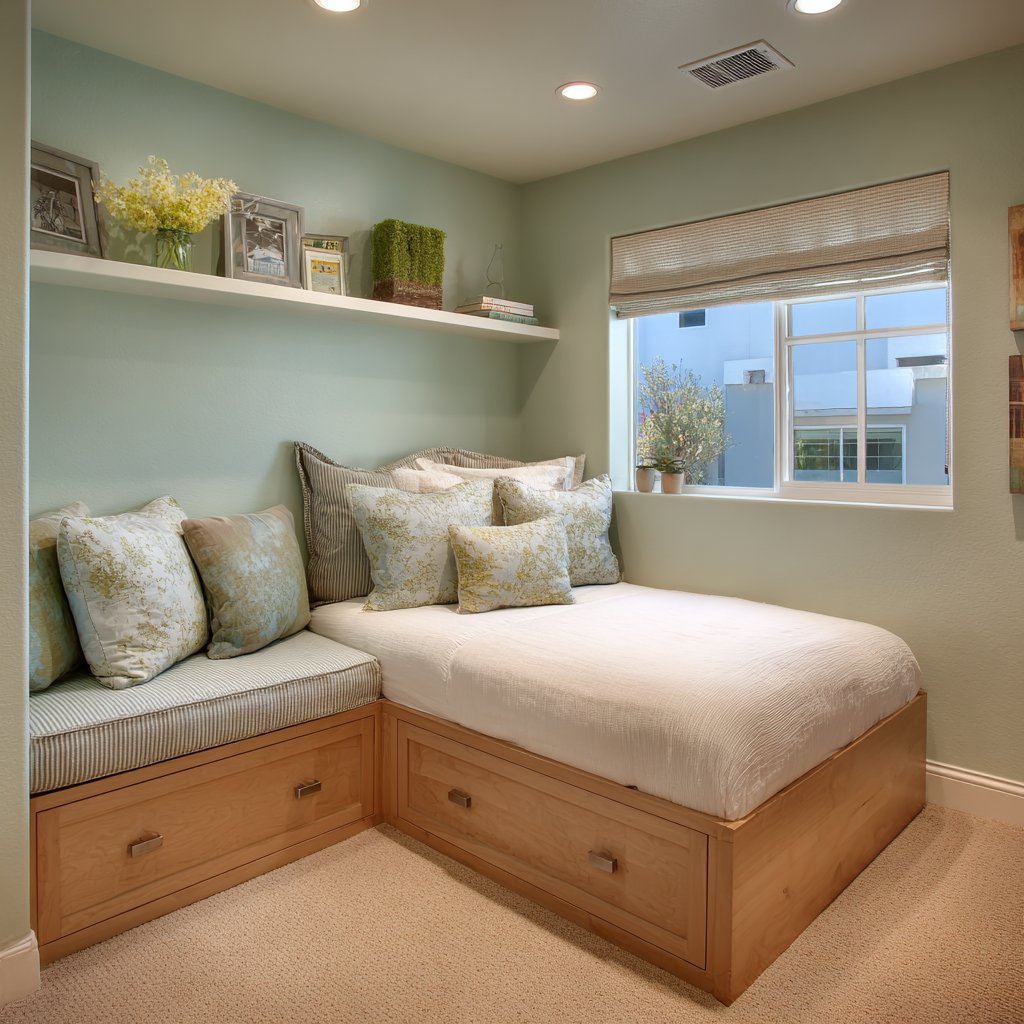
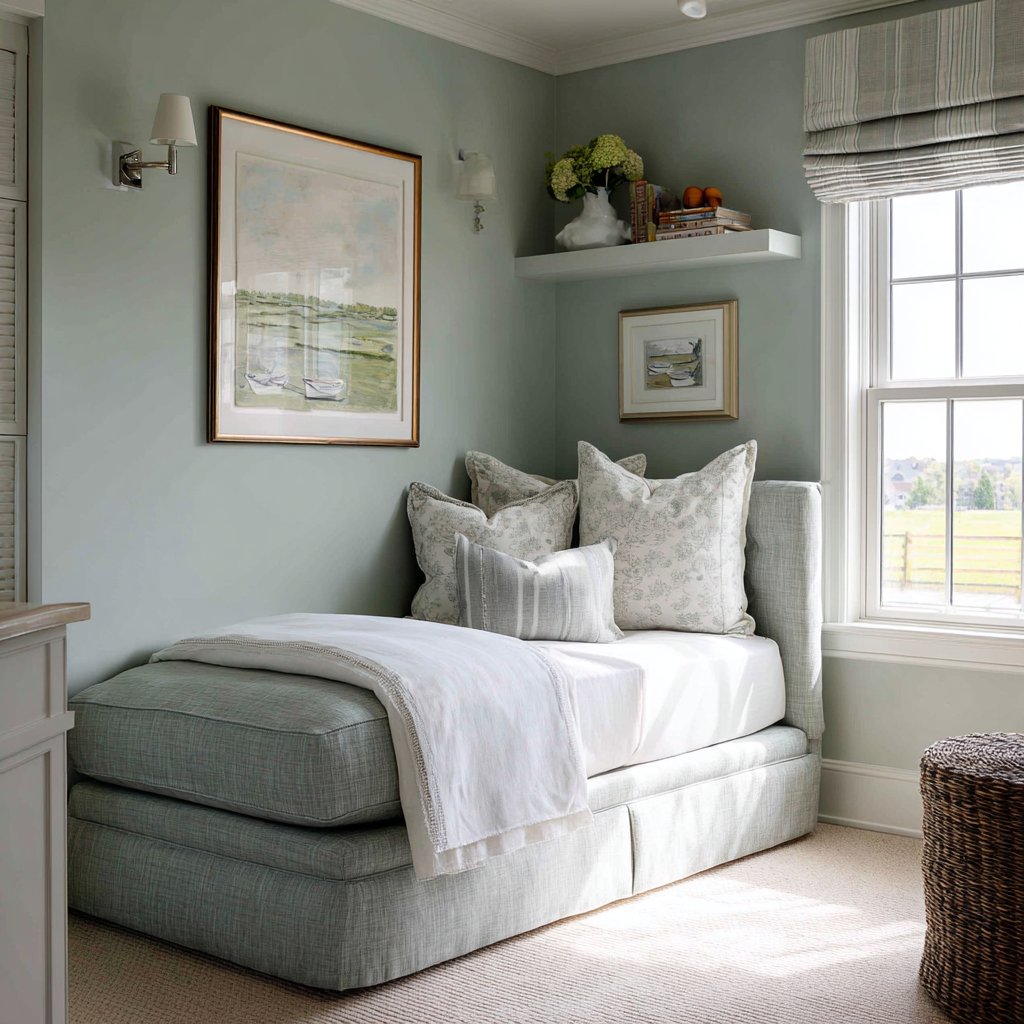
This design features a bed positioned against a wall with tall built-in shelving at the foot providing vertical storage without consuming floor space that would interfere with bedroom circulation. The open shelves accommodate baskets for concealed storage, books for display and easy access, and minimal decorative items that personalize without cluttering. Natural pine wood construction with white walls creates Scandinavian-inspired simplicity, while simple bedding in light grey maintains the calm aesthetic.
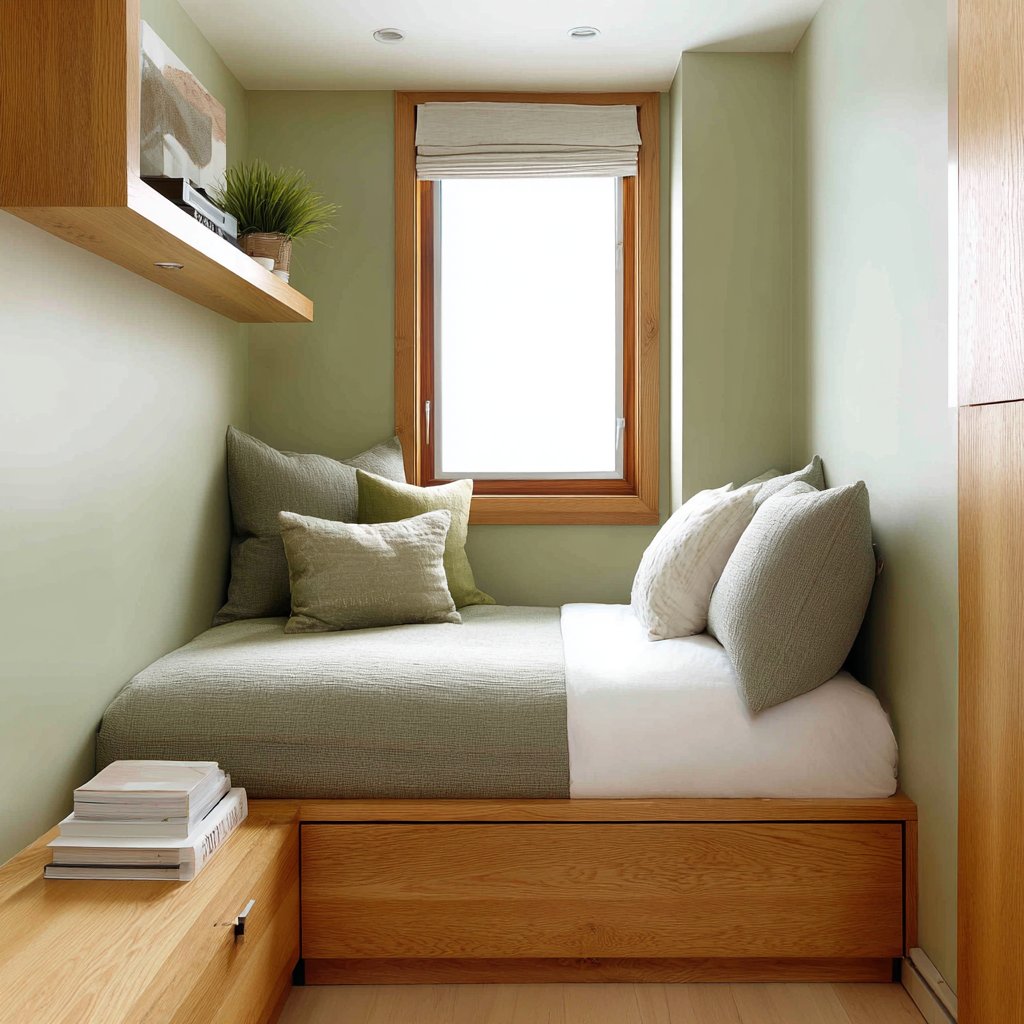
The small wall-mounted lamp provides task lighting without occupying shelf space or nightstand surface, its minimal profile reflecting the overall design philosophy. The window positioned adjacent to the shelving unit provides natural illumination that highlights the organized storage throughout the day. The vertical storage strategy draws the eye upward while maintaining floor space preservation—a critical consideration in very tiny bedrooms where every square foot matters.
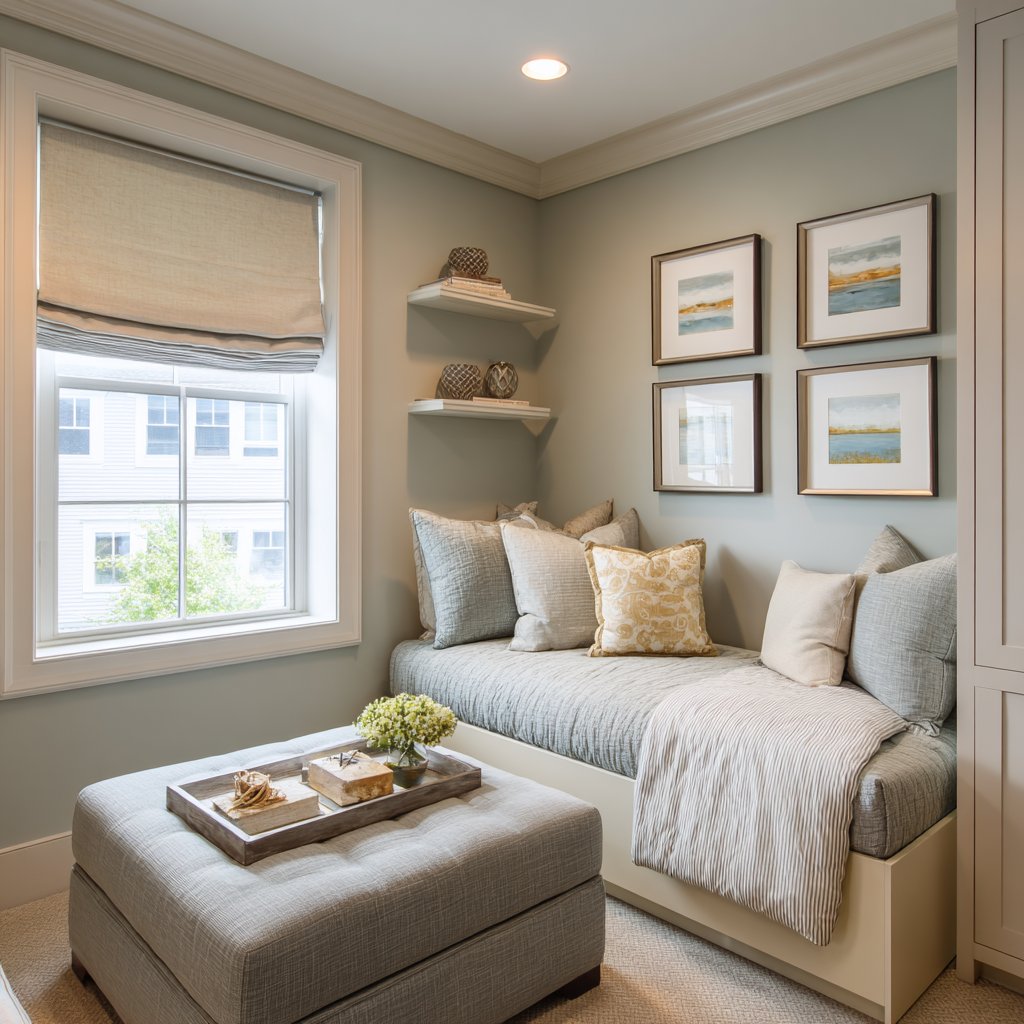
This arrangement works particularly well in rooms where one end has adequate wall height for substantial shelving. The foot-of-bed position for storage feels natural and accessible without requiring awkward reaching from a lying position, making it ideal for items used less frequently than nightstand contents but more often than seasonal storage.
Key Design Tips:
- Secure tall shelving units to wall studs to prevent tipping—the height creates leverage that requires proper anchoring
- Use the lower shelves for heavier items and upper shelves for lighter objects to maintain stability
- Incorporate baskets or boxes on some shelves to conceal less attractive items while maintaining the organized appearance
- Leave some shelves partially empty to prevent the visual weight of completely filled storage from overwhelming the small room
- Consider adding a small bench or storage ottoman at the foot of the bed to utilize the area created by the shelving position
28. Multi-Functional Ottoman Storage
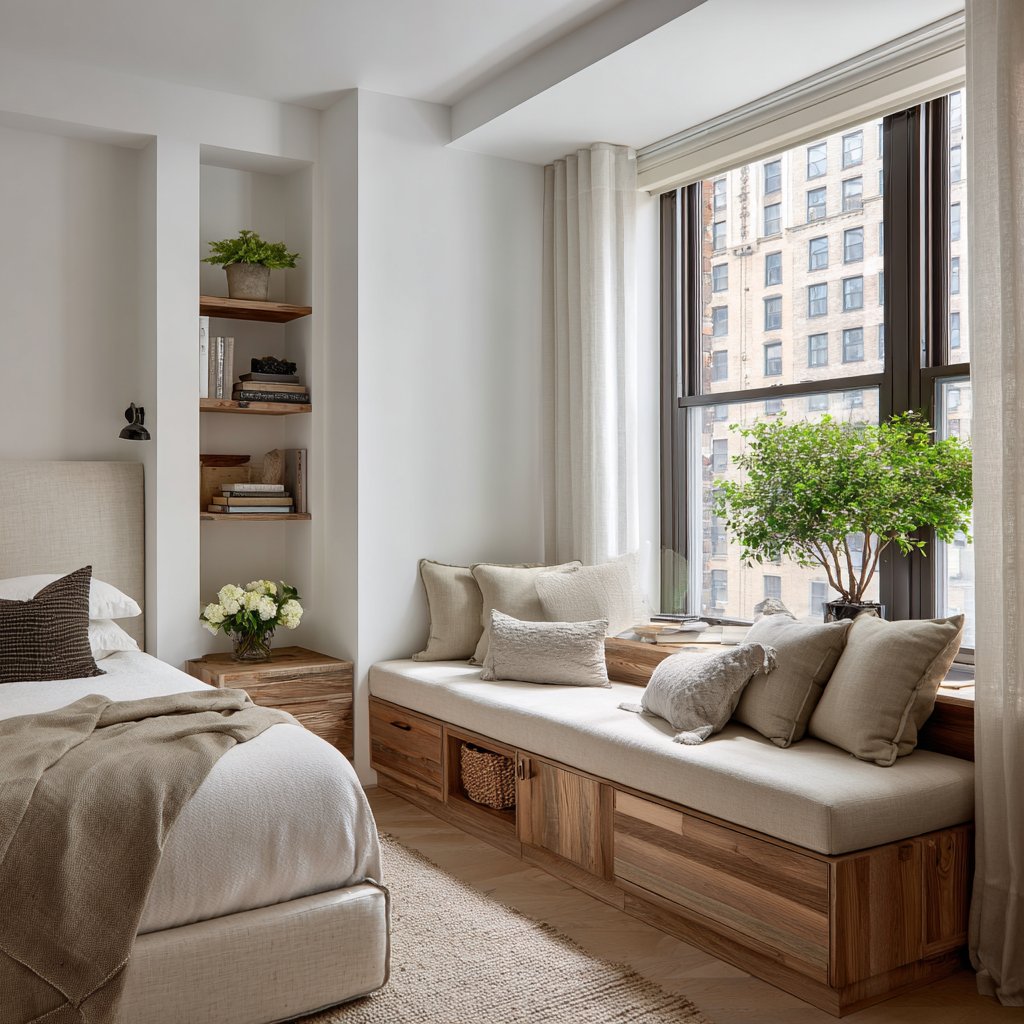
This design features a bed with a rolling storage ottoman positioned at the foot, serving the dual purposes of seating and hidden storage for extra bedding, pillows, or off-season clothing. The ottoman upholstered in grey linen matches pillow accents on the bed, creating visual continuity through repeated materials. The simple platform bed in light wood provides an unfussy foundation that doesn’t compete for attention with other elements.
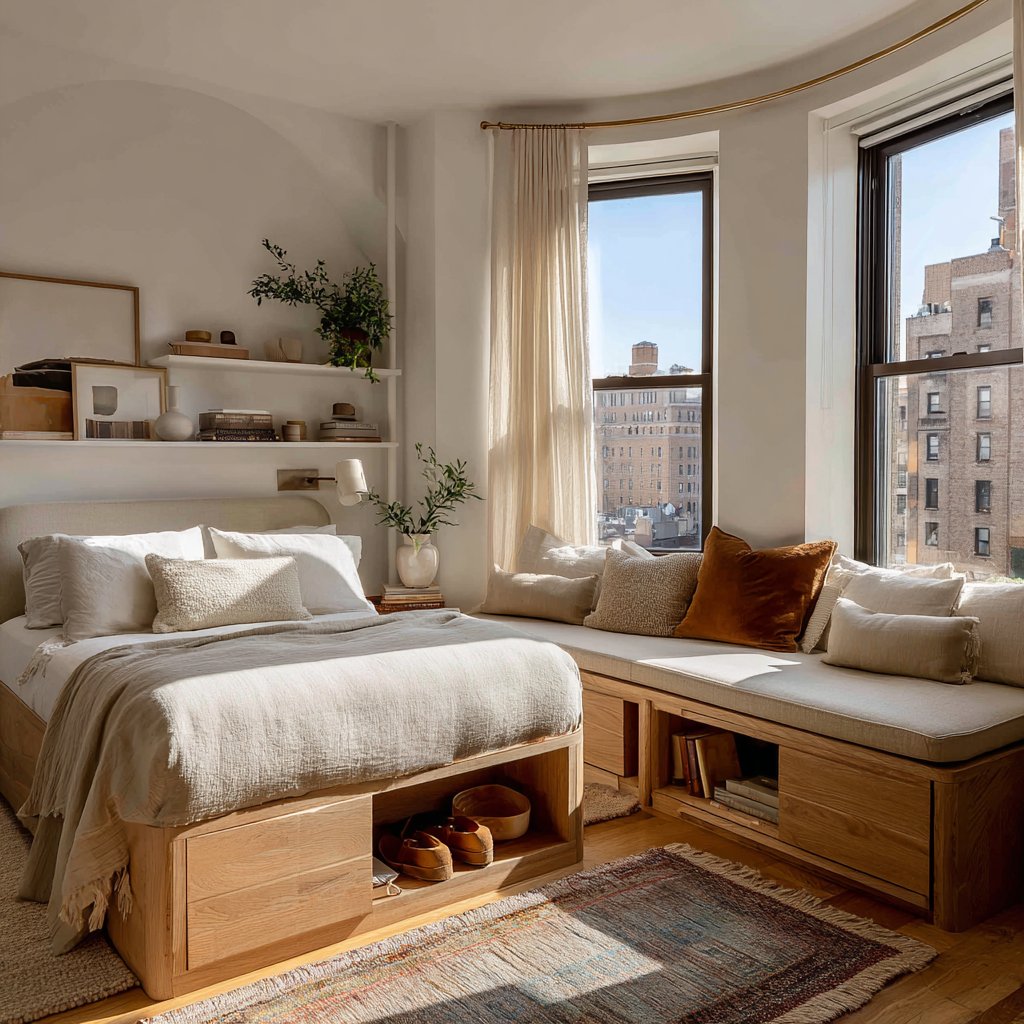
Walls painted in soft sage green introduce color without overwhelming the compact space, creating a connection to nature that promotes calm and rest. A single floating shelf above the bed holds only essential items, demonstrating disciplined curation. The small window dressed with a roman shade provides privacy and light control, while recessed lighting provides gentle illumination without protruding fixtures.
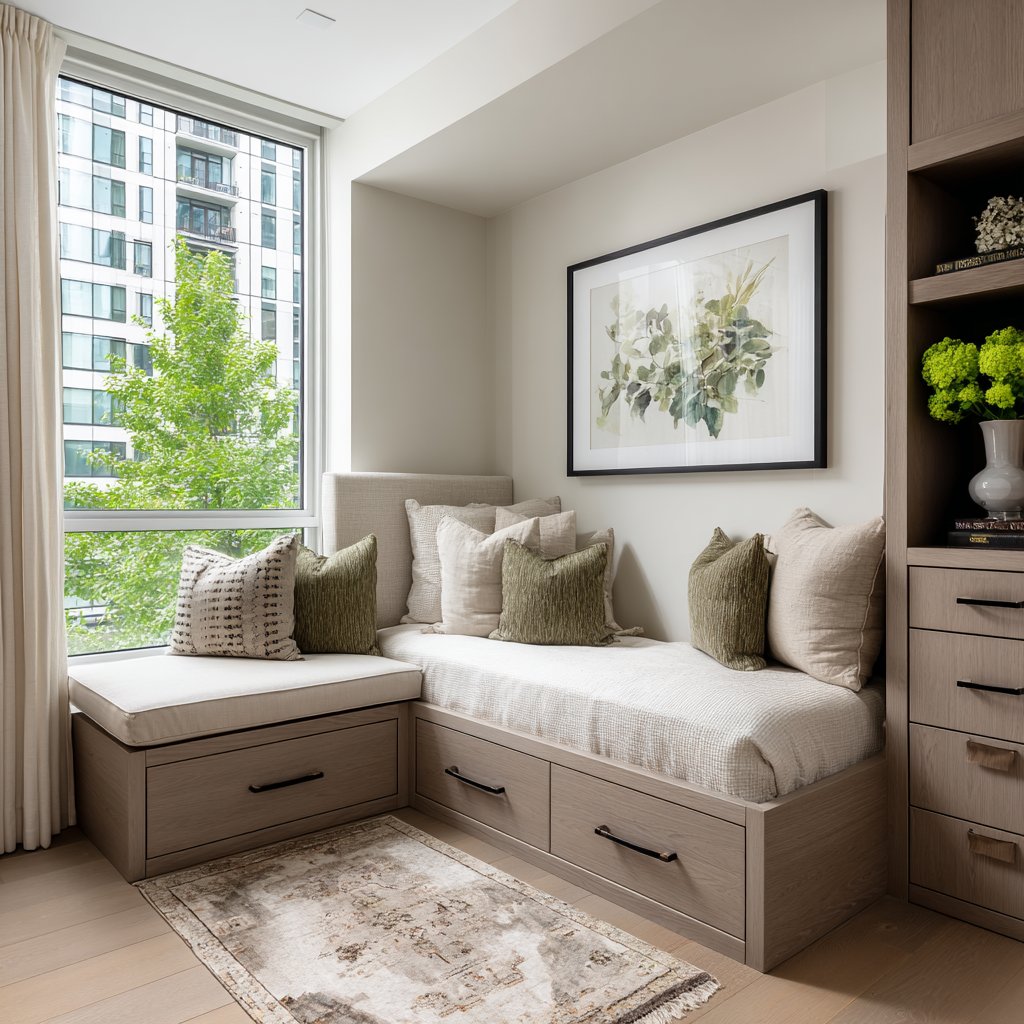
The rolling nature of the storage ottoman provides flexibility—it can move to wherever seating is needed, roll away to create floor space for exercise or other activities, or position precisely where needed when putting on shoes. This mobility represents the kind of adaptability that serves very tiny bedrooms well, where furniture arrangements might need to shift based on daily activities.
Key Design Tips:
- Choose ottoman casters that lock securely to prevent unwanted rolling when using it as a seat
- Select an ottoman height that works comfortably for both seating (16-18 inches) and as a surface at the foot of the bed
- Use the hidden storage for complete bed sets—sheet sets in the ottoman so changing bedding requires pulling just one container
- Coordinate ottoman upholstery with throw pillows or bedding accents to create intentional visual connections
- Consider an ottoman with a hinged lid rather than a fully removable top for easier single-handed access
29. L-Shaped Storage Bench Corner Solution
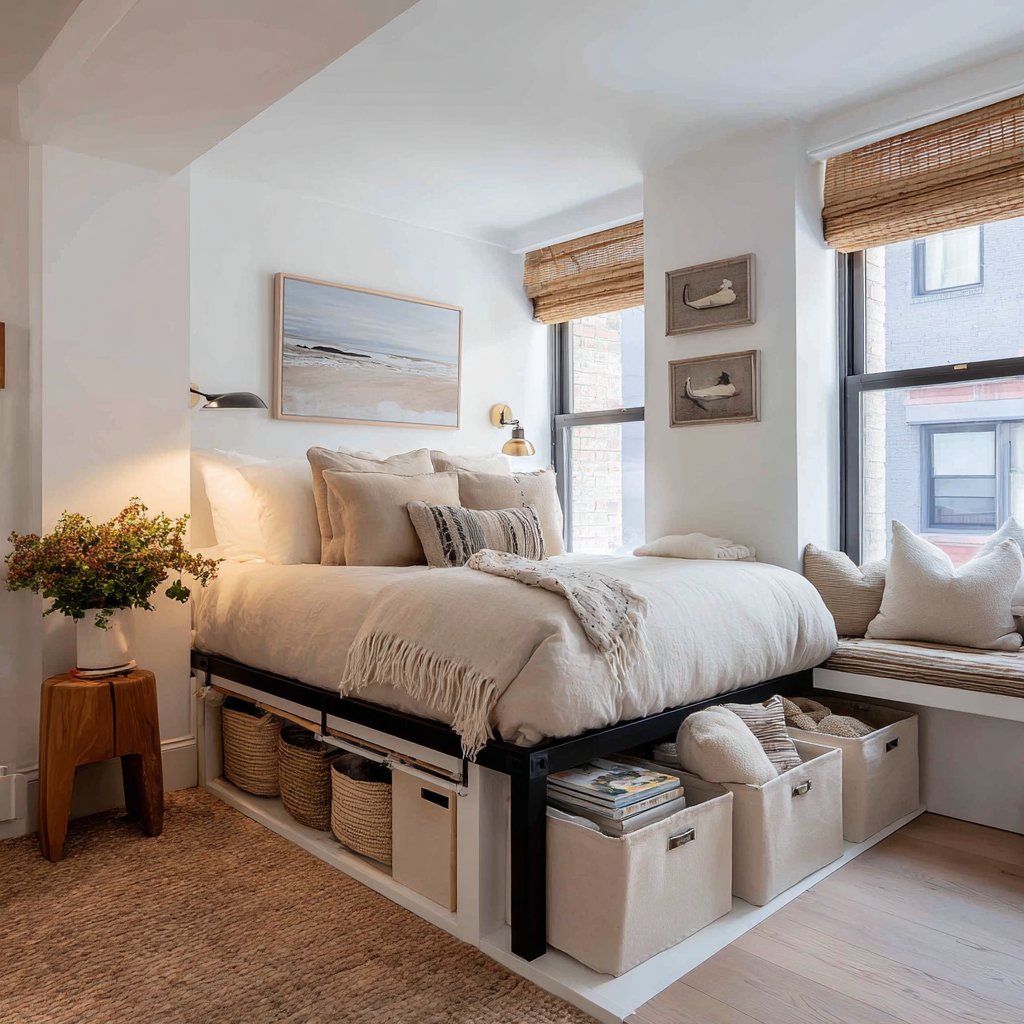
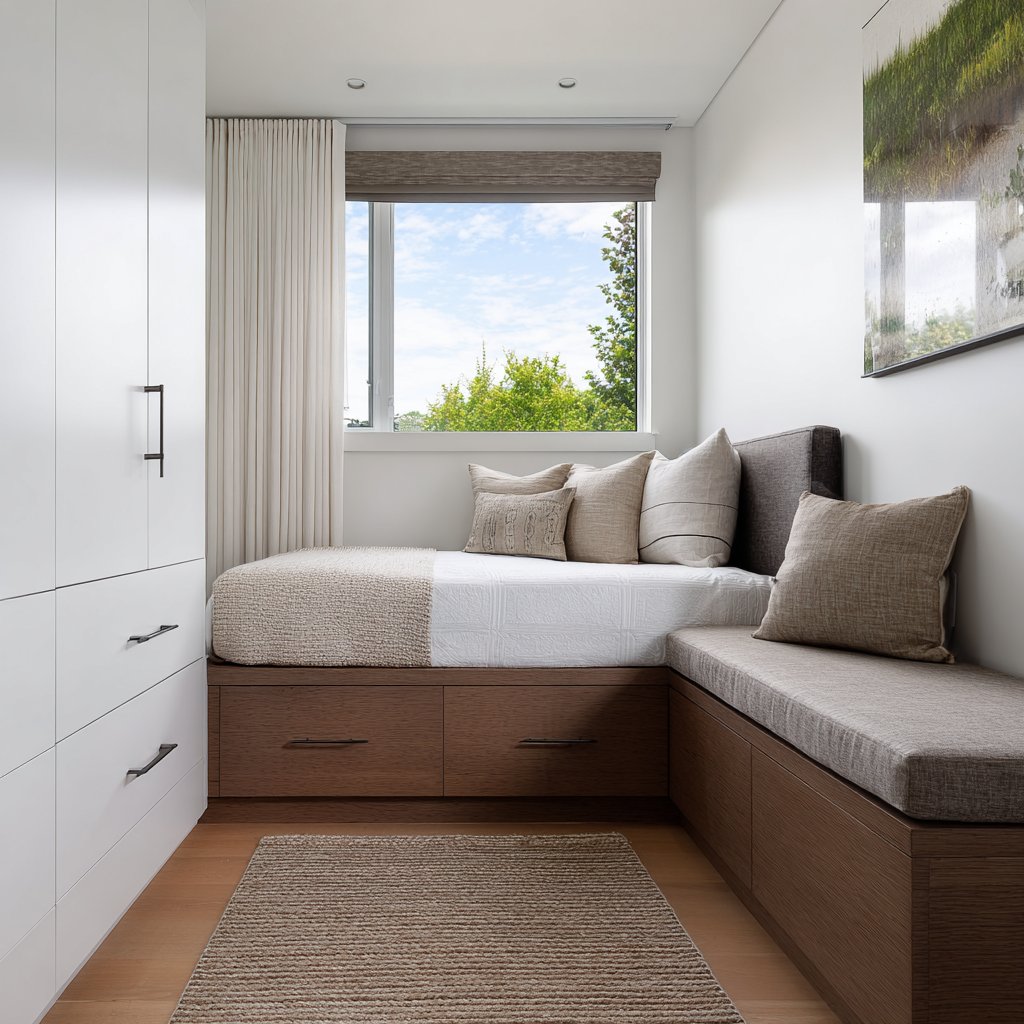
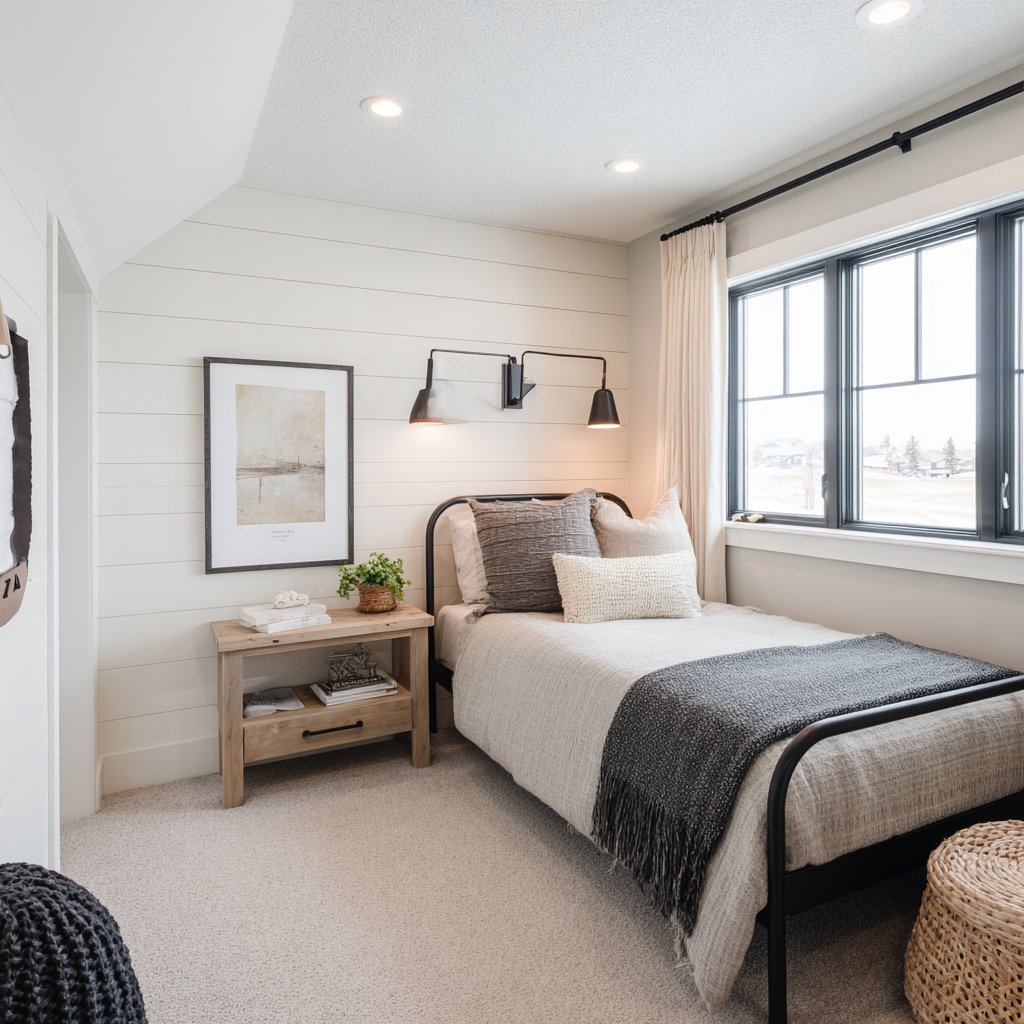
This innovative design features a space-saving bed positioned in a corner with an L-shaped storage bench wrapping around two sides, providing both seating and hidden storage in lift-up sections. The bench cushions in natural linen create comfortable sitting surfaces suitable for putting on shoes, folding laundry, or simply perching while talking. The bed with simple upholstered headboard maintains the clean-lined aesthetic while providing comfort.
White walls with natural wood bench frames introduce Scandinavian design principles—functionality, natural materials, and uncluttered simplicity. The small area rug defines the sleeping zone while introducing texture and warmth underfoot. The window with sheer curtain allows natural light to permeate the space, illuminating both the bed and the L-shaped seating area that frames it.
The corner positioning creates an opportunity for this wraparound bench that wouldn’t exist with wall-adjacent bed placement. This demonstrates how different furniture arrangements can unlock unique storage and functional possibilities in very tiny bedrooms. The L-shape creates a defined zone that feels intentional and designed rather than cramped or leftover.
Key Design Tips:
- Design or select bench seats with lift-up mechanisms that include soft-close hardware to prevent slamming
- Ensure adequate clearance between the bench and bed for making the bed from at least one side—minimum 18 inches
- Use bench storage for items accessed less frequently than dresser contents but more often than seasonal storage
- Add bench cushions thick enough for comfortable sitting—minimum 3-4 inches of high-density foam
- Consider adding small decorative pillows to one section of the L-shaped bench to create a reading or relaxation nook
Why These Very Tiny Bedroom Ideas Work Best
The collection of very tiny bedroom ideas presented in this article succeeds because each design addresses fundamental challenges of compact living through specific strategies that can be mixed, matched, and adapted to individual situations. These solutions work because they embrace constraints rather than fighting them, recognizing that limitations often inspire the most creative problem-solving. The designs range from complex built-in systems requiring professional installation to simple furniture arrangements any renter can implement, ensuring accessibility across different skill levels, budgets, and living situations.
The emphasis throughout these very tiny bedroom ideas on multi-functional furniture reflects contemporary lifestyle needs where spaces must adapt throughout the day. Murphy beds that transform into desks, daybeds that function as sofas, storage ottomans that serve as seating—this flexibility allows single rooms to serve multiple purposes without the chaos of constantly rearranging separate furniture pieces. The integration of storage into bed frames, headboards, and platform bases addresses the universal challenge of organizing belongings in compact quarters while maintaining aesthetic appeal rather than relegating storage to purely utilitarian afterthought.
Vertical thinking appears consistently throughout these very tiny bedroom ideas, reflecting a fundamental principle of small-space design: when horizontal expansion isn’t possible, look up. Lofted beds, floor-to-ceiling shelving, tall headboards, and wall-mounted elements all maximize cubic footage rather than just square footage. This vertical approach creates visual interest through varying heights while dramatically increasing functional space without expanding the room’s physical footprint. The psychological impact of vertical design also matters—drawing the eye upward emphasizes ceiling height and prevents that compressed feeling that can make tiny bedrooms feel oppressive.
The lighting strategies employed across these very tiny bedroom ideas demonstrate sophisticated understanding of how illumination affects spatial perception. Natural light maximization through strategic mirror placement, sheer window treatments, and light color palettes creates brightness that makes rooms feel larger. Layered artificial lighting—ambient recessed fixtures, task-specific reading lights, and accent LED strips—provides flexibility while eliminating the need for space-consuming table lamps. The consistent preference for wall-mounted and pendant lighting throughout these designs preserves precious surface and floor area while providing adequate illumination for various activities.
Color psychology plays a crucial role in these very tiny bedroom ideas, with the predominance of light, neutral palettes throughout. Soft whites, warm greys, pale blues, and natural wood tones recede visually, making walls appear farther away than they actually are. These colors also reflect light effectively, maintaining brightness even in rooms with limited natural illumination. When accent colors appear—sage green, blush pink, muted coral—they’re applied strategically rather than overwhelmingly, adding personality without visual weight that would compress the perceived space. This restrained color approach proves that small rooms benefit from subtlety rather than bold statements.
The material choices throughout these very tiny bedroom ideas favor natural substances—wood, linen, cotton, wool—that introduce organic warmth and textural interest without visual complexity. These materials age gracefully, developing character rather than showing wear, while their tactile qualities create sensory richness that prevents minimalist spaces from feeling cold or sterile. The contrast between soft textiles and harder surfaces like wood and metal creates balance that makes rooms feel furnished and complete without clutter. Material consistency throughout each design creates visual harmony that makes spaces feel larger than disparate elements would.
Storage solutions across these very tiny bedroom ideas succeed because they’re integrated into furniture and architecture rather than added as afterthoughts. Built-in wardrobes, under-bed drawers, headboard shelving, and wall-mounted systems provide substantial organizational capacity without the visual clutter of freestanding furniture. This integration creates clean sight lines that allow the eye to travel uninterrupted through the space, enhancing the perception of spaciousness. The variety of storage approaches—from visible organized boxes to completely hidden compartments—accommodates different personality types and organizational styles.
The furniture scale throughout these very tiny bedroom ideas demonstrates careful consideration of proportion, with pieces selected specifically for compact spaces rather than standard-sized items crammed into inadequate square footage. Narrow nightstands, slim-profile bed frames, and streamlined desks provide functionality without overwhelming rooms. This attention to scale extends to negative space—the deliberate inclusion of empty areas that allow the room to breathe. The designs prove that filling every inch doesn’t maximize utility; rather, thoughtful editing creates more functional, pleasant environments.
Technology integration appears subtly throughout these very tiny bedroom ideas, with USB charging ports in headboards and nightstands, cable management systems, and lighting controls reflecting contemporary needs. This tech-forward approach ensures designs remain relevant and practical for modern users who require device charging, connectivity, and convenience alongside traditional bedroom functions. The integration is discreet rather than dominant, maintaining the aesthetic priorities while accommodating technological requirements.
The adaptability built into many of these very tiny bedroom ideas addresses the reality that needs change over time. Modular systems, movable furniture on casters, adjustable shelving, and transformable pieces allow rooms to evolve without requiring complete redesigns. This flexibility particularly benefits renters who can take furniture with them or young adults whose lifestyles shift rapidly. The designs that offer greatest versatility likely provide longest-term value, adapting to life changes rather than becoming obsolete.
The architectural approaches seen in several very tiny bedroom ideas—built-in alcoves, platform elevation, custom millwork—demonstrate how treating the room itself as a design element rather than just a container for furniture creates the most cohesive results. These permanent or semi-permanent interventions require greater initial investment but deliver unmatched efficiency and polish. For homeowners or those with long-term leases, the architectural approach often provides the best return on both financial and design investment.
Ultimately, these very tiny bedroom ideas work because they’re rooted in real human needs rather than just aesthetic trends. They address the practical challenges of storing belongings, creating comfortable sleeping environments, maintaining privacy in multi-use spaces, and preserving individual style despite spatial limitations. The psychological dimensions matter as much as the practical—creating rooms that feel peaceful rather than cramped, personal rather than generic, and intentional rather than compromised. Each design proves that small spaces aren’t problems to be solved but opportunities to be creative, demonstrating that the best design solutions often emerge from working with constraints rather than against them.
Conclusion
Creating beautiful, functional very tiny bedrooms requires a fundamental shift in how we think about residential space. Rather than viewing compact dimensions as deficiencies to be overcome, these 29 innovative designs demonstrate how spatial limitations can inspire creativity, intentionality, and sophisticated problem-solving. The most successful approaches share common threads: vertical thinking that maximizes cubic footage, multi-functional furniture that serves multiple purposes throughout the day, integrated storage that eliminates standalone pieces, strategic lighting that enhances perceived space, and carefully curated color palettes that create airiness rather than confinement.
The diversity of solutions presented—from architectural interventions like built-in alcoves and lofted platforms to simple furniture arrangements any renter can implement—ensures that regardless of budget, skill level, or living situation, practical options exist for improving tiny bedroom functionality and aesthetics. Whether you’re drawn to minimalist Japanese-inspired simplicity, Scandinavian natural materials and neutral tones, industrial metal and wood combinations, or contemporary integrated systems, the underlying principles remain consistent: every element must earn its place through function or beauty, preferably both.
The key takeaway from these very tiny bedroom ideas is that small spaces demand not compromise but rather thoughtfulness. Each design decision carries more weight in compact rooms where there’s no hiding mistakes behind sheer square footage. This heightened intention can actually lead to more satisfying results than larger rooms where mediocre choices disappear into expansive floor plans. The discipline required to edit possessions, select appropriately scaled furniture, and maintain organization in tiny bedrooms often cultivates habits and aesthetic sensibilities that improve all areas of home design.
As you consider implementing these ideas in your own space, start by assessing your specific needs, constraints, and non-negotiables. Do you require a dedicated workspace? Guest sleeping capacity? Extensive clothing storage? Entertainment space? Understanding priorities allows you to select strategies that address your particular challenges rather than pursuing solutions designed for different circumstances. Measure carefully, plan thoroughly, and don’t hesitate to combine elements from multiple designs to create hybrid approaches tailored to your unique situation.
Remember that transforming a very tiny bedroom isn’t typically an overnight project but rather an evolution. Start with high-impact changes like decluttering, repainting in lighter colors, or repositioning your bed. Add complexity gradually—new lighting, upgraded storage, or custom elements—as budget and time allow. The incremental approach prevents overwhelming yourself while letting you assess each change’s effectiveness before proceeding to the next improvement. Most importantly, trust your instincts about what feels comfortable and functional for your lifestyle, as the best design solutions always serve the people who live with them daily. Your very tiny bedroom may be compact in square footage, but with creativity, planning, and the inspiration provided by these diverse design approaches, it can feel spacious in spirit and generous in comfort.
