
The bedroom is more than just a place to sleep—it’s a personal sanctuary where you begin and end each day, a private retreat that should reflect your unique style while providing the comfort and functionality you need. When it comes to queen-sized bedrooms, the design possibilities are particularly exciting. A queen bed offers the perfect balance between spacious comfort and room efficiency, making it an ideal choice for master suites, guest rooms, and everything in between. The right design approach can transform an ordinary bedroom into an extraordinary space that nurtures rest, relaxation, and rejuvenation.
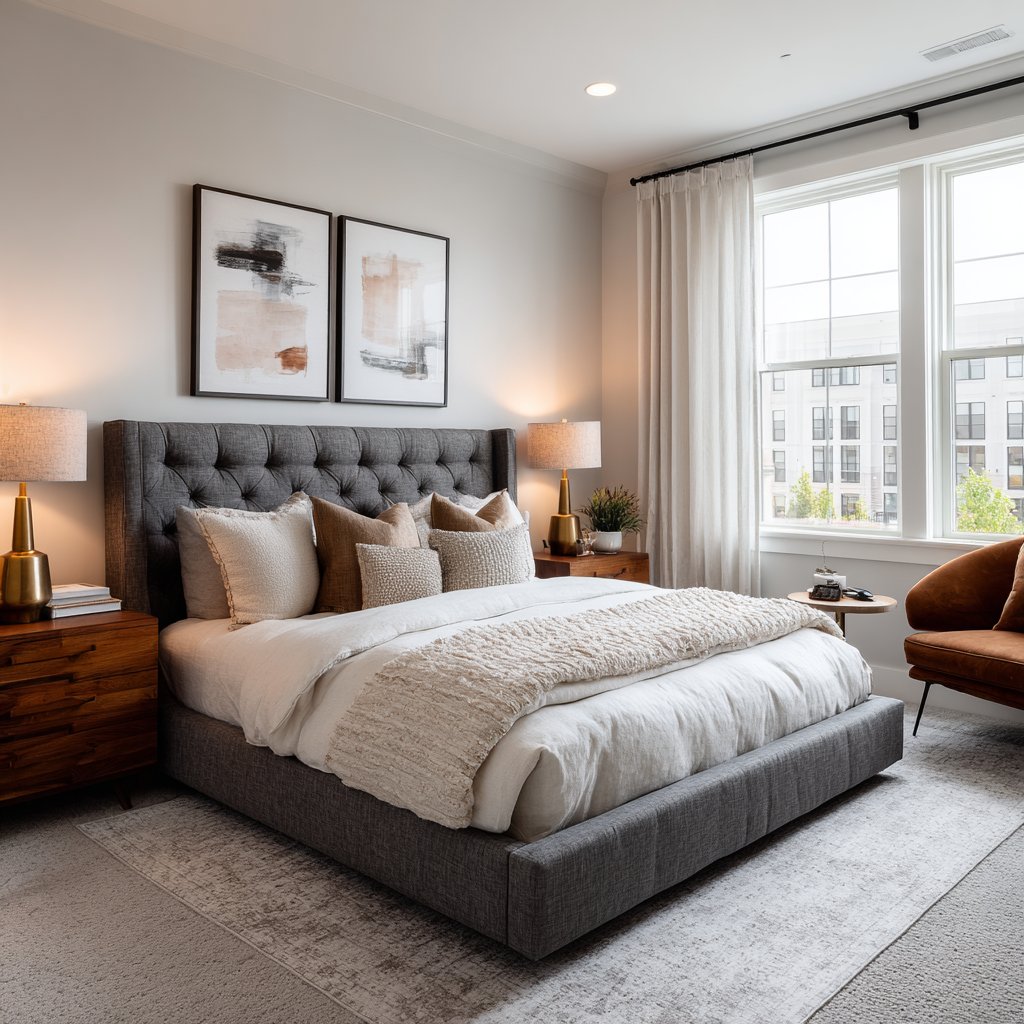
In today’s diverse design landscape, queen bedroom ideas span an impressive spectrum of styles, from the clean lines of Scandinavian minimalism to the ornate elegance of French country decor, from the raw authenticity of industrial lofts to the serene simplicity of Japanese-inspired spaces. Each style tells a different story and creates a distinct atmosphere, allowing you to craft a bedroom that truly resonates with your personality and lifestyle. Whether you’re drawn to the cozy warmth of farmhouse aesthetics, the breezy lightness of coastal designs, or the sophisticated glamour of art deco influences, there’s a queen bedroom style perfectly suited to your vision.
This comprehensive guide explores twenty-three distinct queen bedroom designs, each offering unique approaches to color, texture, materials, and spatial composition. From practical storage solutions for compact spaces to luxurious hotel-inspired retreats, these ideas demonstrate how thoughtful design choices—from the bed frame style to the lighting fixtures, from the bedding layers to the accent walls—can dramatically impact the overall feel of your bedroom. Whether you’re planning a complete bedroom renovation or simply looking for fresh inspiration to refresh your current space, these carefully curated designs will help you create a queen bedroom that’s not only beautiful but also perfectly tailored to your needs and preferences.
1. Modern Platform Minimalism
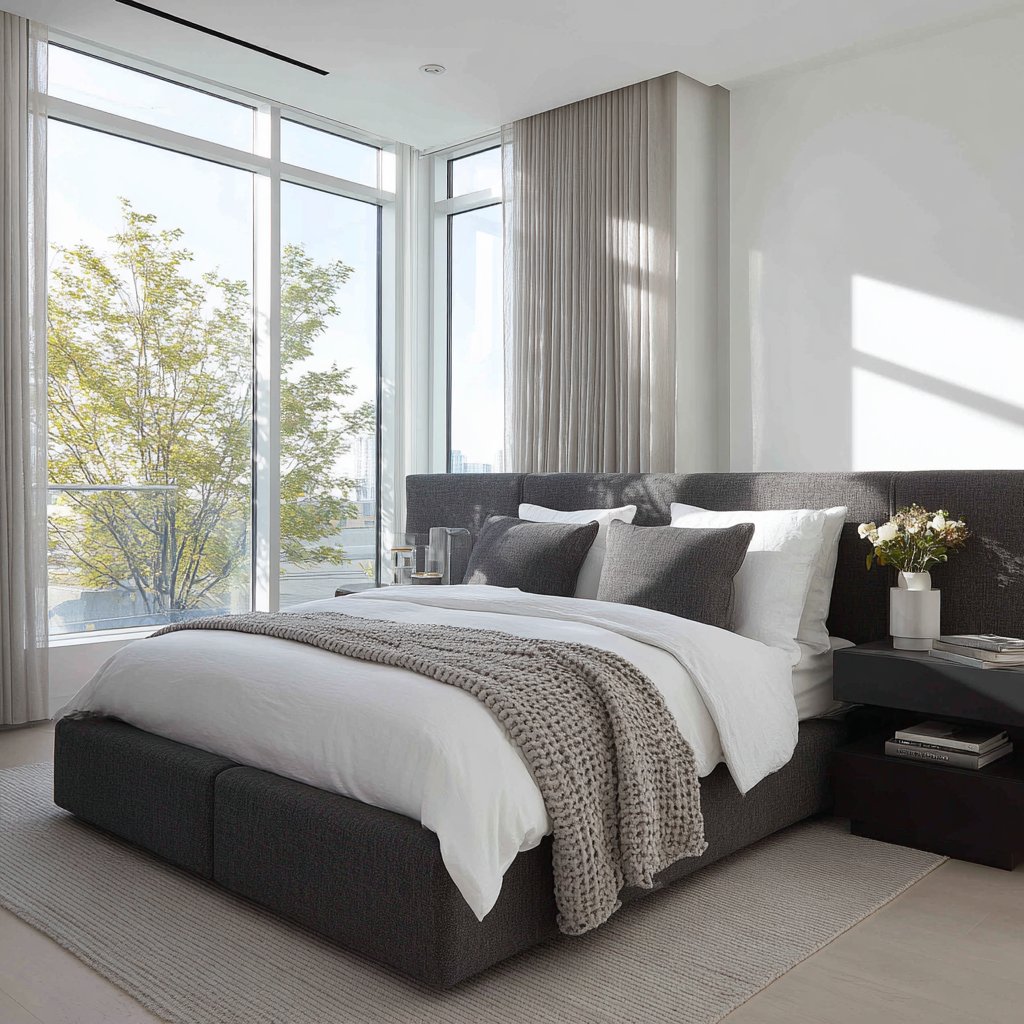
The modern platform queen bedroom embodies the philosophy that less is truly more, creating a serene environment through intentional design choices and careful curation. At the heart of this space sits a low-profile platform bed with an upholstered headboard in charcoal grey fabric, its clean lines and minimalist form serving as the perfect foundation for the room’s understated elegance. The absence of unnecessary ornamentation allows the quality of materials and the sophistication of the design to shine through, creating a bedroom that feels both contemporary and timeless.
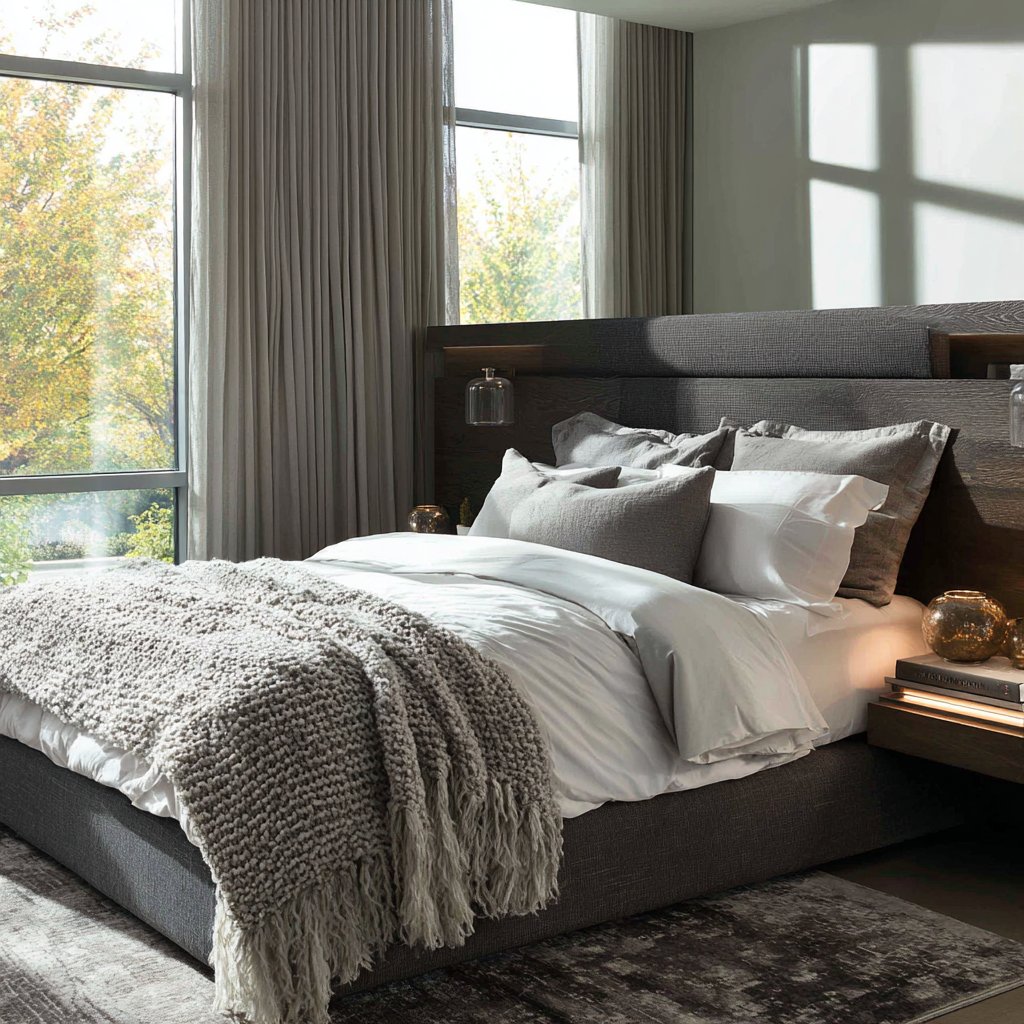
The bedding approach in this design follows the minimalist principle of layering textures rather than colors, with crisp white linens forming the base and a textured knit throw blanket at the foot providing visual and tactile interest. This monochromatic palette creates a sense of calm and spaciousness, while the varying textures prevent the space from feeling sterile or cold. The strategic use of white against the charcoal headboard creates a striking yet subtle contrast that defines the sleeping area without overwhelming the senses.
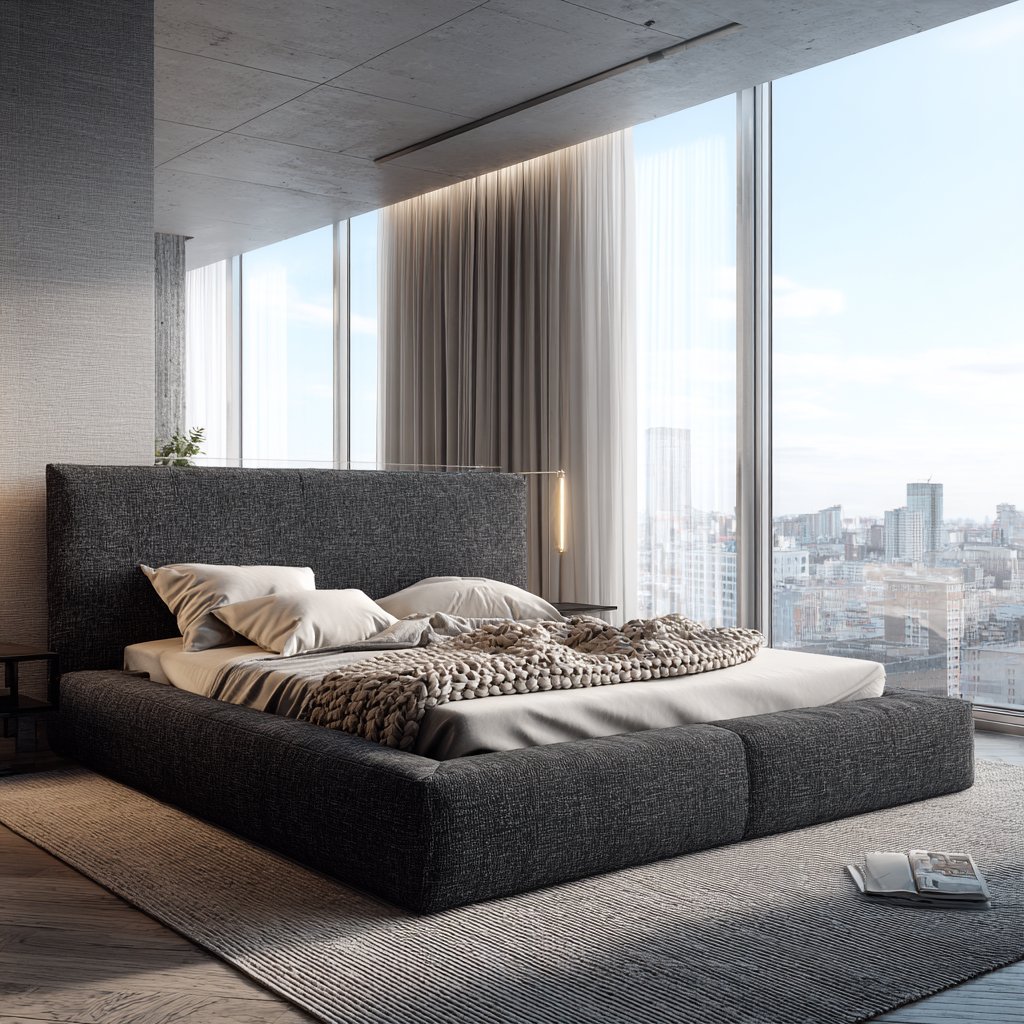
One of the most innovative features of this bedroom design is the incorporation of floating nightstands with integrated LED lighting. These wall-mounted pieces eliminate visual weight at floor level, making the room feel more spacious and easier to maintain. The integrated lighting provides both functional task lighting for bedtime reading and ambient mood lighting that can be adjusted to create the perfect atmosphere. The seamless integration of technology into the furniture design exemplifies modern minimalist principles where form and function unite elegantly.
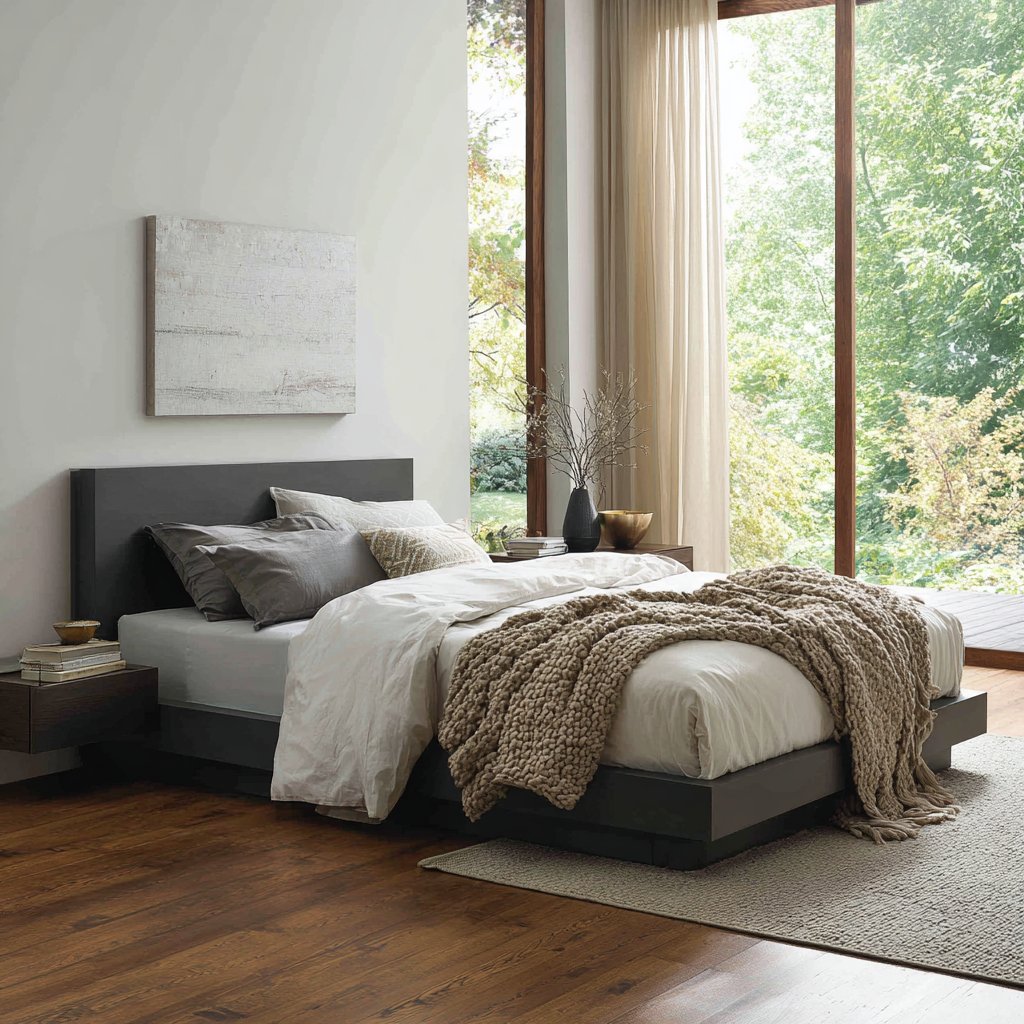
Natural morning light plays a crucial role in this design, streaming through floor-to-ceiling windows dressed with light-filtering curtains that provide privacy while maintaining the room’s connection to natural light cycles. This emphasis on natural illumination not only reduces energy consumption but also supports healthy circadian rhythms, contributing to better sleep quality and overall wellbeing.
Key Design Tips:
- Select a platform bed with hidden storage drawers to maximize functionality without compromising the minimalist aesthetic
- Limit your color palette to two or three neutral tones to maintain visual coherence and tranquility
- Invest in high-quality natural fiber bedding that feels luxurious while maintaining the simple, uncluttered look
- Use wall-mounted fixtures and furniture to keep floor space open and make the room feel larger
- Install dimmer switches on all lighting to control ambiance and support different activities throughout the day
2. Romantic Farmhouse Retreat
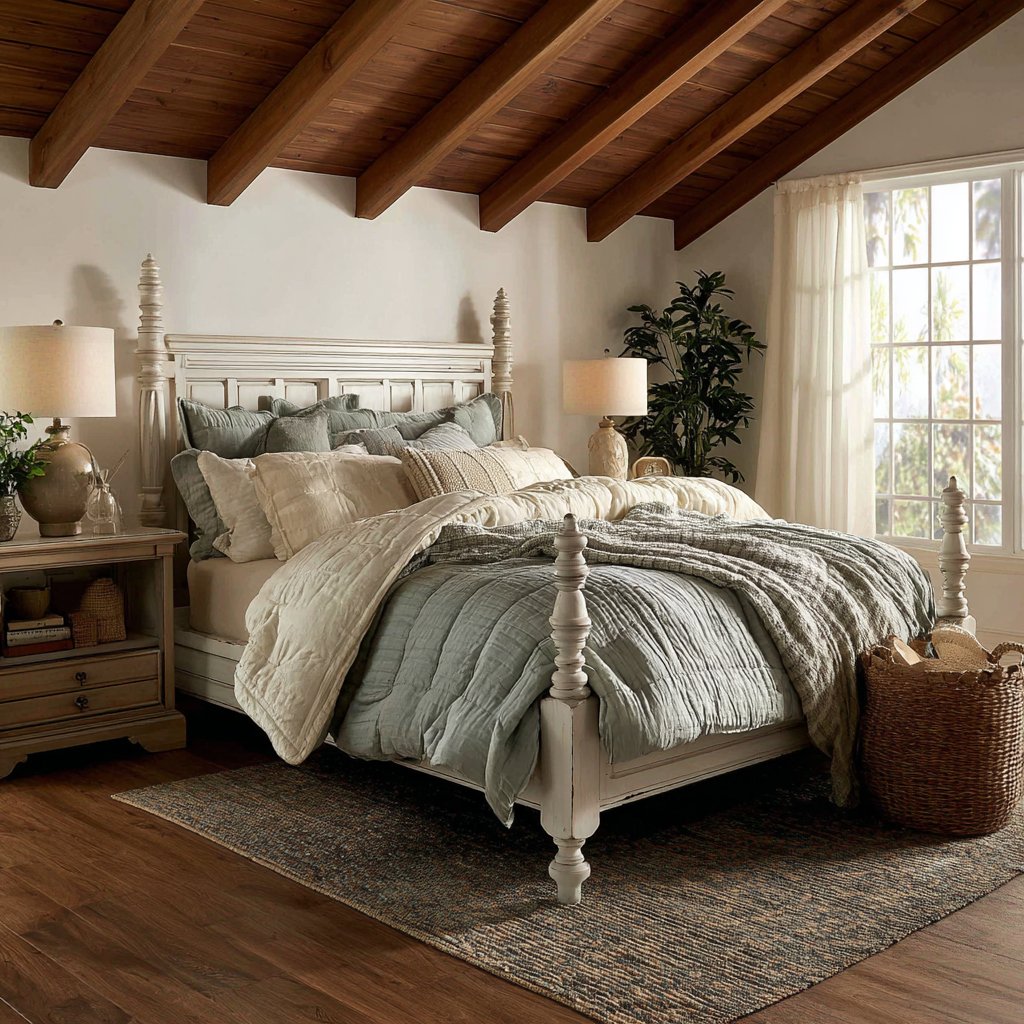
The romantic farmhouse queen bedroom transports you to a simpler time while incorporating modern comfort, creating a space that feels both nostalgic and fresh. The weathered white wooden queen bed frame with its charming spindle details serves as the room’s focal point, immediately establishing the farmhouse aesthetic with its vintage-inspired craftsmanship. This piece bridges the gap between rustic simplicity and romantic elegance, proving that farmhouse style doesn’t have to feel rough or unfinished—it can be soft, inviting, and thoroughly feminine.
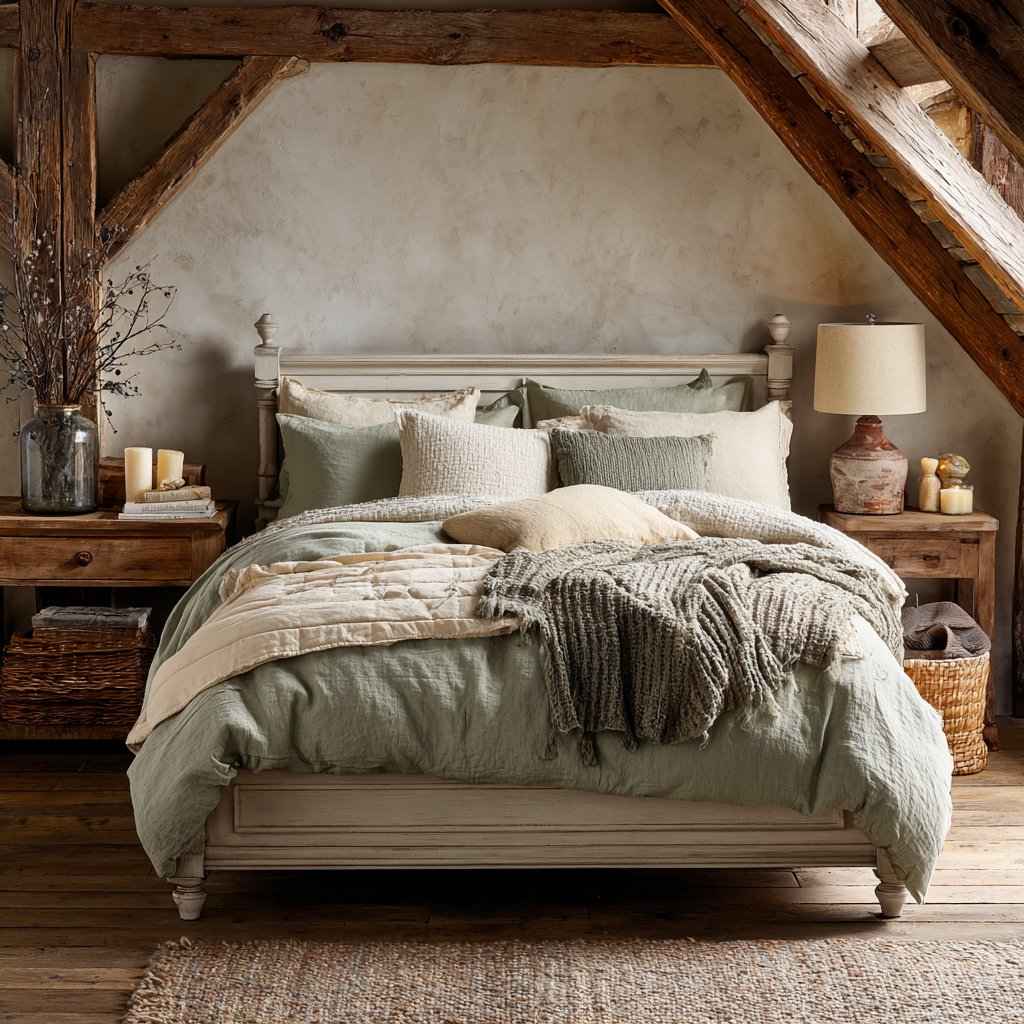
The color palette of this bedroom is deliberately restrained, focusing on soft linen bedding in muted sage green and cream tones that evoke the colors of nature and countryside gardens. A vintage-inspired quilted coverlet adds another layer of texture and nostalgia, its subtle pattern contributing visual interest without overwhelming the peaceful atmosphere. These choices create a cocoon of comfort that invites you to slow down and embrace the restorative qualities of this thoughtfully designed space.
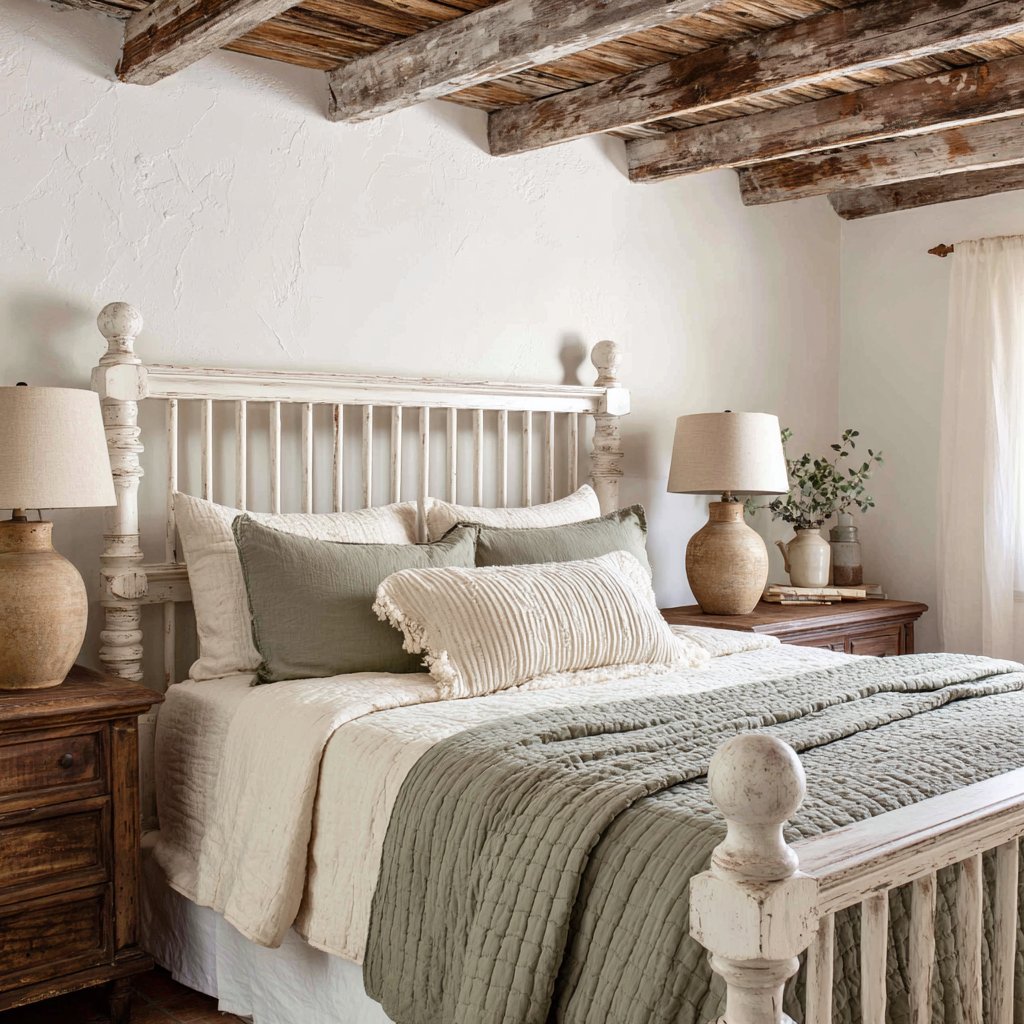
Rustic nightstands made from reclaimed wood flank the bed, their naturally aged surfaces telling stories of previous lives while providing essential bedside storage. These pieces are topped with ceramic table lamps featuring linen shades that diffuse warm, gentle light perfect for evening reading or early morning contemplation. The combination of reclaimed materials with classic lamp designs exemplifies the farmhouse aesthetic’s ability to blend old and new, rustic and refined.
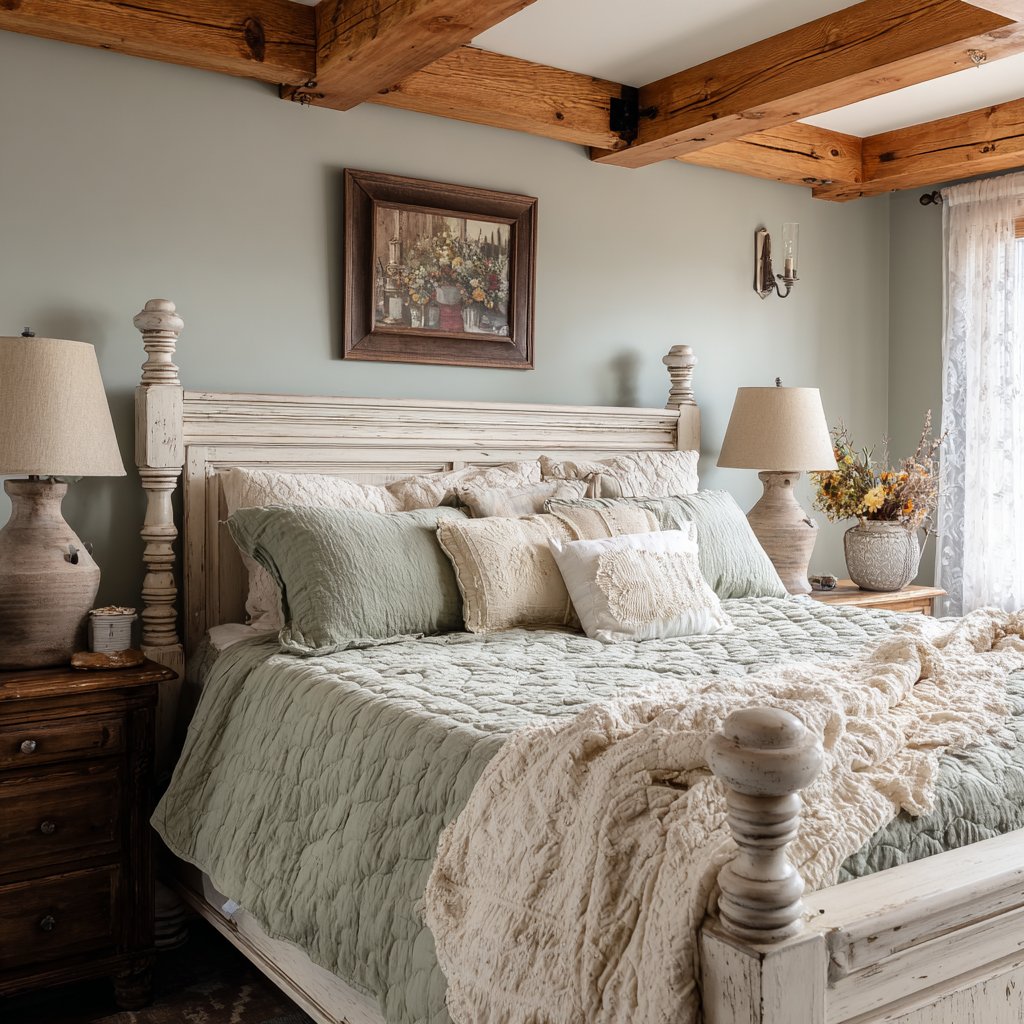
The architectural element that truly elevates this space is the exposed wooden ceiling beams that stretch overhead, adding vertical interest and authentic farmhouse character. These structural elements, whether original to the home or added for aesthetic purposes, create visual rhythm and draw the eye upward, making the room feel more spacious while grounding it in traditional farmhouse architecture.
Key Design Tips:
- Look for furniture with authentic wear patterns or apply distressing techniques yourself for genuine vintage character
- Layer different shades of white and cream to create depth while maintaining the light, airy farmhouse feel
- Incorporate vintage textiles like quilts, grain sacks, or antique linens as throws or pillow covers
- Mix wood tones freely—farmhouse style embraces the patina and color variations of different aged woods
- Add fresh or dried flowers in simple containers to bring life and seasonal color to the space
- Consider shiplap or beadboard wall treatments to enhance the farmhouse architectural aesthetic
3. Scandinavian Hygge Haven
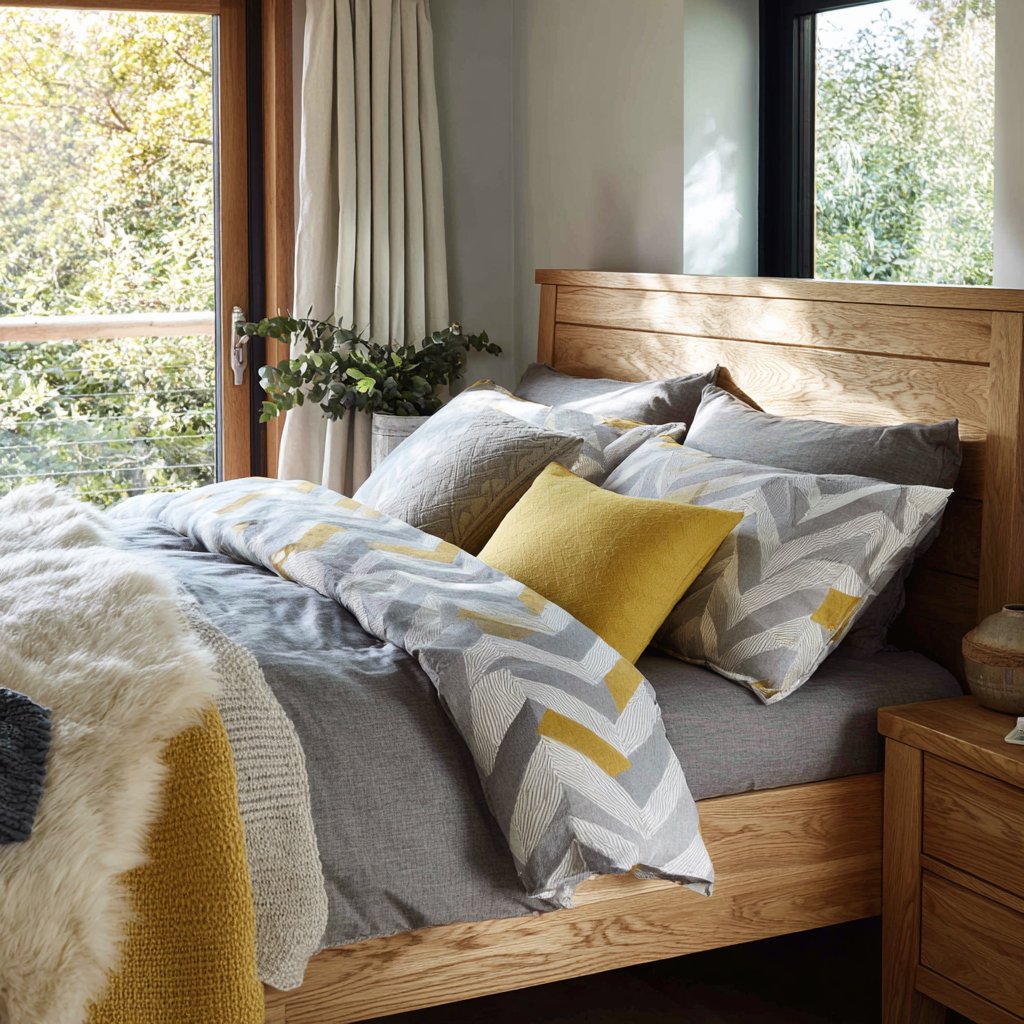
The Scandinavian-inspired queen bedroom masterfully demonstrates how simplicity and warmth can coexist, creating a space that embodies the Danish concept of hygge—that sense of cozy contentment that makes you want to curl up with a good book and a cup of tea. The natural oak queen bed frame showcases the Scandinavian love affair with beautiful, functional design through its clean lines and honest construction that celebrates rather than hides the joinery and craftsmanship. This approach to furniture design reflects a deeper philosophy about living simply and appreciating quality over quantity.
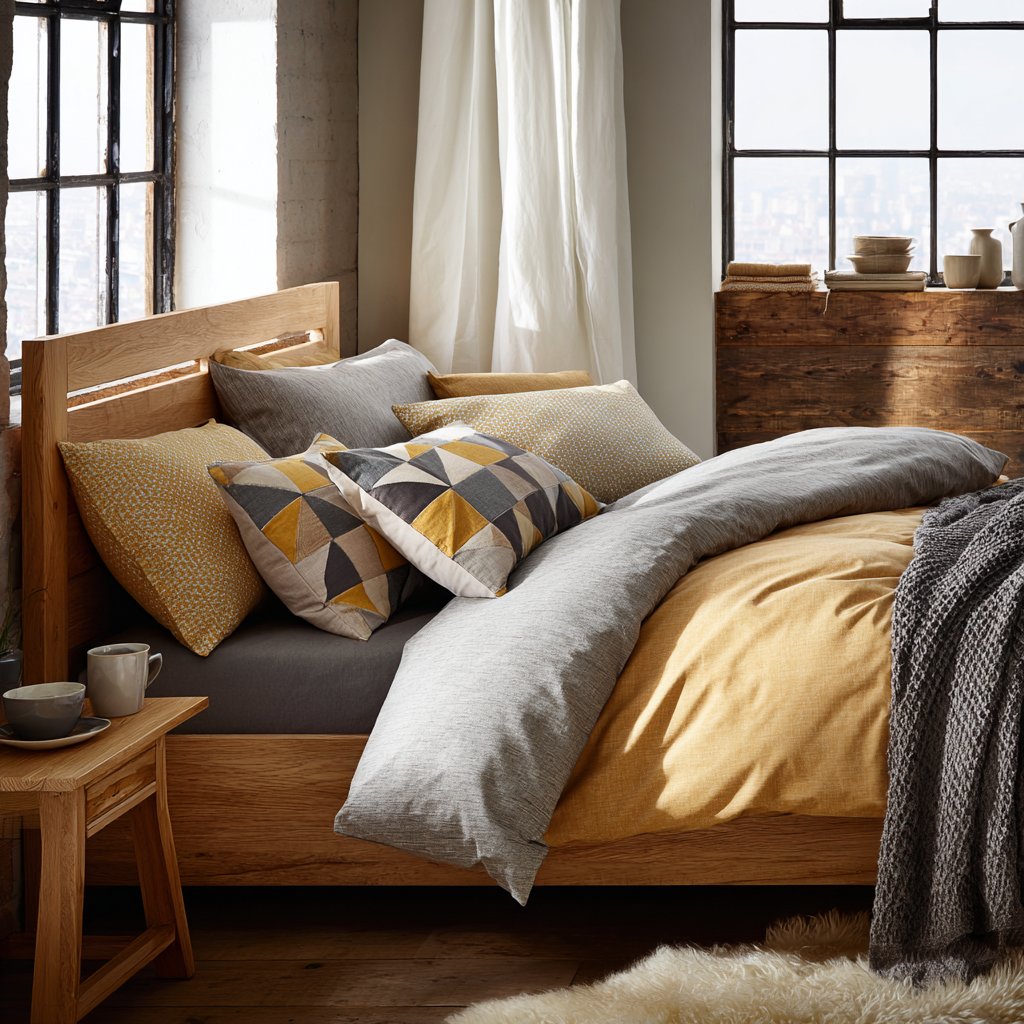
The bedding in this space follows the Scandinavian principle of creating warmth through texture and layering rather than heavy materials. Organic cotton sheets provide a breathable, comfortable base, while geometric throw pillows in muted grey and mustard tones introduce just enough color to prevent the space from feeling stark. These accent colors are carefully chosen from the Scandinavian palette—subtle, nature-inspired hues that add personality without disrupting the room’s serene atmosphere. A chunky knit throw draped casually across the bed invites touch and adds cozy visual texture that’s essential to achieving that hygge feeling.
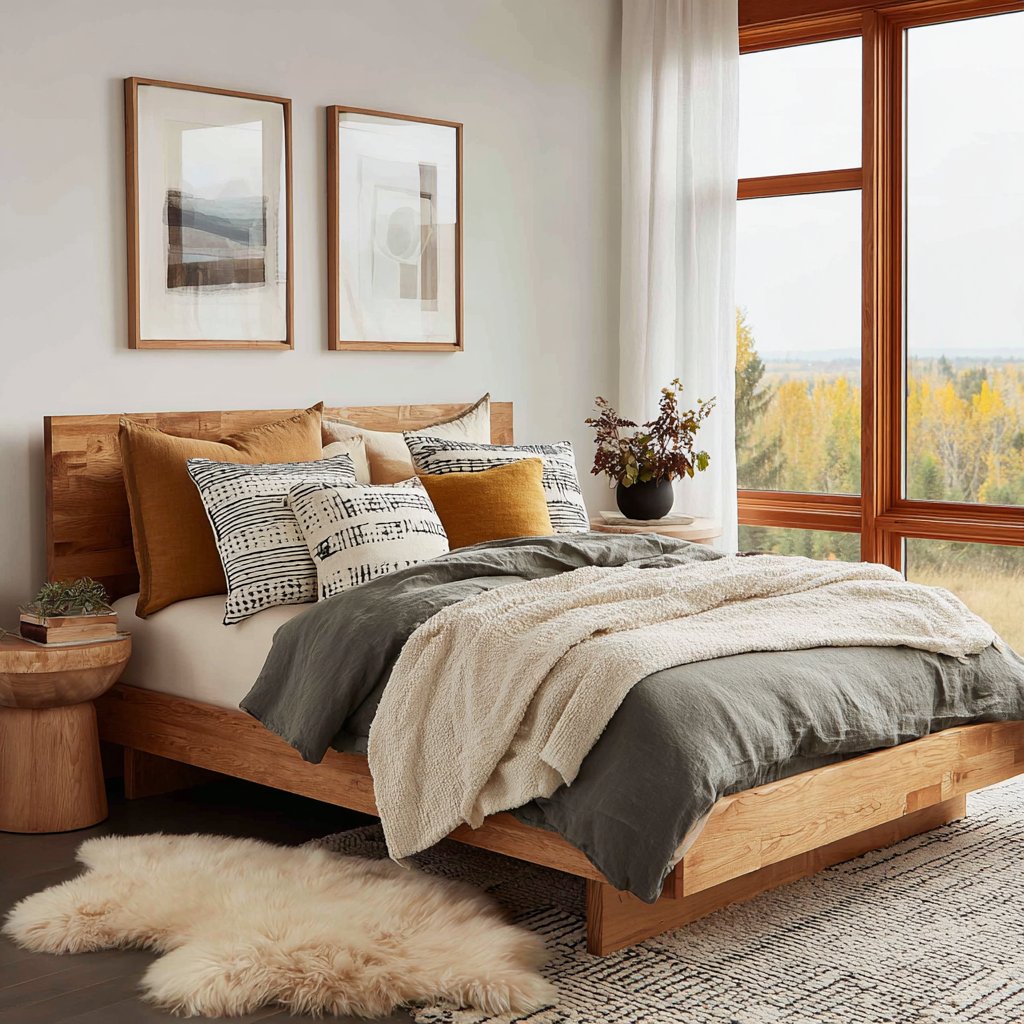
The tactile element continues with a luxurious sheepskin rug placed beside the bed, providing a soft landing for bare feet on cool mornings. This natural material not only adds warmth and comfort but also introduces an organic element that connects the indoor space to the natural world—a key principle in Scandinavian design philosophy. The texture of the sheepskin against the smooth oak flooring creates pleasing contrast while maintaining the room’s cohesive aesthetic.
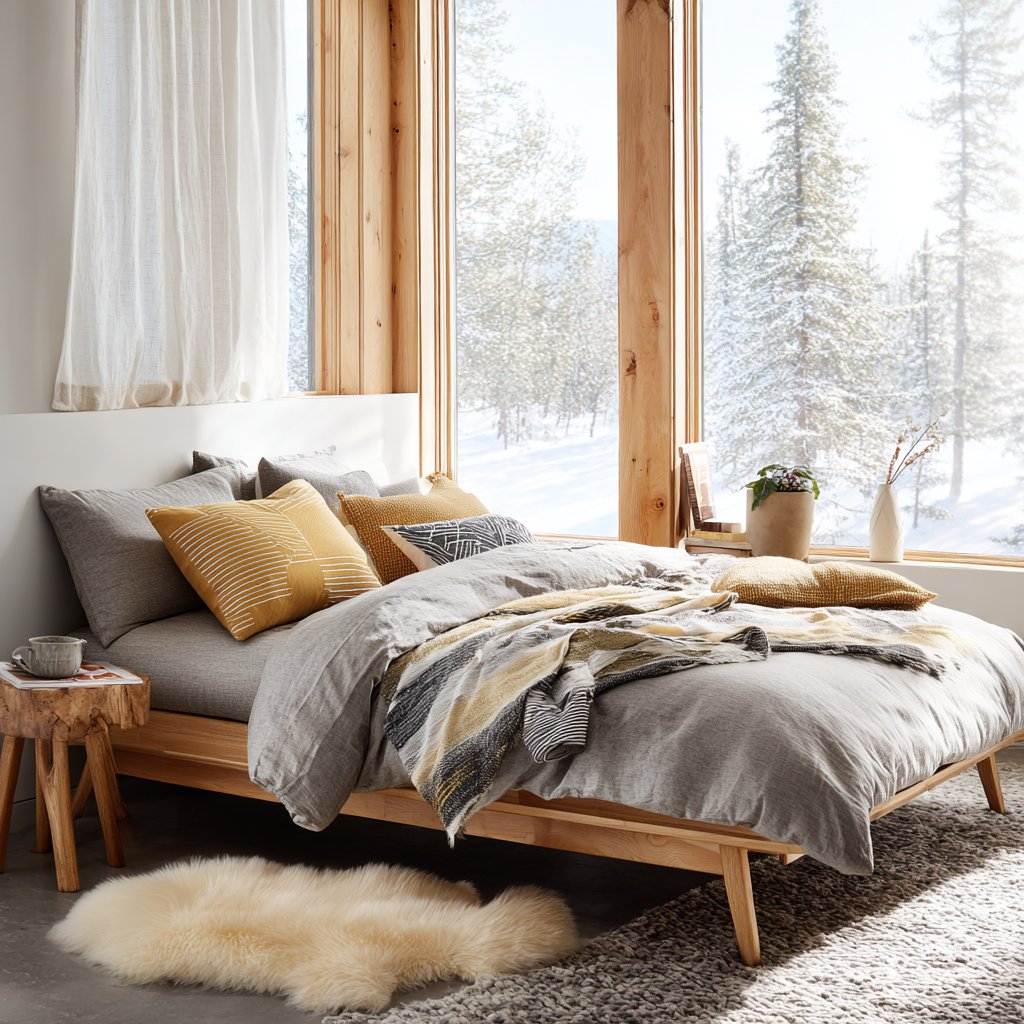
Large windows with minimal white curtains are central to this design, flooding the space with natural Nordic-style lighting that changes throughout the day and seasons. Scandinavian design traditionally maximizes natural light to counter the long, dark winters of northern climates, and this principle translates beautifully to any location, creating spaces that feel open, airy, and connected to the outdoors.
Key Design Tips:
- Choose light-colored wood furniture in oak, ash, or birch to maintain the bright, airy Scandinavian aesthetic
- Limit decorative accessories to a few meaningful pieces rather than cluttering surfaces
- Incorporate wool, linen, and cotton textiles in neutral tones with subtle patterns
- Add warmth through candles (real or LED) to create that essential cozy atmosphere
- Keep walls white or very light grey to maximize light reflection and create a sense of spaciousness
- Include at least one statement piece in a muted accent color like dusty blue, soft terracotta, or mustard yellow
4. Contemporary Leather Luxury
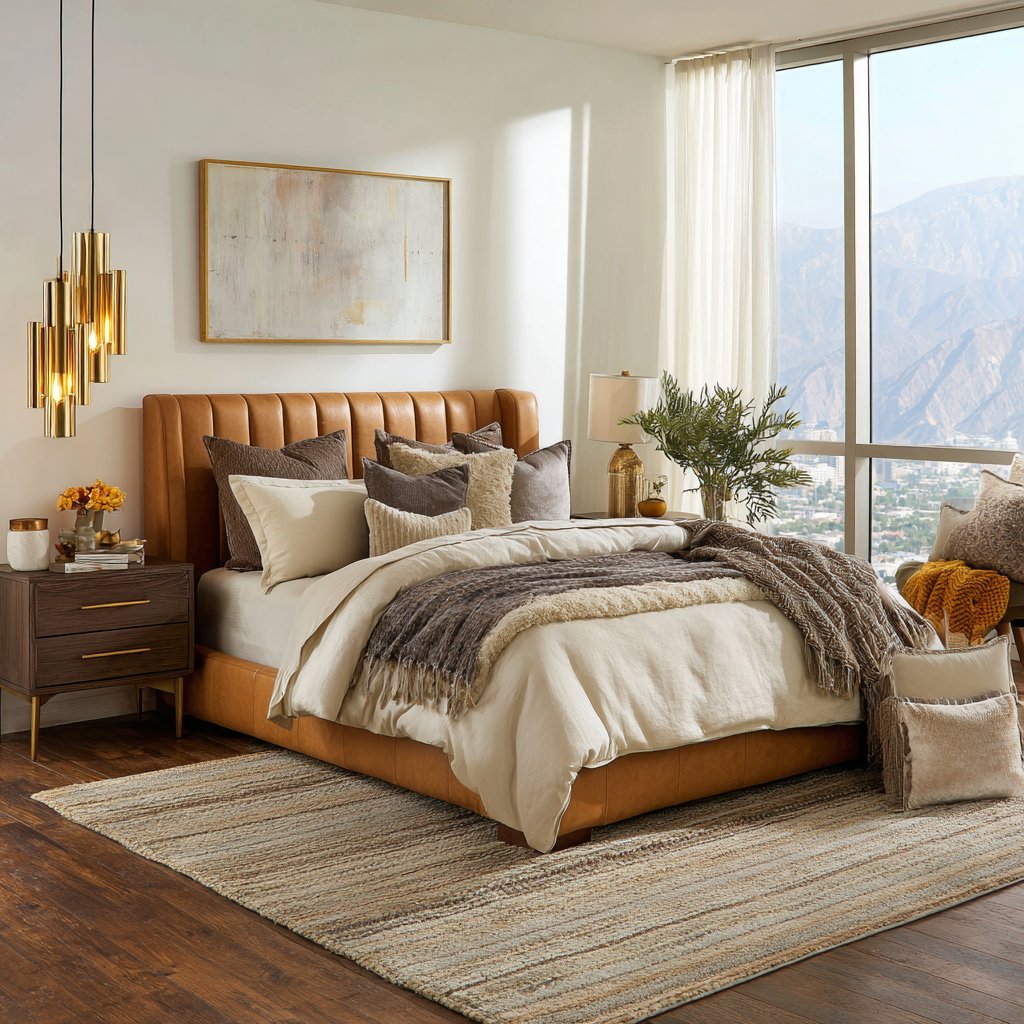
The contemporary queen bedroom with leather upholstery elevates the sleeping space to new heights of sophistication, proving that modern design can be both striking and comfortable. The leather-upholstered queen bed with its tall, padded headboard in rich cognac brown makes a bold statement while providing exceptional comfort for sitting up to read or watch television. The choice of leather as an upholstery material brings an unexpected element of luxury typically associated with fine furniture showrooms or executive offices, transforming the bedroom into a space that feels decidedly adult and refined.
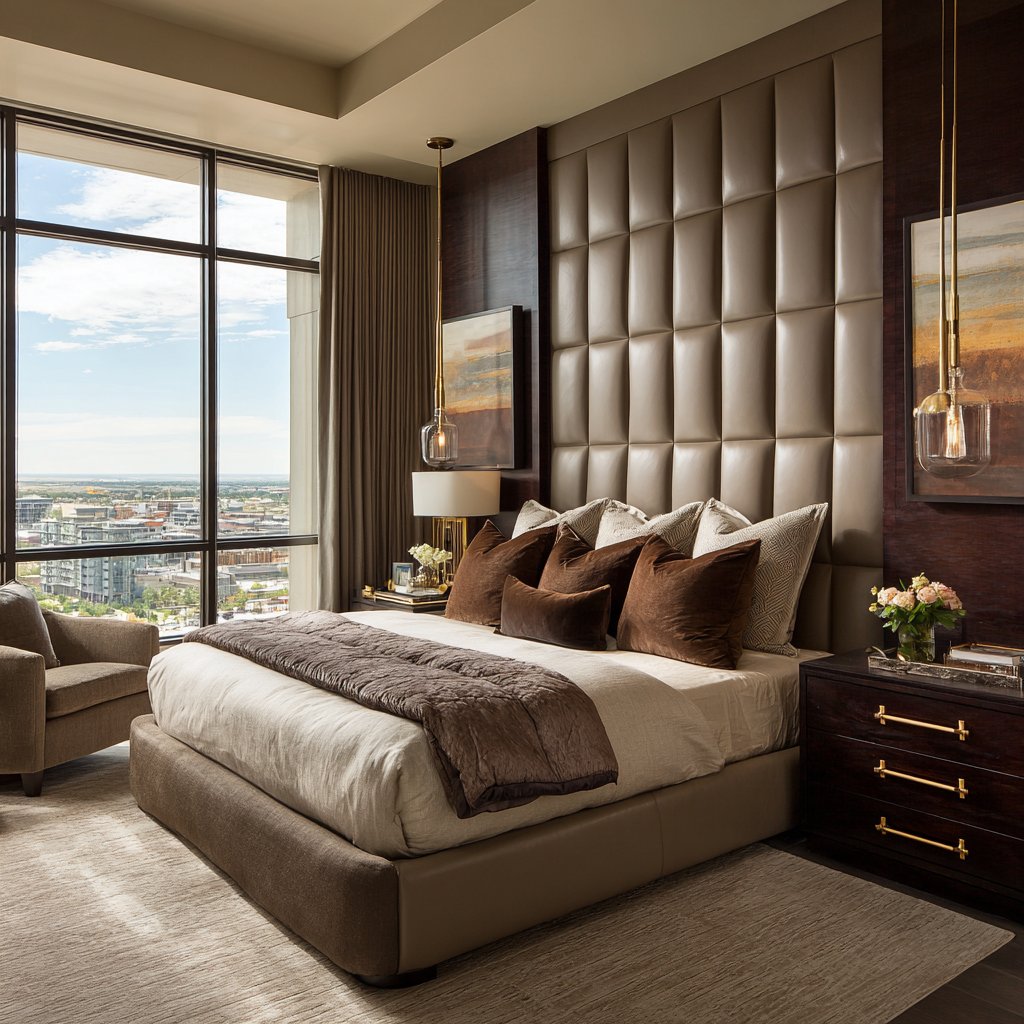
The bedding approach complements the leather headboard with luxurious layers in ivory and taupe tones, creating a neutral palette that allows the cognac leather to remain the star of the show. Velvet accent pillows introduce another textural element, their soft pile contrasting beautifully with the smooth leather and creating that essential layering of materials that defines contemporary luxury design. The combination of these different textures—leather, cotton, velvet—creates visual and tactile interest while maintaining a cohesive, sophisticated color story.
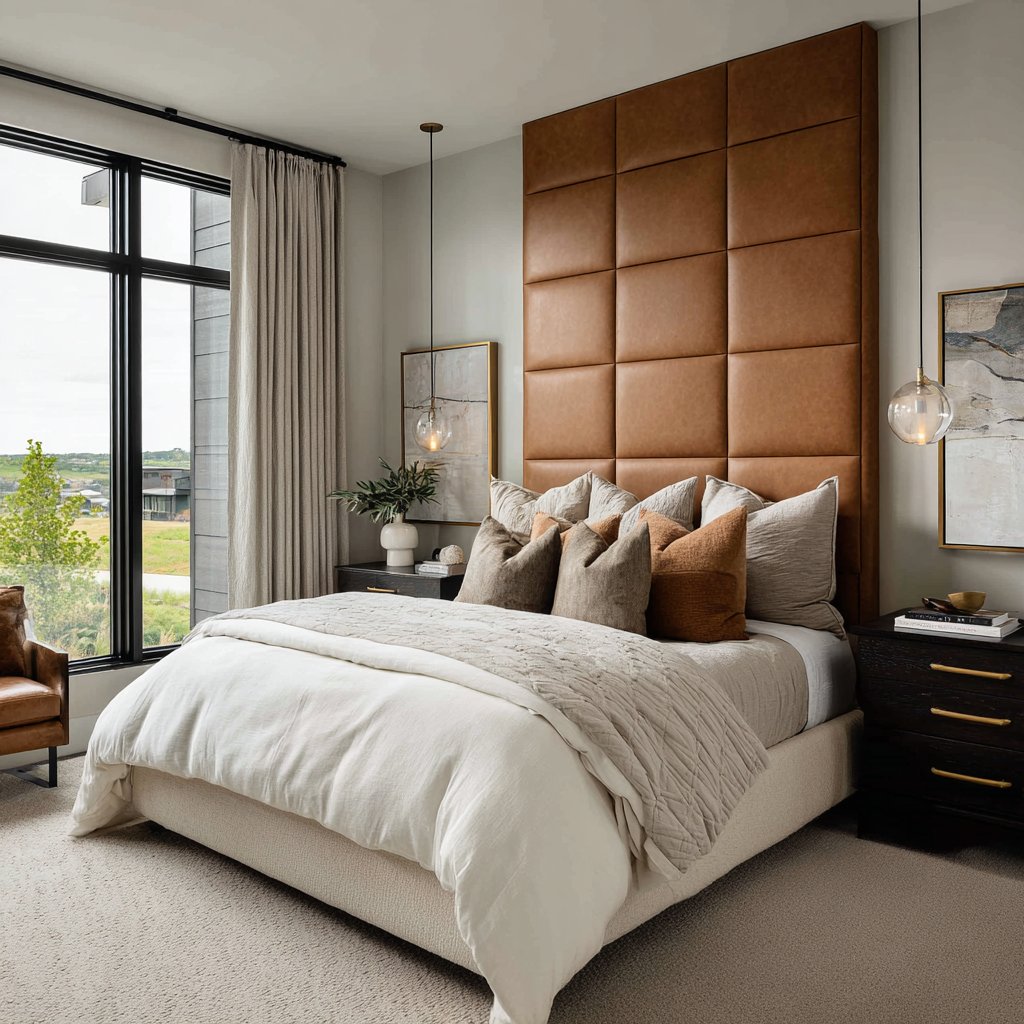
Sleek nightstands in dark walnut with brass drawer pulls continue the theme of quality materials and refined design, their rich wood tones complementing the cognac leather while the brass hardware adds warm metallic accents that catch and reflect light. These pieces exemplify contemporary design’s appreciation for fine craftsmanship and attention to detail, with their clean lines and premium materials creating a sense of understated luxury that never feels ostentatious.
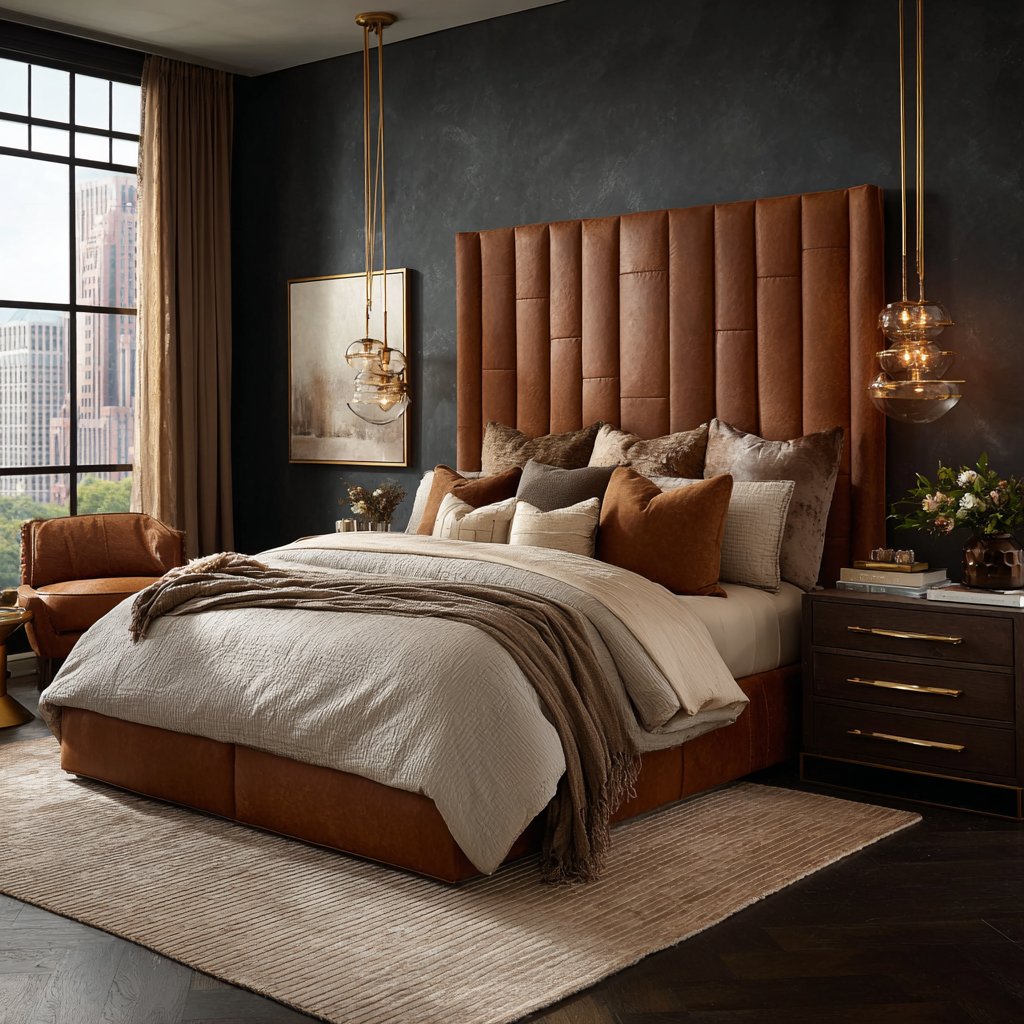
The lighting design takes a modern approach with a statement pendant light fixture that hangs asymmetrically, creating visual interest and breaking from traditional bedroom lighting conventions where matching bedside lamps reign supreme. This bold choice demonstrates confidence in contemporary design principles and creates a focal point that draws the eye upward, adding dimension to the space.
Key Design Tips:
- Choose leather upholstery in warm tones like cognac, caramel, or tobacco for a welcoming rather than cold appearance
- Layer bedding in complementary neutrals to create depth without competing with the leather’s richness
- Incorporate brass or aged bronze hardware and fixtures to add warmth and sophistication
- Balance the leather’s masculine qualities with soft textiles like velvet or silk for a well-rounded feel
- Invest in quality materials throughout—when you start with luxury items like leather, maintain that standard
- Consider the leather’s maintenance needs and choose a finish that suits your lifestyle
5. Coastal Breeze Bedroom
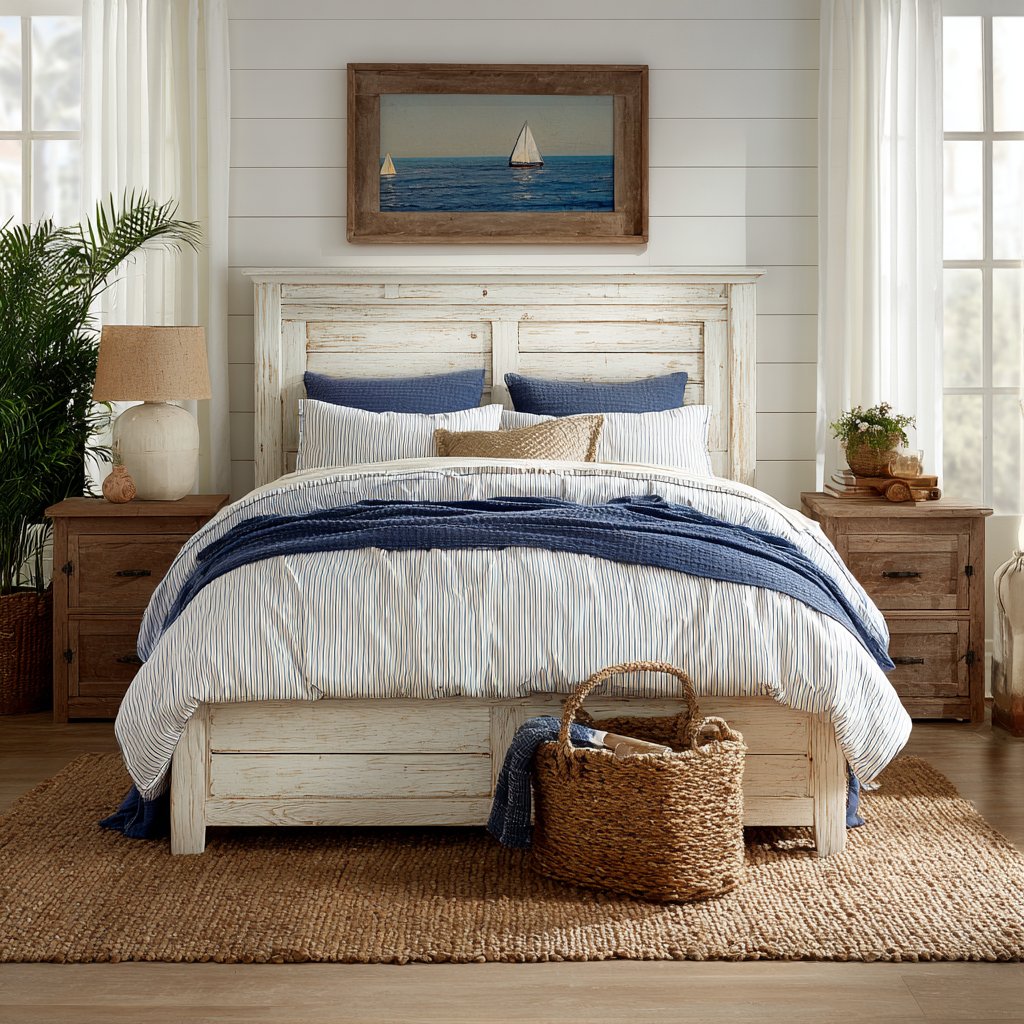
The coastal-inspired queen bedroom captures the essence of seaside living, creating a space that feels perpetually fresh and relaxing, like a permanent beach vacation. The whitewashed wooden queen bed frame with its subtle weathering details sets the tone immediately, its finish suggesting sun-bleached driftwood and salty sea air. This deliberate distressing isn’t about making furniture look damaged but rather about evoking the natural aging process that occurs in coastal environments, adding character and a sense of history to the piece.
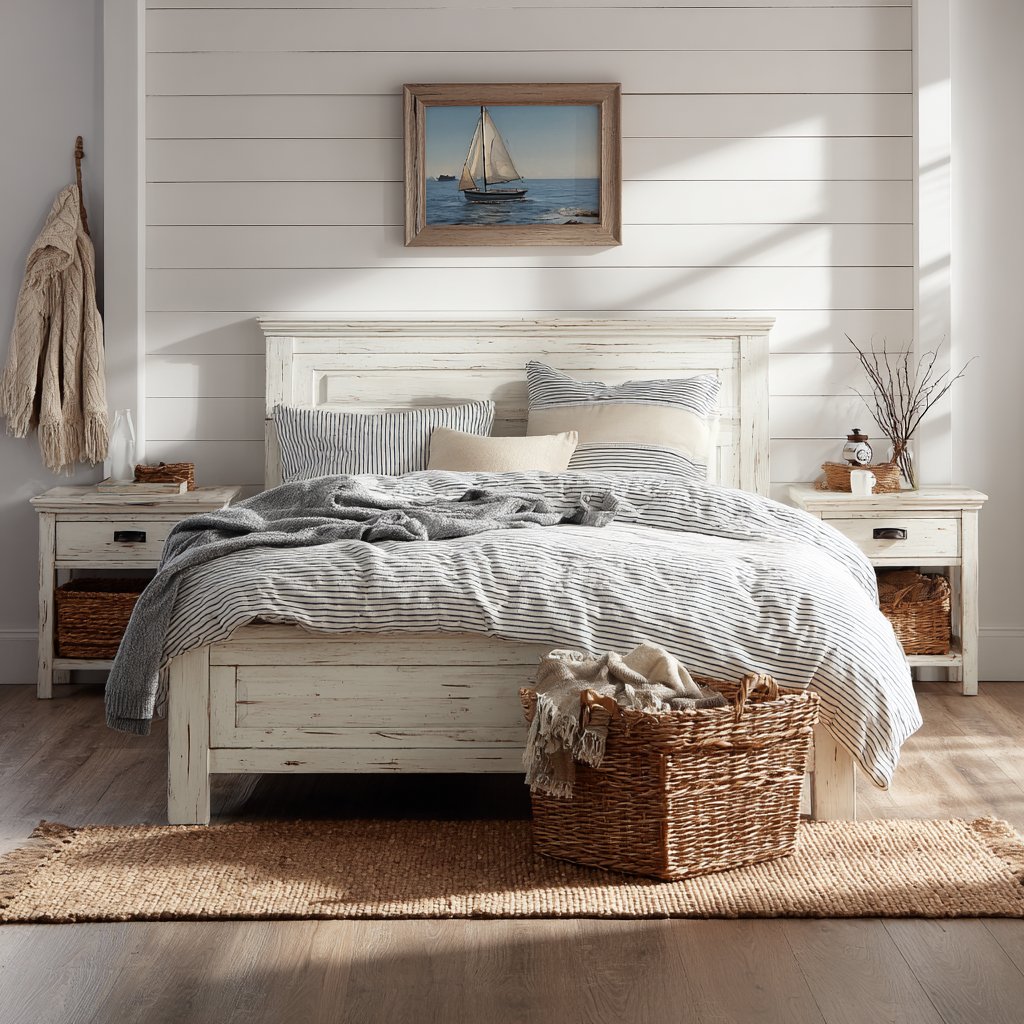
The bedding selection embraces classic nautical elements with crisp white and navy blue striped patterns that evoke maritime tradition, from sailor’s uniforms to sailboat canvas. These bold stripes create visual interest and define the bed as the room’s focal point, while natural linen throw pillows in solid colors provide textural contrast and soften the graphic impact of the stripes. The combination of structured patterns with relaxed natural fabrics perfectly captures the coastal aesthetic’s balance between casual comfort and put-together style.
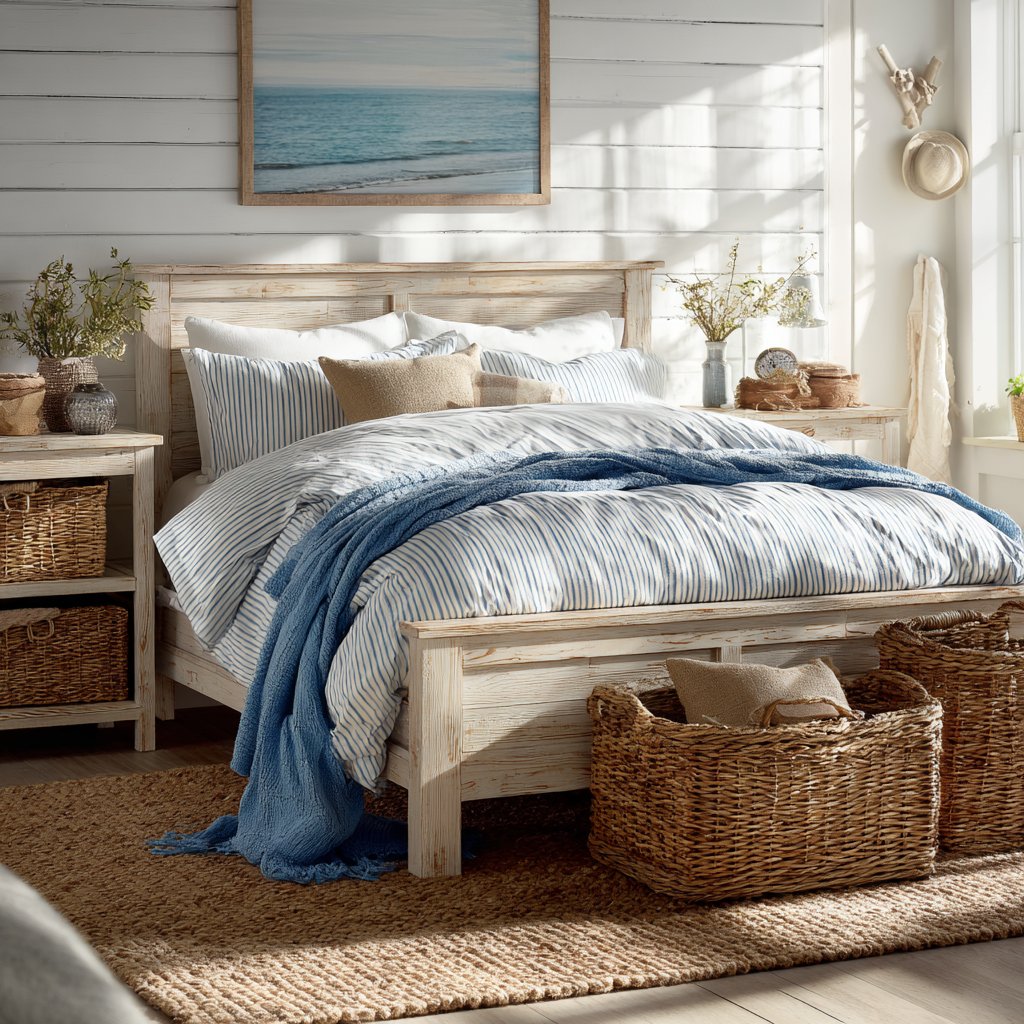
Practical storage comes in the form of woven seagrass baskets tucked beneath matching nightstands, providing concealed storage for extra linens, books, or beach gear while reinforcing the natural, organic elements of coastal design. These baskets add textural warmth while maintaining the room’s light, airy feel—they’re functional without being heavy or visually overwhelming. The natural variation in the seagrass weave adds handcrafted character that machine-made storage solutions can’t replicate.
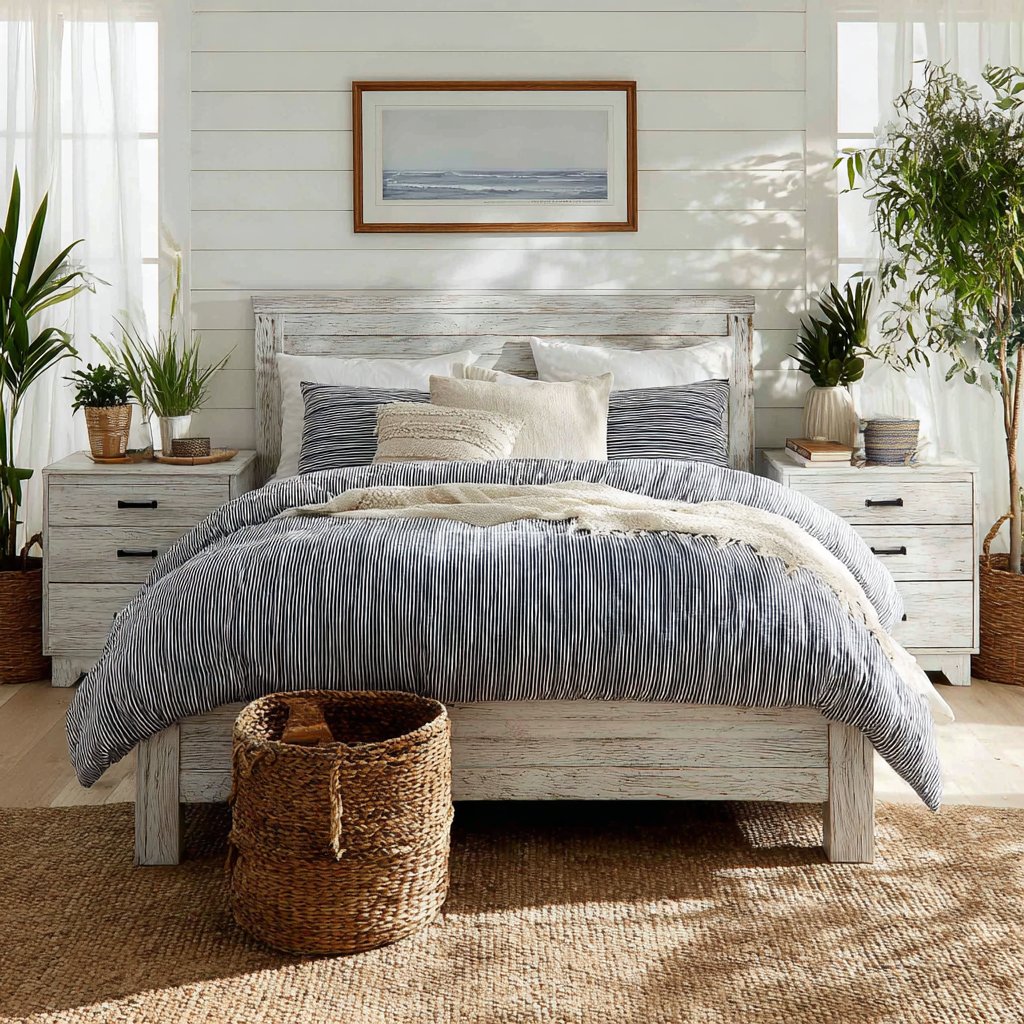
A shiplap accent wall behind the bed provides architectural interest and authentic coastal character, its horizontal lines creating a sense of width and its white painted finish keeping the space bright and fresh. Shiplap has become synonymous with coastal and farmhouse styles, and here it serves double duty as both decorative element and textural backdrop that adds dimension without pattern.
Key Design Tips:
- Stick to a white, navy, and natural palette with possible aqua or seafoam accents for authentic coastal style
- Incorporate natural materials like rattan, seagrass, jute, and weathered wood throughout the space
- Choose lightweight, breathable fabrics like linen and cotton that move with the breeze
- Add nautical elements subtly—rope details, ship lap, or maritime artwork—without going overboard with theme decor
- Keep window treatments minimal to maximize natural light and views
- Include found objects like coral, shells, or driftwood as organic decorative elements
6. Bohemian Eclectic Paradise
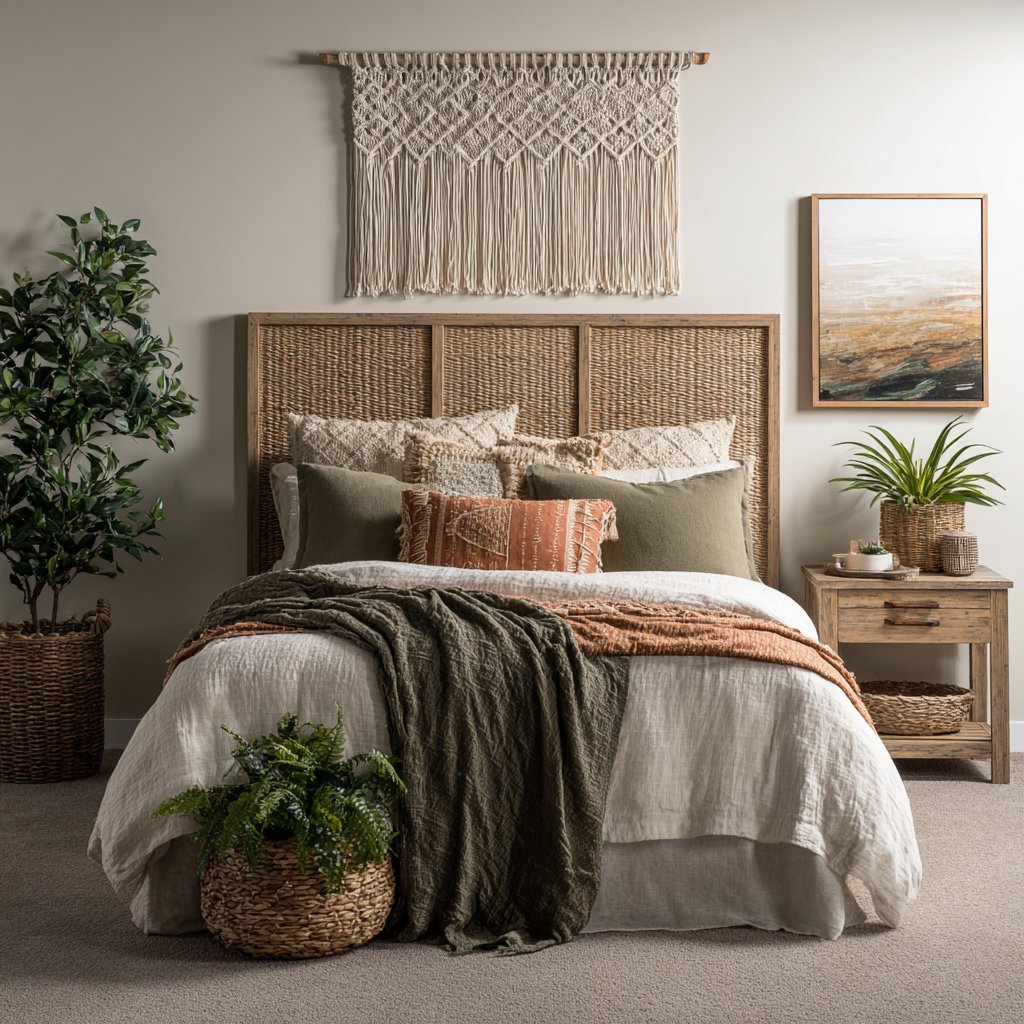
The bohemian queen bedroom celebrates artistic freedom and personal expression, creating a space that feels collected over time and infused with stories from travels and experiences. The rattan queen bed frame showcases natural woven texture and organic form, its handcrafted appearance and materiality immediately establishing the bohemian aesthetic’s connection to artisanal craftsmanship and natural materials. Unlike mass-produced furniture, this piece has inherent character and slight variations that come from the handweaving process, making each frame unique.
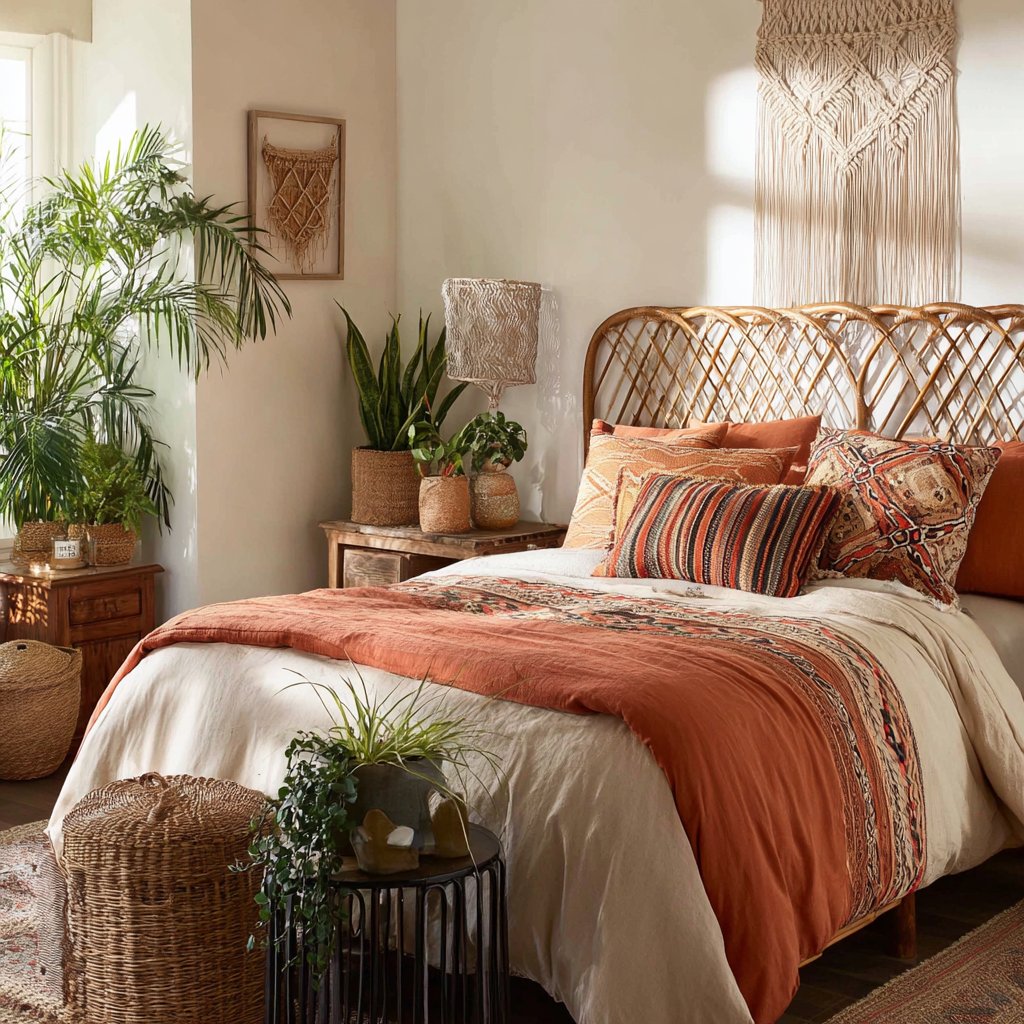
The layering of bedding in this space is where bohemian style truly shines, with textiles in earthy terracotta, cream, and olive tones creating a warm, inviting palette inspired by natural landscapes and global design traditions. Globally-inspired patterned textiles—perhaps featuring ikat, suzani, or block-printed designs—add visual complexity and cultural richness, each pattern telling its own story and contributing to the room’s collected-over-time aesthetic. This approach to bedding is more about creating a personal textile story than matching a predetermined set.
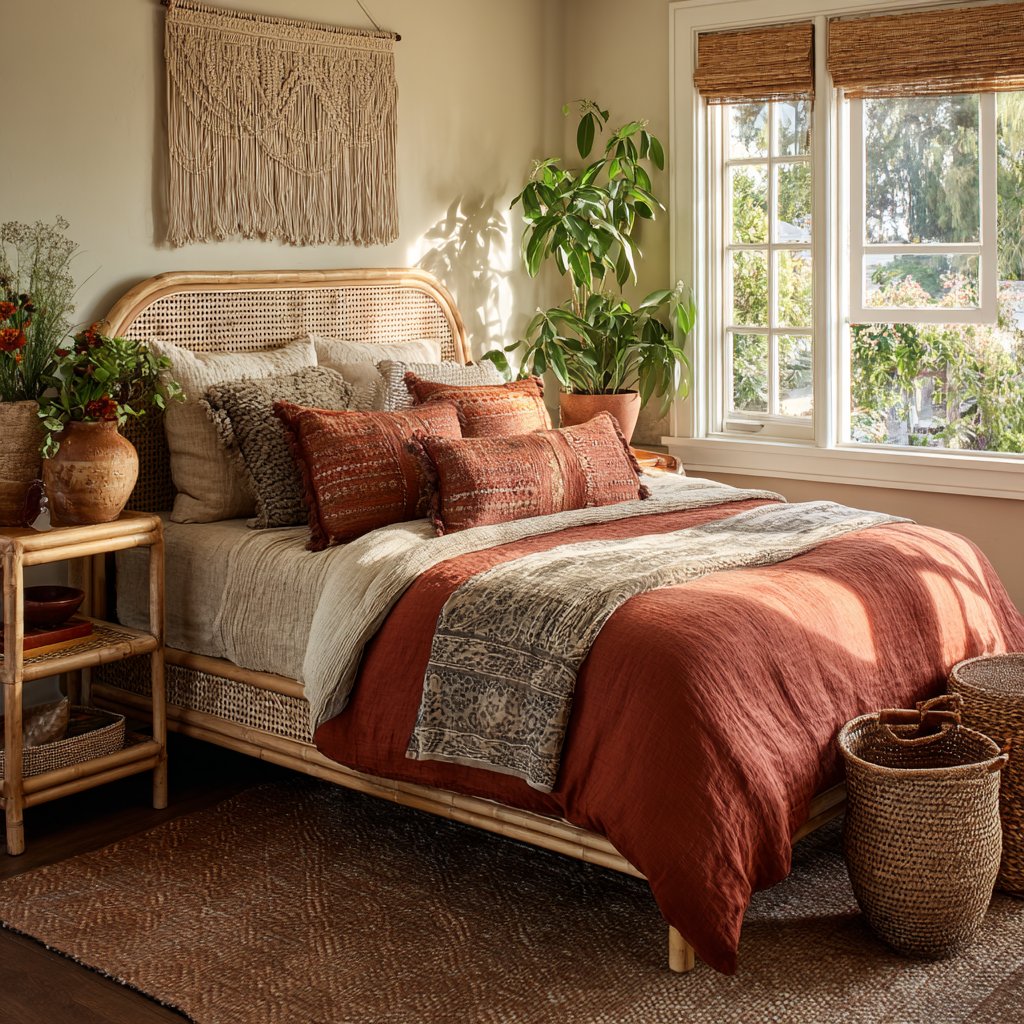
A macramé wall hanging above the headboard adds vertical interest and handcrafted detail, its intricate knotwork demonstrating the bohemian appreciation for artisan techniques and natural fiber arts. This piece serves as artwork, texture, and focal point all at once, creating visual interest without the hard edges or rigid structure of traditional framed art. The organic, flowing nature of macramé perfectly complements the rattan bed frame’s curved lines and natural texture.
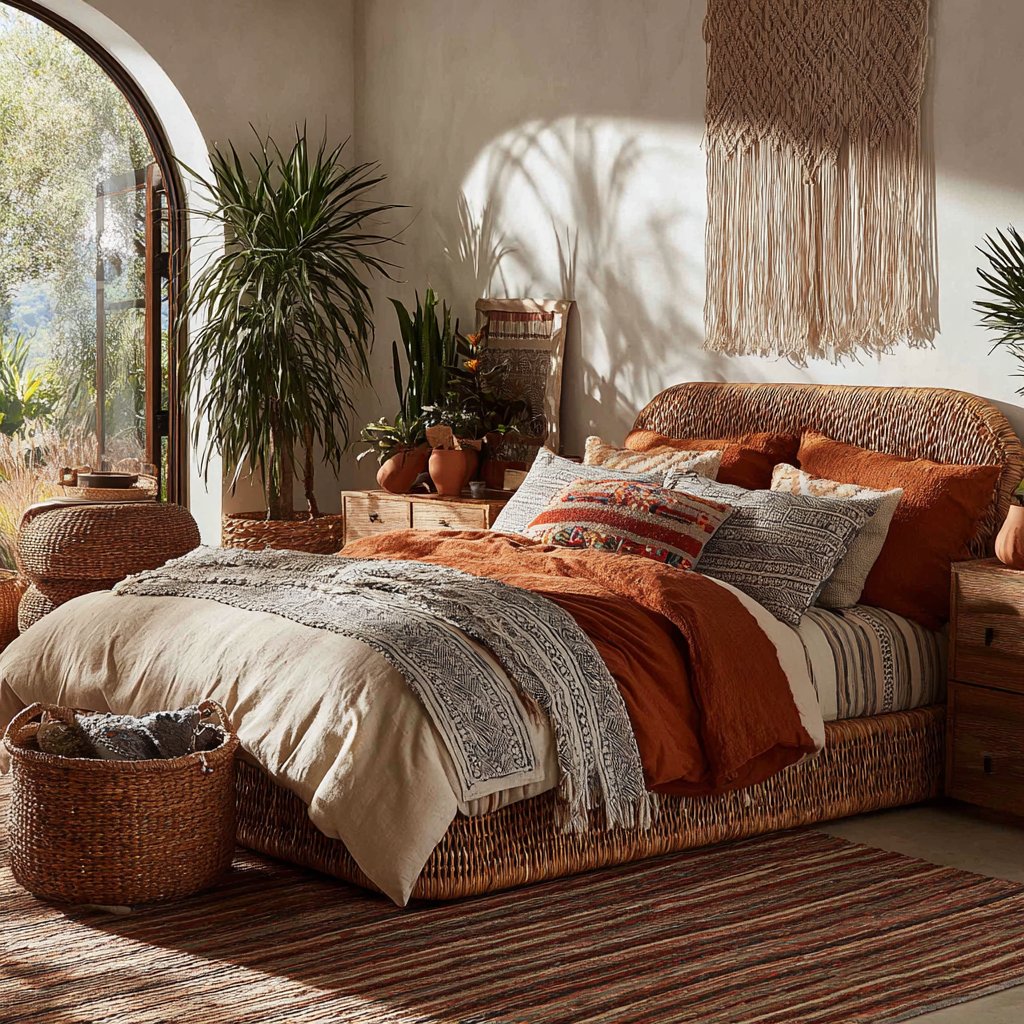
Living plants on varied-height nightstands bring life, color, and fresh energy to the space, reinforcing the bohemian connection to nature and growth. These aren’t just decorative elements—they’re living companions that change and grow, adding to the room’s dynamic, evolving character. The varied heights of the plant stands create visual rhythm and demonstrate the bohemian comfort with asymmetry and organic arrangement.
Key Design Tips:
- Layer textiles fearlessly—mix patterns, textures, and global influences for authentic bohemian style
- Incorporate handmade or artisan-crafted items to add unique character and support traditional crafts
- Use plants generously to bring life and organic movement to the space
- Embrace imperfection and asymmetry rather than striving for matched pairs and perfect balance
- Display meaningful objects from travels or inherited pieces to create personal narrative
- Mix wood tones, metal finishes, and material types freely for an collected-over-time appearance
7. Industrial Urban Loft
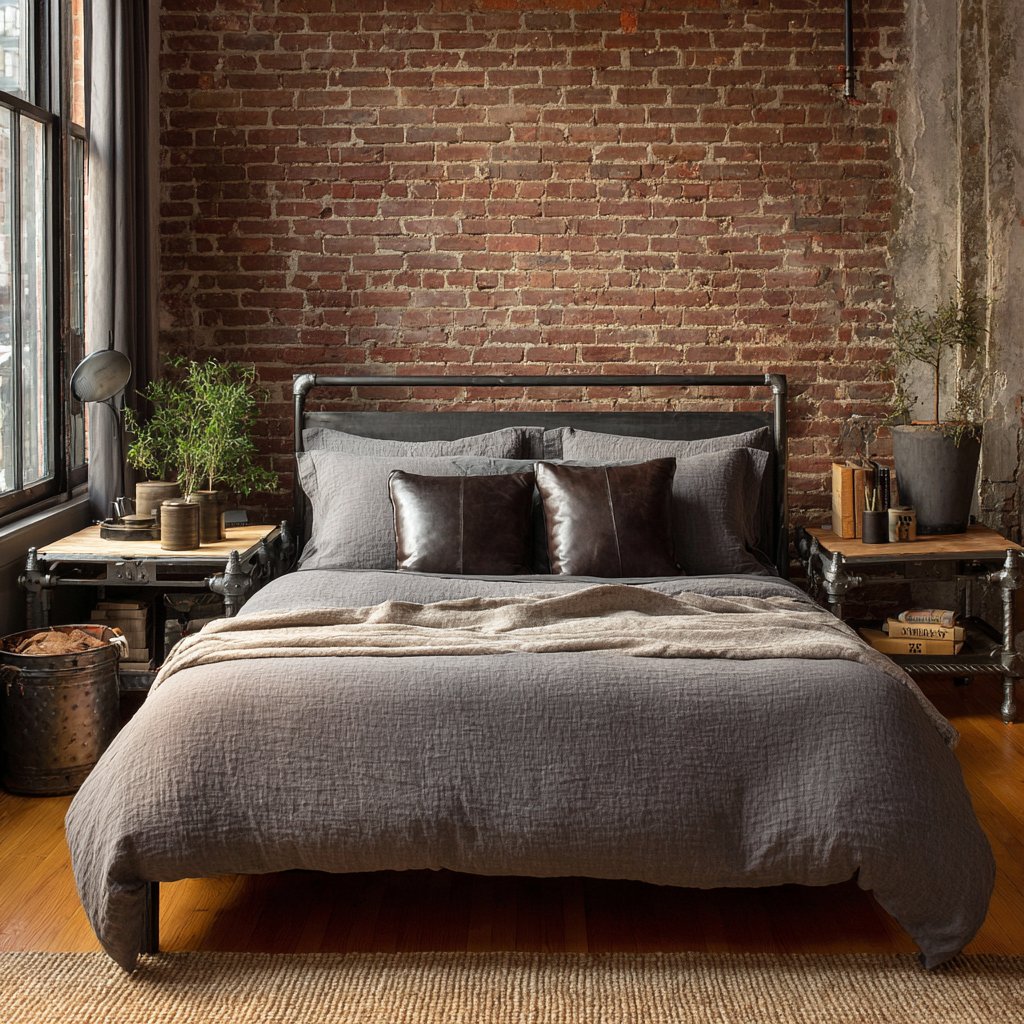
The modern industrial queen bedroom brings the raw aesthetic of converted warehouses and urban lofts into a residential setting, proving that industrial elements can create surprisingly comfortable and intimate spaces. The metal queen bed frame with exposed welded joints and matte black finish makes an unapologetic statement about material honesty—there’s no attempt to hide the construction methods or disguise the metalwork. This transparency about structure and materials is central to industrial design philosophy, celebrating the beauty of functional elements rather than concealing them behind decorative facades.
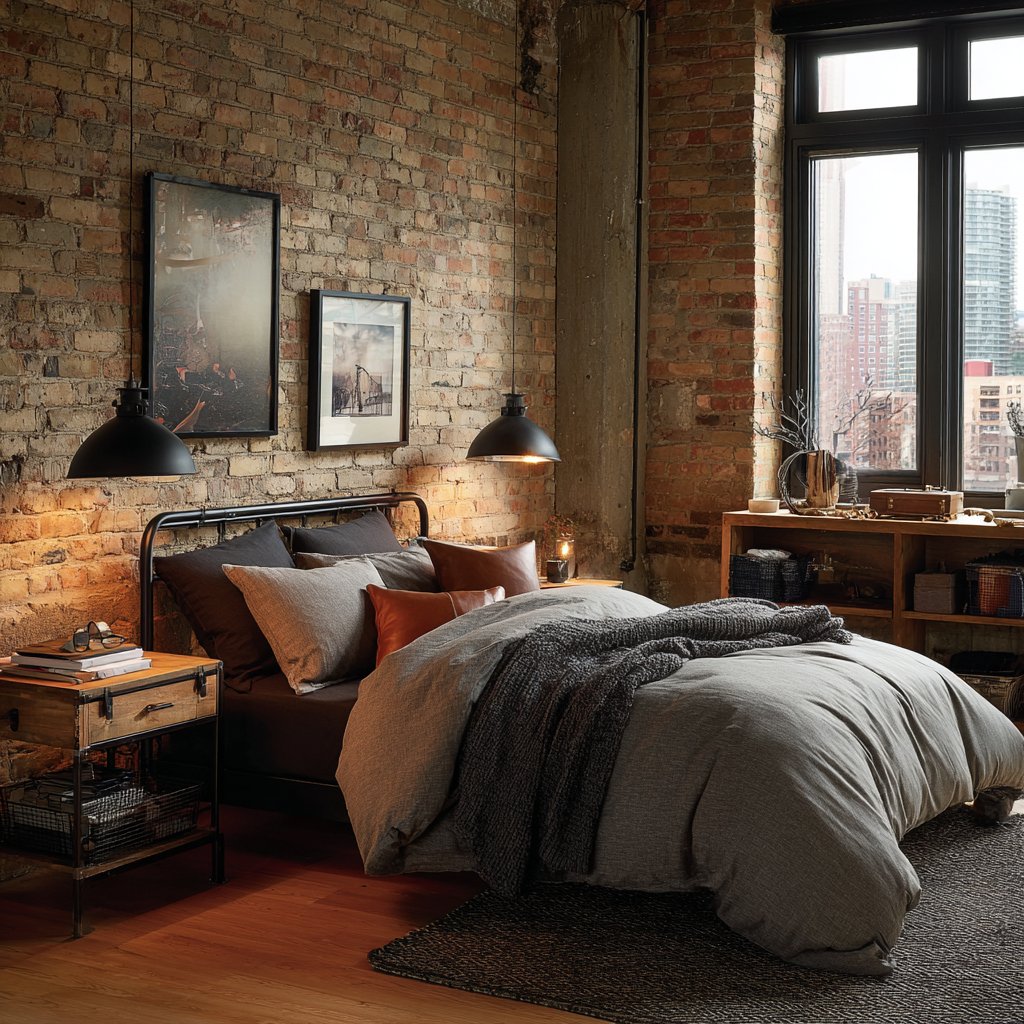
Grey linen bedding maintains the utilitarian aesthetic while providing essential softness and comfort, proving that industrial style doesn’t have to feel cold or uncomfortable. Leather accent pillows introduce a material commonly found in industrial settings—workshop aprons, vintage furniture, machinery components—while adding warmth and tactile interest. The combination of cool grey linen with warm leather demonstrates how industrial design balances hard and soft, rough and refined, masculine and inviting.
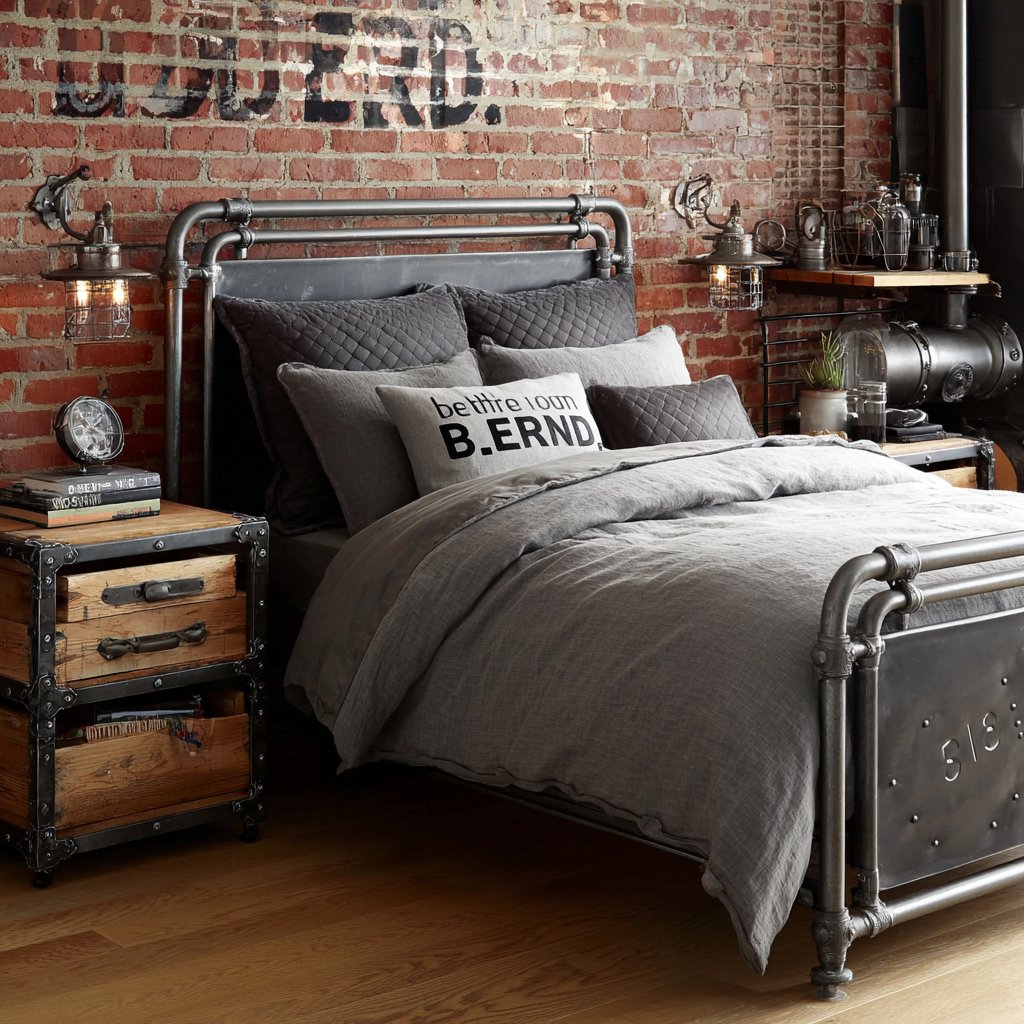
Reclaimed wood nightstands with metal pipe legs exemplify industrial style’s love for repurposed materials and exposed structural elements. These pieces likely incorporate wood salvaged from old factories, barns, or warehouses, complete with nail holes, paint splatters, and wear patterns that tell stories of previous lives. The metal pipe legs aren’t decorative additions—they’re actual industrial plumbing components repurposed as furniture bases, creating authentic industrial character while providing sturdy support.
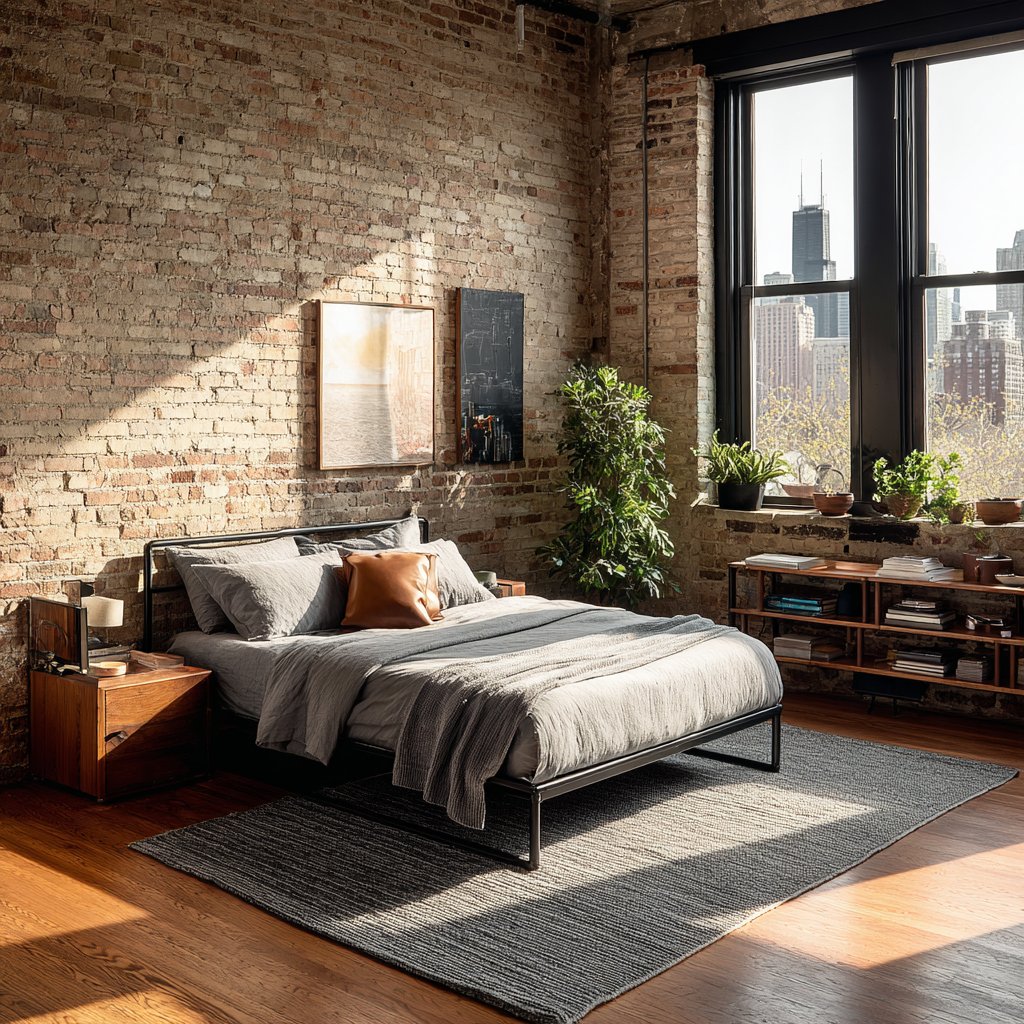
The exposed brick accent wall behind the bed serves as the room’s architectural crown jewel, adding texture, warmth, and authentic urban loft character. Whether this brick was newly exposed during renovation or existing all along, it provides a compelling backdrop that anchors the entire design scheme. The variation in brick color, the texture of mortar joints, and the imperfect patterns created by hand-laid masonry add organic visual interest that no wallpaper could replicate.
Key Design Tips:
- Embrace raw materials like metal, concrete, brick, and reclaimed wood in their natural states
- Choose furniture with visible construction details—welded joints, bolts, rivets—as decorative elements
- Incorporate vintage industrial lighting fixtures like Edison bulbs, cage lights, or factory pendants
- Balance hard industrial surfaces with soft textiles to maintain comfort and warmth
- Use a neutral palette with black, grey, and brown tones as the foundation
- Add aged leather, worn wood, and weathered metal for authentic industrial patina
8. Five-Star Hotel Elegance
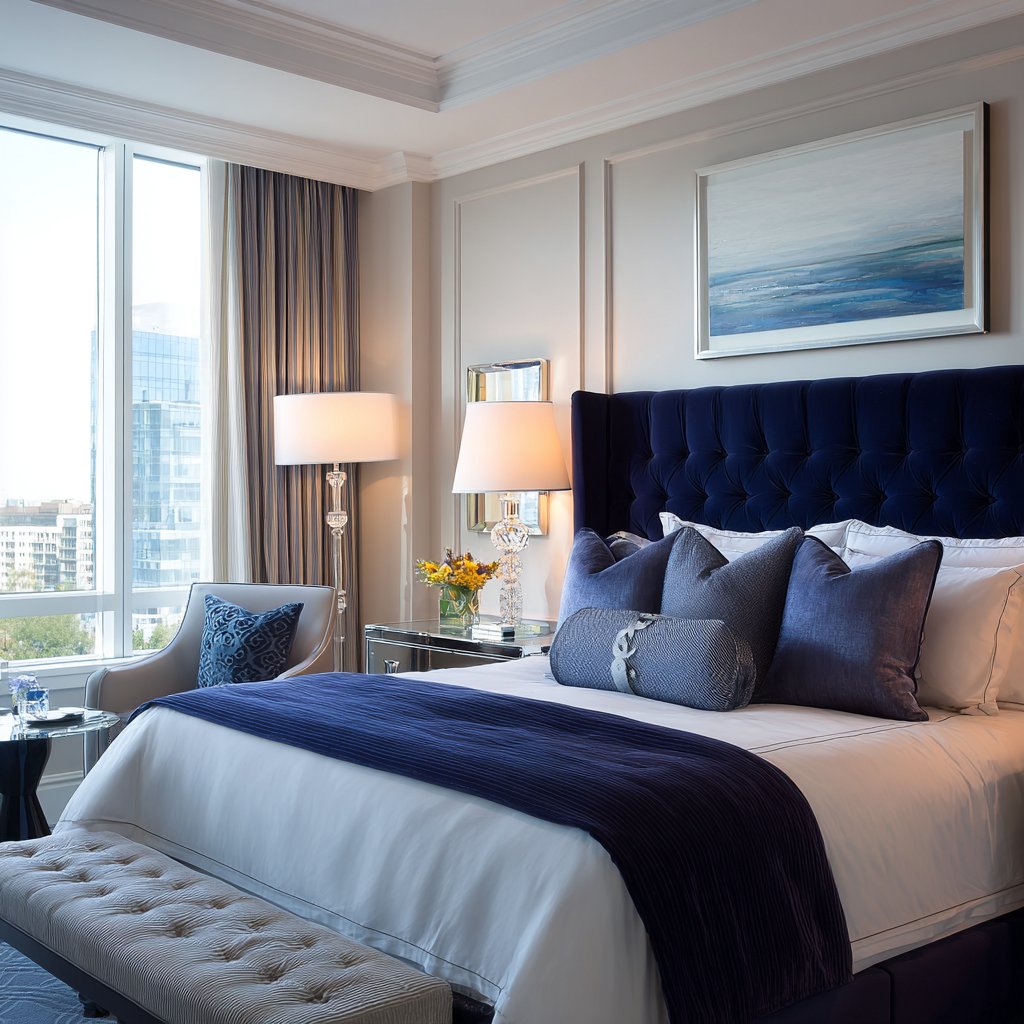
The luxurious hotel-style queen bedroom recreates the indulgent experience of high-end hospitality within your own home, transforming everyday sleeping quarters into a sophisticated retreat worthy of a luxury resort. The upholstered queen bed featuring deep channel tufting in rich navy velvet immediately establishes the room’s commitment to comfort and visual luxury. The tufting technique, with its rhythmic pattern of buttons creating dimensional texture across the headboard’s surface, adds Old World craftsmanship and tactile appeal that invites you to lean back in pampered comfort.
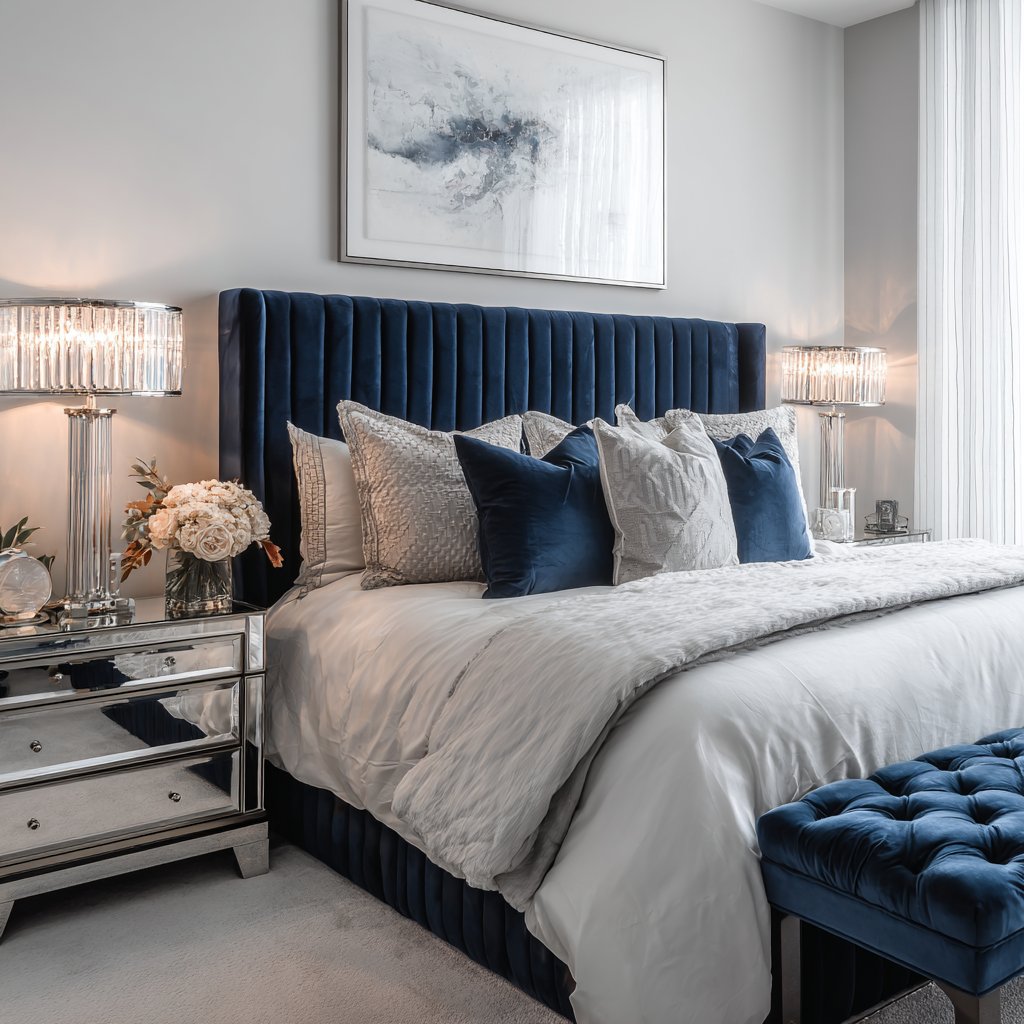
The approach to bedding in this space follows the luxury hotel playbook precisely—crisp white sheets with high thread counts form the foundation, creating that satisfying hotel-crisp feel, while multiple decorative pillows in coordinating blue tones build layers of comfort and visual richness. The pillow arrangement follows the classic hotel formula: sleeping pillows, European square pillows, standard shams, and decorative accent pillows create a pyramid of plushness that looks inviting while serving practical purposes. This layering technique transforms the bed into a focal point of luxury that promises the best night’s sleep imaginable.
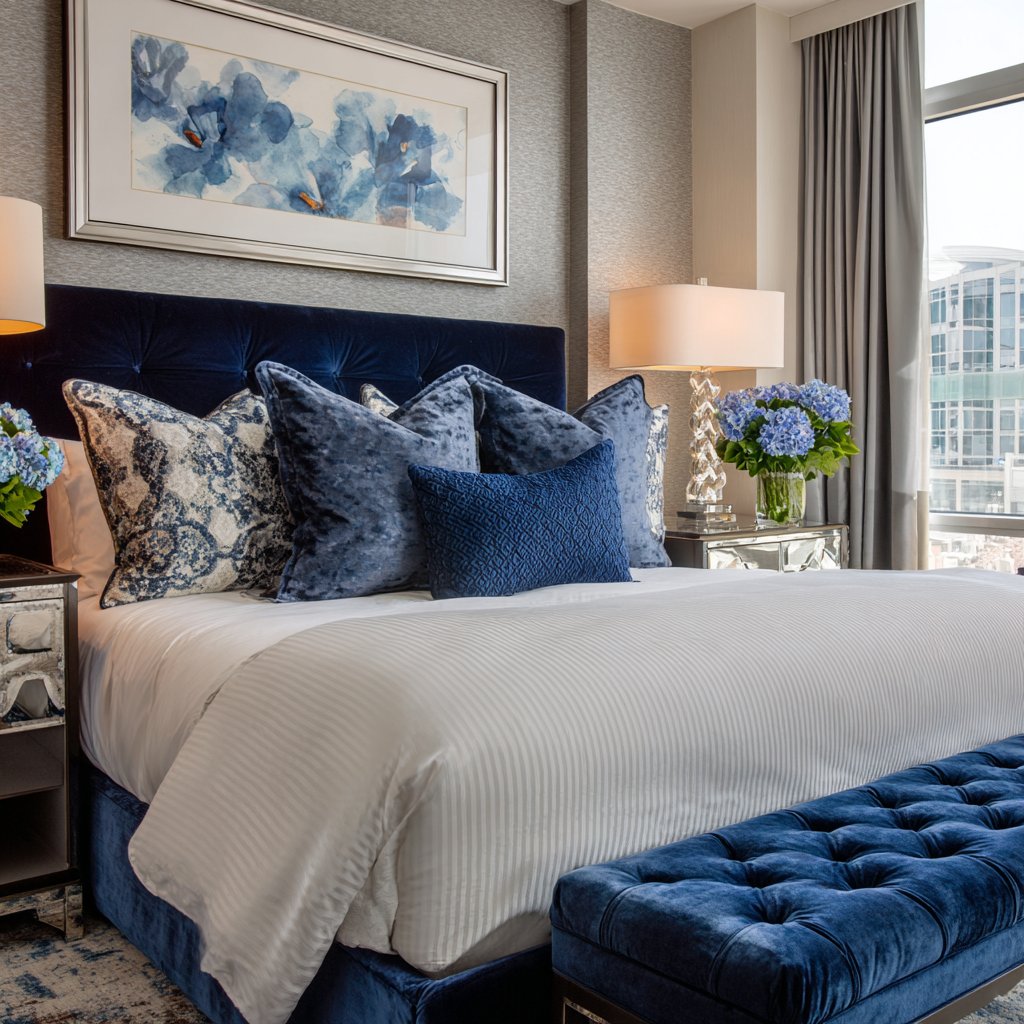
Mirrored nightstands with crystal table lamps add glamorous touches that catch and multiply light, creating sparkle and visual interest while serving practical functions. The reflective surfaces make the room feel larger and brighter while adding a touch of old Hollywood glamour. Crystal lamp bases refract light beautifully, creating rainbow prisms during daylight hours and casting warm, diffused light in the evenings. These choices demonstrate how luxury design uses materials and finishes strategically to create atmosphere and elevation.
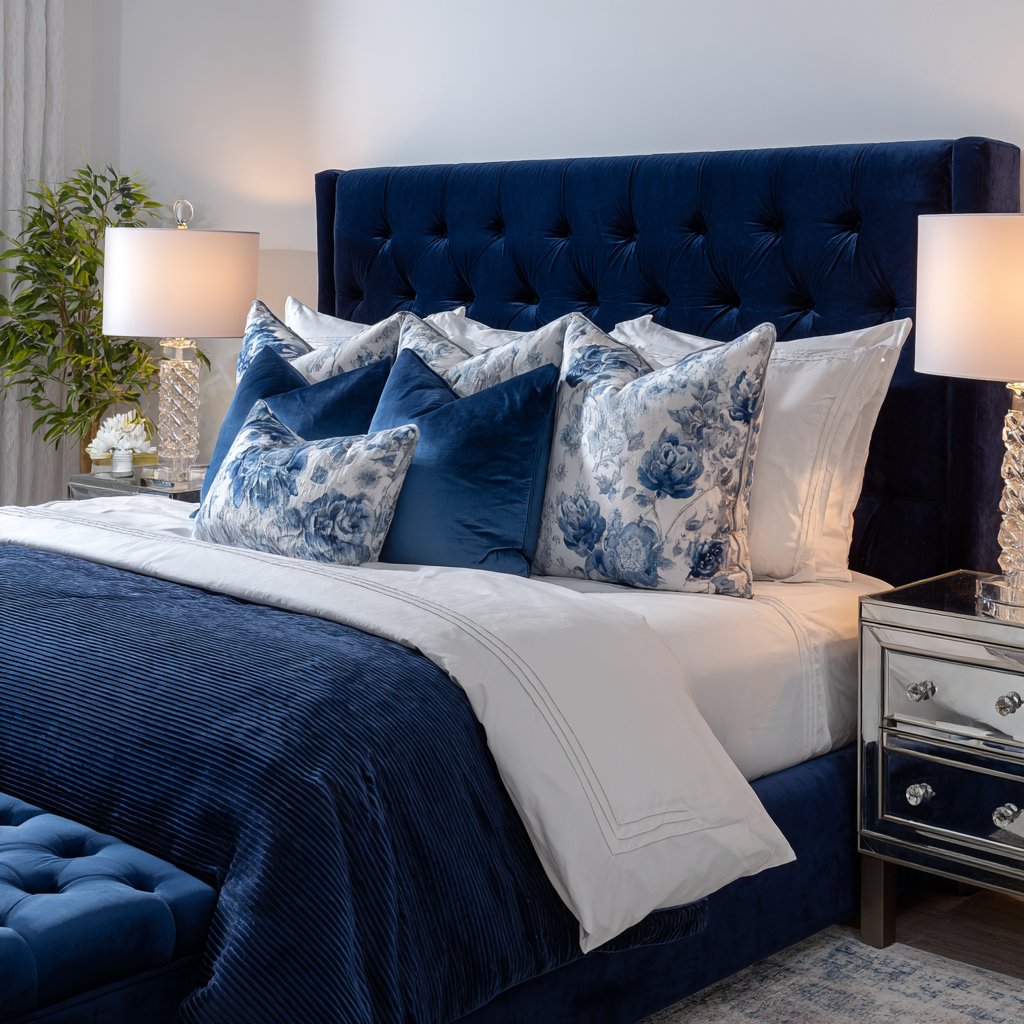
A tufted bench at the foot of the bed provides both practical seating—for putting on shoes or setting down luggage—and visual completion to the bed’s composition. This piece, likely upholstered in complementary fabric, adds another layer of comfort and functionality while reinforcing the room’s commitment to thoughtful, luxurious design at every level.
Key Design Tips:
- Invest in high-quality, high-thread-count bedding in crisp white for authentic hotel luxury
- Layer multiple pillows and cushions to create that plush, inviting hotel bed appearance
- Choose statement lighting fixtures and table lamps that serve as jewelry for the room
- Incorporate reflective surfaces like mirrors and metallic finishes to add glamour and multiply light
- Add a bench or ottoman at the bed’s foot for practical luxury and visual weight
- Maintain symmetry and balance—hotels use matching pairs to create polished sophistication
9. Timeless Transitional Comfort
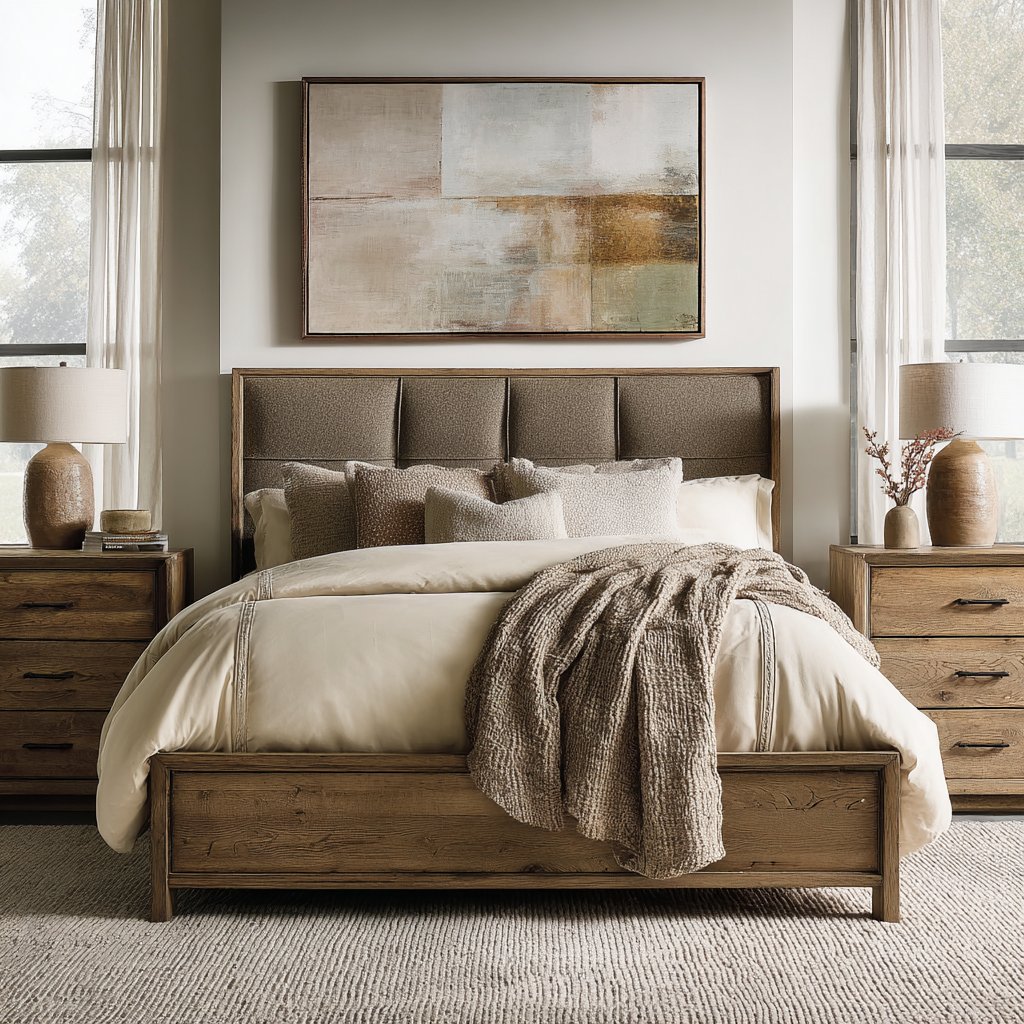
The transitional queen bedroom masterfully bridges traditional and contemporary design sensibilities, creating a space that feels both current and enduring, neither too trendy nor too dated. The wood and upholstered queen bed combines a grey fabric headboard with natural oak frame details, representing the transitional philosophy of blending materials, styles, and periods into cohesive harmony. This mixed-material approach allows the piece to work in multiple contexts—it could feel at home in a century-old brownstone or a newly built suburban home, demonstrating the versatile nature of transitional design.
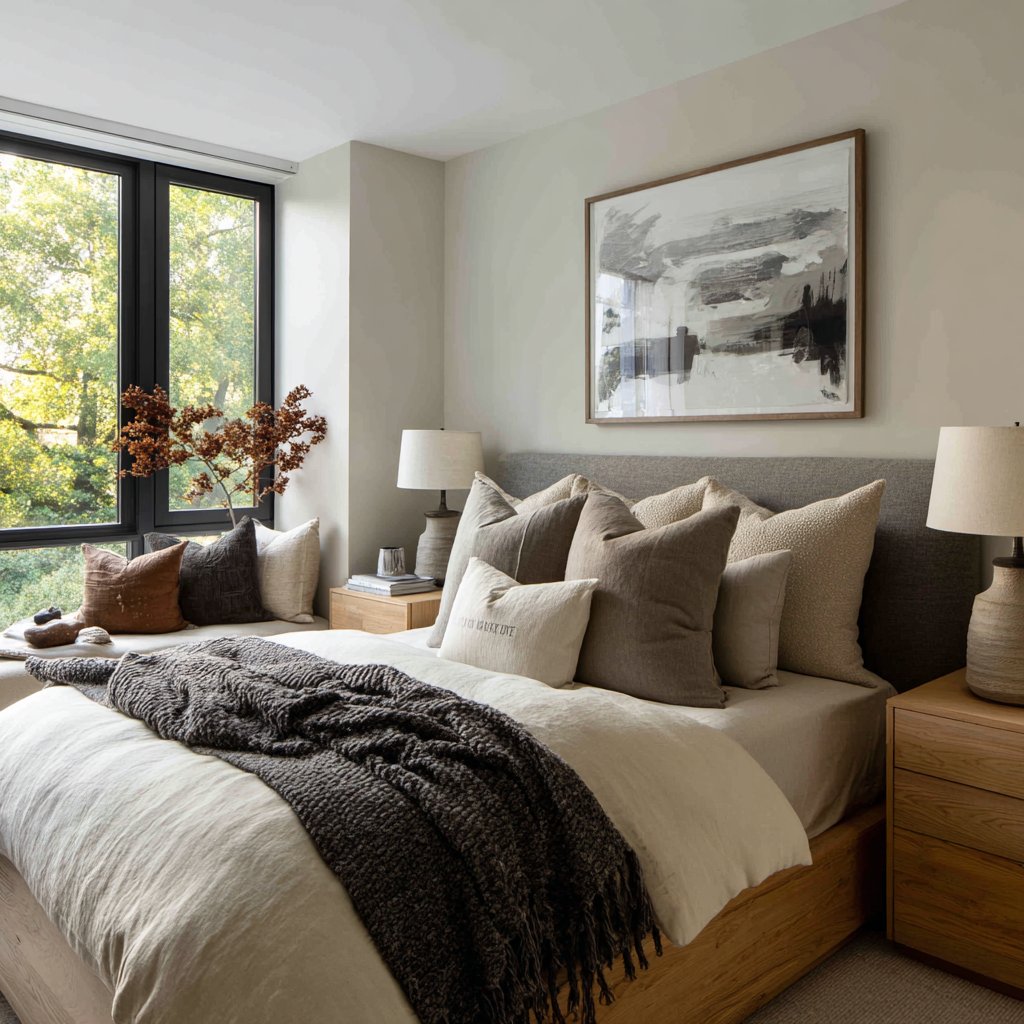
Neutral bedding in layers of cream and soft grey creates understated elegance that serves as a peaceful backdrop for daily life. A textured throw blanket adds visual and tactile interest without disrupting the calming neutral palette, proving that restraint in color doesn’t have to mean boring or sterile. This approach to bedding reflects the transitional principle of using subtle variations in tone and texture to create interest and depth while maintaining an overall sense of calm and cohesion.
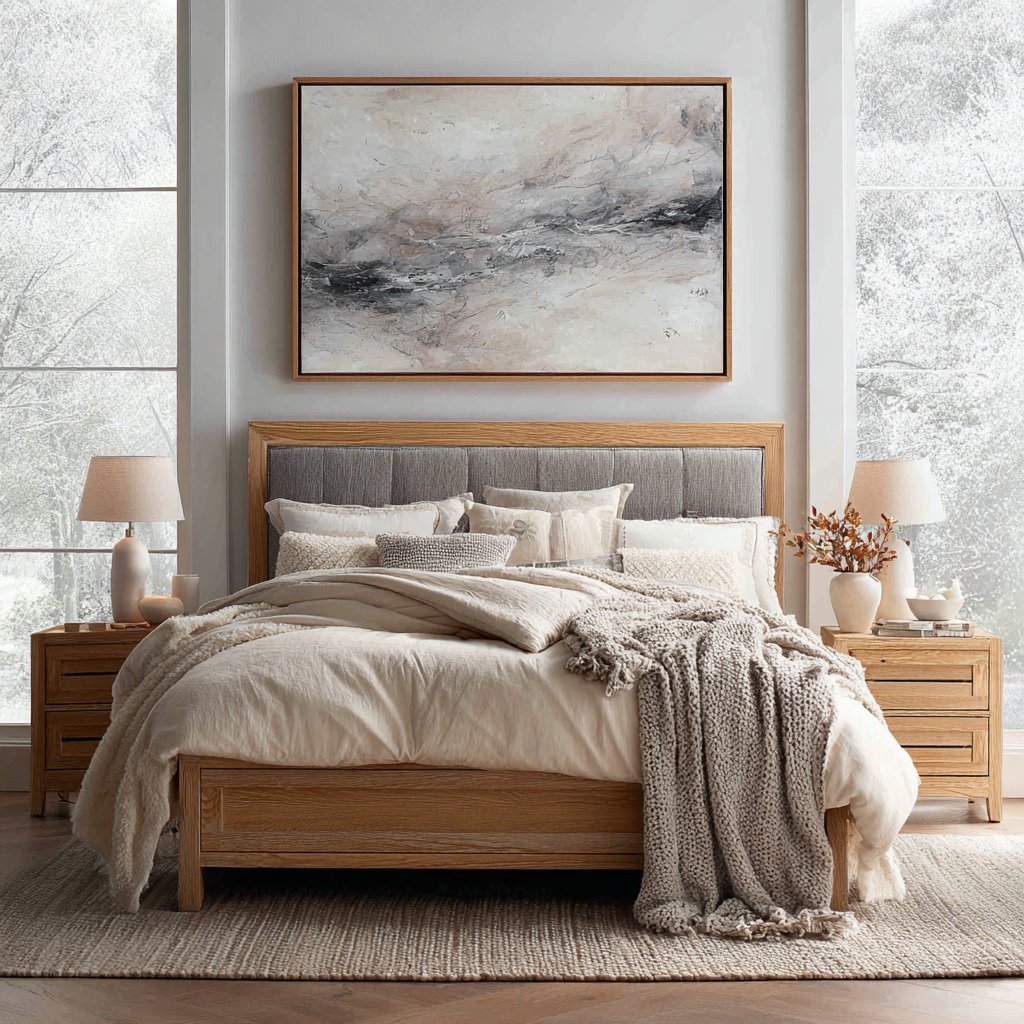
Simple nightstands in matching oak with ceramic lamps provide balanced symmetry that feels both traditional in its paired arrangement and contemporary in its clean-lined simplicity. The choice of ceramic for the lamp bases adds craft-quality and tactile warmth while maintaining neutral tones, and the simple shapes and finishes keep the look fresh and uncluttered. This balance between symmetry and simplicity exemplifies how transitional design takes the best from both traditional and modern aesthetics.
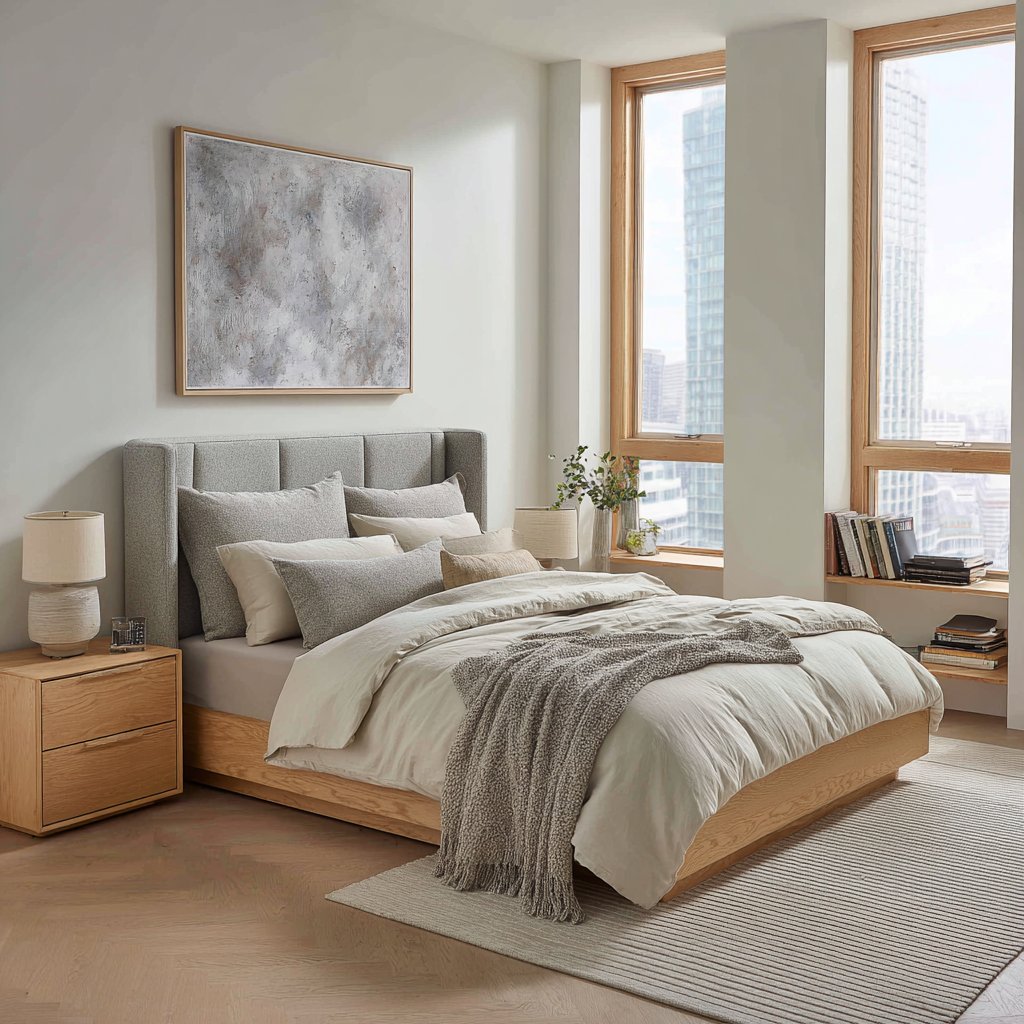
Large abstract artwork above the bed serves as a focal point and demonstrates transitional style’s willingness to incorporate contemporary art and bold statements within otherwise restrained spaces. This piece adds personality and visual interest while its abstract nature ensures it won’t date quickly or limit future design evolution. The scale of the artwork—large enough to balance the bed’s visual weight—shows confidence in transitional design’s ability to make bold choices within balanced contexts.
Key Design Tips:
- Mix traditional elements like symmetry and upholstered headboards with contemporary clean lines
- Stick to neutral color palettes that won’t feel dated in five years
- Combine different materials—wood, metal, fabric, glass—within individual pieces and throughout the room
- Choose quality over trendiness in furniture and fixtures for longevity
- Incorporate both curved and straight lines to balance softness and structure
- Add personality through artwork, accessories, and textiles rather than through furniture styles
10. Smart Small-Space Solutions
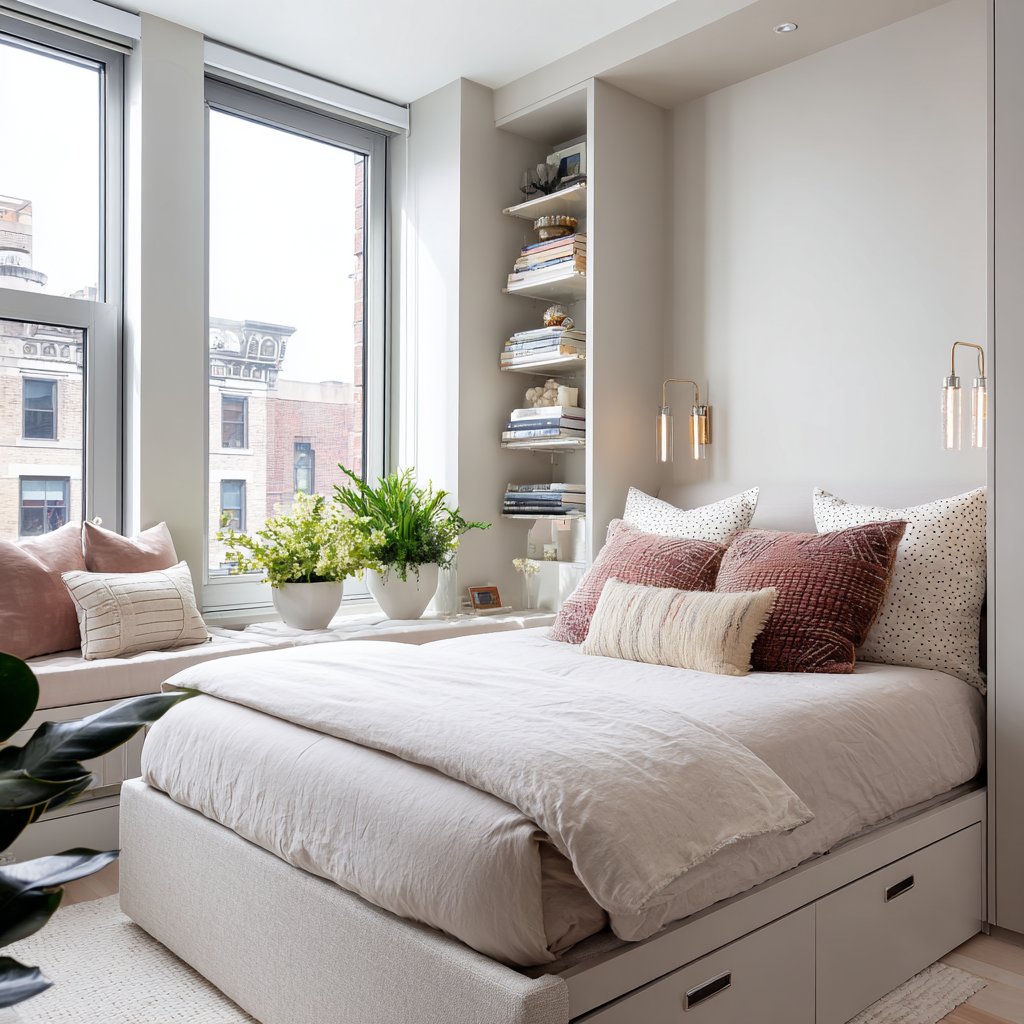
The queen storage bedroom demonstrates that small spaces can be both beautiful and highly functional through clever design solutions and space-maximizing strategies. The queen storage bed with built-in drawers in the base transforms wasted space beneath the mattress into valuable storage real estate, perfect for seasonal clothing, extra bedding, or items that don’t need daily access. This approach eliminates the need for bulky dressers or underbed storage boxes that collect dust and create visual clutter, keeping the room feeling open and organized.
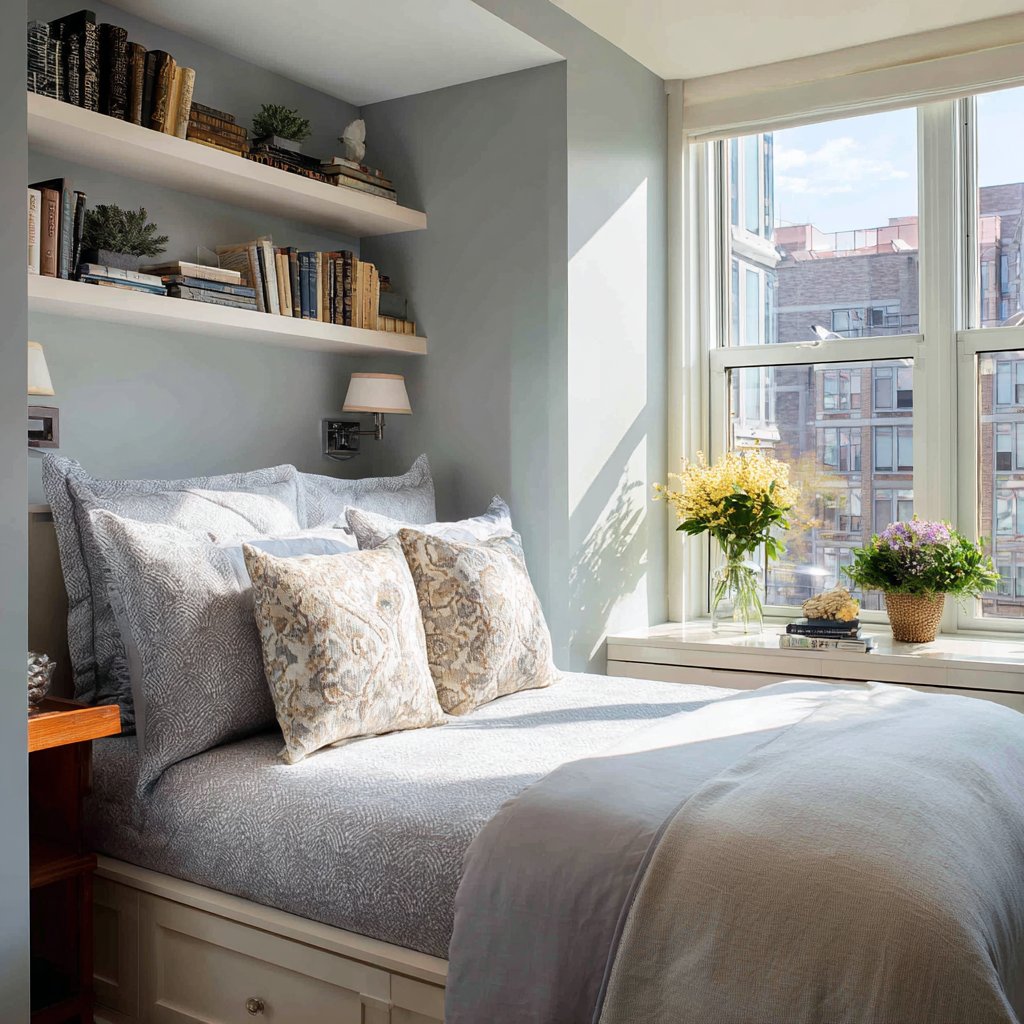
Vertical storage solutions take advantage of wall space that small bedrooms typically waste, with floating shelves and wall-mounted reading lights saving precious floor space while providing essential functionality. These elements draw the eye upward, making the room feel taller and more spacious than its actual square footage suggests. Wall-mounted reading lights eliminate the need for table lamps that consume valuable nightstand surface area, while providing adjustable task lighting exactly where it’s needed.
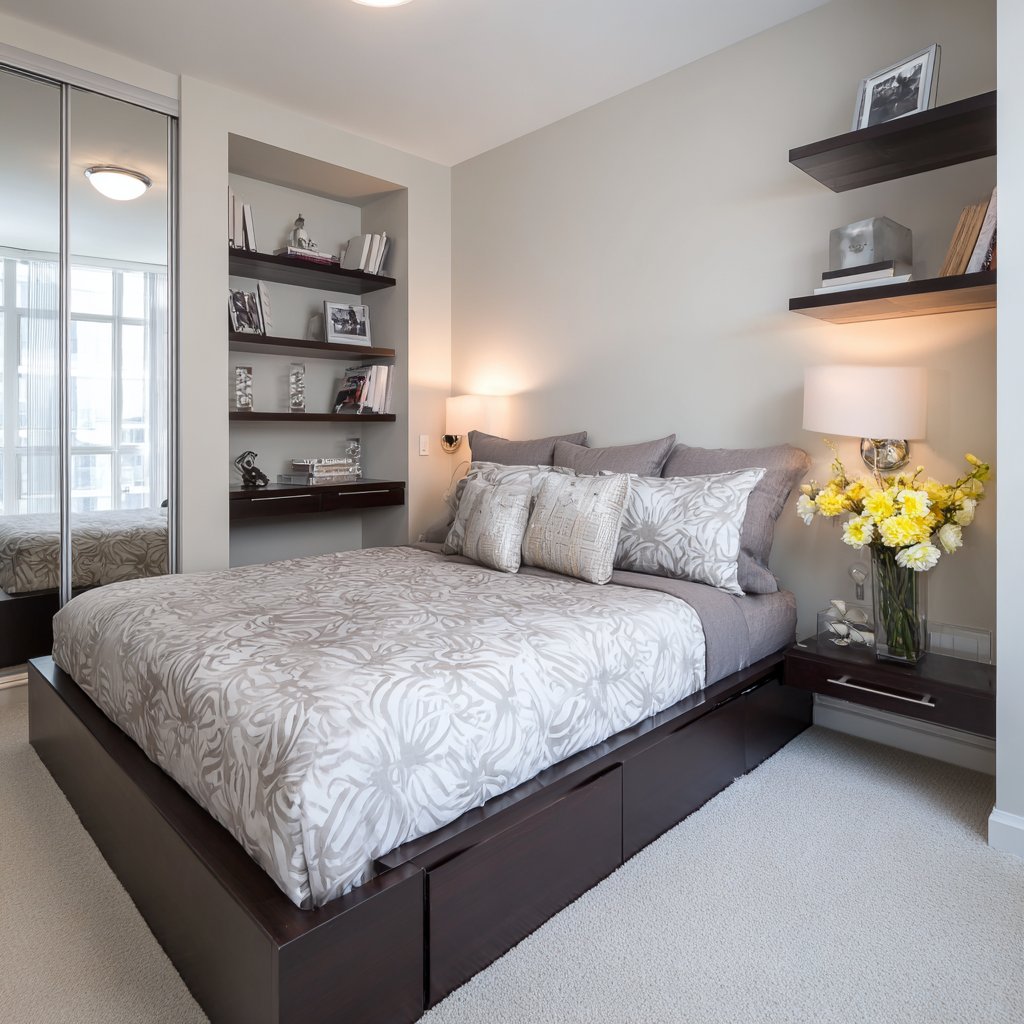
The bedding approach uses light colors strategically to help the room feel more spacious and airy—dark colors would absorb light and make the space feel smaller and more confined. Subtle patterns in throw pillows add visual interest without overwhelming the eye or creating the busy, cluttered feeling that can plague small spaces. This restraint in pattern and color demonstrates understanding of how visual elements affect spatial perception.
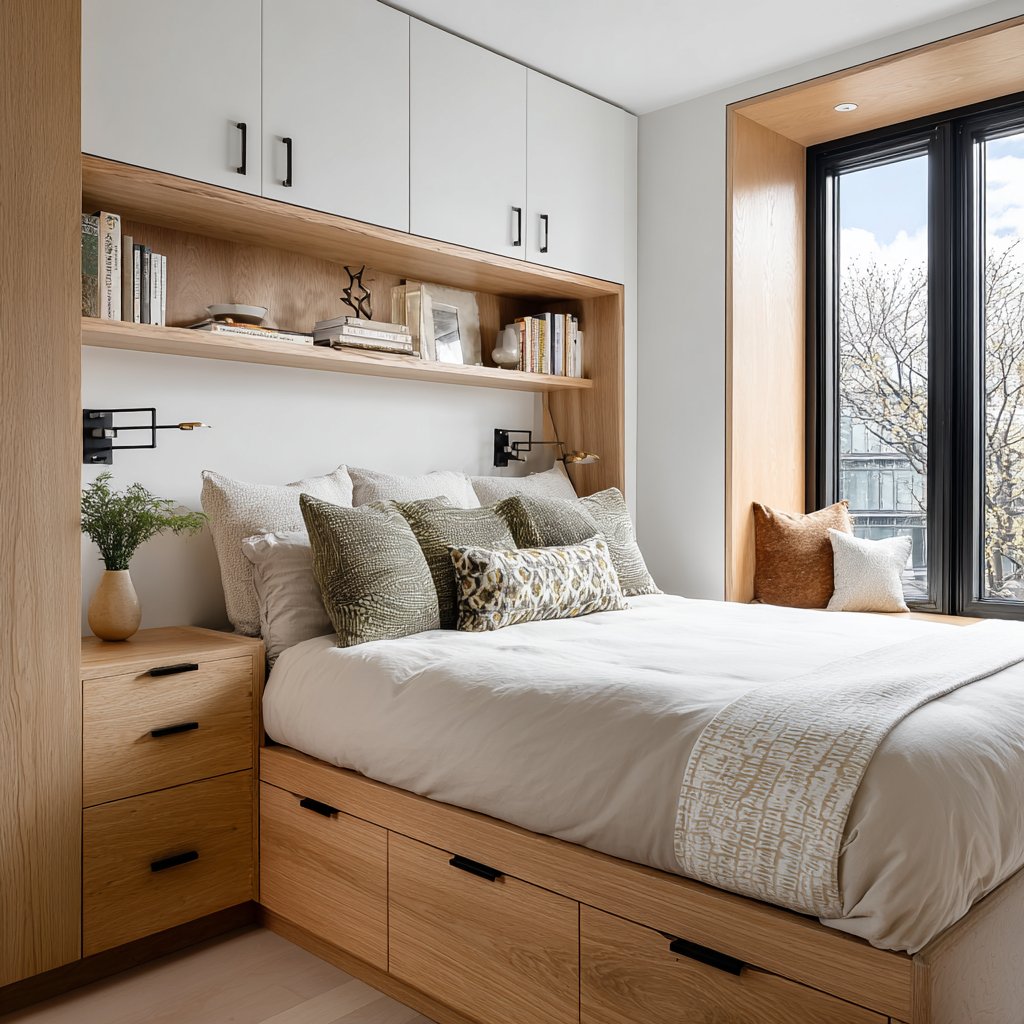
A narrow console serving as a nightstand provides essential bedside functionality without consuming the width that traditional nightstands require. This creative solution proves that small-space design often requires thinking beyond standard furniture categories and using pieces in unexpected ways. The narrow profile allows for comfortable circulation around the bed while still providing surface space for essentials like a lamp, alarm clock, and water glass.
Key Design Tips:
- Prioritize furniture with hidden storage to maximize every square inch of space
- Mount lighting, shelving, and decor on walls to keep floor space open and room feeling larger
- Use light, neutral colors throughout to create visual spaciousness and reflection of natural light
- Choose multipurpose furniture pieces that serve several functions in one footprint
- Keep patterns subtle and accessories minimal to avoid visual clutter that shrinks perceived space
- Use mirrors strategically to reflect light and create illusion of expanded space
11. Mid-Century Modern Revival
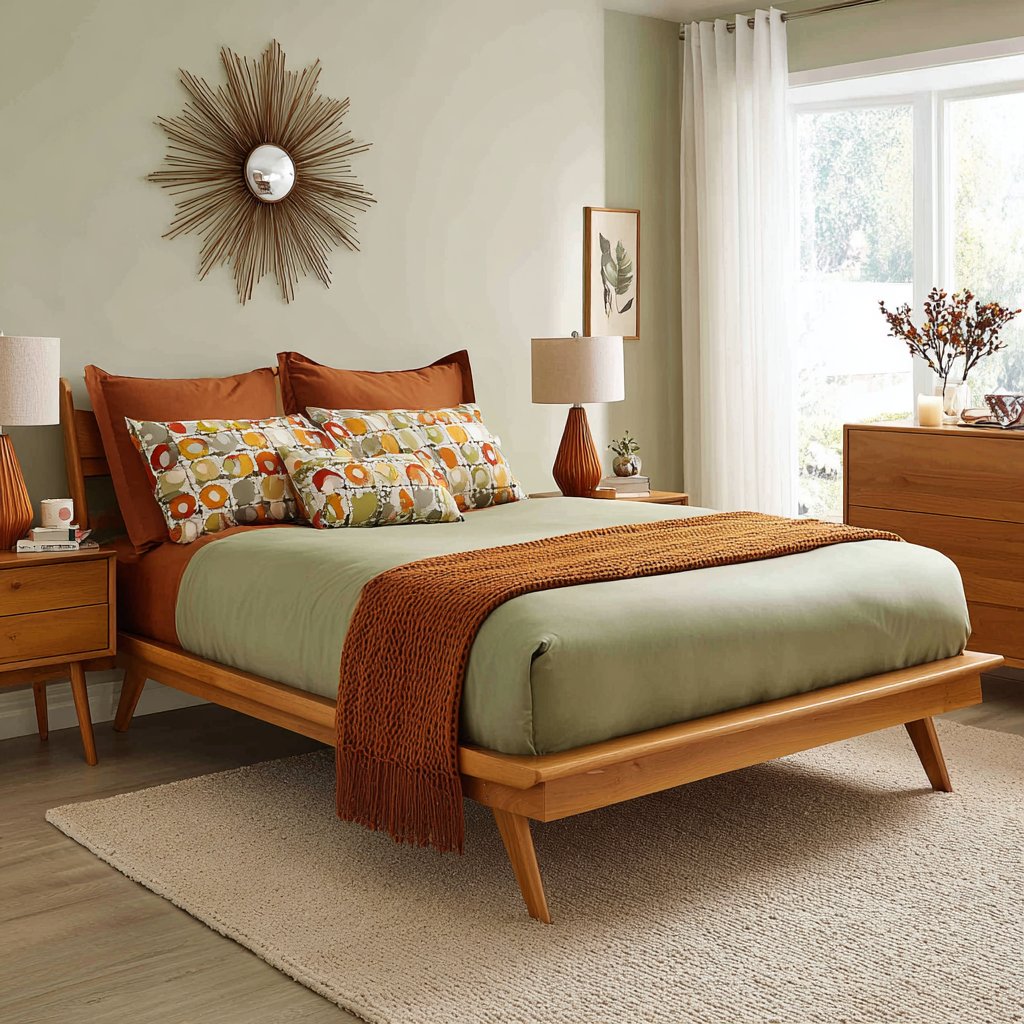
The mid-century modern queen bedroom channels the optimistic design aesthetic of the 1950s and 60s, bringing timeless sophistication and organic modernism into contemporary living. The teak queen bed frame with tapered legs and clean geometric lines exemplifies the mid-century modern philosophy of honest materials and functional beauty—no unnecessary ornamentation, just beautiful wood showcasing its natural grain and color, shaped into elegant, purposeful forms. The tapered legs, a signature mid-century detail, create visual lightness while providing stable support, demonstrating how form and function unite in this design movement.
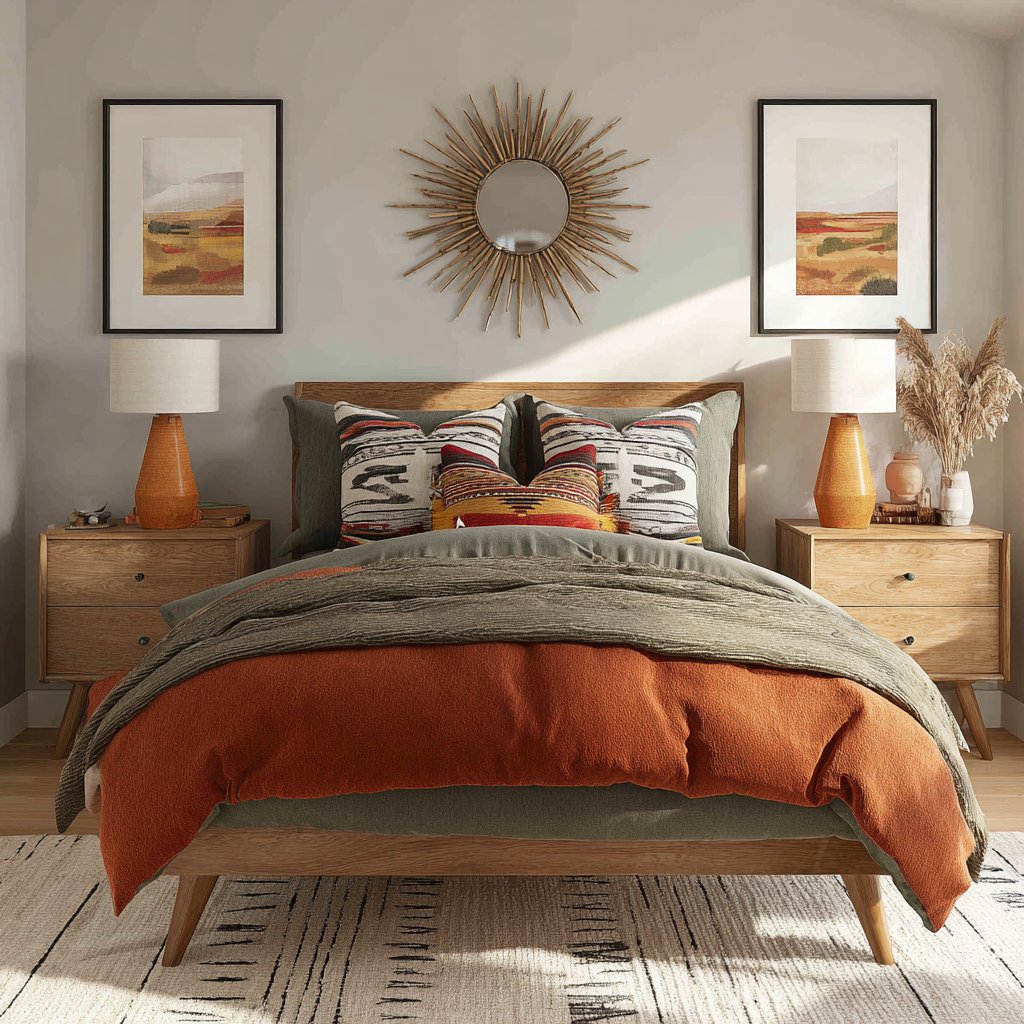
The bedding in burnt orange and olive green with graphic patterned pillows reflects authentic 1960s color palettes that drew inspiration from nature, space-age optimism, and international influences. These colors feel both retro and surprisingly current, proving that truly good design transcends temporal trends. The graphic patterns—perhaps featuring atomic starbursts, abstract shapes, or bold geometric designs—add period-authentic visual interest and demonstrate mid-century modern’s embrace of bold artistic expression within otherwise clean-lined spaces.
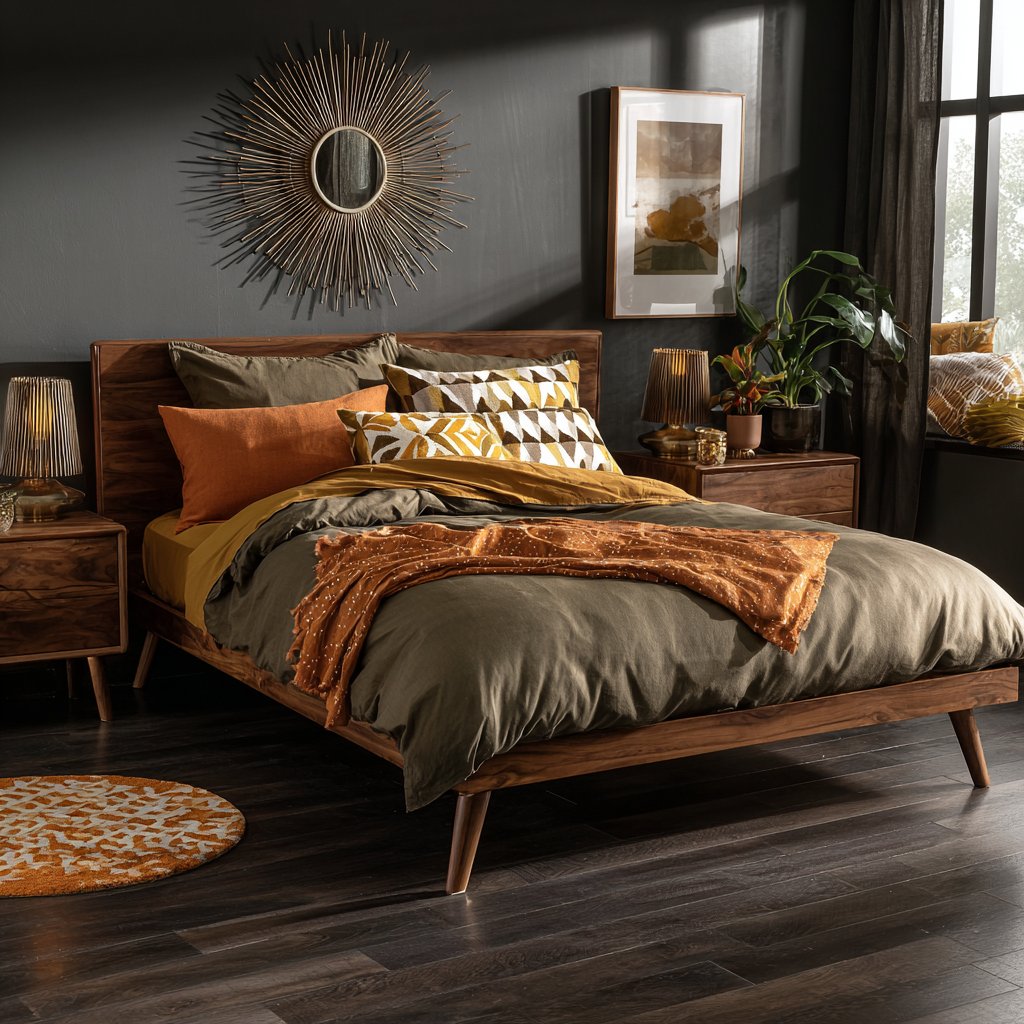
Matching teak nightstands with angled legs display period-appropriate ceramic lamps with cone shades, creating cohesive visual rhythm through repeated materials, forms, and proportions. The angled legs echo the bed frame’s tapered design, creating subtle visual connections that tie the furniture grouping together. The ceramic lamp bases, possibly in glazed finishes typical of the era, and cone-shaped shades represent lighting design from the period when form was being reimagined for modern living.
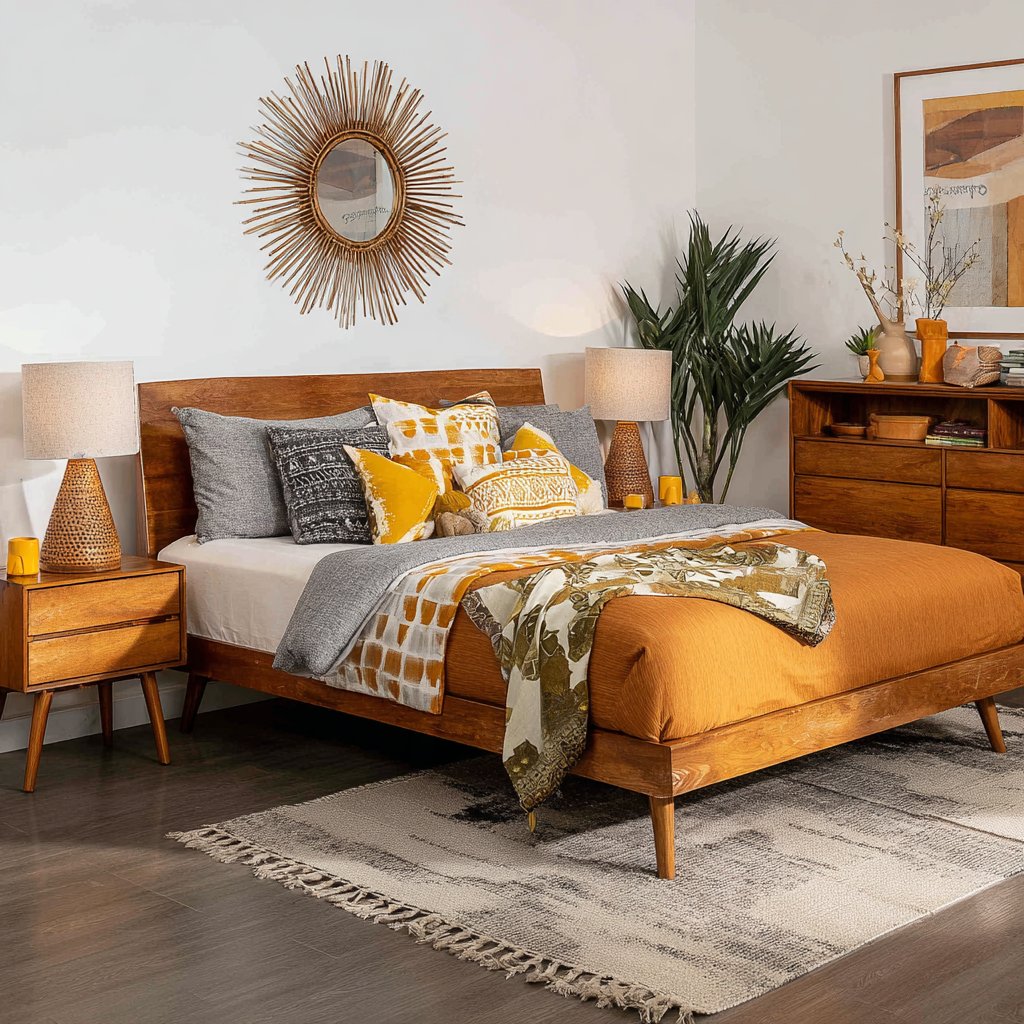
A sunburst mirror above the bed adds iconic mid-century detail, its radiating metal rods creating sculptural impact and representing the era’s fascination with atomic age imagery and geometric forms. This piece serves as both functional mirror and statement artwork, embodying mid-century modern’s principle that everyday objects should be both beautiful and useful.
Key Design Tips:
- Seek out authentic vintage pieces or high-quality reproductions with proper proportions and details
- Embrace bold accent colors like burnt orange, avocado, mustard, and teal against neutral backgrounds
- Look for furniture with exposed wood, tapered legs, and clean-lined organic shapes
- Incorporate period-appropriate accessories like sunburst clocks, sculptural ceramics, or abstract art
- Keep spaces uncluttered—mid-century modern values breathing room and clean lines
- Mix wood tones confidently—walnut, teak, and rosewood can coexist beautifully
12. French Country Romance
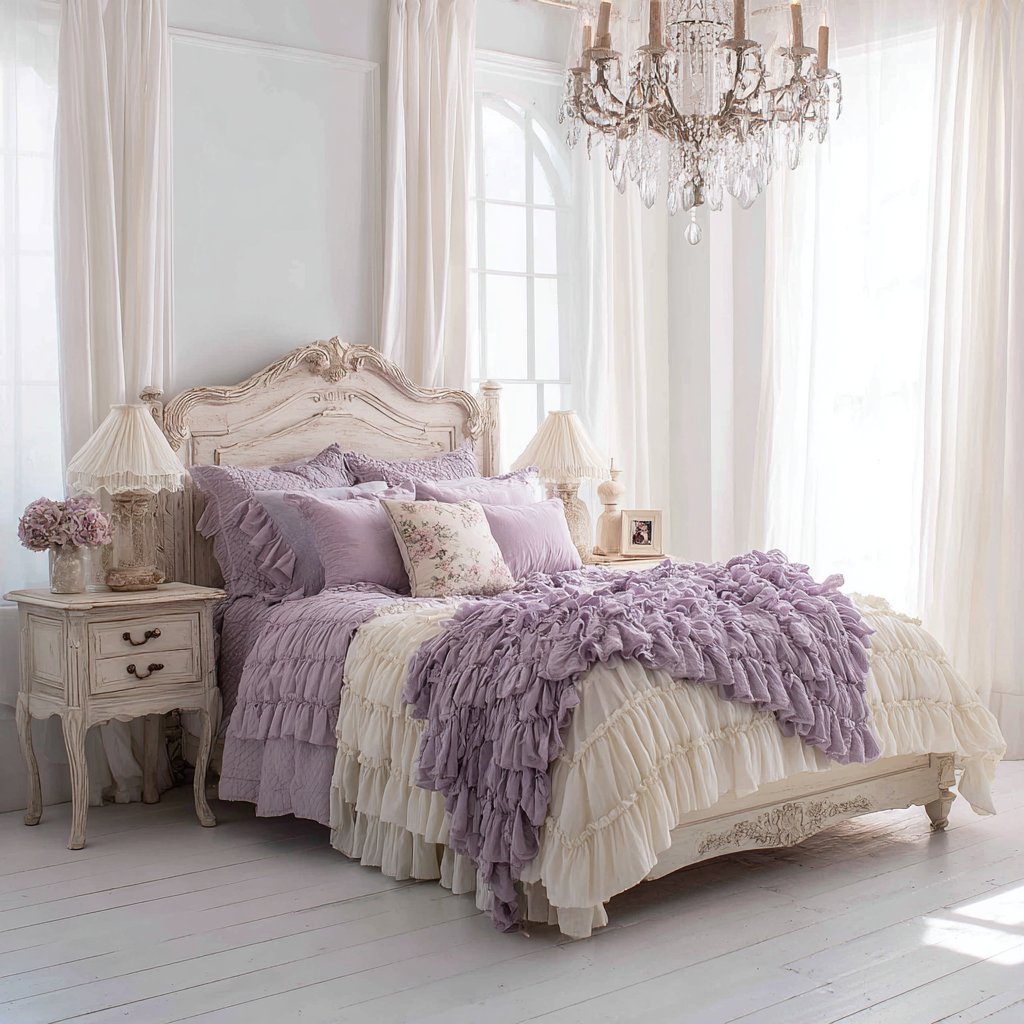
The French country queen bedroom transports you to the pastoral elegance of rural Provence, creating a space that feels both romantic and relaxed, sophisticated yet comfortable. The ornate carved wooden queen bed painted in distressed ivory finish serves as the room’s romantic centerpiece, its hand-carved details and deliberately aged finish suggesting centuries of family history and Old World craftsmanship. The distressing technique reveals hints of wood beneath the ivory paint, suggesting layers of history and the gentle wear of time—not damage, but patina that adds character and story.
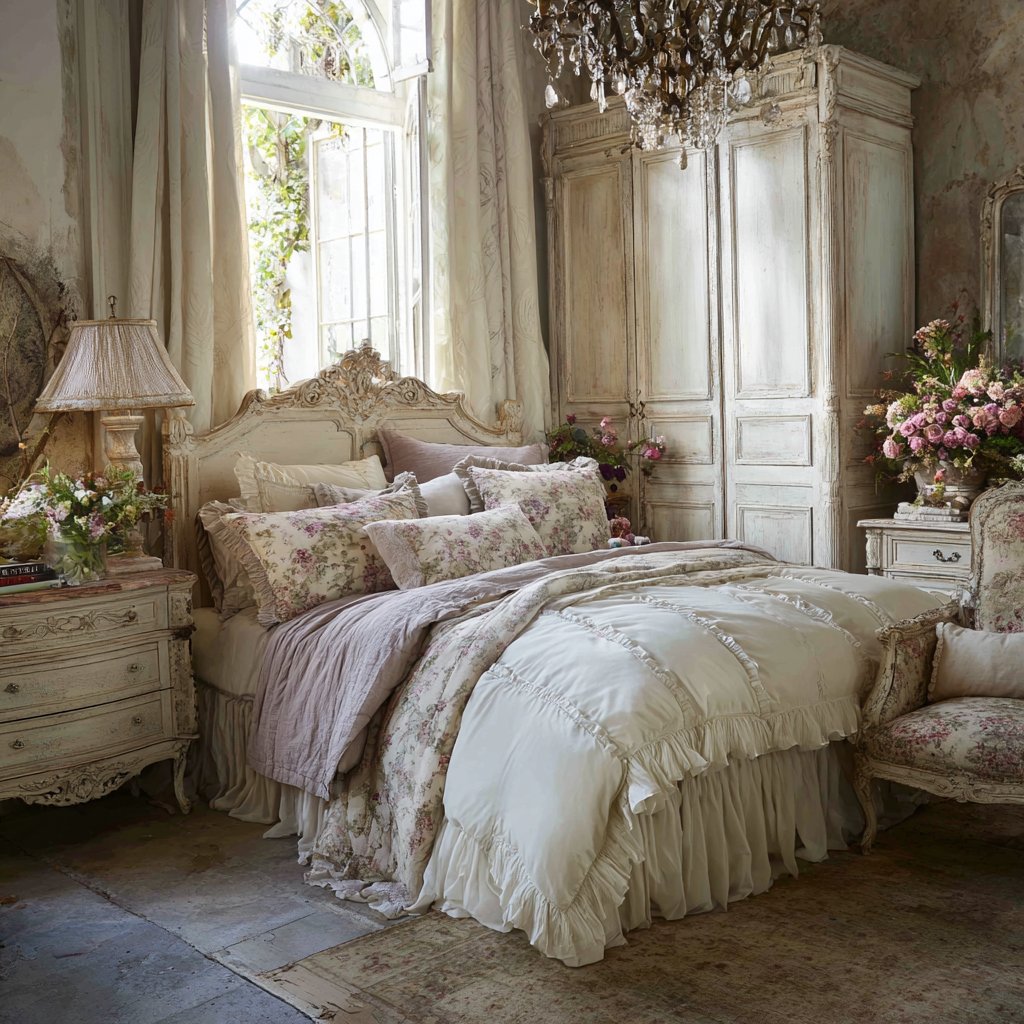
Bedding in soft lavender and cream tones with ruffled details and vintage-inspired floral pillows creates cottage charm and feminine elegance without being overly sweet or juvenile. The lavender tone evokes Provence’s famous lavender fields while maintaining sophistication, and the ruffled details add texture and movement that soften the bed’s ornate frame. Vintage-inspired floral patterns might feature delicate roses, toile scenes, or botanical prints that reference French textile traditions and garden beauty.
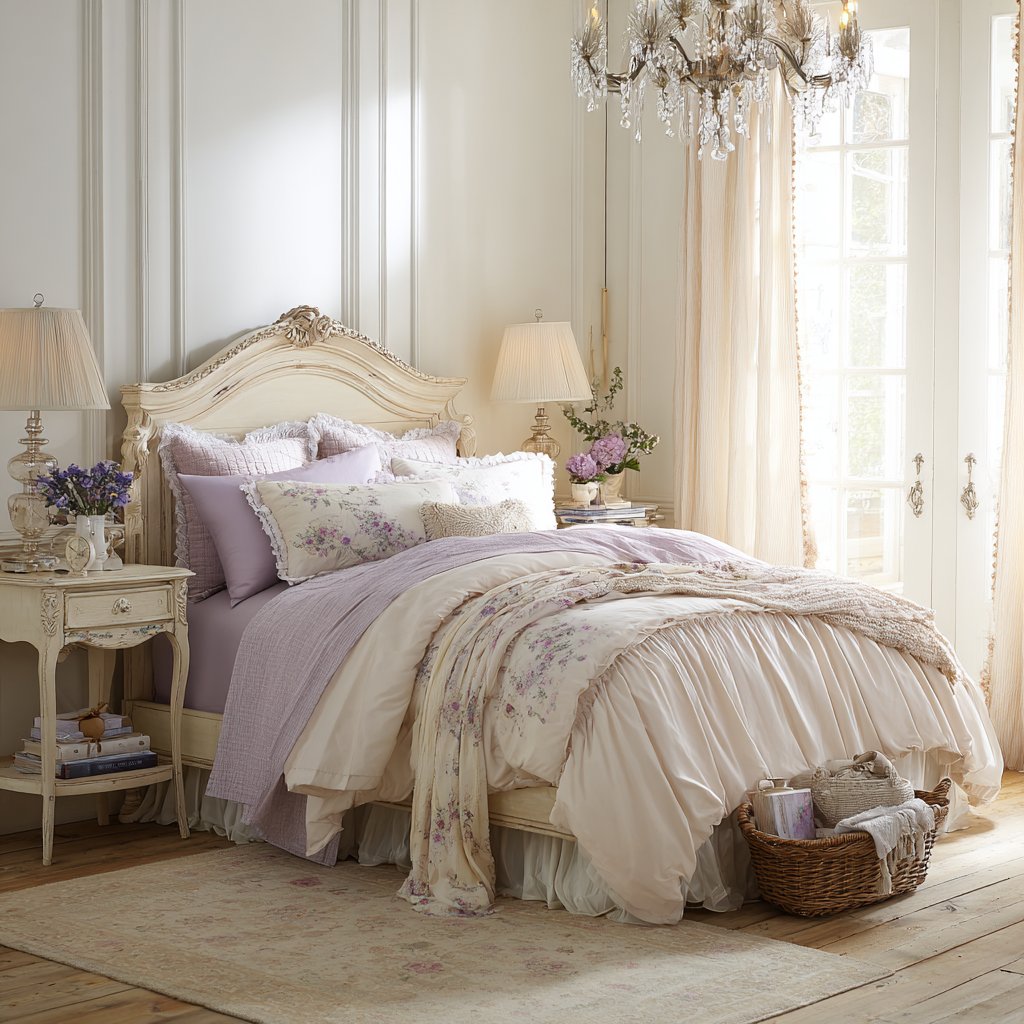
Antique-style nightstands with curved legs display porcelain lamps with fabric shades, their graceful forms and delicate materials complementing the bed’s ornate carving and romantic aesthetic. The curved legs—whether cabriole, turned, or gently bowed—add movement and elegance while the porcelain lamp bases might feature hand-painted details or transfer patterns that echo traditional French ceramics. Fabric shades in silk or linen diffuse light softly, creating warm, flattering illumination.
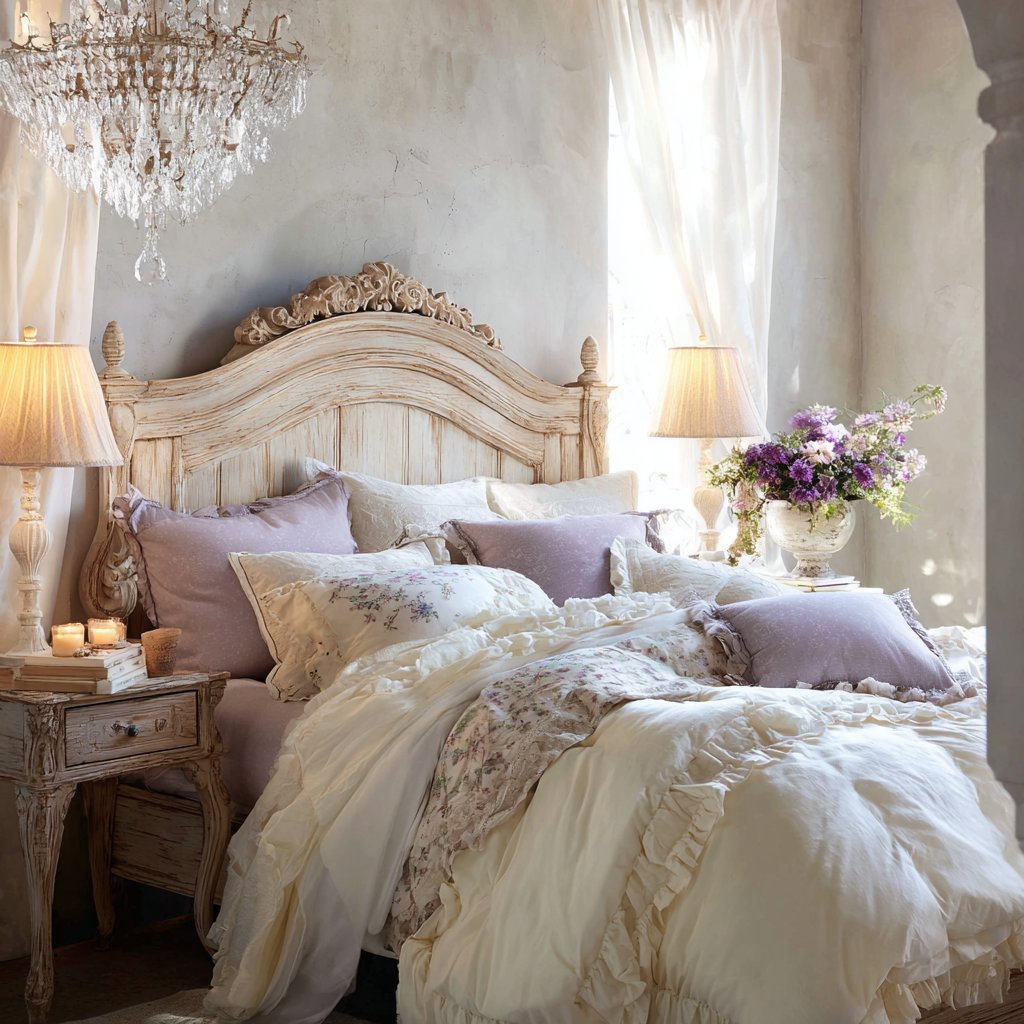
A crystal chandelier provides elegant overhead lighting that serves as jewelry for the room, its prismatic drops catching and refracting light throughout the day and creating magical sparkle in the evenings. This traditionally French lighting choice elevates the space from merely pretty to genuinely elegant, bringing a touch of château sophistication to the bedroom.
Key Design Tips:
- Choose furniture with carved details, curved lines, and distressed painted finishes for authentic French country character
- Embrace soft, feminine colors like lavender, soft pink, cream, and butter yellow
- Layer multiple patterns—florals, toile, checks, stripes—in coordinating color palettes
- Incorporate antique or vintage-style accessories like porcelain, crystal, and ornate mirrors
- Add fresh or dried lavender and other flowers to bring garden freshness indoors
- Use romantic lighting fixtures like chandeliers, wall sconces, and table lamps with fabric shades
13. Zen Minimalist Sanctuary
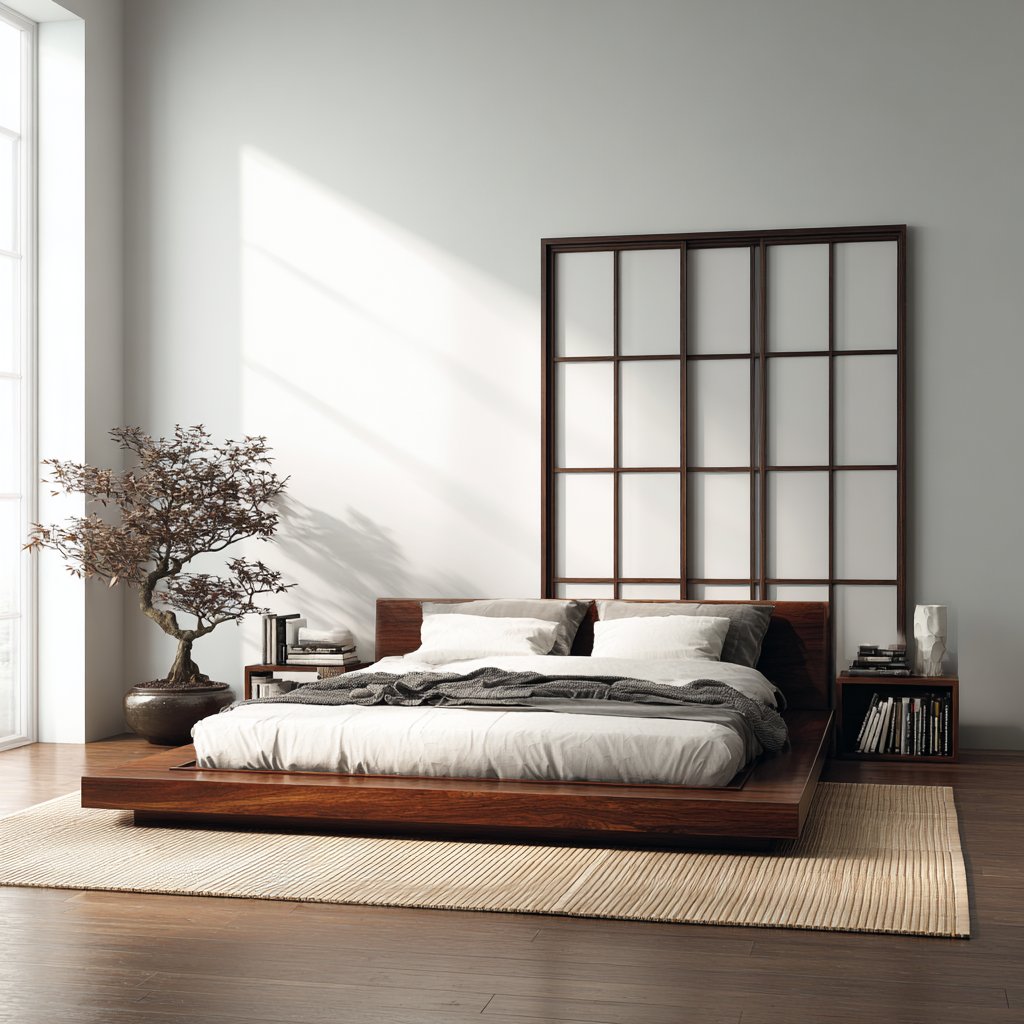
The minimalist Japanese-inspired queen bedroom creates a meditation-worthy space through radical simplicity and intentional design choices that honor Japanese aesthetic principles of ma (negative space), wabi-sabi (finding beauty in imperfection), and connection to nature. The low-profile platform queen bed in dark walnut with integrated side tables exemplifies Japanese furniture design’s emphasis on low horizons and built-in functionality. This piece sits close to the floor, creating a grounded, stable feeling while the integrated tables eliminate separate furniture pieces and create clean, unbroken lines that support the room’s minimalist aesthetic.
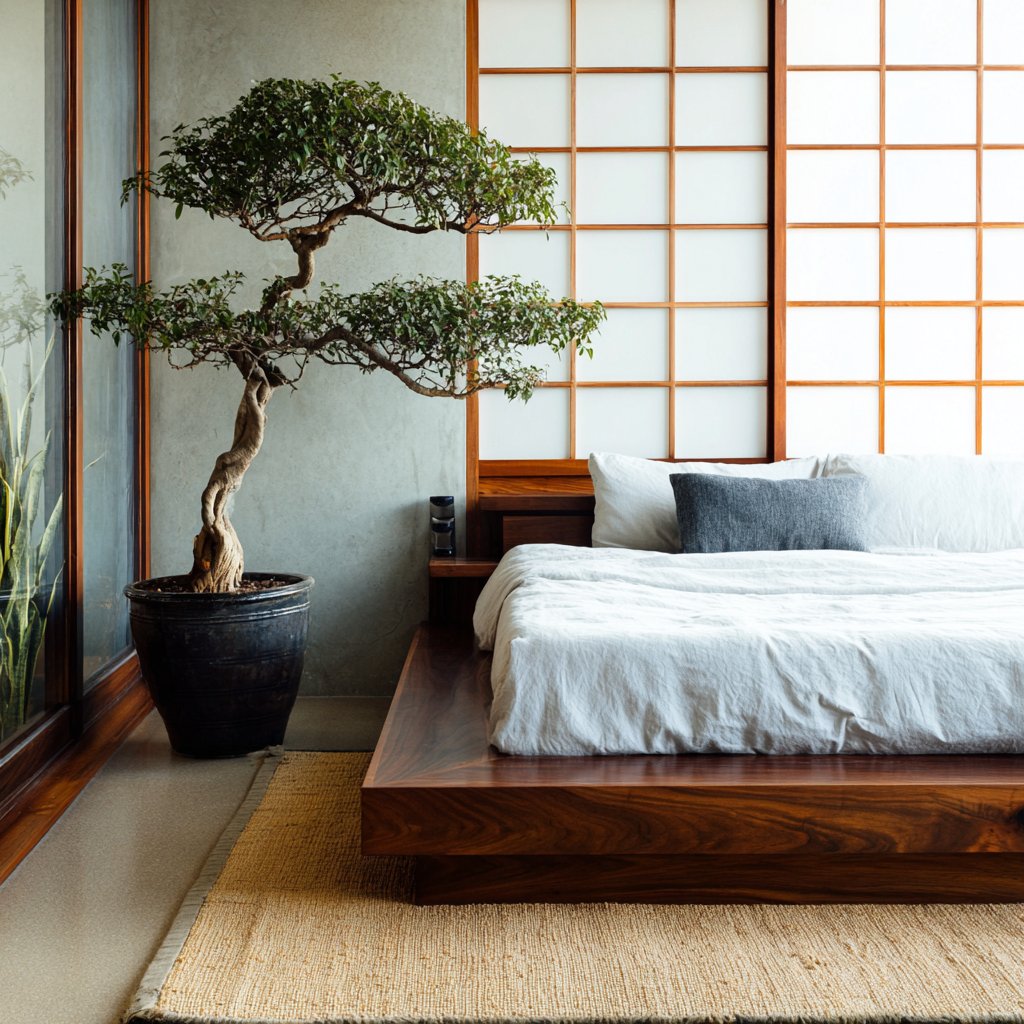
Simple white bedding with a single grey throw pillow maintains the uncluttered aesthetic and demonstrates restraint that’s central to Japanese design philosophy—every element must earn its place through beauty or function. The single pillow isn’t about deprivation but about thoughtful curation, reducing visual noise and creating space for the mind to rest. The contrast between pure white bedding and dark walnut creates a study in opposites that’s deeply rooted in Japanese aesthetic traditions.
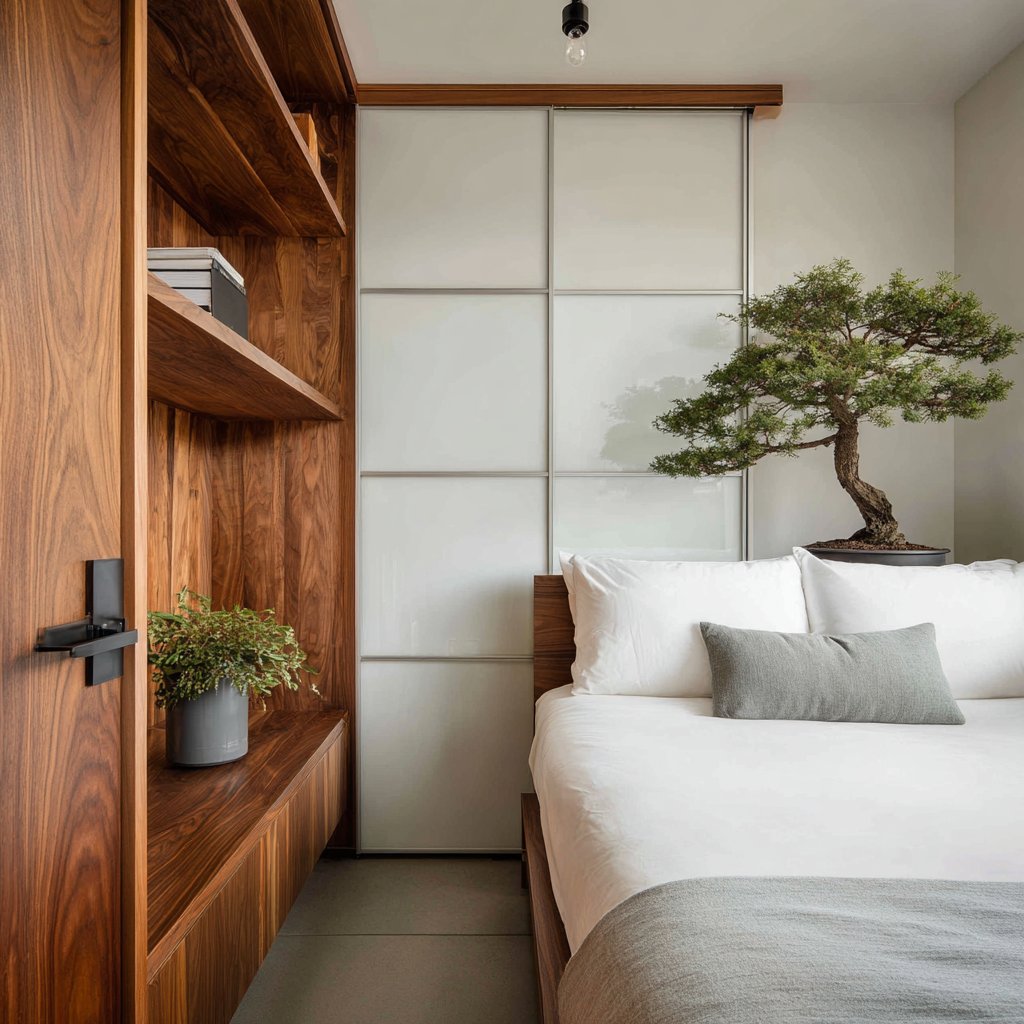
Shoji-style sliding panels cover the closet, transforming necessary storage into an elegant architectural feature that reinforces the Japanese design vocabulary. These panels, whether authentic shoji made with rice paper and wood lattice or modern interpretations, filter light beautifully while concealing closet contents. The horizontal lines of the panel frames create visual calm and order, and the sliding operation eliminates the space needed for hinged doors—a practical consideration that aligns perfectly with minimalist principles.
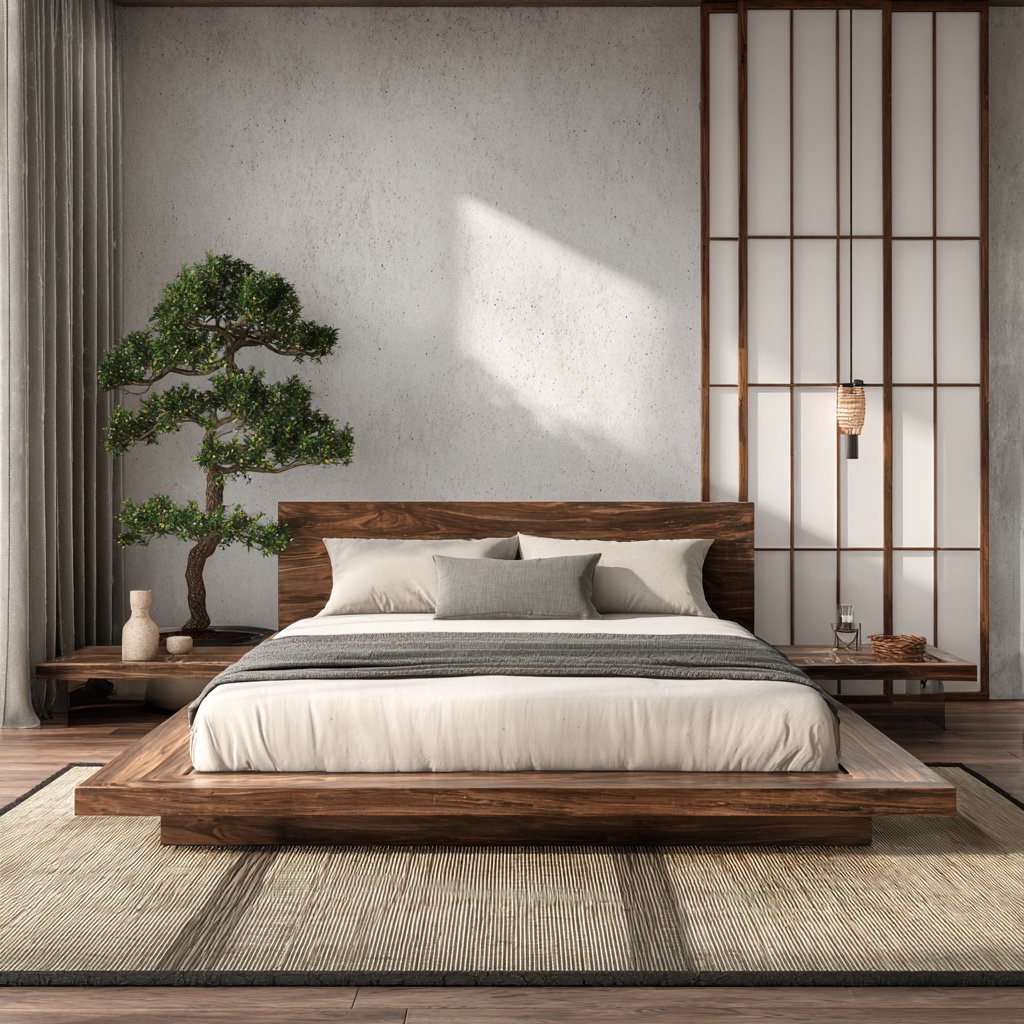
A single potted bonsai tree provides organic decoration and living art, demonstrating the Japanese principle that less can communicate more. This carefully tended miniature tree represents nature, growth, patience, and the passage of time—all profound concepts embodied in one small plant. Its placement and care become meditative practices that enhance the room’s function as a sanctuary.
Key Design Tips:
- Embrace empty space as a positive design element rather than something to fill
- Choose low-profile furniture that creates horizontal emphasis and grounded stability
- Limit decorative objects to one or two meaningful pieces that invite contemplation
- Incorporate natural materials like wood, bamboo, stone, and paper in their unadorned states
- Maintain strict organization and concealed storage to support visual simplicity
- Consider adding a small water feature or meditation cushion to support contemplative practices
14. Rustic Cabin Retreat
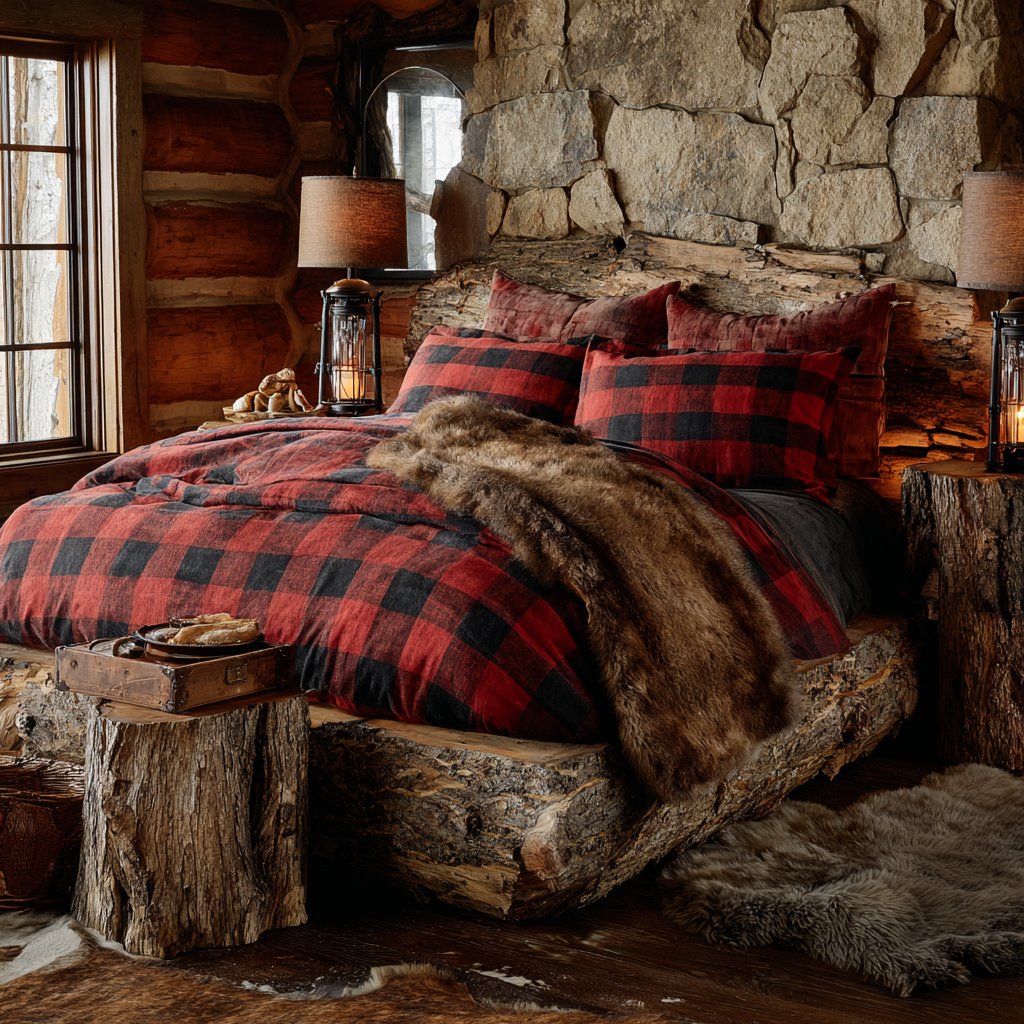
The rustic cabin queen bedroom brings the warmth and character of mountain lodges and woodland retreats into your home, creating a space that feels like a perpetual vacation in nature. The log queen bed frame featuring natural wood with bark edges intact makes an immediate statement about authenticity and connection to natural forms—this isn’t processed lumber dressed up to look rustic, but actual logs celebrating their origin as trees. The retention of bark edges adds textural interest and organic irregularity that machine-made furniture can never replicate.
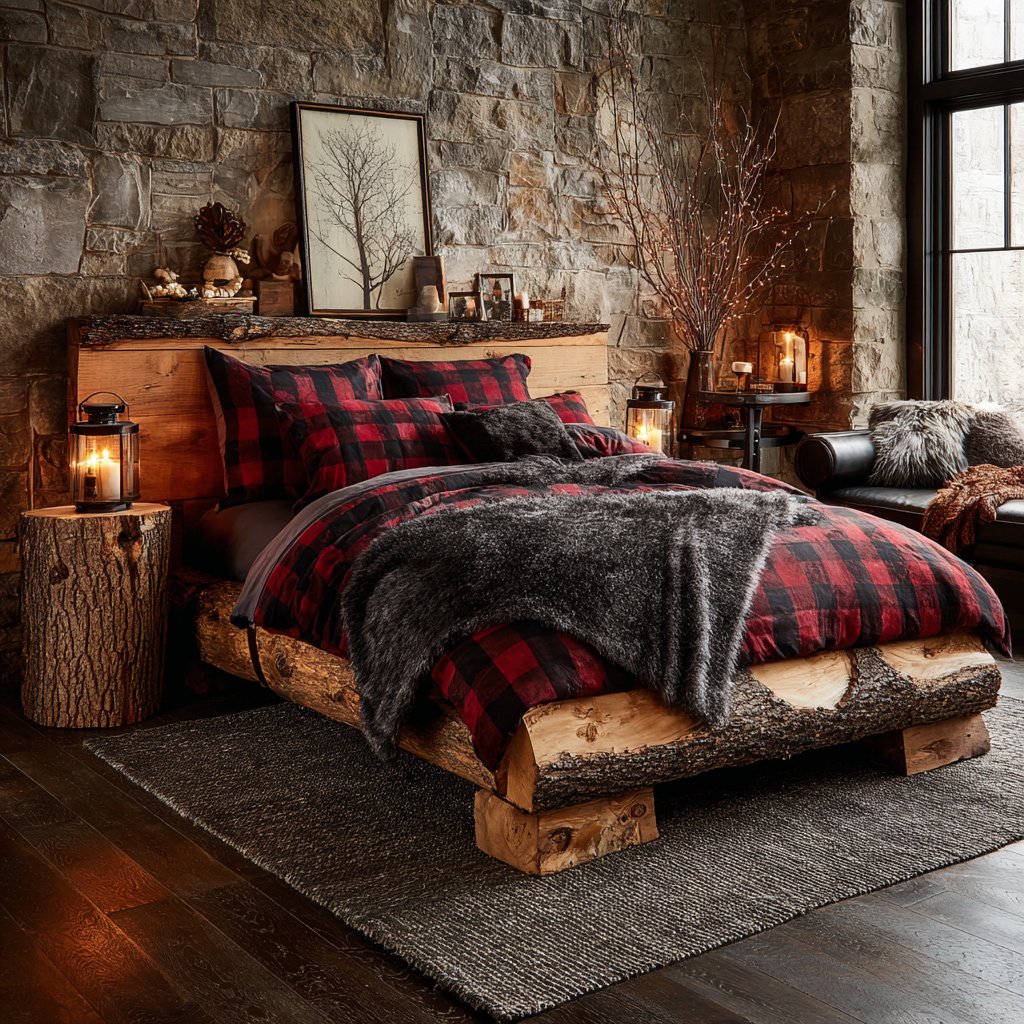
Plaid flannel bedding in red and black buffalo check creates cozy woodland atmosphere with its bold graphic pattern and tactile warmth. This classic pattern has been warming cabin beds for generations, and its geometric simplicity provides pleasing visual structure against the organic forms of the log furniture. A faux fur throw blanket adds another layer of texture and warmth, evoking the pelts that would have adorned rustic beds historically while providing contemporary softness and ethical comfort.
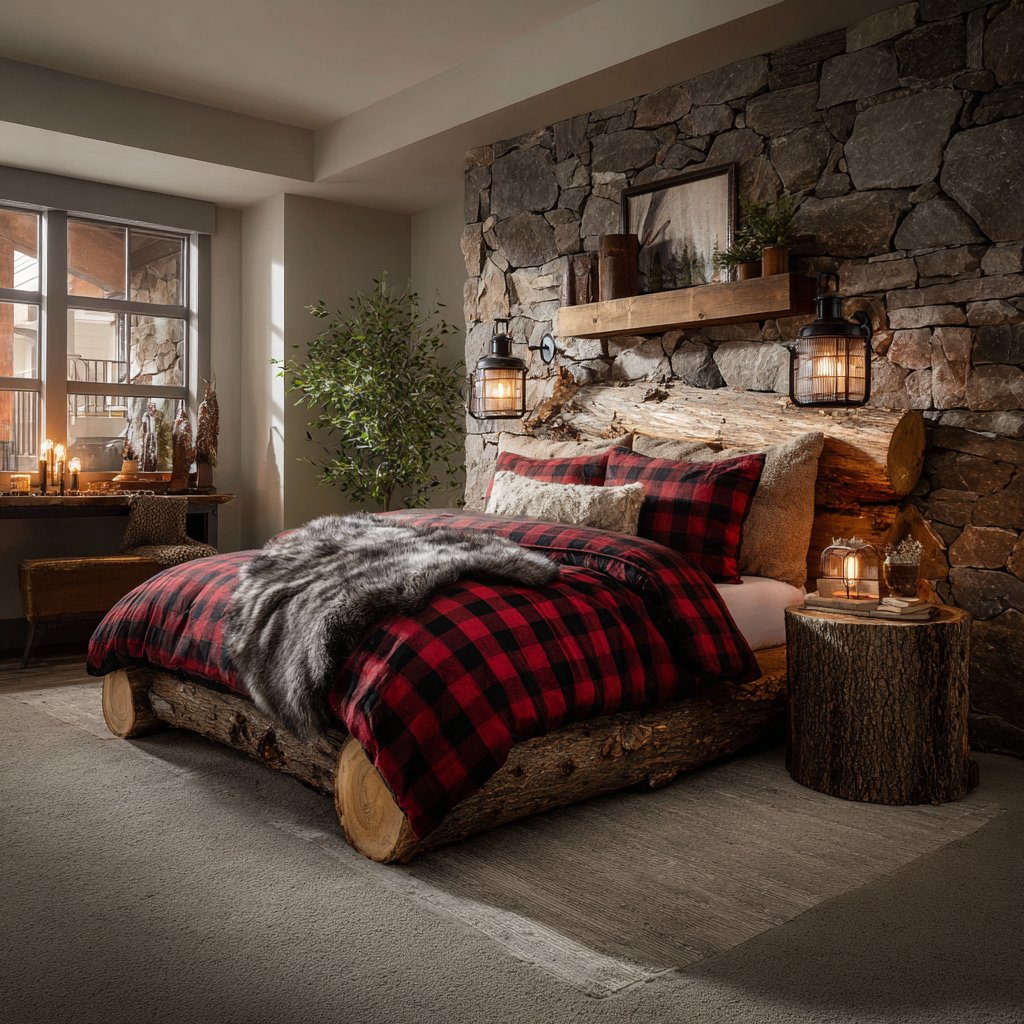
Log nightstands with live edge tops continue the natural wood theme while showcasing the beautiful, irregular edge where bark met sapwood—these organic edges celebrate the tree’s original form and ensure each piece is truly unique. Lantern-style lamps atop these stands evoke the era before electricity, their metal and glass construction suggesting camping trips and frontier living while providing modern electrical convenience.
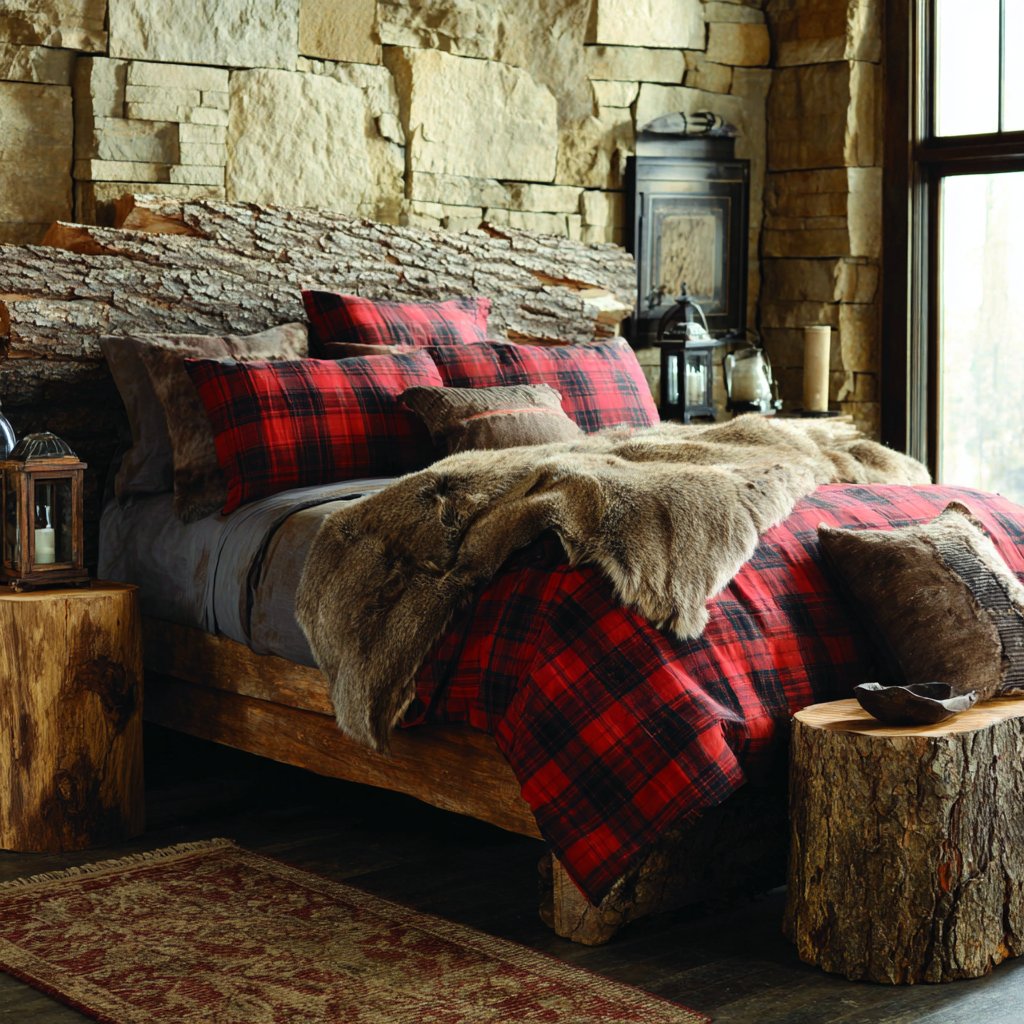
A stone accent wall behind the bed adds authentic lodge character and anchors the room with substantial natural material. Whether this stone is stacked fieldstone, river rock, or cut stone, its varied textures, colors, and patterns create visual interest while reinforcing the connection to natural materials and mountain landscapes. The thermal mass of stone also has practical benefits, helping moderate temperature fluctuations.
Key Design Tips:
- Embrace natural wood in its most authentic forms, including bark, knots, and irregular edges
- Layer plaid, buffalo check, and other traditional cabin patterns in warm colors
- Add faux fur, wool, and other cozy textiles to enhance the warm, comfortable atmosphere
- Incorporate natural materials like stone, antler, and leather for authentic cabin character
- Choose lighting that references historical sources like lanterns, oil lamps, or wrought iron chandeliers
- Display nature-inspired artwork or mounted fish, antlers, or landscape photography
15. Glamorous Vanity Bedroom
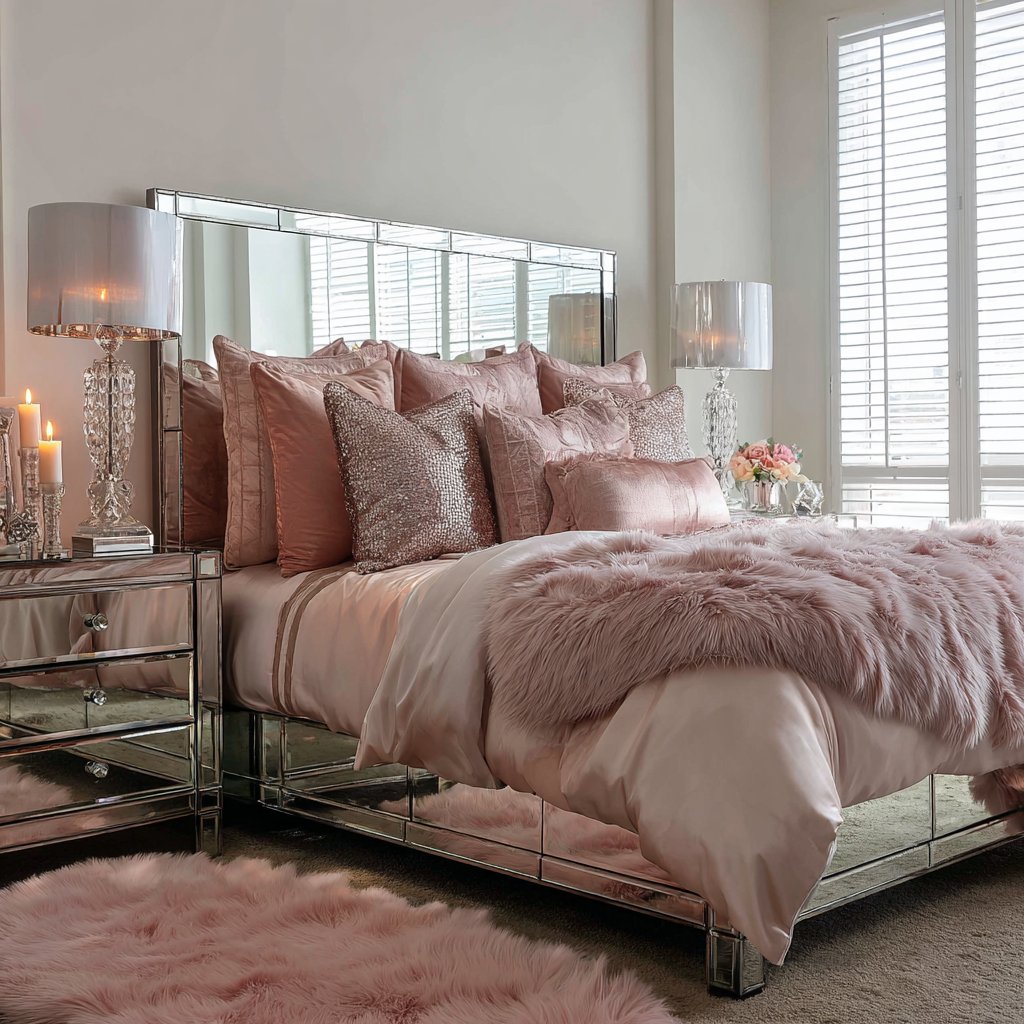
The glam queen bedroom embraces sparkle, luxury, and feminine sophistication through carefully chosen materials and finishes that catch light and create visual drama. The mirrored queen bed frame with beveled glass panels and crystal accents transforms a functional piece of furniture into a jewelry box centerpiece. The beveled edges of the mirror panels create prismatic effects, breaking white light into rainbow spectrums, while the crystal accents—perhaps as button tufting or decorative appliqués—add three-dimensional sparkle. This bed doesn’t just reflect light; it celebrates it, creating a focal point of glamour.
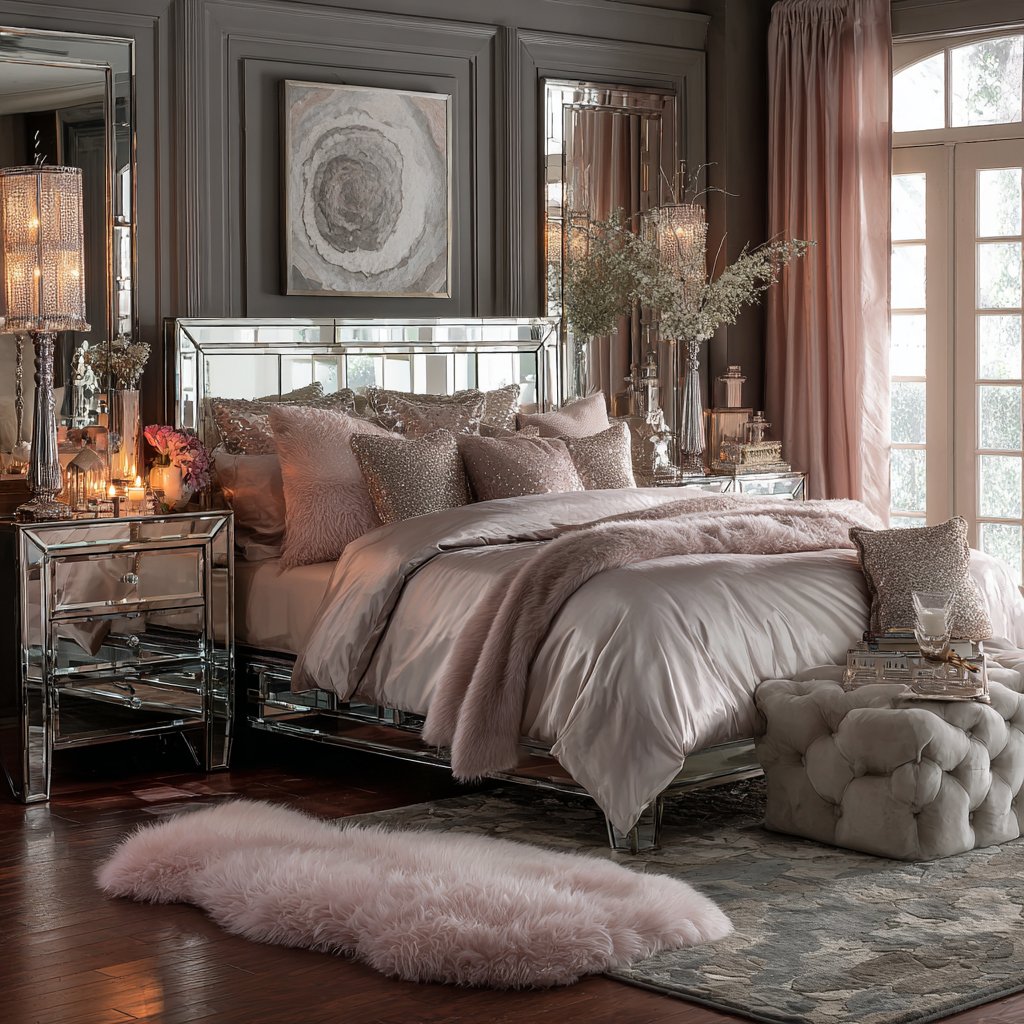
Luxurious silk bedding in champagne and blush tones creates opulent layers that feel as wonderful to sleep in as they look. Silk’s natural sheen adds subtle luster that complements the mirrored bed frame, while the blush and champagne color palette stays sophisticated and grown-up rather than girlishly pink. Sequined decorative pillows add controlled sparkle that catches light with every movement, creating points of visual interest and tactile luxury.
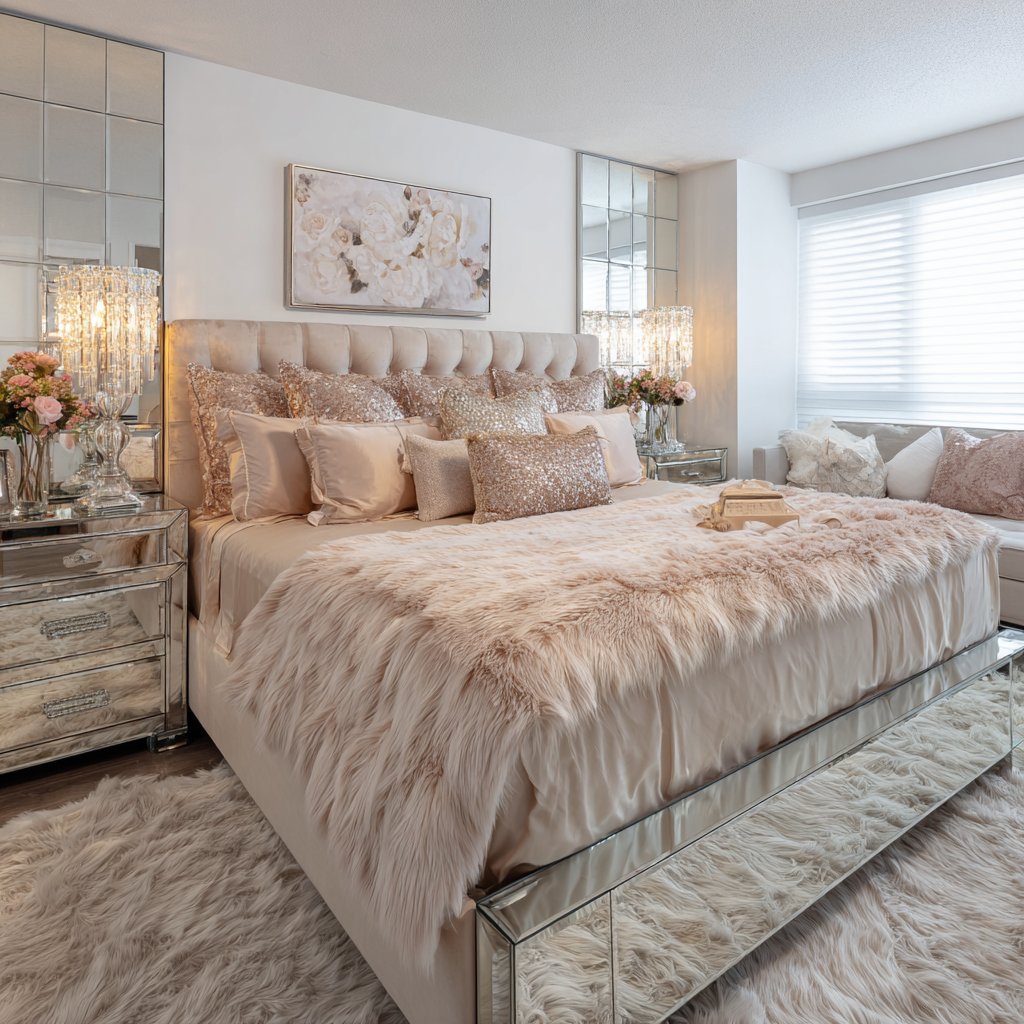
Mirrored nightstands with acrylic drawer pulls display tall silver candlestick lamps, creating a cohesive glam aesthetic through repeated reflective surfaces and luxe materials. The acrylic pulls add contemporary clarity and light transmission, while the tall candlestick lamp bases add vertical drama and classic elegance. The silver finish unites everything with precious-metal glamour without the weight or expense of solid silver.
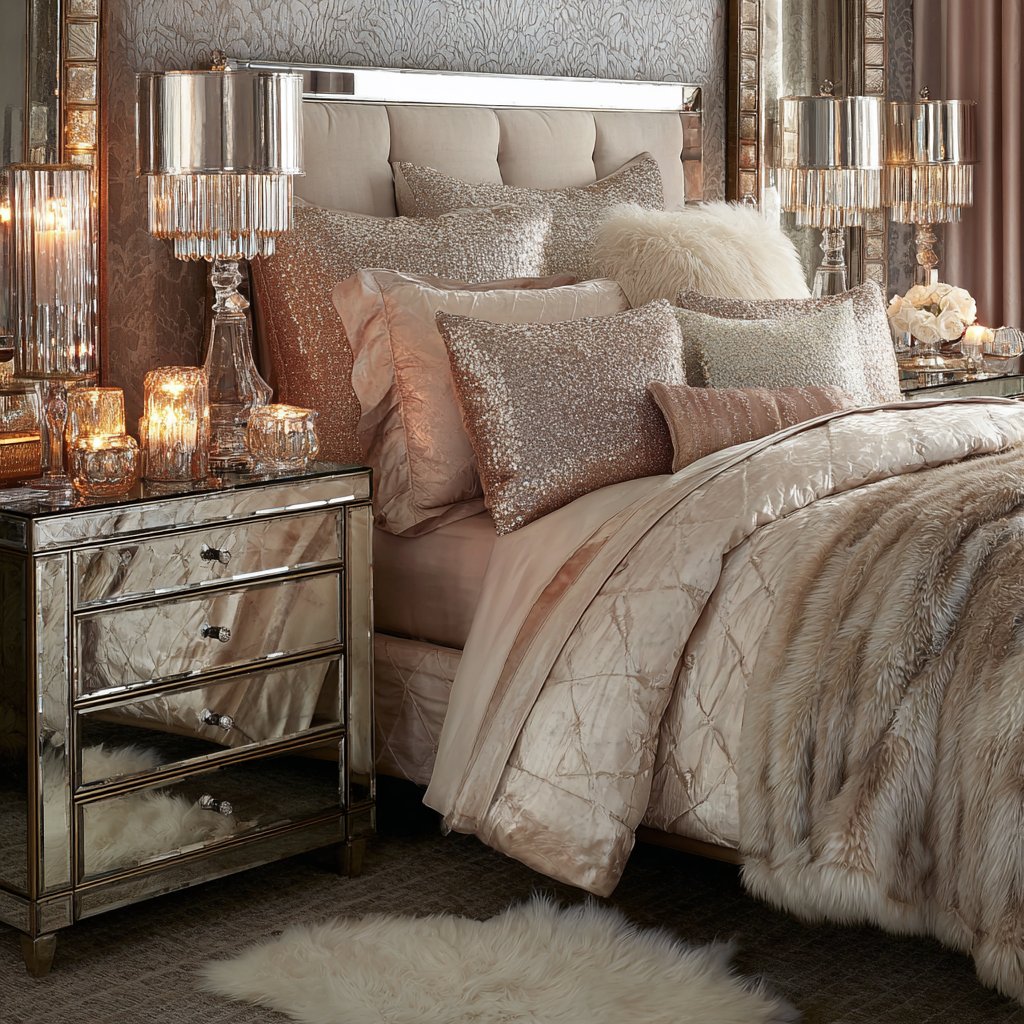
A faux fur area rug adds plush texture underfoot, providing soft landing for bare feet and contributing to the room’s sensory luxury. The pile depth and softness of faux fur creates an indulgent experience that epitomizes glamorous living, while modern synthetic furs provide this luxury ethically and practically.
Key Design Tips:
- Incorporate mirrored and metallic surfaces liberally to create light-reflective glamour
- Choose luxurious fabrics like silk, velvet, and faux fur for opulent texture and sheen
- Add crystal, glass, and acrylic elements for transparent sparkle and contemporary glamour
- Maintain a sophisticated color palette of champagne, blush, silver, and cream
- Layer lighting sources to create varied illumination that enhances sparkle and reflection
- Balance bold glamorous elements with some restraint to avoid overwhelming the space
16. Eclectic Collector’s Bedroom
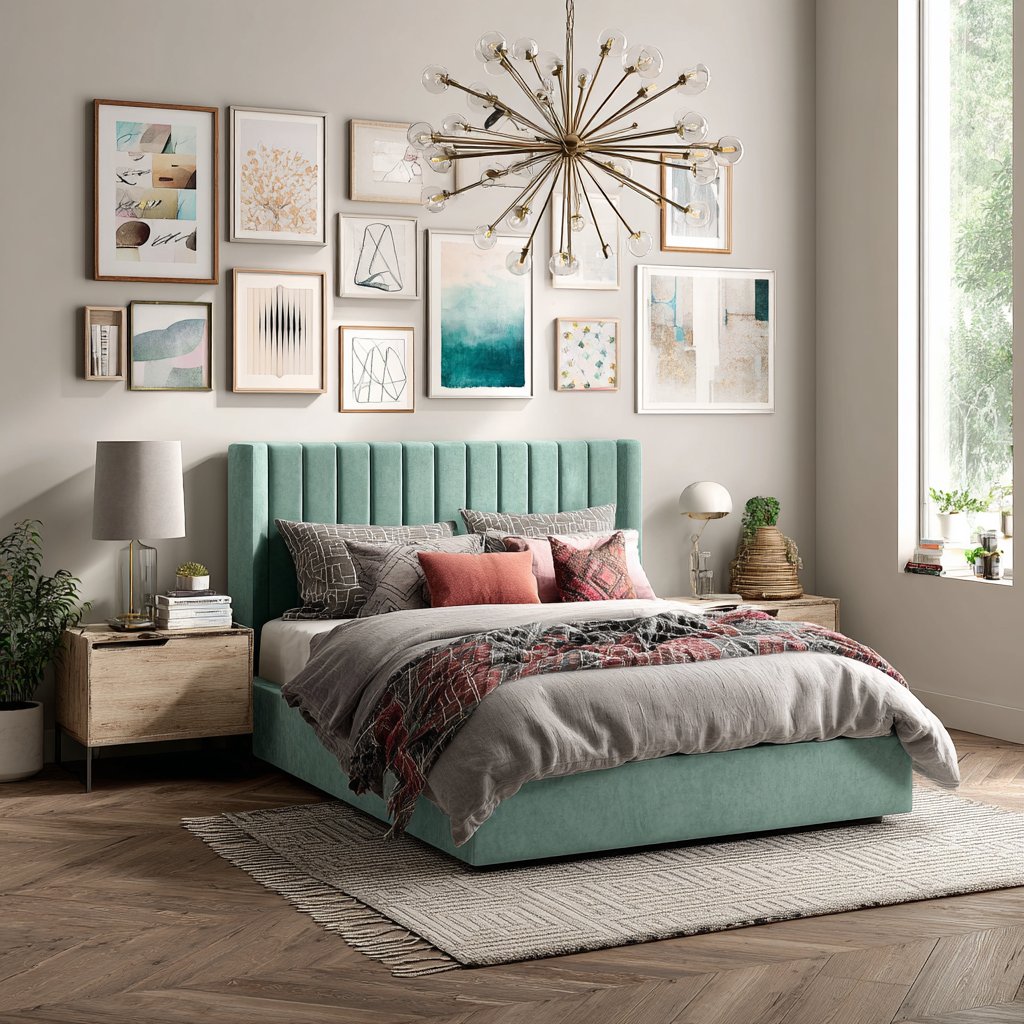
The eclectic queen bedroom celebrates personal style and confident design mixing, creating a space that looks curated over time rather than purchased all at once from a single showroom. The modern queen upholstered bed in teal velvet provides a bold contemporary anchor, its jewel-tone color and luxurious fabric creating a striking focal point that can hold its own against diverse surrounding elements. This piece demonstrates that eclectic design needs strong anchor points—not everything can be vintage or mismatched, or the space loses cohesion.
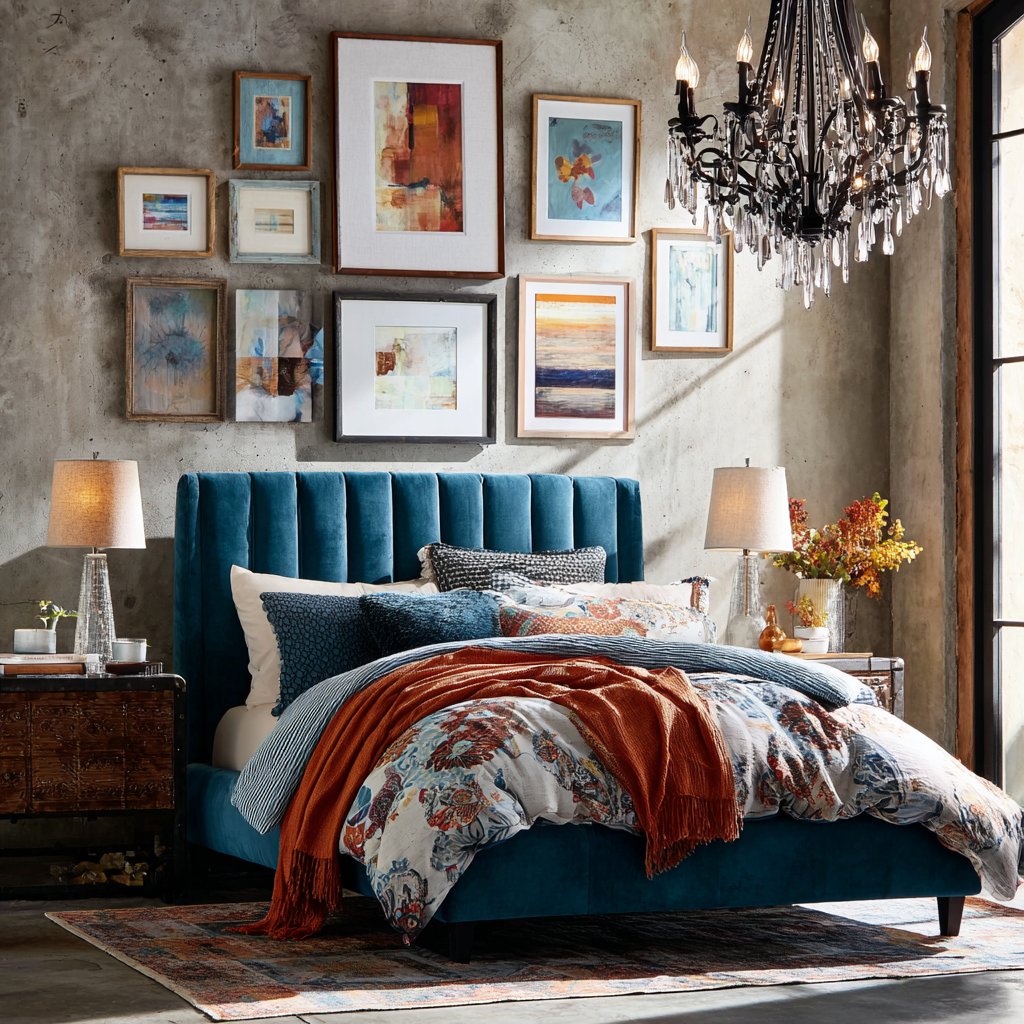
Vintage nightstands in mismatched styles—perhaps one Art Deco piece paired with a Victorian marble-topped table—flank the bed, showcasing eclectic style’s embrace of asymmetry and varied periods. Rather than looking disorganized, this intentional mismatch creates visual interest and suggests a homeowner who collects pieces they love rather than buying matched sets. The key to making this work is finding unifying elements—similar scale, complementary wood tones, or coordinating hardware finishes.
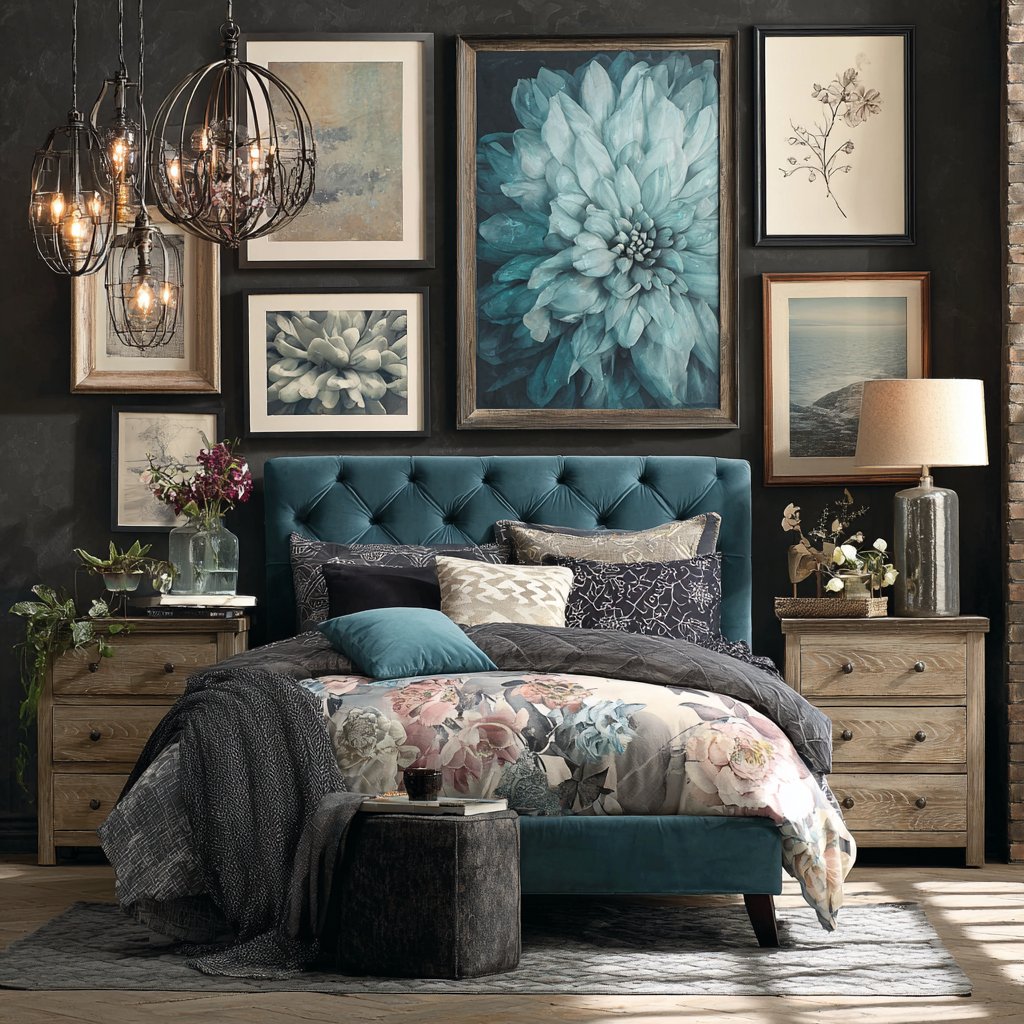
The bedding combines contemporary geometric patterns with vintage-inspired florals in coordinating color palette, demonstrating how eclectic design mixes not just furniture but also textiles, patterns, and periods. The shared color palette—perhaps featuring the same teal as the headboard plus complementary corals and creams—provides the thread that ties disparate elements together. This approach requires confidence but rewards with deeply personal, visually engaging results.
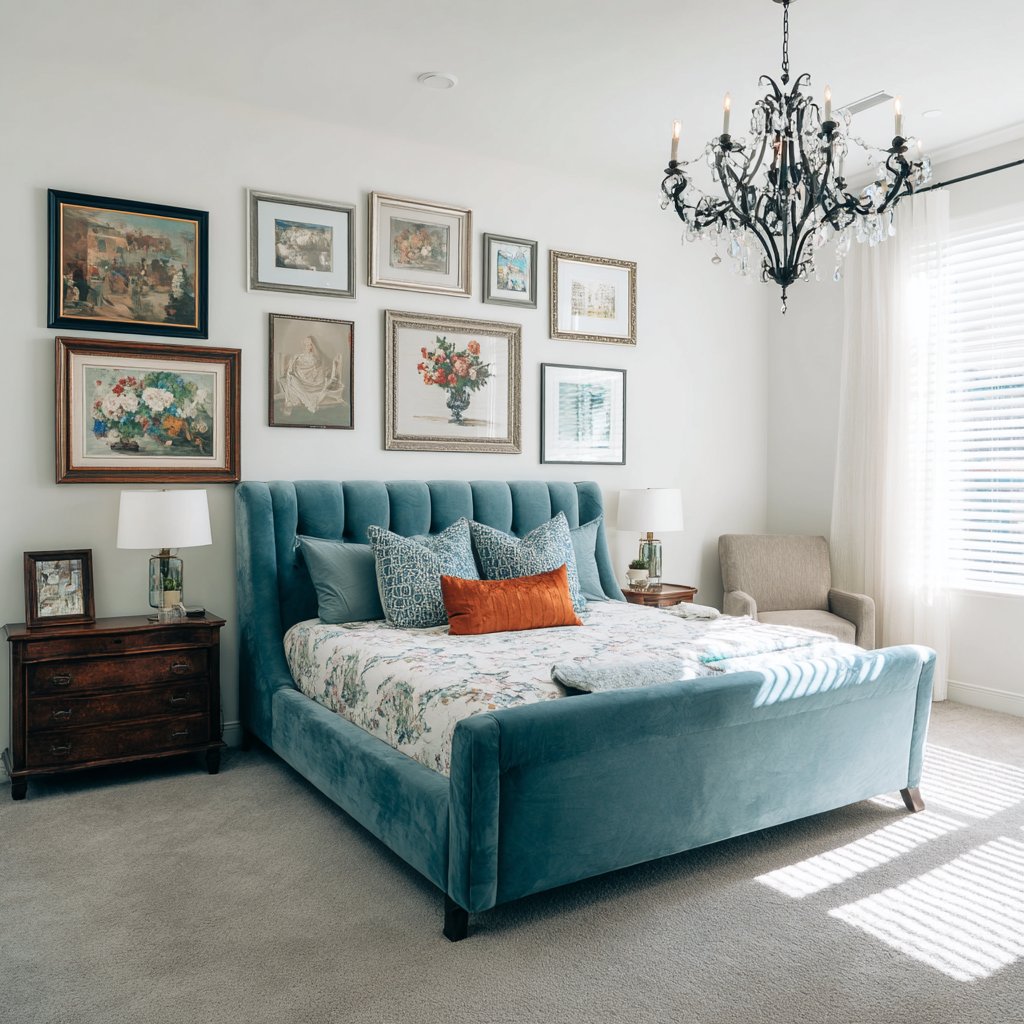
A gallery wall of varied artwork frames above the bed creates curated personality, displaying everything from oil paintings to photography, vintage posters to contemporary prints. The varied frame styles—gold gilded, simple black, ornate carved wood—add to the collected-over-time aesthetic. The arrangement might be formal and symmetrical or organic and salon-style, but the mix of art periods, subjects, and styles tells the story of the owner’s interests and travels.
Key Design Tips:
- Start with one strong modern piece to anchor the eclectic mix and provide visual stability
- Mix furniture from different periods and styles, but find unifying elements like scale or finish
- Combine patterns confidently by keeping a consistent color palette across varied designs
- Create gallery walls that display diverse art and photography with varied frames
- Include pieces with personal meaning—inherited furniture, travel finds, handmade items
- Trust your instincts and collect what you love rather than following strict style rules
17. Mediterranean Villa Warmth
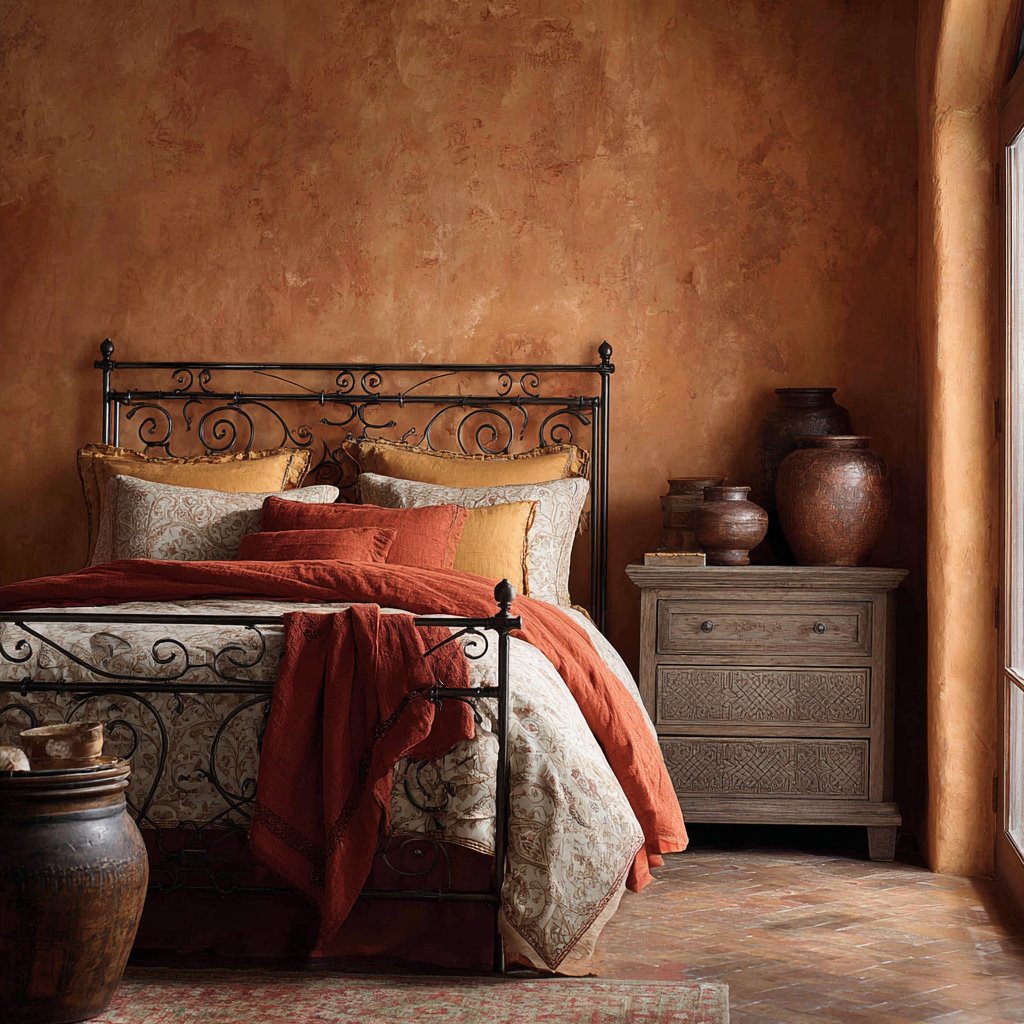
The Mediterranean-inspired queen bedroom channels the sun-drenched elegance of coastal villas from Spain, Italy, and Greece, creating a space that feels perpetually bathed in golden light. The wrought iron queen bed frame with scrollwork details in oil-rubbed bronze finish provides Old World character through its hand-forged appearance and ornate metalwork. The scrolling details reference traditional ironwork found on villa balconies and garden gates, while the oil-rubbed bronze finish adds depth and warmth that plain black iron couldn’t achieve.
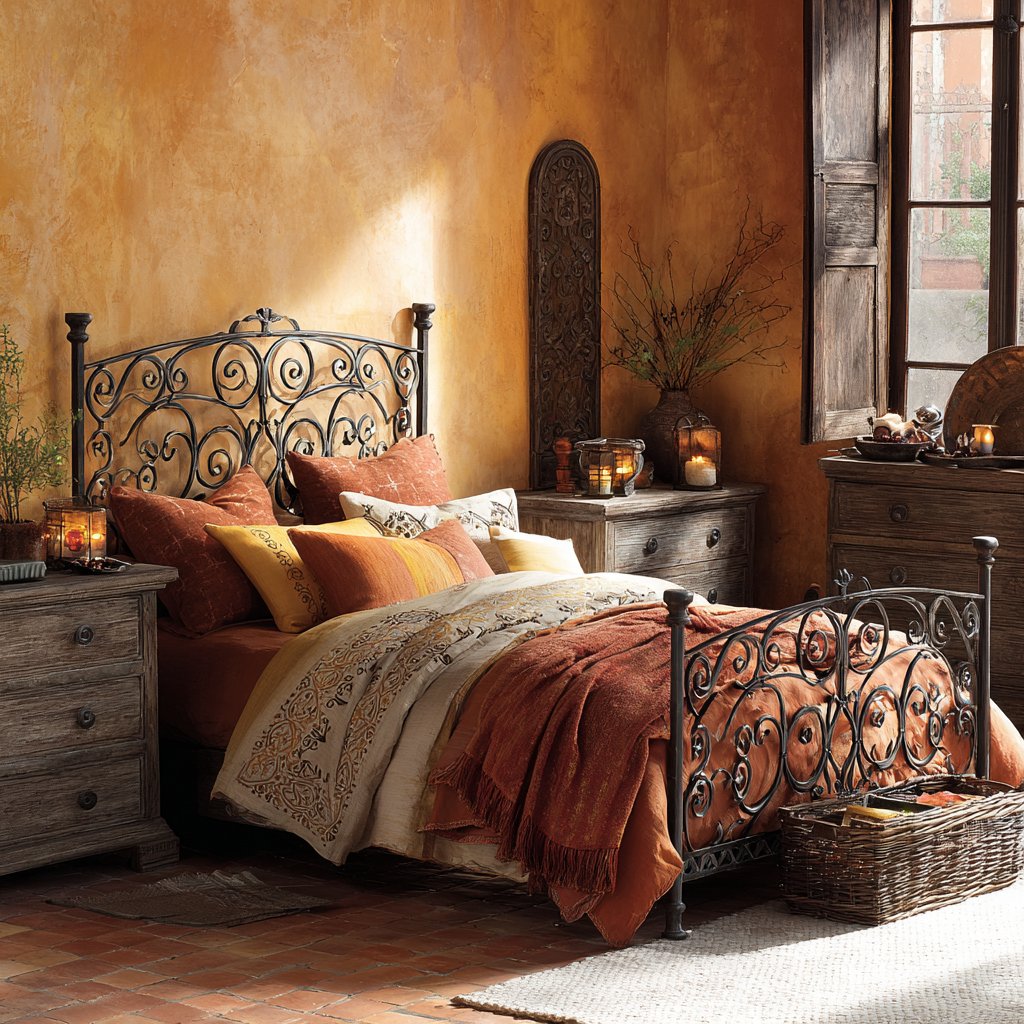
Bedding in warm terracotta, golden yellow, and cream tones evokes the sun-baked colors of Mediterranean landscapes—clay roof tiles, sunflower fields, sandy beaches, and stucco walls. Embroidered details on pillow shams or duvet covers add handcrafted character and reference traditional Mediterranean textile arts. These warm tones create an enveloping, comforting atmosphere that feels like perpetual golden hour, the time when Mediterranean light is most magical.
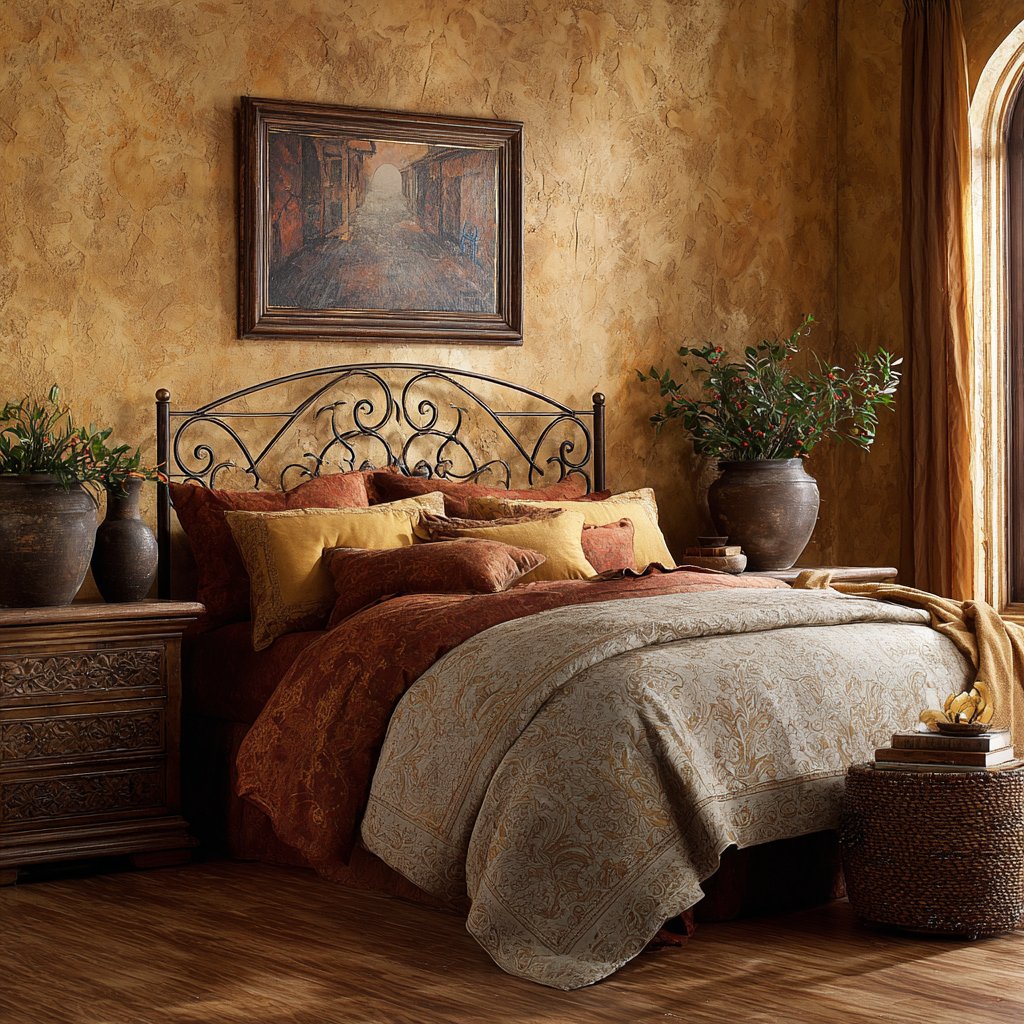
Distressed wooden nightstands with ceramic tile inlays provide storage while showcasing characteristic Mediterranean craftsmanship. The distressing suggests pieces weathered by sea air and strong sun, while the tile inlays—perhaps featuring hand-painted patterns in blue and yellow—add artisanal detail and regional character. These tiles might reference Spanish azulejo, Italian maiolica, or Greek ceramic traditions, bringing cultural richness to functional furniture.
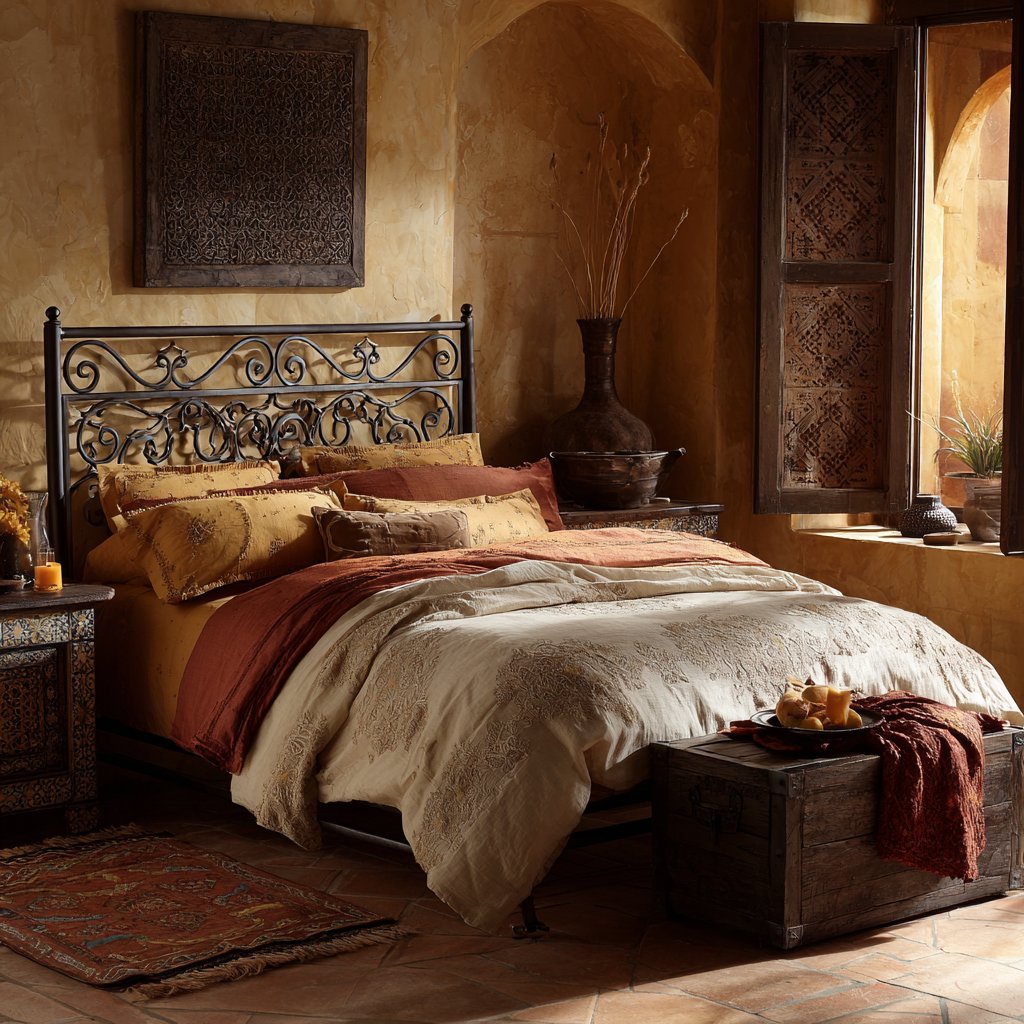
Textured plaster walls in warm ochre create authentic ambiance and architectural interest. This Venetian plaster or tadelakt finish technique, traditional in Mediterranean regions, adds subtle color variation and organic texture that flat paint can never achieve. The ochre tone—somewhere between gold and terracotta—creates warmth and depth while reflecting light beautifully throughout the day.
Key Design Tips:
- Choose wrought iron or dark wood furniture with ornate details for Old World character
- Embrace warm color palettes inspired by earth, sun, sea, and Mediterranean landscapes
- Incorporate handcrafted elements like ceramic tiles, embroidered textiles, and artisan pottery
- Consider textured wall treatments like Venetian plaster for authentic architectural character
- Add arched doorways, wrought iron lighting, or terracotta floor tiles if architecturally possible
- Display pottery, ceramic bowls, and plates as decorative elements that celebrate regional crafts
18. Modern Farmhouse Fusion
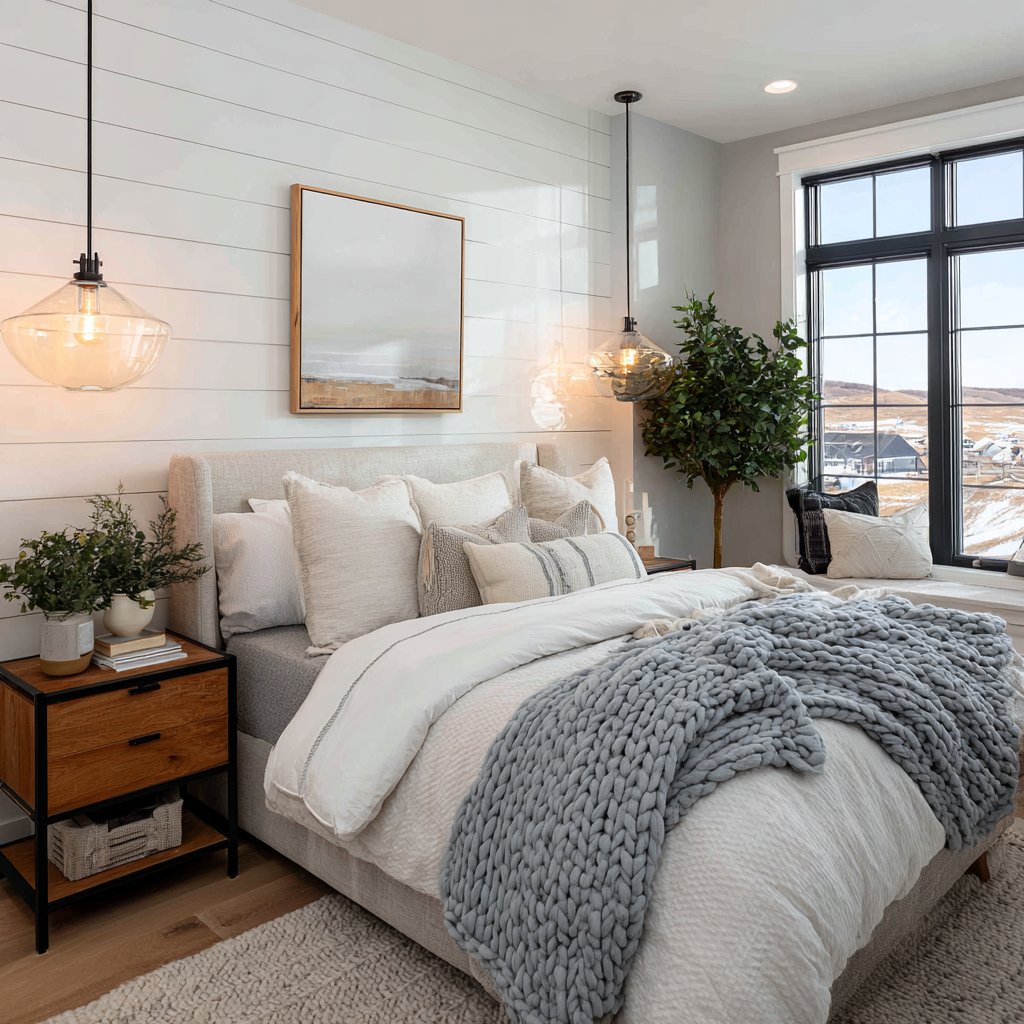
The modern farmhouse queen bedroom successfully blends rustic warmth with contemporary simplicity, creating a style that feels both current and timeless, sophisticated yet approachable. The shiplap accent wall behind the queen bed provides instant farmhouse character through its horizontal lines and cottage-style paneling, while painted in clean white, it maintains freshness and modernity. The simple upholstered headboard in natural linen offers comfort for sitting up in bed while its neutral tone and clean lines keep the aesthetic contemporary rather than fussy or traditional.
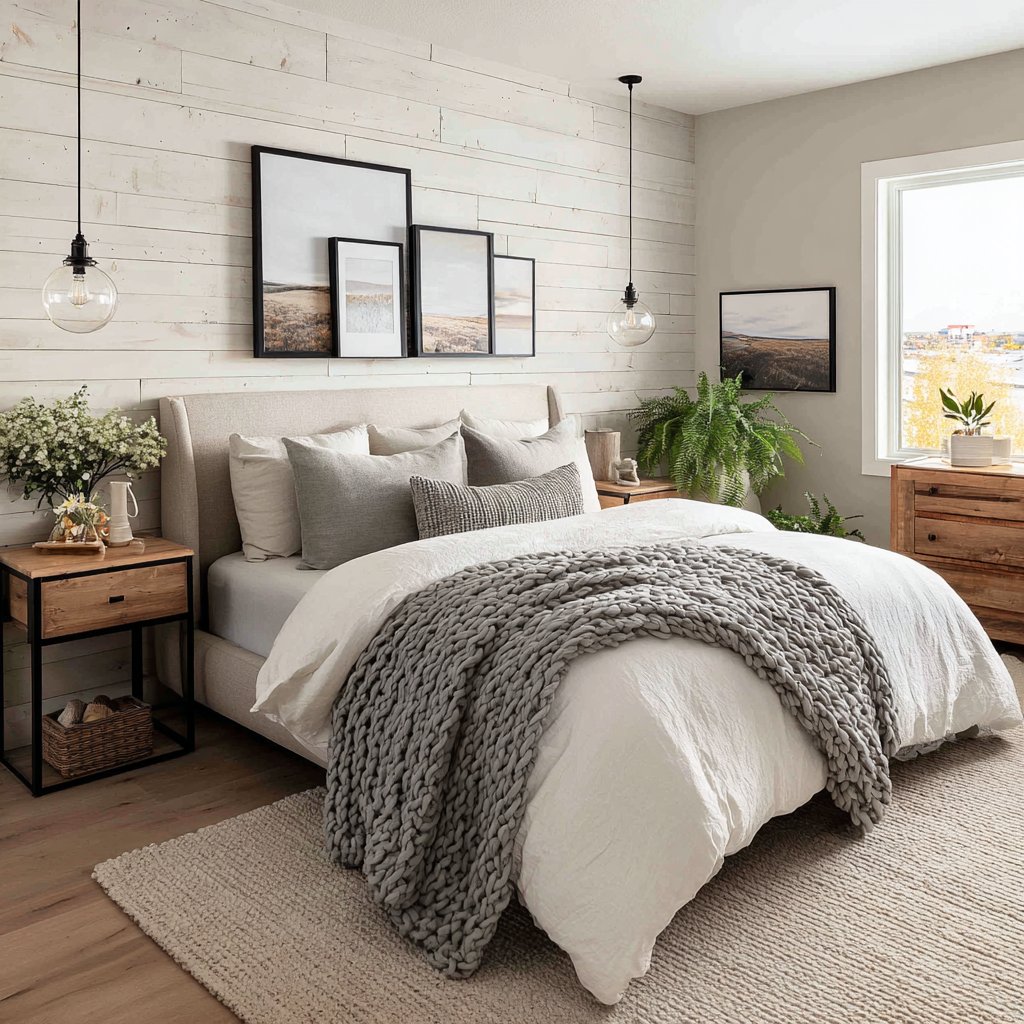
Bedding in white and soft grey with chunky knit throw blanket creates cozy texture while maintaining the clean, uncluttered aesthetic that defines modern farmhouse style. The chunky knit provides tactile warmth and visual interest through its oversized cable patterns, adding handmade character without introducing color or pattern that might complicate the calm palette. This layering approach demonstrates how texture can create depth and interest within a restrained color scheme.
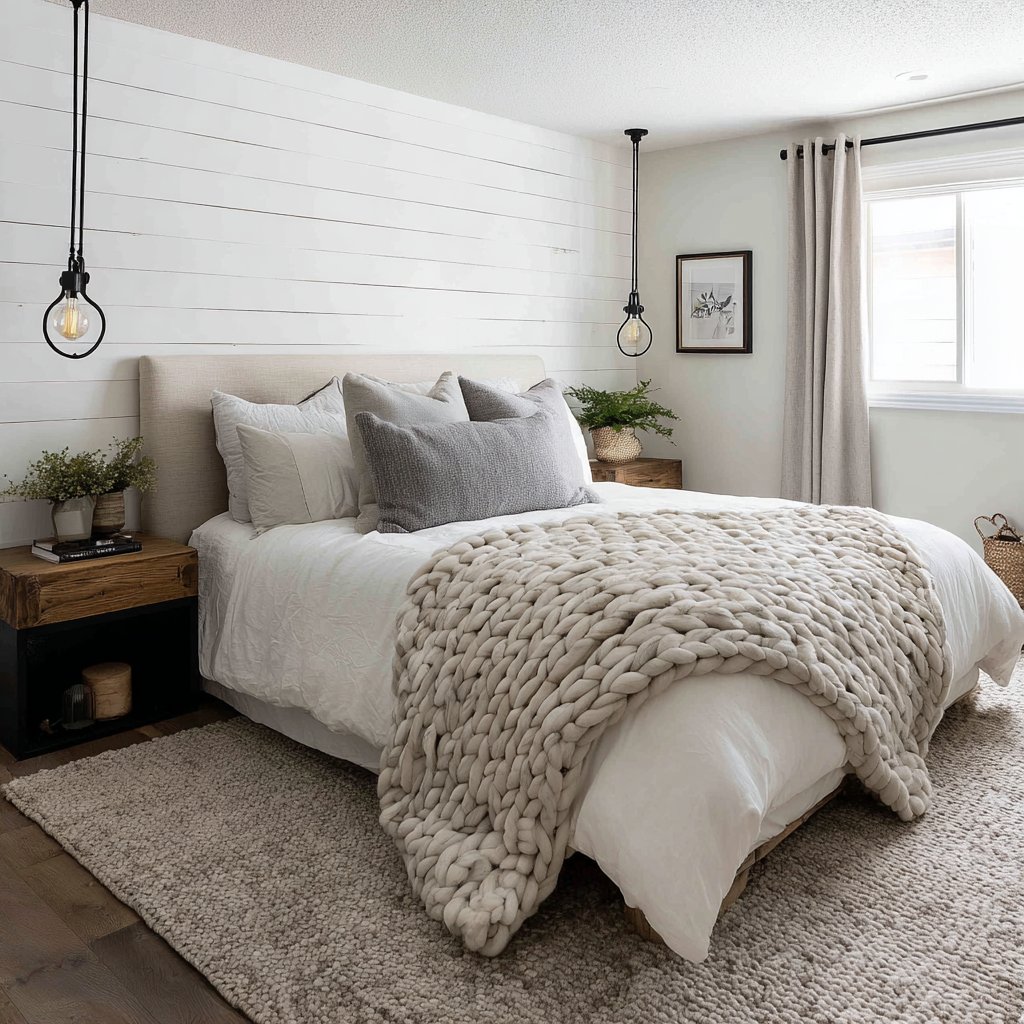
Black metal and wood nightstands combine industrial and rustic elements, embodying the modern farmhouse aesthetic’s willingness to mix materials and styles for functional beauty. The black metal bases or frames provide contemporary edge and durability while the wood tops or drawers add warmth and natural character. This combination of materials creates visual interest while maintaining the style’s fundamental simplicity.
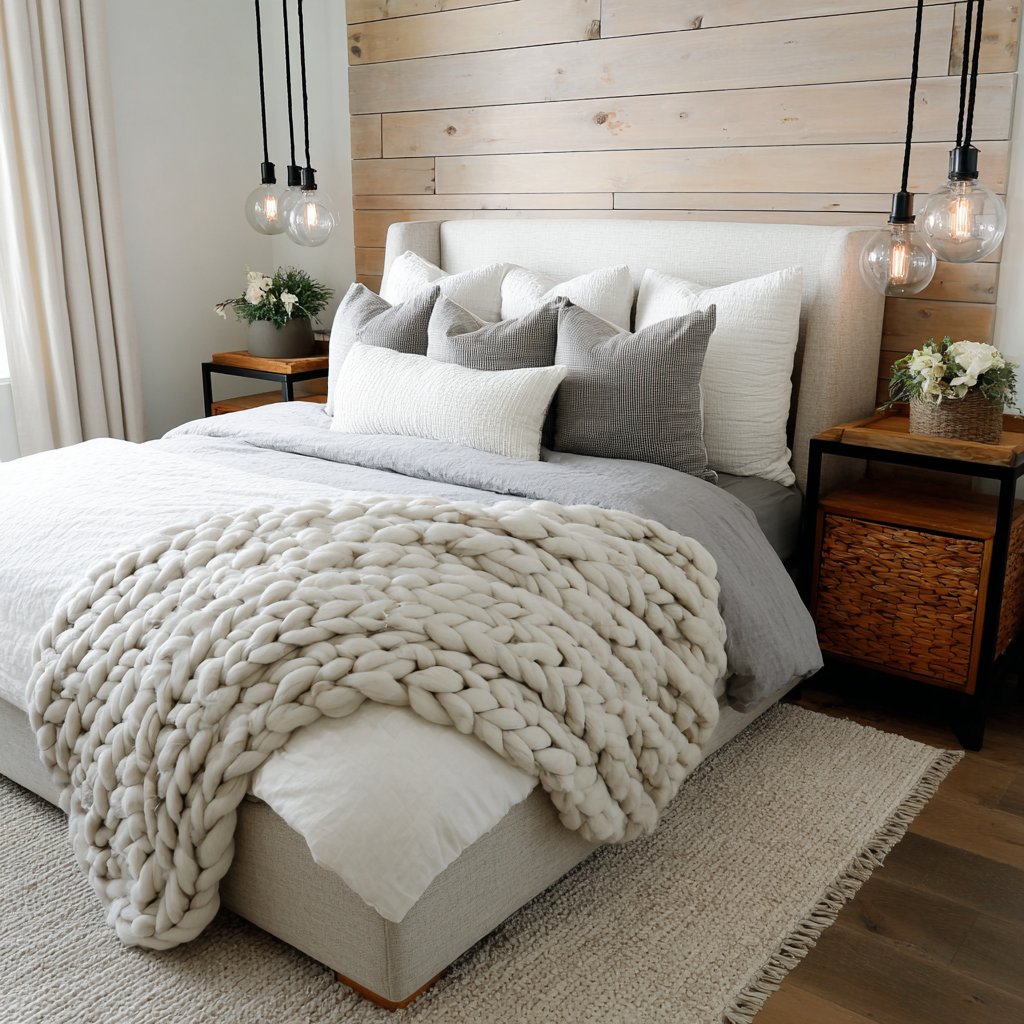
Edison bulb pendant lights add farmhouse-industrial charm through their vintage-inspired filaments and minimalist fixtures. These lights reference the early days of electricity while providing plenty of modern illumination, and their exposed bulbs and simple hardware fit perfectly with both the rustic and modern elements of this style. The warm glow of Edison bulbs creates inviting ambiance that enhances the room’s cozy character.
Key Design Tips:
- Combine shiplap or board-and-batten wall treatments with contemporary furniture for style balance
- Stick to neutral color palettes of white, grey, beige, and black with minimal colorful accents
- Mix materials freely—combining wood, metal, linen, and concrete is encouraged
- Incorporate vintage or vintage-inspired lighting like Edison bulbs or lantern-style fixtures
- Add texture through natural materials and textiles rather than through color or pattern
- Keep accessories minimal and functional, celebrating everyday objects as decorative elements
19. Serene All-White Retreat
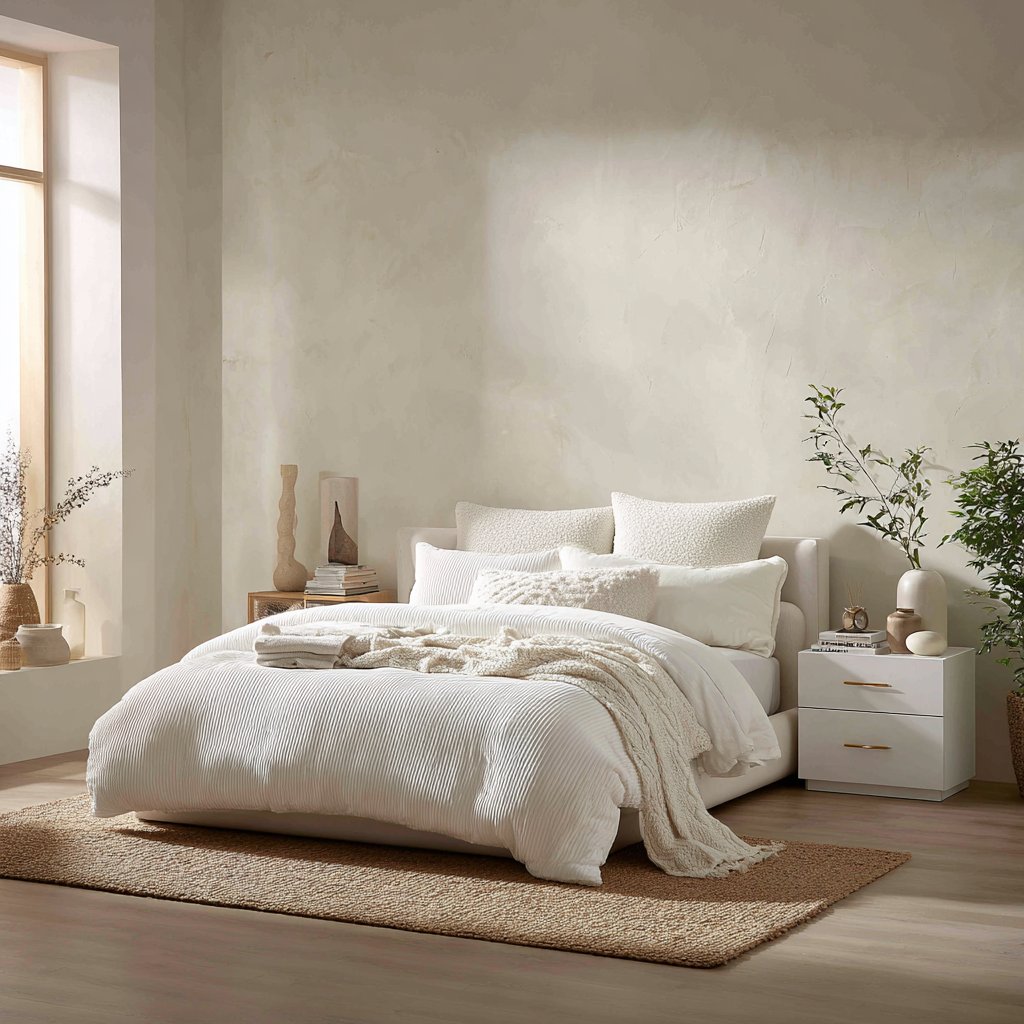
The monochromatic all-white queen bedroom creates a serene, spa-like atmosphere through thoughtful layering of white-on-white textures and carefully considered materials. The queen upholstered bed featuring channel tufting in white bouclé fabric provides sculptural interest and sumptuous texture within the white palette. The bouclé’s nubby texture catches light and shadow differently than smooth fabrics would, creating subtle dimensional interest that prevents the all-white scheme from feeling flat or sterile. The channel tufting adds linear visual rhythm and luxurious detail while maintaining the room’s commitment to pure white.
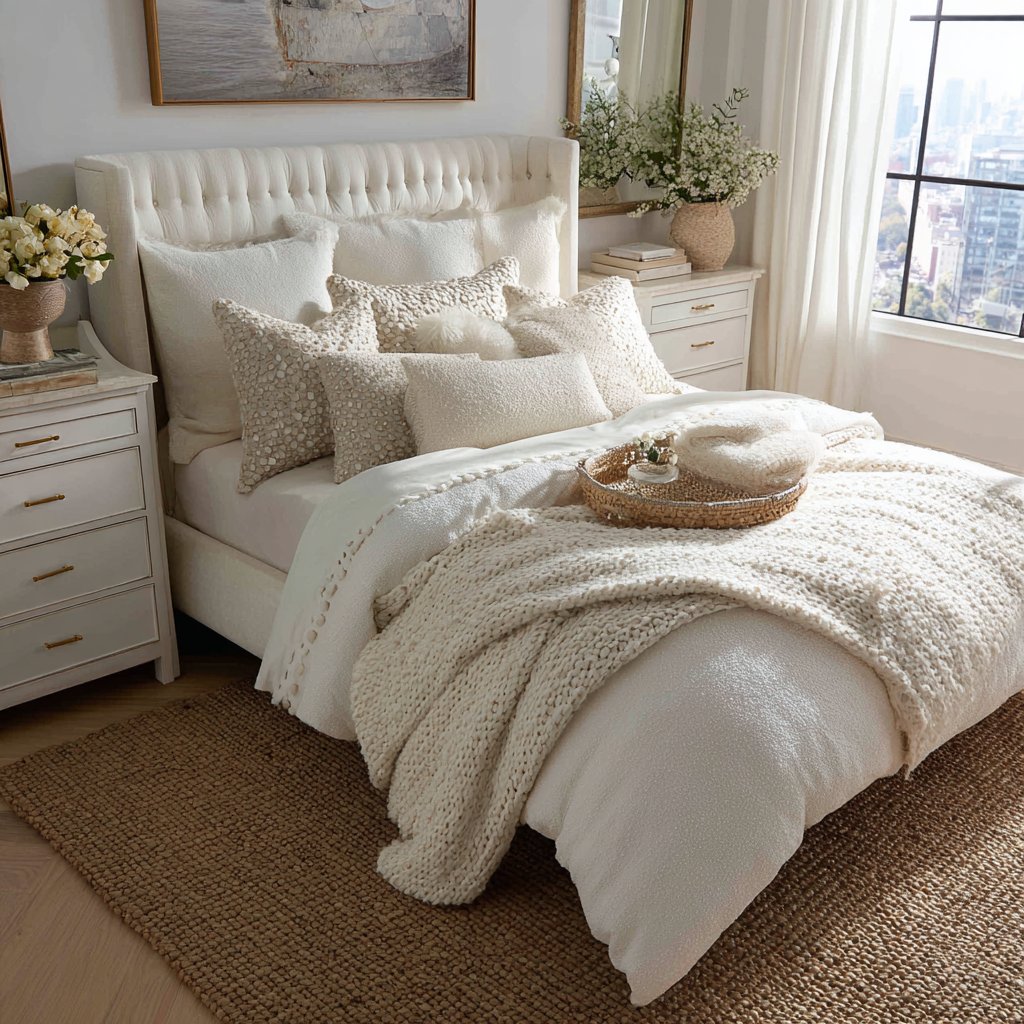
Layered white bedding in varied textures—from smooth cotton sheets to cable knit throws—creates dimensional interest that’s essential when working within a single color. Each textile’s unique texture reflects light differently and provides tactile variety, proving that monochromatic doesn’t have to mean monotonous. The layering might include percale sheets for crisp smoothness, a matelassé coverlet for subtle pattern through texture, and a chunky cable knit throw for bold textural statement.
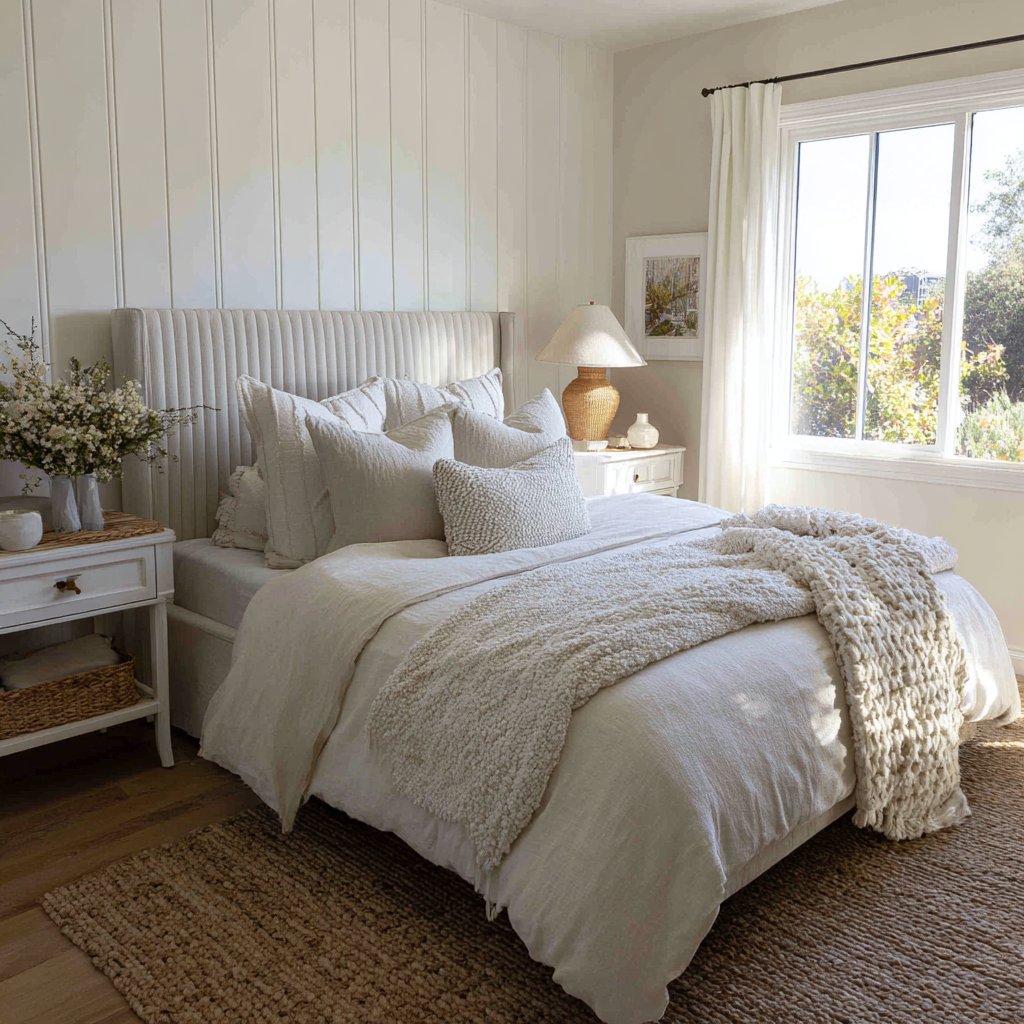
White lacquered nightstands with brass hardware provide subtle contrast while maintaining the room’s light, airy feel. The high-gloss lacquer finish reflects light beautifully, adding luminosity to the space, while the brass hardware introduces just enough warm metallic contrast to prevent the room from feeling too cool or clinical. These pieces prove that even in all-white spaces, finish and material choices matter significantly.
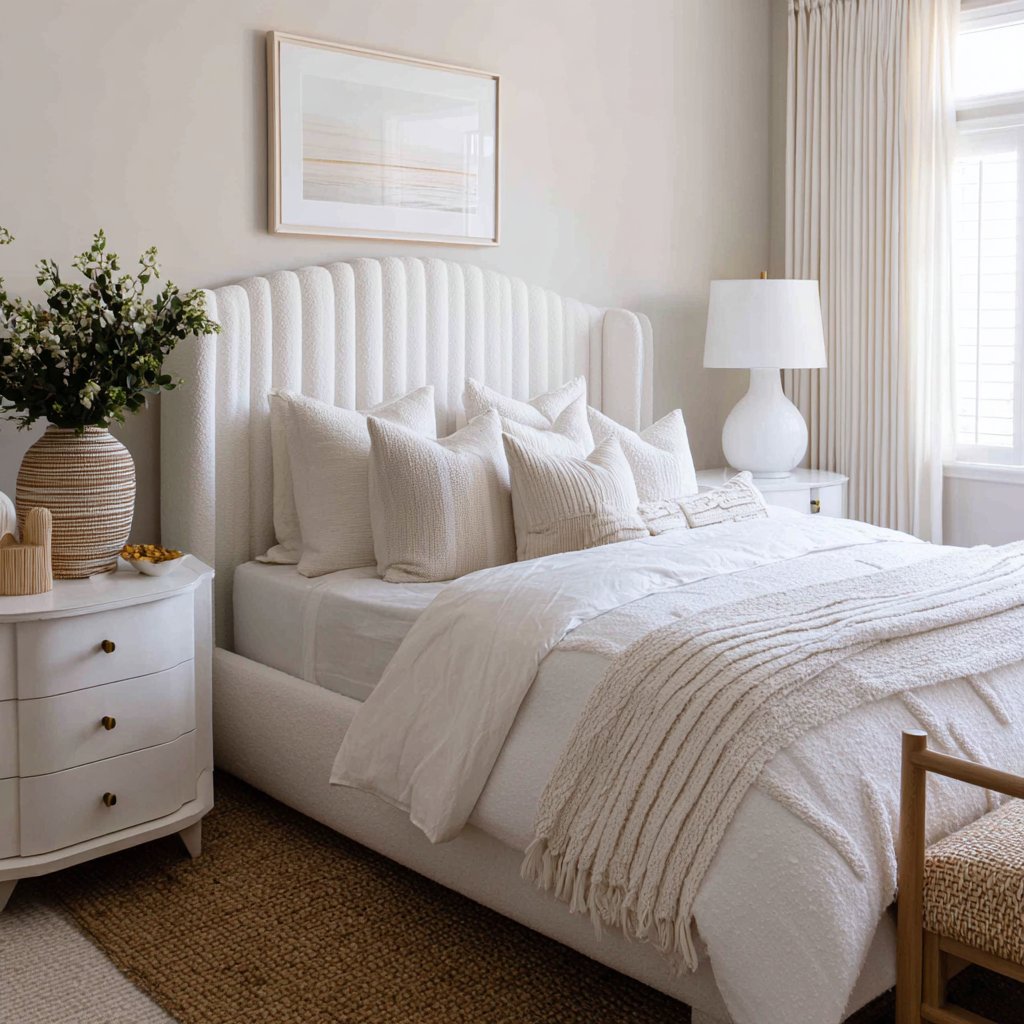
A natural jute rug adds organic warmth and grounds the bed area with earthy texture that contrasts beautifully with the refined white textiles above. This natural fiber element prevents the all-white scheme from feeling too precious or untouchable, adding casual comfort and connecting the space to natural materials and textures. The jute’s neutral tone reads as warm white, maintaining color cohesion while providing essential texture.
Key Design Tips:
- Layer multiple white textures—smooth, nubby, woven, knitted—to create dimensional interest
- Introduce subtle natural elements like jute, linen, or light wood to add warmth
- Use varied finishes—matte, glossy, textured—to create visual variation within white
- Add warm metals like brass or gold rather than cool silver to prevent clinical feeling
- Maximize natural light with minimal window treatments to enhance the bright, airy atmosphere
- Ensure excellent lighting design since all-white rooms can look dingy without proper illumination
20. Art Deco Glamour
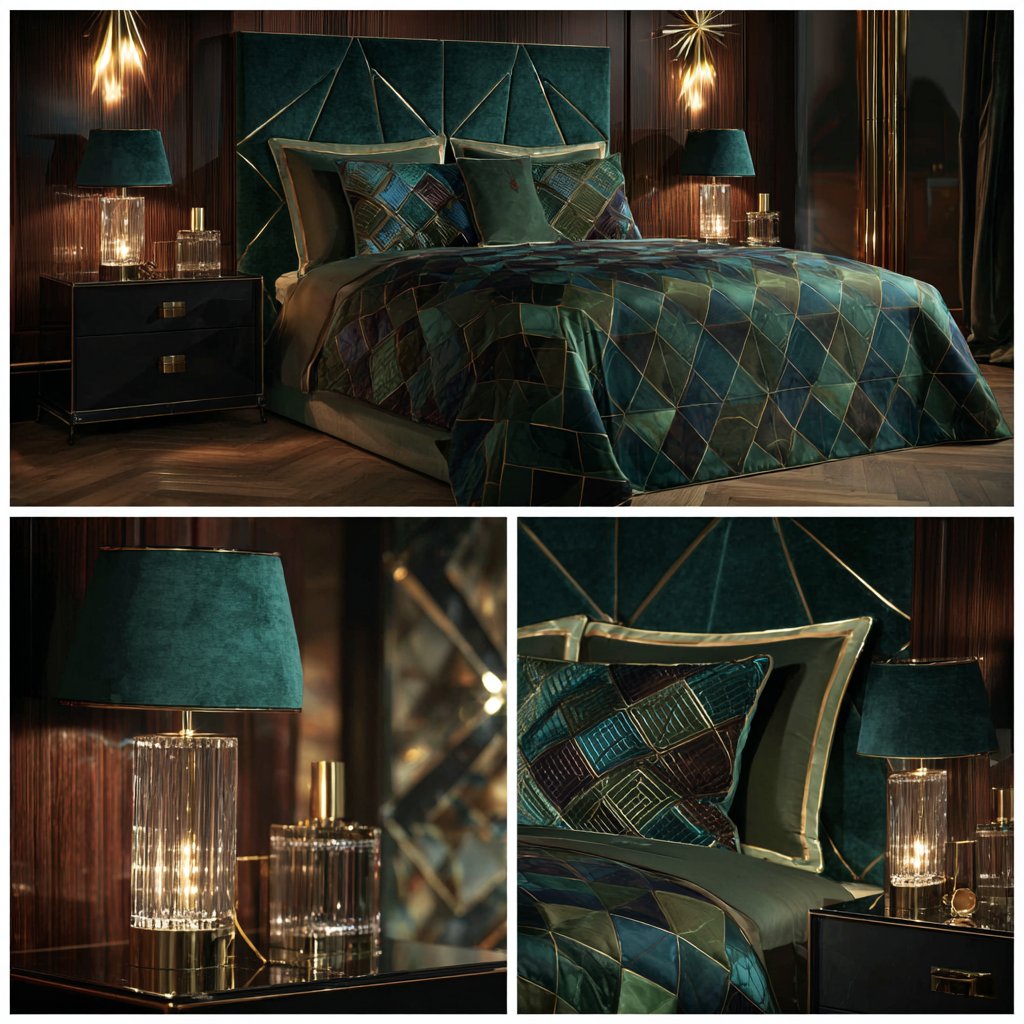
The art deco queen bedroom channels the geometric elegance and luxurious sophistication of the 1920s and 30s, creating a space that feels both glamorous and precisely designed. The queen bed with geometric headboard design in emerald green velvet with brass trim details immediately establishes the art deco aesthetic through its bold color, luxurious material, and angular patterns. The geometric design might feature stepped patterns, chevrons, or sunburst motifs—all characteristic art deco shapes that emphasize symmetry, repetition, and streamlined modernity. The brass trim adds precious-metal glamour and visual definition that enhances the geometric patterns.
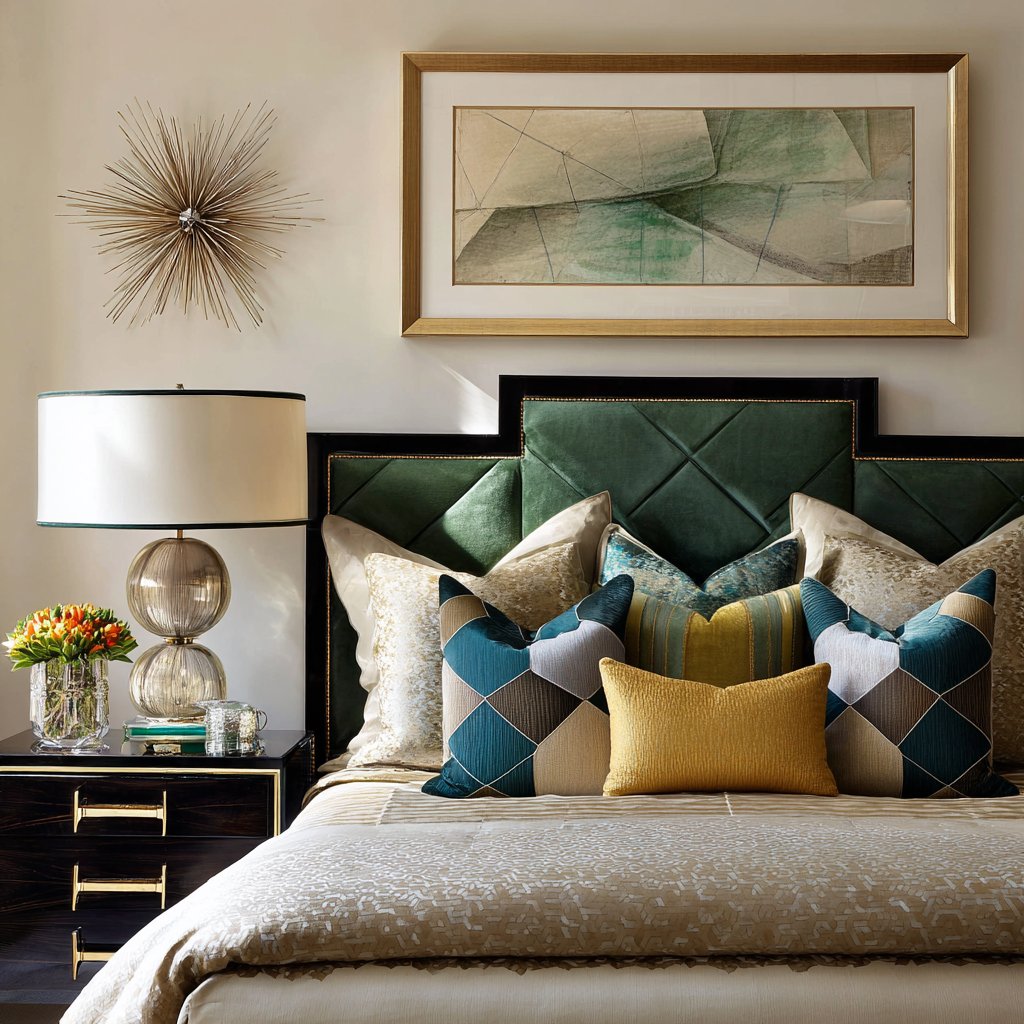
Luxurious bedding in jewel tones of sapphire and gold with geometric patterned pillows reflects the art deco love for rich colors and bold patterns inspired by ancient Egypt, jazz age opulence, and machine-age precision. These saturated colors create drama and sophistication, while the geometric patterns echo the architectural and decorative motifs of the period. The combination of emerald, sapphire, and gold creates a palette of luxury and confident design.
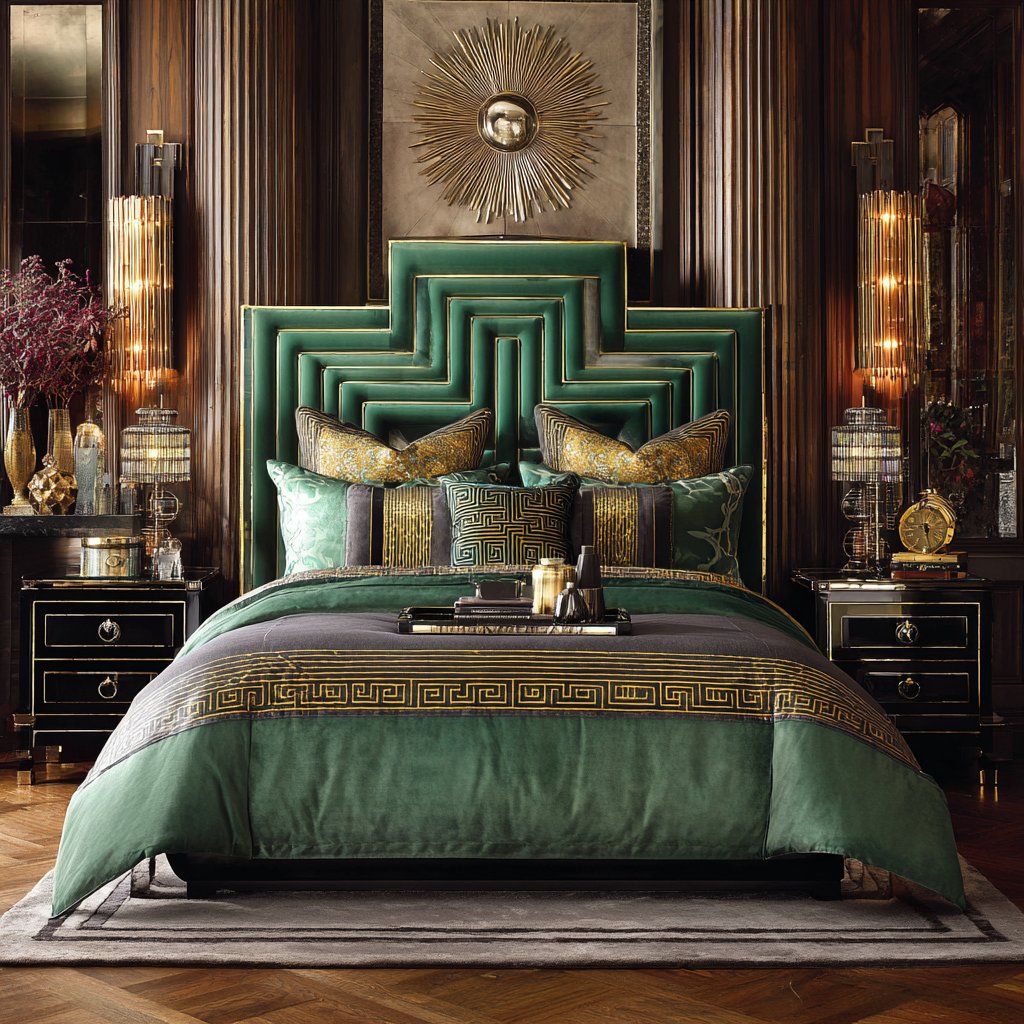
Black lacquer nightstands with brass hardware and glass tops showcase art deco’s love for contrasting materials and high-gloss finishes. The lacquer’s mirror-like surface creates reflective glamour, while the brass hardware provides warm metallic accents. Glass tops add transparency and light, preventing these dark pieces from feeling heavy while introducing another material into the sophisticated mix. Art deco table lamps with geometric shades continue the angular theme while providing ambient lighting that enhances the room’s theatrical character.
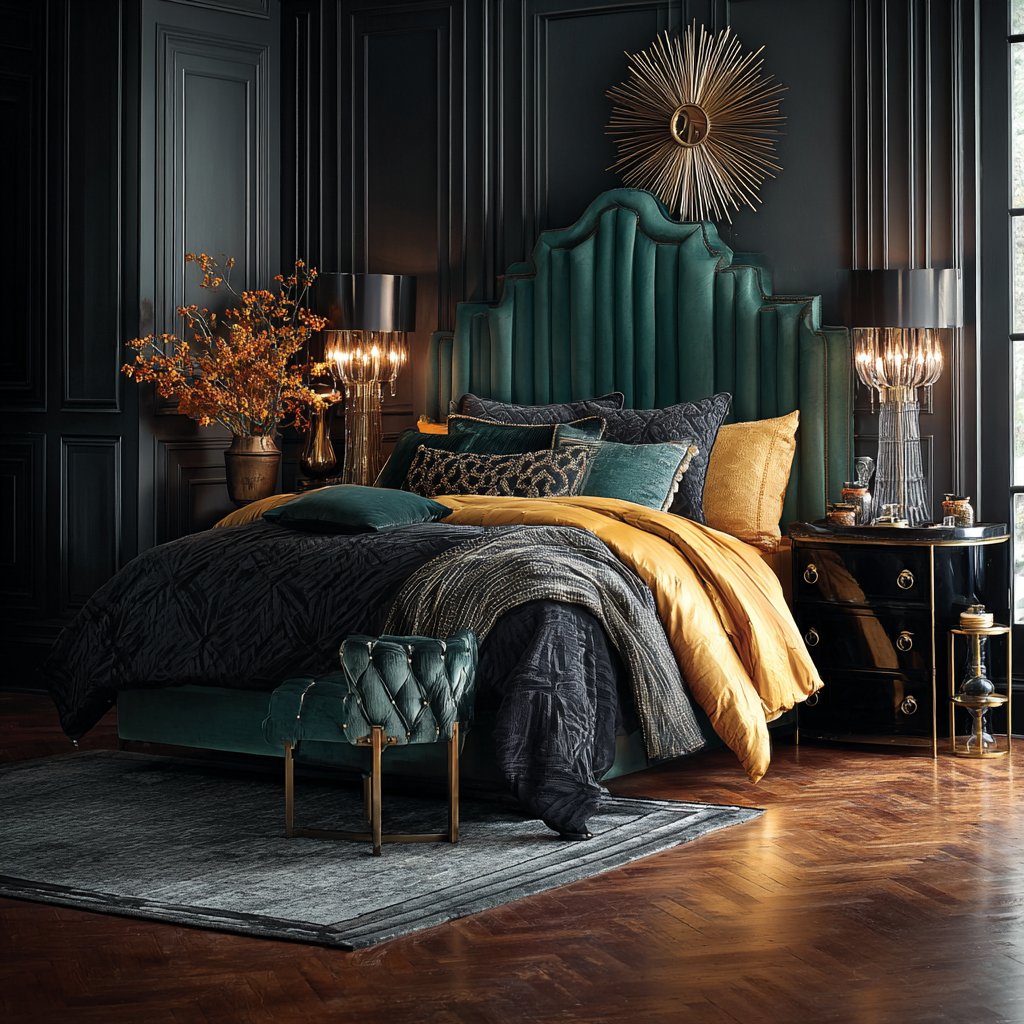
Sunburst wall sconces flank the bed, providing symmetrical lighting and iconic art deco motif. These fixtures, with their radiating metal rods suggesting sun rays or cosmic energy, represent art deco’s optimistic embrace of progress, glamour, and geometric abstraction. The symmetrical placement satisfies art deco’s love for formal balance and creates dramatic architectural emphasis.
Key Design Tips:
- Embrace geometric patterns, angular shapes, and symmetrical arrangements throughout
- Use rich jewel tones like emerald, sapphire, ruby, and amethyst with metallic accents
- Incorporate luxurious materials—velvet, lacquer, brass, mirror, marble—for authentic glamour
- Choose furniture with streamlined forms and geometric decorative details
- Add stepped patterns, chevrons, zigzags, and sunburst motifs characteristic of the period
- Include mirrored or high-gloss surfaces for light-reflective drama
21. Southwestern Desert Beauty
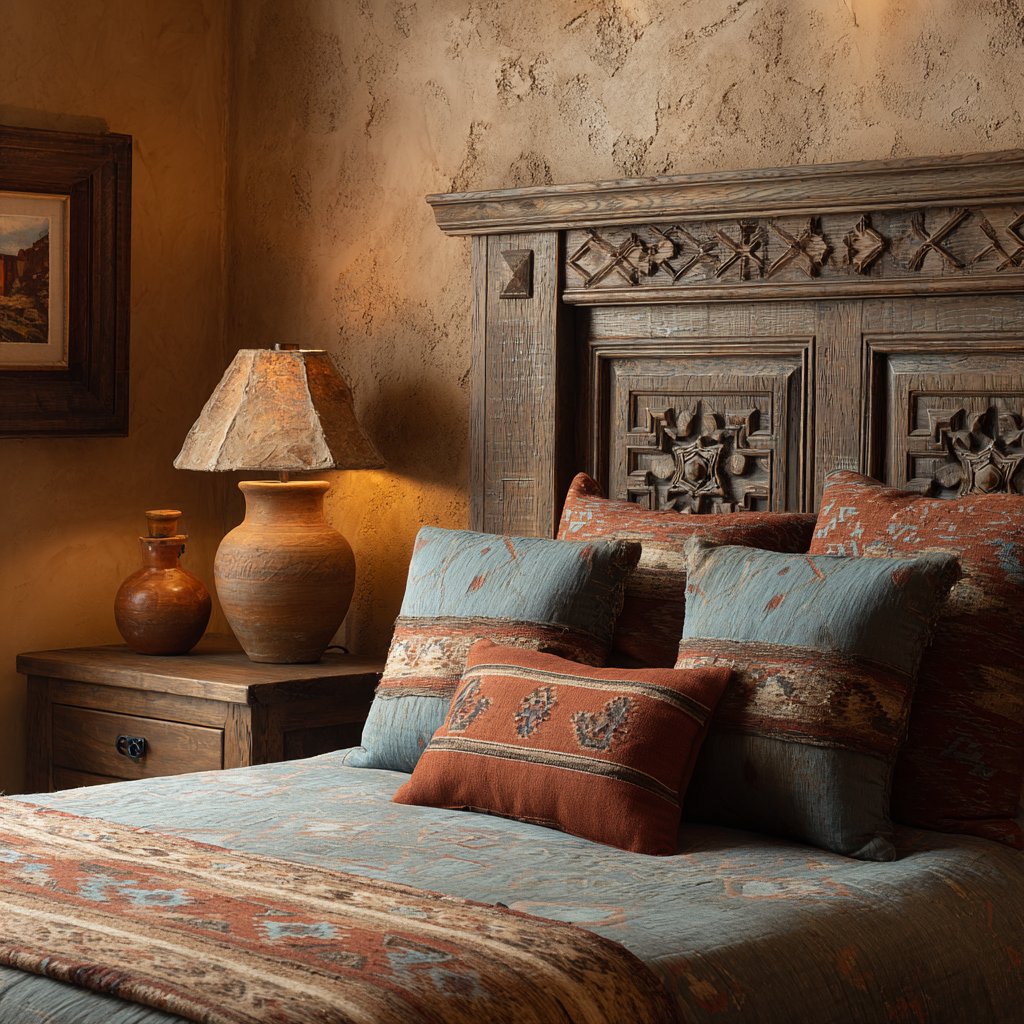
The Southwestern queen bedroom celebrates the natural beauty and cultural richness of the American Southwest, creating a space that feels connected to desert landscapes and indigenous traditions. The queen bed with carved wooden headboard featuring Native American-inspired geometric patterns showcases traditional design motifs while providing functional headboard support. These geometric patterns—perhaps featuring stepped designs representing mountains, diamond patterns symbolizing the four directions, or zigzag patterns suggesting lightning—connect the space to regional aesthetic traditions while adding visual interest and handcrafted character.
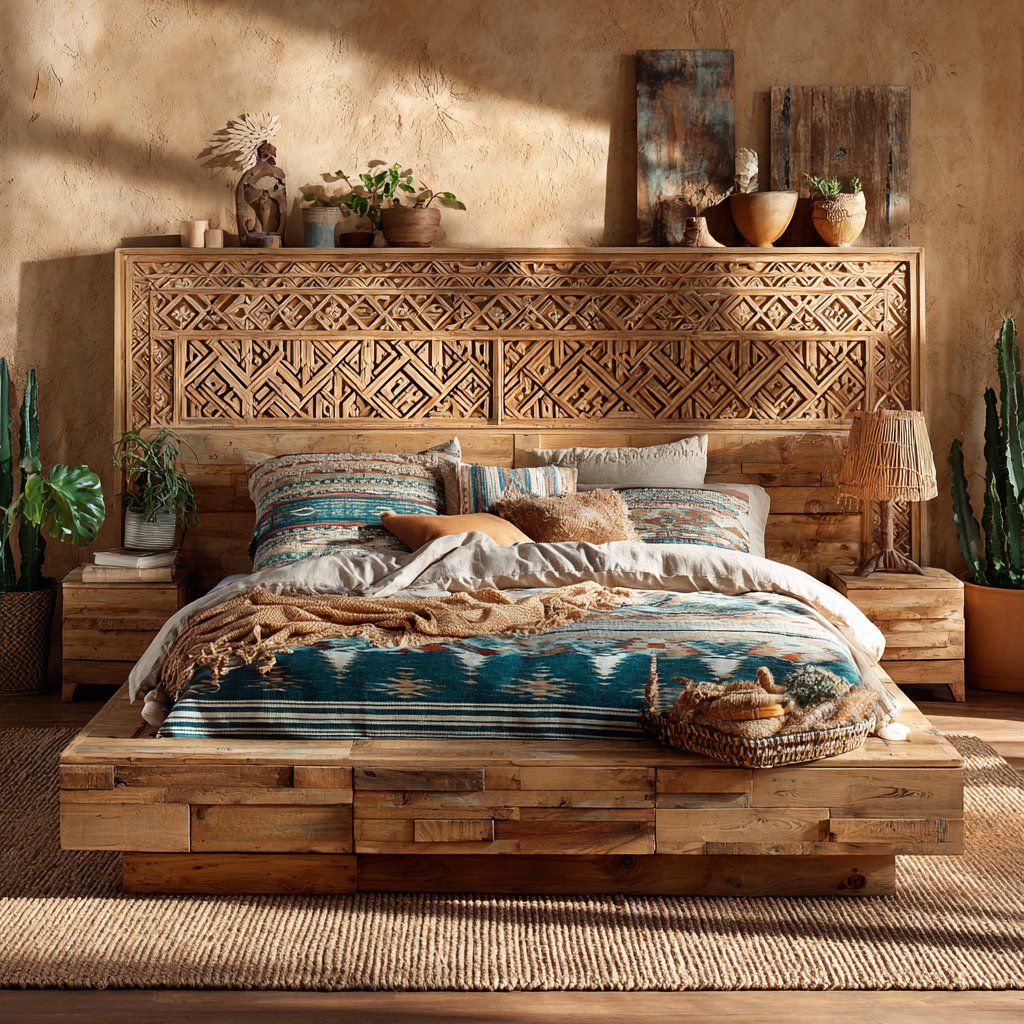
Bedding in turquoise, terracotta, and cream with Navajo-inspired textile patterns creates regional character through colors and designs drawn from desert landscapes and indigenous weaving traditions. The turquoise evokes desert skies and valued stones, terracotta suggests canyon walls and pottery, while cream references natural wool and sandy earth. The textile patterns might reference authentic Navajo weaving designs, though it’s important to use these respectfully, ideally seeking out pieces made by native artisans.
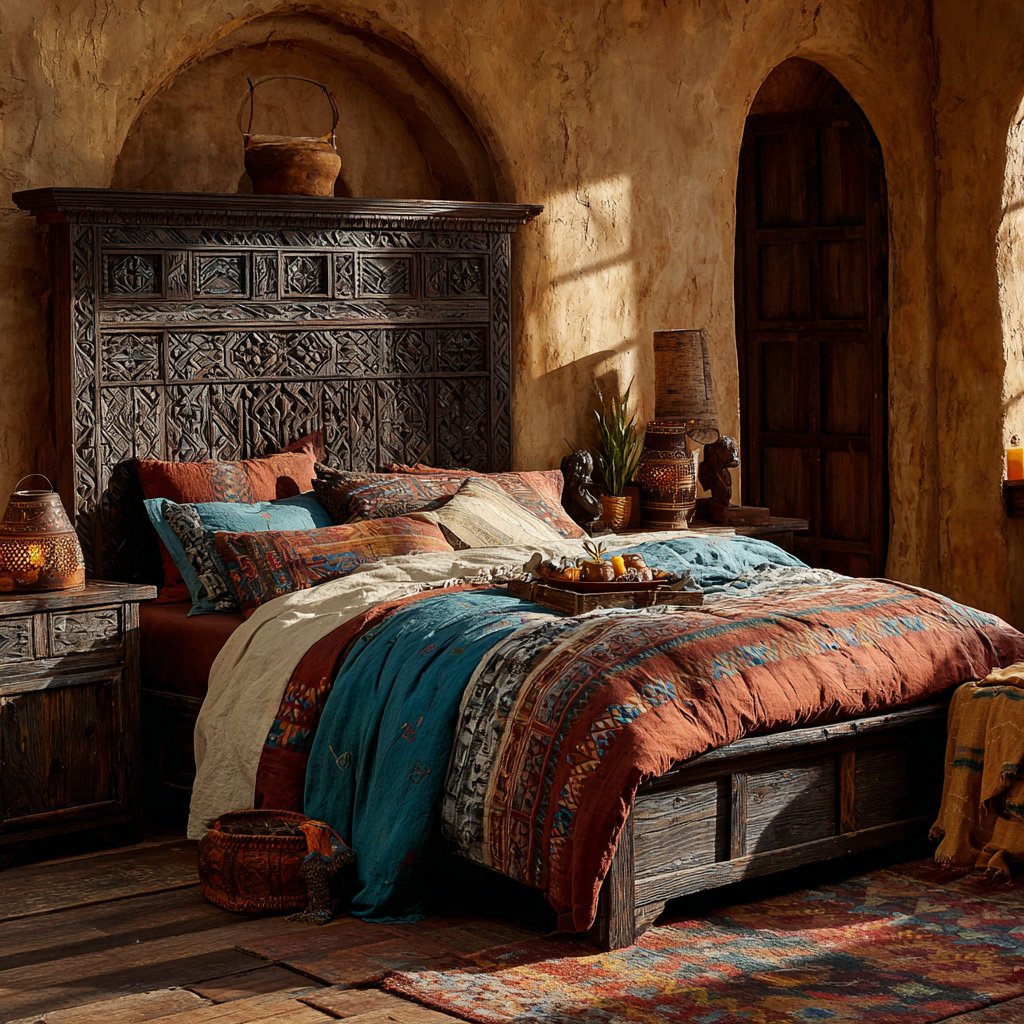
Raw wood nightstands display pottery lamps with rawhide shades, bringing organic materials and handcrafted character to functional pieces. The raw wood might be rough-sawn pine or weathered cedar, its unfinished or minimally finished surface celebrating natural texture. Pottery lamp bases, perhaps in earth-toned glazes or traditional black-on-black styles, showcase indigenous ceramic traditions, while rawhide shades diffuse light warmly and add another natural material to the mix.
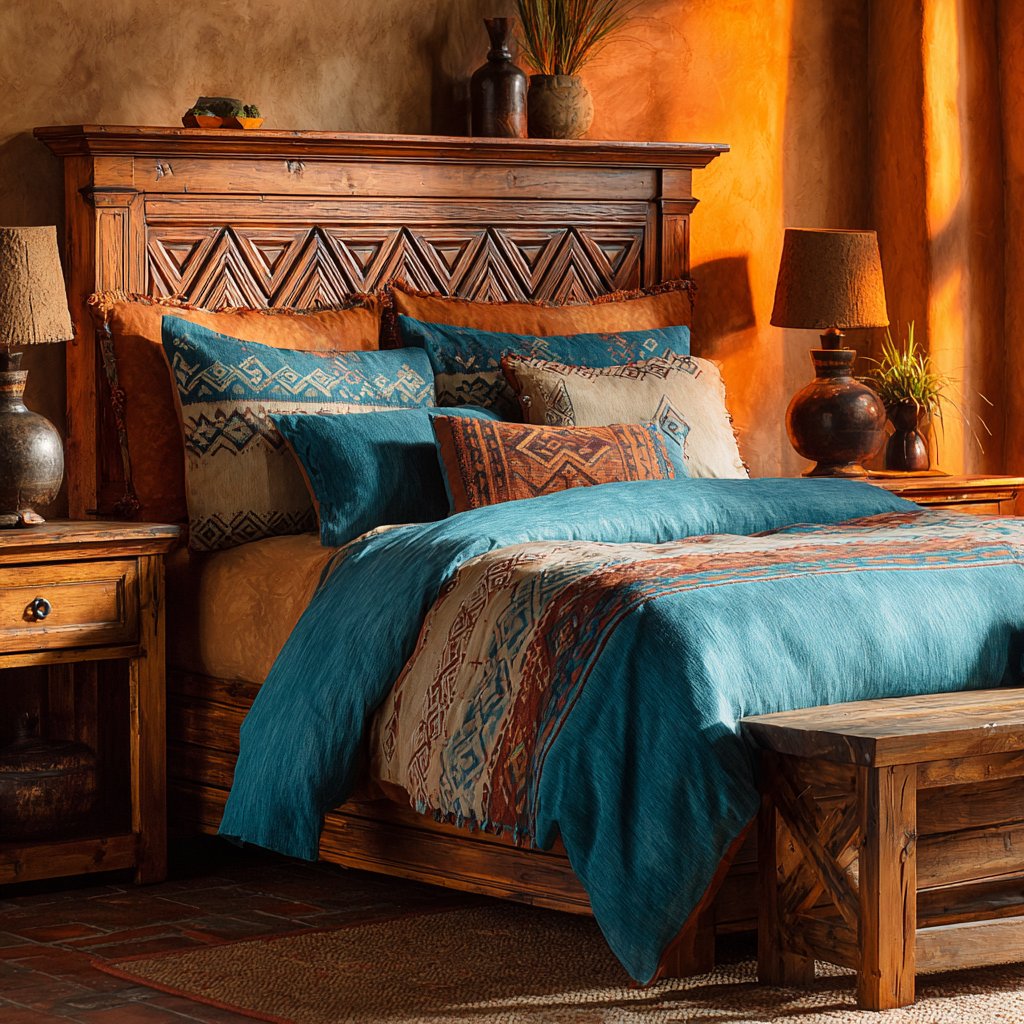
Adobe-textured walls in warm sand tone add authentic desert aesthetic and architectural character. This textured finish might be actual adobe plaster or a finish technique that replicates adobe’s characteristic rounded corners and irregular surface. The warm sand tone captures the color of desert earth while providing a neutral backdrop that allows the colorful textiles and pottery to stand out.
Key Design Tips:
- Incorporate Native American-inspired patterns respectfully, ideally purchasing authentic indigenous crafts
- Use the desert color palette of turquoise, terracotta, sand, sage, and rust
- Choose natural materials like raw wood, leather, stone, and clay for authentic regional character
- Add handcrafted pottery, woven baskets, and textiles as decorative elements
- Consider exposed wooden beams, adobe-style walls, or terracotta tile floors if possible
- Display indigenous art and crafts as both decoration and cultural appreciation
22. High-Tech Contemporary
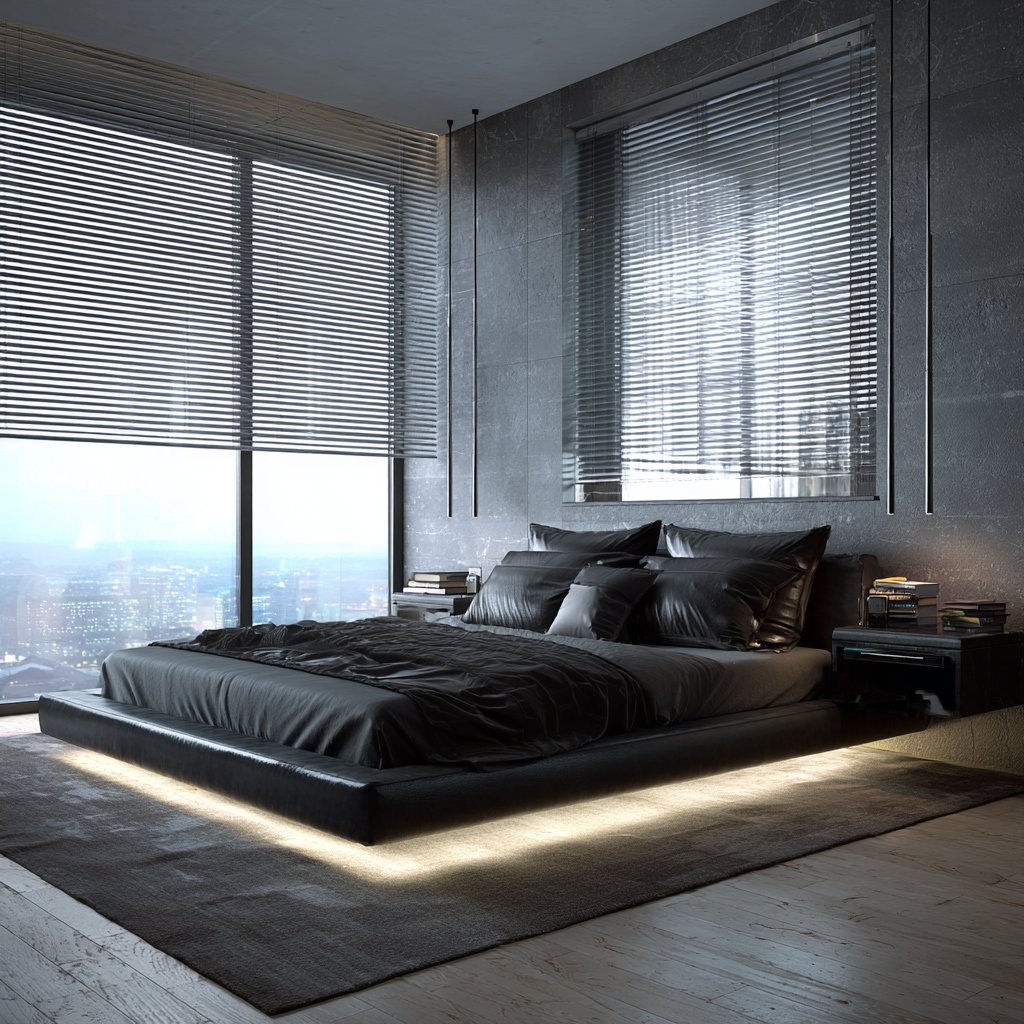
The contemporary queen bedroom with high-tech integration represents the cutting edge of bedroom design, where smart home technology and sophisticated aesthetics merge seamlessly. The floating queen bed frame with hidden LED lighting underneath creates ambient glow and visual drama while making the bed appear to levitate above the floor. This lighting isn’t just decorative—it provides gentle nighttime illumination for safe navigation without harsh overhead lights, and can often be controlled via smartphone apps to adjust color and intensity to match mood or time of day.
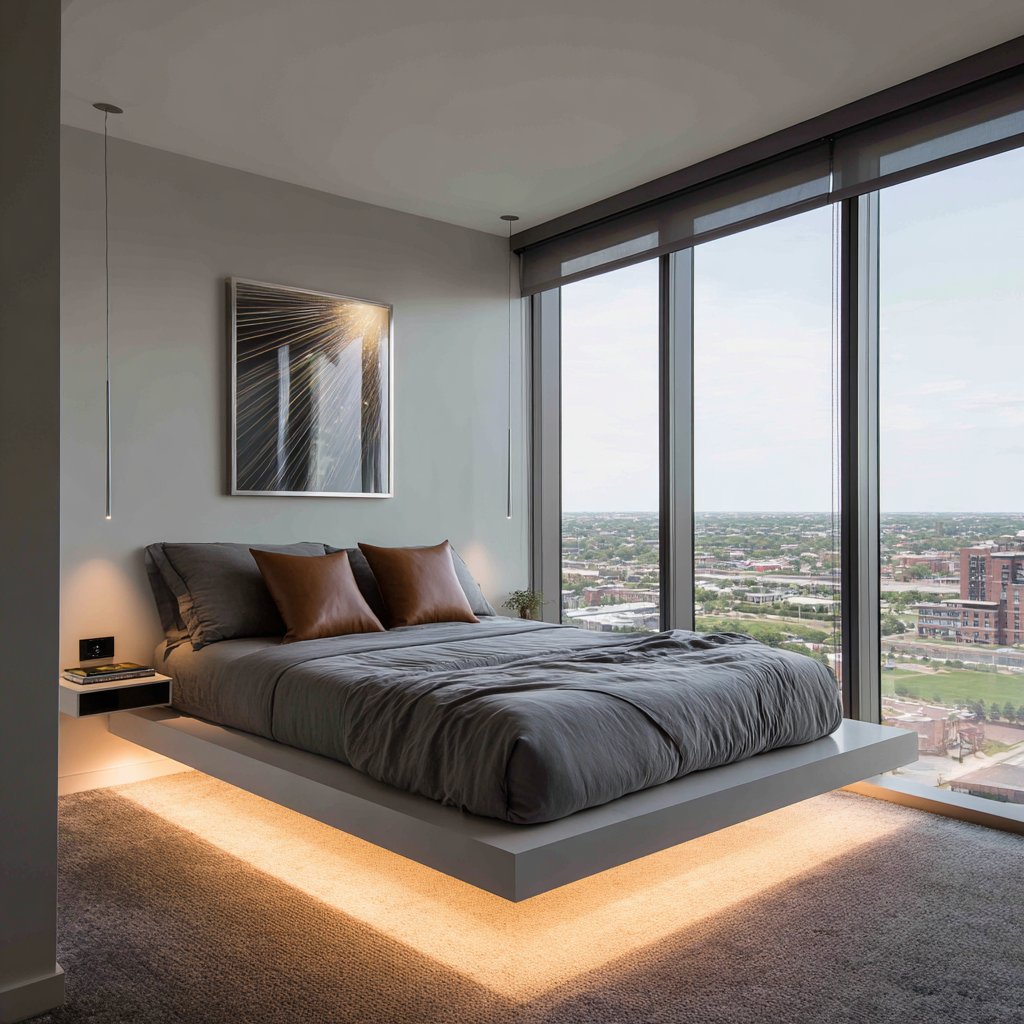
Sleek bedding in charcoal grey with leather accent pillows maintains the modern aesthetic while providing comfort and sophistication. The charcoal grey creates dramatic contrast against the LED-lit base while maintaining neutral sophistication that won’t compete with the room’s technological elements. Leather accent pillows add luxury and texture while their smooth surface and masculine character complement the room’s contemporary design language.
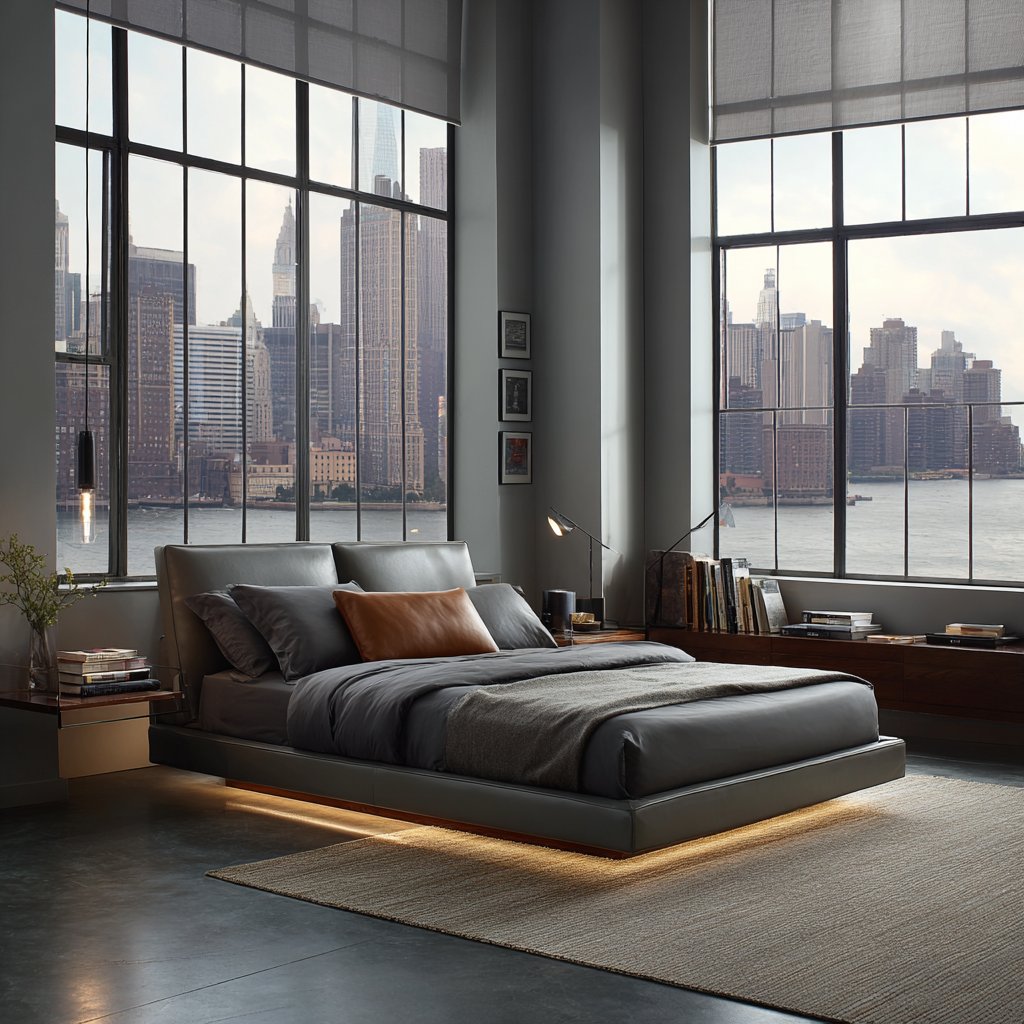
Wall-mounted floating nightstands with wireless charging stations provide tech-integrated function that eliminates cords and clutter. These pieces might include built-in USB ports, wireless charging pads that power smartphones simply by placing them on the surface, and perhaps even integrated speakers or touch-sensitive lighting controls. The floating installation keeps floors clear and enhances the room’s clean, modern aesthetic.
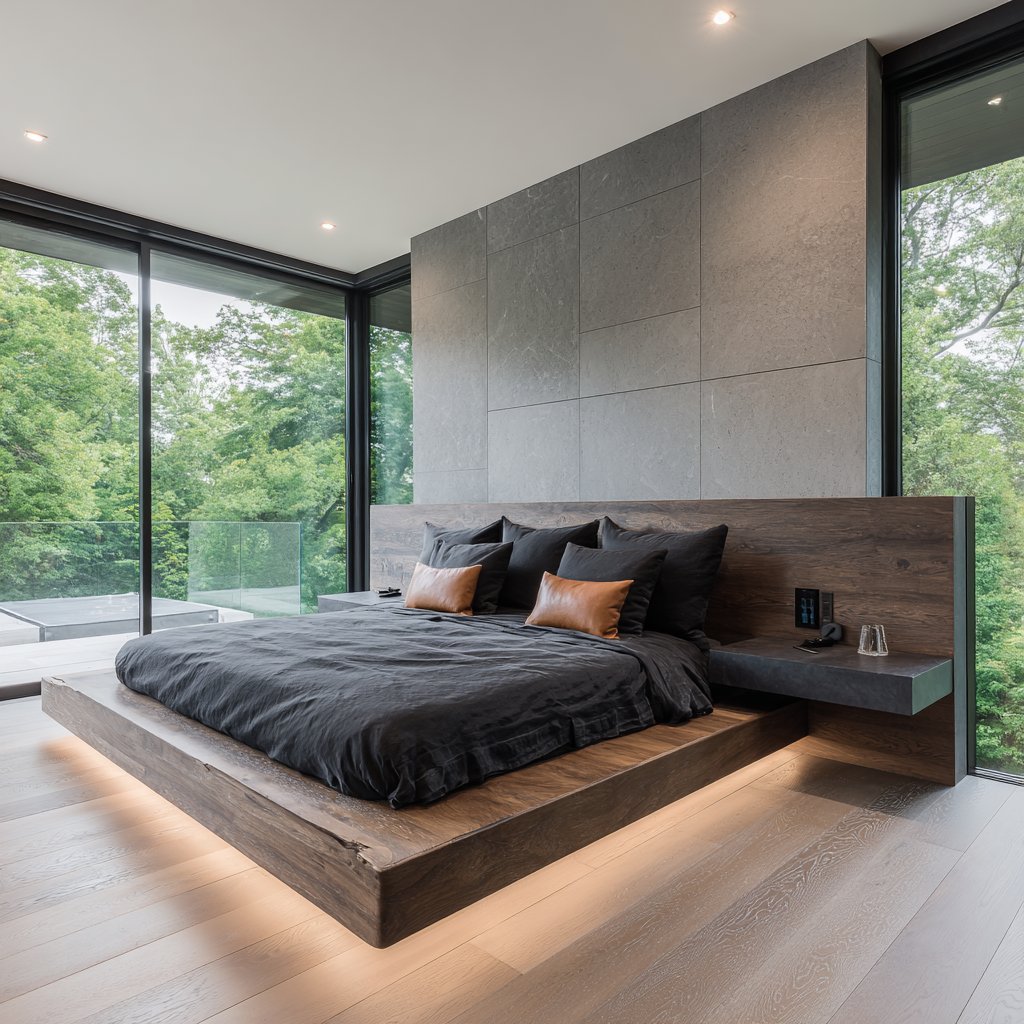
Floor-to-ceiling windows with motorized blackout shades offer sophisticated light control at the touch of a button or through voice command. These automated shades can be programmed to open gradually in the morning to simulate natural sunrise, close automatically when the sun creates glare, or respond to voice commands for instant privacy. This integration of technology serves genuine functional needs while maintaining sleek design aesthetics.
Key Design Tips:
- Integrate technology thoughtfully so it enhances rather than dominates the design
- Choose furniture with built-in charging stations, USB ports, or wireless charging capabilities
- Use smart lighting systems that allow control over color temperature and intensity
- Consider motorized window treatments for convenience and light control
- Hide or manage cords carefully to maintain clean, uncluttered aesthetic
- Balance high-tech elements with natural materials to prevent cold, sterile feeling
23. Tropical Resort Escape
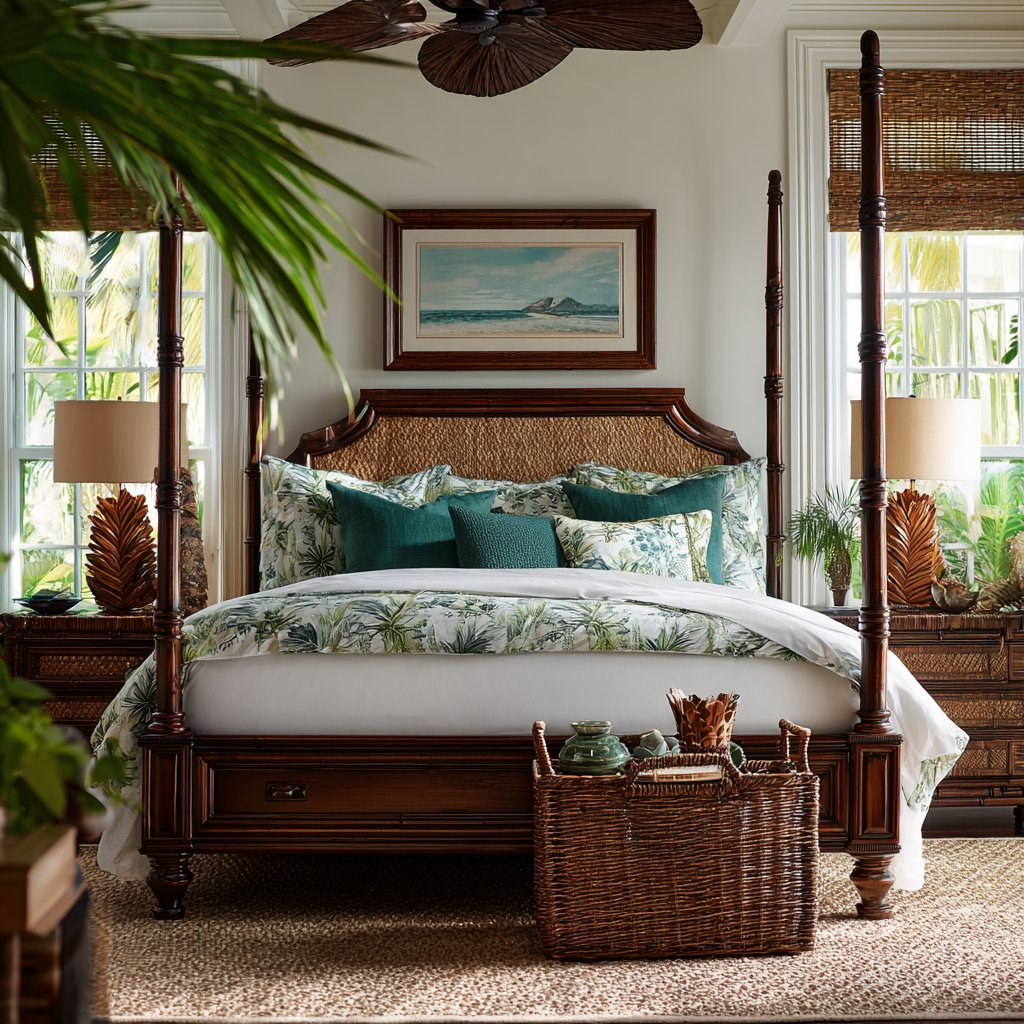
The tropical-inspired queen bedroom transforms everyday sleeping quarters into a vacation-like retreat that evokes beach resorts and island getaways. The dark wood queen bed frame featuring bamboo-style posts and natural fiber woven headboard panel immediately establishes tropical character through materials and forms associated with island living. The bamboo-style posts might be actual bamboo or wood carved and finished to mimic bamboo’s characteristic node patterns, while the woven headboard panel showcases natural fibers like rattan, seagrass, or banana leaf woven into attractive patterns.
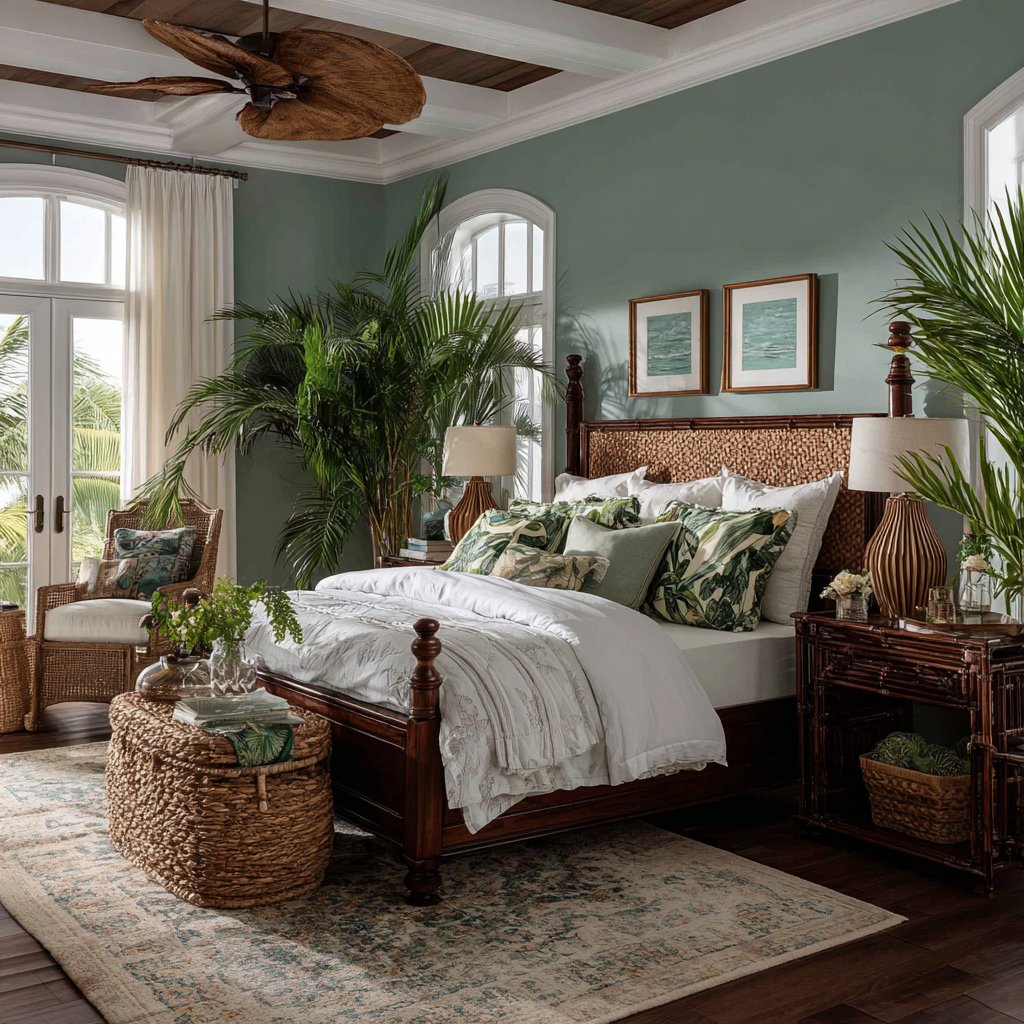
Bedding in white linen with botanical print pillows in emerald green and palm patterns creates resort atmosphere through clean, crisp foundations and lively tropical graphics. The white linen feels cool and breathable—essential qualities for tropical climates—while the botanical prints bring the lushness of tropical vegetation indoors. These patterns might feature palm fronds, monstera leaves, hibiscus flowers, or bird-of-paradise blooms, each adding vibrant life to the sleeping space.
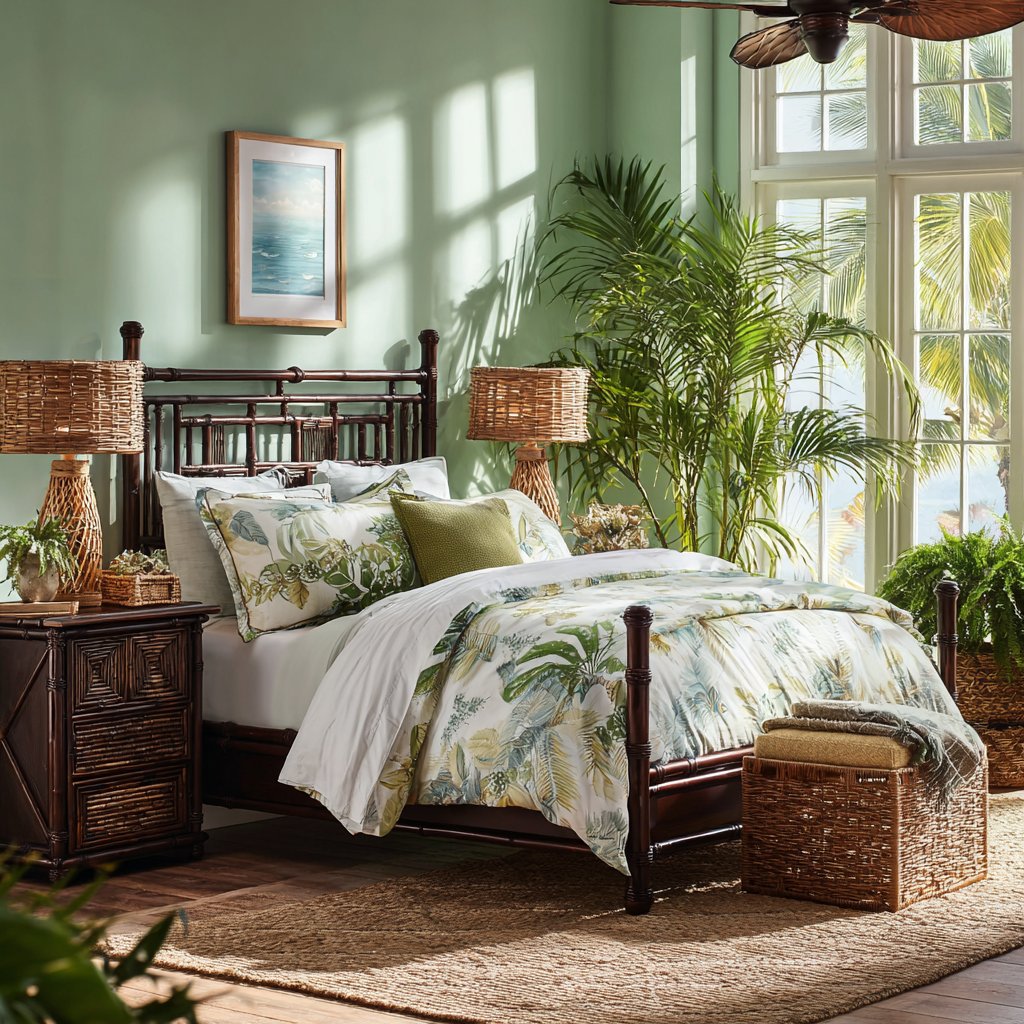
Rattan nightstands with woven texture display table lamps with palm leaf bases, continuing the natural material theme while providing functional storage and lighting. The rattan’s woven texture adds organic visual interest and handcrafted character, while its honey-toned natural color warms the space. Table lamps with palm leaf bases might feature brass or gold-finished metal leaves that add tropical motif while introducing metallic warmth.
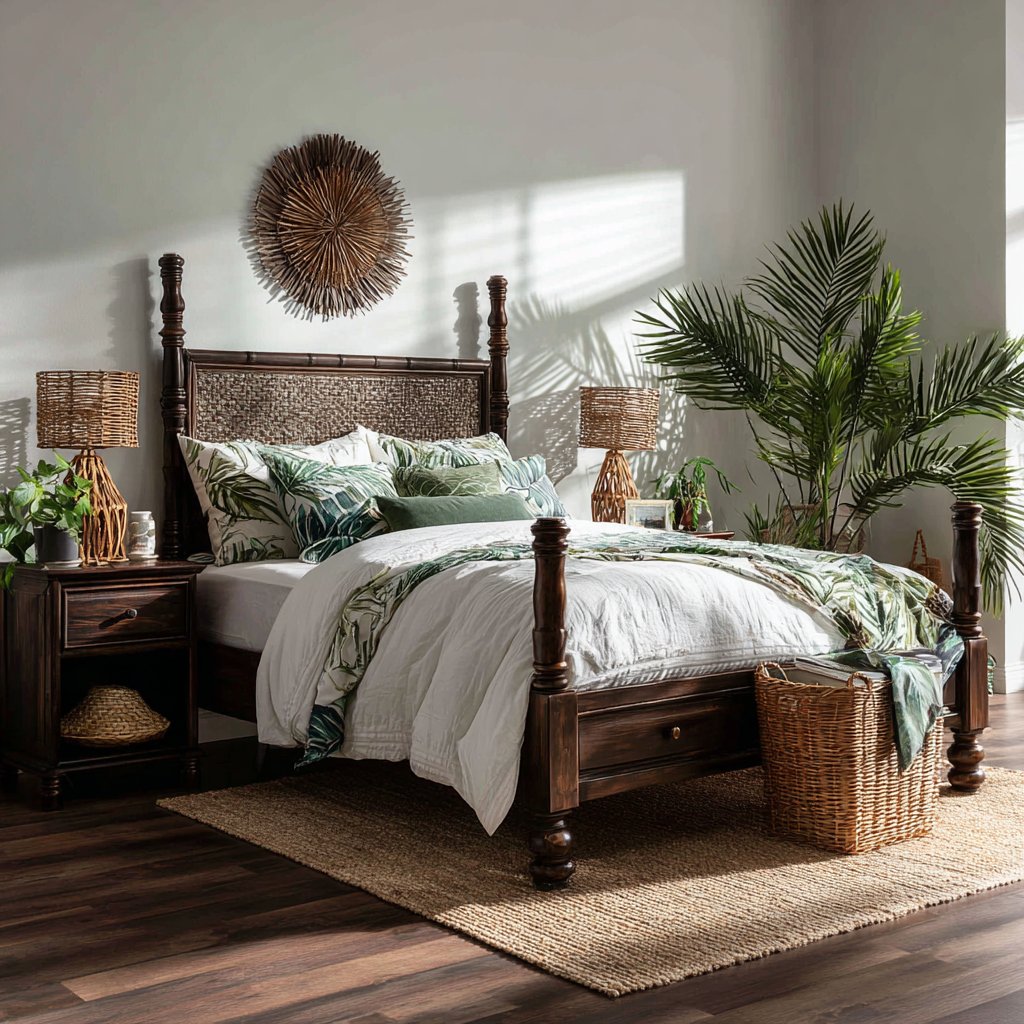
A ceiling fan with woven palm blade covers adds functional tropical detail, providing air circulation essential for tropical comfort while introducing another layer of island-inspired design. These woven blade covers transform a purely functional item into a decorative element that enhances the room’s resort character. The gentle movement and quiet operation contribute to the room’s relaxing, vacation-like atmosphere.
Key Design Tips:
- Incorporate natural materials like bamboo, rattan, wicker, and woven fibers throughout
- Use white or light neutral base colors with tropical green, coral, and turquoise accents
- Add botanical prints and palm patterns through bedding, artwork, or wallpaper
- Include ceiling fans or other air circulation for authentic tropical comfort
- Display tropical plants like palms, orchids, or bird of paradise for living greenery
- Choose lightweight, breathable fabrics like linen and cotton for bedding and curtains
Why These Queen Bedroom Designs Represent the Best in Interior Design
These twenty-three queen bedroom designs represent the pinnacle of residential interior design, each demonstrating how thoughtful attention to style, materials, functionality, and atmosphere can transform a simple bedroom into an extraordinary personal sanctuary. What makes these designs particularly effective is their diversity—they prove that excellent design isn’t about following a single aesthetic but about understanding your personal needs, lifestyle, and visual preferences, then creating a space that authentically reflects those elements.
The modern platform minimalism appeals to those who find peace in simplicity and appreciate how eliminating visual clutter creates mental calm. This approach particularly resonates with individuals living in urban environments or those who naturally gravitate toward contemporary aesthetics. The floating nightstands and integrated lighting demonstrate how modern design solves practical problems elegantly, while the emphasis on natural light and neutral palettes creates versatility that allows the room to evolve with changing tastes without requiring complete redesigns.
The romantic farmhouse and French country designs cater to individuals who value tradition, craftsmanship, and the warm patina that comes with age or the appearance of age. These styles celebrate imperfection and collected-over-time aesthetics, making them ideal for people who inherit family pieces or enjoy antiquing and vintage shopping. The distressed finishes and ornate details require confidence to embrace fully, but reward with spaces that feel personally meaningful and rich with character.
Scandinavian and Japanese minimalist designs share philosophical approaches to living simply and intentionally, though they express these values through different cultural lenses. Both styles appeal to individuals seeking calm, uncluttered environments that support mental clarity and wellbeing. The emphasis on natural materials, quality over quantity, and connection to nature makes these approaches particularly relevant for contemporary life where digital overwhelm and constant stimulation create hunger for peaceful retreats.
The industrial loft and mid-century modern designs appeal to urban dwellers and design history enthusiasts who appreciate honest materials, exposed structural elements, and the marriage of form and function. These styles work particularly well in converted industrial spaces or mid-century homes but can be adapted to any setting through careful furniture selection and material choices. The emphasis on quality construction and timeless design principles ensures these rooms age well rather than looking dated as trends shift.
Coastal, Mediterranean, and Southwestern designs connect bedrooms to specific geographical regions and climates, making them ideal for homes in these areas or for individuals who vacation in these locations and want to bring that relaxed, sun-soaked feeling home. These styles demonstrate how regional design traditions develop from climate, available materials, and cultural influences, creating aesthetics that feel authentic and connected to place.
The hotel-style luxury, art deco glamour, and glam bedroom designs cater to individuals who embrace elegance, sophistication, and a bit of drama in their personal spaces. These approaches require investment in quality materials and attention to detail but create rooms that feel genuinely special and luxurious. The emphasis on symmetry, layered lighting, and premium materials demonstrates how professional design principles can be applied residentially to create elevated, magazine-worthy spaces.
The bohemian and eclectic designs celebrate personal expression and confident style mixing, making them perfect for creative individuals, world travelers, and anyone who has collected meaningful pieces over time. These approaches require the most design confidence since they break traditional rules about matching and cohesion, but when executed well, create deeply personal spaces that tell rich stories about their inhabitants.
The small-space solutions demonstrate that thoughtful design can make any room—regardless of size—both beautiful and functional. The emphasis on storage beds, vertical storage, and multipurpose furniture provides practical strategies for urban apartments, starter homes, or any situation where space is at a premium. These ideas prove that small doesn’t have to mean compromised or cluttered when design is approached strategically.
The modern farmhouse fusion represents one of contemporary design’s most popular movements, successfully bridging rural and urban sensibilities, traditional and contemporary elements. This style’s broad appeal comes from its versatility and accessibility—it works in renovated barns and brand-new subdivisions, embraces both antique finds and IKEA purchases, and creates spaces that feel both on-trend and timeless.
The all-white retreat and high-tech contemporary designs represent opposite ends of the aesthetic spectrum—one embracing timeless serenity through material restraint, the other showcasing cutting-edge technology and contemporary innovation. Both approaches create spaces that feel distinctly modern but serve different personalities and priorities, demonstrating that contemporary design encompasses diverse expressions.
What unites all these exceptional designs is their commitment to creating bedrooms that serve their inhabitants’ genuine needs while expressing authentic style. The best bedroom design isn’t about following the latest trends or recreating magazine spreads, but about understanding how you actually live in your space, what makes you feel comfortable and inspired, and what aesthetic language feels true to your personality. These designs succeed because they demonstrate various approaches to achieving this alignment between space, function, and personal expression, providing templates and inspiration that readers can adapt to their unique situations.
The keyword “queen bedroom ideas” encompasses this rich diversity because the queen bed itself—neither too large nor too small—provides an ideal foundation for experimenting with various design approaches. Its proportions work in master suites, guest rooms, and studio apartments, making it versatile across living situations. The designs presented here show how the same bed size can anchor radically different aesthetics, proving that limitations (in this case, a specific bed size) can actually enhance creativity by providing constraints within which to work.
These designs also demonstrate essential interior design principles that apply regardless of specific style: the importance of layering textures, the power of appropriate lighting, the value of quality materials, the necessity of functional storage, and the impact of thoughtful color selection. Whether you’re drawn to industrial metal and concrete or French country florals, understanding these underlying principles helps you execute your chosen style successfully and avoid common design pitfalls that lead to spaces that look incomplete or feel uncomfortable.
Conclusion
Creating the perfect queen bedroom is a deeply personal journey that combines practical considerations with aesthetic preferences, functional needs with style aspirations. The twenty-three designs explored in this comprehensive guide demonstrate that there’s no single “right” way to design a bedroom—instead, there are countless beautiful possibilities waiting to be tailored to your unique situation. From the serene simplicity of Scandinavian minimalism to the bold drama of art deco glamour, from space-saving strategies for compact rooms to lavish hotel-inspired luxury, each approach offers valuable lessons and inspiration.
The most successful bedroom designs share common characteristics regardless of their specific style: they create spaces that feel personally meaningful rather than impersonal showrooms, they balance beauty with functionality, they use materials and colors intentionally, and they support the room’s primary purpose of providing restful, restorative sleep. As you consider which of these queen bedroom ideas resonates most strongly with you, think beyond surface aesthetics to consider how you actually use your bedroom, what activities happen there besides sleeping, and what atmosphere makes you feel most comfortable and inspired.
Don’t be afraid to experiment, mix elements from different styles, or evolve your bedroom design over time as your tastes and needs change. The beauty of interior design lies in its flexibility and personal expression—your bedroom should reflect who you are right now while allowing room for growth and change. Whether you implement a complete room redesign or incorporate just a few key elements from these ideas, approaching your bedroom with intention and creativity will transform it from simply a place to sleep into a true personal sanctuary that nurtures your wellbeing every single day.
Start with one element that excites you—perhaps a new upholstered headboard, a bold wall color, a statement light fixture, or simply new bedding in your favorite style—and build from there. Remember that great design is ultimately about creating spaces where you love to spend time, and your queen bedroom, as one of your home’s most personal and private spaces, deserves that thoughtful attention.
