
In the realm of interior design, few pieces of furniture combine functionality and elegance quite like a well-appointed dressing table. Whether you’re preparing for your day in a sun-drenched bedroom or creating a dedicated beauty sanctuary in a compact apartment, the right vanity setup can transform your daily routine into a luxurious ritual. Small dressing tables, in particular, have emerged as ingenious solutions for modern living, where space is often at a premium but style remains non-negotiable. These compact powerhouses prove that limited square footage doesn’t mean compromising on sophistication or practicality.
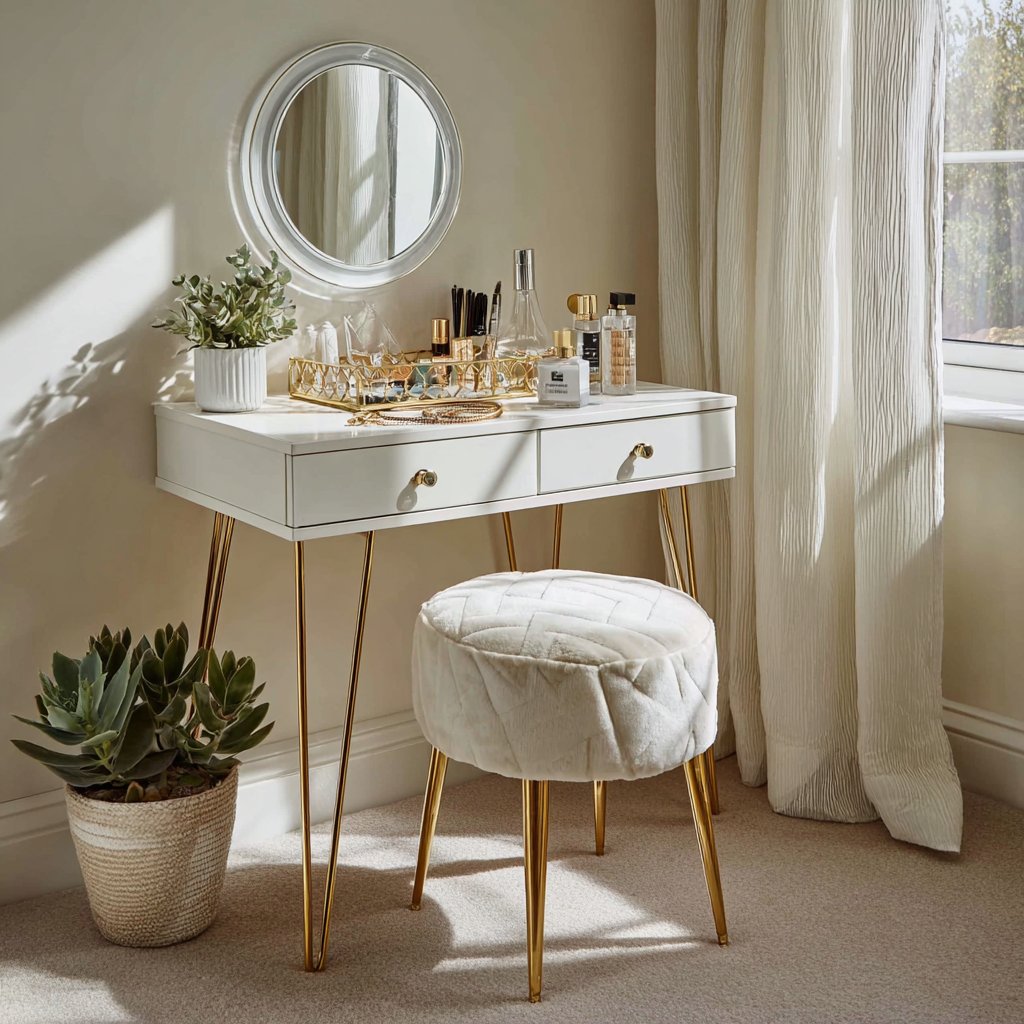
The beauty of small dressing table ideas lies in their versatility and adaptability to various design aesthetics and spatial constraints. From minimalist Scandinavian pieces that embrace the “less is more” philosophy to ornate Victorian-inspired vanities that transport you to another era, there’s a perfect solution for every personality and interior style. These carefully curated spaces serve not just as functional areas for grooming and makeup application, but as personal retreats that reflect individual taste and lifestyle preferences. The key to success lies in understanding how to maximize every inch while maintaining visual appeal and ensuring the space feels intentional rather than cramped.
Throughout this comprehensive guide, we’ll explore twenty-five distinctive small dressing table concepts that demonstrate the remarkable range of possibilities available to homeowners and design enthusiasts. Each design approach offers unique insights into materials, spatial arrangements, lighting solutions, and styling techniques that can be adapted to your specific needs and preferences. Whether you’re drawn to industrial aesthetics with raw materials and exposed elements, coastal cottage charm with weathered finishes, or contemporary glamour with mirrored surfaces and metallic accents, you’ll discover inspiring ideas that prove small spaces can deliver maximum impact. Let’s embark on this journey through innovative vanity solutions that will help you create a beautiful, functional dressing area regardless of your space limitations.
1. Minimalist Floating Wall-Mounted Elegance
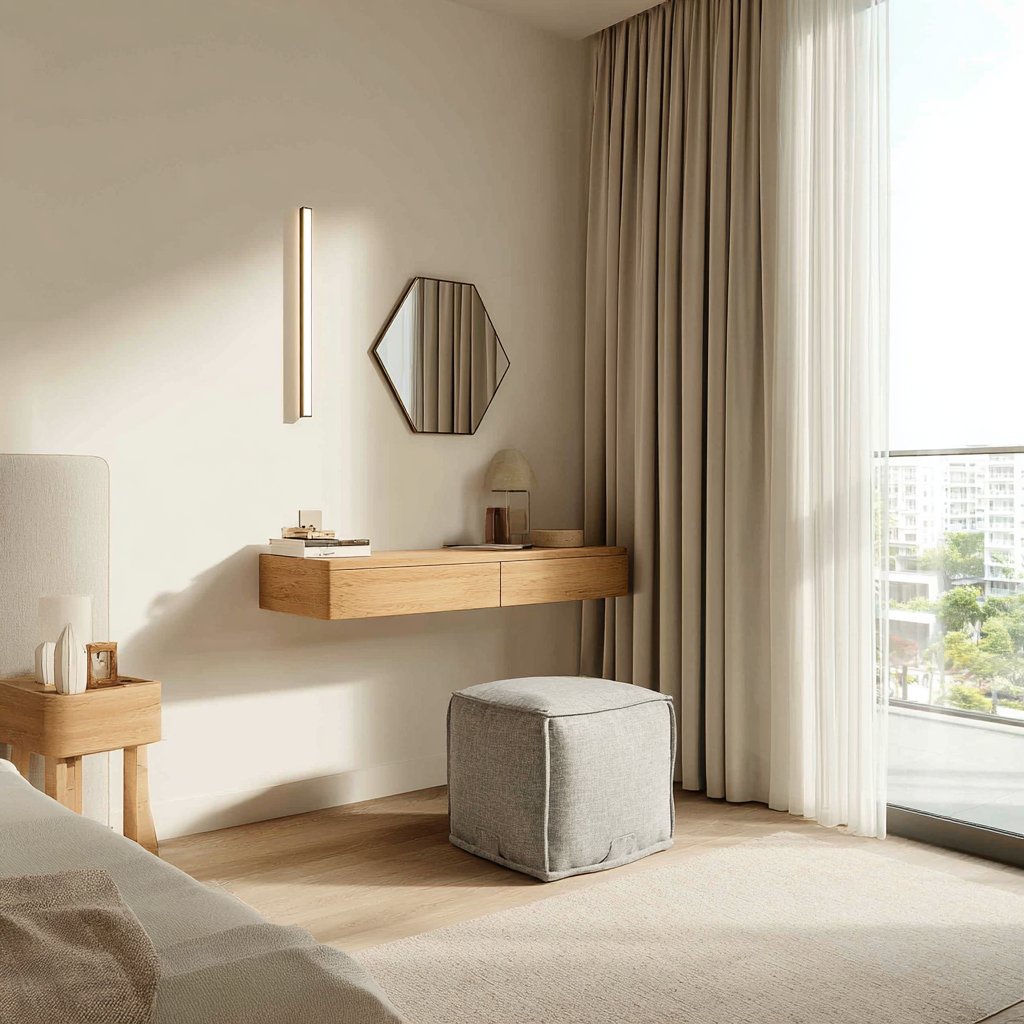
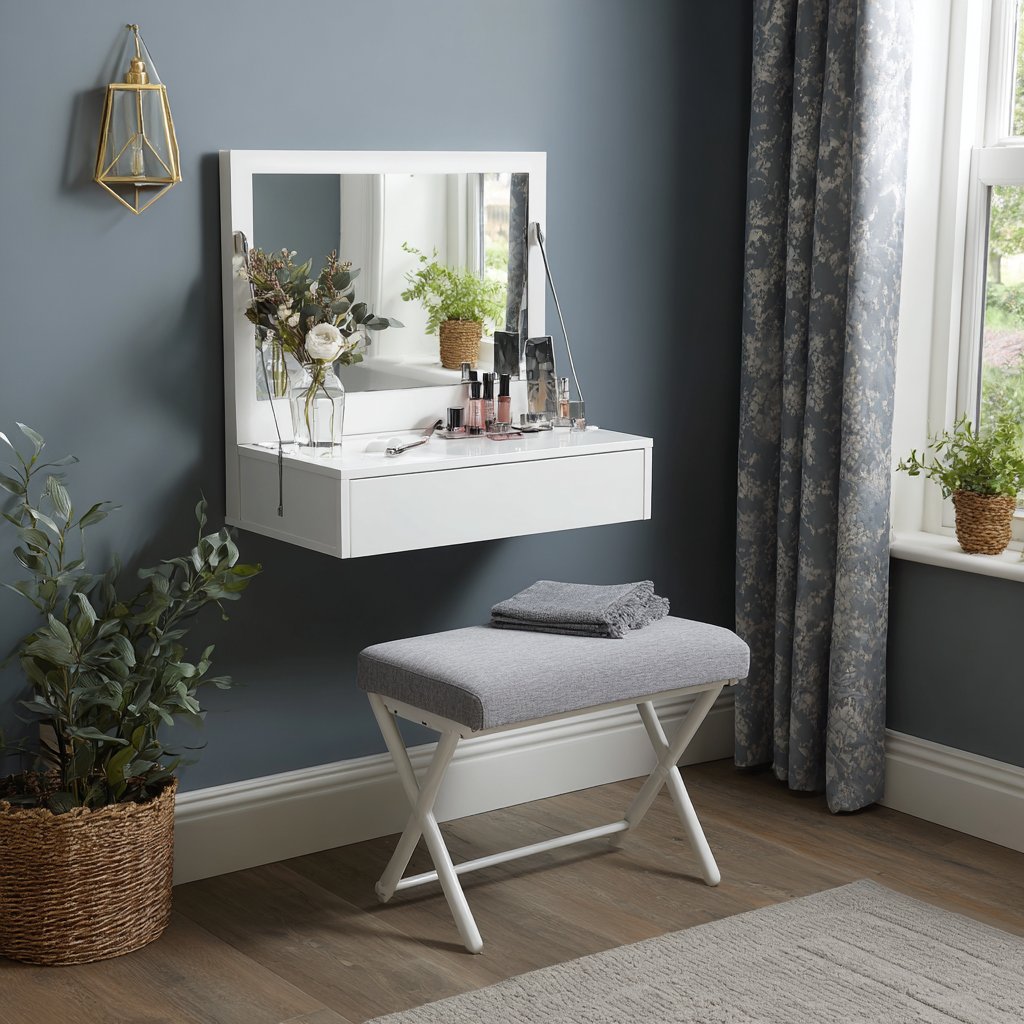
The floating wall-mounted vanity represents the pinnacle of space-efficient design, offering a clean, contemporary solution that literally creates breathing room in your bedroom. Crafted from natural oak with its distinctive grain patterns visible through a clear protective finish, this design eliminates bulky legs and bases, allowing floor space to flow uninterrupted beneath. The single drawer, constructed with dovetail joints for durability, provides surprisingly ample storage for essential cosmetics and grooming tools while maintaining the streamlined aesthetic. A hexagonal mirror positioned at precisely the right height creates visual interest through its geometric shape while serving its practical purpose flawlessly.
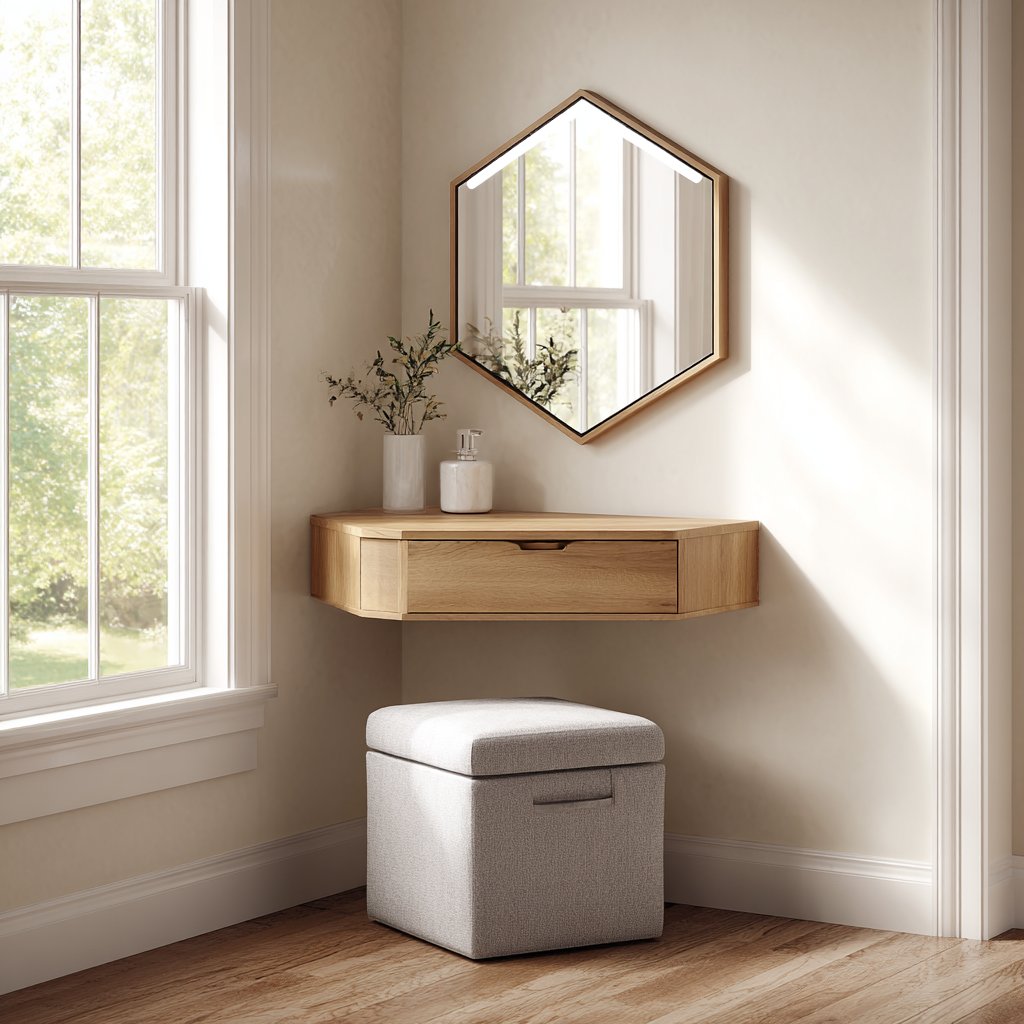
The wall-mounted LED light strip installed above the mirror provides shadow-free illumination that mimics natural daylight, essential for accurate makeup application and color matching. This lighting solution eliminates the need for table lamps or bulky fixtures, further preserving the minimalist integrity of the design. The cushioned folding stool in soft grey linen offers comfortable seating that can be easily tucked away or relocated when not in use, maximizing flexibility in tight quarters. Natural daylight filtering through nearby windows complements the artificial lighting, creating a balanced environment throughout the day.
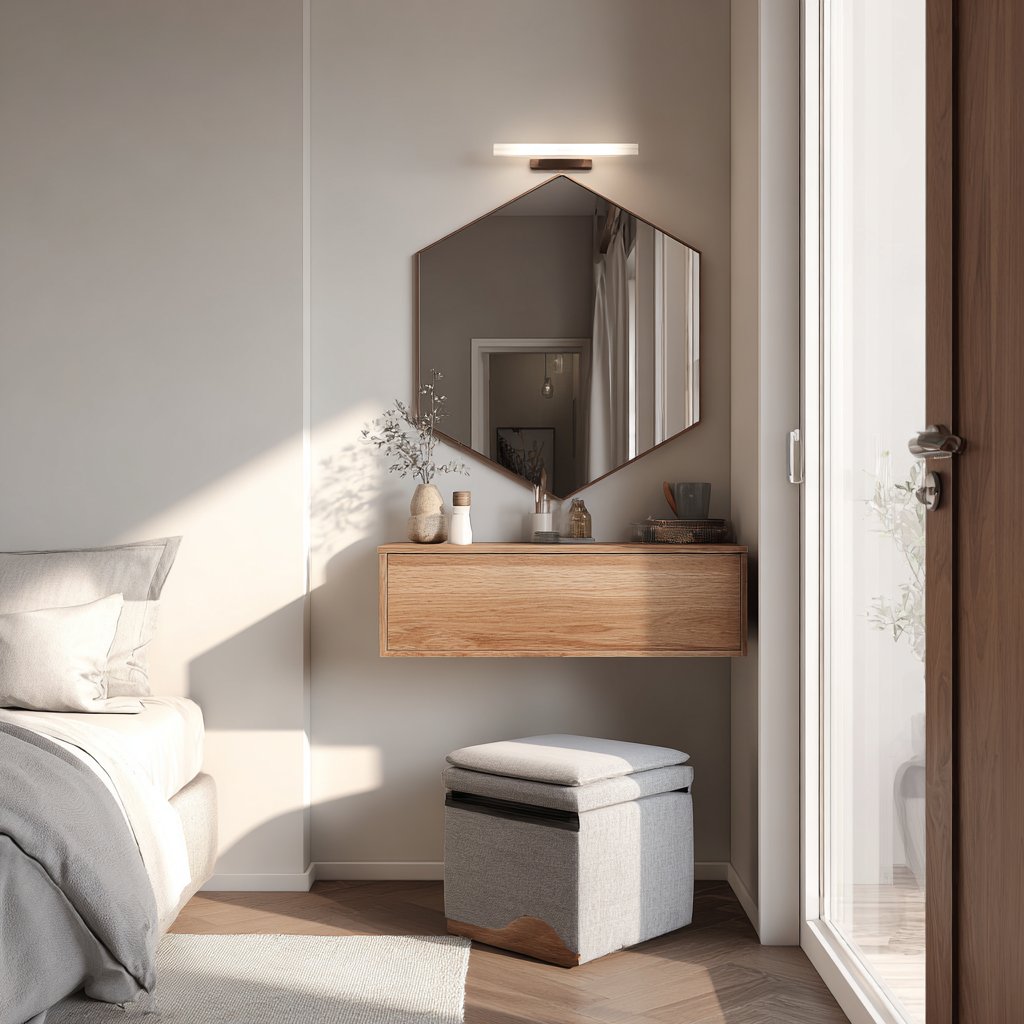
This Scandinavian-inspired approach to small dressing table design emphasizes functionality without sacrificing warmth or character. The natural wood brings organic texture and visual interest to the space, while the neutral color palette ensures versatility and longevity beyond passing trends. The clean lines and uncluttered surfaces create a calming atmosphere that transforms the morning routine into a meditative practice rather than a rushed necessity. Professional interior photography captures how soft, diffused lighting emphasizes the wood grain and creates gentle shadows that add depth to the minimal composition.
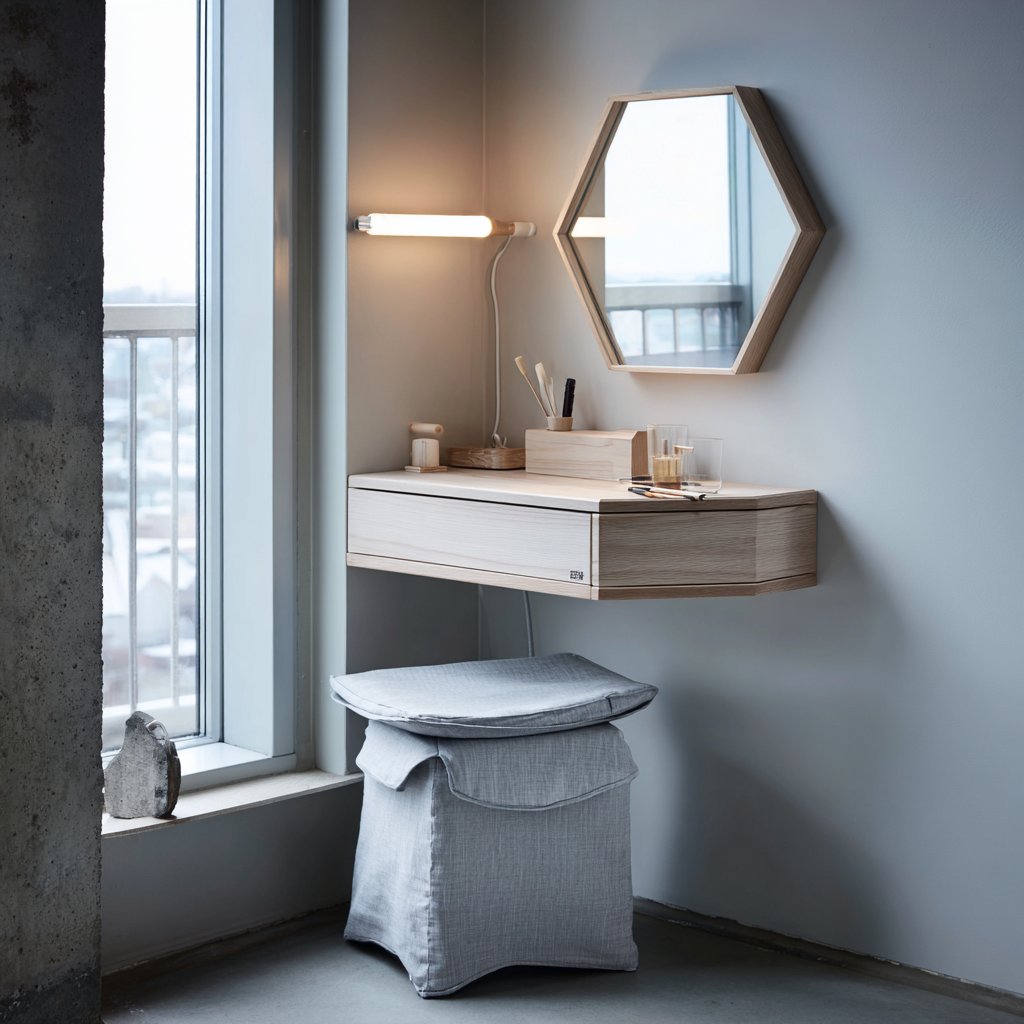
Key Design Tips: Mount the vanity at a comfortable height considering your seated position, typically 28-30 inches from the floor. Choose LED strips with adjustable color temperature to customize lighting for different times of day. Invest in quality drawer organizers to maximize the limited storage space. Position the setup near a window to take advantage of natural light while ensuring electrical outlets are accessible for styling tools. Select a folding stool that complements your bedroom aesthetic and can serve multiple purposes throughout your home.
2. Vintage-Inspired Romantic Charm
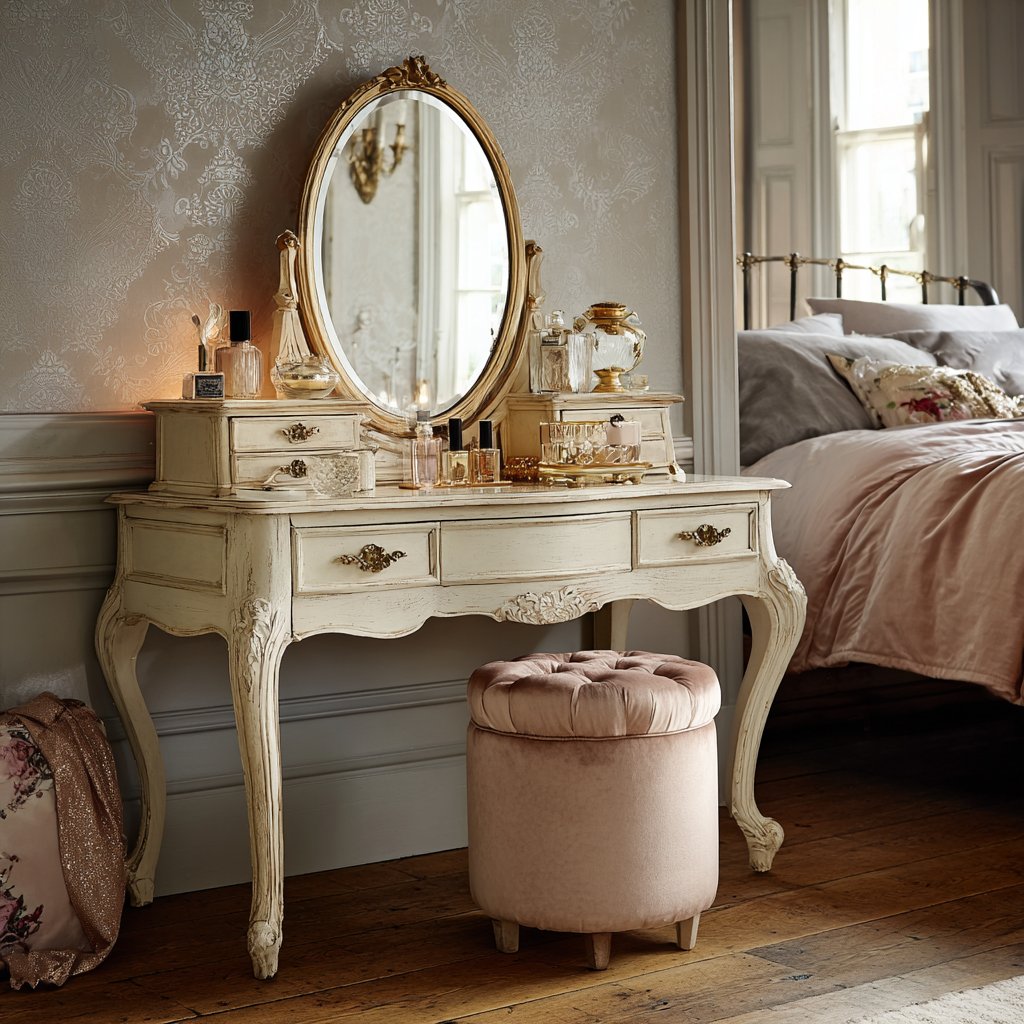
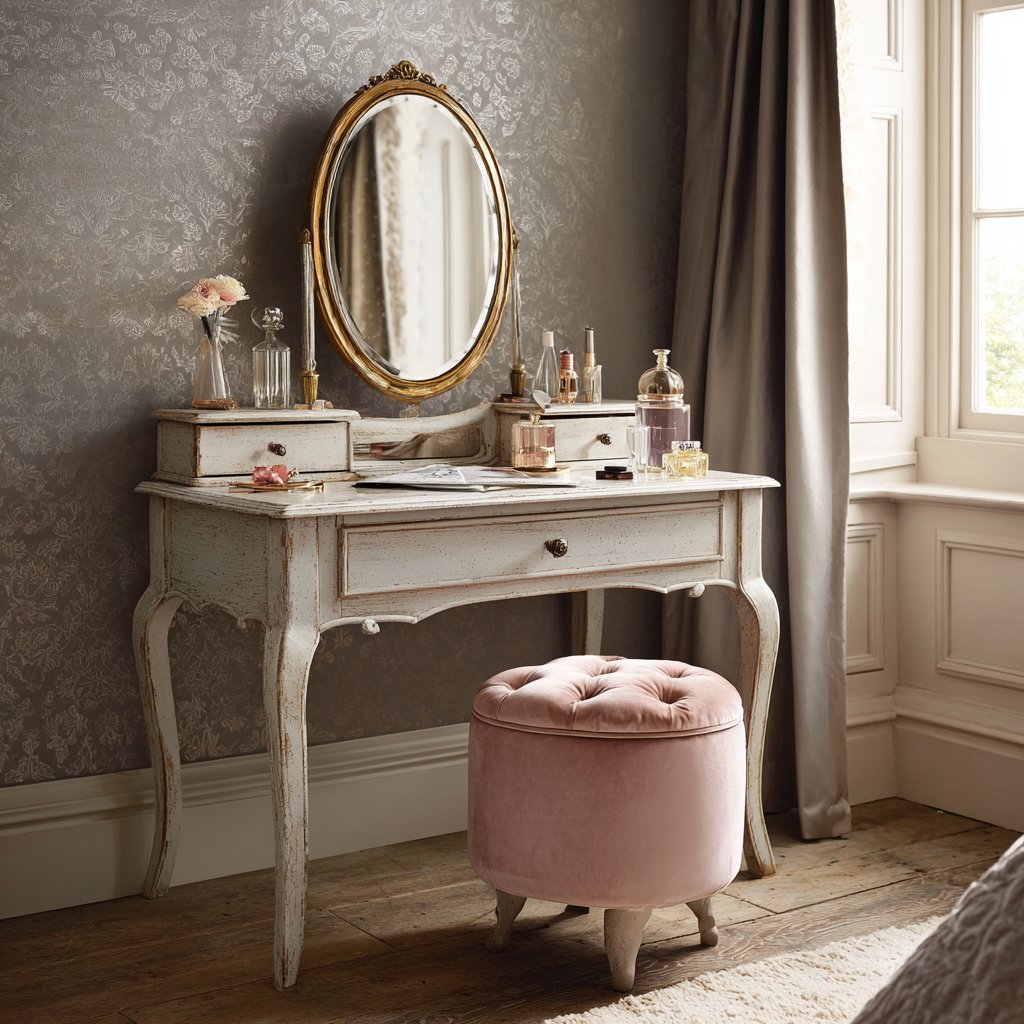
Transport yourself to a bygone era with a vintage-inspired small dressing table that captures the romantic essence of early 20th-century design. The distressed white painted finish on solid wood reveals layers of history through intentional wear at the edges, creating an authentic aged appearance that mass-produced furniture simply cannot replicate. Ornate curved legs with delicate carvings showcase the craftsmanship of traditional furniture-making, while the compact 70-centimeter width ensures the piece fits comfortably in modest bedrooms without overwhelming the space. The oval beveled mirror with its delicate gold frame serves as both a functional element and a decorative focal point that catches and reflects light throughout the room.
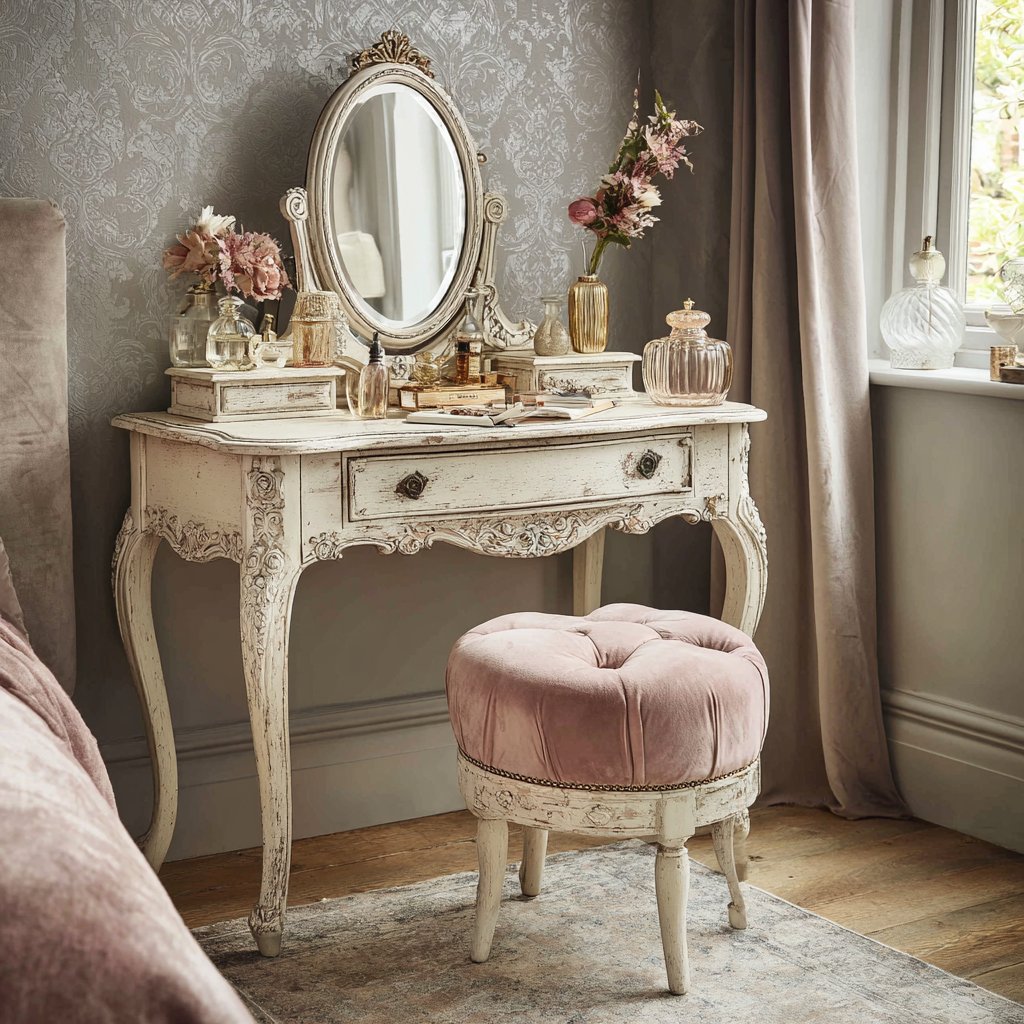
Styling this vintage vanity requires a thoughtful curation of accessories that enhance rather than compete with the inherent beauty of the piece itself. Antique perfume bottles with cut-glass stoppers and ornate metal caps tell stories of glamorous preparations from decades past, while a small jewelry box with mother-of-pearl inlay provides secure storage for treasured pieces. The tufted velvet stool in blush pink introduces a soft, luxurious seating option that invites you to linger at your vanity, transforming daily grooming into an indulgent experience. Against a soft grey bedroom wall with subtle damask wallpaper, the white vanity creates a beautiful contrast that highlights its sculptural qualities.
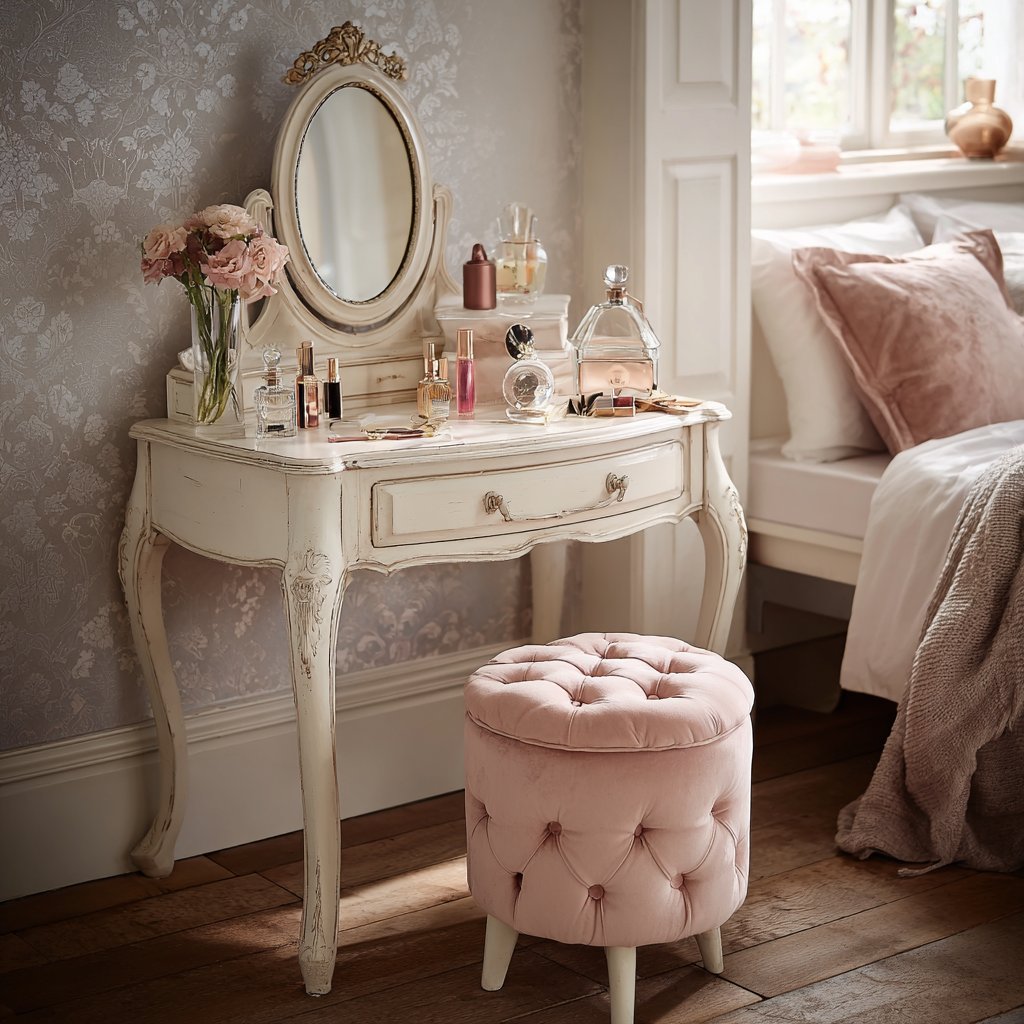
The beauty of this design lies in its ability to blend seamlessly with various interior styles, from shabby chic to French country to traditional elegance. The distressed finish means new marks and wear become part of the piece’s evolving character rather than damage to be repaired, making it particularly practical for daily use. Professional interior photography captures how natural light from nearby windows plays across the curved surfaces, creating dynamic shadows that emphasize the three-dimensional carved details. The overall effect is one of timeless femininity that never feels overly precious or untouchable.
Key Design Tips: Source authentic vintage perfume bottles from antique stores or estate sales to add genuine character to your styling. Apply furniture wax to the painted finish to protect it while maintaining the matte, aged appearance. Position the vanity where natural morning light will illuminate your reflection without creating harsh shadows. Choose drawer liners with vintage-inspired patterns to extend the aesthetic inside storage spaces. Consider adding a small vintage tray to corral daily-use items and maintain organization on the decorative surface.
3. Industrial Loft Modern Aesthetic
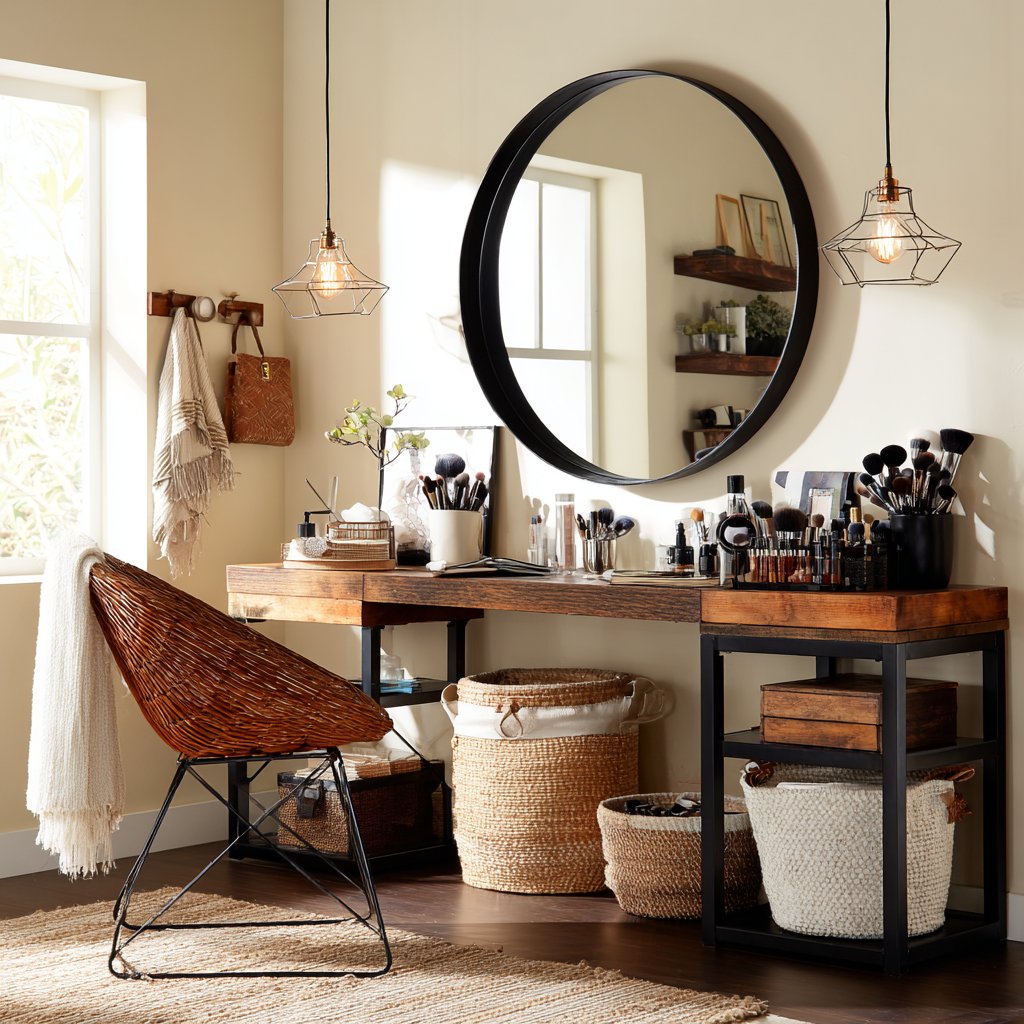
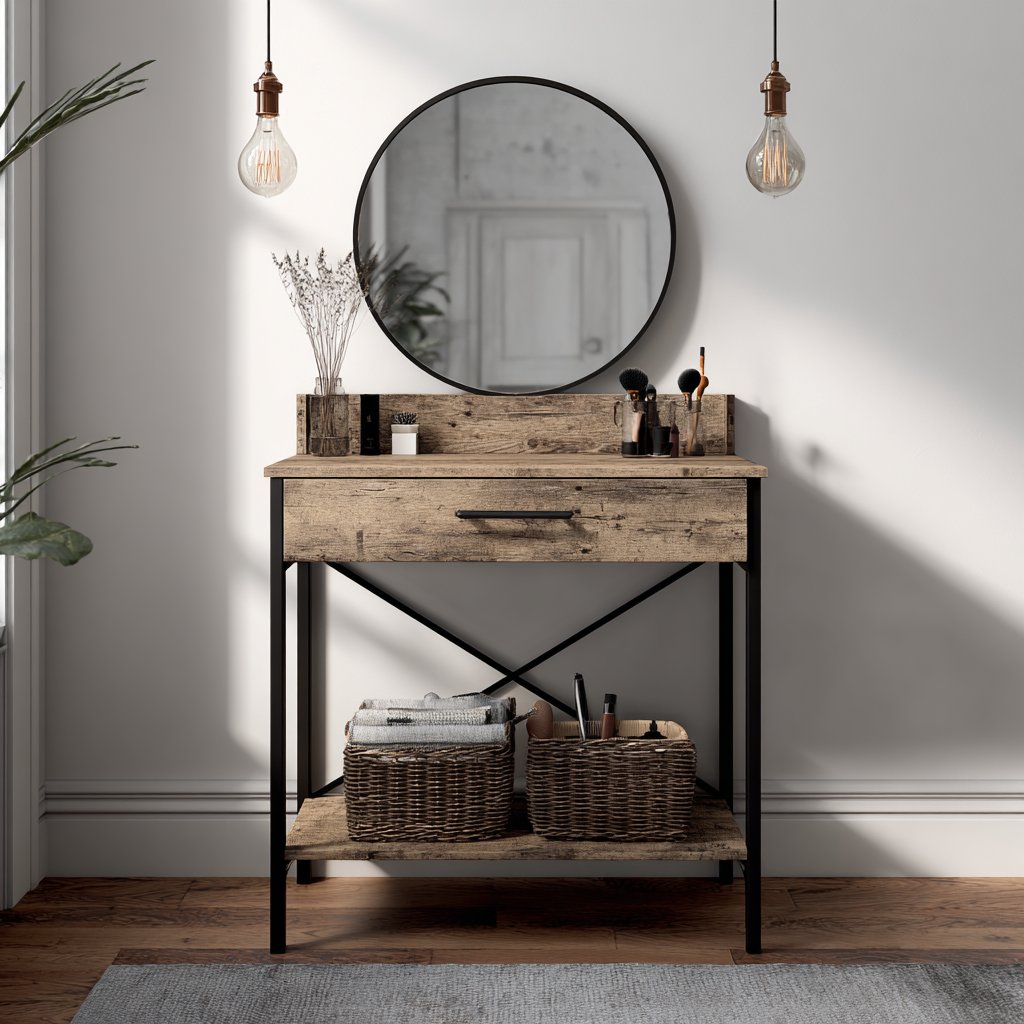
Embrace the raw, urban appeal of industrial design with a small dressing table that celebrates honest materials and utilitarian beauty. Constructed from reclaimed wood planks salvaged from old buildings or barns, the vanity top showcases the authentic character of aged timber—complete with nail holes, saw marks, and natural color variations that tell the story of the wood’s previous life. The matte black metal frame provides structural support while maintaining visual lightness through its slender profile, exemplifying the industrial principle of exposed structural elements as design features. A lower shelf crafted from the same reclaimed wood offers practical storage for woven baskets containing cosmetics, hair tools, and grooming essentials, keeping daily necessities accessible yet organized.
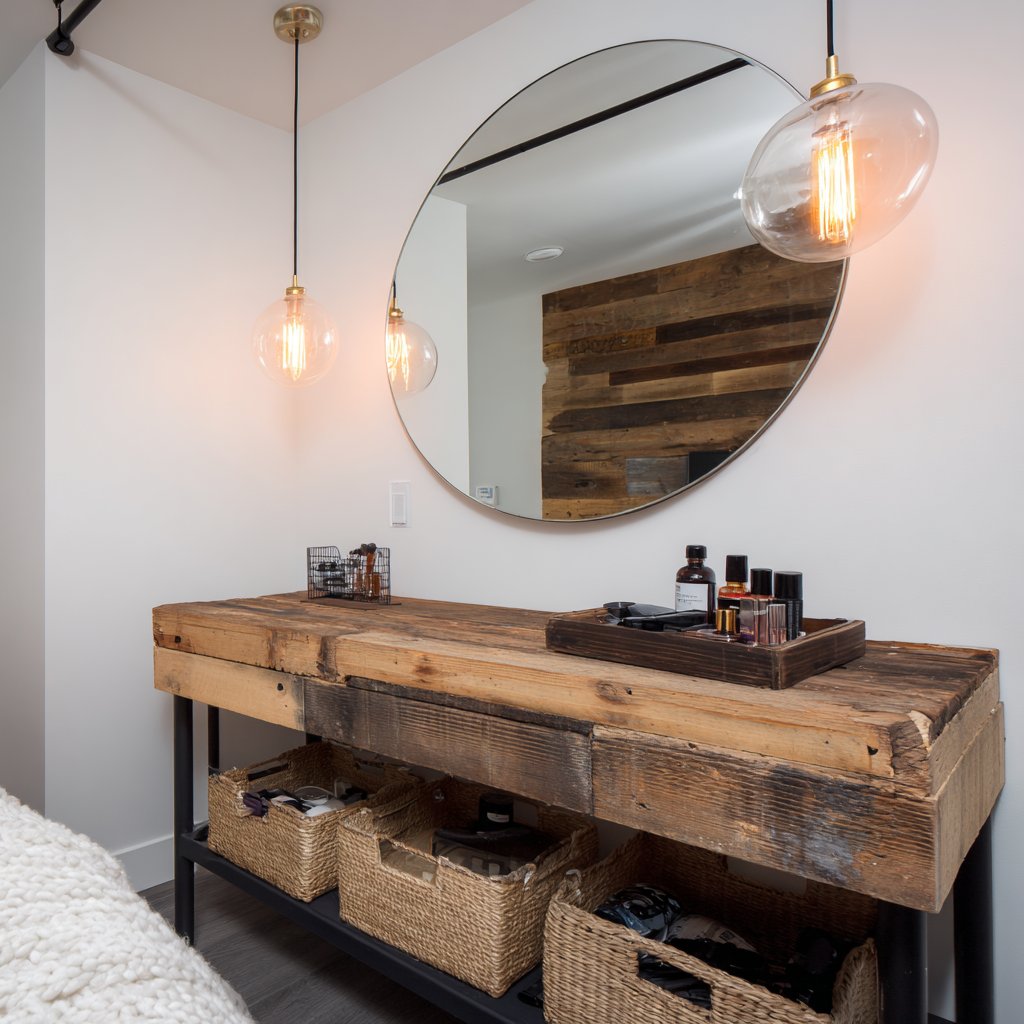
The large round mirror with a thin black frame leans casually against the wall rather than being permanently mounted, adding an element of artful spontaneity to the otherwise structured composition. This leaning approach also allows for easy adjustment and repositioning as needs change. Edison bulb pendant lights suspended on either side of the mirror provide warm, ambient lighting that softens the industrial edge while maintaining the aesthetic’s authentic character. The exposed filaments visible through the clear glass bulbs create visual interest even when not illuminated, serving as sculptural elements in their own right.
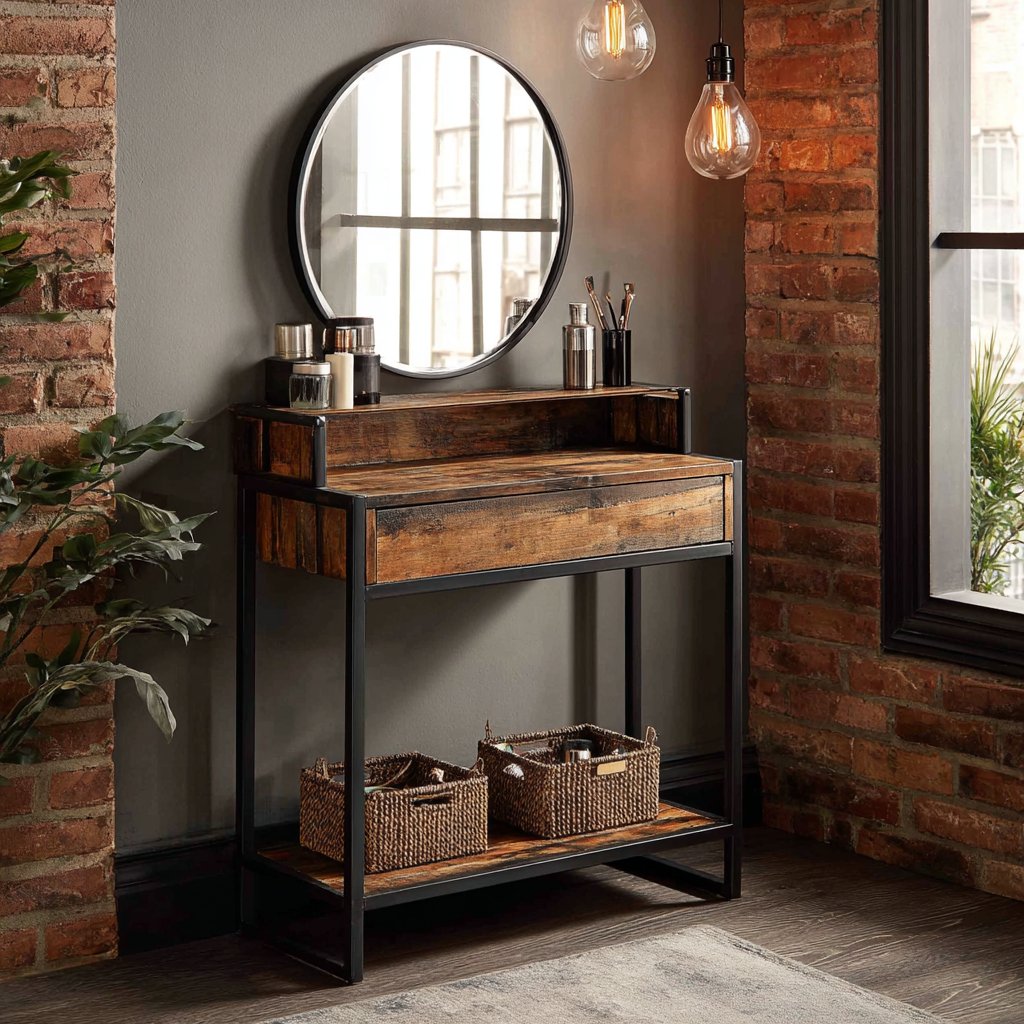
This urban loft-inspired design works exceptionally well in converted warehouse spaces, modern apartments, or any bedroom seeking an edgy, contemporary vibe with historical references. The combination of warm wood tones and cool black metal creates visual balance, while the honest materials add textural richness that prevents the space from feeling cold or uninviting. Wide-angle interior photography captures how this compact vanity fits naturally into a corner, maximizing often-underutilized space while creating a dedicated grooming zone. The practical organization achieved through the lower shelf demonstrates how industrial design prioritizes function alongside aesthetics.
Key Design Tips: Seal reclaimed wood with a clear matte finish to protect against moisture and cosmetic spills while preserving its natural appearance. Choose Edison bulbs with appropriate wattage for task lighting, typically 40-60 watts for adequate illumination. Use wire or canvas baskets on the lower shelf to maintain the industrial aesthetic while organizing smaller items. Position the vanity near existing electrical outlets to avoid visible extension cords that would disrupt the clean lines. Consider adding vintage industrial accessories like metal containers or apothecary jars to enhance the cohesive look.
4. Contemporary Corner Space Maximizer
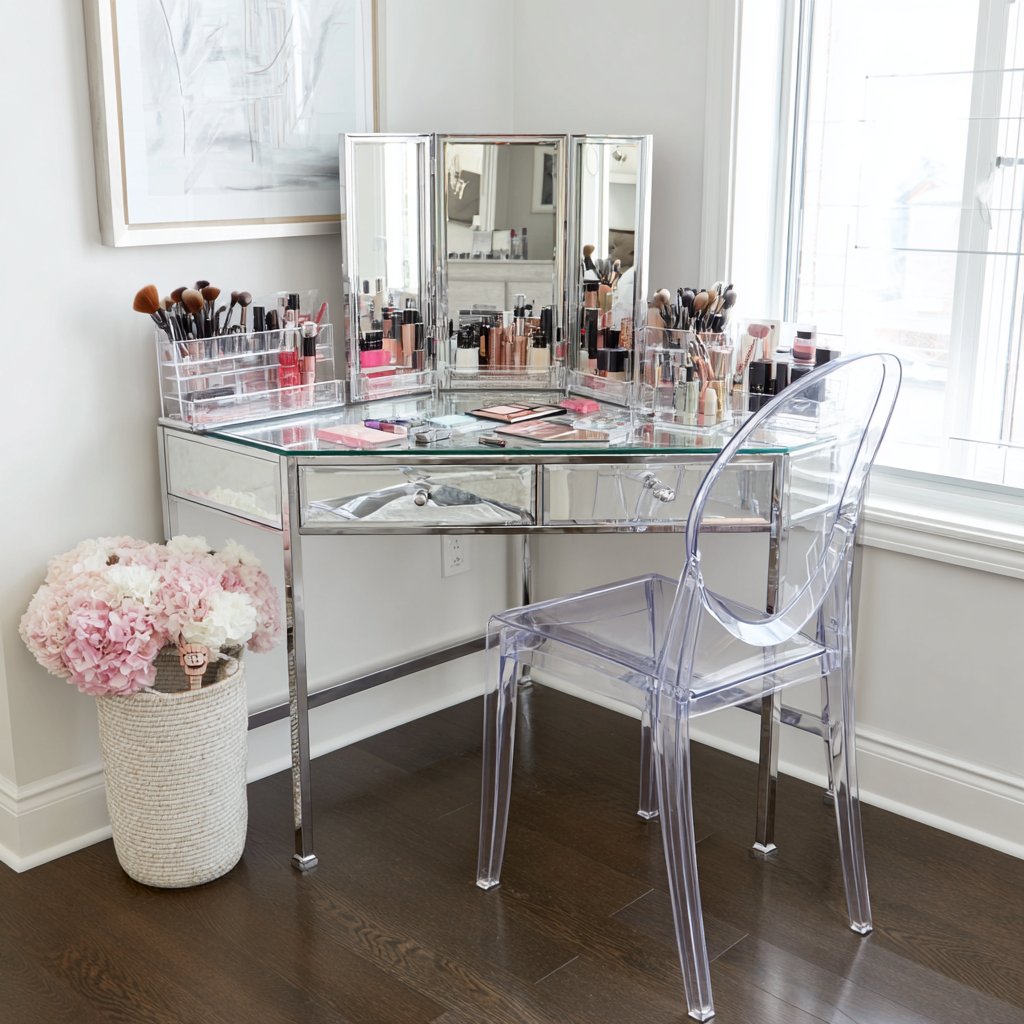
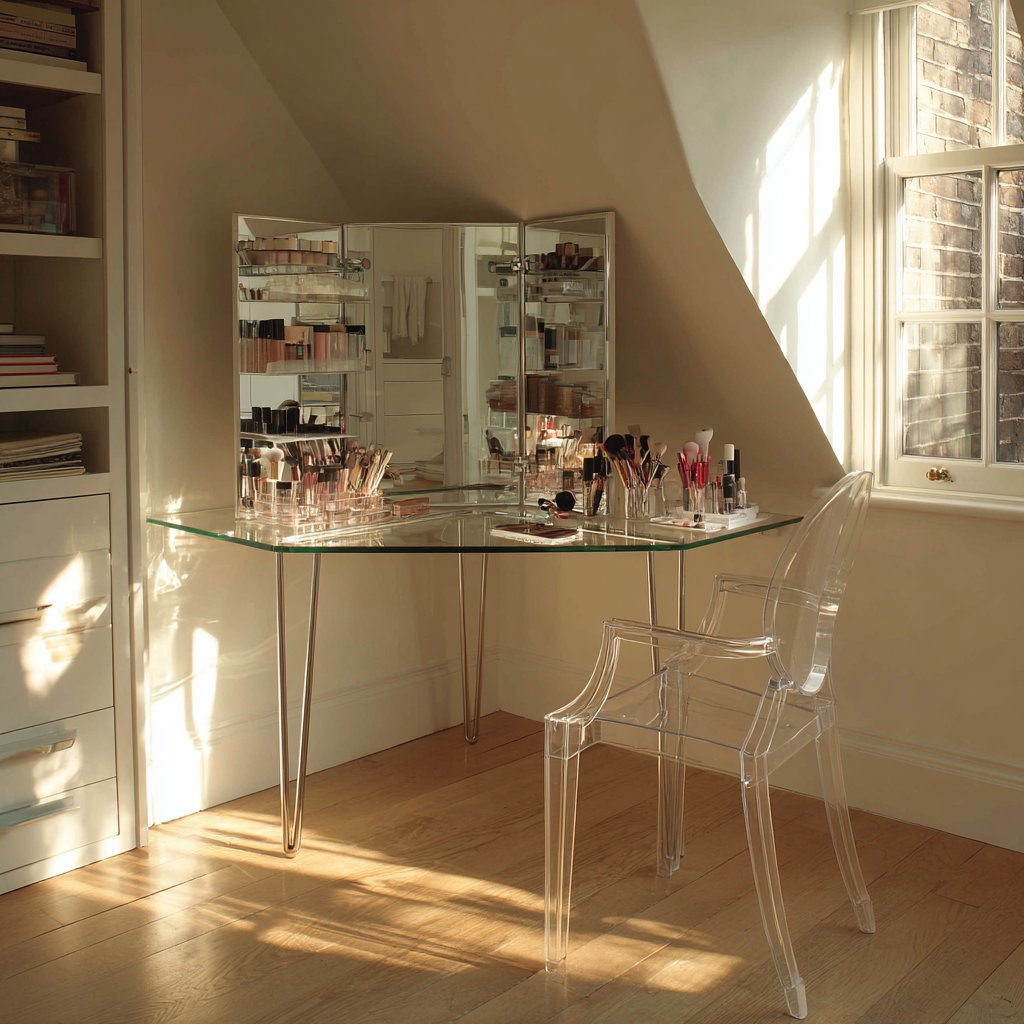
Innovation meets practicality in this corner vanity unit that transforms an awkward, often-wasted triangular space into a functional beauty station. The triangular glass top supported by chrome legs creates a striking contemporary aesthetic while maintaining visual lightness that prevents the corner from feeling closed-in or cramped. This transparent approach allows light to pass through the vanity, making the room feel more spacious and airy—a crucial consideration in compact bedrooms where every design decision impacts the overall sense of openness. The tri-fold mirror with adjustable panels provides multiple viewing angles, allowing you to see your profile and the back of your hairstyles without awkward maneuvering or additional hand mirrors.
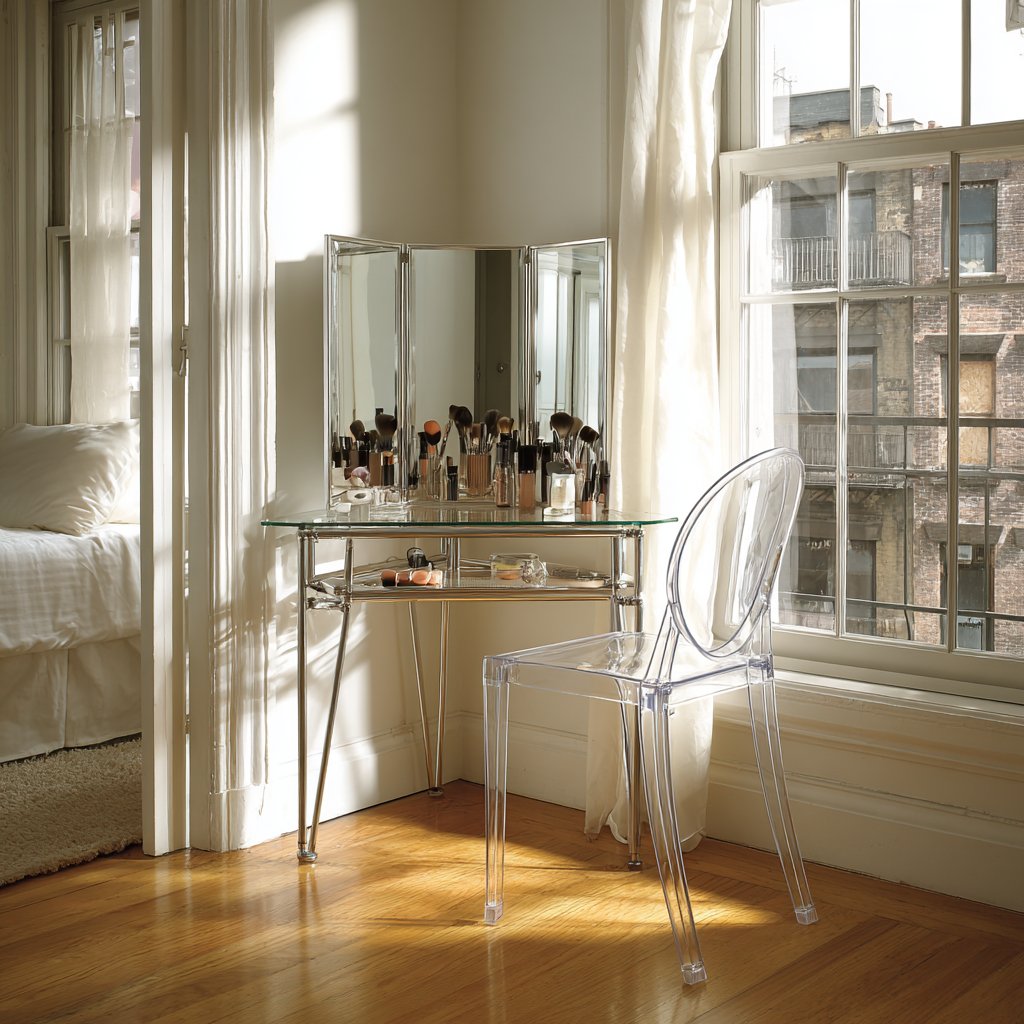
Acrylic organizers arranged on the transparent surface display makeup and brushes in an orderly fashion, turning everyday beauty products into a curated display that celebrates rather than hides your collection. The clear containers maintain the see-through aesthetic while providing practical compartmentalization for different product categories. A clear acrylic ghost chair completes the vanity setup, its transparent construction ensuring it virtually disappears when not in use, further enhancing the spatial illusion that makes this design so effective in small rooms. Professional interior photography showcases how bright natural lighting passes through the various transparent elements, creating interesting reflections and refractions that add visual complexity.
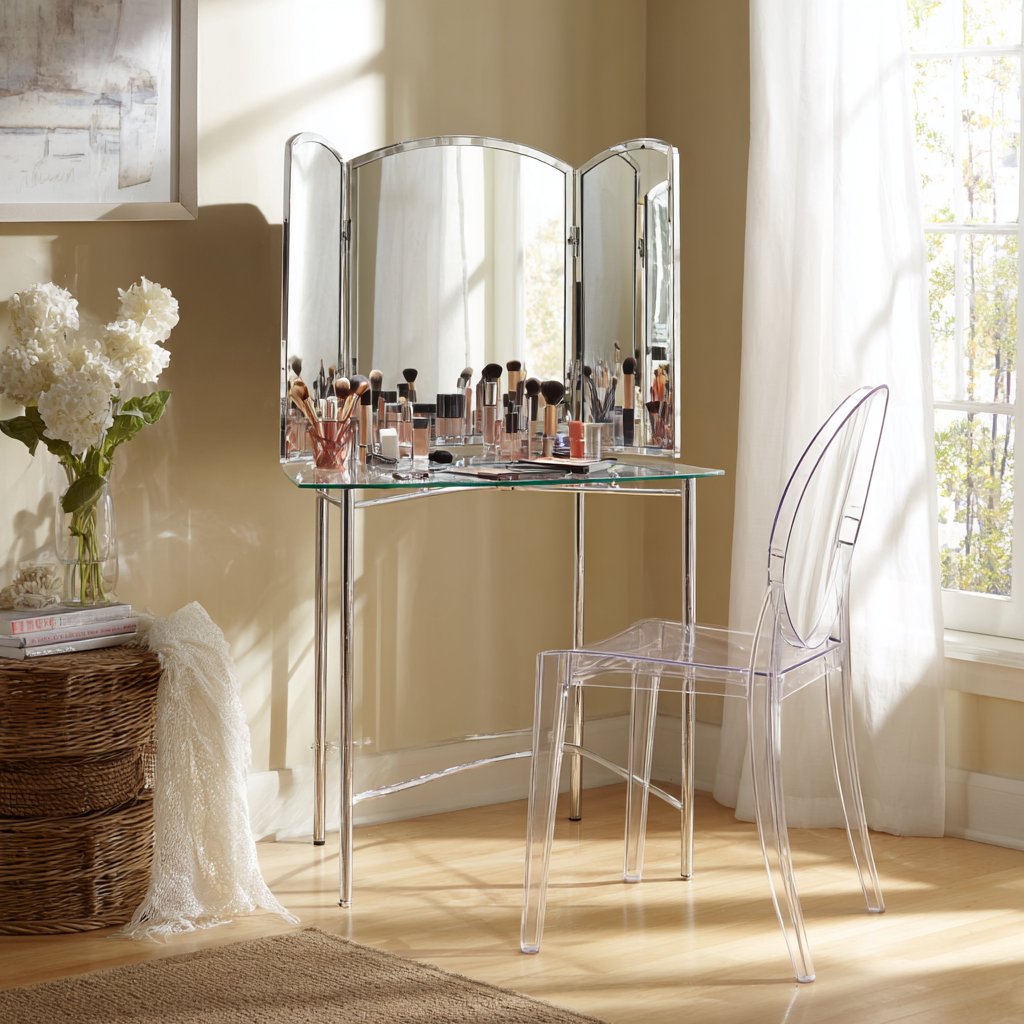
This contemporary solution demonstrates exceptional spatial intelligence, proving that challenging room configurations can become design opportunities rather than limitations. The corner placement naturally creates privacy and separation from the main bedroom traffic flow, establishing a dedicated zone for personal grooming without requiring walls or partitions. The chrome and glass materials require regular cleaning to maintain their pristine appearance, but the trade-off is worth it for the remarkable sense of openness they provide. The overall effect is one of modern sophistication that appeals to those who appreciate clean lines, innovative materials, and clever problem-solving in their interior design.
Key Design Tips: Ensure the corner location has adequate electrical outlets for styling tools, considering that corner placement may limit accessibility. Install task lighting directly above the tri-fold mirror to eliminate shadows from all angles. Use microfiber cloths for daily cleaning of glass and acrylic surfaces to prevent scratches and maintain clarity. Arrange products by frequency of use, keeping daily essentials at the front of the triangular surface. Choose organizers in varying heights to create visual interest while maximizing storage capacity within the confined corner footprint.
5. Bohemian Natural Texture Paradise
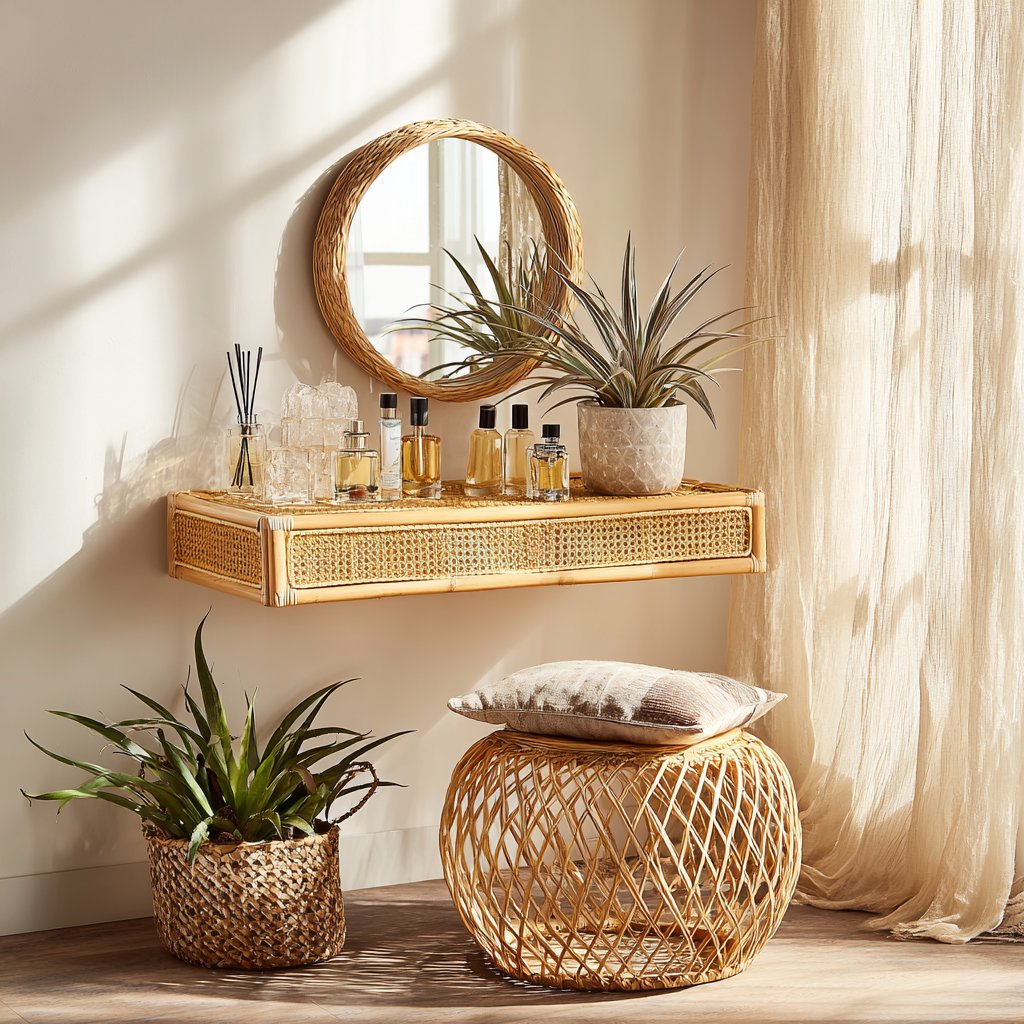
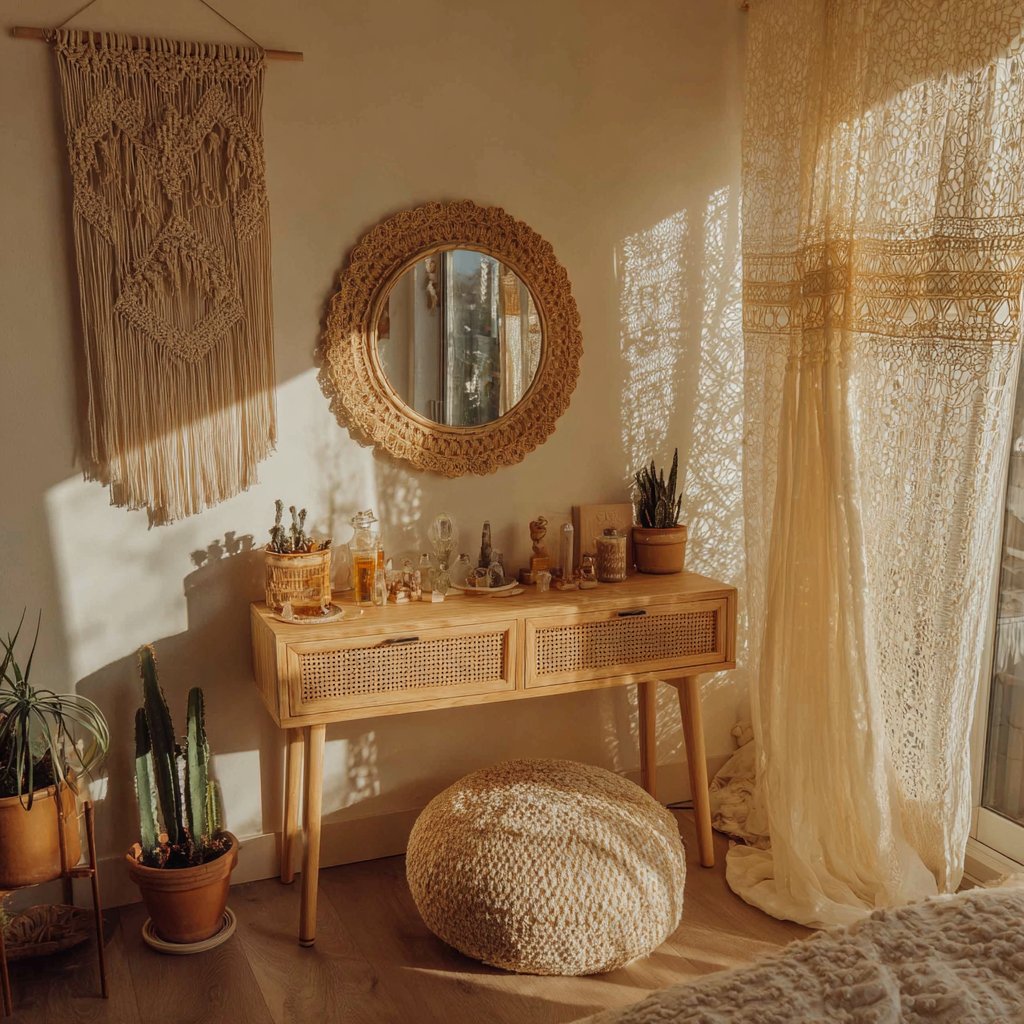
Immerse yourself in the free-spirited beauty of bohemian design with a small dressing table that celebrates natural materials, artisanal craftsmanship, and eclectic styling. The natural rattan vanity with its intricate woven texture and light honey finish brings organic warmth and tactile interest to the bedroom, its handcrafted appearance adding character that machine-made furniture simply cannot replicate. Macramé wall hangings flanking both sides of a round woven mirror create a layered, textural backdrop that exemplifies the bohemian love of handmade artistry and natural fibers. The open weave of both the furniture and wall décor allows light to filter through, creating dynamic shadow patterns that change throughout the day as the sun moves across the sky.
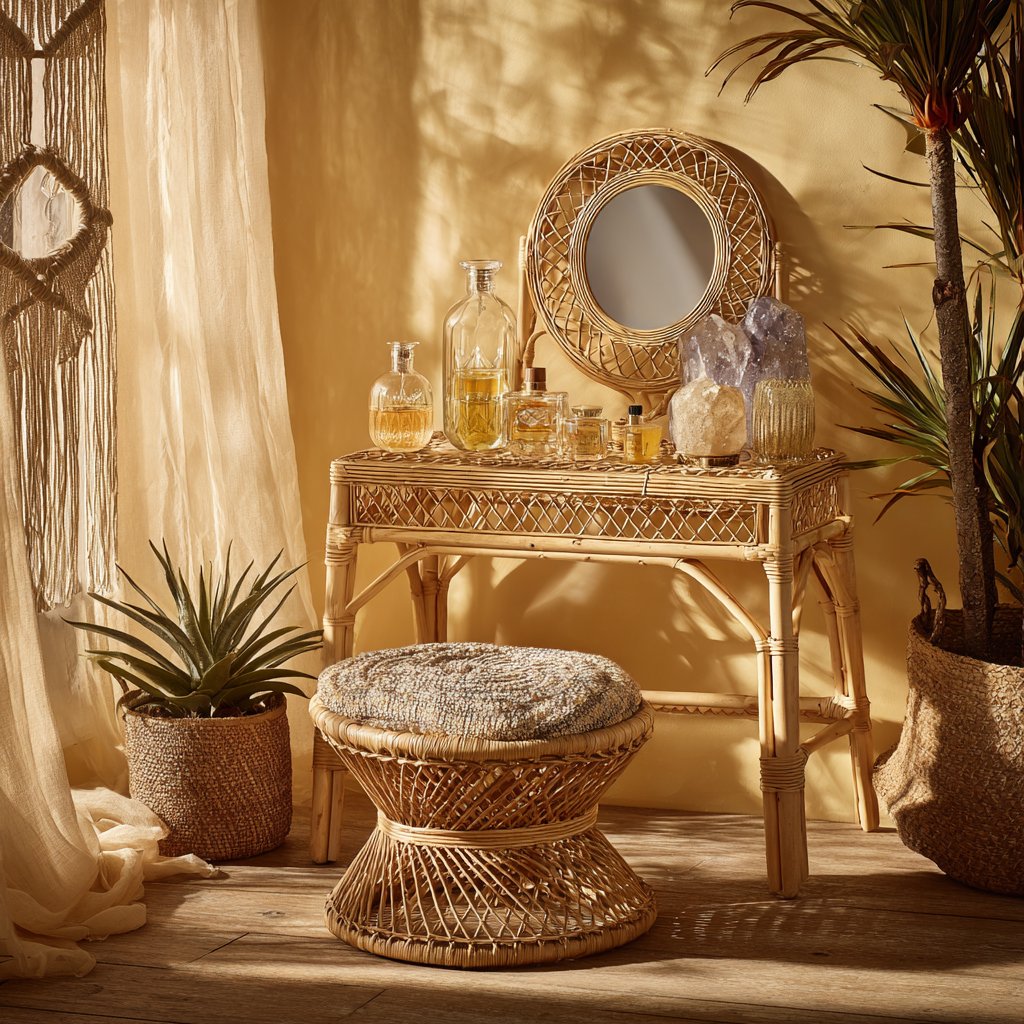
The vanity surface becomes a carefully curated vignette of eclectic treasures that tell a personal story through their selection and arrangement. Vintage perfume bottles in jewel tones catch the light, while crystals and geodes add earthy glamour and spiritual significance that resonates with bohemian philosophy. Air plants nestled in handmade ceramic pots require minimal care while bringing living elements into the space, connecting the indoor environment with nature. A low woven floor cushion serves as unconventional seating, inviting you to lower yourself to a more grounded, meditative position during your beauty routine—a distinctly bohemian approach that encourages mindfulness and presence.
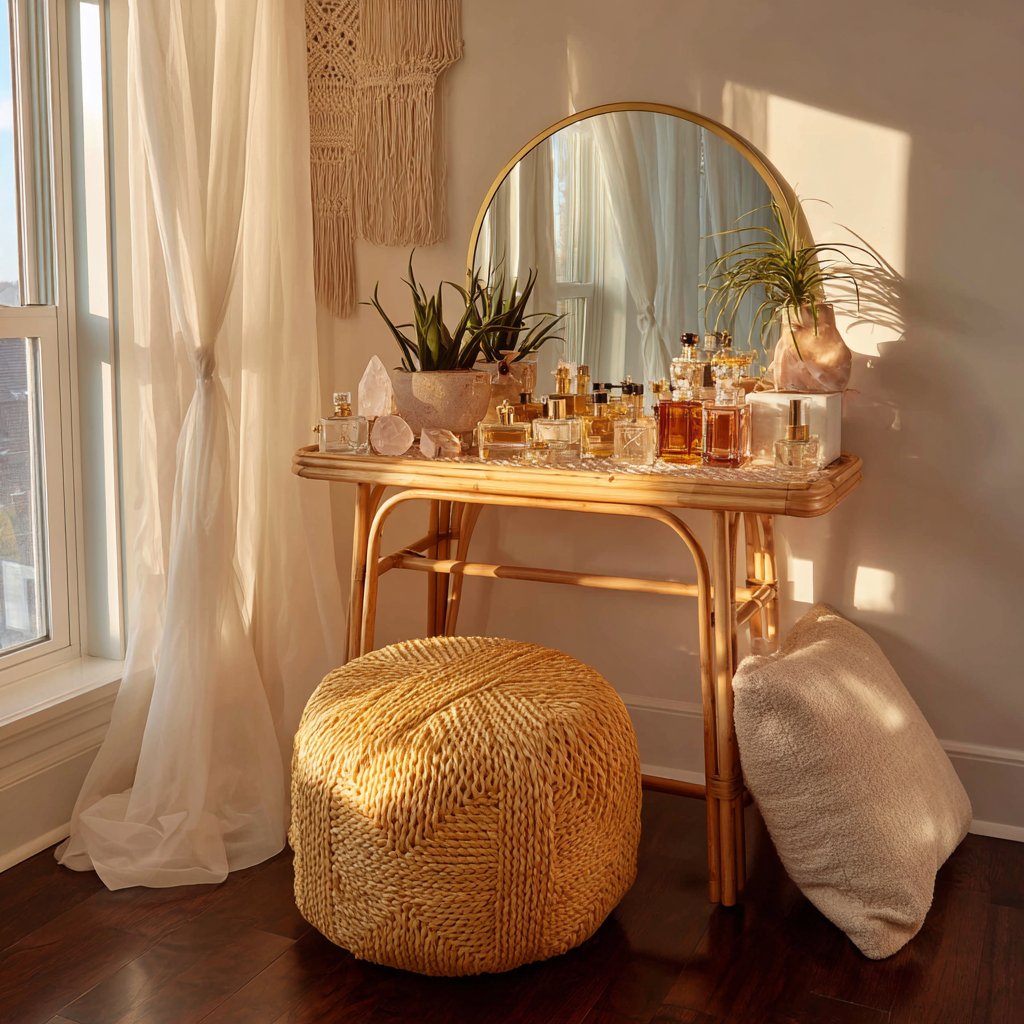
Soft golden hour lighting filtering through gauzy curtains creates the perfect ambiance for this nature-inspired design, casting warm, honeyed tones across the rattan surfaces and highlighting the intricate weave patterns. Interior design photography emphasizes the layered textures and relaxed, artistic vibe that defines bohemian style, capturing how multiple natural materials coexist harmoniously without competing for attention. This approach to small dressing table design proves that limited space can still accommodate abundant personality, creative expression, and a deep connection to natural materials and artisanal traditions.
Key Design Tips: Source rattan furniture from responsible suppliers who practice sustainable harvesting and fair labor practices. Layer textiles through the addition of a woven rug beneath the vanity to enhance the textural richness. Rotate air plants regularly to ensure even light exposure and mist them 2-3 times weekly for proper care. Mix vintage finds with new pieces to create the collected-over-time aesthetic that characterizes authentic bohemian style. Position the vanity near a window to maximize natural light, which enhances the warm tones of natural materials and creates the golden glow that makes bohemian spaces so inviting.
6. Mid-Century Modern Timeless Sophistication
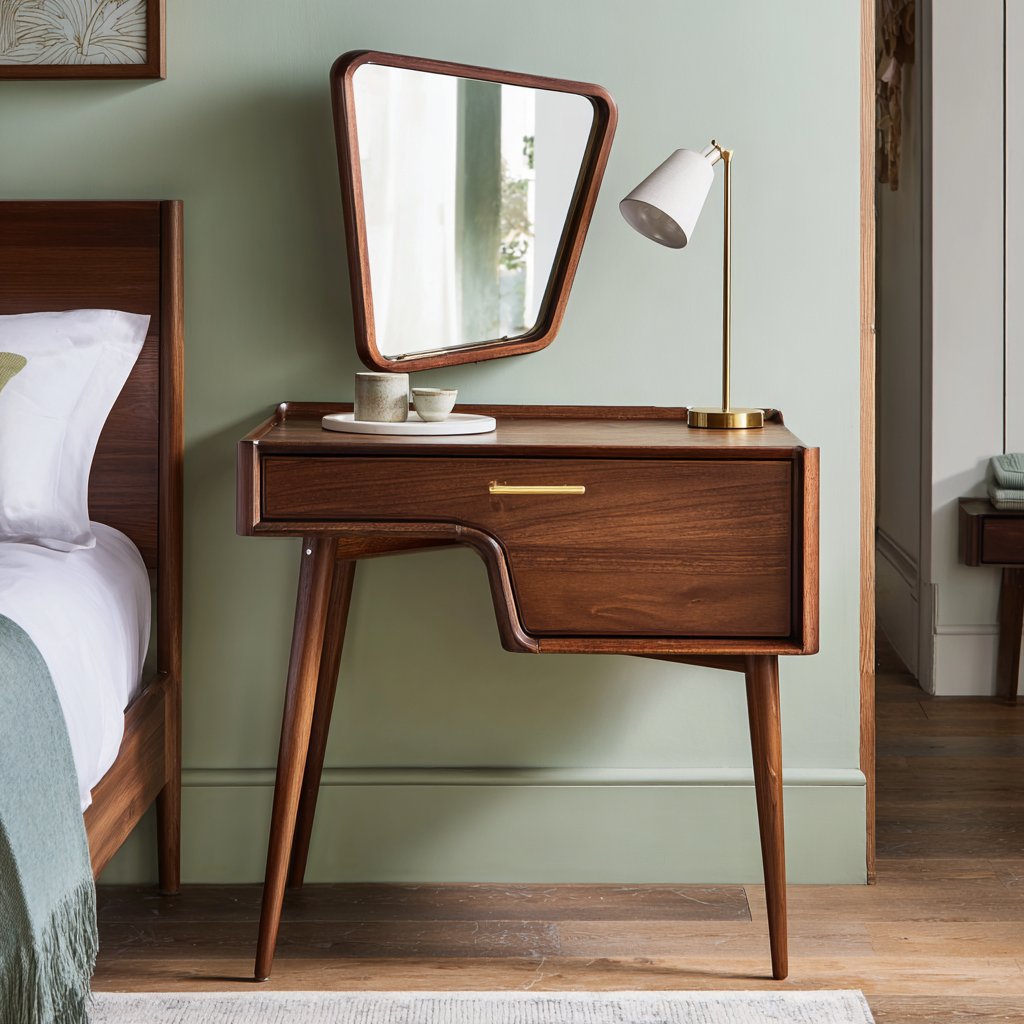
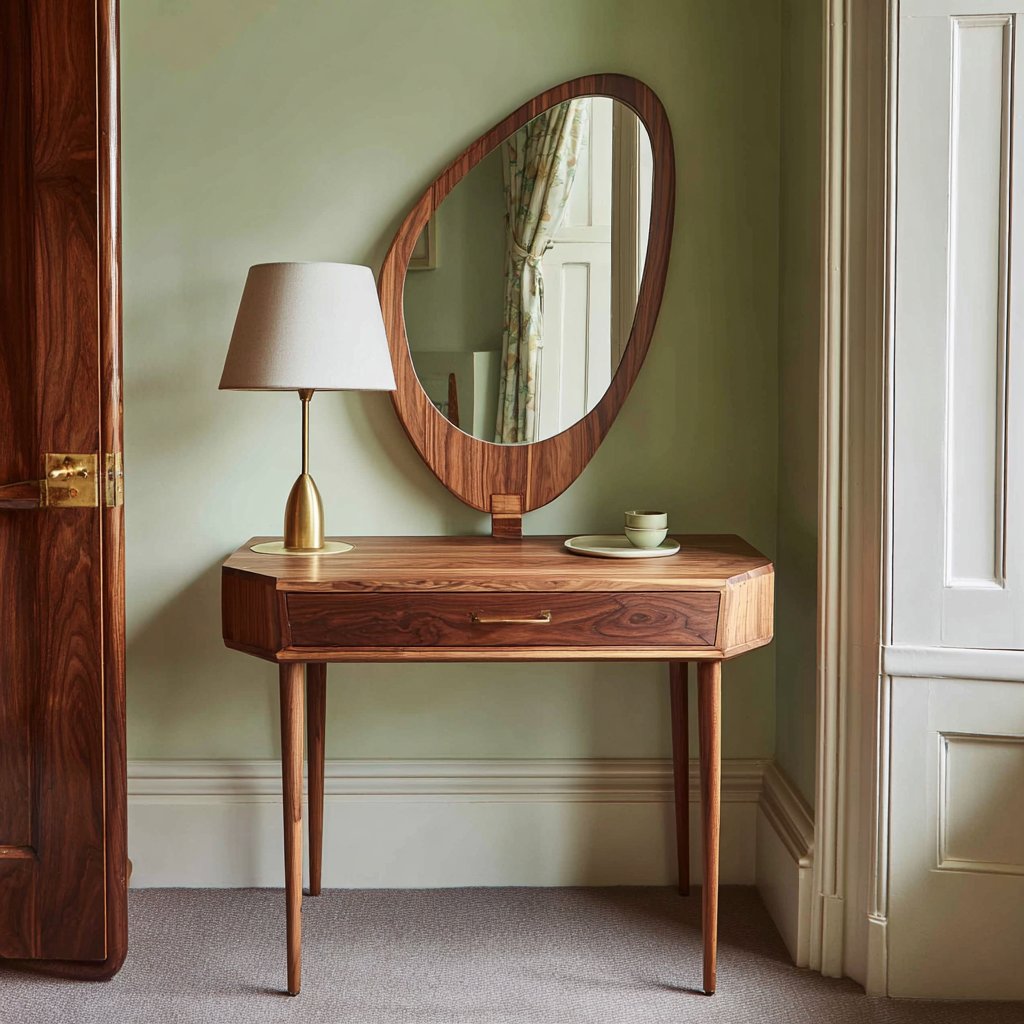
Step into the elegant simplicity of mid-century modern design with a small dressing table that embodies the refined aesthetic of the 1950s and 60s. The sleek vanity crafted from rich walnut wood features the characteristic tapered legs that became synonymous with this design era, their angled profile creating visual lightness despite the substantial quality of the piece. A single shallow drawer with brass pull handles provides discrete storage while maintaining the uncluttered surfaces that define mid-century sensibility. The wood grain, carefully selected and book-matched for visual harmony, creates natural artistry that requires no additional decoration to make its statement.
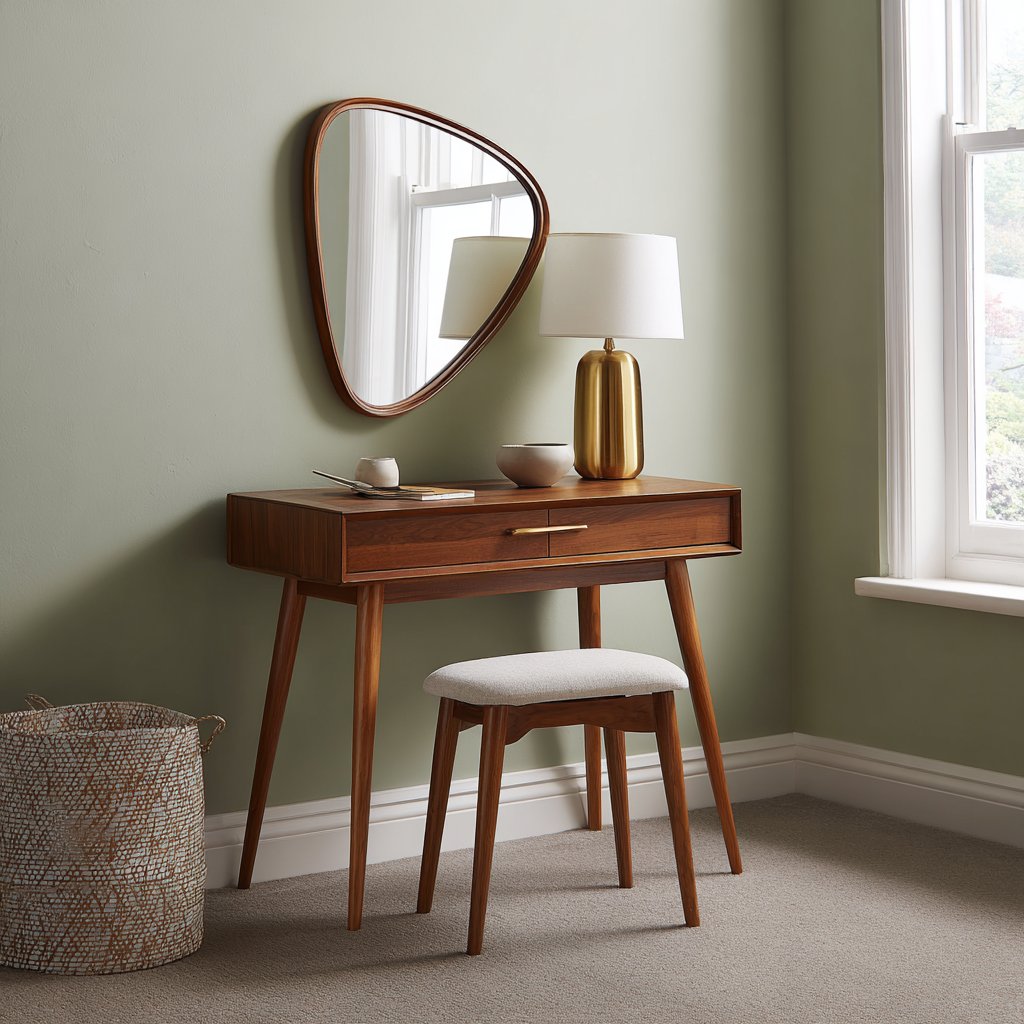
An asymmetrical kidney-shaped mirror with a wooden frame hangs above the vanity, its organic curved form providing a soft counterpoint to the angular lines of the furniture below. This biomorphic shape, inspired by natural forms and characteristic of mid-century design, adds sculptural interest without overwhelming the modest scale of the setup. The minimalist styling includes only carefully chosen accessories: a brass table lamp with a white linen shade that provides warm, directed light for task work, and a small ceramic tray in a muted glaze that corrals daily essentials without visual clutter. Against a bedroom wall painted in soft sage green—a period-appropriate color choice—the walnut vanity glows with warmth and richness.
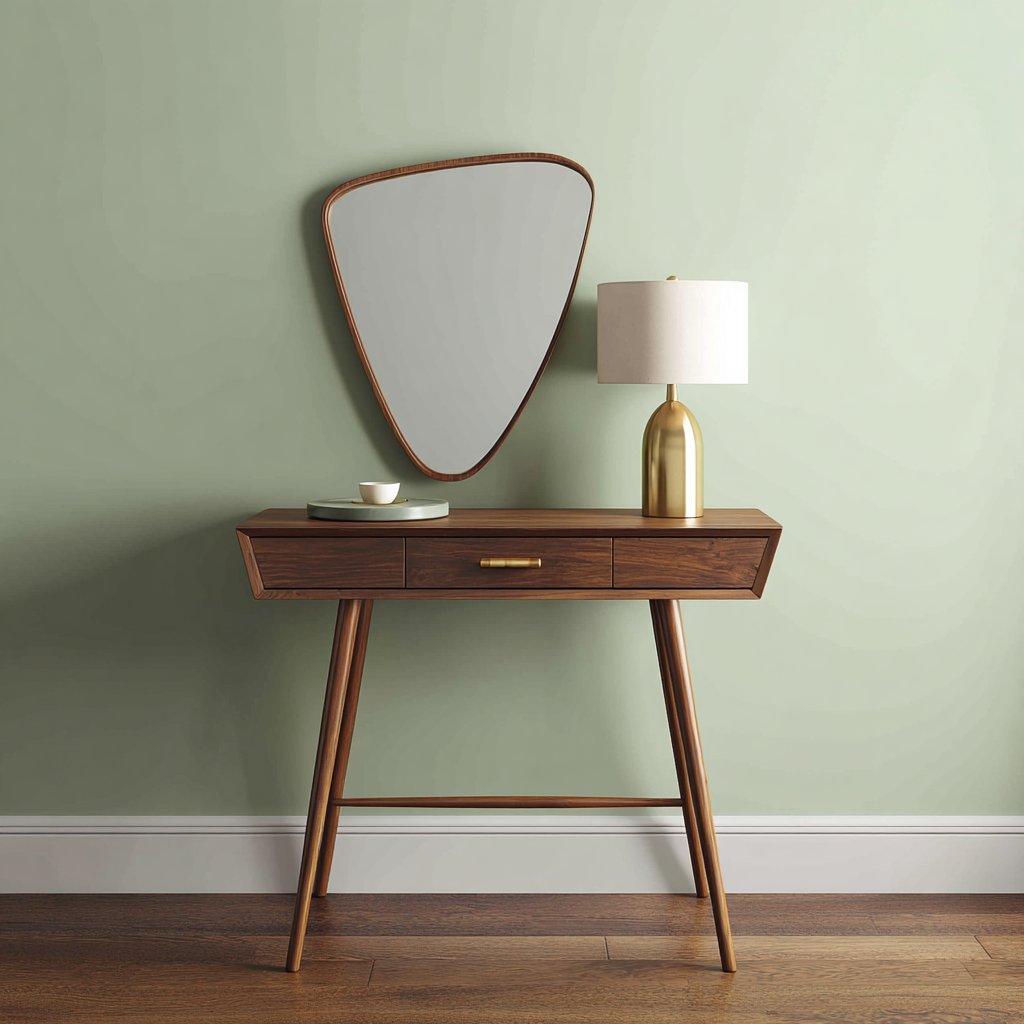
Professional interior photography captures the balanced composition and warm wood tones that make mid-century furniture perpetually appealing across generations and changing trends. The timeless design means this small dressing table will remain stylistically relevant for decades, making it a wise investment for those seeking longevity in their furniture choices. The clean lines and honest materials reflect the mid-century belief in “form follows function,” where every design element serves a purpose and unnecessary ornamentation is eliminated. This approach creates spaces that feel simultaneously sophisticated and approachable, elegant yet unpretentious.
Key Design Tips: Maintain walnut furniture with appropriate wood oils or waxes that enhance the natural luster without creating artificial shine. Limit accessories to 3-5 carefully chosen pieces that serve both functional and aesthetic purposes. Choose lighting with brass or warm metallic finishes that complement the wood tones and reinforce the period aesthetic. Position the vanity to showcase the wood grain in natural light, which reveals its depth and variation. Consider adding a small vintage clock or ceramic vessel from the mid-century period to authenticate the design approach while adding personal history.
7. Multifunctional Fold-Down Innovation
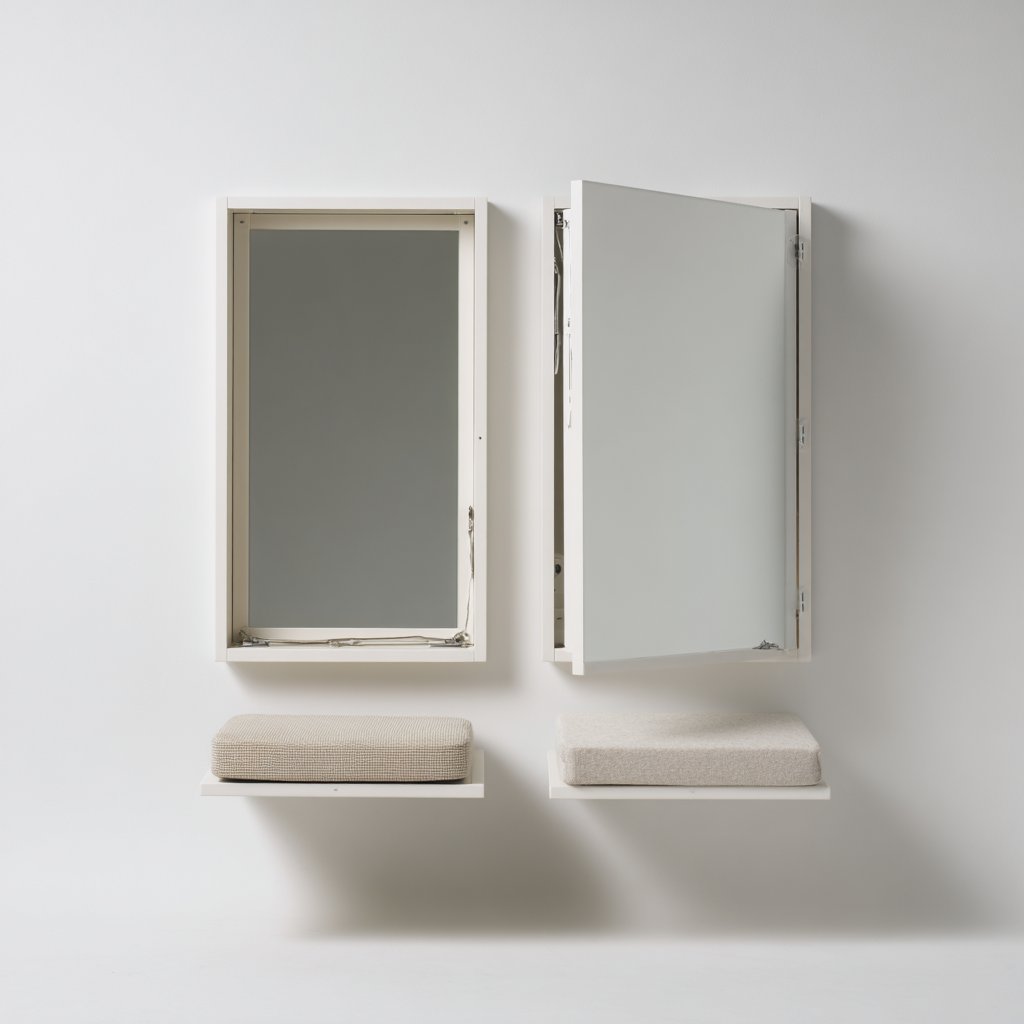
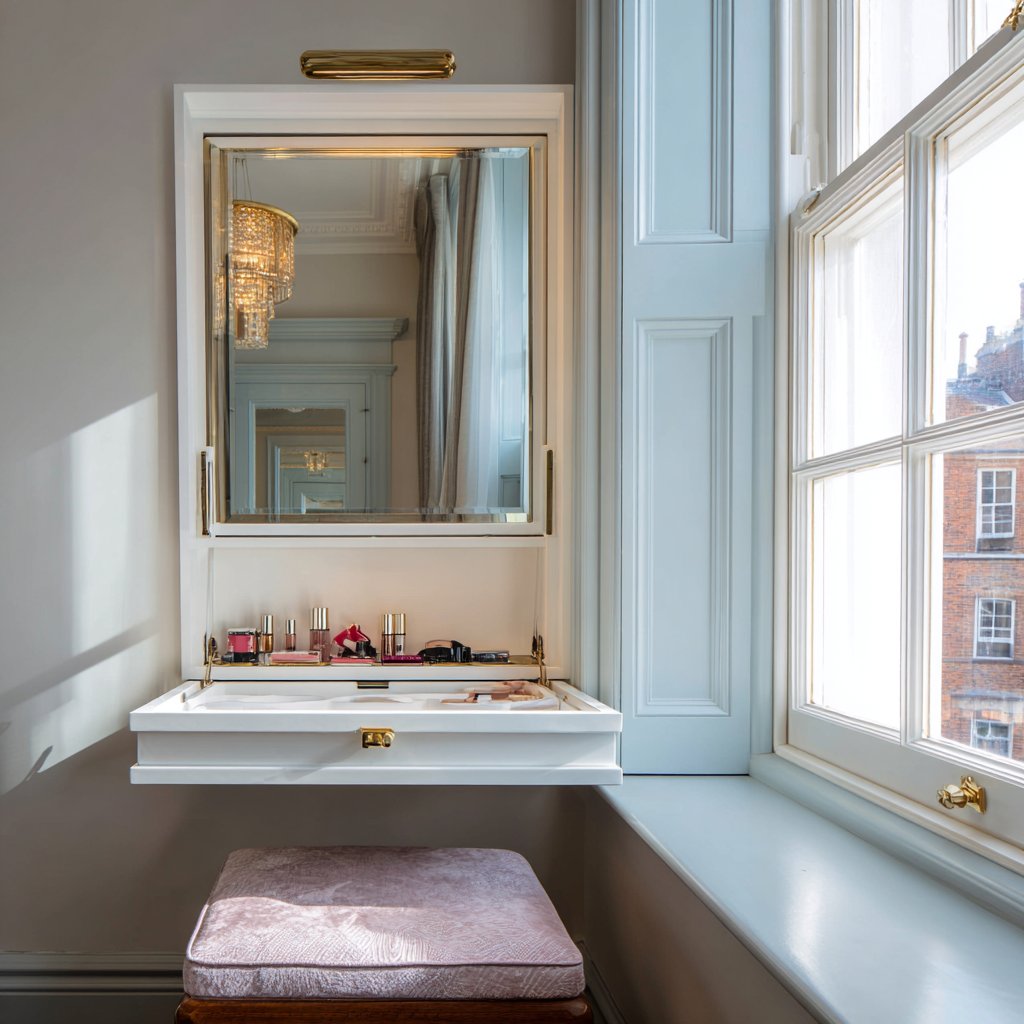
Revolutionary space-saving meets clever engineering in this fold-down wall desk that transforms seamlessly between a dressing table and a streamlined wall-mounted mirror. The white wall-mounted unit demonstrates how thoughtful design can create multiple functions within a single, compact footprint—ideal for studio apartments, tiny homes, or any bedroom where maximizing versatility is essential. When opened, the hinged mirror reveals hidden storage compartments specifically designed for jewelry organization and cosmetic storage, with small dividers, hooks, and shelves that keep everything accessible and visible. When closed, the unit presents as a simple framed mirror, its dual nature completely concealed and the room’s square footage fully restored.
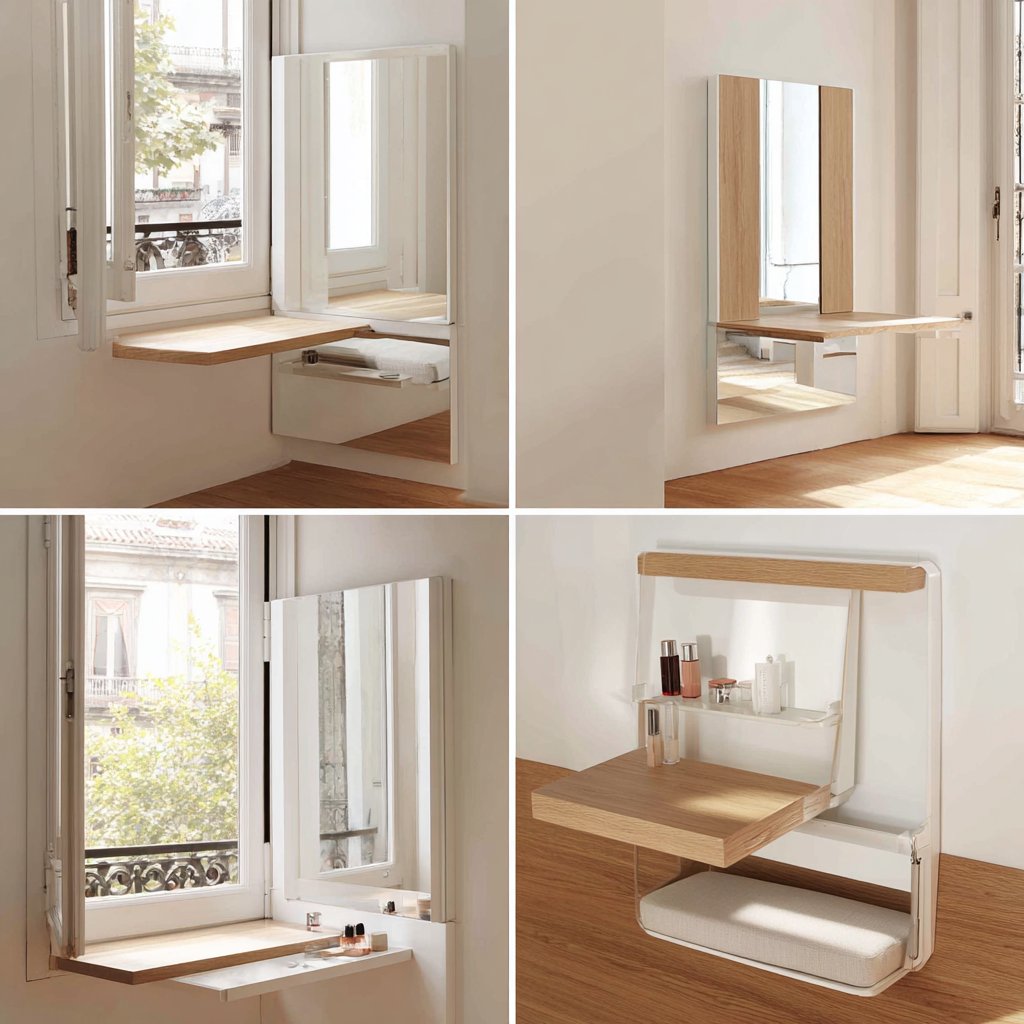
The fold-away cushioned seat drops down from beneath the unit when needed, its mechanism engineered for smooth operation and secure locking in both open and closed positions. This integrated seating solution eliminates the need for a separate stool that must be stored elsewhere when not in use, further maximizing the space-saving benefits of this innovative design. The clever engineering behind the transforming mechanism demonstrates how contemporary design thinking solves modern spatial challenges through innovation rather than compromise. Wide-angle interior design photography captures both the closed and open configurations, illustrating the remarkable transformation and helping viewers understand the full functionality of this space-efficient solution.
This multifunctional approach represents the future of small space living, where every piece of furniture must justify its presence through usefulness and adaptability. The clean white finish ensures the unit integrates seamlessly with various bedroom décor styles, from contemporary minimalism to Scandinavian simplicity to modern traditional. The psychological benefit of being able to completely conceal the vanity area when not in use should not be underestimated—it allows the bedroom to maintain its primary identity as a restful sanctuary rather than being visually dominated by grooming activities. Installation requires proper wall anchoring to support the weight when extended, but the resulting functionality more than justifies the installation effort.
Key Design Tips: Ensure professional installation with wall anchors rated for the combined weight of the unit, mirror, and stored items. Test the folding mechanism regularly and apply lubricant to hinges as needed to maintain smooth operation. Organize stored cosmetics by frequency of use, placing daily essentials in the most accessible compartments. Install the unit at a height that accommodates comfortable viewing when seated, typically positioning the mirror center 60-65 inches from the floor. Consider adding small LED strip lights inside the storage compartments for better visibility of products.
8. Hollywood Regency Glamorous Opulence
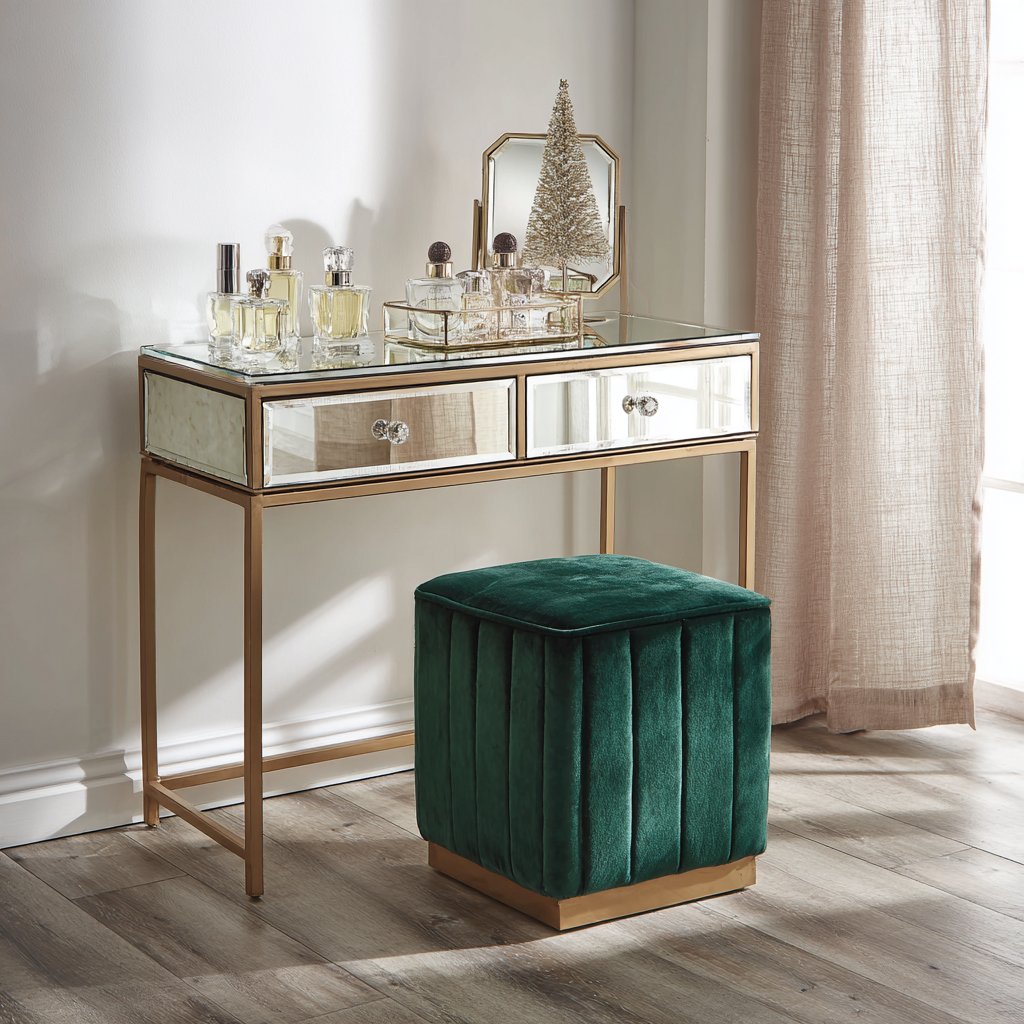
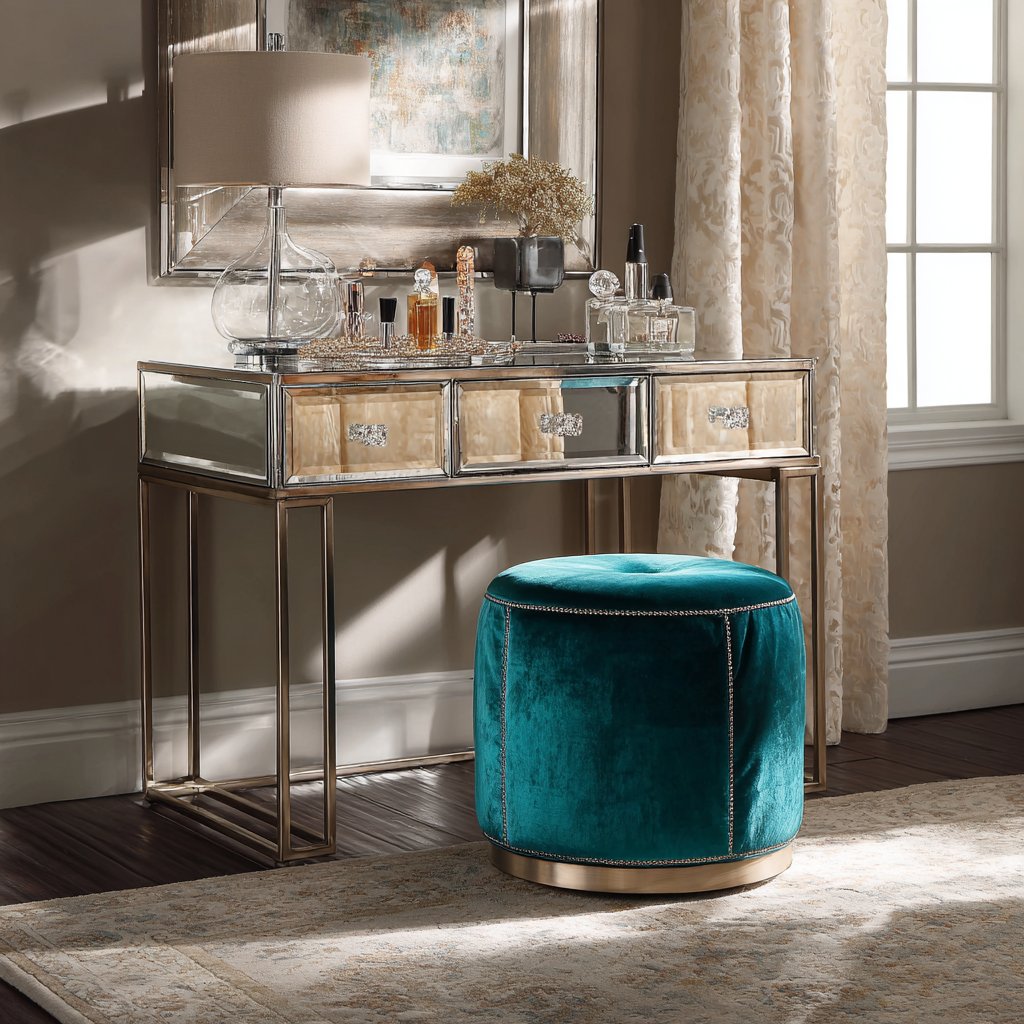
Indulge in pure glamour with a Hollywood Regency-inspired small dressing table that brings red carpet sophistication to your bedroom sanctuary. The mirrored surface and champagne gold metal frame create a dazzling focal point that catches and reflects light from every angle, multiplying brightness and creating the illusion of expanded space—a clever optical trick that makes this design particularly effective in compact rooms. Beveled mirror panels applied to the drawer fronts transform functional storage into decorative artistry, their angled edges creating prismatic light effects that add depth and dimension. This luxurious reflective treatment exemplifies the Hollywood Regency love of glamour, shine, and theatrical impact.
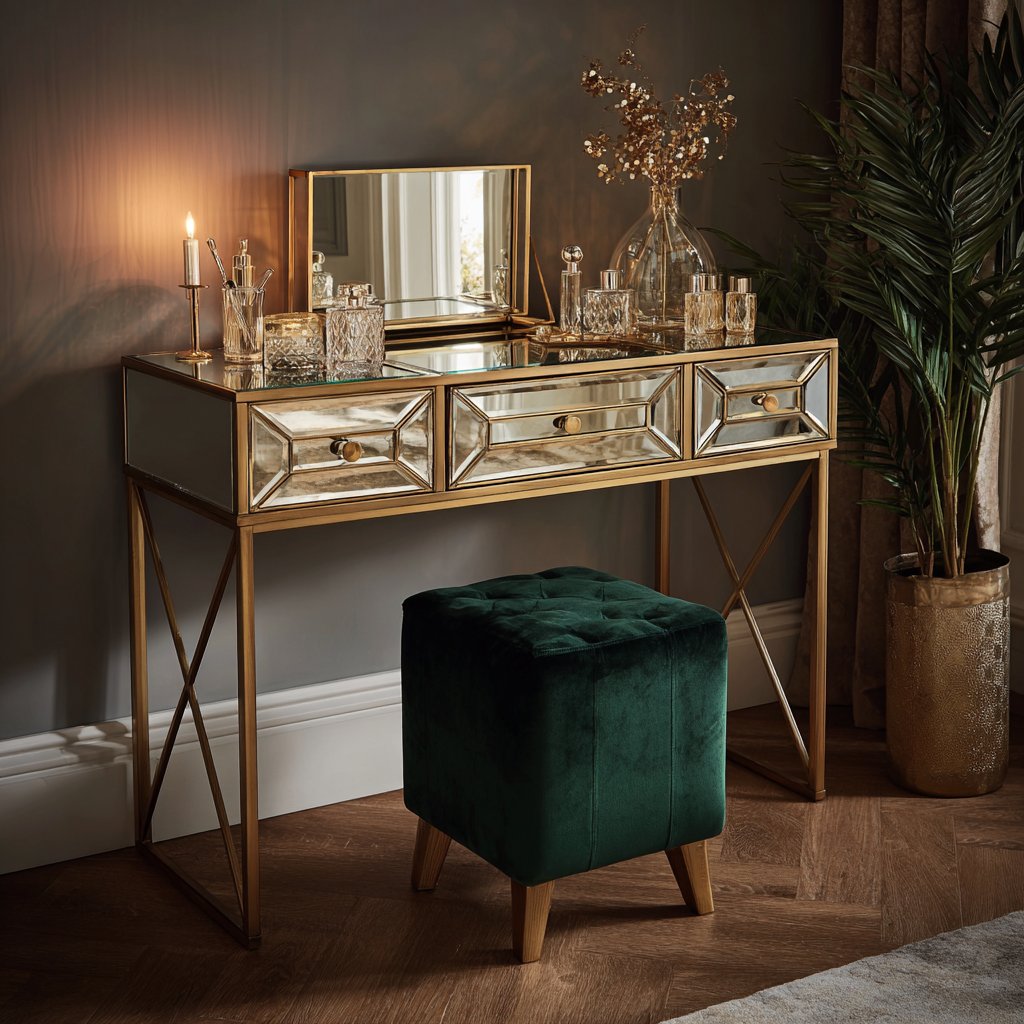
A plush velvet ottoman in deep emerald green provides seating that feels more like throne than stool, its jewel-tone richness creating a sumptuous contrast against the metallic brilliance of the vanity. The combination of champagne gold and emerald green evokes the sophisticated color palettes of 1940s Hollywood, when stars like Jean Harlow and Marlene Dietrich prepared for their close-ups at similarly glamorous vanities. Crystal perfume bottles and a small jewelry tree arranged on the mirrored surface become part of the decorative display, their transparency and sparkle complementing the reflective theme. Soft diffused lighting creates elegant reflections across multiple surfaces, producing a gentle glow rather than harsh glare—essential for maintaining sophistication in a highly reflective environment.
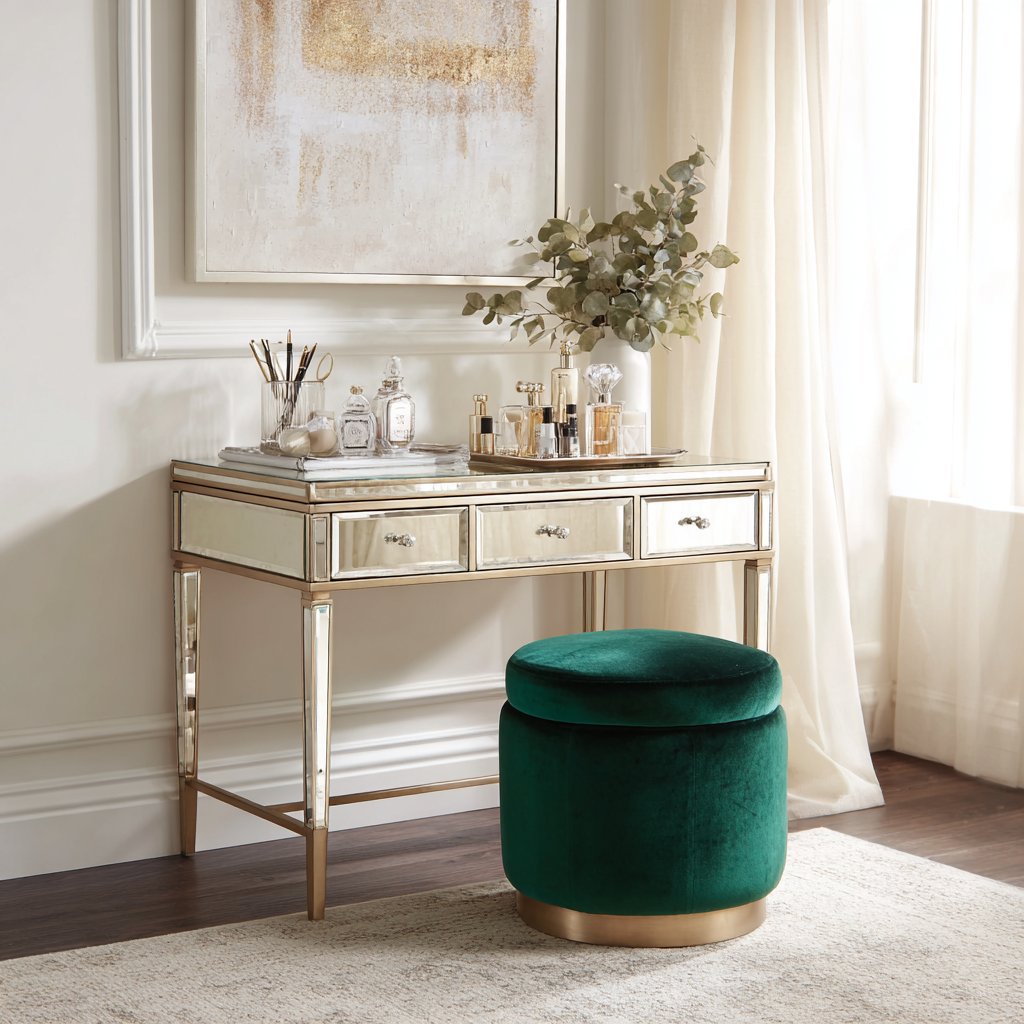
Interior design photography emphasizes the opulent details and sophisticated styling that define this compact yet luxurious approach to vanity design. The modest footprint proves that glamour doesn’t require excessive scale; rather, it’s achieved through material choice, impeccable finishing, and thoughtful styling. This design appeals particularly to those who view their dressing routine as a performance, a daily opportunity to prepare for whatever role the world requires. The Hollywood Regency style reminds us that home should be a place where we feel like stars, where ordinary moments can be elevated through beautiful surroundings and intentional design choices.
Key Design Tips: Clean mirrored surfaces regularly with glass cleaner and microfiber cloths to maintain sparkle and prevent fingerprint buildup. Position the vanity where it won’t reflect unflattering views or create distracting mirror-in-mirror effects. Choose lighting carefully to avoid harsh reflections—opt for diffused light sources or position lights outside the mirror’s direct reflection. Limit clutter on the reflective surface, as anything placed there is visually multiplied through reflection. Add a decorative tray to group small items and create intentional vignettes that enhance rather than detract from the glamorous aesthetic.
9. Rustic Farmhouse Repurposed Charm
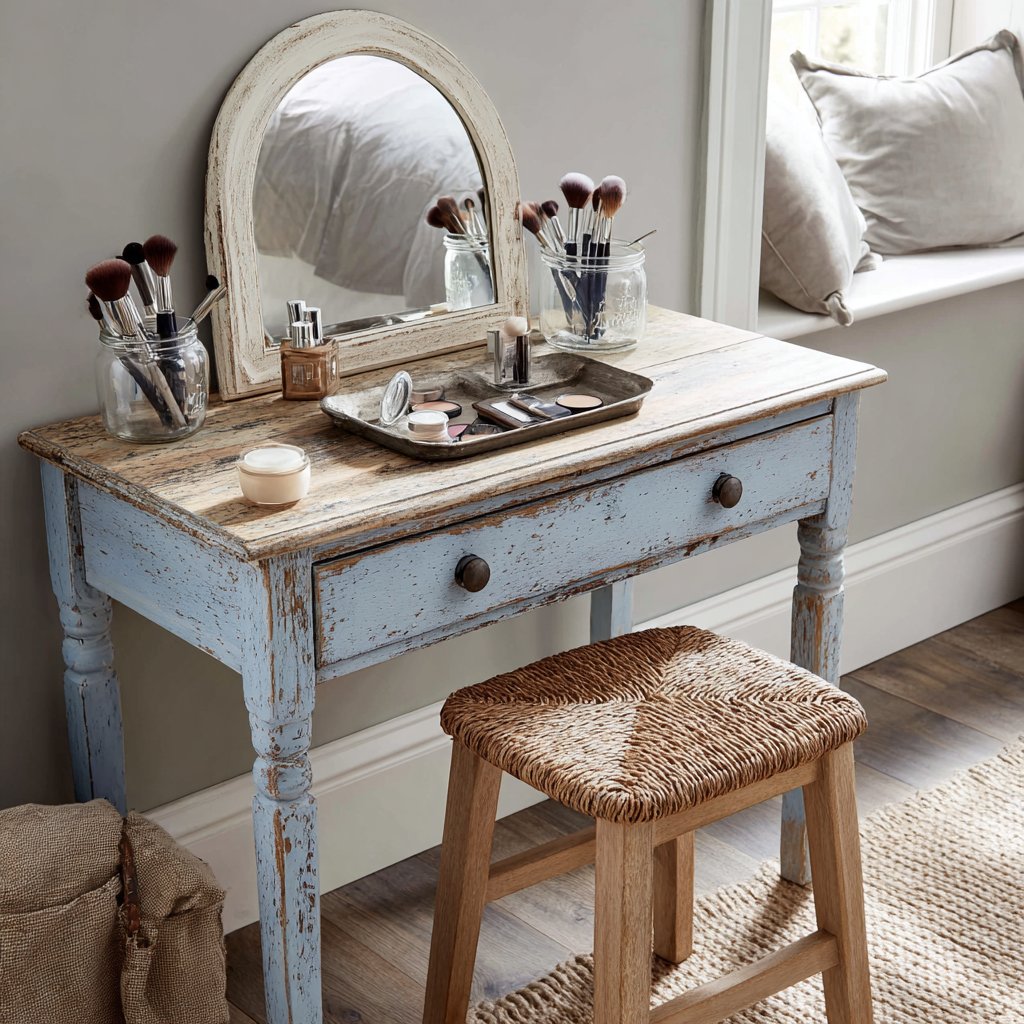
Discover the beauty of adaptive reuse with a rustic farmhouse vanity thoughtfully repurposed from a vintage writing desk. The soft blue-grey distressed chalk paint finish reveals earlier paint layers at the edges and high-wear areas, creating authentic character that tells a story of the piece’s long life and multiple transformations. This intentional distressing celebrates rather than conceals age, embracing the Japanese concept of wabi-sabi that finds beauty in imperfection and impermanence. An arched wooden mirror with weathered white paint hangs above the repurposed desk, its peeling finish and visible wood grain adding complementary layers of history and texture to the composition.
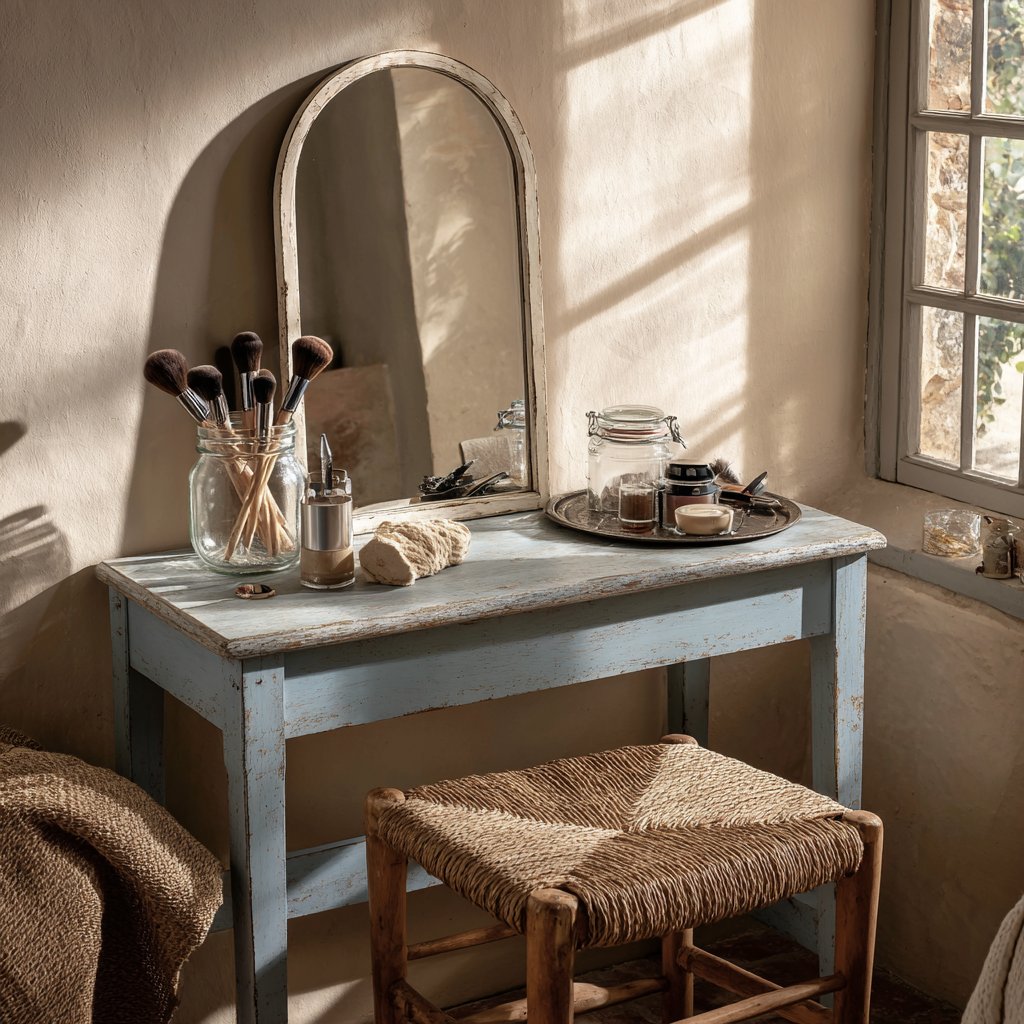
Mason jars—those quintessential symbols of American farmhouse life—hold makeup brushes in an organizational system that’s both practical and aesthetically aligned with the cottage aesthetic. A vintage metal tray, perhaps once used for serving breakfast or organizing correspondence, now corrals cosmetics and skincare products, its patinated surface adding another dimension of aged beauty. The simple wooden stool with woven rush seat provides no-frills seating that prioritizes comfort and authenticity over pretension, its honest construction visible and celebrated rather than concealed. Natural morning light streaming through nearby windows highlights the charming imperfections and cottage-style appeal that make this design so endearing and livable.
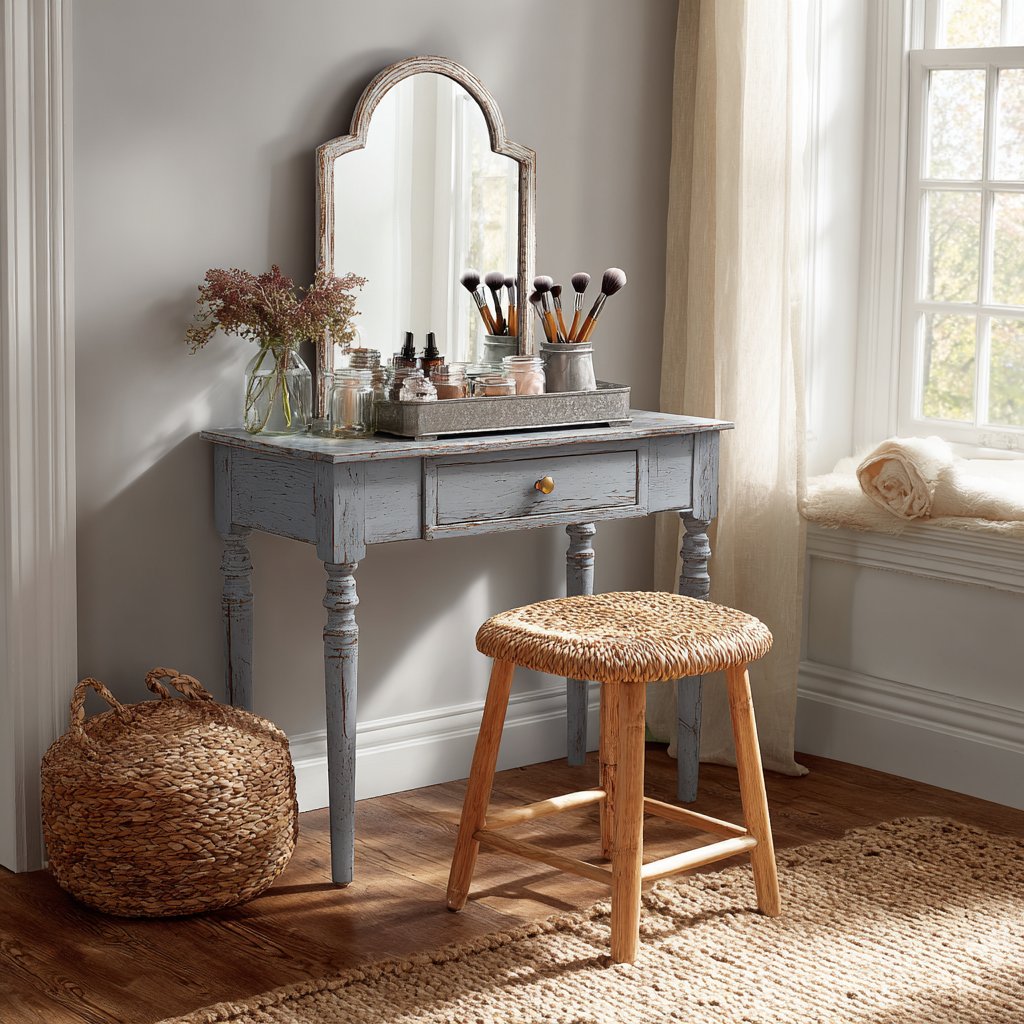
Professional interior photography captures the authentic vintage character and cozy bedroom integration that defines successful farmhouse design. This repurposed approach demonstrates environmental responsibility through the reuse of existing furniture, reducing demand for new manufacturing while preserving pieces that embody quality craftsmanship from earlier eras. The soft color palette creates a soothing atmosphere perfect for the slow, contemplative morning routines that farmhouse living celebrates—a welcome counterpoint to our often-rushed modern lives. This design proves that small dressing table ideas can honor the past while serving present needs, creating spaces that feel collected, personal, and genuinely homey.
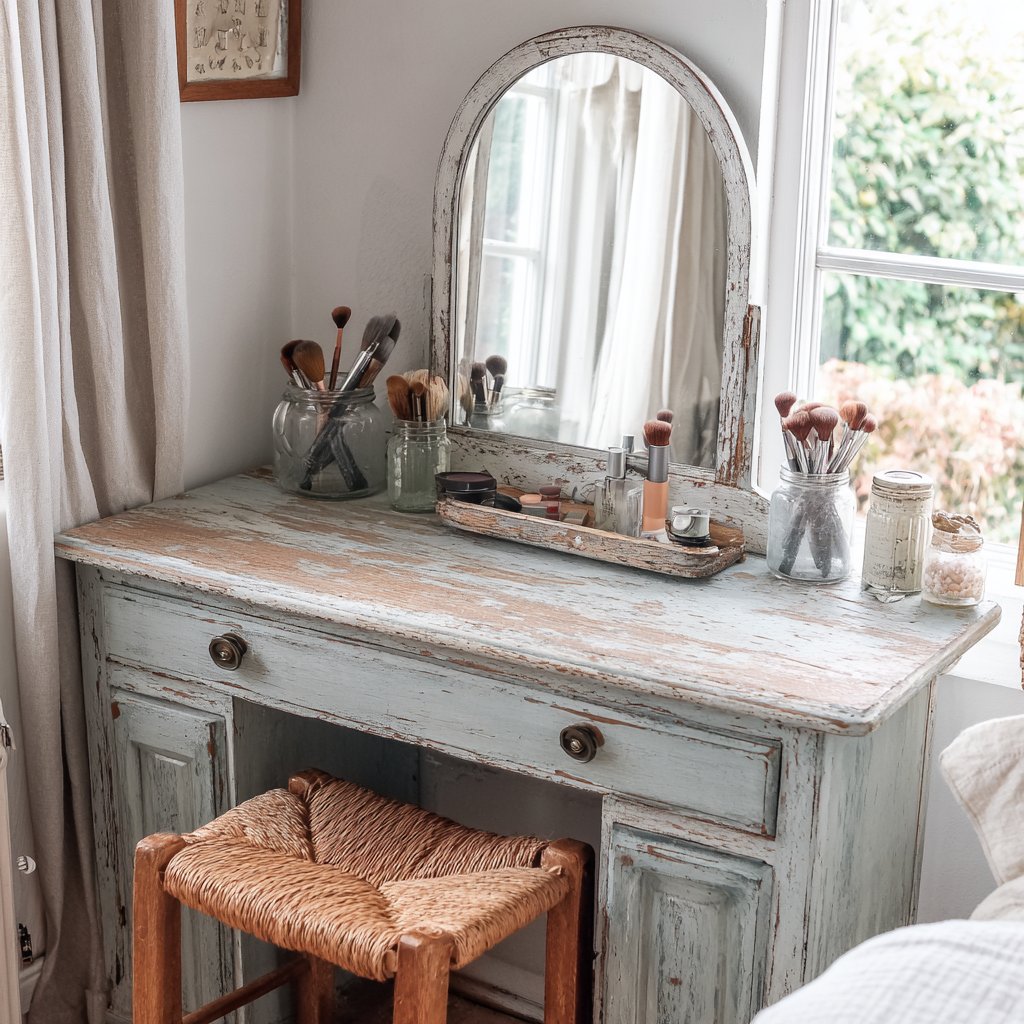
Key Design Tips: Source vintage furniture from estate sales, antique shops, or online marketplaces, inspecting carefully for structural soundness before purchasing. Apply chalk paint in thin layers, distressing strategically at edges and high-wear areas for authentic appearance. Seal the finished paint with clear wax or polyurethane to protect against cosmetic spills and daily use. Mix true vintage pieces with new items that share the aesthetic to create an affordable, cohesive look. Position the vanity near natural light sources to emphasize the soft color palette and highlight the textural variations in the distressed finishes.
10. Japanese-Inspired Zen Minimalism
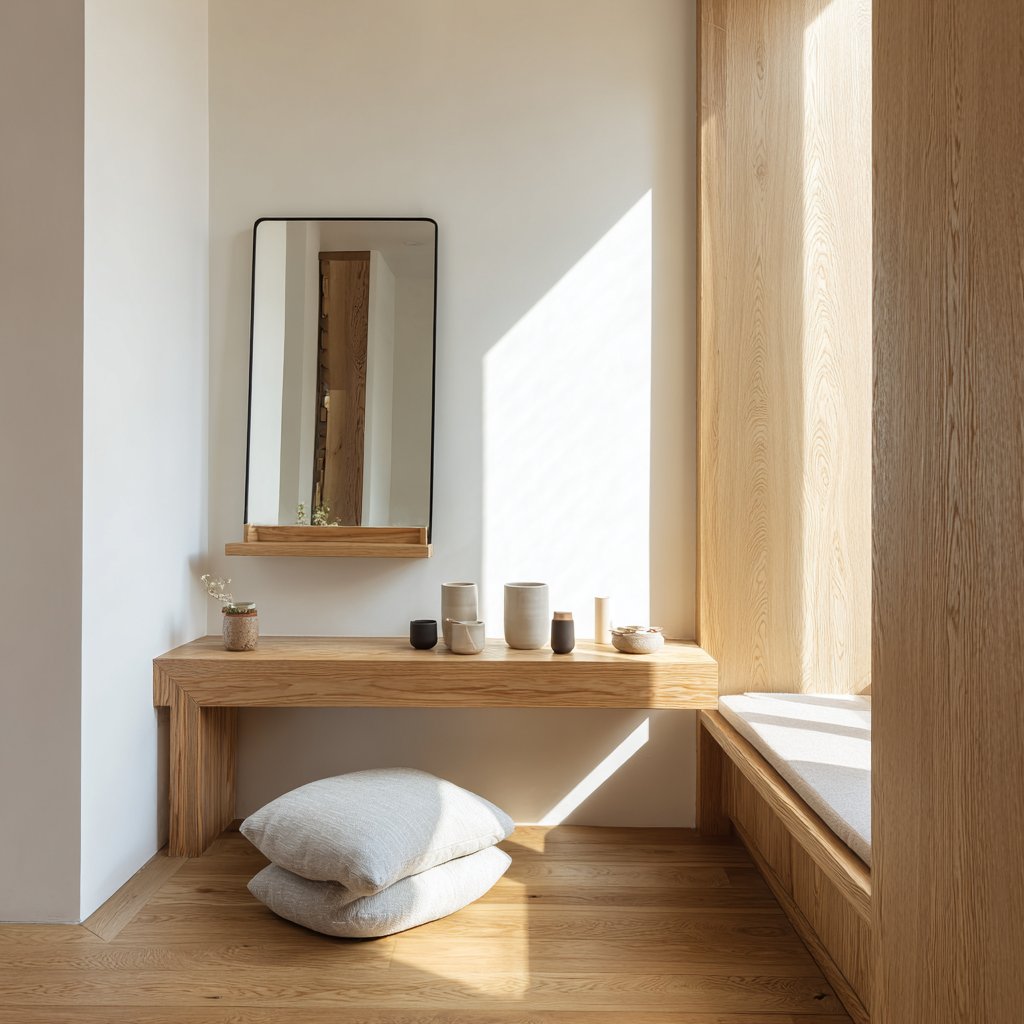
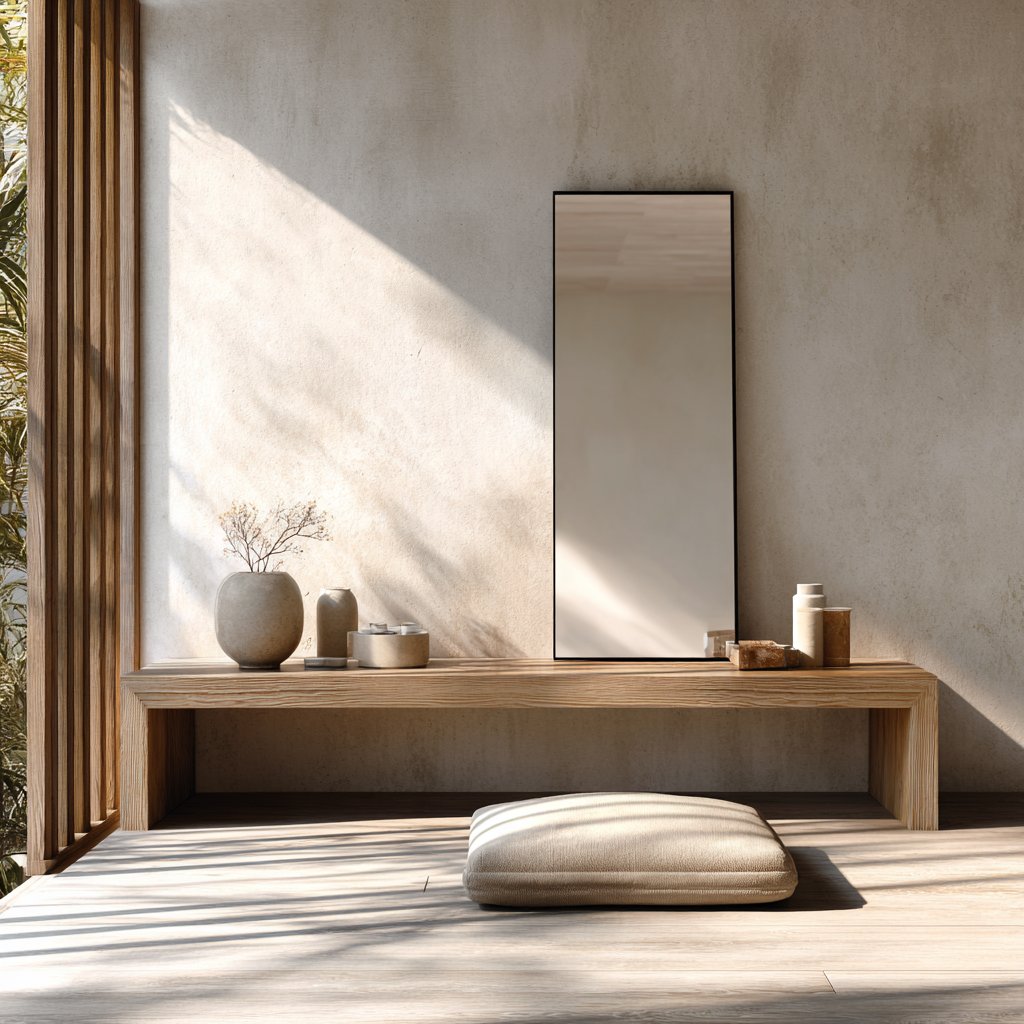
Find tranquility in the Japanese-inspired minimalist approach to vanity design, where every element is carefully considered and nothing superfluous remains. The low-profile design crafted in light ash wood embodies the Japanese aesthetic principle of ma—the importance of negative space and thoughtful emptiness. Clean lines with no visible hardware create uninterrupted visual flow, while the horizontal emphasis of the piece encourages a grounded, contemplative presence. The light ash wood with its subtle grain brings natural warmth without dominating the space, its pale color reflecting and diffusing available light to maintain airiness.
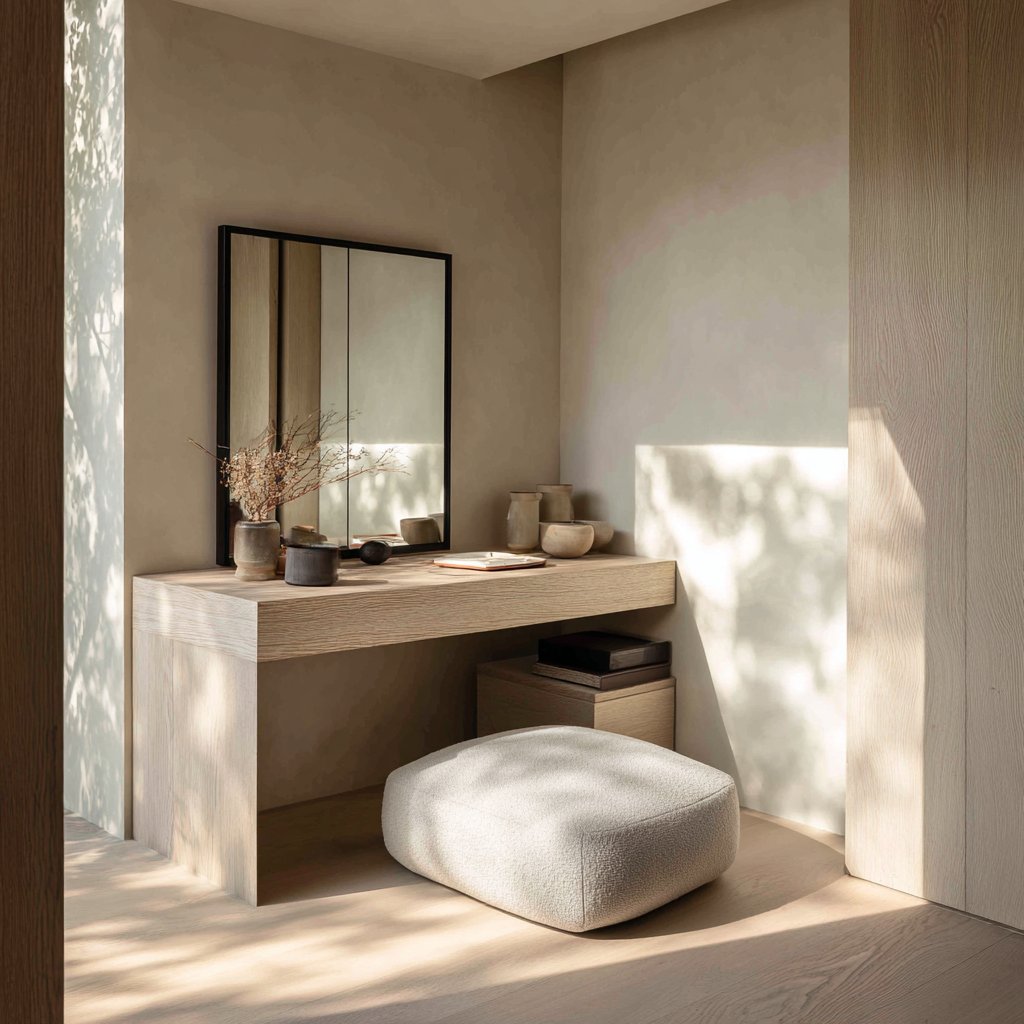
A simple rectangular mirror with a thin black frame rests against the wall rather than being hung, its casual placement suggesting impermanence and adaptability—key concepts in Japanese design philosophy. The uncluttered surface displays only essential items housed in neutral ceramic containers that prioritize function and beauty in equal measure. Each item earns its place through both utility and aesthetic contribution, reflecting the Japanese concept of danshari—the art of living with less through careful curation and intentional choice. A low cushioned meditation-style seat provides seating that encourages proper posture and mindful presence during grooming routines, transforming daily beauty rituals into moments of contemplation.
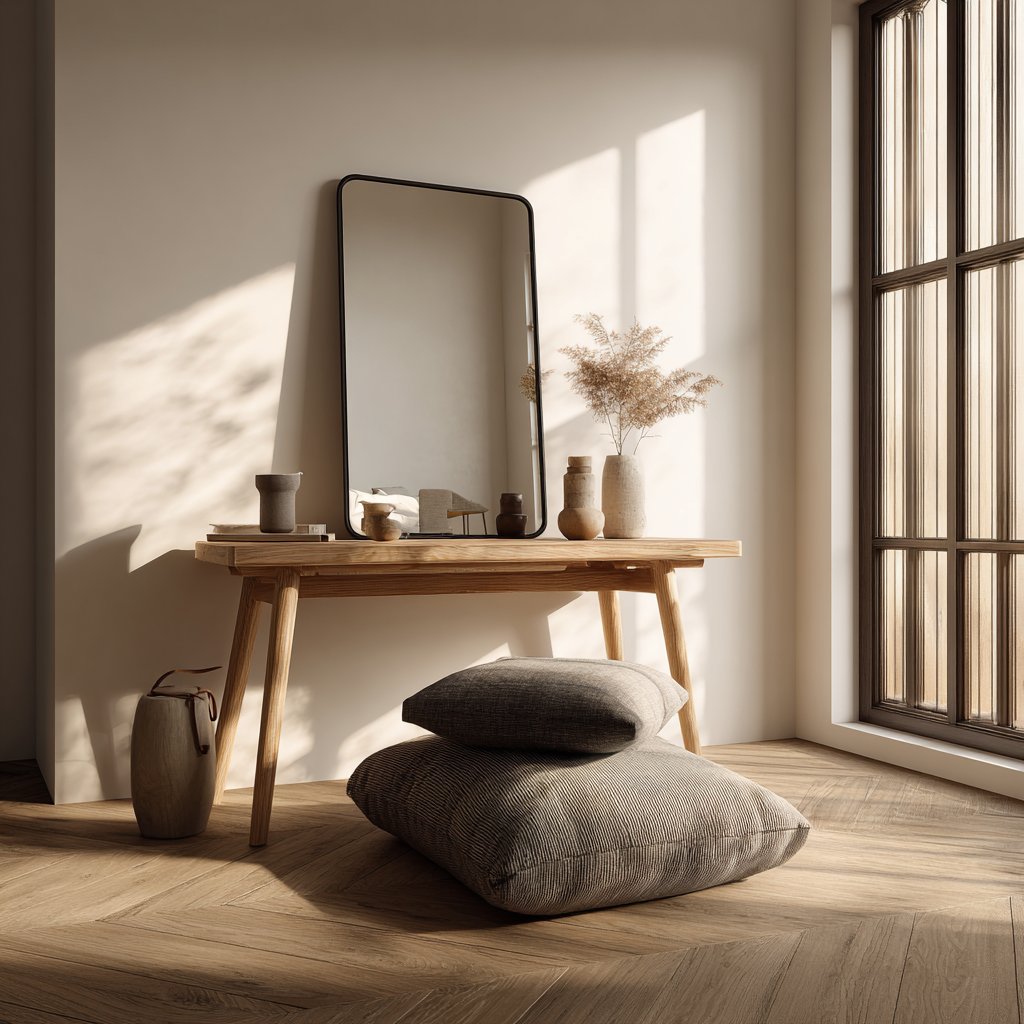
Soft natural light creates serene shadows on the pale wood grain, emphasizing texture without creating dramatic contrast—the gentle, harmonious lighting typical of traditional Japanese interiors. Interior design photography captures the zen-like simplicity and harmonious material textures that make this approach so calming and restorative. This minimalist interpretation of small dressing table ideas demonstrates that luxury can be found in simplicity, that beauty needs no ornamentation when materials, proportions, and spatial relationships are perfected. The design creates a pocket of peace within the bedroom, a dedicated space for the mindful self-care that Japanese culture has long recognized as essential to wellbeing.
Key Design Tips: Maintain the minimalist aesthetic by regularly editing displayed items, removing anything not used daily. Choose storage solutions in natural materials like wood, bamboo, or ceramic that align with the Japanese aesthetic. Position the vanity to face a window or pleasant view, supporting meditation and contemplation during use. Apply food-safe oils like tsubaki (camellia) oil to maintain and nourish the light ash wood. Incorporate a small living element like a bonsai or ikebana arrangement to connect the space with nature, fundamental in Japanese design philosophy.
11. Budget-Friendly IKEA Hack Creativity
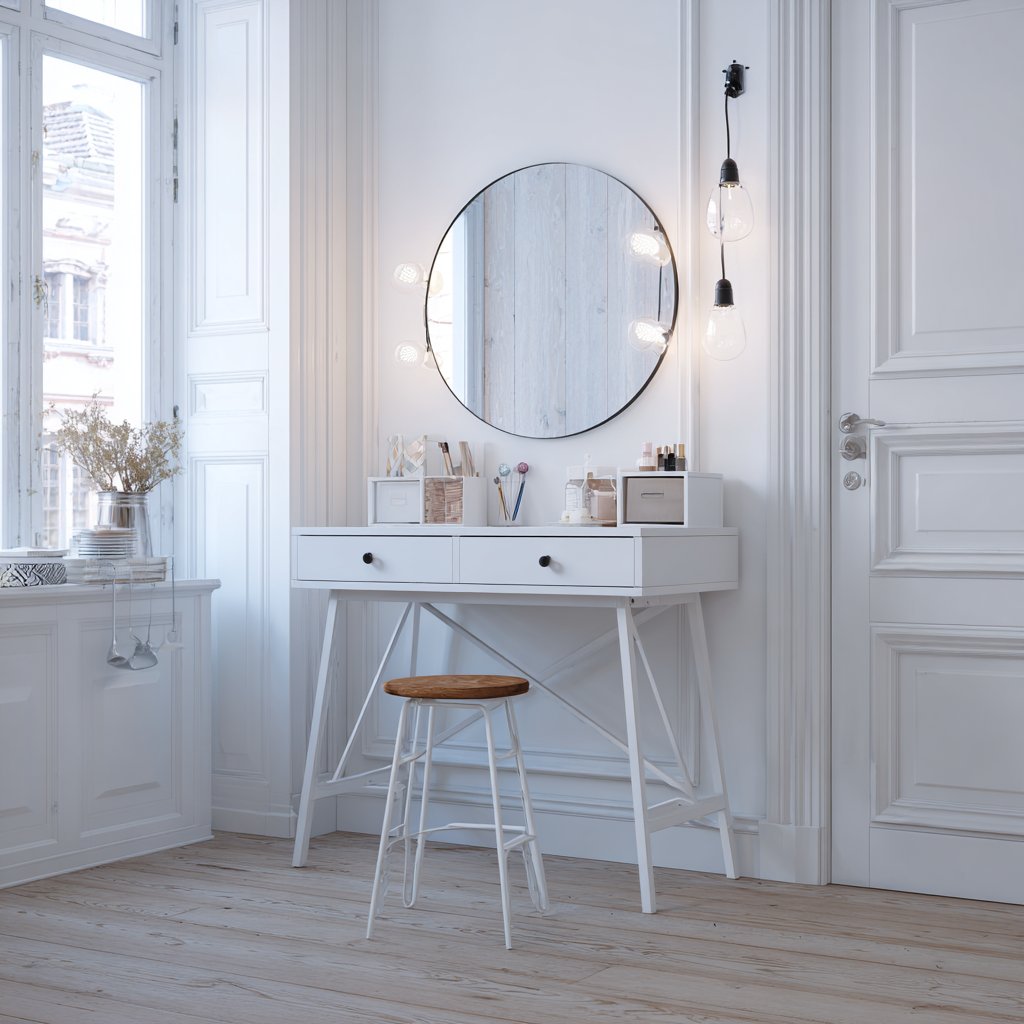
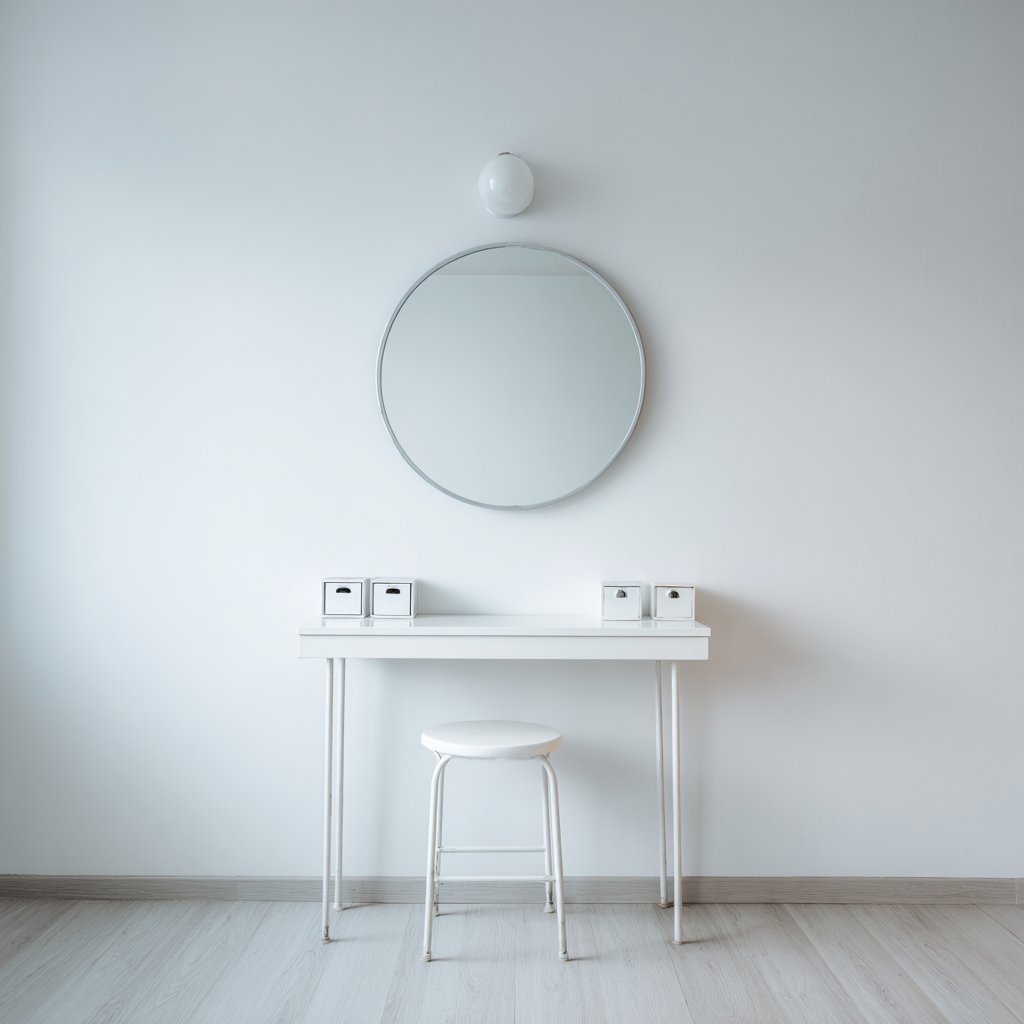
Embrace the democratization of good design with a practical IKEA-hack style vanity that proves style need not be expensive. This clever combination of a narrow console table, large round mirror, and clip-on LED vanity lights demonstrates how strategic shopping and creative thinking can produce professional-looking results on a modest budget. The white table surface provides a clean, neutral foundation that works with any décor direction, while its simple construction allows for easy customization through paint, hardware changes, or decorative modifications. Acrylic drawer organizers and small white storage boxes maintain order among cosmetics and grooming tools, their transparent and neutral construction keeping the overall look cohesive and uncluttered.
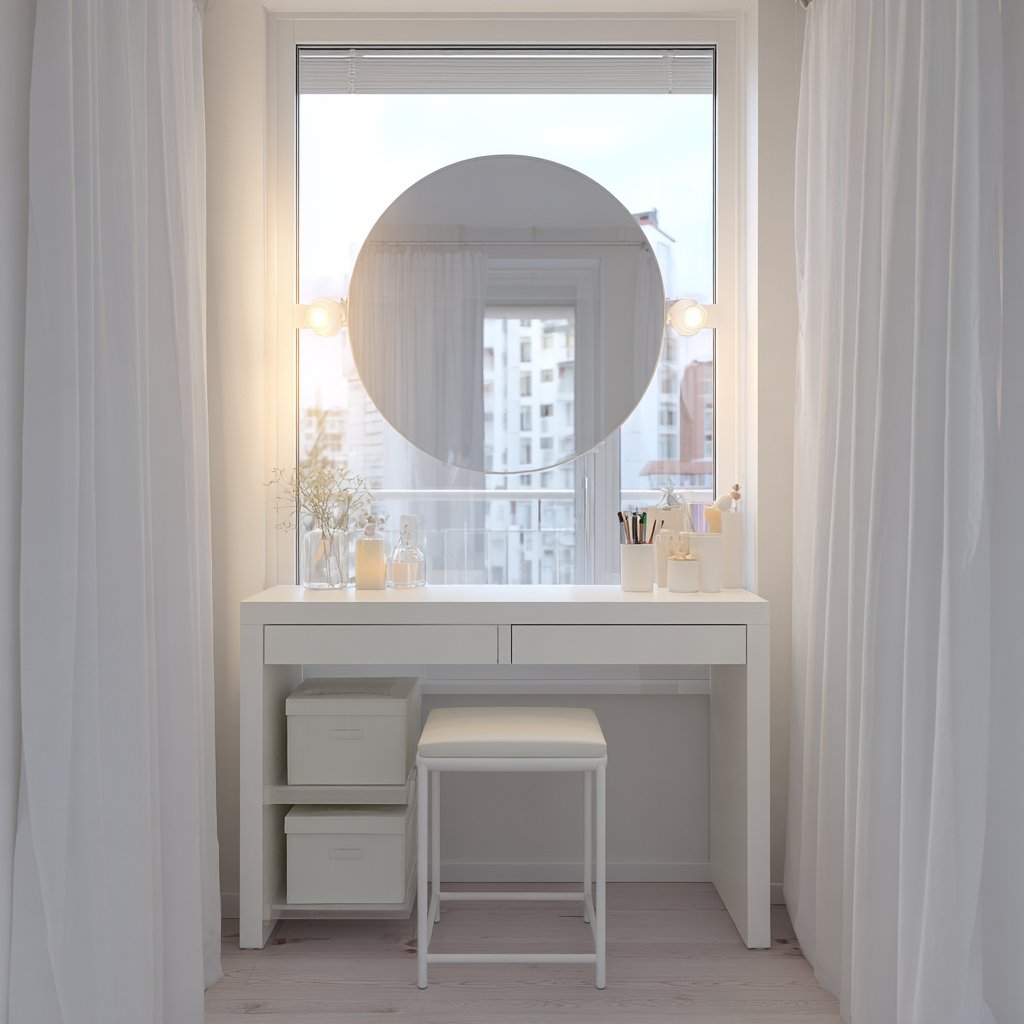
The simple white metal stool tucks neatly underneath the table when not in use, its compact profile ensuring floor space remains open in the small rental apartment bedroom where this setup shines. This budget-friendly approach showcases smart shopping strategies: knowing which pieces are worth investment (like quality lighting) and where cost-effective solutions perform admirably (like basic furniture forms). The clip-on LED lights provide adjustable, shadow-free illumination without requiring electrical modifications—particularly important in rental situations where permanent installations aren’t permitted. Wide-angle interior photography demonstrates the accessible, achievable styling that makes this design approachable for first-time decorators or those working within tight financial constraints.
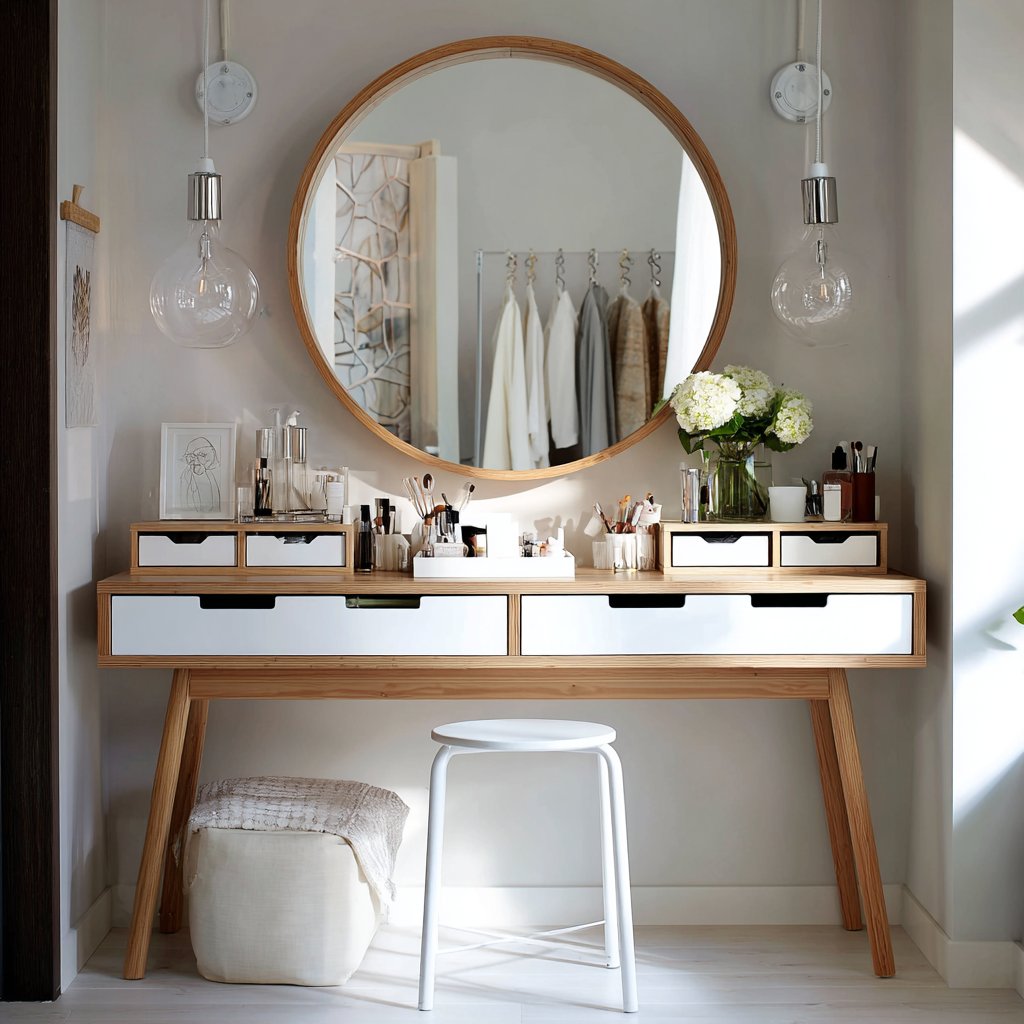
This democratic approach to small dressing table ideas celebrates resourcefulness and creativity over unlimited budgets, proving that everyone deserves beautiful, functional spaces regardless of economic resources. The white-on-white palette creates a sense of calm and spaciousness, while the simplicity of the design allows for easy personalization through affordable accessories like decorative trays, plant pots, or picture frames. The IKEA hack phenomenon represents a global community of creative problem-solvers who share ideas, innovations, and inspiration—transforming mass-produced furniture into personalized expressions that serve individual needs and preferences perfectly.
Key Design Tips: Research popular IKEA hacks online for specific product combinations that others have successfully implemented. Invest in quality LED lighting with adjustable brightness and color temperature for optimal makeup application. Use drawer organizers to maximize storage in basic furniture pieces that may lack built-in organization. Consider adding adhesive decorative elements like contact paper, appliques, or new hardware to personalize basic pieces. Measure your space carefully before purchasing to ensure all components fit comfortably with adequate circulation space.
12. Art Deco Geometric Drama
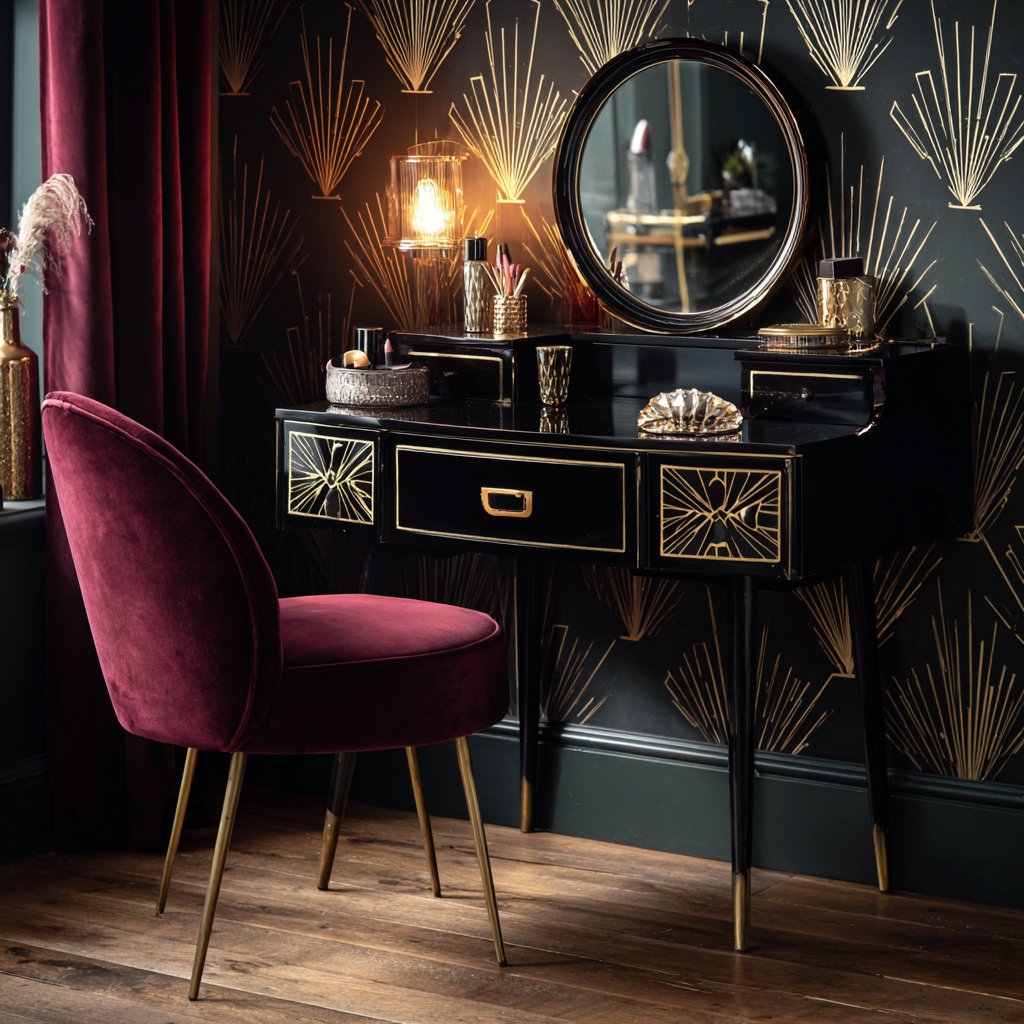
Transport yourself to the glamorous 1920s with an Art Deco-inspired compact vanity that celebrates geometric precision, luxurious materials, and bold design choices. The glossy black lacquer finish creates a dramatic, reflective surface that served as the height of modernity in the interwar period, while geometric gold inlay details add the characteristic Art Deco love of pattern, symmetry, and decorative embellishment. The streamlined design with its single curved drawer exemplifies the movement’s embrace of modern manufacturing techniques and machine-age aesthetics—a dramatic departure from the organic forms of the preceding Art Nouveau period. The distinctive gold handle features the stepped, ziggurat-inspired form that became an Art Deco signature.
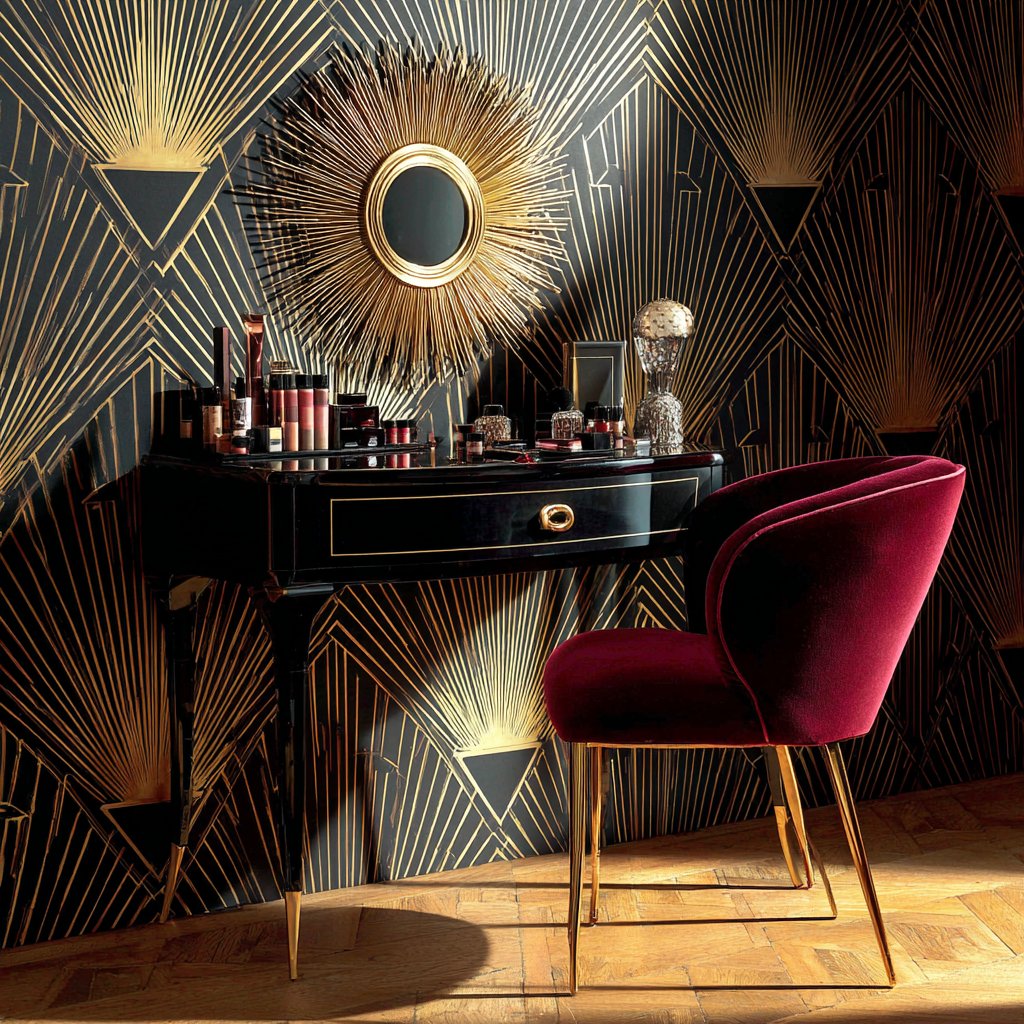
A round mirror with an elaborate sunburst frame crowns the composition, its radiating gilt rays embodying the Art Deco fascination with sunlight, energy, and optimistic modernity. This mirror design references the period’s obsession with ancient Egyptian motifs following the 1922 discovery of Tutankhamun’s tomb—an archaeological find that profoundly influenced decorative arts throughout the decade. A low-back velvet chair in burgundy with gold metal legs provides glamorous seating that would feel equally at home in a Parisian apartment or a Manhattan penthouse of the era. Styled with vintage cosmetic jars featuring geometric enameling and a small crystal lamp with stepped layers, the vanity becomes a time capsule of 1920s sophistication.
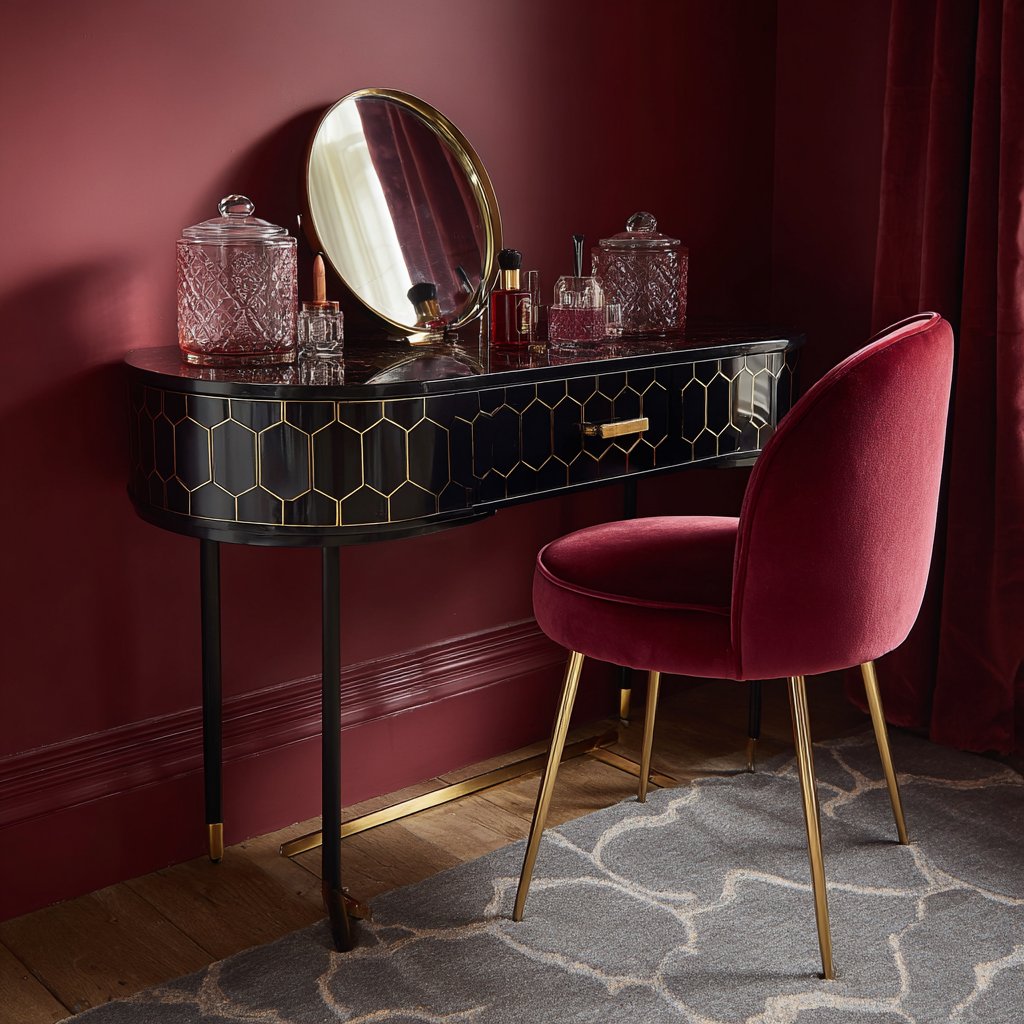
Professional interior photography employs dramatic side lighting to emphasize the bold geometric patterns and luxurious materials that define this aesthetic. The play of light across the glossy black surface creates depth and dimension, while the gold elements catch and reflect illumination from multiple angles. This Art Deco interpretation of small dressing table ideas appeals to those who appreciate design movements with strong historical identity and distinctive visual characteristics. The compact scale makes this dramatic style achievable in modest bedrooms, proving that bold design choices need not require vast spaces to make their impact.
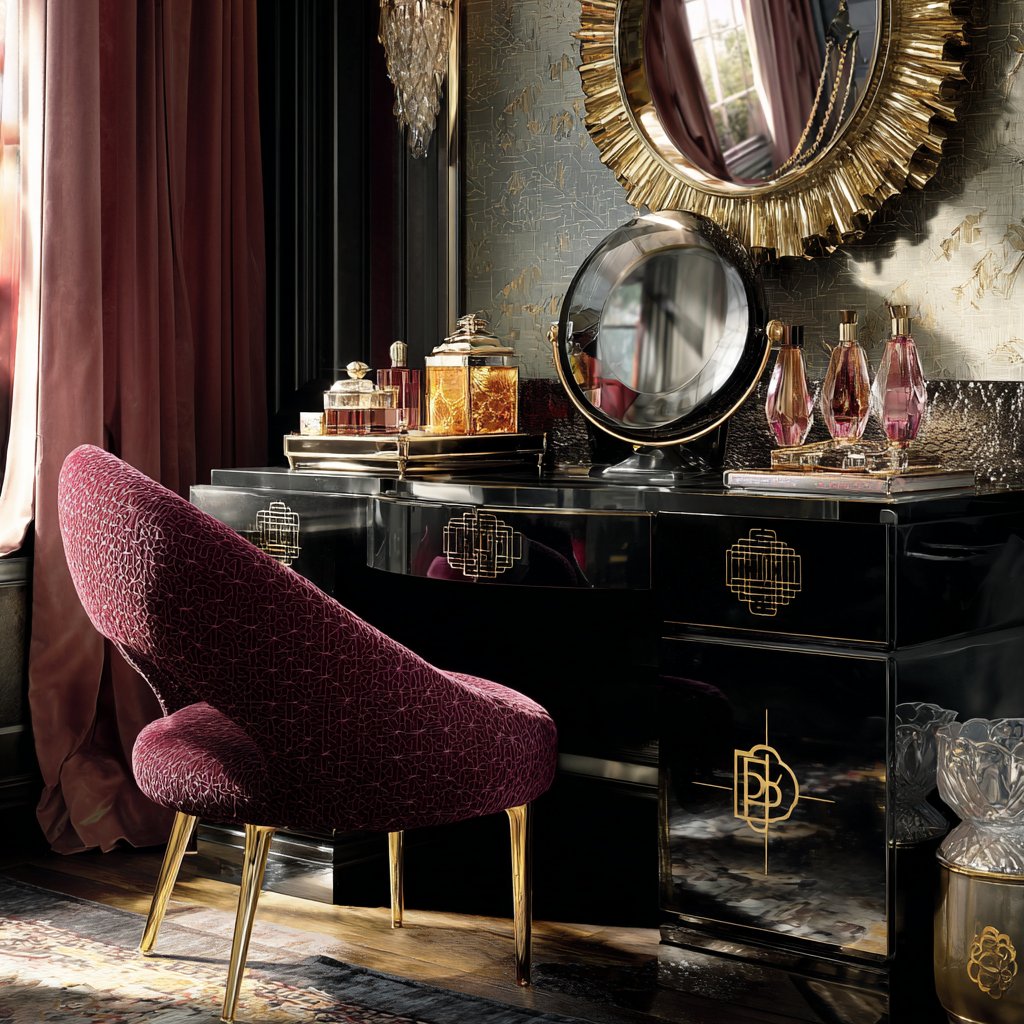
Key Design Tips: Maintain glossy lacquer finishes with specialized products designed for high-gloss surfaces to prevent dulling or scratching. Choose accessories with geometric patterns, metallic finishes, or vintage Art Deco origins to maintain stylistic authenticity. Position lighting to highlight the geometric inlays and create dramatic shadows that enhance three-dimensional details. Research authentic Art Deco color palettes—black with gold, emerald green with silver, navy with brass—to ensure historically accurate combinations. Consider adding a decorative perfume bottle or compact from the 1920s-30s as both functional storage and authentic period artifact.
13. Scandinavian Birch Natural Softness
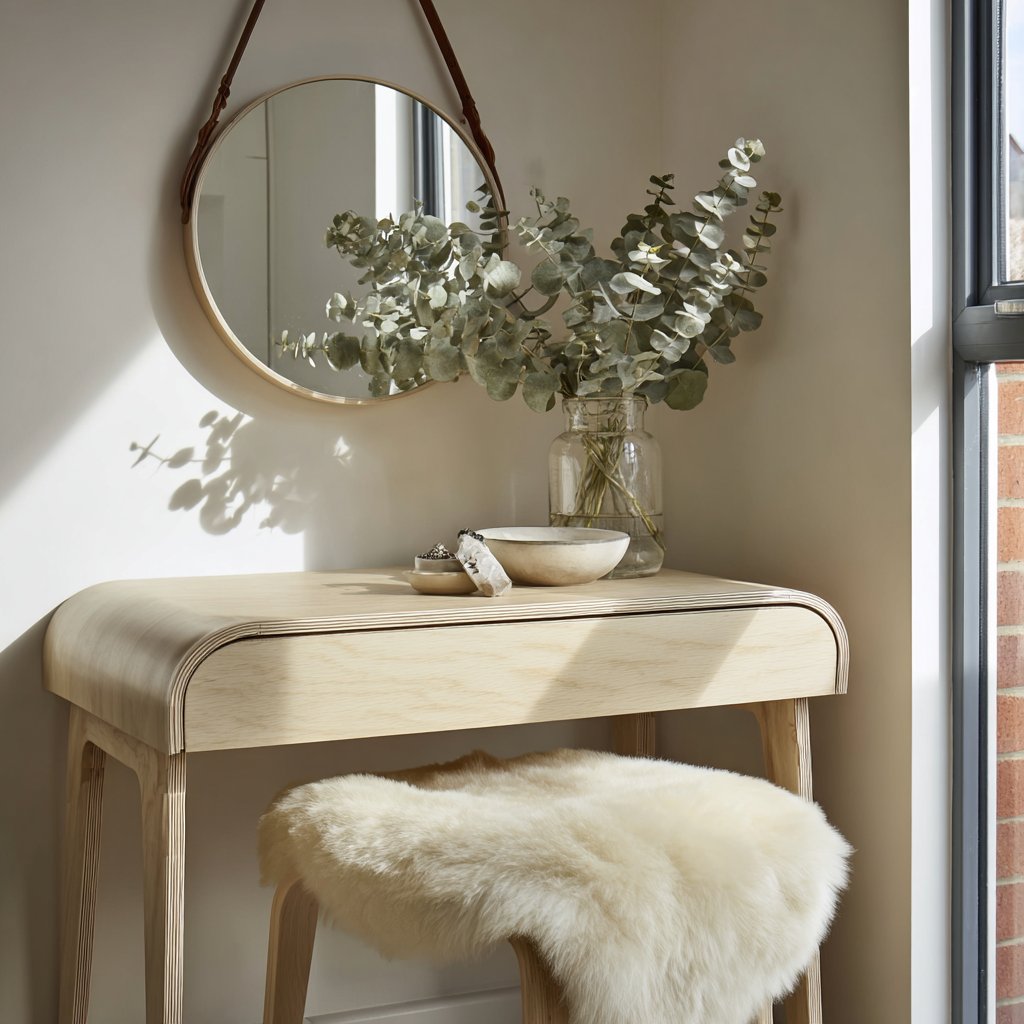
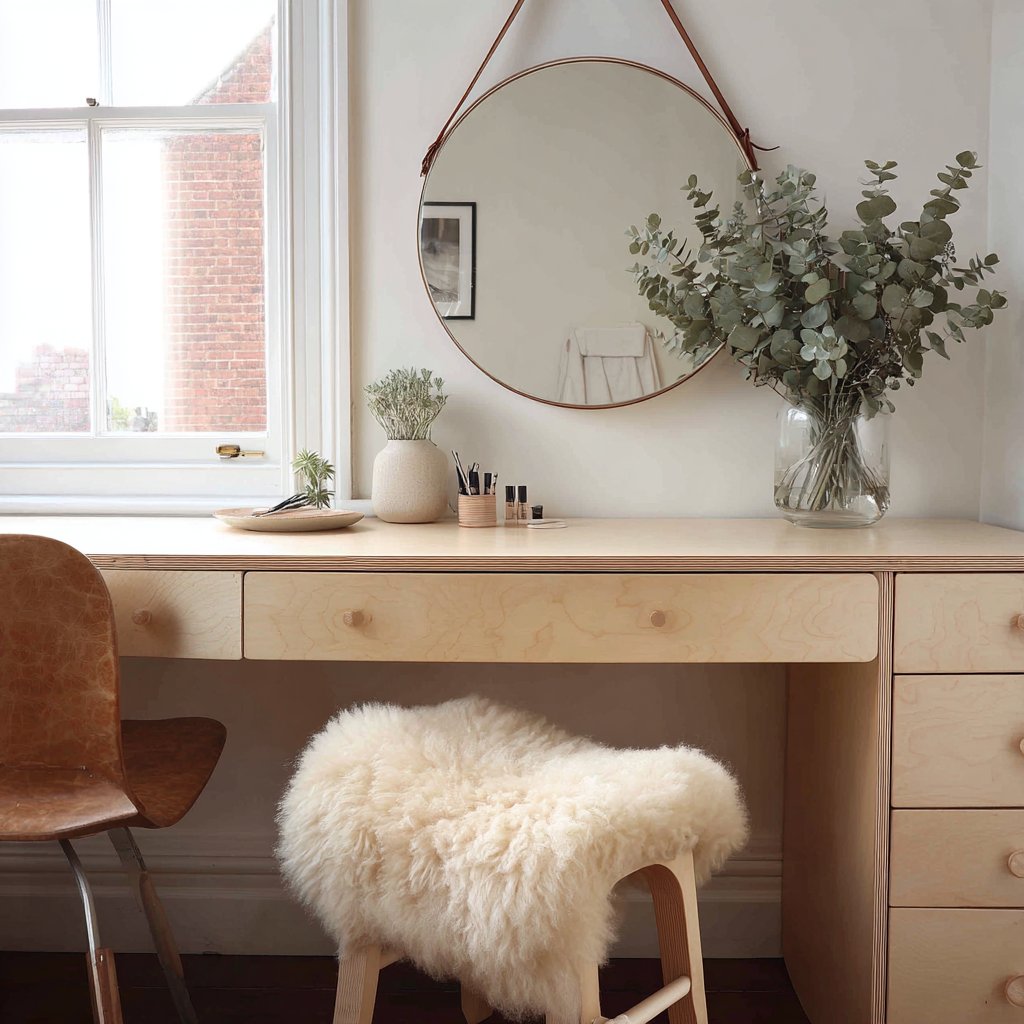
Experience the gentle embrace of Scandinavian design with a small dressing table crafted from birch plywood, celebrating the Nordic appreciation for natural materials, organic forms, and functional simplicity. The natural finish and rounded edges create a soft, approachable aesthetic that feels warm despite the cool northern climate that inspired this design philosophy. Birch, with its pale color and subtle grain pattern, reflects light beautifully while introducing gentle texture that prevents the minimalist design from feeling cold or sterile. The layered plywood edges, visible at the corners and surfaces, become decorative details that honestly express the construction method rather than concealing it—a fundamental Scandinavian design principle.
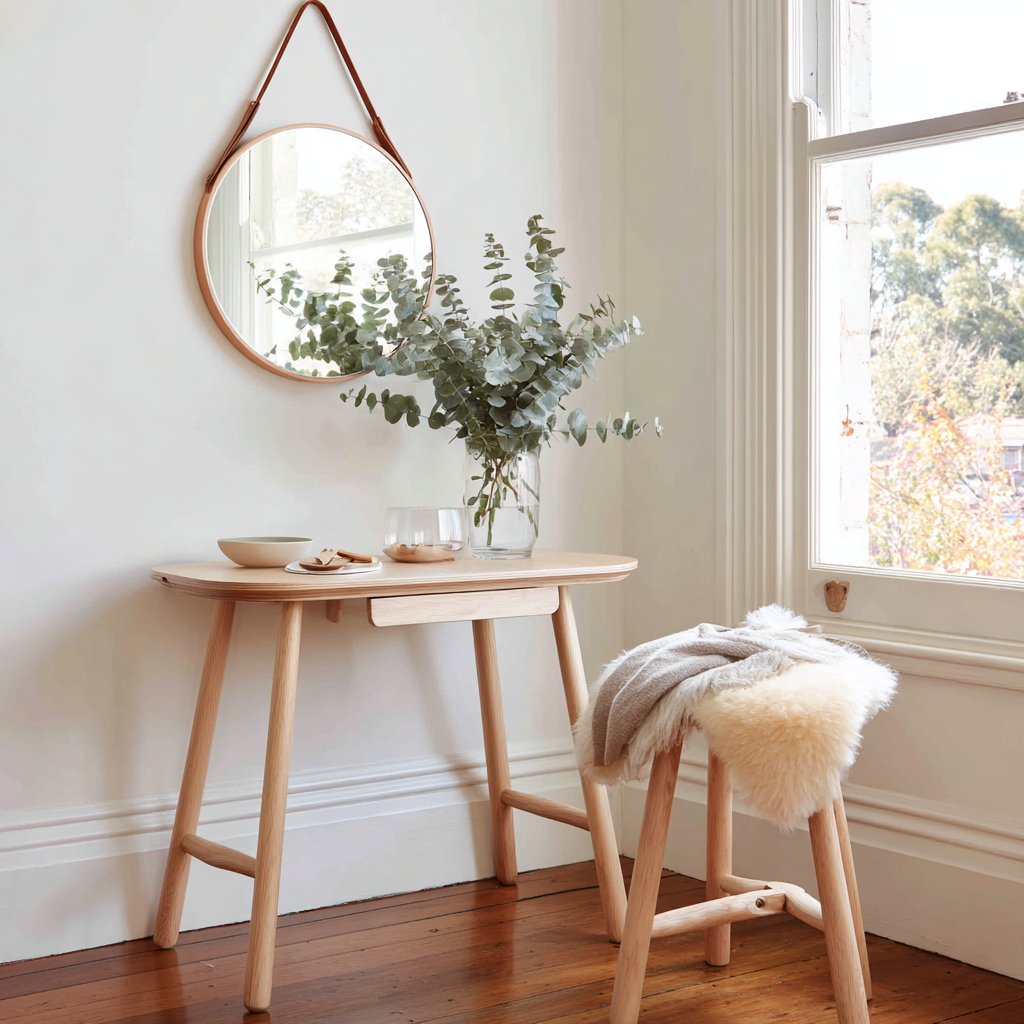
A frameless circular mirror hangs on a leather strap, combining practicality with organic material choice in a way that feels both contemporary and timeless. The leather strap allows for easy height adjustment and adds a tactile, natural element that complements the wood beautifully. The minimal styling includes only a ceramic dish for jewelry—its handcrafted appearance celebrating artisanal work—and a small glass vase holding fresh eucalyptus branches that bring living greenery into the space. A pale wooden stool draped with a sheepskin throw provides comfortable, cozy seating while introducing another natural texture that softens the harder surfaces.
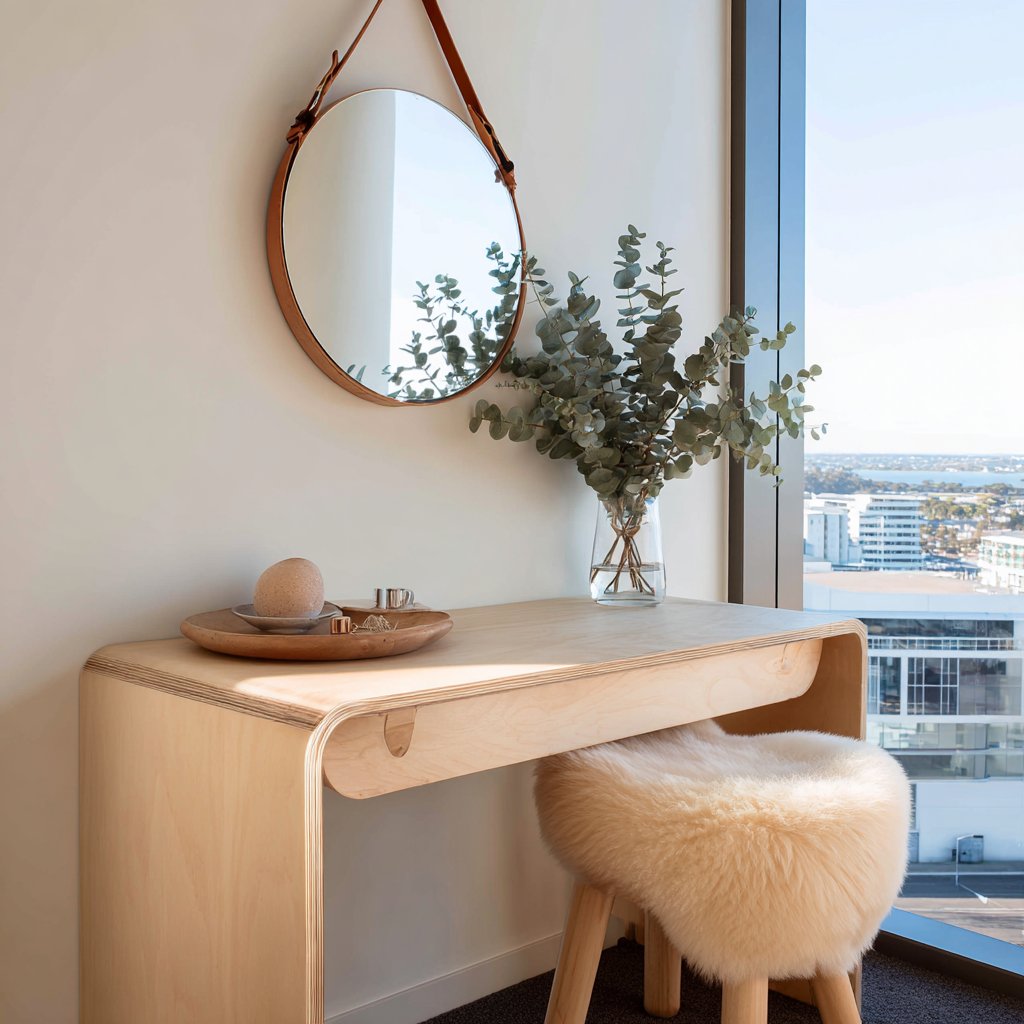
Abundant natural light flooding through large windows is essential to this Scandinavian approach, which evolved in northern regions where maximizing scarce winter sunlight became a design imperative. Interior design photography captures the Nordic simplicity and connection to natural materials that make Scandinavian design so globally beloved. This interpretation of small dressing table ideas demonstrates how restraint can create spaces that feel both calming and complete, where every element contributes meaning and nothing is extraneous. The design celebrates hygge—that uniquely Danish concept of cozy contentment—creating a vanity space that feels like a peaceful refuge rather than merely a functional necessity.
Key Design Tips: Treat birch plywood with natural oils like linseed or tung oil to enhance the wood’s beauty while providing moisture protection. Maximize natural light through unadorned windows or simple linen curtains that filter without blocking illumination. Choose accessories in natural materials like ceramic, glass, wood, or stone to maintain material harmony. Incorporate living plants or fresh branches to connect the interior with nature, fundamental to Scandinavian design. Keep color palettes neutral with white, grey, and natural wood tones, adding subtle warmth through textiles and natural materials rather than bold colors.
14. Built-In Closet Alcove Integration
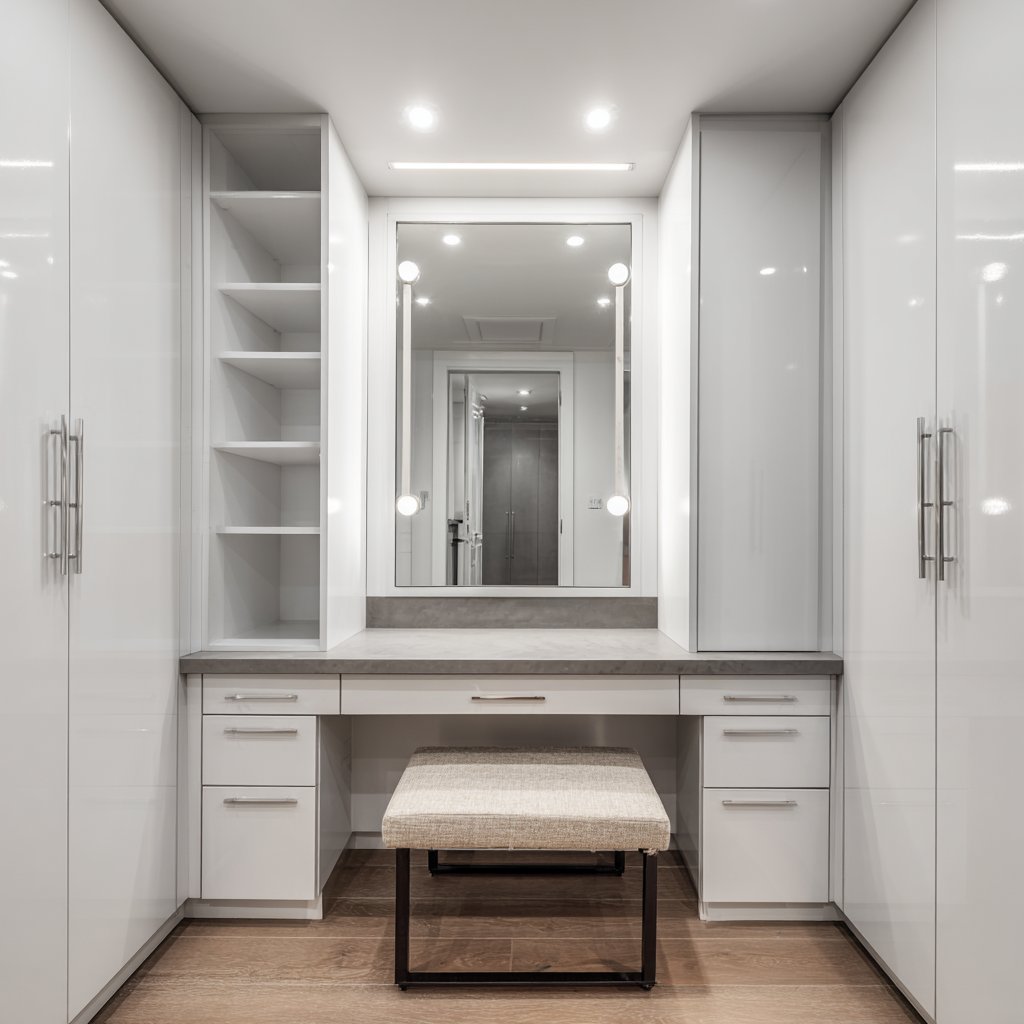
Discover architectural ingenuity with a space-saving built-in vanity nook carved seamlessly into a bedroom closet alcove, demonstrating how custom millwork transforms underutilized spaces into highly functional areas. The custom-fitted white melamine shelving on either side of the central vanity area provides abundant storage for beauty products, hair tools, skincare collections, and accessories, eliminating the need for additional furniture and maintaining a streamlined, integrated appearance. The central counter area in grey quartz offers a practical, durable surface for makeup application that resists moisture, staining, and heat damage from styling tools—essential properties for daily beauty routines. The stone’s subtle movement and cool tones create visual interest without competing with displayed items.
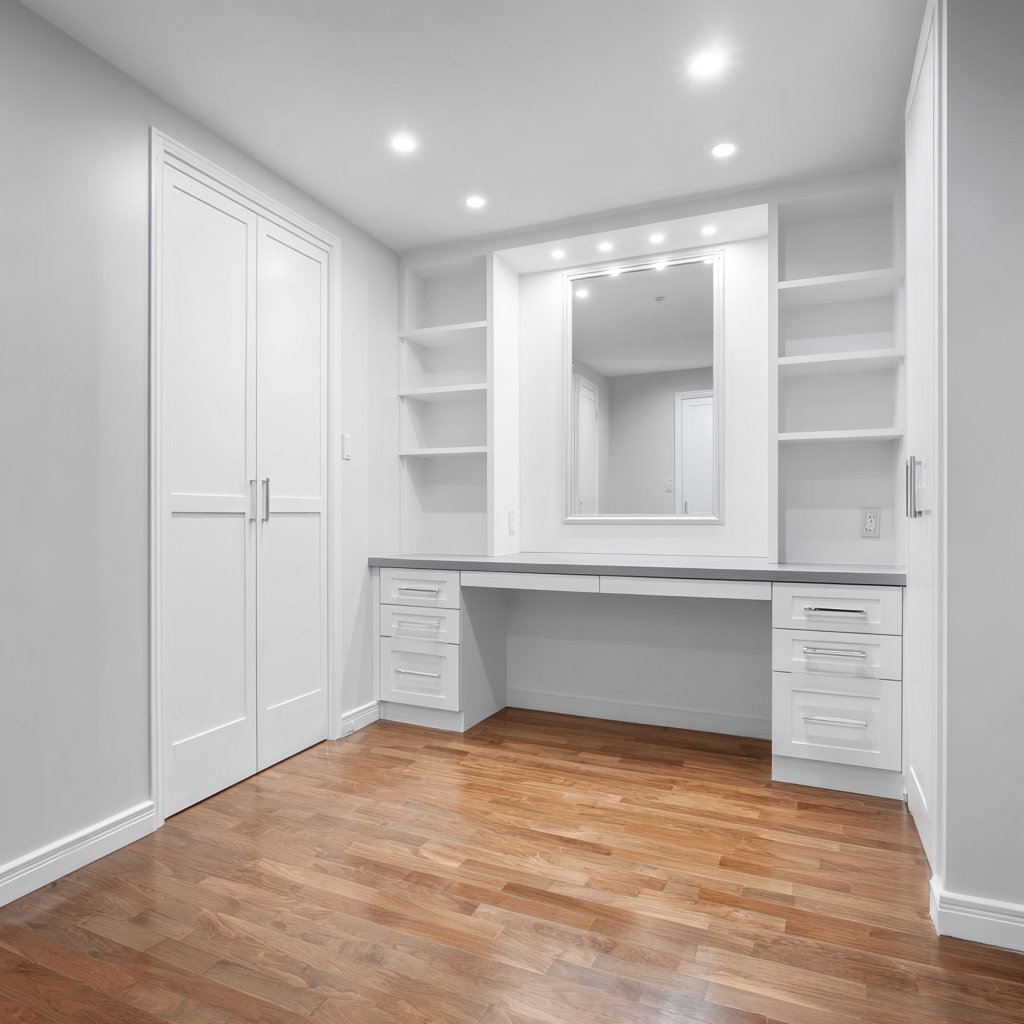
A large frameless rectangular mirror mounted flush with the back wall maximizes reflection while maintaining the clean, contemporary aesthetic of the built-in design. The absence of a frame creates a seamless look that visually expands the alcove, making the compact space feel more generous than its actual dimensions. Integrated LED strip lighting installed along the shelves and beneath the upper cabinets illuminates the work surface evenly while highlighting displayed products—both functional and decorative lighting in one efficient solution. The alcove doors, when present, can close to completely conceal the vanity area, allowing the bedroom to maintain its primary identity and creating visual calm when grooming activities aren’t in progress.
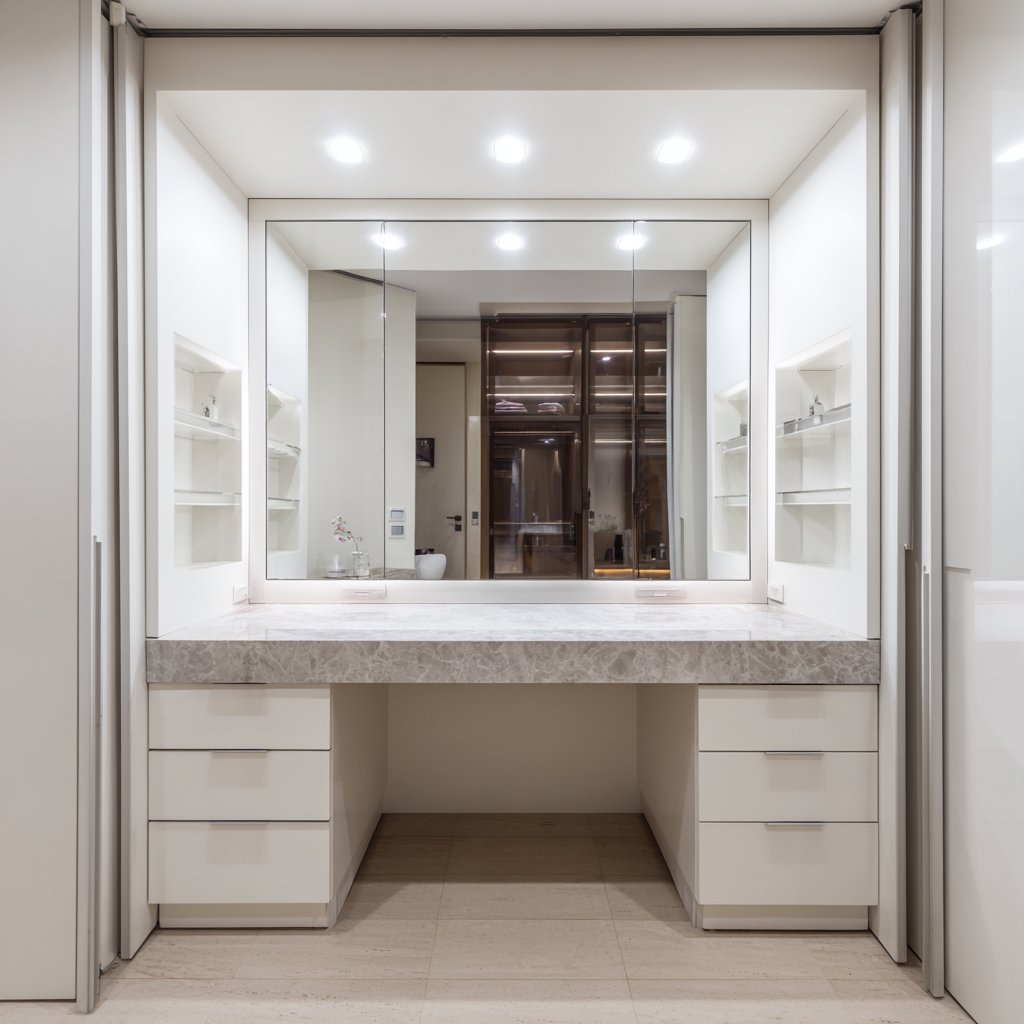
Professional interior photography demonstrates the clever architectural integration and maximized storage capacity that make this approach ideal for new construction or major renovations where custom solutions can be planned from the beginning. This built-in interpretation of small dressing table ideas represents the ultimate in space efficiency, transforming what might have been wasted closet depth into a dedicated grooming station. The custom nature of the installation ensures perfect proportions and optimal functionality specific to the user’s needs, storage requirements, and collection of beauty products. While this approach requires greater upfront investment than furniture-based solutions, the result is a seamless, professional finish that adds genuine value to the home.
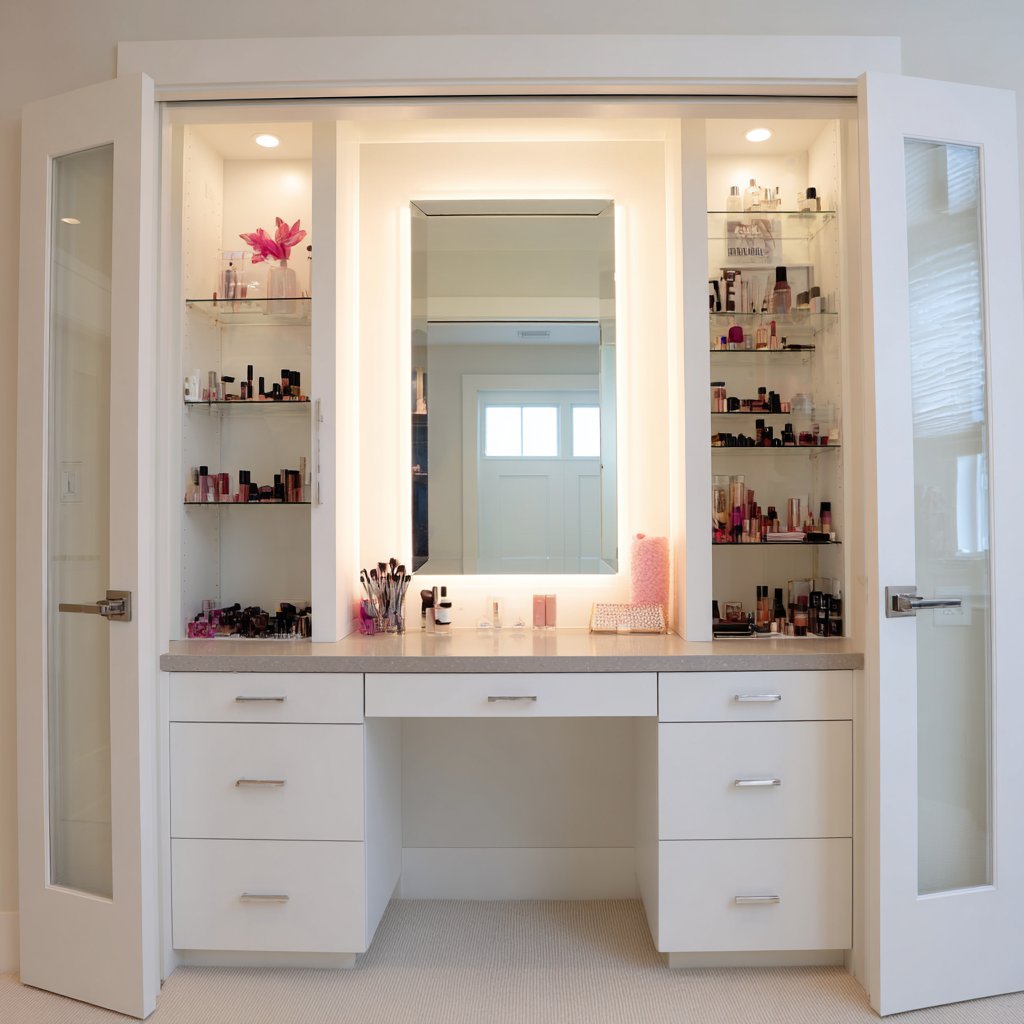
Key Design Tips: Plan electrical needs during construction, incorporating adequate outlets and USB charging ports at convenient locations. Choose quartz or solid surface countertops that can withstand cosmetic spills and heat from styling tools. Install lighting with appropriate color temperature (4000-5000K) that mimics natural daylight for accurate makeup application. Add pull-out drawers or lazy Susan organizers in corner sections to maximize accessibility of stored items. Consider soft-close hinges on doors and drawers to reduce noise and wear, protecting your investment in custom cabinetry.
15. Coastal Cottage Weathered Beauty
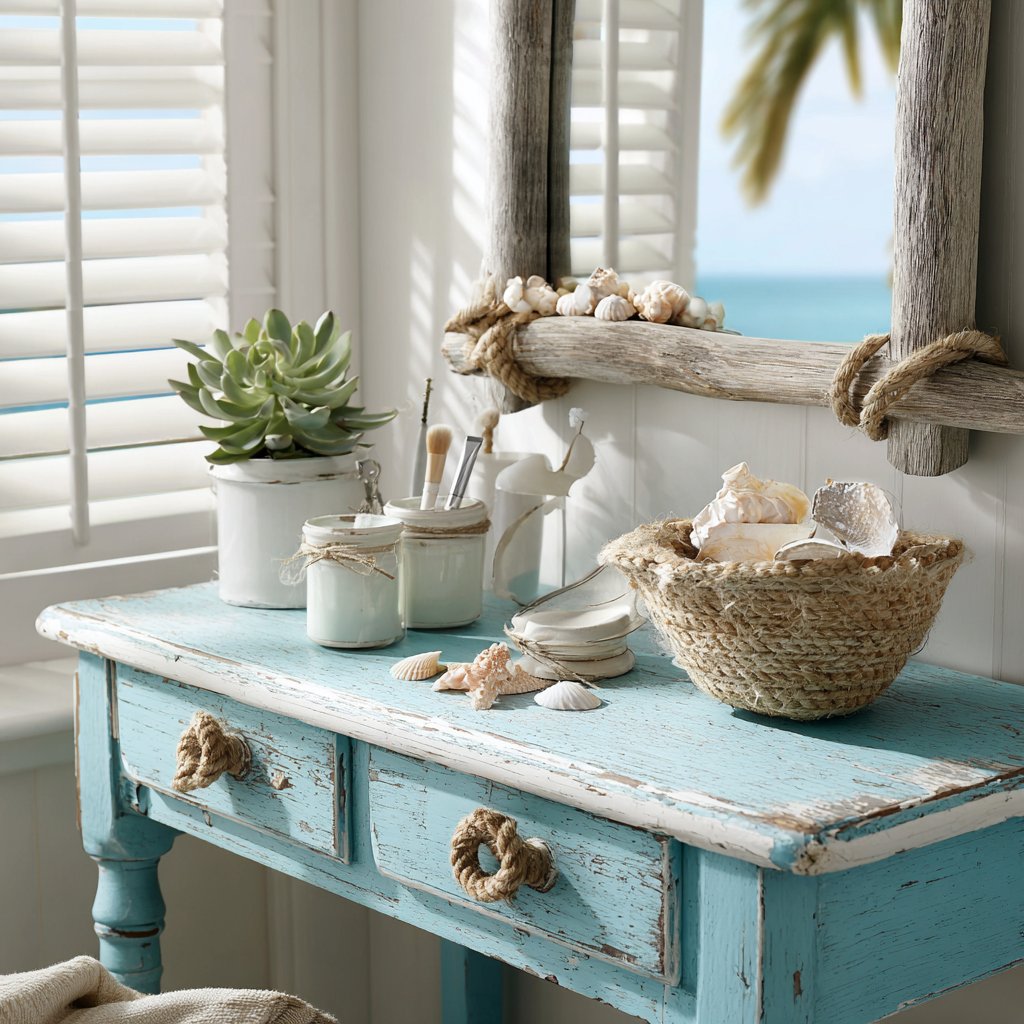
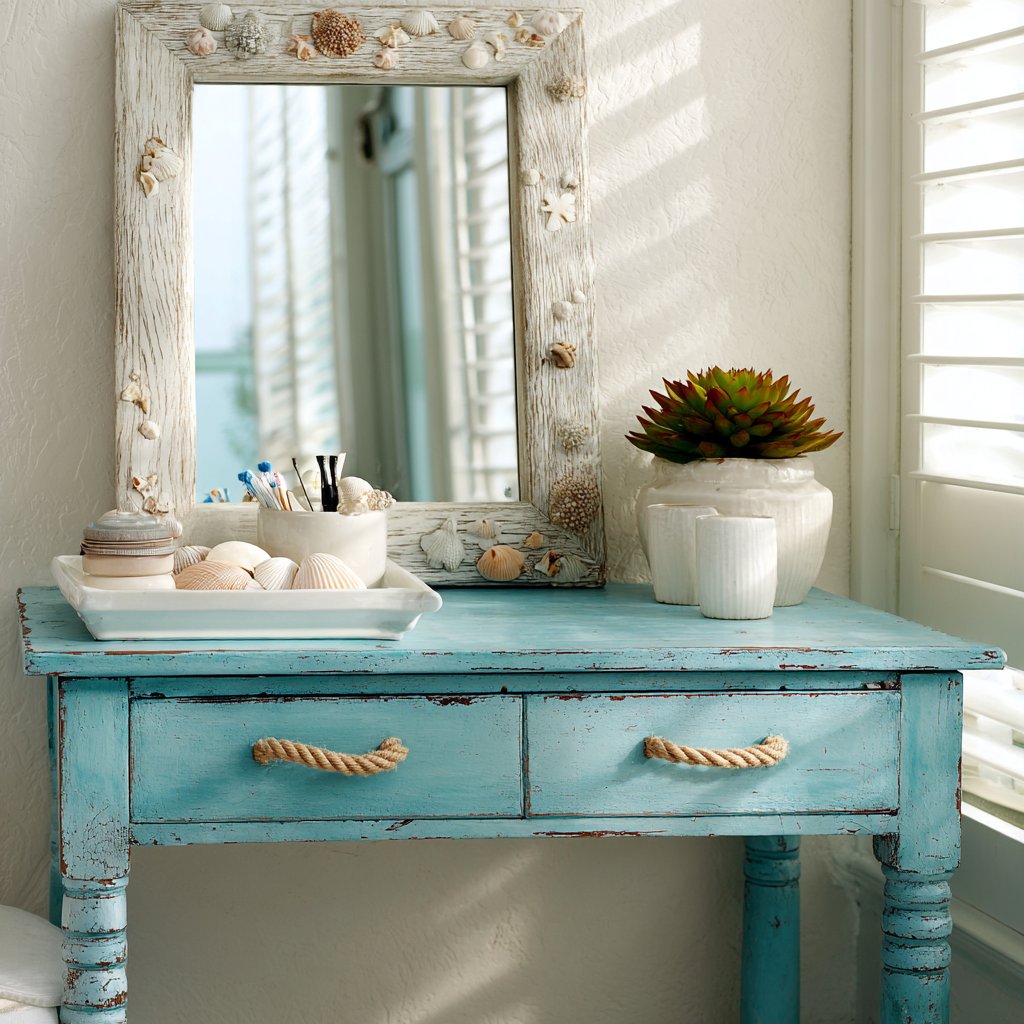
Breathe in the fresh, relaxed atmosphere of a coastal cottage-style vanity painted in soft aqua blue with expertly distressed edges that reveal white primer beneath, mimicking the natural weathering of seaside buildings exposed to salt air and sun. This deliberate aging technique creates authentic character while evoking the carefree, casual elegance of beach house living. Rope drawer pulls add nautical charm through material choice and form, their natural fiber texture providing tactile interest and thematic consistency. The two small drawers offer compact storage perfectly scaled for essential cosmetics and grooming tools in a vacation home or modest bedroom.
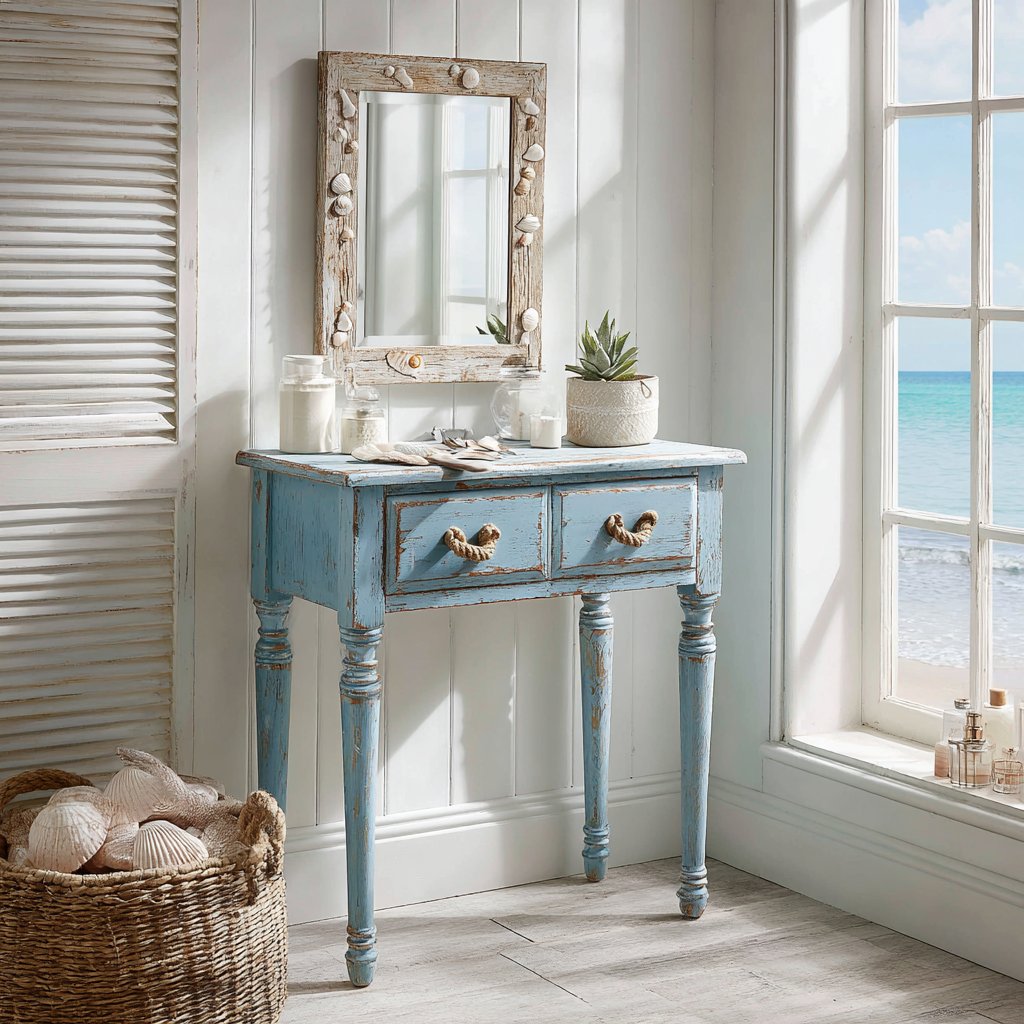
A driftwood-framed mirror hangs above, its silvered, weathered wood telling stories of time spent tumbling in ocean waves before being transformed into functional art. Small seashells carefully affixed to the frame’s corners add delicate coastal references without overwhelming the rustic simplicity of the natural wood. White ceramic containers arranged on the vanity surface hold cotton balls and other essentials, their clean simplicity allowing the colored vanity to remain the visual focus. A small potted succulent introduces living greenery that thrives in the bright, indirect light typical of coastal locations—practical beauty requiring minimal maintenance.
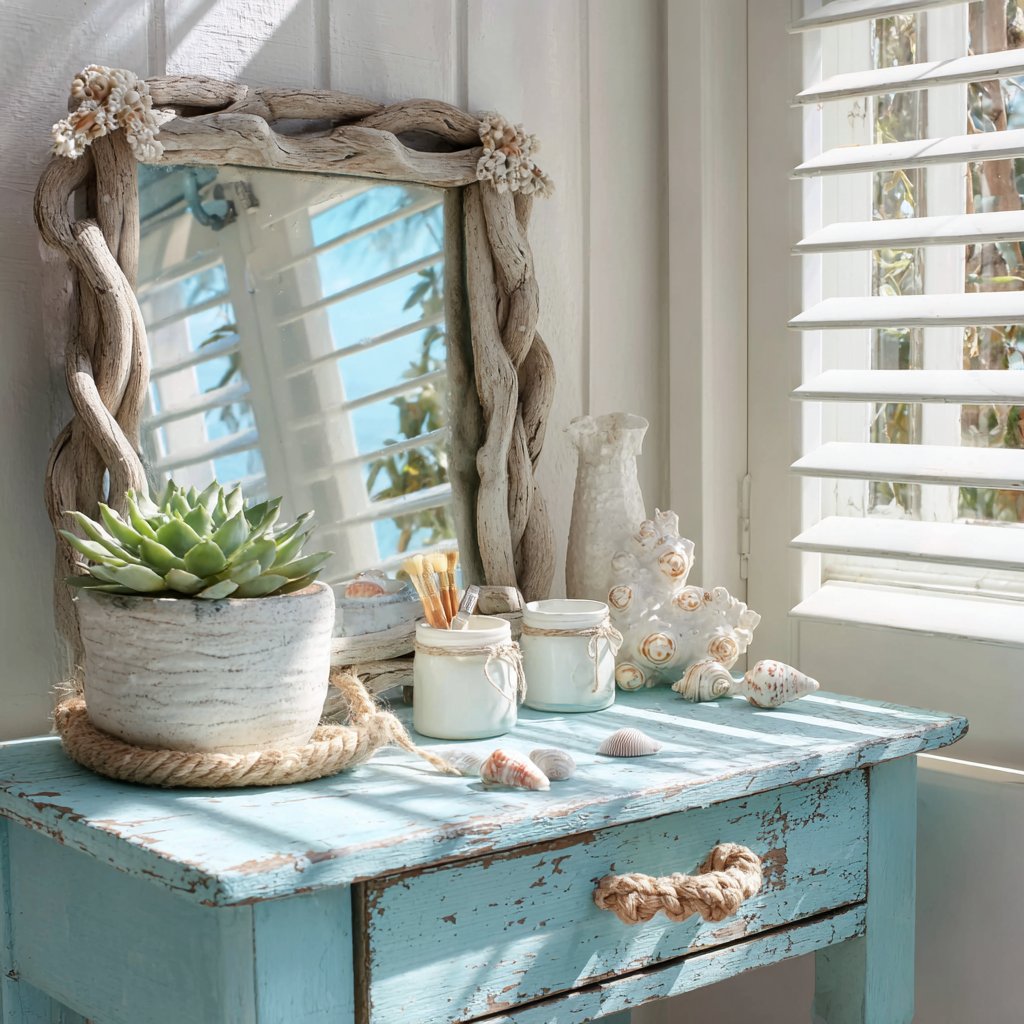
Positioned near a window dressed with white plantation shutters, the vanity benefits from filtered seaside light that shifts throughout the day, creating ever-changing plays of shadow and illumination. Interior design photography emphasizes the breezy, beach-inspired aesthetic and relaxed styling that makes coastal design so appealing to those seeking escape from urban intensity. This interpretation of small dressing table ideas celebrates the romance of coastal living, where daily routines feel less like obligations and more like leisurely rituals in spaces that prioritize relaxation and natural beauty. The soft aqua color evokes both sky and sea, bringing the soothing qualities of coastal landscapes indoors.
Key Design Tips: Distress painted furniture strategically at edges, corners, and areas that would naturally show wear to create authentic appearance. Choose marine-grade hardware or sealed rope elements that resist moisture damage in humid coastal environments. Incorporate natural found objects like driftwood, shells, or sea glass as decorative accessories rather than themed purchased items. Position the vanity where ocean or nature views can be enjoyed during grooming routines, connecting daily rituals with the surrounding environment. Use chalk paint or milk paint for easier distressing and authentic matte finish characteristic of aged coastal furnishings.
16. Modern Luxury Marble Glamour
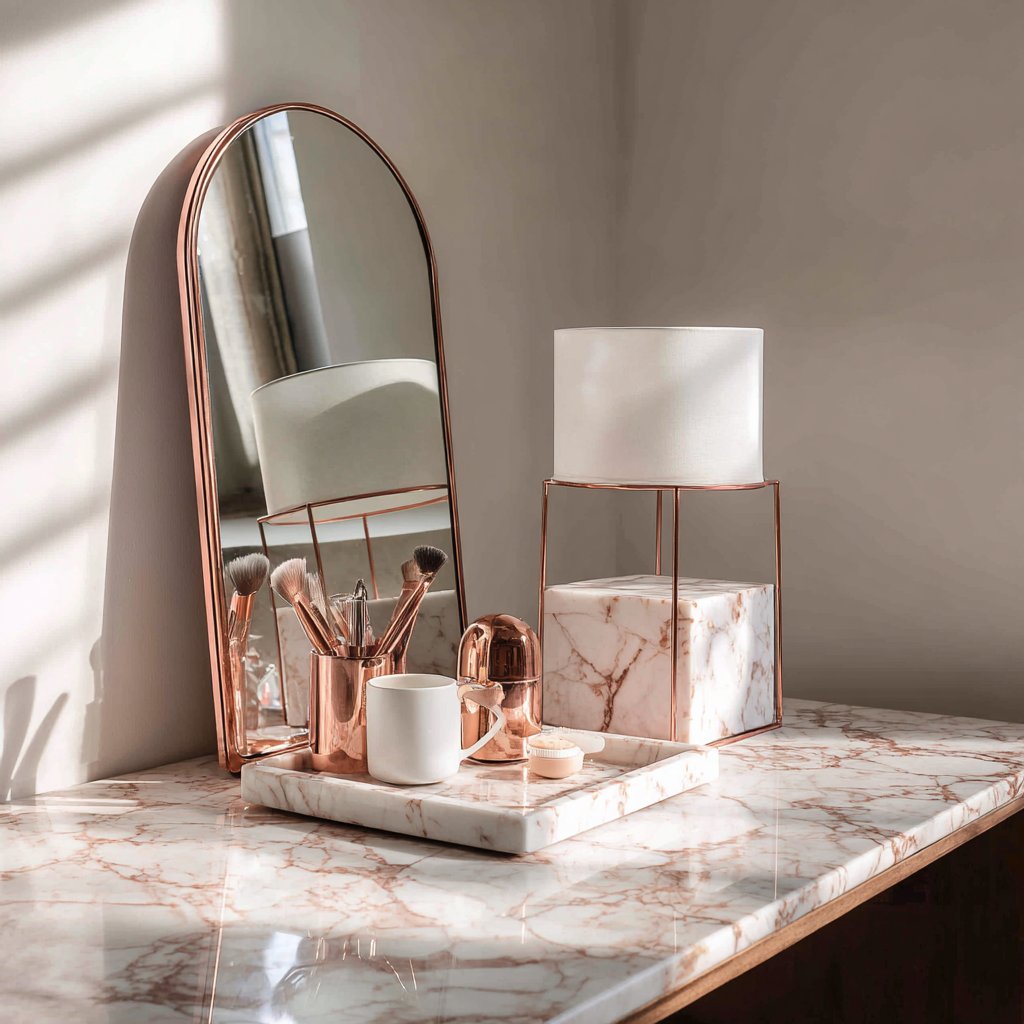
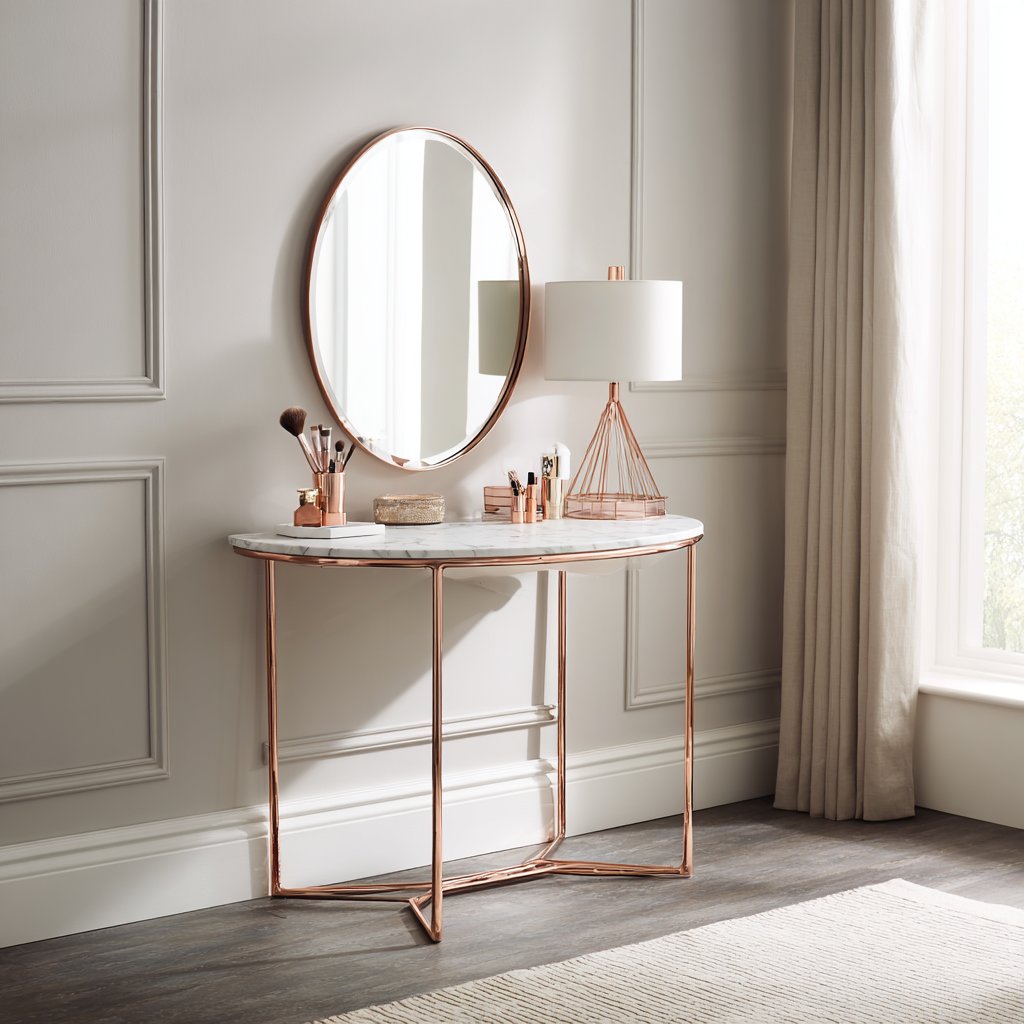
Indulge in contemporary luxury with a modern vanity that combines the timeless elegance of natural stone with the fresh sophistication of rose gold metallic accents. The marble top in white Carrara showcases the distinctive grey veining that has made this Italian stone the gold standard for luxury interiors for centuries, each piece unique in its natural patterning. The cool, smooth surface provides an ideal workspace for makeup application while elevating the entire bedroom aesthetic through its inherent opulence. Supporting this beautiful stone, a rose gold metal geometric base introduces contemporary styling through its angular, architectural form—a striking contrast between organic stone patterns and man-made geometric precision.
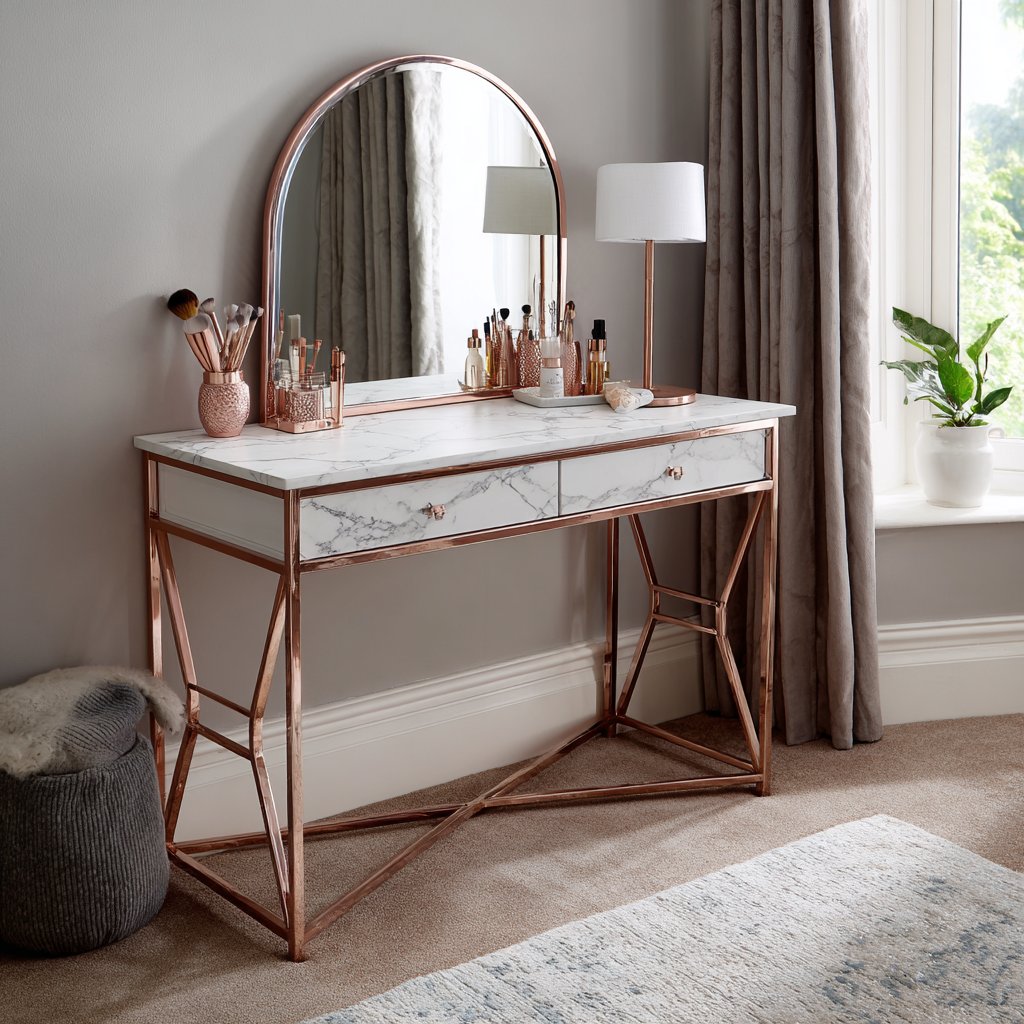
A large arched mirror with a thin rose gold frame leans elegantly against the bedroom wall, its graceful curve softening the angular geometry of the base while maintaining the sophisticated metallic theme. The leaning position suggests confident informality, as if such beauty need not be rigidly positioned to make its statement. The curated styling demonstrates restraint and editing—hallmarks of modern luxury—with rose gold beauty tools, a small marble catchall tray, and a modern table lamp with white linen shade creating a cohesive, considered composition. Soft morning light streaming through bedroom windows highlights the refined material combinations, creating subtle shadows that emphasize the marble’s dimensional veining and the metallic finish’s warm glow.
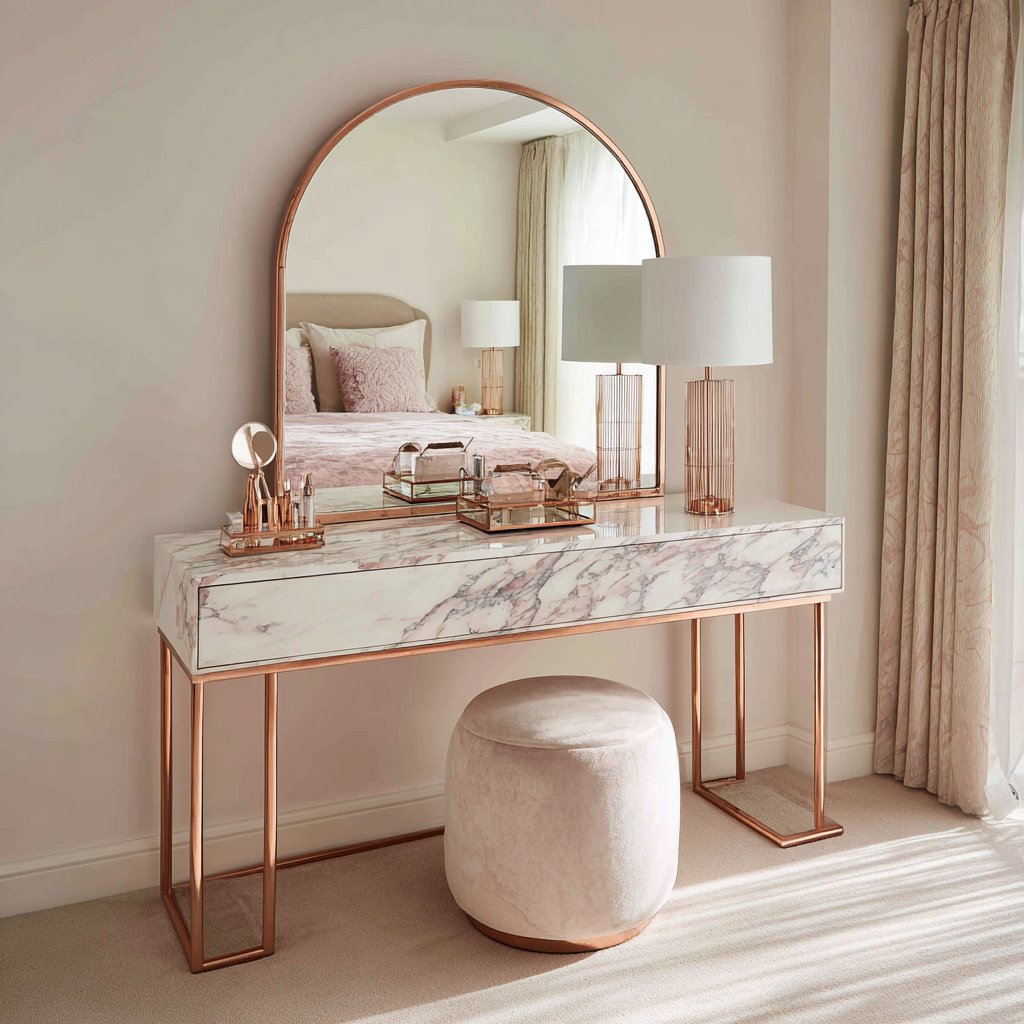
Professional interior photography with balanced exposure captures the sophisticated color palette and premium finishes that define this approach to contemporary small dressing table ideas. The rose gold and white marble combination creates a feminine elegance that never feels juvenile or overly sweet, instead projecting mature sophistication and refined taste. This design demonstrates how natural materials paired with contemporary metallic finishes bridge traditional and modern aesthetics, creating spaces that feel both timeless and current. The investment in quality materials ensures longevity, both aesthetically and functionally, making this approach ideal for those who view furniture as long-term investments rather than disposable trend items.
Key Design Tips: Seal marble surfaces with appropriate stone sealers to protect against cosmetic stains, particularly from products containing acids or oils. Clean marble regularly with pH-neutral stone cleaners, avoiding harsh chemicals that can etch or discolor the surface. Polish rose gold finishes with soft cloths to maintain their warm luster and prevent tarnishing. Position the vanity away from direct sunlight that might cause uneven fading or warming of metallic finishes. Use coasters or trays beneath products to prevent rings or stains on the marble surface, protecting your investment in natural stone.
17. Victorian Antique Heritage Treasure
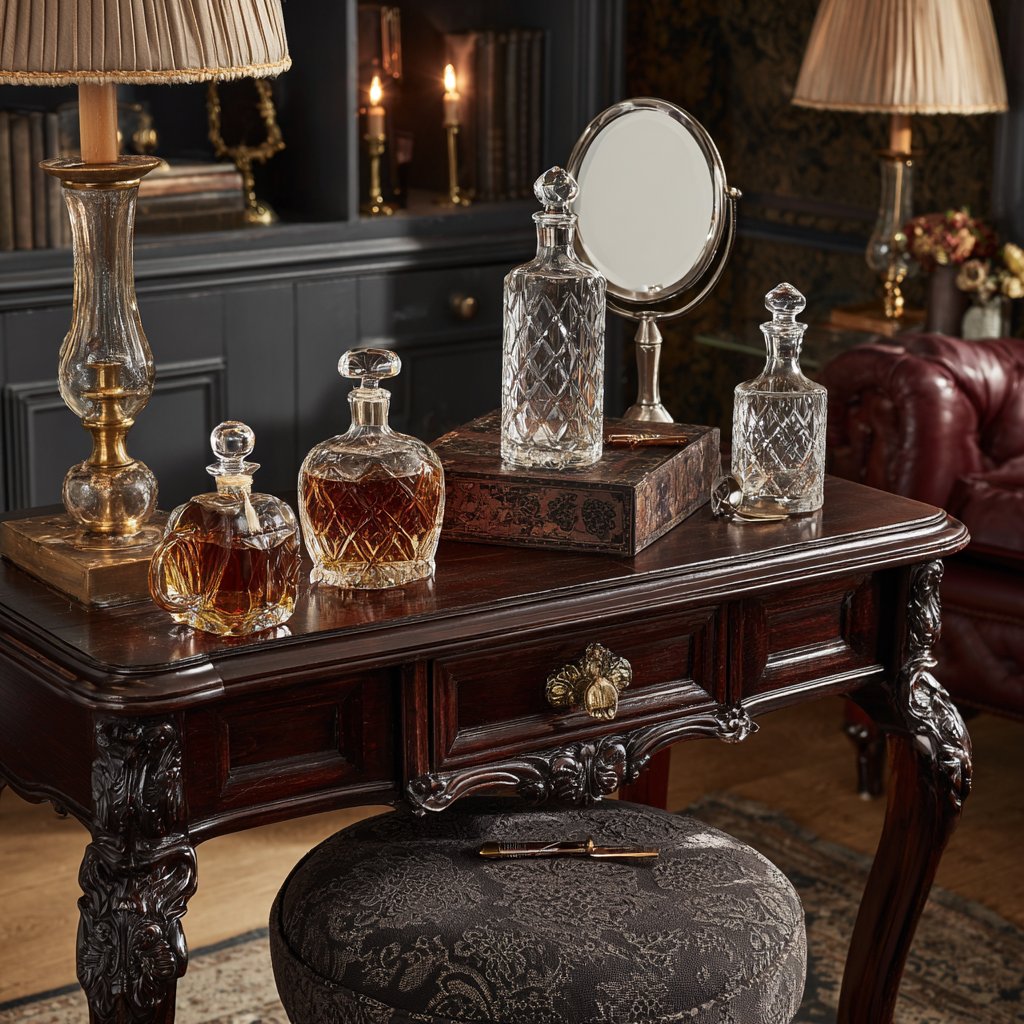
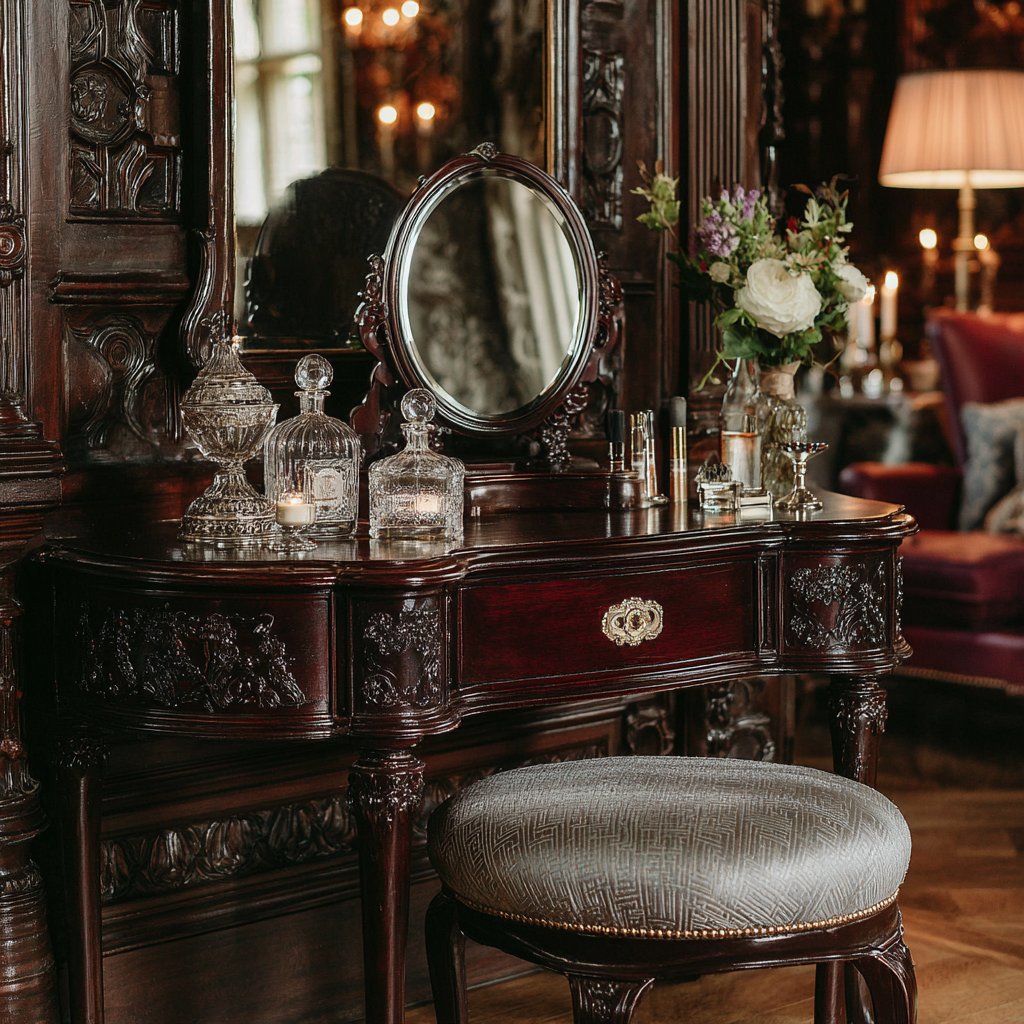
Step back into the ornate elegance of the Victorian era with an authentic antique vanity in dark mahogany that carries the weight of history in every carved detail and aged patina. The carved decorative details showcase the intricate craftsmanship valued in the 19th century, when furniture served not merely functional purposes but represented family wealth, social status, and appreciation for artisanal skill. The swivel oval mirror on an adjustable stand allows for positioning at the perfect angle, its mechanical ingenuity representing Victorian innovation and engineering advancement. The compact table features a single drawer adorned with an ornate brass keyhole escutcheon—perhaps once locked to protect precious jewelry or love letters—adding romantic intrigue to daily use.
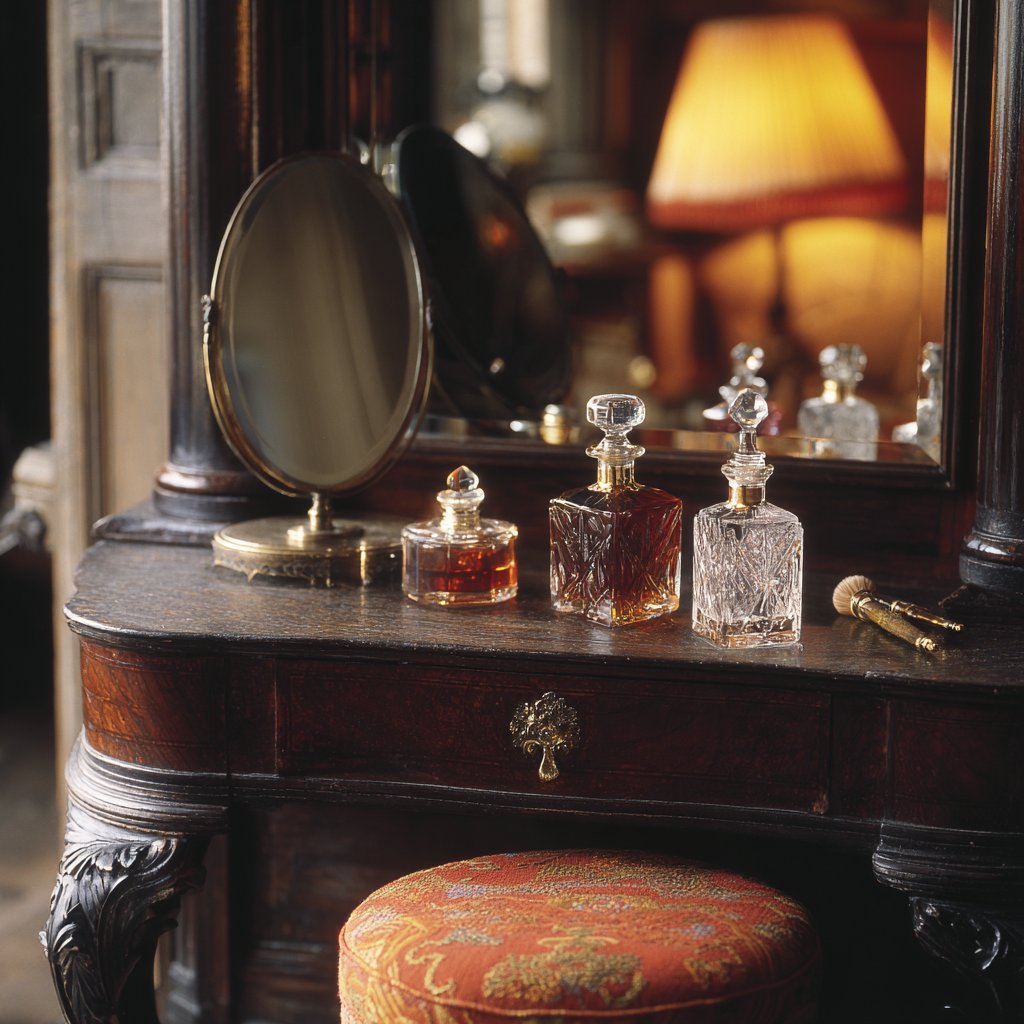
Vintage cut-glass perfume decanters and a silver-handled brush set arranged on the surface aren’t mere decorations but authentic period pieces that honor the vanity’s historical significance. These accessories transform the space into a functioning museum of personal grooming history, connecting present-day beauty rituals with centuries of similar practices. A petit needlepoint stool provides period-appropriate seating, its tapestry upholstery featuring floral patterns worked in silk threads by hands long gone—the ultimate in unique, irreplaceable furniture. Warm tungsten lighting from a traditional table lamp with fabric shade creates intimate, historical atmosphere that electric LED bulbs, despite their efficiency, simply cannot replicate.
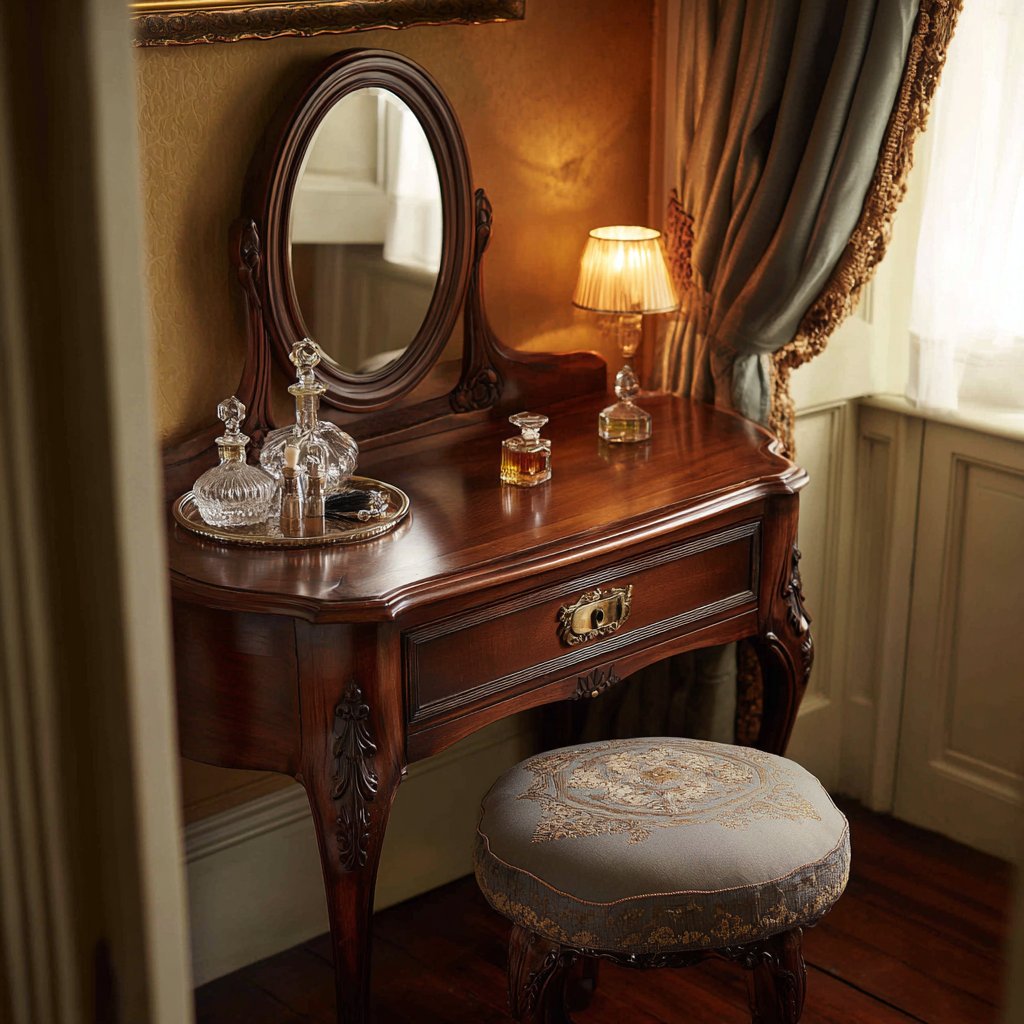
Interior design photography emphasizes the authentic period details and romantic ambiance that make antique furniture so compelling to collectors and history enthusiasts. This Victorian interpretation of small dressing table ideas appeals to those who view their homes as curators of history, who appreciate the stories embedded in aged wood and tarnished silver. The dark mahogany requires regular care with appropriate wood polishes, but this maintenance ritual itself becomes part of the relationship between owner and piece—a continuing dialogue across time. This design proves that small dressing table ideas can transcend mere functionality, becoming portals to different eras and tangible connections to the lives of women who came before.
Key Design Tips: Source antique furniture from reputable dealers who can verify age, origin, and authenticity, particularly for investment pieces. Apply appropriate wood preservatives formulated for antique finishes to protect rather than refinish original surfaces. Research proper care techniques for specific wood types and finishes before applying modern products that might damage patinas. Consider professional restoration for structural issues while preserving original decorative elements and surface treatments. Display period-appropriate accessories sourced from estate sales or antique shops to maintain historical authenticity and enhance the piece’s narrative value.
18. Acrylic Lucite Contemporary Transparency
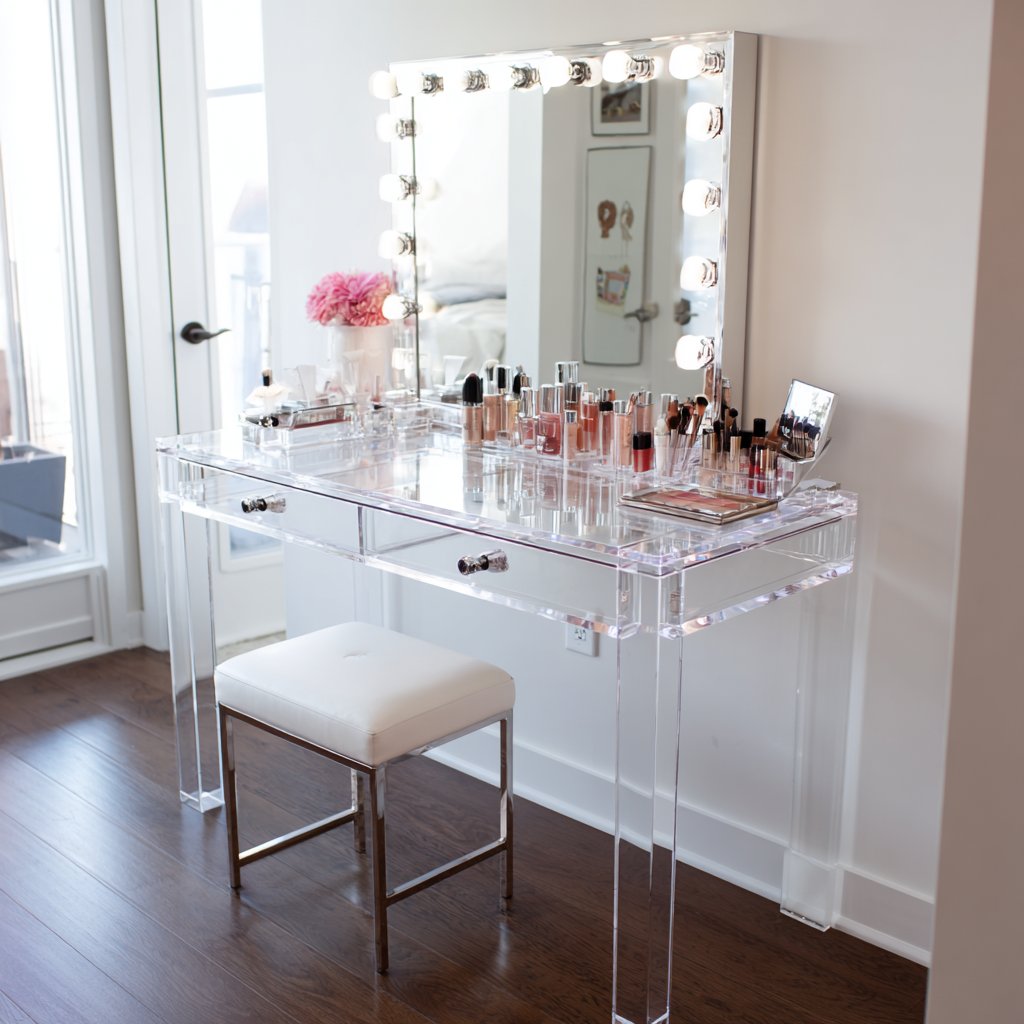
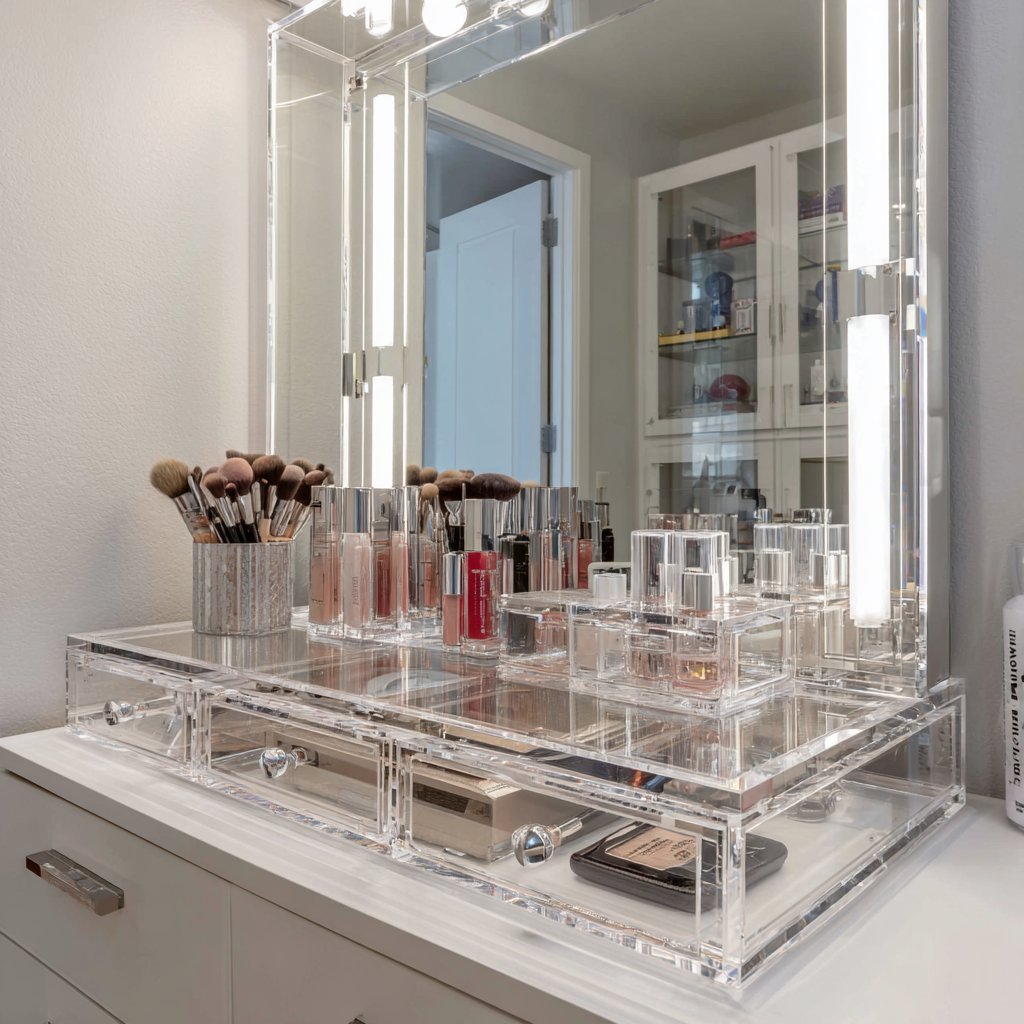
Embrace cutting-edge contemporary design with a vanity crafted entirely from clear acrylic lucite, creating a disappearing act that makes this furniture almost invisible within the bedroom space. The transparent construction allows light to pass completely through the piece, eliminating the visual weight that traditional opaque furniture creates and making small bedrooms feel significantly more spacious and airy. Chrome hardware provides necessary structural support and functional elements like drawer pulls, the reflective metal creating interesting visual punctuation against the clear acrylic without compromising the overall transparency. This material combination represents the height of contemporary design thinking, where innovative materials enable entirely new aesthetic possibilities.
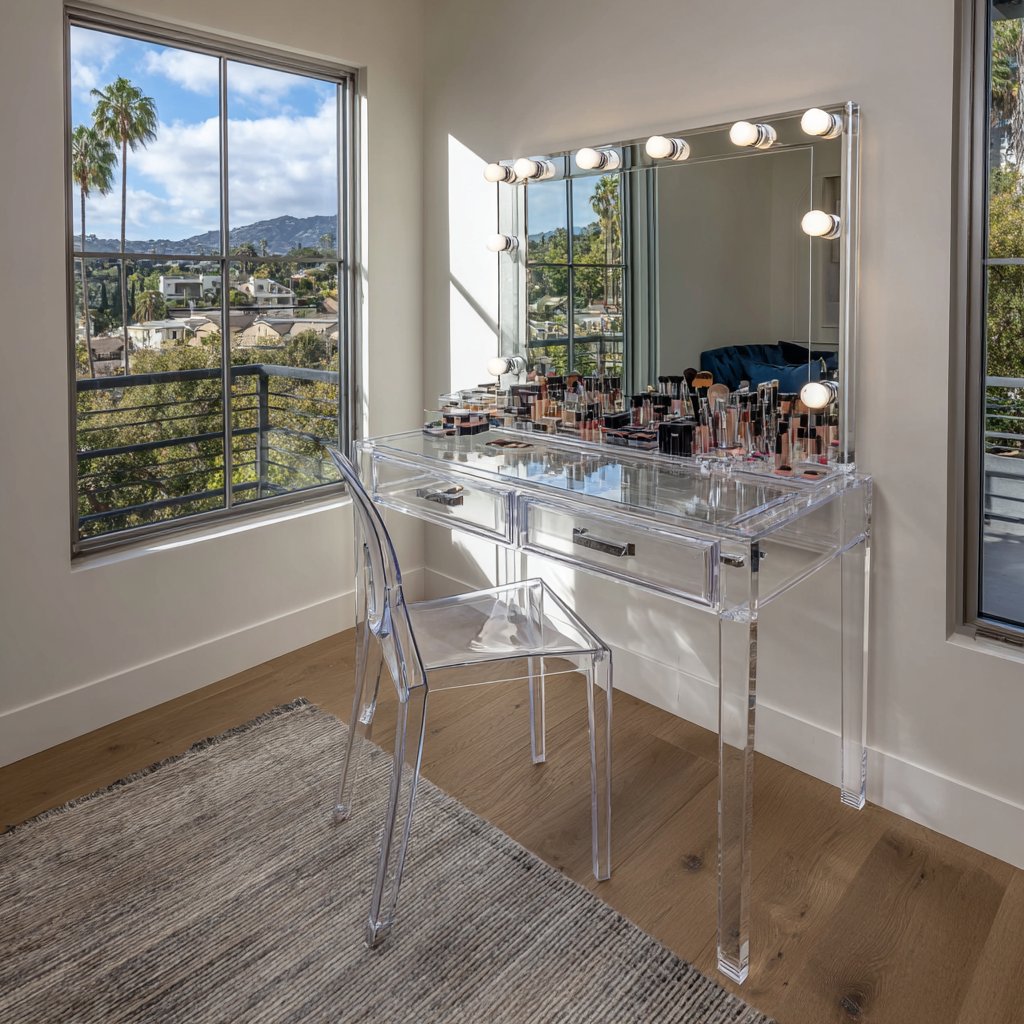
A large Hollywood-style mirror with built-in LED bulbs around the perimeter provides professional-quality task lighting that eliminates shadows and ensures accurate makeup application and color matching—essential for anyone whose appearance matters professionally. The ring of lights creates a glamorous, theatrical quality that transforms daily grooming into a performance preparation worthy of the stage or screen. The see-through vanity design makes even small bedrooms feel more spacious and airy, as sightlines remain uninterrupted and floor space appears to flow continuously beneath the floating surface. Organized makeup displayed in clear acrylic containers maintains the minimalist aesthetic while providing practical storage and easy product identification.
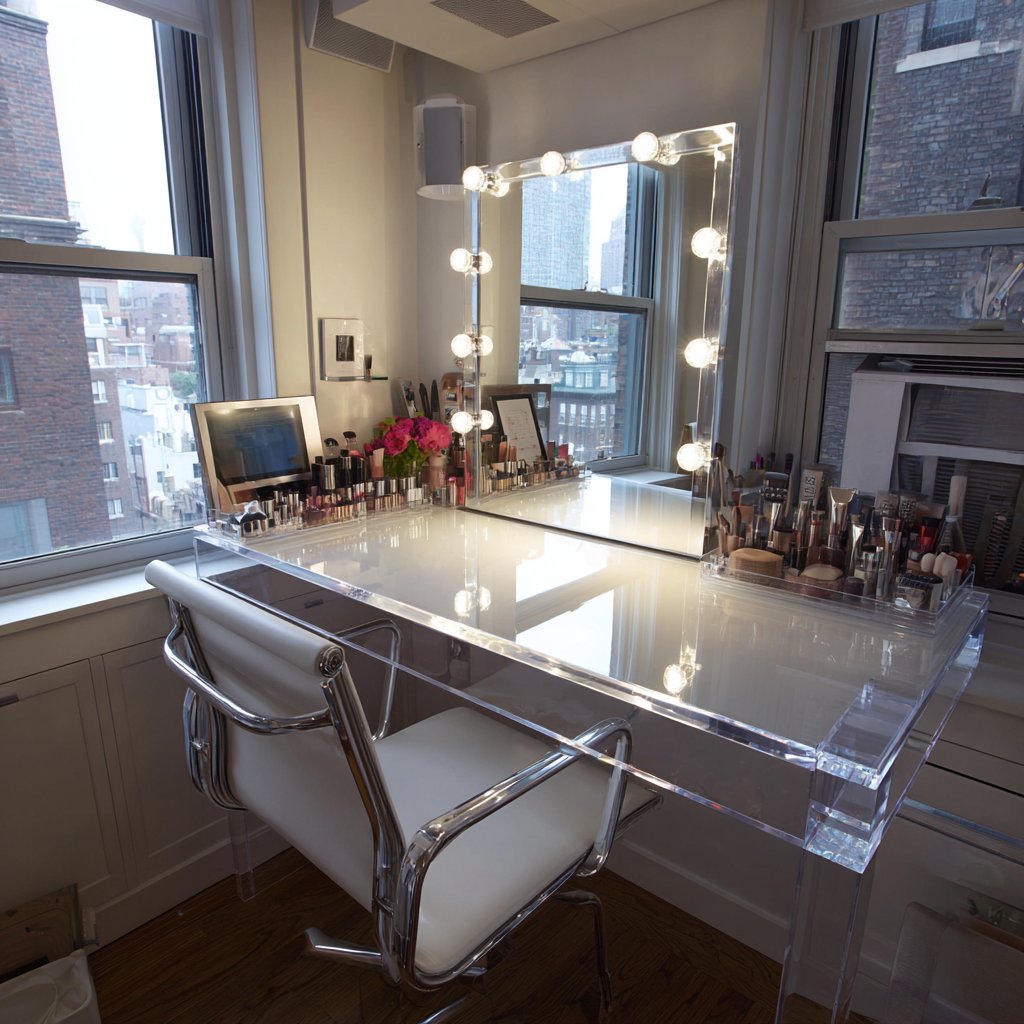
Professional interior photography with bright, clean lighting showcases the modern transparency trend and space-enhancing illusion that makes this design so effective in compact urban apartments or any bedroom where maximizing perceived space is essential. The maintenance requirements are higher than traditional furniture—acrylic shows fingerprints, dust, and scratches more readily—but design-conscious individuals accept this trade-off for the remarkable spatial benefits. This acrylic interpretation of small dressing table ideas represents the future of small-space furniture, where material innovation enables solutions impossible with traditional wood or metal construction. The design appeals particularly to those who appreciate contemporary art, modern architecture, and pushing aesthetic boundaries through material experimentation.
Key Design Tips: Clean acrylic surfaces with specialized plastic cleaners and soft microfiber cloths to prevent scratching the transparent material. Position the vanity where it won’t accumulate dust readily, as particles show more obviously on transparent surfaces. Avoid placing heavy or sharp objects that might crack or scratch the acrylic material. Choose clear or minimal storage containers to maintain the see-through aesthetic and visual coherence. Install LED bulbs in the mirror frame with appropriate color temperature (5000-6000K) for accurate color rendering during makeup application.
19. Sustainable Reclaimed Eco-Conscious Design
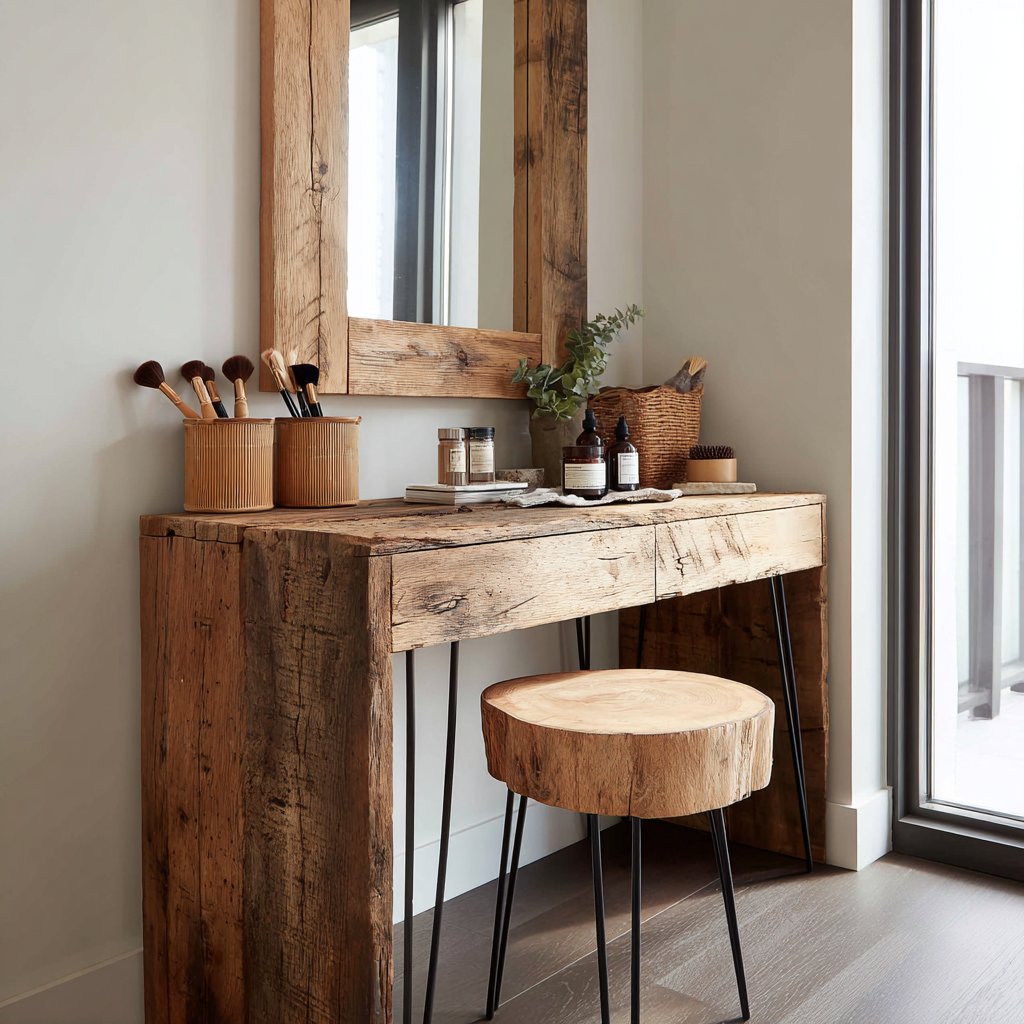
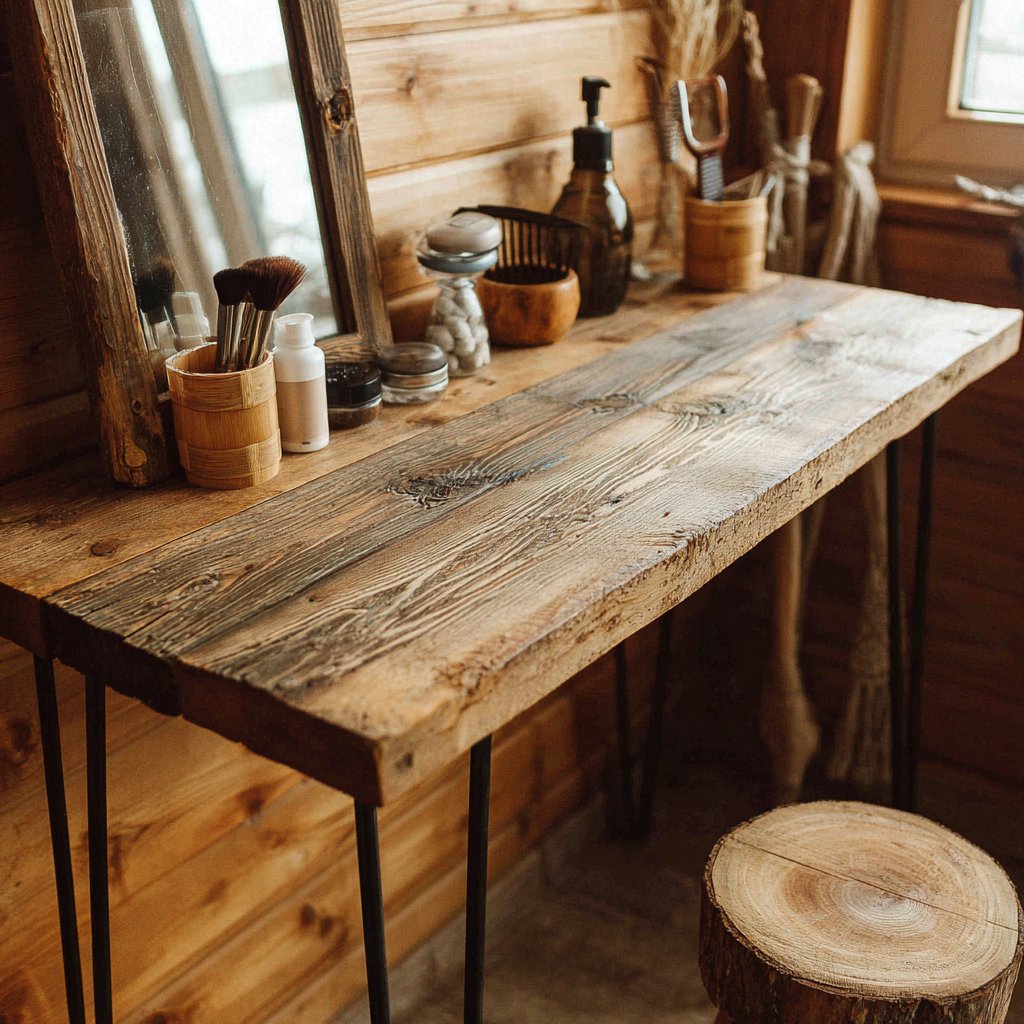
Celebrate environmental responsibility and natural beauty with a sustainable vanity crafted from reclaimed barnwood that tells stories of American agricultural history. The weathering, knots, and color variations visible in the aged planks represent decades or even centuries of exposure to sun, rain, and changing seasons—authentic character that cannot be manufactured or artificated. Simple matte black metal hairpin legs provide minimalist support that honors industrial design history while maintaining focus on the beautiful reclaimed wood. The three-legged hairpin design creates visual lightness and allows the heavy wood top to appear floating, a clever balance between sturdy construction and delicate appearance.
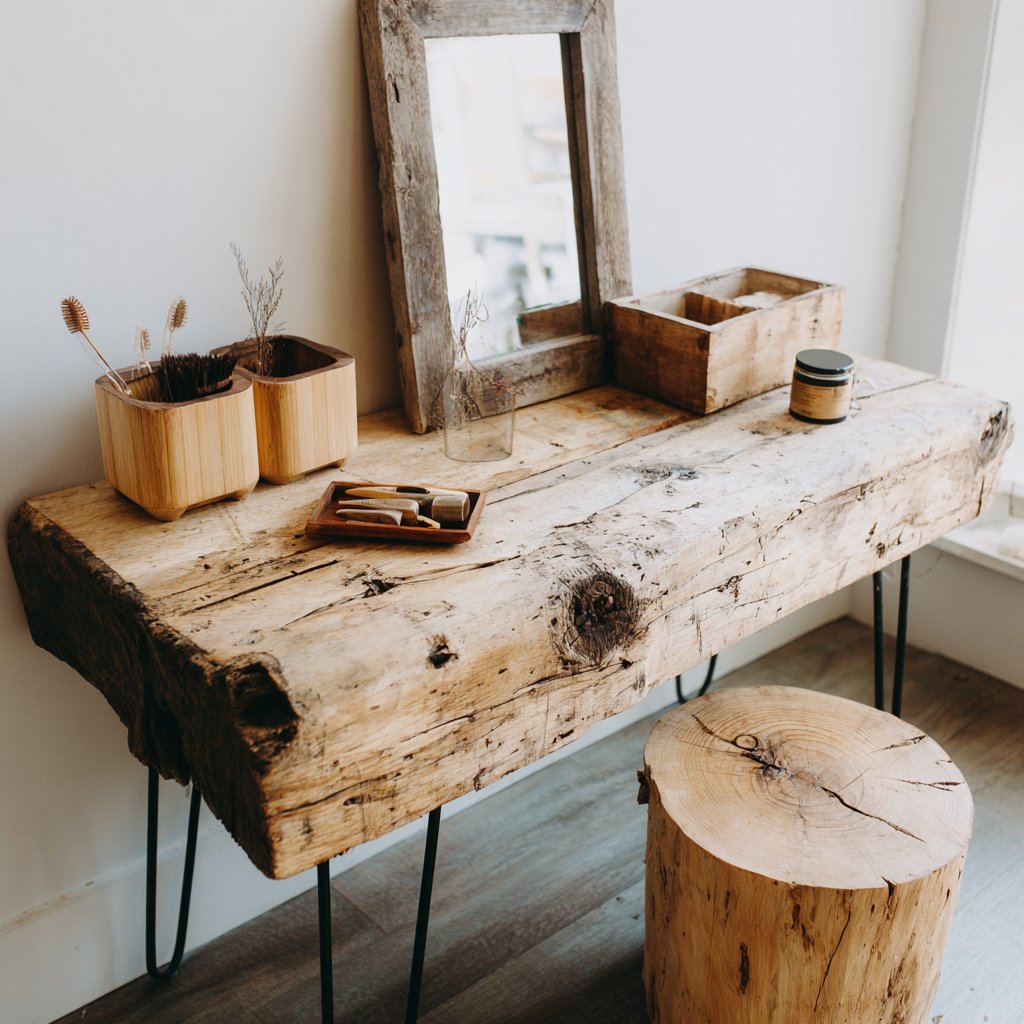
A reclaimed window frame repurposed as a mirror demonstrates creative reuse at its finest, transforming architectural salvage into functional art while preventing serviceable materials from entering landfills. The weathered paint, wavy vintage glass, and original hardware create immediate character and environmental virtue through adaptive reuse. Organic bamboo containers hold natural beauty products formulated without harmful chemicals, while wooden grooming tools continue the theme of sustainable material choices throughout the entire vanity setup. A simple stool crafted from a tree stump slice—perhaps salvaged from tree removal necessary for construction—provides rustic seating that celebrates the beauty of raw, unprocessed natural forms.
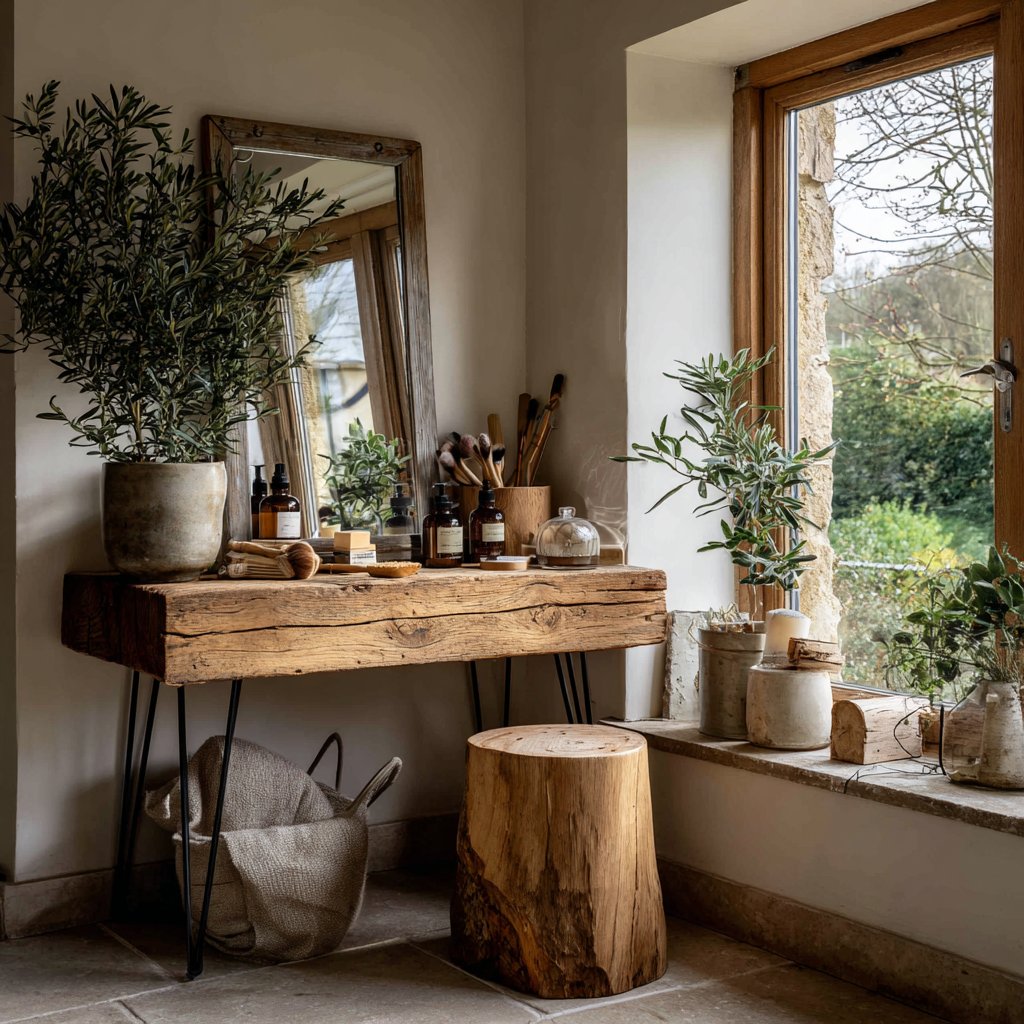
Natural daylight flooding the space emphasizes the authentic material textures and environmental consciousness embedded in every design choice. Interior design photography highlights the earthy aesthetic and deliberate decisions that make this more than furniture—it becomes a statement of values and priorities. This eco-friendly interpretation of small dressing table ideas appeals to those who recognize that personal spaces reflect not just aesthetic preferences but ethical commitments. The design proves that sustainability and beauty are not opposing forces but natural partners when approached with creativity and intention. Each element’s history—whether barnwood, window frame, or tree stump—adds depth and meaning that new materials simply cannot provide.
Key Design Tips: Source reclaimed materials from architectural salvage yards, demolition sales, or specialized reclaimed lumber suppliers who ensure legal, ethical sourcing. Clean and treat reclaimed wood appropriately to remove dirt, insects, or mold before interior use while preserving natural patina. Research eco-friendly finishing options like natural oils, beeswax, or water-based sealers that align with sustainable values. Choose beauty products and cleaning supplies with minimal environmental impact to extend eco-consciousness beyond furniture choices. Consider the full lifecycle when making purchases, prioritizing durable pieces that won’t require frequent replacement and eventually can be reclaimed themselves.
20. French Provincial Elegant Sophistication
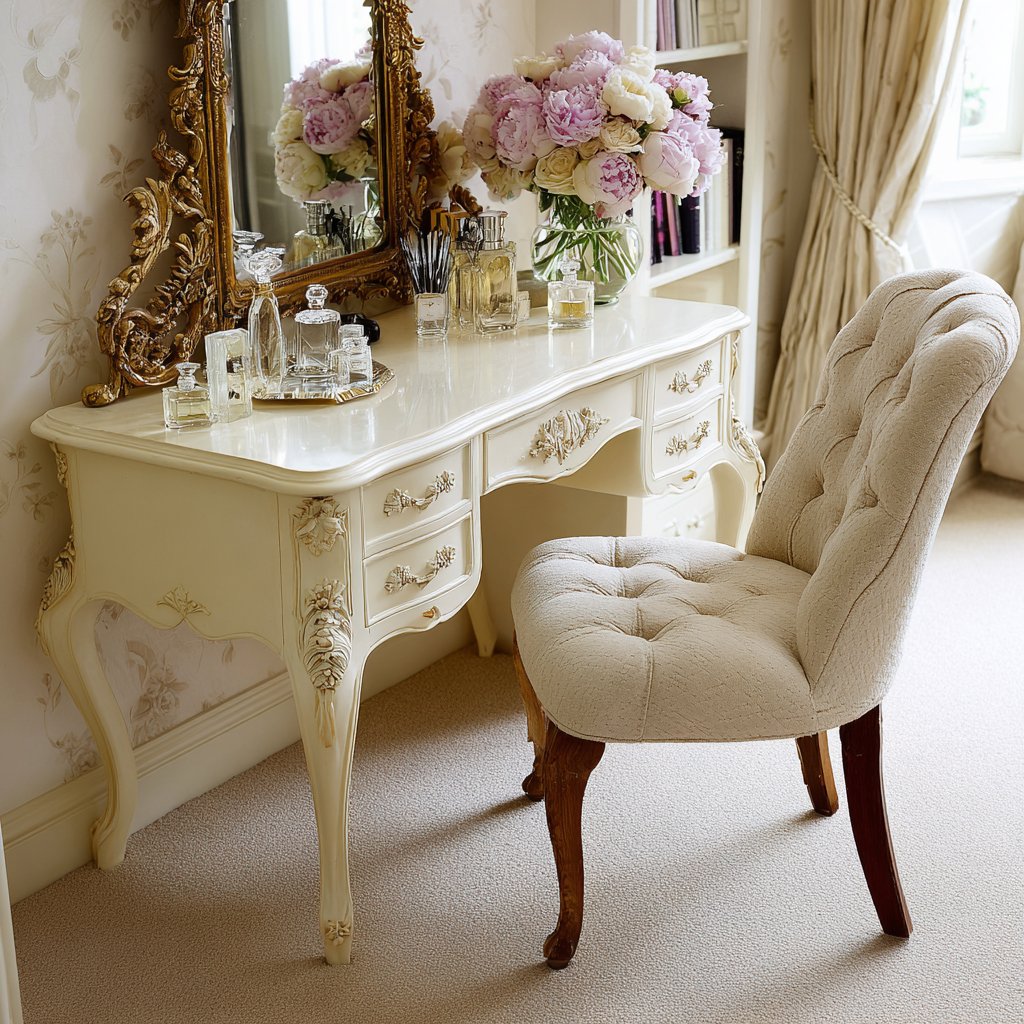
Transport yourself to the romantic countryside of provincial France with an elegant vanity finished in soft cream that embodies refined French taste and aristocratic elegance. The cabriole legs with their graceful S-curve demonstrate the influence of Rococo styling that filtered from grand palaces to provincial manor homes, while delicate floral carved details at the drawer front showcase the French love of nature-inspired ornamentation. This restrained decorative approach—ornate enough to be special but not so elaborate as to be ostentatious—characterizes the provincial aesthetic that remains timelessly appealing centuries after its development.
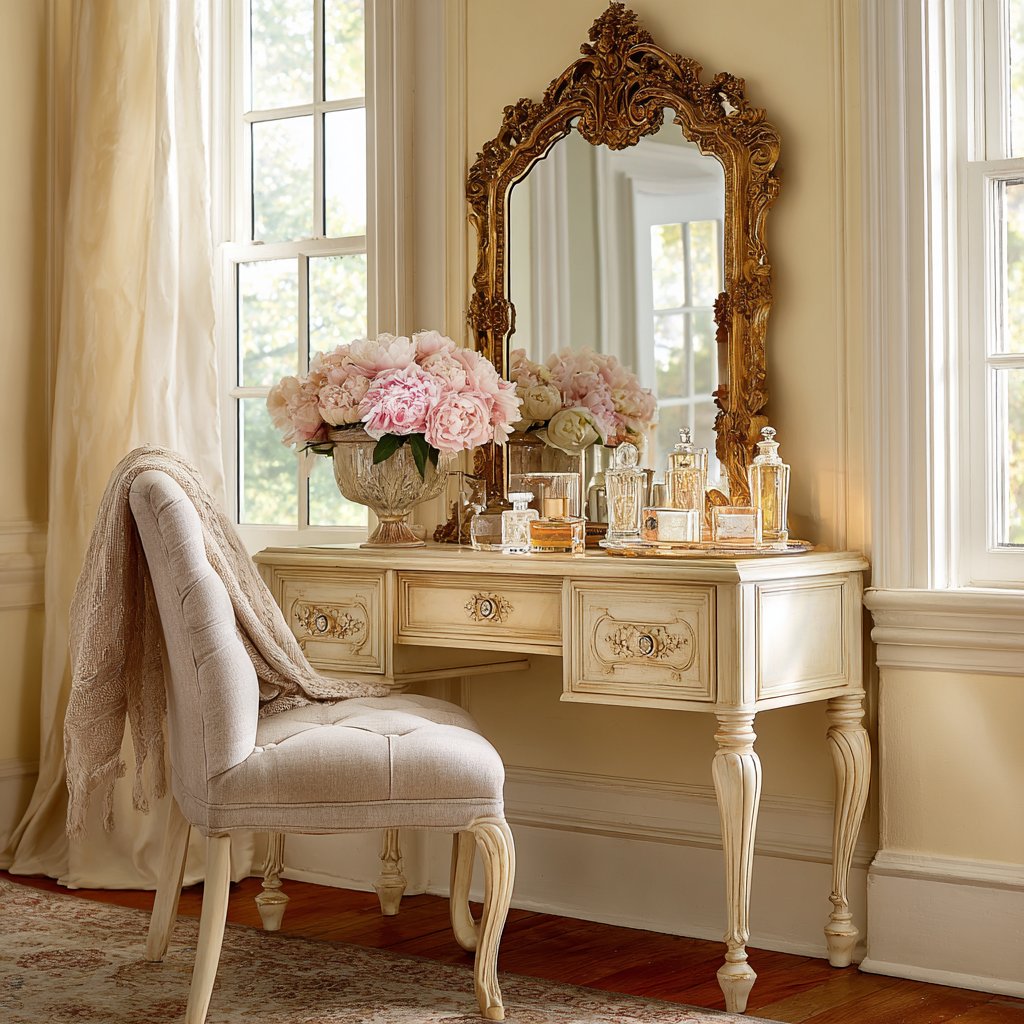
An ornate gilded mirror with rococo flourishes hangs above the vanity, its asymmetrical cartouche shape and shell motifs typical of French decorative arts. The gold leaf finish, whether original antique gilding or quality reproduction, catches and reflects candlelight and natural illumination, creating ambient sparkle without electric assistance. The surface displays curated accessories that honor French aesthetic sensibilities: vintage perfume bottles perhaps containing French fragrances, a porcelain jewelry dish hand-painted with delicate floral motifs, and fresh peonies in a crystal vase—these romantic blooms being particular French favorites. A tufted linen chair with turned legs upholstered in natural fabric provides classic seating whose understated elegance doesn’t compete with the decorative vanity.
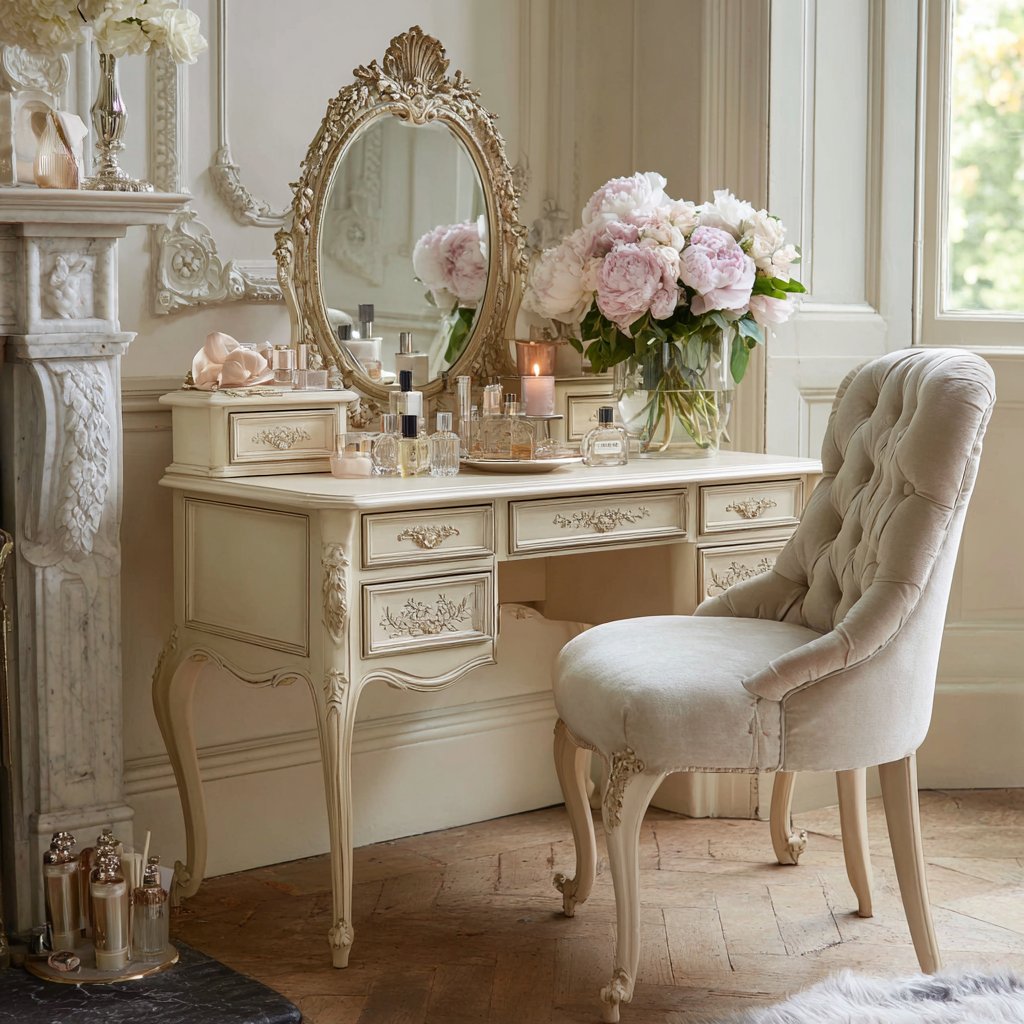
Soft diffused lighting creates a romantic, feminine atmosphere that French design has long perfected—neither harsh nor dim but gently flattering and conducive to contemplation and self-care. Professional interior photography captures the graceful curves and refined French elegance that make provincial styling so perpetually popular. This interpretation of small dressing table ideas demonstrates how historical design movements translate beautifully to contemporary homes when executed with quality materials and authentic detailing. The compact scale makes French elegance achievable in modest American bedrooms, proving that refined taste transcends both geography and square footage limitations.
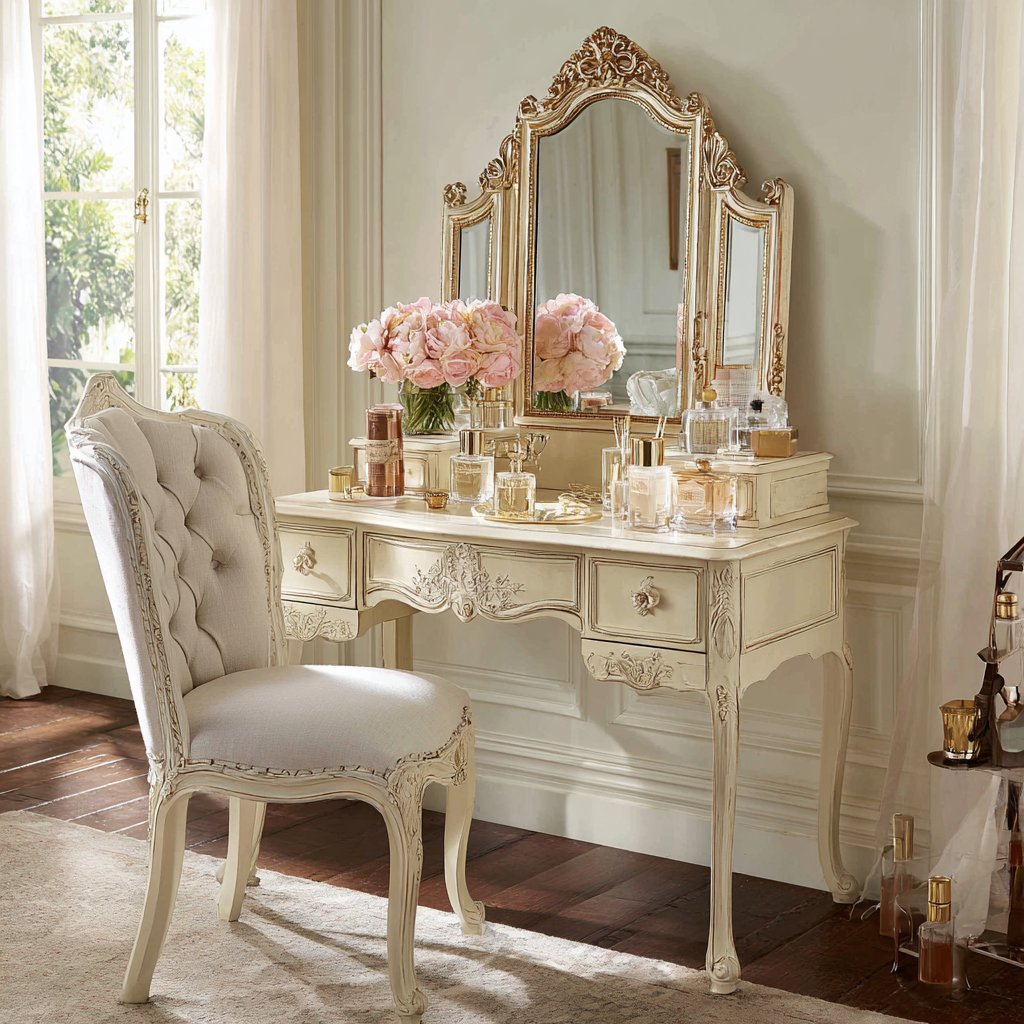
Key Design Tips: Maintain painted finishes with gentle cleaners formulated for antique or delicate surfaces, avoiding harsh chemicals that might damage soft cream tones. Polish gilded elements carefully with specialized metal cleaners appropriate for gold leaf or gold-tone finishes. Choose accessories with French provenance or French-inspired aesthetics—toile patterns, fleur-de-lis motifs, pastoral scenes—to reinforce the design narrative. Position the vanity where soft natural light will enhance rather than wash out the delicate cream finish. Consider adding a small vintage French perfume bottle or antique hand mirror as both functional objects and authentic cultural artifacts.
21. Modular Contemporary Flexibility System
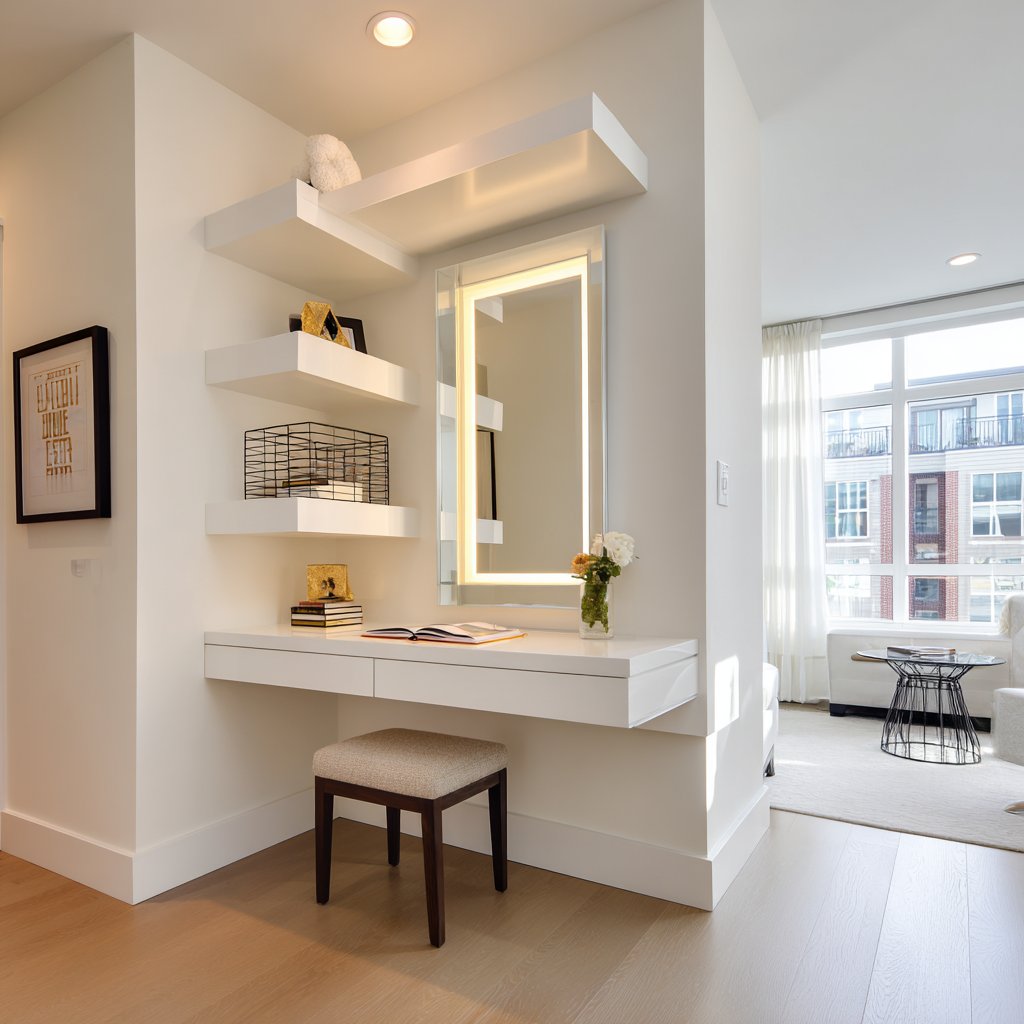
Experience the future of adaptable furniture with a modular vanity system featuring magnetic wall-mounted components in matte white that can be rearranged as needs, preferences, or spatial constraints change over time. This innovative approach rejects the static nature of traditional furniture, instead embracing flexibility and user customization as fundamental design principles. Floating shelves, a magnetic mirror, and attachable LED lighting panels create a customizable setup that adapts to life changes—relocations, room reconfigurations, or evolving beauty product collections—without requiring entirely new furniture purchases. Wire mesh organizers and geometric containers maintain clean aesthetic while providing practical storage solutions that can be easily repositioned on magnetic surfaces.
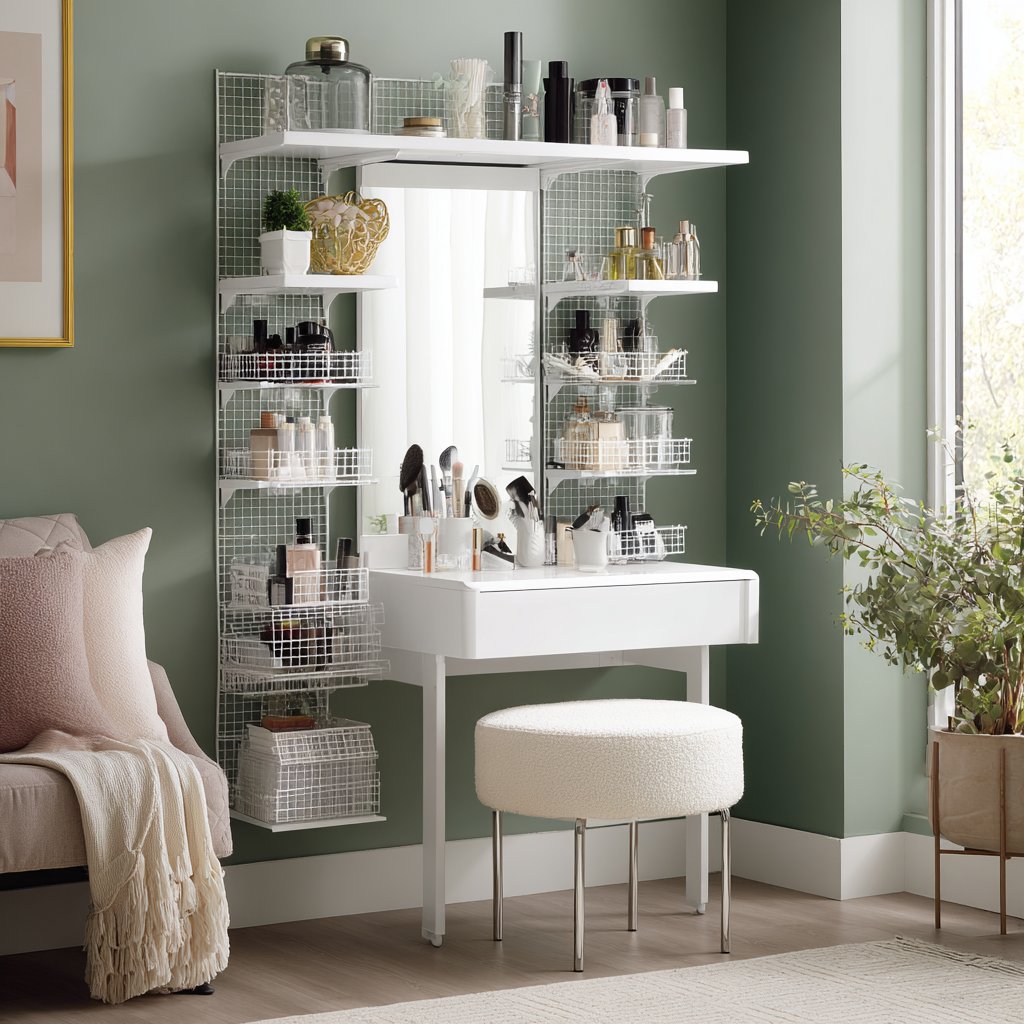
The flexible design adapts perfectly to available wall space in small studio apartments where spatial efficiency is paramount and multipurpose solutions are essential. As living situations change—new roommates arrive, spaces are repurposed, or apartments are upgraded—the modular components move with the user rather than being abandoned or donated. This sustainability through adaptability represents contemporary thinking about furniture longevity, where pieces remain useful not because they’re indestructible but because they evolve with changing needs. Wide-angle interior photography demonstrates the innovative modular approach and contemporary problem-solving for compact living challenges.
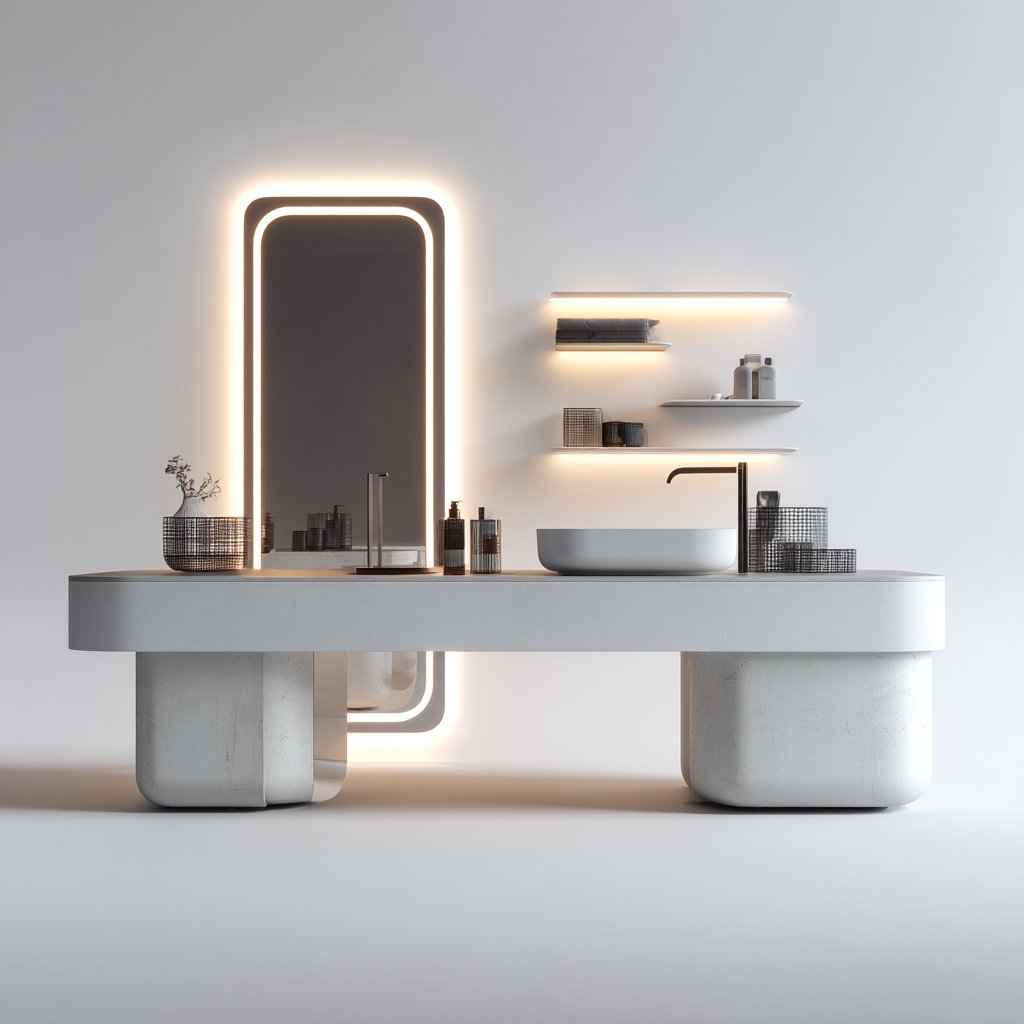
This forward-thinking interpretation of small dressing table ideas appeals particularly to younger generations who value flexibility, sustainability through longevity, and customization over one-size-fits-all solutions. The white finish ensures the system integrates with various décor directions, while the modular nature invites creativity and personal expression through arrangement choices. Installation requires magnetic-receptive walls or magnetic panels mounted to conventional walls, but this investment enables remarkable flexibility. The design represents a philosophical shift in how we think about furniture—not as permanent fixtures but as adaptable tools that serve evolving lives.
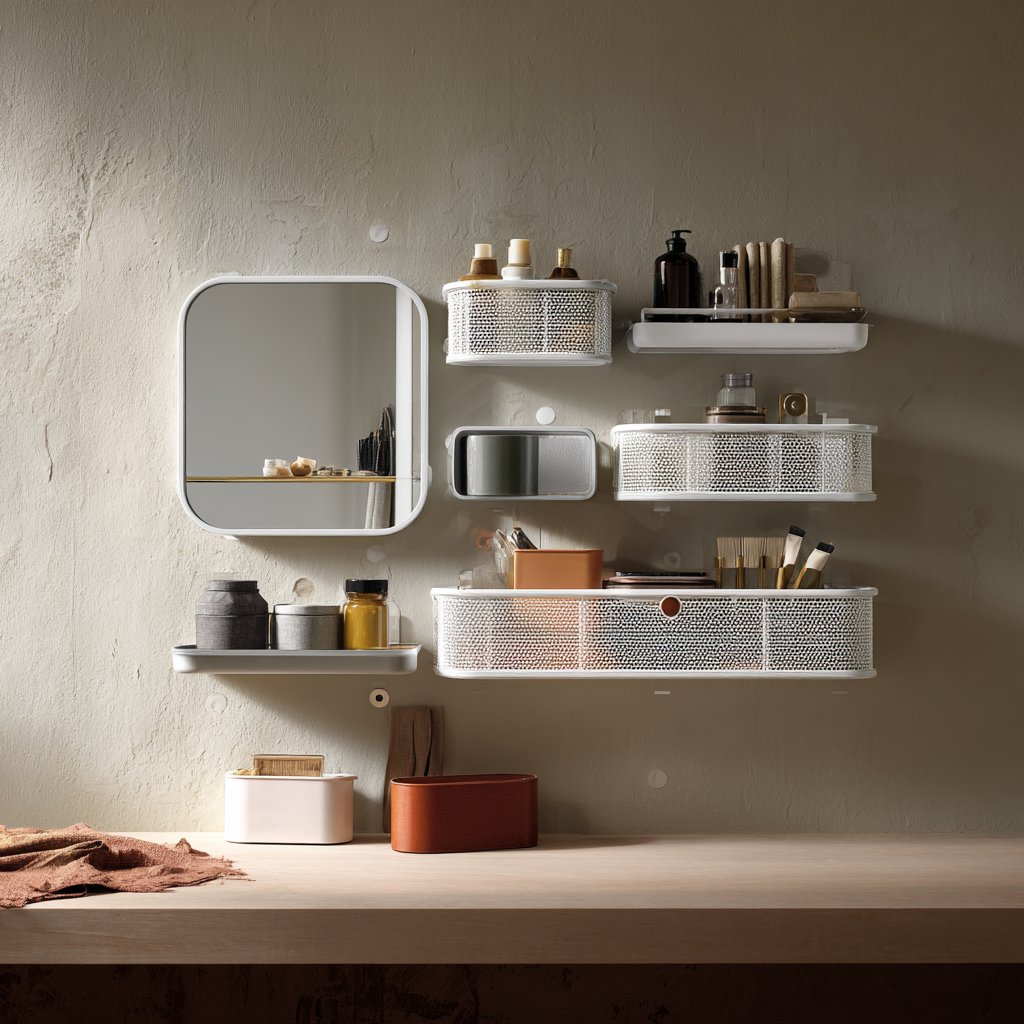
Key Design Tips: Install magnetic panels securely to wall studs or use appropriate wall anchors rated for expected weight. Plan electrical placement thoughtfully before installing LED panels, ensuring cords reach outlets without visible extensions. Label components during disassembly if relocating to ensure efficient reassembly in new space. Experiment with different arrangements periodically to optimize functionality as product collections or beauty routines change. Choose additional modular components from the same manufacturer to ensure magnetic compatibility and aesthetic coherence as needs expand.
22. Shabby Chic Romantic Nostalgia
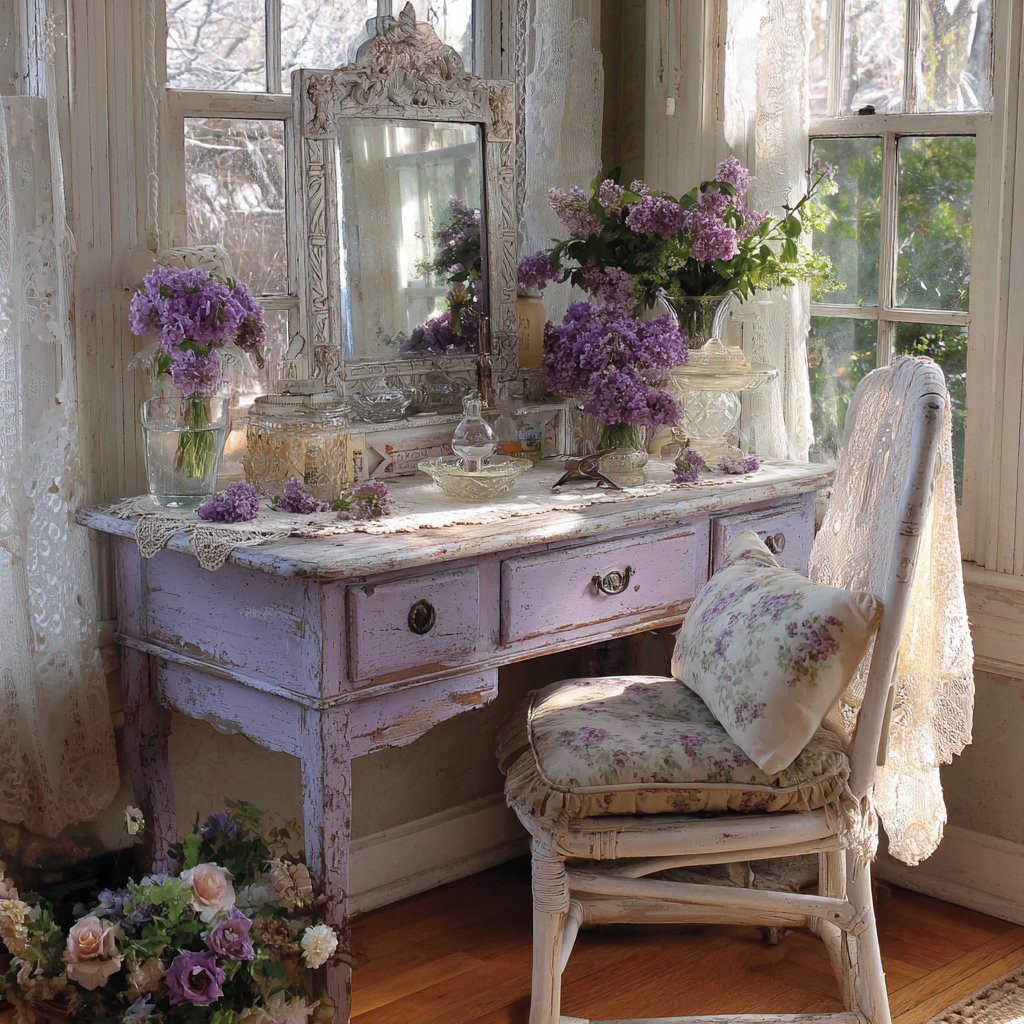
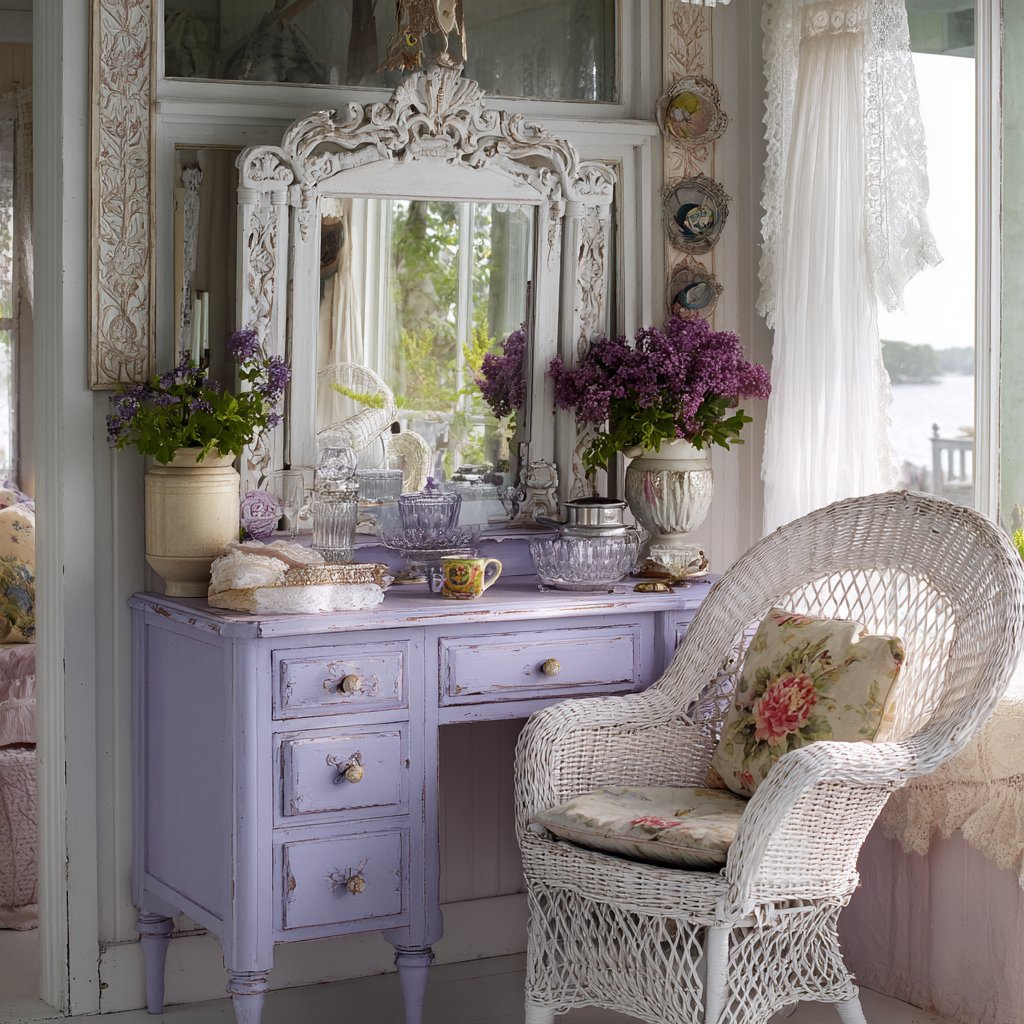
Immerse yourself in the dreamy, romantic world of shabby chic design with a vintage vanity painted in soft lavender featuring an intentionally distressed finish that reveals layers of paint history beneath. This archaeological approach to furniture finishing celebrates the piece’s journey through time, showing whites, creams, and perhaps even pale greens that served as earlier color choices. Each revealed layer tells a story, transforming the vanity into a tangible timeline of past preferences and changing tastes. Mismatched vintage drawer pulls—perhaps one glass, one porcelain, one tarnished brass—add character and quirky charm that mass-produced matching hardware cannot replicate, each pull itself a small found treasure with unknown origins.
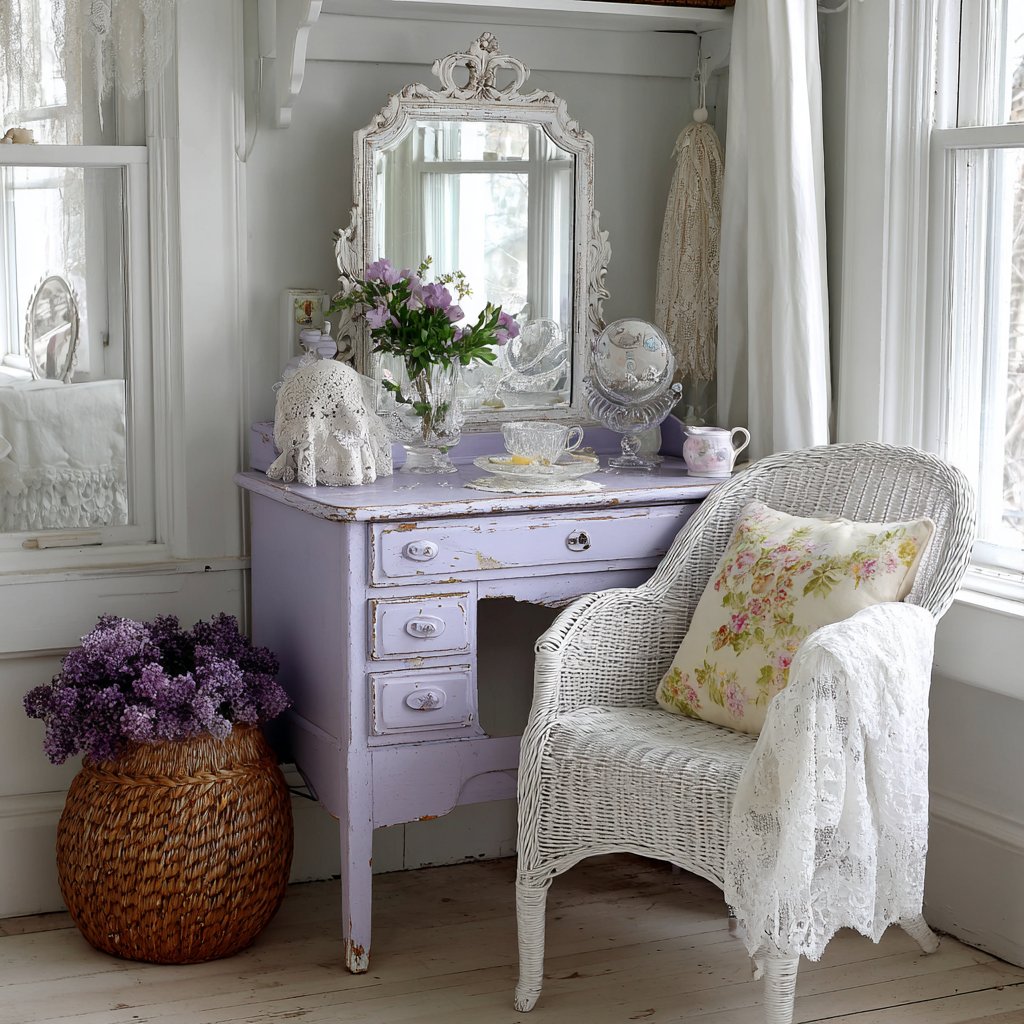
An ornate white-painted frame surrounds an antiqued mirror whose silvering has begun to fail in places, creating those distinctive black spots and hazy areas that make antique mirrors so atmospheric and romantic. Rather than being flaws, these imperfections become features that add character and authentic age. Vintage lace doilies protect the surface while introducing delicate handmade textiles, depression glass dishes in soft pink and green hold jewelry and trinkets, and antique hatpins—once essential accessories for securing elaborate hats—now serve as sculptural decorative elements representing bygone fashion eras. A romantic white wicker chair with a faded floral cushion completes the nostalgic setup.
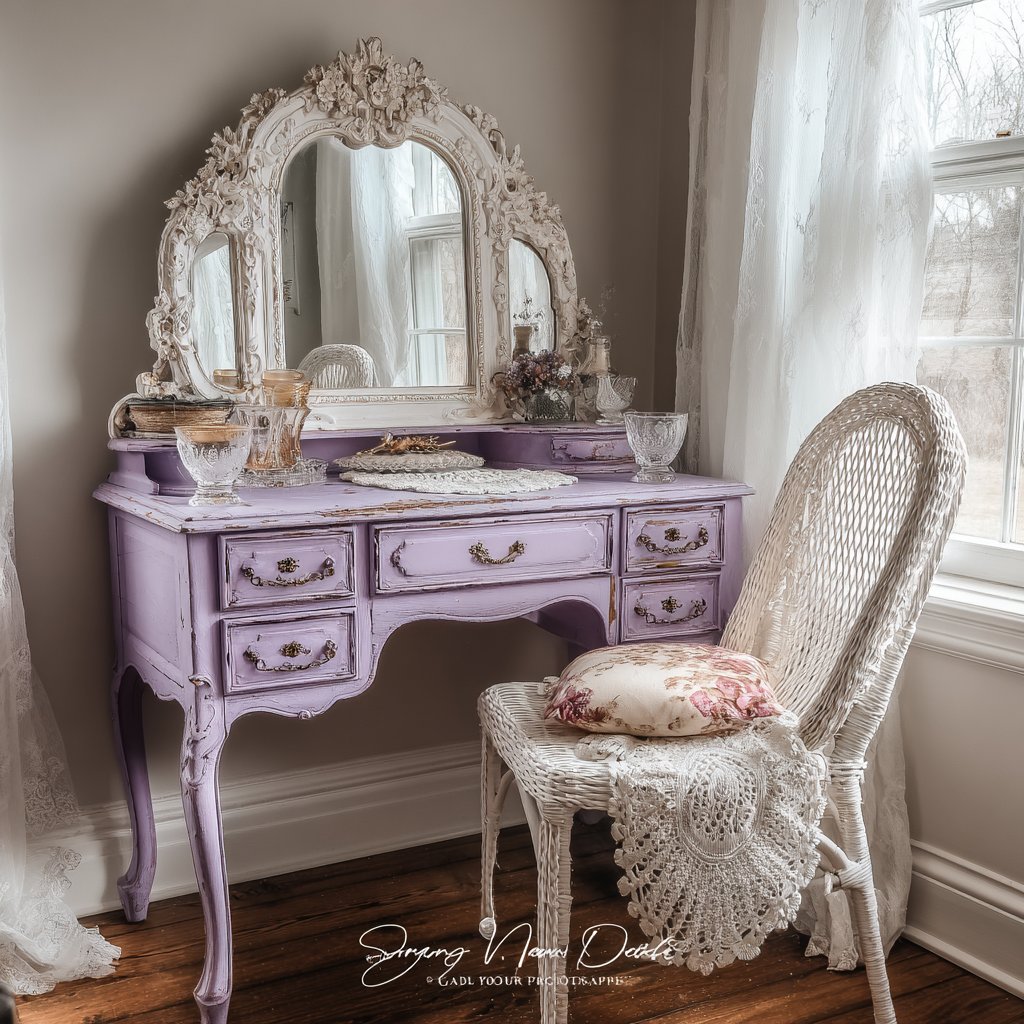
Gentle natural light filtering through gauzy curtains enhances the dreamy, feminine vintage aesthetic that defines shabby chic design. Interior design photography emphasizes the authentic aged patina and collected charm that make this style so appealing to those who appreciate romance, nostalgia, and the beauty of imperfection. This interpretation of small dressing table ideas demonstrates how furniture need not be pristine to be beautiful, how wear and age can enhance rather than diminish appeal. The shabby chic approach invites us to see beauty in the broken, value in the imperfect, and meaning in the gently aged—a refreshing counterpoint to our culture’s obsession with perpetual newness.
Key Design Tips: Build paint layers gradually if creating new shabby chic pieces, applying multiple colors before distressing to reveal intentional history. Distress authentically by focusing on areas that would naturally wear—edges, corners, drawer fronts, around handles—rather than random sanding. Source vintage accessories from estate sales, flea markets, and antique malls where true aged items can be found at reasonable prices. Mix different shades of white, cream, and pastels to create the soft, romantic color palettes characteristic of shabby chic. Embrace imperfections in accessories and finishes as features rather than flaws, recognizing that perfect condition contradicts the shabby chic philosophy.
23. Ultra-Modern Futuristic Technology Integration
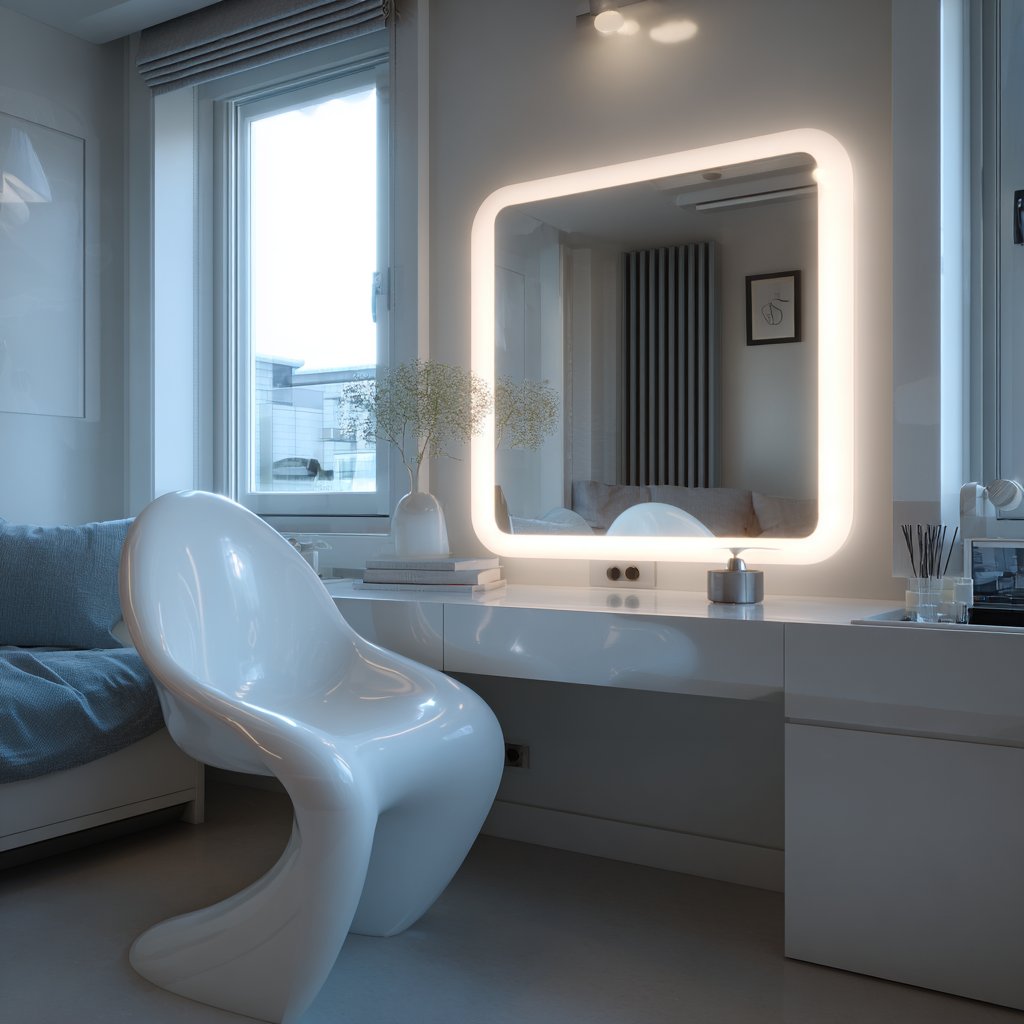
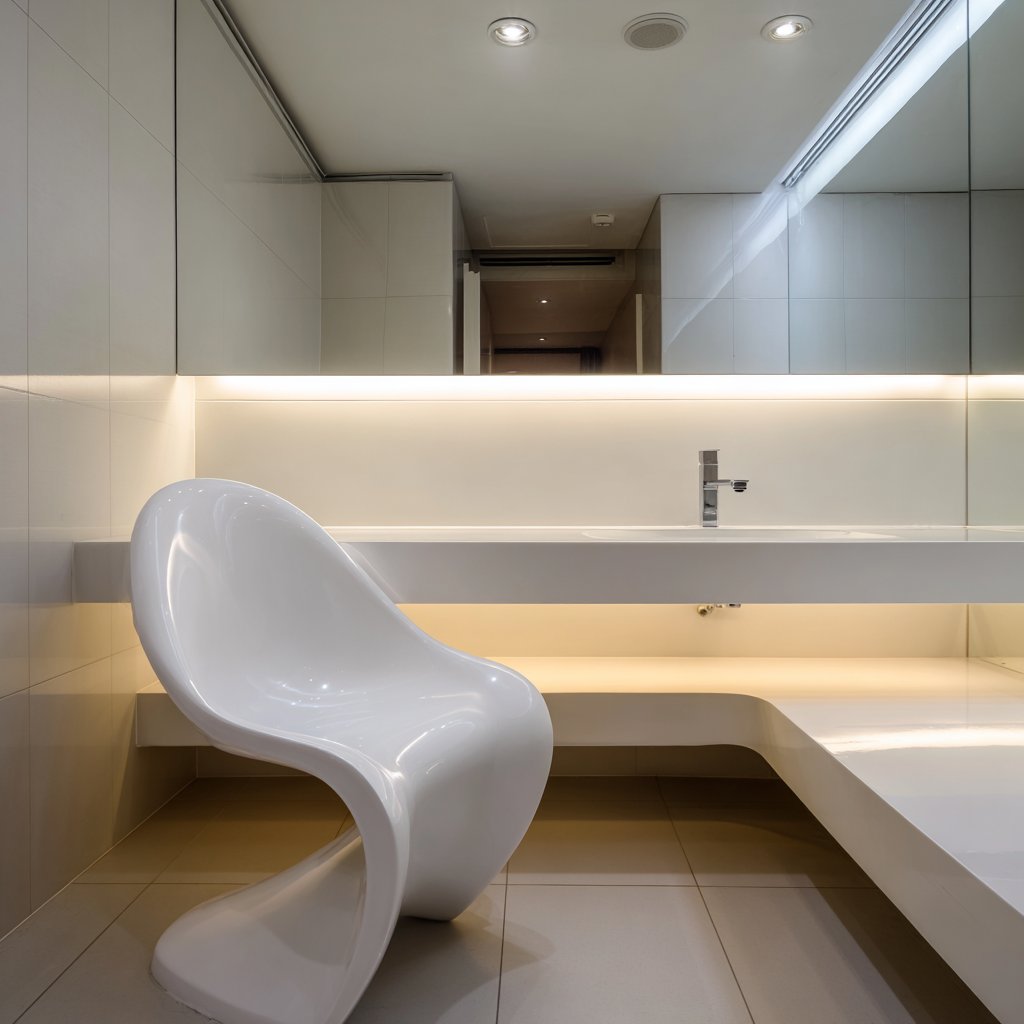
Step into tomorrow with a sleek ultra-modern floating vanity in high-gloss white that incorporates integrated LED lighting beneath, creating a futuristic floating effect that makes the piece appear to hover magically above the floor. This dramatic lighting element serves both aesthetic and practical purposes, providing ambient illumination while visually lightening the furniture’s mass. The frameless smart mirror with touch controls for lighting adjustment and magnification represents the intersection of technology and traditional furniture, embedding digital functionality into analog objects. Hidden wireless charging pads eliminate cord clutter, while retractable power outlets maintain the clean surfaces when not in use—technology present but not visually dominant.
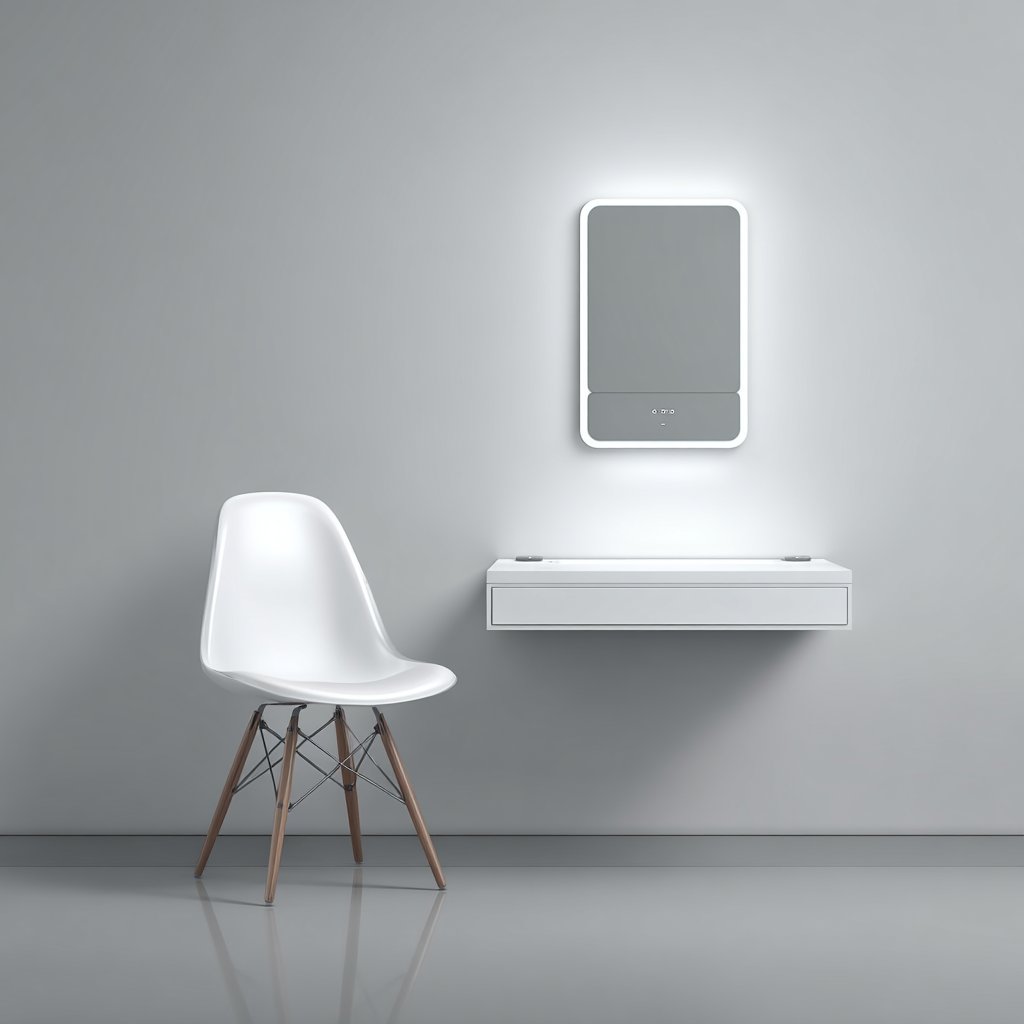
A sculptural white molded plastic chair provides contemporary seating whose organic curves contrast beautifully with the geometric precision of the floating vanity. The chair’s form-fitted design demonstrates how modern materials enable shapes impossible with traditional construction methods, its cantilever design appearing to defy gravity much like the floating vanity itself. Professional interior photography employs crisp, clean lighting that showcases the cutting-edge technology integration and streamlined aesthetic. The all-white color scheme creates a gallery-like environment where the technology becomes art, the furniture becomes sculpture, and the boundary between functional objects and artistic statements blurs.
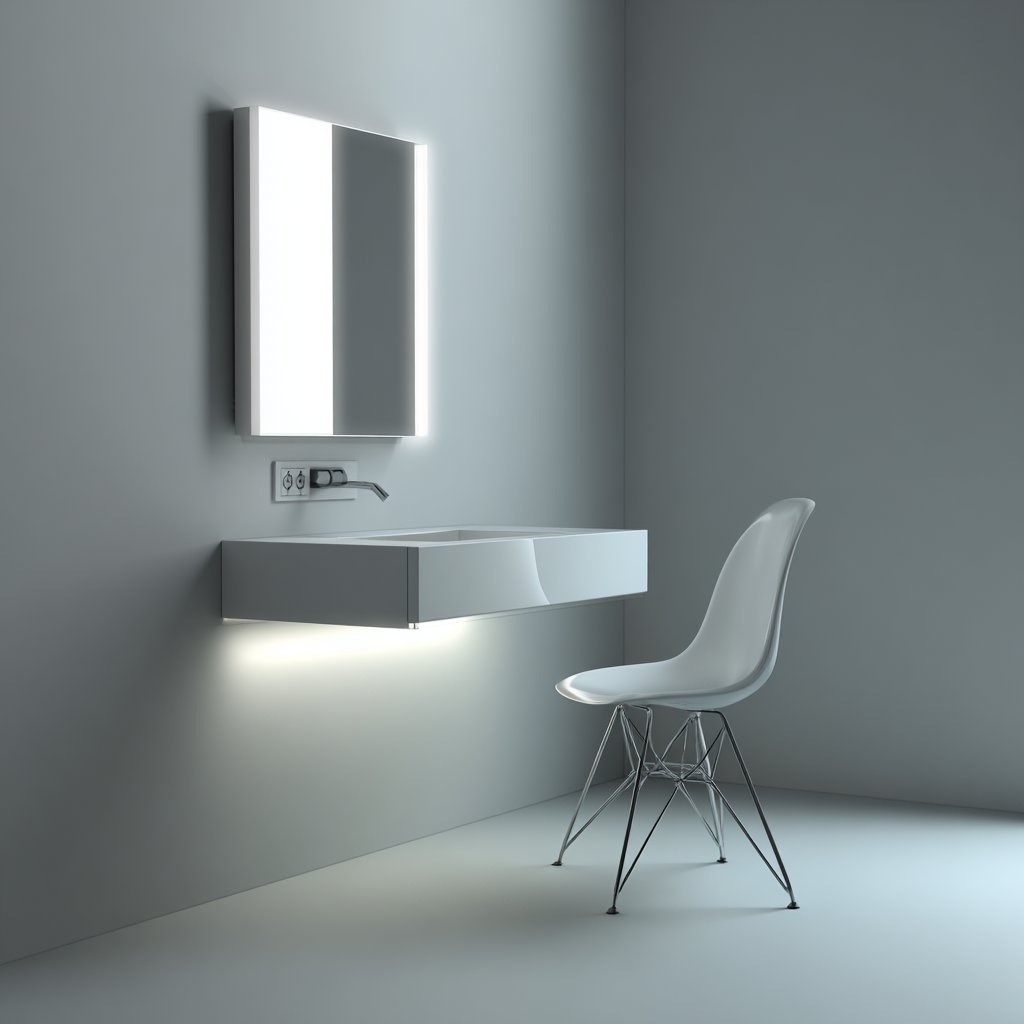
This futuristic interpretation of small dressing table ideas appeals to early technology adopters, contemporary design enthusiasts, and those who view their homes as expressions of forward-thinking values and aesthetic preferences. The high-maintenance surfaces—high-gloss white shows every fingerprint and dust particle—become acceptable trade-offs for living with cutting-edge design. The smart mirror capabilities might include features like integrated displays showing weather, appointments, or news headlines, transforming the morning beauty routine into an information-gathering session. This design represents where vanity furniture is heading: increasingly intelligent, more integrated with digital life, and designed for users who expect their environments to be as smart as their phones.
Key Design Tips: Ensure adequate electrical infrastructure exists before installing technology-integrated furniture, potentially requiring professional electrical work. Update smart mirror software regularly to maintain functionality and security of connected devices. Clean high-gloss surfaces with specialized cleaners designed for piano finishes or automotive paints to avoid dulling. Position the vanity where voice control won’t interfere with other smart home devices if using voice-activated features. Budget for eventual technology updates as digital components may require replacement or upgrading before the furniture itself wears out.
24. Transitional Style Bridge
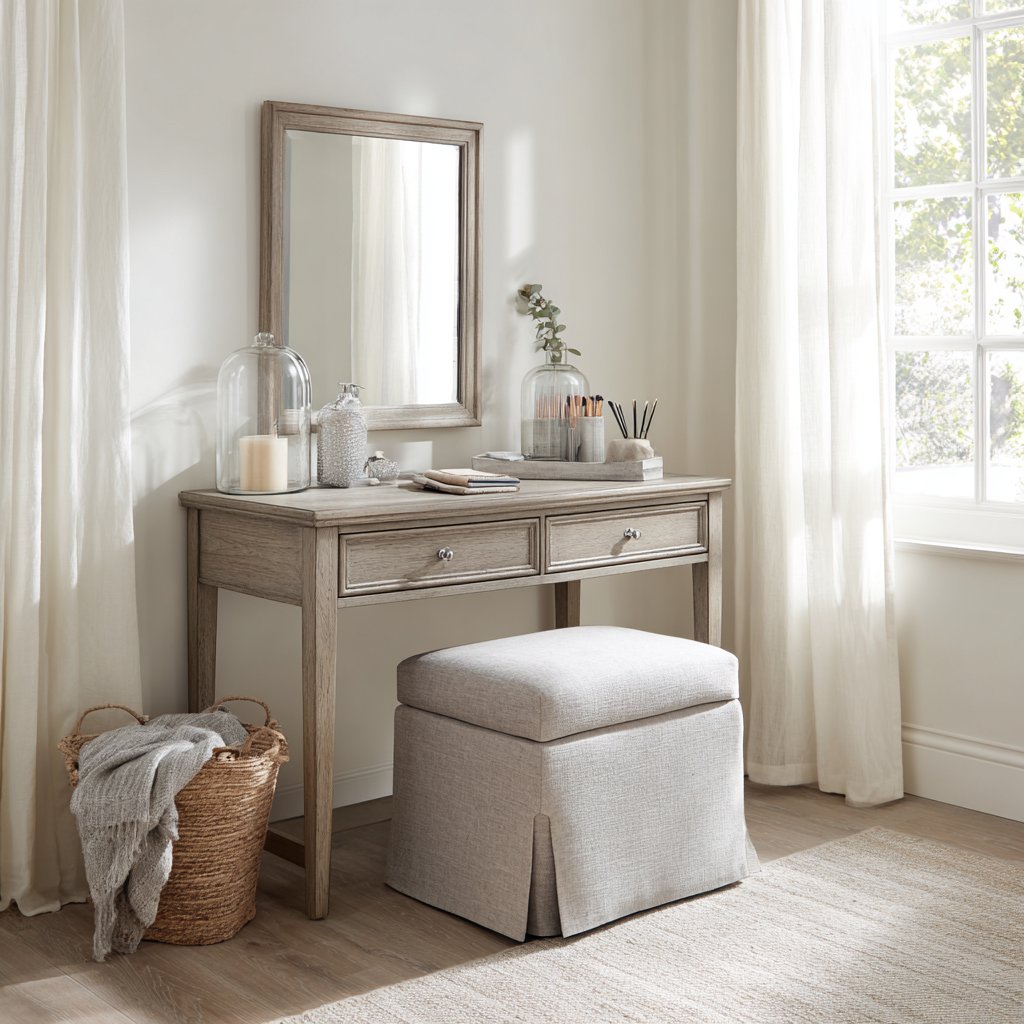
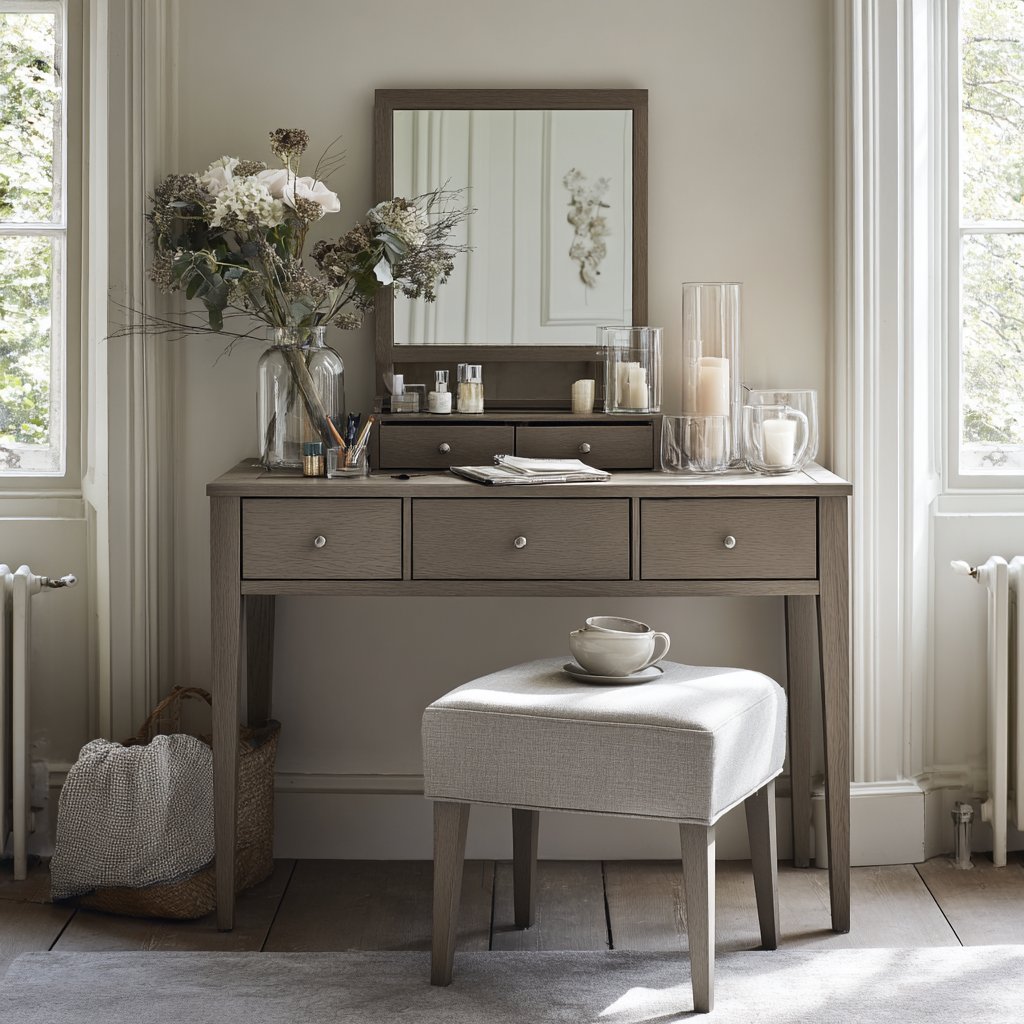
Find perfect balance between traditional comfort and contemporary sensibility with a transitional-style vanity that successfully merges both design languages. The grey-washed oak finish bridges rustic warmth and modern sophistication, its neutral tone working equally well with both antique and contemporary accessories. Simple Shaker-style drawer fronts with their recessed rectangular panels reference American colonial furniture traditions while maintaining clean, uncluttered surfaces that contemporary design demands. Brushed nickel knobs provide subtle hardware that neither embraces antique brass nor adopts ultra-modern chrome, instead occupying the comfortable middle ground that defines transitional design.
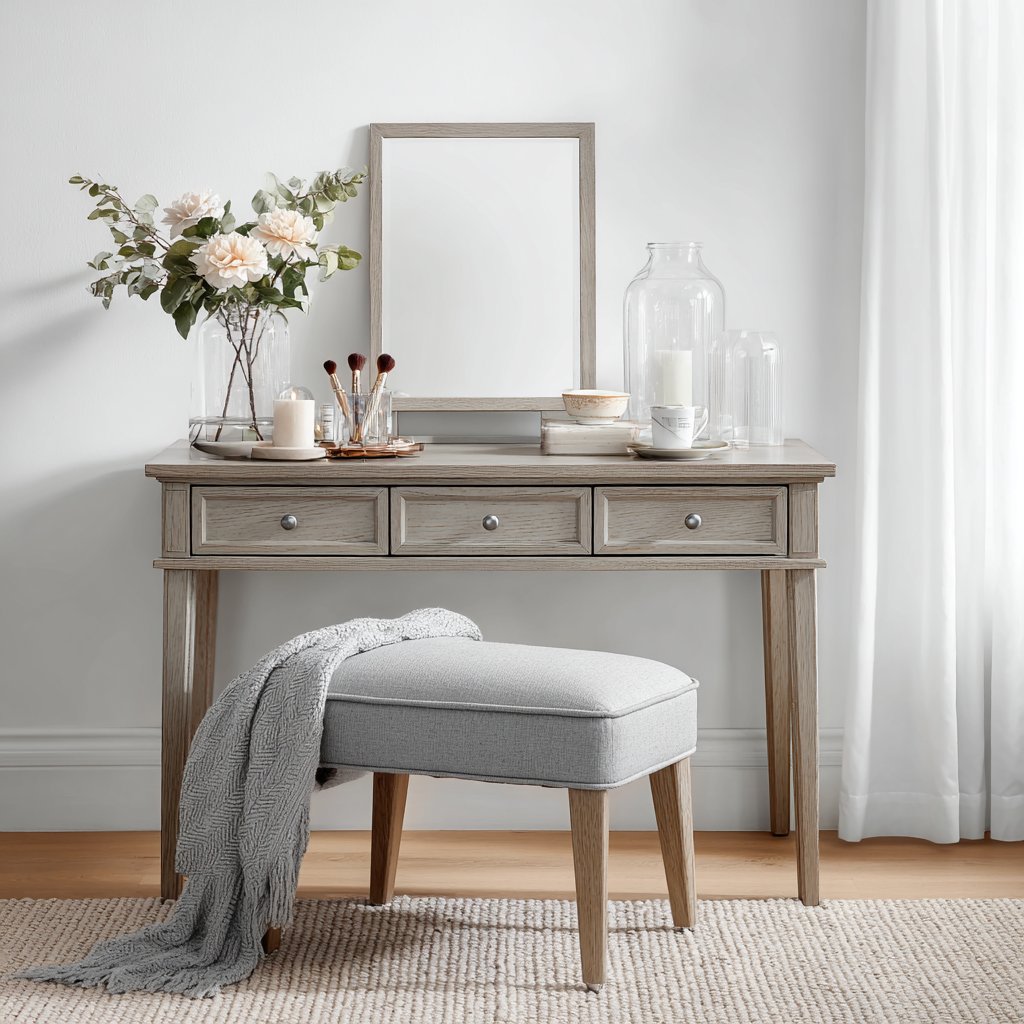
A rectangular mirror with narrow wood frame in matching grey-wash hangs above the vanity, its simple profile and neutral finish ensuring it doesn’t pull the design toward either traditional or modern extremes. The balanced styling demonstrates transitional philosophy through its accessories: modern glass containers sit beside classic ceramic dishes, neither dominating the composition. A simple upholstered stool in soft grey linen provides seating whose clean lines could work in contemporary settings while its comfortable padding and neutral upholstery appeal to traditional sensibilities. Balanced natural and artificial lighting creates a timeless, versatile look that won’t feel dated as design trends evolve.
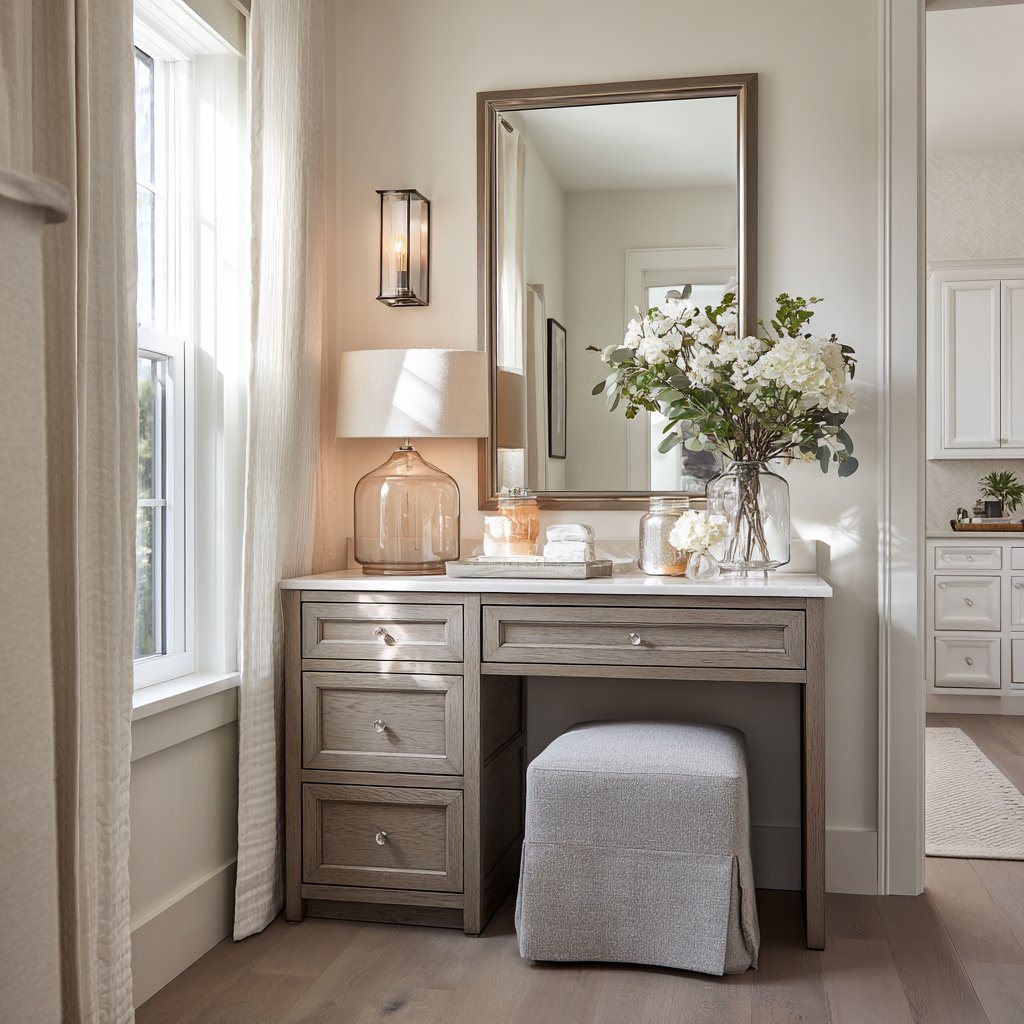
Interior design photography emphasizes the successful style fusion and adaptable aesthetic that make transitional design so practical for real homes where inhabitants may not share identical design preferences. This interpretation of small dressing table ideas proves particularly valuable for couples who must compromise between divergent tastes, for those uncertain about committing to a single strong aesthetic, or for anyone seeking designs with genuine longevity beyond trend cycles. The grey-washed oak specifically has emerged as a transitional favorite, its neutrality allowing it to function as a design chameleon that adapts to surrounding décor direction.
Key Design Tips: Choose accessories in classic shapes with contemporary finishes, or modern forms in traditional materials, to maintain the transitional balance. Avoid strongly period-specific elements that would pull the design too far toward traditional or modern extremes. Use neutral color palettes anchored by greys, beiges, and natural wood tones that work across style boundaries. Mix metal finishes thoughtfully—brushed nickel, aged brass, and matte black can coexist in transitional spaces where single-finish rules don’t apply. Update textiles and small accessories as trends change while maintaining the furniture’s classic-contemporary foundation.
25. Creative Upcycled One-of-a-Kind Statement
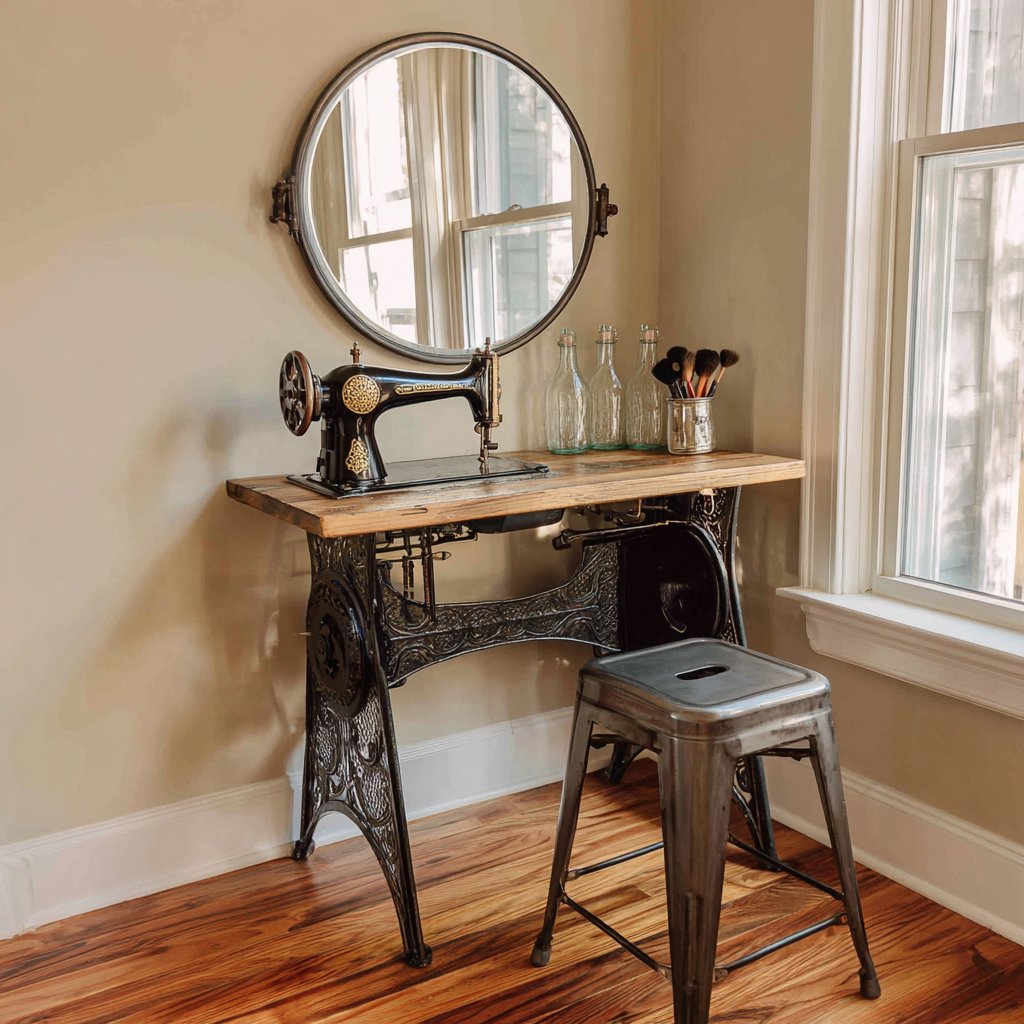
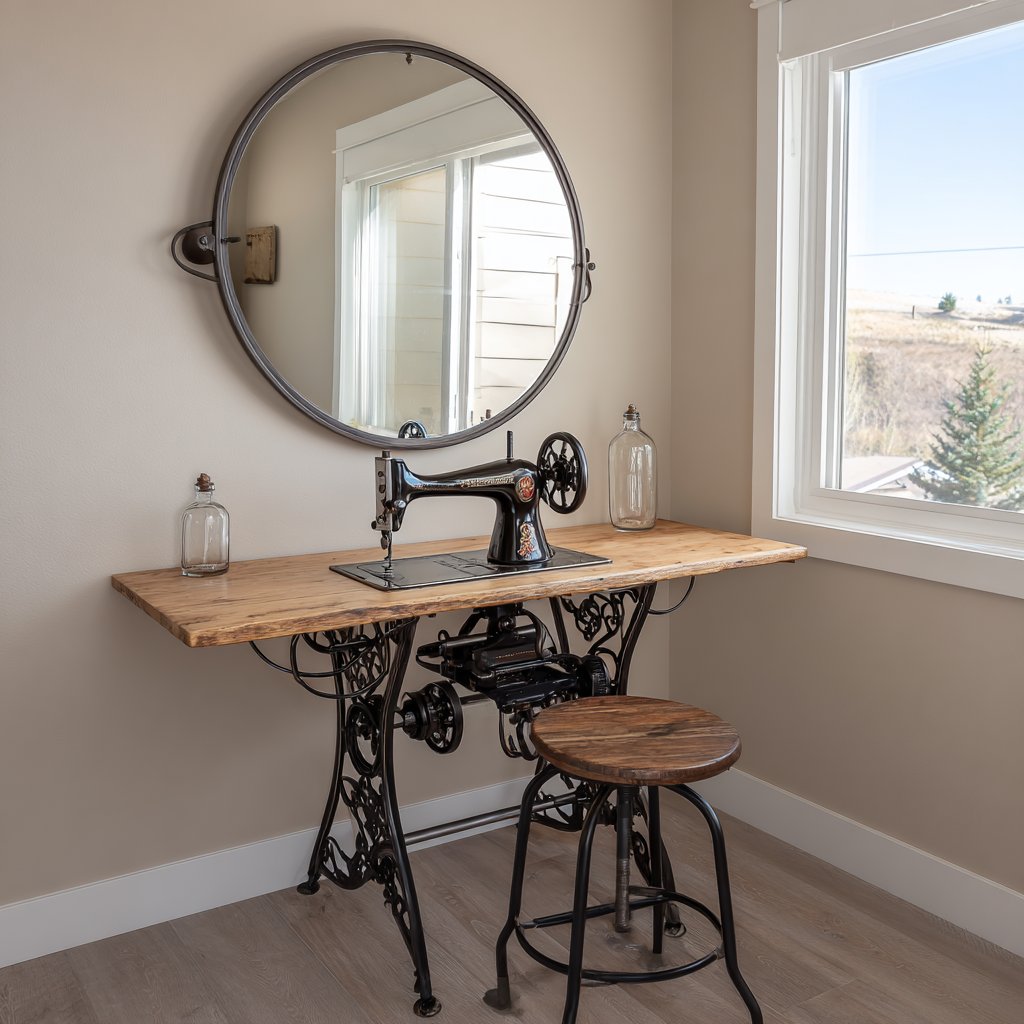
Celebrate creativity, sustainability, and individual expression with a unique vanity upcycled from a vintage sewing machine table, its original cast iron treadle base painted in matte black providing both sculptural beauty and functional support. This creative repurposing honors the object’s history while giving it renewed purpose, preventing serviceable materials and beautifully crafted metalwork from becoming landfill. The refinished wood top treated to reveal natural grain showcases the original craftsmanship while providing a practical surface for contemporary beauty routines. The juxtaposition of ornate Victorian-era ironwork with clean, simple wood finishing creates visual tension that makes the piece compelling and conversation-worthy.
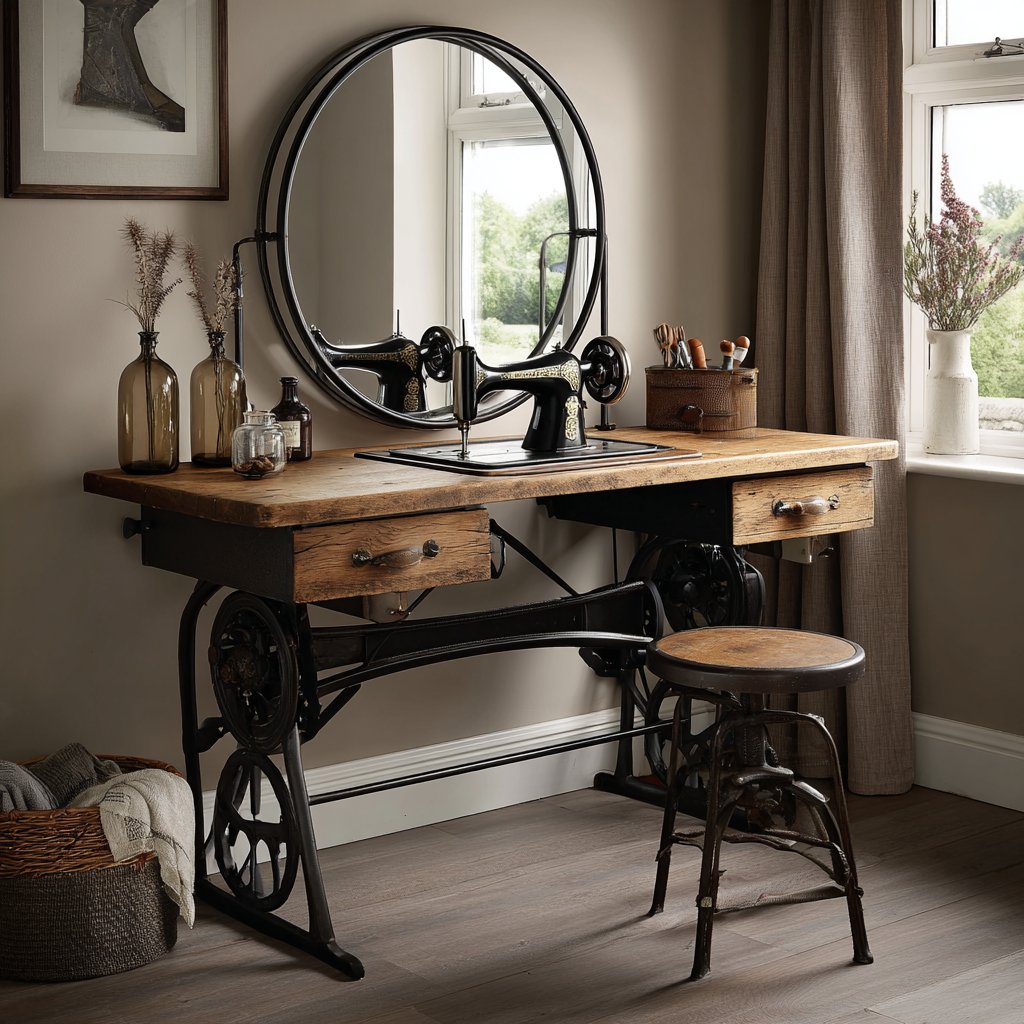
A large round mirror with industrial black metal frame hangs above the unique repurposed piece, its simple contemporary styling allowing the elaborate sewing machine base to remain the focal point. Vintage glass bottles in jewel tones and antique grooming tools displayed on the surface celebrate the table’s history while serving present needs. Each accessory choice honors both past and present, creating continuity across the decades that separate the sewing machine’s manufacture from its current vanity incarnation. A metal workshop stool provides authentic industrial seating whose utilitarian origins echo the sewing machine’s own history as a tool of production rather than mere decoration.
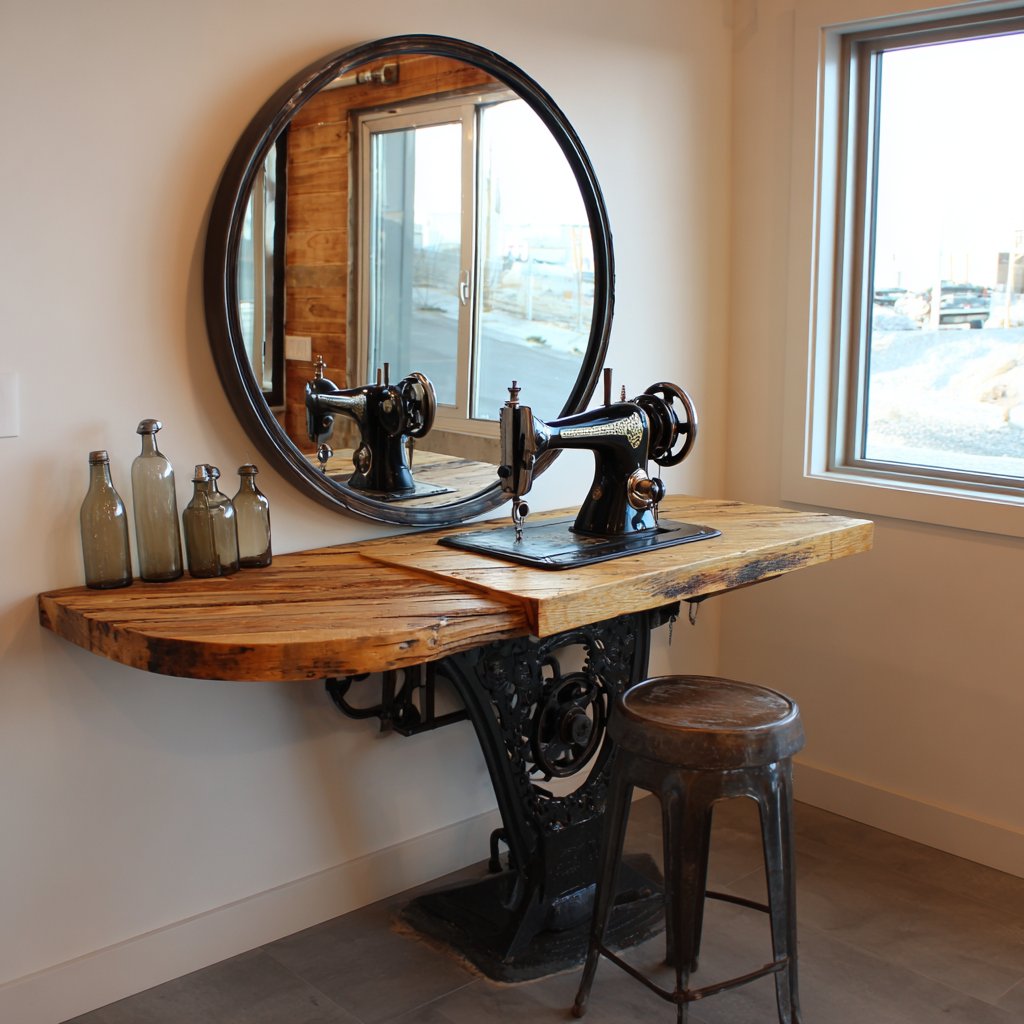
Natural window light highlights the creative reuse and one-of-a-kind character that make this piece impossible to replicate—even finding another identical sewing machine base wouldn’t recreate this specific combination of patina, wear patterns, and personal styling choices. Professional interior photography captures the sustainable creativity and conversation-starter design that makes upcycled furniture so meaningful to its owners. This interpretation of small dressing table ideas demonstrates how the most compelling furniture often tells the richest stories, where history, creativity, environmental responsibility, and individual expression intersect. The piece becomes more than furniture—it becomes art, sustainability statement, and daily reminder that beautiful solutions often come from seeing potential where others see obsolescence.
Key Design Tips: Source vintage furniture and architectural elements from salvage yards, estate sales, or online marketplaces, looking for structurally sound pieces with compelling forms. Research the object’s history to understand its original purpose and cultural context, adding depth to your repurposing narrative. Ensure structural modifications don’t compromise integrity—consult professionals if uncertain about load-bearing capabilities. Choose finishes that honor rather than completely conceal the object’s history, allowing original character to show. Display the piece prominently where its unique story can be appreciated and conversation can be sparked about creativity, sustainability, and seeing beyond original purpose.
Conclusion: Creating Your Perfect Small Vanity Space
The journey through these twenty-five distinctive small dressing table ideas reveals a fundamental truth about interior design: limitations in space need never translate to limitations in style, functionality, or personal expression. From the floating minimalism of Scandinavian design to the ornate opulence of Victorian antiques, from cutting-edge acrylic transparency to rustic reclaimed wood sustainability, the range of possibilities demonstrates that every aesthetic preference, spatial constraint, and budget level can be accommodated with thoughtful planning and creative vision.
The key to success with small dressing table ideas lies in understanding your specific needs and honest assessment of your available space, lifestyle habits, and authentic design preferences. Consider whether you require extensive storage or minimal surface area, whether natural or artificial lighting predominates in your space, whether you prefer furniture that makes bold statements or pieces that quietly fade into the background. Think about your morning routine and how your vanity setup can support rather than hinder your daily preparations. These practical considerations, combined with aesthetic preferences, will guide you toward the solution that truly serves your individual circumstances.
We encourage you to view these ideas not as prescriptive formulas to be followed exactly, but as inspiration springboards for your own creative interpretations. Perhaps you’ll combine the floating design of one concept with the material palette of another, or scale up a compact solution for a slightly larger space. Maybe you’ll discover that a vintage piece needs only new paint and updated accessories to feel contemporary, or that modern furniture can be warmed with traditional styling. The beauty of interior design lies in its personal nature—your space should reflect your story, your values, and your vision of what makes a house become a home. Start with one small dressing table, invest the care and intention it deserves, and watch as this dedicated space transforms not just your bedroom, but your entire relationship with your daily self-care rituals.
